

It was late in the afternoon when we drove across the Ponte de Santa Clara into Coimbra with the reflection of the old city brightly shining on the water of the Mondego River below. A wonderful sense of anticipation built as we crossed the bridge, seeing layers of history climb from the riverbank to the crest of this ancient city. Unlike Lisbon or Porto where you are suddenly there, here we glimpsed how history progressed. Crossing the river and entering the city after a long journey, there was a sense of arrival. We were traveling back in time. Fortunately, today there new conveniences and we ditched our car in the underground parking at our hotel, Tivoli Coimbra. It’s a nice, reasonably priced, business class hotel only a short walk from the historic district.  Coimbra is a city for walkers. Ancient lanes crisscross the historic district, weaving their way steeply up the hillside until you eventually reach the University of Coimbra, which crowns this charming city. But the journey there is so rewarding, with arched alleys, cathedrals and numerous shops and restaurants all vying for exploration.
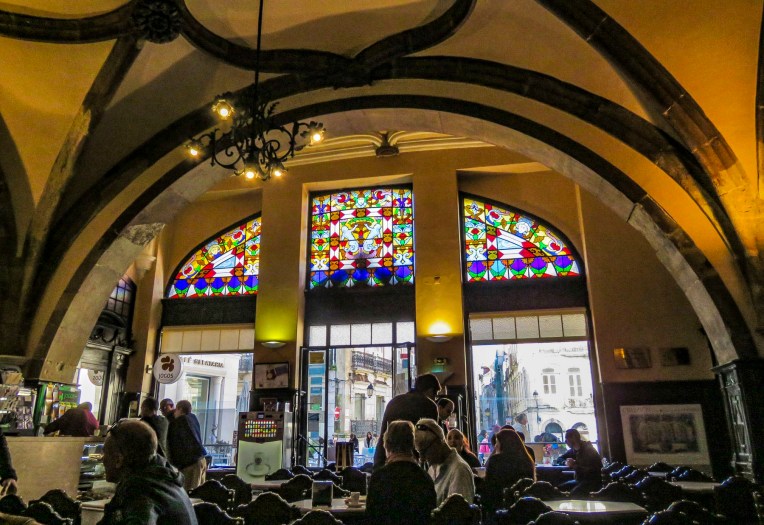 Every day is a good day in Portugal when it starts with café and a Portuguese pastry. We started ours next to Igreja de Santa Cruz at, of course, Café Santa Cruz. This pleasant cafe is in an old parish church that dates to 1530. After its desecration, the space was used as a funeral home, fire station, hardware and plumbing store before becoming a café in 1923 and the beloved Coimbra institution it is today. Outside, as we left, street musicians were just beginning to tune up as we entered the cathedral and its monastery next door.


Coimbra was the capital of Portugal when construction of Igreja de Santa Cruz was started in 1136. The importance of the cathedral and monastery in Portugal’s early years was such that the first kings of the country, Afonso Henriques (the conquerer, 1109-1185) and his heir to the throne Sancho I (the populator, 1154-1211) were entombed on opposite sides of the altar. Usually the altar is off-limits in churches, but here we were able to closely examine the tombs and inspect their intricately carved features. 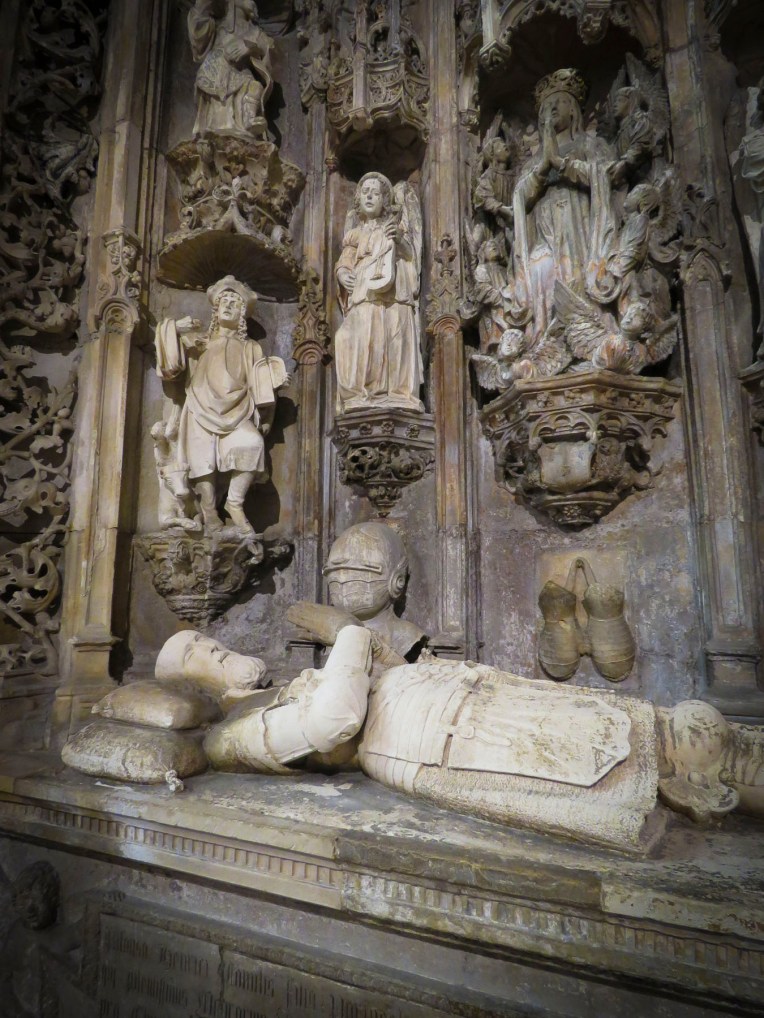 Deceptively, many of the marble columns and surrounds of the altar are actually wood, painted to imitate marble. The cathedral aged poorly in its early centuries as the result of repeated Spring flooding from the Mondego River. In the 1700s Azulejos tiles were added to the walls to cover severely water-damaged early fresco paintings. A spectacular and huge four thousand pipe organ hangs precariously from the wall of the sanctuary. Apparently, it’s so difficult to play only three people know how. The monastery is huge with many interesting rooms and intriguing details to explore.


Outside the wide pedestrian-only avenue Praca 8 de Maio runs flatly through the historic district. It will change its name to Rua Visc. Da Luz and eventually Rua Ferreirra Borges before ending near the river. Eateries with outside dining, shops and street performers line this mall, which is Coimbra’s equivalent to New York’s Fifth Avenue, with a little bit of Canal Street thrown in. It’s the place to walk, to see and be seen. In the evenings fado, rock and jazz bars enliven the strip. Many small alleys veer off this main street to zigzag their way uphill through ancient, arched city gates to old neighborhoods.


We passed folks calling down to their neighbors from above and others using a rope and bucket to lift groceries up to their fourth or fifth floor apartments. Groups of jovial students in their traditional capa e batina, black capes, rushed by on the way to or from their Republics (small frat houses) before we reached the prestigious University of Coimbra that crowns the city, occupying what was once an old medieval palace.


Dom João III brought the university here in 1537, after the institution spent its first two-hundred fifty years in Lisbon. The school is one of the oldest universities in Europe. While Dom João III’s statue centers the courtyard around which the university is built, the grand façade of the Via Latina with twin staircase and bell tower anchors the square. Next to it, inside Sala dos Exames, the walls and ceilings of the lecture halls and dissertation exam rooms are ornately decorated to the point of distraction! The hallways were lined with beautiful Azulejo tiles. The extravagance continued in Chapel of São Miguel with gold leaf and a majestic organ that nearly takes up the entire space.


The highlight of our visit to the university was our ten minutes in the Biblioteca Joanina. That’s all the time they allowed, and my wife swears they encouraged us to hold our breaths for the duration of it so as not to introduce excessive humidity to the climate-controlled environment. 200,000 ancient texts are kept in three, two-storied rooms, richly decorated with exotic woods, muraled ceilings and gilded carvings. In the evenings, after closing, the reading credenzas are covered with sheets of leather to shield them from bat droppings. A colony of bats is used to protect the books from insect destruction. The bat guano is swept away in the mornings. Under the library is the Prisão Académica, academic prison. It was allegedly used for bad fado singers, plagiarists, late book offenders and dueling academics.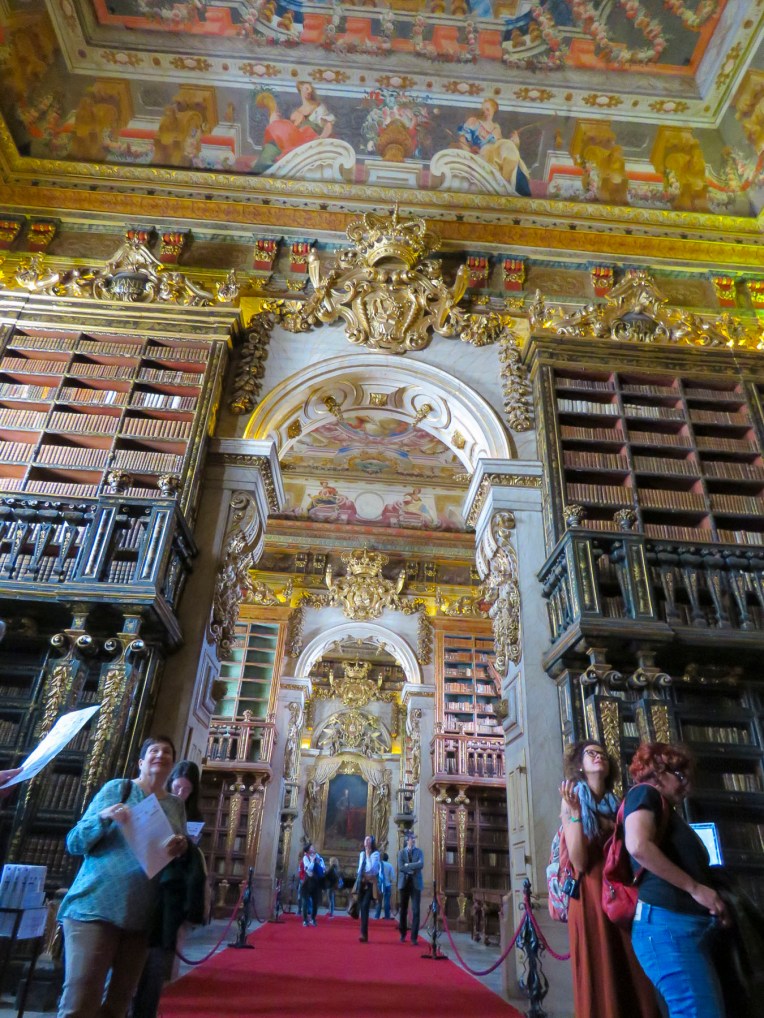 From the university we followed the twenty-one arches of Aqueduct of San Sebastian – Garden Arches, constructed in the late 1500s on the ruins of an old roman aqueduct that dated to the first century, along Barrio Sousa Pinto to Jardim Botânico da Universidade de Coimbra.


Constructed in 1772, this wonderful thirty-two acre park covers the slope under the university. The upper third of the botanical garden features terraced, formal gardens with fountains, a large conservatory with a waterfall and stream running through it, and a medicinal plant garden. The remainder is now wild, old growth woodland that was originally populated with exotic specimen trees collected from different regions of the world. The park is very popular spot to have wedding photos taken.


Coimbra does outdoor spaces very well. We ended our day strolling along the riverbanks in Park Verde do Mondego, which was full of families seeking open spaces, before crossing the colorful Pedro e Inês footbridge. The sides of the bridge are colored glass panels that shine like a rainbow, creating a very dramatic effect. Below us rowers in scull boats cut through the mirror surface of the water, distorting the reflection of the city in their ripples.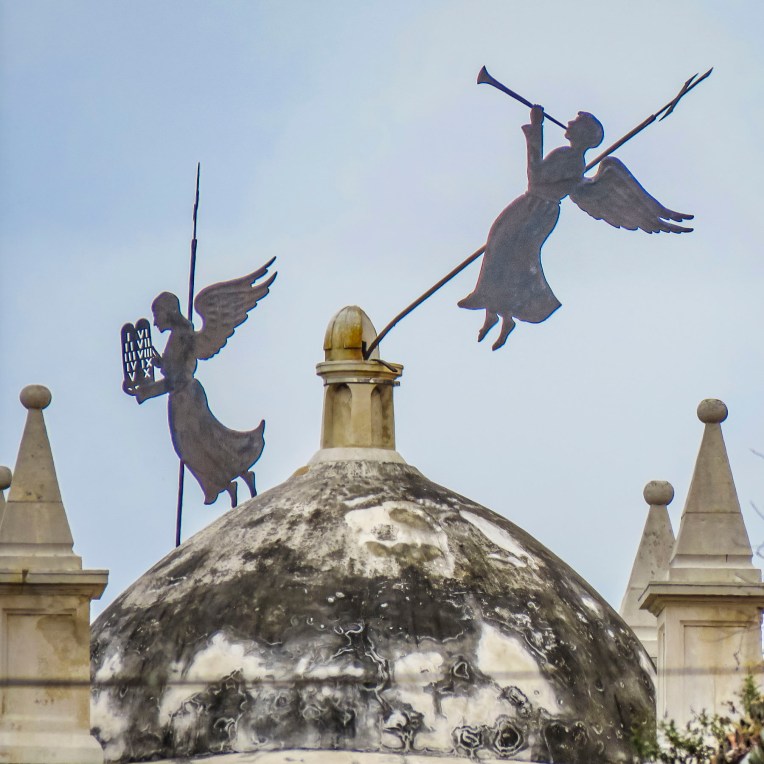 The next morning as we looked for a café at which to have breakfast, we walked along Rua Olimpio Nicolau Rui Fernandes past Jardim da Manga, which was once part of the Santa Cruz Monastery next to it. A unique renaissance structure with Moorish water garden influence, it has a large, open-sided cupola at its center, surrounded by four small chapels, set above large garden ponds. King John III of Portugal is said to have designed the structure on the sleeve (manga) of his jerkin when he visited the monastery in 1528, and thus it was built.
 Further along Jardim da Avenida Sá da Bandeira divides the boulevard into a lovely, treelined public space that runs for several long blocks through a neighborhood, before it ends just shy of Jardim da Sereia (mermaid.) The older buildings edging the park are full of character with interesting architectural details. The area was reminiscent of Paris.


Three statues representing faith, hope, and charity top a ceremonial arch flanked by twin gatehouses and greeted us at the main entrance on Praca Republica; they perfectly framed the ornate manmade waterfall fountain at the end of a long promenade.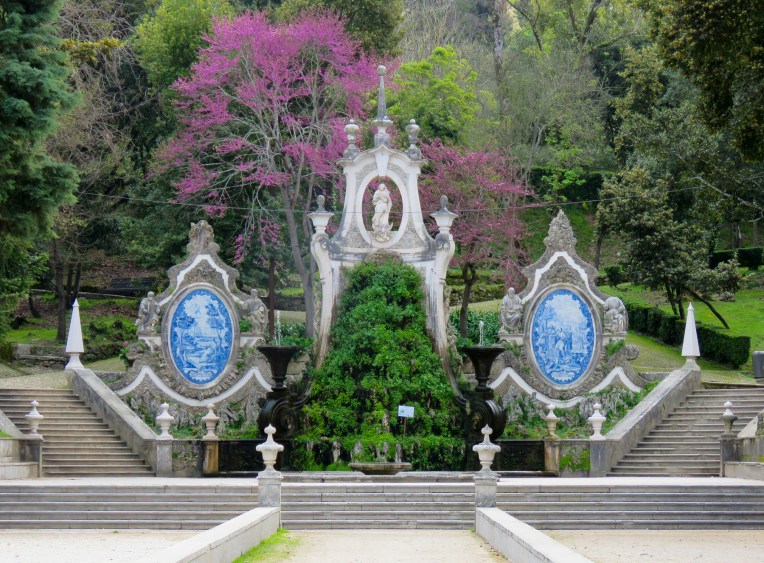 Azulejo tile murals edged with religious statues framed the sculpted fountain. At the top of the fountain water gurgled from under a statue of the Virgin Mary, symbolically giving life to the waterfall. Symmetrical stairways on either side led deeper into the heavily shaded park.


Reluctantly we ended our wanderings in Coimbra and headed to Porto.


We, like other visitors, didn’t budget enough time to fully explore Coimbra as it is viewed as only a short stop between Lisbon and Porto. This ancient city needs at least two full days to enjoy its charms and a third if you want to explore the surrounding countryside and nearby Schist villages.
Till next time,
Craig & Donna


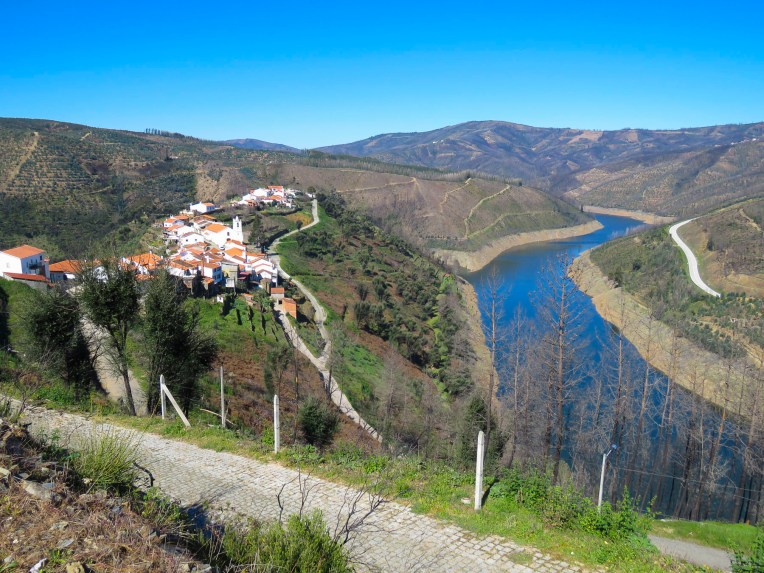 We crisscrossed these serpentine estuaries multiple times during the day as we drove through verdant pine forests along roads that hugged the curves of the land. Isolated, whitewashed villages dotted the mountainside.







 When we retired early, a year ago, we had to choose health insurance or travel. We made the decision to go without U.S. health insurance, because it’s too damn unaffordable and wouldn’t cover us outside the U.S. anyway. We chose travel insurance instead, with medical evacuation, and we pay out of pocket for wellness care and dentistry. Our two years on the road will bridge us until age 65 when we qualify for Medicare. And it’s surprising how affordable excellent healthcare is in other countries. We’ve paid $25.00 for an emergency room visit to a private hospital and $5.00 for the prescriptions in Ecuador to treat high altitude sickness. Our travel insurance paid fully for a visit to an ENT specialist in Lisbon to treat a persistent sinus infection. I’ve visited dentists in Cuenca, Ecuador for a tooth extraction and bridge; Sofia, Bulgaria for a broken filling; and Cape Town, South Africa for a root canal. The care has been excellent and extremely inexpensive compared to pricing in the United States. Though when we are in the United States travel insurance only covers us if we are one hundred miles away from our previous home in Pennsylvania.
 We plan on purchasing a home when we return to the United States. Right now, though, our budget is plus/minus $1000.00 per month for an apartment. One thousand per month for housing goes much further overseas than in the states and allows us to live in unique and interesting locales.


 We’ve rented cars in Ecuador, Guatemala, Portugal, Bulgaria and South Africa. Near the Schist villages in the mountains of central Portugal we gave a lift to two hikers, who were exhausted from a long trek without water. We ended up having a delightful afternoon and lunch with them. Aside from the deeply rutted dirt roads of the Andes Mountain range in Ecuador, South Africa with its driving on the left has proven to be the most difficult. We find that a pilot plus navigator system works well, with the latter reminding the pilot to stay left and make very wide right-hand turns. Interesting traffic signs dot the roads here: Caution Tortoise and Baboons Share this Road Too, Watch for Stray Cattle. I chuckled to myself when I passed a sign that I thought said Zebras Humping, only to realize a moment later it was a speed bump when I hit it at a pretty good clip. Caution High Winds – Parents Hold Your Children Firmly by the Hand as there is Mortal Danger of Them Blowing Off, greeted us in the parking lot of a scenic and windy overlook. South Africa has a well deployed and concealed electronic camera system and we’ve received our first notice of a traffic violation from the rental car company.


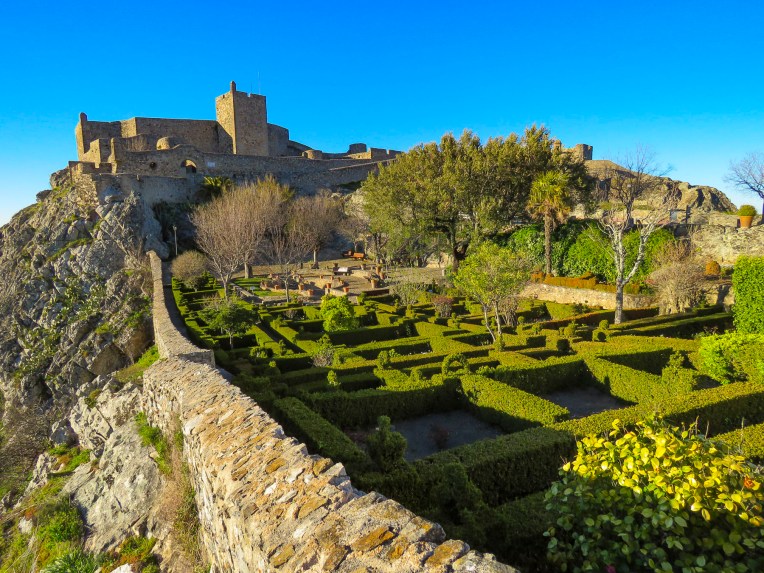
 Monsanto


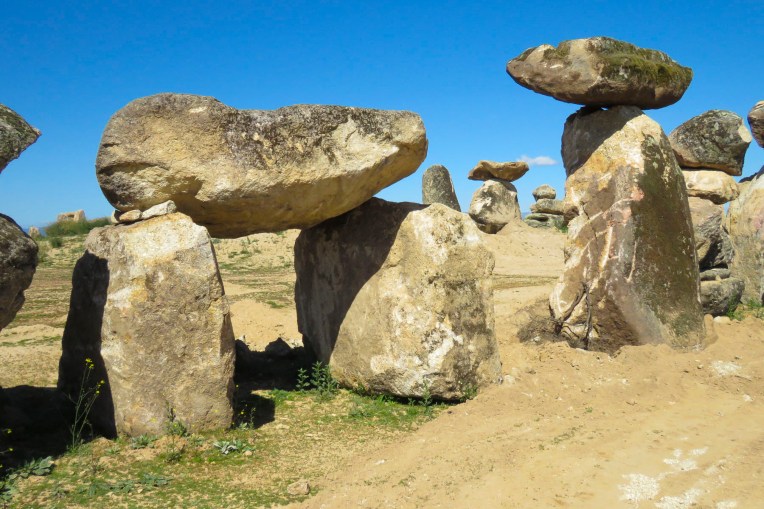
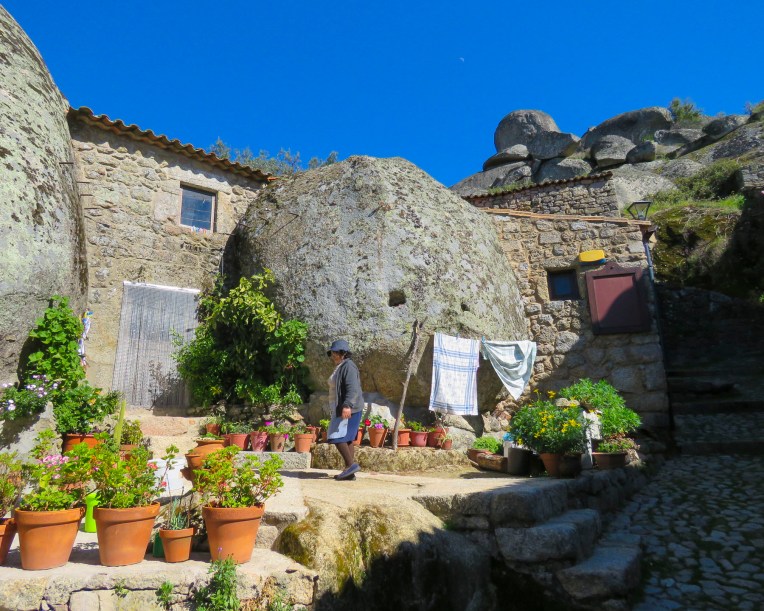 Monsanto


 Walking along the river towards Cais do Sodré by the Ministério da Defesa Nacional – Marinha building you can see remnants of a stone wharf in the reflecting pool; landlocked now, it’s all that remains of an extensive old navy quay. There are many places to dine in this area, but we preferred to continue onto Av. 24 de Julho to check out the street art in the area and then stop at The Time Out Market.


 One of the nicest Sundays we enjoyed was spent at the



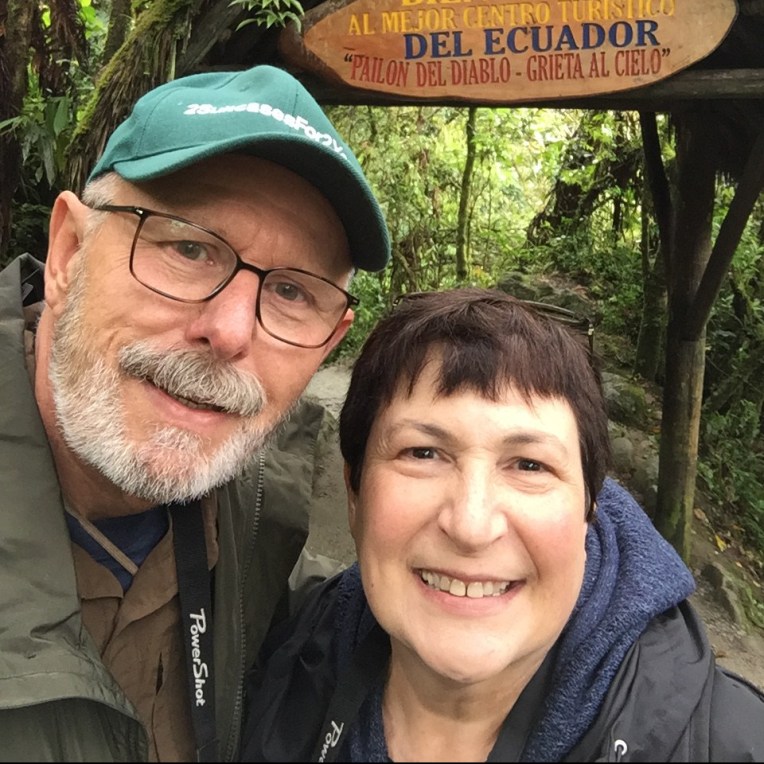 The good news is we haven’t killed each other, though there have been times that I’ve dreamt a pillow was hovering over my head. Just kidding. We have gone from the two of us working six days a week while living in an eight-room house, to being together 24/7 with only a suitcase each. Boy did we downsize! It was challenging: what not to bring, considering all the seasonal changes we have encountered. Don’t laugh, but I have thermals, wool hats and gloves packed, just on the off chance we get snowed in on a mountain pass in the French Alps, this July. Yes, there’s also a flask of medicinal whisky packed in the bags for emergencies. And to my wife’s amusement, a cheap plastic fly swatter. Tragically the backup swatter was left behind in Antigua. In Lisbon I finally caved in and bought a pair of slippers because the floors of the stone buildings just don’t retain any heat in the winter. The comfort of a pair of slippers in the evening, after a long day of walking, can’t be underestimated.
 It’s been a huge but surprisingly easy transition for us. 253 days ago (I thought I was writing this at around day 200, it’s easy to lose track of time on the road) we slammed the door shut on our storage pod, locked it, and popped open a bottle of champagne to celebrate our impending journey. We haven’t looked back. Ecuador, Guatemala, Cuba and now Portugal; I can’t imagine undertaking this adventure with anyone else.


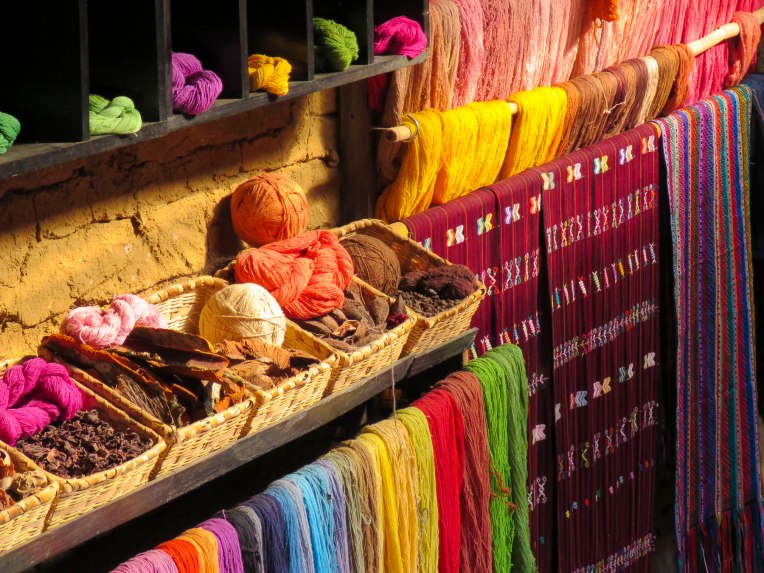 This visit also gave us an opportunity to jettison the wonderful textiles and ceramics we had purchased along the way for a home we don’t have yet. Imagine this scene from our last stop in San Pedro – the backseat of a tuk-tuk overflowing with Donna and all our suitcases, while I’m sharing the driver’s seat with the driver, one cheek on, one cheek off and a foot dangling outside the cab as we speedily snaked through the steep narrow alleys of the village.


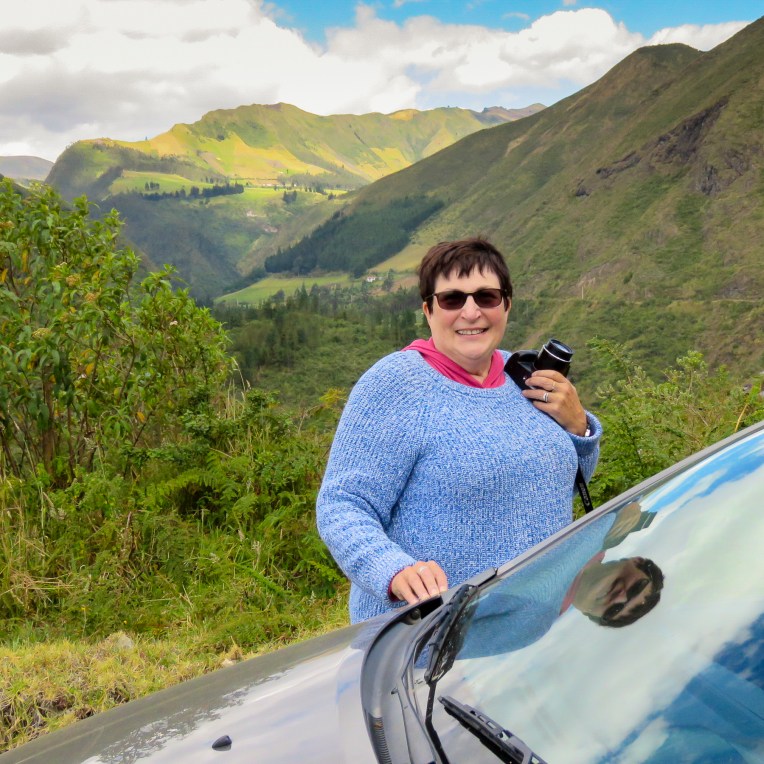

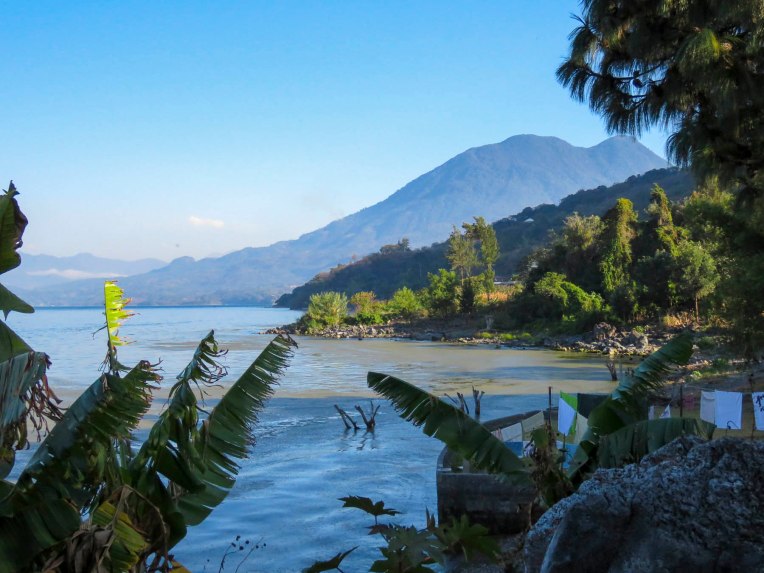


 The scenery along the drive to Lake Atitlan, along roads that continued to climb higher, was spectacular with verdant greenery and distant volcanos appearing then disappearing again with each twist of the serpentine route.
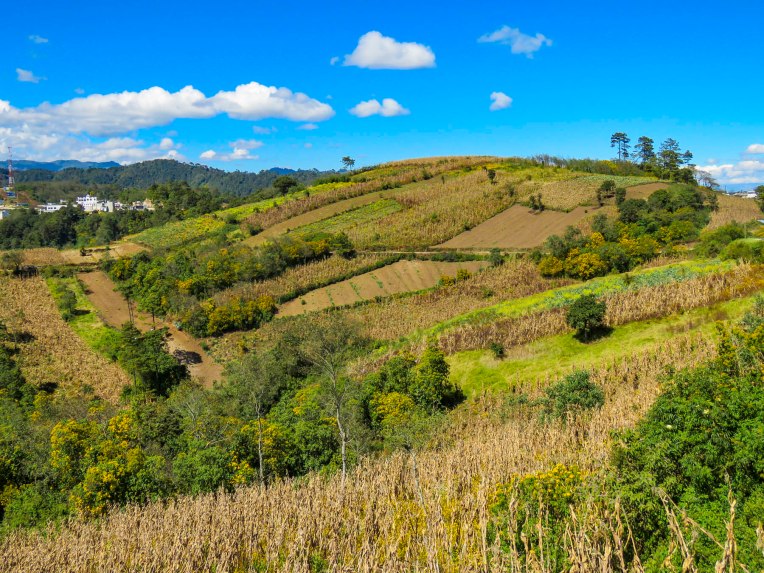 Arriving in San Pedro we thought we were on a movie set for a sequel to Mad Max or Water World. Down by the Panajachel dock dreadlocked travelers, wearing eccentric attire, filled the streets along the lakeshore. Feeling as if we had time traveled, we were relieved to find our Airbnb far out of town on a dead-end road that ran along the lake. According to Google maps the road was unnamed. Our host said “tell the tuktuk drivers you are staying on Calle Finca,” which referred to a distant and abandoned coffee farm, about an hour’s walk from the trail head at the end of the road.
 Our new home for our last week in Guatemala had a wonderful porch with great view of Lake Atitlan and tranquility. A relaxing change of pace was called for after the Christmas and New Year’s Day celebrations in Antigua. Bird calls or the soft Mayan chatter of coffee pickers, harvesting ripe beans right outside our door, were the only sounds that filled the air. Fortunately, we were much closer to town than the abandoned coffee finca and were able to walk to the daily outdoor market, along streets where we could see women washing clothing in the distant lake, and make-shift scales were set up to buy coffee beans hauled down from the slopes of Volcan San Pedro.


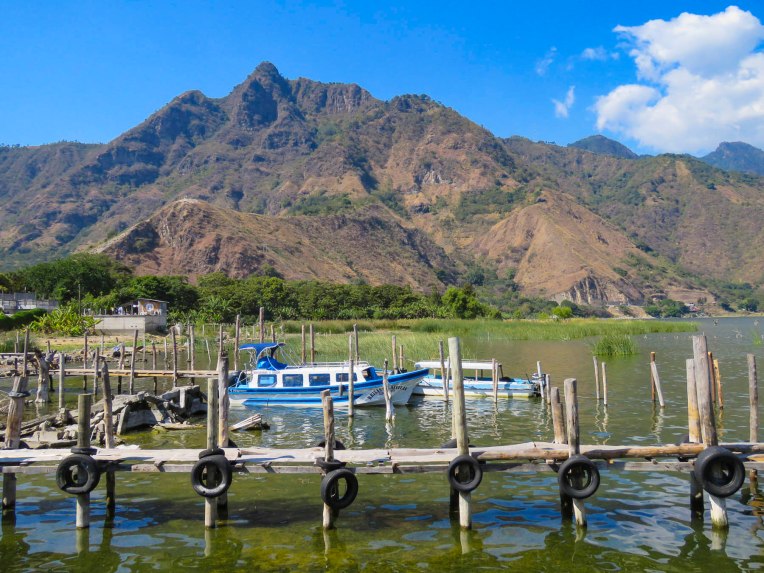 A short ferry ride took us to San Juan La Laguna, a weavers and artists village that visually celebrates its Mayan heritage with colorful street murals. The steep walk uphill from the boat dock to the center of town was lined with art galleries.


 It’s a long ferry ride to Santiago de Atitlan and even longer when the wind churns up whitecaps on the water, and the small boat we were in rocked side-to-side for the duration of the crossing. We silently said our prayers when the local folks stated to reach for the life preservers. Fortunately, we were never too far from shore and know how to swim. It is a breathtaking view coming into the boat dock at Santiago with its namesake volcano towering over the town and Volcan San Pedro just an avocado toss away, across the water.


 Enjoying the stars from our porch we were surprised when fireworks celebrating Epiphany lit up the night sky above villages across the lake, their colorful bursts reflected brilliantly on the water. With magical moments like this, still fresh in our memories, Guatemala tugged at our hearts as we packed for our next adventure.


 Paradise is such a subjective feeling and if you don’t require a turquoise blue sea and white sand beaches, Antigua, Guatemala just might fit the bill. This charming colonial city with its ever spring-like weather was perfect for our two-month stay.
 We arrived in Antigua at the end of October so that we could attend the Sumpango Giant Kite Festival held every year on November 1st, All Saints Day. That spectacularly colorful event and a religious procession that burst forward from La Merced Church on October 28th would prove to be representative of the people and life in Guatemala we experienced.


 On Mondays, Thursdays and Saturdays the market tripled in size when the outdoor portion was open, and farmers brought in truckloads of fruits and vegetables from the surrounding villages. There we experienced one of the best markets going, set in a bustling, dusty lot with Volcans Agua, Fuego and Acatenango touching the sky in the background. Most produce was sold in quantities of 5 quetzals (60 cents) so bring lots of small bills, as vendors didn’t usually have change for anything larger than 10Q. The flavor of the locally grown vegetables was amazing. Being backyard gardeners ourselves, we were duly impressed. Twenty quetzals would buy enough vegetables for a week.


 Shopping at the local supermarket, La Bodegona, was a wonderfully hectic experience. At times it could feel like you were shopping from a conga line, weaving up and down aisles, afraid to leave the line for fear of not being able to enter it again and being stuck in dairy for eternity. Numerous store employees lined the aisles offering samples of cookies, deli meats, drinks and other temptations to keep the energy level of the beast alive. It was a hoot! We had to psych ourselves up, like players before the big game, to shop there because it was so hectic and required a certain mental and physical stamina. I will confess though to dancing in the checkout line to blaring Latino Christmas music – the mood was contagious.
 On the same block D&C Cremas, a Walmart affiliate, offered a more sedate shopping experience. Both supermarkets had excellent poultry, which was more tender and tastier than back in Pennsylvania. We were also fortunate that a pork butcher opened a new shop a half block away and offered fresh meat and sausage daily. We enjoyed all the different varieties of Guatemalan sausage he made and found them to be very flavorful and lean, with almost no fat.


 The next day we a followed a serpentine mountain road, second gear all the way, up to Santo Domingo del Cerro, a beautiful sculpture and art park with museums, walking trails and a restaurant that overlooks Antigua. Plan on spending at least a half day there, because it is a beautiful setting for a restful day or afternoon. Casa Santo Domingo offers a free hourly shuttle to the park from the hotel in town.


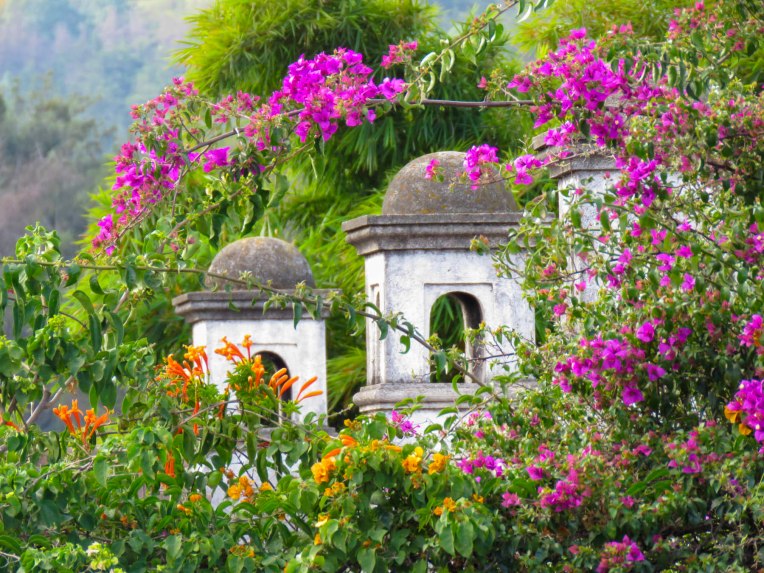 Antigua filled early with people in all their finery on New Year’s. Vendors selling textiles the day before were now offering party hats and all sort of 2019 memorabilia. Concerts were held in Plaza Mayor and under El Arco. Firework launchers were being setup amidst the crowds in the streets. Families were picnicking in the park and folks were staking their spots early to watch the fireworks later. At midnight a loud and colorful display filled the night sky. We could hear the roar of an appreciative crowd from our rooftop. We heard random explosions throughout the night to sunrise. Guatemalans love their fireworks!

 A vacation from vacation? Yes, its’s tiring work having fun every day! Where to?


 With a bed in the dorm room going for $9.50 and luxury private cabins starting at just $39.00, the resort has a reputation as the place to go to “relax, enjoy, forget time and stay awhile.” Free morning yoga classes, a wonderful restaurant with some German dishes, and super affordable spa treatments (90 minute, deep tissue massages for $24.00, we both indulged) definitely promoted well-being. Bird calls filled the air and the distinctive face of 6,000ft high


