The good news is we haven’t killed each other, though there have been times that I’ve dreamt a pillow was hovering over my head. Just kidding. We have gone from the two of us working six days a week while living in an eight-room house, to being together 24/7 with only a suitcase each. Boy did we downsize! It was challenging: what not to bring, considering all the seasonal changes we have encountered. Don’t laugh, but I have thermals, wool hats and gloves packed, just on the off chance we get snowed in on a mountain pass in the French Alps, this July. Yes, there’s also a flask of medicinal whisky packed in the bags for emergencies. And to my wife’s amusement, a cheap plastic fly swatter. Tragically the backup swatter was left behind in Antigua. In Lisbon I finally caved in and bought a pair of slippers because the floors of the stone buildings just don’t retain any heat in the winter. The comfort of a pair of slippers in the evening, after a long day of walking, can’t be underestimated.It’s been a huge but surprisingly easy transition for us. 253 days ago (I thought I was writing this at around day 200, it’s easy to lose track of time on the road) we slammed the door shut on our storage pod, locked it, and popped open a bottle of champagne to celebrate our impending journey. We haven’t looked back. Ecuador, Guatemala, Cuba and now Portugal; I can’t imagine undertaking this adventure with anyone else.
The Airbnb revolution has greatly contributed to our concept of slow travel, allowing us to immerse ourselves in a location for an extended period of time and to enjoy a community to its fullest. Experiencing a festive Christmas season and an explosive New Year’s celebration in Antigua, Guatemala, was extraordinary and something we wouldn’t have appreciated as much if we were just passing through.
We felt a little blue being away from our kids and their families during Christmas. The irony that we, and not the children, broke with the family tradition first was not lost on us. A three week visit back to the States in mid-January to see everyone helped tremendously. This visit also gave us an opportunity to jettison the wonderful textiles and ceramics we had purchased along the way for a home we don’t have yet. Imagine this scene from our last stop in San Pedro – the backseat of a tuk-tuk overflowing with Donna and all our suitcases, while I’m sharing the driver’s seat with the driver, one cheek on, one cheek off and a foot dangling outside the cab as we speedily snaked through the steep narrow alleys of the village.
Shopping in the central markets and street markets of each city has been wonderful as cooking is essential to keeping within our budget, though the size of some of our kitchens have tested our creative culinary abilities. The exotic fruits available to us in Ecuador were amazing and we tried many that we were unfamiliar with.
In Olon we bought the catch of the day from the fish monger as be pushed his cart through town. Guatemala yielded remarkably flavorful vegetables. We had a memorable culinary carrot experience there, go figure. This from a home gardener is quite a statement. Like our neighbors in the Alfama district, we are hanging our laundry out the windows to dry in the Lisbon fresh air. Our stays in each place have ranged from four to ten weeks. I favor the longer stays whereas Donna prefers a shorter visit.
There have been challenges negotiating the medical systems in Ecuador and Portugal only because we haven’t known the protocol of the local doctors. We have been extremely impressed by the care we have received from the medical professionals in these countries for altitude sickness and a persistent upper respiratory infection. The out of pocket costs have been remarkably inexpensive in comparison to the U.S. medical system.Not everything has gone smoothly. A rental car agency did not honor a reservation and we had to scramble to find another one late one night in the airport. We have felt very safe during our travels, but there are unfortunately some extremely talented pickpockets out there. May the curse of arthritis shorten their careers! Filing a stolen property report in Lisbon with the tourist police turned out to be an enjoyable experience due to the officer assigned to us. Luckily, within 24-hours they called us with the good news that our wallet had been recovered, minus the cash of course, but that our passport and credit cards were all there. Honestly, we weren’t following our own advice: only carry in your pockets what you are willing to lose. Everything else of value needs to be carried under your clothing.After Lisbon it’s a two-week road trip through Portugal. Then we are off to, of all places, Sofia, Bulgaria for a month, (the Beatles song “Back in the USSR” keeps coming to mind) in order to reset our Schengen union days for later in the summer. After that, two dog sits in England and two Workaway experiences in France at a 14th century chateau await us before we resume our life of leisure in Kotor, Montenegro, in September.We have shared meals and stories with so many wonderful and interesting people along the way. These friends have made this journey what it is – fantastic!
Our quest for eternal Spring-like weather has brought us to Olon, a rustic beach town on Ecuador’s southern Pacific coast with a wide, flat sandy beach that stretches for nearly five miles without a high-rise to been seen. Think San Juan del Sur in Nicaragua fifteen years ago, before it was discovered, or Costa Rica thirty years before it became a top tourist destination.
It’s ideal for long solitary walks along the beach collecting shells, especially near the Mirador del Olon cliffs that rise dramatically from the ocean. On the other end of town, the Rio Olon runs through a nature preserve, where we have entertained ourselves photographing various birds and listening to their calls. It’s amazing how small birds seem to have such loud songs that carry for a long distance. The river doesn’t have enough flow to reach the sea this time of year and is separated from it by a berm of sand, but one night after a heavy rain the river breached the sand dune and carved its way into the sea.
Change is coming slowly to Olon. The roads in town were only bricked three years ago. So, there is still a wonderful, authentic undeveloped rawness to the town, with a small number of hotels and surf schools mixed in amongst local homes, many in an unfinished state.
It’s off season now in October, mostly cloudy with a light mist every morning, but the water is still warm, perfect conditions for the handful of surfers and us. Although the waves can reach 12ft at times, beginning surfers prefer the less crowded, smaller wave conditions in Olon over those of Montañita, which can be more treacherous.
The seafood cabanas along the beach are only open on the weekend this time of year, when it seems to get slightly busier. Our favorite is the last one down by the fishing boats, Mar del Sol, run by Rosa. You can’t beat her stuffed calamari, ceviche or various seafood salads.
At times teams of fishermen can still be seen setting seine nets from the shore and hauling their catch in by hand. Other fishermen fight the waves to launch skiffs through the rough surf from the beach.
Sometimes the beach is a corridor of commerce with freshly caught fish being delivered by motorcycle from small villages further up the coast. Fathers can be seen taking their kids to school on the handlebars of their motorcycles, gently splashing through the incoming tide, hurrying to get there. Outside of the small school every morning it’s like New York’s Times Square for ten minutes, with all the coming and going of motorbikes. One morning a parade of open bed, stake trucks carrying school children dressed in different team colors honked and cheered its way, through town, to the school for a day of field activities. Every evening there is a well-attended, robust soccer game on the beach. Just imagine the memories these kids will have! Outside our hotel, a group of young men play marbles in the dirt road under a dim streetlight, using the light from their cell phones to help find stray ones hidden in the foliage along the road. In the morning we passed our neighbor, singing softly to herself as she gardened.
Our budget friendly and relaxing short-term rental at Rincon d’Olon included a very nice breakfast on the rooftop terrace prepared by the gregarious innkeeper, Chris. He emigrated from the Netherlands to Ecuador six years ago after volunteering in the Andes and vacationing on the coast. He is a great source of information for all things local and arranged several transfers and an excursion for us.
By ten o’clock each evening the streets are empty. From our apartment at night we can hear the waves crashing onto the beach, along with roosters crowing – they start at one in the morning, seemingly on a campaign to discourage tourism – and dogs barking to each other. There is no traffic in this tiny four block square village. Everyone walks in the middle of the road, roosters, dogs and cats included. Restaurant owners and musicians will wave to you if they remember your visit from the day before. Every day pushcart vendors wheel their offerings of fruit, eggs, cheese, clothing, kitchen supplies, etc. through town, each peddler singing out a different sales pitch. Sometimes the loudspeakers around the usually sleepy plaza blare: community news, music or appeals for donations to help a family pay funeral expenses. One Saturday, families gathered to pay their respects at a memorial service on the plaza. Later, the pallbearers hoisted the casket onto their shoulders, and solemnly carried it through town to the cemetery. A small marching band followed the coffin, playing El Condor Pasa, If I Could, by Simon and Garfunkle.
For a change of scenery, we took a day cruise out of Puerto Lopez to Isla de la Plata, an uninhabited island twenty-three miles off the coast, which is part of Machalilla National Park. It is also referred to as the “budget Galapagos,” where we had a chance to see nesting blue-footed boobies and frigate birds. Fifty dollars per person included shuttle transportation, boat ride, snorkeling gear, lunch, a three-hour hike with a licensed guide, and most importantly, the chance to see humpback whales. Puerto Lopez hosts the largest fishing fleet on this part of the Ecuadorian coast. Lacking a protected harbor, all the fishing boats beach on the shoreline to unload their fresh catch. It is a hectic scene of never-ending activity that is reminiscent of an earlier era.
At Olon’s outdoor fish market, vendors sell a wonderful selection of fresh seafood caught locally at stalls set up along Ruta del Spondylus, named after a thorny shell used by the Incas in religious ceremonies. The stalls are closed by noon, so we try to get there early for the best choices. Two kilos of fresh large shrimp set us back six dollars. After dark small tiendas fire up their street-side charcoal grills, offering chicken, pork or sausage shish-kababs to go, or you can stay and eat at tables set up in the street. Several doors down from our hotel, at a little house with a barbeque made from an old fifty-gallon oil drum, two plates of fresh grilled fish with a beer cost five dollars for dinner.
For a tiny place, this village also has a surprising number of refined, small niche eateries, most of them created by foreign surfers, (Swedish, Dutch, Brazilian, Argentinian, Venezuelan, Austrian, Russian) who fell in love with the waves here and never left. Wonderful and inexpensive empanadas ($1.00) along with the best papas fritas (French fries) can be consumed at Bahio which offers Argentinian fast food. Next door, La Churreria has good coffee and desserts which rival any French bakery in Paris. For more refined though still very casual dining, try the eclectic menus at Momo or Cotinga’s across the main road. Cotinga’s might be the only restaurant in Ecuador where you can get home-made borscht accompanied by a shot of vodka, prepared by Olga, a Russian expat.
The only thing Olon really needs is a French inspired chef whose specialty is Coq au Vin. Roosters, you’ve been warned!
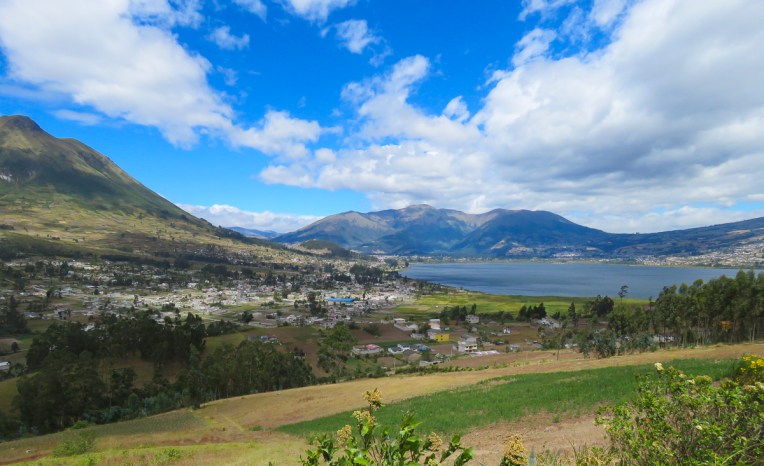
A vacation from vacation? Yes, its’s tiring work having fun every day! Where to? Vilcabambahad been on our radar for a while, having read about its reputation as the “Valley of Longevity,” with mineral rich spring water and crisp mountain air. That along with its location in Ecuador’s Southern Andes Mountains at an elevation of 5000ft, a setting which provides continuous spring-like conditions, has attracted a growing expat population of greying hippies, new agers, and backpackers seeking the fountain of youth and inexpensive housing. We had to check it out!
Hostal Izhcayluma was recommended as the place to stay. Their $15.00 per person shuttle from their sister hostal, La Cigale, which was only a block from our apartment, as well as a line from their website (Izhcayluma is NOT a place for perpetually grouchy people) cinched the deal. Hostal Izhcayluma, promotes itself as a “luxury resort spa priced for backpackers” and truly has to be one of the best travel values in Ecuador or all of South America.With a bed in the dorm room going for $9.50 and luxury private cabins starting at just $39.00, the resort has a reputation as the place to go to “relax, enjoy, forget time and stay awhile.” Free morning yoga classes, a wonderful restaurant with some German dishes, and super affordable spa treatments (90 minute, deep tissue massages for $24.00, we both indulged) definitely promoted well-being. Bird calls filled the air and the distinctive face of 6,000ft high Cerro Mandango, god lying down, watched over the valley. Three thousand feet lower in altitude and much farther south, Vilcabamba was about 10 degrees warmer, which was a much-needed reprieve from the chilly days and nights we were experiencing in Cuenca.
At the reception desk are numerous brochures for off-site activities in the valley. For reasons unknown I’ve become attracted to horseback riding later in life. With naïve enthusiasm I was immediately drawn to the five-hour ride on “galloping horses” to Cascada El Paltohigh in the surrounding mountains. I’ve been riding about a dozen times, mostly on mountain trails, and the horses walked, occasionally trotted short distances, but never galloped. Thinking this was hyperbole from the corral, I was reassured by the sign-up sheet that asked for your riding experience. A family of five marked inexperienced. I thought this was a good sign and that the group would saunter slowly through the countryside for the novices. They must have been a family of vacationing gauchos from Argentina, because as soon as our guide shouted VAMANOS! we galloped out of Vilcabamba, into the mountains, and back. I walked liked a saddle-sore cowboy for a week after that.
A disc-jockey blasted “You can’t always get what you want” from loud-speakers setup on the steps of the church across from the plaza as we walked along vendors’ craft tables in the street. Trophies were visible on the DJ’s table as were bags of dog food under it. To our delight, Vilcabamba was having its Best Dressed Dog competition today and later in the afternoon a Paso Fino, fine step, horse show. About twenty proud and good-humored dog owners entertained a large crowd through several rounds of judging. Several dogs had cheering sections in the crowd. One or two ran away out of embarrassment, I think. Trophies and bags of dog food were presented to the winners by a tiara and sash wearing Miss Vilcabamba.
Immediately after the awards were presented the crowd rushed to the other side of the plaza where the horse show was ready to start. Horsemen with perfect posture, dressed in immaculate white shirts, pants and hats, paraded their mounts up and down the dusty street to the sound of lively Spanish music.
The restaurant porches around the plaza were full of aging gringos, drinking beer, sipping wine, observing from afar. Occasional a whiff of pot floated down the street. “My friend is really good at colonics, she’ll be here soon” was an odd conversation snippet we overheard.
We were glad we visited Vilbamba for a long weekend, but were relieved we hadn’t committed to spending more time there. Thoroughly relaxed we headed back to Cuenca.
With a vibe and cultural scene reminiscent of Florence, Italy, Cuenca continues to reap tourism awards as a hot new destination in South America. The city is investing heavily in infrastructure with a new tram line opening soon, but with all this positive press the streets are still mostly filled with Cuencanos (people of Cuenca) going about their daily lives. Masses of flag-led tour groups are unheard of, as are masses of tourists in general. We have been in Cuenca for five weeks and have never felt the crush of tourist season descending upon us.The city does a wonderful job supporting its craftspeople who still use traditional, made by hand, methods to create exceptional pieces in jewelry, textile, ceramic, wrought-iron, tin and copper workshops located across the city. Toquilla straw weavers in the villages around Cuenca who carry unfinished sacks of Panama Hats into the city’s sombrero (hat) factories also need to be included into this group. There are also several traditional felt hat tallerias (workshops) that cater to the indigenous women who live in the rural areas around Cuenca. The fine arts scene is also well represented with galleries and artists’ studios often next to traditional crafts workshops. To get the broadest experience of this vibrant arts and crafts community a tour through Cuenca’s most interesting neighborhood, El Barranco (the cliffs), and along its busiest street Calle Larga, is a must. The colonial buildings that front Calle Larga back onto the cliff which overlooks Rio Tomebamba and the newer southern part of Cuenca. Wide stairs in several parts lead down to Paseo 3 de Noviembre, a shaded pedestrian walkway and bike path that follows the river for several miles.This route actually starts several blocks west of Calle Larga at Cuenca’s Museo de Arte Moderno (Museum of Modern Art) across from Parque de San Sebastian which has a large fountain and several nice places to eat. Casa Azul, which has rare sidewalk tables that face the quiet plaza, and Tienda Café are good choices. Most of the workshops won’t have business signs over their doors or street numbers, might open by ten, but will reliably close between one and three for lunch.
Just around the corner from the Museo Municpal de Arte Moderno at 7-49 Coronel Guillermo Talbot is the unimposing metal embossing workshop of Carlos Bustos. With his workbench by the door to take advantage of the daylight and his finished pieces hanging behind him, he works until the sun sets. Still keeping the traditions of his family alive he offers embossed decorative pieces which can be traditional or whimsical. At the end of the street a mural-lined staircase will take you down to the Rio Tomebamba; instead make a left onto Presidente Cordova and then veer right at the Y in the road onto Bajada del Valo. A few doors down is the felt hat Sombrereria of Camilo M. Hanging from his walls are dozens of white felt hats in various stages of completion with name of the person who ordered it pinned into the brim. Ask permission to take photos and you will be greeted with a smile. Just past the hat maker, Plazoleta Cruz del Vado merges with Mirador del Barranco. This small plaza has several whimsical sculptures, largest of which depicts the traditional festival game Palo Ensebado (the teaching stick – climbing a greased pole) and a religious cross which celebrates the founding of Cuenca in 1557.
Walking along this scenic overlook, open doors reveal artists’ studios and Casa Museo La Condamine, a museum/antique store that houses an interesting menagerie of long forgotten Cuenca furnishings and antiquities. Next door to them is the Prohibido Centro Cultural, an alternative museum that displays sculptures and art that could have been inspirational for your worst nightmare or an award winning sci-fi/horror film, depending on how you look at things. It has a café. Further along the balustrade, musical chords waft from an instrument maker’s workshop, drawing you in, as the craftspeople test their work . Stairs from this scenic overlook lead down to Calle la Condamine and several coppersmiths.
Rounding the corner onto Calle Larga is like returning from the Amazon to New York City. It’s tenfold busier, with the Mercado 10 de Agosto (Cuenca’s central market) accounting for most of the activity in the first block. This a great short detour to get some exotic fruits or fresh bread and rolls from the numerous panaderias that surround it. Diagonally across the street is the Museum del Sombrero de Paja Toquilla (free), a still operating panama hat factory where you can watch the manufacturing process and try on the finished product. They have a lovely rooftop café, the only one in Cuenca, that overlooks the Rio Tomebamba and park below. They offer you a free cup of coffee when you purchase a hat. From the rooftop here you can see the jewelry workshop and store of Andrea Tello on Av 12 de Abril across the river. One of Cuenca’s finest silversmiths, having created filigree masterpieces that are in museum collections around the world, she earned the UNESCO Award of Excellence in Handicrafts in 2010. Just a few doors away is the wide alley Bajada del Padron where you will find the workshop of an ironsmith who makes Pucara, a symbol given as a gift to bring good fortune and prosperity. The sculpture incorporates the Christian cross with images of the Sun and Moon to honor Pachamama.
Continuing east along Calle Larga you will cross the intersection of Benigno Malo. For the next several blocks the restaurant choices are tremendous, with options for Arab and Indian cooking to gourmet Ecuadorian cuisine and everything else in between. El Mercado and El Jardin offer fine dinning experiences that are very enjoyable. For a more casual environment try Goza Espresso Bar which has outside table facing a small park. The lower level of Museo Remigio Crespo Toral (free) offers the Café del Museo, which is truly an oasis of calm in this bustling city, has terraced outside dining that looks over the lush greenery along the Rio Tomebamba and Paseo 3 de Noviembre. The museum itself is worth exploring to see how Cuenca’s gentry lived at the end of the 19th century. Or you can head to the Wunderbar Café on the Francisco Sojos Jaramillo stairway that leads to the Centro Interamericano de Artes Populares (CIDAP – free) which offers changing, monthly craft exhibits.
Back on Calle Larga the Museo de las Culturas Aborigenes looks unimpressive from its entrance, but the museum upstairs has an enthralling collection of 8,000 indigenous artifacts that spans 15,000 years and 20 pre-Columbian cultures, stone-age to bronze-age. Downstairs there is a very good, no-pressure gift store with excellent pricing. Next door is the fascinating studio of metal sculptor Julio Machado who creates hummingbirds and other animals in bronze and aluminum. Stay straight on Calle Larga when you come to the fork in the road at Todos los Santos Church; this will lead you to a store front painter’s studio where his favorite subject seems to be the church you just passed.
At the end of Calle Large at what once was the Inca city of Tomebamba, its terraced gardens still home to grazing llama, now stands Museo Pumapungo (free), one of Ecuador’s finest museums. The first floor offers changing contemporary art exhibits as well as a fascinating collection of artifacts discovered on site here. Upstairs features exhibits which represent all of Ecuador’s diverse cultural groups and their historic way of life. Topping it off, there is an unusual exhibit of shrunken heads, tzantzas, along with how-do instructions in Spanish and English from the Shuar people of the Amazon.
Across the river from the Museo Pumapungo is Las Herrerias, the street of the iron forges, where several workshops create utilitarian and decorative works; to locate the workshops, just follow the sounds of hammers striking anvils. Plaza del Herrero, at the end of the street, has a very interesting monumental sculpture dedicated to the ironworkers who helped build Cuenca. Be sure to try Tortilla de Choclo, a scrumptious corn pancake that is pan-fried on large griddles along the street in this neighborhood.
Artisans not in the Barranco neighborhood, but definitely worth the effort to visit, are ceramicist Eduardo Vega (internationally recognized for his decorative arts.) His workshop and home are a short walk downhill from the Mirador de Turi. Located on the new tram-line that runs through the historic potters’ Barrio Convencio Del 45, at 2-90 Mariscal Lamar, is the traditional, ceramic workshop of Jose Encalada where he and his son Ivan still form every piece using a potter’s kick-wheel. A few blocks over on Vega Munoz is the contemporary, ceramic studio of Eduardo Segovia where he creates whimsical decorative pieces influenced by South American traditions. Closer to the historic central part of Cuenca is the Mama Quilla silversmith shop on Luis Cordero. Here, Harley-riding Ernesto creates fine filigree pieces that reflect the cultures of the Andes.
We enjoyed walking through El Barranco, and specifically Calle Larga. The route we suggest here provides a wonderful overview of life and art in Cuenca.
Time has passed so quickly, with our days full of adventure and exploring, and it is difficult to believe we’ve been away from home for one hundred days already. The month of July was spent driving down the East Coast of the US, visiting friends and family and having a great time. Our first three weeks in Ecuador were packed with activity. Quito, the Galapagos Islands and driving south to Cuenca along the Pan-American Highway, also known as the Avenue of the Volcanoes, filled our itinerary.
Arriving in Cuenca, we set up home for five weeks in a lovely studio apartment, for under $500 per month, that had a large rooftop deck with tremendous views over the Rio Tomebamba. We immersed ourselves in the neighborhood; it was a delight to shop in the city’s central market for exotic fruits, (pitacaya is our favorite,) from the Amazon region, plentiful and pricey, or for locally grown vegetables which were so inexpensive. Every city block seemed to have multiple panaderias, bakeries, that offered extremely inexpensive and delicous baked goods. A dozen roses usually cost four dollars. Alternately, a large, American style supermarket had prices that rivaled those around our old home in Pennsylvania. Cuenca was full of the ubiquitous yellow taxis. For under two dollars we could travel to the far reaches of this sprawling city.
Adapting to our surroundings in a new country, we noticed that the sun sets quickly here with practically no twilight period. We are also adjusting to the concept of long-term travel and retirement itself – what our expectations should be on a daily basis. 24/7 together is a new concept for a previously working couple. We have often asked each other which day of the week it is. Every day does not need to be nor can it be an adventure. We enjoyed chilling on the rooftop, reading and writing. Alternately, we wandered through different parts of the city taking advantage of the many free public museums scattered about.
The dining out options in Cuenca covered the full spectrum from mom and pop holes-in-the-wall offering the plate of the day, plata del dia, where for $3.50 you received a very good three course lunch, to fine gourmet dining that reasonably ran about $50.00 for two with wine, dessert and coffee in a beautiful restaurant.One of our favorite snacks was Tortilla de Choclo, eighty cents, a corn pancake that was grilled on a large ceramic plate, curbside, as you waited. Often, coffee and dessert cost more than lunch itself.
There were some difficulties with our new environment. Mainly we had trouble acclimating to Cuenca’s 8,500ft altitude. This was surprising because we spent the better part of two weeks driving through the Andes Mountain Range at heights exceeding 10,000ft and surely thought Cuenca’s setting would be easier on us. Donna required a visit to the emergency room of a local private hospital one Sunday morning after feeling dizzy for too long. After checking that her vitals were okay the doctor wrote a prescription for Dramamine to treat the effects of altitude sickness. A week’s supply of the drug cost $2.40. Our forty-five minutes in the emergency room cost thirty-two dollars.
A long weekend, a vacation from our vacation, took us to Vilcabamba, a small town in Ecuador’s southern Andes. A reputation as “the valley of longevity,” with mineral rich mountain water and crisp air, has attracted a diverse international expat population of aging hippies. It was ten degrees warmer there, which was a nice reprieve from the chilly days and nights in Cuenca. At Hosteria Izhcayluma, a wonderful and very affordable eco-lodge/spa, we indulged in deep tissue massages that lasted for ninety minutes and cost all of $24.00 each. Feeling adventurous I chose to go on what I thought would be a leisurely five-hour horseback ride through the surrounding mountains. The brochure advertised “gallop with our horses.” Thinking this was hyperbole I signed on. From the moment we all mounted our horses we galloped out of the stables, through Vilcabamba, into the mountains and back. I walked liked a saddle-sore cowboy for a week after that.One of the reasons we chose Cuenca for our first short term rental was so that I could take advantage of their dental tourism offerings. I had put off getting things done in the states because of what I thought were excessive cost, even with insurance. I am extremely pleased with the dental care that I received at Finding Health in Ecuador. Tooth extraction – $35.00, cavity – $25.00, two-tooth bridge – $250.00. Our premise that we could live abroad more economically than living back in the states is so far holding true.Currently we are in Olon, a rustic beach town on Ecuador’s southern Pacific coast with a wide, flat sandy beach that stretches for nearly five miles without a high-rise to been seen. It’s off season, mostly cloudy, but the water is still warm, perfect conditions for the handful of surfers and us. Fishermen still launch skiffs through the surf from the beach, and fathers can be seen taking their kids to school on the handlebars of their motorcycles, gently splashing through the incoming tide. Our rent for the month of October is $730.00 with breakfast included!
By ten o’clock each evening the streets are empty. From our apartment at night we can hear the waves crashing onto the beach, along with roosters crowing – they start at one in the morning, seemingly on a campaign to discourage tourism – and dogs barking to each other. There is no traffic in this tiny four block square village. Everyone walks in the middle of the road, roosters, dogs and cats included. Every day pushcart vendors wheel their offerings of fruit, eggs, cheese, clothing, kitchen supplies, etc. through town, each peddler singing out a different sales pitch.
For a change of scenery, we took a day cruise out of Puerto Lopez to Isla de la Plata, an uninhabited island which is part of Machalilla National Park. It is also referred to as the “budget Galapagos.” Fifty dollars per person included shuttle transportation, boat ride, snorkeling gear, lunch, a three-hour hike with a licensed guide to view nesting birds and most importantly the chance to see humpback whales.
At the outdoor fish market, two kilos of fresh large shrimp set us back six dollars. Several doors down at a little house with the barbeque out front, two plates of fresh grilled fish with a beer cost five dollars for dinner. For a tiny place, this village has a surprising number of eateries, most of them created by northern European surfers who fell in love with the waves here and never left. Cotinga’s might be the only restaurant in Ecuador where you can get home-made borscht, prepared by Olga a Russian expat.
The only thing Olon really needs is a French inspired chef whose specialty is Coq au Vin. Roosters, you’ve been warned!
The road conditions don’t warrant driving after dark, there are just to many ifs, so we departed early from Hostal Taita Cristobal, after wishing our table mates safe travels and adventures as they hoisted heavy backpacks to their shoulders. The Quilotoa Crater and Baños, the adventure capital of Ecuador, were our day’s destinations. Really, Donna’s not going to go zip lining nor am I willing to try bungie jumping. Still, we thought we could find an adventurous activity where one foot was required to be in contact with the ground occasionally. Experience has taught us to double the amount of time our GPS app suggests it will take to get from point A to B due to road conditions and the frequent stops for photo opps. As my wife says “if we continue to stop every 100 yard for pictures, we’ll never get there.” The return drive back to the main road in Sigchos seemed to go very quickly. We only stopped for photos around every other bend. Fortunately we were able to drive down the center of the road or hug the left side to avoid looking over the precipice most of the time. It was nerve racking when we had to get closer to the edge to make room for an oncoming truck to pass. We never thought the sight of a guardrail would bring as much joy as it did when we got back on the main road in Sigchos. As our host had promised the road out of Sigchos was freshly paved. Along with a bright, yellow double line down the center it had shiny, heavenly guardrails around every curve! Even with the new road there were still hazards. There were numerous signs for falling rock or mudslide zones. We also shared it with folks herding sheep or cattle, donkeys carrying water barrels and folks selling things from motorcycles towing small trailers. Suddenly around one curve, marked by only 2 piles of dirt as a warning, about one hundred feet of road had collapsed into a steep ravine. There were no flagmen, orange cones or repair crews in the vicinity. The hair on the back of our necks stood up.
The treed landscape slowly disappeared and was replaced with barren windswept vistas as we rose in altitude, the closer we got to Quilotoa. Gale force winds ripped around us on the ridge above the magnificant Quilotoa Crater (12,913ft), its turquoise waters calm a thousand feet below. Local legend believes Quilotoa fell in love with the Cotopaxi volcano, and the tears from her unrequited love filled the crater. Teary-eyed from the wind chill and altitude, we sought out some restorative coca tea.
A few miles down the road Canyon del Rio Toachi, a mini Grand Canyon, offered interesting photo opportunities from the parking area. Further on small groups of men and women could be seen in the fields winnowing grain by throwing it into the air to separate the wheat from the chaff. Barns made from thatch lined the road for storage.In Zumbahua, with the hills green again, we picked up route E30, which connects the Pacific Coast region with the Amazon basin through Baños. It is a slow cross country route that encounters numerous traffic lights as it passes through many towns along the way, but gives wonderful insight into how folks live along this corridor of commerce. Shops of every variety lined both sides of the road with their doors and workshops literally on curb of the road.
Baños is a well developed town of about 40 blocks that is know for its location under the towering, 16,575ft high and still active Volcan Tungurahua. As recently as two years ago, the town had to be evacuated due to an eruption. Mineral rich hot-springs, numerous waterfalls and the close proximity to the Amazon basin made this a must stop for two days.
The sight of a tall waterfall pouring down from a ridge above town greeted us a we turned down the street for Hostal Posada de Arte. This small boutique hotel was as whimsical as its name suggests, with a colorful interior and excellent, locally created art decorating the walls. If the wind blew just right, mist from the waterfall fell on the inn. Breakfast and dinner at the hotel were delightful with a large fireplace warming the room.
On the central plaza several blocks away stood the Church of our Lady of Holy Water which has many large paintings depicting miracles granted by the Virgin Mary. Most illustrate some mishaps centuries ago with the turbulent Rio Pastaza which rushes through town.
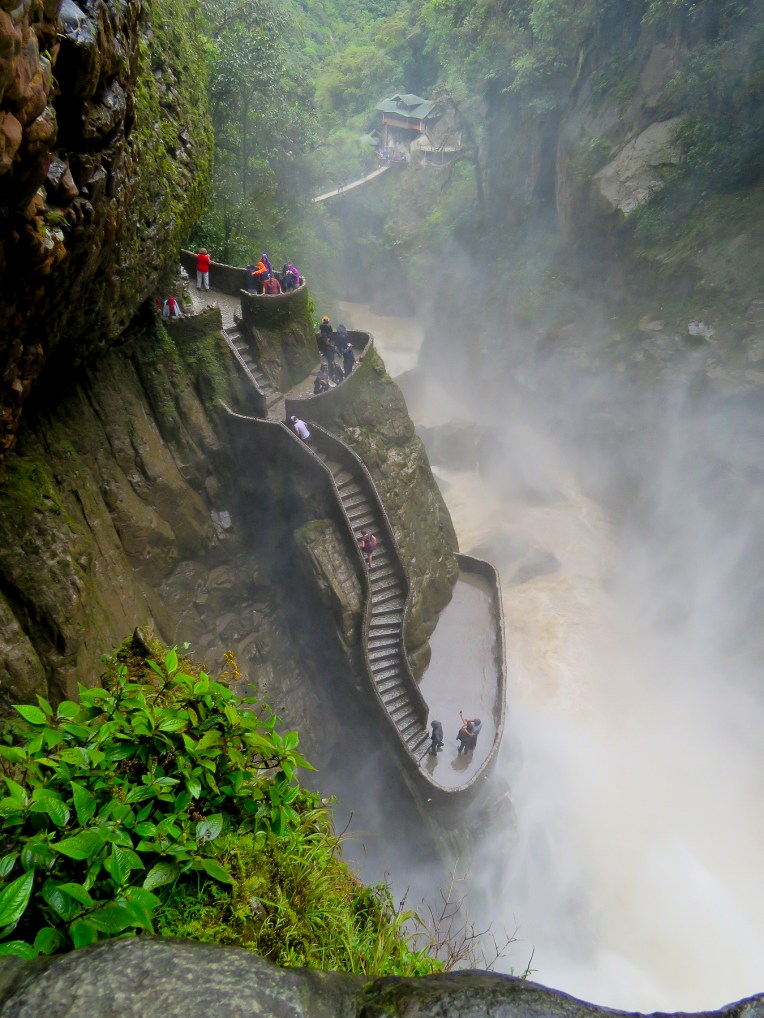
Clouds hung below the mountain peaks as we hiked down to the El Pailon del Diablo, the Devil’s Waterfall. This met our criteria for keeping our feet on the ground. It was an amazing descent along a cloud forest trail to a thundering waterfall. We weren’t planning on getting wet here, drenched is more like it; there is no way to avoid it, especially if you squirrel under the ledge to find the rabbit hole that leads to the highest viewing platform as we did! And you haven’t experienced the fury of this cascade fully unless you do. There is a rest hut at the bottom of the trail, by the suspension bridge, with a fireplace where we relaxed and purchased some refreshments to energize ourselves before the trek back up.
The hike back to the parking area wasn’t as difficult as we had worried, nevertheless our muscles ached. So being in the land of holistic cures we tried a locally brewed craft beer by (no kidding) Shaman breweries. It was so delicous, one of the best brews ever. Sadly, we haven’t been able to find it since.
The Swing at the End of the World was another matter. Hanging from a treehouse situated on the edge of a ravine, with Volcan Tungurahua rising dramatically to the sky across the way, you can get a thrilling swing or a swing with a twist as many times as you dare. Cost of entry for the day – $1.00. Brave soul, Donna got airborne!
We took the first left out of Baños onto Rt. 490, the slow road, heading south to Riobamba. Fortunately, the weather was with us as we began to climb out of the valley, rewarding us with tremendous views of Baños in the valley below and Volcan Tungurahua to the east. The route passed through many small villages and verdant farmland as it sinuously followed the Rio Pastaza which snaked through the valley several hundred feet below us. With such steep terrain we were always amazed that every acre seemed to be cultivated by manual labor. Constantly battling the whims of nature, a hard living is extracted from the earth here. Mother nature rules in these mountains, as witnessed by the path of older, washed away bridges we viewed.
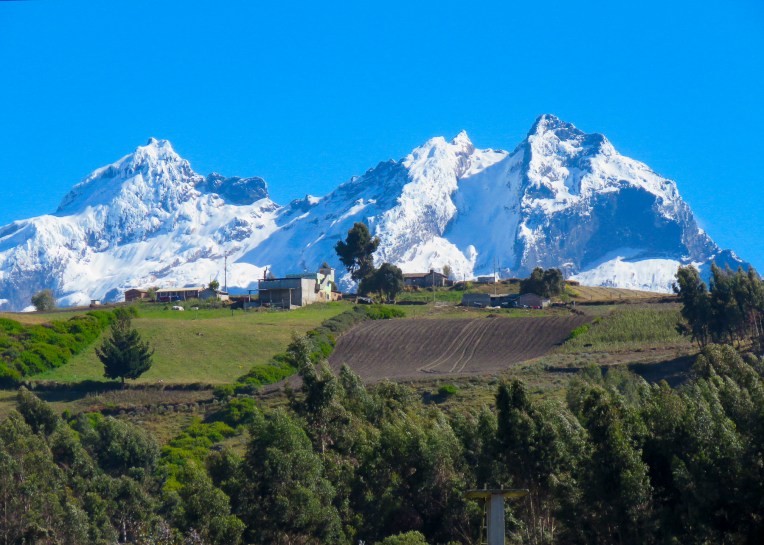
The majestic Volcan Chimborazo came into view for the first time as we crested a small hill on the outskirts of Riobamba. At 20,549ft it is the tallest mountain in Ecuador and the highest near the equator. As the crow flies the mountain was only 15 miles away, but as the road curved it took us another two and a half hours to get to our night’s lodging at Hosteria La Andaluza in San Andres, which was very near the mountain on Rt. 35, the Pan-American Highway. The mountain was hidden by afternoon clouds by the time we pulled into the hacienda’s driveway.
Seeing two exhausted travelers approaching, the staff came from behind the reception desk to take our bags and welcome us. A woodstove in the corner warmed pots of their high altitude tea remedy Canelazo, a mixture of local herbs and fruit which also could be consumed with an optional splash of a sugarcane moonshine. It definitely warmed our bones. Red rose petals on the bed sheets greeted us as we opened the door to our guestroom. The functioning radiator was a nice surprise. This was the first hotel in Ecuador that we stayed in that offered heat; normally it’s window open, window closed, blankets on or off or light the fireplace. Our room overlooked a fountain filled with rose petals and freshly ploughed fields in the distance.
The hacienda dates from 1555 and echoes with history, “Simon Bolivar slept here,” had a familiar ring to it. Ornate, antique furnishings highlighting the craftsmanship of an earlier era filled the common areas. As we wandered about the grounds we were delighted to discover one courtyard had a family of domestic rabbits scurrying about it. A large basket of carrots was left off to the side, so guests could feed them. Two peacocks also strutted about fanning their elegant feathers. That evening chandeliers and candlelit tables created a romantic setting as the filet mignon we ordered was threactically flambéed at our table.
The majestic Volcan Chimborazo.
Chimborazo gleamed brilliantly in the morning sun and filled the horizon across the road from the inn. It seemed almost close enough to touch, but it was only an illusion. To the north just a tiny wedge of Volcan Carihuairazo appeared in the distance. We spent a good part of the day driving through the surrounding farmlands trying to get as close as we could to these beautiful peaks.
Volcan Carihuairazo
On mountain overload, later that afternoon we headed into the historic heart of Riobamba just to get a feel for the city and a change of pace. We had a difficult time figuring out the on-street parking rules, but fortunately after circling several blocks we spotted a parking attendant who issued us a ticket to park for fifty cents. Parque Maldonado centers the historic district with a monument dedicated to Pedro Vicente Maldonado, a multi-disciplined Ecuadorian scientist known for his work with the French Geodesic Mission. He also had responsibilities as Mayor of the City, Lieutenant Magistrate Governor of the Emerald Province, Horseman of the Golden Key and Gentleman of the Camera. Obviously a renaissance man; we weren’t sure if the statue was tall enough. Bordering the plaza, La Catedral de San Pedro’s baroque façade is all that remains of the original structure, one of Riobamba’s earliest, after a 1797 earthquake estimated at a 8.3 magnitude shook the region for three minutes and left thousands dead.
A short walk away, Mercado de San Alfonso filled a city block with terraced displays of flowers and exotic fruits (oh, the creative possibilities – truly a smoothie lover’s paradise), seldom seen in North American markets. Numerous varieties of potatoes in every color and size filled sacks aligned neatly down the aisles.
The next morning we left the wonderful hospitality of Hosteria La Andaluza for Cuenca, our final destination and home for the next five weeks. Fields of quinoa hugged the steep slopes as we continued south on Rt. E35. In one small village we passed parade floats and camionetas, shared pick-up truck taxis, filled with costumed revelers leaving town after what looked like a lively celebration. If we had only arrived a little sooner. These are the unexpected things you happen across when you travel the backroads. Places and events that are too small to be included in the popular tour guides, but entertaining, interesting and eye-opening nevertheless.
As we left the highway in Sangolqui, grilled Cuy, (guinea pig, the national dish) impaled on tall sticks lined both sides of the road, to entice us to stop for a taste. We drove on, unable to consume a pet animal yet. Not sure what side of the omen scale this greeting fell on. We continued for several hours, driving along the route we had chosen through green farmland, before entering the higher regions that encompass Cotopaxi National Park. The relatively smooth cobbled road soon transitioned to dirt as it began to follow a narrow ridgeline that wove between small villages. The views of the lush valleys on both sides of the road were fantastic; just finding the appropriate place to stop hindered us from taking as many pictures as we wanted to. Occasionally we were passed by a speeding tanker truck hurrying from dairy farm to dairy farm to collect the day’s fresh milk.
Slowly the terrain changed and slopes of eucalyptus trees towered over the road. Our route brought us through the eastern side of Refugio de Vida Silvestre Pasochoa, a wildlife and habitat preserve of 33,000 acres. Signs for waterfalls began to appear, tempting us to stop at the Rumipamba Falls trailhead to stretch our legs. We followed the trail until a small suspension footbridge and a glance at the time turned us back.
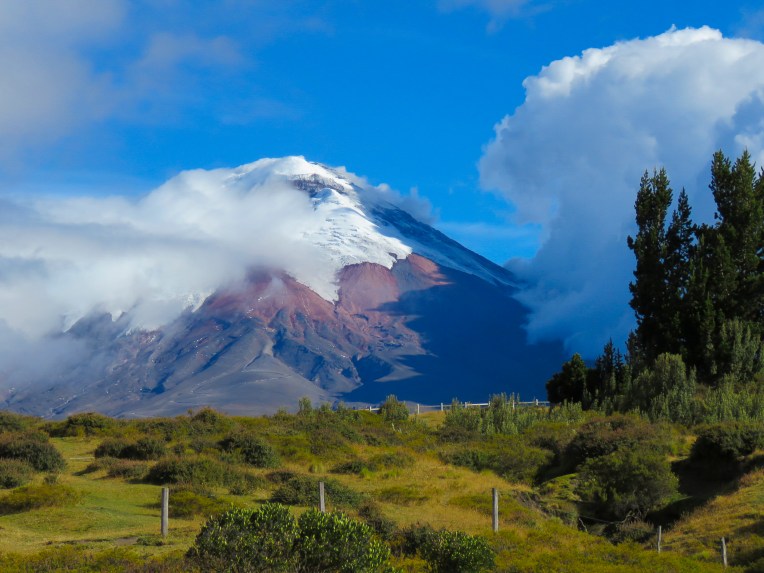
Forest turned to shrubland as we rose in elevation and neared Cotopaxi National Park. Having not seen a car or truck for awhile now, we were surprised when all of a sudden five vehicles were parked, a little ways from each other, in the middle of nowhere. Not a person in sight. Was this a local lovers lane? Further along more cars. Thursday afternoon, what an amorous society we thought – “obtener una habitacion” – get a room!, seems to have lost something in translation. Later we spotted folks carrying baskets full of small blue berries, Mortiños or Andean Blueberries as it turned out, which are highly sought after. Around a bend the cloud covered dome of Cotopaxi (19,347ft) appeared for the first time.
Surprised by our appearance, a “how did you arrive here?” greeted us as we checked in. A large cloud of dust behind an SUV, driven by a professional driver, usually announces guests about to check in, we were told. Our humble vehicle was lost behind tall blueberry bushes in the parking area. Being surrounded by thousands of acres Andean Blueberry bushes, Hacienda Los Mortiños, is appropriately named. Located just outside the northern entrance to Cotopaxi National Park, (which encompasses 82,500 acres and three other volcanoes , Ruminahui, Sincholaqua and Morurco within its boundary) it offers inspiring views of the surrounding landscape from every window. If you aren’t into mountain biking, horseback riding or hiking, just sitting next to the fireplace in the restaurant, watching the weather change with clouds building then dissipating suddenly to reveal the shy summit of Cotopaxi is a mesmerizing and relaxing way to spend any day.
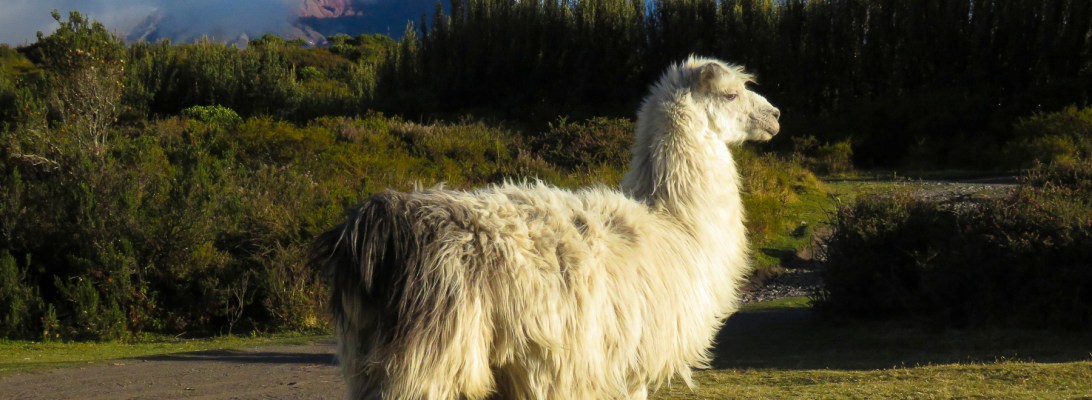
Towards sunset, wild llamas grazed near the main building. We snapped away while the dominant male approached closer than the rest, as if to announce that he was the protector of his harem. It was a postcard perfect moment with Cotopaxi as the backdrop. The temperature drops quickly at these altitudes once the sun is low in the sky. Towards sunset a housekeeper lite the woodstove in our room to keep the night chill away.
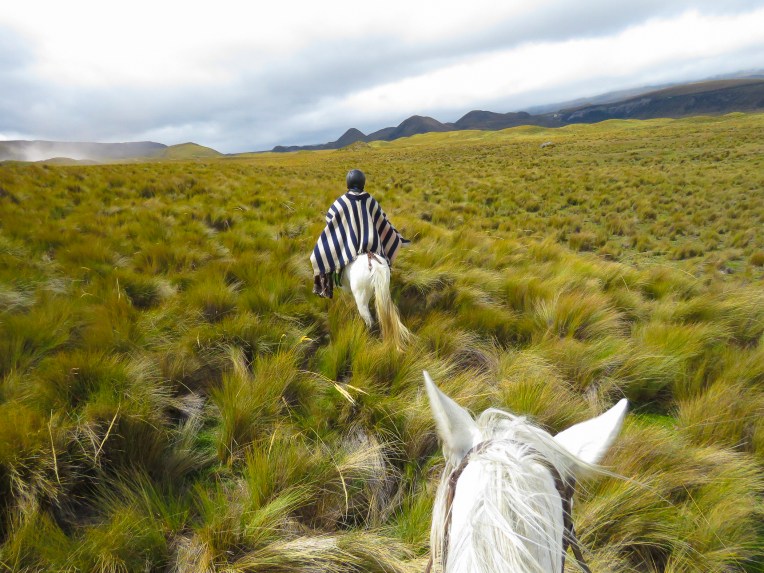
It was not as easy getting onto a horse as it was a few years ago, but I decided to go for a three hour ride with Jorge, a guide from Los Mortiños. Pull back on the reigns and say “Soa,” sounds like whoa, when you want to stop were my instructions in Spanish. I am not a very seasoned rider, but I’ve gotten my limited experience on steep trails in the Rocky Mountains of Montana and know enough to realize that the horse is smarter than me in keeping us both safe in difficult terrain. The horse leads, “you’re just baggage” a wrangler once told me. In a stiff cold wind we saddled up, “Vamamos amigo” and we were off. Just outside the reserve, cattle grazed in the wind swept grassland and llamas could be seen in the distance.
As we entered the park and rode along a deep gully I got my first chance to yell “Soa,” at least I hope I was yelling the right phrase, when a unseen bull violently exploded from the earth and spooked our horses into a sudden gallop! That was more than enough excitement for me. We were miles away from the base of Cotopaxi, but the high plains landscape had a raw natural beauty to it. Each turn of the trail and every hill crested brought wonderful vistas. The only sound was the constant wind. Later we would flush Andean quail and ride through several herds of wild horses. The ride was exhilarating!
I’m not sure which road was bumpier, the one leading to Hacienda Los Mortiños or the one heading away, but we were relieved to be back on the Pan American highway for awhile, as we headed to three days of very inexpensive R&R at a hostel in Isinlivi on the Quilotoa Loop. Not sure what to expect at the hostel, (we are not exactly the demographic you would find there,) we decided to fortify ourselves with lunch at the historic Hacienda La Cienega which dates from 1695. As we pulled into the stately drive that led to the hacienda we wondered if there would be sticker shock when we saw the lunch menu. The elegant dining room overlooked a beautifully landscaped courtyard and bubbling fountain, where an extended family was posing for a group photo. Simultaneously, a rock band was filming a music video on the steps of the hacienda’s ancient, private chapel. Surprisingly there were many reasonably priced entrees offered for lunch. Hacienda La Cienega is just a short detour off the highway in Tanicuchi, but well worth it. It’s a great destination to experience the grandeur of a forgotten way of life.
The Quilotoa Loop is primarily known as a mountainous hiking trail that links remote, isolated villages where indigenous Kichwa is the native language, via a series of footpaths that have been followed for several thousand years.
The elevations of the villages range from 9200ft at Isinlivi to 12,500ft at the Quilotoa Crater. Fortunately Hostal Taita Cristobal, our base for three days, was the in the village of Isinlivi. Why here? We had been moving almost continuously since returning from our Galapagos trip, so it was time to recharge our batteries and just chill for a couple of days. Also we wanted to experience something more remote and less expensive. So for under $40.00 per night Hostal Taita Cristobal provided a beautiful setting, a nice private room with en-suite bath with hot water along with two hearty and delicous meals per day. Plus they had llamas on the property!
Getting there was there harrowing part. Outside of Tanicuchi the road turned to dirt and the low hills became worthy of the Alps with footpaths and stairs cut into steep slopes leading to places unseen. We glimpsed the twin peaks of Mt. Iliniza Sur (17,300ft) and Iliniza Norte (16,900ft). The GPS showed a sinuous route that wound on and on forever. We quickly developed a system to navigate the numerous blind S curves we were encountering. I would lean on the horn for 3 long blasts as we were entered a curve and Donna would try to see as far around the corner as possible and give a thumbs if all was clear as we inched uphill in second or first gear. Once you are off the highway guardrails are non-existent!!! Several times the hair was raised on the back of our necks and Donna grabbed the “Oh Jesus!” strap above the passenger door. We often faced buses barreling downhill at us in a cloud of dust and we tried to navigate the switch-back turns, clinging as tightly to the corner as possible. We passed many sobering roadside memorials to those less lucky. Many miles were traveled in second gear with a top speed of twenty miles an hour or so. Every now and then we would stop and check the road when we heard a loud metallic ping come from the undercarriage, fearing that we lost part of the car. Fortunately our wheels stayed intact. Occasionally we drove through clouds of smoke, billowing up from fields farmers had set afire to burn off the stubble left from the harvest. We saw one partially hidden directional sign for our inn, which contradicted all three GPS mapping apps we were using. Despite no mention of miles to go, trustingly we followed it. At times we were driving above the clouds.
For the next three days and nights we shared wonderful meals around a communal table with hikers from the United Kingdom, Belgium, France and Siberia. Stories told, plans and information shared, we learned about maps.me, which turned out to be quite helpful later on, and as citizens of the world how much we share in common. After midnight the wind blew so fiercely, for several hours, we thought the roof might fly off. Over the several days spent there, we turned out to be the only guests crazy enough to drive ourselves into this remote region. At tea time every afternoon the owner brought the llamas, 2 adults and a three month old, home from grazing and staked them out behind the inn for the night, to the delight of the guests. Just watching the little one playfully scamper around the yard was worth the effort to get there. We strolled around Isinlivi that Sunday just as church was letting out and villagers from outlying hamlets were sitting down on the curb to catch up on local news. Around the corner sheep grazed in the school yard, and a large hog was reluctantly led uphill through town by a woman and her daughter. Weary backpackers, dusty from the trail, inquired about lodging.
Discussing our driving plans over a map with one of the tour guides one morning, the inn keeper interjected that you can’t go that way, “YOU REALLY DO NEED A FOUR WHEEL DRIVE” for that route. “You must return the way you came, the road gets better as you leave Sigchos, it was just redone.”
I never thought I would be so happy to see a guardrail!
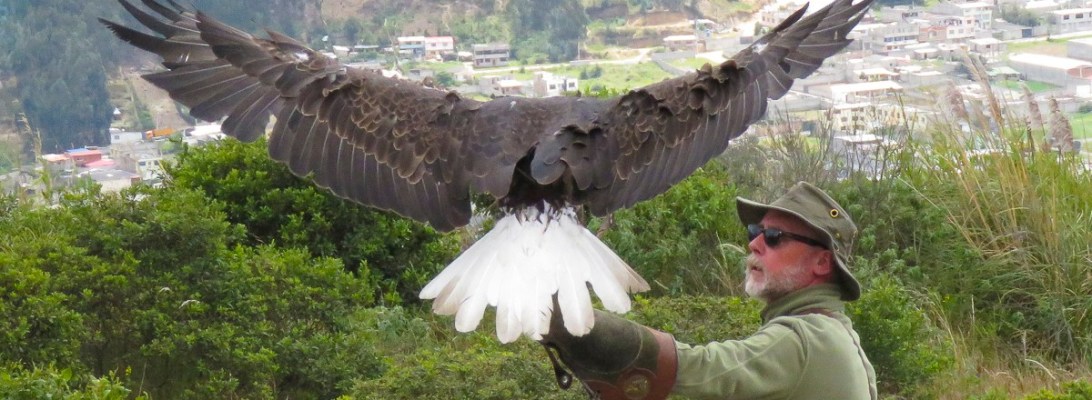
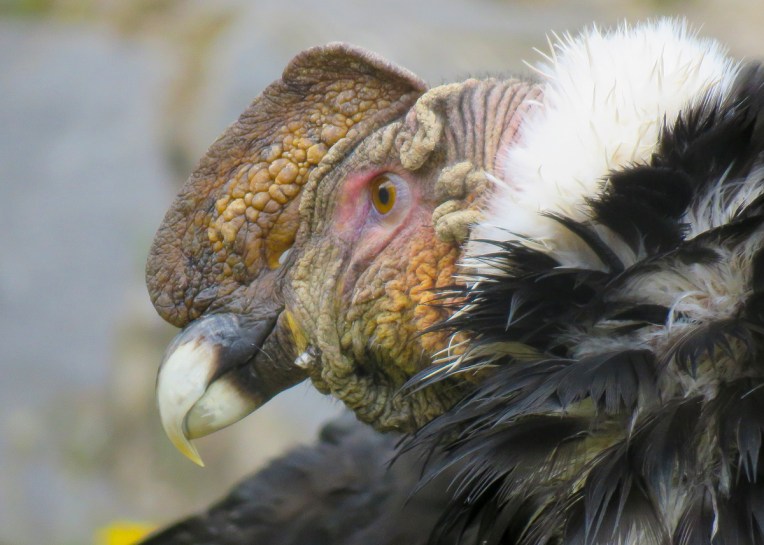
On the way to Parque Condor, a rescue center for Andean birds of prey, our GPS failed us and lead us down a dirt track on the other side of the mountain that we were supposed to be at the top of. Fortunately the first person we asked walking along the road spoke a little English and pointed us back in the direction from which we came. Before we turned around she looked seriously at our car, shook her head and said “I don’t think your little car can make it there”. We too had our doubts when we saw the condition of the dirt road and the incline that faced us. “It’s not what you drive, but how you drive it” became my favorite mantra when considering the capabilities of our wheels. And yes, we wished we had a little more ground clearance occasionally, and more horsepower. With minutes to spare we made it in time for the morning “free flight” demonstration at 11:30.
In a stone amphitheater set into the side of the mountain top, high above the valley below, a falconer performed with a variety of Andean hawks, to the audience’s delight. Starting with their smallest raptor and working their way to the larger ones, from behind us his assistants would release the birds from their cages and they would fly through the crowd to land on the sheathed hand of the falconer. As the falconer tossed food in the air, the birds would grab it in mid-flight, circle around and land on perches amidst the audience. Evidently the falconer moonlighted as a stand up comedian as the enthralled audience erupted in laughter numerous times throughout the hour and a half show. Unfortunately, “no hablo Espanol,” the jokes were lost on us. The park also houses a great variety of owls and condors which were a delight to photograph.
We were so anticipating the Otavalo Market, and better yet we were there on a Saturday, its largest day. As promised, the streets were full of vendor stalls radiating for blocks from the Artisan Square. Unfortunately, many stalls featured everyday essentials for the local populace and not the high quality crafts that the market had previously built its legendary status on. At the very center on the Artisans square, what looked liked machine woven textiles, made in Ecuador, were available and priced accordingly.
We opted to visit one of the local weavers, Miguel Andrango, at his home workshop in Agato to view his unique and one of a kind textiles, all woven by hand on a backstrap loom. A fourth generation weaver, he explained to us how everything was done by hand. From the shearing, cleaning, carding, spinning and then dying the wool using local plants or insects to create the colors needed. A hand woven blanket wide enough for a double bed takes two months to weave by hand. It is so important to support these local artisans as they are knowledge keepers of their craft and maybe the last, as the younger generation shows little interest in keeping these traditional crafts alive. Please try to avoid buying cheap foreign knock-offs at these markets. The local craftspeople suffer terribly from this competition.
The town of San Antonio de Ibarra has two large plazas, one block apart, which are lined with numerous traditional woodcarvers shops. Here we found artisans creating religious statuary for homes and churches and more contemporary pieces for decoration, in workshops fragrant with cedar and sawdust.


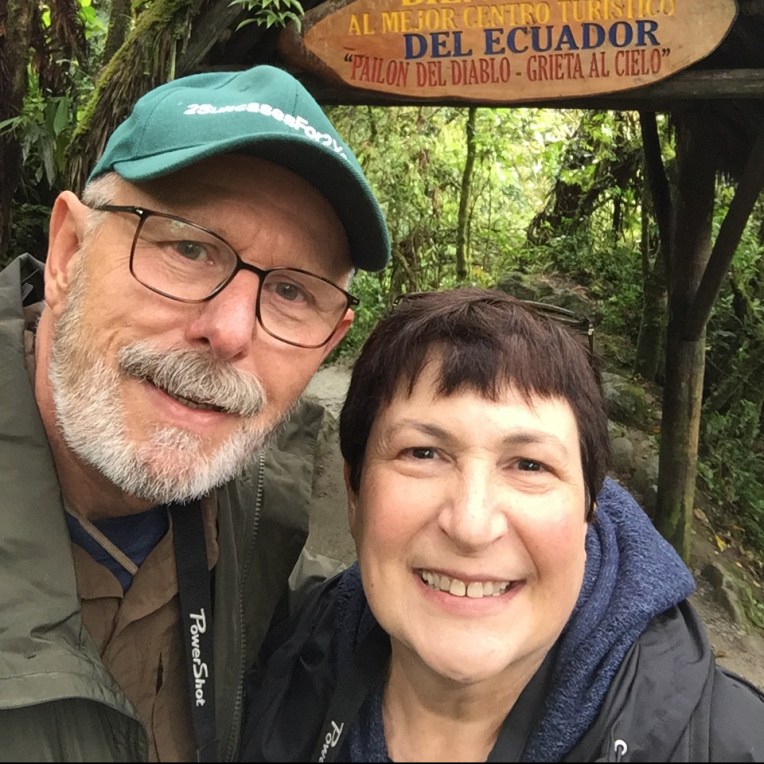 The good news is we haven’t killed each other, though there have been times that I’ve dreamt a pillow was hovering over my head. Just kidding. We have gone from the two of us working six days a week while living in an eight-room house, to being together 24/7 with only a suitcase each. Boy did we downsize! It was challenging: what not to bring, considering all the seasonal changes we have encountered. Don’t laugh, but I have thermals, wool hats and gloves packed, just on the off chance we get snowed in on a mountain pass in the French Alps, this July. Yes, there’s also a flask of medicinal whisky packed in the bags for emergencies. And to my wife’s amusement, a cheap plastic fly swatter. Tragically the backup swatter was left behind in Antigua. In Lisbon I finally caved in and bought a pair of slippers because the floors of the stone buildings just don’t retain any heat in the winter. The comfort of a pair of slippers in the evening, after a long day of walking, can’t be underestimated.
 It’s been a huge but surprisingly easy transition for us. 253 days ago (I thought I was writing this at around day 200, it’s easy to lose track of time on the road) we slammed the door shut on our storage pod, locked it, and popped open a bottle of champagne to celebrate our impending journey. We haven’t looked back. Ecuador, Guatemala, Cuba and now Portugal; I can’t imagine undertaking this adventure with anyone else.


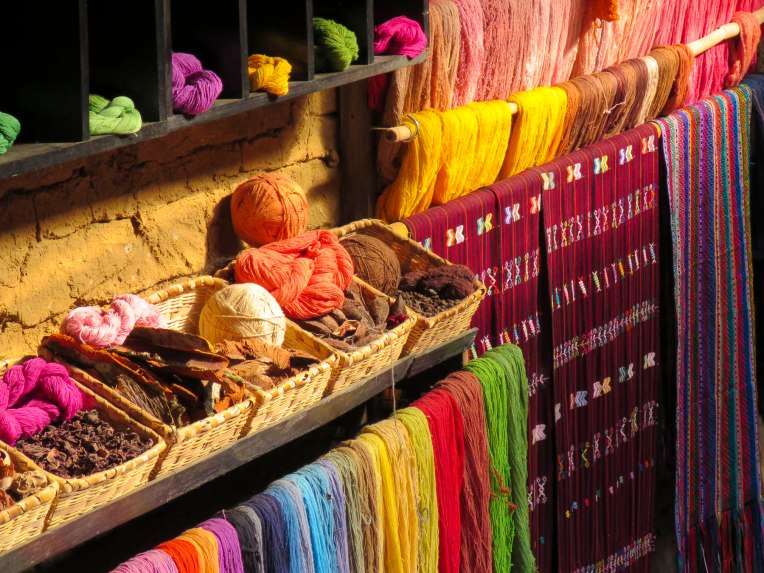 This visit also gave us an opportunity to jettison the wonderful textiles and ceramics we had purchased along the way for a home we don’t have yet. Imagine this scene from our last stop in San Pedro – the backseat of a tuk-tuk overflowing with Donna and all our suitcases, while I’m sharing the driver’s seat with the driver, one cheek on, one cheek off and a foot dangling outside the cab as we speedily snaked through the steep narrow alleys of the village.


![IMG_2836[12654]](https://i0.wp.com/2suitcasesfor2years.com/wp-content/uploads/2018/11/img_283612654.jpg?w=279&h=209&ssl=1 "IMG_2836[12654]")
![IMG_2841[12658]](https://i0.wp.com/2suitcasesfor2years.com/wp-content/uploads/2018/11/img_284112658.jpg?w=279&h=209&ssl=1 "IMG_2841[12658]")
![IMG_6276[12629]](https://i0.wp.com/2suitcasesfor2years.com/wp-content/uploads/2018/11/img_627612629.jpg?w=477&h=636&ssl=1 "IMG_6276[12629]")


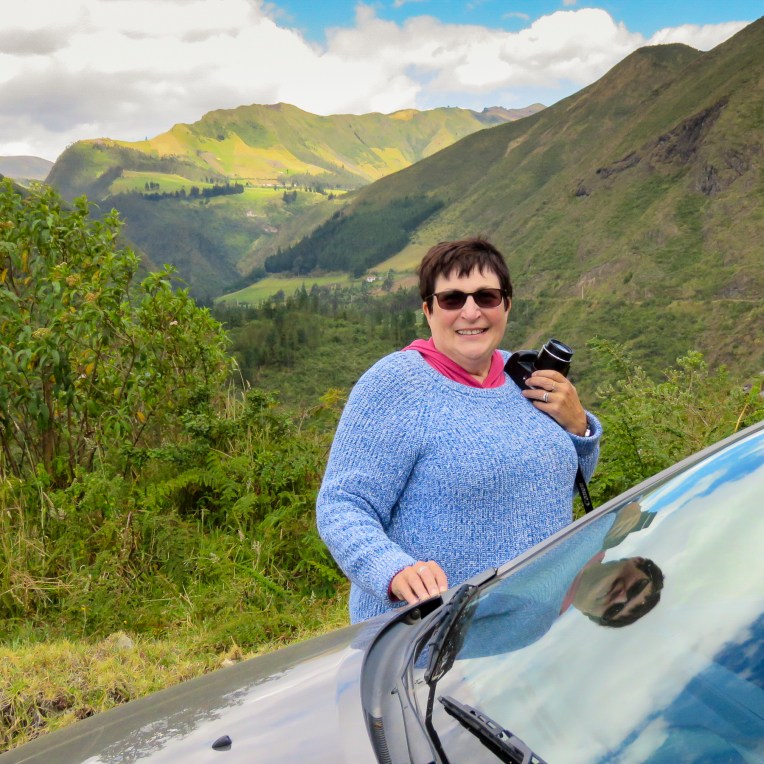 Not everything has gone smoothly. A rental car agency did not honor a reservation and we had to scramble to find another one late one night in the airport. We have felt very safe during our travels, but there are unfortunately some extremely talented pickpockets out there. May the curse of arthritis shorten their careers! Filing a stolen property report in Lisbon with the tourist police turned out to be an enjoyable experience due to the officer assigned to us. Luckily, within 24-hours they called us with the good news that our wallet had been recovered, minus the cash of course, but that our passport and credit cards were all there. Honestly, we weren’t following our own advice: only carry in your pockets what you are willing to lose. Everything else of value needs to be carried under your clothing.
 After Lisbon it’s a two-week road trip through Portugal. Then we are off to, of all places, Sofia, Bulgaria for a month, (the Beatles song “Back in the USSR” keeps coming to mind) in order to reset our Schengen union days for later in the summer. After that, two dog sits in England and two Workaway experiences in France at a 14th century chateau await us before we resume our life of leisure in Kotor, Montenegro, in September.
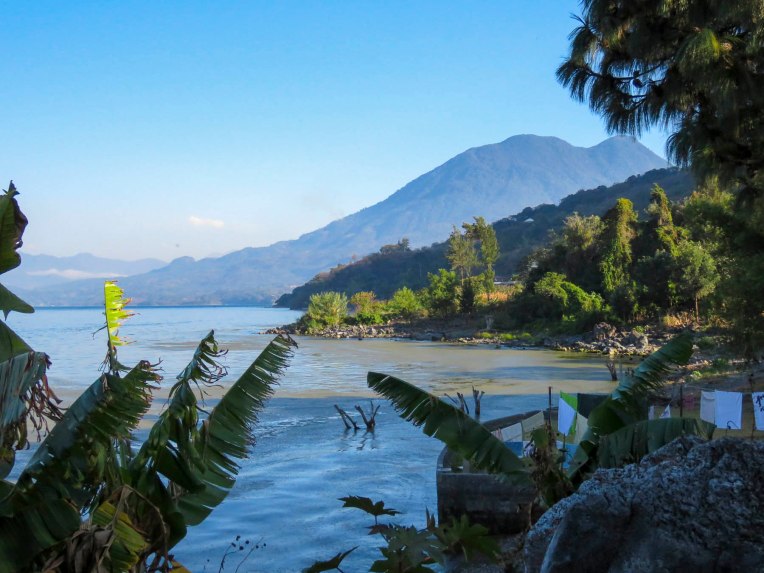 We have shared meals and stories with so many wonderful and interesting people along the way. These friends have made this journey what it is – fantastic!

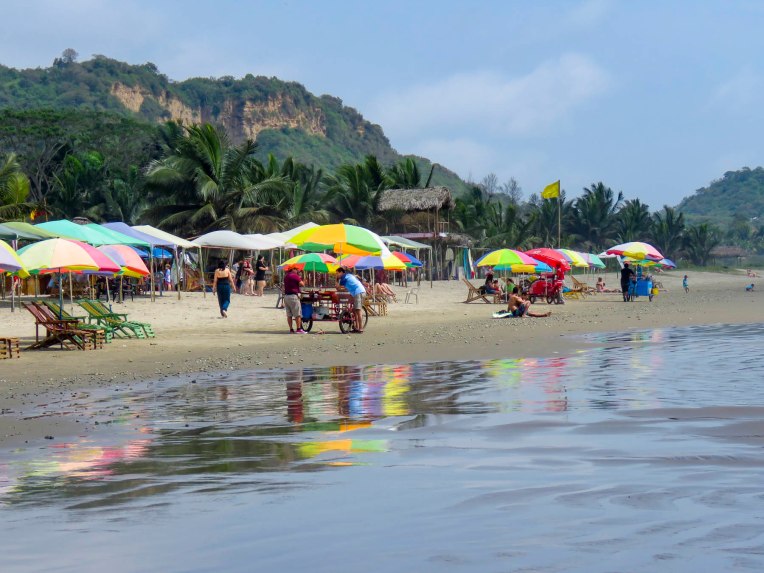 Our quest for eternal Spring-like weather has brought us to Olon, a rustic beach town on Ecuador’s southern Pacific coast with a wide, flat sandy beach that stretches for nearly five miles without a high-rise to been seen. Think San Juan del Sur in Nicaragua fifteen years ago, before it was discovered, or Costa Rica thirty years before it became a top tourist destination.
![IMG_6057[12551]](https://i0.wp.com/2suitcasesfor2years.com/wp-content/uploads/2018/11/img_605712551.jpg?w=535&h=401&ssl=1 "IMG_6057[12551]")


![IMG_7452[12683]](https://i0.wp.com/2suitcasesfor2years.com/wp-content/uploads/2018/12/img_745212683.jpg?w=240&h=192&ssl=1 "IMG_7452[12683]")


![IMG_5961[12489]](https://i0.wp.com/2suitcasesfor2years.com/wp-content/uploads/2018/11/img_596112489.jpg?w=158&h=211&ssl=1 "IMG_5961[12489]")


 Puerto Lopez hosts the largest fishing fleet on this part of the Ecuadorian coast. Lacking a protected harbor, all the fishing boats beach on the shoreline to unload their fresh catch. It is a hectic scene of never-ending activity that is reminiscent of an earlier era.
![IMG_6276[12629]](https://i0.wp.com/2suitcasesfor2years.com/wp-content/uploads/2018/11/img_627612629.jpg?w=402&h=536&ssl=1 "IMG_6276[12629]")
![IMG_2836[12654]](https://i0.wp.com/2suitcasesfor2years.com/wp-content/uploads/2018/11/img_283612654.jpg?w=354&h=266&ssl=1 "IMG_2836[12654]")
![IMG_6281[12630]](https://i0.wp.com/2suitcasesfor2years.com/wp-content/uploads/2018/12/img_628112630.jpg?w=354&h=266&ssl=1 "IMG_6281[12630]")


![IMG_5946[12490]](https://i0.wp.com/2suitcasesfor2years.com/wp-content/uploads/2018/11/img_594612490.jpg?w=187&h=249&ssl=1 "IMG_5946[12490]")

![IMG_6016[12546]](https://i0.wp.com/2suitcasesfor2years.com/wp-content/uploads/2018/12/img_601612546.jpg?w=187&h=249&ssl=1 "IMG_6016[12546]")
![IMG_6028[12552]](https://i0.wp.com/2suitcasesfor2years.com/wp-content/uploads/2018/12/img_602812552.jpg?w=187&h=249&ssl=1 "IMG_6028[12552]")

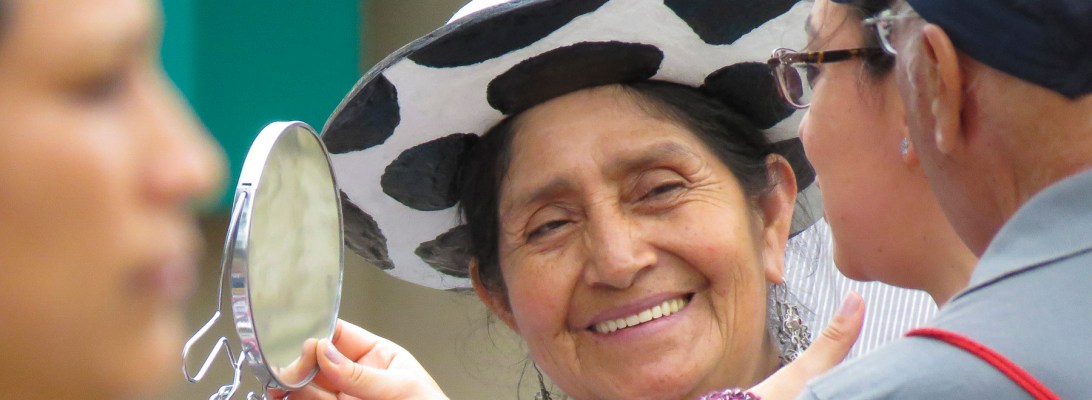
 A vacation from vacation? Yes, its’s tiring work having fun every day! Where to?


 With a bed in the dorm room going for $9.50 and luxury private cabins starting at just $39.00, the resort has a reputation as the place to go to “relax, enjoy, forget time and stay awhile.” Free morning yoga classes, a wonderful restaurant with some German dishes, and super affordable spa treatments (90 minute, deep tissue massages for $24.00, we both indulged) definitely promoted well-being. Bird calls filled the air and the distinctive face of 6,000ft high


 The city does a wonderful job supporting its craftspeople who still use traditional, made by hand, methods to create exceptional pieces in jewelry, textile, ceramic, wrought-iron, tin and copper workshops located across the city. Toquilla straw weavers in the villages around Cuenca who carry unfinished sacks of Panama Hats into the city’s sombrero (hat) factories also need to be included into this group. There are also several traditional felt hat tallerias (workshops) that cater to the indigenous women who live in the rural areas around Cuenca. The fine arts scene is also well represented with galleries and artists’ studios often next to traditional crafts workshops. To get the broadest experience of this vibrant arts and crafts community a tour through Cuenca’s most interesting neighborhood, El Barranco (the cliffs), and along its busiest street Calle Larga, is a must. The colonial buildings that front Calle Larga back onto the cliff which overlooks Rio Tomebamba and the newer southern part of Cuenca. Wide stairs in several parts lead down to Paseo 3 de Noviembre, a shaded pedestrian walkway and bike path that follows the river for several miles.
 This route actually starts several blocks west of Calle Larga at Cuenca’s Museo de Arte Moderno (Museum of Modern Art) across from Parque de San Sebastian which has a large fountain and several nice places to eat. Casa Azul, which has rare sidewalk tables that face the quiet plaza, and Tienda Café are good choices. Most of the workshops won’t have business signs over their doors or street numbers, might open by ten, but will reliably close between one and three for lunch.


![IMG_5946[12490]](https://i0.wp.com/2suitcasesfor2years.com/wp-content/uploads/2018/10/img_594612490.jpg?w=378&h=504&ssl=1 "IMG_5946[12490]")

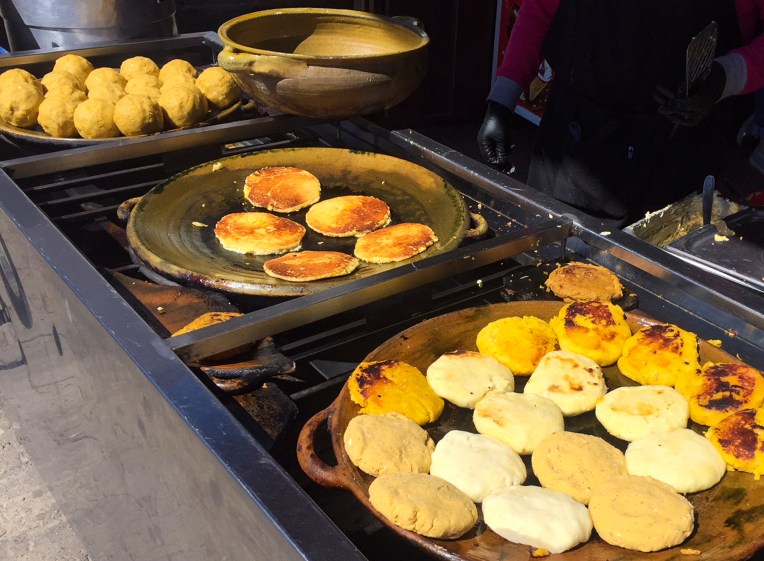 One of our favorite snacks was Tortilla de Choclo, eighty cents, a corn pancake that was grilled on a large ceramic plate, curbside, as you waited. Often, coffee and dessert cost more than lunch itself.

 One of the reasons we chose Cuenca for our first short term rental was so that I could take advantage of their dental tourism offerings. I had put off getting things done in the states because of what I thought were excessive cost, even with insurance. I am extremely pleased with the dental care that I received at Finding Health in Ecuador. Tooth extraction – $35.00, cavity – $25.00, two-tooth bridge – $250.00. Our premise that we could live abroad more economically than living back in the states is so far holding true.
 Currently we are in Olon, a rustic beach town on Ecuador’s southern Pacific coast with a wide, flat sandy beach that stretches for nearly five miles without a high-rise to been seen. It’s off season, mostly cloudy, but the water is still warm, perfect conditions for the handful of surfers and us. Fishermen still launch skiffs through the surf from the beach, and fathers can be seen taking their kids to school on the handlebars of their motorcycles, gently splashing through the incoming tide. Our rent for the month of October is $730.00 with breakfast included!


![IMG_5961[12489]](https://i0.wp.com/2suitcasesfor2years.com/wp-content/uploads/2018/10/img_596112489.jpg?w=402&h=536&ssl=1 "IMG_5961[12489]")















 2 Suitcases for 2 years