
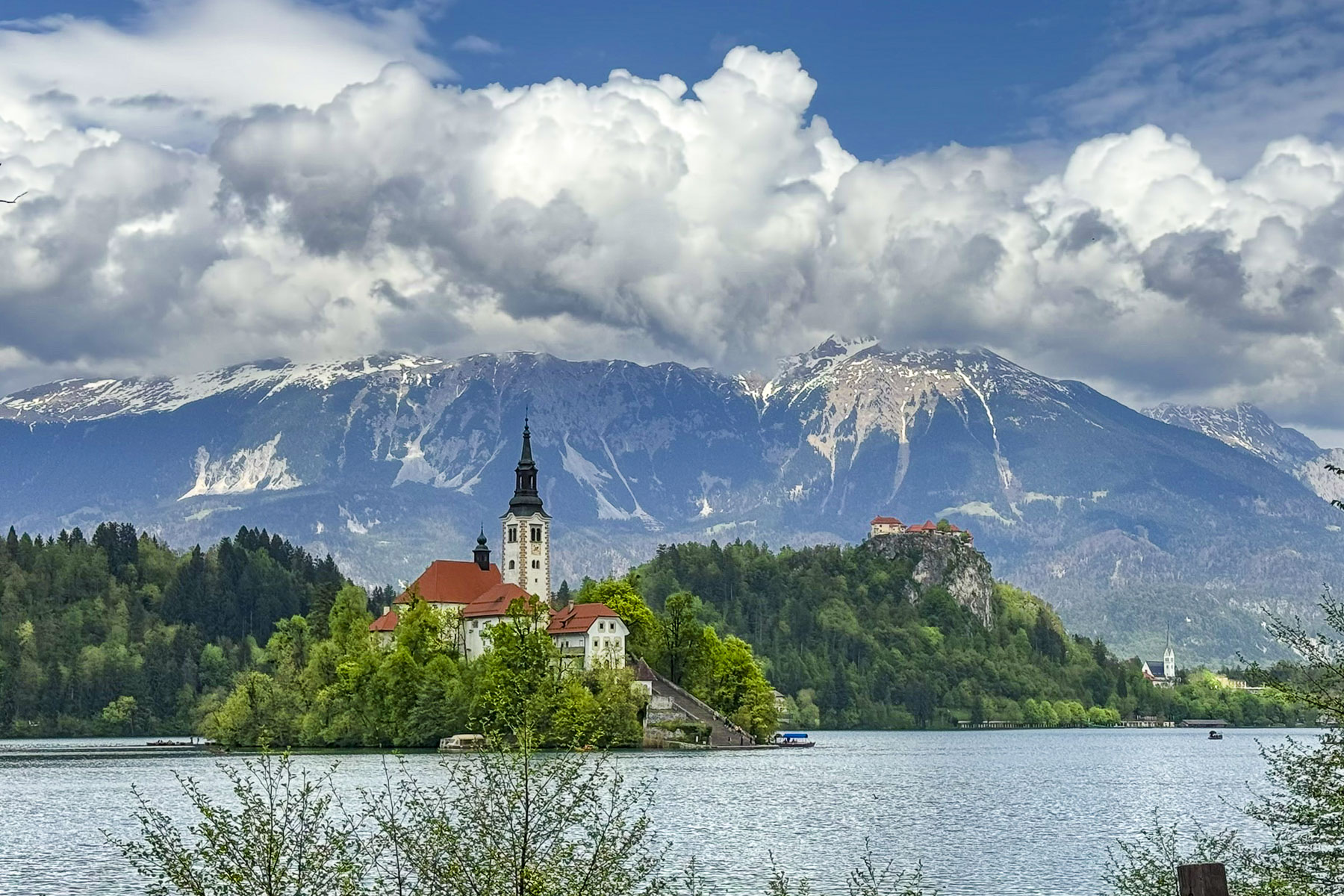
Enchanting photographs of Lake Bled and the Church of the Assumption of the Blessed Virgin Mary on its island pulled us into the countryside like a magnet, its attraction drawing us away from Ljubljana to visit the iconic pilgrimage site that’s become a symbol of the natural beauty that awaits visitors to Slovenia.
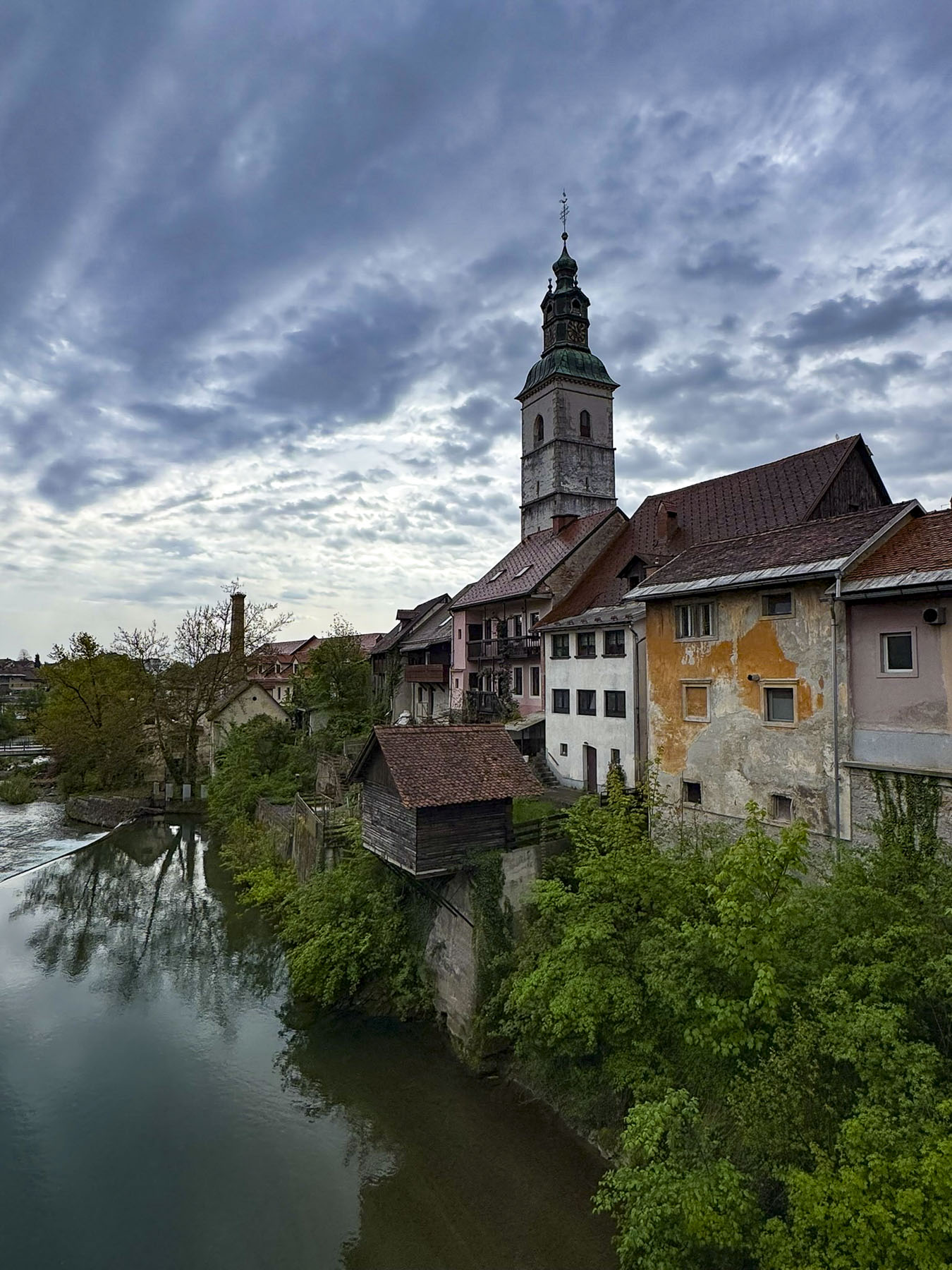
Via the E61 toll road from Ljubljana, Lake Bled is an easy and quick day trip from Ljubljana, but we chose a route through the foothills of the Julian Alps, an immense area that stretches to the northwest from Skofja, a charming town with medieval roots.
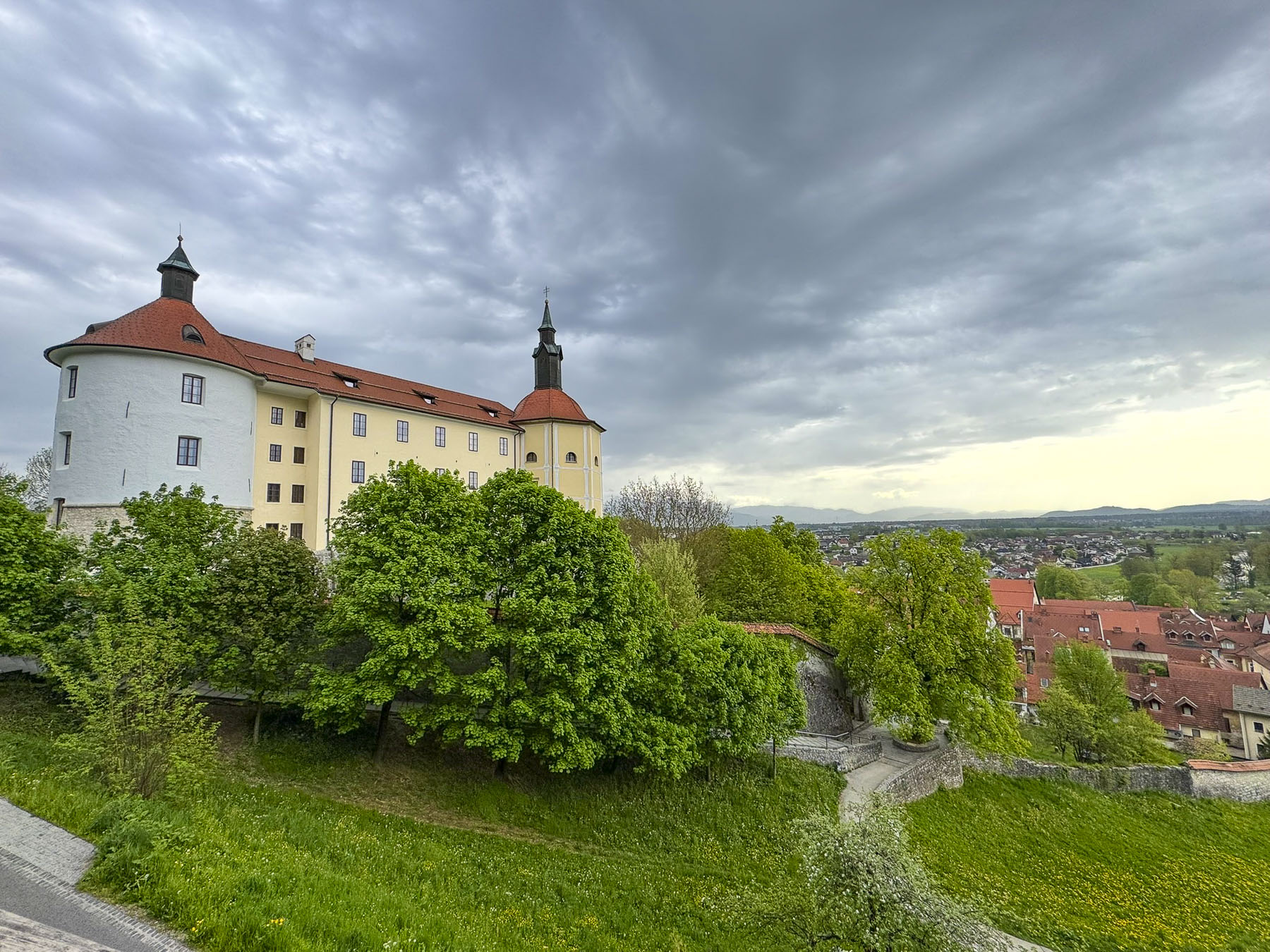
Škofja Loka, the “Bishop’s Meadow,” was founded on the hillside above the confluence of Selška and Poljanska Sora rivers, by a 973 AD land grant to the Bishops of Freising from the German king and Holy Roman emperor, Otto II. By the mid-1200s it was busy walled market town with Skofja Loka Castle towering over it.
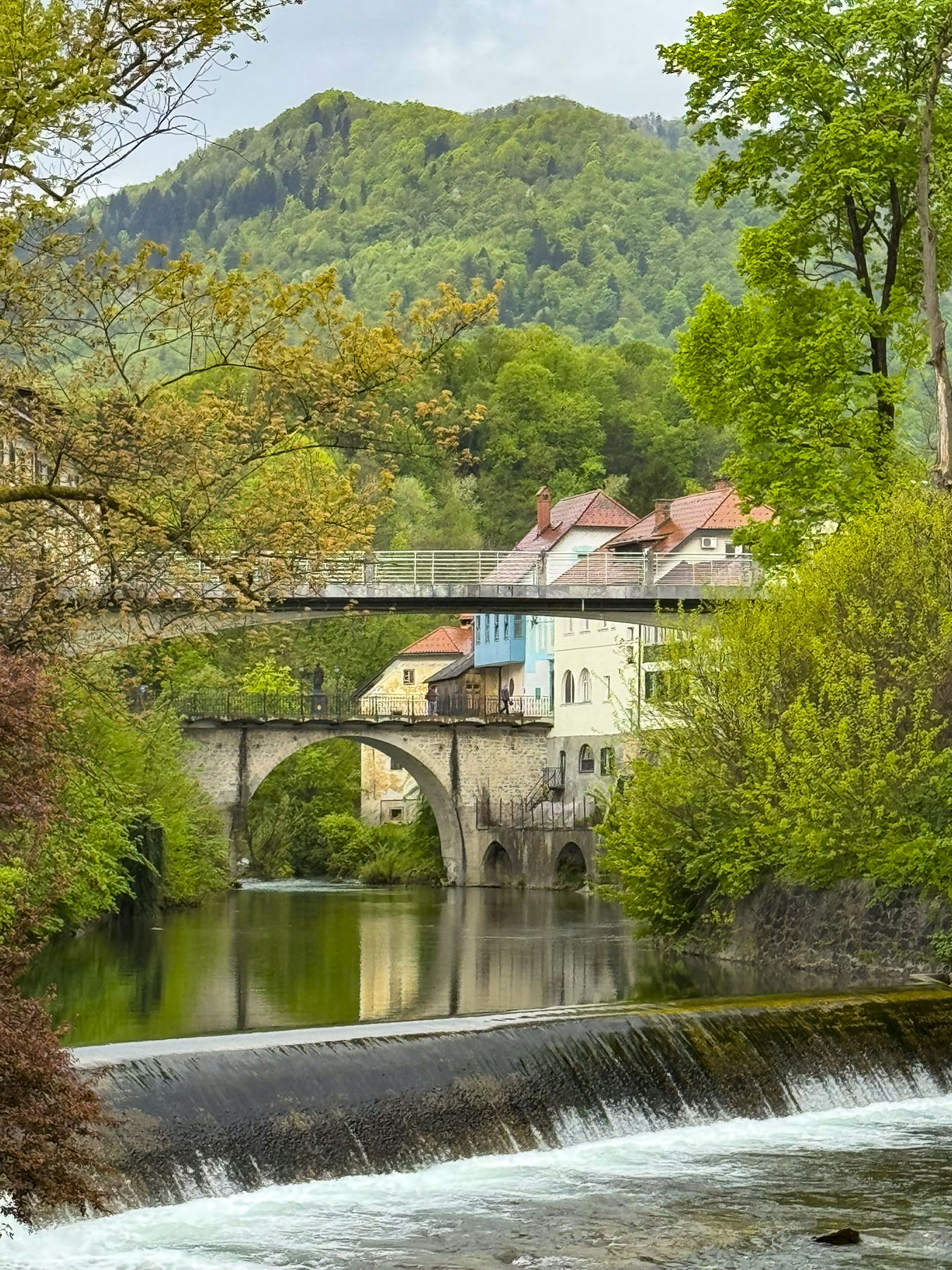
The town has persisted through a turbulent history; having survived a devasting 1511 earthquake, and after fires in 1690 and 1698, it rose from its destruction like a phoenix. The picture image of the town today stems from this last rebuilding and the removal of town’s ramparts in 1768.
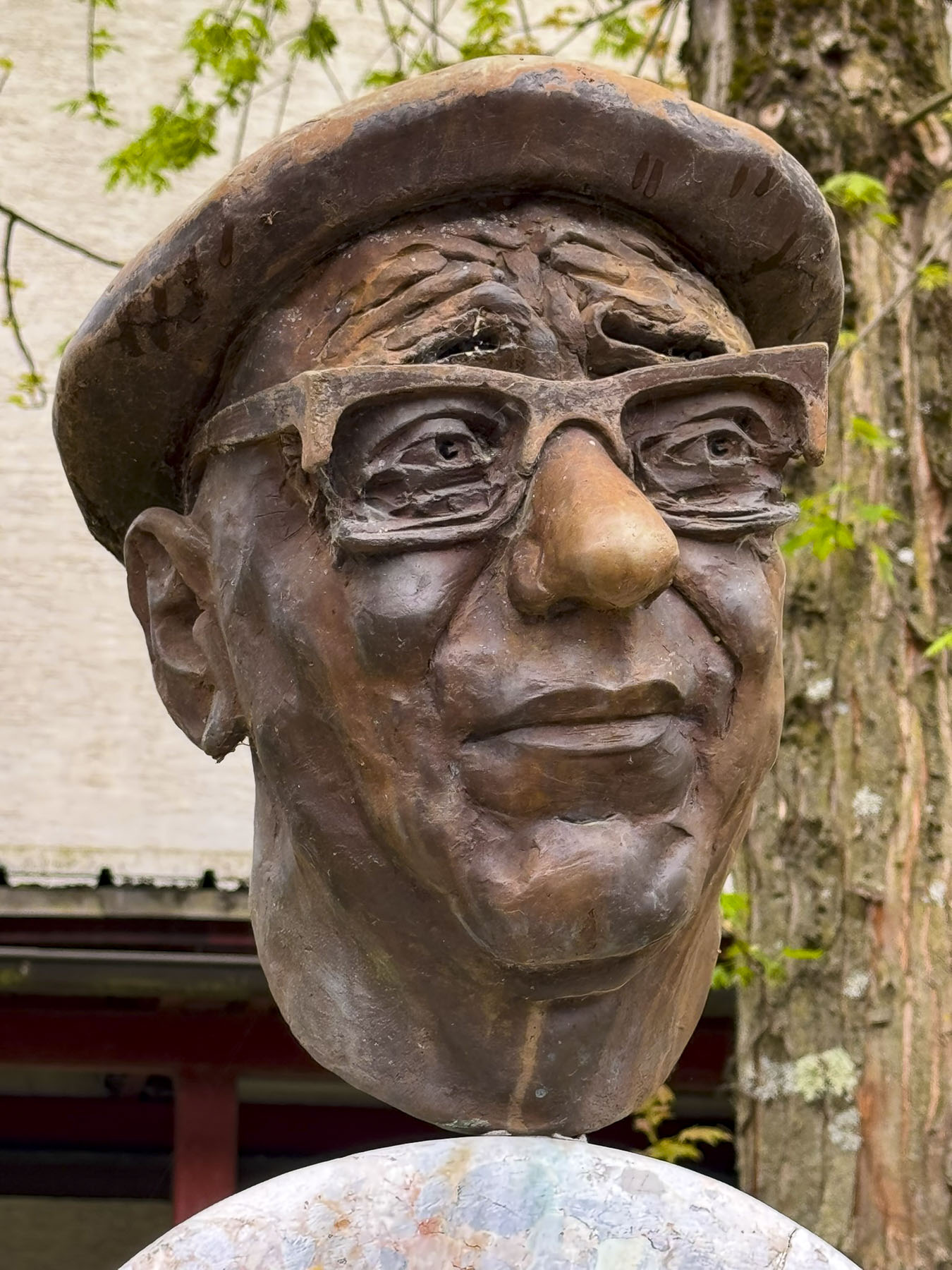
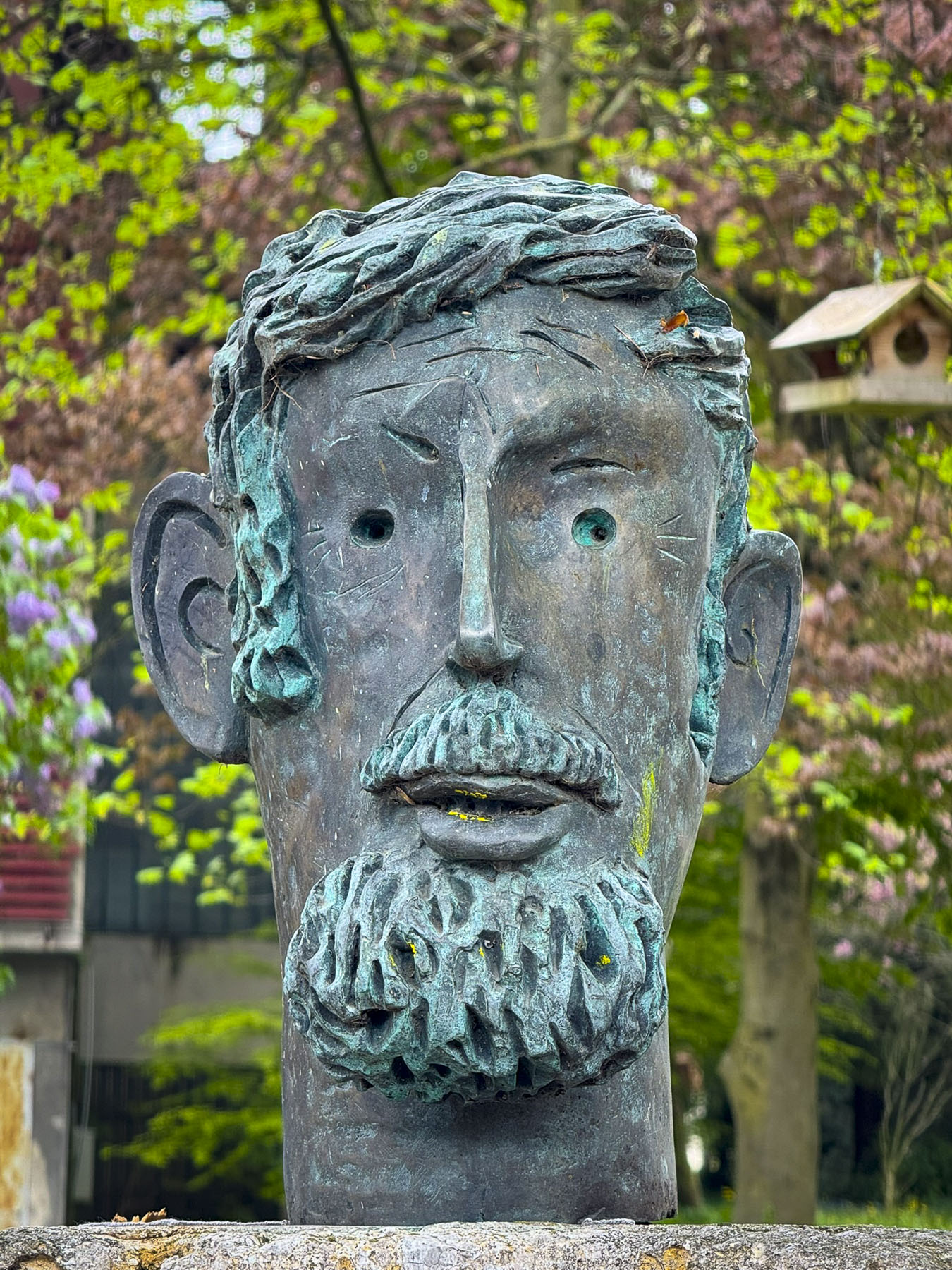
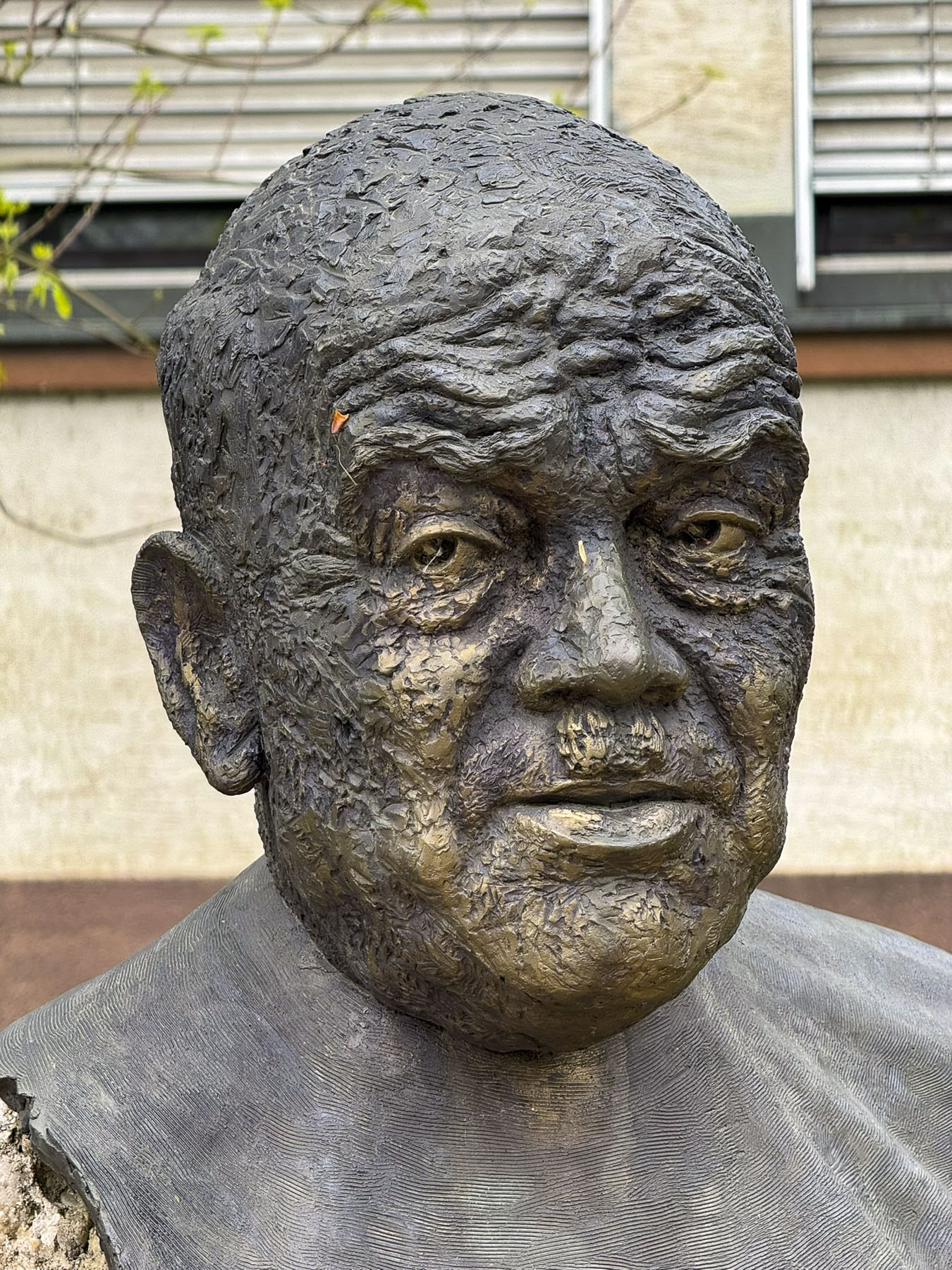
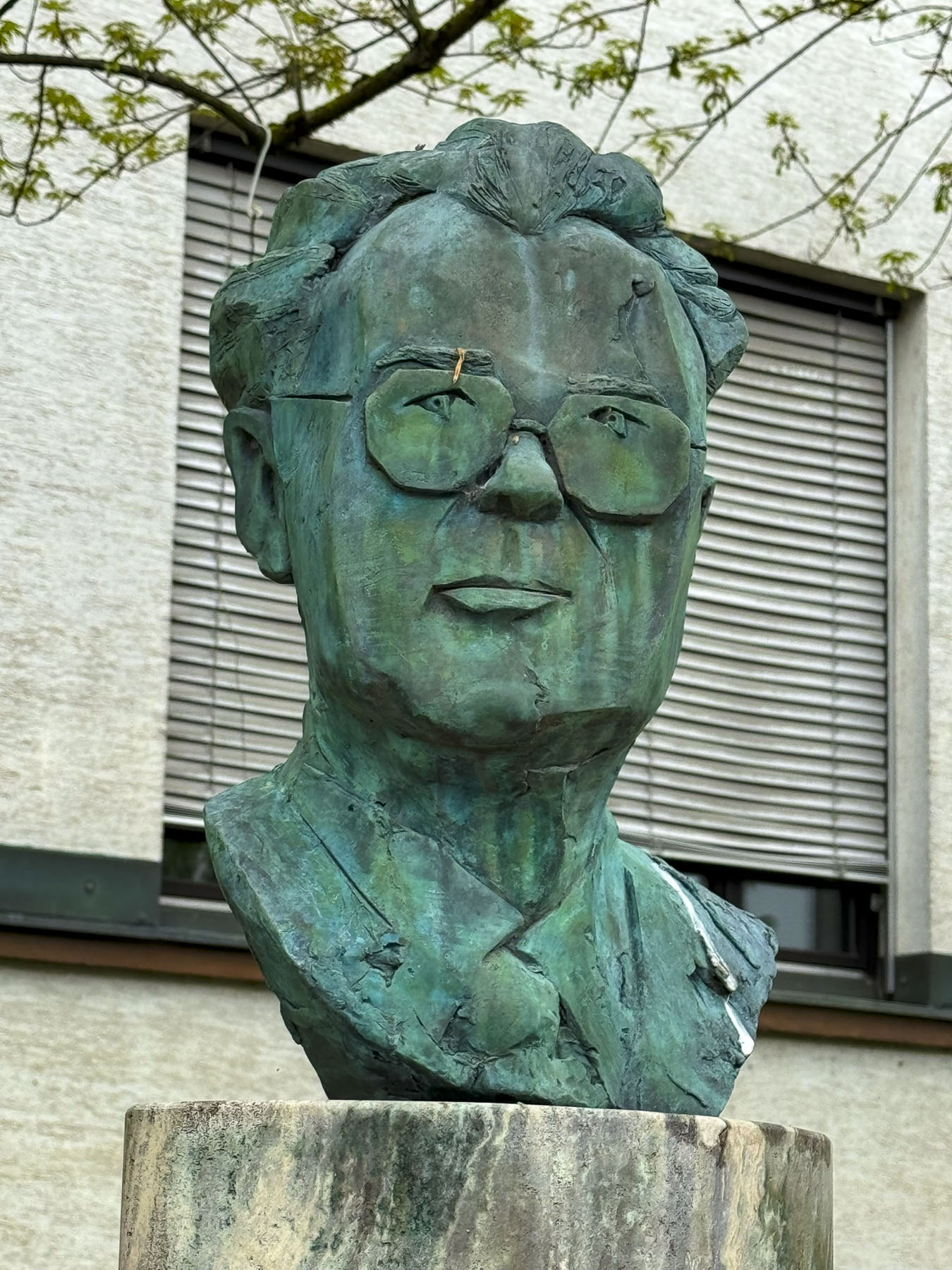
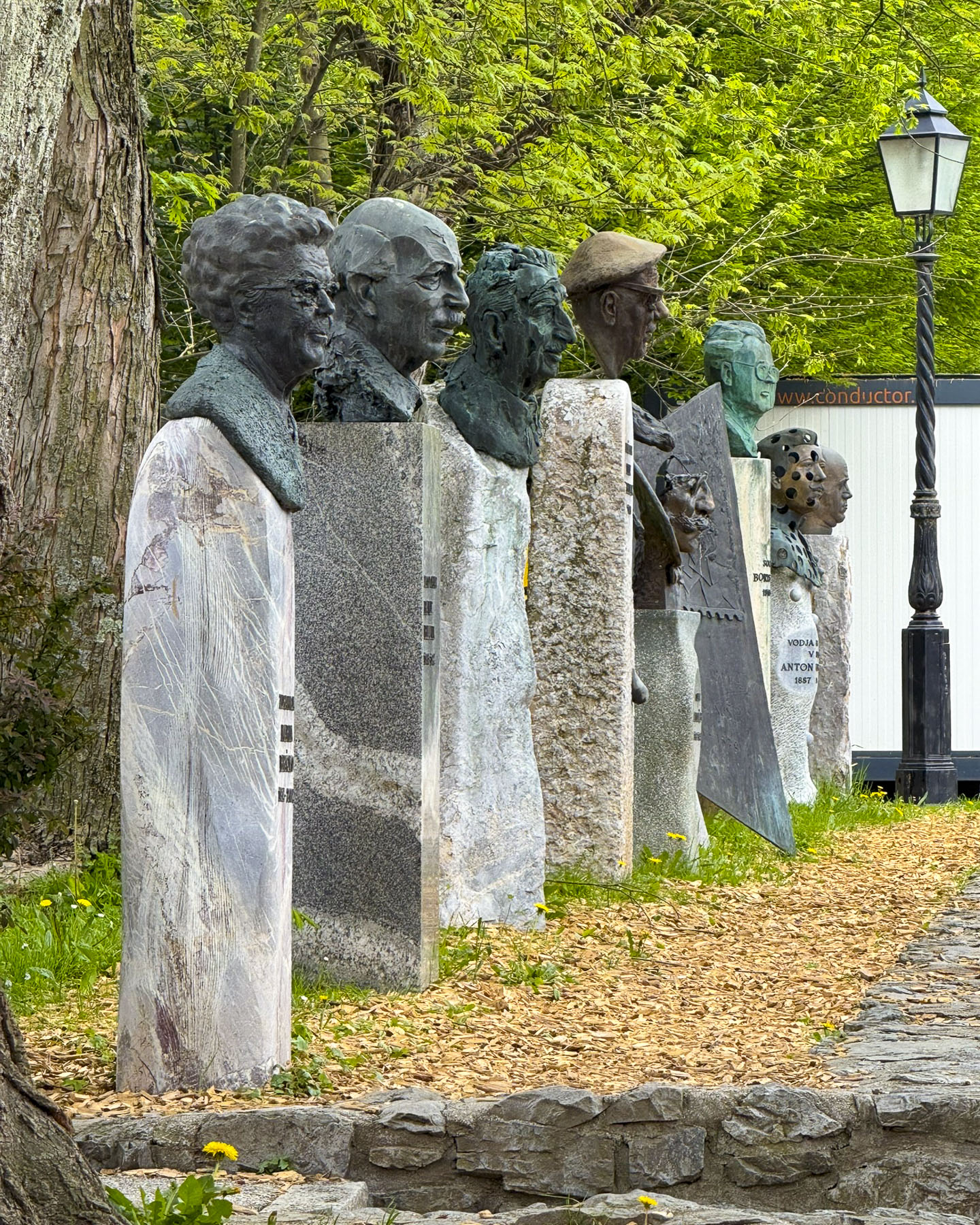
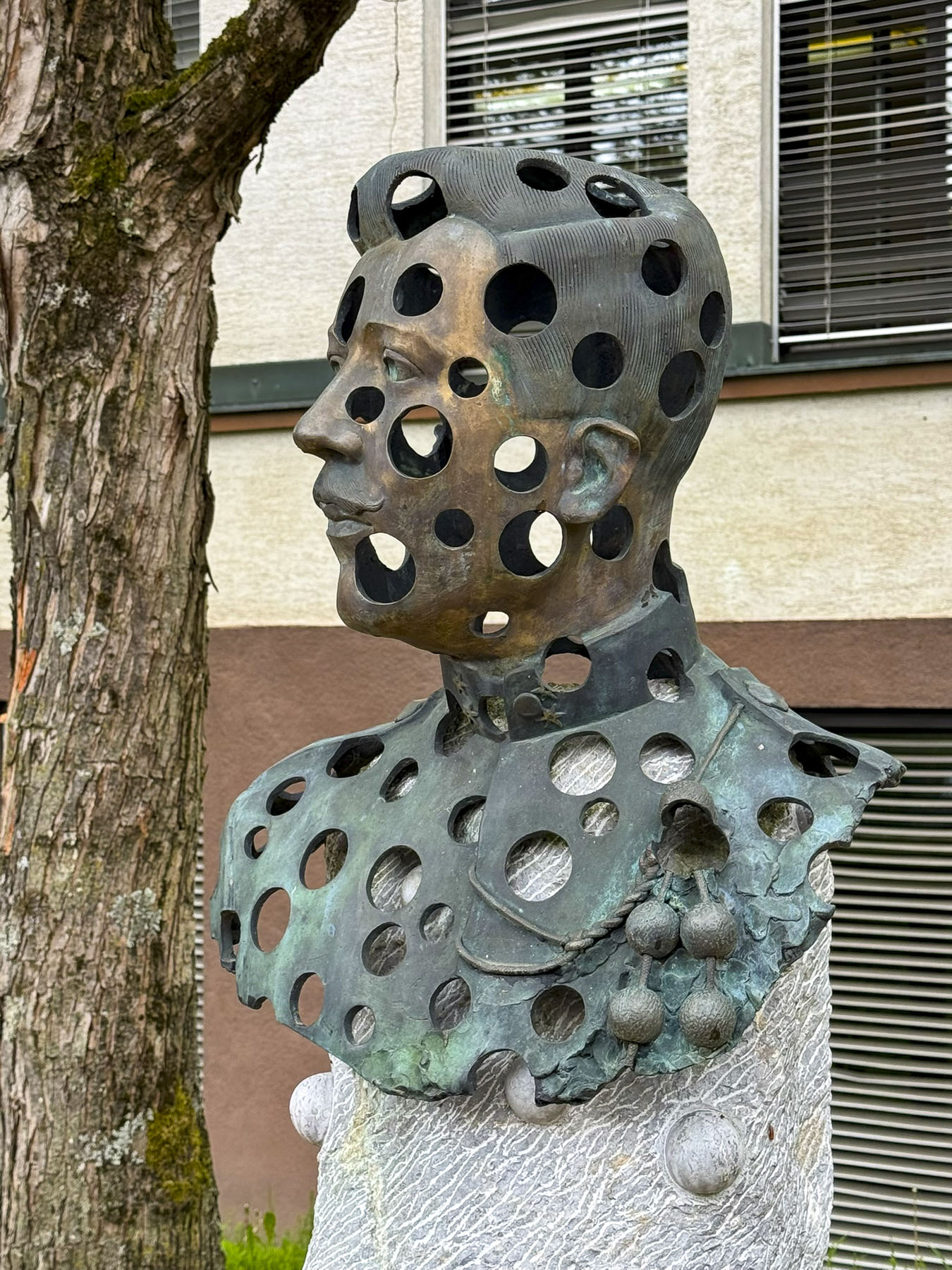
In Selška Sora’s new town we had coffee at the Art Café and sat outside on its porch, even though it was a chilly day, to enjoy the ambience of the town. Across the street from the cafe was a small memorial park Aleja zasluženih, the Alley of the Deserving. It featured a row of unique artistic busts portraying influential notable people of the area.
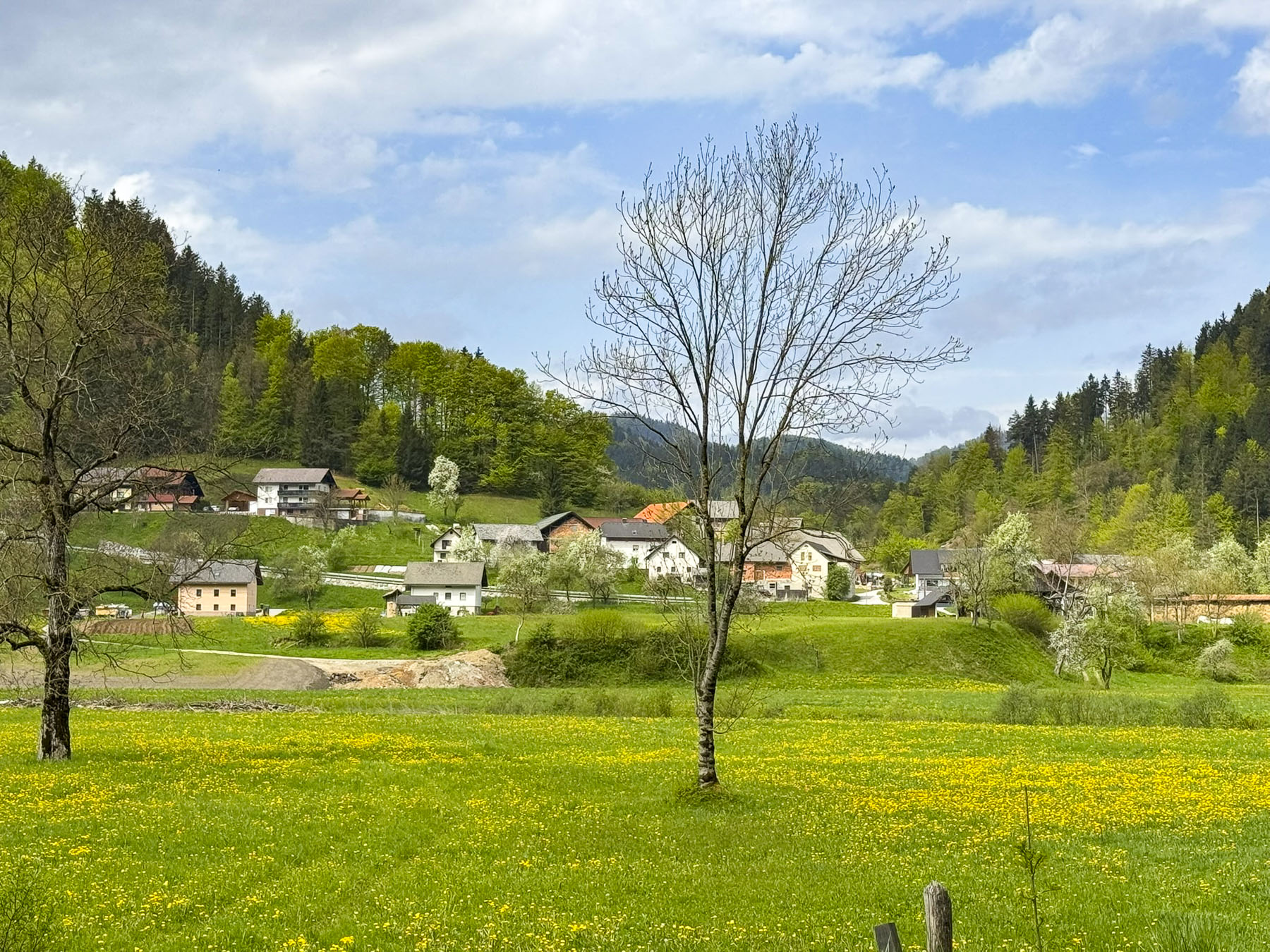
Driving across the countryside, every hilltop we saw seemed to be crowned with a small church, which is not surprising considering Slovenia has nearly 2,900 of them. Twenty-four-hundred of them are still actively used, but many of the older churches in rural areas have congregations of fewer than fifty, some even smaller than twenty. With fewer priests nowadays Sunday services are rotated between communities. Our backroads route from Selška Sora to Lake Bled through the area’s foothills was designed to see several of these old chapels in the countryside.
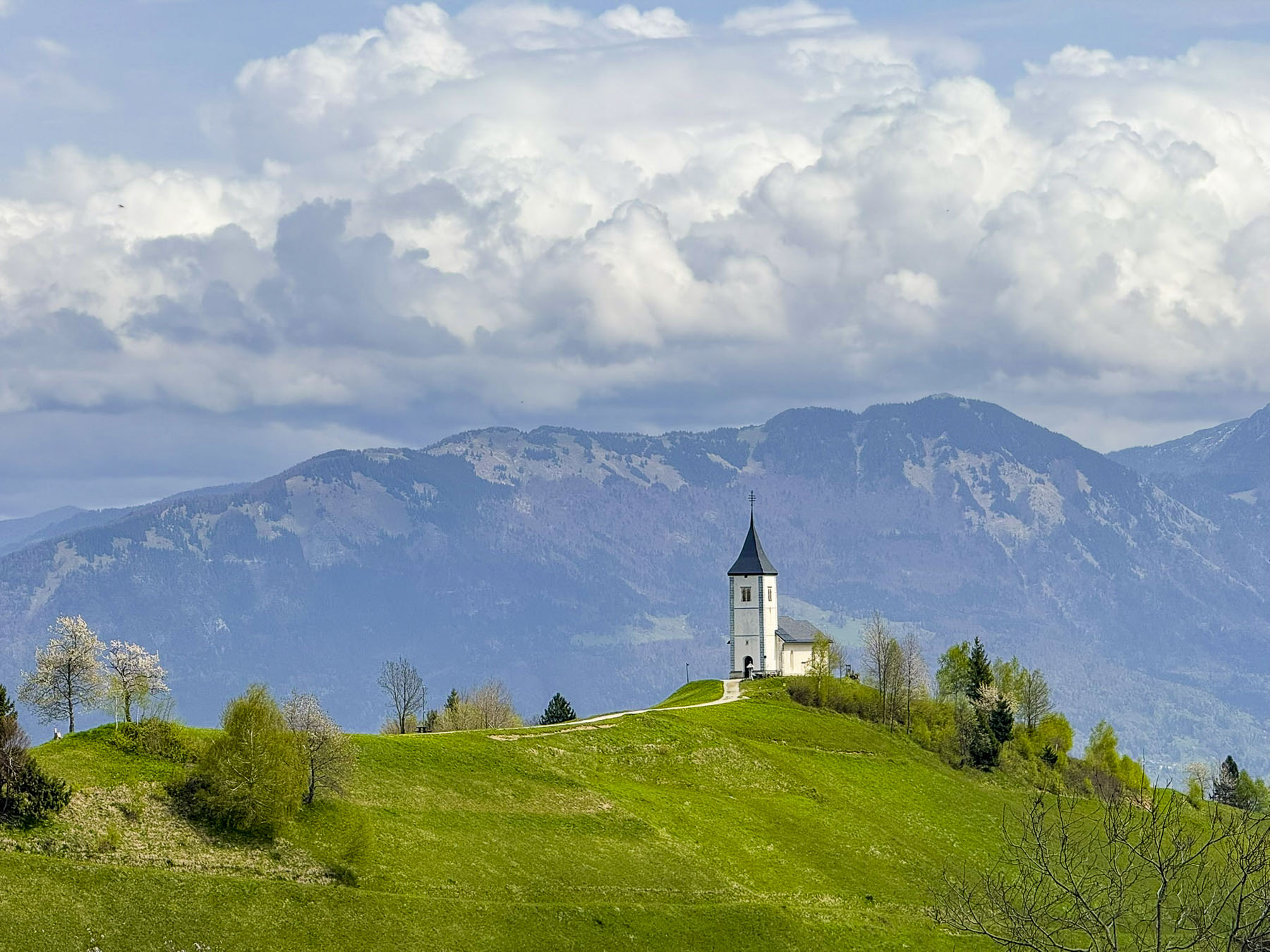
Steep switchback roads climbed into forests which opened to rippling pasturelands as far as the eye could see in the tiny hamlet of Jamnik., on a ridge before a backdrop of the distant Karavanke Mountain range, was the Church of St. Primož and Felicijan which stands quietly as if in reverence, placed upon a ridge; the distant Karavanke mountains, a massive range that forms a natural boundary between Slovenia and Austria, create a backdrop for this lovely church.
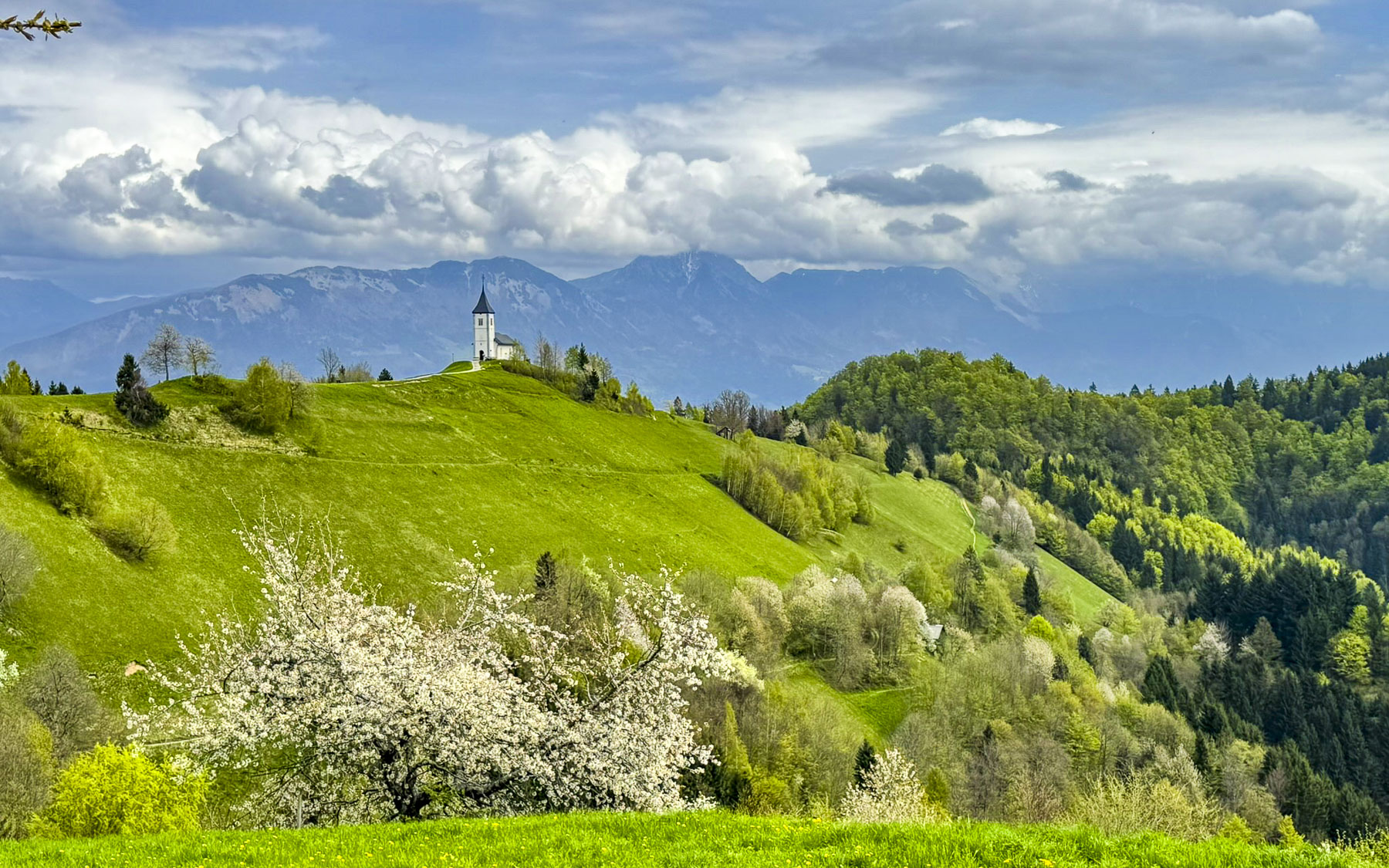
It’s a beautiful setting on the Jelovica Plateau which local folk refer to as the “Balcony above Gorenjska,” the name of the surrounding region. First mentioned in the 15th century, the church was named for Saints Primus and Felician, two brothers and early Christian converts who were martyred by beheading in Rome by the decree ofEmperor Diocletianaround 286 AD. It is said that the church holds their relics and has become a pilgrimage site, and in “Slovenian folklore and religious tradition, these saints are often viewed as “guardians” of the landscape. Their hilltop sanctuary serving as a beacon during turbulent times, including the Turkish invasions, reinforcing their role as symbols of Slovenian faith and cultural identity against external threats.”
Regrettably, beauty doesn’t exclude tragedy and several clandestine mass graves from the end of World War II are located near Skofja Loka. They were the work of Josip Tito’s communist partisans who targeted groups due to their ethnicity, or were members of the Slovene Home Guard, an anti-communists force, civilians marked as “class enemies,”[or victims of political purges. Sadly, across Slovenia, 750 of these secret burial sites, concealed by various communist regimes from 1945 to 1990, have been located by the Commission on Concealed Mass Graves in Slovenia, since the country’s 1991 independence.
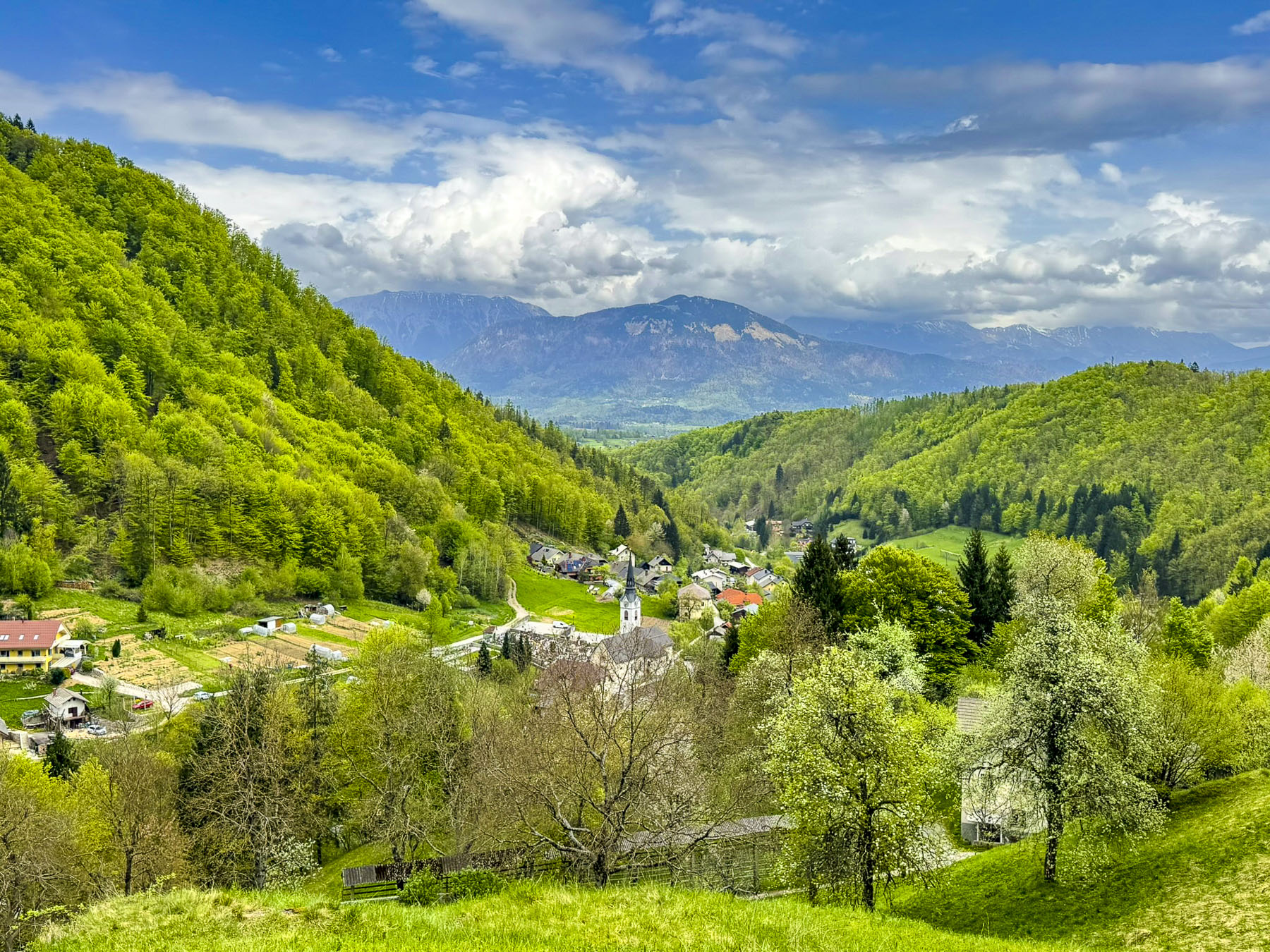
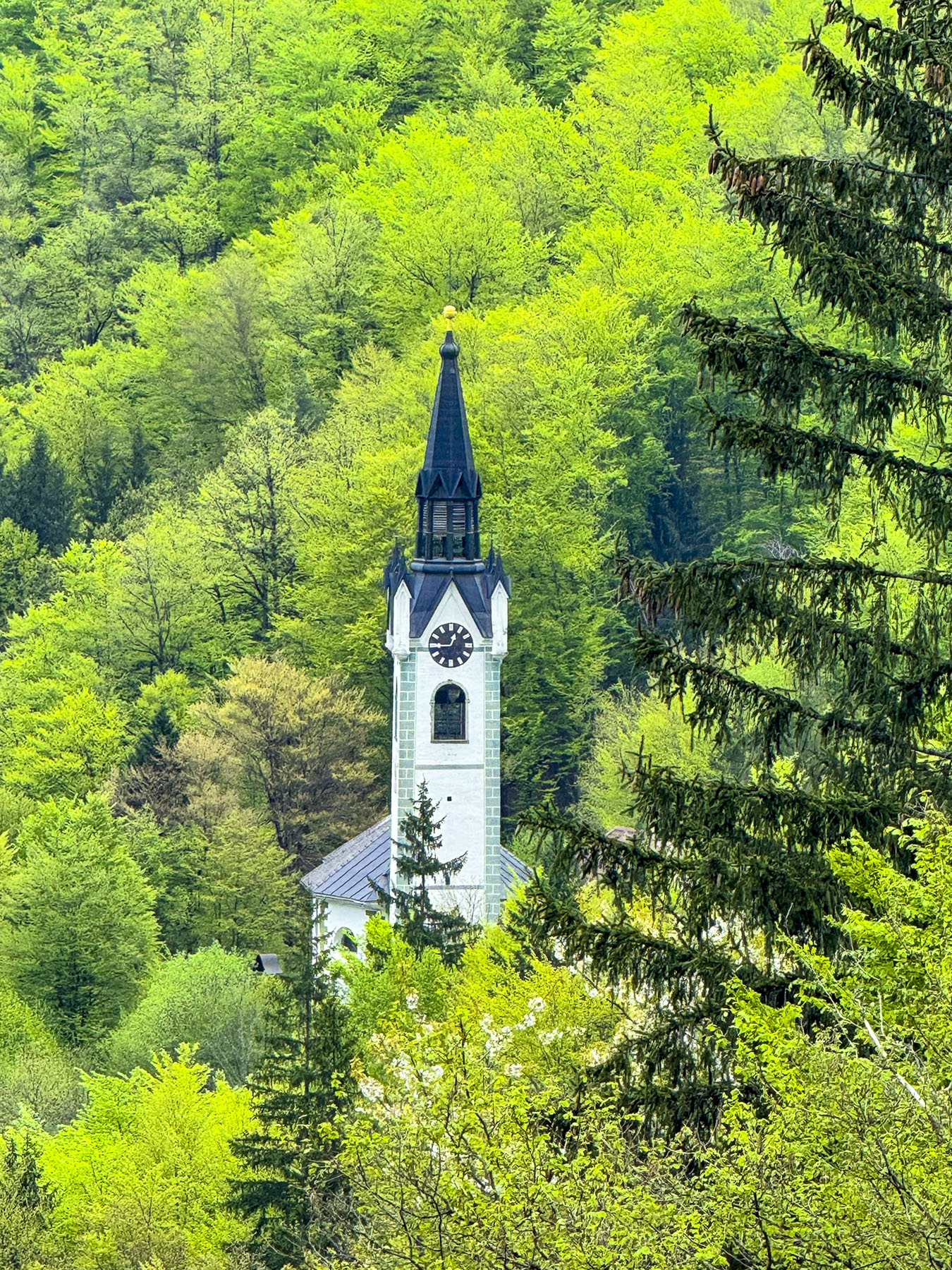
The road crested and then began a long twisting descent to Kropa, a picturesque village nestled at the head of a lush green valley. During the Medieval Era the village was a prosperous center for the hand forging of nails, which were sold all across Europe. Every July the village hosts an Iron Forging Festival, where folks can watch blacksmiths demonstrate their ancient crafts.
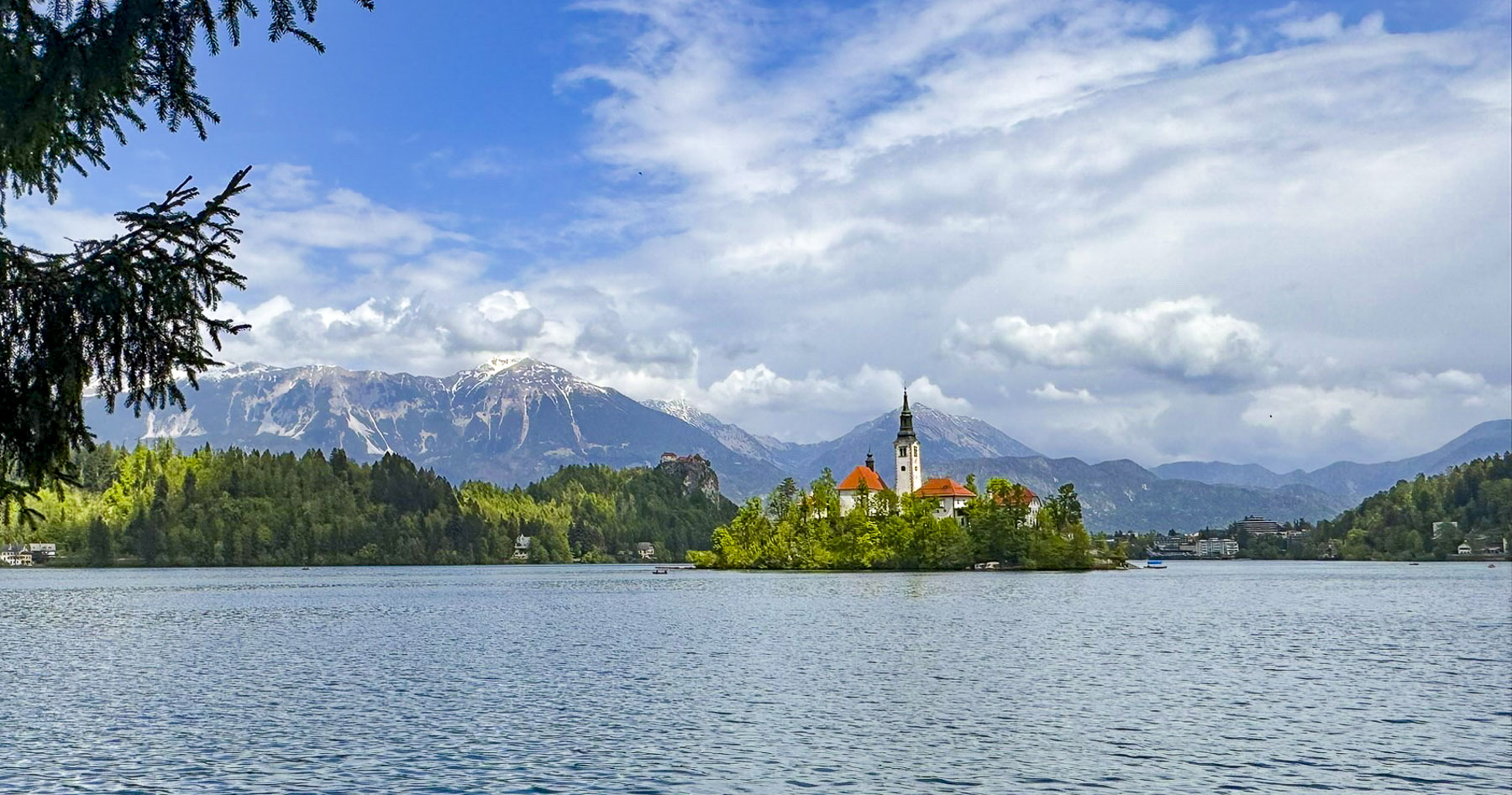
Driving down the hill through the center of Bled, the Church of the Mother of God on the Lake appears perfectly placed in the center of a waterscape surrounded by the foothills of the Julian Alps. Even though we’ve seen thousands of pictures of this iconic setting over the years, nothing replaces the appreciation of this glorious location better than standing on the shoreline and gazing across the glacial waters for ourselves. The scene was visually stunning.
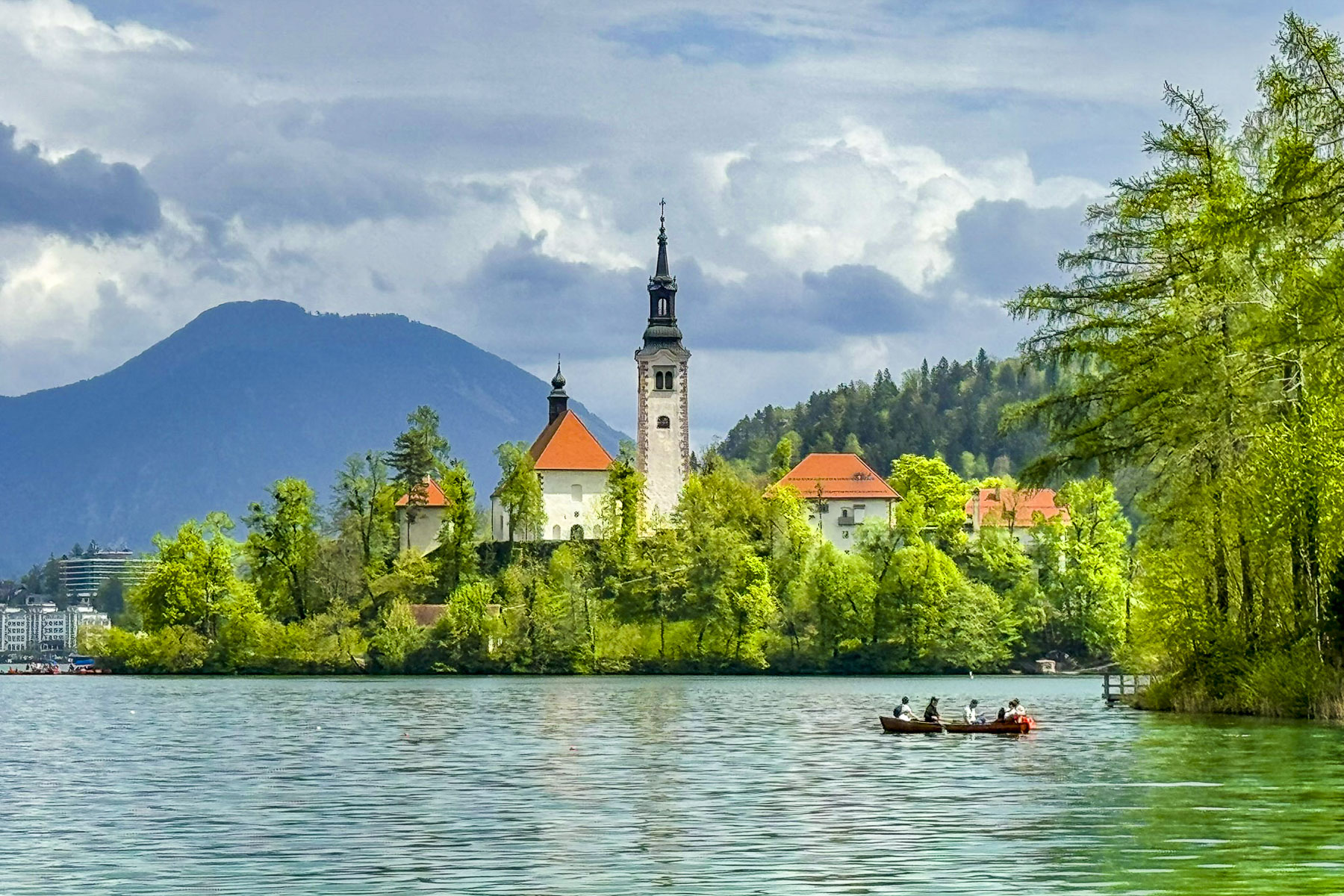
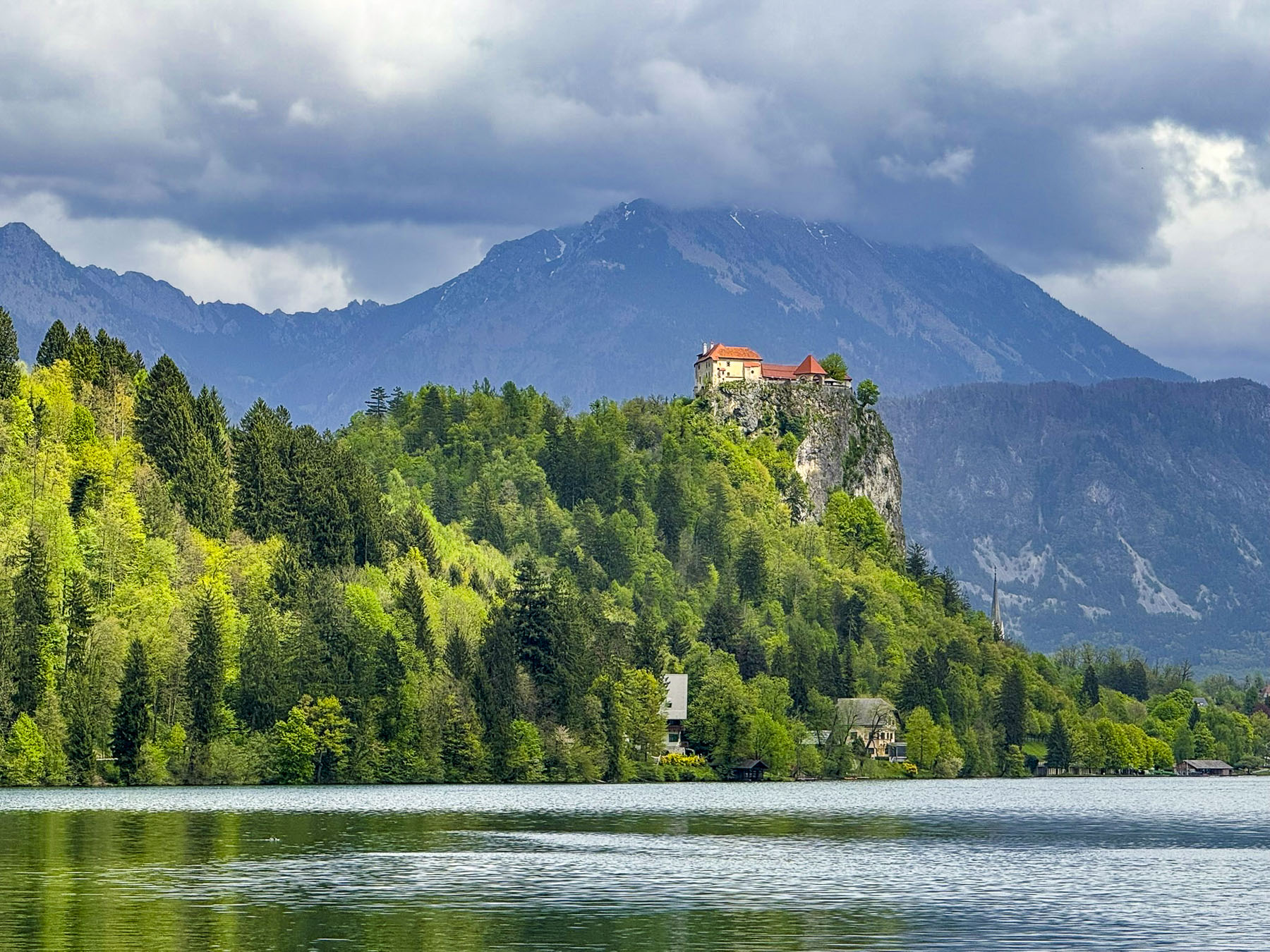
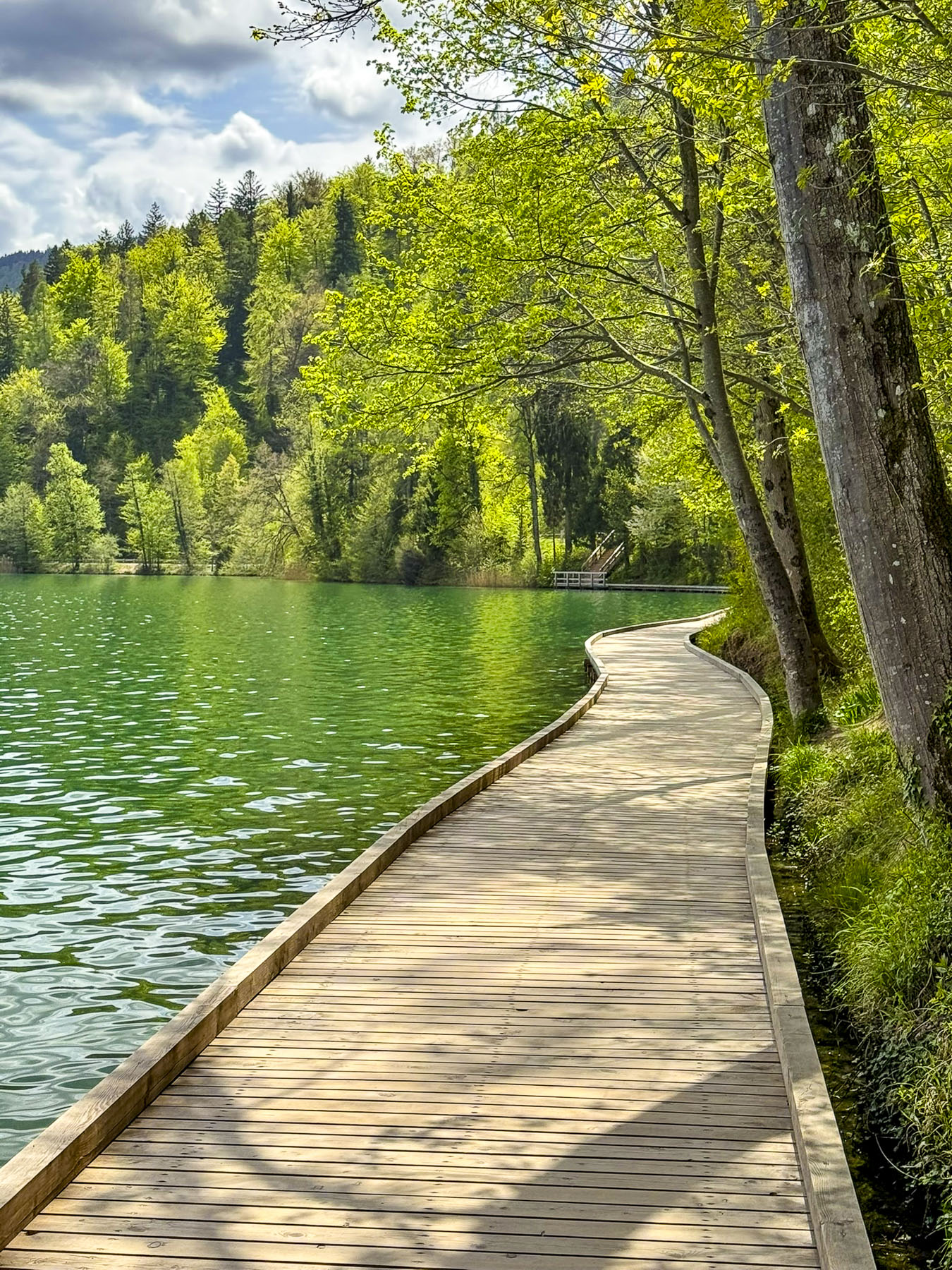
We drove to the far side of the lake where there was a paid parking lot near two restaurants on the lakefront. Then walked back along the road and a section of boardwalk to a panoramic viewpoint. Licensed oarsmen, called pletnars, stood on the stern of their traditional flat-bottomed wooden boats and rowed their passengers, with twin oars, gondola style across the lake to the island. Bled Castle commanded a cliff face on the horizon. A 6 km (3.75 mi) road circles the lakefront, and past where we parked is seasonally closed to allow folks to walk along this narrower section and enjoy the scenery without having to be concerned about cars.
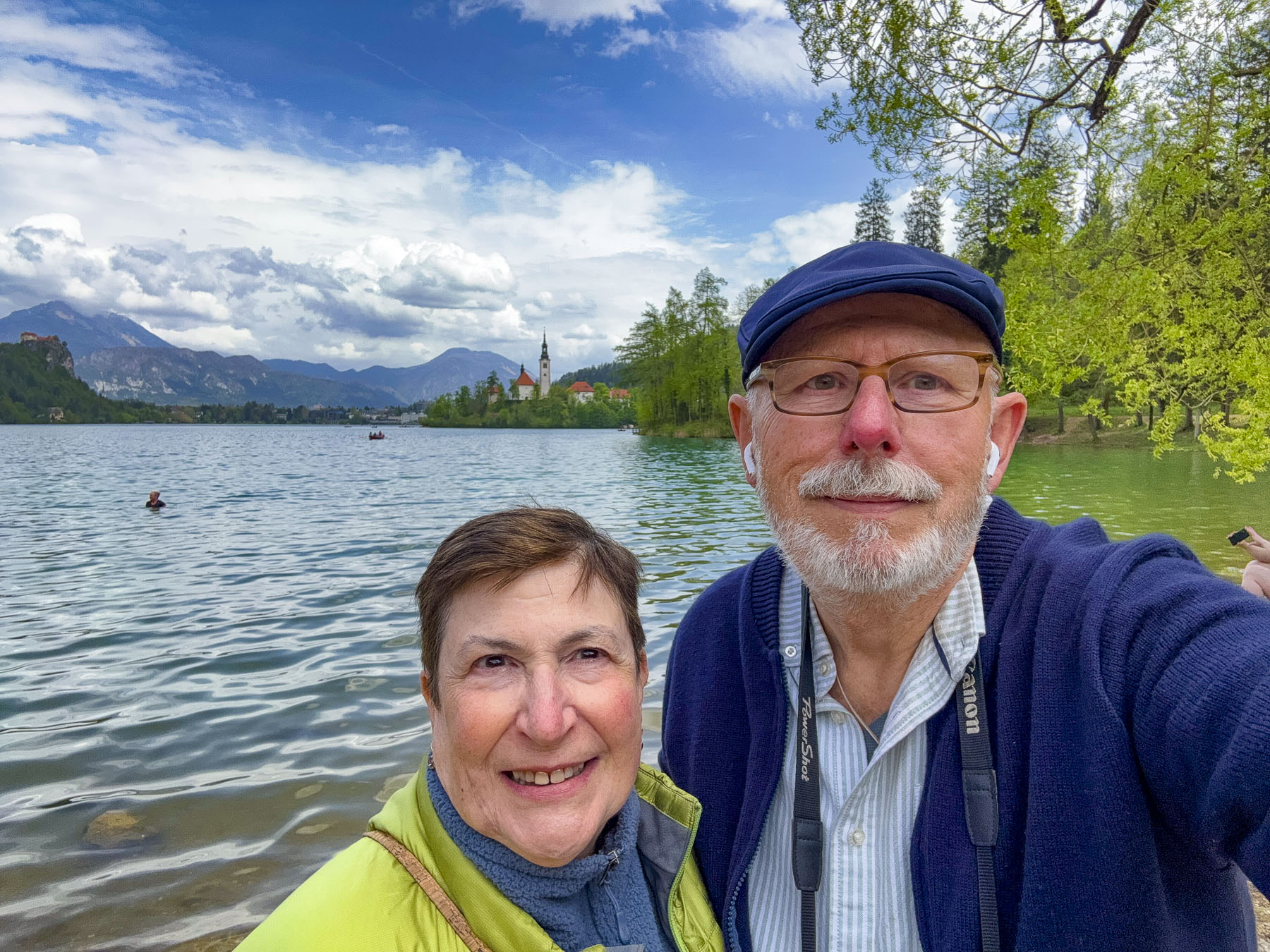
There are many beautiful landscapes around the world – the luck of nature perhaps, or are they perhaps the hand of divine intervention? Which leads me to wonder, when the first pagan temple was constructed on the island in Lake Bled, did the builders appreciate the beauty of the setting, or was the hard-to-reach setting chosen to create a symbol of faith that required effort to reach, reflecting devotion and commitment? Archeological evidence suggests that the island first hosted pagan rituals during the Bronze Age. Later with Slavic migration into the area during the 7th century AD, a temple dedicated to Ziva, the pagan goddess of life and fertility, was established. During the 8th century the local population converted to Christianity and built the island’s first church dedicated to the birth of Mary atop the ruins of the pagan temple. Renovations to the original church followed in the 15th and 17th centuries, when its famous “wishing bell tower,” and staircase was built. Today, the island remains a symbol of fertility and love; it is a popular wedding spot where grooms traditionally carry their brides up the 99 stone steps to the church for good luck.
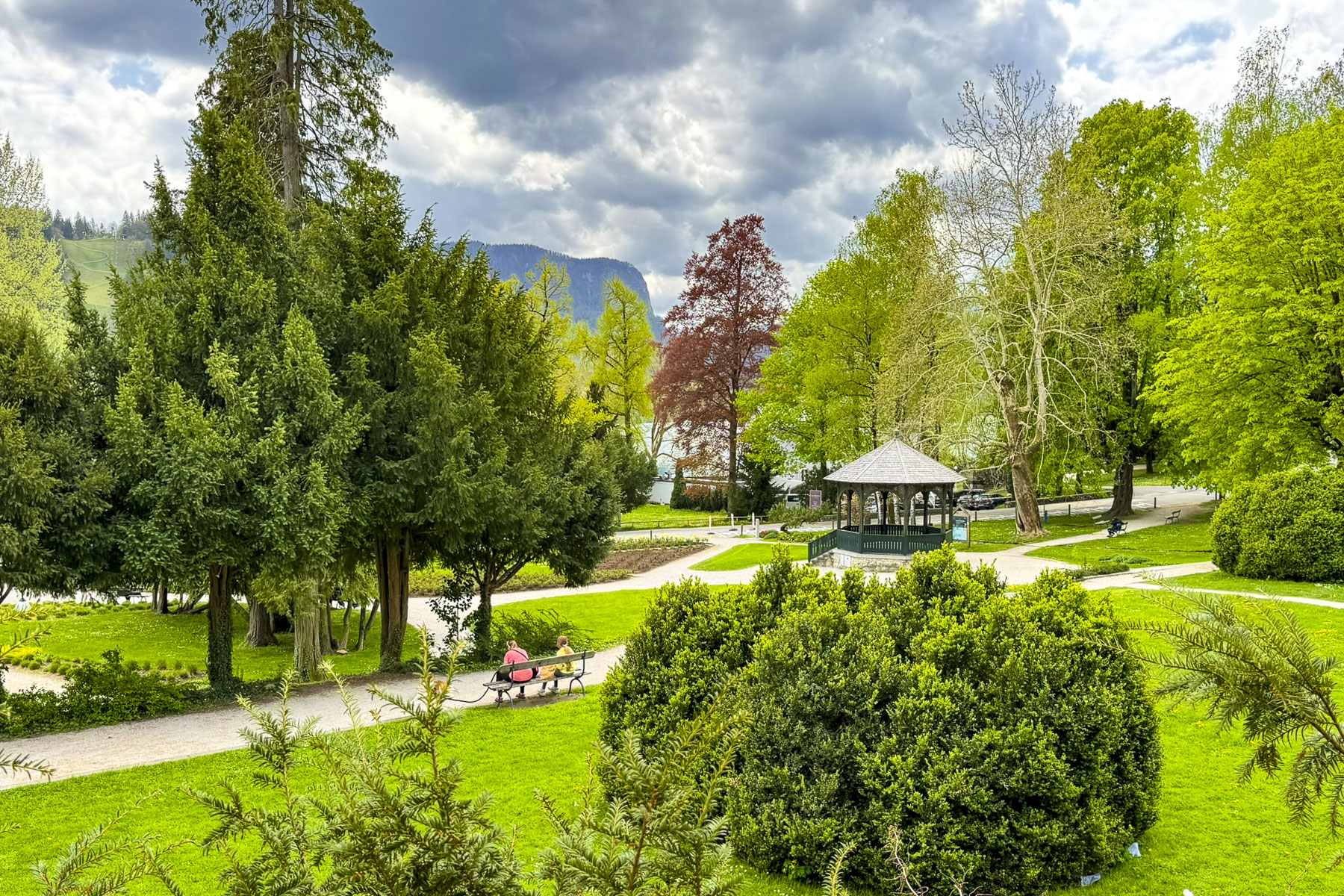
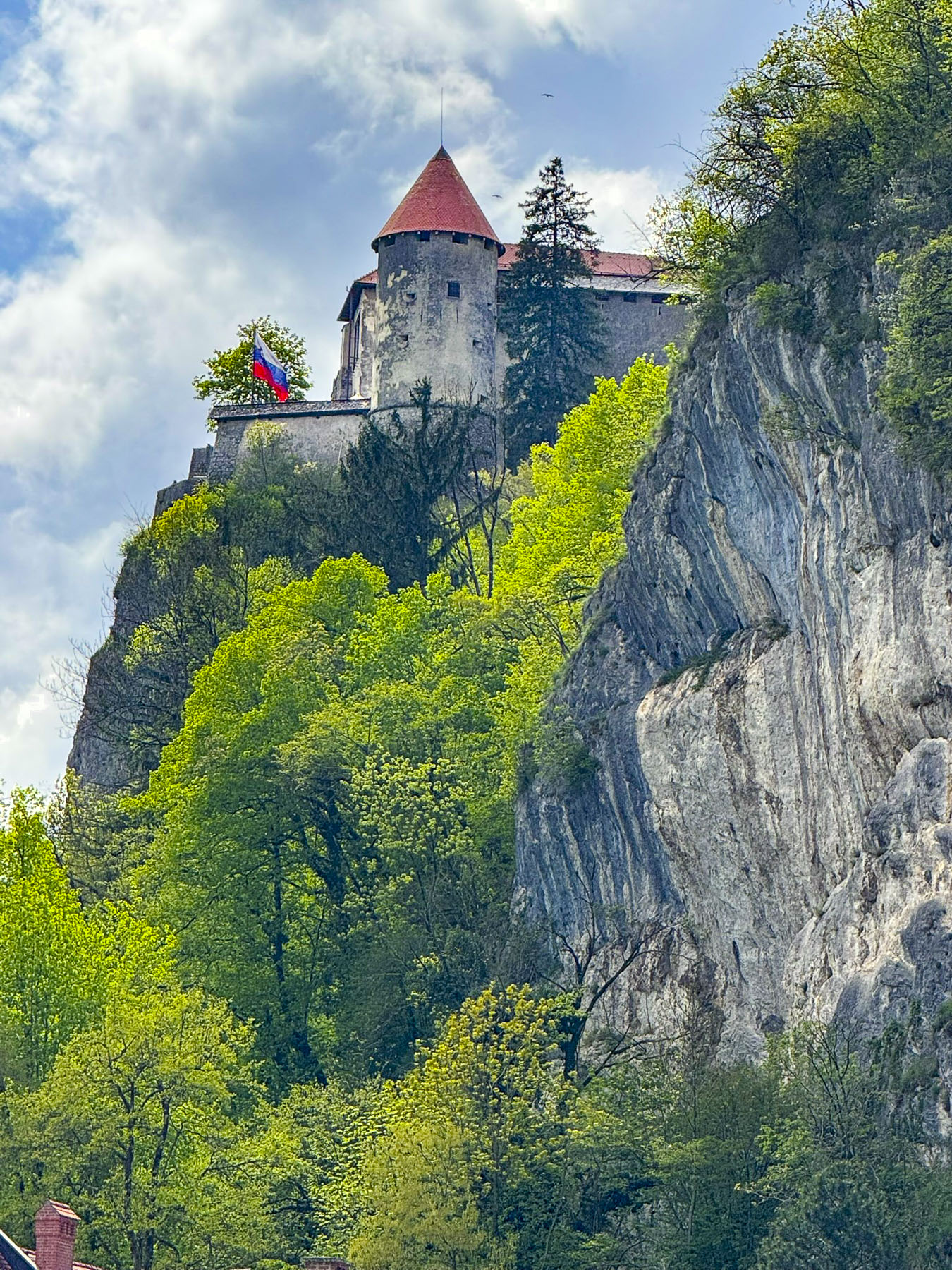
After walking along the lake we drove to Caffe Peglez’n, where we were lucky to find metered parking nearby. We chose this café for lunch specifically to try its Blejska kremšnita, Bled cream cake, which combines delicious layers of custard and whipped cream between a crisp crust dusted with powdered sugar. Theirs is reputed to be the best in Slovenia. We were not disappointed.
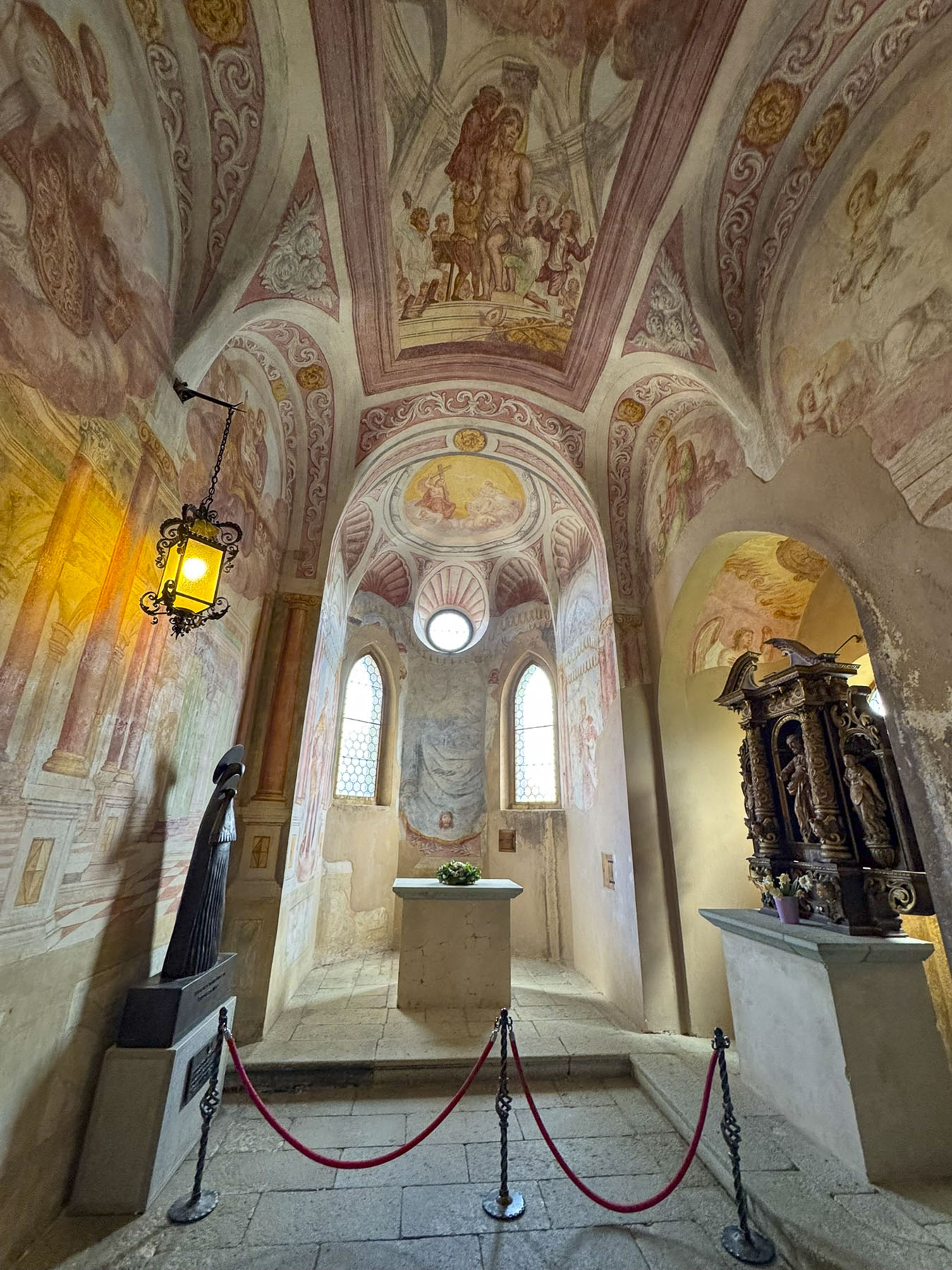

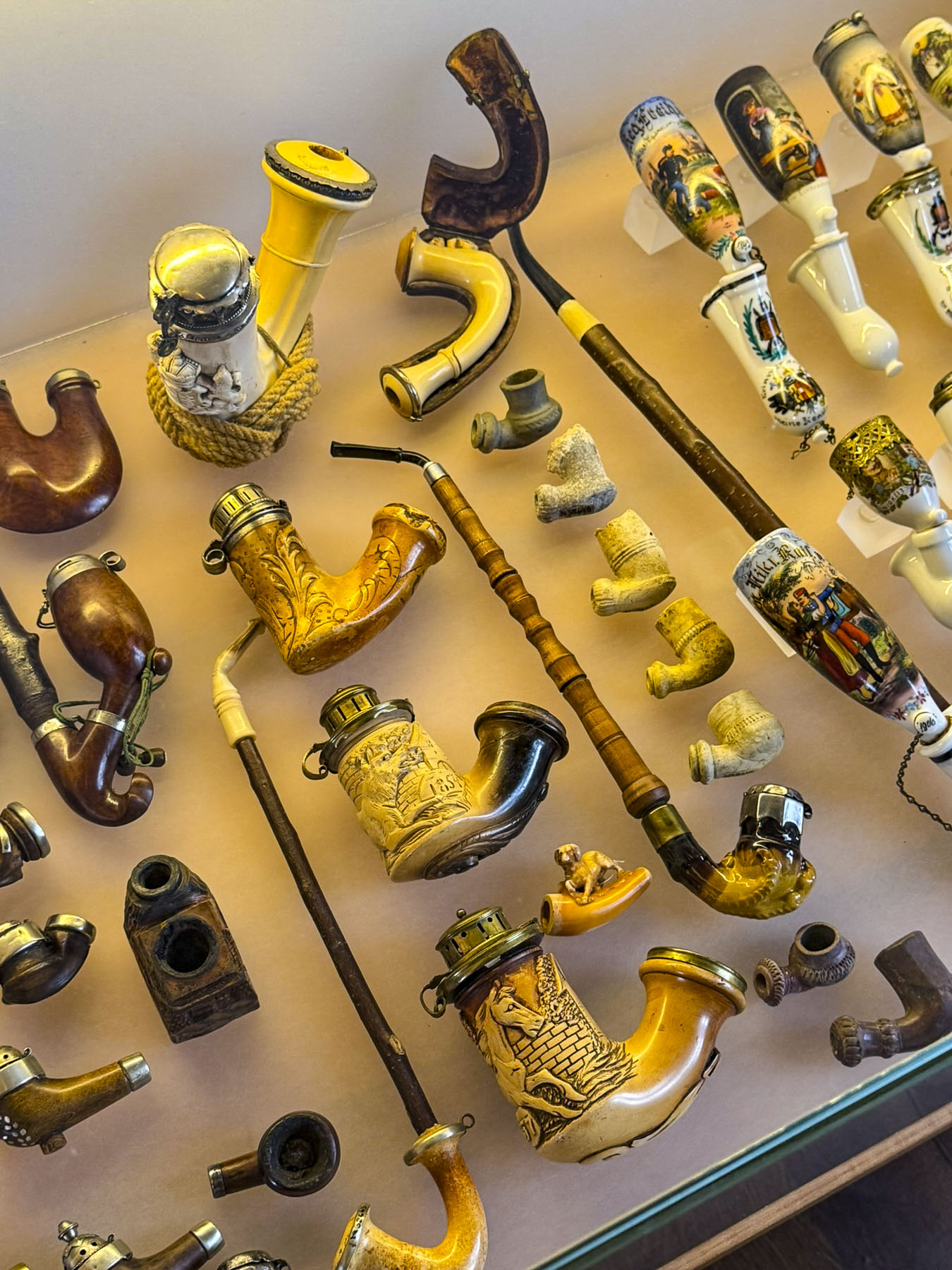
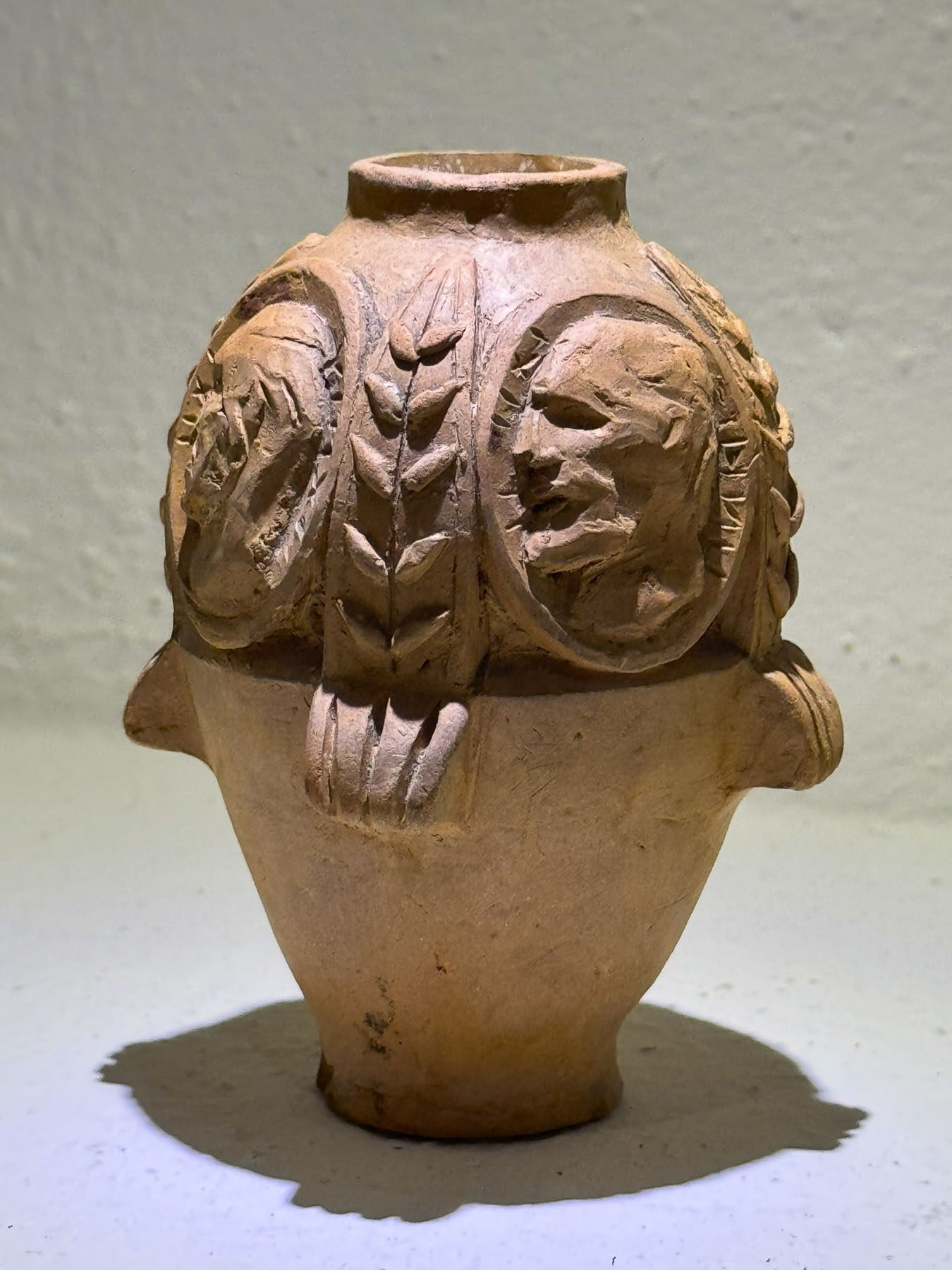
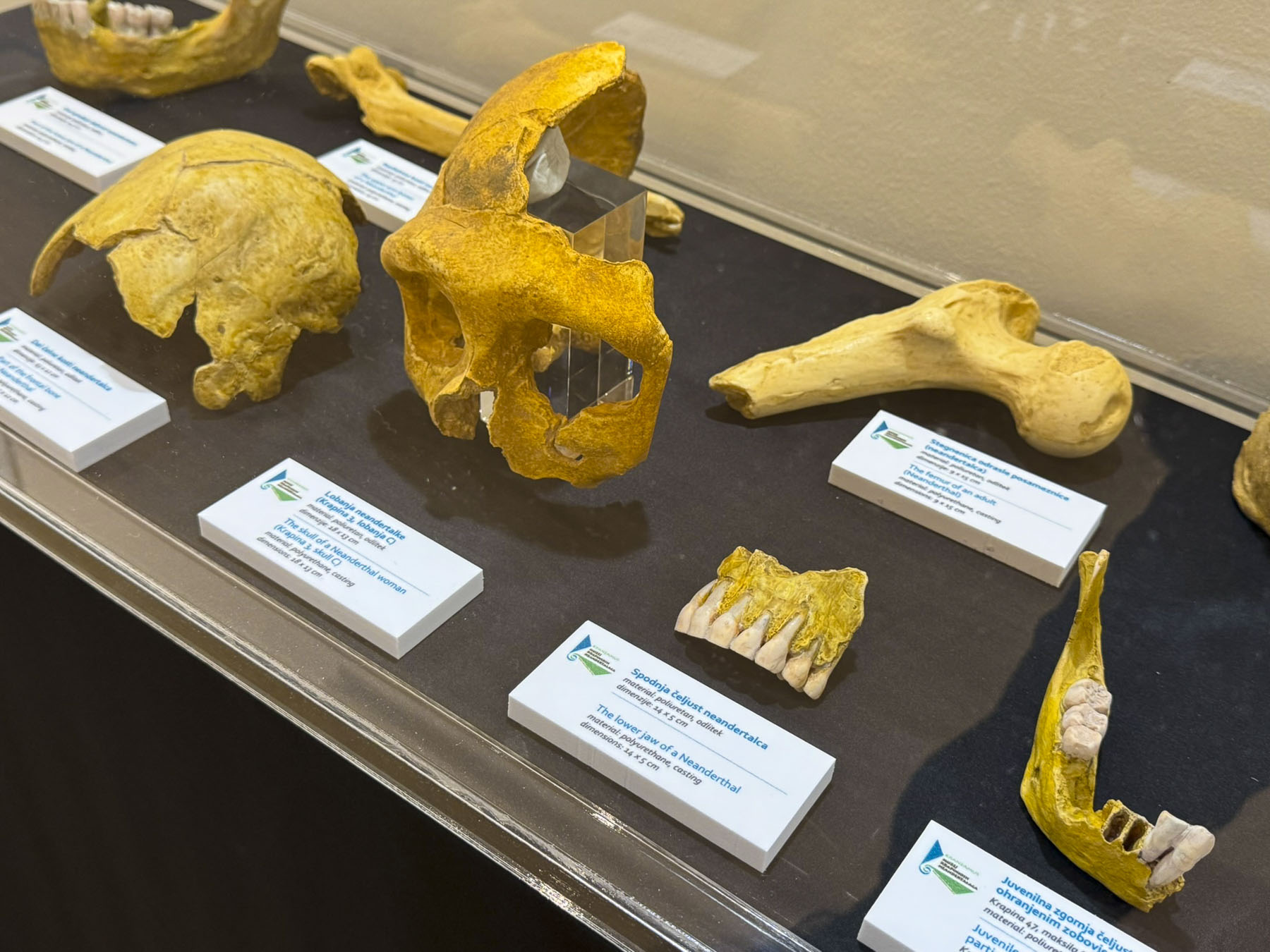
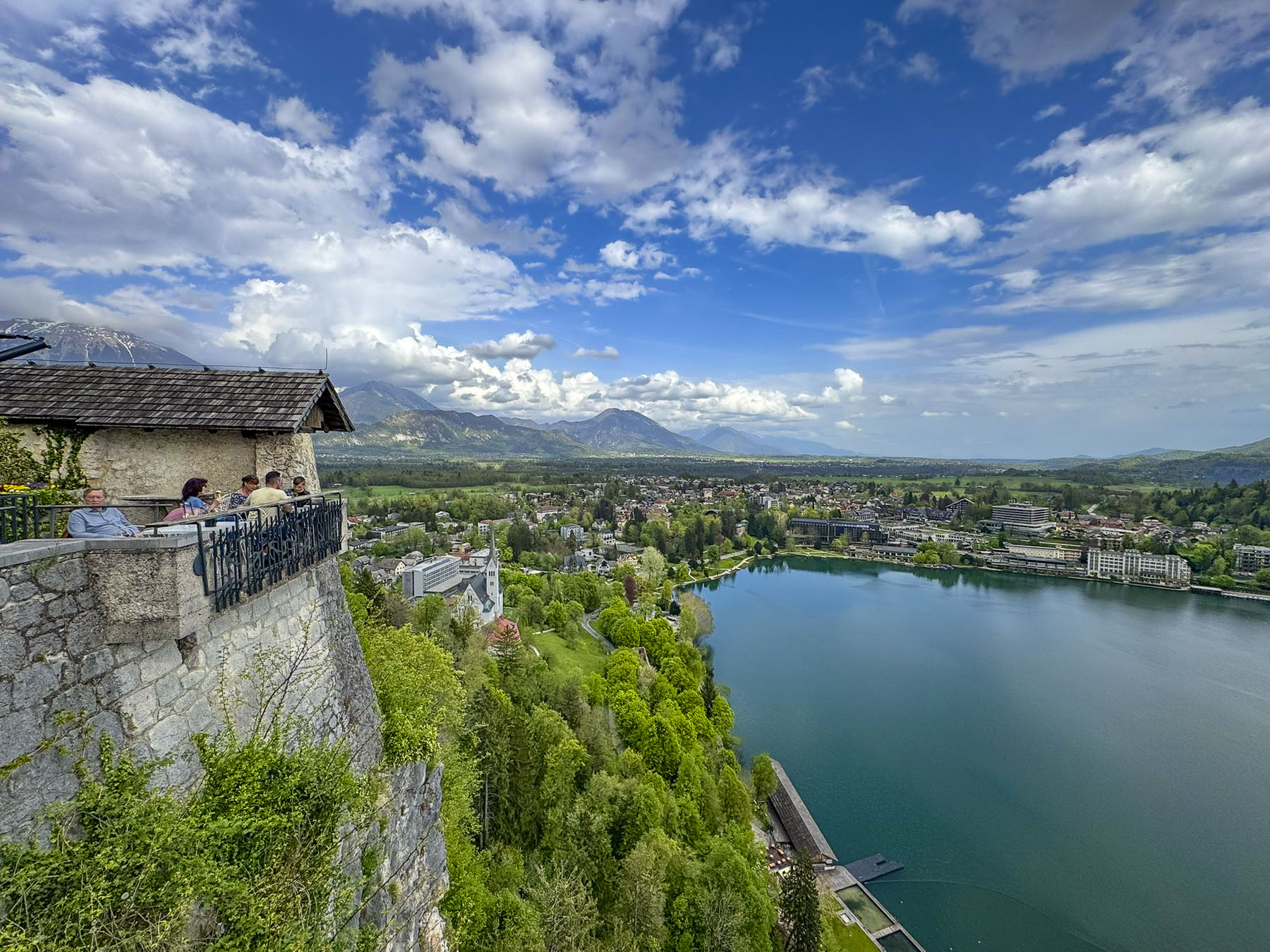
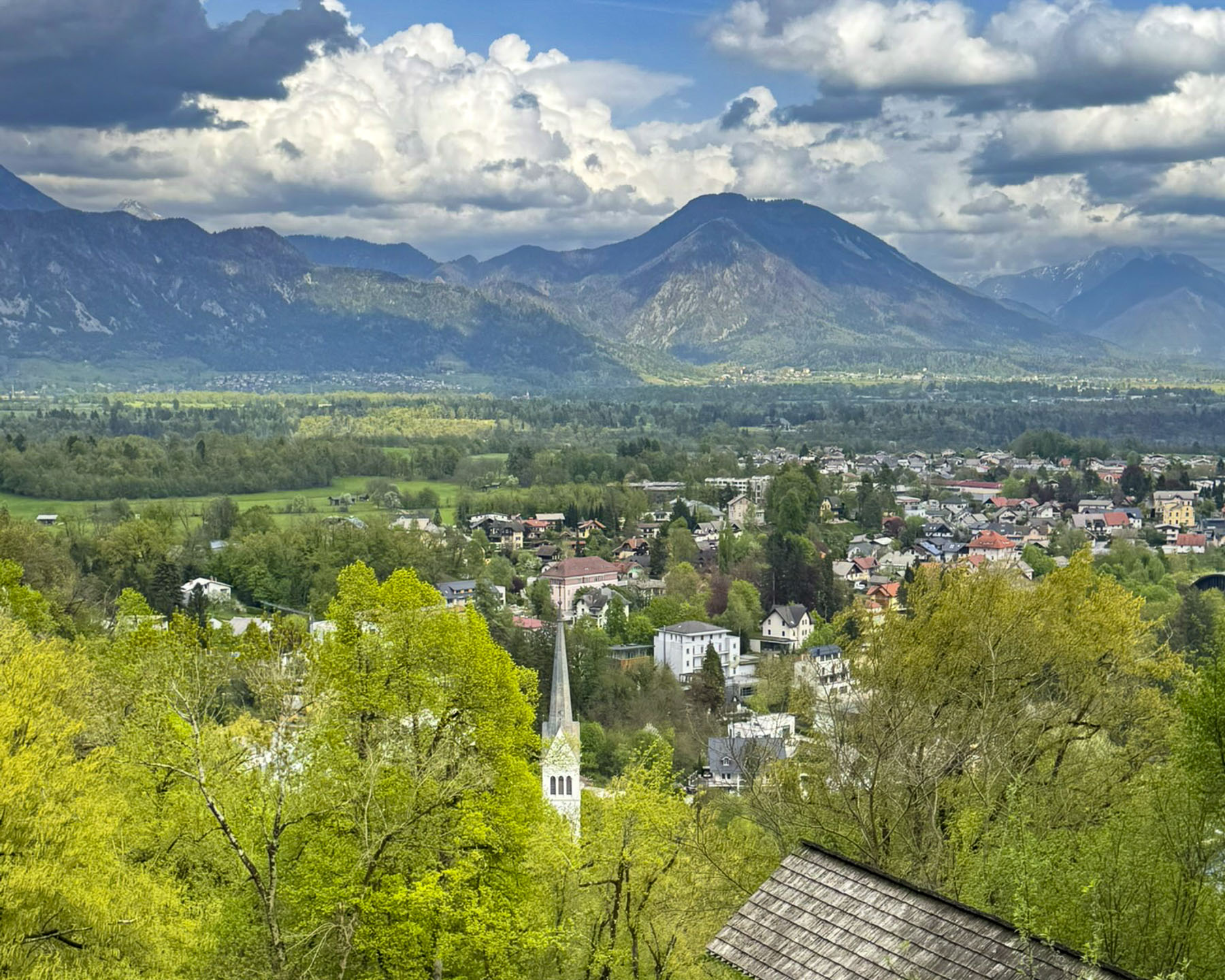
Afterwards we finished our day trip at Bled Castle, Slovenia’s oldest fortress, built in 1011. Located high on a rocky promontory, it has a commanding view of the lake from its terrace, and an interesting museum that highlights Slovenia’s history and culture.
Here is an island circled round by waves,
In our days it's a pilgrim shrine to Mary;
Against the background stand the snowcapped giants
And fields that spread before them;
Castle Bled Reveals still greater beauties to the left.
The hillocks on the right conceal each other.
Carniola does not have a prettier scene
Than this one: it is truly heaven's twin

A verse from Slovenia’s famous poet France Prešeren’s epic 1836 poem, The Baptism on the Savica.

Lake Bled was a phenomenal destination, and in hindsight I wished we had spent 2 nights there to fully experience the mood of the lake as the light changed throughout the day.
Till next time,
Craig & Donna

 2 Suitcases for 2 years