
“No worries,” it’s a common casual saying in New Zealand used to mean “you’re welcome,” or “don’t worry about it”, the latter being the perfect phrase when discussing the weather in “Windy Wellington,” New Zealand’s compact capital on Cook Strait, where the “Roaring Forties,” blow across the Tasman Sea before they are funneled into the natural wind tunnel that the narrow separation of the North and South Island create and get even stronger.
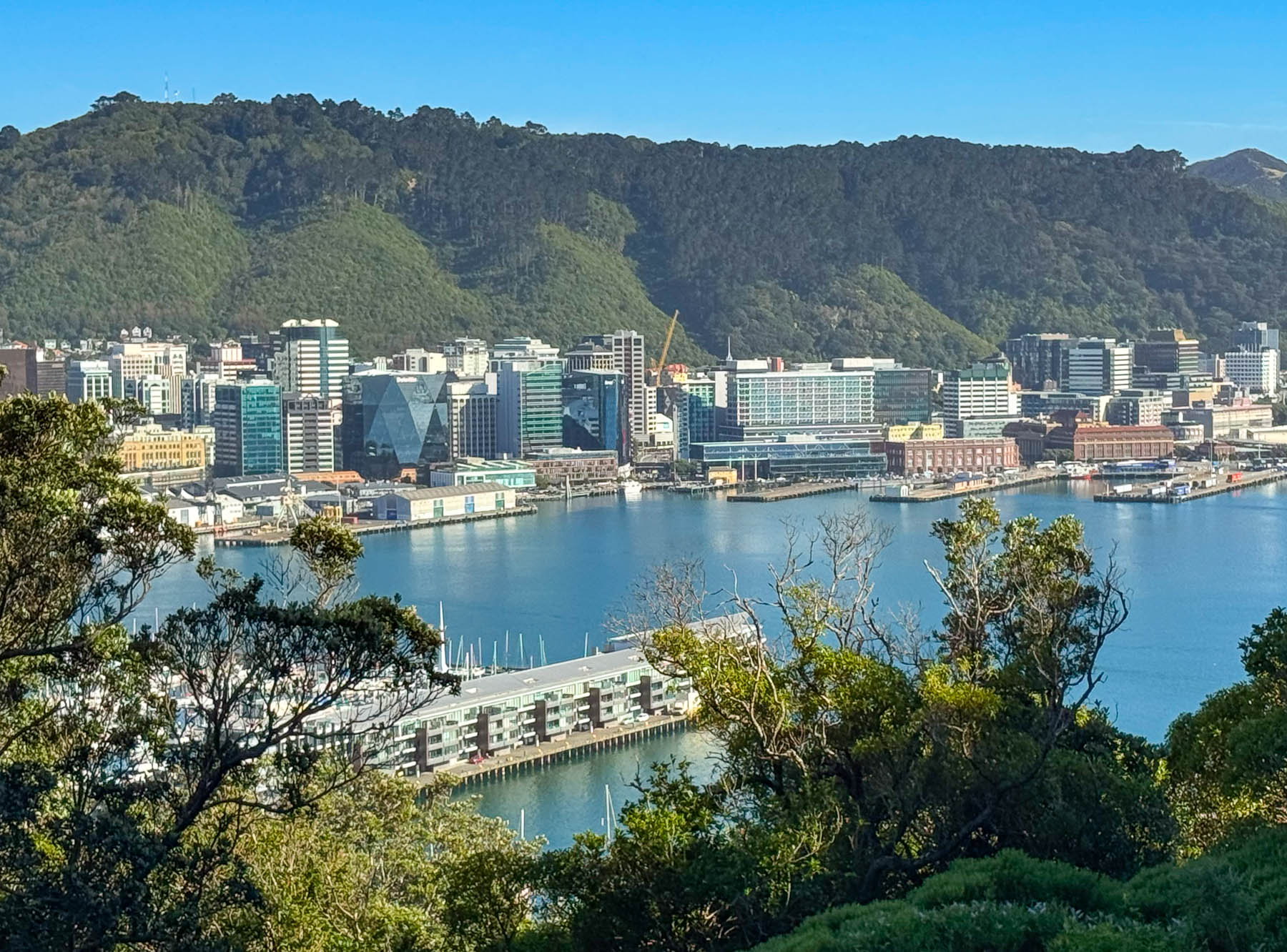
While some folks move away to escape the whipping winds and horizontal rain, others agree some days are the “pits,” but they embrace the “no worries”, “the weather keeps things interesting” philosophy. They relish the nice days that are glorious with an amazing clarity, and the colors of the earth, sky, and sea are brilliantly saturated. Nevertheless, it’s often the subject of conversations, to the point that one local resident created a tongue in cheek “A Realistic Wellington Calendar,” with six seasons of varying lengths, the worst being Shitzville, September to December, the southern hemisphere Spring.
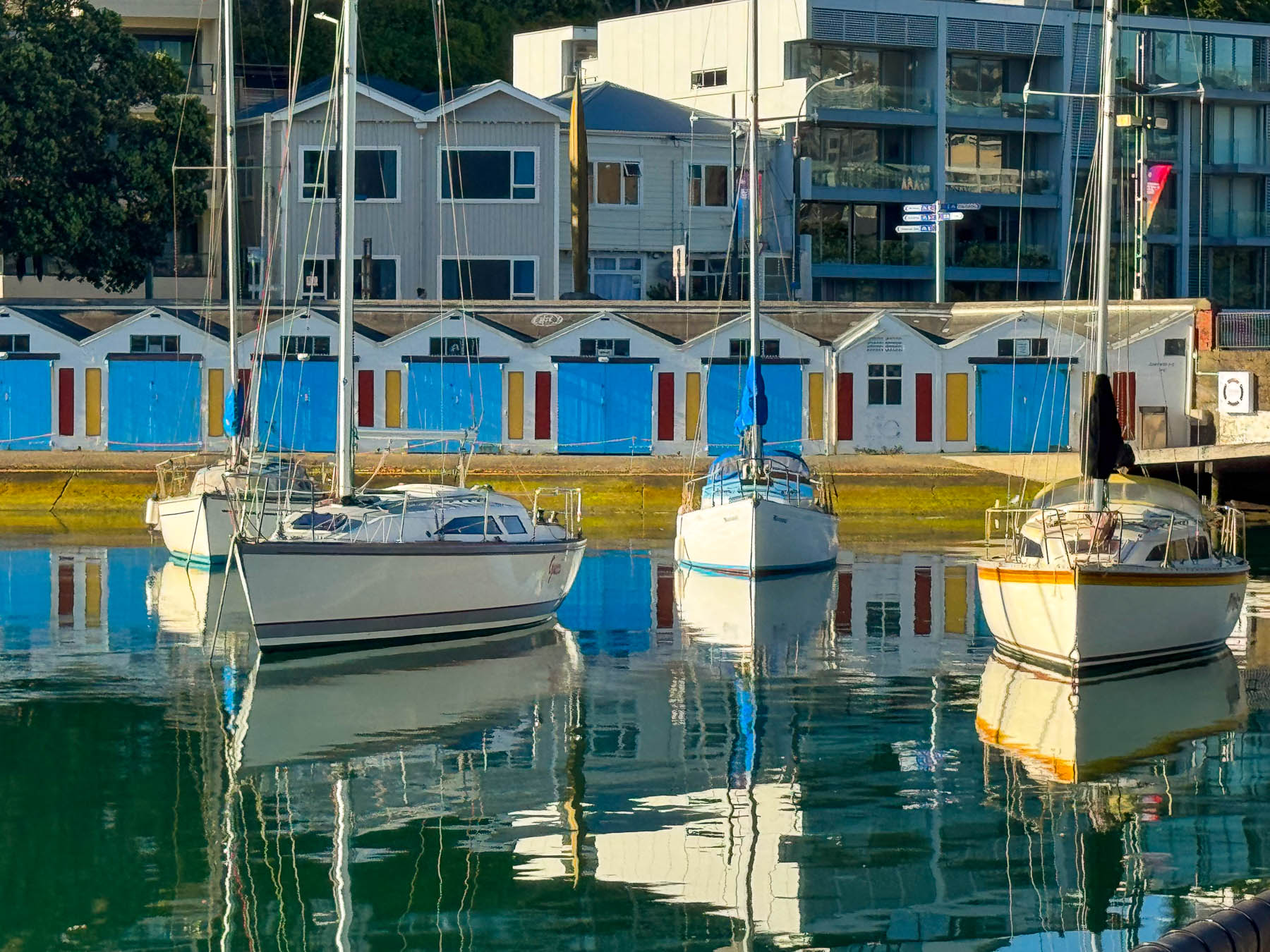
Fortunately, we were visiting Wellington in February, and what little bad weather we experienced usually cleared by 11AM. The weather was noticeably colder in Wellington than Auckland when we first arrived and had us wishing at times that we had packed our thermal underwear to help against the windchill, something we did not anticipate.
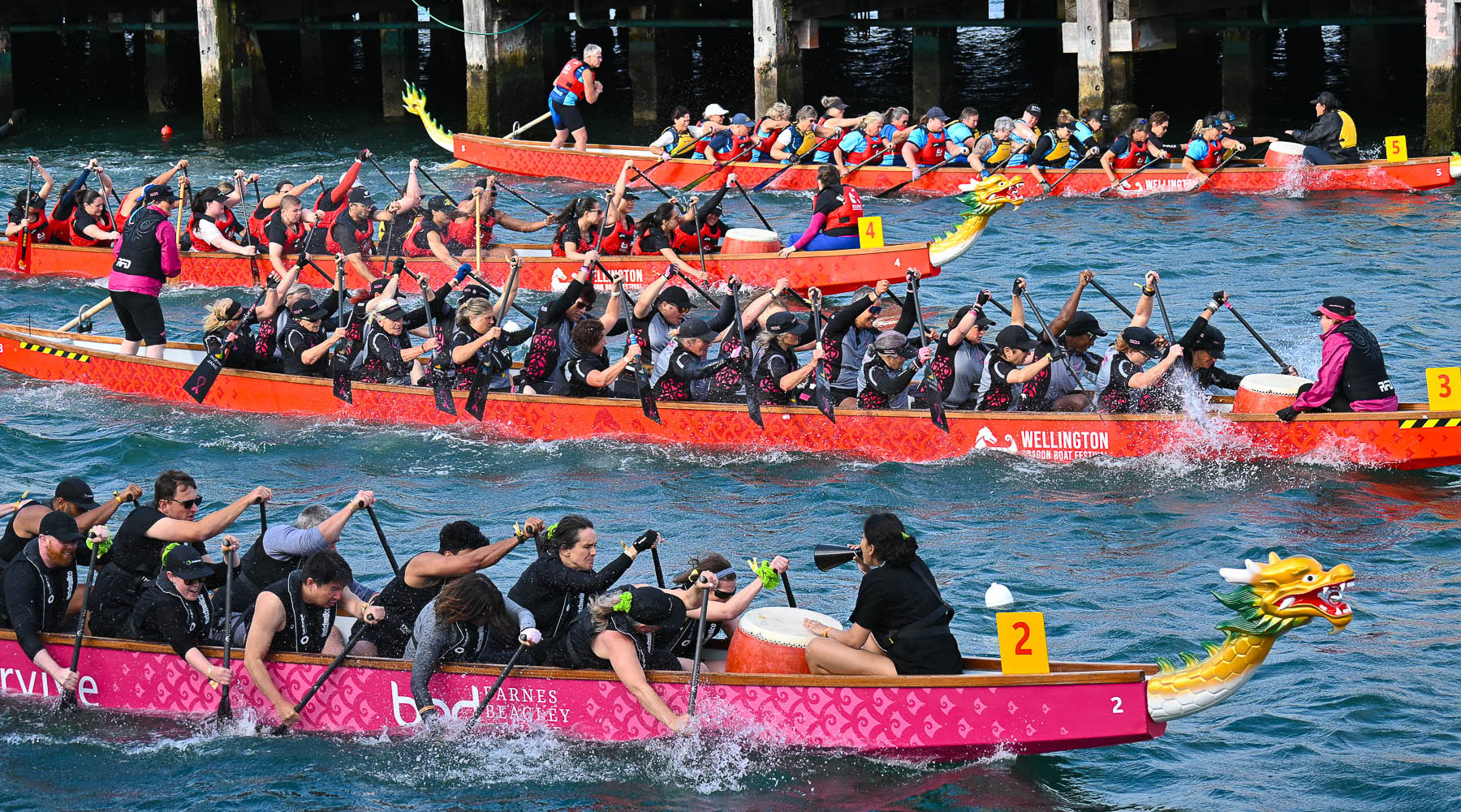
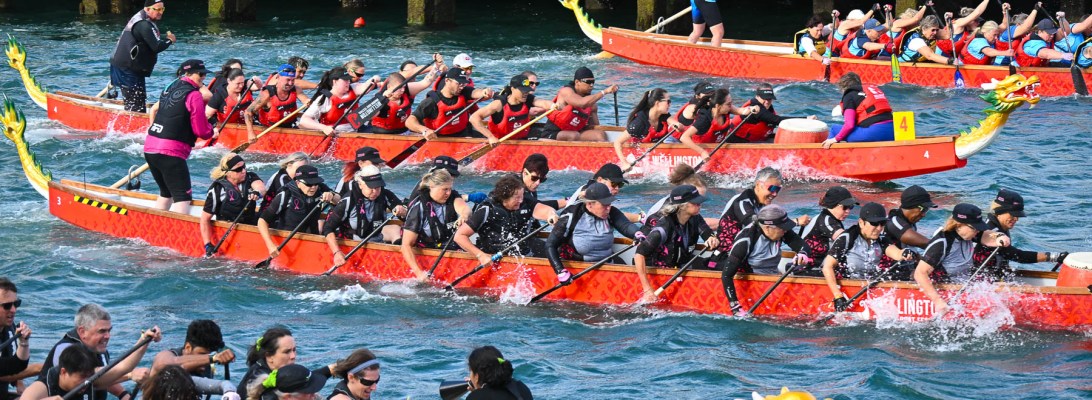
After checking into the Quest Wellington, in Wellington’s CBD (Central Business District), we headed to the harbor for a walk along the waterfront, where the first heats of the Wellington Dragon Boat Festival were underway. This colorful annual event attracts teams from across New Zealand and the world to Wellington for three days of competitions and fun. For spectators this is an admission free event, just find a spot along the quay to watch the crews in the boats paddle furiously by.
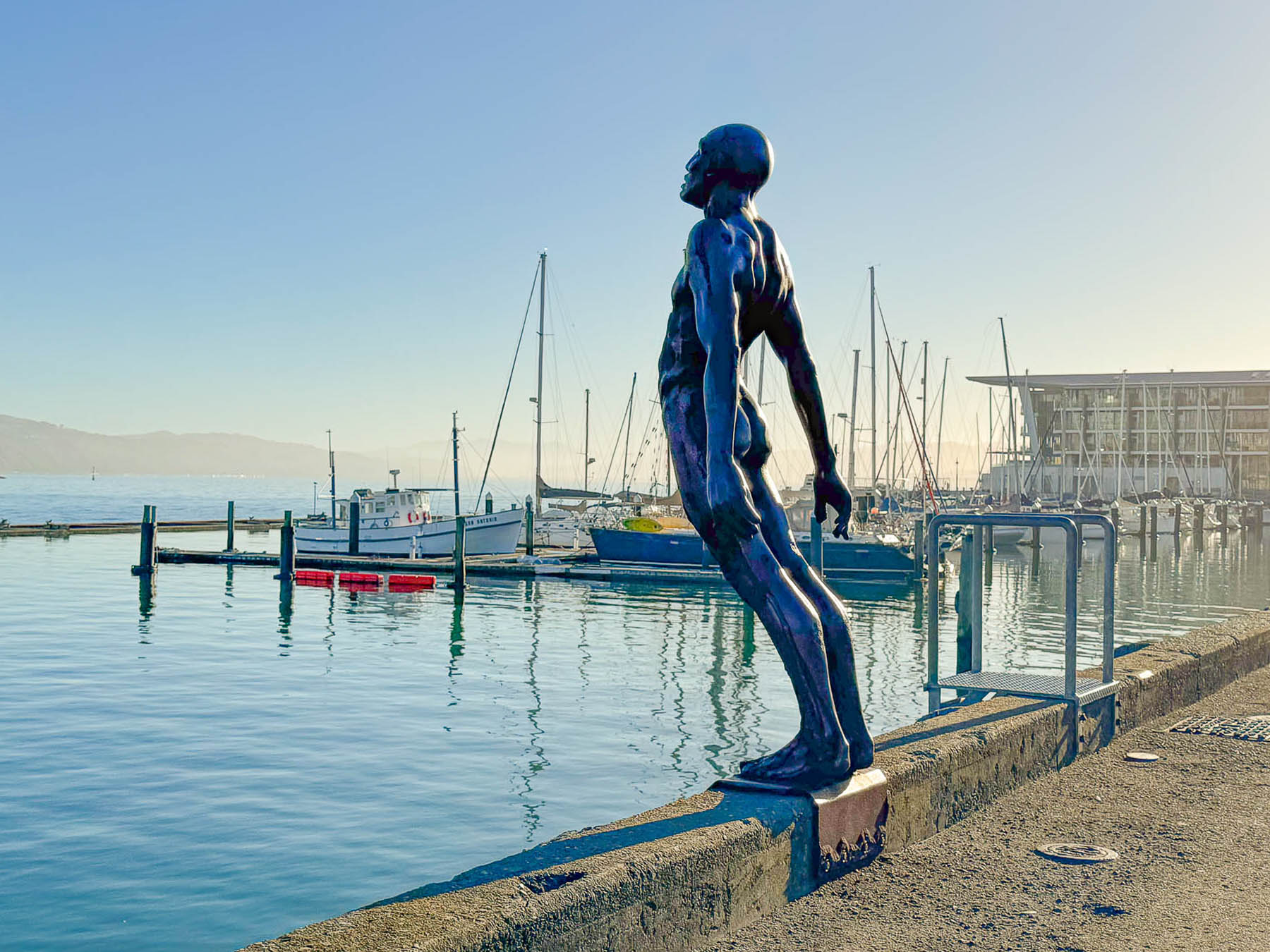
Continuing on we came to the Solace in the Wind (The Naked Man) statue, the first public sculpture created by the British artist Max Patté, who moved to Wellington from the U.K. after a divorce. Patte has stated that the man leaning into the wind represents “his feelings about his time in New Zealand and thoughts about leaving Wellington.” The iconic cast iron statue was originally installed on loan to Wellington in 2008, but was later purchased by the city after it won the People’s Choice Award for favorite sculpture at the Wellington Civic Trust Awards that year.
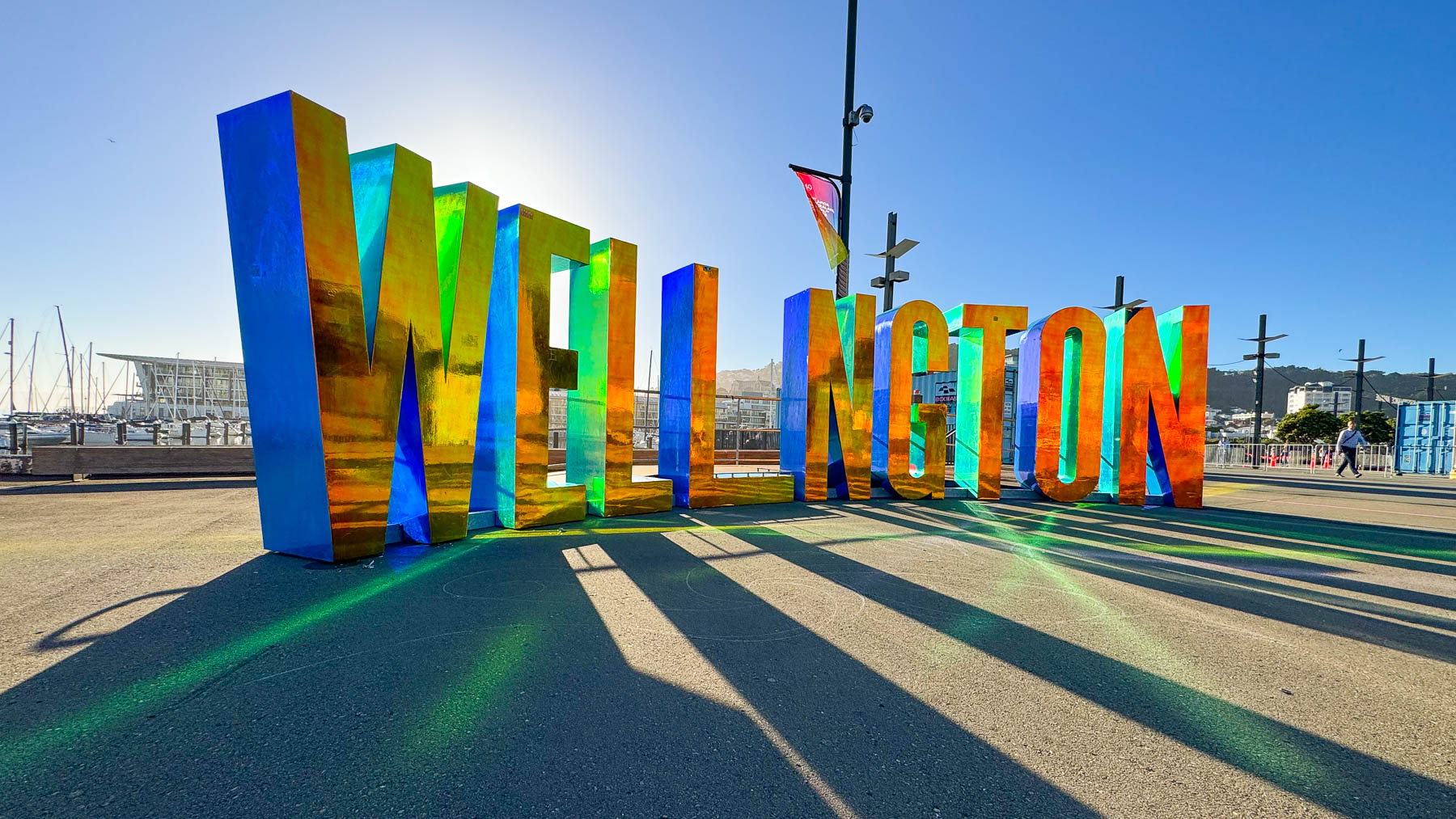
Nearby was the Instagram-able sign of the times, WELL_NGTON, where the “I” is missing so that visitors can stand in the space and physically complete the word.
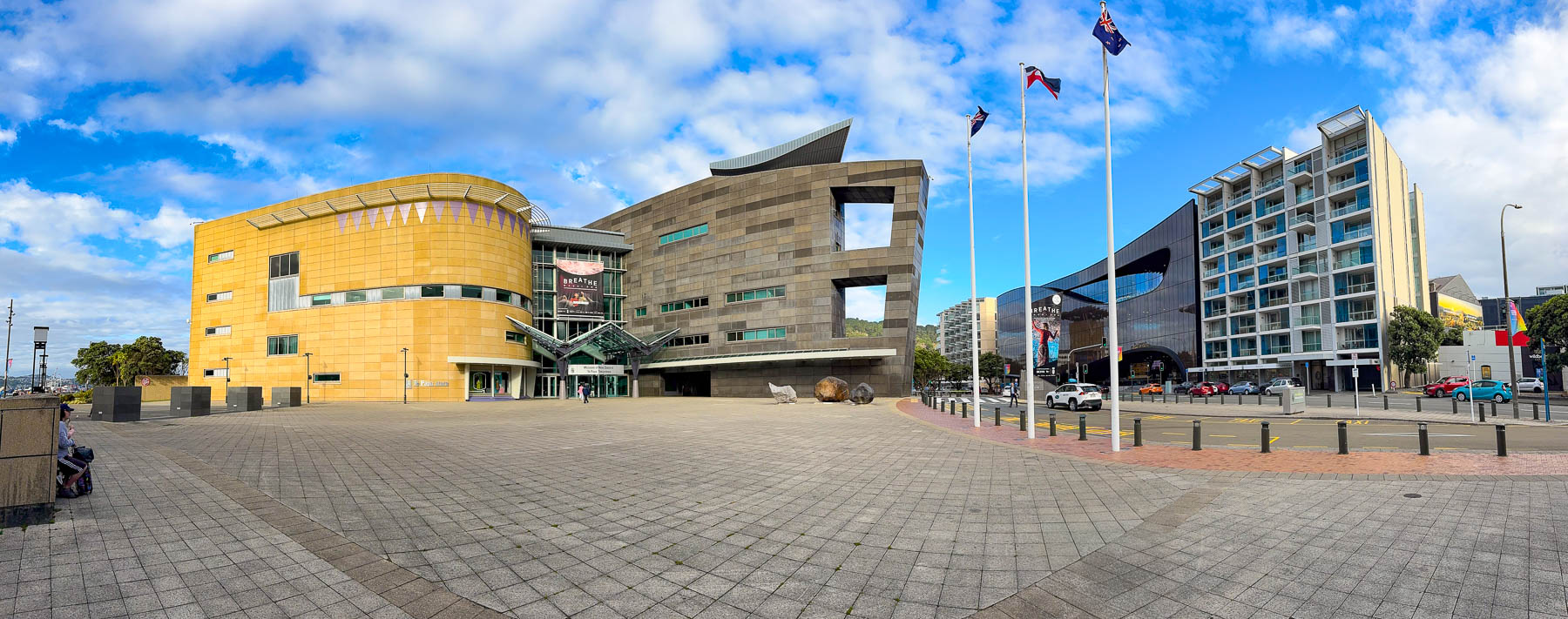
We spent the rest of the afternoon at the Museum of New Zealand Te Papa Tongarewa (Te Papa), which is point of pride across the country. Visiting the museum came up in several conversations with folks we met earlier in our travels around the North Island, and all agreed it’s a destination not to be missed.
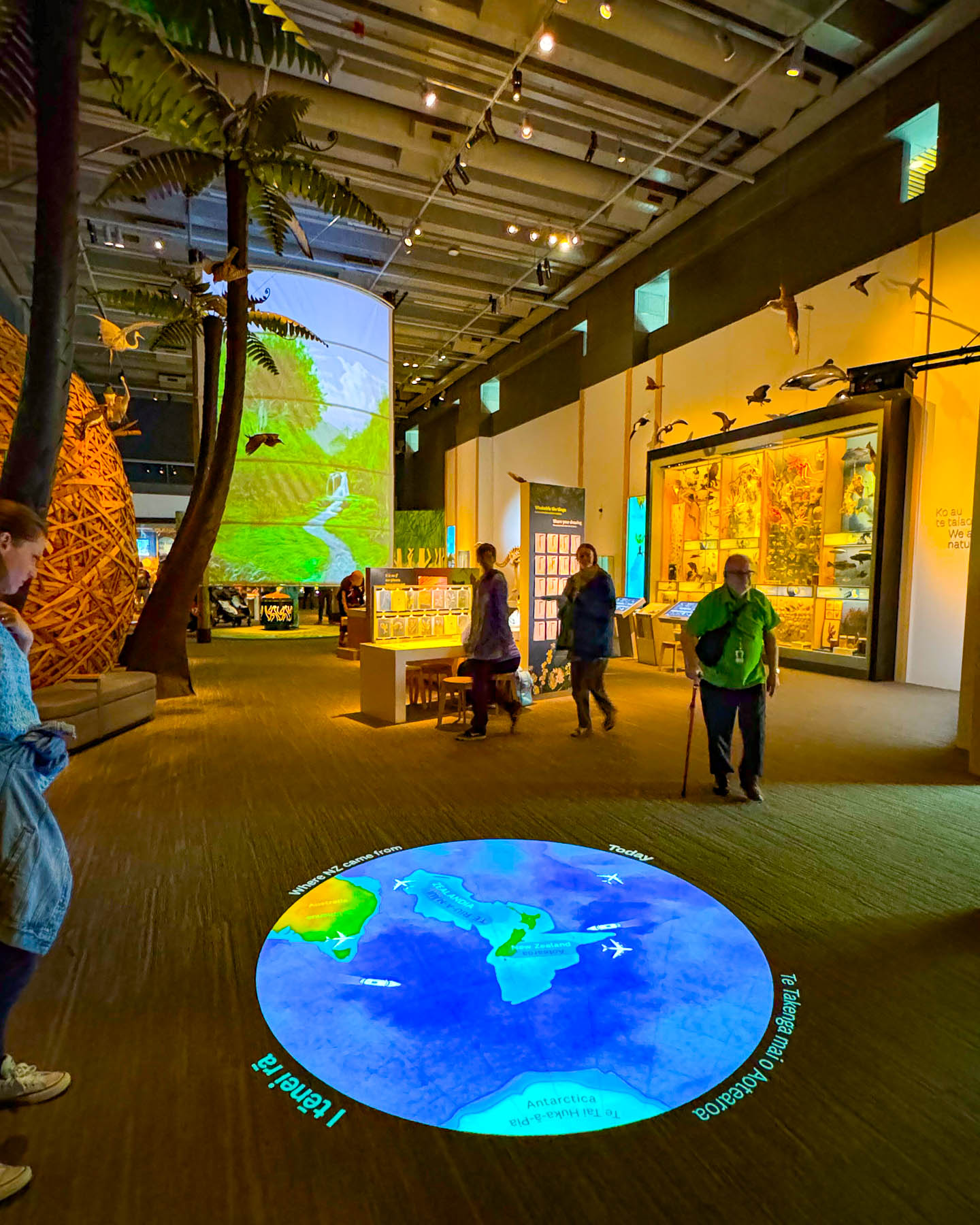
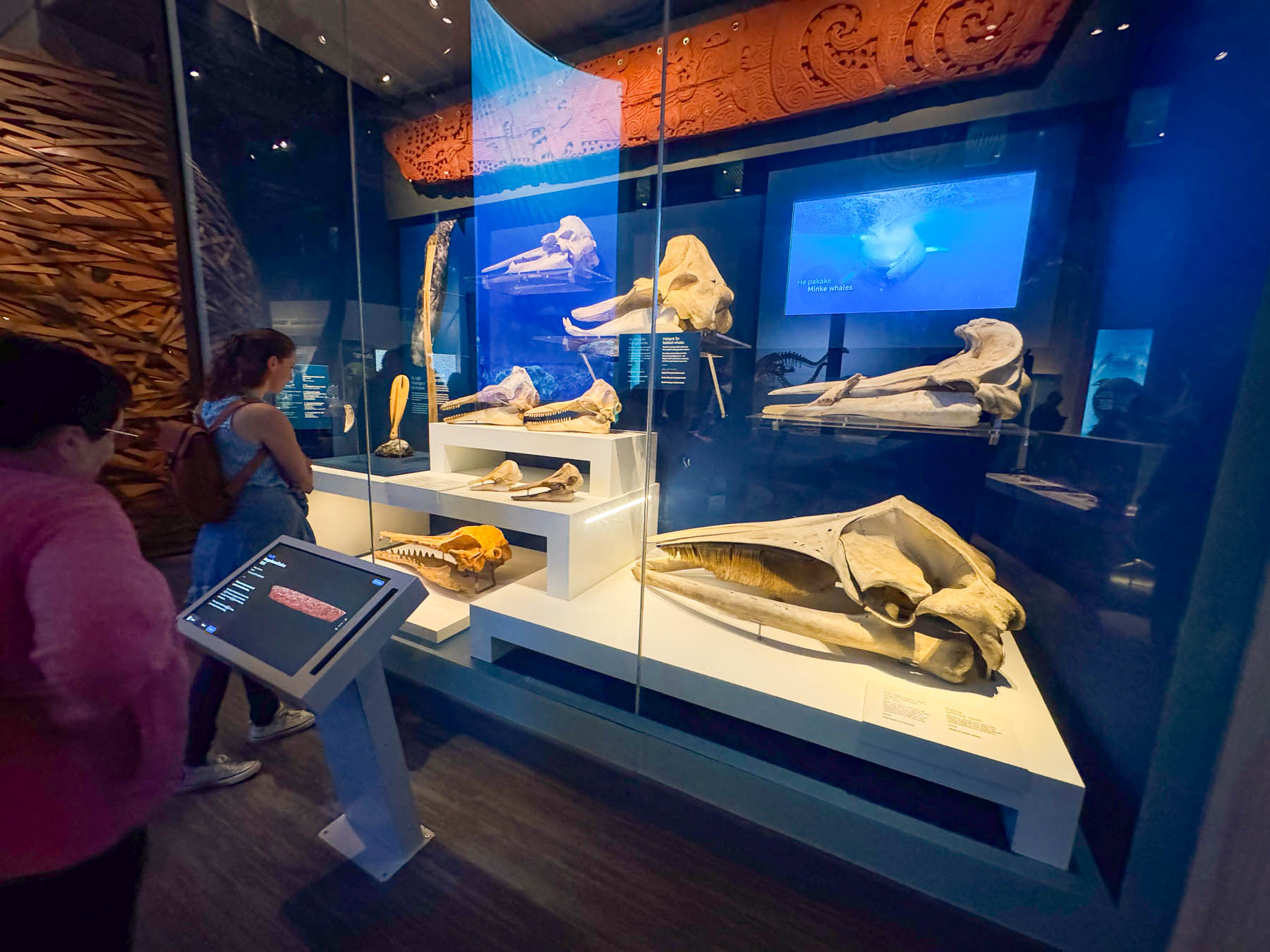
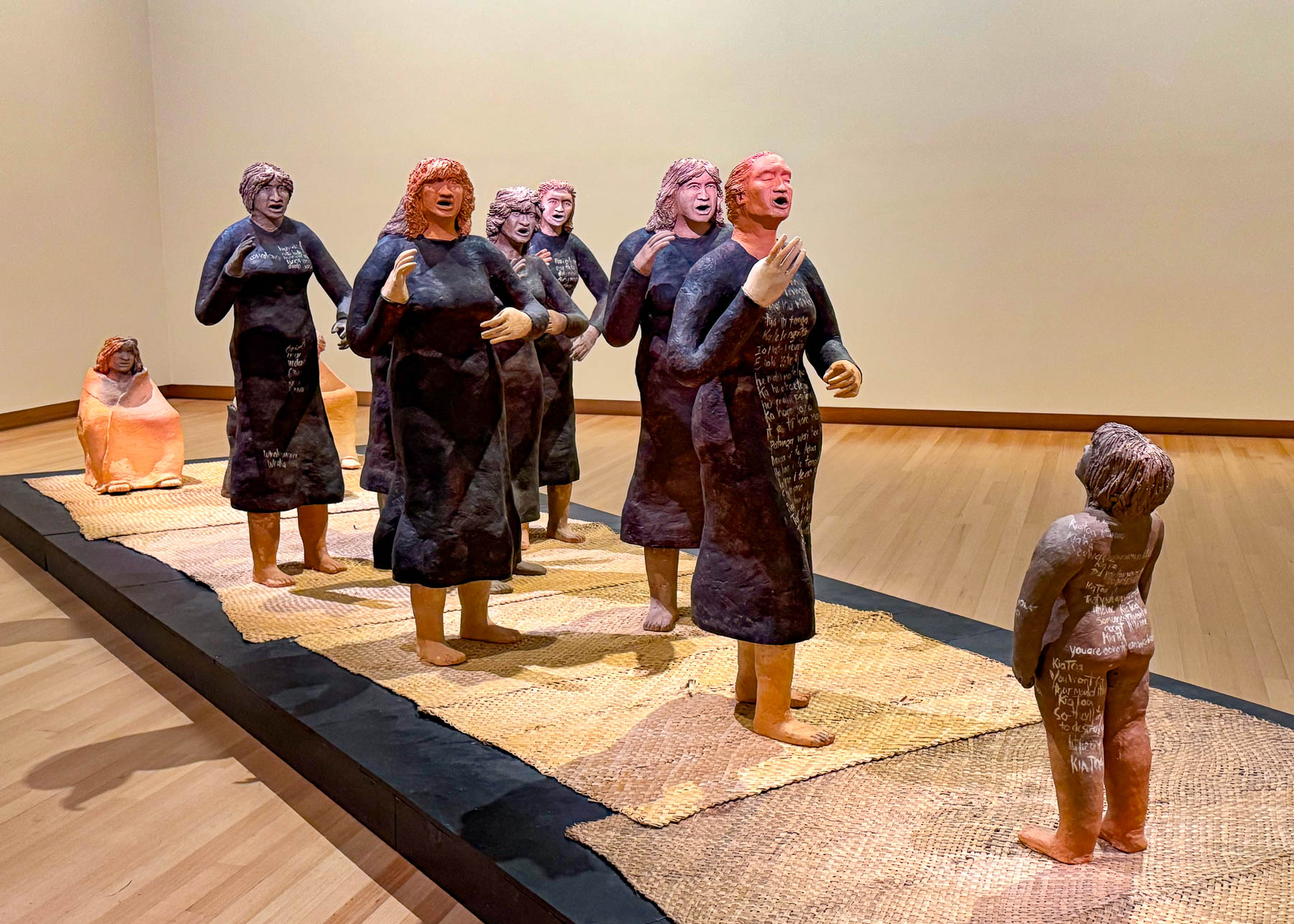
Created in 1992, the merger of the National Museum and the National Gallery created the Museum of New Zealand Te Papa Tongarewa, with the goal of uniting the collections in an interdisciplinary way and representing and appealing to the country’s increasingly diverse society. The museum’s name translates from the Māori as “our container of treasured things and people that spring from mother earth here in New Zealand,” and perfectly summarizes its mission.
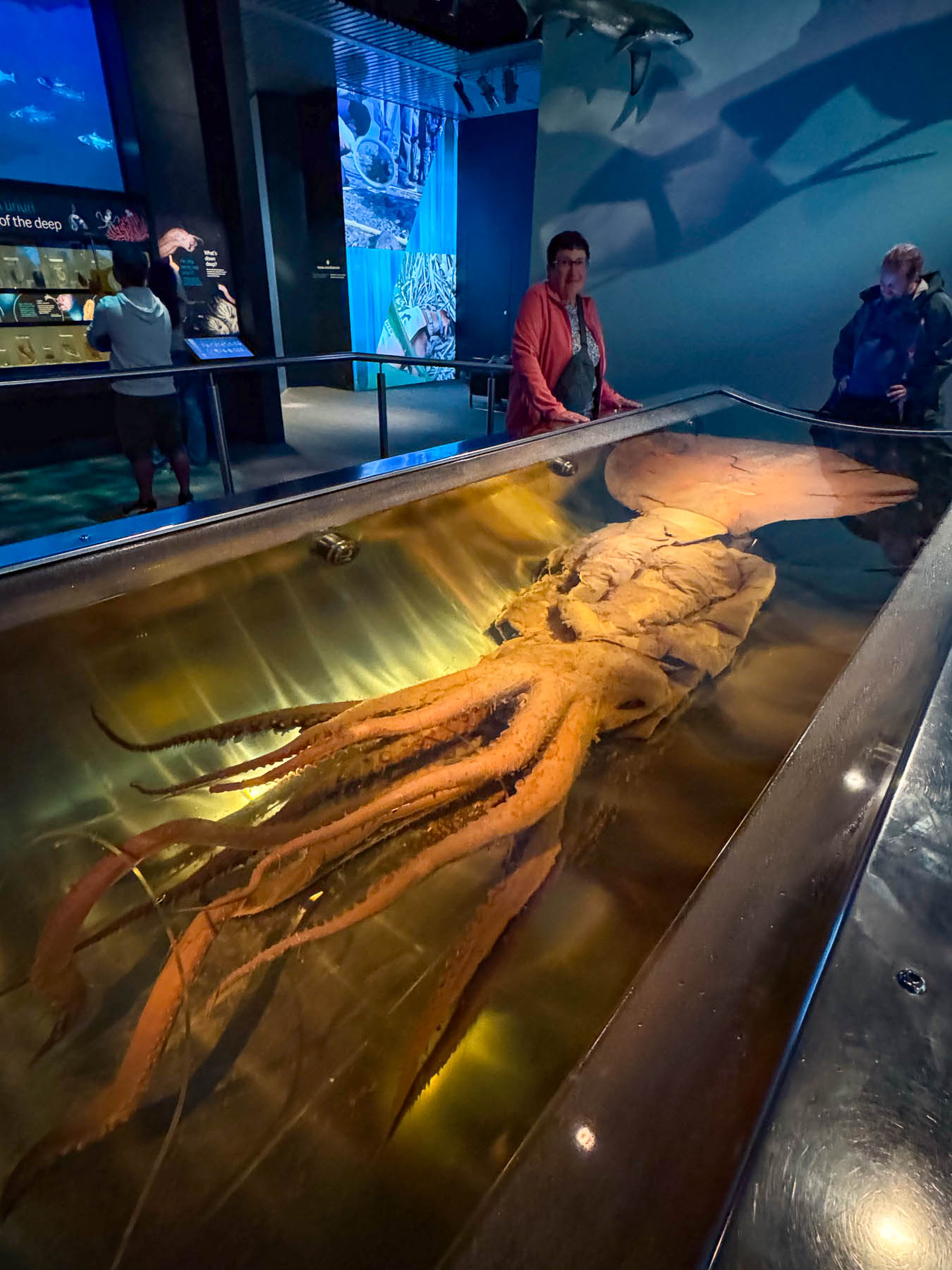
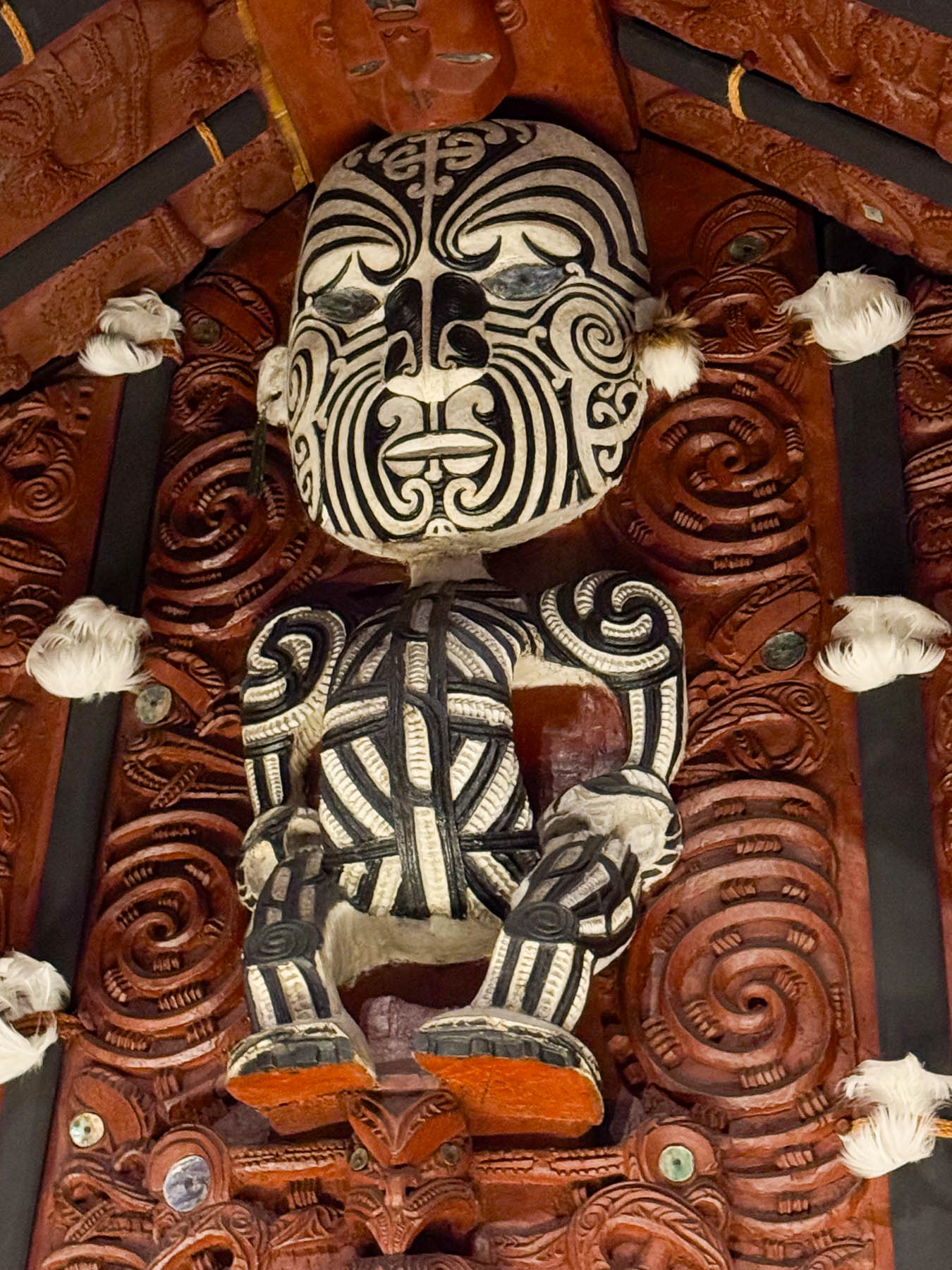
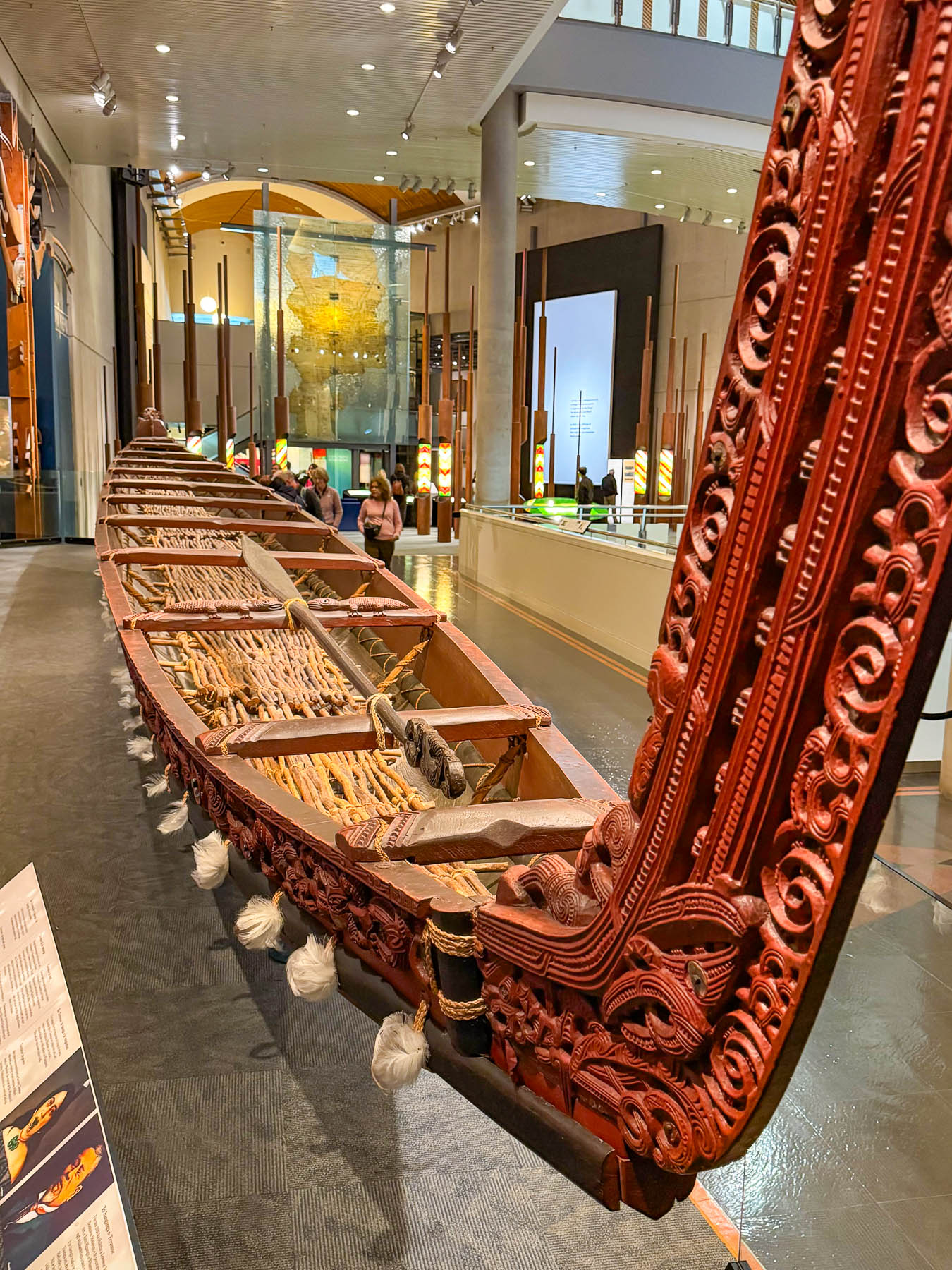
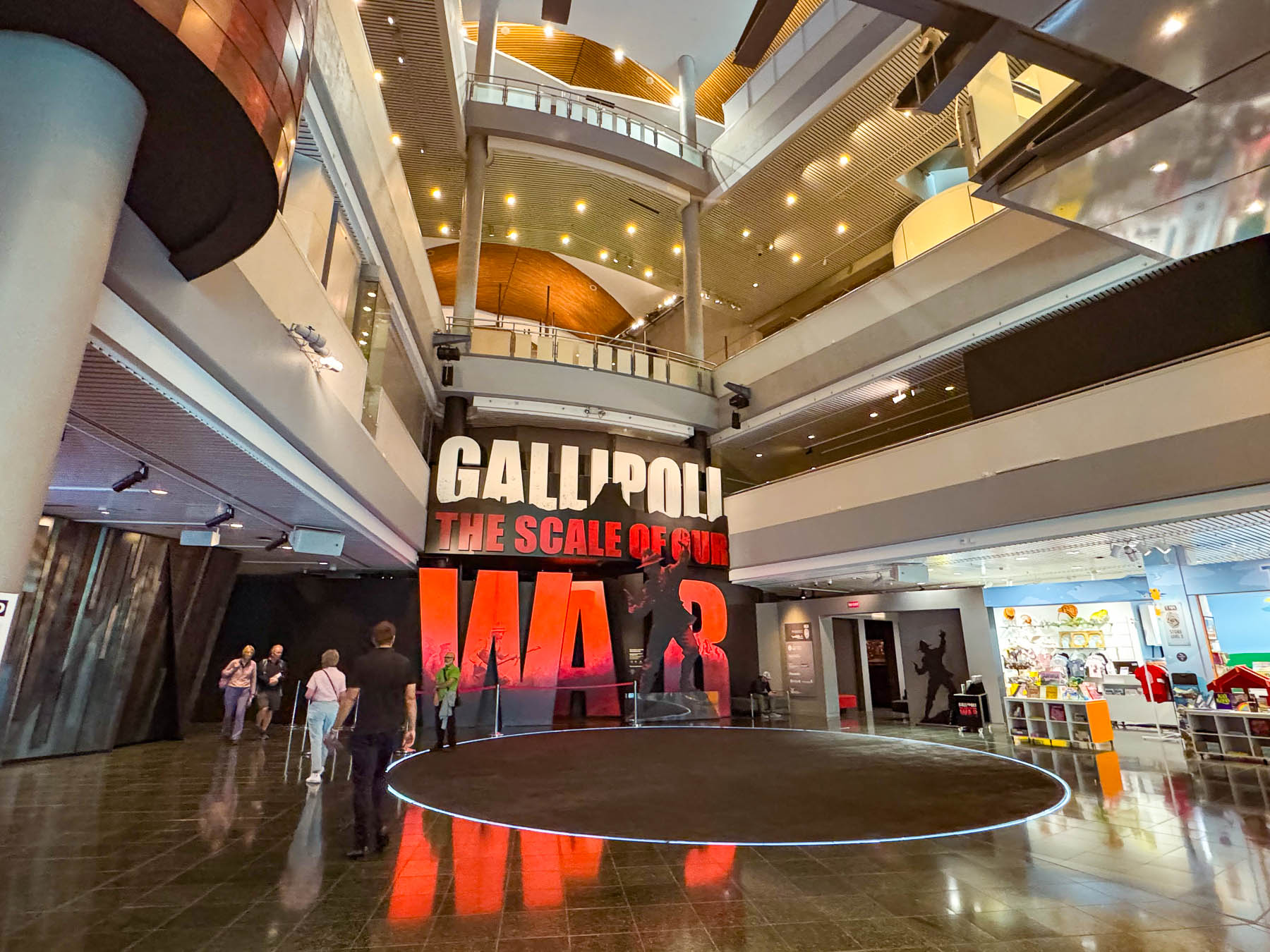
Highlights of the exhibitions include several full-size waka taua, war canoes; the largest colossal squid ever caught; Whai, a Māori string game; and Gallipoli: The Scale of Our War (separate fee), a defining event during World War I, that shaped New Zealand’s post-war national identity and character.
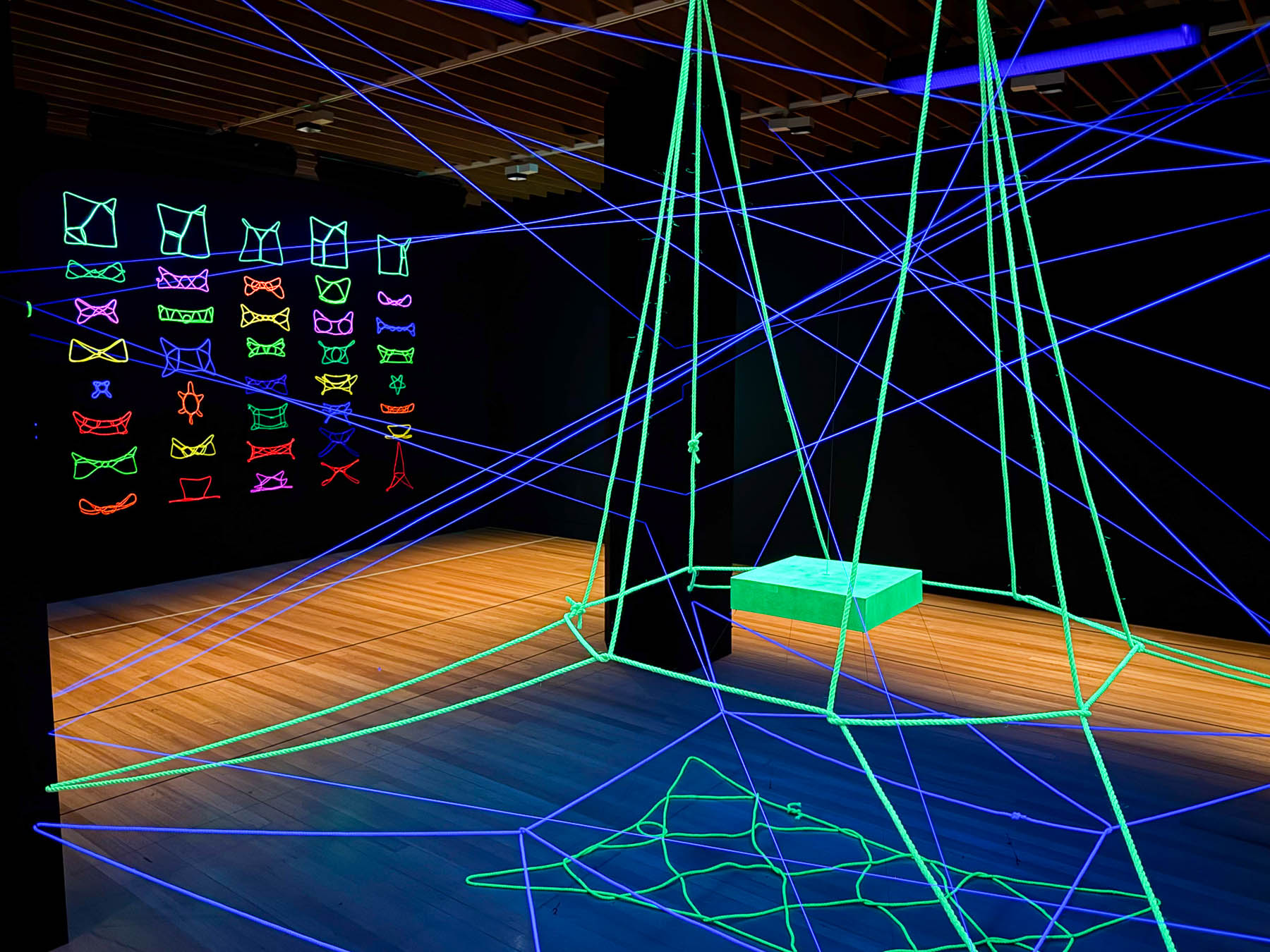
Maureen Lander’s glowing UV-light installation reimagines the traditional Māori string game which uses just a loop of string to create beautiful, intricate patterns. Originally, elders shaped stars, fish, or diamonds, and shared legends and oral histories as their fingers created magic.
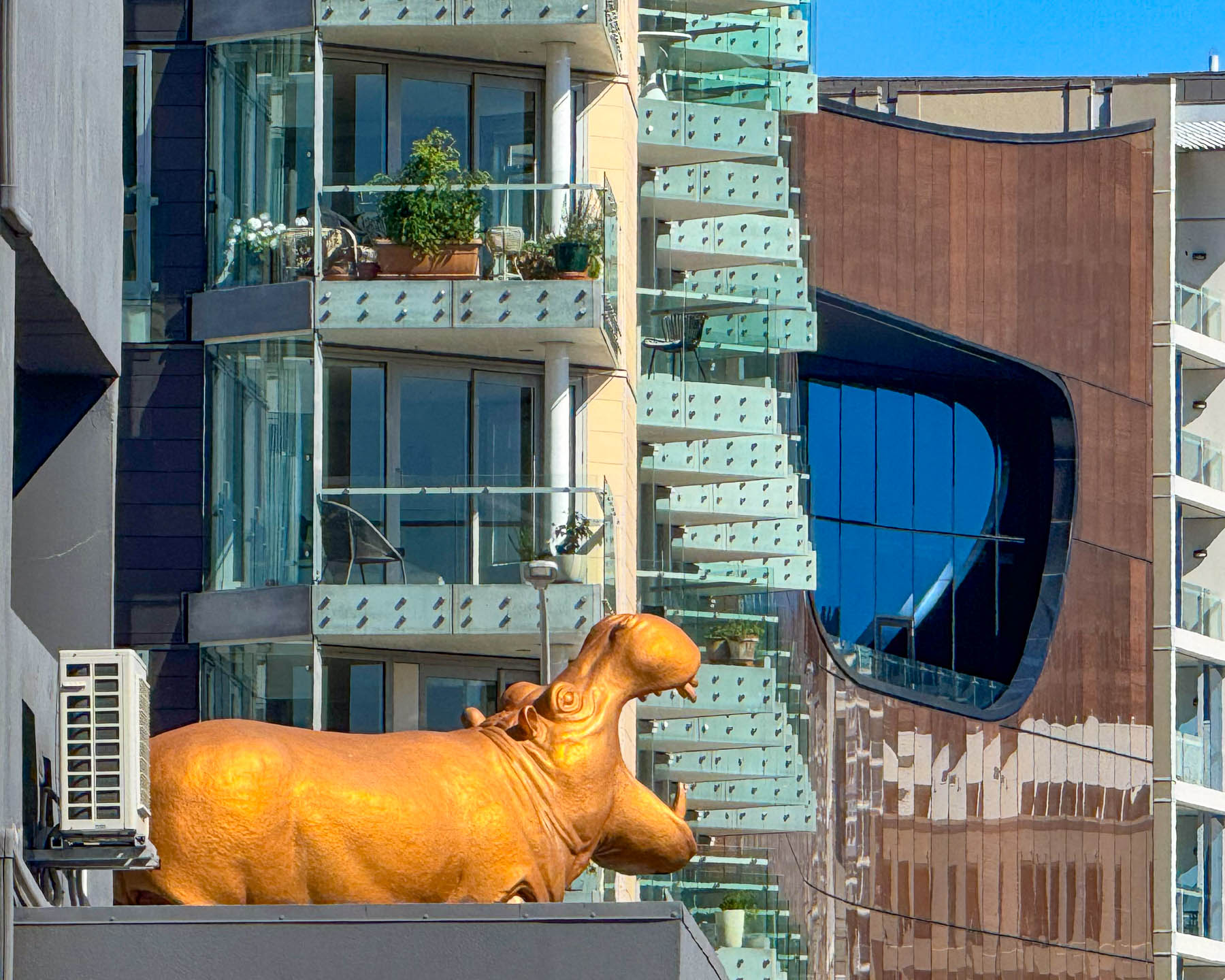
Afterwards, near the museum, we walked along Cuba Street, a long five-block stretch with a pedestrian mall at one end that centers a bohemian arts, entertainment and interesting shopping area with a diverse restaurant and bar scene. We shopped, finding a nice blouse for my wife, and at one of the many outdoor supply stores that dot the city, a much-needed insulated vest to help fight the chilly winds that blow through the city. The coffee culture is securely entrenched in Wellington, with shops seemingly everywhere. And the city proudly boasts Wellington has more cafes, bars, and restaurants per capita than Manhattan, New York. We took note of several bakeries we passed; the Dough Bakery, Little Grump, and the French Baker were several spots I’d head out to early in the morning to return with scrumptious pastries for breakfast.
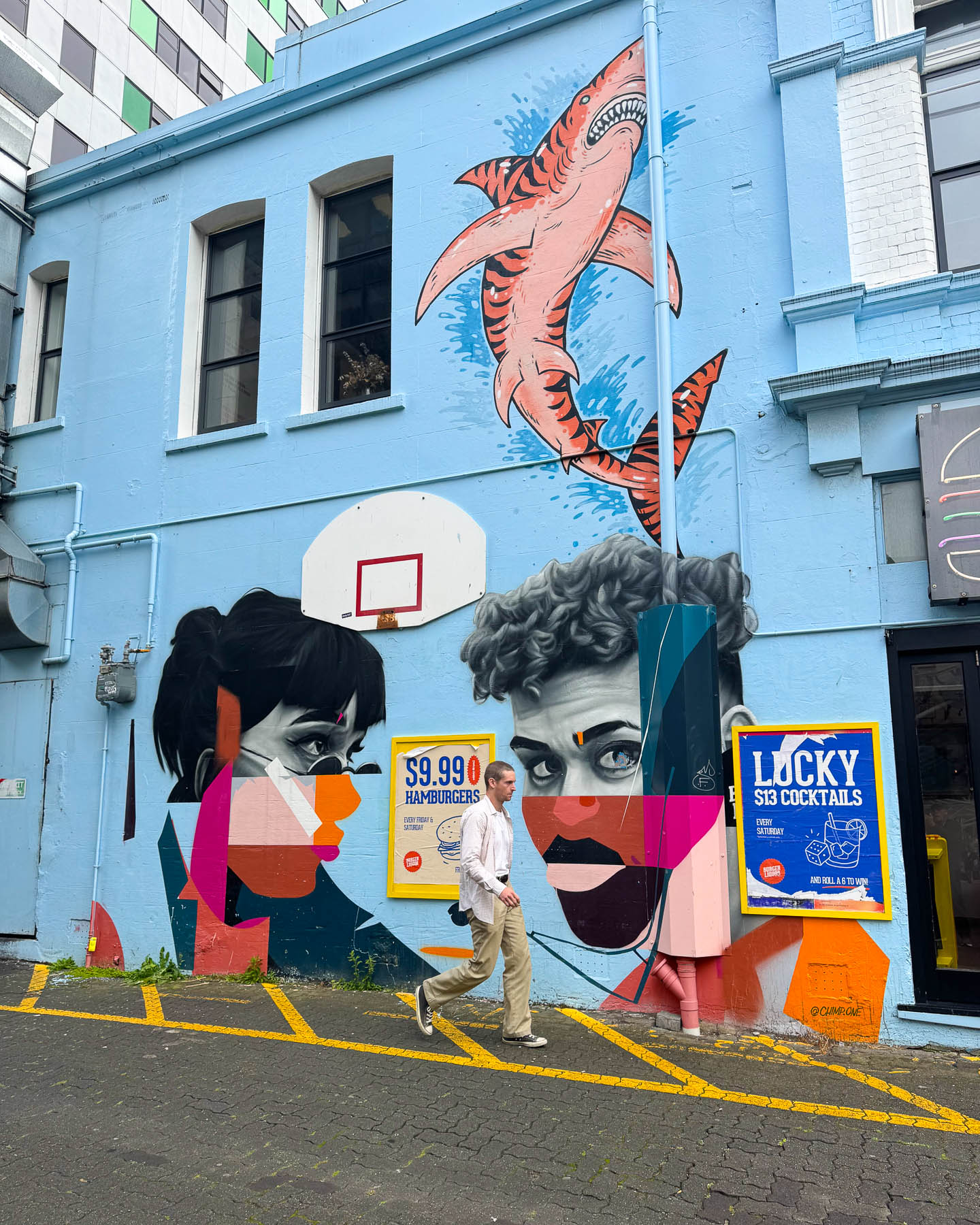
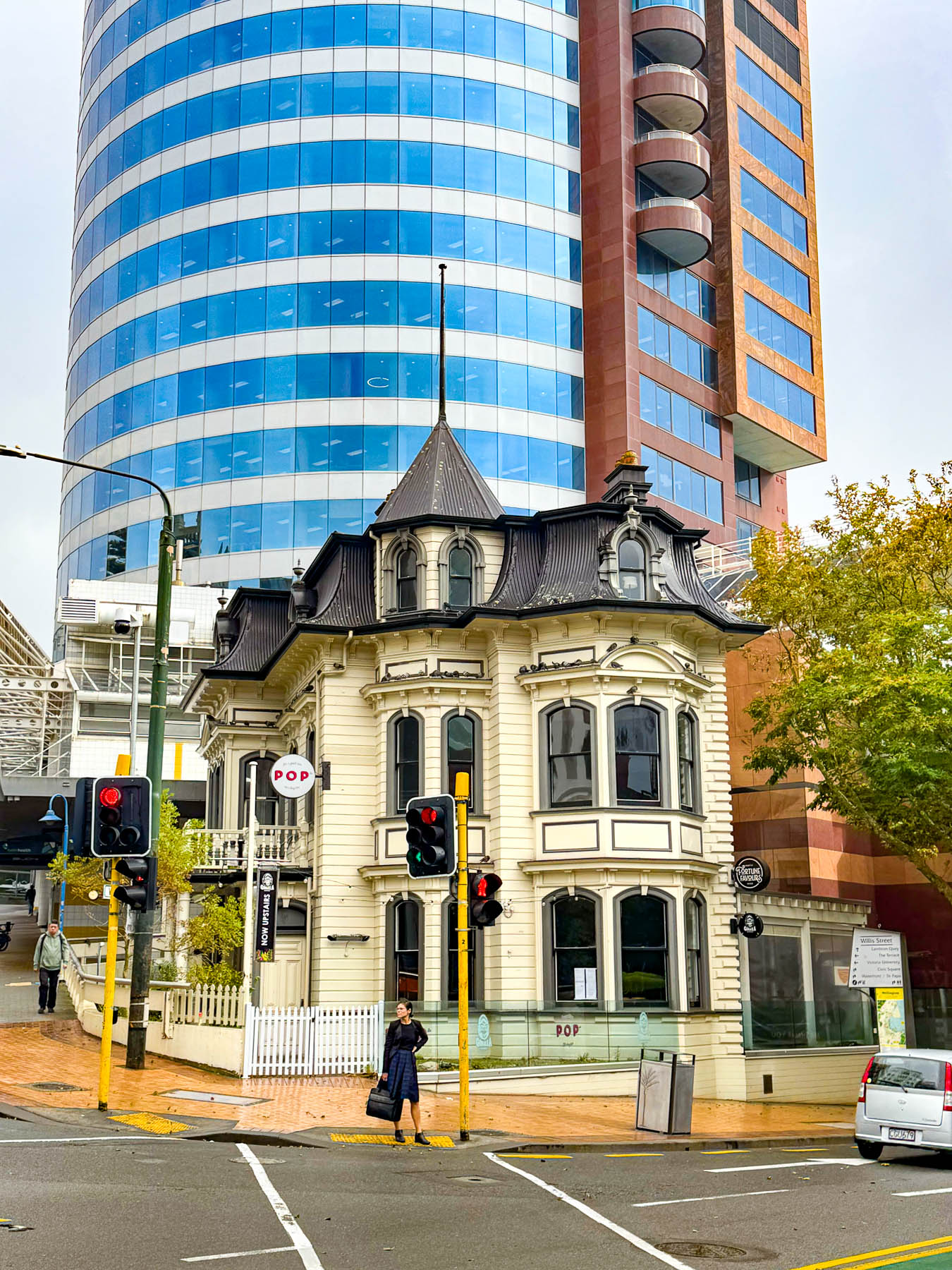
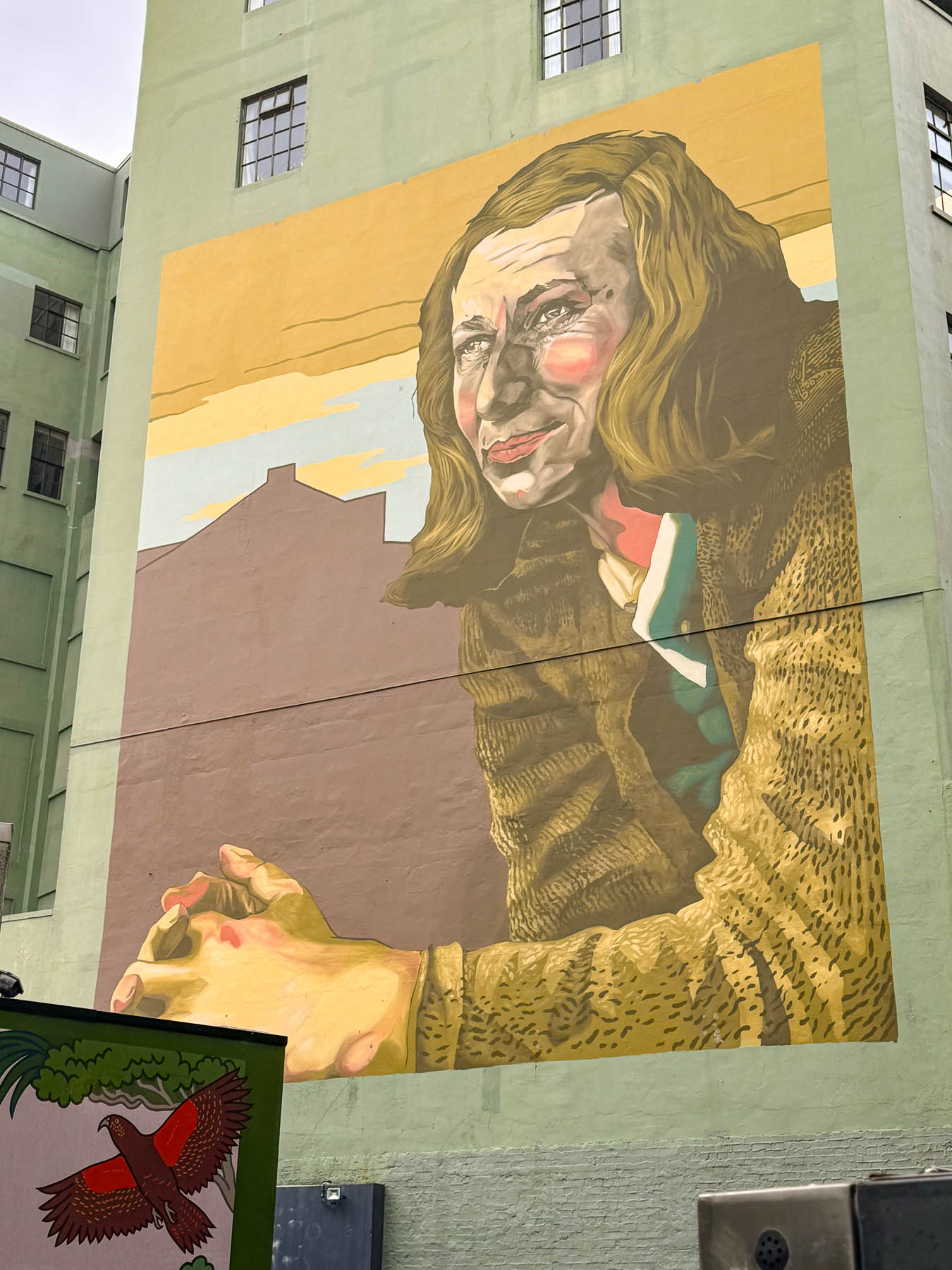
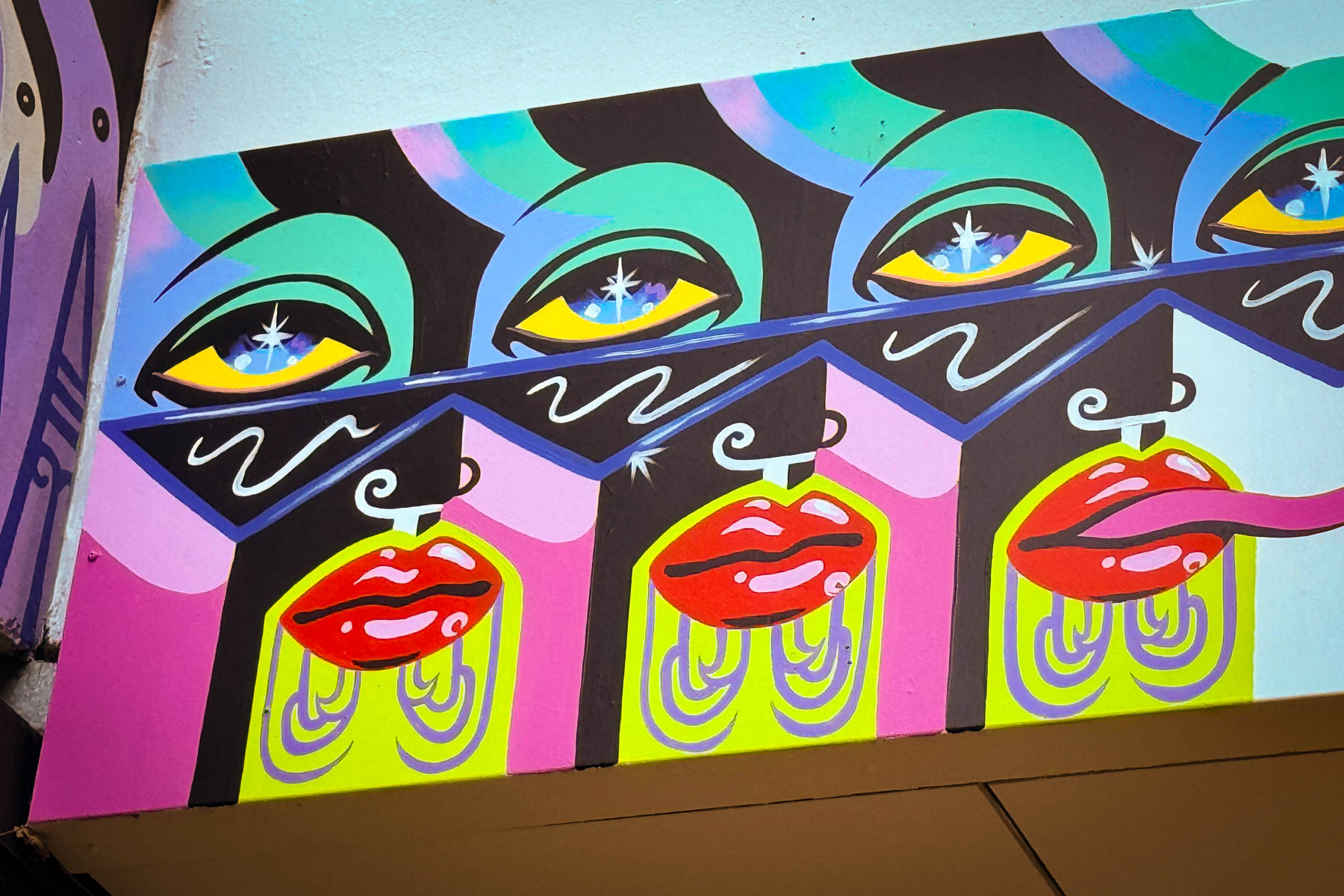
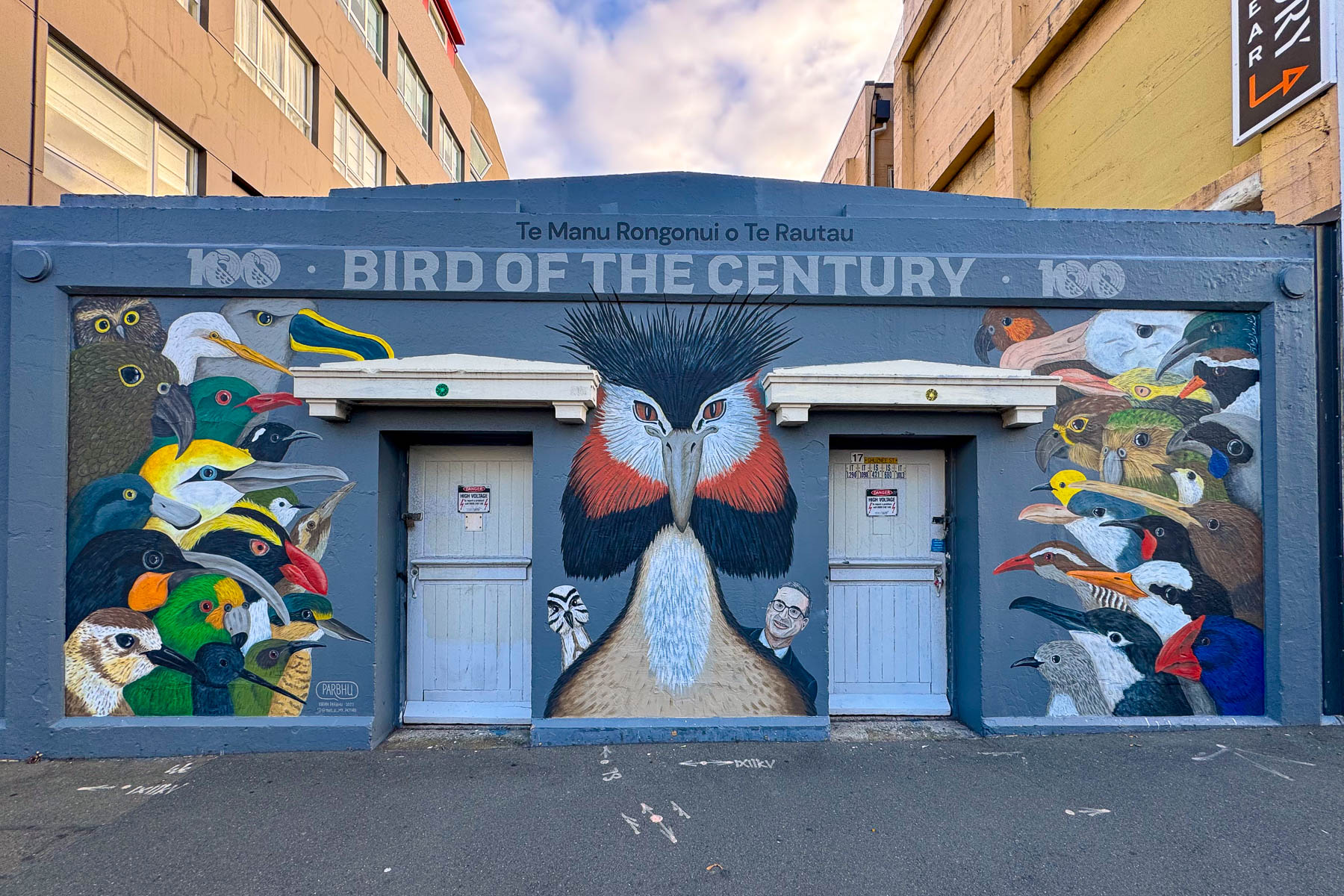
We enjoyed the various street murals, and what remains of the city’s older architecture after a November, 2016, magnitude 7.8 earthquake struck the city, which sits on several fault lines that cross the region, caused widespread infrastructure damage, and severe landslides. Major building damage across Wellington led to the temporary closure and demolition of several large central city structures. Subsequent changes to the building code, which brought in stricter earthquake-strengthening requirements, have rendered some damaged buildings legally un-uninsurable or financially unviable to fix, and they stand empty.
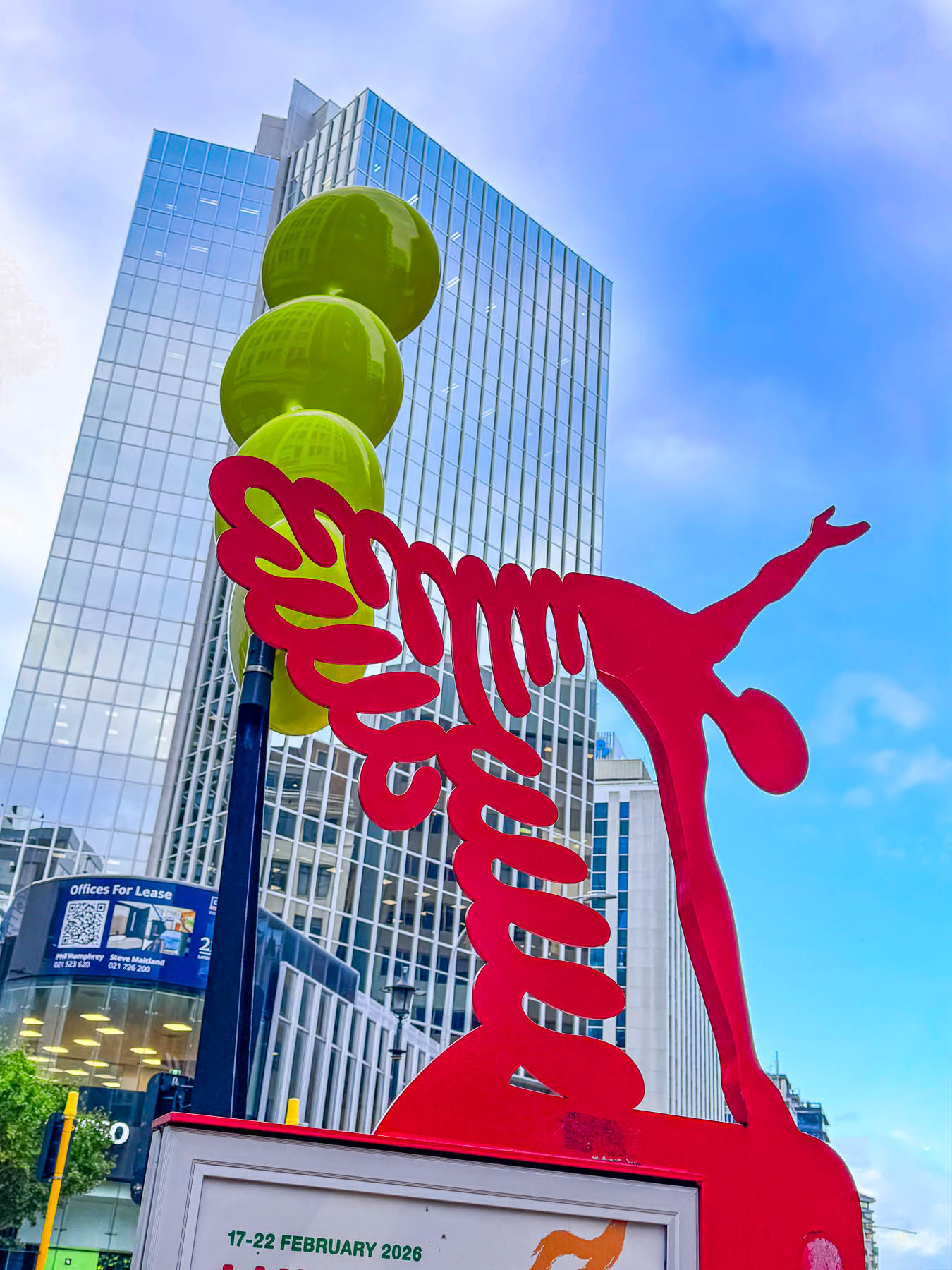
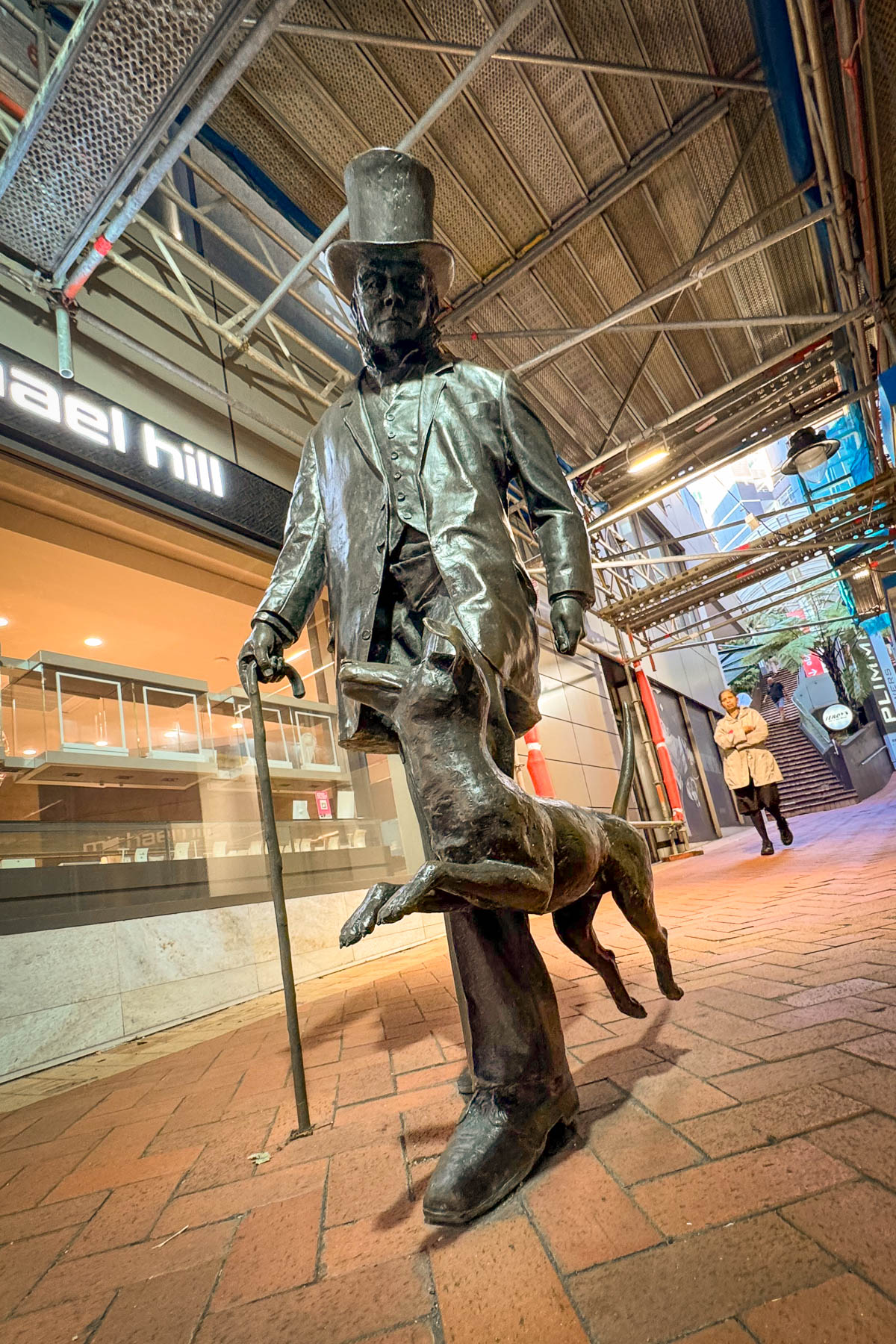
Later, as we walked back to our hotel along Lambton Quay we came across a narrow alley that rose between stores called the Plimmer Steps, where a statue of a tall slender man with a walking stick in a top hat accompanied by a happy dog caught our eye. The bronze sculpture, based on a historic photo, depicts John Plimmer (1812–1905) and his faithful companion Fritz. An English settler and entrepreneur, Plimmer arrived in Wellington when he was 29 years old. The “Father of Wellington” as he was affectionally called, was a vital civic leader, city councilor, and businessman who helped establish the local railway system and famously converted a stranded whaling ship into “Plimmer’s Ark,” a historic early commercial hub on the harbor. Interestingly, the distinctive curve of Lambton Quay reflects the harbor’s high-water mark along the coastline when the city was laid out in 1840. Later 19th-century and 20th-century land reclamation projects extended the usable area of city into the natural harbor, leaving Lambton Quay approximately 250m (820ft) inland from the city’s modern shoreline. Near our hotel were two modern sculptures which graced the sidewalk, set beneath the towering buildings of the CBD. The tall green spherical sculpture called the Protoplasm is the work of the New Zealand kinetic sculptor Phil Price. The stylized red dancer’s creator remains a mystery to me, as I haven’t been able to identify the artist. Wellington has quite a few public sculptures which complement its cityscape. We happened upon many in our wanderings across the city, but the Wellington Sculpture Trust does offer three art walks on its website.
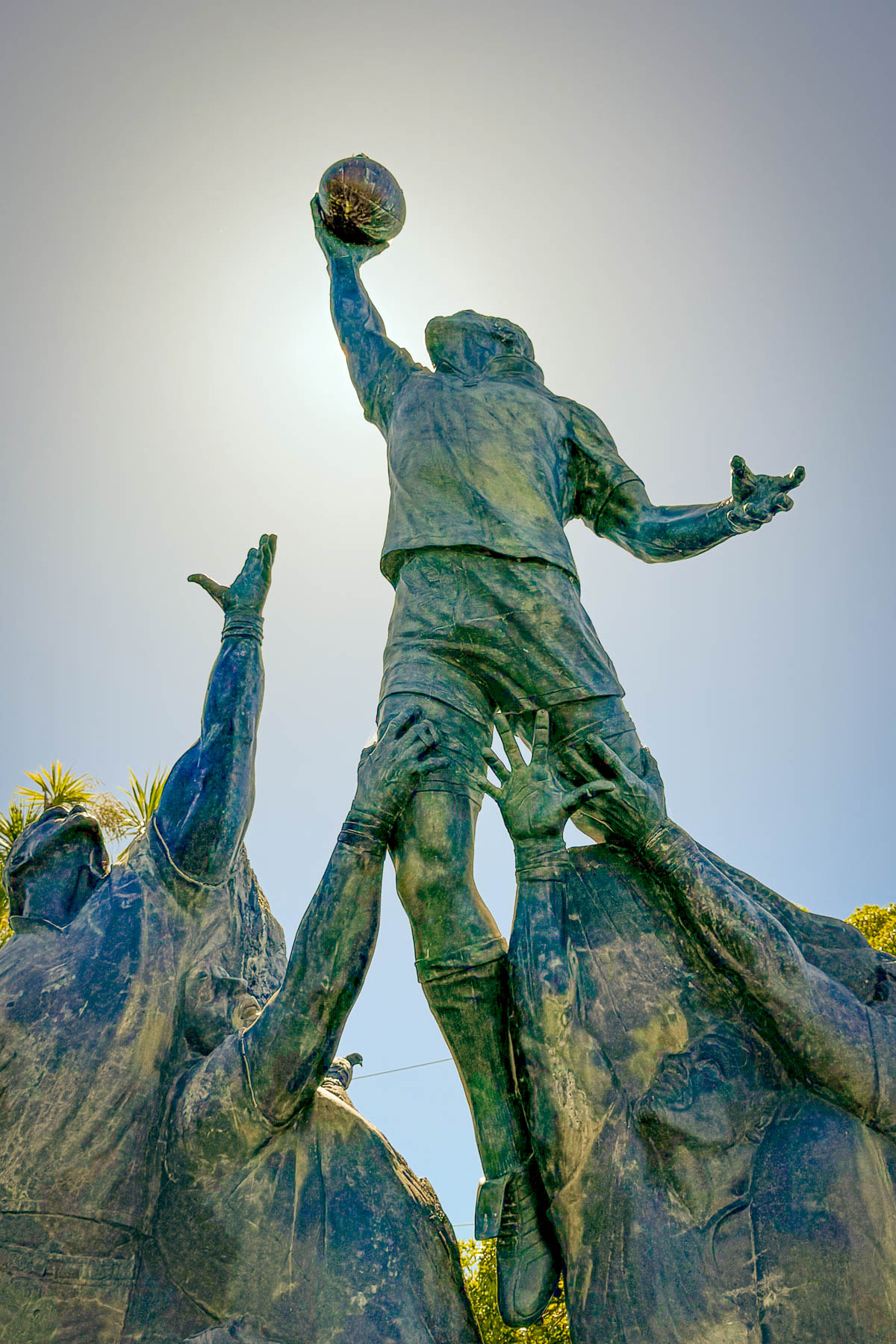
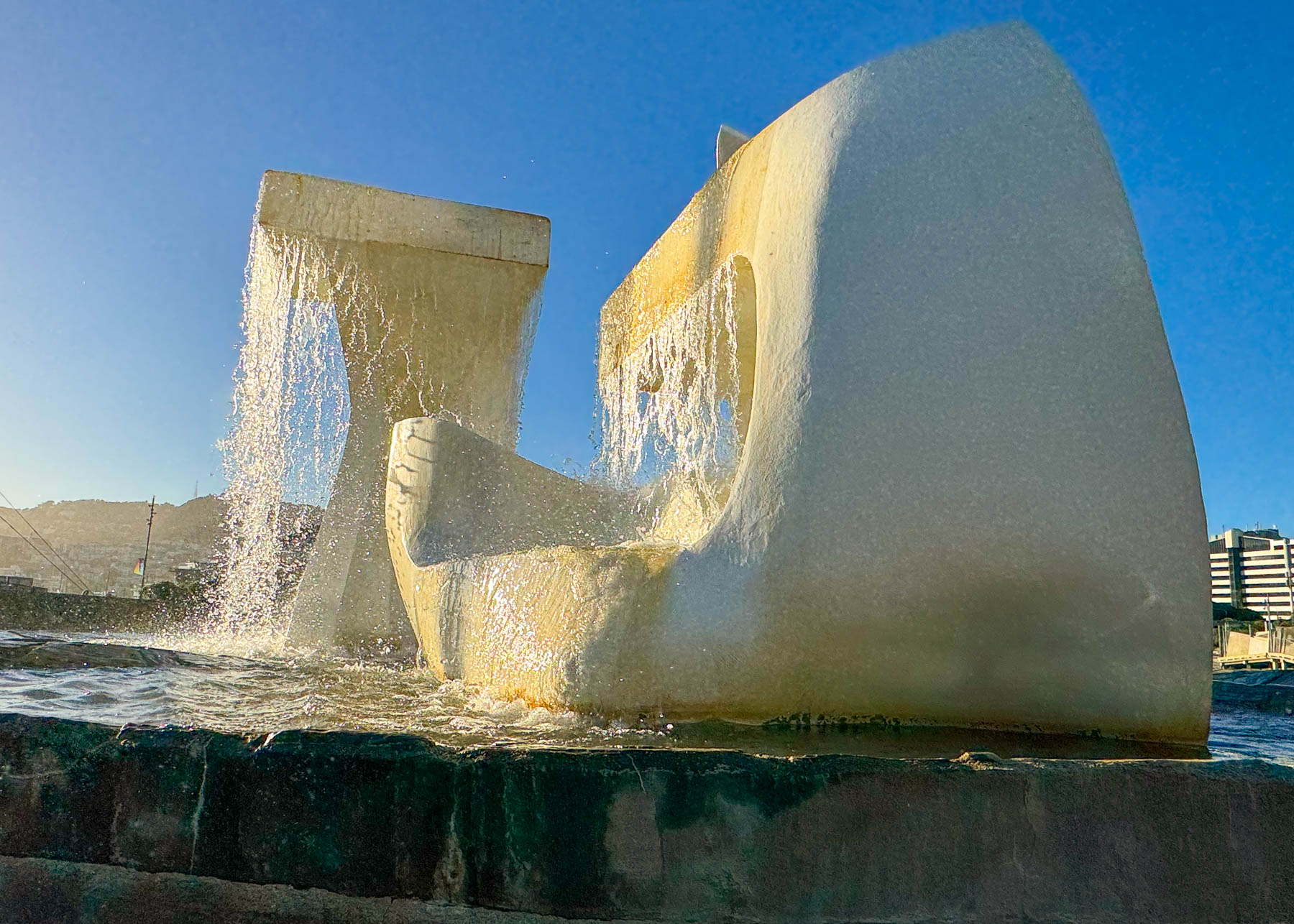
The next morning, we decided to hike up to the Mount Victoria Lookout, for its famous views over the city, harbor and Cook Strait. On the map it was an hour’s walk, covering a distance of 3km (1.9mi), if we walked straight there, with a steep altitude gain of 196m (643ft) from the waterfront. But we frequently stopped along the way to photograph the sights and detoured when something caught our fancy. The day was brilliantly sunny as we explored a different route which passed a large statue with figures bursting with energy. The sculpture, The Rugby World Cup Celebration, vividly commemorates New Zealand’s hosting and winning the 2011 Rugby World Cup. The work was created in Wellington’s iconic Weta Studios, which produces high-end art statues, but is more famously known for their special effects work used in Peter Jackson’s Lord of the Rings and the Hobbit trilogies. Farther along an abstract stone fountain called the albatross beautifully glowed in the morning light.
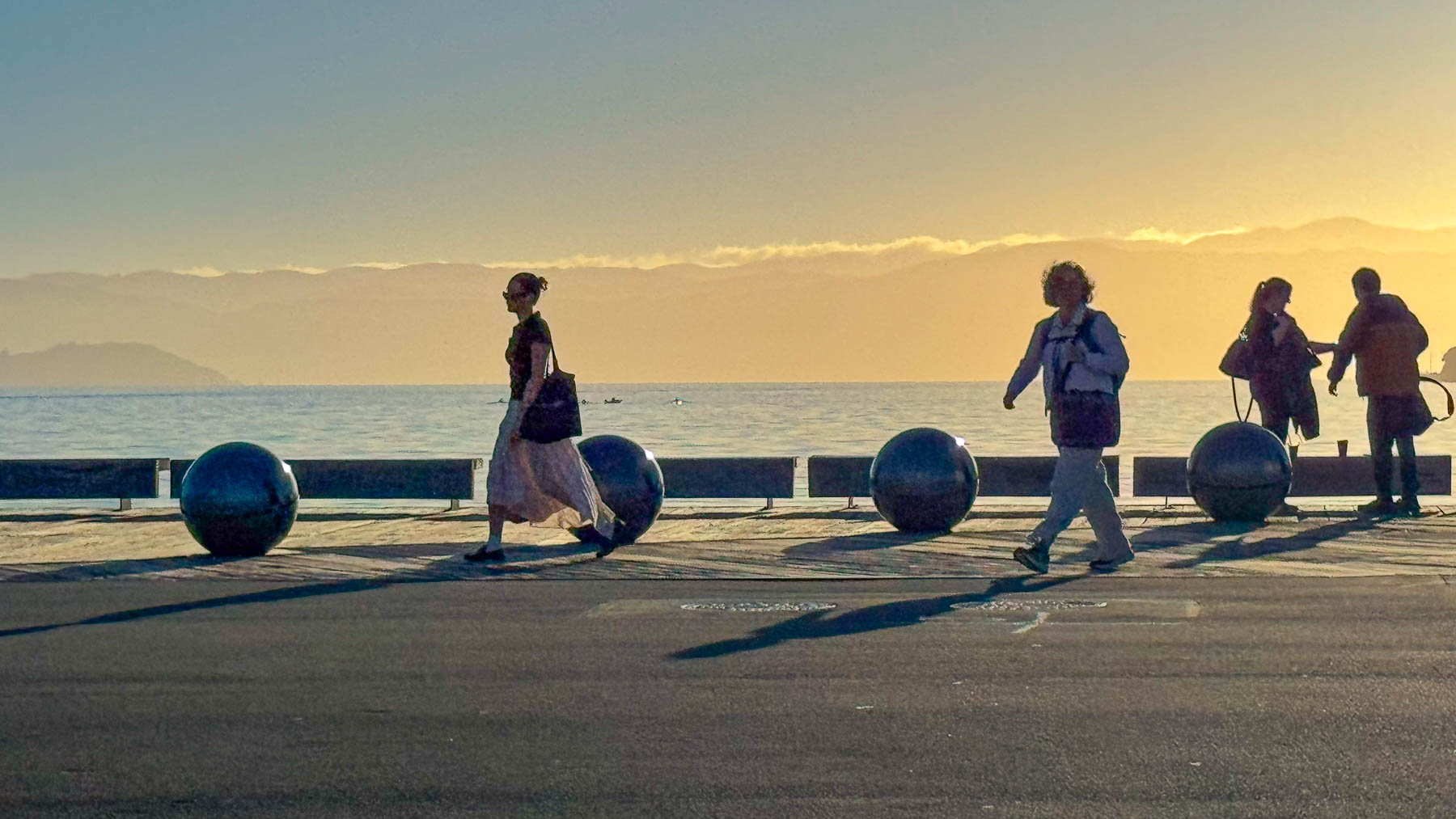
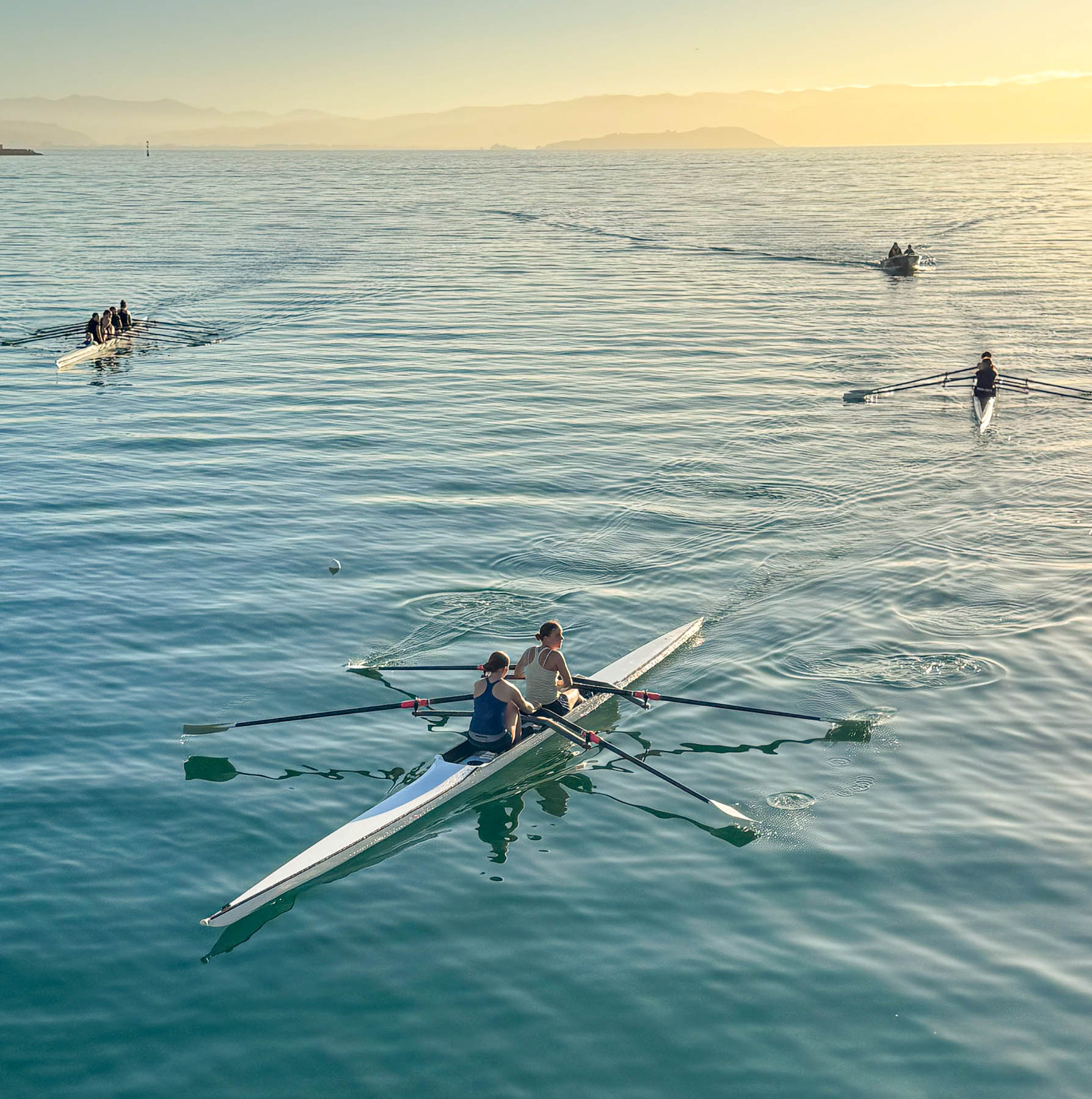
We reached the waterfront during the height of the morning rush hour, where an amazing amount of people were walking and cycling along the harbor on their way to work. The pavilion set up for the dragon boat crews was quiet at this hour, though groups of scullers were out on the calm waters of the bay for a rowing workout before continuing to their jobs.
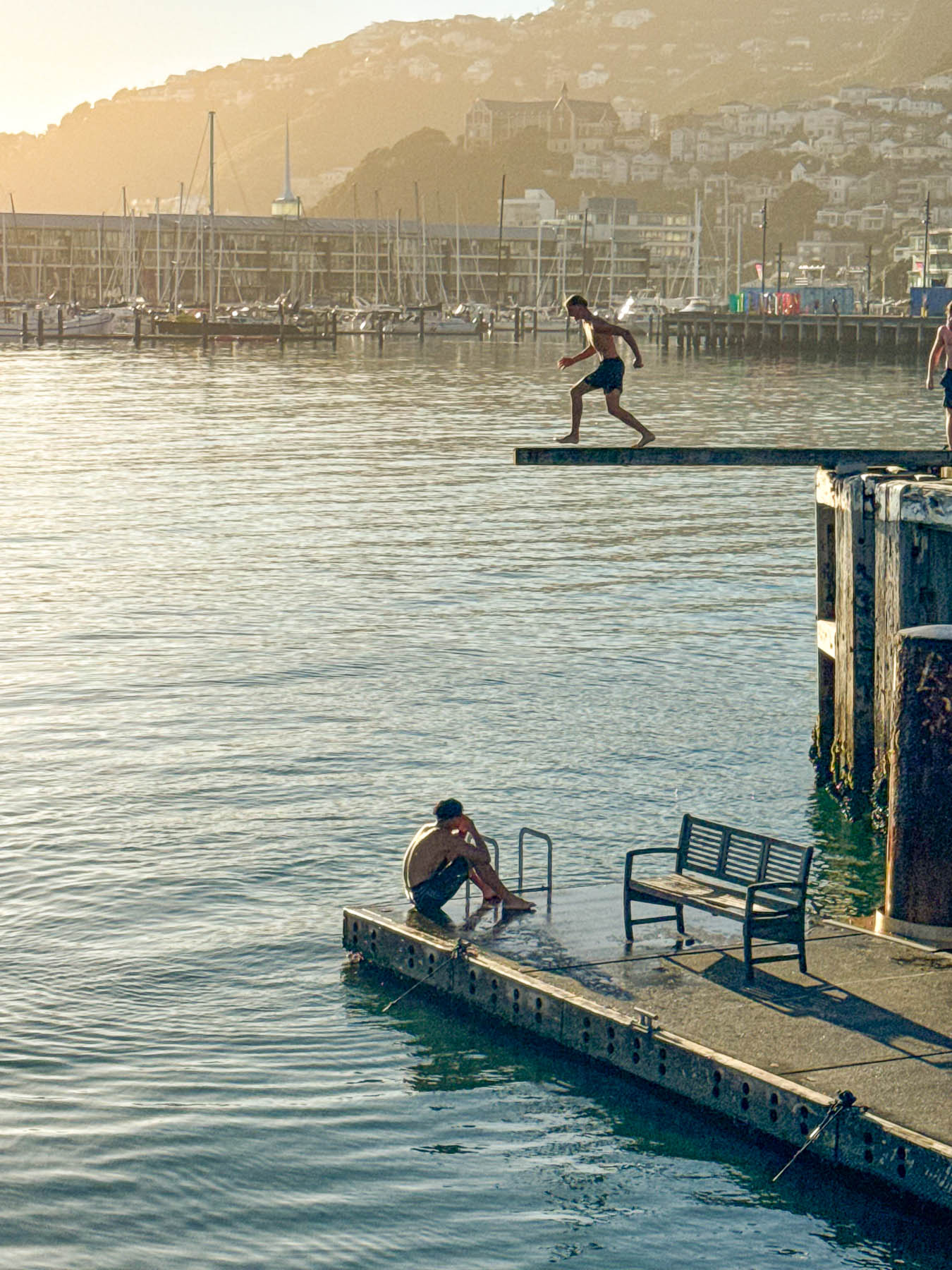
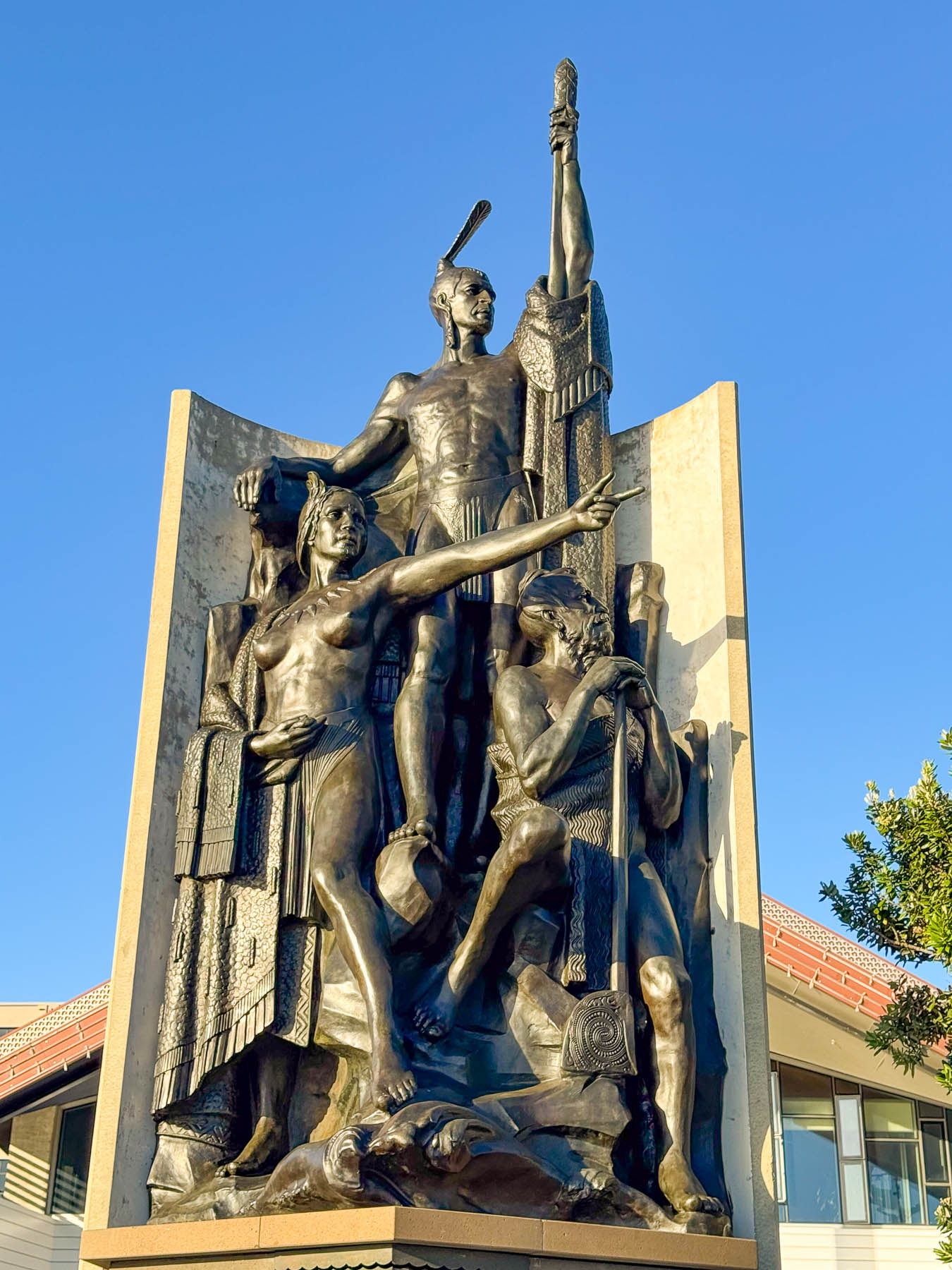
Farther along, a small group of students had shed their school uniforms for swimsuits and were enjoying repeated jumps from a diving platform along the quay. Nearby was a stately bronze statue, that we had somehow not noticed the day before, recounting the legend of New Zealand’s discovery by the courageous Māori explorer and navigator Kupe Raiatea, his wife Aparangi and the tohunga (priest), Pekahourangi. The country’s Māori name comes from a legend: when Aparangi spotted a long white cloud on the horizon and realized that land was nearby she exclaimed with joy, Aotearoa! The original statue was created, in plaster and finished with bronze color paint, for the 1939–1940 New Zealand Centennial Exhibition. It was recast in bronze for the 2000 millennium celebration, with a plaque that dedicates the sculpture “as a tribute to all who have come to these shores.”
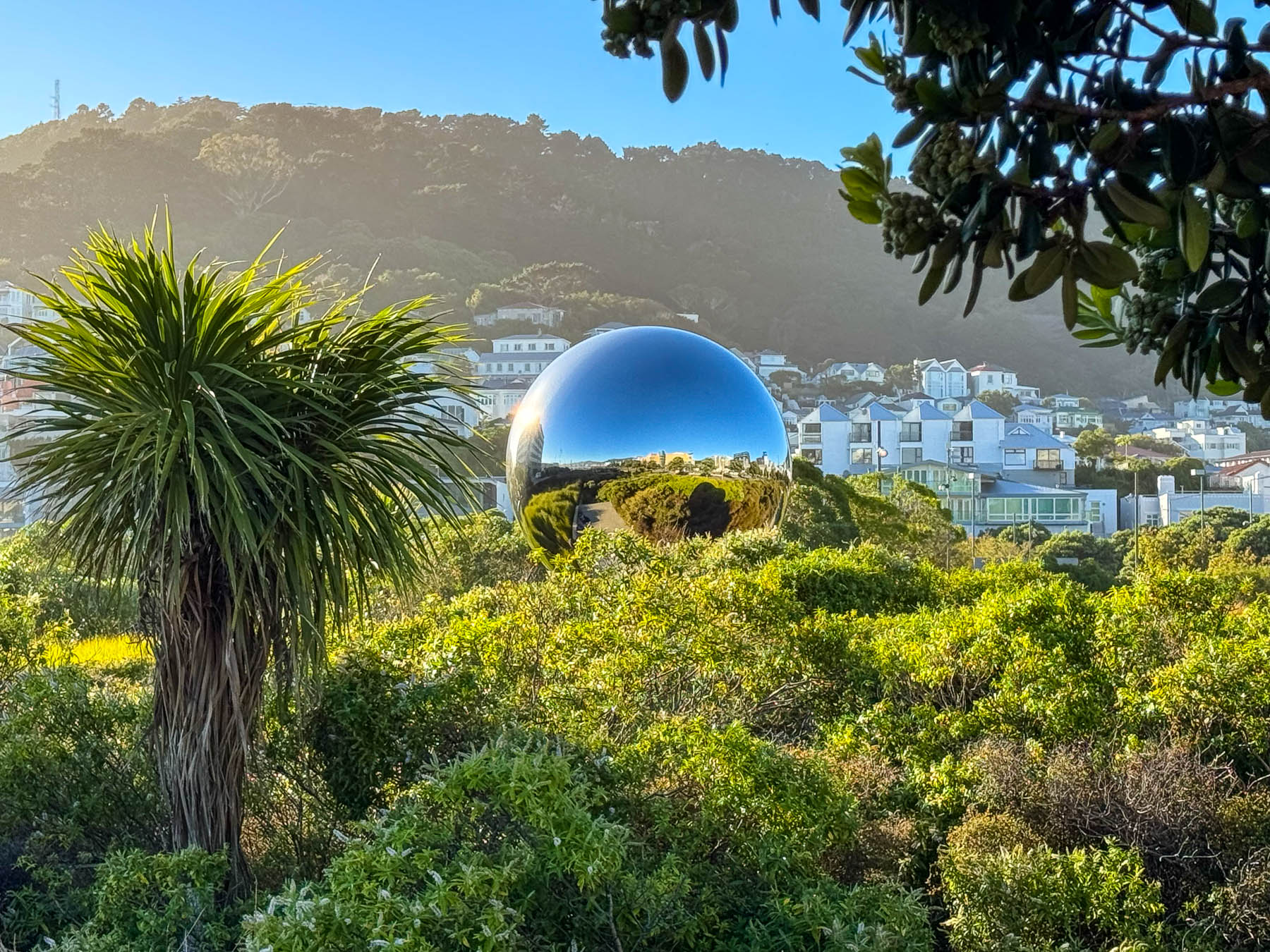
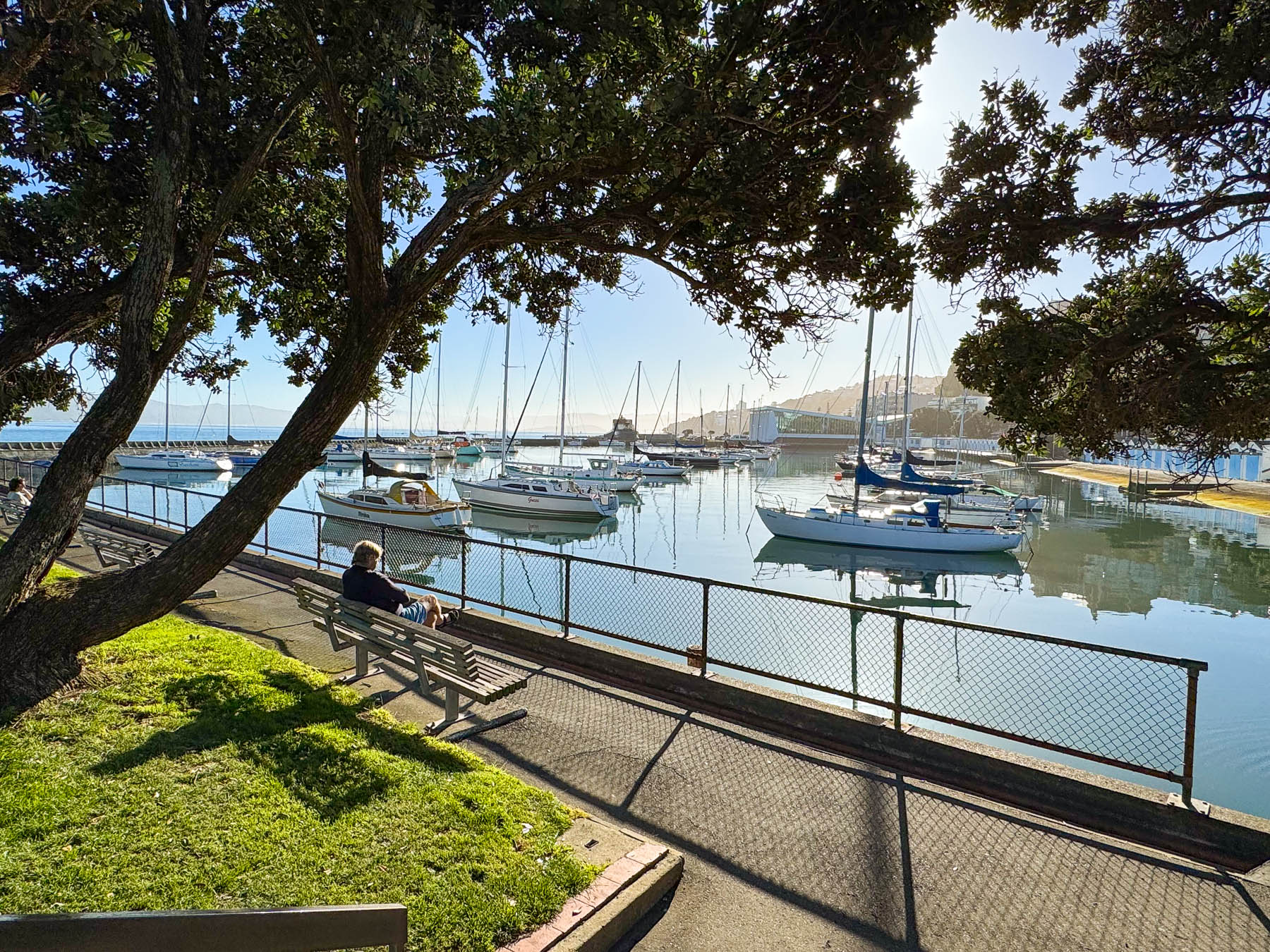
Beyond the Wellington sign, large yachts docked in a marina rocked on the harbor’s gentle swell. Past Te Papa in Waitangi Park we came across an alien looking, highly polished mirror-finished sphere, that on a closer look is shaped to look like an inverted tear, or map pin. The 2025 work was created by the the Korean-New Zealand artist Seung Yul Oh and is titled “KIMI / You Are Here.” In Māori, Kimi means “to seek” or “search,” “philosophically challenging viewers to broaden their search in order to gather diverse perspectives, comprehensive insights, and deeper wisdom.” At the far end of the park we rested on shaded benches that overlooked sailboats anchored safely behind a breakwater.
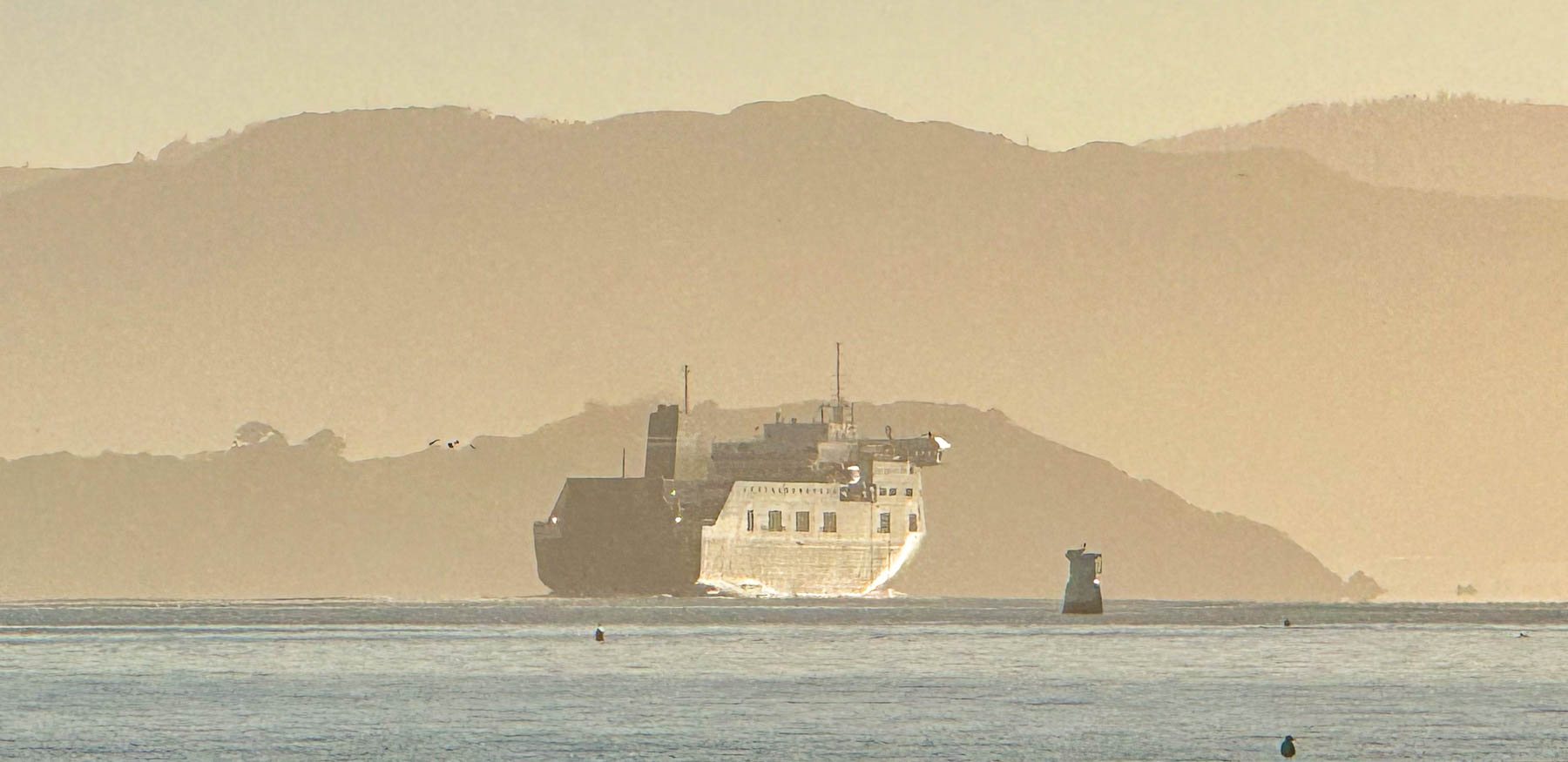
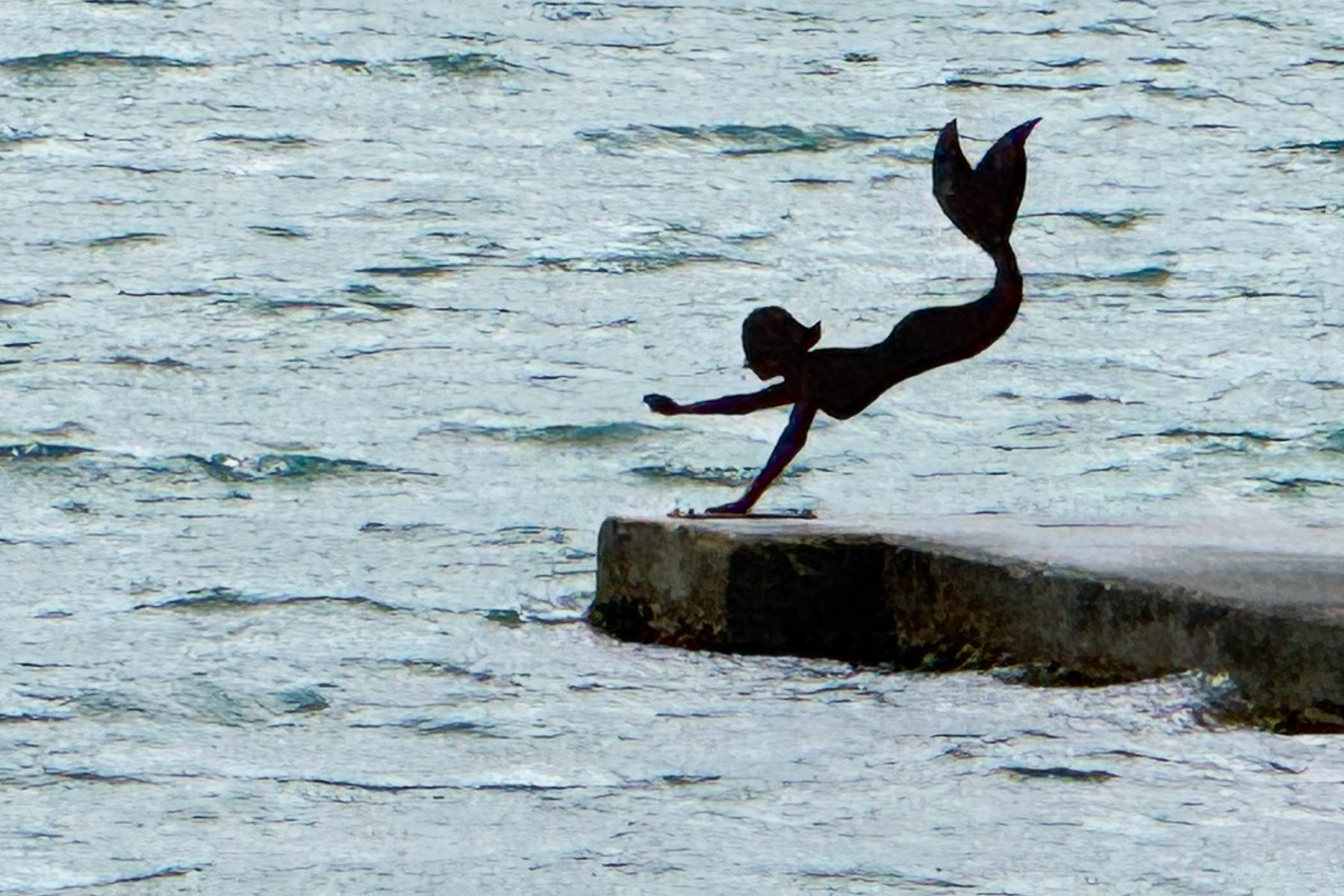
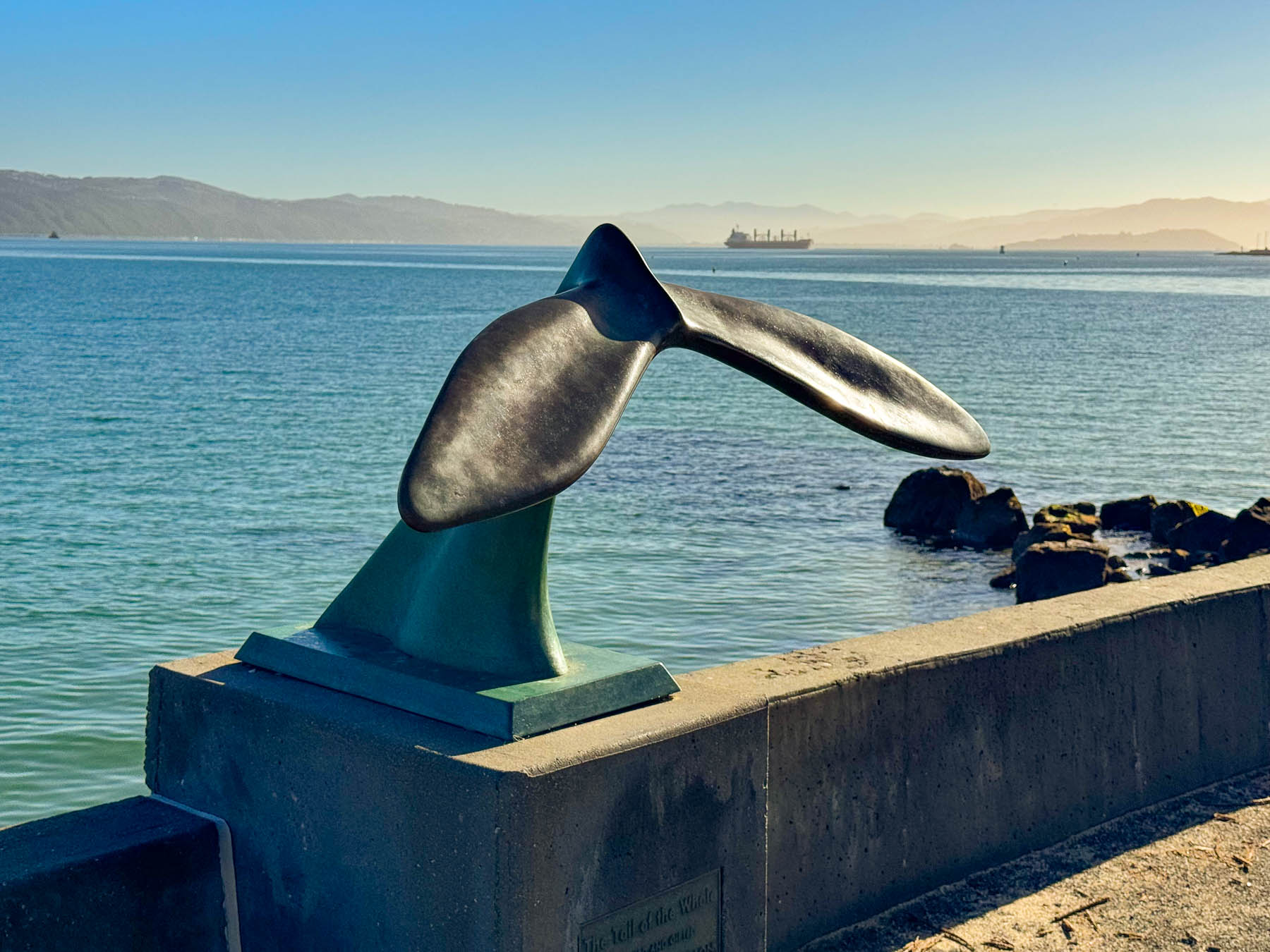
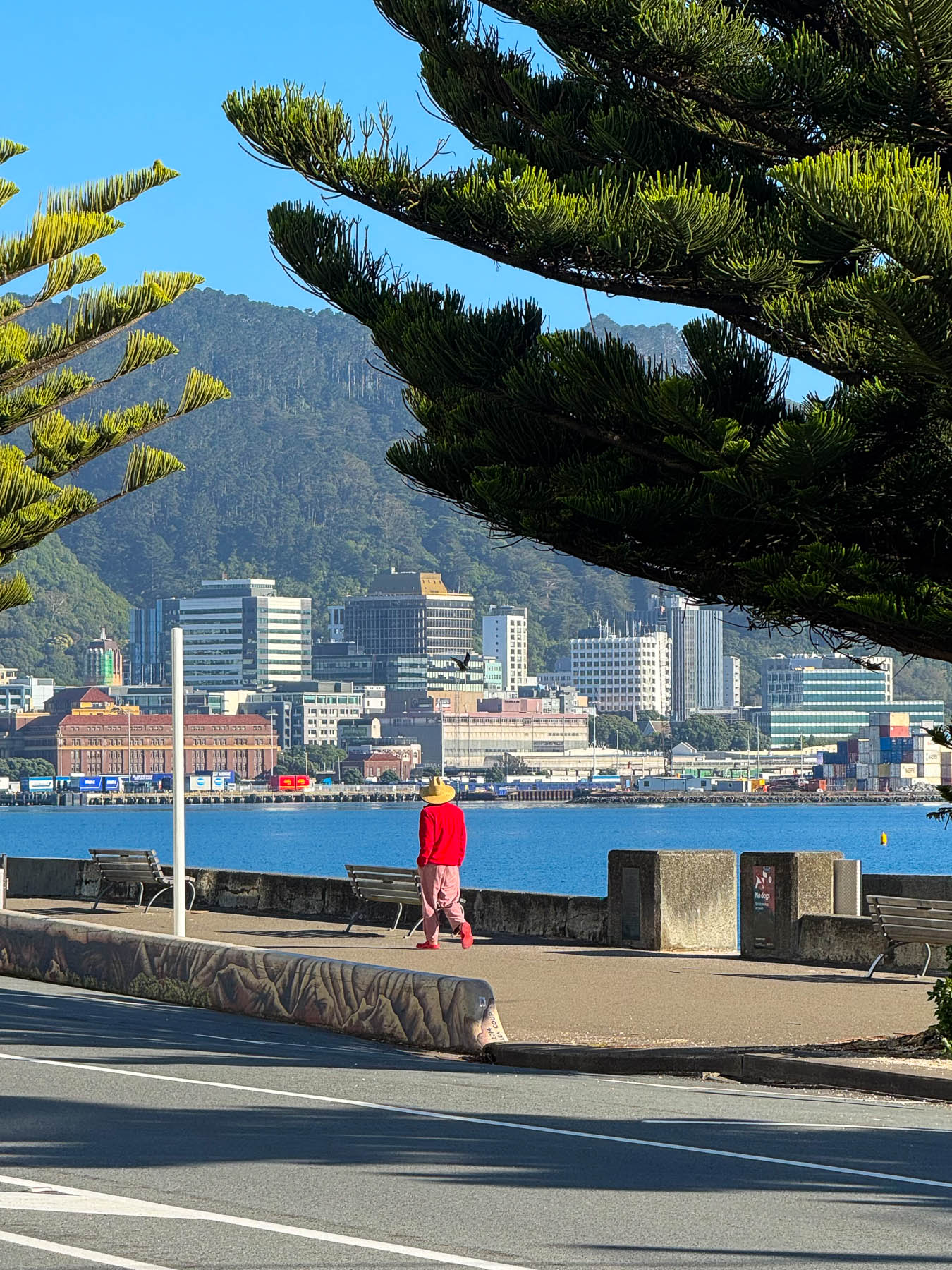
Along a wide stretch of sand called Freyberg Beach, a few hearty souls were enjoying a morning swim in the harbor’s chilly water that averages around 17°C (63°F) in February. Way too cold for us! On the horizon the Bluebridge Cook Strait Ferry was heading out of the harbor for its morning 3.5 hour crossing to Picton on the South Island.
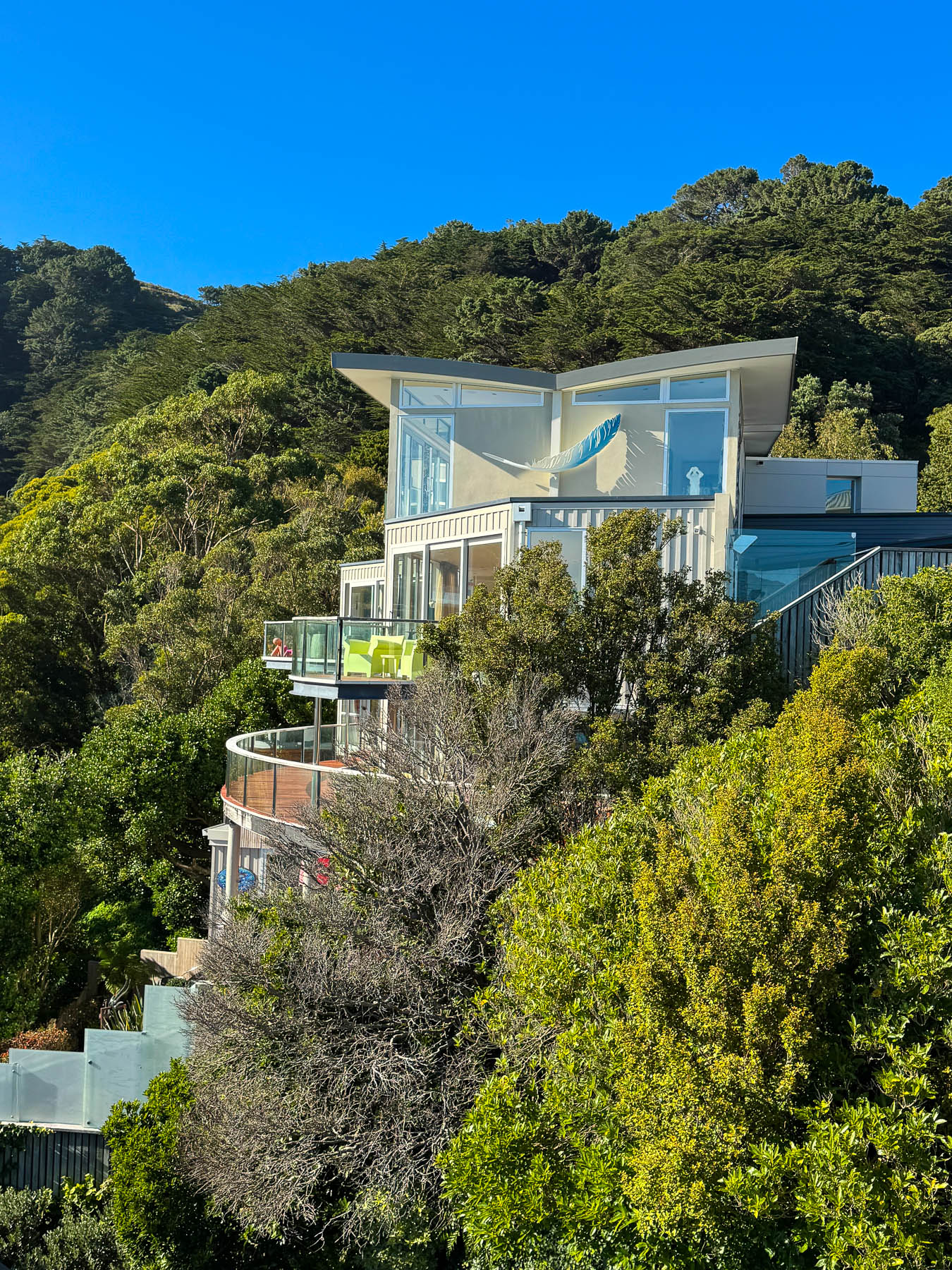
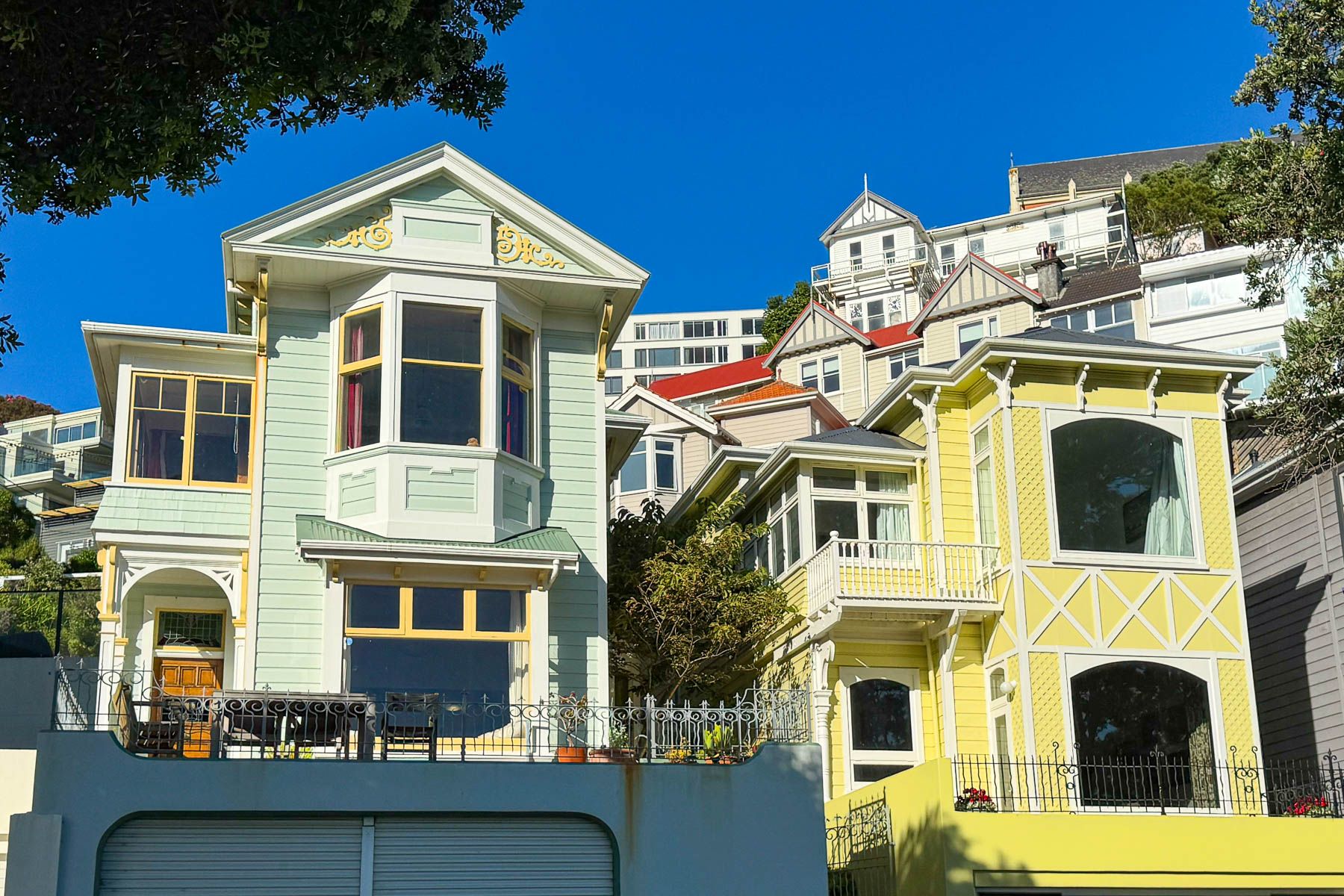
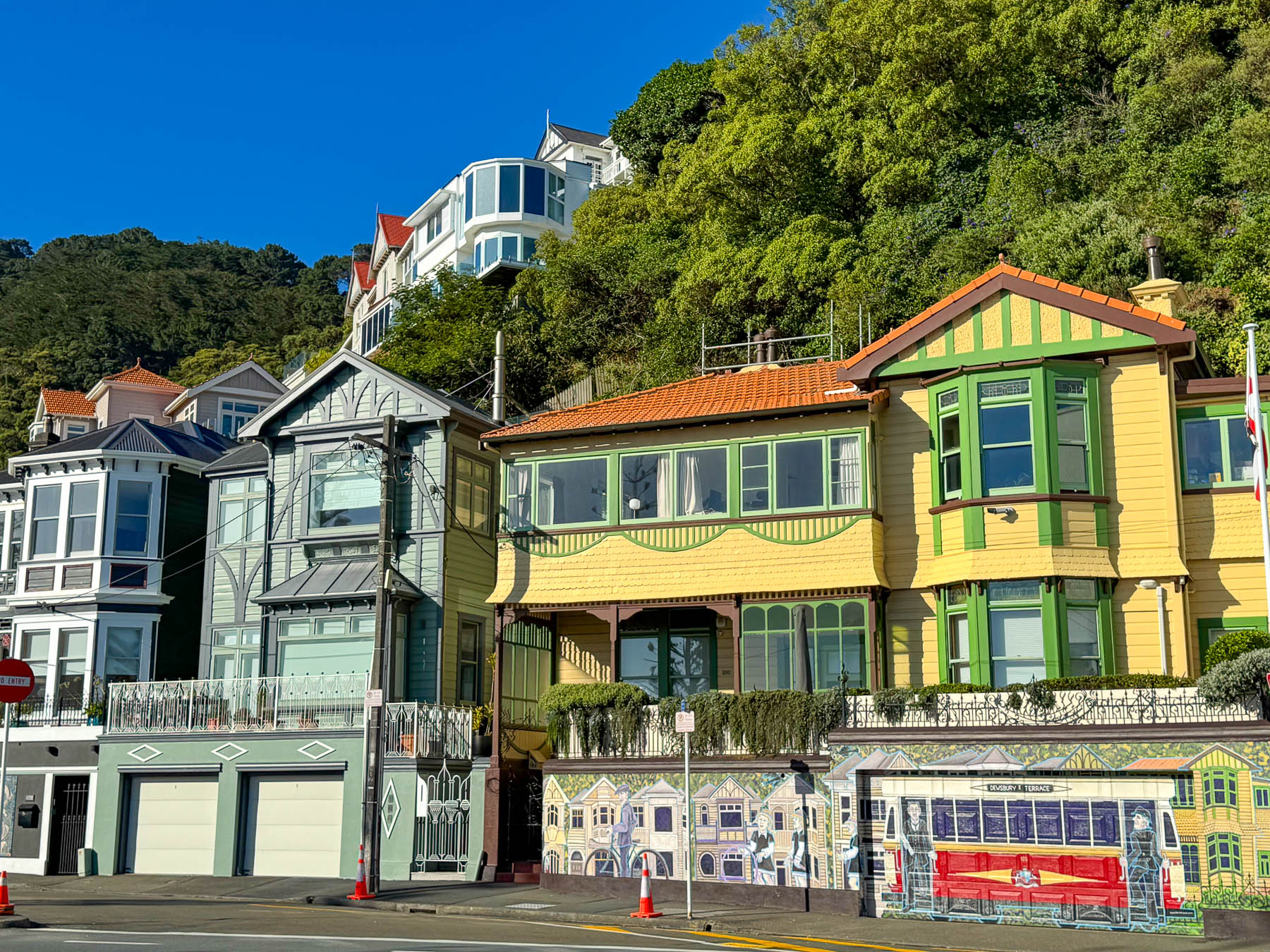
Across from the beach the route to the lookout weaved through homes built on a steep hillside; the scene and architecture were reminiscent of the prime real estate in San Franscico. Along the way there were several rest areas that offered nice views toward the water. Later, walking up the steep stairs and path that zigzagged across the hillside, we were reminded of the old villages along the Amalfi Coast in Italy, when we came upon a crew of construction workers manually carrying timbers and wheel barreling bags of concrete downhill to a home being renovated.
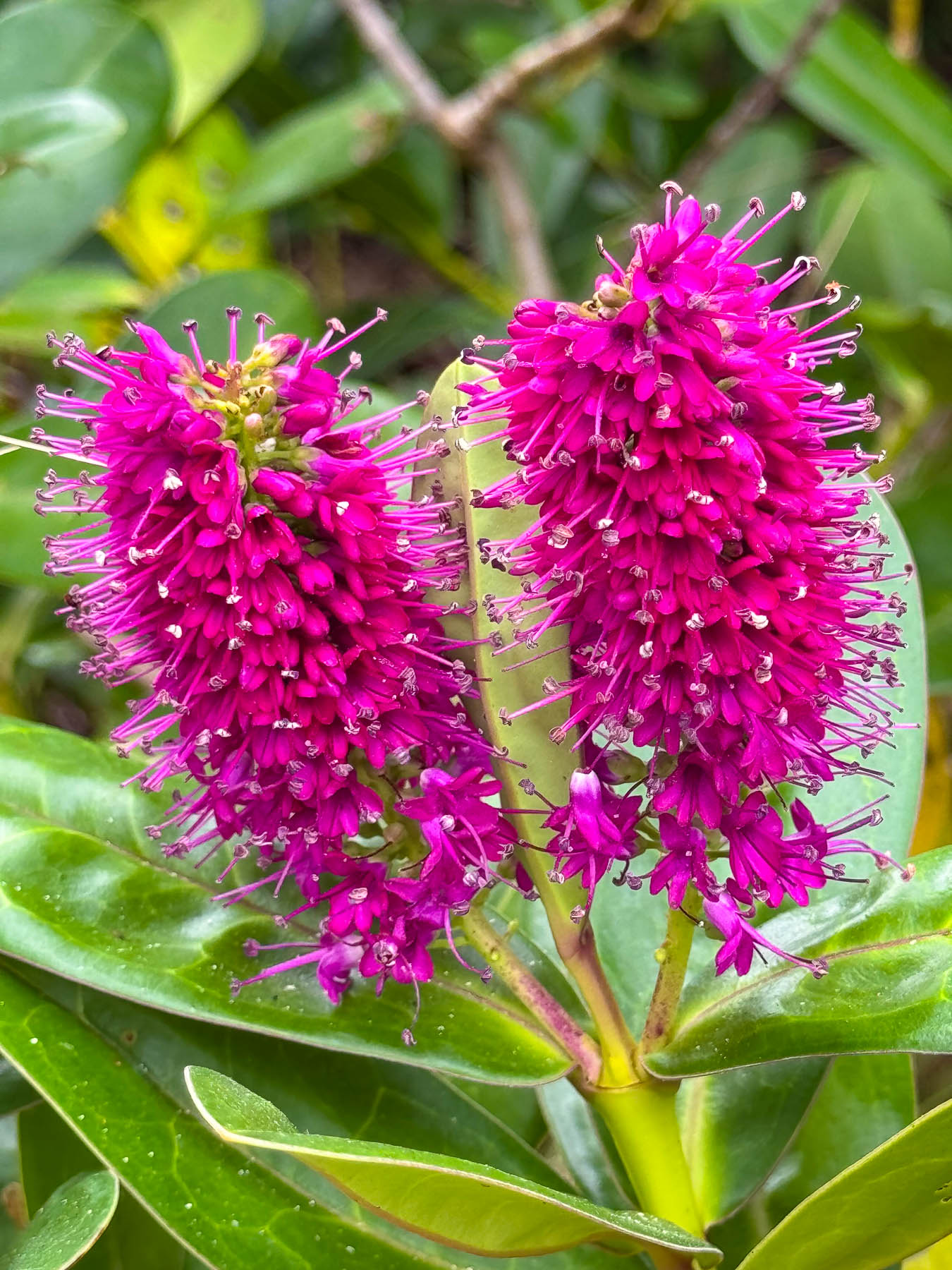
Leaving the houses behind, the trail ascended through a mature, century-old radiata pine forest, where the tall trees formed a dense canopy and sheltered us from the mid-day sun. Several spots in the forest have been used as filming locations for the Shire woodland scenes in The Lord of the Rings movies. The filming locations in Wellington and other spots across the country can be found on NZ Film Map, an interactive map created by two fans of the movies.
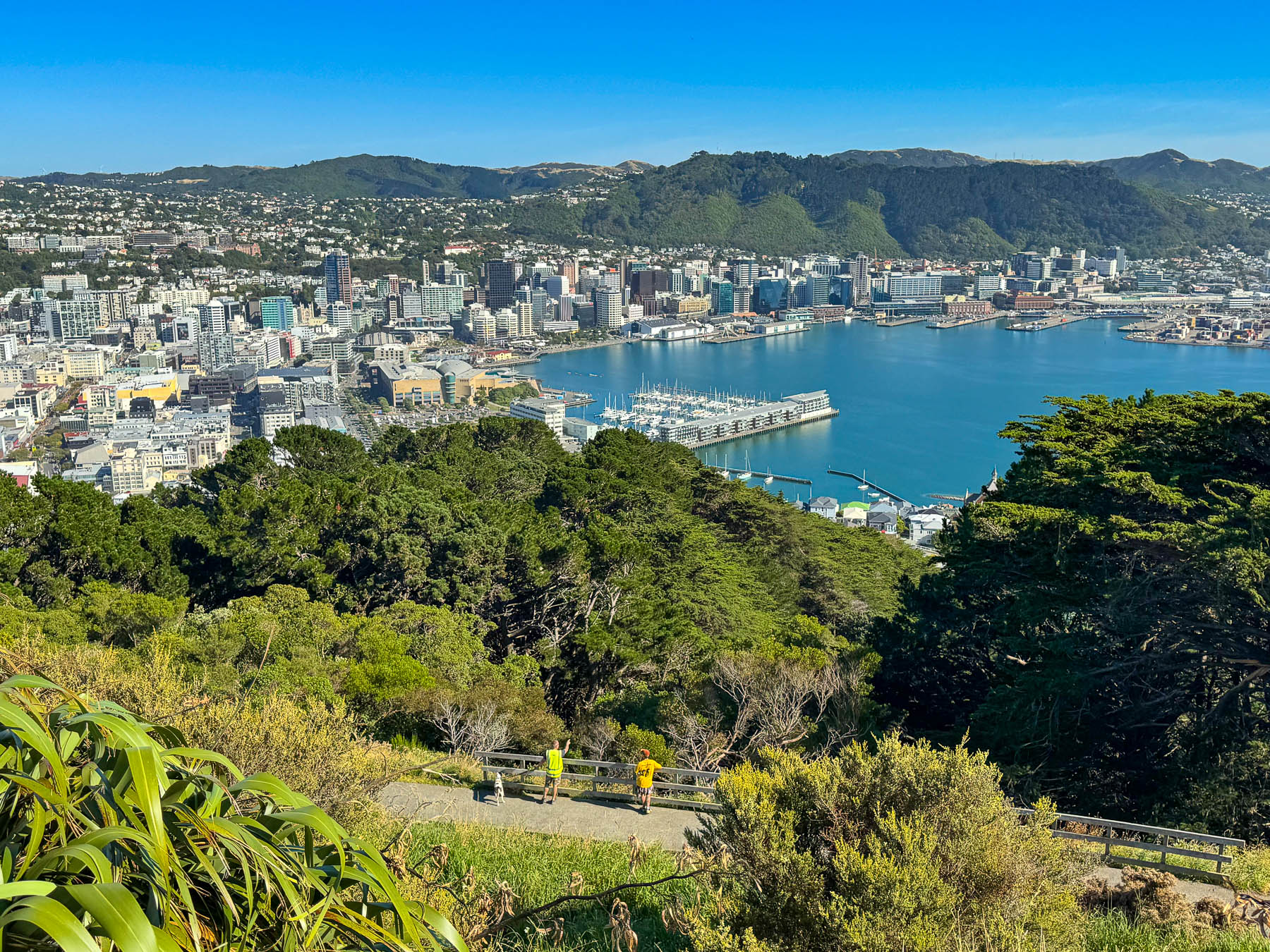
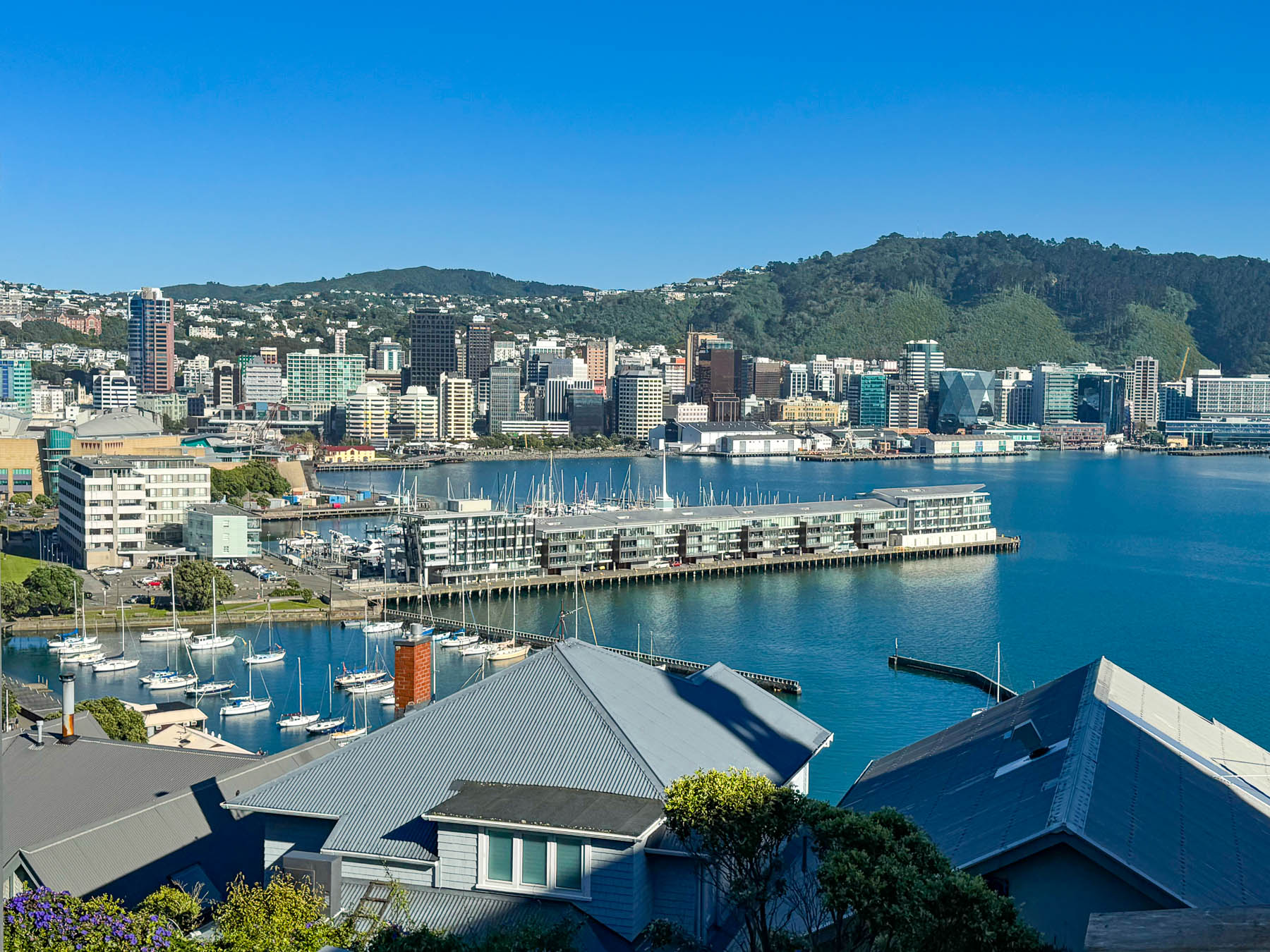
Reaching the top was well worth our effort and we were rewarded with expansive panoramic views of the city. Unfortunately, we arrived at the summit the same time a bus tour pulled into the parking lot and disgorged its passengers. During our three days in Wellington this was the most packed site we had visited. Thankfully the group quickly departed. Walking back through the city, we had a late lunch at Smith the Grocer Café, located inside the Old Bank Arcade; it was an attractive setting within a gentrified bank building that is now a multiuse space.
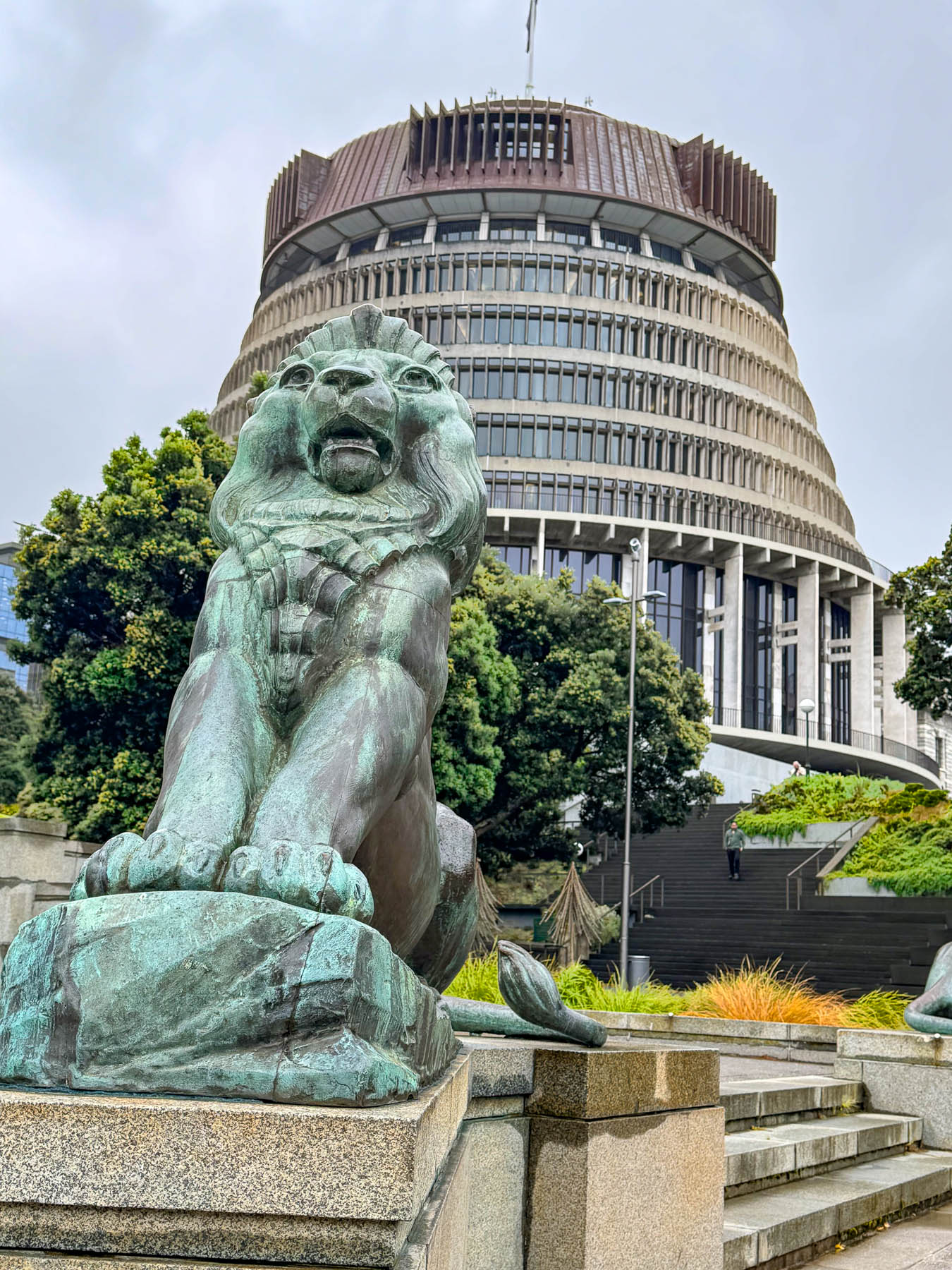
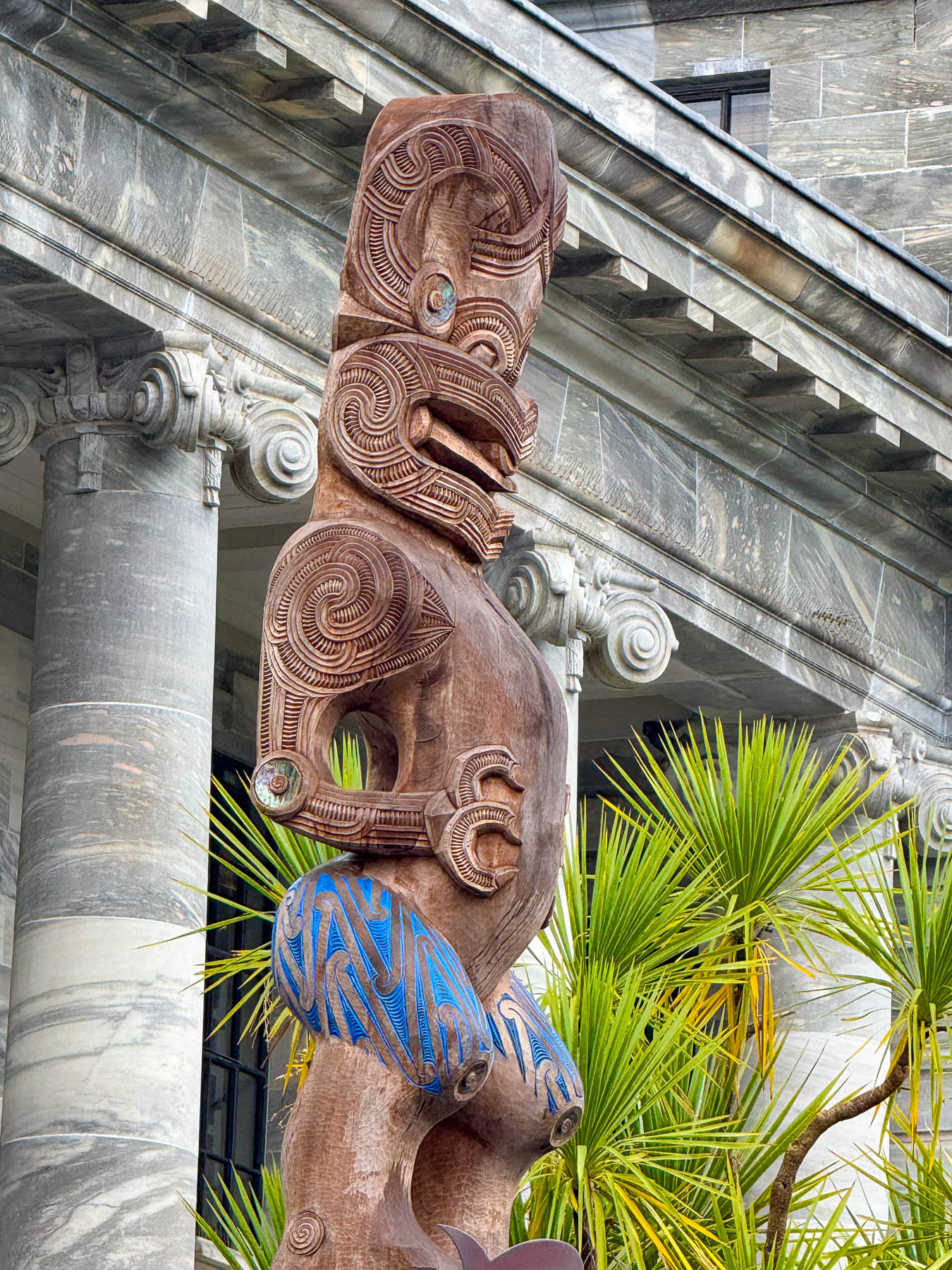
The next day was our last full day in Wellington, and it was an unusually bleak morning with a heavy gray sky as we walked along Lambton Quay to the “Beehive,” New Zealand’s Parliament buildings, whose domed shape resembles a traditional wicker skep. While the iconic structure’s 1960s design looks a little dated now, it incorporated advanced seismic techniques into its design, such as “X” Shaped Steel diagonally reinforced coupling beams within the concrete columns that allows the steel to absorb the seismic load and bend safely, rather than letting the brittle concrete fracture and fail; Base Isolation – The Beehive balances on 417 huge, specialized bearings, constructed using alternating layers of rubber and steel shims. The elastic properties of the bearings allow the ground to shake violently underneath the structure while the building remains virtually stationary; and a “Seismic Moat” (Rattle Zone), that is four-stories deep. This independent, unobstructed gap around the building allows the building to shift freely side-to-side by up to several hundred millimeters without crashing into the surrounding streets. This successful seismic technology was also incorporated into the construction of the Te Papa museum and several other modern buildings in Wellington. Frequent minor tremors regularly occur in the Wellington region. Auckland was originally the capital of New Zealand, but after an influx of settlers to the South Island after gold was discovered there, many thought it was too far away and dangerous for the South Island’s representatives, traveling by ship, to adequately represent them. Tensions rose high enough that South Island leaders considered breaking away to form a separate colony. Moving the capital closer to the Cook Strait region was seen as vital to keeping the country united. In 1864, an independent panel of three Australian commissioners (chosen because members of the New Zealand parliament could not agree) evaluated several sites and officially selected Wellington for its favorable geography and harbor. They chose extremely well.
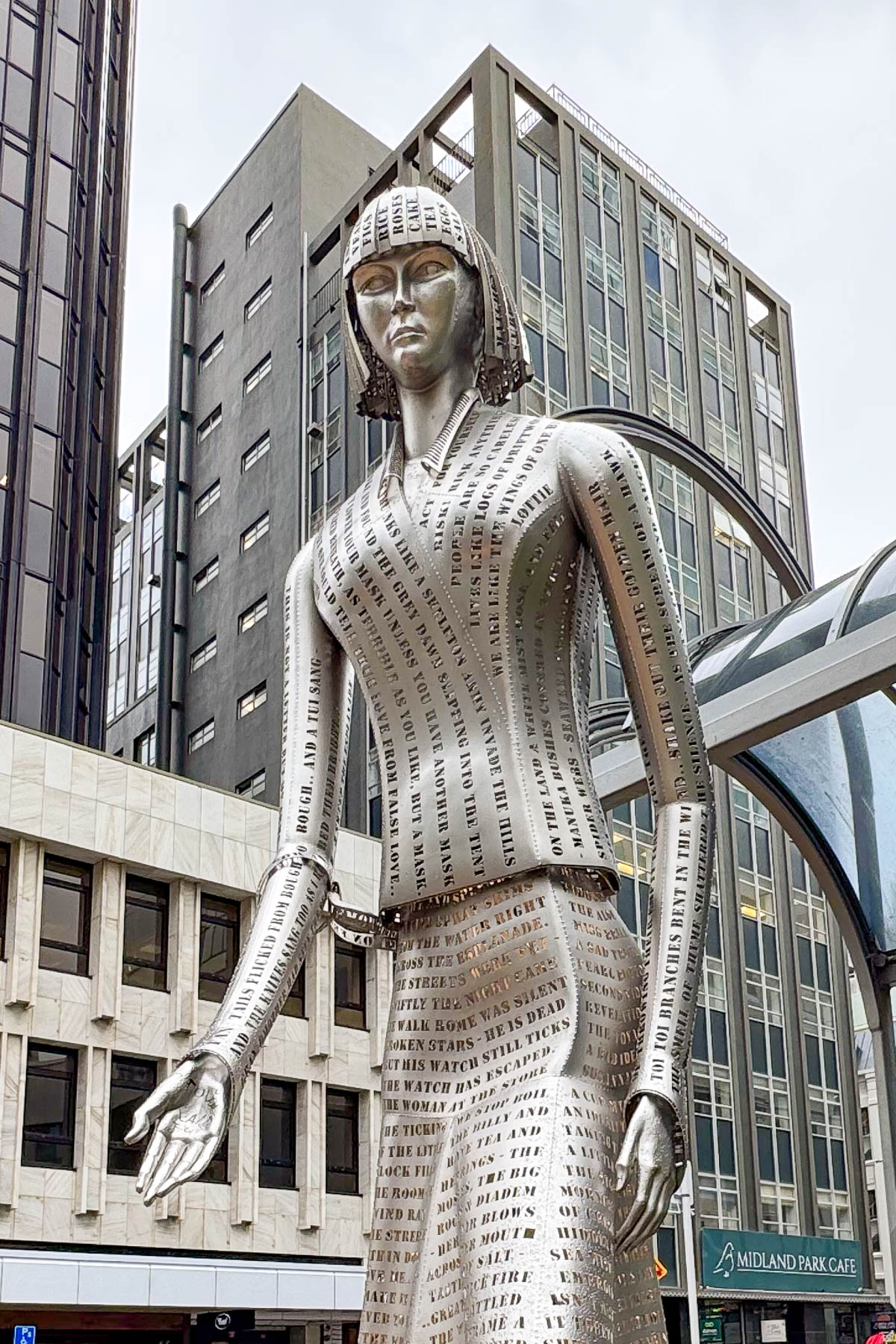
Walking back into town as the sky cleared, we stopped to admire the Woman of Words, an intriguing metal statue with quotes and story lines from the works of the renowned New Zealand writer Katherine Mansfield laser cut through the surface of the sculpture. Created by New Zealand sculptor Virginia King the stainless steel statue has been located in the small city park on Lambton Quay since its unveiling in 2013.
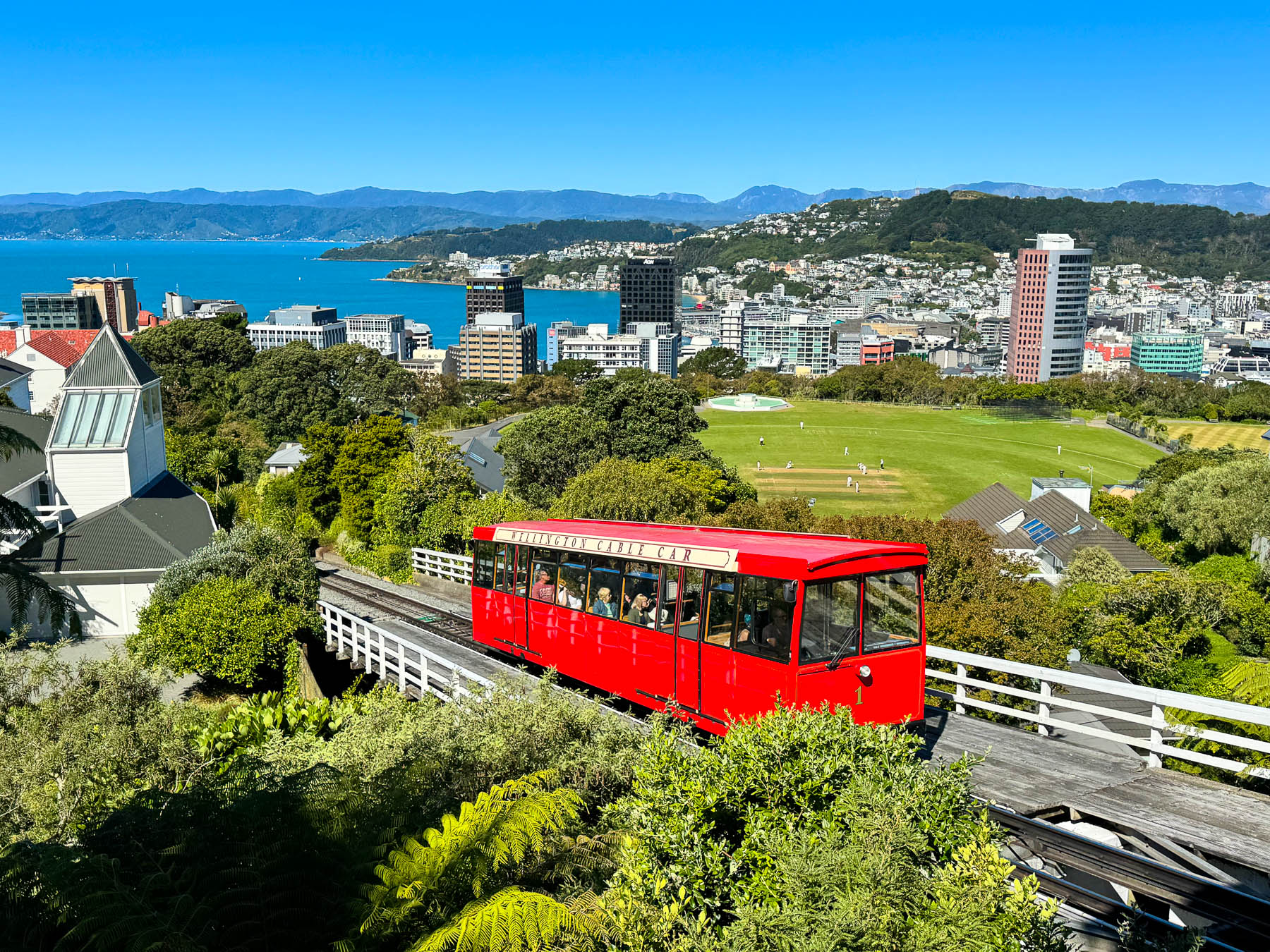
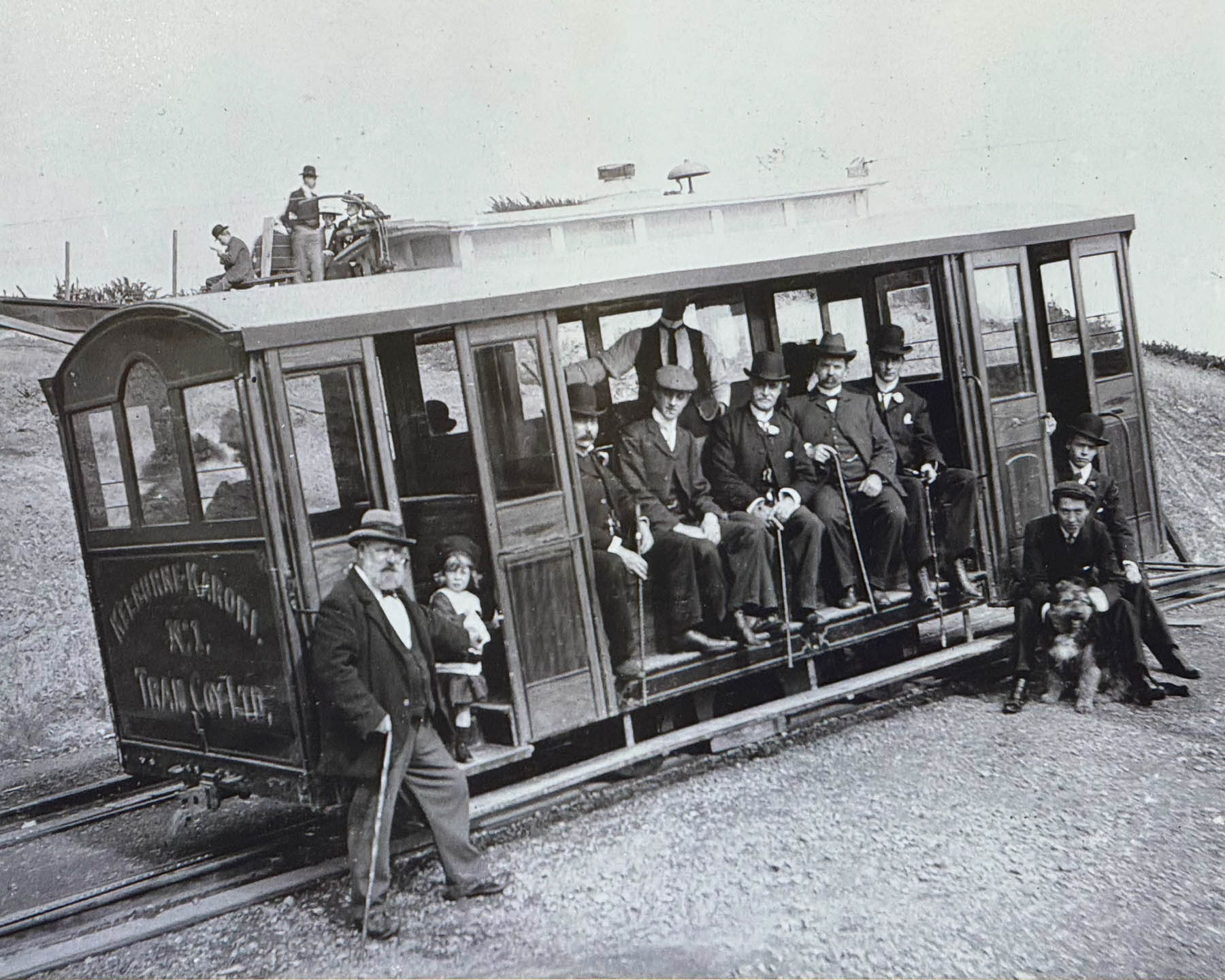
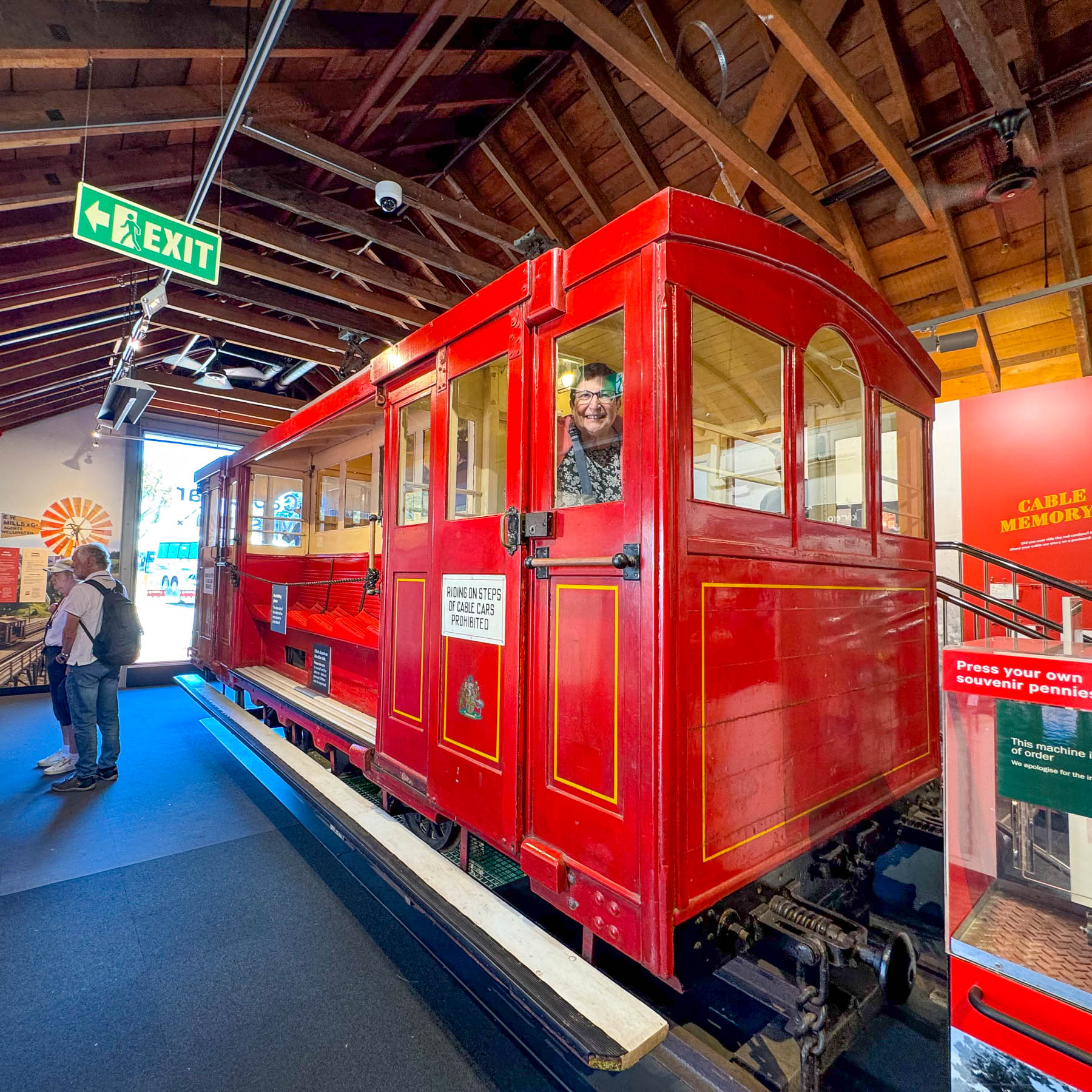
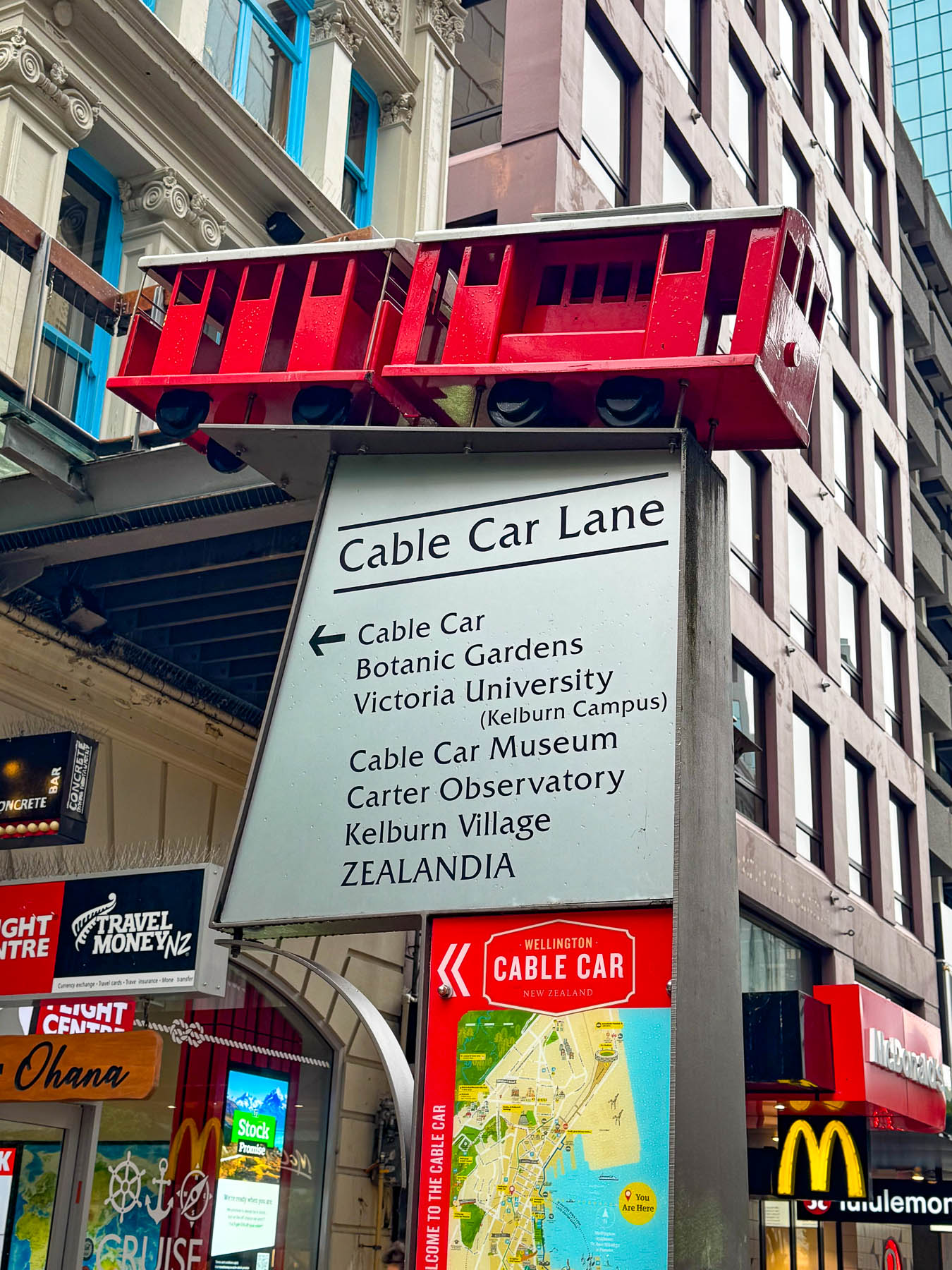
Our destination was the Wellington Cable Car for the quick trip uphill to the city’s botanic garden, where we wanted to see the Lady Norwood Rose Garden. At the top of the hill there was a small cable car museum which displayed one of the city’s first funiculars from when the line opened in 1902. The small lookout in front of the museum is the spot from which the classic photos of the funicular are taken.
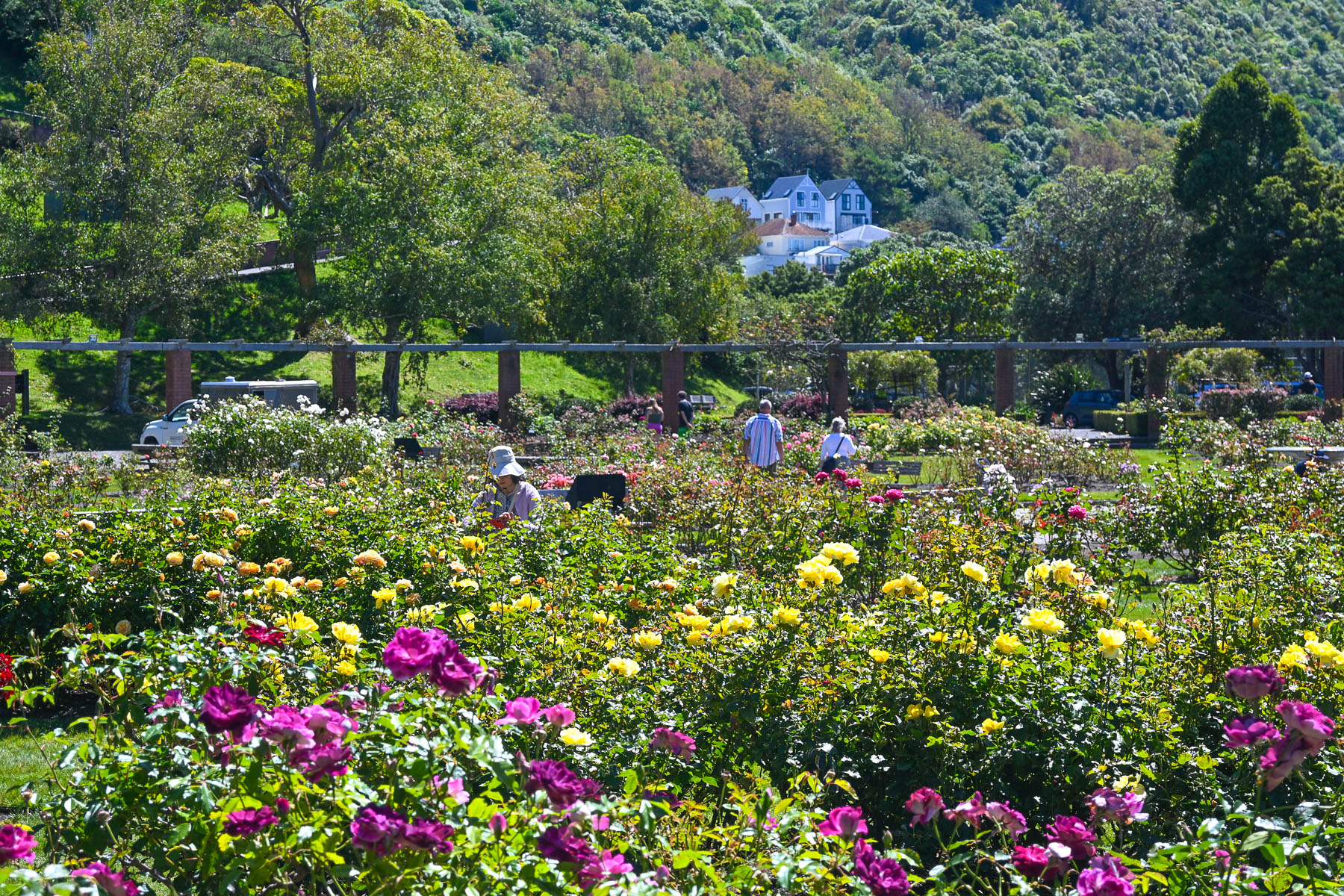
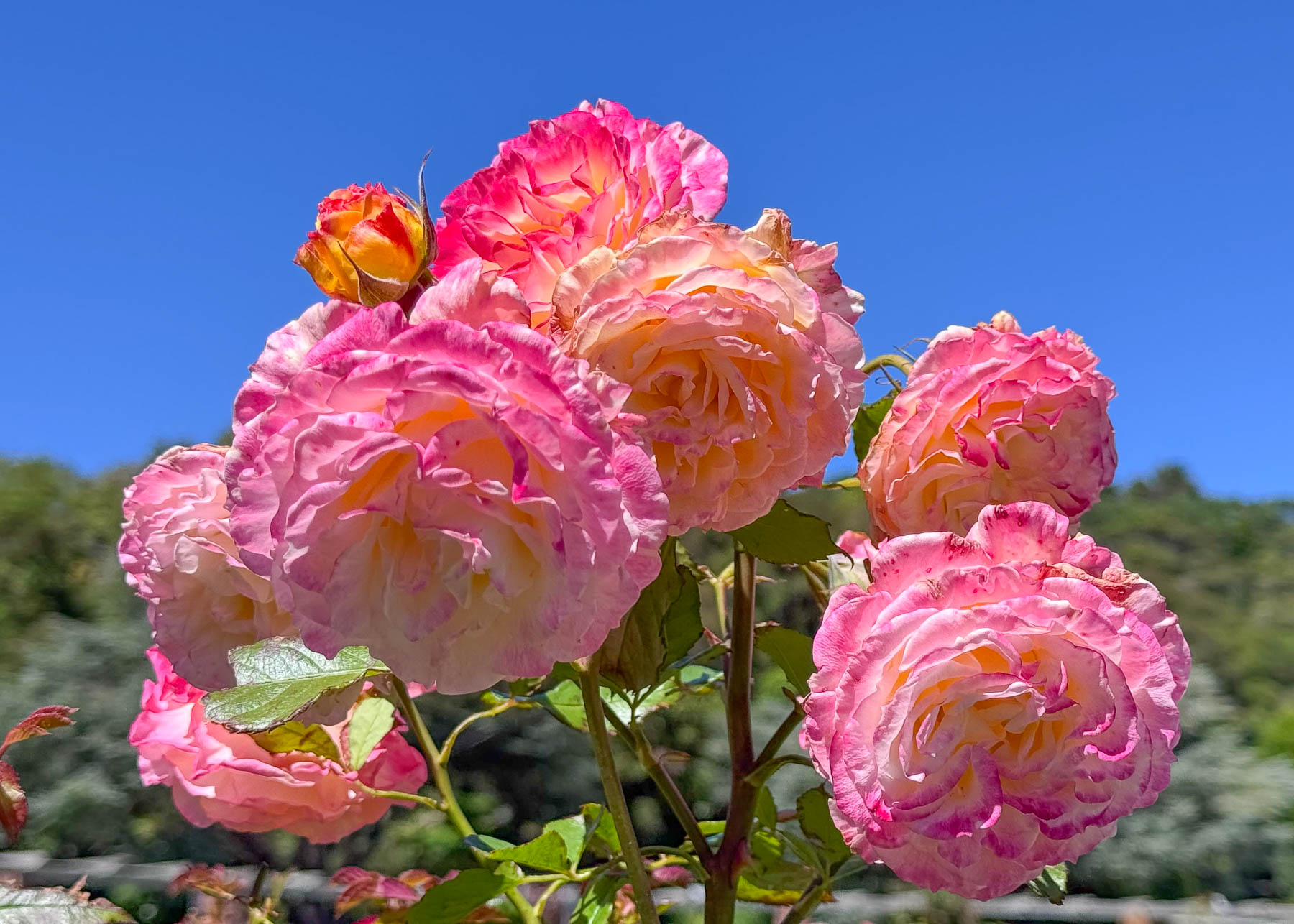
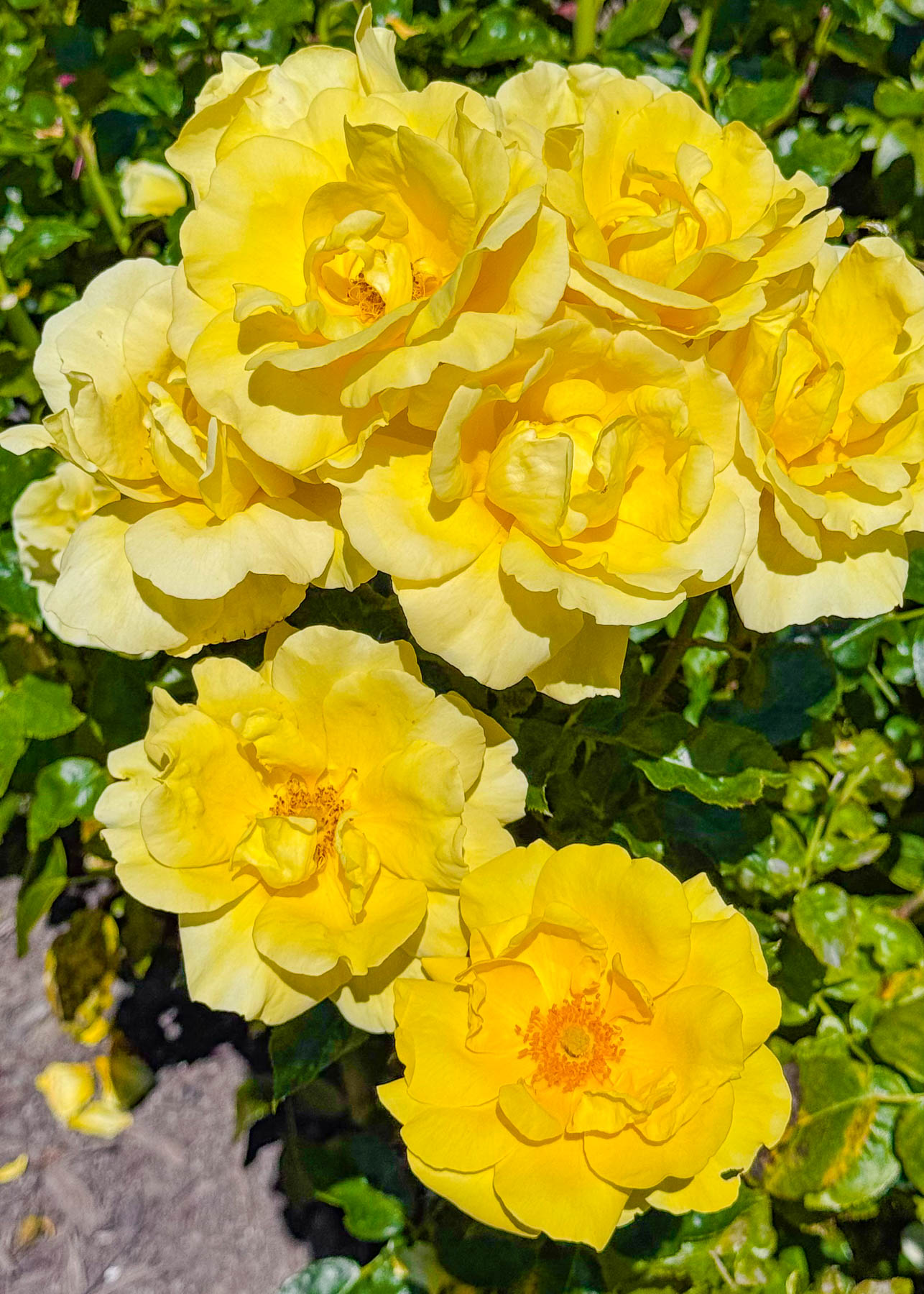
Sadly, we had missed the prime rose flowering, though there were still enough flowers blooming to suggest how wonderful it must be at its peak season during the summer months. The greenhouse adjacent to the Rose garden was temporarily closed when we visited. Though the Picnic Cafe next to it was open, and we enjoyed lunch outside under their arbor, as the day had warmed considerably since we set out.
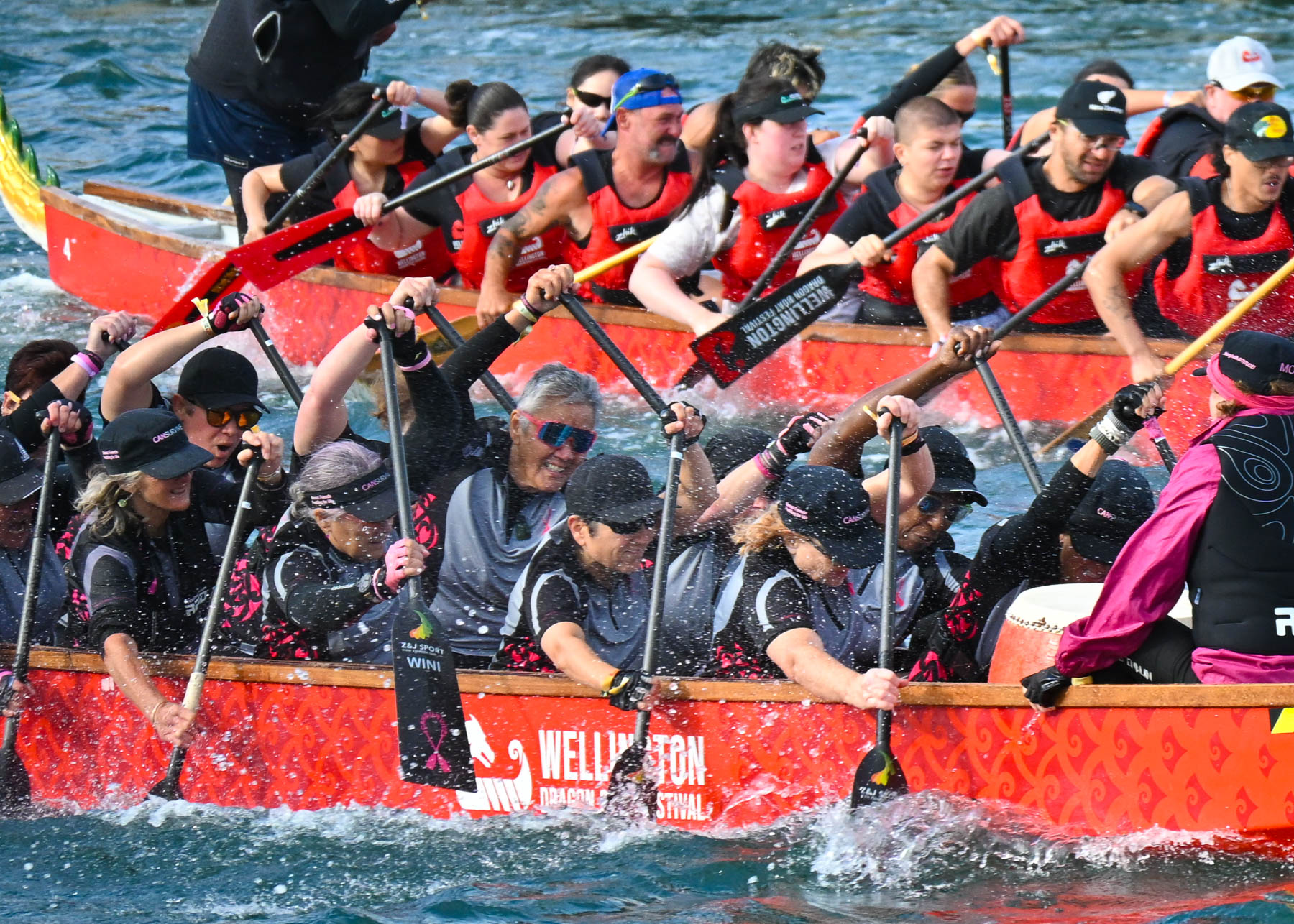
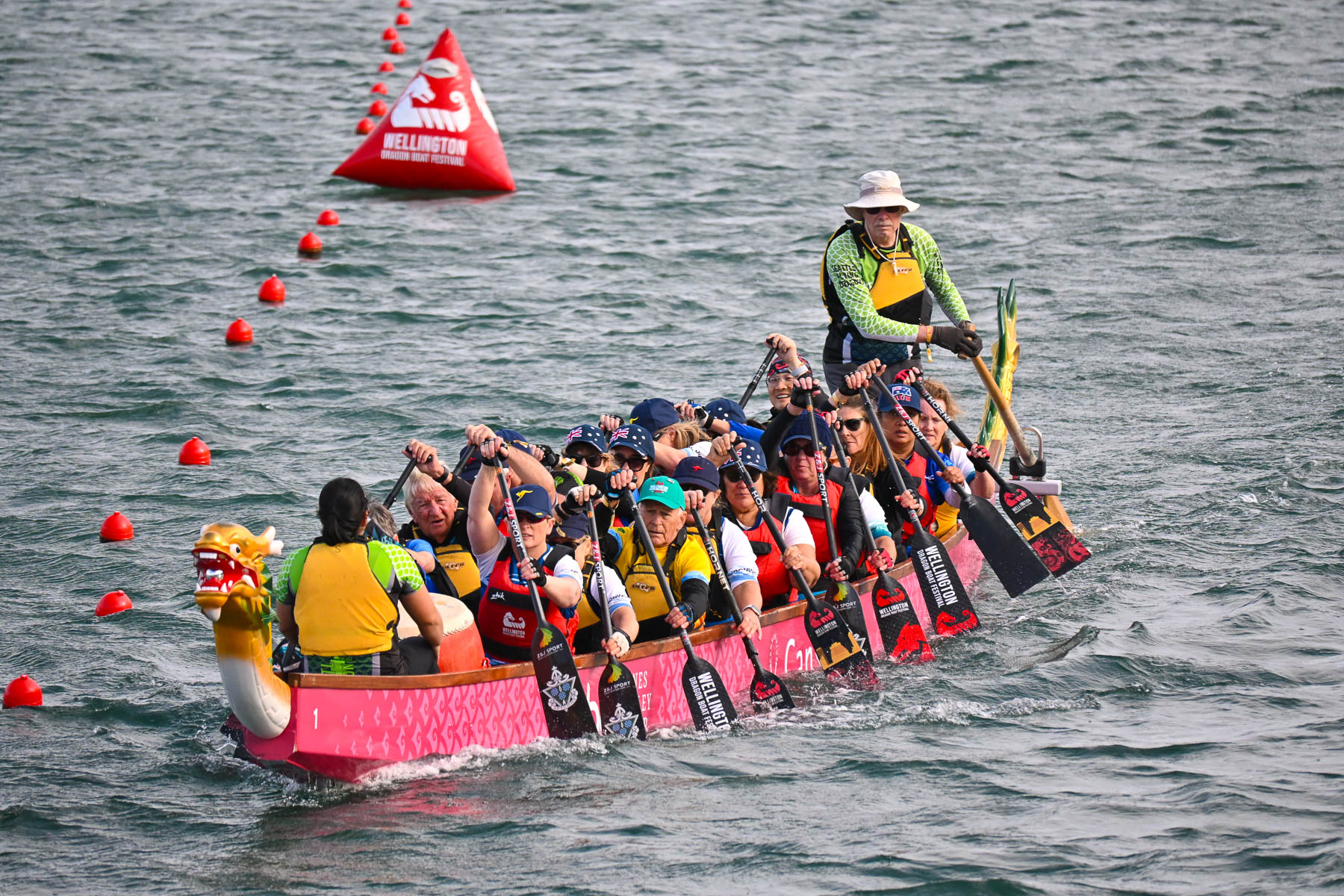
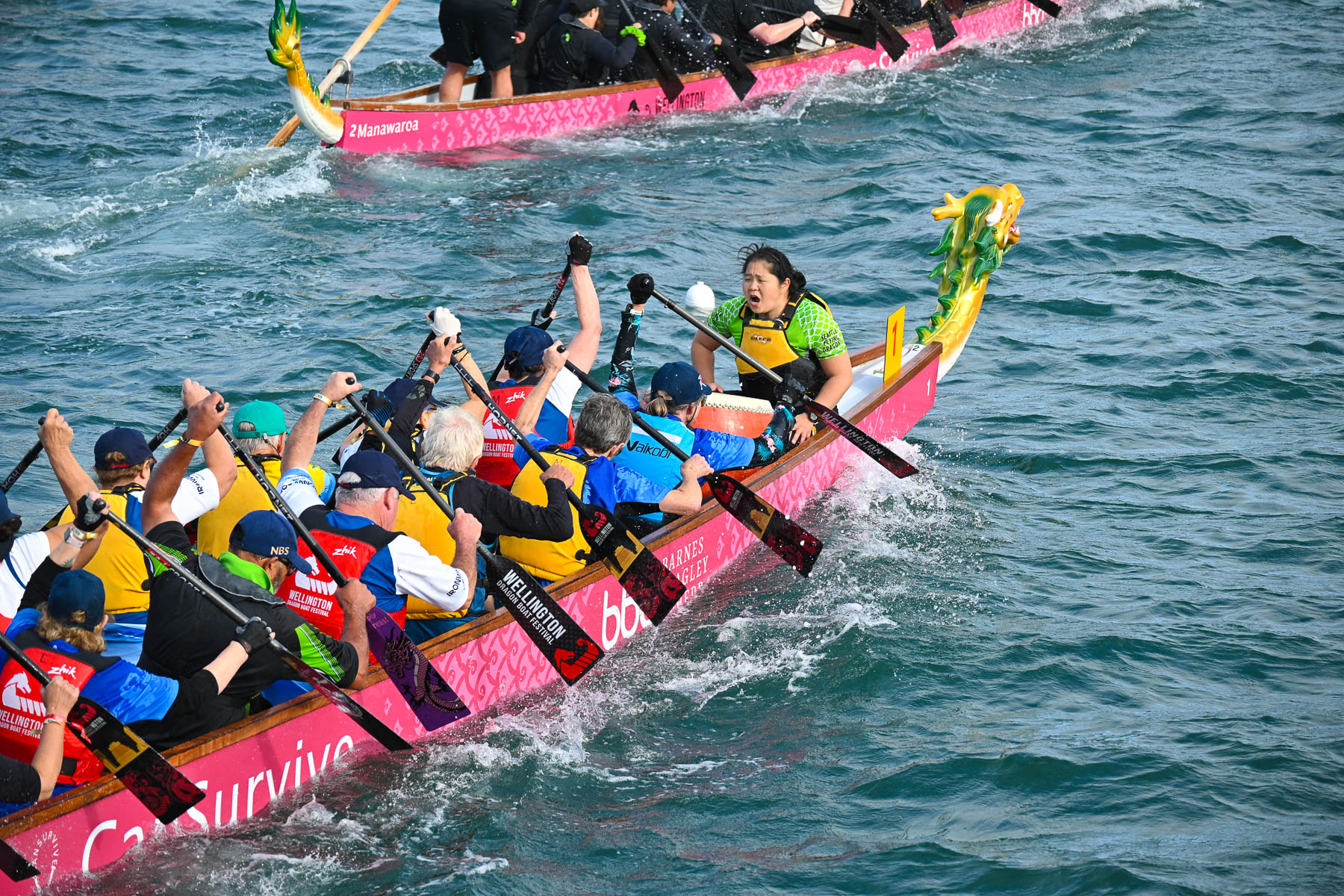
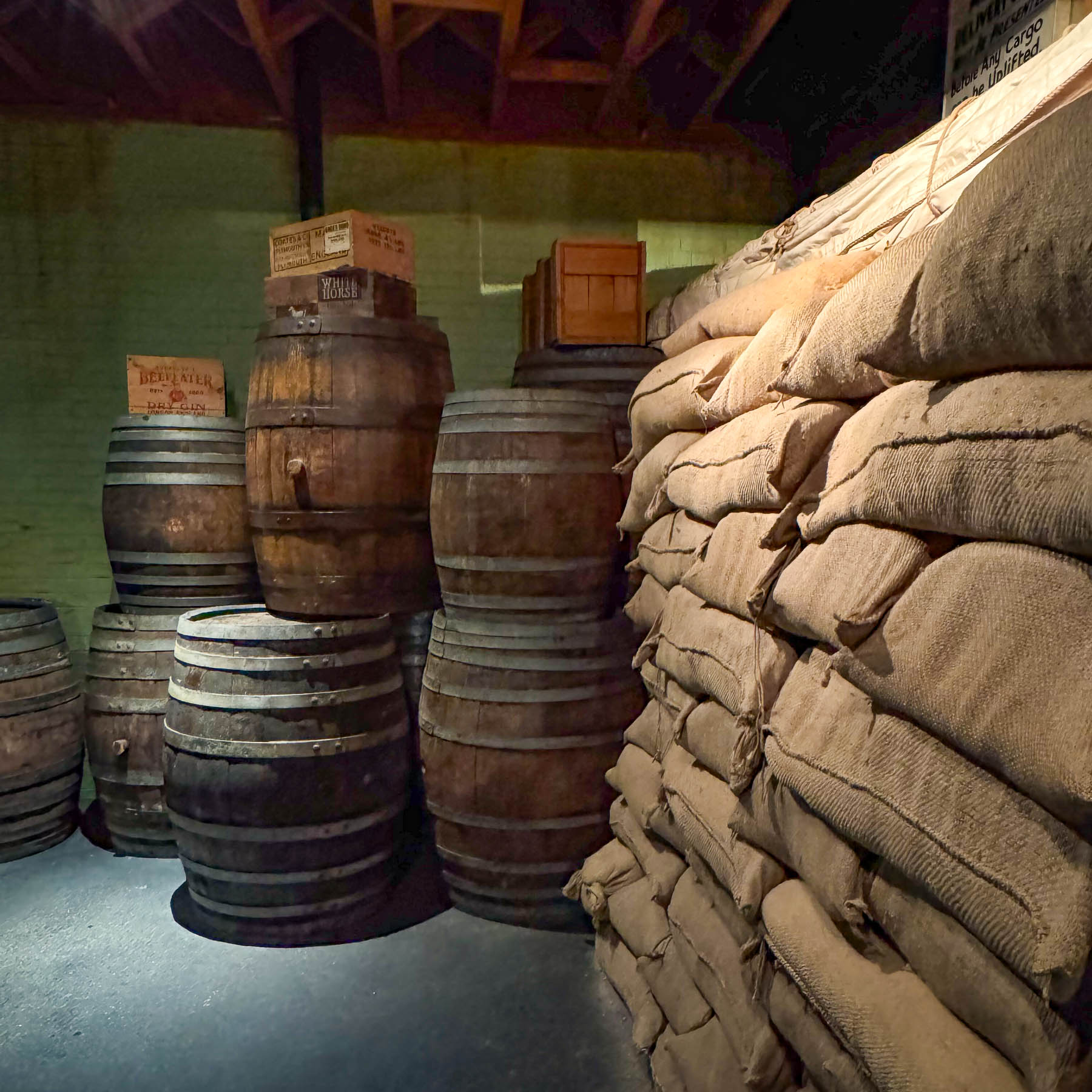
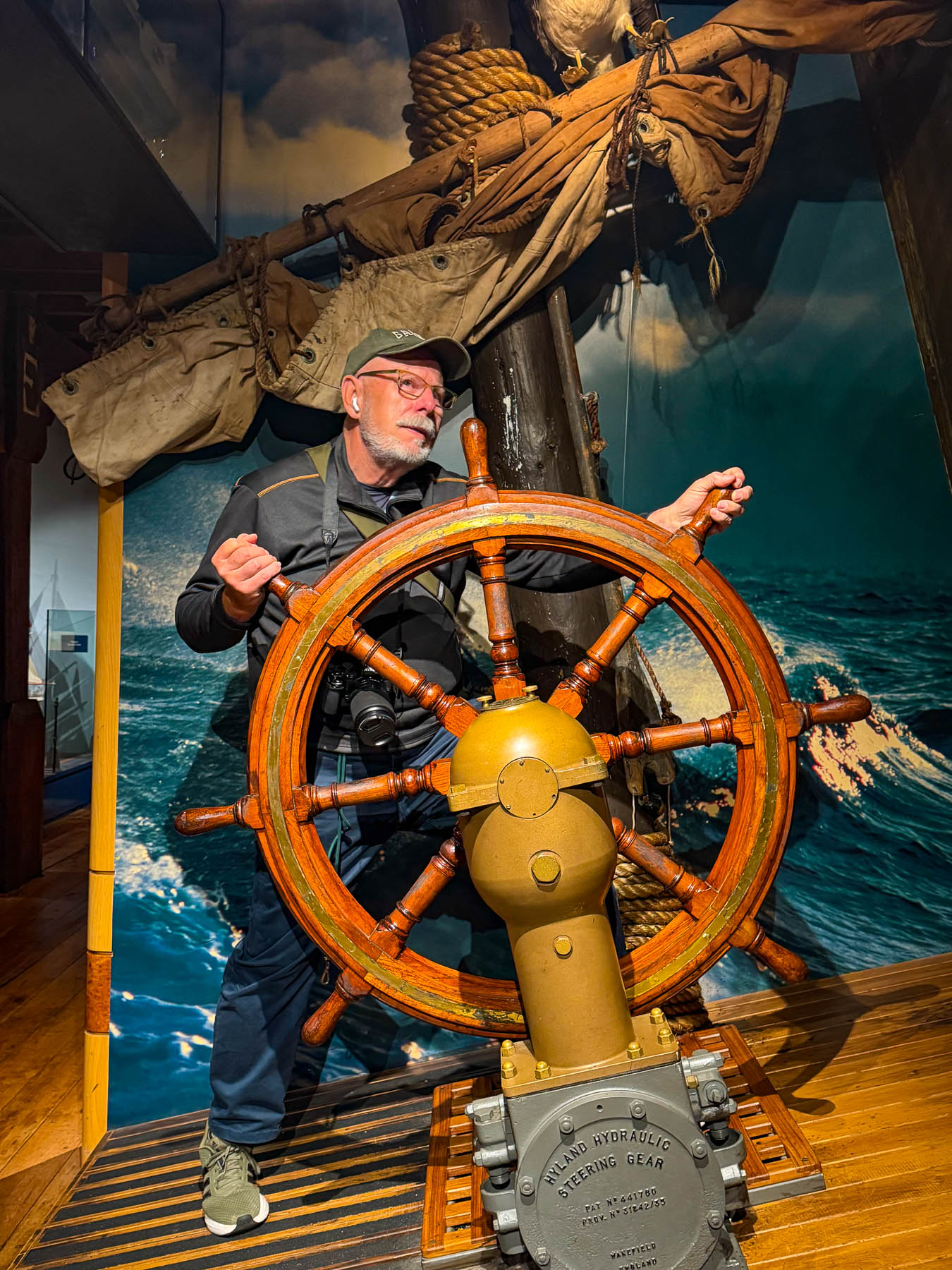
Returning to the harbor area later that afternoon we watched a heat of the Dragon Boat Races before heading into the Wellington Museum, a block from the waterfront. While the themes of the museum’s exhibits, history, and culture overlap with those of Te Papa, the content is strictly Wellington centric, with displays about the early days of maritime commerce in the city, and engaging presentations about pop culture and art in the city.
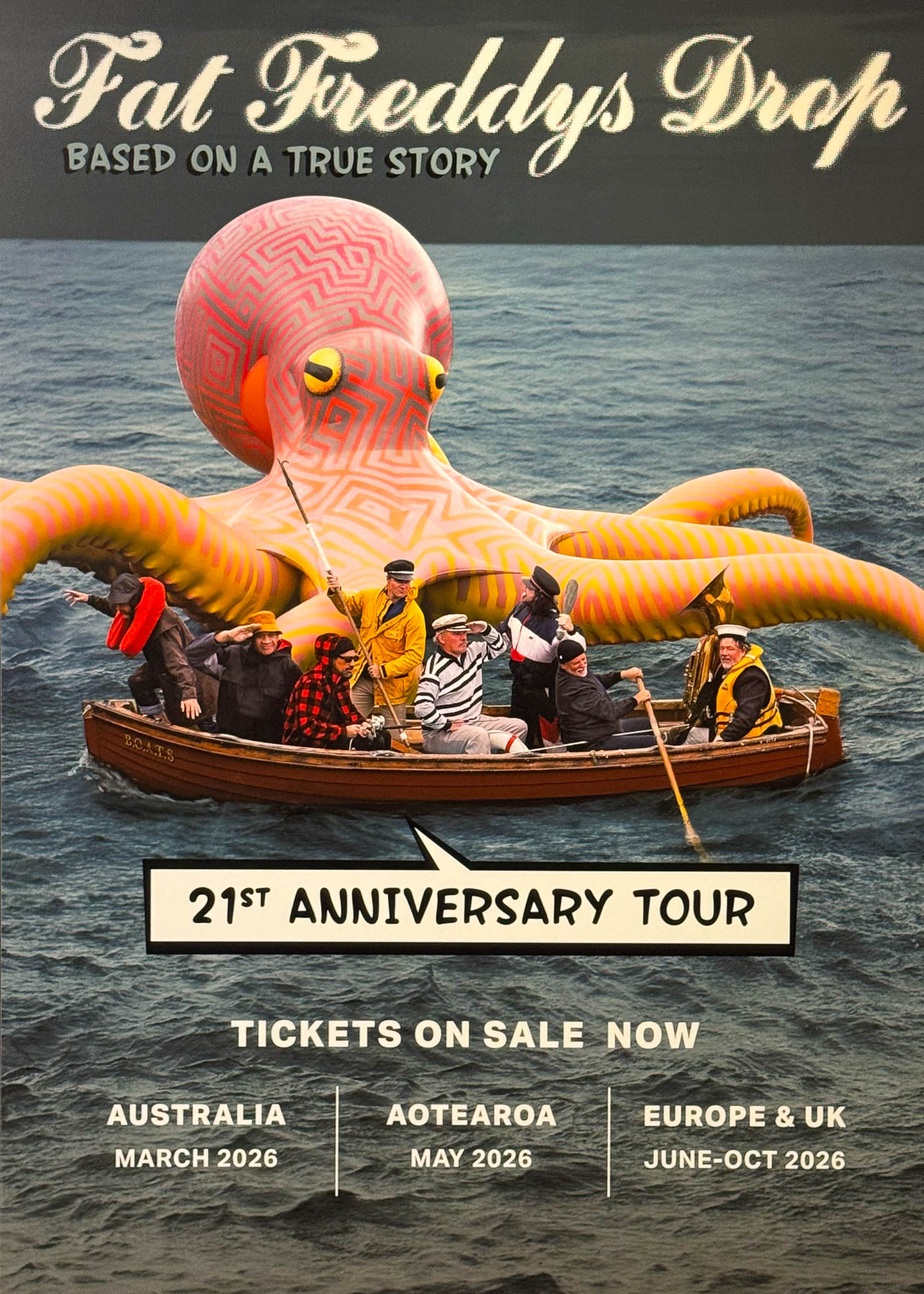
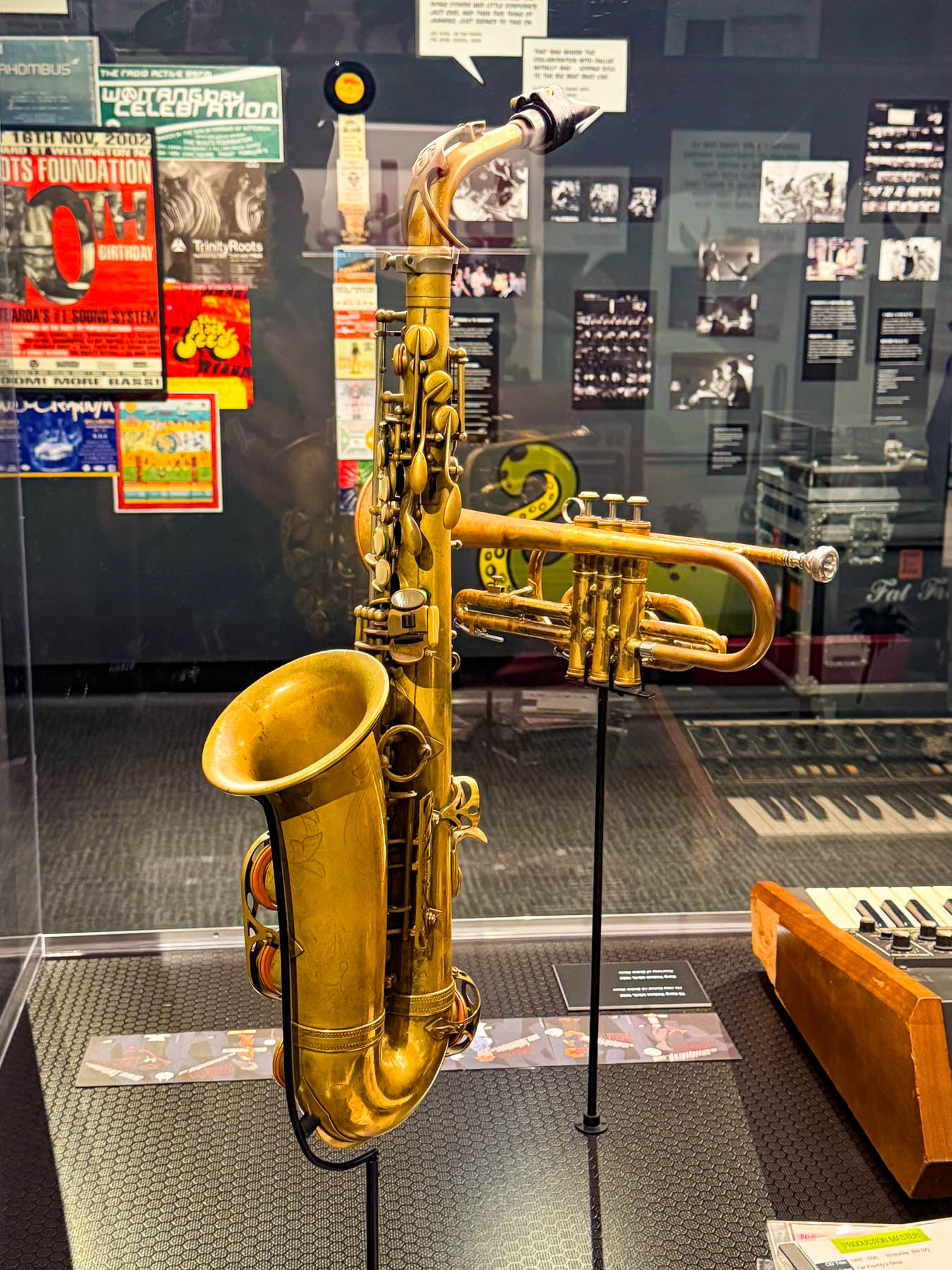
One display highlighted Fat Freddy’s Drop, an acclaimed seven-piece, hometown band that got together in Wellington in 1999. Known for improvisational performances, where they blend dub, reggae, soul, jazz, R&B, and techno, the band achieved chart-topping success with the release of their first album, Based On A True Story (2005), recorded in a basement home studio. The album reached number one on the New Zealand charts for 111 weeks and won multiple music awards. The band still plays in New Zealand and tours internationally. Here is a link to one of their most popular songs, Wandering Eye, from that first album.
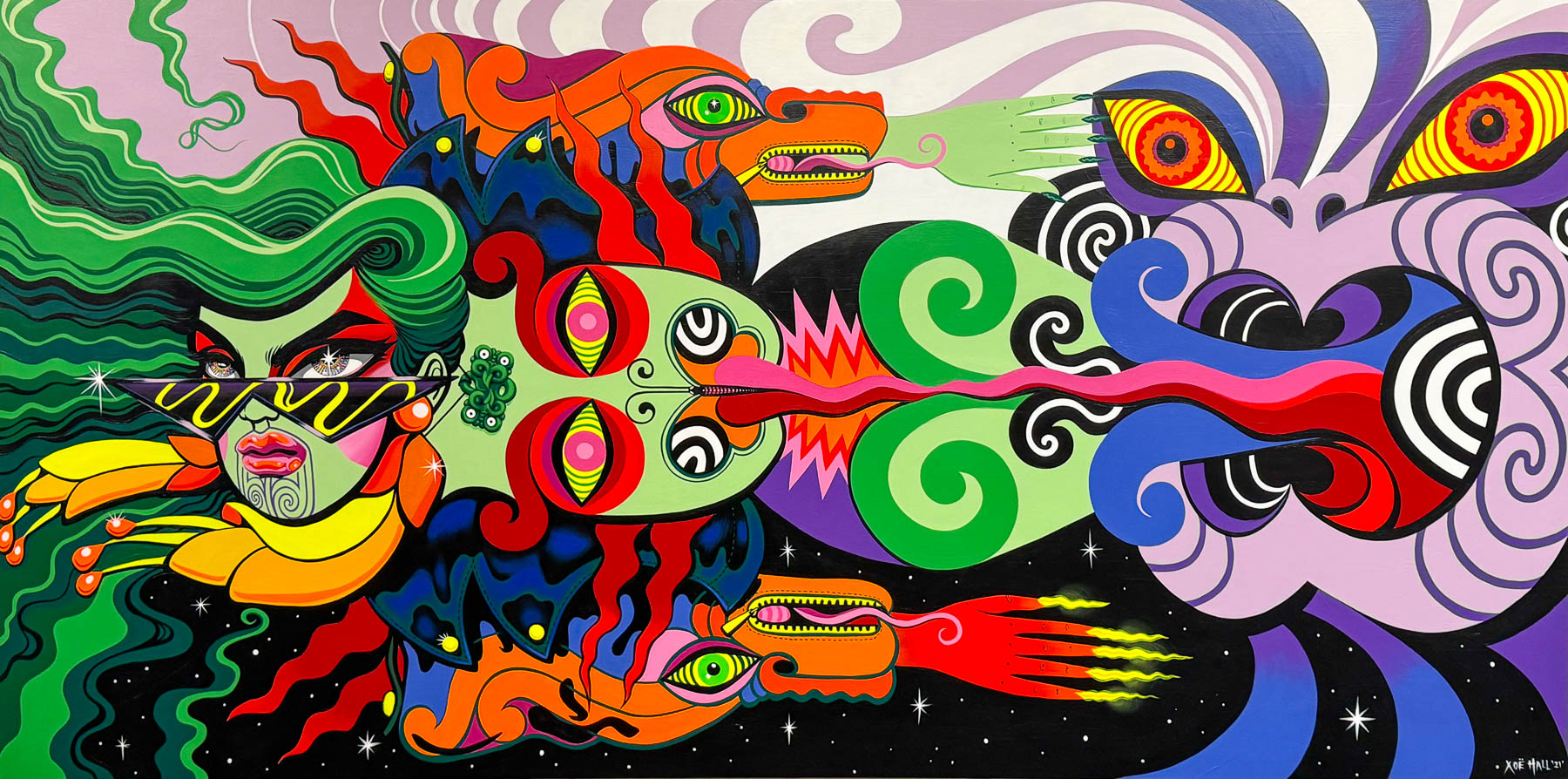
We also enjoyed the selection of contemporary art by local artists. Especially the vibrant work of Xoa Hall whose work is a wonderful fusion of pop art, cosmic fantasy, and Māori mythology.
Wellington is often called the “coolest little capital in the world,” and we couldn’t agree more. Beautifully set along a natural harbor, the compact city contains great walkability, wonderful public art, and more cafés than any coffee lover could ask for. Welly has a unique mix of urban energy and natural serenity, which was a delight to explore.
Till next time,
Craig & Donna


