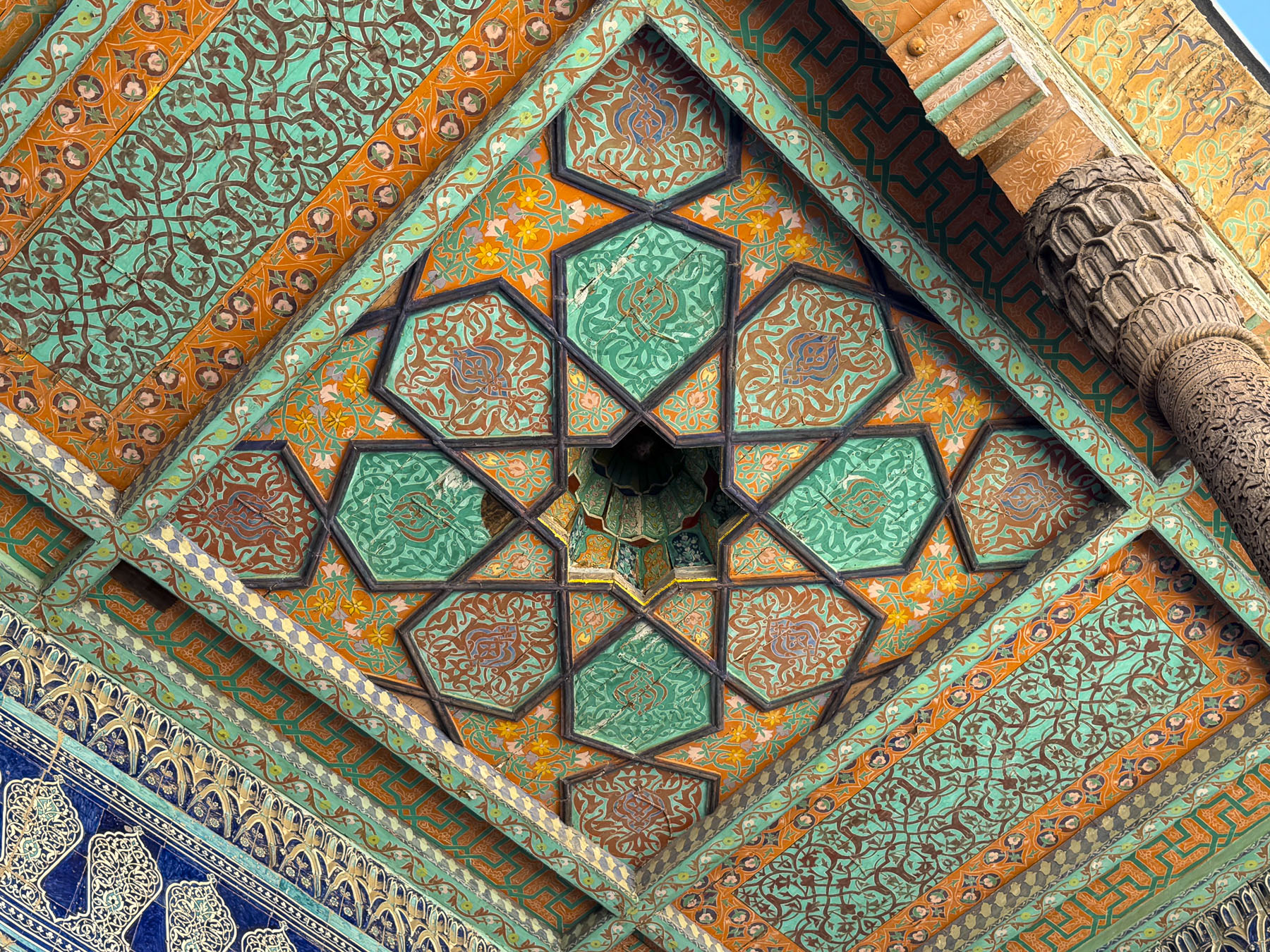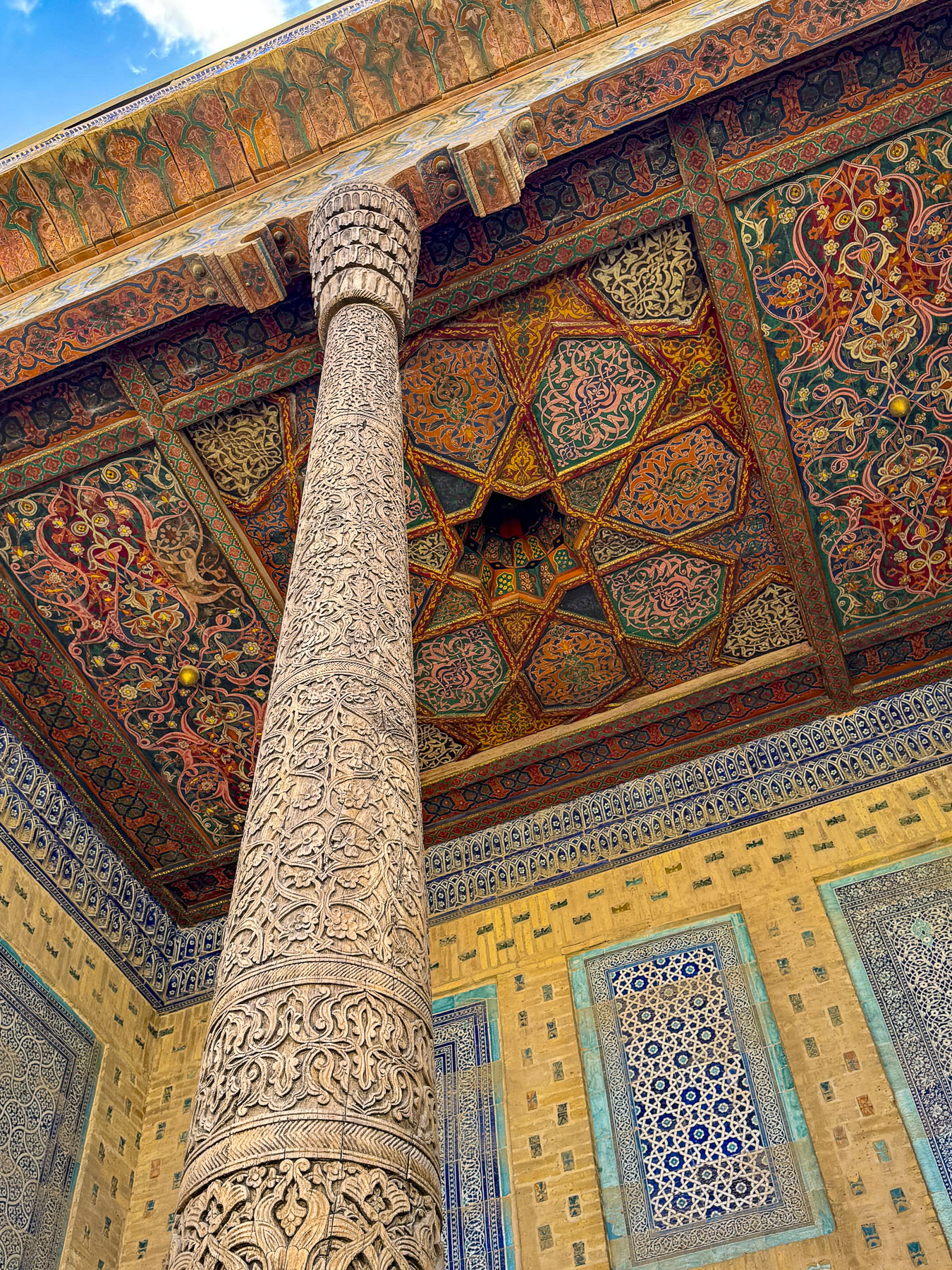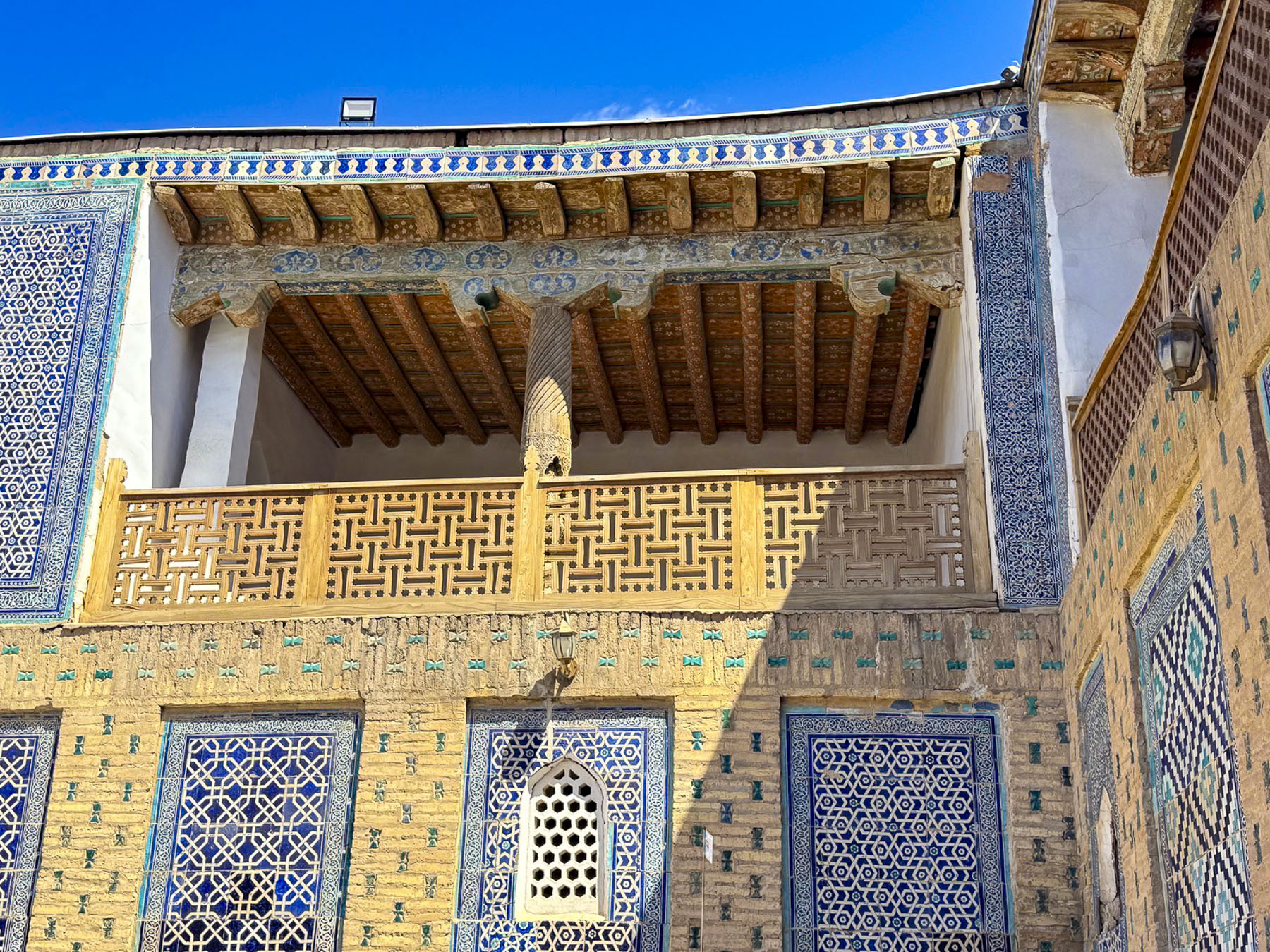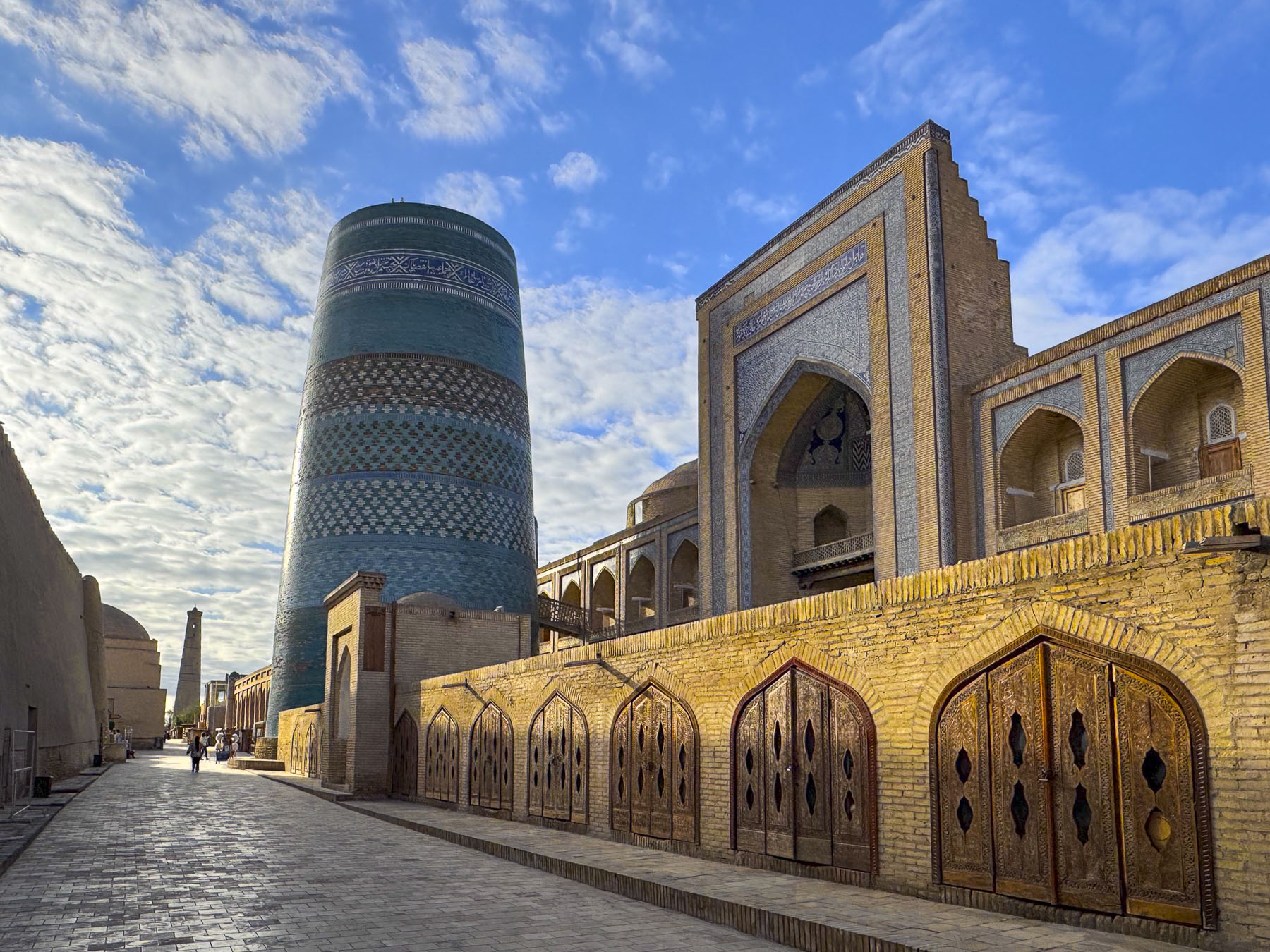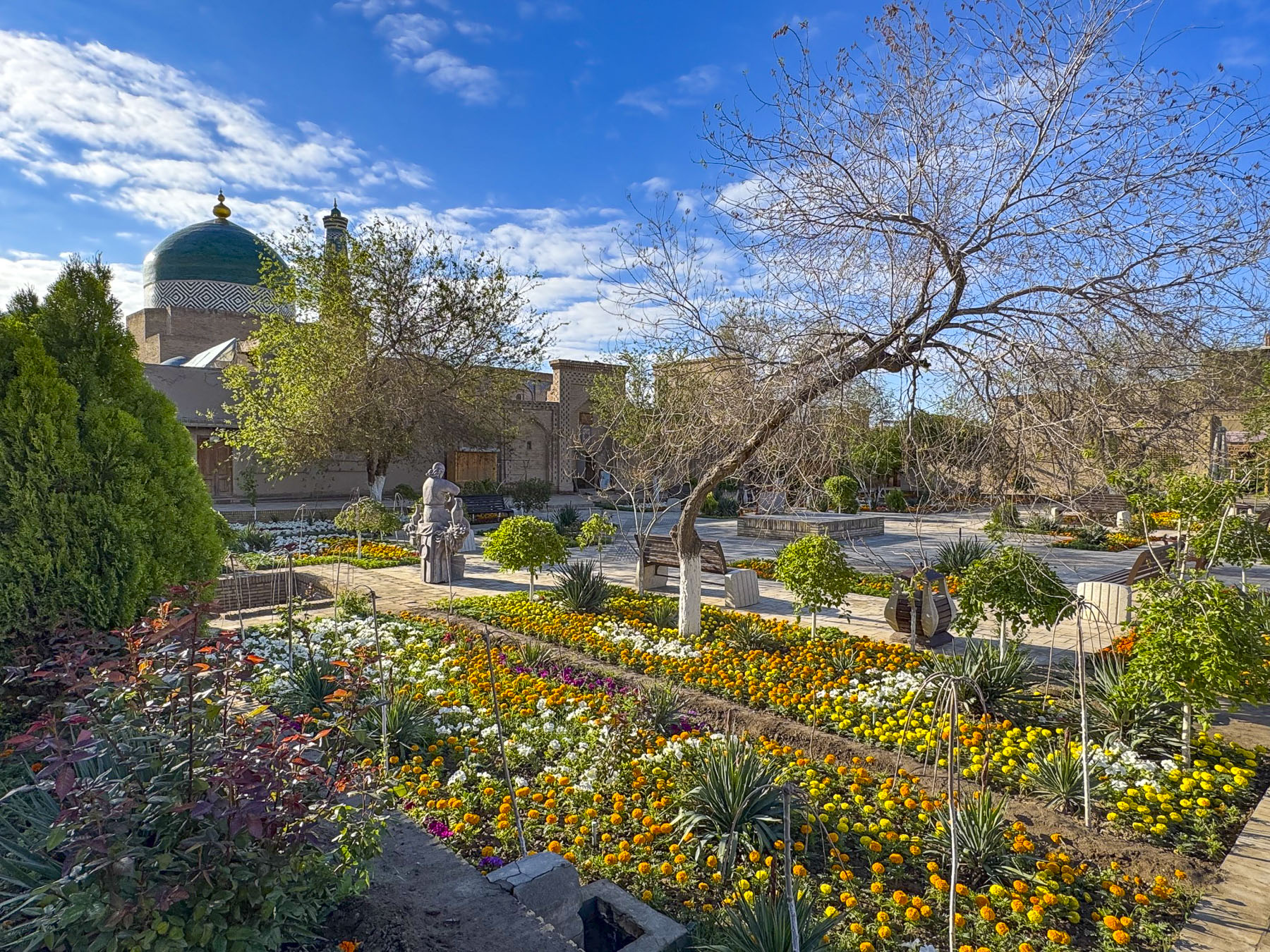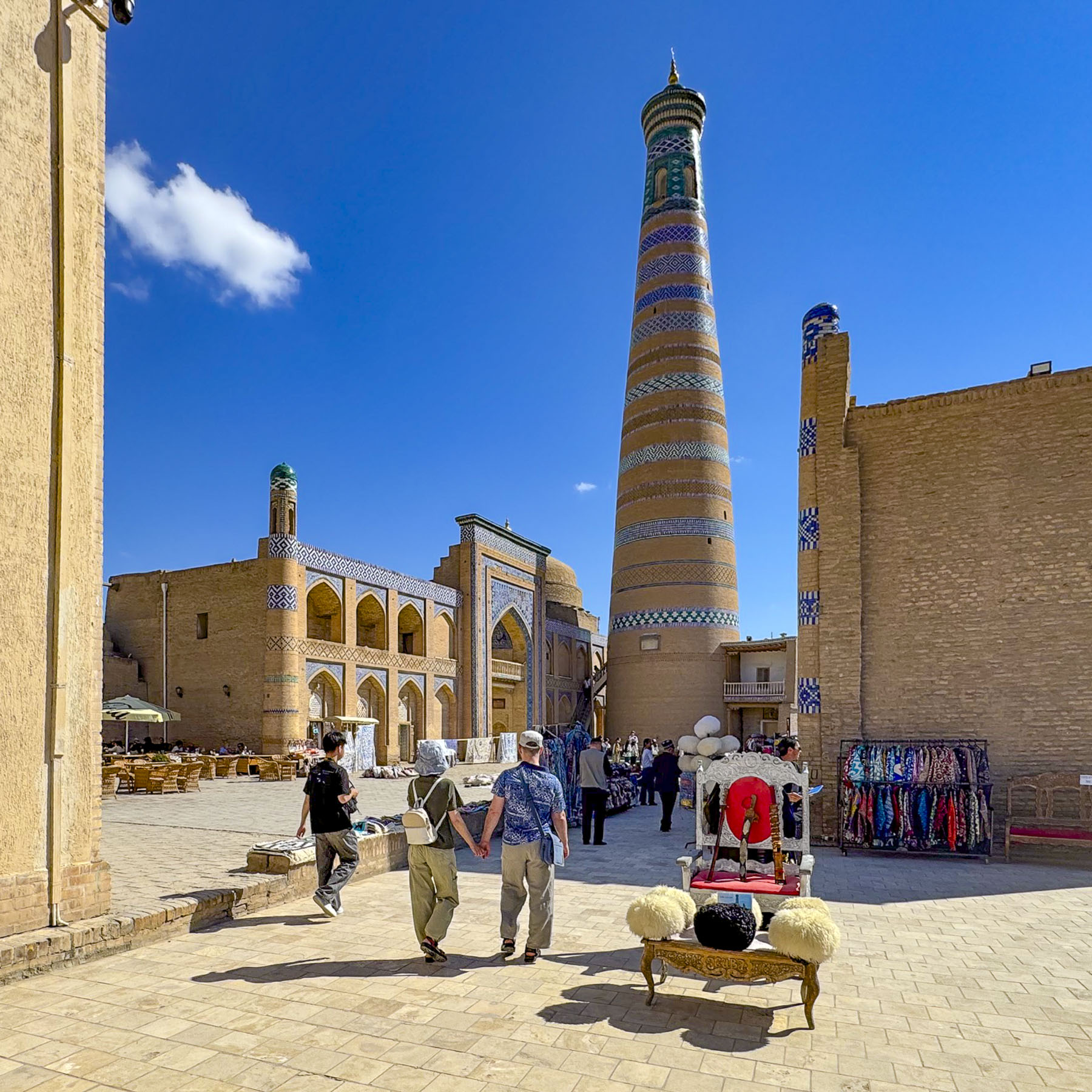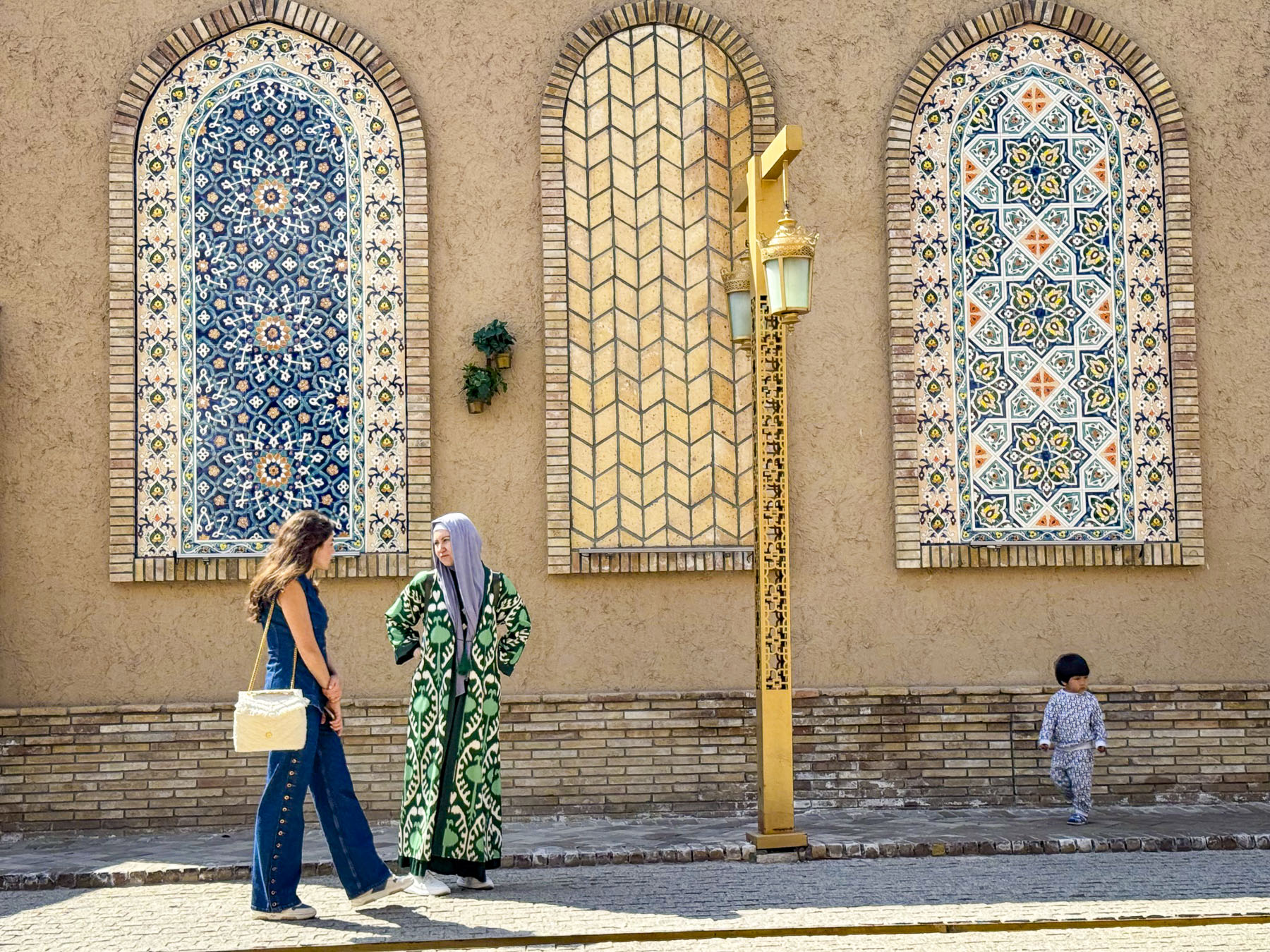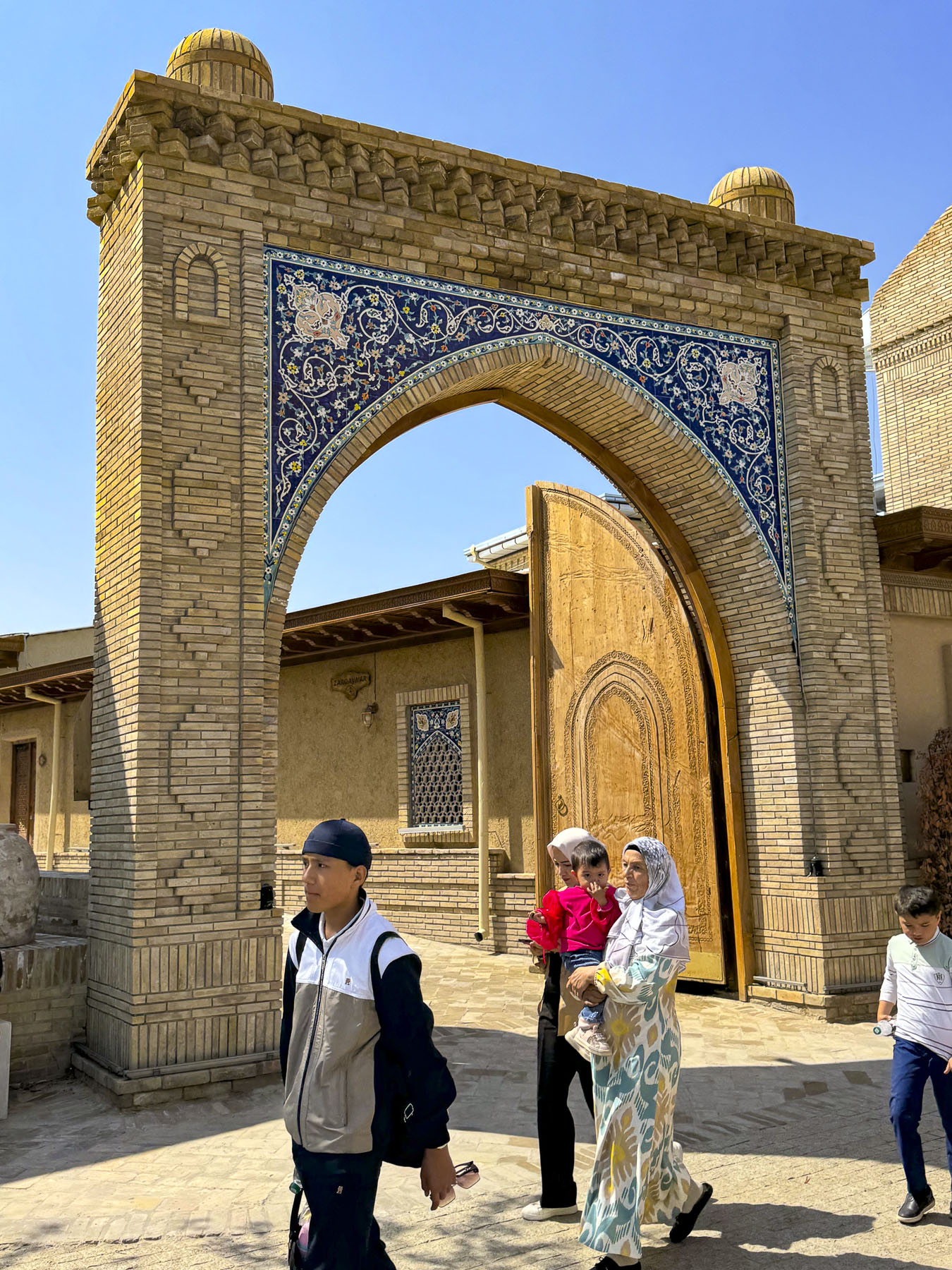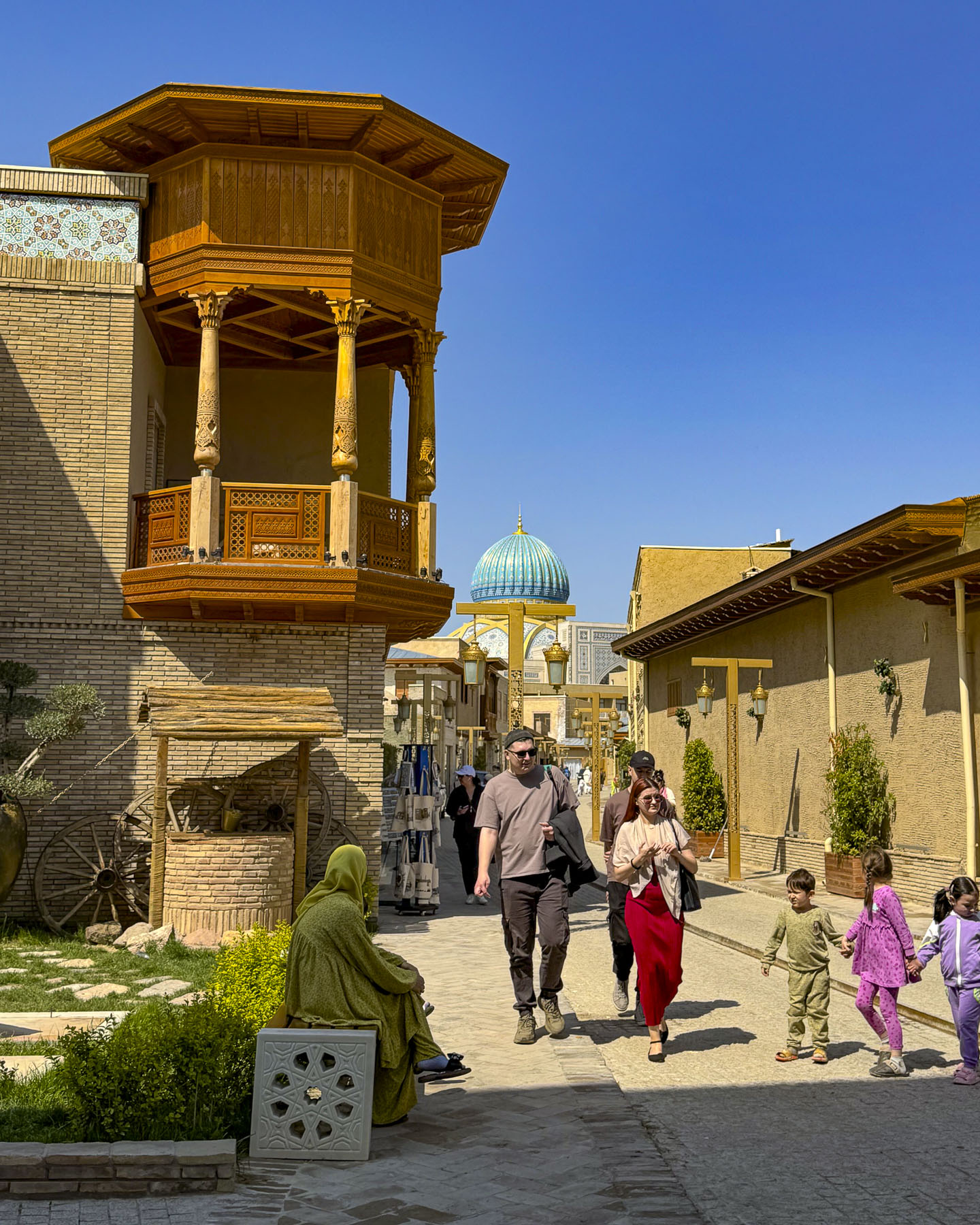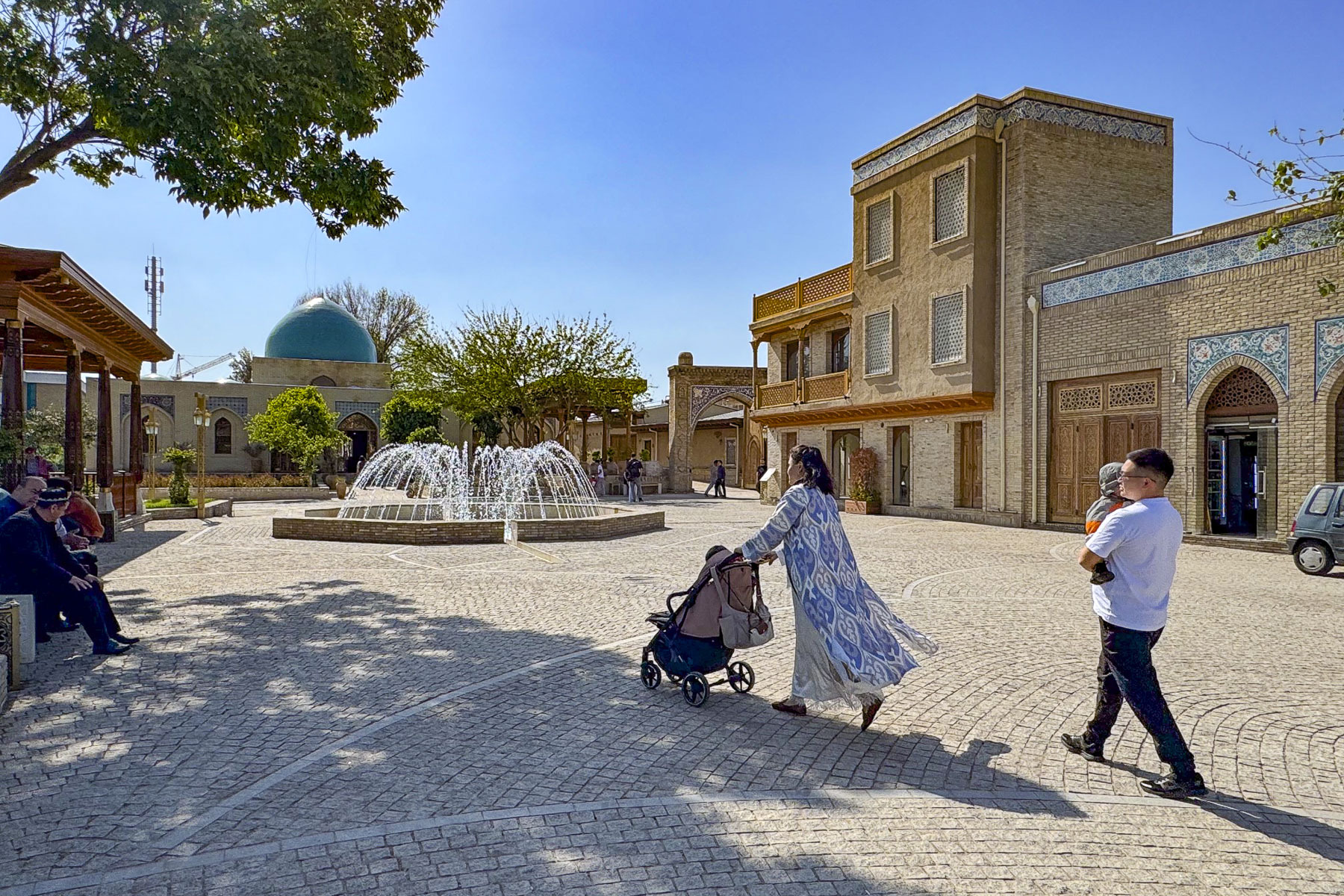
Bukhara, Uzbekistan: A City of Culture and Style on the Ancient Silk Road, or Time Traveling in the Desert

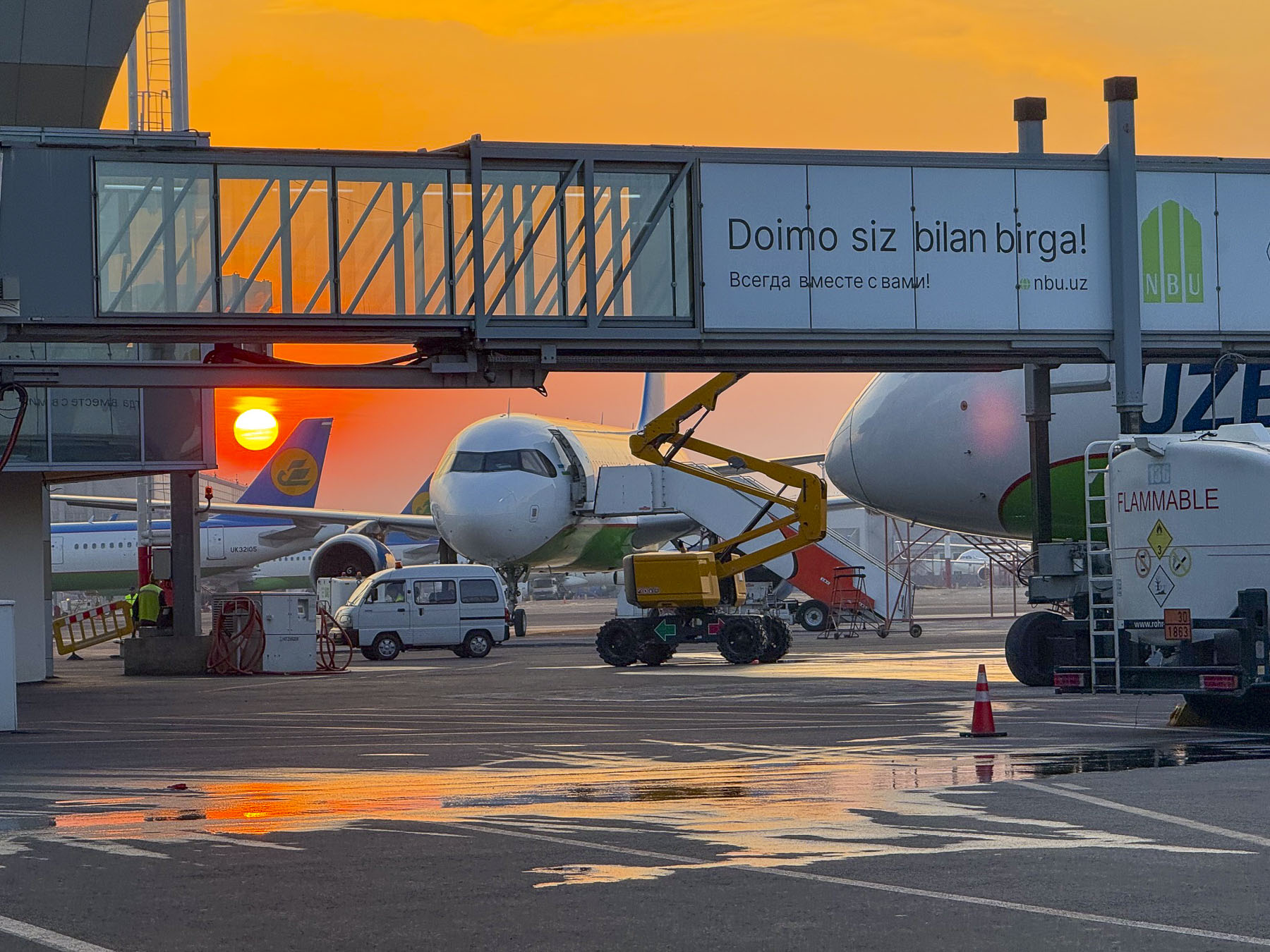
In mid-April 2026 we flew from Tashkent to Urgench on our way to Khiva. We were a month too early to take advantage of the newly operating “Jaloliddin Manguberdi,” a high-speed electric train that whisks passengers 1,020km (630 mi) across the country from Tashkent to Khiva in 7.5 hours with stops in Samarkand, Bukhara, Urgench, and Khiva.

We are not fans of bus trips, preferring to rent a car, and organize our own road trips so we can stop frequently, but the distances between the cities in Uzbekistan were just too great, and we opted for a group tour instead. Consequently, a couple of long bus journeys were part of the itinerary, such as the six-hour trip to Bukhara. While some folks used this time to catch up on their emails and texts, or read, I preferred to look out the window, level the horizon, and try to compose a few photos as the bus bounced along. Leveling the horizon was nearly impossible.

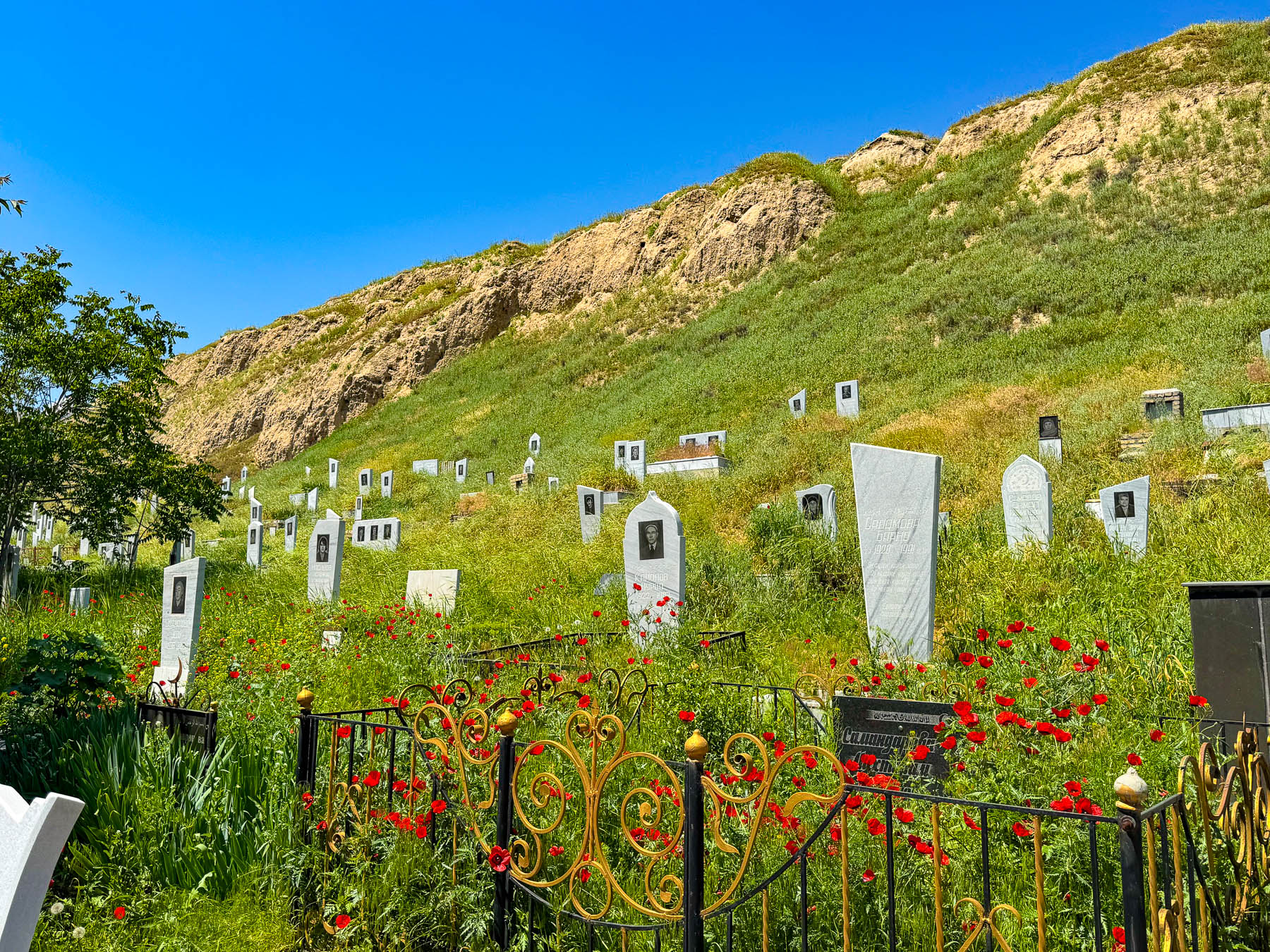
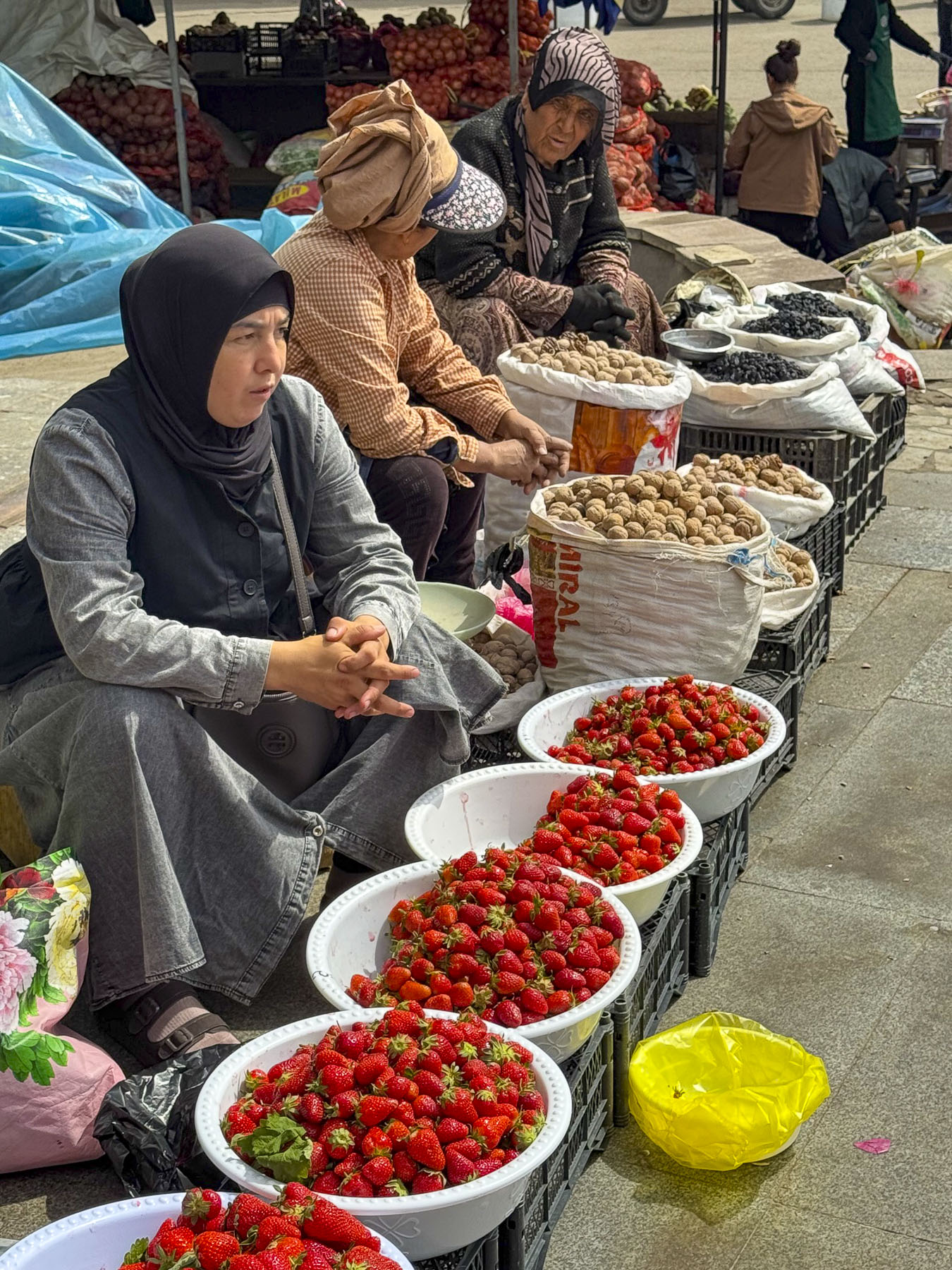
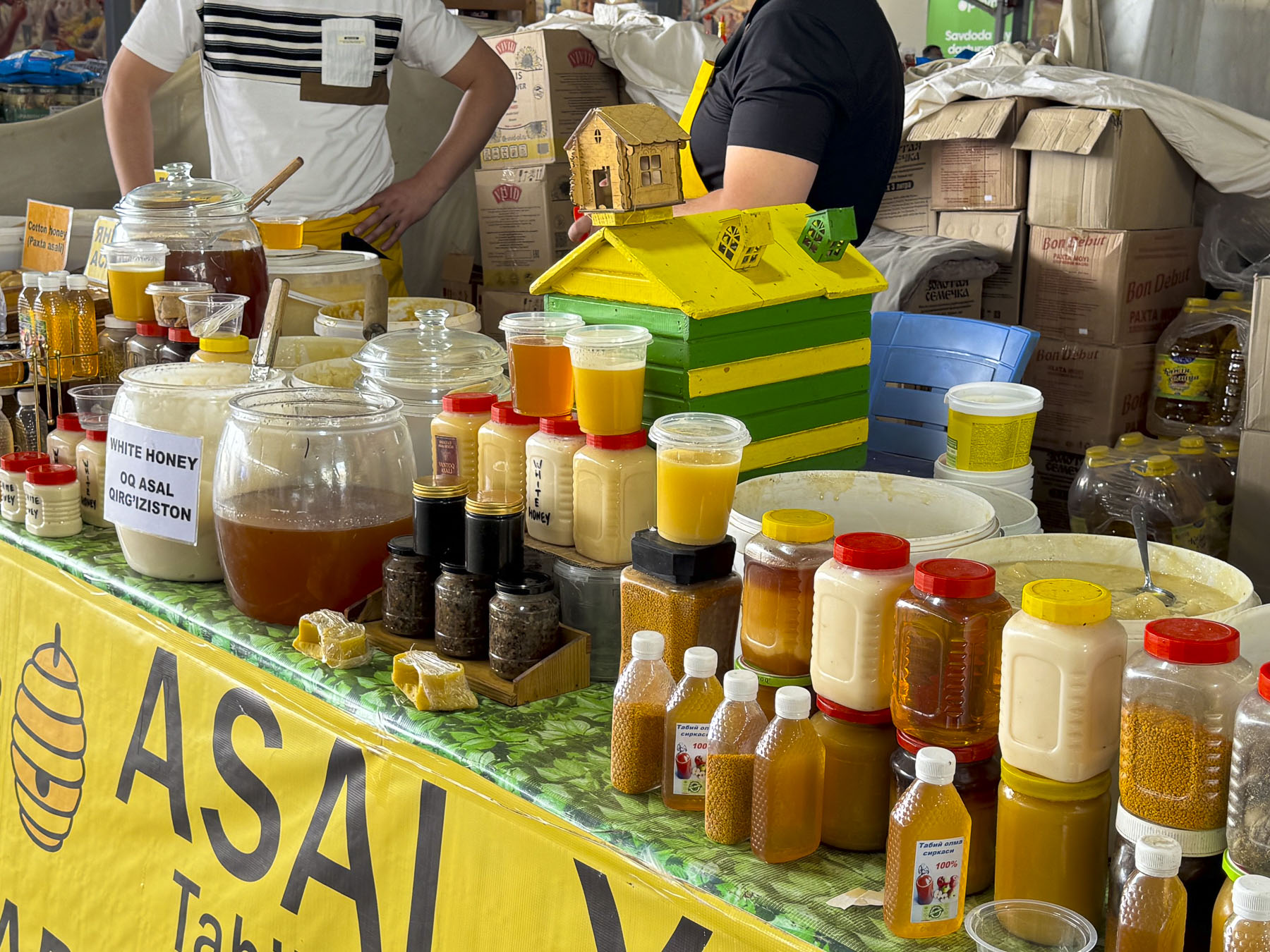
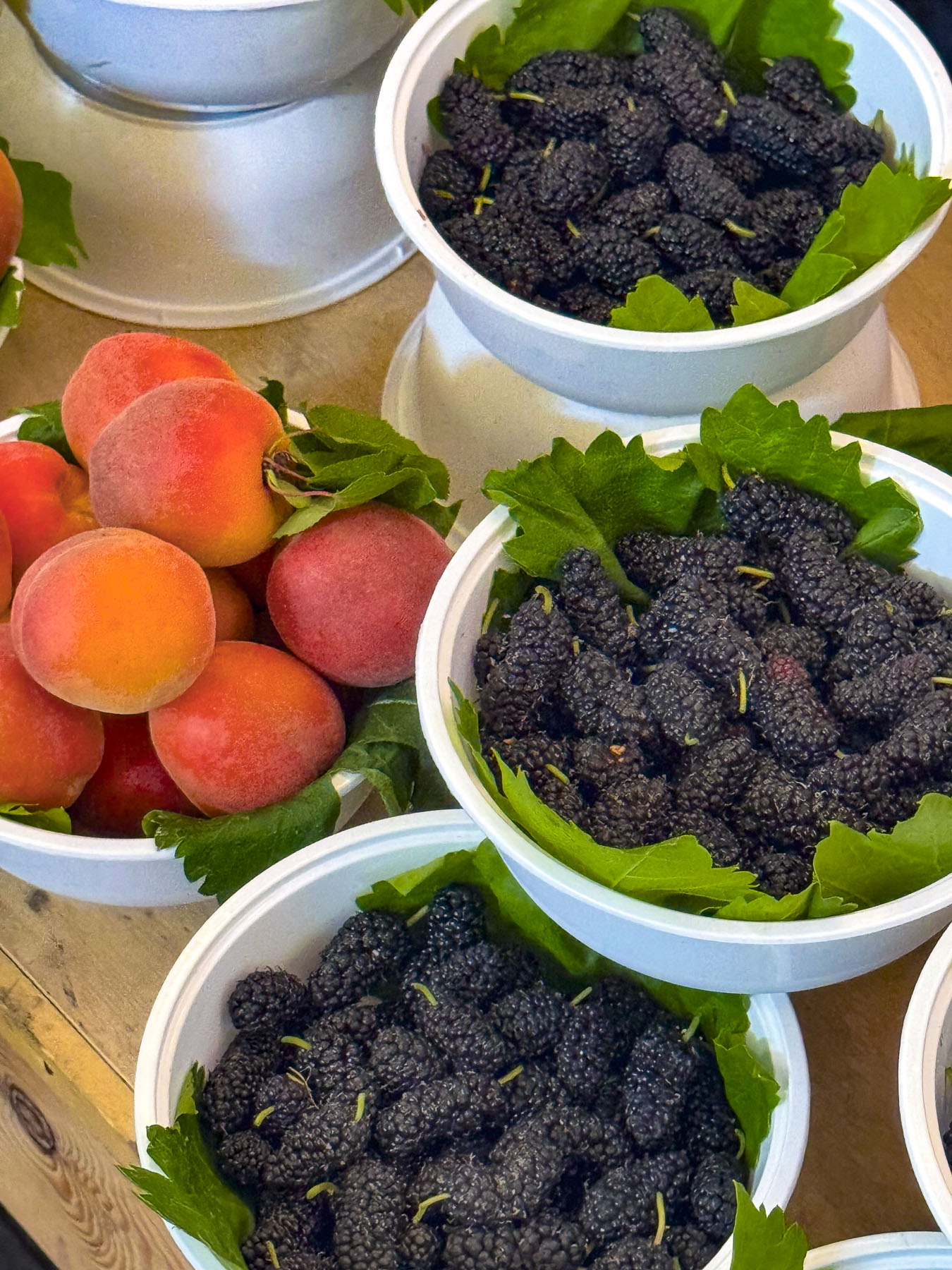
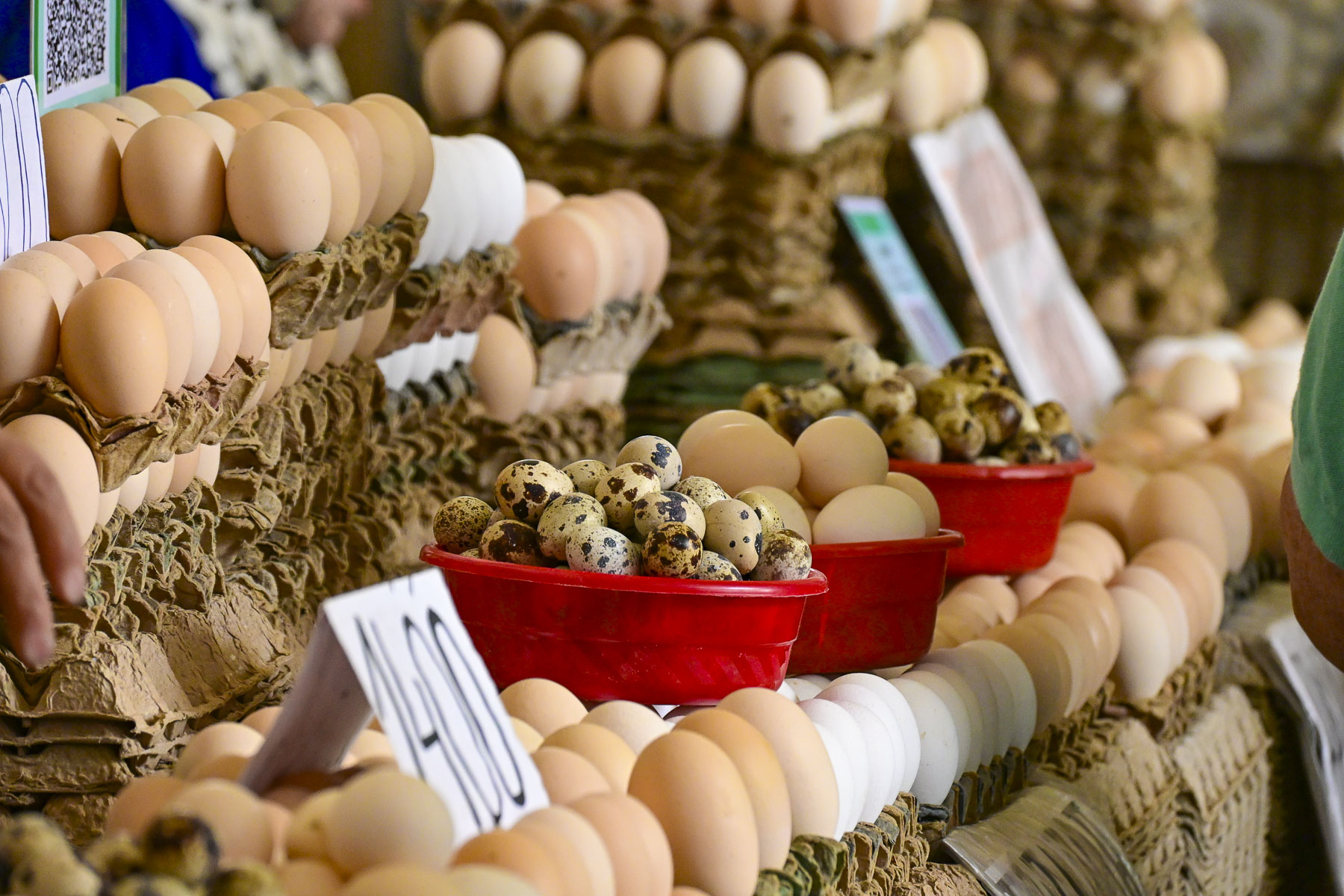
In this part of western Uzbekistan there is not a modern highway system. While the roads were decent, the “highways” were also local roads when they passed through towns, and the sights could be unusual: like the local butcher who had a freshly slaughtered cow’s head hanging in front of his shop; kids in their school uniforms walking to school in a culvert along the edge of a field as a cow grazed nearby; numerous new mosques under construction. In places, large ancient cemeteries lined the road. There were also many examples of Uzbekistan’s informal economy underway when we entered or exited a town, with folks selling the in-season fruits and vegetables, or honey, eggs, and homemade cheeses from their cars parked along the roadside. 

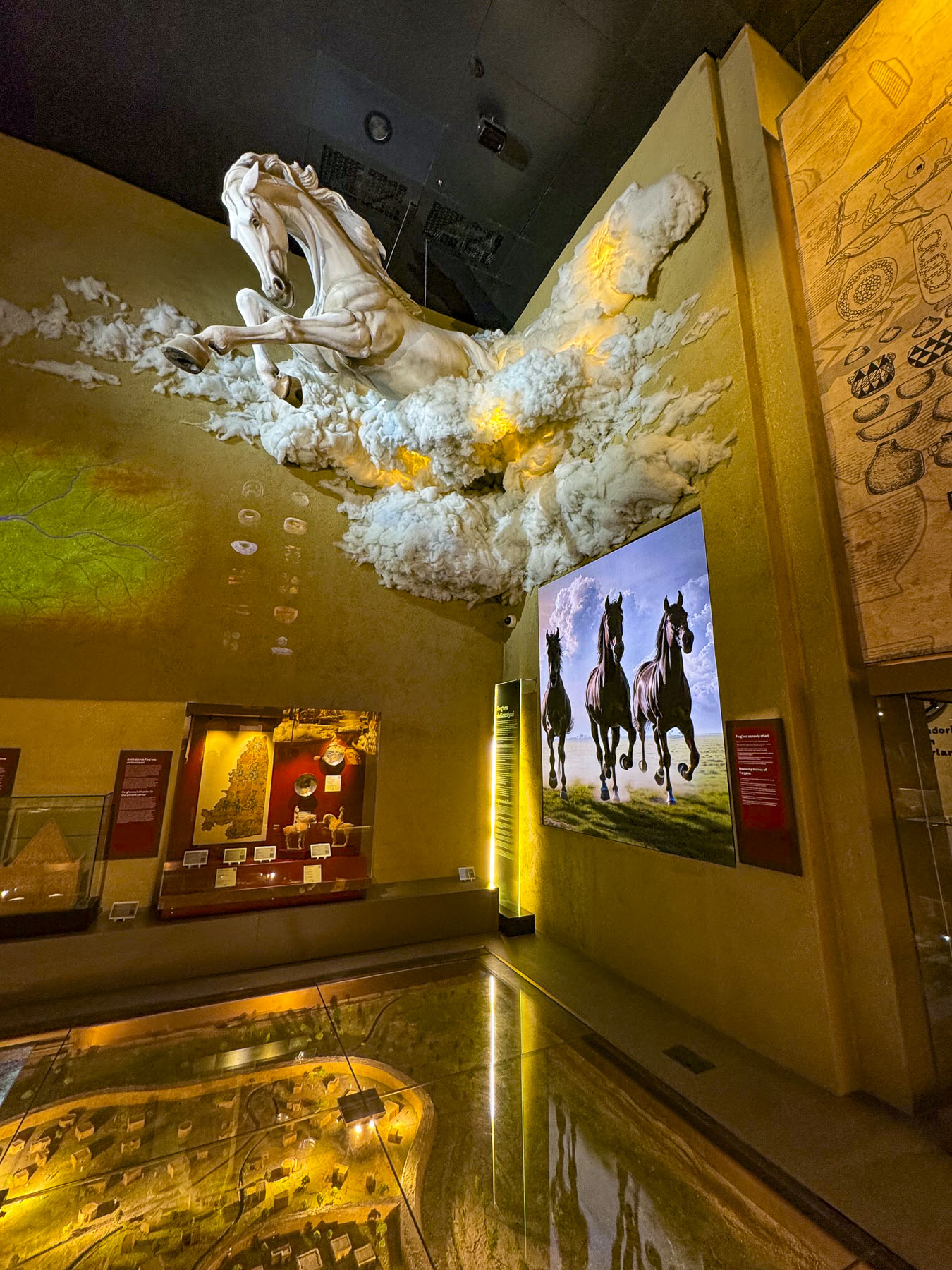
At rest areas, tandoors cast forth the wonderful aroma of freshly baked samsas. Passing through the town of Hazorasp, a large silver sculpture of a winged horse flashed by too quickly to grab a photo. This was the Tulpar, the legendary ultra-swift horse in Uzbek mythology. The town’s name “Hazorasp,” literally translates to “a thousand horses.” It’s taken from a folkloric legend where a herd of winged horses descended to the Amu Darya river delta.

We reached the Hazorasp Tumani bridge over the Amu Darya River, a narrow, two-lane steel and concrete bridge that closes to all vehicle traffic when a train crosses the bridge on railroad tracks that straddle the yellow center line. This event caused such a long wait, that our driver and guide made us hot tea and coffee in the shade of the bus as we waited in the queue, with other folks who were leaving their vehicles to stretch their legs, killing time before the train passed.

Our route paralleled Uzbekistan’s border with Turkmenistan and at a viewpoint overlooking the Amu Darya River our guide pointed out how much the width of the river had shrunk since his childhood during Uzbekistan’s Soviet era, when the river’s water was overdrawn to irrigate cotton fields, and that during the communist years there were an incredible 17 security checkpoints between Khiva and Bukhara, that everyone was required to stop at. Farther on the scrubland of the Kyzylkum Desert extended in every direction to the horizon.

One unusual thing that we noticed at the many gas stations we passed along our 443km (275mi) route to Bukhara were the concrete walls between the filling islands. The stations didn’t provide gasoline. Instead, they sold highly compressed natural gas for cars and trucks that had been retrofitted to take advantage of Uzbekistan’s substantial natural gas reserves. Occasionally, explosions during the refueling process happens, and the concrete blast walls are to contain the damage. Drivers using these facilities are also required to wait in certain no danger zones, a safe distance away from their vehicles. The stations are all connected via pipelines and frequently there are problems with their pressurization which results in temporary station closures and long lines at other facilities. If you are renting a car there isn’t any need to worry, as all rental cars in Uzbekistan run on gasoline.

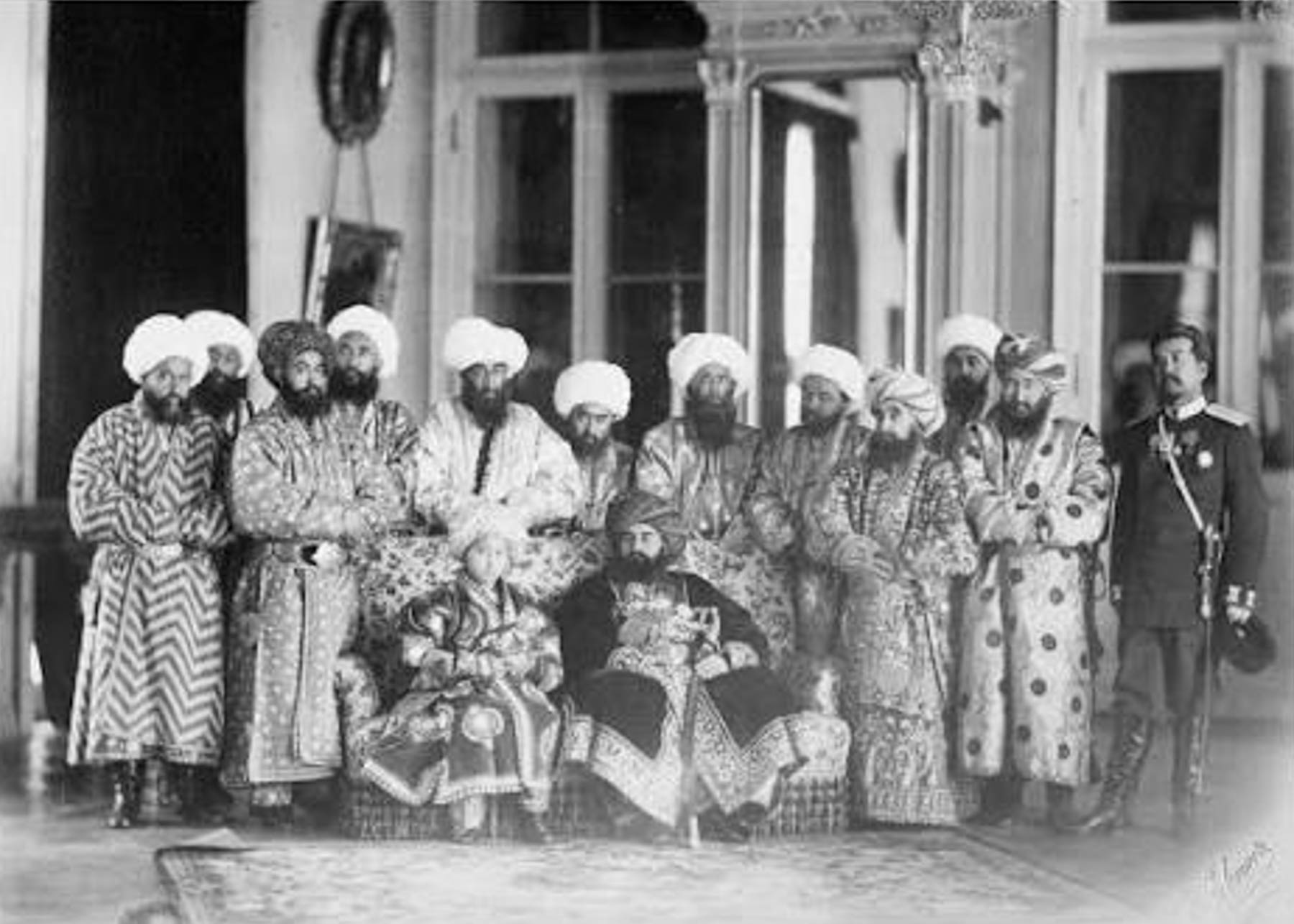
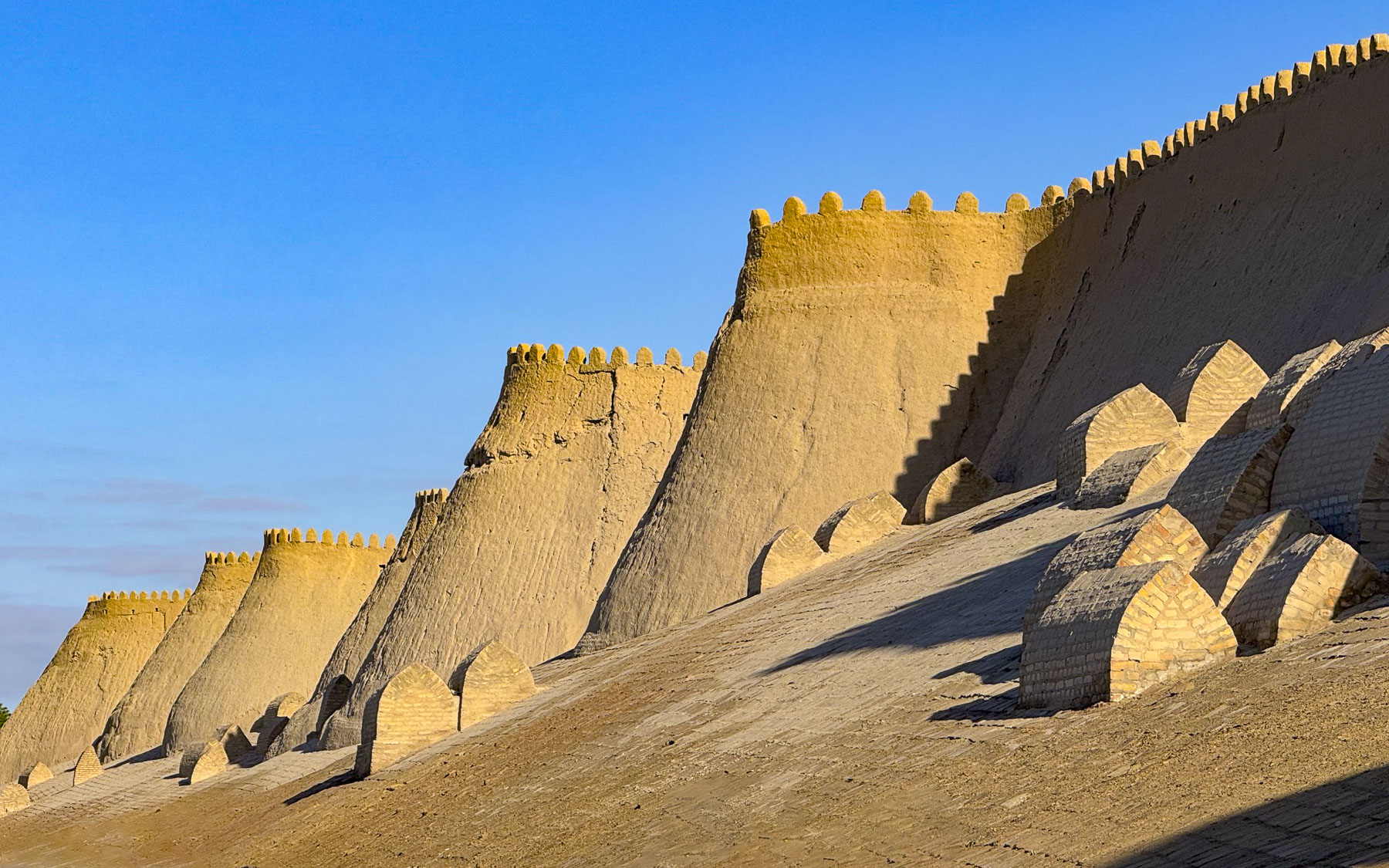
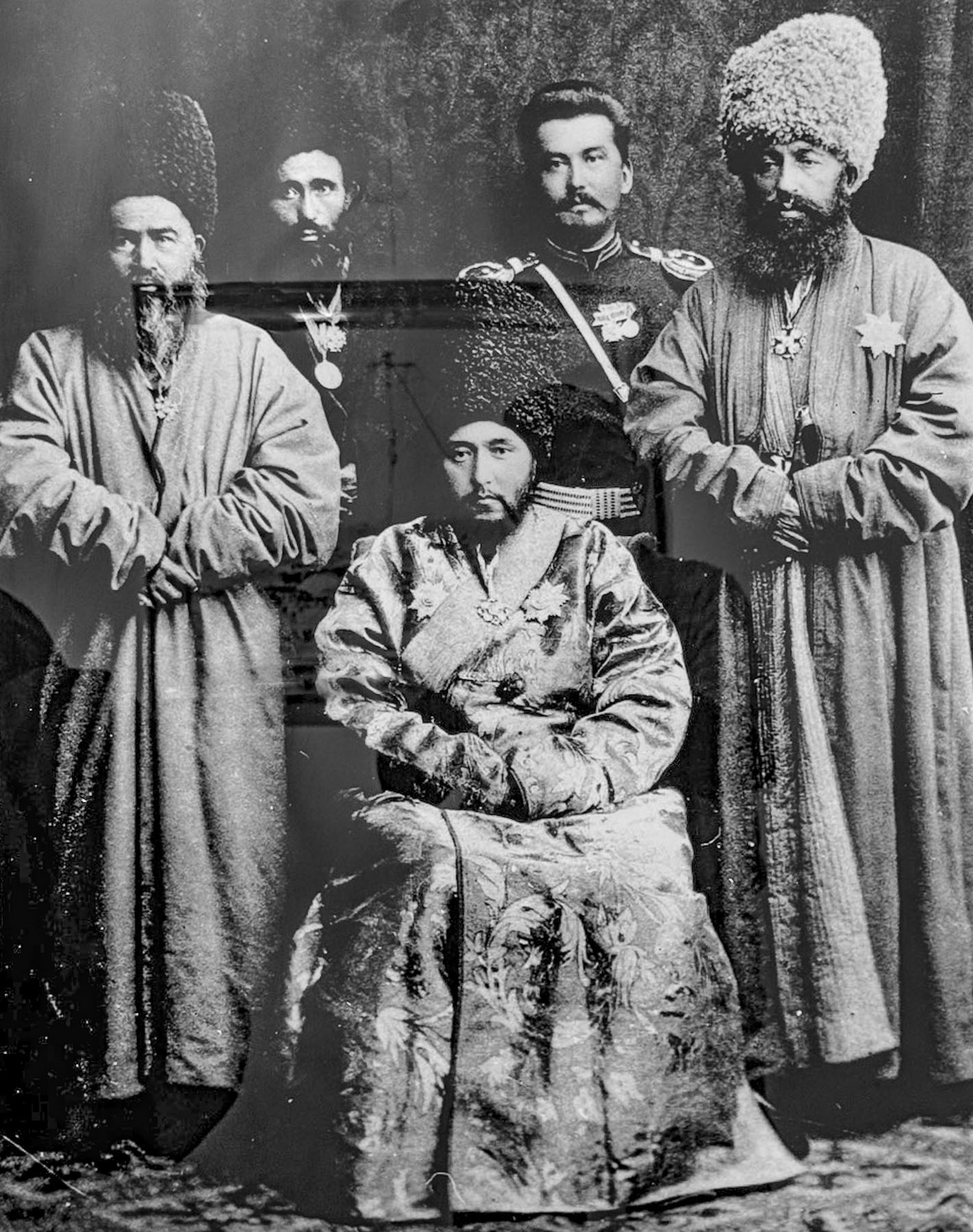
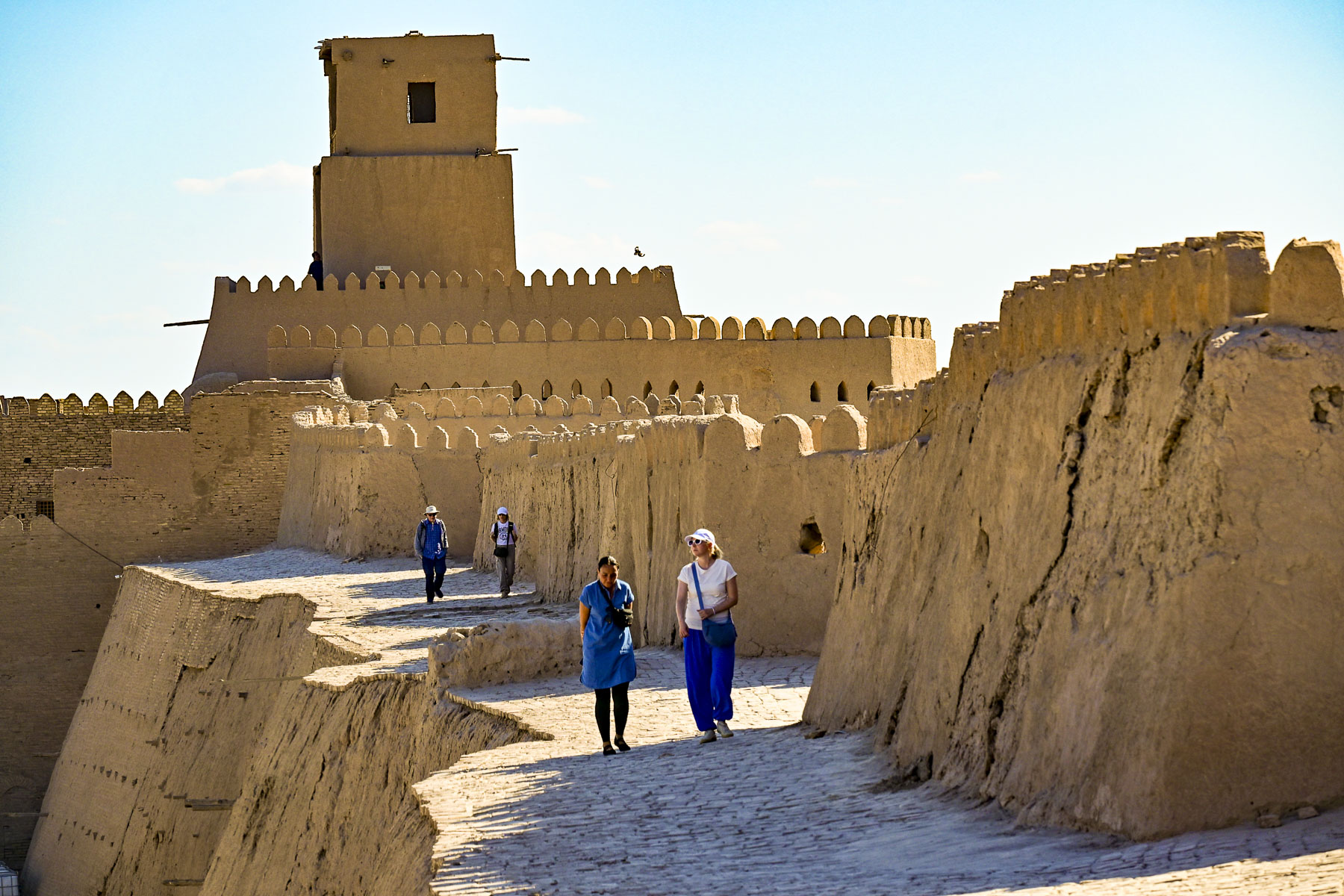
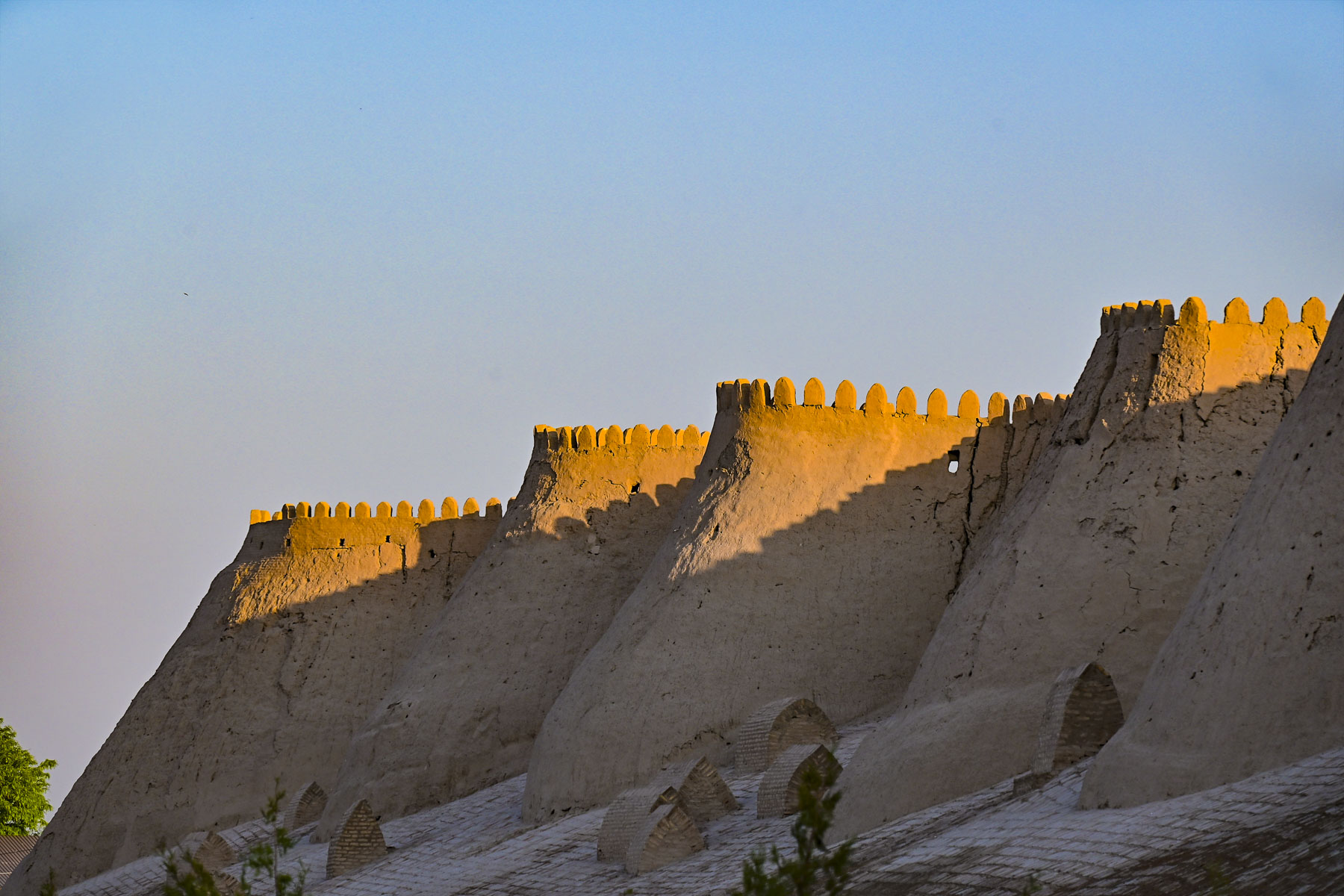
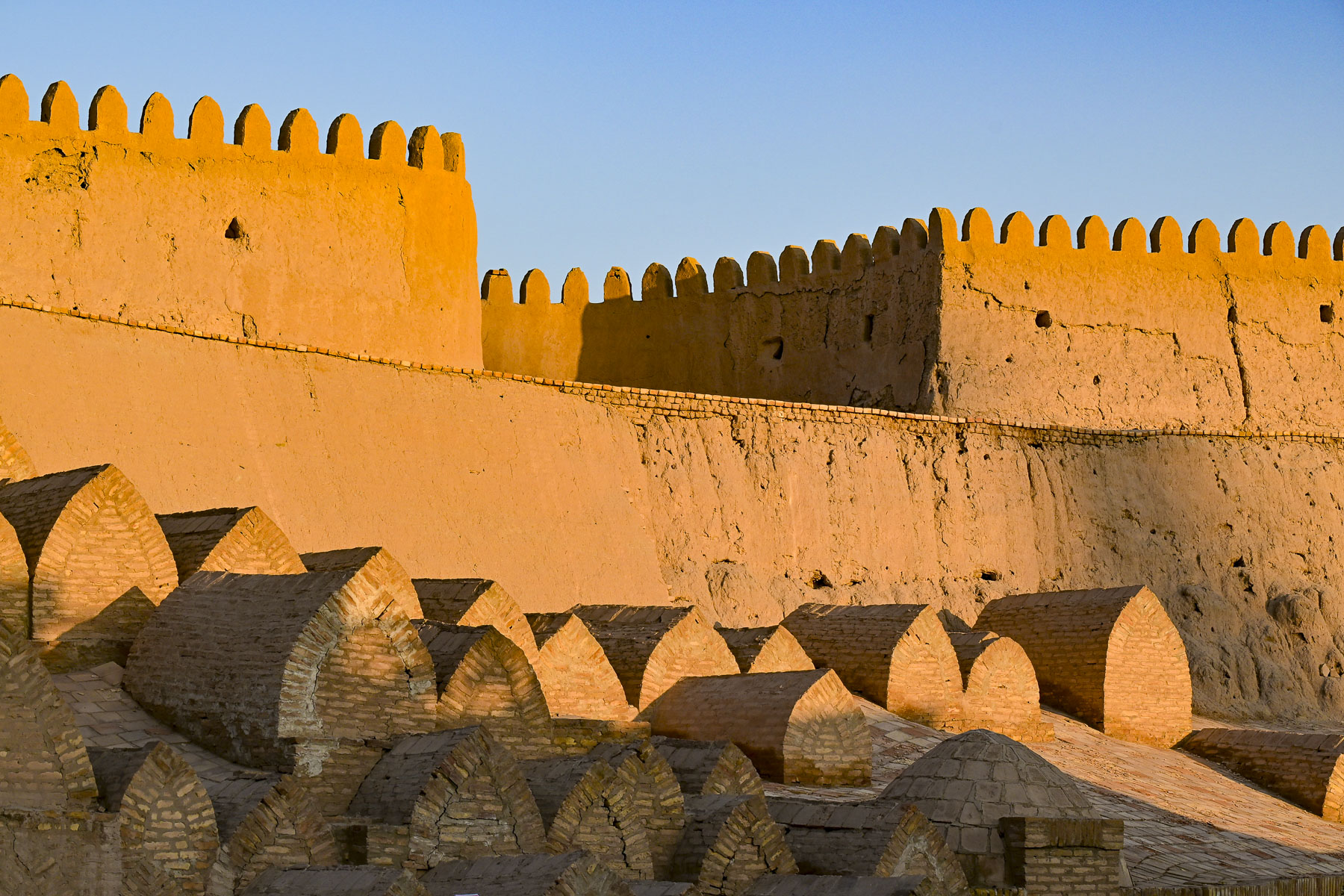
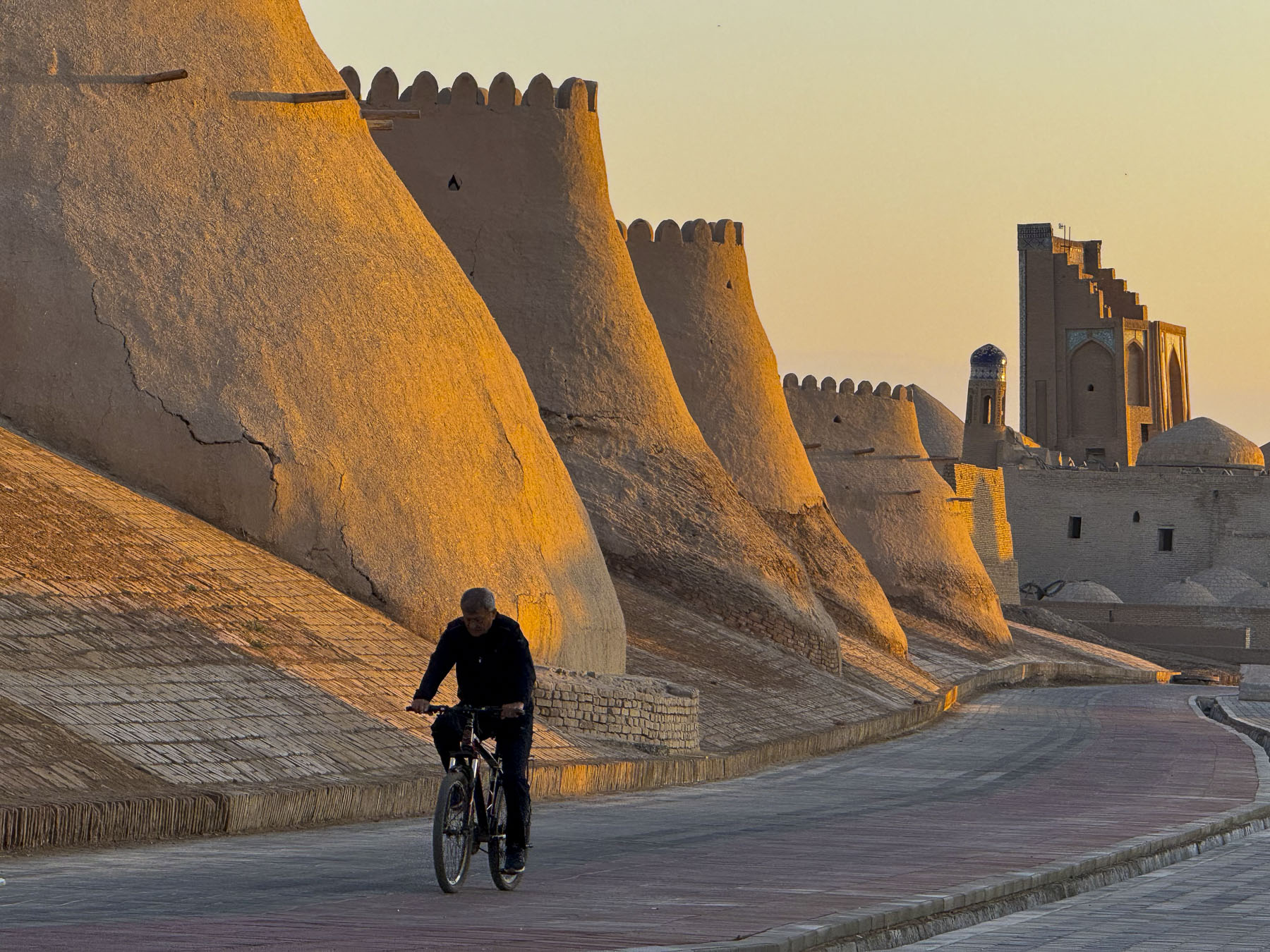
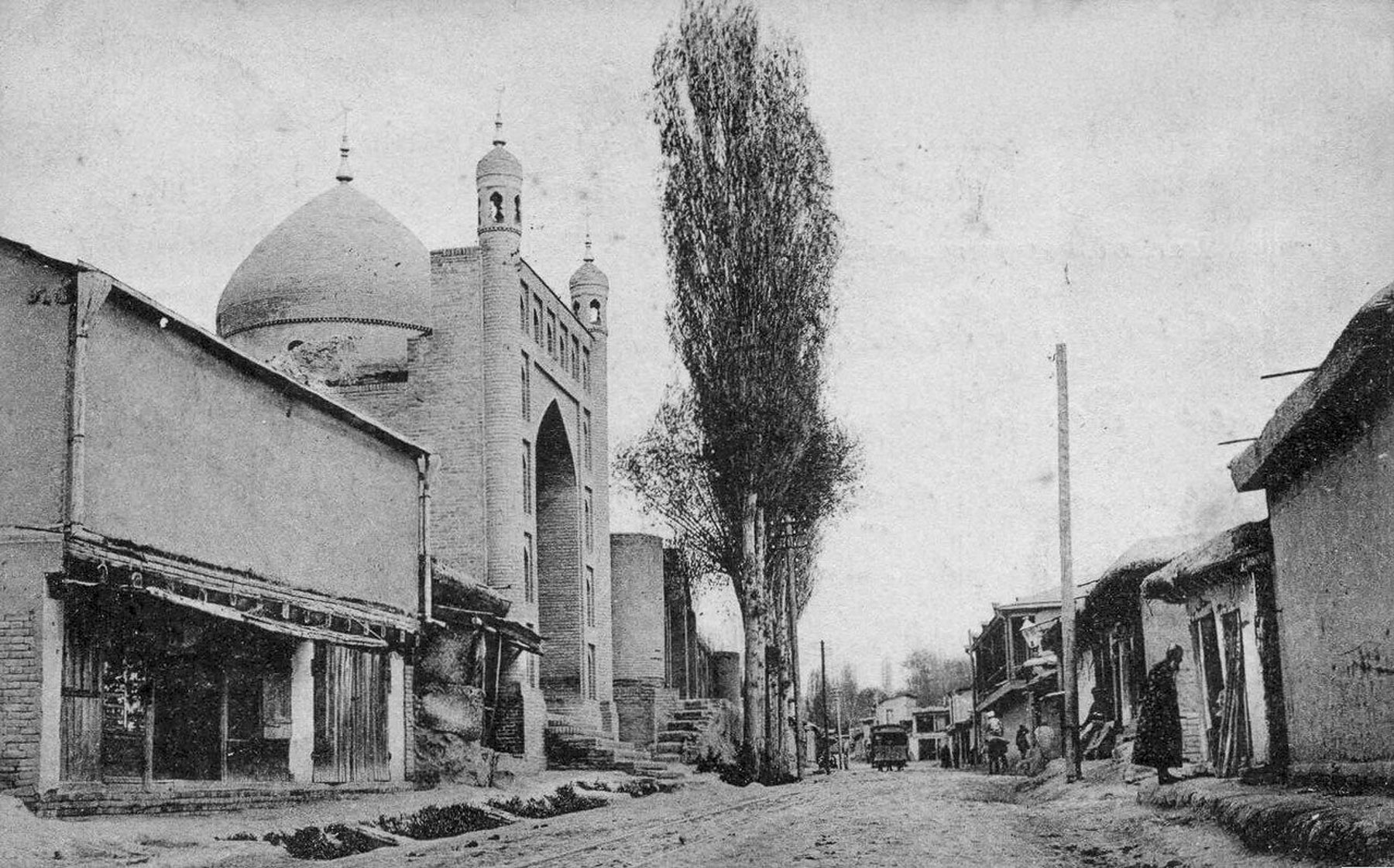
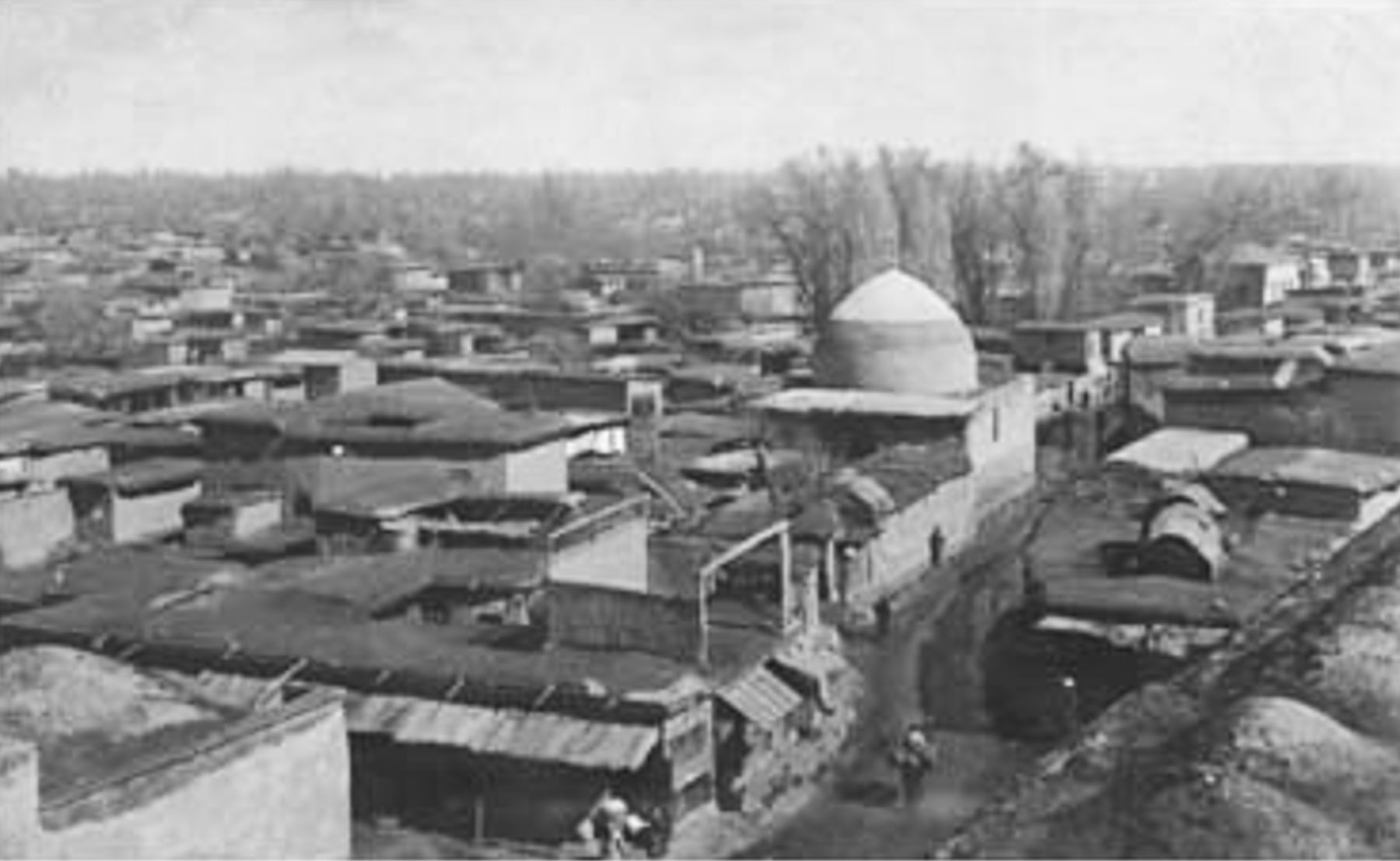
Wide multi-lane boulevards greeted us as we entered the outskirts of Bukhara, a city of about 305,000 people. The roads were lined with newer three to five story buildings with a vast array of shops and services on the ground level and apartments above. And there was a good amount of western style advertising with billboards and digital displays marketing athletic wear, soda and banking services. There had been a large 12km (7.5mi) defensive wall around this Silk Road trading hub for over two millenniums, only succumbing to destruction when the Soviet Red Army bombed and shelled the city in 1920 before they forced Bukhara into the Soviet Union. Prior to this, the Emirate of Bukhara existed as an absolute, conservative Islamic monarchy, while being a Russian Empire protectorate, a result of Russia attacking the city in the late 1860s to end its and Khiva’s notorious slave markets that sold around 100,000 Persian and Russian slaves every year to other Islamic khanates in Central Asia, India and the Middle East.

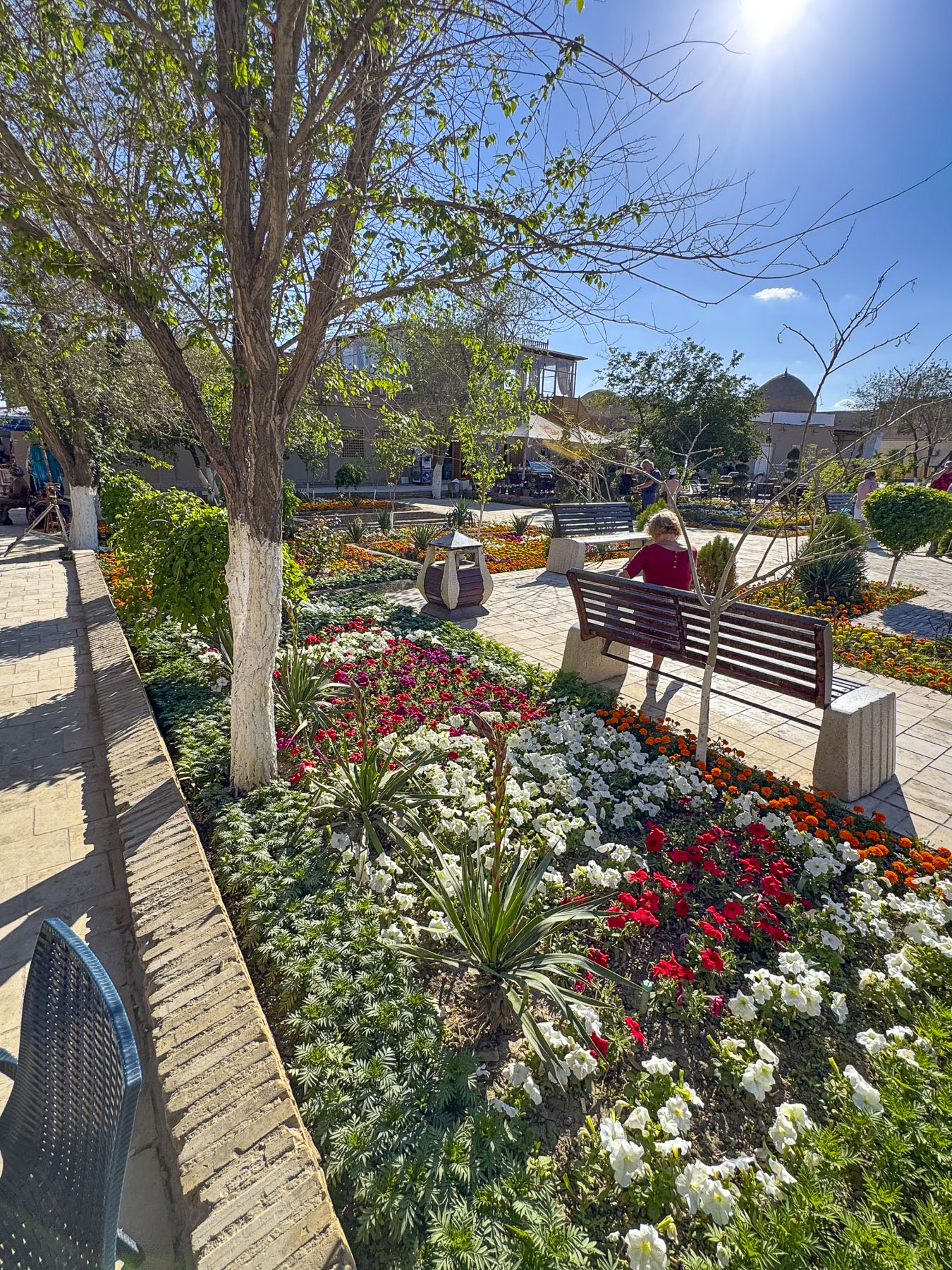
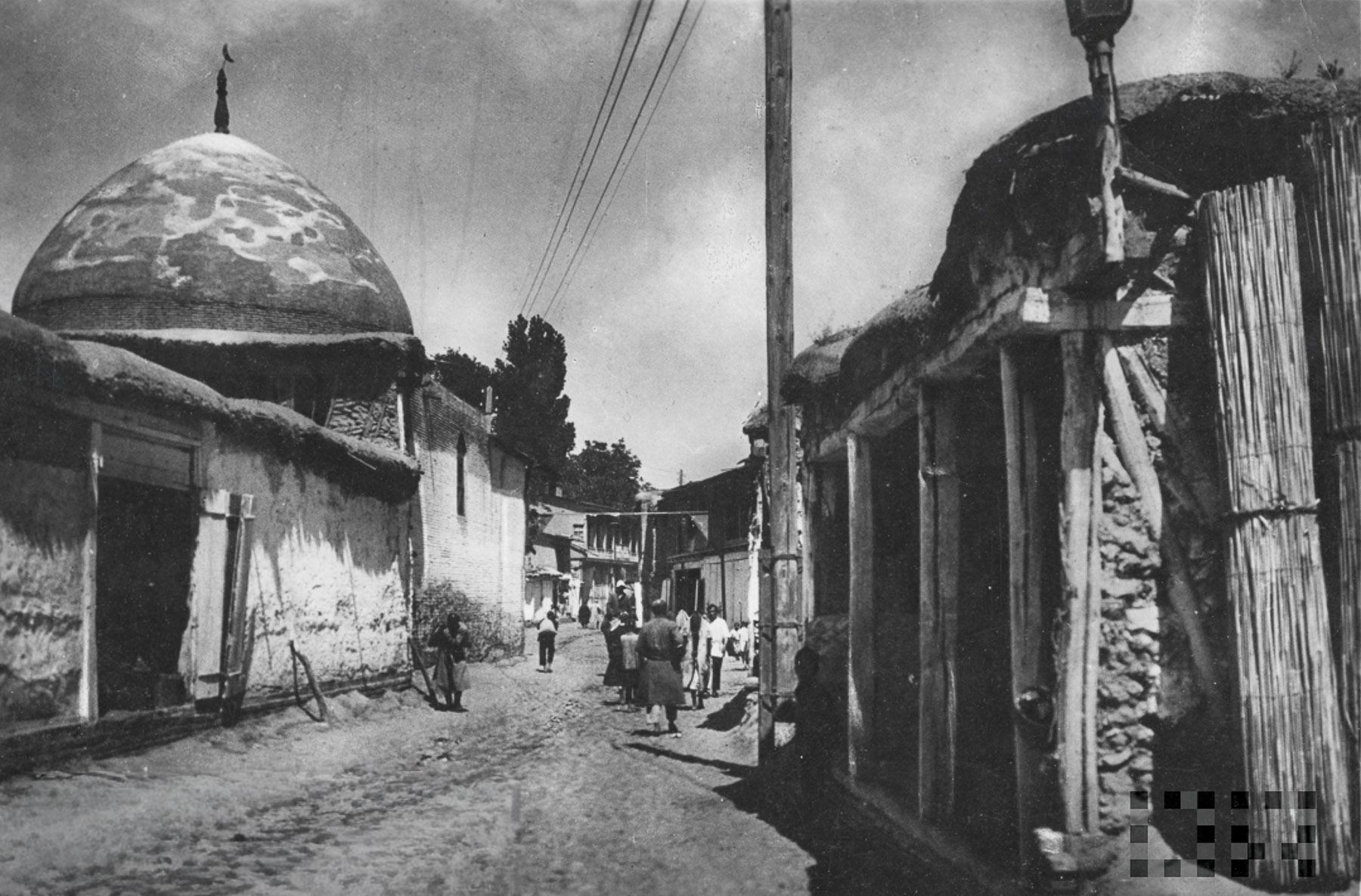
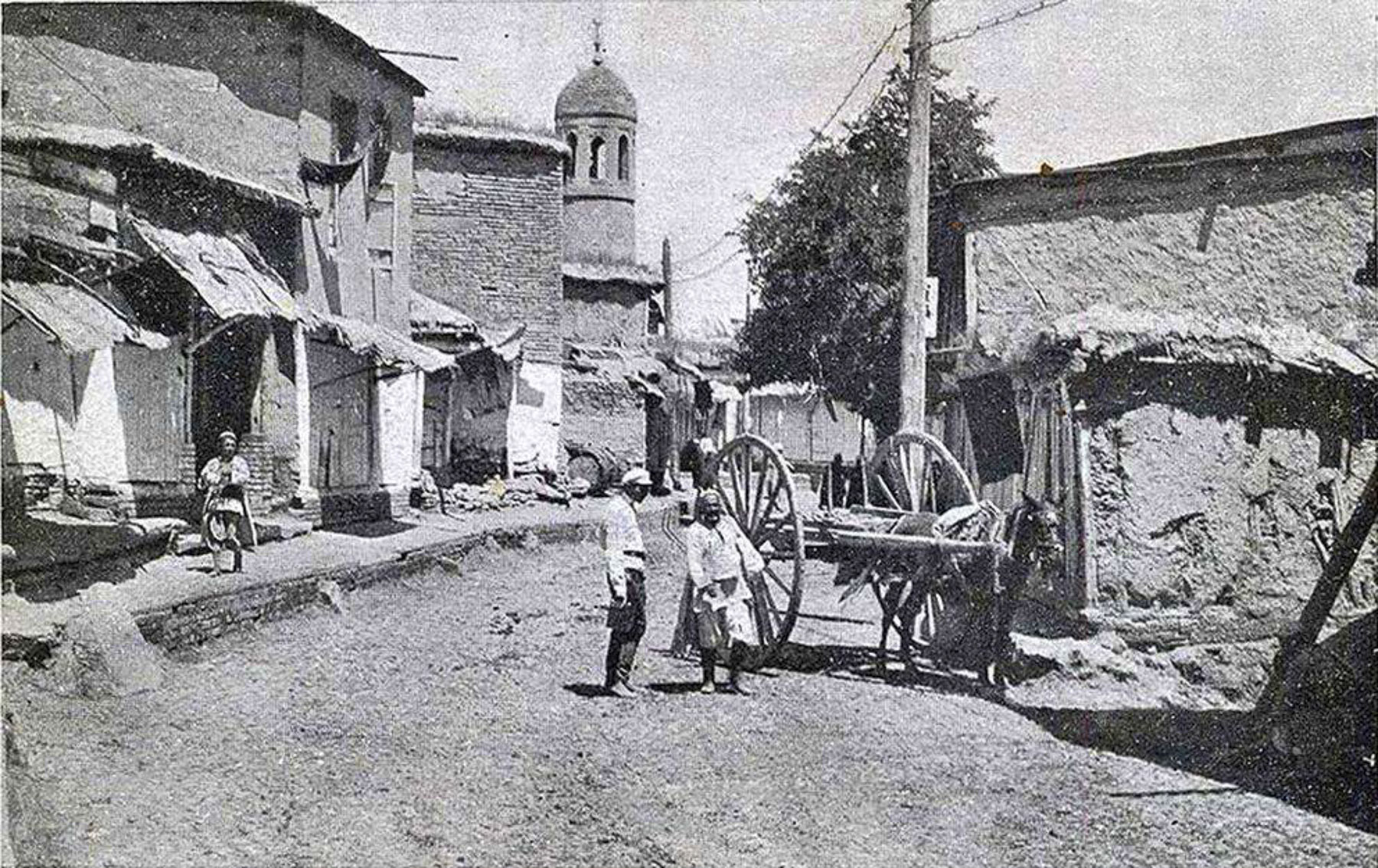
Just shy of the pedestrian only historic center of Bukhara, we disembarked from our bus, across from the Labi Hovuz, an ancient public square, dating from the 1620s, that’s centered with a large reservoir surrounded by a shallow set of stairs that lead down to the water’s edge.  Surrounded by centuries old mulberry trees, it was a popular spot for merchants from the caravanserais, and students from the nearby madrassas to relax in the cool of the evening. The pool was also a vital source of drinking water for the surrounding homes for several hundred years. There used to be many of these hovuz, pools, across Bukhara’s mahallas, neighborhoods, but they were also the breeding grounds for waterborne diseases like guinea worm and cholera, and they were filled in for health reasons during the Soviet years.

Dragging our suitcases behind us, we passed the Magoki Attori Mosque, dating from the 9thcentury; it was built above the ruins of an early Buddhist monastery and later Zoroastrian temple. Interestingly, before the first synagogue was built in the city, Muslims and Jews shared the temple but worshipped at different times. It is the oldest mosque in Bukhara, having survived Genghis Khan’s sack of the town in 1220, and a millennium of Bukhara’s evolving growth, which has left its entrance 4.5m (15ft) below the surrounding city level.                                                                                                                                                                                                                   

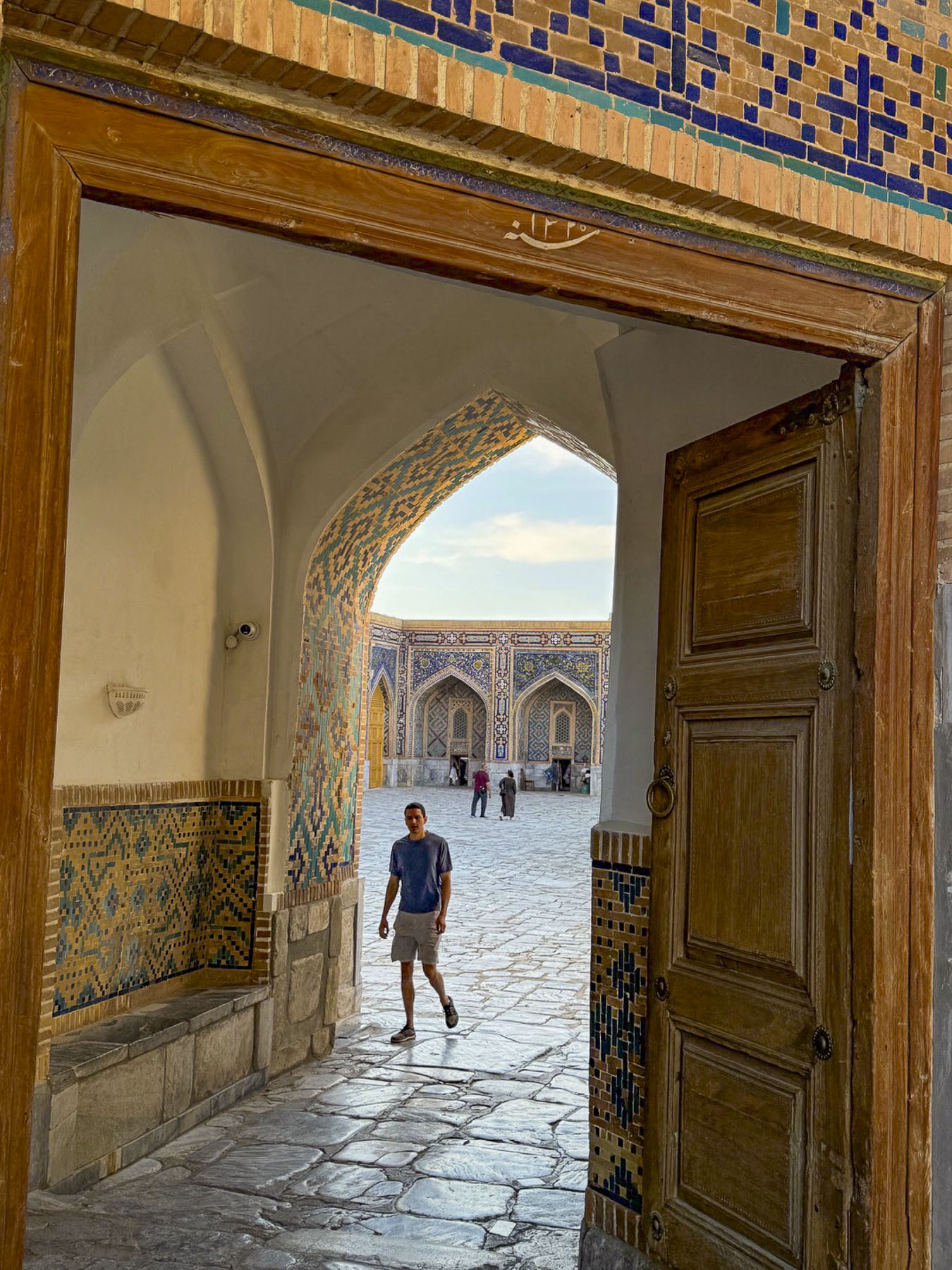
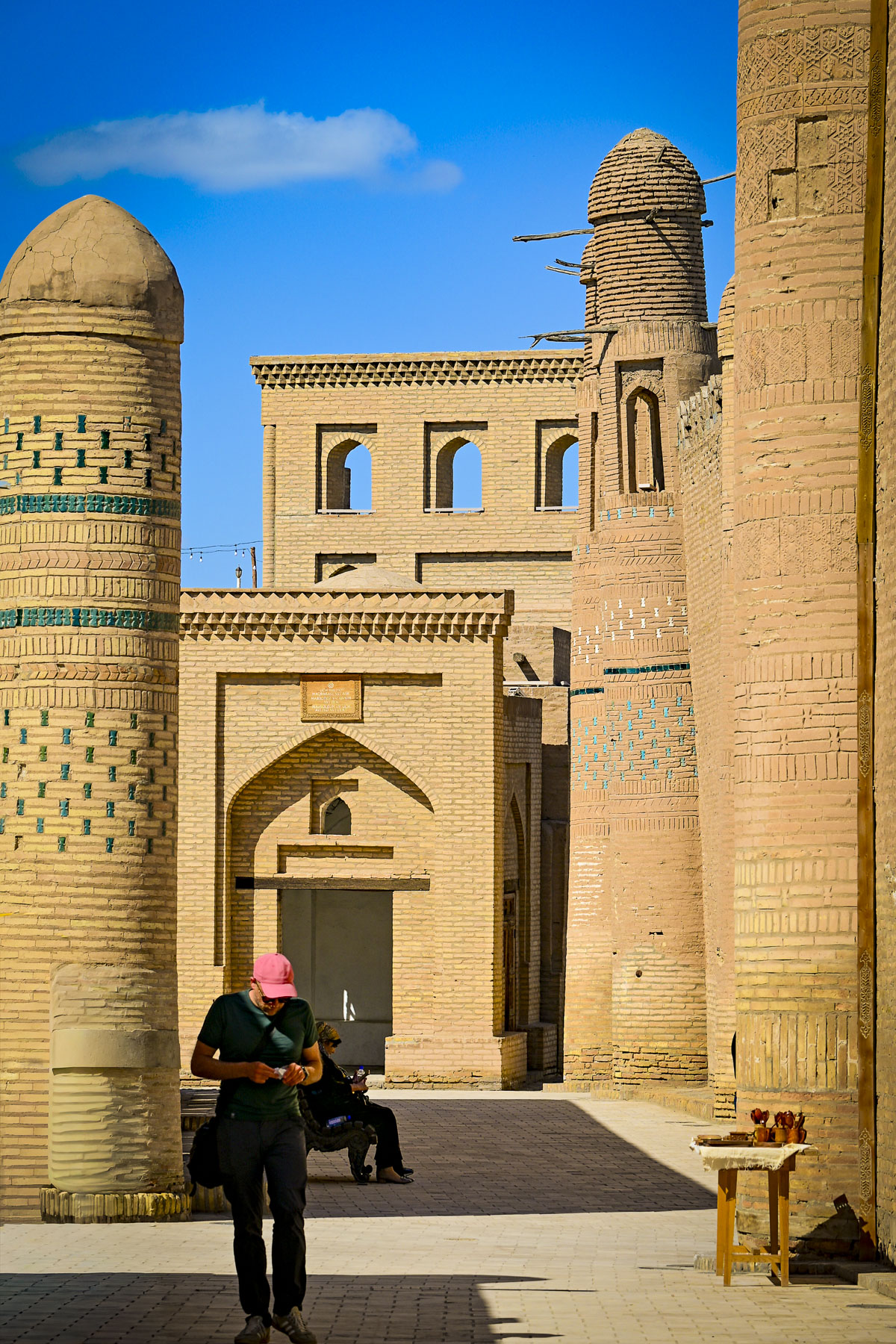
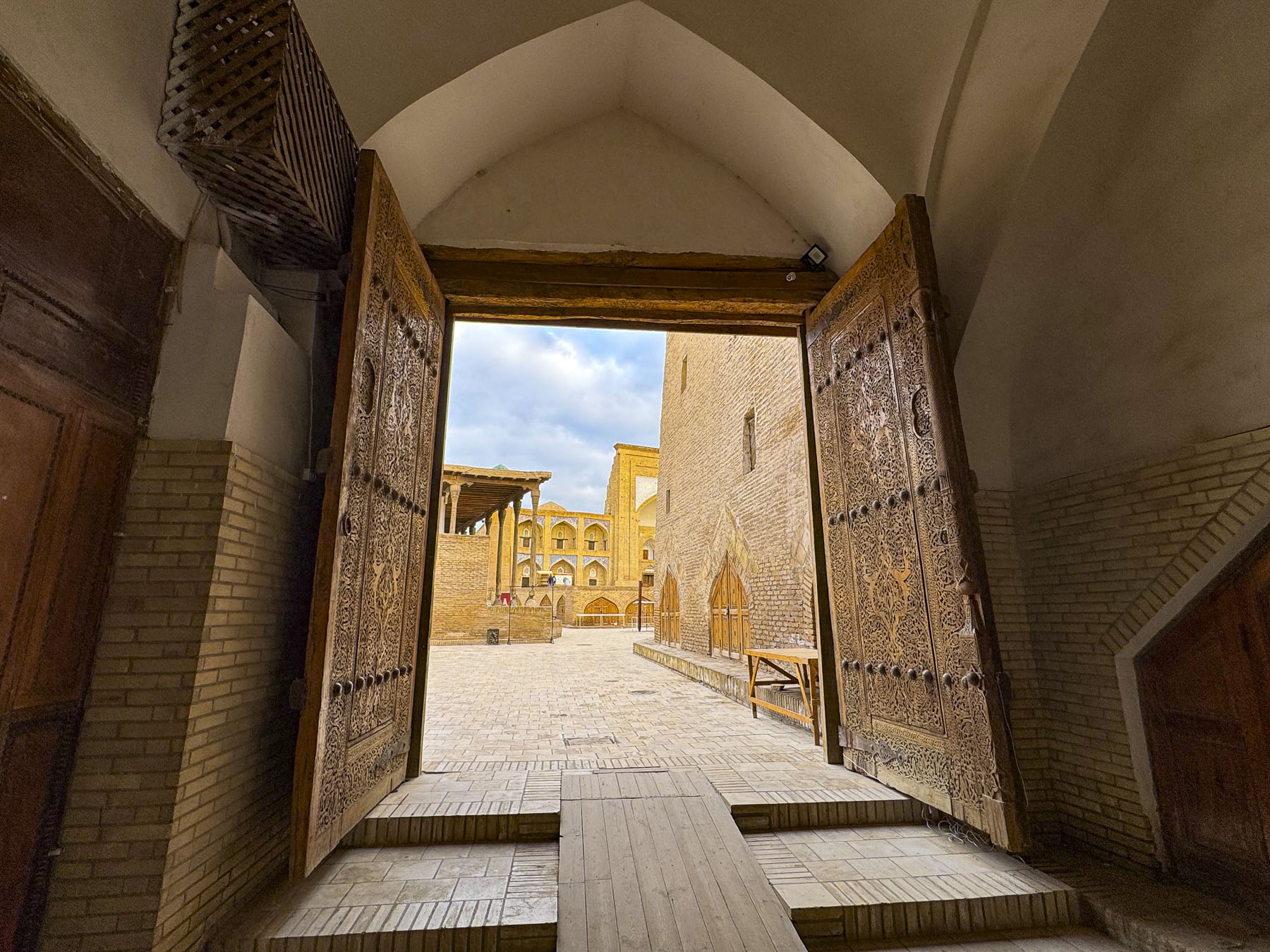
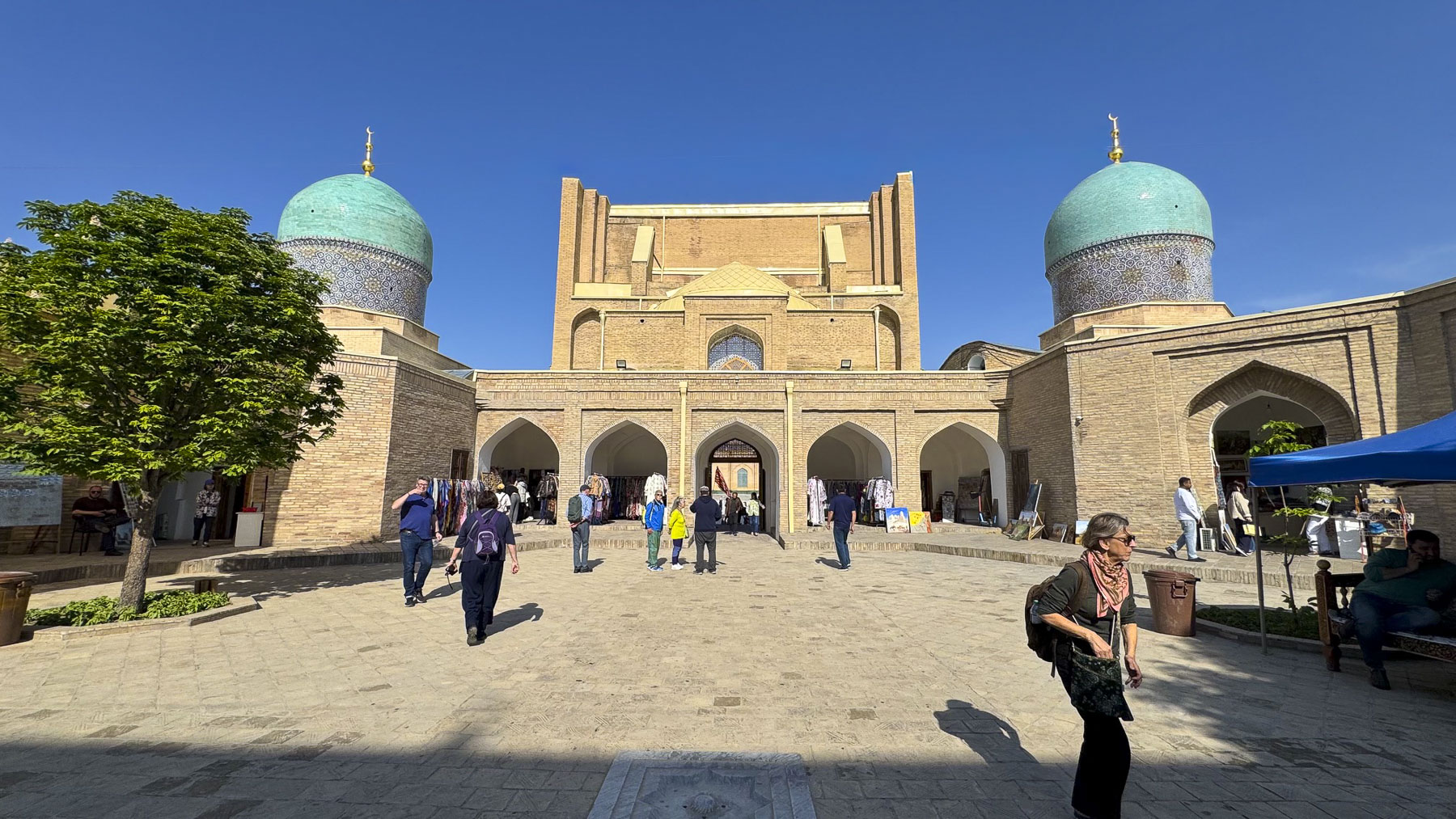
We entered the inner part of the historic center of Bukhara through the Toqi Telpakfurushon, a long gate-like, multi-domed tim built in 1570, that was first used as the booksellers’ bazaar. Its narrow lane was lined with a variety of colorful stalls and workshops, and it is expected that tourists will bargain with the merchants for their best price. We passed through the Toqi Telpakfurushon many times during our two full days in Bukhara, but appreciated the beauty of the building most in the early morning hours as the city was awakening.

Just outside the far end of the bazaar was the Bozori Kord Hammam, dating from the 14th century. It is one of the oldest continually operating bathhouses in the world, where a restorative 30-minute massage can be enjoyed.

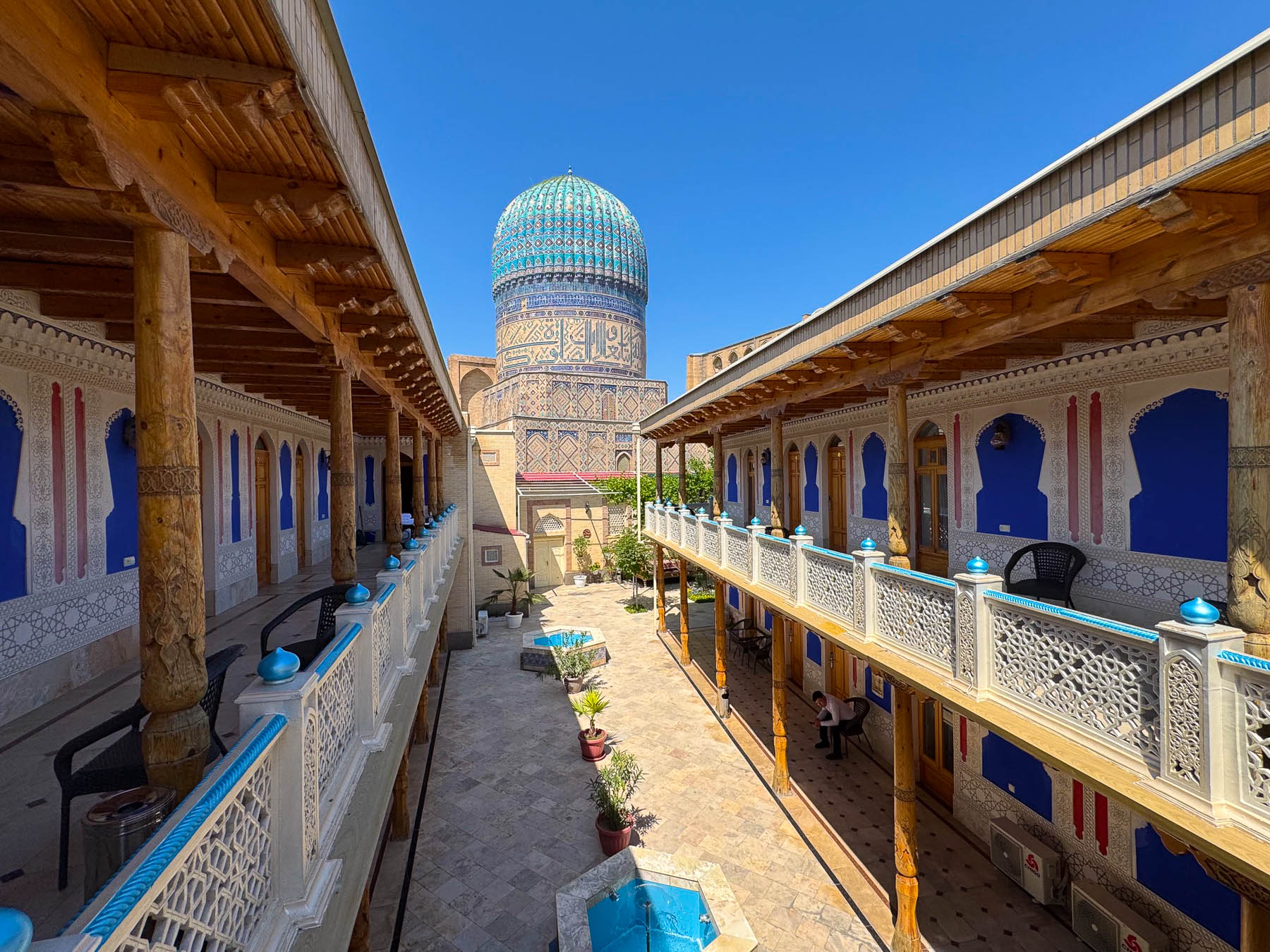
Our hotel, The Shahriston, was a few doors down. It’s a newer hotel built in 2018, that wonderfully retains the authentic character of the surrounding medina, and was conveniently, centrally located on Khakikat St, and within easy walking distance of Bukhara’s many historic sites. It also had a nice rooftop terrace for views over the medina’s Toqi trading domes and workshops.

After getting settled in our room, we headed to the Poi Kalon Complex, as the golden hour was approaching, and quickly decided that the rooftop restaurant at Kazan, directly opposite the plaza, would be the perfect spot for dinner and photos later. We made reservations.

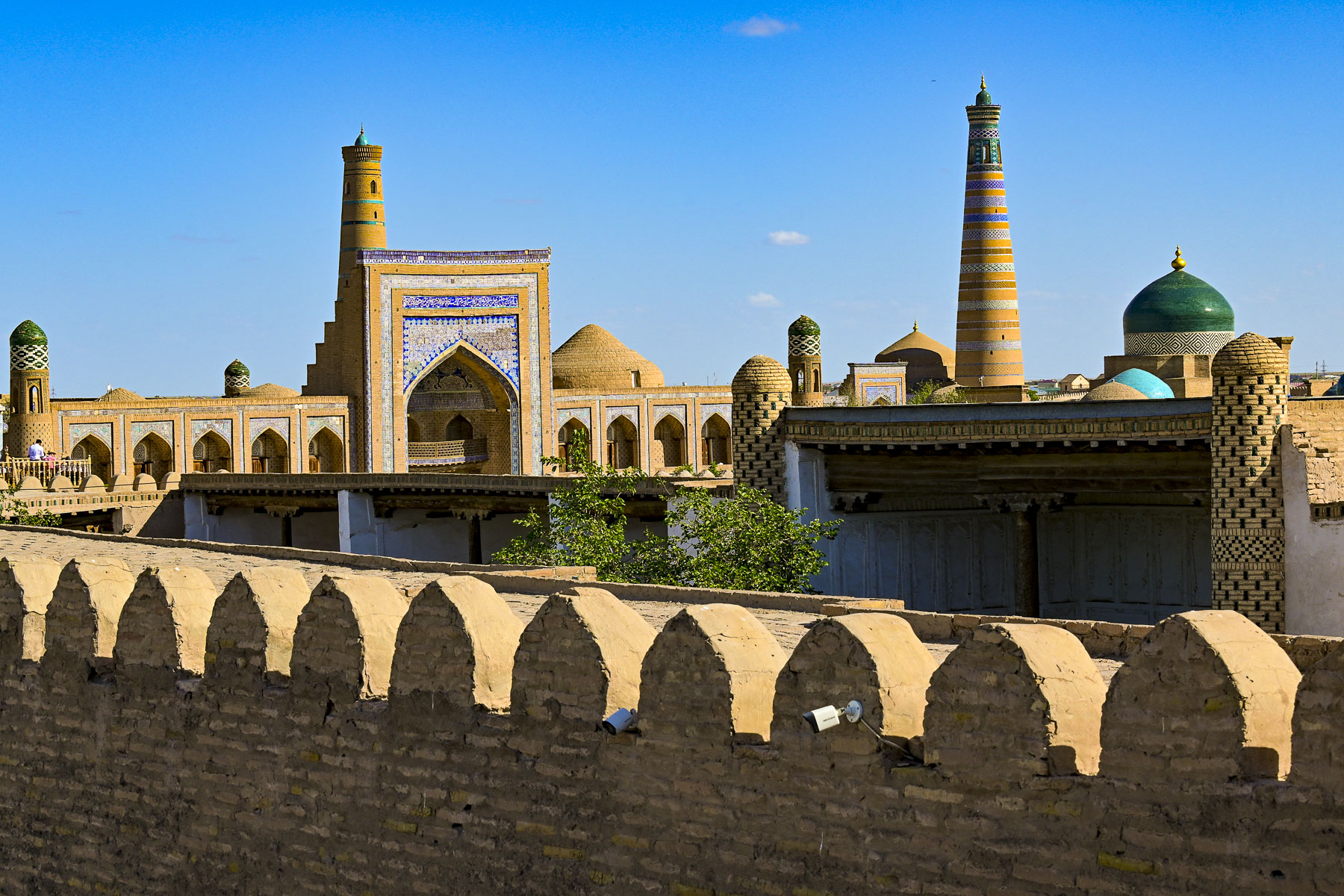
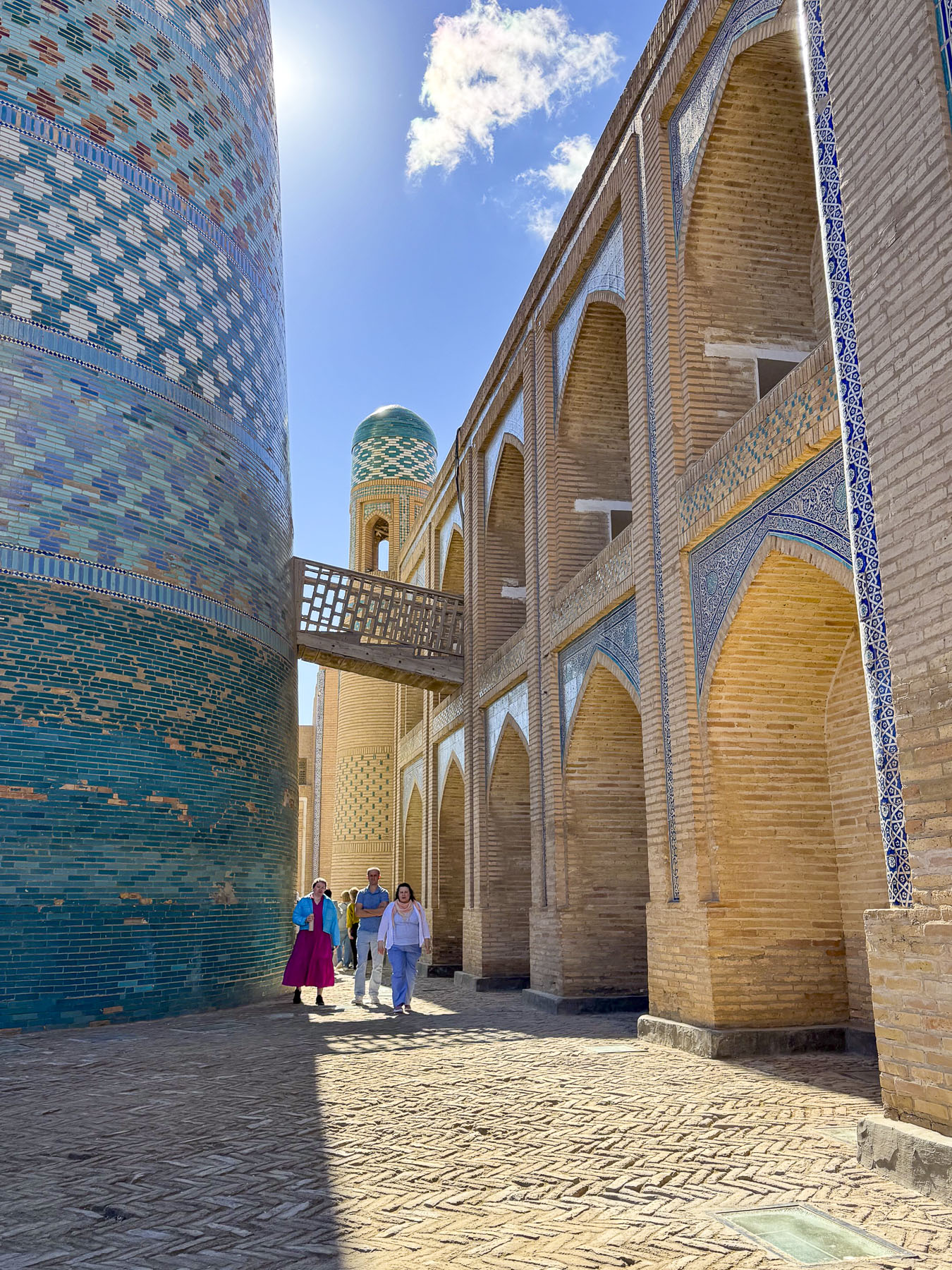
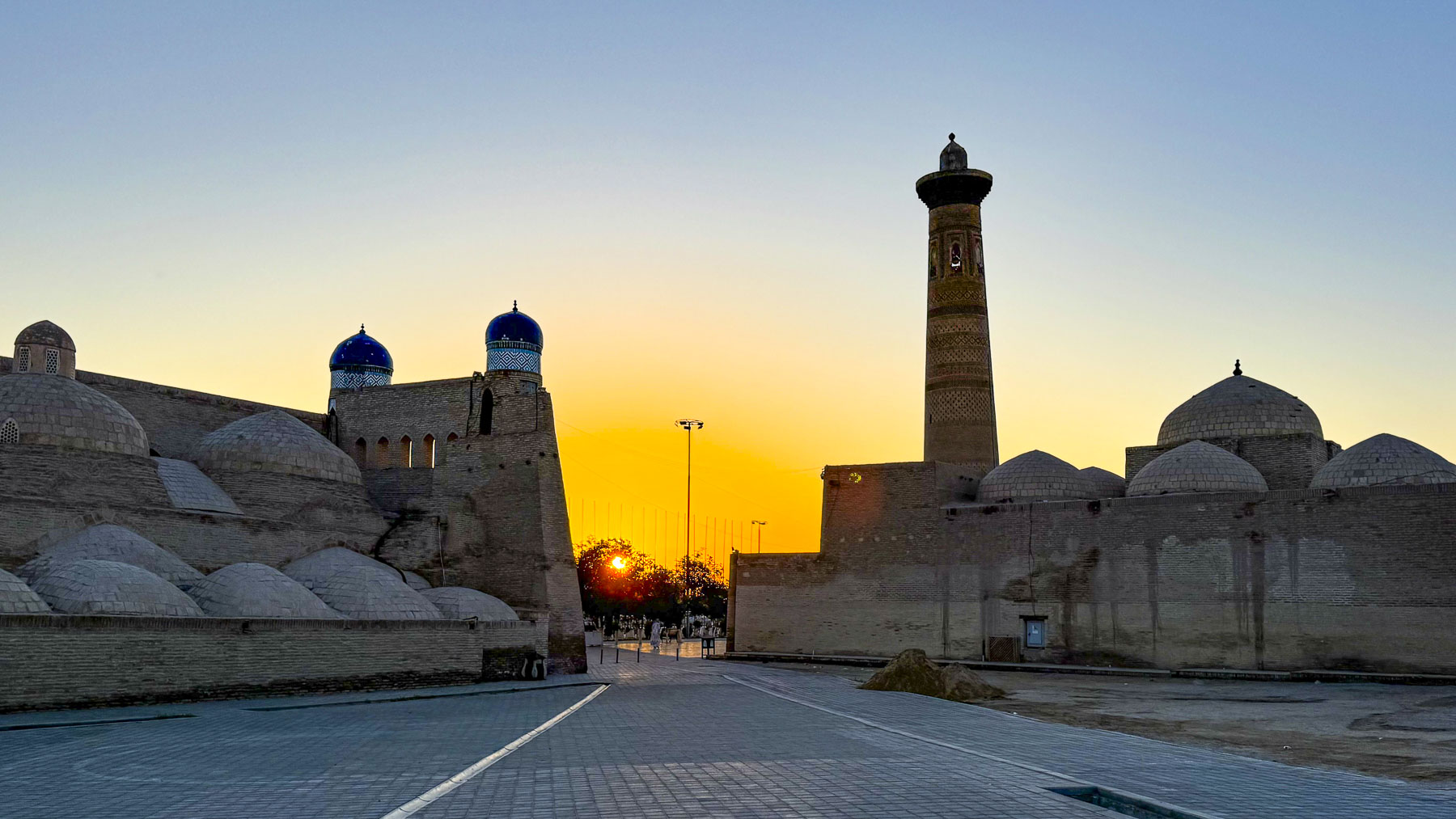
The plaza is considered to be the religious center of Bukhara and is bordered with three buildings built between the 12th-16th centuries: Kalan Minaret (1127) replaced an earlier design that collapsed during construction; The Kalan Mosque was completed in 1514, ( it replaced an older 12th century mosque destroyed by Genghis Khan’s army in 1220); and the Miri Arab Madrassah, which dates from 1535.

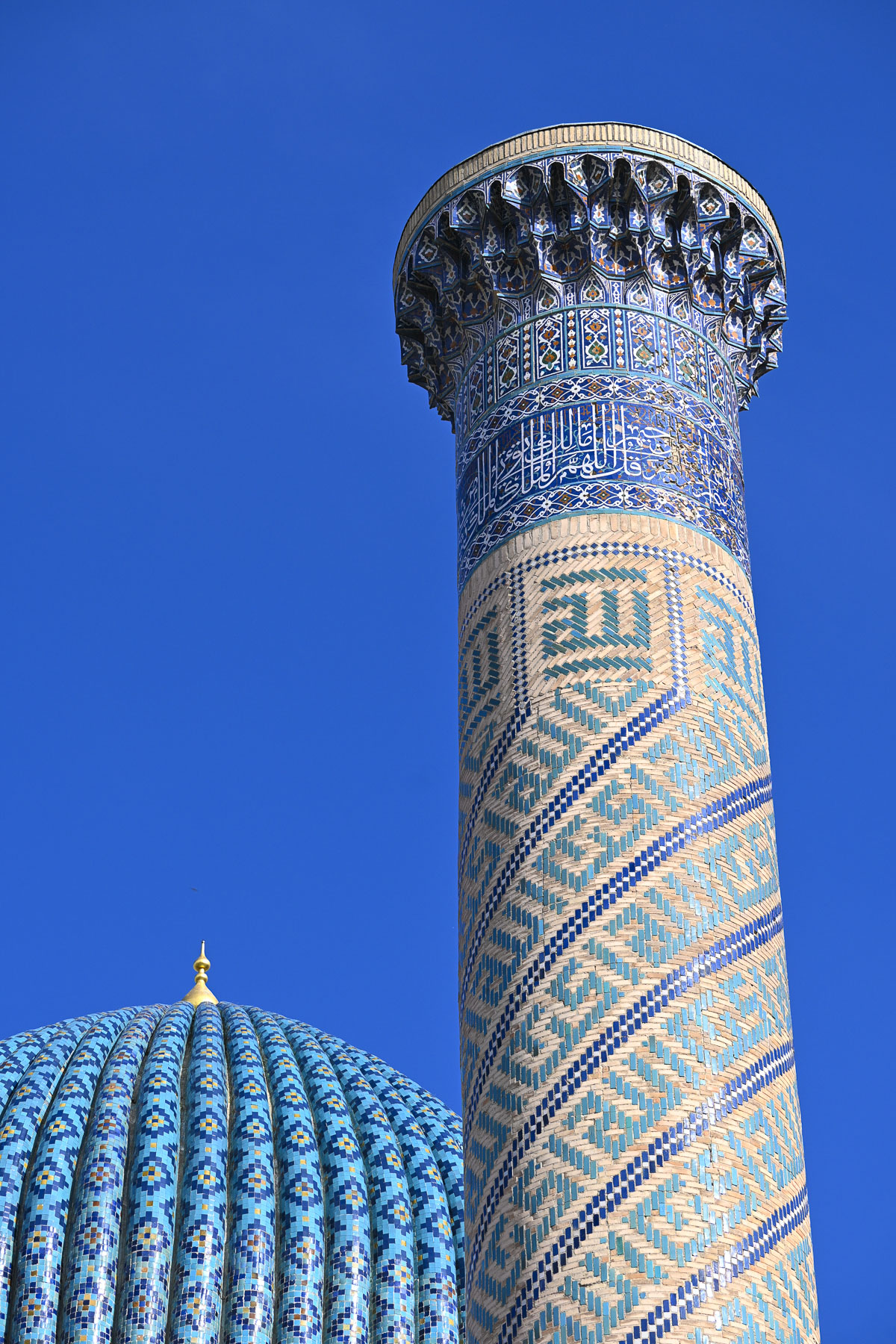
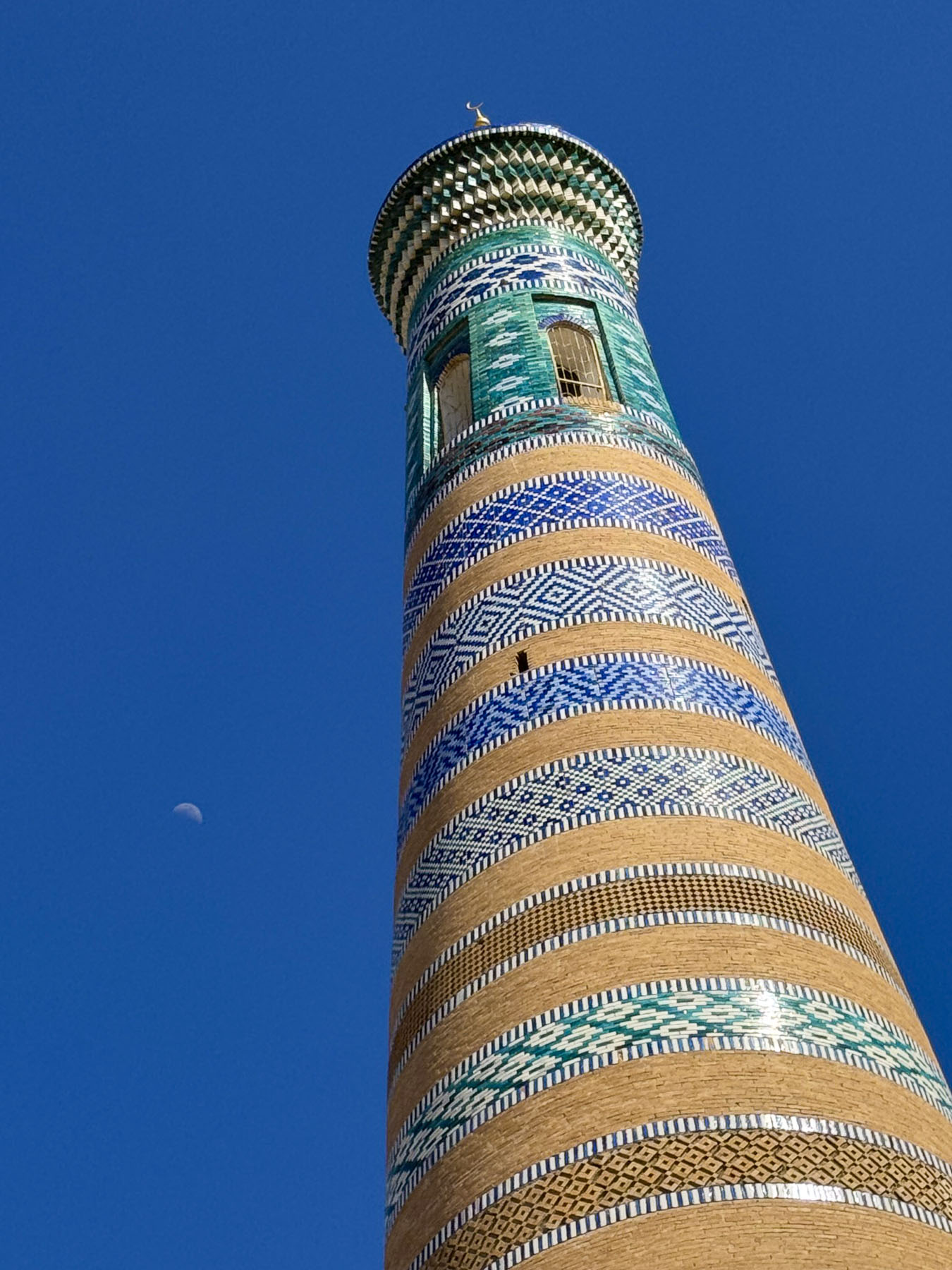
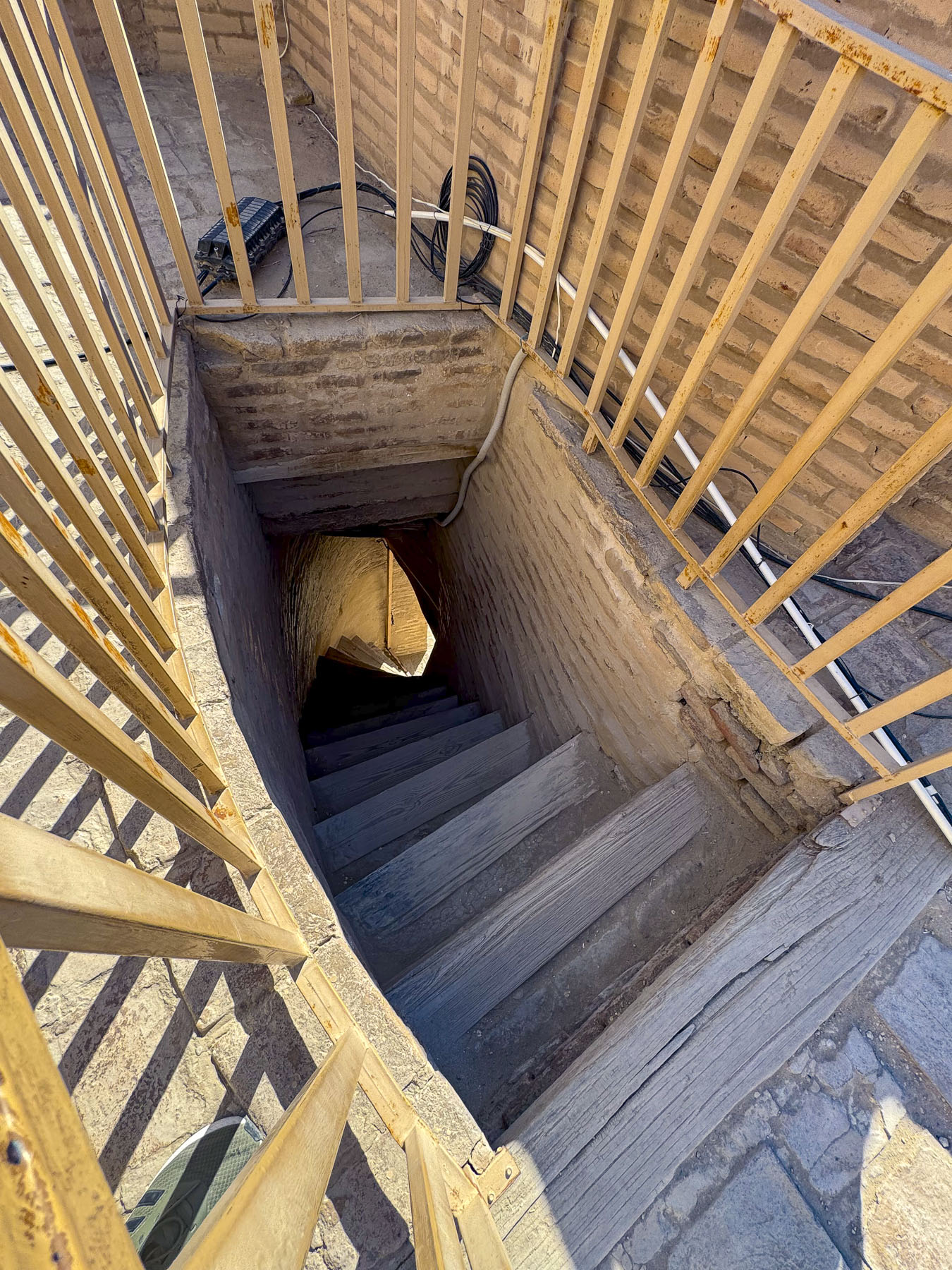
The square was lively with vacationers, tour groups, and vendors offering balloons, photo services, and souvenirs. The architectural brickwork design of the 48m (157ft) tall Kalan Minaret is amazing. The minaret so impressed Genghis Khan that he ordered his troops to spare it as they totally destroyed the rest of the city when the Mongol army sacked Bukhara. It was also known as the “Tower of Death,” where criminals, political rivals, and unfaithful spouses were marched up the 105-step spiral staircase to the open rotunda at the summit and cast to their deaths. Though there is the legend of a Khan’s wife who on the eve of her execution was granted her last wish – to wear all her dresses. “People stood breathless as the woman jumped, but then a miracle happened as her wide skirts billowed out like a parachute and she landed softly.”

Purposefully designed to rival the size of Bibi-Khanym Mosque in Samarkand, the monumental entrance arch of the Kalan Mosque opens to a grand courtyard that can hold over 10,000 worshippers and is surrounded by 208 pillar-domed galleries. At far end of the courtyard is an octagonal brick pavilion that is the tomb of a revered imam, just before the iwan, an open front vaulted room, where the minbar stood. Sadly, in 1924 the Soviet regime in Uzbekistan closed the mosque to religious use and repurposed it as a warehouse. During those years the mosque fell into neglect and wasn’t partially restored and used as a mosque again until 1991 when Uzbekistan declared its independence.

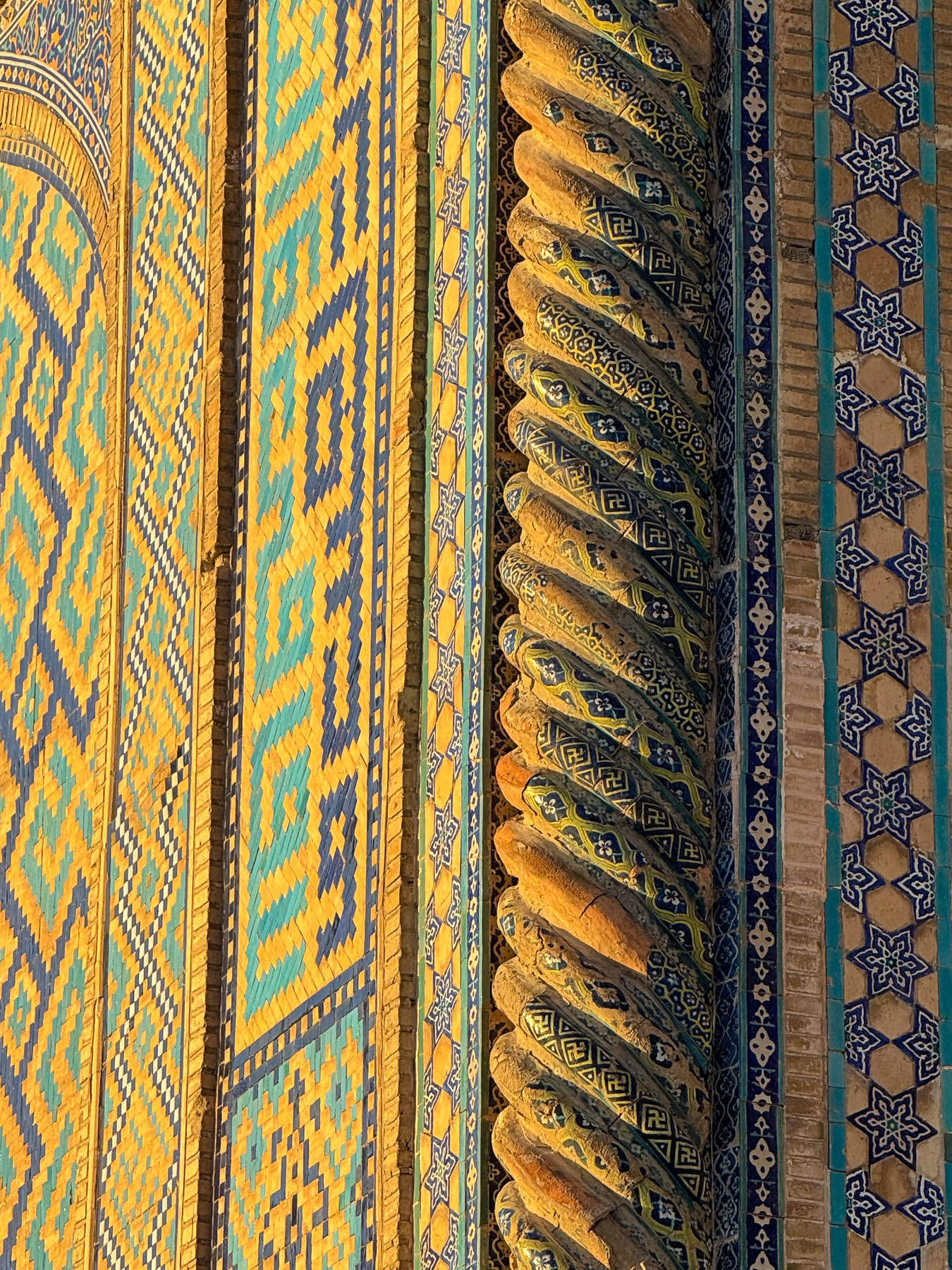
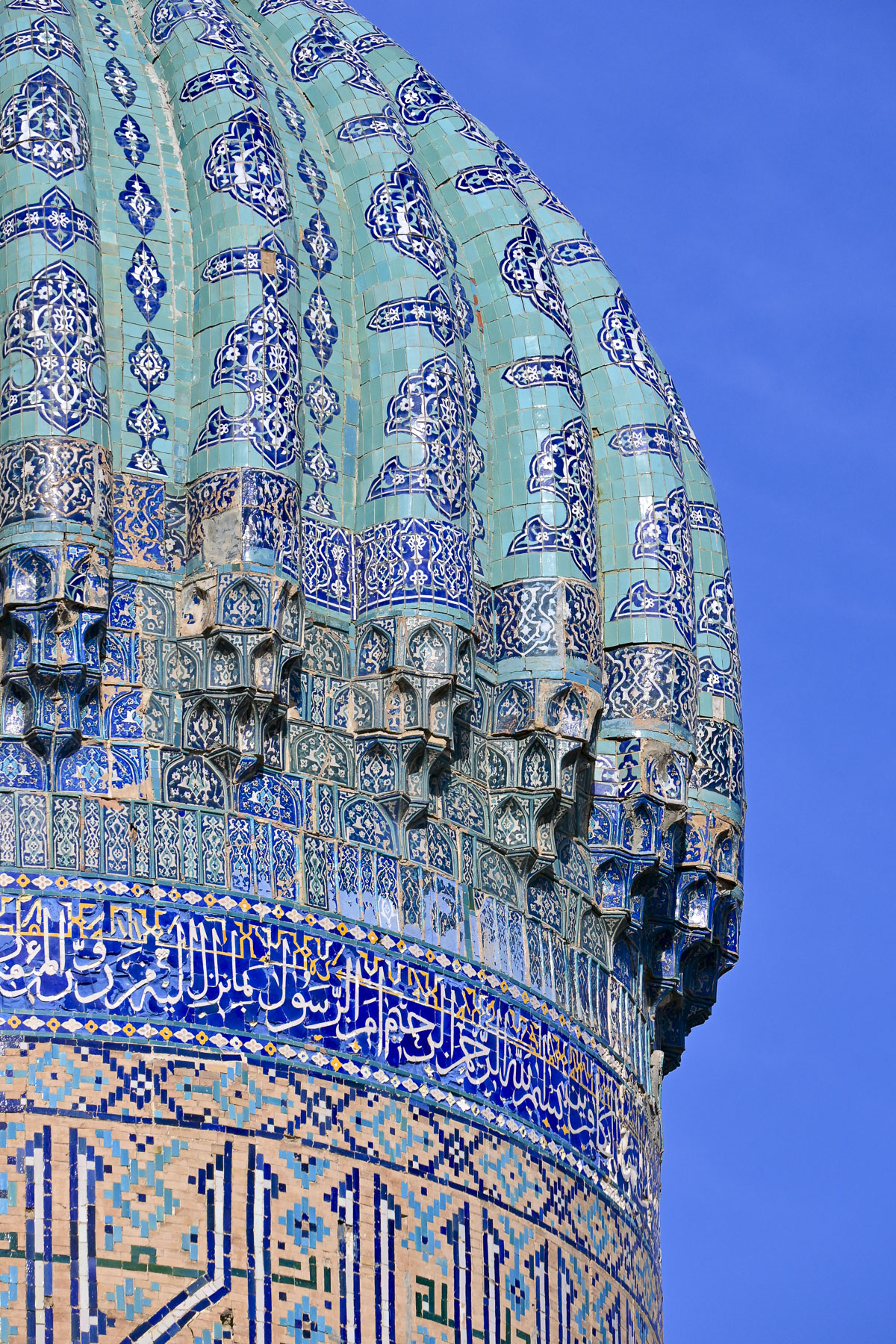
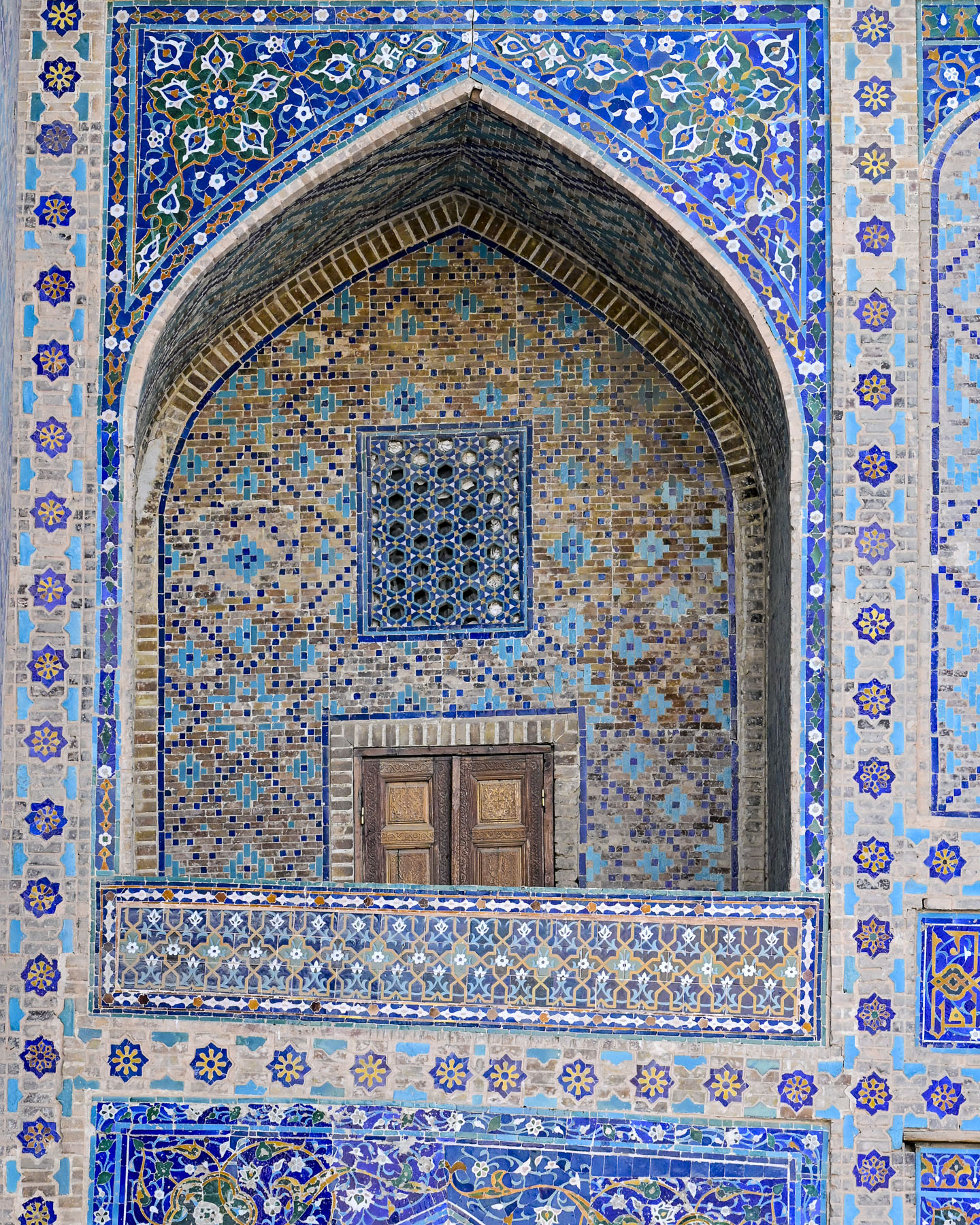
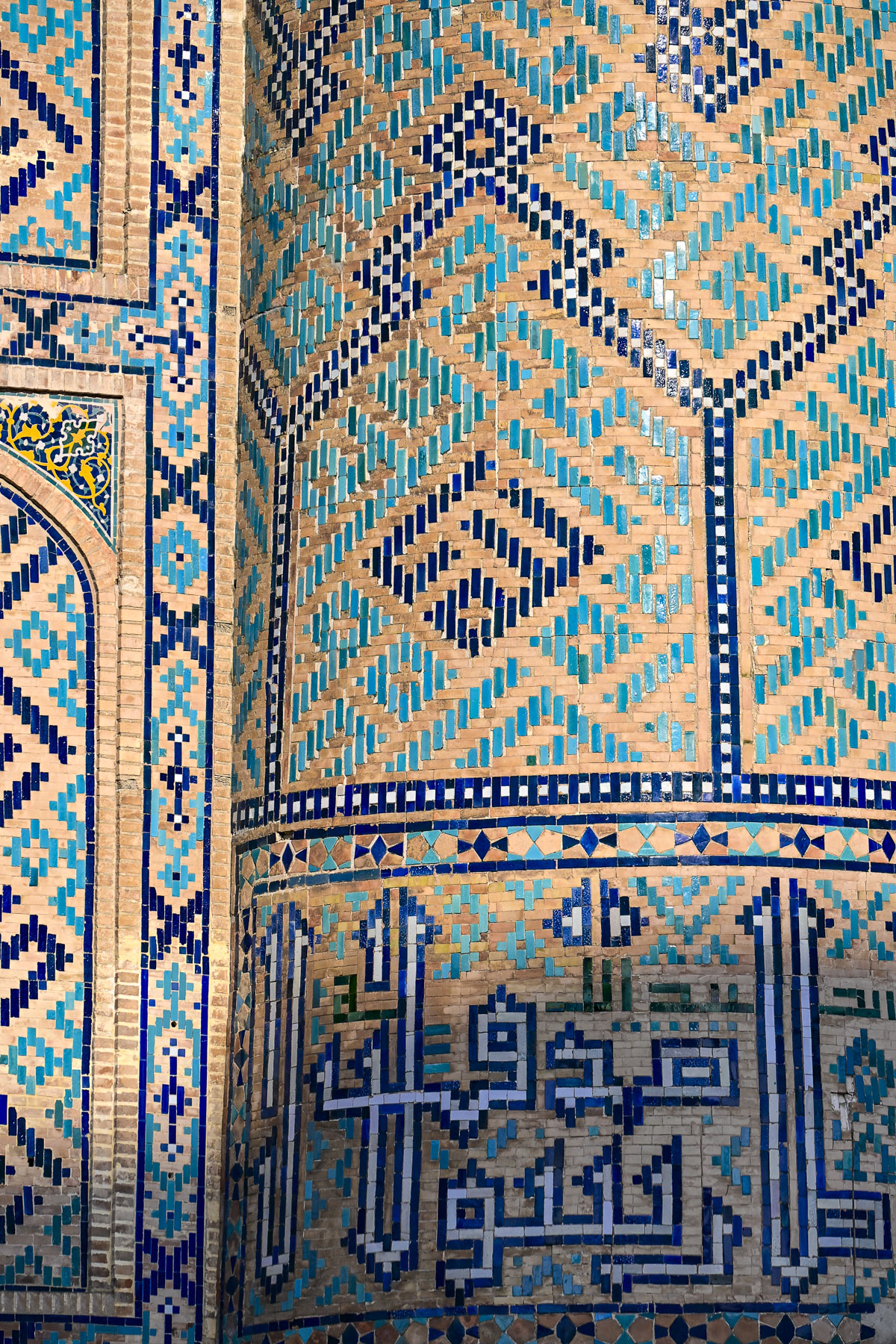
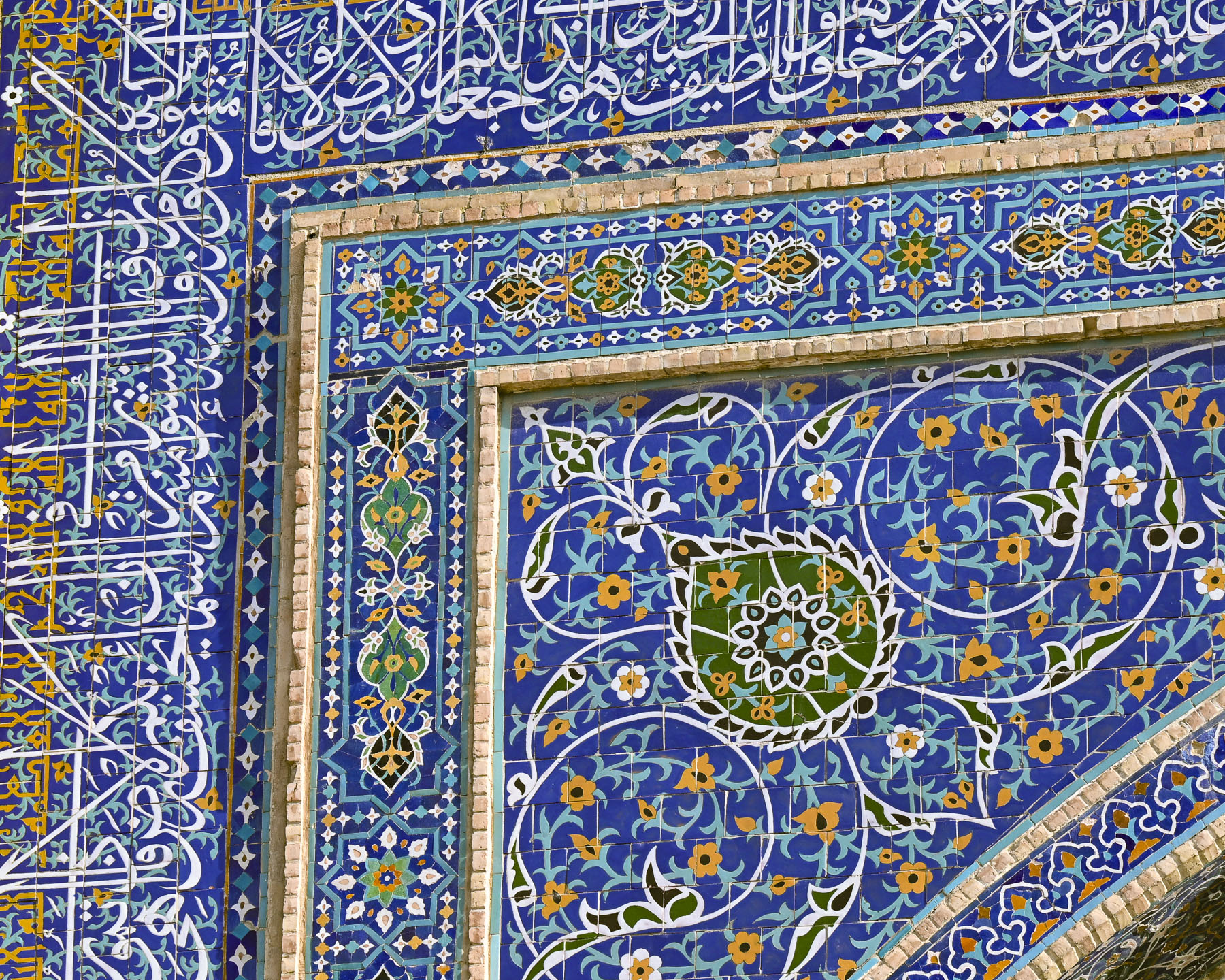
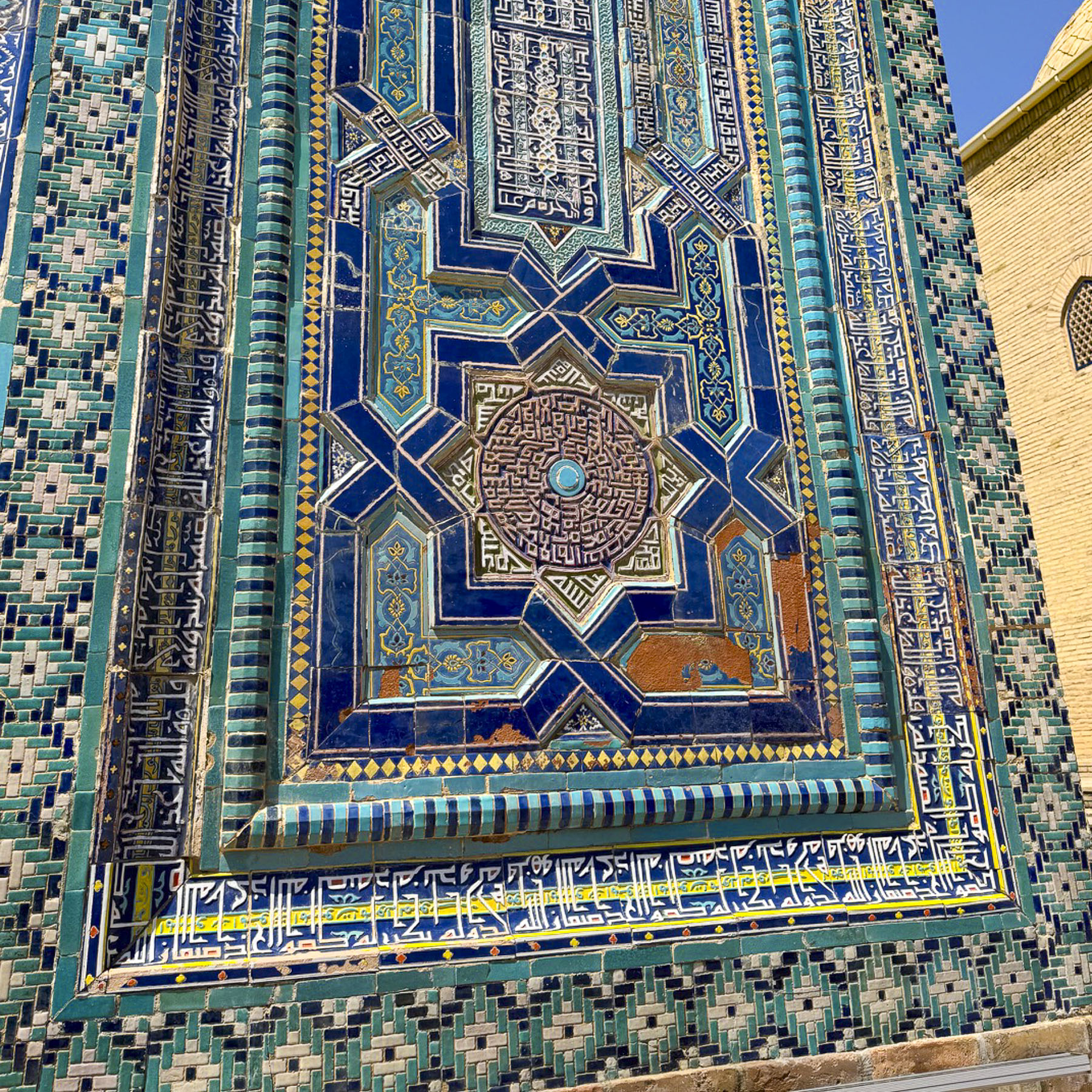
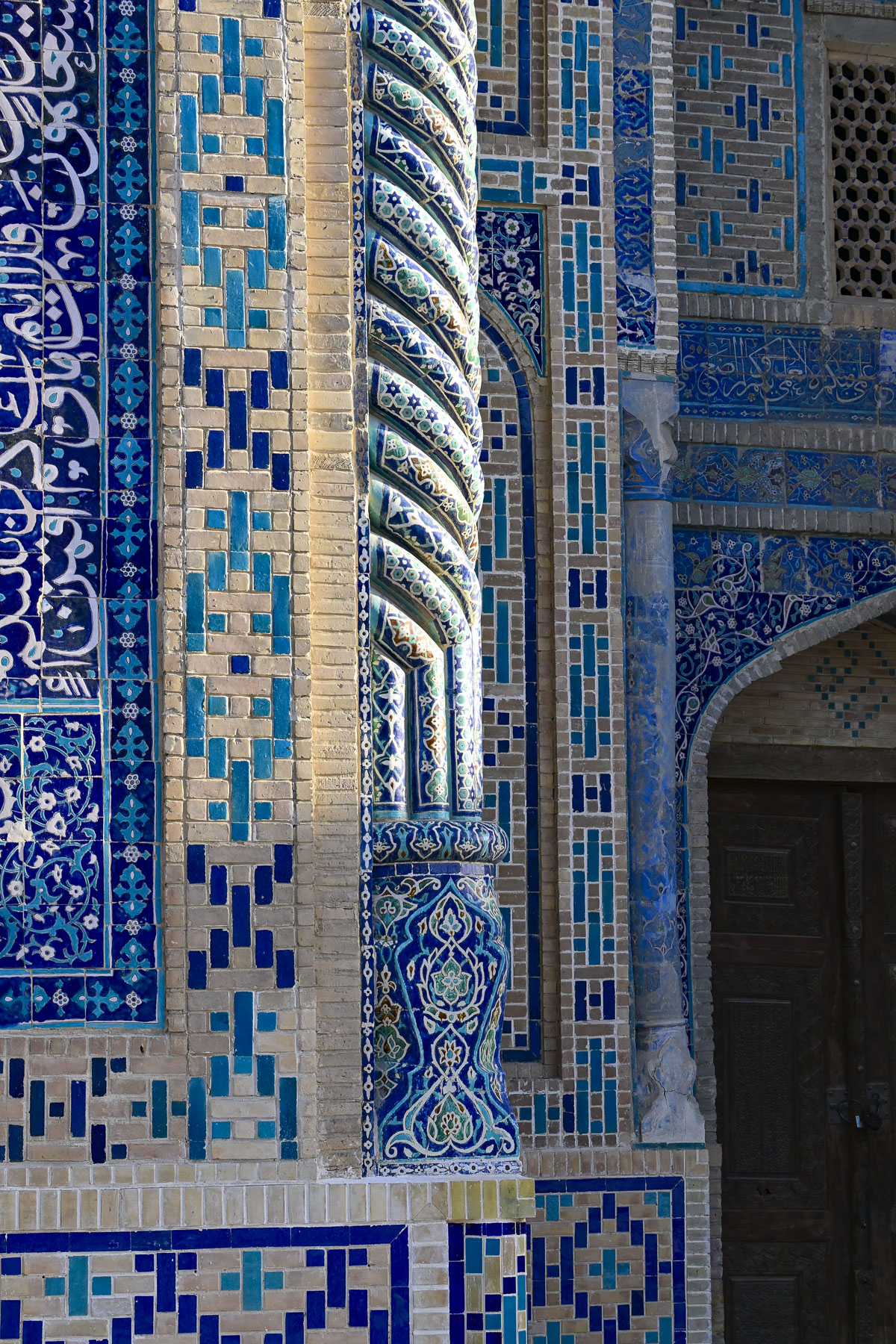
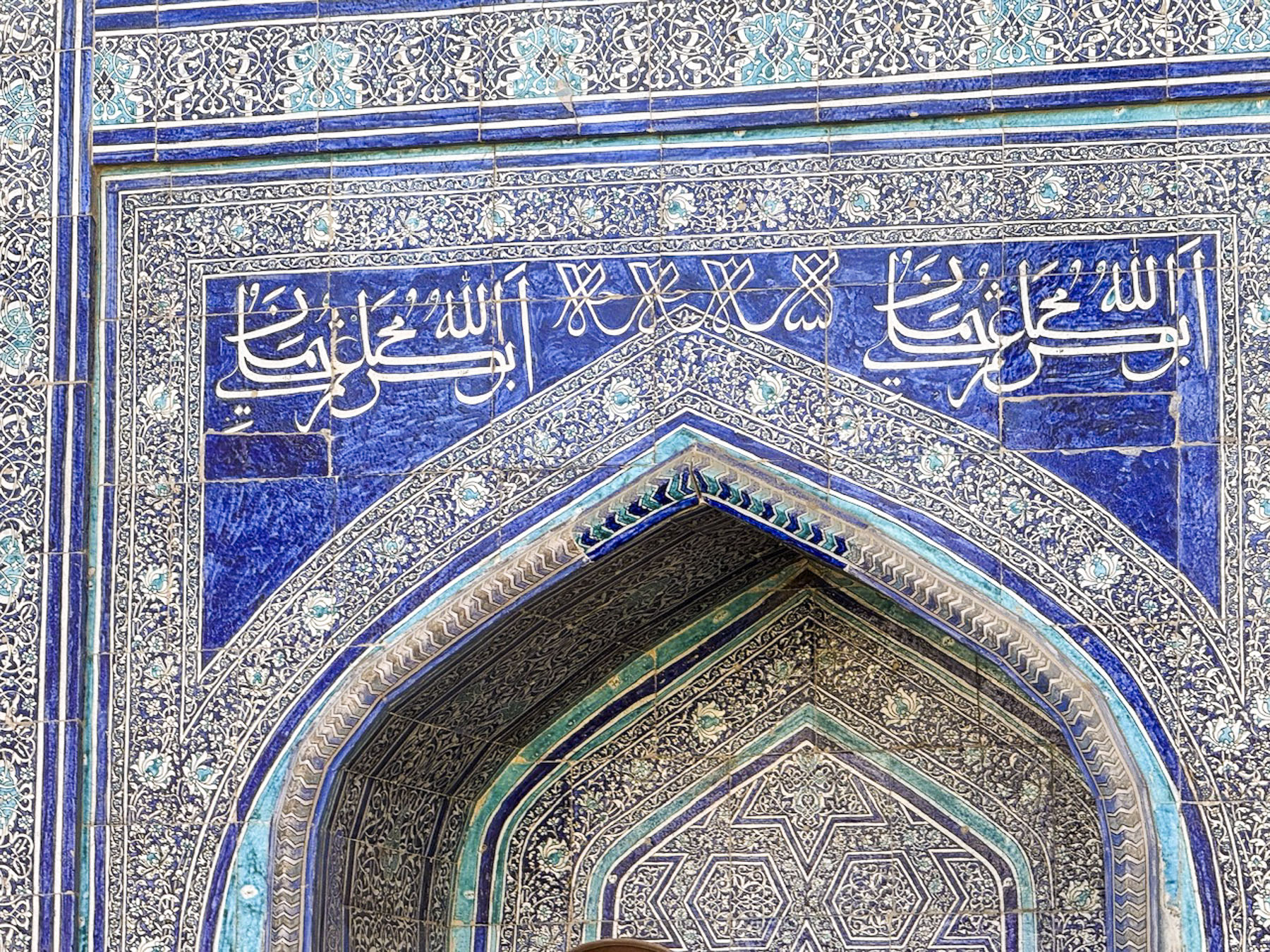
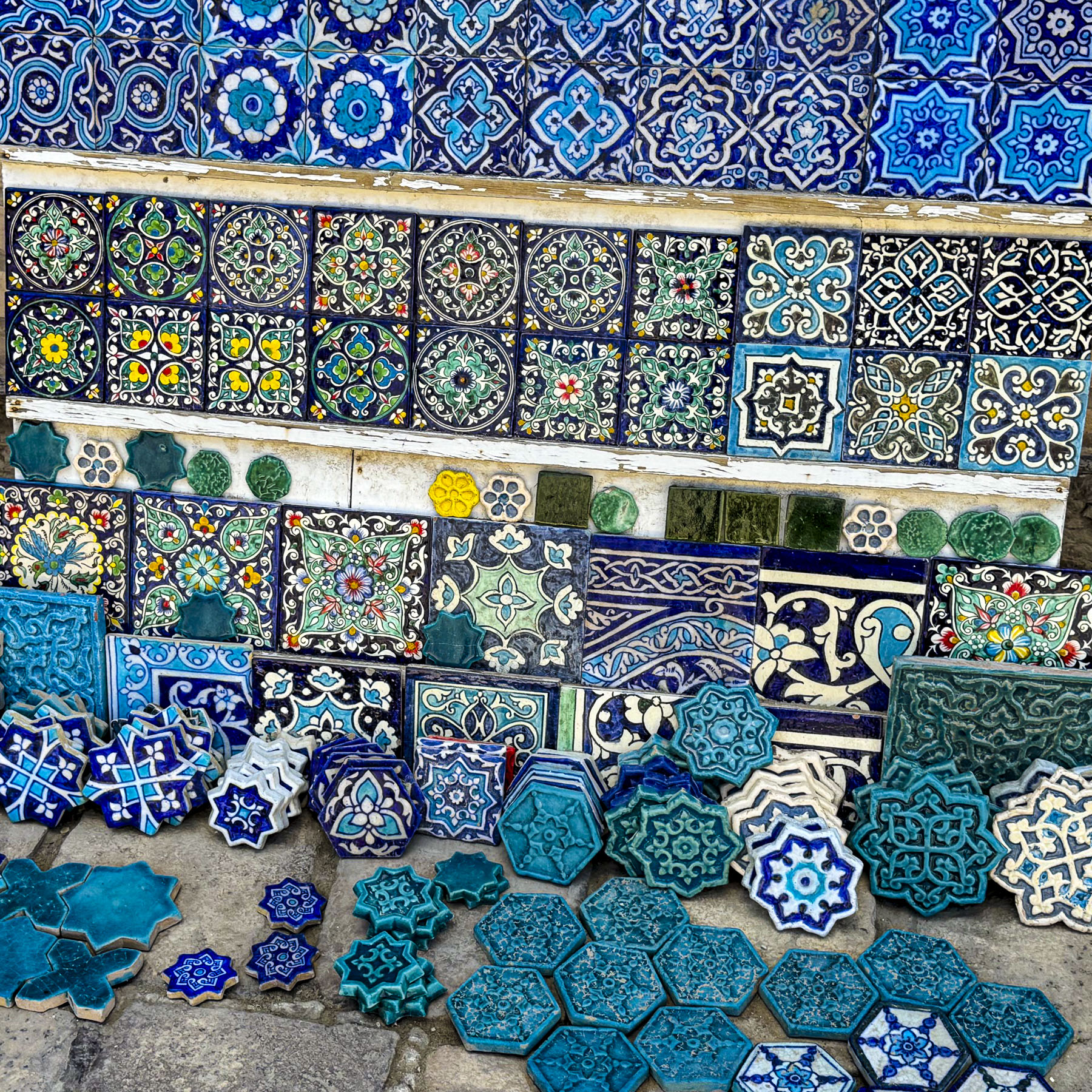
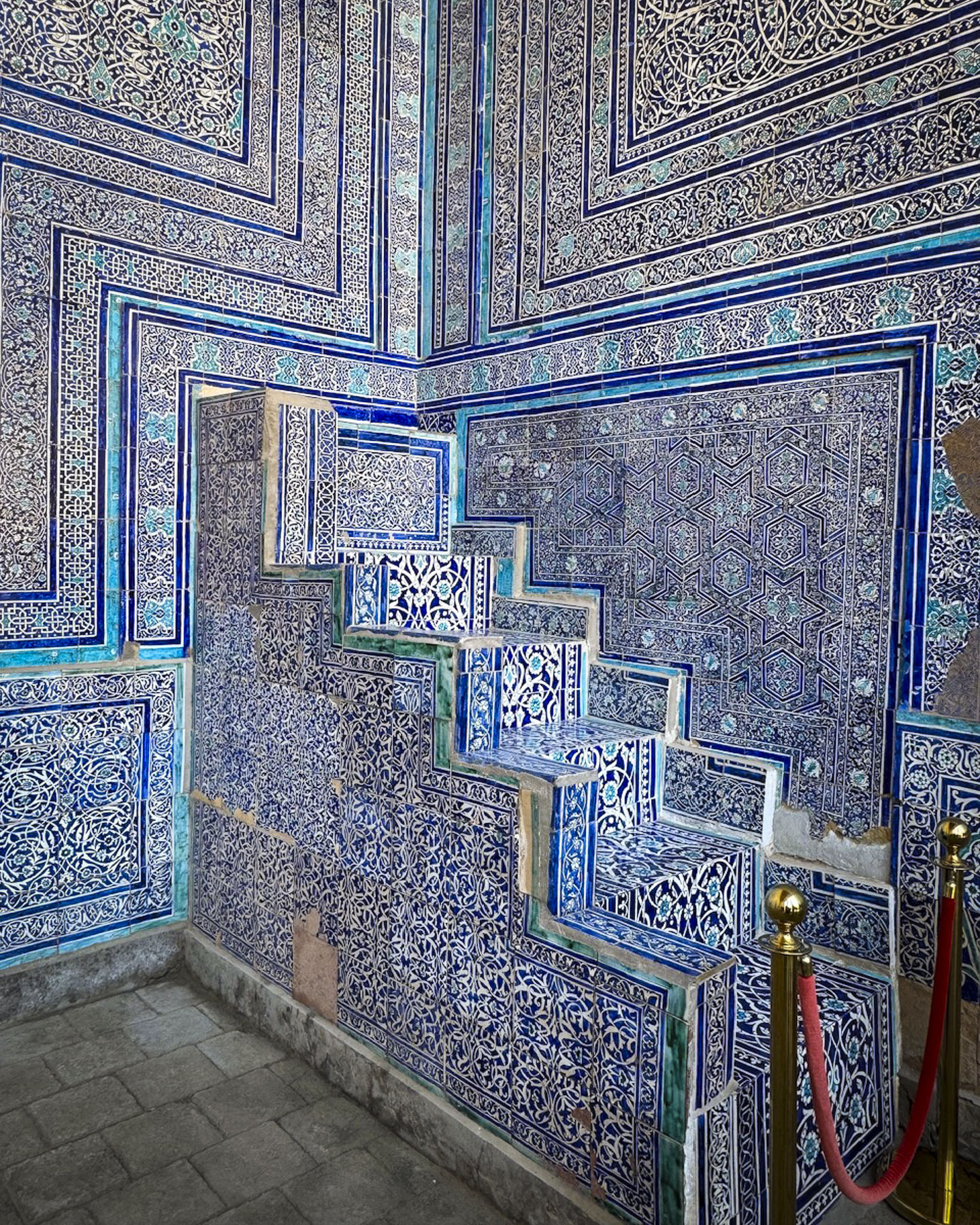
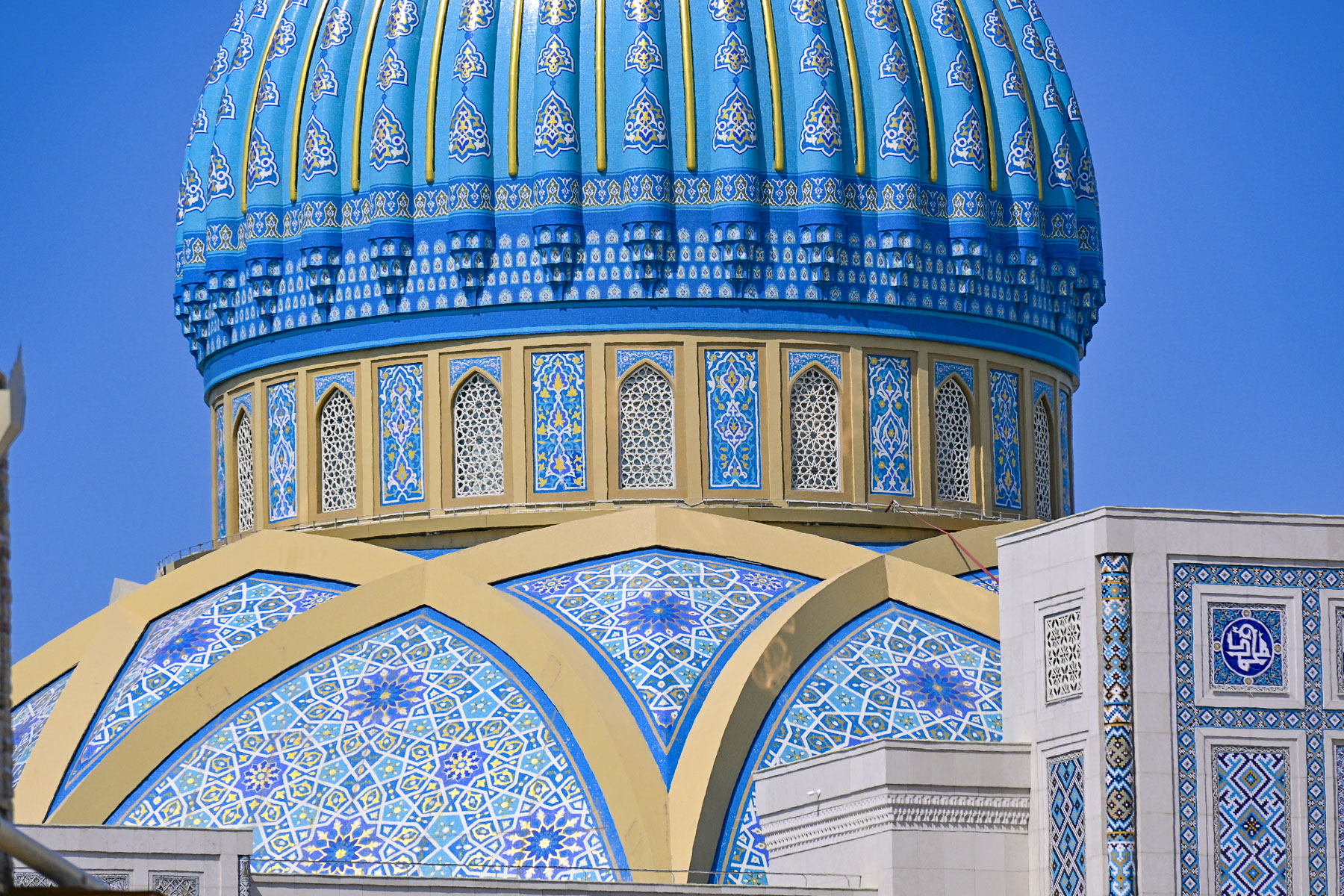
Directly across from the entrance to the Kalan Mosque were the blue domes and façade of the Miri Arab Madrassah covered with fascinating intricate tile mosaics featuring geometric, vegetative, and calligraphic patterns. Some historians suggest that the madrassa was built to commemorate Bukhara’s decisive victory over Persian troops at the Battle of Gijduvan in 1512, and that the ornate craftsmanship throughout the building was financed by khanate when it sold 3000 captured Iranians into slavery.  The school was closed for 25 years after the Soviet Union took control of Uzbekistan, but was reopened in 1945 when the USSR government granted permission to the Miri Arab Madrassah to be the one official Islamic educational institution for Muslims within Soviet Union, hosting students from different regions across Central Asia, the Caucasus, and Russia. Today about 56 new students a year are accepted into a 4-year course of study to become an imam.

Dinner later on the rooftop terrace at Kazan was a charming and unhurried experience and we lingered, watching the color of the golden hour across the plaza transition to twilight, as the size of the crowd on the plaza ebbed and flowed. The food was excellent. Unfortunately, as a functioning school, the restaurant does not permit tourists inside, but occasionally folks are allowed to step into the entrance portal and view the entry hall. However, during our research we found this interesting video tour of the Miri Arab Madrassah’s interior.

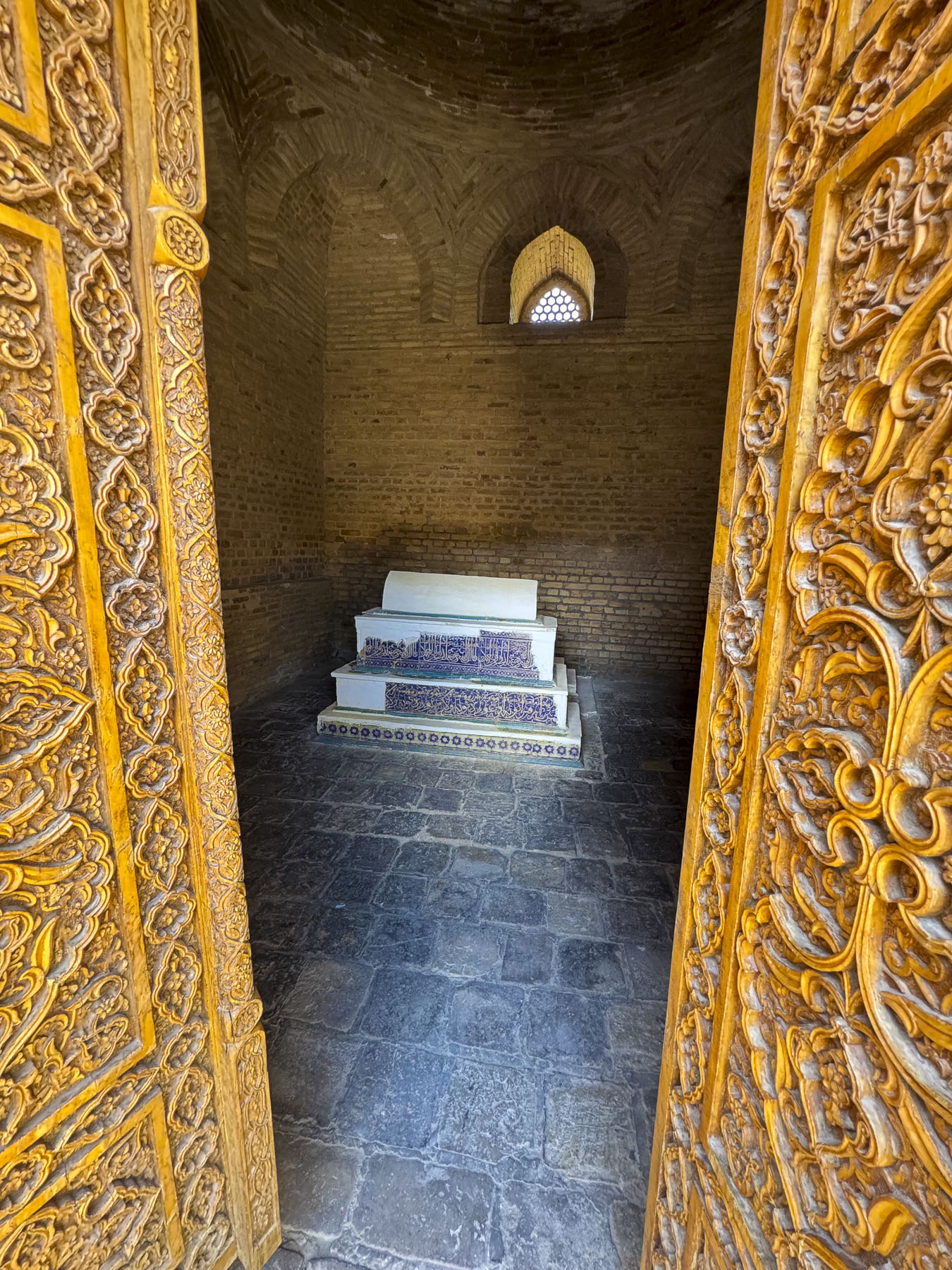
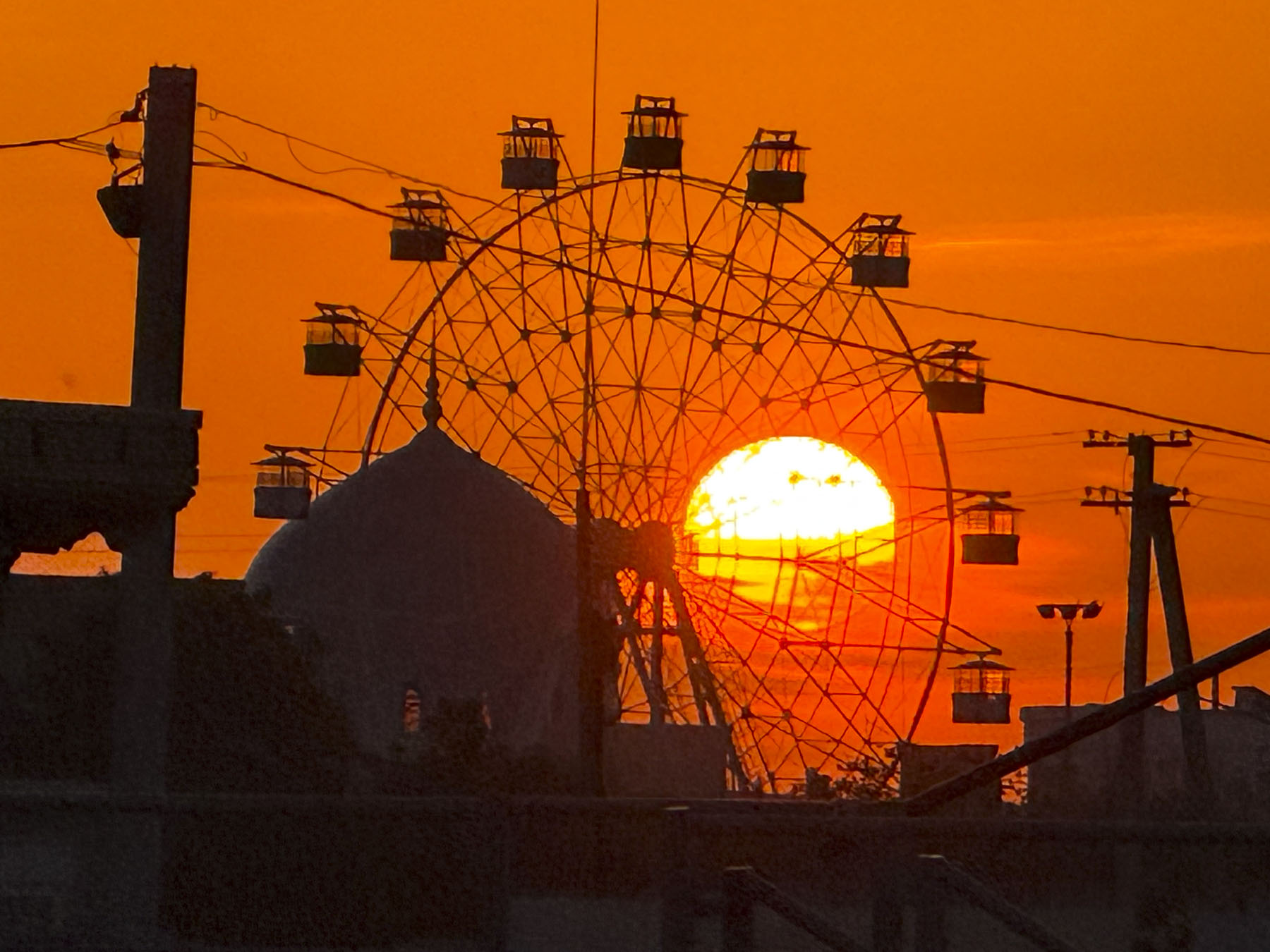
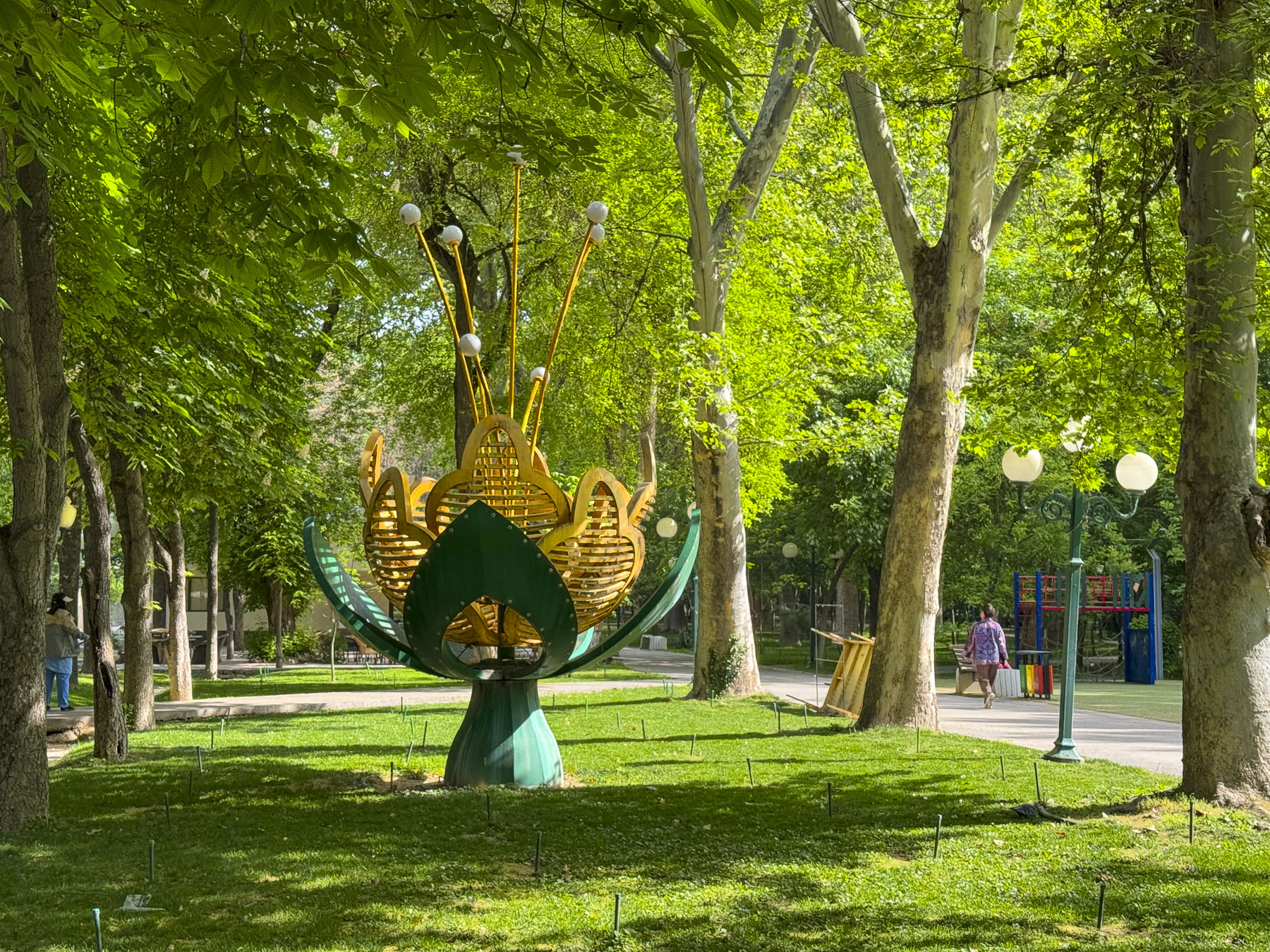
The next morning our group headed to Samonids Park, a large lush green park with a Ferris wheel and other amusement park rides, as well as shaded walkways through a nicely manicured landscape, on the outskirts of the historic area. We followed our guide down one of these lanes to the Mausoleum of Ismail Samani, the founder of Bukhara’s Samanids dynasty, (875-999).

The mausoleum is a highly decorated beautiful small structure, with all of its exterior and interior walls covered with intricate symbols and geometric relief patterns that resemble the design of woven textiles and basketry. It’s an effect that gives the building a highly textural feeling. The mausoleum is considered a masterpiece of early Islamic architecture. Through fate or luck, it is the oldest surviving Islamic structure in Bukhara, having been entombed in silt from repeated river flooding or, as legend believes purposely buried in sand to prevent Genghis Khan’s Mongol army from destroying it in 1220. Amazingly it stayed buried until Soviet Union archeologists rediscovered it in the late-1920s and found it in surprisingly good condition, due to the fact that it was entirely constructed with kiln-baked bricks, that resisted the erosive effect of repeated flooding.

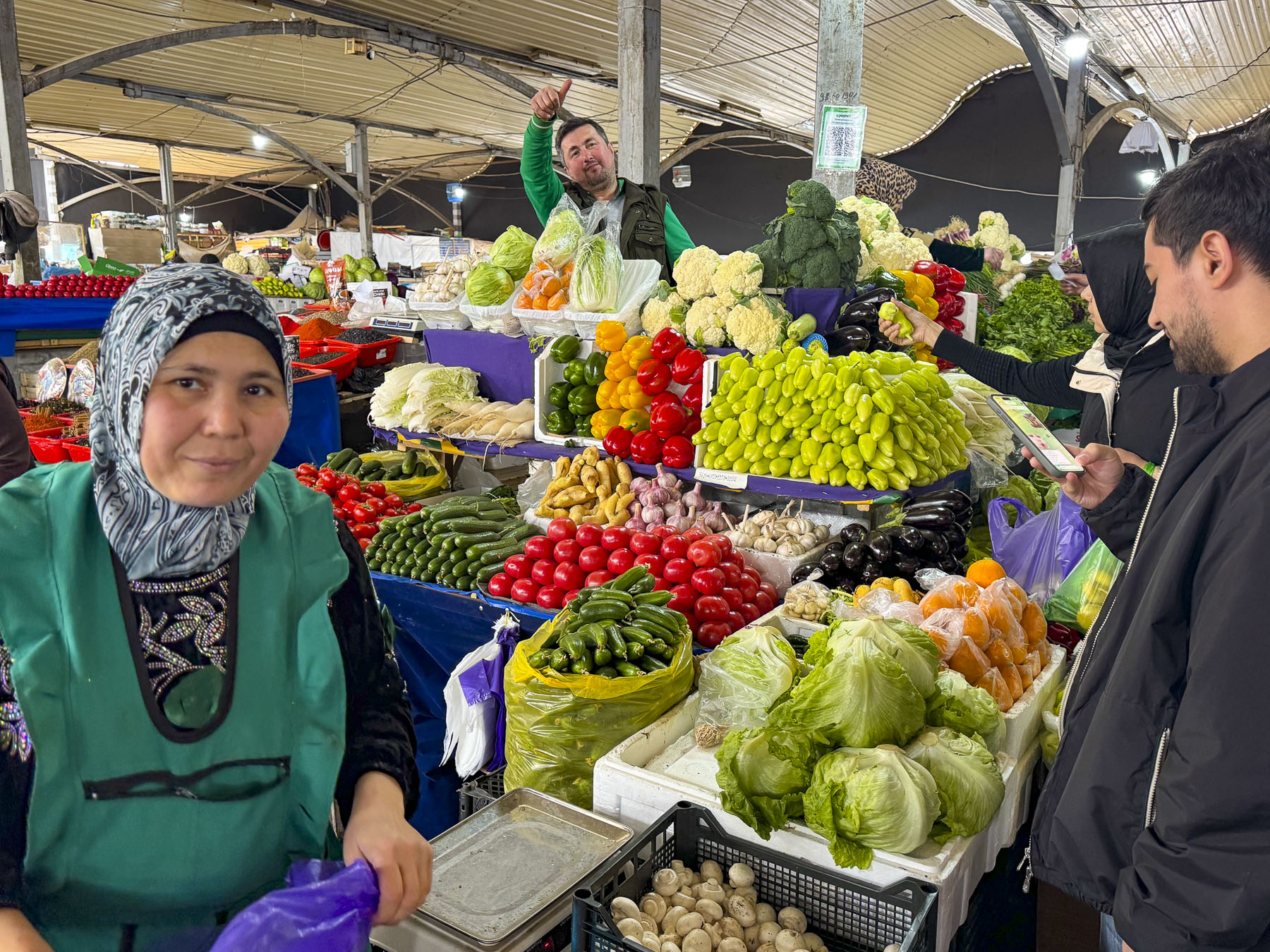
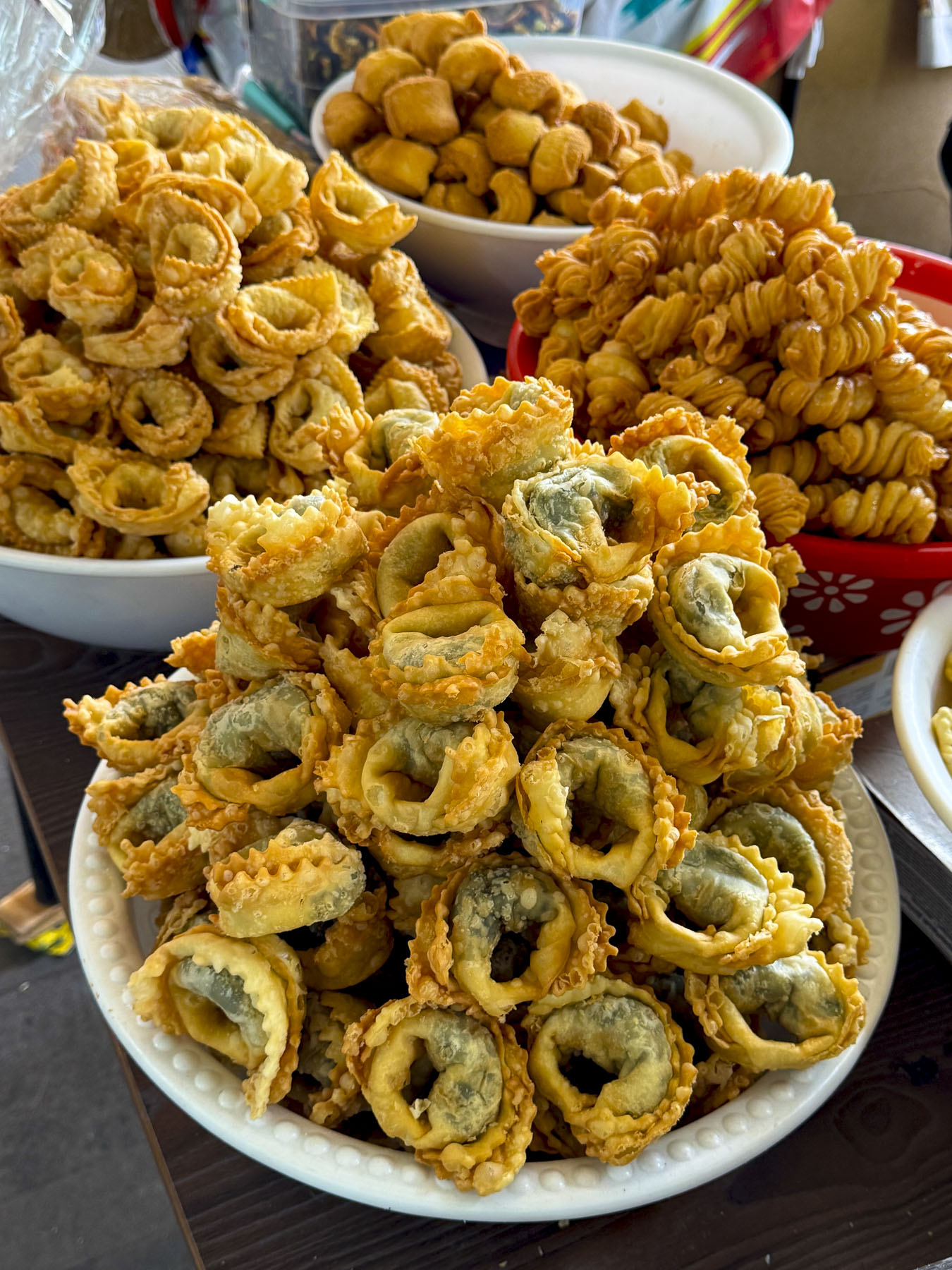
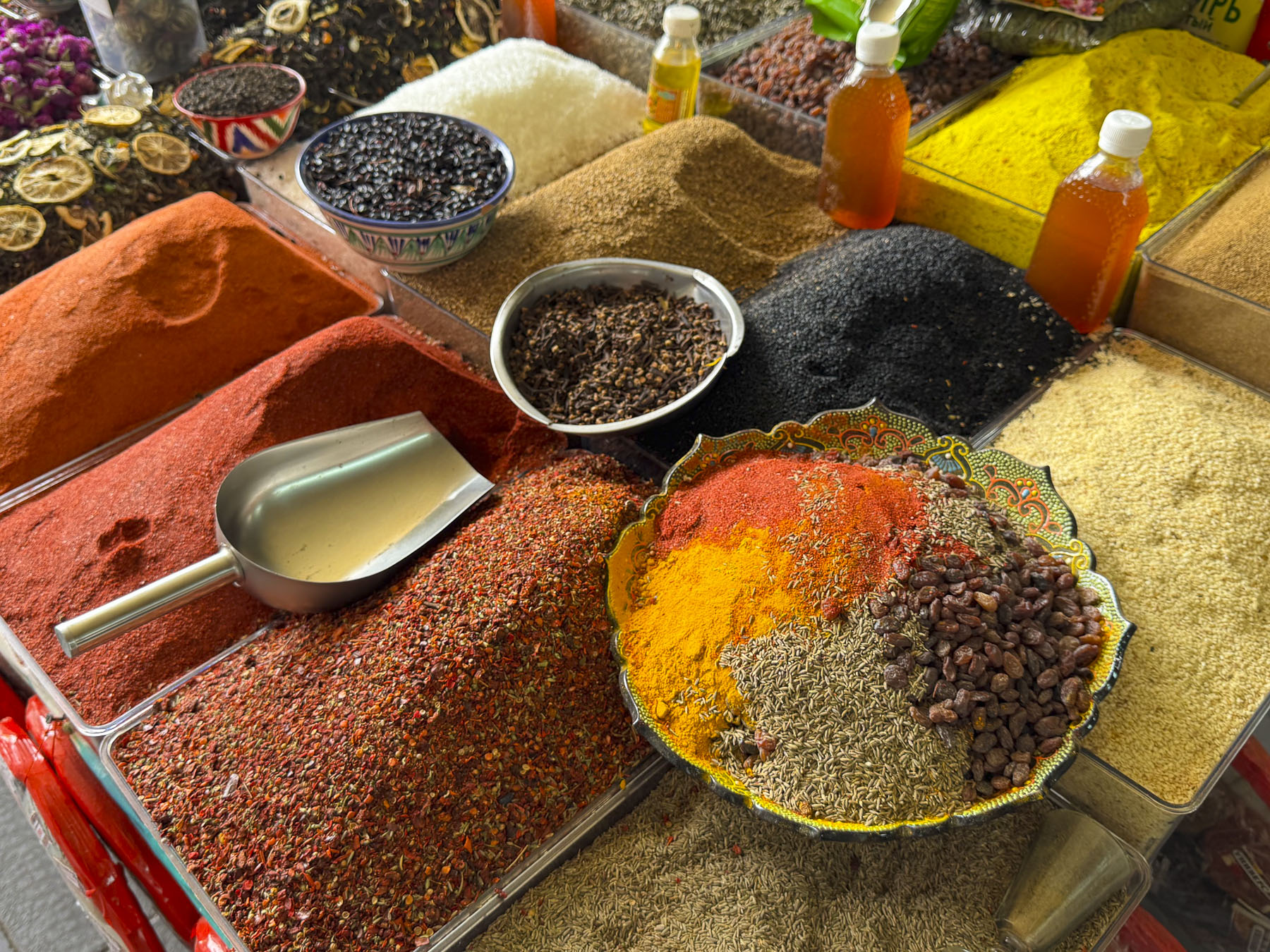
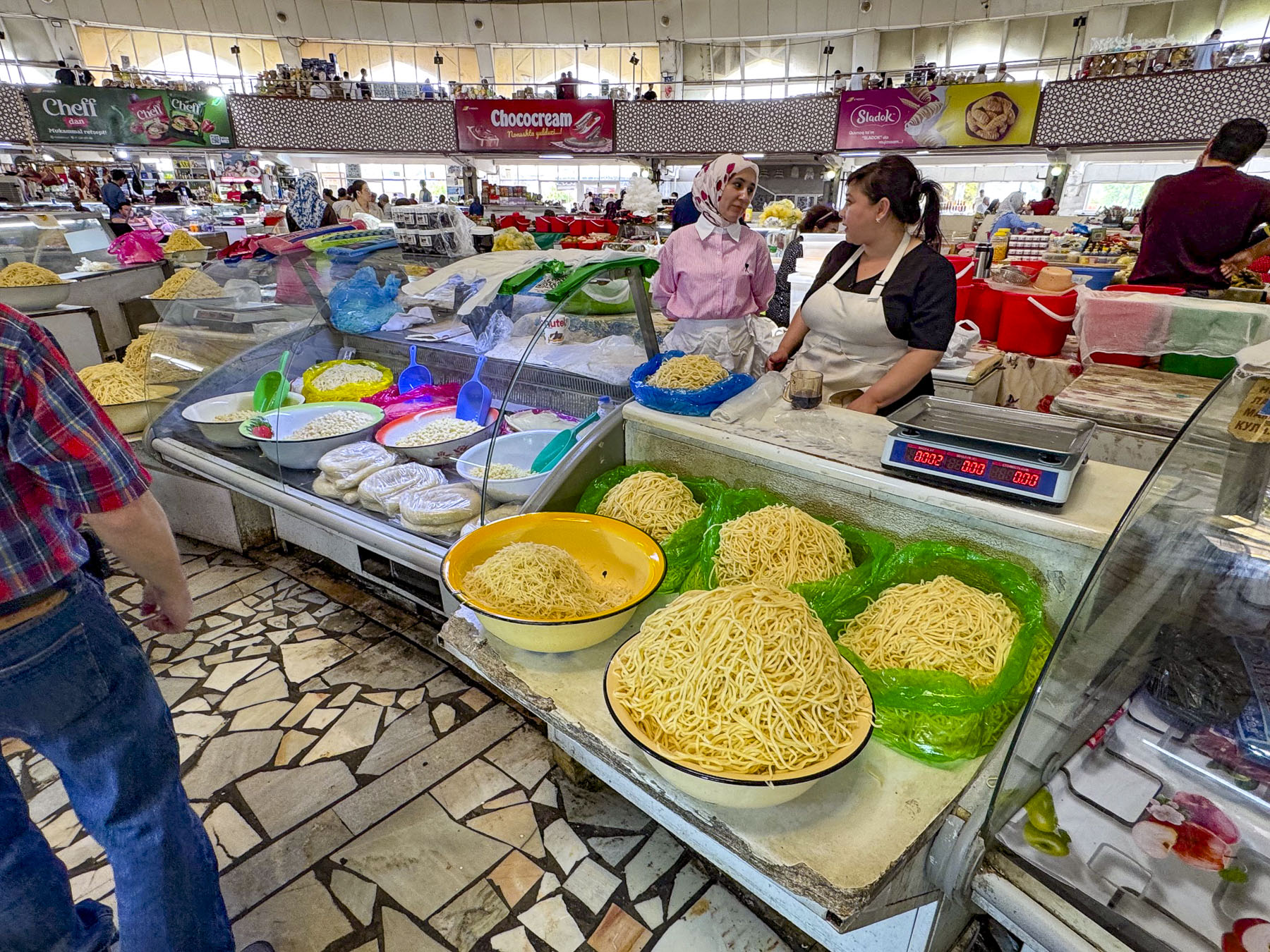
Our tour continued through the park to the adjacent Markaziy bazaar, Bukhara’s central market. It’s a substantial complex with several halls and numerous vendors displaying their foodstuffs and offering samples. It is best described as a gauntlet of temptations.

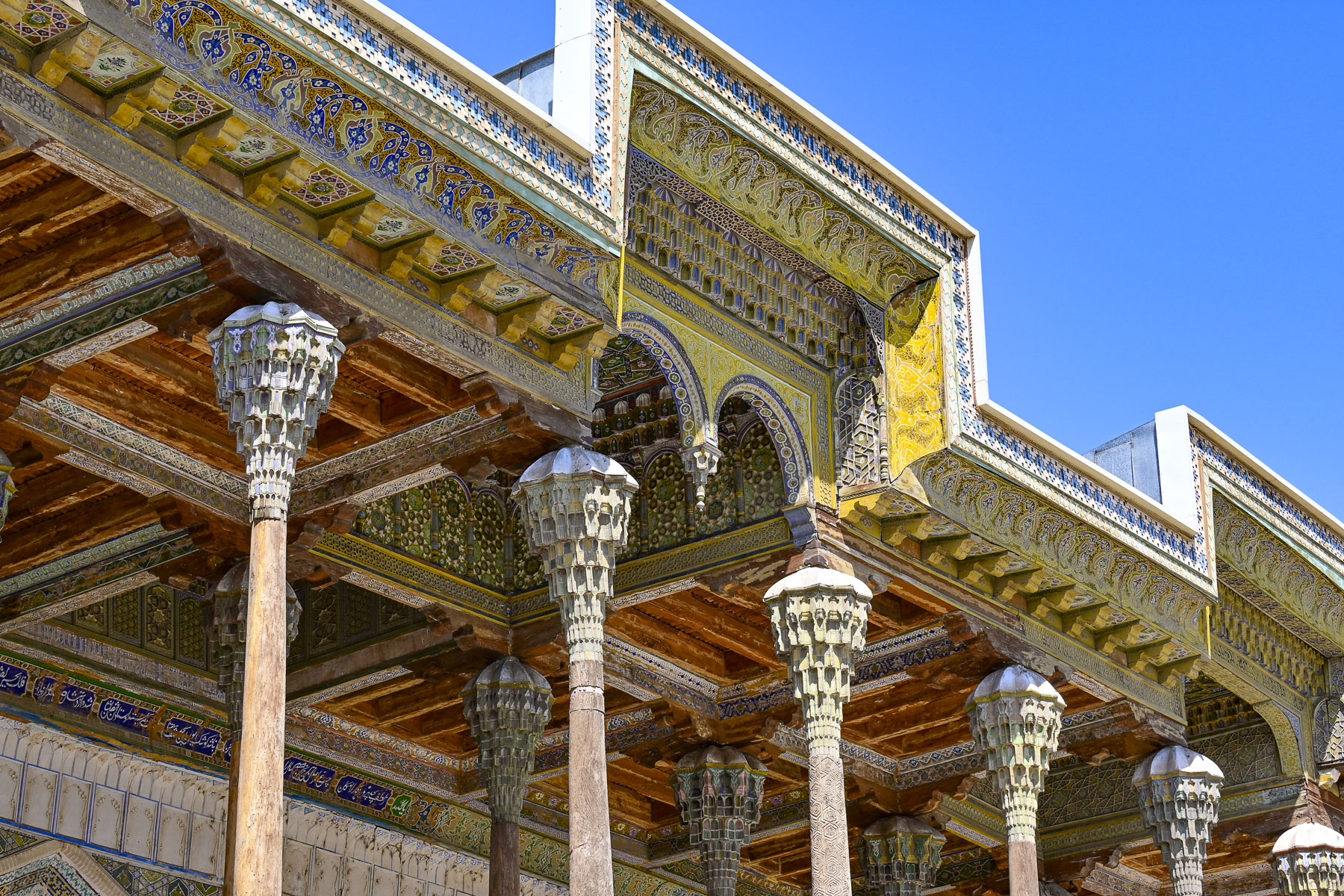
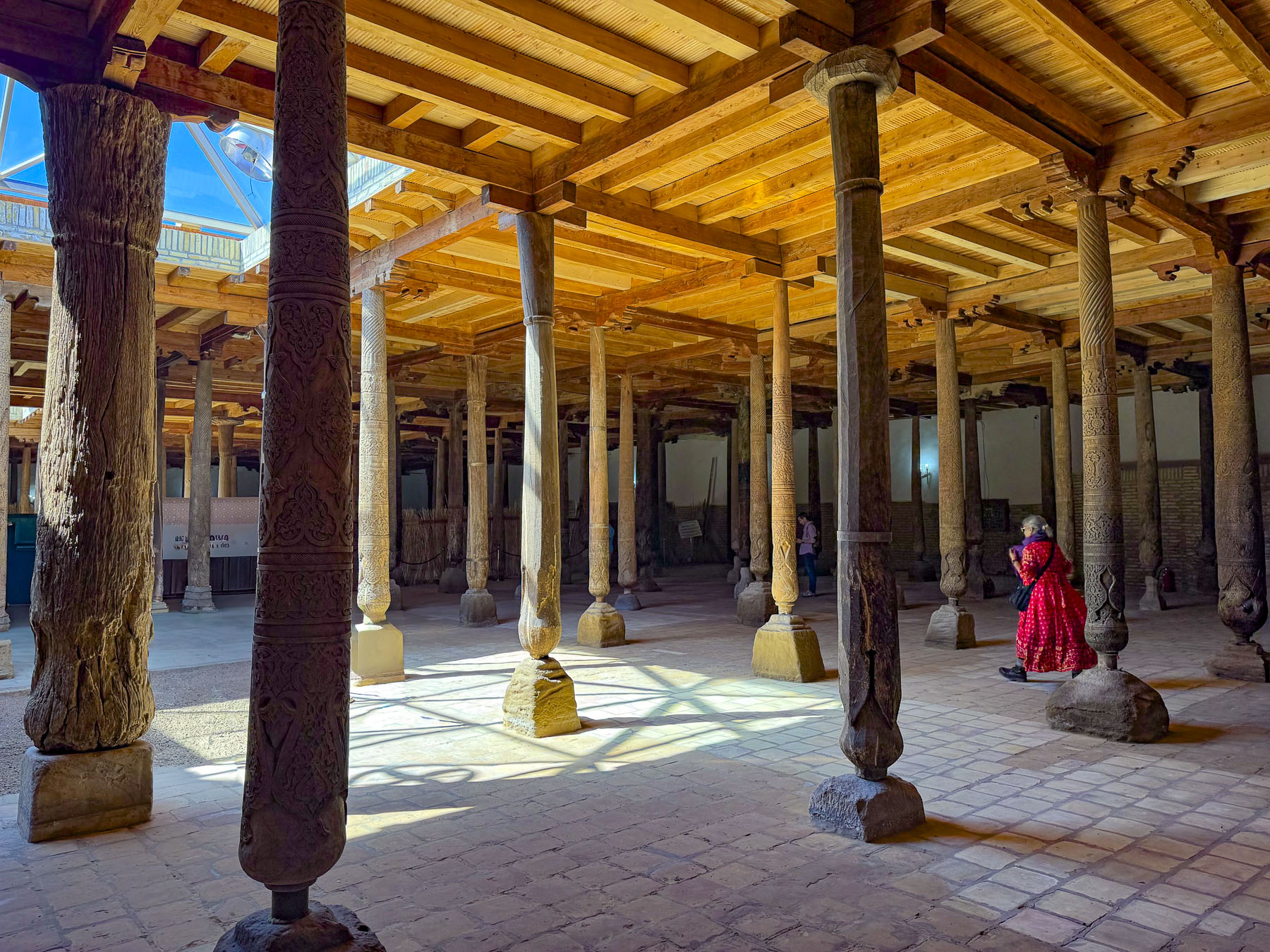
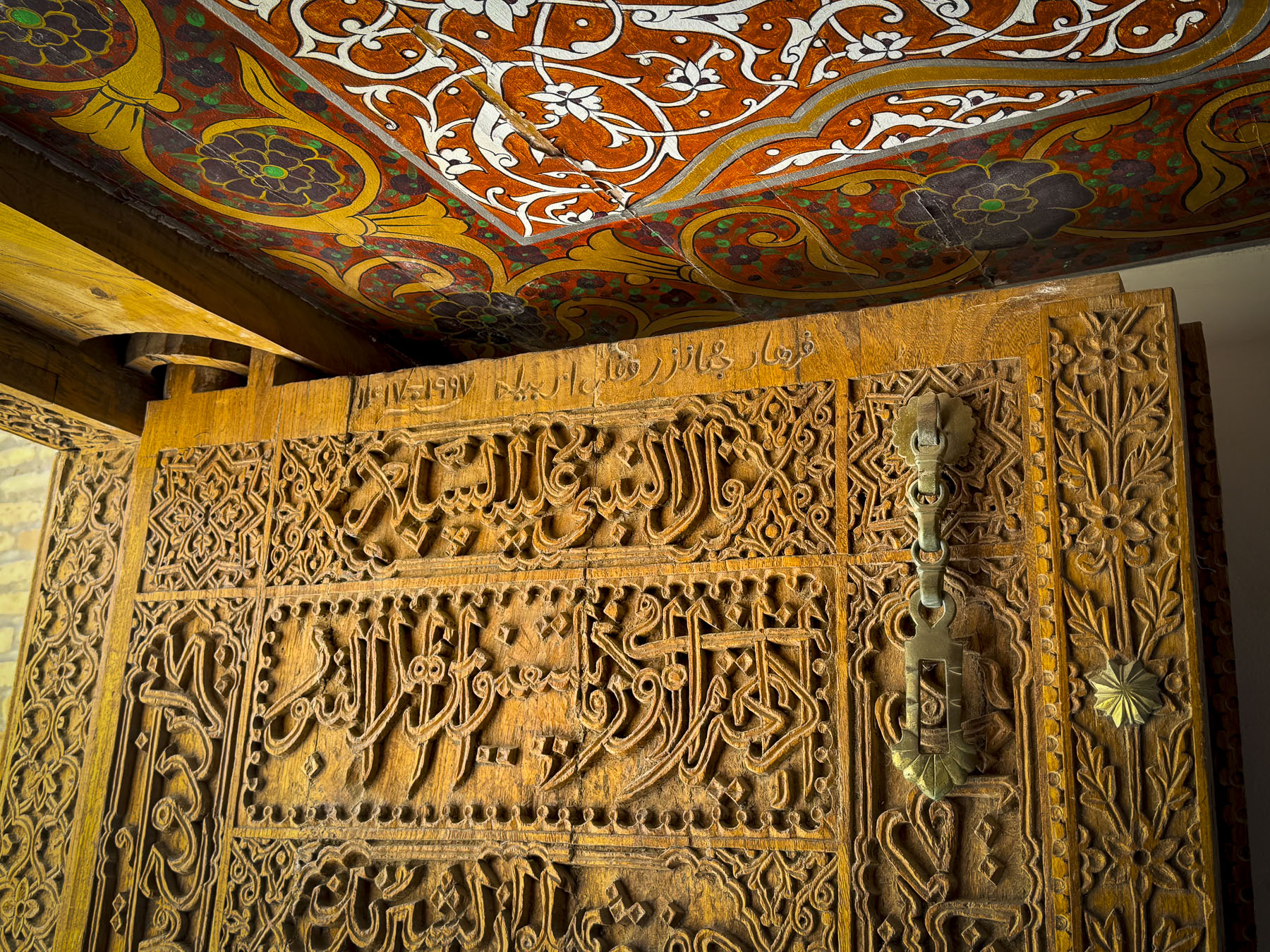
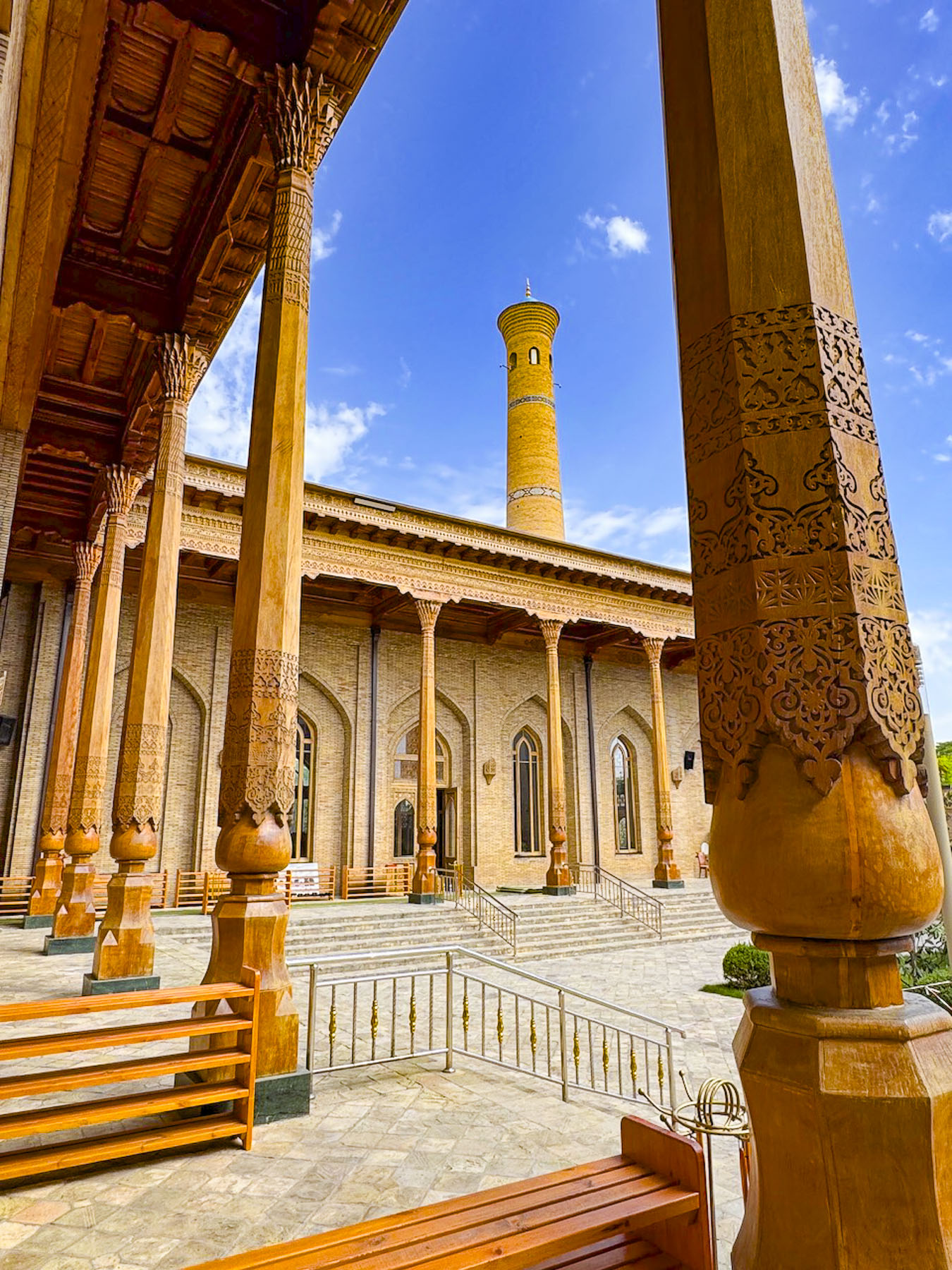
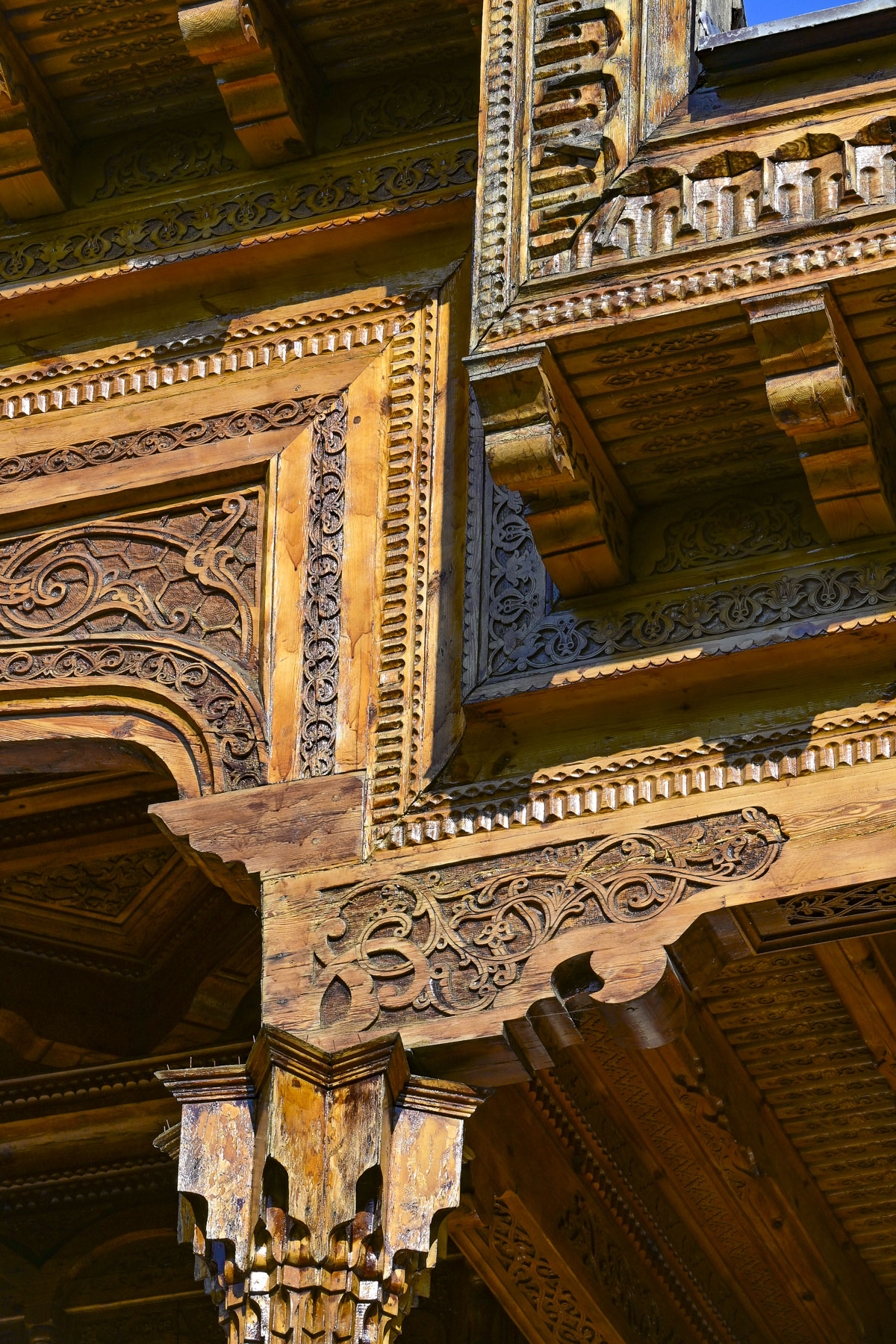
Continuing on we came to the Bolo Hauz Mosque, built in 1712 across from the Ark of Bukhara. It was the official mosque of the emirs of Bukhara until the Soviet Union took over Uzbekistan. With the addition of an ornate 20-pillar wooden portico called an iwan in 1917, the mosque has a unique non-traditional façade. We had seen iwans earlier during our stops at the royal palaces in Khiva, where they were in the private courtyards, not on the front of a mosque. But it’s the perfect addition to accommodate worshippers in the hot summers.

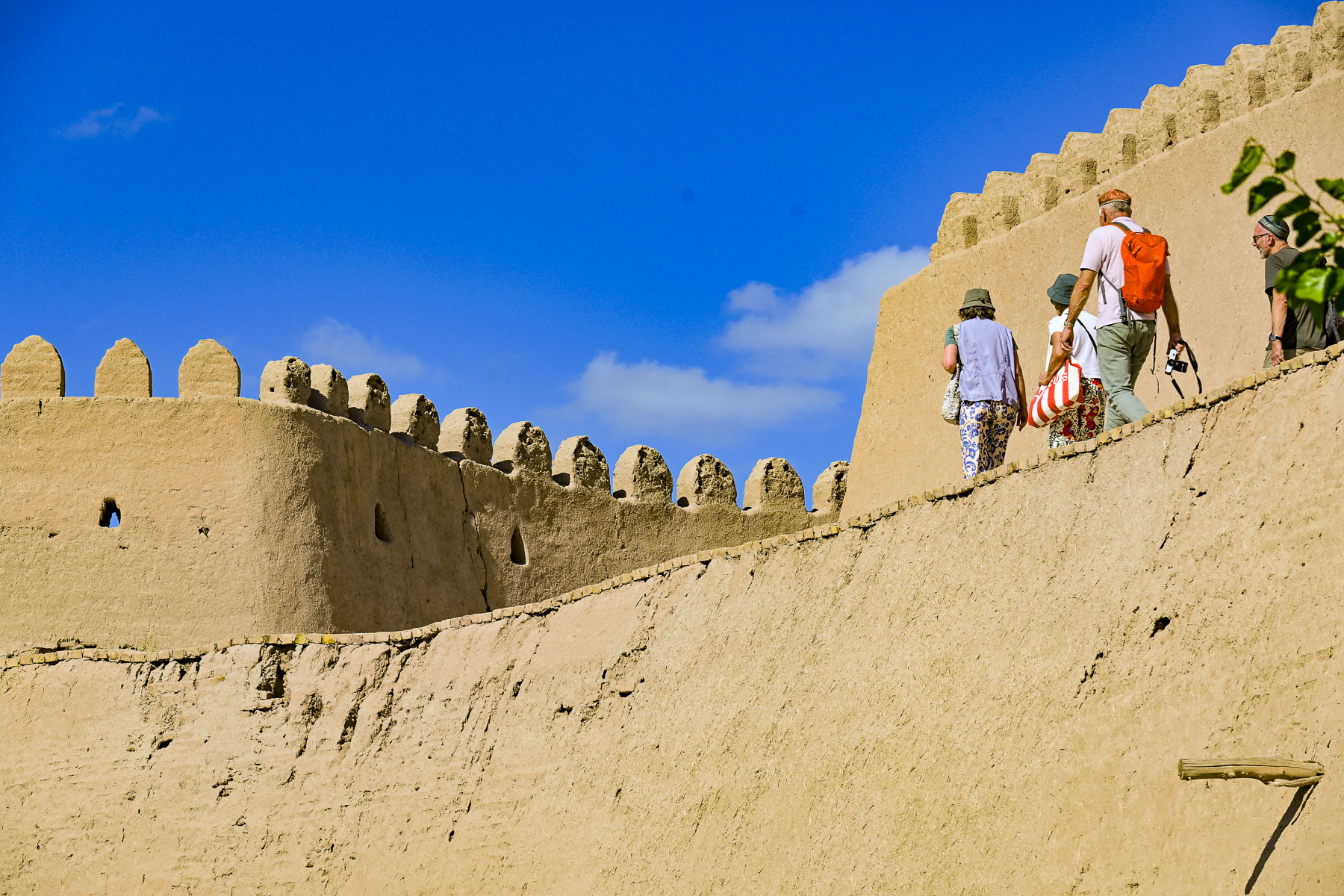
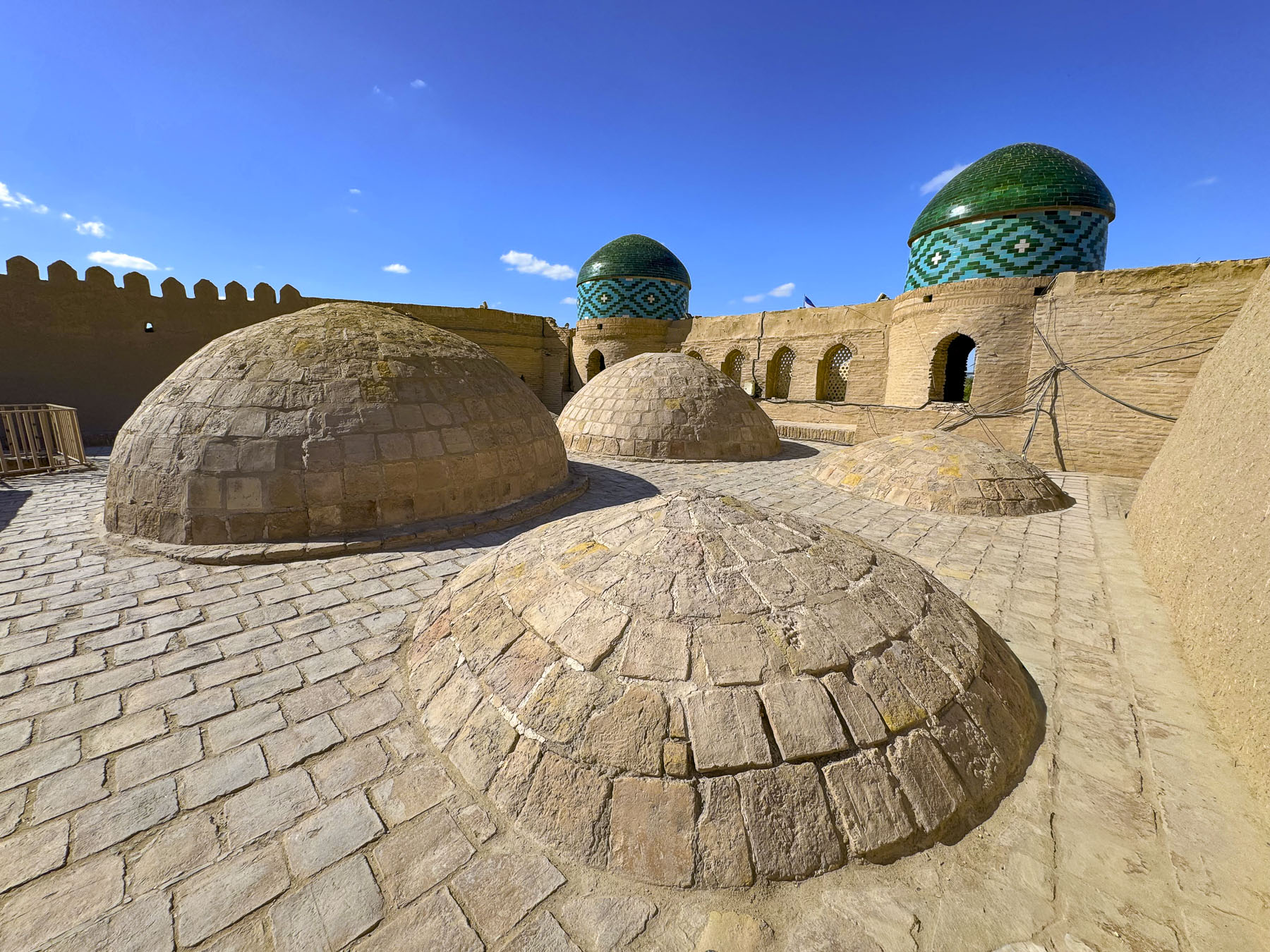
The Ark of Bukhara was a heavily fortified citadel and palace within the extensive defensive wall that ringed the city. It enclosed the royal courts, living quarters and throne rooms of the Emirs. Along with housing for around 3,000 people, it also had mosques, a mint, a treasury, and a prison.

The unique shape of its curved towers and ramparts has been meticulously preserved and today the inner rooms of the palace are a museum detailing the city’s history. The view from the defensive wall back towards the Poyi Kalon Complex was also striking.

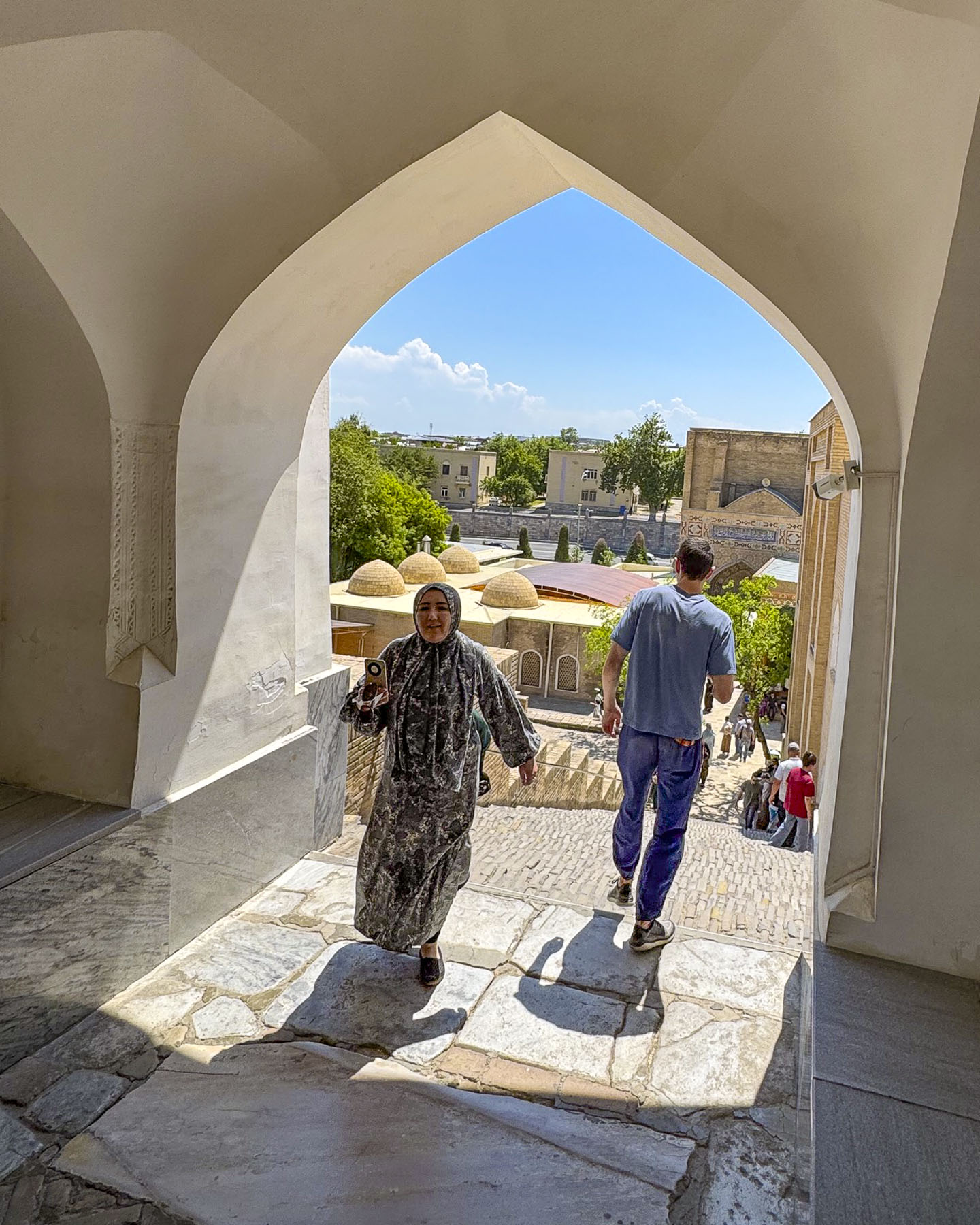
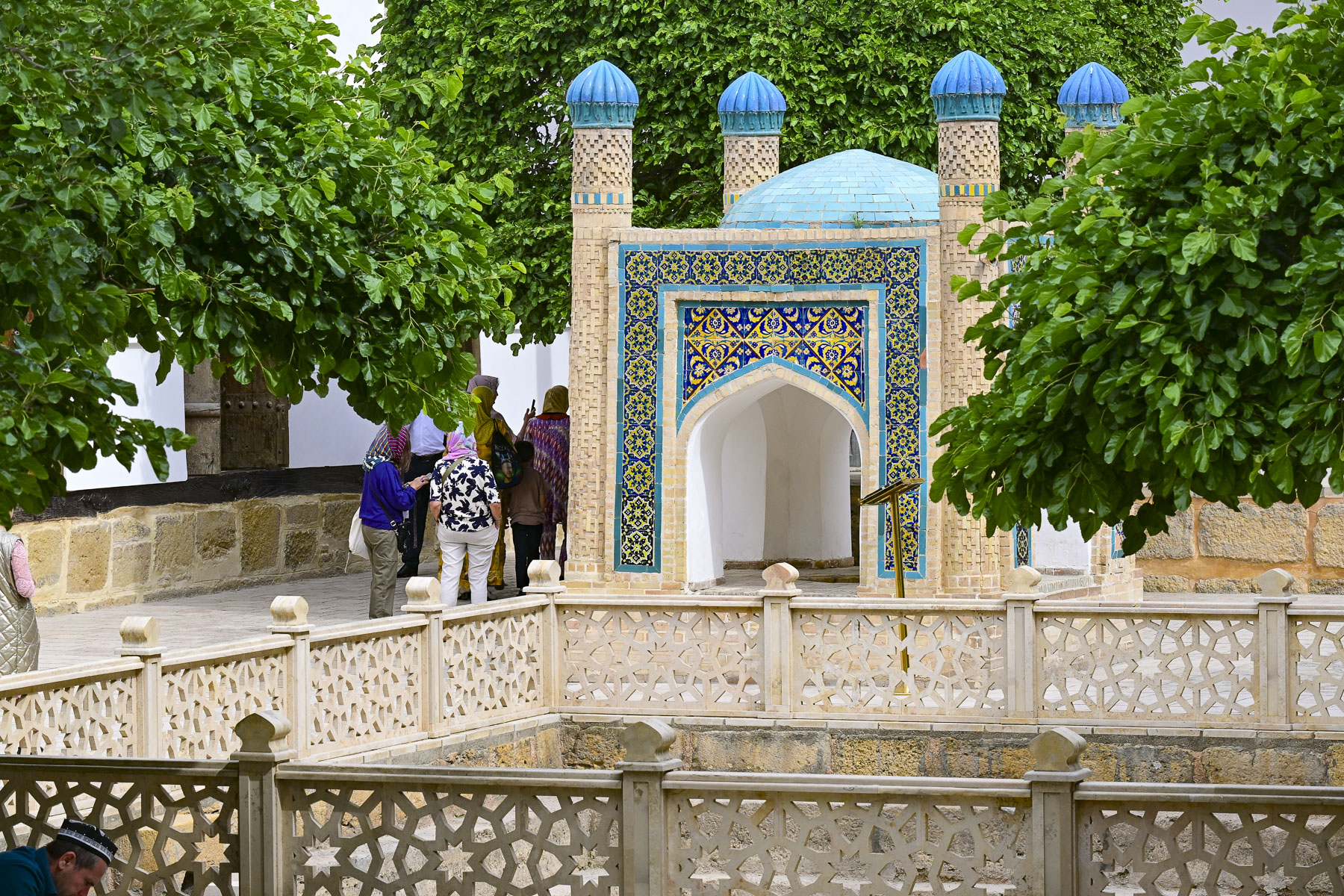
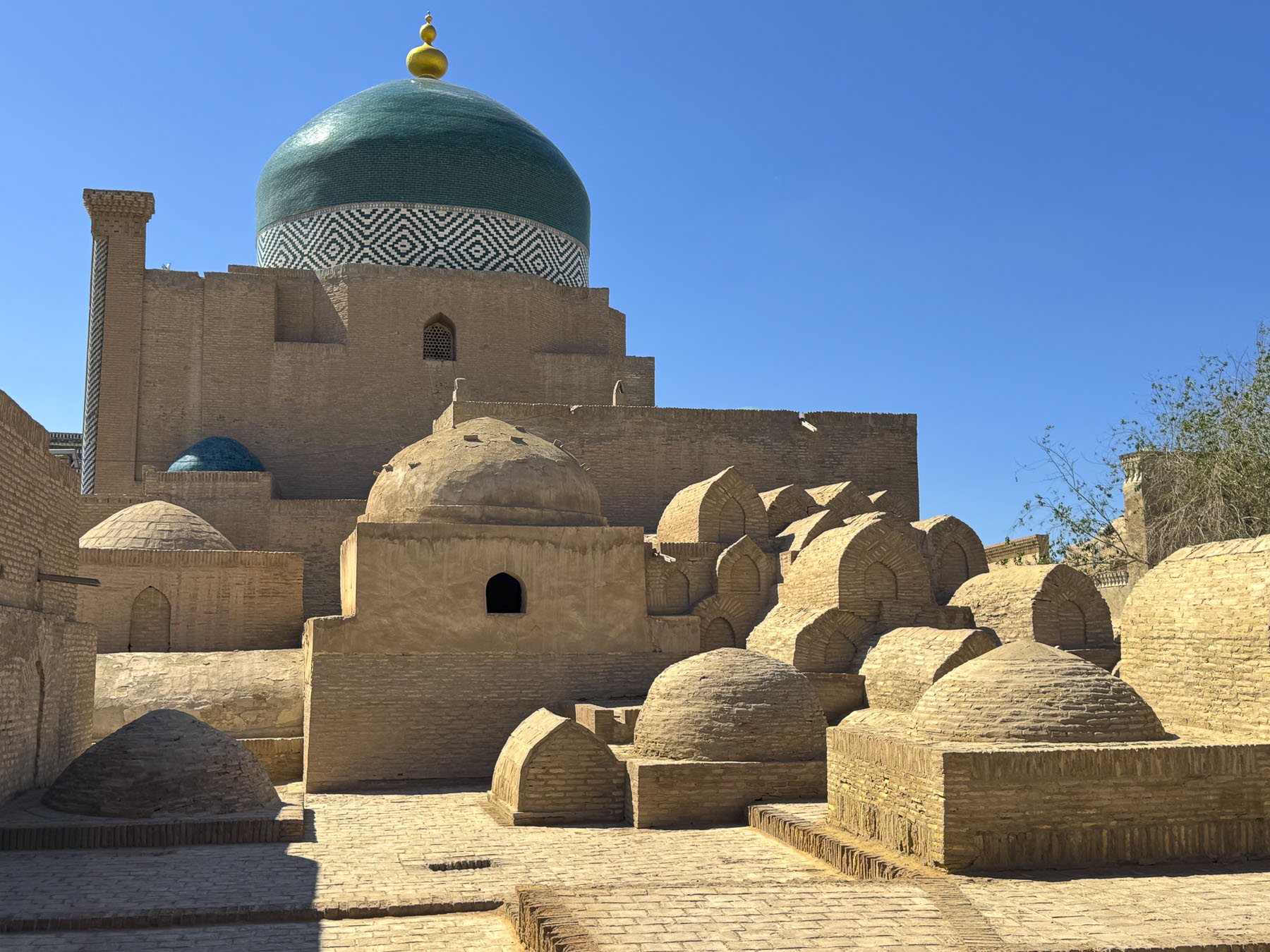
Twenty minutes from central Bukhara our group visited The Memorial Complex of Bakhouddin Naqshbandi, the 14th century Islamic theologian who founded the widely followed Naqshbandi Sufi order and was renown as the spiritual mentor to Amir Temur (Tamerlane), the ruler responsible for Uzbekistan’s Timurid Renaissance.

Over the centuries his once simple garden tomb at his home grew into a vast site that includes the dynastic necropolises of the Sheibanid, Ashtarkhanid, and Mangit rulers. Later additions included a mosque, minaret and madrassa. After Uzbekistan declared its independence, with the help of international donors, the country totally renovated the site which had fallen into disrepair during the Soviet era, in time for the 675th anniversary of Naqshband’s birth in 1993.

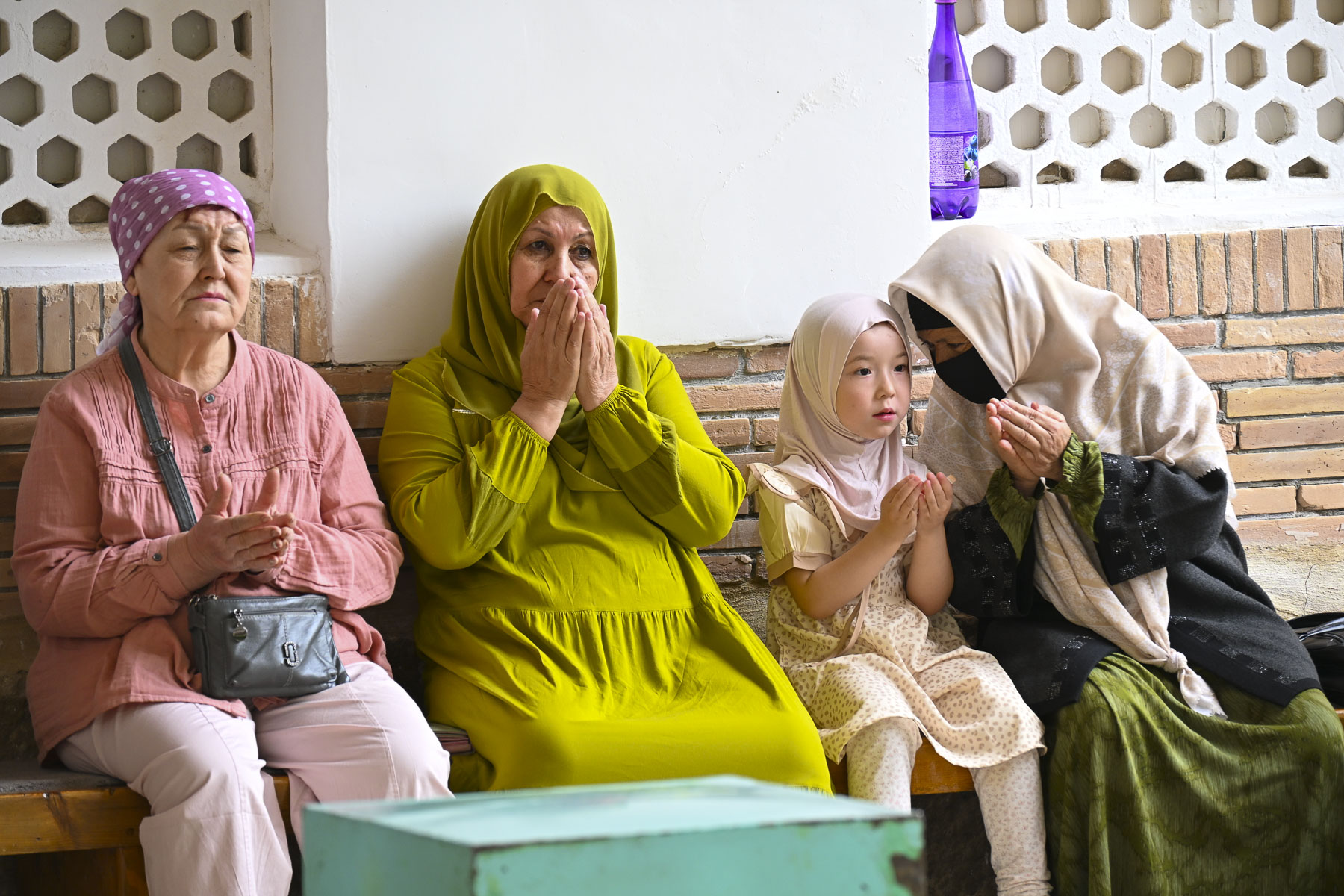
This was one of the first major opportunities the new Uzbekistan government took to reclaim its Islamic and Central Asian heritage after living under 70 years of communist atheism. Newer additions include a Sufi museum and theological research center, where translations of ancient Islamic texts are undertaken. Through the centuries it has become a revered pilgrimage site for folks from all across Central Asia and beyond.

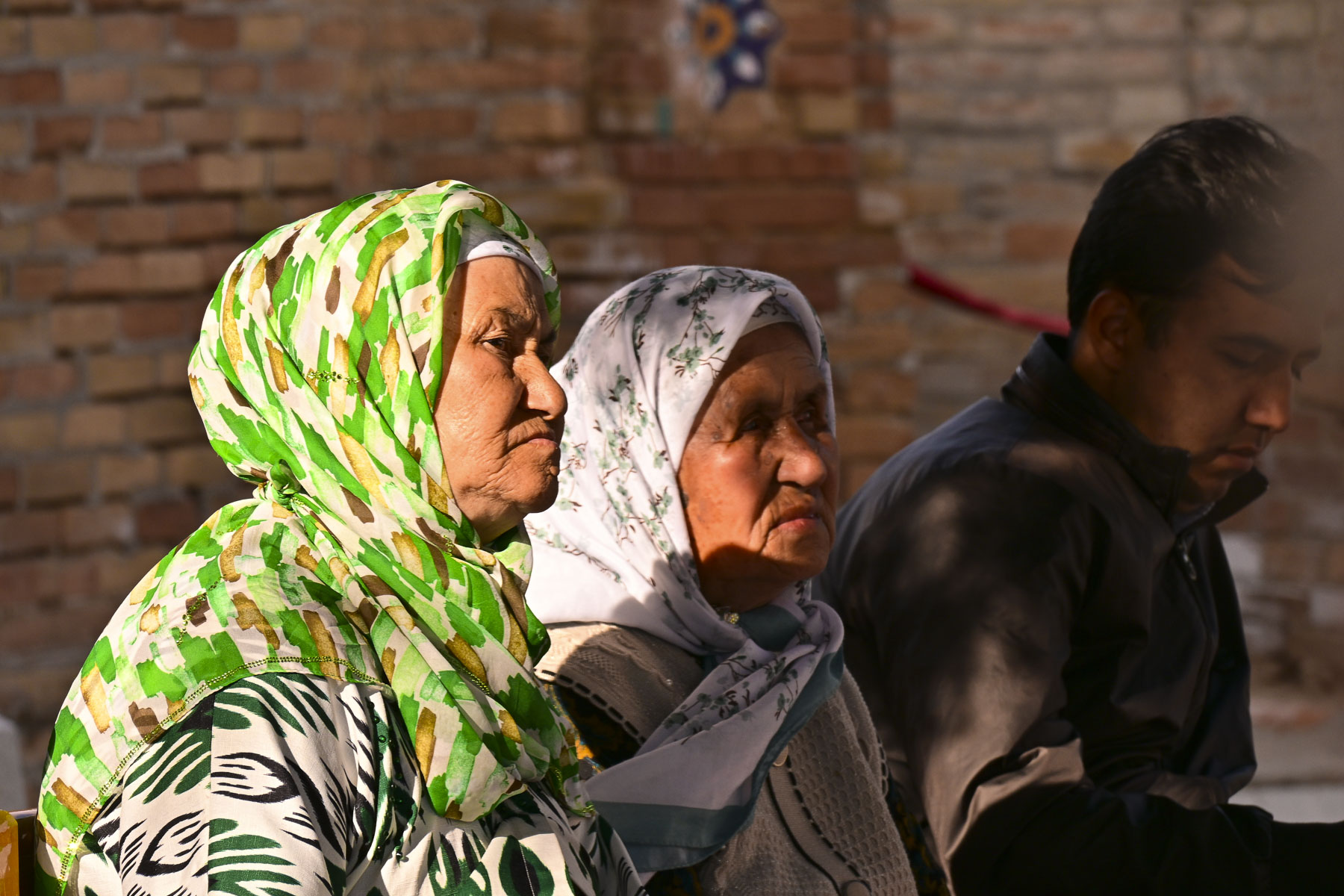
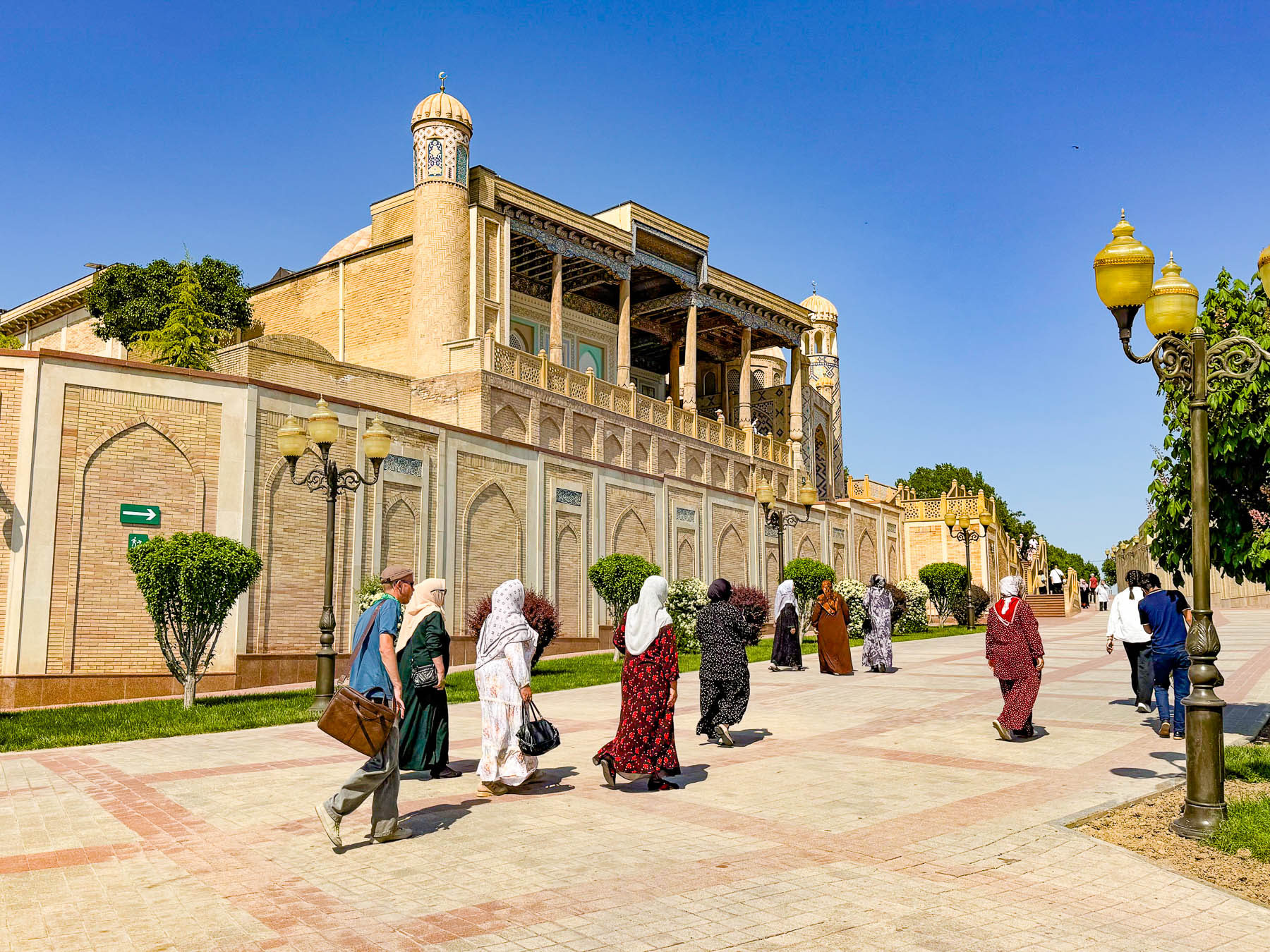
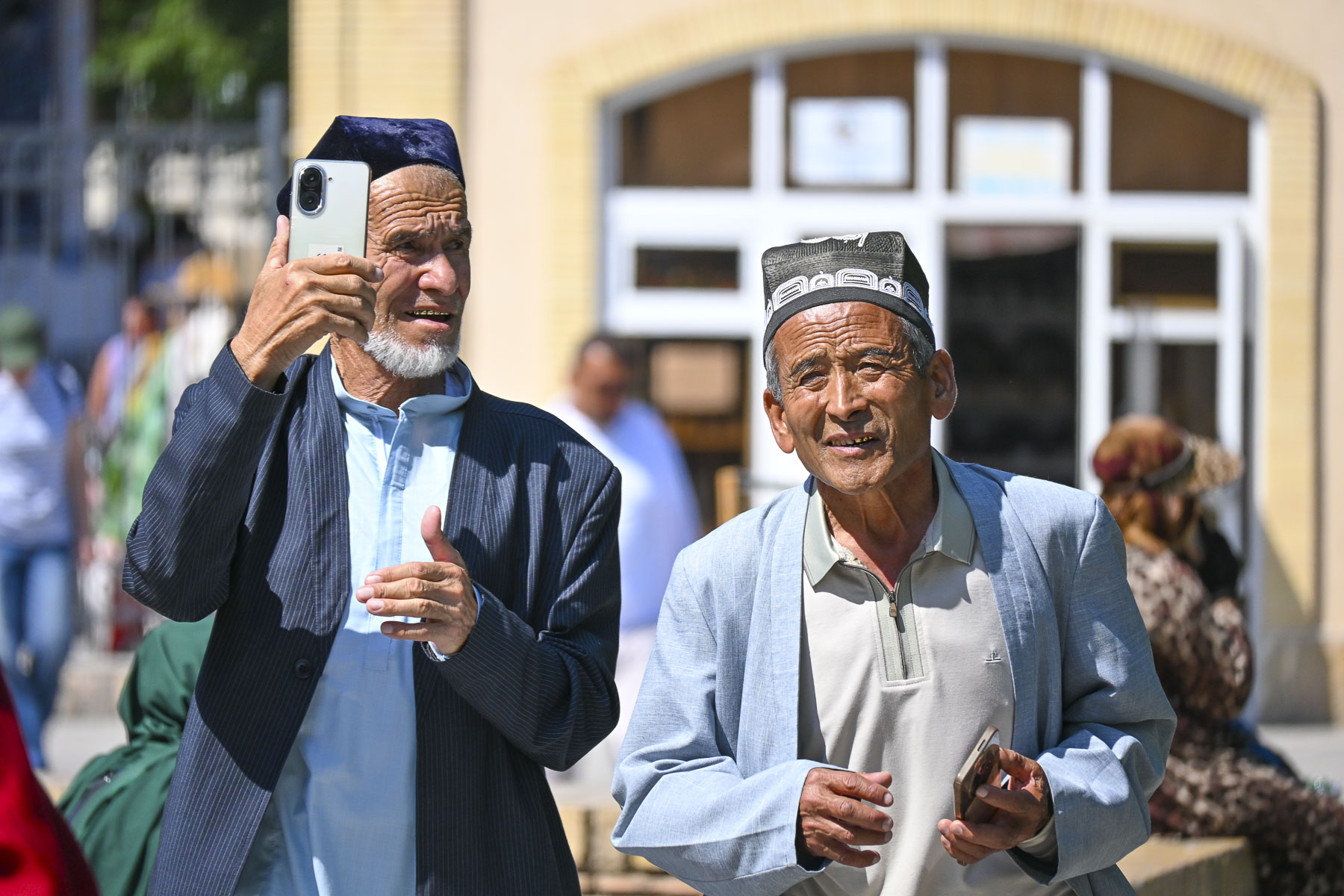
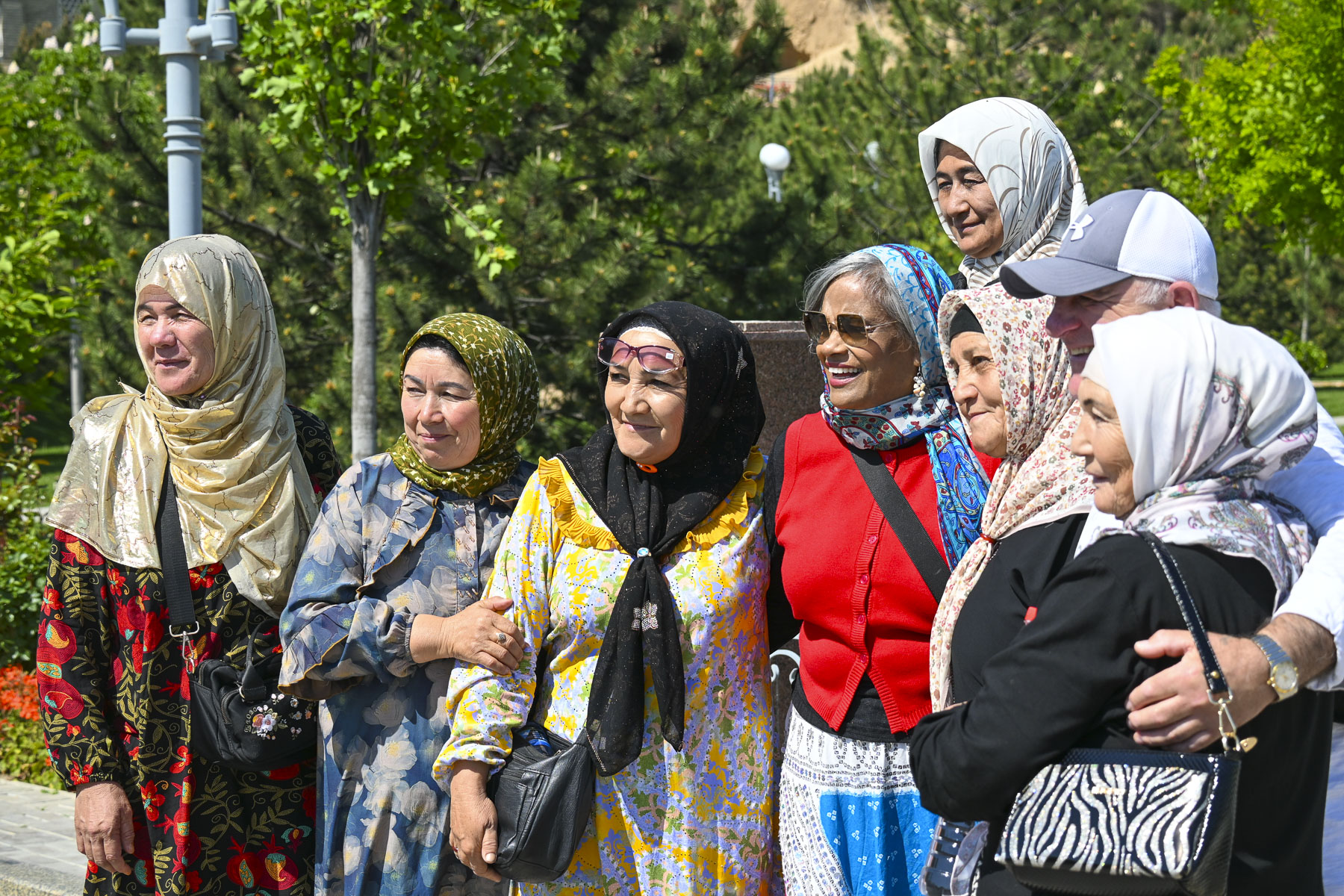
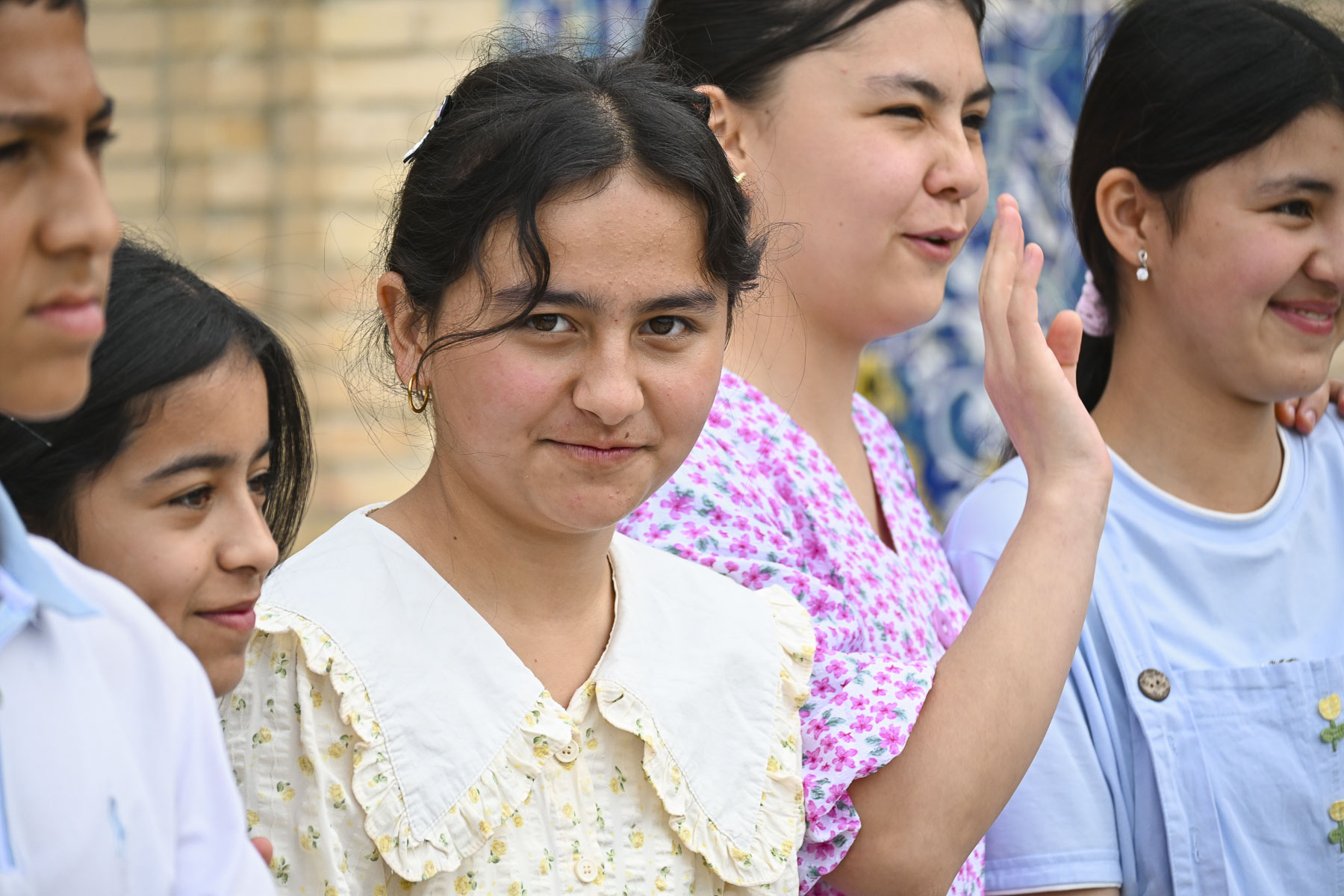
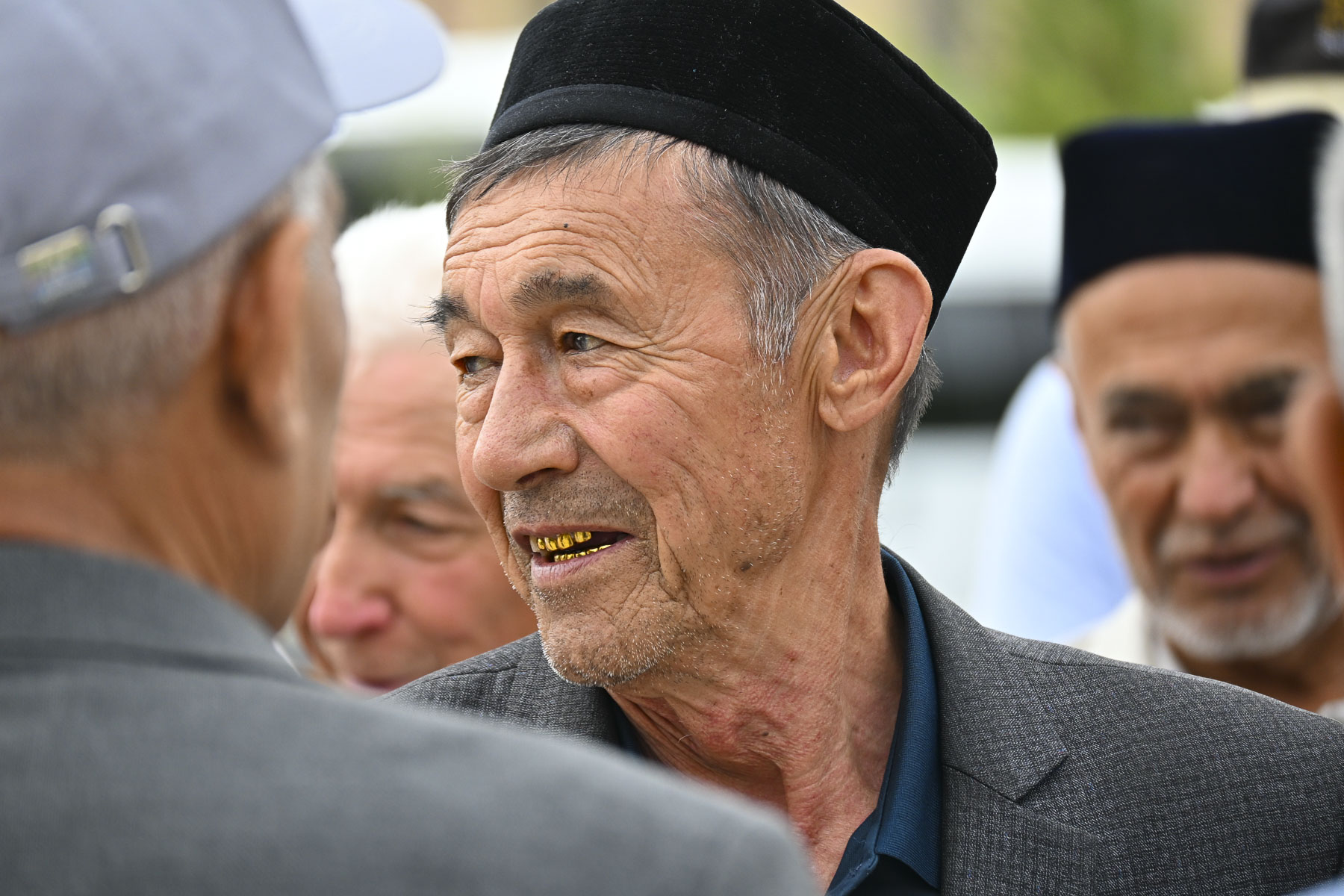
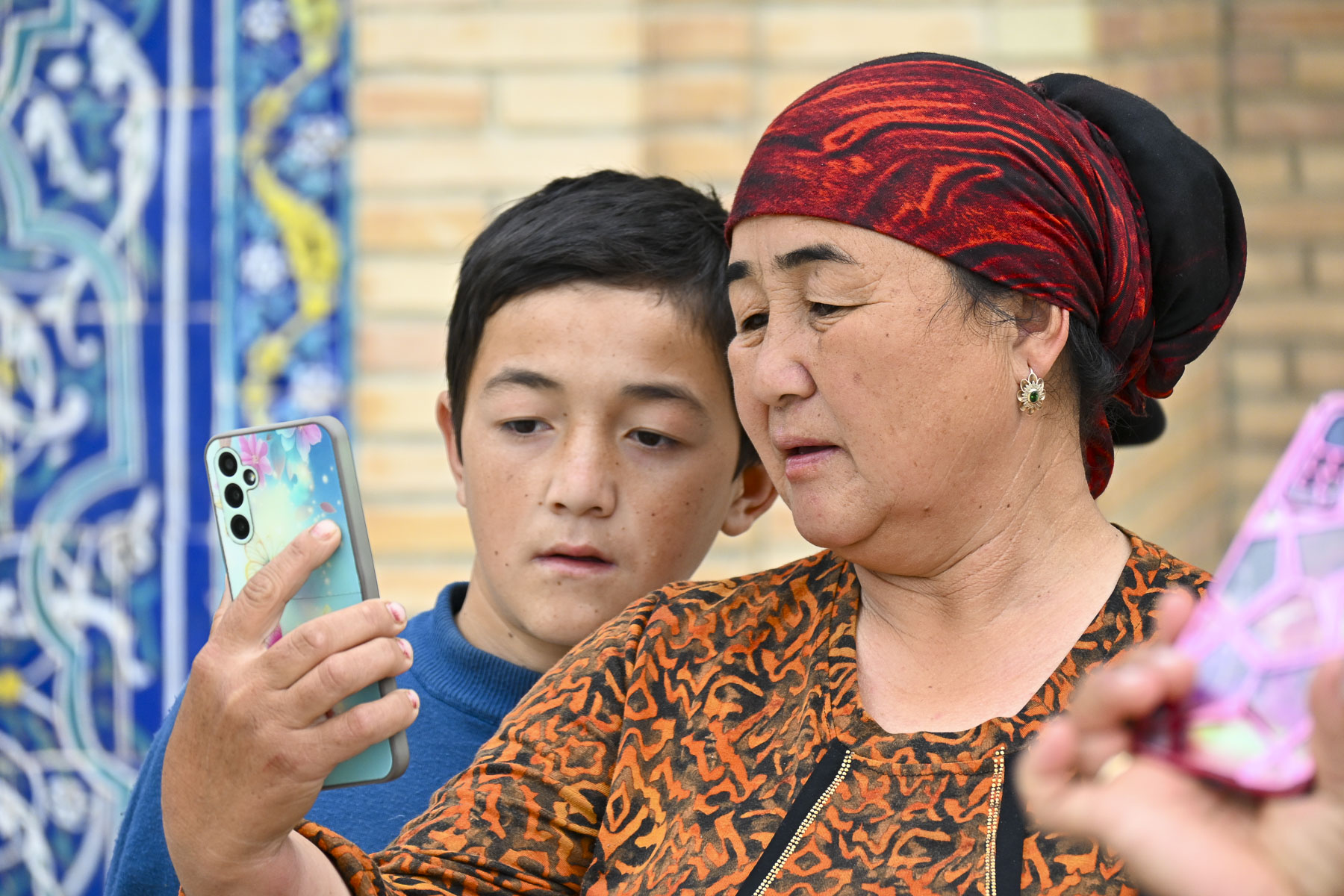
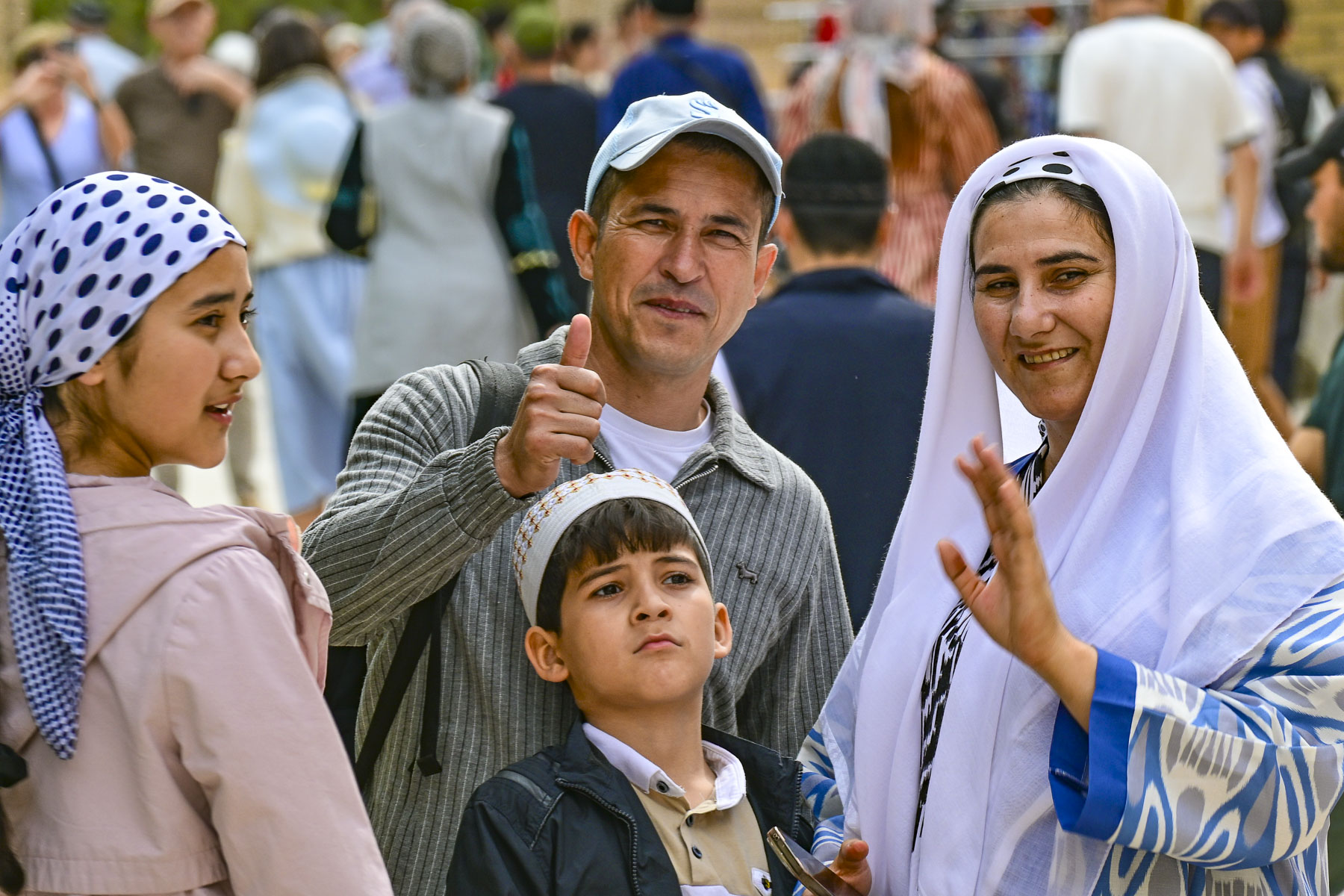
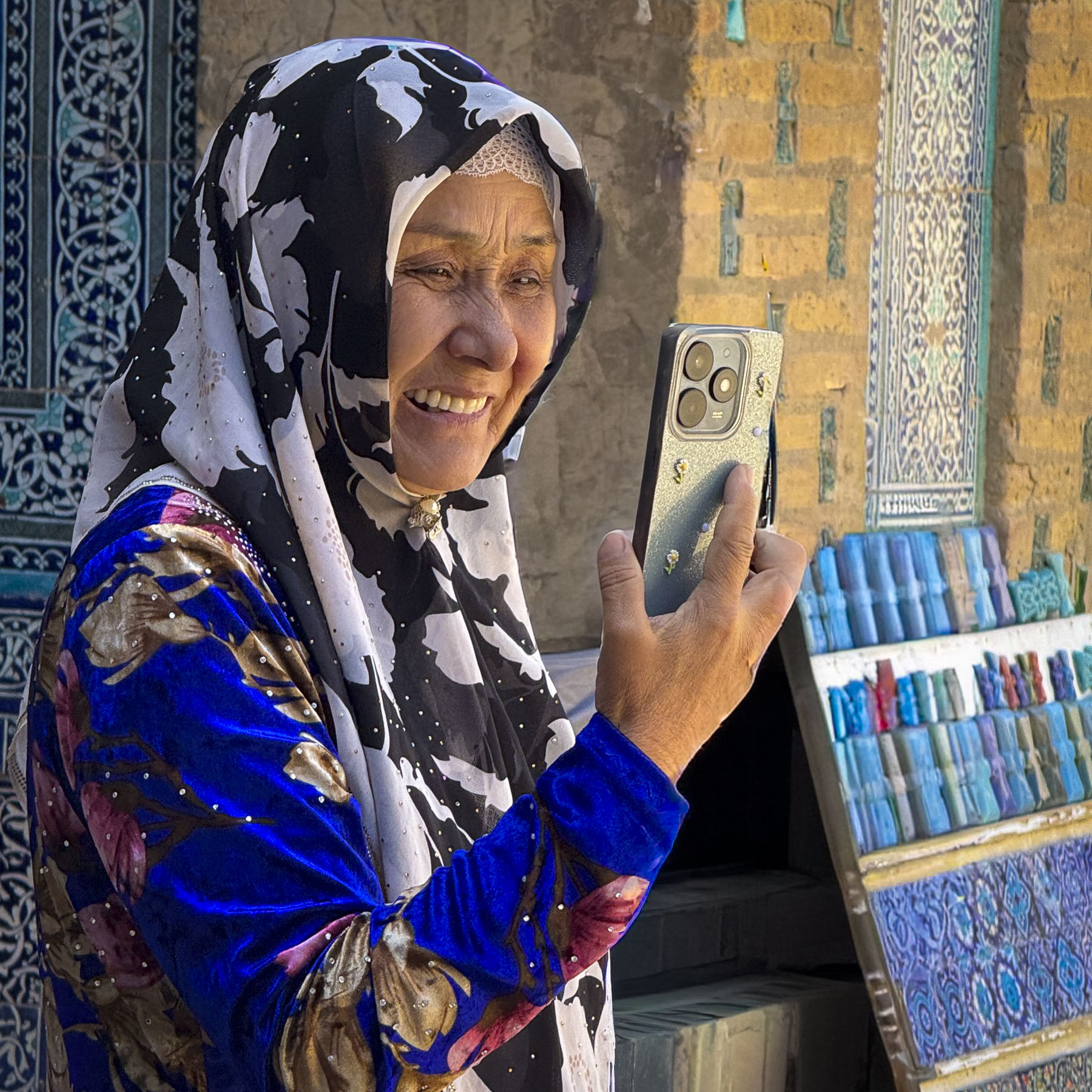
Everyone was so friendly and eager to take photographs of us, and have their photos taken too, it was a very heart-warming experience. Our guide shared that for many people living in remote villages this was their first trip away from home. He spoke of a Central Asia folk belief which claims that three trips to the shrine equal a Hajj to Mecca, which underscored how dangerous the trek across the desert to Arabia was.

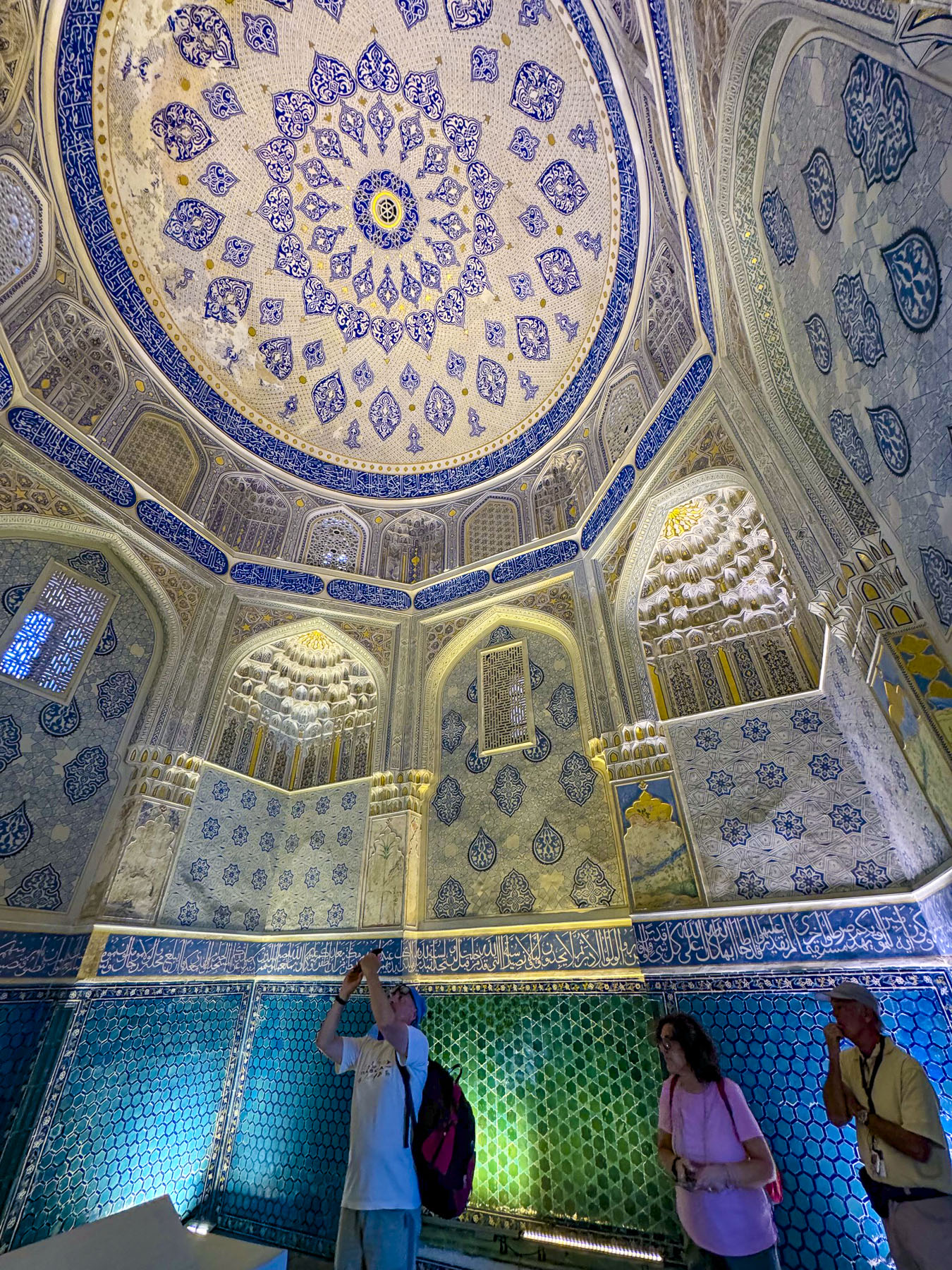
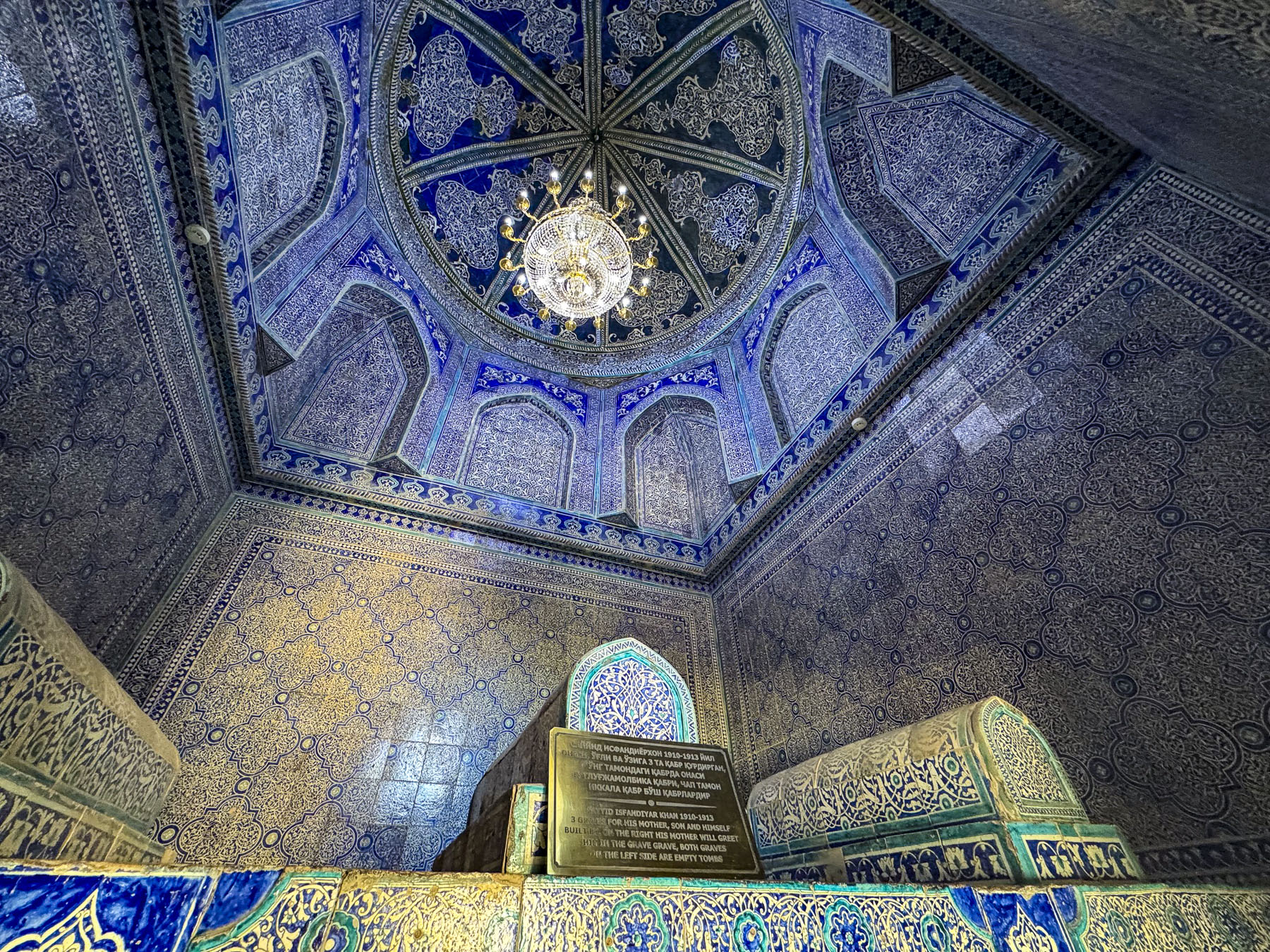
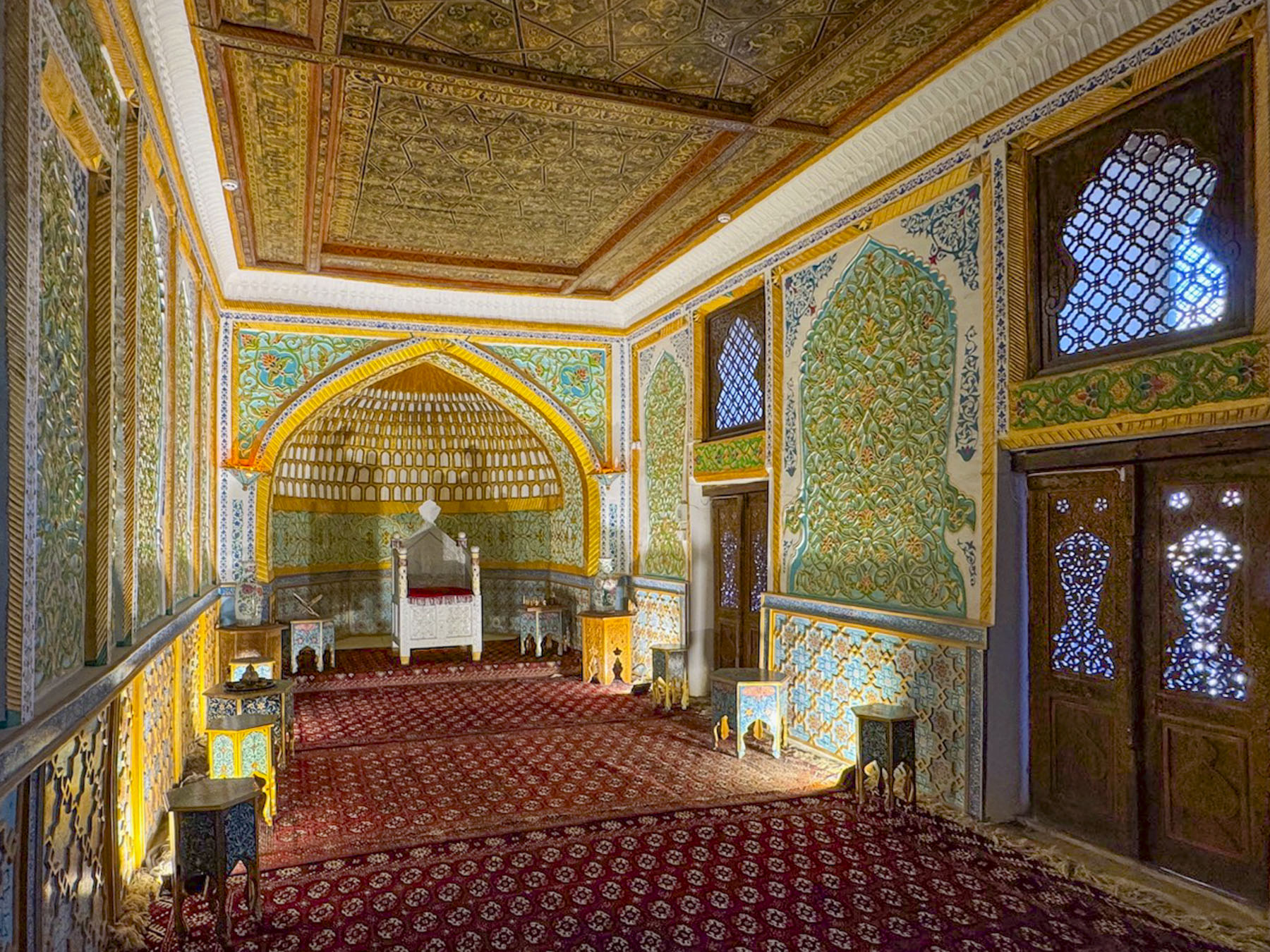
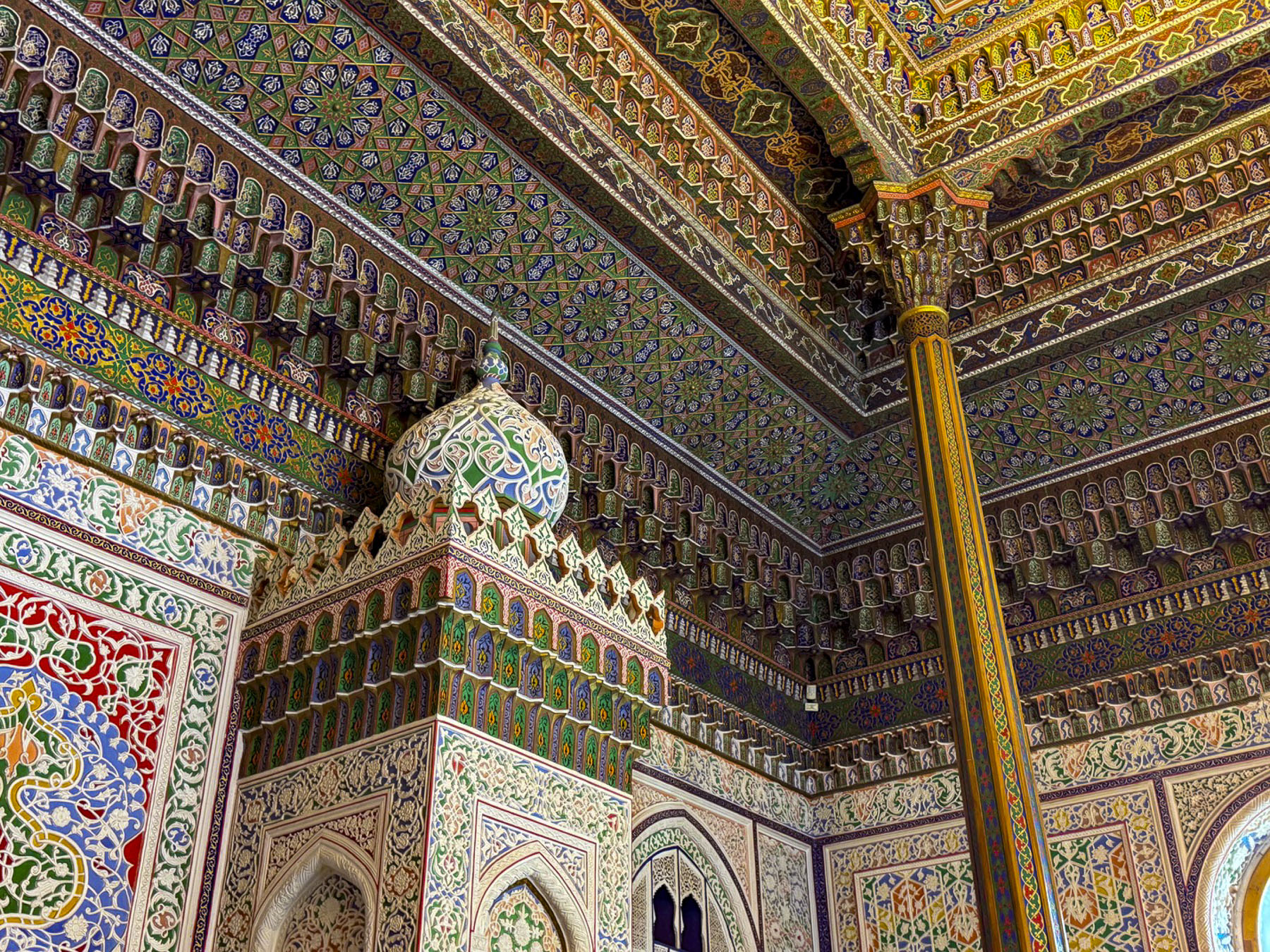
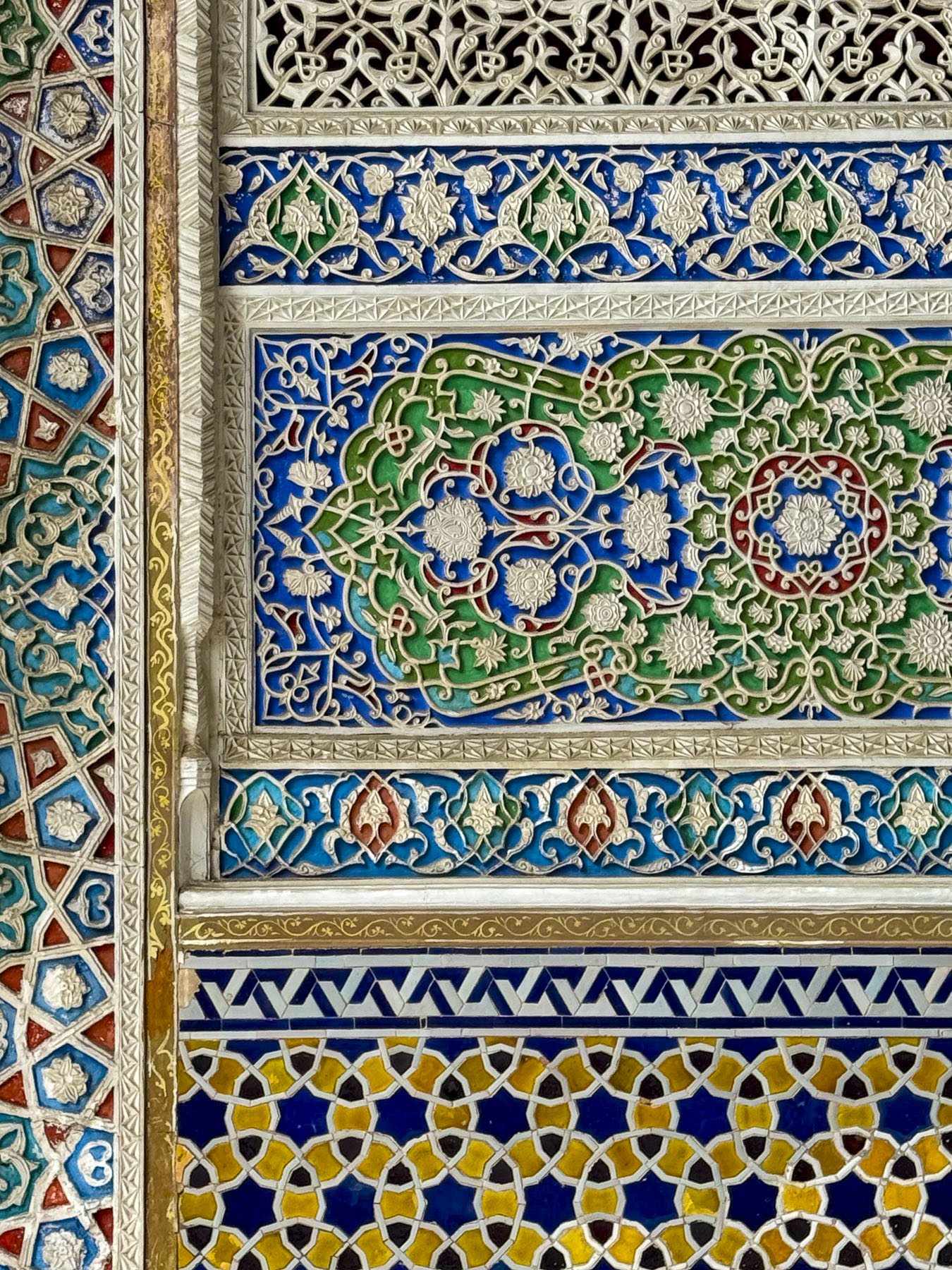
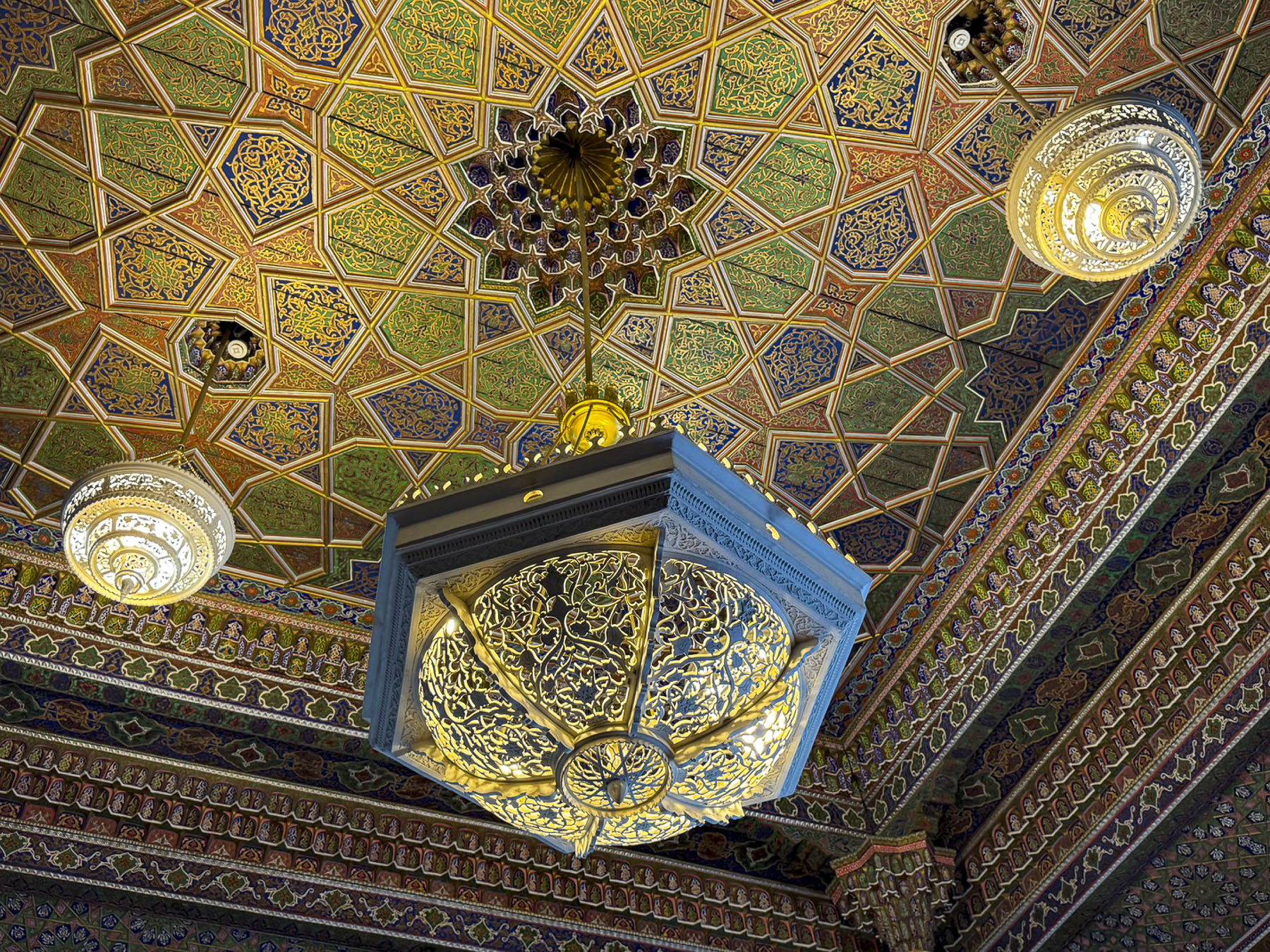
Afterwards our group headed to “the palace that resembles the stars and the moon,” Sitora-i-Moh-i Khosa, the summer palace of Sayyid Mir Muhammad Alim Khan, the last emir of Bukhara. The palace is poetically named for the emir’s wife, whose beauty he often compared to the heavens. Built between 1912 and 1918 by Bukhara craftsmen, the emir had sent to St. Petersburg to study western techniques.

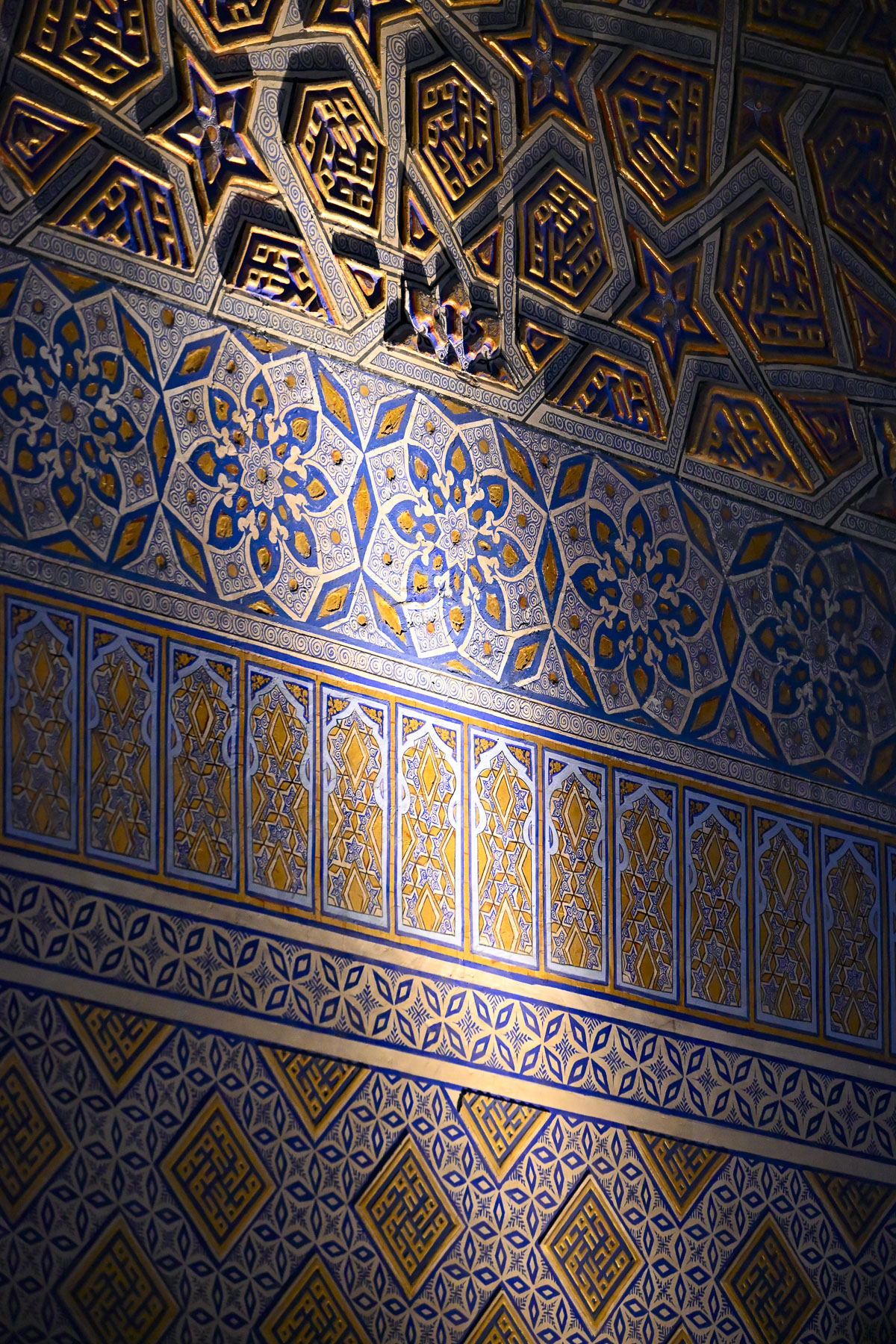
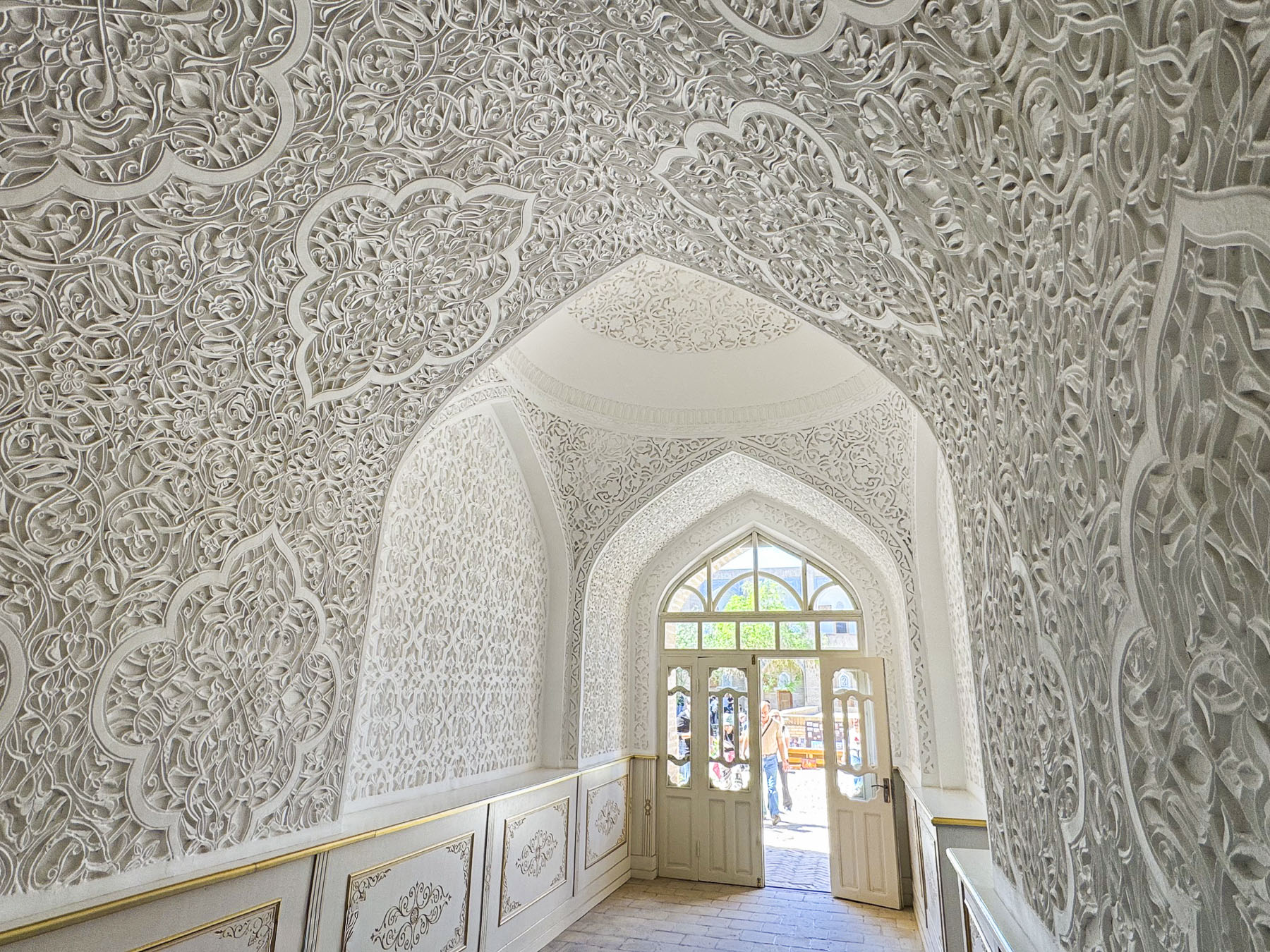
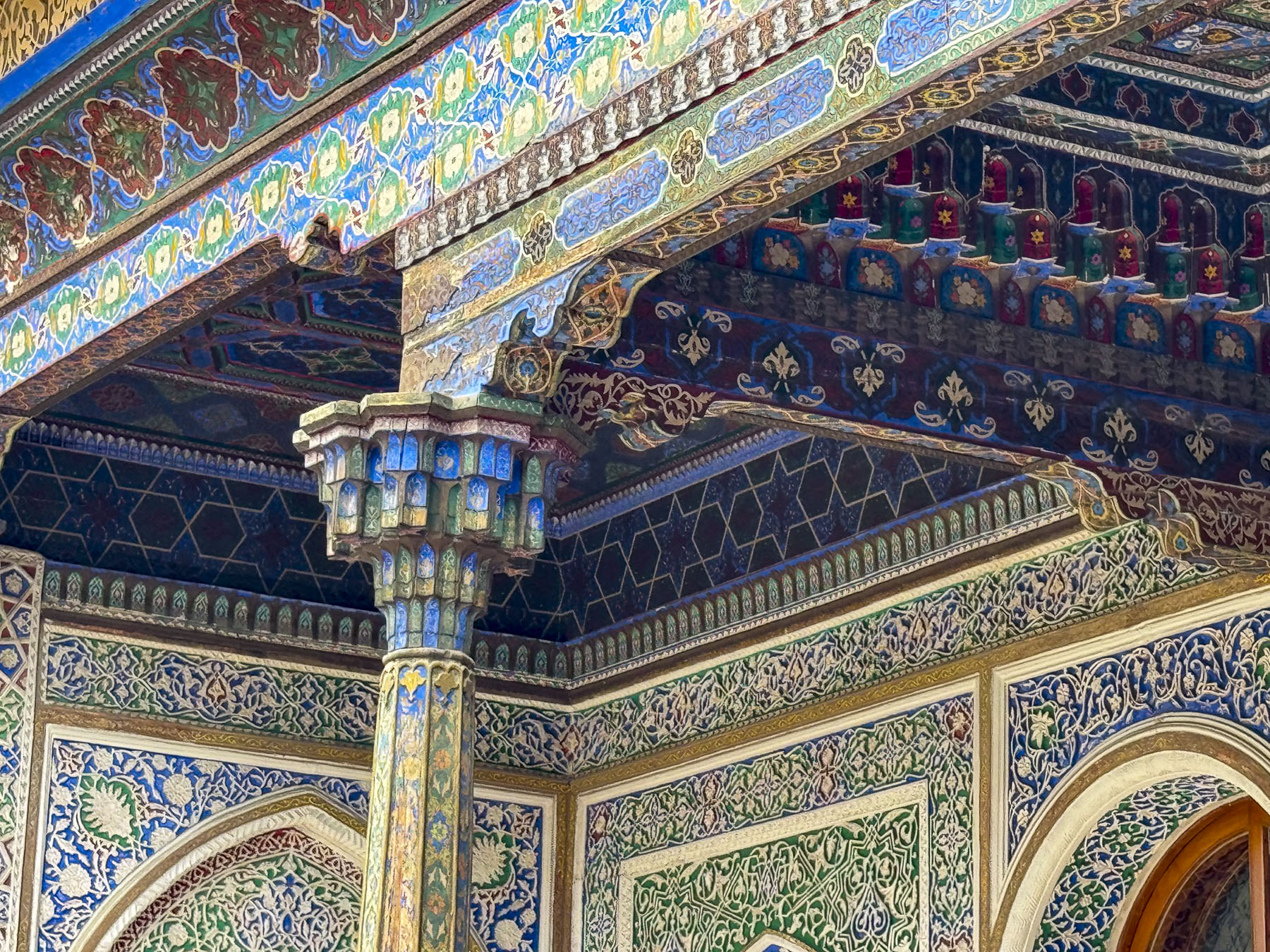
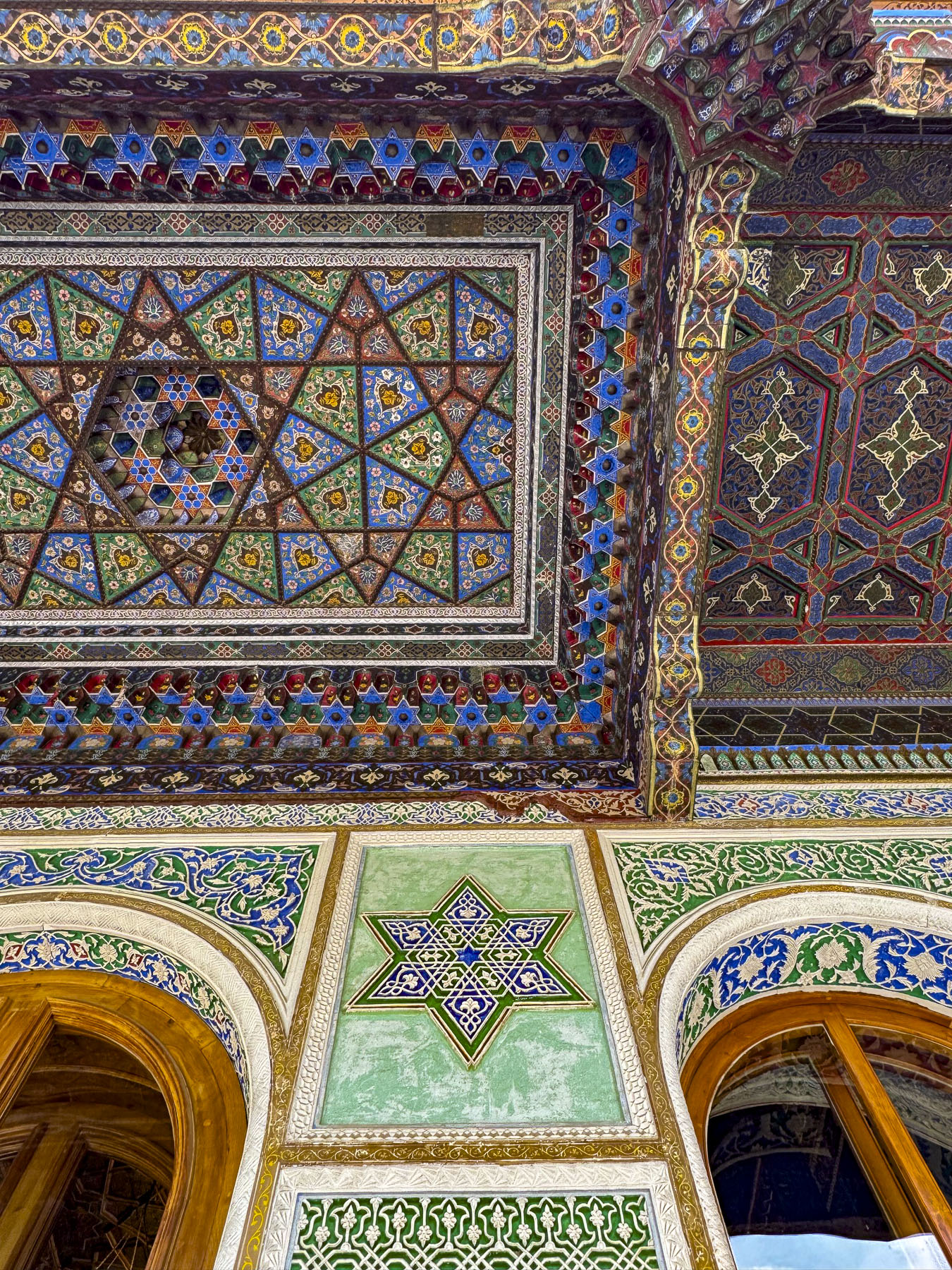
While the exterior facades are traditional, the interior of the palace is a visually and texturally rich artistic expression that wonderfully overwhelms the senses. We mused that the flamboyant Las Vegas entertainer Liberace would have been right at home in its over-the-top décor. That speculation surely dates us as kids of the 60s.

The day we toured the site there were numerous crafts vendors, with fairly priced merchandise, set up along the garden paths and peacocks roaming freely about the park-like settings.

The emir only had a few years to enjoy his creation before fleeing the country after the Bukharan emirate fell to the Soviet Red Army in 1920. Fortunately, the communists appreciated the artistic merit of the site and preserved it as a decorative arts museum.

That evening under a clear night sky we enjoyed live piano music on the plaza around the corner from the hotel, at The Terrace Bukhara ECO Café.

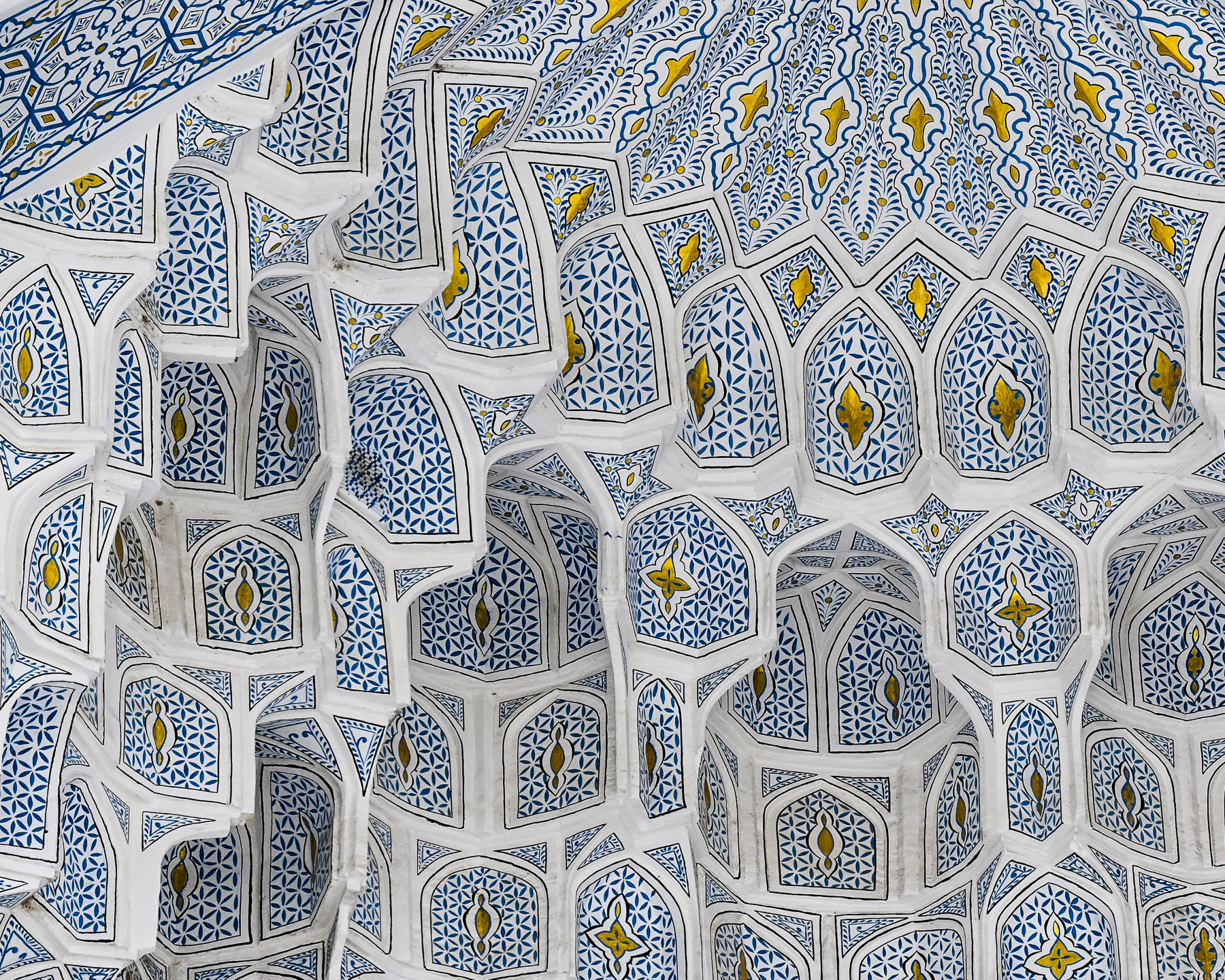
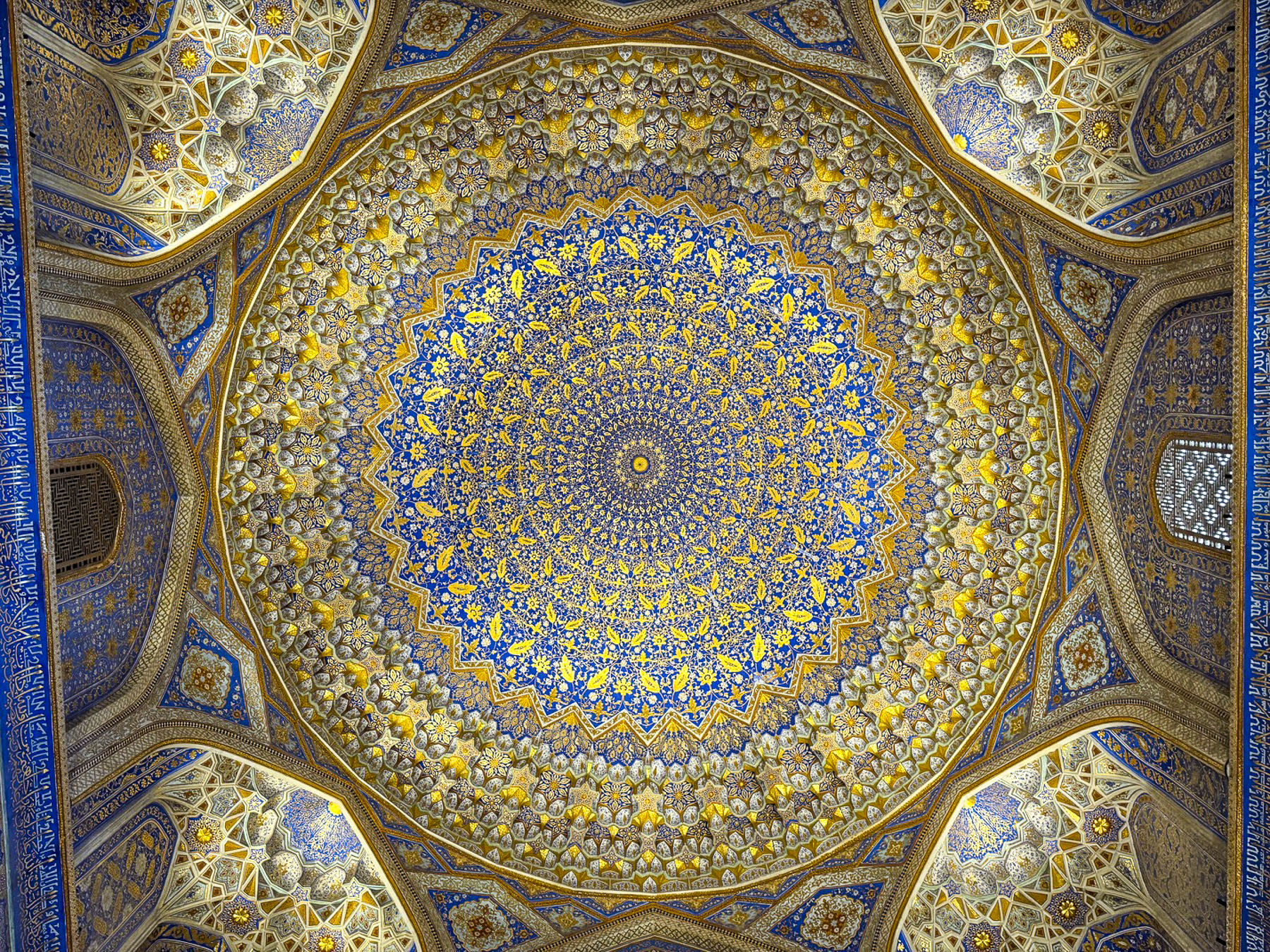
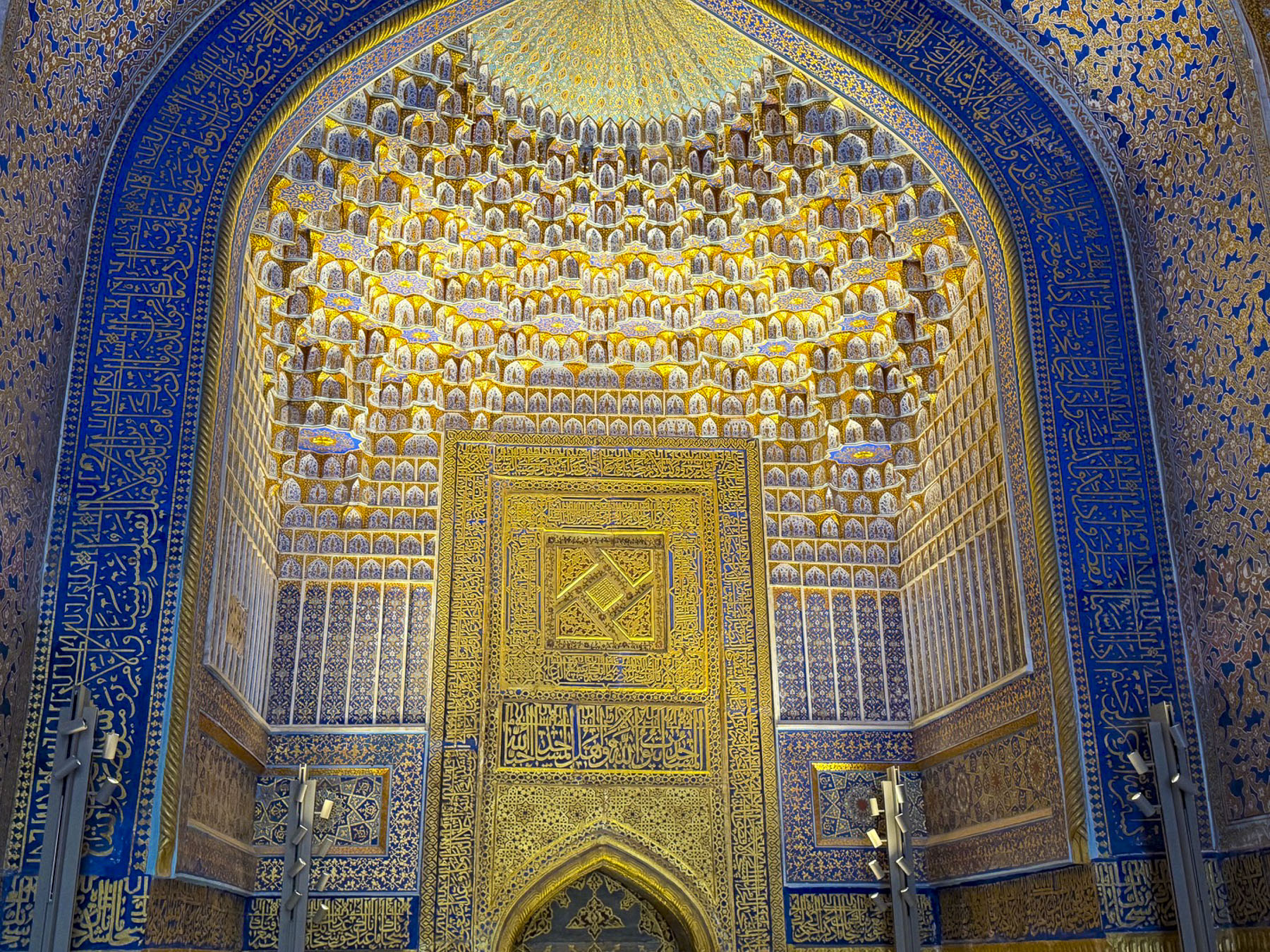
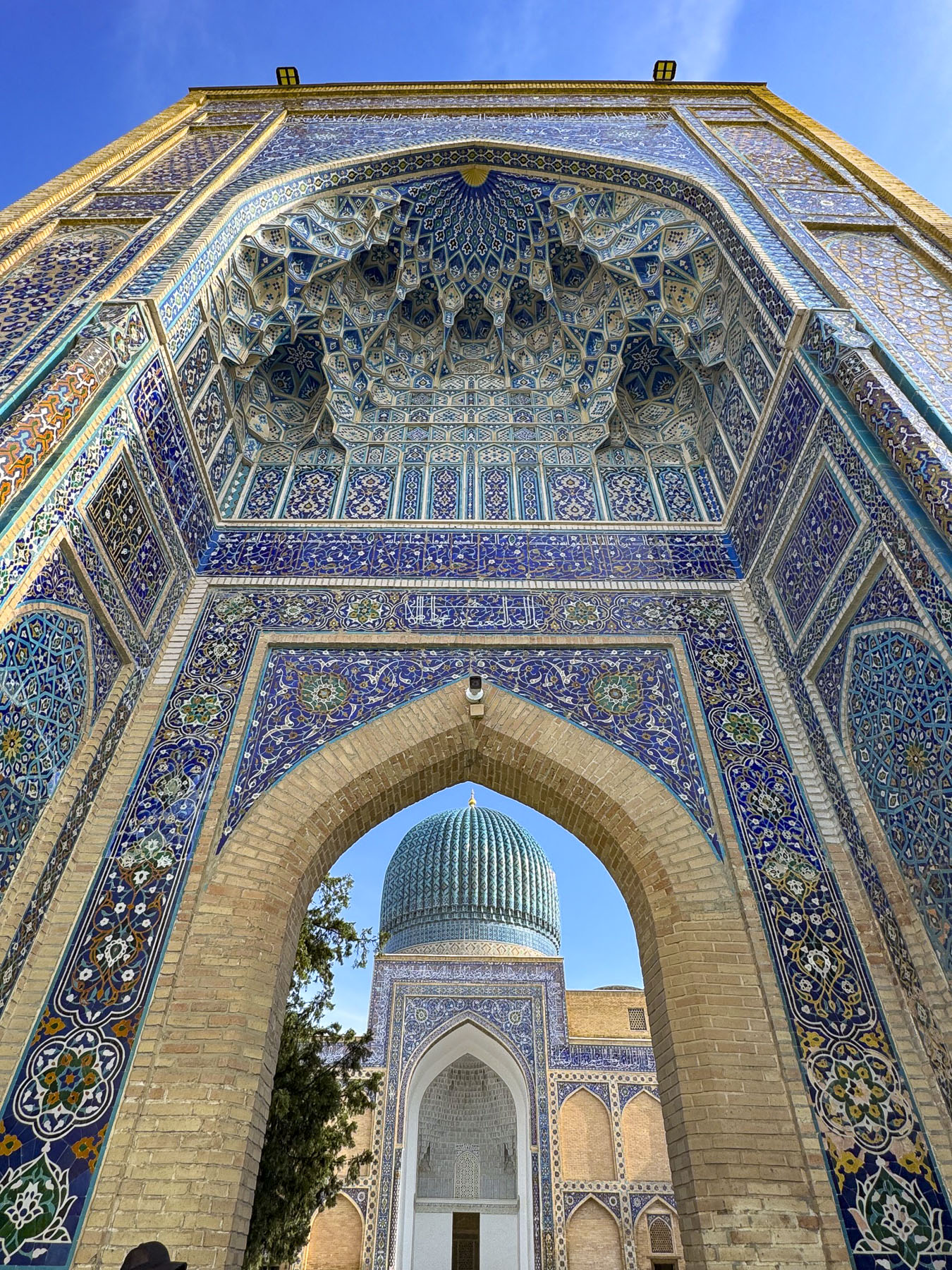
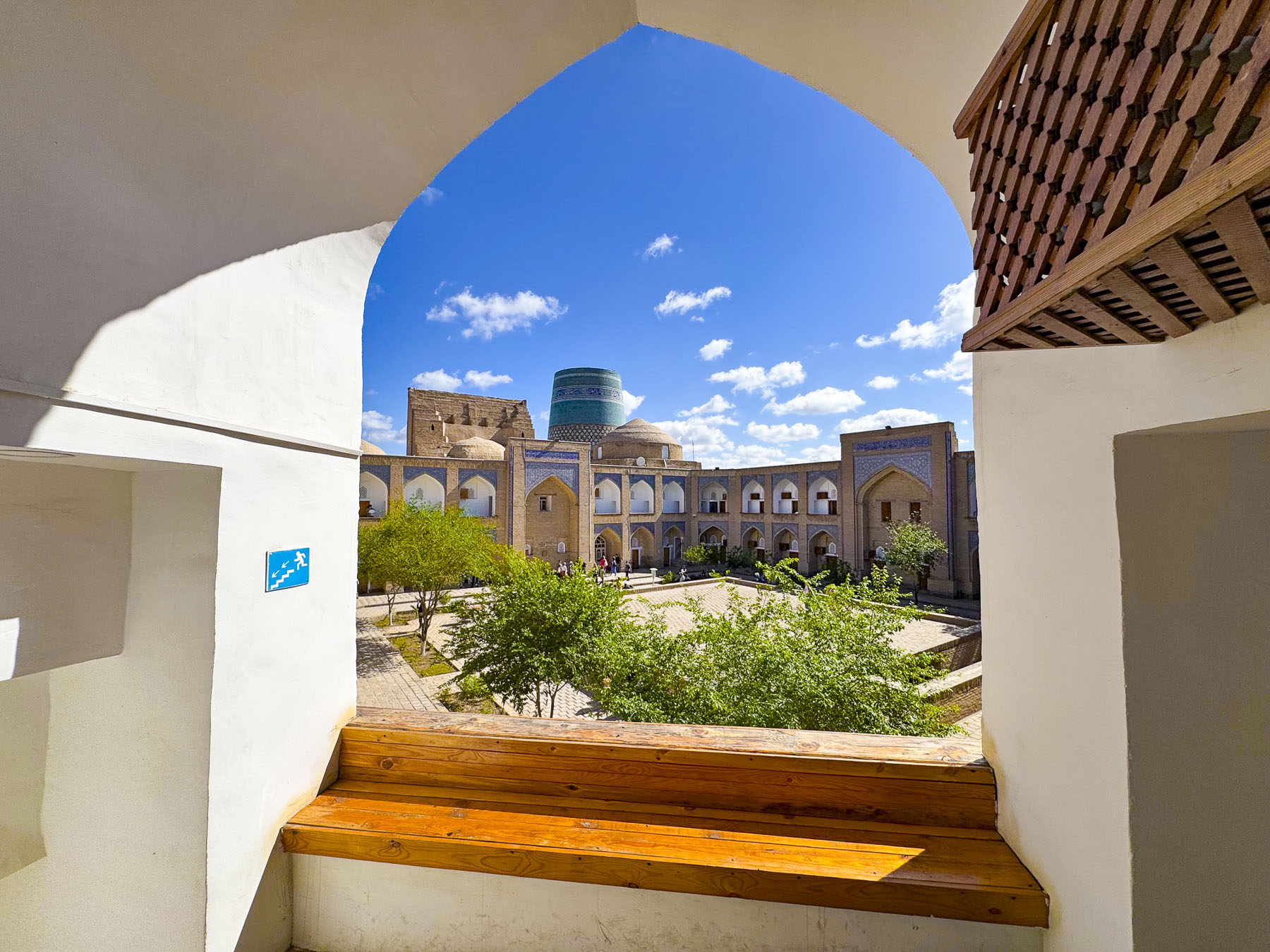
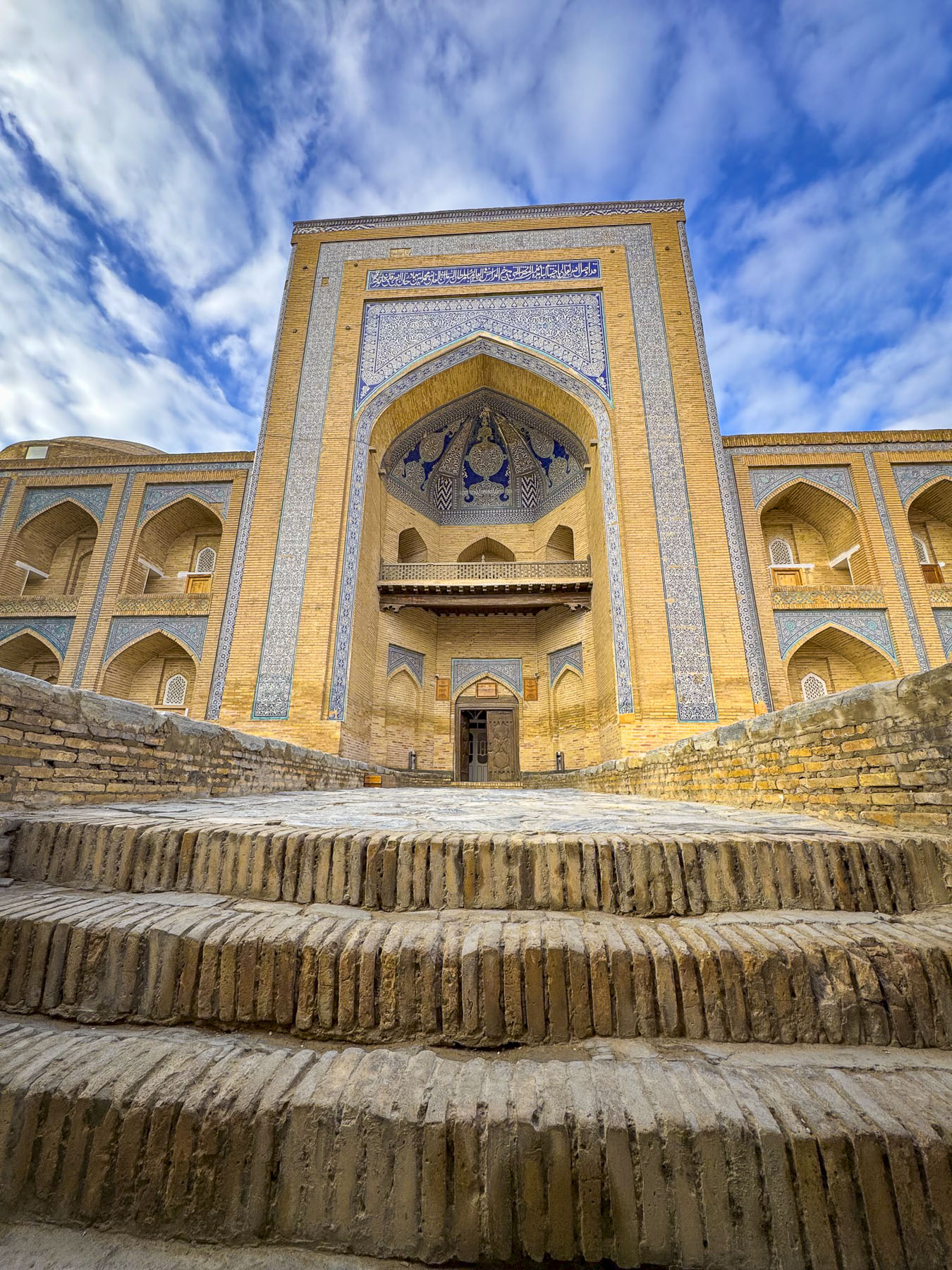
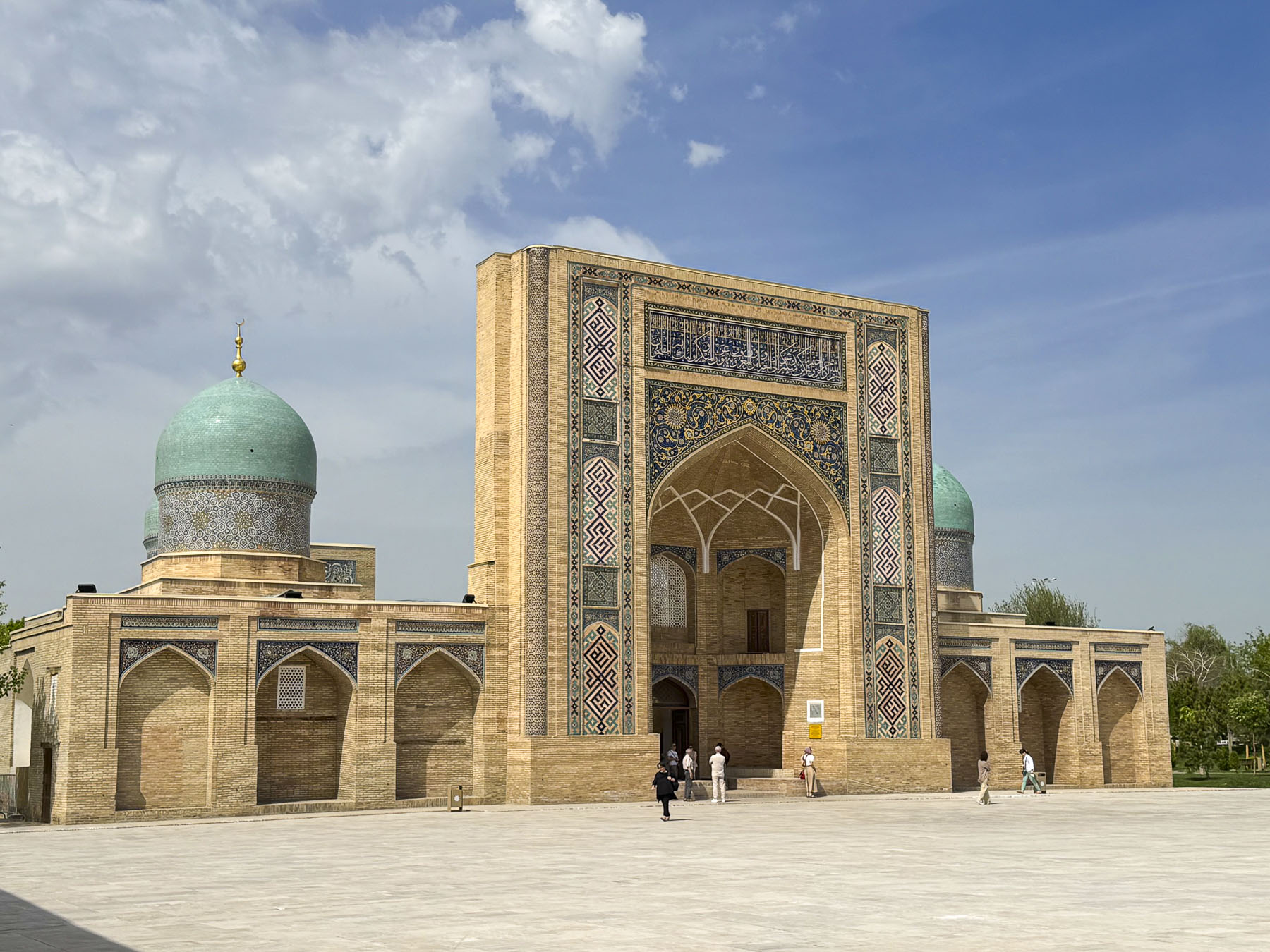
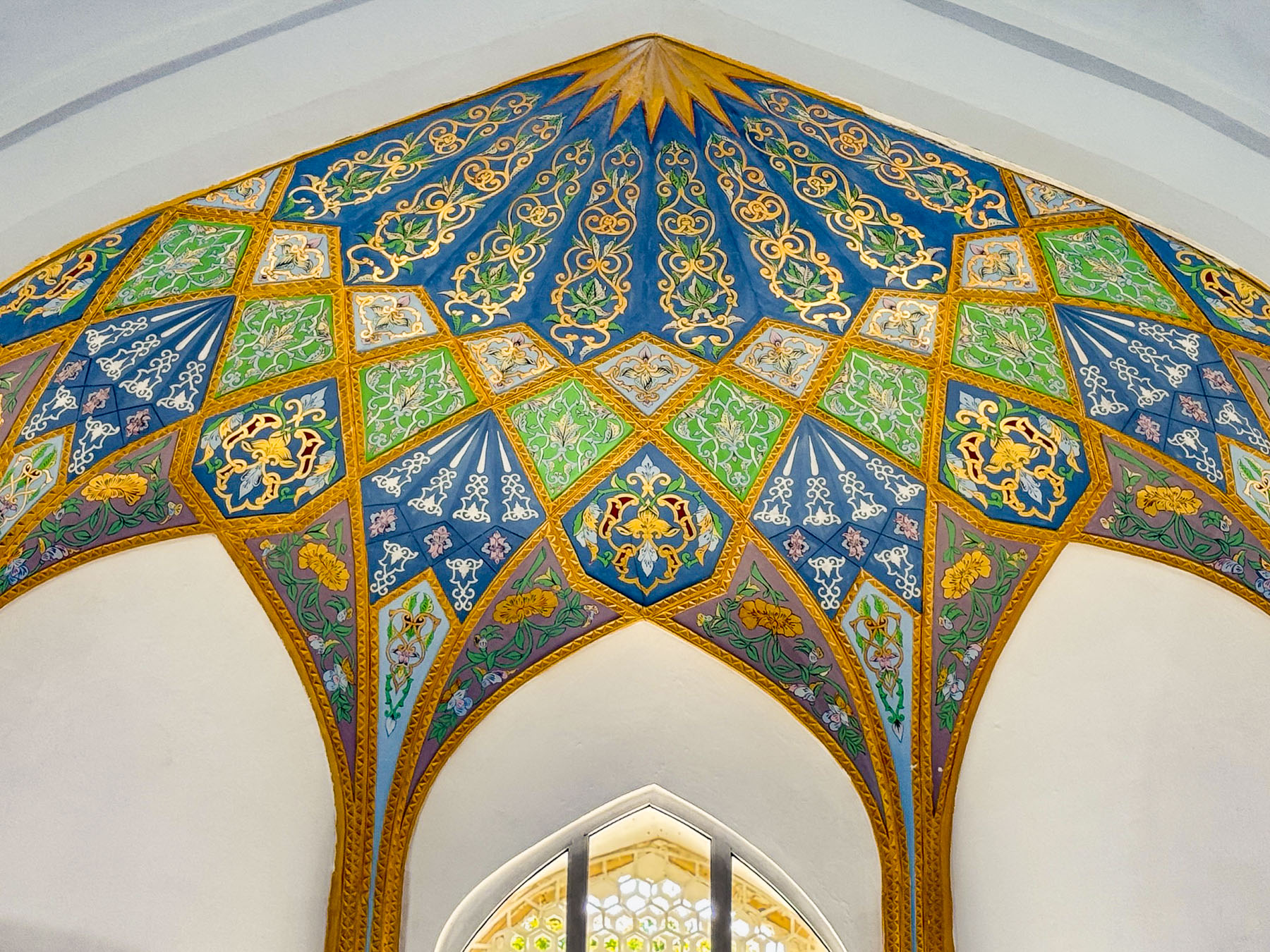
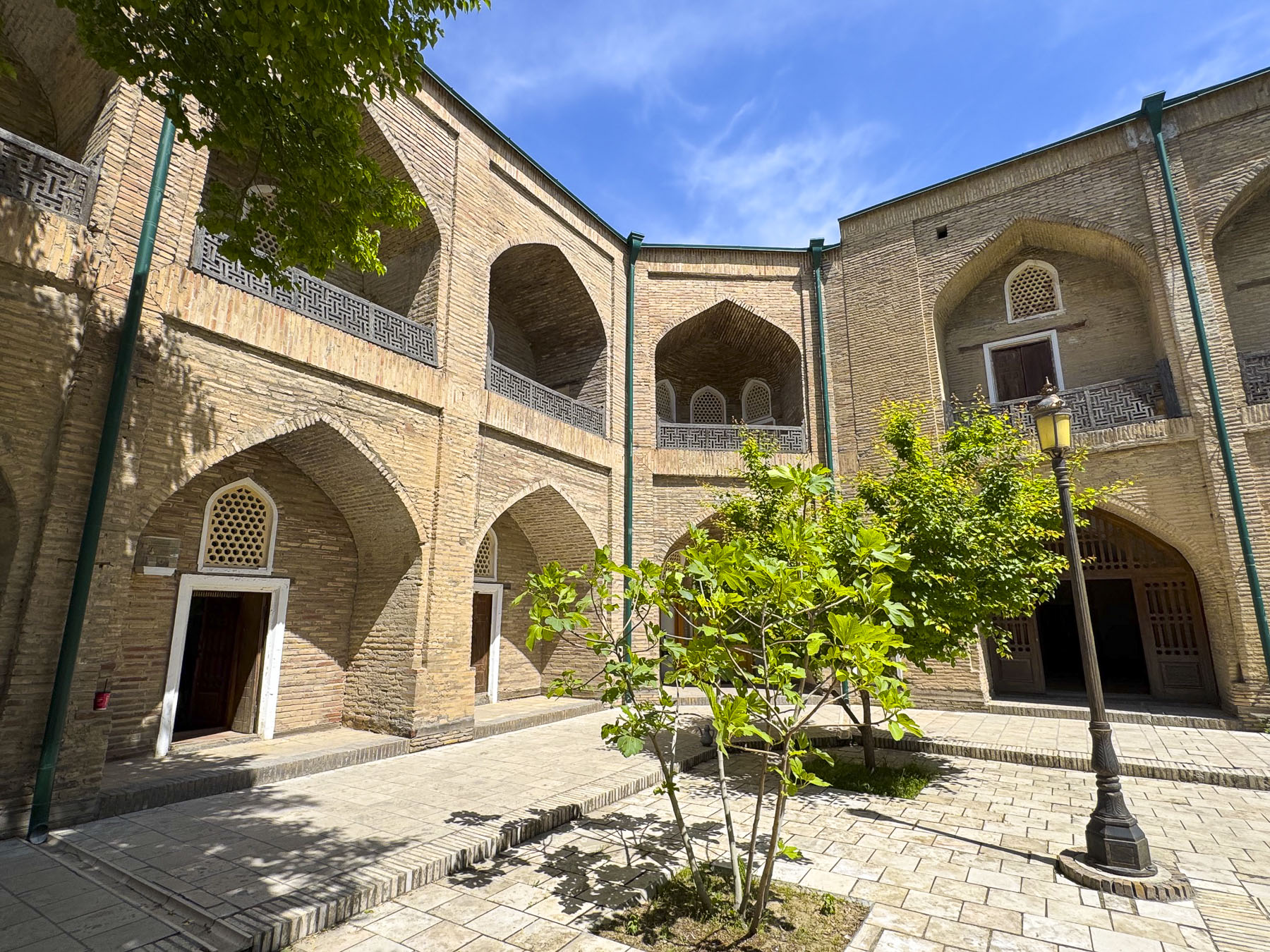
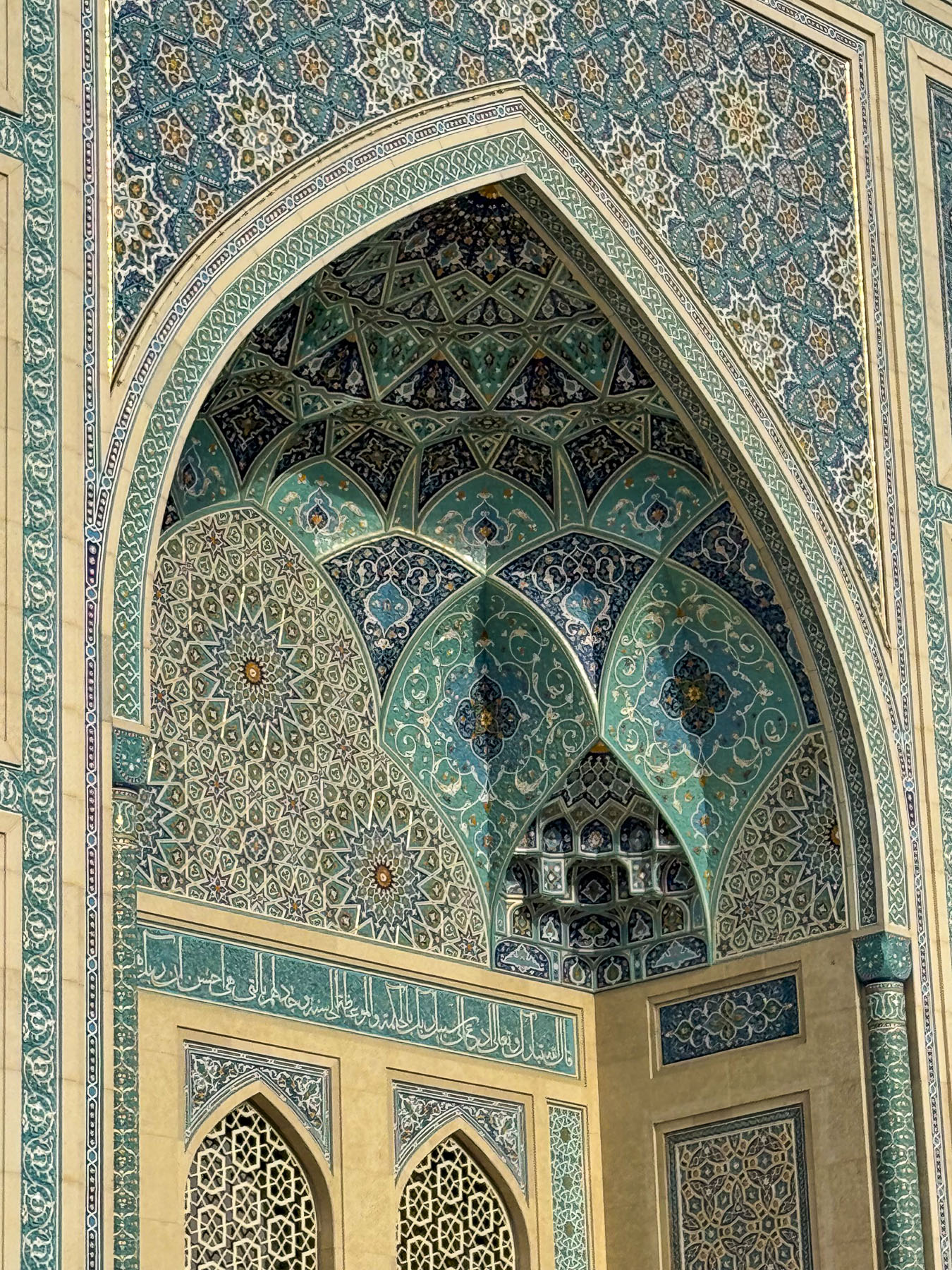
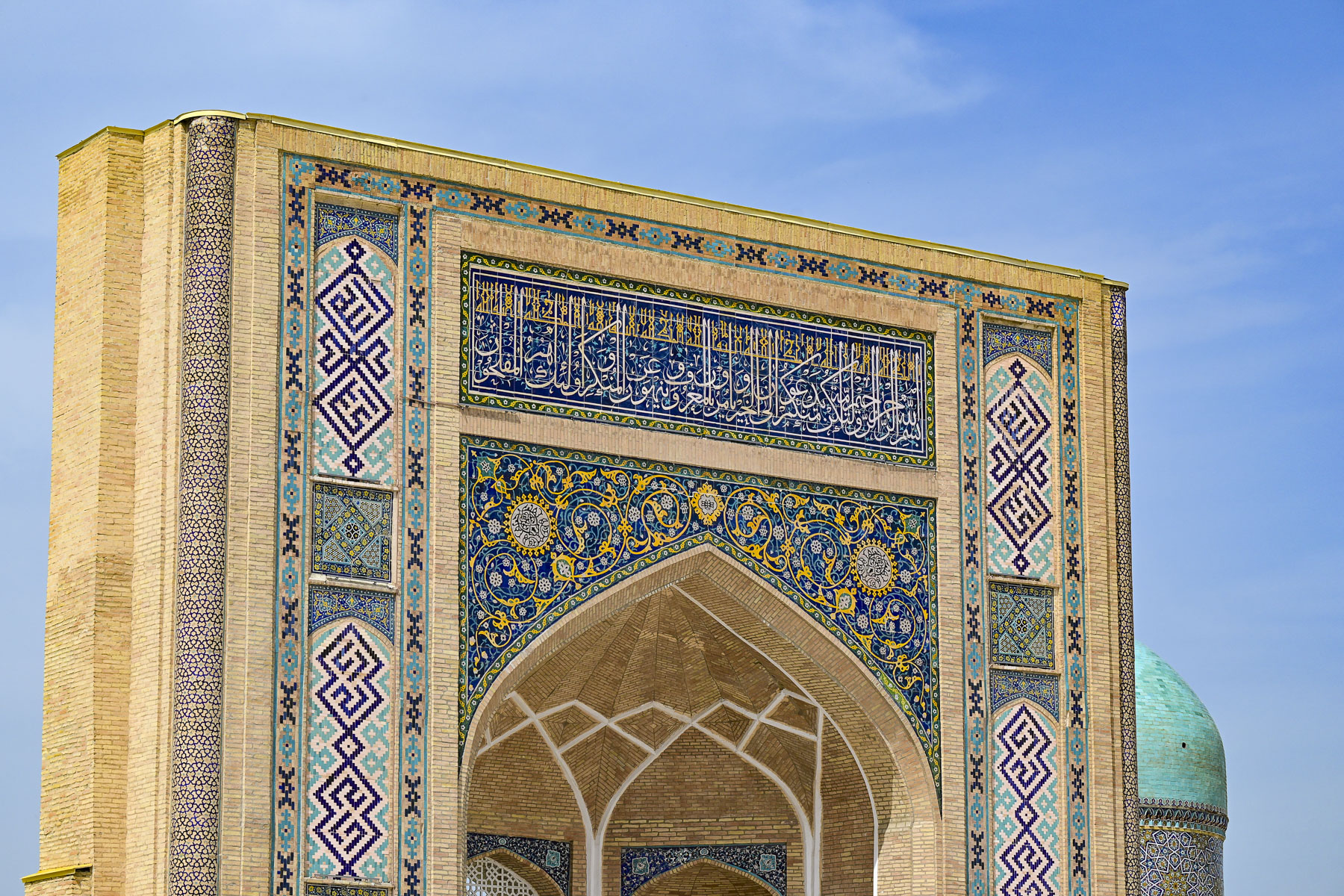
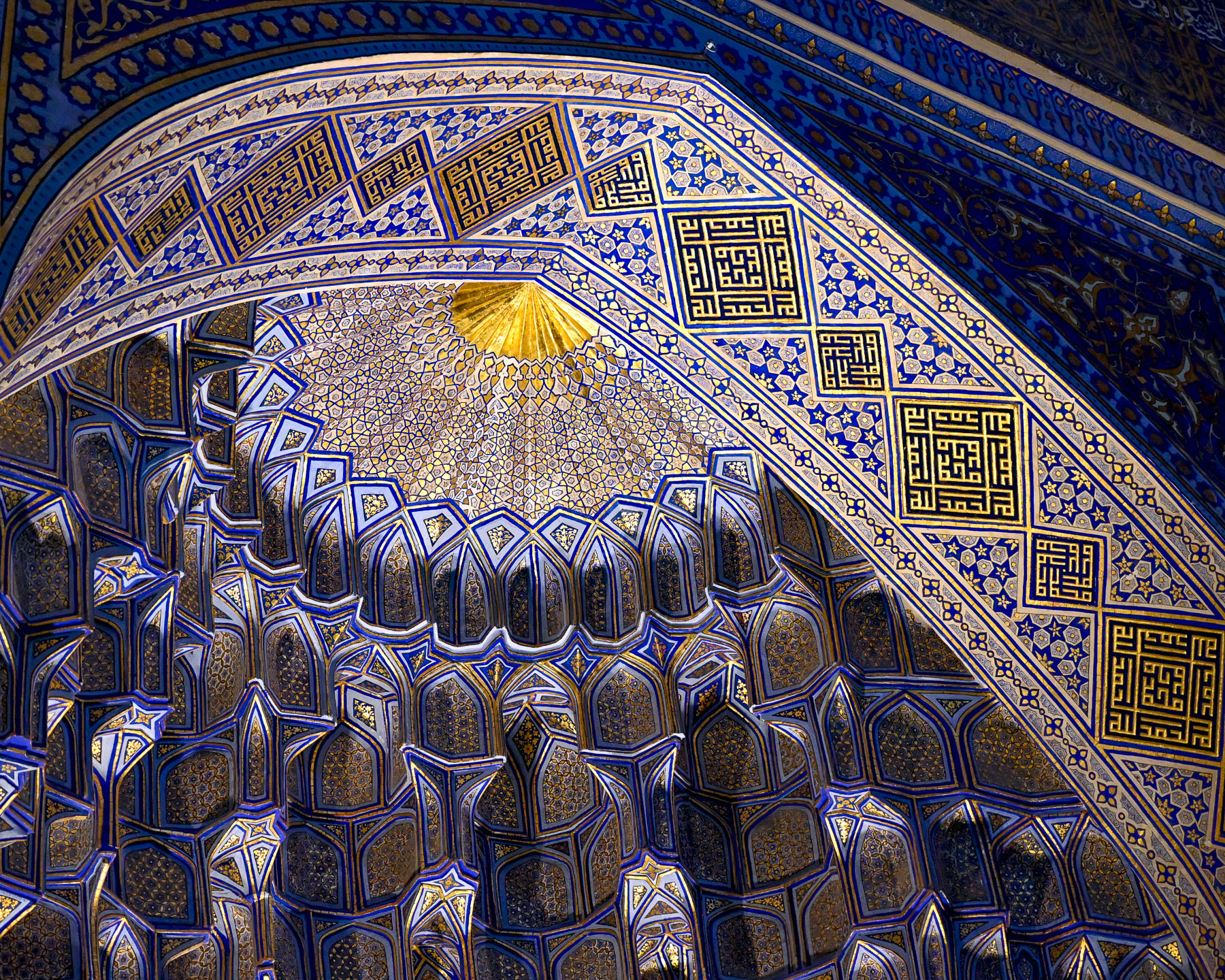
On our last full day in Bukhara we had the morning for ourselves to wander around and explore. There are so many ancient madrassas in Bukhara, many of the smaller ones throughout the town have been or are in the process of being renovated into boutique hotels. And there are others in a state of semi-ruin, that have been stabilized enough to be safe for vendors to set up craft stalls in but remain architecturally interesting. The Abdulaziz Khan Madrassa (1652), located directly across from the Ulugbek Madrassa (1417), was an amazing example of this. Its monumental pishtaq, entrance way, had one of the best examples of a muqarnas, the intricate honeycomb-shape vaulted ceiling, found on madrassas in Bukhara.

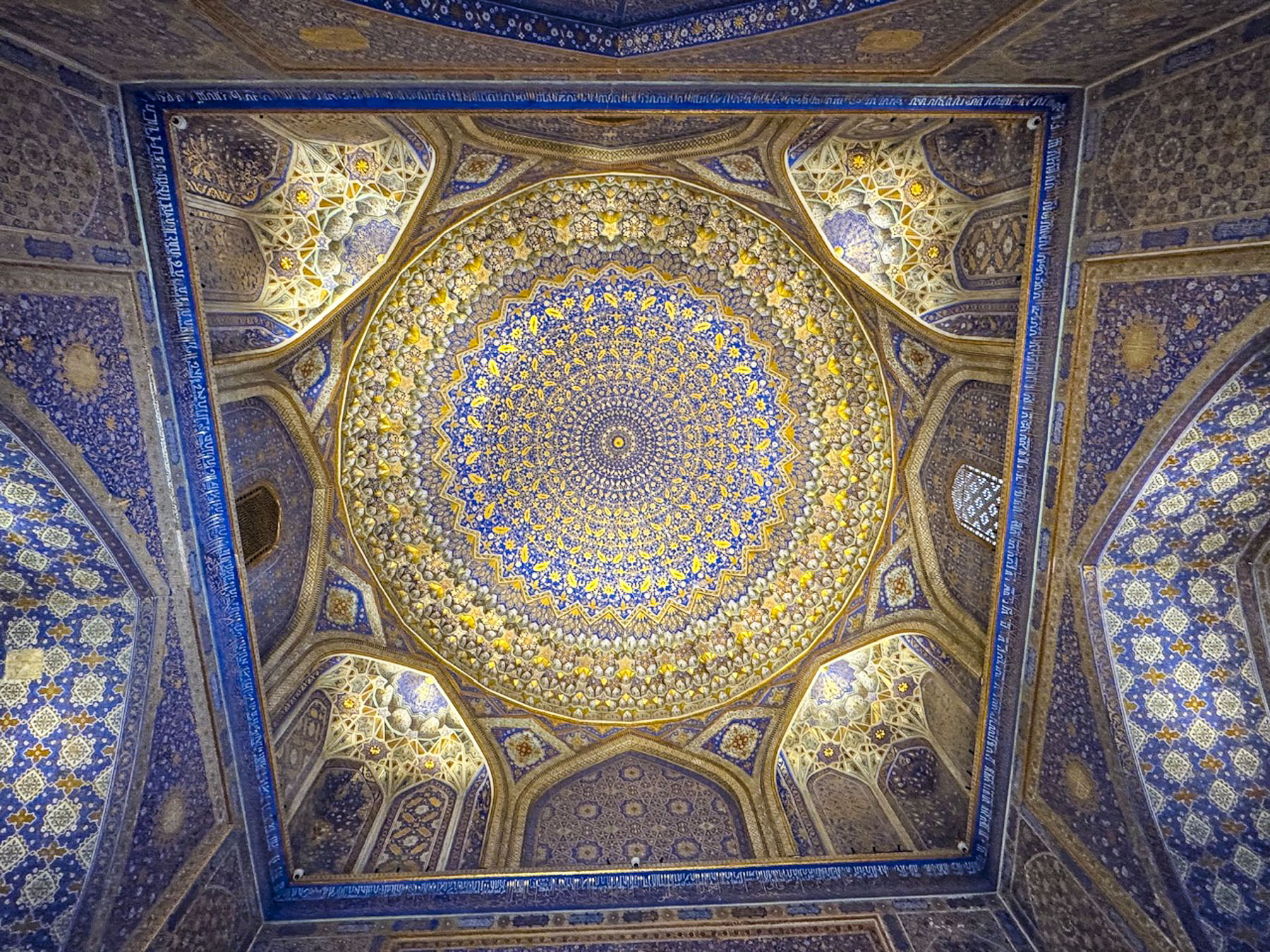
Even though the domed ceilings above the vendors in its main hall were not restored, they were also stunning. In the courtyard large sections of tilework were noticeably missing.

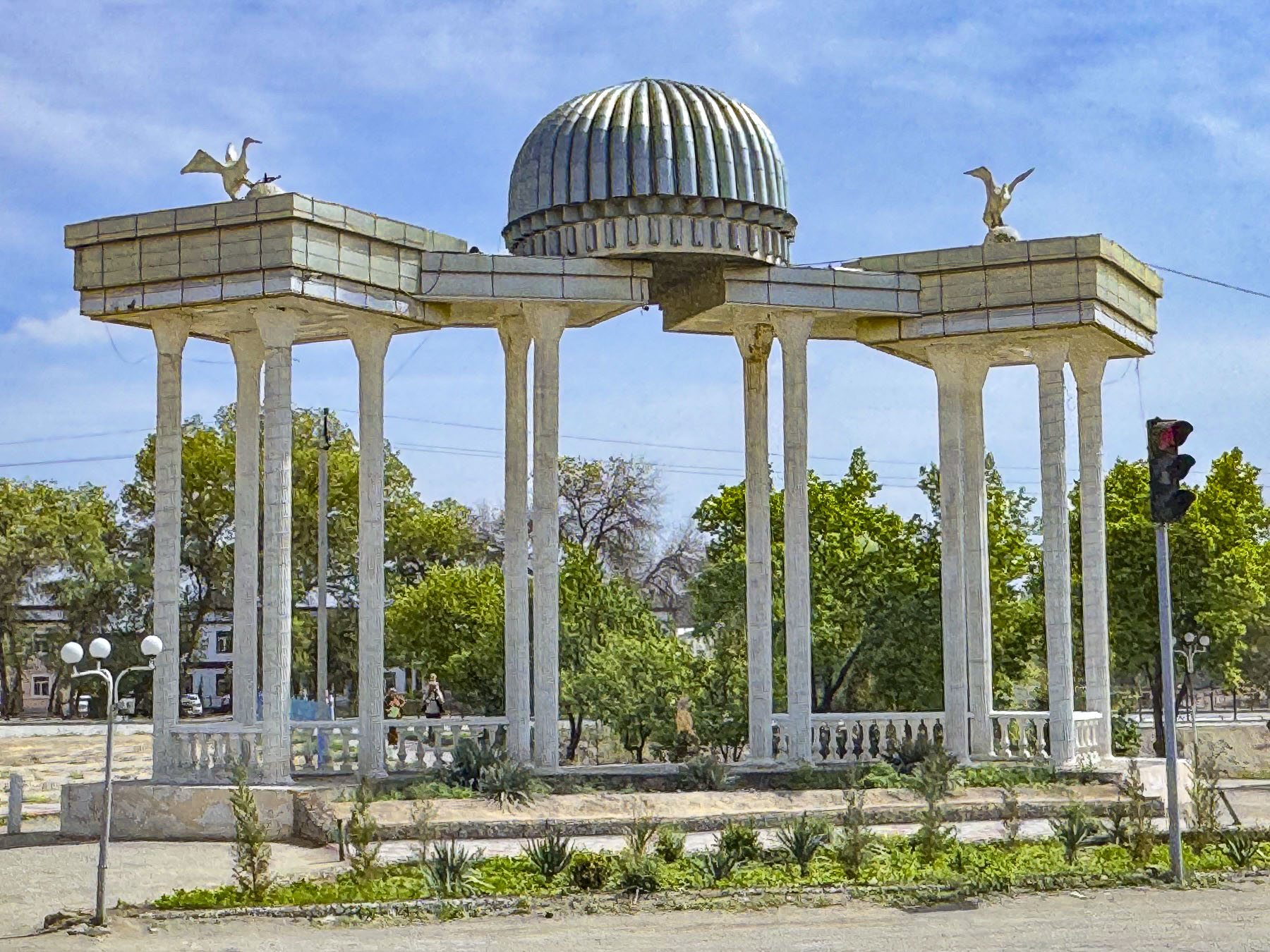
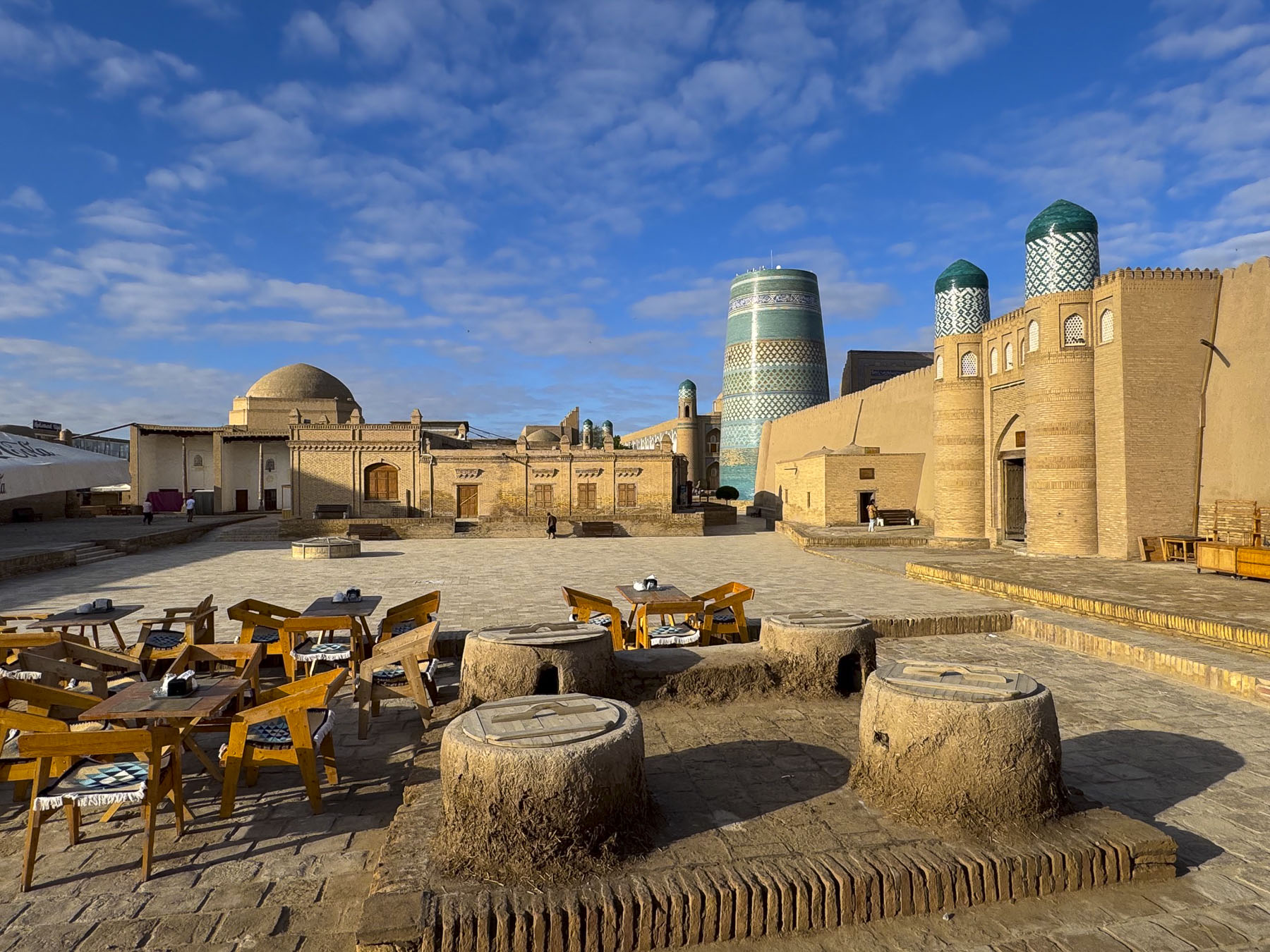
Continuing on we walked through the medina to the Chor Minor Monument, a unique structure with four blue capped towers, which represent the cardinal points of a compass and the Samanids, Shaybanids, Karakhanids, and Manghits dynasties. Atop one tower is a sculpture of nesting storks.

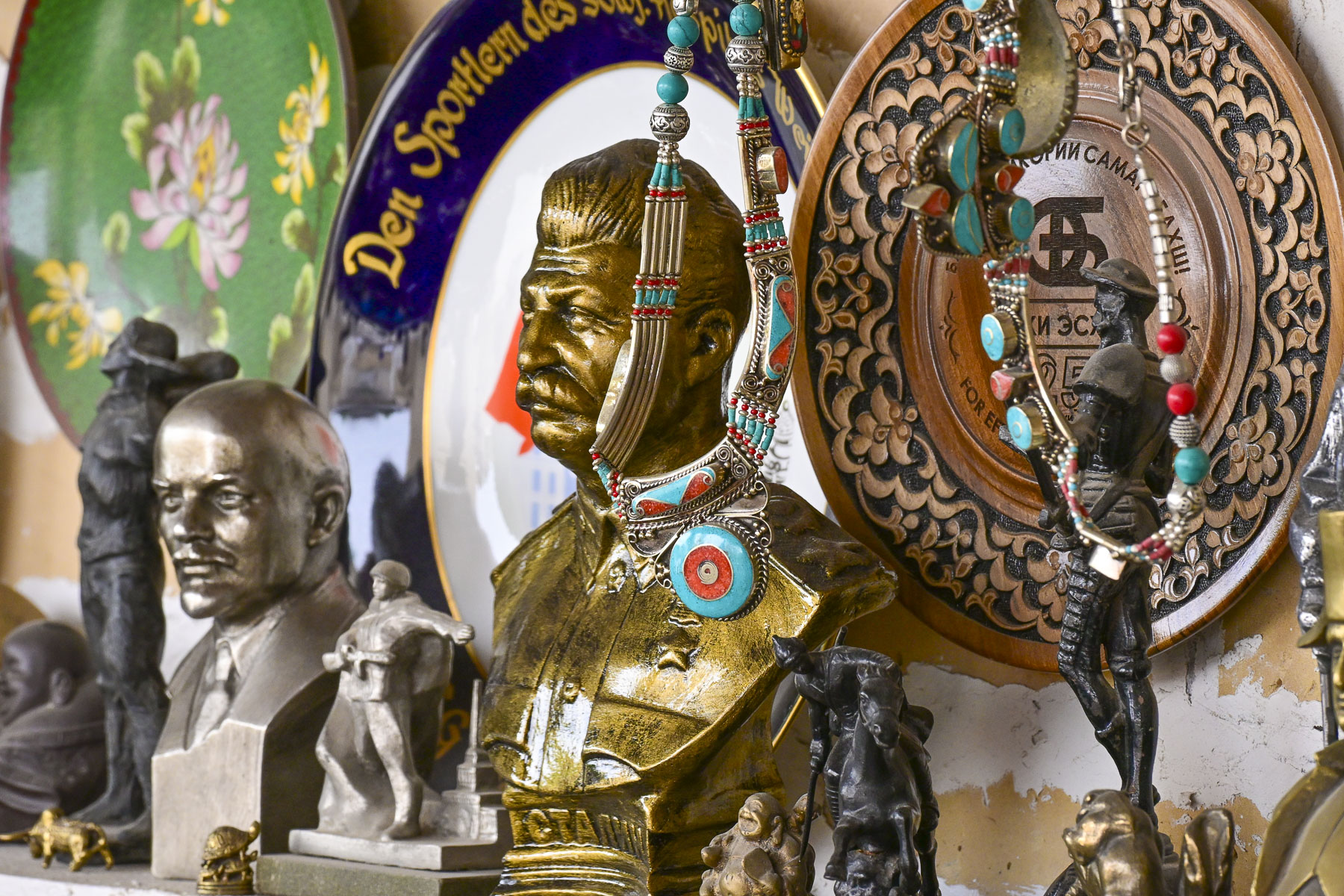
They used to be a common sight nesting on the domes all across the city.  Their presence was enjoyed, with folks believing the birds brought good luck, peace, and domestic happiness.  Across from the monument was an antique shop that features all sorts of Soviet memorabilia.

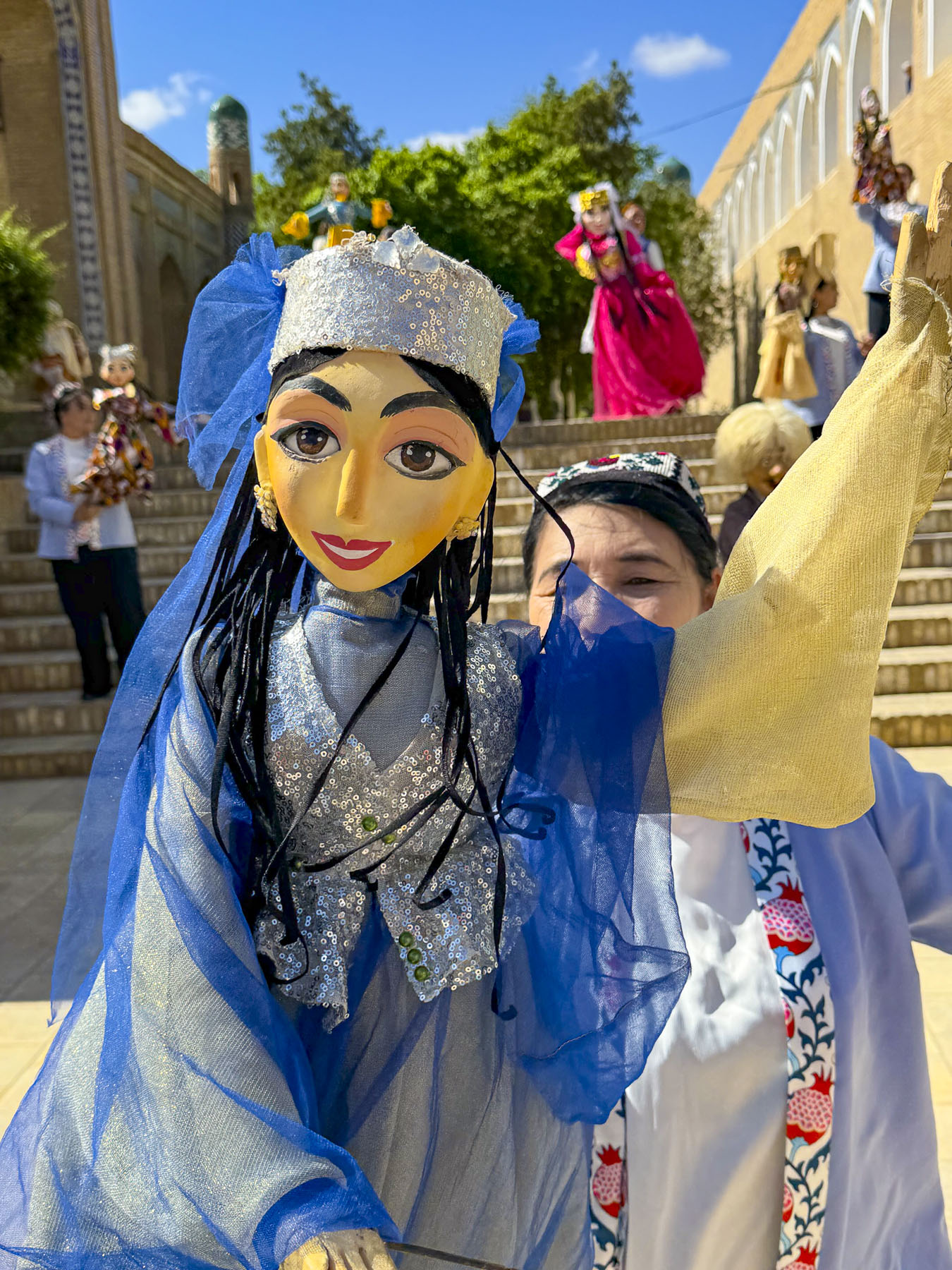
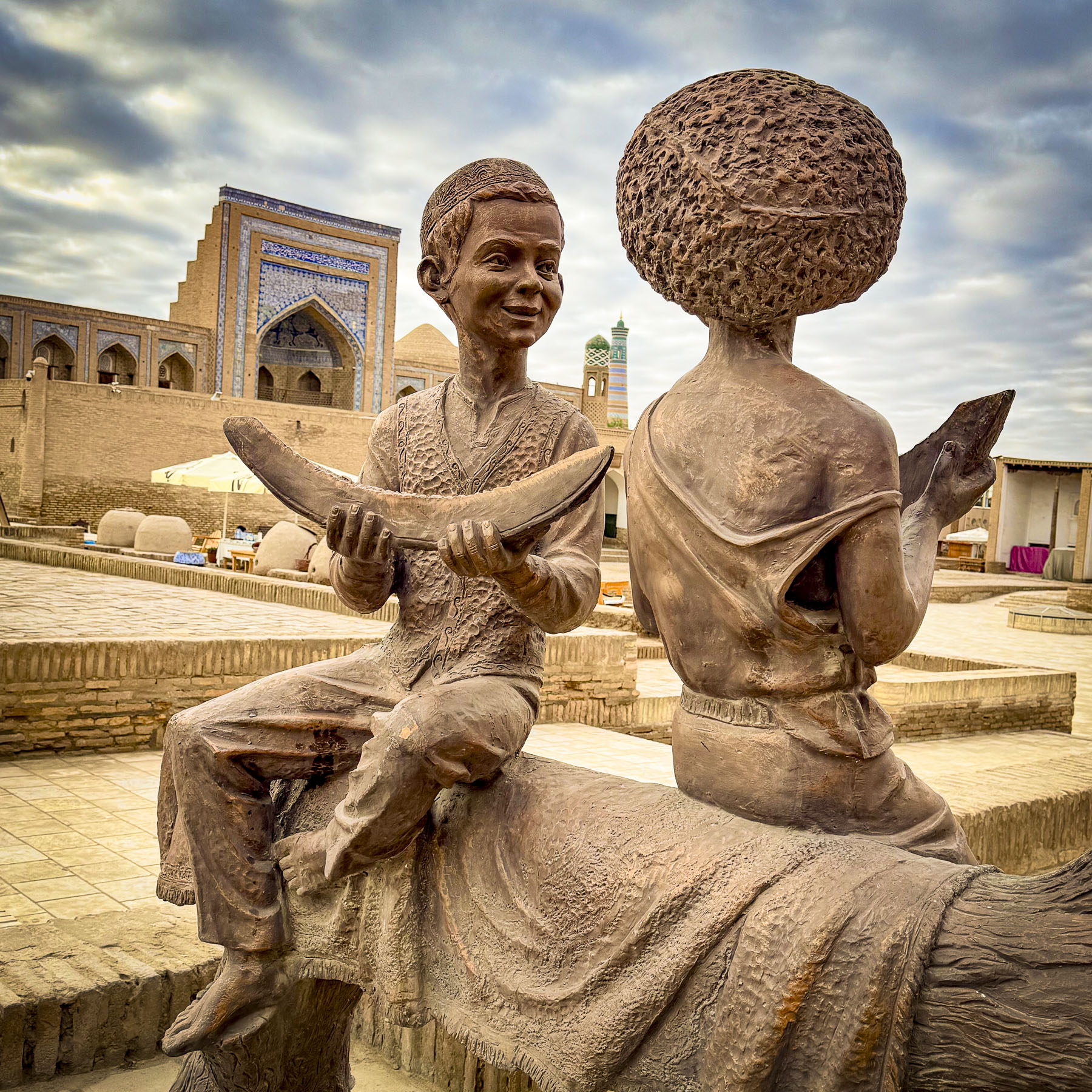
Afterwards we headed to the Labi Hovuz plaza where we were scheduled to reunite with our group at the bronze statue of Khodja Nasreddin, a legendary folkloric figure who used his “sharp wit, humor, and feigned ignorance to outsmart the greedy, hypocritical, and powerful,” in front of the Nodir Devonbegi Madrassa for a dance and fashion show.

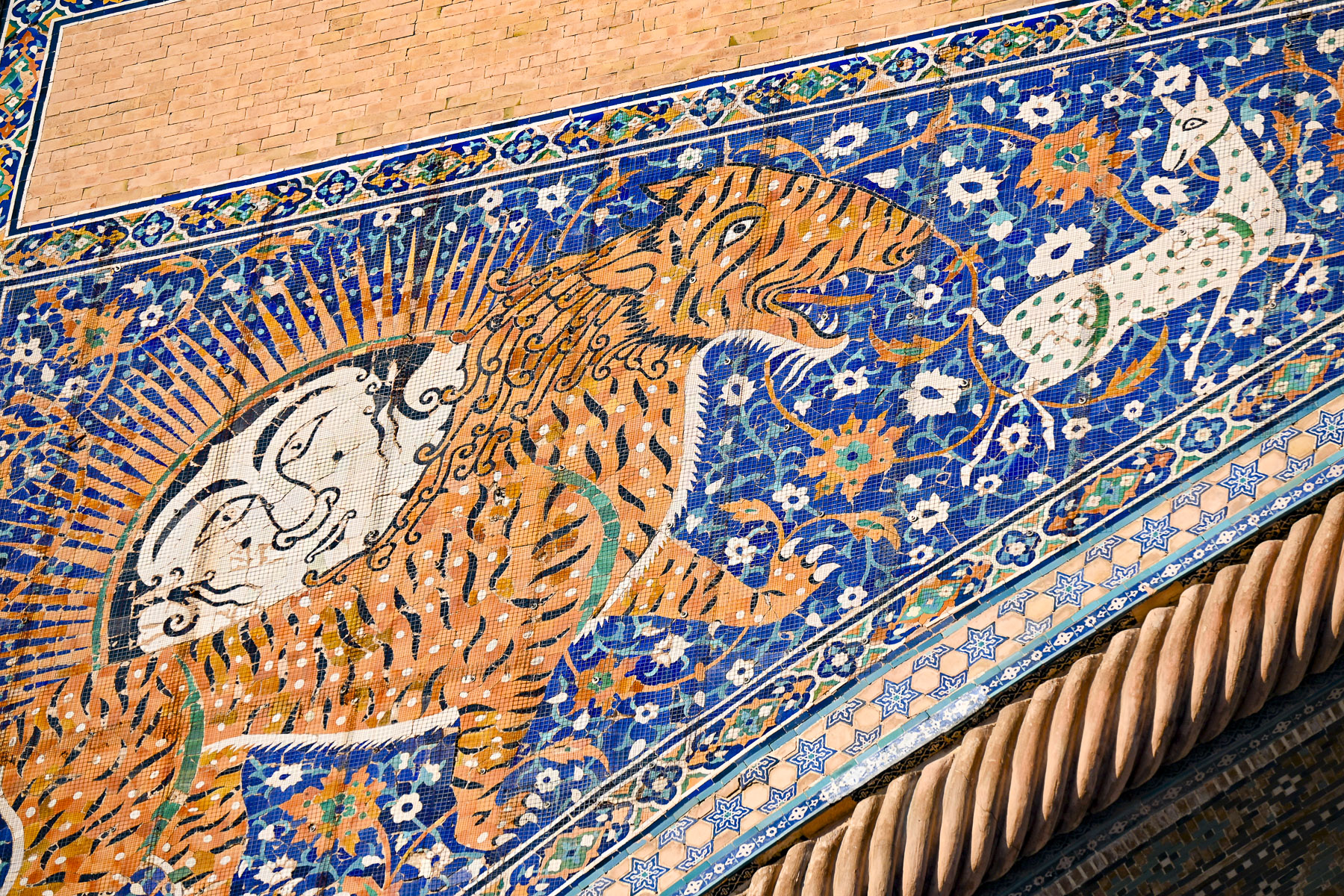
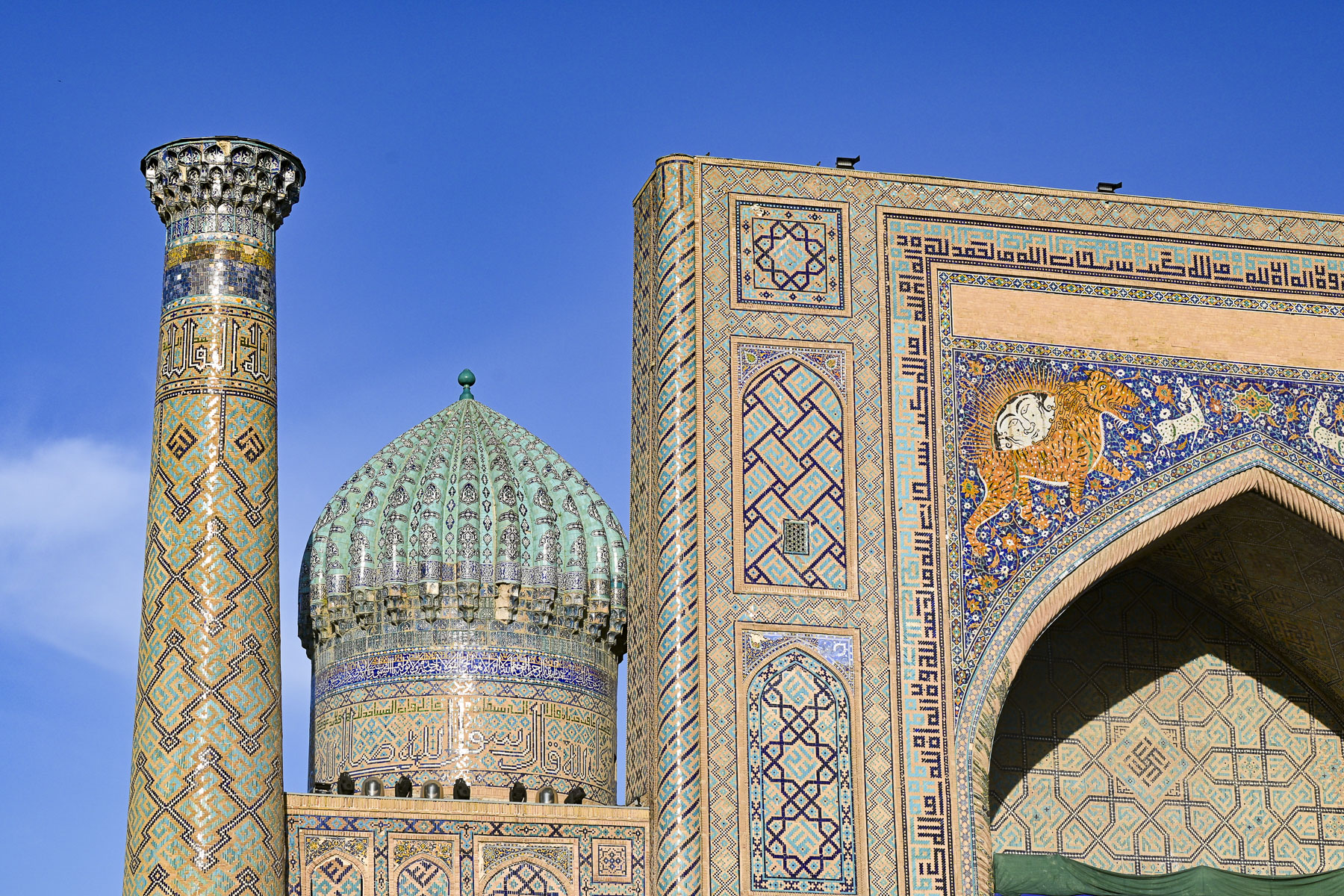
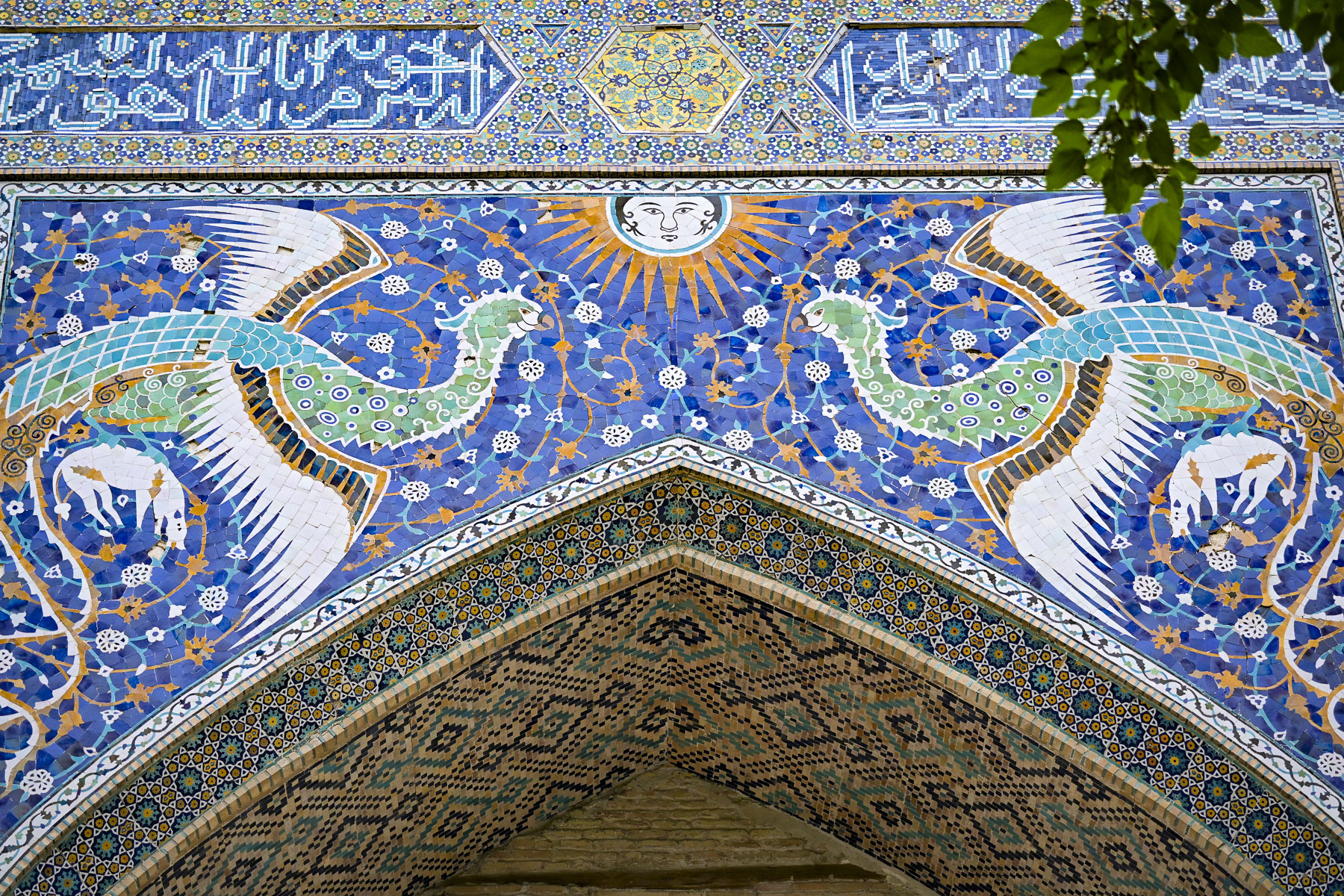
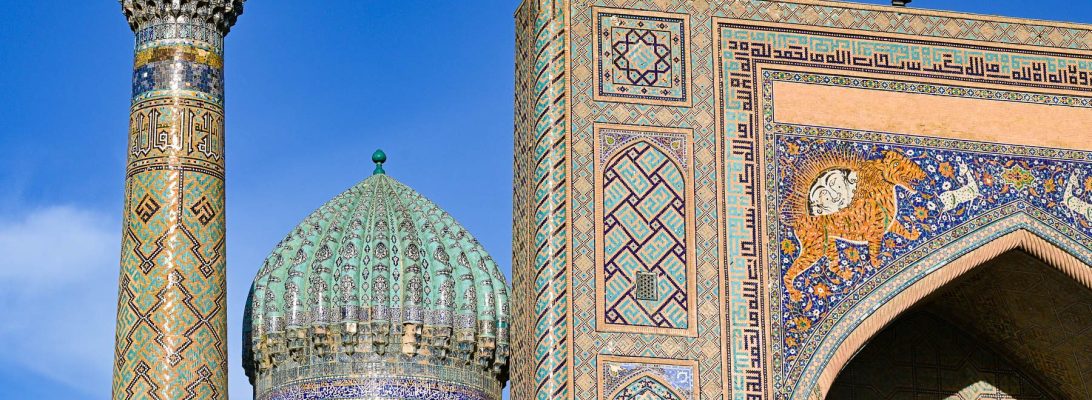
Nodir Devonbegi was originally built in 1622 to be a caravanserai but was repurposed when during its opening ceremony the khan inadvertently praised it as a madrassa. So be it. The front of the building is unusually adorned with an elaborate tile mosaic featuring a pair of stylized birds, mythical Simurghs, clutching deer and flying toward a human-faced radiant sun. This is very unusual for Islamic art as it normally prohibited using depictions of animals or human figures and reflects a short-lived regional relaxation of the rules in the 17thcentury.

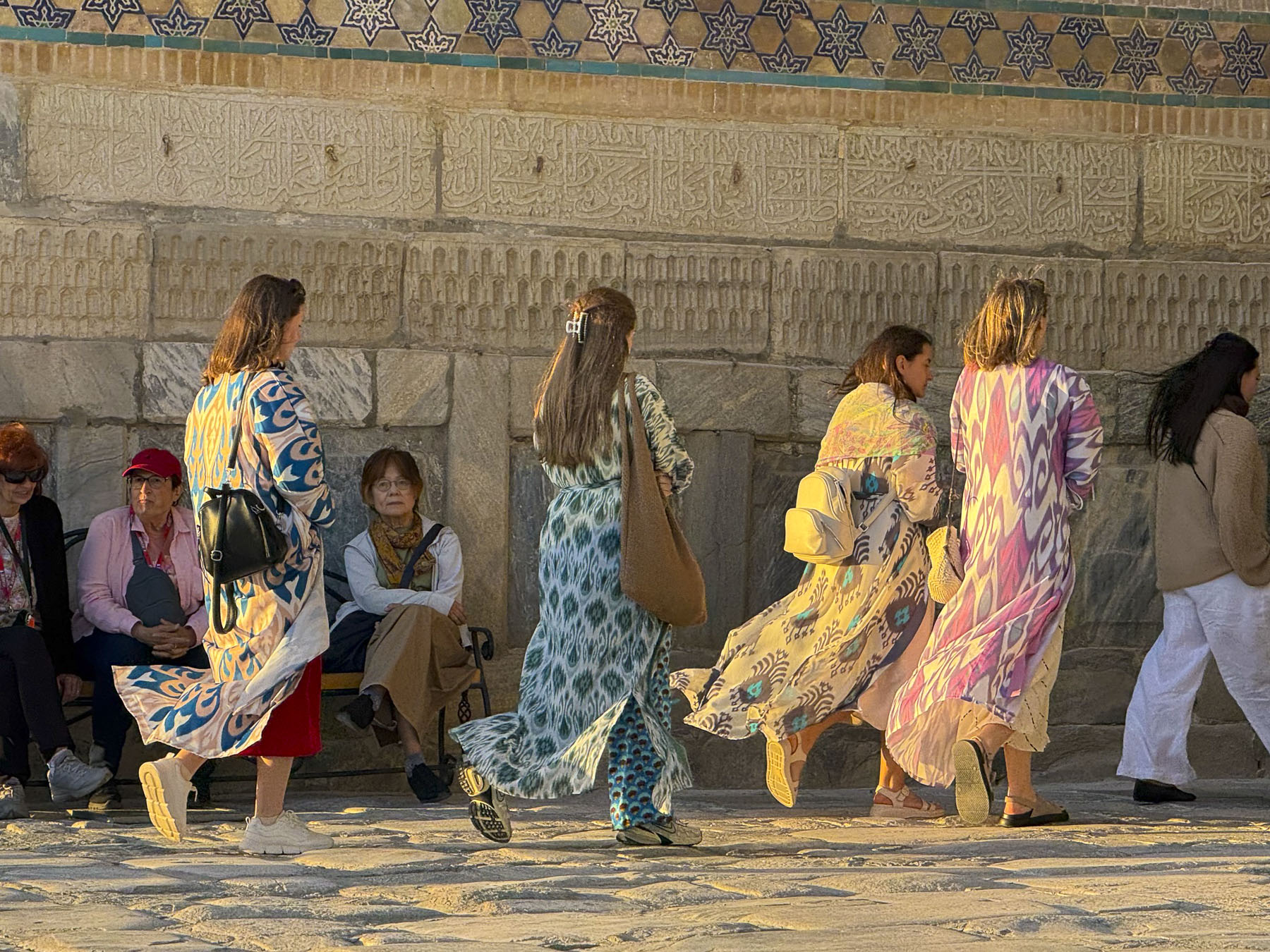
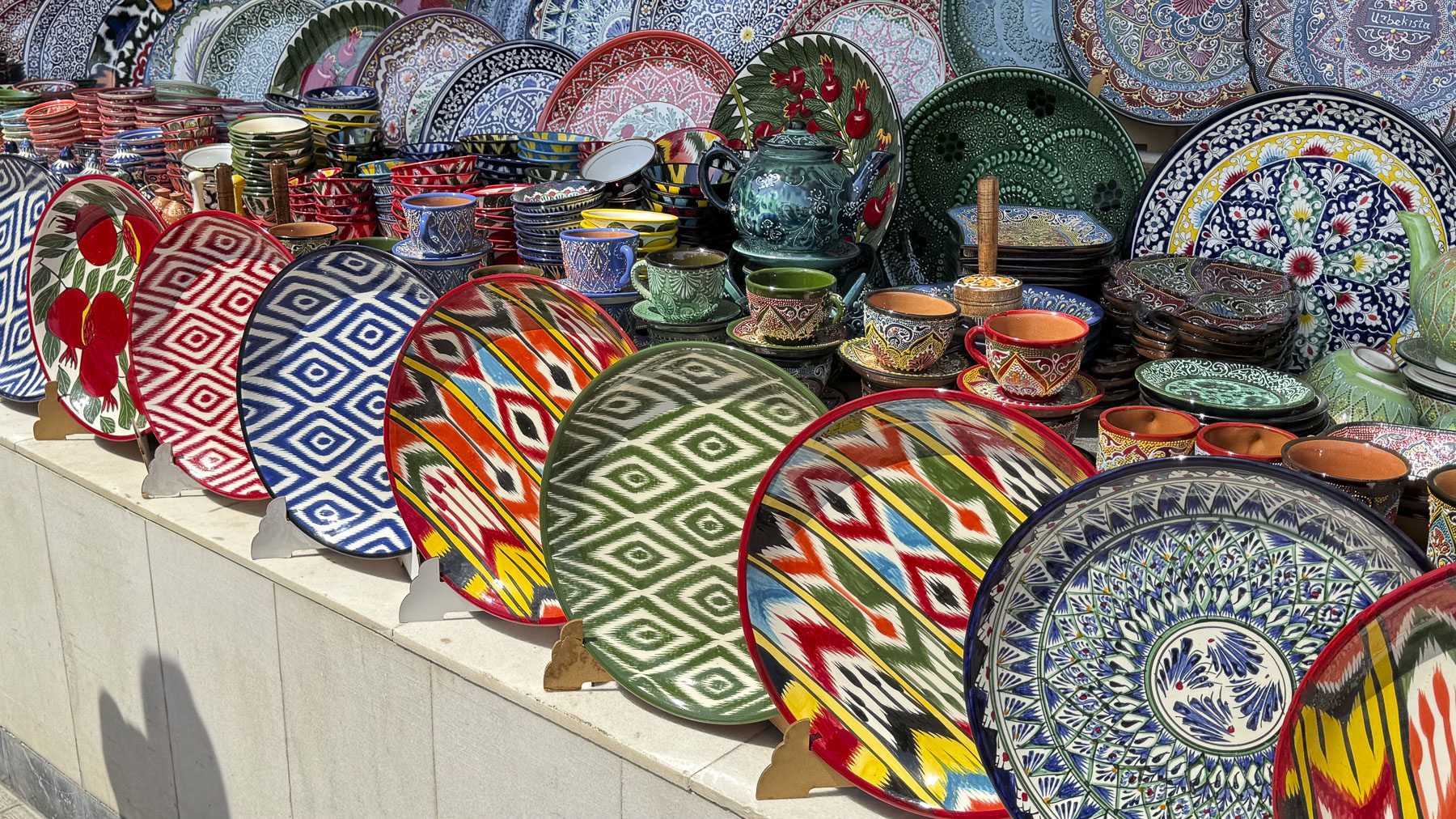
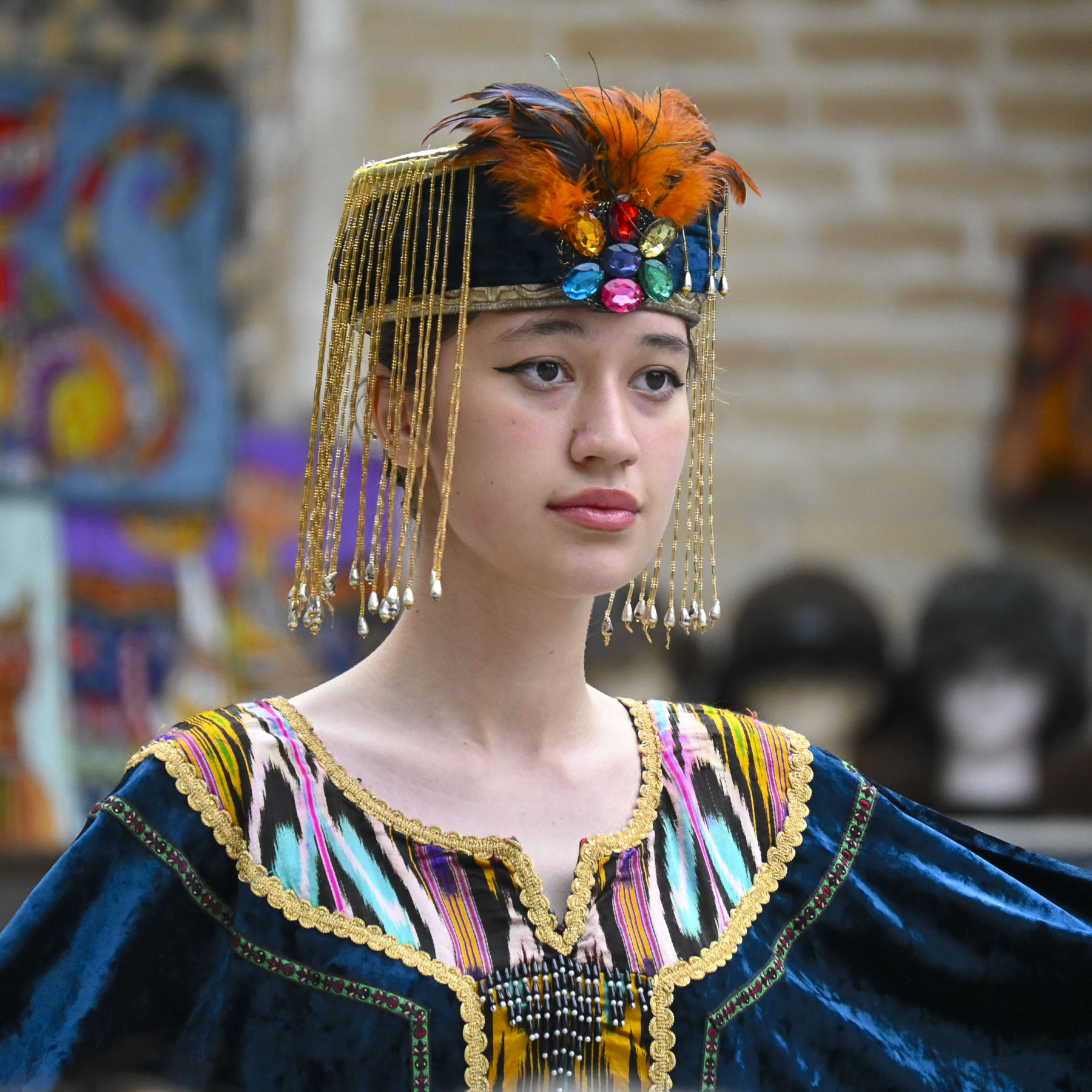
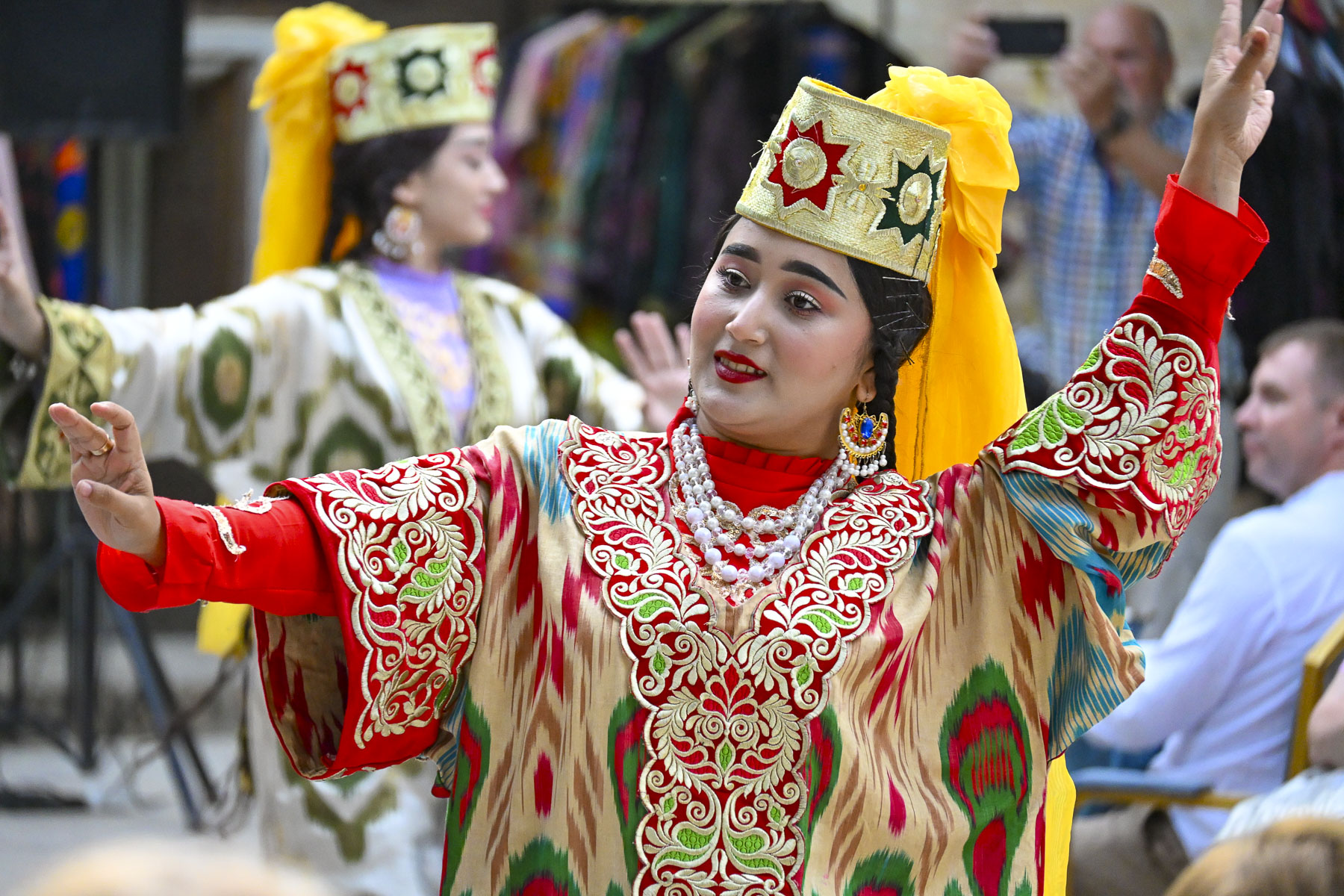
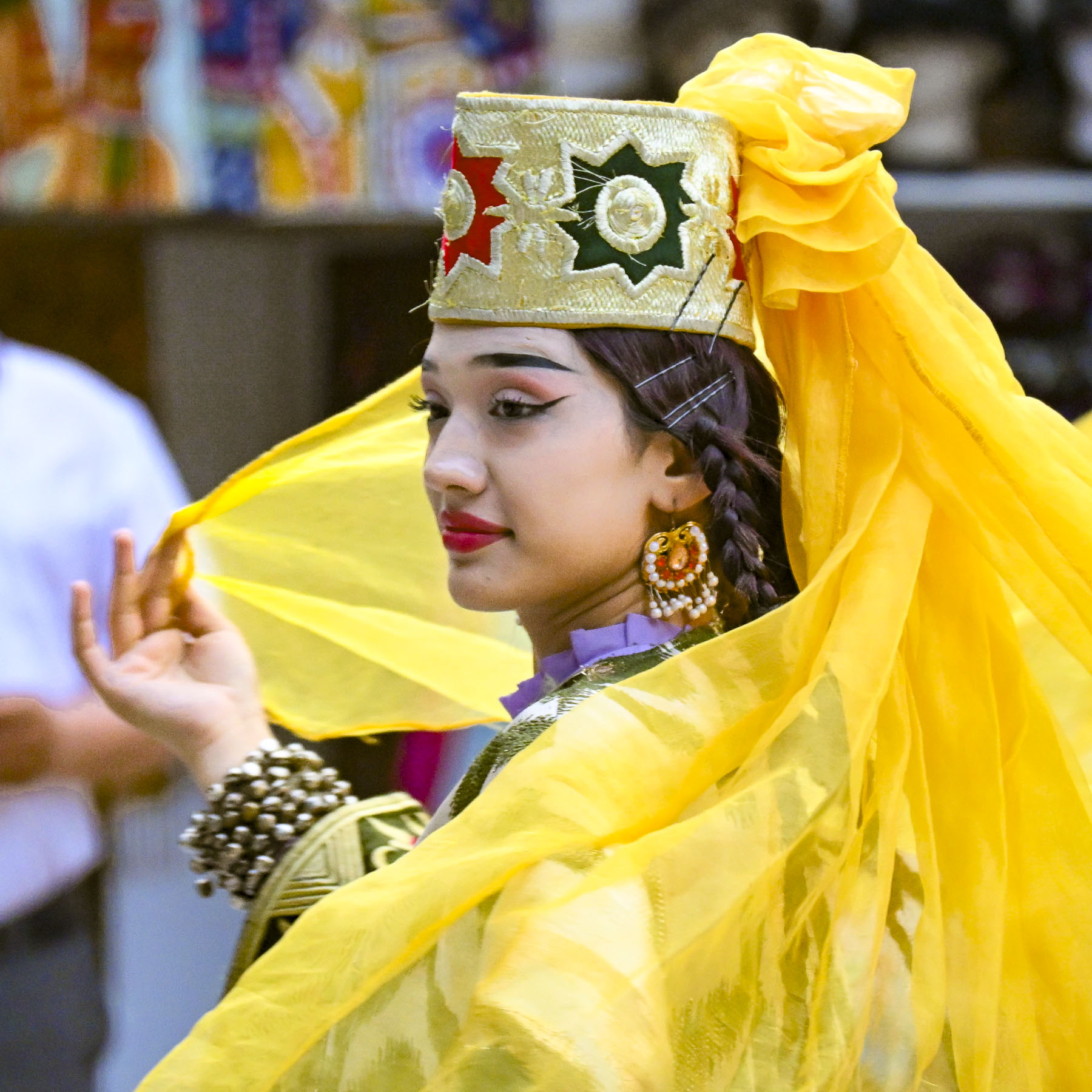
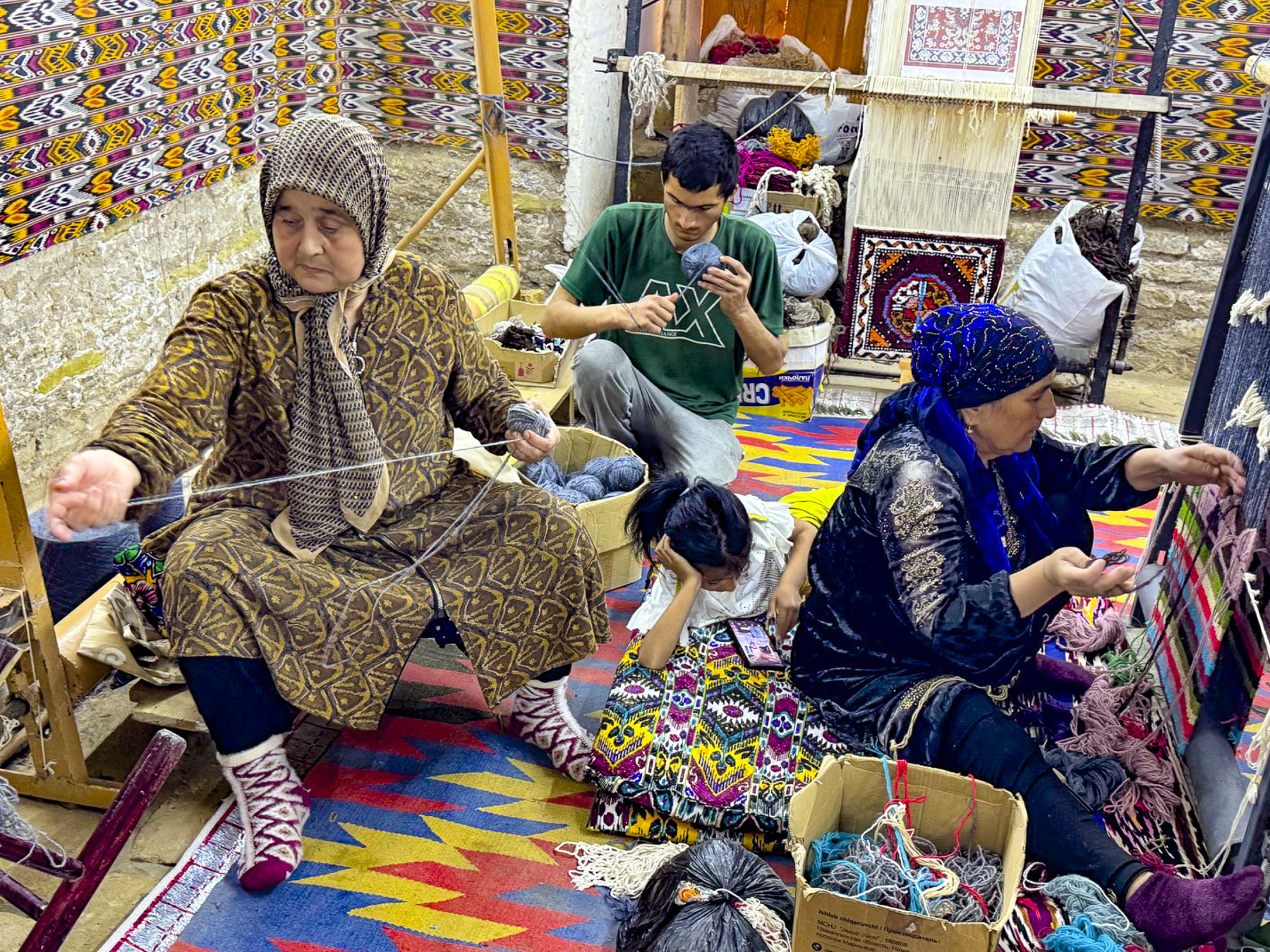
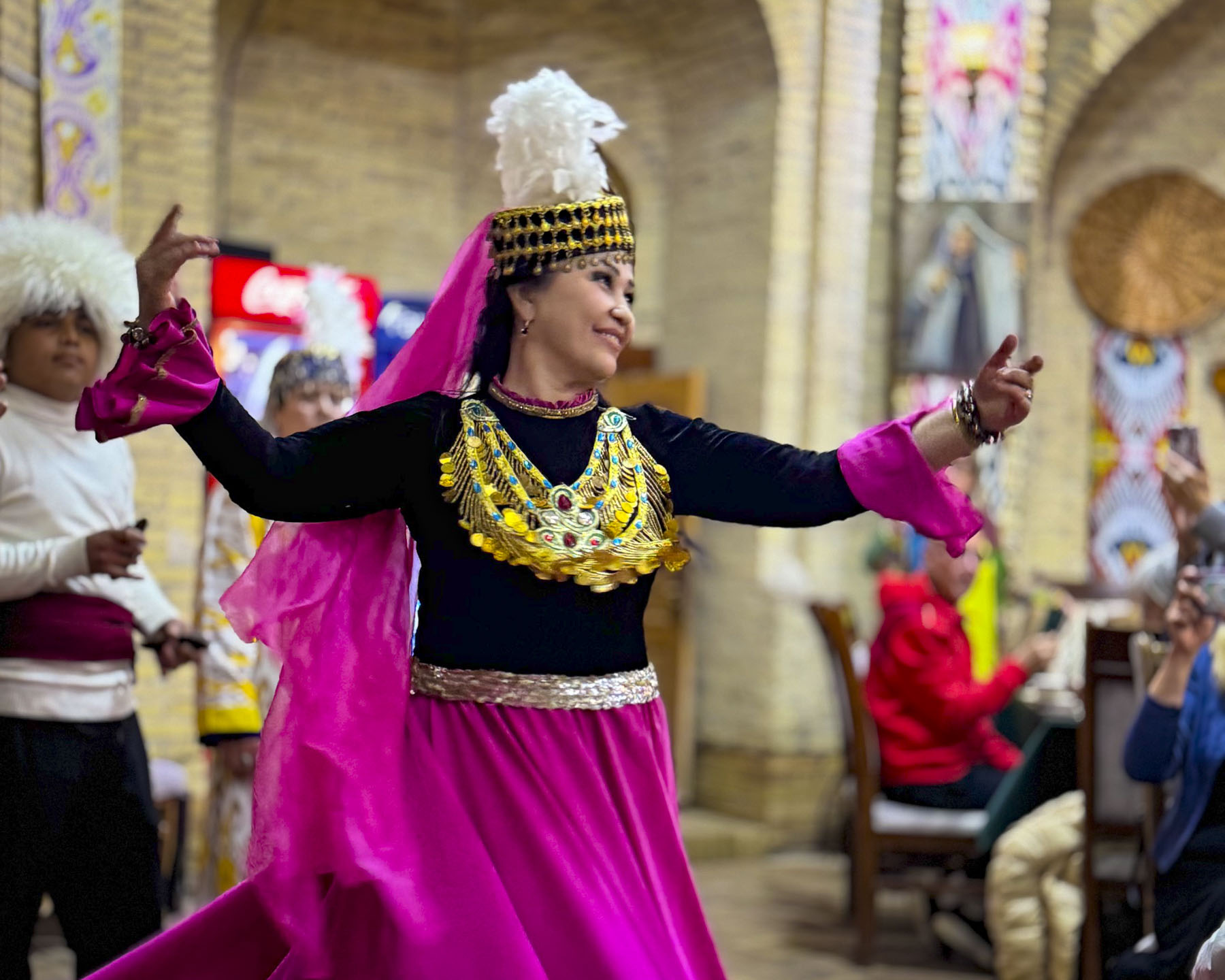
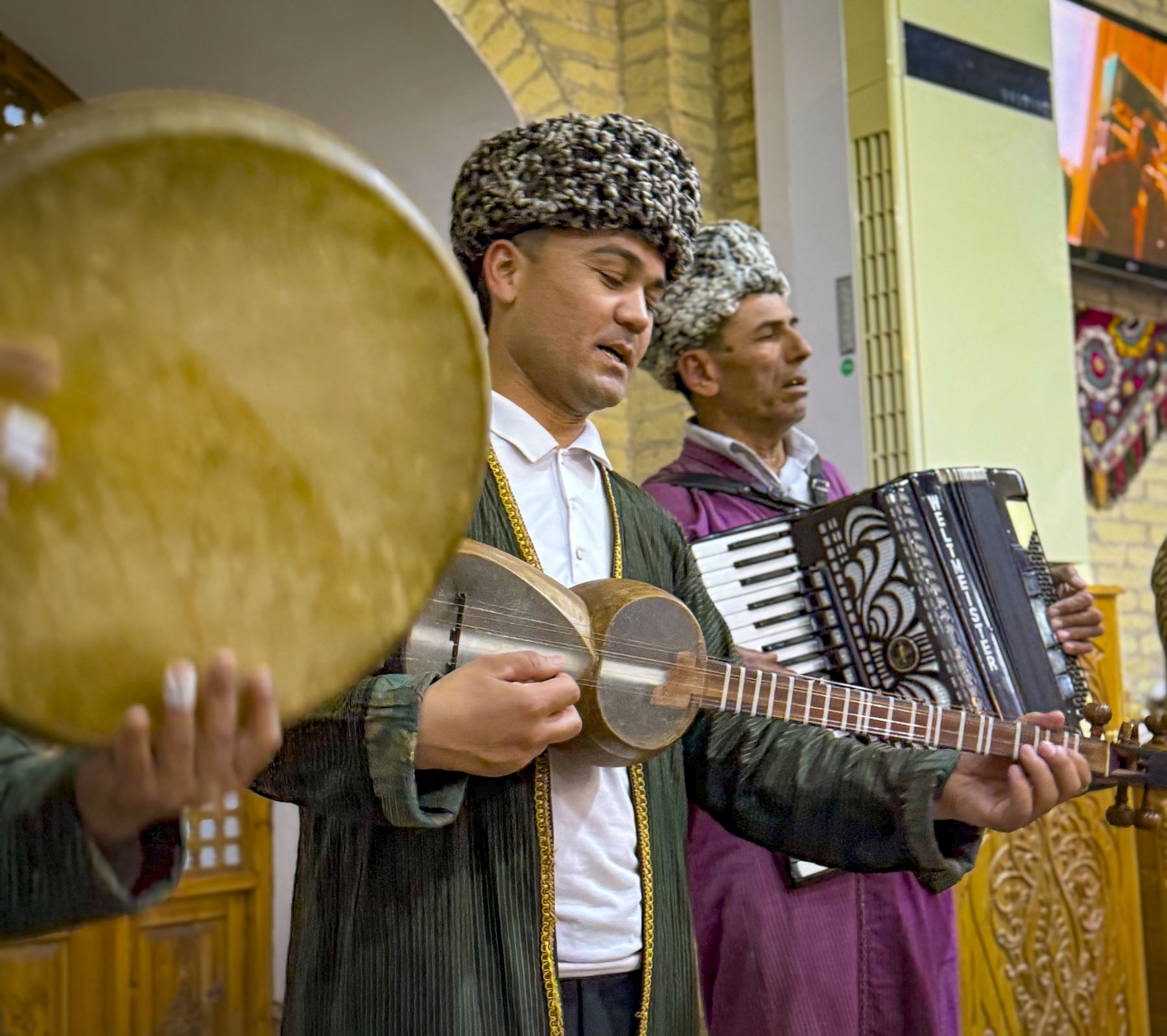
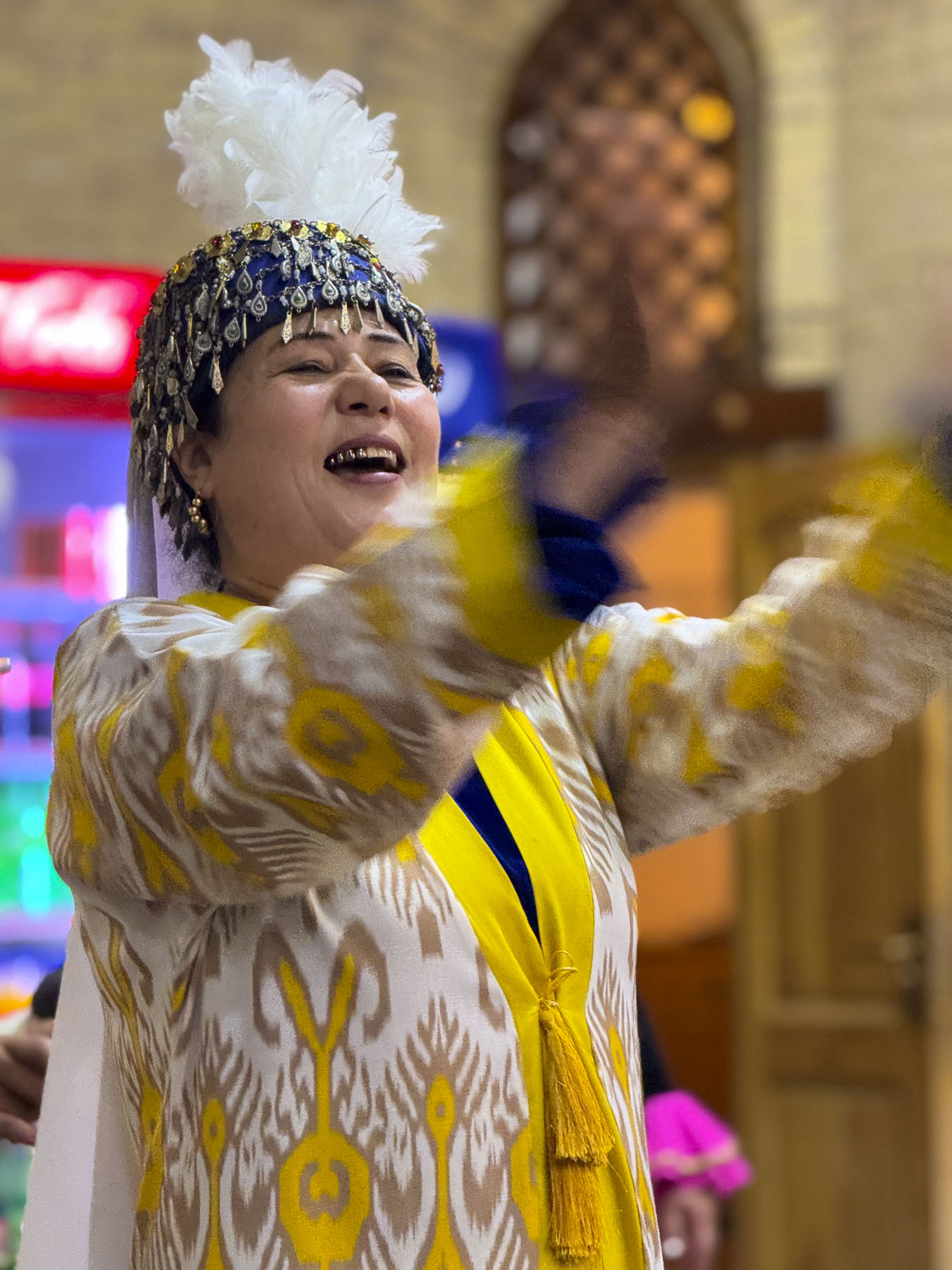
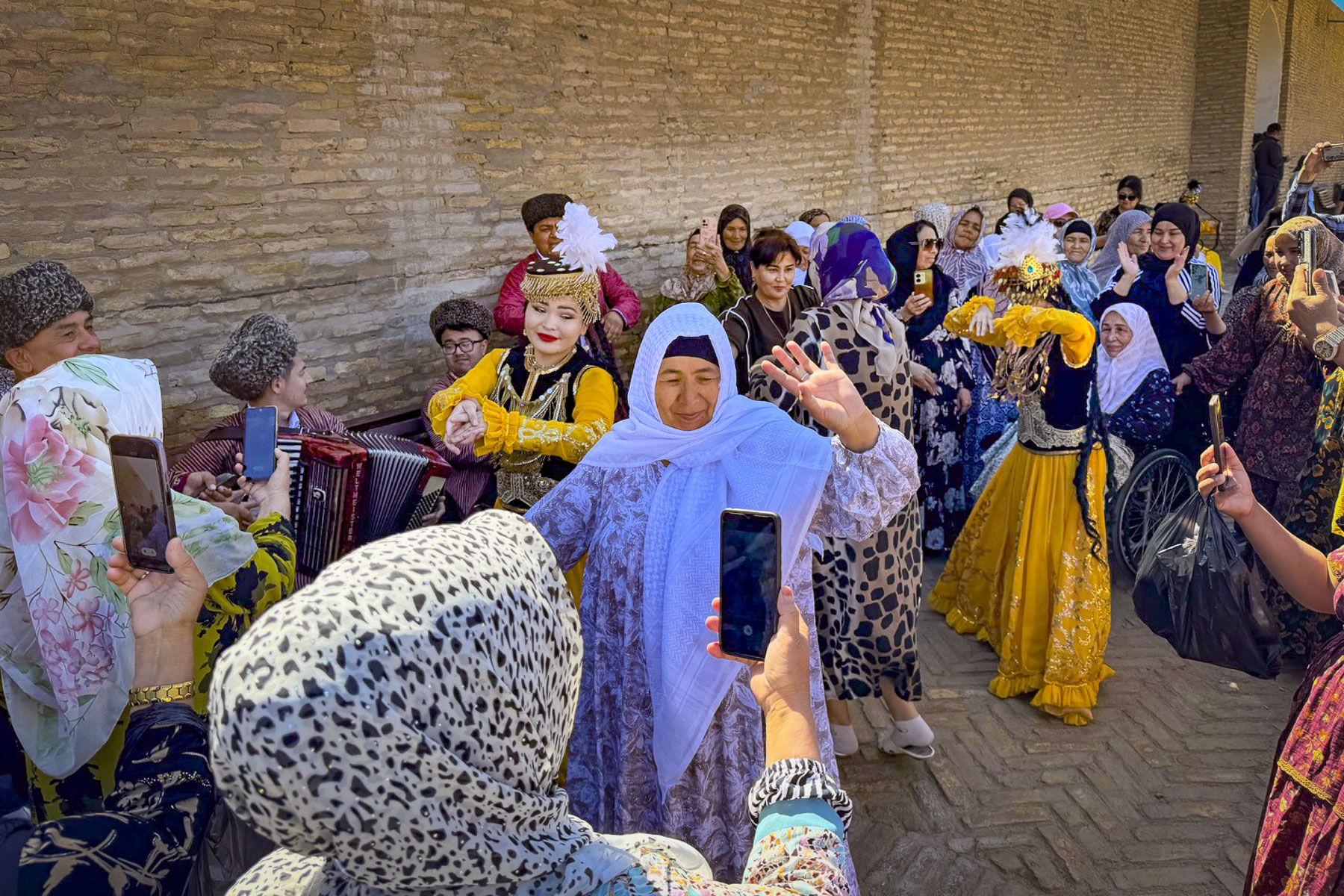
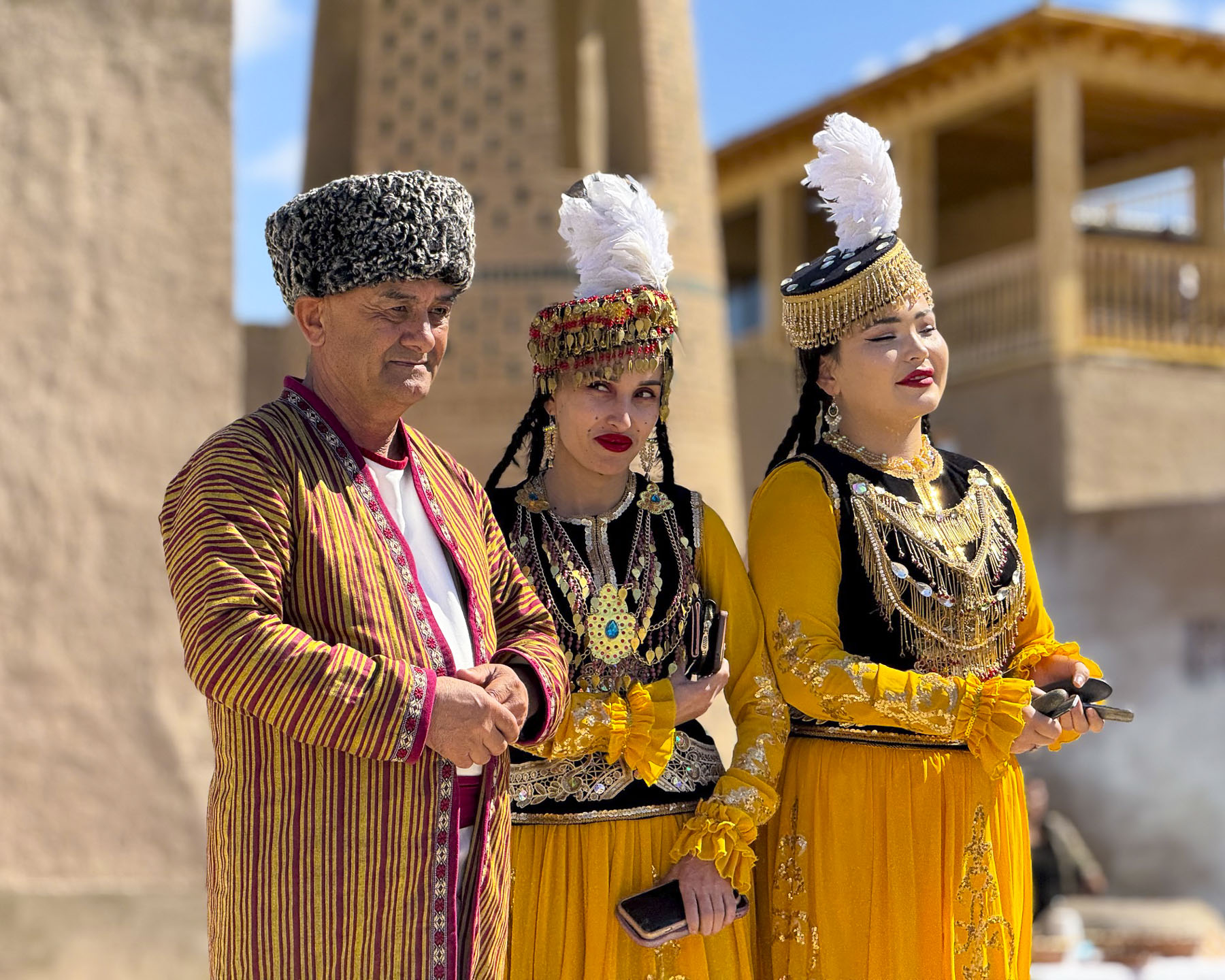
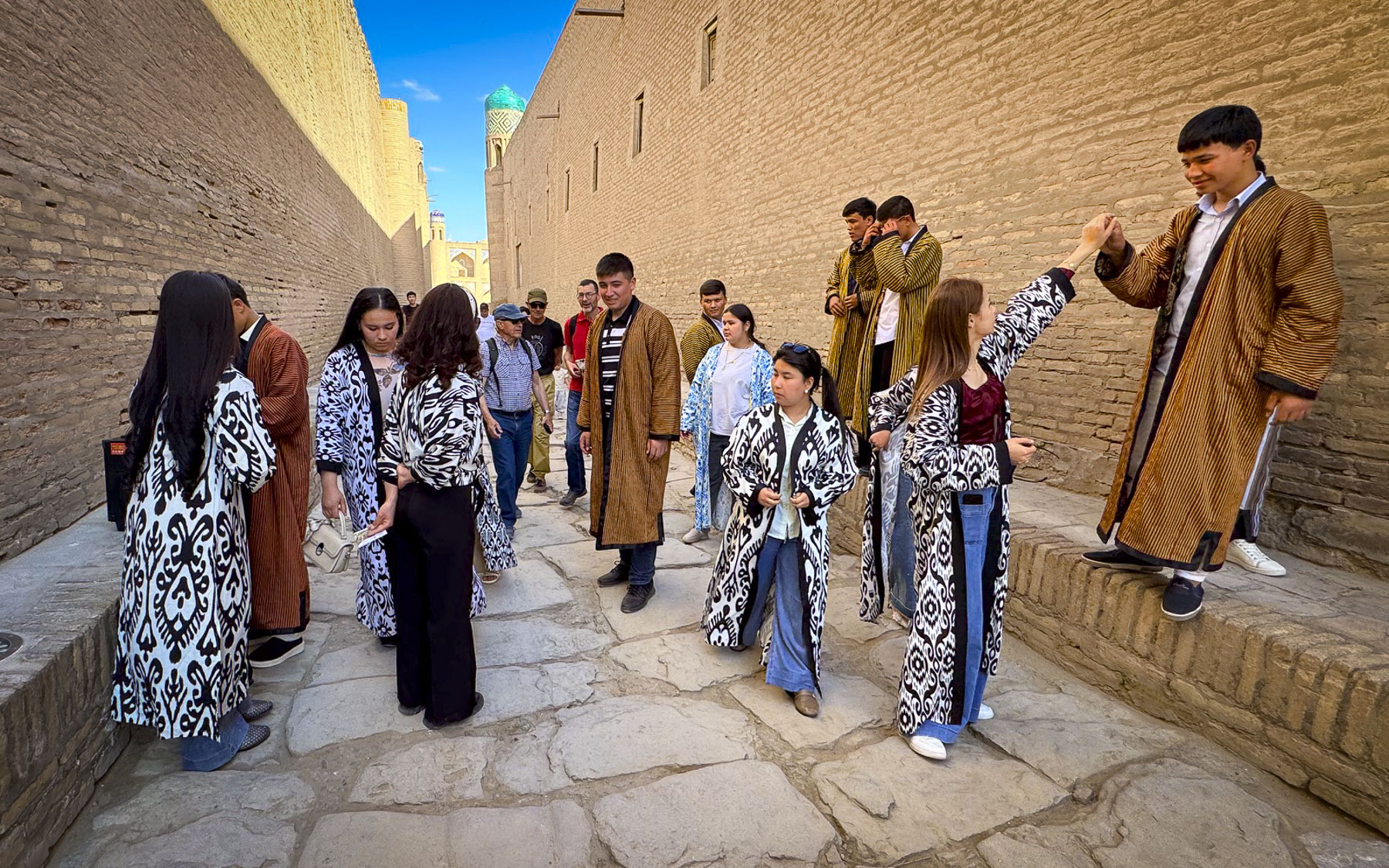
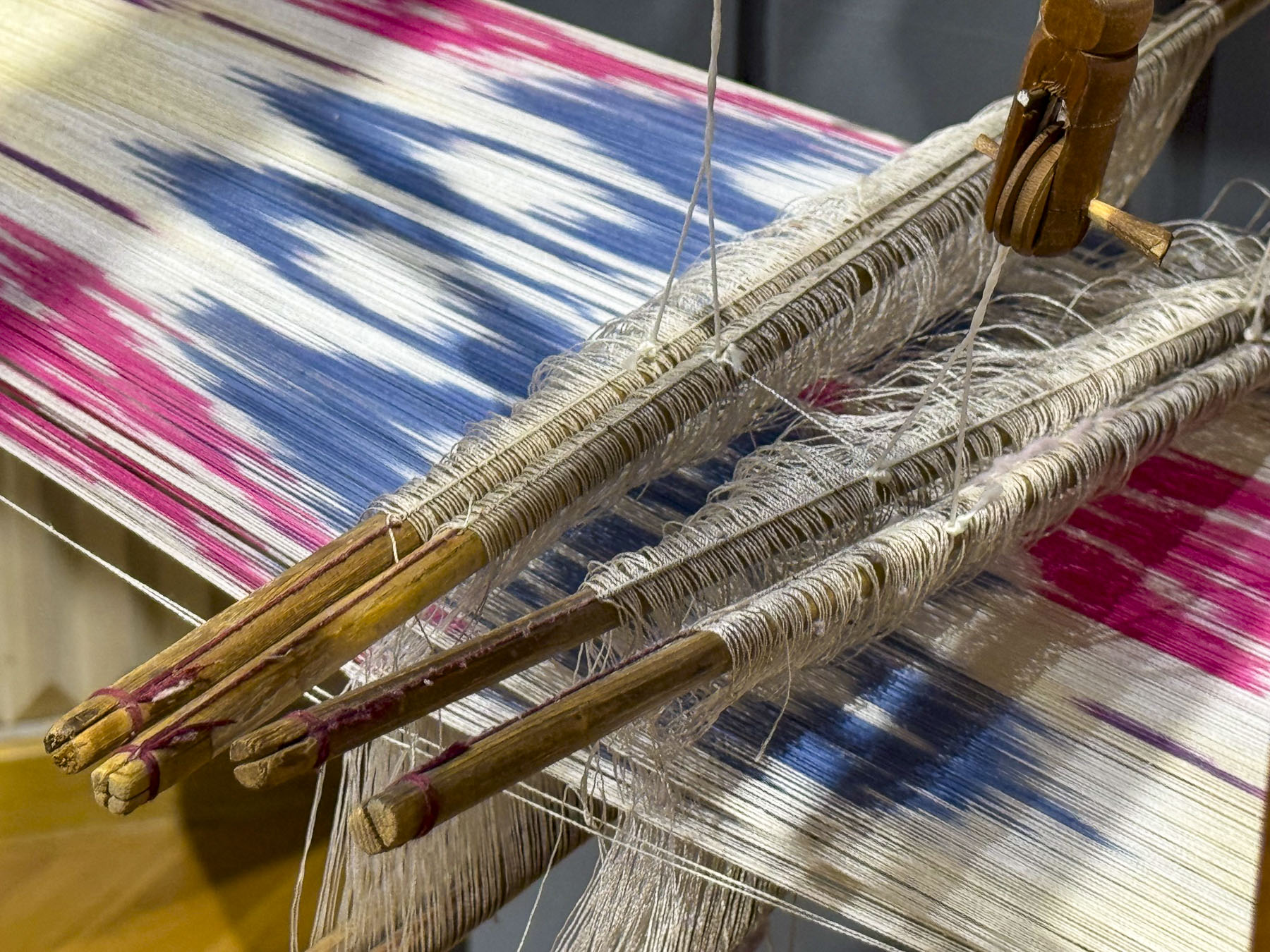
Inside we were enthralled by a lively performance of traditional Uzbekistan dances in between the wardrobe changes of a surprisingly interesting fashion show by the internationally acclaimed designer Umida Kabilova, who gives a bold modern interpretation to ikat, a dyed patterned silk fabric for which Bukhara is known.

Afterwards we made a quick stop at the Khammam Sarrofon, a hammam built in the early 1530s. It is a cavernous space that had a heated floor, and was used almost continuously for over four centuries until the Soviets damaged it during their 1920 attack on the city. It was restored and served the community until the 1970s. 

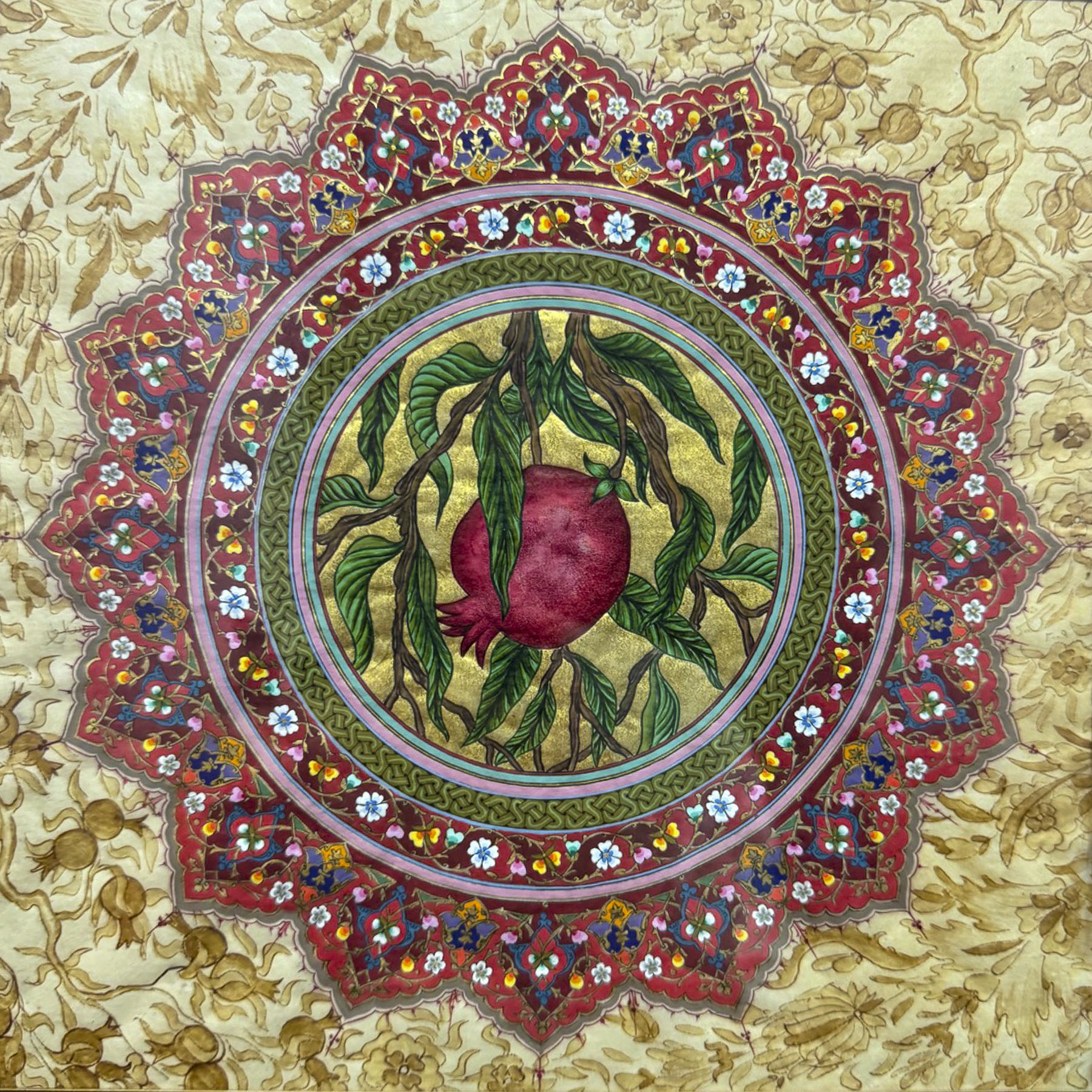
Down from the hammam was the studio and gallery of the Ustoz Shogird Miniature Workshop, founded by Davlat Toshev, an internationally recognized artist who is known for his work on restoring ancient manuscripts. He was clandestinely taught the art of Persian miniature painting by his father during the Soviet era, when Uzbekistan’s cultural identity was being suppressed. In a desire to keep this ancient tradition alive he started mentoring students, many with learning handicaps, in the 1990s, eventually opening a school in 2018. It’s a beautiful space, and the demonstration of how to color silk paper by two of his students, with a member of our group participating, was charming. The artwork on the walls was beautiful. We couldn’t resist purchasing one for a souvenir. It was a really great experience that we highly recommend if you like art.

Toshev enjoys sharing Uzbekistan’s culture, so much so that his family offers a culinary workshop on how to make plov, the country’s national rice pilaf dish, in their home. It was our group’s last dinner in Bukhara, a festive occasion, and a great way to end our time in this intriguing ancient city on Silk Road.

Till next time,

Craig & Donna

Tashkent, Uzbekistan: Historic and Cosmopolitan or Surprisingly Fascinating & Wonderful

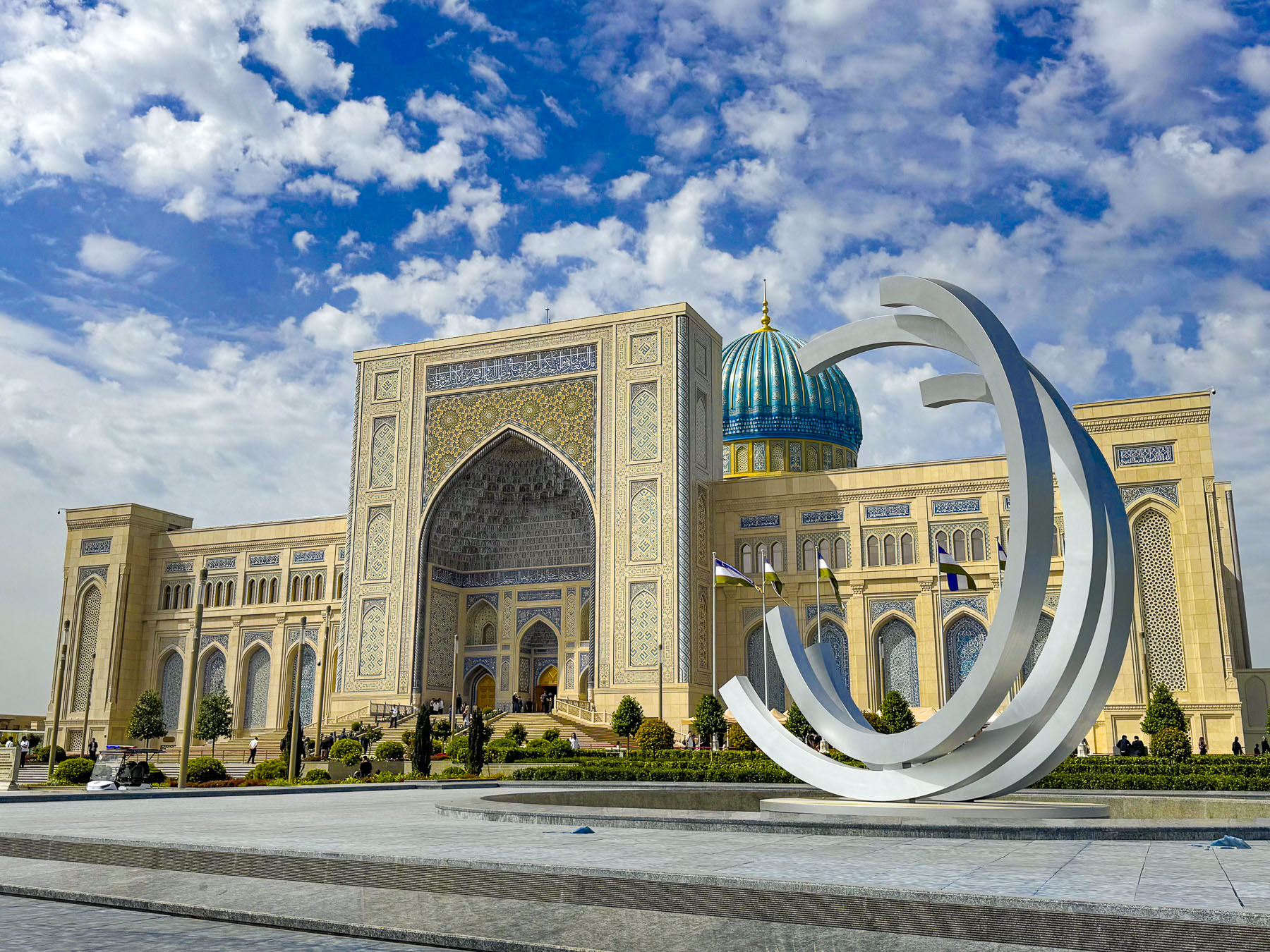
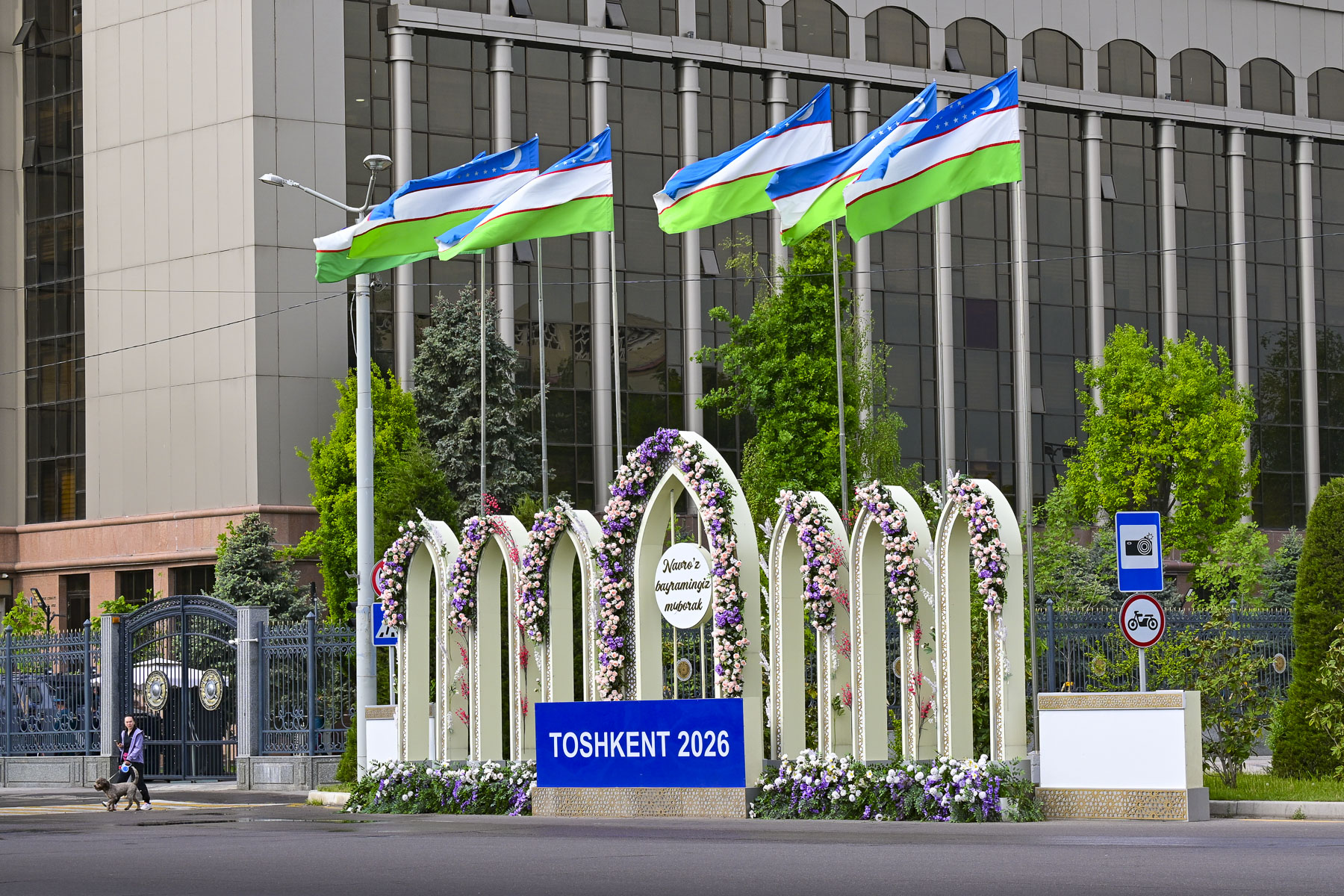
Uzbekistan is having its moment after years of slowly simmering interest; it’s exploding into a full-fledged tourist boom. It is exponentially growing from 1 million tourists in 2016 to almost 13 million in 2026, and with a modern infrastructure that includes the newly operating “Jaloliddin Manguberdi,” a high-speed electric train that will whisk passengers 1,020km (630 mi) across the country from Tashkent to Khiva in 7.5 hours with stops in Samarkand, Bukhara, and Urgench. The country is quickly becoming Central Asia’s most intriguing Silk Road destination, and with the recent opening of the state-of-the-art Islamic Civilization Center, Islom Sivilizatsiyasi Markazi, in March 2026, Tashkent will be of particular interest for tourists from the Middle East and Southeast Asia.

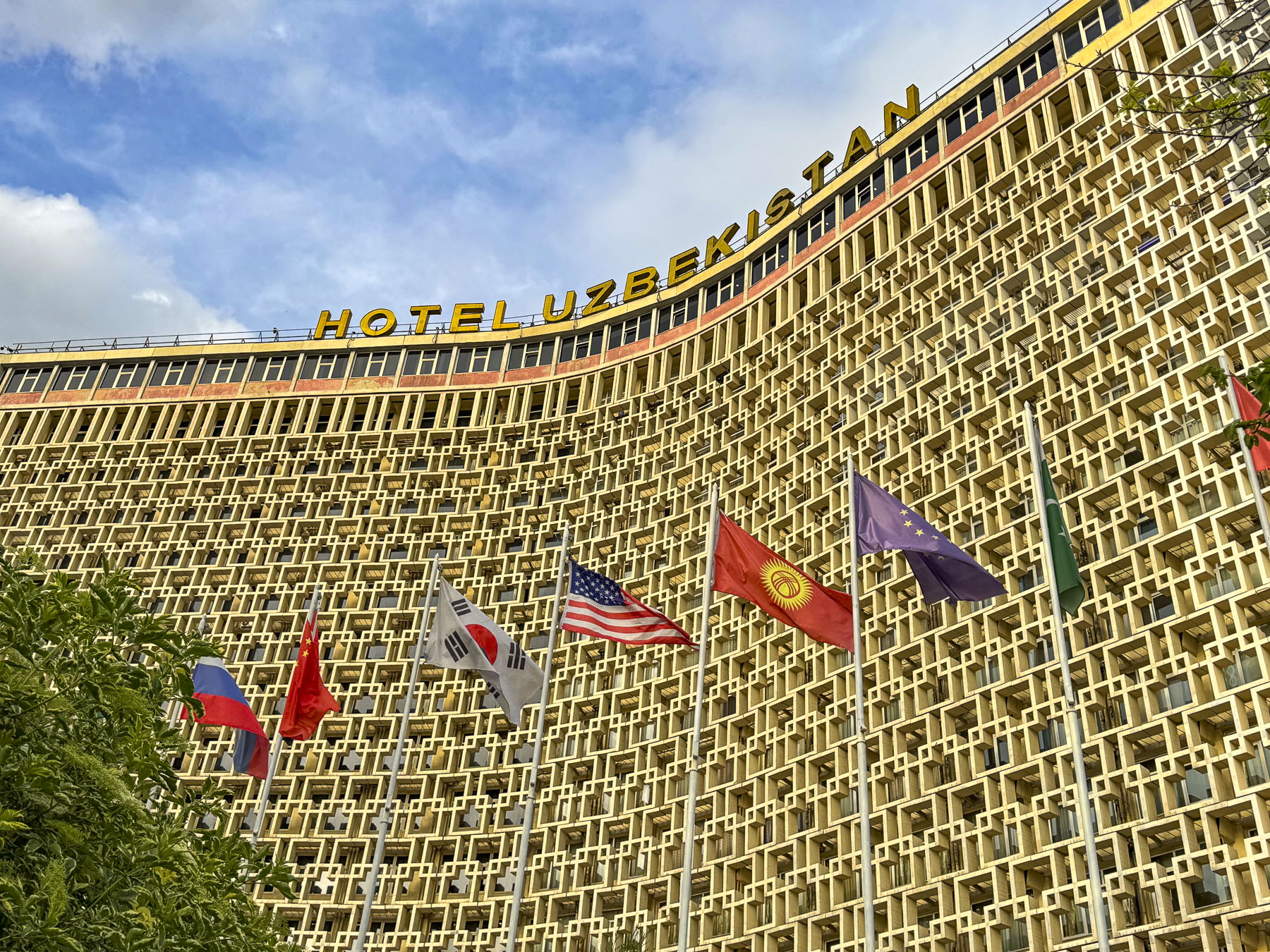
The ATMs at TAS, Tashkent’s International Airport, were conveniently located next to the baggage carousels in the arrivals area, as were signs for YandexGo, the most popular ride-share service in Uzbekistan. Walking away from the ATM with about 2,400,000 Uzbekistani Som, roughly $200.00 at the rate of 1 USD = 12,000 UZS, we felt like newly minted millionaires. We were not able to link a credit card to the YandexGo App, but soon realized a twenty-minute ride across Tashkent to the Hotel Uzbekistanwould only cost 21,000 UZS. Outside the terminal we navigated our way through a gauntlet of taxi hawkers to a sea of ubiquitous white cars. In and of itself, white cars are not unusual in any region where you can cook an egg on a rock during the summer, but the fact that they were mostly American branded Chevrolets, not the ever so popular Japanese cars, was very remarkable. They are the result of a thirty-year-old joint venture between GMC and the Uzbekistan government-owned UzAuto Motors, and steep import tariffs on foreign cars, which has led to Chevrolet producing  95% of the country’s new vehicles.

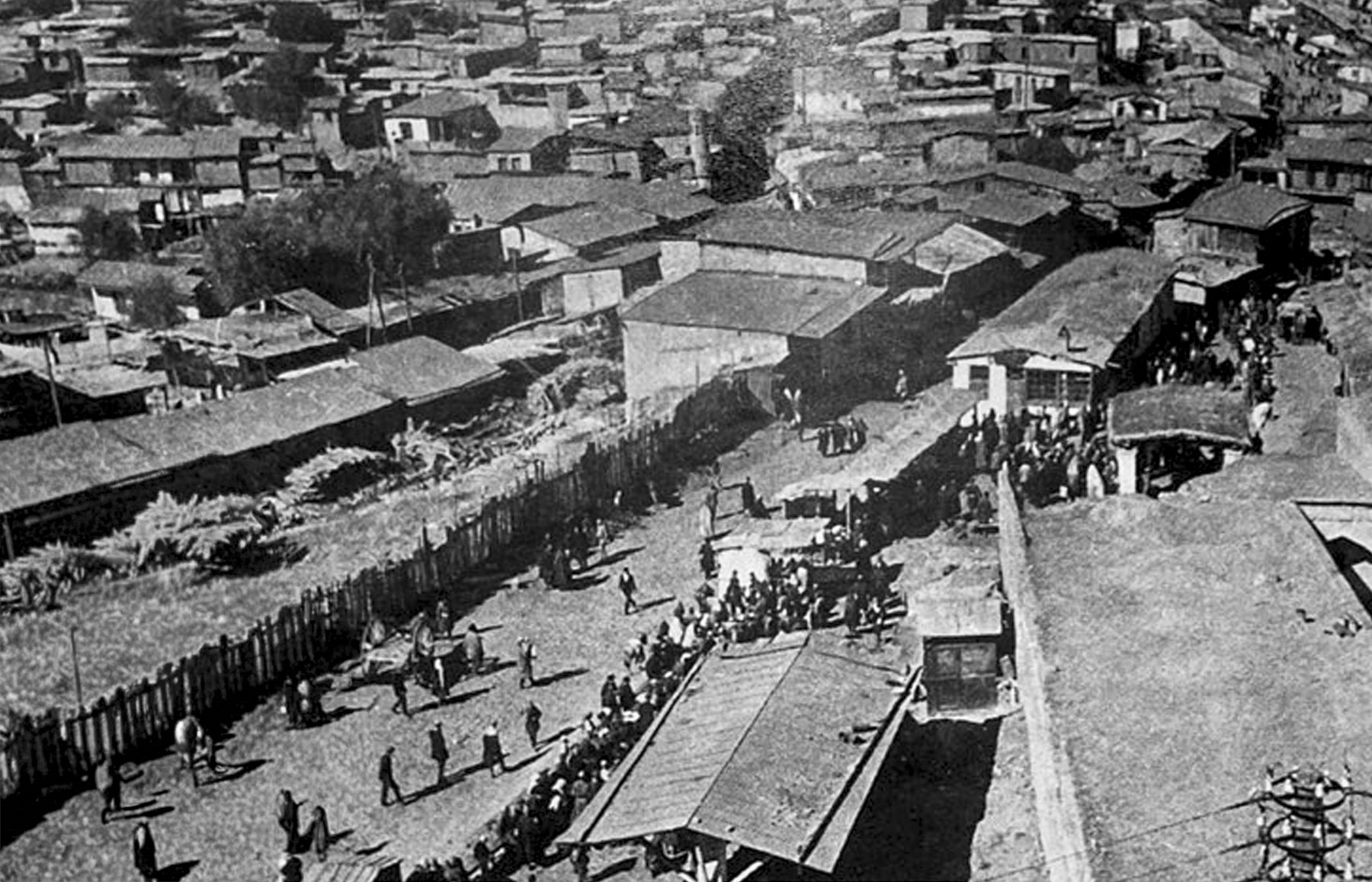
The Hotel Uzbekistan opened in 1974 when Uzbekistan was still part of the Soviet Union, eight years after a April 1966 earthquake destroyed many of Tashkent’s centuries old historic neighborhoods where the one and two-story homes were made of adobe brick. The catastrophic event left 300,000 people homeless.

The Soviet Union used this crisis to transform Tashkent into a “model Soviet city” with wonderfully wide boulevards, open plazas, and earthquake-resistant buildings, deploying architects and laborers from across its republics to build a “showcase of socialist modernism and multicultural “people’s friendship.” The revival of the city mushroomed after Uzbekistan’s independence in 1991, and continues with a building boom that peppers the city’s modern skyline with construction cranes.

The style of the city’s new buildings constructed right after the earthquake is often referred to as Soviet Brutalist, an architectural style which features the love of concrete, and functionality over grace. And Hotel Uzbekistan was designed to be the centerpiece of the Soviet Union’s vision. For many years the building, with an open book profile designed to resist seismic activity, stood as the country’s tallest building, and was the premier hotel for international delegations to stay and hold conferences.

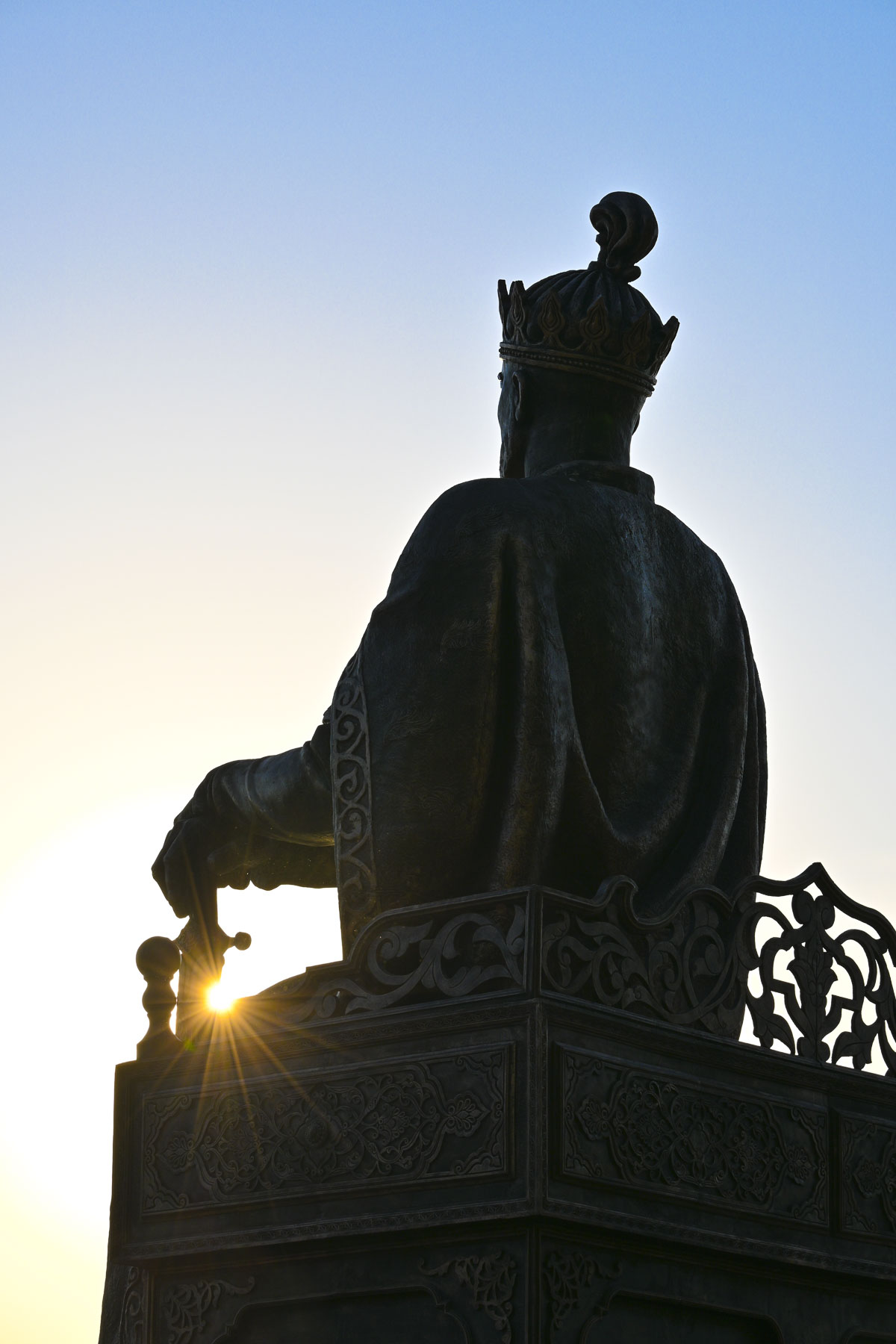
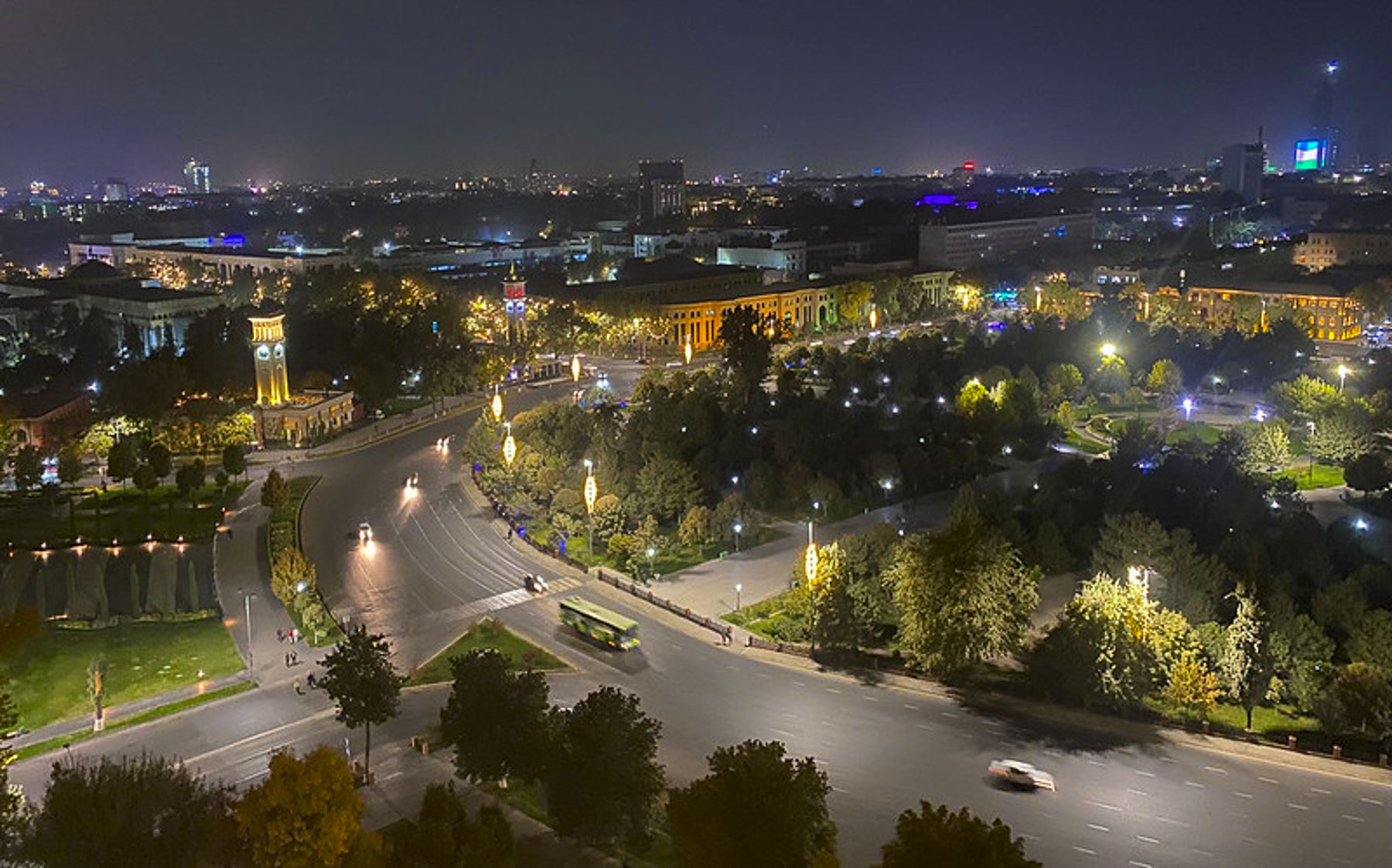
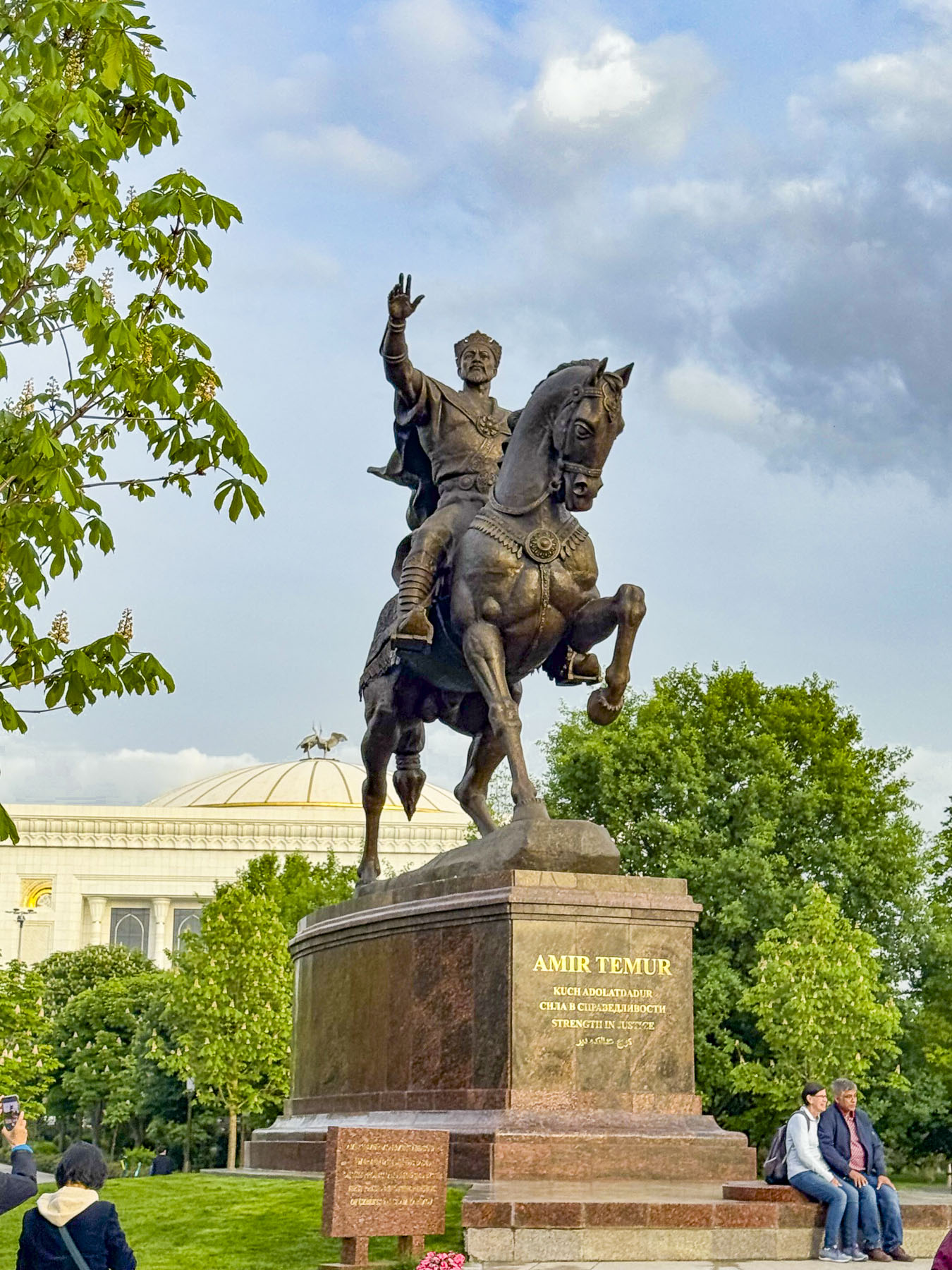
At the time its seventeenth-floor restaurant overlooked Lenin Square until the colossal statue of the Soviet leader was sent to the scrap yard in 1991 when Uzbekistan regained its independence, and replaced him with an equestrian statue of Amir Temur, an enlightened ruler who united the independent kingdoms of Samarkand, Bukhara, and Urgench during Uzbekistan’s 14th century renaissance, as the country seeks to reclaim its cultural history.

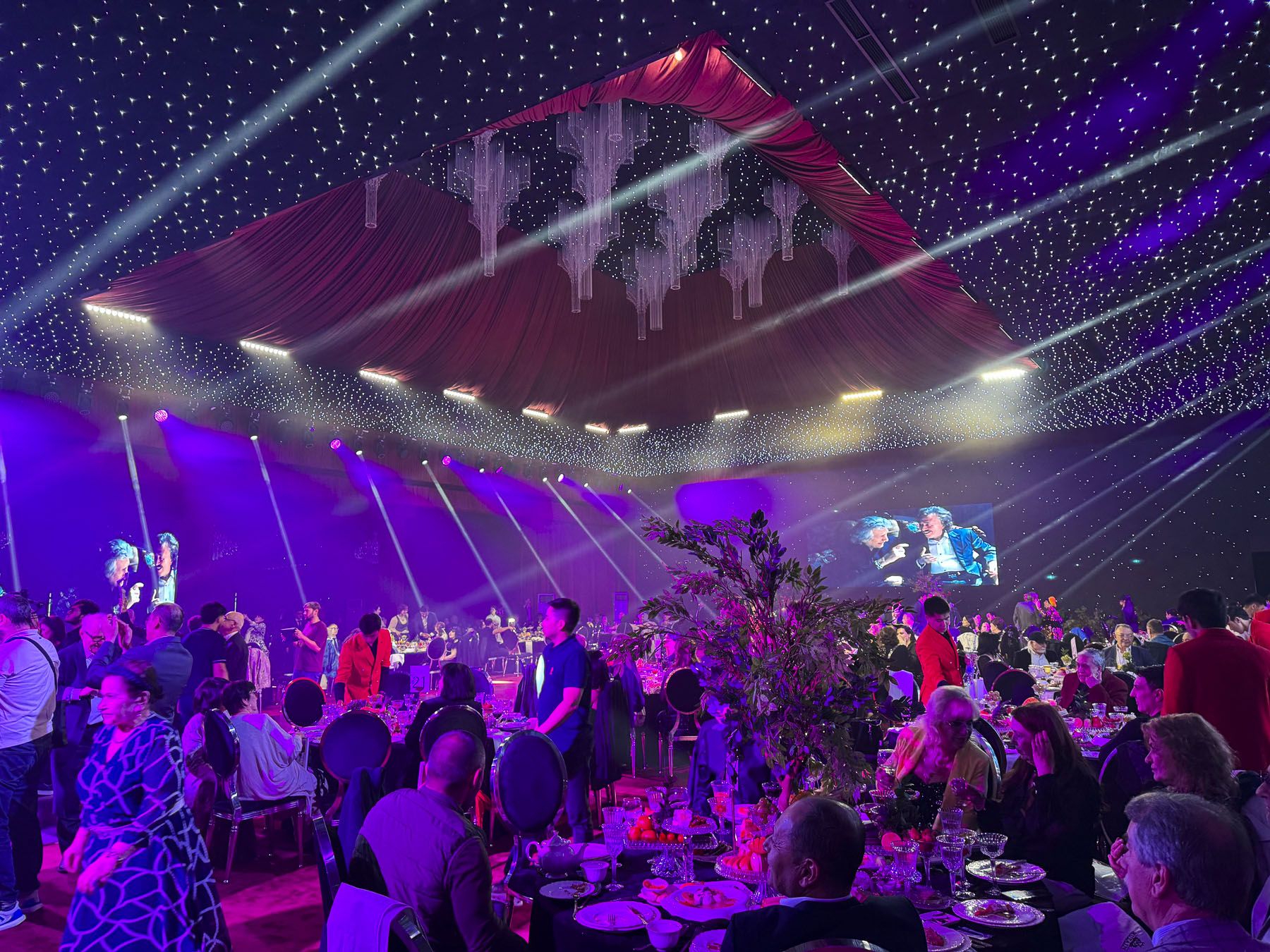
A thumping bass reverberated through the hotel, preventing any attempt of catching an early shuteye. Dressed again, we never intended to be Uzbeki party crashers, but we got caught up in the spirit of a couple’s anniversary celebration and enjoyed watching the band perform for a while. The hotel would be our base for three days to explore Tashkent before joining a group tour to Khiva, Bukhara and Samarkand.

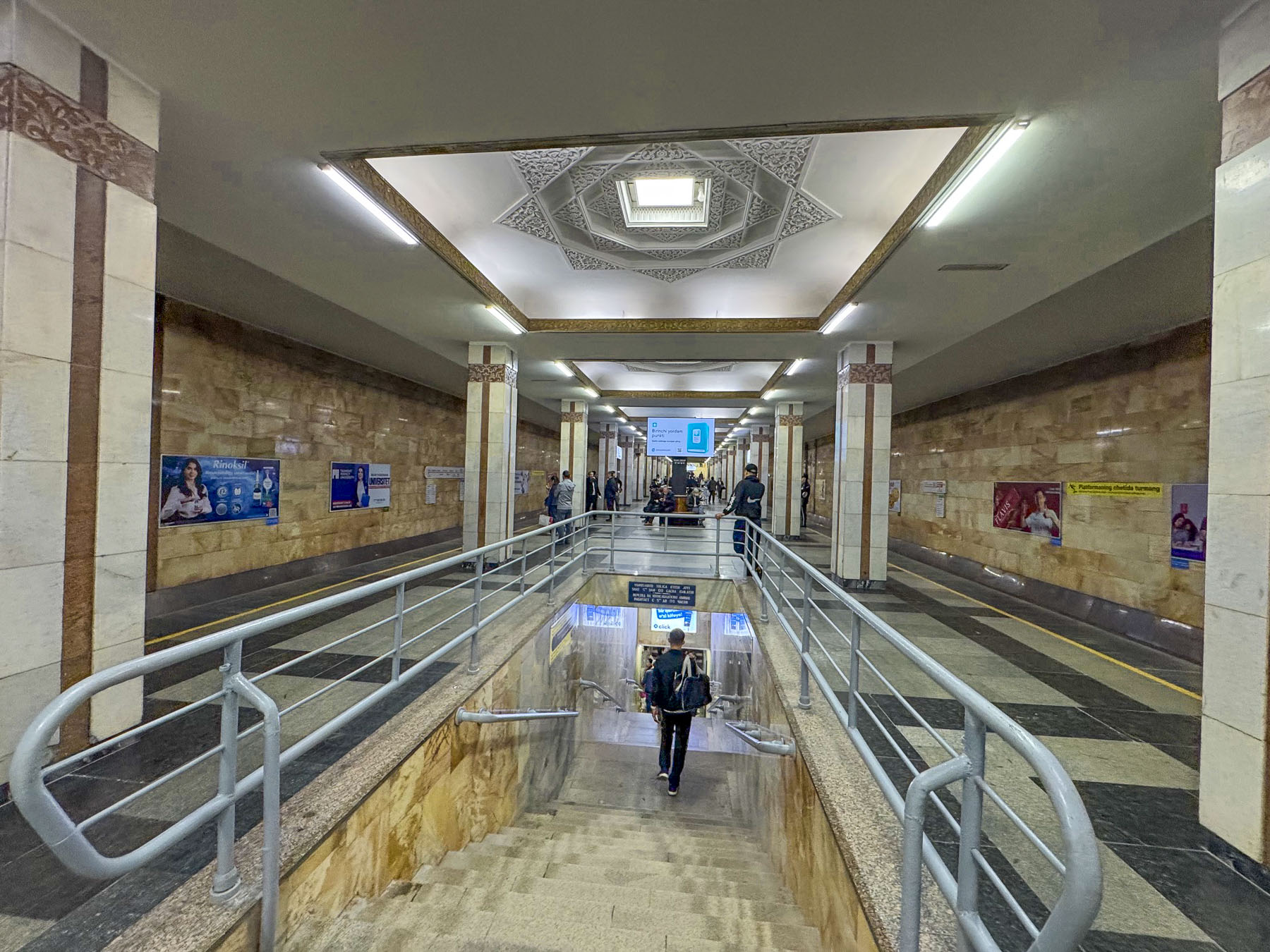
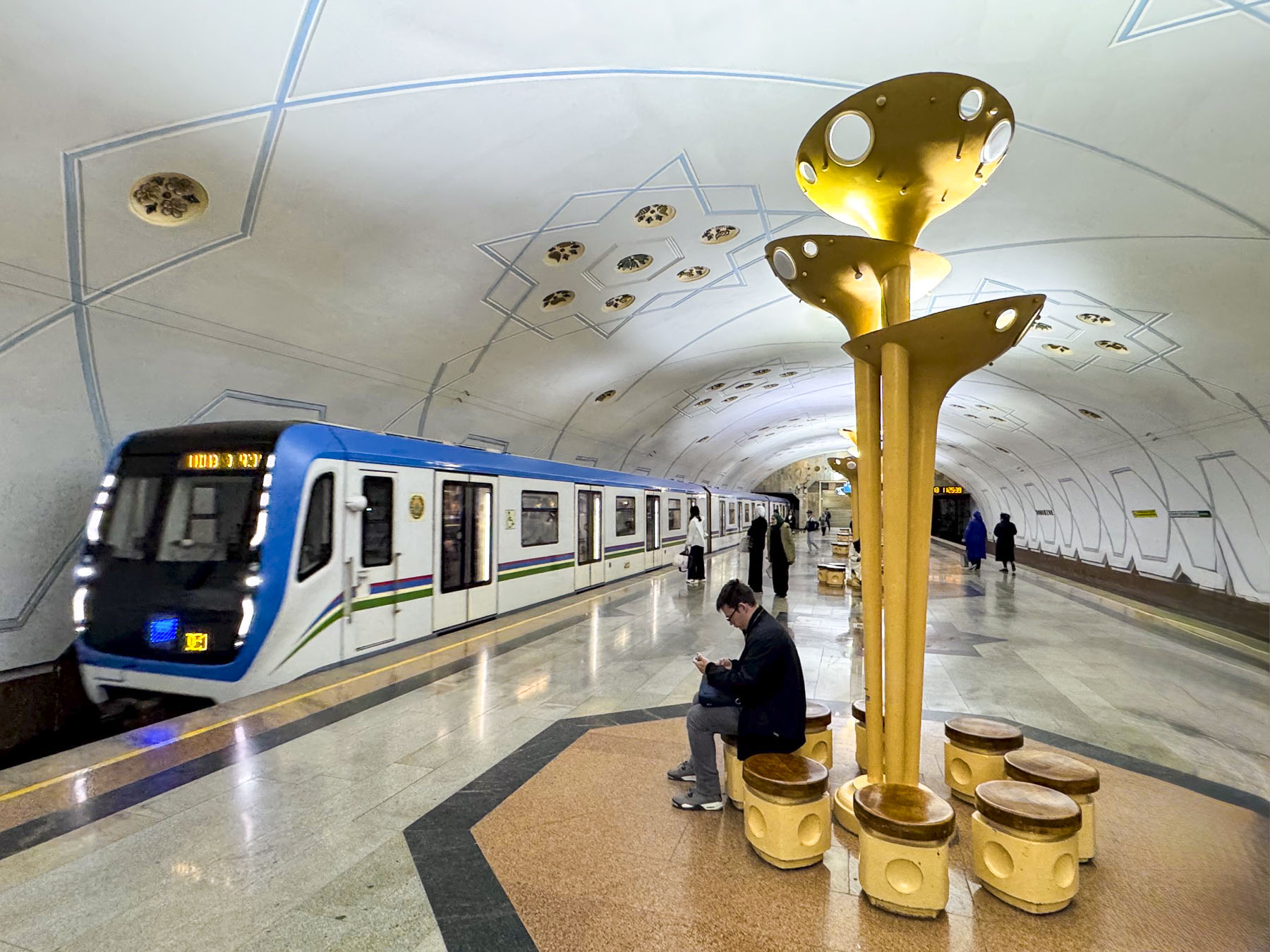
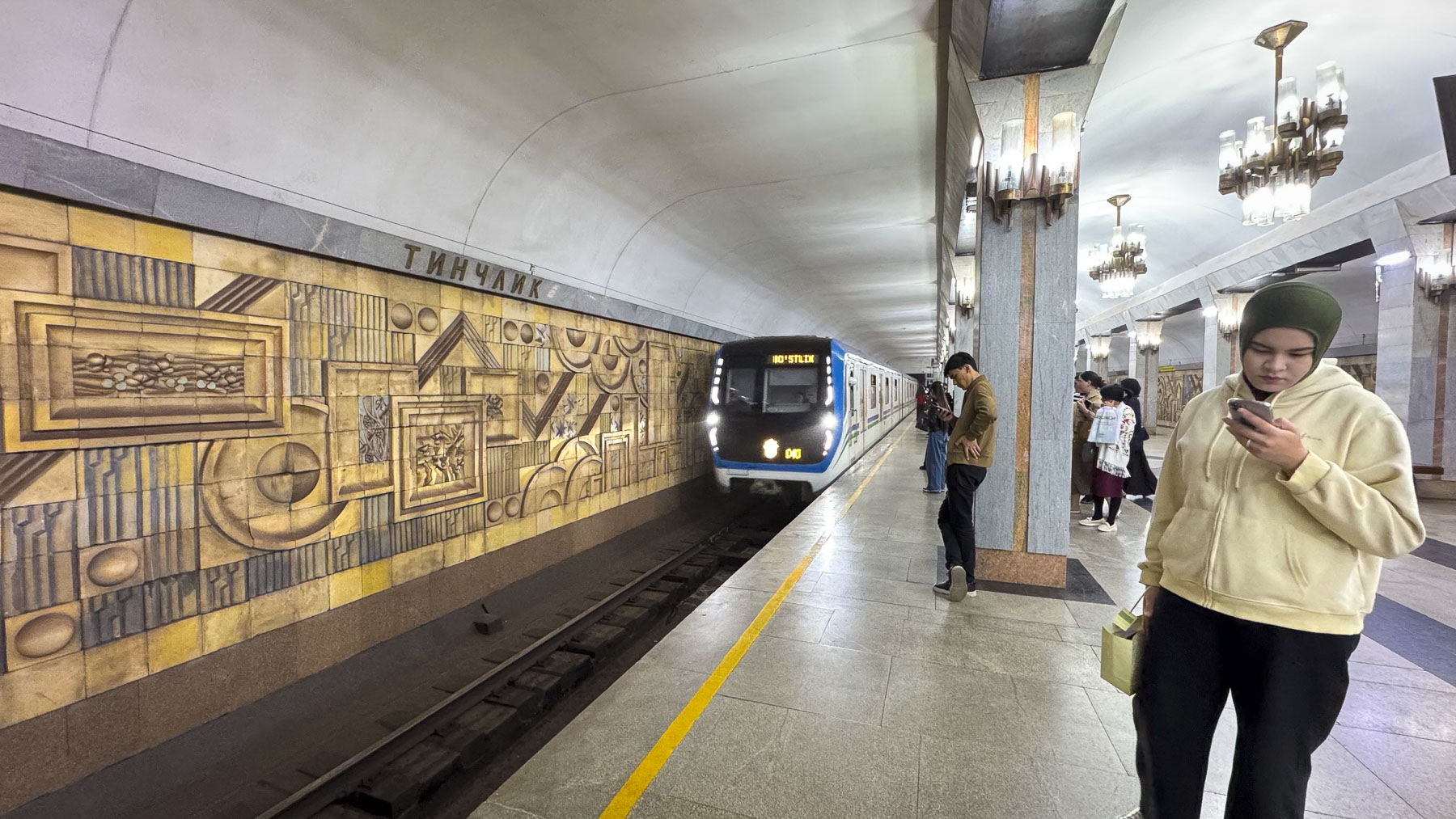
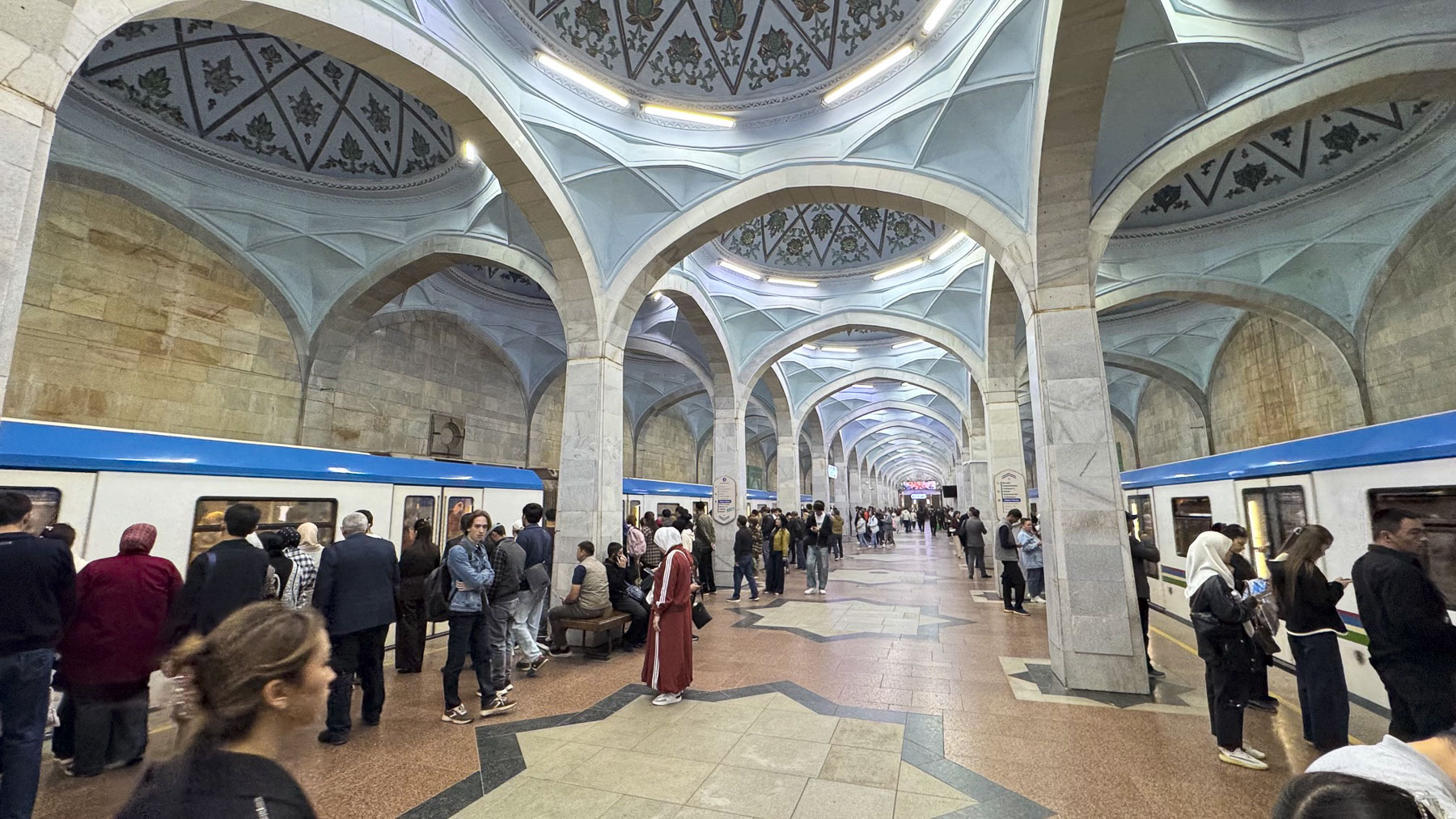
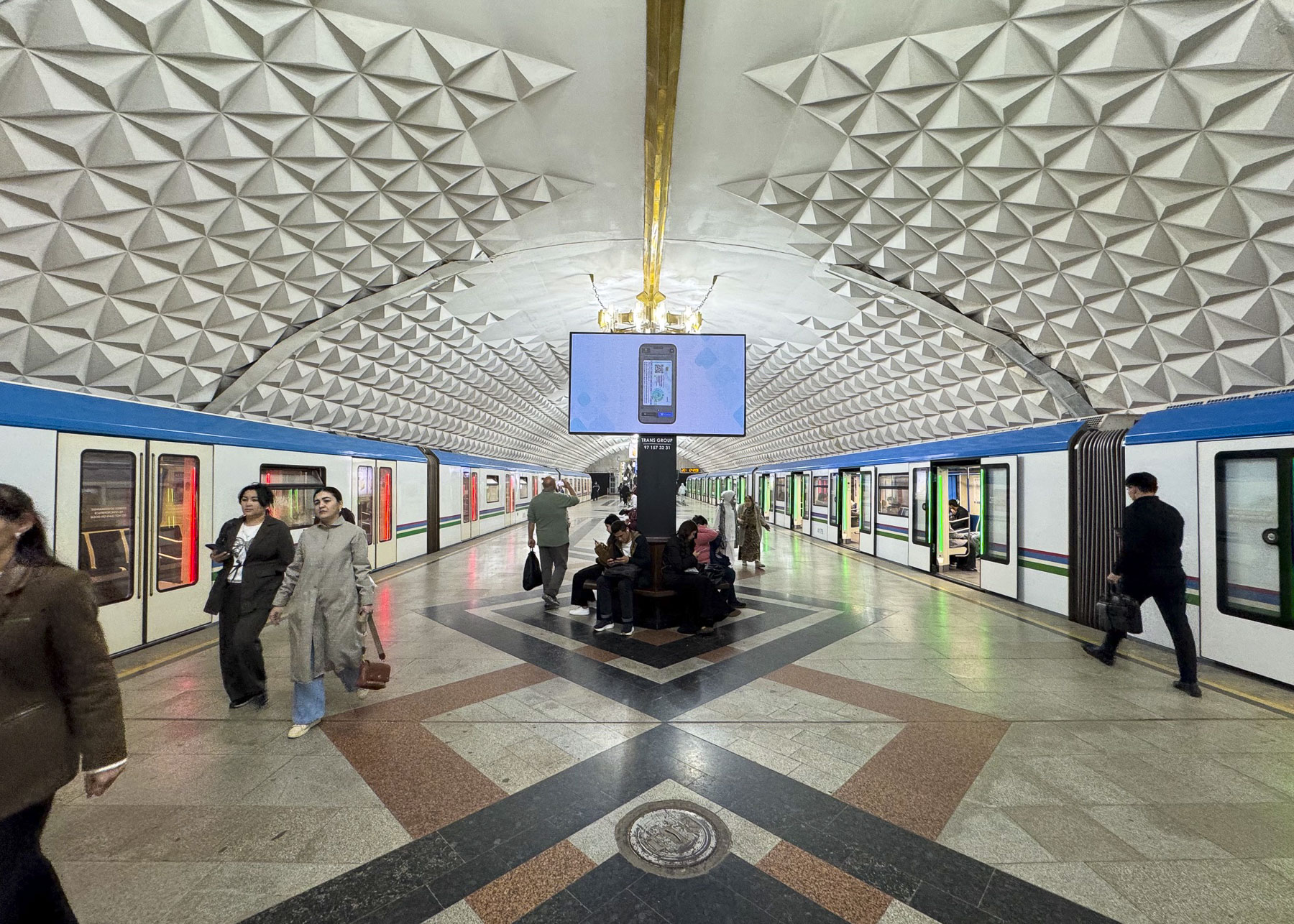
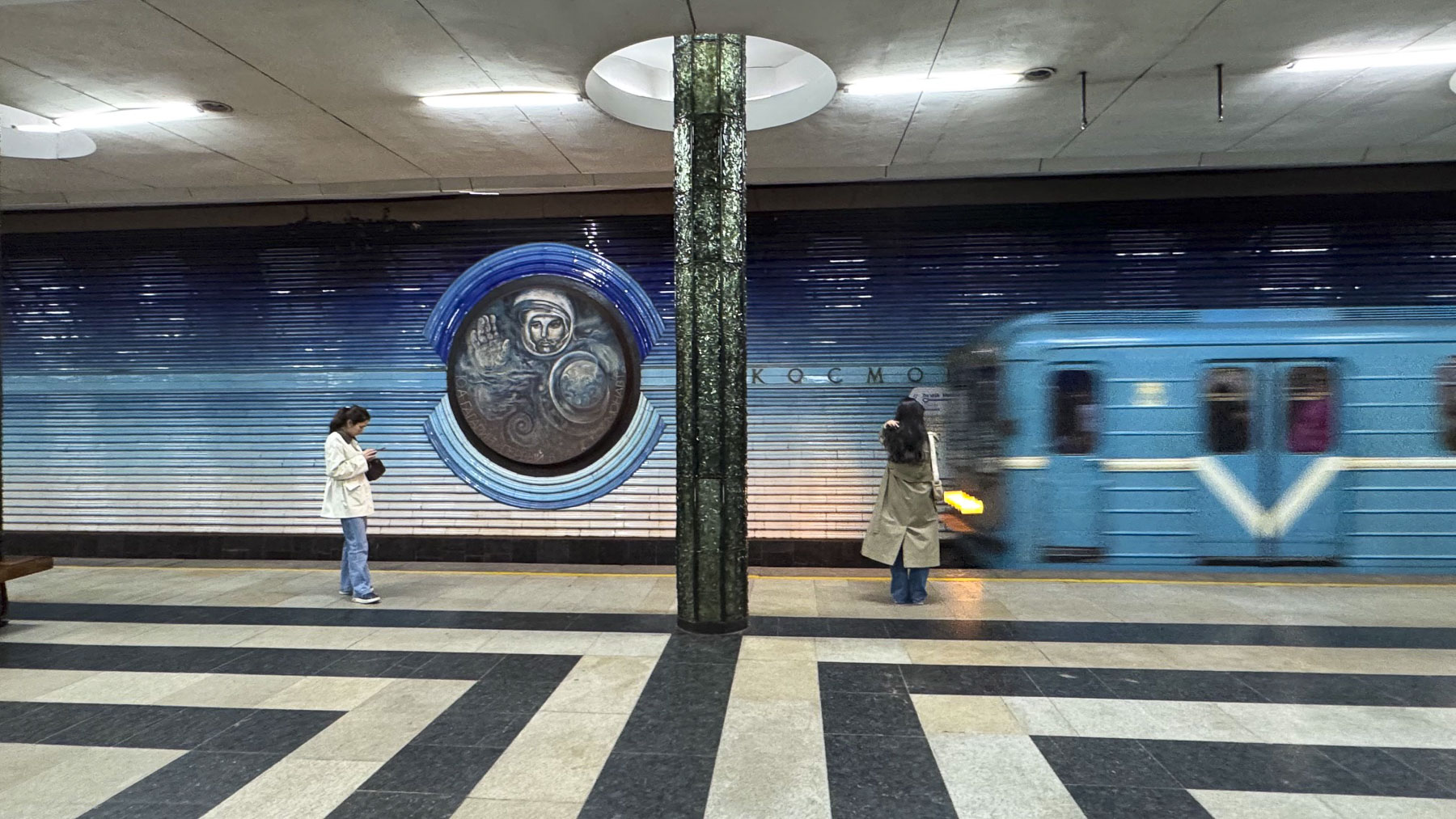
By 1970 Uzbekistan’s capital city was mostly rebuilt, and construction of Central Asia’s first subway system, a series of beautiful stations that were also designed to be utilized as bomb shelters in case of emergencies during the Cold War era, was underway.  The next morning, we set out after an early breakfast and worked our way against the morning crush of young professional ascending from the depths of the Amir Temur Hiyoboni station, just a block from our hotel.

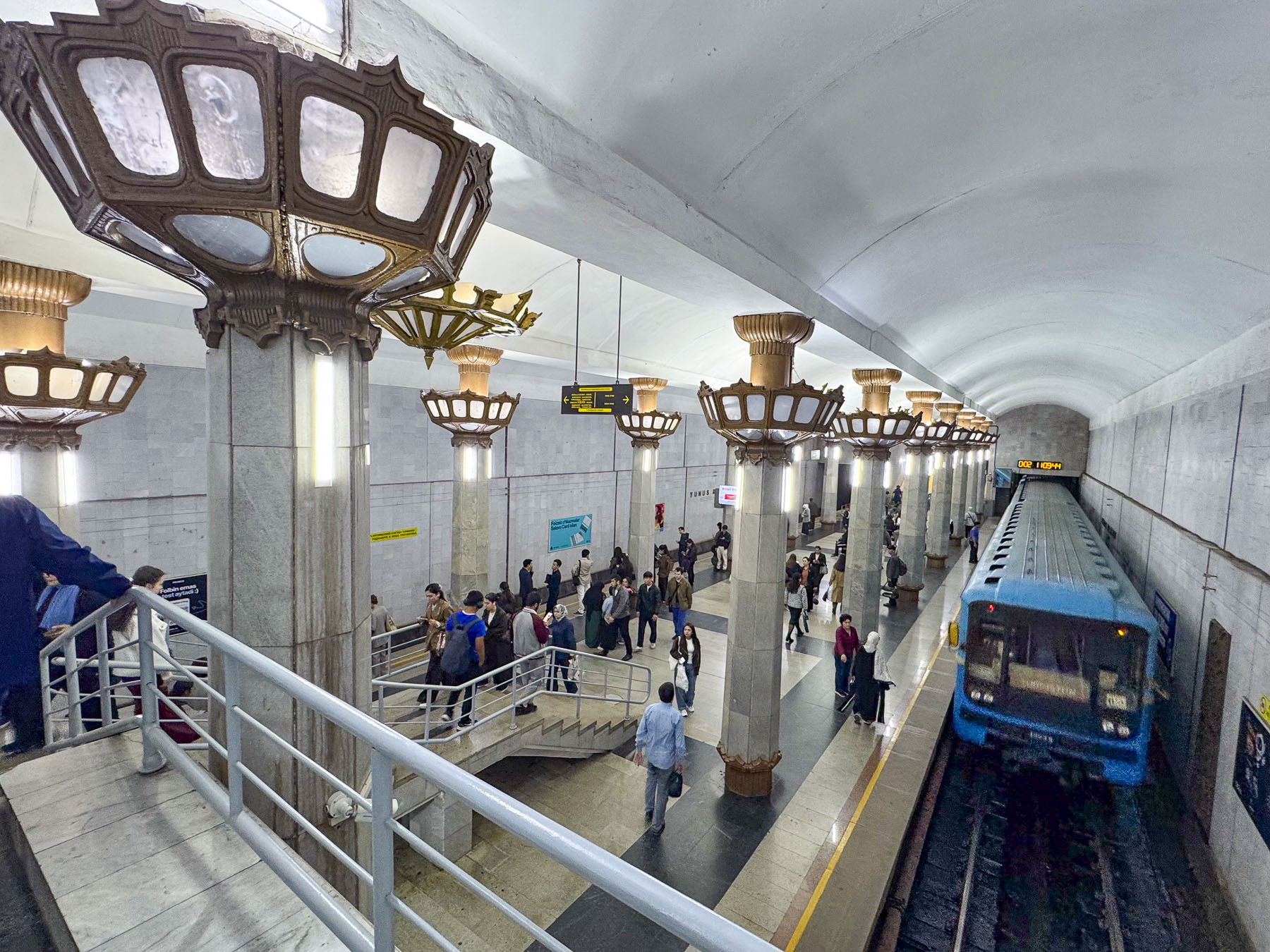
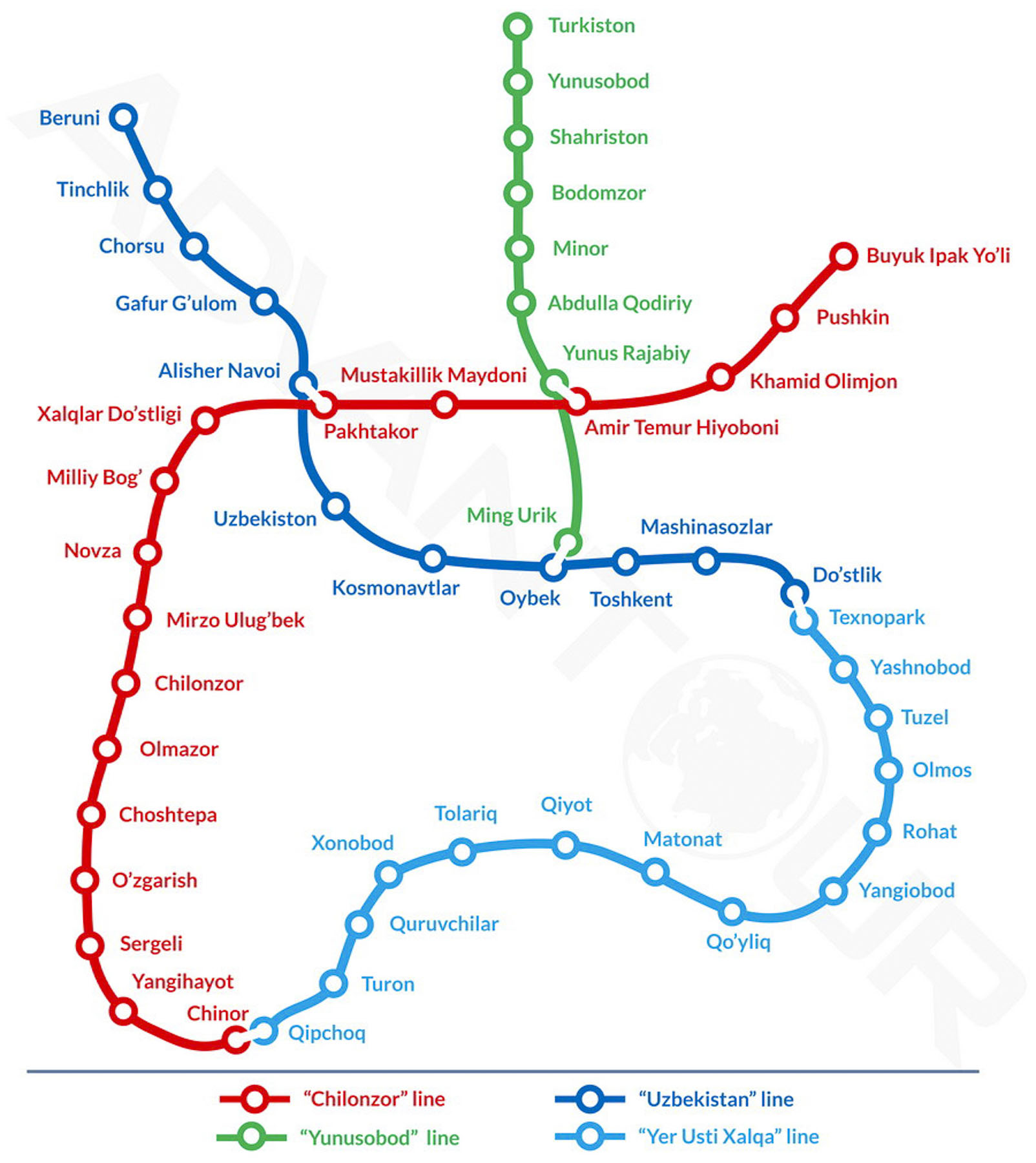
The underground tunnel leading to the turnstile offered perfect acoustics for a young Uzbeki busker who played for the commuters. The Tashkent Metro now has four lines, and 50 stations along 70km (44 mi) of track. Rides at the time of our visit cost 1,700 Uzbeki Som (about $0.14 USD), and were easily payable at the turnstile with a tap of our credit cards.

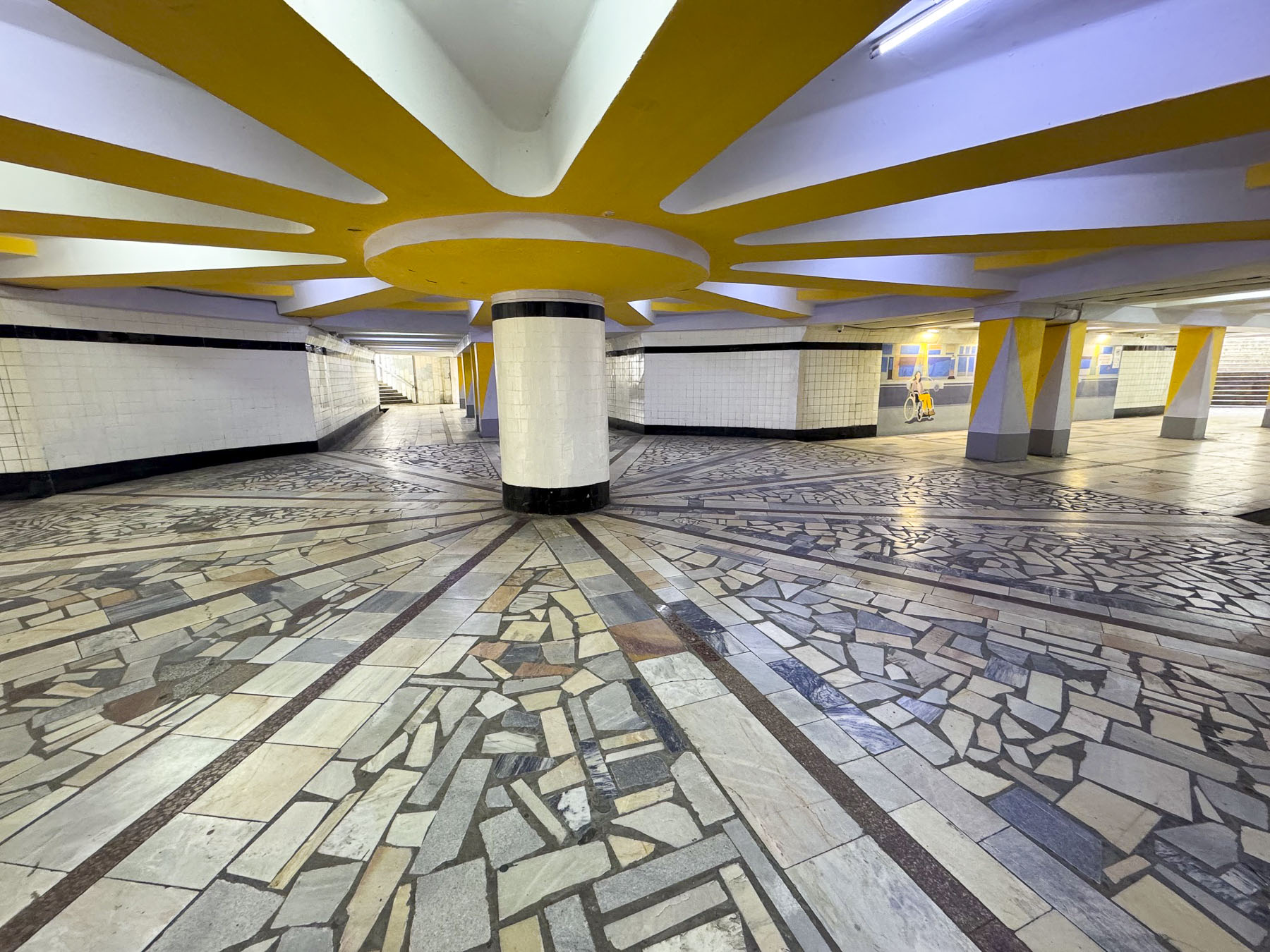
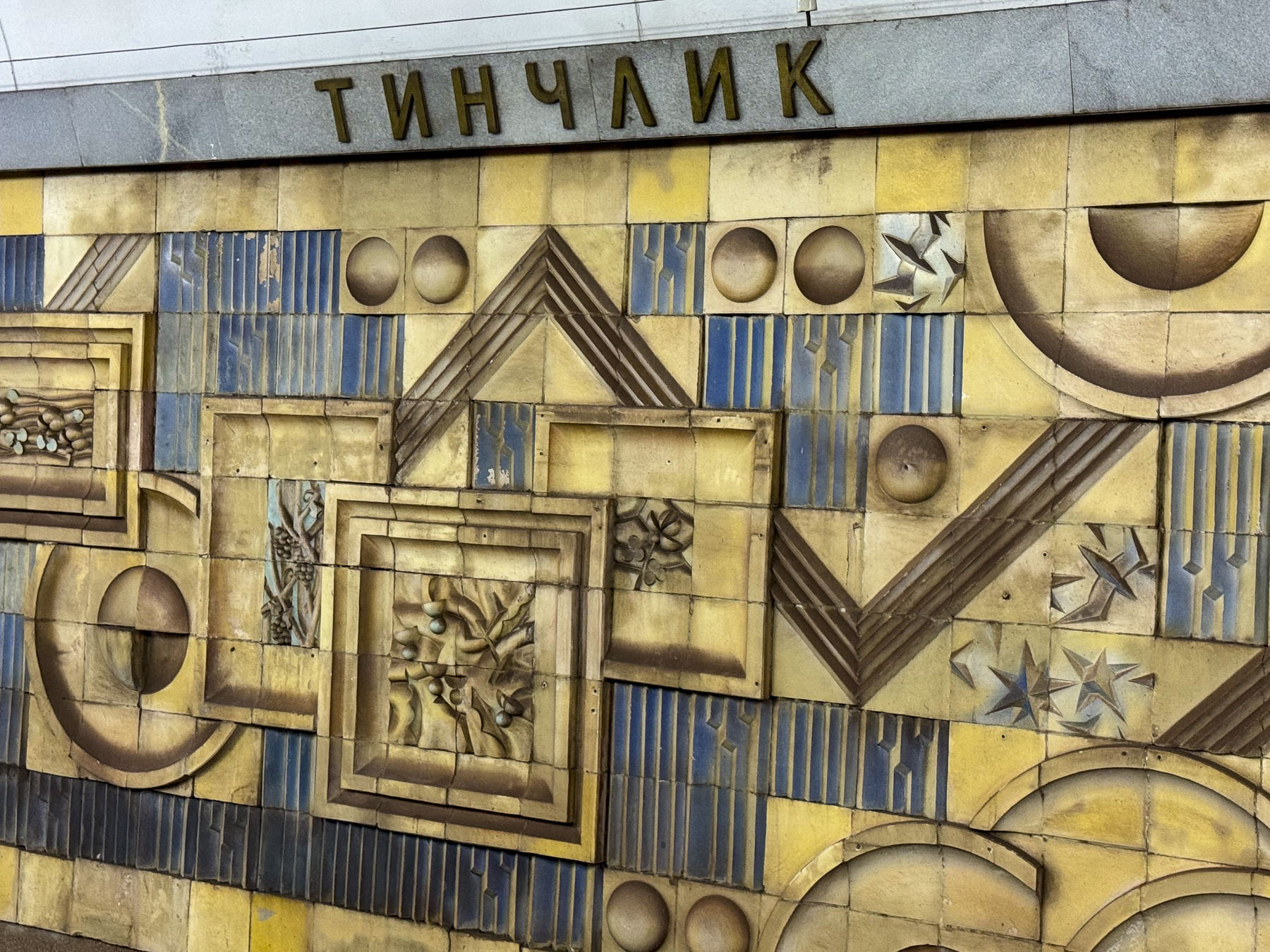
We spent a good part of the morning riding between the stations that encircle central Tashkent, hopping on and off to photograph some stations that were noteworthy for their striking architectural beauty, that often resembled a formal waiting chamber in an elegant palace, before transferring to another line.

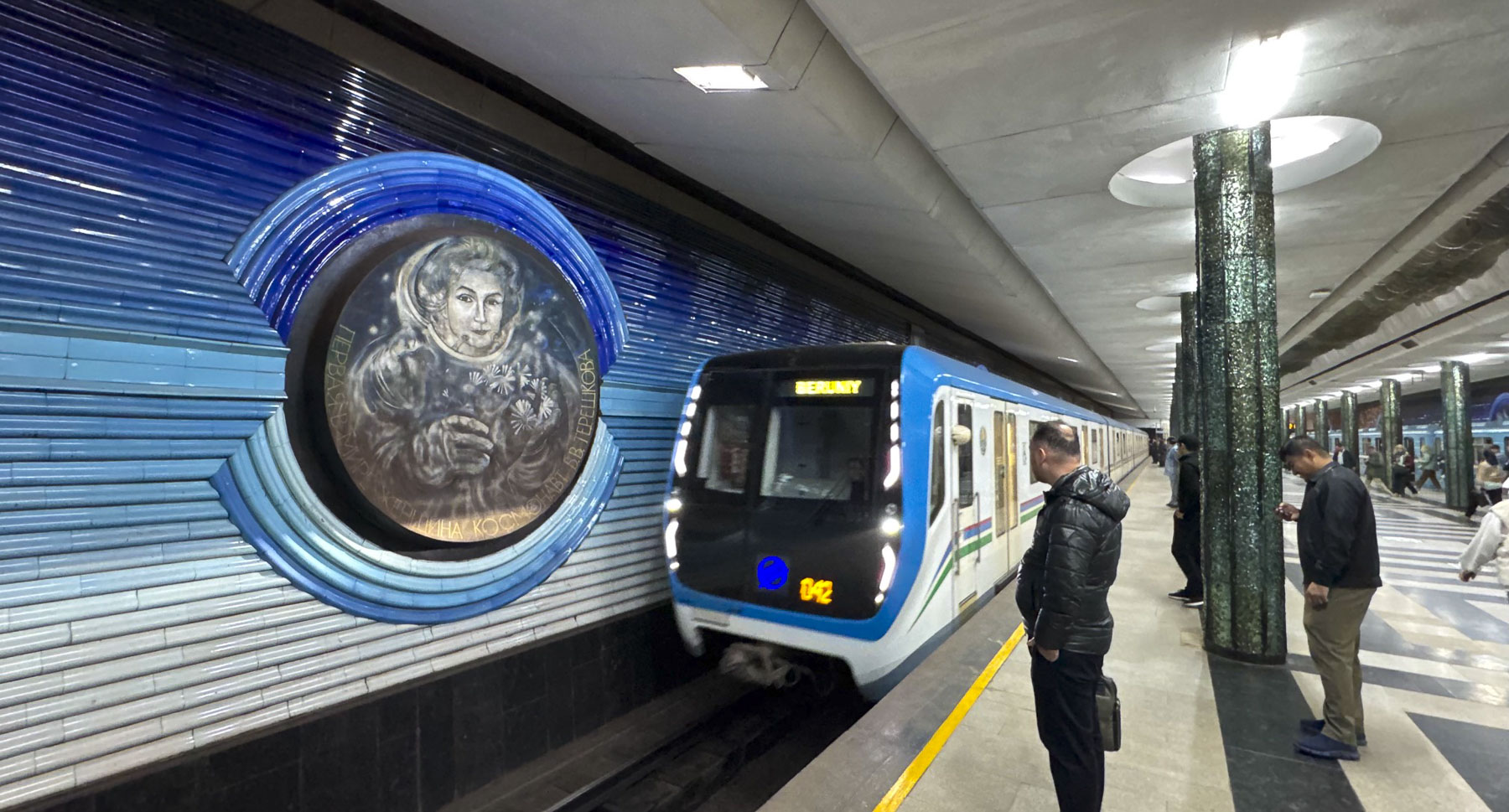
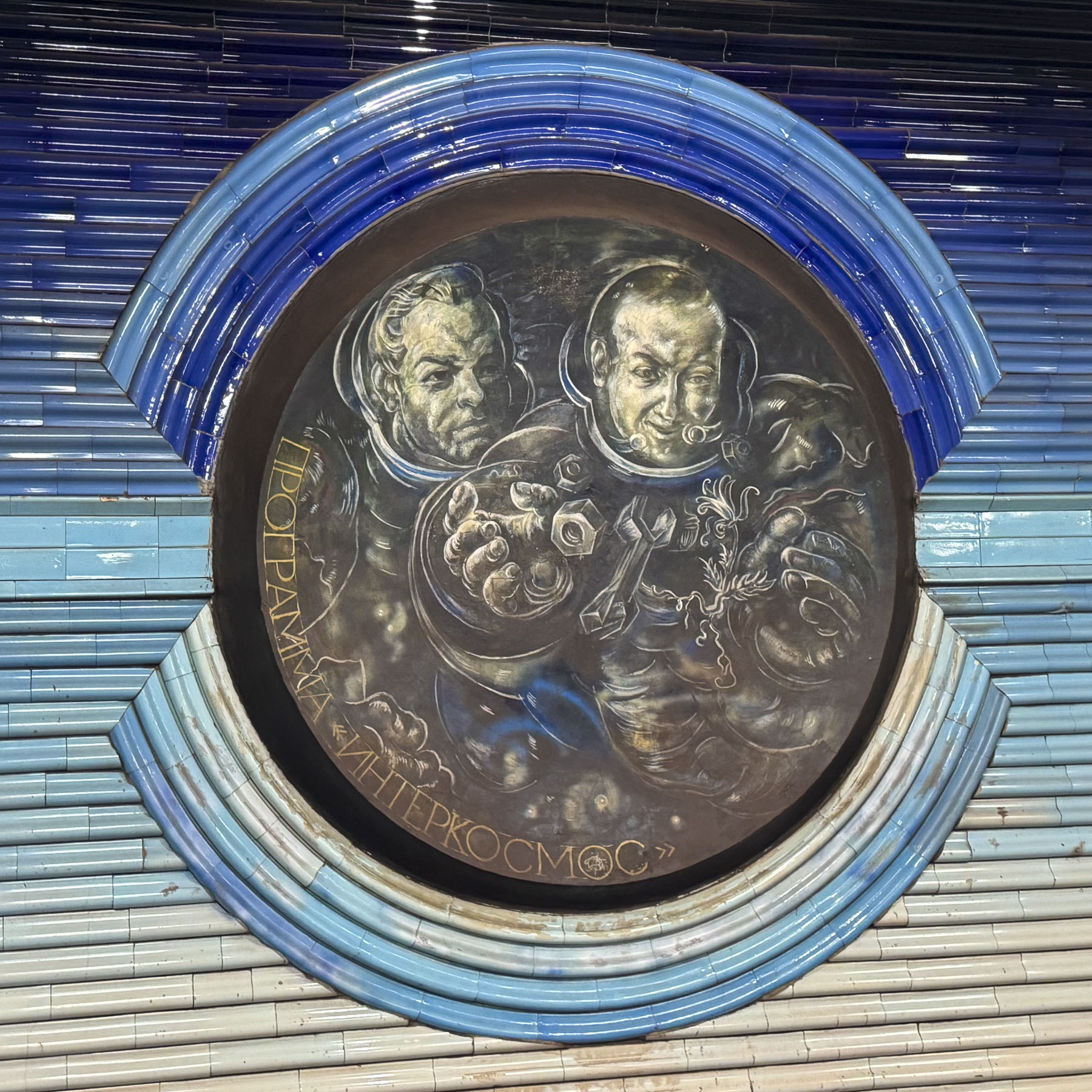
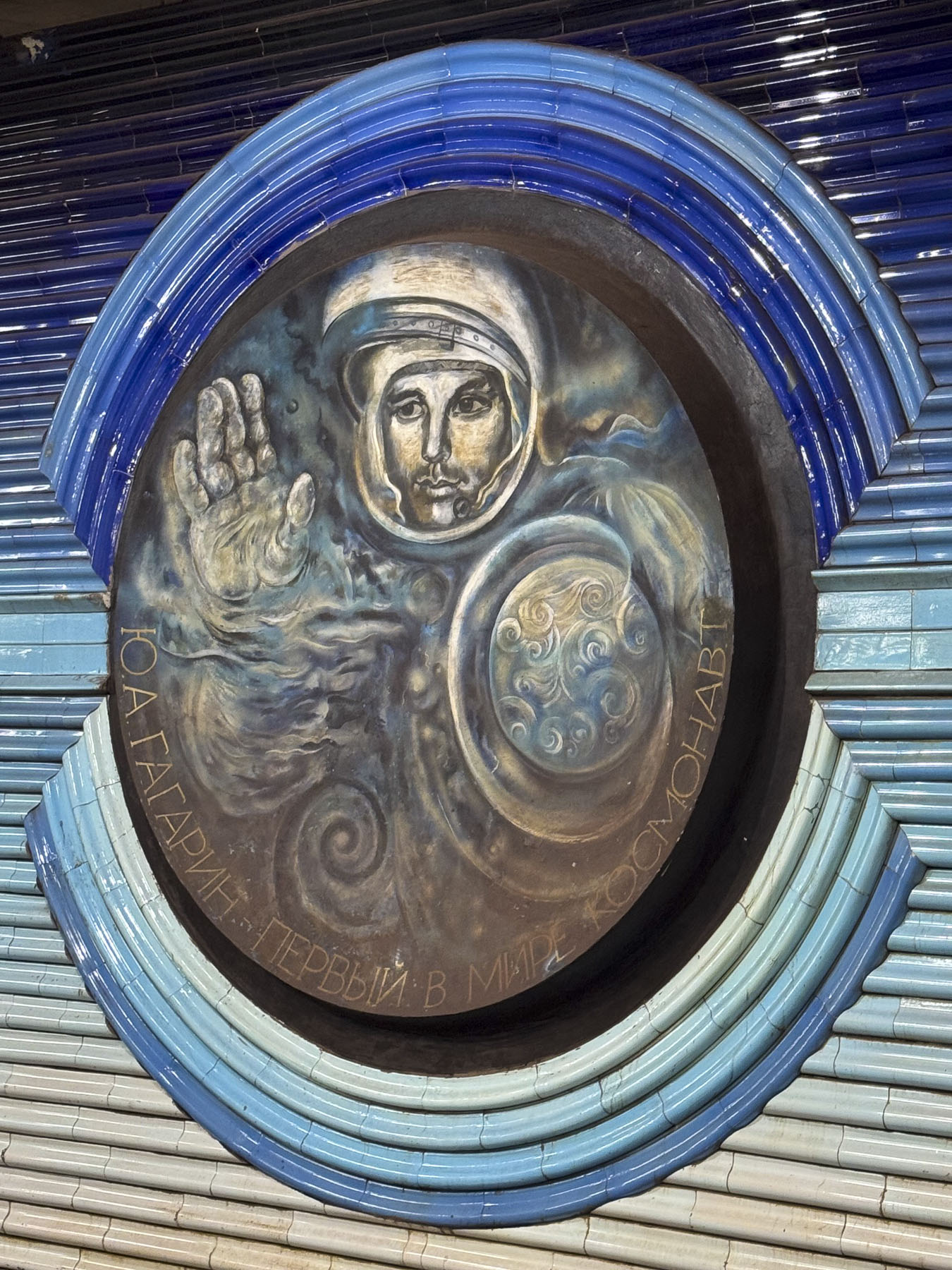
We eventually worked our way to the Kosmonavtlar Station, where the walls are beautifully embellished with tile portraits of early Soviet astronauts. Surprisingly, because of their dual use as bomb shelters, photography in the subway stations was banned until 2018.

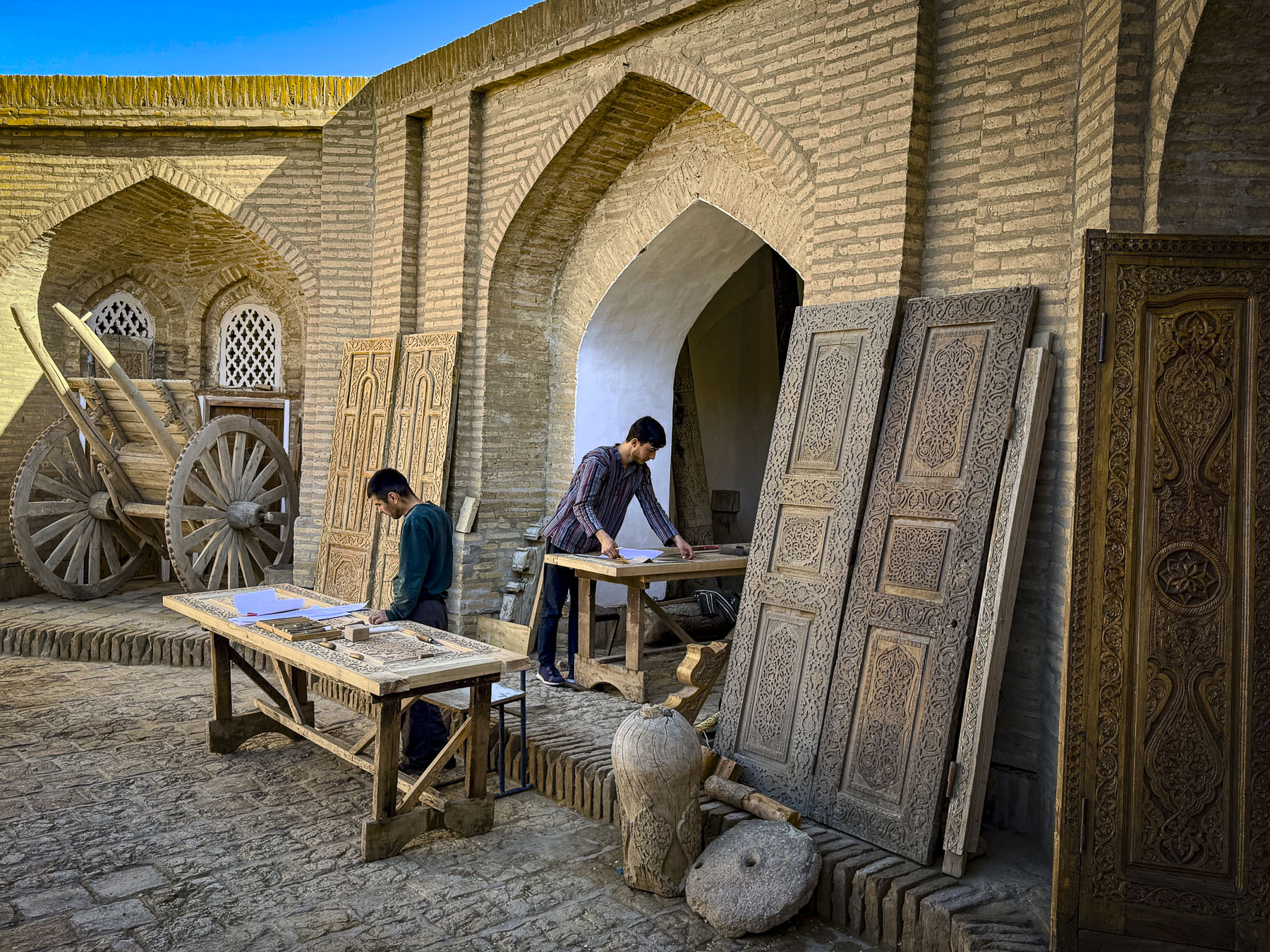
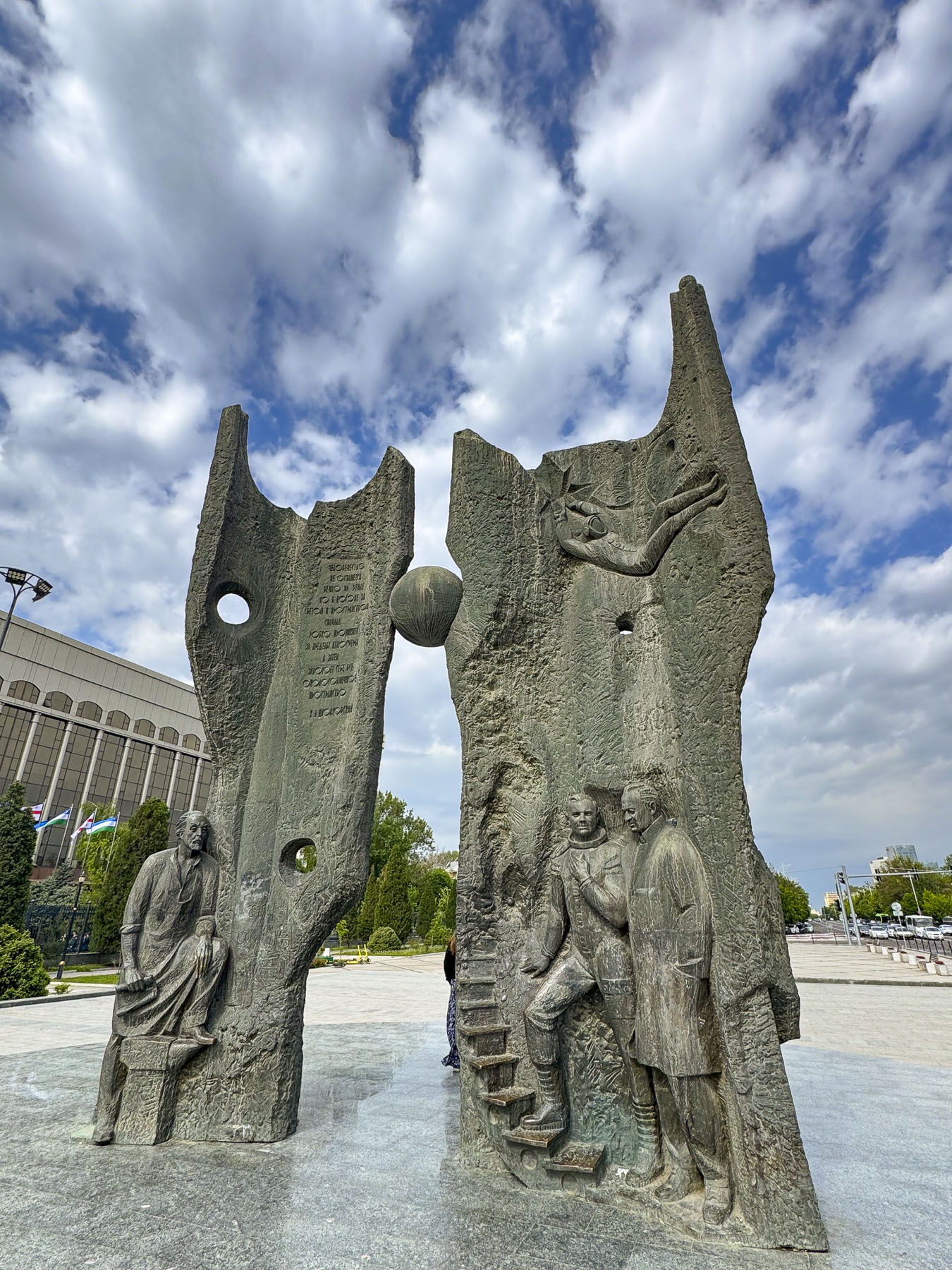
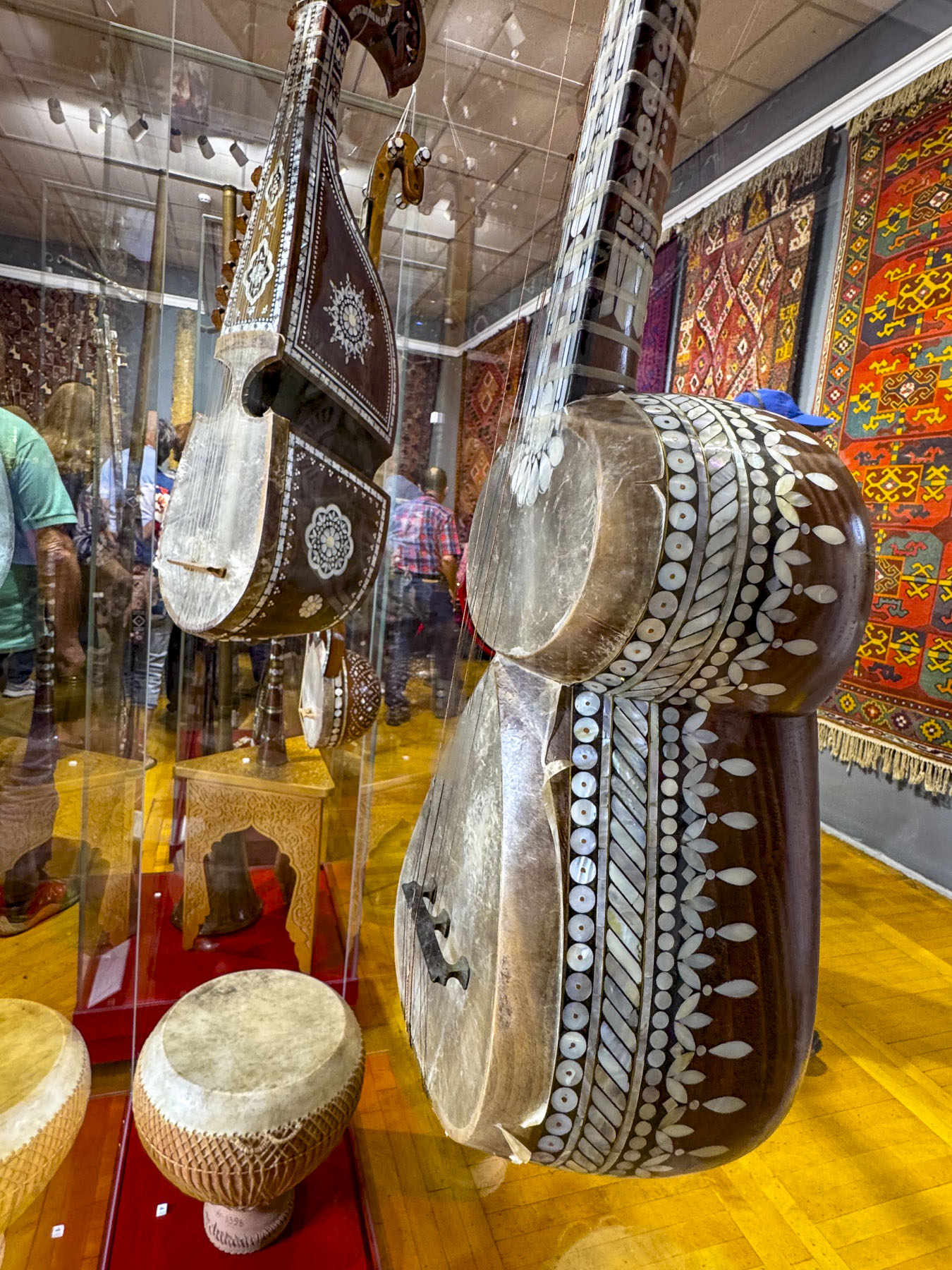
We also visited the plaza above the station where we viewed another interesting monument to the Soviet Union’s space program, before we made a short excursion to Tashkent’s Museum of Applied Arts, only a few blocks away. Founded in 1937, the museum is housed in the former mansion of an Emperial Russia diplomat and has a rotating collection of over 4,000 Uzbeki decorative handicrafts, with examples of traditional wood carving called O‘ymakorlik, ceramics, embroidery, gold weaving, jewelry and musical instruments. In the museum’s traditional courtyard was a very atmospheric café where we enjoyed coffee.

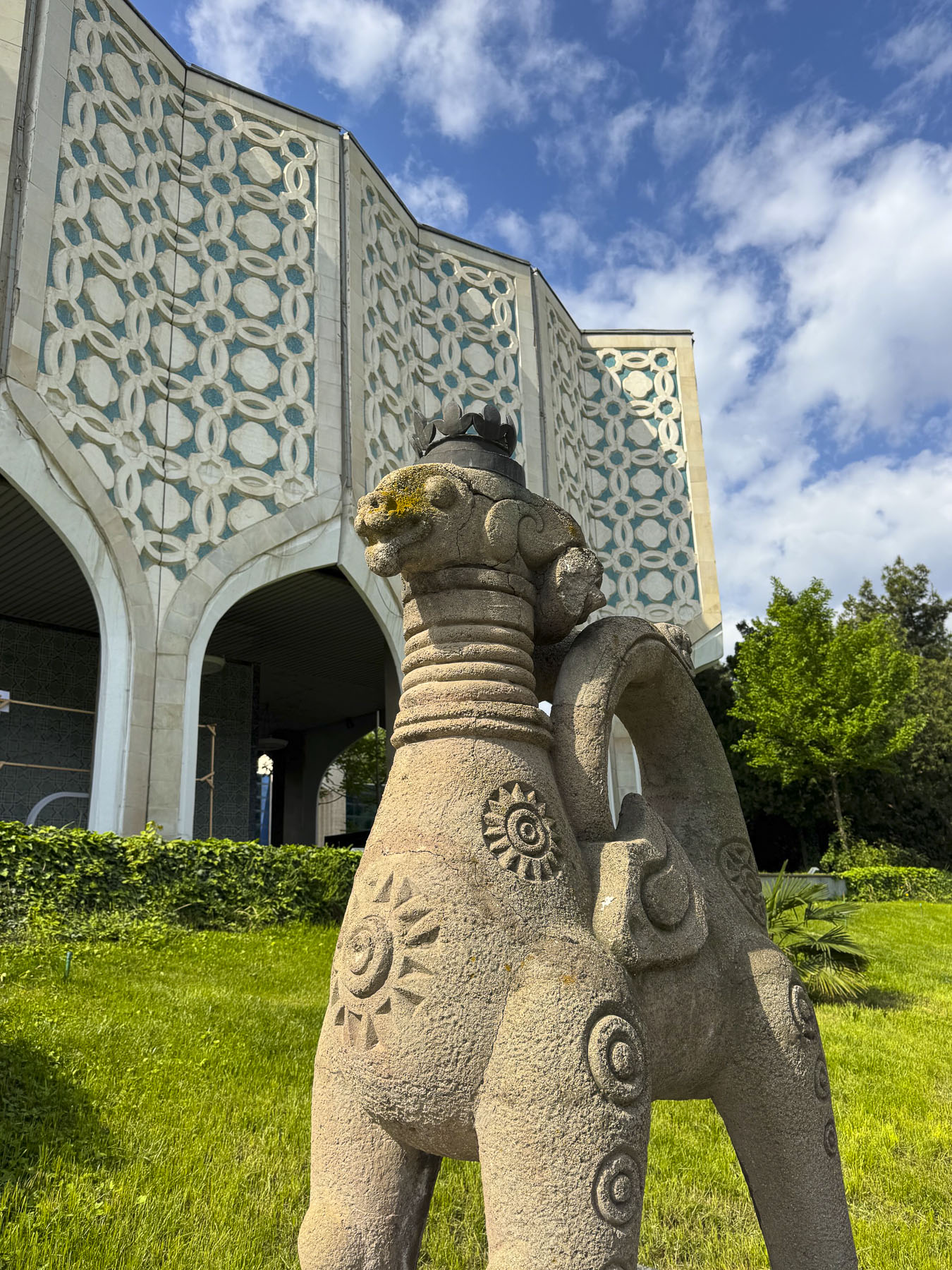
Before descending back underground we detoured slightly to see a modern interpretation of Islamic architecture represented in the 1970s era facade of the Central Exhibition Hall of the Academy of Arts.

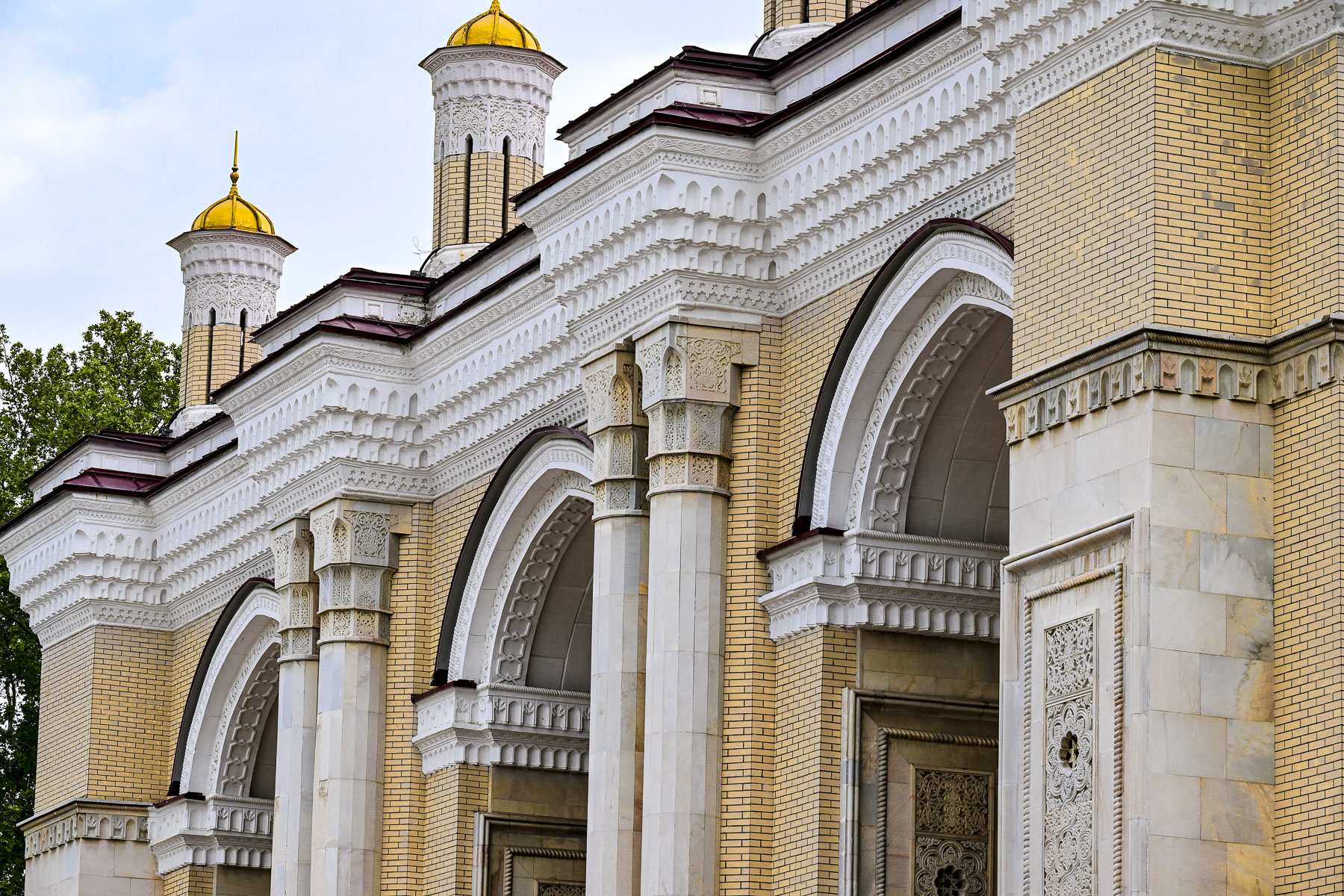
The 1930s built Alisher Navoi Grand Theatre, survivor of the earthquake, features a blend of classic European architecture with traditional Uzbek ornamental styles. Along our route we walked through many of the parks and green spaces that give the city a wonderful ambiance.

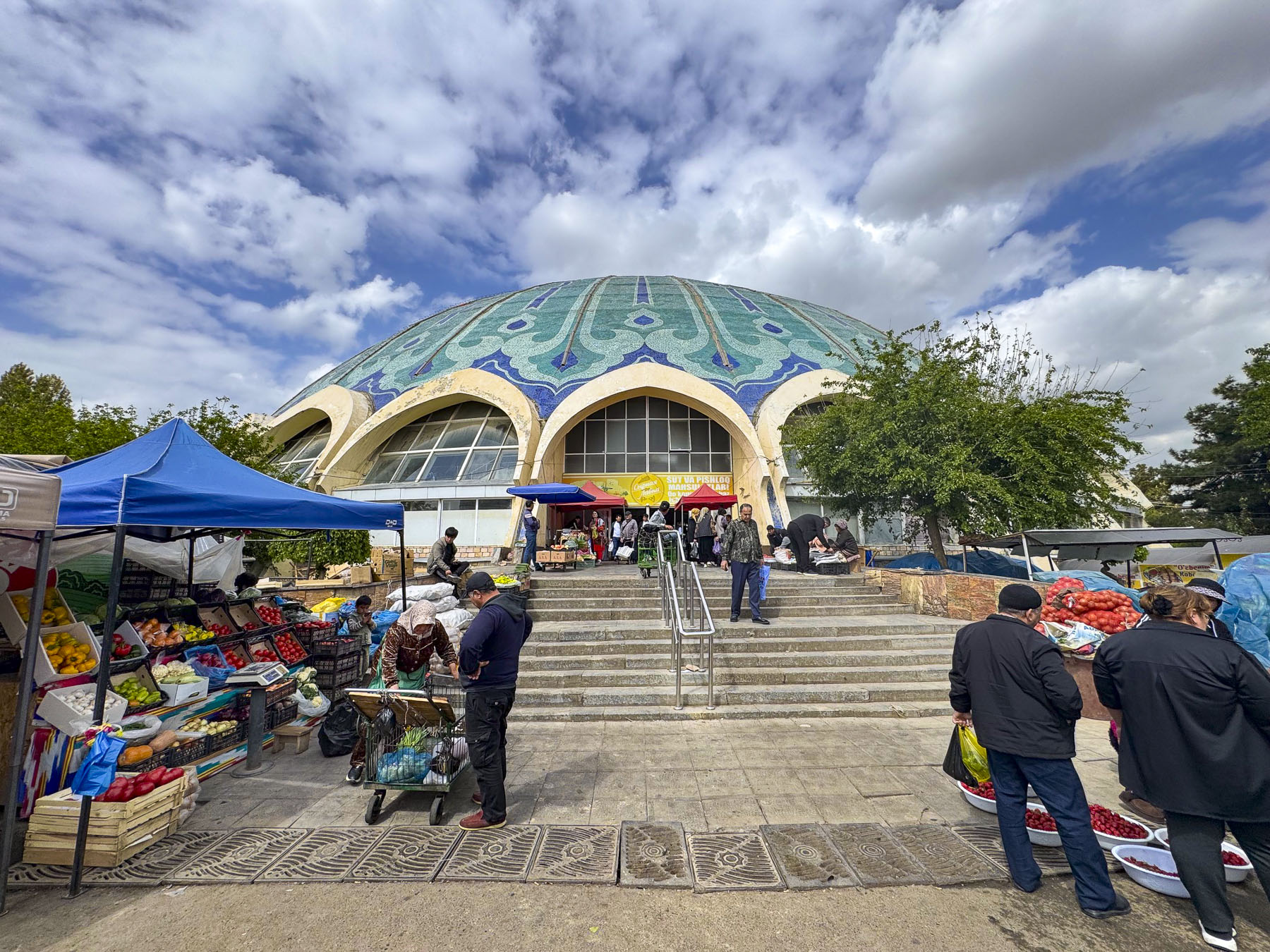
Back on the subway we continued on to the Chorsu Station, only a short walk away from the Chorsu Bazaar, Tashkent’s historical central market, whose history goes back 2000 plus years to the founding of Tashkent. The main hall’s futuristic dome, where meats, poultry and dairy products are for sale, dates from the reconstruction of the city after the 1966 earthquake.

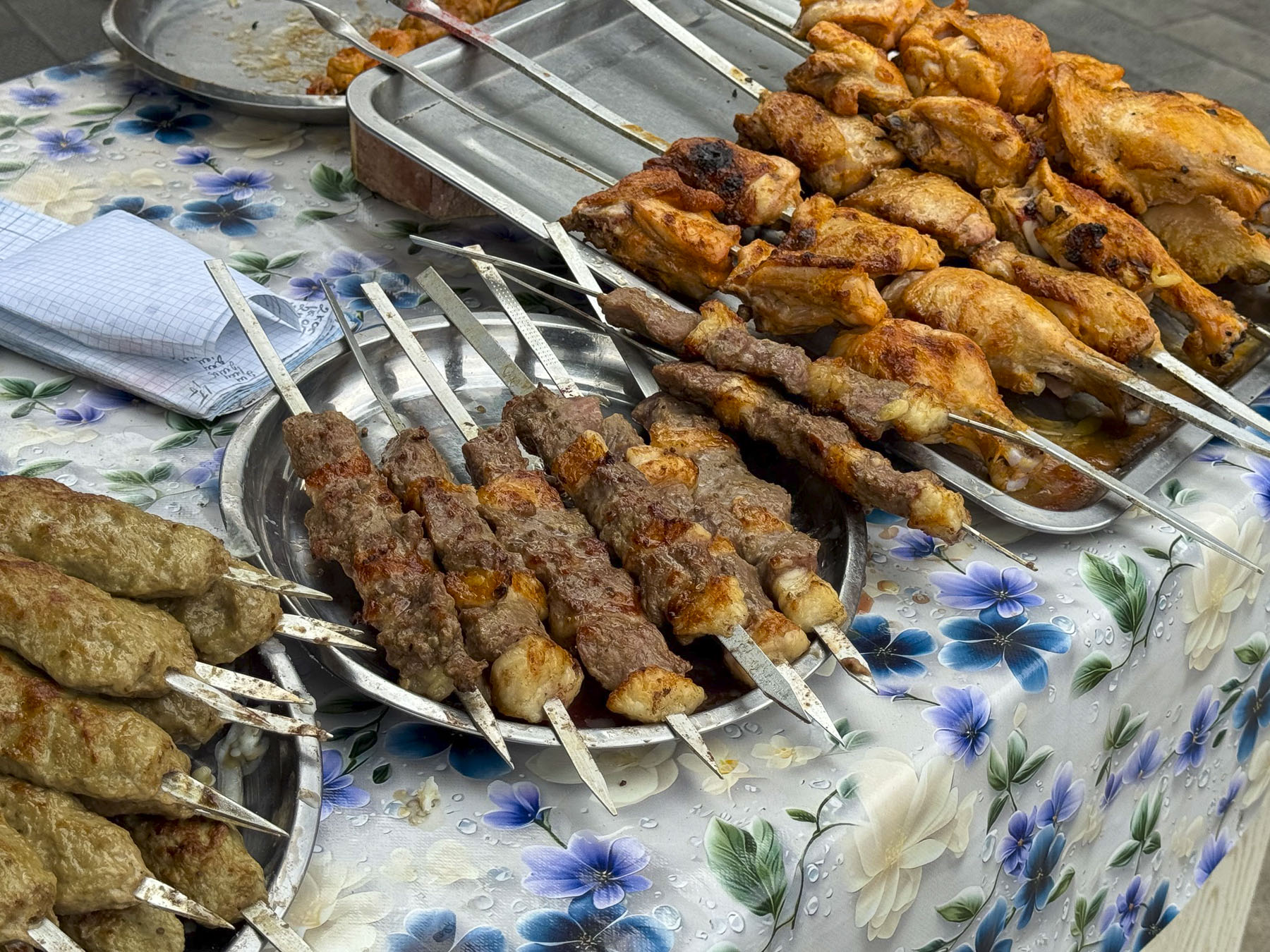
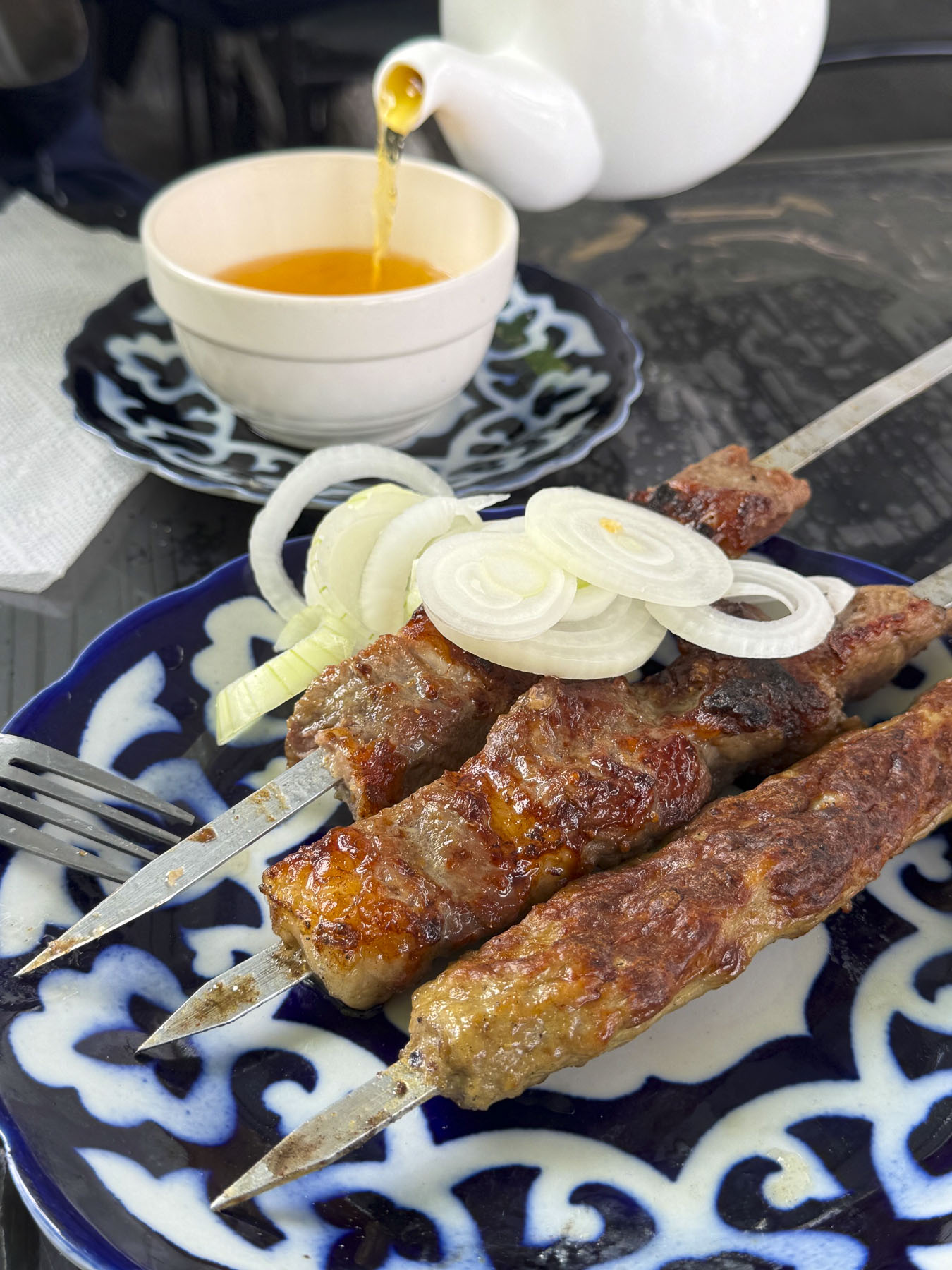
After wandering through the rows of clothing merchants, where nothing has a price tag so bargaining is expected, we were enticed by the aroma of slowly grilling kebabs over an outside fire at Especialidad Pinchos. A smile goes a long way when you don’t understand the language and we were quickly seated outside and served a delightful lemon tea. The restaurant was the perfect place to relax and people watch. It felt as if we were in the audience of an old TV sit-com where good-natured chiding was going on, from the quips flying across the open-air restaurant. We mentally supplied the dialog: “Yasmina we are so busy, can you clear the tables faster?” “Now Zarina you might be the golden one and Bobur’s squeeze, but don’t you go telling me how to take care of my side of the cafe!” And so it went, their familiar back and forth continuing the whole time we were there as the women busily tended the day’s lunch crowd.

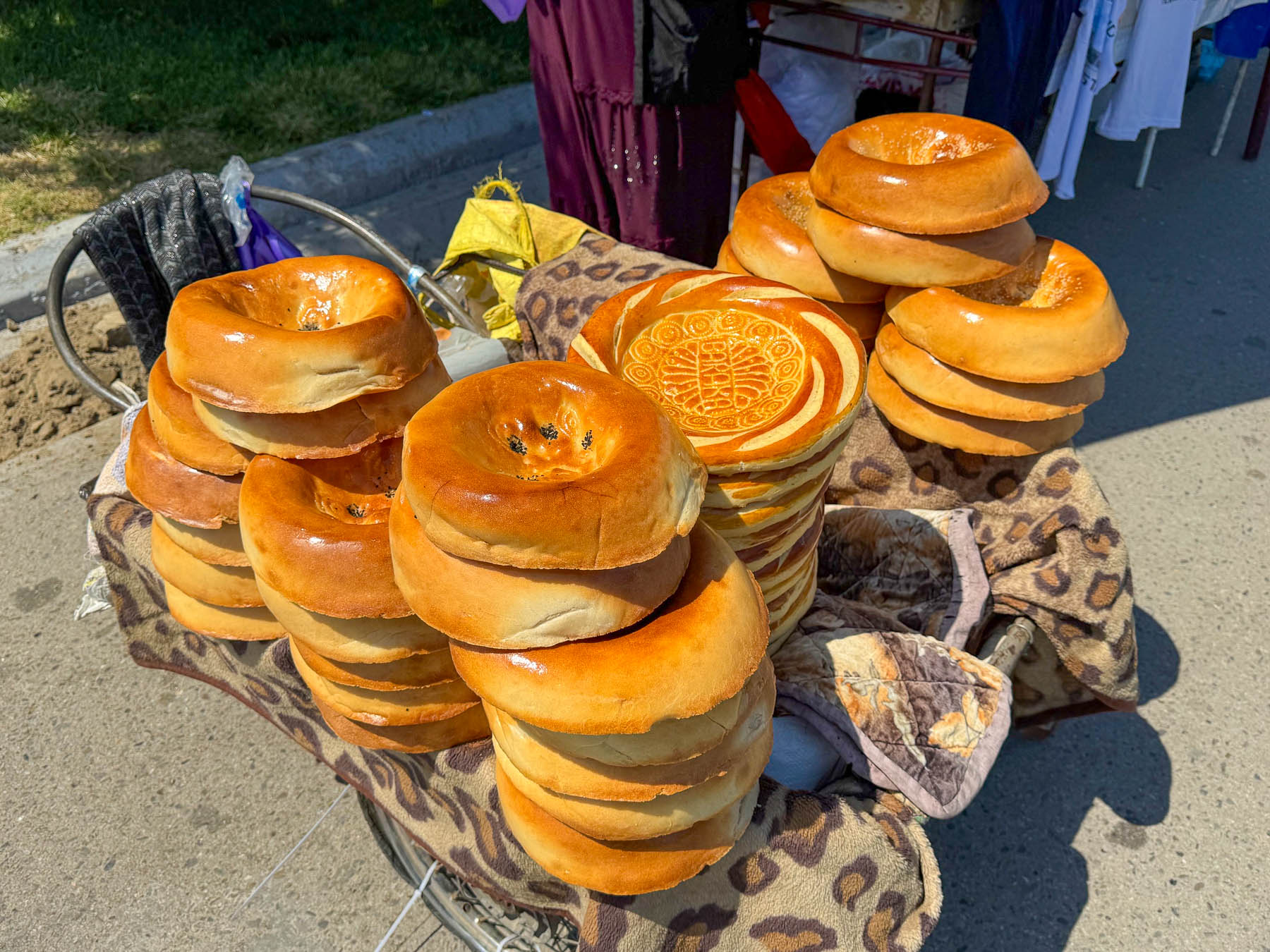
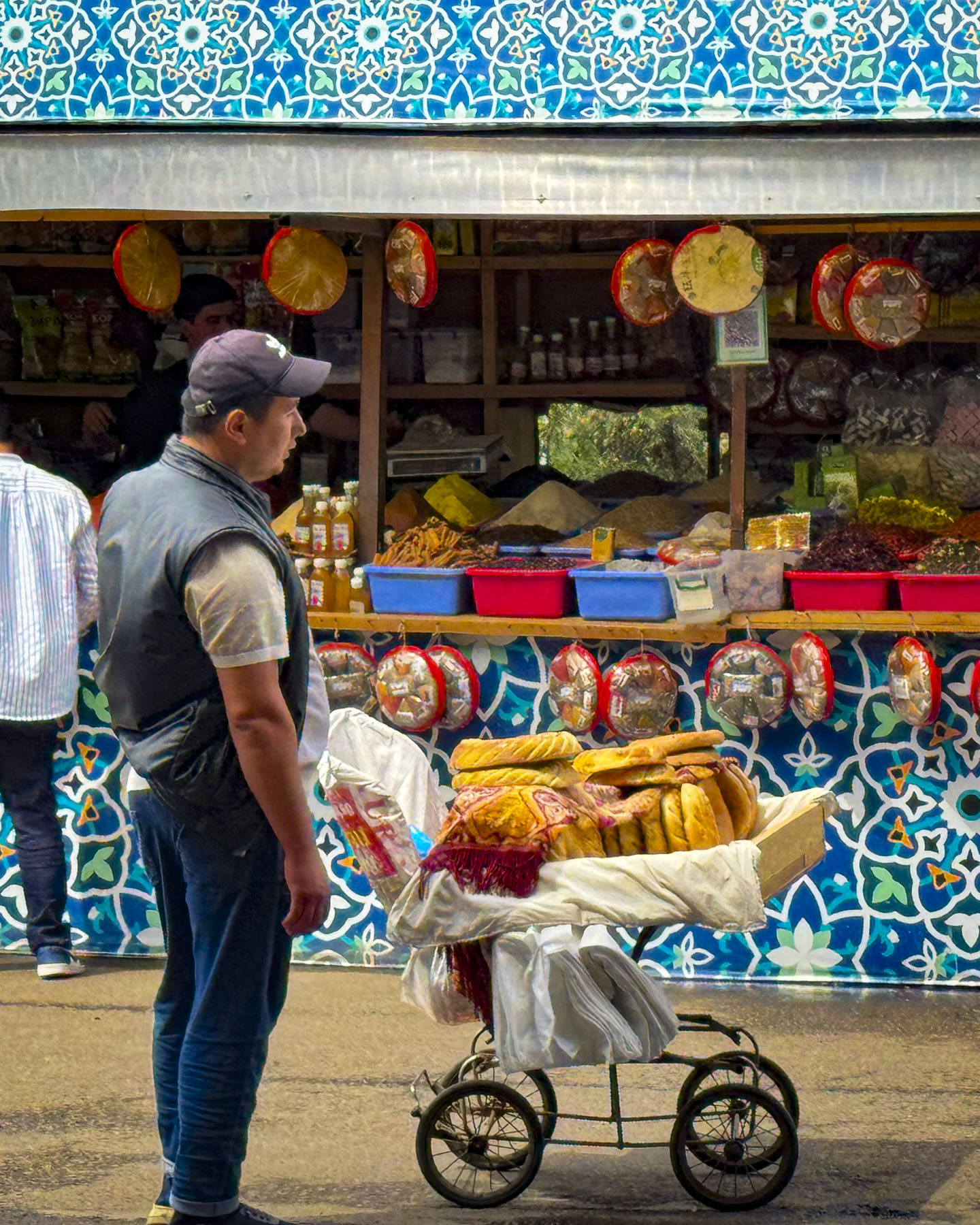
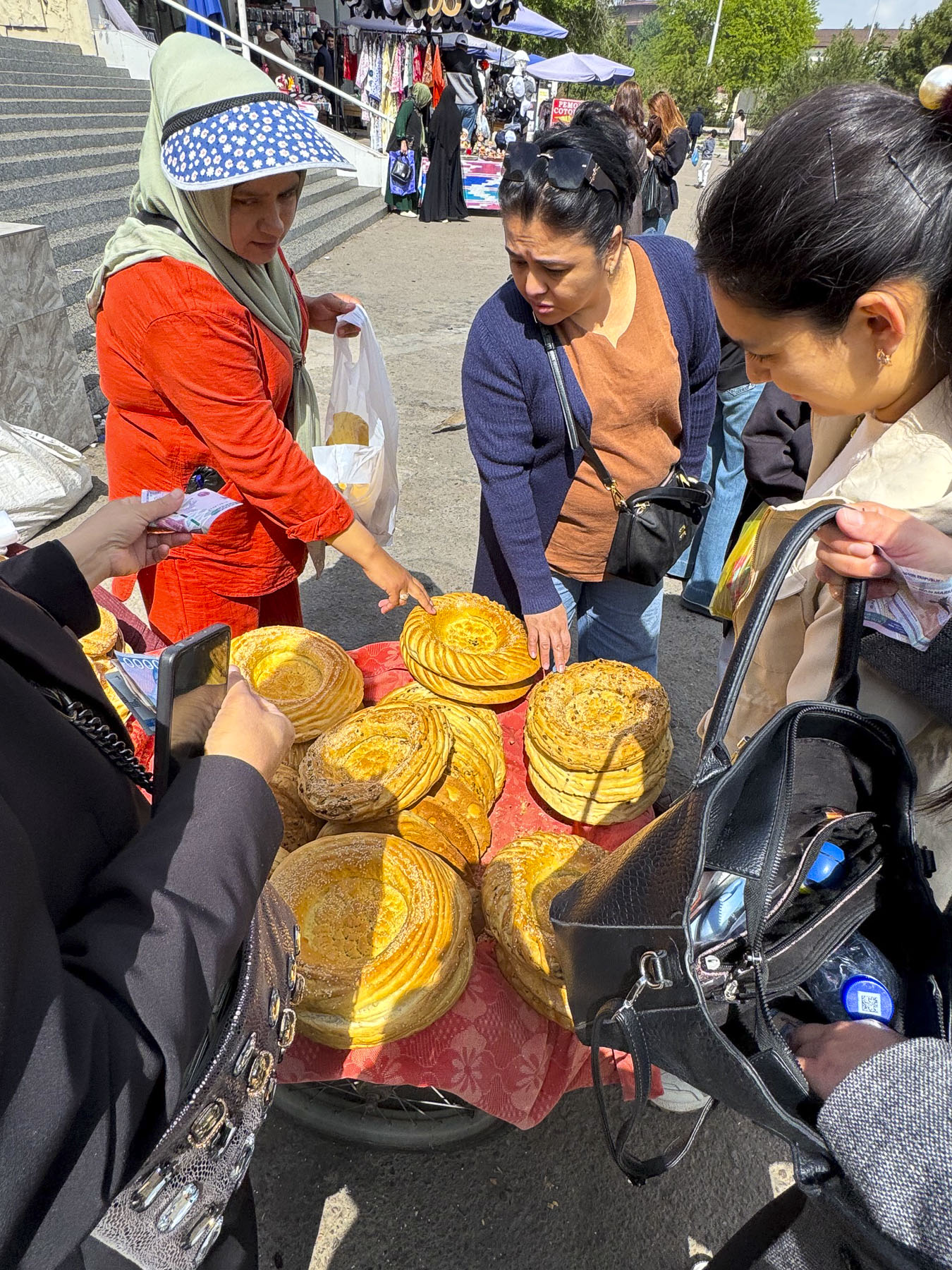
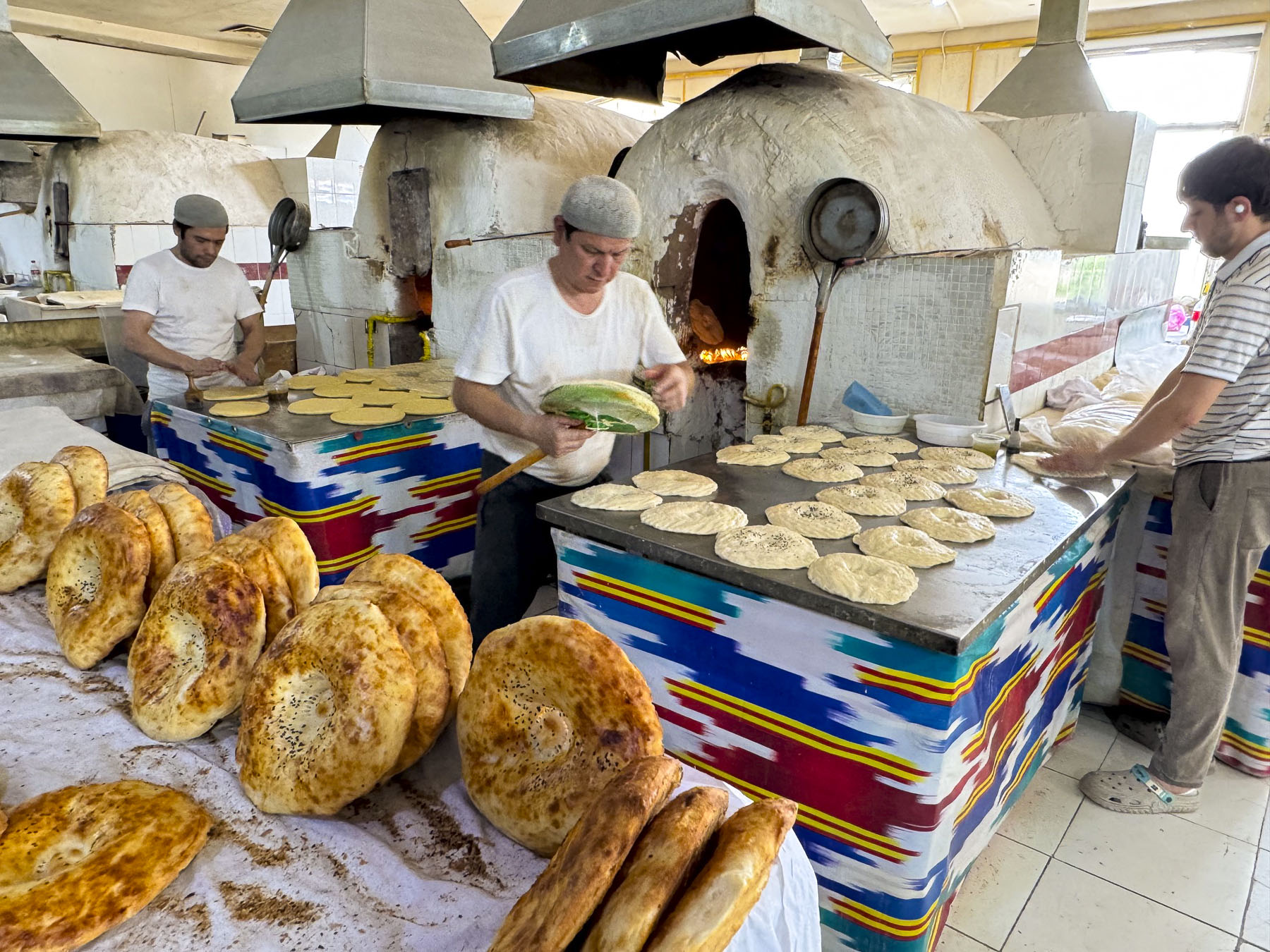
Wheel barrel vendors selling round, flat disk-shaped non coursed through the shoppers. These loaves of dough are traditionally decorated with a stamping tool called a chekich, before baking. We’ve read many rave reviews about Uzbekistan’s non but have found it’s best enjoyed when fresh out of an oven, as in our opinion it becomes a disappointing “eh” later. It’s definitely worth spending the time to find the central bakers in the market to watch them form the dough and then lean into the tall brick ovens to throw it against the side walls to bake. The result is heavenly.

Stairs rose from the market’s lower level to the gastronomical equivalent of Aladdin’s “Cave of Wonders.” Literally it was like a culinary temple, with vendors freely offering samples, it had us wishing we had rented an apartment with a full kitchen. The quality, variety, and abundance of the foodstuffs were amazing. It was difficult for the cooks in us to resist the temptation to buy a cart full of groceries, but we did and only purchased some dried fruit and pomegranate juice for a snack later.

After leaving the market we crossed the street into the Hastimom Mahalla neighborhood, in the Almazar District and walked along Zarkaynar Street. The lane was recently renovated as part of an effort to revitalize the maze of narrow lanes in the ancient quarter that lies between the Chorsu market and the magnificent new Islamic Civilization Center.

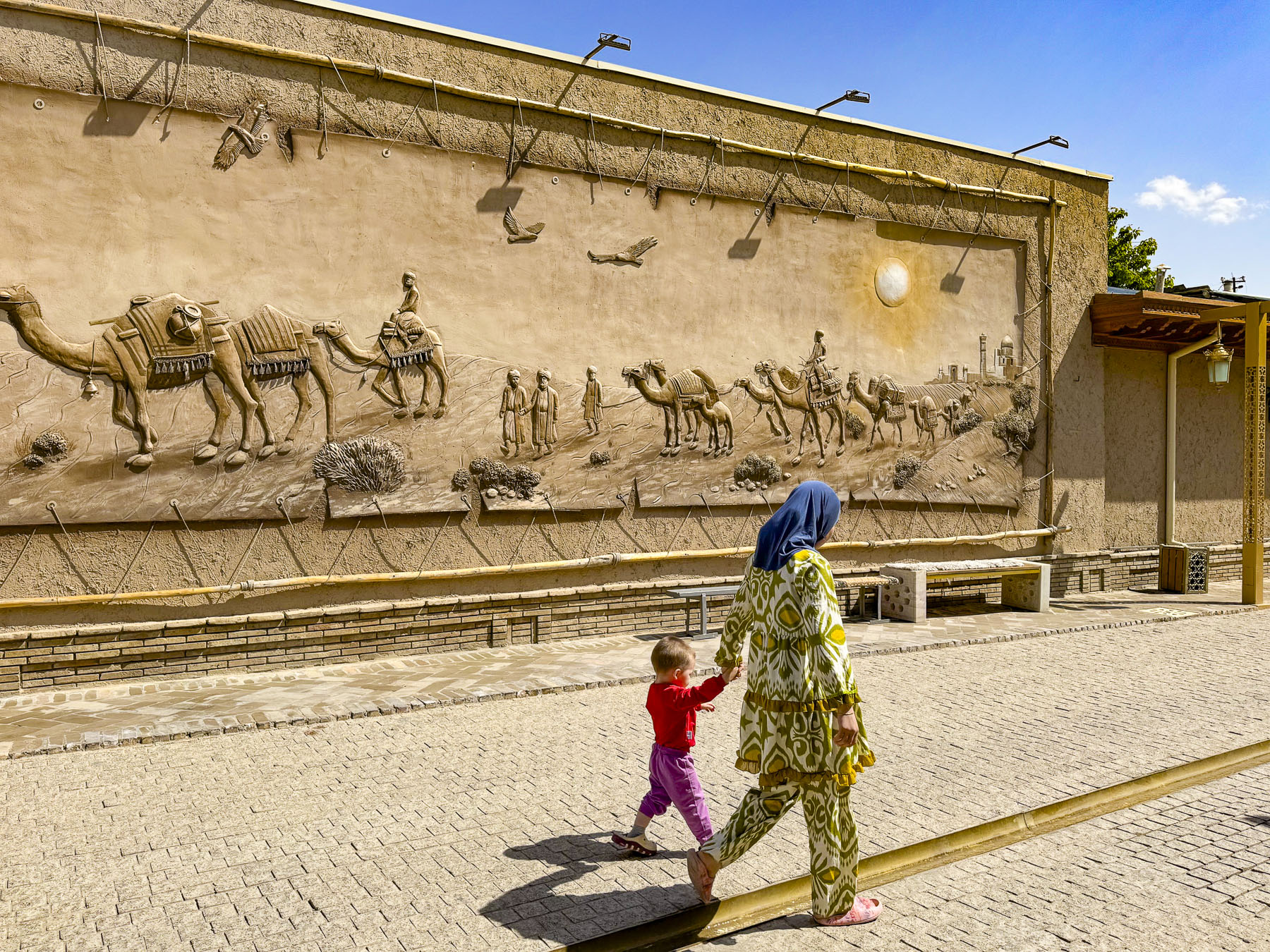
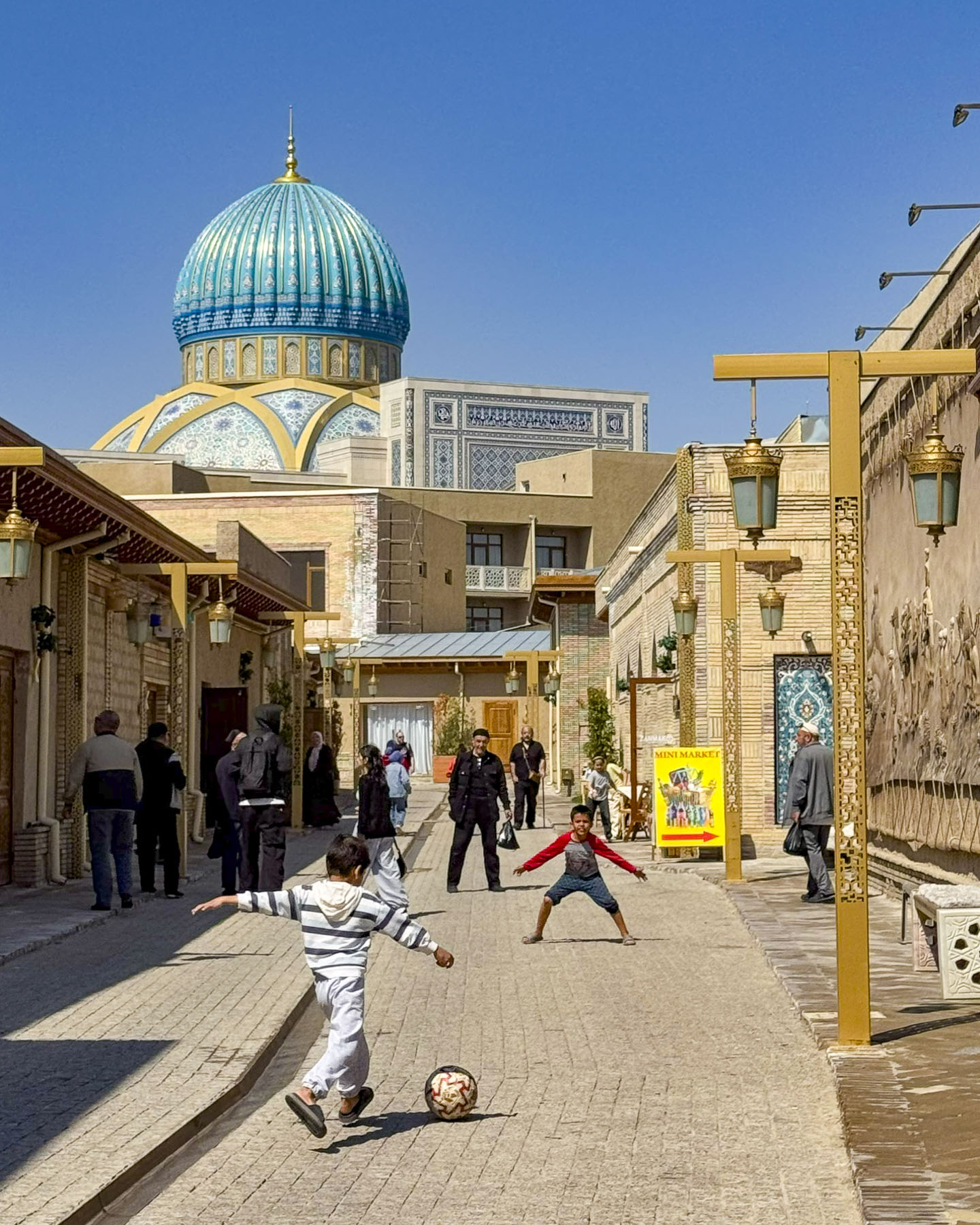
The street was pristine with new historical murals and buildings shining with their new facelifts, but it lost much of its authenticity in the process and felt a little too touristy.  Young boys were enthusiastically kicking a soccer ball back and forth down the lane until a neighborhood buvi, grandmother, put a stop to their raucous play.

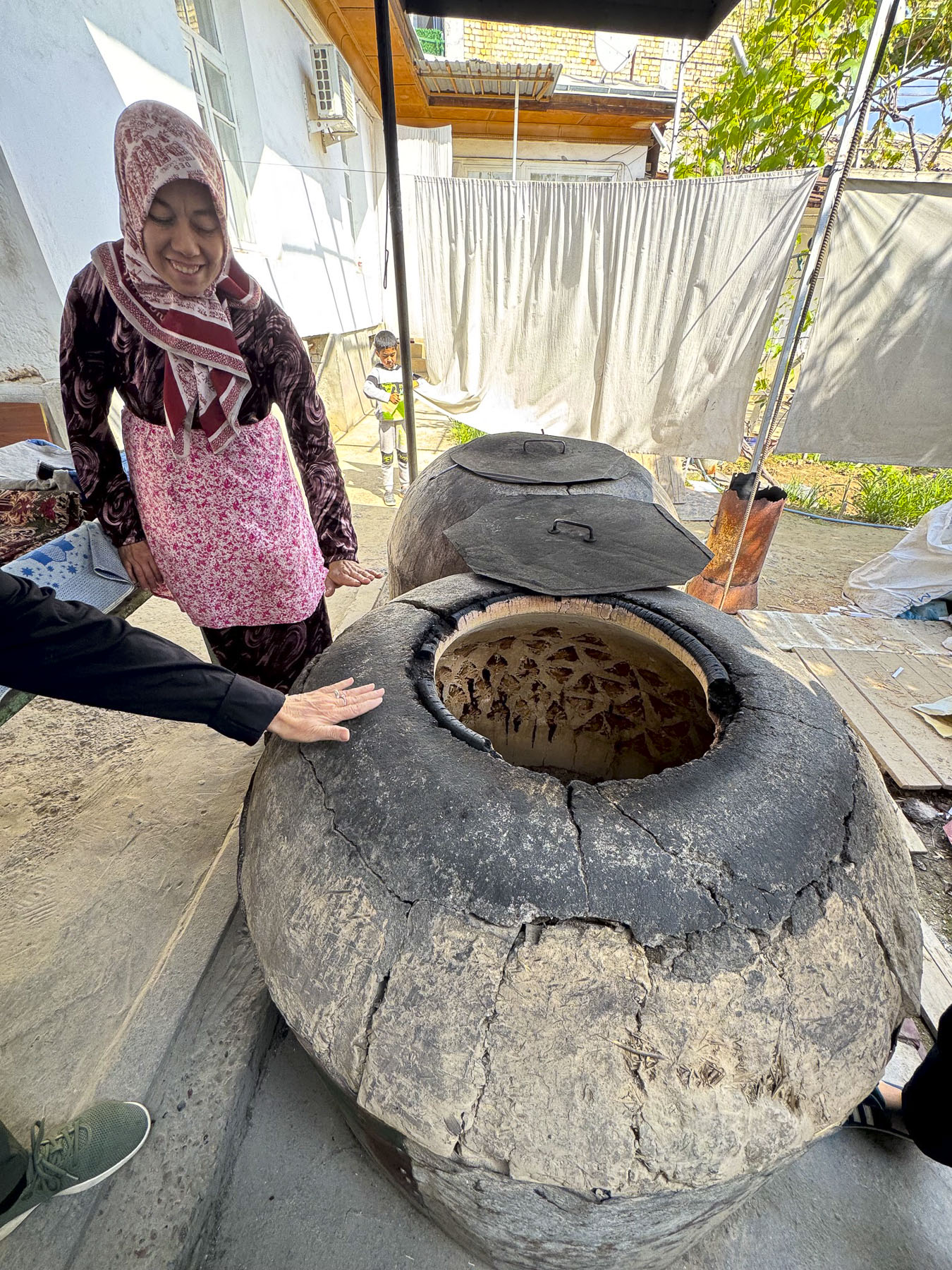
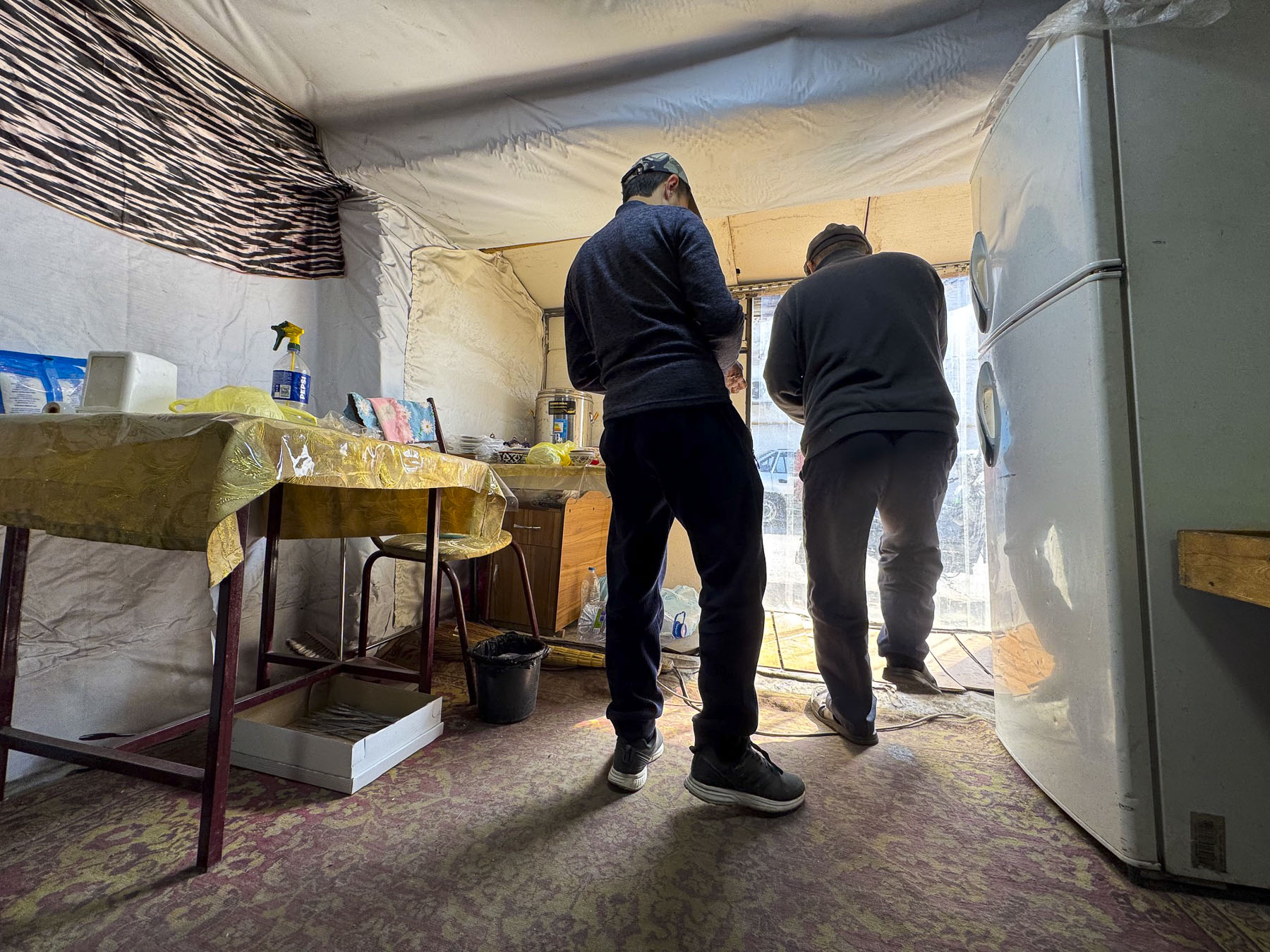
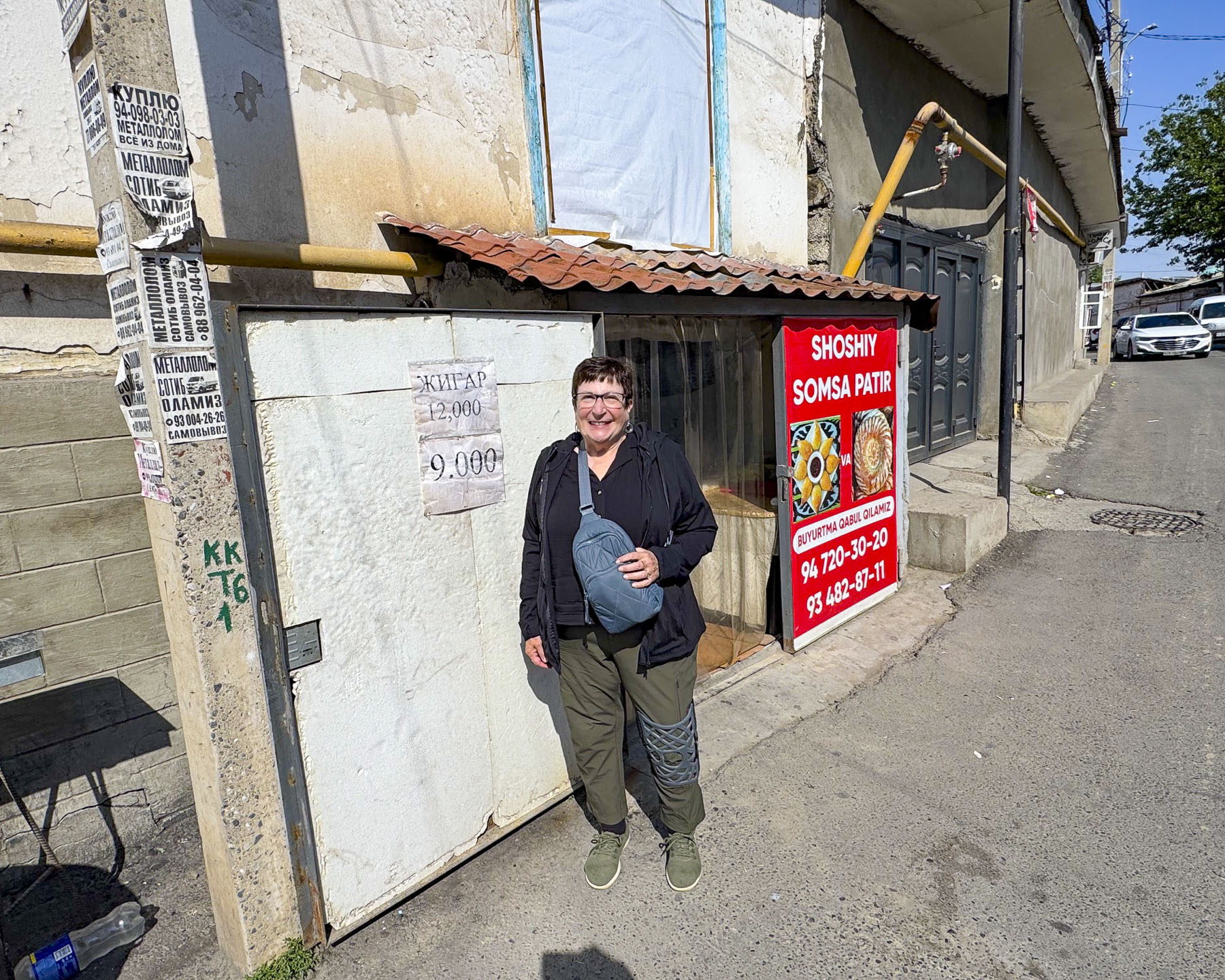
Fortunately, as we walked deeper in the mahalla, smaller alleys led to traditional homes still made of adobe brick that share a communal courtyard called a sheriklikli hovli. It was down one off these lanes that we hoped to find Tandyr Samsa V Dome, a small family run bakery in a hovli that is acclaimed for their samsas, a savory pastry filled with meat, chicken or potato, and then baked in a traditional wood-fired clay oven called a tandir. We had a very difficult time finding it. In this labyrinth our mapping app got us close, but eventually we just had to try different lanes until we discovered the right one. Unfortunately, by the time we found the right hovli, baking for the day was over and the family encouraged us to come back earlier on another day. It was very late in the afternoon when we stopped at a small nondescript restaurant, with a plastic pullback sheet as a door, and one low table and cushions on the floor. The owner was delighted we stopped and shared his experience about working the United States for a short time, while serving his many neighborhood customers who came in to get their takeaway orders. Our meal was very simple, just kebabs and non, but it was delicious and memorable.

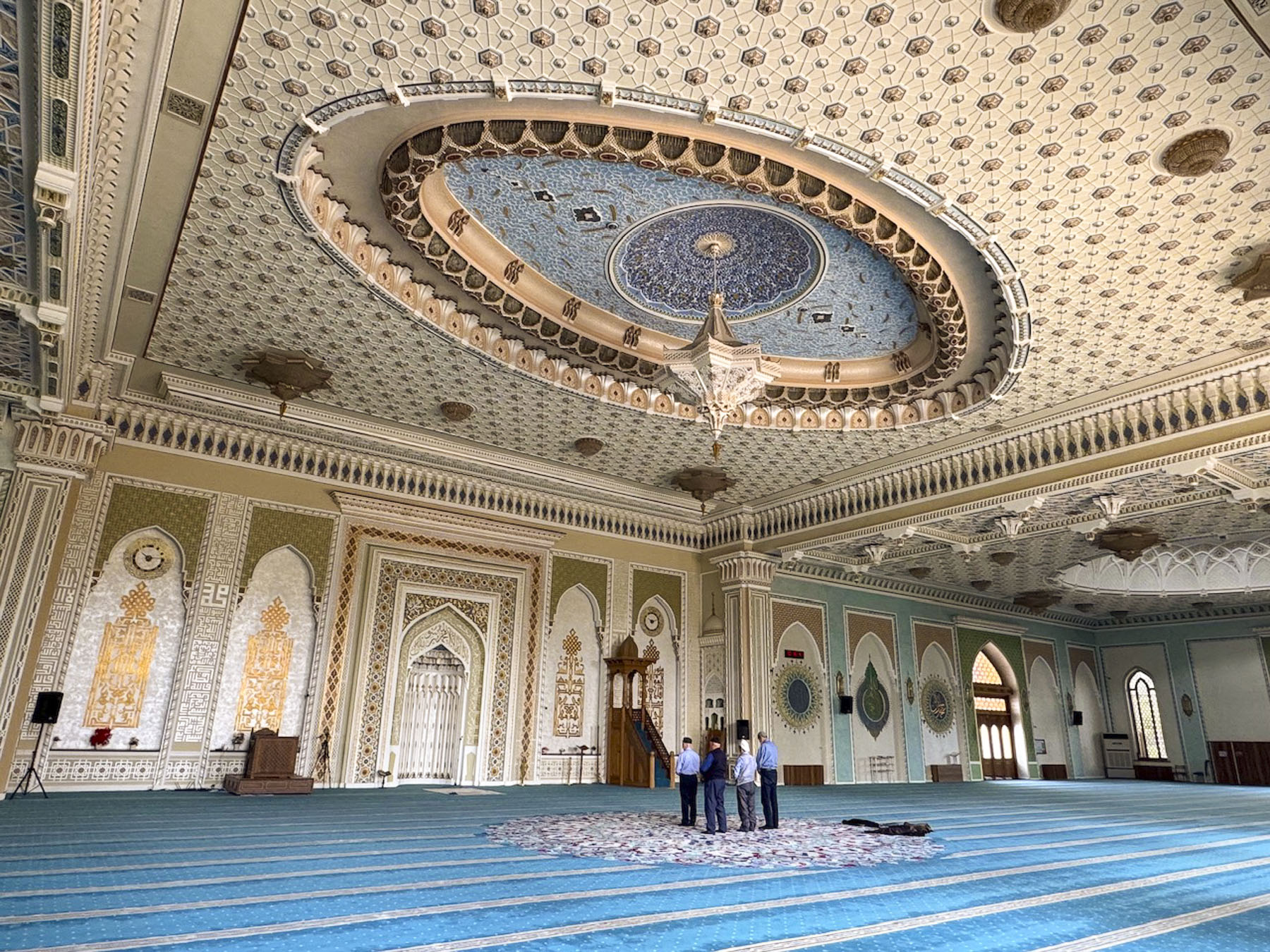
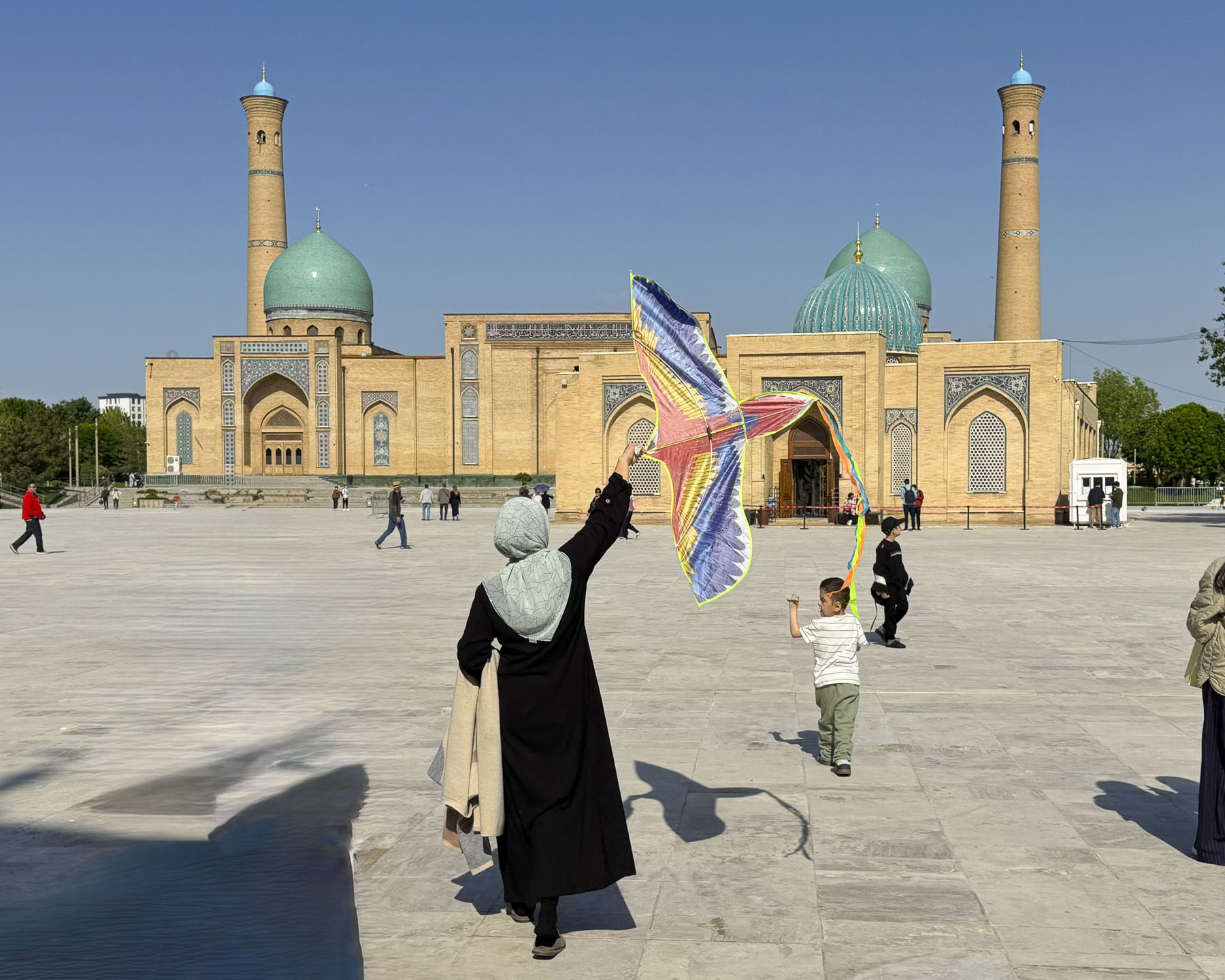
Afterwards we headed to the Hazrati Imam Complex, an ensemble of buildings around a large plaza that include the16th  century madrasah Barak-Khan, that is now a crafts center, the 19th century Muyi Muborak Madrasah, which now exhibits a collection of ancient Islamic manuscripts, and the Hazrati Imam Mosque completed in 2007.

They were built around the Mausoleum of Hazrat Imam, which had become a pilgrimage site. Hazrati was a brilliant 10th-century polyglot and local locksmith who went by the name of Kaffal al-Shashi before pursuing his religious studies in Baghdad, Mecca and Medina. Upon returning to Tashkent he became one of the town’s first local imams and received the title Hazrat Imam. Beloved, he came to be regarded as the chief spiritual protector and patron of Tashkent.

The complex is one of the few large open spaces in the Almazar District, and it’s a popular spot for local families to bring their children to learn how to ride bikes and fly kites.

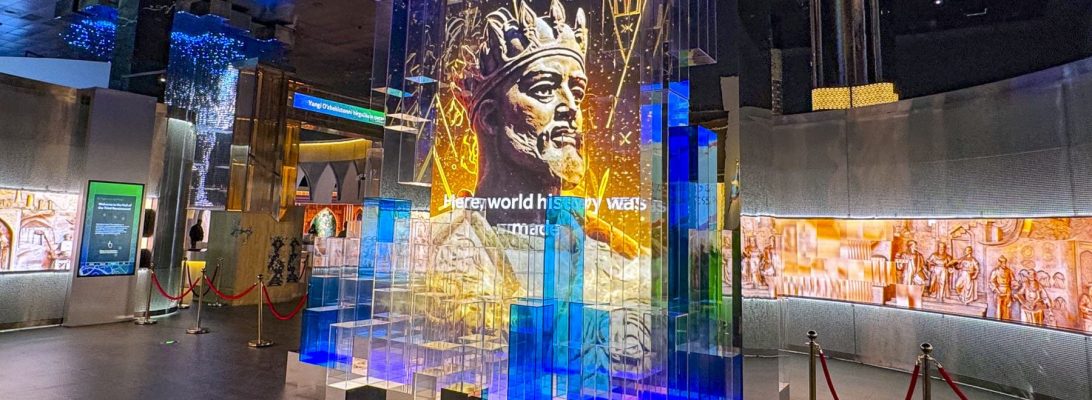
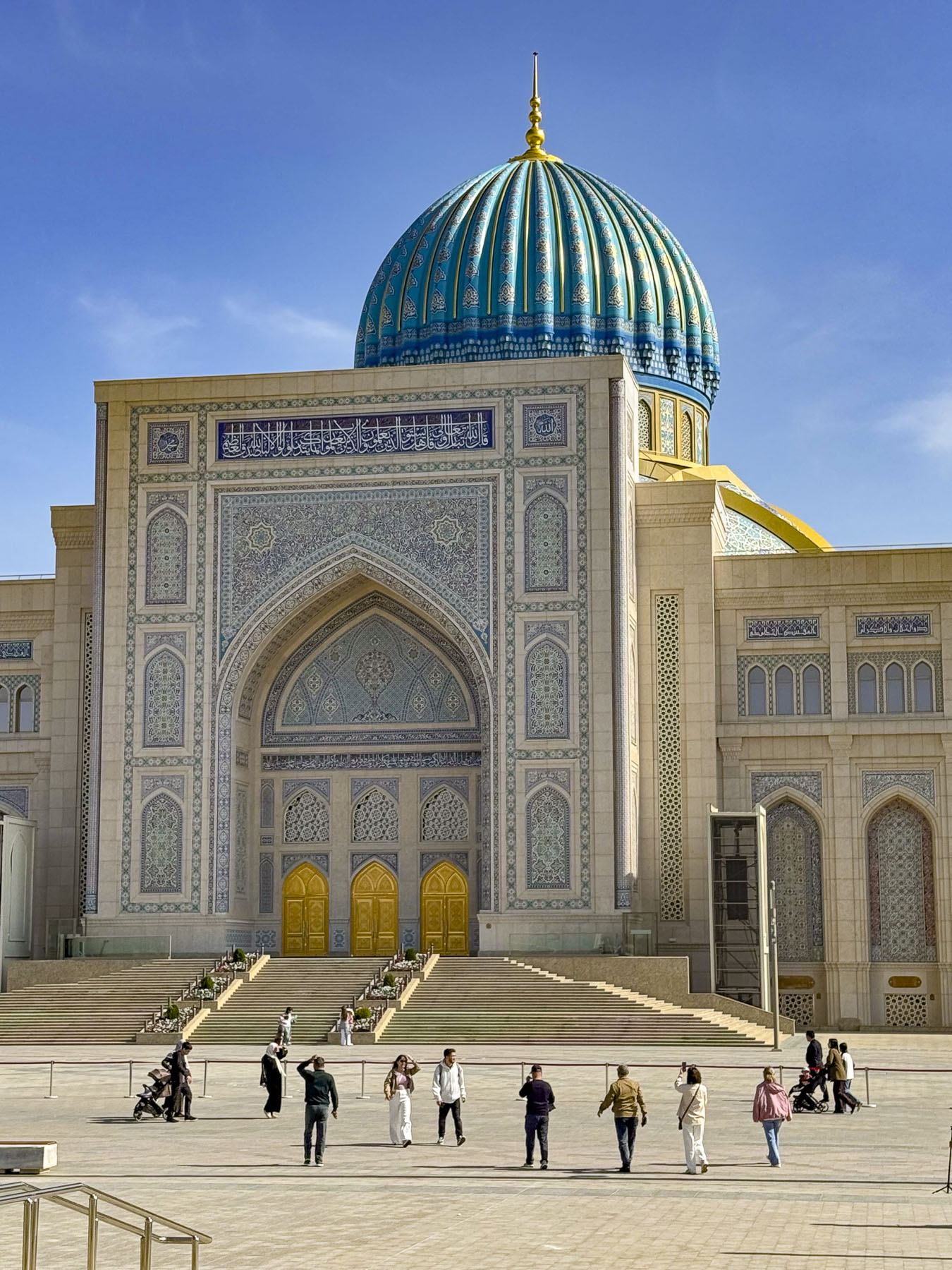
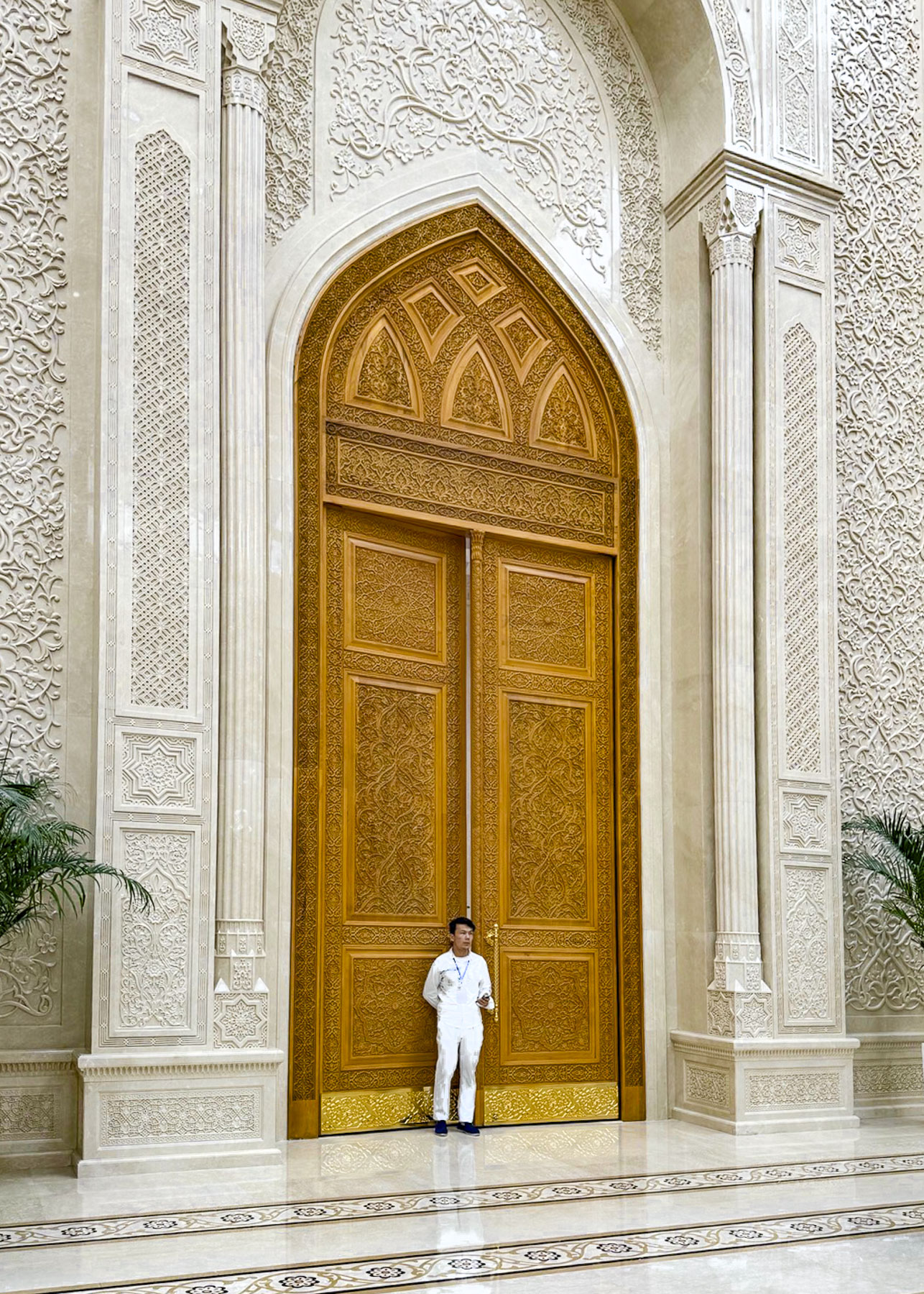
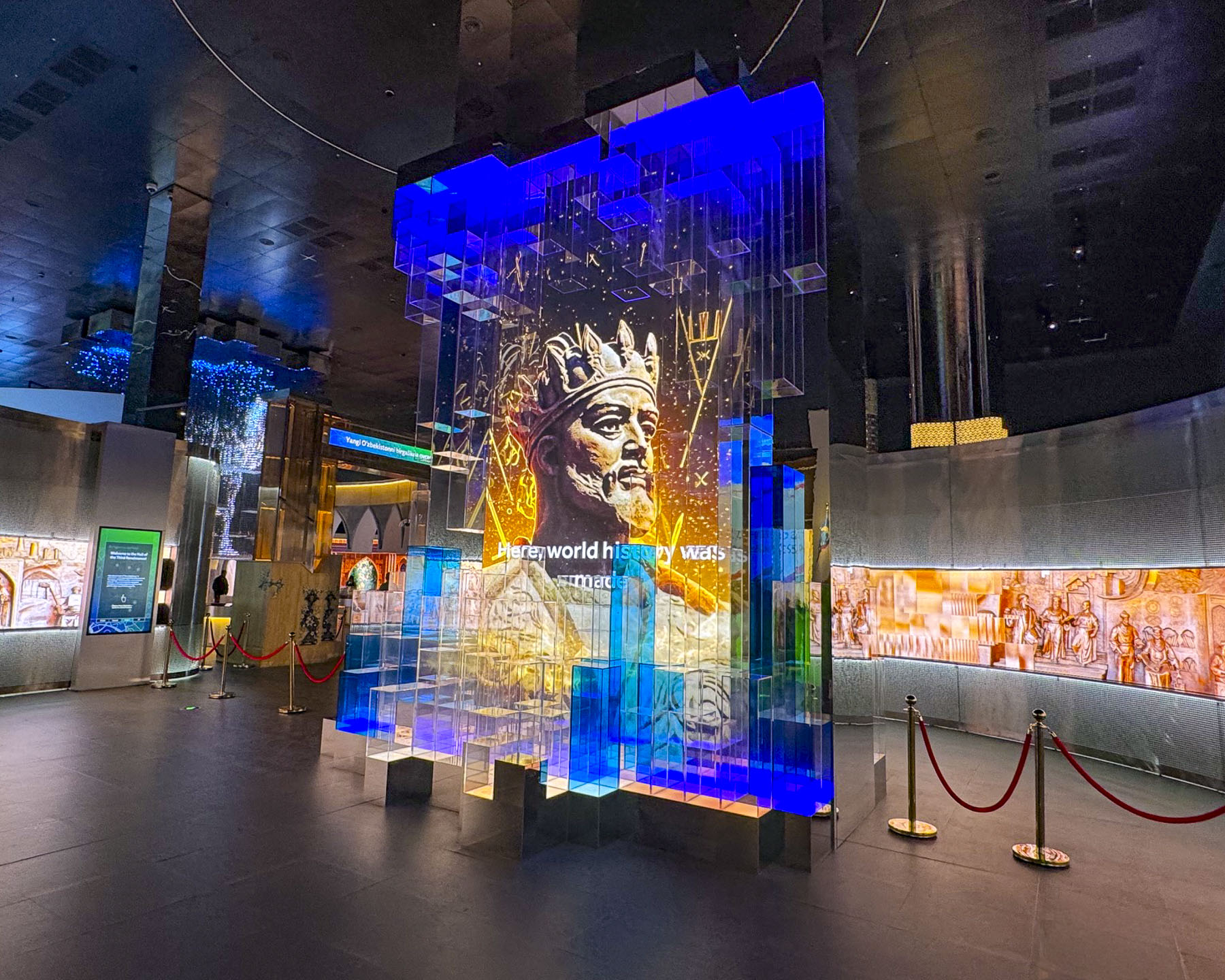
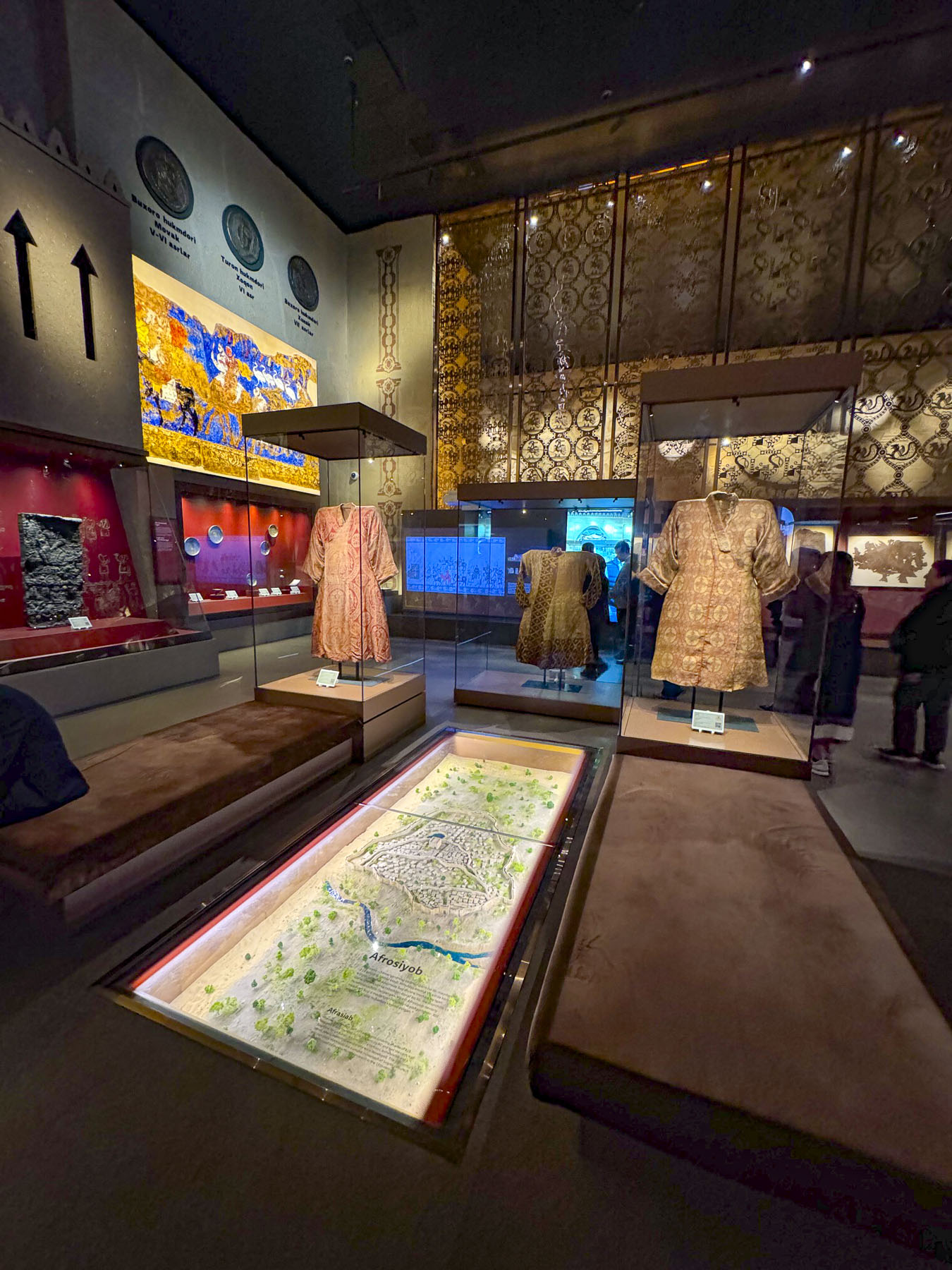
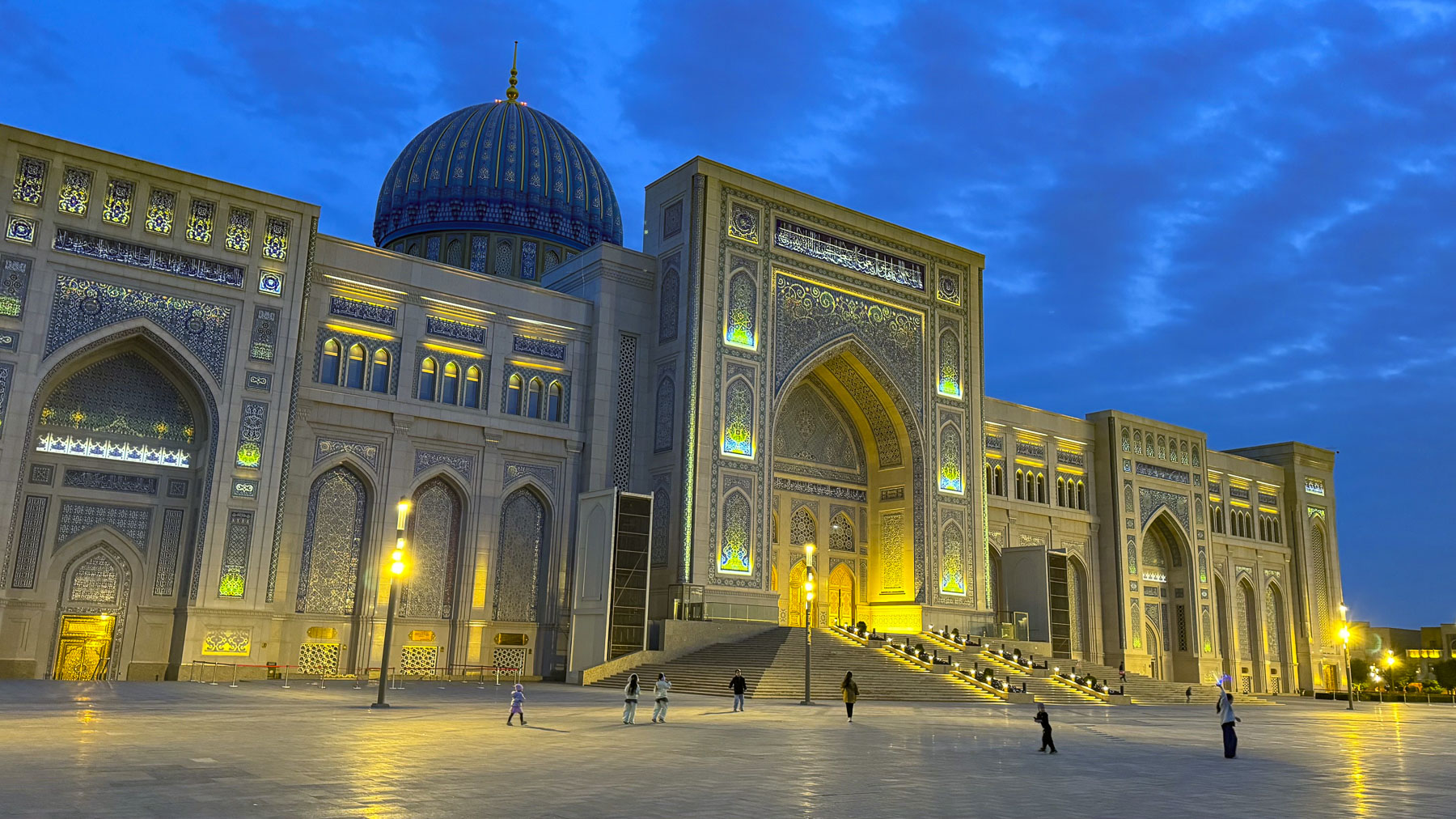
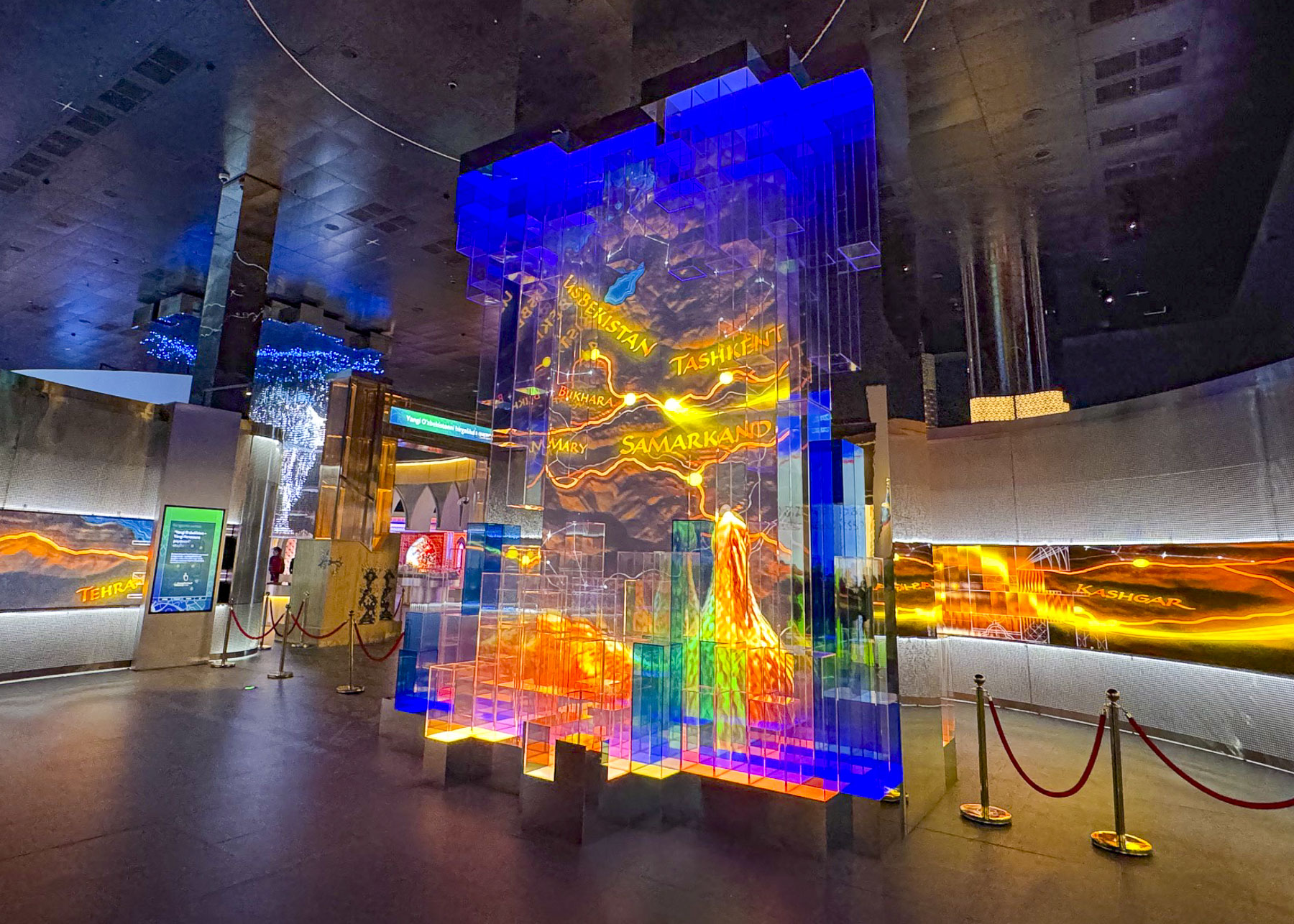
Next to the Hazrati Imam Complex is the Islamic Civilization Center, a newly opened museum, “conceived under the vision and leadership of Uzbekistan’s President Shavkat Mirziyoyev in 2017. The Islamic Civilization Center was envisioned to be more than just a museum, but function as an international hub for science, culture and learning, combining the richest treasures of pre‑Islamic and Islamic heritage of Uzbekistan with modern digital technologies and academic research.” The center’s striking design took inspiration from the architectural masterpieces constructed by the Timurid Empire in the 15th and 16th centuries.

The ICC was not on our radar when we planned our trip to Uzbekistan, but we were delighted to find that the center stays open until 10pm every day, and seeing that the queue for entrance into the museum was very short we spontaneously purchased tickets. Upon entering the building folks were divided into small tour groups determined by the language they spoke and then led through the exhibits with a bilingual guide.

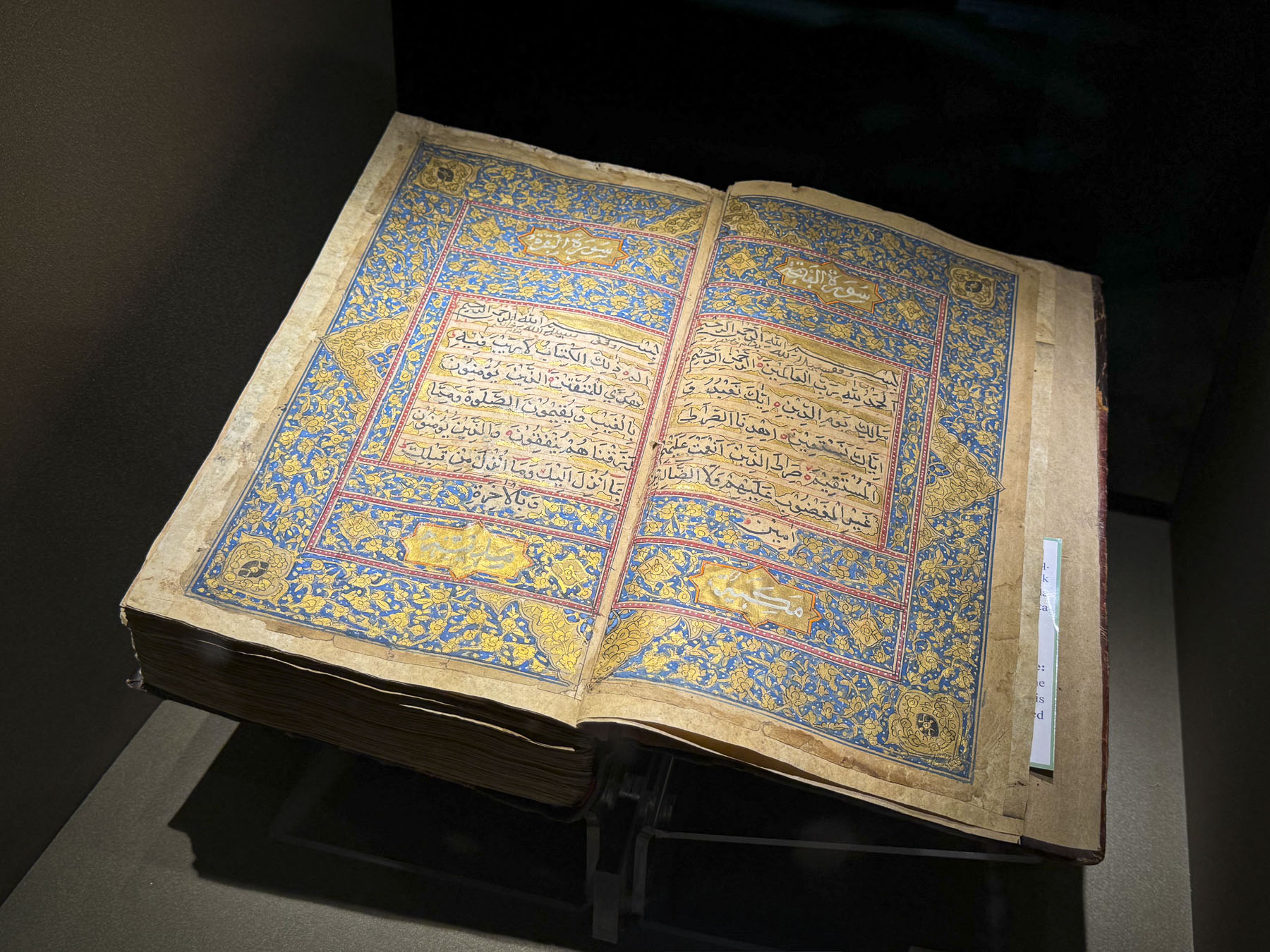
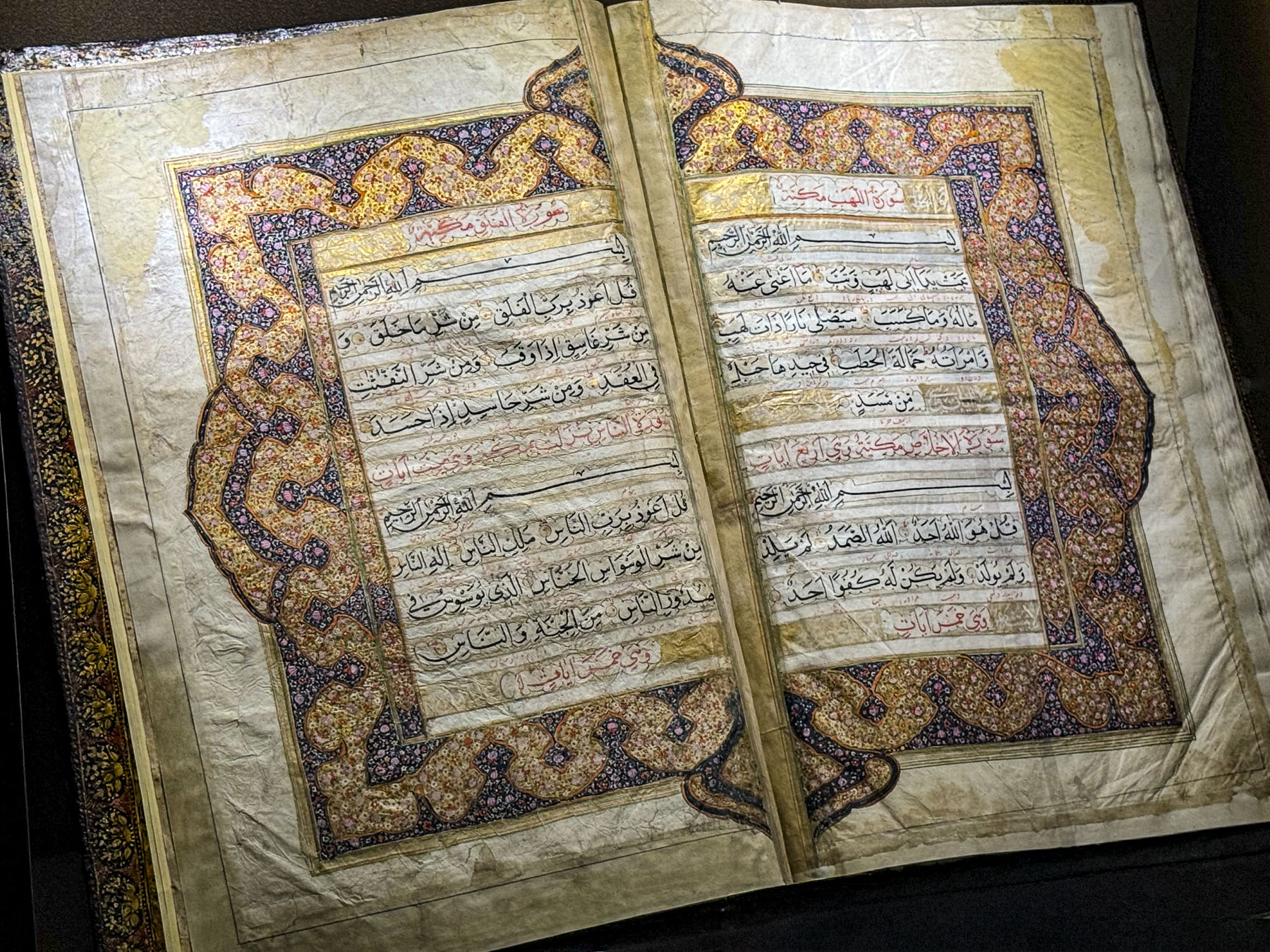
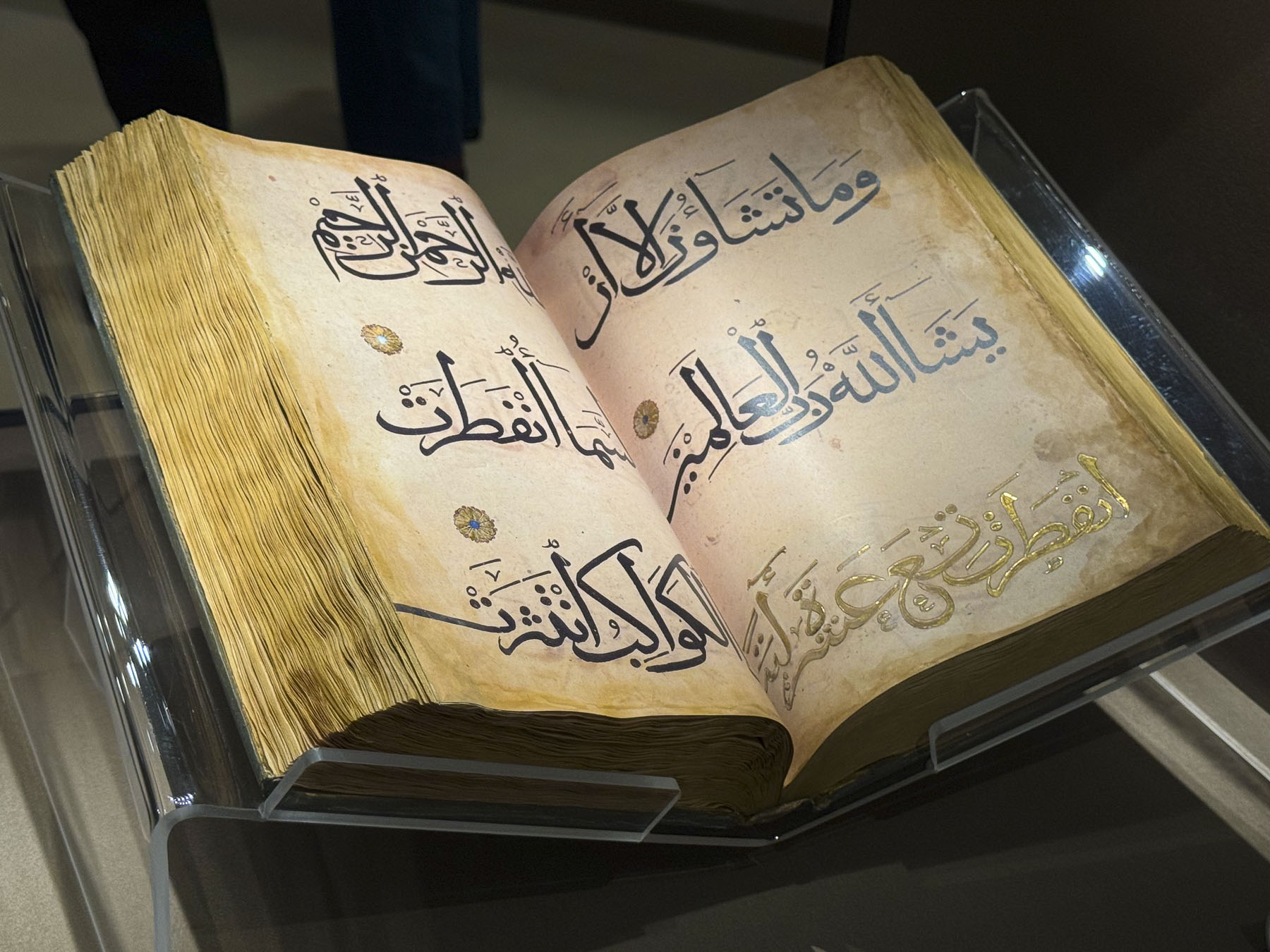
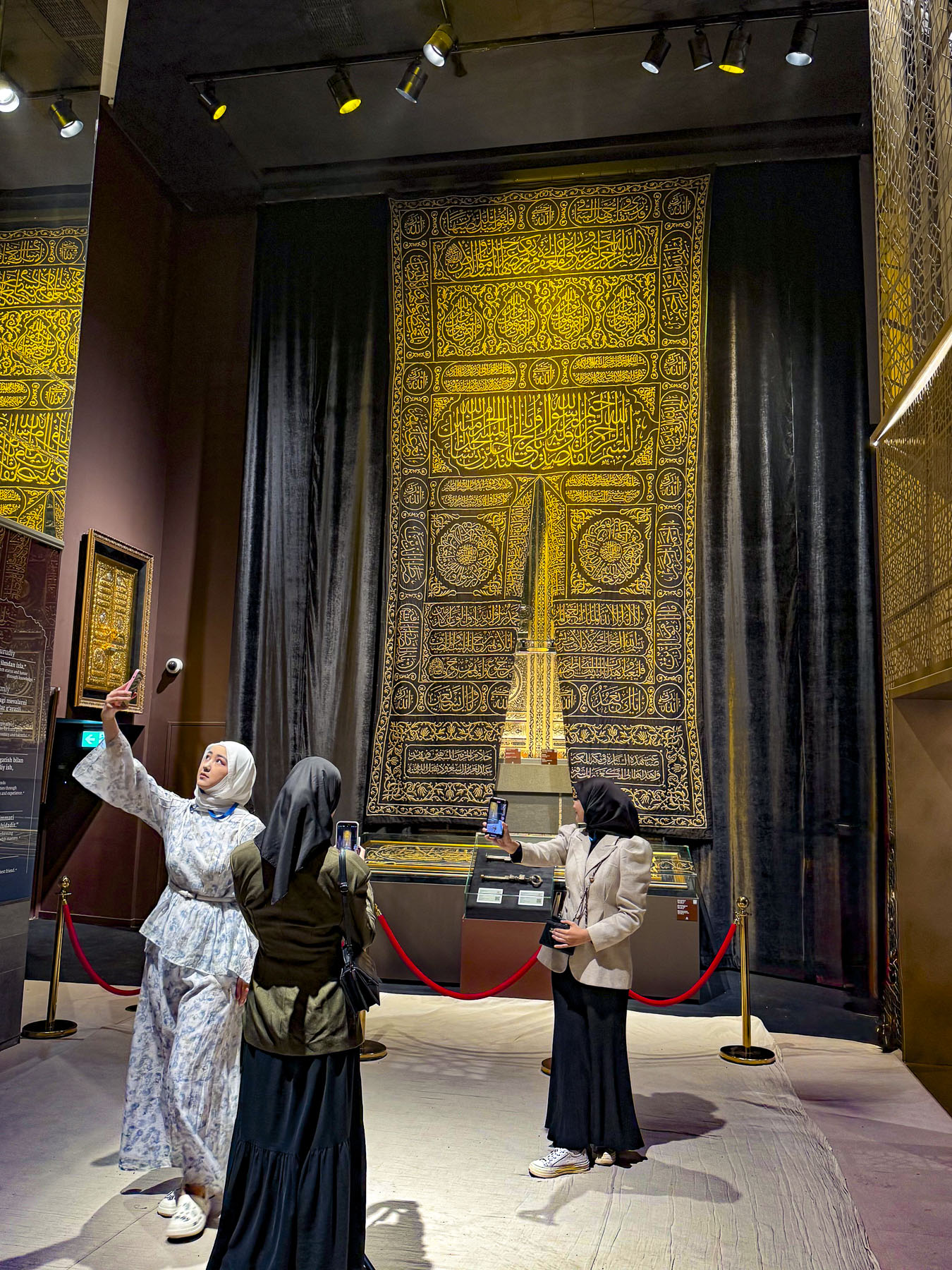
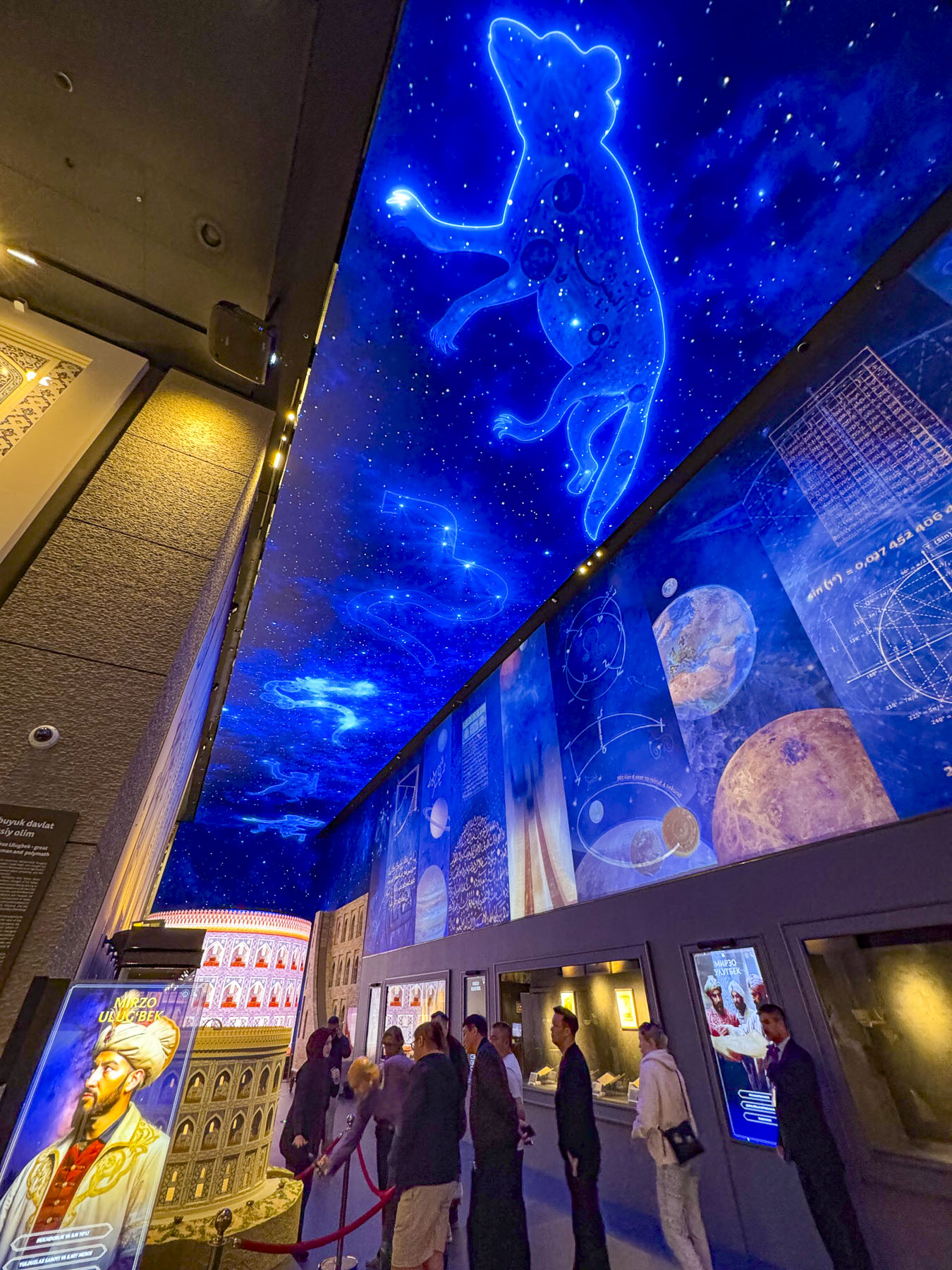
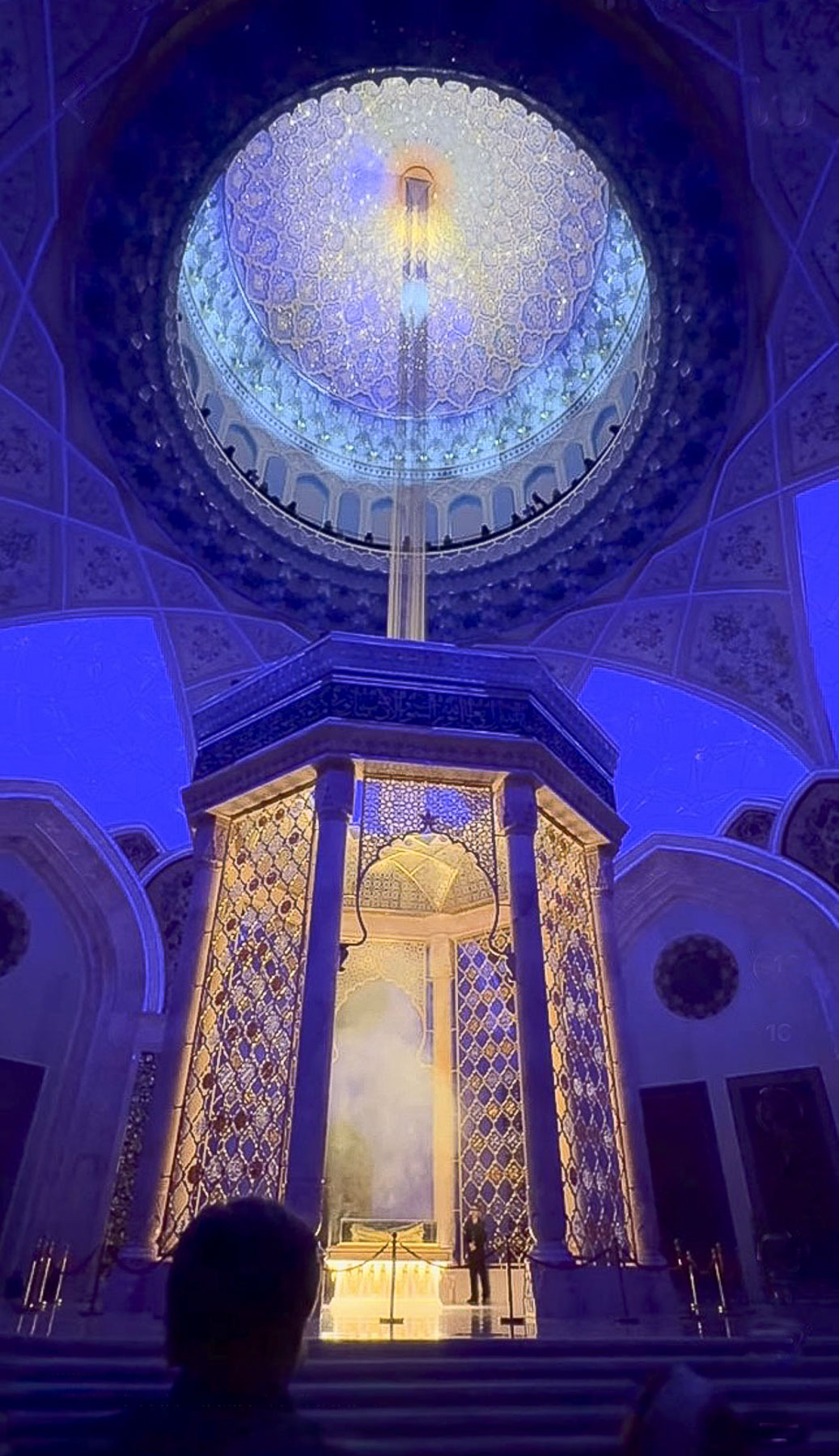
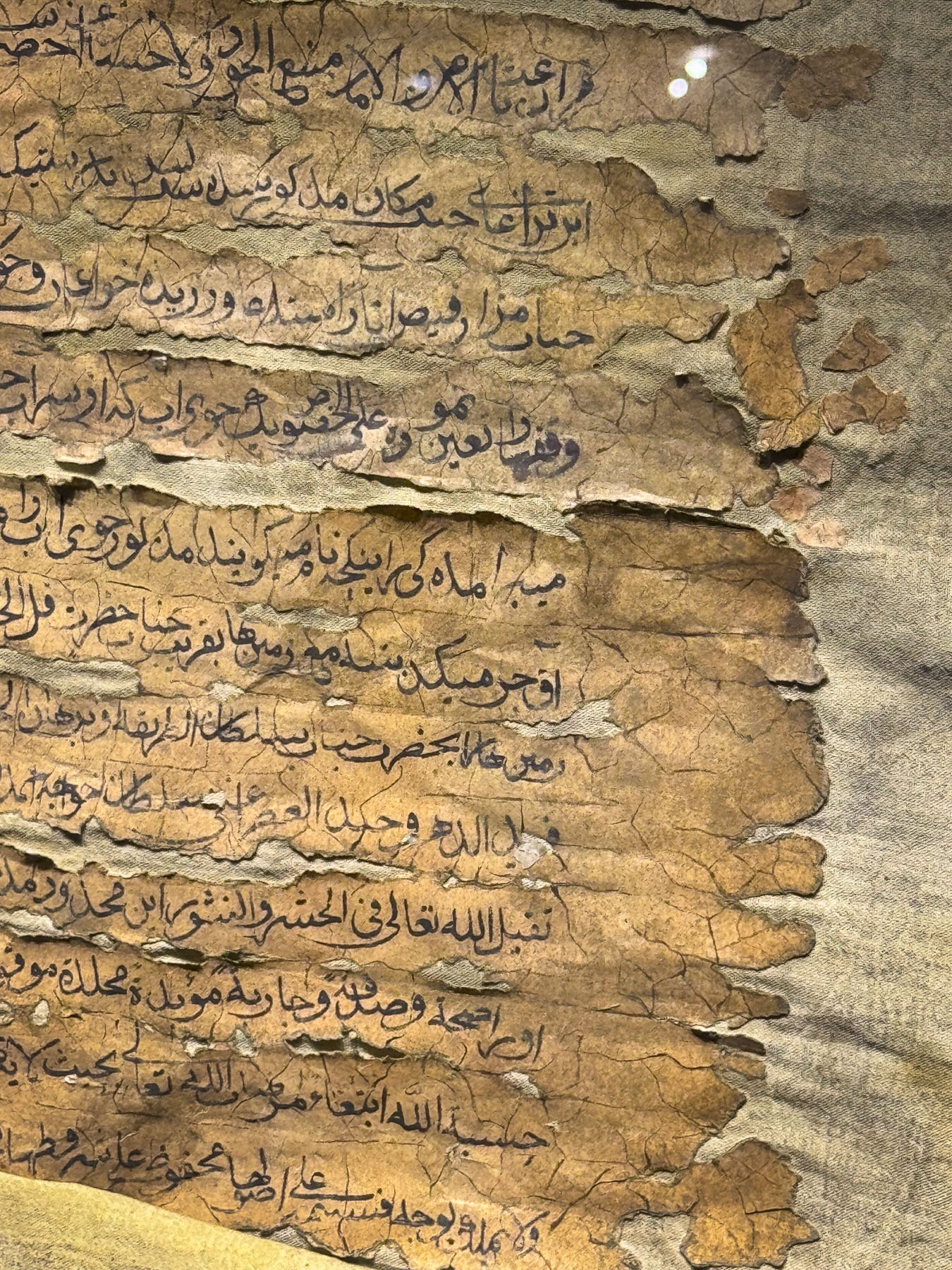
It’s a huge building with over 2,000 historical items, manuscripts, and cultural artifacts on display, 743 of which have been repatriated from international collections, and a 45,000-book research library. It was a fascinating tour that lasted about two hours and ended in the Quran Hall with a dramatic multimedia event where sacred verses of the Quran were projected onto a digitally created night sky in the 65m (213ft) tall dome, directly over the treasured 7th-century Uthman Quran, and a holographic beam of light descends from the heavens to spotlight the manuscript, representing divine revelation.

Though the constitution of Uzbekistan defines the country as a secular state, there are some concerns about how heavily religious freedoms and activities are restricted and monitored by the government in Uzbekistan. The Islamic Civilization Center is part of Uzbekistan’s efforts to reclaim its history and Islamic heritage for the next generation, information which was repressed during the 67 years the country was under the Soviets Union’s control.

Exiting the building just before sunset, we had the opportunity to take some night photos of the dramatically illuminated building before enjoying dinner several blocks away at the Khan Ahmat, an upscale eatery.

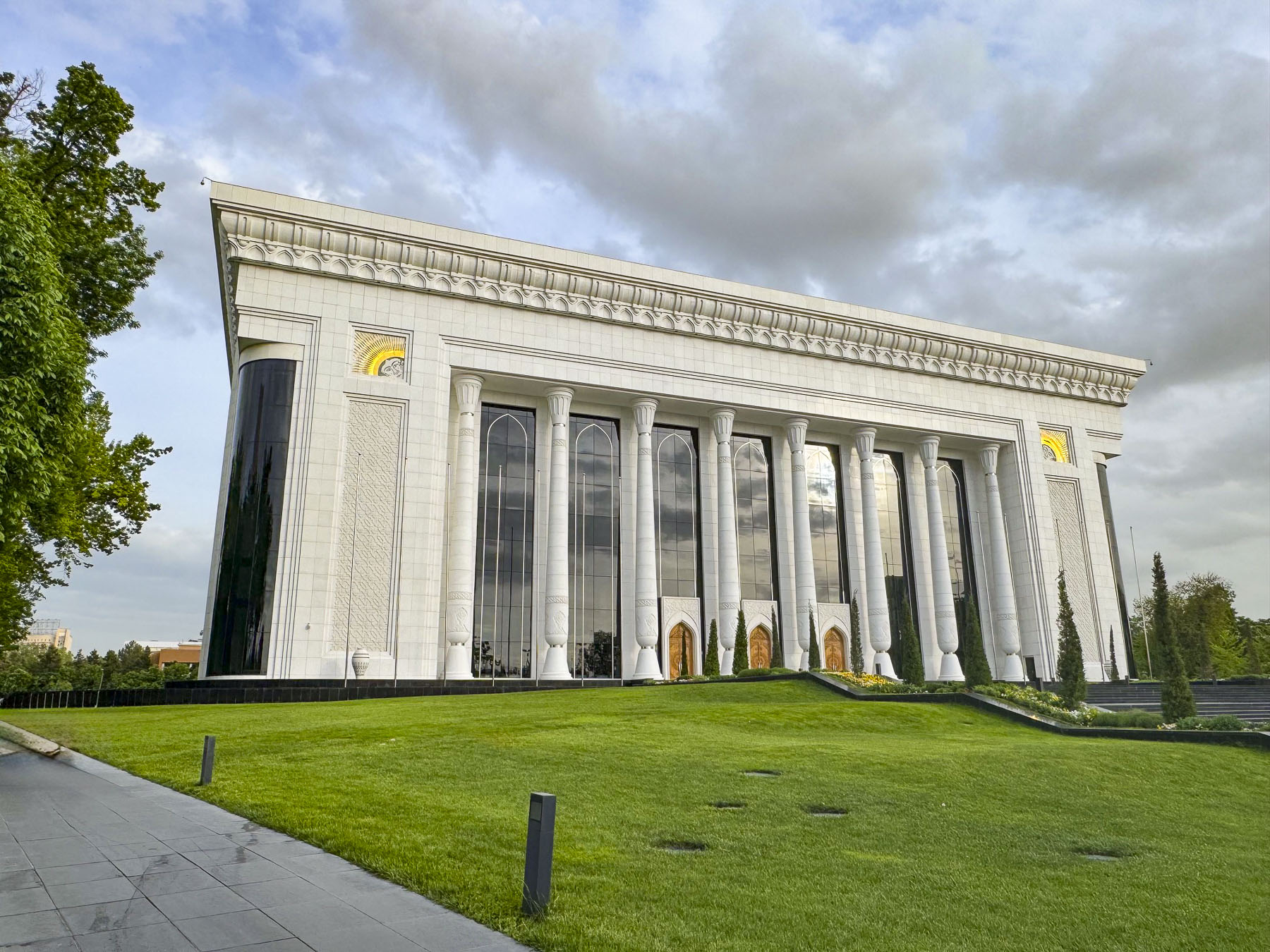
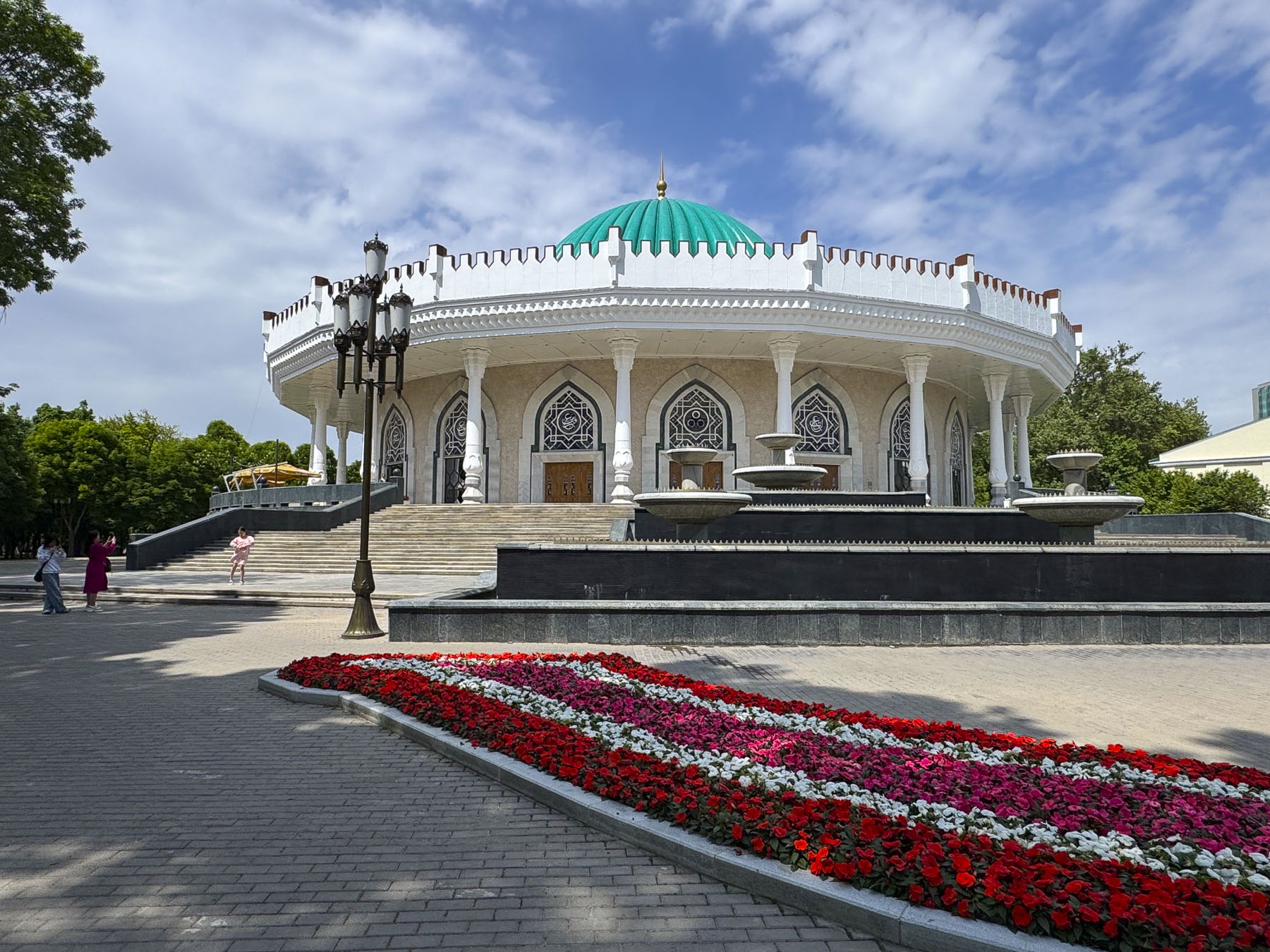
The next day we set out to see the landmarks next to our hotel before exploring farther afield – the Palace of International Forums Uzbekistan, is a modern conference hall opened in 2009, marking the 2,200th anniversary of Tashkent, and the 18th anniversary of the country’s independence; the circular shaped State Museum of the Temurids, which houses a collection of artifacts relating to the 14th century ruler Tamerlane; the Yuridik Instituti (the Tashkent State University of Law) housed in a late 19thcentury building. It is one of the few examples in Tashkent of Tzarist Russia Emperial architecture to survive the 1966 earthquake.

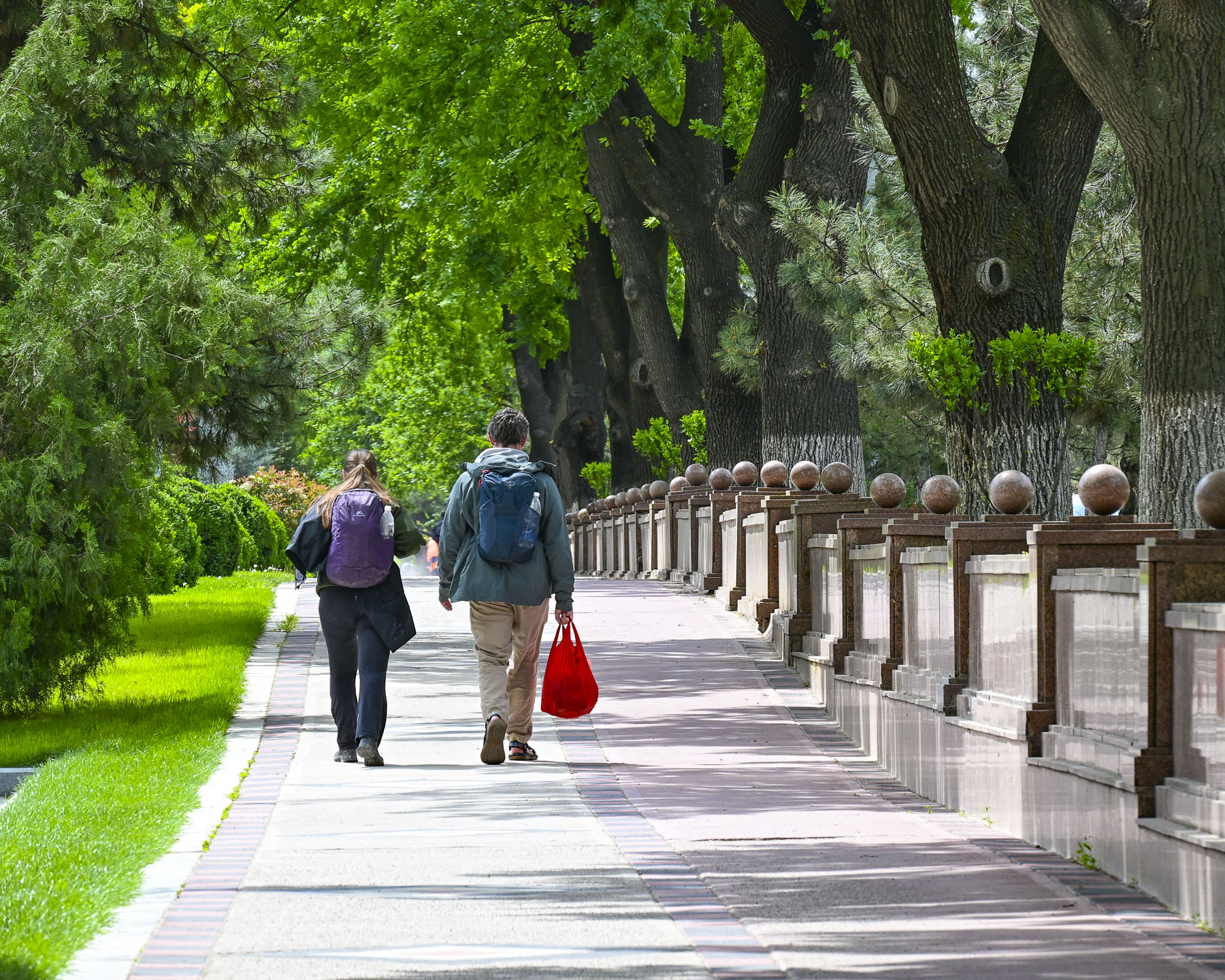
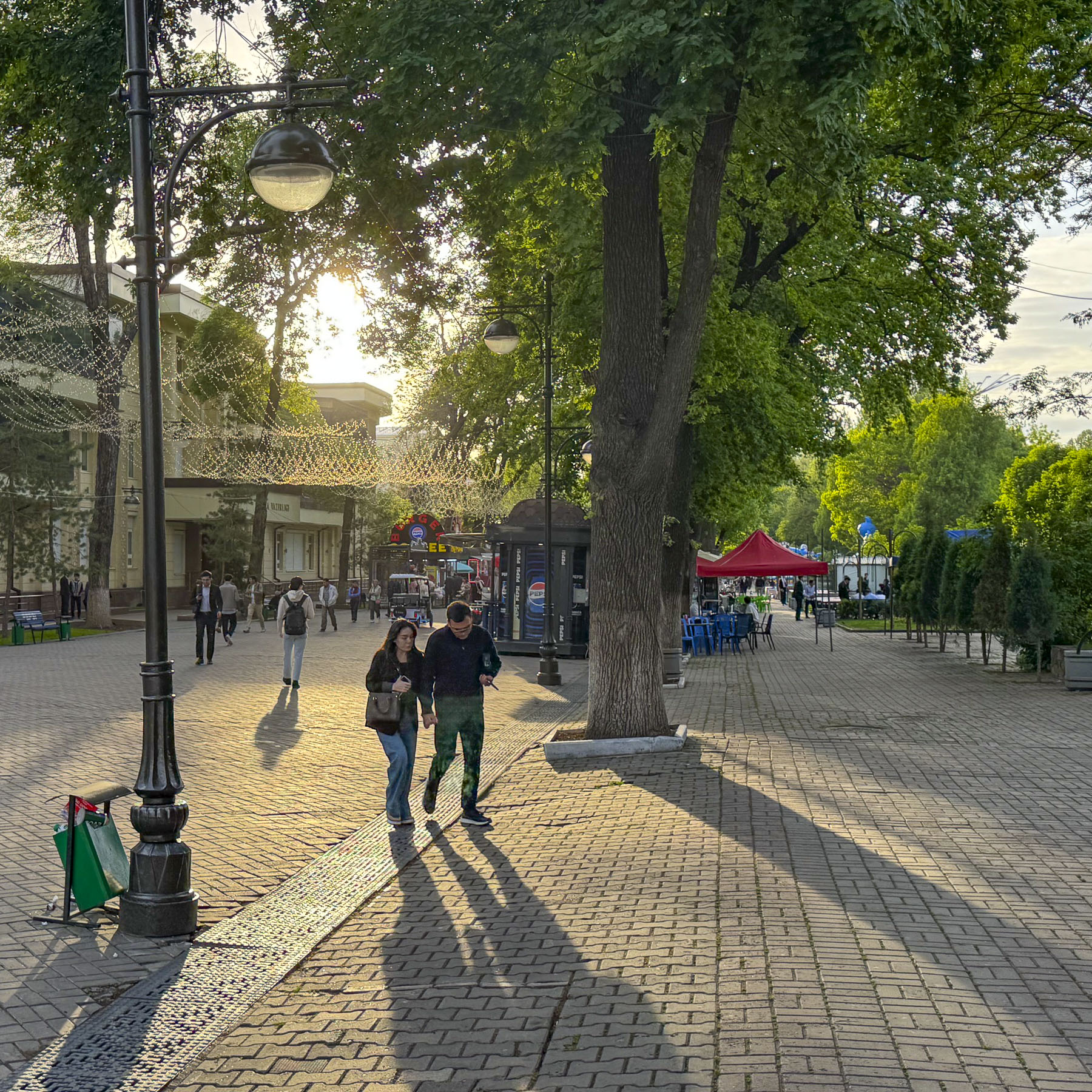
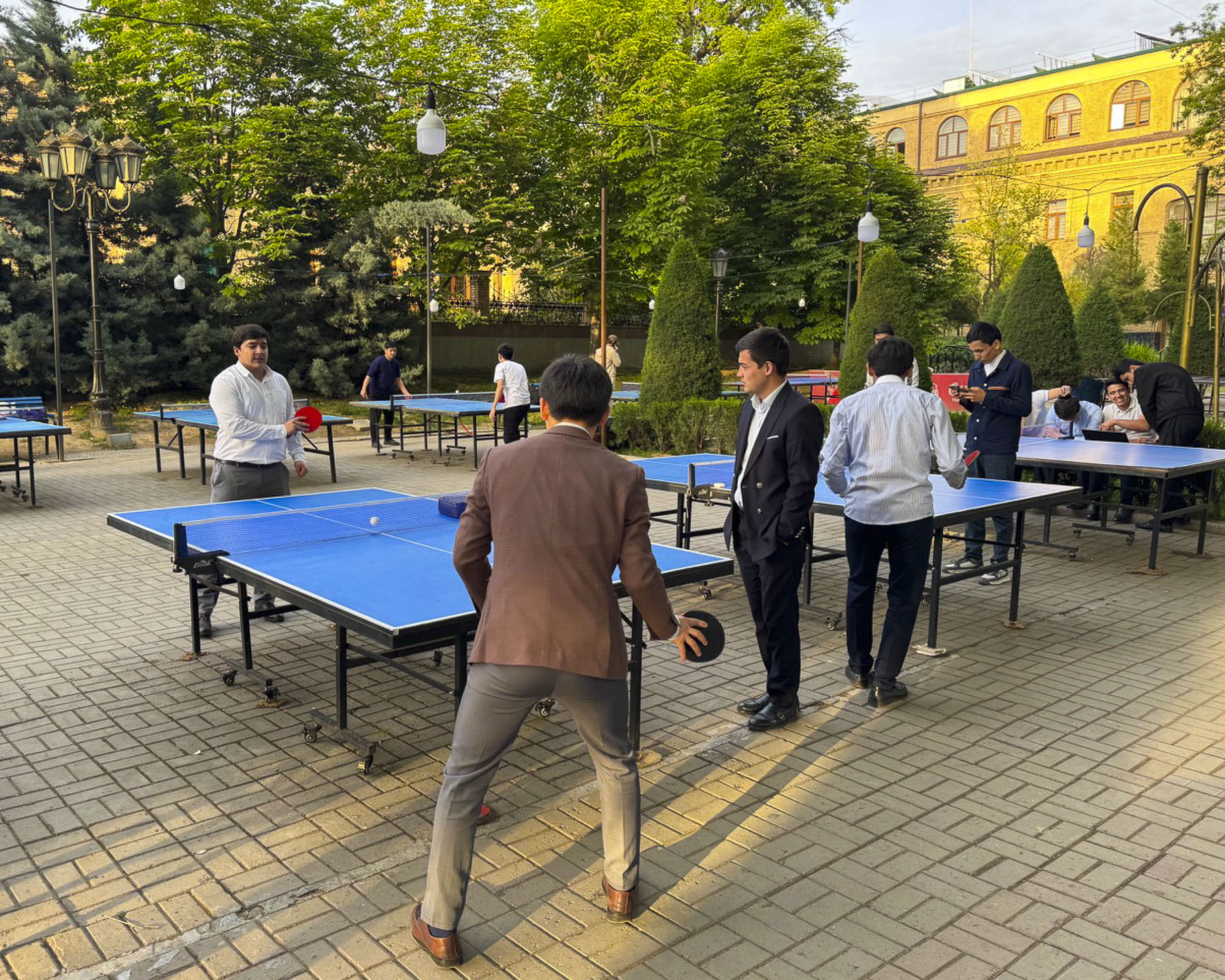
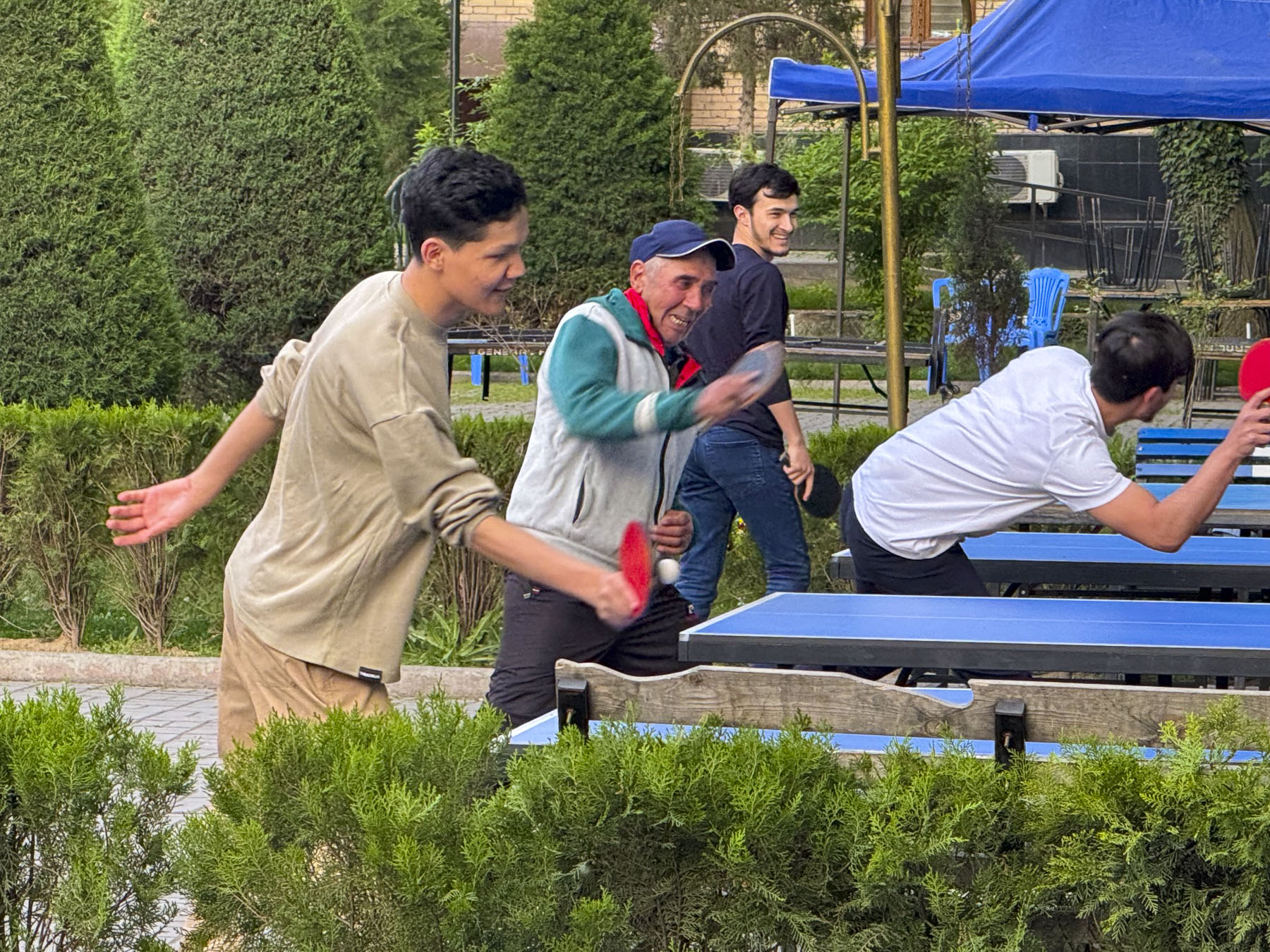
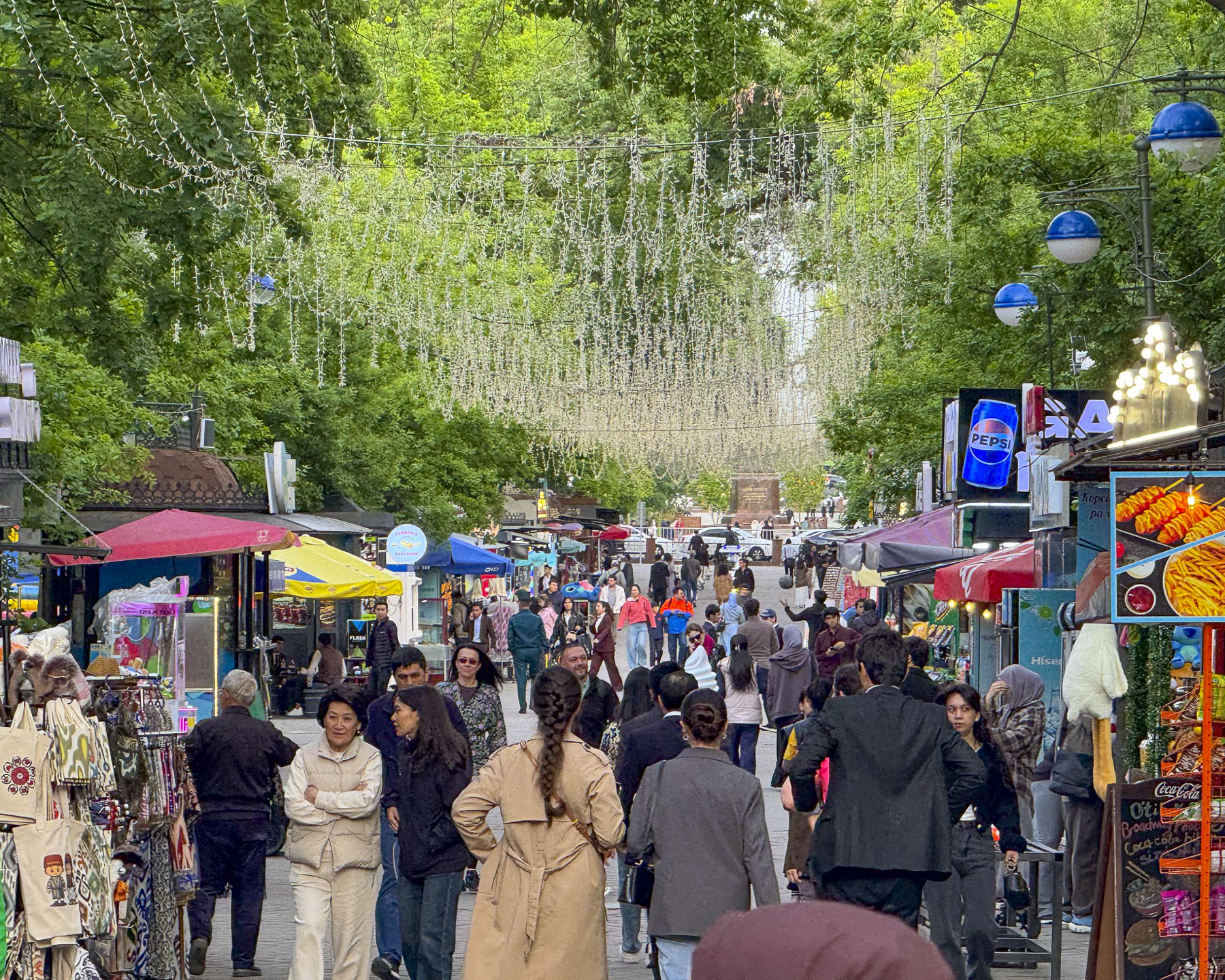
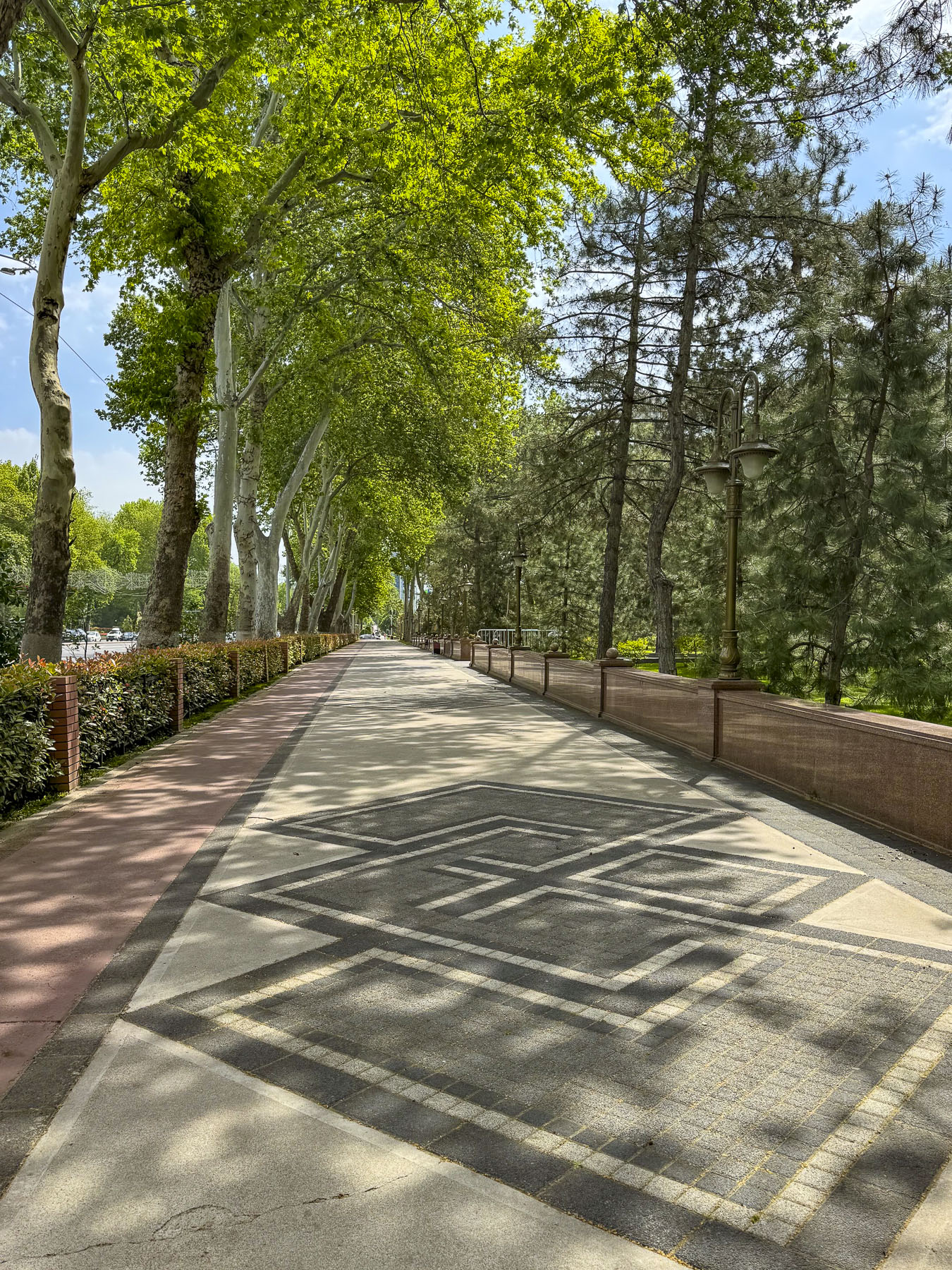
Turning the corner past the school we entered Sailgokh Street, a wide, treelined 1km (6/10mi) long, pedestrian-only boulevard that links Amir Timur and Independence Squares, that’s locally known as Broadway. Sunlight reflected through party lights strung across the street that was lined with food stalls and outdoor seating. Behind them students from the university were challenging their professors to games of ping-pong at numerous tables along the sidewalk. Caricature artists whiled away the time waiting for customers to sit in front of their easels as parents watched their young children scoot about in electric toy cars. It’s a popular destination to grab an inexpensive meal or dine at one of the fancier restaurants along the walkway.

Surprisingly on this street in 1928 Tashkent was on the cutting edge of technology, when a crowd had gathered to watch the first-ever telecast showing a moving tram, made with a device called a Telephot, created and patented by Boris Grabovsky, a student at Tashkent University, and the son of the famous Ukrainian poet, Viktor Popov. Unfortunately, by 1930 he was forced by Soviet officials to stop working on television technology.

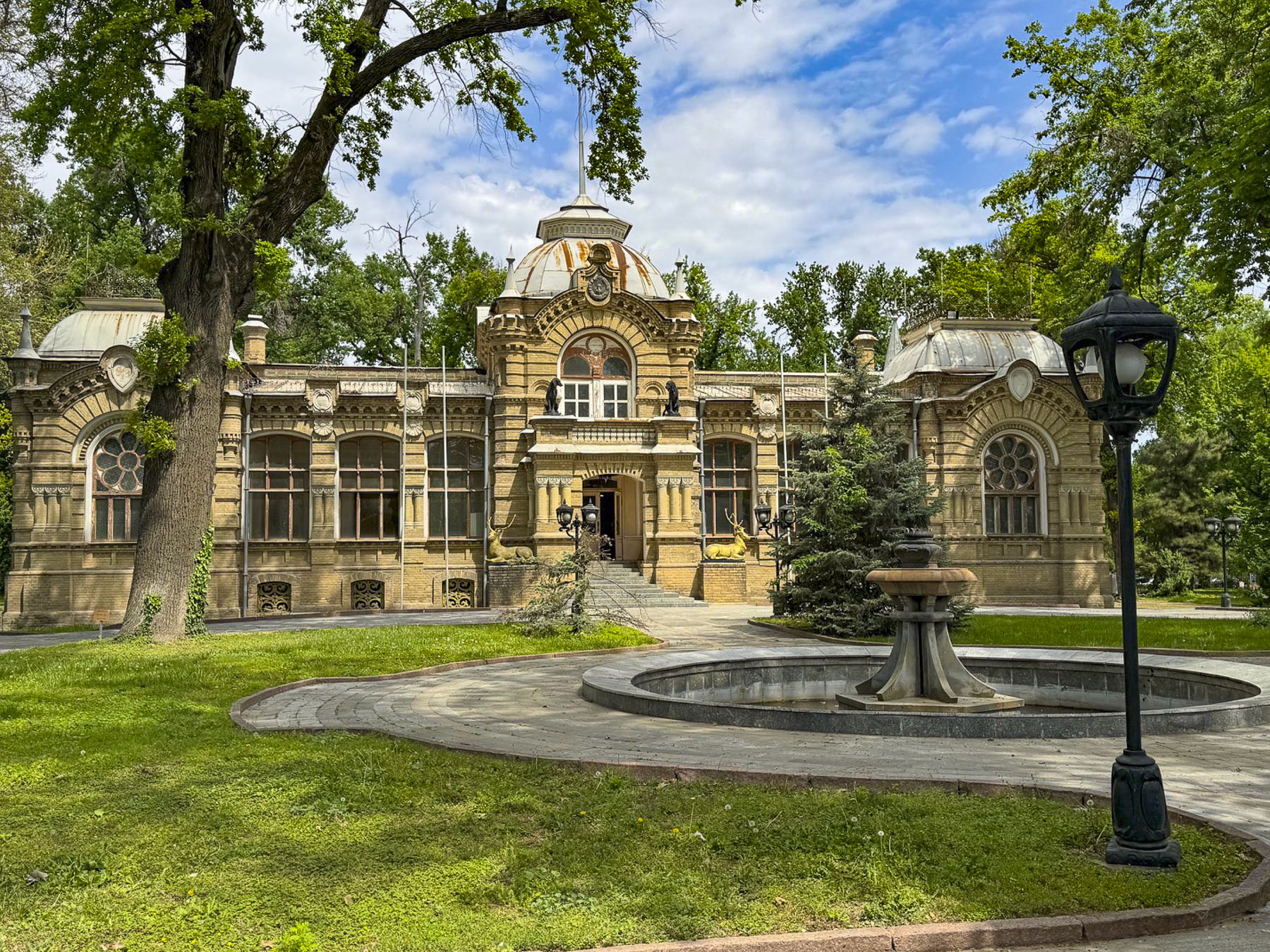
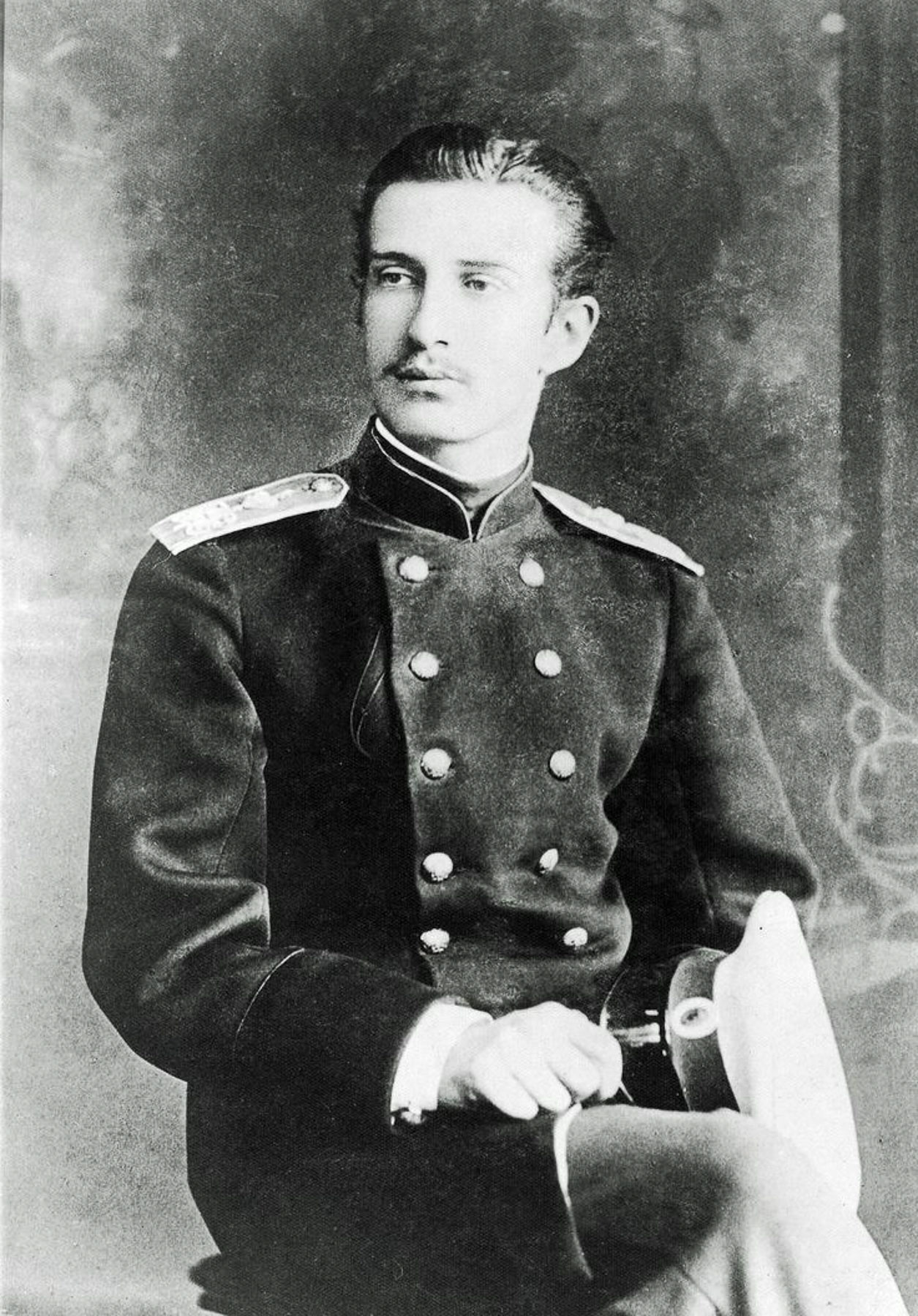
Farther along was a very attractive small royal palace built in the late-19th century and early Art Nouveau style in 1891.  It was the home of Grand Duke Nicholas Constantinovich who was permanently exiled to Tashkent by the Russian royal family for stealing valuable diamonds from an icon belonging to his mother, so he could lavish extravagant gifts upon his American mistress! Let’s talk about the punishment fitting the crime here. The entrances are flanked by bronze sculptures of deer and hunting dogs, a reflection of the Grand Duke’s passion for hunting. He was by no means a pauper during his punishment, and received a gracious royal stipend which he invested in cotton mills, a soap factory, and the city’s first cinema. To furnish his prison palace he was allowed to bring his collection of Russian and European artworks from St. Petersburg with him into exile. Using profits from his local business ventures he continued to acquire new pieces of European art, rare books, and priceless artifacts. Before his death in 1918, he graciously bequeathed his art collection and palace to the city of Tashkent, to become the foundation for the State Museum of Arts of Uzbekistan collection. During the early Soviet era the palace was used as a museum to display his collection but later was transitioned into an after-school activity center for young Soviet Pioneers. Sadly, the palace was closed for renovation when we visited.

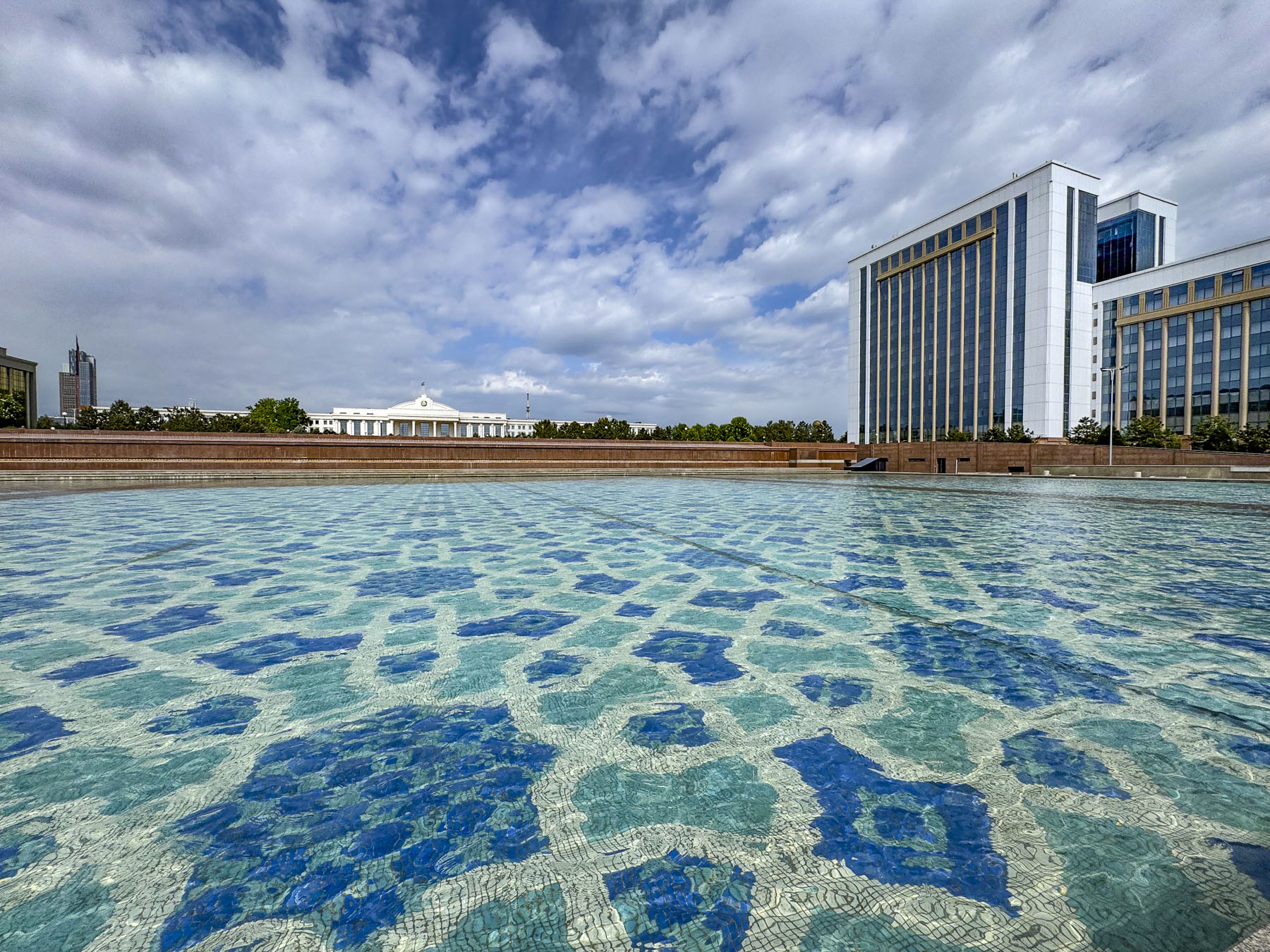
Crossing under Sharaf Rashidov Avenue we reached the large reflecting pool of the Mustakillik Fountain in front of the building housing the offices of the President of the Republic of Uzbekistan. Unfortunately, all the fountains we passed in Tashkent in mid-April were off. We can only speculate how stunning they must be when they are shooting water skyward.

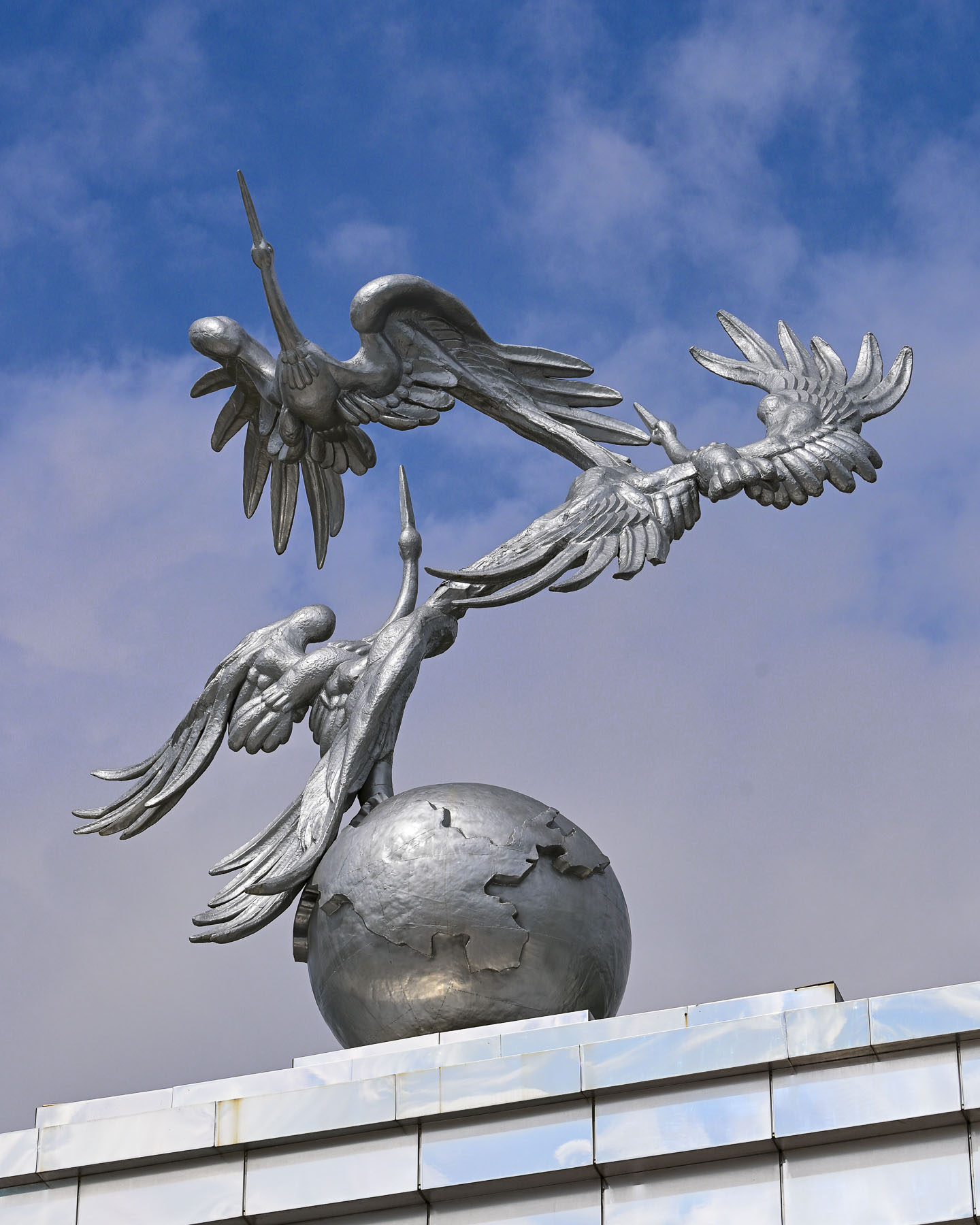
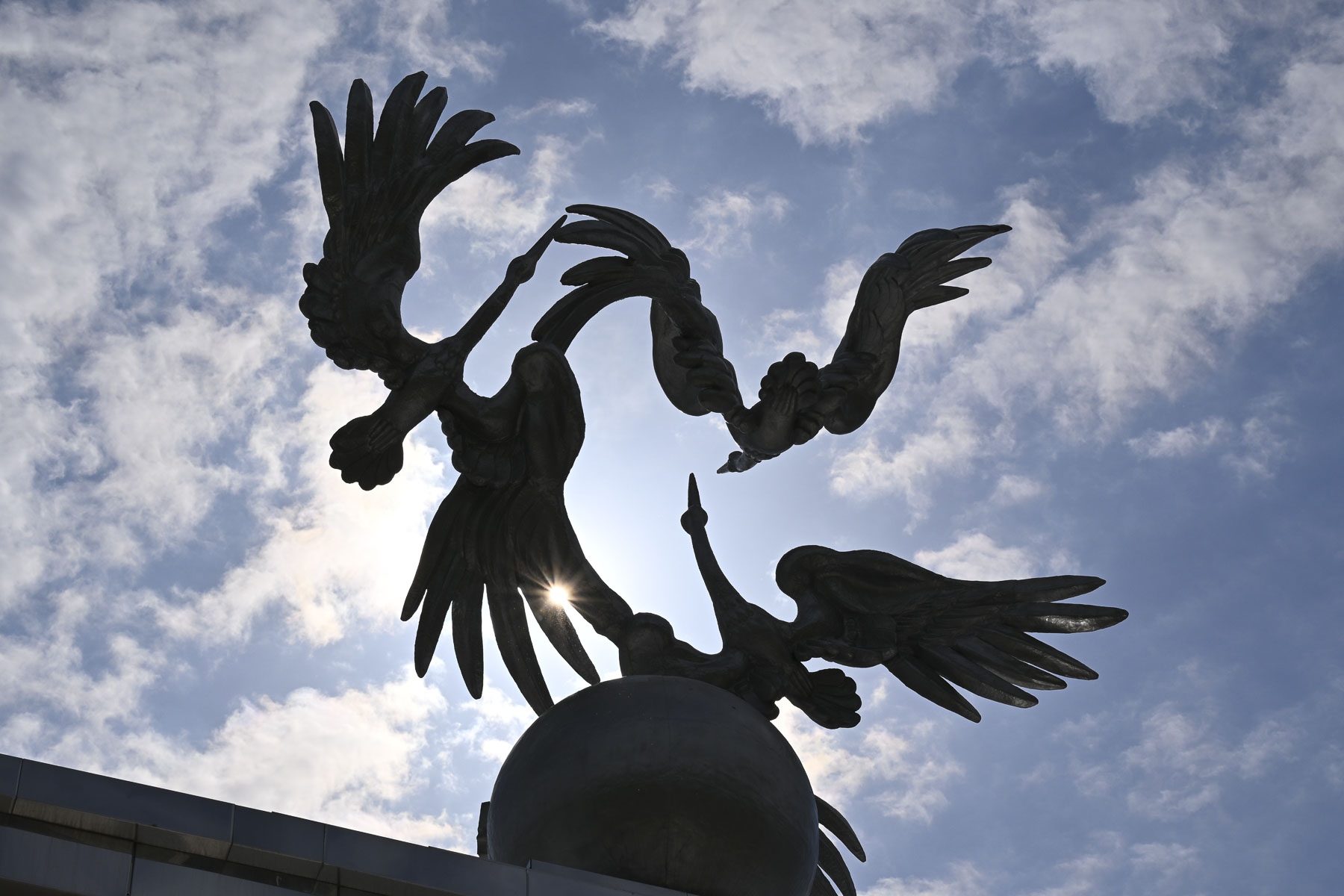
A short walk away was Independence Square where more dry waterworks paralleled the Arch of Ezgulik, a 150m (492ft) long archway held aloft by 16 white marble columns and crowned with a beautiful sculpture of three giant storks circling a globe as they soar skyward. Storks are a prominent theme on the top of many important buildings in Uzbekistan, and in Uzbek folklore they symbolize humanism, peace and prosperity.

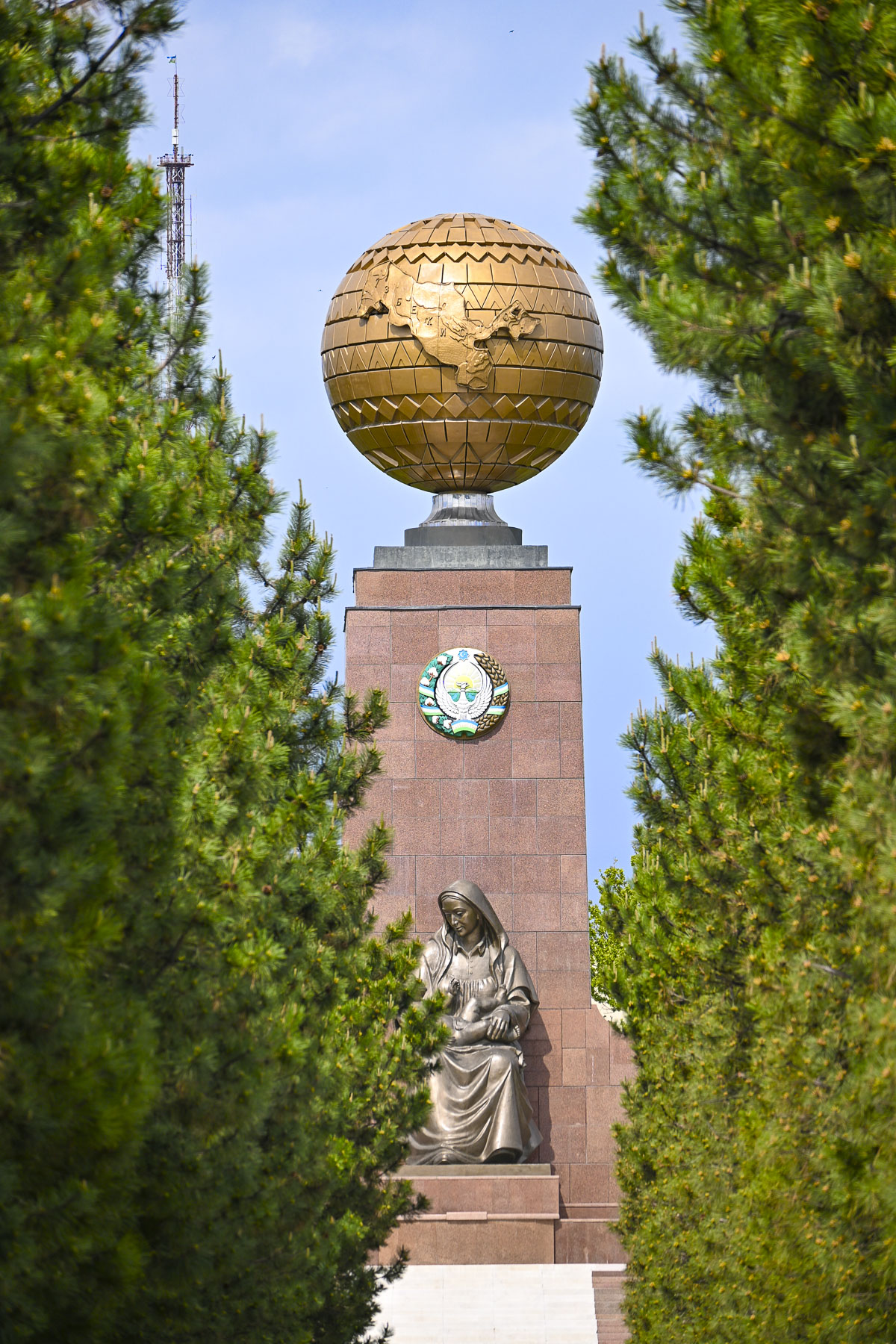
Beyond the arch, down a narrow evergreen-lined walkway, was the Monument of Independence, a tall obelisk with a globe atop it, the map of Uzbekistan chiseled into its center. At the base of the monument is a statue of an Uzbek woman cradling a baby, called the Happy Mother that “symbolizes the Motherland, national rebirth, and hope for a prosperous future for the next generation.”

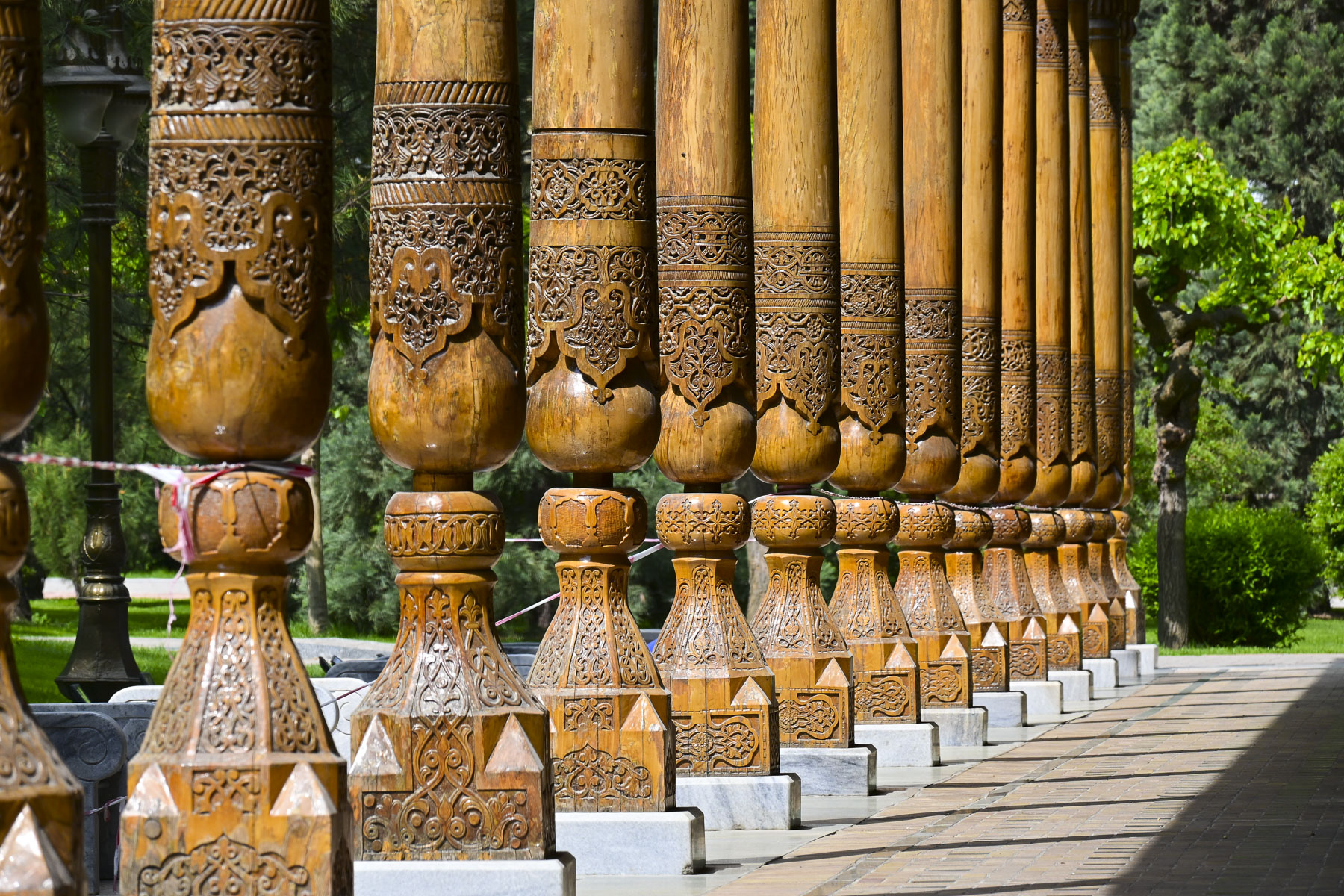
Continuing on we entered Memorial Square where an elegant, long, open-sided wooden building stood, surrounded by traditional Navoi-style carved wooden pillars, called the Memory Corridor. It holds Memory Books which contain the names, inscribed in gold lettering, of over 400,000 Uzbek soldiers who died during World War II.

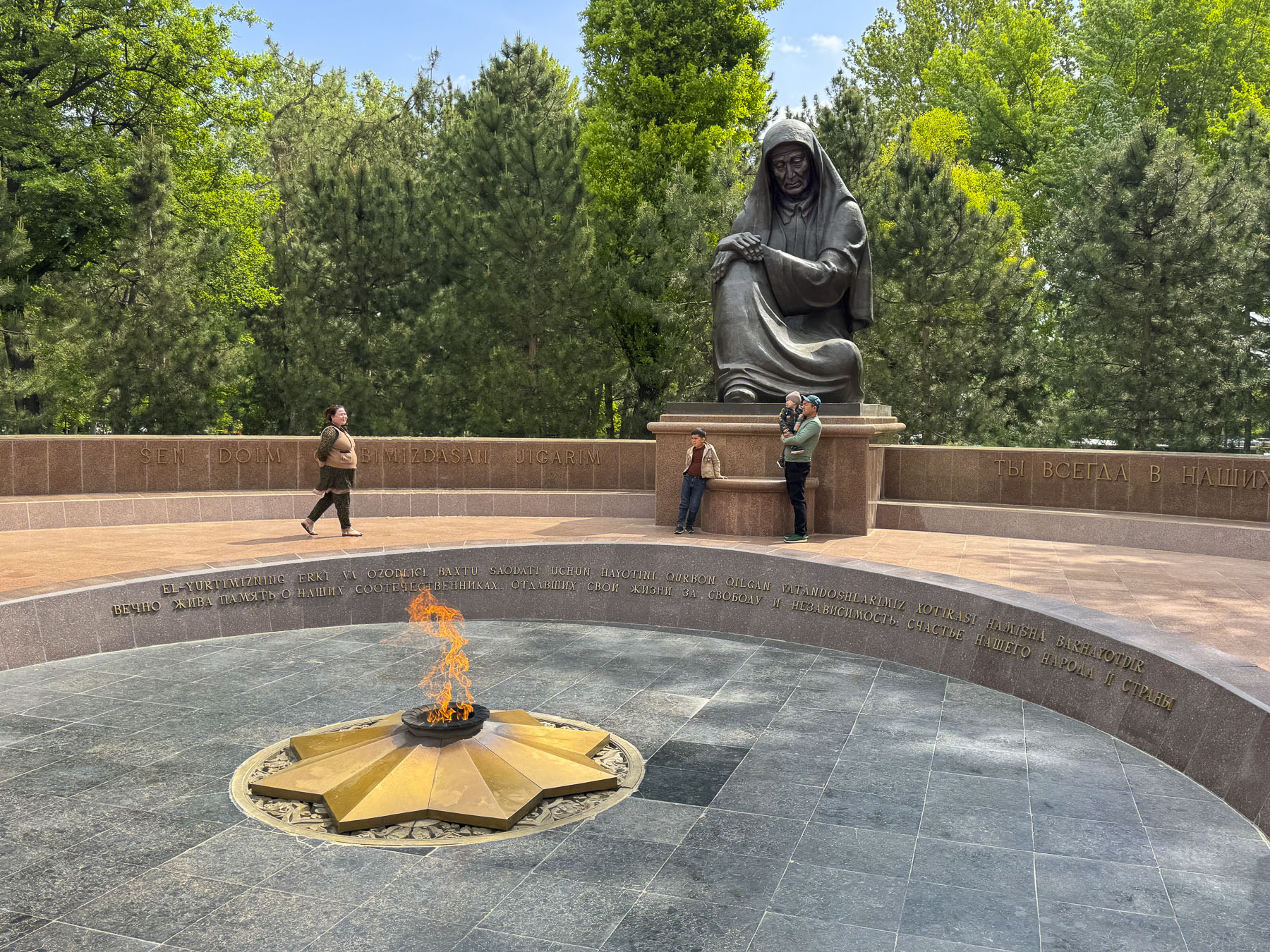
Across from it was a large statue called the Grieving Mother that overlooked an eternal flame. It was a very somber memorial and hardly a whisper could be heard from the observers.

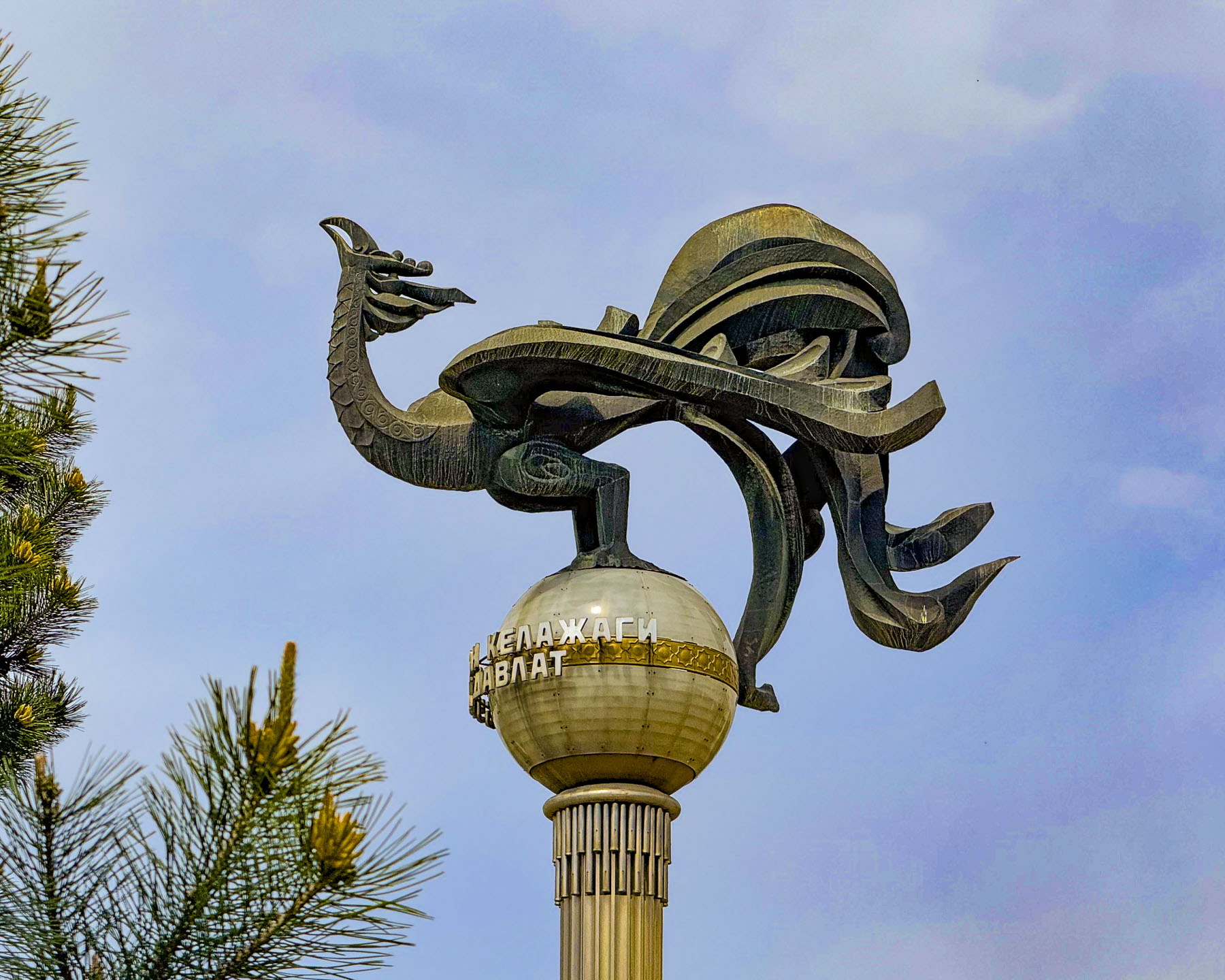
Progressing along Sharaf Rashidov Avenue toward the Monument to “Courage,” we passed the Turkistan Concert Hall, where a stylized statue of a majestic stork is perched on top of a tall column.

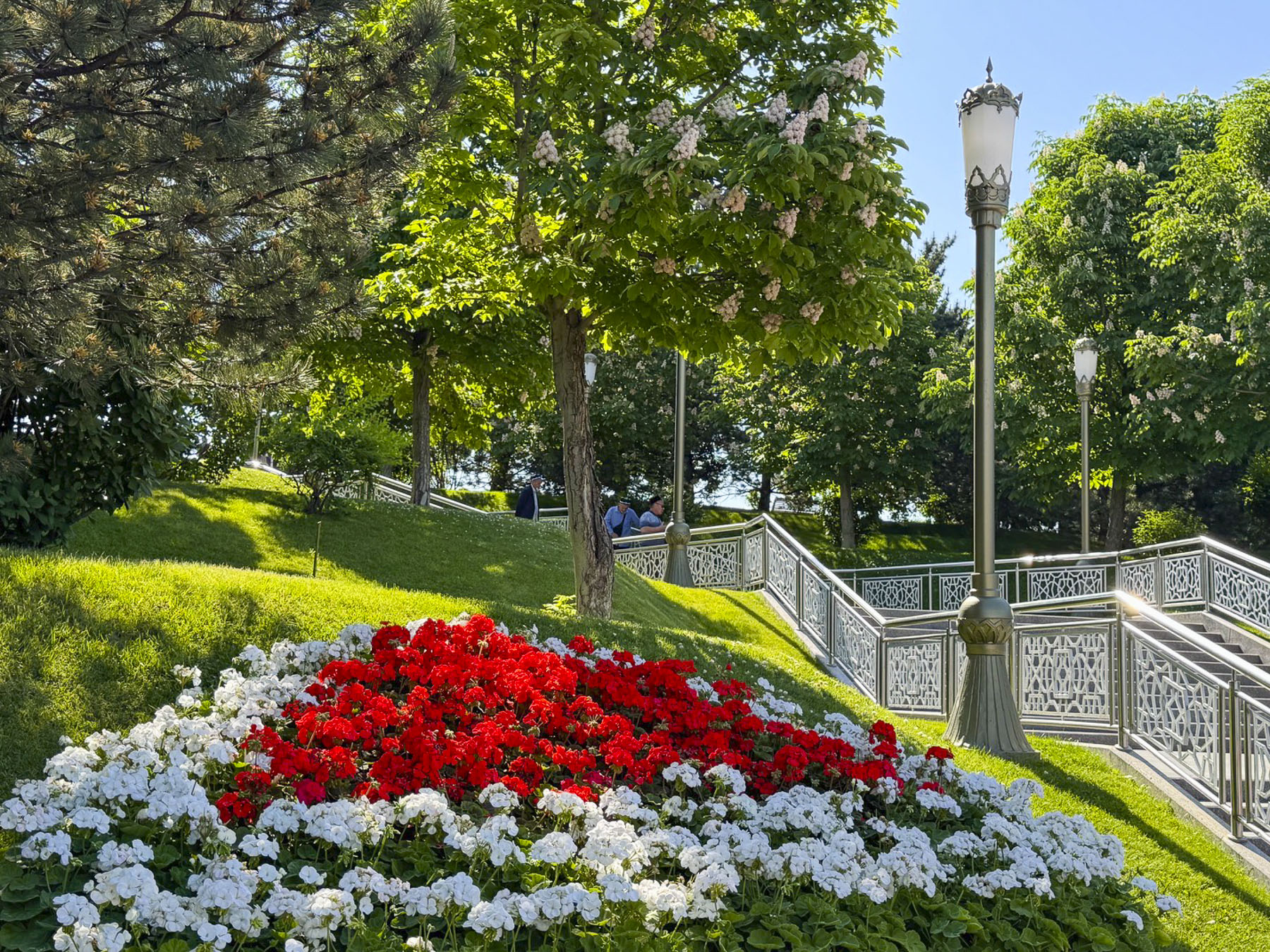
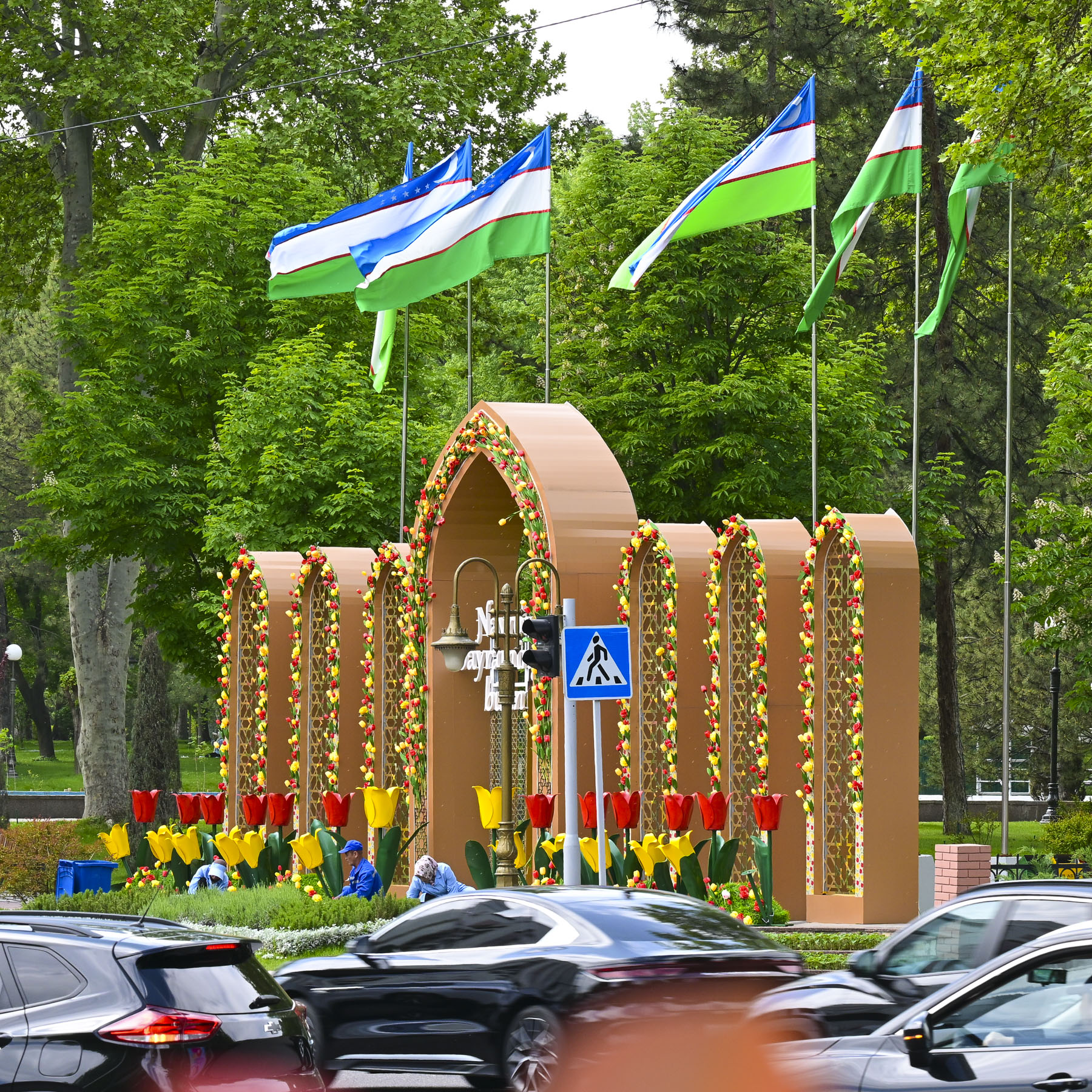
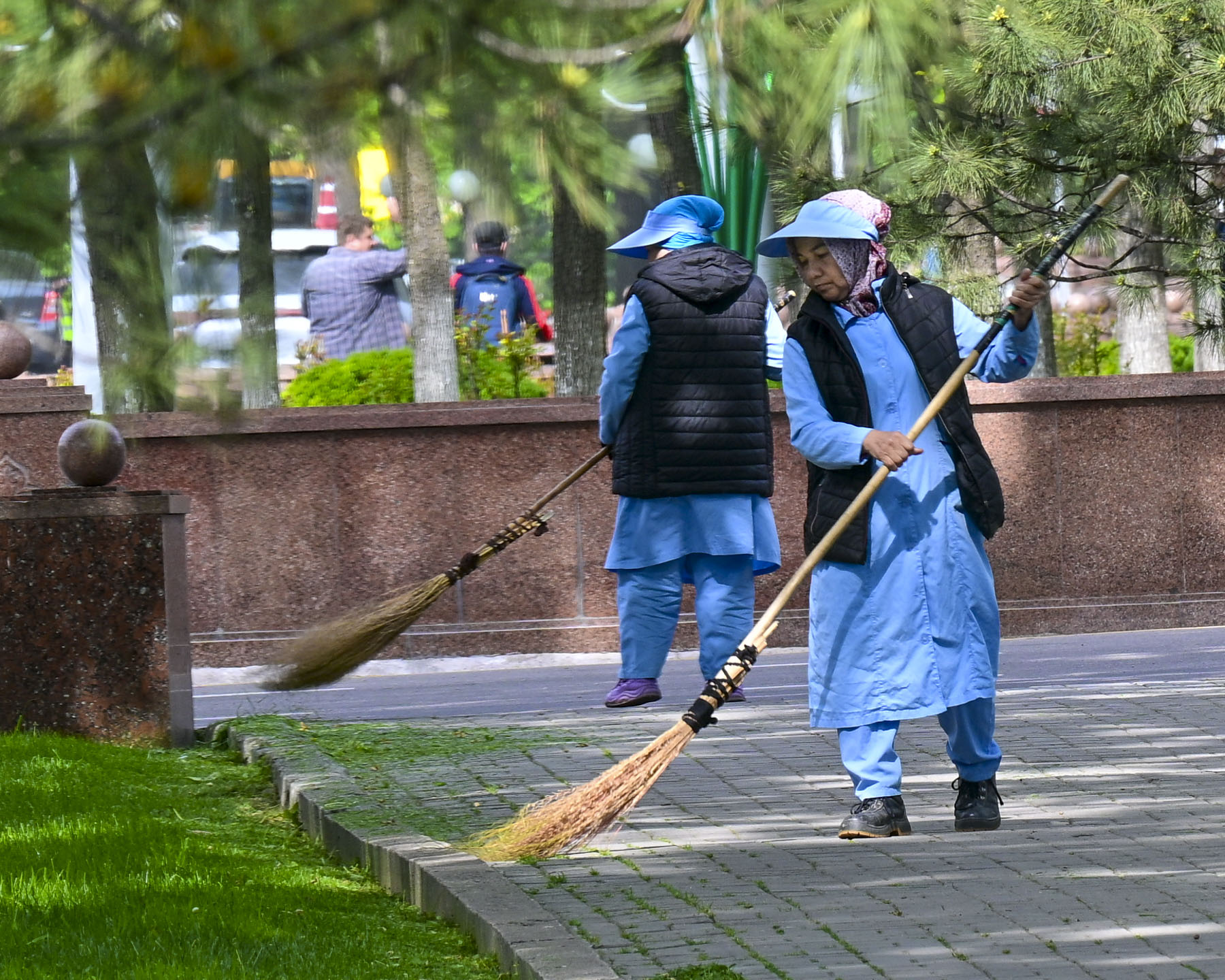
Along the way we noticed that everywhere we walked there was a definite sense of “pride in ownership.” The city was immaculately clean. Street sweepers with traditional brooms called supurgi, made with bundles of twigs tied to a wooden handle, were always out and about, as were the city’s landscapers who seemed to be everywhere planting decorative flower beds and pruning. When they were done in one area, they packed up their tools and brooms and hopped onto a city bus to go to the next location needing tending.

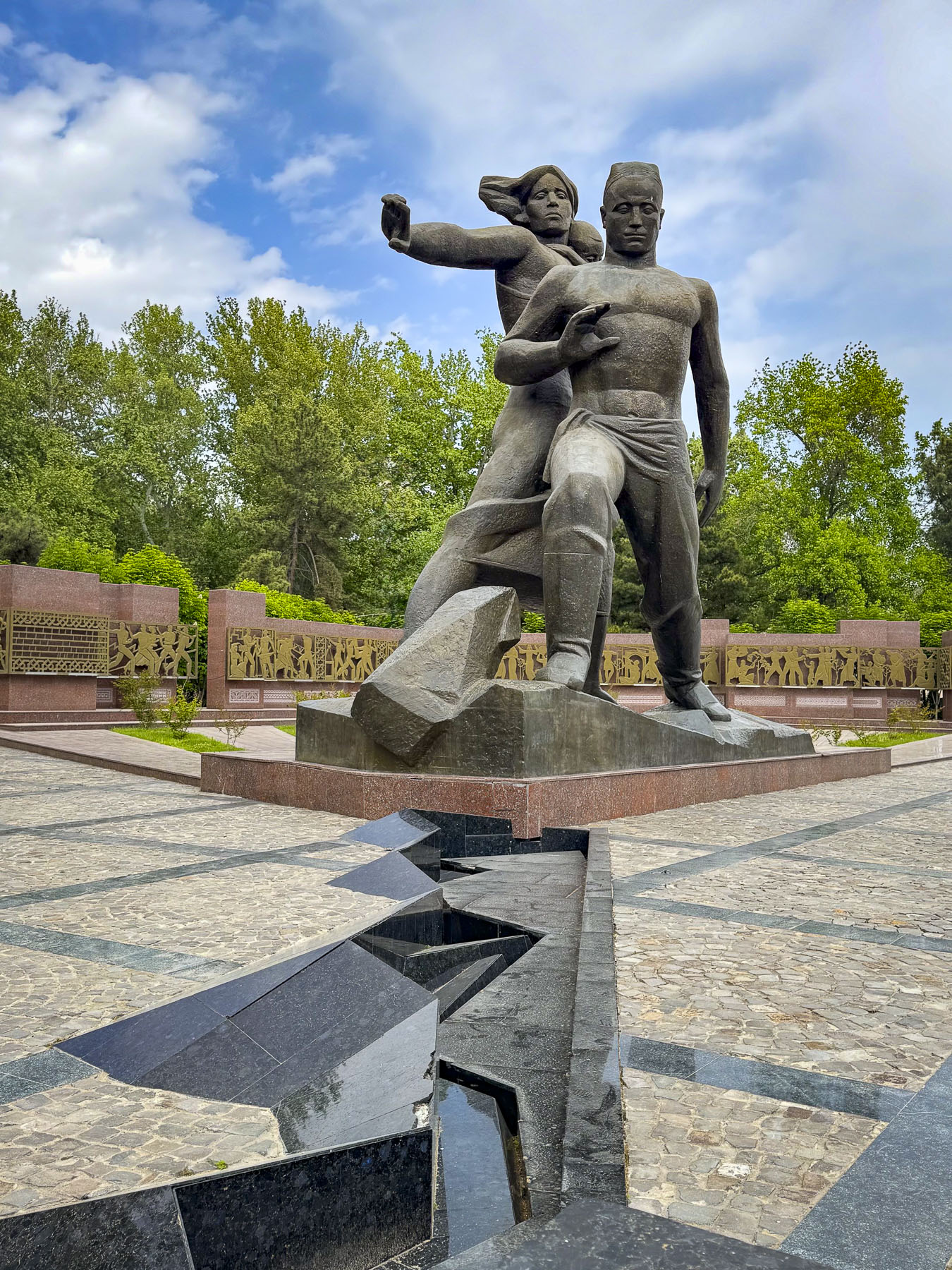
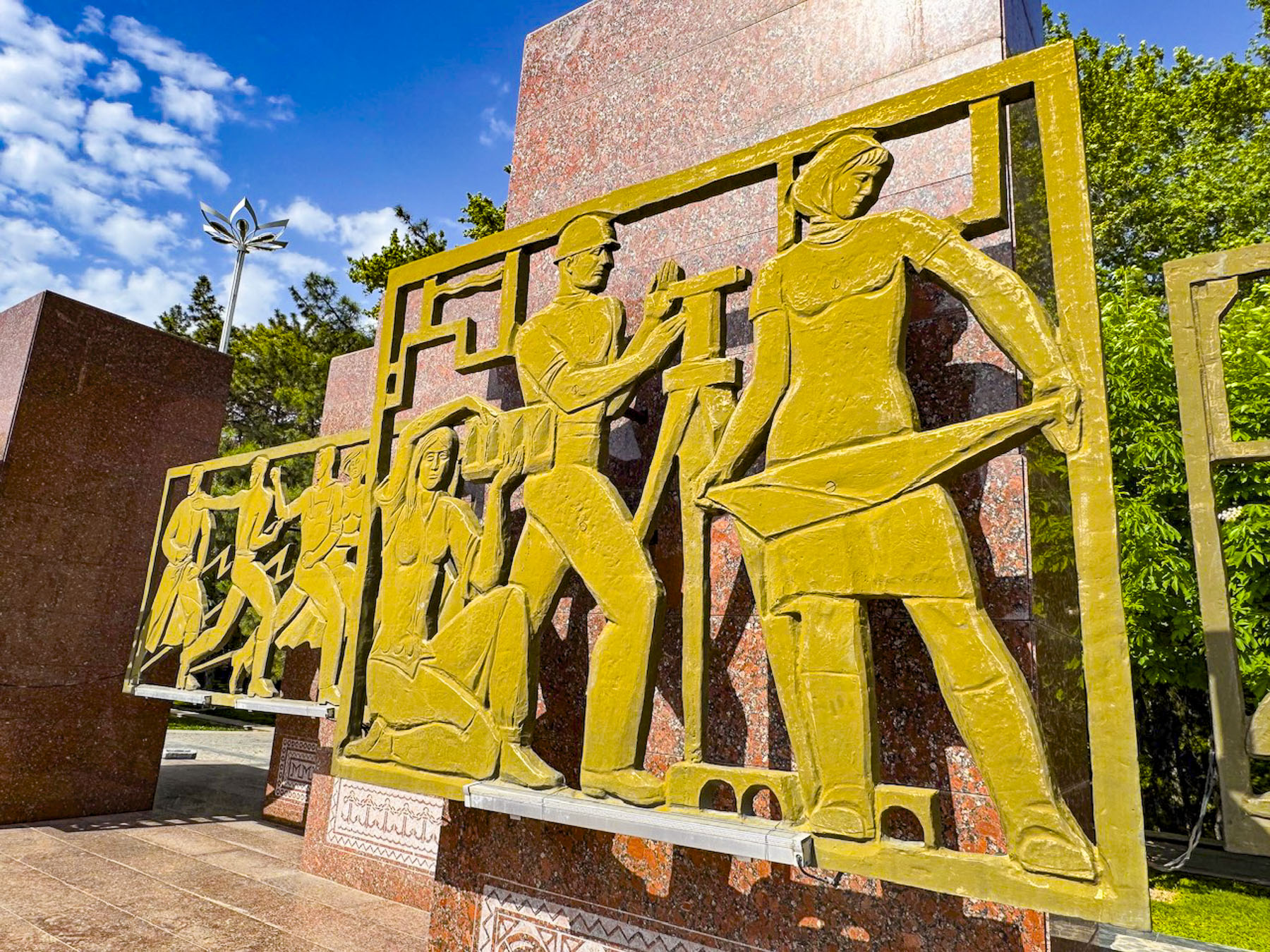
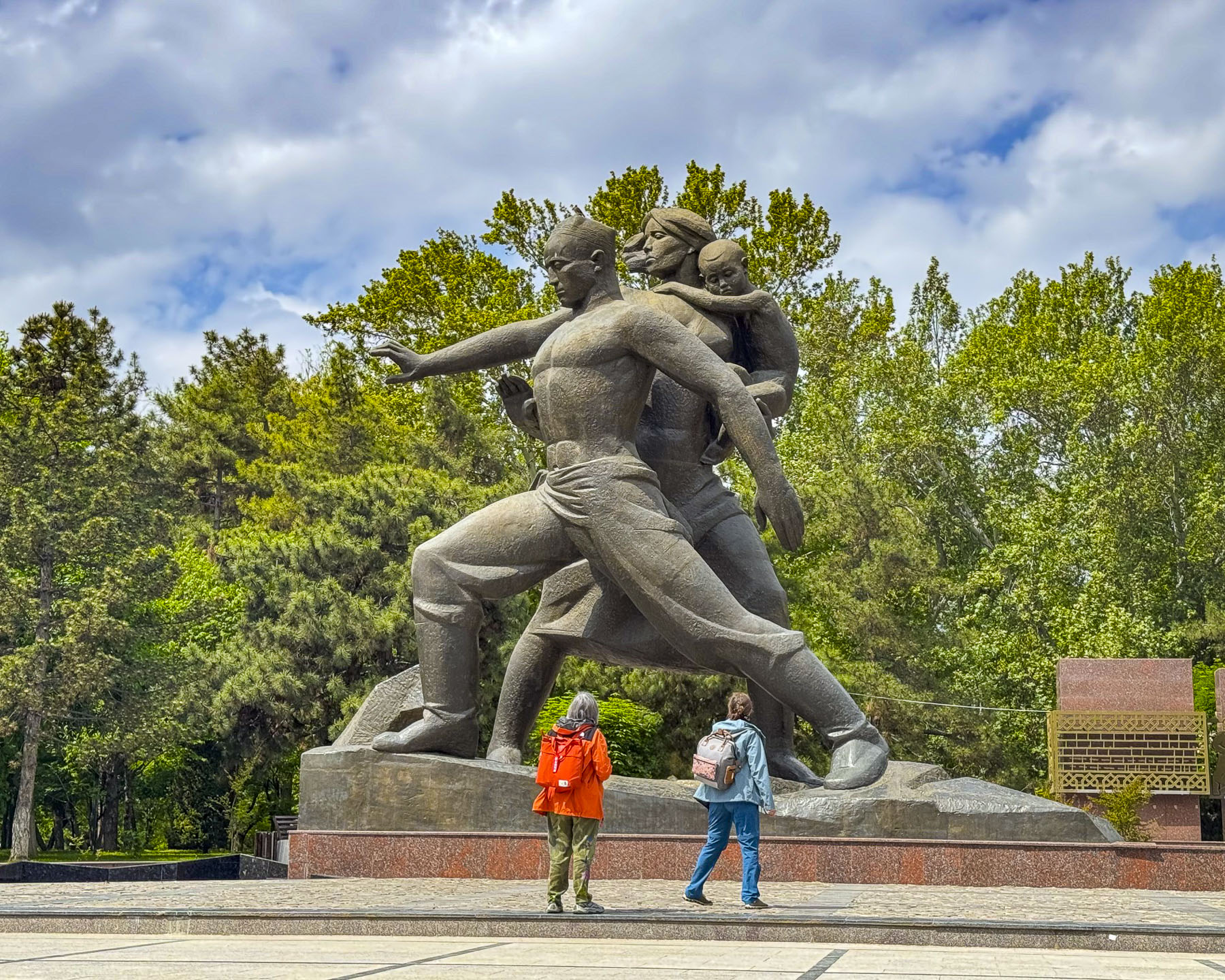
The Monument to “Courage” is a gigantic statue of a family, erected in 1976 on the tenth anniversary of the April 1966 earthquake that commemorates the victims, as well as collective efforts of Tashkent’s survivors and the thousands of workers who arrived from across the Soviet Union to rebuild the city from the rubble. At the foot of the sculpture is a recreated fissure in the earth’s crust that is believed to be directly above the epicenter of the 5.2 magnitude earthquake that rattled the earth for 11 seconds and had nearly 1,000 aftershocks. Behind the statue is a wall of 14 stelae with stylized bronze bas-relief sculptures depicting the reconstruction efforts of the workers and volunteers who rebuilt Tashkent, from literally the ground up. 

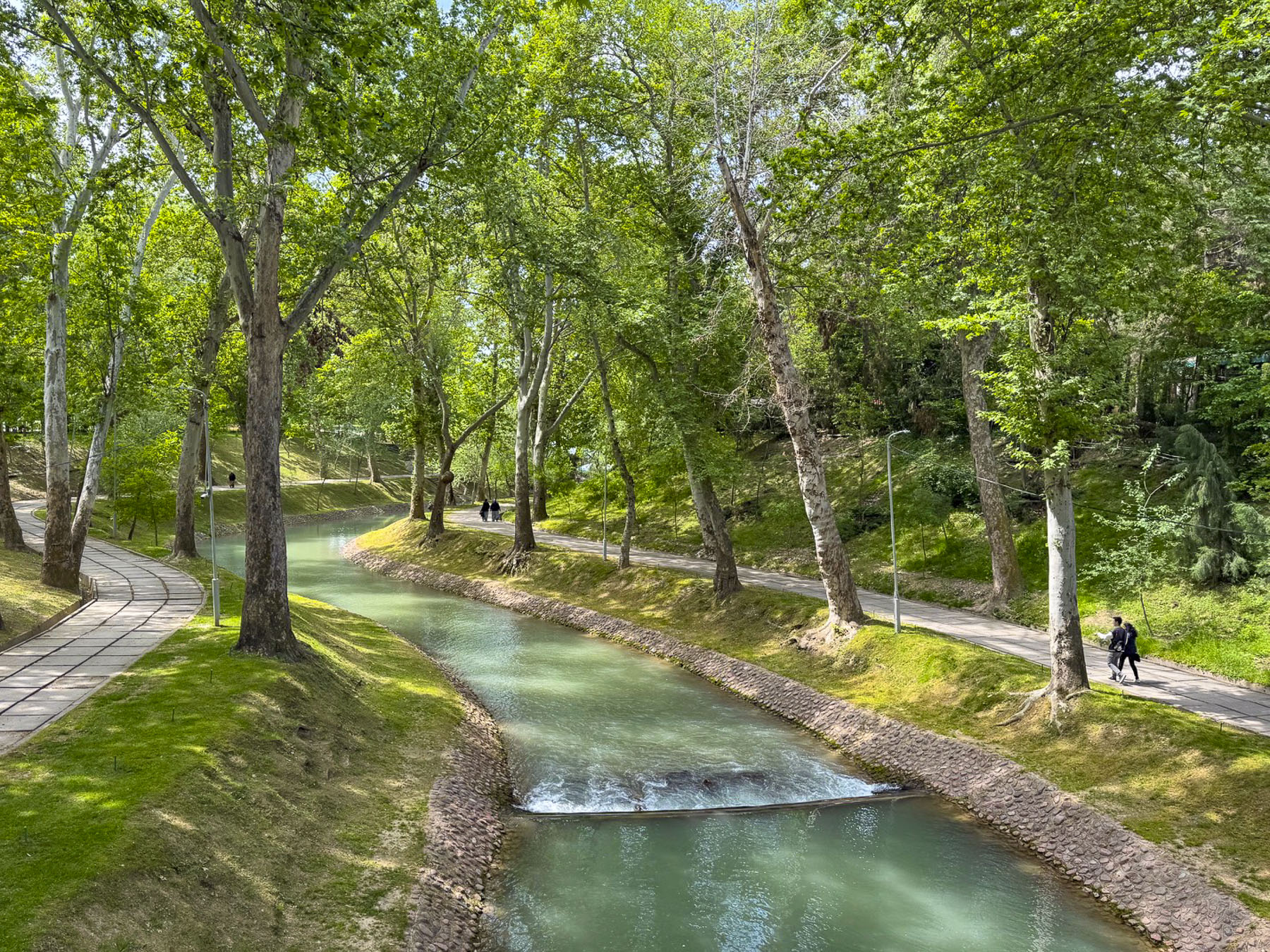
A sidewalk next to the stelae leads to Museum of Olympic Glory and crosses over a bridge above the scenic Anchor Canal as it weaves through a quiet woodland before the museum.

Walking from Independence Square along Sharaf Rashidov Avenue to the Monument of Courage, and then following Navoi Avenue, and Mustaqillik Ave back to our hotel, the new design of this “model Soviet city” was particularly apparent with the wide treelined streets, and tall apartment buildings well-spaced apart.

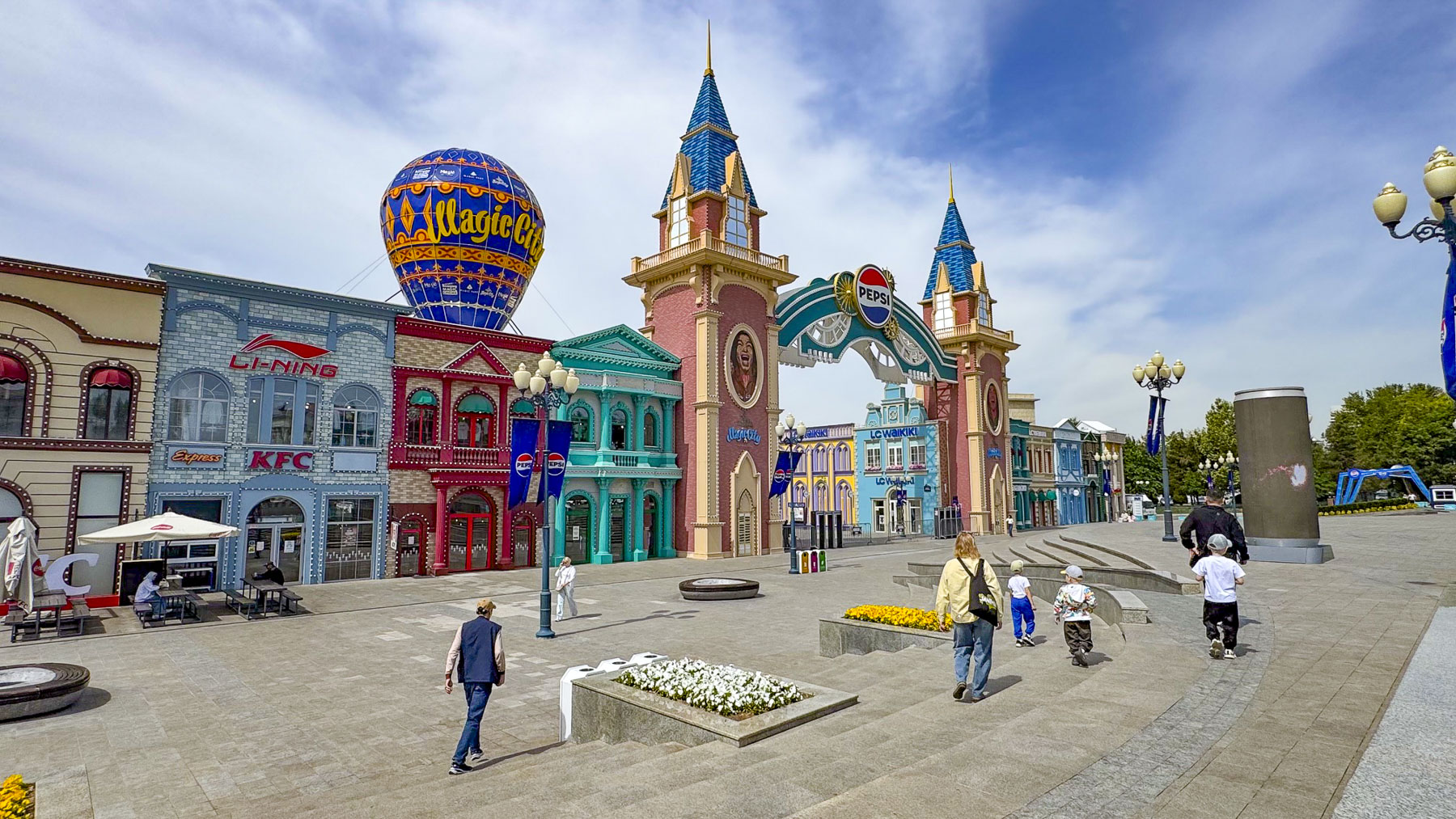
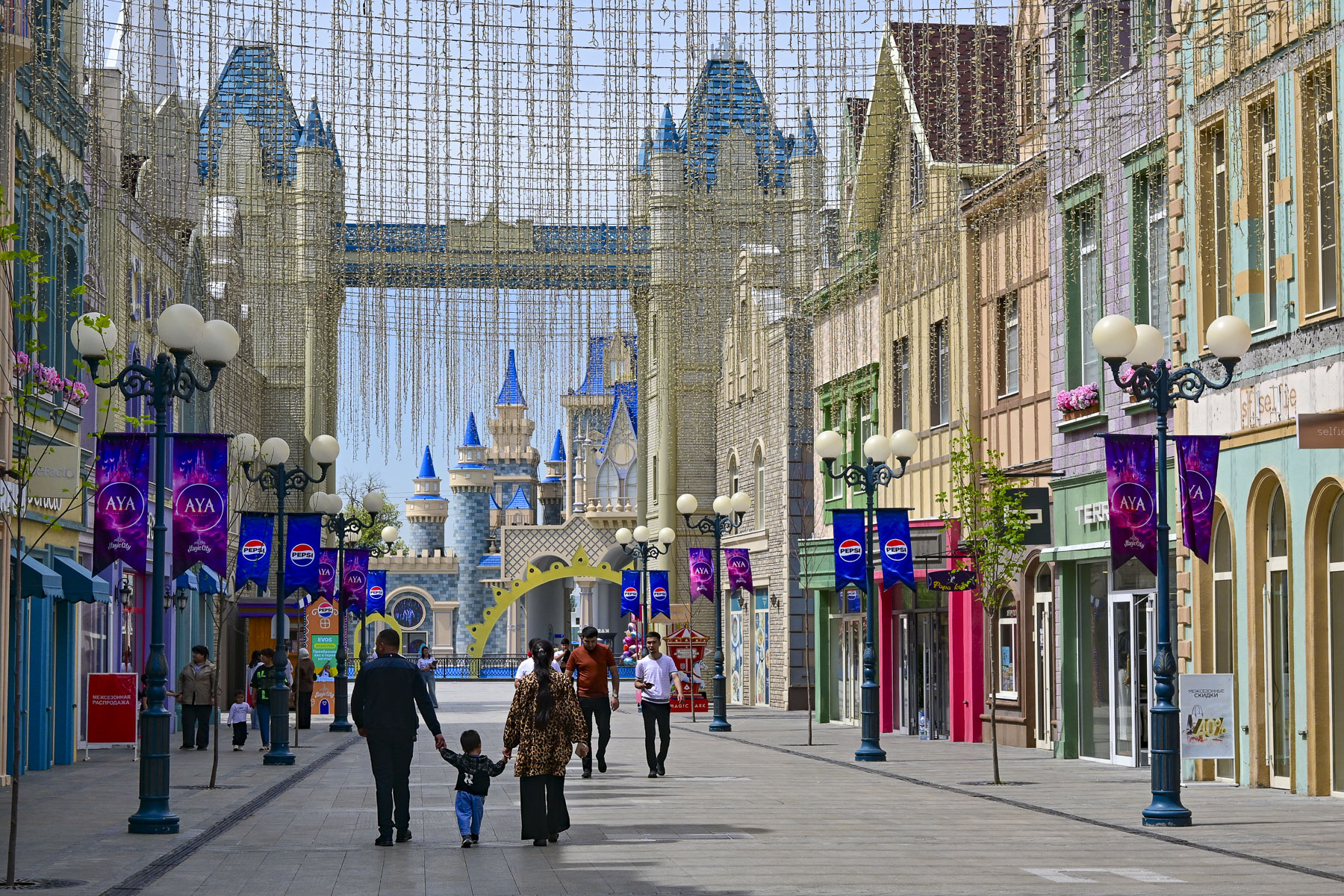
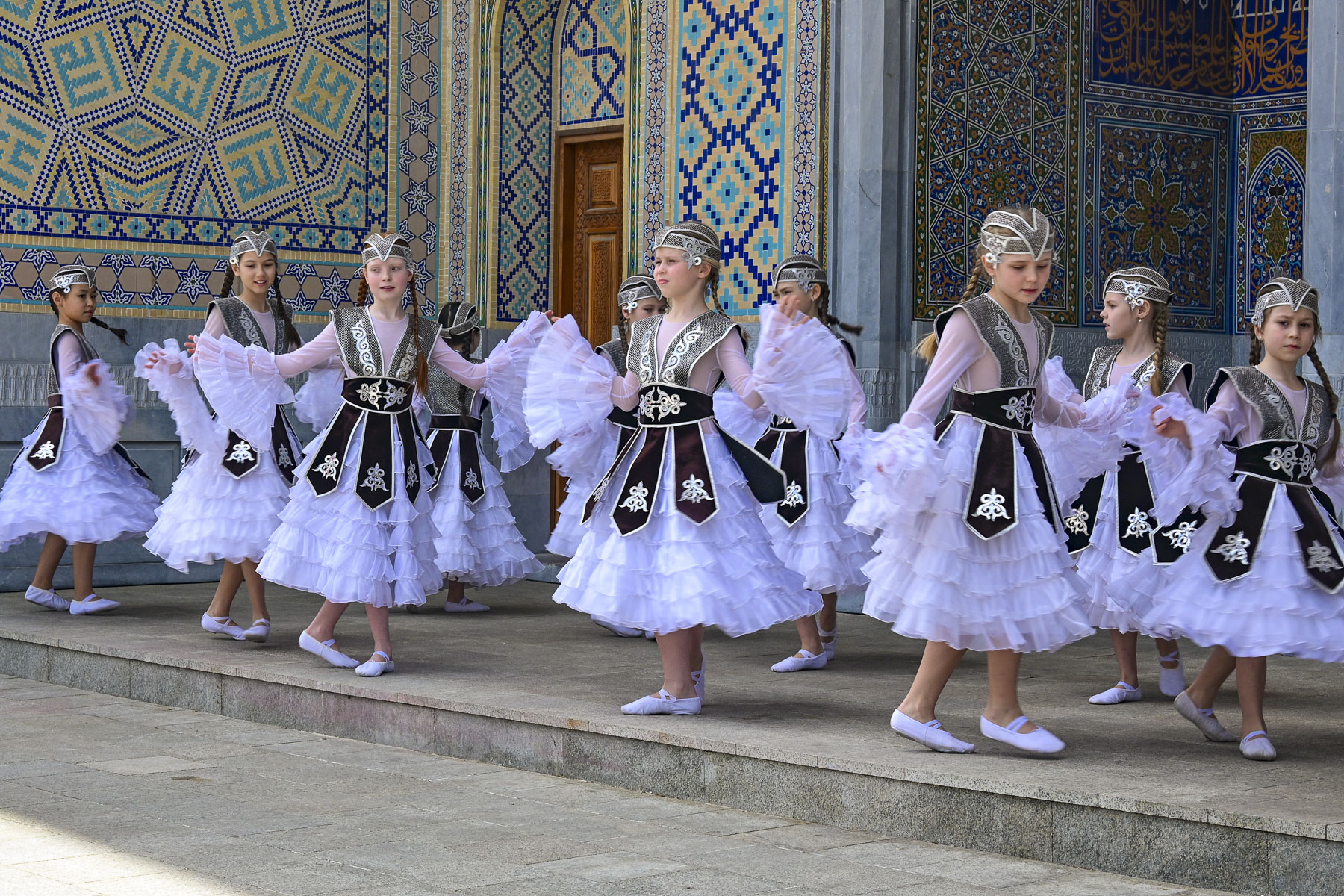
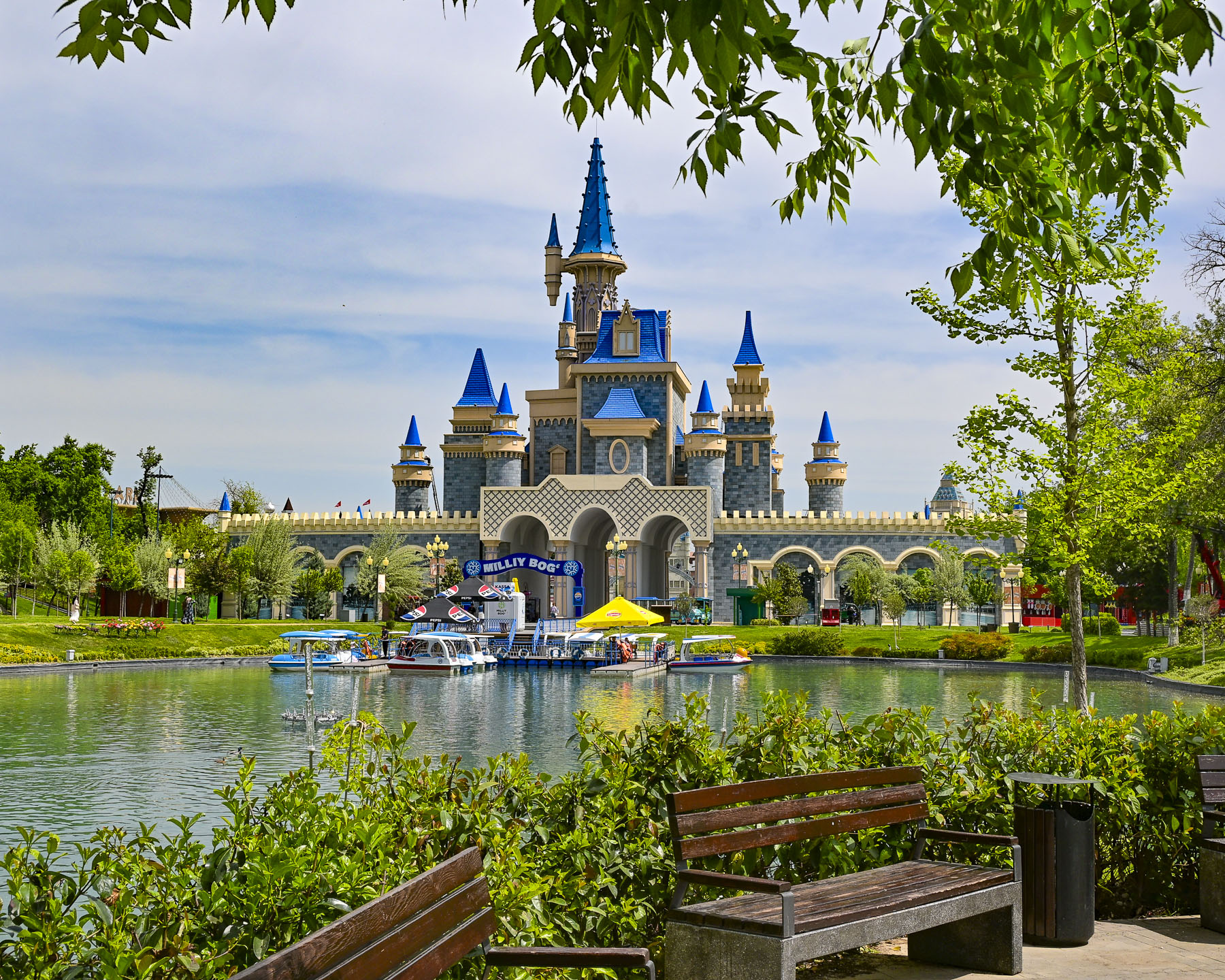
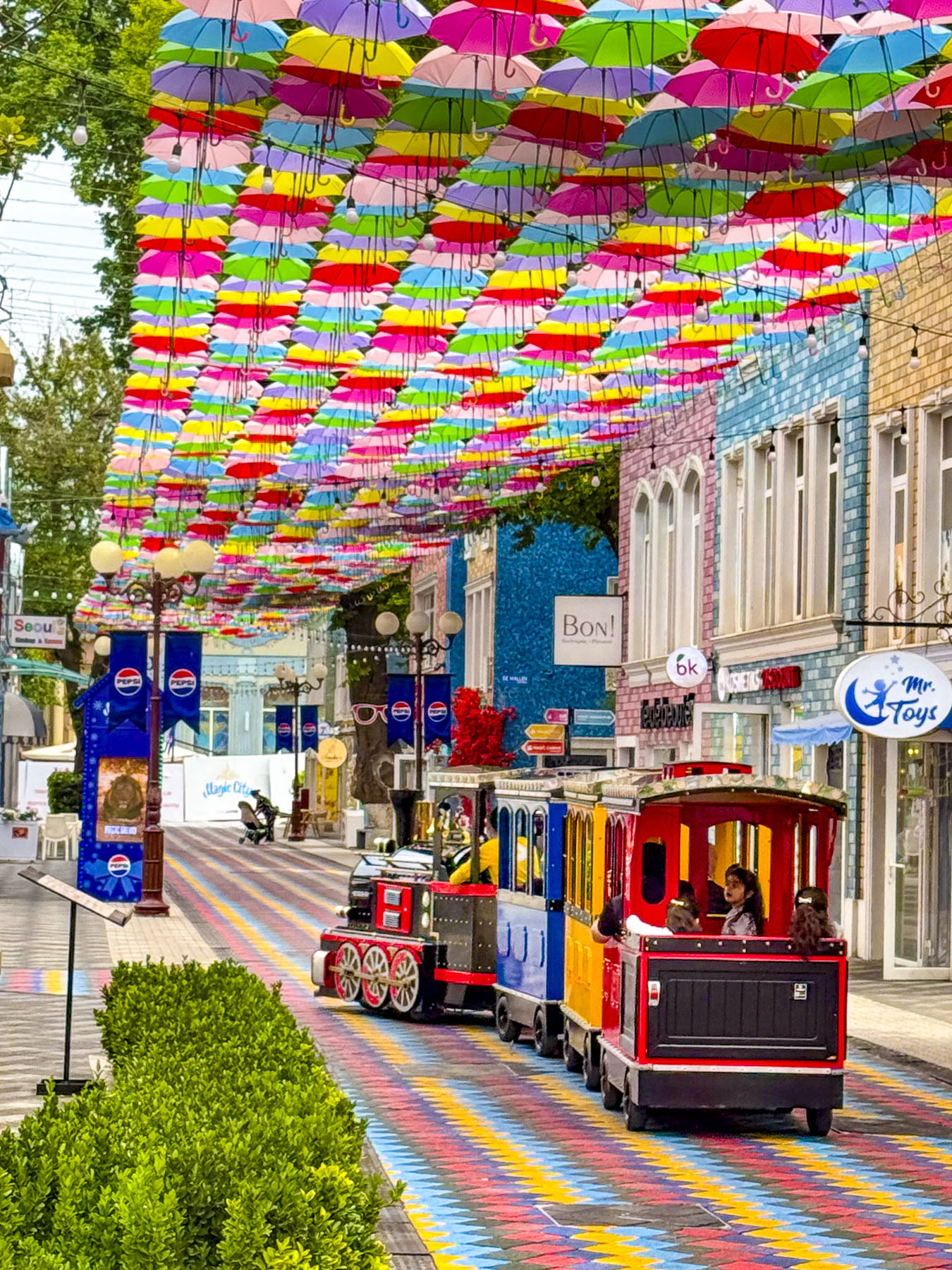
On our last full day in Tashkent we took advantage of multiple inexpensive YandexGo rides and zipped across the city to various destinations. Our first stop, which we had passed earlier in the week, was Magic City Park, an open-air shopping and entertainment complex, that as the name suggests borrows heavily from the mouse kingdom, and seemed very out-of-place in downtown Tashkent. Mid-morning, we had the place almost entirely to ourselves, except for a girl’s dance group practicing their routine in traditional dress.

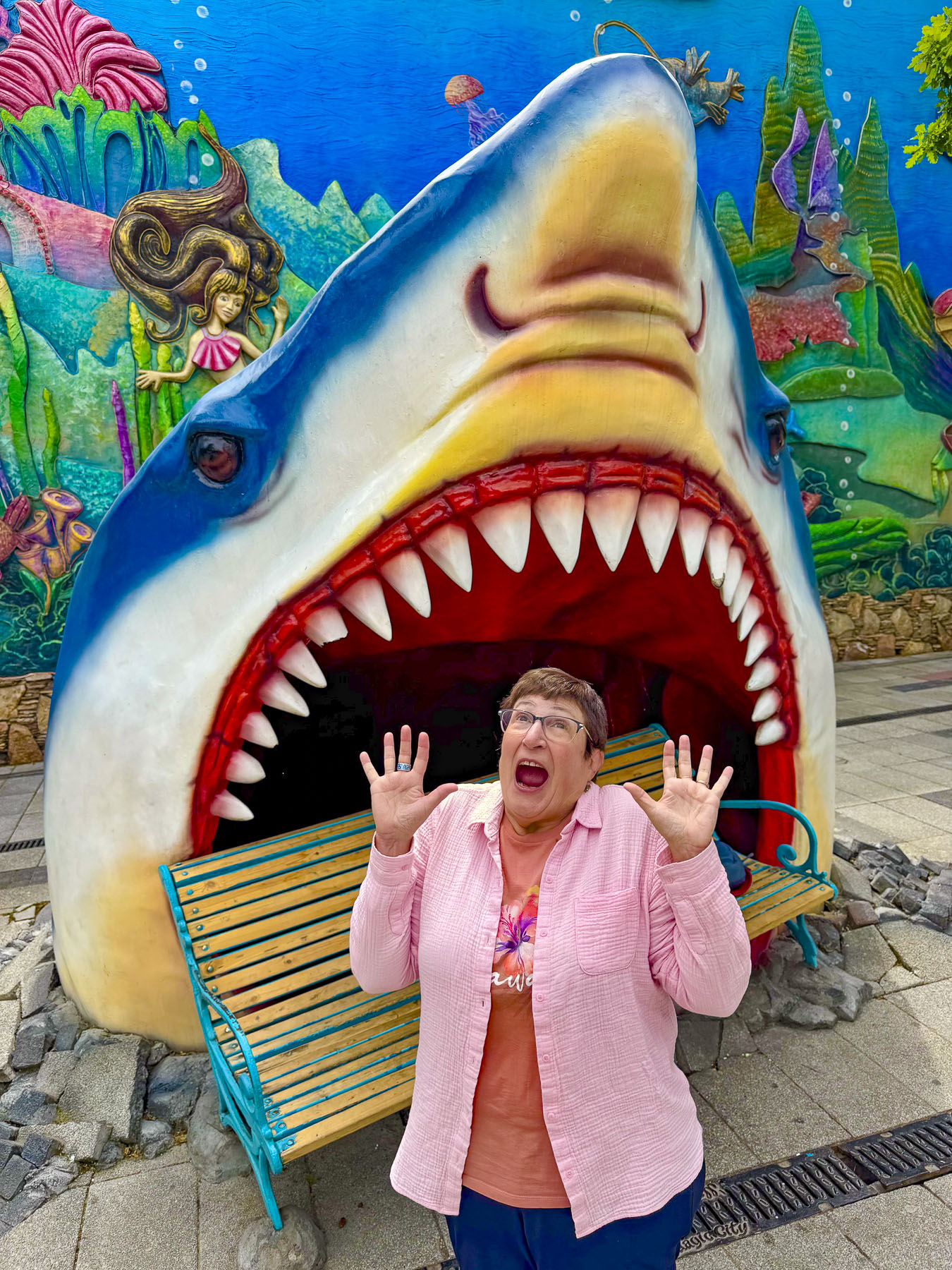
It was a quiet morning, and we enjoyed walking down a colorful painted and umbrella- covered street, making folks smile as we hammed it up in the mouth of Jaws!

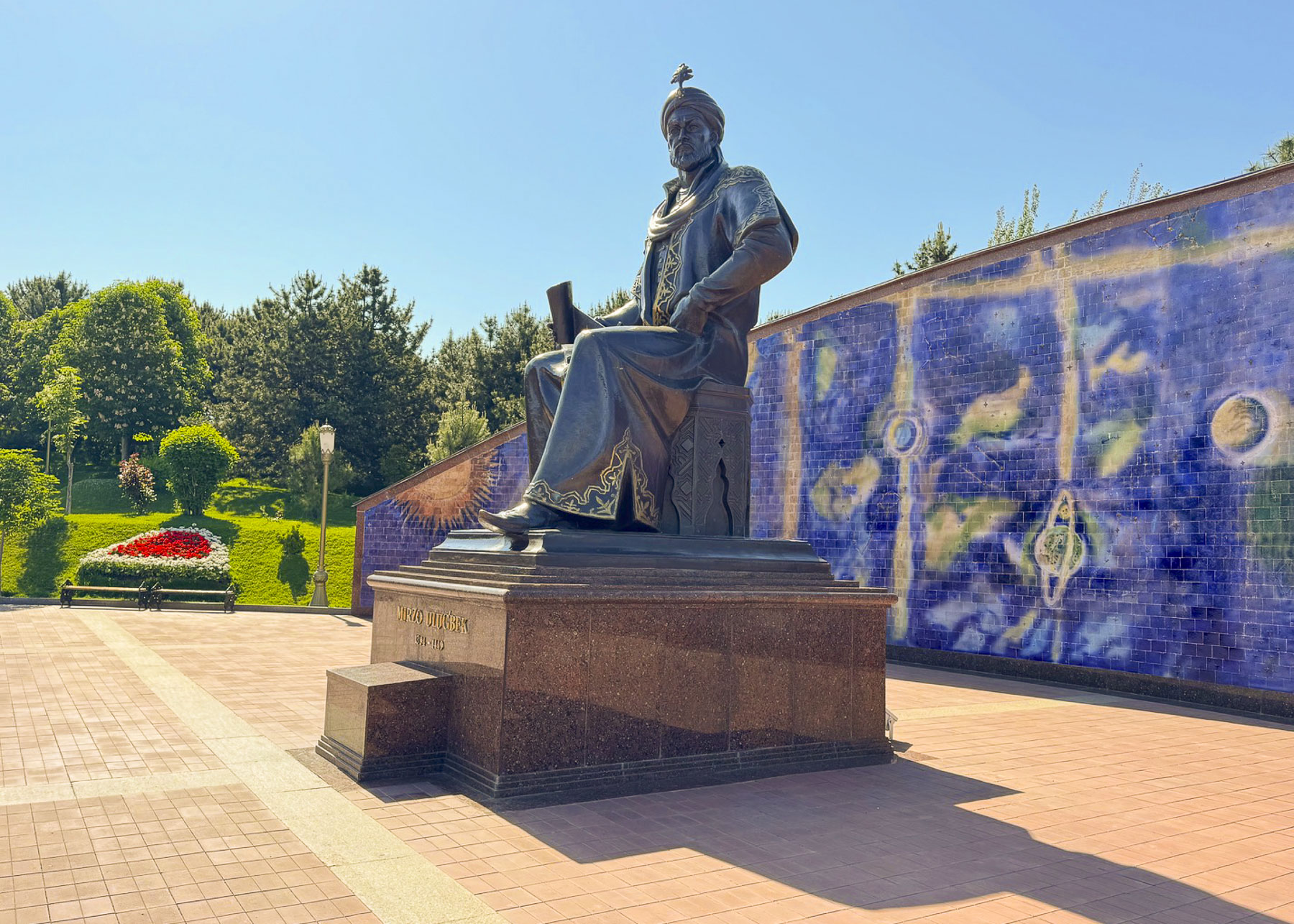
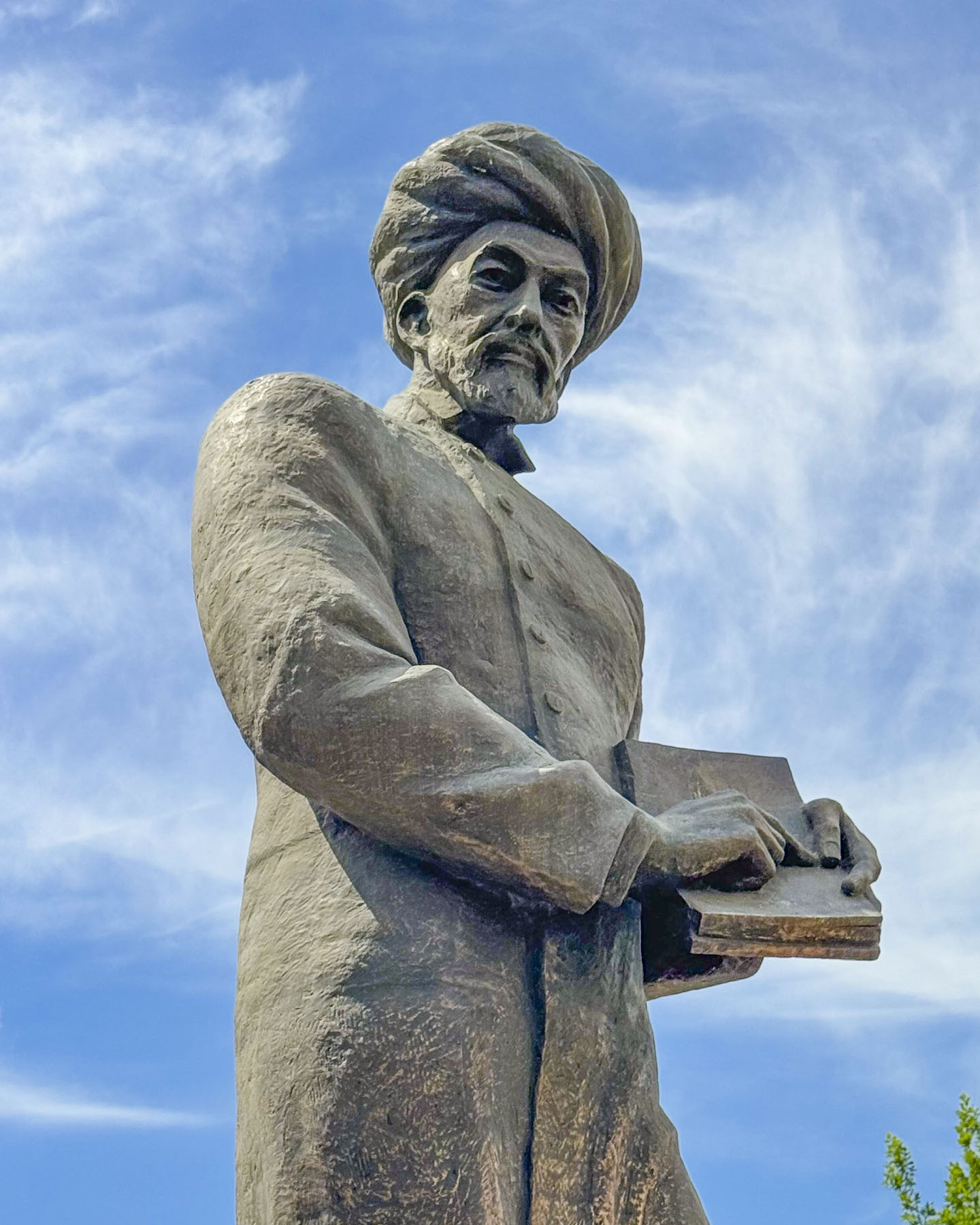
Behind Magic City is Milliy Bog, a large open area national park with statues of important Uzbeks along lanes that lead to the Tashkent Museum of State History; the 19th century Abul-kasim Sheikh Madrasah, which once held a sacred relic of the Prophet Muhammad; the Legislative Chamber of the Oliy Majlis; the Friendship of the Nations concert hall; and the Shomakhmudovs Monument, erected in 1982, as a symbol of wartime generosity and unity.

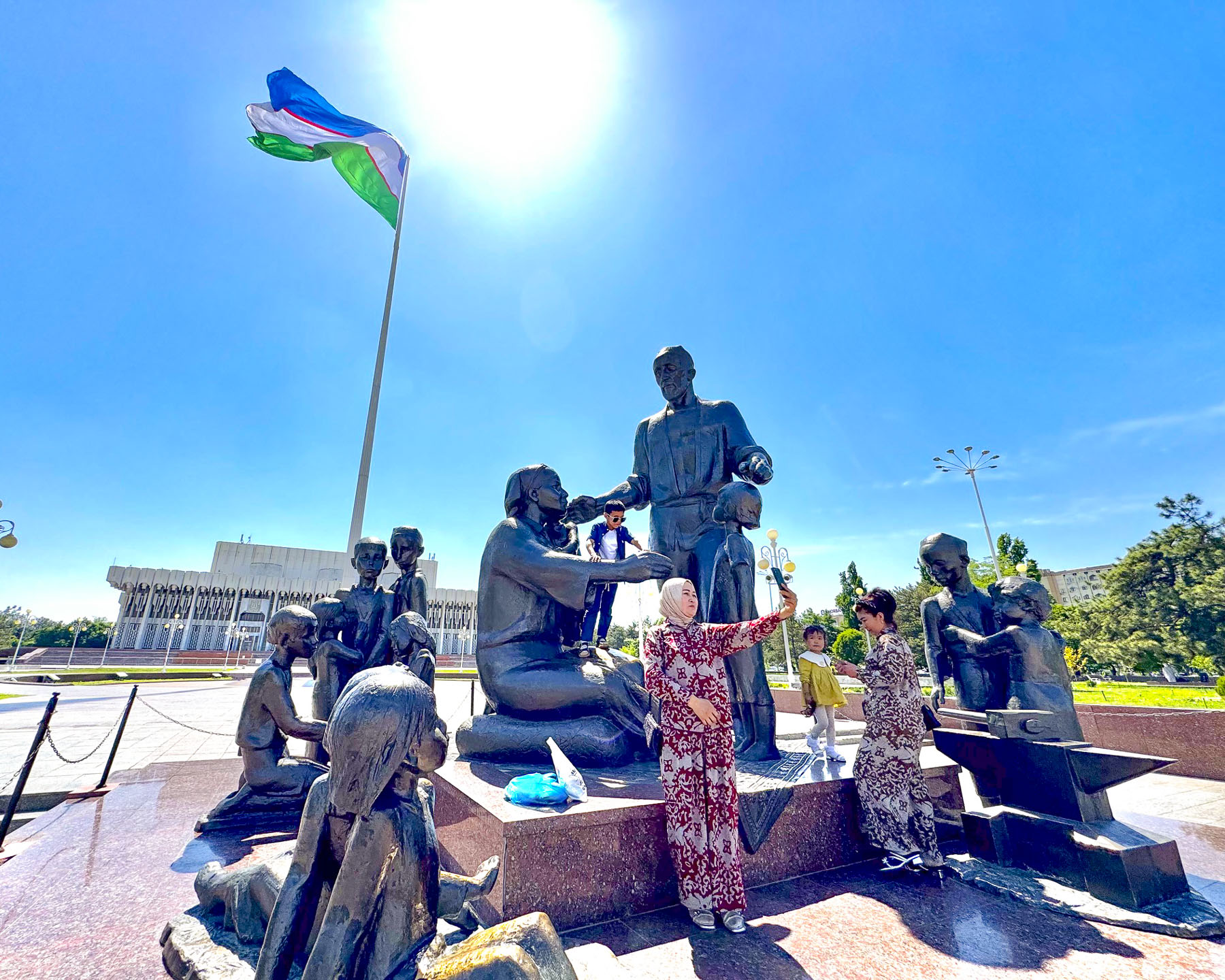
The monument commemorates a local blacksmith, Shaakhmed Shamakhmudov, and his wife, Bahri Akramova, who during World War II adopted 15 orphaned children of various ethnicities. They were only a small portion of the over one million refugees evacuated from the Soviet Union to Uzbekistan to receive food and shelter, an event that caused many to call it “the city of bread.”

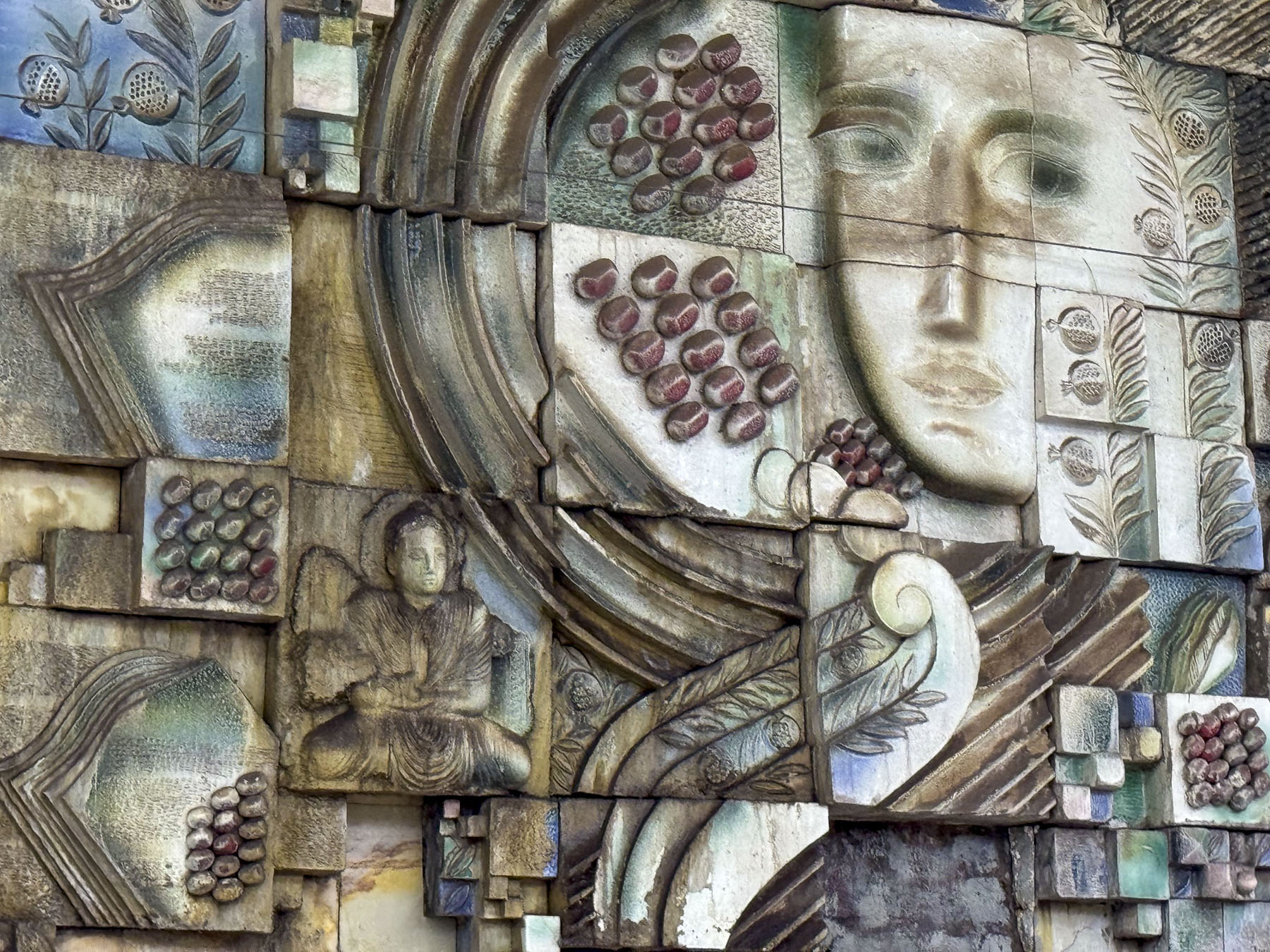
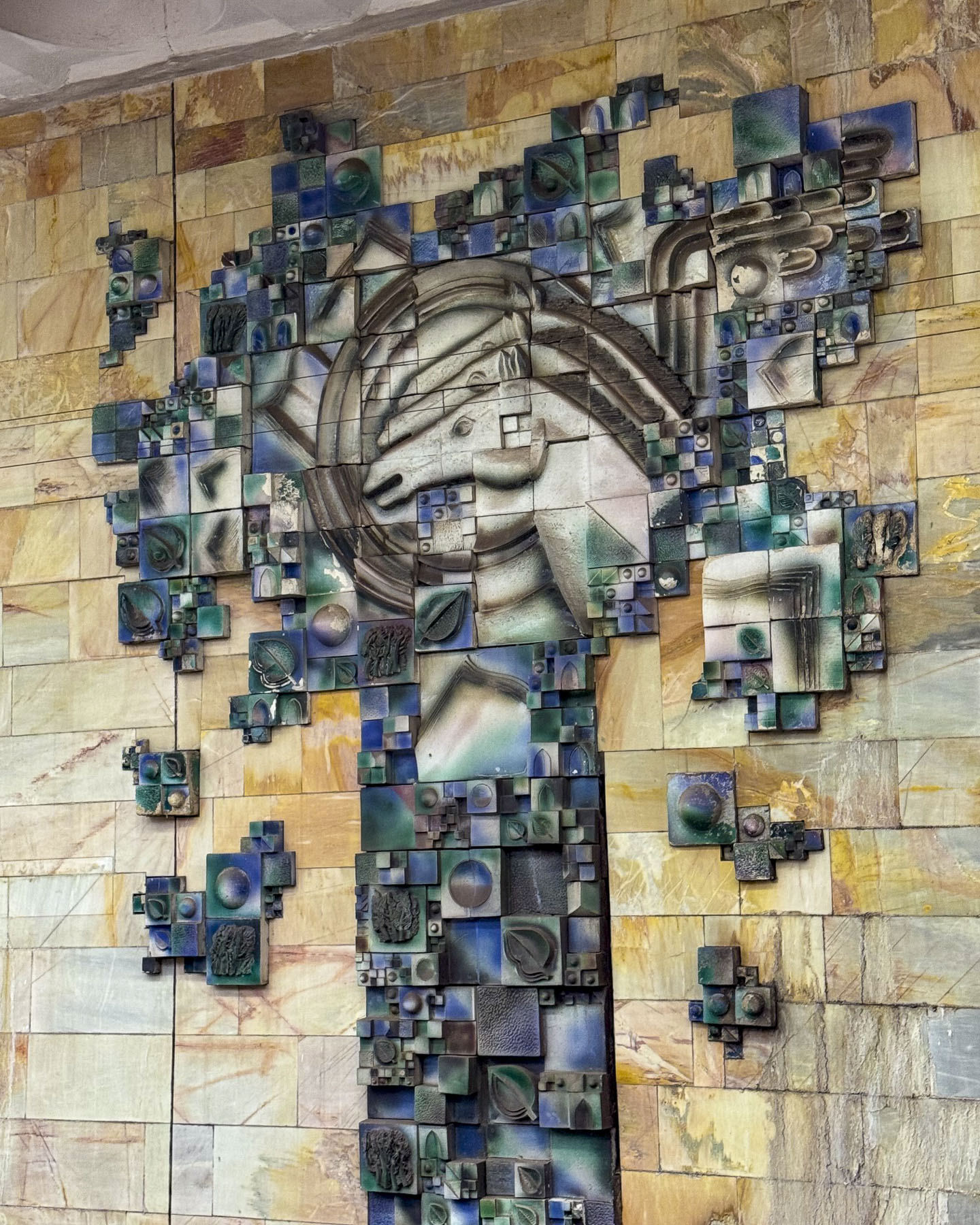
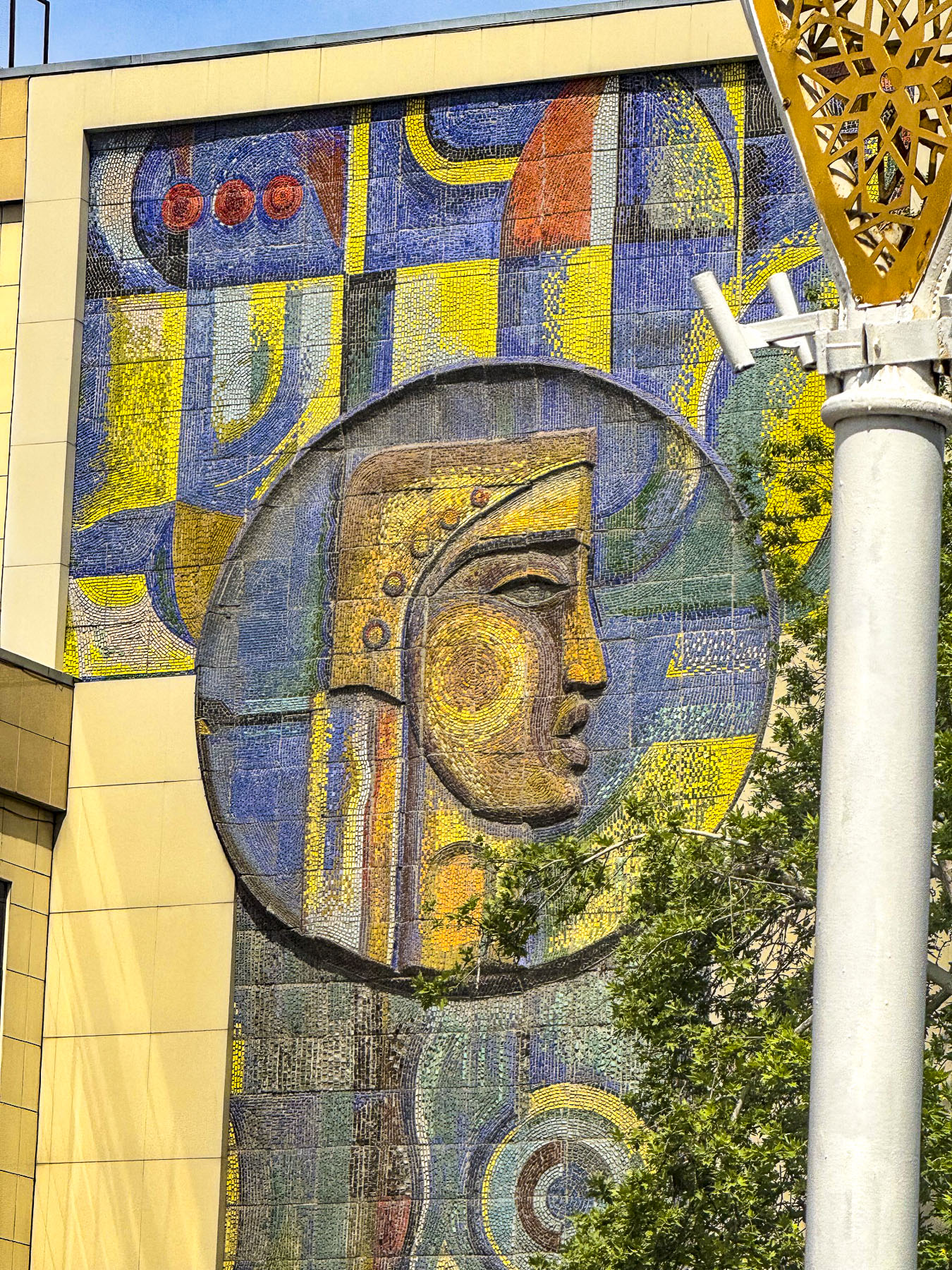
From there we traveled far across Tashkent to a beautiful park across from the Tashkent Television Tower that hosts the Museum of Victims of Political Repression. Along our route we passed many examples of older apartment buildings designed with that harsh “Soviet Brutalism” ethos, and only softened by Uzbek tile murals at both ends.

Life in Uzbekistan during Russian times was not easy and the museum documents the hardships and atrocities committed against the Uzbek people, starting with Imperial Russia’s colonization of the country, where the best farmland was given to Russian settlers, through the communist Soviet Union era. Many exhibits draw on information culled from the former KGB archives.

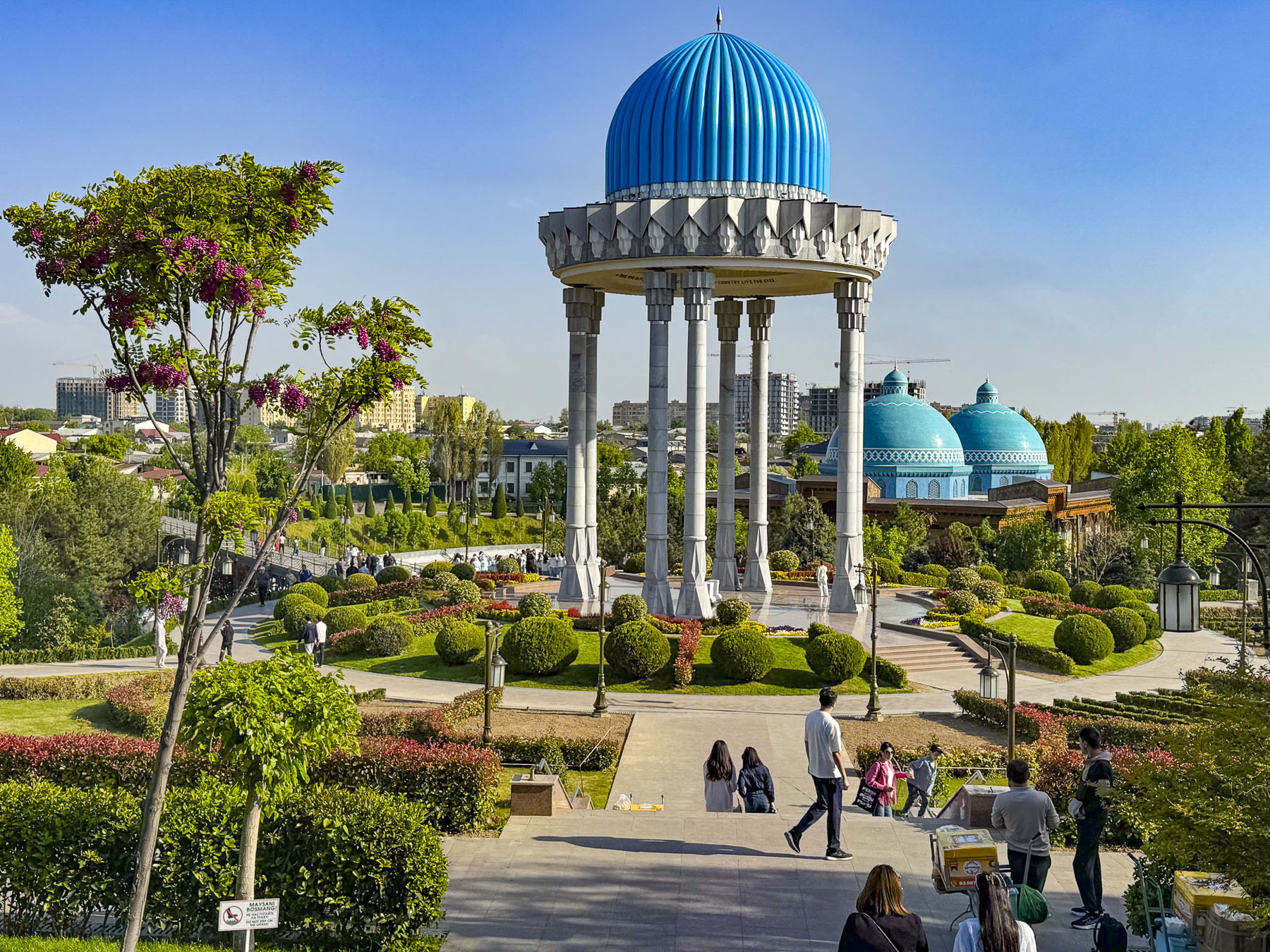
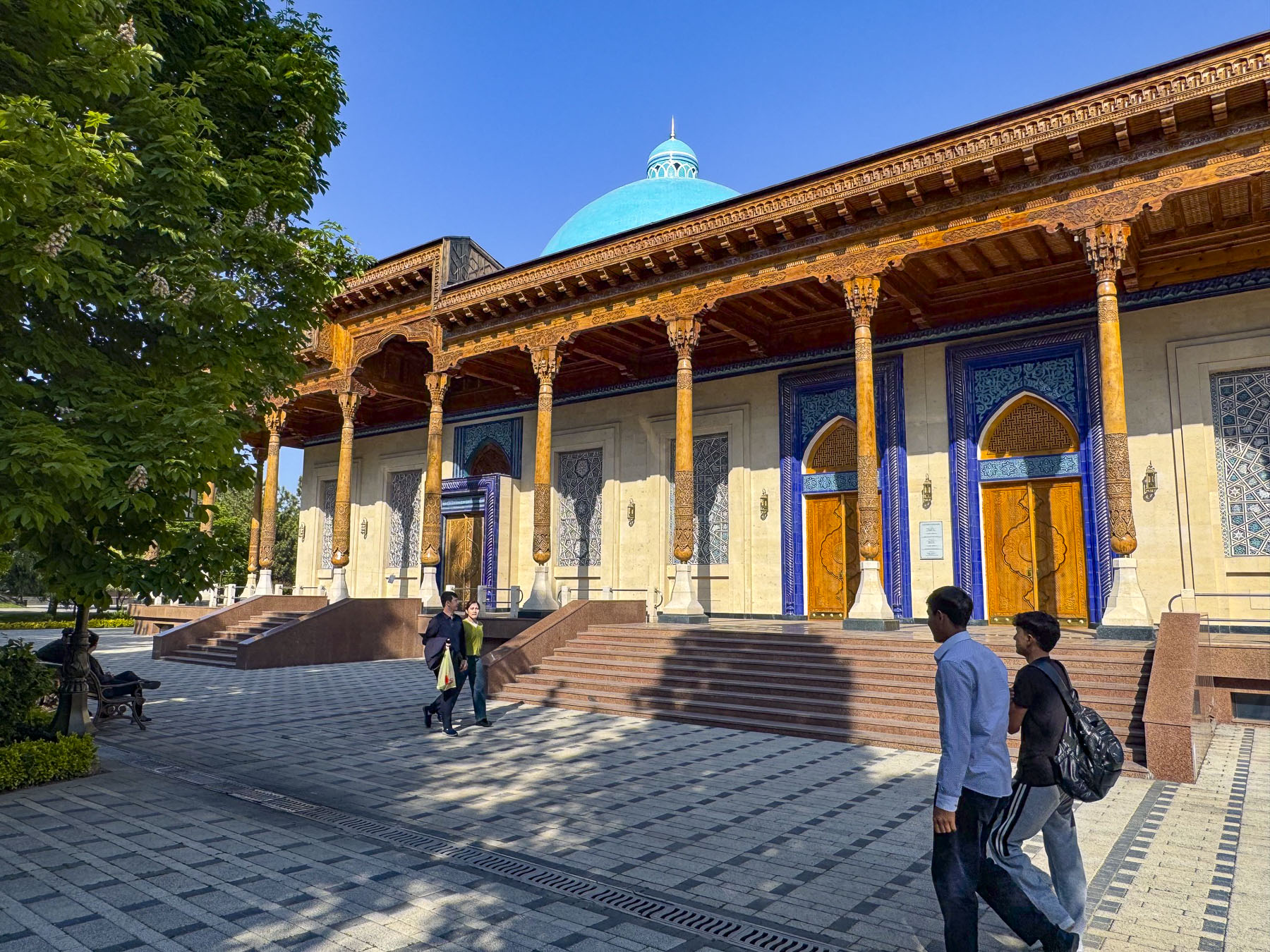
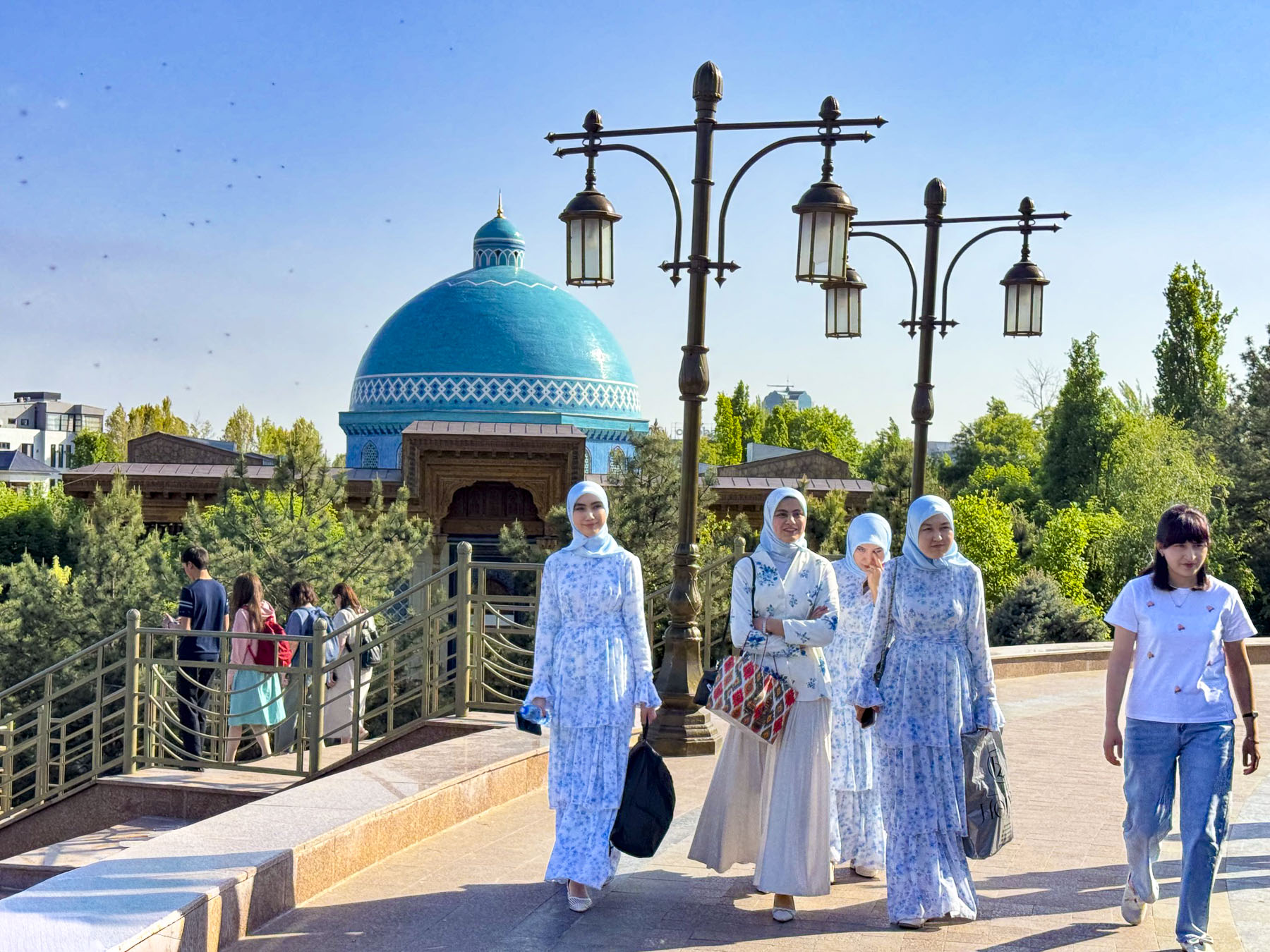
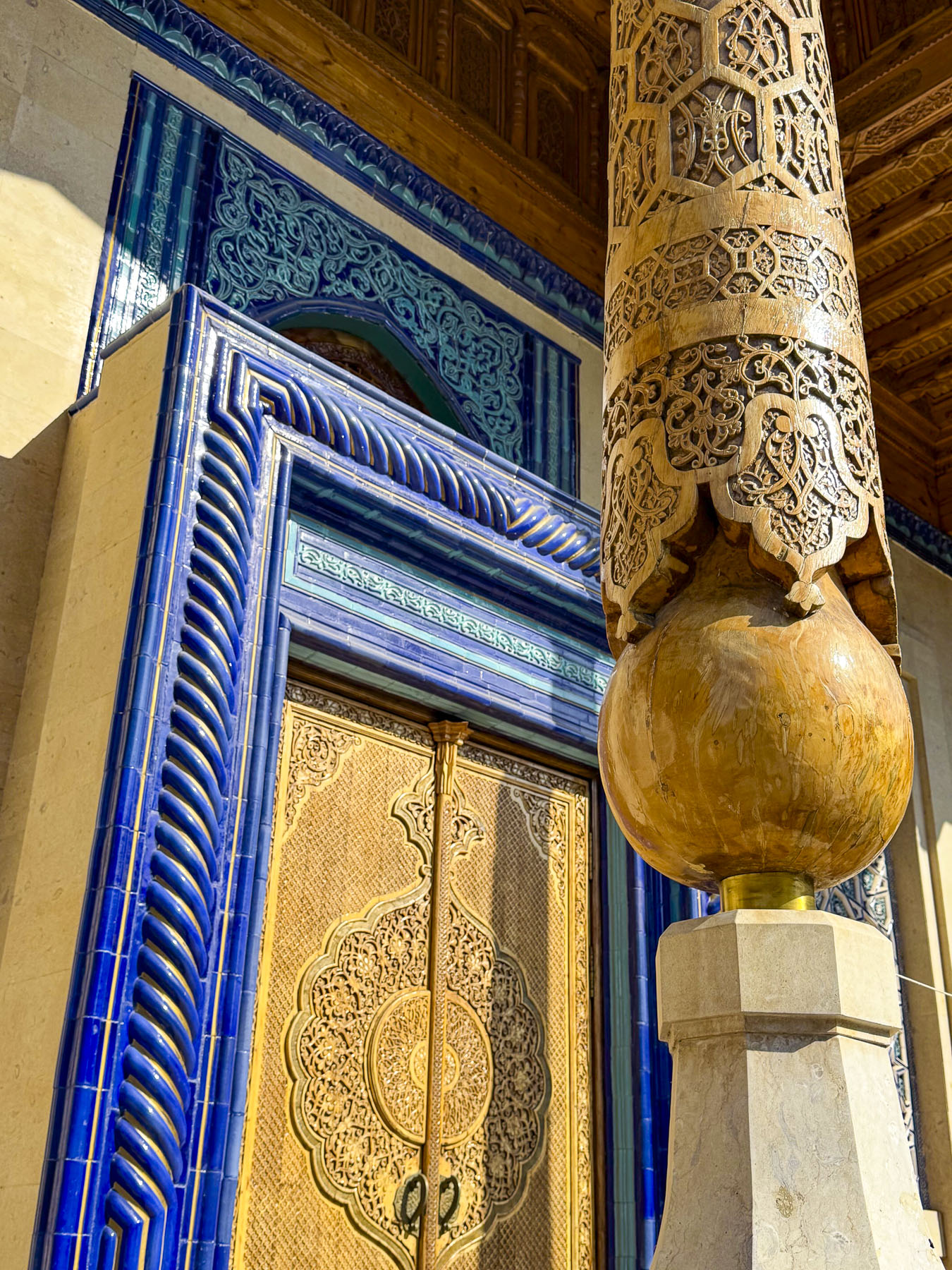
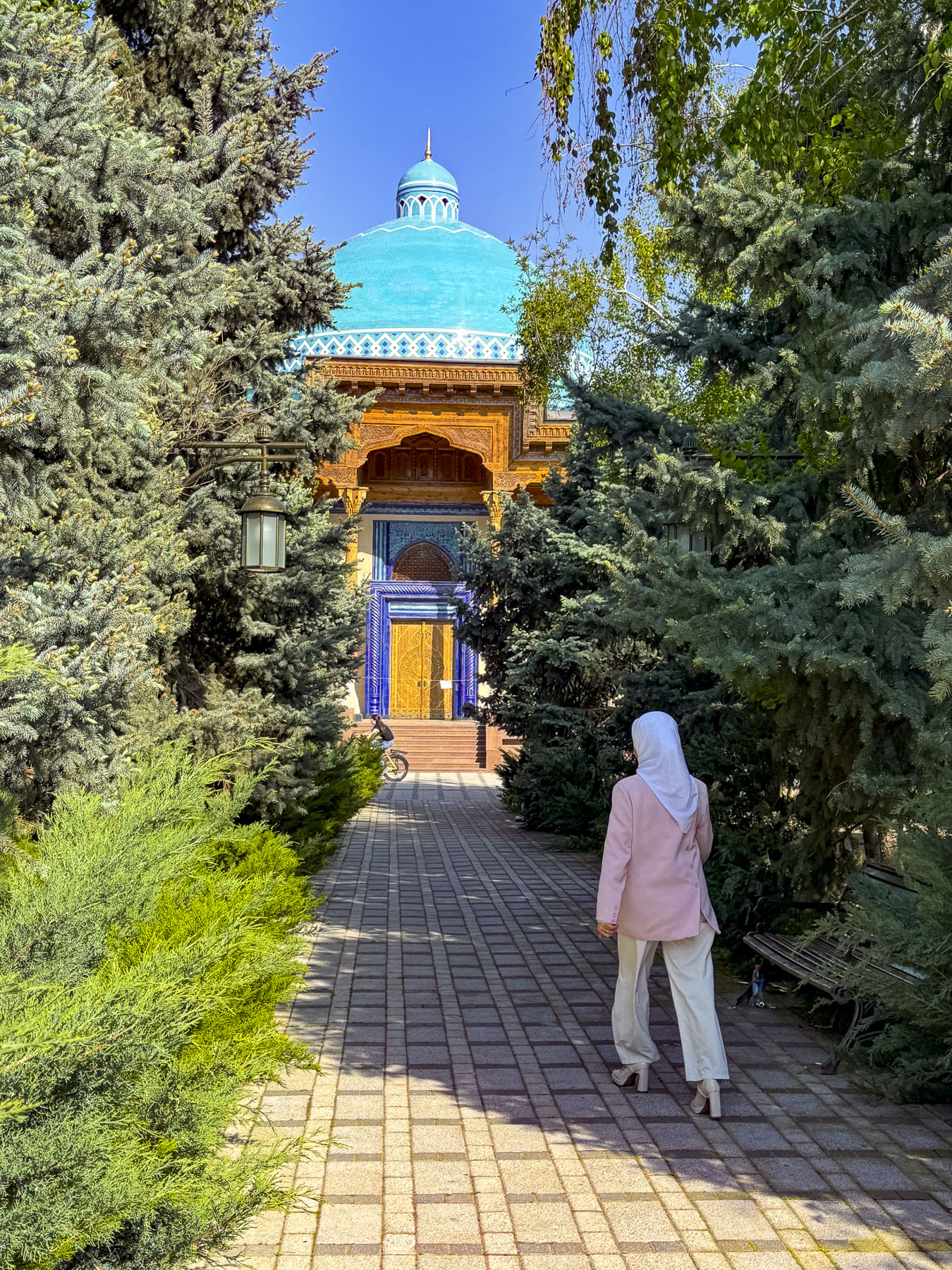
The blue domes of the museum purposely resemble an ancient mausoleum as the building is constructed over the site where the Soviets executed “enemies of the people” during the 1930s. Across the country over 100,000 people were arrested, and over 13,000 of them were shot. Trees in the park symbolically come from the gulags around the country where folks were imprisoned. During World War II ethnic groups that allegedly collaborated with the Soviet Union’s enemies were deported en mass to Siberia.

Outside, the man-made river that runs through the park is symbolically shaped like a Greek meander, to symbolize the eternal flow of life. Under the park’s tall rotunda is a nephrite tomb with the inscription in Arabic, English and Uzbek: “The memory of those who died for their country will live forever.”

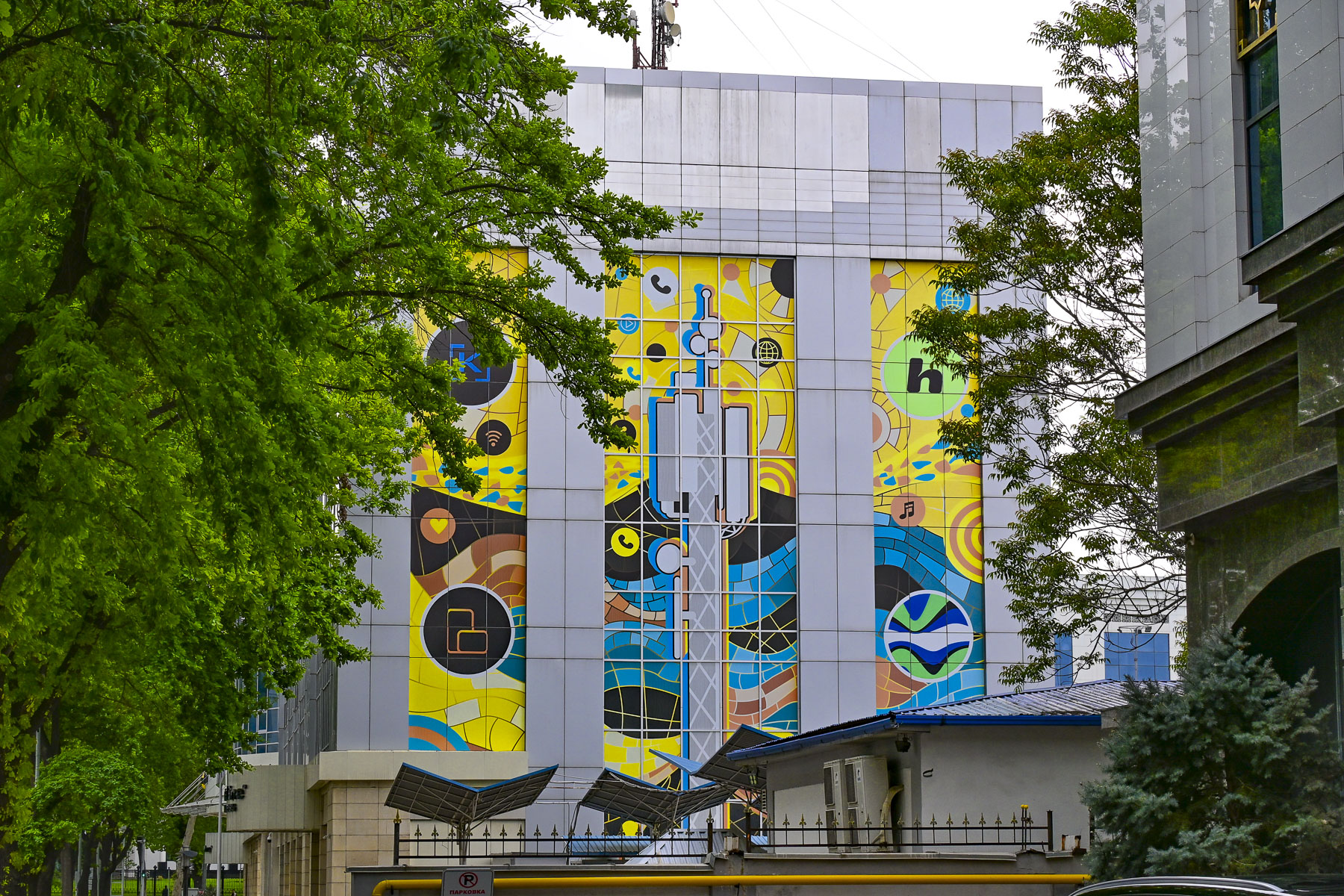
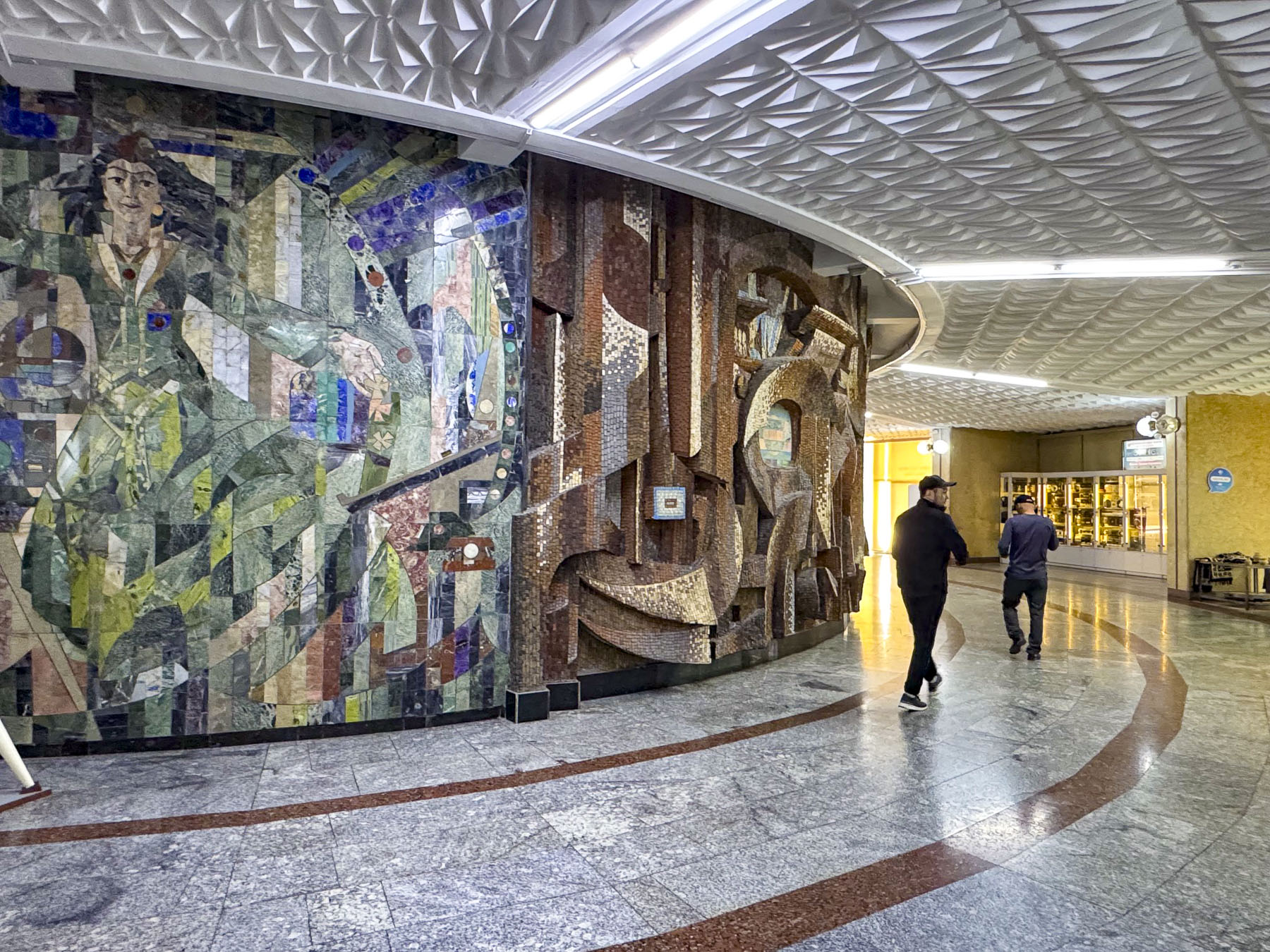
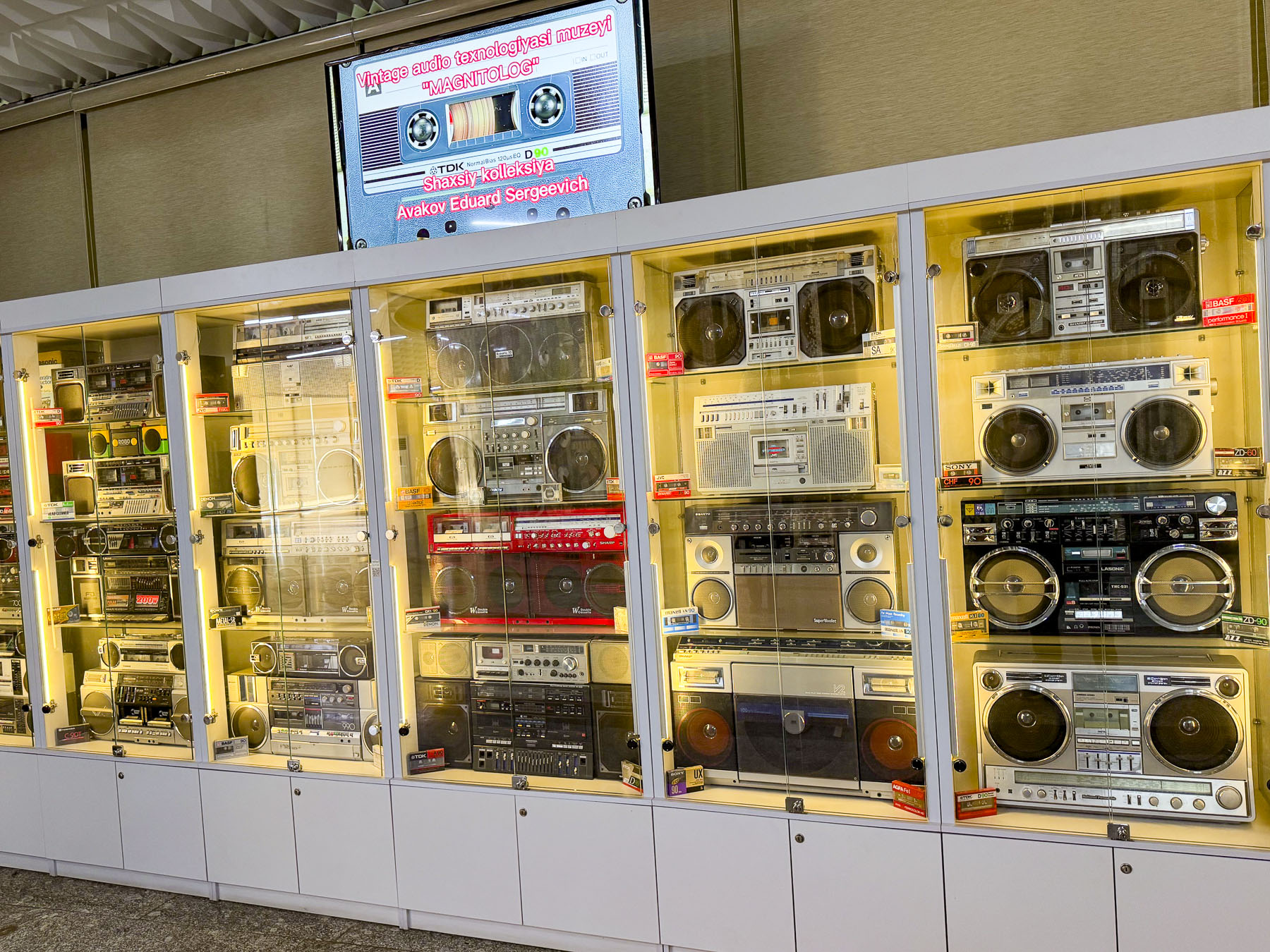
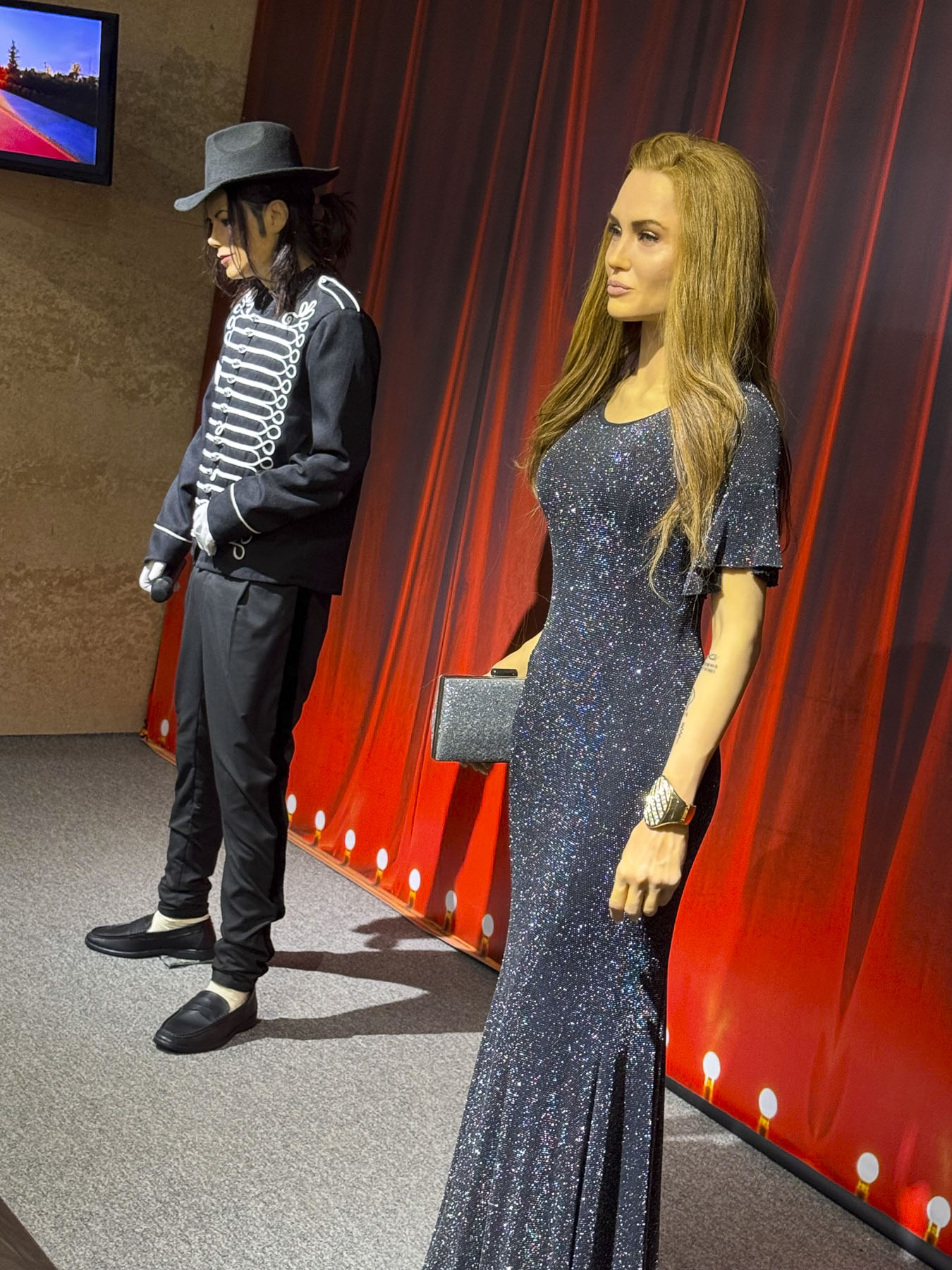
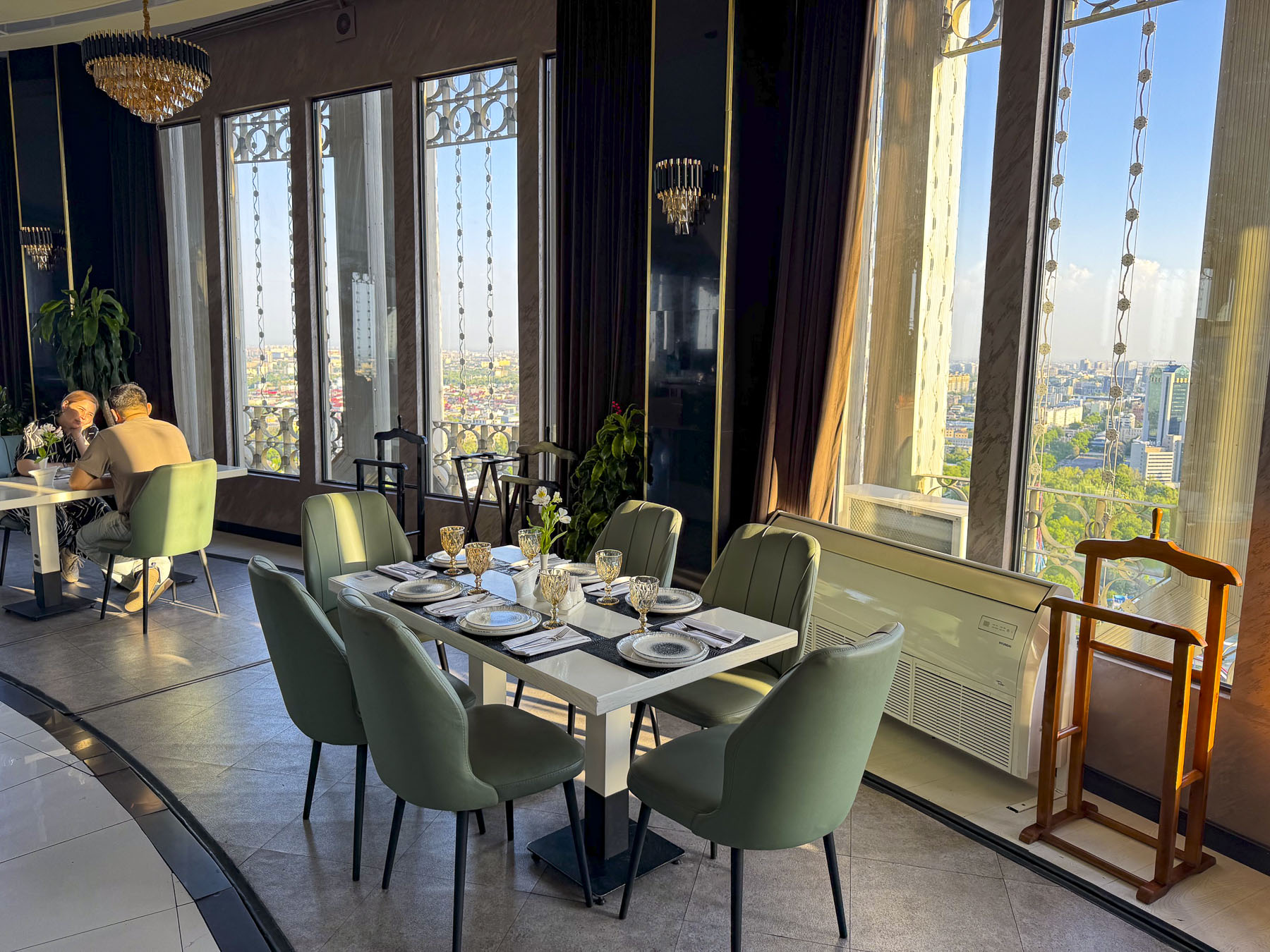
Across the busy road was the Tashkent Television Tower, the tallest freestanding tower with a height of 375m (1,230ft) in Central Asia since its opening in 1985. To get to the elevators that take you up to an observation deck and revolving panoramic restaurant at 104m (341ft) above the ground we had to walk along a long corridor lined with models of other significantly tall television towers around the world, a display of archaic boom boxes, an abstract tile mosaic mural and the wax museum likeness of Michael Jackson and maybe the doubleganger of Melania Trump? The restaurant was enjoyable, though expensive for cake and coffee.

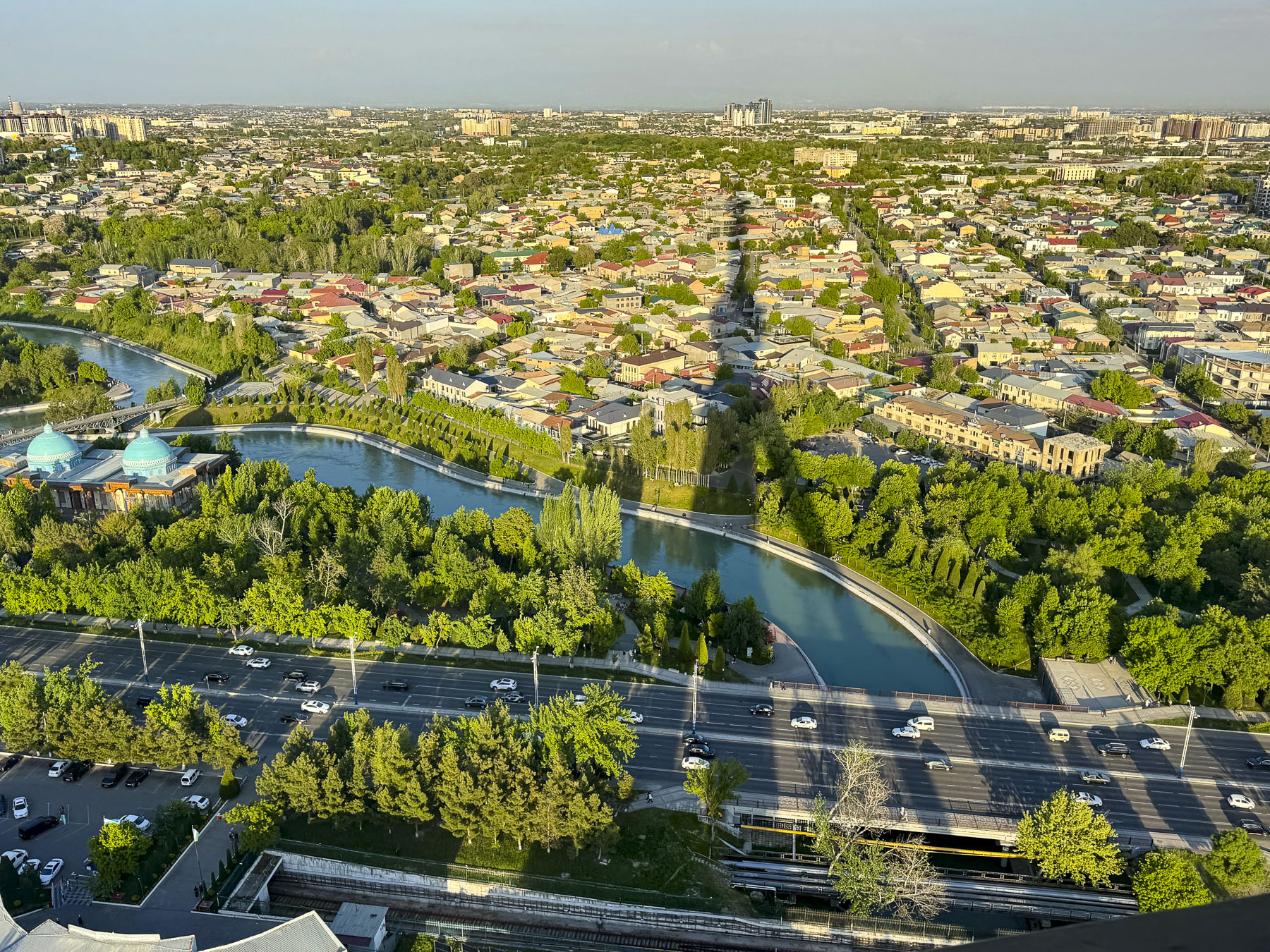
However, the views from the observation deck out over metropolitan Tashkent were fantastic, especially where we would see the shadow of the tower cast across the landscape.

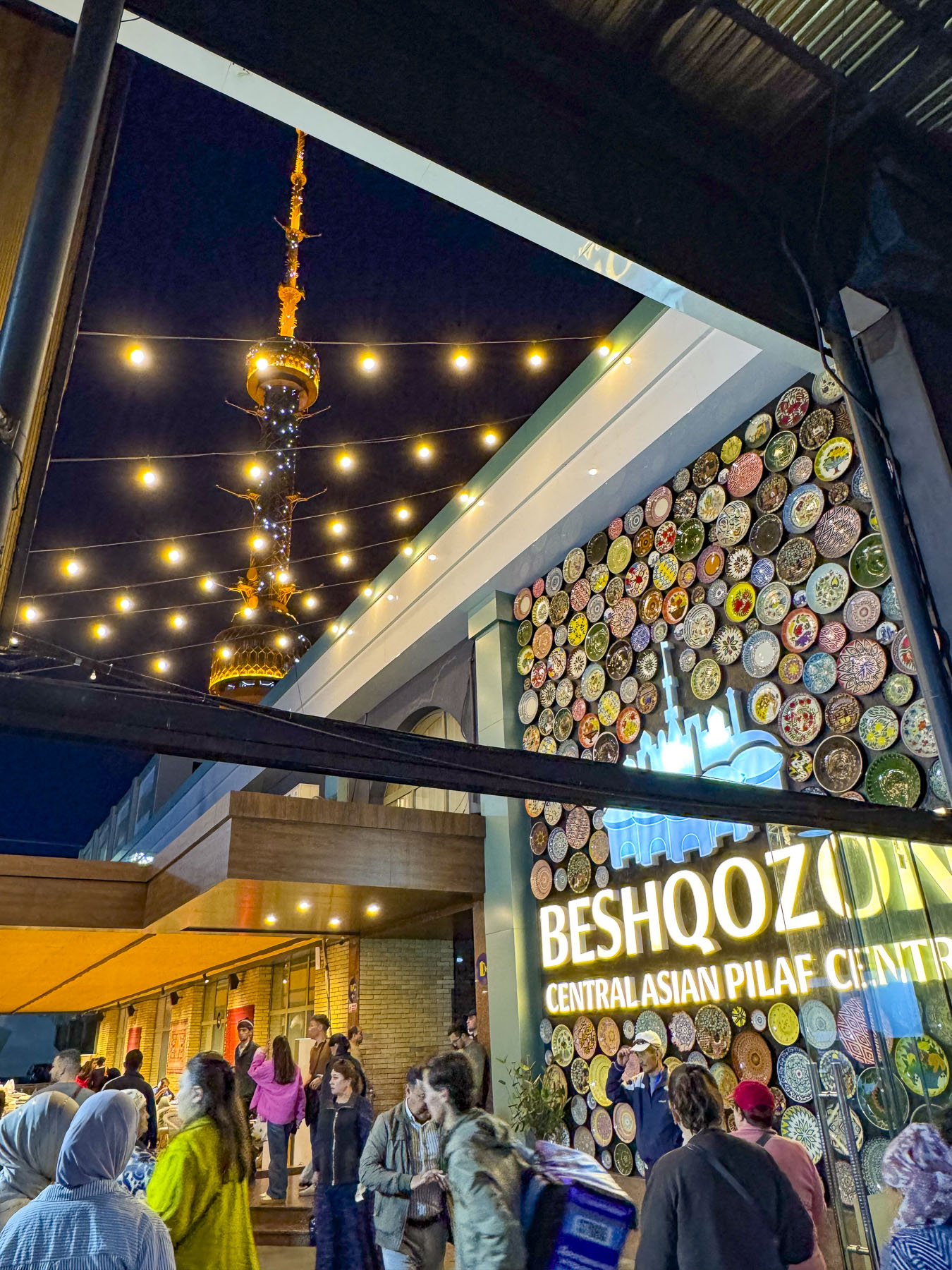
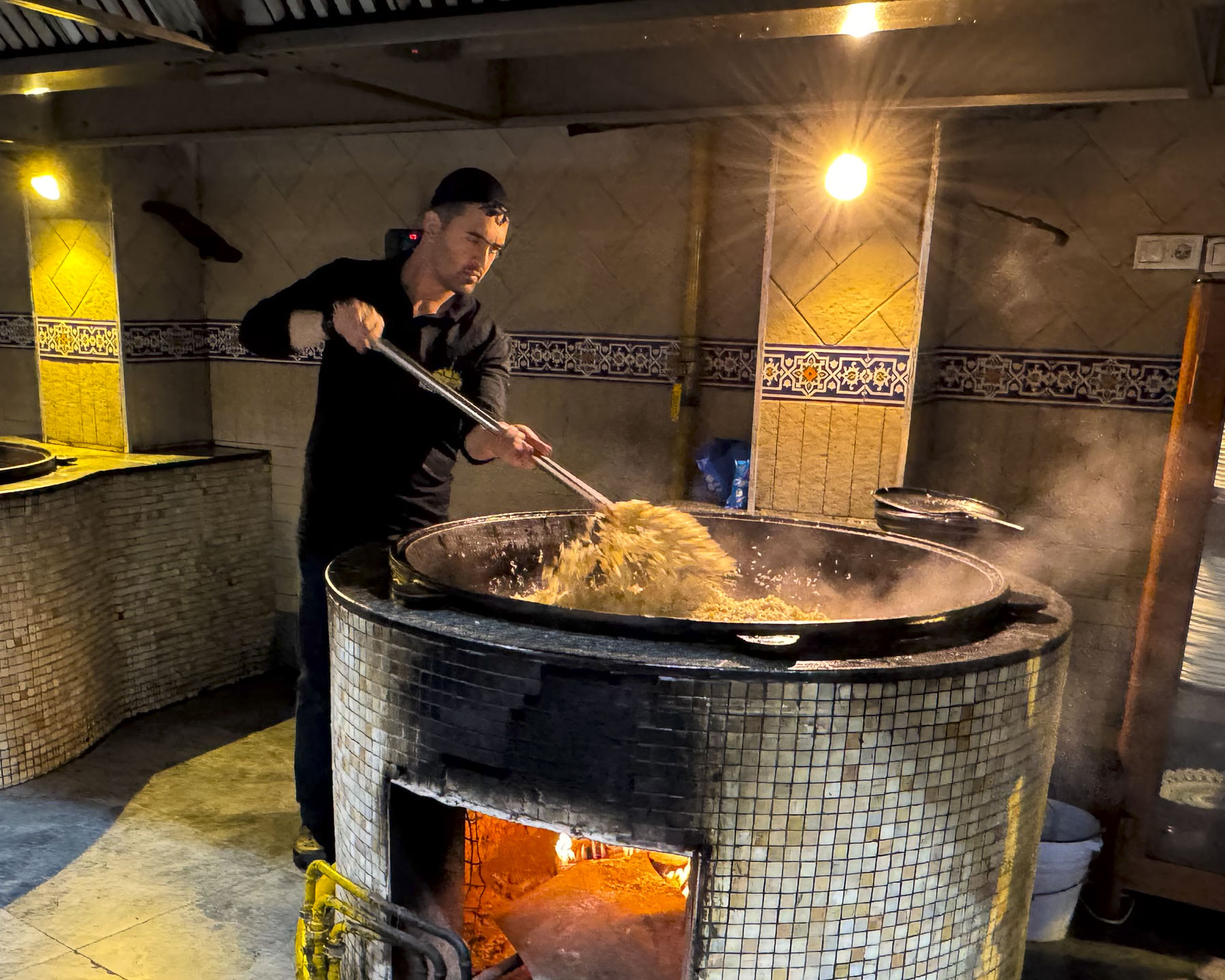
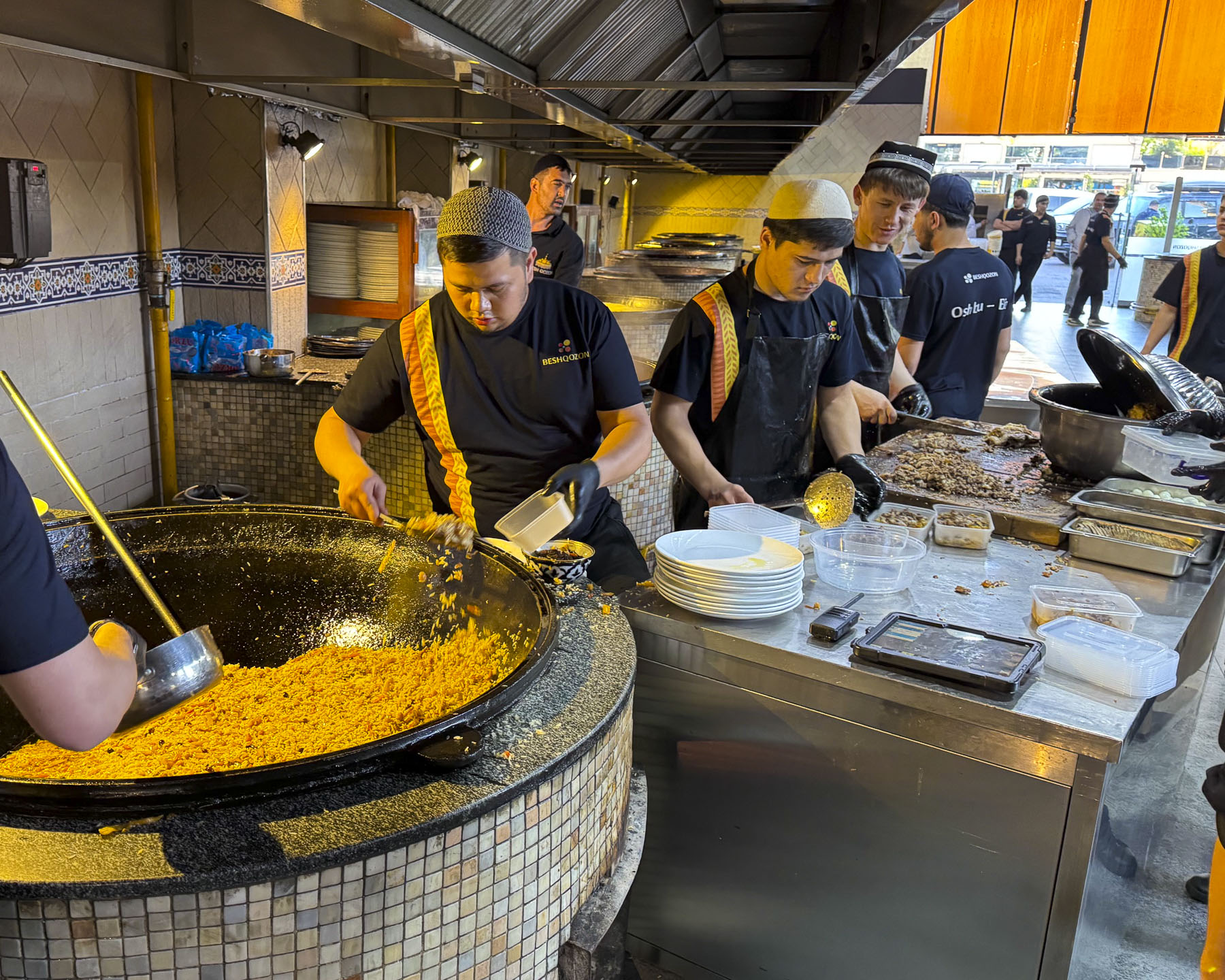
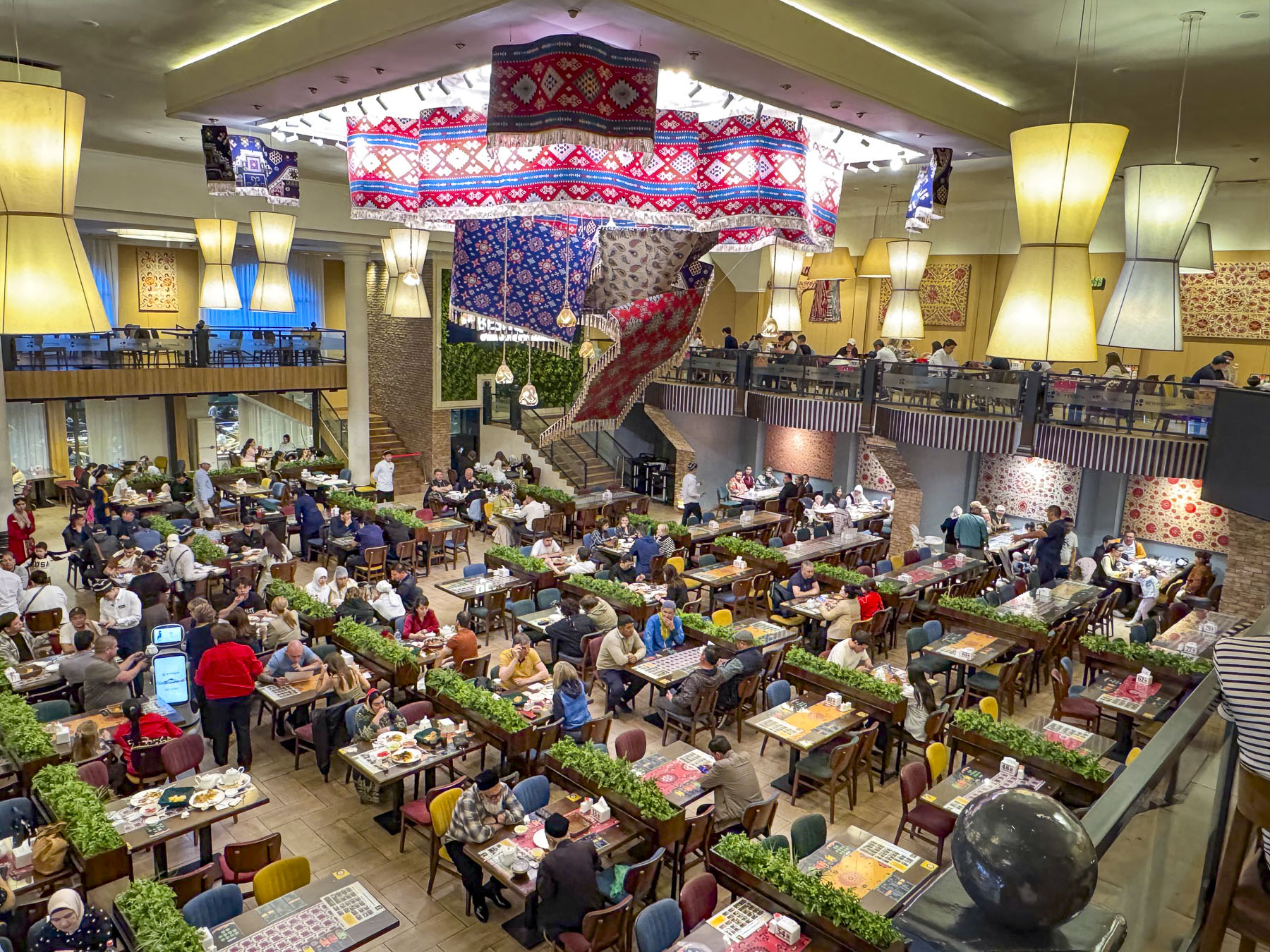
We ended our evening and last day in Tashkent with a short walk to Besh Qozon, a tremendously popular, large, fun restaurant that is known for its Plov, Uzbekistan’s celebrated rice dish. The dish is traditionally prepared by men, and at Besh Qozon visitors are allowed to walk through open kitchen and watch the cooking of several different variations of the recipe being stirred in huge caldrons, and the continuous baking of fresh non.

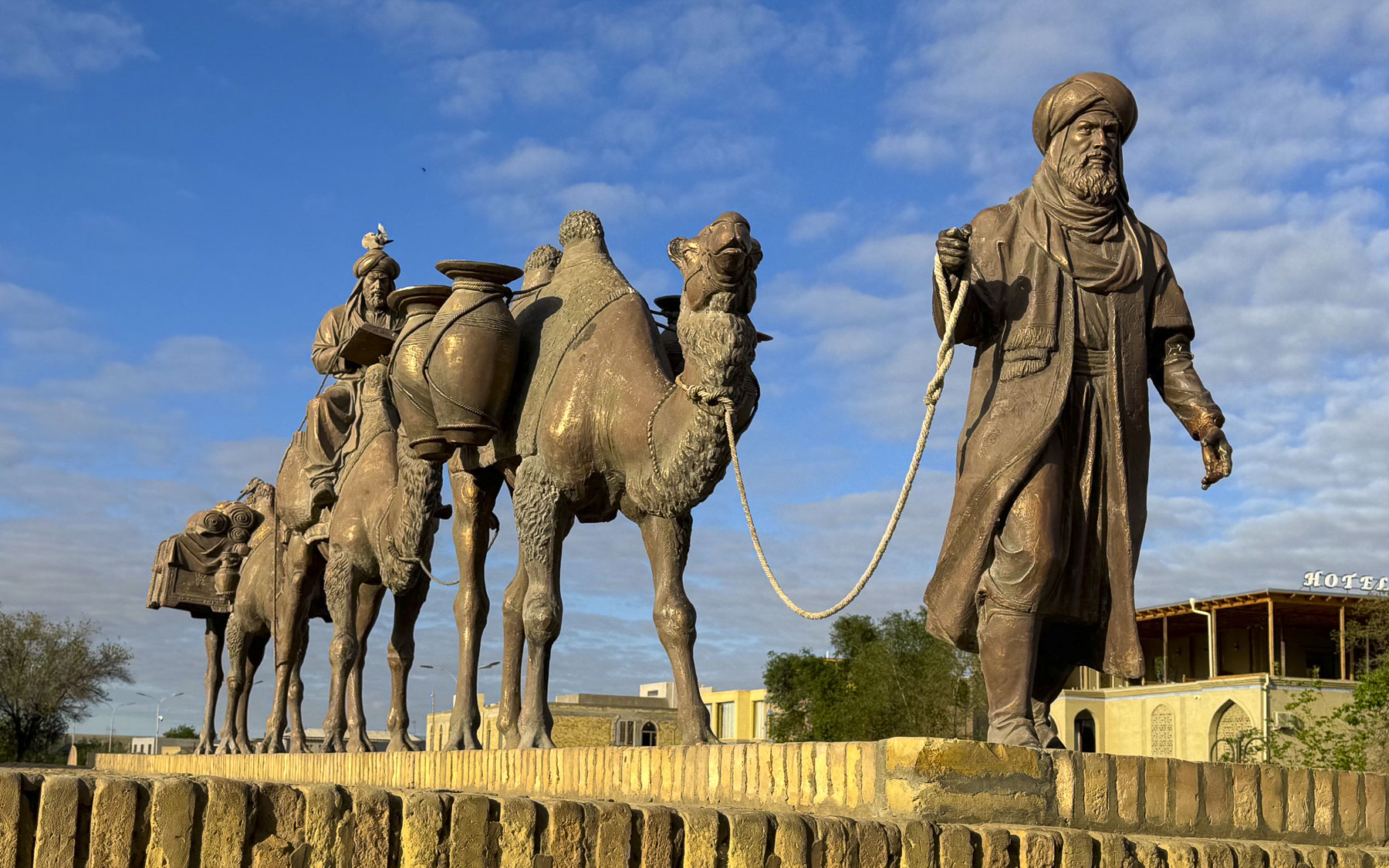
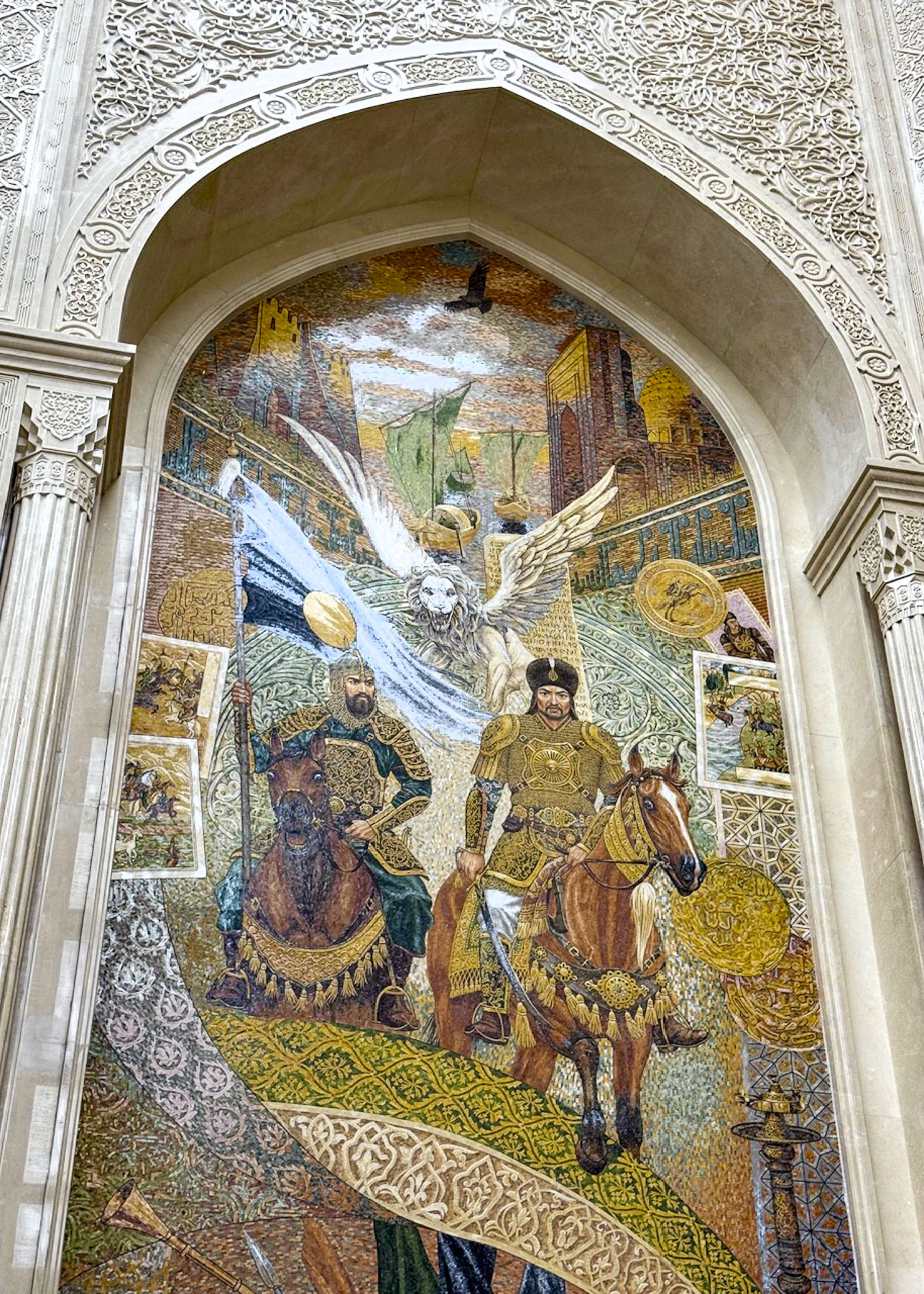
The first known settlers in Uzbekistan were Persian nomads who settled around the oases in the vast Kyzylkum Desert during the in the 8th–6th centuries BC. The desert covers most of central Uzbekistan, stretching from Khiva in the western part of the country to Samarkand in the east. Many of these oases became crucial caravanserais, fortified waystations, to protect the camel caravans along the Silk Road. Others like Samarkand, Bukhara, and Khiva grew into rich influential regional seats of power called khanates.

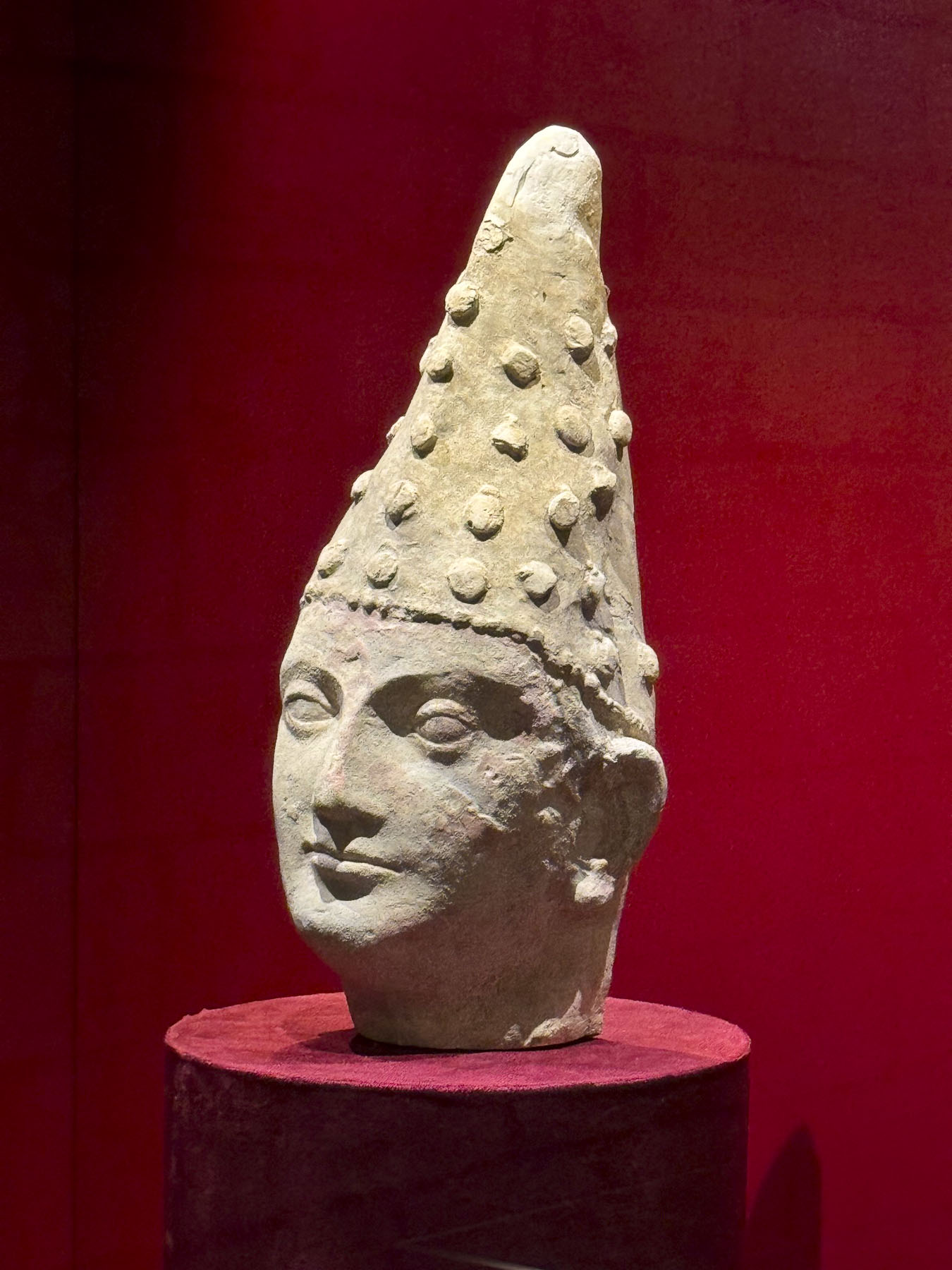
 In 329 BC Alexander the Great spent two years marching across Uzbekistan in an exhausting campaign to defeat a Persian rebellion, and only left after what legend claims was a love at first sight romance with a local princess named Roxane led to a strategic alliance with her father. The legend of Roxane remains alive in Uzbekistan, with many distinguished families in the region still claiming their lineage from the marriage of Alexander to Roxane, before he set off to conquer India.

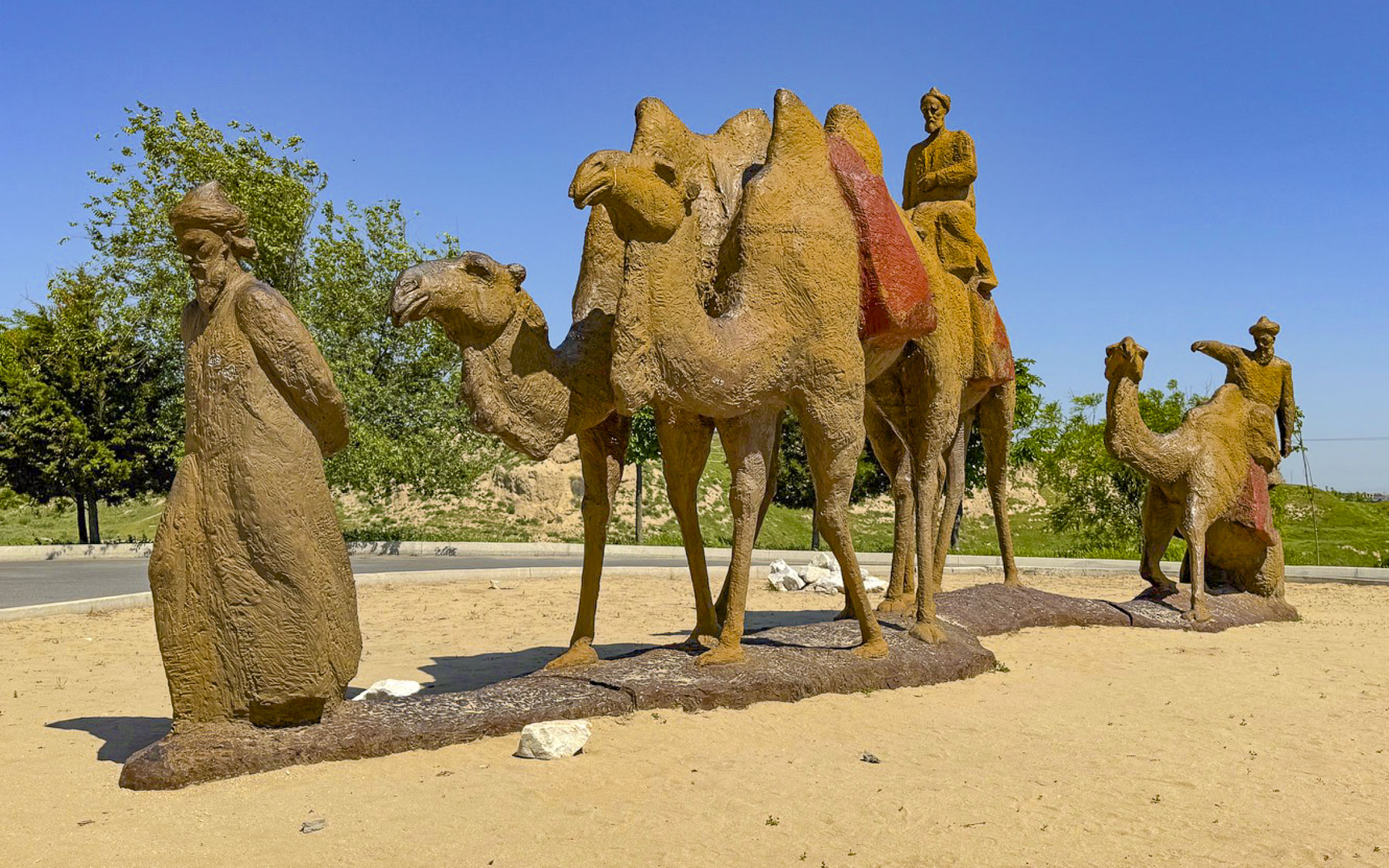
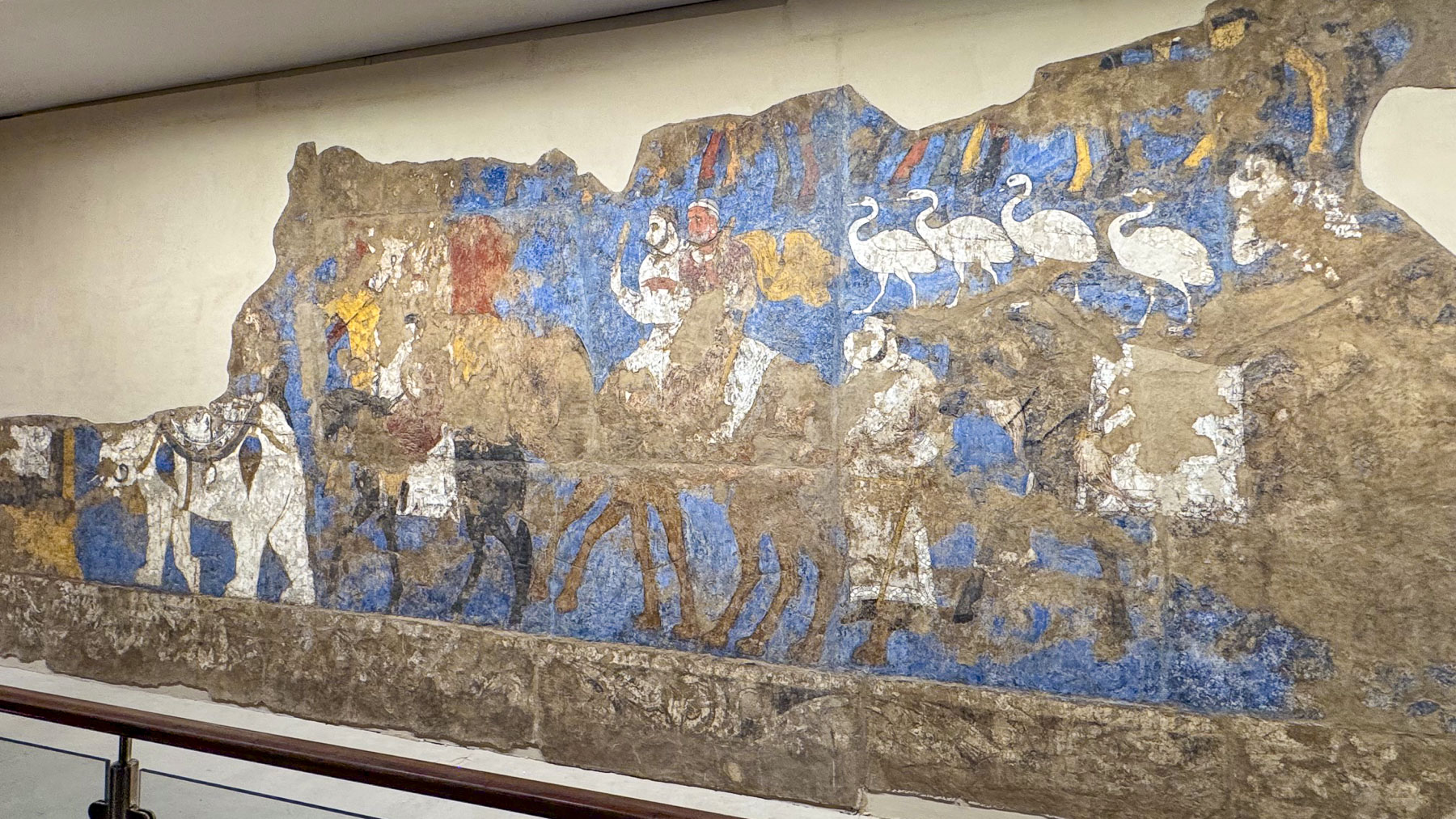
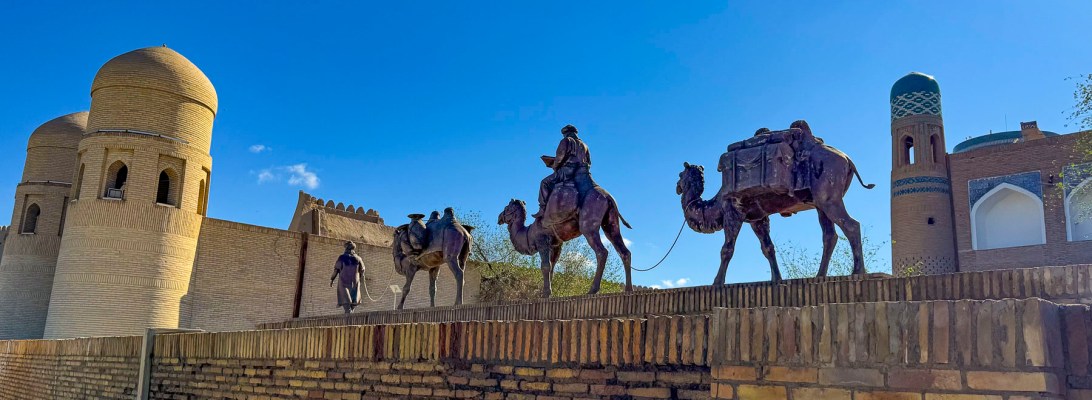
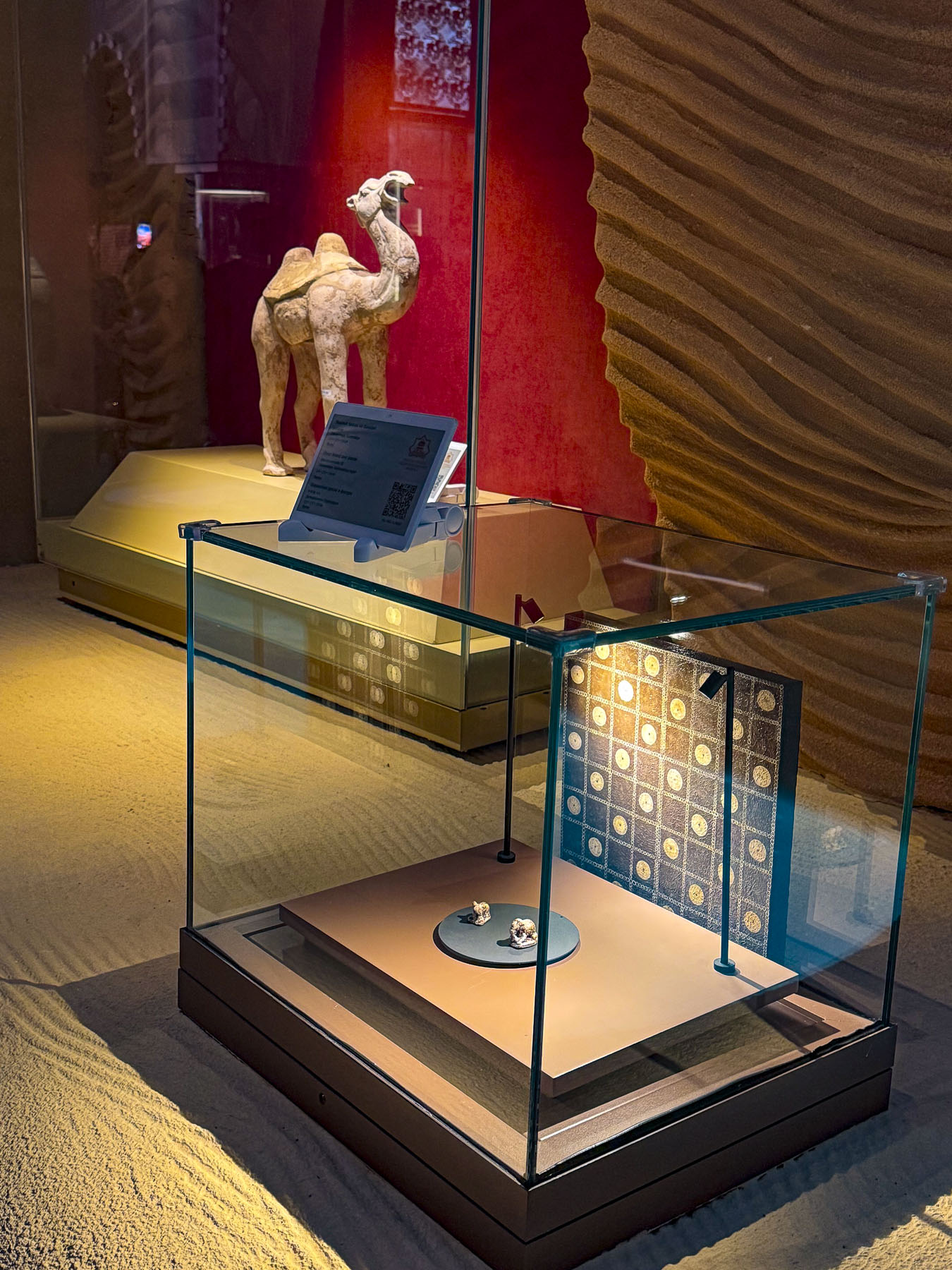
In the west we often associate the history of the Silk Road, a 6,400km (4,000mi) camel tract, with the travels of Marco Pollo across central Asia to China in the 13th century. But its history started much earlier in the 2nd century BC, when a Chinese emperor of the Han dynasty sent imperial envoys across Central Asia to establish formal trade routes and military alliances against the Huns. These agreements of safe passage resulted in silk and porcelain from China reaching the eastern-most regions of the Roman empire by 25 BC. On their return journey caravans took glassware, linen, wool and cotton to the Far East.

The Huns never invaded China, but did conquer much of Central Asia, and established a stronghold in southern Uzbekistan during the 4th and 5th centuries. Trade along the Silk Road ebbed and flowed through invasions and peace. Arab conquests swept through Central Asia, bringing the Arabic language and Islamic religion to oasis cities like Bukhara and Samarkand in the 7th–8th Century AD. The Mongol armies of Genghis Khan brought massive destruction to the region in the early 1200s.

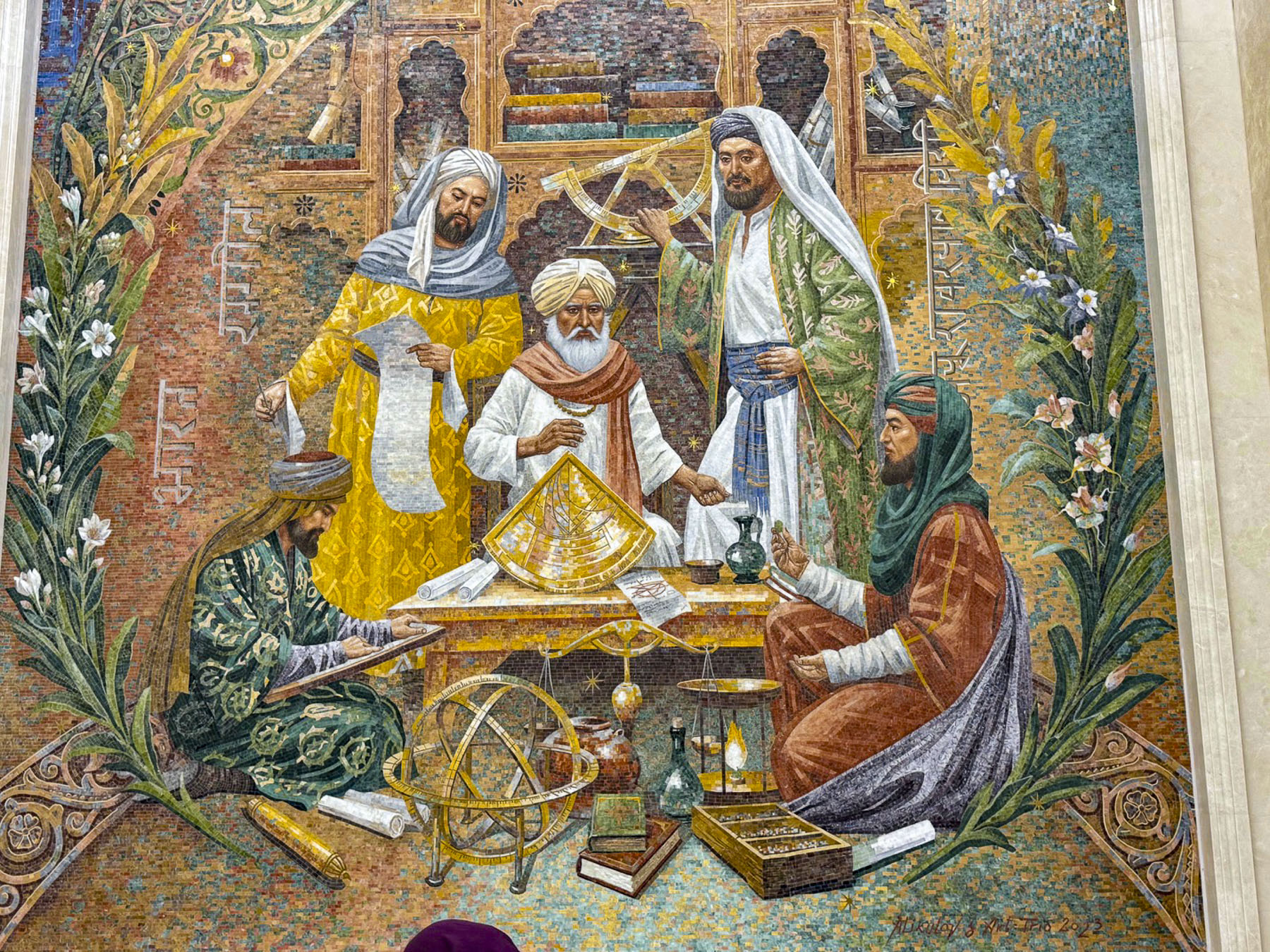
By the late 14th century, the region was the central hub of trade and ideas at the crossroads of the known world at the time, and experiencing a renaissance of art, science, and Islamic architecture under the enlightened rule of Emir Timur. By the 16th century the successive invasions of Turkic and Mongol nomadic tribes had ended. The invaders from 92 tribes, as legend believes, had settled and intermingled with the local folk and established what eventually would be recognized as the Uzbek identity.

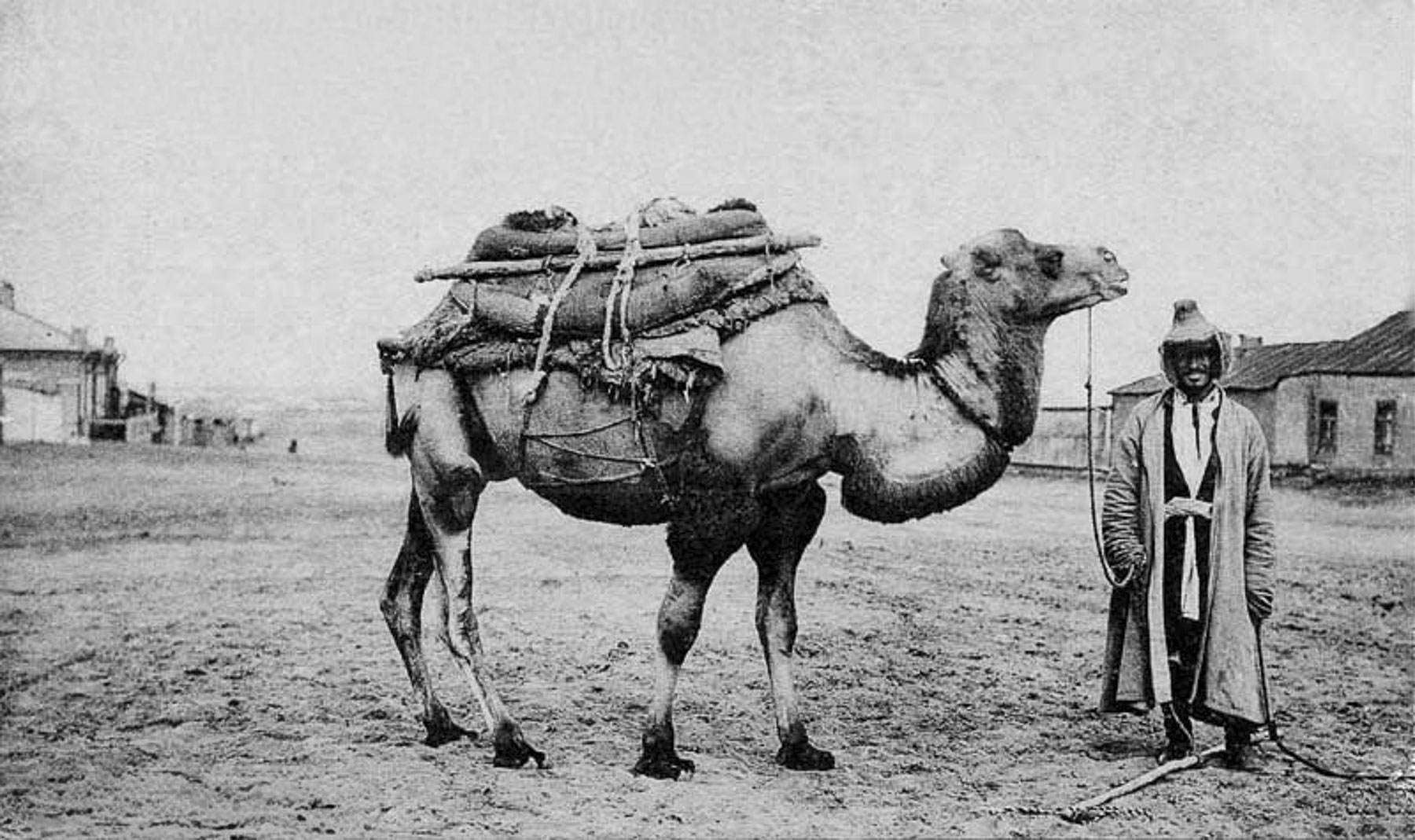
By the 16th century Spanish and Portuguese Navigators were mapping maritime trade routes across the Indian Ocean to India, Southeast Asia, the East Indies, and China. These nautical routes from Asia to Europe were significantly faster and safer than transporting goods via the Silk Road and trade on the overland route slowly diminished. Regional caravans still plied the deserts of Central Asia, taking supplies to isolated settlements well into the 1930s, but stopped when a growing road network ended the camel caravan era.

Without this international trade flowing both ways through Uzbekistan the armies of the Tashkent, Bukhara, and Khiva Khanates fell in succession from 1865 to 1873 to the technologically superior firepower amassed against them by Czarist Russian Empire in a drive to secure the region’s natural resources, mostly cotton, for the Russian economy. The Khanates retained figurehead monarchs, but all political and economic decisions were controlled by Moscow, which developed Tashkent as its administrative center. Czarist rule quickly forced all viable agricultural lands to be planted with cotton. This valuable crop, often called “white gold,” was then exported from Uzbekistan to the mills of the Russian homeland on the newly built Trans-Caspian Railway that connected Tashkent to the eastern shores of the Caspian Sea. Train ferries then shuttled the freight cars across the water to Baku, Azerbaijan for the last leg of journey. Trains returned to Uzbekistan with colonizers from Ukraine, Belarus, and regions around St. Petersburg and Moscow, who displaced Uzbeks and were given the best agricultural lands. Until this cotton monoculture was forced upon the farmers in Uzbekistan the country was agriculturally self-sufficient but soon relied on imported grains from other regions in the Russian Empire.

After Russia’s communist revolution ended in 1922, Uzbekistan was incorporated into the USSR, the Union of Soviet Socialist Republics, as the Uzbek Soviet Socialist Republic. Communist authoritative rule expanded the cotton monoculture with extensive irrigation systems using water diverted from the Amu Darya and Syr Darya rivers, the source waters of the inland Aral Sea. This environmental mismanagement caused the sea, once an important fisheries resource, to lose over 90% of its volume and transformed the vital waterbody into the new Aralkum Desert within five decades.

Life in Uzbekistan during the Soviet communist era was harsh. While basic housing, medical and education needs were met, there was rampant underemployment, widespread poverty, lack of foodstuffs in the markets, and political and religious repression. During the yearly cotton harvests Uzbeks, including children, were forced to spend 15 – 60 days in the fields picking the “white gold.” Schools and universities across the country were closed, and even teachers, doctors and nurses were not exempt from participating. Refusal could result in the loss of your job or expulsion from higher education.

Over one-hundred years of combined Russian Empire and Soviet rule ended in 1991 when Uzbekistan proudly declared its independence as the Soviet Union was dissolving.

Till next time,

Craig & Donna