One of the nice benefits of our slow travel philosophy is that we immerse ourselves more deeply into an area than if we were just passing through. Our three months in Cape Town allowed us to explore the city fully and discover things that even our local friends were unaware of.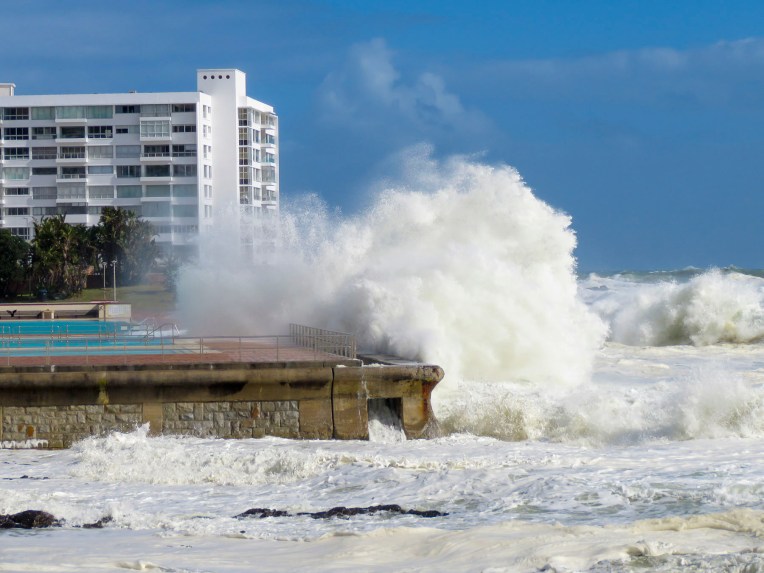 After our last apartment in the “Mother City,” on Bree Street, we moved to the Sea Point neighborhood and as its name suggests, it hugs the coastline under Signal Hill and Lion’s Head Mountain. Finding the ideal apartment for our last 30 days in Cape Town required a bit of detective work on our part though. One of the draw backs of using Airbnb is that it does not provide the specific address of a property until you actually book it. So, while the interior photos of a listing might be charming, its exact location could be anywhere within a five-block radius of a dot on the map, unless the host gives hints in the apartment description.
 In Sea Point this could mean on the water or nowhere near it. But with a little sleuthing regarding our final three choices, we were able to determine which one was right on the waterfront. Our reconnaissance of the neighborhood paid off and we booked a sixth-floor one-bedroom apartment with a terrace, that had an ocean view for dramatic sunsets and inland views of the paragliders launching from Signal Hill.
 It was the perfect location across from the Sea Point promenade. The lively Mojo Market, with numerous food stalls and live music seven nights a week, was just around the corner. Here we enjoyed the best fresh oysters and mussels in sauce at The Mussel Monger & Oyster Bar while sipping South African wine or local craft beers as the nightly band played.
 It’s actually possible to walk along the promenade from the V&A Waterfront all the way to the Camps Bay Beach. It’s a little over six miles in length, but it’s a popular stretch of sidewalk, which locals call the Prom.


It follows the coast past the iconic Cape Town Stadium, Green Point Lighthouse, multiple art installations and the Sea Point Pavilion Swimming Pools before passing the Clifton beaches and ending by the tidal pool in Camps Bay.


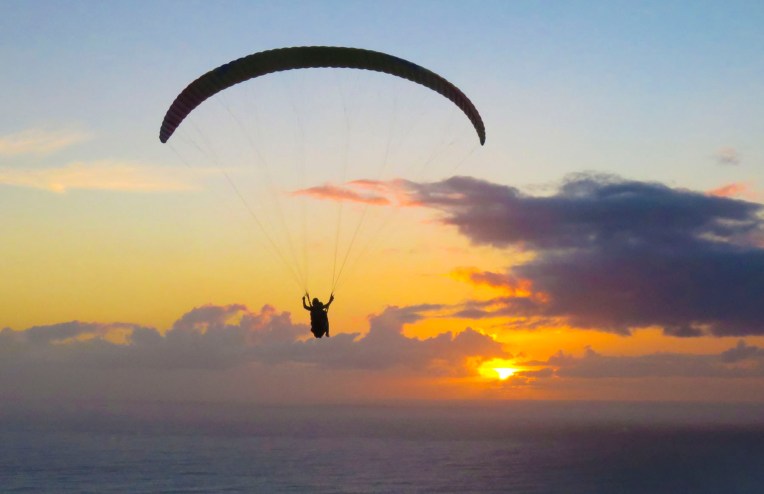
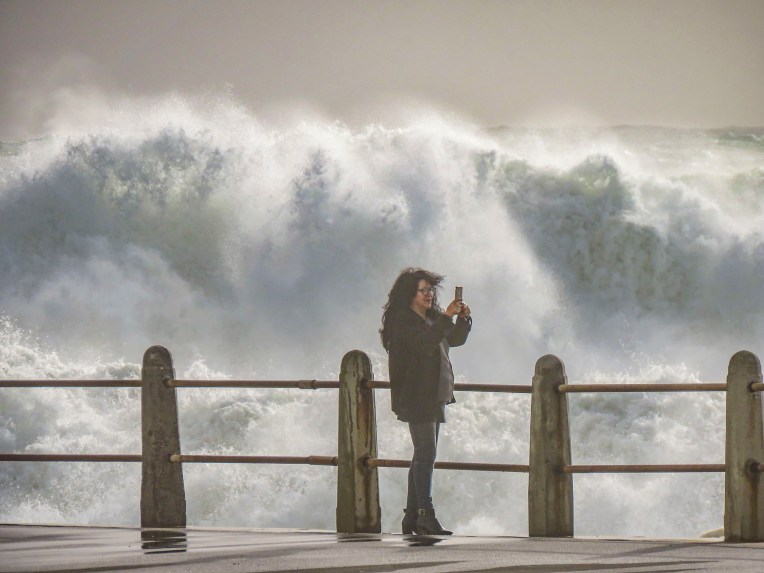
With surf crashing against the shore on one side and views of Signal Hill and Lion’s Head on the other it’s a dramatic and visually rewarding pathway that’s a destination for walkers, joggers, bicyclists and folks that just want to chill by the ocean. There are numerous places to rest and grab some food along the way. Timing our days to watch ships sailing into a setting sun or surfers catching the last waves of the day as the sun sank and set Camps Bay aglow were highlights of our time in Sea Point. Weather permitting, paragliders seemed to launch in rapid succession all day long from Signal Hill, first riding the thermals along the ridge towards Lion’s Head before turning back and gracefully spiraling down over the rooftops of Sea Point to land in a grassy park next to the promenade.
 We transitioned easily into our new neighborhood, finding three grocery stores and Bentley’s Bread, probably the best artisanal bakery in Cape Town, within easy walking distance on Main Road. With Bentley’s, the key was to go early; otherwise we’d miss out on their sumptuous daily specials which would always sell out quickly.
 Cape Town artists will paint anywhere and the walls of the underground parking garage at the Pick ‘n Pay – Sea Point were the perfect canvases for some incredibly talented street muralists. Sadly, we don’t think enough folks see these hidden works of art.


There aren’t enough superlatives to describe the abundance of stunning coastline around Cape Town. And there’s definitely a shortage of scenic pullover spots, but we felt compelled to stop at each one we passed on day trips to Hout Bay, Chapman’s Peak, Simon’s Town and the Cape of Good Hope. The views are just that awesome. One of the best things about Cape Town is that there are so many interesting activities and places to go within an hour or two of the city. In Hout Bay, time flew by at the World of Birds Wildlife Sanctuary & Monkey Park where we spent a fantastic morning observing a wide variety of South African birds. If you are a bird photographer this is a wonderful place to hone your skills.


Afterwards we cruised cautiously along the breathtakingly twisting and beautiful Chapman’s Peak Drive, a toll road, before heading for dinner at one of the celebrated weekend markets on the other side of Hout Bay. Bay Harbour Market is a vibrant and lively mix of food stalls, shops, artists and musicians under the roof of what was once a fish factory, across from the harbor.


For the longest time the Cape of Good Hope was thought to be the African continent’s farthest point south. That distinction belongs to Cape Agulhas, 136 miles to the east. Feared by ancient sailors for the turbulent seas that surround it, the allure of this dramatic spit of cliff-faced peninsula jutting into the ocean still stands. Entering the park, it’s a beautiful drive through a rolling fynbos landscape that hides a small number of elands, zebras, and ostriches, to the lighthouse that commands the cape’s point at 860 feet above sea level.


From the parking lot we took the Flying Dutchman, a funicular named after a 1680 shipwreck, to its upper station where a final set of steep stairs met us. It took every ounce of our strength to plow through the roaring winds that ripped around us, but it was worthwhile for the views at the top. 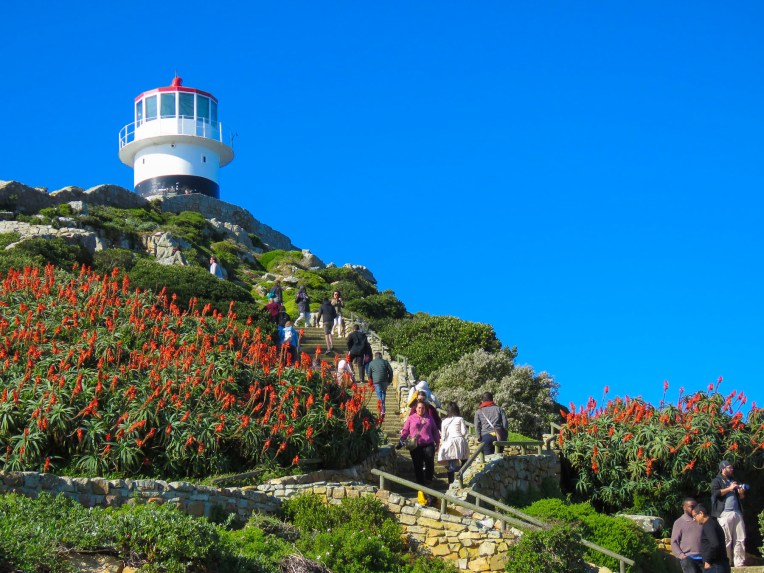 The wind was so strong it made it impossible to hold the camera steady. We soaked in the views as long as we could before the buffeting winds forced our retreat. Sitting outside at the snack bar we were astonished to witness a baboon snatch an ice-cream cone from a young boy and then gobble it up with great delight.
 We revisited the Simon’s Town area several times, because to see all the spots that interested us required more than one day. The big draw to Simon’s Town was the Boulders Penguin Colony. This is a restricted reserve where visitors must stay on the boardwalk in the viewing areas. Our timing was perfect as penguin chicks had recently hatched and could be seen at the nests snuggling against their parents for warmth. The beach was full of activity, with different groups of penguins doing their best Charlie Chaplin struts into or out of the turquoise waters of the bay.


The boulders along the coastline here create beautiful seascapes and secluded coves where smaller colonies of penguins live. One morning in late July we opted to try a whale watching tour again, this time from the Simon’s Town waterfront, hoping to see some tail slapping or breaching action that was elusive in Hermanus earlier. Alas, we only viewed one tail slap on this trip. As much as the tour operators want you to believe July is a good month for viewing whales, based on our disappointing experiences we’d suggest waiting till later in August or September for more certainty when larger whale pods return to the waters of False Bay. But it was a smooth day at sea, cruising along a dramatic coast and we did get to view a large colony of sea lions on some offshore rocks.


Most of the waterfront in town is devoted to Naval Base Simon’s Town which is the South African Navy’s largest base. The country’s frigate and submarine fleets sail from this port and it also serves as a training base for navy deep sea divers. Surrounding the pier from which the tour boats depart are several restaurants, with outside dining that overlooks the water. At the end of the pier there is a commemorative statue to the South African Navy “Standby Diver,” a rescue diver that keeps watch over those in the water.


In the small plaza above the restaurants there is an interesting sculpture of a dog, Able Seaman Just Nuisance, a beloved Great Dane and the only canine “to be officially enlisted in Her Majesty’s Royal Navy” during WWII. Sailors gave him the name Nuisance because he used to block the gangplanks to the ships. Surprisingly, his grave on the mountain above Simon’s Town, at the old SAN Signal School, is marked on Google Maps. The drive there offers some impressive views of the coast.


Several of the best seafood dinners we had in South Africa were at the Harbour House in Kalk Bay. A couple we met at the Bastille Day Festival in Franschhoek gave us this tip and they were right on target with this recommendation. Located dramatically on the edge of the ocean, great waves crashed against the rocks under the restaurant and the spray reached the windows of the dining room on the second floor. The seafood was excellent with a myriad of complex flavoring that was truly delicious, and which encouraged us to return a second time later in the month.


Dozens of colorful fishing trawlers lined the piers of the working harbor, just outside the restaurant. And dockside fish mongers had an eager audience of very large, well fed sea lions waiting for scraps to be thrown their way.


Itching to see more of the Western Cape, early one morning we embarked on the two-hour drive to Paternoster and the Cape Columbine Lighthouse. But first we had to detour to Sunset Beach for an iconic view of the city. Once outside of Cape Town the R27 cut a desolate track through a rolling landscape of open fynbos with scarcely a tree to be seen. Every so often the head of an antelope or ostrich could be seen emerging above the bushes on either side of the road. The heather clad landscape eventually gave way to pastureland speckled with sheep and wheat fields.
 Paternoster is one of the Western Cape’s oldest fishing villages, dating from the early 1800s, and is said to have gotten its name from Portuguese sailors who evoked the Lord’s Prayer to save themselves from shipwreck off its coast. The area was first explored when Vasco da Gama landed nearby in Helena Bay, in 1497. By then the area had been inhabited by the indigenous Khoisan for thousands of years. Hunter-gatherers, they harvested dune spinach, an local vegetable, from the beaches, and shellfish from the area waters, and they left behind middens that have been estimated to be 3,000-4,000 years old. The harvesting of the ocean’s bounty continues, with fishermen still launching their small boats into the sea from the beach and returning with fish and lobsters. As you pull into the village it’s not unusual to see fishermen selling their day’s catch from five- gallon buckets at the town’s intersections, where they hoist live lobsters aloft and yell “kry hier kreef!”, Afrikaans for “get some lobster here.” Aside from the picturesque whitewashed and thatched roofed fisherman’s cottages along a white sand beach dotted with boulders, there’s not much to this sleepy fishing village, except for some reportedly excellent seafood restaurants that were unfortunately closed the winter day we visited.
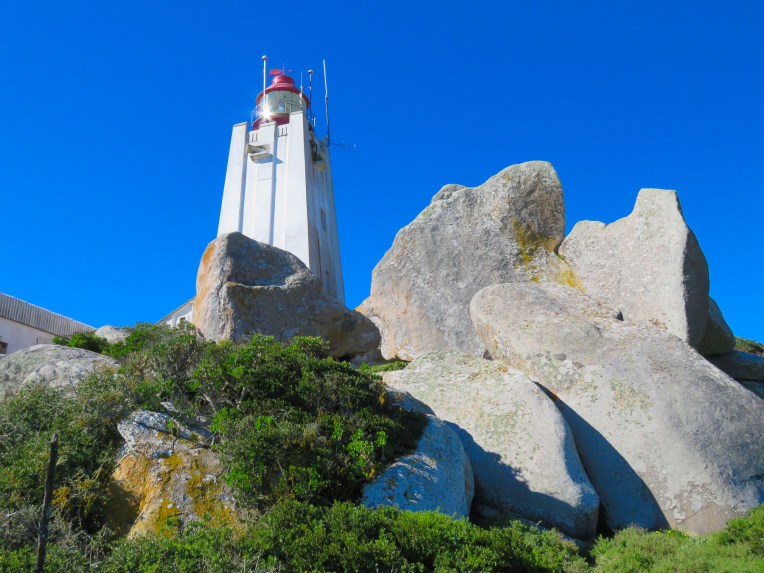 A short way out of town we followed a dirt road to the Cape Columbine Lighthouse. Built in 1936, on an outcropping of boulders called Castle Rock, it’s one of the last manned lighthouses in South Africa. “Seniors are free,” the lighthouse keeper, a senior himself, announced, as he pointed us to a set of stairs that eventually led to a very tall, steep wooden ladder. The panoramic view from the top was brilliant and, as expected, breathtaking. Getting down was a little more challenging than getting up. It was a kind of “make it or break every bone in your body if you don’t” situation. We’ve found in our travels around the world that folks in other countries can do all sorts of risky things, that in the states wouldn’t be allowed for safety concerns. Overseas it’s all about being responsible for your own safety. “See you at the bottom,” Donna said as she agilely maneuvered on to the ladder. “One way or another,” I grimaced in response. For me, with a fearful respect for height, it was all about that first step down.


There was a wonderful remote campground on the ocean’s edge at the end of the dirt track in Birthday Bay that’s popular with folks overlanding across Africa. Signs of early spring were beginning to show with colorful wildflowers dotting the dunes.


We finished the day in Saldanha with a late lunch on the water at the Blue Bay Lodge and a walk around its gardens and a visit to the Hoedjieskop Museum, a small cultural museum with an interesting display of photographs and memorabilia from the surrounding coastal fishing communities explaining the area’s history.


The setting sun filled our rear-view mirror and cast a warm glow across the fynbos as we headed home to Cape Town.
Till next time, Craig & Donna


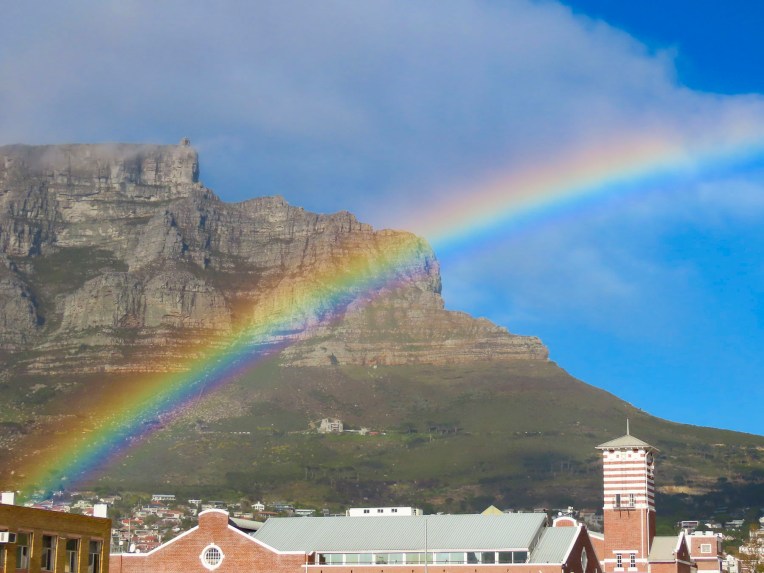 Unbeknownst to us, Bree Street is considered “Cape Town’s hippest street.” The area is in the midst of gentrification with numerous restaurants, bars and cafes scattered between high-end boutiques, art galleries, mechanic shops, plumbing supply stores, classic car and motorcycle showrooms, along with marine and industrial supply stores. And I swear all the above seem to offer luscious cappuccinos!


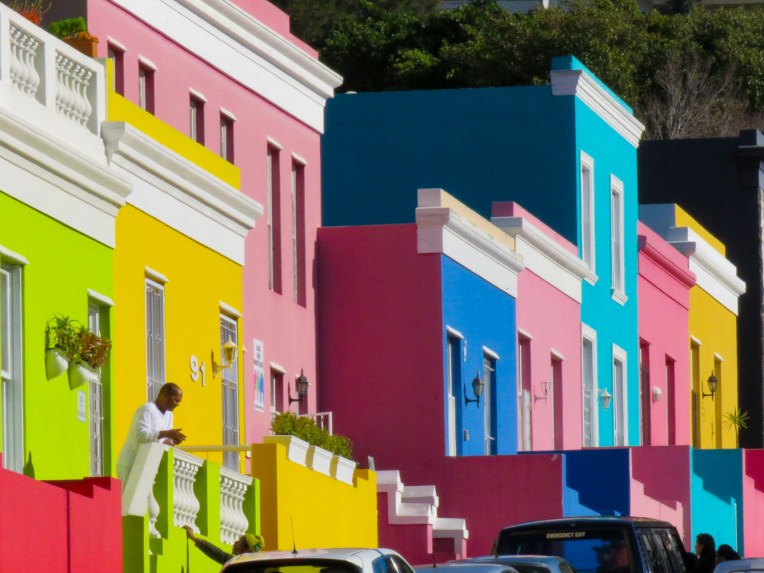 Formerly known as the Malay Quarter, the colorful homes of the Bo-Kaap neighborhood, located between Signal Hill and the city center, were only a few blocks away. One of the oldest continuously inhabited neighborhoods in the city, the first homes were built in the 1760s as housing for mostly Muslim slaves, who were brought by the Dutch from Malaysia, Ceylon and Indonesia to work. The neighborhood grew when slavery was abolished throughout the English empire in 1833. It’s said the houses were then painted bright colors as an expression of newfound freedoms. The neighborhood is home to the Auwal Mosque, the first built in South Africa in 1794 and still in use today. In 1957 the apartheid government declared Bo-Kaap a Malay Only Area and forcibly relocated everyone else. The pressure continues today under the new guise of gentrification. Bo-Kaap means “above the Cape” in Afrikaans and with its stunning location on the lower slope of Signal Hill and its close proximity to the Cape Town Business District, it has become a very desirable location. Old time residents fear the heart of Bo-Kaap will disappear and it will just become a façade of brightly painted buildings.
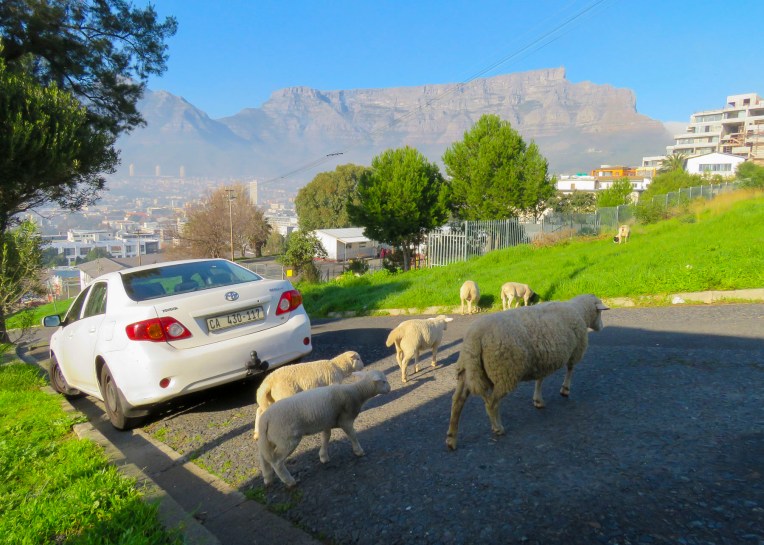
 We walked the hilly, cobbled streets of Bo-Kaap several times, enjoying its cityscape. One day we encountered a small flock of sheep grazing, within sight of the city’s skyscrapers, as we made our way to the Noon Gun, a naval cannon fired once a day, every day for over two-hundred years.
 Originally it was a signal for ships in the harbor, back in the day when they used sextants to navigate, to set their chronometers which were used to help calculate longitude. Critical stuff when you are navigating around the treacherous Cape of Good Hope. It’s a tradition that has survived the Dutch, English and apartheid.
 The Cape Malay community has contributed greatly to establishing Cape Town as a foodie’s destination with a cuisine that embraces exotic spices. Cinnamon, cardamom, ginger, cloves, mustard seed, chili and roasted fenugreek seeds all flavor various curries, bobotie, biriyani, rendang, and samosa recipes that have endeared themselves to Capetonians.


 Renting a car made it easy for us to reach points farther afield in Cape Town and its outlying districts. Our day trips included taking the cable car to the top of
 One morning we walked through the


 After our morning at the botanical gardens we headed over to Woodstock for lunch at


 We returned to Woodstock to check out The Neighbourgoods Market, a Saturday only food event, at The Old Biscuit Mill, a renovated mixed-use industrial site with offices, galleries featuring local artisans, vintage shops and eateries. If you need a retail therapy fix, this is the place to head. They have an interesting photography store called


 James Michener’s play South Pacific, an appropriate story for the times about diversity and acceptance, was performing downtown at the
 “You must attend a rugby game while you are here, it’s so South African. The playoffs are next weekend.” So Vincent, Donna’s friend from seminary, took us to our first rugby match. We are not sports fans and typically avoid watching any sports on TV. But this playoff match between the hometown favorites the Stormers and the underdog Sharks from Durban was a fascinating contest of almost continuous play; there was never a dull moment. Shockingly, the underdogs pulled off a surprise victory in the final second of the game and earned themselves a spot at the Rugby World Playoffs in Canberra, Australia.


 Muizenberg beach is renowned for its gorgeous stretch of sand, colorful beach cabanas on False Bay and interesting streetmurals scattered about town.


 On a cool Saturday we hiked up Lion’s Head Mountain along a trail that corkscrewed around the mountain to the top.
 The path deteriorated as we climbed higher with uneven footing that at times narrowed to the width of our feet as it edged, for short distances, along cliff tops.
 In some spots, ladders were used for short vertical climbs. If you plan to go, bring water and food. There are plenty of boulders to sit on to enjoy the 360 degree views the trail offers. We didn’t make it to the summit, with the last part a little too vertical for us, but we felt very satisfied with what we accomplished.
 We spent several afternoons on Signal Hill, watching paragliders launch into the sky above Sea Point, and then gently drifting toward the beach as the sun slowly sank below the South Atlantic horizon.
 This is a popular spot at the end of the day with many folks making a picnic of it, clinking glasses of wine as the sun sets. There are also several food trucks that provide light meals and of course cappuccino. It is, after all, Cape Town.