
Under layers of clothing, our bones still shivered as we stood bundled against an unusually cold August wind on the top deck of the CalMac ferry. The port of Uig on the Isle of Skye vanished on the horizon behind us as we steamed across the Little Minch channel to the Isle of Lewis & Harris in the Outer Hebrides, the island chain off the west coast of mainland Scotland.

On reading how busy the summer ferries are we had made our car reservation for the passage in the early Spring, as soon as the CalMac timetable for the year was published.
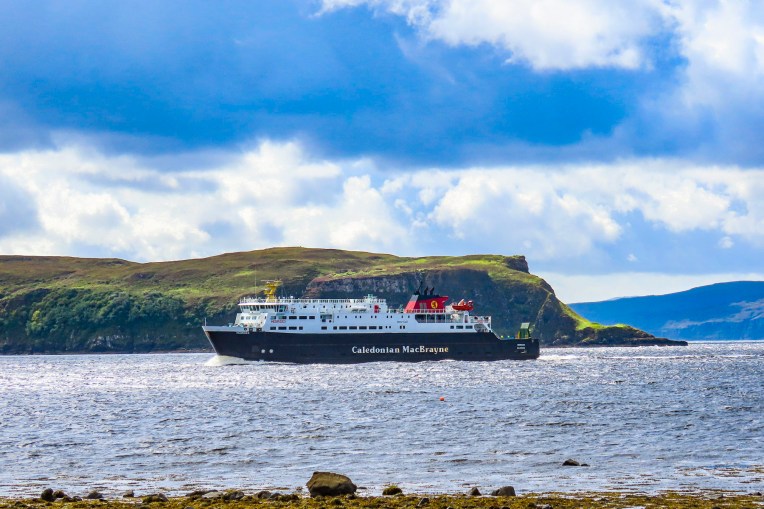
Our interest in Scotland has been piqued ever since hearing the entrancing song and watching the intriguing landscapes in the opening credits to the Outlander television drama. The ancient standing stones seemed to call us, and what better place to see them than on Lewis & Harris. And if you have made it all the way to the Isle of Skye, it only takes a little more effort to reach the outer island.

The two-hour ferry crossing passed quickly under a brilliant blue sky, but within fifteen minutes of landing in Tarbert we were caught in a shower while taking pictures of the small port. The weather changes quickly all across Scotland, even more so in the Outer Hebrides, which feel the full force of the North Atlantic winds.
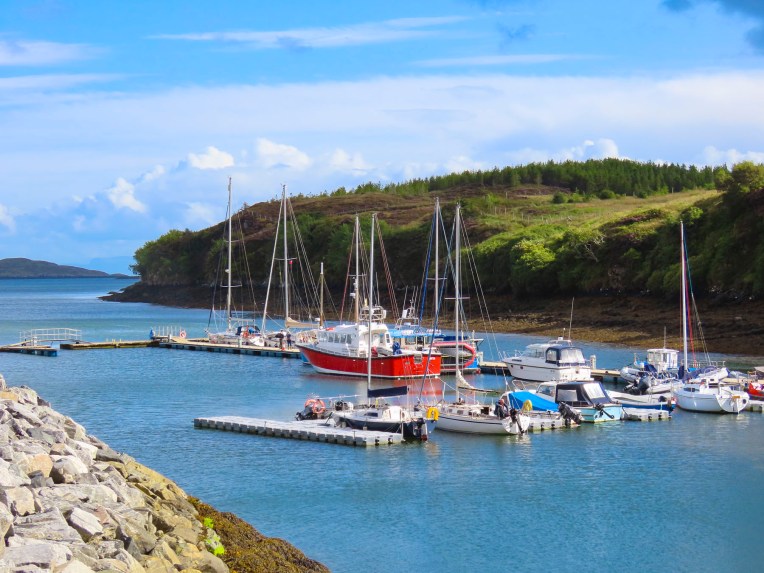
Within minutes it was sunny again as we drove across the interior of the island to the Gealabhat B&B in Callanish, our base for two nights, and within walking distance of the legendary Calanais Standing Stones site 1. https://www.9callanish.co.uk/

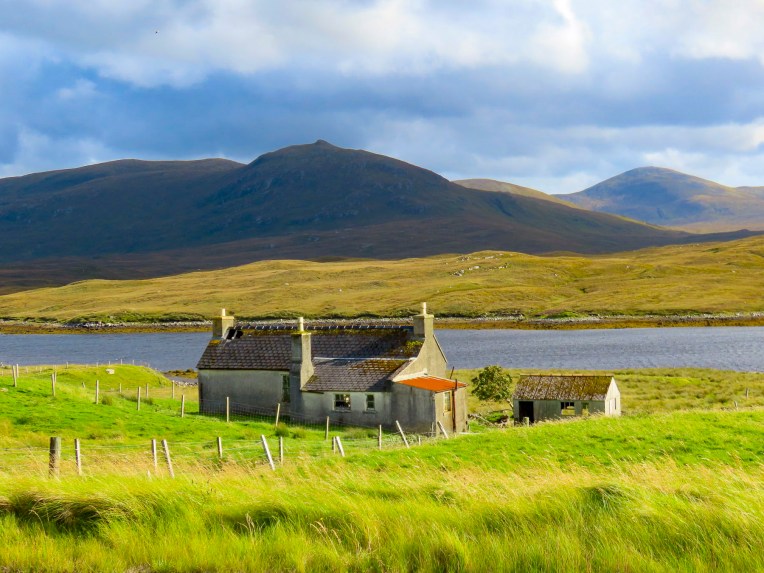
Relentless winds over the millennia have left an austere yet beautiful gently rolling landscape of boglands and heaths, with only the hardiest of trees left standing sporadically about on the island. Though it’s the perfect terrain for the native Scottish Blackface and the Hebridean sheep breeds which have adapted well to the island’s rugged terrain and harsh climate.

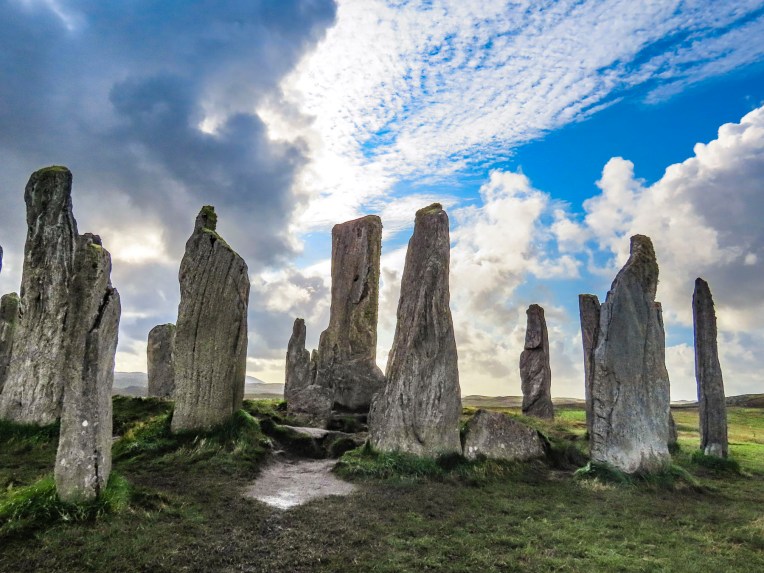
It was late in the afternoon by the time we arrived at the standing stones, which was perfect as the weather was still nice and we had this amazing site practically all to ourselves. Older than Stonehenge, the circle is believed to have been erected by a thriving ancient community nearly 5000 years ago, around 2900BC, as a celestial calendar that aligns with the orbits of the sun and moon.
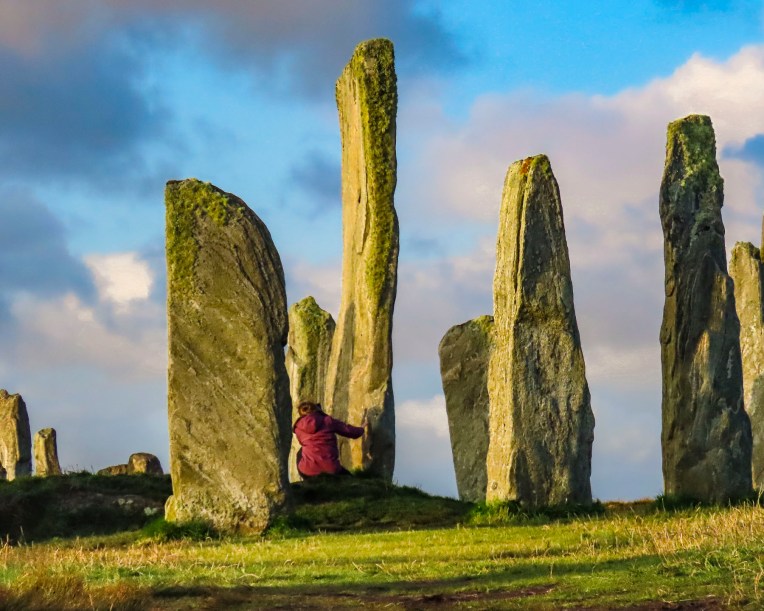
Surprisingly, the extent and height of the complex arrangement of over 50 stones was not fully realized until 1857, when peat cutting around the site revealed the full extent of the impressive, megalithic ritual structure, which was mostly covered by 6 feet of peat.

Do we hold hands and dance around them, meditate or dare touch them? Over the next two days we returned at sunrise and sunset to experience the wonder of this magnificent site.
A brief shower passed, but by the time we turned into the driveway of the B&B a rainbow arched across the sky. A good prediction for the weather ahead, we hoped.

Gregor’s friendly, “Ceud Mile Failte,” (one hundred thousand welcomes) greeted us as he ushered us into his family’s traditional croft home that has been operating as a charming three-bedroom inn since the early sixties. He hadn’t noticed the rainbow and joked of his now lost opportunity to discover the pot of gold. We didn’t realize when we made our booking that the proprietor was also a popular Gaelic TV chef who hosts a cooking program produced on the island. The Outer Hebrides are one of the few areas in Scotland where Scottish Gaelic is still spoken as the everyday language. https://www.youtube.com/watch?v=6EAvaVkjRo4
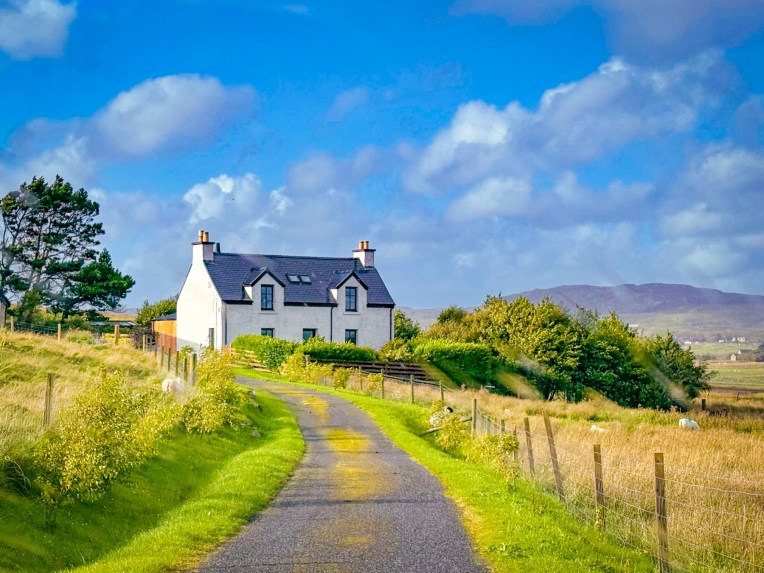
Staying at this B&B was one of the nicest experiences we had while traveling through Scotland. While the rooms are small, they were tastefully decorated in meticulous details that included Harris Tweed draperies and throw pillows, woven on the island, and we enjoyed listening to a small flock of sheep baa-ing under our window. The meals that Gregor created for breakfast and dinner using locally sourced food stuffs, and seasonal vegetables freshly harvested from his garden were delicious. Cordial conversations with the other guests around the communal dining table were also a highlight of our stay.


With only one full day on Lewis and Harris, we headed north to the Port of Ness and the Butt of Lewis Lighthouse, a distance of 35 miles, 57km, on the A858. Though only an hour journey without stopping it would take us much longer, with multiple stops along the way and back.

The island is actually one large land mass connected by a narrow isthmus at Tarbert. But the delineation is more topological, with the northern part of the Island, Lewis, being rolling moor and peatlands, while the southern part of the island, Harris, is more mountainous. The name “Lewis” comes from the Old Norse “Ljóðhús,” which is marked on medieval Norwegian maps of the island. Harris is derived from the Old Norse word “hærri,” meaning ‘higher’, which references the hillier terrain of the southern part of the island.
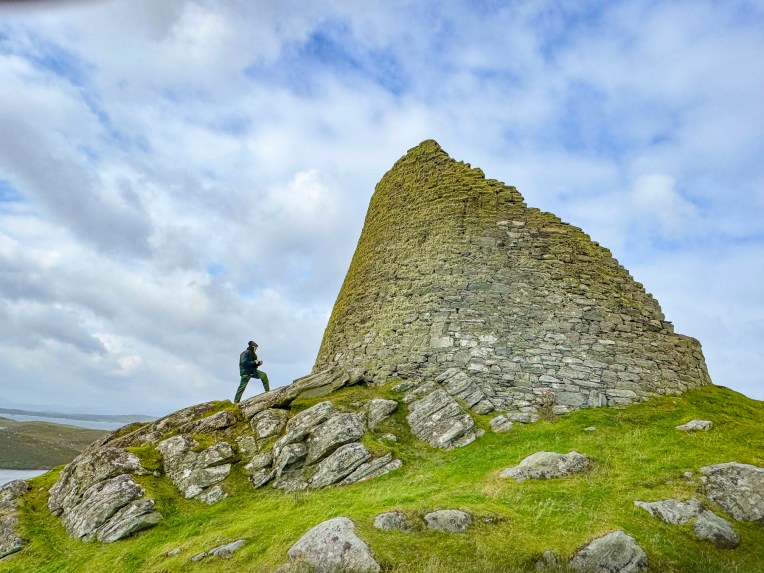
It was a cold morning and a tease of blue sky showed through the clouds as we walked the path to the summit of a knoll where the Dun Carloway Broch ruins commanded the spot. Brochs are cylindrical cone shaped, dry stone towers that stand about 40ft, 12m, tall when complete. The unique Iron Age structures, with an inner and outer wall design, separated by a stairway that winds to the top, is a building method only found on Outer Hebrides, Orkney, Shetland, and the Scottish mainland.


The Dun Carloway Broch is believed to have been built around 200BC by a local chief as a symbol of his status. Excavations and oral tradition show that the dwelling was used almost continuously across the centuries, up until the 1870s when it was last used by “a respectable looking family.” From the knoll we watched a farmer with his dog herd a flock of sheep into a pen.

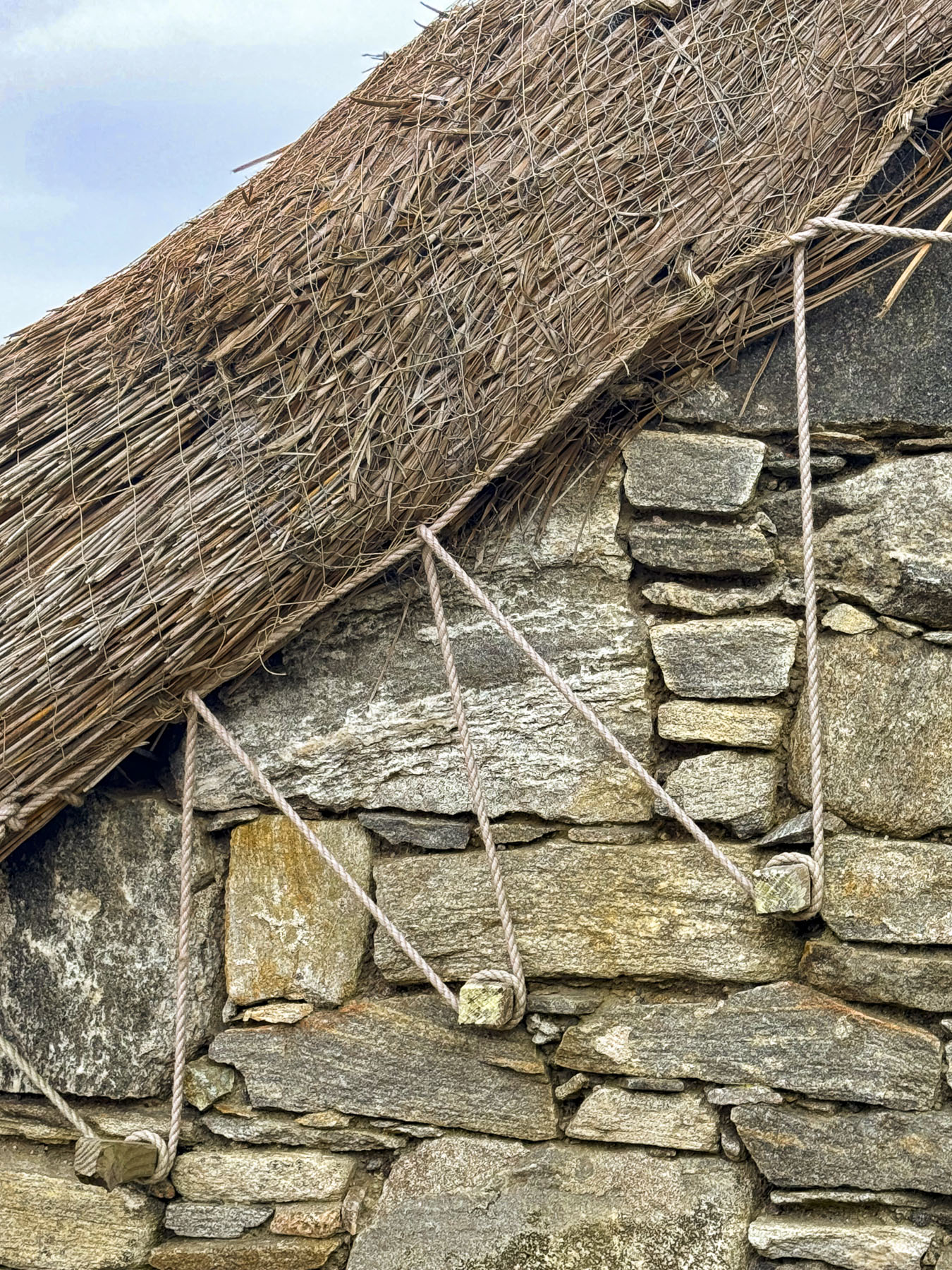
At Gearrannan we experienced what life was like in a blackhouse village. The homes in the 1700s coastal hamlet share the long elliptical shape and utilitarian design of the turf house in Glencoe, where folks lived in one end of their dwelling and kept their animals in the other. The blackhouses are more substantially built utilizing thick stone walls with an earthen core, and layers of thatch roofing held down by weighted fishing nets. With a fire in the hearth, they provided a welcome shelter away from the harsh weather of the Outer Hebrides. Folks lived in the village until the 1970s when the last elderly residents were moved into newer housing with indoor plumbing, and which didn’t require the continual maintenance that the ancient blackhouses did.


The village remained deserted until 1989, when a local preservation trust set about restoring the dwellings of the village. Today it’s a remarkable living museum with craft demonstrations in some buildings and old-timers sharing tales of life on the island. Some are the individual blackhouses are even available for vacation rental and one is also used as a hostel for budget conscious travelers. https://www.gearrannan.com/
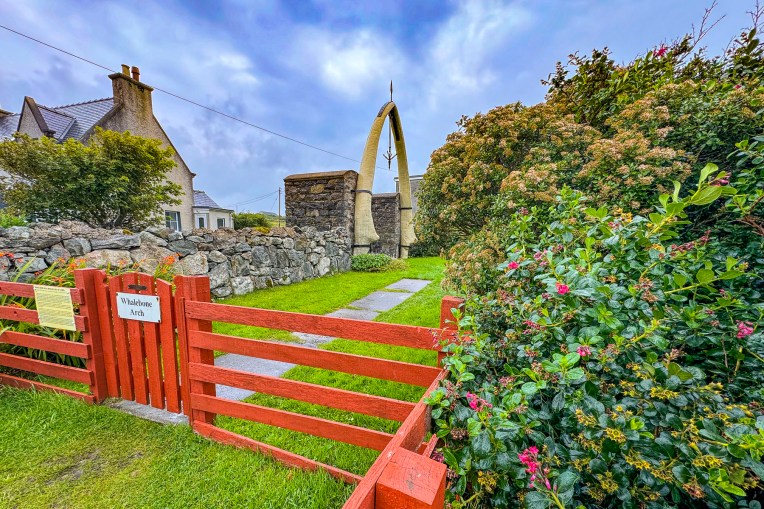
Cloudy skies continued to follow us as we stopped in Bragar to see the Whale Bone Arch. This is an easy site to miss; we drove by it twice, as it wasn’t well marked and it’s set back from the road, but it is very close to the Grinneabhat Community Center. The story of the arch starts in 1920 when local fishermen spotted the carcass of a dead 80ft long blue whale with an unexploded harpoon imbedded in its back. They decided to tow the monster to a more accessible location in Bragar Bay, where hopefully a commercial whaling company would retrieve it and pay a reward for finding the valuable hulk that was worth about $30,000.00 in 1920. A whaling boat from Harris, on the southern part of the island, came but was unable to remove the now firmly beached whale. The enormous carcass began to rot. Island authorities in Stornoway were contacted, and they expressed interest in the problem, but failed to respond. It wasn’t until local folk feared death from a putrid plague blowing into the village from the rotting remains that authorities told them, it’s your problem, dispose of it yourself. Villagers shared the now stinky task of boiling the blubber down to oil for casking and bottling. Eventually only the skeleton remained and the local Postmaster and general merchant, Murdo Morrison, expressed an interest in taking the harpoon and the whale’s lower 25ft long jawbone, to create an arch over the gate to his home. It had been almost a year since the whale was first discovered when a team of horses pulled the 4 ton jawbone along a sandy track on a sled to Morrison’s home. One day the charge in the harpoon exploded as Morrison was cleaning it. Fortunately, he had it pointing away from himself at the time, and the only damage was a large hole left in the wall of his workshop. After slowly deteriorating for nearly a century, the jawbone underwent major restoration in 2000 and was encased in fiberglass to preserve it.
“Drive a little, then café,” we like to say, and the perfect spot was just across the road at the Grinneabhat Community Center. It’s an interesting spot with a no-frills café, serving good pastries and coffee. It also has accommodations for tourists to rent. https://www.grinneabhat.com/ After our coffee we stopped in one of the halls to browse a small community sale, where local folk had tables setup and were selling hand knitted hats, scarves, and mittens along with various knick-knacks. To Donna’s delight, she found a lovely teapot set in purple and green, resembling the thistle, which is Scotland’s national flower and emblem, and a symbol of Scottish independence. The ceramics were made on Lewis & Harris by Scotia Ceramics, a company that is now closed. It was only £5, and it’s a treasured souvenir from our trip to Scotland.


Farther along we stopped at a recreated shieling hut built by the Barvas and Brue Historical Society in 2017. These small shepherds’ huts built of stone and thatch were usually windowless and only had one door that was placed on the side of the building that was away from the prevailing winds. The huts were once a familiar feature that dotted the landscape across the vast windswept moorlands of Lewis & Harris. They were purely spartan, but they provided shelter against the cold and rain as folks tended their flocks of sheep throughout the year, as they moved them between grazing areas.
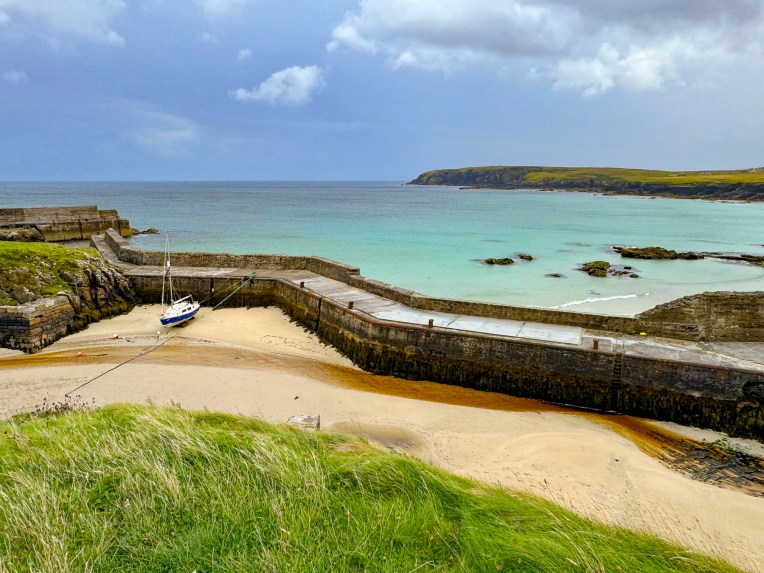
Golden sand and turquoise blue water filled our view as we stood on the cliff above the tidal harbor at the Port of Ness and watched seagulls circle above a fisherman on the breakwater, in hope of retrieving scrapes of bait. The Caribbean color was unexpected for an island surrounded by the North Atlantic. The man-made harbor experiences an extreme tidal range in late August that swings between 15ft at hightide but leaves the boats in the harbor waterless and resting on the sandy bottom at low tide. The Breakwater café, on the heights above the harbor, with its huge picture windows overlooking the coast, was the perfect spot for lunch. The food was very good and reasonably priced.

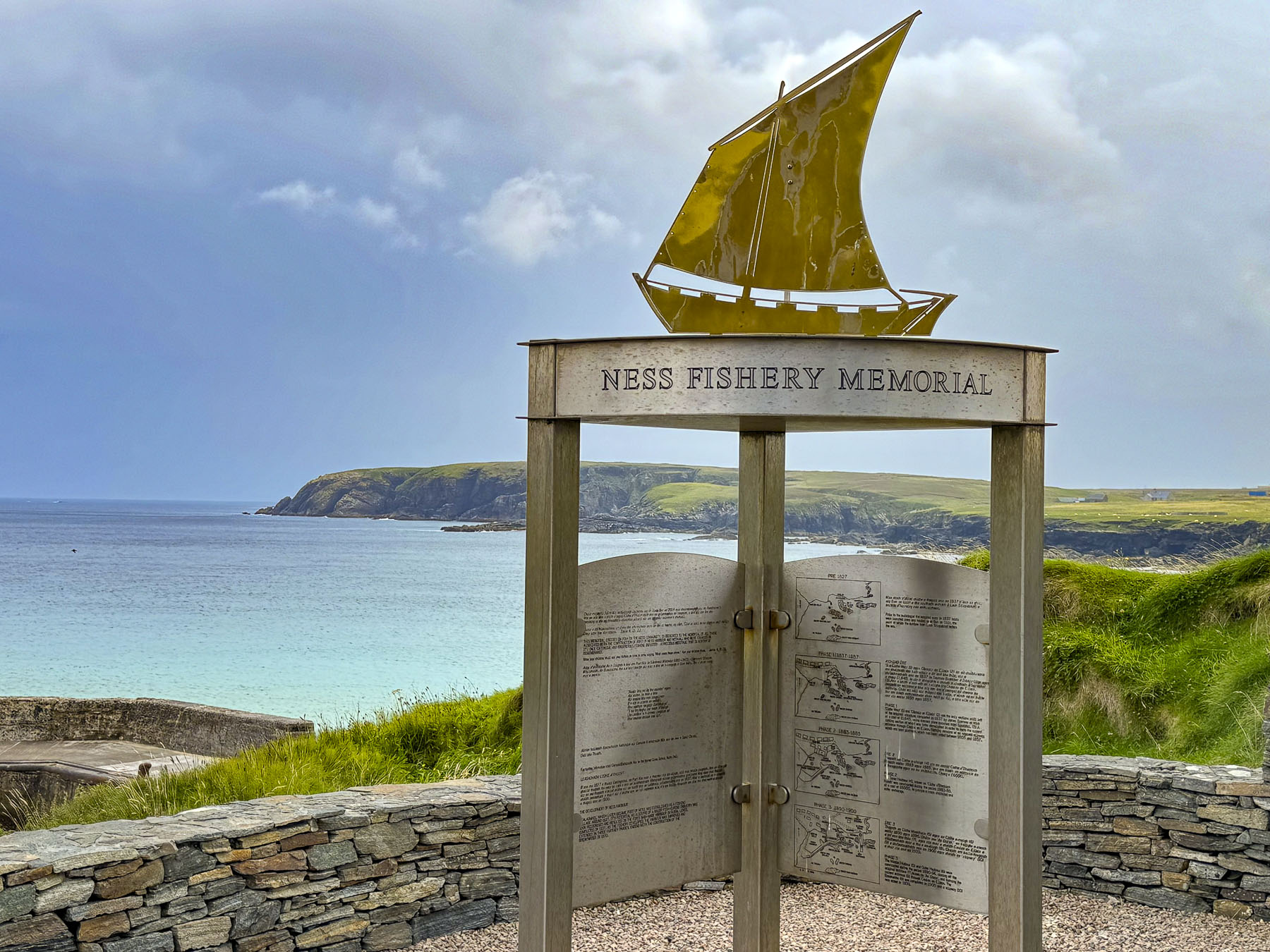
Revitalized after lunch, we headed to the northernmost point on the island, the Butt of Lewis Lighthouse. It was built in 1862 on a ferociously wind battered headland surrounded by a raging ocean. We dared not to get too close to the edge for fear of being swept away.

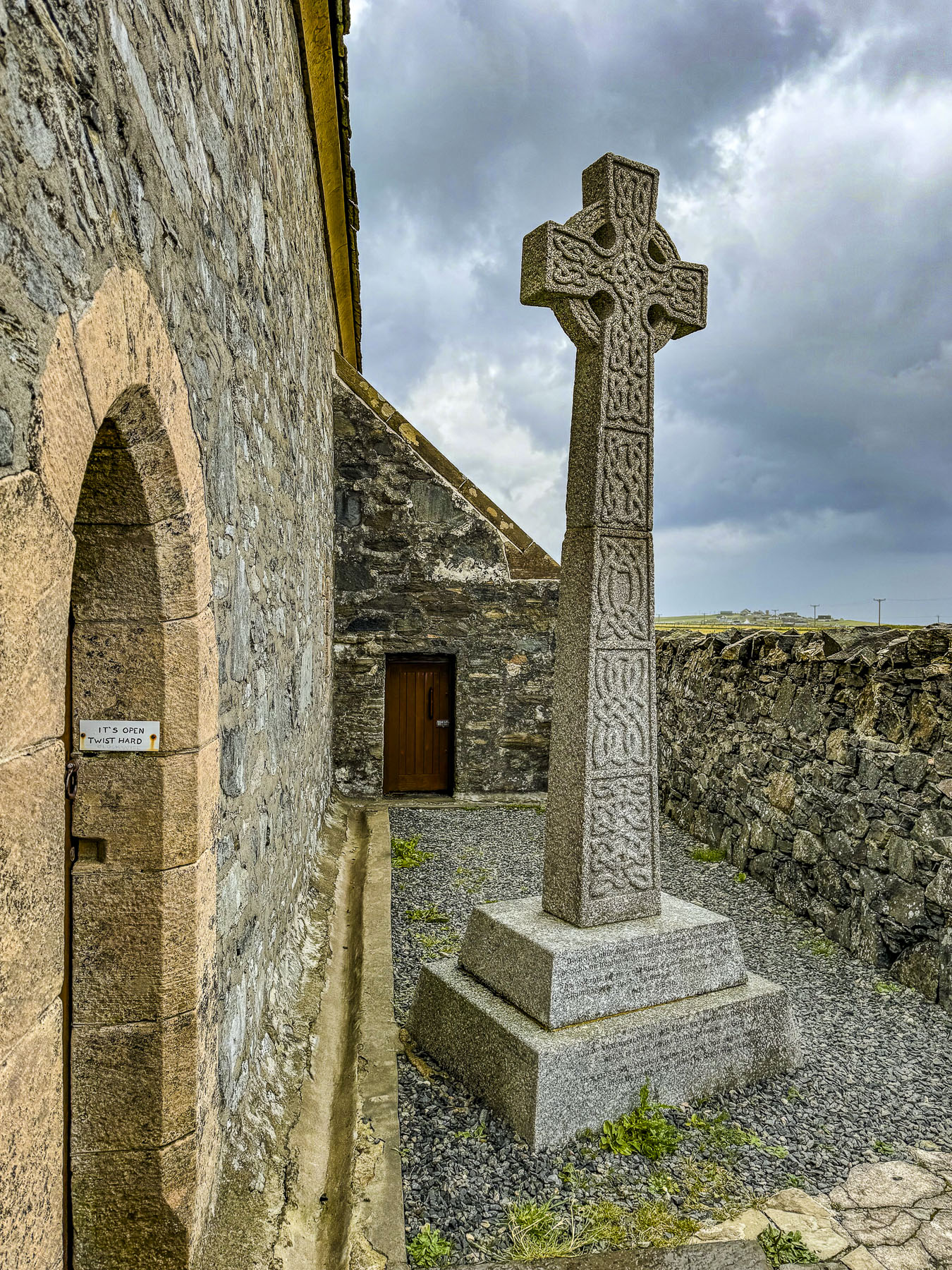
Earlier we had passed St Moluag’s Church, spotting it in the middle of a large field surrounded by grazing sheep on our way to the lighthouse, but we had a difficult time actually finding the path between the croft houses that led to it. Eventually we spotted an obscure sign and small pullover between the homes on the main road from Port Ness to the village of Eoropaidh. The parking area is about 1000 ft before the turn to the lighthouse.


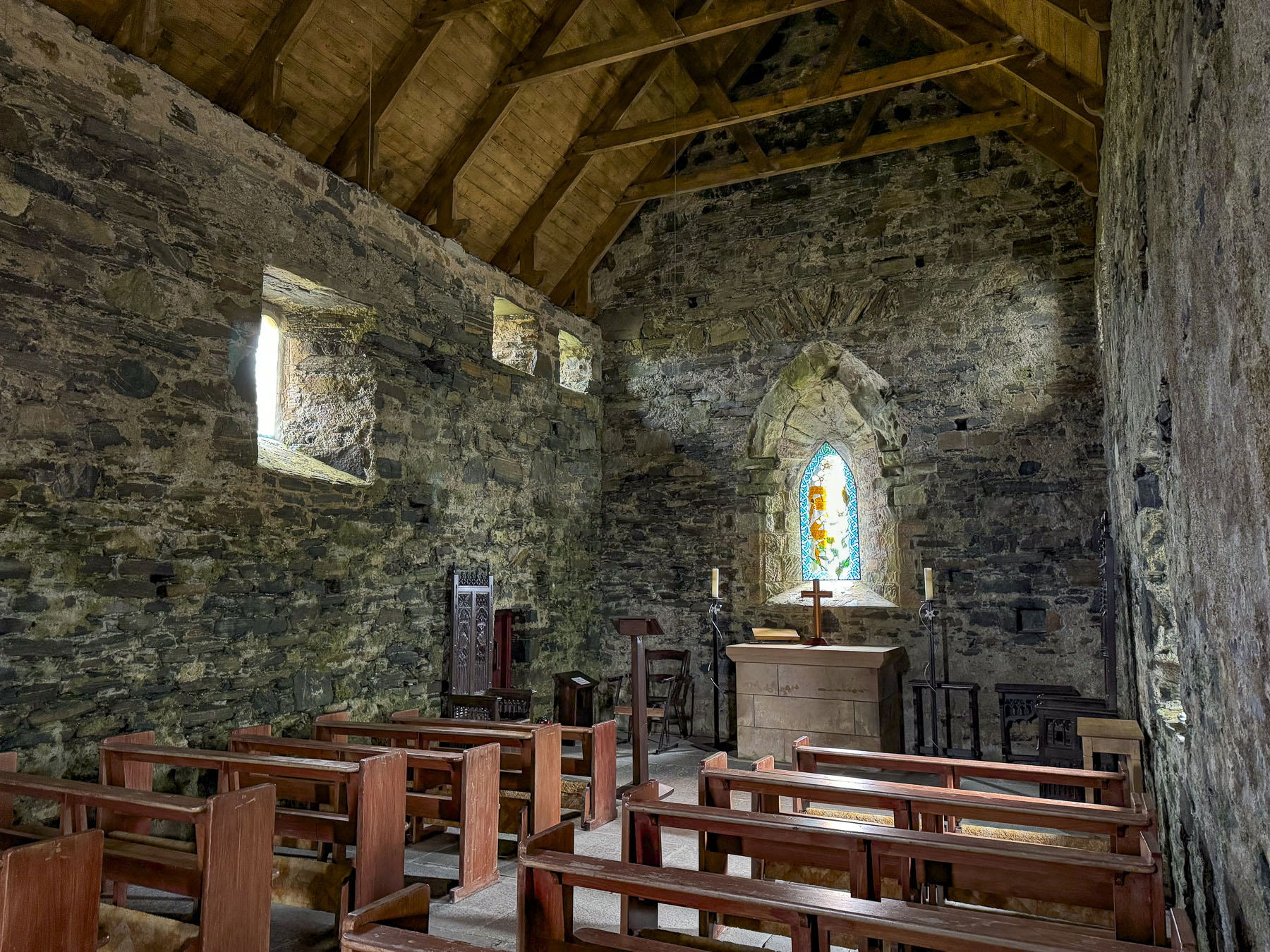
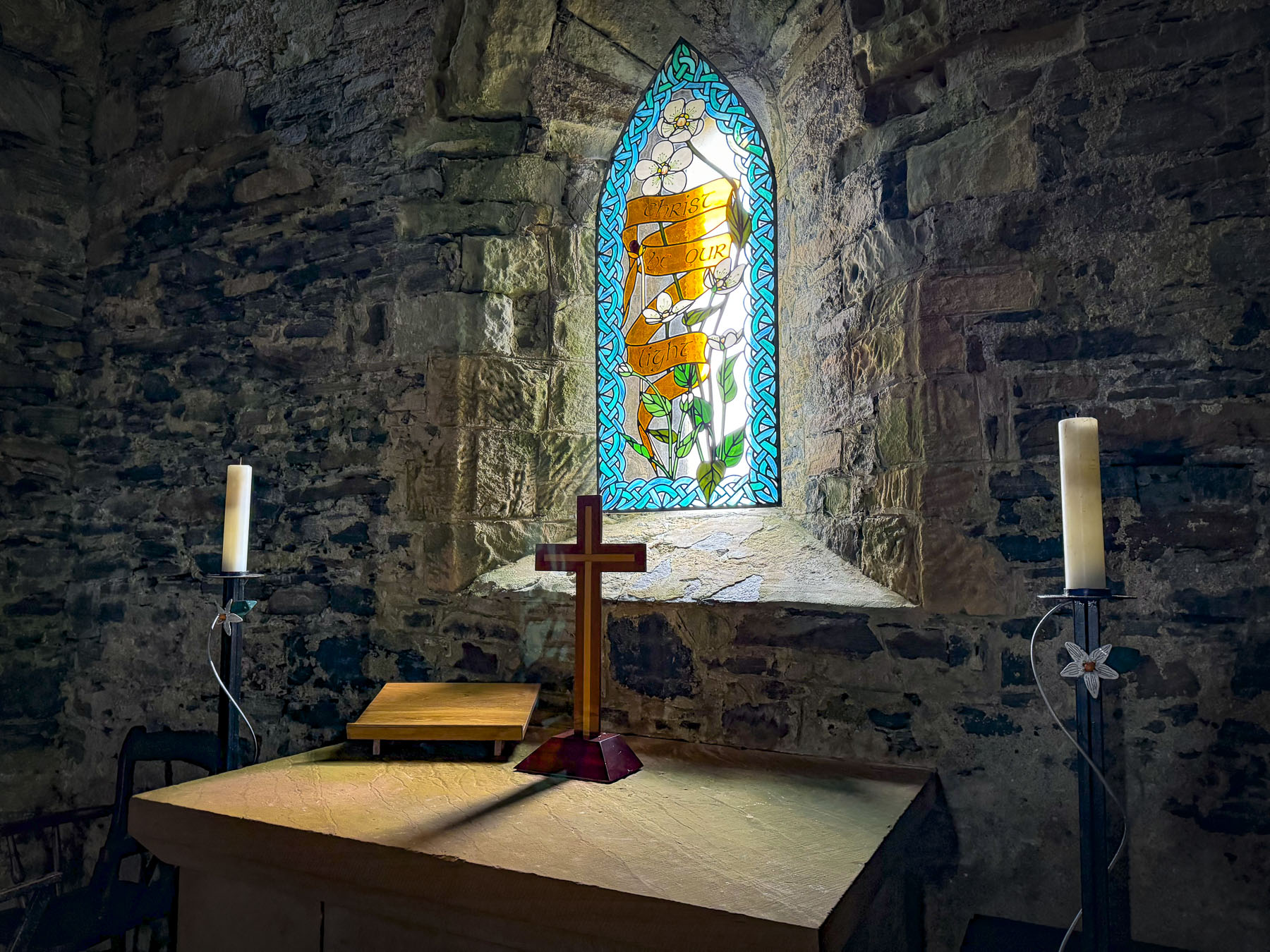
We followed a fenced pathway, no frolicking with the sheep permitted, to the ancient stone building. Outside behind a low stone wall stood a tall, intricately chiseled Celtic cross. The door to the sanctuary was open. Once inside, it took a few minutes for our eyes to adjust to the darkness, but finally a large interior was revealed with a small stained-glass window behind the altar, which brought a bit of bright color into the monochrome earth toned interior. Otherwise, it was a chilly space that didn’t appear to have heat, but we saw cushions on the church pews, which indicated that it was still used for services.

Tradition believes the church was built in the 12th century, above a 6th century ruin, by a Norse prince who had converted to Christianity. It’s named for Saint Moluag who, with Saint Columba, were the first Irish missionaries to bring Christianity to the people of Scotland. Surveys reveal the church underwent several expansions and alterations until the 16th century but has since remained true to its ancient core. We headed back towards our B&B after this.


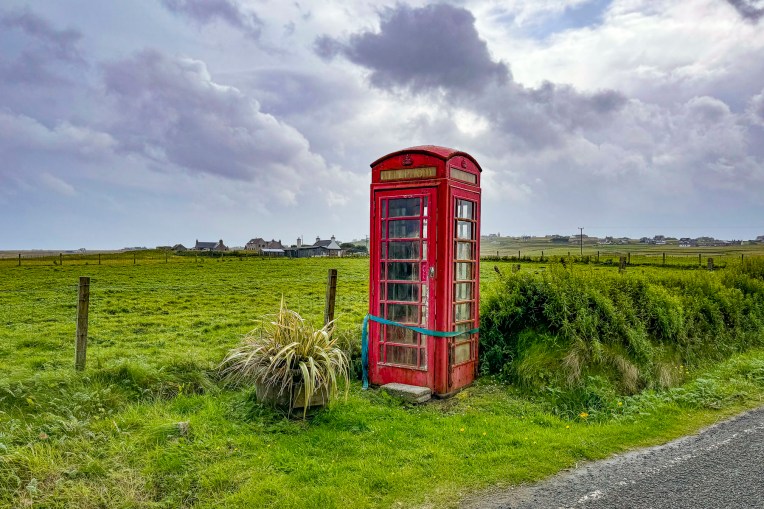
Obsolete, abandoned red phone booths, some just seemed randomly placed in the middle of nowhere, were a curiosity across the island, and always reminded us of Superman and Dr. Who.
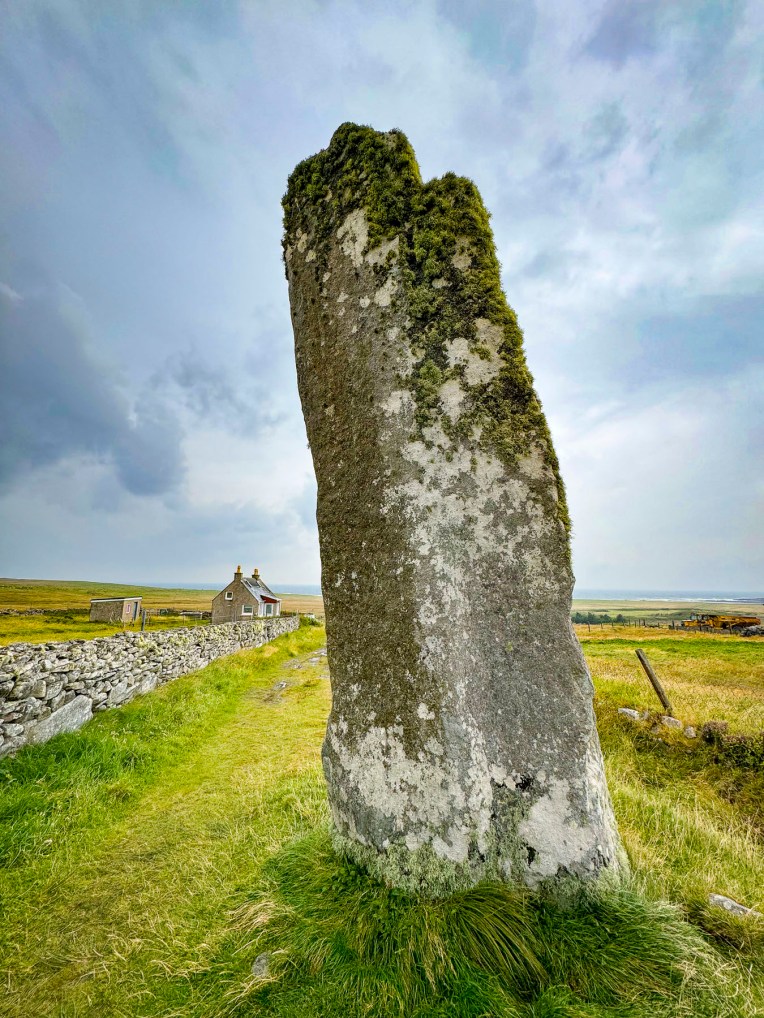
Different configurations of standing stones can be found in various locations across the island. But one of the more intriguing ones was the single stone, Clach An Truishal, in the hamlet of Baile an Truiseil. It’s a gigantic lichen covered monolith that looks like a dagger thrust into the earth by the hand of God. Oddly, it stands alone, within sight of the ocean, down an isolated farmer’s track, between two stone walls that separate crofter’s fields. The 19ft tall stone was once part of a larger stone circle, but unfortunately, in the early 1900s the smaller stones were broken apart and incorporated into the nearby field walls and also used as lintels in several local crofter’s homes. Though as ancient as the Calanais Standing Stones, local tradition believes the Clach An Truishal stone marks the grave of a great Norse warrior or, alternately, is the site of a momentous clan battle, the result of cattle rustling, between the Morrisons and the Macaulays in the mid-1600s.
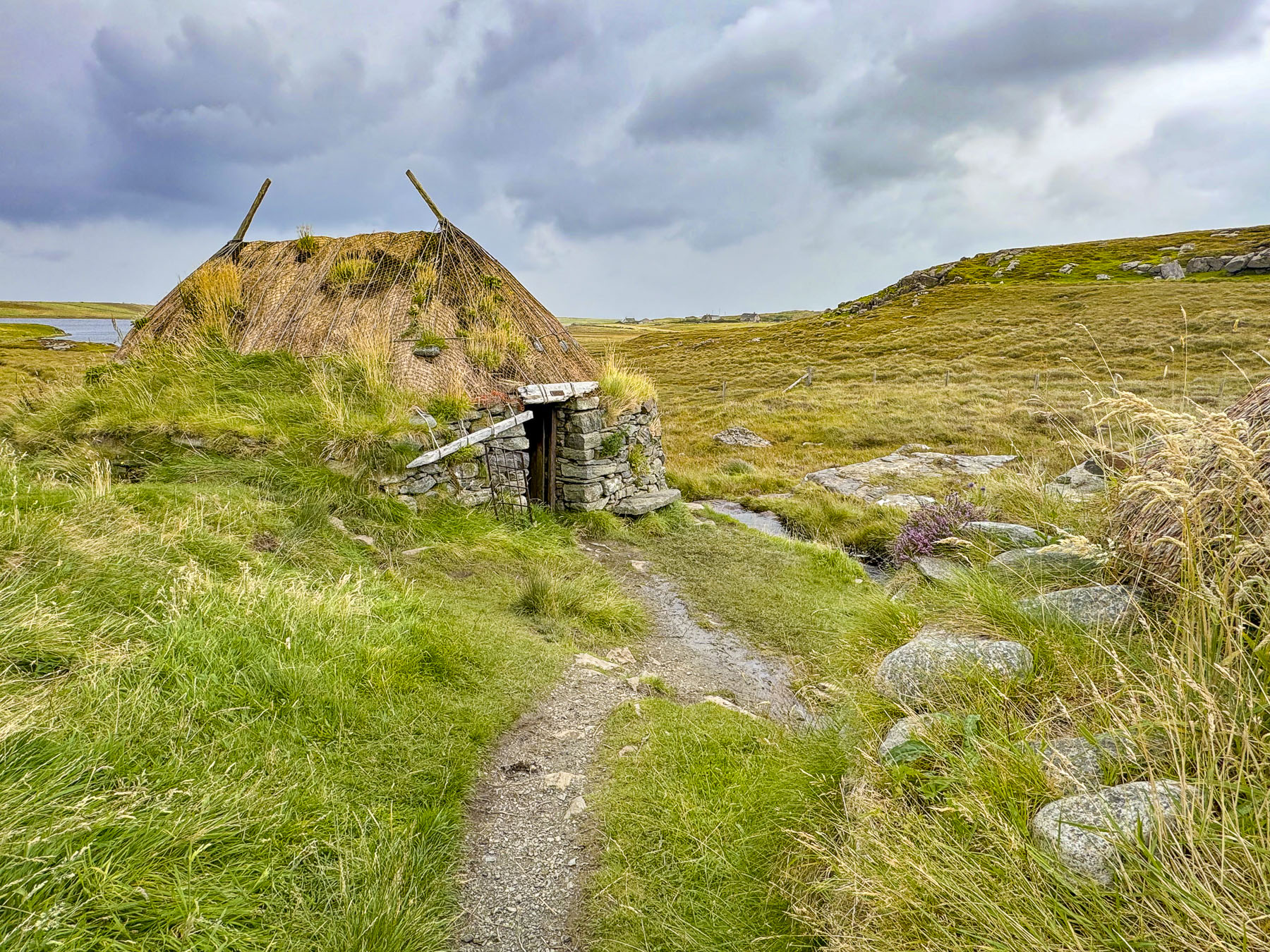
Just off the A858 in Shawbost, we followed a gravel trail through rolling heathland to an ancient Norse mill and kiln set along a stream that flowed to the sea. During the Viking era the water-powered technology of the mill was essential for grinding grains like barley and oats into flour, a staple of the islander’s diet during that era. The kiln next to it would have been used to dry the grains before grinding, as well as for smoking fish and meat for preservation. Pottery vessels known as a ‘crogan’ or ‘craggan’ would also have been fired in the kiln.



Back in Calanais we stopped at the standing stones again to enjoy the wonder of them one last time before dinner and our departure from the B&B the next morning.

We thoroughly enjoyed Gregor’s hospitality and cooking skills, but regrettably it was our last day on the island, and we hadn’t toured the southern region of Harris. Hopefully, we will get the opportunity to return one day to explore more of Lewis & Harris, along with the other Outer Hebrides islands. But our plan for the day revolved around our reservation for the 3pm ferry from Stornoway to Ullapool back on the Scottish mainland.

Spontaneously we turned off the main road after we spotted several standing stones in a field far from the road. This turned out to be Callanish Stone Circle II which is set in a fenced cow pasture. To our delight several hairy coos were vigorously scratching their backs and necks against the ancient obelisks. It was funny to think that the monuments, once an ancient society’s connection to the celestial heavens, were also humble, utilitarian bovine rubbing posts.


Instead of taking the A858 and A859 to Stornoway, we chose to follow Pentland Road, a weaving, slow, 12-mile-long route through the Lewis highlands. The area is a barren, treeless wilderness of rolling heathland that stretches in all directions as far as the eye can see. A lone car whisked by going in the opposite direction. Sheep, along with an occasional hawk circling overhead, were the only other signs of life.
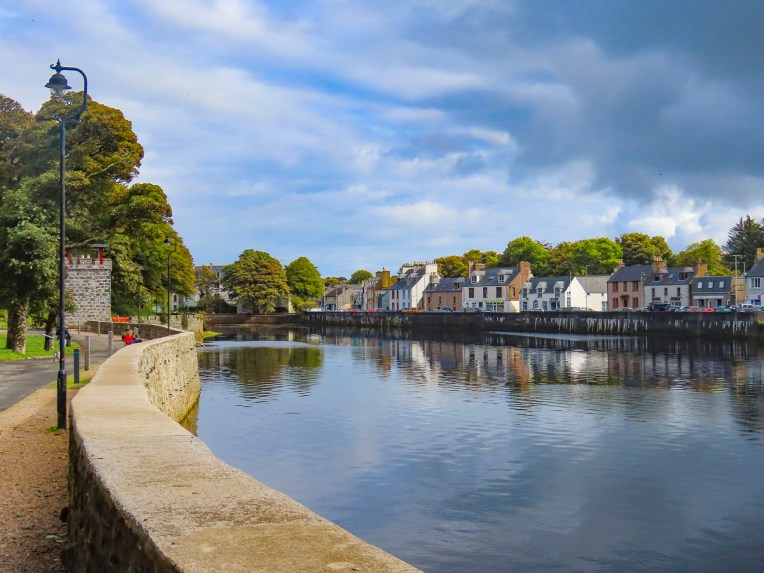
It’s difficult to believe that the island was ruled by basically two clans starting with the Macleods of Lewis in the 1300’s, but their 300-year stewardship was fraught with feuds and various rebellions. In 1598, King James VI sent the “Fife Adventurers,” a group of lowland gentry and farmers from the Scottish mainland to Lewis to establish a colony, but the clans defeated their efforts. In 1610 the powerful Clan Mackenzie of Kintail, in the Scottish Highlands, purchased the Fife Adventurers’ charter for the island, and successfully subjugated the island’s rebellious clans.

The Mackenzie Clan remained in control of the island for nearly 250 years until 1844, when it was sold due to financial difficulties, to the Far East trade magnate Sir James Matheson, for £190,000. Shortly afterward he built Lews Castle on a hill across the harbor from Stornoway. He also oversaw the “clearances” of over 500 crofting families from the island to make room for industrial scale sheep farming. Many of the tenant farmers, left without homes, were forced to emigrate to Canada or other British colonies to seek better opportunities.

After Matheson’s death the island was eventually sold for £143,000, in 1918, to William Hesketh Lever, Lord Leverhulme, the soap magnate and founder of the business that would eventually become the Unilever conglomerate. He invested heavily in expanding Stornoway’s burgeoning fishing industry, and other projects with the hope of lifting the town’s economic prosperity.

The islanders resisted his plans to make them employees, and in 1923, a now discouraged Leverhulme gifted Lews Castle and 64,000 acres of land to the Stornoway Trust, a community-owned land trust. During WWII the castle was used as a military hospital and then served as the home of Lews Castle College until 1988, when structural issues forced the school to relocate. After extensive renovation and modernization the castle is now a multi-function destination that offers luxury accommodation, holds a museum dedicated to island life, and hosts weddings and other events.
On the far side of Stornoway we viewed the Aiginis Farm Raiders’ Monument. Our first thoughts upon seeing the hull shaped monument was that it must mark the site of a Viking raid, but we were totally off in our speculation, as the twin pillars commemorate a January 1888 event in which 400 brave men and women from Point Peninsula, risking imprisonment for their actions, stormed the farm in an attempt to reclaim it for small-scale crofting. This was still the era of the “clearances,” and folks were tired of being forced out of their ancestral homes for the benefit of a few landlords who wanted to raise sheep and cattle. The government sent in the army to take back control of the farm, but by the early 1900s, after other protests across the Outer Hebrides and the Highlands, land reforms were slowly underway, and Aiginis Farm was divided into a number of croft plots.
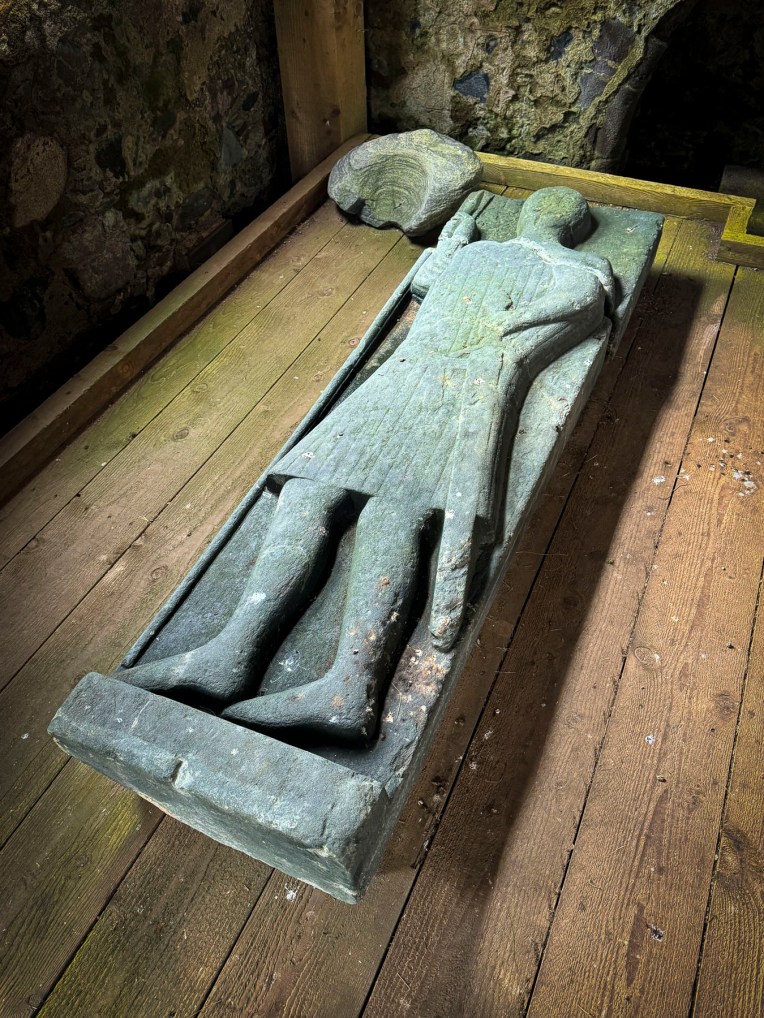
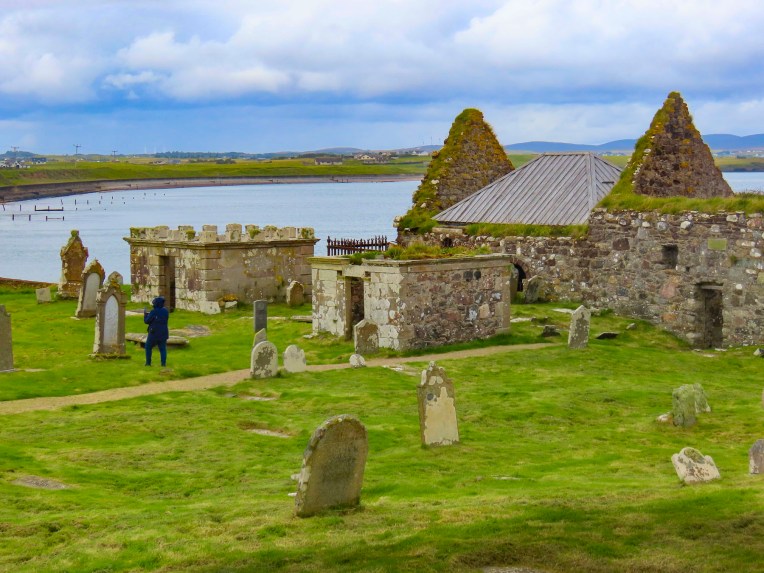
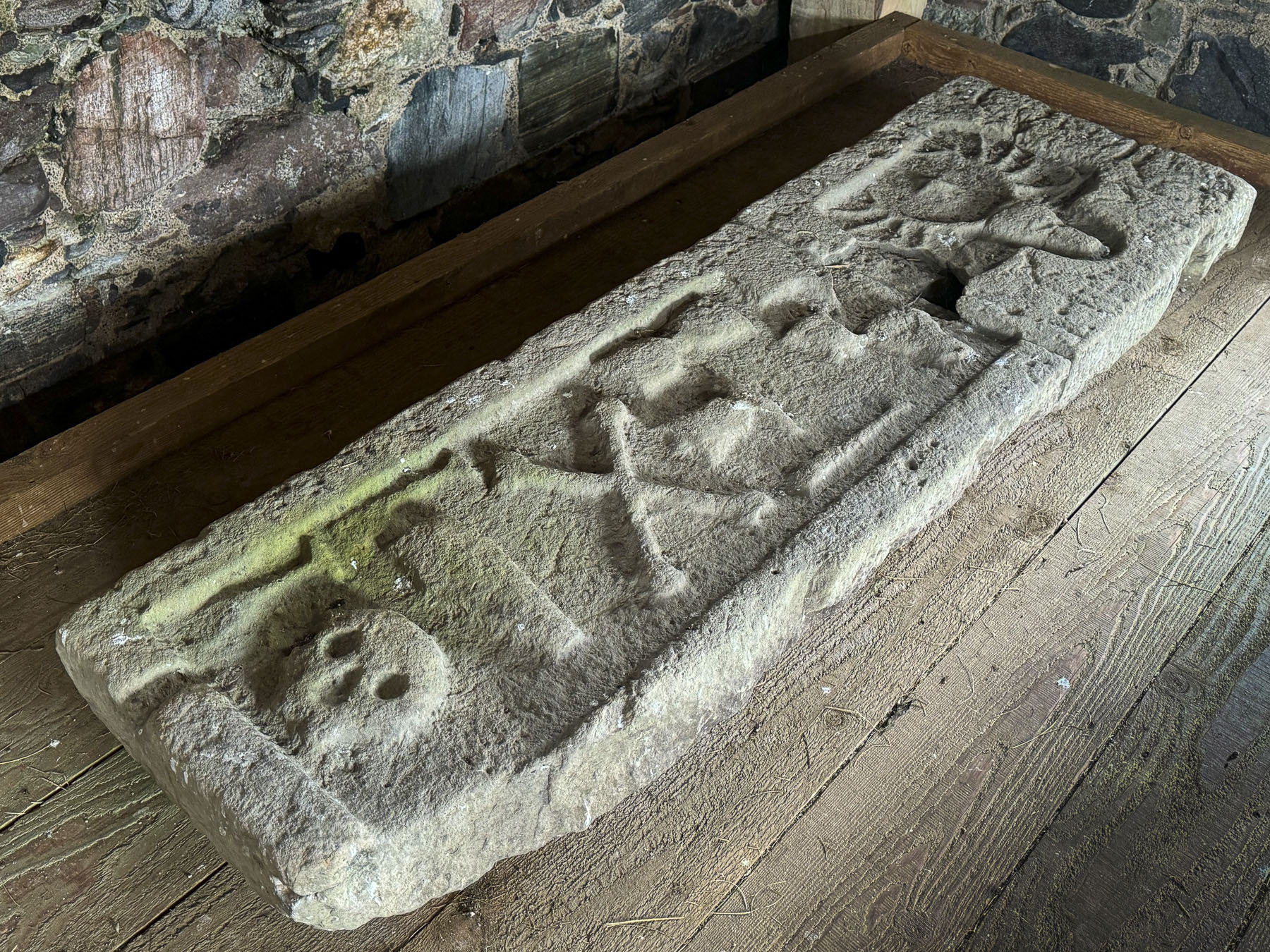
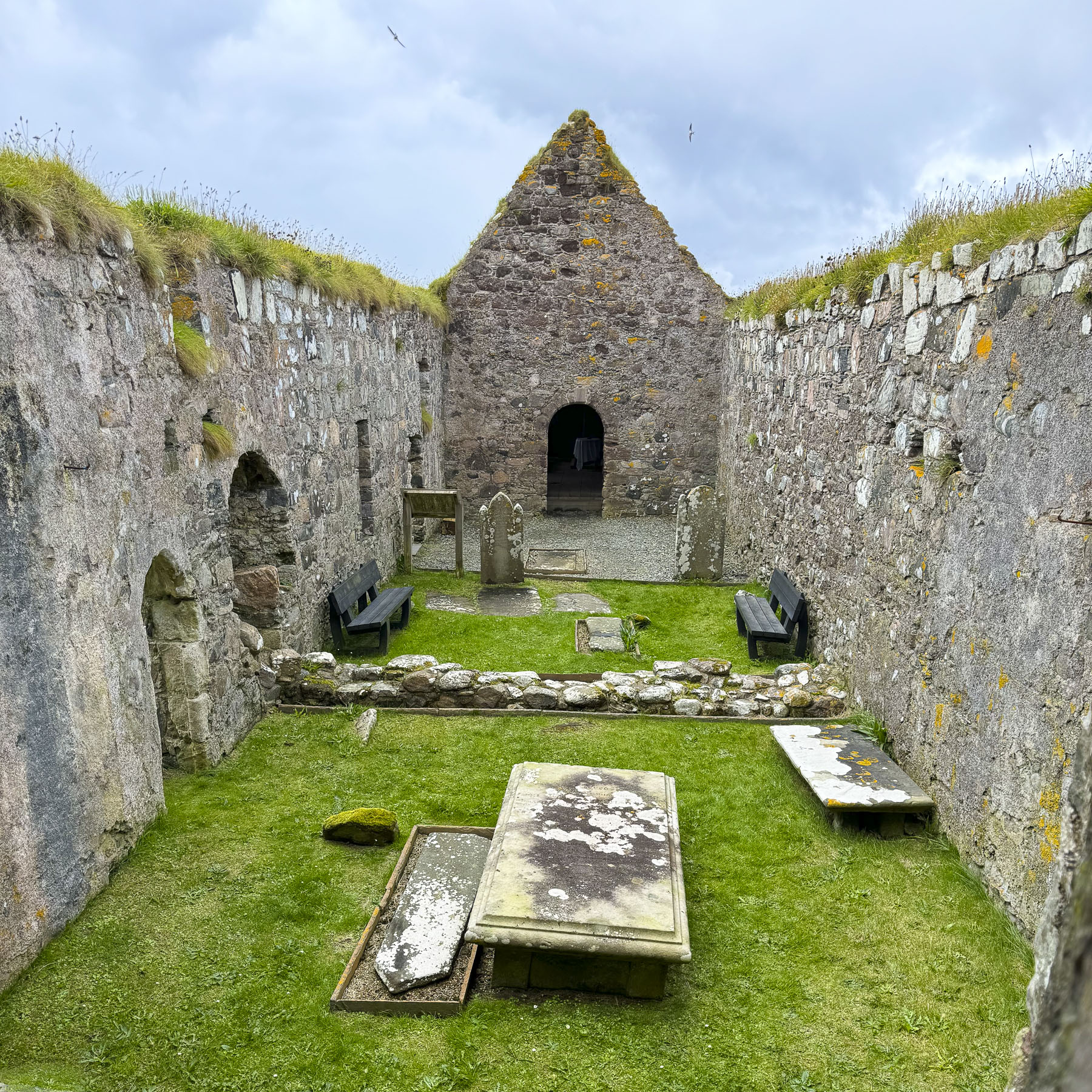
The ancient ruins of Eaglais na h-Aoidhe, St Columba’s Church, were just past the Raider’s monument. It’s an intriguing old church that is believed to have been first built in the 6thcentury, with the chapel and churchyard later becoming the burial site for the Macleod Chiefs of Lewis. Slowly the boggy soil of the cemetery is swallowing many of the historic gravestones under the ground.
Being from the US, the land where every store is open seven days per week, we were surprised to find that most businesses and restaurants were closed on Sundays in Stornoway. Fortunately, we found the Hebridean Bakehouse, a standing-room only, petite pastry shop that makes the most lusciously sinful sweet and savory temptations. There was a long line out the door and down the block. We enjoyed a tasty picnic in the car before driving onto the ferry for the crossing to Ullapool on Scottish mainland.
“Slán go fóill,” till next time, Craig & Donna.

 2 Suitcases for 2 years