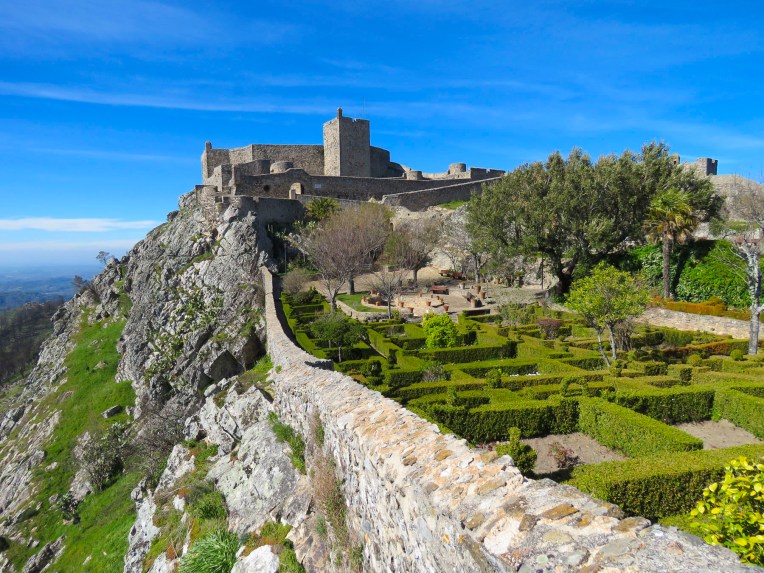
“Set it to avoid toll roads?” “Yep.” And with that our mapping app committed us to back roads for our journey to the Portuguese frontier. The medieval hilltop citadel of Marvão, located along the border with Spain, was our day’s destination. We had just wrapped up a splendid month in Lisbon, but were looking forward to a fifteen-day road trip exploring the smaller villages of the Portuguese countryside, between Marvão to the east of Lisbon and Porto to the north.Leaving Lisbon behind, we crossed the graceful Vasco da Gama suspension bridge spanning the Tagus River. Within minutes we entered a gently rolling landscape of cork, olive and chestnut orchards dotted with sheep grazing in the shade beneath the trees. Along the roads, storks were building their nests atop powerline towers or the chimneys of abandoned houses. These stunning birds, having just completed their seasonal migration north from Africa, are always a joy to watch and we interpreted their sighting as a sign of good fortune ahead. Heads turned as we passed through small farming towns more used to seeing the twice daily bus or farm tractors rumbling along than unfamiliar tourists cruising through. Each village, regardless of how small, had a café, which was the center of activity. Short on atmosphere, they offered espresso or cappuccino, just as good as in Lisbon, along with a limited selection of sandwiches and pastries.
Crossing the Ribeira de Seda on a high modern overpass, we spotted a large old stone bridge below. The next exit led us down to Ponte de Vila Formosa, an impressive 2,000-year-old Roman bridge with six arches dating to the 1st century CE. This 330-foot span was once a vital crossing on the Roman road linking Lisbon to Mérida, Spain. Today it’s one of the best-preserved examples of Roman engineering remaining in Portugal. Closer to Marvão is a one arch bridge built in 1494, and not nearly as elegant or substantial as the Ponte de Vila Formosa. We wondered how a royal carriage ever crossed it safely.Typically, we double the amount of time it’s suggested to get to our destination to account for coffee, lunch breaks and photo ops. We drive, we stop, jump out for snaps, make U-turns and so on. As the sun lowers in the afternoon sky, “We’ll never get there if you stop every 100 yards to take pictures!” is often voiced from the navigator’s seat.
A serpentine road twisted up the side of the 3,000-foot-tall butte, occasionally offering a glimpse of our formidable destination high above. Driving through the slender entrance gate, the portal narrowed to the point where we had to pull the mirrors in. It seemed the further we drove uphill the farther time receded. By the time we reached the summit of the walled village and checked in at Dom Dinis, a small boutique hotel, the golden hour was in full glory and bathed the countryside in a warm glow.The cold wind chilled us to our bones, but we found warmth by the fireplace in the tavern across from our inn. After dinner, as we stood on the ramparts behind our hotel, the darkness offered us a view of the stunning star-filled sky above and the twinkle of village lights far below. With a stiff breeze in our faces, we felt like we were flying. The glorious sunrise the next morning cast a beautiful light on the panoramic view of the flat plains that run all the way into Spain, while the rugged mountains and valleys to the west stayed covered in an early morning mist.
Marvão was important as a strategic stronghold since the ninth century, when the Moors first possessed it, and subsequently improved and expanded upon it over the centuries when the Kings of Portugal controlled it. The fortress was sacked and retaken many times over the years. Today after extensive restoration it’s possible to walk all the way around the lower town atop the ramparts that encircle it. The castle walls jut from the steep sides of this granite monolith, like the bow of a ship breaking a huge wave. Within its battlements, storage rooms and an impressively large rainwater cistern helped sustain the town folks when under siege. As the last line of defense, the entrance to the castle’s tall keep was high above the courtyard and accessible only by crossing a gang plank which was drawn inside for security.
Outside the castle, the hilltop village is wonderful to wander around. It reveals formal garden, narrow lanes and arched passageways that lead to whitewashed houses with decorative, Manueline windows, wrought iron balconies, ancient doors and red tiled roofs.
One of the town’s old churches, Igreja de Santa Maria, has been converted into a civic museum with interesting displays explaining the history of the area.
Fortunately, in 2017 Marvão requested to be removed from the UNESCO tentative site list, so it isn’t on the bucket list of busloads of day tourists from Lisbon. At one time Marvão was home to 3,000 residents, but today there are fewer than one hundred full time residents living within its walls. We had the village practically to ourselves in mid-March.
Standing in the center of the Praça do Comércio today, it’s difficult to imagine the catastrophe of the 1755 earthquake and following tsunamis that destroyed eighty-five percent of Lisbon’s buildings. Cathedrals, palaces, and bordellos (it was a seaport) collapsed and burned. An estimated forty thousand people died. Renaissance masterpieces by Correggio, Rubens, Titian, and others were reduced to ash. Detailed accounts of Portugal’s early history and the explorations of its famous navigators were lost when the royal archives were swept away. Nearly 100,000 early manuscripts vanished when the libraries housing them were incinerated in the fire that lasted for five days. From the landing, where today street entertainers perform and folks gather to dance and watch the sunset, barges were loaded with the bodies of the dead, towed out to sea and, against the wishes of the church, torched to prevent the spread of epidemic diseases. This event was so calamitous it derailed Portugal’s plans for further colonial expansion. The grand plazas and city center we enjoy today are the results of the visionary prime minister, the Marquis of Pombal, and his head architect, Manuel da Maia. They presented to King Joseph I the bold idea to start afresh – to reclaim land along the Tagus River, raze what was left of central Lisbon and replace it with a grid pattern. Wishing order to be returned to his capital, the king endorsed “the construction of big squares, rectilinear, large avenues and widened streets” and with that the new age of city planning began.
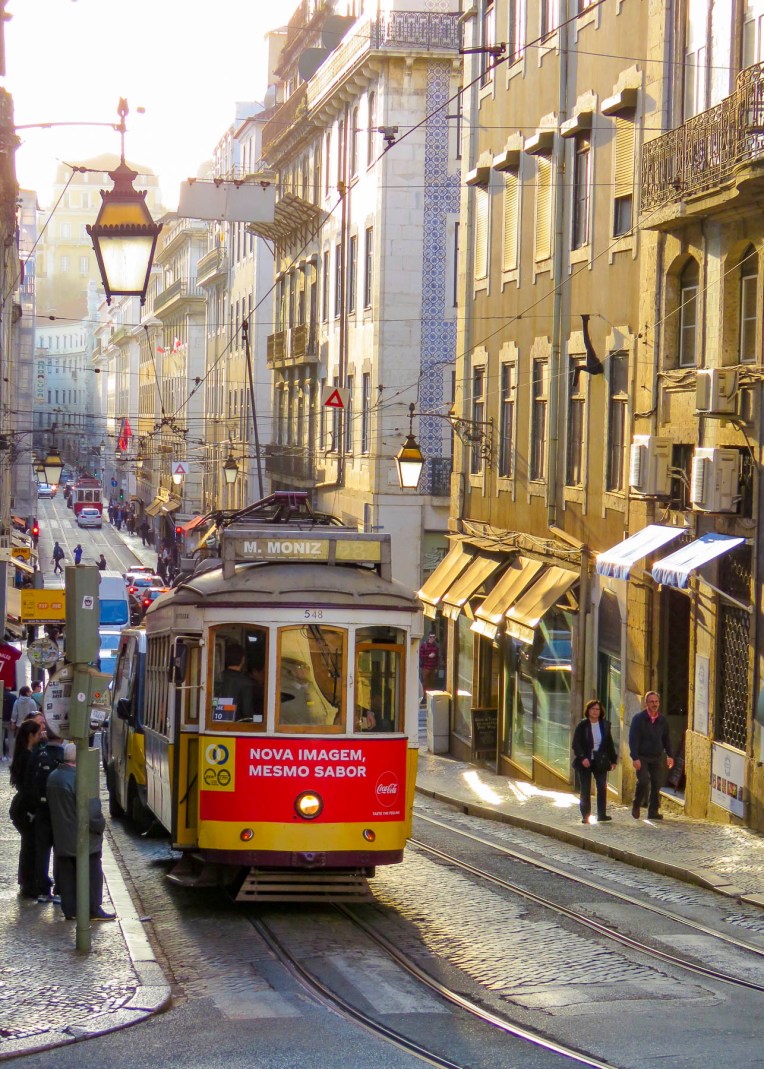
Trams 15 and 12 share the same starting point on Praça da Figueira. Tram 12 will take you on a slightly different route up into Alfama than the famous #28 does. Tram 15 will make its second stop at Praça do Comércio, head to Cais do Sodré then mostly run parallel to the Tagus River all the way out to Belem, before turning around at Algés (Jardim). Sleek modern as well as classic trams run on this route; both are usually packed, depending on the time of day you travel.There is so much to do along this route that it’s easier to walk between points of interest that are close together at the beginning. Save a trip on the tram until later, when you want to head to the LXFactory or Belem Tower, which are much further away.
Restaurants line the impressive Praça do Comércio, offering great vantage points to watch the activity on the plaza unfold throughout the day. A coffee or beer will secure your chair for as long as you wish.
Down at the waterfront folks gather to listen to street musicians, watch performance artists, and just sit to soak up the sun along a beautiful shoreline as boats cruise by. Stone steps lead down to two tall marble pillars at the edge of the Tagus River marking the Cais das Colunas, the “door to Lisbon.” Over the centuries, royal barges with eighty oarsmen would deliver kings and other dignitaries to this portal where they were greeted with ceremonial pomp, before they paraded into Lisbon through the Arco da Rua Augusta.Walking along the river towards Cais do Sodré by the Ministério da Defesa Nacional – Marinha building you can see remnants of a stone wharf in the reflecting pool; landlocked now, it’s all that remains of an extensive old navy quay. There are many places to dine in this area, but we preferred to continue onto Av. 24 de Julho to check out the street art in the area and then stop at The Time Out Market.
This is a tremendous food hall with a great variety of restaurants and communal seating. It’s always busy, loud and fun! Close by, in the evenings, you’ll find the club scene on Pink Street. If you’ve had enough of this area, funicular Bica is only a few blocks away and will whisk you back to the heights of the Baixa neighborhood where you can jump on tram 28. Watch for the gentleman walking his pet Vietnamese pot belly pig along the funicular tracks.
Farther along Av. 24 de Julho, a steep set of twin stairs leads to Jardim 9 de Abril, a small, quiet park, and the Miradouro da Rocha Conde de Óbidos, which overlooks an active freight harbor. It’s a different view of Lisbon that reminded us of the city’s long merchant marine history. Next to the park the Museu Nacional de Arte Antiga exhibits an interesting collection of European furniture, paintings and sculpture in a revamped 17th century palace. A short walk from here you’ll find the most colorfully tiled highway exit and entrance ramp in the city, on Av. Infante Santo. One of the nicest Sundays we enjoyed was spent at the LXFactory. This was formerly a huge industrial complex, located under the Ponte 25 de Abril bridge, that has now been revamped into a hip destination with co-working areas, boutique shops, art galleries and fabulous restaurants. The streets where forklifts once rumbled now host a wildy popular outdoor market on Sundays with all sorts of food, jewelry and clothing stalls to wander through.
There is plenty to entertain yourself with here during the week too. With stops at the whimsical Livraria Ler Devagar bookstore, Landeau Chocolate where they only serve their legendary chocolate cake, and drinks or dinner at Rio Maravilha on the rooftop deck, under the iconic sculpture of the diving lady. The spot is so mesmerizing we returned several times during our time in Lisbon. The stack of colorful shipping containers and double-decker buses you’ll see from here is Village Underground Lisboa, which is also a neat place to check out.
There is just so much to explore in Belem, between the outdoor sites and the congregation of museums, that it’s impossible to cover it all in one day. All too conveniently, tram 15 stops in front of Pastéis de Belém, the origin of those heavenly sweet custards. The waiting line for these divine mouthfuls of temptation can lead down the street at times. If that’s the case, enter through the exit door on the left, and walk straight back into their 400 seat coffee shop and place your order with a waiter. The only saving grace from this near sinful indulgence is that the rest of your day in Belem requires walking, lots of walking, between sites. Burn those calories!
Museu Nacional dos Cocheshouses a marvelous display of 16th – 19th century wheeled opulence, that should have inspired the revolutionaries of the day to storm the palace and send the royals into exile. The ceremonial coaches sent to the Vatican are simply over the top. It is amazing to think that in 1905 when this collection was first opened that there were still so many royal coaches around. Were they covered in tarps, pushed to the back of the stable and forgotten, only to be rediscovered later?
The walk along the Tagus River from the Monument to the Discoverers, built in 1960 to commemorate Portugal’s role in the Age of Discovery, to Belem Tower, which was once in the center of the river, is beautiful and long enough to temporarily tire any revolutionaries’ desire for change. The first flight across the South Atlantic in 1922 from Lisbon to Rio de Janerio, which took 62 hours in an amphibious biplane, is also honored with a metallic sculpture that shines brilliantly in the sun. Visit these sites early in the morning or at the end of the day to avoid the crowds.
We waited out a brief passing shower in one of the cafés adjacent to Belem Tower before working our way back into town. Stop at Museu Coleção Berardo(free on Saturdays) which displays an impressive collection of world renowned contemporary and modern artists in permanent and changing exhibitions. The visit to this museum was a refreshing break from the old-world charm of Lisbon. They also have a wonderful café that has a terrace with views overlooking the monuments along the Tagus River. It’s a very nice place to relax that is off the usual tourist path.
Visits to Museu de Marinha, naval history museum, and Jerónimos Monastery capped our day in Belem. It’s all too easy to forget that Portugal was once a sea-going power with fleets of ships and an empire that rivaled England’s and Spain’s. This fascinating nautical museum will drive home the importance of the sea to Portugal’s livelihood, and the contributions Portugal made to the Age of Discovery. A collection of historic royal barges will make you wonder about the court’s indulgence for extravagance. Some are so large they required forty oars to propel them through the water.
Jerónimos Monastery, started in 1501, is a treasure of gothic architecture with every surface painted or carved in ornamentation for the glory of the Holy Trinity. It’s huge and an interesting place to wander about; however, we felt it was not worth the price of its rather steep entry fee of 12.50€ per adult. Next door, just as gothic, interesting and free is the cathedral of the monastery – Santa Maria de Belém.
Within this cathedral the ornate tombs of Vasco da Gama and Manuel I of Portugal can be seen along with those of many other notable Portuguese citizens. Near da Gama’s sarcophagus one of the stone carvers from the 1500s left his whimsical signature carved into a highly decorated column. It’s a small, upside-down face that is hidden amidst all the other decoration. Why? It’s a curiosity that tempts one to create a vibrant backstory for him. Can you find it?
With so much to do and see in Belem you might want to plan multiple visits to this captivating part of Lisbon.
Starting the second part of this magical ride through Lisbon, tram 28 leaves the Praça do Comércio area from two nearby stops on Rua da Conceição, and climbs steeply around a huge curve into the Chiado and Bairro Alto districts before traveling to its terminus at Jardim dos Prazeres in Campo de Ourique. Rebuilt after the devastating earthquake of 1755, both these districts have a totally different atmosphere than Alfama’s time capsule, reflecting a vibrant, more cosmopolitan Lisbon with fine upscale shopping, nightlife and historical monuments that often reminded us of Paris. Praça Luís de Camões is the center of all this activity and tram 28 will drop you off amidst all the fun. There are so many things to do from this location that you might want to consider coming back here more than once. As if guarding the plaza, Igreja de Nossa Senhora do Loreto/ Igreja dos Italianos, known as “the Italian Church” and Igreja de Nossa Senhora da Encarnação face each other with refined, simple exteriors. The Italian Church was built in 1518 by King John V to celebrate Lisbon’s Italian community of Genoese and Venetian merchants. The interior is lined with marble imported from Italy.
Exiting the Italian Church, you can walk right across the street into Igreja de Nossa Senhora da Encarnação to view spectacular ceiling paintings by Simon Caetano Nunes. After the 1755 disaster, reconstruction of this cathedral lasted until 1873. The cathedral also features several contemporary religious relief sculptures and a ceiling mural in a side chamber.
Once you’re back on the sidewalk, follow the sound of music to a small plaza. Here street musicians, performance artists and dance teams entertain crowds of tourists. Outdoor cafes edge the plaza, which is centered by a statue commemorating António Ribeiro, a Catholic cardinal who supported the democratic movement that lead to the toppling of the military regime in 1974. Pop into Café A Brasileira, Lisbon’s first coffee house in 1908, with its Art Deco style interior of sculpted wood, polished brass and mirrored walls. Many famous Portuguese writers and artists nutured their caffeine addiction here. Poet Fernando Pessoa visited so often, he is immortalized here with a bronze statue depicting him seated at “his” table. Immortalized in bronze, poet Fernando Pessoa sits permanently outside at “his” table.
Casa do Ferreira das Tabuletas with its ornate tile facade illustrating the sciences can be seen as you work your way to the Carmo Archaeological Museum. Set in the ruins of Lisbon’s largest cathedral before the 1755 earthquake, this small museum has a diverse collection of tombs, ceramics and mosaics along with other ancient artifacts. A few steps from its door, the viewing platform of Elevador de Santa Justa offers beautiful views of Lisbon. Walking back to Praça Luís de Camões, pass the Guarda Nacional Republicana to watch Lisbon’s less elaborate version of the changing of the guard.
From Praça Luís de Camões you can also walk or take tram 24 up Rua da Misericordia deeper into Bairro Alto. There is so much to do on this one street, you will want to return several times. If you are looking to be selective about the churches you visit in Lisbon, Igreja de São Roque and its Museu de São Roque should be at the top of the list. The highly carved gilded interior was the first Jesuit Church in Portugal. The museum exhibits an intriguing, world-class collection of Italian religious art in a contemporary setting.
Riding a funicular tram in Lisbon is a must and the street-art covered walls of the Ascensor da Glória route are just a block from Igreja de São Roque. It’s a pop culture experience to board the graffiti-painted tram and descend to Praçados Restauradores. The walls along the route have been given to the artists of Lisbon and are covered with spectacular street murals. Older murals are painted over on a regular basis and replaced with new inspirations.Shady Miradouro de São Pedro de Alcântara overlooks this colorful chaos and has splendid views of Lisbon below. From the miradouro it’s a gentle uphill walk into Bairro Alto. Fortunately, there’s no lack of places to rejuvenate yourself along the way. For lunch we found A Padaria Portuguesaan artisanal bakery and restaurant that we would return to several times during our stay in Alfama just to buy their delicous bread. This was especially rewarding if we combined it with buying cheese at Queijaria Cheese Shop just a few blocks away. Listening to the proprietor describe the nuances of each Portuguese variety and offering samples to tweak our palette, we usually left with the makings for a nice picnic under the towering specimen trees of Jardim Botânico da Universidade de Lisboa, just across the boulevard. Jardim do Príncipe Real, with its iconic trimmed cypress tree shaped to look like giant shitake mushrooms, was always a good alternative destination.
For dessert and coffee, we’d indulge ourselves with a sumptuous visit to Bettina & Niccolo Corallo, a wonderful artisanal chocolate and coffee shop with seating for only 6-8 people. Just down the street, in what was once an ornate, private residence, the Ribeiro da Cunha Palacehas been subdivided into unique boutique stores. The lavish, original architectural detailing can still be seen in all the shops as you wander through. If you are staying late in the area, Tapas Bar 52 is a popular place for sharing delicous, small plate creations.
One stop away from Praça Luís de Camões, you can climb aboard funicular Bica and descend the steep hill into its gated ticket terminal on Rua de S. Paulo. On your way down you might catch a glimpse of a middle-aged man walking along the tracks, his pot-bellied pig on a leash. Outside the terminal you’re back on flat terrain again and only a short walk away from the Time Out Market.Set in a historic 1890s building in Cais do Sodré, this is a huge, lively food court with numerous restaurant choices that is very popular with Lisboans. Whatever you are craving at the time, you’ll find something satisfying here. Next door, during the week, Mercado da Ribeira operates a central market with fish, meat and produce vendors offering Portugal’s finest products. Brightly painted Pink Street, popular for its club scene, is nearby.Take funicular Bica back uphill, and around the corner you find tranquil Miradouro de Santa Catarina, with views of the Tagus River and Ponte 25 de Abril Bridge in the distance. The Museu da Farmácia is also located here. Also, nearby along Calcada do Combro, or just off it, are several landmarks worth quick visits.
Unimpressive from the outside, Igreja de Santa Catarina, built in 1647, has a rich, baroque style, gilded interior and impressive pipe organ. The buildings along Rua Vale frame Igreja Paroquial das Mercês sitting prominently atop a small hill at the end of the street. First constructed in 1615, a masterpiece of tile work created in 1715 and installed on a vaulted ceiling in a small room survived the 1755 earthquake. This is one of Lisbon’s hidden treasures. Credited to tile master Antonio de Oliveira Bernardes, the mural illustrates the Litanies of the Virgin Mary. Ask the church attendants to open the room for you. The rest of the church is an eighteen-century reconstruction. Down Rua Vale from the cathedral, Atelier-Museu Júlio Pomar, a small contemporary art museum, has rotating exhibits and a permanent collection of works by Júlio Pomar (1926-2018.) Some consider him to be the most influential Portuguese painter of his generation.
A mass of sun worshippers greeted us a we stepped off the elevator at Park Bar. Every chair in this oasis of lush greenery, hidden above Lisbon, was turned towards the sun to take advantage of the view on this early spring day. With a quick look at the name, you think the bar is in a park, but instead it’s on the sixth-floor rooftop of a parking garage next to Igreja de Santa Catarina. Finding the entrance was a bit challenging, since there was no signage, but once you locate the elevator or stairs inside the garage you’re set. The place gets packed at sunset and the party grows into the night with DJ’s providing the soundtrack. Heading west, tram 28 weaves through a very narrow section similar to parts of its route in Alfama, before reaching the open area around Assembleia da República. The parliament of Portugal is headquartered in a neoclassical building that was first used as a convent in the sixteenth century. Formal gardens behind the parliament building, hidden by an imposing wall, can be seen from tram 28 or if you stand on your tip-toes and peer over. Never immune from criticism, the politicians must endure a large satirical wall mural, painted on a nearby building, as they head to work each day.
Past the Assembleia da República the character of the city changes. The streets widen and some multi-storied apartment buildings dot the cityscape between historical buildings. If you are ready to picnic, Jardim da Estrela is a wonderfully landscaped park with ponds and sculptures of historic figures scattered along the walking paths. Across the boulevard, one of Lisbon’s lesser visited cathedrals, eighteen-century Basílica da Estrelaor, safeguards the tomb of Queen Mary I. She was the first monarch to rule over a united Portugal that included Brazil. She ordered the construction of the cathedral in 1761, as a religious obligation, after the birth of a male heir to the throne. Unfortunately, Queen Mary outlived her son (José – Prince of Brazil) who died of small pox at the age of 27. The cathedral also has a 500-piece nativity scene, made of cork, on permanent display.
Tram 28 ends its charming journey in the Campo de Ourique neighborhood at Jardim dos Prazeres, a small park with two cafes, in front of Cemitério dos Prazeres. Here the tram waits for several minutes before following its route all the way back to its starting point in the center of Lisbon at Martim Moniz. This tranquil cemetery is the final resting place for many of Portugal’s most notable citizens. Tombs of famous fado singers, artists, architects, doctors, writers and poets share the cypress lined lanes with politicians, nobility and a variety of songbirds. Many of the mausoleums are ornately decorated with artistic sculptures that represent the deceased’s career. Stop in the office to get a map outlining several different self-guided tours. There are numbers on the curbs in front of some of the tombs to help cross-reference the person’s contribution to Portuguese society. The far side of the cemetery offers views of the Tagus river and Ponte 25 de Abril bridge.
A few blocks away Mercado de Campo de Ourique has been revamped into a trendy food hall where organic and artisanal food purveyors share the space with small bars and restaurants. It’s a great place to rejuvenate before heading home.
Lisbon is an intriguing city with an amazing variety of activities in which to immerse yourself. There is no one “correct” way to see the city, but tram 28 offers a splendid six-mile route through this charming capitol that passes many of the top attractions. Multiple sites are close together so it’s easy to walk from one to the other and then just hop back on the tram to cover greater distances. Don’t expect to see everything along this famous route in one day; there’s just so much to explore and many wonderful diversions!
The good news is we haven’t killed each other, though there have been times that I’ve dreamt a pillow was hovering over my head. Just kidding. We have gone from the two of us working six days a week while living in an eight-room house, to being together 24/7 with only a suitcase each. Boy did we downsize! It was challenging: what not to bring, considering all the seasonal changes we have encountered. Don’t laugh, but I have thermals, wool hats and gloves packed, just on the off chance we get snowed in on a mountain pass in the French Alps, this July. Yes, there’s also a flask of medicinal whisky packed in the bags for emergencies. And to my wife’s amusement, a cheap plastic fly swatter. Tragically the backup swatter was left behind in Antigua. In Lisbon I finally caved in and bought a pair of slippers because the floors of the stone buildings just don’t retain any heat in the winter. The comfort of a pair of slippers in the evening, after a long day of walking, can’t be underestimated.It’s been a huge but surprisingly easy transition for us. 253 days ago (I thought I was writing this at around day 200, it’s easy to lose track of time on the road) we slammed the door shut on our storage pod, locked it, and popped open a bottle of champagne to celebrate our impending journey. We haven’t looked back. Ecuador, Guatemala, Cuba and now Portugal; I can’t imagine undertaking this adventure with anyone else.
The Airbnb revolution has greatly contributed to our concept of slow travel, allowing us to immerse ourselves in a location for an extended period of time and to enjoy a community to its fullest. Experiencing a festive Christmas season and an explosive New Year’s celebration in Antigua, Guatemala, was extraordinary and something we wouldn’t have appreciated as much if we were just passing through.
We felt a little blue being away from our kids and their families during Christmas. The irony that we, and not the children, broke with the family tradition first was not lost on us. A three week visit back to the States in mid-January to see everyone helped tremendously. This visit also gave us an opportunity to jettison the wonderful textiles and ceramics we had purchased along the way for a home we don’t have yet. Imagine this scene from our last stop in San Pedro – the backseat of a tuk-tuk overflowing with Donna and all our suitcases, while I’m sharing the driver’s seat with the driver, one cheek on, one cheek off and a foot dangling outside the cab as we speedily snaked through the steep narrow alleys of the village.
Shopping in the central markets and street markets of each city has been wonderful as cooking is essential to keeping within our budget, though the size of some of our kitchens have tested our creative culinary abilities. The exotic fruits available to us in Ecuador were amazing and we tried many that we were unfamiliar with.
In Olon we bought the catch of the day from the fish monger as be pushed his cart through town. Guatemala yielded remarkably flavorful vegetables. We had a memorable culinary carrot experience there, go figure. This from a home gardener is quite a statement. Like our neighbors in the Alfama district, we are hanging our laundry out the windows to dry in the Lisbon fresh air. Our stays in each place have ranged from four to ten weeks. I favor the longer stays whereas Donna prefers a shorter visit.
There have been challenges negotiating the medical systems in Ecuador and Portugal only because we haven’t known the protocol of the local doctors. We have been extremely impressed by the care we have received from the medical professionals in these countries for altitude sickness and a persistent upper respiratory infection. The out of pocket costs have been remarkably inexpensive in comparison to the U.S. medical system.Not everything has gone smoothly. A rental car agency did not honor a reservation and we had to scramble to find another one late one night in the airport. We have felt very safe during our travels, but there are unfortunately some extremely talented pickpockets out there. May the curse of arthritis shorten their careers! Filing a stolen property report in Lisbon with the tourist police turned out to be an enjoyable experience due to the officer assigned to us. Luckily, within 24-hours they called us with the good news that our wallet had been recovered, minus the cash of course, but that our passport and credit cards were all there. Honestly, we weren’t following our own advice: only carry in your pockets what you are willing to lose. Everything else of value needs to be carried under your clothing.After Lisbon it’s a two-week road trip through Portugal. Then we are off to, of all places, Sofia, Bulgaria for a month, (the Beatles song “Back in the USSR” keeps coming to mind) in order to reset our Schengen union days for later in the summer. After that, two dog sits in England and two Workaway experiences in France at a 14th century chateau await us before we resume our life of leisure in Kotor, Montenegro, in September.We have shared meals and stories with so many wonderful and interesting people along the way. These friends have made this journey what it is – fantastic!
Our quest for eternal Spring-like weather has brought us to Olon, a rustic beach town on Ecuador’s southern Pacific coast with a wide, flat sandy beach that stretches for nearly five miles without a high-rise to been seen. Think San Juan del Sur in Nicaragua fifteen years ago, before it was discovered, or Costa Rica thirty years before it became a top tourist destination.
It’s ideal for long solitary walks along the beach collecting shells, especially near the Mirador del Olon cliffs that rise dramatically from the ocean. On the other end of town, the Rio Olon runs through a nature preserve, where we have entertained ourselves photographing various birds and listening to their calls. It’s amazing how small birds seem to have such loud songs that carry for a long distance. The river doesn’t have enough flow to reach the sea this time of year and is separated from it by a berm of sand, but one night after a heavy rain the river breached the sand dune and carved its way into the sea.
Change is coming slowly to Olon. The roads in town were only bricked three years ago. So, there is still a wonderful, authentic undeveloped rawness to the town, with a small number of hotels and surf schools mixed in amongst local homes, many in an unfinished state.
It’s off season now in October, mostly cloudy with a light mist every morning, but the water is still warm, perfect conditions for the handful of surfers and us. Although the waves can reach 12ft at times, beginning surfers prefer the less crowded, smaller wave conditions in Olon over those of Montañita, which can be more treacherous.
The seafood cabanas along the beach are only open on the weekend this time of year, when it seems to get slightly busier. Our favorite is the last one down by the fishing boats, Mar del Sol, run by Rosa. You can’t beat her stuffed calamari, ceviche or various seafood salads.
At times teams of fishermen can still be seen setting seine nets from the shore and hauling their catch in by hand. Other fishermen fight the waves to launch skiffs through the rough surf from the beach.
Sometimes the beach is a corridor of commerce with freshly caught fish being delivered by motorcycle from small villages further up the coast. Fathers can be seen taking their kids to school on the handlebars of their motorcycles, gently splashing through the incoming tide, hurrying to get there. Outside of the small school every morning it’s like New York’s Times Square for ten minutes, with all the coming and going of motorbikes. One morning a parade of open bed, stake trucks carrying school children dressed in different team colors honked and cheered its way, through town, to the school for a day of field activities. Every evening there is a well-attended, robust soccer game on the beach. Just imagine the memories these kids will have! Outside our hotel, a group of young men play marbles in the dirt road under a dim streetlight, using the light from their cell phones to help find stray ones hidden in the foliage along the road. In the morning we passed our neighbor, singing softly to herself as she gardened.
Our budget friendly and relaxing short-term rental at Rincon d’Olon included a very nice breakfast on the rooftop terrace prepared by the gregarious innkeeper, Chris. He emigrated from the Netherlands to Ecuador six years ago after volunteering in the Andes and vacationing on the coast. He is a great source of information for all things local and arranged several transfers and an excursion for us.
By ten o’clock each evening the streets are empty. From our apartment at night we can hear the waves crashing onto the beach, along with roosters crowing – they start at one in the morning, seemingly on a campaign to discourage tourism – and dogs barking to each other. There is no traffic in this tiny four block square village. Everyone walks in the middle of the road, roosters, dogs and cats included. Restaurant owners and musicians will wave to you if they remember your visit from the day before. Every day pushcart vendors wheel their offerings of fruit, eggs, cheese, clothing, kitchen supplies, etc. through town, each peddler singing out a different sales pitch. Sometimes the loudspeakers around the usually sleepy plaza blare: community news, music or appeals for donations to help a family pay funeral expenses. One Saturday, families gathered to pay their respects at a memorial service on the plaza. Later, the pallbearers hoisted the casket onto their shoulders, and solemnly carried it through town to the cemetery. A small marching band followed the coffin, playing El Condor Pasa, If I Could, by Simon and Garfunkle.
For a change of scenery, we took a day cruise out of Puerto Lopez to Isla de la Plata, an uninhabited island twenty-three miles off the coast, which is part of Machalilla National Park. It is also referred to as the “budget Galapagos,” where we had a chance to see nesting blue-footed boobies and frigate birds. Fifty dollars per person included shuttle transportation, boat ride, snorkeling gear, lunch, a three-hour hike with a licensed guide, and most importantly, the chance to see humpback whales. Puerto Lopez hosts the largest fishing fleet on this part of the Ecuadorian coast. Lacking a protected harbor, all the fishing boats beach on the shoreline to unload their fresh catch. It is a hectic scene of never-ending activity that is reminiscent of an earlier era.
At Olon’s outdoor fish market, vendors sell a wonderful selection of fresh seafood caught locally at stalls set up along Ruta del Spondylus, named after a thorny shell used by the Incas in religious ceremonies. The stalls are closed by noon, so we try to get there early for the best choices. Two kilos of fresh large shrimp set us back six dollars. After dark small tiendas fire up their street-side charcoal grills, offering chicken, pork or sausage shish-kababs to go, or you can stay and eat at tables set up in the street. Several doors down from our hotel, at a little house with a barbeque made from an old fifty-gallon oil drum, two plates of fresh grilled fish with a beer cost five dollars for dinner.
For a tiny place, this village also has a surprising number of refined, small niche eateries, most of them created by foreign surfers, (Swedish, Dutch, Brazilian, Argentinian, Venezuelan, Austrian, Russian) who fell in love with the waves here and never left. Wonderful and inexpensive empanadas ($1.00) along with the best papas fritas (French fries) can be consumed at Bahio which offers Argentinian fast food. Next door, La Churreria has good coffee and desserts which rival any French bakery in Paris. For more refined though still very casual dining, try the eclectic menus at Momo or Cotinga’s across the main road. Cotinga’s might be the only restaurant in Ecuador where you can get home-made borscht accompanied by a shot of vodka, prepared by Olga, a Russian expat.
The only thing Olon really needs is a French inspired chef whose specialty is Coq au Vin. Roosters, you’ve been warned!
A vacation from vacation? Yes, its’s tiring work having fun every day! Where to? Vilcabambahad been on our radar for a while, having read about its reputation as the “Valley of Longevity,” with mineral rich spring water and crisp mountain air. That along with its location in Ecuador’s Southern Andes Mountains at an elevation of 5000ft, a setting which provides continuous spring-like conditions, has attracted a growing expat population of greying hippies, new agers, and backpackers seeking the fountain of youth and inexpensive housing. We had to check it out!
Hostal Izhcayluma was recommended as the place to stay. Their $15.00 per person shuttle from their sister hostal, La Cigale, which was only a block from our apartment, as well as a line from their website (Izhcayluma is NOT a place for perpetually grouchy people) cinched the deal. Hostal Izhcayluma, promotes itself as a “luxury resort spa priced for backpackers” and truly has to be one of the best travel values in Ecuador or all of South America.With a bed in the dorm room going for $9.50 and luxury private cabins starting at just $39.00, the resort has a reputation as the place to go to “relax, enjoy, forget time and stay awhile.” Free morning yoga classes, a wonderful restaurant with some German dishes, and super affordable spa treatments (90 minute, deep tissue massages for $24.00, we both indulged) definitely promoted well-being. Bird calls filled the air and the distinctive face of 6,000ft high Cerro Mandango, god lying down, watched over the valley. Three thousand feet lower in altitude and much farther south, Vilcabamba was about 10 degrees warmer, which was a much-needed reprieve from the chilly days and nights we were experiencing in Cuenca.
At the reception desk are numerous brochures for off-site activities in the valley. For reasons unknown I’ve become attracted to horseback riding later in life. With naïve enthusiasm I was immediately drawn to the five-hour ride on “galloping horses” to Cascada El Paltohigh in the surrounding mountains. I’ve been riding about a dozen times, mostly on mountain trails, and the horses walked, occasionally trotted short distances, but never galloped. Thinking this was hyperbole from the corral, I was reassured by the sign-up sheet that asked for your riding experience. A family of five marked inexperienced. I thought this was a good sign and that the group would saunter slowly through the countryside for the novices. They must have been a family of vacationing gauchos from Argentina, because as soon as our guide shouted VAMANOS! we galloped out of Vilcabamba, into the mountains, and back. I walked liked a saddle-sore cowboy for a week after that.
A disc-jockey blasted “You can’t always get what you want” from loud-speakers setup on the steps of the church across from the plaza as we walked along vendors’ craft tables in the street. Trophies were visible on the DJ’s table as were bags of dog food under it. To our delight, Vilcabamba was having its Best Dressed Dog competition today and later in the afternoon a Paso Fino, fine step, horse show. About twenty proud and good-humored dog owners entertained a large crowd through several rounds of judging. Several dogs had cheering sections in the crowd. One or two ran away out of embarrassment, I think. Trophies and bags of dog food were presented to the winners by a tiara and sash wearing Miss Vilcabamba.
Immediately after the awards were presented the crowd rushed to the other side of the plaza where the horse show was ready to start. Horsemen with perfect posture, dressed in immaculate white shirts, pants and hats, paraded their mounts up and down the dusty street to the sound of lively Spanish music.
The restaurant porches around the plaza were full of aging gringos, drinking beer, sipping wine, observing from afar. Occasional a whiff of pot floated down the street. “My friend is really good at colonics, she’ll be here soon” was an odd conversation snippet we overheard.
We were glad we visited Vilbamba for a long weekend, but were relieved we hadn’t committed to spending more time there. Thoroughly relaxed we headed back to Cuenca.
Our friends have asked frequently, “What’s been your best holiday?” and now Yellow Zebra Safari is asking the same question. For a chance to win a Tanzanian Safari, they are asking entrants to write a travelblog about their best trip ever and submit it by October 31st.
My best trip ever has to be the one we are currently on. Roughly two years ago, out of the clear blue, one evening my wife floated the idea that she was thinking of retiring soon. I had been downsized several years earlier and had found a second career as a USPS mailman, delivering junk mail and mountains of Amazon packages through terrible weather, while deftly avoiding ferocious Pomeranians. The idea struck home. Okay! But, what would we do?
As a pair of seasoned citizens, we are not the typical demographic for a gap year/round the world trip, though our community is growing. We sold most of our belongings, put the rest into storage and hit the road. I write this from Olon, Ecuador, where we are practicing slow travel, a two-year journey around the world with the best travel partner, my wife.We’ve been on the road for more than 100 days now; previously, our longest trip was just shy of three weeks, with carry-on luggage only. So, we felt fully prepared to tackle this challenge (insert wink here.) Needless to say, there is a learning curve, but we have the right mind set. In late October, we move north to Guatemala, followed by a cruise to Cuba. The first part of 2019 will see us in Europe, and after that, who knows? We’ve discussed heading to South Africa, then working our way north and through East Africa, trying to have as many big game safari experiences as possible. This has been a dream of mine since I unwrapped my first National Geographic magazine and was enthralled by the spectacular images of the great migration across the Serengeti. Winning this Tanzanian Safari experience by Yellow Zebra Safari would make this dream a reality.
Our earlier adventures have prepped us for mishaps. At a filling station in France, I put gasoline into the rental car’s diesel engine; in Italy, we were trapped in a parking area when our token would not raise the automatic exit gate; we have experienced canceled flights and missed connections which resulted in airport overnights on hard floors. Trips to Peru, Mexico, Guatemala, Fiji, Turkey and Morocco have broadened our perspective; we view the world as global citizens, and take seriously our responsibilities as travelers and stewards of the planet.
“Travel is fatal to prejudice, bigotry, and narrow-mindedness, and many of our people need it sorely on these accounts. Broad, wholesome, charitable views of men and things cannot be acquired by vegetating in one little corner of the earth all one’s lifetime.”
The first sentence of this quote from Mark Twain is the one most widely known. We think the second line is more relevant today, since we really do share commonality with people the world over.
We are currently in the midst of our best holiday ever, a life changing/lifestyle change that will create lasting memories.
Time has passed so quickly, with our days full of adventure and exploring, and it is difficult to believe we’ve been away from home for one hundred days already. The month of July was spent driving down the East Coast of the US, visiting friends and family and having a great time. Our first three weeks in Ecuador were packed with activity. Quito, the Galapagos Islands and driving south to Cuenca along the Pan-American Highway, also known as the Avenue of the Volcanoes, filled our itinerary.
Arriving in Cuenca, we set up home for five weeks in a lovely studio apartment, for under $500 per month, that had a large rooftop deck with tremendous views over the Rio Tomebamba. We immersed ourselves in the neighborhood; it was a delight to shop in the city’s central market for exotic fruits, (pitacaya is our favorite,) from the Amazon region, plentiful and pricey, or for locally grown vegetables which were so inexpensive. Every city block seemed to have multiple panaderias, bakeries, that offered extremely inexpensive and delicous baked goods. A dozen roses usually cost four dollars. Alternately, a large, American style supermarket had prices that rivaled those around our old home in Pennsylvania. Cuenca was full of the ubiquitous yellow taxis. For under two dollars we could travel to the far reaches of this sprawling city.
Adapting to our surroundings in a new country, we noticed that the sun sets quickly here with practically no twilight period. We are also adjusting to the concept of long-term travel and retirement itself – what our expectations should be on a daily basis. 24/7 together is a new concept for a previously working couple. We have often asked each other which day of the week it is. Every day does not need to be nor can it be an adventure. We enjoyed chilling on the rooftop, reading and writing. Alternately, we wandered through different parts of the city taking advantage of the many free public museums scattered about.
The dining out options in Cuenca covered the full spectrum from mom and pop holes-in-the-wall offering the plate of the day, plata del dia, where for $3.50 you received a very good three course lunch, to fine gourmet dining that reasonably ran about $50.00 for two with wine, dessert and coffee in a beautiful restaurant.One of our favorite snacks was Tortilla de Choclo, eighty cents, a corn pancake that was grilled on a large ceramic plate, curbside, as you waited. Often, coffee and dessert cost more than lunch itself.
There were some difficulties with our new environment. Mainly we had trouble acclimating to Cuenca’s 8,500ft altitude. This was surprising because we spent the better part of two weeks driving through the Andes Mountain Range at heights exceeding 10,000ft and surely thought Cuenca’s setting would be easier on us. Donna required a visit to the emergency room of a local private hospital one Sunday morning after feeling dizzy for too long. After checking that her vitals were okay the doctor wrote a prescription for Dramamine to treat the effects of altitude sickness. A week’s supply of the drug cost $2.40. Our forty-five minutes in the emergency room cost thirty-two dollars.
A long weekend, a vacation from our vacation, took us to Vilcabamba, a small town in Ecuador’s southern Andes. A reputation as “the valley of longevity,” with mineral rich mountain water and crisp air, has attracted a diverse international expat population of aging hippies. It was ten degrees warmer there, which was a nice reprieve from the chilly days and nights in Cuenca. At Hosteria Izhcayluma, a wonderful and very affordable eco-lodge/spa, we indulged in deep tissue massages that lasted for ninety minutes and cost all of $24.00 each. Feeling adventurous I chose to go on what I thought would be a leisurely five-hour horseback ride through the surrounding mountains. The brochure advertised “gallop with our horses.” Thinking this was hyperbole I signed on. From the moment we all mounted our horses we galloped out of the stables, through Vilcabamba, into the mountains and back. I walked liked a saddle-sore cowboy for a week after that.One of the reasons we chose Cuenca for our first short term rental was so that I could take advantage of their dental tourism offerings. I had put off getting things done in the states because of what I thought were excessive cost, even with insurance. I am extremely pleased with the dental care that I received at Finding Health in Ecuador. Tooth extraction – $35.00, cavity – $25.00, two-tooth bridge – $250.00. Our premise that we could live abroad more economically than living back in the states is so far holding true.Currently we are in Olon, a rustic beach town on Ecuador’s southern Pacific coast with a wide, flat sandy beach that stretches for nearly five miles without a high-rise to been seen. It’s off season, mostly cloudy, but the water is still warm, perfect conditions for the handful of surfers and us. Fishermen still launch skiffs through the surf from the beach, and fathers can be seen taking their kids to school on the handlebars of their motorcycles, gently splashing through the incoming tide. Our rent for the month of October is $730.00 with breakfast included!
By ten o’clock each evening the streets are empty. From our apartment at night we can hear the waves crashing onto the beach, along with roosters crowing – they start at one in the morning, seemingly on a campaign to discourage tourism – and dogs barking to each other. There is no traffic in this tiny four block square village. Everyone walks in the middle of the road, roosters, dogs and cats included. Every day pushcart vendors wheel their offerings of fruit, eggs, cheese, clothing, kitchen supplies, etc. through town, each peddler singing out a different sales pitch.
For a change of scenery, we took a day cruise out of Puerto Lopez to Isla de la Plata, an uninhabited island which is part of Machalilla National Park. It is also referred to as the “budget Galapagos.” Fifty dollars per person included shuttle transportation, boat ride, snorkeling gear, lunch, a three-hour hike with a licensed guide to view nesting birds and most importantly the chance to see humpback whales.
At the outdoor fish market, two kilos of fresh large shrimp set us back six dollars. Several doors down at a little house with the barbeque out front, two plates of fresh grilled fish with a beer cost five dollars for dinner. For a tiny place, this village has a surprising number of eateries, most of them created by northern European surfers who fell in love with the waves here and never left. Cotinga’s might be the only restaurant in Ecuador where you can get home-made borscht, prepared by Olga a Russian expat.
The only thing Olon really needs is a French inspired chef whose specialty is Coq au Vin. Roosters, you’ve been warned!
“Ayvalik! How do you know of Ayvalik? This is where the Turks go to vacation” And “You must go to Cunda!” is a phrase we heard proudly repeated more than once.
This post was written about our trip to Ayvalik, Turkey in 2013.
A Mount Rushmore sized, carved stone profile of Atatürk loomed over the highway and filled the front windshield as my wife and I sped north, round a bend on the E87, escaping the Izmir airport. “I will be getting married in three weeks” our taxi driver Ozzie joyfully announced, then softer and more ambivalently “there are so many preparations to make ready before our wedding, we have to buy a refrigerator, stove and bed for our new apartment.” “About half way there we will break at this rest stop that makes the best homemade yogurt. Mama likes the yogurt with mild green peppers (yogurtlu biber) marinating in it, I always stop here on the way back to buy some for her. It reminds her of the way grandma used to make it.” Ozzie continued, “just last week there was a newspaper editorial lamenting the demise of fresh yogurt and how the store-bought yogurt now lasts forever and never goes bad!” And so began our journey to Ayvalik and a week on the northern Aegean coast of Turkey last May. Located two hours by taxi (four hours by bus) north of Izmir, on the southern shore of the Bay of Edremit, Ayvalik is fortunately just a little too far north and off the usual tour circuit, a full day’s drive away from the buses full of tourists that visit Ephesus then descend onto the beaches of Turkey’s Southern Aegean or Western Mediterranean coasts. “Ayvalik! How do you know of Ayvalik? This is where the Turks go to vacation” And “You must go to Cunda!” is a phrase we heard proudly repeated more than once.
A view across Ayvalik.
As we approached Ayvalik, salt evaporating ponds lined one side of the road as gentle Mediterranean waves rolled onto the narrow beach across the way. Turning off the highway, the road rose gently through acres upon acres of olive groves, ruins of an old stone Greek Church flashed by, its roof gone, leaving only the bell tower to pierce the silver-green canopy of the olive trees. As the road crested, a quick glimpse of Ayvalik flashed by, red tiled roofs and minarets set against the sparkling, turquoise blues of the Aegean. And across the bay were the low hills of Cunda Island in the distance. The May Day celebrations were in full swing on the palm tree lined waterfront, and in front of the ubiquitous statue of Atatürk a sea of labor unionists chanted and waved crimson Turkish flags aloft as our taxi passed.
Erinç our hostess smiled to us from the door of Eolya Konukevi as Ozzie jumped the low stone wall with our bags in hand to show off his youth. The salt air and Mediterranean diet had not worked its wonders yet, so we walked the long way around to greet her. “Please wear these slippers when you enter, it is our custom.” Four years earlier Erinç escaped the urban crush of Istanbul and opened Eolya Konukevi, a small four room boutique inn in a three story, 120 year old Greek townhome she lovingly renovated, keeping its historical ambience and charm. The bedrooms were on the small side so we opted for room #7, the only one with a private terrace. The terrace was too hot to use during the unseasonably warm ninety degree mid-day heat, but wonderful early in the morning or later in the day when the sun was lower and a perfect spot to enjoy a bottle of Turkish wine bought from the local grocery store. In early May we were the only guests for most of the week. Nevertheless each morning Erinç presented, in the sunken, high-walled courtyard a bountiful variety of fresh baked breads or pastries with homemade jams, honey, tomatoes, cucumbers, a wonderful assortment of olives, local cheeses, Turkish egg dishes and the delicious Turkish staple, Cevizli biber – a meze prepared with red pepper paste, hot red pepper flakes, onion, walnuts and cumin mixed to a moldable consistency and used to garnish many recipes. “You will see gallons of it in the weekly market on Thursday, the town gets crazy full, vendors fill the street and villagers from all around come into town to shop,” Erinç told us.
Fishermen tending to their nets along the quay in Ayvalik.
Embracing the pace of village life we walked everywhere, and hoped to stay thin. Along the quay, boat hands dangled over the side of excursion boats, busy sanding and varnishing them into pristine shape for the coming high season. Some fishermen sat atop their moored boats mending nets, and others tinkered noisily with engines. Lined with boats, palm trees and seafood restaurants the waterfront of Ayvalik, though much quieter and laidback, resembles many others fishing villages along the coast. The charm of Ayvalik is that it has no major attractions, just the wonderful ambiance of a once prosperous commercial fishing and olive oil processing center, now mostly forgotten and lost in time. Far away from any major historical sites, the townspeople here are just going about their lives, and wonderfully so, not catering to a substantial tourist infrastructure. There was only one short block with several bars, just off the waterfront that looked like it would be a noisy spot during high season. With tables and chairs outside that further narrowed the already thin lane there were more cats and dogs asleep under the tables than patrons the night we passed.
Horse drawn carriages can easily navigate the narrow lanes of Ayvalik and are still used for a variety of delivery jobs.
Meandering, cobbled lanes and back alleys led us slowly up the hill away from the waterfront and it seemed into an earlier century. Slowly crumbling pastel colored homes in various stages of decline lined both sides of the streets. Missing sections of stucco revealed still solid stone construction underneath ignored exteriors. Many homes had their doors chained shut decades ago, the locks heavily rusted over from neglect or abandonment (recall pictures of Havana, Cuba). Offset occasionally by a rare renovation in progress , the early signs of gentrification were beginning to edge in. Horse drawn wagons are still used by vegetable and fruit vendors to ply their trade and to deliver refrigerators, stoves and other large household items through lanes too narrow for modern trucks to navigate. The vignettes of everyday live abounded – the world’s oldest newspaper delivery man carefully balancing an ancient moped between stops, ringing the doorbell and sharing news for a few moments before sputtering away to another door further down the bumpy lane. The lone cow tied to a bright , orange slide in a vacant children’s playground. Fresh fish and Octopus taken from the sea just hours earlier, for sale on the pier early in the morning. School children in their uniforms, playfully headed home for lunch. Lambs’ heads, beef hearts and other organs hung in the butcher’s window. Piles of freshly baked Simit (a bread ring covered with sesame seeds all over) just taken from the baker’s oven and displayed on the ledge of his open window to cool. The candied apple seller walking the streets, hawking his caramelized treats from a tree like structure. A painter carrying his buckets, brushes and large extension ladder to work, carefully, dipping it under low hanging telephone lines as he walked. Men crushing, weighing and bagging coal just off the main square, covered head to toe in black dust. Stacks of split wood – used to fire so many grills and ovens – and impart that distinctive flavoring. Scarfed women, walking together their arms linked in camaraderie. A farmer racing by on his garden tractor, pulling his wife bouncing all over in a small wagon behind him, with a death grip on its sides she held her face high into the morning sun. Her head scarf blew straight out behind her.
Delivering lemonade to vendors in the market.
Still full of energy this older villager still delivered newspapers all over Ayvalik.
Villagers resting in the shade, trying to escape the heat of mid day.
The Minaret and clock tower of Saatli Camii mosque were just visible through the fabric and clothing which dangled from the shade awnings strung over the streets on market day. (A thriving Greek Orthodox cathedral until the Turkish War of Independence ended in 1923. The resulting peace treaty forced a population exchange between Turkey and Greece. Where Ottoman Greeks on the Turkish mainland where forced to leave their homes and move to the Greece and Turks living in Greece where forced to relocate to Turkey. Many churches were abandoned and left to ruin. Others were deconsecrated and with the installation of a minaret and minbar pointing towards Mecca from which the Mullah preached, repurposed as mosques.) Overnight, the local merchants had emptied the contents of their shops onto the streets and itinerant traders erected temporary stands to display their wares. Transforming what seemed to be all of Ayvalik into a vast outdoor shopper’s metropolis offering everything for the home and farm. The village was full of families from the outlying smaller villages that had taken buses to Ayvalik for this weekly event. The women wore traditional baggy pants, brightly colored with floral prints. And various, clashing mix matched tops and scarfs edged with intricate embroidery, created an ever changing, beautiful kaleidoscope of color and patterns as they flowed up and down the lanes, and shopped for more exuberant fabrics to sew at home.
Just off At Arabacilan Meydani (the Horse Carts square) the lane was full of chickens, lambs and goats for sale. Sun dried farmers chatted and laughed with each other while they sat in the doorframes of buildings along the lane, or sent text messages as they waited to make a sale. A block over was the Koy Pazari (weekly farmers market), with baskets full of artichokes, eggplants, fava beans, mulberries, onions, quince, squash, strawberries and grape leaves, stalls full of cheeses and more varieties of olives than I have ever seen in one place. Bottles of pomegranate and grape dressing were stacked high. Herbs and spices! Saffron and Cardamom were amazingly affordable (we should of bought more) And displays of the Turkish Spice blend of Red Pepper, Oregano, Paprika, Garlic, Cumin, Cilantro, Salt and Black Pepper abounded. Each herb poured separately upon the other into plastic bags creating an attractive rainbow package. Numerous five gallon tins of Cevizli biber with their tops shaped to pyramids lined the aisles.
Old men resting and drinking tea in front of Seytanın Kahvesi,(the Devils Café) tea house.
As the day got warmer and the crowds thickened we decided to escape the frenzy and headed to Seytanın Kahvesi (the Devils Café), a teahouse we had found the day before. Very hot apple cay (.50TL) served in tulip shaped glasses soothed use as we rested under the shade of a large tree in front of the cafe and people watched. Even in the mid-day heat the old men wore the traditional sweater vest under a heavy suit jacket. Some rubbed prayer beads as they chatted with friends, while others read papers and sipped tea. One pulled his feet from his slippers and cooled them against the paving stones. At another table, a man with crutches pulled x-rays from a large envelope and held them up to sky to show the pins in his leg to his friends. In the small cross-roads, opposing drivers negotiated which tractor would give way. From the front door tea runners ran down the lane balancing trays of cay to merchants in the market. Above our table hung a sign with carved out and painted, dancing stick figures spelling Cop(M)adam,(the trash ladies) the woman’s cooperative next door. Established to give women who have never worked for pay outside the home or farm, a chance for some economic independence. They create wonderful, contemporary handbags, pocketbooks and other fashion accessories out of thrown away materials. The small shop was full of chatter and laughter as the women worked together. An exotic aroma from the communal lunch being prepared drifted through the shop from the stove in the back room. We chose several items and negotiated lively with an occasional raised eyebrow or thumbs down along with their handy calculator.
With a picnic dinner in our bags from shopping at the bazaar we headed back along a different route further up the hill to find the once grand (and never converted) orthodox cathedral, Taksiyarhis. Situated alone in the center of an overgrown square, the ruins sadly dominated the neighborhood. Large, untamed fig trees sprouted from the foundation. With part of its portico collapsed and the rear of the apse caved in we peered inside to see fallen rafters and small sections of walls with fading designs barely visible, were all that remained of its former glory.
Looking north from Seytan Sofrasi (the Devils Table) towards Cunda Island on the horizon.
“Have you gone to Cunda yet? Erinç inquired. “Not yet, each time we walk past the ferry there is no activity. We might have to take a Dolmus (shared) Taxi over for the day.” I replied. “With it being so hot this Spring they might start ferry service earlier this year,” Erinç offered. Instead, we hired a taxi and headed to Seytan Sofrasi (the Devils table) a rock formation located in a state park a few miles south of town. Narrow, winding roads followed the shoreline around the smaller coves of the bay, revealing thin strips of sandy beaches round each curve. Only a few families were out, some fathers fished as their kids plunged knee deep into the shallow water, and shivered with glee as they raced back to shore. We passed several roadside stands with various flavors and shades of local honey for sale under beach umbrellas. Eventually the road started to rise gently through a forest. The trees thinned to expose the summit and its panoramic overview to the north of two small bays below, then Ayvalik and the large island of Cunda beyond, surrounded by twenty smaller islands. Lesbos, Greece hazily dominated the western horizon in the afternoon light. Prayer notes tied to safety railings fluttered in a refreshing breeze against a flawless sky. Ignoring the railing some people still climbed over to snap a picture from the edge, no guards were there to discourage them or save them from their selves if needed. Though a sturdy iron cage protected an oval, foot like depression in the rock that local folklore says Satan left behind as he leapt to party across the water in Lesbos for some crazy reason. It’s difficult to believe but it seems the Devil spent a bit of time in Ayvalik, if you go by the number of things that include his name, and the volume of ruined churches, monasteries and mosques built nearby to dilute his influence.
Fish restaurants line the dock in Cunda. Behind them stone lanes lead to Takisyarhis Kilisesi church and The Sevim Kent Library cresting the hill above the village.
We were in luck when we realized a short line was forming for the ferry to Cunda as we exited the taxi. Storm clouds built over Ayvalik as the boat pulled away with only a handful of passengers aboard for the short journey. The weather threatened only for a brief time but did not deliver. (During high season ferries from Ayvalik run to Lesbos, Greece and Assos, Turkey. Diving trips to nearby deep, red coral reefs can also be taken, along with swimming boat charters to the islands around Cunda). A long line of seafood restaurants fronted Cunda’s quay. Several blocks inland and on a slight rise, the cupola of the old Greek Orthodox Taksiyarhis Kilisesi church (same name but a different church) rose above the surrounding homes, was finally being restored as a museum and center for cultural events after years of neglect. A candied apple seller braved the sun and walked the streets, hawking his caramelized treats from a tree like structure. The shade of the buildings offered some relief from the sun for three older villagers and their donkey called “Donkey” who had a weathered, wooden saddle tied to its back and us as we continued our walk uphill to find a windmill that we had spotted from the ferry. The windmill with a pretty veranda and small adjacent chapel now restored as The Sevim and Necdet H. Kent Library (Kent was a Turkish diplomat stationed in France during World War II who saved the lives of many Jews by providing them Turkish identity papers) are all that are left of an ancient monastery complex that sat upon the crest of the hill and overlooked Cunda and the waters surrounding it. The library’s shaded cafe (free WiFi) provided the perfect spot to rest our blisters and appreciate the views, before heading back into the village for dinner.
Many restaurants line the back lanes of Cunda with tables and chairs to enjoy an evening meal.
We rewarded our efforts later that evening with wonderfully prepared Cretan (Turks from Crete came to Cunda during the population exchange) dishes at Lal Girit Mutfagi, a small restaurant set in a rustic stone building with an outside patio across the cobbled lane. Difficult choices tempted us: which mezes to try from the mouthwatering assortment on display? Since the night was warm, we were seated under the grape vines of the patio. Occasionally the waiter hoisted a watering can and sprinkled water onto the cobblestone lane to keep down the dust from passing tractors as farmers slowly drove home through the village from their fields or orchards. The restaurant did not have a paper menu; rather, Emine the owner/chef enthusiastically talked us through what she was cooking that night. The pace of the meal was delightfully relaxed, no rushing, everything from the kitchen freshly prepared and delicious. Soft cheese with wild spring herbs; mussels stuffed with spicy rice served on the half shell; grilled octopus; fresh anchovies in a light tomato sauce plated artfully in a spiral; artichokes with dill and stuffed grape leaves; and shredded vegetables with cheese and herbs wrapped in papery thin phyllo dough and baked to a golden brown; our meal appeared before us one exquisite dish after the next, as we enjoyed each of the chef’s creations. Folks filled the lanes as dusk fell and brought in a refreshing breeze. The restaurant livened as the evening lengthened, a boisterous atmosphere reflected much laughter and heartiness. Good Turkish wine, Raki!, a fine night, and a great meal still remembered. Serife! (Days later, Emine greeted us warmly as she shopped amongst the tables of fresh produce at Rormutauk Bazaar (the Sunday farmers market) in Sirinkent , just north of Ayvalik).
A shepherd with young lambs in Cennet Tepesi (Heaven Tower Park) above Ayvalik.
A lone crenulated tower spotted from the Dolmus taxi on the way back from Cunda looked worth another uphill hike. Giant century plants and their towering seed stalks leaned over the path toward Cennet Tepesi (Heaven Tower Park) above the bay. We followed the path through a slowly thickening pine forest to the tower I had glimpsed the night before. An unattended flock of sheep quietly grazed in grassy undergrowth. From behind the tower the sound of more sheep bah-ing slowly moved closer. We waited expectantly to see another flock arrive but were amused when only a lone shepherd, baa-ing, emerged carrying two young lambs in his arms. He baa-ed tenderly as if to convey his love for his flock and reassure the lamb’s mother that they would be reunited soon.
Some villagers still light bonfires, dance and jump over the flames in celebration of Spring.
At breakfast the next morning Erinç excitedly asked if we had heard of Hidirellez. ”It’s still celebrated here in Ayvalik. Today, every May 5th some of the families build bonfires in the streets in front of their homes. They play music, dance and cheer for each other and their neighbors to jump over the flames in a celebration of spring.” It’s not organized and fewer families do it than years ago. You’ll have to wander the lanes farther up the hill, but I’m sure there will be some bonfires.” Later that evening after a long siesta we headed back into the ancient backstreets. Two drummers, carrying big bass drums along with a cymbalist, noisily led a bride in a white gown and pink sneakers and groom in a tux, followed by a small group of raucous revelers in Halloween makeup. Momentarily surrounded, we posed for photos with the party, and then they left in the direction from which they came. Not the fire jumpers we were looking for, but encouraged nevertheless we continued our search. A few blocks over, the homes and people gathered on the street in front of them were cast in the amber warmth of several small fires centered in the middle of the lane. Some revelers danced to traditional music blasted from a CD player. Couches and chairs were brought outdoors for older partiers to settle into. Behind them a few parents supervised young arsonists in training making small smoky fires. We watched as the fires popped and blew sparks skyward when any burnable material was thrown in to encourage higher flames. And with a running start, young and old jumped, when their nerves permitted, as best they could through the flames as everyone clapped and cheered them on. Thankfully we did not witness any self-immolations that night.
A wedding parade on Hidirellez ( a May 5th celebration of Sping).
Ayvalik won the regional playoffs and the small village celebrated wildly.
As we walked back to our guesthouse, the square on the waterfront was surprisingly full of triumphant soccer fans, victoriously waving the team colors. The Ayvalik team had won the state playoffs! It seemed as if everyone who owned a scooter or car (not too many people do), overloaded it with flag-waving friends and raced down Ataturk Caddesi (the only two way street in town) several blocks, did a K turn and then speed back through town multiple times that evening. The horns were still blaring when our heads hit the pillow.
The smell of smoke lingered in the air very early the next morning when Ozzie picked us for the trip back to the airport. We offered him our best wishes for his quickly approaching wedding and changing life. And wished for ourselves, that Ayvalik would not change at all, or at least very slowly.
At the main Thursday market in Ayvalik colorful fabrics hand from the shade awnings strung between buildings.
With Cunda Island and Lesbos, Greece in the distance.
Cobbled lanes and rose bushes adorn the narrow streets of Cunda.
Sunset in Ayvalik
Weighing and bagging coal on At Arabacilan Meydani (the Horse Carts square).
Shelves in the blacksmiths shop on At Arabacilan Meydani (the Horse Carts square).
Palm trees lline a waterfront park on the way to Cunda Island.
Some villagers still light bonfires, dance and jump over the flames in celebration of Spring.
Some villagers still light bonfires, dance and jump over the flames in celebration of Spring.
Street vendors still push carts of produce door to door through the narrow lanes of Ayvalik.
A view across Ayvalik towards Cunda Island .
The sparse interior of Seytananin Kahvesi (The Devils Cafe).
Turkish breakfast at Eolya Konukevi.
A shepherd with young lambs in Cennet Tepesi (Heaven Tower Park) above Ayvalik.
A shepherd with young lambs in Cennet Tepesi (Heaven Tower Park) above Ayvalik.
Fishing in front of the ferry dock in Cunda.
Rusted locks on an a forgeotten home in Cunda.
Most people still walk from place to place in town.
Grapevines adorn many homes and offer some shade.
An ornamental gate along the waterfront frames the sunset in Ayvalik.
A vibrant kaleidiscope of color fills the streets of Ayvalik on market day, when villagers from the outlying hamlets come into town.
School children having some fun on the way to school in Ayvalik.
A stray dog catching some warmth from the morning in an old cobbled lane.
The view of Ayvalik from Cennet Tepesi (Heaven Tower Park).
Slowly crimbling pastel colored homes in various stages of decline line both sides of the lanes.
Slowly crimbling pastel colored homes in various stages of decline line both sides of the lanes.
Village women rest from a morning of intense shopping.


 Leaving Lisbon behind, we crossed the graceful Vasco da Gama suspension bridge spanning the Tagus River. Within minutes we entered a gently rolling landscape of cork, olive and chestnut orchards dotted with sheep grazing in the shade beneath the trees. Along the roads, storks were building their nests atop powerline towers or the chimneys of abandoned houses. These stunning birds, having just completed their seasonal migration north from Africa, are always a joy to watch and we interpreted their sighting as a sign of good fortune ahead. Heads turned as we passed through small farming towns more used to seeing the twice daily bus or farm tractors rumbling along than unfamiliar tourists cruising through. Each village, regardless of how small, had a café, which was the center of activity. Short on atmosphere, they offered espresso or cappuccino, just as good as in Lisbon, along with a limited selection of sandwiches and pastries.


 Typically, we double the amount of time it’s suggested to get to our destination to account for coffee, lunch breaks and photo ops. We drive, we stop, jump out for snaps, make U-turns and so on. As the sun lowers in the afternoon sky, “We’ll never get there if you stop every 100 yards to take pictures!” is often voiced from the navigator’s seat.


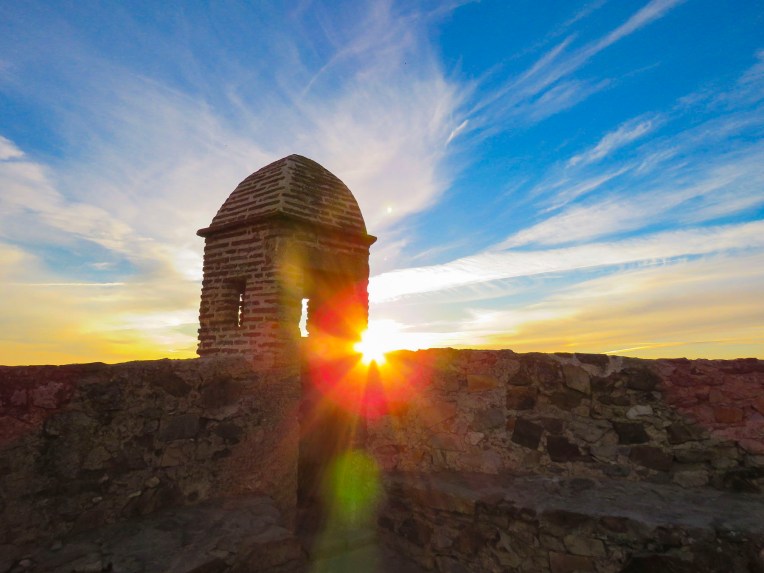 The cold wind chilled us to our bones, but we found warmth by the fireplace in the tavern across from our inn. After dinner, as we stood on the ramparts behind our hotel, the darkness offered us a view of the stunning star-filled sky above and the twinkle of village lights far below. With a stiff breeze in our faces, we felt like we were flying. The glorious sunrise the next morning cast a beautiful light on the panoramic view of the flat plains that run all the way into Spain, while the rugged mountains and valleys to the west stayed covered in an early morning mist.


 Walking along the river towards Cais do Sodré by the Ministério da Defesa Nacional – Marinha building you can see remnants of a stone wharf in the reflecting pool; landlocked now, it’s all that remains of an extensive old navy quay. There are many places to dine in this area, but we preferred to continue onto Av. 24 de Julho to check out the street art in the area and then stop at The Time Out Market.


 One of the nicest Sundays we enjoyed was spent at the


![IMG_3140[31166]](https://i0.wp.com/2suitcasesfor2years.com/wp-content/uploads/2019/06/img_314031166.jpg?w=484&h=363&ssl=1 "IMG_3140[31166]")


![IMG_3170[31169]](https://i0.wp.com/2suitcasesfor2years.com/wp-content/uploads/2019/06/img_317031169.jpg?w=272&h=363&ssl=1 "IMG_3170[31169]")


 As if guarding the plaza,


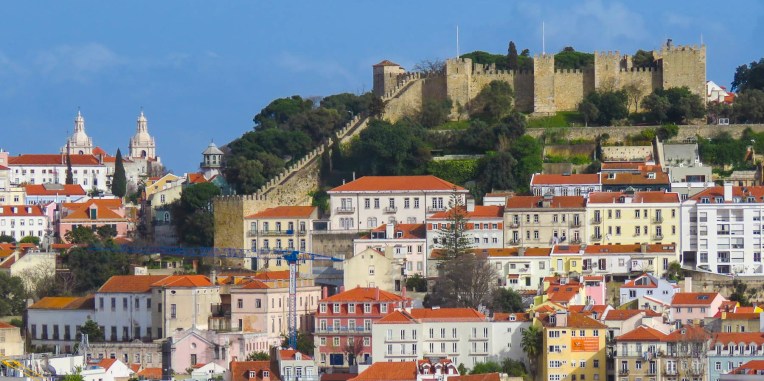 Shady Miradouro de São Pedro de Alcântara overlooks this colorful chaos and has splendid views of Lisbon below. From the miradouro it’s a gentle uphill walk into Bairro Alto. Fortunately, there’s no lack of places to rejuvenate yourself along the way. For lunch we found


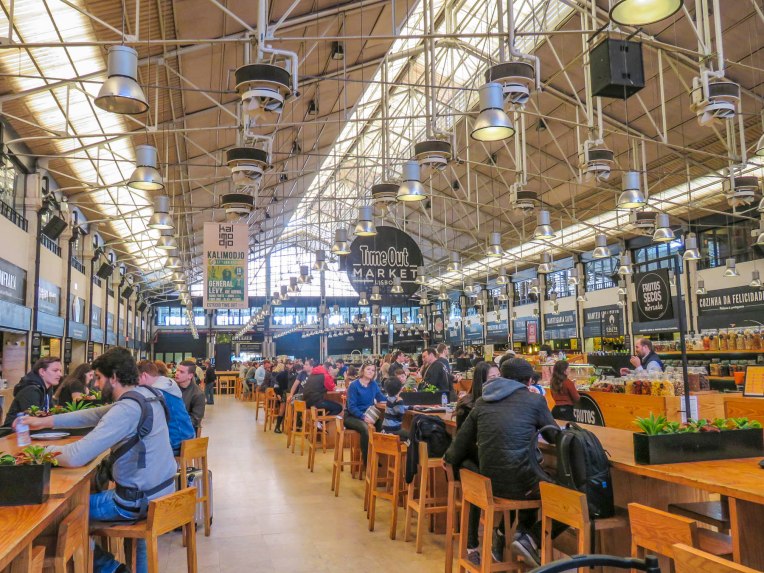 Set in a historic 1890s building in Cais do Sodré, this is a huge, lively food court with numerous restaurant choices that is very popular with Lisboans. Whatever you are craving at the time, you’ll find something satisfying here. Next door, during the week, Mercado da Ribeira operates a central market with fish, meat and produce vendors offering Portugal’s finest products. Brightly painted Pink Street, popular for its club scene, is nearby.


 Heading west, tram 28 weaves through a very narrow section similar to parts of its route in Alfama, before reaching the open area around Assembleia da República. The parliament of Portugal is headquartered in a neoclassical building that was first used as a convent in the sixteenth century. Formal gardens behind the parliament building, hidden by an imposing wall, can be seen from tram 28 or if you stand on your tip-toes and peer over. Never immune from criticism, the politicians must endure a large satirical wall mural, painted on a nearby building, as they head to work each day.



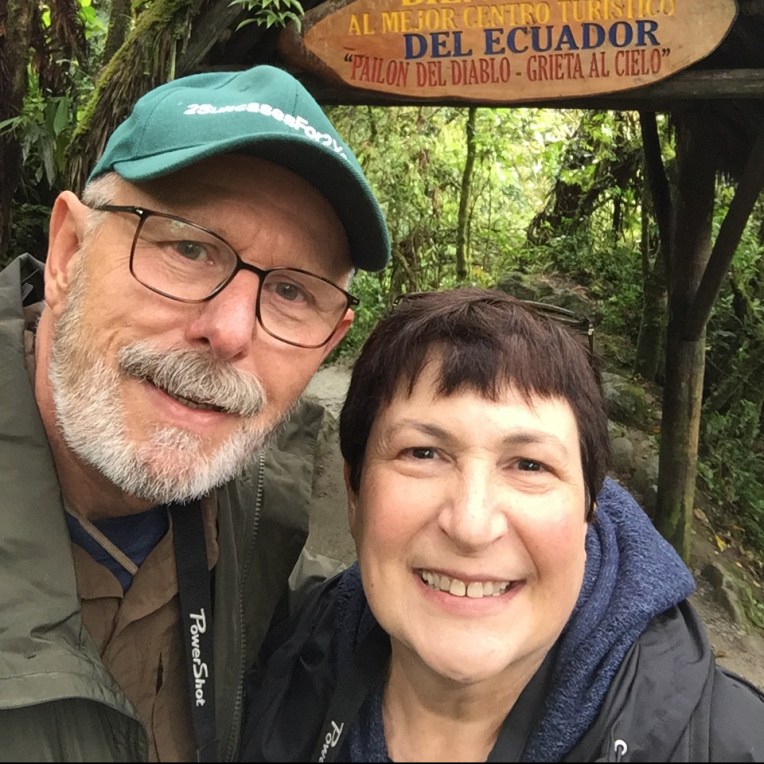 The good news is we haven’t killed each other, though there have been times that I’ve dreamt a pillow was hovering over my head. Just kidding. We have gone from the two of us working six days a week while living in an eight-room house, to being together 24/7 with only a suitcase each. Boy did we downsize! It was challenging: what not to bring, considering all the seasonal changes we have encountered. Don’t laugh, but I have thermals, wool hats and gloves packed, just on the off chance we get snowed in on a mountain pass in the French Alps, this July. Yes, there’s also a flask of medicinal whisky packed in the bags for emergencies. And to my wife’s amusement, a cheap plastic fly swatter. Tragically the backup swatter was left behind in Antigua. In Lisbon I finally caved in and bought a pair of slippers because the floors of the stone buildings just don’t retain any heat in the winter. The comfort of a pair of slippers in the evening, after a long day of walking, can’t be underestimated.
 It’s been a huge but surprisingly easy transition for us. 253 days ago (I thought I was writing this at around day 200, it’s easy to lose track of time on the road) we slammed the door shut on our storage pod, locked it, and popped open a bottle of champagne to celebrate our impending journey. We haven’t looked back. Ecuador, Guatemala, Cuba and now Portugal; I can’t imagine undertaking this adventure with anyone else.


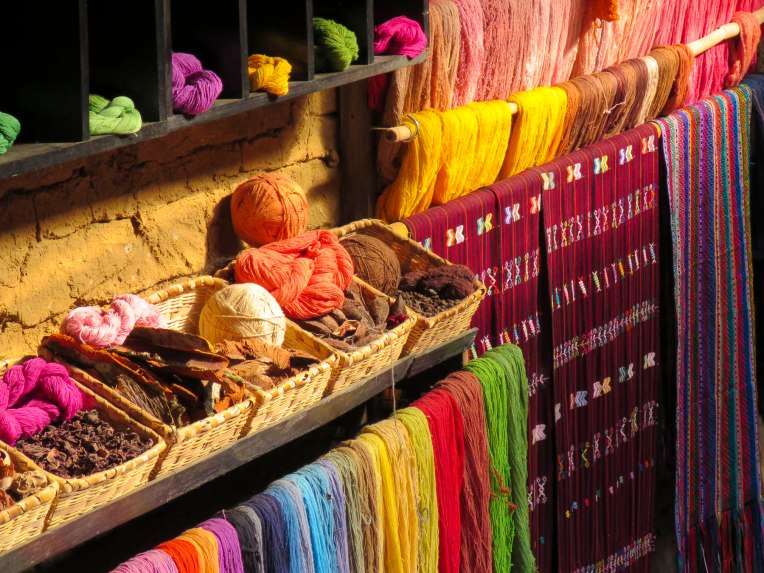 This visit also gave us an opportunity to jettison the wonderful textiles and ceramics we had purchased along the way for a home we don’t have yet. Imagine this scene from our last stop in San Pedro – the backseat of a tuk-tuk overflowing with Donna and all our suitcases, while I’m sharing the driver’s seat with the driver, one cheek on, one cheek off and a foot dangling outside the cab as we speedily snaked through the steep narrow alleys of the village.


![IMG_2836[12654]](https://i0.wp.com/2suitcasesfor2years.com/wp-content/uploads/2018/11/img_283612654.jpg?w=279&h=209&ssl=1 "IMG_2836[12654]")
![IMG_2841[12658]](https://i0.wp.com/2suitcasesfor2years.com/wp-content/uploads/2018/11/img_284112658.jpg?w=279&h=209&ssl=1 "IMG_2841[12658]")
![IMG_6276[12629]](https://i0.wp.com/2suitcasesfor2years.com/wp-content/uploads/2018/11/img_627612629.jpg?w=477&h=636&ssl=1 "IMG_6276[12629]")


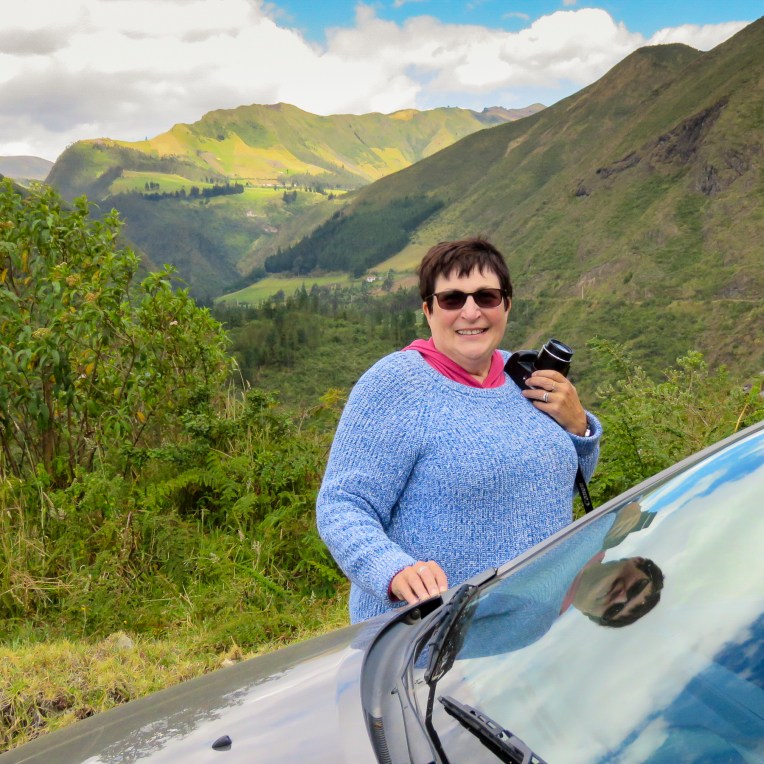

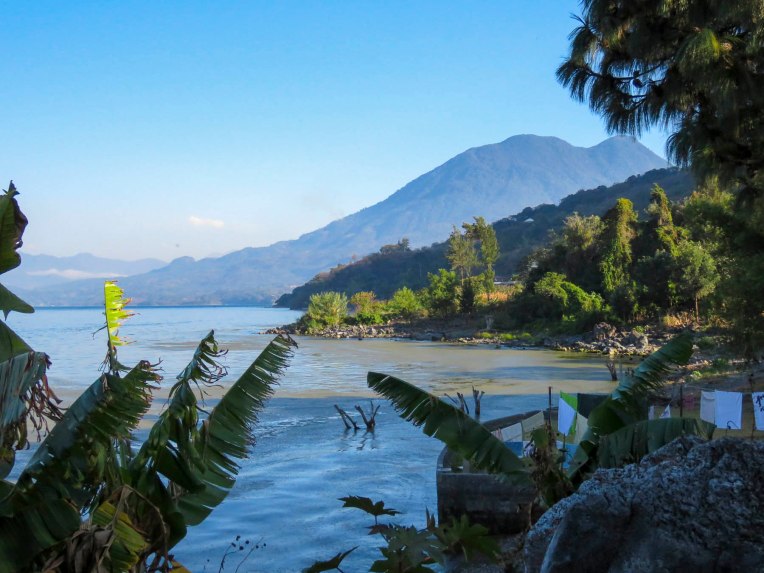


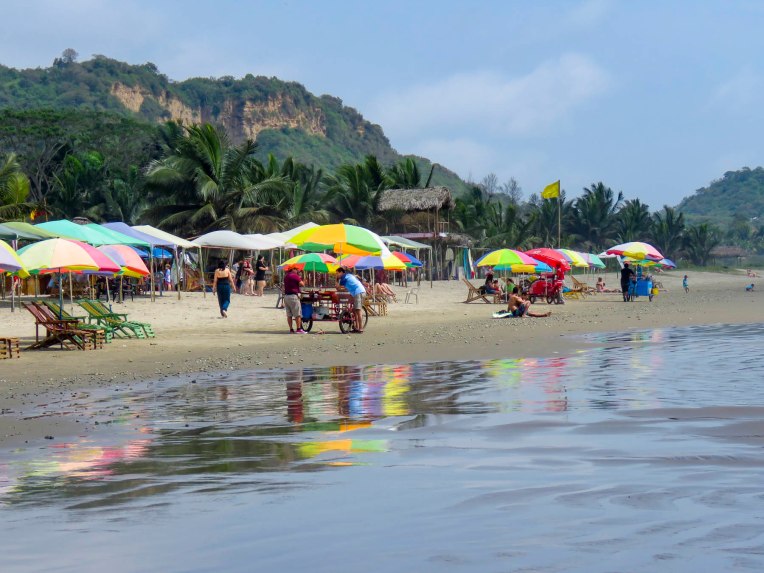 Our quest for eternal Spring-like weather has brought us to Olon, a rustic beach town on Ecuador’s southern Pacific coast with a wide, flat sandy beach that stretches for nearly five miles without a high-rise to been seen. Think San Juan del Sur in Nicaragua fifteen years ago, before it was discovered, or Costa Rica thirty years before it became a top tourist destination.
![IMG_6057[12551]](https://i0.wp.com/2suitcasesfor2years.com/wp-content/uploads/2018/11/img_605712551.jpg?w=535&h=401&ssl=1 "IMG_6057[12551]")


![IMG_7452[12683]](https://i0.wp.com/2suitcasesfor2years.com/wp-content/uploads/2018/12/img_745212683.jpg?w=240&h=192&ssl=1 "IMG_7452[12683]")


![IMG_5961[12489]](https://i0.wp.com/2suitcasesfor2years.com/wp-content/uploads/2018/11/img_596112489.jpg?w=158&h=211&ssl=1 "IMG_5961[12489]")


 Puerto Lopez hosts the largest fishing fleet on this part of the Ecuadorian coast. Lacking a protected harbor, all the fishing boats beach on the shoreline to unload their fresh catch. It is a hectic scene of never-ending activity that is reminiscent of an earlier era.
![IMG_6276[12629]](https://i0.wp.com/2suitcasesfor2years.com/wp-content/uploads/2018/11/img_627612629.jpg?w=402&h=536&ssl=1 "IMG_6276[12629]")
![IMG_2836[12654]](https://i0.wp.com/2suitcasesfor2years.com/wp-content/uploads/2018/11/img_283612654.jpg?w=354&h=266&ssl=1 "IMG_2836[12654]")
![IMG_6281[12630]](https://i0.wp.com/2suitcasesfor2years.com/wp-content/uploads/2018/12/img_628112630.jpg?w=354&h=266&ssl=1 "IMG_6281[12630]")


![IMG_5946[12490]](https://i0.wp.com/2suitcasesfor2years.com/wp-content/uploads/2018/11/img_594612490.jpg?w=187&h=249&ssl=1 "IMG_5946[12490]")

![IMG_6016[12546]](https://i0.wp.com/2suitcasesfor2years.com/wp-content/uploads/2018/12/img_601612546.jpg?w=187&h=249&ssl=1 "IMG_6016[12546]")
![IMG_6028[12552]](https://i0.wp.com/2suitcasesfor2years.com/wp-content/uploads/2018/12/img_602812552.jpg?w=187&h=249&ssl=1 "IMG_6028[12552]")

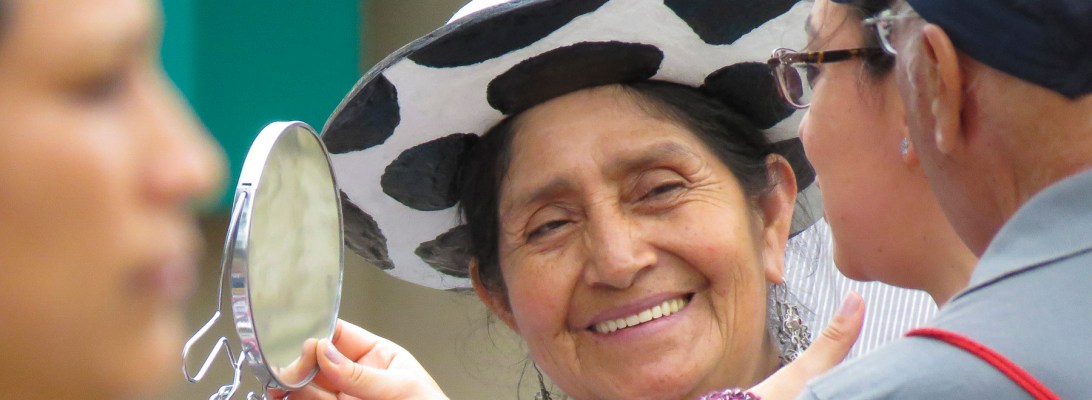
 A vacation from vacation? Yes, its’s tiring work having fun every day! Where to?


 With a bed in the dorm room going for $9.50 and luxury private cabins starting at just $39.00, the resort has a reputation as the place to go to “relax, enjoy, forget time and stay awhile.” Free morning yoga classes, a wonderful restaurant with some German dishes, and super affordable spa treatments (90 minute, deep tissue massages for $24.00, we both indulged) definitely promoted well-being. Bird calls filled the air and the distinctive face of 6,000ft high


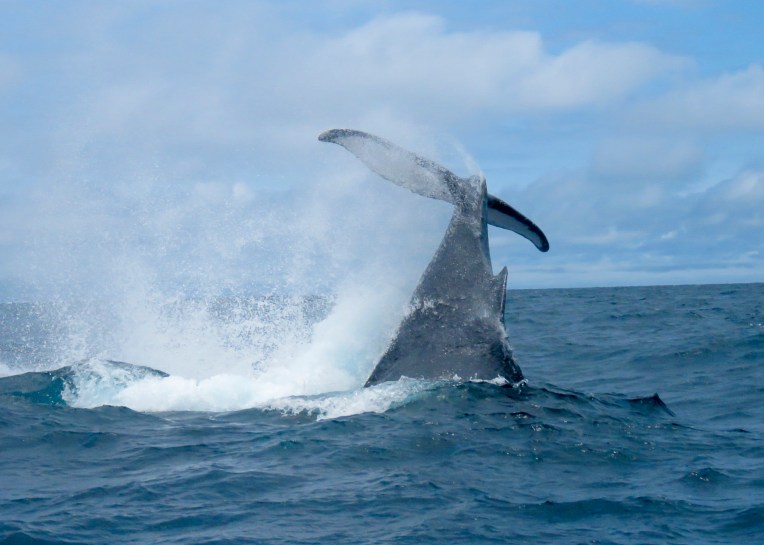
 We’ve been on the road for more than 100 days now; previously, our longest trip was just shy of three weeks, with carry-on luggage only. So, we felt fully prepared to tackle this challenge (insert wink here.) Needless to say, there is a learning curve, but we have the right mind set. In late October, we move north to Guatemala, followed by a cruise to Cuba. The first part of 2019 will see us in Europe, and after that, who knows? We’ve discussed heading to South Africa, then working our way north and through East Africa, trying to have as many big game safari experiences as possible. This has been a dream of mine since I unwrapped my first National Geographic magazine and was enthralled by the spectacular images of the great migration across the Serengeti. Winning this


![IMG_5946[12490]](https://i0.wp.com/2suitcasesfor2years.com/wp-content/uploads/2018/10/img_594612490.jpg?w=378&h=504&ssl=1 "IMG_5946[12490]")

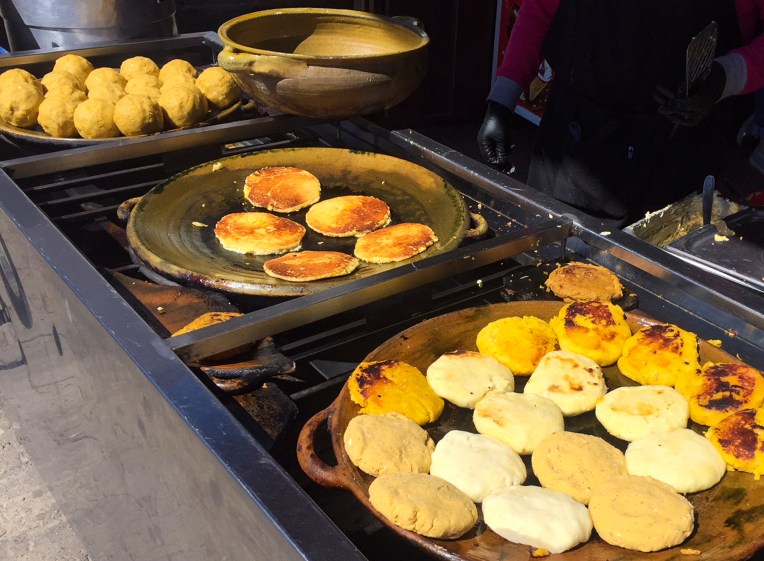 One of our favorite snacks was Tortilla de Choclo, eighty cents, a corn pancake that was grilled on a large ceramic plate, curbside, as you waited. Often, coffee and dessert cost more than lunch itself.

 One of the reasons we chose Cuenca for our first short term rental was so that I could take advantage of their dental tourism offerings. I had put off getting things done in the states because of what I thought were excessive cost, even with insurance. I am extremely pleased with the dental care that I received at Finding Health in Ecuador. Tooth extraction – $35.00, cavity – $25.00, two-tooth bridge – $250.00. Our premise that we could live abroad more economically than living back in the states is so far holding true.
 Currently we are in Olon, a rustic beach town on Ecuador’s southern Pacific coast with a wide, flat sandy beach that stretches for nearly five miles without a high-rise to been seen. It’s off season, mostly cloudy, but the water is still warm, perfect conditions for the handful of surfers and us. Fishermen still launch skiffs through the surf from the beach, and fathers can be seen taking their kids to school on the handlebars of their motorcycles, gently splashing through the incoming tide. Our rent for the month of October is $730.00 with breakfast included!


![IMG_5961[12489]](https://i0.wp.com/2suitcasesfor2years.com/wp-content/uploads/2018/10/img_596112489.jpg?w=402&h=536&ssl=1 "IMG_5961[12489]")


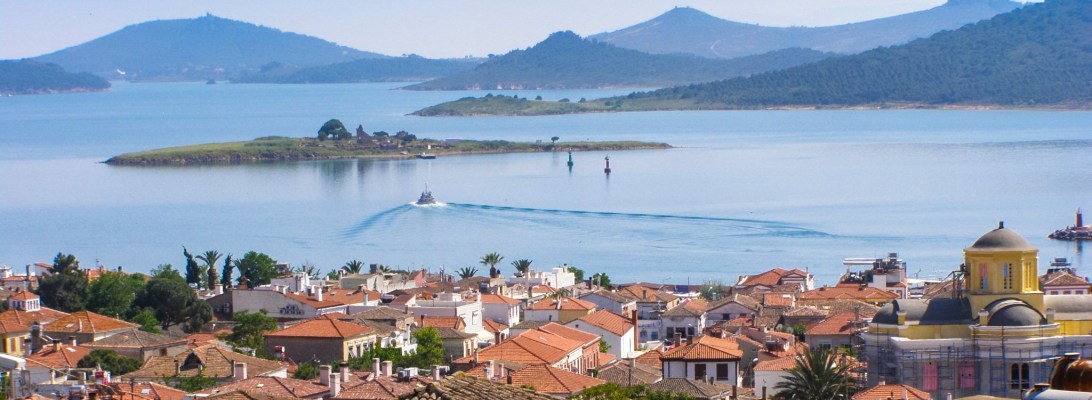


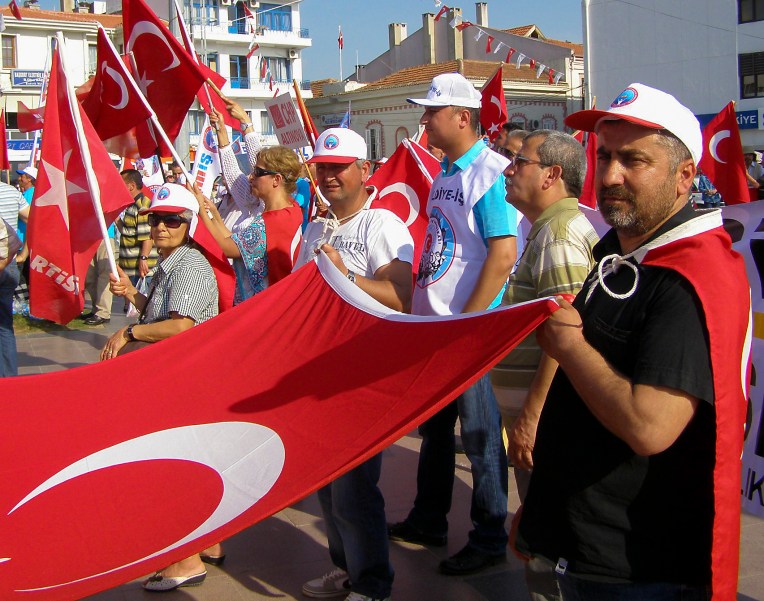

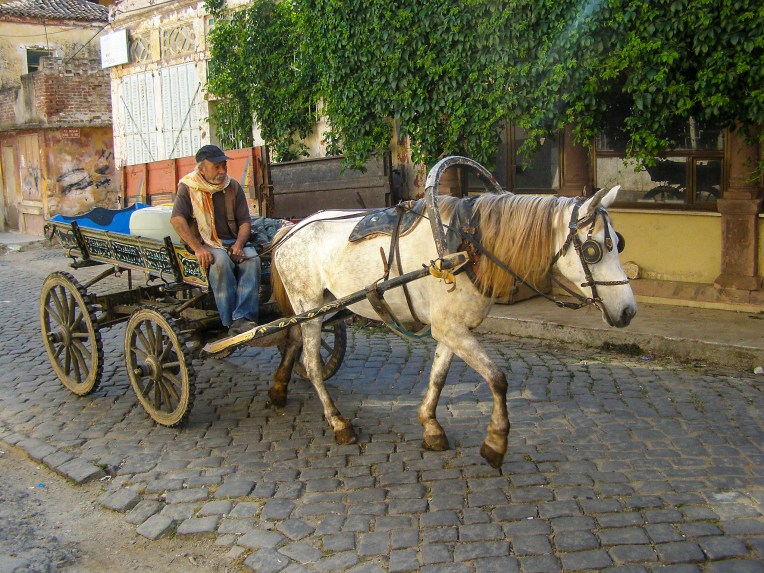


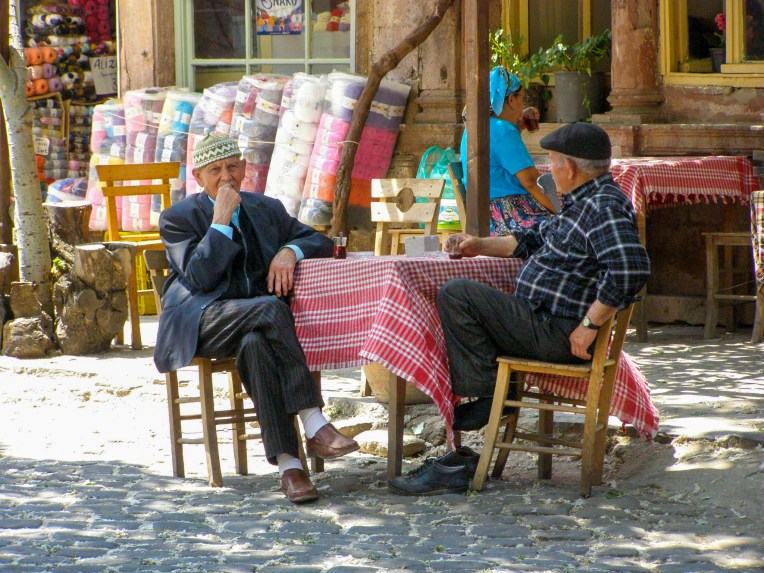
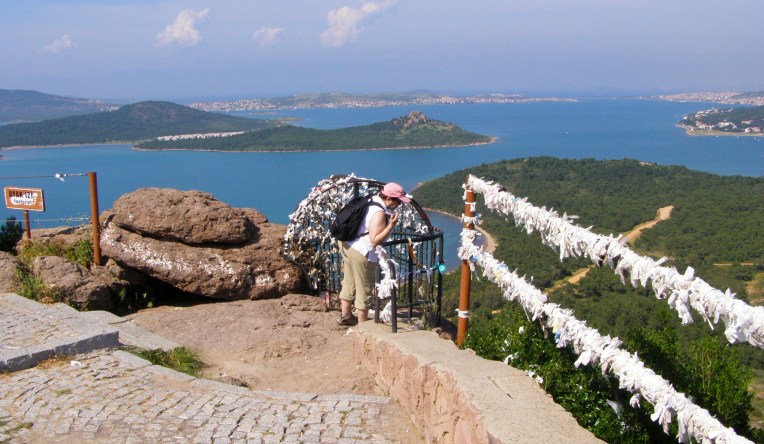

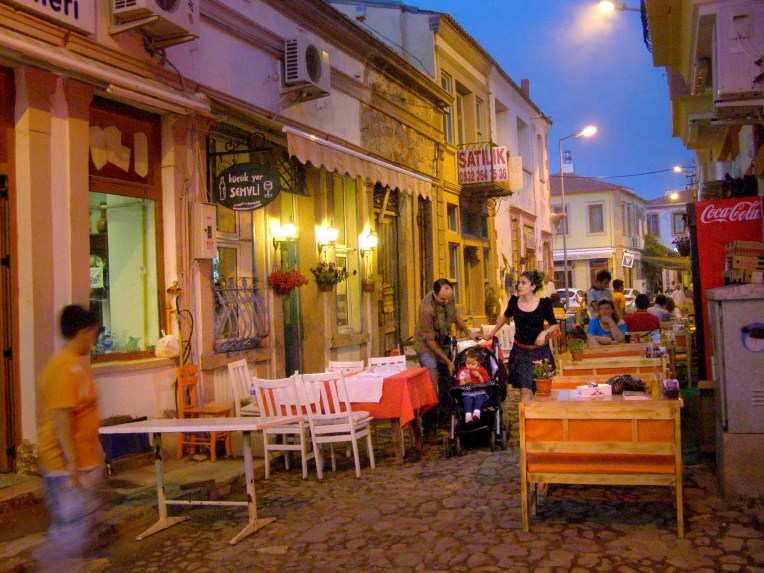


 2 Suitcases for 2 years