
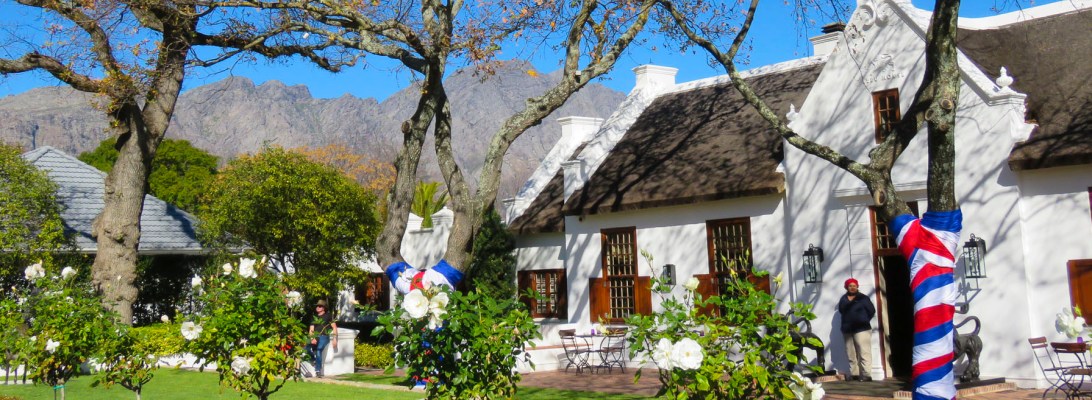
Relatively low car rental fees in South Africa encouraged us to travel farther afield. There is so much to do in the area around Cape Town, driving along a spectacular coast or heading inland into the western cape’s vast winelands, with about 300 vineyards, that starts near Stellenbosch, just 31 miles away via the N2. We planned a long weekend to celebrate Bastille Day in Franschhoek, a wine making community founded by French Huguenots in the 17th century. French roots aside, the village is full of Cape Dutch architecture and set in a valley surrounded by the Drakenstein and Groot Drakenstein mountain ranges. The lower slopes provide the vineyards in the valley with unique terroirs. Afterwards we ventured down to Hermanus on the coast to look for whales.
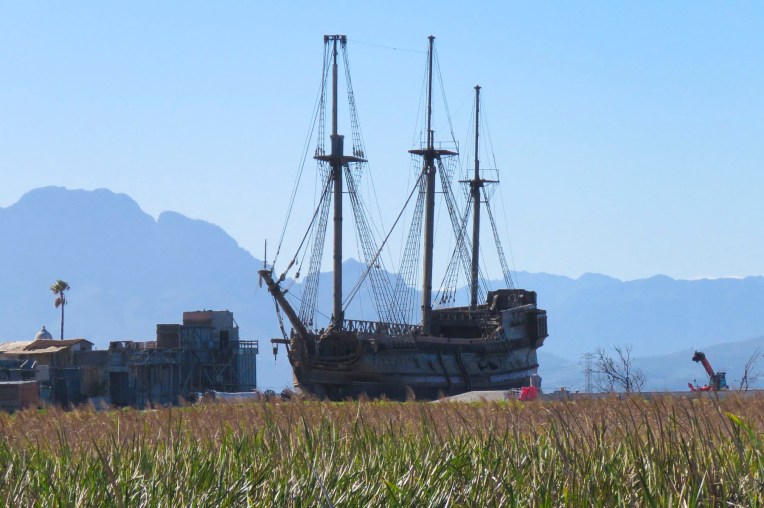 But first we had to get there. Just before our exit off the N2, the silhouettes of several tall sailing ships broke the horizon as if they were crossing an inland sea. Imagining a pirate swinging from a yardarm, we did a quick double take and followed a side road down to the entrance of Cape Town Film Studios, where a guard waved us away when we stopped to take pictures. They’ve hosted many international productions that include Doctor Who, Tomb Raider, Outlander and Mad Max Fury Road.
 Across the street from the movie studio, our wine tasting started at Vergenoegd Löw The Wine Estate. The vineyard is known for its biodiversity, sustainability and conservation efforts. It uses a flock of 1200 Indian Runner Ducks to cruise the undergrowth of the grape vines and devour snails and other pests that can destroy the harvest. Three times a day, wranglers gather the flock and parade it through the beautiful estate for the amusement of visitors. Of course, there are wine tastings and food available to encourage you to linger and enjoy the setting. It was our first of several visits; the place was just delightful.


Our travel mantra is usually “walk a little, then café, walk a little more, then café.” This changes to “drive a little, café, pitstop” when it’s a road trip. And staying true to our philosophy, we stopped at the Root 44 Market just before Stellenbosch, for a quick look. This is one of the weekend markets with live music, food and craft vendors that have become so popular in the region. We had the most sinful donuts from Desire Donuts. These truly would have become addictive if they were closer to home.


Driving through Stellenbosch we came across a large bronze sculpture of a giant octopus outside the studio/gallery of Stephen Rautenbach. It’s a nice gallery space filled with pieces that capture the spirit of the South African animals he’s sculpted.


Around the corner we enjoyed some homemade Turkish delight and Turkish coffee before continuing our drive to our B&B for two nights, Val d’Or Estate in Franschhoek. A long dirt driveway led to a pretty, naturally landscaped property with a large pond and swimming pool overlooked by the guesthouse.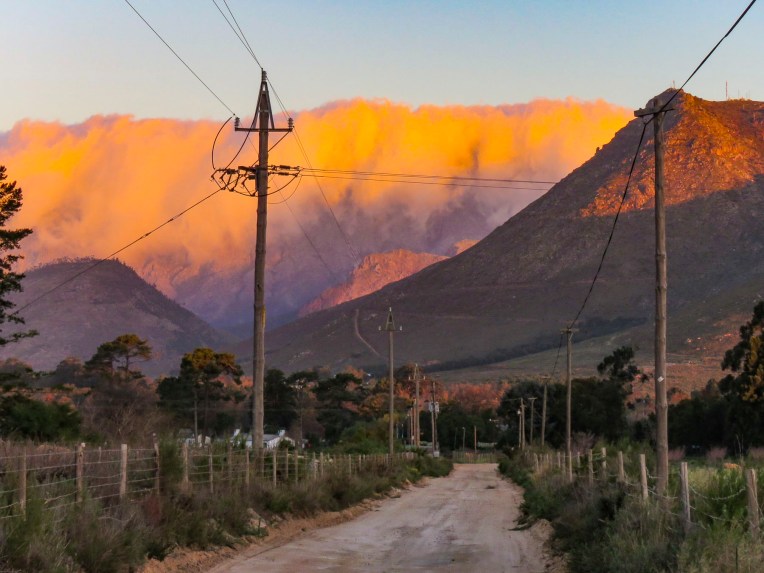 Our room was spacious and comfortable, bigger than several studio apartments we have rented. We spent a little time walking around the pond, watching the weaver birds dart in and out of their hanging nests, before the sunset.


The next morning, we passed an enormous amount of red, white and blue bunting festooning every building on either side of the street as we headed to the festival grounds at the Huguenot Monument on the far end of the village.  We followed the queue of beret wearing Francophiles draped in colors of the flag, past a vintage car show and a very competitive barrel rolling contest, to the Food & Wine Marquee, where our tickets included a live concert by South African rocker Karen Zoid, two very nice wine glasses, tasting coupons and R20 vouchers to use towards the purchase of food or bottles of wine.


Thirty vineyards poured generous samples of their white, red, and rose wines along with champagne. The crowd sang along when Karen Zoid took the stage and performed a collection of her South African hits and La Marseillaise, the French national anthem, for a nostalgic audience. She also paid tribute to rocker Johnny Clegg, who passed away earlier in July. He was the first Afrikaner singer during the apartheid era to form a band with a black man, Sipho Mchunu, called Juluka. They were hugely successful and beloved by many. It was a lot of fun sampling the wines and purchasing bottles of our favorites to enjoy in Cape Town later.


We had planned to follow R45 east through the rugged terrain of Mont Rochelle Nature Reserve to Bot River and continue on the R43 south into Hermanus, but a winter rock slide had indefinitely blocked the road and forced us to backtrack through Stellenbosch.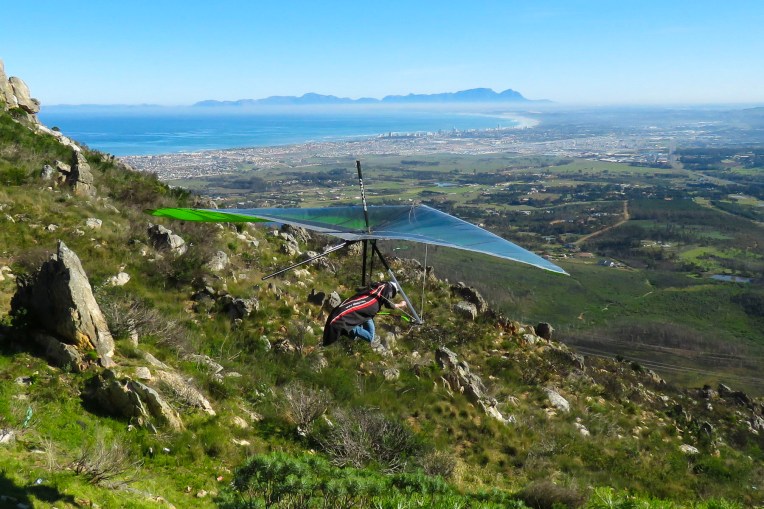 Luck was with us when we pulled into the Sir Lowry’s Pass View Point, in time to see several paragliders launch from the steep slope of the overlook. The view toward the town of Strand, on False Bay, with its long sandy crescent of beach, was incredible. Further on fruit orchards lined both sides of the road for as far as we could see. The valley’s unique climate, cooler and wetter than the surrounding region, is perfect for the local orchards to blossom. Today the Elgin region produces 65% of South Africa’s export crop of deciduous fruits.
 We were working our way to the Elgin Railway Market, another beloved Saturday/Sunday venue for Cape families, in the “Valley of Apples.” Appropriately it’s housed in a renovated railway warehouse where the region’s famous fruits were stored before being loaded onto trains and sent to Cape Town or Port Elizabeth for export. It’s a huge, two story space, with wine, food and craft vendors, a performance stage and rock-climbing wall.
  Located directly across the street from the ocean, the Windsor Hotel would be our base for the next two nights. It’s a modest old hotel, built originally as a sanatorium in 1896, then converted to a hotel in 1931. It still retains much of its original character with fireplaces in the wood paneled common areas, arched doorways and wide staircases. The breakfast room was outstanding with large picture windows facing the sea.
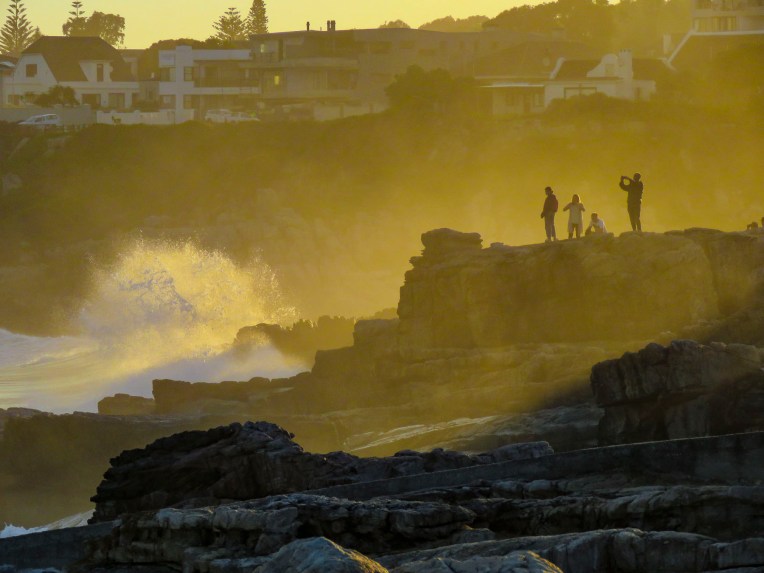
 Walker Bay’s thunderous waves crashing against the rocky coastline were spectacular with their large sprays as we walked along the Hermanus’ Cliffside Path to Gearing’s Point, a scenic overlook, hoping to spot whales. Our Cape Town friends had mentioned that it’s often possible to sight Southern Right Whales from the shore here during their June to November calving season, after which they head back to the waters of Antarctica.
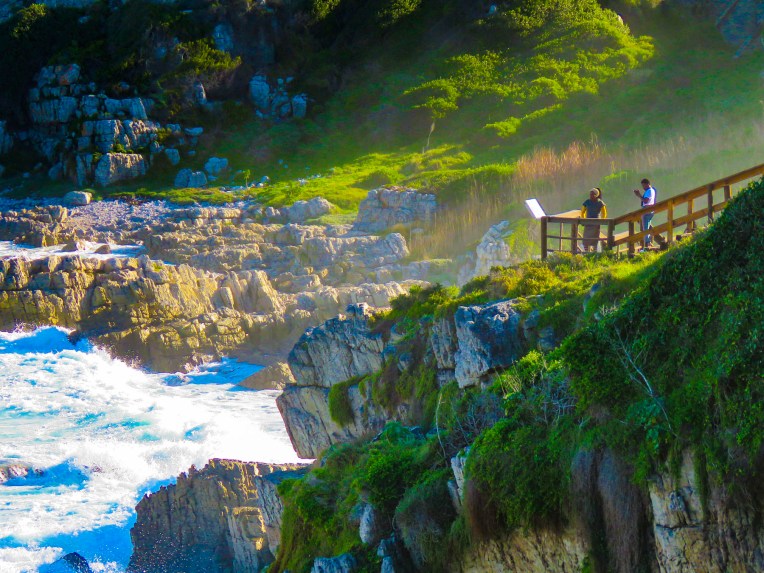 It’s a well-defined trail, with cement, dirt and boardwalk sections, that starts at the village’s New Harbor and hugs the coast for 7.5 miles, ending at the Klein River Estuary. Five miles of the path are wheelchair accessible. In some places it passes under trees twisted to grow almost parallel to the ground, by the fierce South Atlantic winds that blow in from Antarctica.


In the off-season not everything is open and we had to search awhile before finding Oskars Bakery, two blocks in from the ocean on High Street, for coffee. But with one glance at the pastry case we were hooked. We both agree it had to be one of the best bakeries in the western cape. 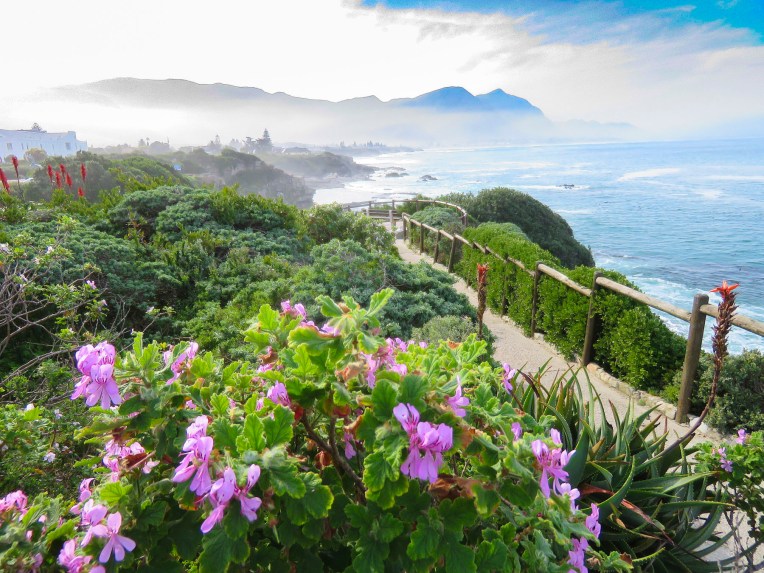 The seascapes from the cliffside path were beautiful, but we hadn’t spotted any whales and the village’s whale crier wasn’t sounding his kelp horn. Yep, what started as a publicity stunt has become tradition and Hermanus has had an official, and the world’s only, whale crier since 1992.
  In 2016 the movie The Whale Caller was adapted from South African author Zake Mda’s 2005 novel, of the same name, which has the whale crier as the central character.


Hoping for better luck, we booked a whale watching excursion operating out of the village’s new harbor. There are a number of tour operators that run excursions out of this port, but we liked the look of the Unathi, a 50ft catamaran, that Hermanus Whale Watchers uses.  With skipper Emile at the helm, the first mate tossed the mooring lines to the dock and we departed onto a gently rolling sea. Phillip, a registered naturalist with a delightful wry sense of humor shared his love of the sea with us. “There’s a good chance we’ll see Southern Rights today. We spot them by their distinctive V-shaped blow and the callosities (clusters of barnacle like growths) on their heads. We may also see Africa Penguins, Fur Seals, Dolphins, migrating Humpback Whales and resident Bryde’s Whales.” Psyched now, all eyes scanned the horizon for any telltale signs of these gigantic, yet elusive creatures.


Blows were spotted, yet the whales had dived to a greater depth before we got closer. We eventually encountered a small pod just off-shore at Die Plaat beach, a ten mile stretch of wild, rocky and sandy beach, backed by tall dunes. The captain skillfully maneuvered us as close to the beach as possible as we followed the pod of Southern Rights, that sometimes surfaced close enough to hear the puff of their blows. We were thrilled, but a little disappointed also, that there wasn’t any tail slapping or breaching. Back ashore we had a wonderful lunch of fried calamari and fresh oysters at a little place on the wharf, the Quayside Cabin. Heading back to Cape Town late the next day, we followed the scenic R44 coastal road through the seaside villages of Kleinmond, Betty’s Bay, Pringle Bay and Rooi-Els as the golden hour was approaching.
  Each turn of the road offered a dramatic view of the coast and we stopped many times for photos. We merged back onto the R2 at Gordons Bay just after sunset for the ride the rest of the way back to the city.
So many regions of the Western Cape are stunningly beautiful!
Till next time, Craig & Donna

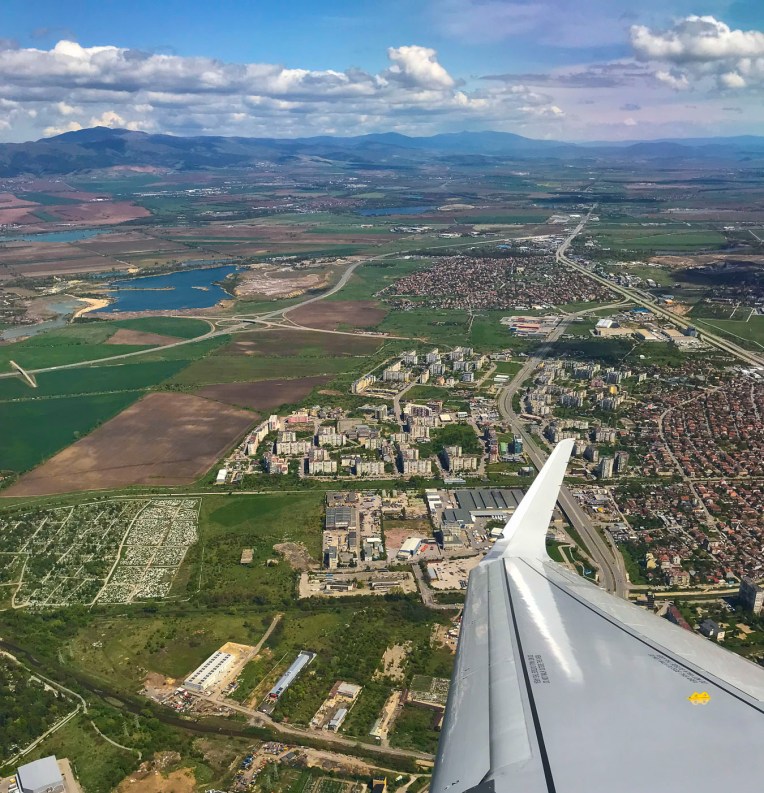 In the airport, at the tourist information kiosk, multiple large screen tv’s played flashy videos promoting Bulgaria’s culture, tourism, and natural beauty. We asked the woman staffing the desk for a map of Sofia and directions on how to transfer into the city. “Follow the line,” she snapped. Not fully understanding I asked again. “Follow the line!” she barked firmly a second time. She scowled in the direction of the arrows painted on the floor and turned away. Her previous career, I’m speculating, was a prison guard in the now closed gulags. She was obviously better suited commanding prisoners to “assume the position” than to being the first friendly face welcoming visitors to her country. I’m sure she was hiding handcuffs and would have used them if I asked another question. But that’s how it was, one day you’re communist and the next day you’re taking customer service courses and trying to embrace a free market economy. And for some the promise of a better life hasn’t been realized. Later, one of our hosts would express, “some folks prefer the old way, they’re still communists.” “Come and keep your comrade warm,” another refrain from the Beatles song, didn’t ring true. We weren’t feeling the love just yet. Aside from that rocky start, we had very enjoyable time in Bulgaria.
  The line led to a modern subway station adjacent to the airport terminal and for 1.60 BGN, about 90¢ USD, we rode the
 We emerged onto the pedestrian only Vitosha Boulevard filled with folks enjoying a warm Spring day and an incredible vista of Vitosha Mountain towering over the city. Inviting outdoor cafes lined the street and we quickly chose which one we’d return to after meeting our Airbnb host. We stayed on Knyaz Boris just two blocks parallel to Vitosha Boulevard and as majestic as the pedestrian mall was, the side streets, though tree lined and harboring small shops and restaurants, were slightly dismaying with wanton graffiti tags on every apartment building door and utility box. There was a lack of pride in ownership.
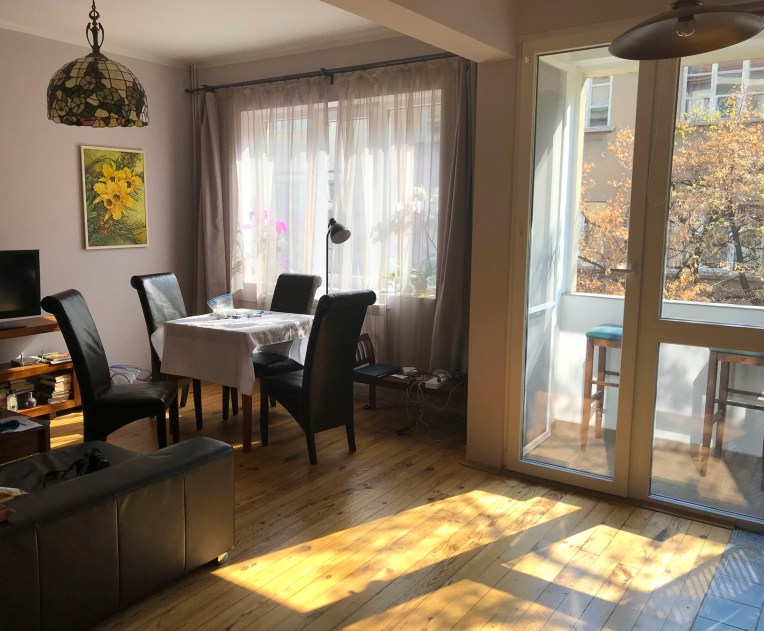
 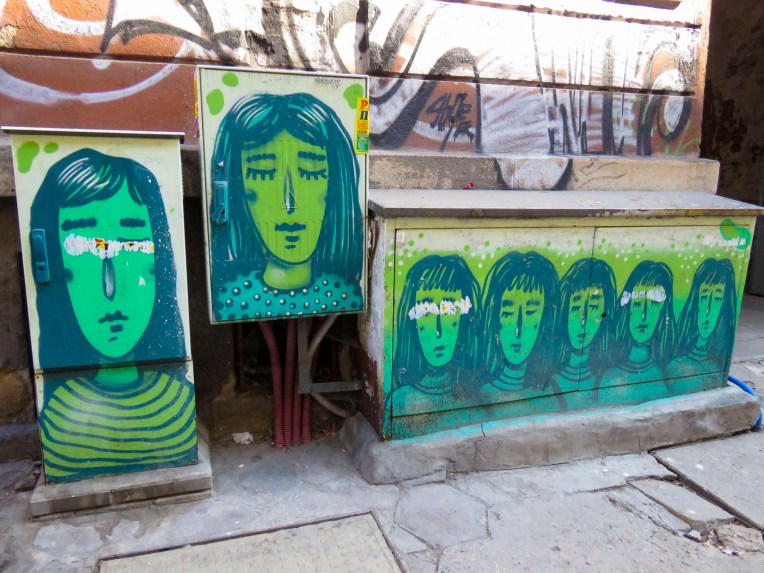 The idea that’s it’s not my responsibility is a leftover from the communist era, when the government owned and was responsible for everything. The front door to our building was no different, but our third-floor walkup apartment was an oasis with a sun-drenched living room and tiny balcony that we would call home for a month. And to our delight, but to our waistlines’ detriment, there was a baklava bakery across the street!
  Long at the crossroads of expanding empires, Bulgaria has had a contentious past with Thracian, Persian, Greek, Roman, Byzantine, Ottoman and communist influences. The First Bulgarian Empire, 681-1018, has been deemed the Golden Age of Bulgarian Culture, with the adoption of Christianity as the official religion in 865 and the creation of the Cyrillic alphabet. Independent for only short periods of time during the medieval age, the National Revival period between 1762-1878 brought Bulgaria to finally throw off the yoke of Ottoman domination that had lasted from 1396. Sadly, there were only six decades of self-government before the proud people of Bulgaria became a satellite regime of communist Russia at the end of WWII and fell behind the Iron Curtain.
 Today Sofia is transforming itself into one of the most beautiful, cosmopolitan cites in Europe with its pedestrian malls, extensive park system and tram lines that weave throughout the city. But the past is always present and just around the corner in Sofia. Walking north along Vitosha past the end of the pedestrian mall there is a three block stretch that displays a vast stretch of that history on the way to the Central Market Hall, where we were headed to stock our pantry. We got sidetracked.
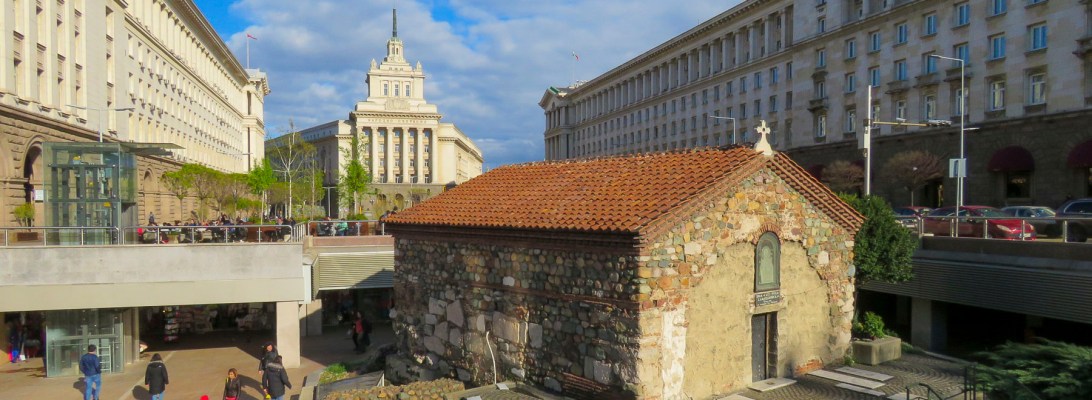
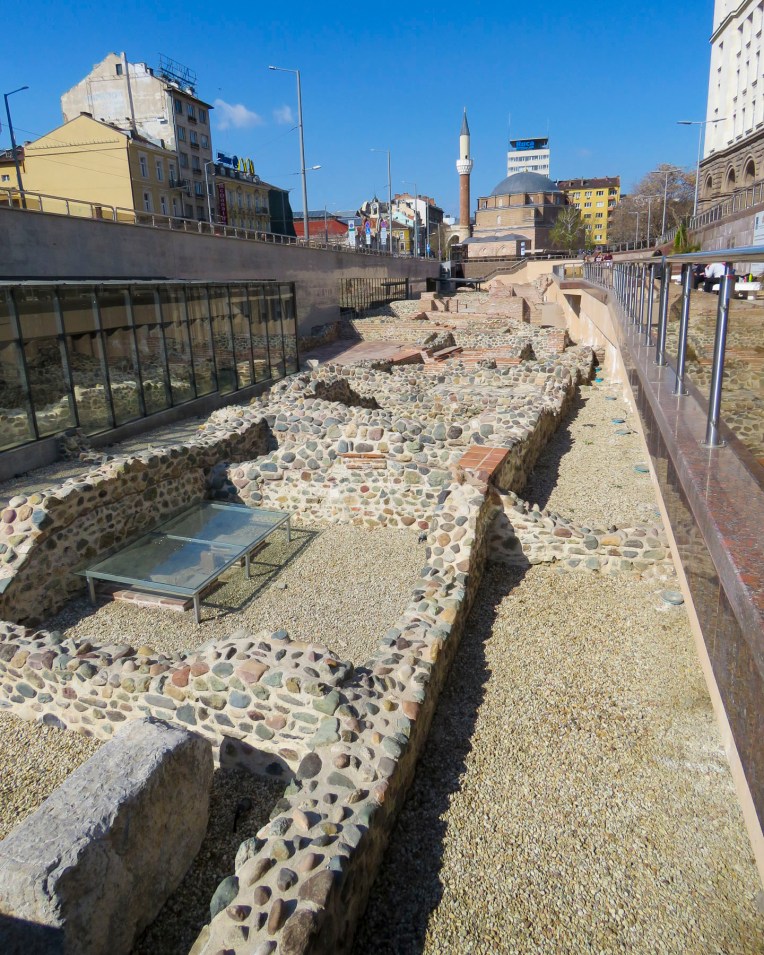 Seven millennia ago, put down the first foundations of what we now call Sofia. The construction of Sofia’s modern subway system in the 1990’s revealed multiple layers of antiquity and many of the amazing artifacts unearthed are displayed, in museum cases, on the subway platforms in the Serdika station and National Archeology Museum nearby.


 Tragically in a 1925 bombing, the Bulgarian Communist Party attempted to kill the King of Bulgaria and other members of the government who were attending a funeral at this church – one hundred-fifty people died, and the cathedral’s dome was razed. Excavations behind the church in 2015 uncovered early ruins and a treasure of 3,000 Roman silver coins from the 2nd century AD.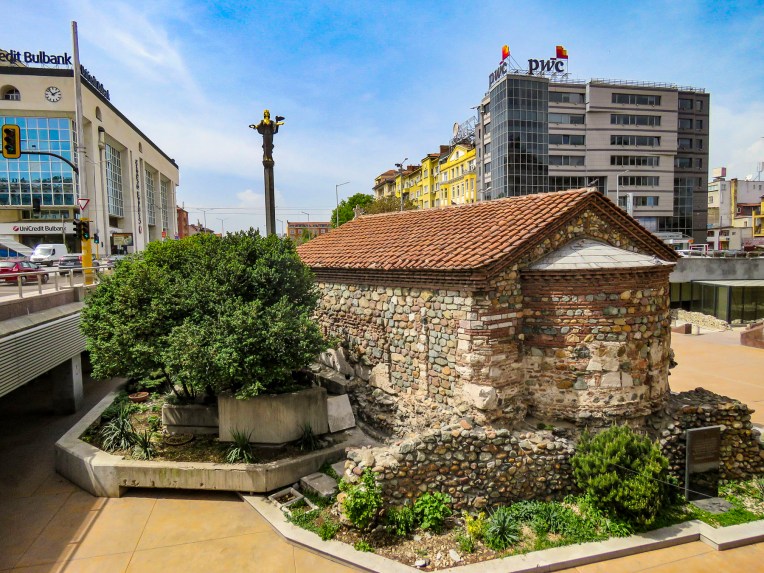


 It ends just short of Banya Bashi, an Ottoman mosque built in the 16th century. The towering statue of St. Sofia is also visible just beyond the subway station. Ancient walls found during the renovation of the Central Market Hall can also be seen in the lower level of that building.
 Nearby the oldest building in Sofia, the Church of Saint George, built by the Romans in the 4th century, has early Christian frescoes which were painted over by the Ottomans when it was used as a mosque, but they were rediscovered in the 1900s and restored. It stands surrounded by modern buildings in a courtyard behind the President of the Republic of Bulgaria building, within earshot of the Changing of the Guard.


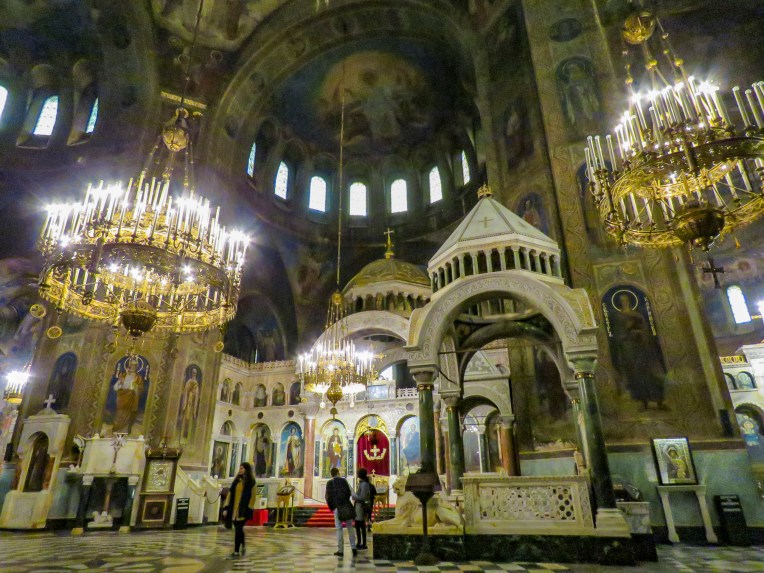 In the crypt of the cathedral a small, state of the art museum showcases the development of Bulgarian orthodox iconography over the centuries.
  Nearby, the five gilded spires of the Russian Church, officially known as the Church of St Nicholas the Miracle-Maker, can be seen from the steps of Cathedral Saint Aleksandar Nevski. Built in 1914 on the site of a mosque that was torn down after the liberation of Bulgaria, it served has the official church for the Russian Embassy and the Russian community in Sofia. The religious murals that cover the interior of the church were created by Vasily Perminov’s team of talented icon painters, who were also responsible for the iconography in Cathedral Saint Aleksandar Nevski. Darkened by decades of candle smoke, the fresco paintings in the dome were restored in 2014.


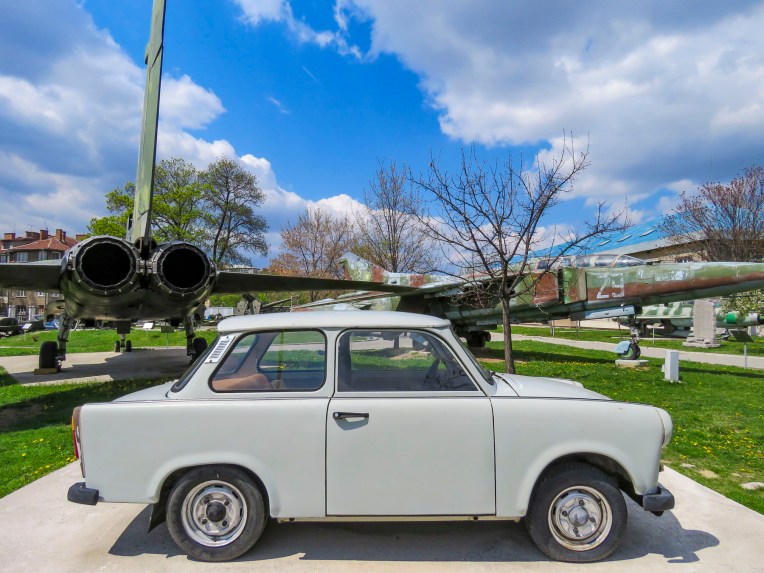 In 2001 an early Christian mausoleum was unearthed near the American Embassy and it’s fantastic that things are still being discovered in 2019.


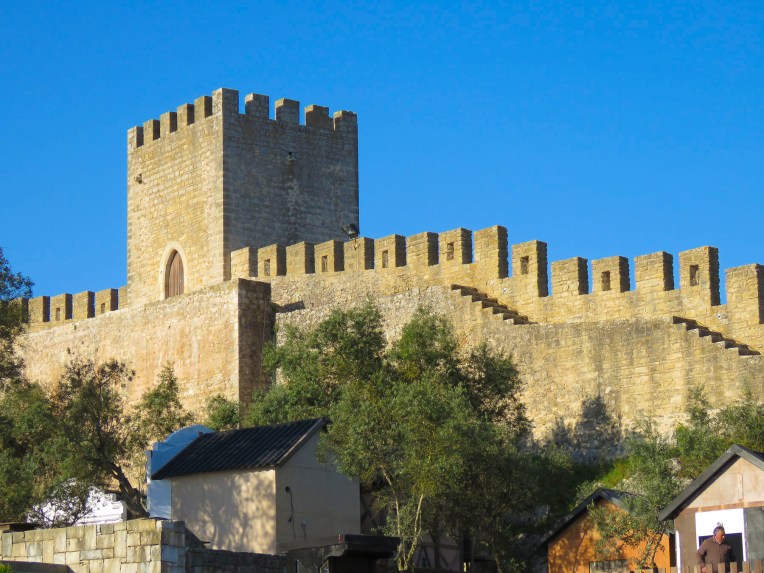 We had spent a wonderful day cruising from Aveiro to Nazare, but now twilight was fast turning to darkness as we drove along an extremely narrow lane at the base of the formidable fortress wall that encircled Obidos. We had arrived at our hotel
  Admittingly Donna is the more accomplished linguist of the two of us. I according to my loved one have been known to torture a language. So, she eagerly sought advice from the only person we had passed. From a short distance away, I watched the conversation unfold with the gentleman flailing his arms every which way for what seemed an inordinate amount of time.
  Smiling, Donna returned to the car. “About the only thing I got from that was we should continue following the lane until the next hole in the wall. He was very insistent about that.” “Did he know the hotel?” I asked. “Never heard of it, but I think he was intoxicated! My luck,” she laughed. The lane narrowed even more as we drove forward. Finally, there was an ancient portal, the size of a single door, through the wall that led to a short set of steps. Abandoning our car for few minutes we climbed the stairs to an inner lane in search of our hotel. After we finally found the place, the receptionist explained to continue driving along the wall until you reach an old city gate, enter there and follow the inner lane back to us and park anywhere you can. OK, piece of cake now, we thought.
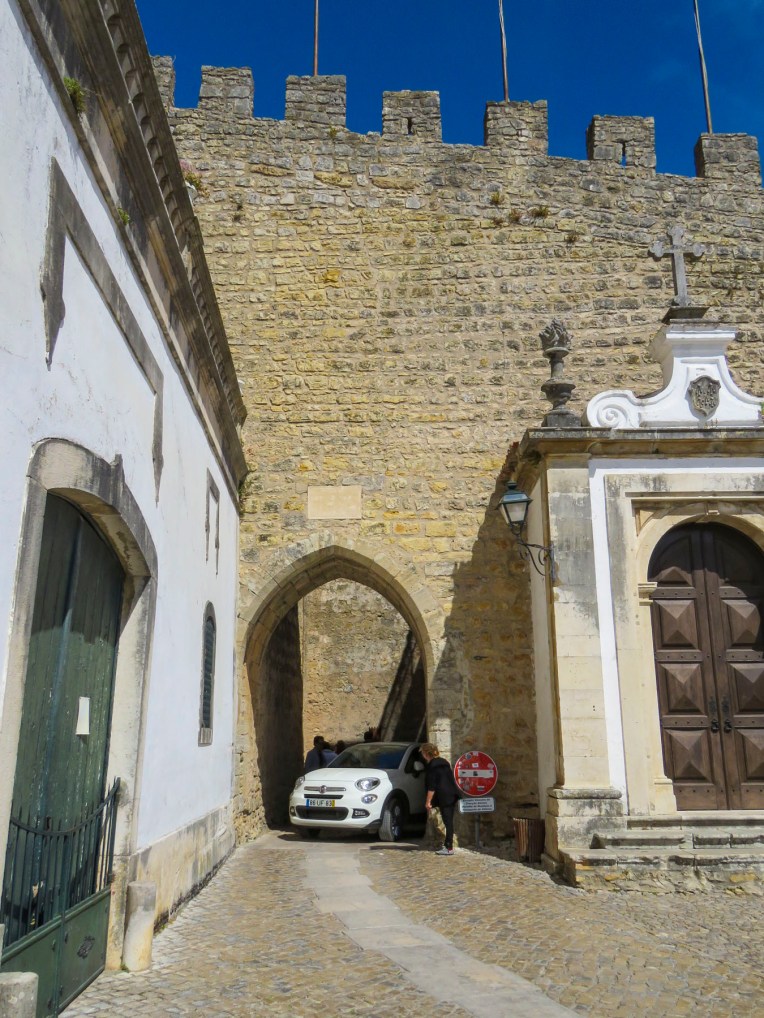
 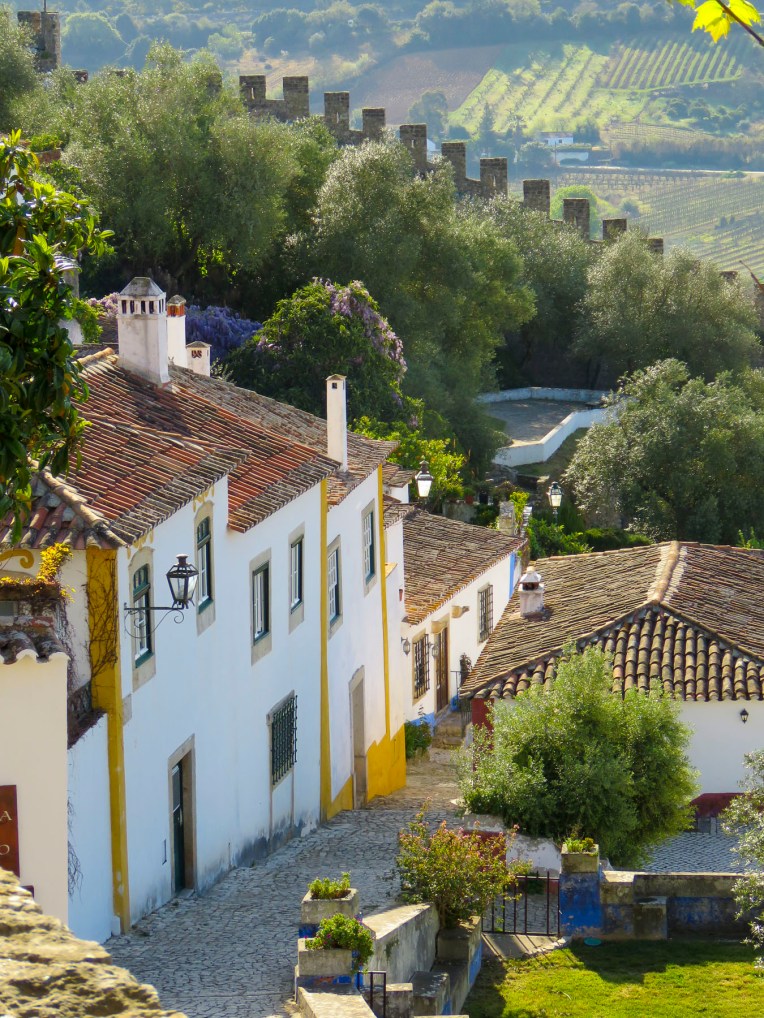 Inhabited since the 4th century BC by the Lusitanos, then the Romans and Visigoths, the city wasn’t fortified until the 8th century by the Moors. Bent entrances, with a quick turn and an additional, heavy inner gate were used in many Arab fortifications. In peacetime they were easy to navigate with pack animals, and during sieges provided a killing zone for the defenders of the city. Remember, these bent gates were built long before cars were envisioned. Obidos had two of them and tonight we had to navigate through one. Porta do Vale ou Senhora da Graça was a drive through chapel dedicated to Our Lady of Grace. In 1727 the old gate was renovated into an oratory chapel with sacristy, altarpiece, gallery, choir, and chancel by a local magistrate to commemorate his daughter’s death. You actually transit through the nave to reach the interior street. The gate was narrow, and it required a sharp k-turn just to line the car up to approach it correctly. Donna was driving and I hopped out to judge just how much room we had around the car. Driving up a slight slope on flagstones worn smooth from centuries of travelers, the tires spun with no traction as the car got halfway through the gate. Backing-up and then gunning the car forward through the gate Donna only had the length of our Fiat 500 to turn sharply right and exit the inner gate. It was do-able but nerve-wracking.


 With only two main lanes that ran the length of village, interconnected by a labyrinth of stairs and smaller alleys, Obidos was the perfect size, only slightly larger than Marvao, to explore for two days and relax before driving back to the airport in Lisbon for our flight to Sofia, Bulgaria.
 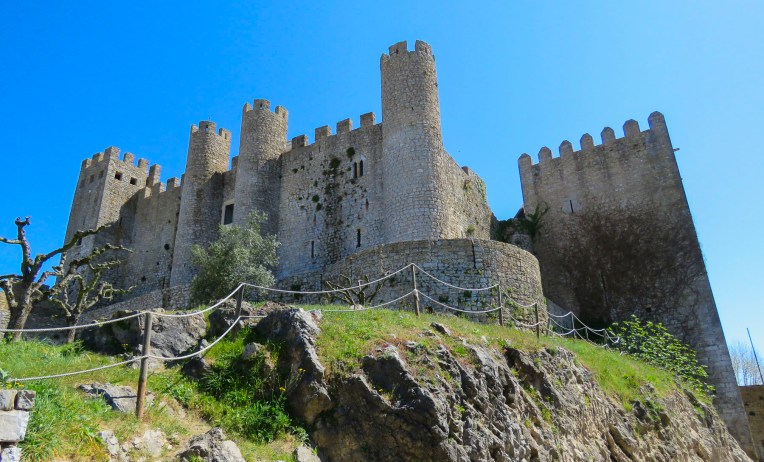 The next morning, enjoying deserted lanes lined with flowering wisteria, calla lilies, and other interesting details we weaved our way to the


 We eventually made our way through the main gate of the walled city. Porta da Vila de Óbidos is another bent entrance that did double duty as a chapel to Nossa Senhora da Piedade, the Virgin Mary, patron of the village. Be sure to look up as you walk through, as Azulejos tiles from the 1700’s line the interior balcony.
 Across the street we walked below remnants of a three-kilometer-long aqueduct built in the 16th century to supply water to the fortress.
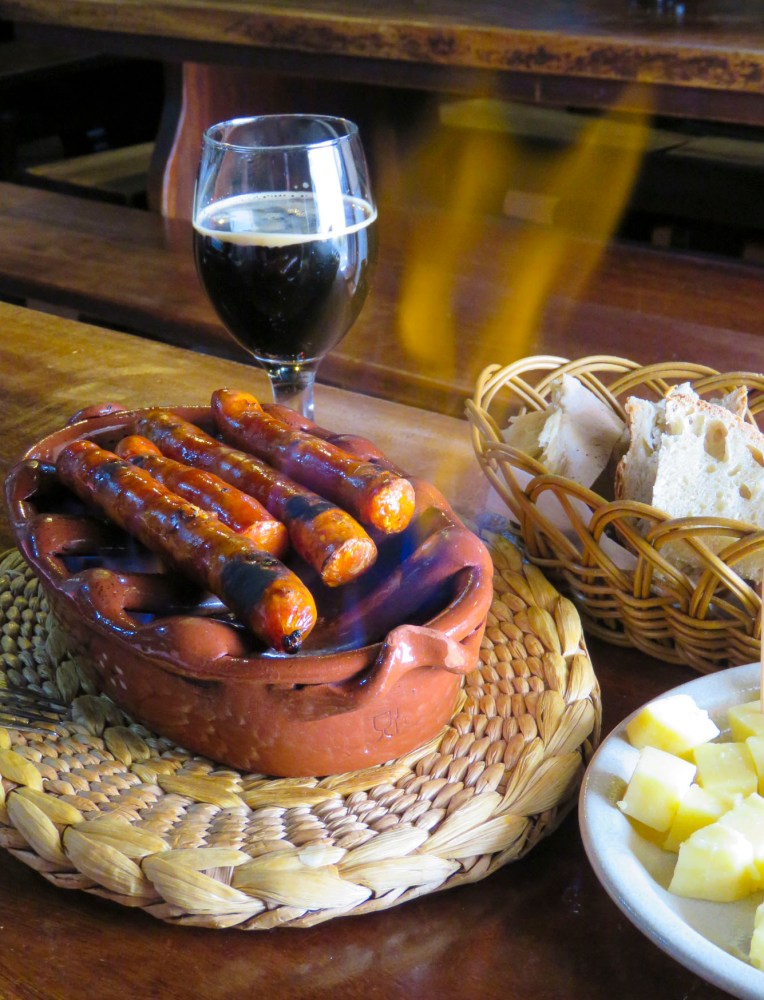
  Dinner that night was a simple meal of bread, cheese and local sausages cooked uniquely on a ceramic hibachi, fueled with grappa, placed on our table at Bar Ibn Errik Rex. As flames danced from our mini grill, the waiter would return to our table occasionally and turn the sausages to ensure their perfection. It was an entertaining evening. A few good Portuguese beers helped.
 With our GPS App still set to avoid toll roads, we drove through the Porta da Vila de Óbidos and headed towards Lisbon, less than two hours away if we didn’t stop. But, if you’ve been following our blog you’ll know that’s nearly impossible, there is always a quick glimpse of something that calls for a detour.
 Torres Vedras with its aptly named citadel caught our eye. With a historical time-line similar to Obidos, the hilltop in the old historic district was continually fortified against waves of early invaders. Knowing a good piece of real estate when they saw it, the castle was seized during the Christian reconquest in 1148 and used by a succession of Portuguese Kings until it was heavily damaged in the catastrophic 1755 earthquake that hit central Portugal and Lisbon. Built just after the reconquest, Igreja de Santa Maria do Castelo stands just below the castle walls. The church’s bell cast in the 16th century continues to ring today.

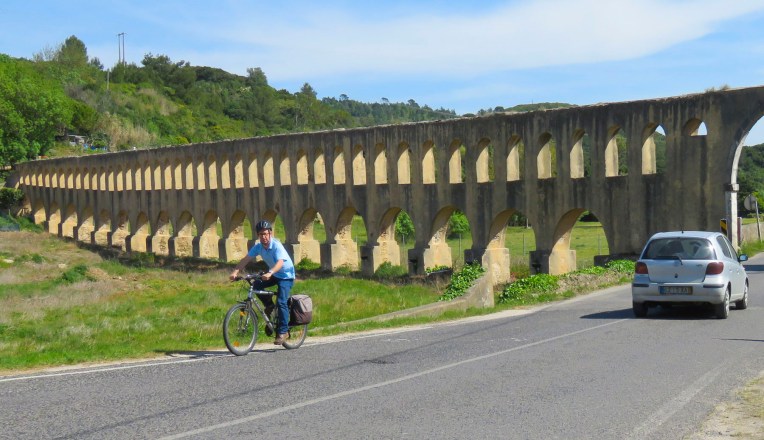 Along the Sizandro River on the outskirts of town, an impressive two-kilometer stretch of a 16th century aqueduct with double arches still stands. Driving under the aqueduct we followed the river south along the R374. The high-density new developments around Torres Vedras quickly gave way to a landscape of vineyards and pastures. Finding a restaurant for a late lunch, though, didn’t seem promising along this rural stretch of road, dotted with the occasional roadside café with a farm tractor parked out front, until we caught a quick peripheral glimpse of a larger establishment, across a small bridge, down a side lane. It would take another mile before we could find a suitable place to perform a U-turn. With nothing else around for miles


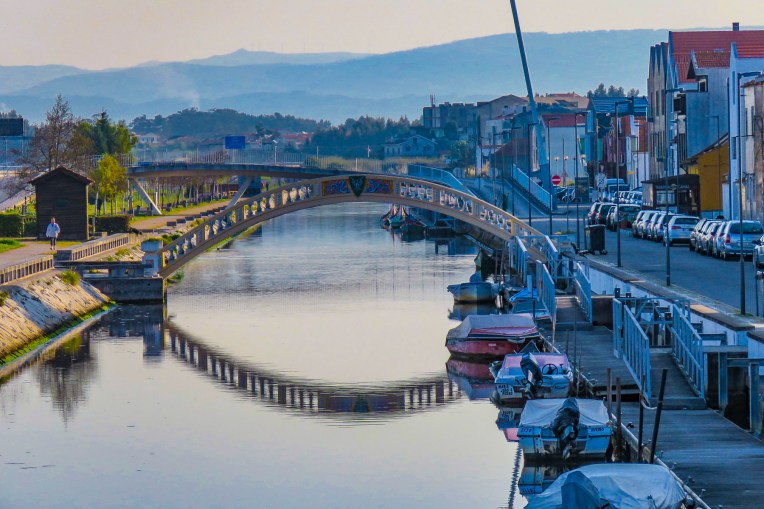


 While the Algarve coast in southern Portugal gets the most hype with its azure waters and rock formations, Portugal’s Silver Coast, the Costa de Prata, starting near Lisbon, runs north for nearly 150 uninterrupted miles to the Douro River in Porto. Lightly developed, it’s a majestic stretch of wild, wide and flat sandy beaches and dunes that feels undiscovered and is worthy of further exploration.
 It was mid-afternoon when we arrived at Miradouro do Suberco towering 350 feet above Nazare’s beautiful, crescent shaped Praia da Nazaré beach. Surprisingly, for such a beautiful spot we were able to find free parking nearby above the Nazare lighthouse. The only caveat, an ominous sign warning that if our car some how managed to go over the cliff edge we would still be liable for the €25,000 wreckage removal. You definitely need to know where reverse is on the stick shift here! Some of the world’s tallest waves crash onto the rocks in front of the Nazare lighthouse between October and March. Every year in November the Nazare Challenge attracts suicidal, thrill seeking surfers looking to ride the biggest waves. Thousands of onlookers line the hill above the action to watch their death-defying feats. A record 80-foot wave was ridden in 2017 by Brazilian Rodrigo Koxa and outside the competition, in December 2018, a 100-foot tall monster was surfed by Tom Butler of the United Kingdom. We can’t imagine the raw fury of those size waves. Unfortunately, the day we arrived the ocean was calm.


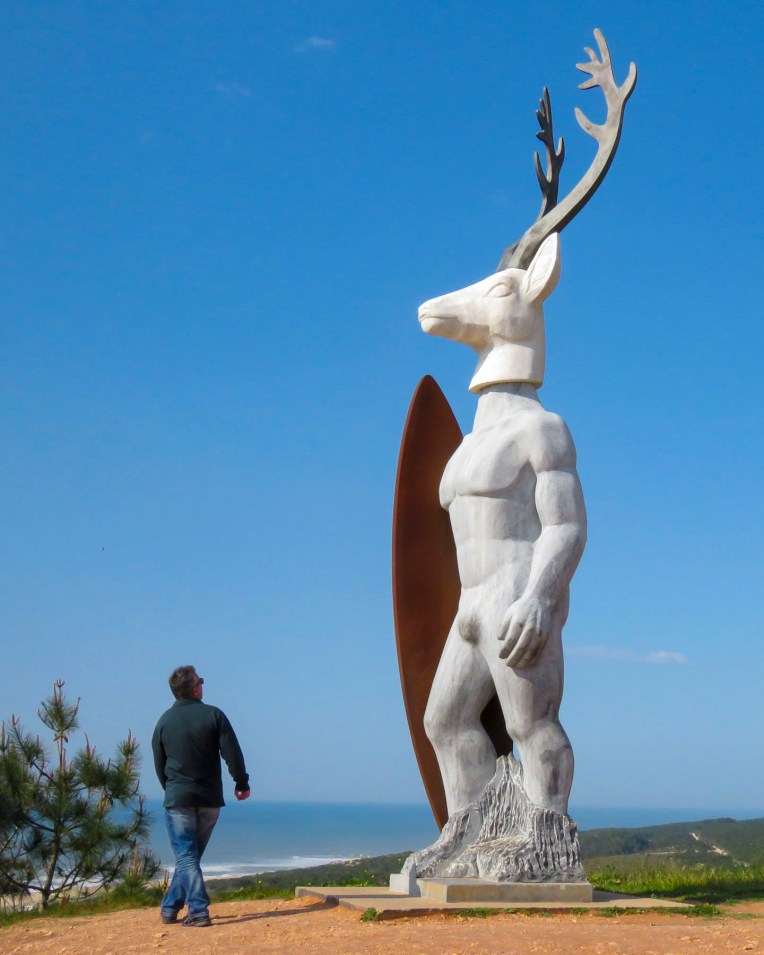 Not far away, just above the Nazare lighthouse, Portuguese artist Adalia Alberto has created a whimsical, deer-headed surfer sculpture called Veado that pays tribute to Nazare’s old legend and today’s legendary wave riders. This contemporary piece has to be one of the most unusual sculptures in Portugal and is worth finding when visiting Nazare.

 Set back on Batalha Square, at the top of a wide set of stairs, the beautiful Church of Saint Ildefonso with its Azulejo tile covered exterior and twin bell towers commands attention. Built in the early 1700’s on the site of an older church, the building has gone through many alterations after suffering severe storm damage one year, then cannon fire from Napoleon’s troops during the siege of Porto in 1833. Eleven thousand Azulejo tiles depicting stories from the Gospels and the life of Saint Ildefonso were a late addition to the façade in 1932.


 The blue-tiled Chapel of Souls can be found a little further along. Added in 1929, the two-story high Azulejo tile mural covering the front and side dramatically depicts scenes from the life of Saint Catherine and Saint Francis of Assisi.
 Back tracking, we turned down Rua de 31 de Janereio which would take us to Porto São Bento, the inter-city train station, then Clérigos Church & Clérigos Tower. This beautiful French Beaux-Arts styled station was constructed in 1900. Between 1905 and 1916, artist Jorge Colaço designed and installed 20,000 Azujelo tiles in this lobby, which illustrate significant moments in Portugal’s history. It is a dramatic, cavernous space especially when sunlight pours through its tall windows across the tiles. Jorge Colaço also designed the tiles on the exterior of the Church of Saint Ildefonso.
 Just past the train station is Praça da Liberdade with its grand sculptures. There are also many fine architectural details on the surrounding buildings, so look up!


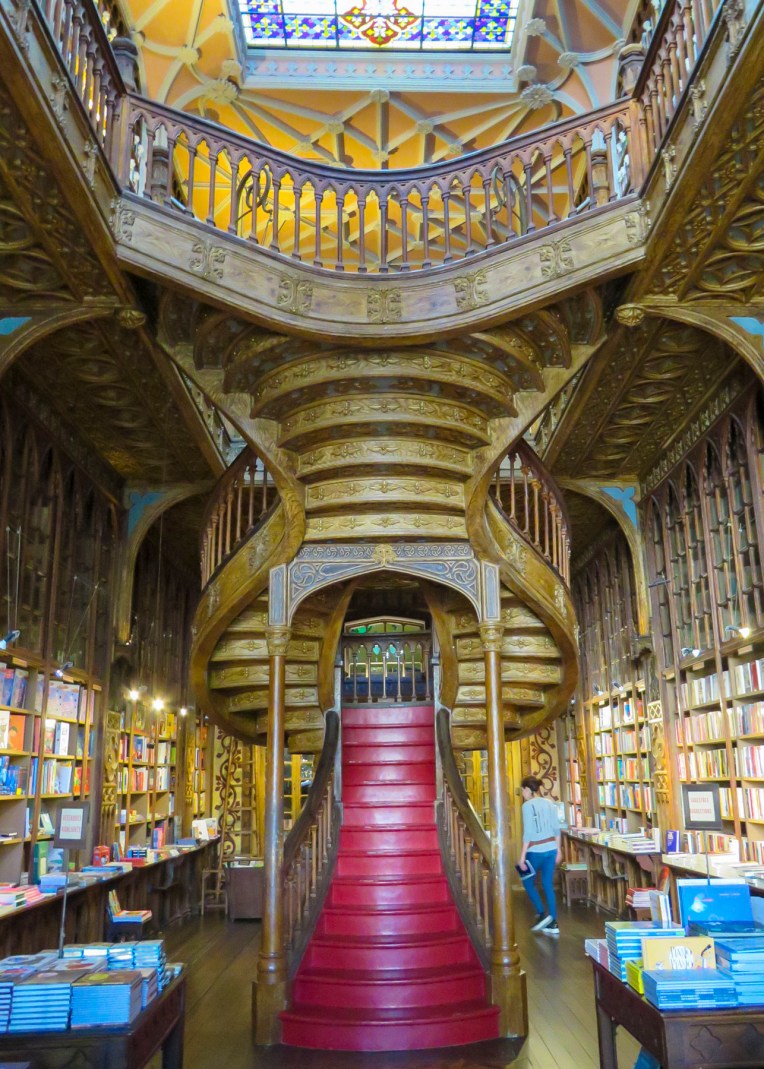 At the top of the street in a small plaza with palm trees we found Fonte dos Leões, with its four lion statues.
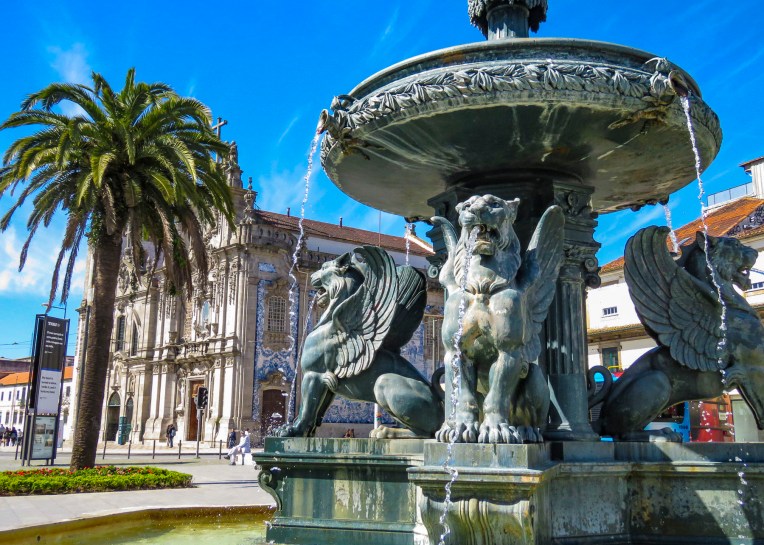 Behind it the cathedrals Igreja dos Carmelitas and Igreja do Carmo stand next to each other.
 They are only separated by the width of a discreet door to an extremely narrow house which was the home of church workers until the 1980s. Recently it was opened as a museum. Igreja do Carmo was built for the people and has an ornate exterior with sculpted statues of Santa Ana and the prophets Elijah and Elisha alongside sculptures of the four evangelists Matthew, Mark, Luke and John on its front façade and a large tile mural portraying the churches founding on the side wall.


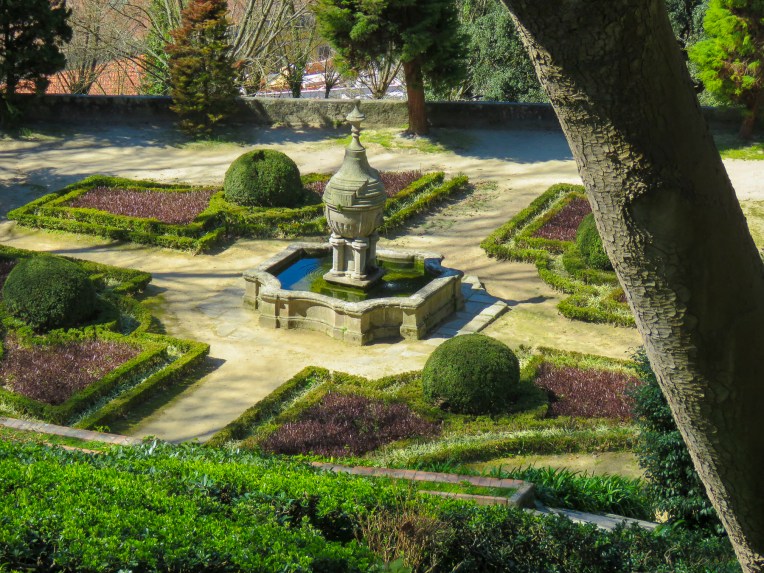 It was a brilliant, warm day and


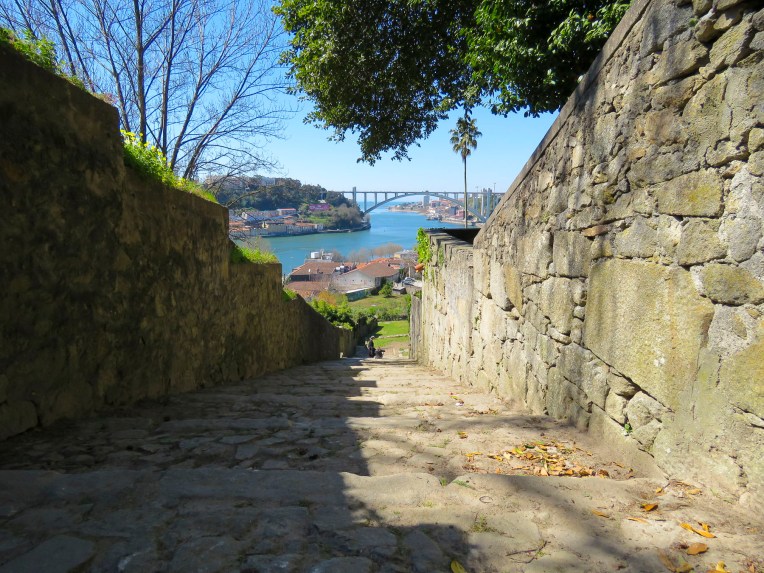 Along the quay the umbrella-ed tables of
  Tram 1 runs along the waterfront here, so we followed the tracks past Igreja do Corpo Santo de Massarelos, Church of the Brotherhood of the Holy Souls and Bodies, looking for the next station. The original church was founded in 1394 by a brotherhood of seamen to honor those lost at sea. Hometown hero Prince Henry the Navigator was a member of this fraternity in the 1400’s and the large azulejo tile mural on a wall of the church facing the river features him.
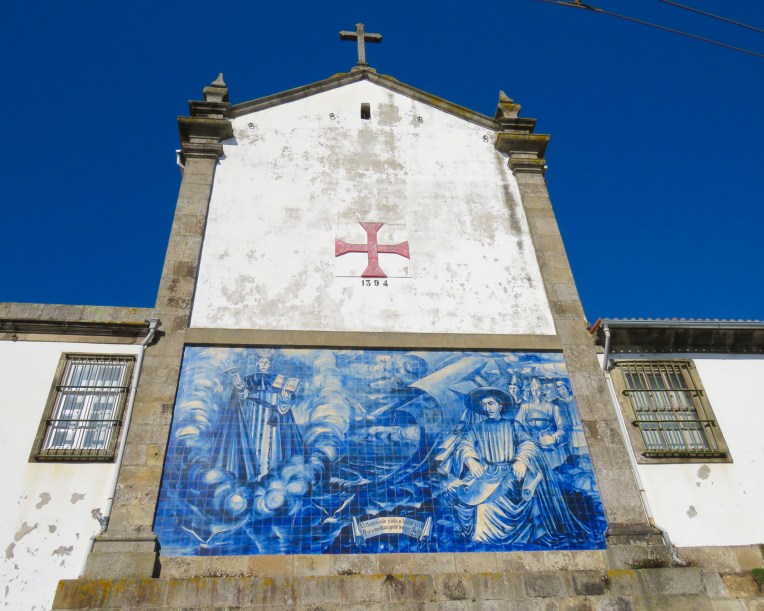 Just around the corner from the church Trams 1 and 22 shared a stop and we hopped aboard the #22, to save our legs from a long uphill walk, to start our journey home for the day.
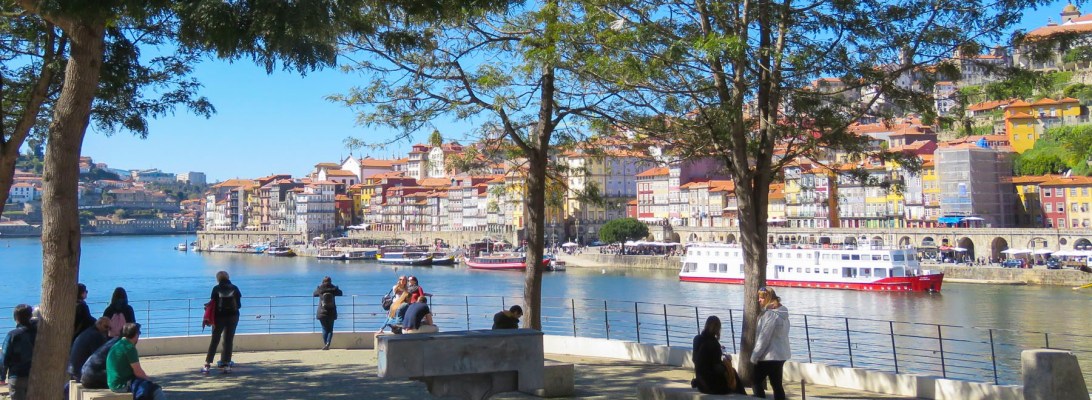
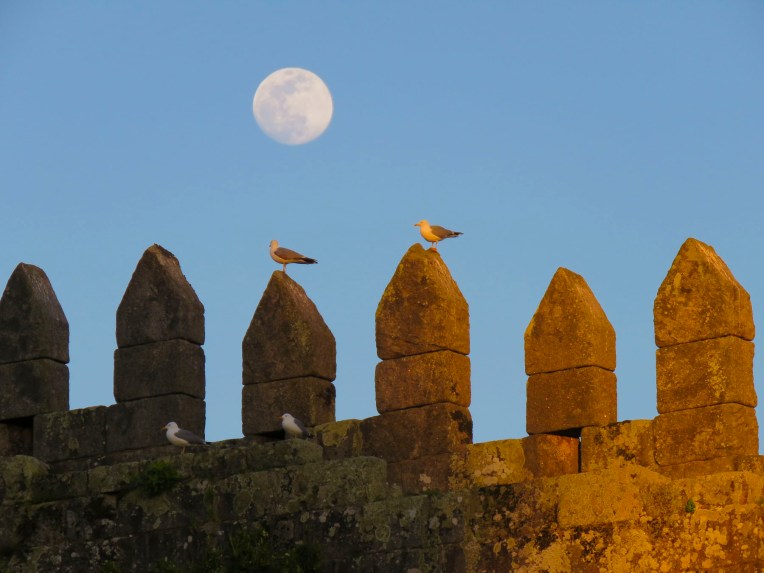

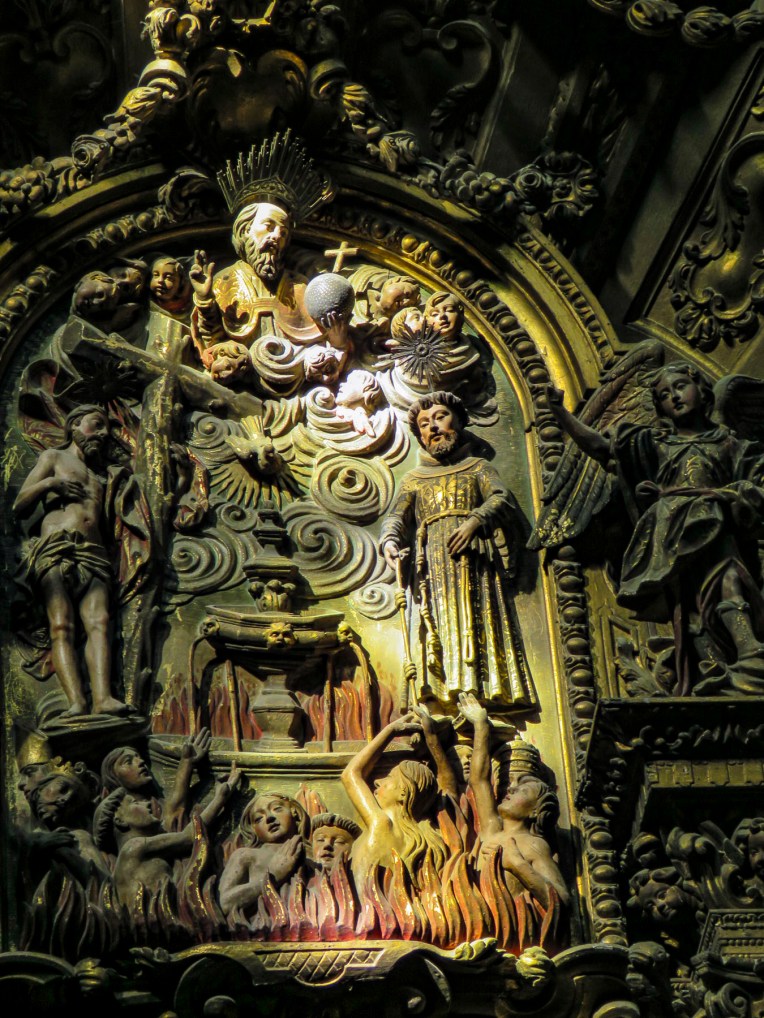
 But the city really needs to be explored on foot to truly savor its charm and intrigue. Porto escaped the massive 1755 earthquake and tsunami that devasted Lisbon. Consequently, the city’s historic architectural gems, many dating as far back as the thirteenth century, still stand unscathed, and its ancient cobbled lanes still meander every which way, untouched by urban planning. With this in mind we decided to weave our way over to the Ponte Luís I bridge and eventually make our way down to the picturesque south bank of the Douro River as our destination for the day, stopping to explore what interested us along the way.

 The armour-clad equestrian statue of Vímara Peres guards the approach to the Ponte Luis I bridge across the River Douro and some contemporary street art, that we’re not sure he would appreciate.

 For nine-hundred years pontoon bridges and small boats were the major ways to cross the breath of the Douro River before the advent of iron construction. Designed by Théophile Seyrig, a former colleague of Eiffel,
  Across the bridge we worked our way up to Mosteiro da Serra do Pilar for the views. This spot and Jardim do Morro, the park at its base, are popular places to watch the sunset from.
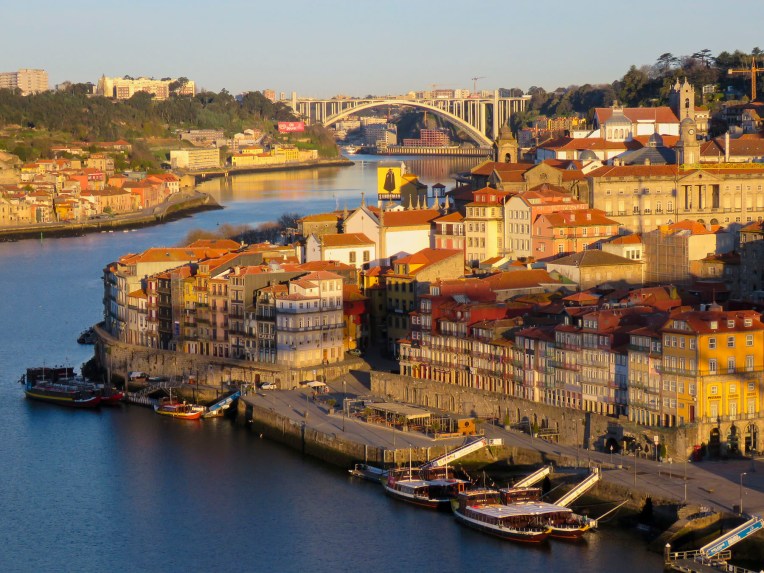 We opted not to take the aerial tram down to the Gaia riverfront and continued our walk, looking for the right restaurant set amidst the fifty port cellars that line the waterfront. Perched atop the port cellar Espaço Porto Cruz, the Terrace Lounge 360º fit the bill.
 The day was beautiful, lunch was delightfully slow paced and of course we enjoyed some wine. We’ve found the restaurants in Portugal never rush you to leave. The table is yours for however long you wish to stay. We soaked in the warm sun, breathed in the crisp Spring air and absorbed the good life surrounding us.


 Coimbra is a city for walkers. Ancient lanes crisscross the historic district, weaving their way steeply up the hillside until you eventually reach the University of Coimbra, which crowns this charming city. But the journey there is so rewarding, with arched alleys, cathedrals and numerous shops and restaurants all vying for exploration.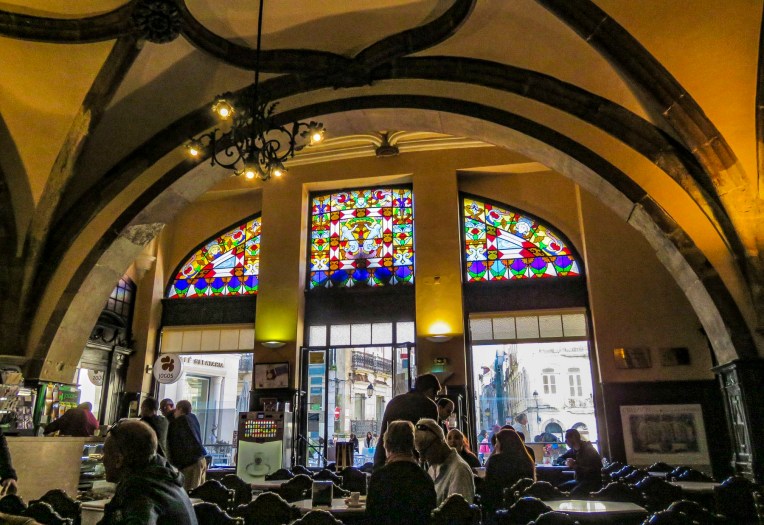


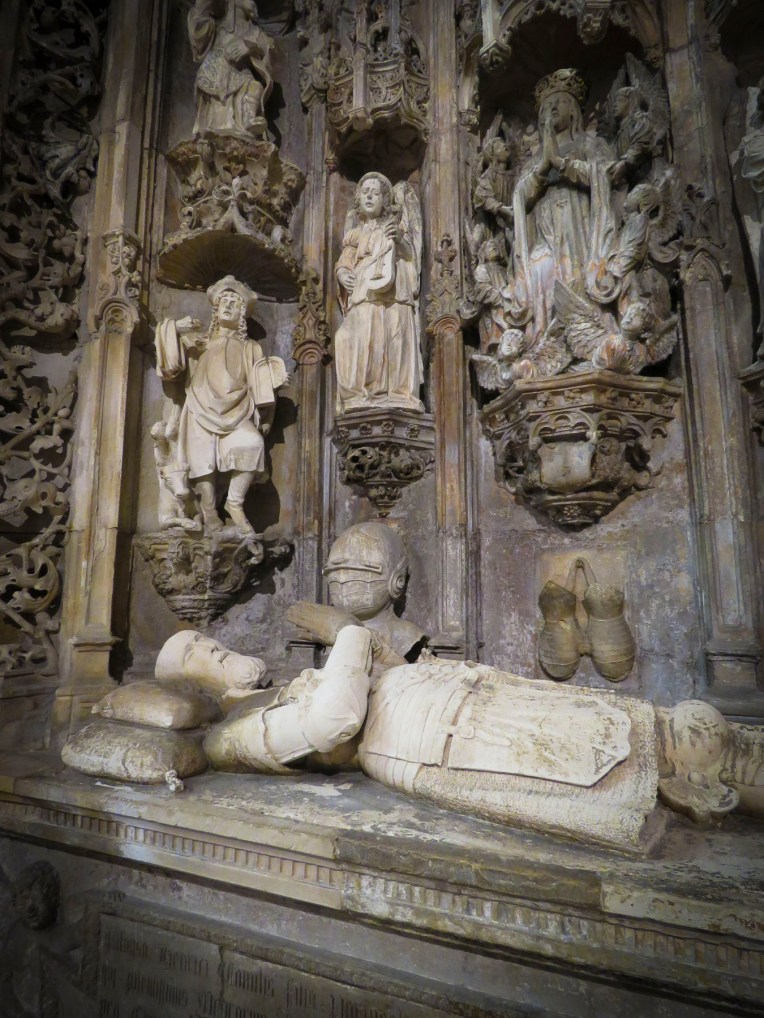 Deceptively, many of the marble columns and surrounds of the altar are actually wood, painted to imitate marble. The cathedral aged poorly in its early centuries as the result of repeated Spring flooding from the Mondego River. In the 1700s Azulejos tiles were added to the walls to cover severely water-damaged early fresco paintings. A spectacular and huge four thousand pipe organ hangs precariously from the wall of the sanctuary. Apparently, it’s so difficult to play only three people know how. The monastery is huge with many interesting rooms and intriguing details to explore.


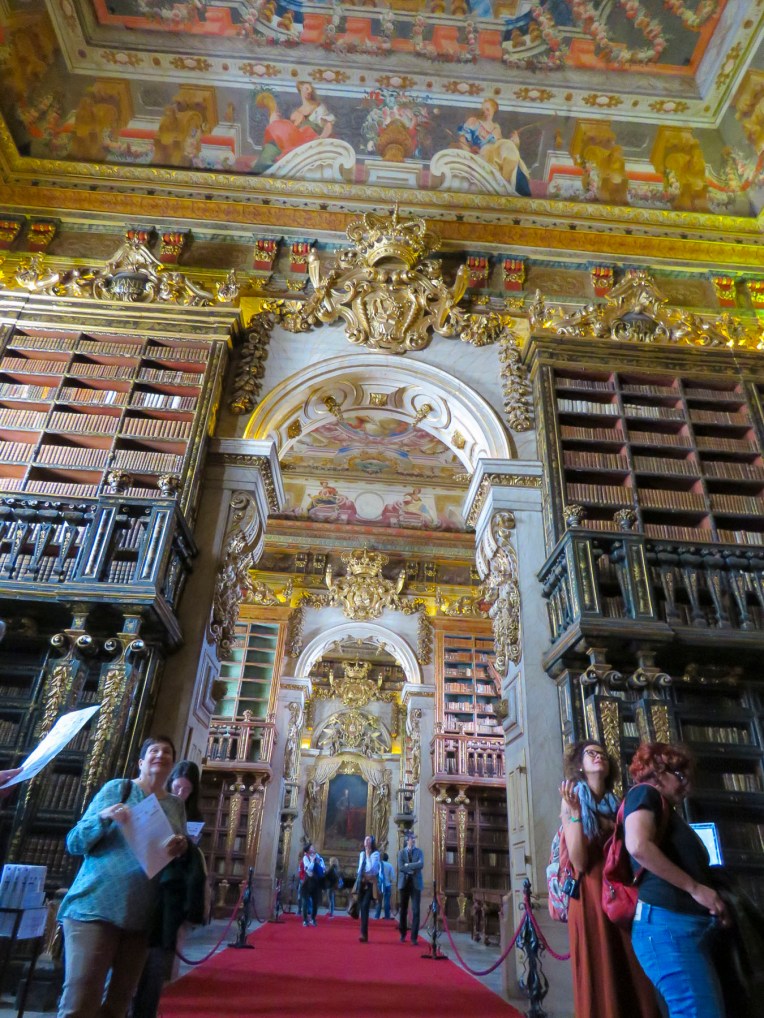


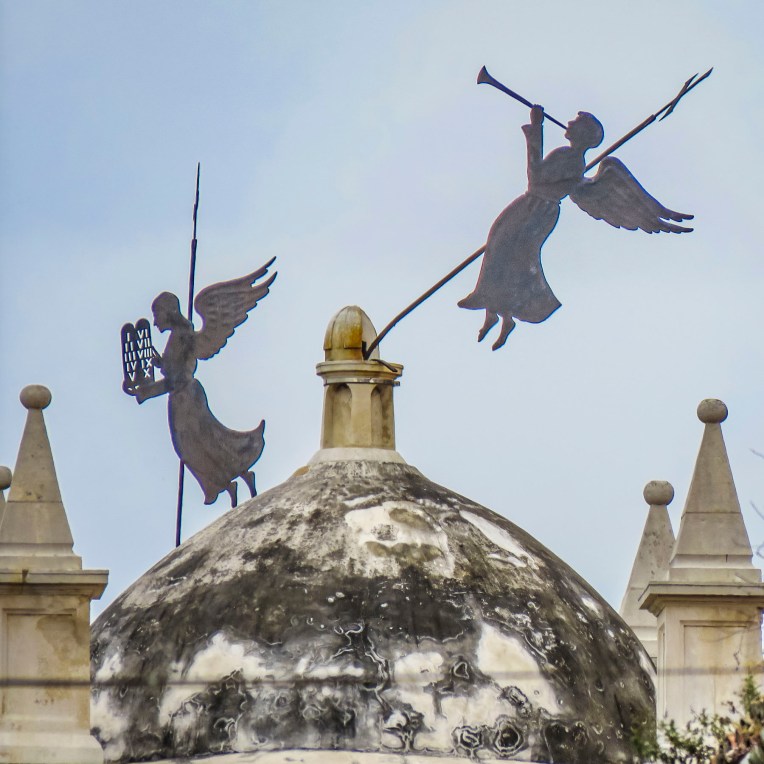


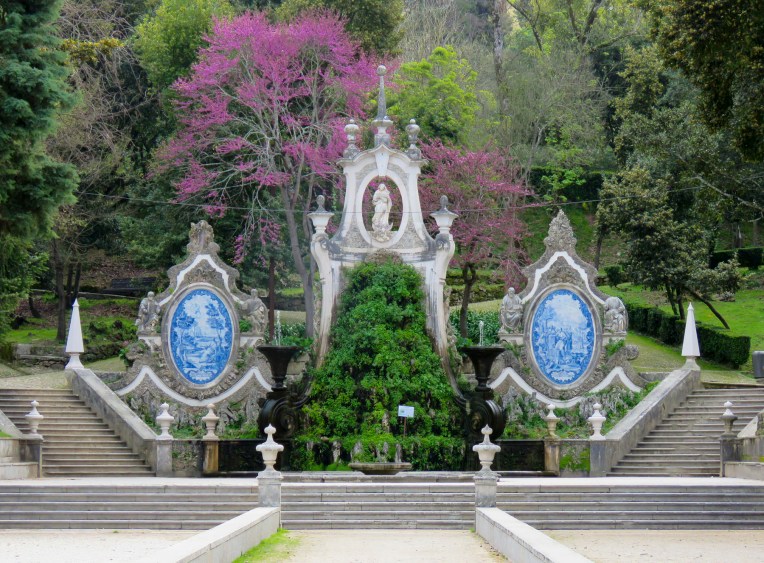 Azulejo tile murals edged with religious statues framed the sculpted fountain. At the top of the fountain water gurgled from under a statue of the Virgin Mary, symbolically giving life to the waterfall. Symmetrical stairways on either side led deeper into the heavily shaded park.


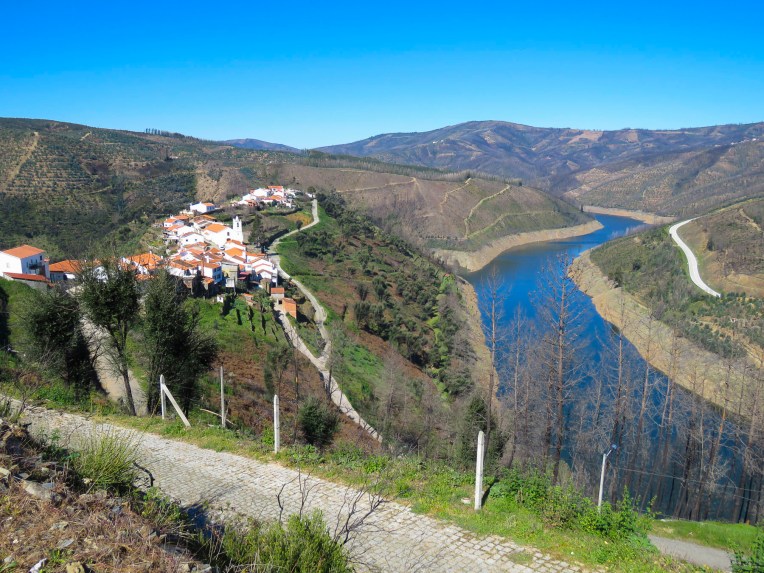 We crisscrossed these serpentine estuaries multiple times during the day as we drove through verdant pine forests along roads that hugged the curves of the land. Isolated, whitewashed villages dotted the mountainside.


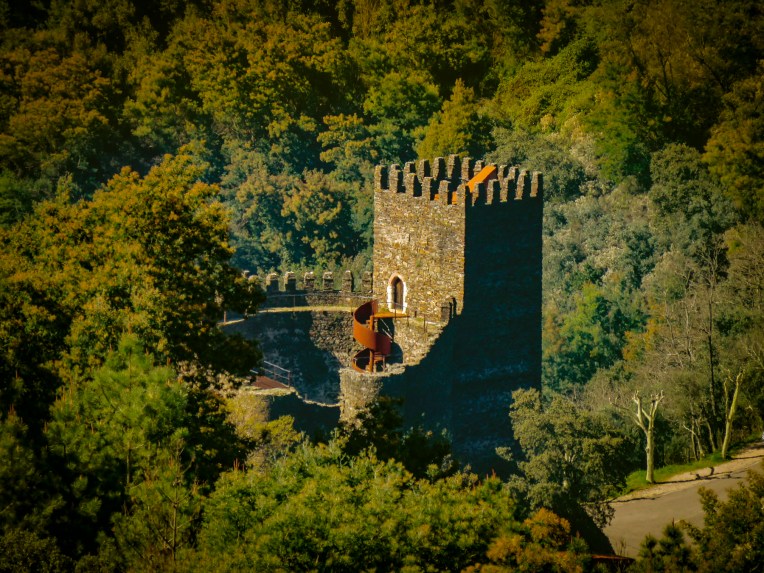


 Monsanto


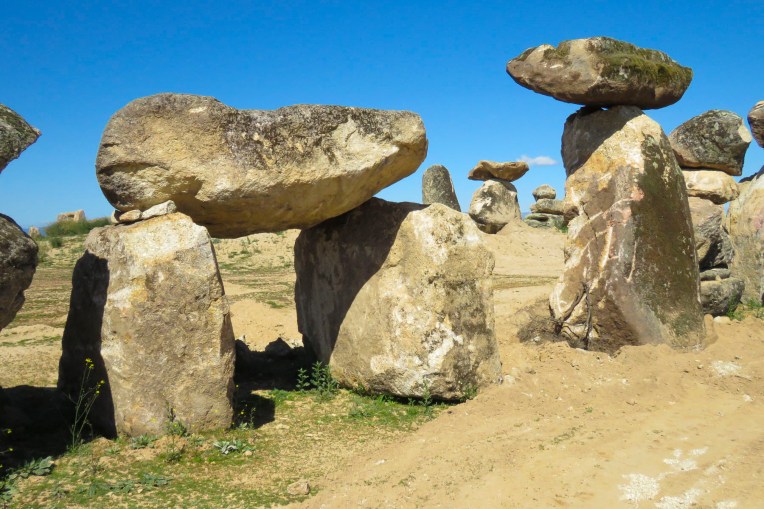
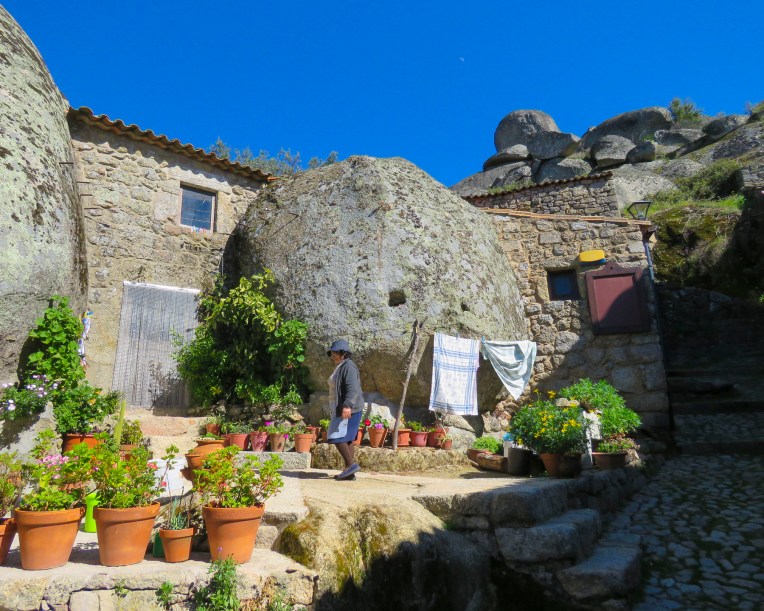 Monsanto


 2 Suitcases for 2 years