
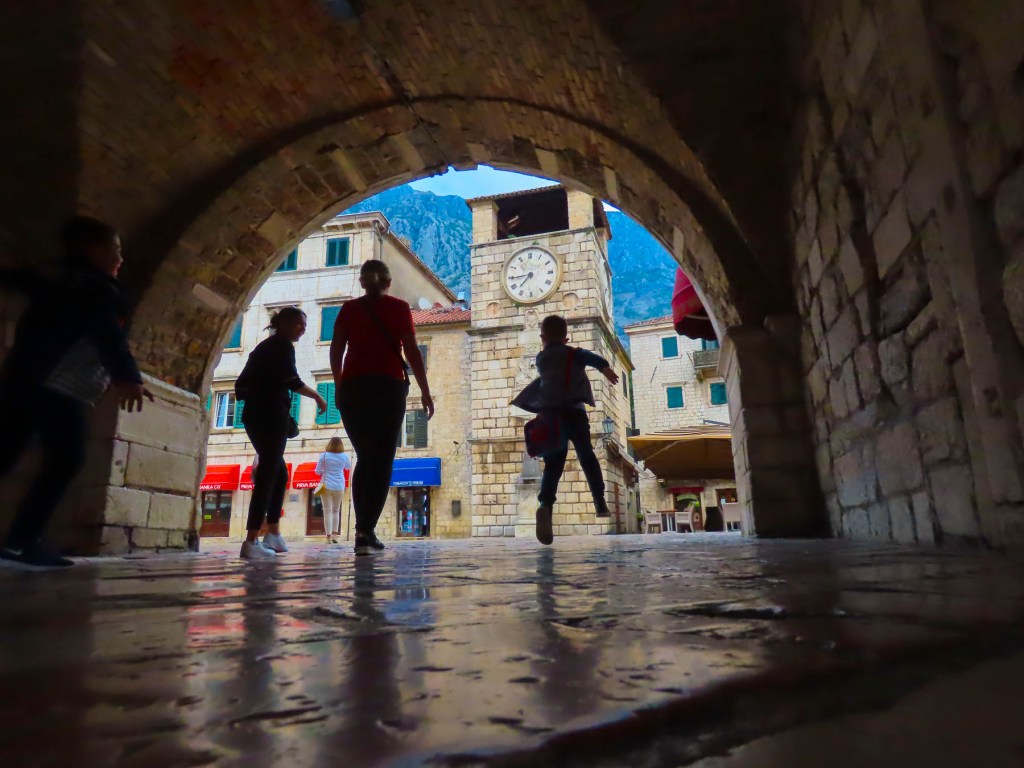
Twenty-four hours out of Africa we were finally unloading our bags from the taxi, under tall palm trees across from a beautiful harbor. In front of us stood the Sea Gate, the 16th century arched entrance through ancient stone fortifications and the winged lion of St. Mark. Both were constructed in 1555 when this port city was under Venetian rule.

With little difficulty we found our host and followed her through the ancient portal under a relief sculpture of the Madonna and Child, flanked by St. Bernard and St. Tryphon, the town’s patron saints. There was a small rectangular slit underneath the stone carving where prayers were once placed. “Now it’s used as a complaint box by local residents!” our host joked.


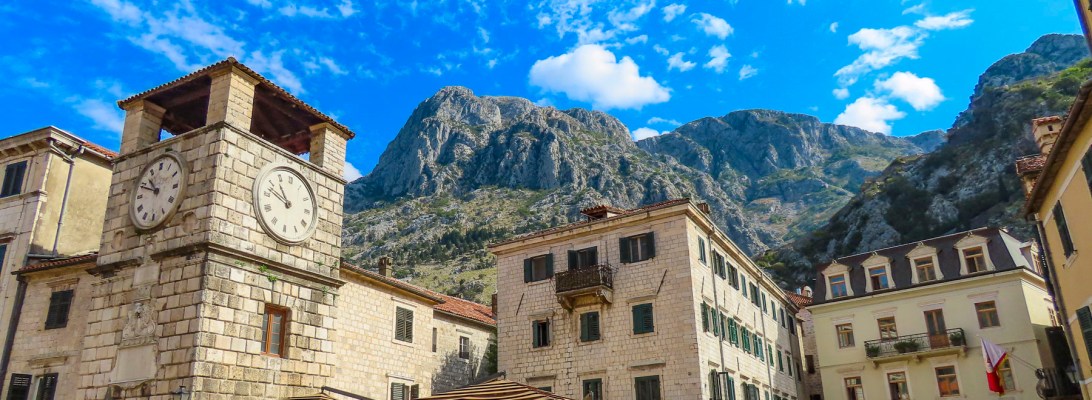
The archway perfectly framed a quaint plaza, The Square of the Arms, lined with shops and restaurants set dramatically under the backdrop of St. John’s Castle, Kotor Fortress, which towers protectively over the city. Within the walled city it’s a wonderful pedestrian-only maze of narrowing alleys that weave about. Our second-floor apartment was at the intersection of several of them and overlooked a view of the restaurants on Plaza Tripuna.
After six weeks of continuous travel we were looking forward to being rooted for a while in an apartment, returning to our immersive travel philosophy. With a spacious living room, kitchen, hot water, and live saxophone music six nights a week, we were ready for this month of R&R in Kotor. Though by the third night the saxophonist had played the identical repertoire each appearance, without changing its sequence. We were doomed to a Bill Murray-like Groundhog Day scenario, until he took three days off and was temporarily replaced by a young violinist. She was a breath of fresh air.


But, with any new destination there is the urge to explore. Outdoor dining was still in full swing and perfect, since the hottest days of summer were long gone by mid-September. After lunch our first mission was to find a grocery store to get some basic essentials – wine, coffee and some breakfast items for the next day before we crashed from a long travel day. Through the North Gate and across the Scurda River we found Voli and Aroma grocery stores.

The second, lone mission, was to find the laundry service as our cloths were about to walk away on their own in protest. Before our host departed, she confirmed there was a laundry service, but wasn’t sure exactly where, as she didn’t use it, only that it was outside the city walls somewhere along the road that followed the bay. She waved vaguely in the general direction of the South Gate. It was a pleasant walk past the vegetable vendors in the daily market, outside the city walls, laden with fresh fruits and vegetables and FIGS!! (Our decision to call Kotor home for a month was instantly reinforced by this discovery.) Further on there was an Idea supermarket and the Sladoja mesara meat shop and grill restaurant. I walked all the way to the bus station and back tracked without spotting the laundry. Not one to accept surrender, I asked a woman exiting an apartment building with my laughable Serbian, praonica? (laundromat in Serbian.) I also showed her a slip of paper with it spelled out, just in case. Saint Jude must have been watching. She not only spoke English, but happened to work there and was returning from her lunch break. Nearing home, I found the only bakery within the old town just around the corner from our apartment and was able to pick up some wonderful fresh breads and baked goods at very reasonable prices. This became a regular stop during our stay.


Instead of ticking off destinations and sights within a short period of time, it was good to be back on track with our slow travel approach to seeing the world. Yes, we still want to see everything a locale has to offer, but at a reasonable pace with a walk a little, then café style repeated throughout the day. This approach allowed us to enjoy the Adriatic lifestyle by immersing ourselves into the ambience of Old Town Kotor for a month.

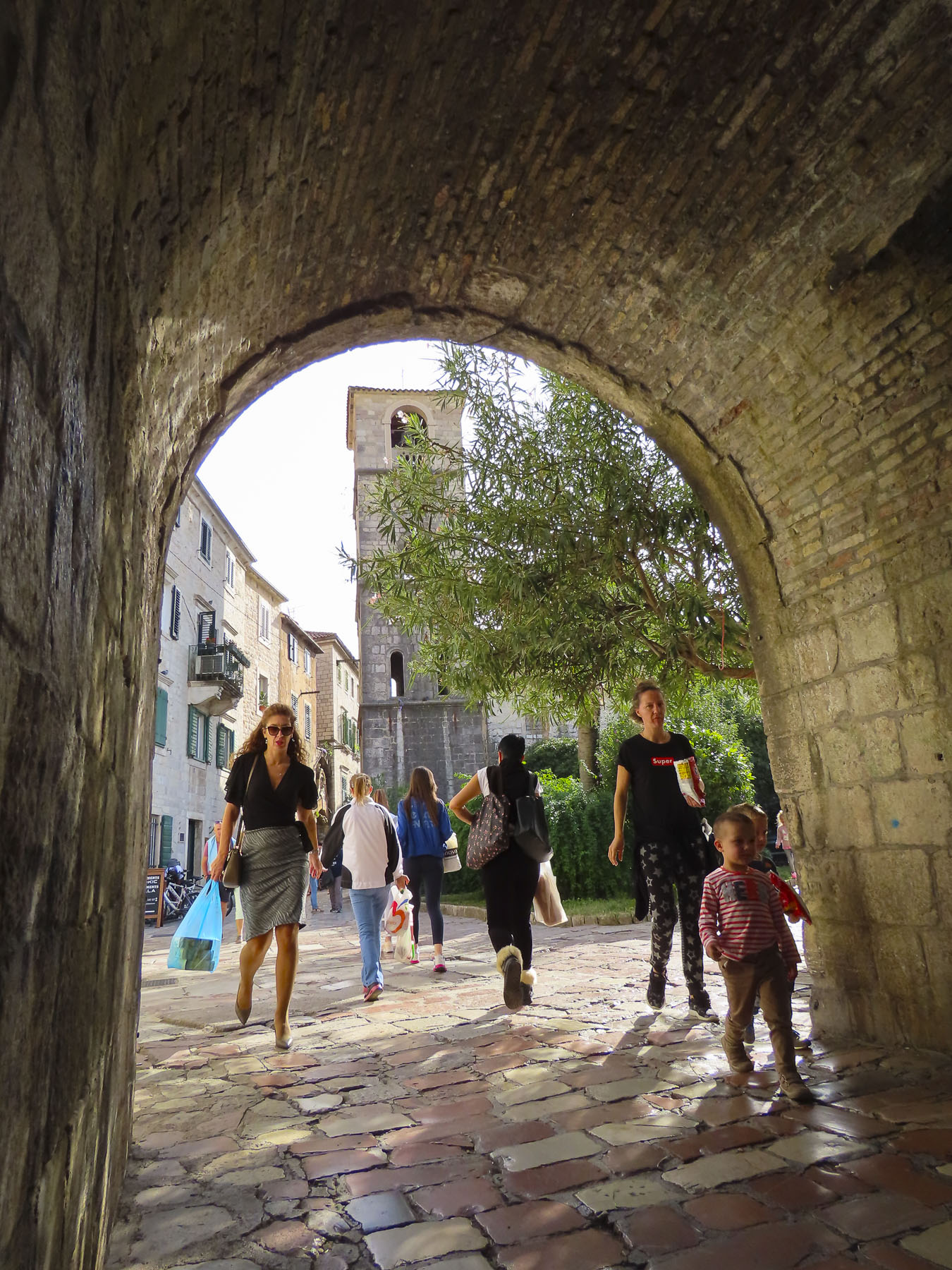
Surrounded by its ancient walls, the village really was the perfect size, impossible to get lost within and full of interesting finds and eateries. If we started our day early enough, we caught pleasant glimpses of parents walking their children through the ancient gates to school, and vendors delivering the day’s supplies by pushcart down the tight, cobbled lanes, hard work for sure.


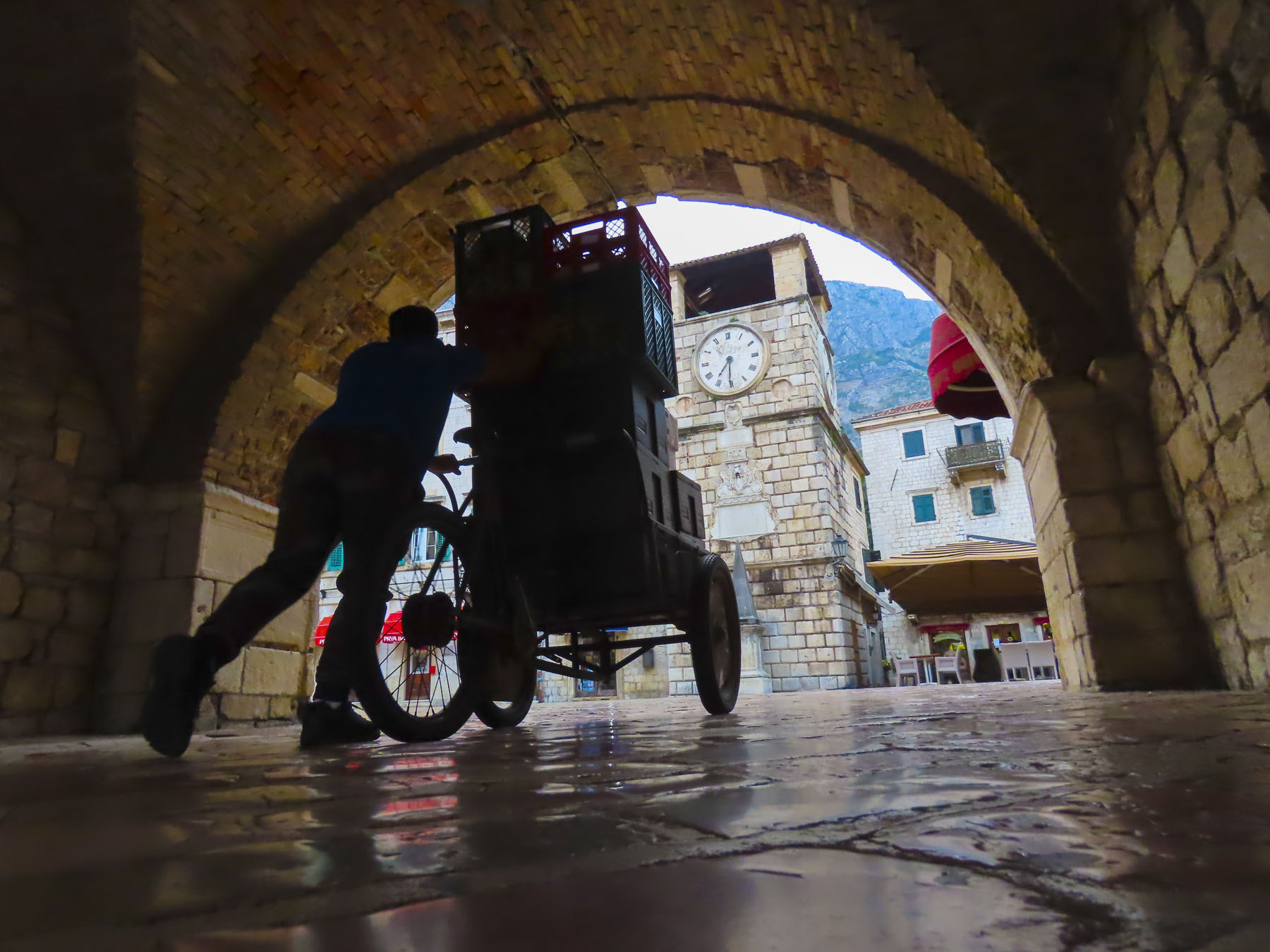
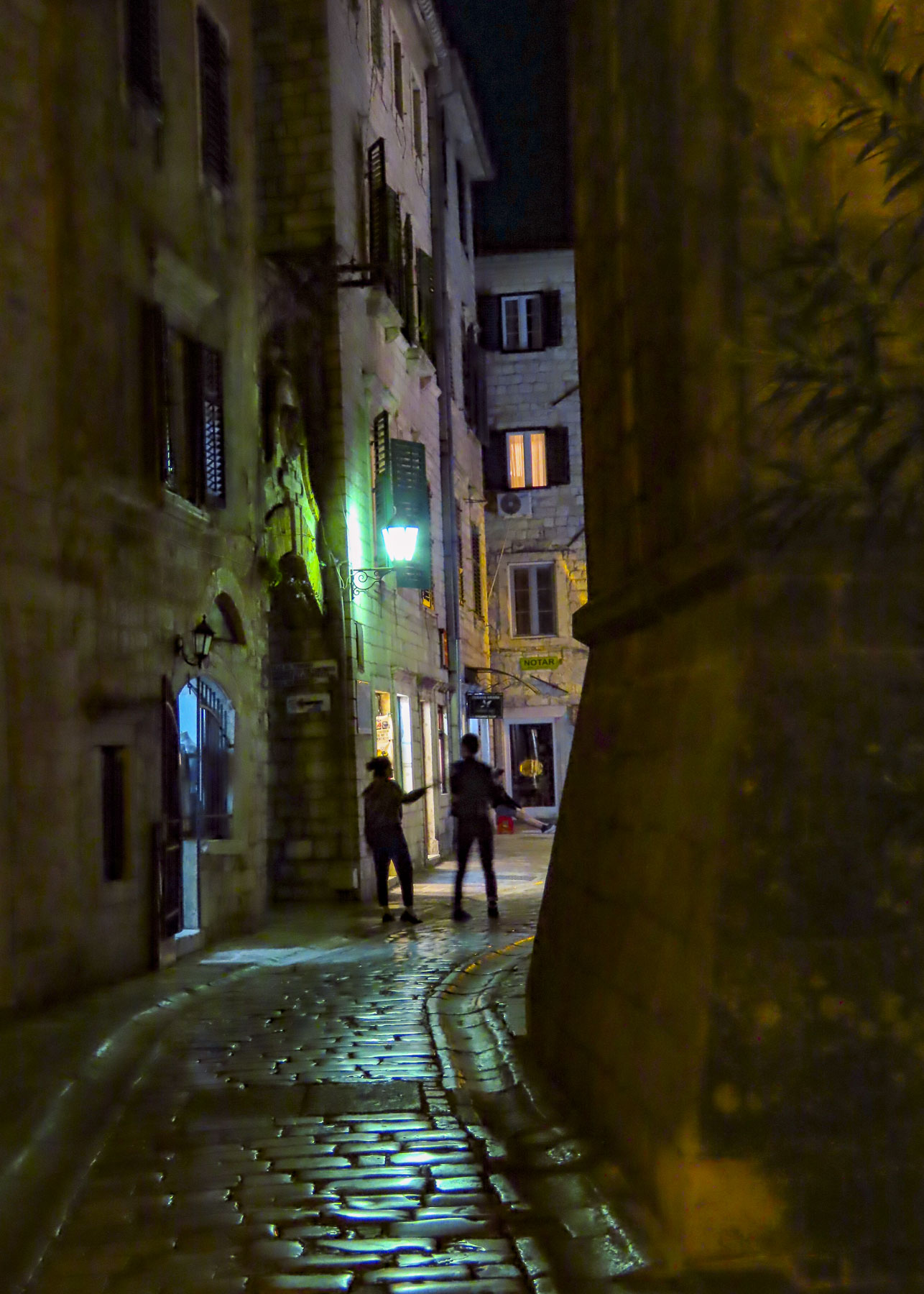
Exploring the alleyways that twisted through the town, we found unique architectural details, remnants from past empires and seafaring wealth.


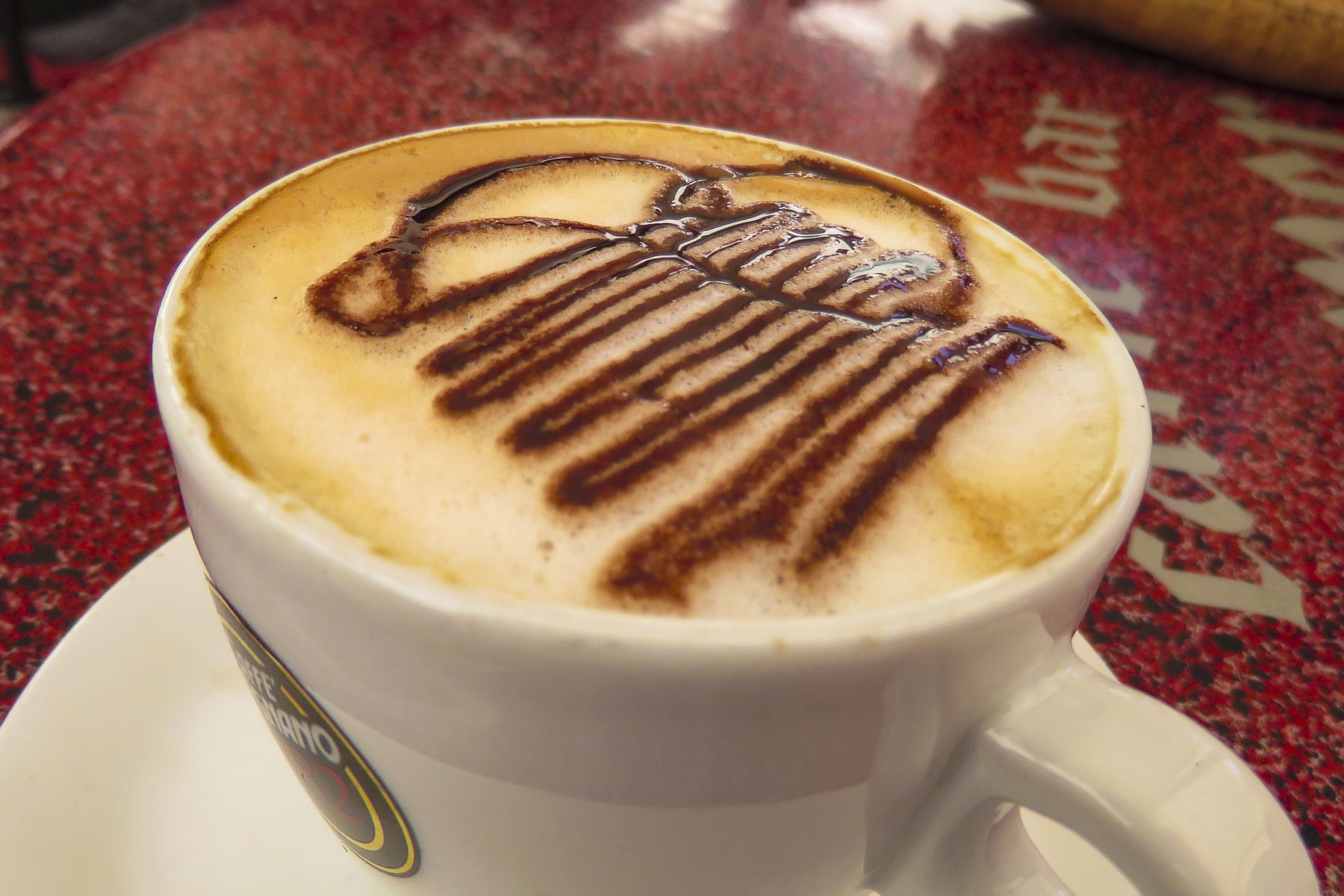
The alleys led to small intimate plazas with umbrellaed tables and entertaining street musicians. Caffe bar Perper on Pjaca od Salate made very good cappuccinos and every morning two singers sang a medley of Balkan folk songs with a sprinkling of western tunes thrown in. Across the plaza Konoba Scala Santa, the oldest restaurant (1931) in Kotor offered regional specialties and a rustic interior with a fireplace on those rainy fall nights that chased us inside.

After coffee one morning we followed the steep stairs off Pjaca od Salate past old stone homes (wondering how folks do it when we saw a baby stroller on a landing) built into the hill to the entrance of Kotor Fortress. 1350 steps to the top – we could do it! Fortunately, we chose a cool day. It was a challenging trek over a rough stone path and stairs still in need of repair from the 1979 earthquake that struck the city.

Fortifications have loomed over Kotor since Illyrian times, 4th century BC until 167 BC, with additions made by Roman emperor Justinian I in the 6th century. The Venetian Empire expanded the fortifications further in the 16th century. It’s their stones that we were tripping over. Our effort was rewarded with spectacular views of the city, bay and old caravan trail from the serpentine path that twisted all the way to the top.
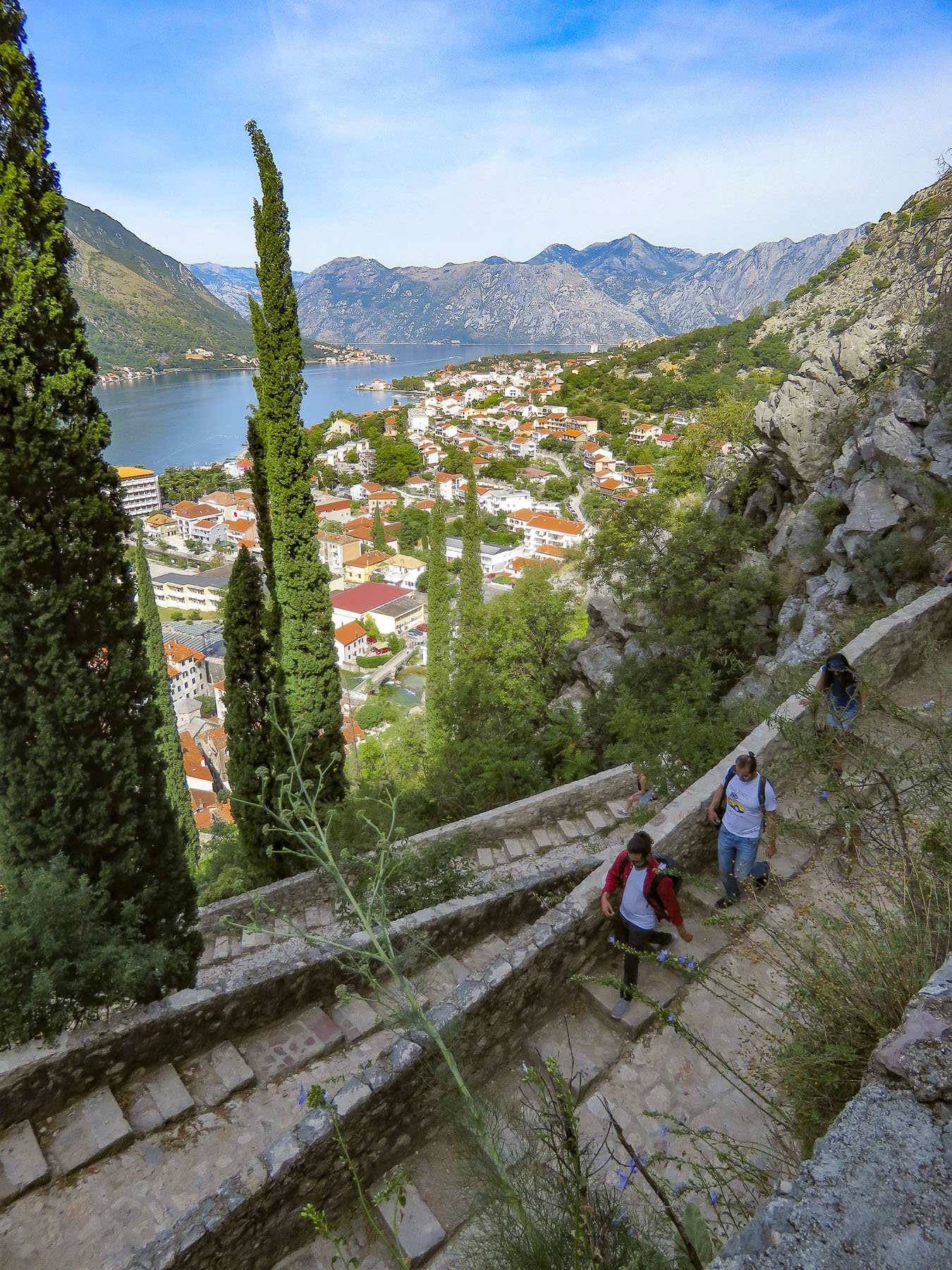
As formidable and imposing as the fortress looked, it has been seized several times during conflicts with the Ottoman, French and English. Good walking shoes and water are a must for this going. 650 steps up the Church of Our Lady of Remedy marks the halfway point and is a good place to rest and enjoy the view for a while. The small chapel was built by survivors of the 1518 plague to honor the Holy Mother.

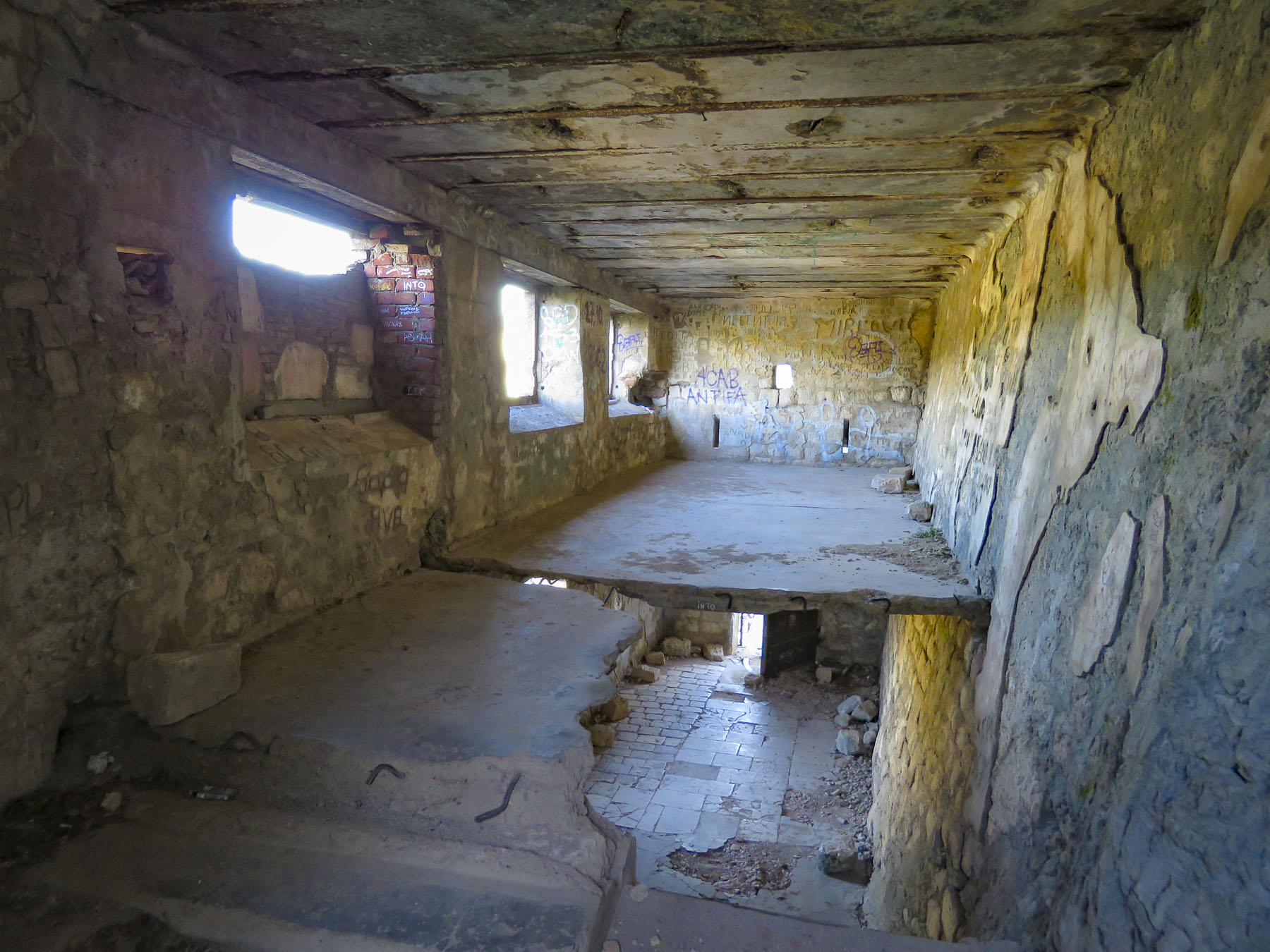
In 1979 an extremely destructive magnitude 7.0 earthquake devasted old town Kotor and many similar towns along the Montenegro and Albanian coastline which was then part of Yugoslavia, leaving 100,000 people homeless. All the stone buildings suffered some form of damage and the city was closed to the public for ten years during its restoration. Some signs of the earthquake damage are still visible, most noticeably block-long 19th century Austrian Prison that has large cracks in its exterior walls and the sky visible through its roof.


The churches in the historic center also suffered extensive damage. Their facades have been fully restored, but their ornate interiors were destroyed beyond repair. The interiors are noticeably less ornate than similar era churches in Europe, with only fragments of relief carvings and frescoes remaining, hinting at their former beauty. Priče o Potresu / The Earthquake Stories is a 2020 documentary by Montenegro director Dusan Vulekovic about that destructive natural disaster. Severe earthquakes also struck Kotor in 1563 and 1608.

The one drawback of Kotor is that it’s a busy cruise port with four or five large cruise ships disgorging thousands of passengers between 10am and 3pm every day until the end of the cruising season. But they followed a limited circuit and if we planned around them, they were barely noticeable. By October first only one or two cruise ships were anchoring in the bay each week.

Often referred to as Europe’s southernmost fjord, the walls of Kotor bay are so high and steep that they cast shadows late into the morning and early in the afternoon over the city. This is a tremendous help in moderating the heat of the Adriatic summers. Its unique geography makes it the most naturally protected harbor along the Adriatic coast, providing safe anchorage for sailors since the beginning of boat building, several millennia ago.


There were a variety of water tours available and we opted for one that took us to Our Lady of the Rocks and Perast. The legend of Our Lady of the Rocks starts in the 15th century when two brothers, fishermen from Perast, found an icon of the Virgin on a rock protruding from the center of the bay. Fulfilling the Virgin’s request of them to build a church in the bay, they began transporting stones by boat from the shore and dropping them in the bay. Soon others followed. Today there is a small Catholic church on the island and a festive boat procession every July called Fasinada that keeps the tradition alive.


The views from the bell tower of St. Nikola Church over the quaint village of Perast and the open expanse of Boka (Kotor) Bay were tremendous. It was a wonderful, beautiful day on the water that ended hours later in agony, as we both succumbed to food poisoning from lunch. Fortunately, Donna found a visiting Doctor service that provided an English-speaking physician who made house calls. After a midnight knock on the door and a short consultation we were advised to hop in his ambulance for an intravenous treatment at the local clinic. It turns out that we had visited this clinic ten days earlier for treatment of a sinus infection and pinkeye that Donna caught before we left Ethiopia. After our hour and half treatment, we felt one hundred percent better and were discharged at 1:30AM onto a deserted sidewalk with no assistance offered to get us back to town. It was too far out of town to consider walking and considering we were still recovering, we waited patiently as the occasional car sped past Finally a taxi zoomed by and, hearing my booming shout of “TAXI!” the driver hit the brakes and did a U-turn.


Our travel insurance covered the hospital visits, though the claims were cumbersome to file. (Keep your airline tickets for proof of travel.) Amazingly, the hospital treatment, including transport by ambulance, was only €50 each – extremely affordable compared to medical care in the United States. Likewise, the prescriptions we filled the next day were easily paid for out-of-pocket. It is worthwhile to compare the cost of drugs that you regularly purchase in the United States with what they cost overseas when traveling. There is an outstanding difference, with foreign prices being much lower and many not requiring a doctor’s prescription. Just check Google for the correct name of the drug for the country you are in.


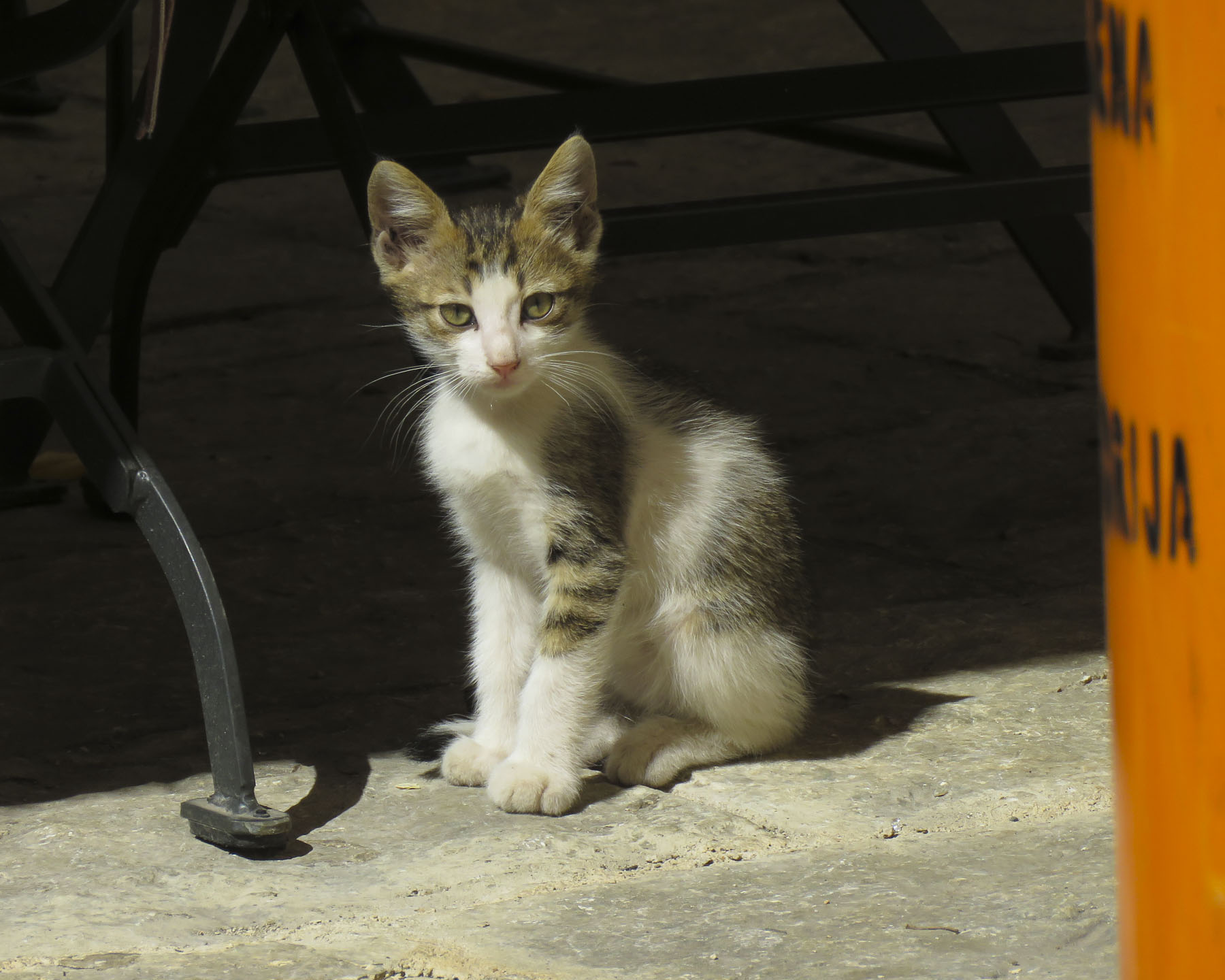

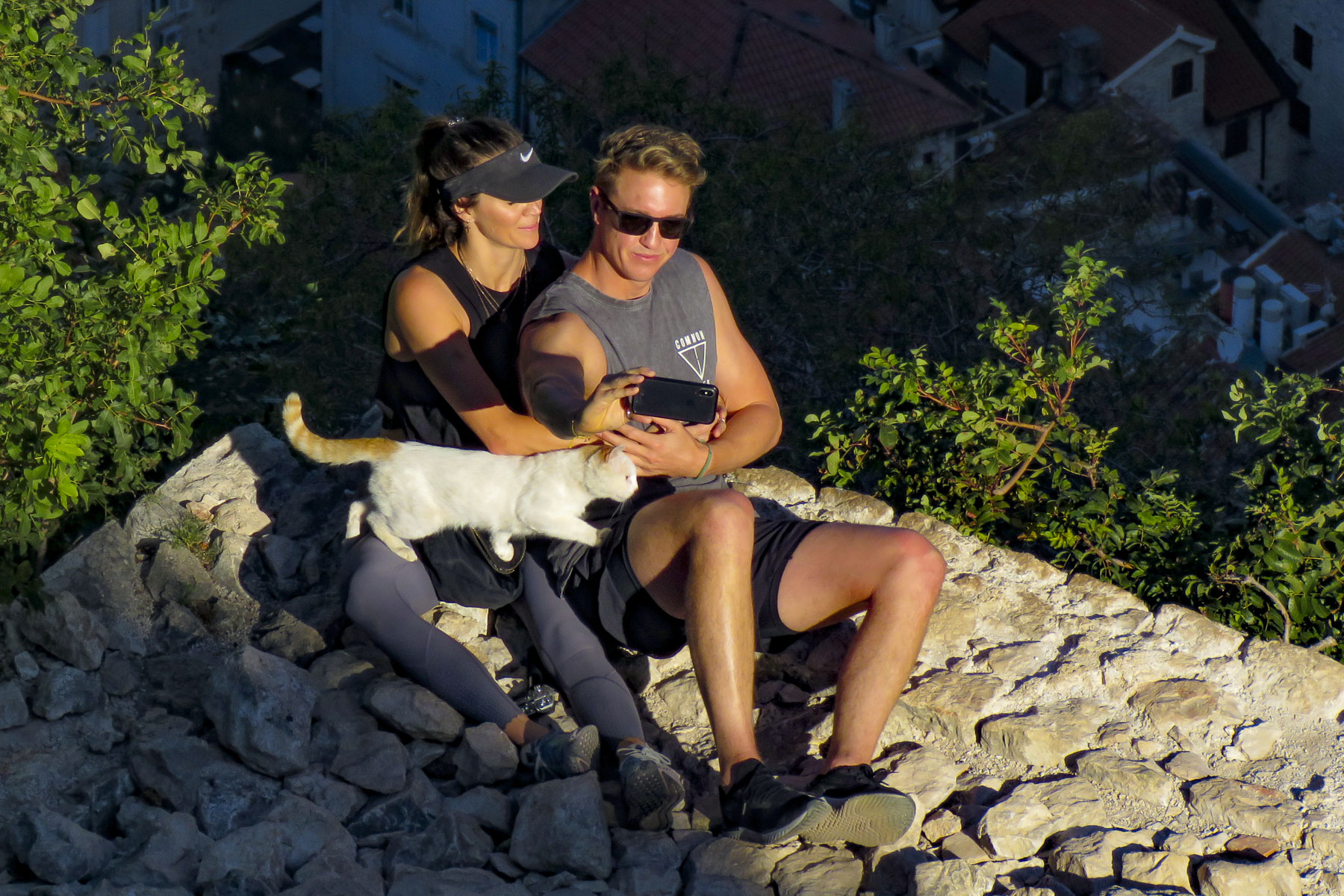
The old town is also famous for its colony of “Kotor Cats,” descendants of ratters taken to sea by sailors to control rodents on board their ships. As we walked around town, we noticed small trays of cat food placed about for them. Kotor Kitties is a non-profit organization started by an American visitor to Kotor several years ago that provides food, veterinarian care and neutering for the famous felines.

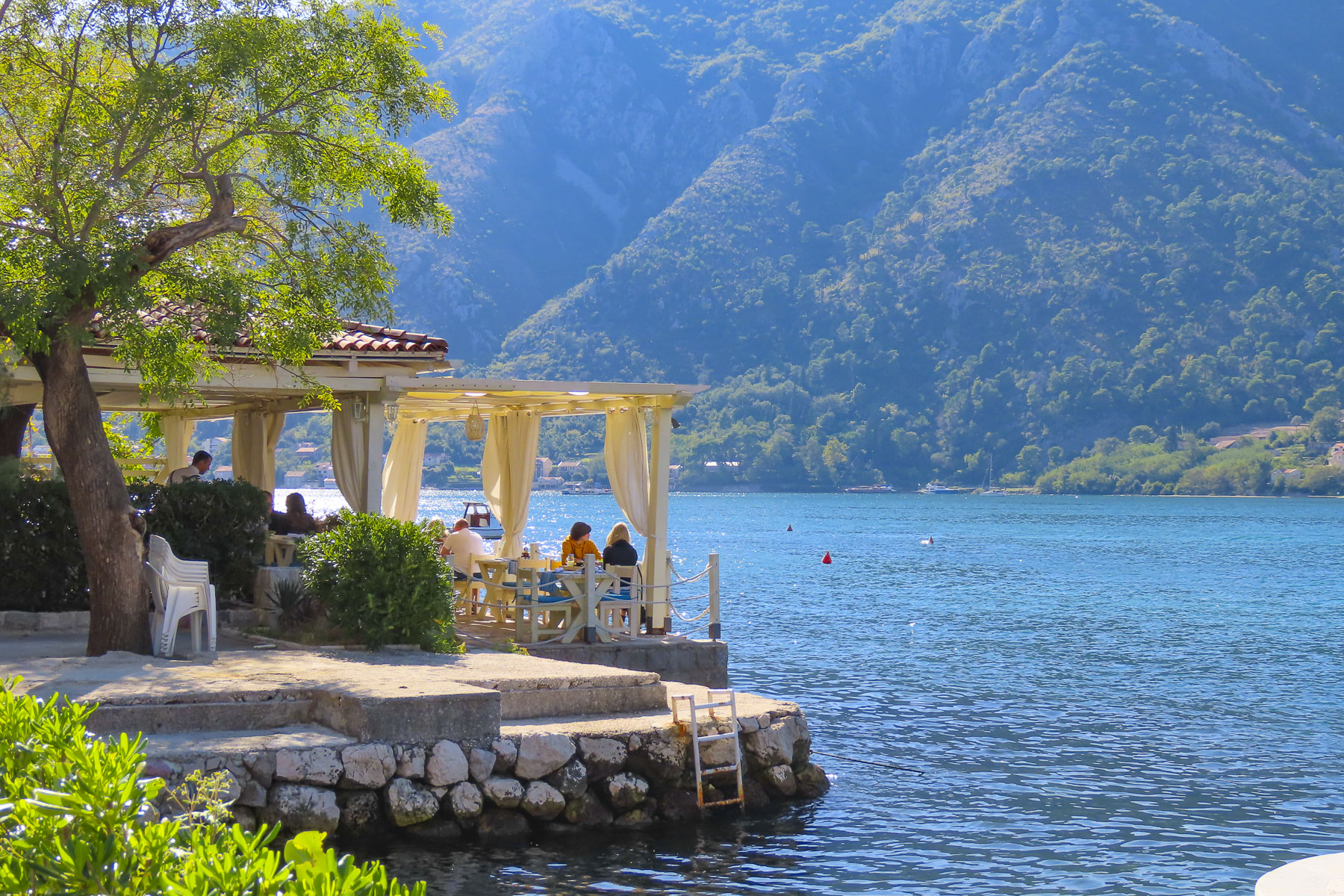
Our wanderings expanded to include longer treks along the picturesque roads that followed the shoreline of the bay. Walking only minutes from old town along Put I Bokeljske Brigade on the bay’s eastern shore put us in a more relaxed world with pebbled beaches, small marinas, waterfront restaurants, private homes and small boutique hotels along the water. Though the bay water was still warm enough for swimming, the area was very quiet at the end of September, with most of the small hotels posting “rooms available” signs in their windows. Many of the beach facilities pulled in their cabanas and rental kayaks with the end of the cruise boat season, which coincides with the beginning of the rainy fall season. Fortunately, the restaurants were still open along this route and several of them enticed us enough to revisit this seven-mile roundtrip walk to the village of Dobrota weekly.


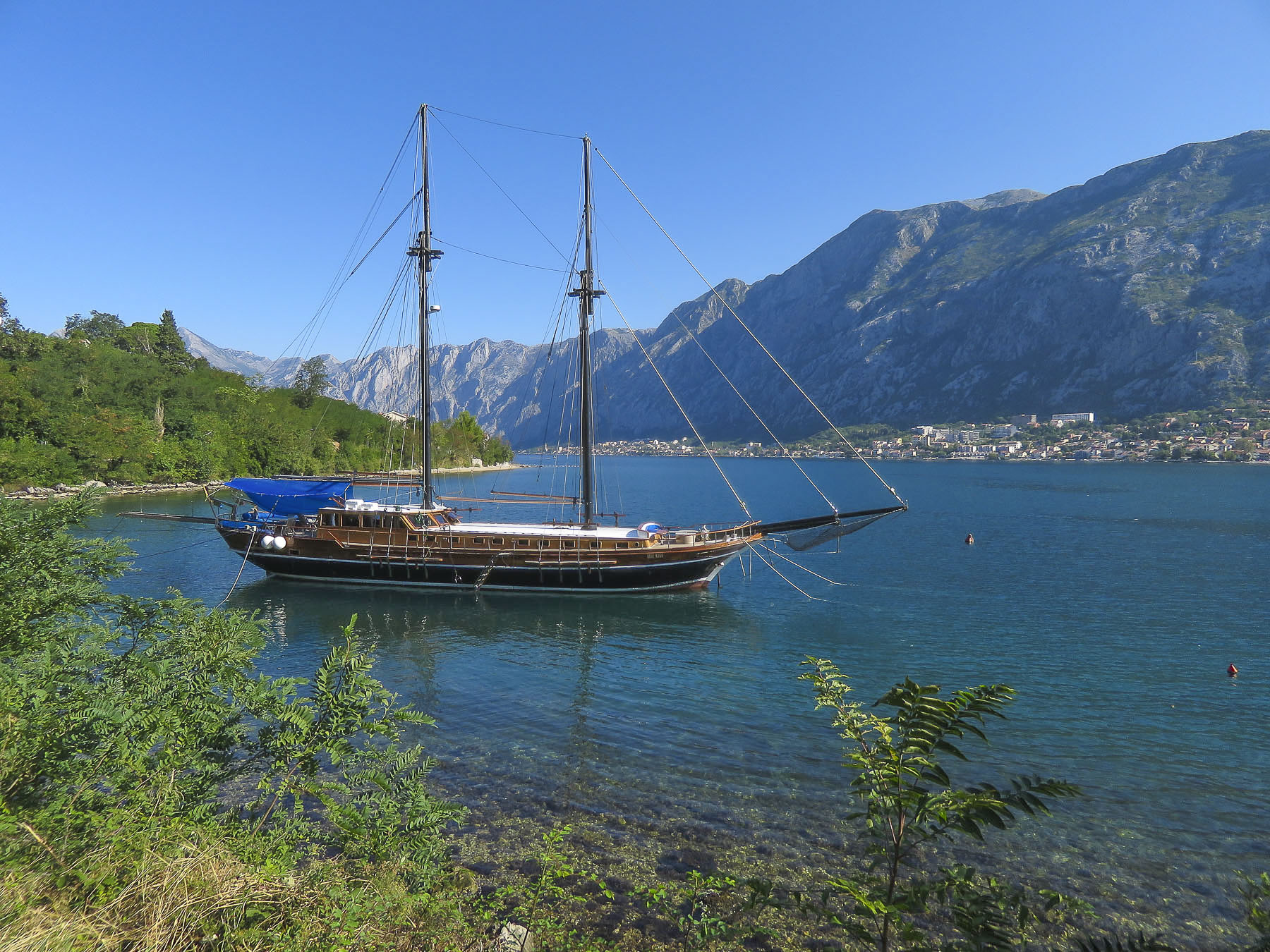
The western shoreline along the bay was equally enticing with its small coves that sheltered yachts at anchor, and the historic churches of Crkva Sv. Ilije in Gornji Stoliv and the parish church of Prcanj, Bogorodicin Hram, offered wonderful views of the bay from the top of its monumental stairs leading to the church. There were also some nice quirky finds along this route: props that looked like they were once used in a local carnival.




Montenegro is a small country; besides being known for its fabulous Adriatic coast, it has an equally impressive mountainous interior only a short distance inland from Kotor that can be visited on day trips. There were numerous tour operators around town that all offered basically the same excursions. We chose one to Durmitor National Park that included stops at the dramatic Most na Đurđevića Tari bridge that spans the turquoise waters of the Tara River. Visits to Black Lake, Lake Slano and the cliffside Ostrog Monastery would round out the day.

It was late September now and the chill of fall was in the morning air. Optimistically I wore sandals, anticipating a warm and sunny afternoon as it was the day before. As we drove into the mountains, the clouds thickened and the temperature dropped to the point were when we stopped at a small shopping center for a rest break I ran into a shoe store to buy a pair of heavy socks, much to Donna’s amusement.

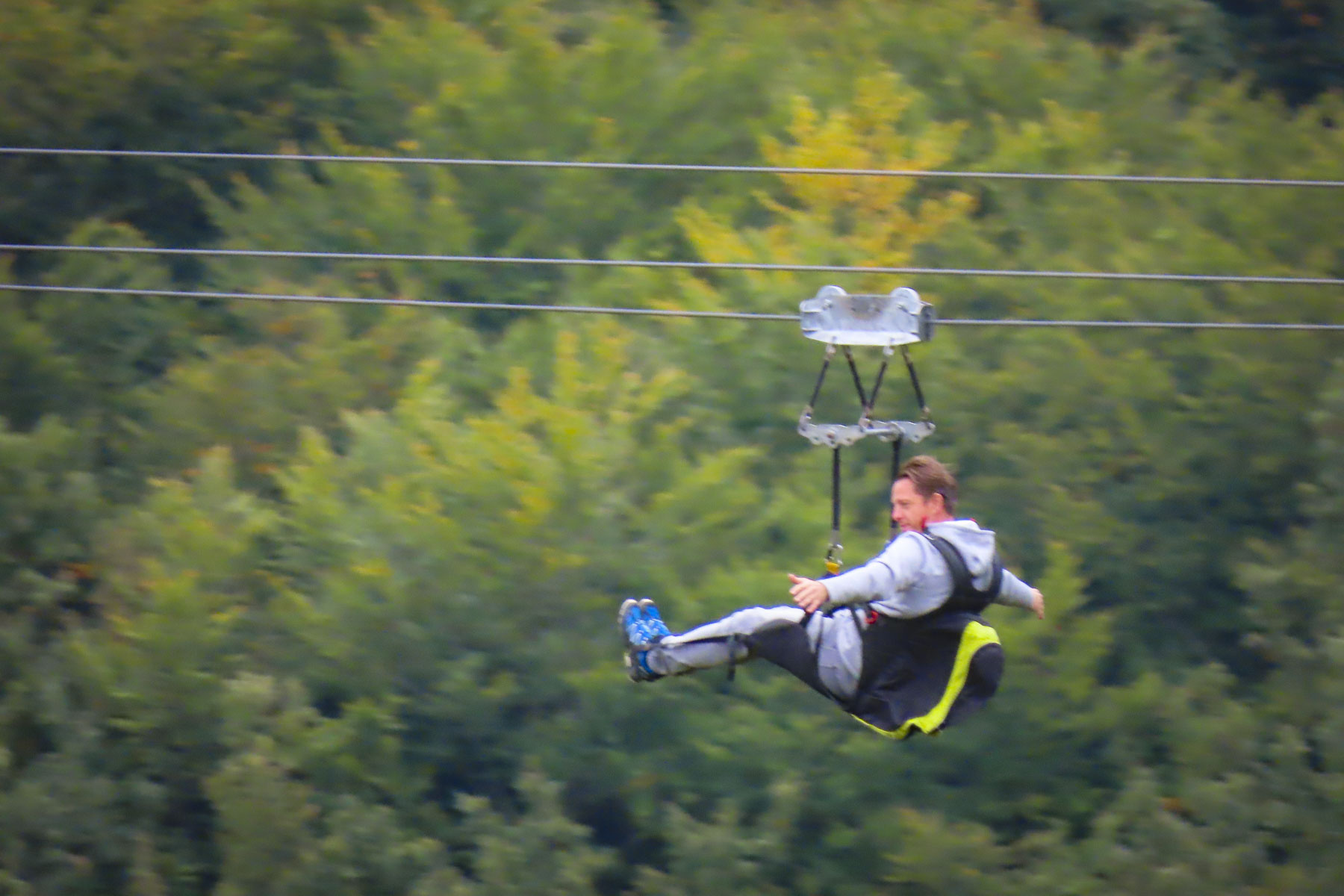
The mountain vistas along the drive to Djurdjevica Tara bridge were fantastic and we arrived in time for some in our group to zip-line across Europe’s deepest canyon (4300 ft) and the turquoise waters of the River Tara – the “tear of Europe,” below.


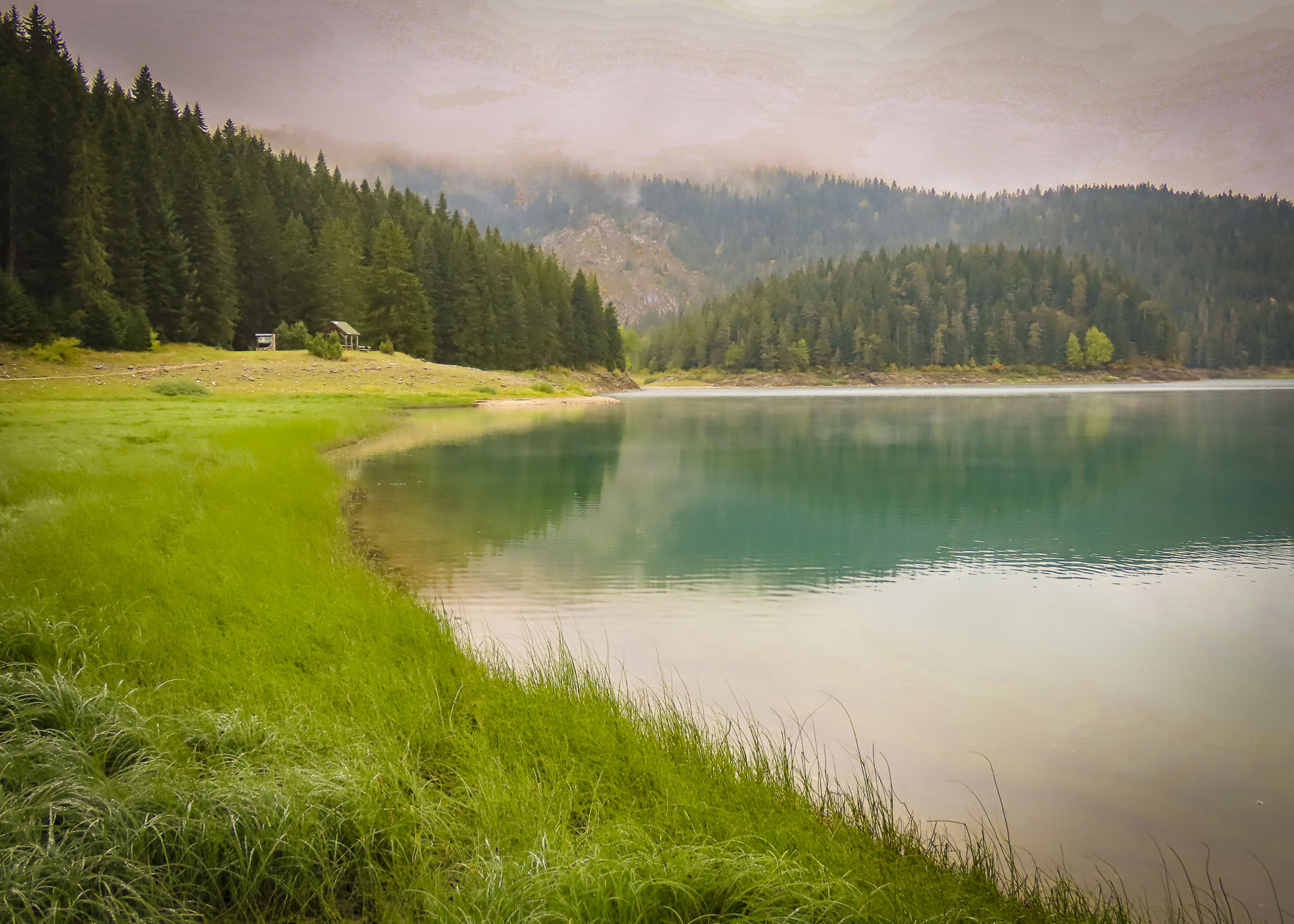
An easy hike through old growth forests around Black Lake followed lunch at a waterside restaurant.


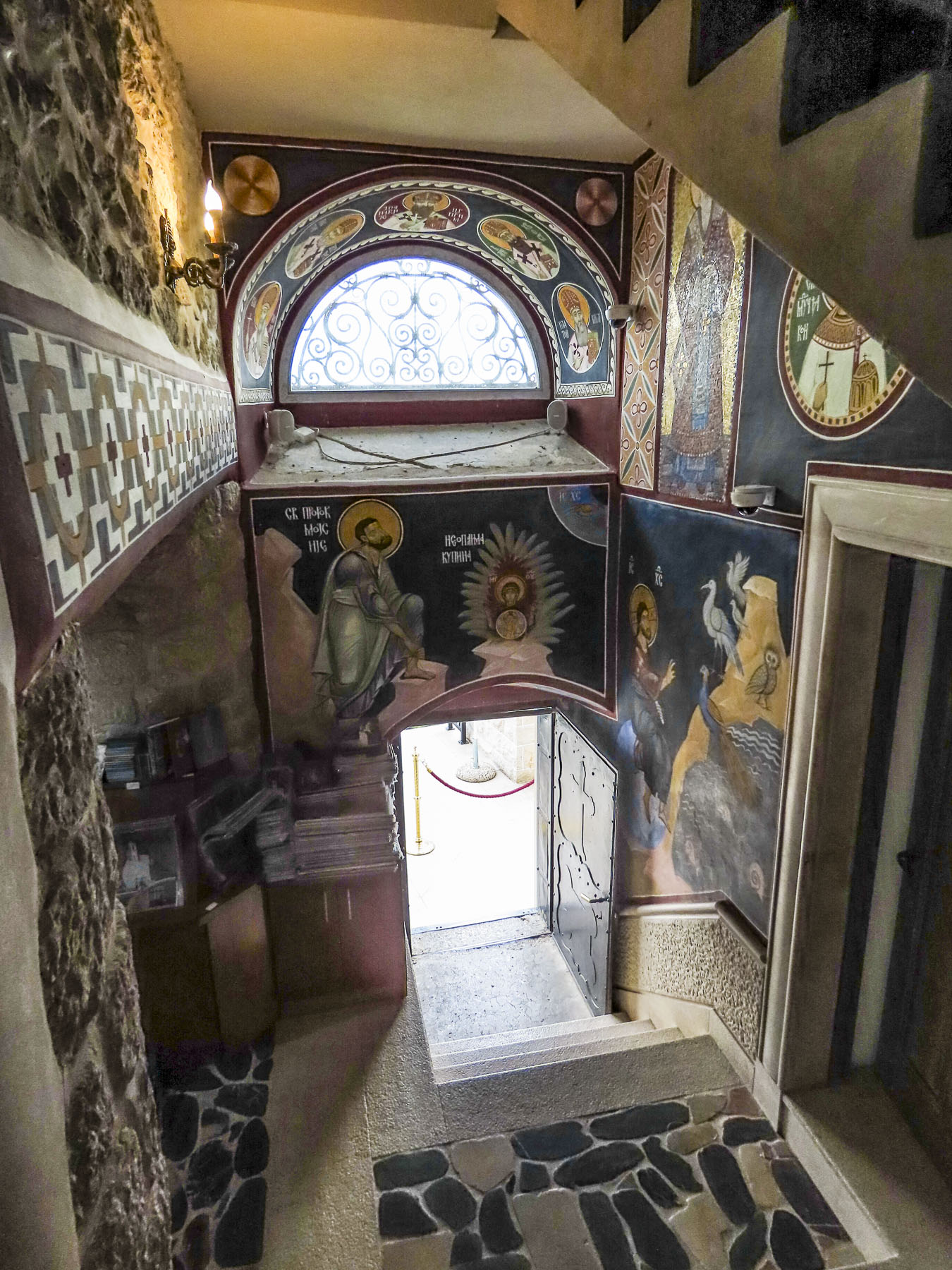

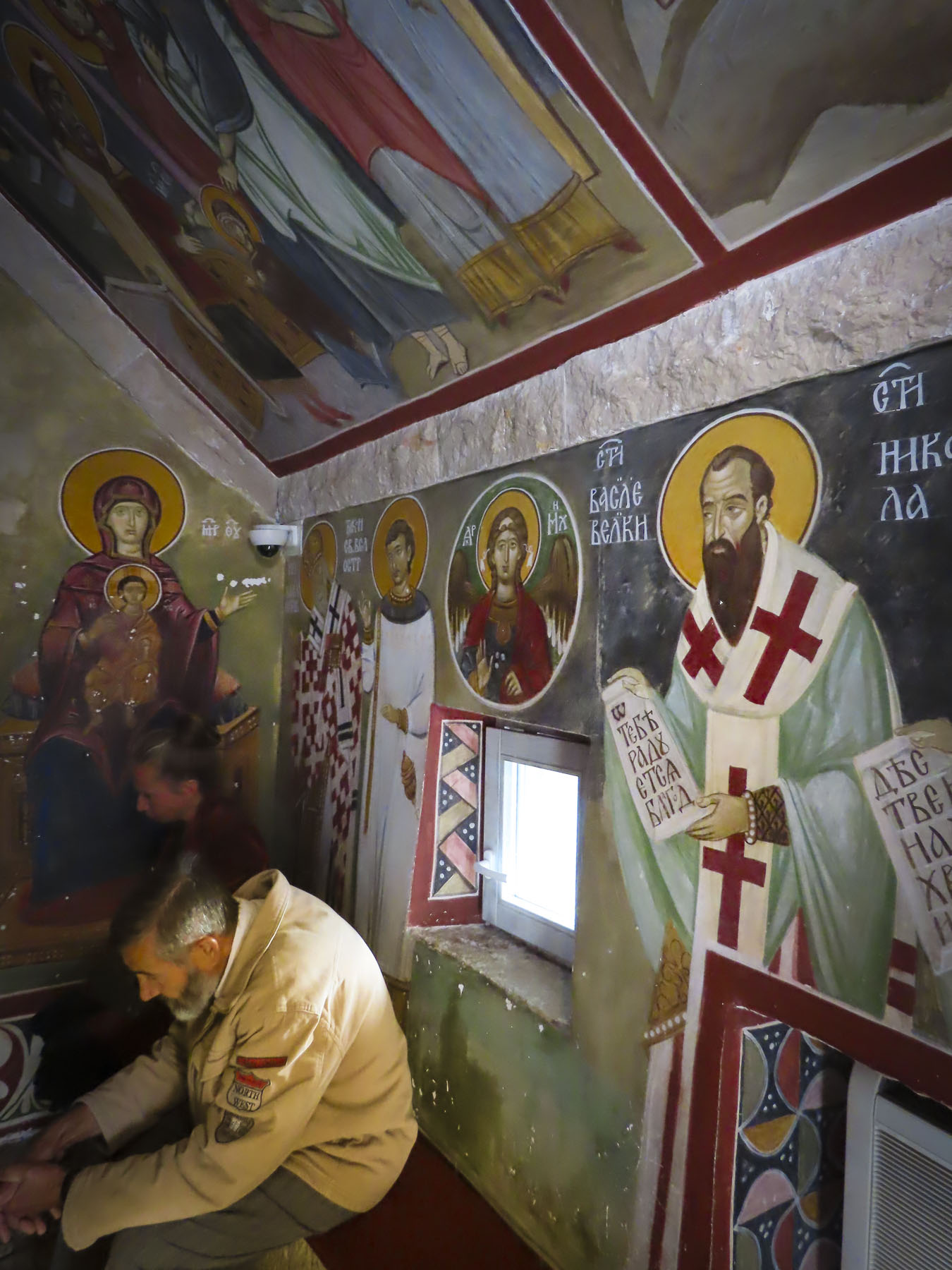
The last stop of the day was at Ostrog Monastery which expanded around a cave church that was built high into the mountains in the 1600s by Vasilije, the Bishop of Herzegovina and later known as St. Vasilije, to escape Ottoman raiders. Upon his death his body was entombed in the church and legend says his mortal remains have miraculous healing powers. Over the centuries, the monastery has become a pilgrimage site for Orthodox Christians, Catholics and Muslims, drawing 100,000 visitors annually. Additionally, the monastery is also known for its unigue religious frescoes, which were painted directly onto to the surface of the cave, following their natural curvature. Our guide had timed our visit perfectly to coincide with the 5:00 PM mass. It was a moving experience to hear the liturgy sung and projected from loudspeakers out over the valley as the sun was setting.
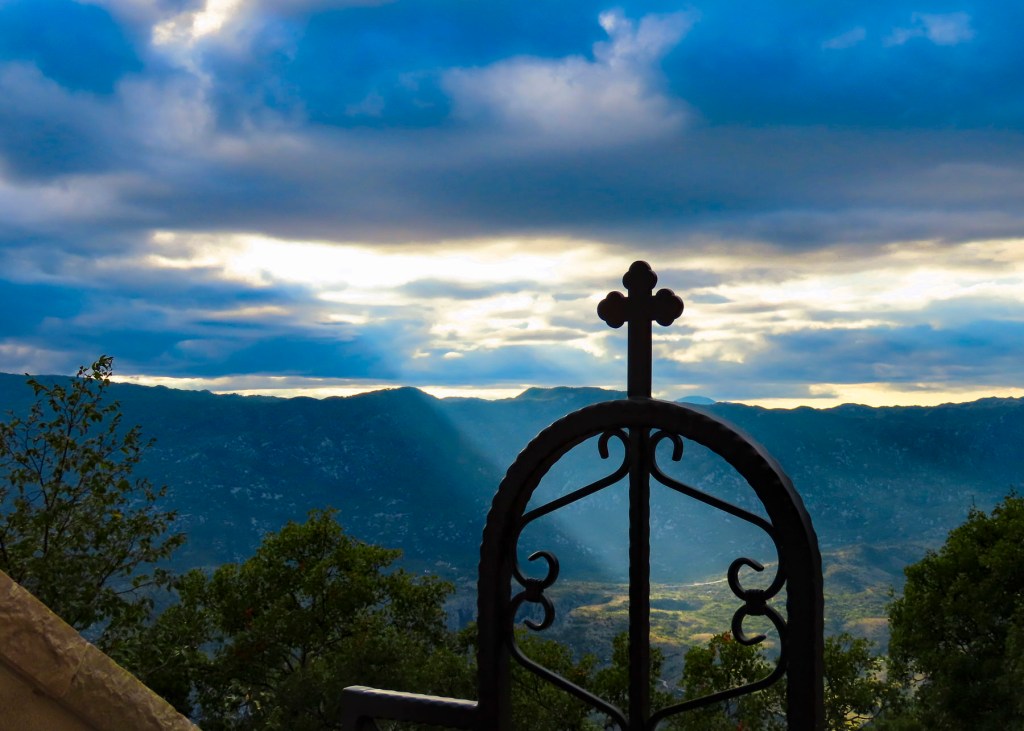
The last stop of the day was at a scenic overlook above Kotor Bay. Montenegro packs a magnificent amount of beauty into a small country and should be on everyone’s radar for an affordable, budget friendly destination.

A week later we rented a car to explore parts of Montenegro on our own.
Till next time, Craig & Donna


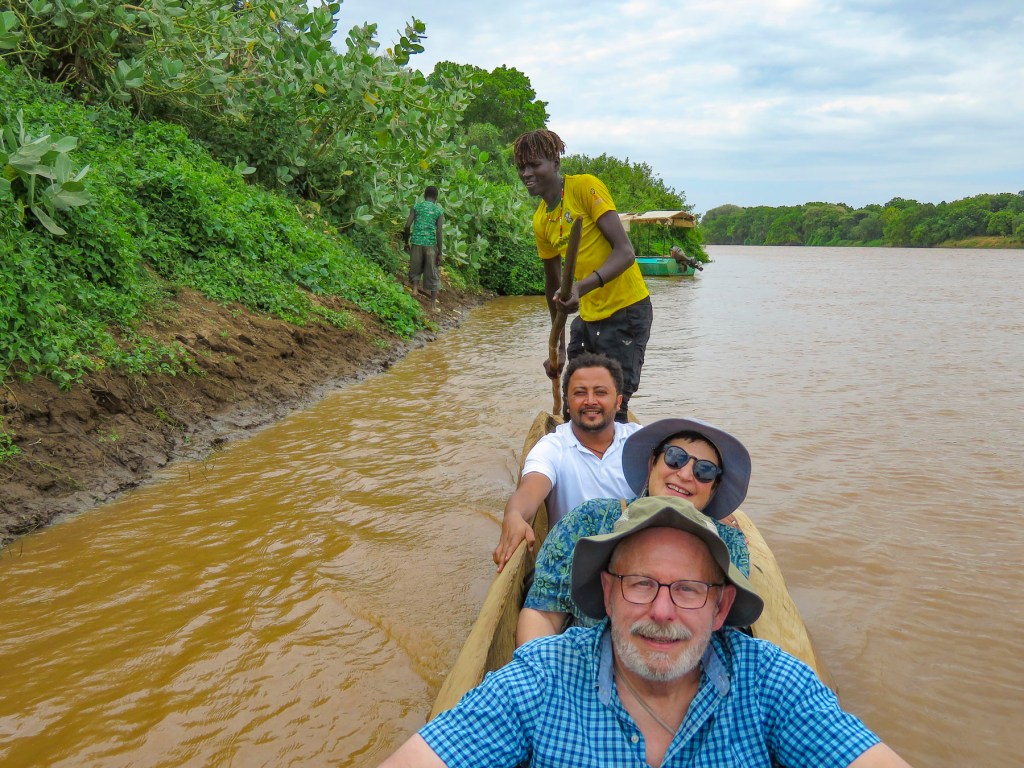


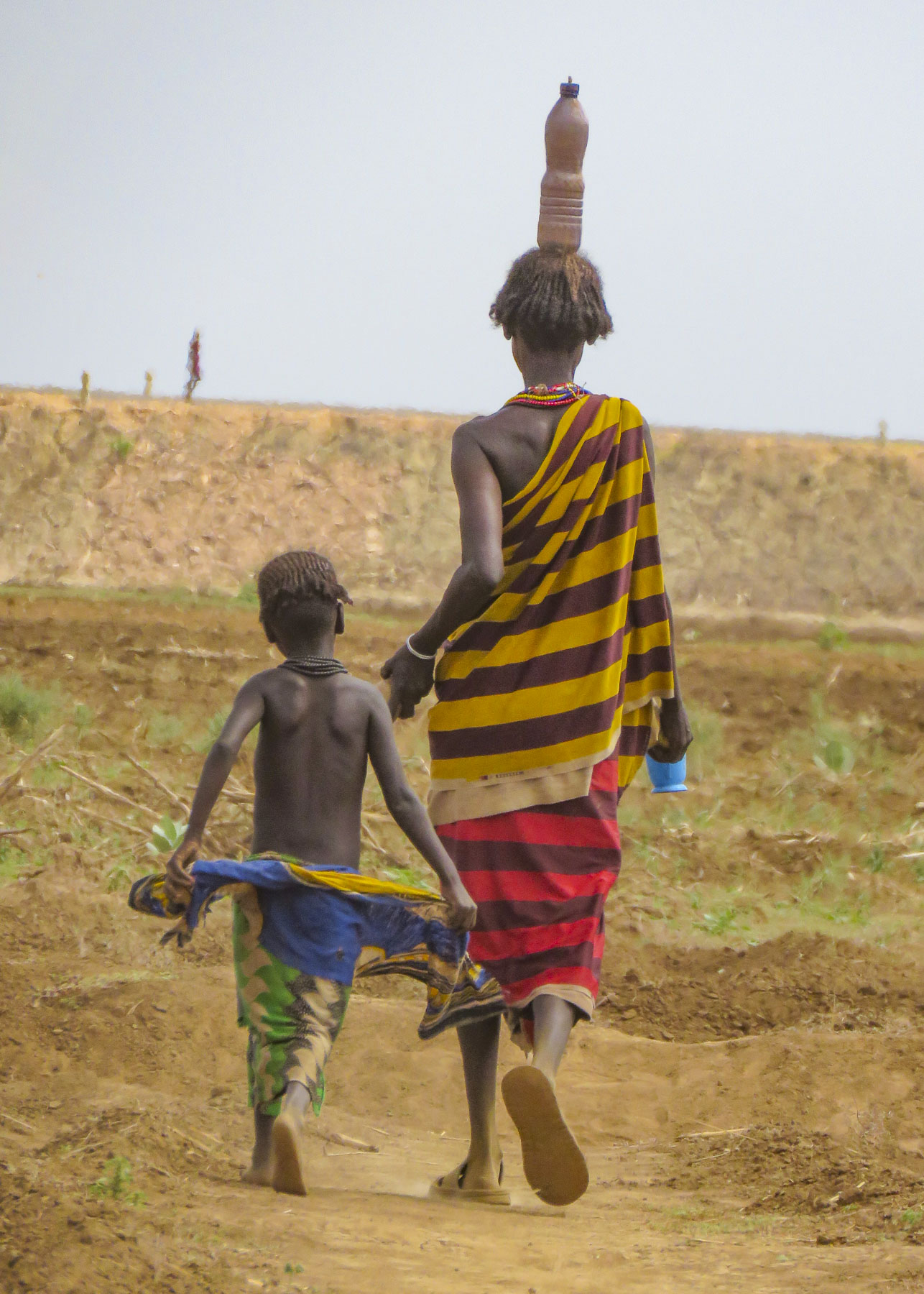




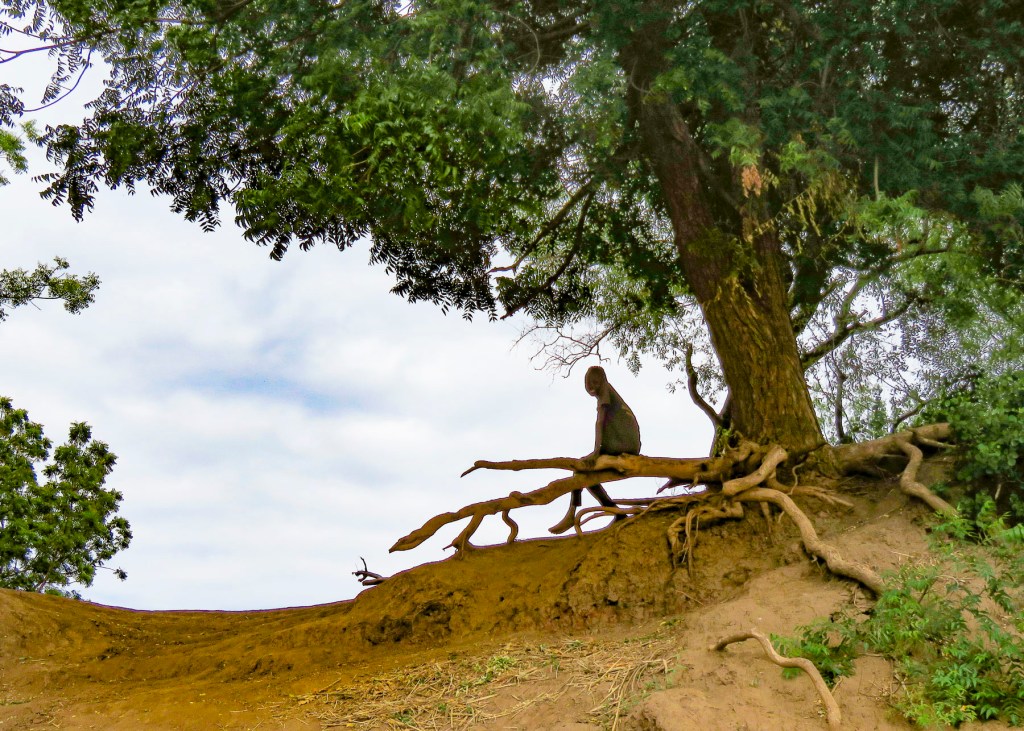


















 Often overshadowed in recent decades by its East African neighbors recognized for their safaris, Ethiopia has been known to Western culture for millennia. It was first mentioned in the Hebrew Bible, around 1000 BC (3,000 years ago!), when the Queen of Sheba, hearing of “Solomon’s great wisdom and the glory of his kingdom,” journeyed from Ethiopia with a caravan of treasure as tribute. Unbeknownst to Solomon their union produced a son, Menilek, (meaning son of the wise man). Years later, wearing a signet ring given to him by his mother, Menilek visited Jerusalem to meet Solomon and stayed for several years to study Hebrew. When his son desired to return home, Solomon gifted the Ark of the Covenant to Menilek for safe keeping in Ethiopia, and to this day it is said to reside in the Church of Our Lady Mary of Zion, in Aksum, where only a select few of the Ethiopian Orthodox church can see it.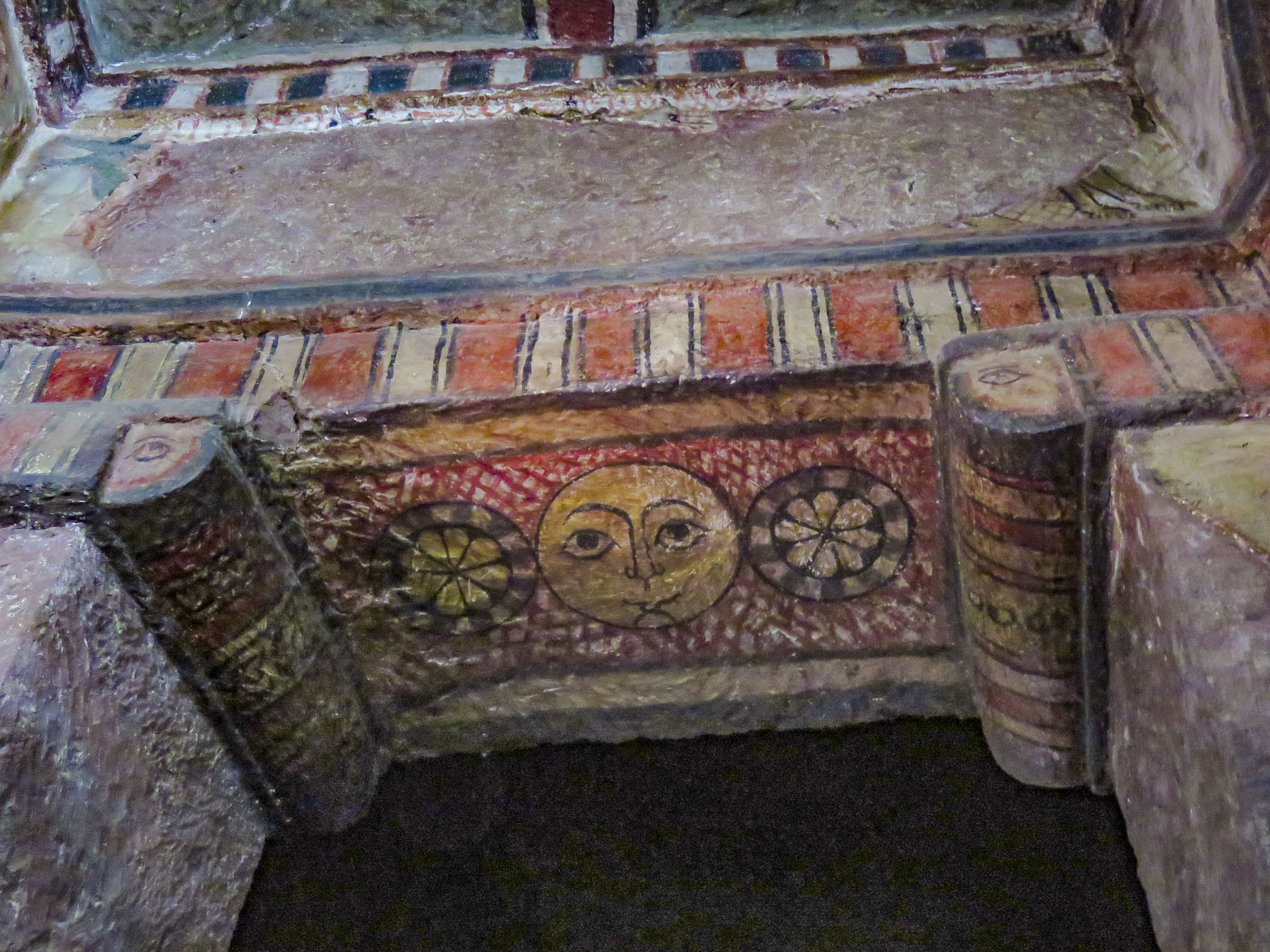
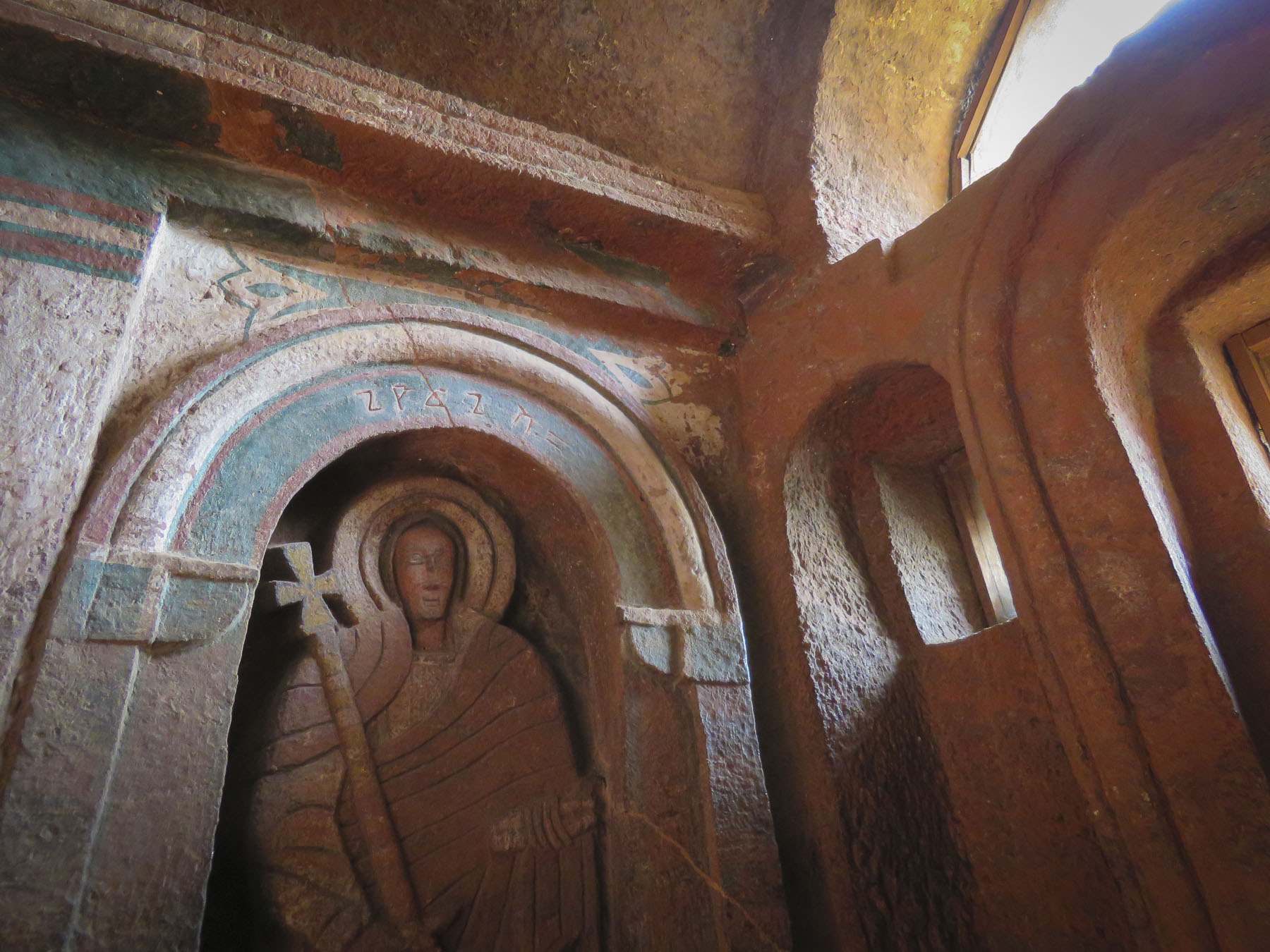


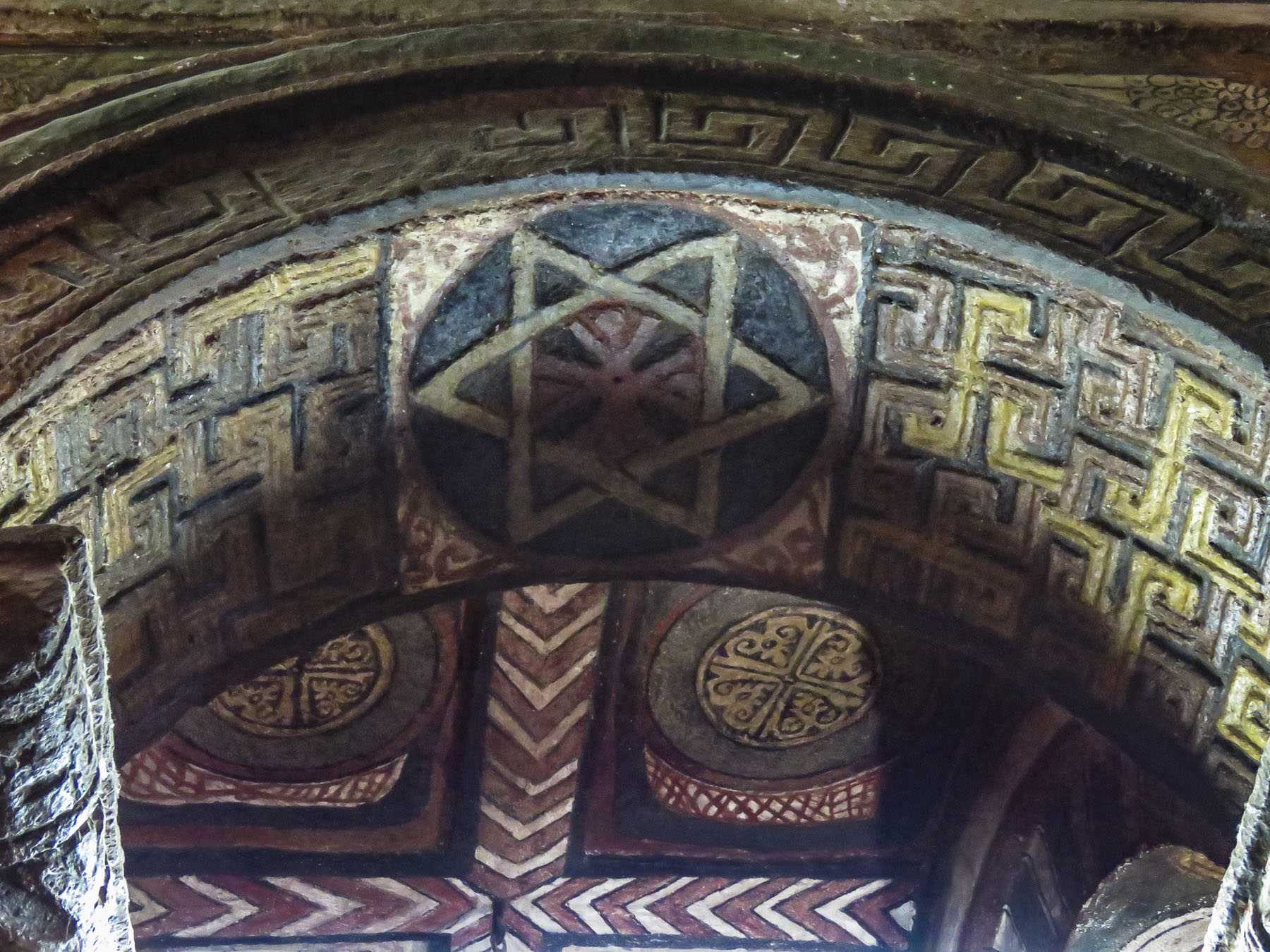 With the Ethiopian Orthodox Church having a site in Jerusalem since the sixth century, Ethiopian pilgrimages to the Holy Land, which took six months, were common until the route was blocked by Muslim conquests in 1100s and the journey became too hazardous. As it became surrounded further by Muslim territories, the country sank into isolation from Europe. Ethiopia’s early history and its connection to Judaism and Christianity is a twisting tale, like caravan tracks across the desert, meeting then disappearing behind sand dunes, the story buried by the blowing sands of time.
 Distraught by this, King Lalibela commissioned eleven architecturally perfect churches, to be hewn from solid rock, to serve as a New Jerusalem complete with a River Jordan for pilgrims to visit. He based the designs on memories of holy sites from his own pilgrimage to the Holy Land as a young man.
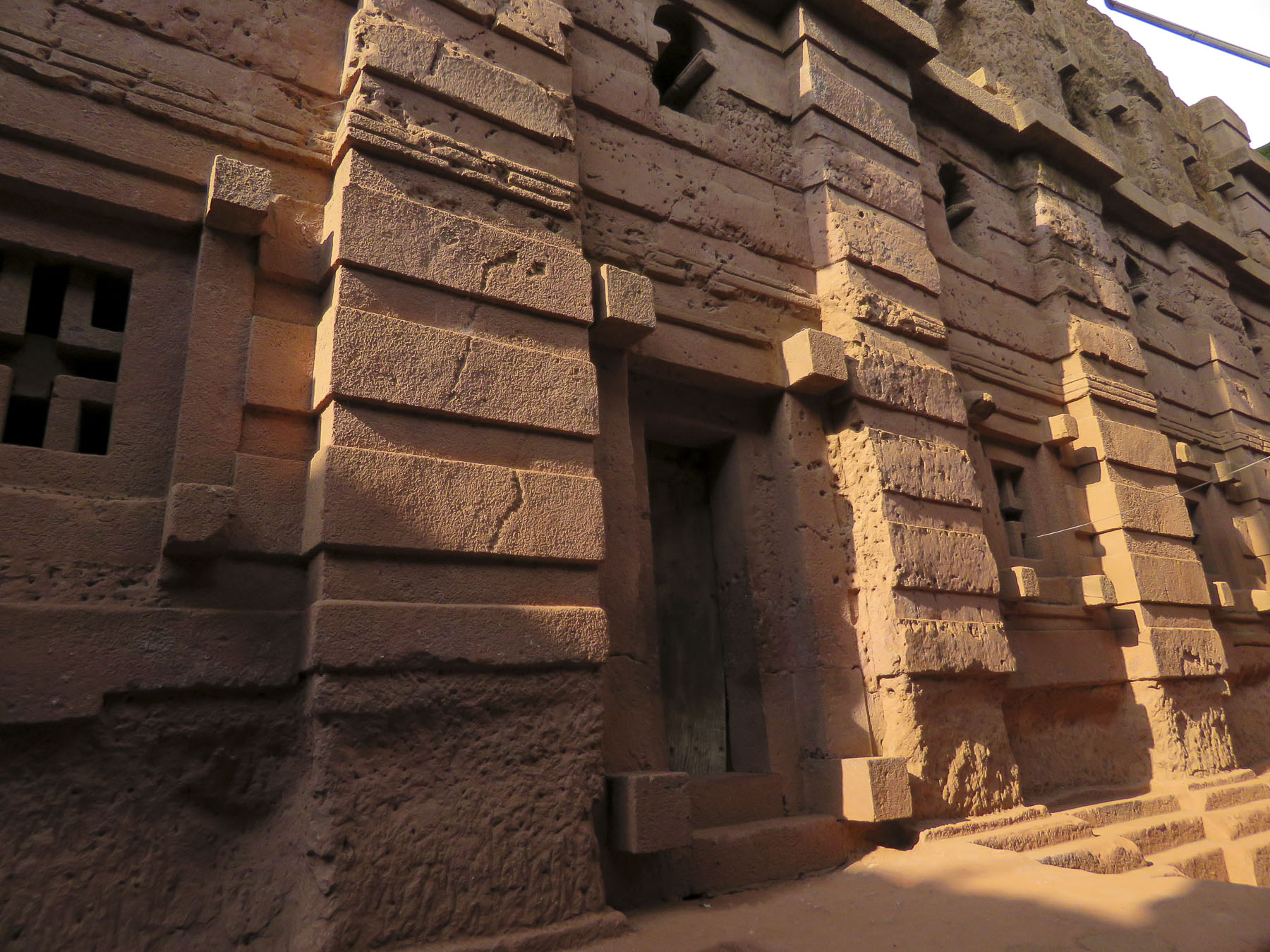 Considering the limited availability of tools in the 1100s, I can’t imagine what a daunting task this must have been. I’m sure the chief architect said, “you have to be kidding.” It’s believed that 40,000 men, assisted by angels at night, labored for 24 years to create this testament to their faith. Masons outlined the shape of these churches on top of monolithic rocks, then excavated straight down forty feet to create a courtyard around this solid block. Doors would then be chiseled into the block and the creation of the church would continue from the inside, often in near total darkness.


 Women worshippers traditionally enter through a separate door and pray apart from the men. Inside, thirty-eight stone columns form four aisles and support a stone ceiling that soars overhead. After walking for days or weeks to reach Lalibela, often fasting the entire time, the journey ends here for many pilgrims, in hopes of receiving a blessing or cure from touching the Lalibela Cross and offering prayers.


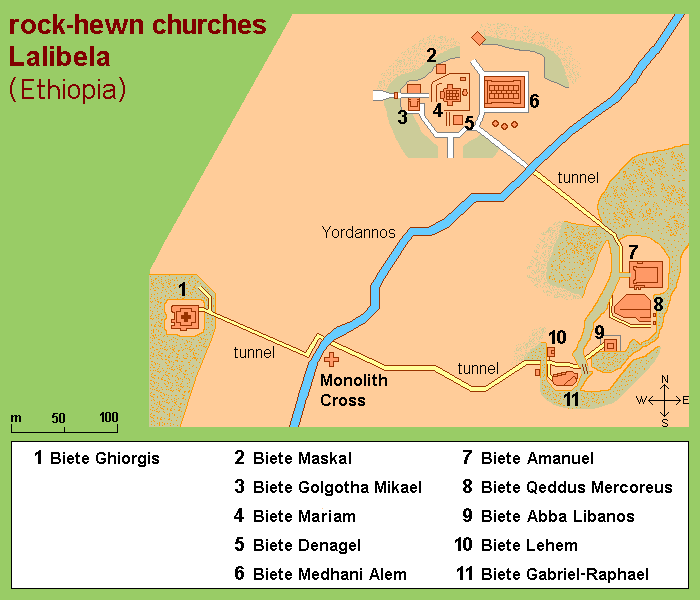


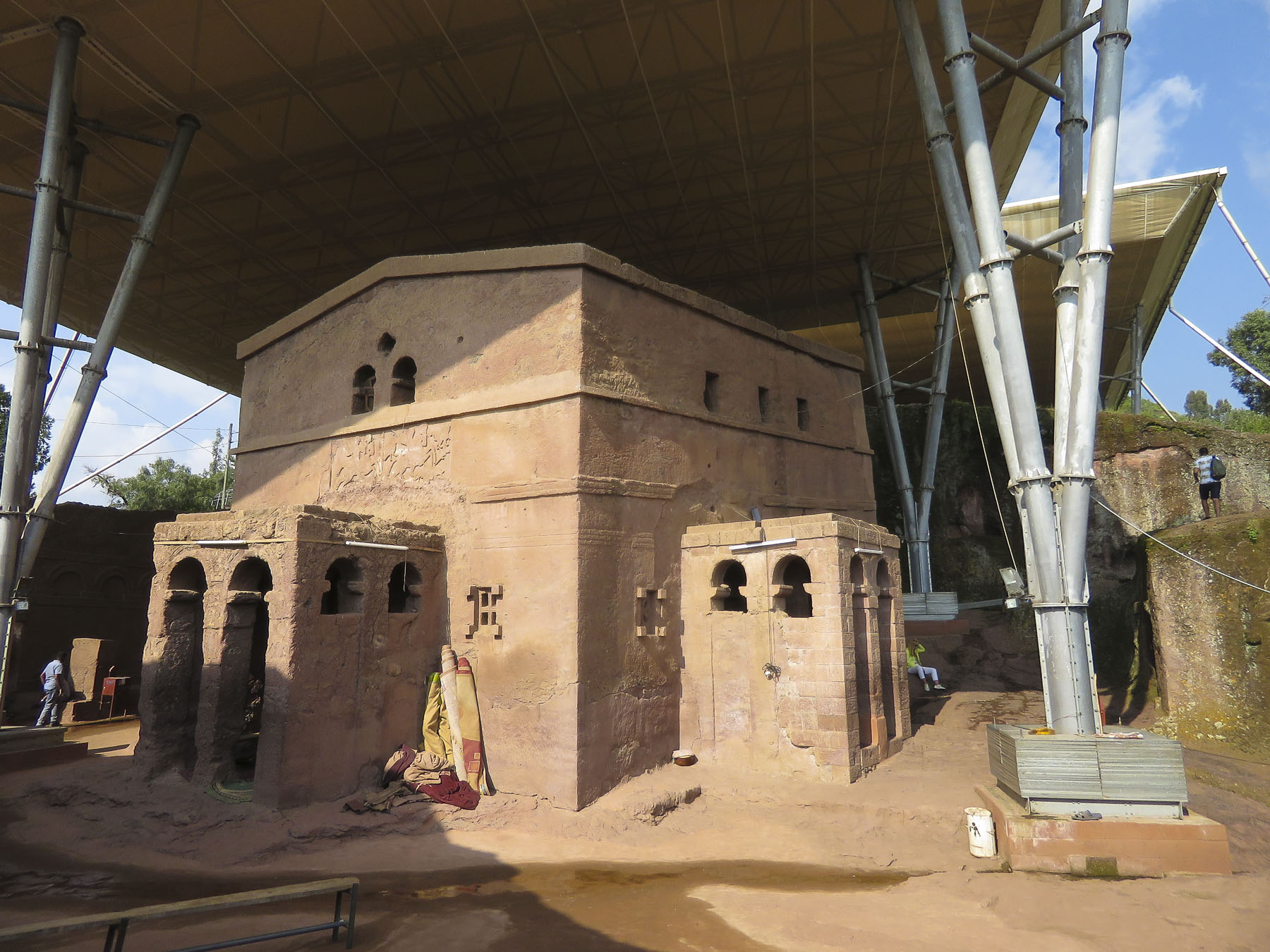 The next morning, we completed our tour of the cluster of the southern of the rock churches: Beta Emmanuel (Church of Emmanuel), Beta Abba Libanos (Church of Father Libanos), Beta Merkurios (Church of Mercurius) and Beta Gabriel and Beta Rafa’el (the twin churches of Gabriel and Raphael.)

 It’s important to remember that this is not a museum with ancient artifacts and manuscripts in glass cases, but an active holy site where the ancient manuscripts are still used daily, and it is home to a large community of priests and nuns. It has been a destination for Ethiopian Orthodox pilgrims in the northern highlands (elevation 8,200’) for the last 900 years and continues to be visited by tens of thousands of pilgrims annually.
 Leaving the churches behind, we walked through an area of ancient two story, round houses called Lasta Tukuls, or bee huts, built from local, quarried red stone. Abandoned now for preservation, they looked sturdy, their stone construction distinctive from the other homes in the area that use an adobe method.
 Today roughly 100,000 foreign tourists, in addition to Ethiopian pilgrims, visit Lalibela annually, a far cry from its near obscurity 140 years ago. Located four hundred miles from Addis Ababa, it is still far enough off the usual tourist circuits to make it a unique and inspiring destination.



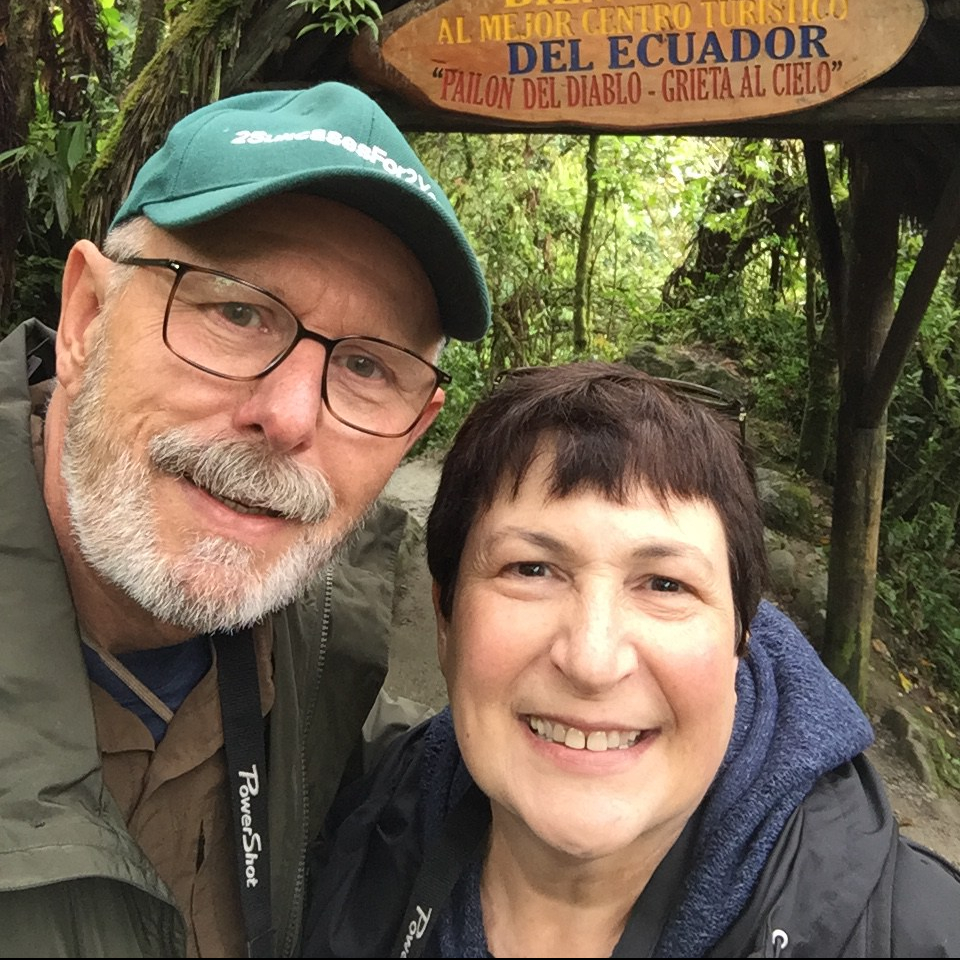 The good news is we haven’t killed each other, though there have been times that I’ve dreamt a pillow was hovering over my head. Just kidding. We have gone from the two of us working six days a week while living in an eight-room house, to being together 24/7 with only a suitcase each. Boy did we downsize! It was challenging: what not to bring, considering all the seasonal changes we have encountered. Don’t laugh, but I have thermals, wool hats and gloves packed, just on the off chance we get snowed in on a mountain pass in the French Alps, this July. Yes, there’s also a flask of medicinal whisky packed in the bags for emergencies. And to my wife’s amusement, a cheap plastic fly swatter. Tragically the backup swatter was left behind in Antigua. In Lisbon I finally caved in and bought a pair of slippers because the floors of the stone buildings just don’t retain any heat in the winter. The comfort of a pair of slippers in the evening, after a long day of walking, can’t be underestimated.
 It’s been a huge but surprisingly easy transition for us. 253 days ago (I thought I was writing this at around day 200, it’s easy to lose track of time on the road) we slammed the door shut on our storage pod, locked it, and popped open a bottle of champagne to celebrate our impending journey. We haven’t looked back. Ecuador, Guatemala, Cuba and now Portugal; I can’t imagine undertaking this adventure with anyone else.


 This visit also gave us an opportunity to jettison the wonderful textiles and ceramics we had purchased along the way for a home we don’t have yet. Imagine this scene from our last stop in San Pedro – the backseat of a tuk-tuk overflowing with Donna and all our suitcases, while I’m sharing the driver’s seat with the driver, one cheek on, one cheek off and a foot dangling outside the cab as we speedily snaked through the steep narrow alleys of the village.


![IMG_2836[12654]](https://i0.wp.com/2suitcasesfor2years.com/wp-content/uploads/2018/11/img_283612654.jpg?w=279&h=209&ssl=1 "IMG_2836[12654]")
![IMG_2841[12658]](https://i0.wp.com/2suitcasesfor2years.com/wp-content/uploads/2018/11/img_284112658.jpg?w=279&h=209&ssl=1 "IMG_2841[12658]")
![IMG_6276[12629]](https://i0.wp.com/2suitcasesfor2years.com/wp-content/uploads/2018/11/img_627612629.jpg?w=477&h=636&ssl=1 "IMG_6276[12629]")


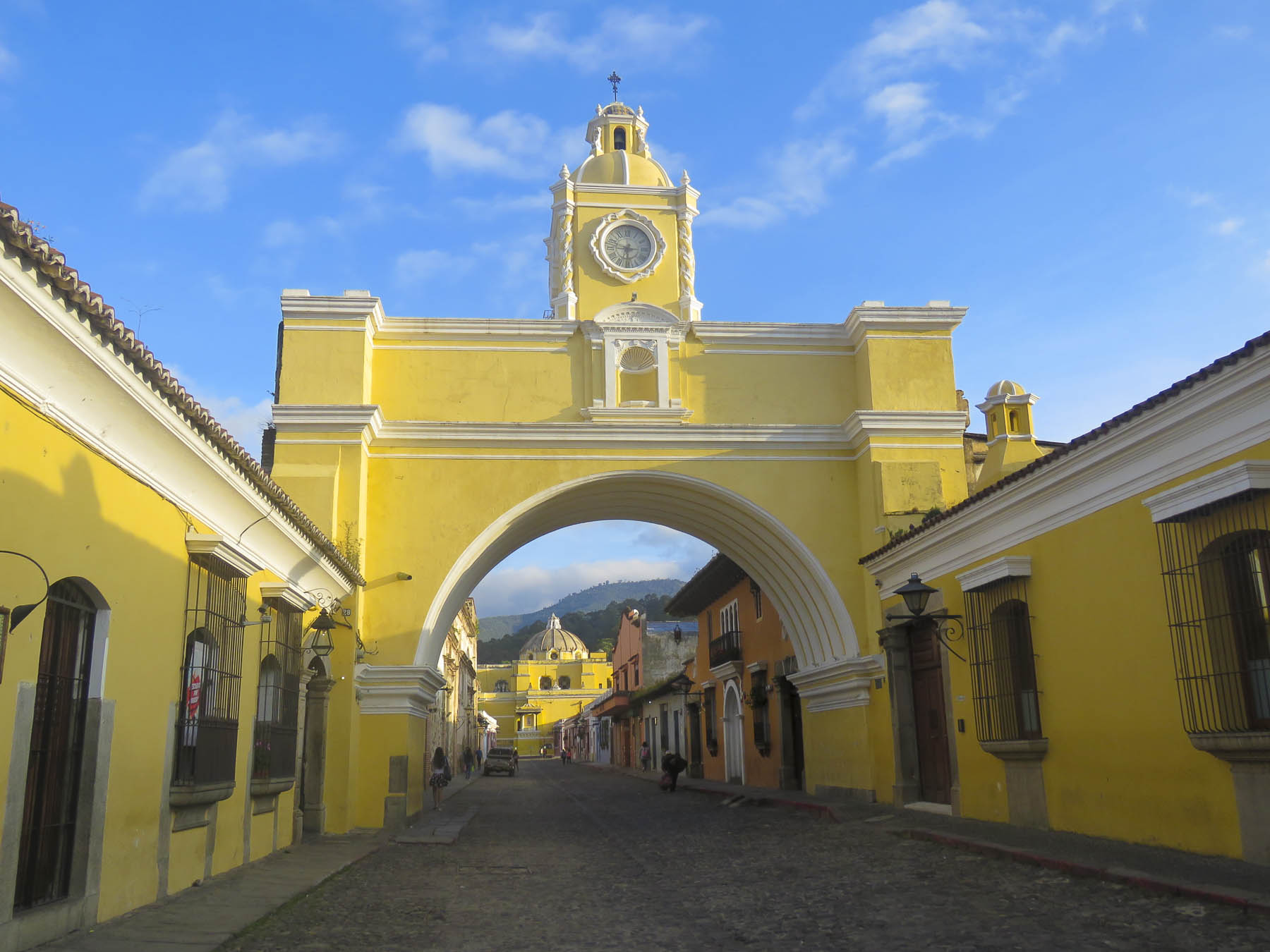 Paradise is such a subjective feeling and if you don’t require a turquoise blue sea and white sand beaches, Antigua, Guatemala just might fit the bill. This charming colonial city with its ever spring-like weather was perfect for our two-month stay.
 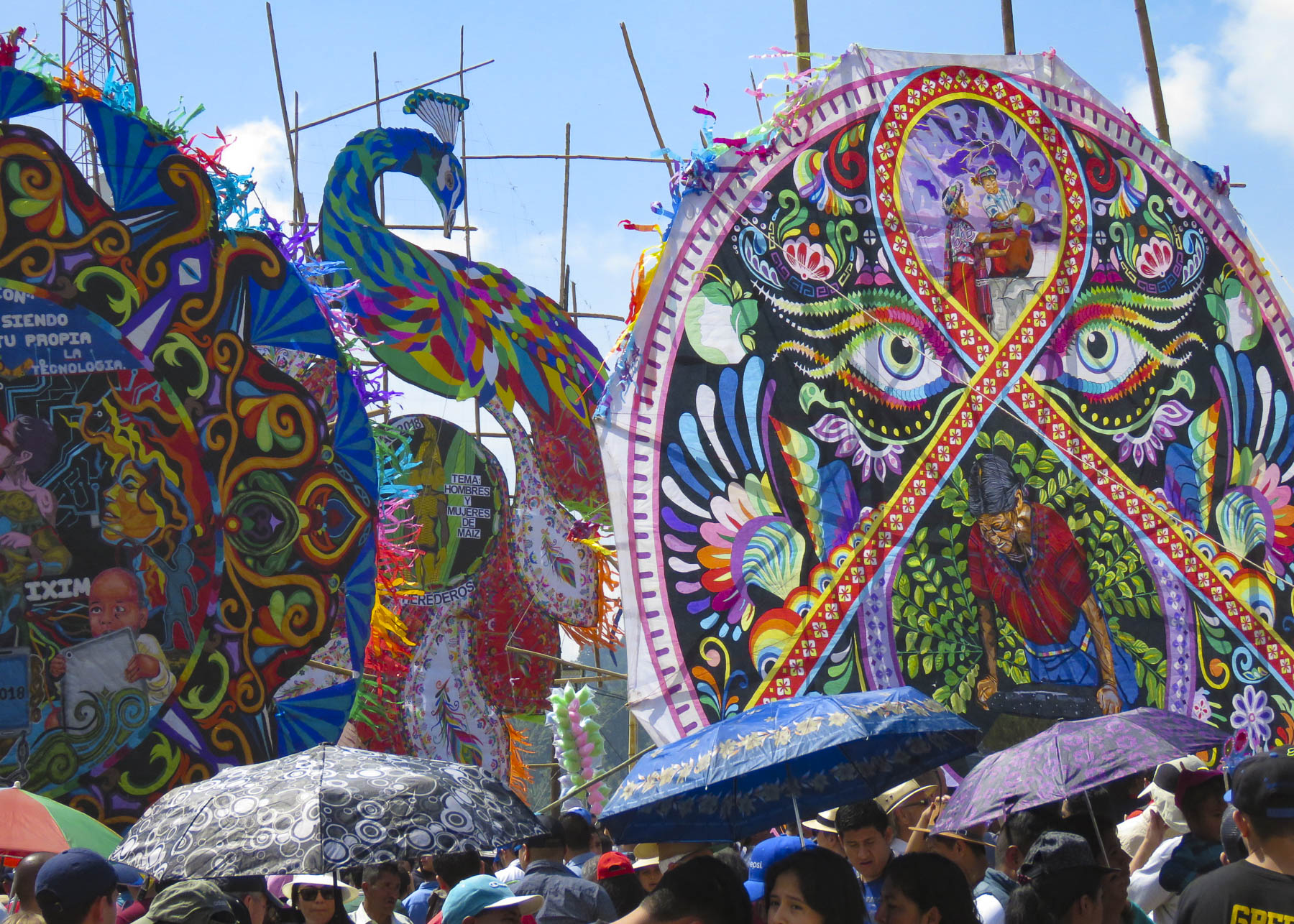 We arrived in Antigua at the end of October so that we could attend the Sumpango Giant Kite Festival held every year on November 1st, All Saints Day. That spectacularly colorful event and a religious procession that burst forward from La Merced Church on October 28th would prove to be representative of the people and life in Guatemala we experienced.


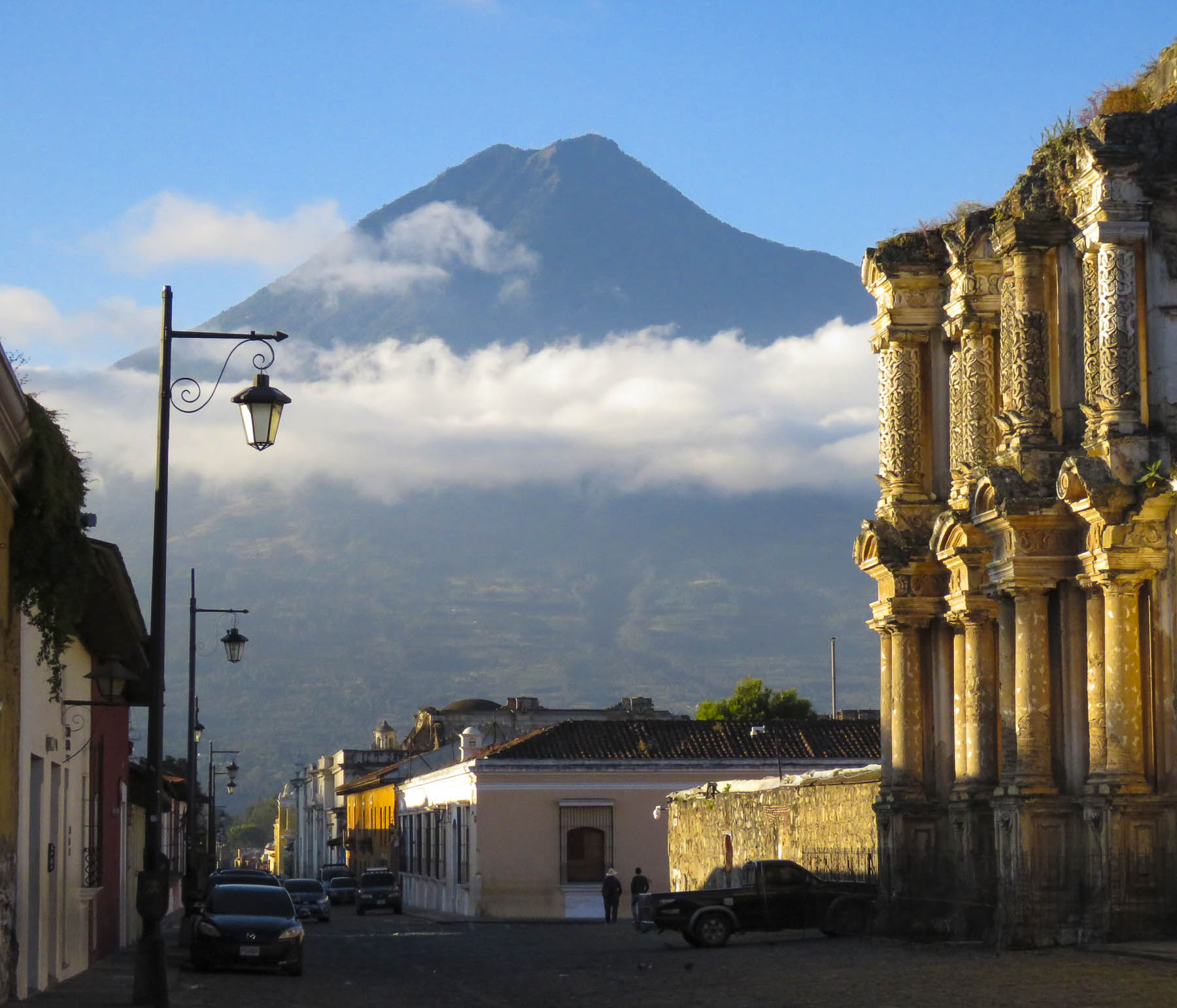
 On Mondays, Thursdays and Saturdays the market tripled in size when the outdoor portion was open, and farmers brought in truckloads of fruits and vegetables from the surrounding villages. There we experienced one of the best markets going, set in a bustling, dusty lot with Volcans Agua, Fuego and Acatenango touching the sky in the background. Most produce was sold in quantities of 5 quetzals (60 cents) so bring lots of small bills, as vendors didn’t usually have change for anything larger than 10Q. The flavor of the locally grown vegetables was amazing. Being backyard gardeners ourselves, we were duly impressed. Twenty quetzals would buy enough vegetables for a week.


 Shopping at the local supermarket, La Bodegona, was a wonderfully hectic experience. At times it could feel like you were shopping from a conga line, weaving up and down aisles, afraid to leave the line for fear of not being able to enter it again and being stuck in dairy for eternity. Numerous store employees lined the aisles offering samples of cookies, deli meats, drinks and other temptations to keep the energy level of the beast alive. It was a hoot! We had to psych ourselves up, like players before the big game, to shop there because it was so hectic and required a certain mental and physical stamina. I will confess though to dancing in the checkout line to blaring Latino Christmas music – the mood was contagious.
 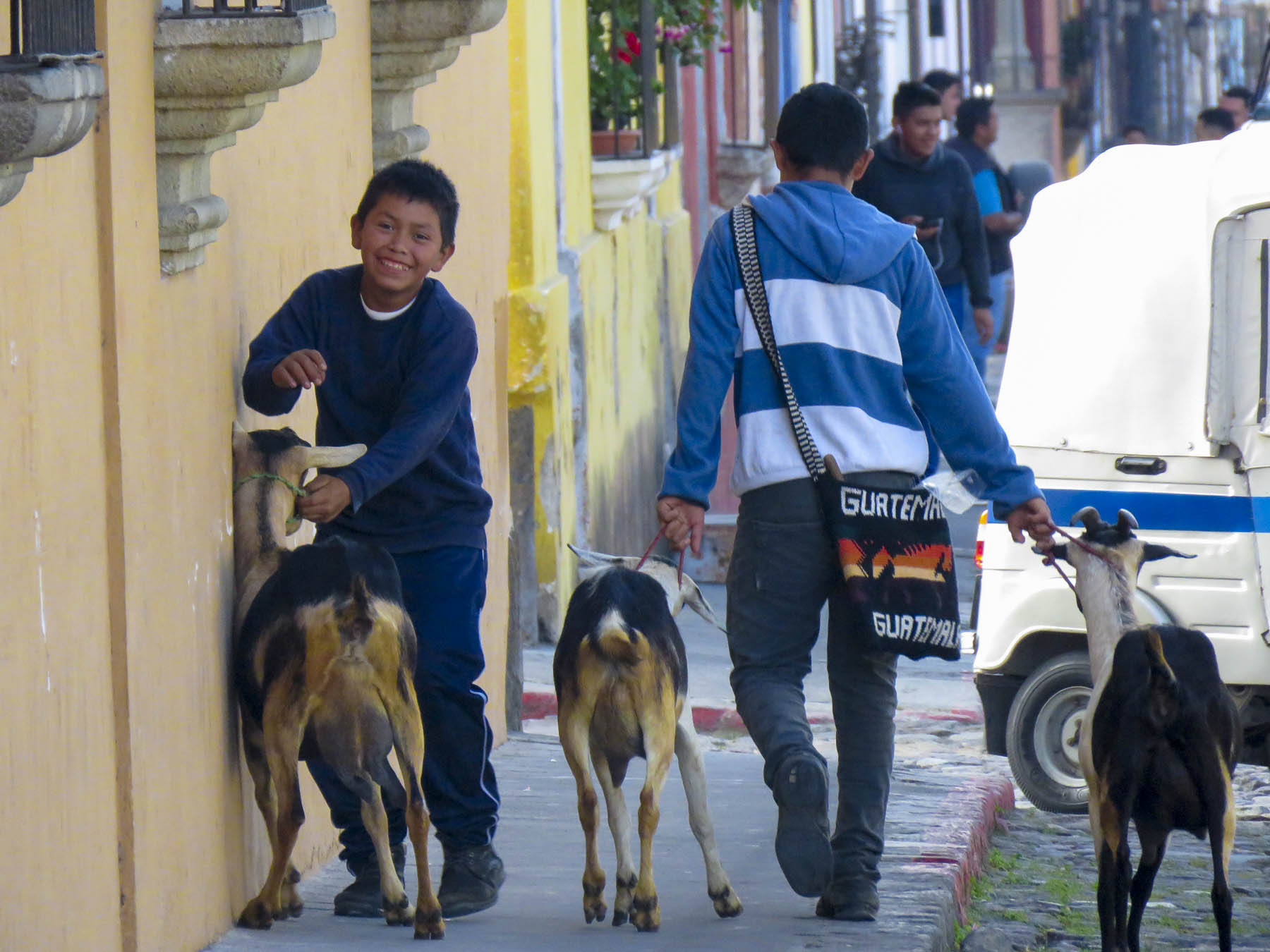 On the same block D&C Cremas, a Walmart affiliate, offered a more sedate shopping experience. Both supermarkets had excellent poultry, which was more tender and tastier than back in Pennsylvania. We were also fortunate that a pork butcher opened a new shop a half block away and offered fresh meat and sausage daily. We enjoyed all the different varieties of Guatemalan sausage he made and found them to be very flavorful and lean, with almost no fat.


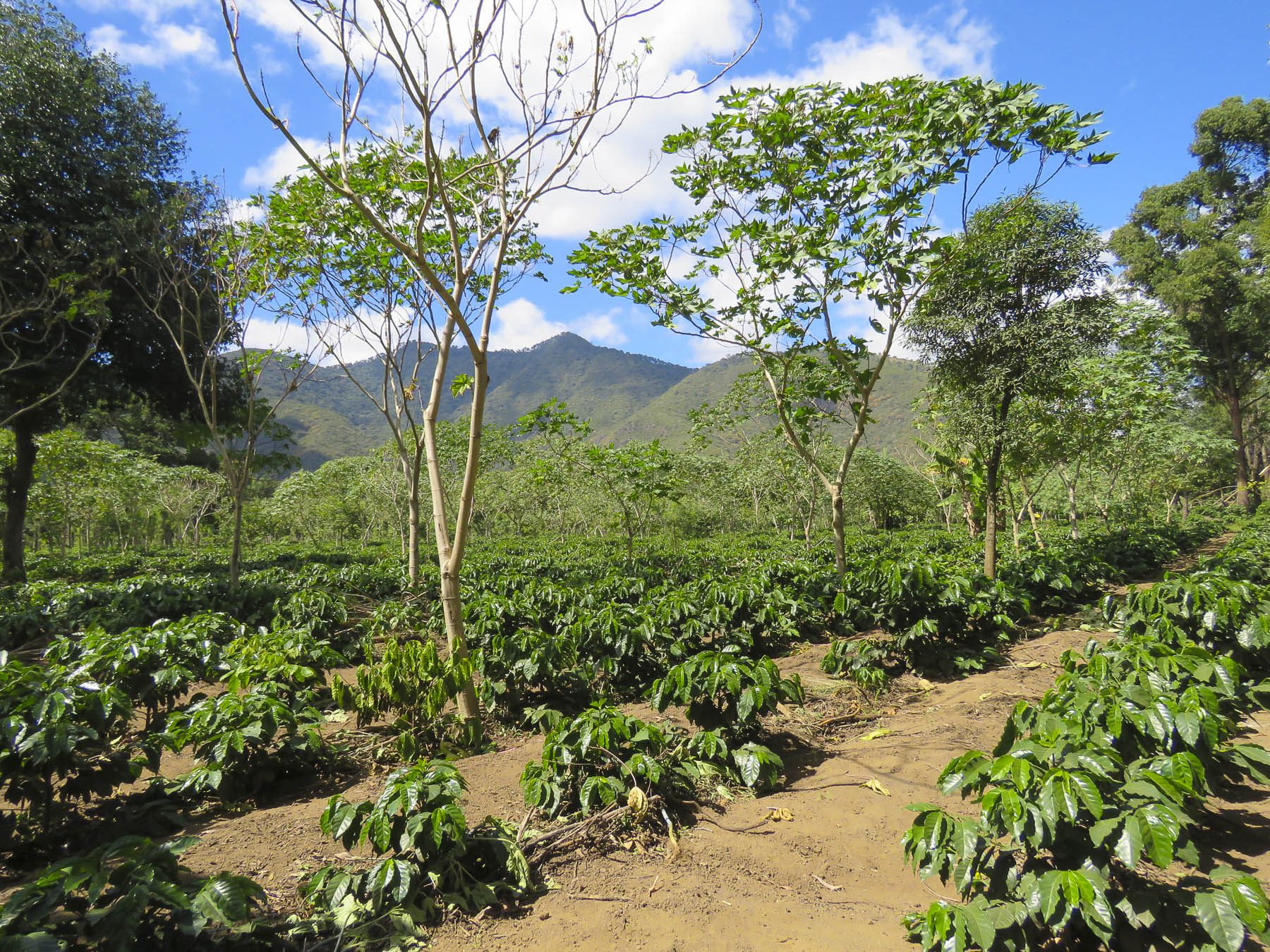 The next day we a followed a serpentine mountain road, second gear all the way, up to Santo Domingo del Cerro, a beautiful sculpture and art park with museums, walking trails and a restaurant that overlooks Antigua. Plan on spending at least a half day there, because it is a beautiful setting for a restful day or afternoon. Casa Santo Domingo offers a free hourly shuttle to the park from the hotel in town.


 Antigua filled early with people in all their finery on New Year’s. Vendors selling textiles the day before were now offering party hats and all sort of 2019 memorabilia. Concerts were held in Plaza Mayor and under El Arco. Firework launchers were being setup amidst the crowds in the streets. Families were picnicking in the park and folks were staking their spots early to watch the fireworks later. At midnight a loud and colorful display filled the night sky. We could hear the roar of an appreciative crowd from our rooftop. We heard random explosions throughout the night to sunrise. Guatemalans love their fireworks!
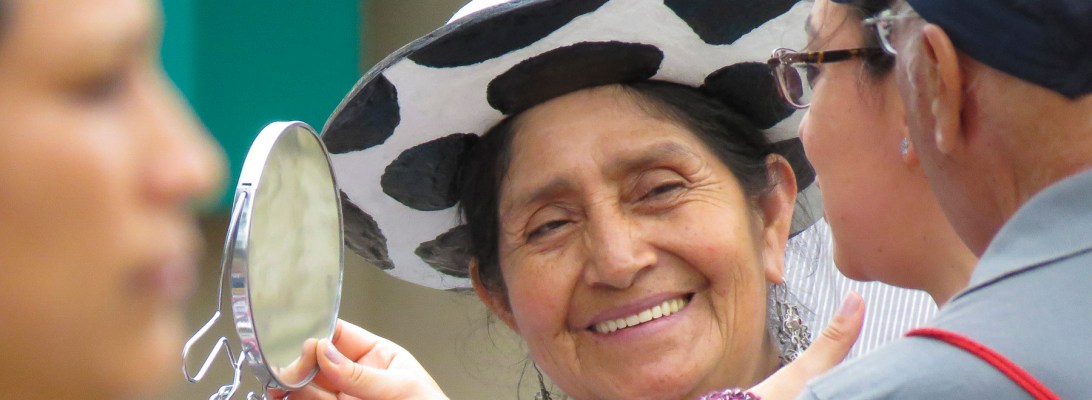
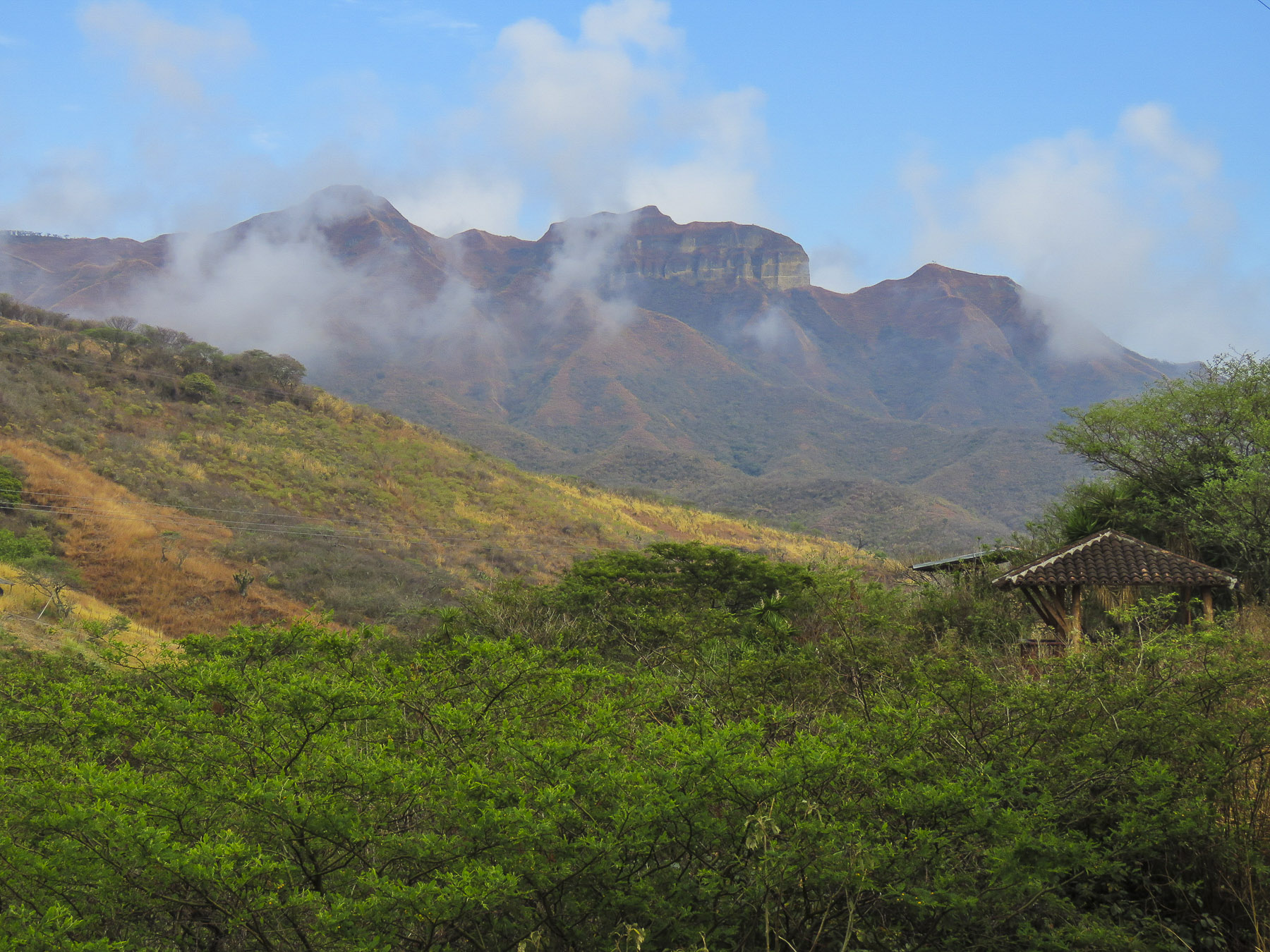 A vacation from vacation? Yes, its’s tiring work having fun every day! Where to?


 With a bed in the dorm room going for $9.50 and luxury private cabins starting at just $39.00, the resort has a reputation as the place to go to “relax, enjoy, forget time and stay awhile.” Free morning yoga classes, a wonderful restaurant with some German dishes, and super affordable spa treatments (90 minute, deep tissue massages for $24.00, we both indulged) definitely promoted well-being. Bird calls filled the air and the distinctive face of 6,000ft high


 The city does a wonderful job supporting its craftspeople who still use traditional, made by hand, methods to create exceptional pieces in jewelry, textile, ceramic, wrought-iron, tin and copper workshops located across the city. Toquilla straw weavers in the villages around Cuenca who carry unfinished sacks of Panama Hats into the city’s sombrero (hat) factories also need to be included into this group. There are also several traditional felt hat tallerias (workshops) that cater to the indigenous women who live in the rural areas around Cuenca. The fine arts scene is also well represented with galleries and artists’ studios often next to traditional crafts workshops. To get the broadest experience of this vibrant arts and crafts community a tour through Cuenca’s most interesting neighborhood, El Barranco (the cliffs), and along its busiest street Calle Larga, is a must. The colonial buildings that front Calle Larga back onto the cliff which overlooks Rio Tomebamba and the newer southern part of Cuenca. Wide stairs in several parts lead down to Paseo 3 de Noviembre, a shaded pedestrian walkway and bike path that follows the river for several miles.
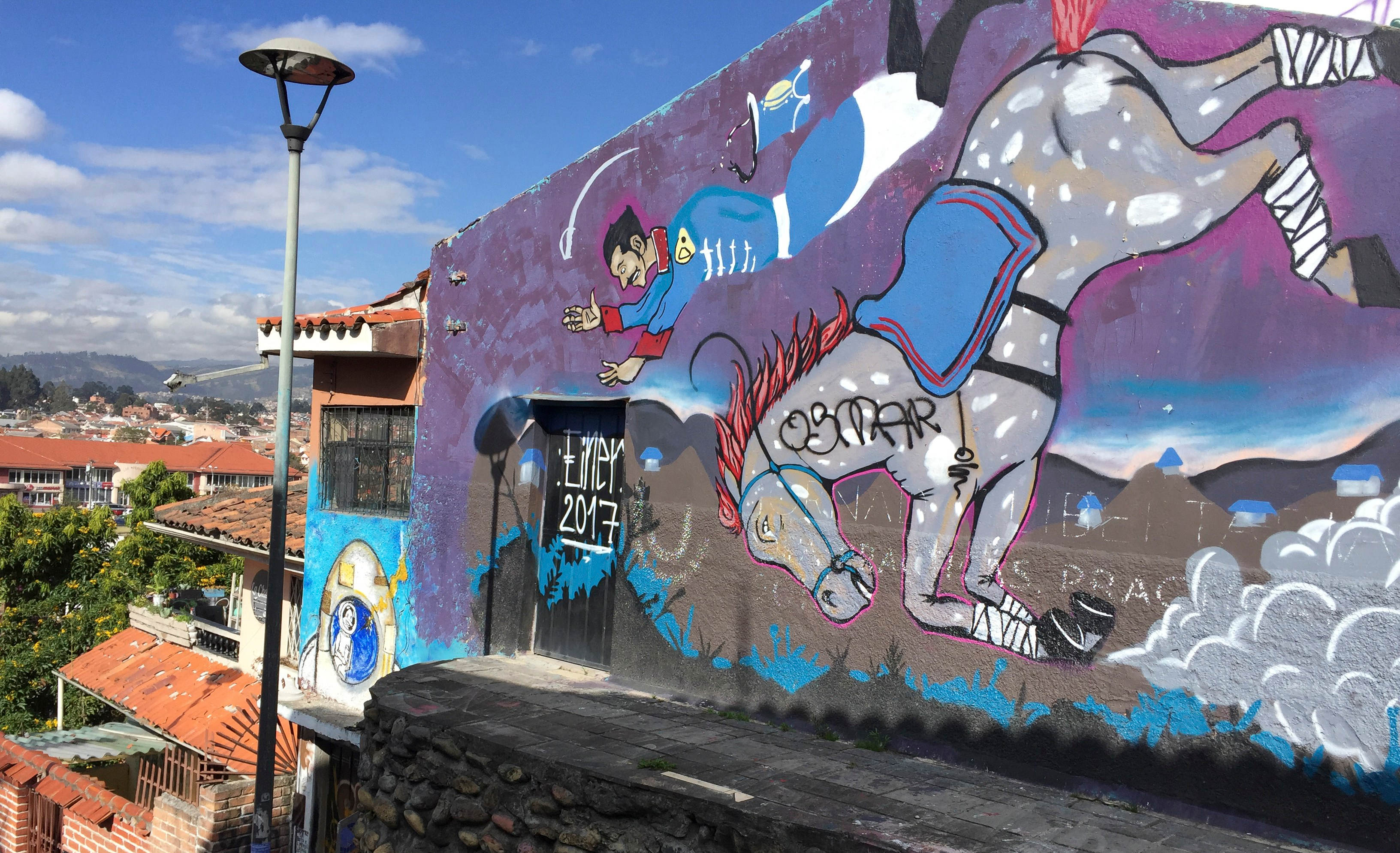 This route actually starts several blocks west of Calle Larga at Cuenca’s Museo de Arte Moderno (Museum of Modern Art) across from Parque de San Sebastian which has a large fountain and several nice places to eat. Casa Azul, which has rare sidewalk tables that face the quiet plaza, and Tienda Café are good choices. Most of the workshops won’t have business signs over their doors or street numbers, might open by ten, but will reliably close between one and three for lunch.


 2 Suitcases for 2 years