Panama: Snowbirds in Paradise – Sand, Sea, and Skyscrapers or A Relaxing Visit to the Azuero Peninsula

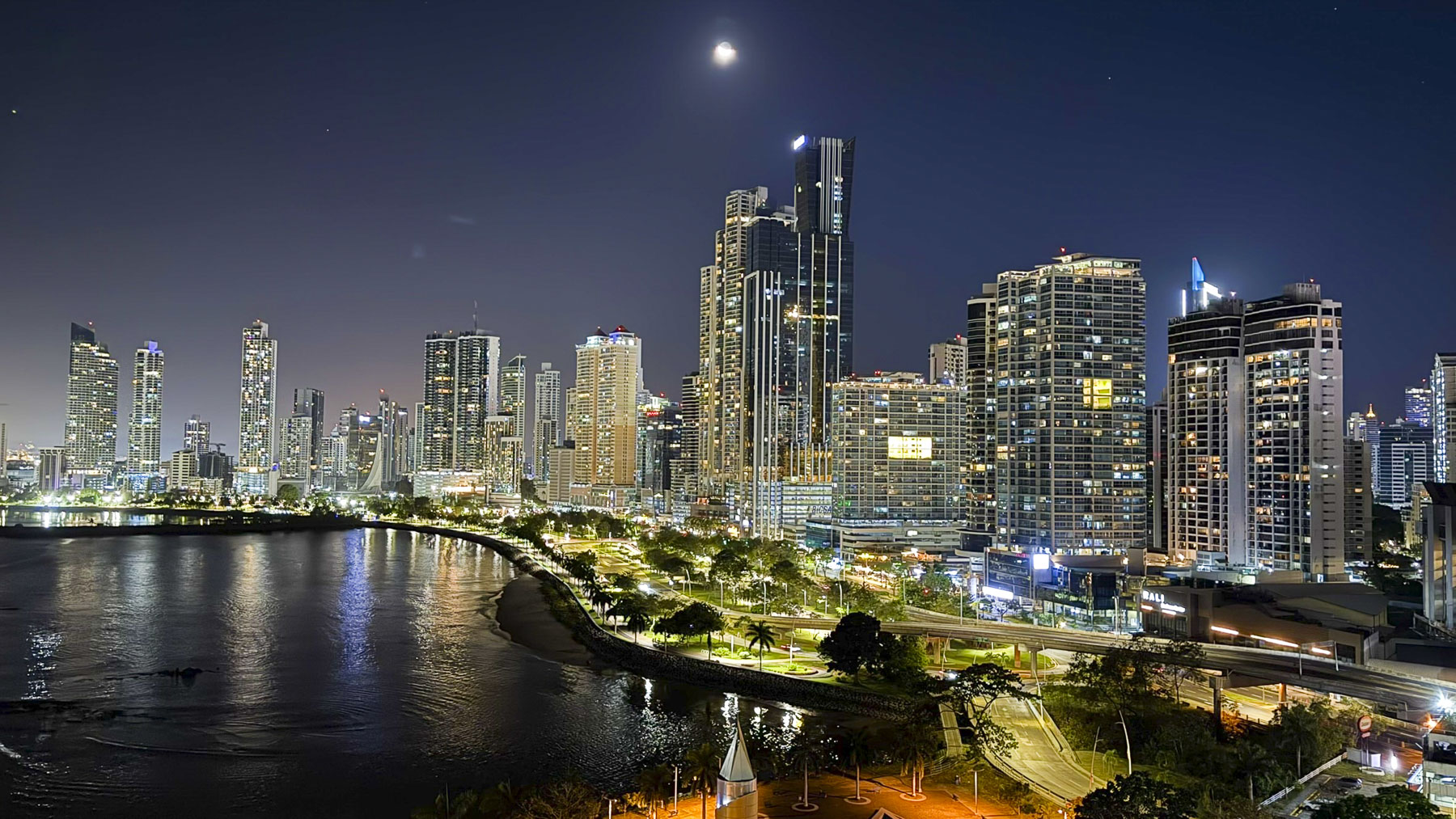
By the time we picked up our rental car at the Tocumen International Airport it was the height of the evening rush hour in Panama City. Fortunately, we were heading into the city, while the traffic lanes carrying the daily exodus of commuters home from the financial capital of Latin America were jammed. It was only a twenty-five minute drive to our hotel on the waterfront, but we missed our exit and had to re-route our way through the now deserted downtown streets to the Hotel Plaza Paitilla Inn, for a one night stay. We chose this 19-floor waterfront hotel after determining it was the best place to get those iconic photographs of the city’s modern skyline along the Pacific Ocean coast. And we were not dissappointed.

Golden light filled the room as we drew back the curtains along a wall of windows to reveal a spectacular cityscape that transitioned through the sunset, twilight, and darkness. It was a million-dollar view and we felt as if we were some place only accessible to billionaires or actors lucky enough to have a movie scene filmed on location here. Surprisingly, the Hotel Plaza Paitilla Inn was an excellent value and very budget friendly.
After discussing our travel plan with the concierge the night before, we departed after an early breakfast to avoid the expected traffic delays as folks took the Friday afternoon off in anticipation of the four days of Carnaval before Ash Wednesday. The nationwide el Carnaval de Panama, which literally happens in every town, is the biggest celebration of the year in the country. It starts in each town with the coronation of a queen and ends with the Burial of the Sardine, which symbolizes the past festivals and enjoyment of drink and food, in the predawn hours of Ash Wednesday, and the beginning of Lent. Little did we know that Panama’s Carnaval is regarded as “one of the largest— and rowdiest — events in Latin America.” Nightly events feature themed parades with elaborately decorated floats escorted by trumpet and drum bands, called tunas. To the benefit of all, water trucks called Culecos spray the revelers in the ninety-degree heat to keep them cool. And between the water trucks, mojaderas, wetters, keep everyone partying around them soaked with water pistols, water balloons, and buckets of water. It’s not a particularly camera-friendly event.

Our destination for the next 5 nights was Posada Los Destiladeros on Playa Los Destiladeros, in Los Santos Province, a 5 hour, 335km (208mi) drive. Leaving the city, we crossed the Bridge of the Americas which soars 64m (210ft) above the Panama Canal, and stopped on the far side at the Mirador de las Américas for our first look at the canal. Two monuments commemorate the arrival of 750 immigrants from China 170 years ago to work on projects relating to the construction of the canal, which created an enduring friendship between Panama and China. The view of the canal wasn’t as impressive as its fact sheet: over 12,000 ships carrying $270 billion worth of cargo pass through the locks of the canal annually. Over 70% of the ships are headed to or are returning from ports in the United States.

Continuing on Rt1 we passed the first of many pillars being constructed to support Panama City’s new Metro 3 line, a double-track monorail project sponsored by the Chinese, that will connect the growing towns of Ciudad Del Futuro and La Chorrea to the city’s Metro 1 and Metro 2 lines, Central America’s first and only subway system that became operational in 2014. Rt1 is alternately called the Pan-American Highway, that famously stretches from Prudhoe Bay, Alaska in the United States, 19,000 miles way to Ushuaia, Tierra del Fuego in Argentina. Though a 100-mile section is missing in the difficult terrain of treacherous Darien Gap region between Yaviza, Panama and Chigorodó, Colombia.

Shopping centers and strip malls with McDonald’s golden arches, Starbucks, and Burger Kings lined both sides of the highway before giving way to open crop- and pastureland. The occasional hilltop offered views of the Gulf of Panama and the Pacific Ocean to the south. While to the north the rural highlands of the Cordillera Central, the jagged mountainous spine of the country, graced the horizon. Veering off the Pan-American Highway we headed west on Rt2 to Las Tablas. The town has been ground zero for Carnaval in Panama since the mid-1800s when two fiercely rival groups representing Calle Arriba and Calle Abajo started to compete in a festive, one upmanship every year before the 40 days of Lent began. The event in Las Tablas is very popular with folks from Panama City seeking to experience a more traditional Carnaval with folkloric music and regional dress, in what many consider Panama’s “heartland.”

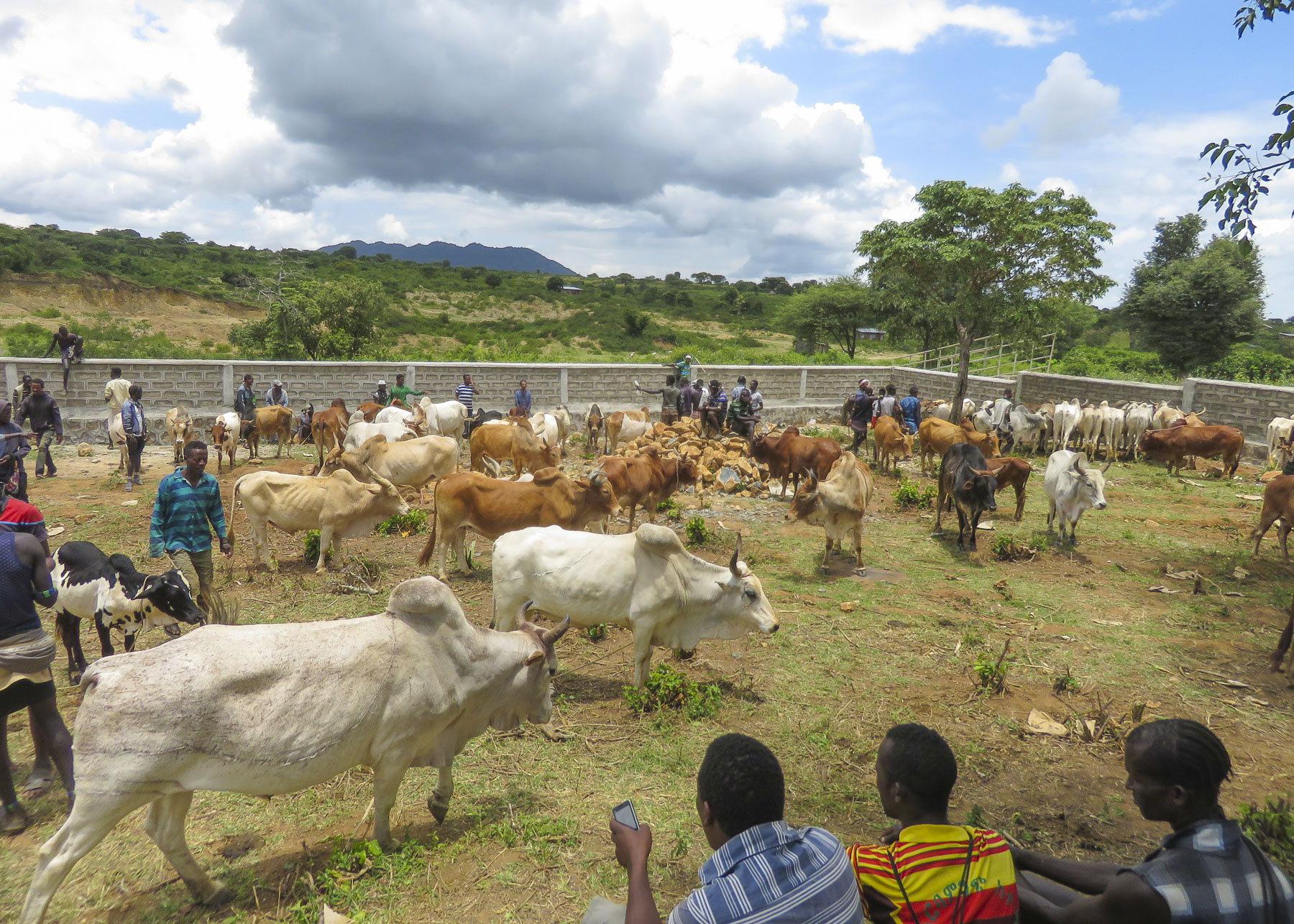
Traffic had been slowly building all morning, and by early afternoon the streets of our intended route were blocked with floats being prepared for the weekend’s first parade that night. Folks were already creatively parking along the side of the roads and walking to the town’s central plaza, Belisario Porras. The congestion in the town unfortunately nixed our plans for lunch there, and we continued on for several miles along Rt2 through a scenic landscape of lightly treed hillocks. Cattle grazed in the shade under the trees.

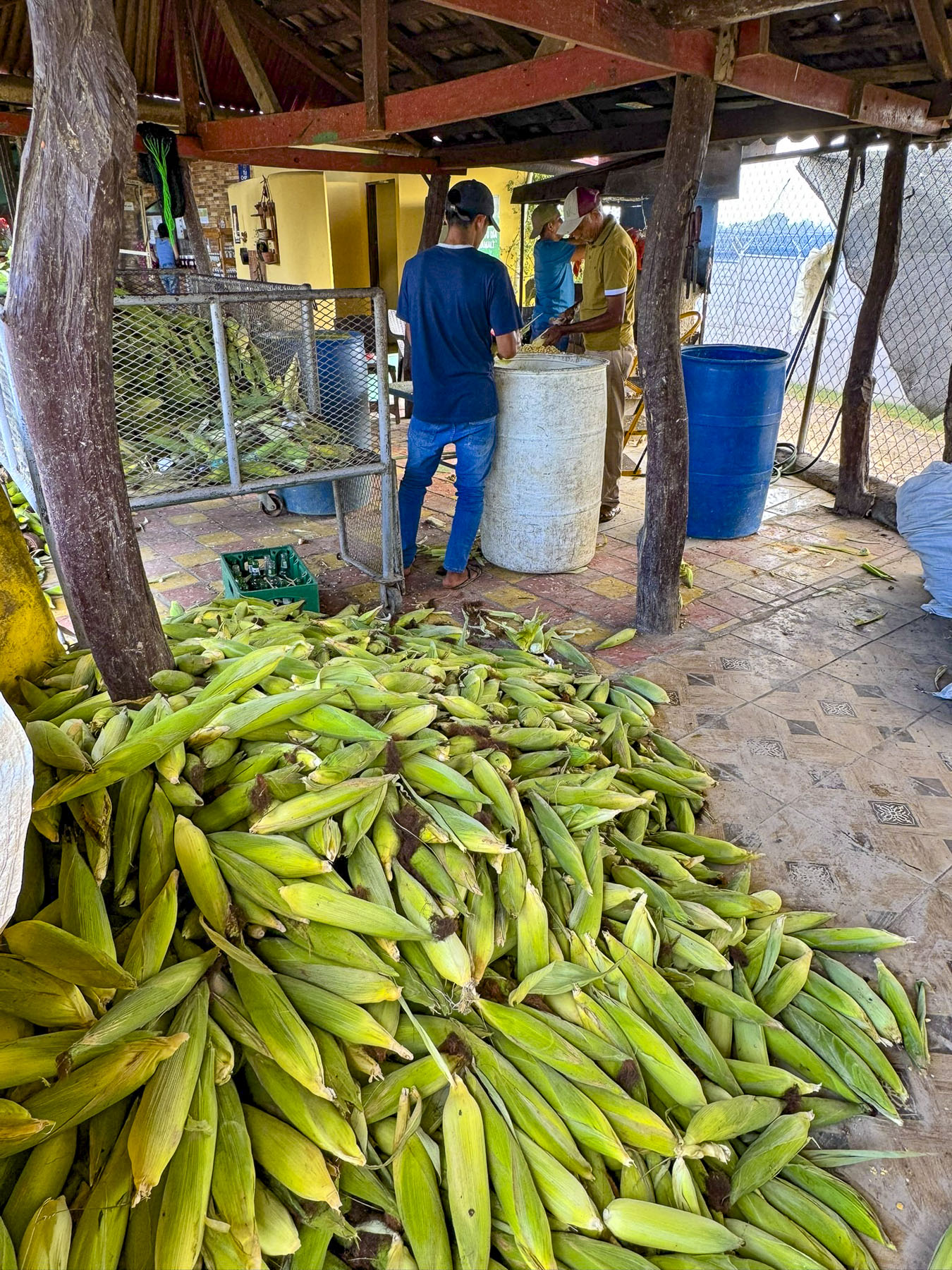
Cars were parked on both sides of the road in front of El Cruce #2. It was a small fonda – a Panamanian roadside food stand, with smoke billowing up from its barbeque pit. It piqued our interests, and we stopped.  The outside grill area was open sided, under a corrugated tin roof. In its shade a man prepped and attended the meats that were smoking above a fire while another was using a machete to shave kernels from ears of corn. The unhusked pile next to him seemed monumental, akin to the Greek myth of Sisyphus and his never-ending task. It was the beginning step in the preparation of masa, a corn flour. It’s a must-have ingredient for traditional, homemade corn tortillas and tamales. The menu hung above a small window to the kitchen filled with women attending various stoves. Everyone was very nice and curious about where we were from, but seemed surprised that we had stopped. A large John Deere combine harvester with a police escort passed as we ate. A small caravan of pickup trucks with farm workers standing in the back followed it slowly down the road. The fonda was a very authentic, nothing touristy about it experience, and the food was good.  The line of traffic behind the harvester slowly disappeared as cars passed it when the opportunity arose.  It wasn’t until the last seconds as we raced past the tractor that we realized we also had to pass the police car! We returned the officer’s wave. It seemed like it was an everyday occurrence in the rural countryside. In Pedasi, the closest town to our hotel, preparations for the Carnaval were also visible down the side streets.
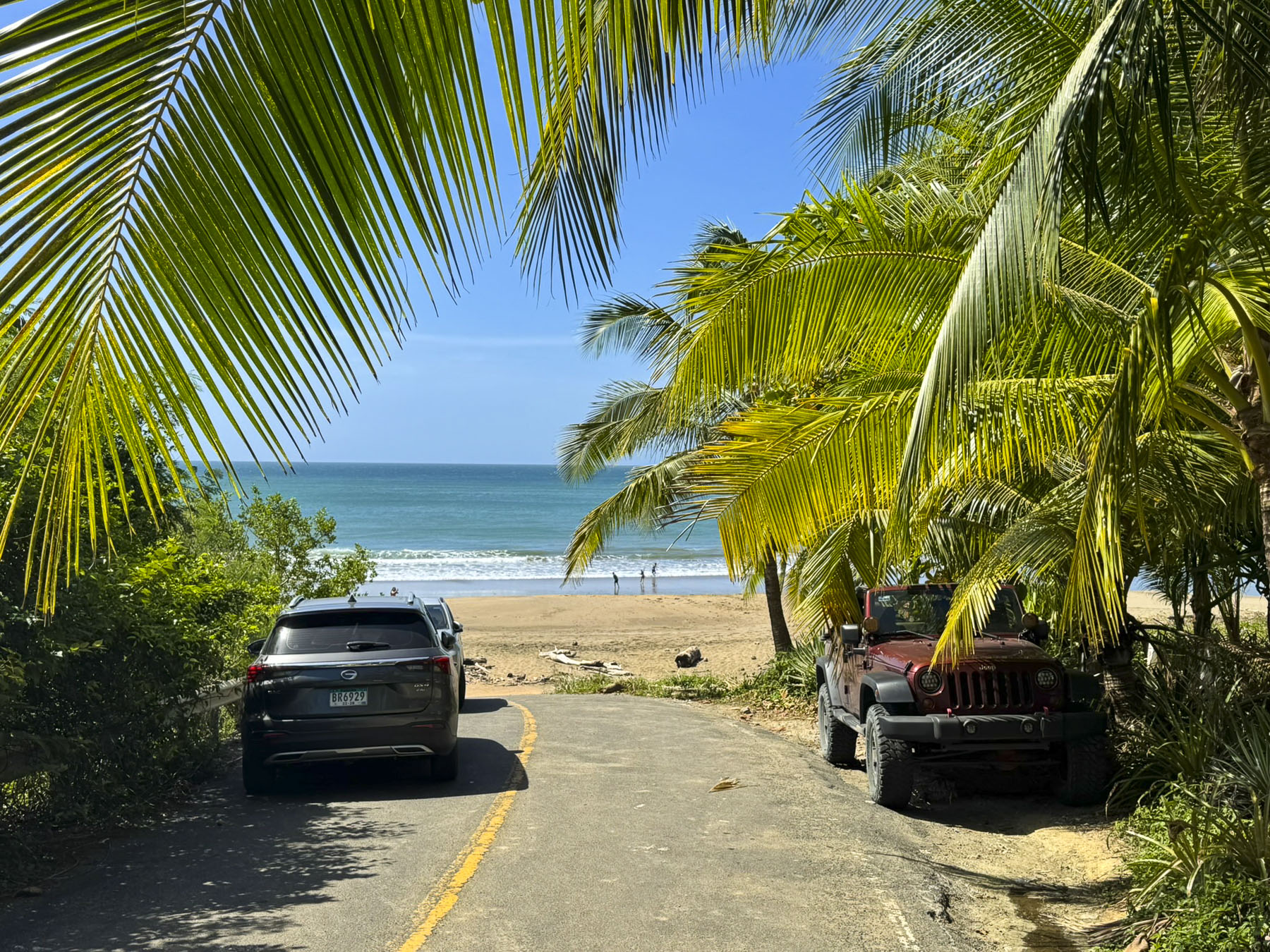
We missed the entrance to the hotel and continued down the road in hope of finding an easy spot to turn around, only to find that the road suddenly ended, with a log across it, at the top of Playa Destiladeros, a short distance away from the thundering waves of the Pacific Ocean, as if an early extension had been washed away in a storm. We were at one of the farthest points south on the remote Azuero Peninsula.
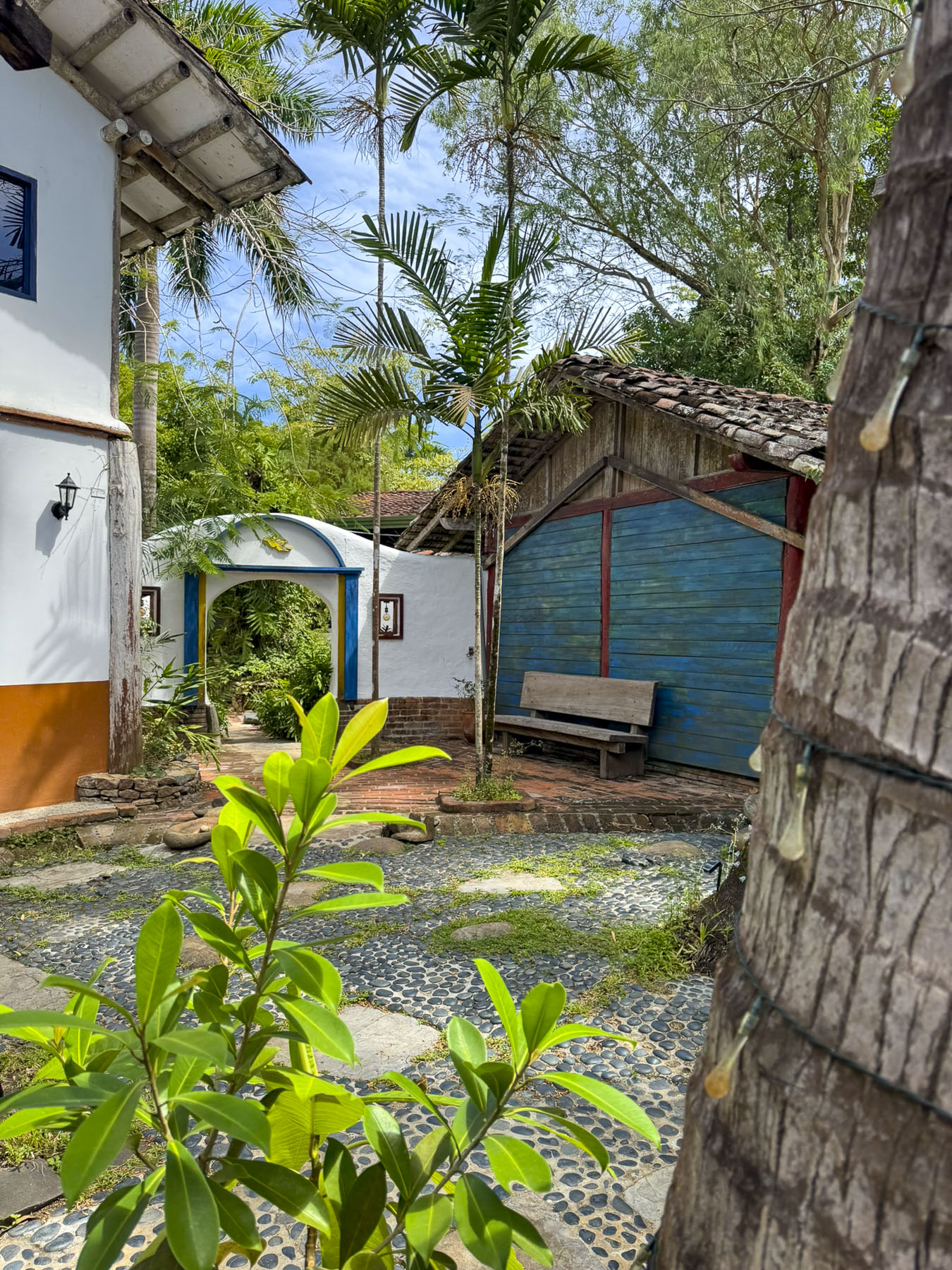
When we made plans for this return layover from our trip earlier in the month to Uruguay and Argentina, we didn’t realize our week coincided with Carnaval, consequently many of the hotels we were interested in were fully booked. After scouring the map for areas we wanted to stay we found Posada Los Destiladeros. While it showed as fully booked on Booking.com and Hotels.com, we were able to book a room directly through the hotel’s reservation page.

From the gated entrance we followed a long twin-tracked road, through a large palm tree covered property with many outbuildings, to the parking area. Through a grove of palm trees, the inviting blue water of the Pacific glistened behind the receptionist.
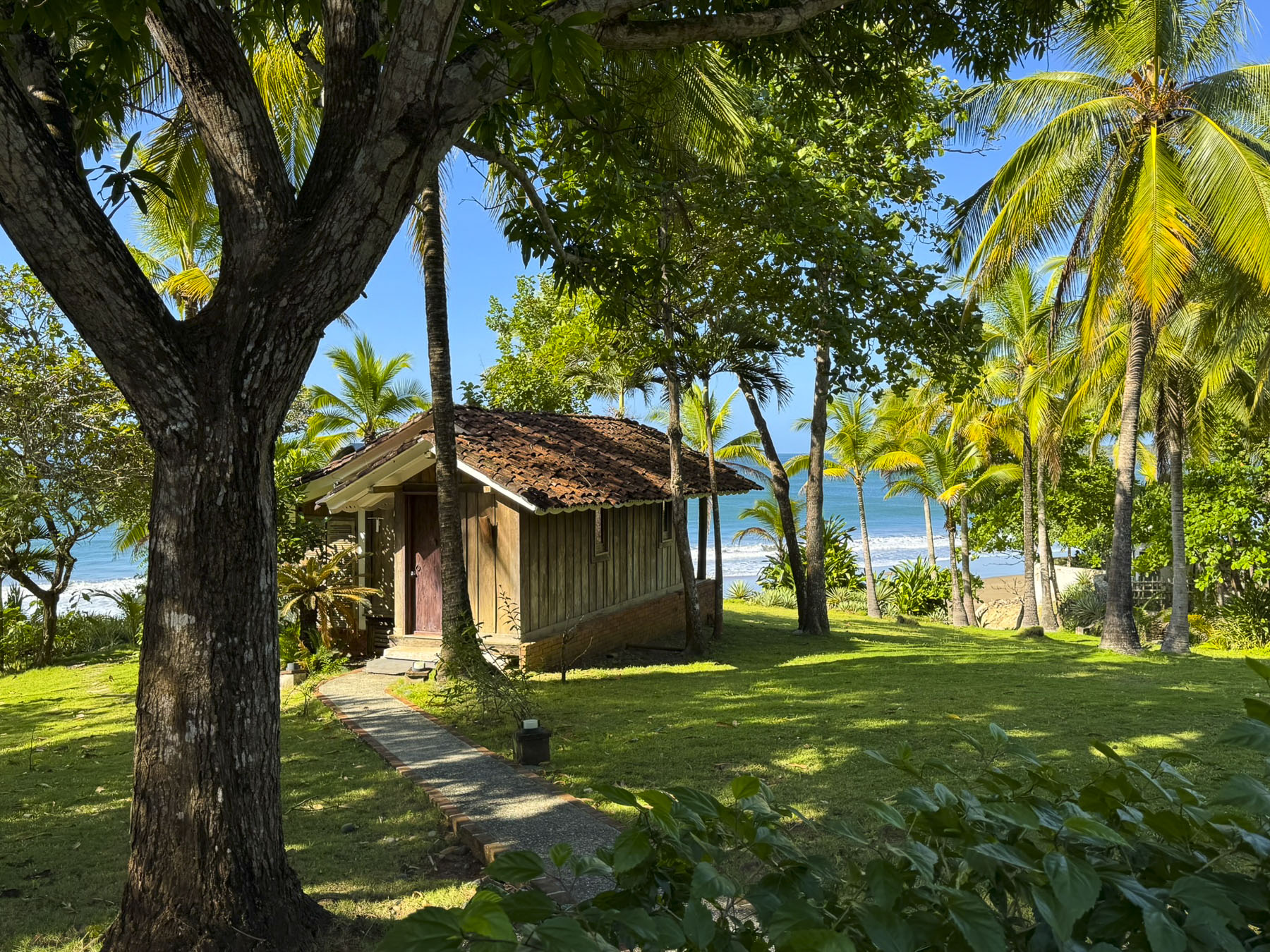
The vibe was really nice. It’s an unpretentious, tenderly time-worn resort in a verdant oasis of greenery on the low cliffs overlooking a wild beach and undeveloped coastline. The staff were very nice and friendly, and after a few days felt like family. The dinners that emerged from their kitchen were extraordinary!

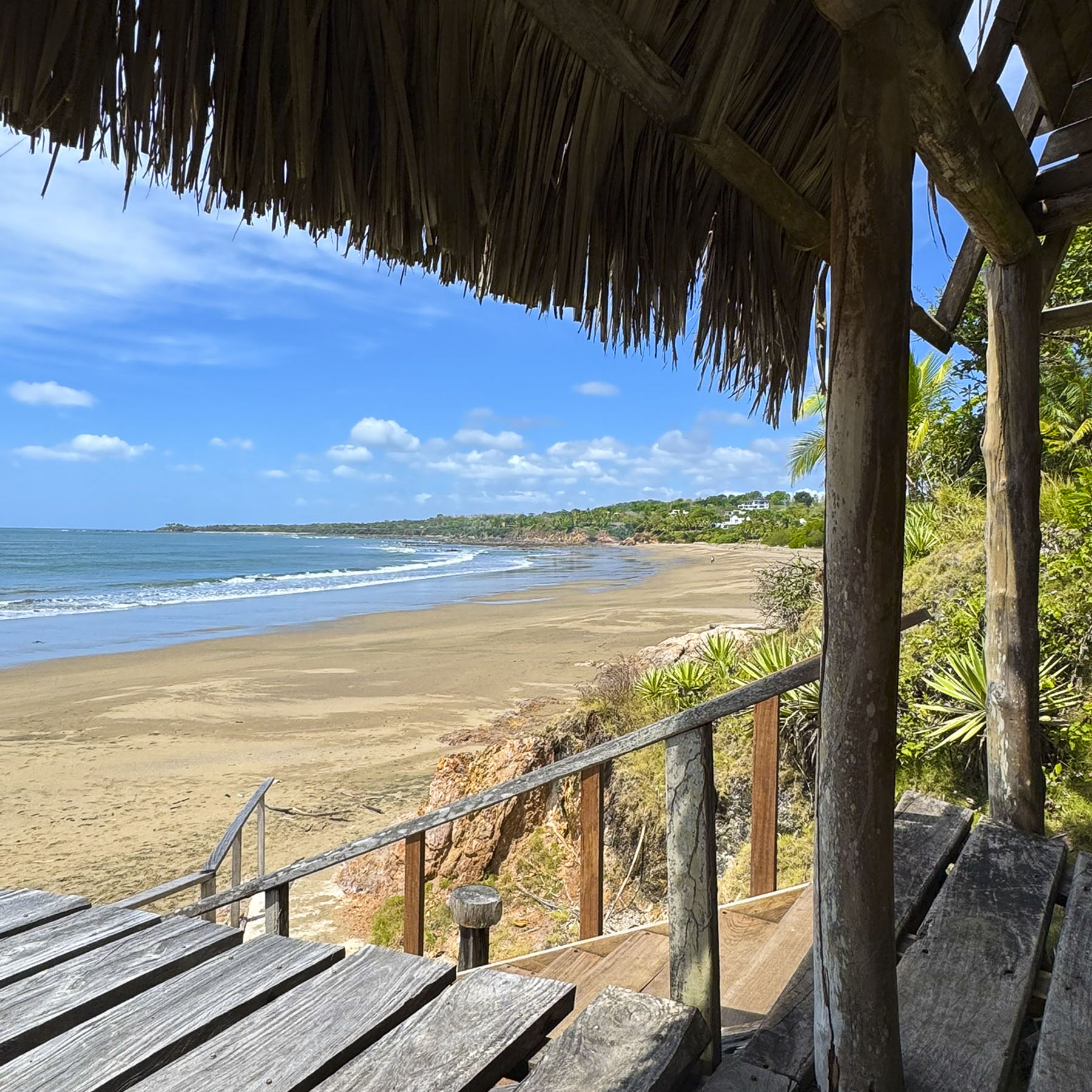
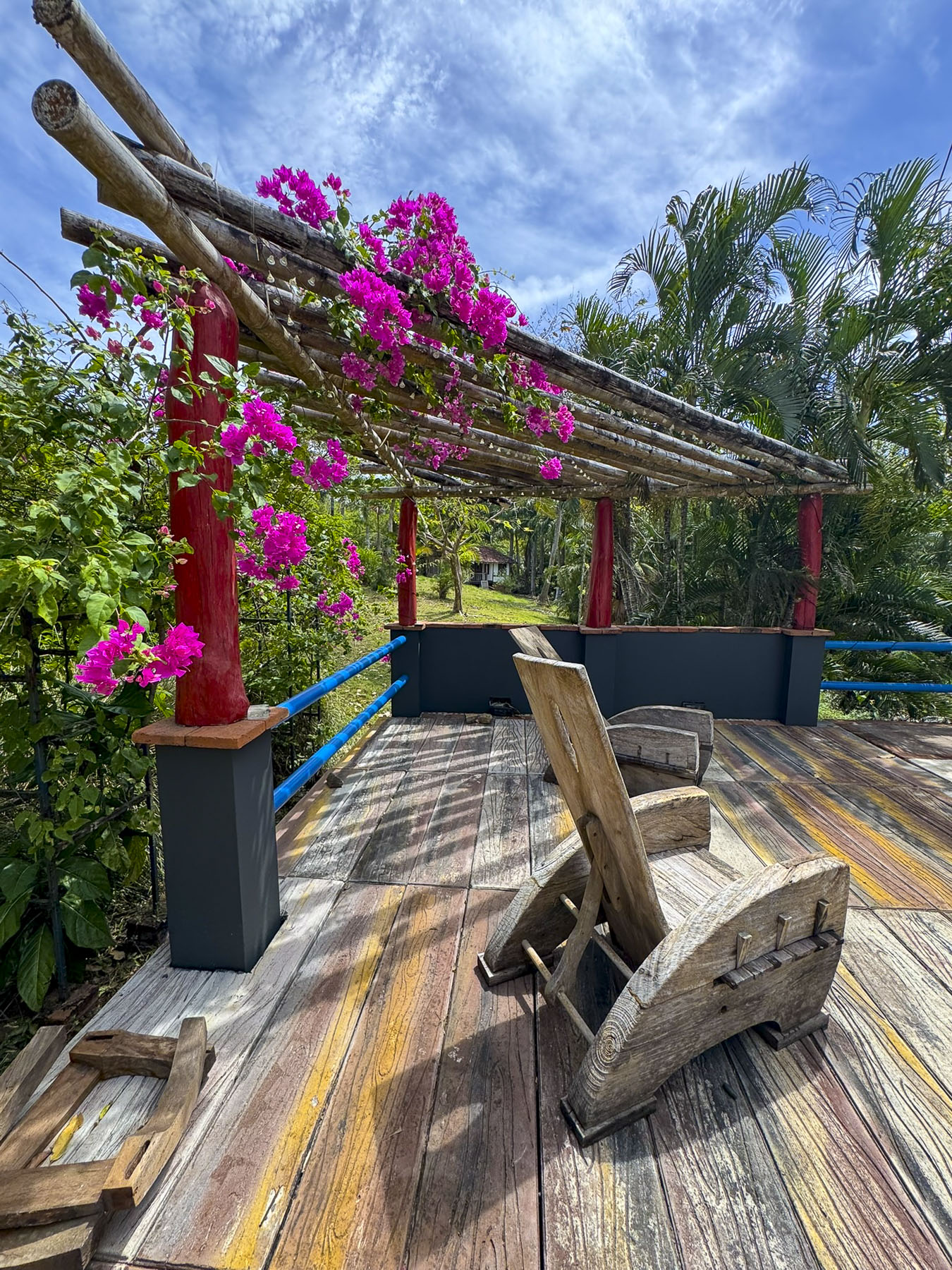
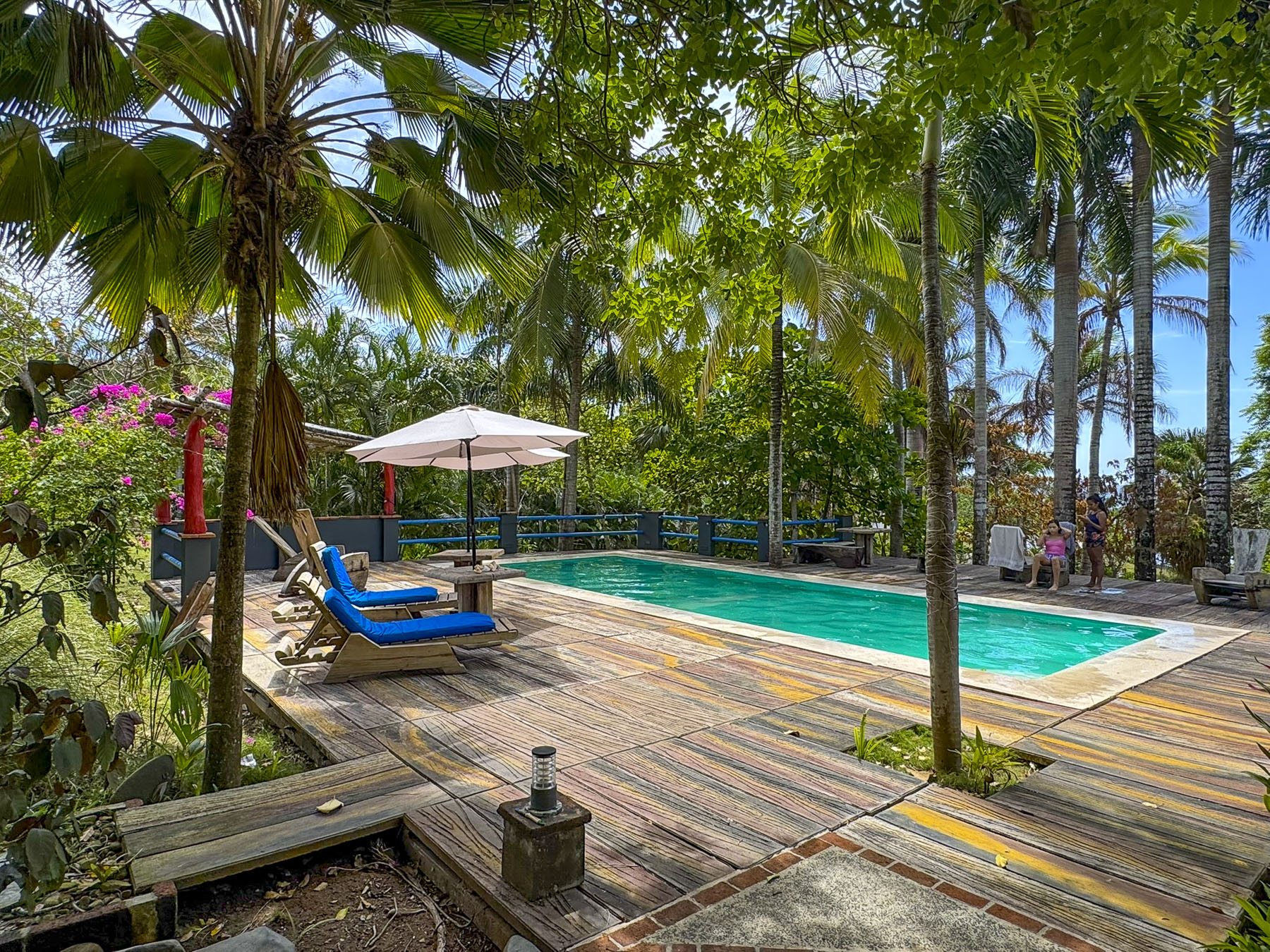
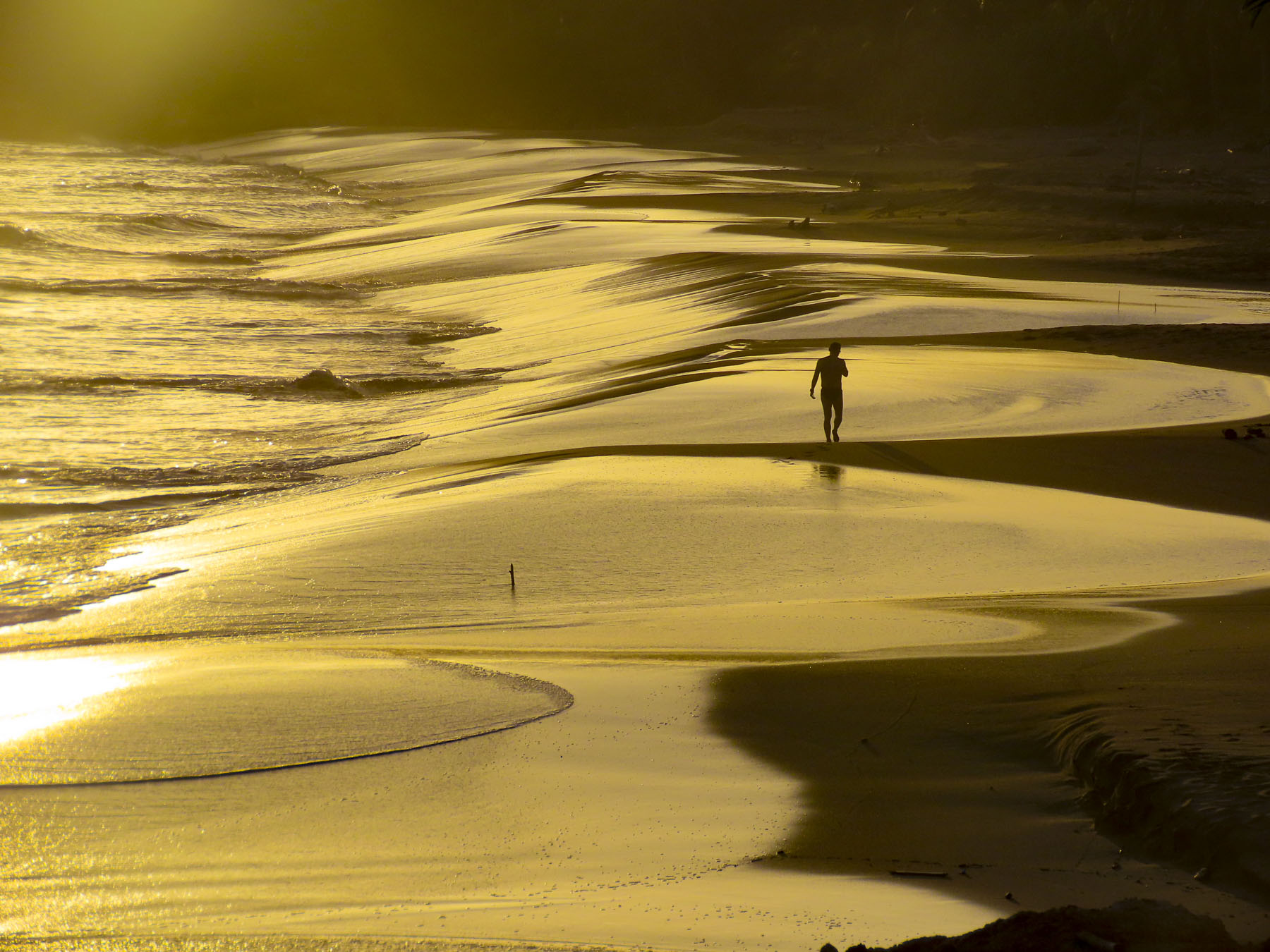
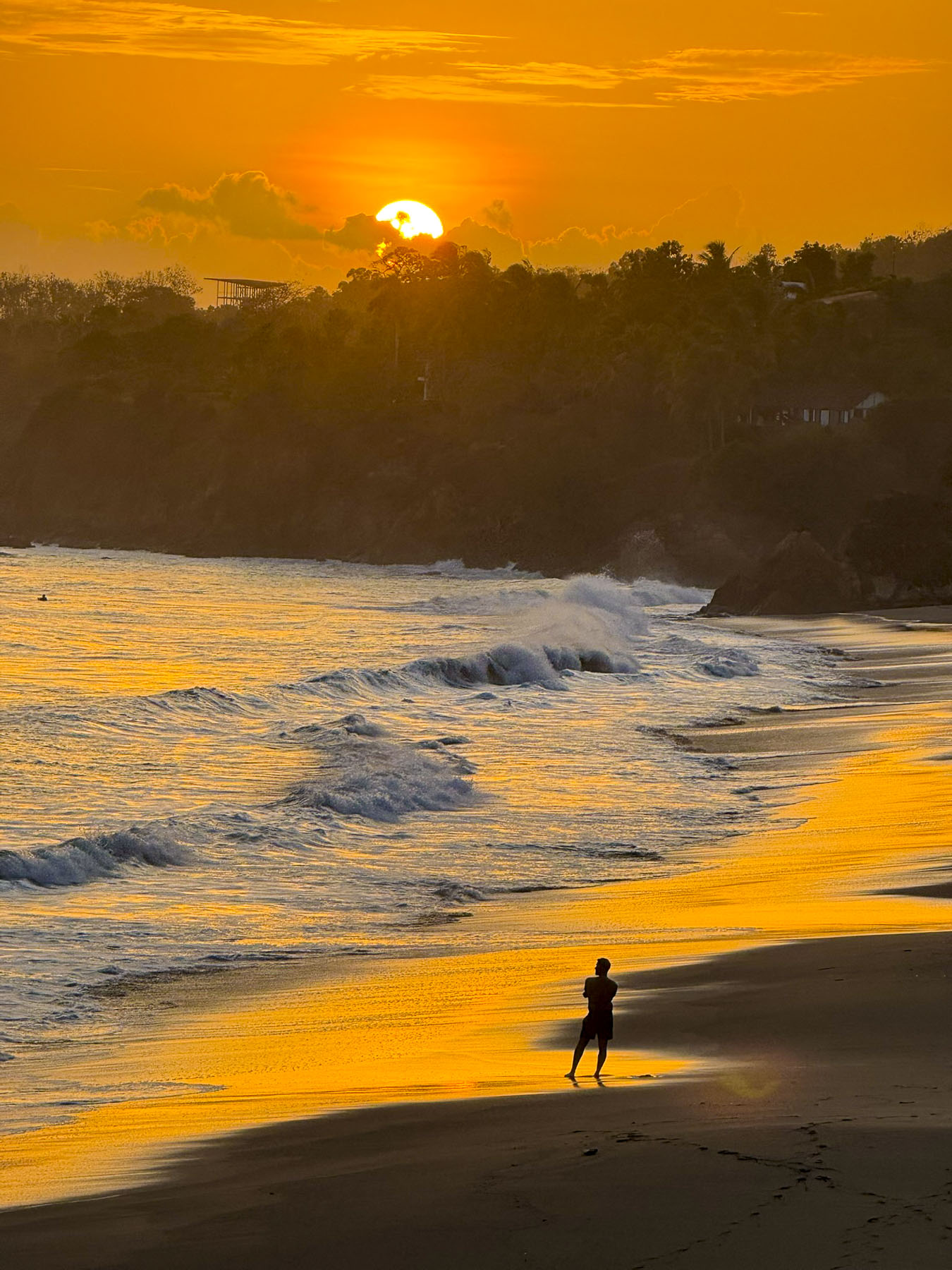
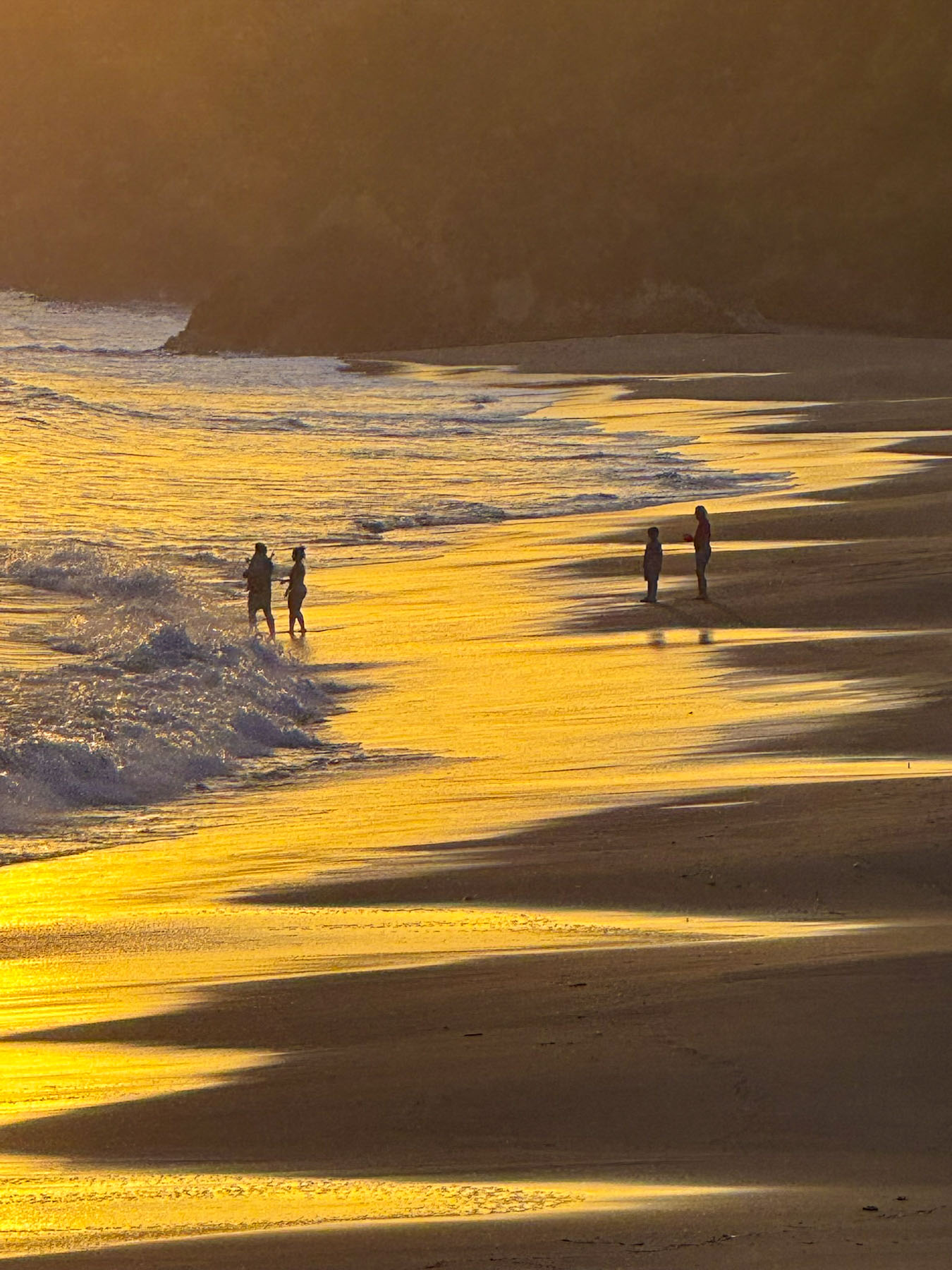
It’s very unusual that we stay in one spot for 5 nights to unwind. But the Posada Los Destiladeros was the perfect place for us to relax, with easy walks on the beach, lounging around the pool and under palm thatched gazebos overlooking the surf as we waited for sunset every day, which offered a dramatic play of light across sand and surf.
A conversation in the pool one afternoon with another guest, a Panamanian American man visiting family over the week of Carnaval, related that he and his wife had been coming here for years, but “somehow it remains a hidden gem.” Of course, we took several half day trips to explore what else the Azuero Peninsula had hidden away.
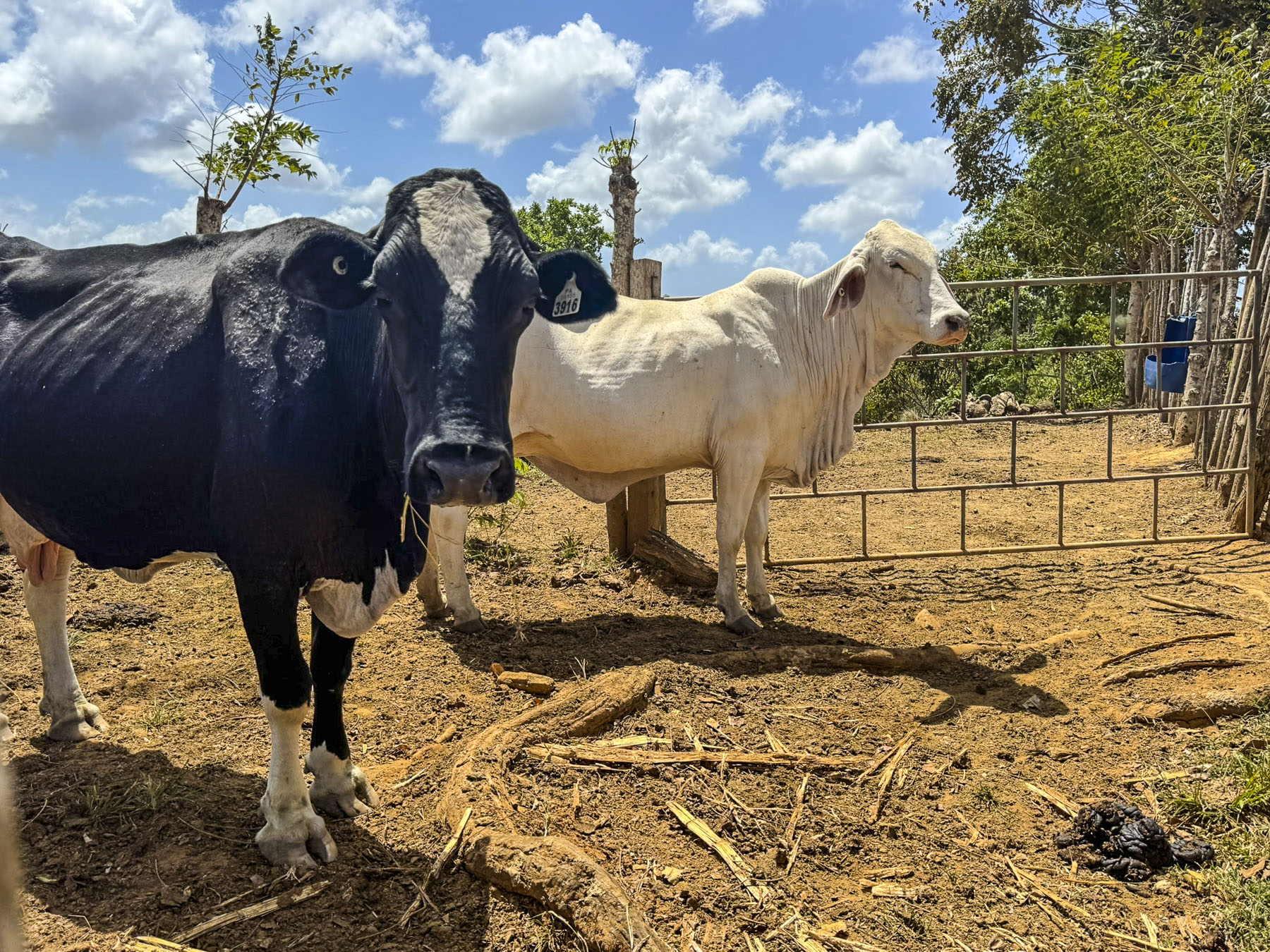
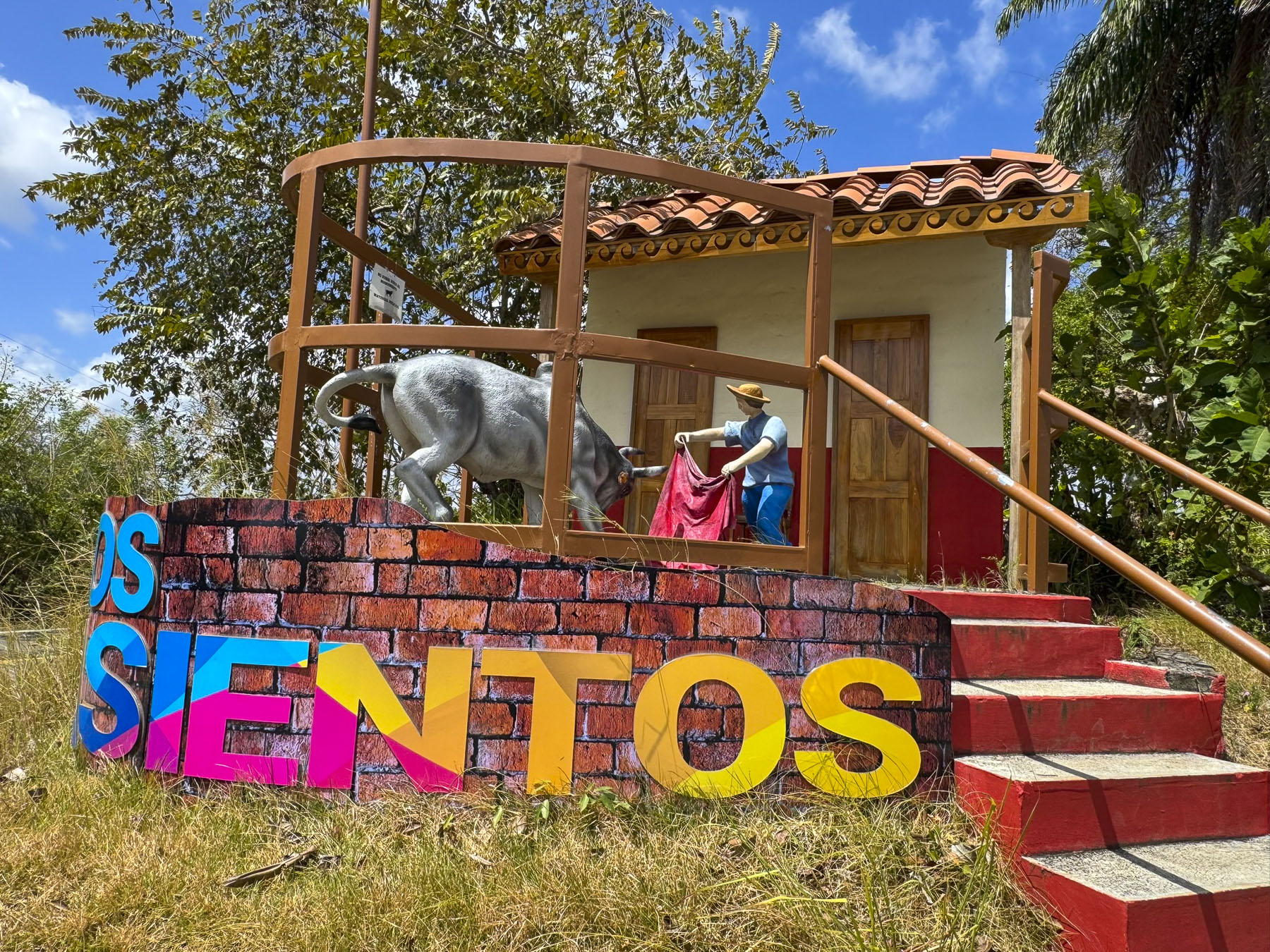
Several days later we drove toward the beach town of Las Escobas del Venado. Well suited to the heat and humidity of the region, herds of Brahma cows have rested in the shade of the region since Spanish colonists first brought them to the area in the mid-1500s. At a turnoff for the small ranching town of Los Asientos, a roadside monument highlights the town’s traditional la corridas, bullfights. These are non-lethal events since a 2012 law prohibited the injury or death of the bull; however, la corridas are still popular in rural Panama. Along the road milk cans were placed next to the rancher’s gate, waiting for the local dairy cooperative to pick them.
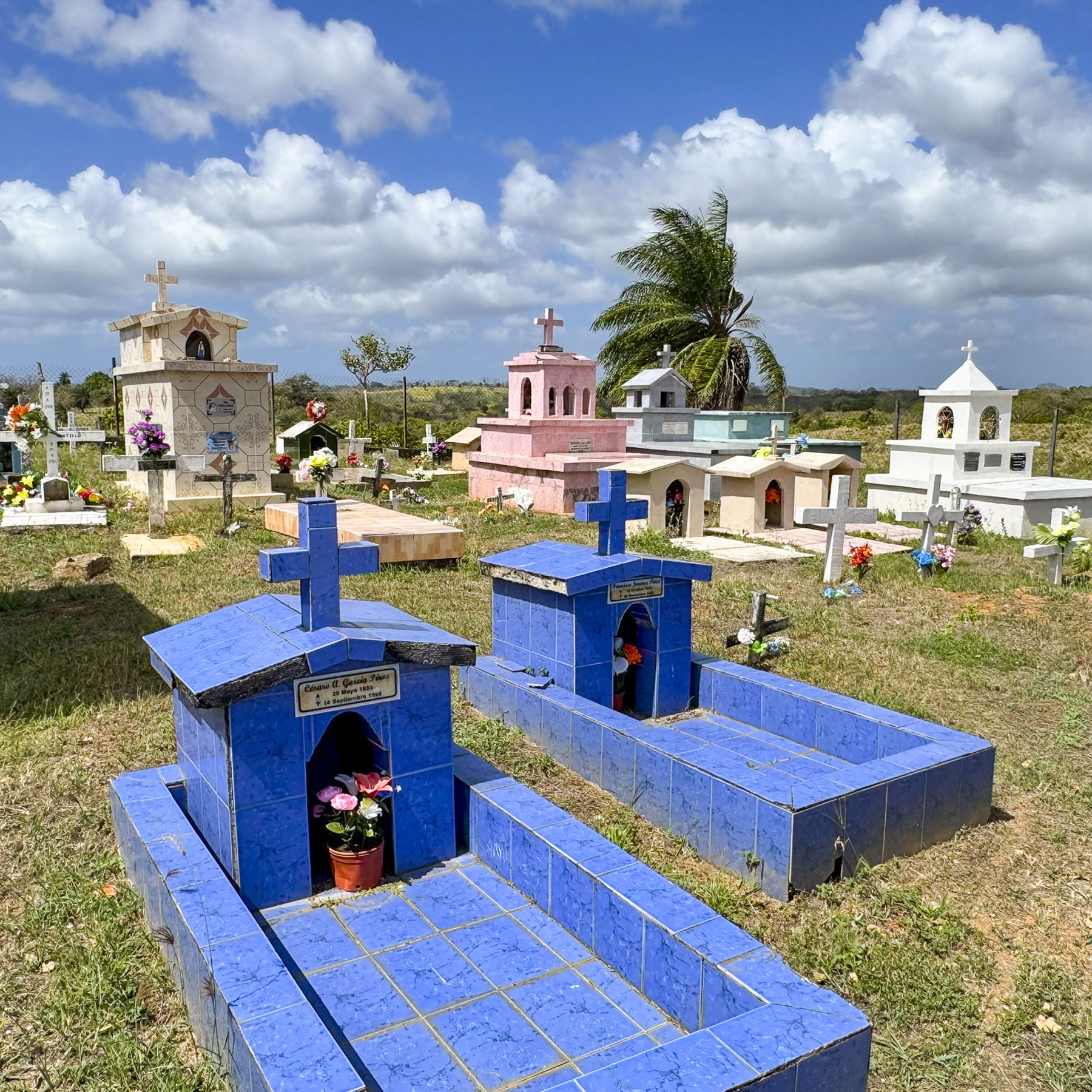
A little way farther along, the colors of the tombs in a small cemetery seemed to vibrate against the verdant landscape, which receives between 45 and 90 inches of rain every year. A large group of cyclists, followed slowly by a support vehicle, made passing difficult along the narrow hilly road, with many blind curves. Though the congestión they created was well tolerated, without the honking of horns. Drivers respected their safety and gave them a wide berth when they were eventually able to pass. Small artesanal lumber mills along the way vertically stacked their milled lumber, like skis, against a wall to dry.
During the dryer summer months the Rio Oria lazily flows through the ranchlands to the ocean.

Las Escobas del Venado was the closest example of a traditional beach town, with several small hotels build along the shore of the half-moon shaped Playa Venao. It is not by any means a large resort town. The beach is very wide and shallow, especially when the tide is out, and it’s a popular spot to horseback ride or drive an ATV along the sand. Across the water a sailboat was safely anchored out of the wind and rolling waves behind the bluff at the southern end of the bay. The day was very hot, so we didn’t spend much time on the beach, and hugged the shade as we walked to the Almendro Café for our traditional “walk a little then café.”

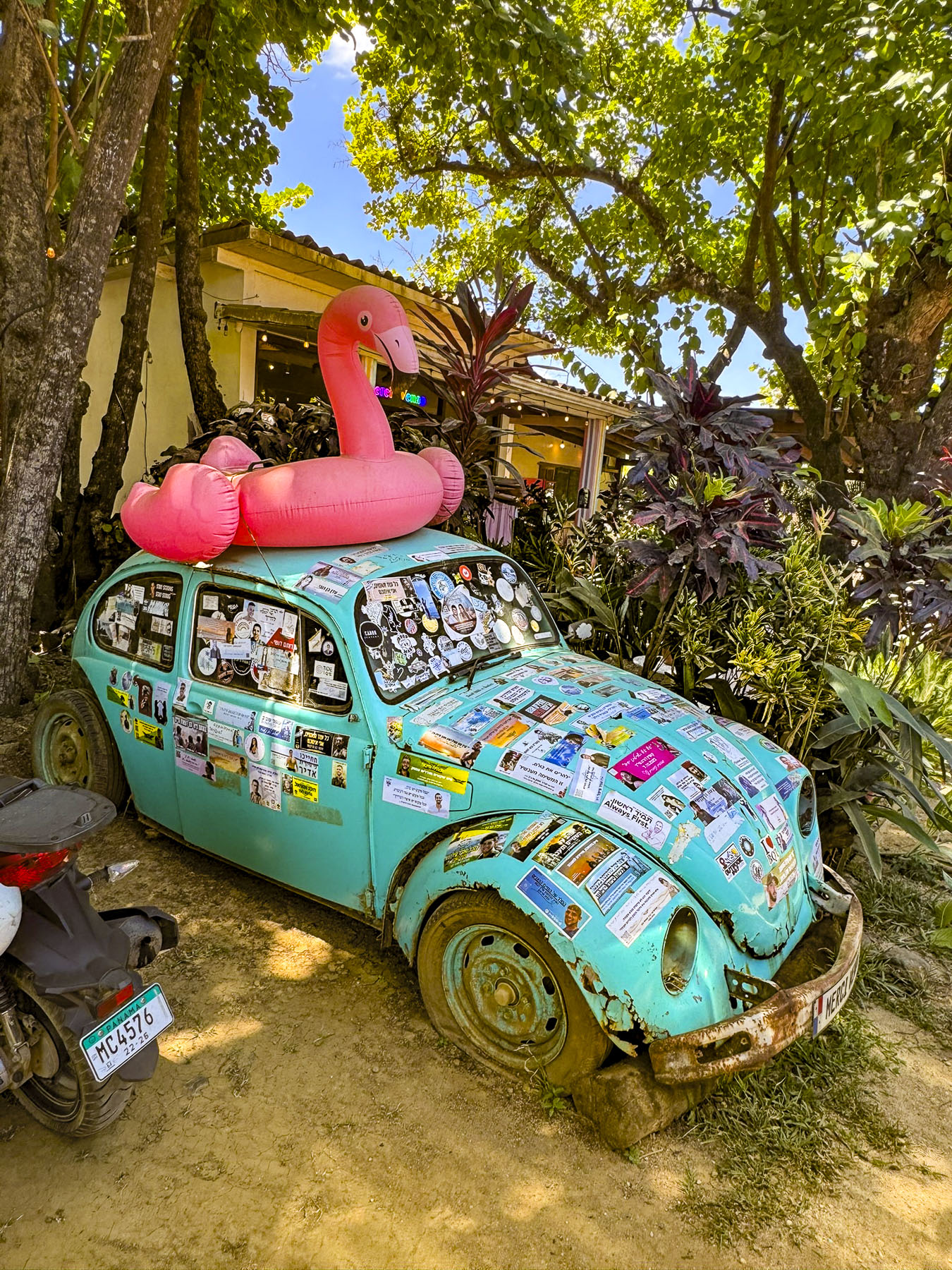
It was a really nice spot, under large shade trees. Our coffees and pastries were excellent, and its menu looked very good with vegetarian, vegan, and gluten-free choices. It was to our surprise part of the Selina River Hostel which promotes itself as a destination for digital nomads to enjoy the sun, surf, and sand of Playa Venao. We definitely skewed their demographics for the morning.

We continued driving into the highlands along Via Hacia El Carate, a narrow serpentine road that rose through a mesmerizing landscape of hills and valleys. Unfortunately, there were not any places to stop along the way until we reached the Mirador La Vigía, which offered great views of forested ranchlands, backed by the Pacific Ocean on the horizon.

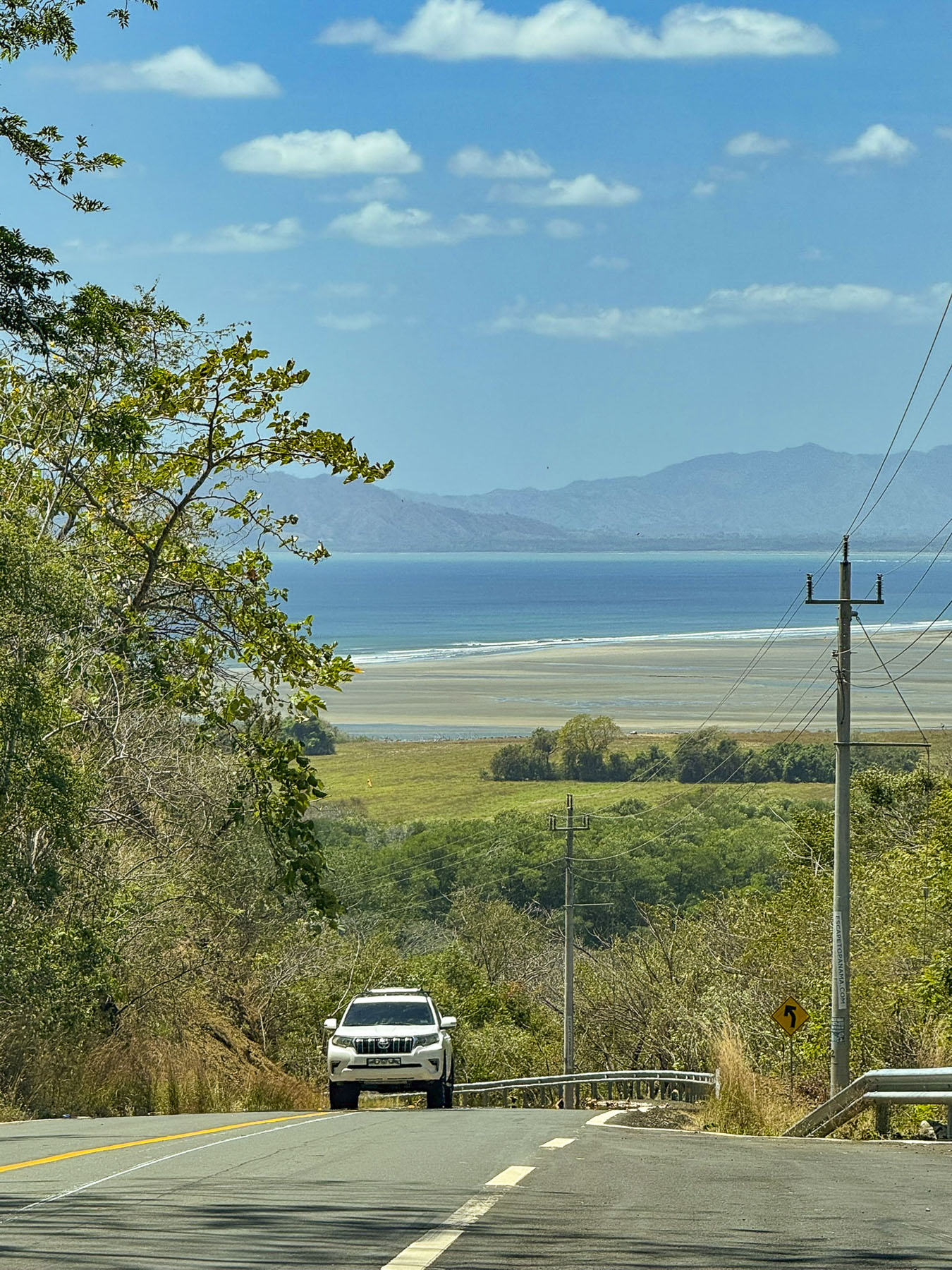
Familiar with the road now, we occasionally stopped along gated pastures to photograph the expansive landscape, that showed little sign of human intrusion, as we followed the same road back downhill.

They were few opportunities for lunch along the way so we decided to head back to the Almendro Café at the Selina River Hostel . We were not disappointed; the food was excellent and healthy. It’s so nice to order from a menu that doesn’t automatically serve French fries with every order.

Nearing our hotel, a rancher blocked the road with his herd of cows as he moved them to a different pasture.

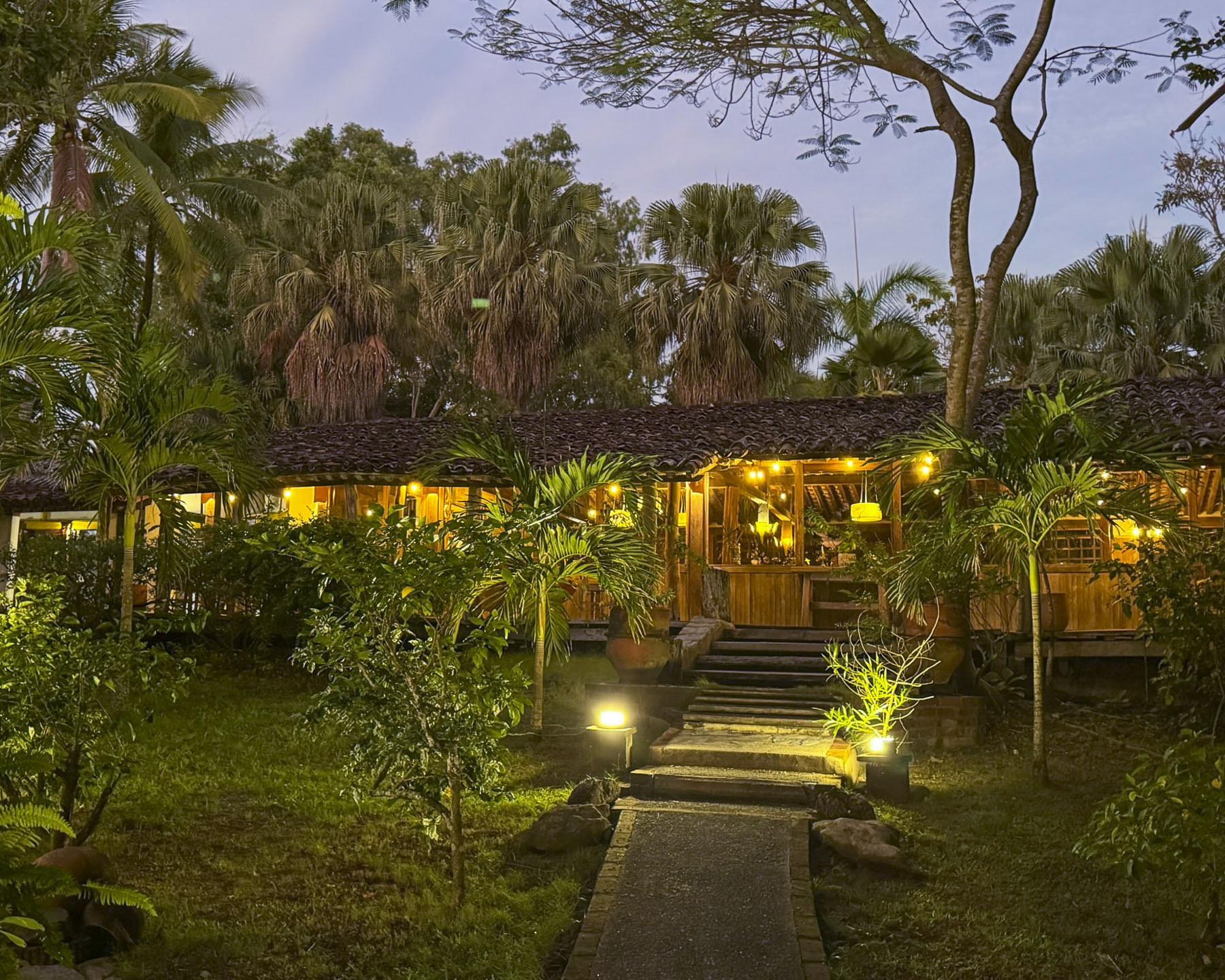
We were back in time to watch the sunset over Playa Destiladeros. We stayed until the last color in the sky had faded away before walking back to the resort’s restaurant, where we usually dined inside to take advantage of the air conditioning and ceiling fans.

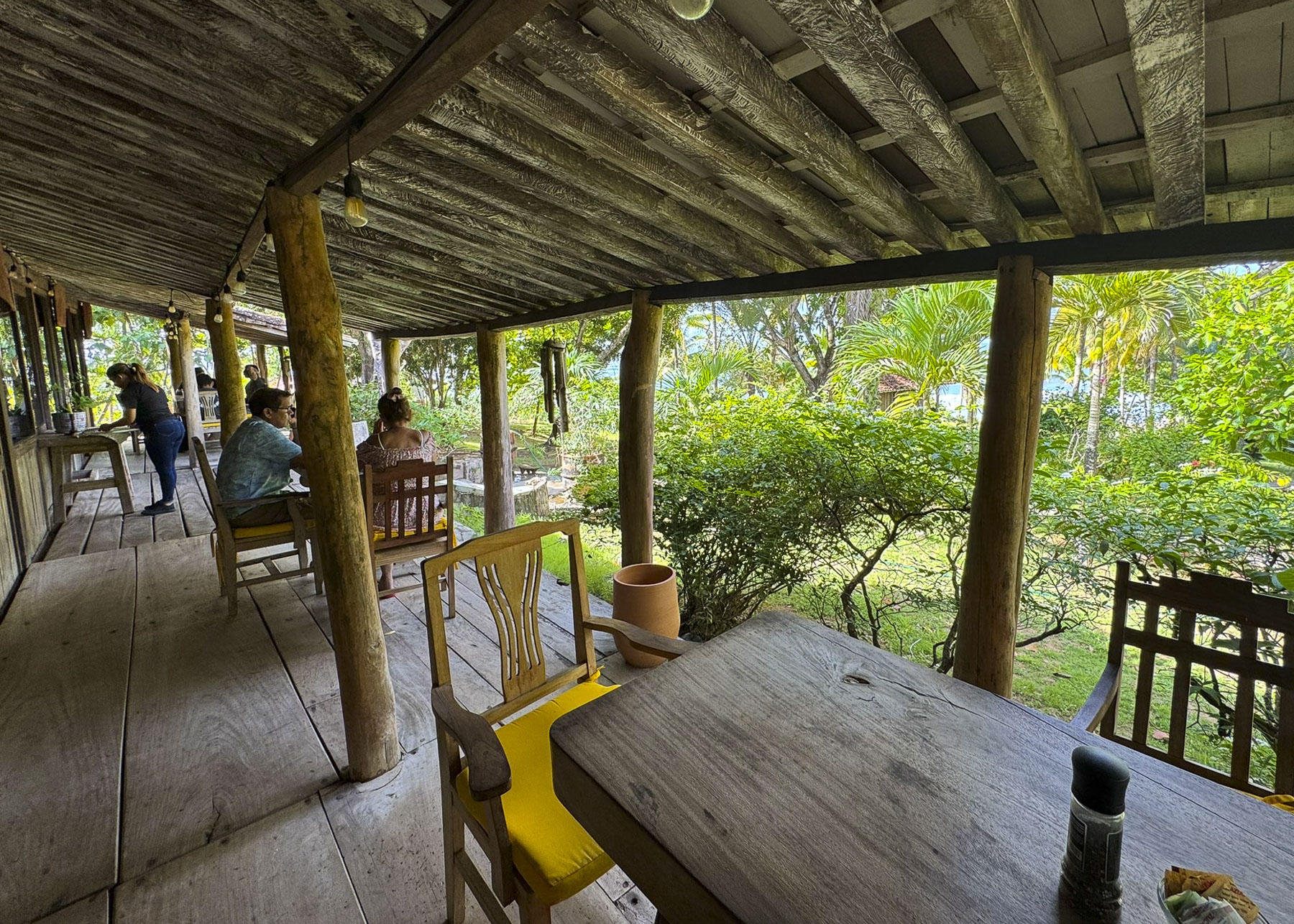
Though having breakfast on the veranda, with the sound of the waves crashing in the distance, was a delight during the cool morning hours.

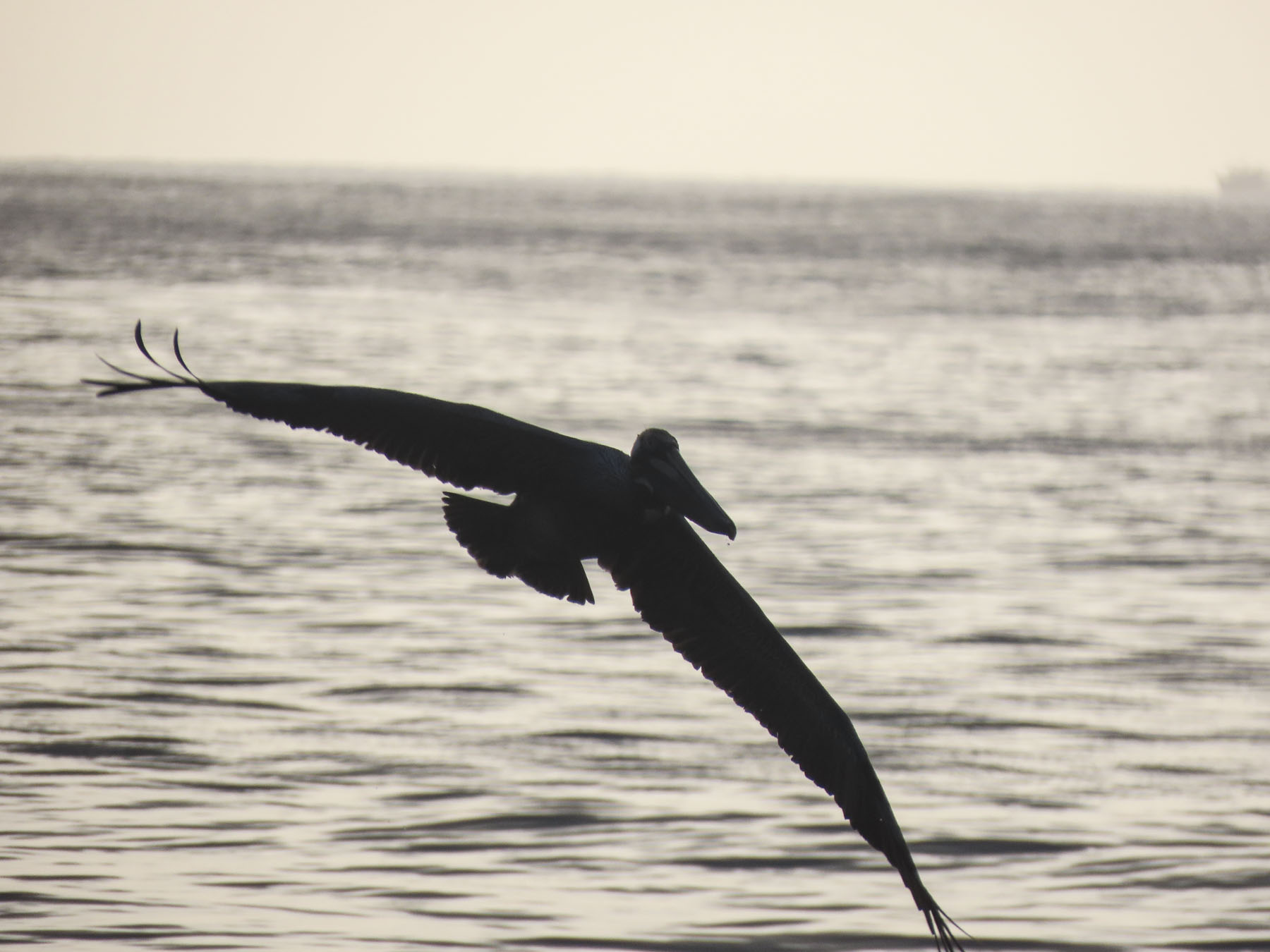
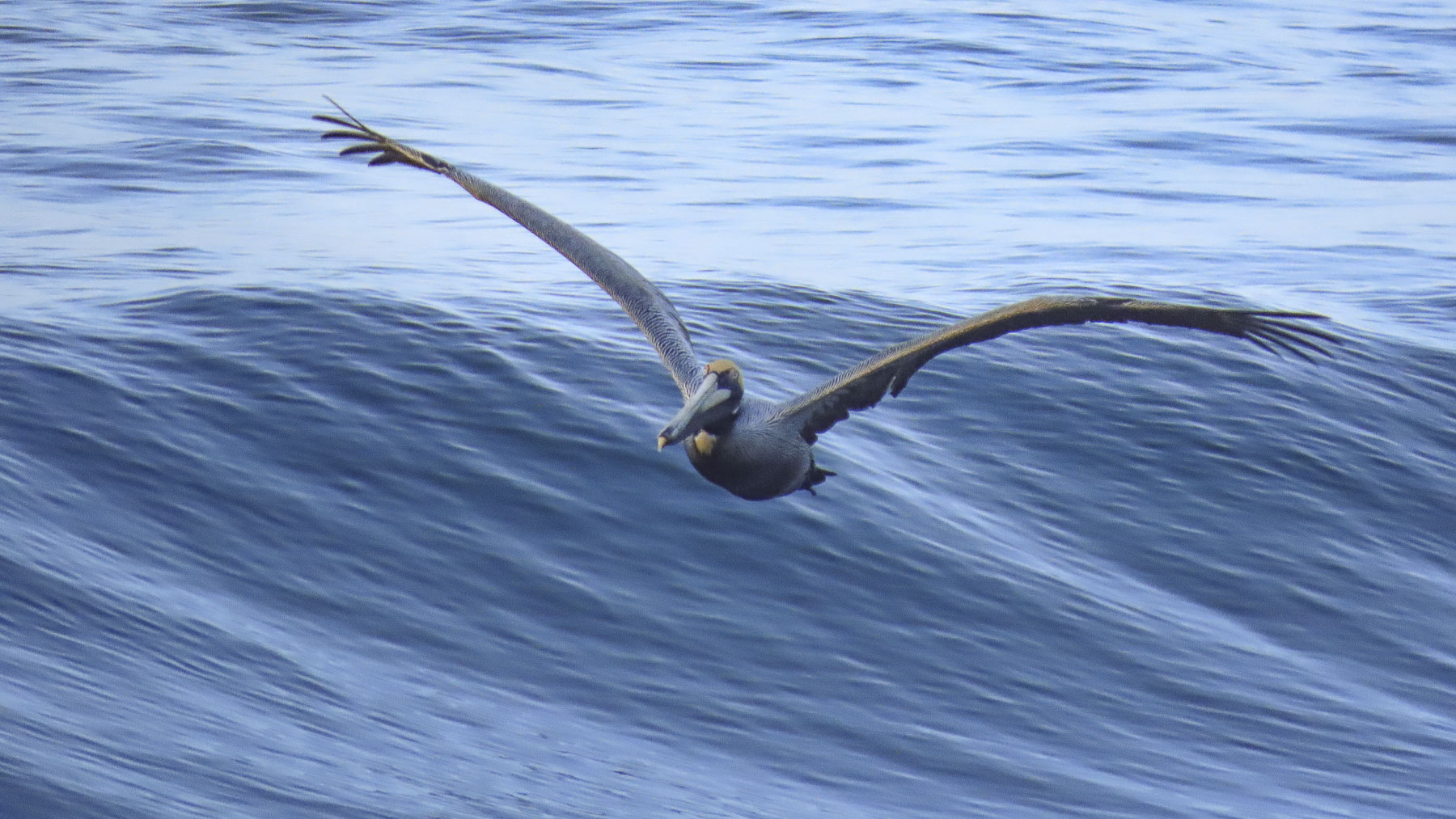
Early morning walks along the beach as the sun crested to the horizon were equally as enjoyable as the sunsets, but more tranquil with squadrons of pelicans swooping low over the surf, looking for fish. Occasionally some would peel away to dive headfirst into the water to catch fish.
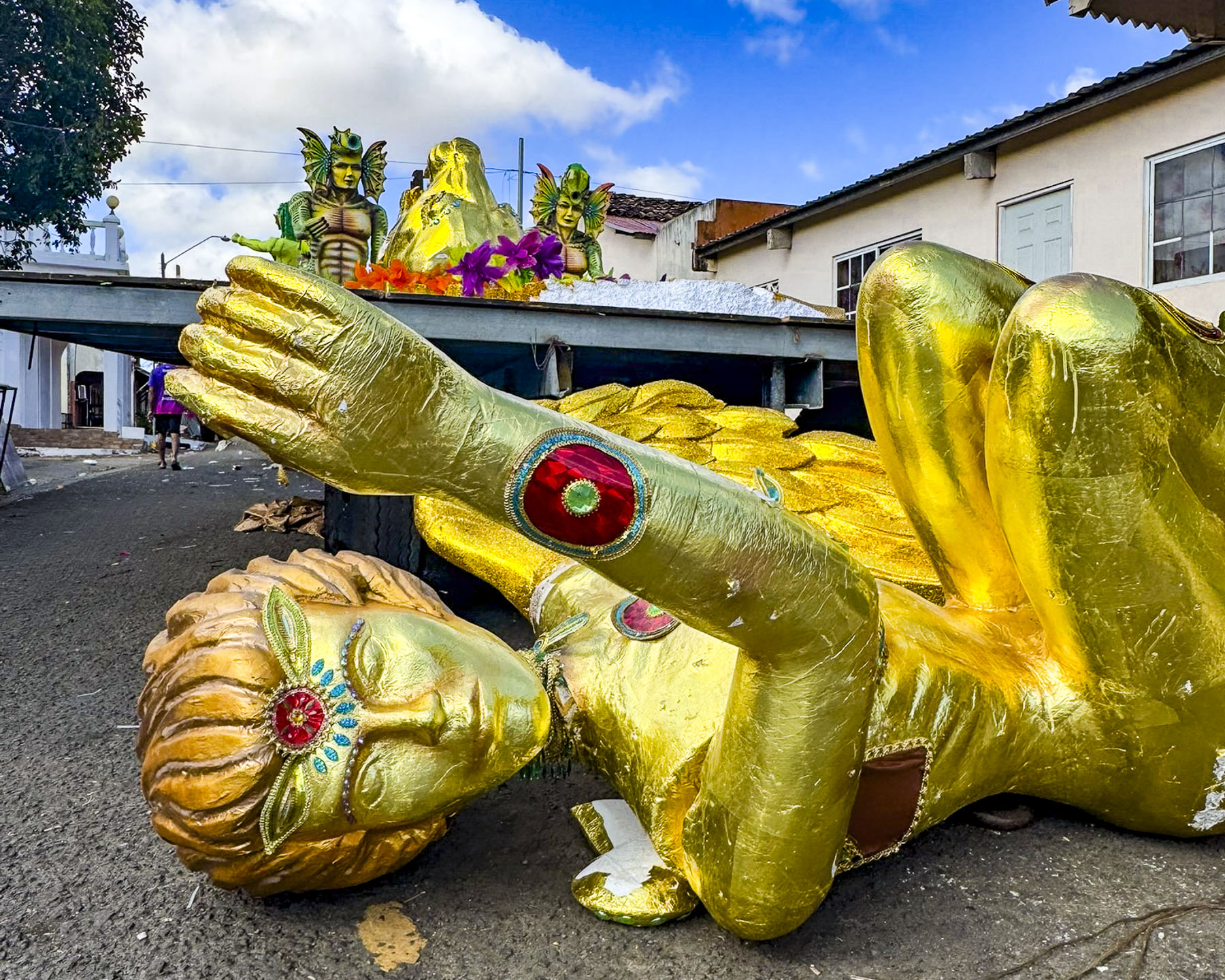
Remnants of Carnaval celebrations the night before were still visible in the small towns along our route as we headed back early to Panama City to avoid the traffic. We arrived on the outskirts of the city sooner than expected and decided to spend the afternoon at Perico Island. Located at the end of the very long Amador Causeway which extends for 6km (3.7mi) into Panama Bay, it’s a popular spot for city folks to catch the breezes, picnic, rent bicycles or walk along its full length which offers great panoramic views of the city’s modern skyline and large cargo ships underway to the entrance of the Panama Canal.
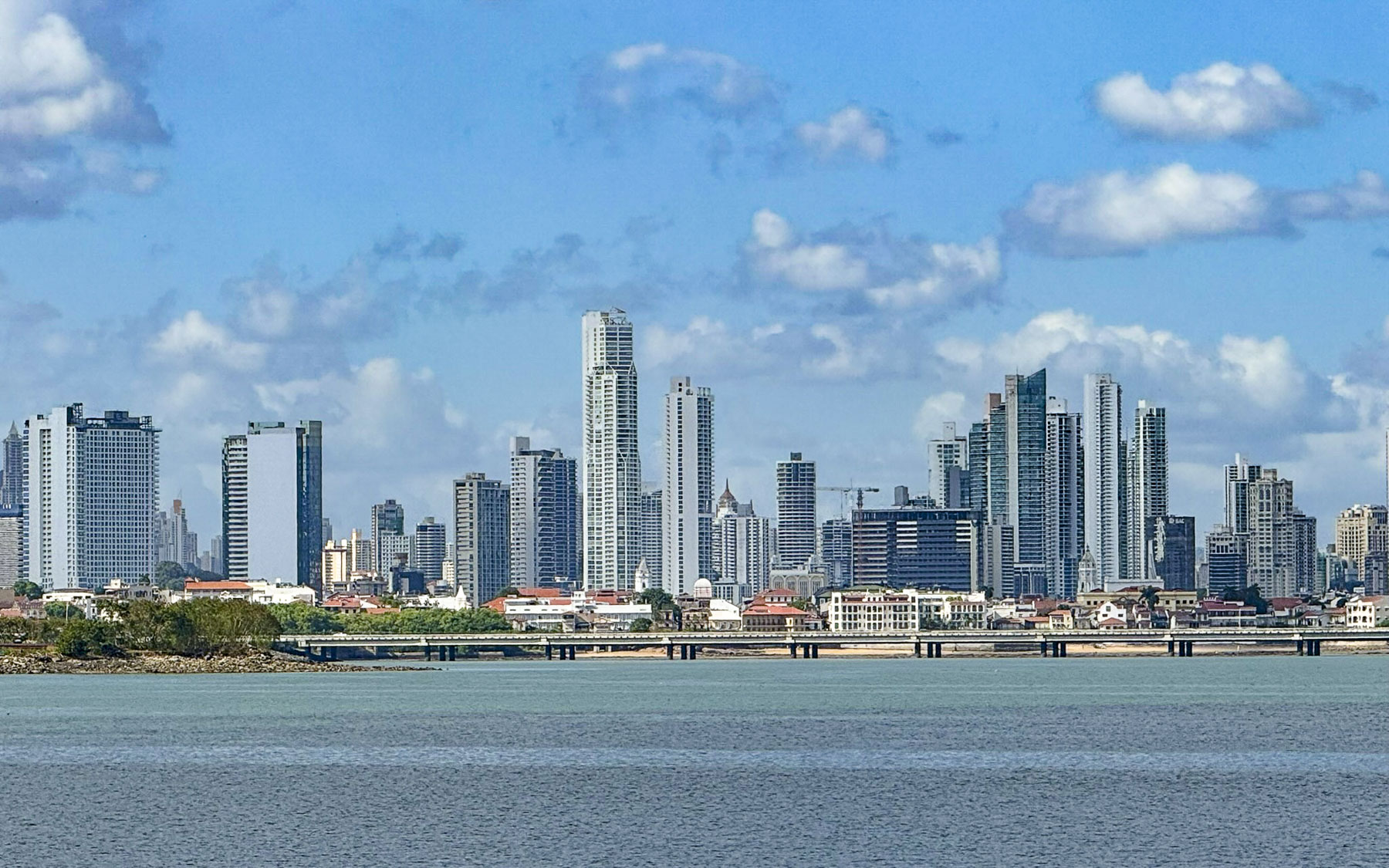
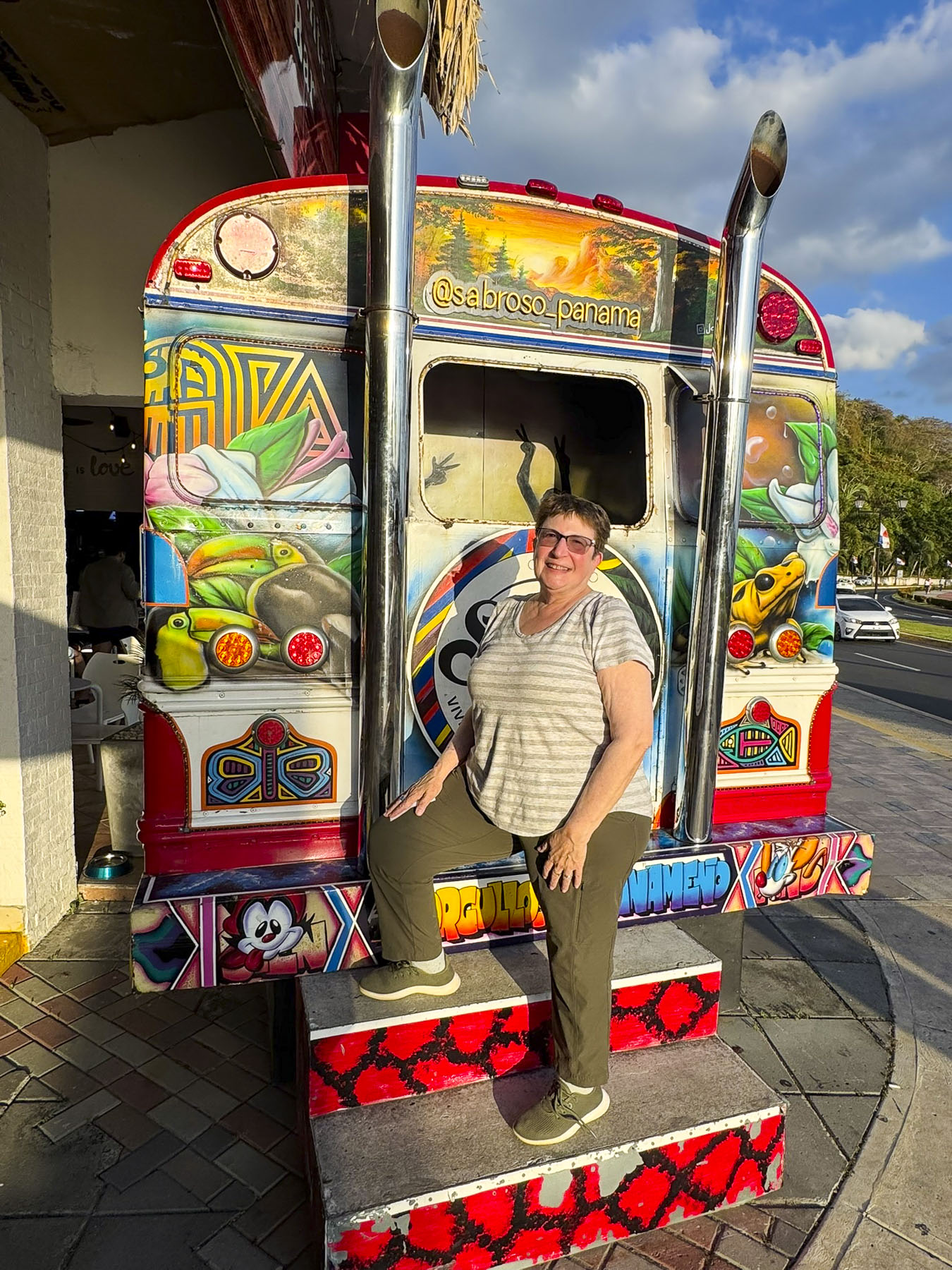
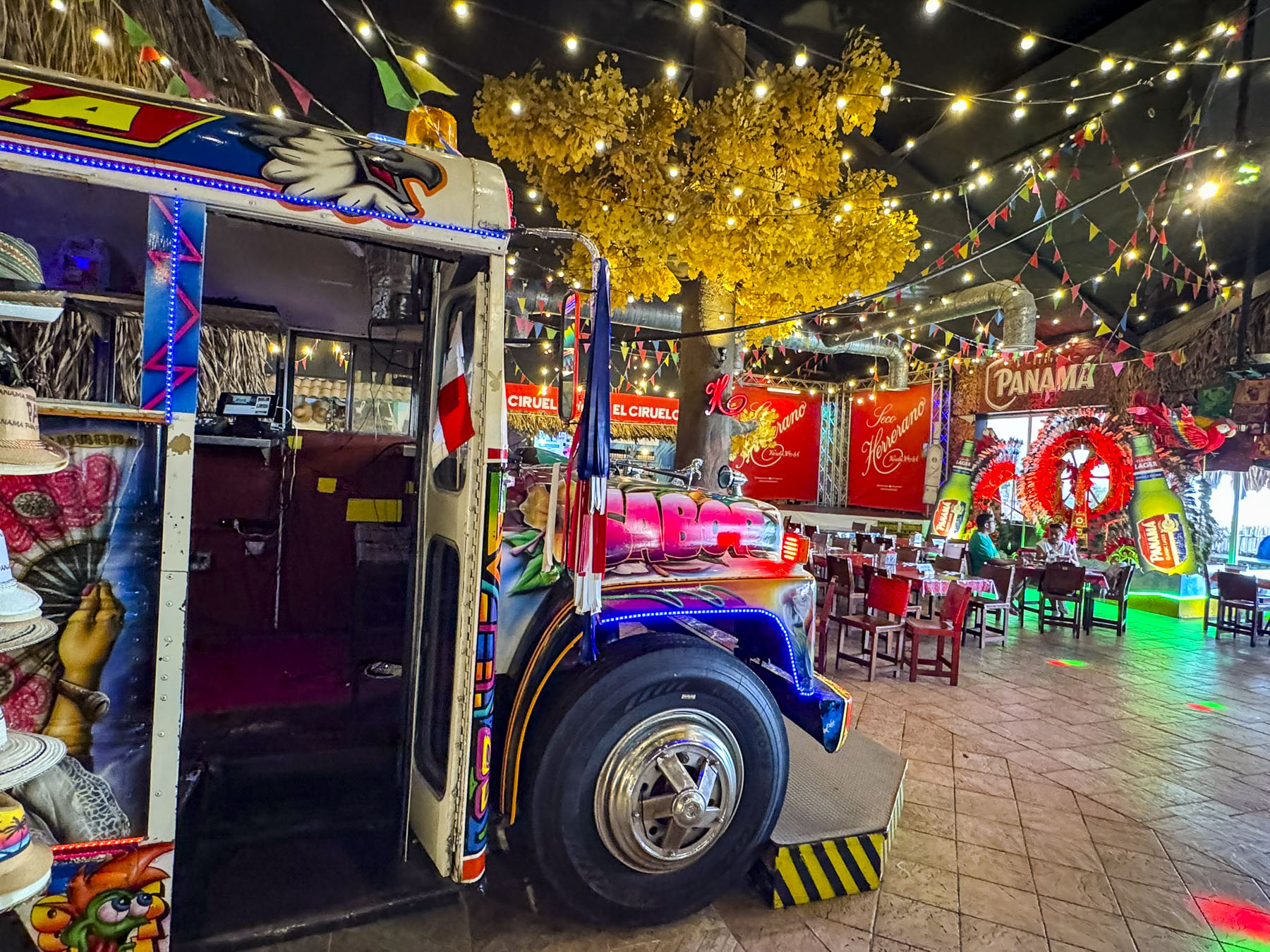
After strolling along the waterfront for a while we decided to have lunch at Sabroso Panamá, a uniquely decorated place with a nice vibe, that also had a balcony overlooking a marina. We tried the carimañolas, similar to empanadas, though they are made with mashed cassava (yucca) dough and then fried.

Carnaval celebrations continued that evening and the direct route back to Hotel Plaza Paitilla Inn (we had such a nice experience there earlier in the week we decided to stay there again) along the Cinta Costera, the city’s waterfront park, and the eight lanes of the Pan-American that parallel it were blocked, and we had to circumnavigate our way around it. The massive street party continued well past midnight into the wee hours of Ash Wednesday morning.

Ash Wednesday was our last full day in Panama City, and we spent it exploring the Casco Antiguo, the historic old town district which dates from 1673, and is also known as Casco Viejo or San Felipe.
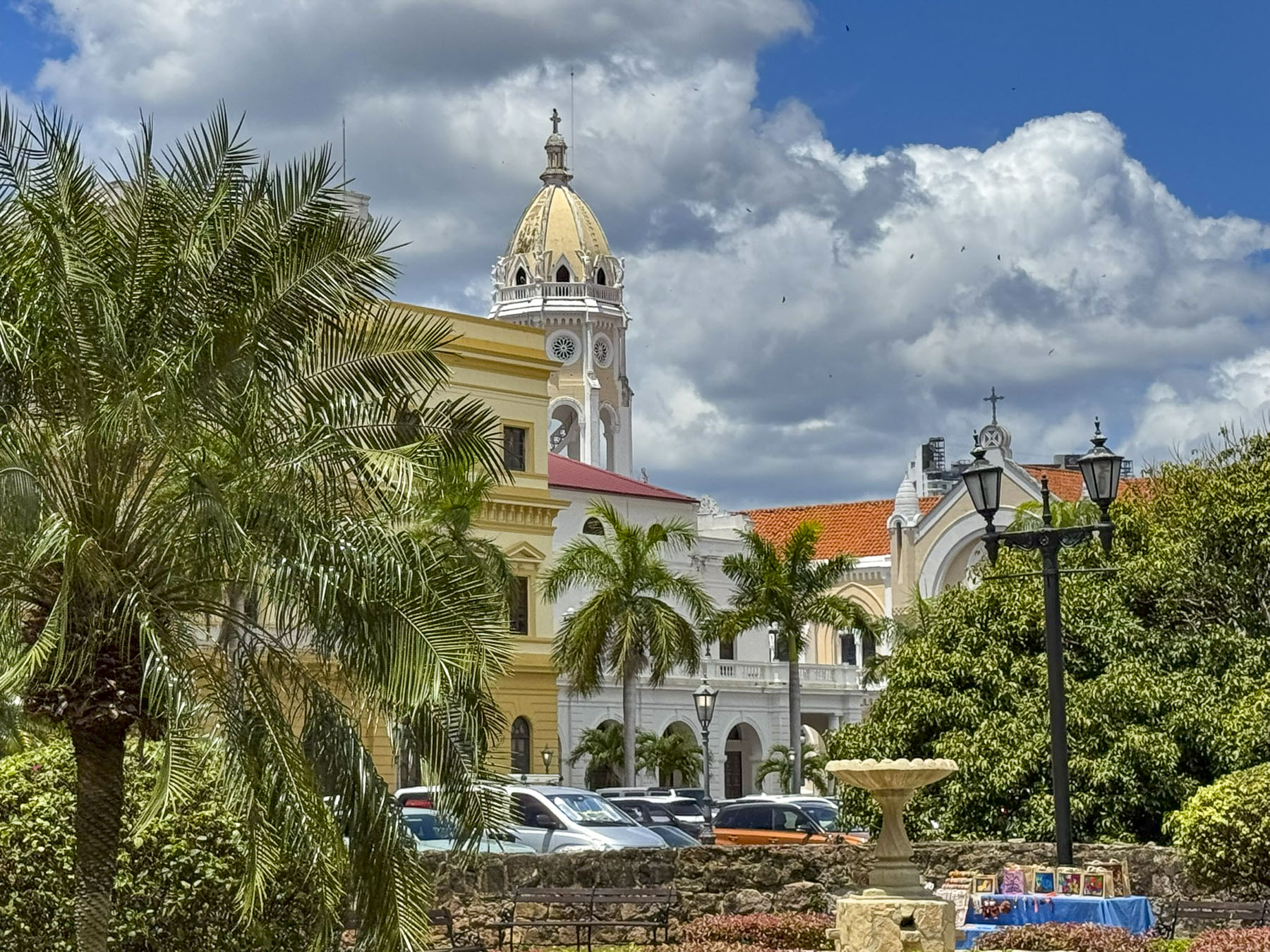
This town, built on a defensible small peninsula, replaced the city’s original settlement, Panama La Vieja, which was started 11km (7mi) farther east in 1519 when Spanish conquistador Pedro Arias Dávila landed 100 settlers along the coast, and built the first permanent European settlement on the Pacific. The city prospered for 150 years as the Spanish used the town as a base for expeditions to conquer the Inca Empire and sent the plundered gold and silver they seized back to Spain. The city’s wealth did not go unnoticed, and in 1671 the British privateer Henry Morgan landed over a thousand brigands on the Caribbean coast and trekked through treacherous jungles across the Isthmus of Panama to reach the city, which they then attacked, pillaged and burnt to the ground. Six hundred Spaniards died during the assault. Though the booty they looted wasn’t as much as expected, Morgan was declared a British hero, and knighted.
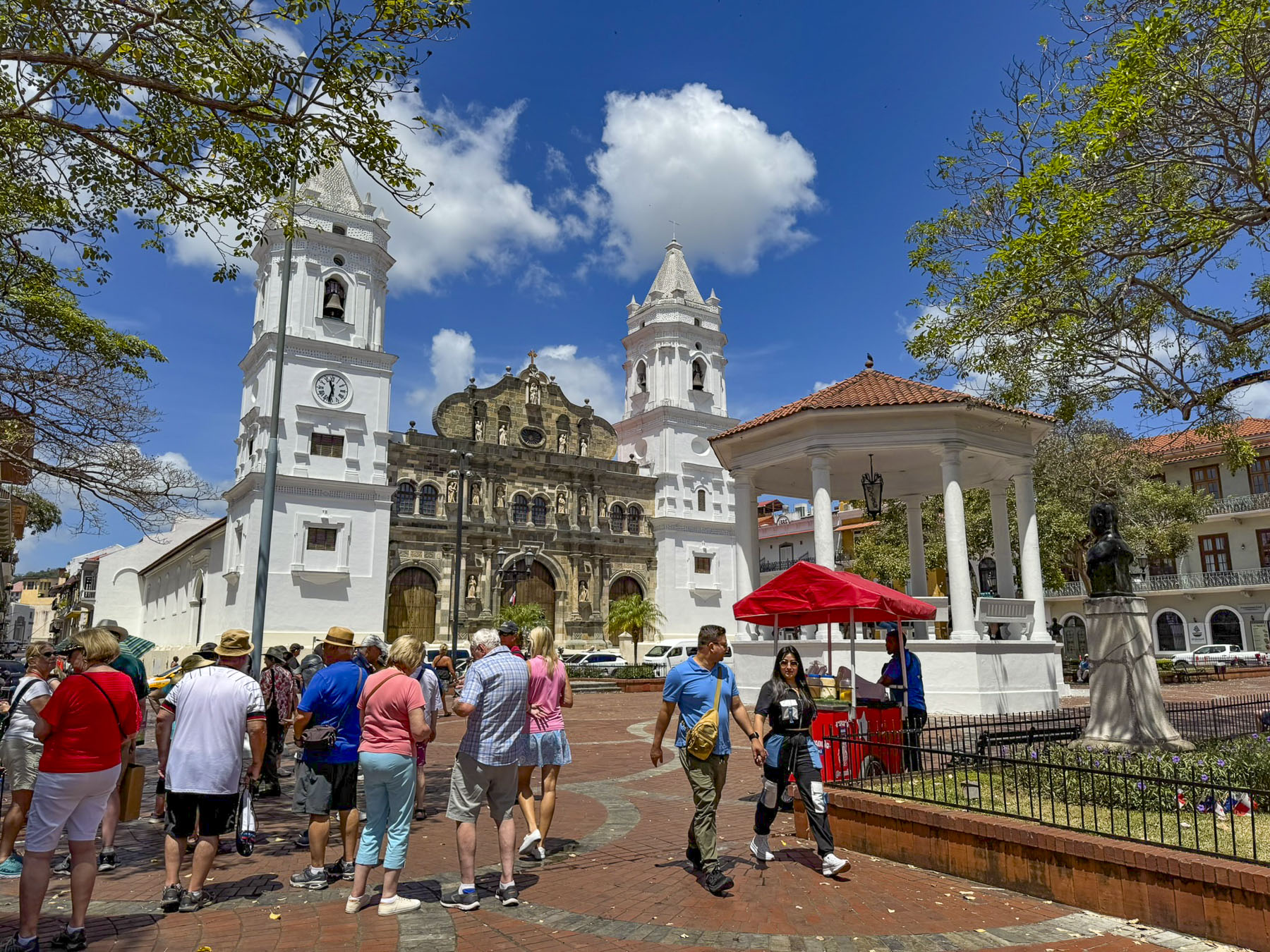
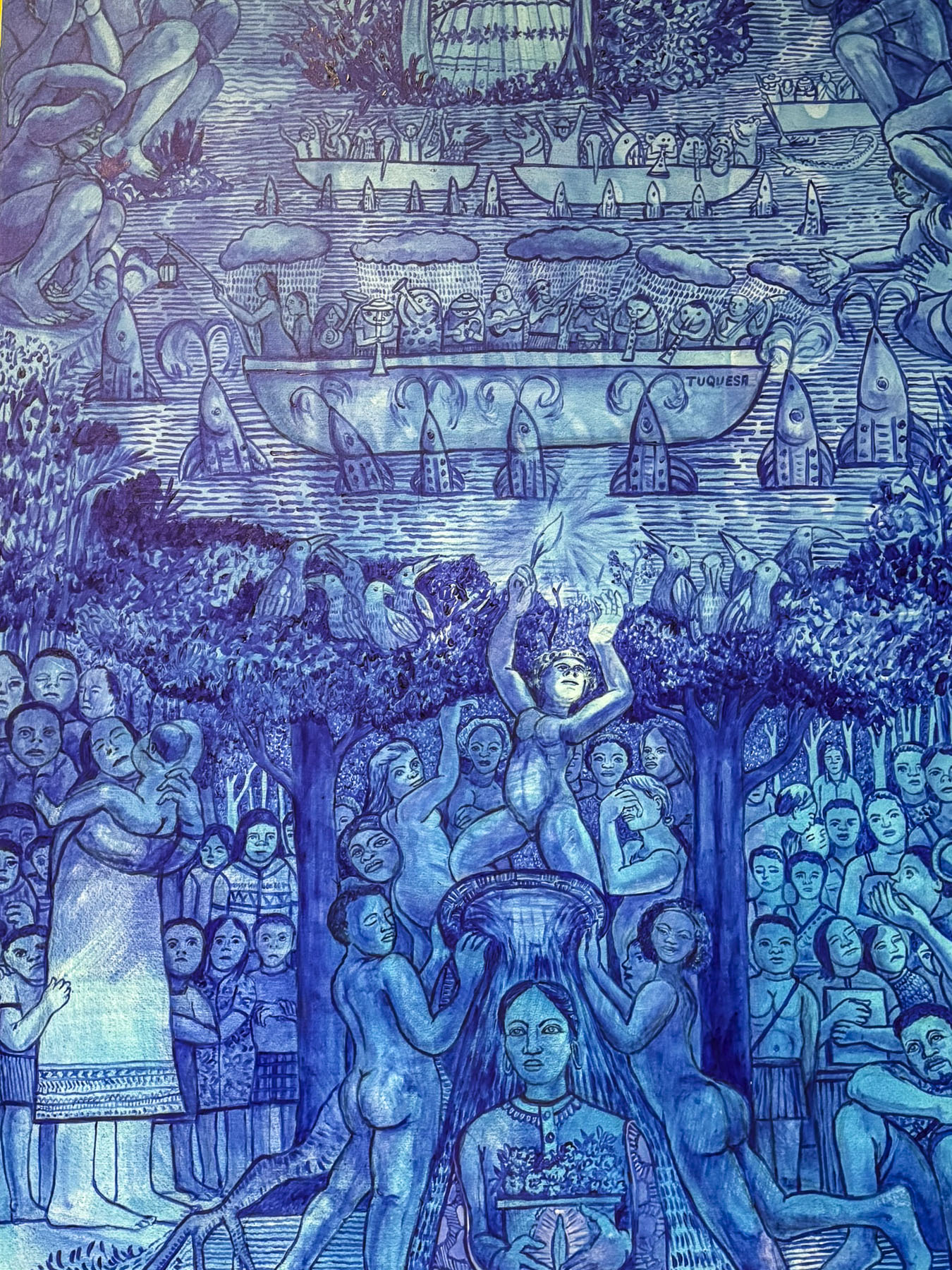
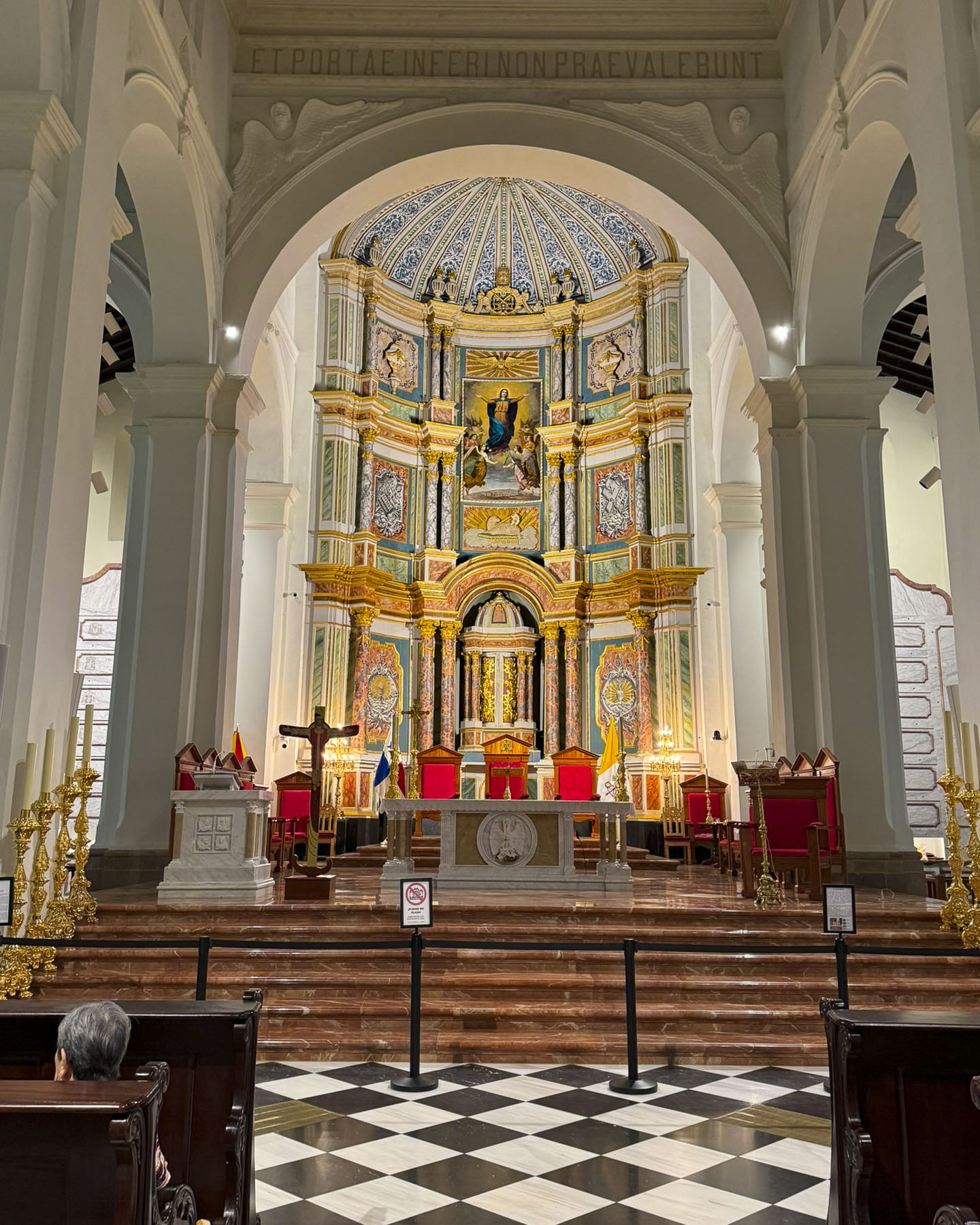
We arrived by Uber to the Catedral Basílica Metropolitana Santa María La Antigua on the Plaza de la Independencia in the center of Casco Antiguo. Its striking façade which blends Baroque and Neoclassical architecture dates from 1688, but the cathedral took more than 100 years to build, and wasn’t consecrated until 1796. Inside, an interesting mural in monochrome blue depicted the indigenous peoples of Panama accepting Chrisitanity.
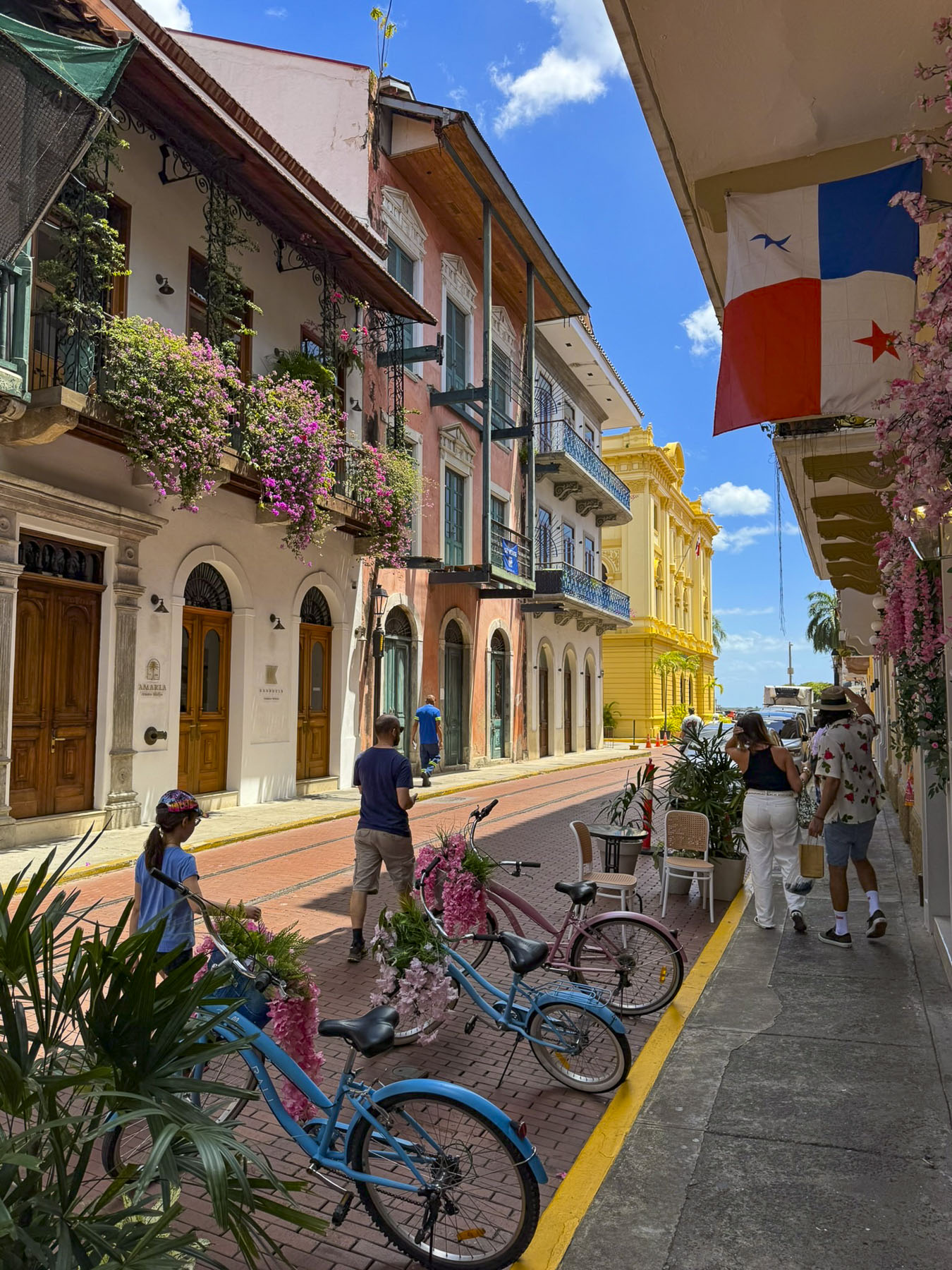
The Old Town was once a citadel, though the defensive wall which encircled its 36 blocks was taken down ages ago to ease its expansion. Surprisingly, within this small area there were 4 still active historic churches and the ruins of another. Our basic plan was to visit every church and then spur off to other nearby points of interest.
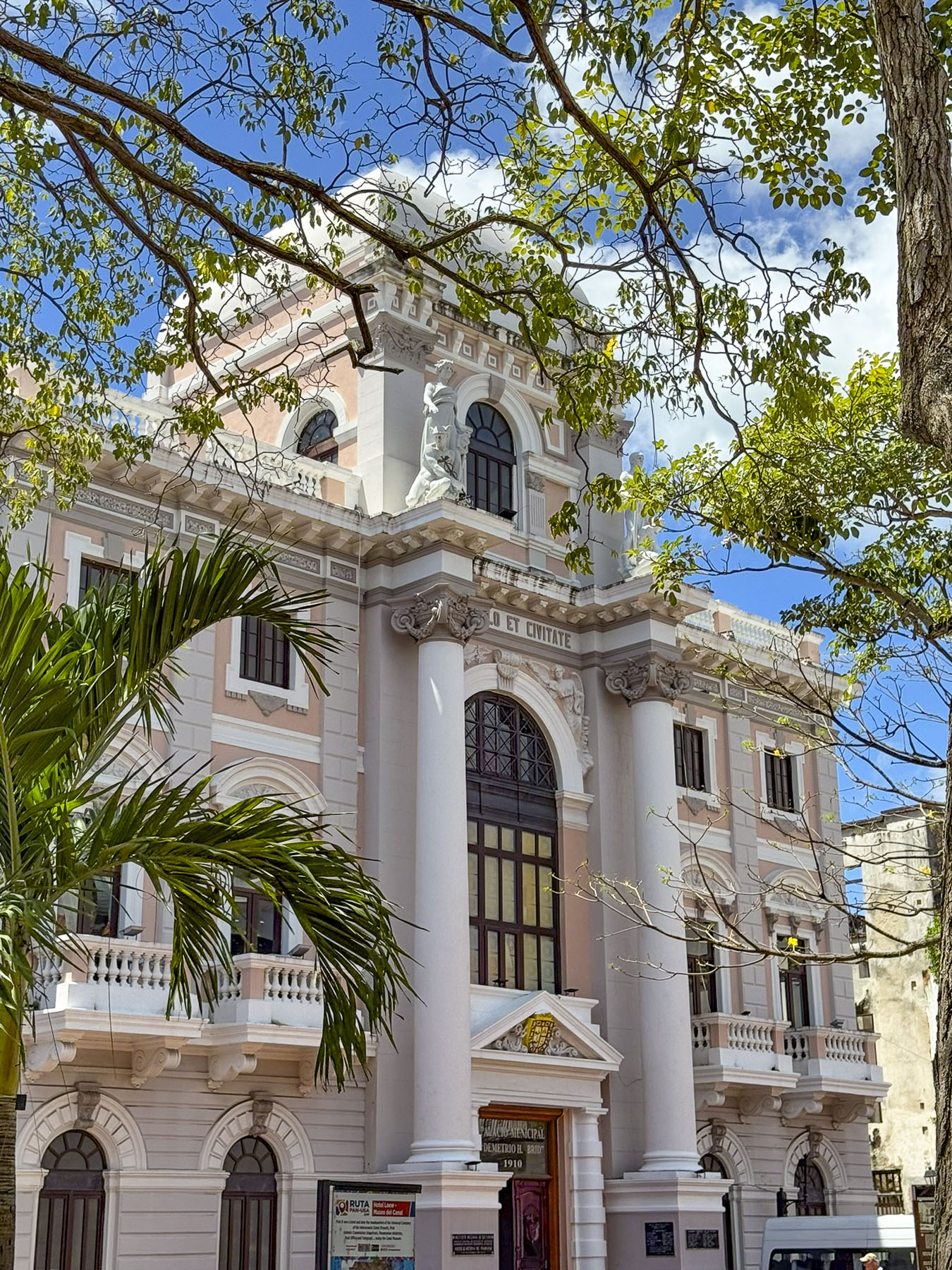
Adjacent to the cathedral was the Museum of Panamanian History, housed in the Municipal Palace of Panama. It’s a beautiful Neo-Renaissance style building with pilasters, arches and decorative cornices. We didn’t tour the exhibits, but we did enjoy resting in the air-conditioning of the lobby.

The narrow-bricked lanes were more suitable for the horse drawn carriages for which they were designed than the cars of today. They surrounded a plaza full of colorful well-maintained 18th and 19th century buildings with decorative iron railed balconies covered by profusely blooming bougainvillea.
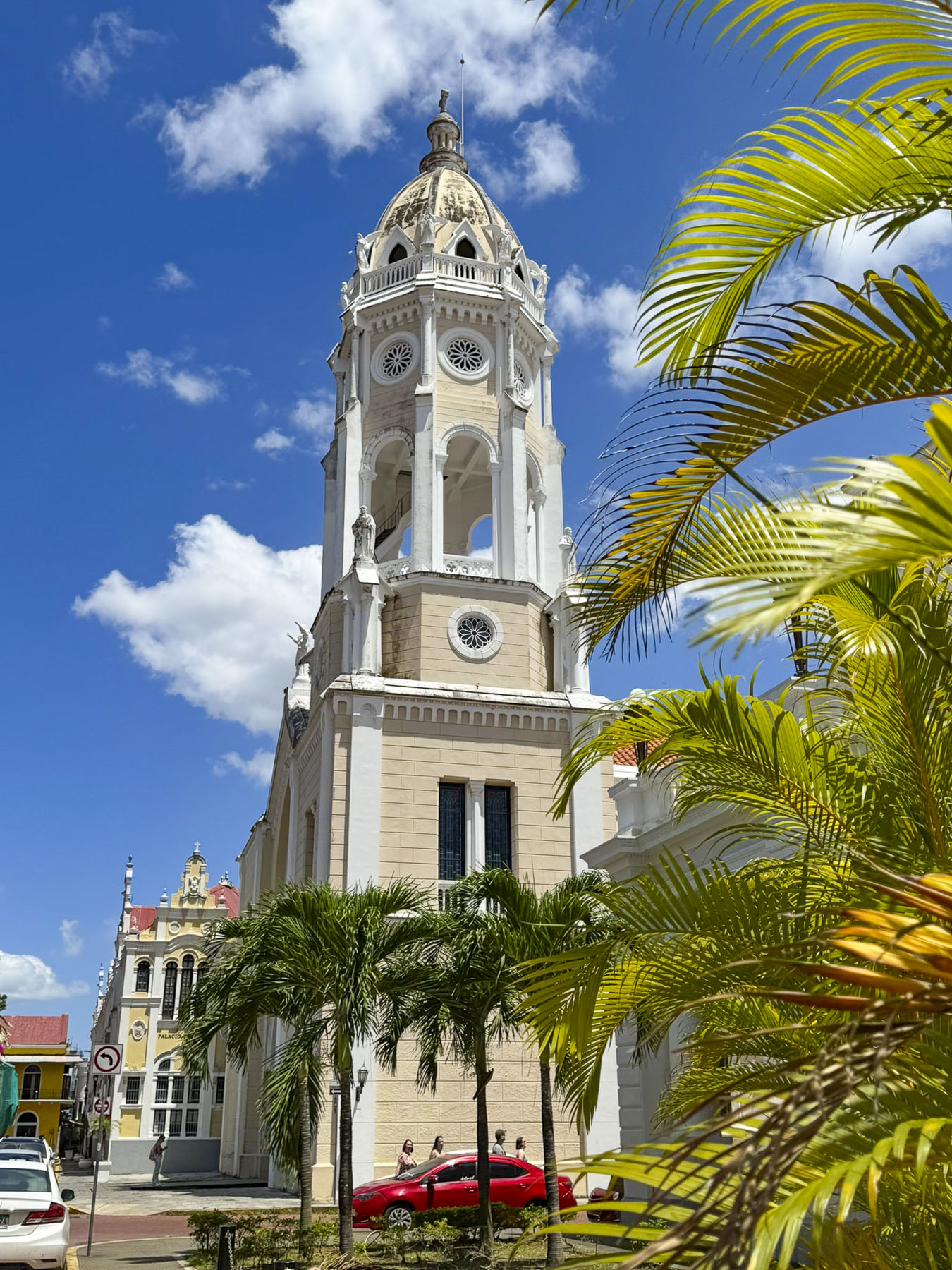
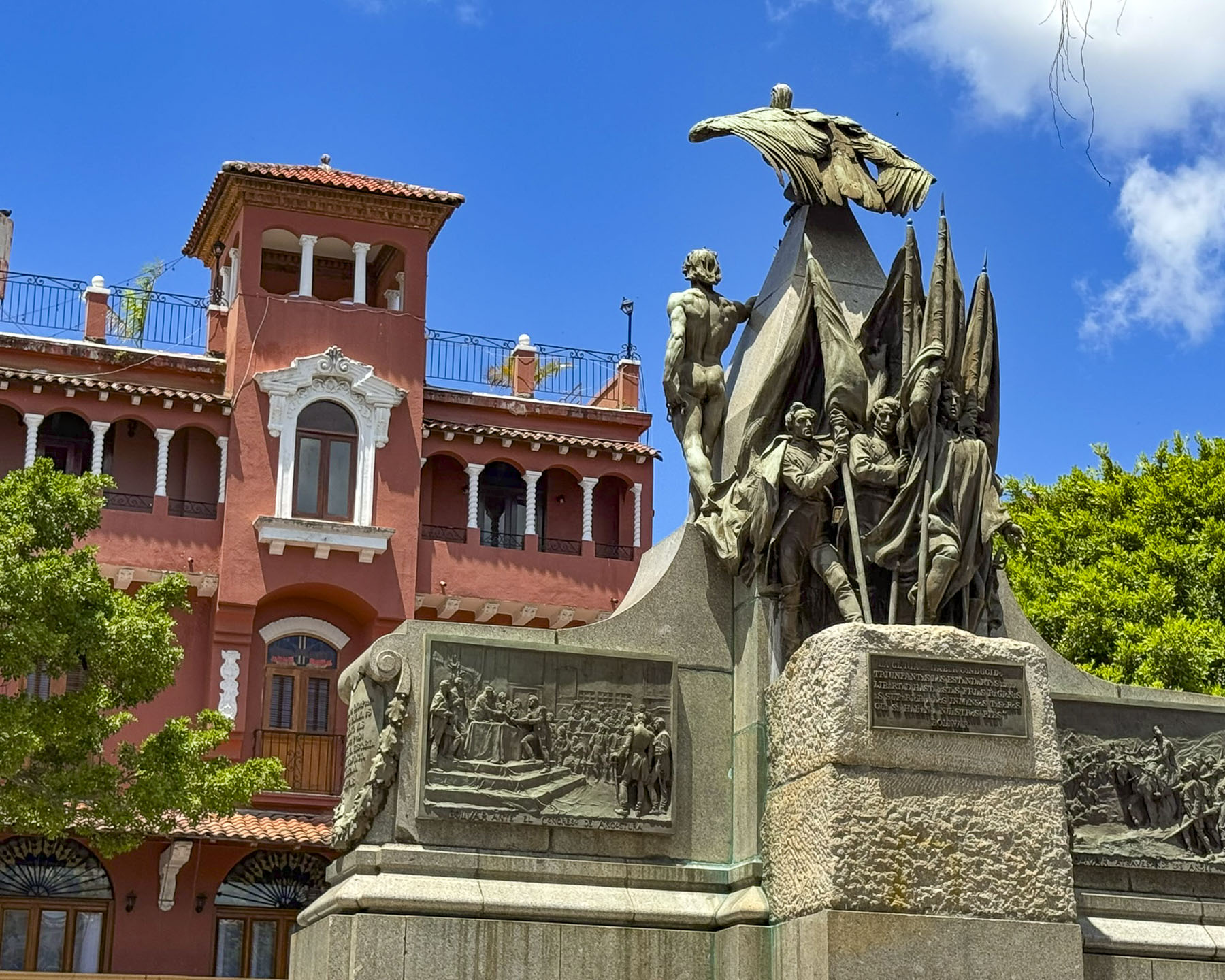
Cafes surround the Plaza Simón Bolívar where a grand monument commemorates the Latin America independence hero. Behind it the graceful belltower of the Saint Francis of Assisi Church looms above the plaza. It was a later addition to the original early 1700s church that was damaged during fires in 1737 and 1756.  
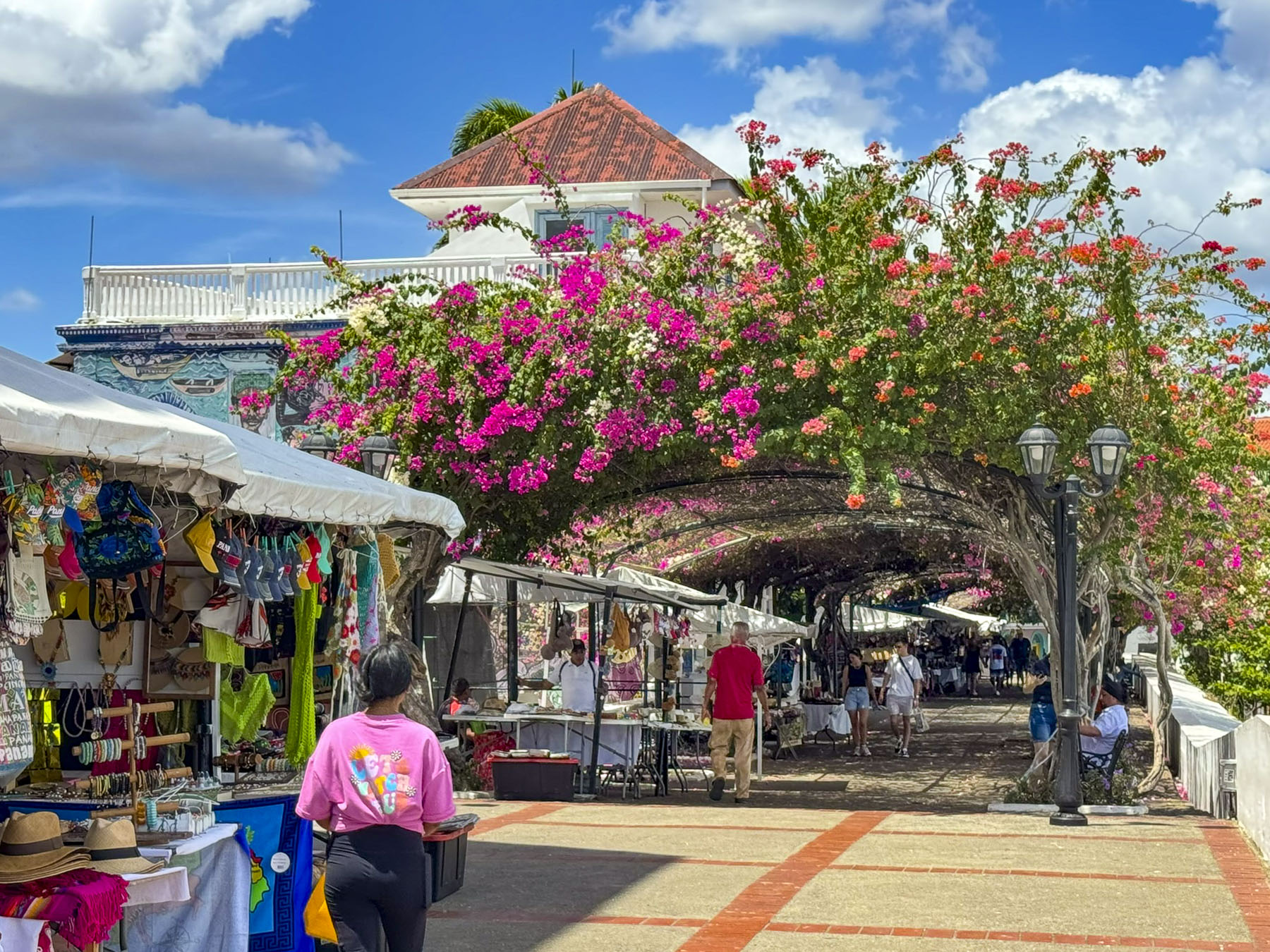
Nice views of the modern Panama City skyline were available along the lane leading to the Corredor Artesanal De Casco Antiguo, a trellis-covered lane with flowering vines that offers shade for the indigenous artisans who have stalls along its length.
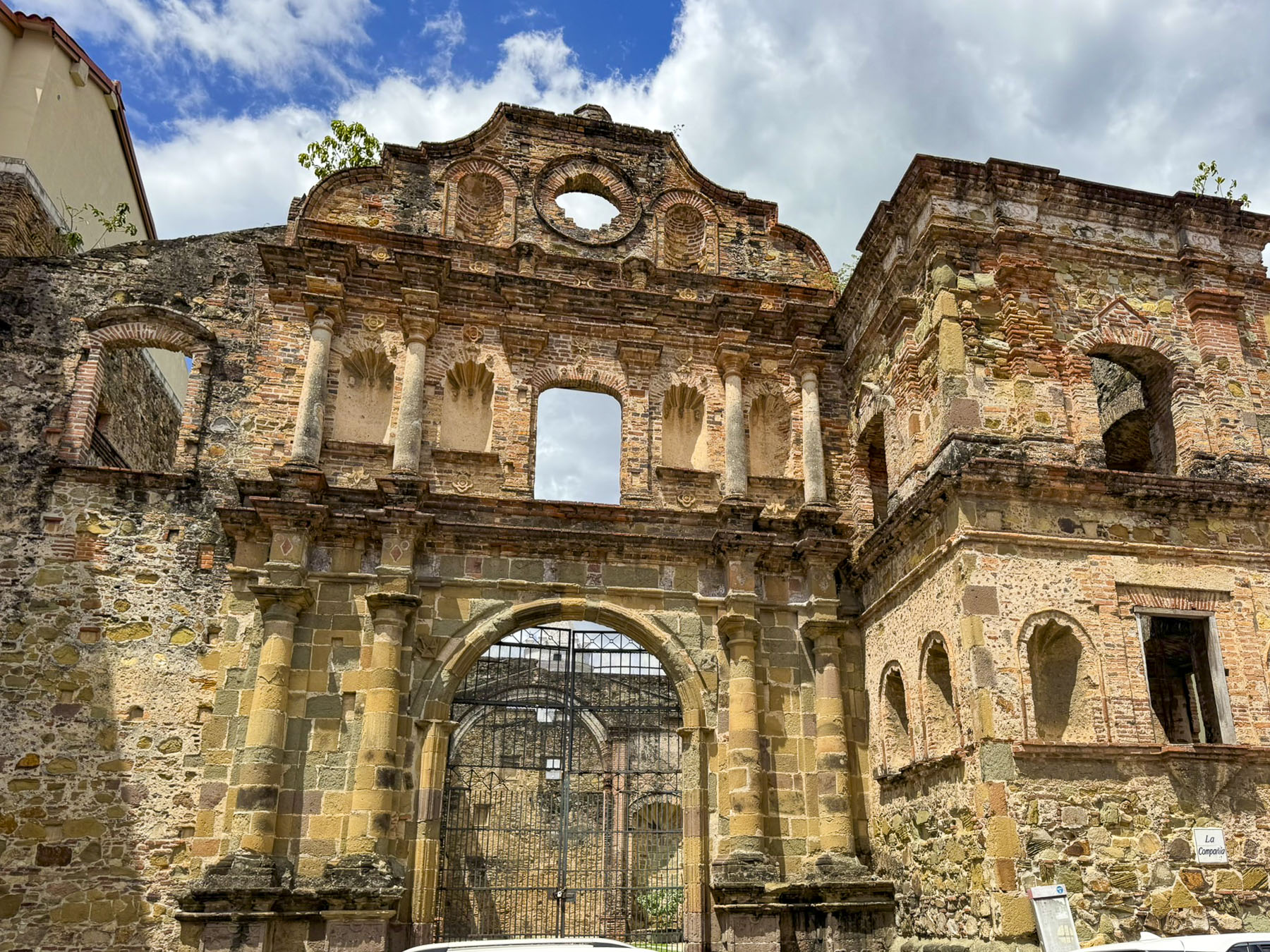
Back in the center we passed the ruins of the Iglesia de la Compañía de Jesús. It was built as a Jesuit monastery in 1641 and later in the 1740s it also served as the home of the Royal Pontifical University of San Javier, Panama’s first university, until the Spanish Crown banished the Jesuits from the colonies in 1767, and the church and monastery was abandoned. The ruins still standing are all that were left from a 1781 fire that ravaged the complex.

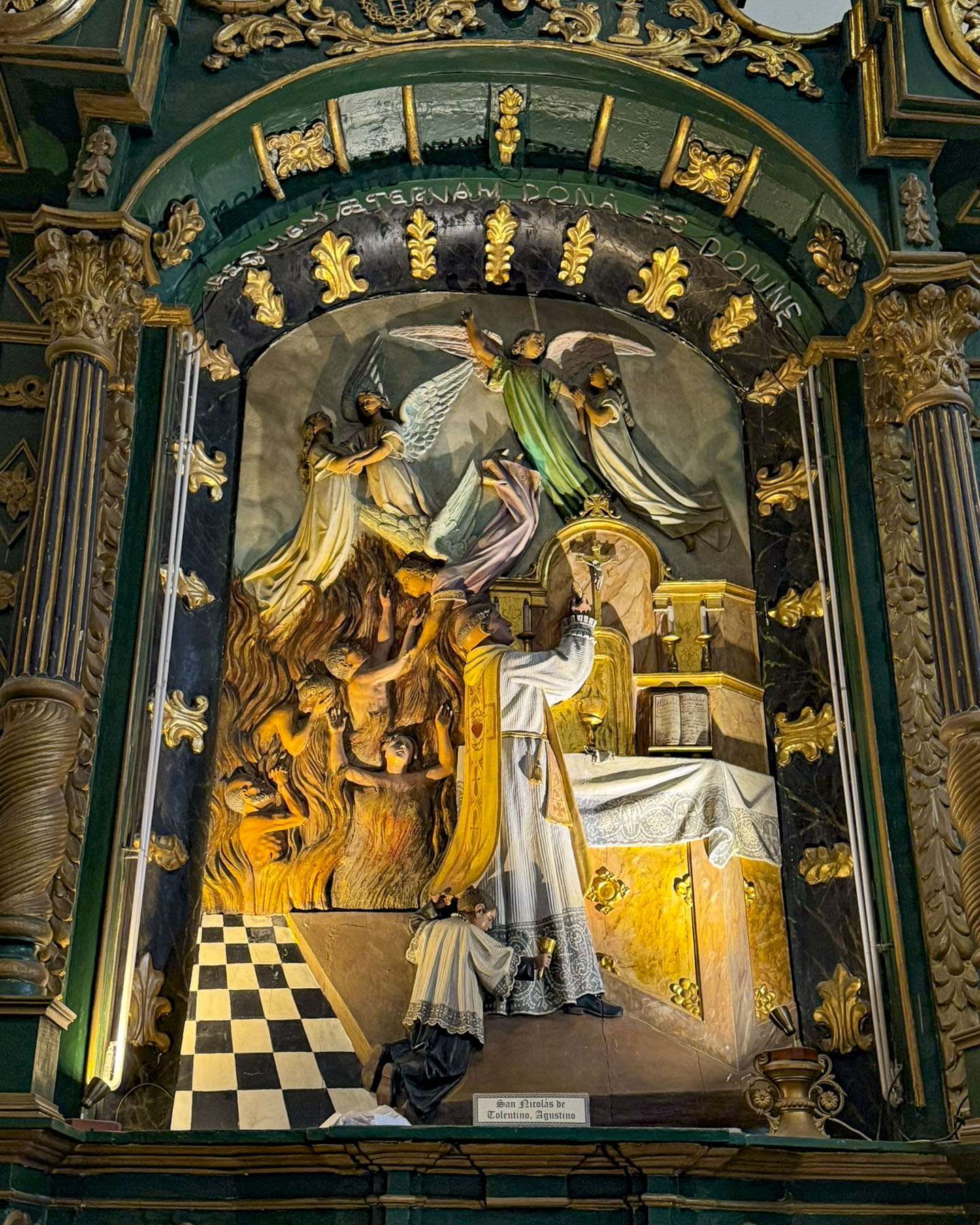
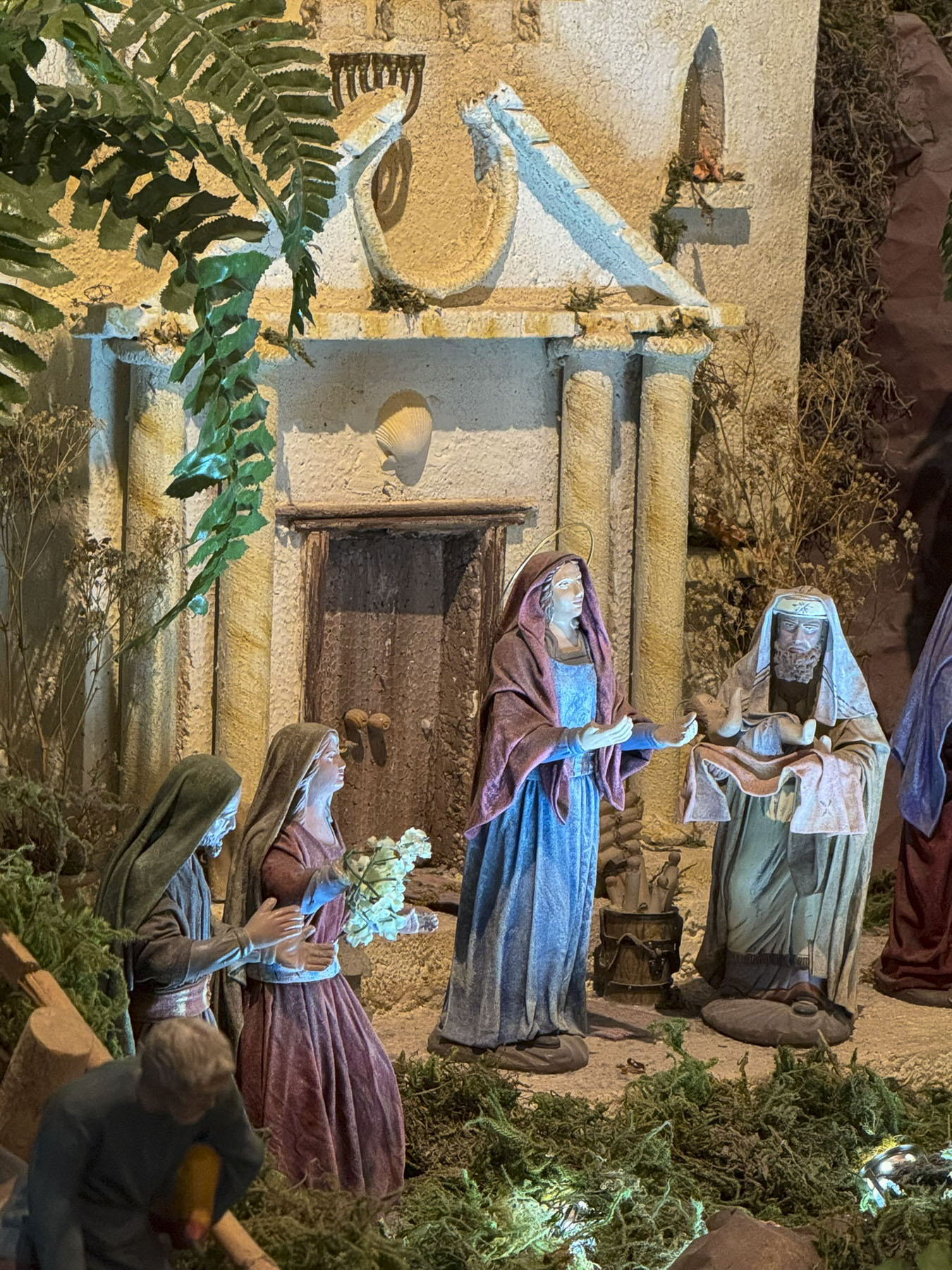
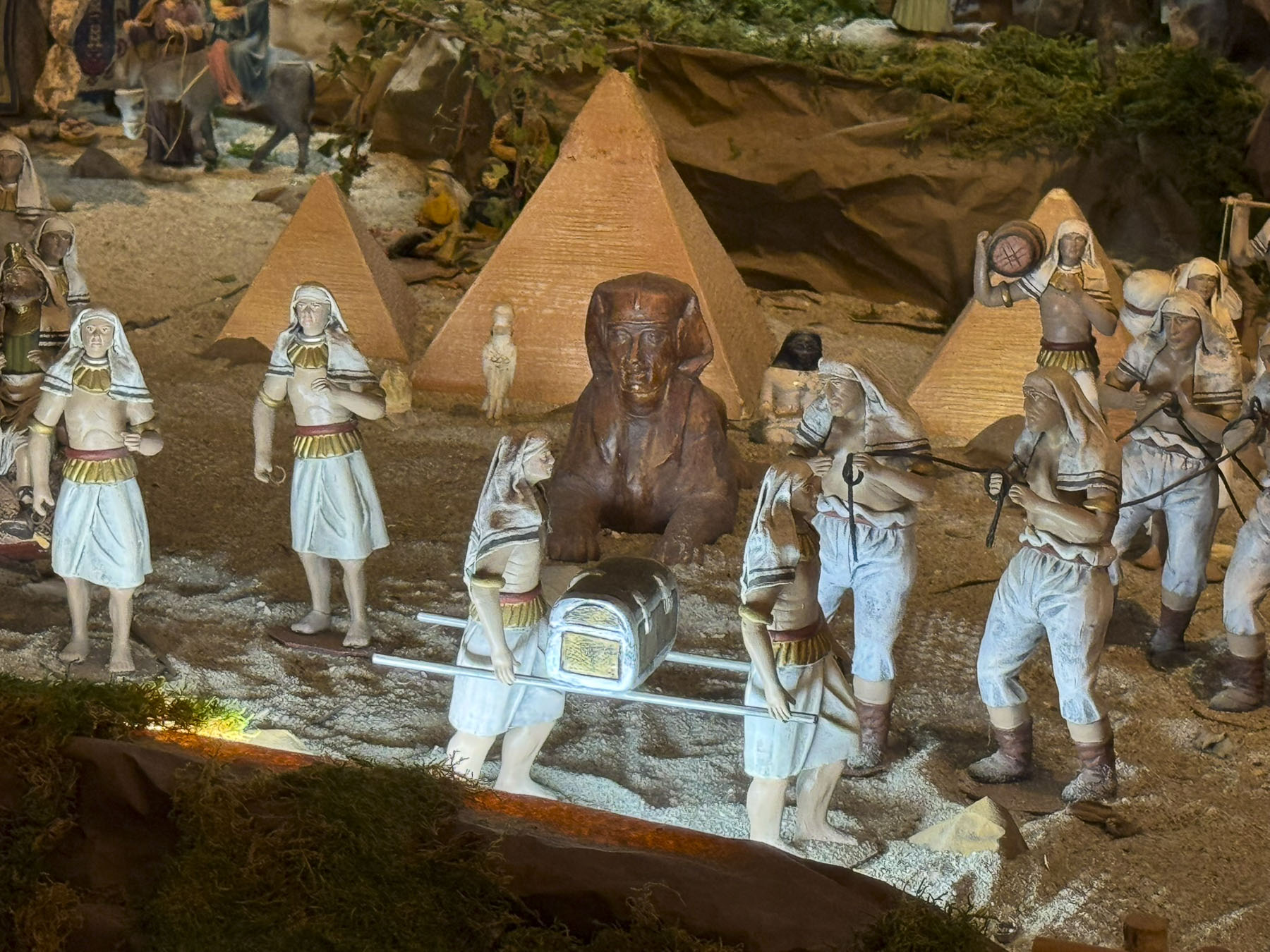
A block away was the Iglesia de San José. The 1670s church is notable for its ornate gold altar, that legend believes was saved from Morgan’s pirates by a priest who painted it black to hide its importance. There is also an interesting collection of religious sculptures and nativity scenes in a side chamber.
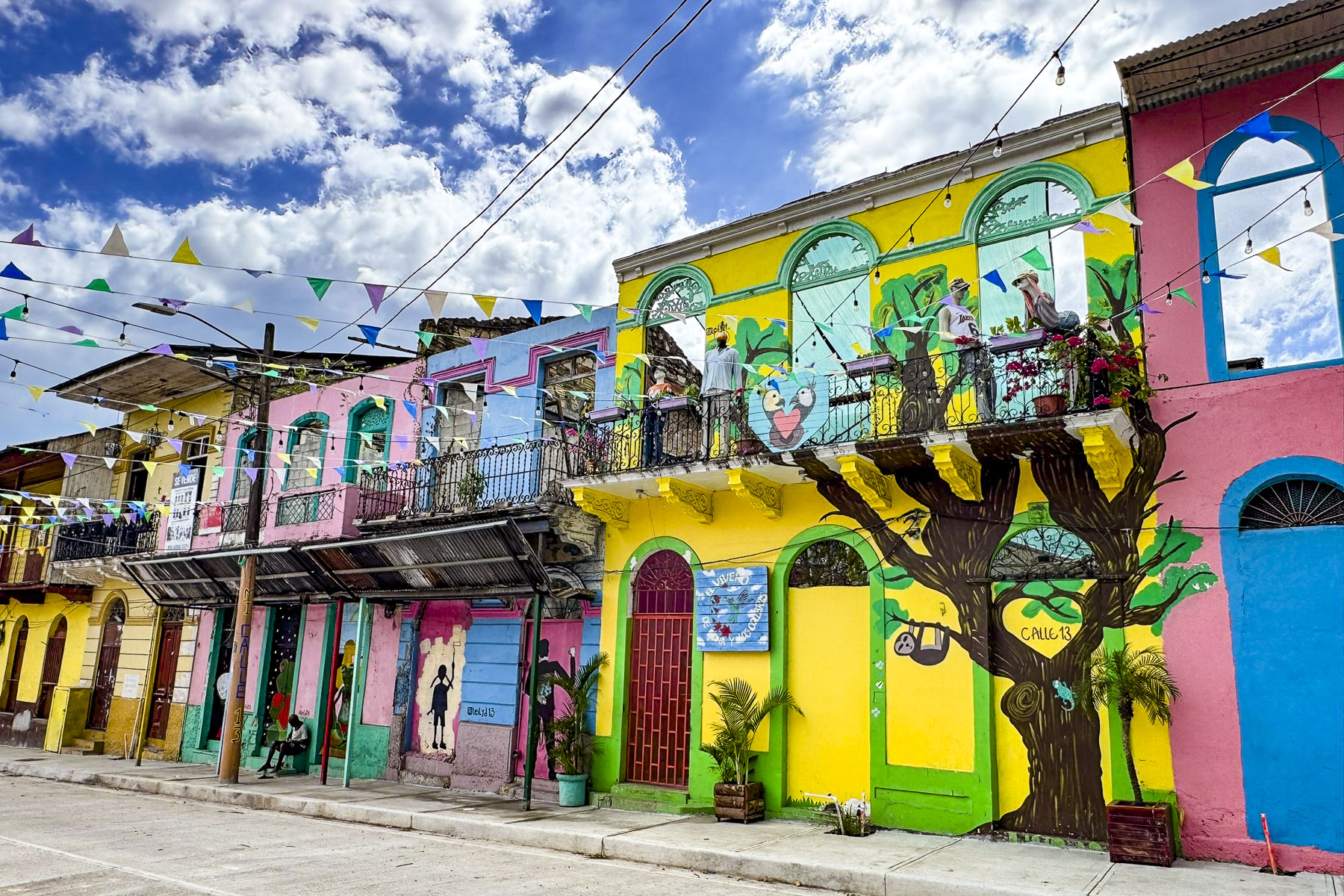
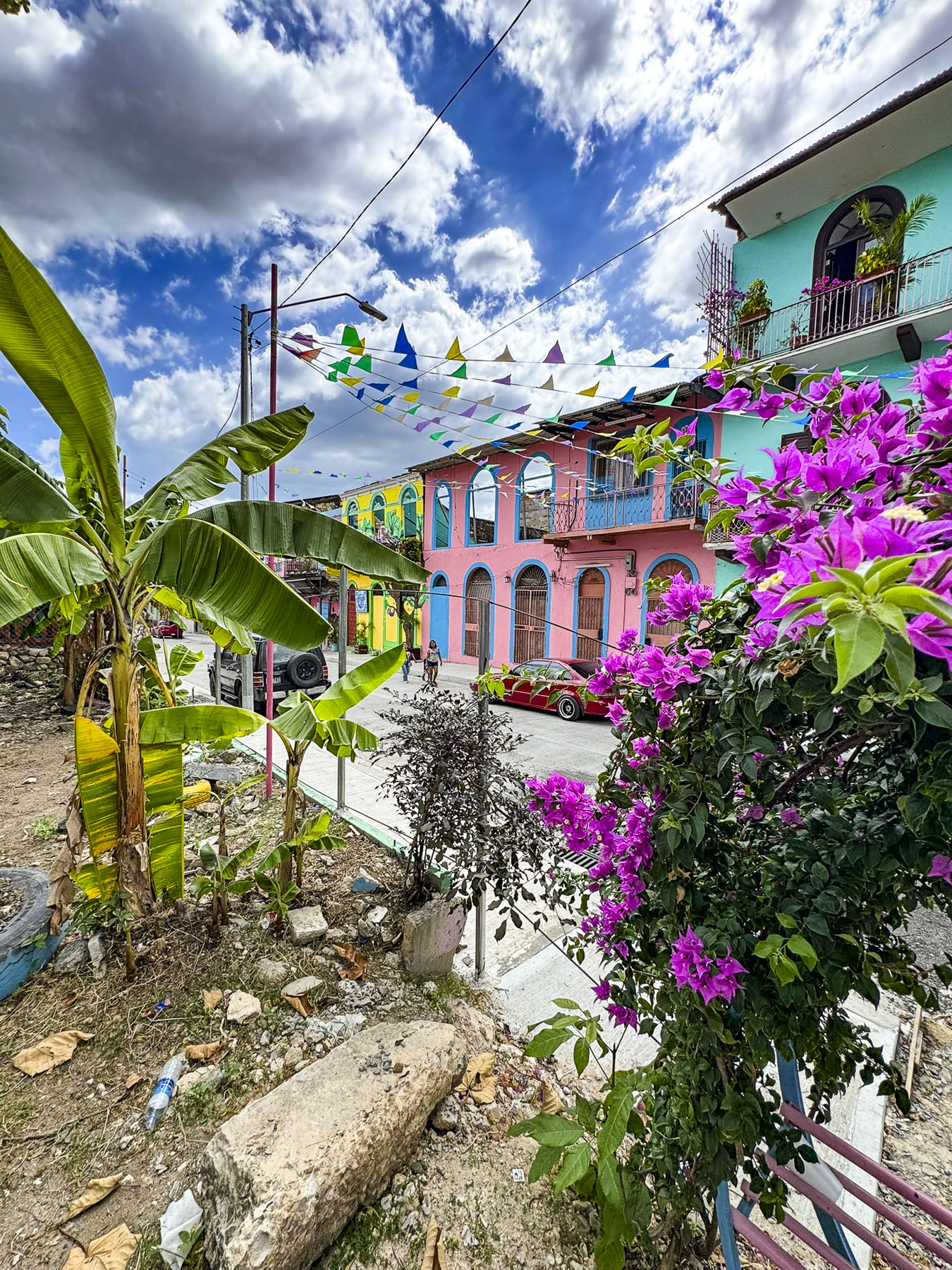
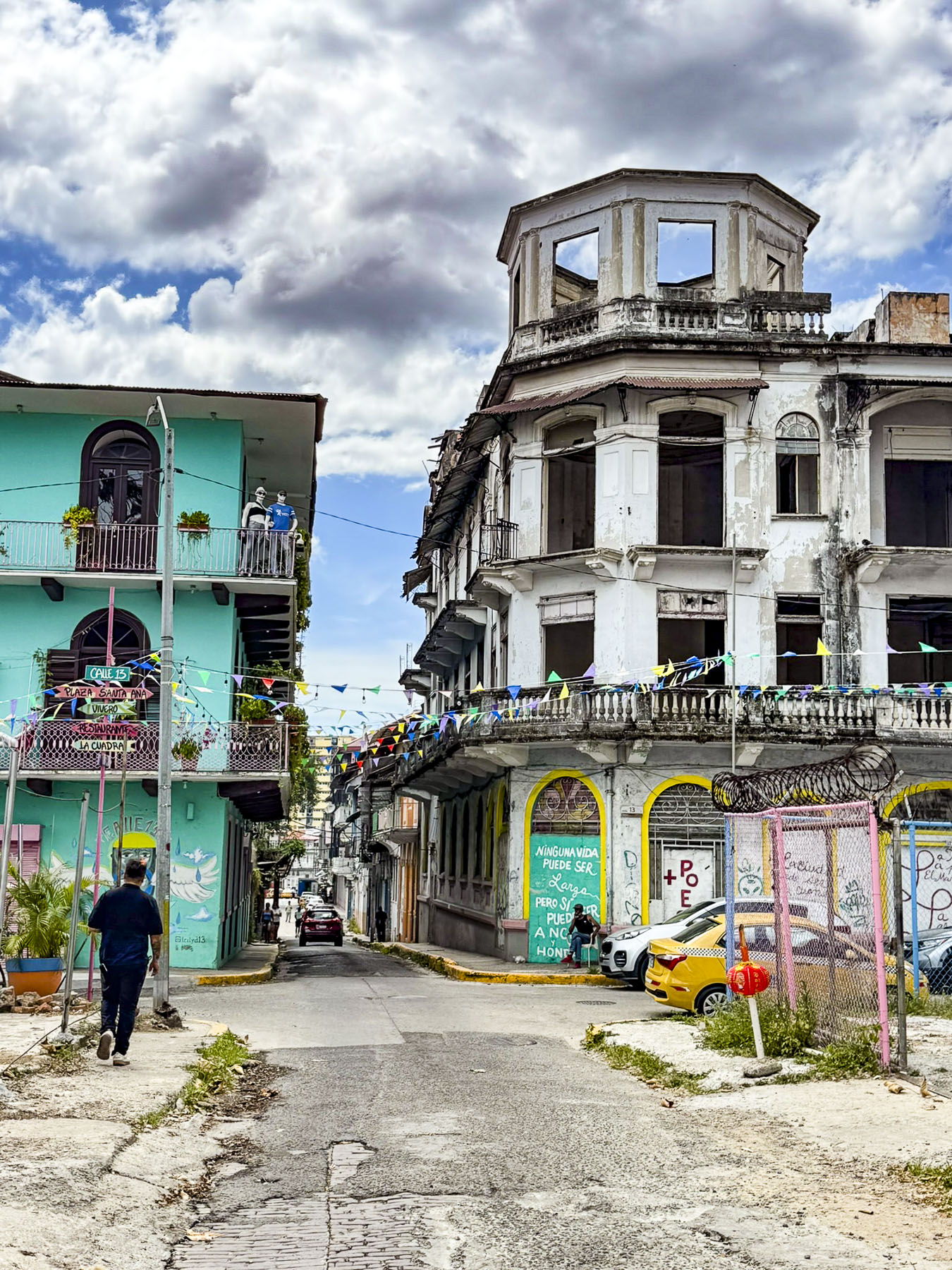
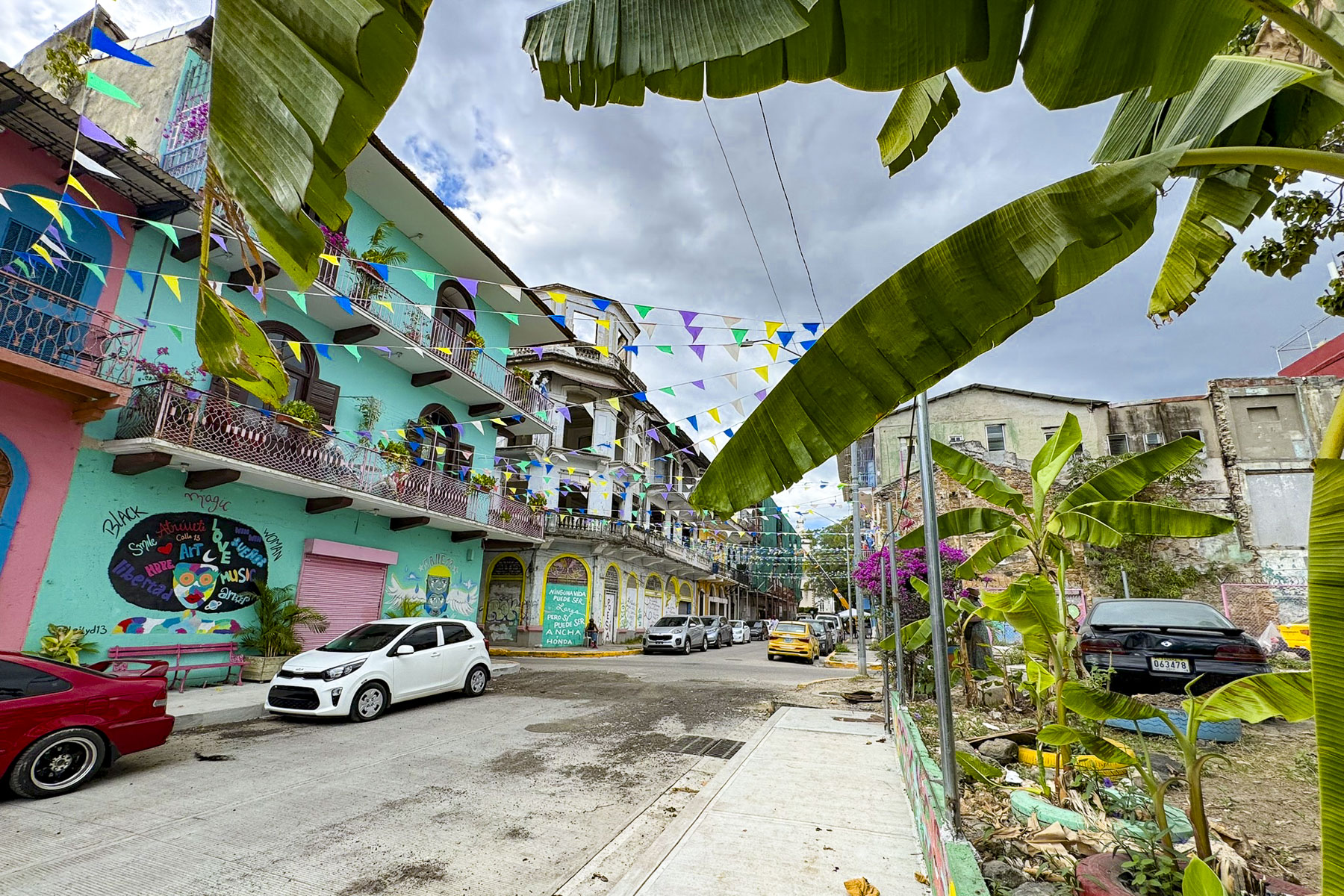
Afterwards we headed to the Santa Anna neighborhood, which was outside the walled citadel. While parts of it are in the UNESCO protected area of the Casco Antiguo; most of it is not. We had read that the area has great potential with many older buildings needing renovation, but were surprised by the quick transition from one neighborhood to another. While hopes are high for the barrio, many of the buildings we passed were only colorfully painted facades, with the sky above showing through the windows of roofless buildings.

Returning to Old Town we passed the Iglesia de la Merced, the only church to survive, fully intact, the destruction of Panama La Vieja during the pirate’s 1671 attack on the town. After the attack the church was disassembled by Franciscan monks and moved stone by stone to the new town, where it was painstakingly rebuilt, and is believed to be several years older than Iglesia de San José.

Our “walk a little then café,” beckoned when we happened upon Café Unido, a local coffee shop that pridefully specializes in Panamanian grown coffee, which they consider the best in the world.

A delightfully warm March day wandering the colorful streets of the Casco Antiguo was the perfect way to end our week in Panama. Between the beauty of the countryside and the coast, along with the warm hospitality of the Panamanians, we can understand why the country is a warm weather haven for expats from all across the northern hemisphere.

Hopefully, we will get the opportunity to explore more of the country in the future.

Till next time,

Craig & Donna

Along the Coast of Uruguay: Sand in Our Shoes – Faro de José Ignacio & Punta del Este & Beyond

After a three-day road trip through the colonial towns of Colonia del Sacramento and Carmelo, then the rural farmlands of Minas and ranchlands of Gorzon, the amount of activity around the traffic circle in Faro de José Ignacio took us by surprise. We had reached civilization again! Not that it was really busy, but literally more cars had passed us in the last five minutes than the last three days, as we pulled into the small collection of shops along Rt10, which leads up from Punta del Este. Some fruit and supplies were gathered for our four night stay at Casa Franca from the Devoto Market, a well-stocked, but typical beach town store that benefits from a captive market. A few doors down the Panadería José Ignacio, a popular bakery, has a very nice selection of bread, pastries and tasty delectables. They also have a pizza and sandwich counter along with tables for eating outside on their terrace. We returned every morning during our stay for fresh from the oven delights.

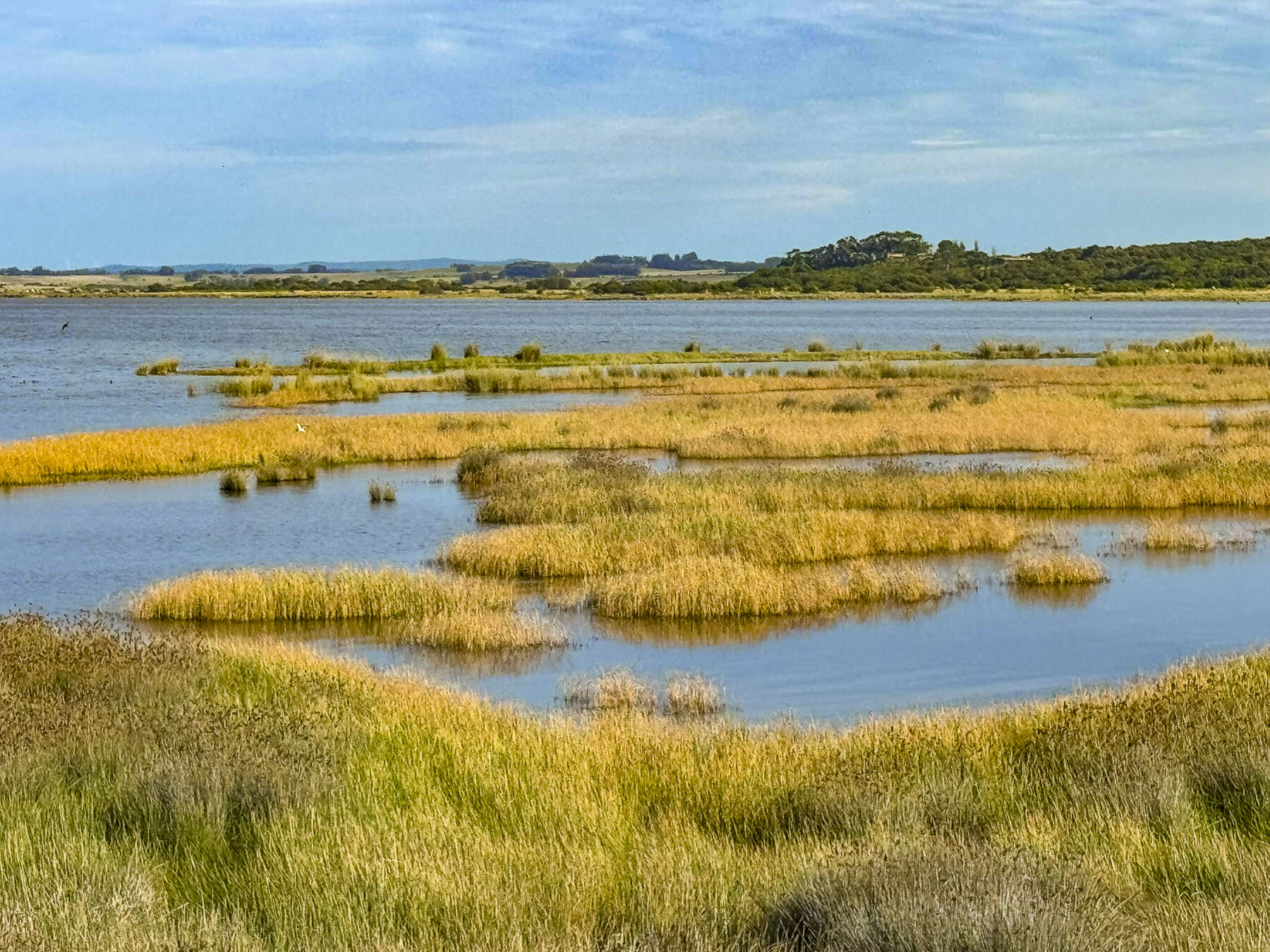
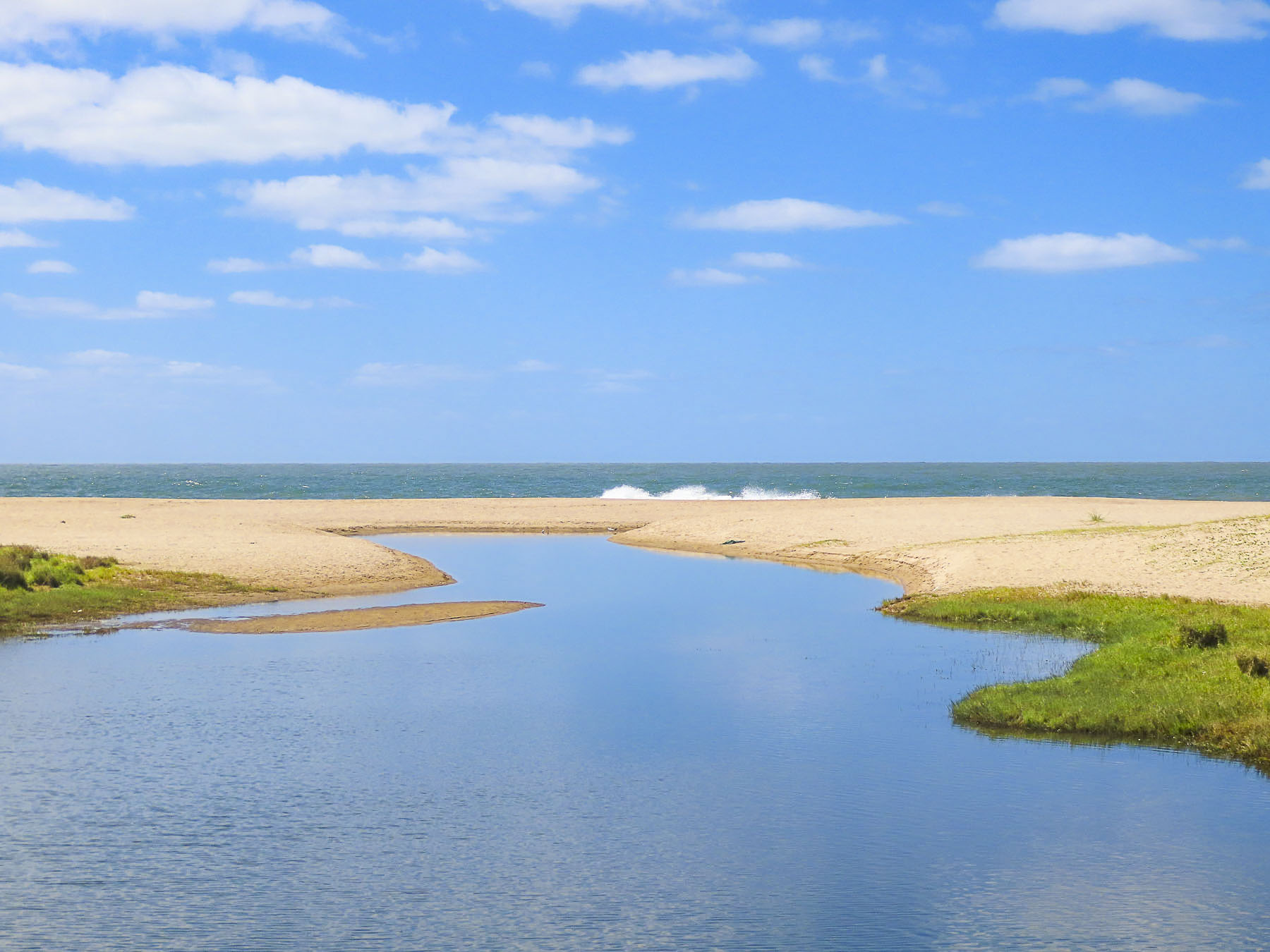
Folks parked along the road followed sandy paths across the dunes to the beach. The sails of kite surfers filled the sky as we passed the Laguana de José Ignacio, a freshwater lake separated from the South Atlantic Ocean by a sandbank, which it breaches when it rains too much.

Surf pounded against the Playa Balneario across from our host Daniel’s guesthouse in the tiny hamlet of Santa Mónica, only 5km (3mi) west of Faro de José Ignacio, but a sea change in tranquility, compared to our earlier shopping experience. His wife and children waved from their balcony as his friendly dog energetically greeted us. Daniel helped take our bags to our room, which was located through a private entrance to an extension on their home with three other guest rooms. While our chic petite studio didn’t face the ocean it did thankfully have a shaded porch, where we spent many hours.

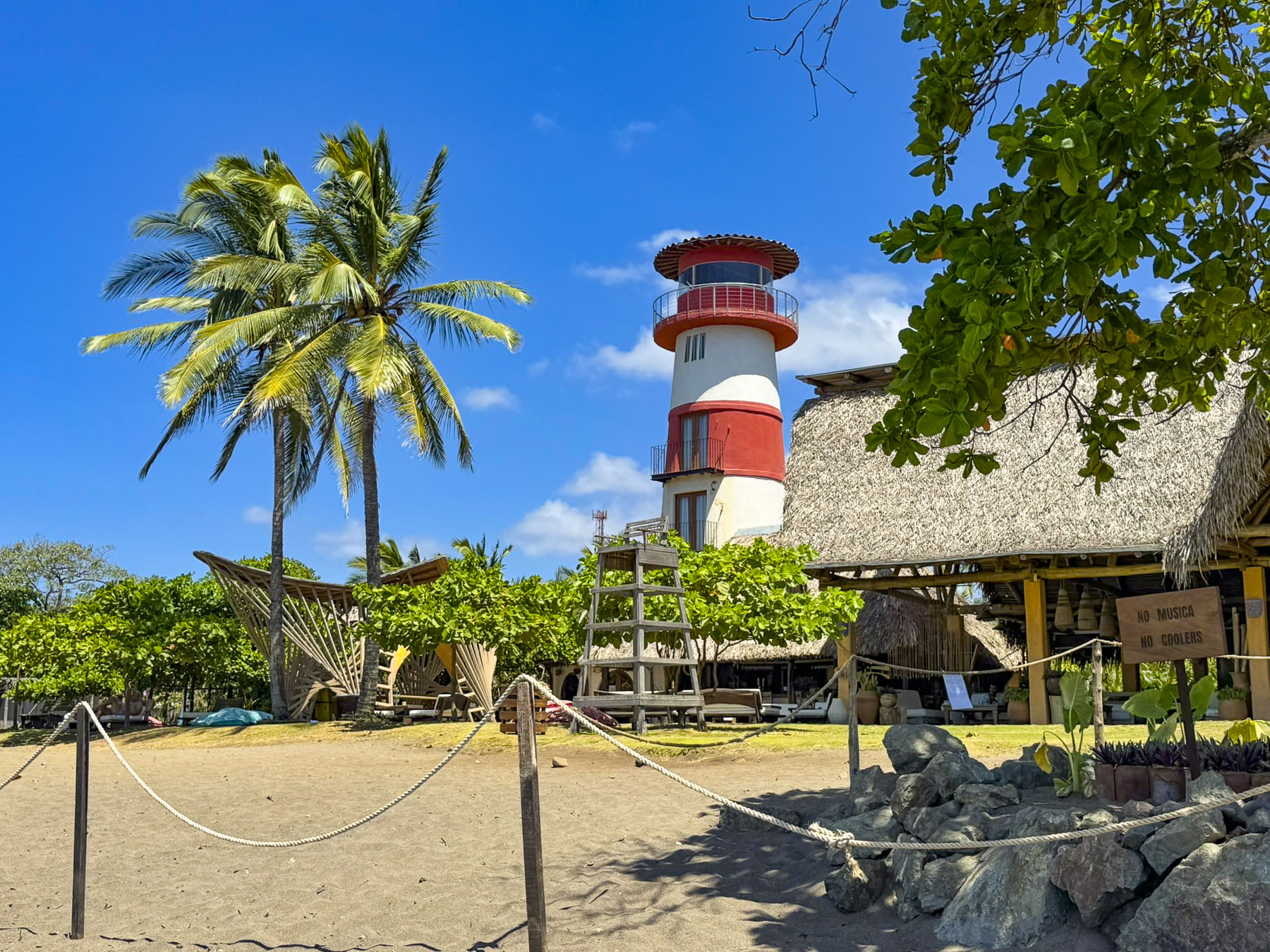
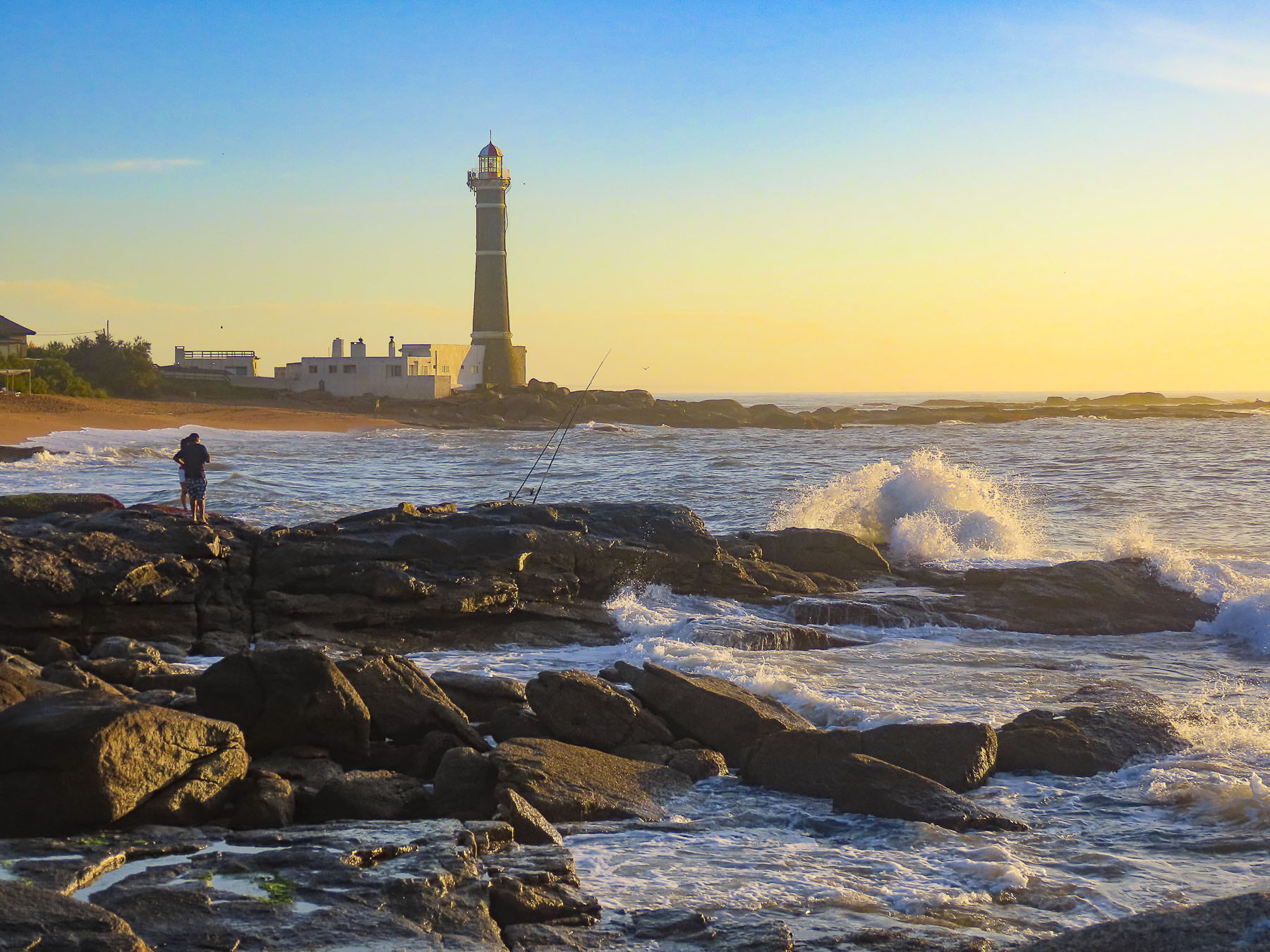
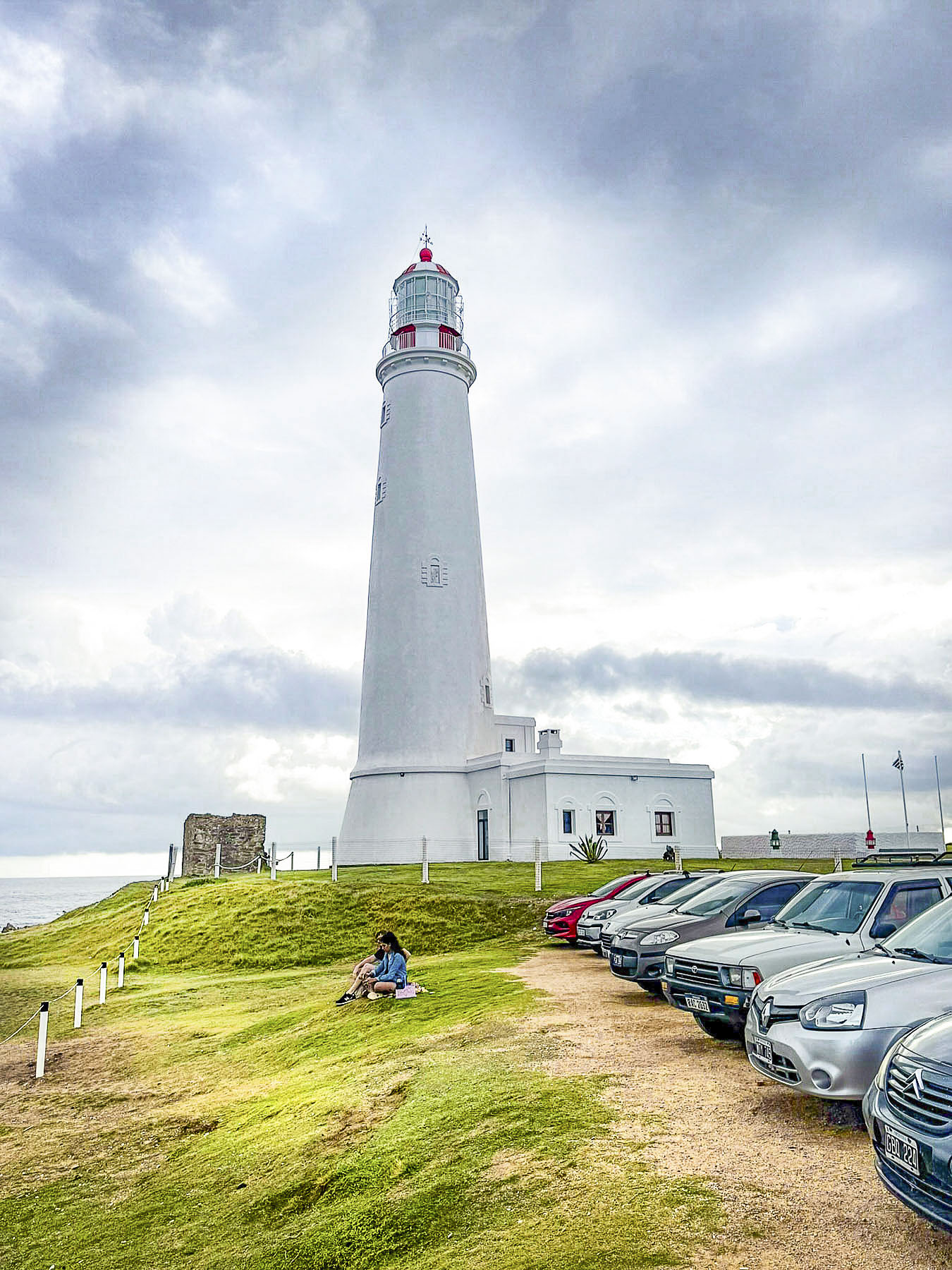
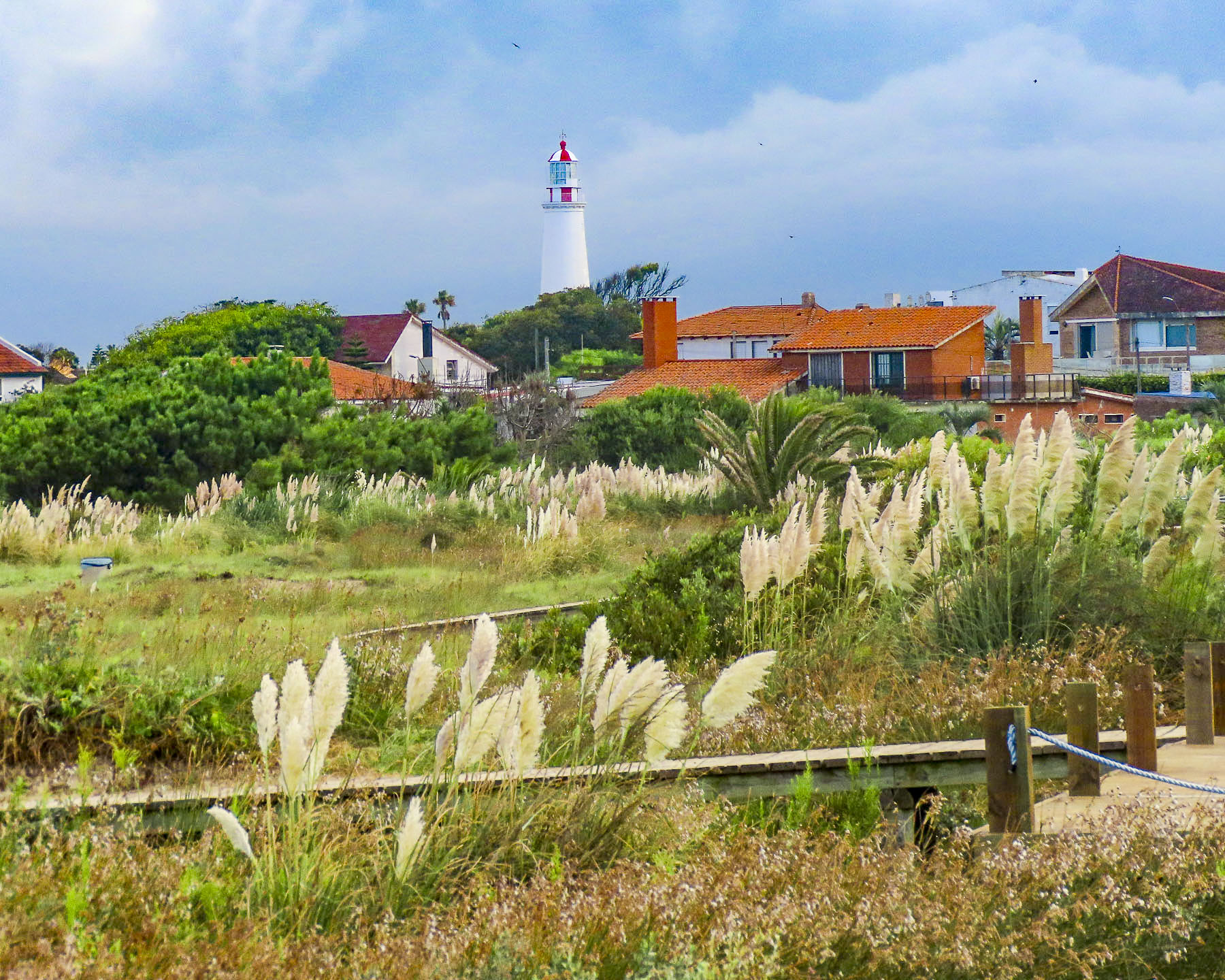
After settling in we headed to the lighthouse in José Ignacio, located on thumb-like peninsula that juts into the South Atlantic. Its 32m (105ft) tall lighthouse has guided sailors off this treacherous reef coast since 1877.

While Punta del Este has been promoted as a beach resort for wealthy Argentinians and Uruguayans since the early 1900s, and is now known as the “Ibiza of Uruguay”. José Ignacio remained a quiet isolated fishing village without running water or electricity, as the coastal road from Punta ended at the Laguana de José Ignacio. All that changed in 1981 with the construction of a bridge across the lagoon. The infrastructure improvements that came at that time were appreciated, but the town’s small population rallied to prevent the coastal area from becoming a Miami-esque playground, and successfully petitioned the local government to enact ordinances to ensure its quiet, peaceful character remained intact by allowing only single-family homes, no taller than two-stories within the Maldonado region. Along with banning discothèques, pubs and nightclubs, as well as all motorized vehicles on the beaches, jet skis and speedboats are also prohibited in the lagoons. Today the town’s seven miles of pristine beaches attract folks from all over who just want to unwind along what many consider the best part of Uruguay’s 410-mile-long coastline.

We walked out onto the rocky point next to the lighthouse, then down a boardwalk over the dunes to the Playa Brava, a long gracefully curved stretch of sand, scoping out the best spots to return to the next morning for sunrise photos. We strolled along the wide beach between lifeguard chairs. Squealing kids ran into the surf from the beach speckled with blankets and sun umbrellas amidst impromptu volleyball and soccer games. We stopped at El Chiringo, an outdoor restaurant with tables in the sand and shared a pizza for an early dinner.

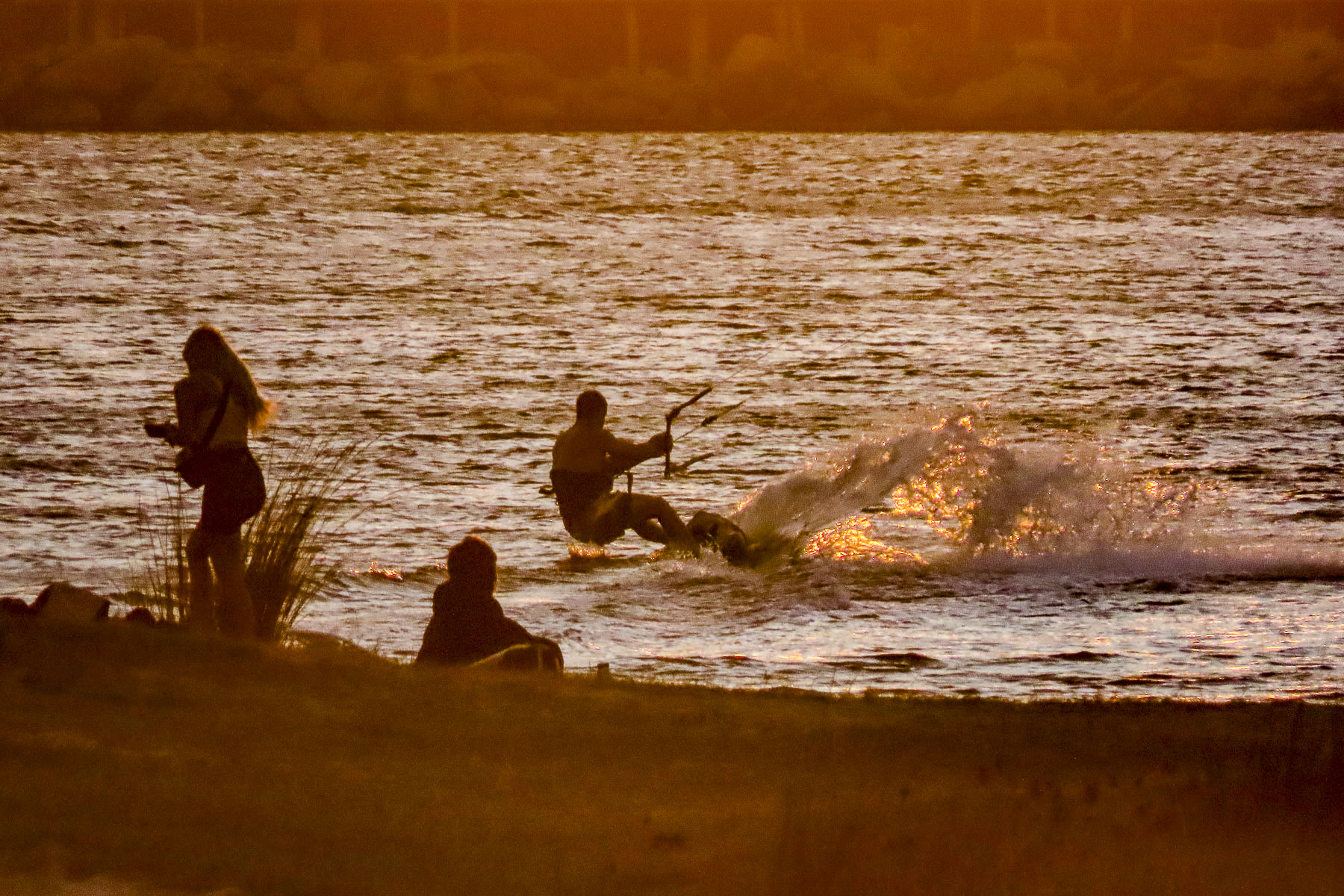
Heading back to Casa Francawe stopped along the lagoonto watch a beautiful sunset across its calm water. Kite Surfers unwilling to end their day skimmed along the water until it was nearly dark.

The next morning Donna slept in while I rose before dawn and drove back to the lighthouse to watch the sun cast its first rays of light across the rocky headland and lighthouse.

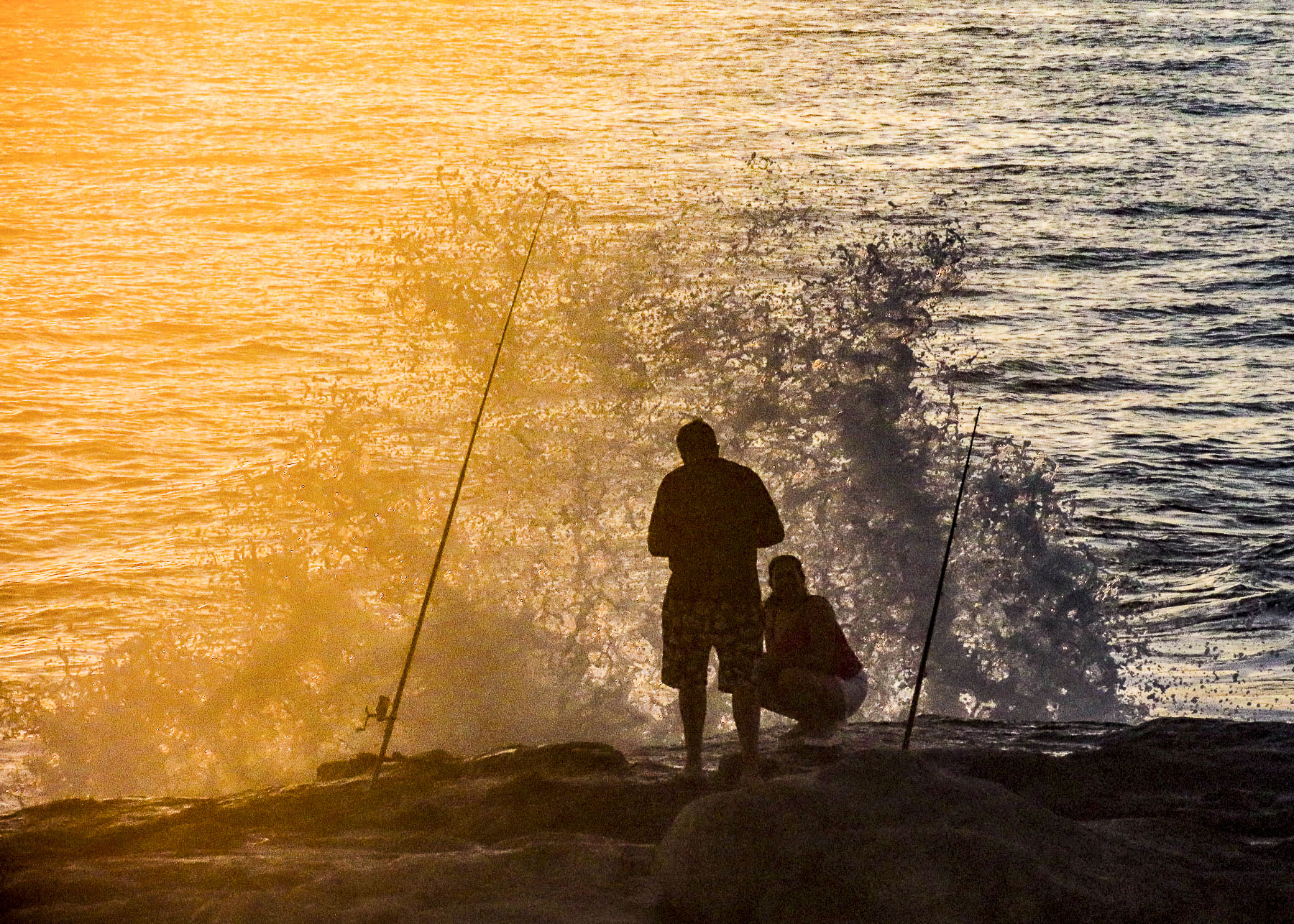
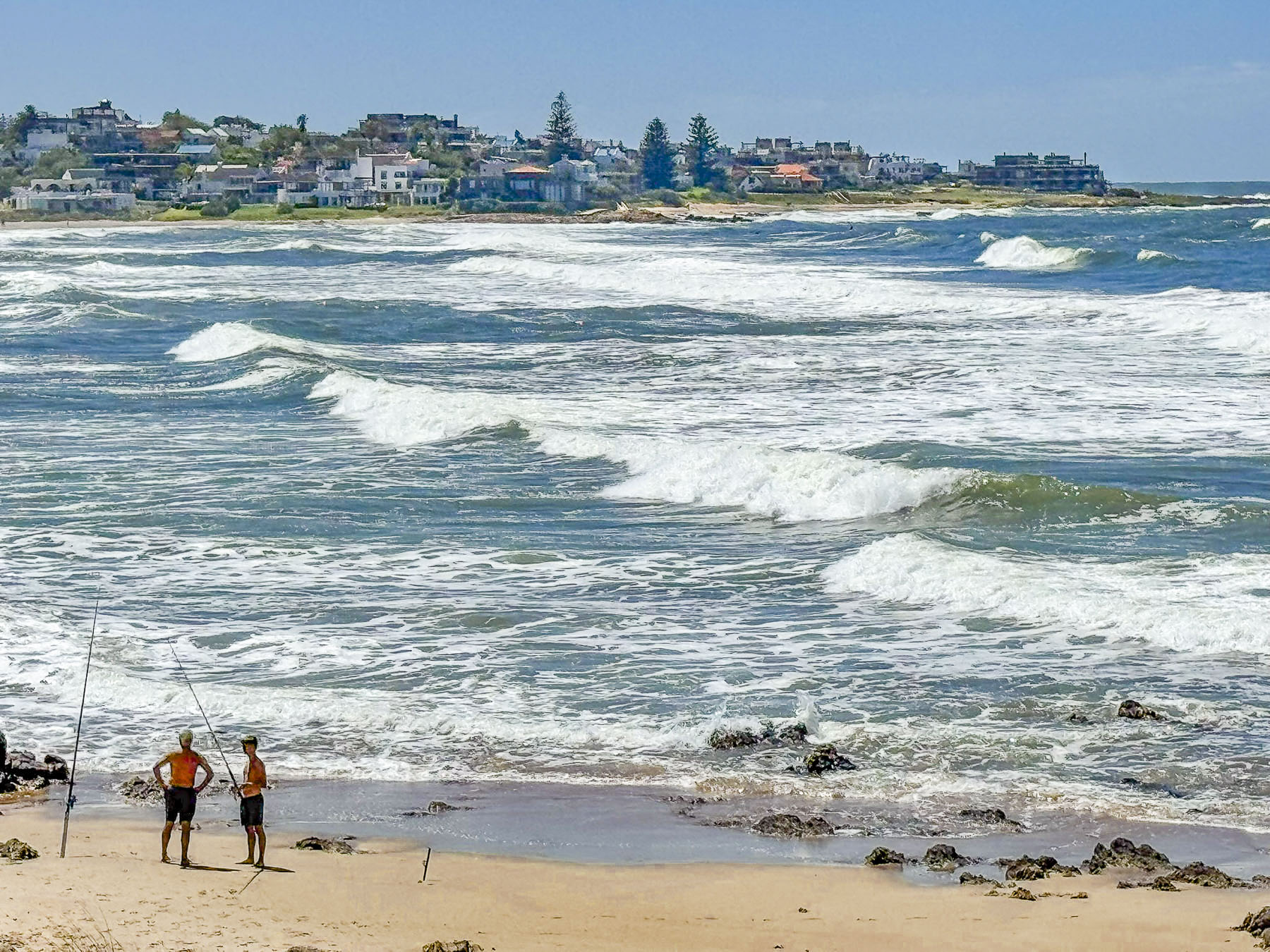
A few hardy fishermen had already made their first casts of the day from the rocks. On the other side of the lighthouse a group of fishermen were readying two large skiffs to push into the surf from the beach. Next to them the first surfer of the day paddled out, and a few joggers pounded along the cool sand in early morning solitude.

After a day of rest and relaxation we wanted to explore the beach towns farther east along the coast as it runs towards Brazil. The weather doesn’t always cooperate, but we were hopeful the sky would clear as we drove along Rt 9 near Rocha. There were a good number of produce stalls along the road hoping to entice travelers to the beaches to shop. We stopped at one with shelves stacked full with jars of local honey, jams, and Dulce de Leche, along with wheels of artisanal cheeses. We purchased a Dambo, similar to Edam or Gouda. It is a traditional local cheese made with the milk from grass fed cows which graze freely in the palm tree studded, pampas rangelands, that define the region. Farther up the road we stopped for our “drive a little then café,” break at a small shop attached to a gas station in the uniquely named town, 19 de Abril.  The town takes its name from an event related the revolutionaries called the Thirty-Three Orientals, who returned from their exile in Argentina on April 19, 1825, an event that eventually started the Cisplatine War, which led to Uruguay’s independence from Brazil.

Normally in the states we avoid like the plague any eateries attached to gas stations, as they are typically places that just offer junk food, but route 9 traversed a semi-rural region, and there were few options. We were pleasantly surprised as we parked to see a mural of a painting by Simon Silva on the side wall of the café. We bought a poster of this image twenty years ago and it still hangs in our home, and it was nice to know that someone else enjoys the image as much as we do. The café Parador 19 de Abril delighted us. It’s a quaint oasis in the wilderness. The cappuccinos and fresh pastries were quite good, and the folks who ran it were very nice.

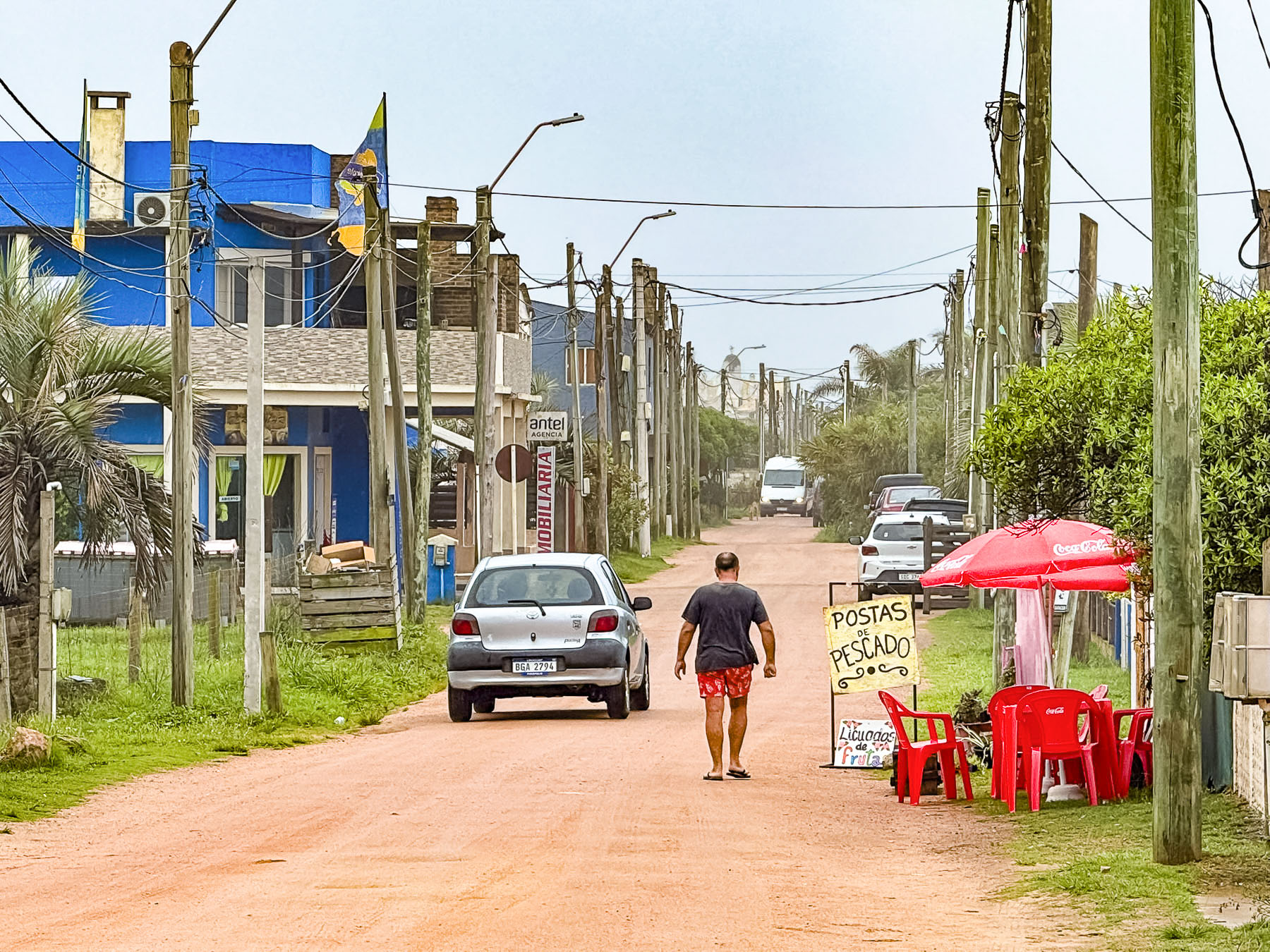
Folks were slipping and sliding through streams of water that were gushing down the hardpacked sandy roads of Punta del Diablo, as a deluge had descended upon us since our coffee break. The rain was too heavy to wander about, but we contented ourselves with driving through the haphazard layout of the oldest part of the rustic fishing village, that now has brightly painted shops and restaurants but is reminiscent of a village being founded by survivors of a shipwreck, using whatever materials they could salvage from the sea. Taking a horse drawn cart across the dunes was the only way to reach the once isolated village, until a road connecting it to Rt 9 was built in 1968. Larger flat bottomed fishing boats were beached along the gentle curve of Playa del Rivero, awaiting their next awaiting their launch at the arrival of high tide. A fisherman under a rain tarp offered his morning catch. Often during the Uruguay’s winter, June to November, the deep ocean just offshore allows folks to spot humpback and southern right whales breaching from the town’s beaches as they migrate north to the warmer waters around Brazil.

By the time we reached Aguas Dulces the rain had stopped, though the sky was still threatening, and the streets were nearly deserted. The high tide was rough from the earlier storm and was inching its way towards the row of boulders placed along the shoreline to prevent further coastal erosion and homes being swept away.  Laidback and low keyed, Aguas Dulces is a budget-friendly destination for Uruguayan families who enjoy its lifeguard protected beaches when the weather cooperates.

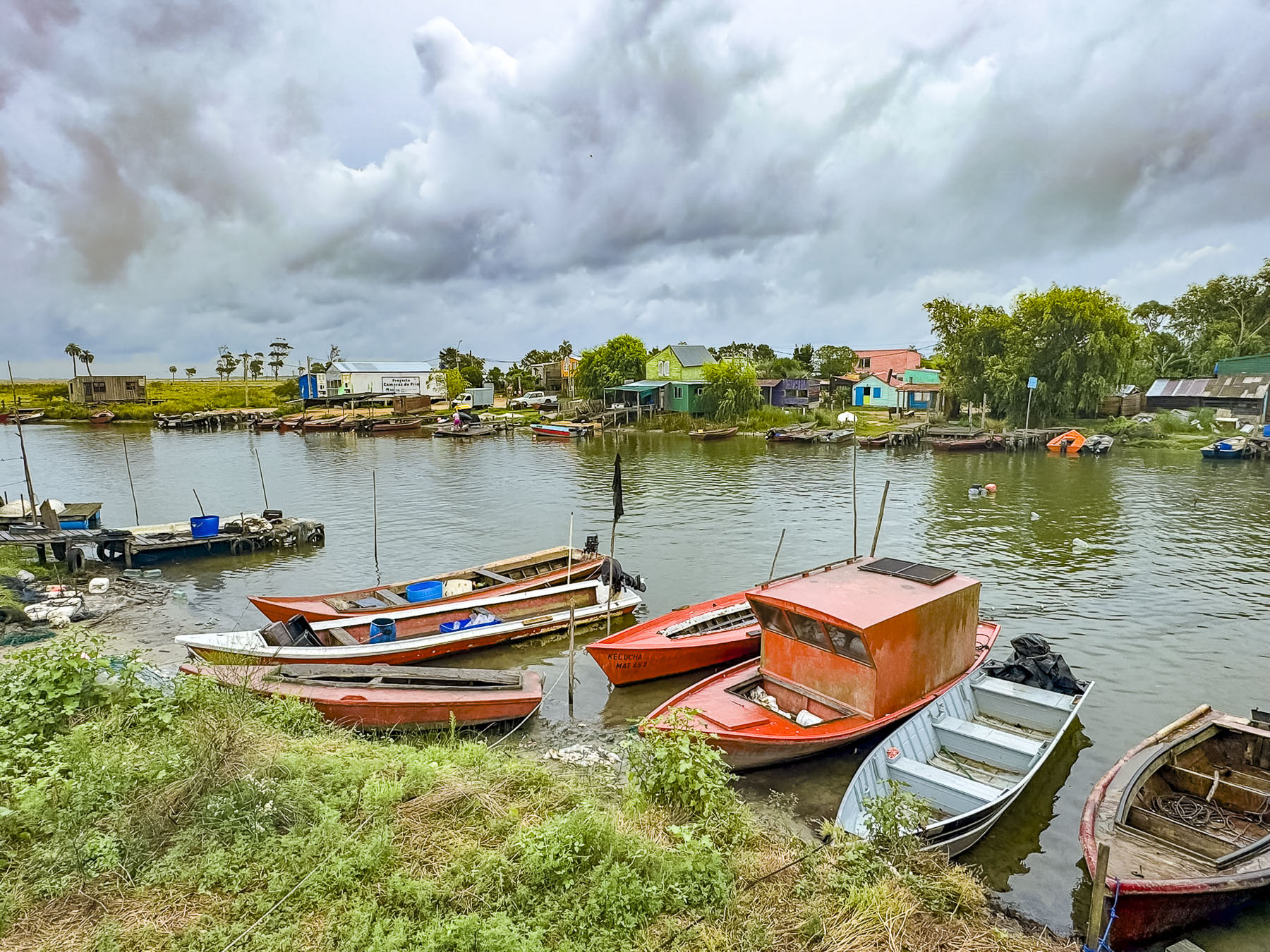
On the way to La Paloma we stopped at Puente Valizas, a picturesque riverside fishing village along the Arroyo Valizas. The tributary flows 10km (6mi) from the Laguana Castillos to the Atlantic Ocean, near the beach resort of Barra de Valizas. The river was busy with fishermen speeding to the Laguana to catch pink shrimp, which thrive in the brackish waters of the lagoon, for the restaurants along the coast.

In La Paloma the afternoon sky was brightening as we walked along the Paseo Marítimo, a boardwalk through the dunes that lined the tranquil waters of Bahía Grande, a small clam shell shaped bay. La Paloma is the largest coastal town east of Punta del Este and is a popular resort area with 20km (12mi) of beaches that are suitable for surfers and families with young children to enjoy.  Eventually we reached El Faro del Cabo Santa Maria, the town’s historic 42m (138 ft) tall lighthouse. Built in 1874, the powerful navigational beacon atop the tower can be seen 37km (23mi) out to sea. When it is open, folks can climb 143 steps to the top for some spectacular views of the coast.

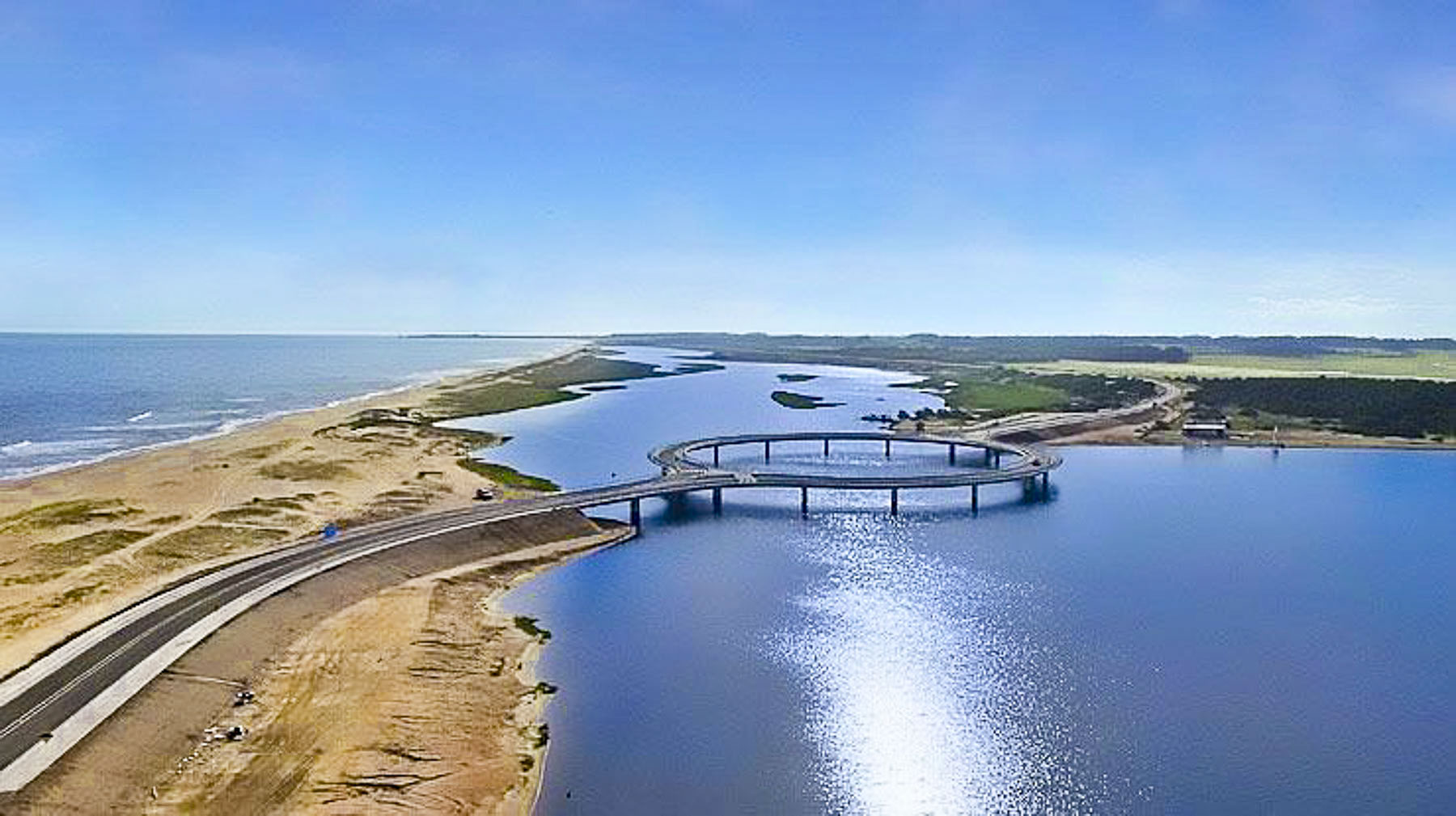
On the way back to Faro de José Ignacio we followed Rt10 across the Laguna Garzón Bridge, an experience that totally took us by surprise, as the 2015 bridge has a unique circular design that resembles a flat donut. It’s really quite unusual but was designed this way to naturally slow the speed of traffic.

Our host and his family the next morning departed for a day trip a few minutes ahead of us. Their dog which watched their leaving from the second-floor deck had somehow escaped and was running frantically around outside the gated area. Fortunately, Donna has mastered that universal dog-call kissing sound, and we were able to lock him securely behind the gate. We called Daniel to let him know.

A few blocks down we stopped to photograph two abandoned properties. They were both very interesting, and we always wonder what the backstory is that goes with these places.

Route 10 hugs the beautiful 33km (20mi) stretch of wild undeveloped coast that extends from Faro de José Ignacio to Punta del Esta.

Reaching the outskirts of Punta we got our first glimpse of the Puente de la barra, a whimsical wavy bridge, that our route followed across the Arroyo Maldonado. Designed in 1965 to force drivers to reduce their speed, it’s said the rollercoaster-like bridge can cause vertigo if you drive too fast across it. On the Punta side there is a traffic circle that made it too easy for us to cross the bridge multiple times, just for the fun of it.

We stopped at a mirador near the “La Ola Celeste,” a stylized sculpture of a wave that overlooks the fast rolling breakers that beat against the waters of the Arroyo Maldonado as the river empties into the sea, and separates Punta from the smaller resort town of La Barra, which has a vibrant nightlife that rivals Punta’s as the best place to party in Uruguay.

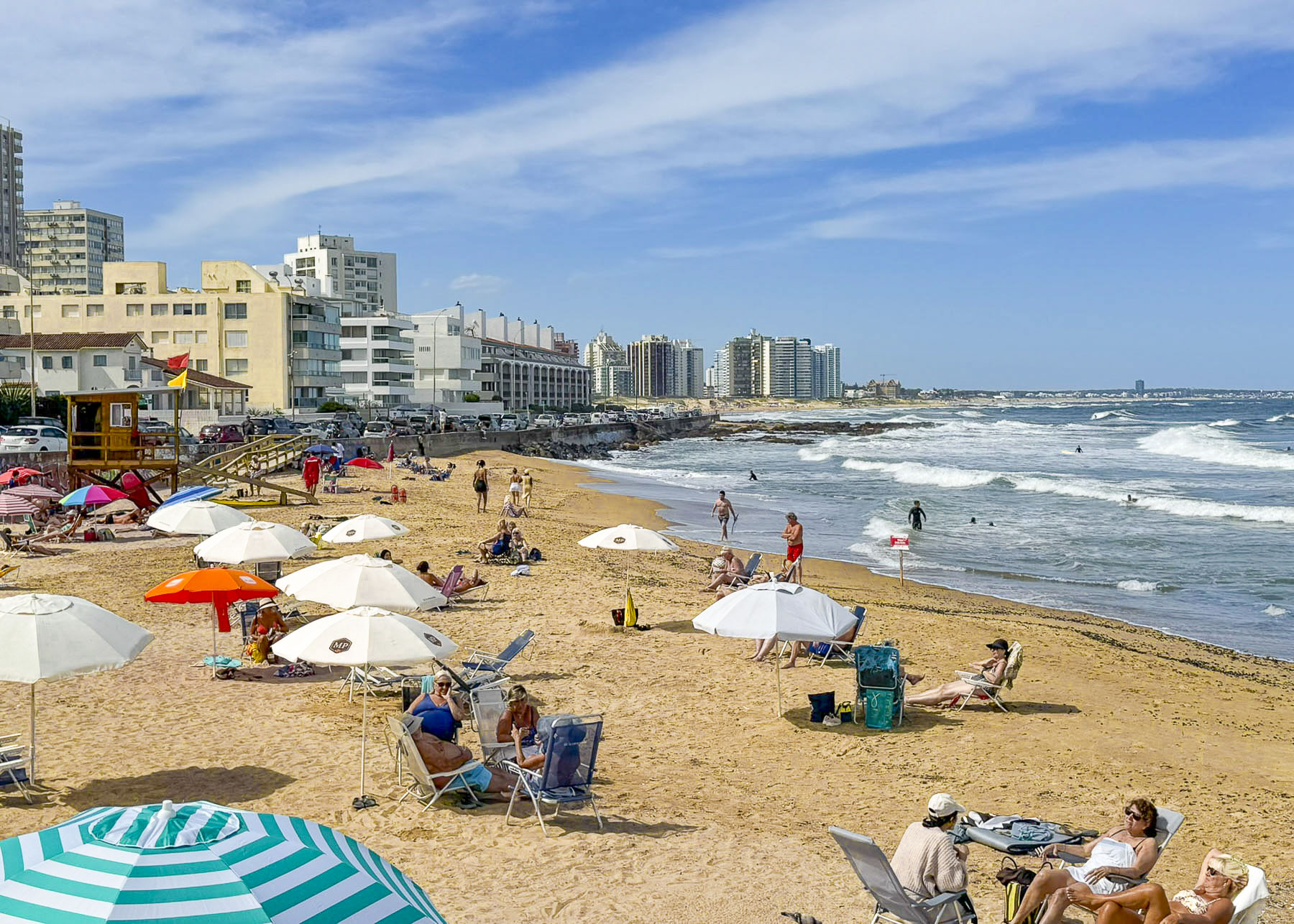
This was also a great spot to get an expansive view of the dramatic beaches along the coast and Punta’s modern skyline, which often prompts folks to refer to it as “the St. Tropez or Monaco of South America.” The vista reminded us of Miami Beach.

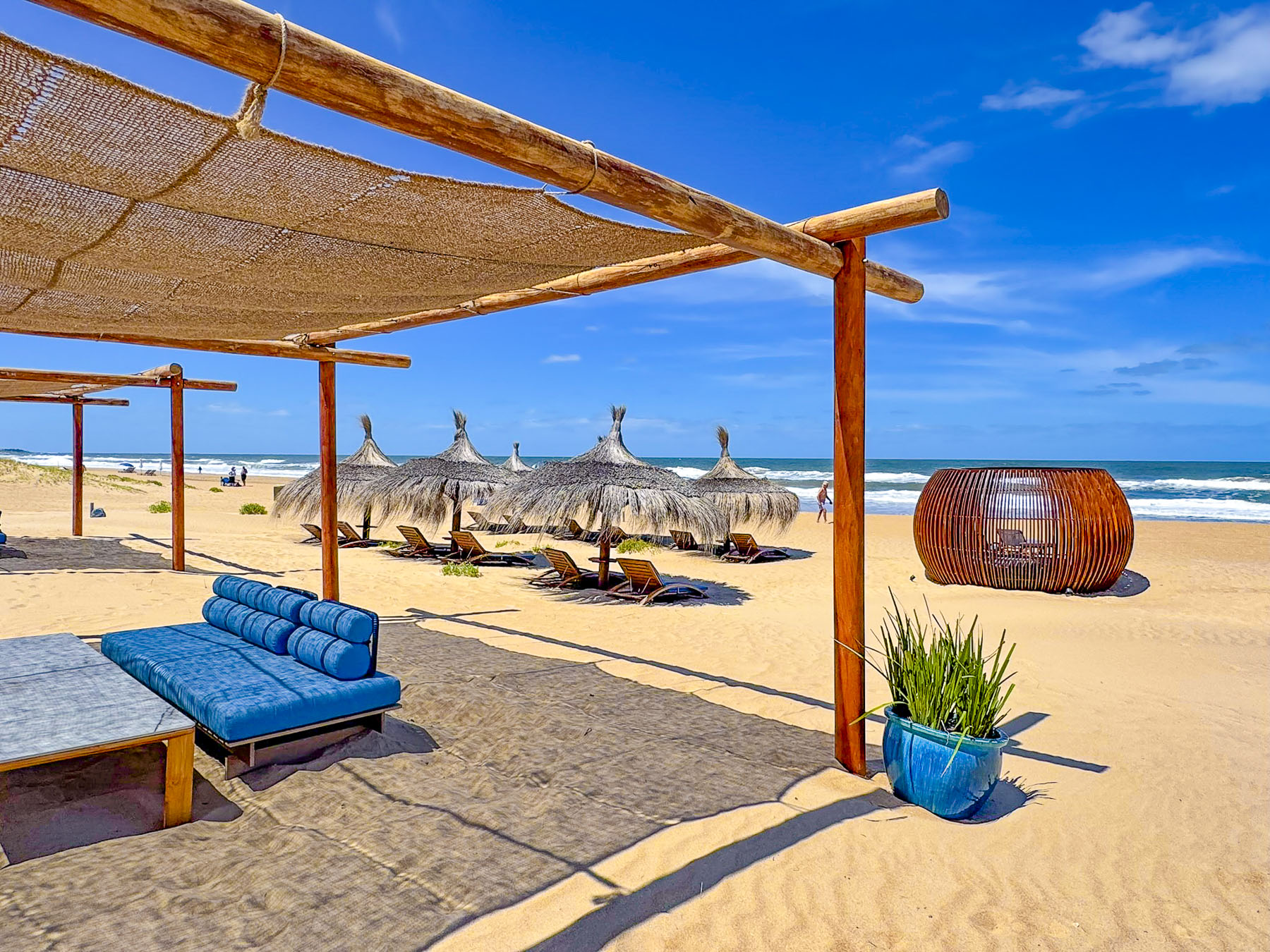
We stopped for lunch at the Aura Beach House, a small modern café with a light menu, set on the brilliant white sand of Playa La Brava. They also have several rows of lounge chairs under nicely thatched beach umbrellas for daily rent. It was a beautiful, relaxing spot and our food and coffees were excellent; we didn’t want to leave. We found in our travels across Uruguay that street parking was always free, even along the beaches, something that is very rare in the United States.

We weren’t sure what the weather was going to be like the next day, so we took advantage of the splendid afternoon and stopped at The Hand, Punta’s most iconic landmark since the Chilean artist Mario Irarrázabal installed it along the oceanfront in 1982. It was very crowded with a tour group, but we waited for their departure before taking any photos. As it turned out the sculpture was within walking distance of our hotel, and we returned to it several times during our stay in Punta.

We continued on our way to the Faro de Punta del Este lighthouse that stands on the highest point of the narrow peninsula that was Old Town Punta, a whaling port established in the early 1800s.  

Punta, like Montevideo, has a lot of public art on the streets we realized as we drove by the Monumento El Rapto de Europa. The large bronze sculpture references the myth of Europa, a Phoenician princess who was abducted by Zeus in the form of a bull and taken to the island of Crete.  Why it is on a street corner near the beach in Punta, we haven’t a clue. Across the street from the lighthouse were several architecturally interesting homes and the very blue Nuestra Señora de la Candelaria church which had a lovely tranquil interior.

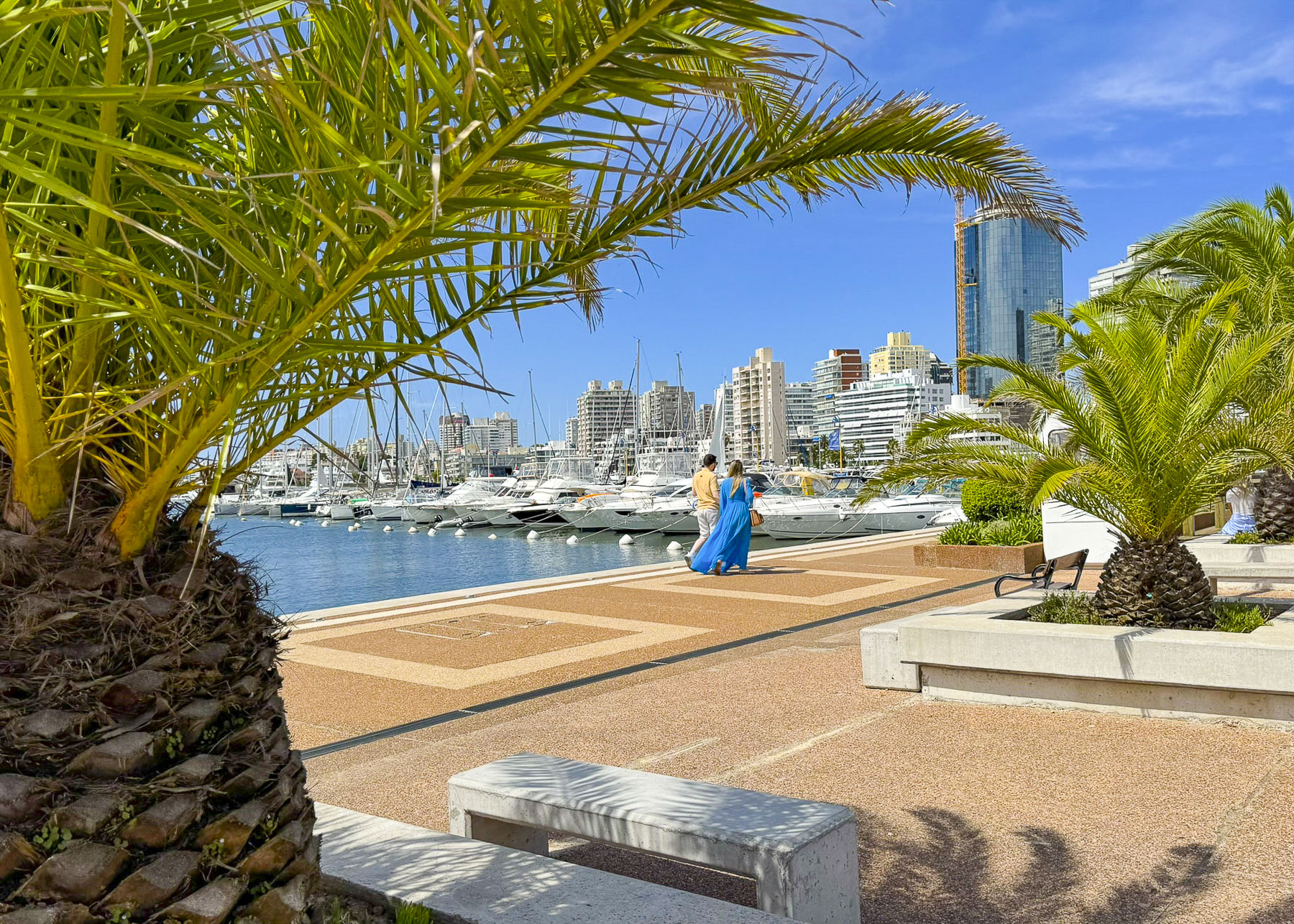
At Punta’s modern marina, sleek motor yachts and sailboats now bob gently in the water where the whaling ships once anchored. The first tourists to Punta arrived in the early 1900s, but it wasn’t until the infrastructure improvements of the 1940’s supported the construction of modern hotels and the town’s first casino that Punta’s reputation as a luxurious destination in South America was cemented. We stayed in the Old Town at Hotel Romimar, a budget-friendly lodging with an excellent breakfast, off Av. Juan Gorlero, Punta’s main shopping street.

We love exploring a new city early in the morning as it wakes up. By 7:30 beach attendants were hard at work carrying lounge chairs and umbrellas from trailers parked along the street, down to the sand and assembling them into tidy rows for their expected sunbathers. It was the perfect time to re-visit The Hand, as the sun was just cresting over its fingertips, and sunlight was reflecting brightly off the row of high-rise condos that fronted the coastline.

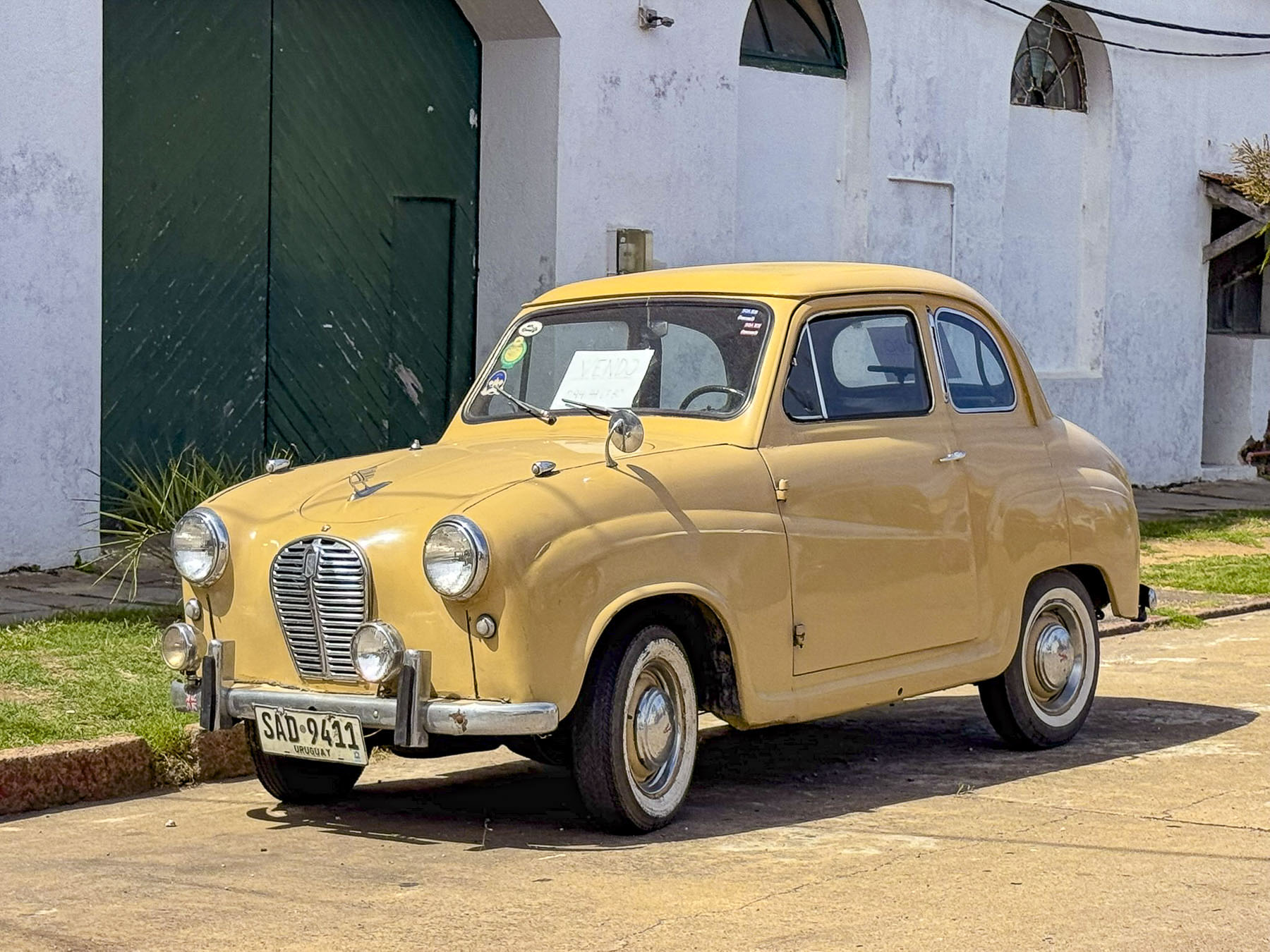
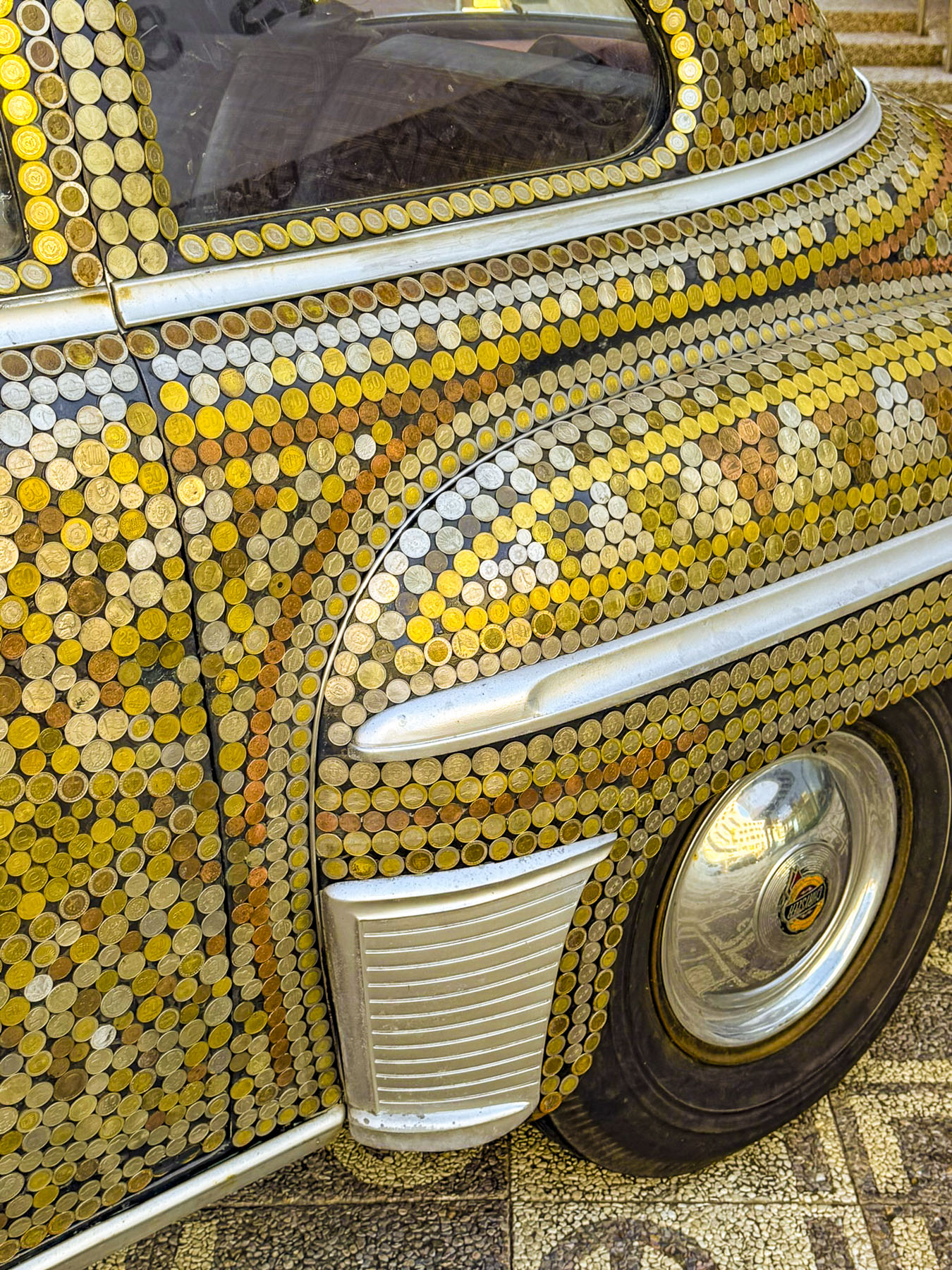
Wandering about we spotted several cachilas, old cars that out of economic necessity were lovingly maintained and passed forward through hard times. Some are now totally restored and look as good as the day they rolled out of the showroom. One, an old Plymouth, was creatively covered in a mosaic pattern of old Uruguayan coins.

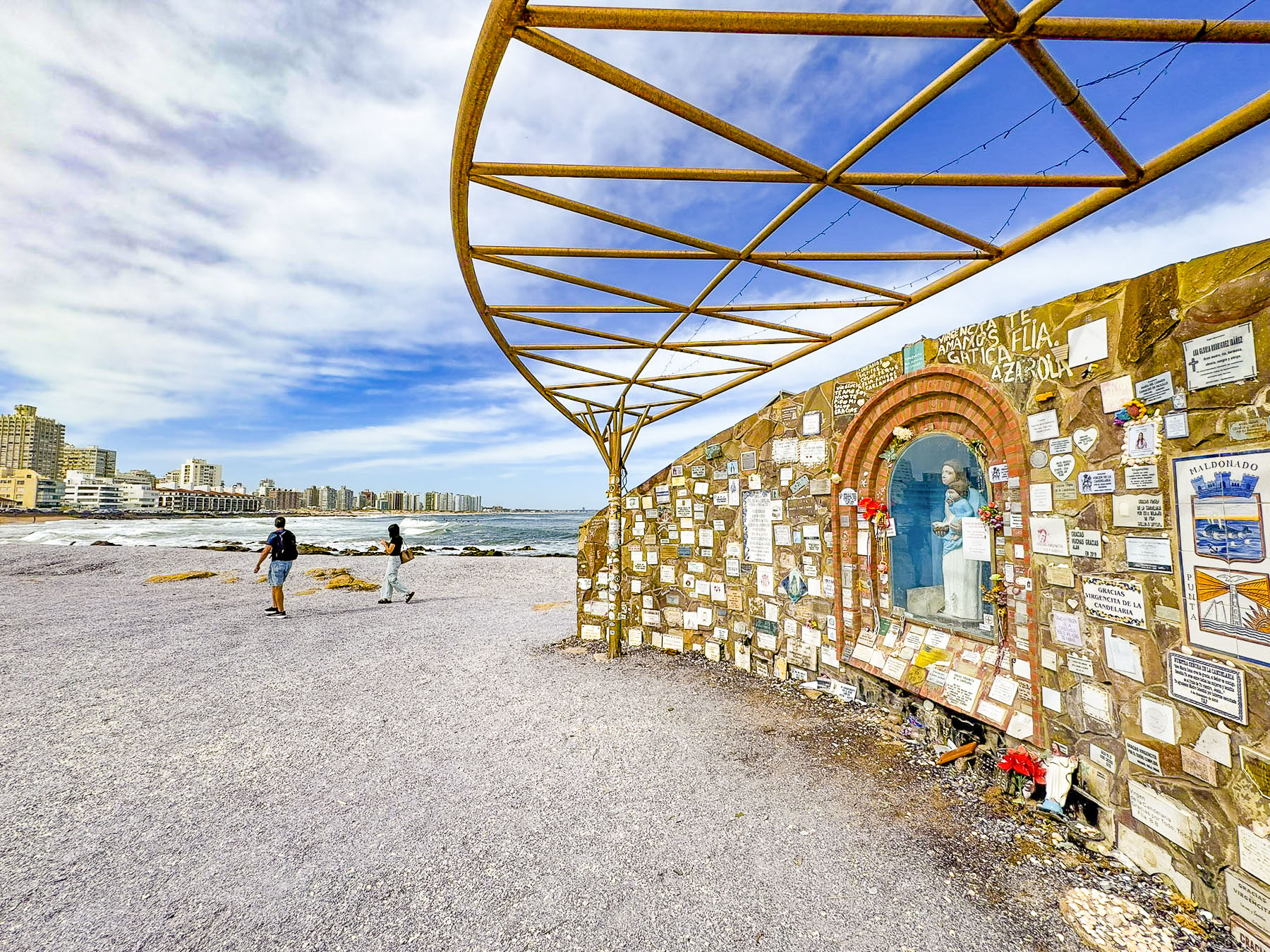
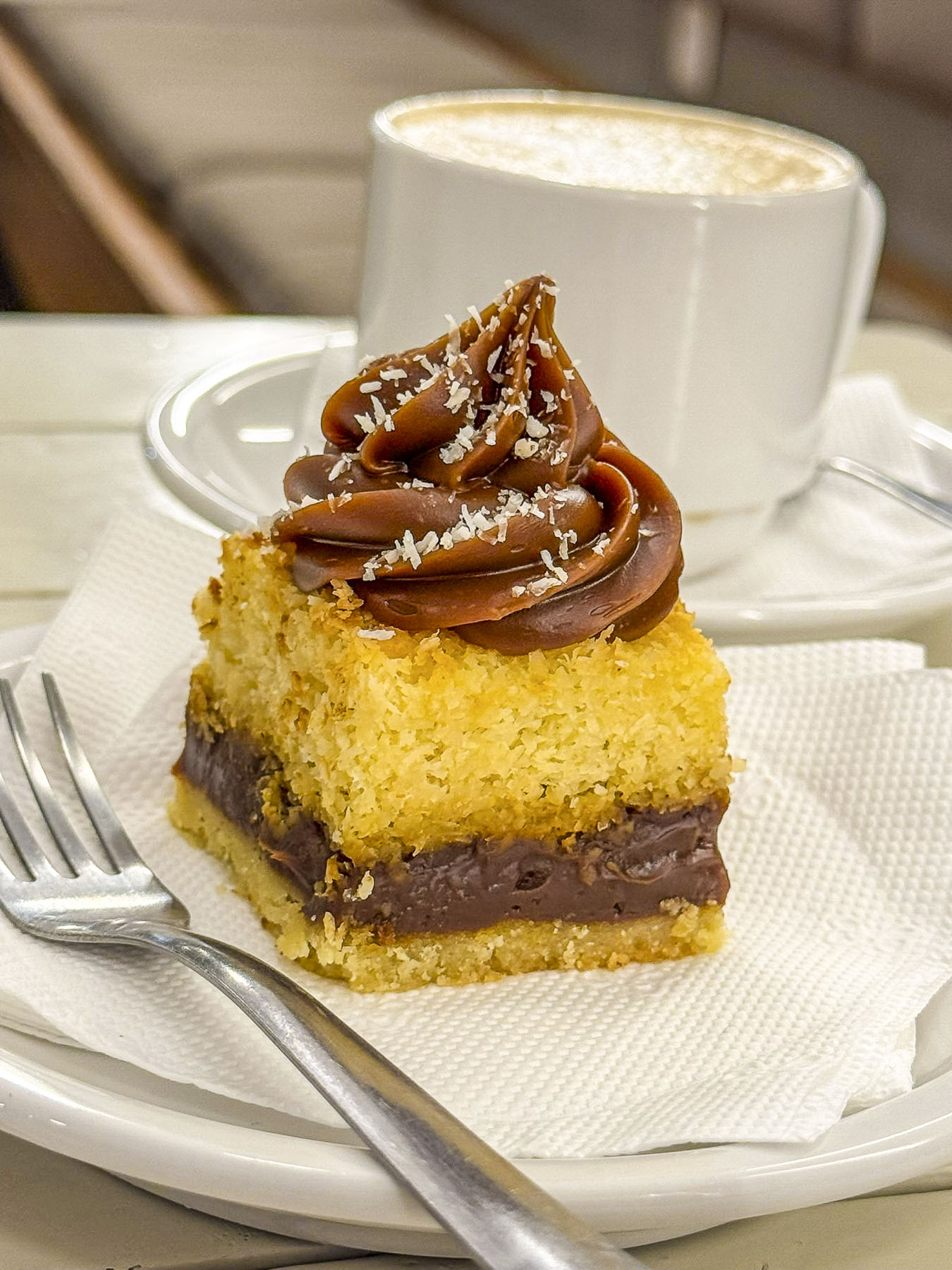
Families were also out early to claim their preferred batches of sand at Playa El Emir, a small beach on the edge of Old Town Punta with a wonderful view of the coastline, near the Ermita Virgen de la Candelaria. The shrine to the patron virgin of Punta del Este is located on a narrow sliver of land that juts into the South Atlantic Ocean, that is believed to be where the Spanish explorer Juan Díaz de Solís held a mass when he landed nearby in 1516. Our “walk a little the café,” breaks were satisfied that morning with excellent coffee and pastries at Donut City and Cresta Café. Both were only a short walk from the beach.

A day trip the next morning took us to towns west along the coast from Punta that also interested us. Our first stop was at the Escultura Cola de la Ballena Franca, an open wire metal sculpture of a whale tail that overlooks the ocean between the endless beaches of Playa Mansa and Playa Cantamar. It is a popular lookout spot for southern right whales during the peak of their winter migration between July and October.

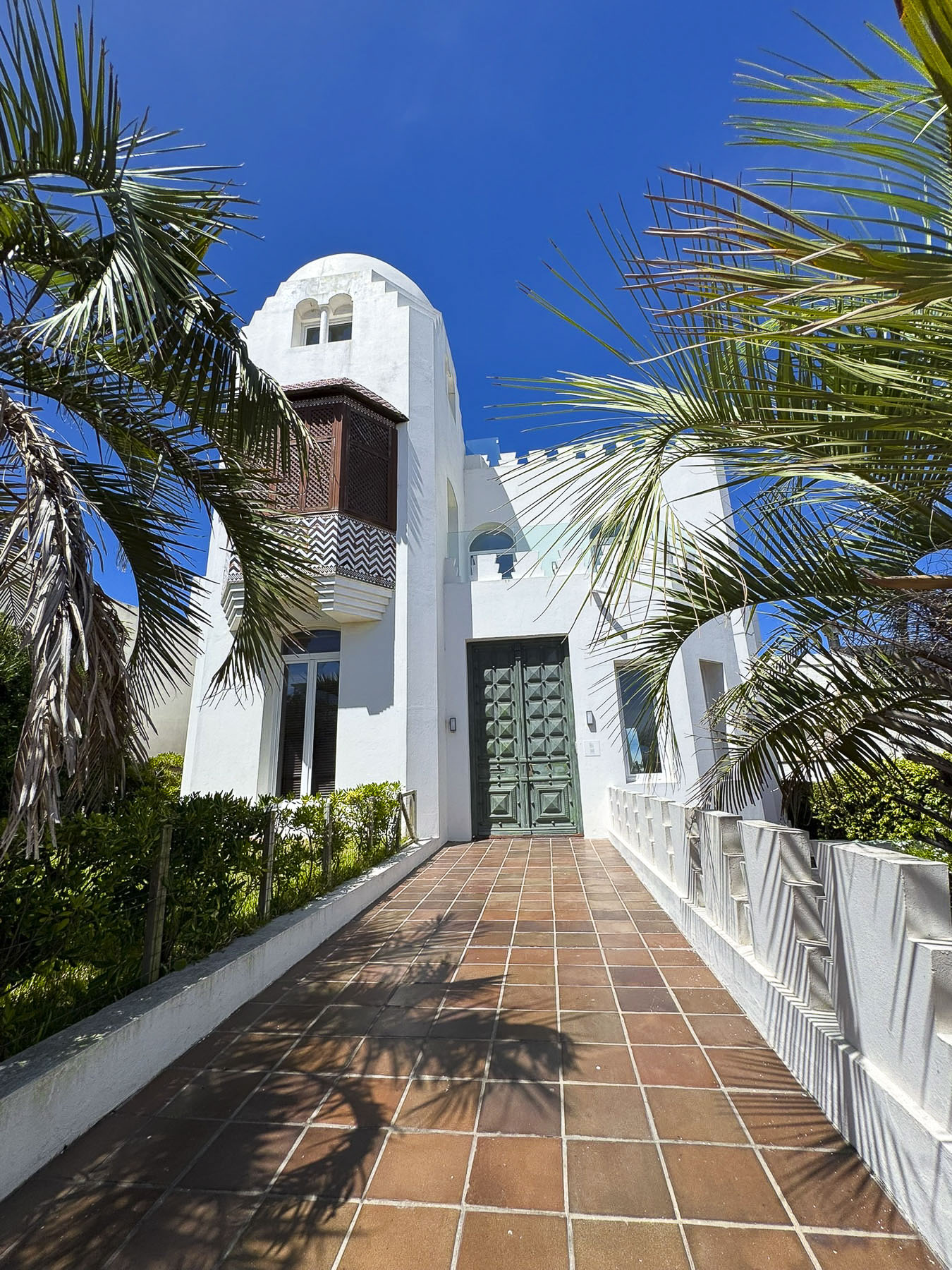
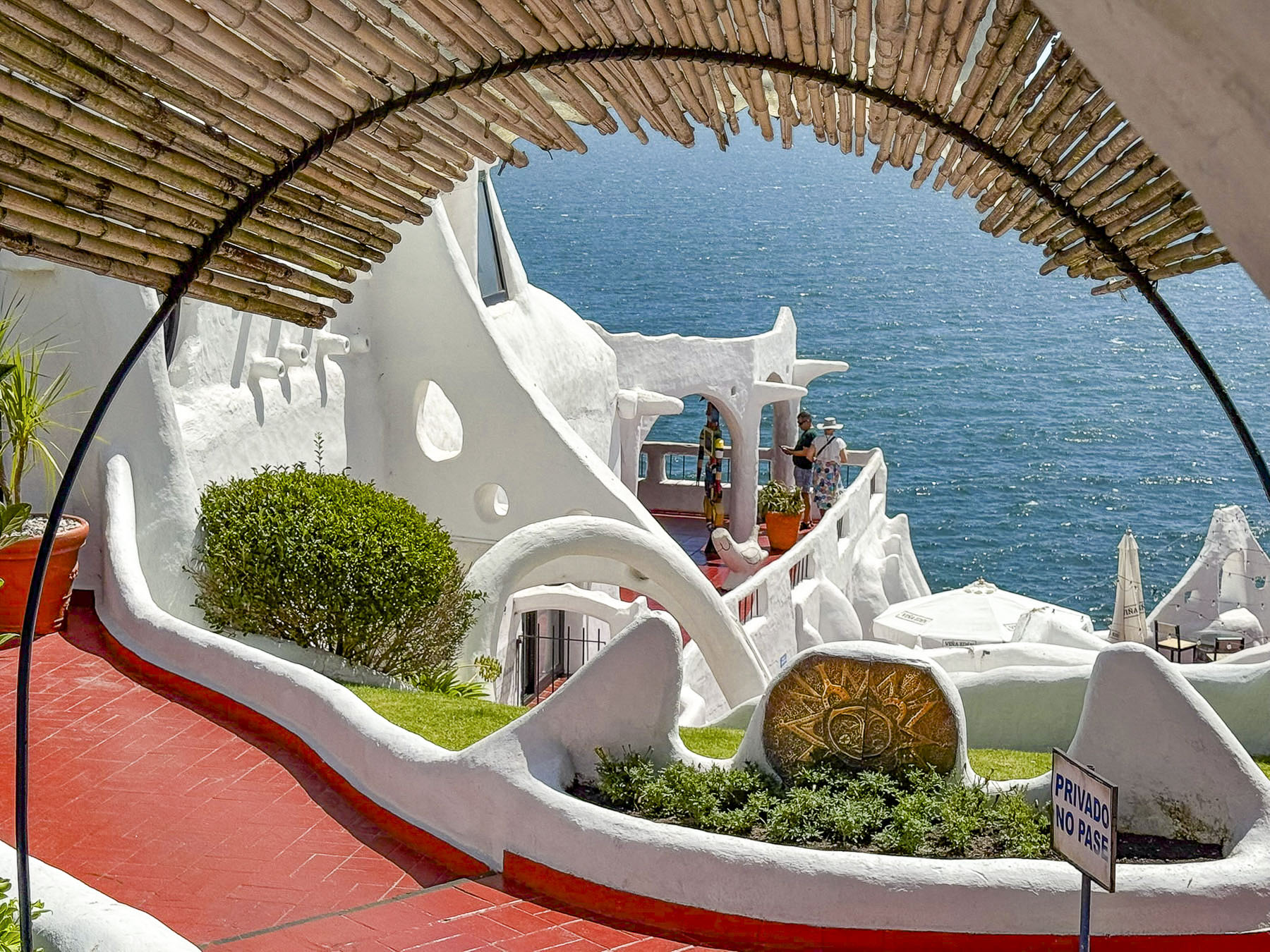
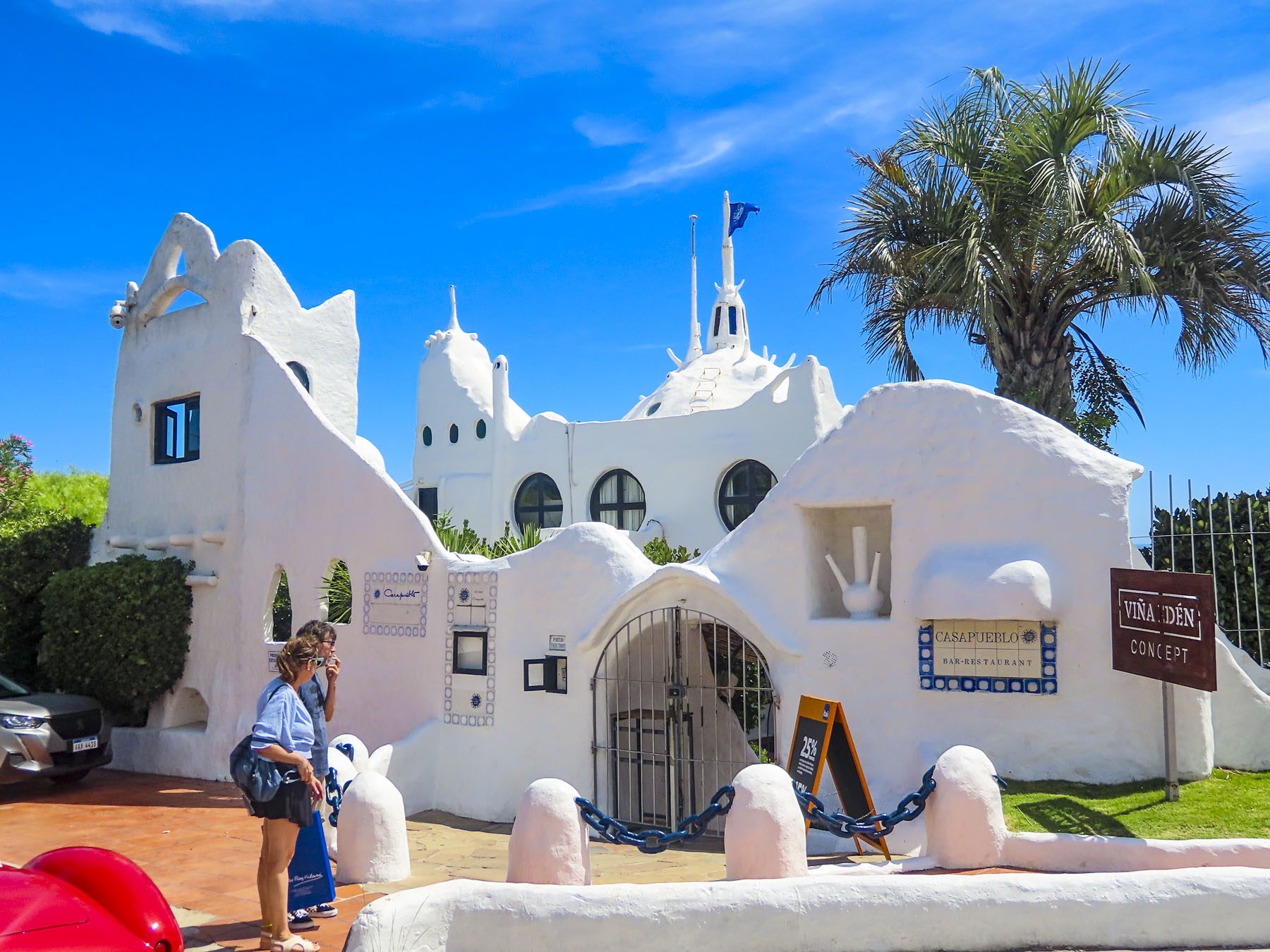
Casapueblo  is a surreal Guadi structure that captures the essence of the whitewashed cliffside homes on the Mediterranean island of Santorini, Greece. It started as a small wooden shack in 1958, the studio of Páez Vilaró, a Uruguayan abstract artist. He expanded it himself along the oceanfront as his family grew, and friends like Picasso and Brigitte Bardot visited, until a whimsical 13-story structure with 72 rooms stacked upon each other covered the cliff face. Today it is a museum and hotel.

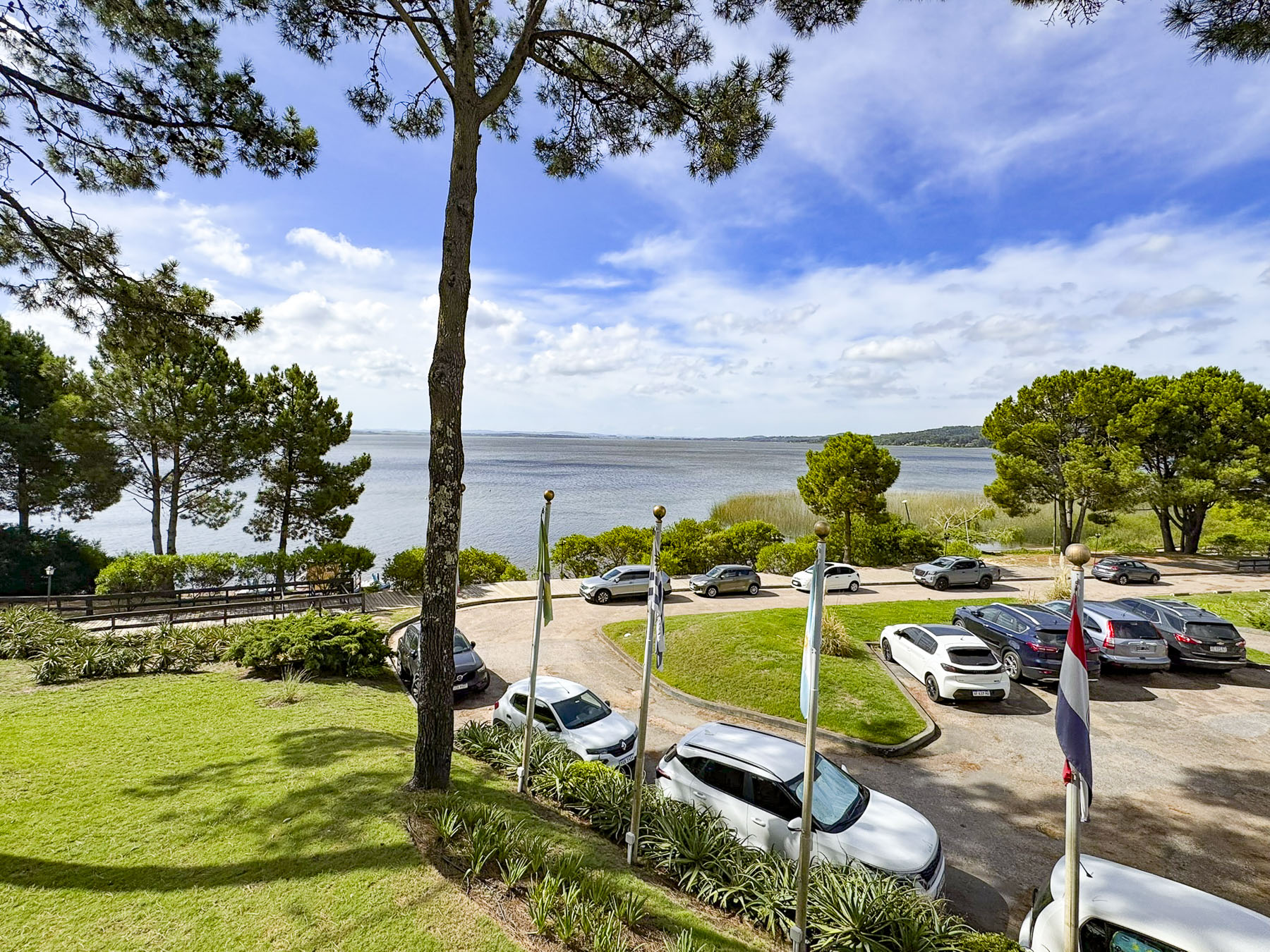
Afterwards we drove to the Laguana del Sauce and enjoyed a quiet lunch overlooking the lagoon from the Hotel Del Lago.

Away from the oceanside a rural landscape quickly unfolded as we drove through farmlands to the Capilla Nuestra Señora de la Asunción, a pretty church that reminded us of settings in the American Midwest.

The next morning, our last full day in Uruguay, we headed west toward the Canelones wine region near Montevideo, an area which produces nearly fifty percent of Uruguayan wines at vineyards which were started four to five generations ago by families which immigrated from Europe. Piriápolis is a small coastal city which grew from a private investment as the country’s first planned resort was along our route. El Balneario del Porvenir (the Resort of the Future) was the vision of Francisco Piria, a wealthy Uruguayan businessman, who in 1890 bought 2700 hectares (6672 acres) of undeveloped land along a beautiful beach, 99km (62mi) from Montevideo. He spent forty years commissioning hotels and a promenade along the oceanfront, which he likened to the French Riviera, before his death in 1933. In 1937 the population of the resort town was large enough to be declared a pueblo, and twenty-three years later it achieved the status of a city. From the landing of a small chapel atop Cerro San Antonio we had a perfect panoramic view of the city that still draws visitors to its beach where families can rent scooter cars for their children to wheel along the promenade. During the high season the Aerosillas Piriápolis chairlift whisks tourist from the marina to the top of the hill. The Castillo de Francisco Piria, the entrepreneur’s home, was on the outskirts of the city as we headed to a wine tasting and overnight stay at the Pizzorno Winery & Lodge.

We arrived at the winery as a tractor pulling a wagon full of just-harvested grapes was being unloaded into a destemmer-crusher, the first step in the long process to create wine.

Founded in 1910, the fourth generation of the Pizzorno family operates the wine estate. It has 21 hectares (52 acres) of vineyards planted with Tannat, Cabernet Sauvignon, Cabernet Franc, Petit Verdot, Merlot, Pinot Noir, Malbec, Arinarnoa, Marselan, Sauvignon Blanc, Chardonnay, and Muscat of Hamburg vines.

We were the only guests that afternoon during the last week of February and thoroughly enjoyed the interesting tour of the wine cellar led by Joaquin, the winery’s sommelier. He   explained their viticulture philosophy which endorses “traditionally harvesting grapes by hand, respect for the ecosystem, environmental conservation through a no fertilization and watering wisely policy, along with green pruning, leaf removal, and bunch thinning to obtain the best grapes, which is reflected in the quality of the wines we make using only our own grapes.”

Afterwards Joaquin’s experience continued to enhance our tasting of four wines as he shared his knowledge of the vineyard’s terroir, and the different grape varietals, along with their aromas, flavors, and recommended pairings with food.

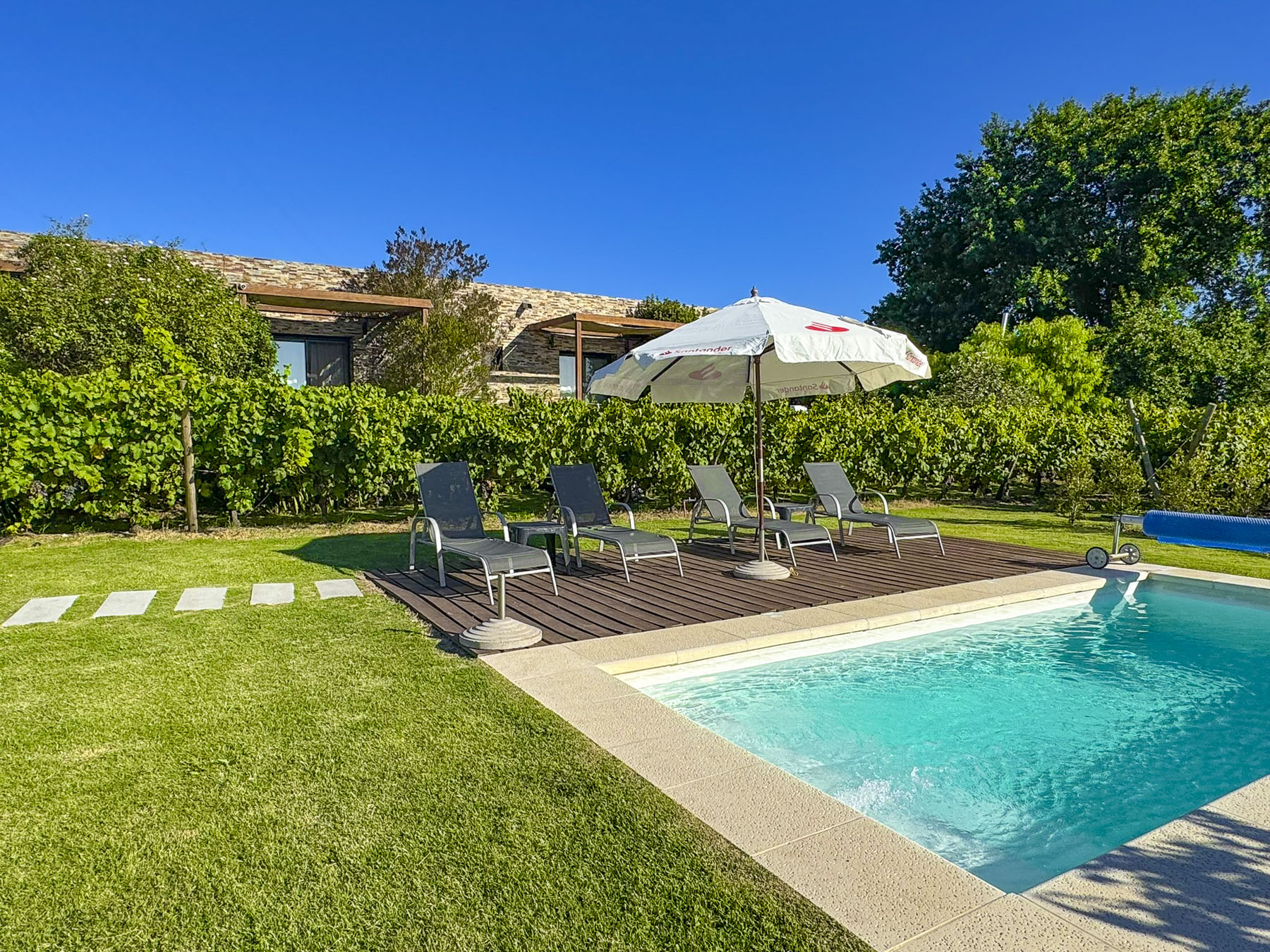
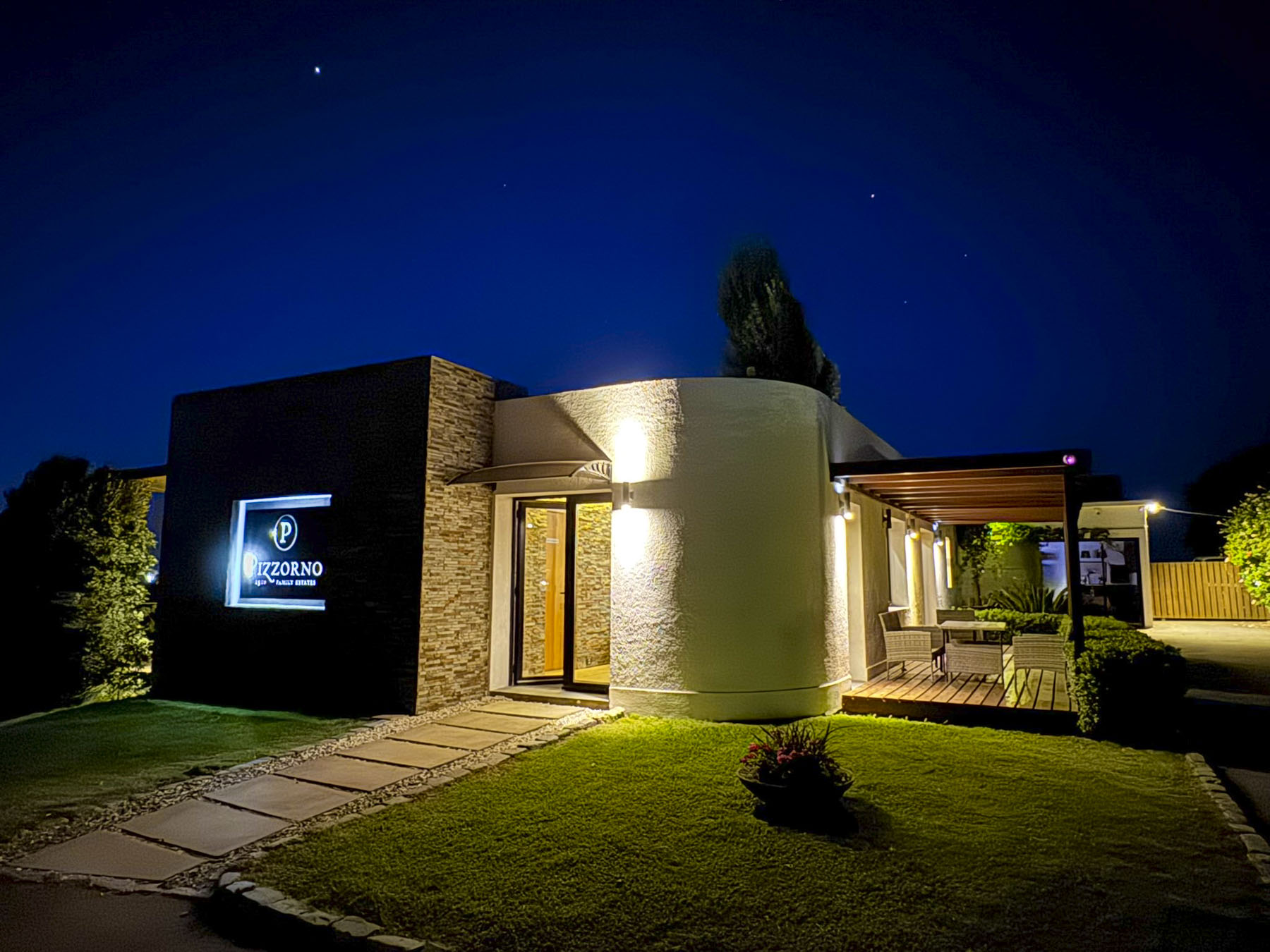
It was our last night of our 15-day trip around Uruguay and we treated ourselves to a luxurious stay in the winery’s posada. It was for many years the family home until it was creatively restored into an attractive boutique inn with four guest rooms overlooking a pool and the vineyards.   

“You will have the posada all to yourselves tonight. Enjoy the pool, and feel free to walk through the vineyard. A nightwatchman will arrive later.”  The golden hour was upon the vineyard as we cooled off in the pool. 

This surely dates us, but it felt like we were in an episode of the TV show Lifestyles of the Rich and Famous hosted by Robin Leach, who used to sign-off with “Champagne wishes and caviar dreams.”

Till next time,

Craig & Donna

A Latvian Road Trip: Part 8 – Aristocrats, Soviet Propaganda & the Mountains of Vidzeme or on the Road to Sigulda

Šiauliai, the Hill of Crosses, and the rustic wooden Chapel of Jakiškiai were our only stops in Lithuania. All three were incredibly interesting, and an art filled Šiauliai was a fantastic discovery that we hadn’t expected but thoroughly enjoyed wandering through. The city of Vilnius, Latvia’s capital, required a time-consuming loop to the east that we chose to forgo, but hope to have a chance of visiting in the future.

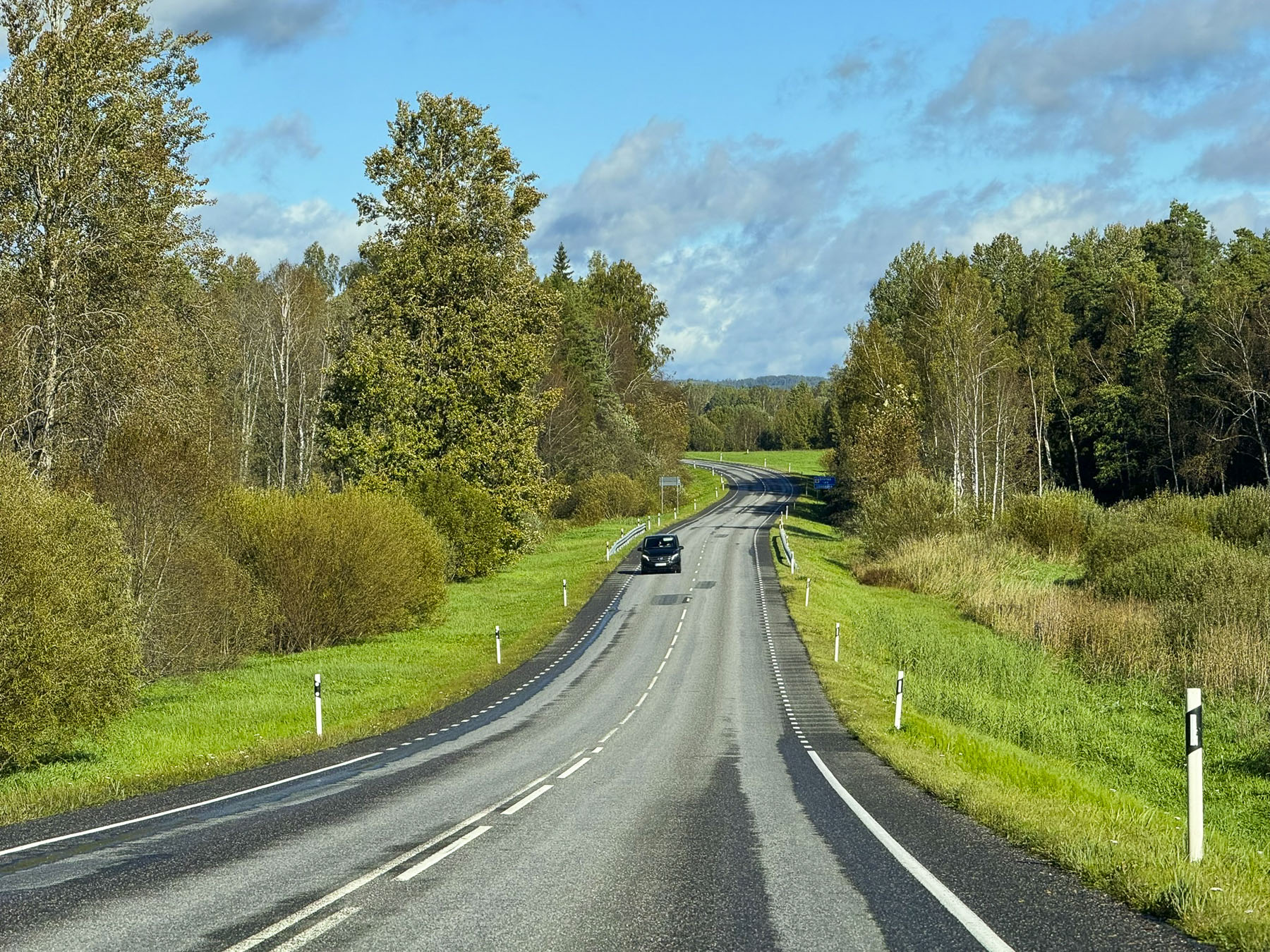
It was a beautiful fall day as we recrossed the border into Latvia. Our route took us through the Zemgale Plain, Latvia’s agricultural heartland, an area flat to the horizon as far as our eyes could see. The country’s most fertile region, it’s often called the breadbasket of Latvia. Farmers ploughing their fields revealed dark rich soil ready for the planting of winter wheat.

We don’t do a lot of research before a trip, just enough to determine that we will probably enjoy where we are headed. We find spots along our intended route, to break up the drive, by examining Google maps the evening before the next morning’s departure. That’s how we discovered the Rundāle Palace, an exquisitely restored 18th-century baroque manor with ornamental gardens and museum highlighting the history of the Dukes of Courland, and their thoroughbred stud farms that were renown throughout the Baltics and Russia for the horses they supplied for the equestrian pursuits of various royal courts.

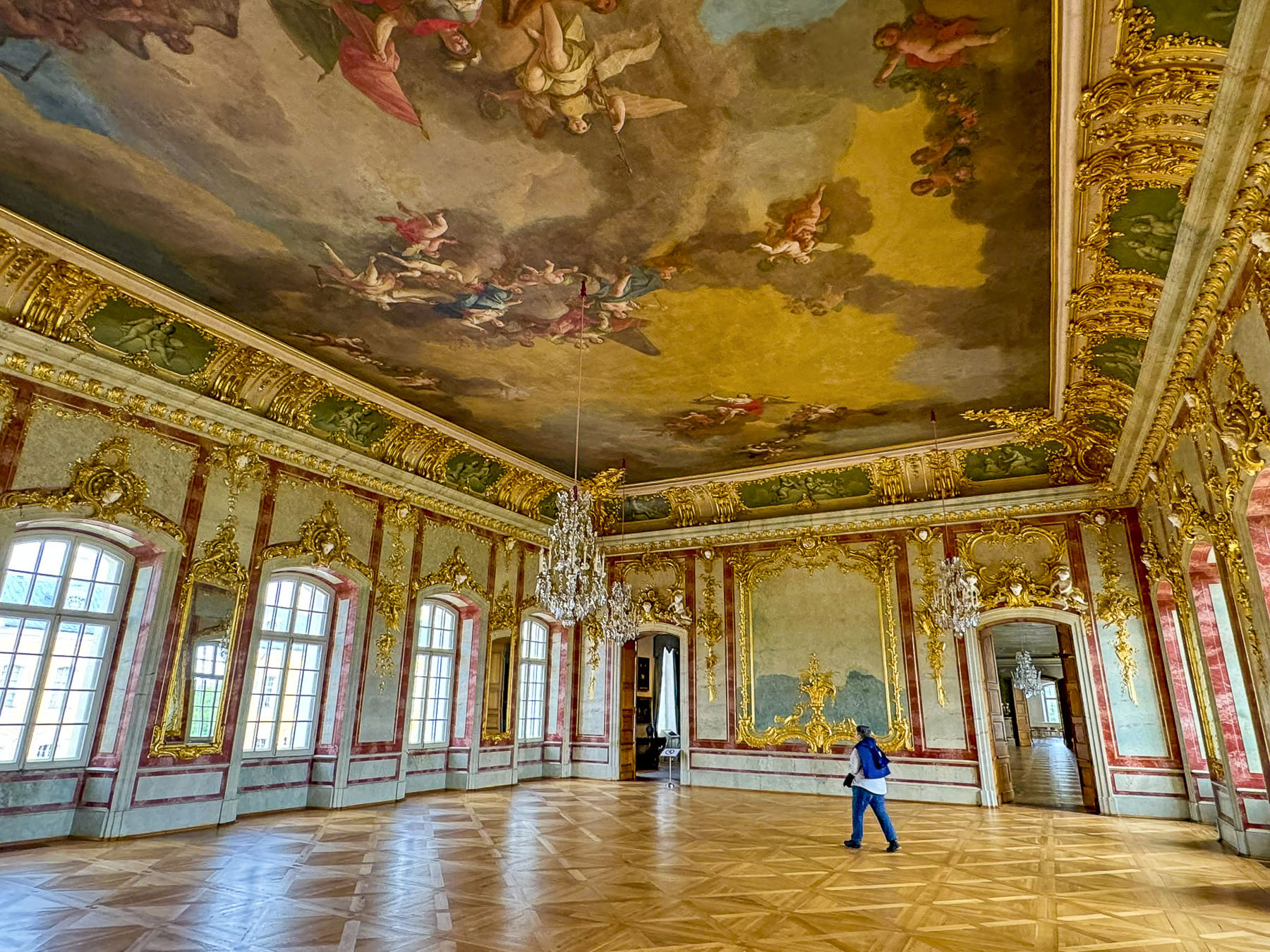
The interior of the palace was splendidly restored with period furniture and elaborate stucco decorations in every room. It was one of the nicest estate type homes we have visited in Europe, and was well worth the price of admission, something we can’t say for some of the other “palaces” we’ve toured.

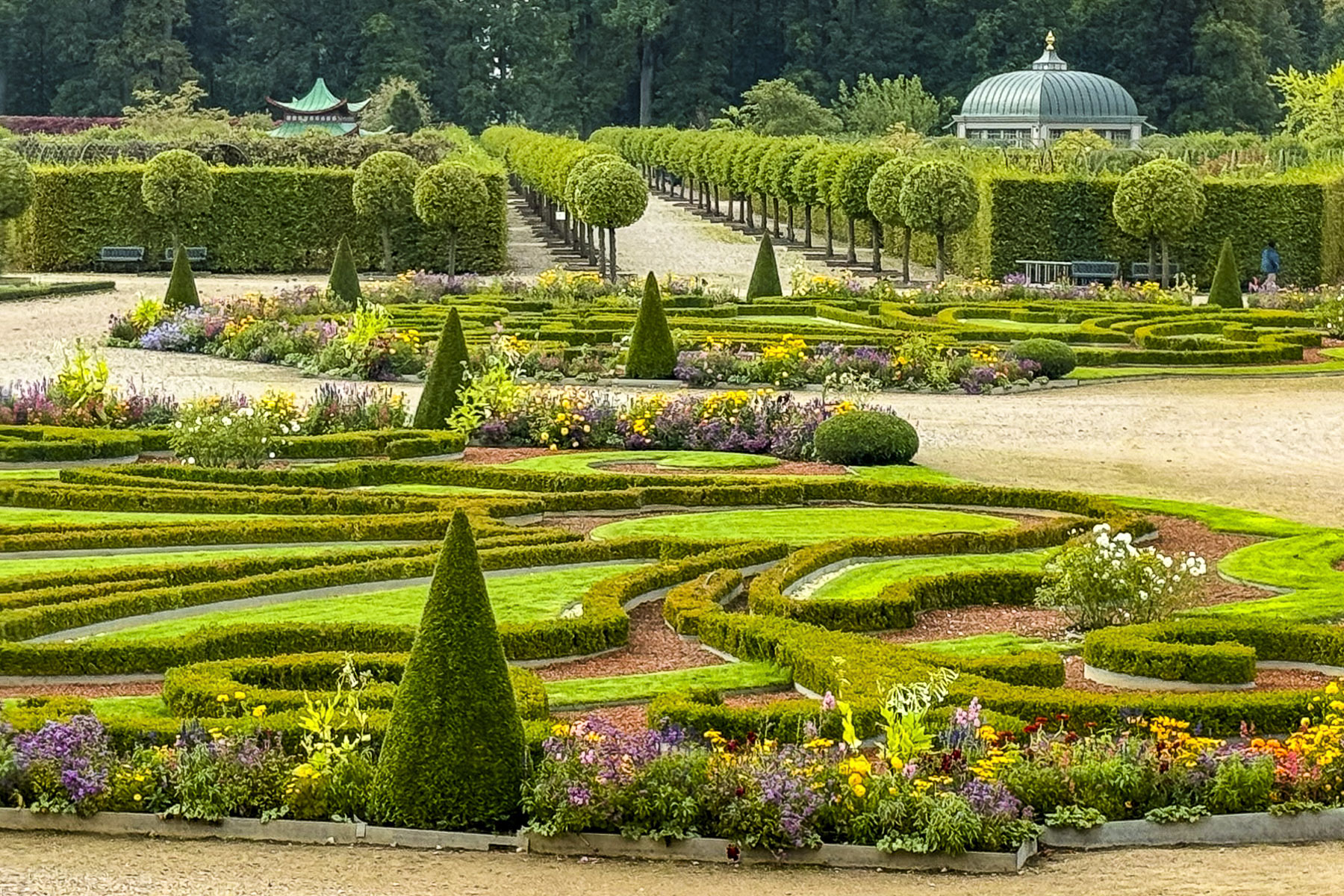
Being gardeners, we enjoyed the extensive formal landscape plantings that have been described as the “Versailles of Latvia.”

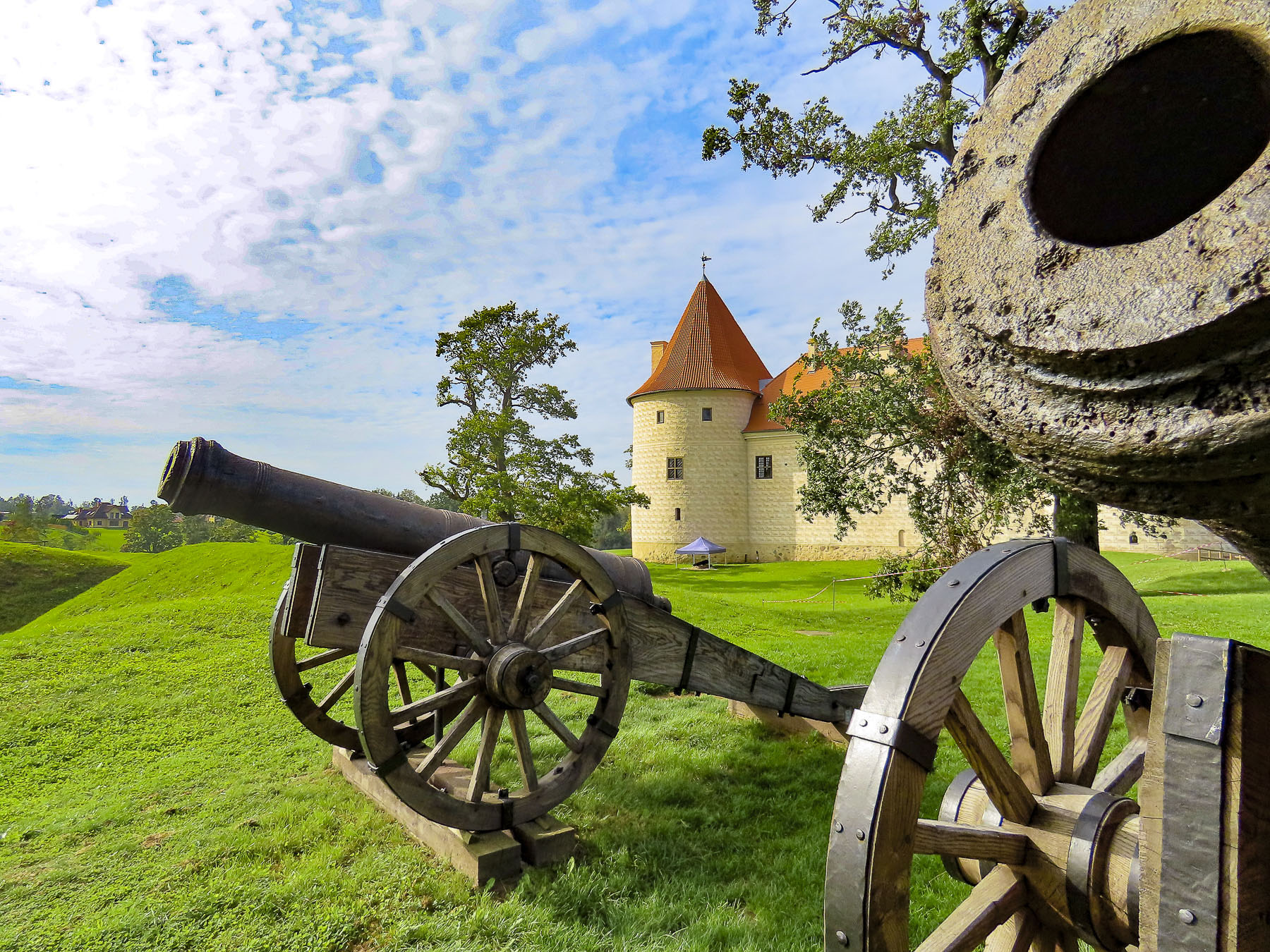
Ten minutes down the road, Bauska Castle stood strategically on a small hill above the confluence of the Mūša and Mēmele rivers where they merge to form Lielupe River, a vital trade route in ancient times through southern Latvia. It was the highest point of land we had encountered in several days. Originally it was a hill fortress built with timber by the Semigallians, a pagan tribe noted for their strong resistance to the Livonian Order of Teutonic Knights during the Northern Crusades, before their subjugation in the last years of the of the 13th-century. In the early 1400s the knights constructed the first stone castle on the hill. It became one of the main residences of the Dukes of Courland, before the Rundāle Palace was built, when the castle was given to the Dukes after the Livonian Order collapsed in 1562.

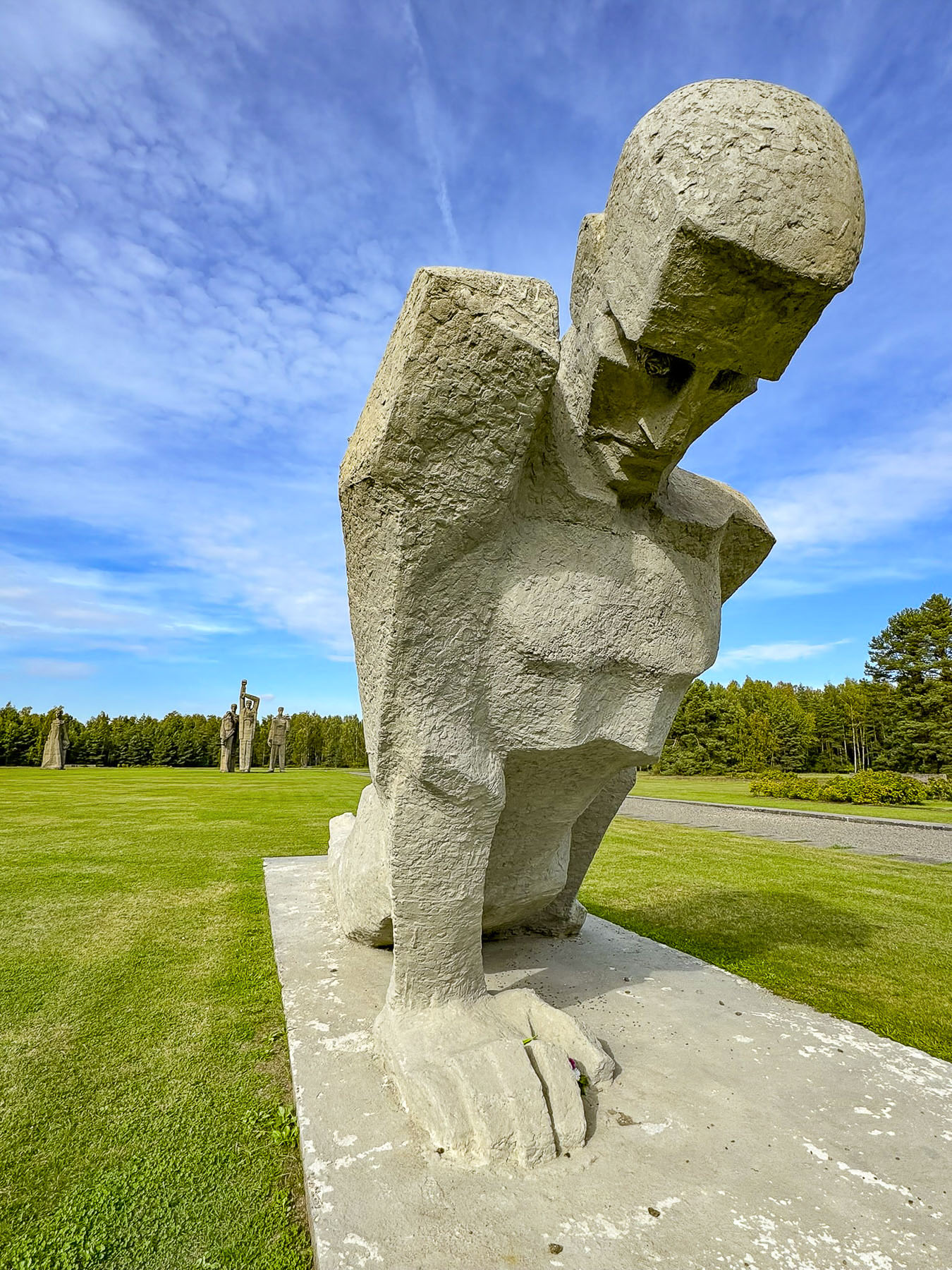
A long path through dense woods led to a vast field dominated by five towering brutalist, as in the Soviet style, depictions of prisoners. The field was once Salaspils Camp (1941-1944) built by the Nazis as a “detention center,” for political prisoners and a “labor correction camp,” for Latvians who resisted the forced labor demanded of them by the occupying German army during World War 2. It was later used as a “transit and collection camp” for Jews before they were sent to concentration camps in Poland and Germany. One thousand Jews were brought from Austria, Czechoslovakia, and Germany, to build the camp, and died from exposure during the brutally cold winter of 1941/1942. Two walls of barbed wire and six towers with machine guns, search lights and sirens that wailed at any sign of escape surrounded the field.

It’s estimated that over the camp’s three years of operation, 23,000 people, half of them ordinary citizens captured during special campaigns against civilians in Belarus, Russia and Latgale, a region of eastern Latvia, were imprisoned behind its barbed wire. Trainloads were sent as forced laborers to Germany, and roughly two-thousand men were forcibly conscripted to fight for the German army.

In the museum a video displays historical footage of the camp when it was liberated by the Russian Red Army, including survivor testimonies as documentation of the brutality the Nazis inflicted upon the people of Latvia. Many in Latvia believe the Soviet Union built the Salaspils Camp Memorial in 1967 during the communist occupation of Latvia as propaganda to divert attention away from their policies of deporting Latvians to Siberia and Ukraine, while depicting themselves as great liberators who also suffered at the hands of the Nazis. The communist regime ignored the fact that the Soviet Union’s 1939 Molotov-Ribbentrop Pact, a non-aggression treaty with Nazi Germany, contained a secret amendment that allowed the USSR to forcibly annex Latvia, Estonia and Lithuania, while Germany invaded Poland, starting World War 2. The irony of our visit to this somber site on a sunny fall day was not lost on us. We can only hope for a better future.

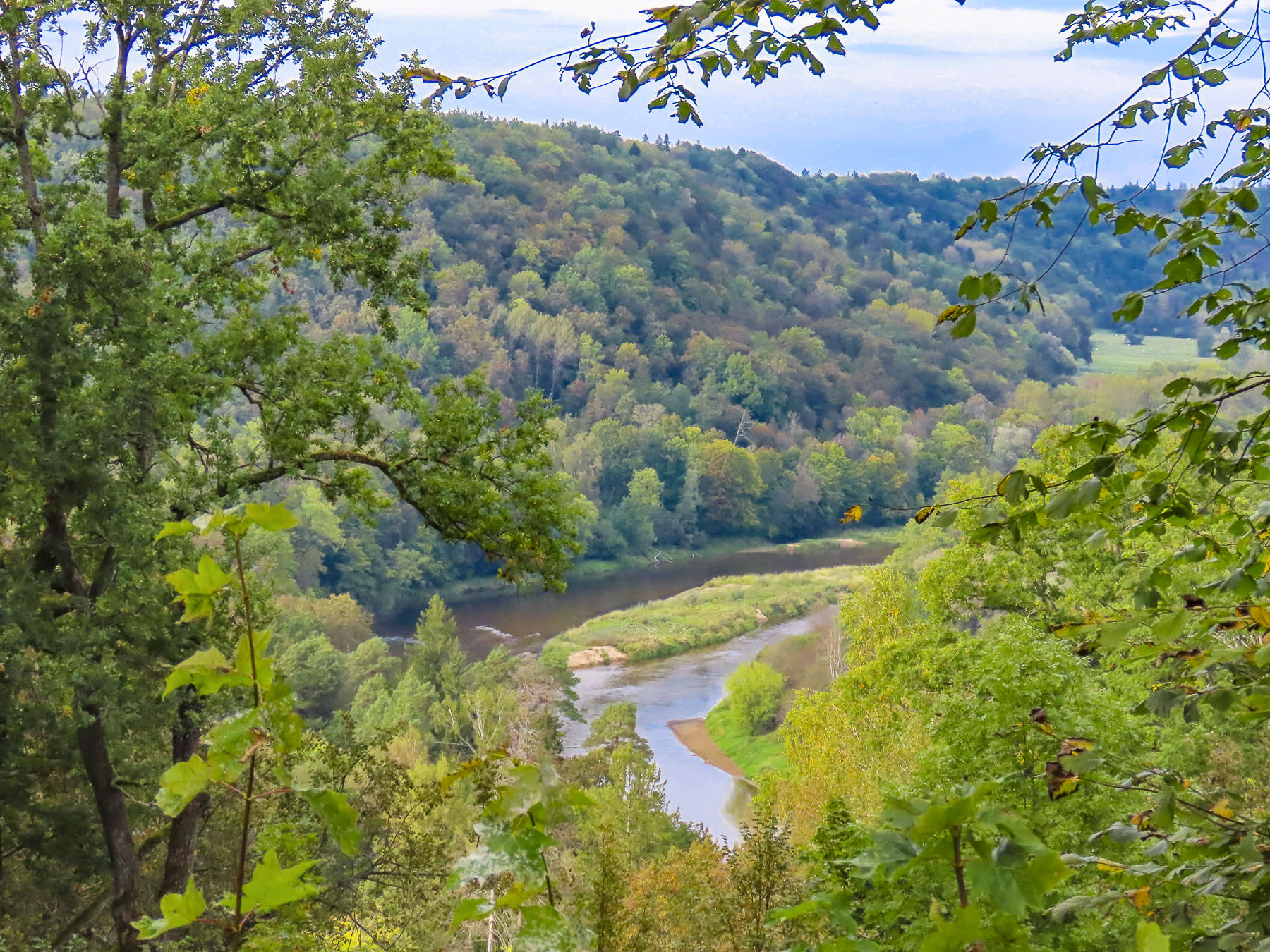
The flat farmlands slowly changed to rolling hills then mountains as we drove into the Gauja National Park, Latvia’s largest nature preserve, which surrounds the small town of Sigulda, and straddles both sides of the picturesque Gauja River valley, as it flows through the Vidzeme region. An area filled with steep ravines and historic medieval castles, which is often referred to as the “Switzerland of Latvia.” It’s an outdoor enthusiast’s paradise with over 560km (350 miles) of hiking trails and 320km (200 miles) of cycling paths, all of which are popular with the cross-country skiers during the winter months.

There might be a little bit of wishful thinking along the lines of “one country’s mountains are another country’s hills,” as the highest point in the Gauja National Park is 160 meters (525ft) tall. Though that’s the equivalent of 52 story building and a significant height if you had to climb the stairs to the top, especially if you are from the lowlands around Riga. During the winter months the region is a snowy wonderland with several ski resorts and a bobsleigh, luge & skeleton track that twists down a Sigulda mountainside for 1.2 km and has 16 curves. It’s a challenging course successfully used by the Latvian National Team to train ten Winter Olympics medalists since Latvia’s independence in 1999. One team won a gold medal in the four-man bobsled event at the 2014 Sochi Olympics, in Russia.

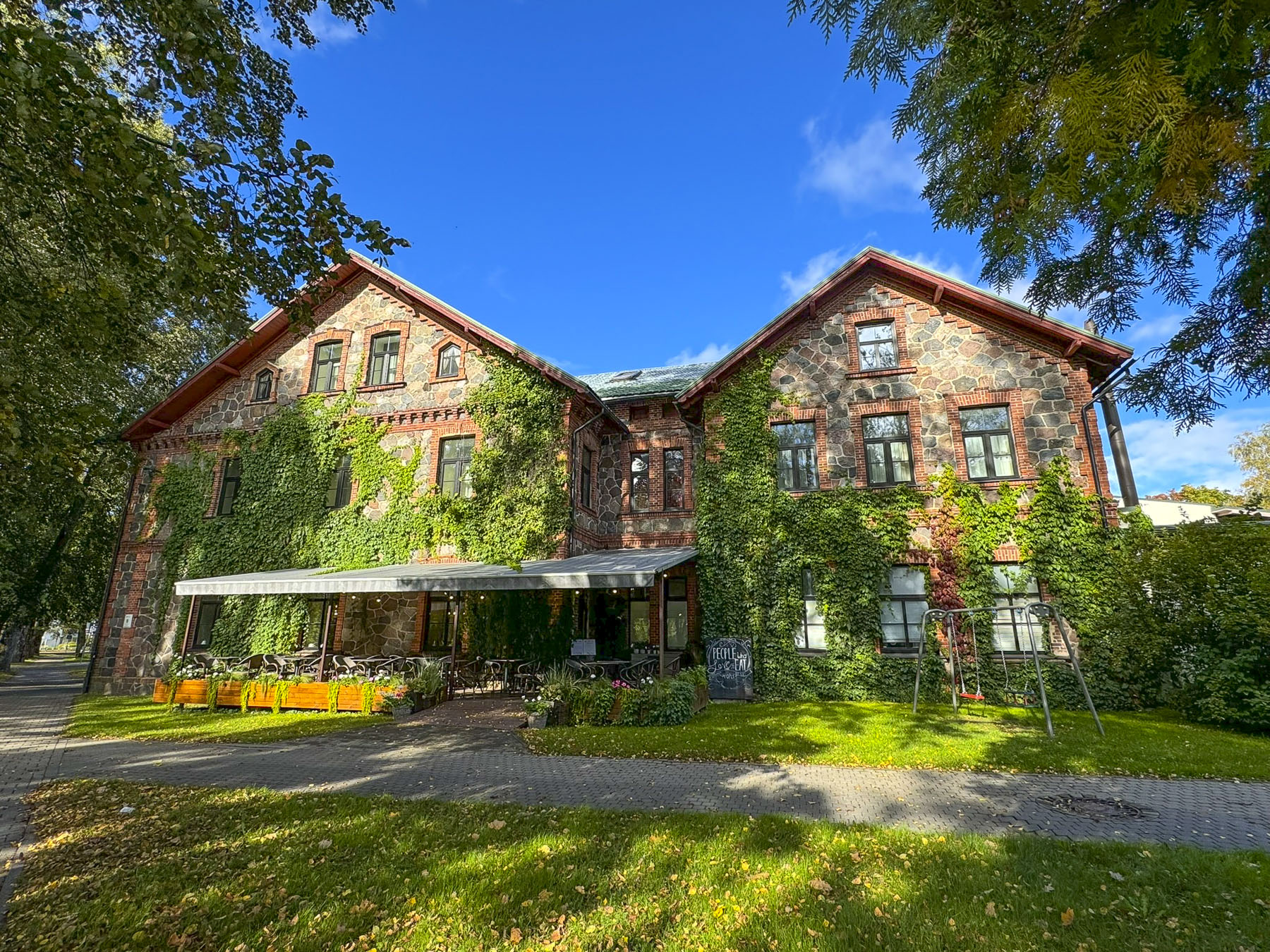
The Emperor’s Chair was not far from the sports complex and offered a nice view of the Gauja River flowing through its valley, which was just beginning to show the first signs of autumn color in late September. Sigulda is a quaint town without a center as the buildings along its treelined streets are very far apart. Now late in the afternoon, we checked into the Hotel Sigulda, a beautiful older ivy-covered building. The front houses the restaurant, with rooms above which hide a modern wing that faces the parking area. The hotel would be our home for the next two nights while we explored the surrounding area.

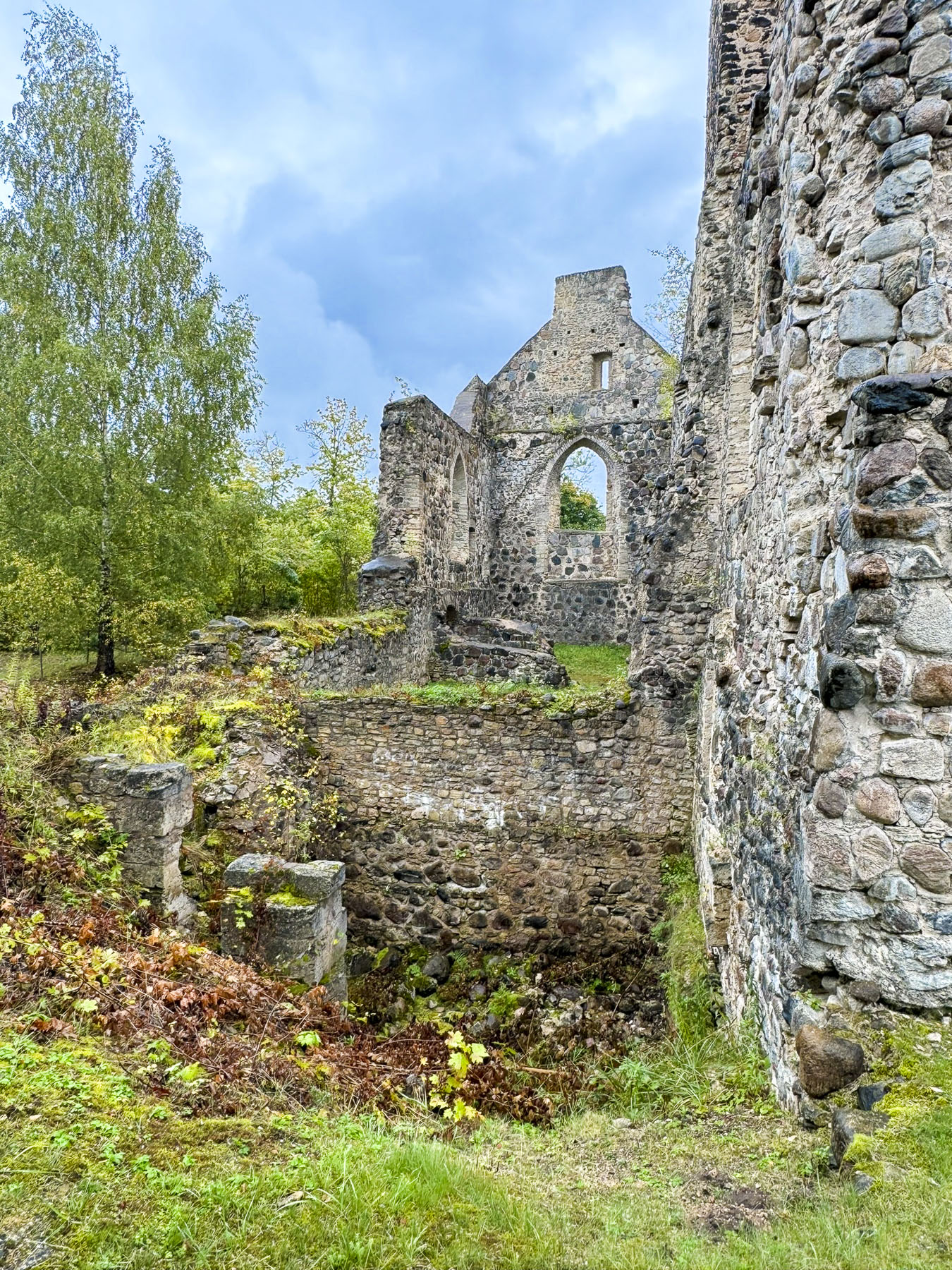
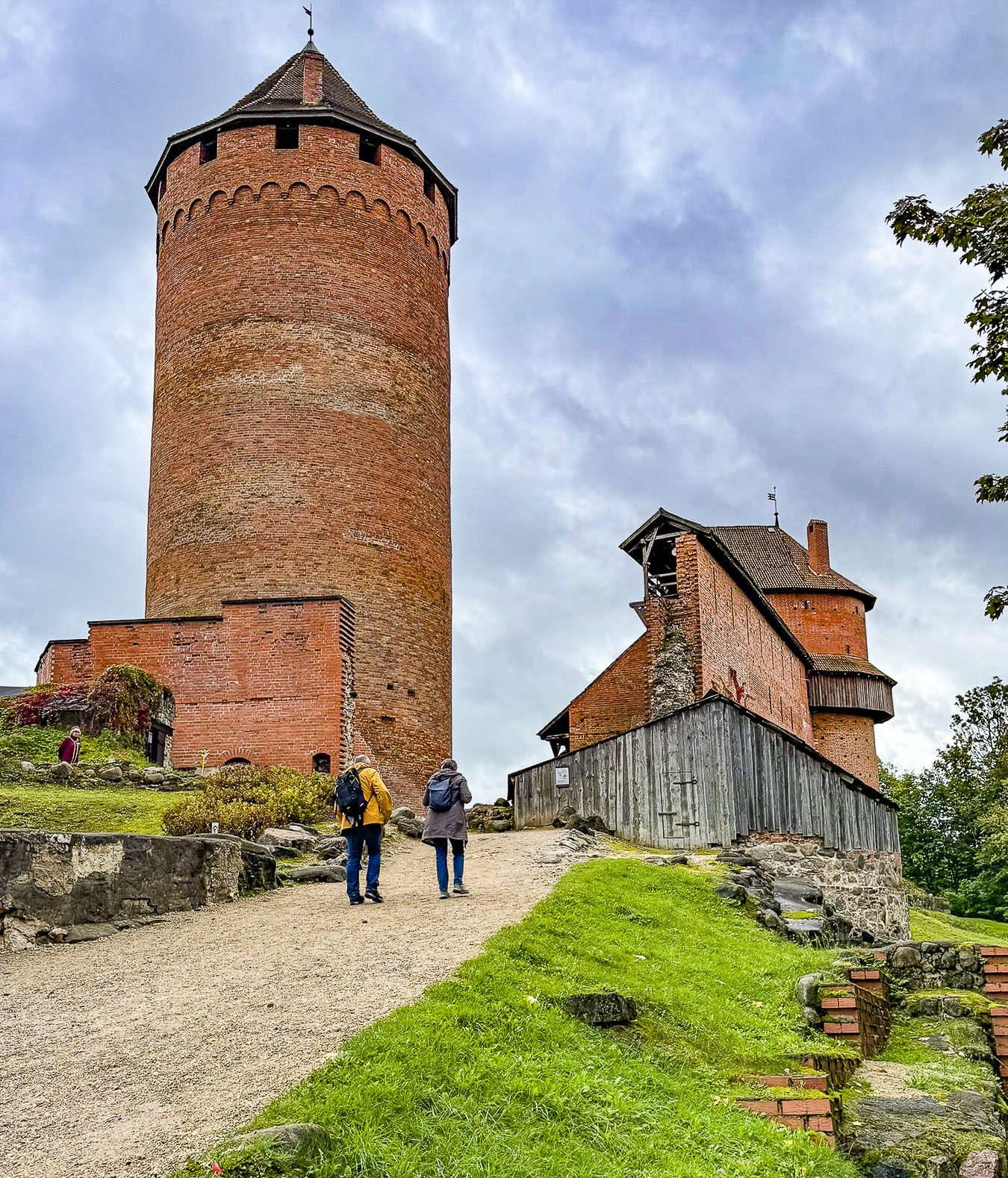
The next morning was very overcast as we entered the grounds of Sigulda’s New Castle and Old Castle. Partially restored stone ruins are all that remain of an older fortress that was built in the 13th century by Order of the Sword Brothers over the spot where an 11th century log fortress built by the Livonians of Gauja advantageously overlooked the river and Turaida Castle across the valley to the north.

By the late 1700s the von der Borch family had acquired the ruined castle and its surrounding lands. A century later a von der Borch daughter, Olga, married Prince Dmitry Kropotkin of Russia and the estate was passed to him as part of her dowry.

Construction of the Sigulda New Palace, a neo-gothic style manor house, began in 1878 with masons reusing stones taken from the older ruins; the best local woodworkers were hired to craft the fine interior. Princess Kropotkin was instrumental in getting the new railway line from Riga to Pskov, which then branched to St Petersburg and Moscow, to run through the town, and promoted Sigulda area as a burgeoning resort area. Her son Prince Nikolai Kropotkin followed her civic mindedness and built the first bobsleigh and luge track in Latvia and the Baltics.

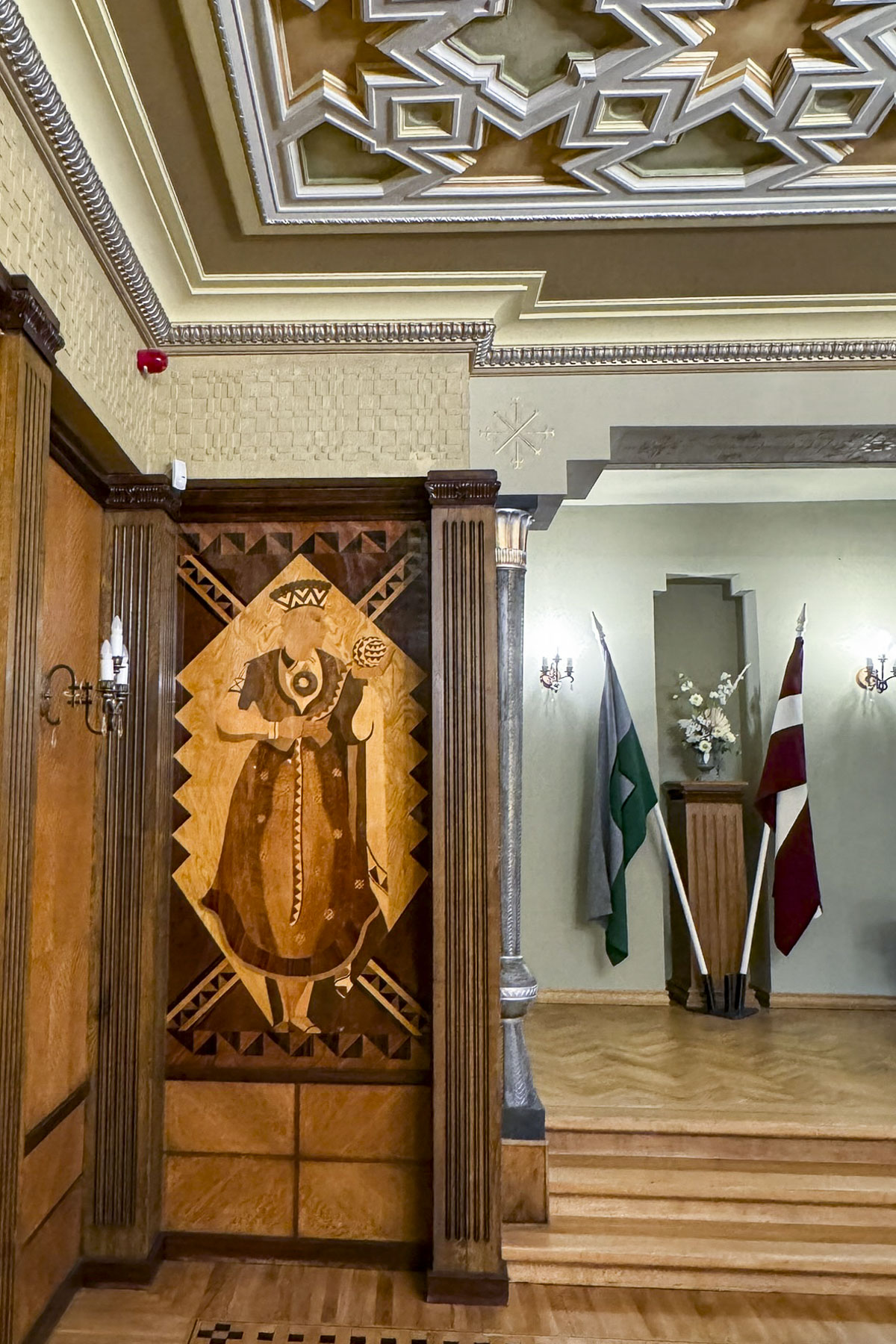
The interior of the manor style castle is full of highly polished wood and stained-glass windows. But we thought the best part was being able to climb the circular stairs of the building’s tower to the catwalk at the top.

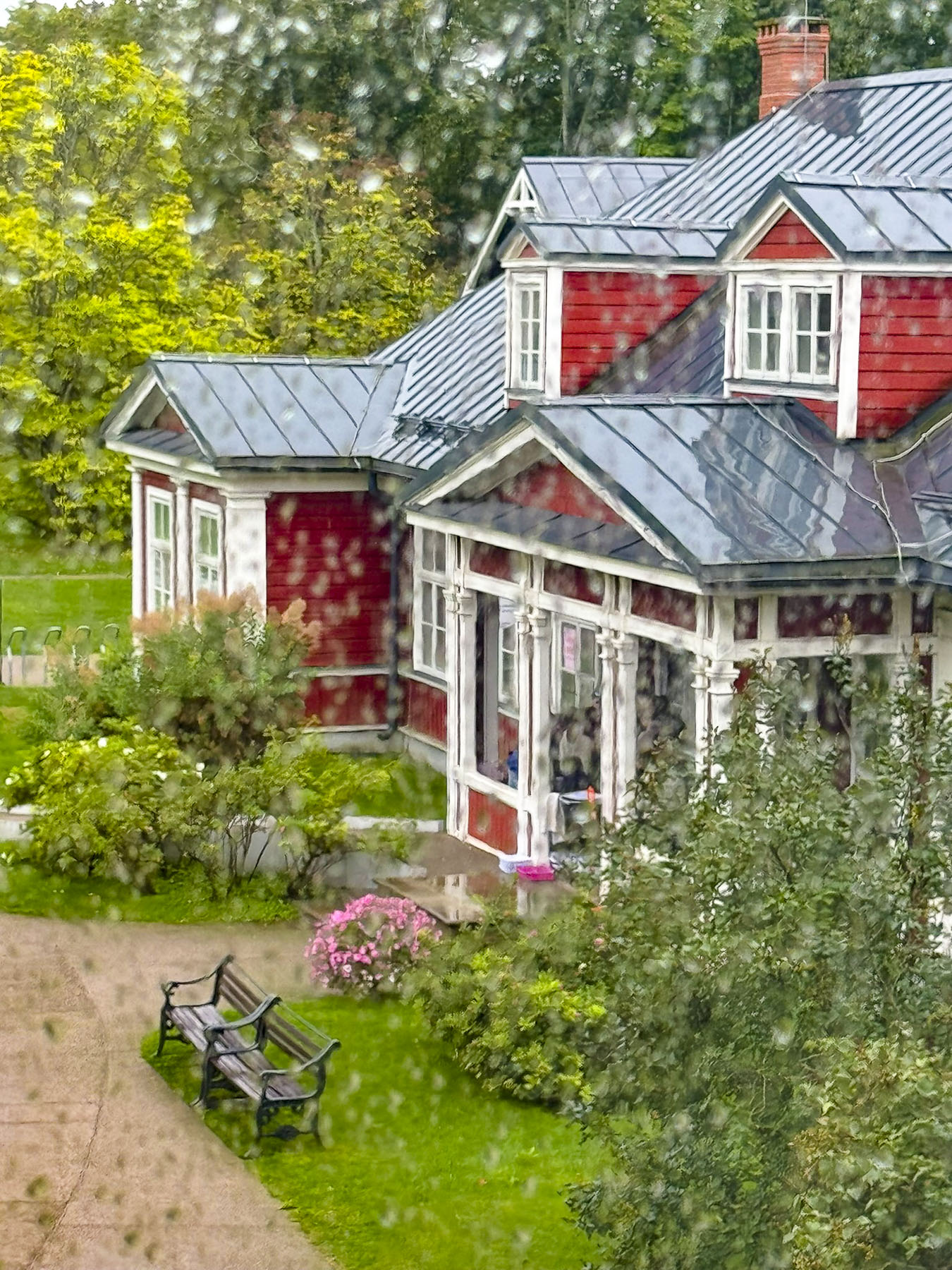
Even on a rainy day it offered a spectacular panoramic view of the old castle and the refurbished outbuildings of the estate that now host workshops and craftspeople selling their wares.

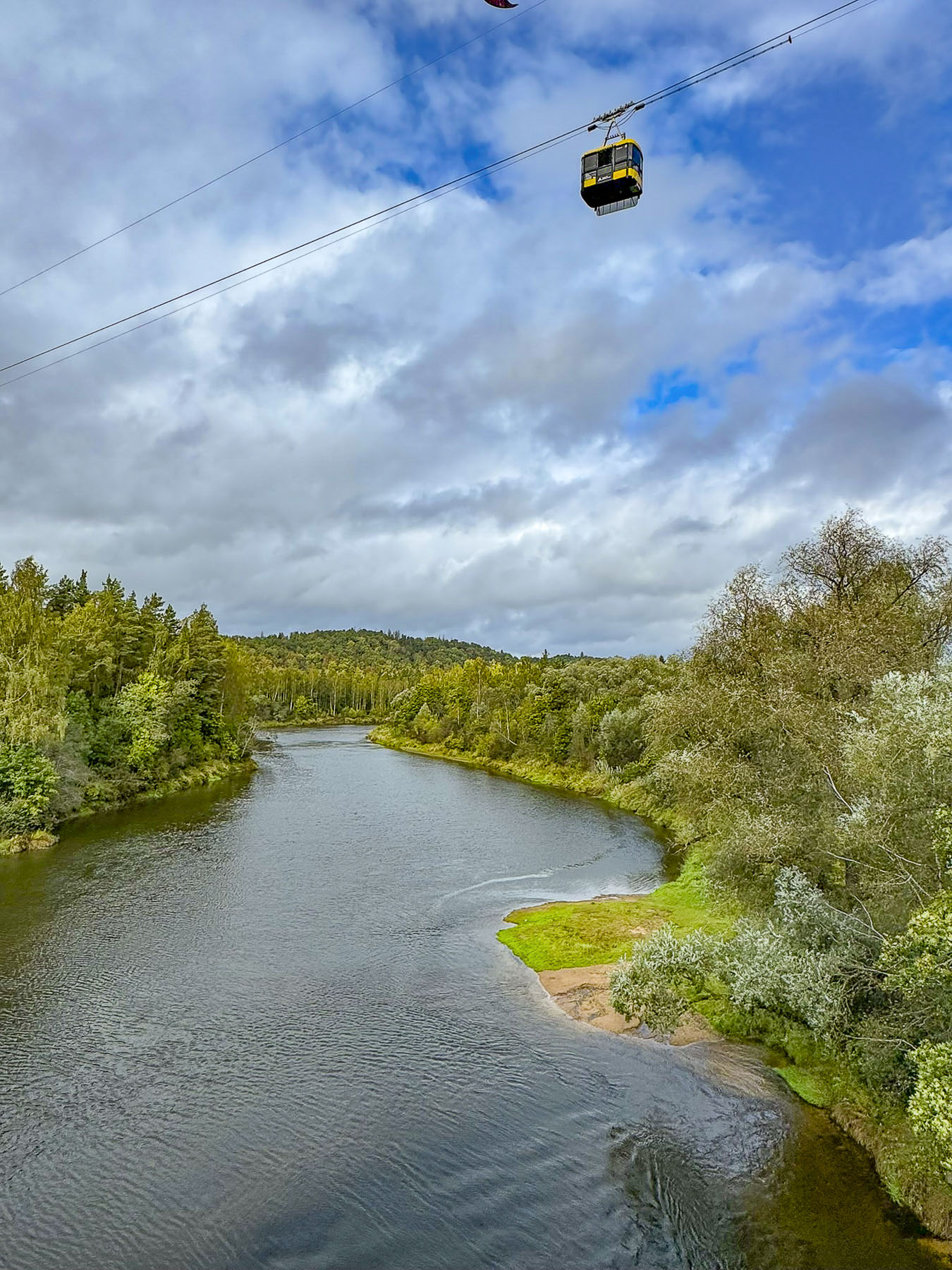
It was from this lookout that we spotted the aerial tram that crosses the river valley from Sigulda to the Turaida Museum Reserve.

We drove there instead as we thought it was too windy for us to take the aerial lift, after a pleasant lunch at Kaķu Māja, the Cat House, which also operates as a bed & breakfast inn. It is a very pretty restaurant that has a nice vibe. The food is served cafeteria style and was surprisingly very delicious, while also being extremely budget friendly.

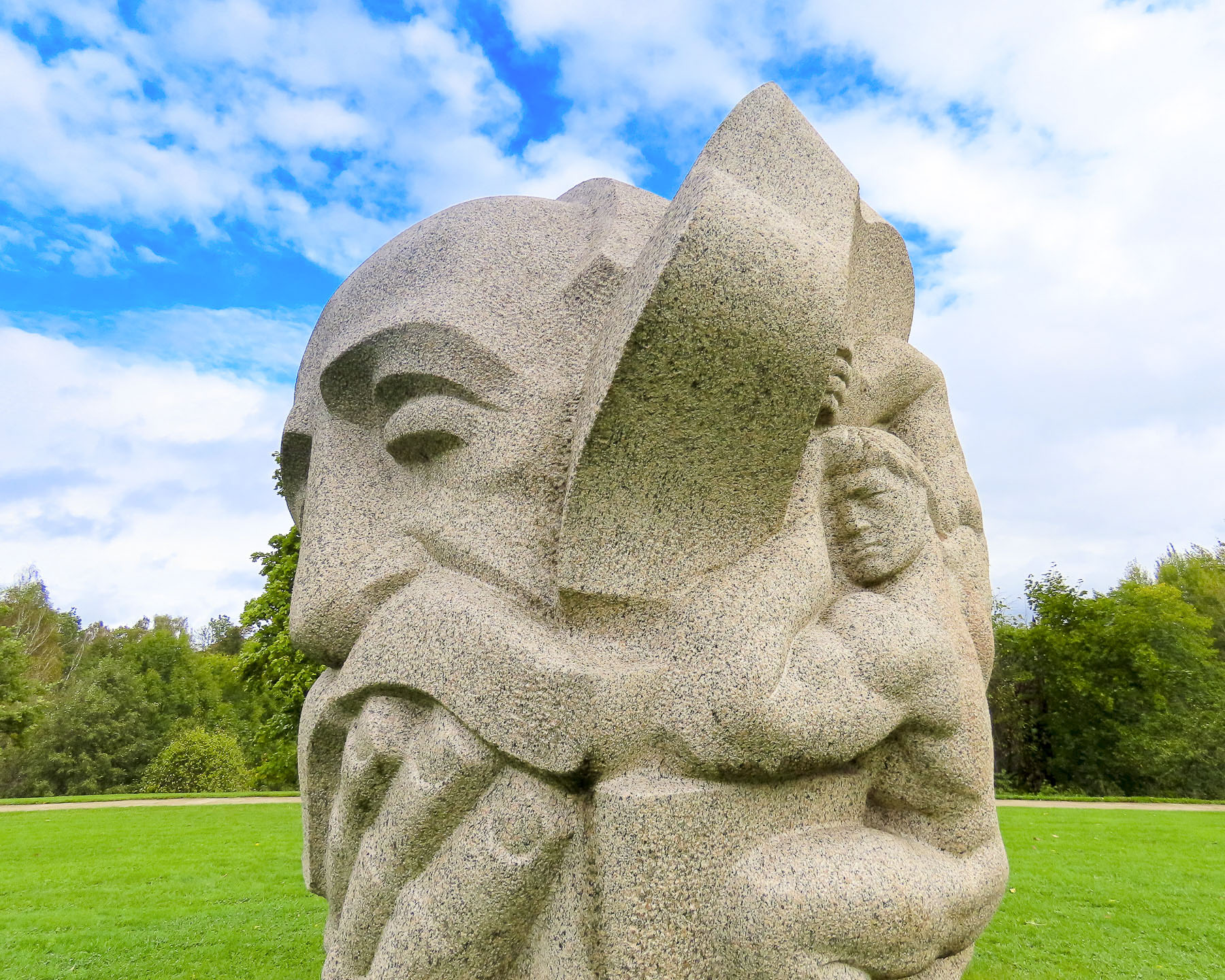
The Turaida reserve is a large 42 hectares (104 acres) park with a partially restored medieval castle, period buildings and Dainu Kalns, which translates as “I sing the mountain,” but is commonly referred to as Folk Song Park, a tremendous rolling field with over 25 large stone sculptures inspired from Latvian folktales by the artist Indulis Ranka.

Dainu Kalns was constructed in 1985 to celebrate the 150th anniversary of Krišjānis Barons, a Latvian folklorist who collected and transcribed over 30,000 of the country’s folk songs that had been passed down through the generations, and is recognized as being an important contributor to Latvia’s National Awakening in the mid-19th century. Folk Song Park also hosts various folk festivals throughout the summer months.

You have to admire the gumption of the city of Cēsis, a forty minute drive through a beautiful landscape from Sigulda, for declaring themselves the Latvian Capital of Culture 2025, the first in the country, after losing the title of European Capital of Culture 2027 to the Baltic port city of Liepāja . This was on top of an earlier disappointment in 2014, when  Riga won the honor. Not wanting to see all their efforts of planning fall by the wayside, city officials designed a year-long celebration with numerous historical and art exhibitions, dance performances, theatre, and concerts with the motto – “Culture in minds, castles, and yards.”

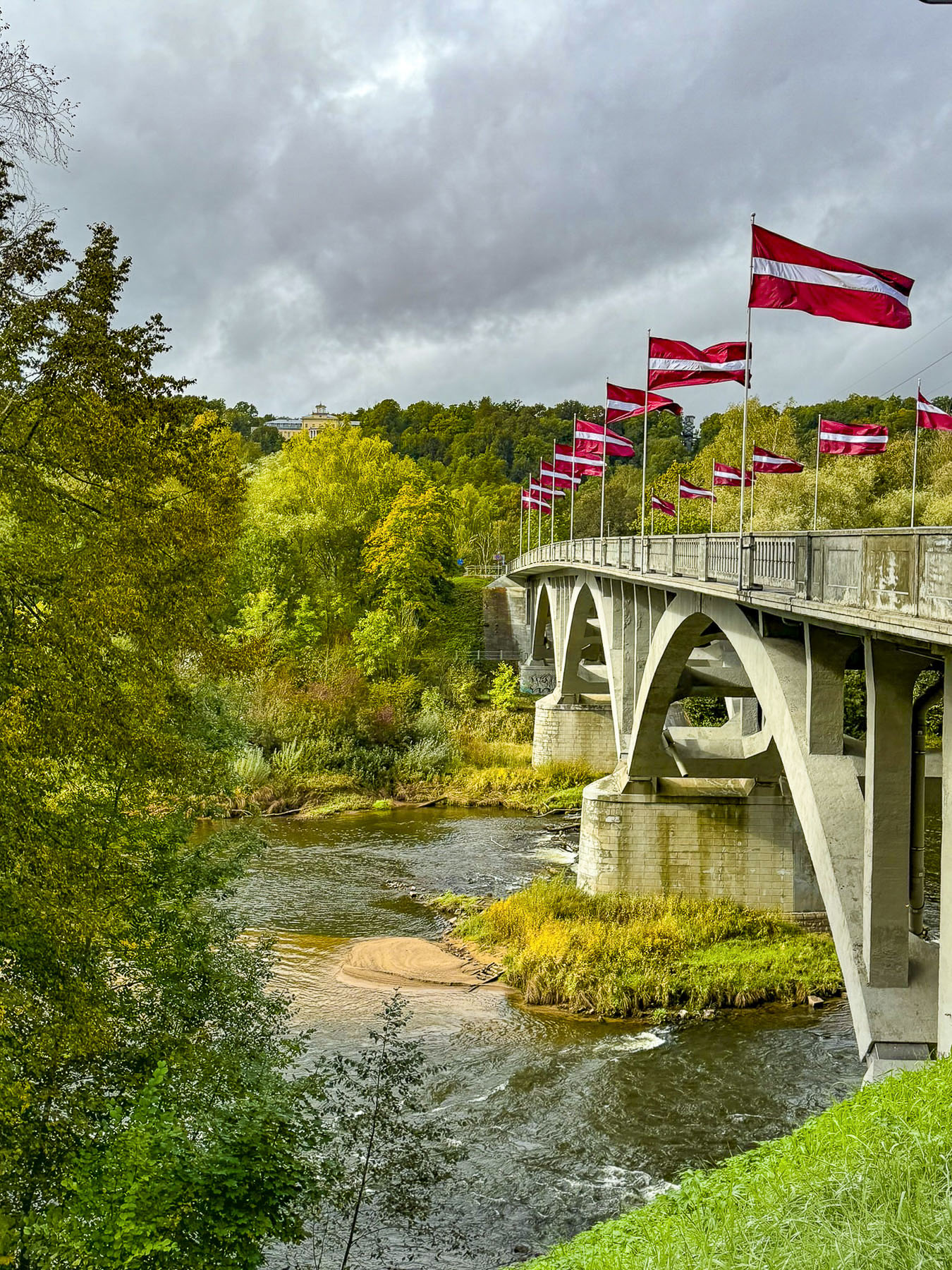
Cēsis is considerably larger than Sigulda and has a well-established old town with Rīgas iela, a pedestrian mall running for several blocks through its core. We arrived to the Cēsis Castle late in the afternoon, as the sun was painting the rough castle walls in its golden glow.  It shares a similar history with the castles of Sigulda. Construction of this castle started in 1209 and in 1279 Teutonic knights rode from the castle into battle carrying a red-white-red banner, first noted in the 13th-century Livonian Rhymed Chronicle.

Legend believes this banner was made from the bed of a knight fatally wounded in an earlier battle. The colors became the Latvian flag. By the mid-1400s the castle was the permanent base of the Livonian Order of Teutonic Knights, and the growing town’s location near the Gauja River made it a key trading hub, which led to its membership in the Hanseatic League in the early 1500s.

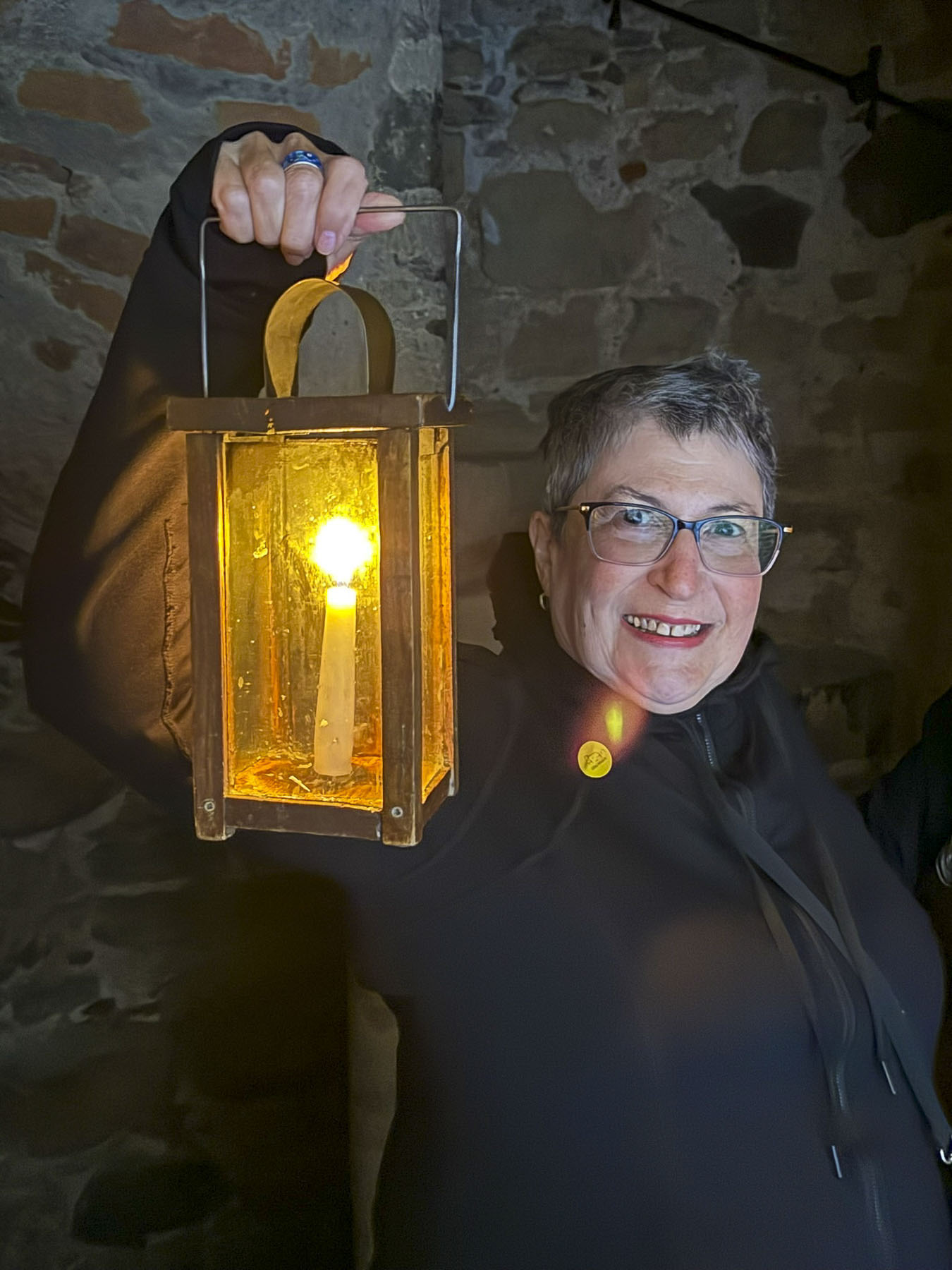
Crossing a creaky drawbridge over a dry moat, we entered the courtyard of the castle and were greeted by a Latvian maiden, a costumed reenactor, who offered us two glass lanterns holding lighted candles to illuminate our way through the dark passages of the fortress.  I was about to decline, but Donna convinced me otherwise with “come on, this will be fun,” and it was! We carried them up and down the narrow tower stairs and through various cavernous halls with only the ambient light from small windows providing a little bit of illumination.

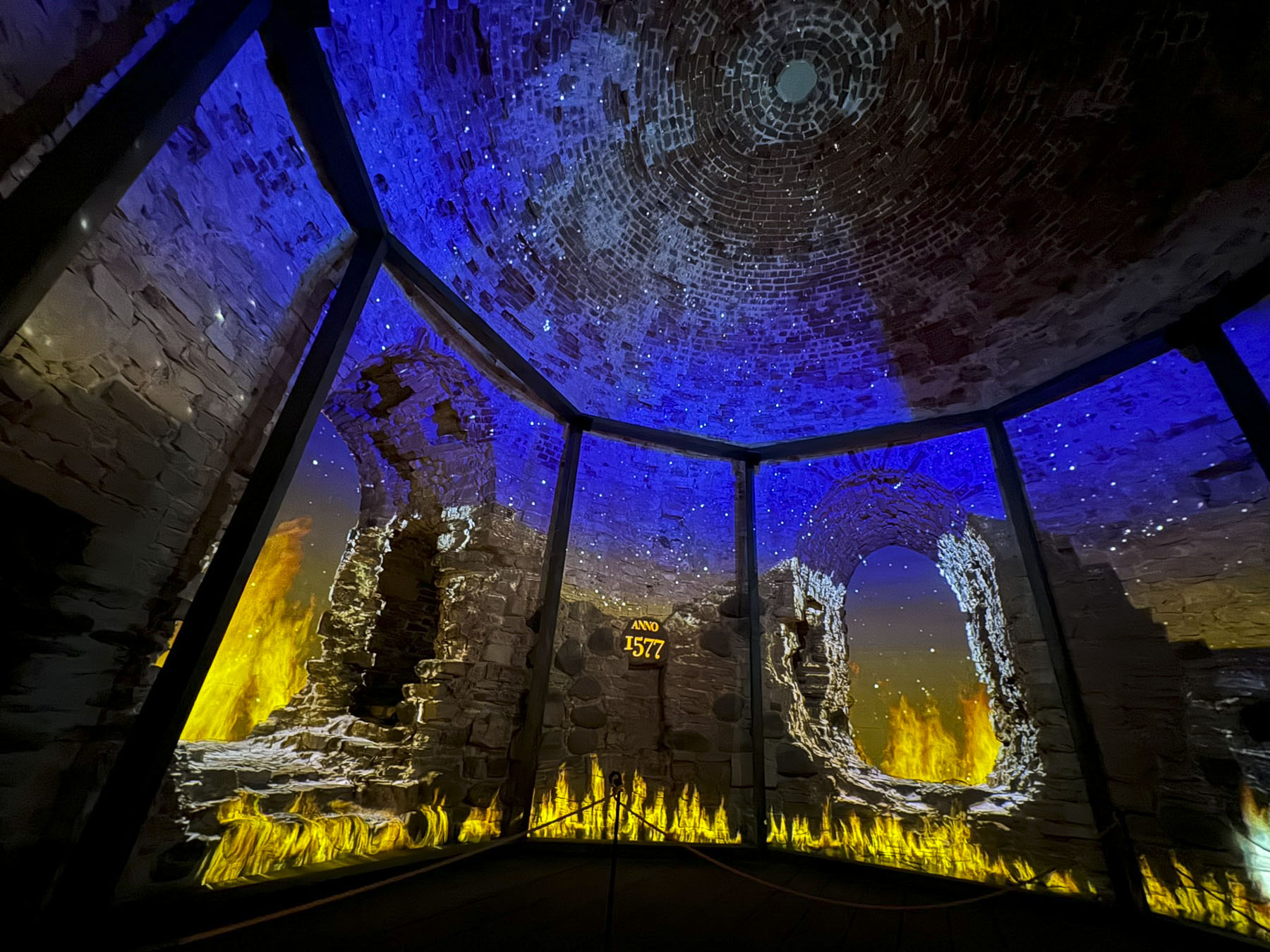
The third floor of the tower hall hosted the immersive Multimedia Story of Cēsis Castle, that used surround sound and digital technologies to project an engaging animated film onto the castle’s  walls.It was very well produced and contributed greatly to our understanding of the history of the area and life in a medieval castle. It was really surprising how such a simple prop as a lantern could enhance our experience so much. We had a great time, and it was well worth the modest admission price.

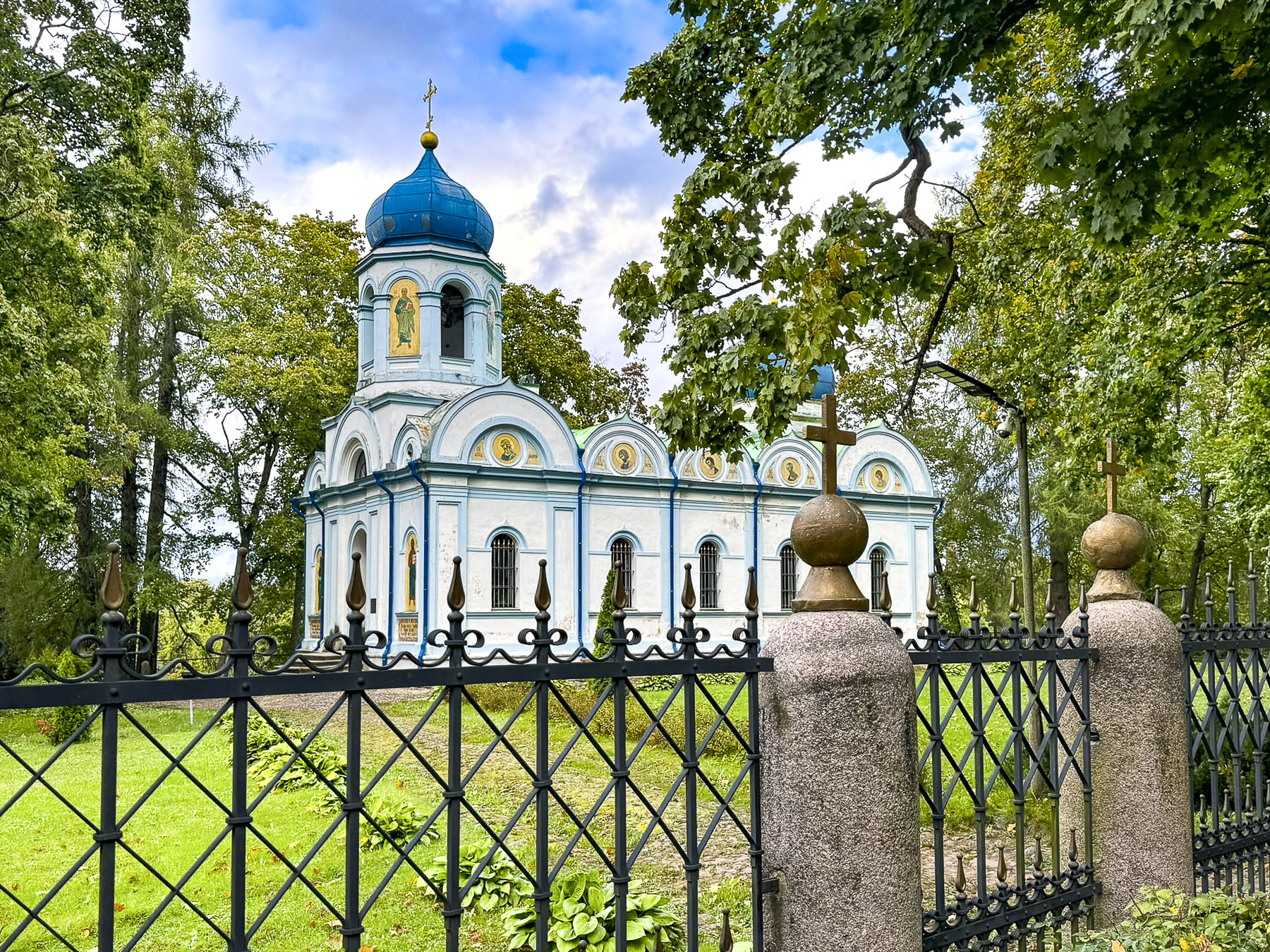
On the way out of town we stopped in the park below the castle to photograph Cēsis’ pretty Byzantine style Enlightenment of Christ Orthodox Church, which dates from the mid-1800s.

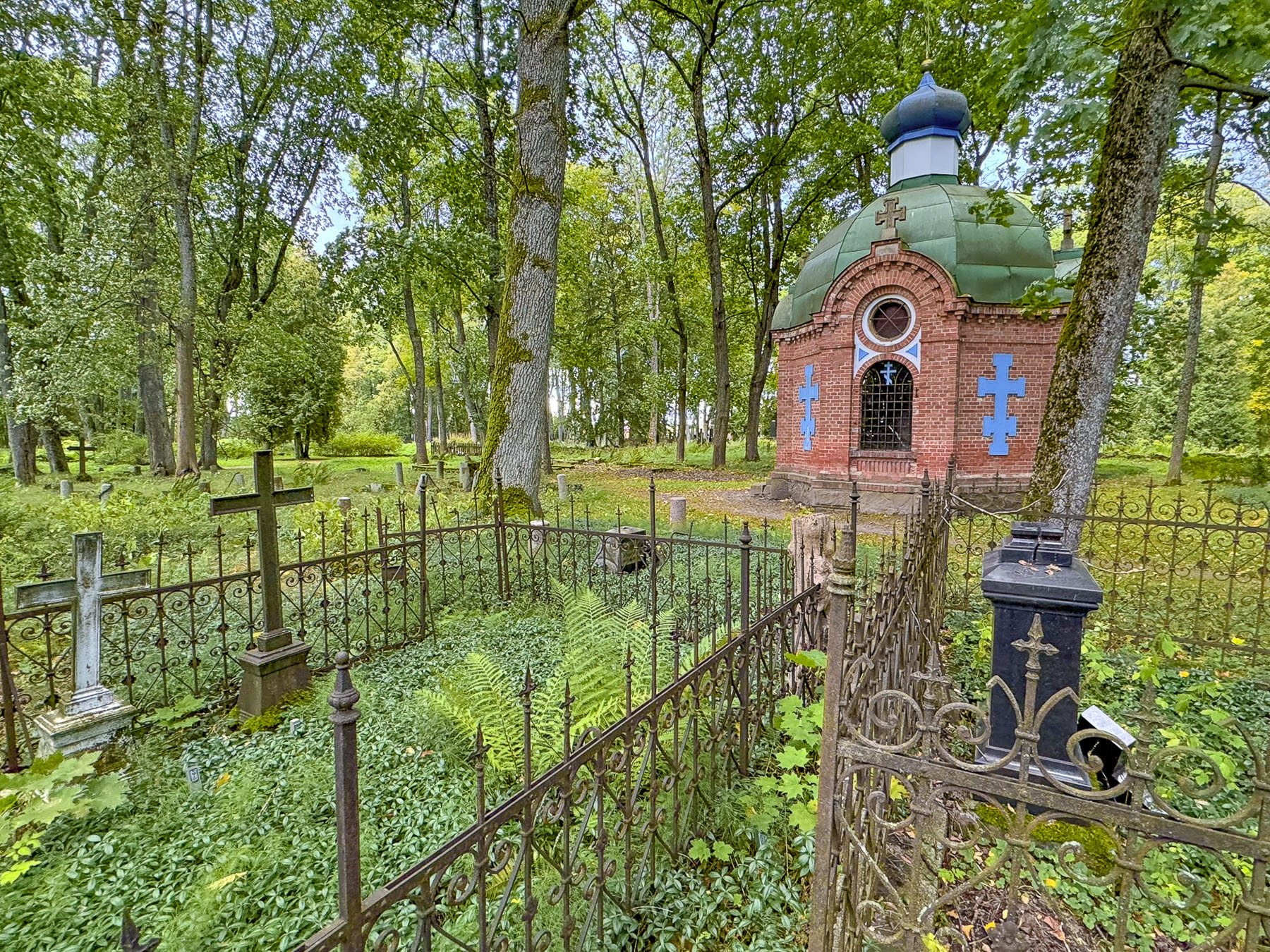
On our way into Cēsis earlier an old cemetery caught our attention. We had time to stop and wander through it now as we drove out of the city. The cemetery was interesting but very neglected with overgrown bushes and roots covering toppled headstones. It’s named Vācu kapi, though it’s also referred to as the German Cemetery, as it contains 371 graves bearing the Iron Cross, identifying German soldiers killed in Latvia during WW2.

But there are also the graves of Ottoman Empire soldiers who died in Cesis as prisoners of war during the Russo-Turkish War of 1877-1878. The Turks weren’t really incarcerated – “First they lived in Cēsis under supervision, but afterwards, as they were so far away from their motherland, their regime became freer – they could traverse the city, go to the pub, the sauna. After a while some went back to their homes, while others struck root in Cēsis.” But it’s also believed the cemetery contains the graves of Latvian Germans, Russian atheist, and some Jewish citizens of Cēsis. Most of the vandalism to the cemetery is thought to have occurred during the communist occupation of Latvia. It’s an interesting side note to the history of a complex part of the world.

In hindsight, staying in the larger town of Cēsis might have been a better choice, as it has a compact historic center with cobbled streets and shops that would have been interesting to explore had we stayed there.

Till next time,

Craig & Donna

Ronda Road Trip – The Pueblos Blancos or Blinded by the Light

Needing a break from city life we rented a car at the Santa Justa train station and within minutes we were out of Seville heading south to Ronda, one of Andalucia’s many “Pueblos Blancos,” the white villages, so called because of their uniformly whitewashed houses.  Although it was less than two hours from Seville, it took us all day due to the number of planned stops and spontaneous detours we made.

Lime paint was introduced to the region when Rome controlled the Iberian peninsular. Its use was greatly expanded during the mid-1300’s when a bubonic plague pandemic swept through the Mediterranean countries.  Residents of villages were required yearly to cover the outside and the interiors of their homes and churches with a limewash, known for its natural anti-bacterial and insecticidal properties, in an effort to reduce the spread of disease. Community inspections were done, and folks were fined for noncompliance. This mandated conformity was eventually appreciated as an aesthetically pleasing look and a symbol of meticulous tidiness. Fortunately, the custom stayed and has become an iconic signature of southern Andalusia.

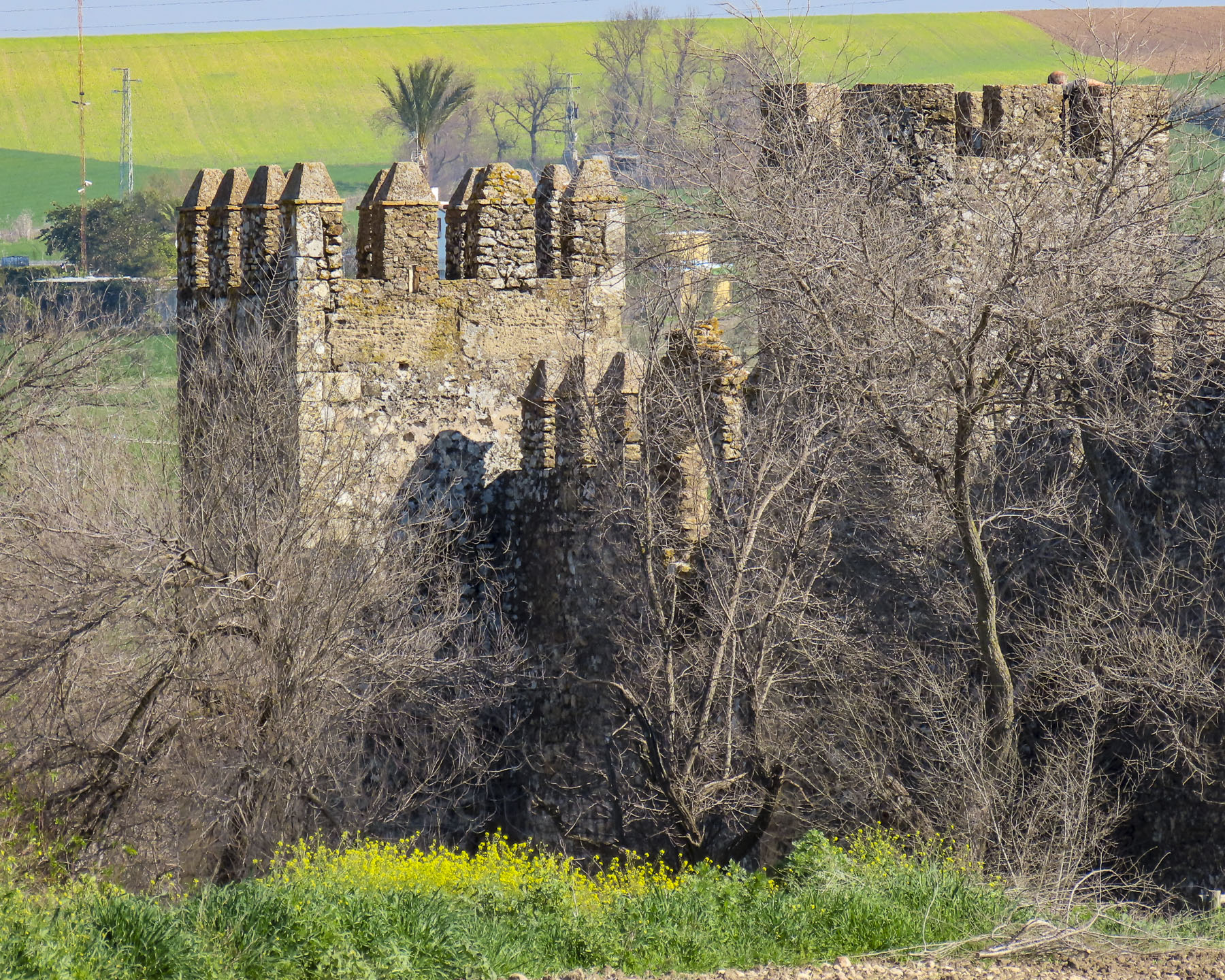
Cresting a low hill on the A-375, we spotted a small castle with crenellated walls and towers in a shallow valley not far from the road. Turning towards it we followed a dirt track through farmland not yet ploughed for the Spring planting to a small intersection where the castle stood next to a narrow, babbling brook.  The history of the Castillo de Las Aguzaderas isn’t really known, but it is thought to have been built in the 1300’s by the Moors as they retreated from advancing territorial gains made by the Spanish during the Reconquista. 

Of Spain’s 2500 castles this is the only one that does not sit atop the high ground of a hill or mountain to command the surrounding terrain, but according to its historical placard, stands in a hollow to protect the spring that emerges from the earth outside its wall. With no attendant and an open gate, we were free to scramble around the walls and climb stairs in a terrible state of disrepair to the top of the castle keep for views all around. In the distance an ancient stone watchtower, Torre del Bollo, dominated a hill.

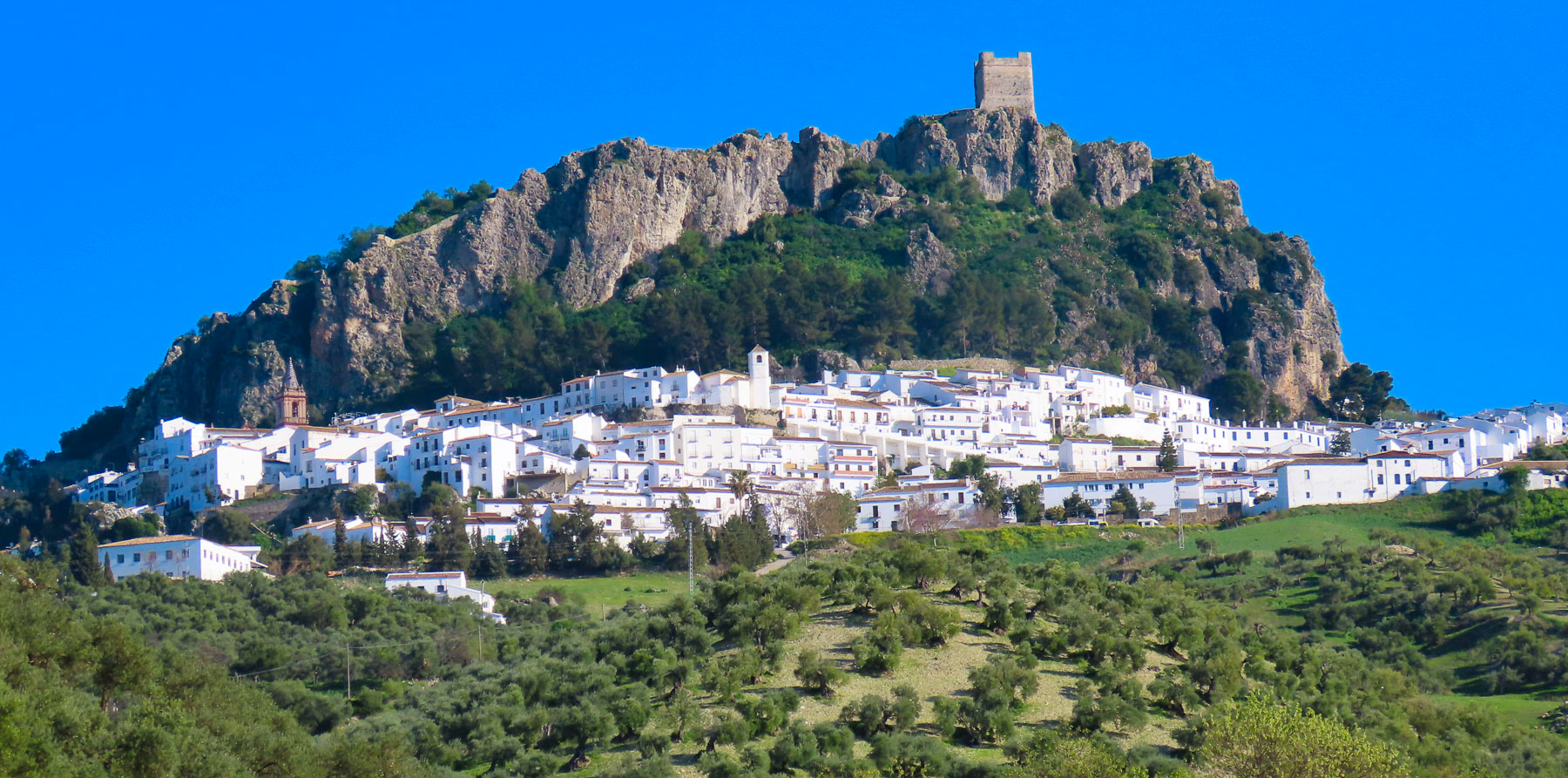
From afar the whitewashed casas of Zahara de la Sierra brilliantly reflected the sunlight like polished marble.  The homes, stacked like building blocks, rose up the hillside until they met a sheer butte. A square tower crowned the butte’s summit.

We followed the long ring road that circles the mount through the village and decided to have lunch at Meson Oñate where we were drawn to the outdoor patio that overlooks the Zahara-El Gastor Reservoir and the rolling farmland that surrounds it. 

After lunch, to work off our delicous meal, we hiked to the Castillo de Zahara, which crowns the mountaintop above the village. It was a well paved steep path at the start, but soon the slope decreased to a manageable incline that zigzagged up the mountain.  For our effort we were rewarded with stunning bird’s eye views over the red tiled roofs of the village and to the distant lake below. A tower is all that is left of a larger Moorish castle from the 13th century that was built over the ruins of a small Roman settlement that once called the mountaintop home. Barely accessible, it provided a safe haven during times of trouble. The castle had a turbulent history with its control passing back and forth several times between the Moors and Spanish. Even French troops once commanded its summit through Napoleon’s conquest of Spain during the Peninsular War that raged in the early 1800’s.

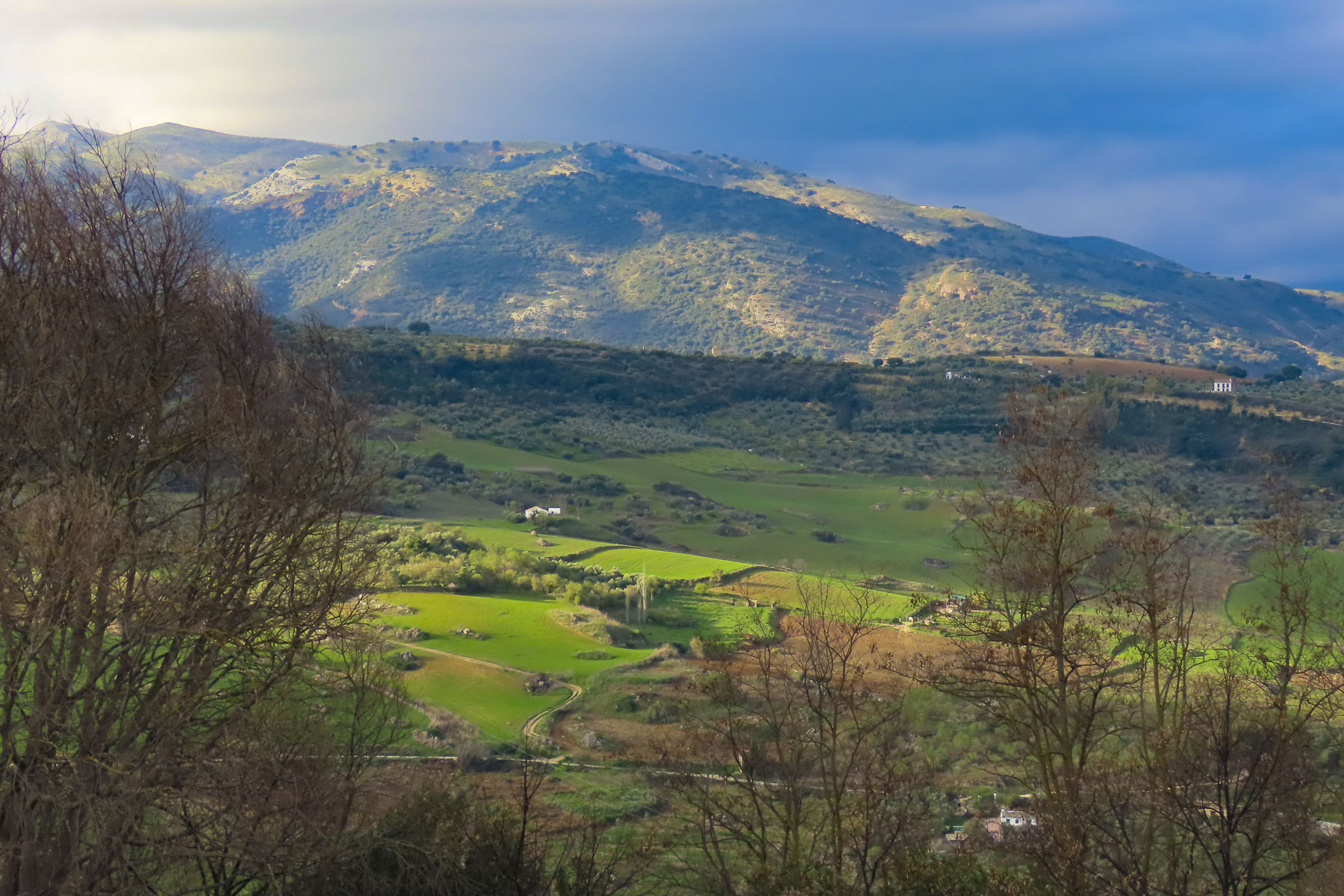
With a last-minute decision to take a longer route to Ronda, we headed into the mountains outside of Zahara de la Sierra on CA-9104, a serpentine road with steep slopes that took us into the Sendero La Garganta Verde, a rugged and wild scenic area that is known for its population of Griffon vultures, and Monte Prieto.  The wind was insanely whipping around us when we parked the car at the Puerto de las Palomas (4500ft above sea level) mountain pass and walked to an observation deck in hope of viewing some vultures.  Griffons are large birds of prey that have wing spans up to nine feet across. We were fortunate to spot some, far off in the distance before we ran back to the car, chilled to the bone.

The sun sets early when you are on the eastern side of the steep Sierra del Pinar mountain range.  The last rays of sunlight still illuminated Grazalema as we drove into the village, but the temperature dropped along with the vanishing light of a February afternoon.

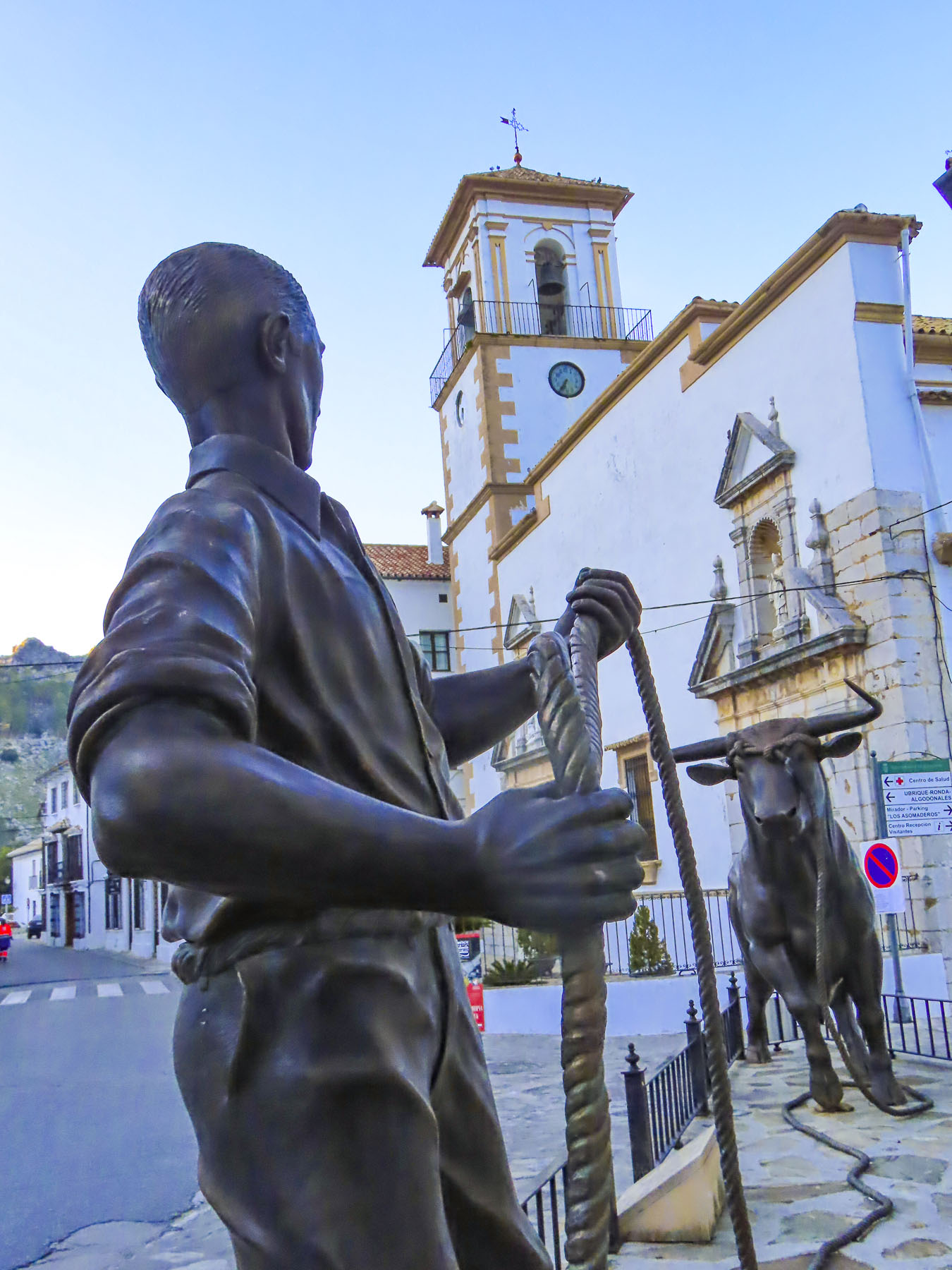
We sat in the plaza and had café across the sidewalk from an interesting statue of a bull being roped.  The statue commemorates the ancient practice of hunting wild bulls. The tradition continued through the Romans and Arabs and was Christianized by the church into the feast of the bull to celebrate the Virgen del Carmen. During the festival, three times a day, a bull is released to run through the village for an hour with the men chasing after, in hopes of roping it. The beginning and end of each bull’s run is announced with fireworks throughout the day.  Sections of an old Roman road that led up into the village are still visible from the mirador on the edge of town.

Enjoying the freedom and spontaneity a rental car offers is a big plus when developing itineraries. Finding convenient and affordable hotels that have free or inexpensive onsite parking was another whole issue.  It was dark by the time we reached Ronda and we were having difficulty finding the hotel’s parking. With one last call to the hotel receptionist the garage door to their secret lair, that was our parking space, was magically revealed to us on a back alley, under the Hotel Plaza de Toros. Only big enough for six cars, our tiny Fiat 500 easily fit in its tight confines.

The next morning revealed that the hotel was in an excellent location, just a block from the town’s famous bullring, Plaza de Toros de la Real Maestranza de Caballería de Ronda, built in 1784. Aside from bullfights it has been used as an armory and calvary training grounds by the Real Maestranza de Caballería de Ronda, a noble order of horsemen in the 18th and 19th centuries.

The promenade next to bullring is dedicated to famous literary talents who were enamored with the “Ciudad Sońada” or “Dreamed City,” as Ronda is also called. While Don Quixote didn’t tilt at any windmills in Ronda, his creator Miguel de Cervantes certainly drew inspiration from the area as he traveled between villages for his day job as Royal Tax Collector. Washington Irving found inspiration in the rugged landscape of southern Spain when he traveled through Ronda in 1828 prompting him to write, “There is something in the austere presence of this Spanish landscape that wounds the soul with a feeling close to the sublime.” He also romanticized the brigands, who some saw as Robin Hood figures that lived in the mountainous terrain surrounding Ronda, and Irving was disappointed in not encountering any on his journey through Andalusia, ignoring the poverty and repressive feudal system that forced many into a life of crime. Ernst Hemingway was drawn to the machismo and pageantry of bullfighting in Ronda, where the sword and red muleta cape were first introduced into the ring by the legendary matador Francisco Romero in 1726.  Orson Welles explained bullfighting as “an unjustifiable yet irresistible, three-act tragedy.” Wells was so fascinated with this quintessential Andalusian village that he chose to be buried here on the hacienda of a bullfighter friend – “A man does not belong to the place he was born in, but to the place he chooses to die.” Spanish poet, José Agustín Goytisolo summed it up best for us with, “We sighted Ronda. It was raised up in the mountains, like a natural extension of the landscape, and in the sunlight it seemed to me to be the most beautiful city in the world.”

The mirador beyond the park overlooked olive groves and spring fields still dormant.  Past them distant mountains faded into the horizon.  The path through the mirador led to the Puente Nuevo bridge that connects the younger old town to the ancient village across the steep sided El Tajo (The Deep Cut) gorge, carved out eons ago by the rushing waters of the Rio Guadalevín.  Finished in 1793 after 34 years of construction, the new bridge isn’t so new anymore, but it was an engineering feat when it was constructed across the shear 390ft deep chasm that divided the village. It replaced a poorly built 1735 bridge that tragically collapsed after only six years’ use, killing fifty people.

Ronda is a fabulous city for walking and as we continued across the bridge into La Ciudad, Ronda’s old-town quarter, we stopped in awe, to photograph the iconic whitewashed houses that are tenuously perched atop the walls of the gorge. Precarious to the point that if their front door slammed too hard the back of the house might fall into the gorge! 

We worked our way to Plaza Duquesa de Parcent in the center of the historic district for lunch. Passing architectural details from Ronda’s Moorish and Spanish past still evident on some of the ancient buildings.

In the off-season not all of the restaurants were open, but it was a beautiful day and we didn’t mind waiting for a table in the fascinating historical surroundings. A few minutes later we were seated at a table in the sun, caddy corner between the Convento de Clarisas de Santa Isabel de los Ángeles and the Convento De La Caridad, both built in the 16th century. The classic symmetry of Ronda’s Town Hall with its two-tier colonnade anchored the far side of the plaza.  

Adjacent to the town hall the Iglesia de Santa María la Mayor is the real draw to this side of the historic district.  With two rows of covered balconies next to an adjoining former minaret turned belltower, it’s a unique façade for a church and it’s built on the foundation of a 14th century mosque. Ronda and Granada were the last Moorish strongholds in Andalusia, and the mosque was ordered destroyed after Ronda surrendered in 1485. King Ferdinand and Queen Isabel immediately ordered that a Gothic church be built upon the spot. 

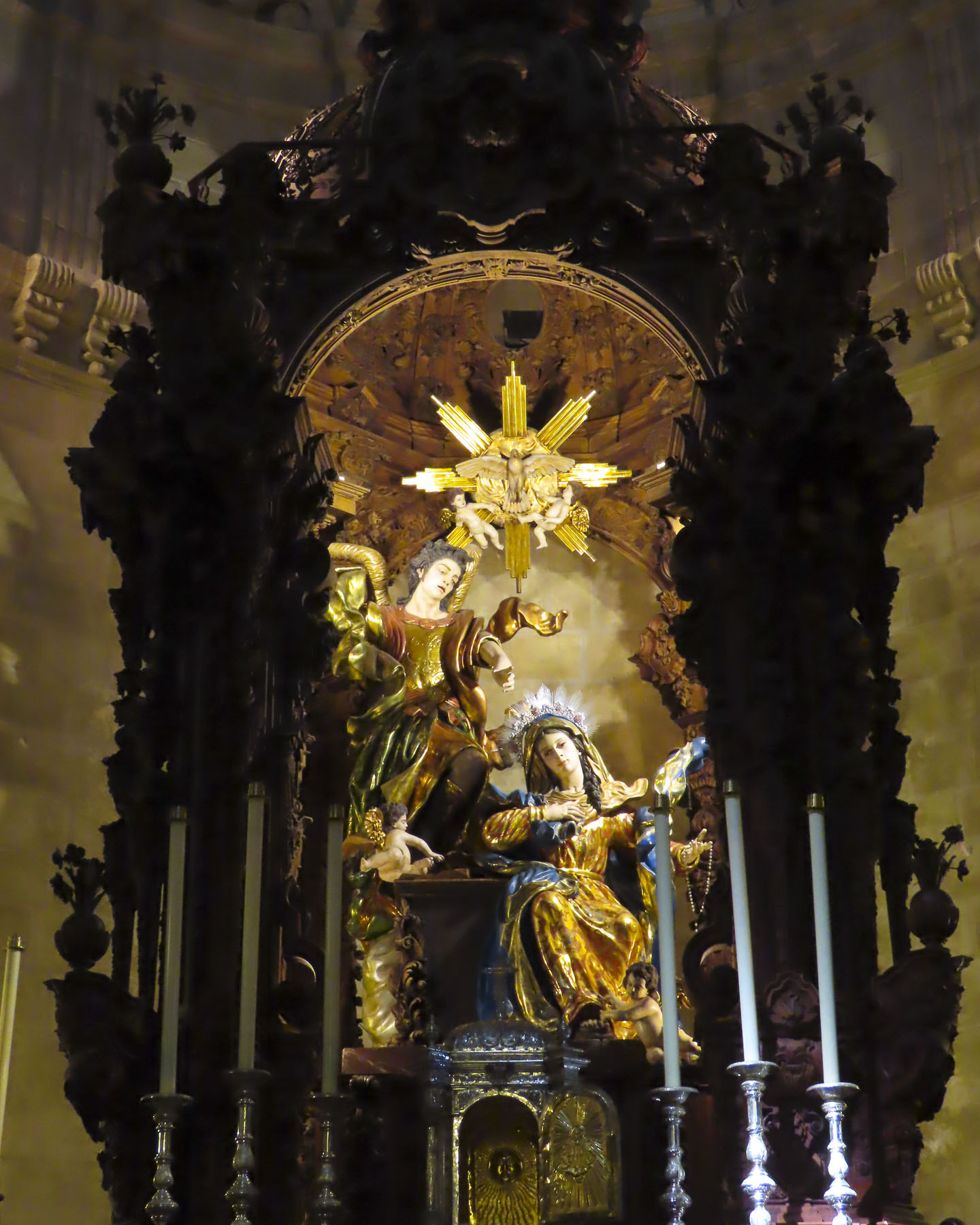
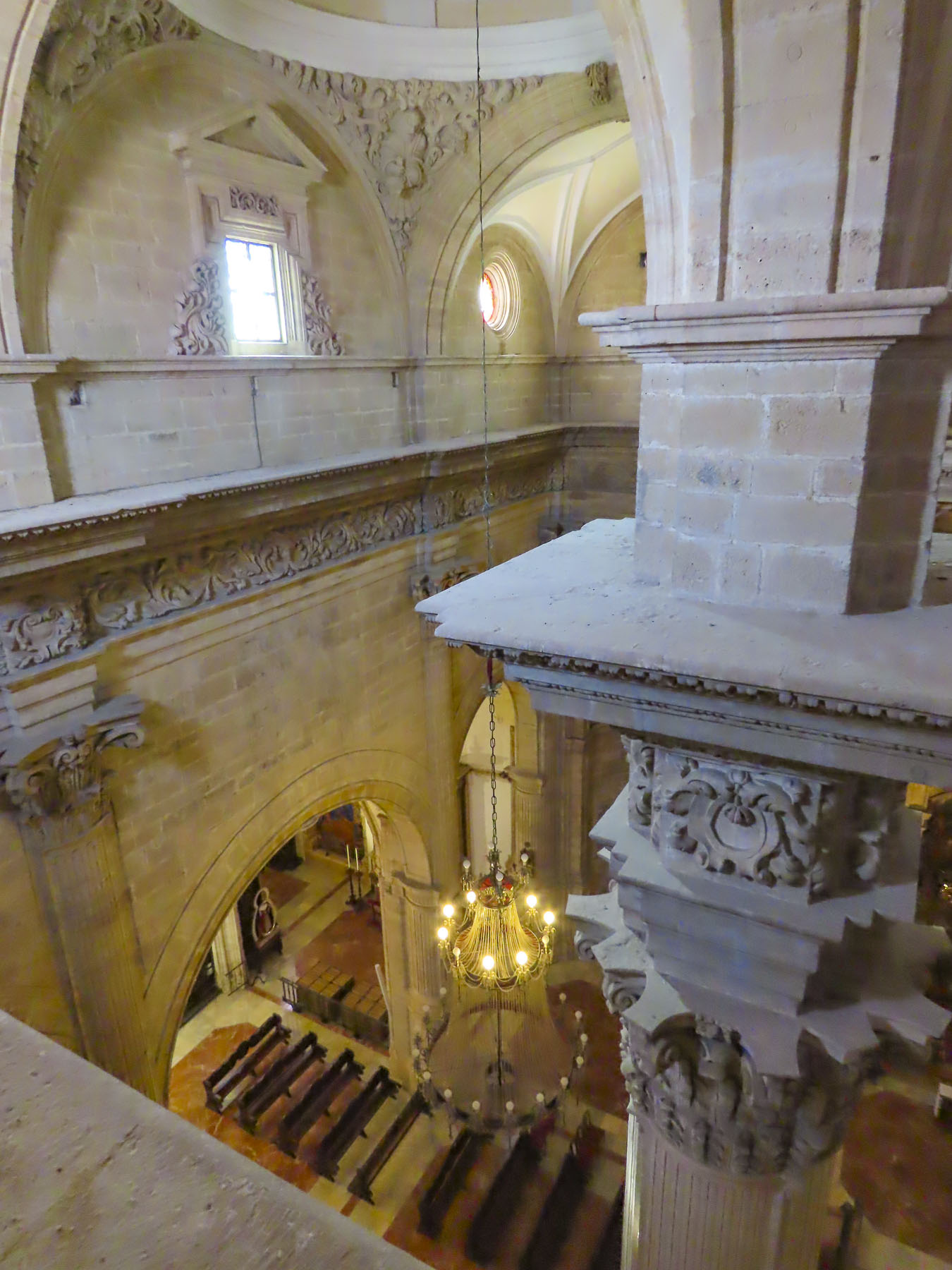
The balconies on the front were added during the reign of King Felipe II in the 1500s for the well-to-do and nobles of the city to watch maestranza tournaments in the plaza, before the Plaza de Toros de la Real Maestranza de Caballería de Ronda was built. A century later the church was partially destroyed in an earthquake and the rebuilding over the next two centuries embraced a mishmash of Gothic, Renaissance and Baroque styles that sends architectural purists into a frenzy of “how could they.” Though smaller than the churches in Seville, we found the Iglesia very refreshing with its lofty interior and fabulous religious art.

Just inside one of the side entrances, a worn stone stairwell led up to a walled catwalk that wrapped around the side and back of the building. The views from it over the red tiled roofs of the old quarter seemed not to have changed for centuries.

Later that evening we explored the new town and found Grabados Somera, Shallow Engravings, a wonderful workshop and gallery filled with etchings of matadors, senoritas and Ronda, all the creations of master printmaker engraver Pedro Somera Abad. Writing this now we regret not purchasing a print as a souvenir of our time in Spain.

We eventually came across La Casa de Jamon, a gourmet store and Iberian Ham bar that will leave any carnivorous epicure salivating. Here a leg of the best jamon to take back to your casa will dent your wallet an extravagant 600€.  We never realized those acorn fed porkers could command such a price. Along with jamon, they have locally sourced sausages, wine and cheese from the Andalusia region. We decided to order a charcuterie board for dinner and we were not dissappointed with the tasty assortment presented.

The next morning we walked through the Jardines De Cuenca along a walled path that traced the course of the Rio Guadalevín through El Tajo gorge far below. Across the chasm the hanging gardens of the old palatial homes that lined the cliff edge were redolent with color. The path through the park slowly descended to the Puente Viejo; built in 1616, it is the oldest stone bridge over the river.

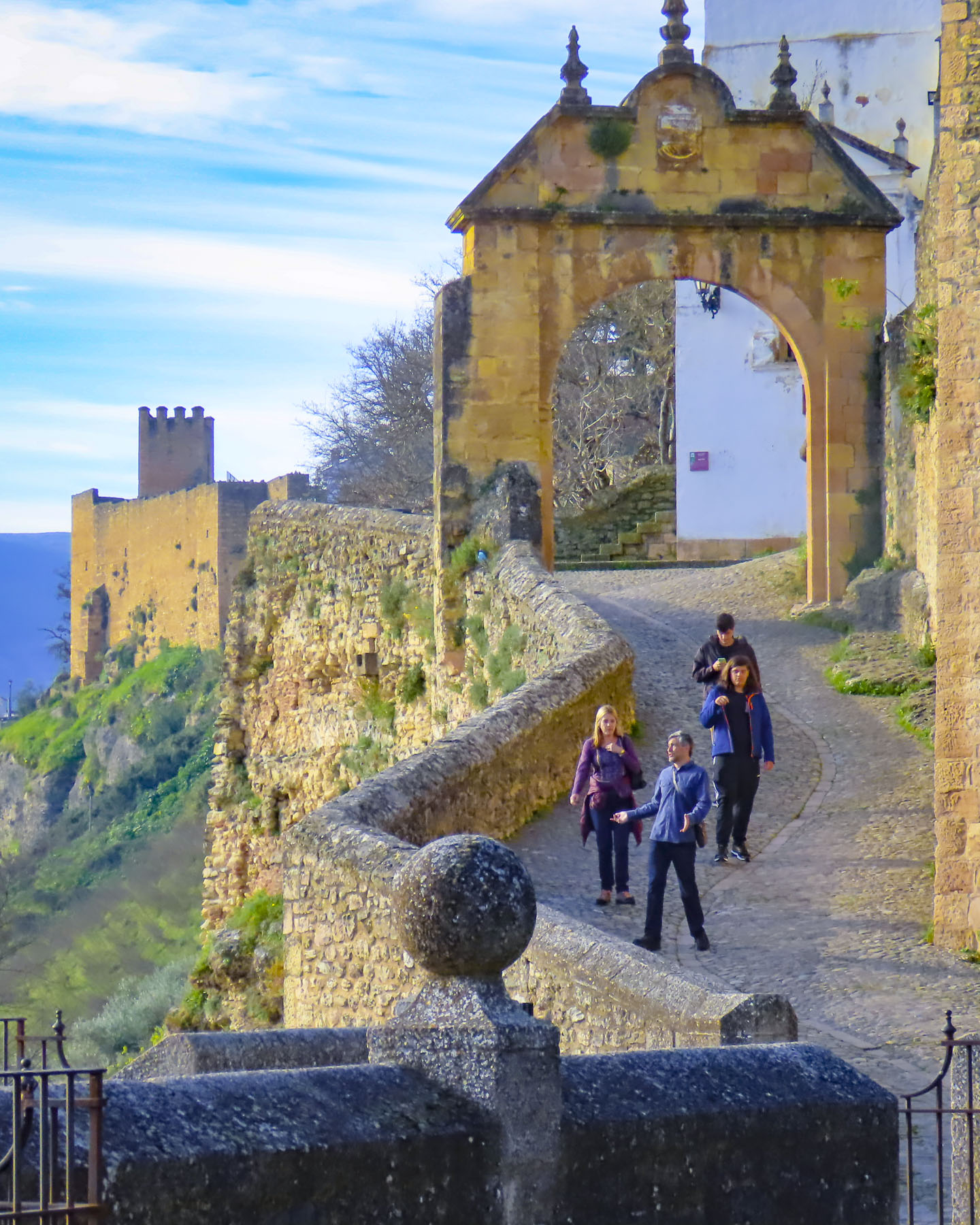
Across the bridge the route split to go back into La Ciudad, the old town, through the Renaissance era Puerta de Carlos V, where taxes were once levied on the wares merchants brought into the city.  Or we could go downhill to the impressive arched ruins of the Baños Arabes, a 13th century Moorish bathhouse on the outskirts of the city, that provided heated water, an impressive feat 800 years ago.

Along the river that supplied water to the Arab baths, grist mills once stood just inside Ronda’s double ring of fortress walls that protected this side of La Ciudad.  The mills ground wheat harvested from the surrounding countryside. The stones of the outer wall were repurposed long ago. Now only remnants of the massive inner wall, the last line of defense before entering the city still stands, causing us to pause and imagine its former glory. Walking under the last vestiges of Ronda’s mighty defenses, we headed back.

It was lightly raining as we strolled along Carrera Espinel in search of an interesting place for dinner.  Most of the inside tables at the restaurants we passed were taken with diners escaping the damp evening chill.  But the aroma of savory clams drew us to an outside table at Restaurante Las Maravillas, where the waiter was attentive and refueled the tower heater next to our table to help keep us warm. The dinner and wine were delicious.

Plans to visit Olvera and Setenil de las Bodegas the next day were made over dessert and coffee. It had been a long satisfying day, our “walk a little then café” evolved to “walk a little more, then bed.”

Till next time, Craig & Donna

Follow 2suitcasesfor2years on Instagram!

Belize – When Iguanas Fall from Trees, Head South

“Welcome aboard, folks. Our flight time to Belize is two hours and ten minutes. The weather is expected to be a balmy 80 degrees Fahrenheit today when we land,” the pilot announced as we were buckling in. Then continued with “As you know the National Weather Service has issued the very rare ‘Beware of Falling Iguanas Weather Alert’ for Miami and South Florida this morning.”  As funny as this sounds, it actually happens when the temperature dips into the thirties in Florida.  Cold blooded animals, the iguanas slowly stiffen as the temperature drops and eventually lose their grip on the tree branches they have been sleeping on and fall to the ground, stunned, where they lay immobile until the temperature rises.  Iguanas can grow quite large and may cause serious injury or death if you are unlucky enough to get struck by one of the falling frozen reptiles. It sounds like something out of a zombie apocalypse movie – be careful out there. We were delighted to be heading south again to a warmer climate after a cold and rainy November and December in Italy, which was followed by a warm-hearted, but very frigid Christmas with our kids in New Jersey.

On our final approach for landing the wing of the plane dipped to reveal a beautiful azure sea outlined with dense green jungle and brilliantly white sand beaches – and not much else – as far as the eye could see.  It was still much like it was several millennium ago when a prosperous Mayan civilization flourished, supporting an estimated population of 500,000 – 1,000,000 in the region. Columbus sailed by without stopping and landed in Honduras during his last voyage to the Americas in 1502.  Navigator Juan Diaz de Solis did not mention a landfall or discovery during his expedition in 1507 sailing from Panama to the Yucatan. Several theories suggest that the 190-mile-long Belize Barrier Reef, the largest in the northern hemisphere, was too difficult to navigate through so the Spanish fleets sailed past. We witnessed this difficulty once from the deck of a cruise ship as the captain left a snaking wake as he steered a serpentine route through the underwater obstacle course.

The first European to arrive in Corozal literally washed ashore as a survivor of a 1511 Spanish shipwreck. To stay alive, conquistador Gonzalo Guerrero offered his skills as a soldier to Mayan Chief Na Chan Kan at Chactemal, (now Santa-Rita, Corozal Town). He proved his skill as a warrior and married the chief’s daughter, Princess Zazil Há. The children from their union are recognized as the first Mestizos of Central America; theirs was the first Mayan liaison recorded by Bernal Diaz de Castillo in his memoir “The True History of the Conquest of New Spain,” written in 1568.

Guerrero defended his adopted homeland against conquest in 1531 when he helped Chief Na Chan Kan defeat the Spanish army in a battle near the Rio Hondo. Today the river is still Belize’s northern border with Mexico.  Spain never established any permanent settlements in Belize.  Gold and silver were discovered next door in Guatemala and Honduras. Belize was absorbed into the Spanish empire of Central America by its proximity to its larger neighbors, but was never colonized until the British subversively entered the territory.

The riches of the new world didn’t go unnoticed for long, but by the time English and Scottish pirates arrived on the scene in the mid-1600s, the treasure-laden flotillas destined for the Spanish crown from central America had been replaced by shipments of logwood.  Native to northern Central America, logwood or bloodwood was used by the indigenous tribes of the region to produce a vibrant red-orange dye. Mixed with other ingredients, a full spectrum of colors was possible. It grew abundantly and was exported to Spain where the cheap natural resource revolutionized the textile industry and afforded commoners a chance to have colorful wardrobes, which before was only afforded by the nobility. Gone were the days of fabrics dyed gray with soot. 

Gold or wood – it didn’t matter. Pirates were pirates and willing to steal your cargo regardless of its content, as long as there was a profit to be made, and the English textile mills were demanding logwood.  After plundering large Spanish merchant ships that sailed across the Gulf of Honduras, the pirates found safe refuge for their smaller vessels in the shallow waters behind the Belize Barrier Reef amidst its 450 cays and atolls, where they could hunt for food, get fresh water, and repair their boats.  In 1670 England and Spain signed a treaty banning piracy in the Caribbean.  The days of the infamous pirates of Belize, Edward Lowe, Captain Charles Johnson, Bartholomew Sharp, Captain Henry Morgan, and Blackbeard, were waning.  By this time English pirates had discovered Belize was full of logwood and many ex-privateers became legitimate and wealthy logwood cutters and exporters after buying African slaves to work in the miserable conditions of the mosquito-infested jungles.  Though Spain considered all of Central America as part of their empire and occasionally harassed the British logwood camps trying to evict them, the Spanish crown never established any settlements in Belize. 

In 1763 Spain signed another treaty allowing English subjects the “privilege of wood-cutting,” but still retained sovereignty over the region. Possession is nine-tenths of the law and Belize finally became the English colony of British Honduras in 1862. Mahogany had replaced logwood as the major export. Conflict with the Mayans escalated as settlers moved farther into the interior exploiting the regions mahogany forests, and forced the indigenous population from their lands by burning their villages and crops. The giant cut logs were floated down the country’s rivers to the coast and where rivers didn’t exist, small logging railroads were built to satisfy the European demand for this beautiful hardwood that was favored for fine cabinetry, furniture and shipbuilding.

Disenfranchised and oppressed, the Mayan revolted in what is called the Caste War against their colonizers. Led by Marcus Canul, a Mayan chief,  his people demanded the British pay for the crops they burnt and for the land they occupied.  In northern Belize, Canul’s freedom fighters attacked and occupied the garrison town of Corozal. The movement lost its momentum when Canul was killed during an unsuccessful assault on Orange Walk in 1872.  Long considered a rebel and criminal, he is now regarded as a Belizean hero who fought against ethnic cleansing. The deforested jungles were replaced by sugar cane, ranching and agriculture plantations.

Belize finally became independent in 1981, though The British Army still maintains a jungle warfare training facility in the country to help deter Guatemalan aggression in an unresolved border issue. Aldous Huxley once wrote, “If the world had any ends, British Honduras (Belize) would certainly be one of them. It is not on the way from anywhere to anywhere else. It has no strategic value. It is all but uninhabited.”

Today the tiny country of 400,000 supports a diverse culture descended from Mayans, Mestizos, African slaves, Garifunas, Europeans and more recently immigrants from Lebanon, Germany, the East Indies, Asia and North America with an economy centered on tourism and agriculture.  English is the official language of Belize, but it is not the first language of many with Spanish, Belizean Creole and Q’eqchi’ Maya primarily spoken, depending on what part of the country you are in.

The barrier Islands and cays where pirates might have hidden treasure now sport popular resorts on their white sand beaches. Scuba divers can explore shipwrecks, the Great Blue Hole (a marine sinkhole that is visible from space,) and the exceptional marine life found along the Belize Barrier Reef which is now a marine reserve and UNESCO World Heritage site.  Ashore the jungles and mountains continue to reveal the extent of the Mayan civilization in Belize with over 600 known archeological sites discovered so far, ranging from ceremonial caves to towering stone pyramids.

We are on the other end of the tourist spectrum and wanted something very lowkey, inexpensive and relaxing for a month. We headed to Corozal! Located on Chetumal Bay, it is the northern most city in Belize and only 16 miles from Chetumal, Mexico. It was founded in 1848 by Mestizo refugees from Mexico fleeing Mayan retribution from the Caste Wars there. It prospered exporting mahogany logs when there were still enough trees to support the timber industry. Sugarcane now fuels the economy. 

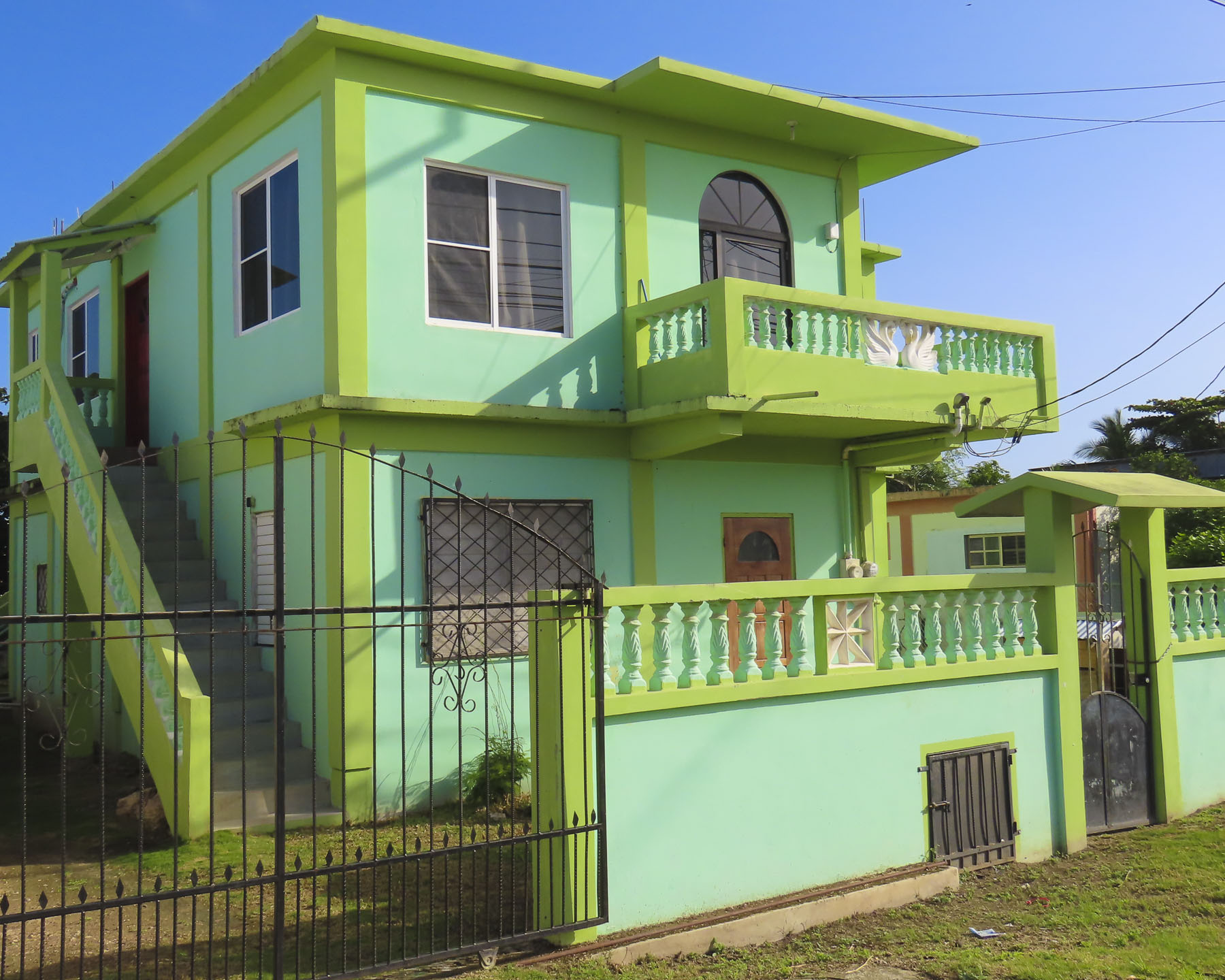
In 1955 Hurricane Janet, a category 5 storm with winds of 175mph, flattened ninety-five percent of Corozal and left 8,000 people homeless.  Surprisingly one of the few buildings left standing on the waterfront, fully intact, was the home of lumber baron John Carmichael.  It was built in the 1880’s using only mahogany.  The house is still used today as a Catholic mission. The pre-1955 wooden structures have been replaced with concrete block houses now, mostly two stories high, except the four-story Mirador Hotel, the tallest building in town.

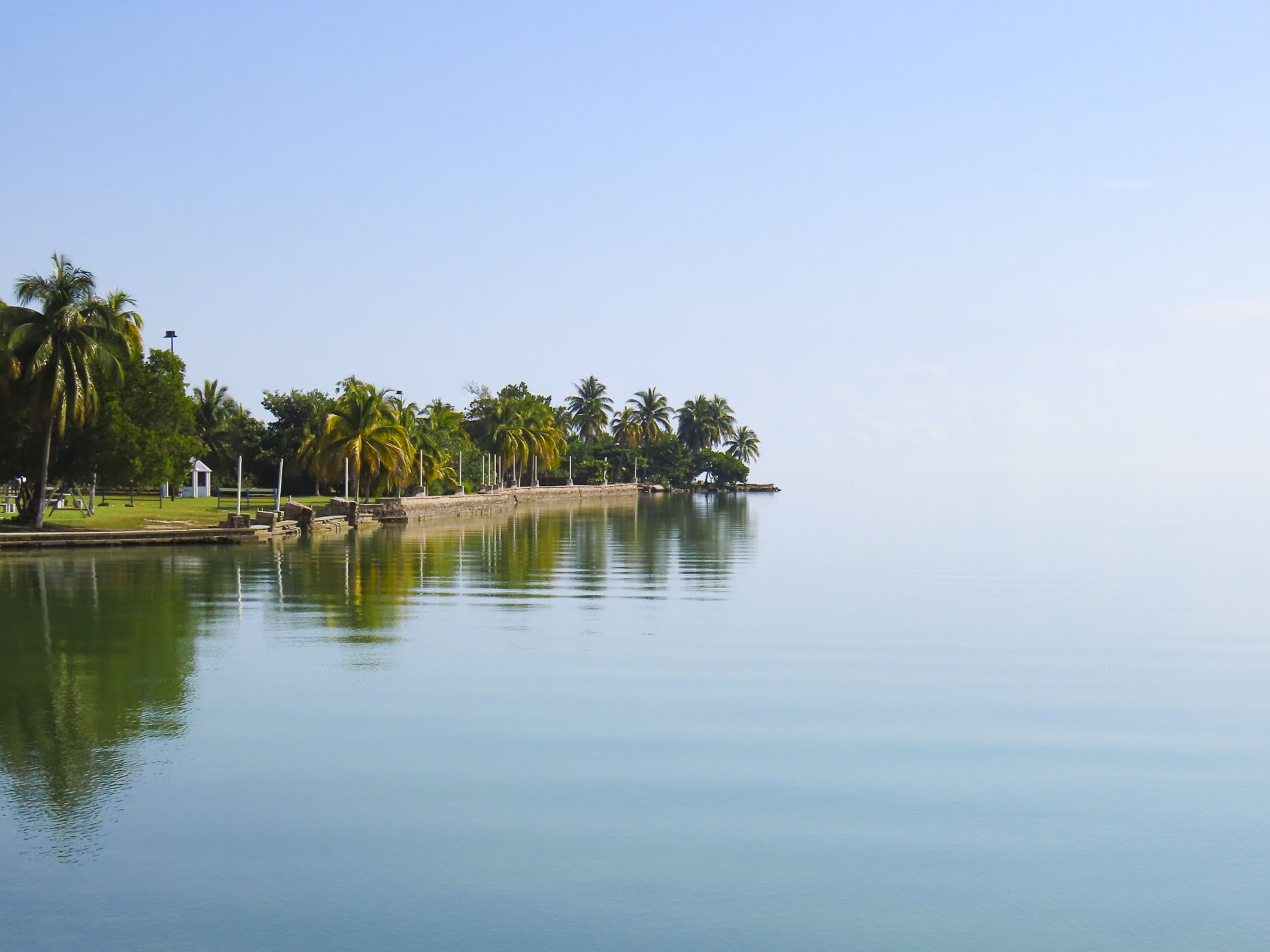
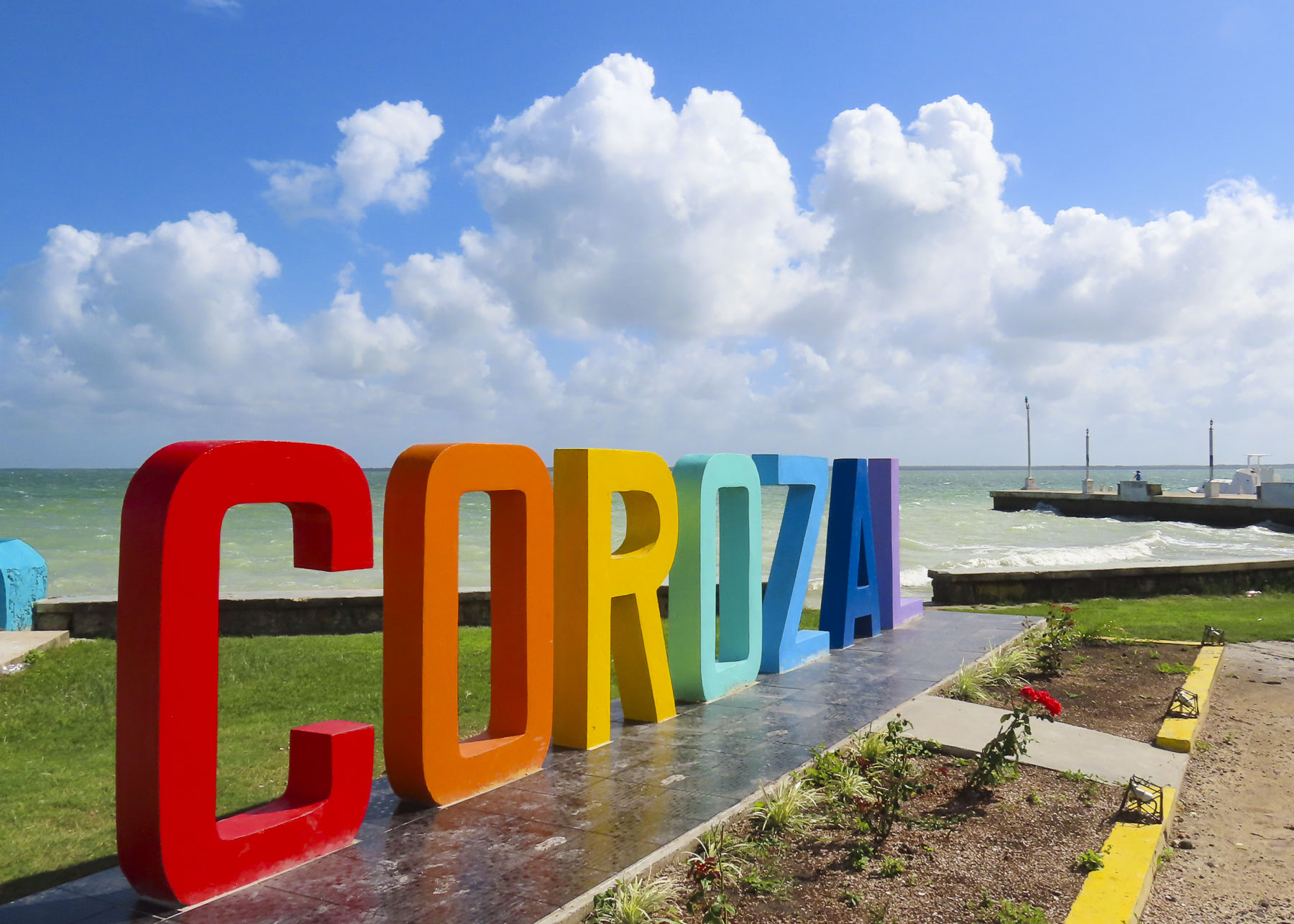
Our ah-ha moment happened after the two-hour, inland drive from the airport, when we entered Corozal and saw the enticing turquoise waters of Corozal Bay on our way to our Airbnb rental. We drove a mile along a still bay bordered by a low battered seawall and numerous public parks dotted with palm trees.

Turning onto 2nd St. North our driver stopped in front of a flowering bougainvillea-covered wall, less than 200ft from the water, that hid the Villa Imperial Loft Apartment, our home for the next four weeks.  Our host Oscar wasn’t home at the time, but had made arrangements with Sue, another guest, who graciously led us through the flowering garden, complete with a resident mama cat and her kitten, and up the back stairs to our studio apartment. She enthusiastically answered our first questions about Corozal.

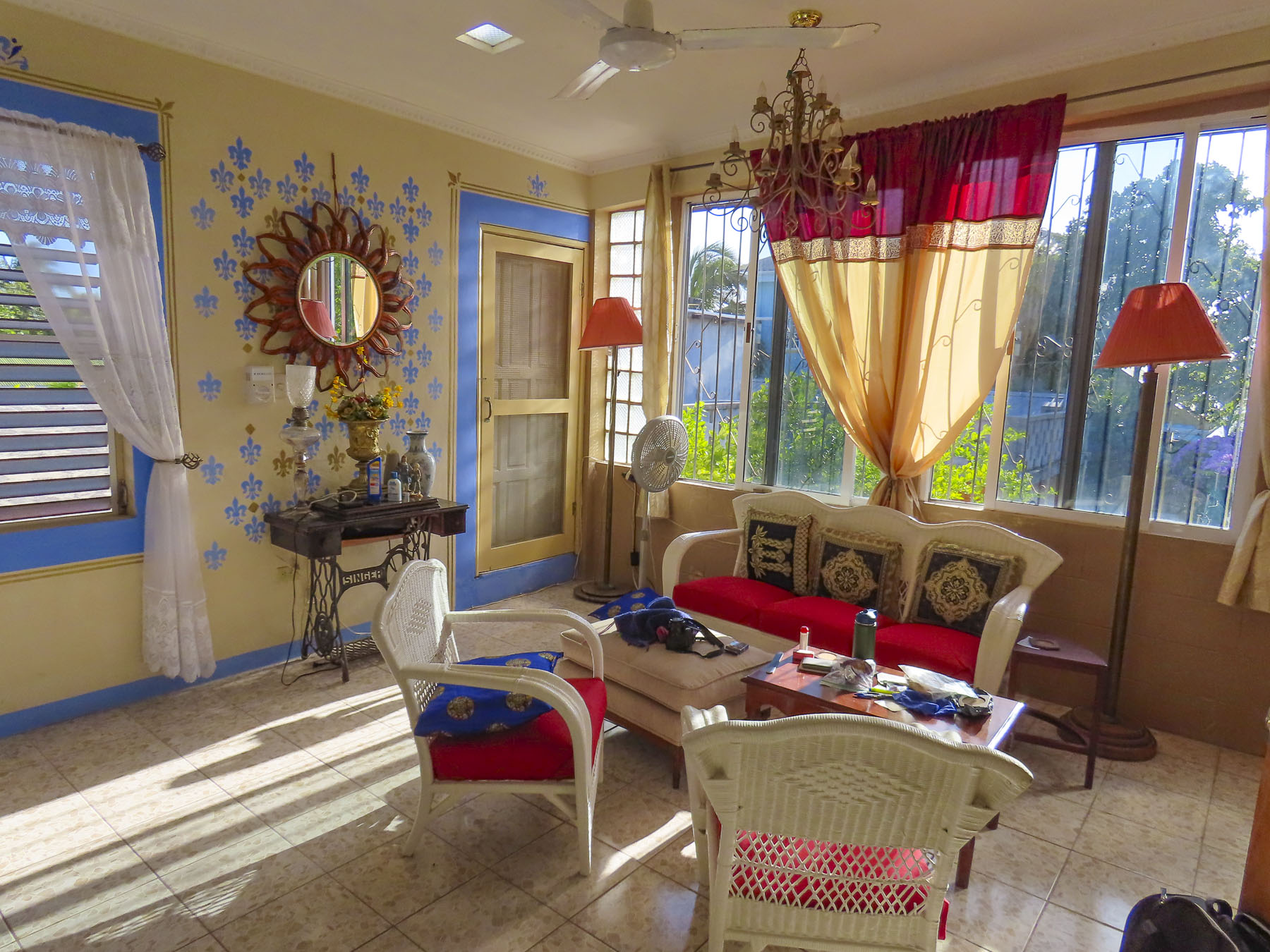
The large room was brightly painted and pleasantly decorated with an eclectic mix of antiques, reminiscent of visiting our grandparents.  A wall of windows facing east offered a glimpse of the bay, and any storms approaching, through the neighbor’s tree. Best was the kitchen across the landing at the top of the stairs. It was enclosed on three sides with just screened windows, covered with louvered shutters. In stark contrast to the apartment, it was very rustic with the feel of an old lake cabin. But we soon realized it was the perfect spot to observe the wide varieties of birds that visited the trees in the backyard, and we thoroughly enjoyed cooking and eating there.  Birding over the next month while walking along the waterfront was one of the highlights of our stay in Corozal. Spotting just a few of the 590 bird species in Belize, we saw sandpipers, great kiskadee, white-collared manakin, yellow-throated euphonia, tricolored heron, kingfisher, lineated woodpecker, great egrets, couch’s kingbird, crimson-collared tanager, black and white warbler, and the outrageously raucous plain chachalaca, which you’ll hear well before seeing them.

For many travelers visiting northern Belize, Corozal is just a brief stop on their way to or from Mexico or Guatemala, or a transfer point to catch the two-hour Thunderbolt Ferry or a flight on Tropic Air from the Corozal Airport (CZH) to San Pedro, on the barrier island, Ambergris Caye.  The town doesn’t have a beach, which has probably helped keep it off the beaten path for most tourists that visit Belize. Access to the shallow water is from stairs in the 1.5 mile long stone seawall that has not fared well against the surges of the ocean. We had read that the district has a sizeable expat community, that likes to avail themselves of all the big city options, mainly a Walmart and Sam’s Club that are across the border in Chetumal, Mexico.  But from our experiences we only encountered a handful of North Americans, surely not surging numbers that would indicate it was a sizzling hot spot for vacationing or retirement that would change the character of the town. And that’s a good thing. The joy of Corozal for us was its tranquility; there really was not much to do there aside from chilling and the occasional dip in the gentle waves of the bay.  The serenity of the seascapes compensated for the lack of activities.

We were enjoying the tropical 80-degree weather of Corozal and re-embracing our slow travel philosophy by immersing ourselves in the daily flow of life in this small coastal town. It was wonderful to see parents accompanying their uniform clad children to school every morning. Some parents drove, others walked along or bicycled with their kids. Routinely at the end of the school day an older couple pedaling a three-wheeler sold homemade popcorn to the kids or the youngsters lined up for ice cream on the porch of a home that doubled as an ice cream parlor. The kids waved to us if they noticed us bobbing in the bay across the street.

Our daily walks led to discoveries all across town, mostly culinary in nature. We were eager to find the best places to buy groceries, interesting places to eat and quench our thirst.  Most importantly, our craving for good coffee was easily satisfied directly across the street at the top of a colorful flight of tiled stairs. Here Oscar’s nephew Rudi runs the LVDM Coffee Stop on the porch of his home and makes what are easily the best cappuccinos in Corozal. He also rents two rustic villitas in his backyard. 

In town there were any number of Asian-owned grocery stores that all offered the same staples. We tended to prefer a shop called the Central Supermarket, because they were the closest place to carry our recyclable beer bottles. Diagonally across the street the city’s daily market had numerous fruit and vegetable stands, an open-air butcher, and clothing vendors. A twice weekly farmers market was held outside of town, across from the cemetery.  Fortunately, this location did not reflect negatively upon the quality of produce sold there. At a much greater walking distance, it didn’t offer any real advantage over the produce sold for the same price at the daily market. Shopping there was an early morning event and the atmosphere was very vibrant. It was here we got the first glimpse of the country’s Mennonite farming community, easily identifiable by their conservative dress and spoken Pennsylvania German. Since 1958 when they were invited to settle in Belize by the first Premiere of the country, George C. Price, the community has grown to 10,000, and they have contributed immensely to Belize’s agriculture self-reliance.

Surprisingly, even though Corozal is located right on the bay, we could not find fresh fish and had to purchase locally caught frozen fish, conch and lobster from Frank’s, a great butcher shop that makes their own sausage and offers a wide assortment of fresh beef, pork and poultry.  Directly across from Frank’s on the other side of the civic center field we found Vivi’s for wonderful meat pies.

On one of our walks, we did meet a young brother and sister team carrying a five-gallon bucket on the handlebar of their bicycle. It was full of lobster and conch, caught by their father earlier that morning.  They were going door to door in the neighborhood, selling it so they could buy their school uniforms.  Of course, we purchased some, and it was delicious.

The town does not have a marina for boats, but there are spots along the bay where fishermen pull out their ancient mahogany boats for repairs.  Called sandlighters, many of these traditional sailing vessels were built across the bay in the fishing community of Sarteneja and are over eighty years old.

There were several small bakeries in town, each offering different specialties.  The Y Not Bakery, to the detriment of our waistlines, was the closest and created the best temptations. Another favorite was Caramelo Bakery across from the high school and down the street from Belcuisine, a spice factory that produces flavorful Belizean Recados mixes.

Corozal really was a rewarding foodie’s destination with numerous small taquerias and enterprising folks offering roadside barbeque. Many businesses were operated from the windows of homes, like Ruby’s, who prepared delicous ceviche then sold it through her living room window for take-away.

The only option for eating out was casual dining. We found June’s Kitchen and Mar’s Caribbean Garden for homecooked meals.  Directly across from the bay, Scotty’s Crocodile Cove was a relaxing spot with thatched roofs; it was an enjoyable place for a refreshing Belizean brewed Belikin beer and large burritos that could easily feed three people.  The Tortuga Grill, across from the waterfront Rainbow Park, and the Wood House Restaurant, adjacent to Miami Beach, both offered good food and views of the bay.

Corozal enthusiastically supports its art community and one Saturday a month, in the town’s Central Park, holds the Art in the Park event where local artists and craftspeople display and sell their work. It was a fun time, with live music and delicous Belizean food. It’s held between 5pm – 9pm to avoid the heat of the day.  If City Hall is open make sure to check out the fantastic wall mural depicting the history of Corozal, painted by Belizean-Mexican artist Manual Villamor.

The blank concrete block walls of homes and businesses across from Miami Beach were the canvases for street artists invited to participate in the Corozal Graffiti Festival. In 2020 street mural artists from Belize, Cuba, El Salvador and Mexico were invited to enliven the walls with an “Ancient Chactemal” theme. It was a lively event with a music stage, art and crafts for sale, body painting and food vendors. On the beach, the Corozal sailing club was offering catamaran rides on the gentle waters of the bay.

There is an abundance of civic pride displayed in this small, well-kept community on Corozal Bay that is endearing. We barely scratched the surface of places to explore in Belize and were perfectly content “Snow Birds” with our choice of Corozal for a month’s worth of lazy rest and relaxation.  We’d definitely return to explore the surrounding area more fully.

Till next time, Craig & Donna
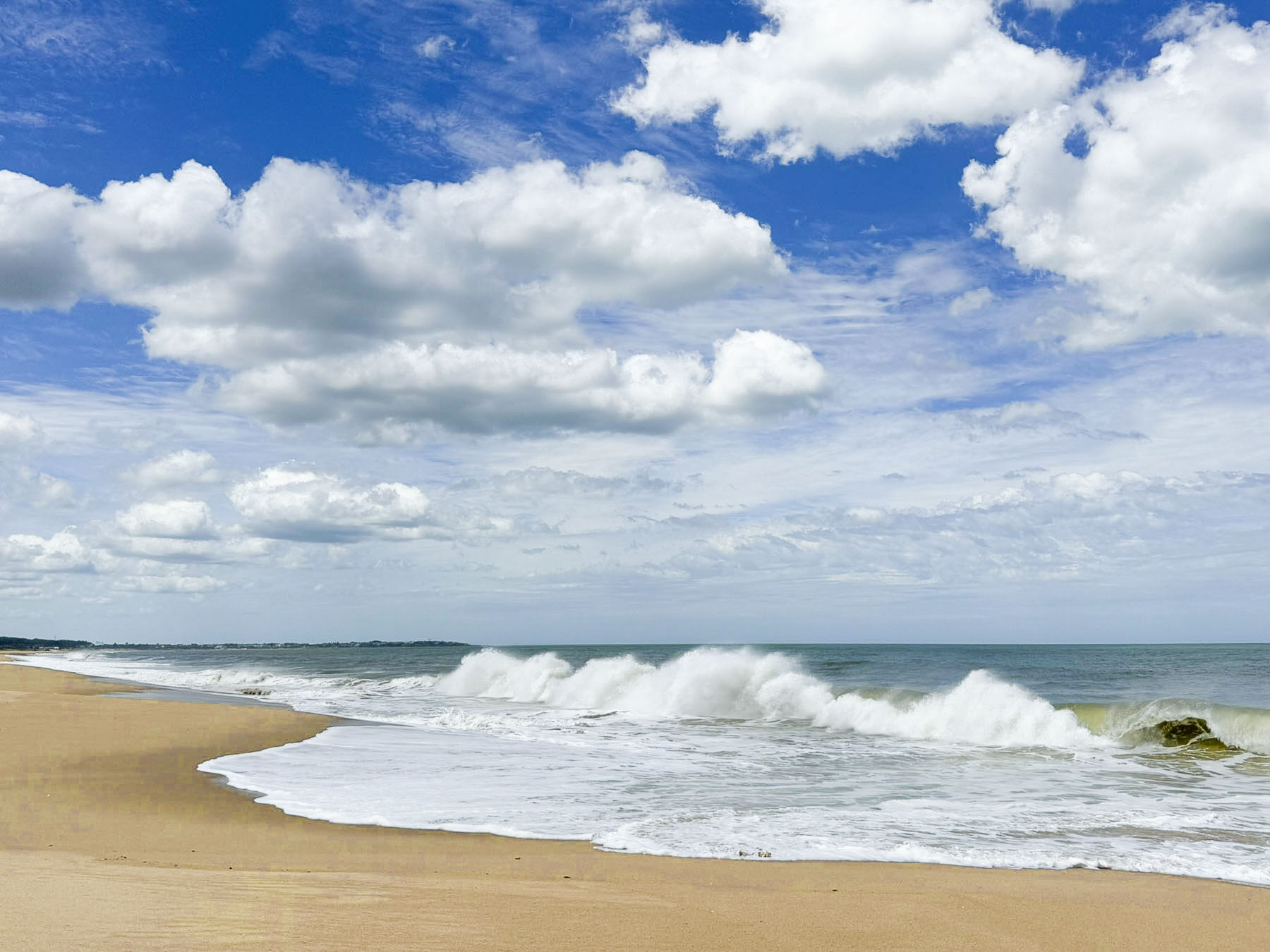
Lalibela Part 2: Holy Water and Thumbprints

There is not a definitive count, but it’s thought that there are nearly two hundred rock churches scattered about the remote northern highlands of Ethiopia. The highest concentration of eleven in one locale, collectively known as the “Rock Churches of Lalibela,” is the most famous. In the immediate rural area surrounding Lalibela there are several additional rock churches and ancient monasteries worth seeking out.  Asheten Mariam Monastery is perched at 11,500 ft on a lower ridge of Mount Abuna Yosef, (at 14,000 ft Ethiopia’s sixth highest mountain) and St. Na’akuto La’ab Monastery behind a waterfall, both located southeast of Lalibela. Farther afield, to the north of Lalibela, St. Yemrehana Krestos and Bilba Kirkos Church lie in remote farmlands.  All four required a little more physical effort to get to, but were well worth the effort.IMG_5573We started our day listening to bird calls and watching the morning clouds burn off from the valley below our hotel as the sun rose higher into the sky. The Mountain View Hotel Lalibela was the perfect spot on the outskirts of town, with extensive views and a wonderful variety of birdlife in the trees outside our room.  Farther along the ridgeline was an odd, futuristic structure that looked like it was a tower for a water ride in an amusement park.

The day before after touring the Lalibela churches, our guide suggested we hire a driver with an SUV to take us into the mountains. “We can drive to the end of the dirt track, but then it’s another forty-minute hike to the monastery,” Girma explained. “How difficult is the trek?” “It’s a gradual climb until the end and then there is a short steep section,” he replied. IMG_4869The shops were busy, and the roadside Ping-Pong games were in full swing as we departed Lalibela. The road into the mountains rose quickly from Lalibela into a semi-forested landscape. Too steep for crops, the land was used for cattle, which grazed on clumps of wild grasses on the hillside.  We stopped at one clearing for the view and noticed a herder gently nudging his cows away from recently planted tree seedlings.  “This is part of our government’s commitment to reverse deforestation and help mitigate climate change. It’s called the Green Legacy Initiative,” Girma shared. IMG_4923“On July 29th Ethiopians planted 350 million trees in a single day, a world record!” he proudly shared.  “The farmers know how important this is and help shoo the cattle away, but the government has also chosen a tree seedling that doesn’t taste good.” This annual Ethiopian project is part of the African Union’s Great Green Wall initiative to reclaim arid lands that border the Sahara Desert with a living wall of trees.  This belt of greenery will stretch from the Atlantic Ocean to the Gulf of Aden. IMG_5198The road deteriorated after this, with deep mudded ruts tossing us from side to side regardless of how slowly we navigated through, over or around them. Our “rattled tourist syndrome” is the most appropriate way to describe the ride, while optimists might refer to it as an an “African deep tissue massage.” We were the only truck to park at the trailhead to the Asheten Mariam Monastery and were greeted with children selling handicrafts, and young men renting walking sticks and offering to accompany us on the hike.IMG_4883 Confident in our abilities we declined, but they tagged along anyway. This was a good thing. What our guide had forgotten to mention was that there was a short steep section at the beginning of the hike, before it leveled off. Within minutes, between the altitude and the terrain, our hearts were pumping and my wife, who struggles with asthma, was gasping for breath. We are unfortunately not the 7 second 0-60mph vroom, vroom of a 1964 Corvette anymore, but more like the putt-putt of a classic Citroën 2CV. We get there, eventually. So, our guide, forgetting his youth and our age, led the way from a distance, as if he was channeling Shambel Abebe Bikila, Ethiopia’s famous marathon runner. IMG_4983It was at this point that my wife spoke up. “Girma, you must think of me as the same age as your mother.” Instantly, his attitude became very solicitous, and he smilingly offered her a hand or other assistance at every opportunity. We marveled at the agility of the local kids. They nimbly scampered up and down the trail, easily outdistancing us, in order to set up their little trailside displays of carvings and beadednecklaces. When we didn’t purchase at first, they simply packed up and reappeared further up the trail. We had to reward such perseverance with a couple of purchases.IMG_4987Meanwhile, we regained our pace as the trail leveled off and tracked along the base of a cliff face that fell away to terraced farmland far below.  The incline of the trail continued to rise; the walking sticks were now invaluable in helping us steady our footing on the rough path.  Around a curve the trail abruptly narrowed at a sheer rock wall broken by a vertical chasm, slightly wider than our shoulders.

Occasionally we had to plaster ourselves to the rock wall to make room for descending parishioners to pass. It took a moment for our eyes to readjust to the brilliant sunlight after emerging from the darkness of the tunnel as we exited onto a plateau above the highlands. 

A young priest answered our knock, greeted us and led us into a small chamber lit only by the light of the open door. The priest proceeded to show us the treasures of the church: a large ebony cross, 900-year-old parchment manuscripts, elegant processional crosses and illuminated Bibles, as well as iconography. IMG_5069Imprinted at the bottom of a page in one ancient text were the thumbprints of the ten scribes who helped copy the book. Legend has it that it was the first church ordered built by King Lalibela during his reign in the twelfth century and that his successor, Na’akueto La’ab, who only ruled for a short time, is buried there.

The way the church is cut from the mountain made it difficult to get an overview as part of it is obscured by protective roofing. The real rewards of this endurance trek were the fantastic panoramic views over the Lalibela highlands.  Awareness of your surroundings are vital here as there are not any safety railings at the cliff edge. The walk back was slightly less difficult, but the young men who tagged along and assisted truly earned their payment. Back at the trailhead, parked next to our truck was a tiny blue, Fiat Panda, a sub-compact car with extremely low road clearance. How it managed to traverse the same rutted road we drove hours earlier remains a mystery to us.

Our guide suggested we lunch at Ben Abeba, a curious lunch spot that turned out to be that futuristic building visible from our hotel.  Its spiral ramps led to various dining platforms from which we watched raptors soaring along the updrafts of the ridge.  The food was exceptionally good. But there was a quirky feature of the restaurant that we found very amusing. The restrooms were something out of a science fiction movie, with cylindrical stalls that resembled cryogenic tubes. It was definitely a Lalibela oddity.

St. Na’akuto La’ab Monastery was closer to town. As with many rural communities, Lalibela included, the cluster of development ended abruptly, and we were instantly in the countryside. Villagers in robes walked purposefully to church along the road that bordered their fields, as we made our way to the hermitage. IMG_4722 Coming to the end of the road, we could see the monastery dramatically situated behind a small waterfall, in a long shallow cave at the bottom of a cliff.

It was an easy short walk, from where we parked, down a trail with noisy birdlife. The buildings behind the entrance wall to the cave are not particularly unique; it’s their location that’s inspiring. The oneness with the natural environment.IMG_4325Stone bowls smoothed from centuries of use sat in various places on the rough floor to collect the water seeping from the cave’s ceiling one drip at a time. It gets blessed by the priest and used as Holy water, continuing a tradition from the 12th century when King La’ab ordered the monastery’s creation.

“Miraculously the water has never stopped flowing since the monastery was built,” the priest shared as our guide interpreted. Outside doors to the monks’ cells lined the exterior wall as it narrowed into the cliff face.  IMG_4369In the learning area, layers of carpet attempted to smooth an uneven, rocky floor where the novitiates sit to learn the ways of the orthodox church. In the corner rested several large ceremonial drums used during worship services. Picking one up our guide beat out a rhythm that would normally accompany liturgical chanting, or Zema, by the young monks. We’ve noticed that the treasures of the Ethiopian churches are not determined by their monetary value and locked securely away, only to be used on religious holidays, but by their spiritual connection.  Precious, irreplaceable, ancient bibles and manuscripts, lovingly worn and torn as they are, continue to be used every day, as they have been for the last nine-hundred-years.IMG_4560 It is well worth the effort to visit these remote churches and monasteries. The physical strength required and hardships endured to build these remote churches as a testament of faith continues to be inspiring.

Till next time, Craig & Donna
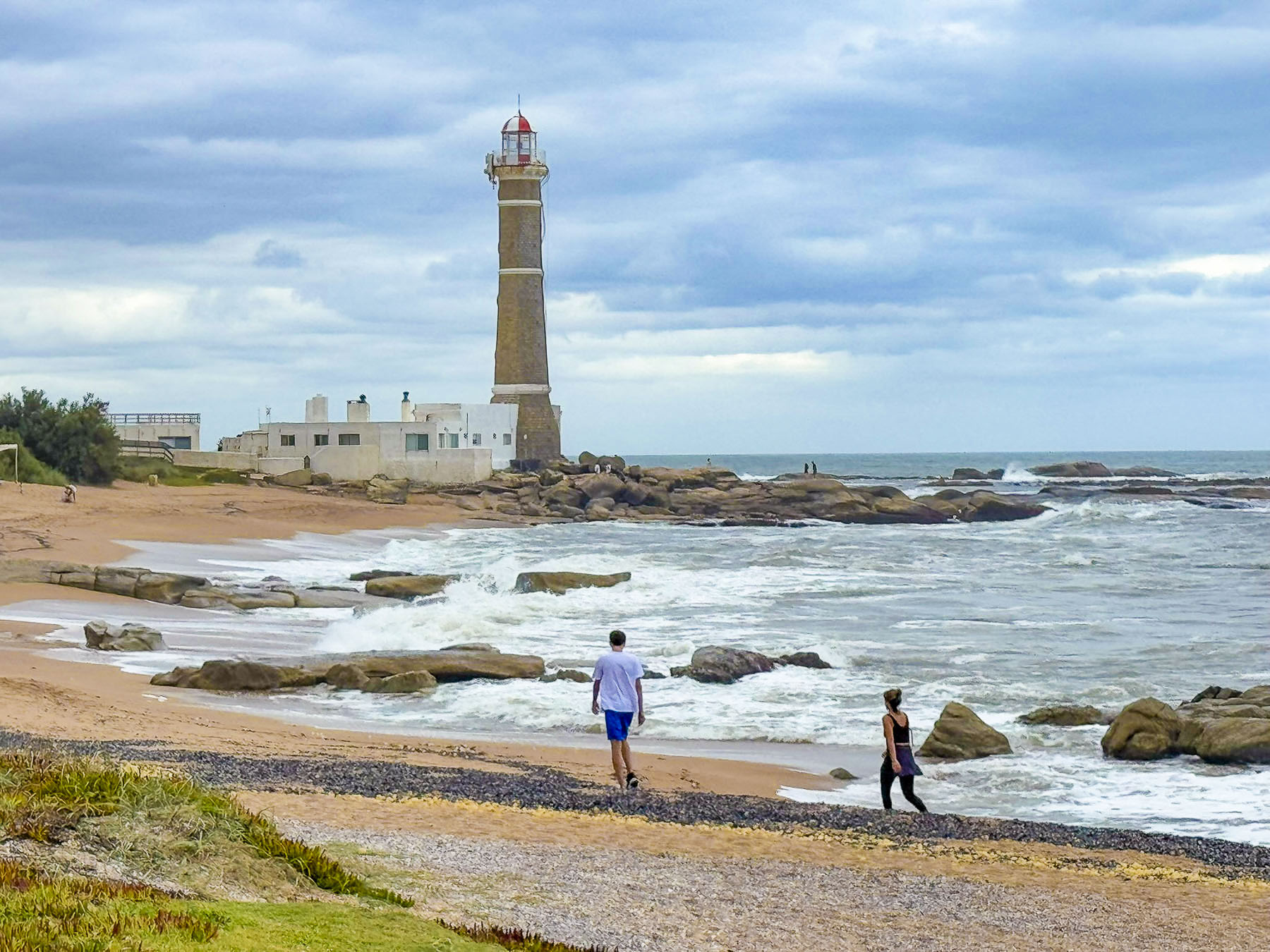
Lalibela Part 1: A Twisting Tale of Time, Pilgrims and Shoe Guards

IMG_1969Often overshadowed in recent decades by its East African neighbors recognized for their safaris, Ethiopia has been known to Western culture for millennia. It was first mentioned in the Hebrew Bible, around 1000 BC (3,000 years ago!), when the Queen of Sheba, hearing of “Solomon’s great wisdom and the glory of his kingdom,” journeyed from Ethiopia with a caravan of treasure as tribute.  Unbeknownst to Solomon their union produced a son, Menilek, (meaning son of the wise man).  Years later, wearing a signet ring given to him by his mother, Menilek visited Jerusalem to meet Solomon and stayed for several years to study Hebrew. When his son desired to return home, Solomon gifted the Ark of the Covenant to Menilek for safe keeping in Ethiopia, and to this day it is said to reside in the Church of Our Lady Mary of Zion, in Aksum, where only a select few of the Ethiopian Orthodox church can see it.IMG_1662The story of the lost tribe of Israel or the Beta Israel (meaning House of Israel) begins with the 12,000 Israelites that Solomon sent to Ethiopia to help Menilek rule following biblical laws. According to legend, Menelik I founded the Solomonic dynasty that ruled Ethiopia with few interruptions for close to three thousand years. This ended 225 generations later, with the deposition of Emperor Haile Selassie in 1974.IMG_1754 Blasphemy, I know, but let’s not forget the Hollywood legend with Indiana Jones rescuing the arc from the Nazis, only to have it unceremoniously stored in an underground warehouse in the Nevada desert. That is an aside, but as the writer I’m allowed to digress.IMG_2177Around the same time that Ethiopia appears in the Hebrew Bible, the Greek writer Homer mentioned “Aethiopia” five times in the The Iliad and The Odyssey.  In the Histories written by Herodotus (440 BC,) the author describes traveling up the Nile River to the territory of “Aethiopia” which began at Elephantine, modern Aswan.

Ethiopian tradition credits the introduction of Christianity to an Ethiopian eunuch in 34 AD, who was baptized by Philip the Apostle. (Acts 8:26-39) He then preached near the palace in Aksum after returning from Israel.

Ethiopian ports on the Red Sea and the Gulf of Aden were important stops along the trade route that brought spices from India, along with ivory and exotic animals from Africa to the Roman Empire. In the 4th century AD, Ethiopia’s first Christian king, Ezana of Aksum, sent ambassadors to Constantinople, a newly Christian Byzantine Empire, setting the stage for debates about which country – Armenia, Ethiopia (330AD) or Byzantium – was the first Christian state. Archaeologists point to Ethiopian coins minted in the 4th century bearing a cross and Ezana’s profile as solid proof.

After Ezana’s declaration of Ethiopia as a Christian country, civil war broke out between the Christian and Jewish populations, resulting in the creation of a separate Beta Israel kingdom in the Semien Mountains around Gondar that lasted from the 4th century to 1632. IMG_1657 With the Ethiopian Orthodox Church having a site in Jerusalem since the sixth century, Ethiopian pilgrimages to the Holy Land, which took six months, were common until the route was blocked by Muslim conquests in 1100s and the journey became too hazardous. As it became surrounded further by Muslim territories, the country sank into isolation from Europe.  Ethiopia’s early history and its connection to Judaism and Christianity is a twisting tale, like caravan tracks across the desert, meeting then disappearing behind sand dunes, the story buried by the blowing sands of time.IMG_4066Distraught by this, King Lalibela commissioned eleven architecturally perfect churches, to be hewn from solid rock, to serve as a New Jerusalem complete with a River Jordan for pilgrims to visit. He based the designs on memories of holy sites from his own pilgrimage to the Holy Land as a young man.IMG_4015Considering the limited availability of tools in the 1100s, I can’t imagine what a daunting task this must have been. I’m sure the chief architect said, “you have to be kidding.”  It’s believed that 40,000 men, assisted by angels at night, labored for 24 years to create this testament to their faith.  Masons outlined the shape of these churches on top of monolithic rocks, then excavated straight down forty feet to create a courtyard around this solid block.  Doors would then be chiseled into the block and the creation of the church would continue from the inside, often in near total darkness.

European contact with Ethiopia was sporadic over these centuries, until the Portuguese circumnavigated the African continent in the late 1400s and began to establish trading ports along the East African coast.  Early in the 1500s the first European to visit the churches of Lalibela was Francisco Alvares, a Portuguese priest assigned to the Ethiopian court as an emissary.  He declared them a “wonder of the world,” penning “I weary of writing more about these buildings, because it seems to me that I shall not be believed if I write more… I swear by God, in Whose power I am, that all I have written is the truth.” It would be almost four hundred years before the next European, Gerhard Rohlfs, a German cartographer, laid eyes on them in the late 1860s.

The magnificence of this accomplishment didn’t reveal itself subtly, like a vision slowly rising from the horizon, but smacked us in the face with a WOW! as we emerged single file from a deep and narrow moss-covered trench dug from the reddish volcanic rock.

“The setting was intentionally designed to give the pilgrims a ‘spiritual journey’ of ascending to heaven as the sky and the 40 ft tall façade of Bete Medhane Alem (Church of the Savior of the World), burst forth before them after exiting the darkness,” our guide explained.  The largest rock church in Lalibela and in the world is also significant because it’s believed “The hand of God touched one of its columns in a dream King Lalibela had,” our guide Girma Derbi shared as he explained the church’s columned façade that looks like it was inspired by the Parthenon.

Pilgrims in long white robes made their way through three doors that in all Ethiopian Orthodox churches face west, north and south. The nave is always on the east side of the building.  “All visitors must remove their shoes before entering the church and leave them outside.  You don’t have to, but it’s good if you hire a shoe guard to watch them. Unattended shoes have been known to disappear,” our guide advised.

Fatima, an official shoe guard registered with the historic site, accompanied us for the next two days as we explored the churches and passages. This kind woman helped us numerous times as we navigated treacherous footing and steep steps.  Our wisdom in hiring her was reinforced when we encountered a tourist sitting shoeless, outside a church, contemplating an uncomfortable walk ahead.IMG_1535-2Women worshippers traditionally enter through a separate door and pray apart from the men. Inside, thirty-eight stone columns form four aisles and support a stone ceiling that soars overhead. After walking for days or weeks to reach Lalibela, often fasting the entire time, the journey ends here for many pilgrims, in hopes of receiving a blessing or cure from touching the Lalibela Cross and offering prayers.

We spent the rest of the day following Orthodox nuns in yellow robes, and pilgrims carrying prayer staffs along narrow interconnecting passages, through tunnels and then portals to the other Northern Churches (churches located north of a stream renamed the Jordan River.) In many churches there are stacks of prayer staffs by the entrance.  These are for congregants to lean on, as there are no chairs in the churches and everyone must stand during the long worship services.

Beta Maryam (Church of Mary), Beta Masqal (Church of the Cross), Beta Danagel (Church of the Virgins), Beta Mika’el (Church of Michael), and Beta Golgotha (Church of Golgotha) all share common elements, yet they are all fascinatingly different in their various carved windows, uneven floors covered with carpets, decorated columns, frescoed walls and religious paintings. The high-banked courtyards around the churches contain caves where monks and hermits slept, or became the final resting spot of pilgrims who could go no further, their mummified remains still visible in certain places. The footpaths between churches double as drainage canals in the rainy season to whisk away water to the Jordan River.Karta_LalibelaWe ended our day at Beta Giyorgis (Church of St. George). This stunning cross-shaped church was excavated over thirty feet deep into the top of a hill. It is the most widely recognized of the eleven rock churches and was easily viewed from a small bluff adjacent to it, its beautiful orange patina glowing in the afternoon sun.

It has weathered the centuries better than many of the other churches which have had protective coverings suspended above them, to shield the stone structures from deterioration caused by the effects of weather and climate change.IMG_1696The next morning, we completed our tour of the cluster of the southern of the rock churches: Beta Emmanuel (Church of Emmanuel), Beta Abba Libanos (Church of Father Libanos), Beta Merkurios (Church of Mercurius) and Beta Gabriel and Beta Rafa’el (the twin churches of Gabriel and Raphael.)

We arrived at Beta Gabriel and Beta Rafa’el after passing through a wide tunnel that lead to a slender bridge across a deep chasm.  It was silent outside, but as we opened the door to enter, the sound of chanting male voices filled the air. We were graciously welcomed into a cavernous room filled with men leaning on prayer staffs or raising them in rhythm, as they sang a liturgical chant, or Zema, accompanied by a drumbeat and the clatter of sistrum rattles. This form of worship has been a tradition in the Ethiopian church since the sixth century.  To hear their Zema, click here.IMG_3889It’s important to remember that this is not a museum with ancient artifacts and manuscripts in glass cases, but an active holy site where the ancient manuscripts are still used daily, and it is home to a large community of priests and nuns. It has been a destination for Ethiopian Orthodox pilgrims in the northern highlands (elevation 8,200’) for the last 900 years and continues to be visited by tens of thousands of pilgrims annually.IMG_3852Leaving the churches behind, we walked through an area of ancient two story, round houses called Lasta Tukuls, or bee huts, built from local, quarried red stone.  Abandoned now for preservation, they looked sturdy, their stone construction distinctive from the other homes in the area that use an adobe method.IMG_1802Today roughly 100,000 foreign tourists, in addition to Ethiopian pilgrims, visit Lalibela annually, a far cry from its near obscurity 140 years ago. Located four hundred miles from Addis Ababa, it is still far enough off the usual tourist circuits to make it a unique and inspiring destination.

Our visit to Lalibela was the fulfillment of a long-held wish to see these incredible churches, which are an amazing testament to the faith of the Ethiopian people. The altitude challenged us, and it wasn’t always easy to reach the churches themselves, navigating narrow alleys with uneven footing and eroded steps, but we are so glad we persevered. It was a once in a lifetime experience that we will never forget.

Till next time, Craig & Donna


Omo Valley Part 3: Ancient Ways and Roadblocks

Our guide rousted us early for our drive to visit the agro-pastoralist Mursi tribe, in Mago National Park, only to have our trip delayed at the border to the region by a chain across the road.  There were only a few vehicles in front us, but two lines soon formed: tourist transports on the left, and on the right, trucks and buses hauling supplies and people to the cotton and sugar cane plantations.  “This hasn’t happened in a while. It means there is some sort of incident with the tribes that police need to resolve before we can go further,” Ephrem explained as he killed the engine.  As time wore on impatient drivers, guides, (ours included) and passengers began to walk through the lines of stalled traffic, searching for information.  Rumors of “soon,” floated by several times. Some groups turned around so they wouldn’t miss their flights to Addis Abba. IMG_3308 We would have been terribly dissappointed if this had happened to us and we missed visiting the Mursi tribe. (Note to self – don’t leave important events to the last day.) Curious children made their way amidst the tourist vehicles, looking through the windows and asking for soap, shampoo, pens, pencils, caramels, and empty water bottles. The kids would have been happy with anything anyone gave them. Some pointed to the clothes we were wearing, hoping we would donate them.  Folks make do with very little here and wear things until they are threadbare, out of necessity.  Often, we saw older children wearing infant onesies with the feet of the garment cut off.  We are not criticizing; it’s all they had.  It saddened us and we wished we had brought an extra suitcase of clothes along to donate to a village.  Eventually there was a burst of activity with rumbling engines at the front of the line and folks running back to their rides. IMG_2607We were the third car in a group of five that was being led by a pickup truck full of armed paramilitary policemen.  Many of the incidents that have occurred are related to the increase in truck and bus traffic roaring through Mursi territory on the way to new cotton and sugarcane plantations along the banks of the Omo River. IMG_3207 Cattle are very often herded down the roads and sometimes are struck and killed, along with their herders.  Often drivers do not stop to take responsibility.  In the eyes of the villagers, the local authorities have not resolved the situation.  As a result, tribespeople will set roadblocks to rob buses carrying plantation workers and extract revenge on truckers.  A while later we stopped and were assigned an armed escort, with an AK-47, who accompanied us for the duration of our visit. He was euphemistically called a scout.IMG_3060Turning off the dirt road, branches scratched against the side of the truck as we followed a narrow dirt track through the savanna to a clearing where a small group of thatched huts stood. Soon the women of the village stopped what they were doing to greet us.

Nowadays regarded as a sign of beauty and self-esteem, the tradition of lip-plates, debhinya, and ear-plugs with which the Mursi tribeswomen adorn themselves is thought by some anthropologists to have begun centuries ago to discourage slave traders from taking them captive. The Mursi have no oral history, however, to support this theory. It most likely signifies that a woman has reached puberty. Both men and women also practice scarification, which is accomplished when a wound, made with a thorn, is rubbed with ash and dirt so that it heals into a thick, raised scar. Today some of the young women of the tribe are choosing not to stretch their lower lips, instead keeping only the ear-plug. It’s a woman’s choice, though the older generation believes “the lip-plate serves to remind people of a woman’s commitment to her culture.”

Tourists have been coming in larger numbers every year to the Omo Valley since the 1970’s and income from posing for photos has become increasingly important in a drought-prone environment that necessitates visiting the local markets more frequently for supplies to survive.

As unique and interesting as the experience truly was and not to be cynical, there was an element of “dressing up for the tourists” revealed when we realized some of the tribeswomen were exchanging items among themselves or going into their huts for a wardrobe change, to create a different look in pursuit of more tourist dollars for additional photos.

We did admire their business acumen and thoroughly enjoyed visiting them. At the end of the day they still struggle to survive in a harsh environment. It was a win-win for everyone.

Leaving the Mursi, we headed to an Ari village closer to Jinka and were pleasantly startled when a dik-dik darted from the bush ahead of us. Chance encounters are the only way to see the smallest and consequently the most elusive antelope in Africa. Further along our guide spotted an Arabian bustard in the tall grass along the road.IMG_3491It was a steep walk up a trail through a forest of false banana, enset, to a well-kept sturdy hut with a medicinal herb garden. IMG_3710Outside two women were pinching clay into bowls and teapots that would later be sold at a weekly market.

Downhill from the hut a toolmaker was using a makeshift hand bellows to add oxygen to his fire.  Heating metal to a glow, he would hammer it out on a rock in front of him. As we sat watching him a small group of children gathered around us.  Intrigued by Donna’s short and straight black hair, the oldest girl of the group started to braid it into cornrows.  Silently communicating, they each enjoyed the experience. “That little girl had really strong fingers! I don’t know how she managed to braid such short hair,” Donna happily shared later.

Agriculturalists and craftspeople, the Ari people are the largest tribe in the Omo region and live in permanent villages across the vast highlands around Jinka.  Coffee and cardamom are grown as cash crops while subsistence crops of teff, wheat, barley, sorghum, maize, and a variety of root vegetables and false banana are grown for local markets and family use.  Working our way through the village we passed a basket maker who was creating a large woven reed granary.  Standing in the partially finished vessel, most of his body was obscured by its size. IMG_3879With sunlight shining through a canopy of giant enset leaves above her, a tribeswoman prepared kocho, a traditional Ethiopian flatbread, over an open smoky fire as we sat and watched. Behind us children giggled as they playfully rolled an old bicycle rim down the path.

The next morning, we headed to a local market in Jinka.  The city with a population of nearly 33,000 people has three permanent markets that are open daily.  Shops as well as street vendors offer everything imaginable to shoppers who come into town for the occasion. IMG_4033-2 There was a lively commotion of activity by the buses as porters brought over bundles to be tossed up onto the roofs and tied down before heading back to outlying villages. IMG_4149 Goats, cows and children were left to wander about freely while small piles of detritus burned slowly in the streets as vendors cleaned up at the end of the day. The earthy smell of dung and smoke lightly scented the air. It was chaotic.

There are continuing issues with tribal lands being seized for the expansion of the plantations along the Omo River, primarily the diversion of irrigation water from the Gibe lll dam to the plantations, which consequently ruins the livelihoods of tribes that practice ancient flood retreat farming downstream.  The international community is not sure how this situation will affect future tourism into the Omo Valley if it continues, but it is thought if the Mursi are denied access to their traditional farming area along the Omo River, they will not be able to survive without food aide to replace failed crops.

Till next time, Craig & Donna
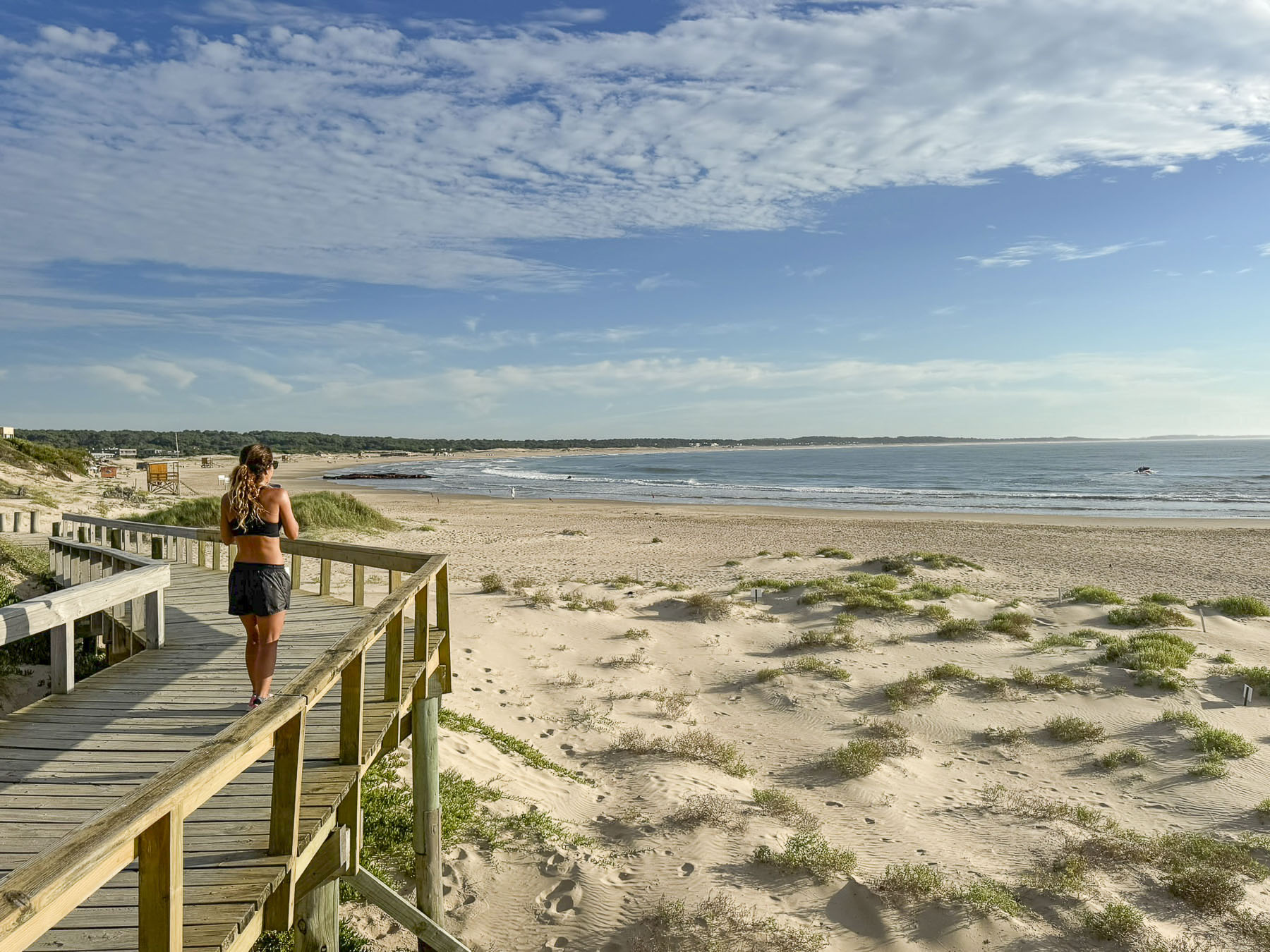
Omo Valley Part 2: Generation Poles and Dry Faucets

After getting some up-close shots of warthogs feeding on the lawn in front of our room, we loaded our bags into the Landcruiser and headed south to the Konso region with our guide and our driver. IMG_9593The highlands area is home to the Konso people who are renowned for their ringed hilltop villages, fortified with stone walls. They have developed terraced farming techniques to survive in a semi-arid, rock strewn and hilly territory for almost seven-hundred years.IMG_0083As we entered the town of Konso, bundles of candles miraculously appeared from under our guide’s seat and we stopped to donate them to a young man collecting offerings in front of his Ethiopian church.  This was the guide’s ritual when we changed territories and it continued throughout our trip. It was a common sight to see small groups of parishioners walking along the road holding up a picture of a beloved saint and umbrellas for shade.
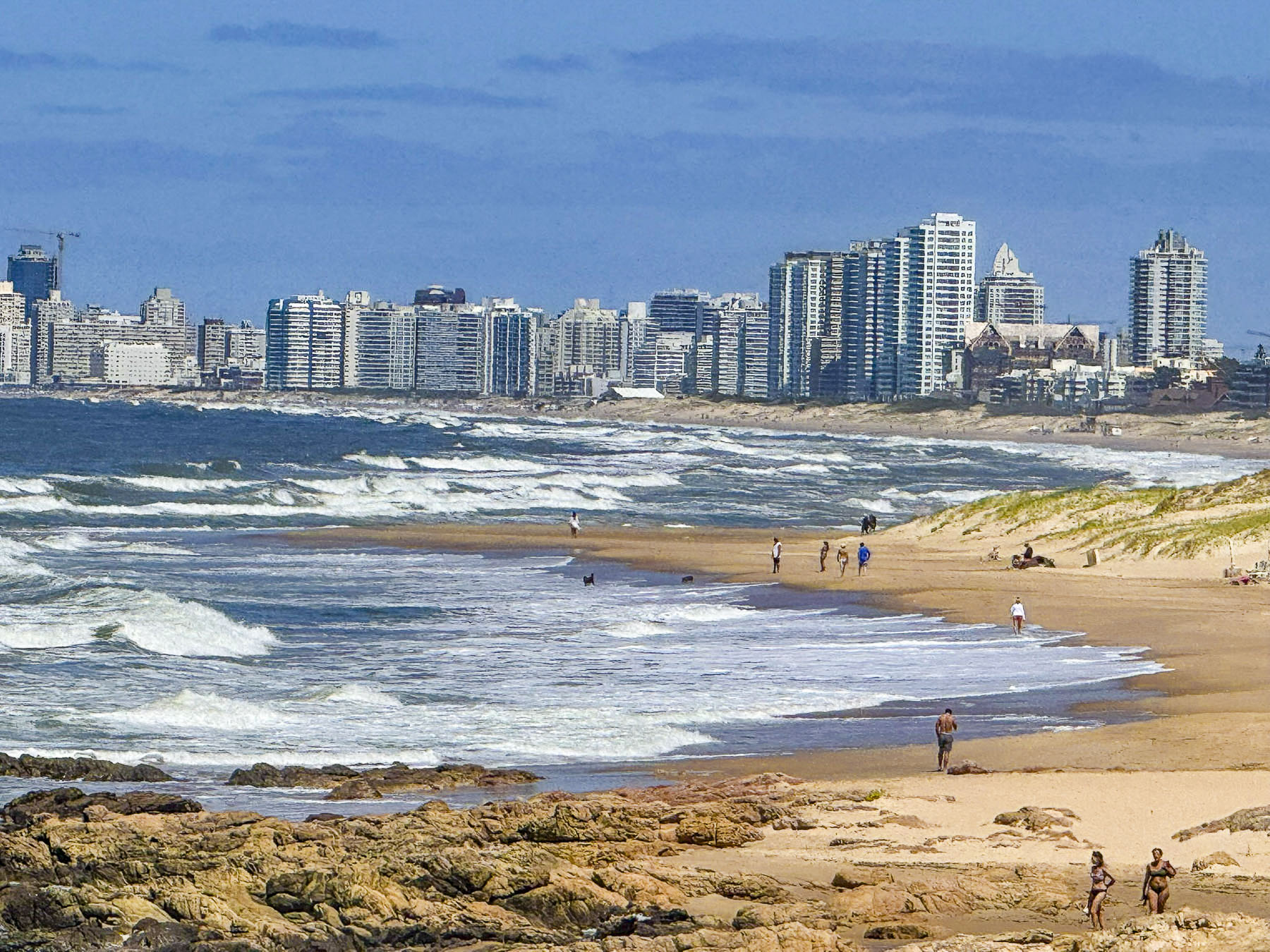
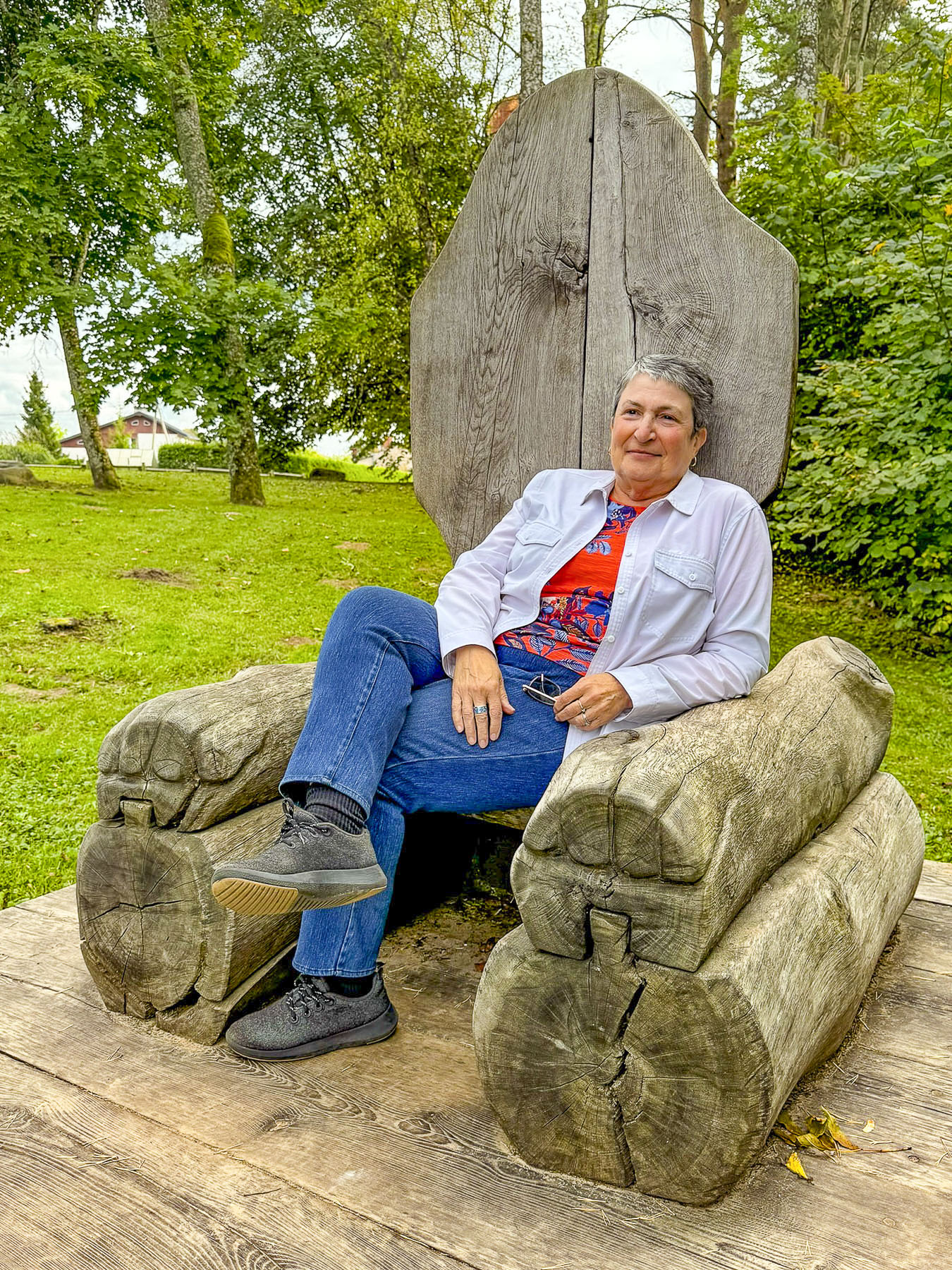
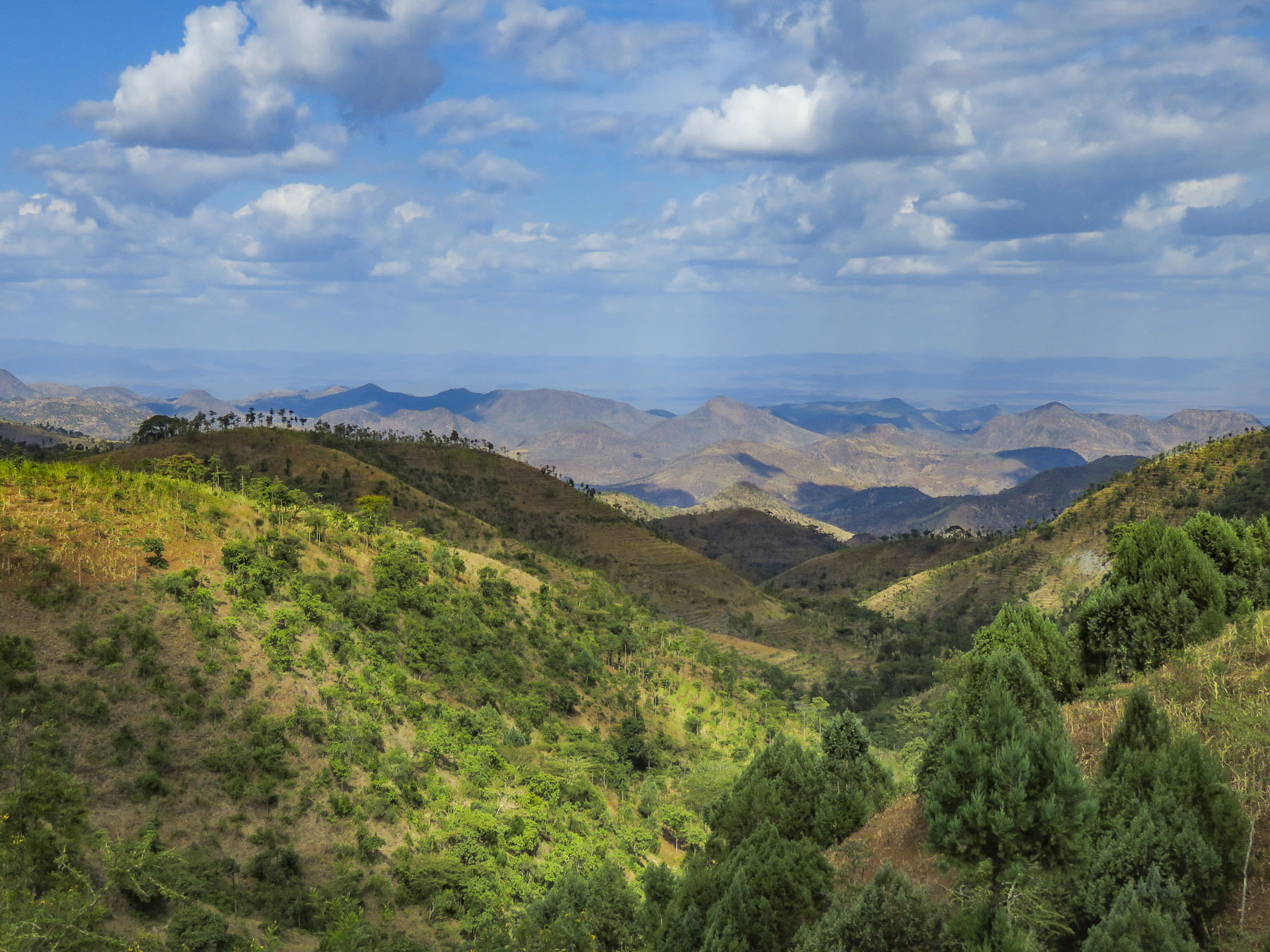
The main street through town was lined with bustling shops. Their services and merchandise almost spilled into the street.  A rutted dirt field served as the bus depot and on the day we passed, a large crowd danced in undulating rhythm to see off newlyweds.  As remote as southern Ethiopia is, it has a rural minibus system that connects distant villages. The buses are always jammed full of folks, while their belongings are haphazardly tied to the roof.

The creative hand of man was clearly evident in the sculpted terracing we could see from the road leading to the Gamule Konso Cultural Village, a UNESCO World Heritage site.  Staple crops of barley and wheat are grown along with crops of maize, chickpeas, beans, yams, taro, turnips, coffee, tobacco and cotton.  The terracing tames a once inhospitable terrain into productive farmland.IMG_1769As we walked to the center of the village young children following us jumped from rock to rock, along the tops of the tall walls built to protect the village, as we made our way along the path below.

Set on a hilltop the village, called a paleta, is ringed with six concentric, high stone walls.  Each ring was added as the population of the village expanded downhill. Within these defensive walls are fenced family compounds with pens for a small number of animals and sturdy huts and granaries constructed of tree branches, adobe and thatch along with moringa trees, from which the foliage is an important and delicous food source. IMG_9817Each ring also has a community area called a mora; this is a large thatched roof structure with an open lower level and an enclosed upper platform where the married men and bachelors of the village sleep.IMG_9868 More importantly it provides a shaded meeting place where men play gebeta.  It’s considered the oldest board game in the world and is played simply with stones, beans or seeds being moved around holes in a board with the goal to capture as many of your opponent’s pieces as possible.  Each village is also divided into two zones and a man born in one zone must always have his homestead in that zone.IMG_9767The Konso also erect generation poles, called olahita, which are raised every eighteen years. The olahita are made of cedar trees taken from the kala, a sacred forest. Gamule village had eighteen olahita which dates the village to be nearly 400 hundred years old.  Sadly, the oldest central poles have succumbed to termite damage and rot over the centuries. The oldest village in the Konso region is Dokatu which has 43 olahita. Near the olahita was the village ceremonial daga, a large rock, that teenage boys lift over their heads to prove their manhood and eligibility for marriage.  The Konso also carve waka, grave makers, in rough likeness of the deceased.  These were originally placed at the grave sites in the sacred forest, but have now all been brought back into the village to deter looting.  Each village is surrounded by a dina, or grove of trees, which acts as a buffer between the village and agricultural terraces. This buffer of trees was meant to inhibit attack on the village and provide an area close to the settlement where folks could forage for firewood. There are 36 paletas, with populations ranging from 1,500 to 3,000 in each village, scattered across the Konso territory.

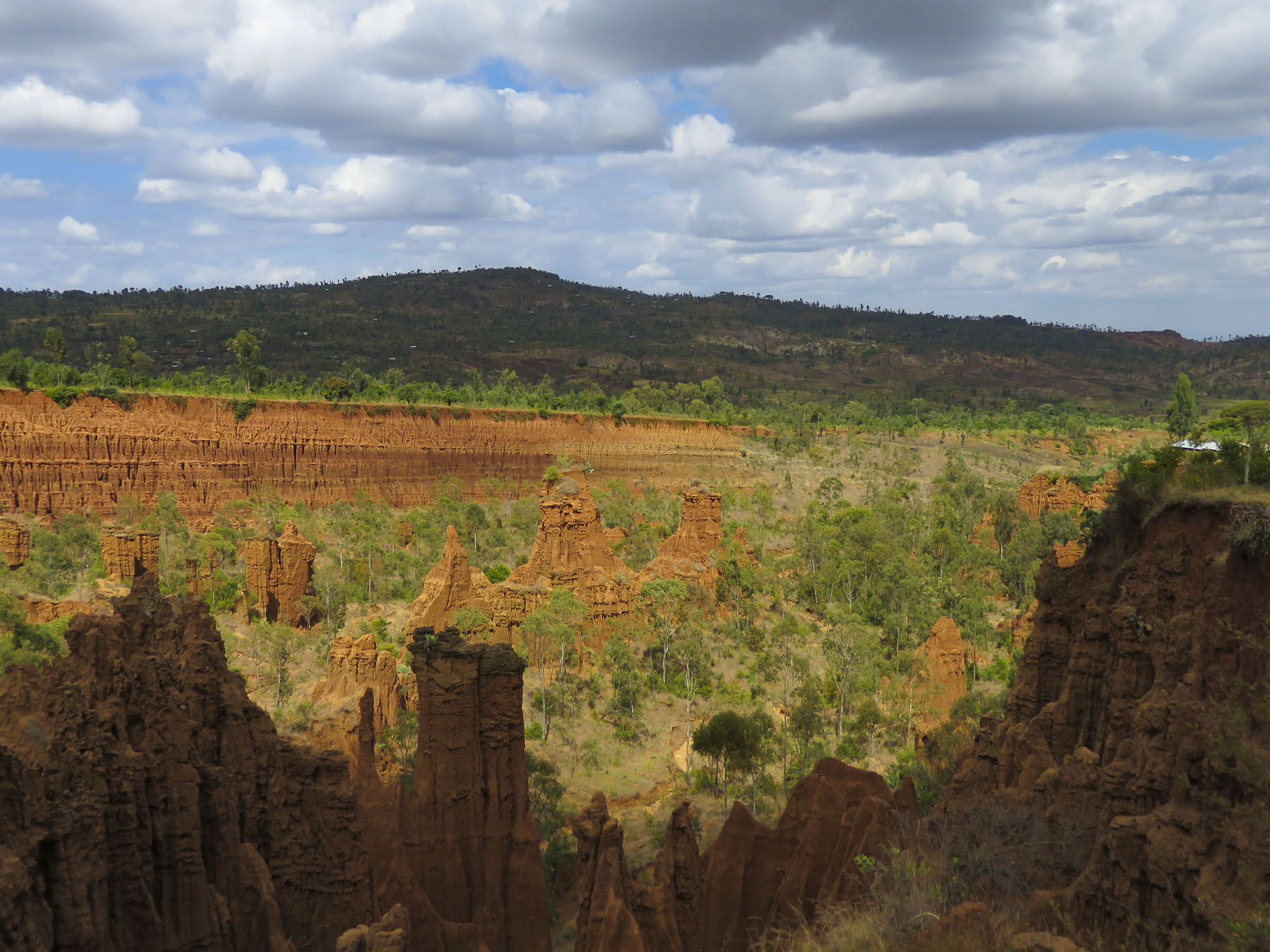
Nearby outside the Konso village of Gesergiyo there is a unique landscape nicknamed “New York.” It’s a dramatic red sandstone canyon, that looks like it was violently carved from the earth, with deeply scarred walls and tall pinnacles created from millennium of erosion. Legend says Waga the Konso Sky God created these as he searched for a buried sacred drum. IMG_9980We didn’t really see the NYC comparison, but the landscape was interesting in that it contrasted sharply from the surrounding terrain.  And the encompassing territory is beautiful with vistas of rolling hills.  Driving away a group of young men were perched on a lone boulder, just passing time.IMG_0064We arrived late in the afternoon to the Konso Korebta Lodge, situated high on a hill. It was a relatively new complex with attractive, circular stone huts topped with steep thatched roofs and beautiful plantings of bougainvillea.  Desperately needing showers, we were flummoxed when the tap was dry and headed to reception to see what was up. Unbeknownst to us it’s common practice at hotels throughout the countryside to only turn on the electricity and water between 6:00 – 9:00 in the morning and 6:30 – 10:00 in the evening to conserve resources.IMG_9245 Thankfully, the staff called the owner to get permission to start the generator early for us. Back seat driver that I am I thought our driver drove fast, safely but fast to cover the great distances we had to travel.  So, we were surprised the next afternoon when he was tootling along very slowly to get back to the hotel.  Evidently the hotel owner made it very clear to our guide that he would not turn on the generator early again.
Later we traced the aroma of barbeque to a small garden area where the staff was grilling goat skewered on small tree branches over a fire pit dug into the ground.  It was in preparation for a wedding party that was due to arrive.  With military timing it seemed, suddenly the parking area in front of the hotel’s restaurant was full of honking minibuses discharging joyous celebrants.  It was a short indoor-outdoor event that climaxed with song, dance and well wishes for the couple.IMG_2028Market days are huge events in the rural areas and folks from various tribes travel for miles to attend them. IMG_2314Not just to buy or trade supplies; it’s also a cherished opportunity for men and women to socialize with friends and extended family from other villages, often in raucous beer halls which could be in a makeshift shed or more often a spot under a large shade tree that serves a local brew.
Many folks look and dress their best as it’s also a chance to find a future husband or wife.  The Alduba market was exceptionally large, spanning both sides of the main road, and it attracted folks from the Ari, Bena, Hammer and Tsemay tribes. Recently the government constructed a bricked wall corral at the market to show tribespeople that the government was interested in their wellbeing and that local folks are actually part of a greater Ethiopia.  And at the same time it started to collect taxes on every head of cattle sold.IMG_1956We were able to take many candid photos as we followed our guide through the market to its various parts. Ceramic pots, handmade tools, ropes and leather goods produced by different tribespeople were available as were pots, pans, cloth and sandals produced in China.

One older woman shared with our guide that she was in her seventies and walked six miles to the market to replace a ceramic cooking bowl that had recently broken.  Often, we would stop and ask a person if we could take their picture.IMG_2117 Many folks were very receptive to this and our guide would negotiate a fee.  And even though we paid for the privilege to take their photo, they seemed pleased that we admired their style. A few, however, angrily waved us away.

Later in the day we headed to Jinka, the largest town in the region, slowly getting closer to the Omo Valley with every move.  Traveling through a xeric landscape, we had a long stretch of dirt road to ourselves.  IMG_1803Pulling over occasionally to take photos from scenic overlooks along this isolated track, we were always surprised when, in the middle of nowhere, a young man selling souvenirs would emerge from the shade. Later we would come across an enterprising group of young stilt walkers urging tourists to stop for photos – and of course we did.IMG_4431Entering Jinka, we noticed signage for the International Airport (BCO, though we are pretty sure you can only fly in from Addis Abba.) We might have arranged our trip differently if we had known this previously as it would have eliminated two eight-hour drives from and to the capital. Note: if you fly into Ethiopia on a ticketed Ethiopian Airways flight you are able to purchase discounted domestic flights .  Our guide booked this discount for our us on our Addis Abba to Lalibela flights.

The Orit Hotel offered very basic accommodation, but it had a wonderful garden restaurant, good food and cold beers.

The next day we would head into Mago National Park to visit the Mursi tribe.

Till next time,

Craig & Donna