


A clearing storm covered Uruguay’s Atlantic Coast as we landed at Carrasco International Airport on the outskirts of Montevideo. We were ten minutes into our forty-minute Uber ride into Ciudad Vieja, the old town section of Montevideo, when the masts of several catamarans poked above the tree line that obscured our view of the oceanfront. Our driver proudly boasted that the country has nearly 660km (410mi) of pristine beach-covered coastline along the Río de la Plata and the South Atlantic Ocean. But the real pride and joy of Montevideanos is La Rambla of Montevideo, a wide coastal esplanade that runs for 22km (14mi) along the city’s waterfront, “one of the longest continuous sidewalks in the world.”

Our ride into the city soon started to follow La Rambla’s serpentine route along the coast, past folks, at the end of the workday, flocking to its breezy shoreline to enjoy all sorts of activities from rollerblading to kite surfing. Several beach areas also had bandstands where musicians were drawing good size audiences. Lovers snuggled on the seawalls, amidst swimmers emerging from the ocean, games of soccer, joggers, aerobic classes, personal trainers, cyclists, sun worshippers, and walkers carrying their ubiquitous Mate carryalls. Enjoying socializing with friends on La Rambla is an important part of life in Uruguay’s capital, where the city’s 1.4 million residents, nearly 40% of the country’s population, have an open invitation to “The Outdoor Living Room of Montevideo.” Come sunset there seemed to be collective quieting as folks stopped to watch the sun sink below the horizon. We could already tell that this could be the antidote for our North America “winter blues.”
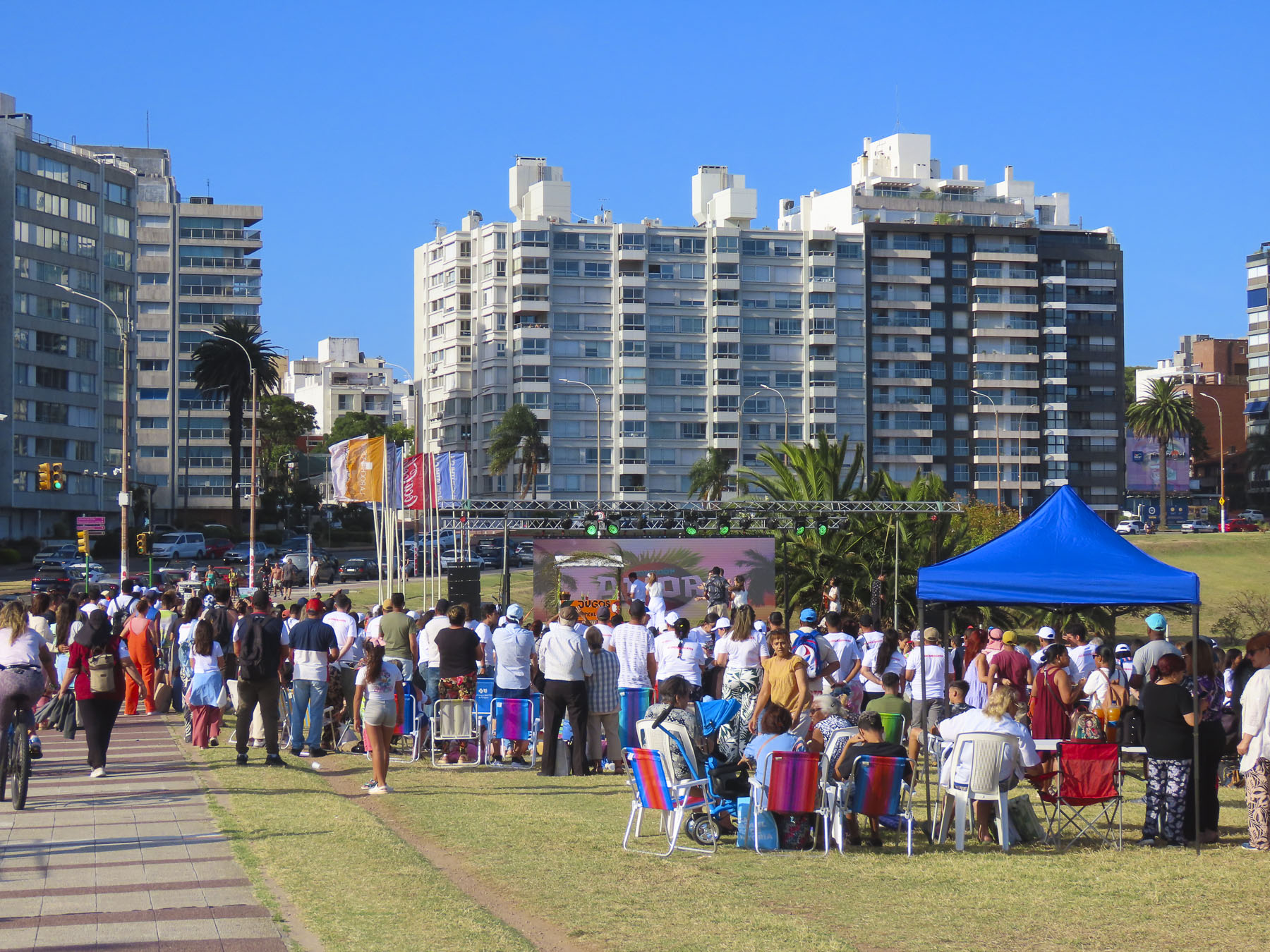
The next morning, we were up before sunrise to stroll along the oceanfront, hoping to catch the first rays of sunlight cast across the city. From our room at Hotel NH Montevideo Columbia, we could see seven freighters making their way to port, and the remnants of an old defensive tower. It was part of the quickly built ramparts that once encircled the citadel soon after the Spanish founded the city in 1726, to thwart Portuguese expansion southward along the coast from Brazil.

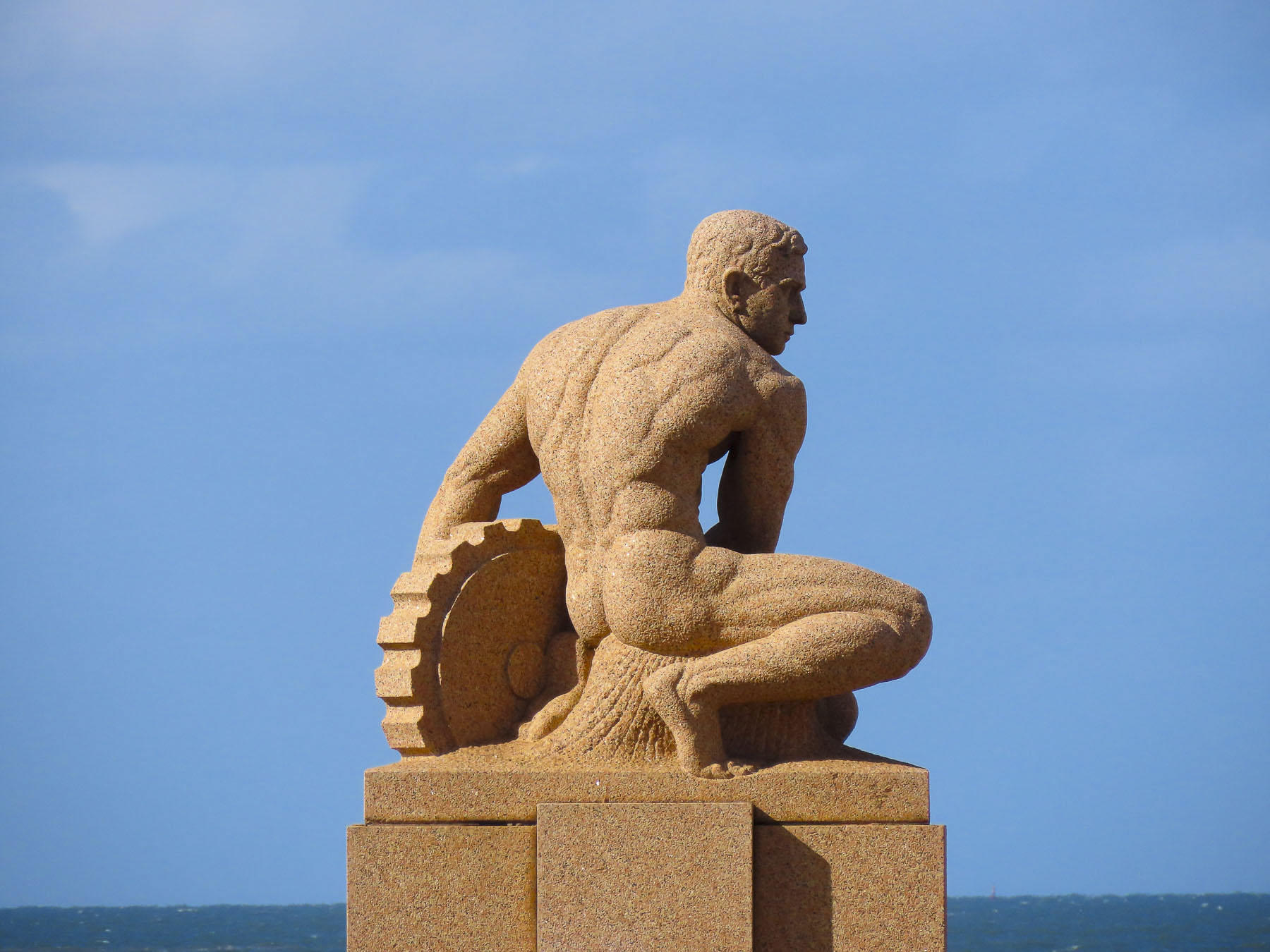
Street art and sculptures that were a blur yesterday as we sped by were now full of detail. In some places along the esplanade there were images of dinosaurs on relief plaques implanted into the sidewalk that suggested the region’s fauna 85 million years ago.

We reached Playa Ramirez, a large crescent-shaped beach as the sun was breaching the trees and shining upon the city’s modest skyline. A large group of cyclists preparing for the upcoming Vuelta Ciclista del Uruguay sped by. Two women stood in the water and let the gentle morning waves lap around their ankles as they chatted.

Across from the beach was Parque Jose Enrique Rodó. A large sculpture in the center of the park is dedicated to the Montevideo-born philosopher and essayist, who wrote about Latin America pursuing its own cultural identity and spiritual renewal, and the dangers of unbridled materialism.

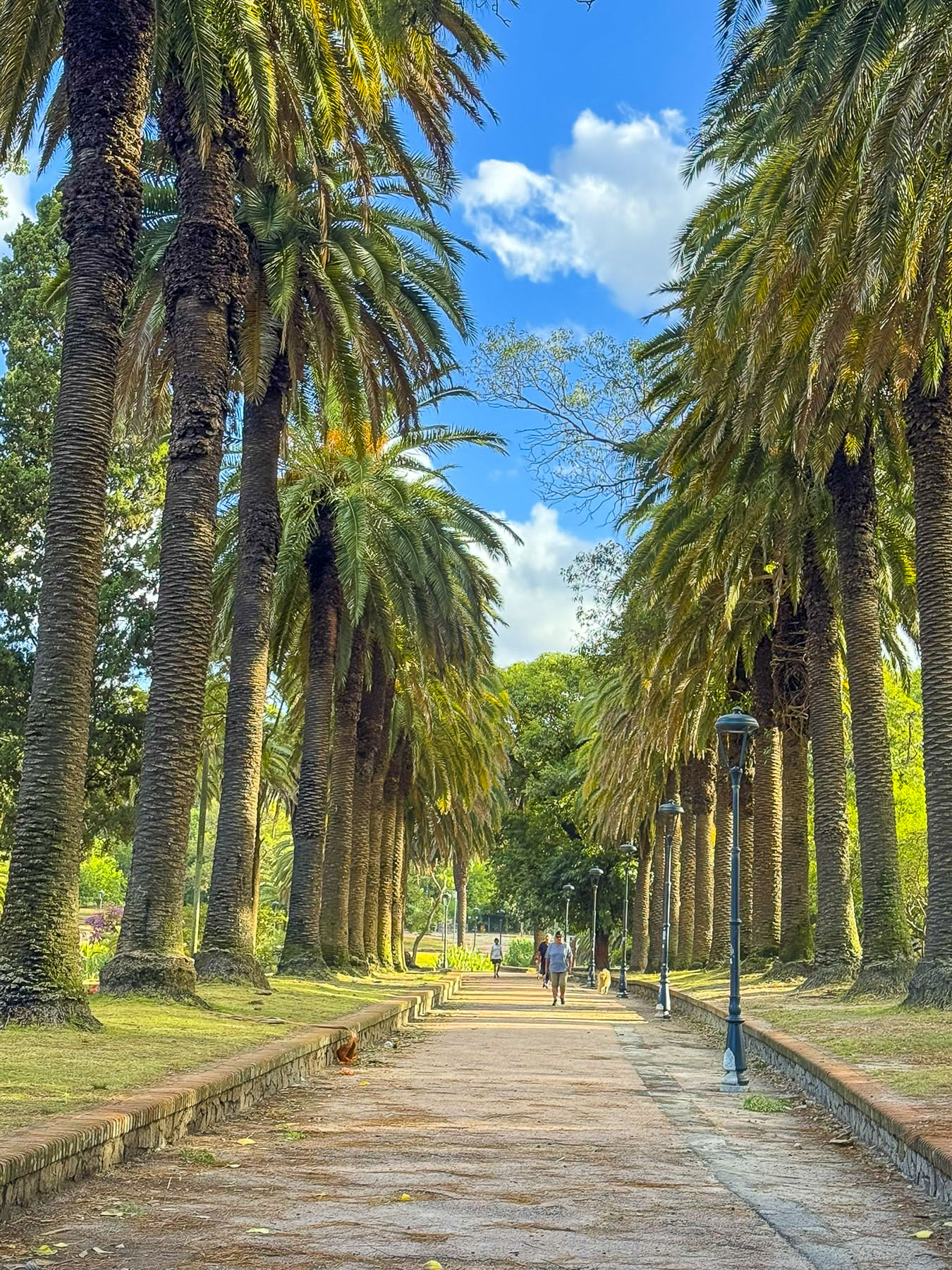
We started our loop back towards the Ciudad Vieja down one of the park’s palm-lined paths and zig zagged our way through barrios full of colorful street murals, and older 1900’s era buildings with interesting architectural details.


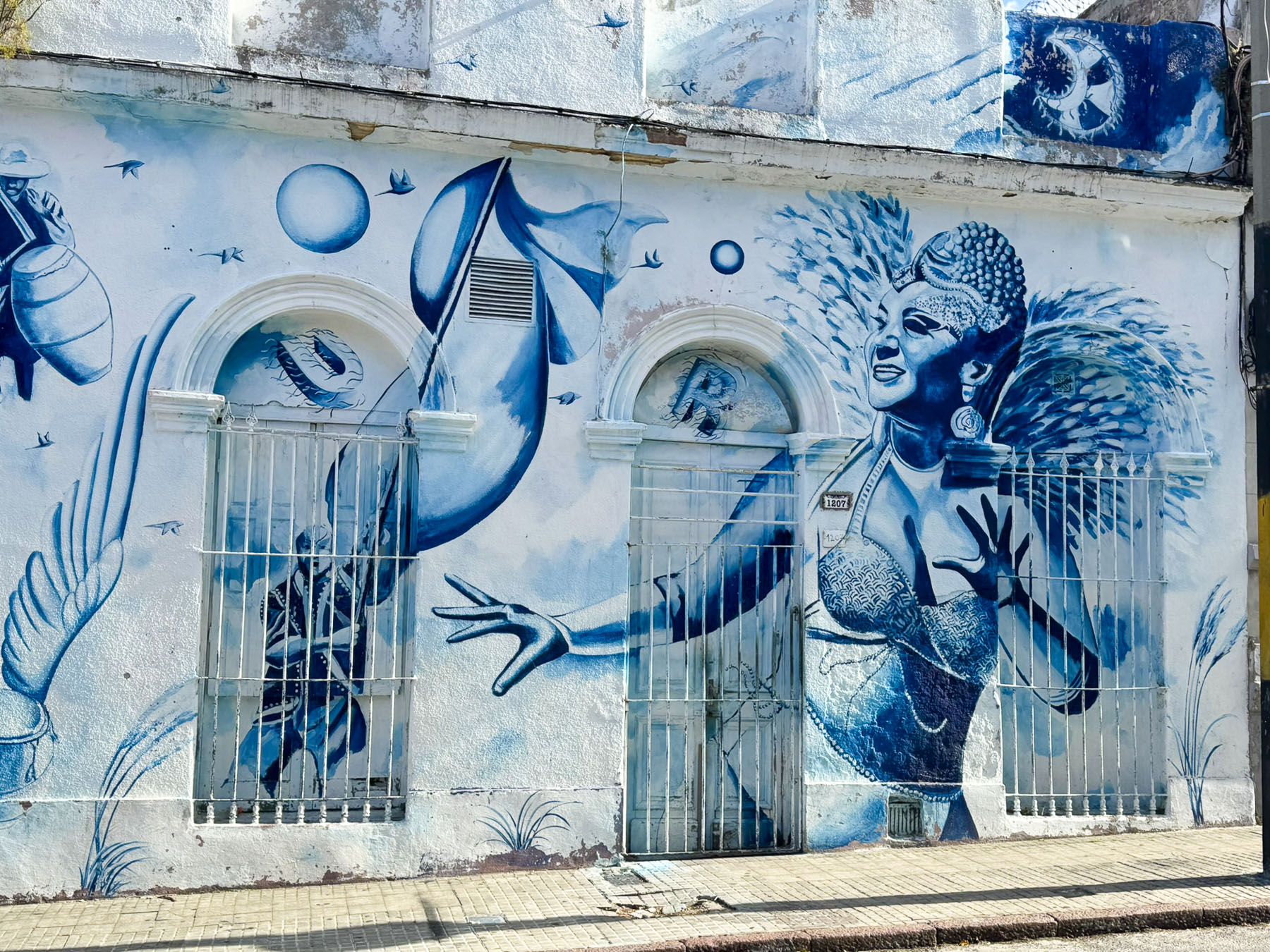
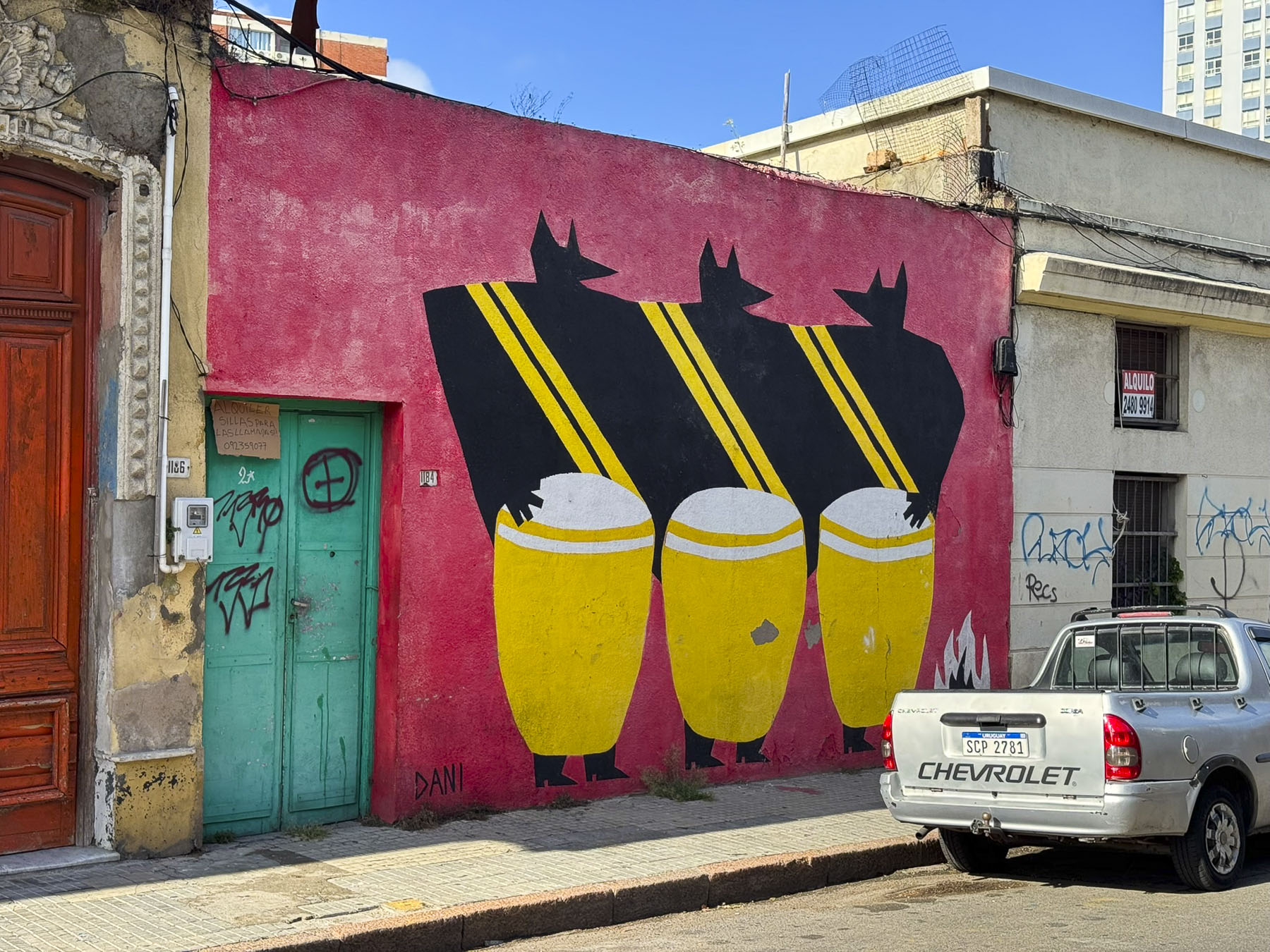
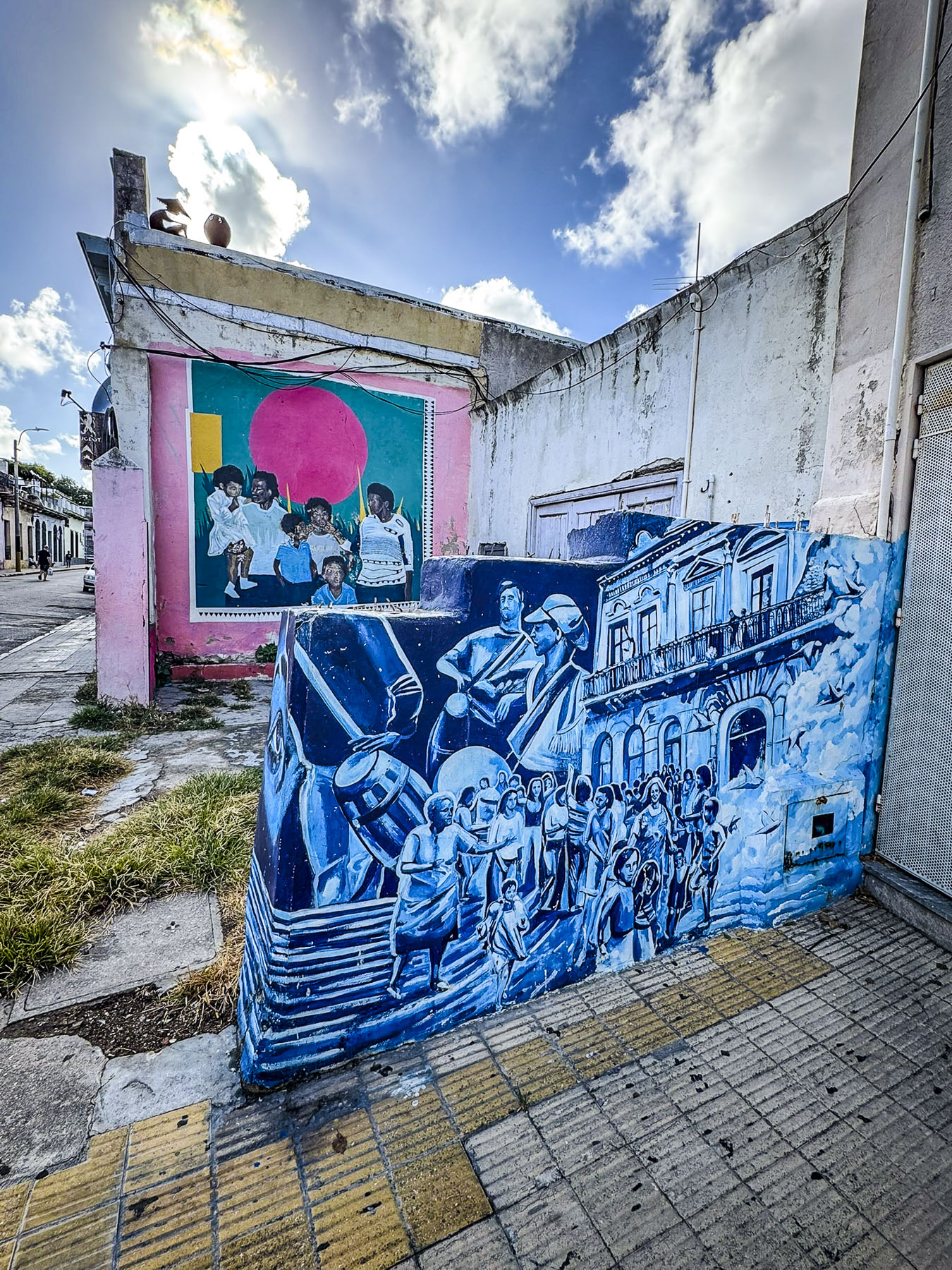
Walking through Barrio Sur along Isla de Flores, bleachers were being set up at the intersections in preparation for one of the last parades of Carnaval. The street was lined with murals dedicated to the local comparsas, large groups of 50-100 candombe drum performers and dancers, who participate in the yearly festival. We spent some time determining a good vantage point for watching the parade later in the week.


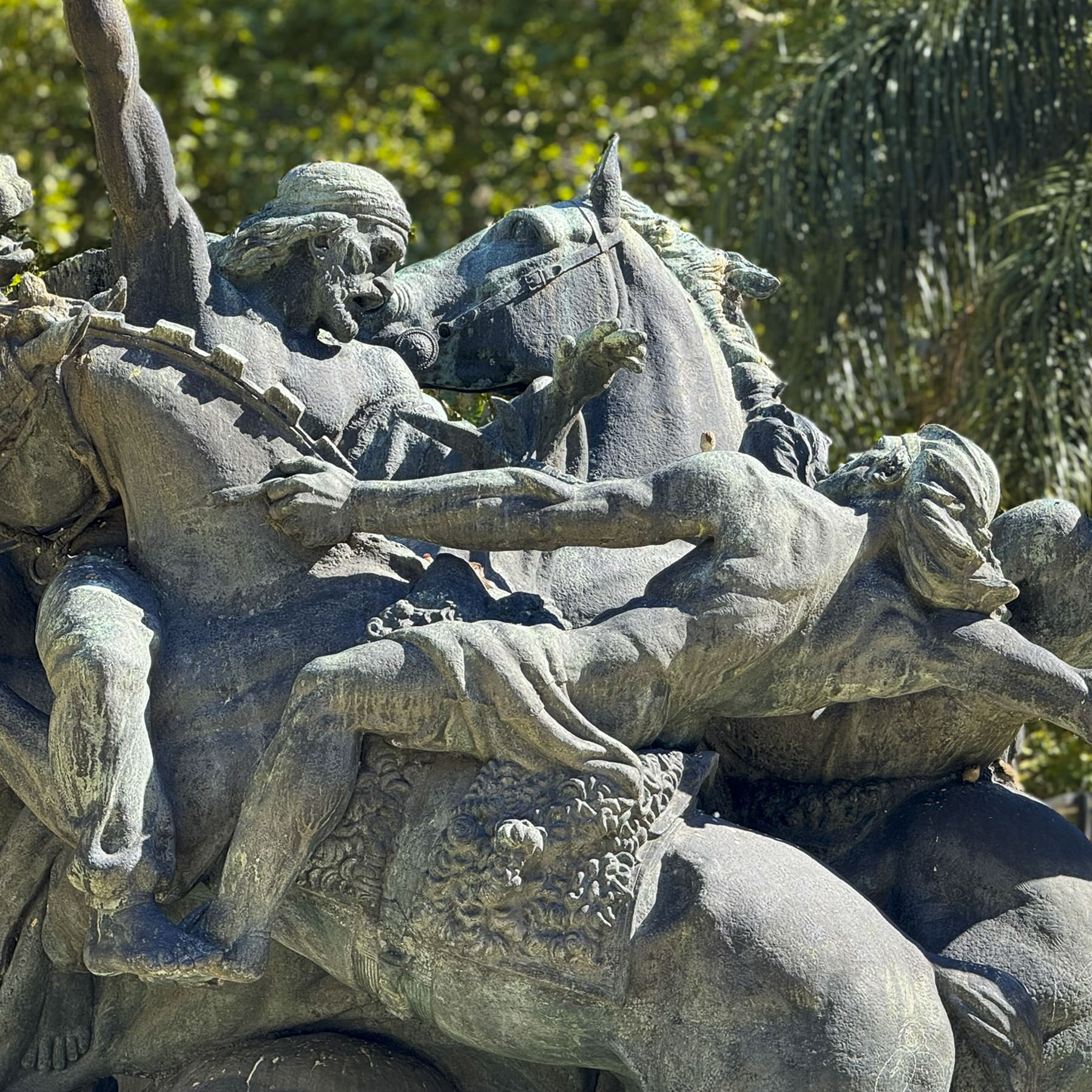
The grand Plaza Independencia was a huge contrast to modest barrios we had walked through earlier that morning. In the park’s center a large equestrian statue stands atop the Masoleum of José Gervasio Artigas, a gaucho, military leader, and revolutionary who inspired Uruguayans to fight against Spanish and Portuguese rule. He is considered the father of Uruguay’s liberation movement, though he did not live long enough to see the country’s independence in 1828.

A vast array of different architectural styles can be seen on the buildings around the plaza, but the most intriguing is the chaotic styling of the 27-story tall Palacio Salvo, which eclectically blends elements of Art Nouveau, Art Deco, Gothic, and Renaissance architecture into its design. The iconic mixed-use building has shops, offices, apartments and the Museo del Tango. It was for a short period of time after its completion in 1928 the tallest building in South America.
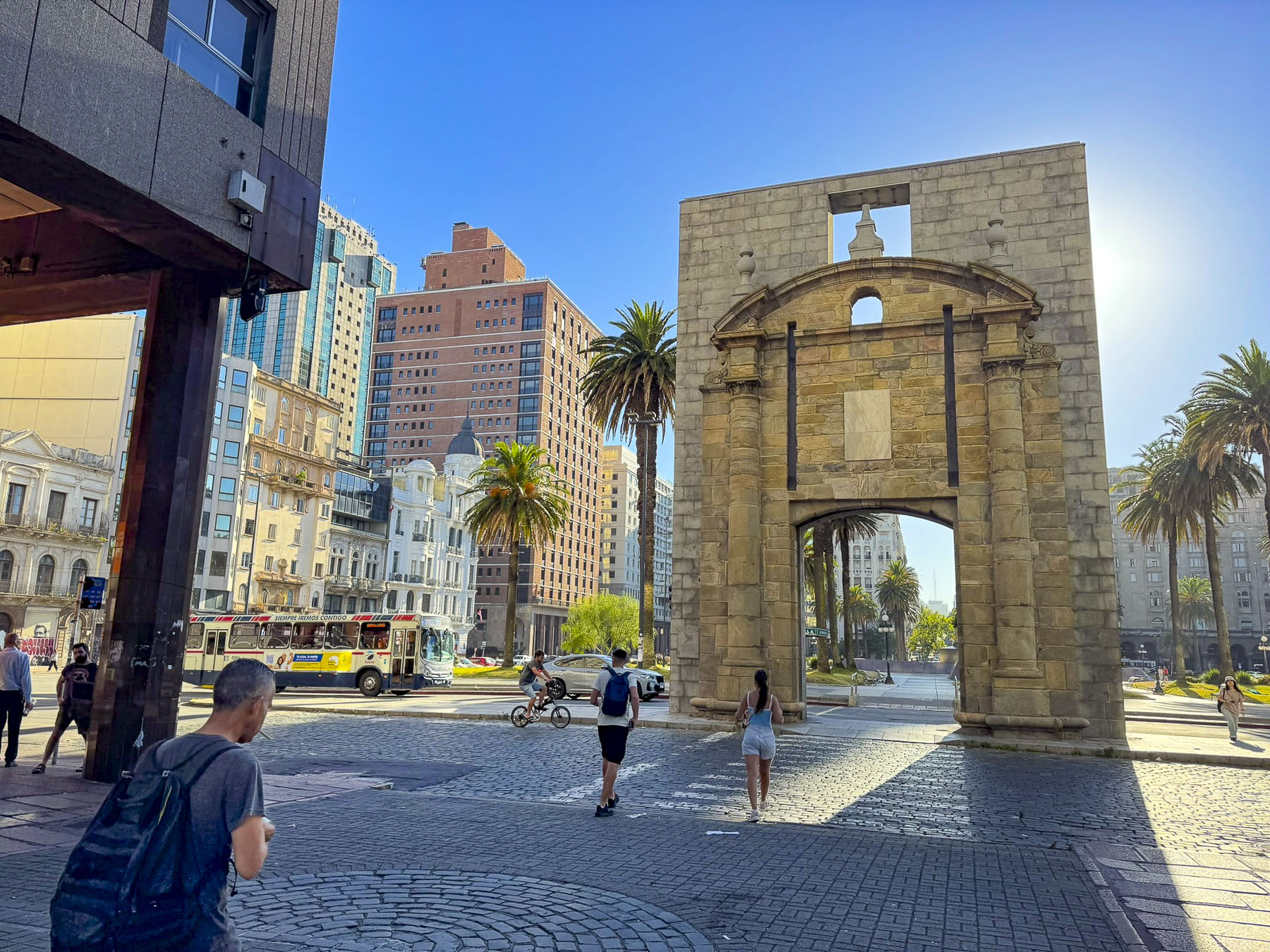
At the opposite end of the plaza the Puerta de la Ciudadela, one of the old gateways into the colonial citadel, is all that remains of a tall stone defensive wall that was 6 meters (20ft) thick, and totally encircled the small peninsula where Spain established its first colony in Uruguay. After Uruguay gained its independence the demolition of the citadel’s ramparts started in 1829, less than 100 years after their construction, to make room for the growing port city’s expansion.


The old gateway opened to Sarandí, the main pedestrian lane that runs from one end of Ciudad Vieja to the other. At the beginning of the lane was Montevideo’s Walk of Fame, where stars of famous visitors to the city, like Nelson Mandela, the Rolling Stones, Enrique Iglesias, and Olga Delgrossi, Uruguay’s beloved singer and tango dancer, were imbedded in the pavement with sun bursts above their names. Now mid-afternoon, the day had warmed, and the street was full of vendors under colorful umbrellas, selling all sorts of items geared for tourists.
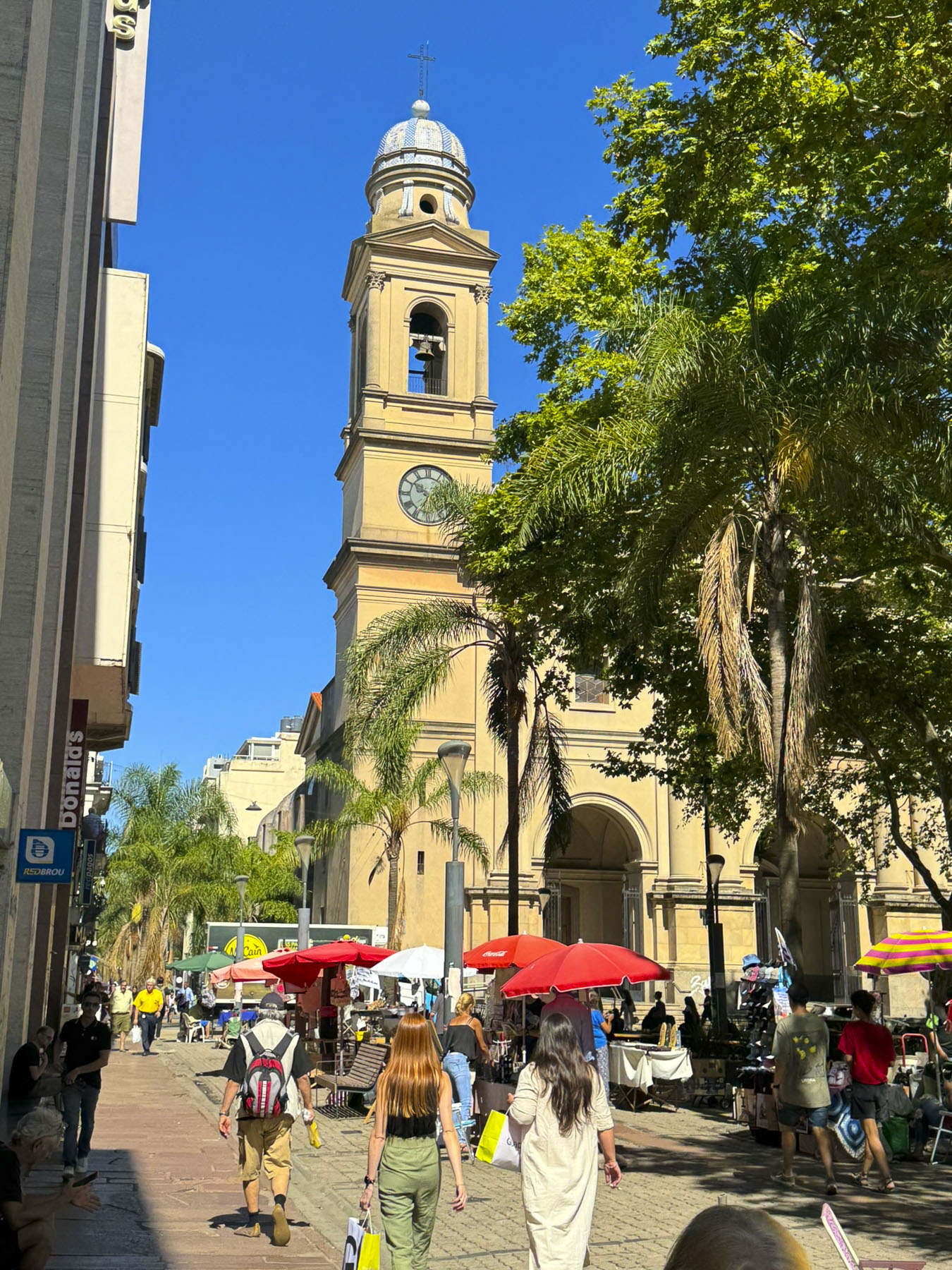
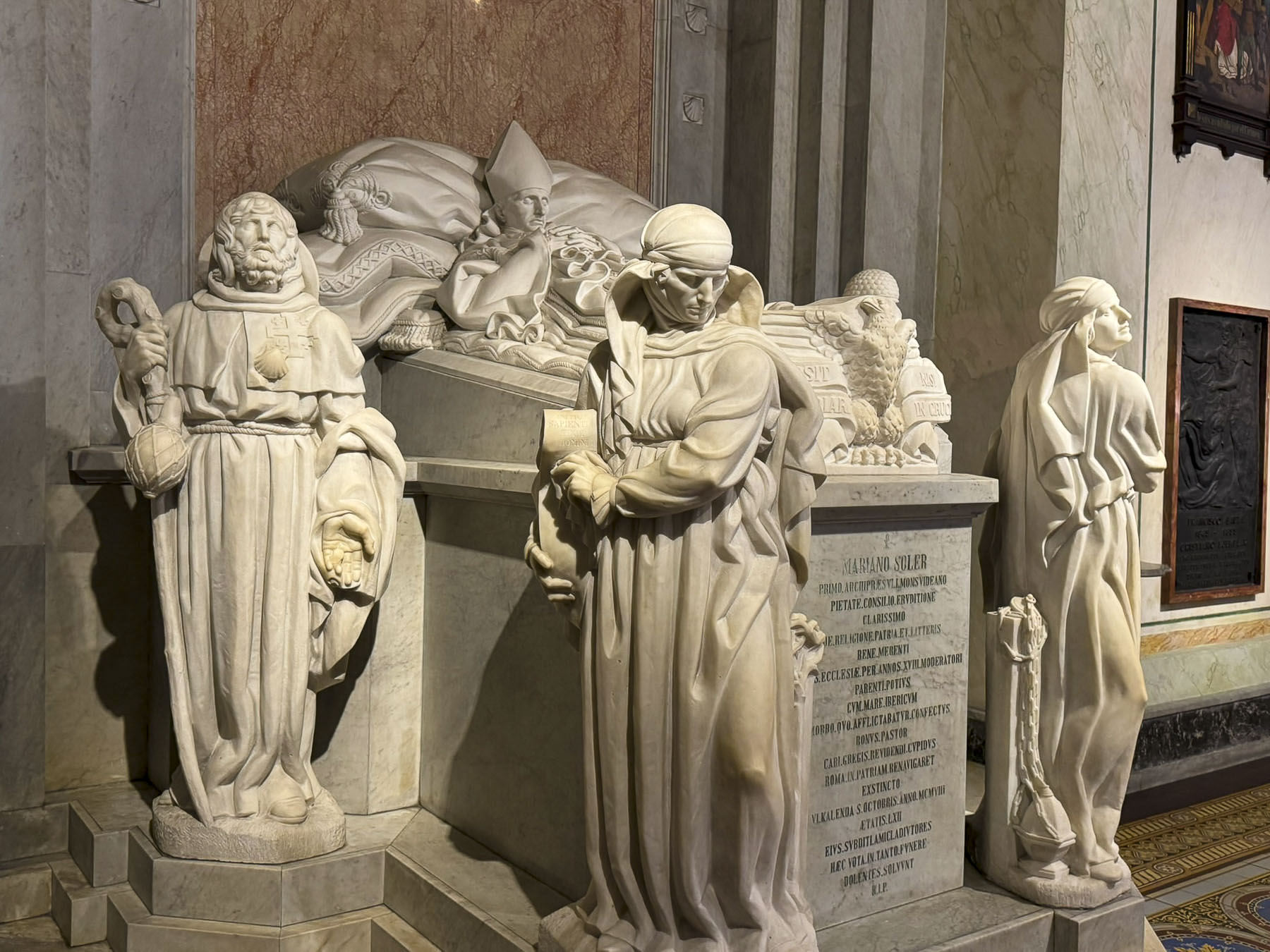
We wrapped up our day’s wandering about at the Montevideo Metropolitan Cathedral, or as it is formally called the Catedral Metropolitana de la Inmaculada Concepción y San Felipe y Santiago. In 1790 the construction of the cathedral was started to accommodate a growing congregation in the prosperous city, which had outgrown its first smaller brick church, which was built on the same site in 1740. Inside were some very nice pieces of religious art.


The next morning we continued exploring the old town and watched a wedding party throw rice upon a newly married couple at the Registry Office. We only noticed a sculpture of Montevideo’s version of Romeo and Juliet when a crowd in front of us was pointing up to a balcony. “Our walk a little then café,” routine was satisfied with breakfast at Federación, an artesanal panaderia and café, with tables on the sidewalk and in a small courtyard. It was on the way to several museums we planned to visit, before having a late lunch at one of the steakhouses in the Mercado del Puerto.


Montevideo has over twenty museums that span the spectrum from art and science to tango and carnaval. Around the corner from the café, in a 19th century building, was the Pre-Columbian and Indigenous Art Museum. It is a relatively small museum, but it has an interesting collection of archeological artifacts and an extensive collection of Carnaval masks from across Latin America.


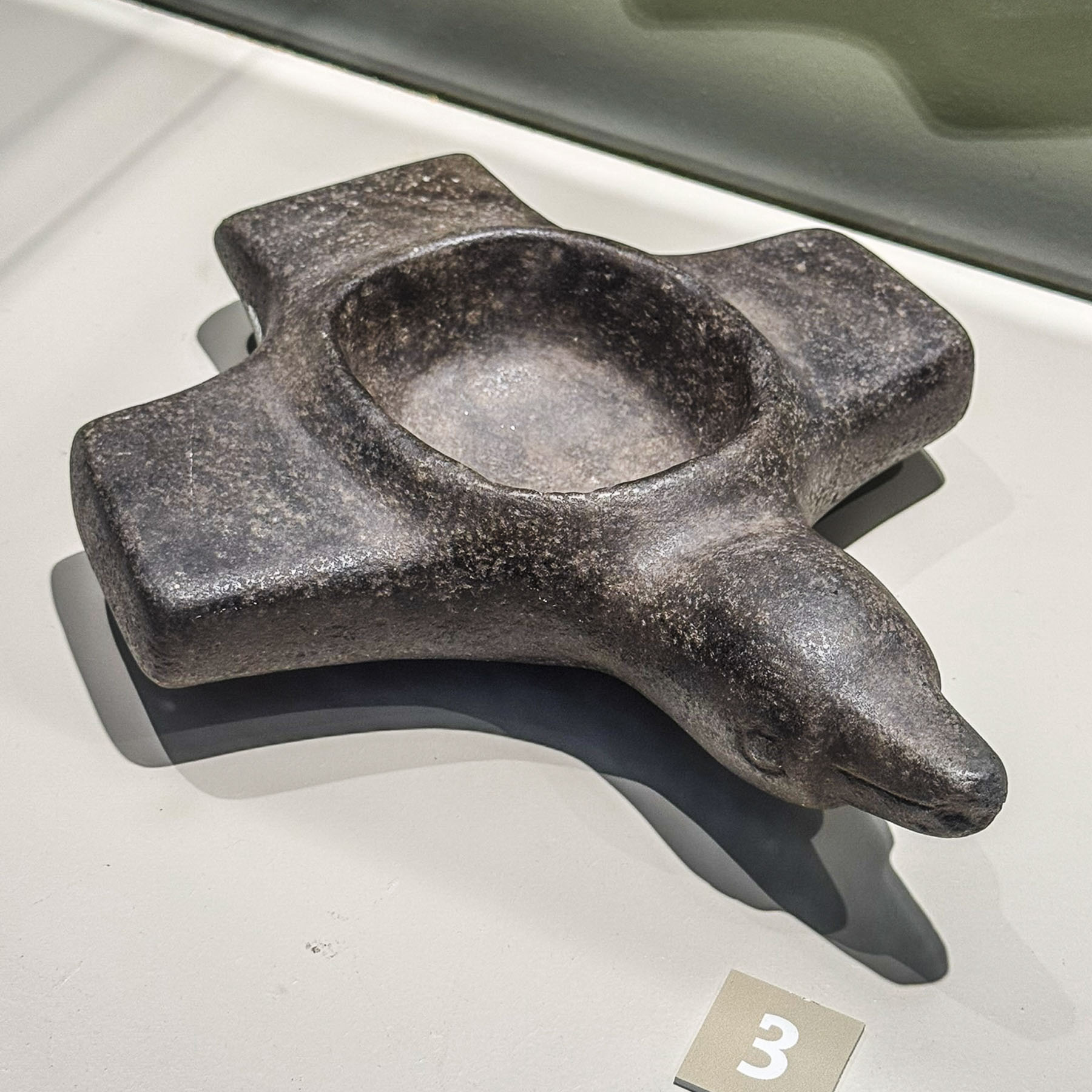
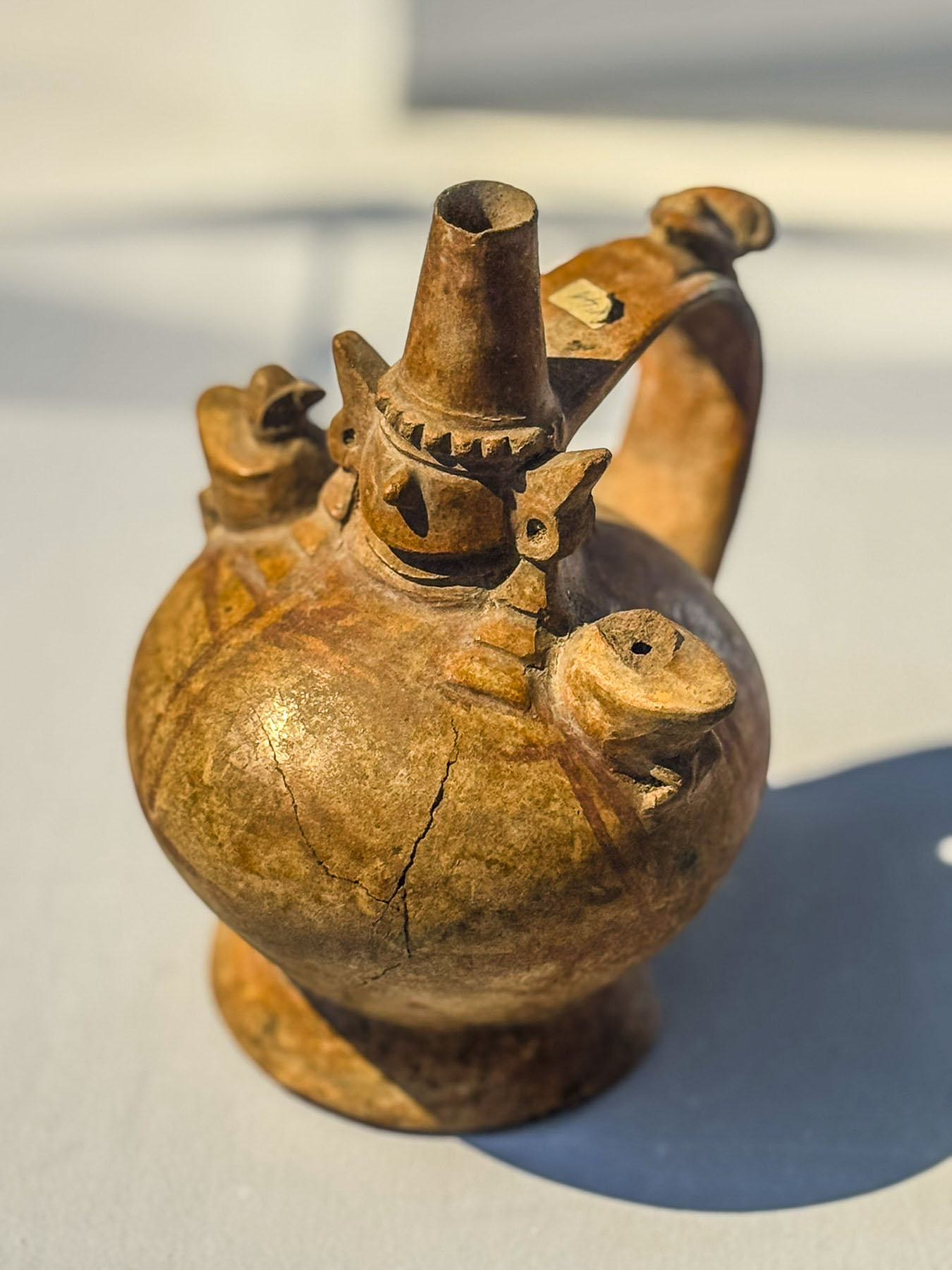
Everything about the South American cowboy can be viewed at the Museo del Gaucho and Currency. It occupies a stately old bank building which in itself is worth poking your head into, but the immense scale of the building overpowers the exhibits of small objects used in the South American cowboy’s everyday life. Many of the fine silver items on display were from the estates of wealthy ranch owners.

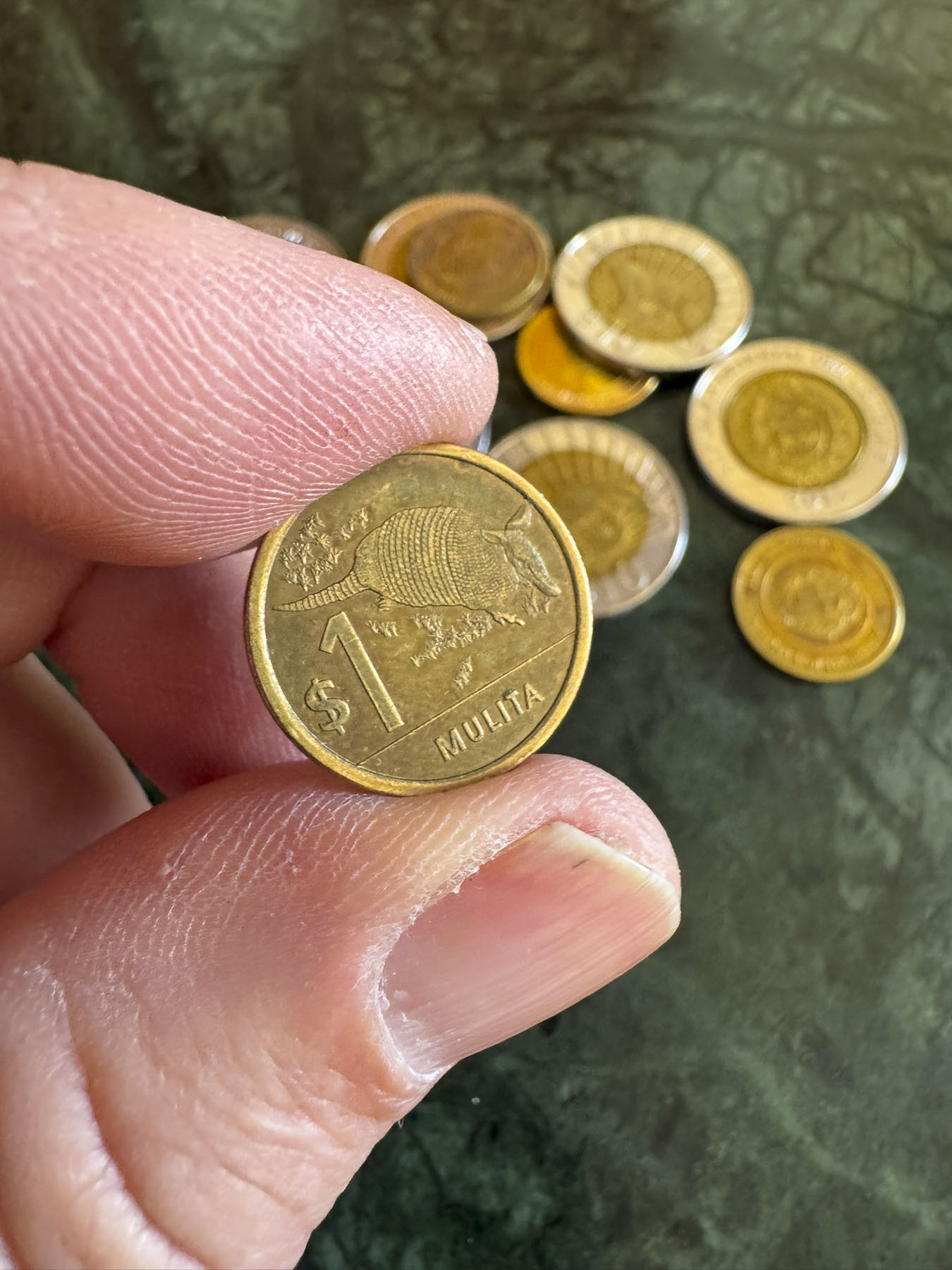

The currency exhibit was okay, but we think you really have to admire a country that puts an armadillo on one of their coins. There was also a collection of coins recovered from the wreck of the Spanish galleon El Preciado, which was sunk in Río de la Plata by pirates in 1792, as it sailed for Spain carrying gold and silver to pay the taxes levied against the South America colonies.
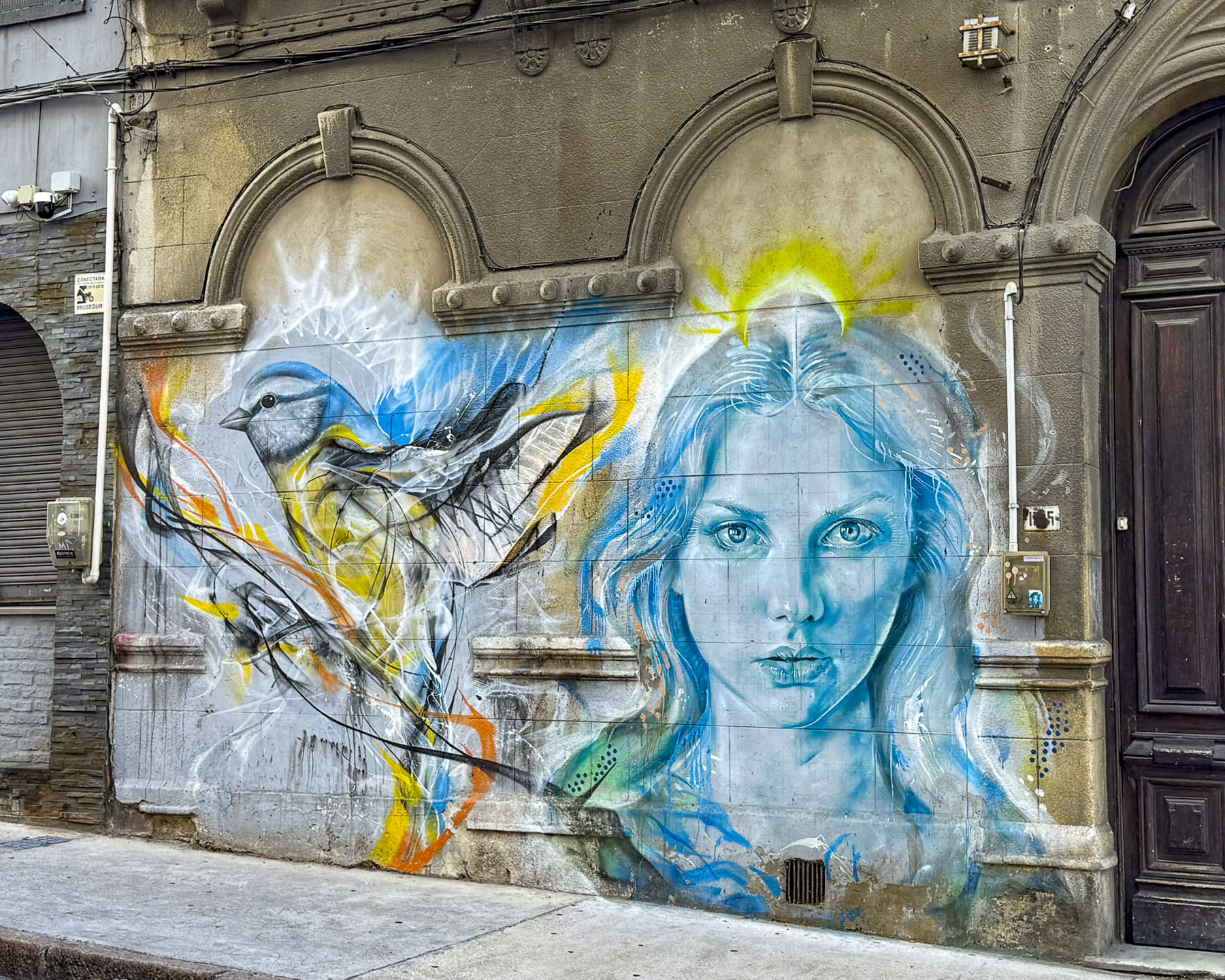


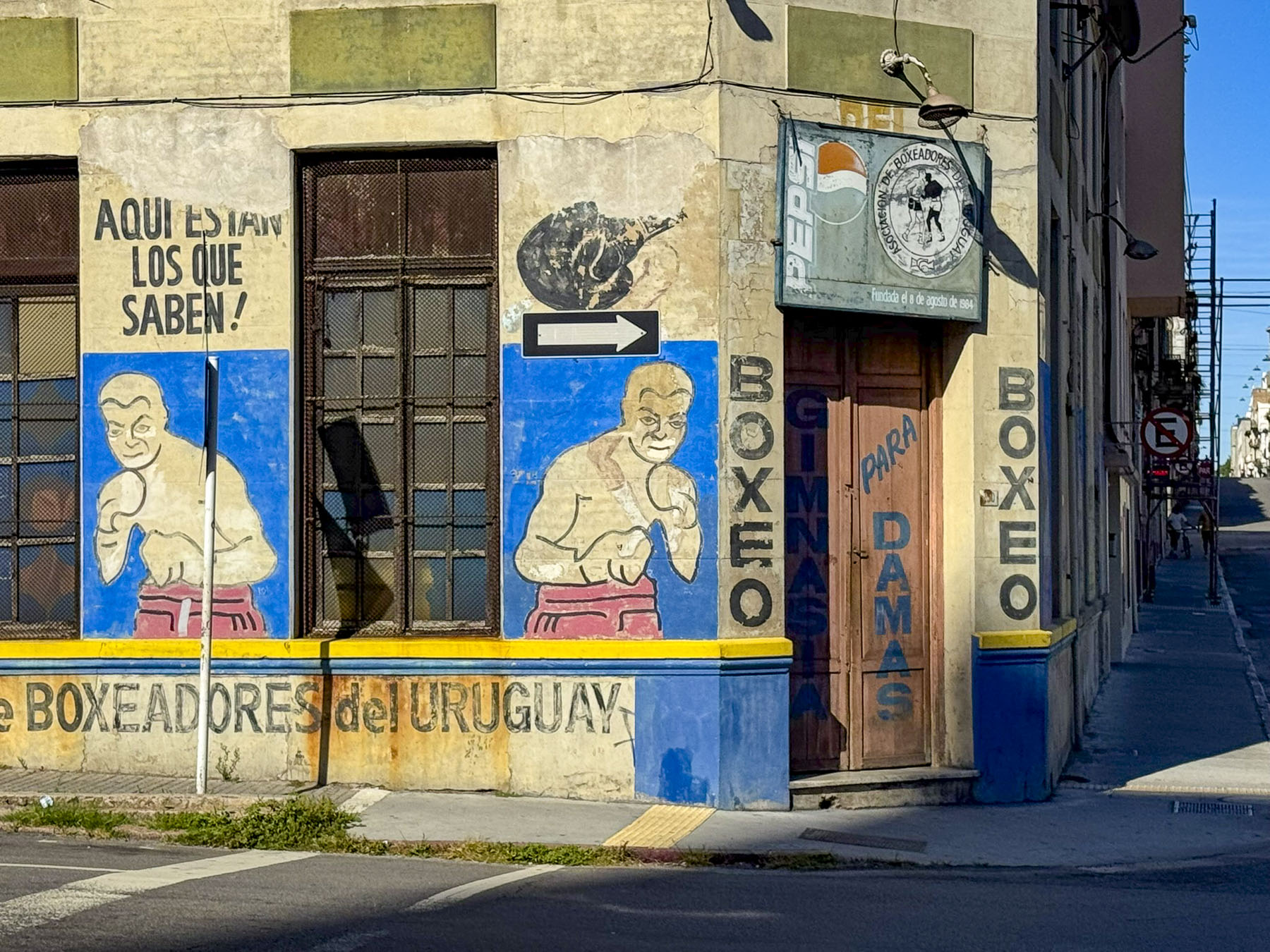

Artistic street murals can be found all across Montevideo and we passed several interesting ones on the way to the Museo de las Migraciones. We really enjoyed this museum as it celebrates the country’s diverse population of its immigrants who contributed to making Uruguay the wonderful place that it is. The exhibits confirm the belief that most folks have more in common than what separates us.

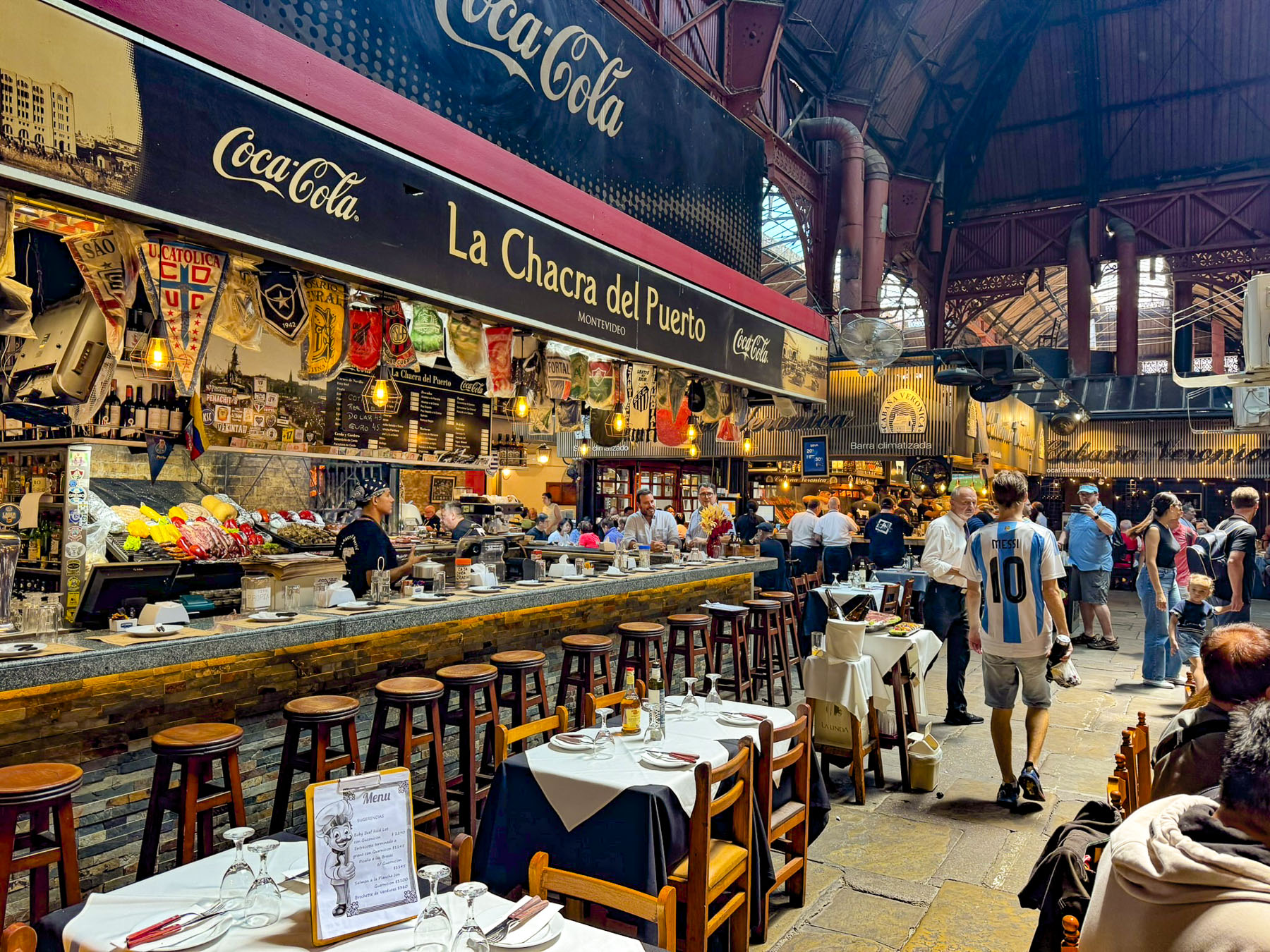
It was a long walk back towards the Mercado del Puerto. The cast-iron and glass roofed structure was imported from Liverpool, England, and feels a little like a Victorian era train station; it opened for its first customers in 1868. The old port market used to be the central place to buy supplies, fruits, produce, meats, and fish, but has now been gentrified into an atmospheric food hall, where steakhouses reign supreme, and charge a hefty price for being convenient for the cruise ships passengers which disembark at the port. That being said, we enjoyed the ambience of open wood-fired parrillas, and wafting aromas rising from the various kitchens. It was a challenge to choose a restaurant, as all the dishes that waiters whisked by us looked delicious and tempting.


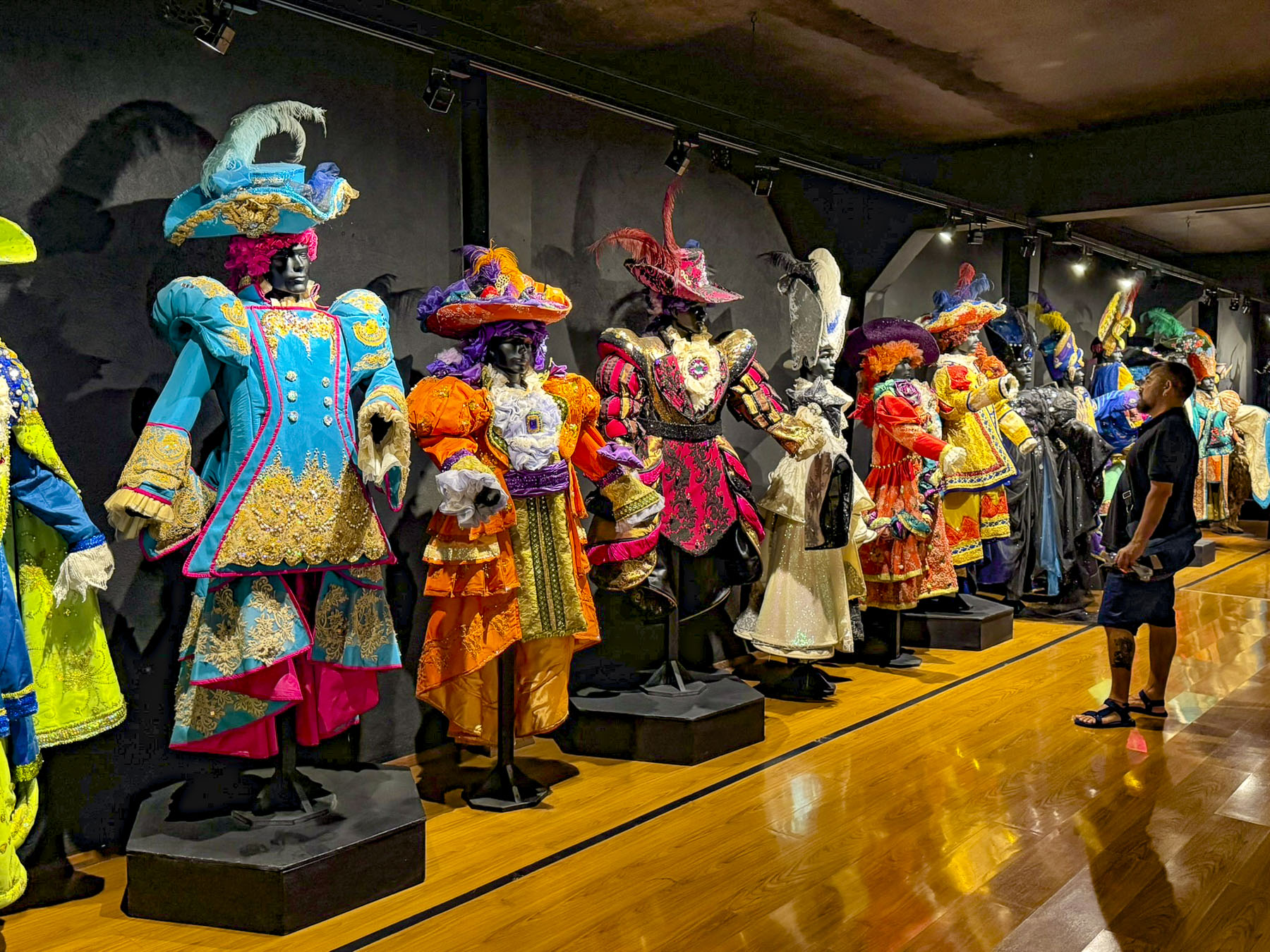
Later in the week we returned to the area to attend a tablado at the Museo del Carnaval, which also had a great collection of imaginative costumes from past carnavals. As the actors readied themselves for the performance, an announcer stepped forward. There were lots of Spanish words, followed by “Donna DiMeo Hammell” and more Spanish. I speculated that we had won the Uruguayan Lottery. Or “maybe I’ve been chosen to participate, but I don’t speak Spanish!” Donna’s first thought was, wow, they pronounced my name correctly! The mystery was solved when Donna approached the offstage area, and a smiling theater employee handed her the credit card she had unknowingly dropped earlier.

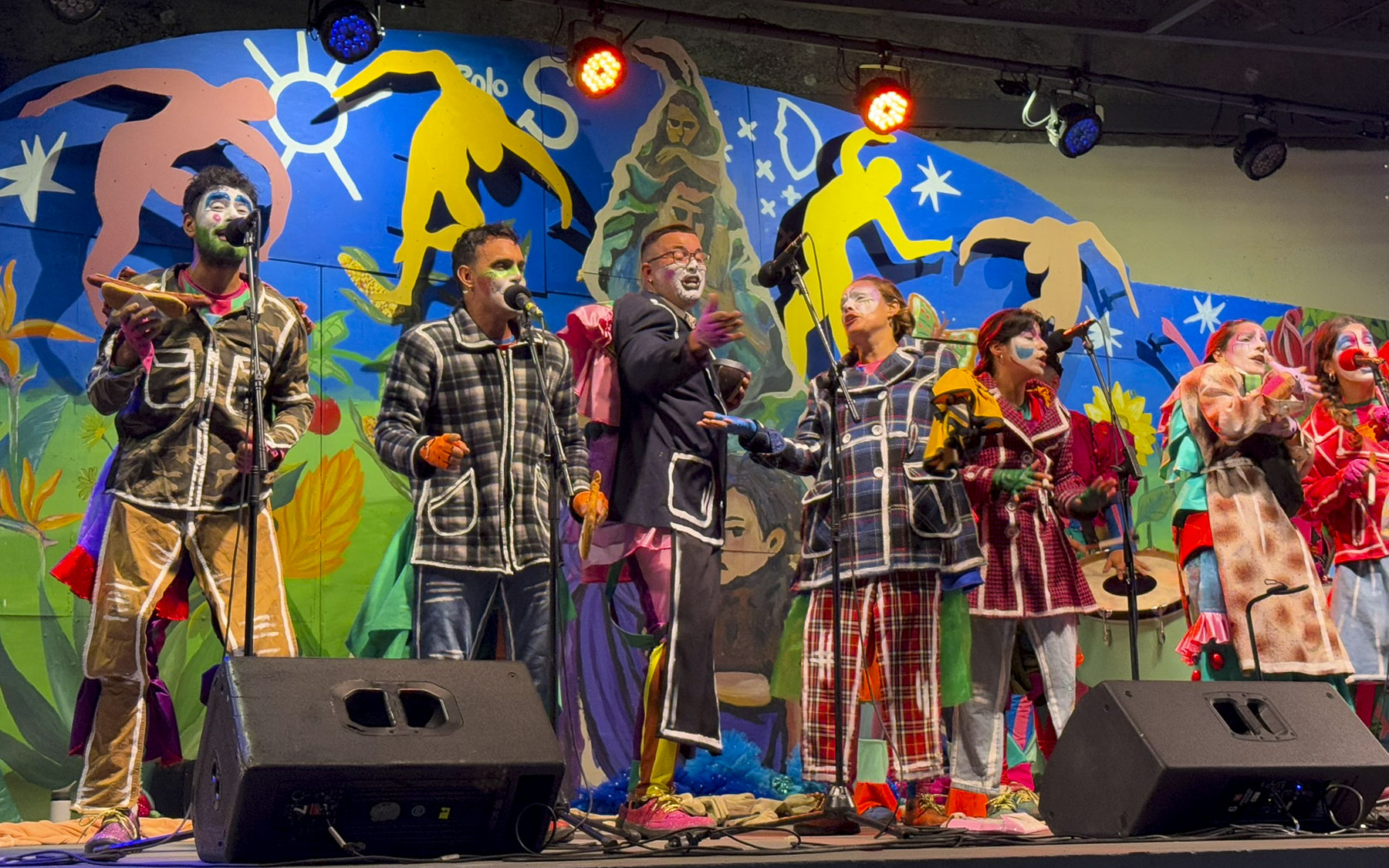
Tablados are temporary neighborhood stages set up across Montevideo where colorful theatrical and musical performances are put on by groups of actors called Murgas, known for their satirical and humorous songs, who are joined by groups of Parodistas who are recognized for their entertaining parodies of well-known stories or events.

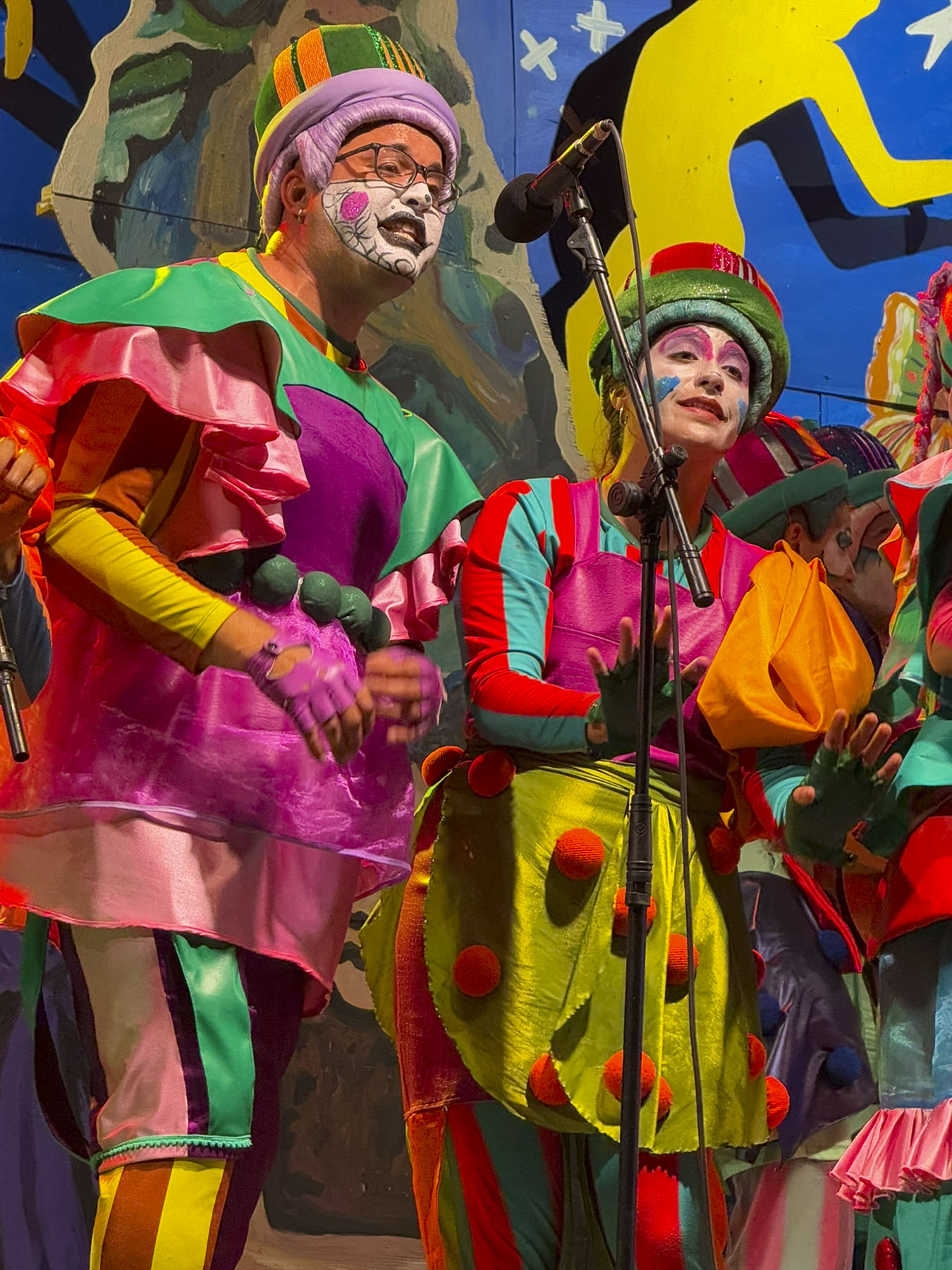
Tablados performances only happen during the carnaval season in Uruguay, which runs for forty days between mid-January and mid-March in Uruguay. The performance we attended lasted two hours and had eight different skits. If you cannot attend one of the carnaval parades in Montevideo the tablados are extremely funny and entertaining and you don’t need to understand Spanish to thoroughly enjoy them. They are also very inexpensive.


Walking back through the newer part of Montevideo the next morning we strolled along
Av. 18 de Julio. The street is named for the day in 1830 when the Uruguayan Constitution was ratified, and is the city’s busiest street with numerous stores, restaurants and bars along its length. At the intersection of Av. Carlos Quijano was the Fuente de los Candados,
the Fountain of the Padlocks. It seems every city has one of these landmarks where couples announce their love by hanging a lock on the metalwork; many of these were engraved with names, dates, or sentiments. What’s unique about this one is that it surrounds a fountain where folks also throw coins to make a wish.
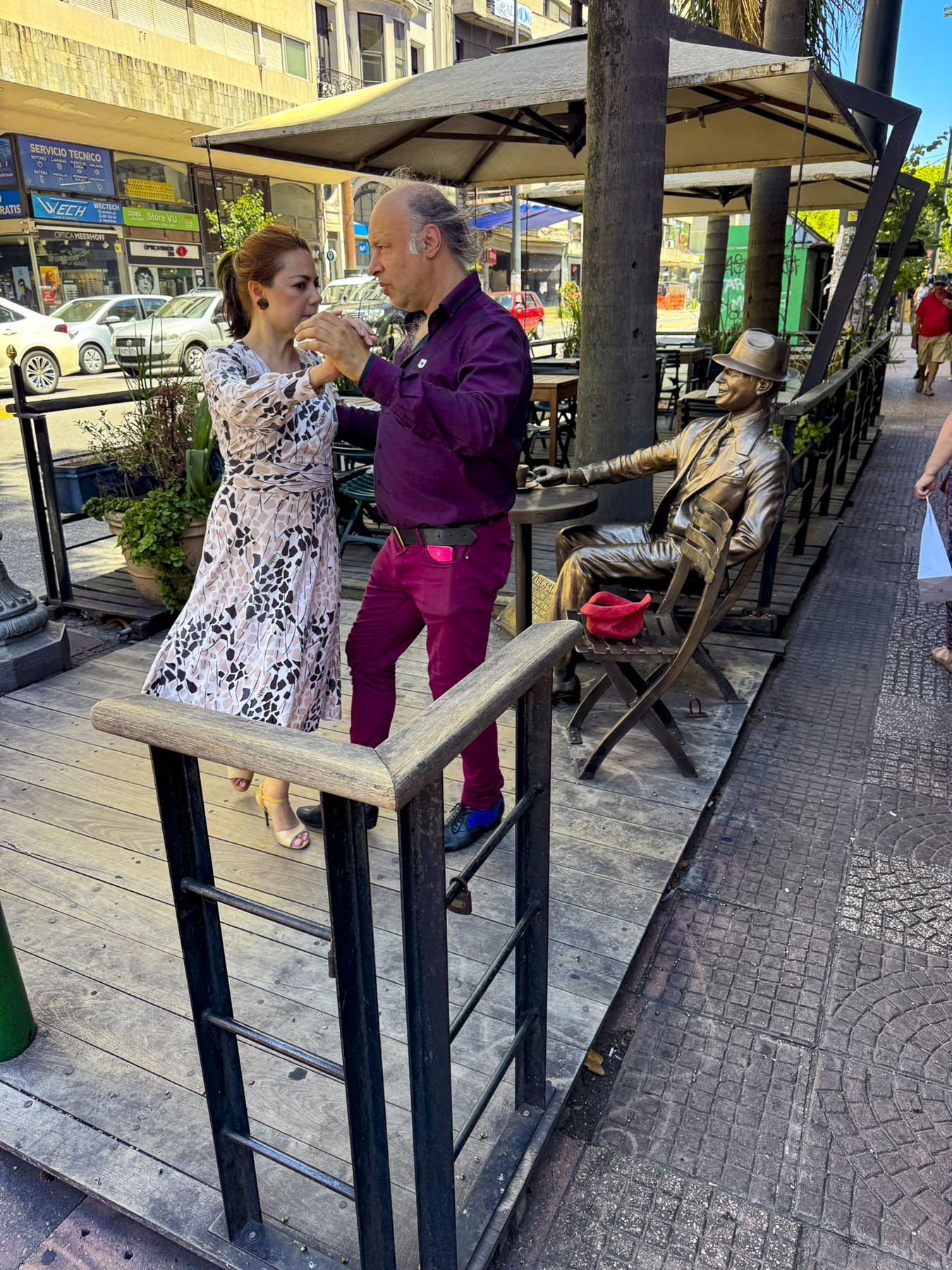

Next to the fountain was a couple busking for tips as they tango danced in front of a café. This was the only time we saw tango dancing in Montevideo, even though the city shares credit with Buenos Aires as the birthplace of the dance. The scarcity of dancers might have been because we were there during carnaval season, and so many other events were happening then.

Nearby was the Mirador Panorámico de la Intendencia de Montevideo. It’s an open-air viewing platform on the 22nd floor of the headquarters building of the Municipality of Montevideo. Montevideo does not have a very interesting skyline, but the view was expansive, and you can see the port and how La Rambla follows the twists and turns of the coast. There is a small café inside at the mirador. We didn’t find it to be a “must do,” destination, and would suggest trying to time your visit to the mirador around sunset, if possible, to make it more spectacular.
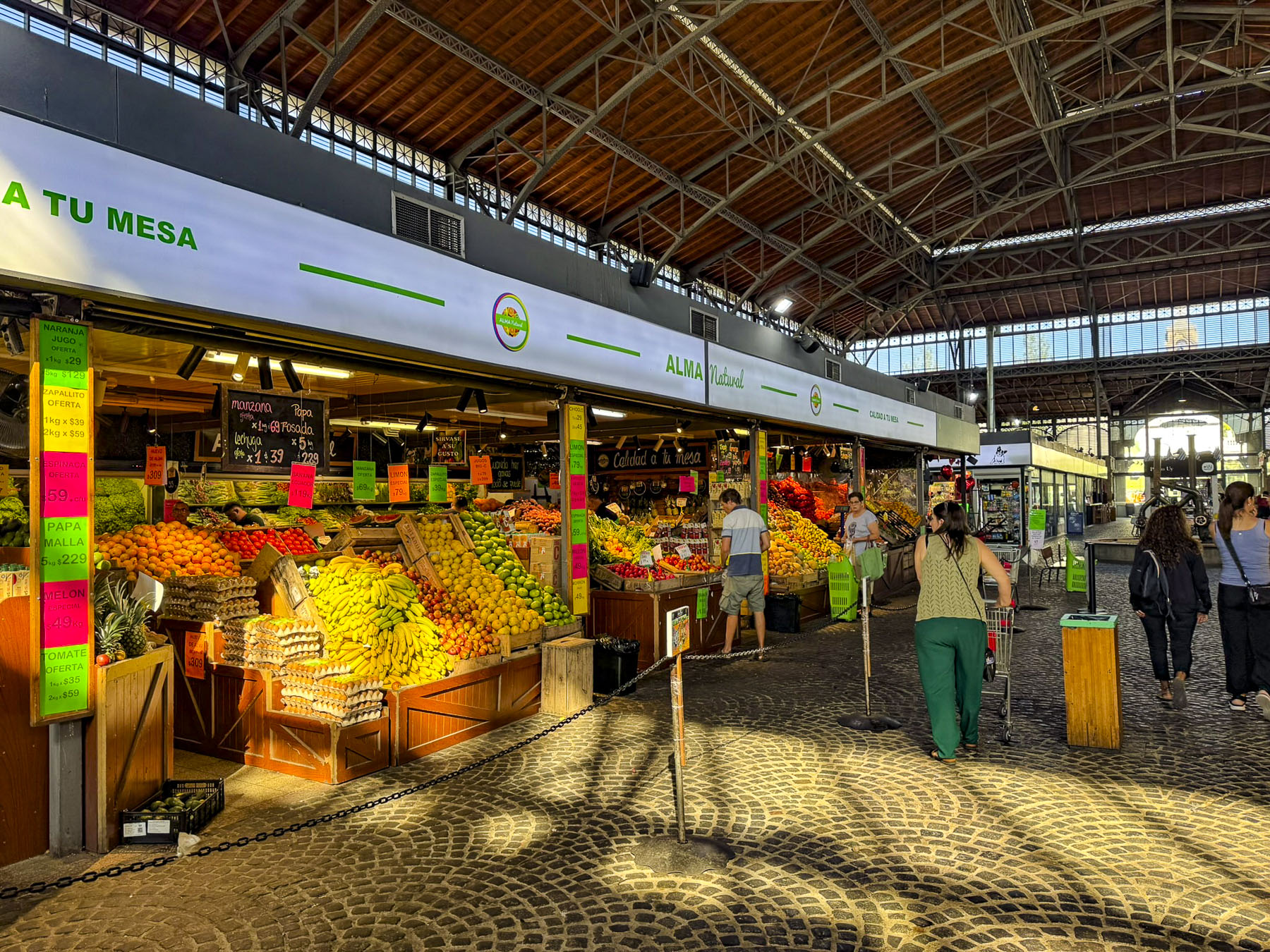

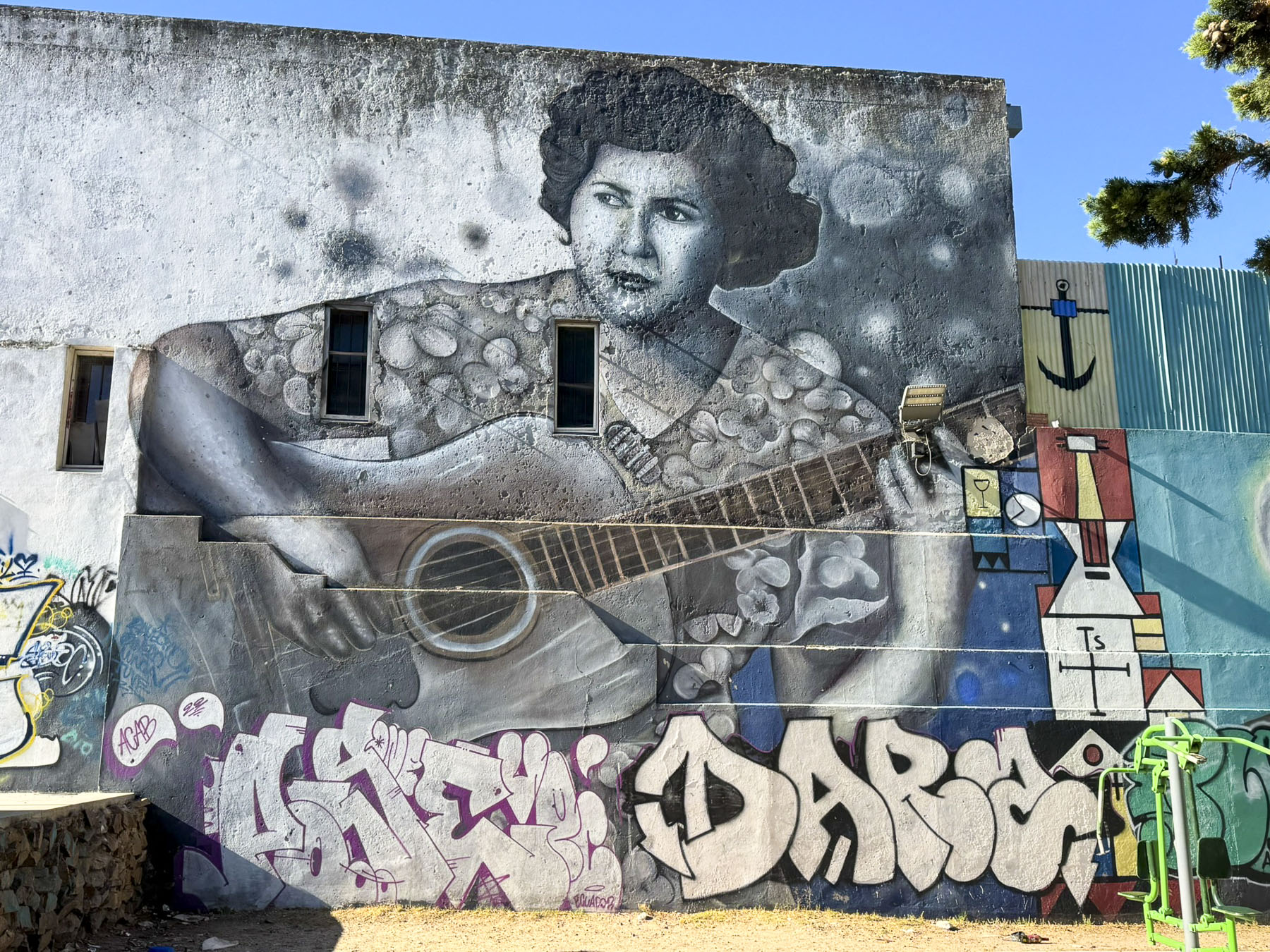
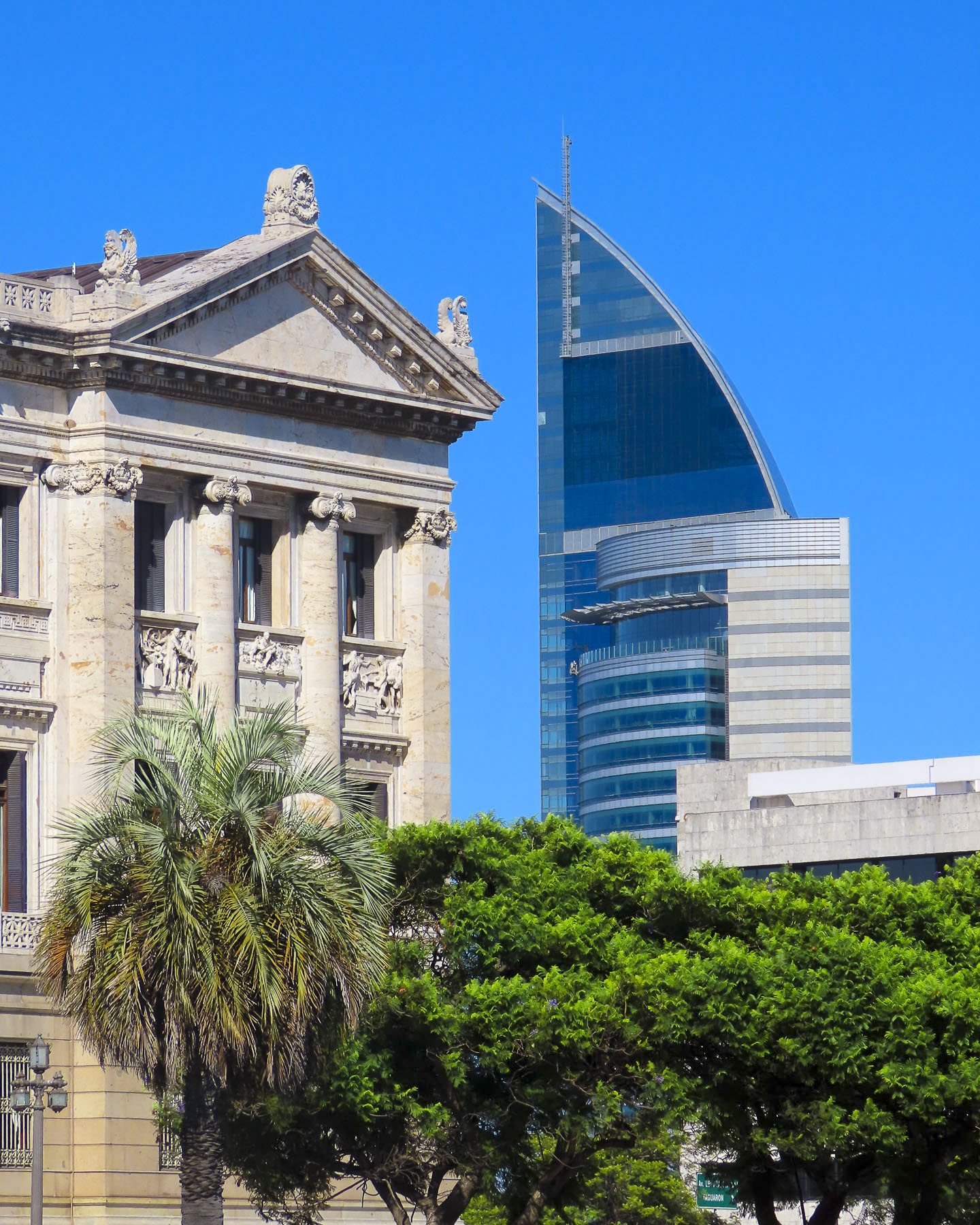
Afterwards we decided to expand our wanderings around the city, and we walked many blocks to the Mercado Agrícola de Montevideo, a historic city market that dates from 1913. We bought some fruit and empanadas for lunch. The most interesting part of our walk was around the Palacio Legislativo, a neoclassical building that is the seat of the Uruguayan parliament. The building’s iconic architecture stands in stark contrast to the large heart felt murals portraying local Montevideans, and the writer Kurt Vonnegut.


Over the weekend the Llamadas parade, one of the largest during carnaval, was taking place Friday and Saturday night in Barrio Sur. The parade celebrates the Afro-Uruguayan culture in the country with numerous comparsas, large groups of 50-100 festively dressed drummers who play traditional candombe rhythms for their dancers who perform along the street ahead of them.



Our Uber driver dropped us as close as possible to the viewing spot we had scoped out earlier in the week. But the streets were full of activity, with roads blocked for charter buses carrying various comparsas and staging areas where the dancers and drummers readied their groups.


We didn’t know advance ticket purchase was required, so we were totally surprised when the intersections were cordoned off and only tickets holders were allowed onto the sidewalks along Isla de Flores street. Fortunately, the area we had chosen had one small section that was open, and we jammed in, shoulder to shoulder, along with several hundred other folks with the same idea, to watch the parade. Folks next to us cautioned us about losing our phones to grab and run thieves, but we never felt uncomfortable in the crowd.

Carnaval in Montevideo is not as elaborate spectacle as in Rio de Janeiro where huge floats dominate the night. We didn’t last until the end of the parade, but it was a hugely fun, very authentic grassroots event that we thoroughly enjoyed. A few blocks off the parade route at Restaurante Palermo Viejo we shared our first chivito. These are huge, layered sandwiches that contain churrasco steak, ham, bacon, mozzarella cheese, lettuce, tomato, and a fried egg on top. The tasty creation was very filling, and it is often referred to as Uruguay’s national dish.
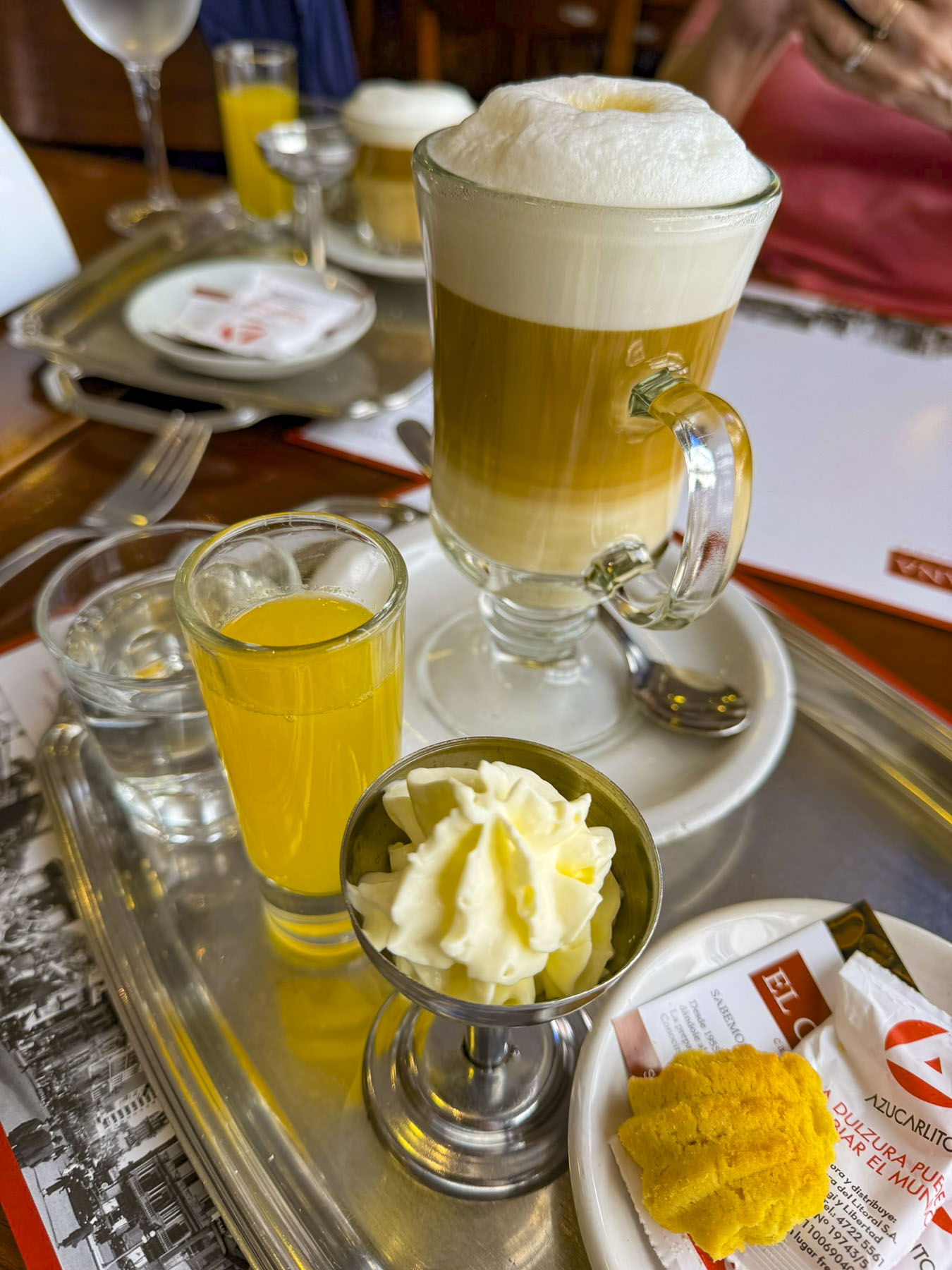

The next morning after a luscious breakfast at El Copacabana, in the old town, we took an Uber over to the Feria de Tristan Narvaja, a Sunday street market that stretches for seven long blocks through the Cordon neighborhood. It features a multitude of vendors selling everything imaginable, along with secondhand clothing, used books, fresh produce, and artist’s handcrafted creations.
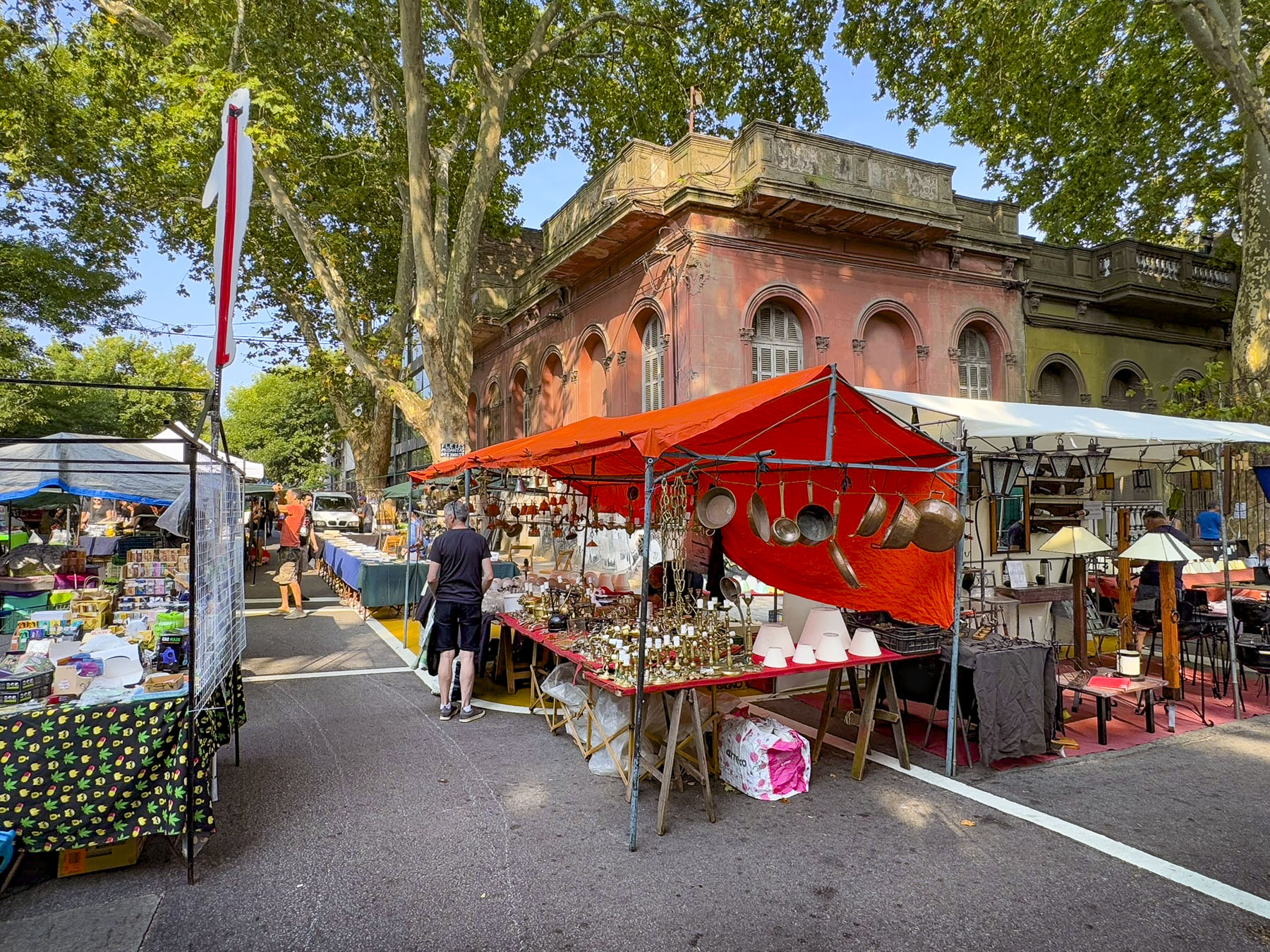

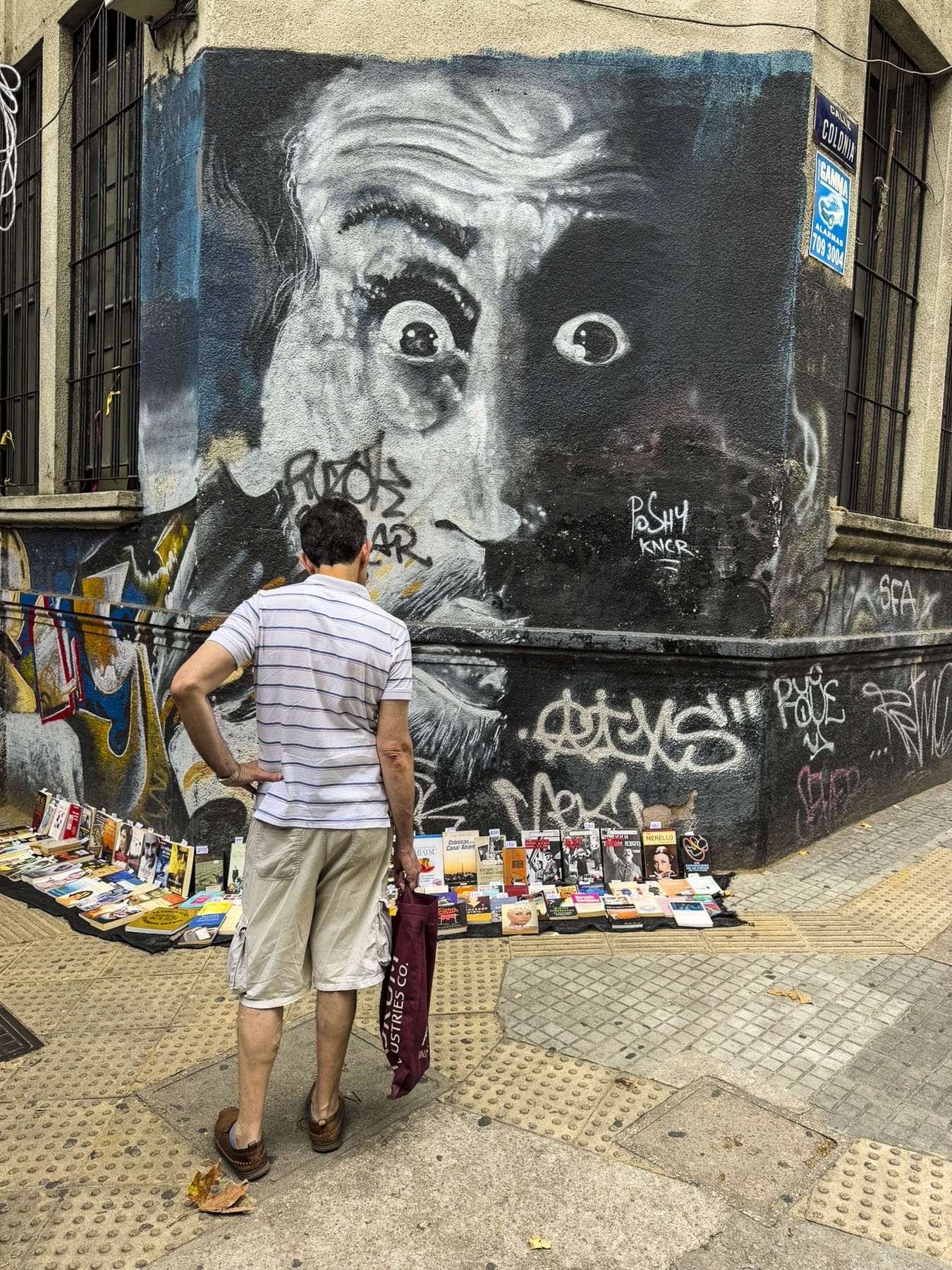
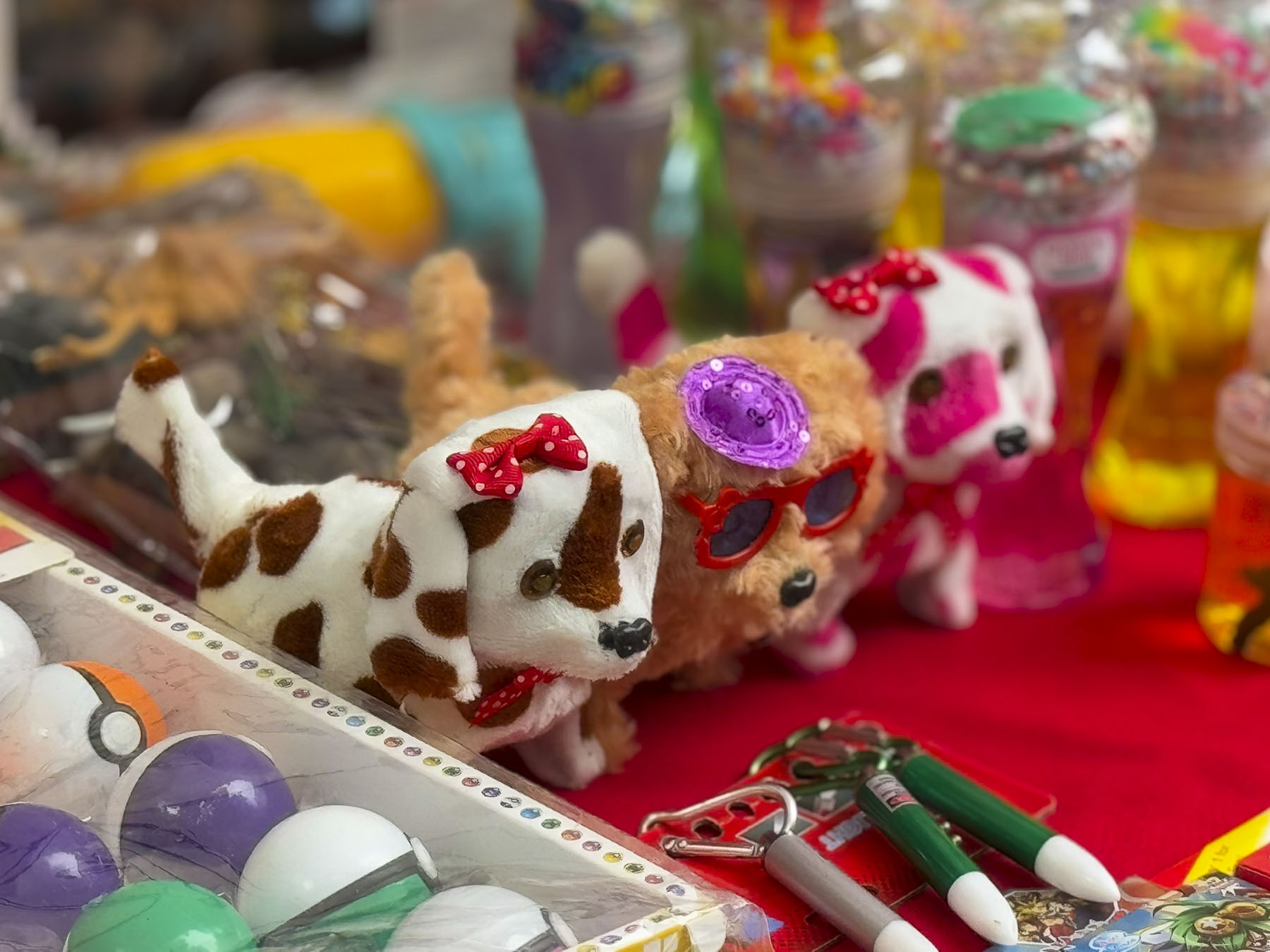

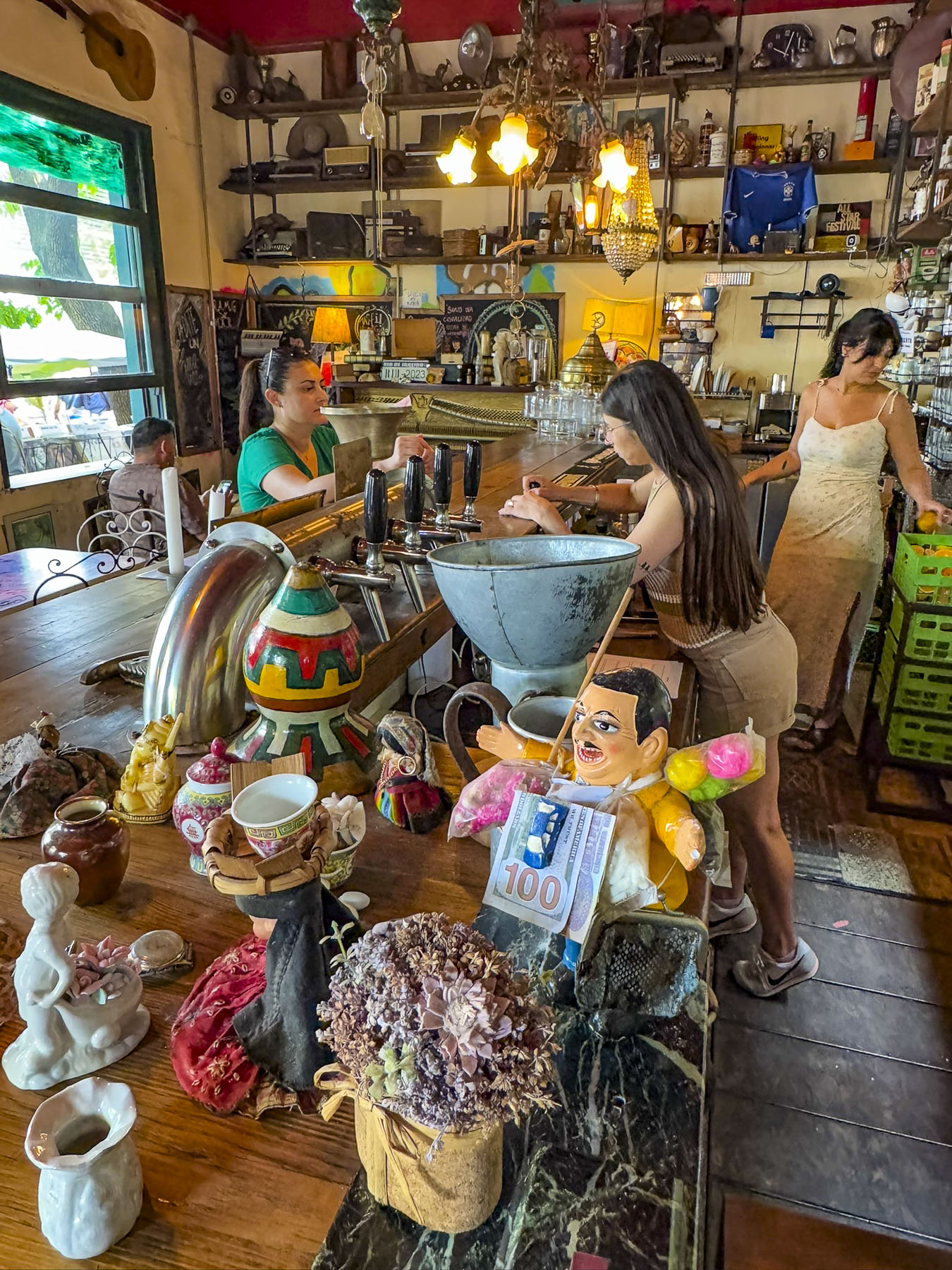
Following our “walk a little then café” philosophy we took a break at El Imperio, an eclectically decorated bar, where the barista between serving inside customers ran trays of espressos out to the vendors on the street. We thought the feria was one of the more interesting ones we’ve experienced during our travels and think it’s a must-do activity when visiting Montevideo, if you like this sort of event.
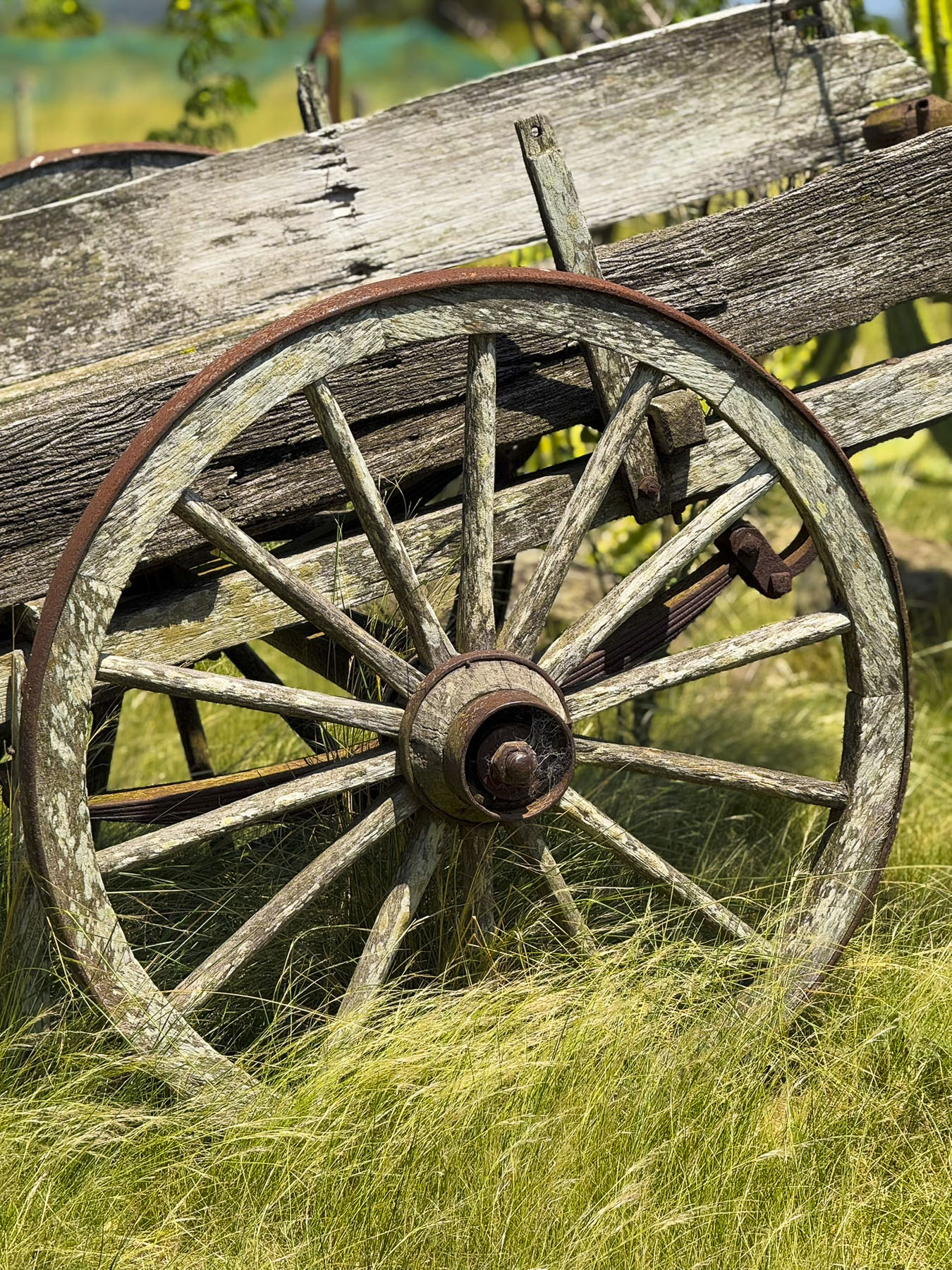
Later that morning we headed to the airport and picked up a rental car we had reserved at Localiza Aquiler de Autos, a very good local agency with reasonable rates, for our 12 day road trip, which we were starting the next day. But first we had one more thing to do locally, and we drove an hour north into the countryside outside of Montevideo. Nearly forty percent of Uruguay’s population lives in Montevideo, but the city’s urban sprawl quickly transformed into gently rolling farmlands and vineyards as we drove through the Canelones region to the Cabaña La Mansedumbre, a rustic, under-the-radar destination restaurant. We eventually turned down a sandy dirt road. A small weather-worn sign hung from the cattle gate across the twin tracks that led to Fredy and Silvana’s ranch. When making our reservation, he had reminded us to close the gate securely so his goats wouldn’t escape.

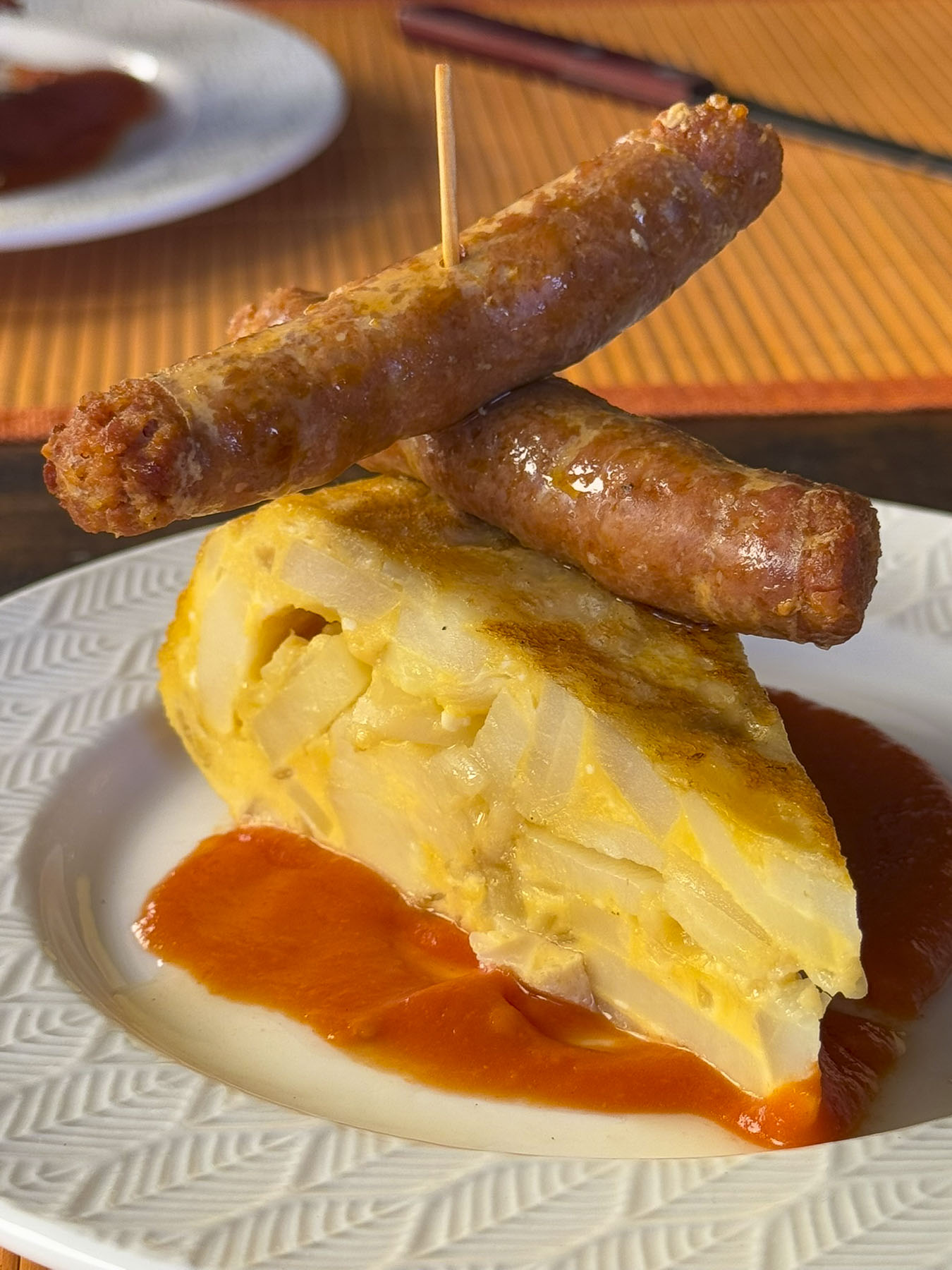
We were the first guests to arrive that afternoon and were warmly welcomed into the courtyard of the couple’s rural farm stead. A tour of the open-air kitchen followed where we met Fredy’s son Juan, as he was preparing charcuterie boards under an array of sausages and cheeses hanging from the rafters. Heat emanated from a brick oven in the corner. Two large golden tortilla de papas cooled on a countertop under shelves laden with jars or homemade sauces, jams, and jellies. Baskets of fresh bread and rolls which Silvana had baked that morning tempted us with their wonderful aroma.

Very enthusiastically Fredy explained that everything they use to prepare their dinners is sourced within a 5-mile radius of their farm. Though many items, like the goat cheeses, were made by his neighbor using the goat milk from Fredy’s herd, while the tanat wine we were offered, as we waited for the other guests to arrive, came from a friend’s vineyard at the other end of the road. Bottles of grappa that Fredy had infused with herbs lined a shelf above wine casks which flowed freely all afternoon.

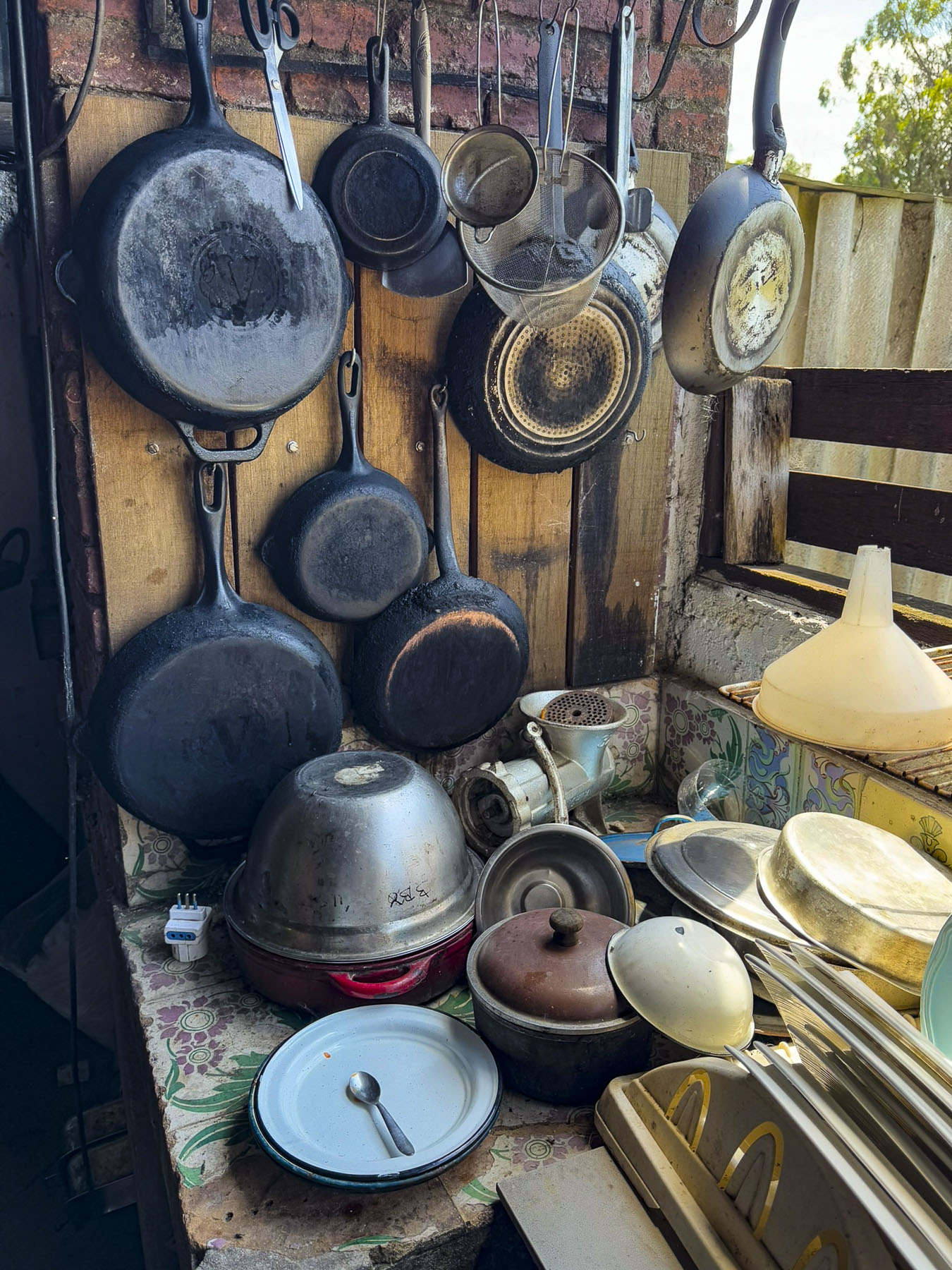
Neither has trained as a chef, but they both share a passion for food and travel which has inspired them to refine their skills over the years, and now share their enthusiasm for great food at their home on the weekends. Seeing their farming community’s potential they have encouraged their purveyors to provide new and different sausages, cheeses, and produce than what was traditionally available in the past.


With everyone’s arrival we were seated at tables under their tinned roof porch. We were hoping to experience a traditional Uruguayan asado, but grilling meats on the parrilla was not part of the gourmet eight course feast that the couple had planned.
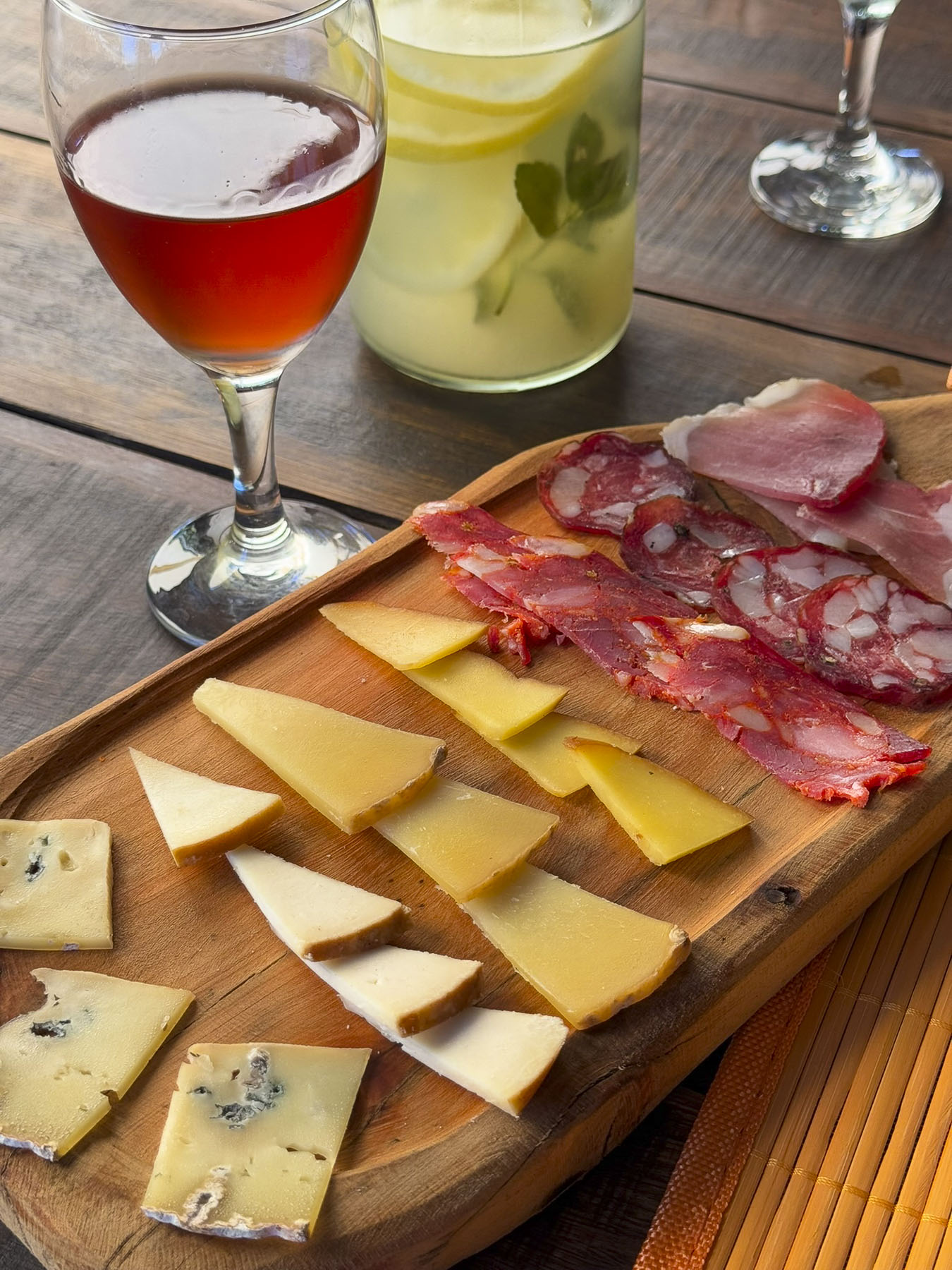
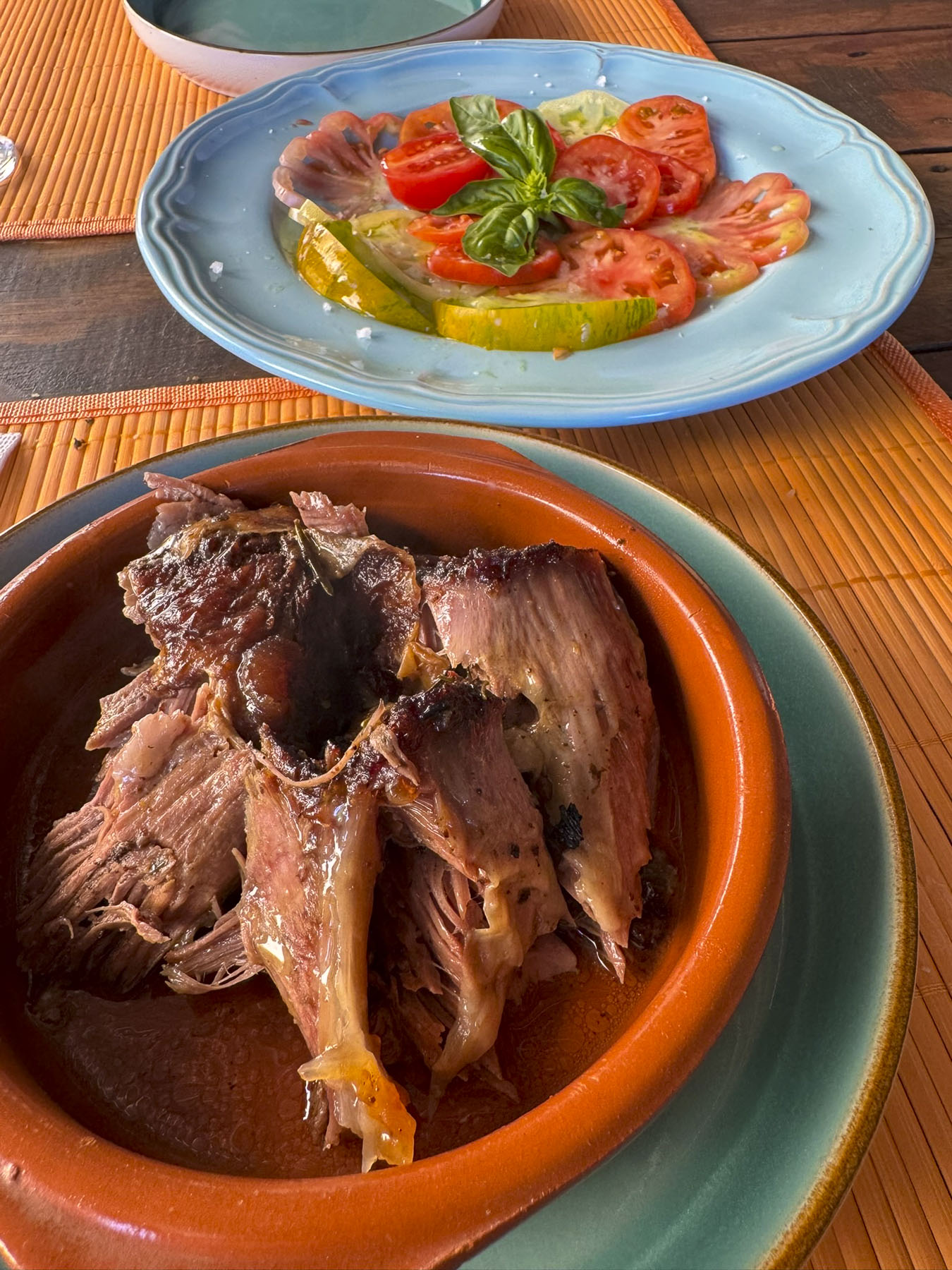
Our initial disappointment faded quickly as amazingly delicious dishes emerged from that simple country kitchen for nearly three hours that afternoon. Every dish was uniquely flavored, excellently prepared and presented. Coffee, dessert and grappa crowned the dinner. We wish we had taken notes, but photos of some of the dishes will have to suffice.


The dinner was nicely paced, with plenty of time to talk with the other guests and enjoy the wine between courses. It was a memorable afternoon, and an excellent farm to table dining experience, along with being the best meal we had while visiting Uruguay.
For reservations Fredy and Silvana can be contacted through phone & WhatsApp +598 99 390 054.
Montevideo consistently ranks as the top city in Central and South America for quality of life. We thought it was a great destination, especially during Carnaval and it exceeded our expectations.
Till next time,
Craig & Donna
P.S. Our 12 day road trip through Uruguay started the next day.
During our stay, Donna had horrible hacking cough, that was so concerning one night we called the reception desk at NH Montevideo Columbia to ask for advice. The hotel, to our relief, had a physician on-call who made a late-night visit to our room. After an initial exam the doctor wrote a prescription for a chest x-ray in the emergency room at The British Hospital, a private hospital in downtown Montevideo. Fortunately, it was a quiet night at the hospital, and we were attended to quickly after checking in. We had a good experience there, the x-rays were negative for lung infection, and the hospital visit was totally covered by our travel insurance.
Street parking everywhere in Uruguay is free!


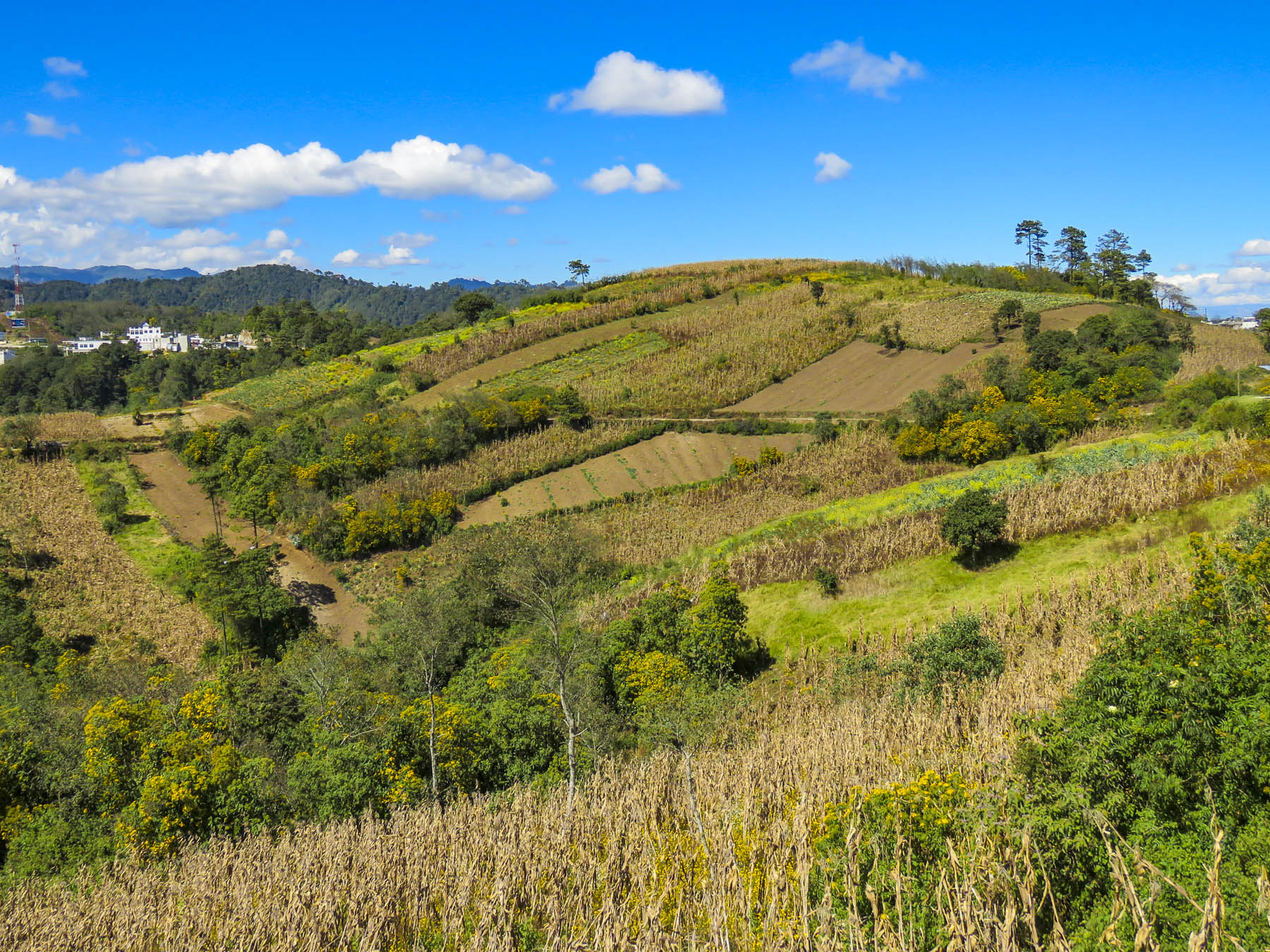
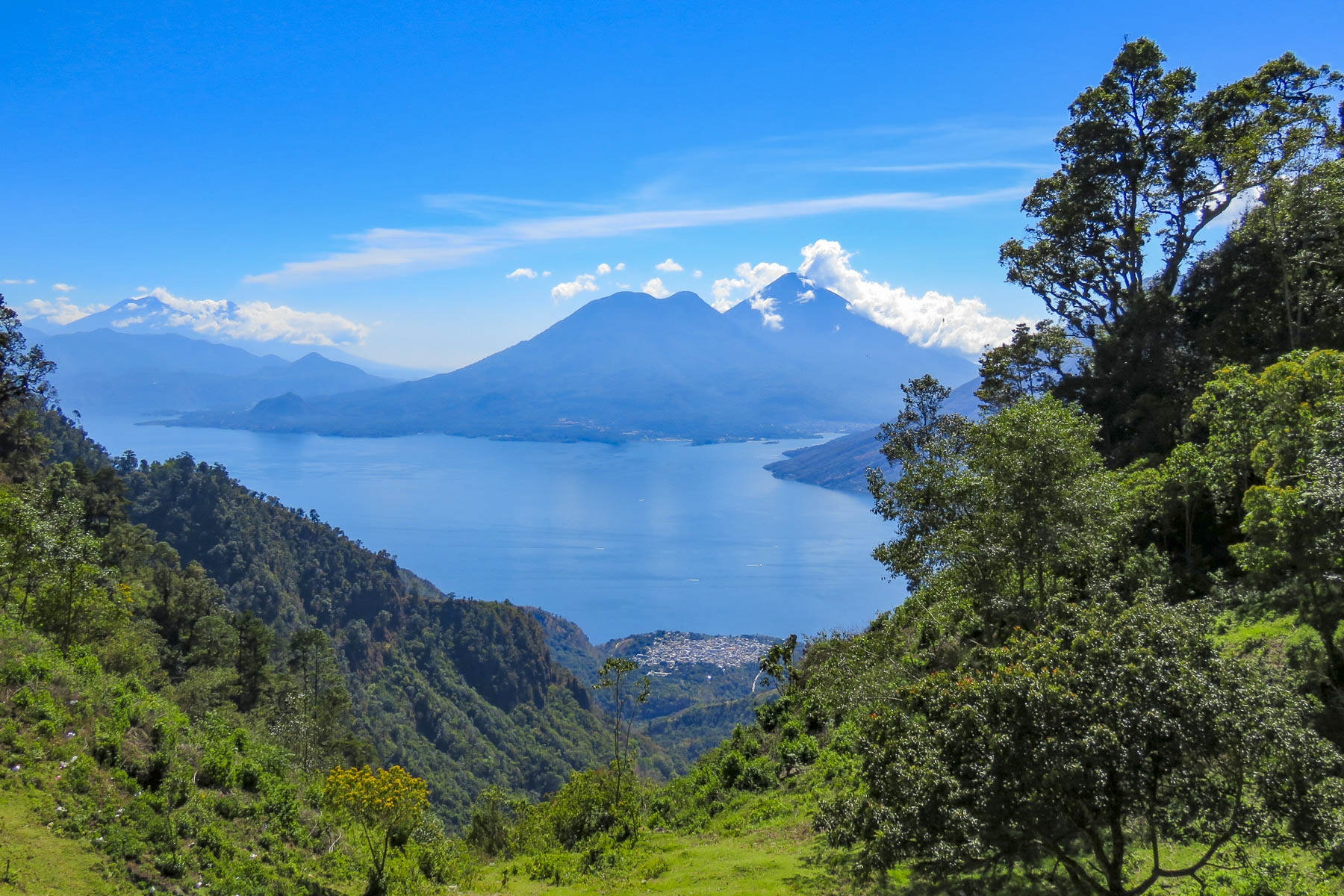 The scenery along the drive to Lake Atitlan, along roads that continued to climb higher, was spectacular with verdant greenery and distant volcanos appearing then disappearing again with each twist of the serpentine route.
  Arriving in San Pedro we thought we were on a movie set for a sequel to Mad Max or Water World. Down by the Panajachel dock dreadlocked travelers, wearing eccentric attire, filled the streets along the lakeshore. Feeling as if we had time traveled, we were relieved to find our Airbnb far out of town on a dead-end road that ran along the lake. According to Google maps the road was unnamed. Our host said “tell the tuktuk drivers you are staying on Calle Finca,” which referred to a distant and abandoned coffee farm, about an hour’s walk from the trail head at the end of the road.
 Our new home for our last week in Guatemala had a wonderful porch with great view of Lake Atitlan and tranquility. A relaxing change of pace was called for after the Christmas and New Year’s Day celebrations in Antigua. Bird calls or the soft Mayan chatter of coffee pickers, harvesting ripe beans right outside our door, were the only sounds that filled the air. Fortunately, we were much closer to town than the abandoned coffee finca and were able to walk to the daily outdoor market, along streets where we could see women washing clothing in the distant lake, and make-shift scales were set up to buy coffee beans hauled down from the slopes of Volcan San Pedro.


 A short ferry ride took us to San Juan La Laguna, a weavers and artists village that visually celebrates its Mayan heritage with colorful street murals. The steep walk uphill from the boat dock to the center of town was lined with art galleries.


 Six years ago, when we first visited the lake, we stayed at Posada de Santiago in Santiago de Atitlan and met Carolina, an American expat who has been in Guatemala going on thirty years now. We’ve stayed in touch over the years. Being so close by, a reunion was in order.
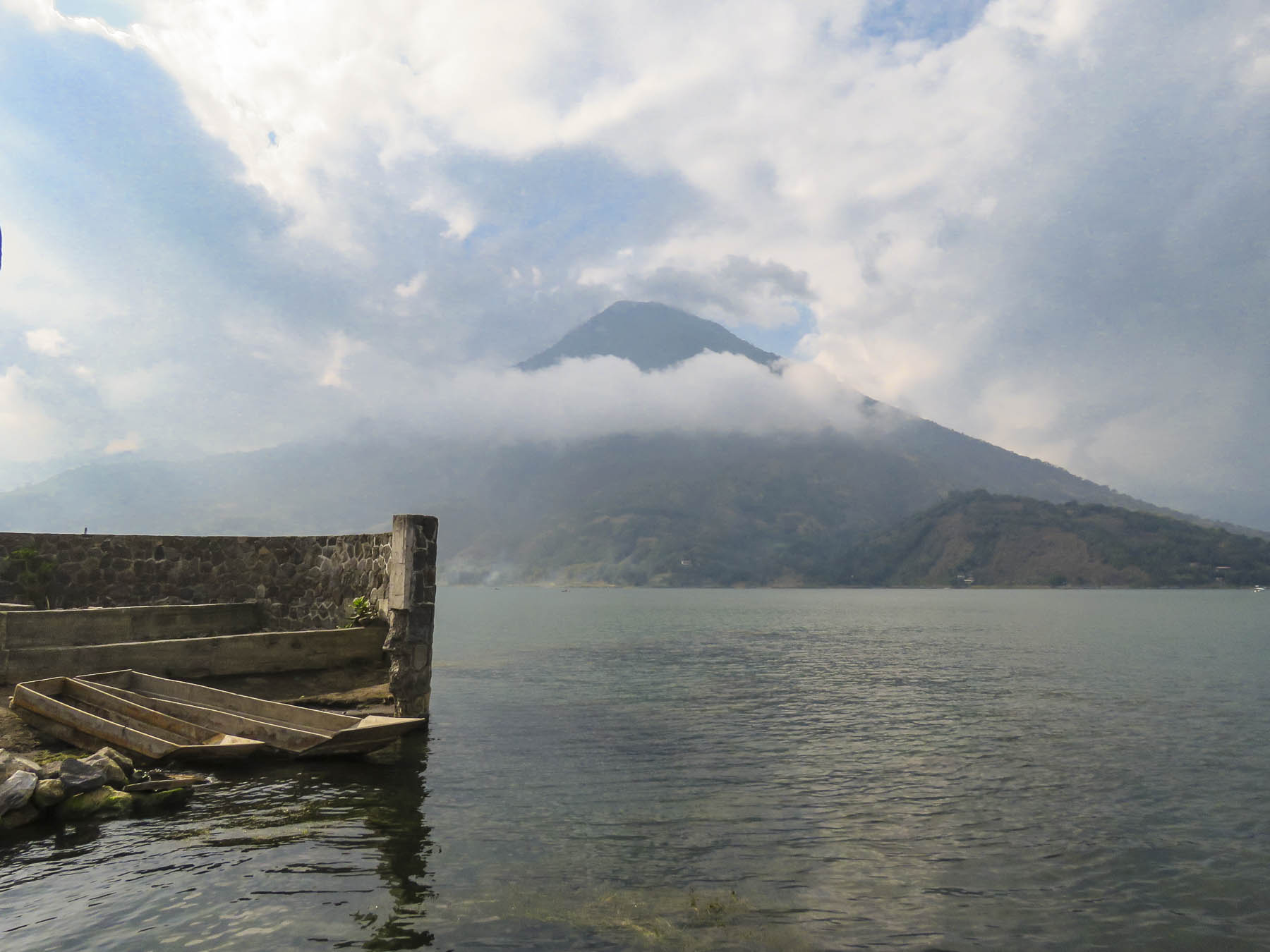 It’s a long ferry ride to Santiago de Atitlan and even longer when the wind churns up whitecaps on the water, and the small boat we were in rocked side-to-side for the duration of the crossing. We silently said our prayers when the local folks stated to reach for the life preservers. Fortunately, we were never too far from shore and know how to swim. It is a breathtaking view coming into the boat dock at Santiago with its namesake volcano towering over the town and Volcan San Pedro just an avocado toss away, across the water.


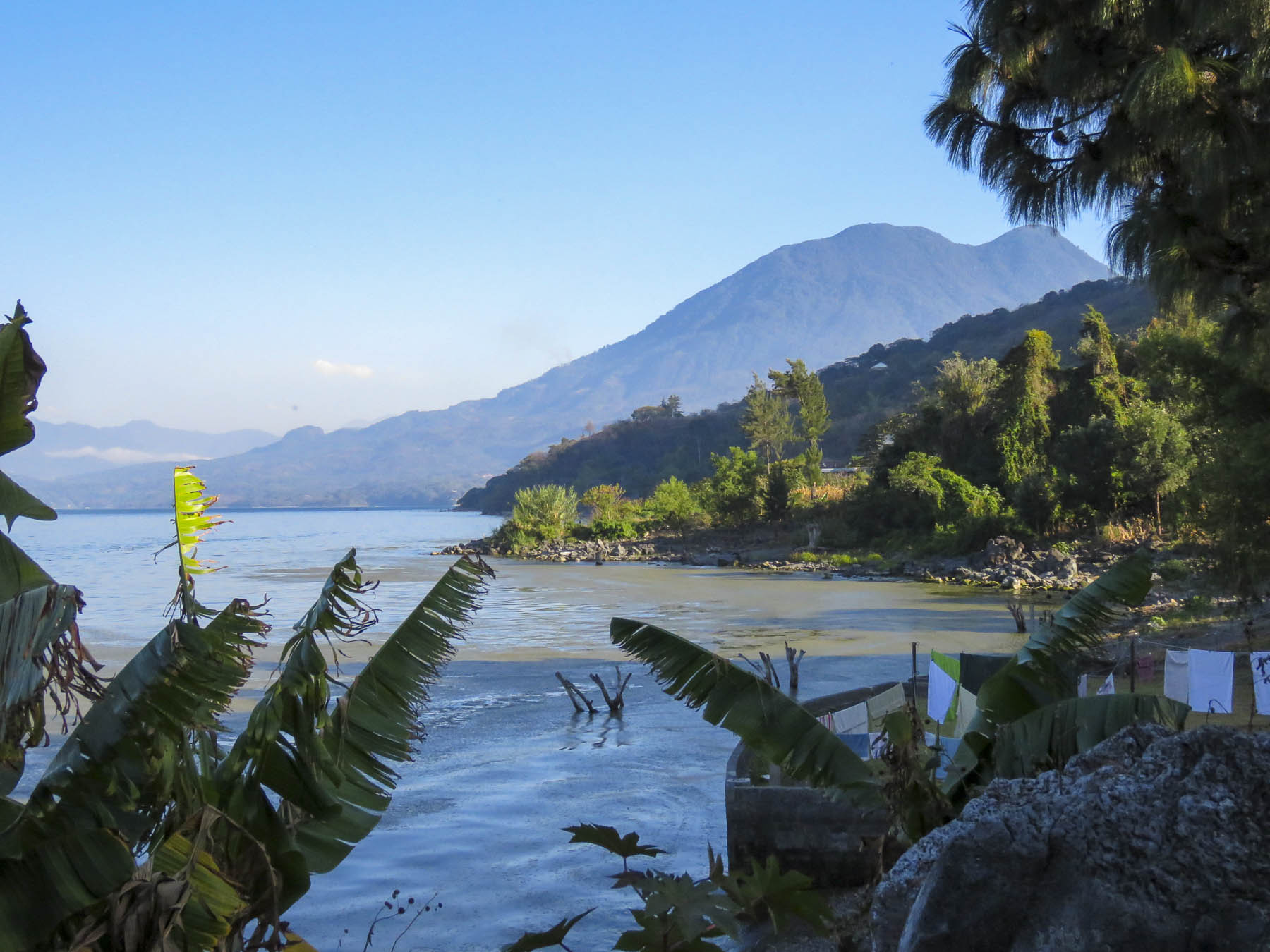 Enjoying the stars from our porch we were surprised when fireworks celebrating Epiphany lit up the night sky above villages across the lake, their colorful bursts reflected brilliantly on the water. With magical moments like this, still fresh in our memories, Guatemala tugged at our hearts as we packed for our next adventure.

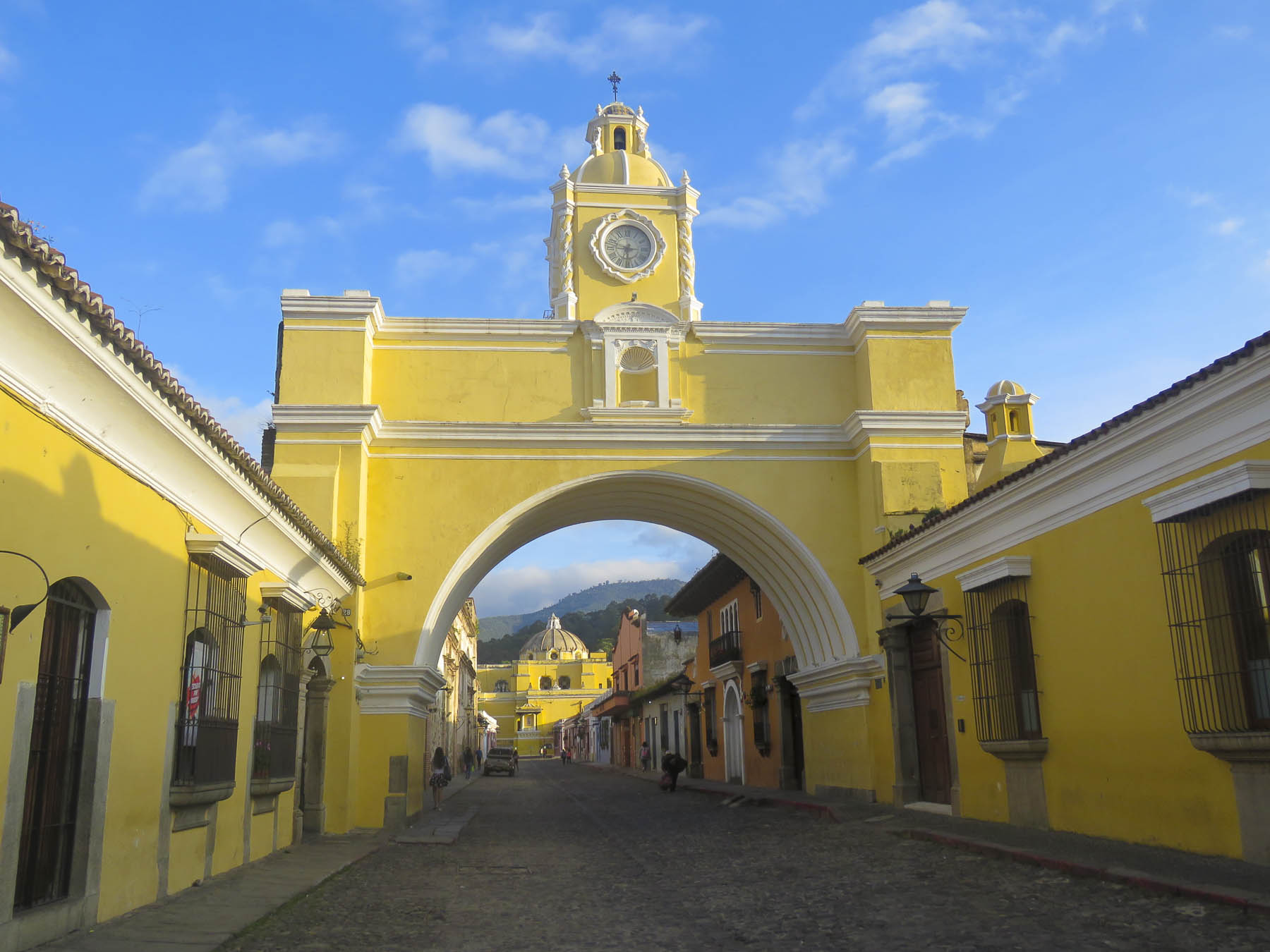 Paradise is such a subjective feeling and if you don’t require a turquoise blue sea and white sand beaches, Antigua, Guatemala just might fit the bill. This charming colonial city with its ever spring-like weather was perfect for our two-month stay.
 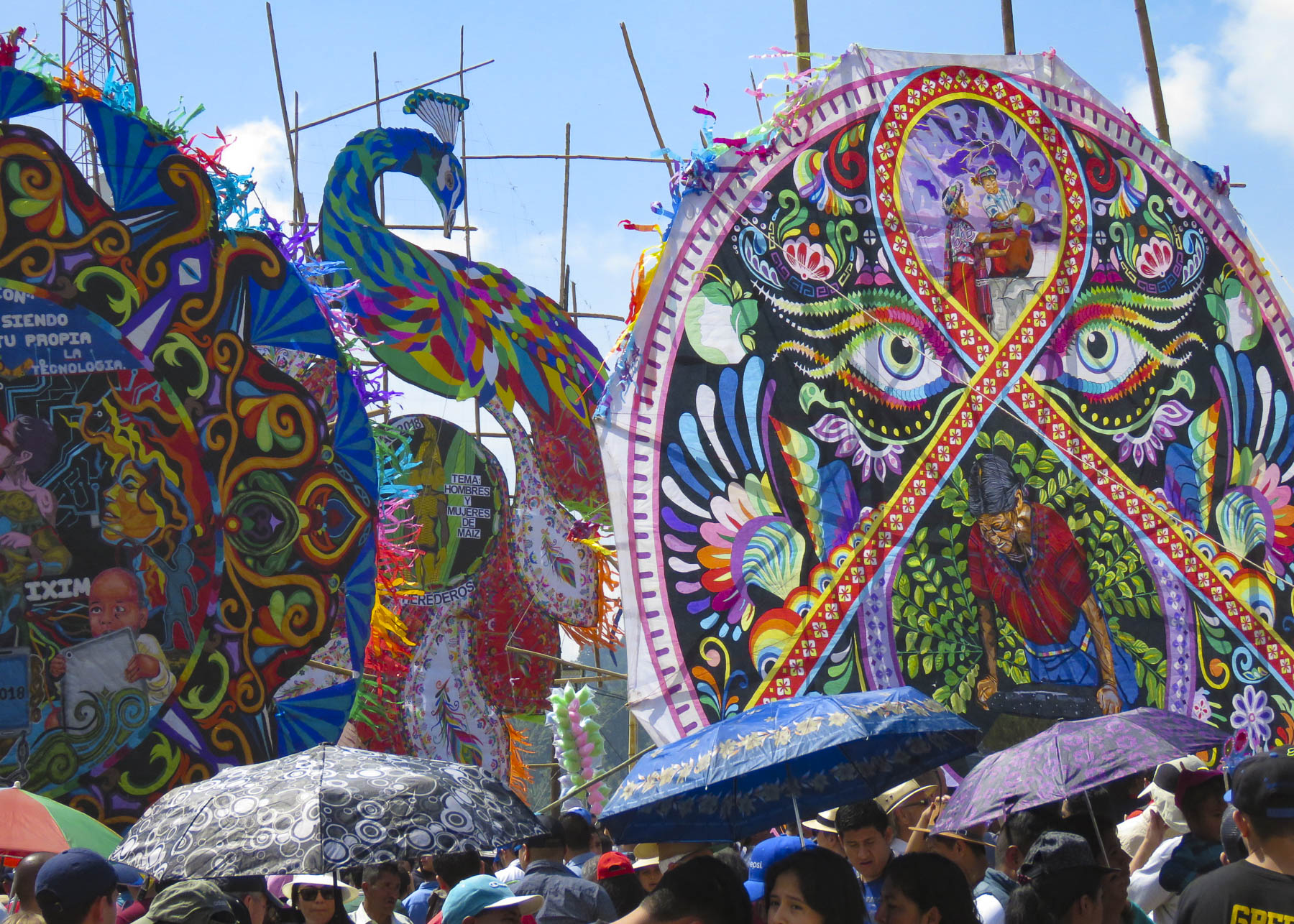 We arrived in Antigua at the end of October so that we could attend the Sumpango Giant Kite Festival held every year on November 1st, All Saints Day. That spectacularly colorful event and a religious procession that burst forward from La Merced Church on October 28th would prove to be representative of the people and life in Guatemala we experienced.


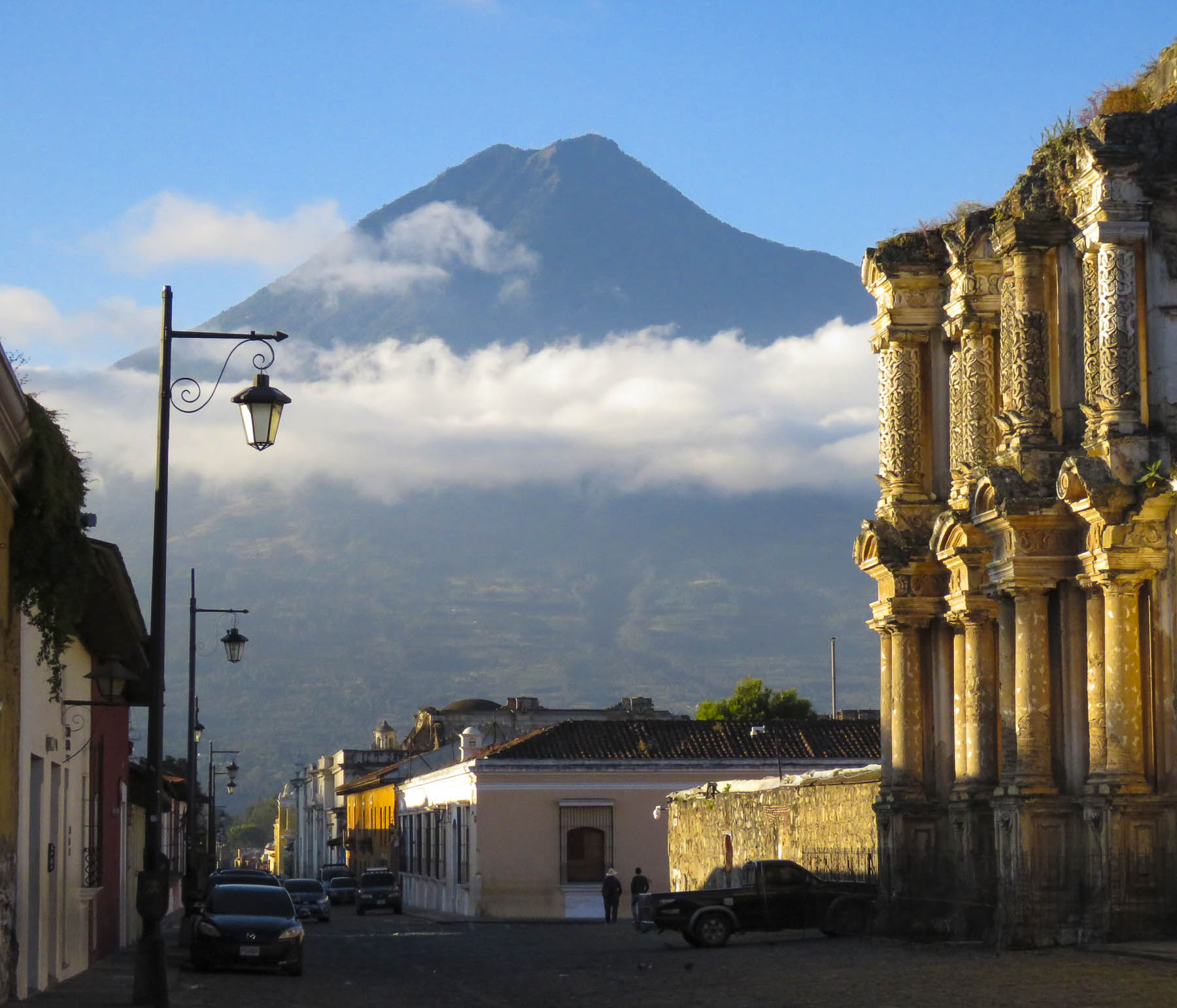
 On Mondays, Thursdays and Saturdays the market tripled in size when the outdoor portion was open, and farmers brought in truckloads of fruits and vegetables from the surrounding villages. There we experienced one of the best markets going, set in a bustling, dusty lot with Volcans Agua, Fuego and Acatenango touching the sky in the background. Most produce was sold in quantities of 5 quetzals (60 cents) so bring lots of small bills, as vendors didn’t usually have change for anything larger than 10Q. The flavor of the locally grown vegetables was amazing. Being backyard gardeners ourselves, we were duly impressed. Twenty quetzals would buy enough vegetables for a week.


 Shopping at the local supermarket, La Bodegona, was a wonderfully hectic experience. At times it could feel like you were shopping from a conga line, weaving up and down aisles, afraid to leave the line for fear of not being able to enter it again and being stuck in dairy for eternity. Numerous store employees lined the aisles offering samples of cookies, deli meats, drinks and other temptations to keep the energy level of the beast alive. It was a hoot! We had to psych ourselves up, like players before the big game, to shop there because it was so hectic and required a certain mental and physical stamina. I will confess though to dancing in the checkout line to blaring Latino Christmas music – the mood was contagious.
  On the same block D&C Cremas, a Walmart affiliate, offered a more sedate shopping experience. Both supermarkets had excellent poultry, which was more tender and tastier than back in Pennsylvania. We were also fortunate that a pork butcher opened a new shop a half block away and offered fresh meat and sausage daily. We enjoyed all the different varieties of Guatemalan sausage he made and found them to be very flavorful and lean, with almost no fat.


 The next day we a followed a serpentine mountain road, second gear all the way, up to Santo Domingo del Cerro, a beautiful sculpture and art park with museums, walking trails and a restaurant that overlooks Antigua. Plan on spending at least a half day there, because it is a beautiful setting for a restful day or afternoon. Casa Santo Domingo offers a free hourly shuttle to the park from the hotel in town.


 Antigua filled early with people in all their finery on New Year’s. Vendors selling textiles the day before were now offering party hats and all sort of 2019 memorabilia. Concerts were held in Plaza Mayor and under El Arco. Firework launchers were being setup amidst the crowds in the streets. Families were picnicking in the park and folks were staking their spots early to watch the fireworks later. At midnight a loud and colorful display filled the night sky. We could hear the roar of an appreciative crowd from our rooftop. We heard random explosions throughout the night to sunrise. Guatemalans love their fireworks!

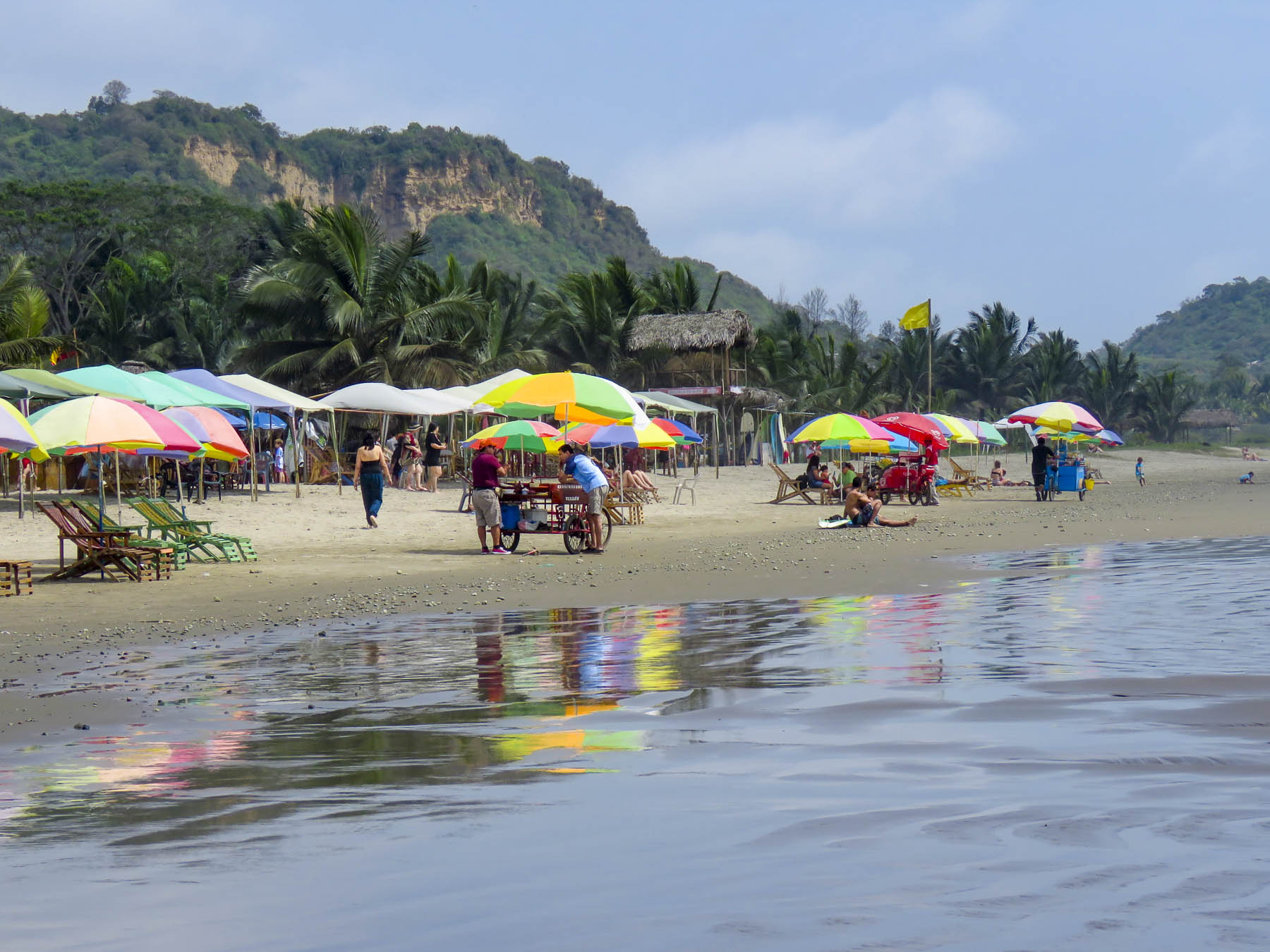 Our quest for eternal Spring-like weather has brought us to Olon, a rustic beach town on Ecuador’s southern Pacific coast with a wide, flat sandy beach that stretches for nearly five miles without a high-rise to been seen. Think San Juan del Sur in Nicaragua fifteen years ago, before it was discovered, or Costa Rica thirty years before it became a top tourist destination.
![IMG_6057[12551]](https://i0.wp.com/2suitcasesfor2years.com/wp-content/uploads/2018/11/img_605712551.jpg?w=535&h=401&ssl=1 "IMG_6057[12551]")


![IMG_7452[12683]](https://i0.wp.com/2suitcasesfor2years.com/wp-content/uploads/2018/12/img_745212683.jpg?w=240&h=192&ssl=1 "IMG_7452[12683]")


![IMG_5961[12489]](https://i0.wp.com/2suitcasesfor2years.com/wp-content/uploads/2018/11/img_596112489.jpg?w=158&h=211&ssl=1 "IMG_5961[12489]")


 Puerto Lopez hosts the largest fishing fleet on this part of the Ecuadorian coast. Lacking a protected harbor, all the fishing boats beach on the shoreline to unload their fresh catch. It is a hectic scene of never-ending activity that is reminiscent of an earlier era.
![IMG_6276[12629]](https://i0.wp.com/2suitcasesfor2years.com/wp-content/uploads/2018/11/img_627612629.jpg?w=402&h=536&ssl=1 "IMG_6276[12629]")
![IMG_2836[12654]](https://i0.wp.com/2suitcasesfor2years.com/wp-content/uploads/2018/11/img_283612654.jpg?w=354&h=266&ssl=1 "IMG_2836[12654]")
![IMG_6281[12630]](https://i0.wp.com/2suitcasesfor2years.com/wp-content/uploads/2018/12/img_628112630.jpg?w=354&h=266&ssl=1 "IMG_6281[12630]")


![IMG_5946[12490]](https://i0.wp.com/2suitcasesfor2years.com/wp-content/uploads/2018/11/img_594612490.jpg?w=187&h=249&ssl=1 "IMG_5946[12490]")

![IMG_6016[12546]](https://i0.wp.com/2suitcasesfor2years.com/wp-content/uploads/2018/12/img_601612546.jpg?w=187&h=249&ssl=1 "IMG_6016[12546]")
![IMG_6028[12552]](https://i0.wp.com/2suitcasesfor2years.com/wp-content/uploads/2018/12/img_602812552.jpg?w=187&h=249&ssl=1 "IMG_6028[12552]")


![IMG_5946[12490]](https://i0.wp.com/2suitcasesfor2years.com/wp-content/uploads/2018/10/img_594612490.jpg?w=378&h=504&ssl=1 "IMG_5946[12490]")

 One of our favorite snacks was Tortilla de Choclo, eighty cents, a corn pancake that was grilled on a large ceramic plate, curbside, as you waited. Often, coffee and dessert cost more than lunch itself.

 One of the reasons we chose Cuenca for our first short term rental was so that I could take advantage of their dental tourism offerings. I had put off getting things done in the states because of what I thought were excessive cost, even with insurance. I am extremely pleased with the dental care that I received at Finding Health in Ecuador. Tooth extraction – $35.00, cavity – $25.00, two-tooth bridge – $250.00. Our premise that we could live abroad more economically than living back in the states is so far holding true.
 Currently we are in Olon, a rustic beach town on Ecuador’s southern Pacific coast with a wide, flat sandy beach that stretches for nearly five miles without a high-rise to been seen. It’s off season, mostly cloudy, but the water is still warm, perfect conditions for the handful of surfers and us. Fishermen still launch skiffs through the surf from the beach, and fathers can be seen taking their kids to school on the handlebars of their motorcycles, gently splashing through the incoming tide. Our rent for the month of October is $730.00 with breakfast included!


![IMG_5961[12489]](https://i0.wp.com/2suitcasesfor2years.com/wp-content/uploads/2018/10/img_596112489.jpg?w=402&h=536&ssl=1 "IMG_5961[12489]")


 2 Suitcases for 2 years