
We arrived in Porto late in the afternoon, only to find the full length of street where we were staying, Rua do Sol, under a tumultuous state of construction. Heavy equipment had deeply excavated the street and workers were laying new water lines. Temporarily parking at the end of street, in front of a small chapel – Capela dos Alfaiates – we dragged our suitcases down a sidewalk so narrow that we had to step into the doorframes of buildings to let oncoming folks pass. Having read too many mystery novels, I found myself thinking it would be the perfect spot to set a crime scene as we walked along the deep trench to our apartment. Maybe the fictional Inspector Ze Coelho would be called in after two American tourists see fingertips protruding from the dirt early one morning as they set out to explore Porto. That imaginary detour aside, we had a great time during our stay in Porto.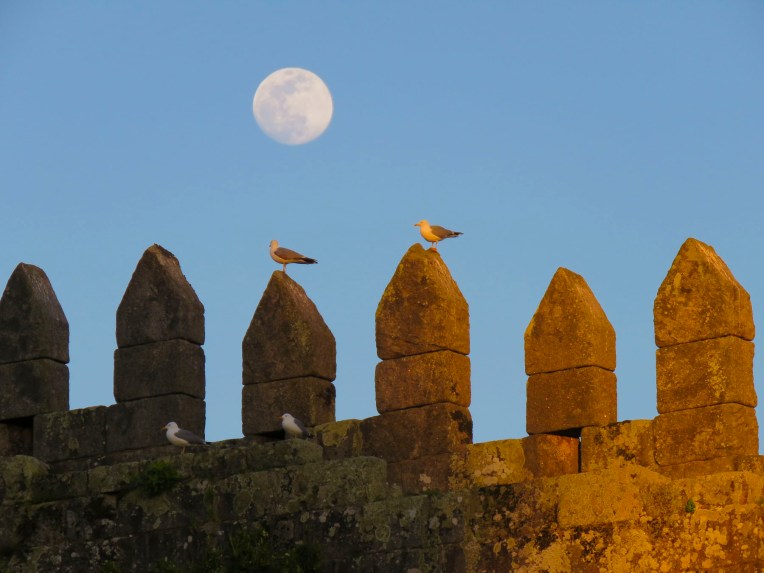 There’s just so much to do and see here, where do you start? Our location was ideal, just around the corner from three pastelarias, bakeries, that were only doors apart and across the way from Batalha, the funicular station that could take us down the steep slope to the Douro River waterfront by the Ponte Luís I bridge. Tram 22 also starts from this plaza and follows a route past the Azulejo tile fronted Church of Saint Ildefonso, São Bento Station, to Igreja do Carmo where you can transfer to the Tram 18 line. A third route with Tram 1 Unfortunately, the trams are not as inexpensive Lisbon’s. We thought the two-day pass available, for ten euros, was too restrictive as it could only be used on back-to-back days and only on the historic trams. A single tram ride costs three euros. Many times, the trams are seriously delayed by congestion or improperly parked automobiles.follows the riverside to Foz at the mouth of the Douro River.
 Unfortunately, the trams are not as inexpensive Lisbon’s. We thought the two-day pass available, for ten euros, was too restrictive as it could only be used on back-to-back days and only on the historic trams. A single tram ride costs three euros. Many times, the trams are seriously delayed by congestion or improperly parked automobiles.
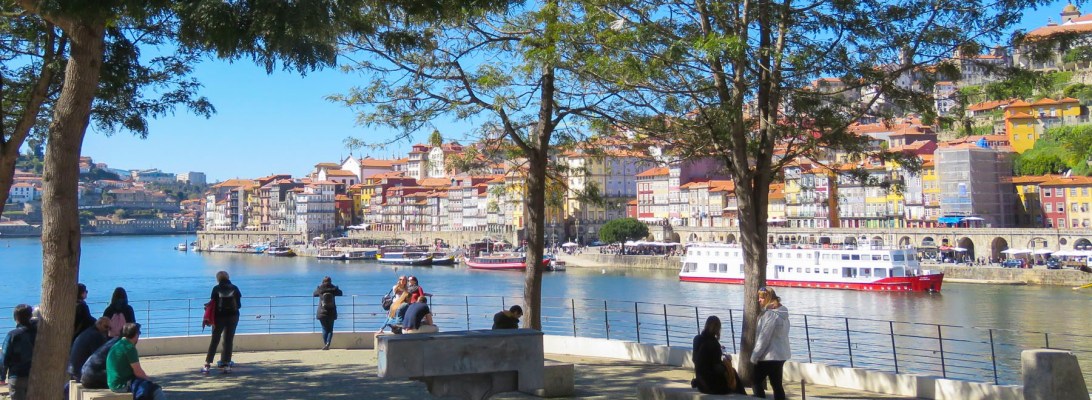
  But the city really needs to be explored on foot to truly savor its charm and intrigue. Porto escaped the massive 1755 earthquake and tsunami that devasted Lisbon. Consequently, the city’s historic architectural gems, many dating as far back as the thirteenth century, still stand unscathed, and its ancient cobbled lanes still meander every which way, untouched by urban planning. With this in mind we decided to weave our way over to the Ponte Luís I bridge and eventually make our way down to the picturesque south bank of the Douro River as our destination for the day, stopping to explore what interested us along the way.
 Set at the far end of the plaza Largo Primeiro de Dezembro, next to a police station housed in an old monastery building, Igreja de Santa Clara is easy to miss. From a distance all you see is a nondescript archway framing an ancient door on the other side of a small courtyard. With one step over the high threshold we were transported back in time to another era. Sun light cascaded through high windows illuminating a cavernous sanctuary.
 Almost every surface was covered with highly carved wood sculptures, gilded with gold-leaf or polychromed. The cathedral sparkled! The church dates to the 1400s, while the gilded Baroque interior was an 18th century renovation. Volunteers offered tours in return for donations to support restoration efforts. The wow factor was amazing.
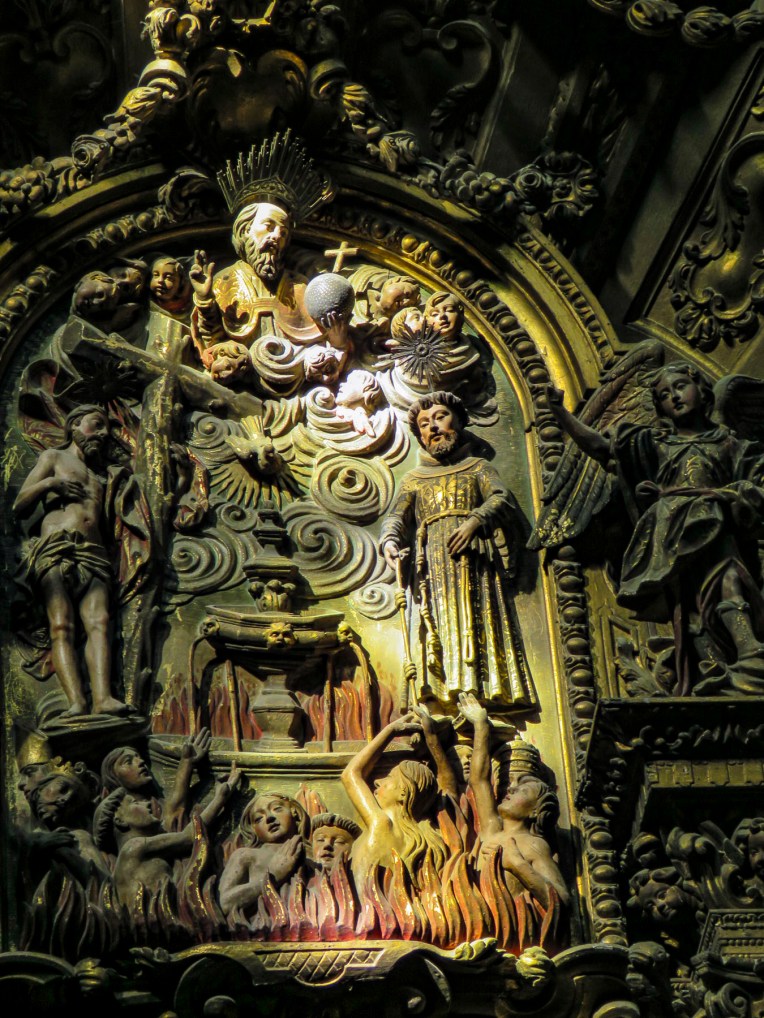 We soon learned that the wealth of Porto rivaled that of Lisbon and the cathedrals spread across the city were the showcases of it. This might be the locale where you can experience a cathedral overdose, but you would be amiss to bypass such beauty. Maybe one cathedral a day, more like two, to keep lightning and thunder away?
 The armour-clad equestrian statue of Vímara Peres guards the approach to the Ponte Luis I bridge across the River Douro and some contemporary street art, that we’re not sure he would appreciate.


In the ninth century he led the armies that liberated northern Portugal, and it was the beginning of the end for the Moorish control of the country. This part of Porto was once encircled by fortress walls that extended all the way down to the river. From the bridge, we had a clear view of two watch towers and a small section of ramparts, which are all that remain of Muralha Fernandina, a medieval castle built by King D. Afonso IV in the early 1300s. For nine-hundred years pontoon bridges and small boats were the major ways to cross the breath of the Douro River before the advent of iron construction. Designed by Théophile Seyrig, a former colleague of Eiffel, Ponte Luiz I opened in 1886 connecting both the upper and lower levels of the Ribeira area of Porto with Gaia. Today the graceful arch, with modern trams and pedestrians sharing its upper deck, is an iconic symbol for the integration of Porto’s history with the future.
  Across the bridge we worked our way up to Mosteiro da Serra do Pilar for the views. This spot and Jardim do Morro, the park at its base, are popular places to watch the sunset from.
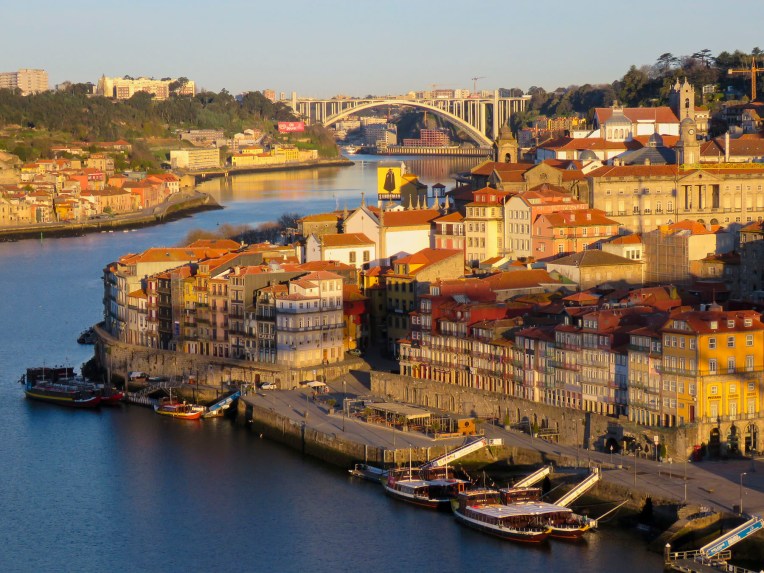 We opted not to take the aerial tram down to the Gaia riverfront and continued our walk, looking for the right restaurant set amidst the fifty port cellars that line the waterfront. Perched atop the port cellar Espaço Porto Cruz, the Terrace Lounge 360º fit the bill.
 The day was beautiful, lunch was delightfully slow paced and of course we enjoyed some wine. We’ve found the restaurants in Portugal never rush you to leave. The table is yours for however long you wish to stay. We soaked in the warm sun, breathed in the crisp Spring air and absorbed the good life surrounding us.


On our leisurely stroll back along the waterfront, we admired the colorful rabelo boats anchored along the quay and Porto’s profile reflecting in the river to the lower deck of the Ponte Luiz I bridge. Here we crossed to take the Funicular dos Guindais, €2.50, back up the steep embankment to the Batalha district. The route of the funicular passes some of the oldest homes and alleys in Porto which we continued to explore for a while before heading back to our lodging for the evening.
Till next time, Craig & Donna.


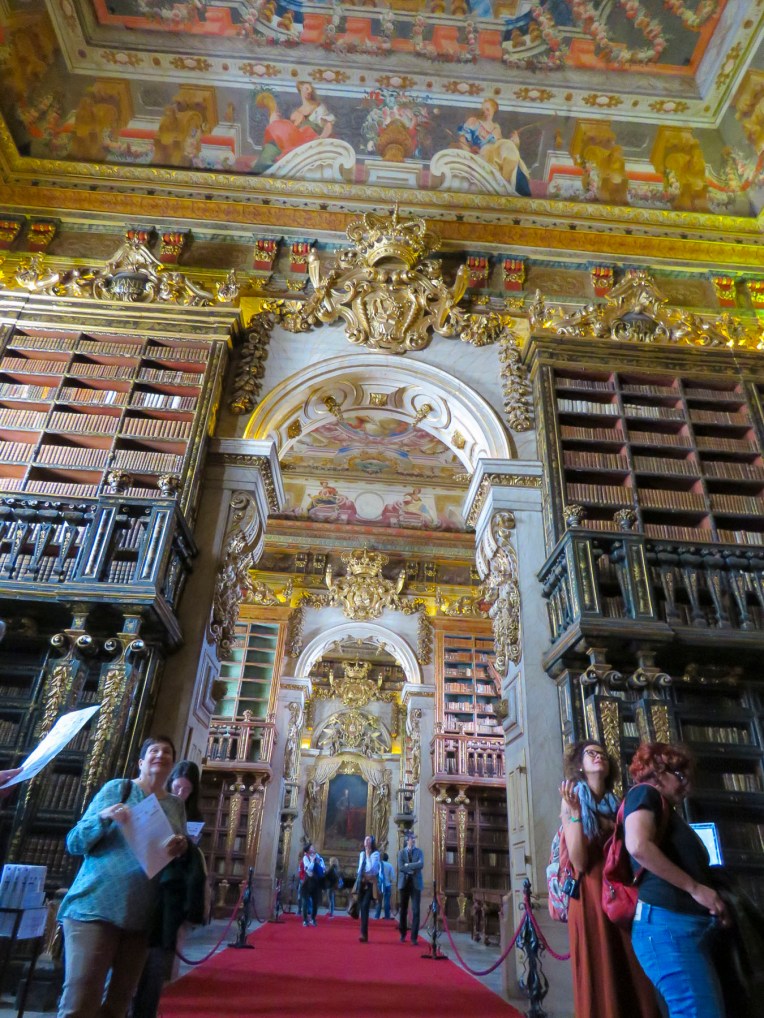
 Coimbra is a city for walkers. Ancient lanes crisscross the historic district, weaving their way steeply up the hillside until you eventually reach the University of Coimbra, which crowns this charming city. But the journey there is so rewarding, with arched alleys, cathedrals and numerous shops and restaurants all vying for exploration.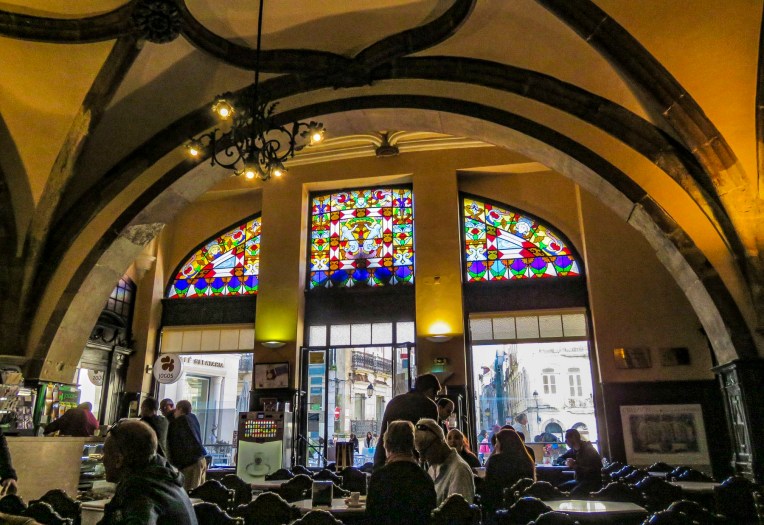


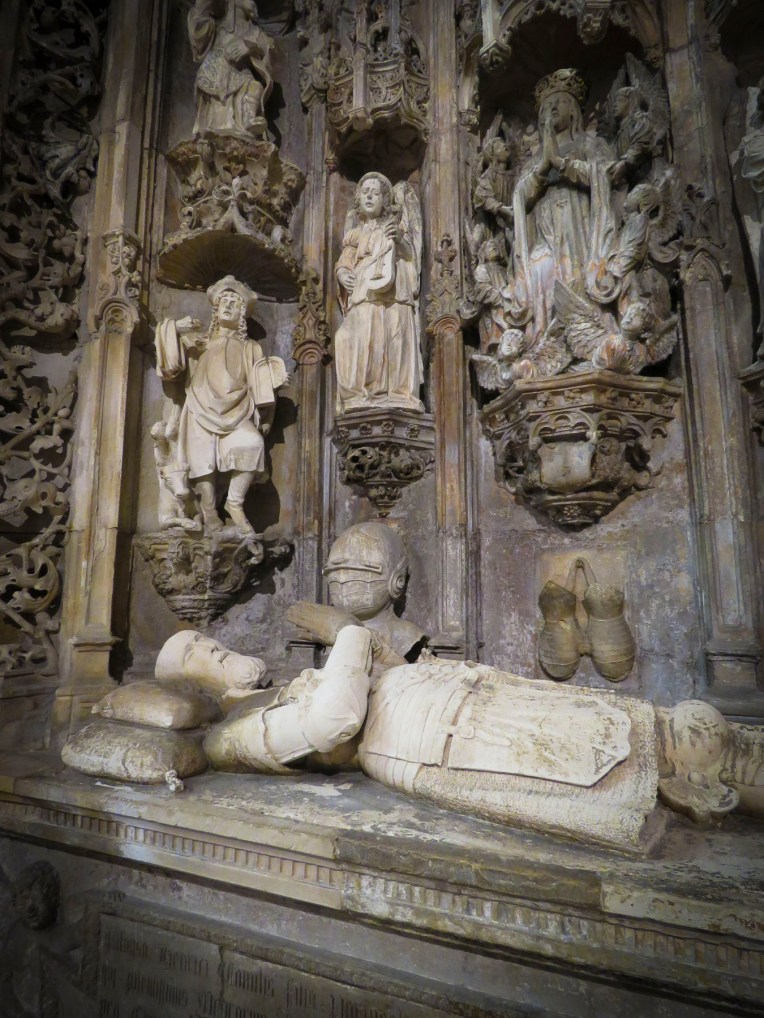 Deceptively, many of the marble columns and surrounds of the altar are actually wood, painted to imitate marble. The cathedral aged poorly in its early centuries as the result of repeated Spring flooding from the Mondego River. In the 1700s Azulejos tiles were added to the walls to cover severely water-damaged early fresco paintings. A spectacular and huge four thousand pipe organ hangs precariously from the wall of the sanctuary. Apparently, it’s so difficult to play only three people know how. The monastery is huge with many interesting rooms and intriguing details to explore.




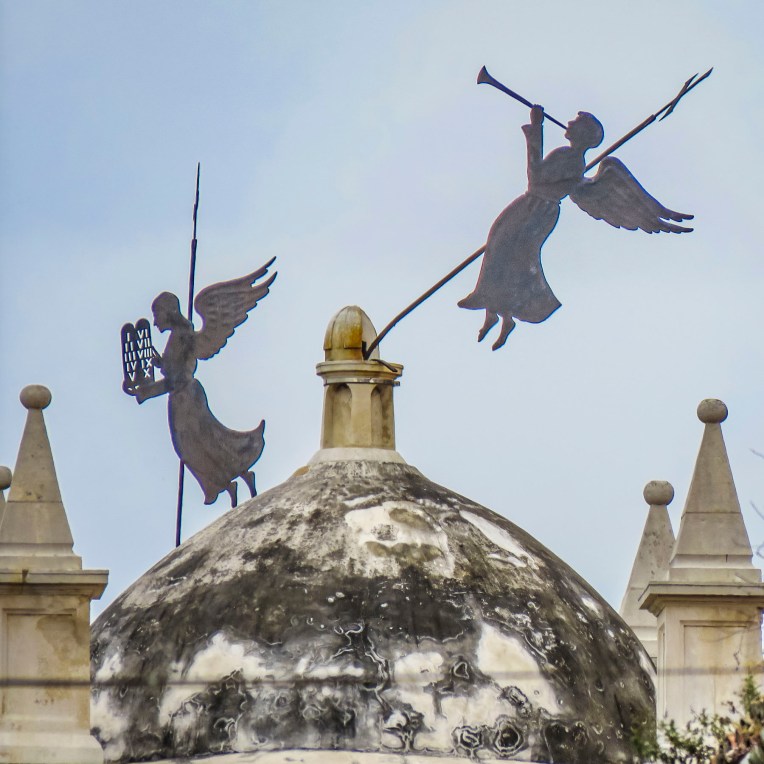


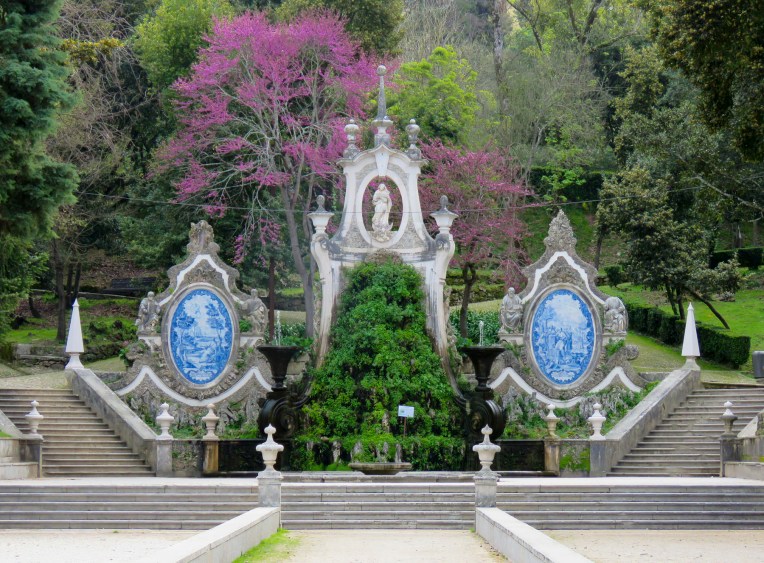 Azulejo tile murals edged with religious statues framed the sculpted fountain. At the top of the fountain water gurgled from under a statue of the Virgin Mary, symbolically giving life to the waterfall. Symmetrical stairways on either side led deeper into the heavily shaded park.


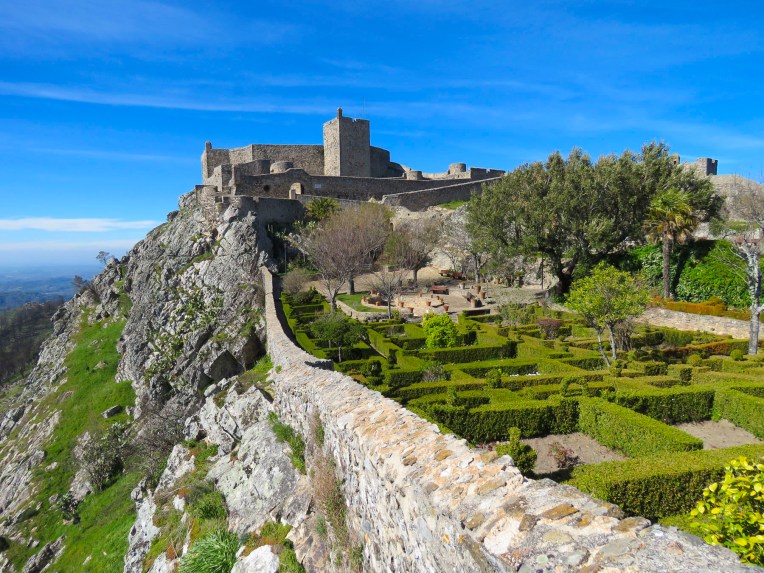


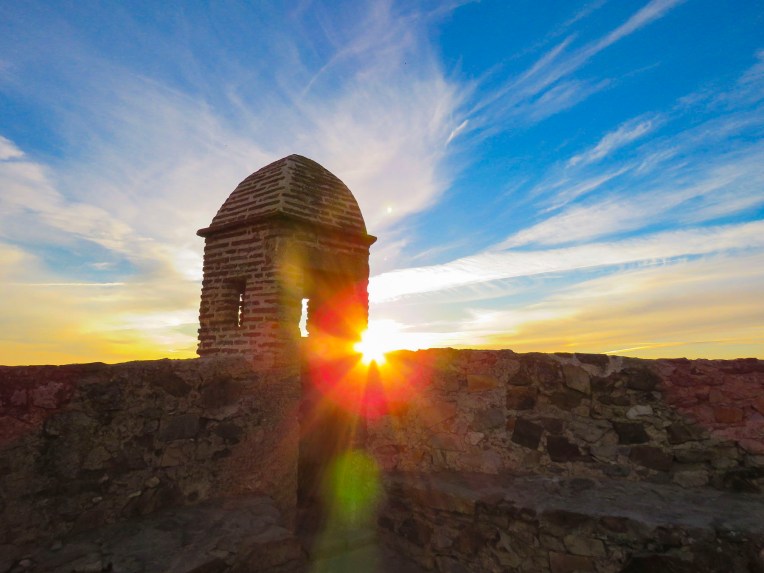 The cold wind chilled us to our bones, but we found warmth by the fireplace in the tavern across from our inn. After dinner, as we stood on the ramparts behind our hotel, the darkness offered us a view of the stunning star-filled sky above and the twinkle of village lights far below. With a stiff breeze in our faces, we felt like we were flying. The glorious sunrise the next morning cast a beautiful light on the panoramic view of the flat plains that run all the way into Spain, while the rugged mountains and valleys to the west stayed covered in an early morning mist.


 Walking along the river towards Cais do Sodré by the Ministério da Defesa Nacional – Marinha building you can see remnants of a stone wharf in the reflecting pool; landlocked now, it’s all that remains of an extensive old navy quay. There are many places to dine in this area, but we preferred to continue onto Av. 24 de Julho to check out the street art in the area and then stop at The Time Out Market.


 One of the nicest Sundays we enjoyed was spent at the


![IMG_3140[31166]](https://i0.wp.com/2suitcasesfor2years.com/wp-content/uploads/2019/06/img_314031166.jpg?w=484&h=363&ssl=1 "IMG_3140[31166]")


![IMG_3170[31169]](https://i0.wp.com/2suitcasesfor2years.com/wp-content/uploads/2019/06/img_317031169.jpg?w=272&h=363&ssl=1 "IMG_3170[31169]")


 As if guarding the plaza,


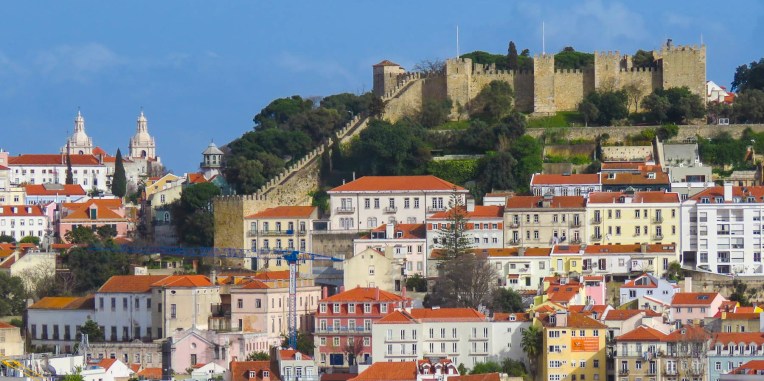 Shady Miradouro de São Pedro de Alcântara overlooks this colorful chaos and has splendid views of Lisbon below. From the miradouro it’s a gentle uphill walk into Bairro Alto. Fortunately, there’s no lack of places to rejuvenate yourself along the way. For lunch we found


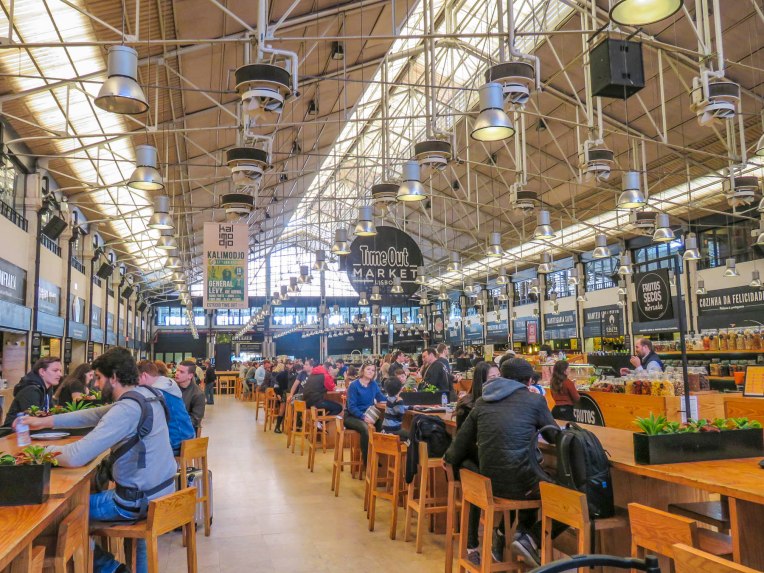 Set in a historic 1890s building in Cais do Sodré, this is a huge, lively food court with numerous restaurant choices that is very popular with Lisboans. Whatever you are craving at the time, you’ll find something satisfying here. Next door, during the week, Mercado da Ribeira operates a central market with fish, meat and produce vendors offering Portugal’s finest products. Brightly painted Pink Street, popular for its club scene, is nearby.


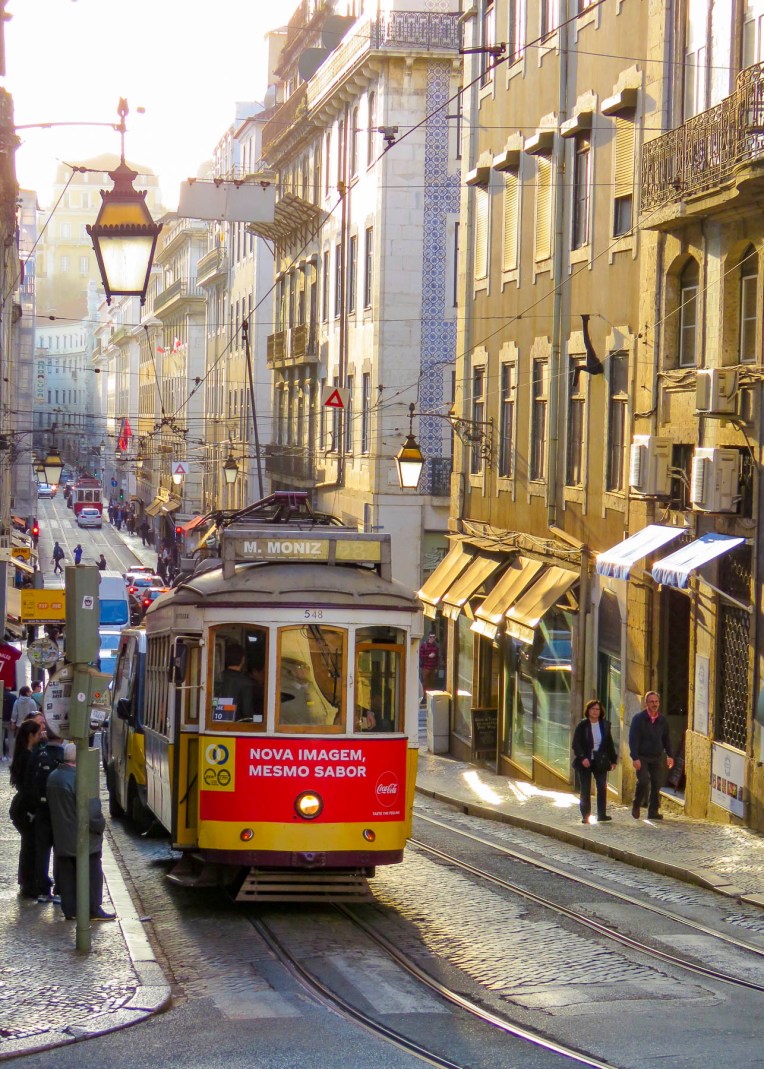
 Heading west, tram 28 weaves through a very narrow section similar to parts of its route in Alfama, before reaching the open area around Assembleia da República. The parliament of Portugal is headquartered in a neoclassical building that was first used as a convent in the sixteenth century. Formal gardens behind the parliament building, hidden by an imposing wall, can be seen from tram 28 or if you stand on your tip-toes and peer over. Never immune from criticism, the politicians must endure a large satirical wall mural, painted on a nearby building, as they head to work each day.


 2 Suitcases for 2 years