
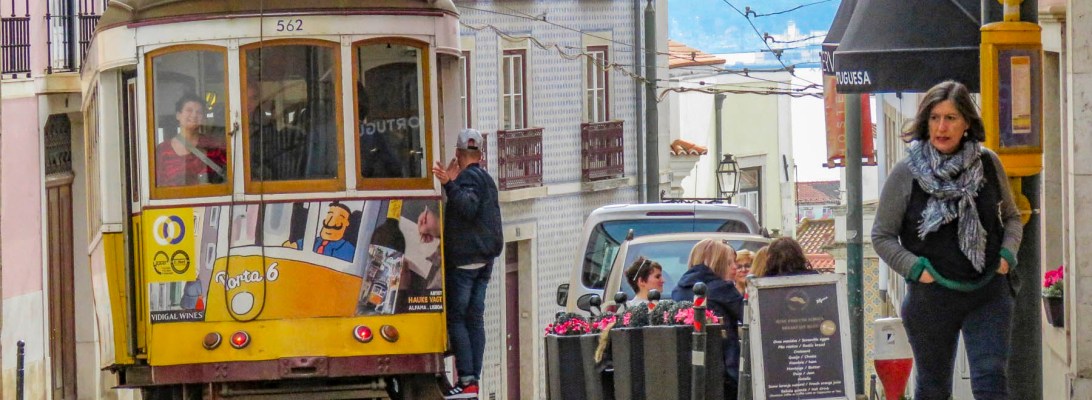
We relied heavily on the Lisbon tram system, especially tram 28 which ran very close to our Airbnb, to navigate our way around this beautiful and very hilly city. Unlike San Francisco, the trams in Lisbon are affordable if you purchase a Viva Viagem transit card from an agent at a Metro station. With a Viva Viagem card your fare on the trams and funiculars is 1.40€, but without it the price rockets up to 3.00€ per ride. As you exit the arrivals terminal at Lisbon airport look to the right and you will see the sign for the Metro. Just down the escalator there is a ticket office where you can purchase your transit card and be set for your time in Lisbon. All the tram lines in Lisbon travel through wonderful areas, but tram 28 has become famous because it is the longest line in the city and runs near many of the tourist highlights in romantic Alfama, namely Castelo de Sao Jorge and the miradouros (overlooks) Portas do Sol and Santa Luzia. Before heading back into the city center, it climbs into the Chiado district and ends in Campo de Ourique by the historic Dos Prazeres Cemetery. Nearly every stop along this splendid route offers a worthy point of interest. Being this popular, it is often difficult to get a seat on tram 28, especially if you choose to board it where it begins at plaza Martim Moniz in the center of Lisbon. After 10AM the line of folks waiting here can be daunting and you might have to wait for several trams to fill and go before you have a chance to board. But if you must stand, head for the back of the car – the rear of the tram offers the best views. If you can, we suggest boarding at one of the miradouros where usually many people exit the tram. Tram 12 has a stop behind tram 28’s starting point on Martm Moniz. It will also take you to the miradouros by a slightly different route. There is not a “correct way” to explore the diverse things along the tram 28 route. Each stop offers multiple destinations to explore. Just pick out what you are interested in and have fun. Walk a little then café, then repeat as many times as necessary! That’s how we do it.


Leaving Martim Moniz, tram 28 travels up the steep, narrow and serpentine streets behind Castelo de Sao Jorge to the Graça neighborhood, often delayed by delivery trucks and double-parked cars. Normally the tram will wait patiently as this is an everyday occurrence, but occasionally the tram driver will sound his horn until the offender moves their vehicle, if he feels they are taking to long. Reaching the top of the hill, keep an eye out for a large wall mural, Revolutionary Woman, created by the American artist Shepard Fairey, who is most renowned for his famous Barack Obama poster.


A little further along, Plaza Graça, with its everyday shops, bakeries and small outdoor cafes, offers a chance to explore a non-touristy spot for a very local experience. From here it is a short, level walk to Jardim da Graça, Miradouro Sophia de Mello Breyner Andresen and Igreja e Convento da Graça. The convent has an interesting collection of azulejos tiles depicting 16th, 17th and 18th century missionary journeys across Portugal’s colonies that ended tragically with the martyrdom of the priests involved. This area is a wonderful spot that is slightly off the beaten track. The miradouro offers a great view across Lisbon that includes Castelo de Sao Jorge and the Ponte 25 de Abril bridge. The panorama is reminiscent of San Francisco. The small café here fills toward sunset.


The next stop downhill brings you to Igreja de São Vicente de Fora and its convent. Started in 1147, just after the liberation of Lisbon from the Moors, the cathedral was finished in 1629. It is one of the most important church complexes in Portugal. The attached museum displays a collection of religious artifacts, paintings, sculptures and Baroque azulejo tiles. If you plan a visit for a Saturday or Tuesday, just uphill through the Grand Arch connected to the convent you will find Lisbon’s best flea market, Feira da Ladra or as it was long known “the Thieves Market” spread out around Campo de Santa Clara. Our neighbor in Alfama described it as a place where you used to be able to “buy back the things that were stolen out of your car during the week.” Today the market is very gentrified with vendors of antiques, books, CDs, toys, ceramics, clothing and handmade artisanal crafts sharing the street. On Saturdays during the summer there is also a farmer’s market in Park Jardim Botto Machado that features organically grown food. And of course, there are cafes around the fringes of the market. Nearby the Pantheon is visible through the shade trees and further along as you work your way towards the Tagus River, the Museu Militar de Lisboa displays a surprisingly interesting collection of military memorabilia in a wonderful mansion.


Back aboard the tram, it now continues downhill into Alfama along the narrowest part of the route, for a short distance. The street is so narrow here you can reach out and touch the walls of the buildings as you pass through. And if you are on the sidewalk at the time, suck it in and pin yourself against the side of the buildings. As soon as the street widens out again you will be by Café Do Eléctrico run by a nice woman named Sandra. This is very much a local’s place, where folks get their morning espresso before hopping on the tram and heading to work. The coffee, food and prices here are all good, and compensate for its lack of décor. Situated a couple of steps below street level, it’s a great place to experience the sensation that you are about to be run over by an approaching tram as it fills the doorway before suddenly turning sharply.


From this stop you can wander downhill through the maze of crazy alleys that make up Alfama. Spared the devastation from the 1755 earthquake and tsunami that destroyed the rest of Lisbon, Alfama hasn’t changed much since the times of the Moors. Head to Santo Estêvão Belvedere church, and its lesser known miradouro that you will have all to yourself; it’s a nice spot for a picnic. From here you’ll have a choice of stairways or alleys to follow deeper into the charm of Alfama. Folks still hang laundry from their windows and shout down to their neighbors below. And elderly women sell shots of Ginja, a cherry liqueur, from their doorsteps as a way to supplement their pensions. There are numerous small restaurants spread about that fill the air with the wonderful aroma of Portuguese cooking.


Around the corner from Café Do Eléctrico, stairs will lead you up to Igreja do Menino Deus, the Church of the Child God, which was built in 1711 by king Dom João V to commemorate the birth of a male heir. In striking contrast to Lisbon’s large cathedrals, this is a very small intimate church. It’s only open on Tuesdays. From the church you can also walk up to Miradouro Sophia de Mello Breyner Andresen or through a mural-covered alley to Castelo de Sao Jorge.


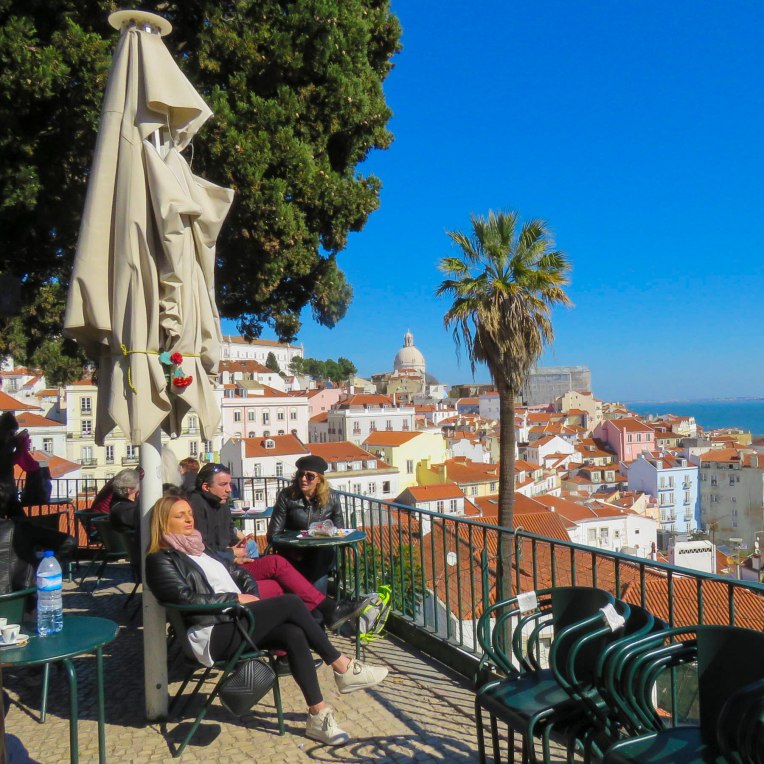
After Café Do Eléctrico, tram 28 turns sharply and climbs before leveling off and making two stops at miradouros Portas Do Sol and Santa Luzia. You can also walk to Castelo de Sao Jorge from both stops. Many people get off the tram at these popular miradouros, so it’s a good place to board tram 28 to continue your journey across Lisbon.


While both miradouros have awesome views of Alfama and the Tagus River, only Portas Do Sol offers outside cafes. Just sitting here sipping wine and listening to the street musicians is a wonderful way to spend an afternoon, soaking up the experience of Lisbon. What’s really nice is that the cafes never pressure you to vacate your table; it’s yours for however long you want to sit. Amazingly there is no price gouging either, as there easily could be at such a popular location. This seems to be true all over Lisbon. Miradouro Santa Luzia features azulejo tile murals depicting the liberation of Lisbon and a lovely vine covered arbor with azulejo tiled benches. When you are done soaking up the sun, follow the alley next to the huge stone wall built during the time of the Visigoths, in the sixth century, down to the plaza around Igreja de São Miguel for a different bit of Alfama.


Across the tram tracks from the miradorouros is Museu da Fundação Ricardo Espírito Santo e Silva, a decorative arts museum. The museum showcases what was once the private collection of Ricardo Espirito Santo, unique pieces created in Portugal and its colonies, in an elegant eighteenth-century nobleman’s home.


Or psyche yourself up for the hike to Castelo de Sao Jorge, a medieval Moorish castle that crowns the highest point in Lisbon and offers sweeping 360-degree panoramic views from various points along its fortress walls. Besides scrambling along the ramparts and posing with the flock of peacocks that roams freely, there is a small museum that displays archeological items found during various excavations at the site. The miradouro at the castle is stunning and unfortunately is only accessible with a 10€ entrance ticket to the whole site. Viewing the setting sun from here is enchanting so time your visit accordingly. There is a nice restaurant and a wine kiosk to help set the mood as you while away the afternoon. Walking back to the tram line, you’ll pass ruins of a Roman amphitheater at Museu de Lisboa – Teatro Romano that you can visit.


A gentle, downhill walk from the miradouros will bring you to Sé de Lisboa, the Catherdral of Lisbon. The oldest church in the city, construction was started on the foundations of a mosque in 1147. Surviving earthquake damage over the centuries, it features a mixture of Romanesque and Gothic architectural styles. Next to the choir loft the Treasury museum displays a wealth of religious items that includes vestments richly embroidered with gold, ornate silver objects set with jewels and relics of various saints. Two ornately carved Gothic tombs from the 1300s can be seen in the ambulatory of the church. The tomb of knight Lopo Fernandes Pacheco features an intricately carved beard, decorated sword and his dog by his feet. The other tomb, that of his wife Maria de Vilalobos, features her in a finely detailed headdress reading the Book of Hours as one would before going to sleep each evening. Excavations in the courtyard of the cloister show Roman, Visigoth and Moorish ruins. The street Cruzes da Se next to the cathedral offers a nice level route back into the heart of Alfama.
![IMG_3433[31180]](https://i0.wp.com/2suitcasesfor2years.com/wp-content/uploads/2019/04/img_343331180.jpg?w=251&h=334&ssl=1 "IMG_3433[31180]")


Continuing downhill you’ll come to Igreja da Madalena which was started in 1164 and rebuilt several times over the centuries due to fires and natural disasters. Diagonally across from the church is Queijaria Nacional, a gourmet cheese shop that features only Portuguese products. If you are a cheese connoisseur this store is a must, and you’ll find it’s difficult to pull yourself away from the counter to continue your journey.

![IMG_3463[31065]](https://i0.wp.com/2suitcasesfor2years.com/wp-content/uploads/2019/04/img_346331065.jpg?w=432&h=324&ssl=1 "IMG_3463[31065]")
The next two stops bring us back to the city center near Praça do Comércio and the waterfront. As you walk there be sure to check out the intriguing, decorative detailing on some of the buildings.


Here you can catch tram 15, usually a modern tram, to Belem to view the monuments along the river, or you can walk over to Elevador de Santa Justa, built in 1902, for a view of central Lisbon featuring Praça Dom Pedro IV with its wavy tile pattern and Castelo de Sao Jorge guarding the city.


Leaving the elevator from the viewing platform, you can walk across the ramp into the Chiado district.
We’ll continue on tram 28 through Chiado to the end of the line in Part Two.
Till next time,
Craig & Donna


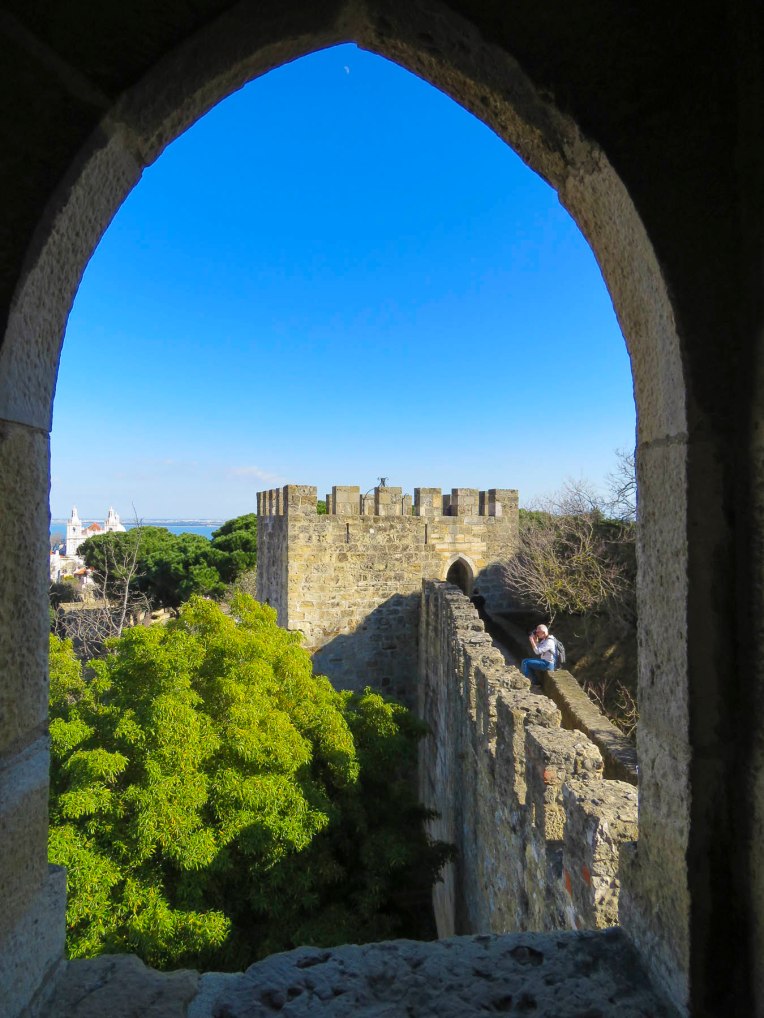 Archeological excavations next to the Castelo de Sao Jorge have revealed evidence of a Phoenician settlement that dated to 1200 BC, a Roman amphitheater, and walls built by the Visigoths before the Moors arrived. Today the rumbling sound of wheeled suitcases on the cobble stone alleys echoes, almost continuously, off these walls weathered by time. Tourists make their way to newly renovated Airbnb’s, as we did, much to the concern of older residents of Alfama who worry about being gentrified out of their homes.


 Like our neighbors, we hung our laundry from our windows to dry. Most evenings the melancholic melodies of traditional Fado music drifted softly down Alfama’s alleys from several restaurants nearby.
![IMG_3463[31065]](https://2suitcasesfor2years.com/wp-content/uploads/2019/04/img_346331065.jpg?w=764)


![IMG_3666[31053]](https://i0.wp.com/2suitcasesfor2years.com/wp-content/uploads/2019/04/img_366631053.jpg?w=156&h=209&ssl=1 "IMG_3666[31053]")
![IMG_3282[31171]](https://i0.wp.com/2suitcasesfor2years.com/wp-content/uploads/2019/04/img_328231171.jpg?w=278&h=209&ssl=1 "IMG_3282[31171]")
![IMG_3140[31166]](https://i0.wp.com/2suitcasesfor2years.com/wp-content/uploads/2019/04/img_314031166.jpg?w=484&h=363&ssl=1 "IMG_3140[31166]")
![IMG_3286[31172]](https://i0.wp.com/2suitcasesfor2years.com/wp-content/uploads/2019/04/img_328631172.jpg?w=272&h=363&ssl=1 "IMG_3286[31172]")




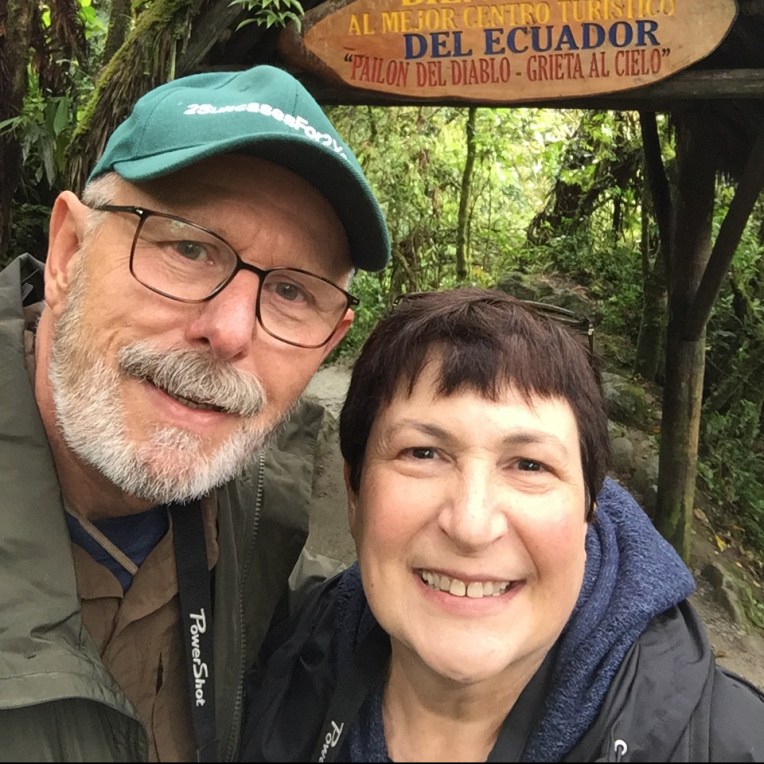 The good news is we haven’t killed each other, though there have been times that I’ve dreamt a pillow was hovering over my head. Just kidding. We have gone from the two of us working six days a week while living in an eight-room house, to being together 24/7 with only a suitcase each. Boy did we downsize! It was challenging: what not to bring, considering all the seasonal changes we have encountered. Don’t laugh, but I have thermals, wool hats and gloves packed, just on the off chance we get snowed in on a mountain pass in the French Alps, this July. Yes, there’s also a flask of medicinal whisky packed in the bags for emergencies. And to my wife’s amusement, a cheap plastic fly swatter. Tragically the backup swatter was left behind in Antigua. In Lisbon I finally caved in and bought a pair of slippers because the floors of the stone buildings just don’t retain any heat in the winter. The comfort of a pair of slippers in the evening, after a long day of walking, can’t be underestimated.
 It’s been a huge but surprisingly easy transition for us. 253 days ago (I thought I was writing this at around day 200, it’s easy to lose track of time on the road) we slammed the door shut on our storage pod, locked it, and popped open a bottle of champagne to celebrate our impending journey. We haven’t looked back. Ecuador, Guatemala, Cuba and now Portugal; I can’t imagine undertaking this adventure with anyone else.


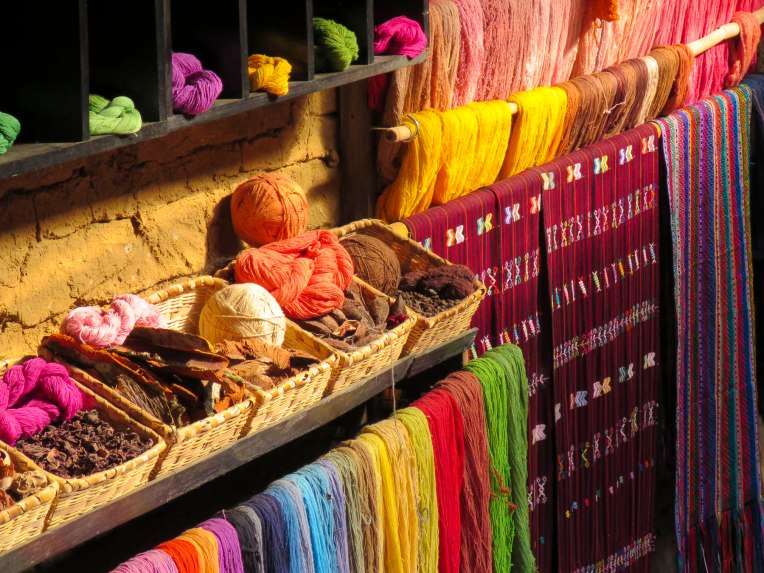 This visit also gave us an opportunity to jettison the wonderful textiles and ceramics we had purchased along the way for a home we don’t have yet. Imagine this scene from our last stop in San Pedro – the backseat of a tuk-tuk overflowing with Donna and all our suitcases, while I’m sharing the driver’s seat with the driver, one cheek on, one cheek off and a foot dangling outside the cab as we speedily snaked through the steep narrow alleys of the village.


![IMG_2836[12654]](https://i0.wp.com/2suitcasesfor2years.com/wp-content/uploads/2018/11/img_283612654.jpg?w=279&h=209&ssl=1 "IMG_2836[12654]")
![IMG_2841[12658]](https://i0.wp.com/2suitcasesfor2years.com/wp-content/uploads/2018/11/img_284112658.jpg?w=279&h=209&ssl=1 "IMG_2841[12658]")
![IMG_6276[12629]](https://i0.wp.com/2suitcasesfor2years.com/wp-content/uploads/2018/11/img_627612629.jpg?w=477&h=636&ssl=1 "IMG_6276[12629]")


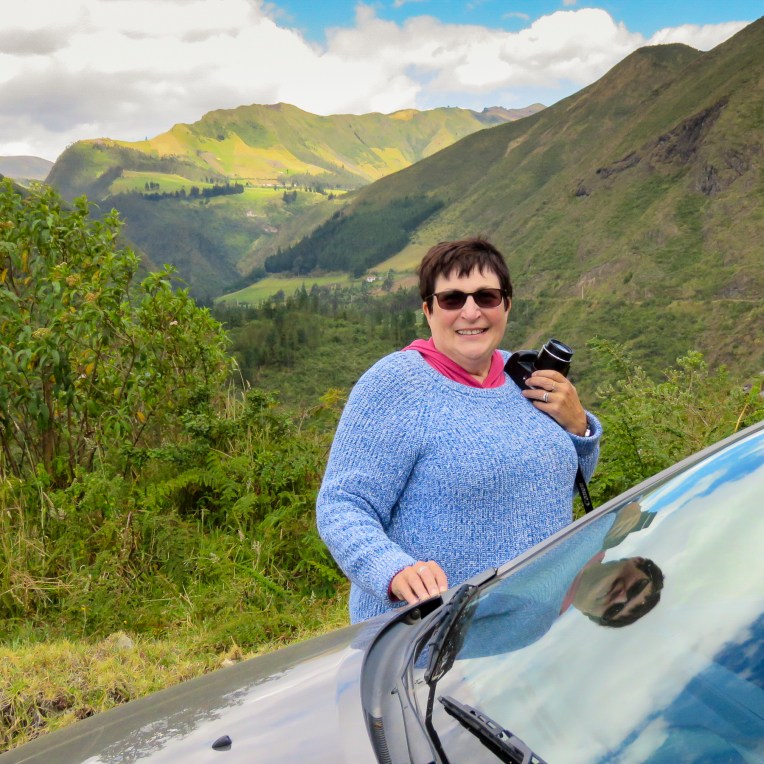

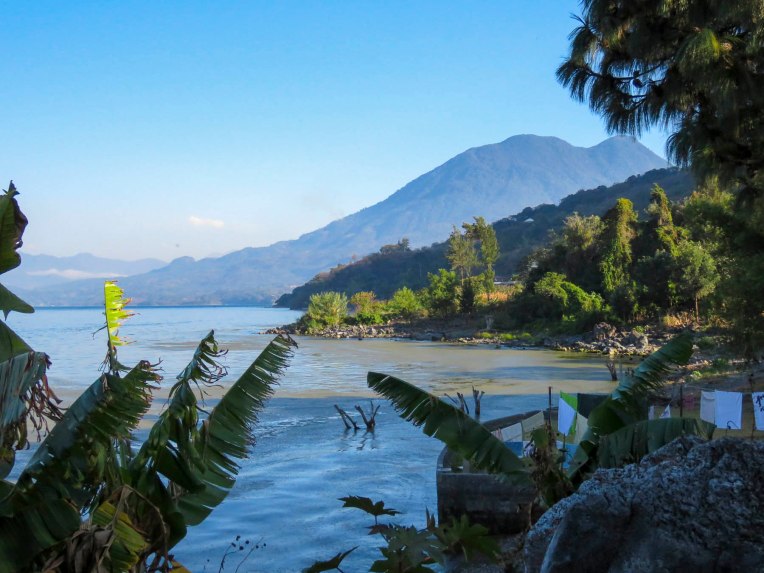


 The scenery along the drive to Lake Atitlan, along roads that continued to climb higher, was spectacular with verdant greenery and distant volcanos appearing then disappearing again with each twist of the serpentine route.
 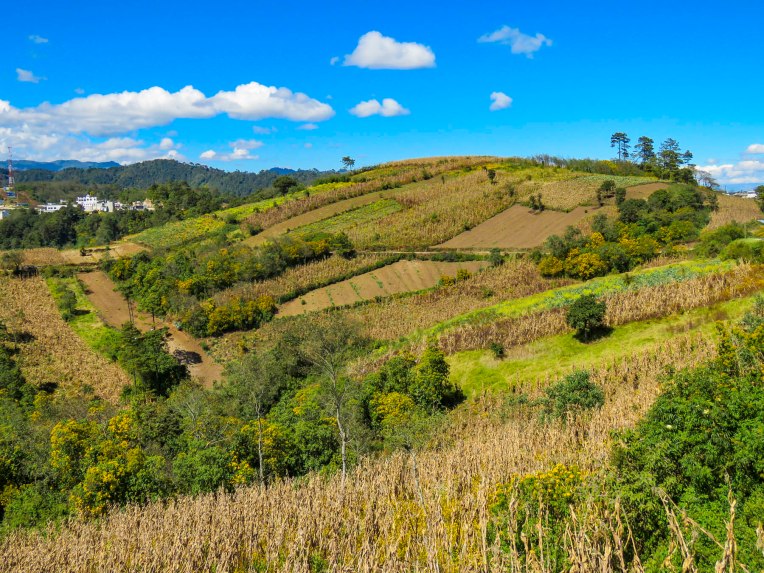 Arriving in San Pedro we thought we were on a movie set for a sequel to Mad Max or Water World. Down by the Panajachel dock dreadlocked travelers, wearing eccentric attire, filled the streets along the lakeshore. Feeling as if we had time traveled, we were relieved to find our Airbnb far out of town on a dead-end road that ran along the lake. According to Google maps the road was unnamed. Our host said “tell the tuktuk drivers you are staying on Calle Finca,” which referred to a distant and abandoned coffee farm, about an hour’s walk from the trail head at the end of the road.
 Our new home for our last week in Guatemala had a wonderful porch with great view of Lake Atitlan and tranquility. A relaxing change of pace was called for after the Christmas and New Year’s Day celebrations in Antigua. Bird calls or the soft Mayan chatter of coffee pickers, harvesting ripe beans right outside our door, were the only sounds that filled the air. Fortunately, we were much closer to town than the abandoned coffee finca and were able to walk to the daily outdoor market, along streets where we could see women washing clothing in the distant lake, and make-shift scales were set up to buy coffee beans hauled down from the slopes of Volcan San Pedro.


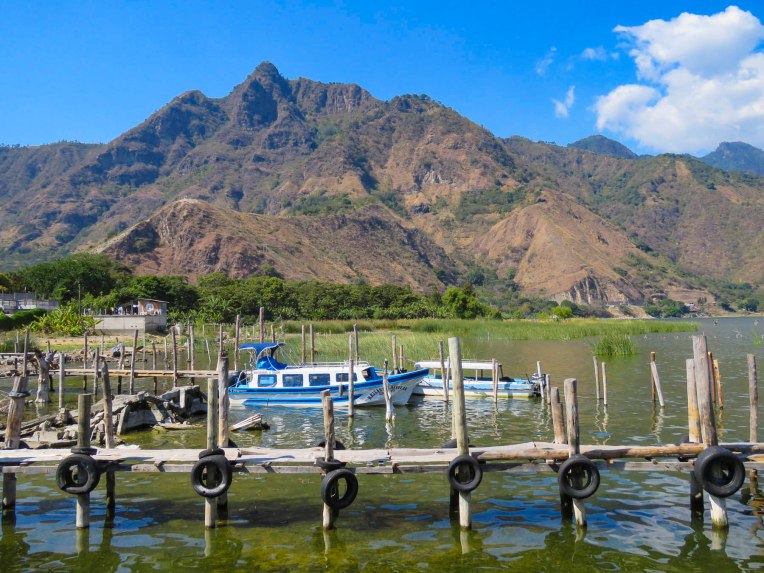 A short ferry ride took us to San Juan La Laguna, a weavers and artists village that visually celebrates its Mayan heritage with colorful street murals. The steep walk uphill from the boat dock to the center of town was lined with art galleries.


 It’s a long ferry ride to Santiago de Atitlan and even longer when the wind churns up whitecaps on the water, and the small boat we were in rocked side-to-side for the duration of the crossing. We silently said our prayers when the local folks stated to reach for the life preservers. Fortunately, we were never too far from shore and know how to swim. It is a breathtaking view coming into the boat dock at Santiago with its namesake volcano towering over the town and Volcan San Pedro just an avocado toss away, across the water.


 Enjoying the stars from our porch we were surprised when fireworks celebrating Epiphany lit up the night sky above villages across the lake, their colorful bursts reflected brilliantly on the water. With magical moments like this, still fresh in our memories, Guatemala tugged at our hearts as we packed for our next adventure.

 Paradise is such a subjective feeling and if you don’t require a turquoise blue sea and white sand beaches, Antigua, Guatemala just might fit the bill. This charming colonial city with its ever spring-like weather was perfect for our two-month stay.
  We arrived in Antigua at the end of October so that we could attend the Sumpango Giant Kite Festival held every year on November 1st, All Saints Day. That spectacularly colorful event and a religious procession that burst forward from La Merced Church on October 28th would prove to be representative of the people and life in Guatemala we experienced.


 On Mondays, Thursdays and Saturdays the market tripled in size when the outdoor portion was open, and farmers brought in truckloads of fruits and vegetables from the surrounding villages. There we experienced one of the best markets going, set in a bustling, dusty lot with Volcans Agua, Fuego and Acatenango touching the sky in the background. Most produce was sold in quantities of 5 quetzals (60 cents) so bring lots of small bills, as vendors didn’t usually have change for anything larger than 10Q. The flavor of the locally grown vegetables was amazing. Being backyard gardeners ourselves, we were duly impressed. Twenty quetzals would buy enough vegetables for a week.


 Shopping at the local supermarket, La Bodegona, was a wonderfully hectic experience. At times it could feel like you were shopping from a conga line, weaving up and down aisles, afraid to leave the line for fear of not being able to enter it again and being stuck in dairy for eternity. Numerous store employees lined the aisles offering samples of cookies, deli meats, drinks and other temptations to keep the energy level of the beast alive. It was a hoot! We had to psych ourselves up, like players before the big game, to shop there because it was so hectic and required a certain mental and physical stamina. I will confess though to dancing in the checkout line to blaring Latino Christmas music – the mood was contagious.
  On the same block D&C Cremas, a Walmart affiliate, offered a more sedate shopping experience. Both supermarkets had excellent poultry, which was more tender and tastier than back in Pennsylvania. We were also fortunate that a pork butcher opened a new shop a half block away and offered fresh meat and sausage daily. We enjoyed all the different varieties of Guatemalan sausage he made and found them to be very flavorful and lean, with almost no fat.


 The next day we a followed a serpentine mountain road, second gear all the way, up to Santo Domingo del Cerro, a beautiful sculpture and art park with museums, walking trails and a restaurant that overlooks Antigua. Plan on spending at least a half day there, because it is a beautiful setting for a restful day or afternoon. Casa Santo Domingo offers a free hourly shuttle to the park from the hotel in town.


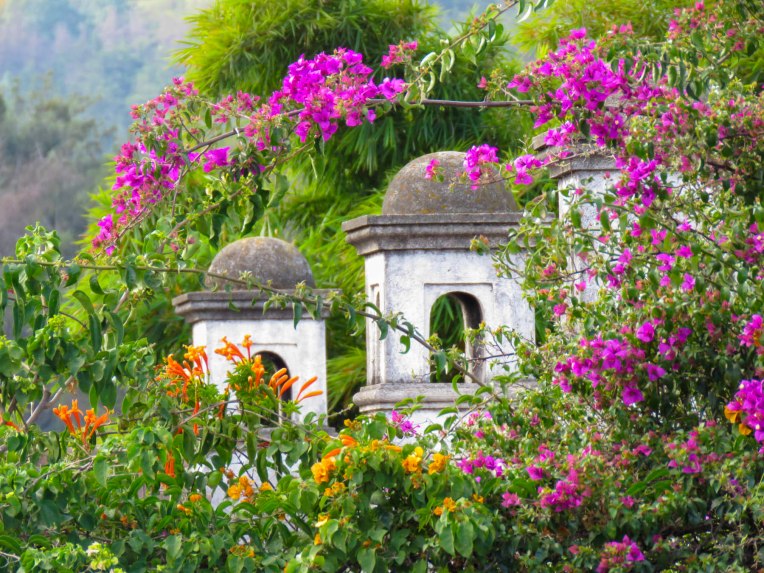 Antigua filled early with people in all their finery on New Year’s. Vendors selling textiles the day before were now offering party hats and all sort of 2019 memorabilia. Concerts were held in Plaza Mayor and under El Arco. Firework launchers were being setup amidst the crowds in the streets. Families were picnicking in the park and folks were staking their spots early to watch the fireworks later. At midnight a loud and colorful display filled the night sky. We could hear the roar of an appreciative crowd from our rooftop. We heard random explosions throughout the night to sunrise. Guatemalans love their fireworks!

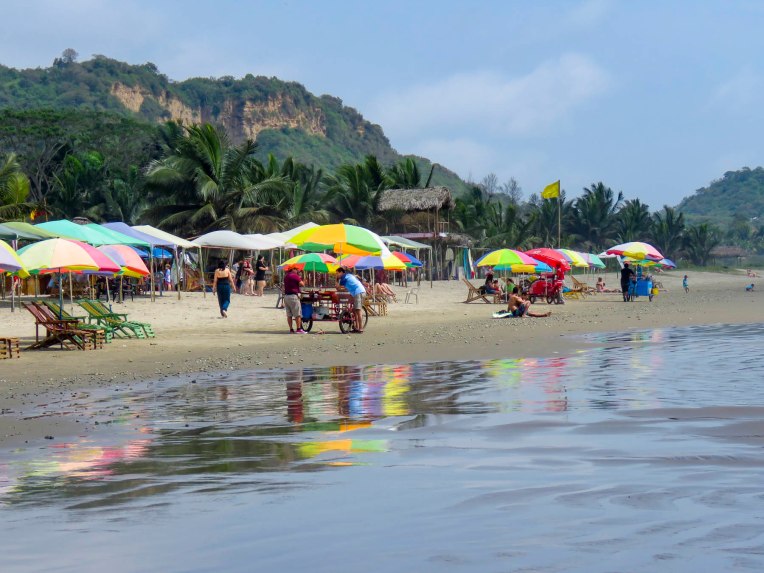 Our quest for eternal Spring-like weather has brought us to Olon, a rustic beach town on Ecuador’s southern Pacific coast with a wide, flat sandy beach that stretches for nearly five miles without a high-rise to been seen. Think San Juan del Sur in Nicaragua fifteen years ago, before it was discovered, or Costa Rica thirty years before it became a top tourist destination.
![IMG_6057[12551]](https://i0.wp.com/2suitcasesfor2years.com/wp-content/uploads/2018/11/img_605712551.jpg?w=535&h=401&ssl=1 "IMG_6057[12551]")


![IMG_7452[12683]](https://i0.wp.com/2suitcasesfor2years.com/wp-content/uploads/2018/12/img_745212683.jpg?w=240&h=192&ssl=1 "IMG_7452[12683]")


![IMG_5961[12489]](https://i0.wp.com/2suitcasesfor2years.com/wp-content/uploads/2018/11/img_596112489.jpg?w=158&h=211&ssl=1 "IMG_5961[12489]")


 Puerto Lopez hosts the largest fishing fleet on this part of the Ecuadorian coast. Lacking a protected harbor, all the fishing boats beach on the shoreline to unload their fresh catch. It is a hectic scene of never-ending activity that is reminiscent of an earlier era.
![IMG_6276[12629]](https://i0.wp.com/2suitcasesfor2years.com/wp-content/uploads/2018/11/img_627612629.jpg?w=402&h=536&ssl=1 "IMG_6276[12629]")
![IMG_2836[12654]](https://i0.wp.com/2suitcasesfor2years.com/wp-content/uploads/2018/11/img_283612654.jpg?w=354&h=266&ssl=1 "IMG_2836[12654]")
![IMG_6281[12630]](https://i0.wp.com/2suitcasesfor2years.com/wp-content/uploads/2018/12/img_628112630.jpg?w=354&h=266&ssl=1 "IMG_6281[12630]")


![IMG_5946[12490]](https://i0.wp.com/2suitcasesfor2years.com/wp-content/uploads/2018/11/img_594612490.jpg?w=187&h=249&ssl=1 "IMG_5946[12490]")

![IMG_6016[12546]](https://i0.wp.com/2suitcasesfor2years.com/wp-content/uploads/2018/12/img_601612546.jpg?w=187&h=249&ssl=1 "IMG_6016[12546]")
![IMG_6028[12552]](https://i0.wp.com/2suitcasesfor2years.com/wp-content/uploads/2018/12/img_602812552.jpg?w=187&h=249&ssl=1 "IMG_6028[12552]")


 The city does a wonderful job supporting its craftspeople who still use traditional, made by hand, methods to create exceptional pieces in jewelry, textile, ceramic, wrought-iron, tin and copper workshops located across the city. Toquilla straw weavers in the villages around Cuenca who carry unfinished sacks of Panama Hats into the city’s sombrero (hat) factories also need to be included into this group. There are also several traditional felt hat tallerias (workshops) that cater to the indigenous women who live in the rural areas around Cuenca. The fine arts scene is also well represented with galleries and artists’ studios often next to traditional crafts workshops. To get the broadest experience of this vibrant arts and crafts community a tour through Cuenca’s most interesting neighborhood, El Barranco (the cliffs), and along its busiest street Calle Larga, is a must. The colonial buildings that front Calle Larga back onto the cliff which overlooks Rio Tomebamba and the newer southern part of Cuenca. Wide stairs in several parts lead down to Paseo 3 de Noviembre, a shaded pedestrian walkway and bike path that follows the river for several miles.
 This route actually starts several blocks west of Calle Larga at Cuenca’s Museo de Arte Moderno (Museum of Modern Art) across from Parque de San Sebastian which has a large fountain and several nice places to eat. Casa Azul, which has rare sidewalk tables that face the quiet plaza, and Tienda Café are good choices. Most of the workshops won’t have business signs over their doors or street numbers, might open by ten, but will reliably close between one and three for lunch.



 We’ve been on the road for more than 100 days now; previously, our longest trip was just shy of three weeks, with carry-on luggage only. So, we felt fully prepared to tackle this challenge (insert wink here.) Needless to say, there is a learning curve, but we have the right mind set. In late October, we move north to Guatemala, followed by a cruise to Cuba. The first part of 2019 will see us in Europe, and after that, who knows? We’ve discussed heading to South Africa, then working our way north and through East Africa, trying to have as many big game safari experiences as possible. This has been a dream of mine since I unwrapped my first National Geographic magazine and was enthralled by the spectacular images of the great migration across the Serengeti. Winning this

 2 Suitcases for 2 years