Seville Part 3 – Walk a Little then Café

Parts of this ancient city with its labyrinth of cobbled lanes feel more akin to a small village with an earth toned, sun drenched patina. Vibrant traditions and a youthful vitality along with numerous historic sites scattered across the city all contribute to make Seville a walker’s delight. There’s no correct way to explore the city. How you do it depends on the amount of time you have to indulge yourself in the history and atmosphere of this beautiful city. Strolling through the city is the finest way to discover its character. Immersing ourselves into the city for six weeks, we walked the familiar cobbled lanes multiple times with many variations and sporadic detours that we hope you find interesting.  Seville never ceased to charm us. 
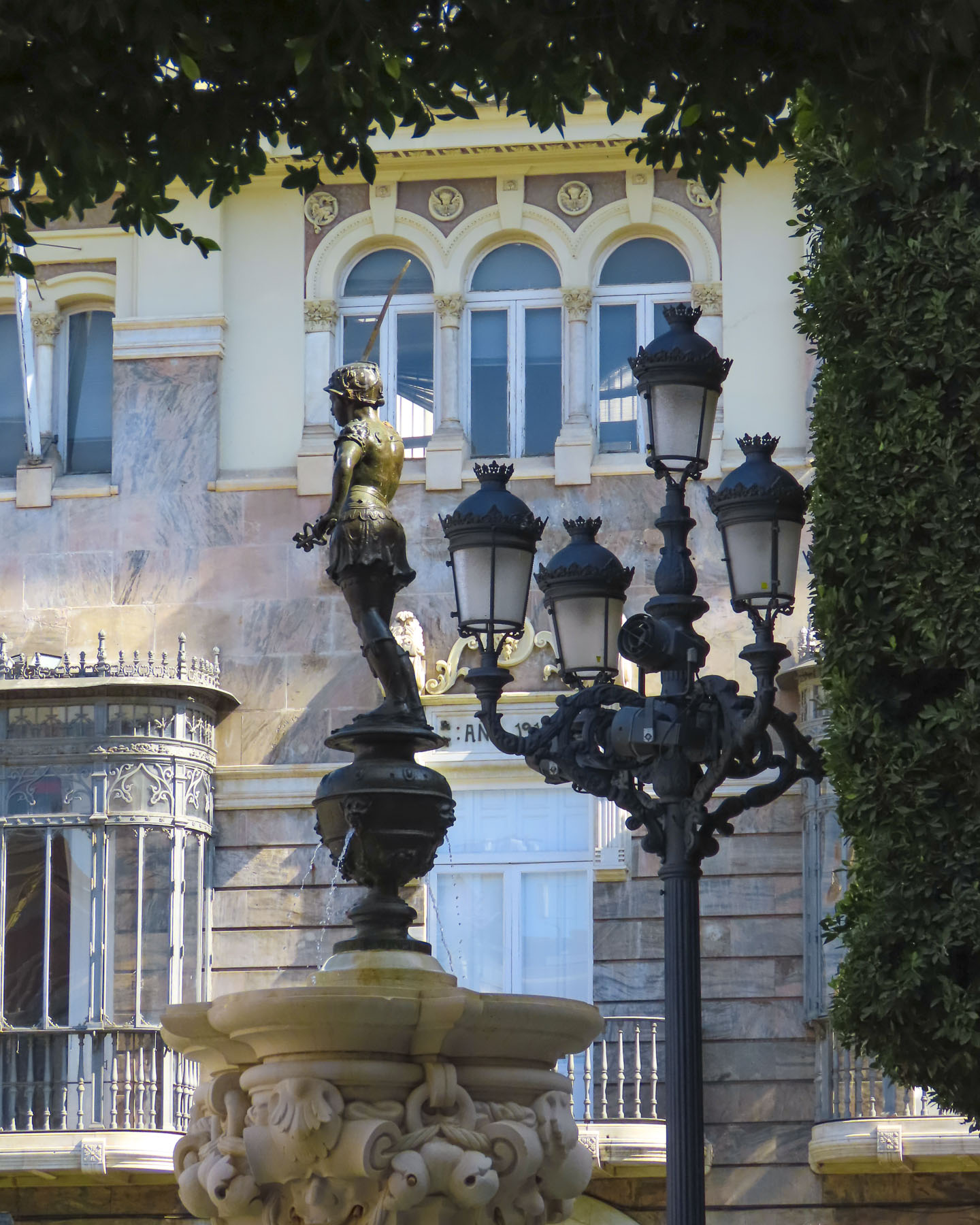
The routes we favored most webbed out from behind the Cathedral of Seville’s Patio de los Naranjos on Calle de Placentines, around the corner from the Palacio Arzobispal on Plaza Virgen de los Reyes, and wandered through the Alfalfa, Centro and La Macarena districts.
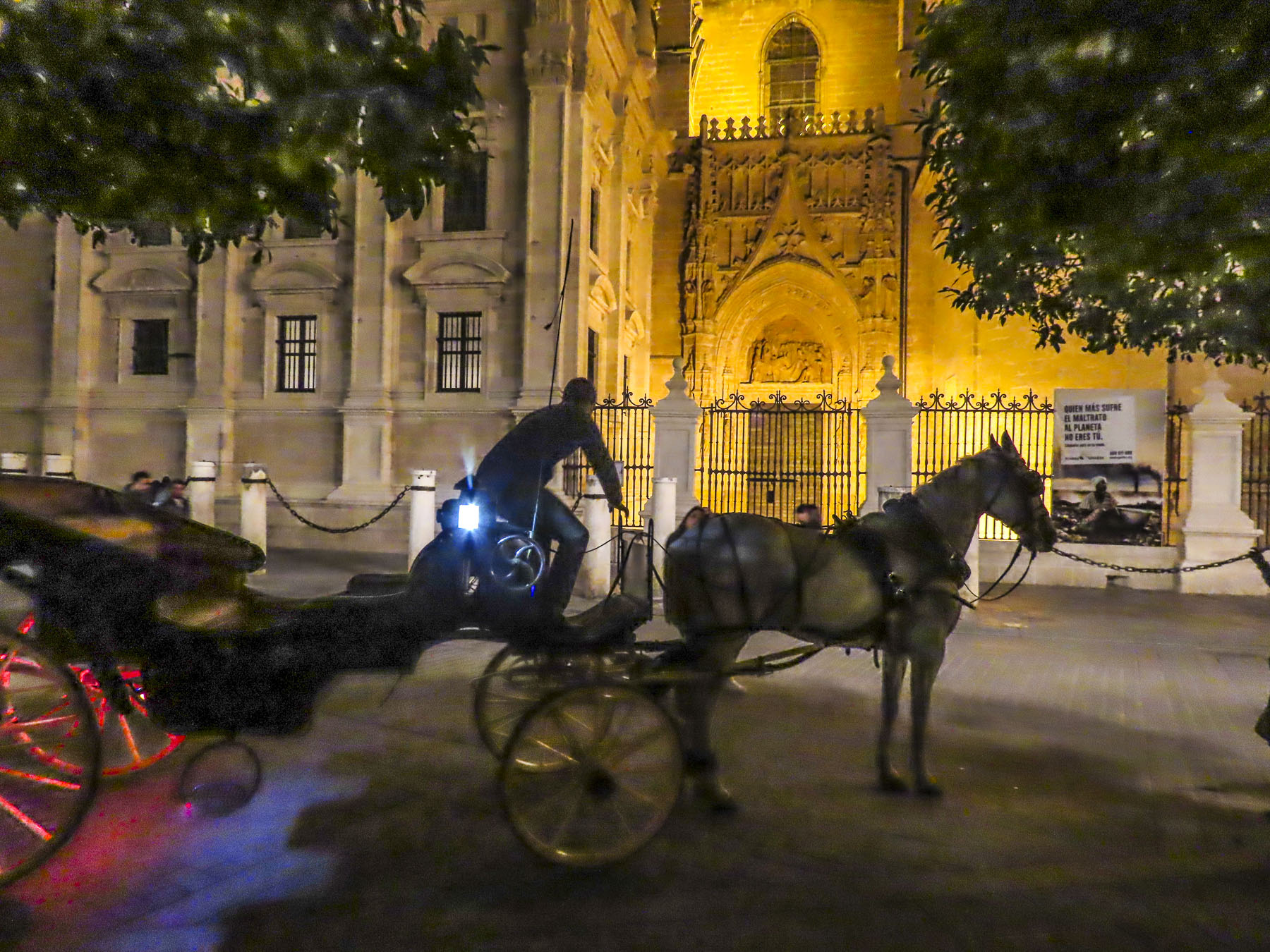
An old-world fabric store bedecked with selections of gold embroidered trim, ribbons, and tassels hanging from worn wooden cabinets enticed us inside.  Further on the display window of a religious goods store fascinated us with its selection of all things sacred. Before crossing into the Plaza Jesus de la Pasion, the savory window display at Confiteria La Despensa De Palacio stopped us dead in our tracks. Lovingly run by generations of the Santaella family, the shop has been Seville’s premiere chocolatier and pastelería for over 250 years. The pastries were sumptuous!
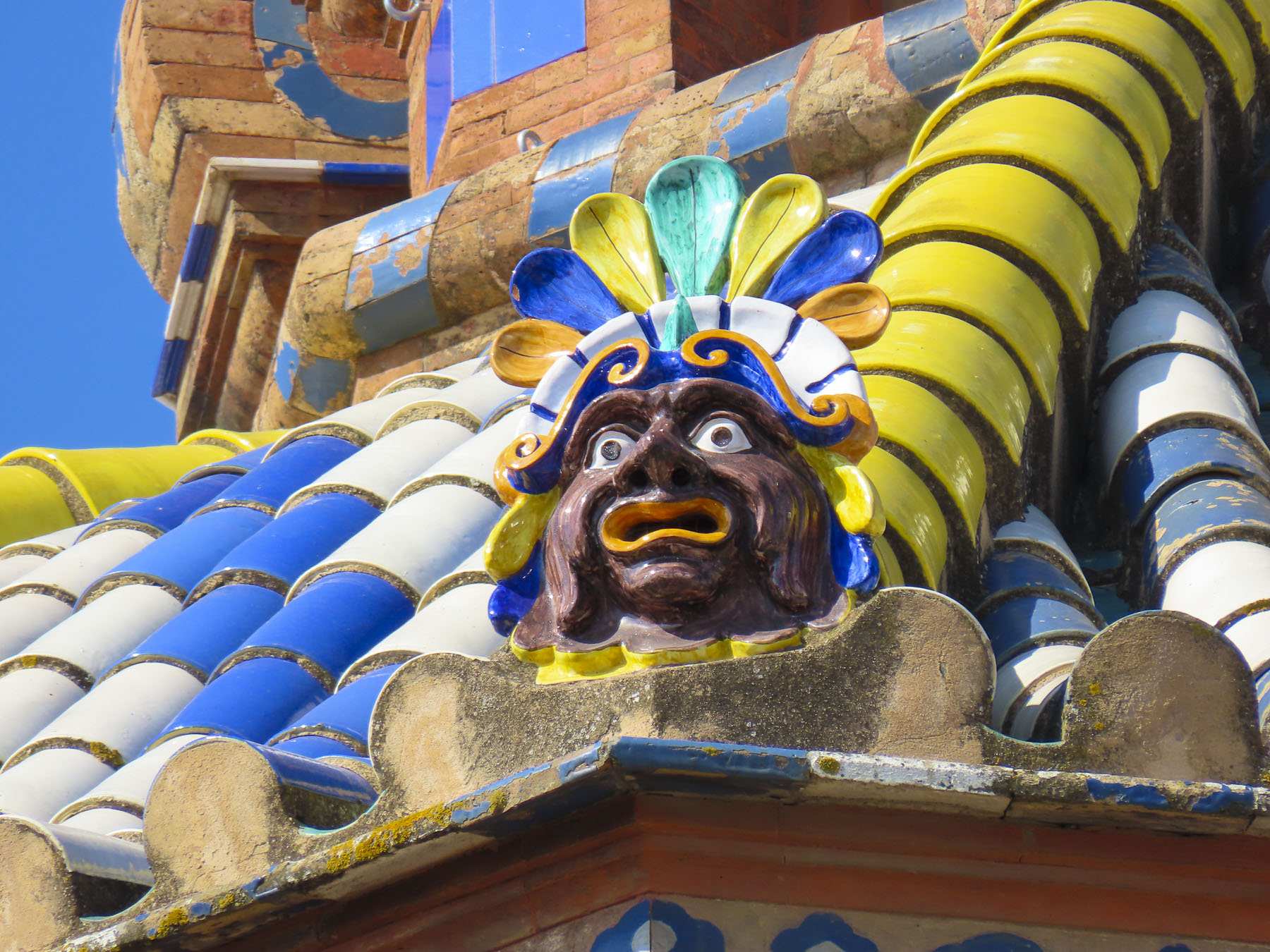
Across the street the Plaza Jesus de la Pasion widens to reveal a wonderful example of 19th century Andalusian architecture. The far end of the square features a façade of red brick framing Azulejos tiles and Moroccan influenced, pointed arched windows.  The plaza also seems to be a favored place for a protest or political rally as we came across several, over the weeks we spent there.

At this point it’s possible to head one block over to visit the Iglesia Colegial del Divino Salvador, on the plaza of the same name. This is a very popular square with many restaurants and outdoor tables along with buskers providing entertainment.

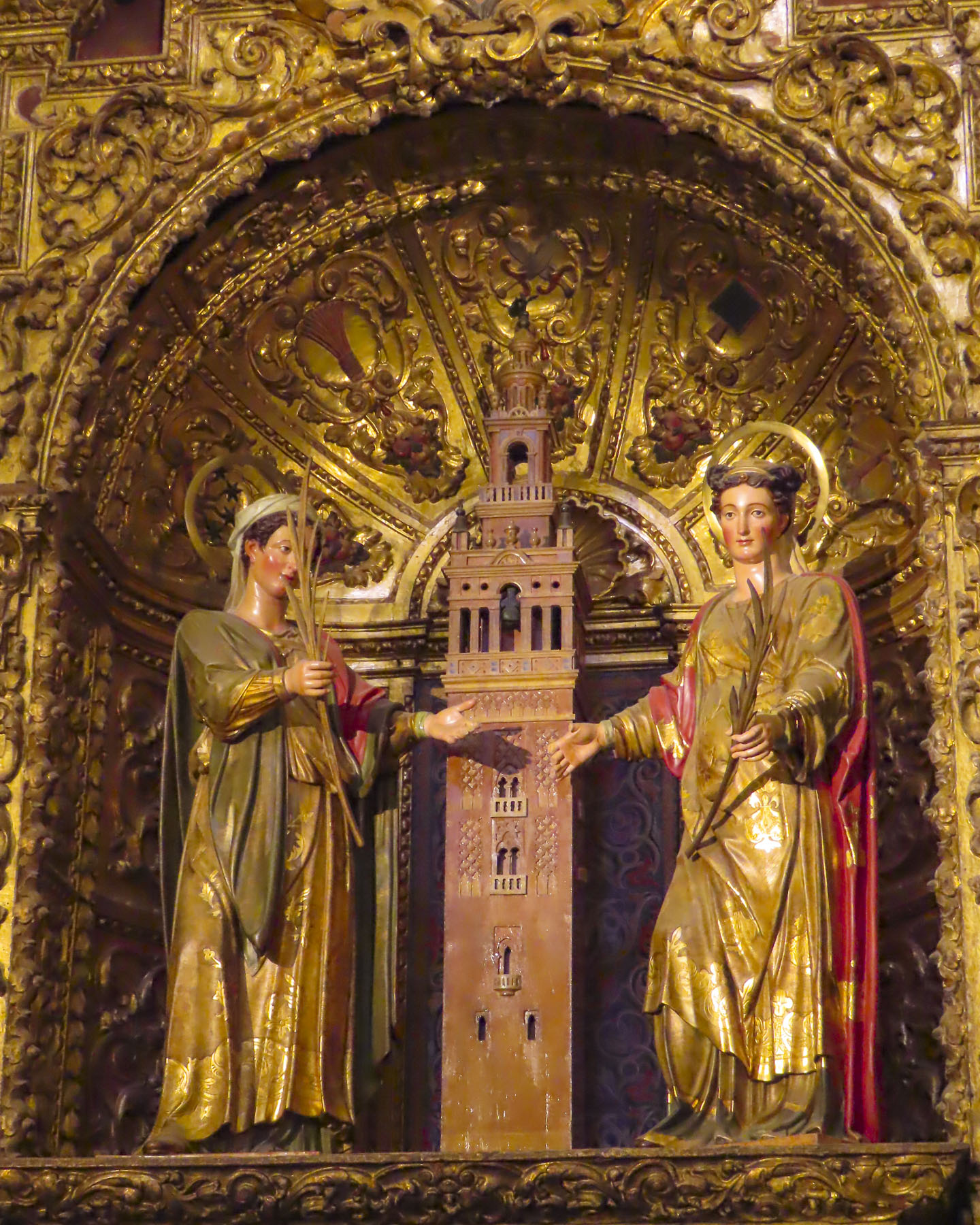
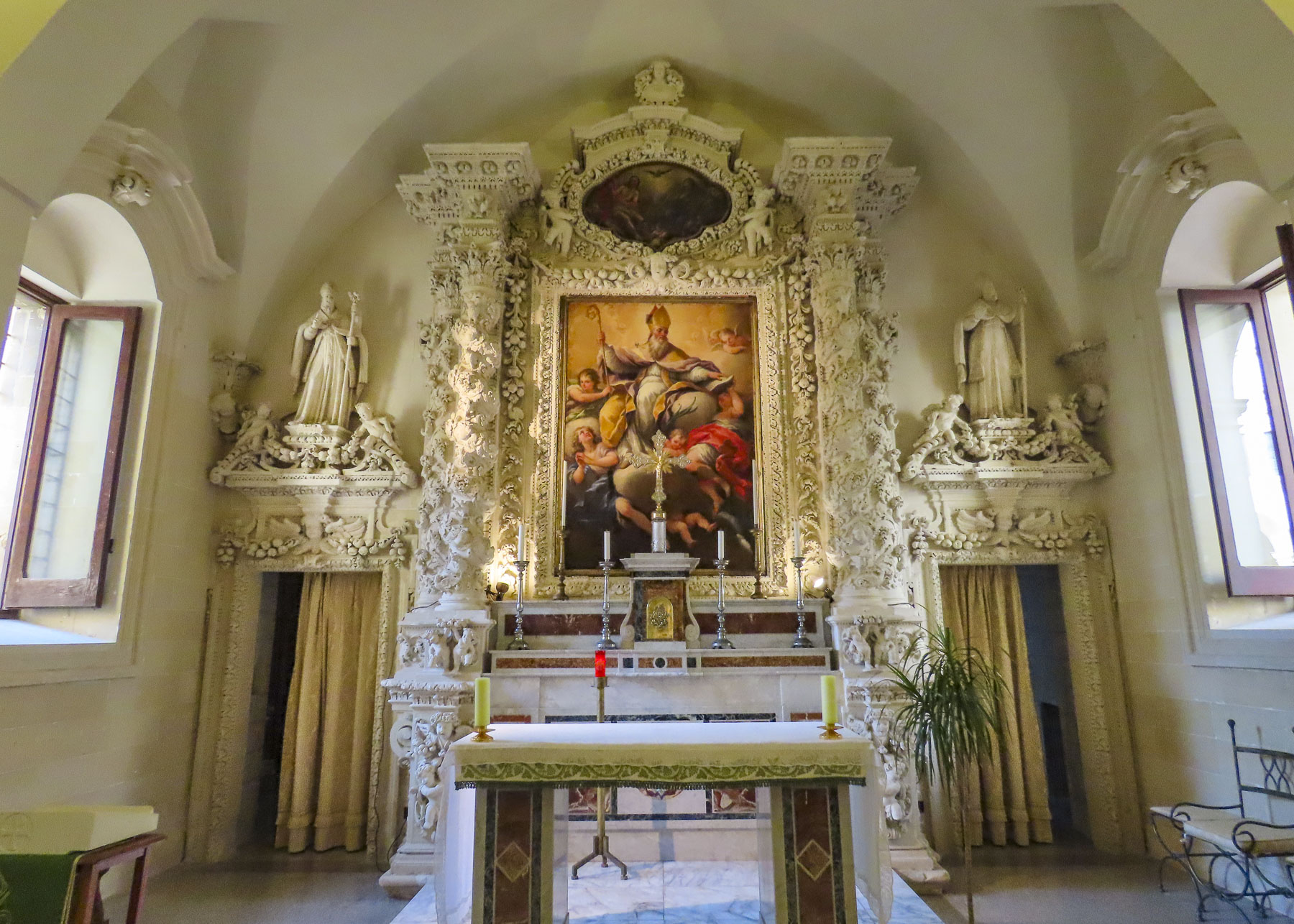
The Iglesia Colegial del Divino Salvador is the second most important church in Seville after the main cathedral and features a monumental and intricately carved 18th century Baroque altar. The beautiful piece was created by the Andulasian altarpiece architect and sculptor Cayetano de Acosta, who contributed works to numerous churches across southern Spain.

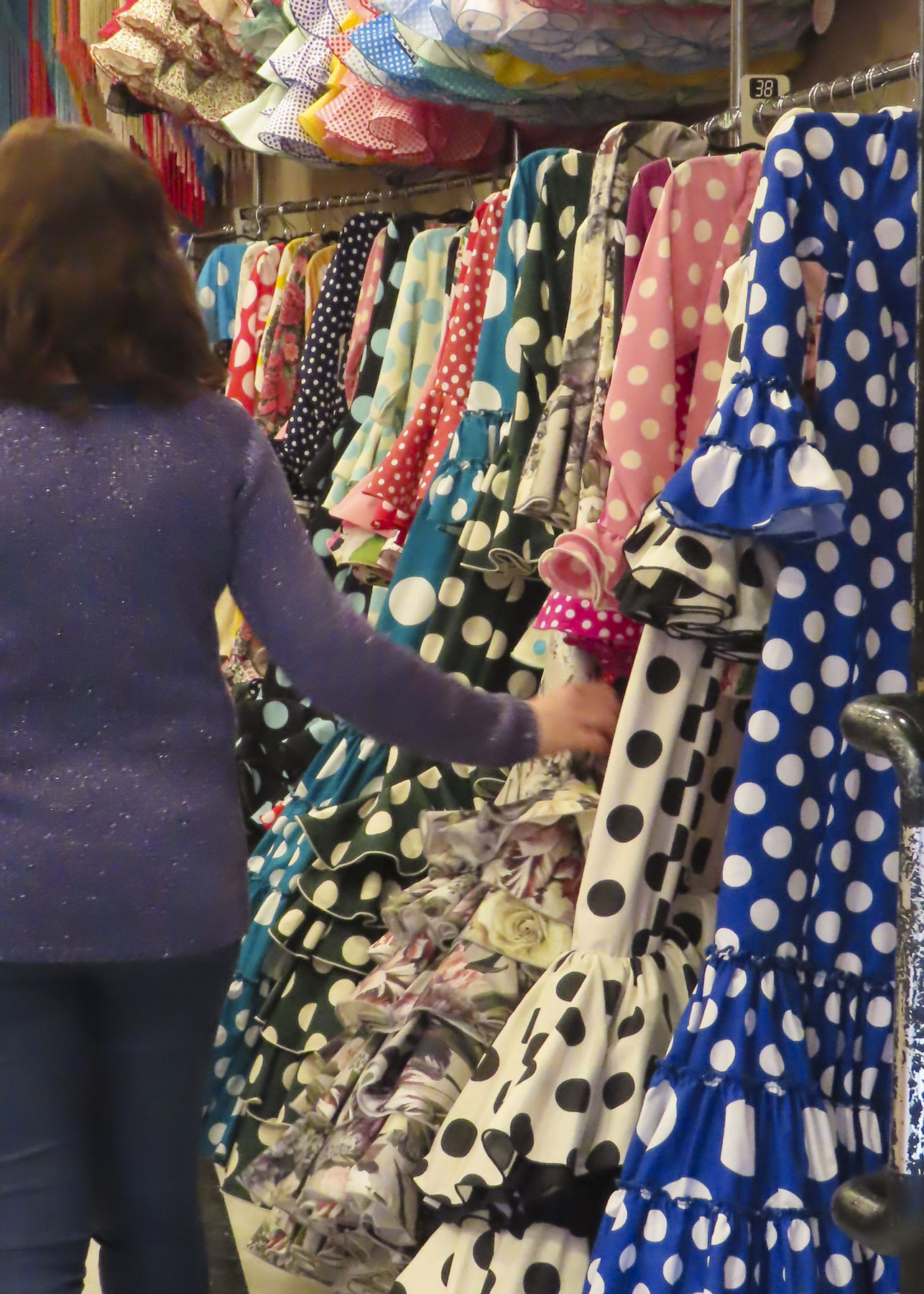
Returning to Plaza Jesus de la Pasion, the far end of the square funnels into the very cosmopolitan C. Puente y Pellon. Lined with a wide variety of shops, we found the most interesting to be the Zapaterias, shoe cobblers, and the dress shops, their windows filled with colorfully clad mannequins displaying tight fitting and frilly dresses called traje de flamenco or traje de gitana, for the upcoming Seville Fair (La Feria De Abril).

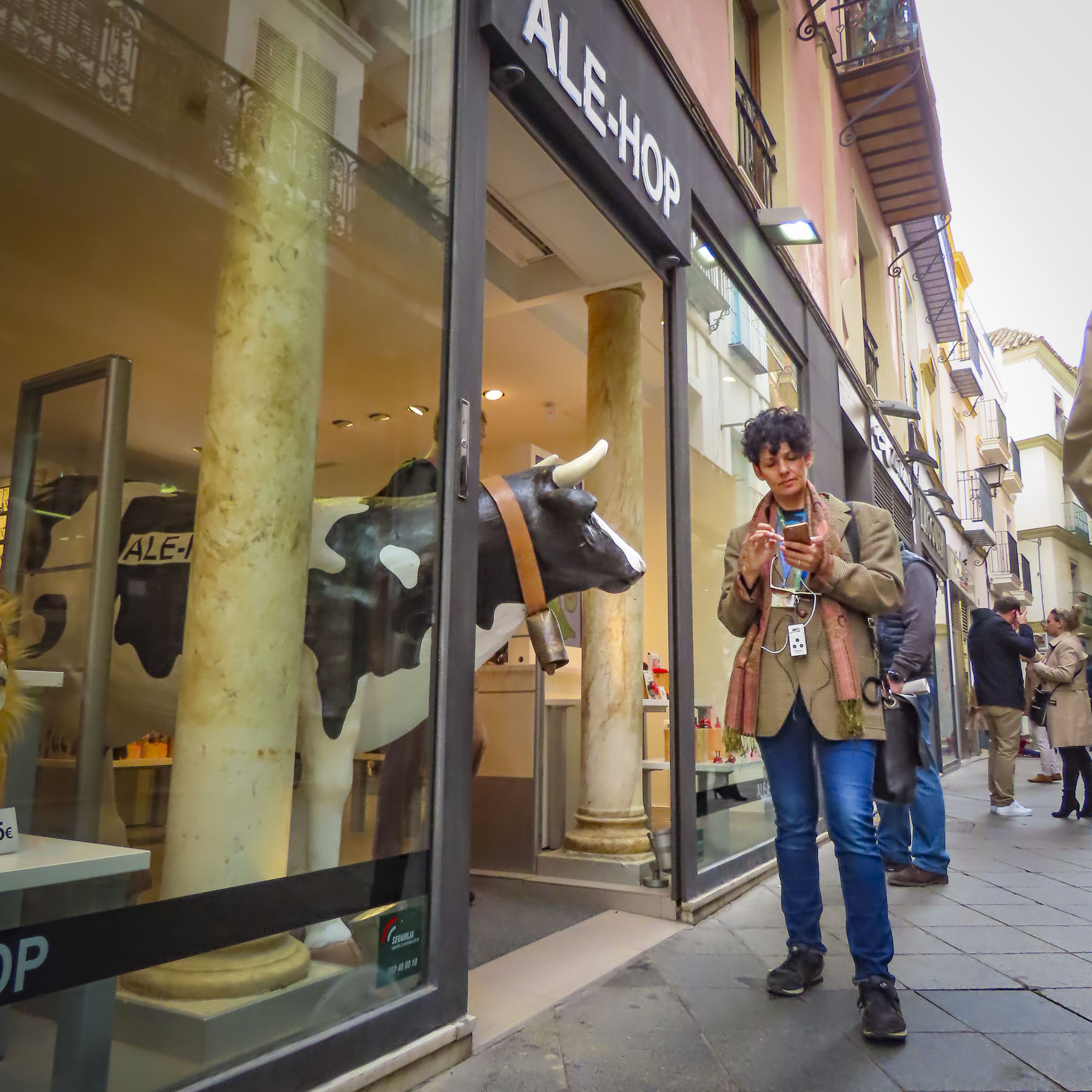
Here we found what we regard as the best bread bakery in Seville, Crustum Panem Bridge and Pellón, https://www.crustum.es/ sandwiched between window displays featuring towering pyramids of tasty Bocadillo de jamón, the ultimate hoagie lunch para llevar, to carry away, for an inexpensive picnic. The bakery offered a wide assortment of breads and empanadas. Our favorite though was a very dense bread made with nuts, seeds, and dried fruit which they sold by the slice and weight.  We returned often.

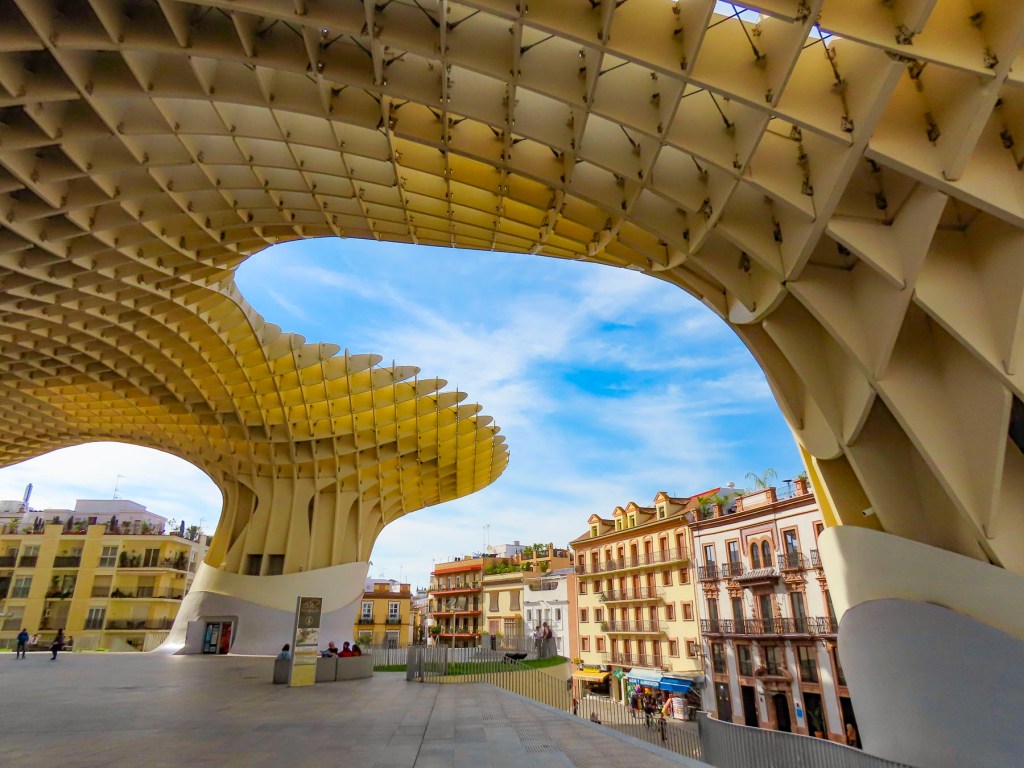
A little further on the Setas de Sevilla loomed over us as we left the alley.  The Setas is a massive, multi-story, Lego-like freeform sculpture with a viewing deck atop it. Constructed entirely of wood, it nearly covers a full city block. It’s an iconic symbol of modern Seville that the locals lovingly call The Mushroom because of its shape. 

For over 150 years this plaza was the true center of the city for Sevillianos when 400 market stalls of the Mercado de la Encarnación occupied the land above the ruins of the medieval Convento de la Encarnación, from which the plaza took its name.  The market operated until 1973 when the building was demolished for structural reasons and the remaining ninety vendors were housed in temporary facilities for what was hoped to be three years.  Inaction by the city left the site closed for 31 years and the area around the plaza became blighted, until the local government sponsored an international design competition in 2004 for ideas to revitalize the plaza and return it to its former prominence. 

Jürgen Mayer, a German architect, won with a concept called Metropol Parasol, constructed with sustainable wood. At 490 feet long by 230 feet wide and just under 100 feet tall, it is the largest wooden structure in the world made with laminated Finnish pine. Its unique design features 3500 sections attached together with 16 million nuts and bolts. The interior of the Setas now hosts a daily market with 38 vendors offering fruits and vegetables, fish, meat, poultry, and cheese. The base of the monument and plaza is ringed with restaurants that have excellent outdoor seating in the shade of the mammoth structure. Inside by the market stalls are several traditional luncheonettes that offer inexpensive daily specials.
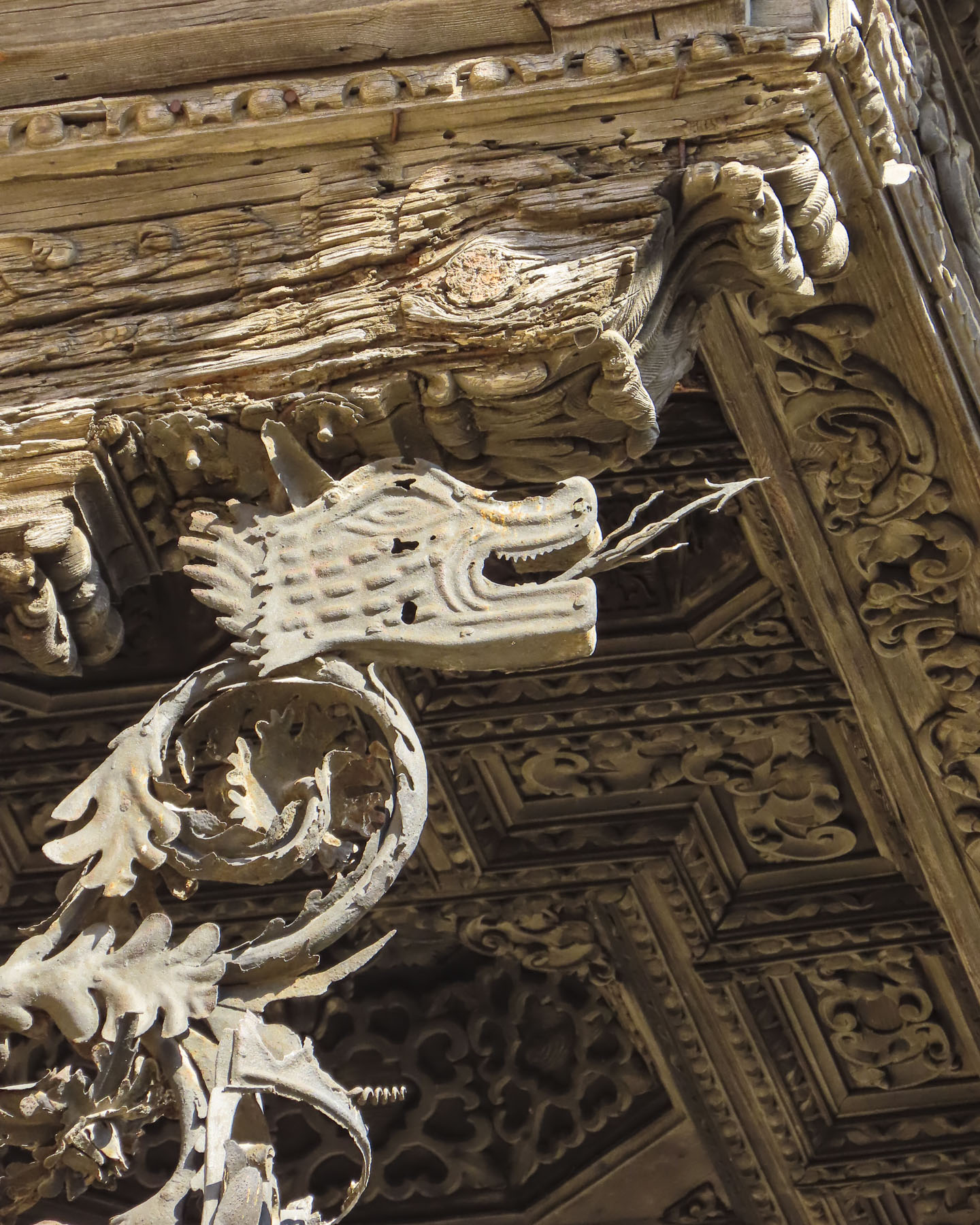
A detour to the Guadalquivir River and Triana can be easily made here by following Calle Imagen west. This walk took us past many older buildings with interesting architectural details, and the 14th century Iglesia de San Antonio Abad which hosts the Brotherhood of Silence, the oldest brotherhood in Seville.
A block away the aroma of freshly roasted coffee beans drew us into Elhombre Pez, where you can only purchase bags of whole or ground coffee beans. Their coffee beans are definitely worth the purchase if you have an apartment stay in the city.

The Seville Museum of Fine Arts, set in a former 17th century palace, is also in this direction and is an intriguing detour with its extensive collection of Spanish masterpieces.

Several blocks farther the Real Parroquia de Santa María Magdalena was an interesting discovery. Built in 1691, this Baroque church has a fascinating interior.  The small bar on the corner, Casa Murillo, was a reliable spot for café and lunch. Across the street Churreria San Pablo always seemed to have a line waiting for its sweet treats.
Calle Regina directly behind the Setas de Sevilla begins to funnel folks away from the bustling historic district and into a more residential area, though it’s still lined with a variety of shops and eateries. And if you share our belief that the food is always better and more affordable two blocks away from a popular tourist attraction, you will like this neighborhood. On this stretch Mr. Cake Sevilla with its artfully prepared and tasty offerings is a nice place to rest.

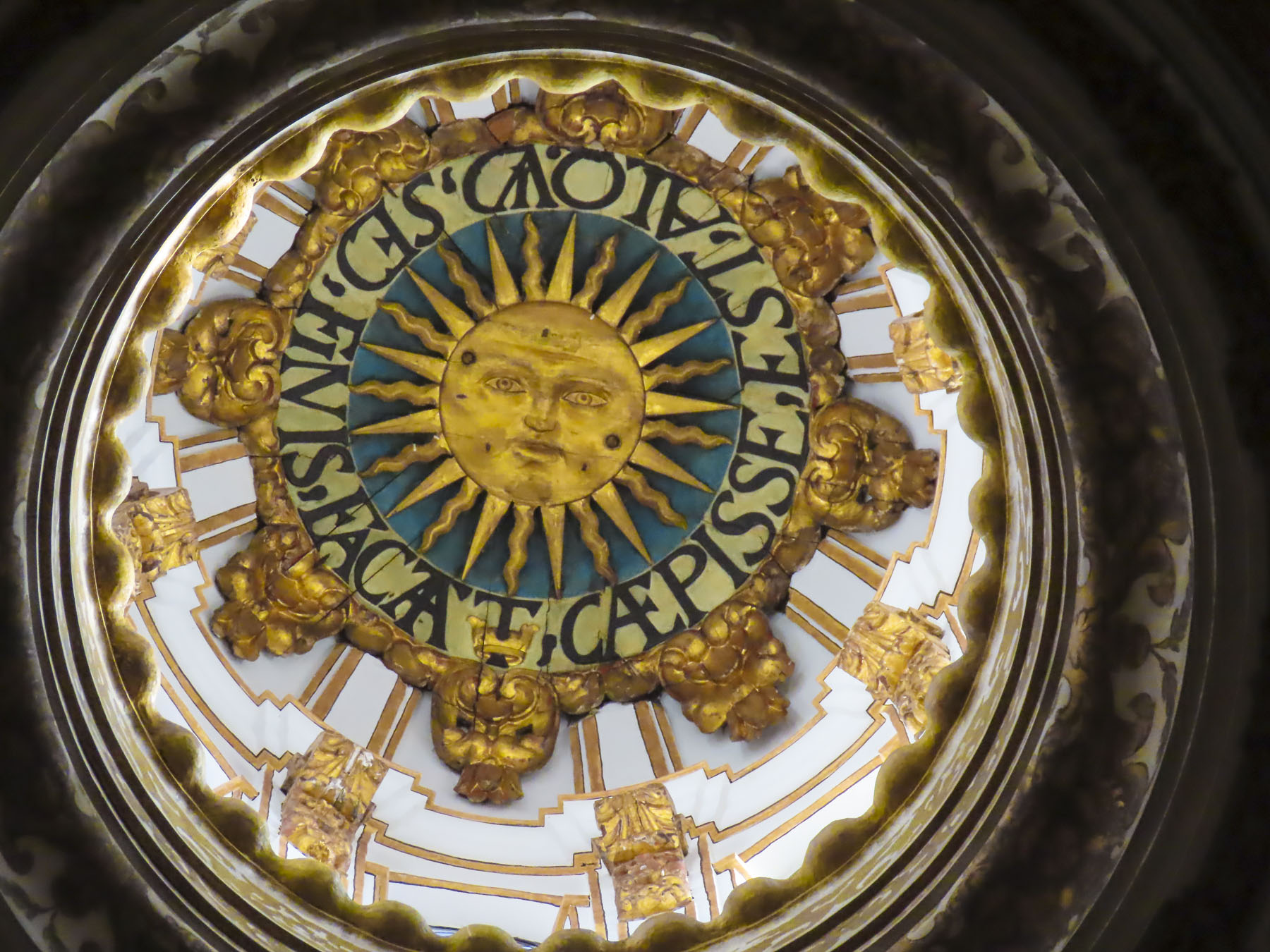
The Iglesia de San Juan de la Palma stands at the crossroad to our favorite tapas bar in Seville, the Bodega La Plazoleta. The gothic portal of the church is one of its few remaining original features. Compared to other churches in Seville its relatively small, but it features three interesting side chapels devoted to the Brotherhoods of Bitterness, the Virgin of the Head, and Our Lady of Montemayor.
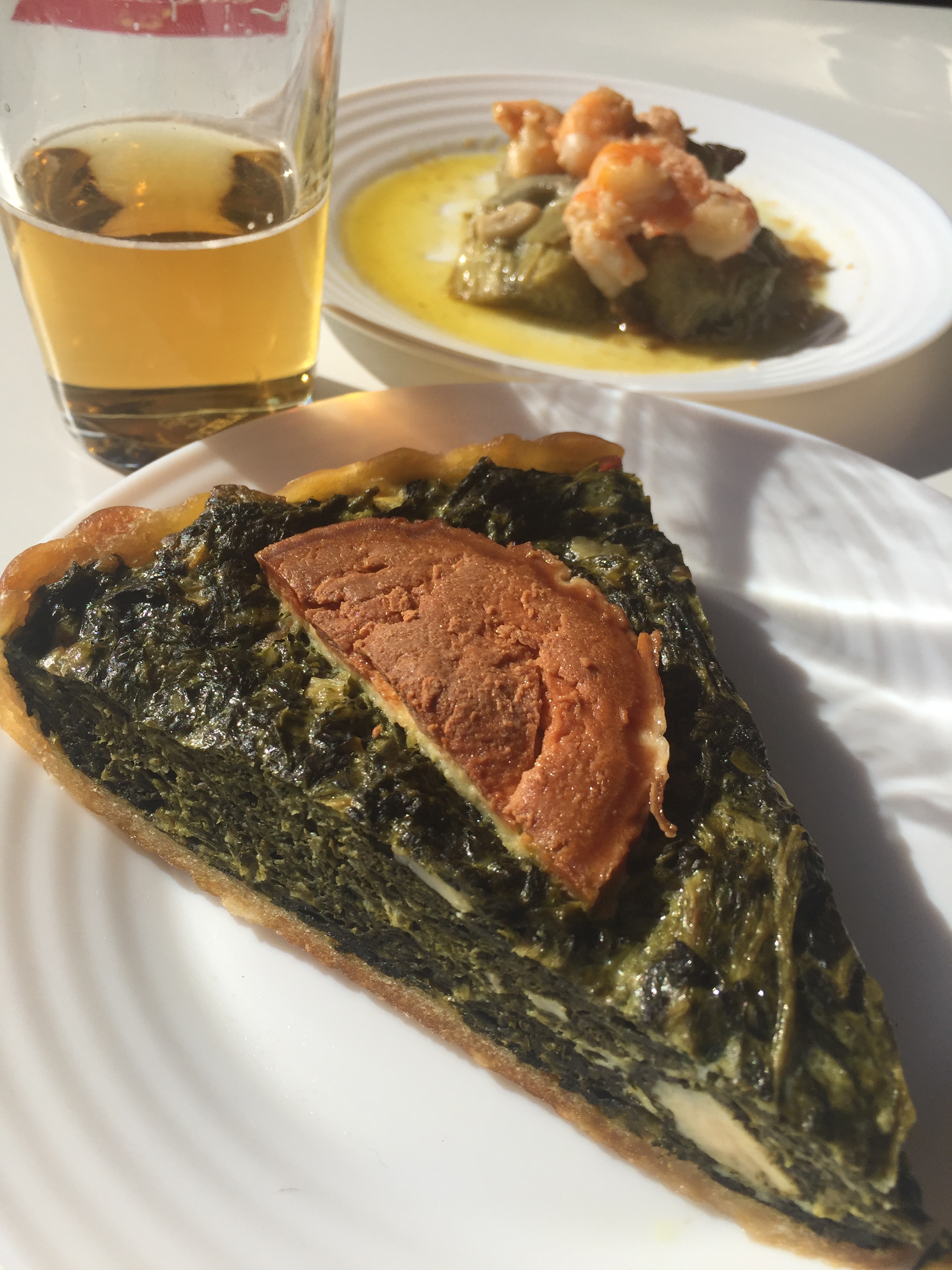
The restaurant is on a small square, to the right of the church, that was far enough off the main path that it didn’t attract many tourists. Over our six-week stay in Seville this was our go to bodega for its excellent food, relaxing atmosphere and chocolate cake! The restored 15th century Palacio de las Dueñas is nearby, but let’s face it, it’s impossible to do everything and we needed to save some ideas for future visits to this wonderful city.

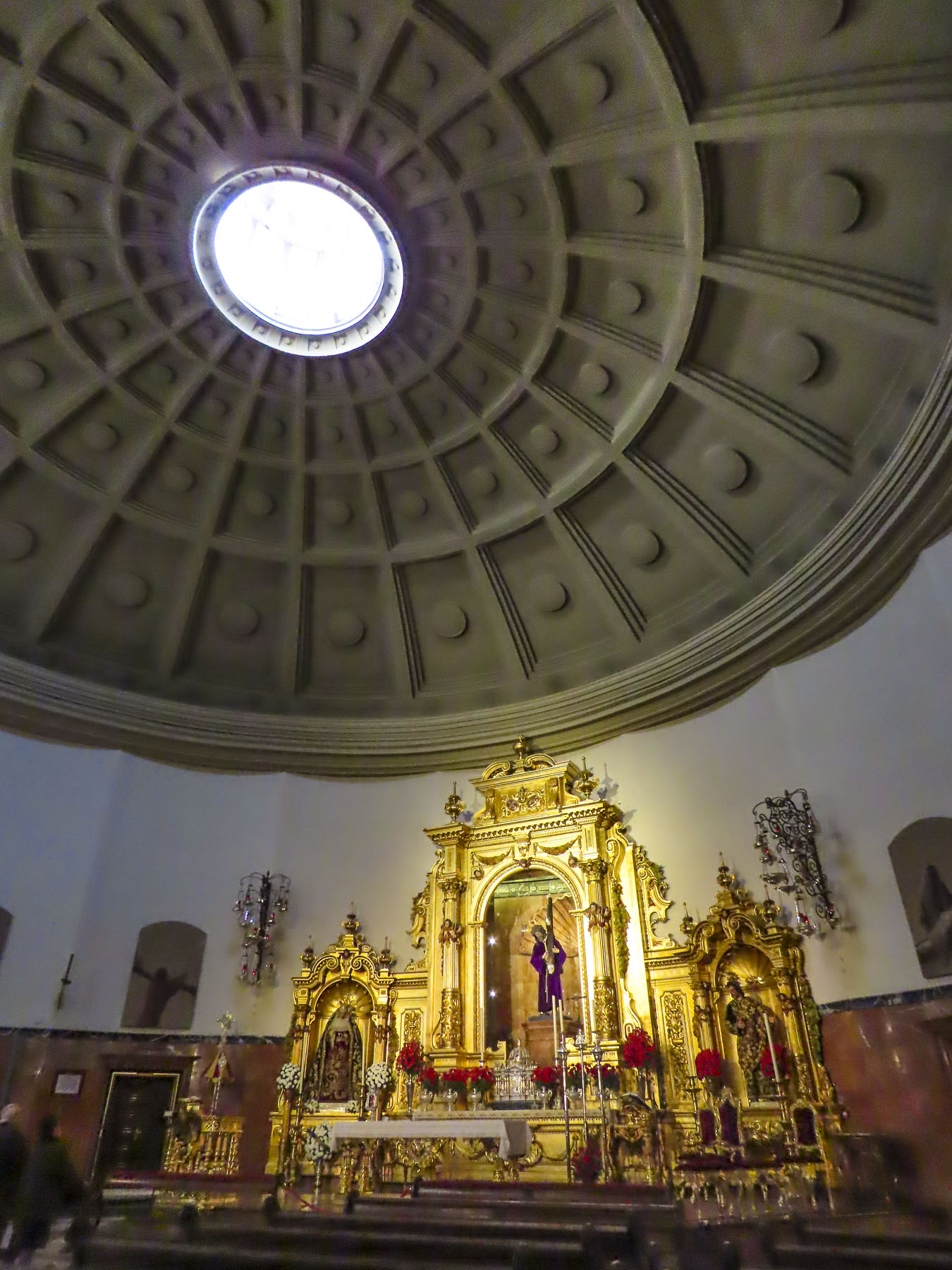
If you make a left at this crossroad, it’s a simple detour to the Alameda de Hércules. The origins of this large park date to 1574 and it is believed to be the oldest public garden with tree lined promenades in Europe.  The park takes its name from a statue of Hercules, the mythical founder of Seville, excavated from the ruins of a nearby ancient Roman wall.  This part of the city now has a younger hipster atmosphere and is known for its nightlife and club scene as well as its array of restaurants offering a variety of international cuisine. In this barrio the Basílica de Jesús del Gran Poder is an unusual church with its circular sanctuary which is surprisingly hidden within the church’s traditional façade.
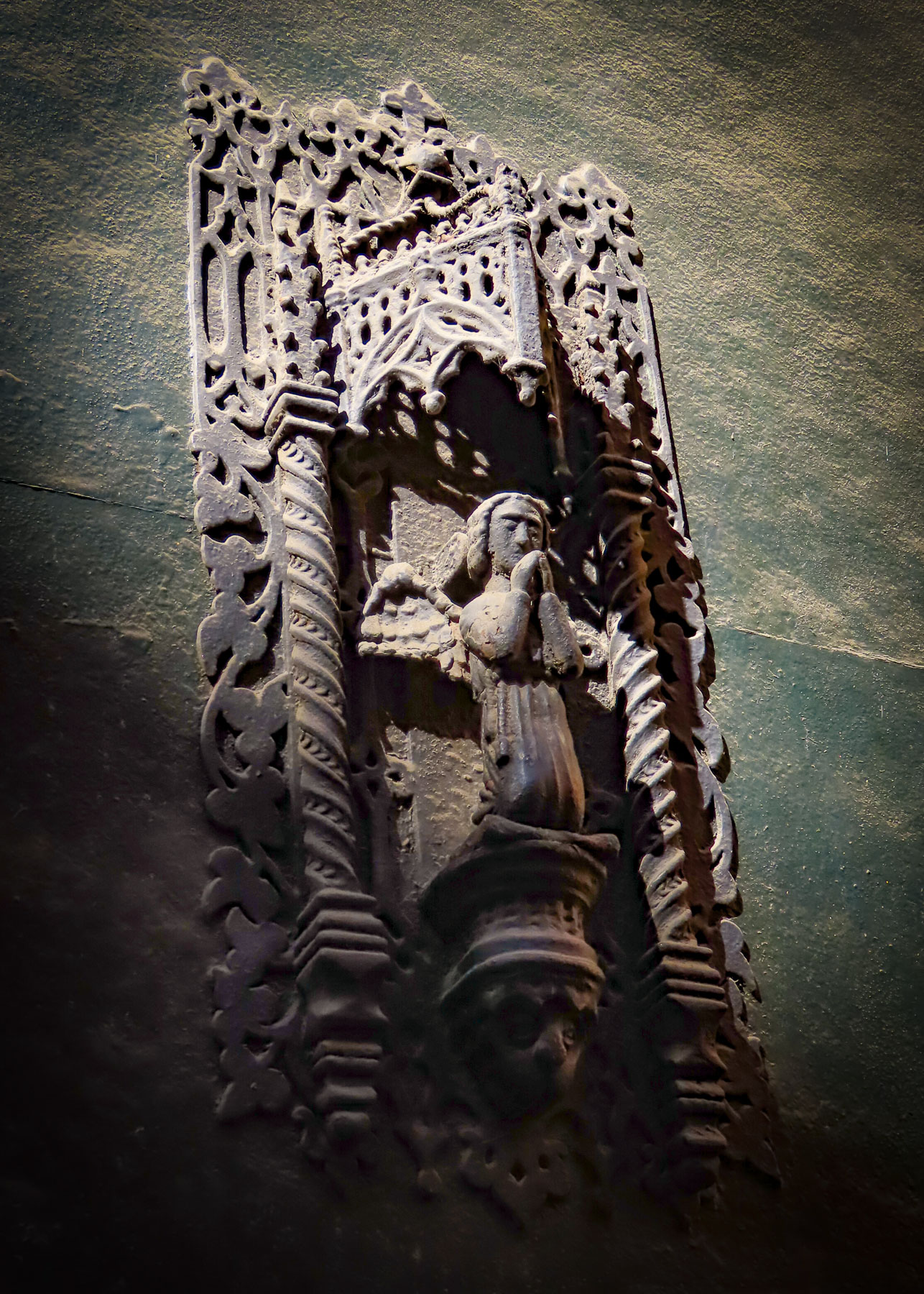
Back at the crossroads: Thursdays are, as the name Mercadillo Histórico del Jueves suggests, the best day for this final leg of the walk. Legend says that this street market has been a feature of the city since the Moors ruled Seville.  Every Thursday several blocks of Calle Feria are closed to traffic, and it becomes a pedestrian mall lined with vendors now selling antiques and flea-market type items.  The market is a popular destination, and occasionally we felt like we were in a conga-line weaving through a sardine can.  We did find a small, folkloric style painting of Seville’s La Feria de Abril that just fit into our suitcase.

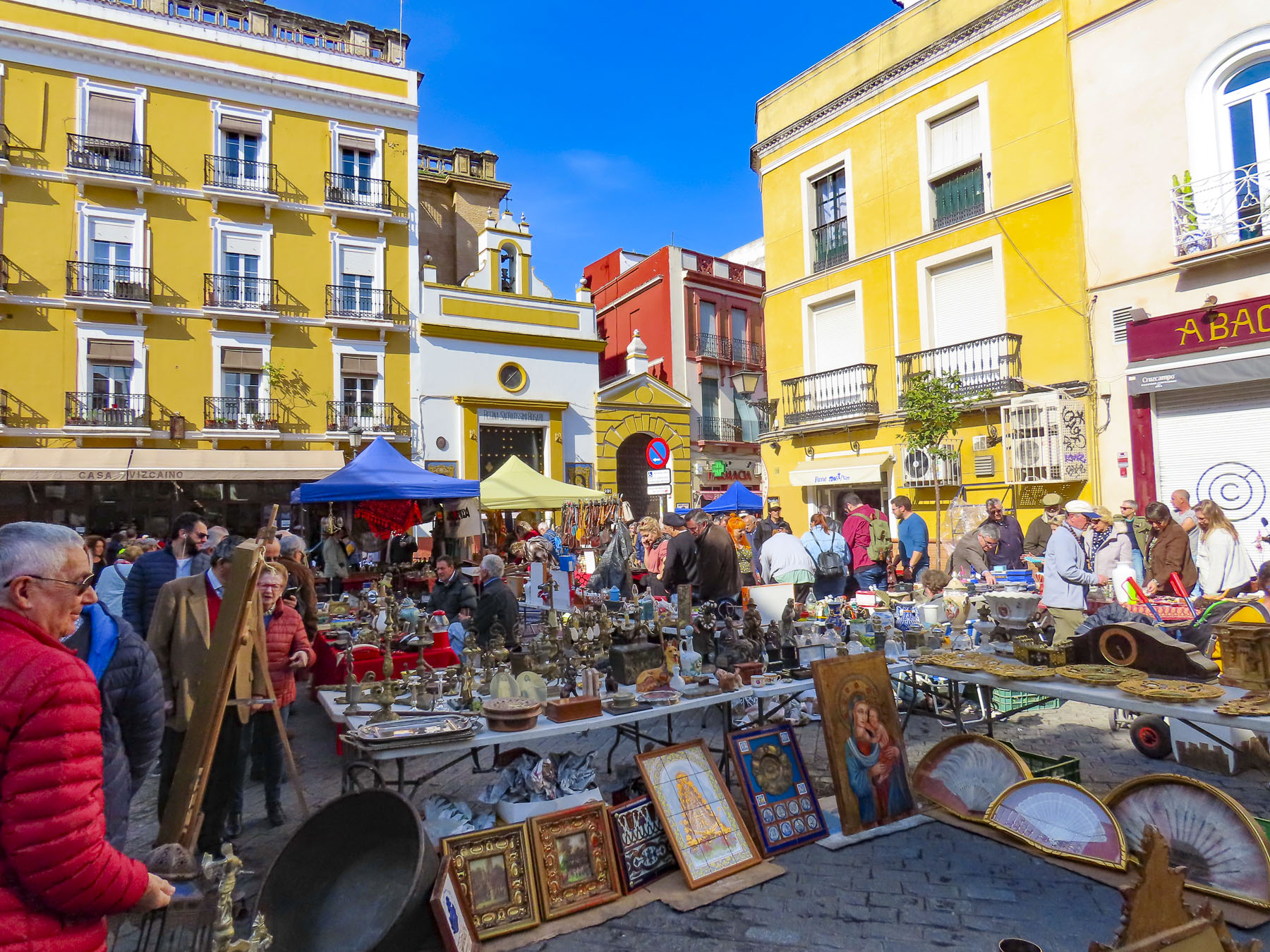
It was quite a walk from our apartment on Plaza de Doña Elvira, but our favorite local food market in Seville was the Mercado de la Feria, several blocks past the mercadillo histórico.  The market had a very authentic feel to it, being in a neighborhood that is far away from the tourist center of the city. It had a wonderful fish monger, cheese shop and fresh pasta maker. Accustomed to their neighborhood clientele, the vendors seemed surprised with our purchases which indicated that we actually cook for ourselves.  This is also a great destination for lunch as there are a number of small restaurants that ring the market.

Next to the market – It’s not always open, but if the door under the 13th century pointed Gothic arch of the Real Parroquia de Omnium Sanctorum is ajar, it’s worth stopping to investigate – is one of the oldest churches in Seville. It has gone through many incarnations over the centuries, most notably after a 1355 earthquake, and arson attack in 1936 during the Spanish Civil War.

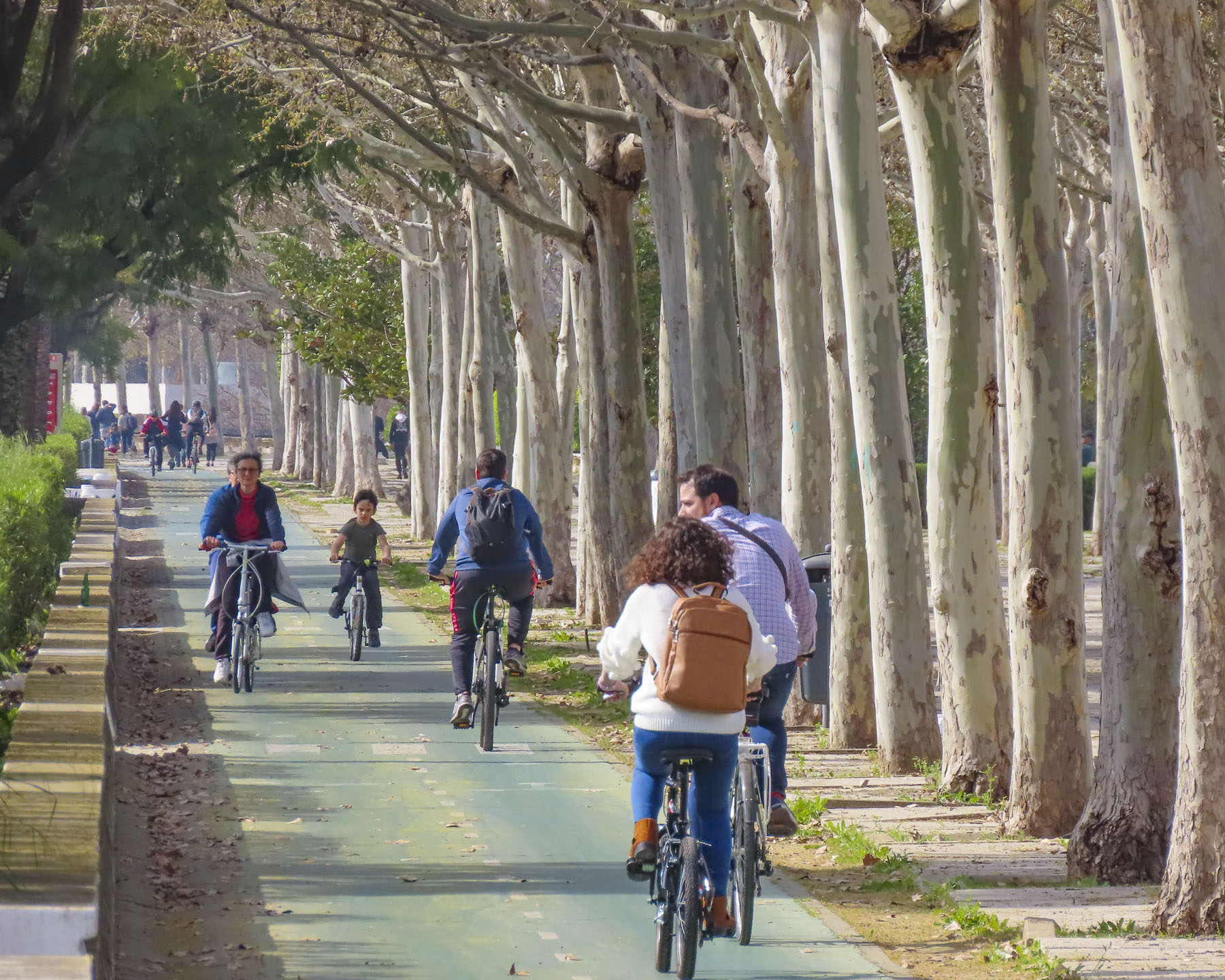
At this point in the walk, you can choose to head back towards the Alameda de Hércules or continue on towards the towers of the Puente del Alamillo bridge, which you’ve probably already spotted, that spans the northern part of the Guadalquivir River. Head to the river. There is a wonderful pedestrian foot/bike path that follows the course of the river. This stretch of the river is also popular with anglers using traditional long poles and line gear to catch fish from its bank.

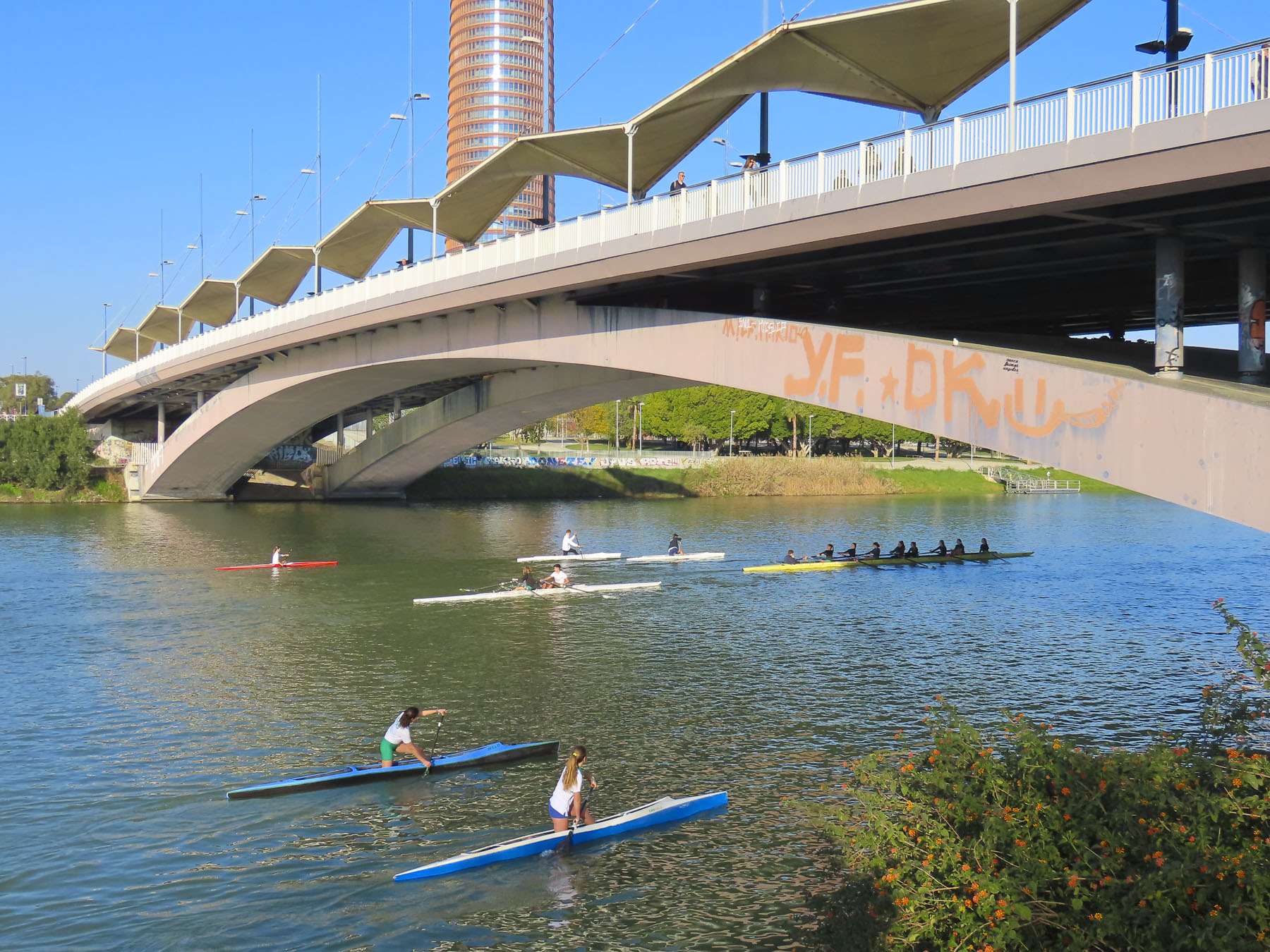
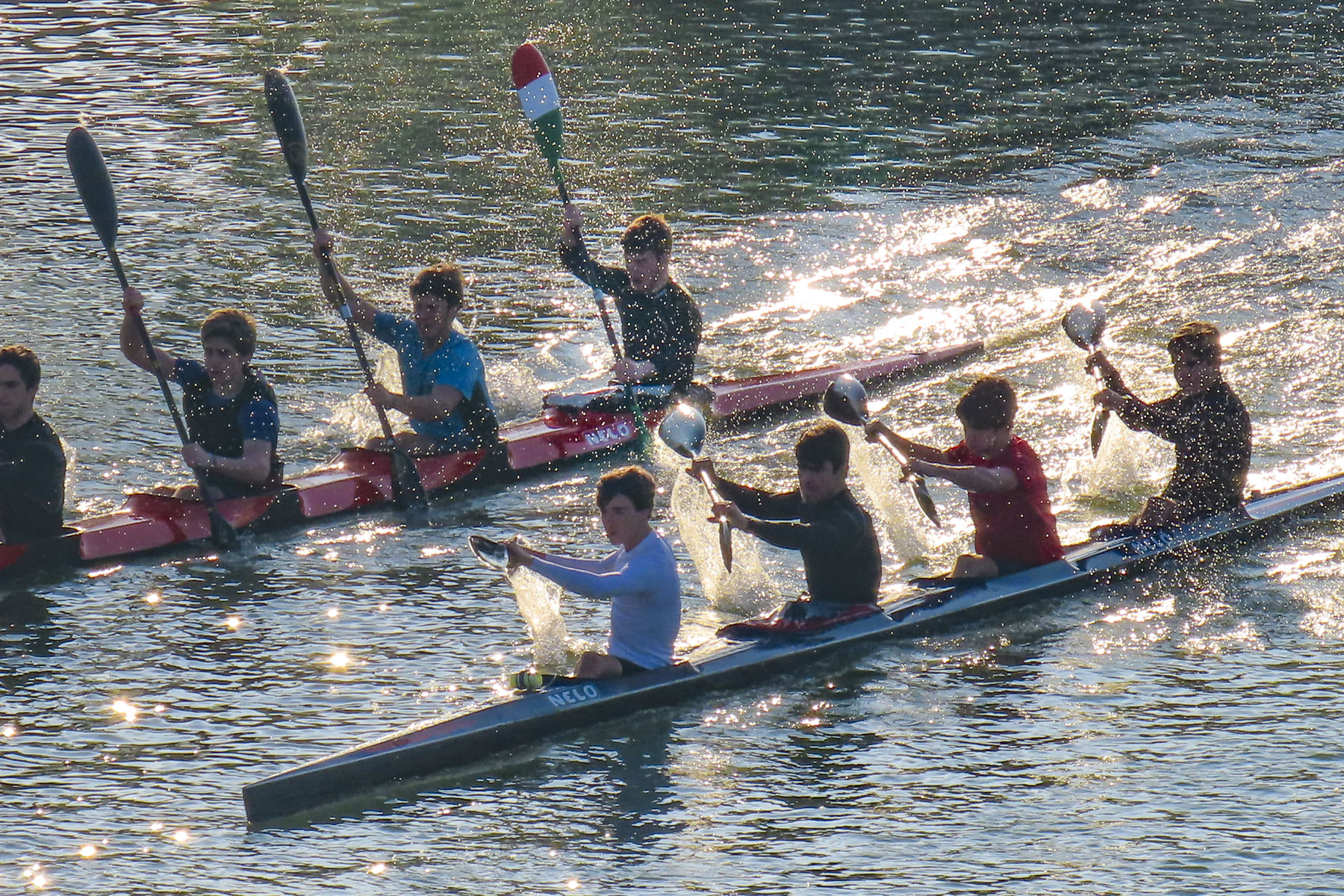
It is a long but pleasant walk south along the river back towards the bustle of Seville.  Mid span on the Puente del Cachorro is a great vantage point for photos of the historic Triana waterfront with kayakers and scullers enjoying the river.
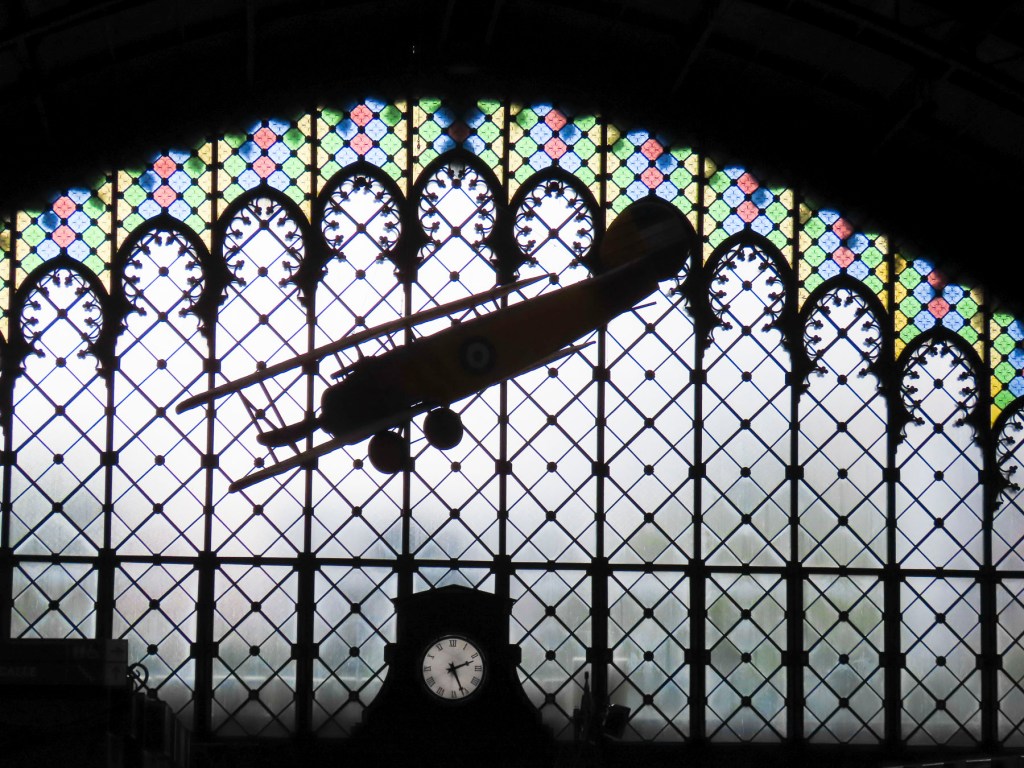
If its late in the day and you want to catch a movie, the Centro Comercial Plaza de Armas is only two blocks inland from here, in the restored 19th century Old Cordoba Train Station.

Till next time, Craig & Donna

Puglia – Alberobello Part 2: Lecce and Nardo – The Florence of the South

“Signor, mio gattino si è nascosto sotto la yuan automobile ed è salito nel motore.” Roughly translated it means – Sir, my kitten ran under your car and is hiding in the engine! My racing imagination added, I will paint a pagan symbol on your car and you will be cursed for the rest of your life if she is hurt.  I exaggerate a little in jest just so you understand this was a crisis!

The night before we had agreed on an early start to Lecce to rendezvous with our friend Giulia for a day exploring her adopted city.  To help move the day along I offered to retrieve our rental car, which was parked a good distance away, uphill, across from the trullo-shaped Church of Saint Anthony of Padua which crowned the hill.

Donna is the designated linguist of the family. I on the other hand have been lovingly accused of slaughtering a fine romance language with just the utterance of a single word, on more than one occasion.

So, when I heard, “Signor, mio gattino si è nascosto sotto la yuan automobile ed è salito nel motore,” I smiled, as I really didn’t understand a word.  But two very worried young girls and their grandfather were standing next to the car and pointing at the engine.  They had placed a saucer of milk and some cat food near the front tire. I understood and joined the older girl who was on ground, looking under the car and meowing for her kitten, quite convincingly I might add. With no sign of a tail dangling from the undercarriage, I popped the engine hood expecting to find the kitten. Nothing.  I slammed the engine hood hoping the loud sound would jolt her from her hidden perch. Still nothing!  The way the car was parked close to an ivy-covered wall I wasn’t convinced that the kitten hadn’t scampered away unseen earlier.  They were signs of growing concern written on the girls’ faces and a growing crowd of onlookers.  Miming turning the ignition key, I conveyed that I needed to start the car and move it around the corner to jump the curb in order to get better access to the engine from below.  Hesitantly, I turned the starter and was deeply relieved when there weren’t any shrieks of horror from the girls or any fur flying. 

With my entourage trailing along, I drove the car around the corner and put two wheels up over the curb to give me just enough room to shimmy underneath for a closer look.  Fortunately, by this time Donna and Gary were rounding the corner in search of me. Much skinnier and a cat lover, Gary was enlisted to wiggle on his back underneath the car. “I don’t see anything. She’s not here.” I frowned, the girls frowned. “Keep looking.” Time passed. “I see her! she’s tucked up very high – let me have some food.” A few moments later, “I have her!” Beaming with joy, the girls and grandad took the kitten to the quiet sidewalk across the street and set her down on the ground.  Almost immediately, to everyone’s horror, the kitten dashed back across the road. The girls screamed and, oblivious to the traffic, dashed into the street in hot pursuit. The terrified kitten once again raced into her hiding place in the engine!  Mercifully, the second rescue was much faster, and with the kitten firmly in the hands of a local woman who assisted, we jumped into the car and sped away to Lecce.

After circling the port city of Brindisi, the highway (SS613) was a straight shot, past the Mura Urbiche architectural complex that highlights remnants of a once formidable city wall that encircled Lecce, to Giardini Pubblici Giuseppe Garibaldi pretty much in the center of the city.

Even though Lecce is located in the middle of the Salento Peninsular, that is often called the “heel of Italy,” the city has had a long bond with the sea.  Legend has it that the King of Crete, Idomene, was blown off course and shipwrecked here while returning home from the Trojan War.  He married the local Salento King’s daughter, Euippa, and named their newborn girl Lecce, after his Lycia homeland in the eight century BC.

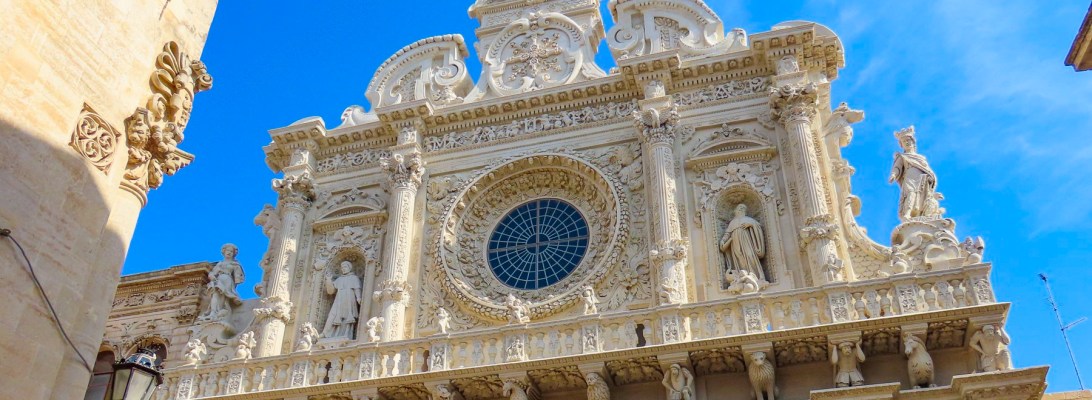
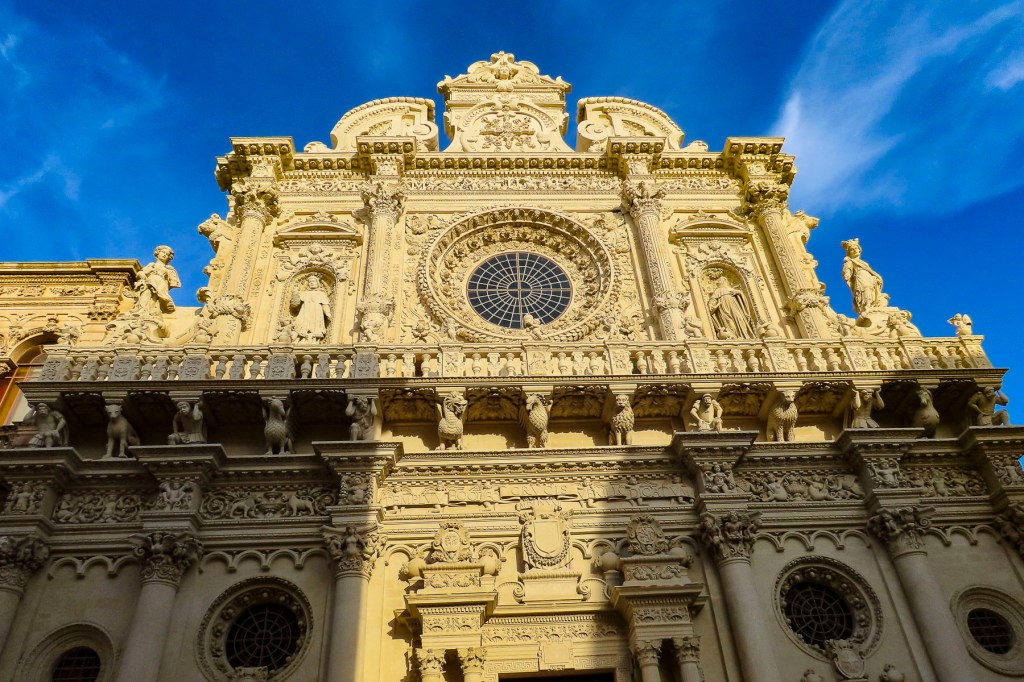
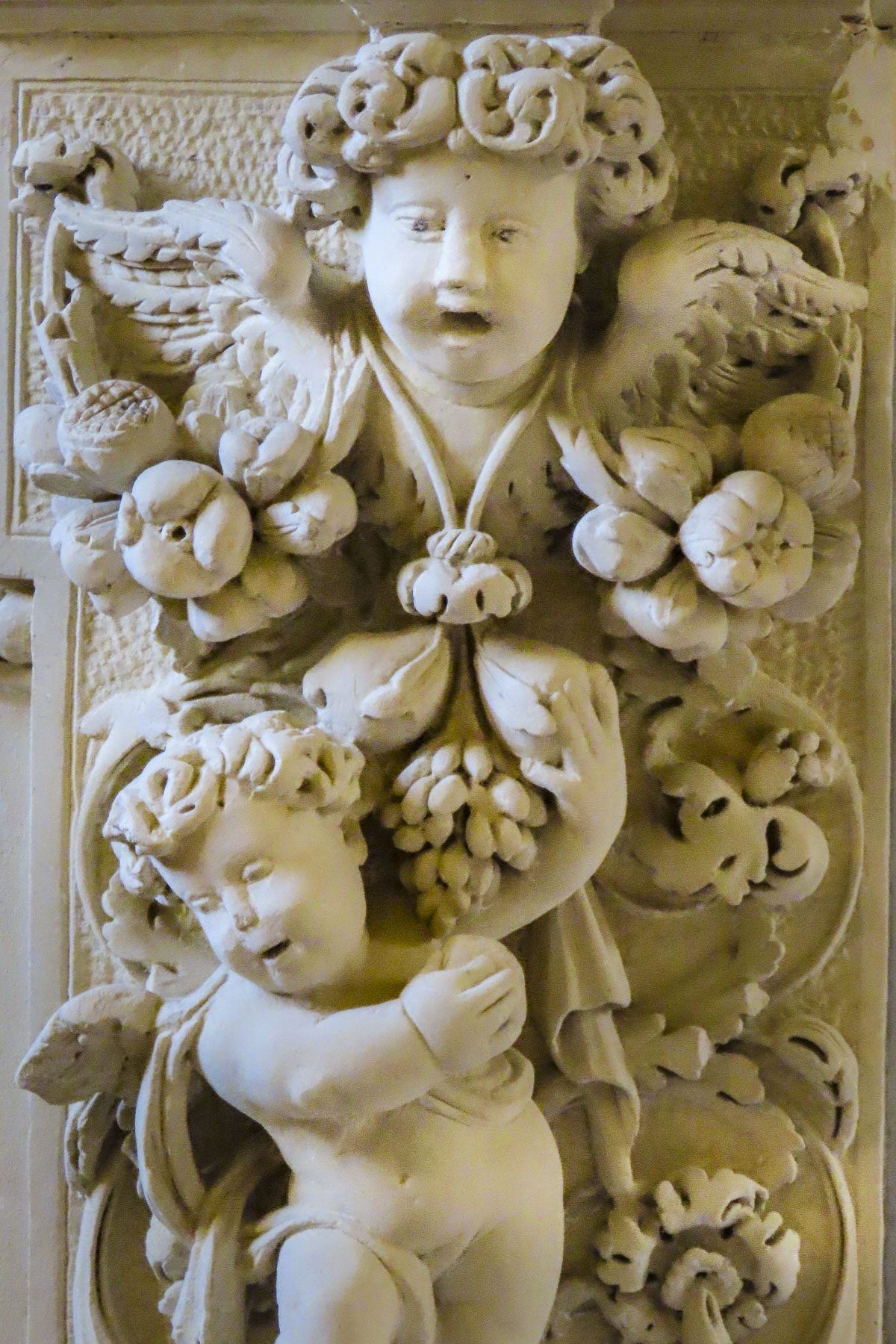
Meter parking was available near the Garibaldi Garden, but we opted to find a 24-hour garage so that we wouldn’t have to worry about time.  Lecce has a population of approximately 96,000 folks, 16,000 of which are students. Their presence was evident with in the jovial sidewalk café life we passed as we headed to meet Giula at the tourist information office on Piazza Sant’Oronzo.  We entered the pedestrian-only historic center through an arched gate that led through the 17th century Palazzo dei Celestini’s impressive, cloistered courtyard. Once the private retreat of nuns, it now seats the regional government. Next door stands the Basilica di Santa Croce with its elaborate façade of carved demons, ogres, gargoyles, and beasts.  It’s enough to send any parishioner questioning his faith inside to seek sanctuary.  Fortunately, our timing to visit Lecce was perfect, as just the month before the façade of the basilica was still under wrap from a multi-year renovation project to freshen the sculptures after centuries of erosion.  Its architect Giuseppe Zimbalo took full advantage of the abundant local rock, called Lecce Stone, with its warm color and malleable characteristics.  His opulent Baroque style along with the lavish designs of his contemporaries is credited with earning Lecce the distinction of being “The Florence of the South” during the 17th century.  The talents of the city’s stone carvers rivaled those in Firenze. 

We had a few minutes to view ruins of the 2nd century Roman Amphitheatre that was undiscovered until construction in 1900 unearthed it. Its full size wasn’t realized until further excavation in 1938 determined it could seat 24,000 spectators.  We think it’s wonderful that ancient archeological discoveries are still happening in cities that have been continuously lived in for over two thousand years.

After joyfully greeting Giulia and making introductions all around, we sat at an outdoor café on the edge of the piazza and relished hearing each other’s adventures over the past year.  “The best way to experience the ambience of historic Lecce is to just wander slowly, discover the small details, touch the walls, enjoy the brilliant light and the warmth of the buildings,” Giulia offered as she stood to lead us through the past glory of Lecce. We followed her along shaded lanes, nearly empty of tourists in late October, past Baroque churches and shops shuttered for the afternoon siesta, still a time-honored tradition in southern Italy. “It’s quiet now, but in the evenings the historic district is transformed into a spirited hot spot. The passegiata brings families into the streets, and later the university students keep it lively with their barhopping.”

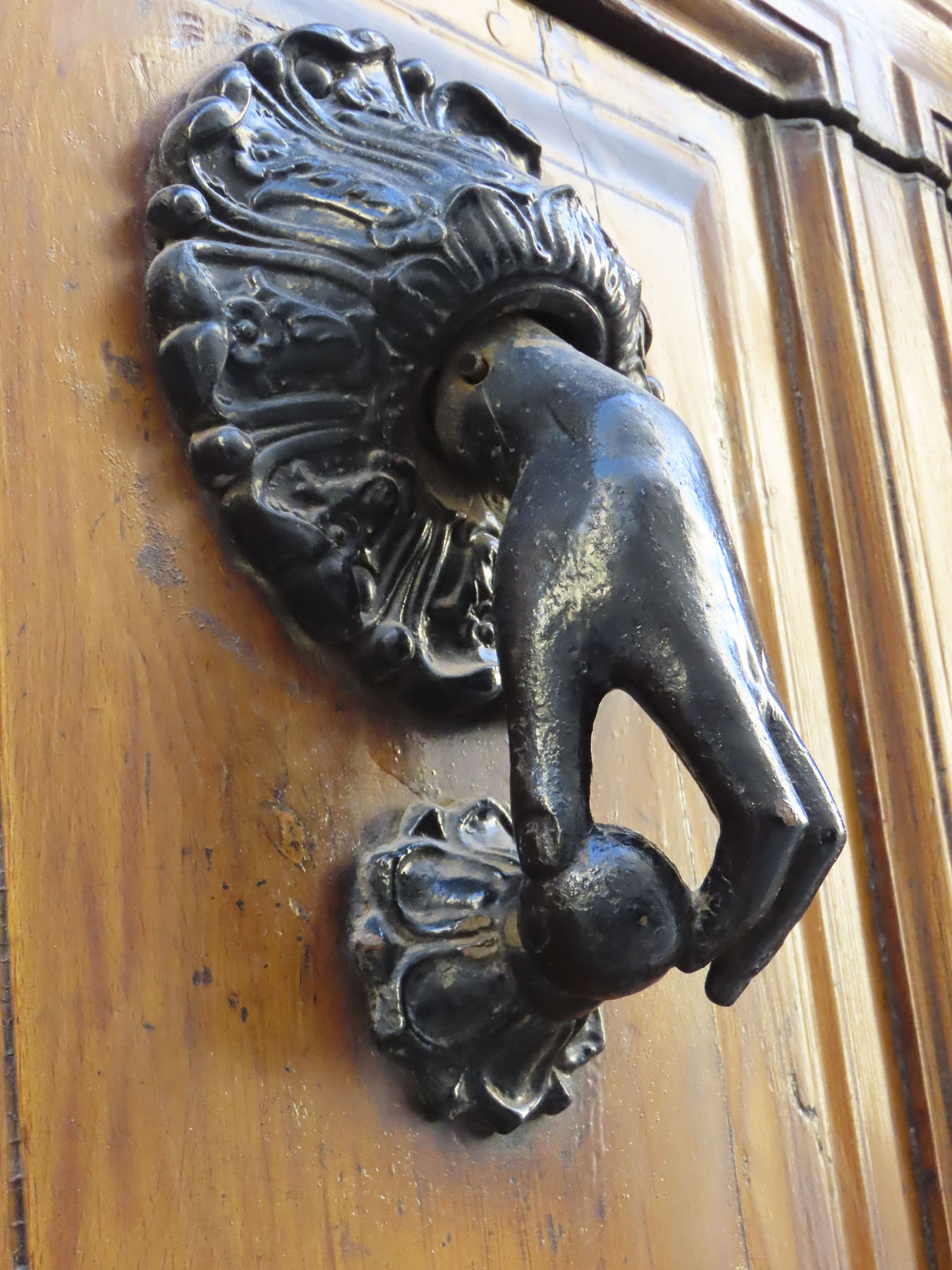
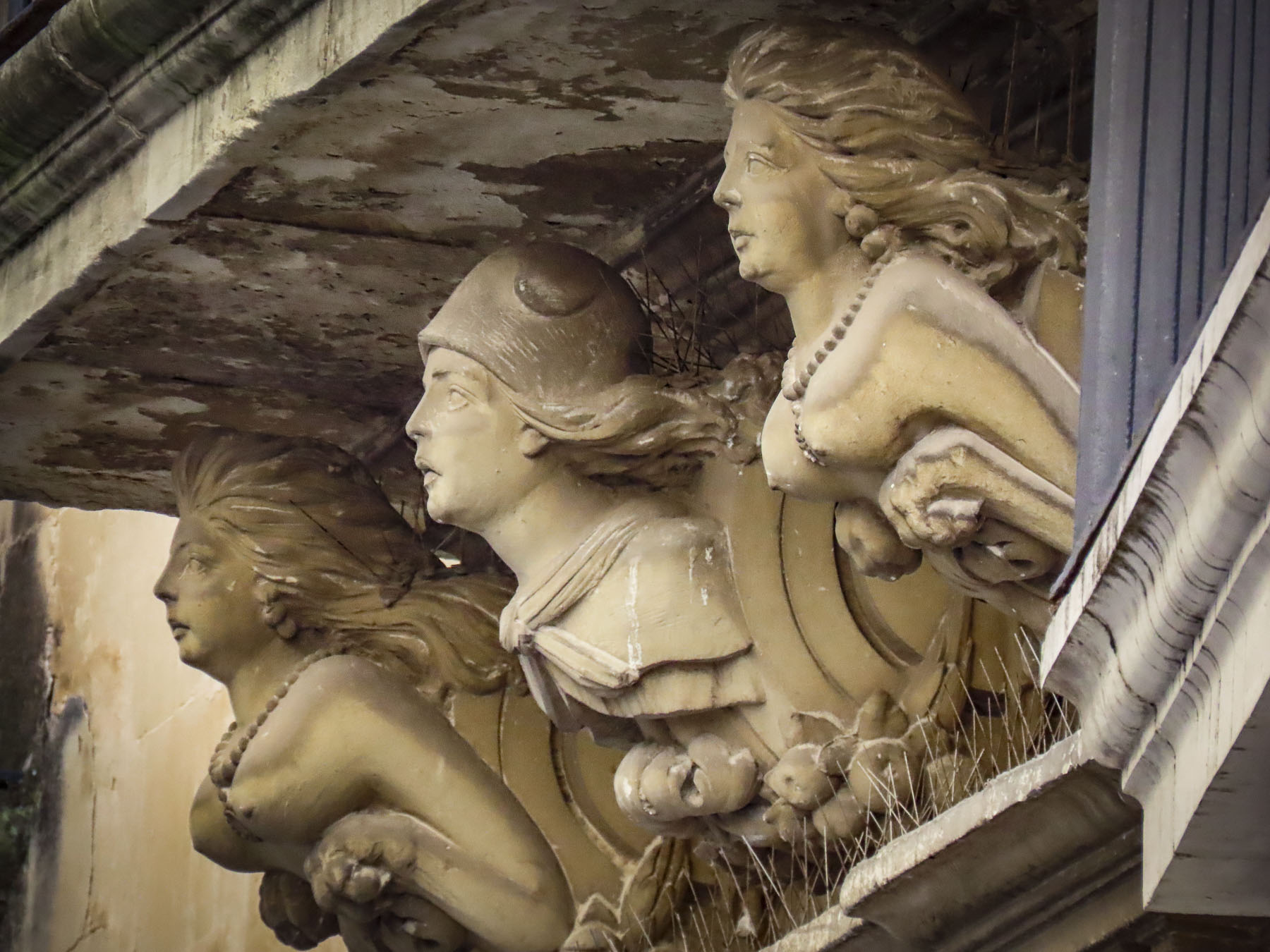
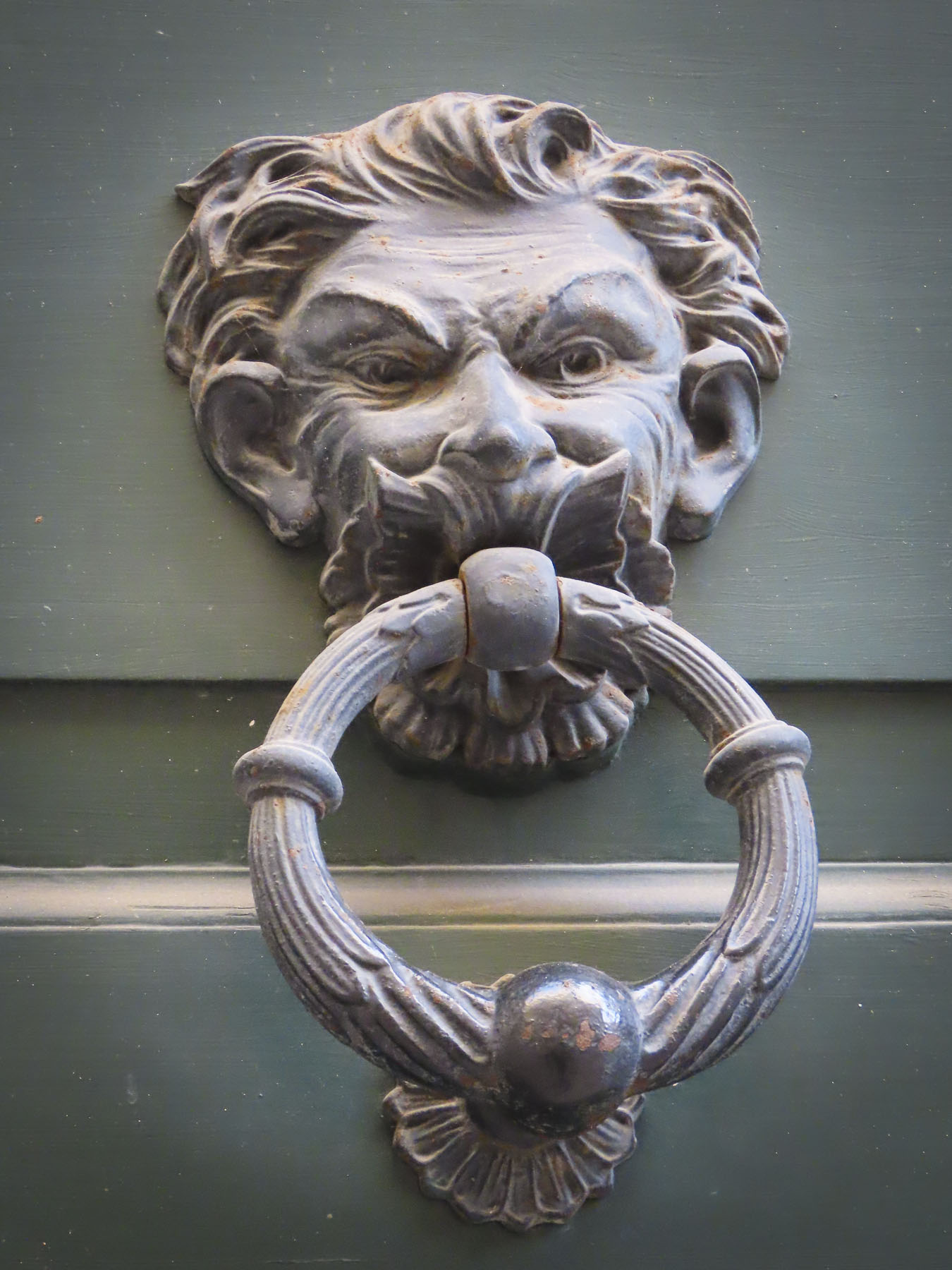
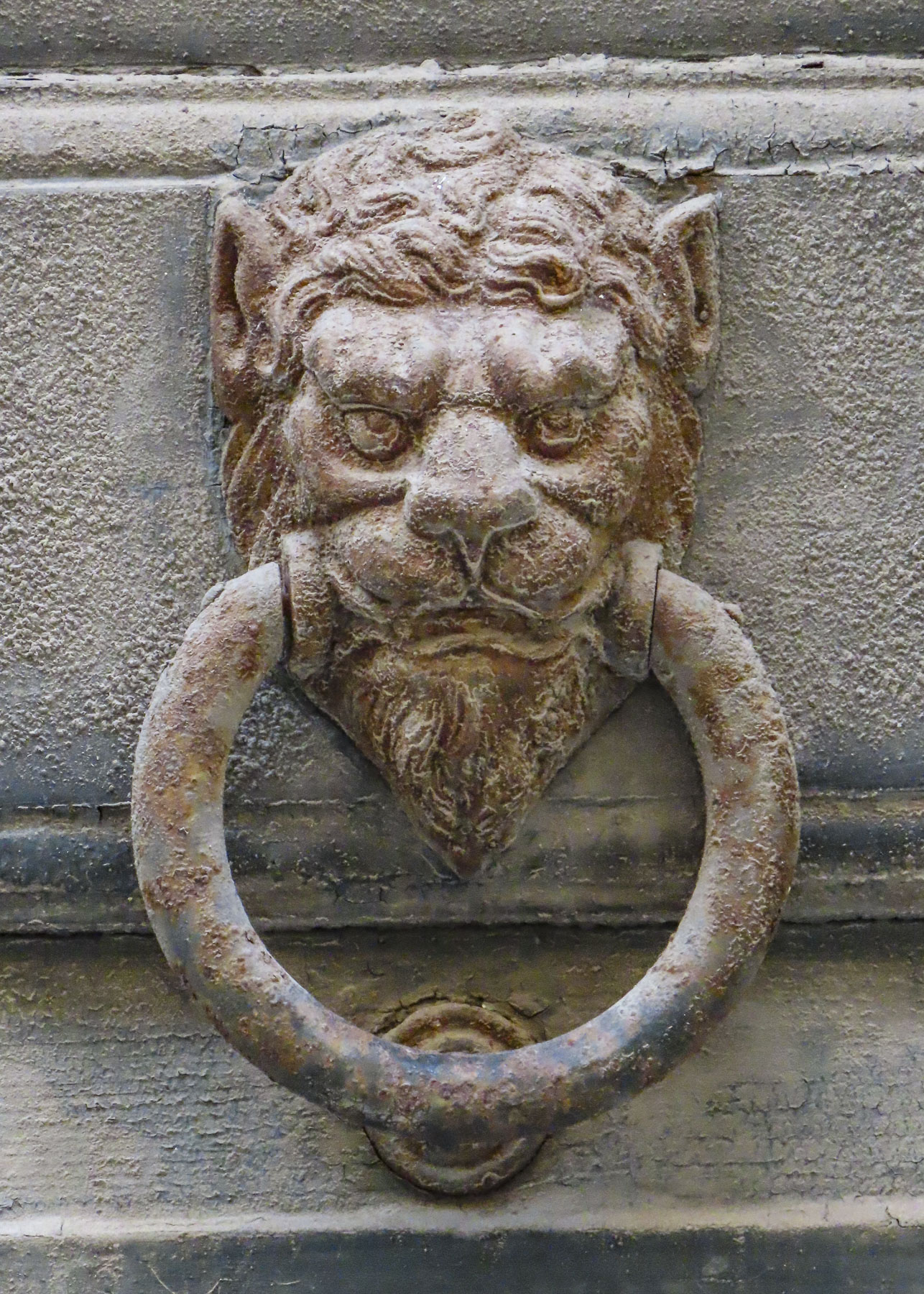
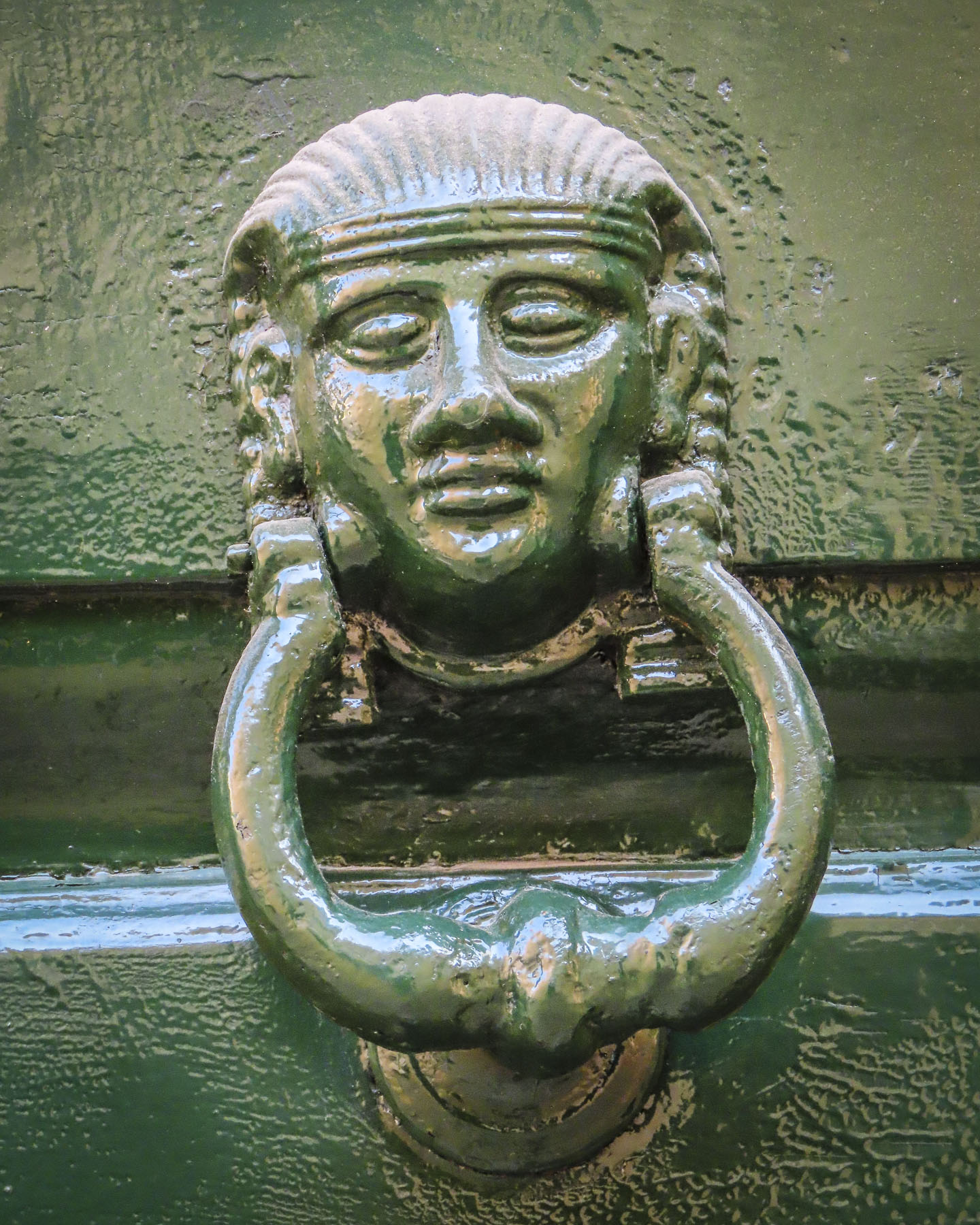
Large palazzo, with their arched entrances wide enough for a horse drawn carriage, lined the larger streets. Above, stone buttresses carved with gargoyles and animals supported balconies over the street. Interesting antique door knockers beckoned passers-by to rap on ancient doors, some so covered with cobwebs we wondered how many decades ago they we last used. We resisted the temptation.

As we turned a corner, the large Piazza del Duomo spread out before us.  Unlike other piazza in Italy where there are multiple entrances and shops, this piazza only has one way in and out.  The Lecce stone facades of the Museo di Arte Sacra (once a seminary,) Palazzo Arcivescovile (formerly the Bishops’s residence,) and Cathedral of Maria Santissima Assunta with its belltower enclose the plaza on three sides, giving it the ambience of a tranquil cloister.  The first church on this site was built in 1144 and repaired several times over the next 500 years until 1659 when hometown master architect Giuseppe Zimbalo was commissioned to rebuild the cathedral and design the freestanding 230ft tall belltower in the “Baroque of Lecce” style he helped popularize.  His burial under the altar of the cathedral reflected the honor accorded him.

Sitting on the steps of the museum, we admired the warm glow of the late afternoon light as it lit the walls across the piazza. “I would love to live there,” Giulia said, as she pointed to a small, corner terrace brilliant in the sun on an old building at the entrance to the piazza. I think there was a collective “ah, yes;” we understood.

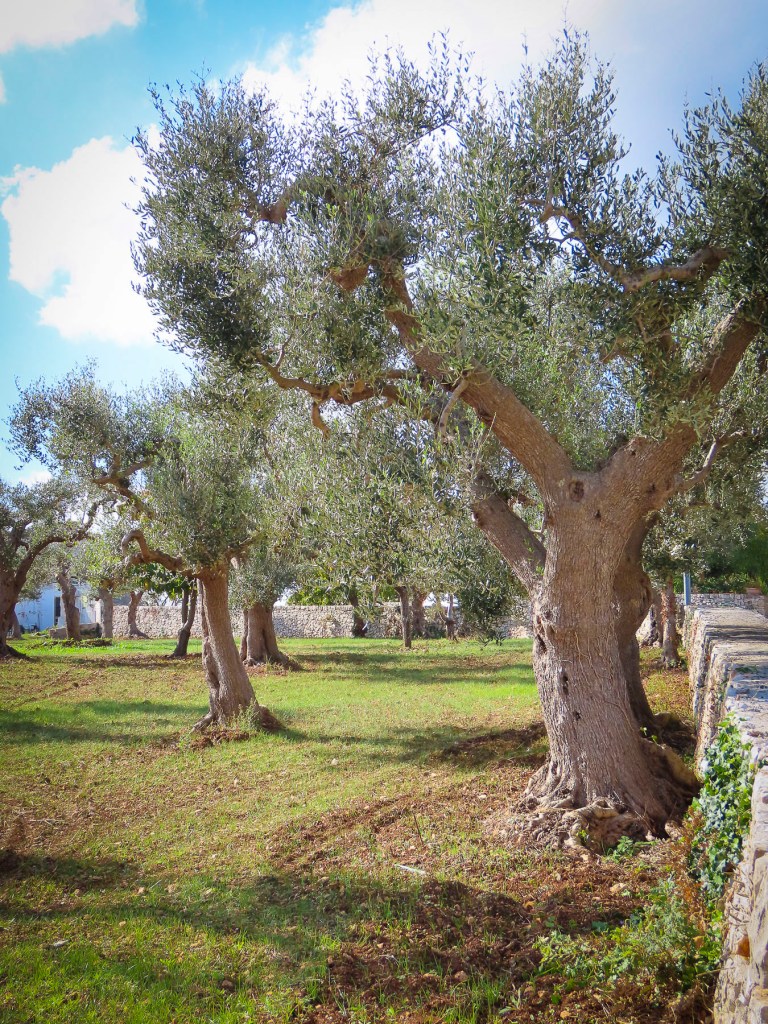
Later in the week Giulia invited us all to visit her in Nardo, her family’s hometown.  It would be our farthest point south on the “heel of Italy.” The GPS directions from Alberobello suggested the fastest route to Nardo through Lecce, but we chose an alternative route that gave us our first glimpse of the Ionian Sea. Following backroads, we drove through vineyards and olive orchards.  Many of the orchards, though, were suffering from a deadly olive tree disease caused by a bacteria, xylella fastidiosa, that is ravishing southern Puglia and its important olive oil industry.  To curb the bacterium’s further spread drastic measures have been implemented. Infected trees and those within 150ft of it are culled from the orchard. Unfortunately, it has radically changing the landscape and farmers’ lives.

We met Giulia and her family at their winery on Via A. Volta, located just outside the historic district. Giulia’s grandfather started Cantine Bonsegna in 1964. Today her father and uncle continue vinting wines in a 1930’s era industrial building on one of the main thoroughfares of Nardo.  Wines from their vineyards in the countryside are brought into town, then pressed and fermented at the rear of the building, where they cork about 150,000 bottles of wine a year, while the front serves as a retail store.  On the second floor a wine bar is open in the evenings and specializes in small plate fare.  Their Danze della Contessa, Dances of the Countess, label was inspired by Giulia’s love of ballet. We might be slightly prejudiced, but we thought their wines were very enjoyable and definitely worth a visit to taste some fine regional wines and buy a case or two, maybe three. We purchased several bottles to enjoy during our trip, and were disappointed to learn that the Bonsegna label was unavailable in the US.

Heading into the historic district we were treated to a festive lunch at the Hostaria Corte Santa Lucia, a local favorite that specializes in “the forgotten recipes of the Salento region.” Plate after plate of mouthwatering local specialties were placed before us; our young men did justice to the platters, but were soon groaning for mercy as more and more food appeared. Mr. Bonsegna wouldn’t hear of us paying the bill, and afterward our boys marveled at the warmth and hospitality our host showed to us. “It is the Italian way,” Donna explained. “This is how I grew up – family and friends are lovingly embraced, and everyone is fed!”

We followed Giulia’s father into the old town, hugging the shade to avoid the intense sun still strong in late October.  The colors of the buildings were softer here, pastel colors chosen to reflect the nearby sea and surrounding farmlands.  Being close to Lecce, Nardo shared a similar history and the Baroque style adorns many of the town’s ancient churches.  The façade of the Church of Saint Dominic is the best example of that opulent exterior decoration, and was the only wall to remain standing after a 1746 earthquake.  

The Cattedrale di Nardo was our destination.  Partially damaged in the upheaval that shook the region, half of the 11th century church needed to be rebuilt.  Interestingly the effects of this could be seen as we looked down the center nave of the church.  The arches on either side reflected different styles.  The surviving arches were slightly pointed at their apex, while the newer ones are completely curved, a fine detail that Mr. Bonsegna enthusiastically revealed.  Farther inside, original medieval frescoes survived, untouched from the catastrophe, while along the outer wall 19th century murals replaced ones lost to the earthquake. 

Nearby the Guglia dell’Immacolata, a 100ft tall ornately carved baroque spire dedicated to the Virgin Mary, centers Piazza Antonio Salandra. “The piazza is jammed with people every December 8th to watch a fireman climb to the top and place a wreath of flowers on Mary’s head, to honor the Immaculate Conception,” Giulia shared as we crossed the piazza to a still-flowing, ancient public water fountain decorated with a relief carving of a bull. 

Legend says the fountain marks the spot where 3000 years ago settlers watched a large wild bull scuff the earth and uncover a natural spring.  Behind us stood the small Church of San Trifone, built in the 1700’s to honor the martyr who saved Nardo from an infestation of caterpillars. We were disappointed that an explanation of this odd plague was not provided.  Most likely it was an infestation of oak processionary caterpillars. Contact with their toxic hairs can trigger an asthma attack, but most often results in a severe, blistering rash that lasts for weeks. “We have it all here and yet we are still far off the tourist track,” Giula happily joked. “We get very few foreign visitors, and rarely, if ever, Americans.”

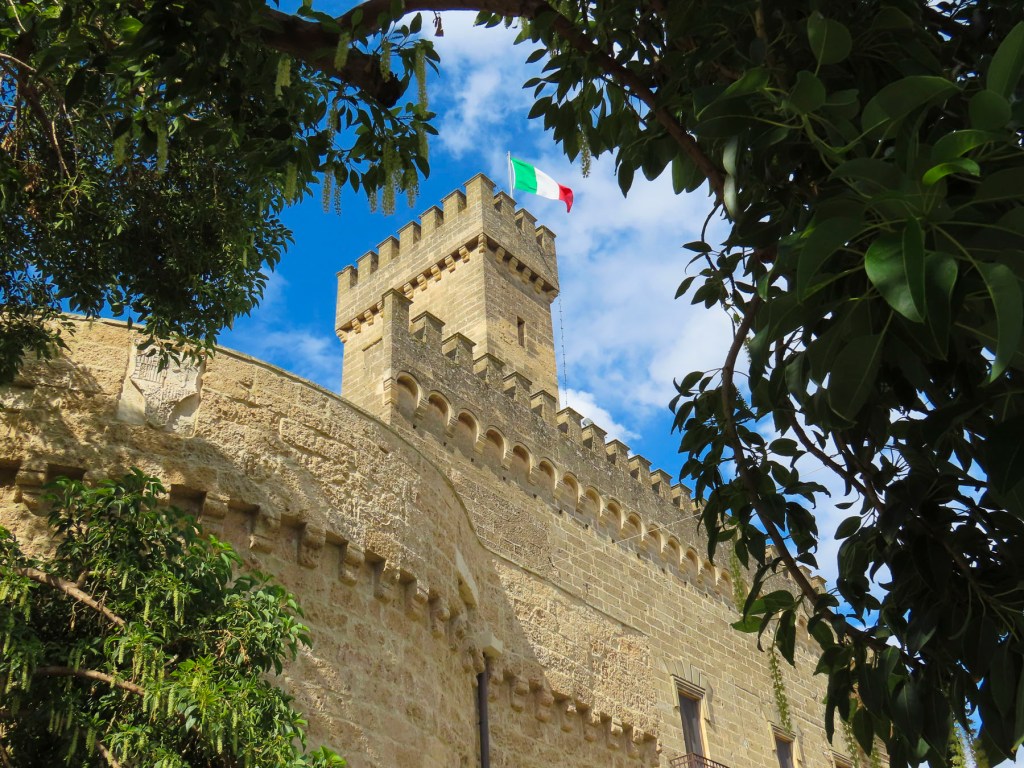
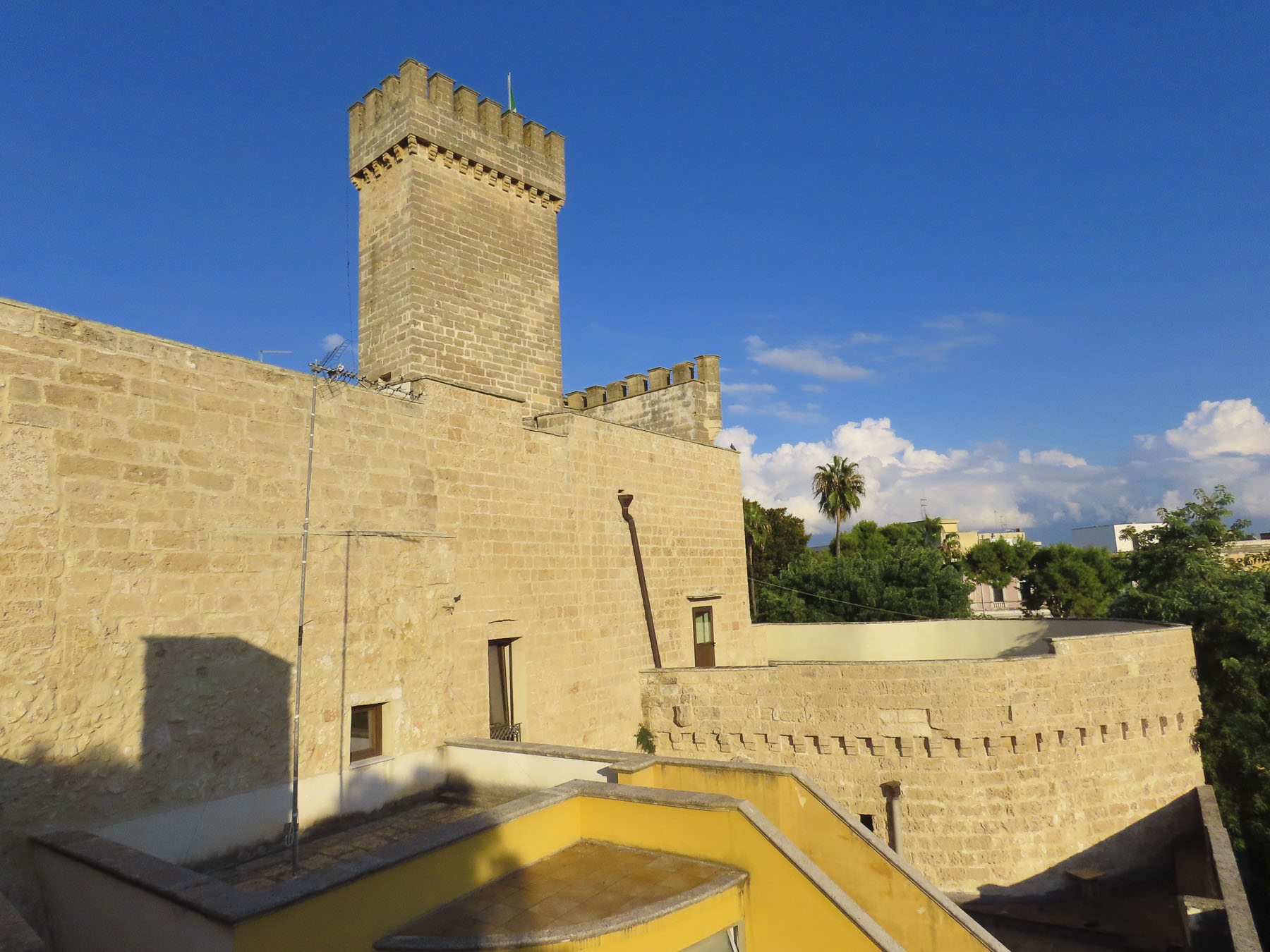
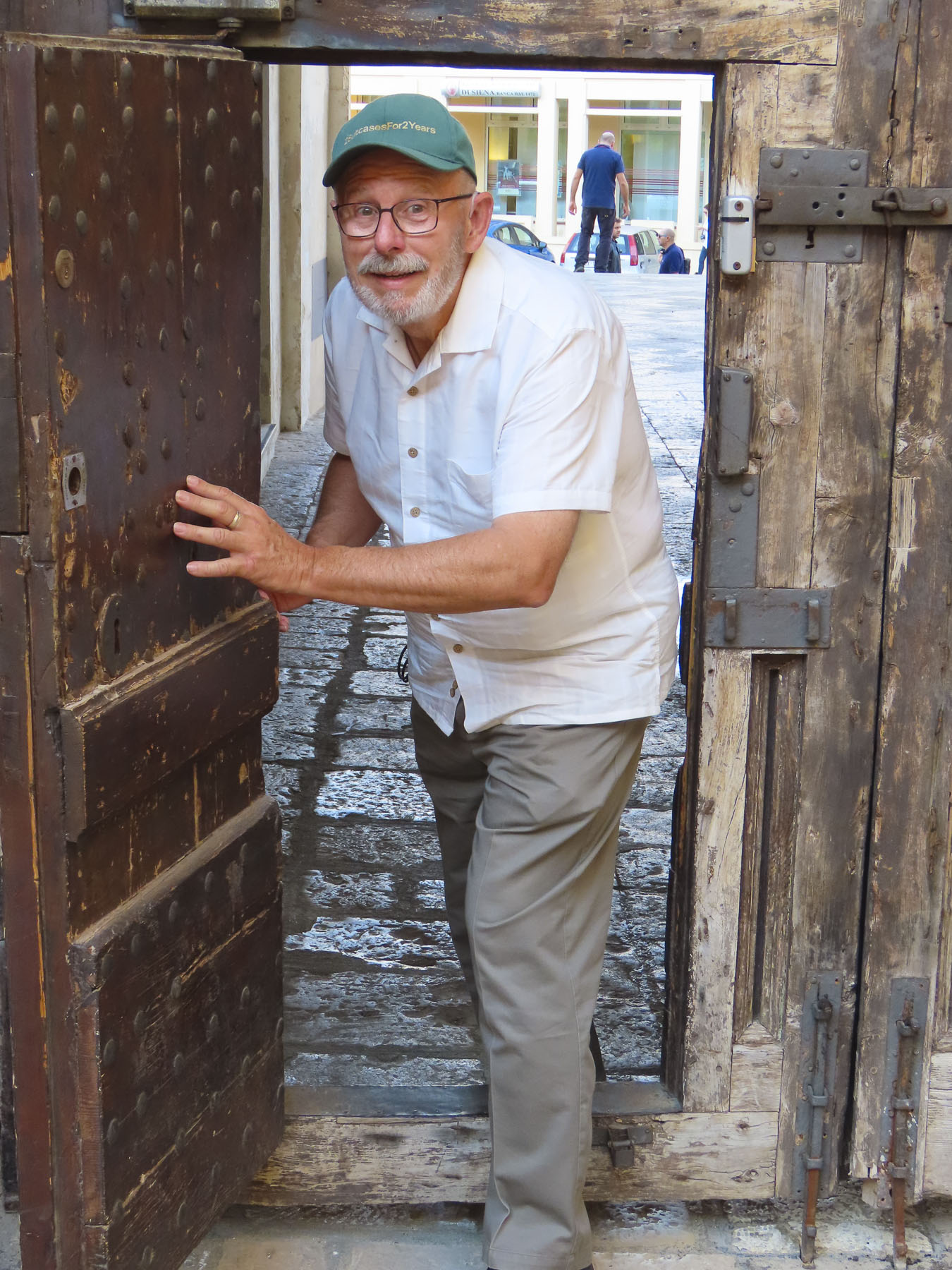
Heading back to the car we stepped through the heavy wooden door of the Aragonese Castle of Nardo. Formerly the private residence of the 15th century Acquaviva family, rulers of the fief of Nardò, a reward from King Ferdinand II of Naples.  Today the once moated fortification serves as the city’s town hall.

A very enjoyable day was celebrated and “till next time” was said over coffee before we said our farewells and drove to the seashore to find one of the numerous watch towers that were built along the Ionian coast to warn the country of imminent invasion. 

The sun was setting as we came to a stop behind a car about to turn onto the coast road. A car on the opposite side of the road turned the corner and stopped to wave at the person in front of us. Quickly both parties were out of their cars, hugging and chatting away, oblivious to us. I rolled down my window and photographed the dark silhouette of a square “Nardo tower” against an orange sky. No impatient honking, just enjoying life in Nardo.

Fino alla prossima volta – till next time,

Craig & Donna

365 Days on The Road – Our First Year as Nomads

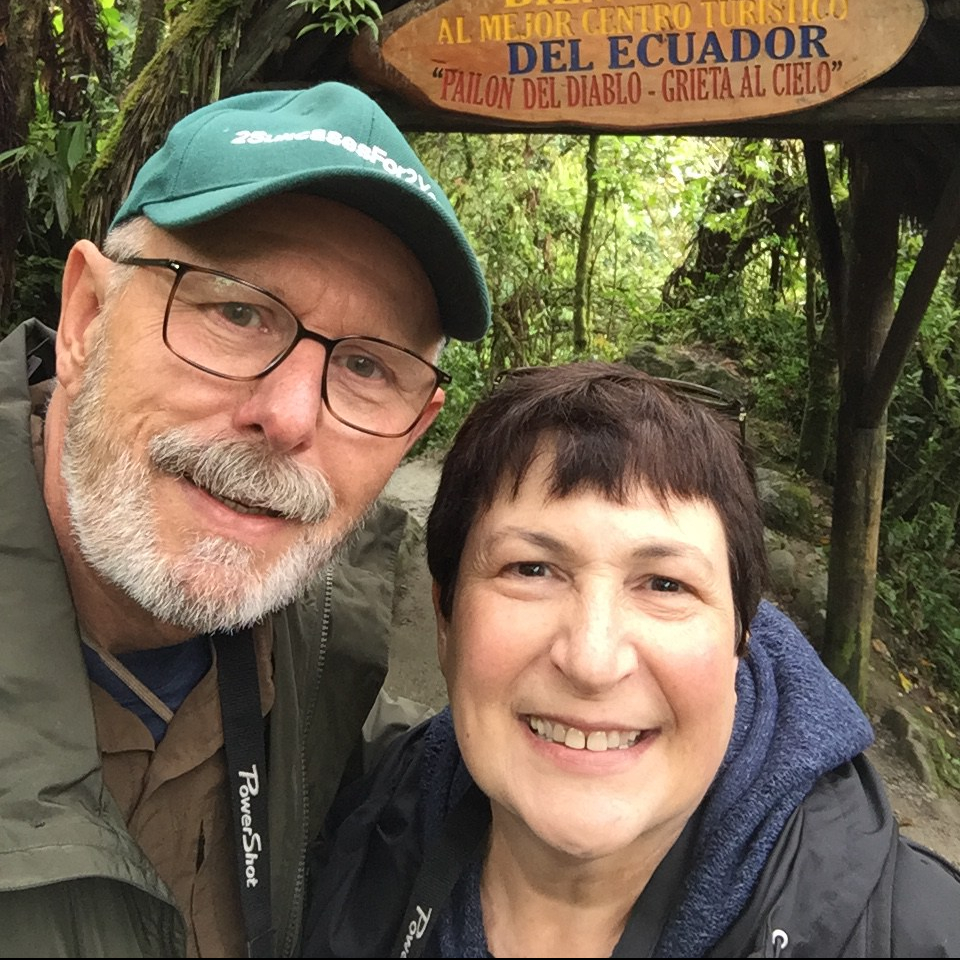
“It’s hell, I tell you!” My heart sank. I only regained my composure and burst into laughter when I turned to see a wry smile across Donna’s face and heard, “I only have three pairs of shoes with me.” Dusty after a full day of game drives, we were sitting on the porch of a small cottage sipping wine in the middle of Schotia, a 1600 hectare (4000 acre) private game reserve, just outside of Port Elizabeth on the Eastern Cape of South Africa, reminiscing about our first nomadic year.  Darkness covered the countryside early in June, the beginning of South Africa’s winter season.  Our guide had just lit the oil lamps a few minutes earlier, handed us a walkie-talkie and said, “Use this to call the owner if there’s an emergency, you’re the only folks here tonight.’’ There were no other lights around except for the moon.  The bush has a life of its own and sounded totally different in the darkness. The owner lived somewhere on the other side of this vast reserve.

We’ve had a great year, but there have been some challenges along the way:  An extremely close encounter with an aggressive bull sea lion and seas rough enough to shake a martini in the Galapagos Islands; playing chicken with chicken-buses in the Ecuadorian Andes on serpentine roads, without guard rails, more suitable for Humvees than tiny sedans. Running into the courtyard of our Airbnb in Cuenca half naked when we felt our first earthquake.  Watching a major eruption of Volcan Fuego, only 9 miles away, from our rooftop in Antigua, Guatemala, and surviving the city’s pyrotechnic Christmas season, which at times can resemble a war zone.  Endured an open coconut-taxi ride during a torrential rain in Cuba while searching for Cuban cigars; pickpockets in Lisbon; tourist information officials in Bulgaria who were better suited to working in a gulag – “FOLLOW THE LINE!!” – than greeting visitors to their beautiful country.  Plus, a husband who snores.

And through all that my gal only wants an extra pair of shoes!  I’ve married the right woman.

We didn’t plan on being the only folks at the game reserve during the middle of the week, but that’s one of the benefits of off-season travel.  Following spring-like conditions around the globe, we’ve been able to avoid hot, humid weather and the crowds.  Plus, the prices are lower for hotels and Airbnb’s. Our traveling budget is intact, so we haven’t had to resort to smuggling, selling blood or that extra kidney.IMG_7406When we retired early, a year ago, we had to choose health insurance or travel.  We made the decision to go without U.S. health insurance, because it’s too damn unaffordable and wouldn’t cover us outside the U.S. anyway.  We chose travel insurance instead, with medical evacuation, and we pay out of pocket for wellness care and dentistry.  Our two years on the road will bridge us until age 65 when we qualify for Medicare.  And it’s surprising how affordable excellent healthcare is in other countries.  We’ve paid $25.00 for an emergency room visit to a private hospital and $5.00 for the prescriptions in Ecuador to treat high altitude sickness.  Our travel insurance paid fully for a visit to an ENT specialist in Lisbon to treat a persistent sinus infection.  I’ve visited dentists in Cuenca, Ecuador for a tooth extraction and bridge; Sofia, Bulgaria for a broken filling; and Cape Town, South Africa for a root canal.  The care has been excellent and extremely inexpensive compared to pricing in the United States.  Though when we are in the United States travel insurance only covers us if we are one hundred miles away from our previous home in Pennsylvania.IMG_0594We plan on purchasing a home when we return to the United States. Right now, though, our budget is plus/minus $1000.00 per month for an apartment.  One thousand per month for housing goes much further overseas than in the states and allows us to live in unique and interesting locales.

The regional cuisine everywhere has been wonderful.  Food is a large part of any travel budget and to keep our expenses down we cook in quite a bit.  We enjoy the experience of shopping like a local and buying different fruits, vegetables and “oh, the breads.”  We’ve purchased meat and chicken from street vendors and learned to arrive early in the morning while the day is still cool to avoid the flies.  Our dieting regime of walk a little then café, walk a little more then café, seems to be working.  We monitor our physical activity with our phone’s health app. Though after a day bouncing through the bush in a Land Rover it credited us with climbing 170 flights of stairs.  No fools we – we ordered two desserts that night.IMG_3737[35074]Restaurants have been refreshingly inexpensive with most meals costing half or less for what you would pay in the states for something similar.   In 99% of the places we’ve dined we haven’t experienced tourist pricing and it’s wonderful.  We did get extremely gouged at a historic café in Porto, Portugal, which wouldn’t have been so bad, but the coffees and pastries were tasteless.  Lamb, fish, oysters and ostrich, pricey things at home, are now on our shopping list.  The wines in Portugal and South Africa are very good.IMG_7034We’ve rented cars in Ecuador, Guatemala, Portugal, Bulgaria and South Africa. Near the Schist villages in the mountains of central Portugal we gave a lift to two hikers, who were exhausted from a long trek without water.  We ended up having a delightful afternoon and lunch with them.  Aside from the deeply rutted dirt roads of the Andes Mountain range in Ecuador, South Africa with its driving on the left has proven to be the most difficult.  We find that a pilot plus navigator system works well, with the latter reminding the pilot to stay left and make very wide right-hand turns.  Interesting traffic signs dot the roads here: Caution Tortoise and Baboons Share this Road Too, Watch for Stray Cattle.  I chuckled to myself when I passed a sign that I thought said Zebras Humping, only to realize a moment later it was a speed bump when I hit it at a pretty good clip.  Caution High Winds – Parents Hold Your Children Firmly by the Hand as there is Mortal Danger of Them Blowing Off, greeted us in the parking lot of a scenic and windy overlook.  South Africa has a well deployed and concealed electronic camera system and we’ve received our first notice of a traffic violation from the rental car company. 

Originally, we were going to spent April and May pet sitting in England, then June, July and August doing two different Workaway assignments, in exchange for free housing in France, in order to budget some extra funds for our push into Africa.  On short notice our first pet sit in England fell through. Next, Donna was sick for several weeks and I fell three times on the same arm, severely bruising it.  With deep introspection we realized we’re not as young as we wish anymore and cancelled our working assignments.  Gardning at a 14th century chateau sounded wonderful, but not in the record 114F heat that France recently experienced.So, we quickly reworked our plans and ended up in of all places Bulgaria, (more on that in future blogs,) for a month, before flying down to Cape Town.  At the end of August, we head to Victoria Falls, bordering Zimbabwe and Botswana, for a few days before flying to Ethiopia to visit the indigenous tribes of the Southern Omo Valley, and the Rock Churches of Lalibela.  Montenegro and Italy will host us until Christmas when we’ll return to the states to celebrate it with our family.  Our route for 2020 hasn’t been determined yet.

When shopping for souvenirs we try to buy directly from local craftspeople and have learned that if an item is very inexpensive it was probably made in China.  Cheap Chinese imports are undercutting the livelihoods of many local craftspeople around the world.  I don’t want my tourist dollars inadvertently supporting rich Chinese businessmen who purchase poached rhino horn for use in folk remedies.  China’s traditional medicine practitioners are the only market for poached rhino horn.  Three rhinos are killed every day to support this illicit trade and China needs to stop turning a blind eye to it.  In Cuba we witnessed widespread poverty, the effects of a failed communist state.  Tourists dollars greatly help aspiring entrepreneurs and local economies grow.  Why the U.S. is restricting travel again to Cuba is beyond me.  We conduct business with China, forgetting its reprehensible human rights record, but not Cuba only ninety miles from Miami. Go figure.

Many of our most memorable moments have been conversations around communal dining tables sharing stories, adventures and tips with inn keepers, guides and fellow travelers.  In many of the places we’ve been “we don’t get many Americans here” is a common refrain. Travel – it’s good for the soul and opens a window of empathy that you can’t find sitting in an armchair watching the nightly news.

Till next time,

Craig – Suitcase #2

Now for a different perspective on our nomadic year check out Suitcase #1, Donna’s blog at: https://bornwithgypsyshoes.com/2019/07/02/a-look-back-one-year-of-being-homeless-jobless-and-uninsured/

P.S. The 2suitcasesfor2years blogs run about 8 weeks behind our actual travel dates.  You can also follow 2suitcasesfor2years on Instagram for more great photography.

Back Roads – Lisbon to Marvão

“Set it to avoid toll roads?” “Yep.” And with that our mapping app committed us to back roads for our journey to the Portuguese frontier. The medieval hilltop citadel of Marvão,  located along the border with Spain, was our day’s destination.  We had just wrapped up a splendid month in Lisbon, but were looking forward to a fifteen-day road trip exploring the smaller villages of the Portuguese countryside, between Marvão to the east of Lisbon and Porto to the north.IMG_7889Leaving Lisbon behind, we crossed the graceful Vasco da Gama suspension bridge spanning the Tagus River.  Within minutes we entered a gently rolling landscape of cork, olive and chestnut orchards dotted with sheep grazing in the shade beneath the trees.  Along the roads, storks were building their nests atop powerline towers or the chimneys of abandoned houses.  These stunning birds, having just completed their seasonal migration north from Africa, are always a joy to watch and we interpreted their sighting as a sign of good fortune ahead.  Heads turned as we passed through small farming towns more used to seeing the twice daily bus or farm tractors rumbling along than unfamiliar tourists cruising through.  Each village, regardless of how small, had a café, which was the center of activity.  Short on atmosphere, they offered espresso or cappuccino, just as good as in Lisbon, along with a limited selection of sandwiches and pastries. 

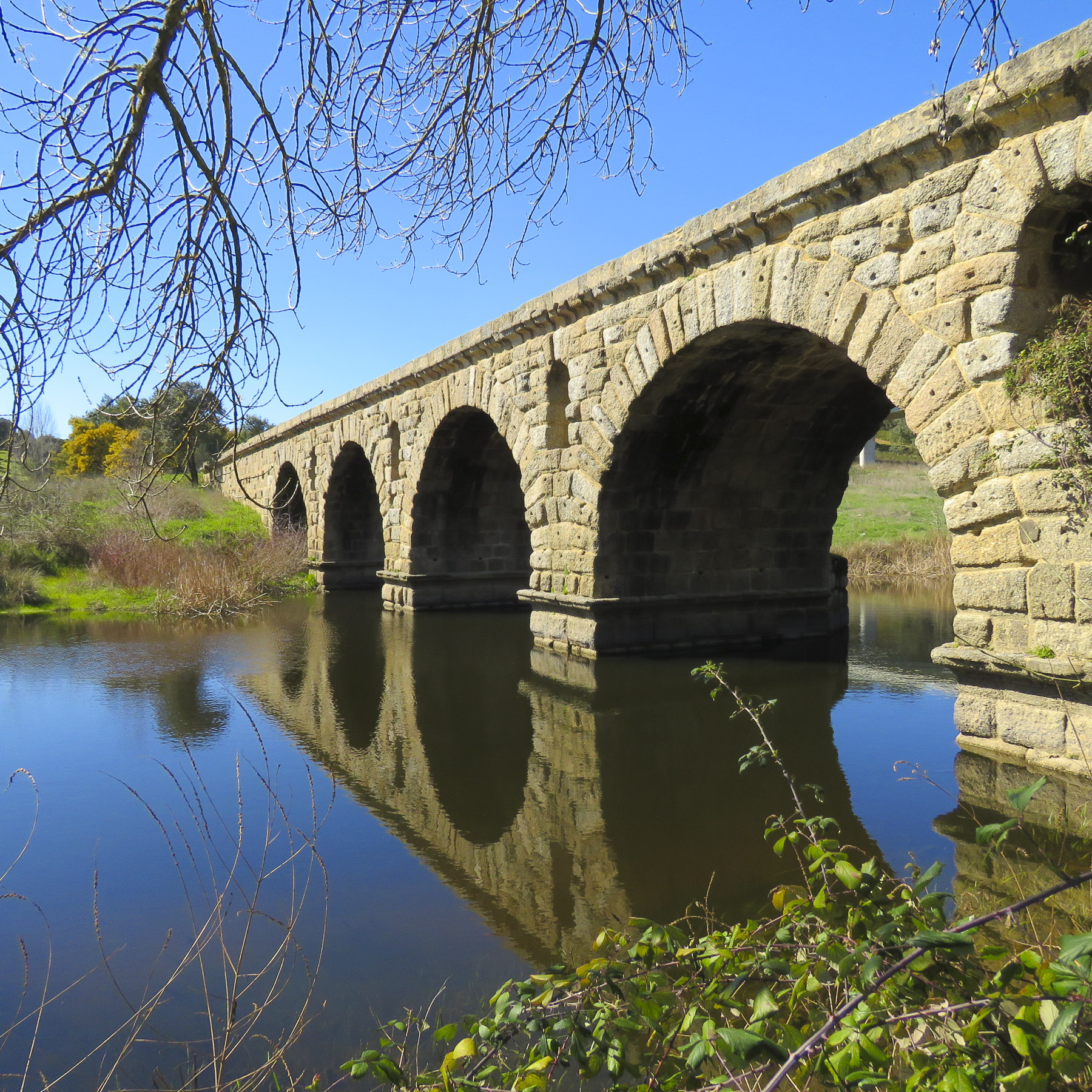
Crossing the Ribeira de Seda on a high modern overpass, we spotted a large old stone bridge below.  The next exit led us down to Ponte de Vila Formosa, an impressive 2,000-year-old Roman bridge with six arches dating to the 1st century CE.  This 330-foot span was once a vital crossing on the Roman road linking Lisbon to Mérida, Spain.  Today it’s one of the best-preserved examples of Roman engineering remaining in Portugal.  Closer to Marvão is a one arch bridge built in 1494, and not nearly as elegant or substantial as the Ponte de Vila Formosa. We wondered how a royal carriage ever crossed it safely.IMG_6849Typically, we double the amount of time it’s suggested to get to our destination to account for coffee, lunch breaks and photo ops.  We drive, we stop, jump out for snaps, make U-turns and so on.  As the sun lowers in the afternoon sky, “We’ll never get there if you stop every 100 yards to take pictures!” is often voiced from the navigator’s seat.

A serpentine road twisted up the side of the 3,000-foot-tall butte, occasionally offering a glimpse of our formidable destination high above.  Driving through the slender entrance gate, the portal narrowed to the point where we had to pull the mirrors in.  It seemed the further we drove uphill the farther time receded. By the time we reached the summit of the walled village and checked in at Dom Dinis, a small boutique hotel, the golden hour was in full glory and bathed the countryside in a warm glow.IMG_8053The cold wind chilled us to our bones, but we found warmth by the fireplace in the tavern across from our inn.  After dinner, as we stood on the ramparts behind our hotel, the darkness offered us a view of the stunning star-filled sky above and the twinkle of village lights far below.  With a stiff breeze in our faces, we felt like we were flying. The glorious sunrise the next morning cast a beautiful light on the panoramic view of the flat plains that run all the way into Spain, while the rugged mountains and valleys to the west stayed covered in an early morning mist. 

Marvão was important as a strategic stronghold since the ninth century, when the Moors first possessed it, and subsequently improved and expanded upon it over the centuries when the Kings of Portugal controlled it.  The fortress was sacked and retaken many times over the years. Today after extensive restoration it’s possible to walk all the way around the lower town atop the ramparts that encircle it. The castle walls jut from the steep sides of this granite monolith, like the bow of a ship breaking a huge wave.  Within its battlements, storage rooms and an impressively large rainwater cistern helped sustain the town folks when under siege.  As the last line of defense, the entrance to the castle’s tall keep was high above the courtyard and accessible only by crossing a gang plank which was drawn inside for security. 

Outside the castle, the hilltop village is wonderful to wander around. It reveals formal garden, narrow lanes and arched passageways that lead to whitewashed houses with decorative, Manueline windows, wrought iron balconies, ancient doors and red tiled roofs. 

One of the town’s old churches, Igreja de Santa Maria, has been converted into a civic museum with interesting displays explaining the history of the area. 

Fortunately, in 2017 Marvão requested to be removed from the UNESCO tentative site list, so it isn’t on the bucket list of busloads of day tourists from Lisbon.  At one time Marvão was home to 3,000 residents, but today there are fewer than one hundred full time residents living within its walls. We had the village practically to ourselves in mid-March.

Till next time,

Craig & Donna


Two Hundred Fifty-Three Days on the Road

cropped-img_4837The good news is we haven’t killed each other, though there have been times that I’ve dreamt a pillow was hovering over my head. Just kidding.  We have gone from the two of us working six days a week while living in an eight-room house, to being together 24/7 with only a suitcase each.  Boy did we downsize! It was challenging: what not to bring, considering all the seasonal changes we have encountered.  Don’t laugh, but I have thermals, wool hats and gloves packed, just on the off chance we get snowed in on a mountain pass in the French Alps, this July.  Yes, there’s also a flask of medicinal whisky packed in the bags for emergencies.  And to my wife’s amusement, a cheap plastic fly swatter.  Tragically the backup swatter was left behind in Antigua.  In Lisbon I finally caved in and bought a pair of slippers because the floors of the stone buildings just don’t retain any heat in the winter.  The comfort of a pair of slippers in the evening, after a long day of walking, can’t be underestimated.IMG_8406It’s been a huge but surprisingly easy transition for us. 253 days ago (I thought I was writing this at around day 200, it’s easy to lose track of time on the road) we slammed the door shut on our storage pod, locked it, and popped open a bottle of champagne to celebrate our impending journey. We haven’t looked back.  Ecuador, Guatemala, Cuba and now Portugal; I can’t imagine undertaking this adventure with anyone else.

The Airbnb revolution has greatly contributed to our concept of slow travel, allowing us to immerse ourselves in a location for an extended period of time and to enjoy a community to its fullest. Experiencing a festive Christmas season and an explosive New Year’s celebration in Antigua, Guatemala, was extraordinary and something we wouldn’t have appreciated as much if we were just passing through.

We felt a little blue being away from our kids and their families during Christmas. The irony that we, and not the children, broke with the family tradition first was not lost on us.  A three week visit back to the States in mid-January to see everyone helped tremendously.img_0864 This visit also gave us an opportunity to jettison the wonderful textiles and ceramics we had purchased along the way for a home we don’t have yet.  Imagine this scene from our last stop in San Pedro – the backseat of a tuk-tuk overflowing with Donna and all our suitcases, while I’m sharing the driver’s seat with the driver, one cheek on, one cheek off and a foot dangling outside the cab as we speedily snaked through the steep narrow alleys of the village. 

Shopping in the central markets and street markets of each city has been wonderful as cooking is essential to keeping within our budget, though the size of some of our kitchens have tested our creative culinary abilities.  The exotic fruits available to us in Ecuador were amazing and we tried many that we were unfamiliar with.

In Olon we bought the catch of the day from the fish monger as be pushed his cart through town. Guatemala yielded remarkably flavorful vegetables.  We had a memorable culinary carrot experience there, go figure. This from a home gardener is quite a statement. Like our neighbors in the Alfama district, we are hanging our laundry out the windows to dry in the Lisbon fresh air. Our stays in each place have ranged from four to ten weeks.  I favor the longer stays whereas Donna prefers a shorter visit. 

There have been challenges negotiating the medical systems in Ecuador and Portugal only because we haven’t known the protocol of the local doctors.  We have been extremely impressed by the care we have received from the medical professionals in these countries for altitude sickness and a persistent upper respiratory infection.  The out of pocket costs have been remarkably inexpensive in comparison to the U.S. medical system.IMG_8692 Not everything has gone smoothly.  A rental car agency did not honor a reservation and we had to scramble to find another one late one night in the airport.  We have felt very safe during our travels, but there are unfortunately some extremely talented pickpockets out there. May the curse of arthritis shorten their careers!  Filing a stolen property report in Lisbon with the tourist police turned out to be an enjoyable experience due to the officer assigned to us.  Luckily, within 24-hours they called us with the good news that our wallet had been recovered, minus the cash of course, but that our passport and credit cards were all there.  Honestly, we weren’t following our own advice: only carry in your pockets what you are willing to lose.  Everything else of value needs to be carried under your clothing.IMG_8596After Lisbon it’s a two-week road trip through Portugal. Then we are off to, of all places, Sofia, Bulgaria for a month, (the Beatles song “Back in the USSR” keeps coming to mind) in order to reset our Schengen union days for later in the summer.  After that, two dog sits in England and two Workaway experiences in France at a 14th century chateau await us before we resume our life of leisure in Kotor, Montenegro, in September.img_0669We have shared meals and stories with so many wonderful and interesting people along the way.  These friends have made this journey what it is – fantastic! 

Kindness and a smile go a long way in this world.

Till next time,

Craig & Donna


Departure – Two Days Ahead of Schedule!


Wow! Where to begin.  There were so many stages to planning our exodus, but it all came to together in the final weeks before our June 30th ETD. Coordinating the sale of two cars was a huge concern and turned out to be easier than expected.  Fortunately for us one of our friends agreed to buy Donna’s car in the beginning of April, and hold off on taking ownership until the last week of June.  We sold my car at the end of May.

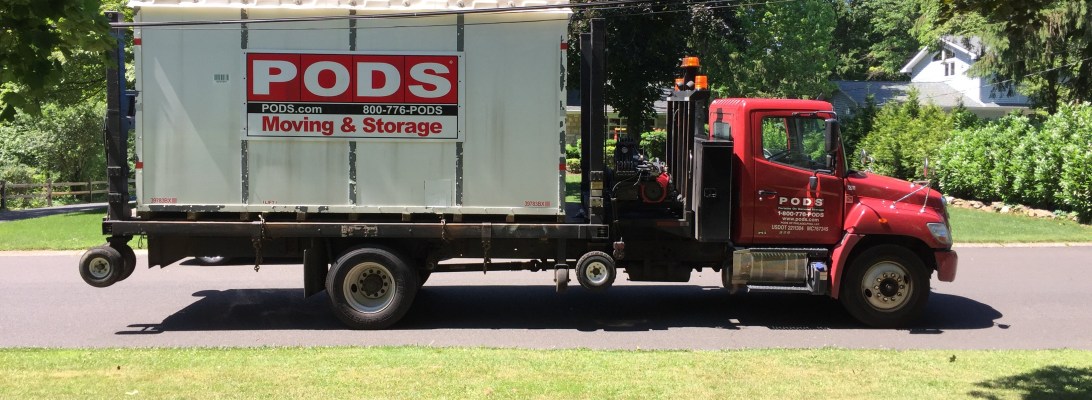
Regardless of the wonderful goal our downsizing and move supported, it was stressful.  What to keep, what to sell, listing on Craig’s List and Facebook Garage Sale Pages, having buyers come to the house, the no shows.  Selling the dining room table, around which many wonderful occasions were celebrated, left an unexpected angst.  And ultimately with what’s left, will it all fit?  Marking out the dimensions of the container on the garage floor helped to visualize the packing space I had available to me before the Pod was dropped off.  As larger pieces of furniture made their way into the garage, serious discussions were had about what we really need/wanted to keep.  In the end three loved, antique East Lake chairs (very uncomfortable) were willed to our sister-in-law and two press board bookcases didn’t make the cut.

My Tetris skills developed from loading a USPS truck for Sunday Amazon delivery during many Christmas seasons were fully utilized.  Boxes were packed heavy and to their fullest.  Side to side and top to bottom, every empty cavity in the Pod was filled until it required multiple hands to hold the bulging load in place as the last tie-downs were secured and the door was slammed shut on June 28th, two days ahead of schedule.

IMG_1234

On June 30th, we had our feet in the surf at Dewey Beach when the Pod people called to say our container was picked up.  It is going to be like a time capsule when we open it again.

Many thanks to family and friends for timely boosts and heavy lifting.