

“Set it to avoid toll roads?” “Yep.” And with that our mapping app committed us to back roads for our journey to the Portuguese frontier. The medieval hilltop citadel of Marvão, located along the border with Spain, was our day’s destination. We had just wrapped up a splendid month in Lisbon, but were looking forward to a fifteen-day road trip exploring the smaller villages of the Portuguese countryside, between Marvão to the east of Lisbon and Porto to the north.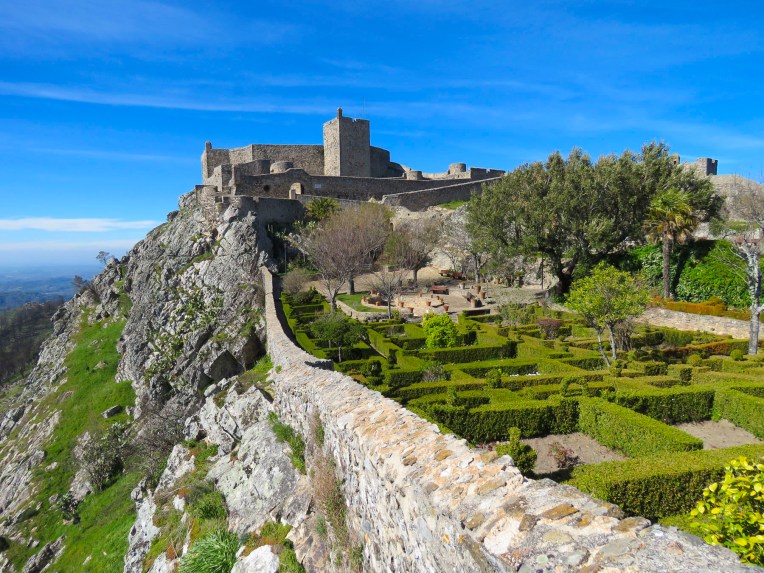 Leaving Lisbon behind, we crossed the graceful Vasco da Gama suspension bridge spanning the Tagus River. Within minutes we entered a gently rolling landscape of cork, olive and chestnut orchards dotted with sheep grazing in the shade beneath the trees. Along the roads, storks were building their nests atop powerline towers or the chimneys of abandoned houses. These stunning birds, having just completed their seasonal migration north from Africa, are always a joy to watch and we interpreted their sighting as a sign of good fortune ahead. Heads turned as we passed through small farming towns more used to seeing the twice daily bus or farm tractors rumbling along than unfamiliar tourists cruising through. Each village, regardless of how small, had a café, which was the center of activity. Short on atmosphere, they offered espresso or cappuccino, just as good as in Lisbon, along with a limited selection of sandwiches and pastries.


Crossing the Ribeira de Seda on a high modern overpass, we spotted a large old stone bridge below. The next exit led us down to Ponte de Vila Formosa, an impressive 2,000-year-old Roman bridge with six arches dating to the 1st century CE. This 330-foot span was once a vital crossing on the Roman road linking Lisbon to Mérida, Spain. Today it’s one of the best-preserved examples of Roman engineering remaining in Portugal. Closer to Marvão is a one arch bridge built in 1494, and not nearly as elegant or substantial as the Ponte de Vila Formosa. We wondered how a royal carriage ever crossed it safely. Typically, we double the amount of time it’s suggested to get to our destination to account for coffee, lunch breaks and photo ops. We drive, we stop, jump out for snaps, make U-turns and so on. As the sun lowers in the afternoon sky, “We’ll never get there if you stop every 100 yards to take pictures!” is often voiced from the navigator’s seat.


A serpentine road twisted up the side of the 3,000-foot-tall butte, occasionally offering a glimpse of our formidable destination high above. Driving through the slender entrance gate, the portal narrowed to the point where we had to pull the mirrors in. It seemed the further we drove uphill the farther time receded. By the time we reached the summit of the walled village and checked in at Dom Dinis, a small boutique hotel, the golden hour was in full glory and bathed the countryside in a warm glow.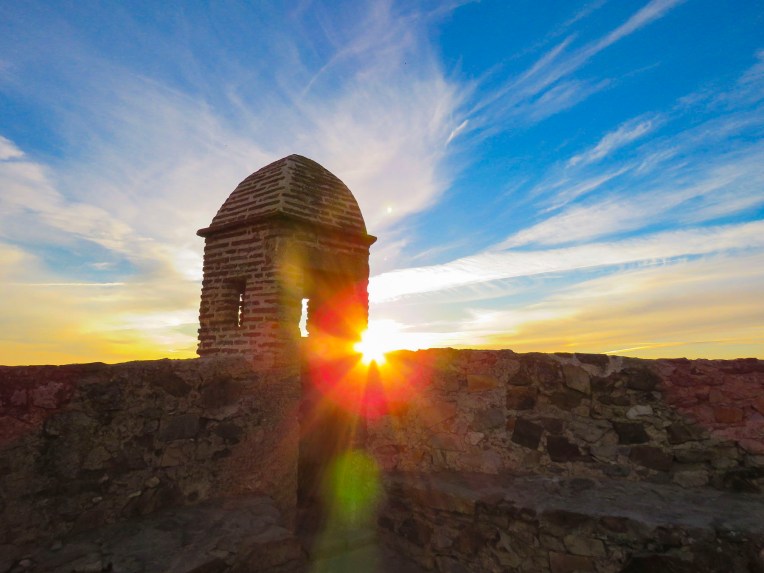 The cold wind chilled us to our bones, but we found warmth by the fireplace in the tavern across from our inn. After dinner, as we stood on the ramparts behind our hotel, the darkness offered us a view of the stunning star-filled sky above and the twinkle of village lights far below. With a stiff breeze in our faces, we felt like we were flying. The glorious sunrise the next morning cast a beautiful light on the panoramic view of the flat plains that run all the way into Spain, while the rugged mountains and valleys to the west stayed covered in an early morning mist.


Marvão was important as a strategic stronghold since the ninth century, when the Moors first possessed it, and subsequently improved and expanded upon it over the centuries when the Kings of Portugal controlled it. The fortress was sacked and retaken many times over the years. Today after extensive restoration it’s possible to walk all the way around the lower town atop the ramparts that encircle it. The castle walls jut from the steep sides of this granite monolith, like the bow of a ship breaking a huge wave. Within its battlements, storage rooms and an impressively large rainwater cistern helped sustain the town folks when under siege. As the last line of defense, the entrance to the castle’s tall keep was high above the courtyard and accessible only by crossing a gang plank which was drawn inside for security.


Outside the castle, the hilltop village is wonderful to wander around. It reveals formal garden, narrow lanes and arched passageways that lead to whitewashed houses with decorative, Manueline windows, wrought iron balconies, ancient doors and red tiled roofs.


One of the town’s old churches, Igreja de Santa Maria, has been converted into a civic museum with interesting displays explaining the history of the area.


Fortunately, in 2017 Marvão requested to be removed from the UNESCO tentative site list, so it isn’t on the bucket list of busloads of day tourists from Lisbon. At one time Marvão was home to 3,000 residents, but today there are fewer than one hundred full time residents living within its walls. We had the village practically to ourselves in mid-March.
Till next time,
Craig & Donna


 The scenery along the drive to Lake Atitlan, along roads that continued to climb higher, was spectacular with verdant greenery and distant volcanos appearing then disappearing again with each twist of the serpentine route.
 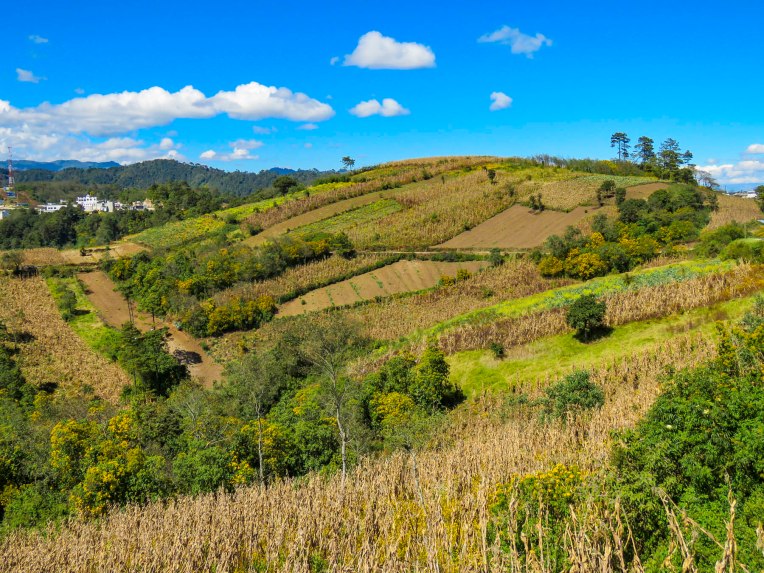 Arriving in San Pedro we thought we were on a movie set for a sequel to Mad Max or Water World. Down by the Panajachel dock dreadlocked travelers, wearing eccentric attire, filled the streets along the lakeshore. Feeling as if we had time traveled, we were relieved to find our Airbnb far out of town on a dead-end road that ran along the lake. According to Google maps the road was unnamed. Our host said “tell the tuktuk drivers you are staying on Calle Finca,” which referred to a distant and abandoned coffee farm, about an hour’s walk from the trail head at the end of the road.
 Our new home for our last week in Guatemala had a wonderful porch with great view of Lake Atitlan and tranquility. A relaxing change of pace was called for after the Christmas and New Year’s Day celebrations in Antigua. Bird calls or the soft Mayan chatter of coffee pickers, harvesting ripe beans right outside our door, were the only sounds that filled the air. Fortunately, we were much closer to town than the abandoned coffee finca and were able to walk to the daily outdoor market, along streets where we could see women washing clothing in the distant lake, and make-shift scales were set up to buy coffee beans hauled down from the slopes of Volcan San Pedro.


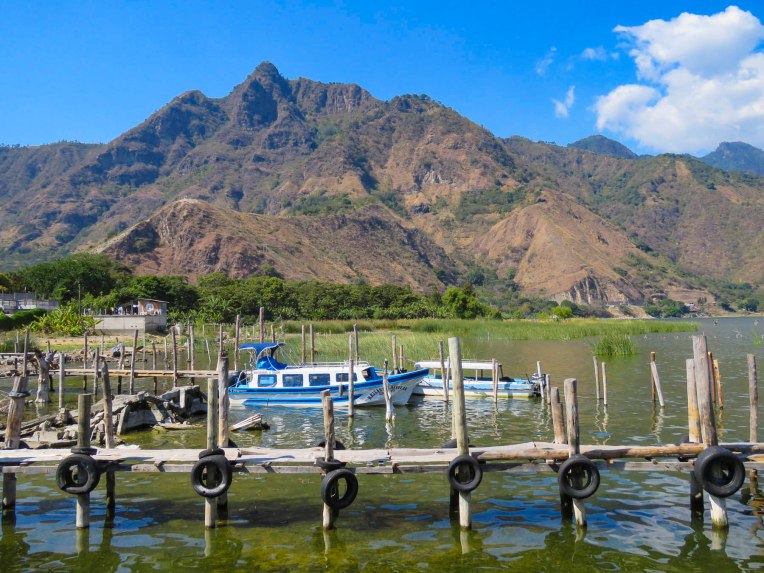 A short ferry ride took us to San Juan La Laguna, a weavers and artists village that visually celebrates its Mayan heritage with colorful street murals. The steep walk uphill from the boat dock to the center of town was lined with art galleries.


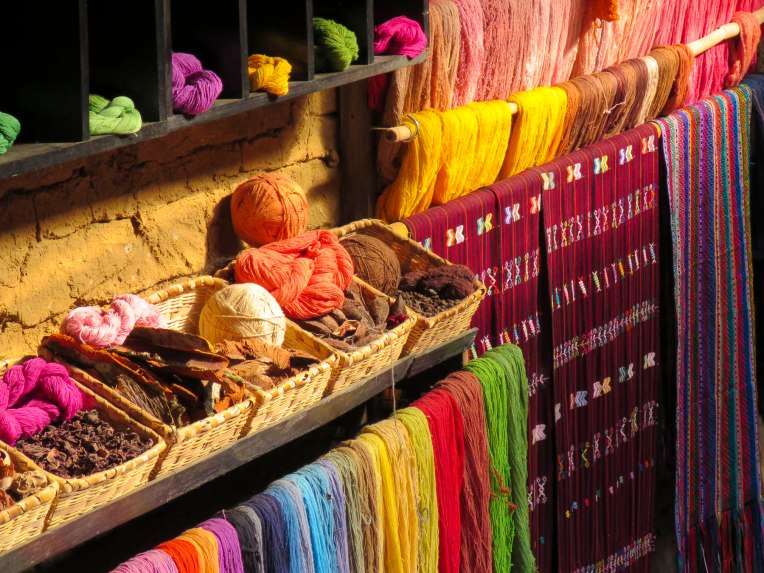 Six years ago, when we first visited the lake, we stayed at Posada de Santiago in Santiago de Atitlan and met Carolina, an American expat who has been in Guatemala going on thirty years now. We’ve stayed in touch over the years. Being so close by, a reunion was in order.
 It’s a long ferry ride to Santiago de Atitlan and even longer when the wind churns up whitecaps on the water, and the small boat we were in rocked side-to-side for the duration of the crossing. We silently said our prayers when the local folks stated to reach for the life preservers. Fortunately, we were never too far from shore and know how to swim. It is a breathtaking view coming into the boat dock at Santiago with its namesake volcano towering over the town and Volcan San Pedro just an avocado toss away, across the water.


 Enjoying the stars from our porch we were surprised when fireworks celebrating Epiphany lit up the night sky above villages across the lake, their colorful bursts reflected brilliantly on the water. With magical moments like this, still fresh in our memories, Guatemala tugged at our hearts as we packed for our next adventure.
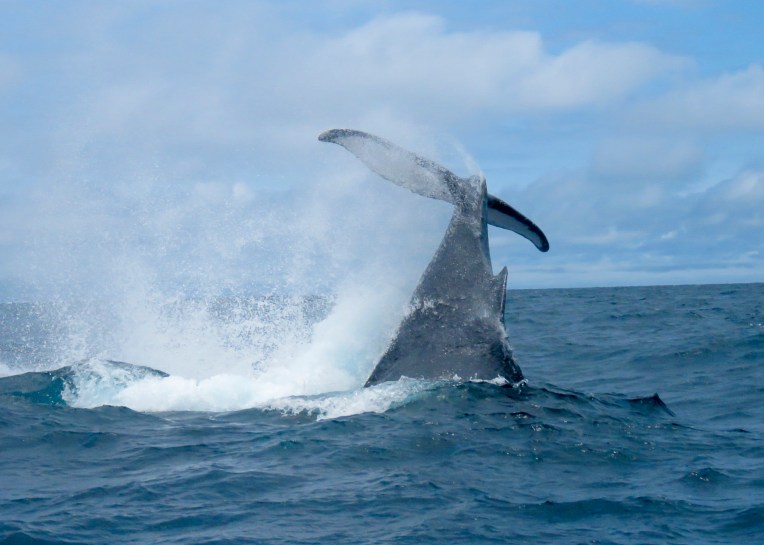
 We’ve been on the road for more than 100 days now; previously, our longest trip was just shy of three weeks, with carry-on luggage only. So, we felt fully prepared to tackle this challenge (insert wink here.) Needless to say, there is a learning curve, but we have the right mind set. In late October, we move north to Guatemala, followed by a cruise to Cuba. The first part of 2019 will see us in Europe, and after that, who knows? We’ve discussed heading to South Africa, then working our way north and through East Africa, trying to have as many big game safari experiences as possible. This has been a dream of mine since I unwrapped my first National Geographic magazine and was enthralled by the spectacular images of the great migration across the Serengeti. Winning this


![IMG_5946[12490]](https://i0.wp.com/2suitcasesfor2years.com/wp-content/uploads/2018/10/img_594612490.jpg?w=378&h=504&ssl=1 "IMG_5946[12490]")

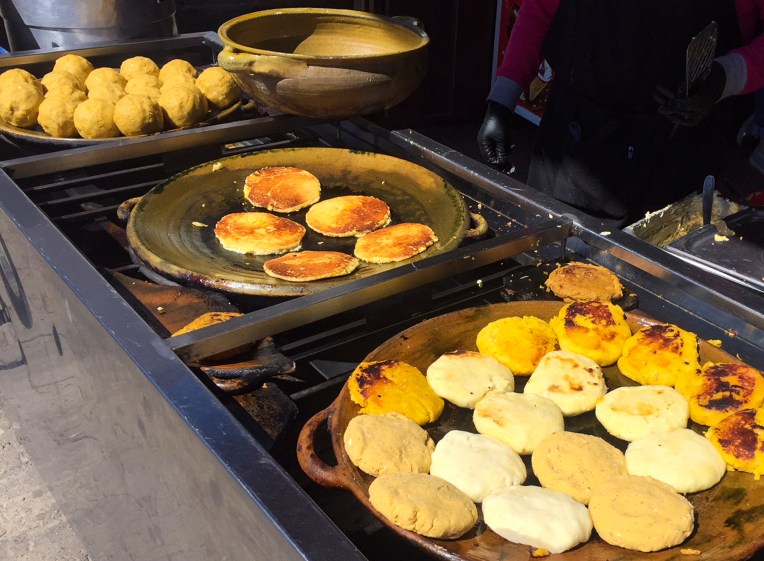 One of our favorite snacks was Tortilla de Choclo, eighty cents, a corn pancake that was grilled on a large ceramic plate, curbside, as you waited. Often, coffee and dessert cost more than lunch itself.

 One of the reasons we chose Cuenca for our first short term rental was so that I could take advantage of their dental tourism offerings. I had put off getting things done in the states because of what I thought were excessive cost, even with insurance. I am extremely pleased with the dental care that I received at Finding Health in Ecuador. Tooth extraction – $35.00, cavity – $25.00, two-tooth bridge – $250.00. Our premise that we could live abroad more economically than living back in the states is so far holding true.
 Currently we are in Olon, a rustic beach town on Ecuador’s southern Pacific coast with a wide, flat sandy beach that stretches for nearly five miles without a high-rise to been seen. It’s off season, mostly cloudy, but the water is still warm, perfect conditions for the handful of surfers and us. Fishermen still launch skiffs through the surf from the beach, and fathers can be seen taking their kids to school on the handlebars of their motorcycles, gently splashing through the incoming tide. Our rent for the month of October is $730.00 with breakfast included!


![IMG_5961[12489]](https://i0.wp.com/2suitcasesfor2years.com/wp-content/uploads/2018/10/img_596112489.jpg?w=402&h=536&ssl=1 "IMG_5961[12489]")


 2 Suitcases for 2 years