The animals and marine life of the Galapagos Islands are everything they are supposed to be – UNIQUE and AMAZING! A tour of these islands and their unique ecosystems should convince even the most die-hard doubters among us to become tree hugging environmentalists. Kudos to Ecuador for doing a wonderful, difficult, and expensive job protecting this unique environment for future generations.
We were originally thinking of heading to the Galapagos for our 60th birthdays, but work / life interceded. So we postponed it until our retirement this year and made sure it was the first thing we did, because you can never predict the future.
There are so many options to consider when planning to visit the Galapagos Islands. Did we want to do a cruise around the islands or do shore based excursions from various ports? If we did a cruise, should it be for 3, 5, 7 or 8 days, on a large or small boat? After some research we opted to go for an eight day cruise, arranged by Eva of Enjoying Ecuador Travel – thank you – on the small ship Golondrina which slept 16 in eight cabins in bunk beds on three decks. Our group had a wonderful international mix, consisting of folks from Belgium, Germany, Italy, Argentina and the U.K., all good friends by the end of the trip. Before being converted to carry tourists the Golondrina served as the scientific research vessel Beagle lll. The ship had lines and character that would have enticed Joseph Conrad or Jack London to step aboard.
Wanting to be away from the potential noise and vibration of the engine room, we chose a cabin on the top deck, right behind the pilothouse. The cabin was small and efficient and the location on the third deck perfect for fair weather sailors like us. In choppy or rough seas every pitch or roll was exaggerated; then you wished were as close to the bottom and back of the boat as possible, were the motion wasn’t felt as much. We had been on large cruise ships many times before and never experienced sea-sickness, but on this small vessel we were not as lucky and I was in the top bunk. We paid a premiun for the priveledge to be tossed, rolled and bounced. Fortunately, two young women from Germany shared their motion sickness medicine and it saved the week for us.
As soon as we were all aboard the yacht it was anchors away and we headed to Mosquera Islet and our first wet landing and snorkeling. A wet landing is as you would expect: the ship’s two pangas (small boats) motor you as close to the beach as possible and drop you off into, hopefully, knee deep water to walk ashore. There are also dry landings where the pangas bring you into a dock or more likely stone outcroppings and you jump ashore ,keeping your feet dry. Then there is the less discussed dry landing with really good potential to become very wet. These are situations where the surf might be a little rough and the boat handler has to keep the bow of the panga pinned to the rocks with engine in full throttle until everyone is off. The boat’s guide is always ashore first to help everyone else ashore safely. “Welcome to my world,” Donna says as she helps me into my wetsuit. “It’s just like putting on Spanx!” I was always the last one to get in or out of their wetsuit.
Mosquera Islet was a narrow sliver of brilliant white sand with bull Fur Seals protecting their harems and on one end, and the sun bleached skeletal remains of a small whale as well as hundreds of red Sally Lightfoot crabs scurrying over the rocks on the other end.
That night as we steamed toward Isabela Island we crossed the equator and encountered some large swells as northern currents clashed against southern ones and had us second guessing our choice of an upper cabin. In the morning we awoke to find ourselves at anchor in the calm waters of Urbina Bay.
After breakfast (which daily consisted of eggs, granola with yogurt, fruit, toast, coffee, tea and incredible fresh juices) it was into the pangas to see what was living in the cliffs that lined the bay. Sea Iguanas shared rocks with penguins, while pelicans squabbled with blue-footed boobies over the same cliff outcropping. Our pangas edged into the black mouth of a sea cave where more birds were roosting high up. After an hour we headed back to our mother ship to prepare for snorkeling along the cliff face where it met the sea. I think my eyes popped when a sea turtle gracefully swam by almost close enough for me to touch. The first of many close encounters during that swim and the subsequent days to follow.
Back aboard it was lunch time and a two hour cruise to stop at Isabella Island’s Tagus Cove. The food aboard our boat was amazing considering the small galley space that these tasty and healthy creations emerged from. So our days followed a wonderful schedule of discovery and adventure with one or two activities between meals and then sailing overnight to the next day’s destination. Each island’s environment was unique in the animals it hosted, as was the sea life in the surrounding waters. The sheer joy of seeing so many animals in their natural habit was awe inspiring.
On Santa Cruz Island we visited the Charles Darwin Research Station for a tour of their tortoise breeding program. Tortoise eggs collected from each island are marked accordingly as are the shells of the hatchlings, so that they can be returned to the right island later. The young tortoises are kept sheltered for 5 years or until their shells harden enough to protect them against predators in the wild when they are released. We also visited a private tortoise reserve in the highlands where from a distance we saw hundreds of small boulders. Walking closer to the boulders we realized that they were actually tortoises in their natural environment, slowing munching away as they inched across the verdant green highland.
Many times in our travels in other countries, we have noticed the highwater mark from a flood or storm by the line of plastic bags left hanging from trees and bushes along the tributaries. We never saw this in the Galapagos; there was absolutely no litter on the Islands. Ecuador takes great pride in preserving its natural resources. Please make an effort to reduce your plastic waste as it is severely polluting our oceans and has a terrible impact on all sea life.
It was after midnight when our plane landed and it felt so good upon leaving the baggage claim area to be greeted by our driver Raul, carrying a sign with our names on it. Ecuador has invested heavily recently in upgrading its infrastructure. The new airport was a model of efficiency, making transit through passport control and claiming our bags nearly effortless. And considering the high altitude and mountainous terrain, the highway system is amazing and enabled our driver to deliver us quickly and safely (though after midnight stop lights and signs seem to be suggestions) to Hotel Boutique Portal De Cantuna in Old Town, Quito for the first week of our journey.
Portal De Cantuna was a family home for over two hundred years before being converted into a boutique inn. Full of charm and antiques, with guest rooms on three floors that open on to a central courtyard that is covered by a glass dome, to protect it from the elements. The dome is enhanced with beautiful, floral metal scroll-work, that creates a wonderful ambiance. The inn’s location was perfect – just across the street from San Francisco Church and within very short walking distance of the other major attractions of Old Town. A short walking distance is really important when you are in a city as hilly as San Francisco, California, but at 9500ft altitude! It took us about four days to acclimate; we walked slowly, avoided alcoholic drinks and reduced our caffeine consumption. The last was the easiest as it took us days to find several places that served a good cup of artisanal Ecuadorian coffee. You would think that a great cup of coffee could be found on every corner, since Ecuador is a coffee producer and exporter. But surprisingly many restaurants and hotels just serve instant coffee!
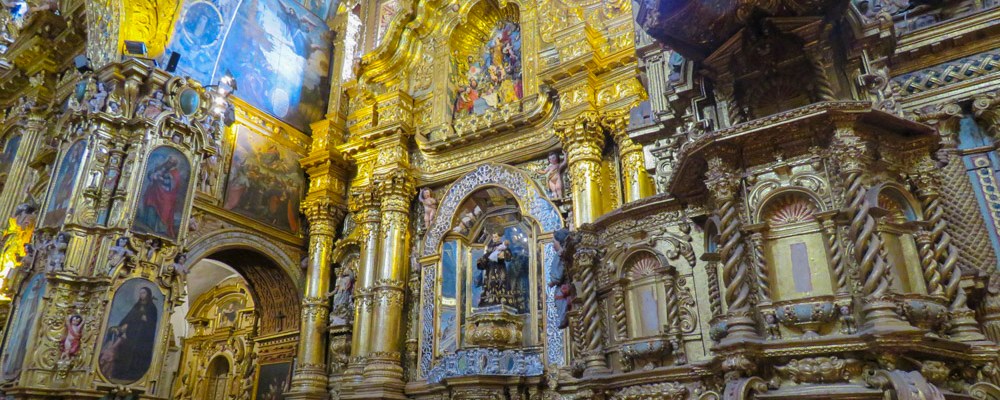
Now, if you are going to explore the churches and convents of Old Town, of which there are many, you will be attending Mass at some point. It seems there is one almost every hour. Don’t be deceived by the plain exteriors of some of these churches as they all conceal intricately decorated, gold plated, sparkling baroque interiors. We are talking high church here, with riches that will rival those found in The Vatican. The museums in the convents we visited also displayed a remarkable treasure of art from the 16th and 17th centuries, created by the indigenous artists trained by European professionals to paint religious works with local relevance to inspire the faithful. At Convento San Diego we were required to be part of a tour, even though there were only the two of us and our guide spoke only Spanish. This awkwardness soon vanished as the sweet woman who was escorting us realized our enthusiasm for what we were viewing. This prompted a behind the scenes tour to a crypt in back of the altar that was accessed through a small stone door. Later we climbed narrow stairs and squeezed through tight passages to the bell tower and the roof for some nice views of Old Town, Quito, in the distance. The City Museum, across from the Museum of Carmen Alto, was a pleasant find. It featured world class, permanent exhibits of life through the centuries in Quito since its founding.
In late afternoon the pedestrian areas around San Francisco Plaza hosted a variety of street musicians and performers who played to an appreciative, mostly local audience. Hawkers worked the gathered crowds and passed the hat, coins were tossed and applause given. We didn’t notice many other foreign travelers as we walked around Old Town and our hotel was not full. This lack of tourists was surprising, since the summer vacation season in North America and Europe.
La Ronda is the oldest street in Old Town, now lined with restaurants, stores and artisan workshops. It dates backs to pre-Inca times when it was a dirt track following a ravine, which is now a traffic tunnel. Of special interest are wood carvers and metalsmiths who keep the traditional crafts alive, replicating 16th and 17th religious and period pieces, despite intense pressure from cheap foreign imports.
A five dollar cab ride took us across the city to the base of the Teleferico cable car for a quick ascent to 16,000ft above the city for tremendous views of
Quito below and the towering mountain range that surrounds it, with ten peaks over 10,000ft.
Ecuadorians love to eat, so there were multiple choices on every block from sidewalk vendors to snack joints, coffee houses and restaurants for us to choose from. A typical Ecuadorian and delicious, three course lunch with beverage cost us about $3.50. Very good dinners were available starting at $15.00.
We had a great time in Quito, but feel that we just scratched the surface of this historic and yet cosmopolitan city.
Tonight finds us at a hotel just a few minutes away from the Jacksonville International Airport, taking account, sorting and repacking one last time before our flight to Ecuador and the beginning of our two year adventure. We’ve been on the road for exactly thirty days, traveling down the eastern seaboard, visiting friends and family that our preretirement schedules prohibited us from seeing as frequently as we should have. They have so graciously opened their homes, shared meals with us and entertained us. And they have been the most wonderful local tour guides, highlighting the best of their communities and opening our eyes to the beauty of this region. It has been several decades since Donna or I had undertaken an extensive road trip and we were thrilled to see the natural grandeur that abounds in this country.
Our first Sunday away from home we celebrated with a New York Times newspaper, a long forgotten ritual, and lattes outside under towering pines at our friend Janet’s house, a few blocks from the ocean in Dewey Beach, DE. That first week of official retirement we just chilled.
In Rockville, Maryland we stayed with Sue and Kent in the center of town. They had moved down to the DC area several years prior. Rockville is such a great example of what urban living should be like. Homes above shops and restaurants, with a small city park to anchor it all, creates a thriving community. A day exploring the National Portrait Gallery with Sue was a real treat and it is so much more than just a collection of paintings of old white guys.
Driving through the mountains of West Virginia, we headed to Parkersburg which sits on the mighty Ohio River. Cheryl and George, who held their wedding reception in the backyard of the parsonage, live in the Julia-Ann Square Historic District, which features several blocks of lovingly restored homes of local industry titans, from the 1860’s through early 1900’s. A trip down the Ohio River on a sternwheeler paddle boat along with Martini Monday were highlights of that happy stay.
Our son Bob has lived in Charlottesville, Virginia since graduating college and has fallen in love with this town and surrounding region. We had great time with Bob and Samantha, visiting several wineries on the Jefferson Wine Trail and later walking along the lively pedestrian mall in the center of this wonderfully diverse university town. Sadly as we walked back to the car one night we happened across the curbside memorial to Heather Heyer who was killed by a car purposely driven into a group counter-protesting against white supremacists.
Lynn and Mike graciously let us stay in their future retirement home in South Carolina, which they’ve hardly had the chance to enjoy just yet. Lynn’s suggestion of a day trip to Greenville was a delightful experience. Greenville has to be one of the prettiest small cities in the United States. The city park encompasses a river which flows through the center of town and has a pedestrian suspension bridge over it. Once bordered by industrial revolution-era factories, these buildings have now been revitalized into restaurants, hotels and chic shopping stores.
Off the beaten track in St. Marys, Georgia, we chilled with Mare and Bob, retired pastors and friends since Donna’s days at seminary, as the heat index hit 104F. We did venture out to eat seafood, explore the waterfront and find a decommissioned nuclear submarine thrusting forward from the earth. A visit to a gun range turned out be surprisingly enjoyable. It helped that I was able to hit the target. Finally I tried some Gator and it doesn’t “taste like chicken”, but it’s just as tasty with its own more distinctive flavor that is quite enjoyable.
“There is so much more to Daytona Beach than the 500 race and Spring Break” as Donna and Jeff, old friends and migrants from Doylestown, say. And they are right! From St. Augustine to Cape Canaveral, this part of Florida was a delight to explore. A boat ride along the intercoastal waterway was especially fun, with sightings of manatees and dolphins, as were visits to the Marine Science and Rescue Center at Ponce Inlet, to view sea turtles being rehabilitated, and The Kennedy Space Center (NASA.)
Thanks again to all our friends for a wonderful month of experiences and memories. Our journey begins today as we board our flight to Quito, Ecuador!
Wow! Where to begin. There were so many stages to planning our exodus, but it all came to together in the final weeks before our June 30th ETD. Coordinating the sale of two cars was a huge concern and turned out to be easier than expected. Fortunately for us one of our friends agreed to buy Donna’s car in the beginning of April, and hold off on taking ownership until the last week of June. We sold my car at the end of May.
Regardless of the wonderful goal our downsizing and move supported, it was stressful. What to keep, what to sell, listing on Craig’s List and Facebook Garage Sale Pages, having buyers come to the house, the no shows. Selling the dining room table, around which many wonderful occasions were celebrated, left an unexpected angst. And ultimately with what’s left, will it all fit? Marking out the dimensions of the container on the garage floor helped to visualize the packing space I had available to me before the Pod was dropped off. As larger pieces of furniture made their way into the garage, serious discussions were had about what we really need/wanted to keep. In the end three loved, antique East Lake chairs (very uncomfortable) were willed to our sister-in-law and two press board bookcases didn’t make the cut.
My Tetris skills developed from loading a USPS truck for Sunday Amazon delivery during many Christmas seasons were fully utilized. Boxes were packed heavy and to their fullest. Side to side and top to bottom, every empty cavity in the Pod was filled until it required multiple hands to hold the bulging load in place as the last tie-downs were secured and the door was slammed shut on June 28th, two days ahead of schedule.
On June 30th, we had our feet in the surf at Dewey Beach when the Pod people called to say our container was picked up. It is going to be like a time capsule when we open it again.
Many thanks to family and friends for timely boosts and heavy lifting.
“Ayvalik! How do you know of Ayvalik? This is where the Turks go to vacation” And “You must go to Cunda!” is a phrase we heard proudly repeated more than once.
This post was written about our trip to Ayvalik, Turkey in 2013.
A Mount Rushmore sized, carved stone profile of Atatürk loomed over the highway and filled the front windshield as my wife and I sped north, round a bend on the E87, escaping the Izmir airport. “I will be getting married in three weeks” our taxi driver Ozzie joyfully announced, then softer and more ambivalently “there are so many preparations to make ready before our wedding, we have to buy a refrigerator, stove and bed for our new apartment.” “About half way there we will break at this rest stop that makes the best homemade yogurt. Mama likes the yogurt with mild green peppers (yogurtlu biber) marinating in it, I always stop here on the way back to buy some for her. It reminds her of the way grandma used to make it.” Ozzie continued, “just last week there was a newspaper editorial lamenting the demise of fresh yogurt and how the store-bought yogurt now lasts forever and never goes bad!” And so began our journey to Ayvalik and a week on the northern Aegean coast of Turkey last May. Located two hours by taxi (four hours by bus) north of Izmir, on the southern shore of the Bay of Edremit, Ayvalik is fortunately just a little too far north and off the usual tour circuit, a full day’s drive away from the buses full of tourists that visit Ephesus then descend onto the beaches of Turkey’s Southern Aegean or Western Mediterranean coasts. “Ayvalik! How do you know of Ayvalik? This is where the Turks go to vacation” And “You must go to Cunda!” is a phrase we heard proudly repeated more than once.
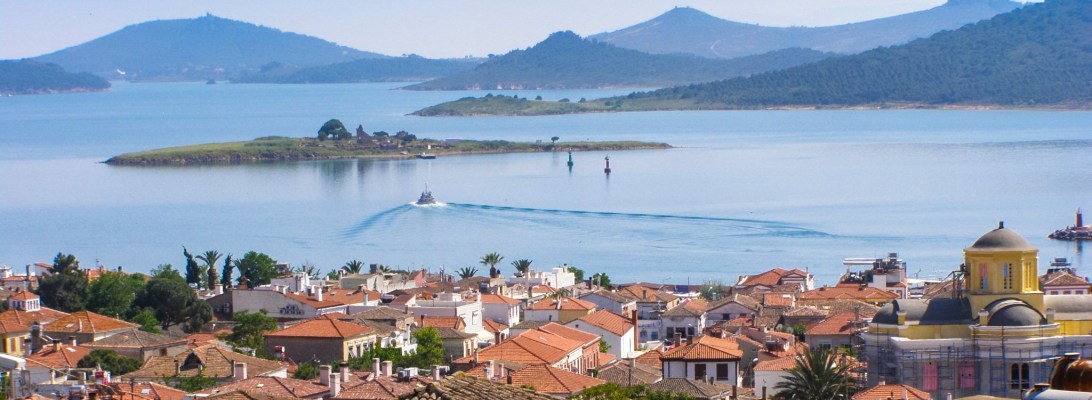
A view across Ayvalik.
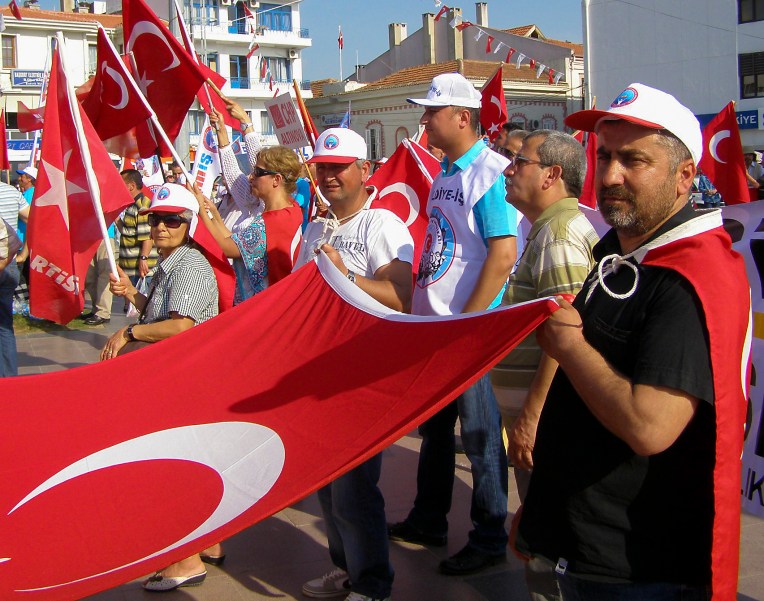
As we approached Ayvalik, salt evaporating ponds lined one side of the road as gentle Mediterranean waves rolled onto the narrow beach across the way. Turning off the highway, the road rose gently through acres upon acres of olive groves, ruins of an old stone Greek Church flashed by, its roof gone, leaving only the bell tower to pierce the silver-green canopy of the olive trees. As the road crested, a quick glimpse of Ayvalik flashed by, red tiled roofs and minarets set against the sparkling, turquoise blues of the Aegean. And across the bay were the low hills of Cunda Island in the distance. The May Day celebrations were in full swing on the palm tree lined waterfront, and in front of the ubiquitous statue of Atatürk a sea of labor unionists chanted and waved crimson Turkish flags aloft as our taxi passed.
Erinç our hostess smiled to us from the door of Eolya Konukevi as Ozzie jumped the low stone wall with our bags in hand to show off his youth. The salt air and Mediterranean diet had not worked its wonders yet, so we walked the long way around to greet her. “Please wear these slippers when you enter, it is our custom.” Four years earlier Erinç escaped the urban crush of Istanbul and opened Eolya Konukevi, a small four room boutique inn in a three story, 120 year old Greek townhome she lovingly renovated, keeping its historical ambience and charm. The bedrooms were on the small side so we opted for room #7, the only one with a private terrace. The terrace was too hot to use during the unseasonably warm ninety degree mid-day heat, but wonderful early in the morning or later in the day when the sun was lower and a perfect spot to enjoy a bottle of Turkish wine bought from the local grocery store. In early May we were the only guests for most of the week. Nevertheless each morning Erinç presented, in the sunken, high-walled courtyard a bountiful variety of fresh baked breads or pastries with homemade jams, honey, tomatoes, cucumbers, a wonderful assortment of olives, local cheeses, Turkish egg dishes and the delicious Turkish staple, Cevizli biber – a meze prepared with red pepper paste, hot red pepper flakes, onion, walnuts and cumin mixed to a moldable consistency and used to garnish many recipes. “You will see gallons of it in the weekly market on Thursday, the town gets crazy full, vendors fill the street and villagers from all around come into town to shop,” Erinç told us.
Fishermen tending to their nets along the quay in Ayvalik.
Embracing the pace of village life we walked everywhere, and hoped to stay thin. Along the quay, boat hands dangled over the side of excursion boats, busy sanding and varnishing them into pristine shape for the coming high season. Some fishermen sat atop their moored boats mending nets, and others tinkered noisily with engines. Lined with boats, palm trees and seafood restaurants the waterfront of Ayvalik, though much quieter and laidback, resembles many others fishing villages along the coast. The charm of Ayvalik is that it has no major attractions, just the wonderful ambiance of a once prosperous commercial fishing and olive oil processing center, now mostly forgotten and lost in time. Far away from any major historical sites, the townspeople here are just going about their lives, and wonderfully so, not catering to a substantial tourist infrastructure. There was only one short block with several bars, just off the waterfront that looked like it would be a noisy spot during high season. With tables and chairs outside that further narrowed the already thin lane there were more cats and dogs asleep under the tables than patrons the night we passed.
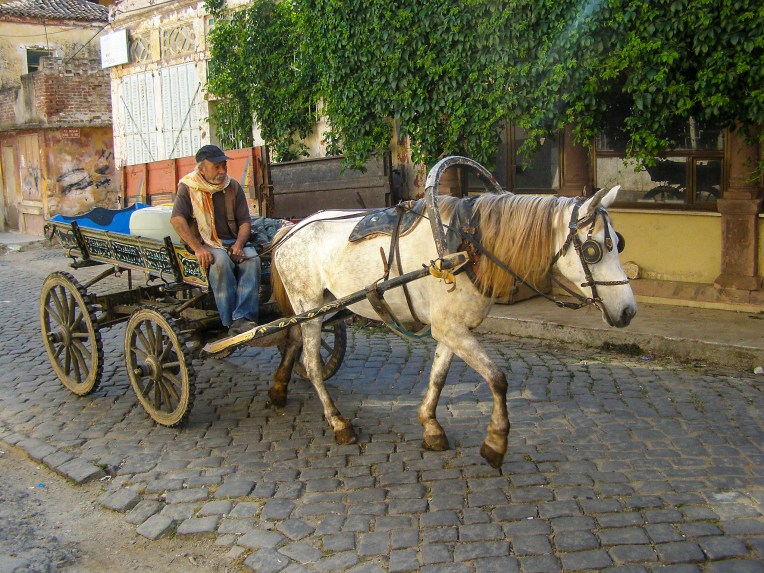
Horse drawn carriages can easily navigate the narrow lanes of Ayvalik and are still used for a variety of delivery jobs.
Meandering, cobbled lanes and back alleys led us slowly up the hill away from the waterfront and it seemed into an earlier century. Slowly crumbling pastel colored homes in various stages of decline lined both sides of the streets. Missing sections of stucco revealed still solid stone construction underneath ignored exteriors. Many homes had their doors chained shut decades ago, the locks heavily rusted over from neglect or abandonment (recall pictures of Havana, Cuba). Offset occasionally by a rare renovation in progress , the early signs of gentrification were beginning to edge in. Horse drawn wagons are still used by vegetable and fruit vendors to ply their trade and to deliver refrigerators, stoves and other large household items through lanes too narrow for modern trucks to navigate. The vignettes of everyday live abounded – the world’s oldest newspaper delivery man carefully balancing an ancient moped between stops, ringing the doorbell and sharing news for a few moments before sputtering away to another door further down the bumpy lane. The lone cow tied to a bright , orange slide in a vacant children’s playground. Fresh fish and Octopus taken from the sea just hours earlier, for sale on the pier early in the morning. School children in their uniforms, playfully headed home for lunch. Lambs’ heads, beef hearts and other organs hung in the butcher’s window. Piles of freshly baked Simit (a bread ring covered with sesame seeds all over) just taken from the baker’s oven and displayed on the ledge of his open window to cool. The candied apple seller walking the streets, hawking his caramelized treats from a tree like structure. A painter carrying his buckets, brushes and large extension ladder to work, carefully, dipping it under low hanging telephone lines as he walked. Men crushing, weighing and bagging coal just off the main square, covered head to toe in black dust. Stacks of split wood – used to fire so many grills and ovens – and impart that distinctive flavoring. Scarfed women, walking together their arms linked in camaraderie. A farmer racing by on his garden tractor, pulling his wife bouncing all over in a small wagon behind him, with a death grip on its sides she held her face high into the morning sun. Her head scarf blew straight out behind her.
Delivering lemonade to vendors in the market.
Still full of energy this older villager still delivered newspapers all over Ayvalik.
Villagers resting in the shade, trying to escape the heat of mid day.
The Minaret and clock tower of Saatli Camii mosque were just visible through the fabric and clothing which dangled from the shade awnings strung over the streets on market day. (A thriving Greek Orthodox cathedral until the Turkish War of Independence ended in 1923. The resulting peace treaty forced a population exchange between Turkey and Greece. Where Ottoman Greeks on the Turkish mainland where forced to leave their homes and move to the Greece and Turks living in Greece where forced to relocate to Turkey. Many churches were abandoned and left to ruin. Others were deconsecrated and with the installation of a minaret and minbar pointing towards Mecca from which the Mullah preached, repurposed as mosques.) Overnight, the local merchants had emptied the contents of their shops onto the streets and itinerant traders erected temporary stands to display their wares. Transforming what seemed to be all of Ayvalik into a vast outdoor shopper’s metropolis offering everything for the home and farm. The village was full of families from the outlying smaller villages that had taken buses to Ayvalik for this weekly event. The women wore traditional baggy pants, brightly colored with floral prints. And various, clashing mix matched tops and scarfs edged with intricate embroidery, created an ever changing, beautiful kaleidoscope of color and patterns as they flowed up and down the lanes, and shopped for more exuberant fabrics to sew at home.
Just off At Arabacilan Meydani (the Horse Carts square) the lane was full of chickens, lambs and goats for sale. Sun dried farmers chatted and laughed with each other while they sat in the doorframes of buildings along the lane, or sent text messages as they waited to make a sale. A block over was the Koy Pazari (weekly farmers market), with baskets full of artichokes, eggplants, fava beans, mulberries, onions, quince, squash, strawberries and grape leaves, stalls full of cheeses and more varieties of olives than I have ever seen in one place. Bottles of pomegranate and grape dressing were stacked high. Herbs and spices! Saffron and Cardamom were amazingly affordable (we should of bought more) And displays of the Turkish Spice blend of Red Pepper, Oregano, Paprika, Garlic, Cumin, Cilantro, Salt and Black Pepper abounded. Each herb poured separately upon the other into plastic bags creating an attractive rainbow package. Numerous five gallon tins of Cevizli biber with their tops shaped to pyramids lined the aisles.
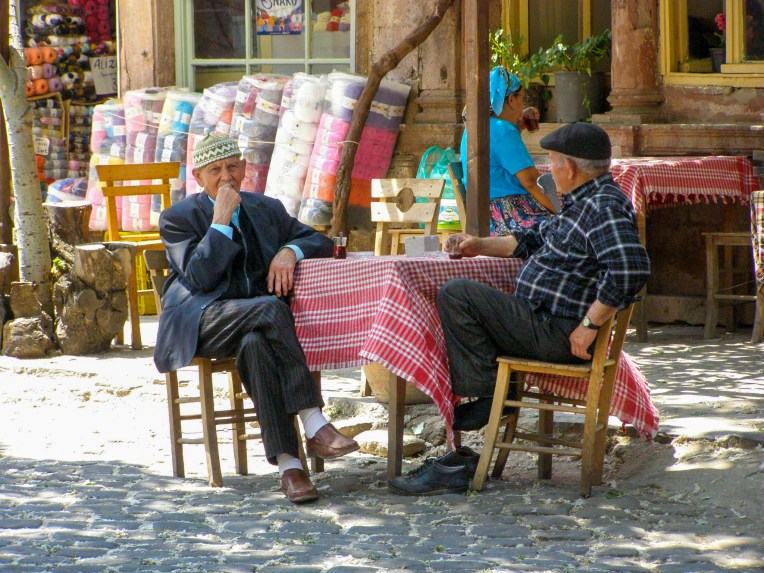
Old men resting and drinking tea in front of Seytanın Kahvesi,(the Devils Café) tea house.
As the day got warmer and the crowds thickened we decided to escape the frenzy and headed to Seytanın Kahvesi (the Devils Café), a teahouse we had found the day before. Very hot apple cay (.50TL) served in tulip shaped glasses soothed use as we rested under the shade of a large tree in front of the cafe and people watched. Even in the mid-day heat the old men wore the traditional sweater vest under a heavy suit jacket. Some rubbed prayer beads as they chatted with friends, while others read papers and sipped tea. One pulled his feet from his slippers and cooled them against the paving stones. At another table, a man with crutches pulled x-rays from a large envelope and held them up to sky to show the pins in his leg to his friends. In the small cross-roads, opposing drivers negotiated which tractor would give way. From the front door tea runners ran down the lane balancing trays of cay to merchants in the market. Above our table hung a sign with carved out and painted, dancing stick figures spelling Cop(M)adam,(the trash ladies) the woman’s cooperative next door. Established to give women who have never worked for pay outside the home or farm, a chance for some economic independence. They create wonderful, contemporary handbags, pocketbooks and other fashion accessories out of thrown away materials. The small shop was full of chatter and laughter as the women worked together. An exotic aroma from the communal lunch being prepared drifted through the shop from the stove in the back room. We chose several items and negotiated lively with an occasional raised eyebrow or thumbs down along with their handy calculator.
With a picnic dinner in our bags from shopping at the bazaar we headed back along a different route further up the hill to find the once grand (and never converted) orthodox cathedral, Taksiyarhis. Situated alone in the center of an overgrown square, the ruins sadly dominated the neighborhood. Large, untamed fig trees sprouted from the foundation. With part of its portico collapsed and the rear of the apse caved in we peered inside to see fallen rafters and small sections of walls with fading designs barely visible, were all that remained of its former glory.
Looking north from Seytan Sofrasi (the Devils Table) towards Cunda Island on the horizon.
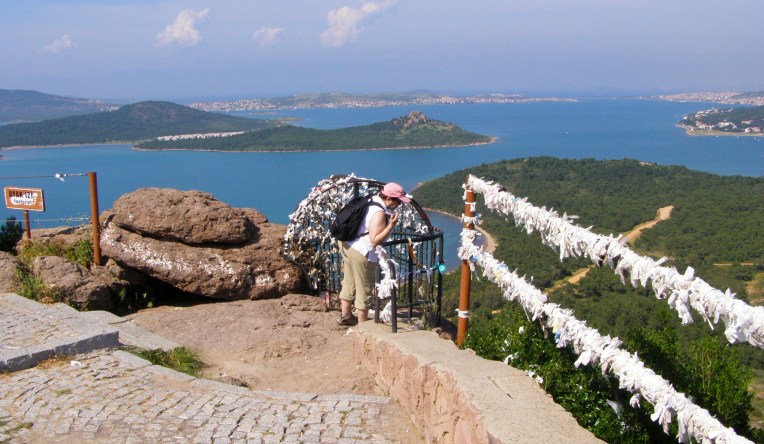
“Have you gone to Cunda yet? Erinç inquired. “Not yet, each time we walk past the ferry there is no activity. We might have to take a Dolmus (shared) Taxi over for the day.” I replied. “With it being so hot this Spring they might start ferry service earlier this year,” Erinç offered. Instead, we hired a taxi and headed to Seytan Sofrasi (the Devils table) a rock formation located in a state park a few miles south of town. Narrow, winding roads followed the shoreline around the smaller coves of the bay, revealing thin strips of sandy beaches round each curve. Only a few families were out, some fathers fished as their kids plunged knee deep into the shallow water, and shivered with glee as they raced back to shore. We passed several roadside stands with various flavors and shades of local honey for sale under beach umbrellas. Eventually the road started to rise gently through a forest. The trees thinned to expose the summit and its panoramic overview to the north of two small bays below, then Ayvalik and the large island of Cunda beyond, surrounded by twenty smaller islands. Lesbos, Greece hazily dominated the western horizon in the afternoon light. Prayer notes tied to safety railings fluttered in a refreshing breeze against a flawless sky. Ignoring the railing some people still climbed over to snap a picture from the edge, no guards were there to discourage them or save them from their selves if needed. Though a sturdy iron cage protected an oval, foot like depression in the rock that local folklore says Satan left behind as he leapt to party across the water in Lesbos for some crazy reason. It’s difficult to believe but it seems the Devil spent a bit of time in Ayvalik, if you go by the number of things that include his name, and the volume of ruined churches, monasteries and mosques built nearby to dilute his influence.
Fish restaurants line the dock in Cunda. Behind them stone lanes lead to Takisyarhis Kilisesi church and The Sevim Kent Library cresting the hill above the village.
We were in luck when we realized a short line was forming for the ferry to Cunda as we exited the taxi. Storm clouds built over Ayvalik as the boat pulled away with only a handful of passengers aboard for the short journey. The weather threatened only for a brief time but did not deliver. (During high season ferries from Ayvalik run to Lesbos, Greece and Assos, Turkey. Diving trips to nearby deep, red coral reefs can also be taken, along with swimming boat charters to the islands around Cunda). A long line of seafood restaurants fronted Cunda’s quay. Several blocks inland and on a slight rise, the cupola of the old Greek Orthodox Taksiyarhis Kilisesi church (same name but a different church) rose above the surrounding homes, was finally being restored as a museum and center for cultural events after years of neglect. A candied apple seller braved the sun and walked the streets, hawking his caramelized treats from a tree like structure. The shade of the buildings offered some relief from the sun for three older villagers and their donkey called “Donkey” who had a weathered, wooden saddle tied to its back and us as we continued our walk uphill to find a windmill that we had spotted from the ferry. The windmill with a pretty veranda and small adjacent chapel now restored as The Sevim and Necdet H. Kent Library (Kent was a Turkish diplomat stationed in France during World War II who saved the lives of many Jews by providing them Turkish identity papers) are all that are left of an ancient monastery complex that sat upon the crest of the hill and overlooked Cunda and the waters surrounding it. The library’s shaded cafe (free WiFi) provided the perfect spot to rest our blisters and appreciate the views, before heading back into the village for dinner.
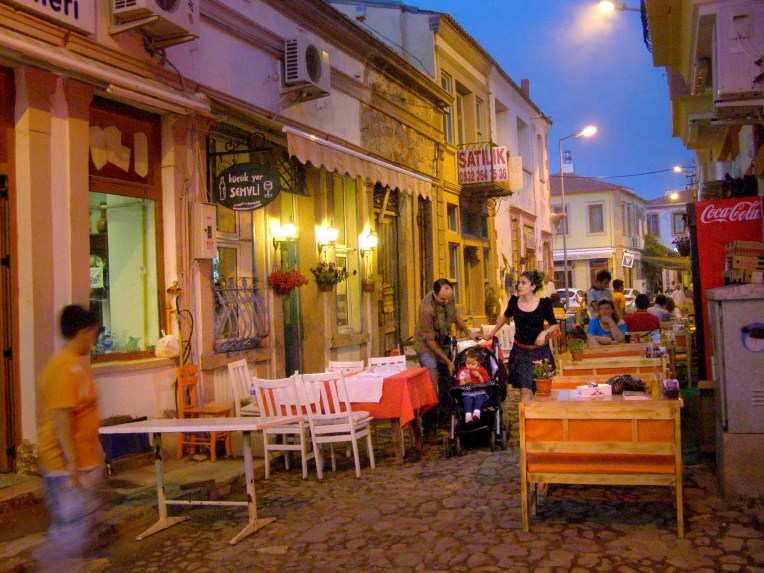
Many restaurants line the back lanes of Cunda with tables and chairs to enjoy an evening meal.
We rewarded our efforts later that evening with wonderfully prepared Cretan (Turks from Crete came to Cunda during the population exchange) dishes at Lal Girit Mutfagi, a small restaurant set in a rustic stone building with an outside patio across the cobbled lane. Difficult choices tempted us: which mezes to try from the mouthwatering assortment on display? Since the night was warm, we were seated under the grape vines of the patio. Occasionally the waiter hoisted a watering can and sprinkled water onto the cobblestone lane to keep down the dust from passing tractors as farmers slowly drove home through the village from their fields or orchards. The restaurant did not have a paper menu; rather, Emine the owner/chef enthusiastically talked us through what she was cooking that night. The pace of the meal was delightfully relaxed, no rushing, everything from the kitchen freshly prepared and delicious. Soft cheese with wild spring herbs; mussels stuffed with spicy rice served on the half shell; grilled octopus; fresh anchovies in a light tomato sauce plated artfully in a spiral; artichokes with dill and stuffed grape leaves; and shredded vegetables with cheese and herbs wrapped in papery thin phyllo dough and baked to a golden brown; our meal appeared before us one exquisite dish after the next, as we enjoyed each of the chef’s creations. Folks filled the lanes as dusk fell and brought in a refreshing breeze. The restaurant livened as the evening lengthened, a boisterous atmosphere reflected much laughter and heartiness. Good Turkish wine, Raki!, a fine night, and a great meal still remembered. Serife! (Days later, Emine greeted us warmly as she shopped amongst the tables of fresh produce at Rormutauk Bazaar (the Sunday farmers market) in Sirinkent , just north of Ayvalik).
A shepherd with young lambs in Cennet Tepesi (Heaven Tower Park) above Ayvalik.
A lone crenulated tower spotted from the Dolmus taxi on the way back from Cunda looked worth another uphill hike. Giant century plants and their towering seed stalks leaned over the path toward Cennet Tepesi (Heaven Tower Park) above the bay. We followed the path through a slowly thickening pine forest to the tower I had glimpsed the night before. An unattended flock of sheep quietly grazed in grassy undergrowth. From behind the tower the sound of more sheep bah-ing slowly moved closer. We waited expectantly to see another flock arrive but were amused when only a lone shepherd, baa-ing, emerged carrying two young lambs in his arms. He baa-ed tenderly as if to convey his love for his flock and reassure the lamb’s mother that they would be reunited soon.
Some villagers still light bonfires, dance and jump over the flames in celebration of Spring.
At breakfast the next morning Erinç excitedly asked if we had heard of Hidirellez. ”It’s still celebrated here in Ayvalik. Today, every May 5th some of the families build bonfires in the streets in front of their homes. They play music, dance and cheer for each other and their neighbors to jump over the flames in a celebration of spring.” It’s not organized and fewer families do it than years ago. You’ll have to wander the lanes farther up the hill, but I’m sure there will be some bonfires.” Later that evening after a long siesta we headed back into the ancient backstreets. Two drummers, carrying big bass drums along with a cymbalist, noisily led a bride in a white gown and pink sneakers and groom in a tux, followed by a small group of raucous revelers in Halloween makeup. Momentarily surrounded, we posed for photos with the party, and then they left in the direction from which they came. Not the fire jumpers we were looking for, but encouraged nevertheless we continued our search. A few blocks over, the homes and people gathered on the street in front of them were cast in the amber warmth of several small fires centered in the middle of the lane. Some revelers danced to traditional music blasted from a CD player. Couches and chairs were brought outdoors for older partiers to settle into. Behind them a few parents supervised young arsonists in training making small smoky fires. We watched as the fires popped and blew sparks skyward when any burnable material was thrown in to encourage higher flames. And with a running start, young and old jumped, when their nerves permitted, as best they could through the flames as everyone clapped and cheered them on. Thankfully we did not witness any self-immolations that night.
A wedding parade on Hidirellez ( a May 5th celebration of Sping).
Ayvalik won the regional playoffs and the small village celebrated wildly.
As we walked back to our guesthouse, the square on the waterfront was surprisingly full of triumphant soccer fans, victoriously waving the team colors. The Ayvalik team had won the state playoffs! It seemed as if everyone who owned a scooter or car (not too many people do), overloaded it with flag-waving friends and raced down Ataturk Caddesi (the only two way street in town) several blocks, did a K turn and then speed back through town multiple times that evening. The horns were still blaring when our heads hit the pillow.
The smell of smoke lingered in the air very early the next morning when Ozzie picked us for the trip back to the airport. We offered him our best wishes for his quickly approaching wedding and changing life. And wished for ourselves, that Ayvalik would not change at all, or at least very slowly.
At the main Thursday market in Ayvalik colorful fabrics hand from the shade awnings strung between buildings.
With Cunda Island and Lesbos, Greece in the distance.
Cobbled lanes and rose bushes adorn the narrow streets of Cunda.
Sunset in Ayvalik
Weighing and bagging coal on At Arabacilan Meydani (the Horse Carts square).
Shelves in the blacksmiths shop on At Arabacilan Meydani (the Horse Carts square).
Palm trees lline a waterfront park on the way to Cunda Island.
Some villagers still light bonfires, dance and jump over the flames in celebration of Spring.
Some villagers still light bonfires, dance and jump over the flames in celebration of Spring.
Street vendors still push carts of produce door to door through the narrow lanes of Ayvalik.
A view across Ayvalik towards Cunda Island .
The sparse interior of Seytananin Kahvesi (The Devils Cafe).
Turkish breakfast at Eolya Konukevi.
A shepherd with young lambs in Cennet Tepesi (Heaven Tower Park) above Ayvalik.
A shepherd with young lambs in Cennet Tepesi (Heaven Tower Park) above Ayvalik.
Fishing in front of the ferry dock in Cunda.
Rusted locks on an a forgeotten home in Cunda.
Most people still walk from place to place in town.
Grapevines adorn many homes and offer some shade.
An ornamental gate along the waterfront frames the sunset in Ayvalik.
A vibrant kaleidiscope of color fills the streets of Ayvalik on market day, when villagers from the outlying hamlets come into town.
School children having some fun on the way to school in Ayvalik.
A stray dog catching some warmth from the morning in an old cobbled lane.
The view of Ayvalik from Cennet Tepesi (Heaven Tower Park).
Slowly crimbling pastel colored homes in various stages of decline line both sides of the lanes.
Slowly crimbling pastel colored homes in various stages of decline line both sides of the lanes.
Village women rest from a morning of intense shopping.
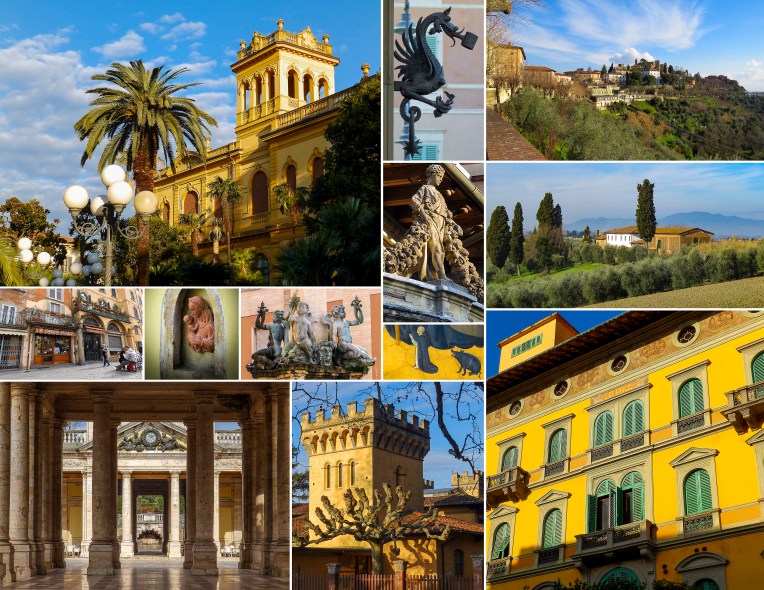
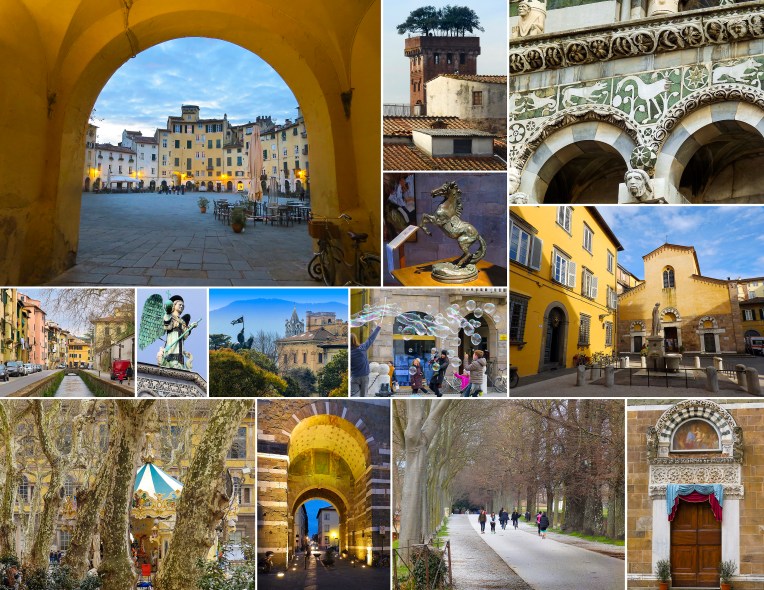
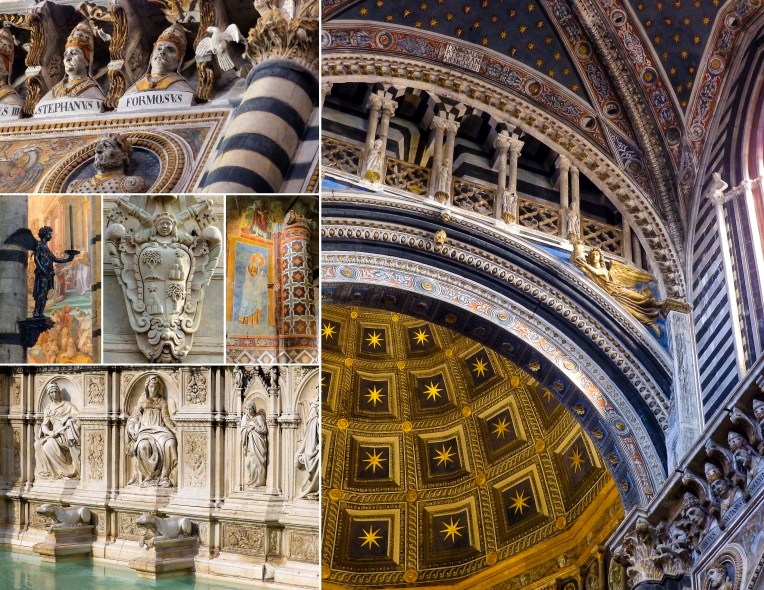
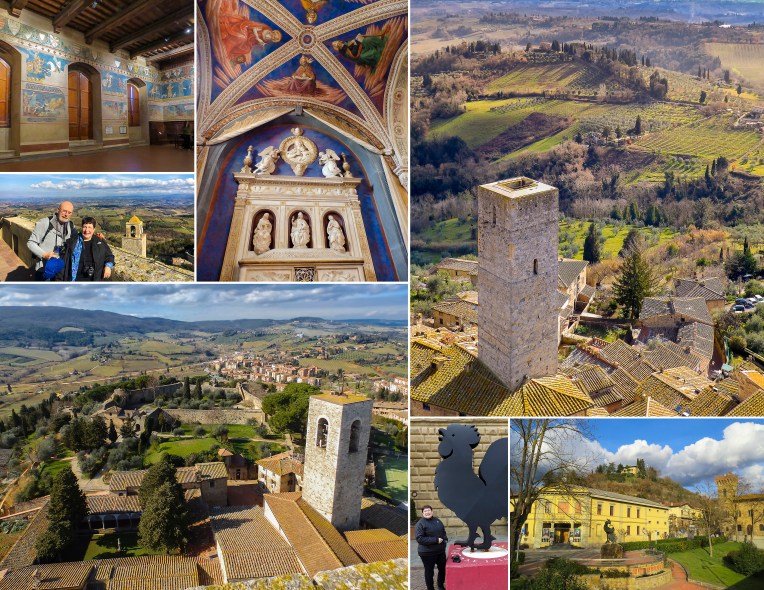
These photos are from an off-season, quick, “recharge our batteries” trip to northern Tuscany in February, 2017. We chose a very affordable Fly/Drive/Stay package through Gate1 Travel. We were based in Montecatini Terme (wonderful, inexpensive restaurants) and did day trips to Lucca, San Gimignano, Greve in Chianti and Siena. Fewer crowds along with fine weather combined to make a memorable trip.




































 2 Suitcases for 2 years