
Decisions, decisions, decisions: where to go, what to see, which hotel to choose, how far to drive? An hour earlier we had driven from the ferry port in Virtsu, after spending three days on Saaremaa Island, and arrived in Pärnu.

A long 4-hour drive to Riga, Latvia, at the end of the day, which would have had us navigating the city after dark, did not appeal to us. Instead, we opted for a one-night stay in Pärnu, a popular summer resort town, with a long, wide, sandy beach. The northern end of the beach has low dunes and the Muuli boardwalk that parallels the Pärnu River and leads to a breakwater that extends far out into the waters of Pärnu Bay and the Gulf of Riga. In the wide middle section of the beach there is the Purskkaev, an illuminated, dancing fountain at the beginning of a long walkway that follows the edge of the sand farther south. While the beach that September afternoon was a little too chilly for us to enjoy, we did find the historic center of Pärnu to be a wonderful, sleepy gem of a destination, with intriguing architecture. A pleasant surprise that fully exceeded our expectations, instead of the boring overnight stay that we had anticipated.
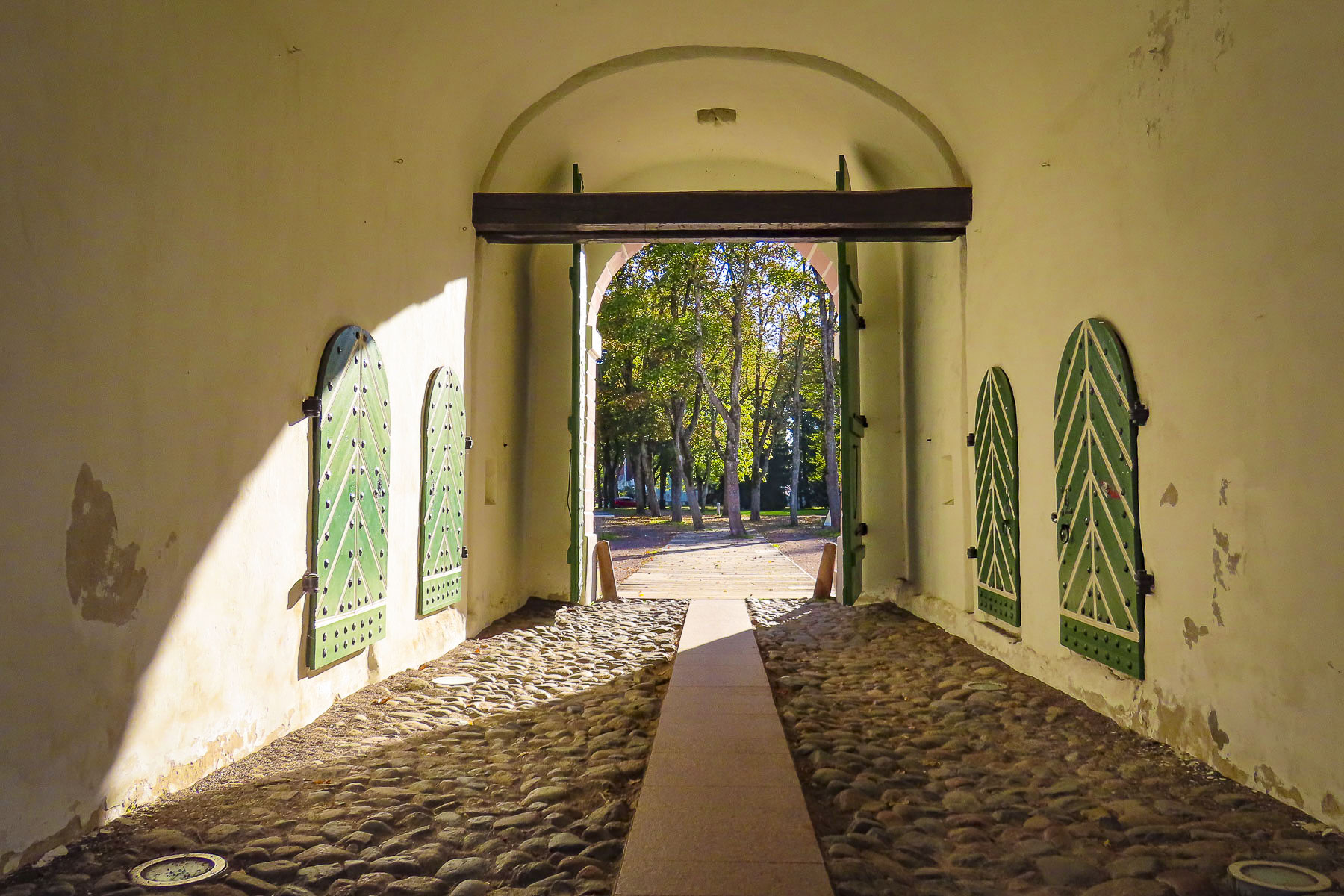

Valli Park with the last section of moat that once encircled a Hanseactic League fortress, and the 17th-century old Tallinn Gate, the only surviving monumental rampart gate in the Baltics, was our first stop. Its ancient drawbridge once connected the citadel to the old Postal Road that ran from Riga to Tallinn. Originally the town was founded on the right bank of Pärnu River in the early 13th-century, during the Northern Crusades, by the bishop of Ösel-Wiek, as a base to Christianize the indigenous pagans of ancient Estonia. After local tribes raided and destroyed much of old Pärnu, the decision was made to establish new Pärnu as a citadel across the river. New Pärnu prospered under the Hanseactic League, the powerful Germanic merchant guild that influenced the growth of many of the port cities along the Baltic Sea. A succession of rulers – the Teutonic Knights, Lithuania, and Poland – have left their marks on the city. But most notable was the Swedish Empire’s construction of the moat and earthen ramparts in the 1670s to defend the city from being engulfed by the Russian Empire’s desire to expand west into the Baltic.

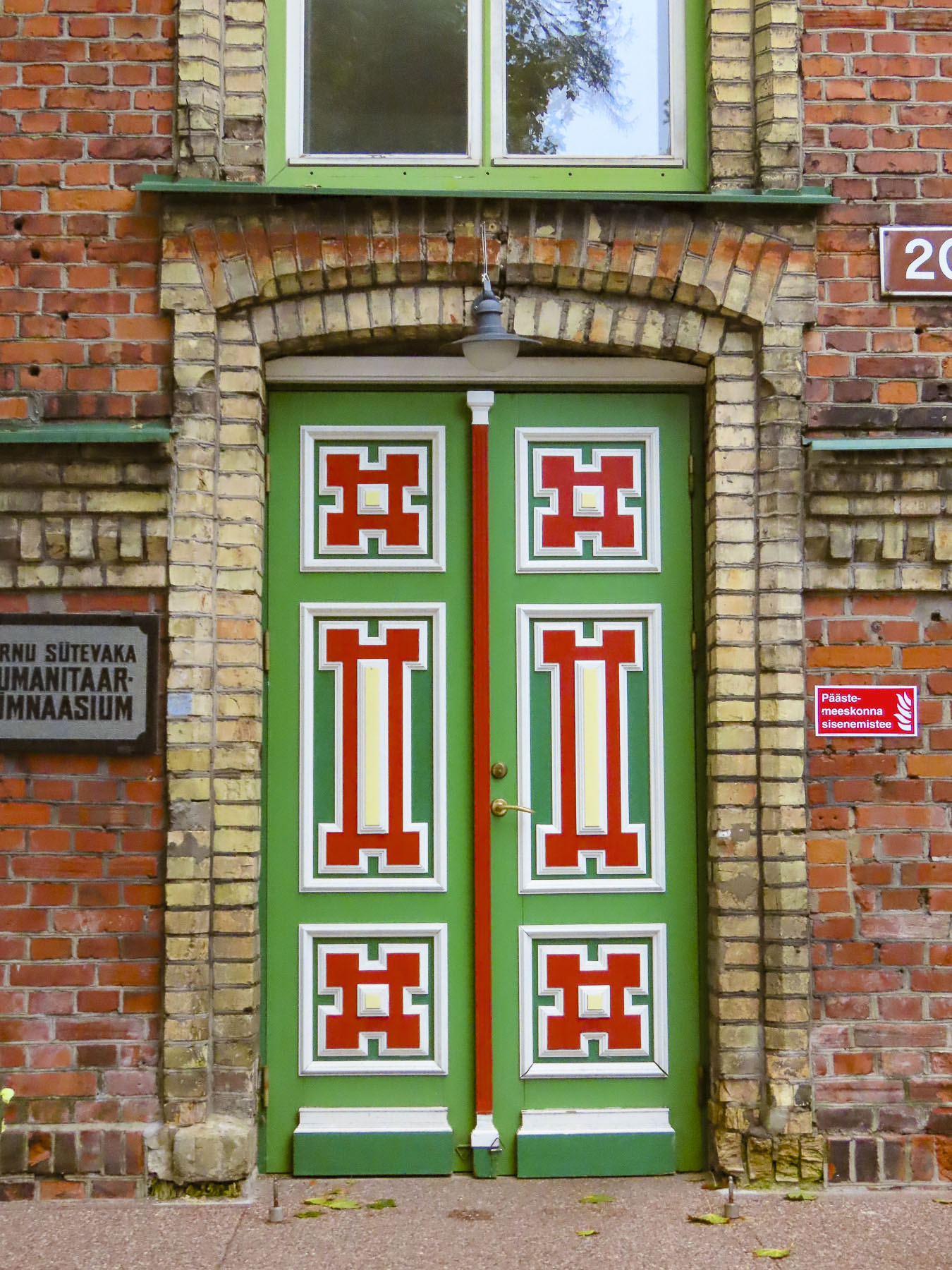
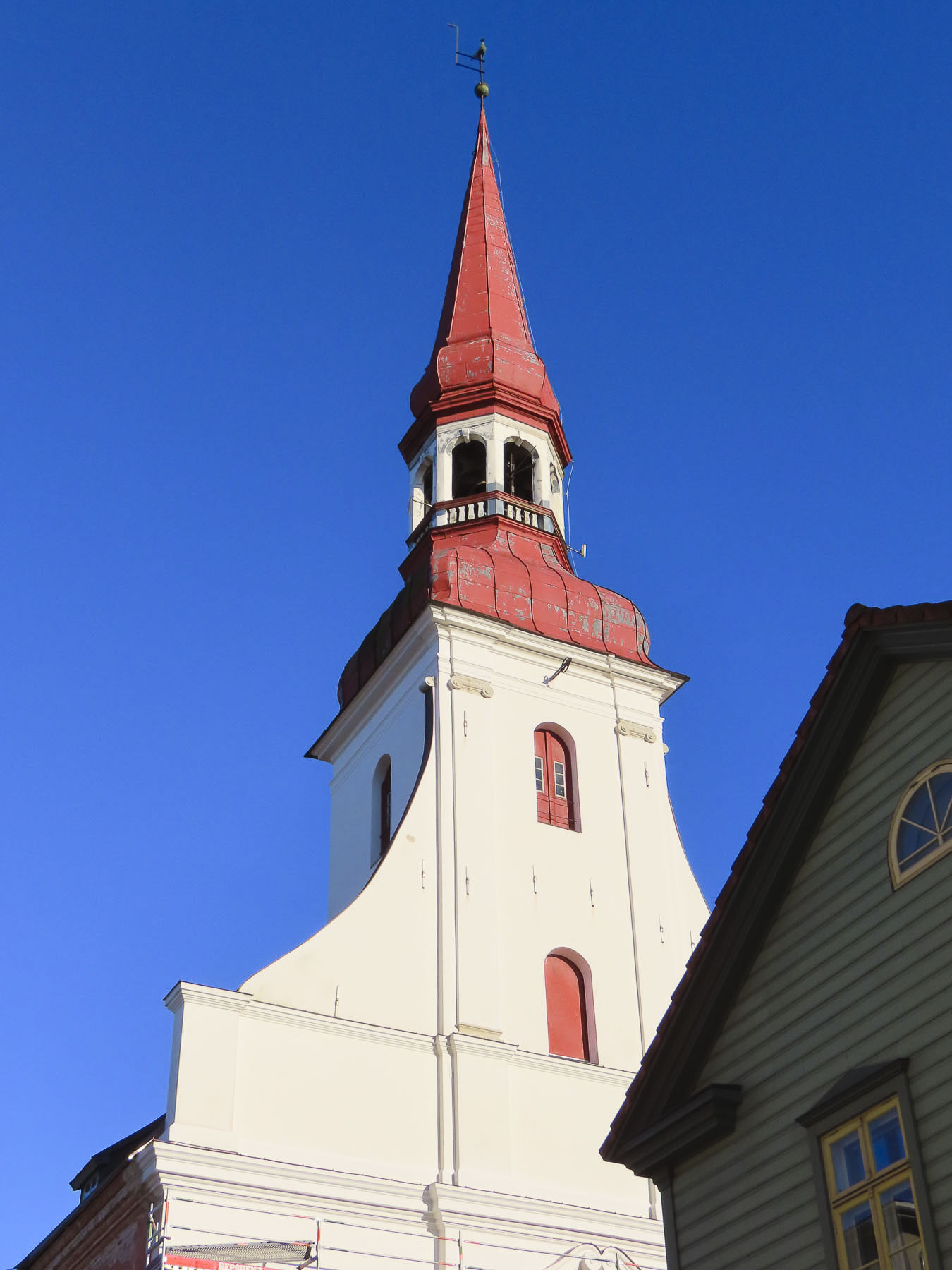
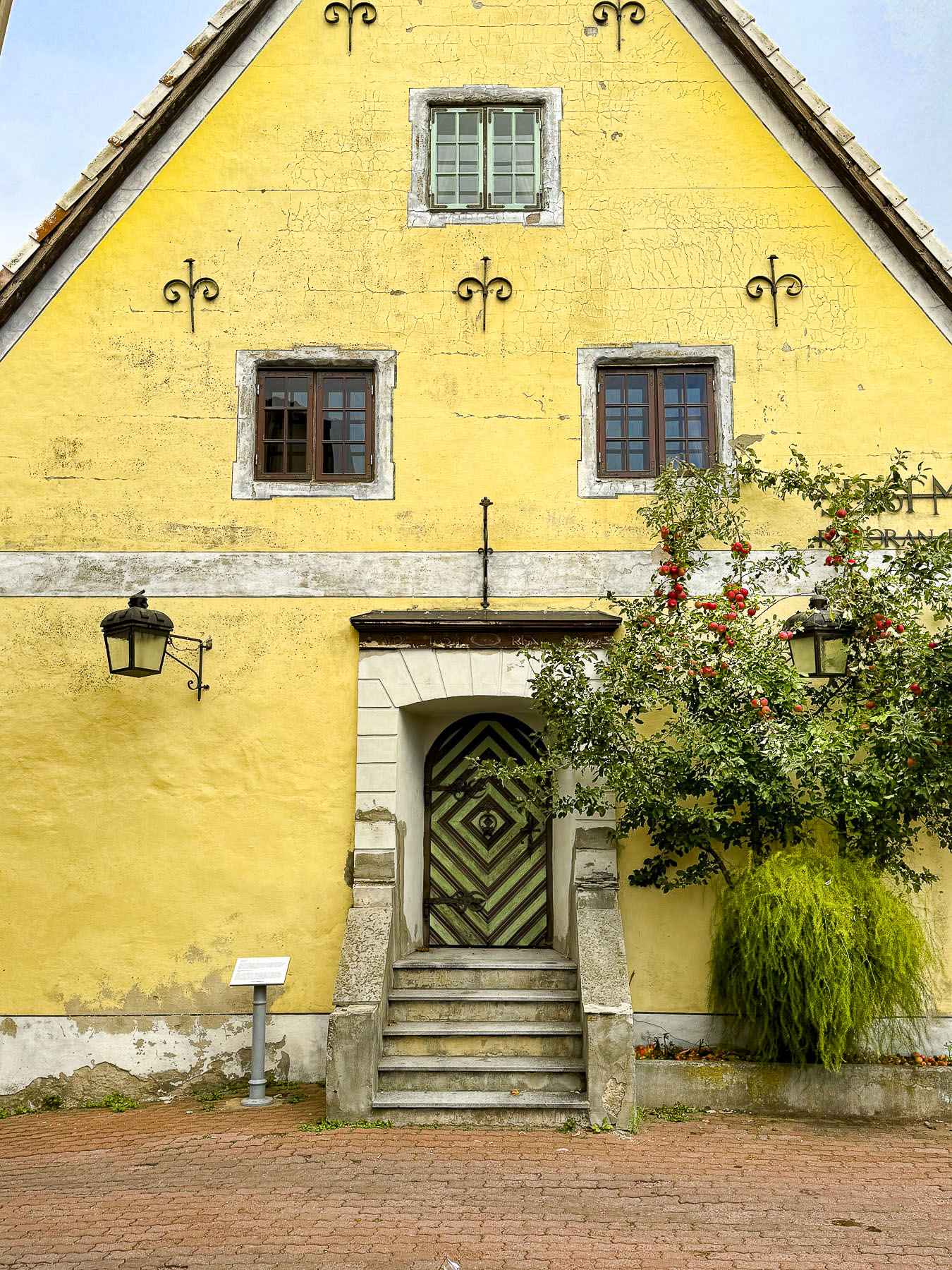
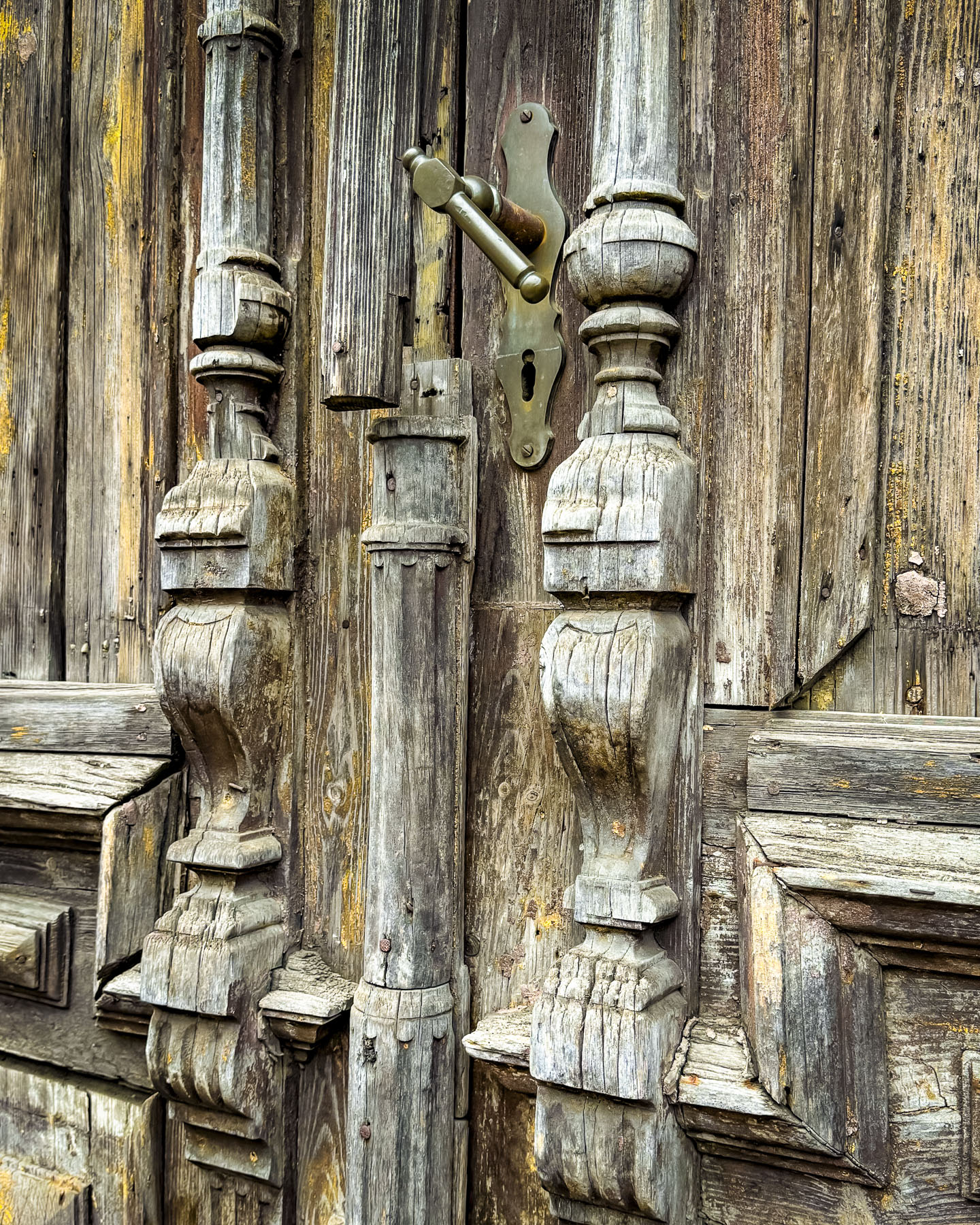
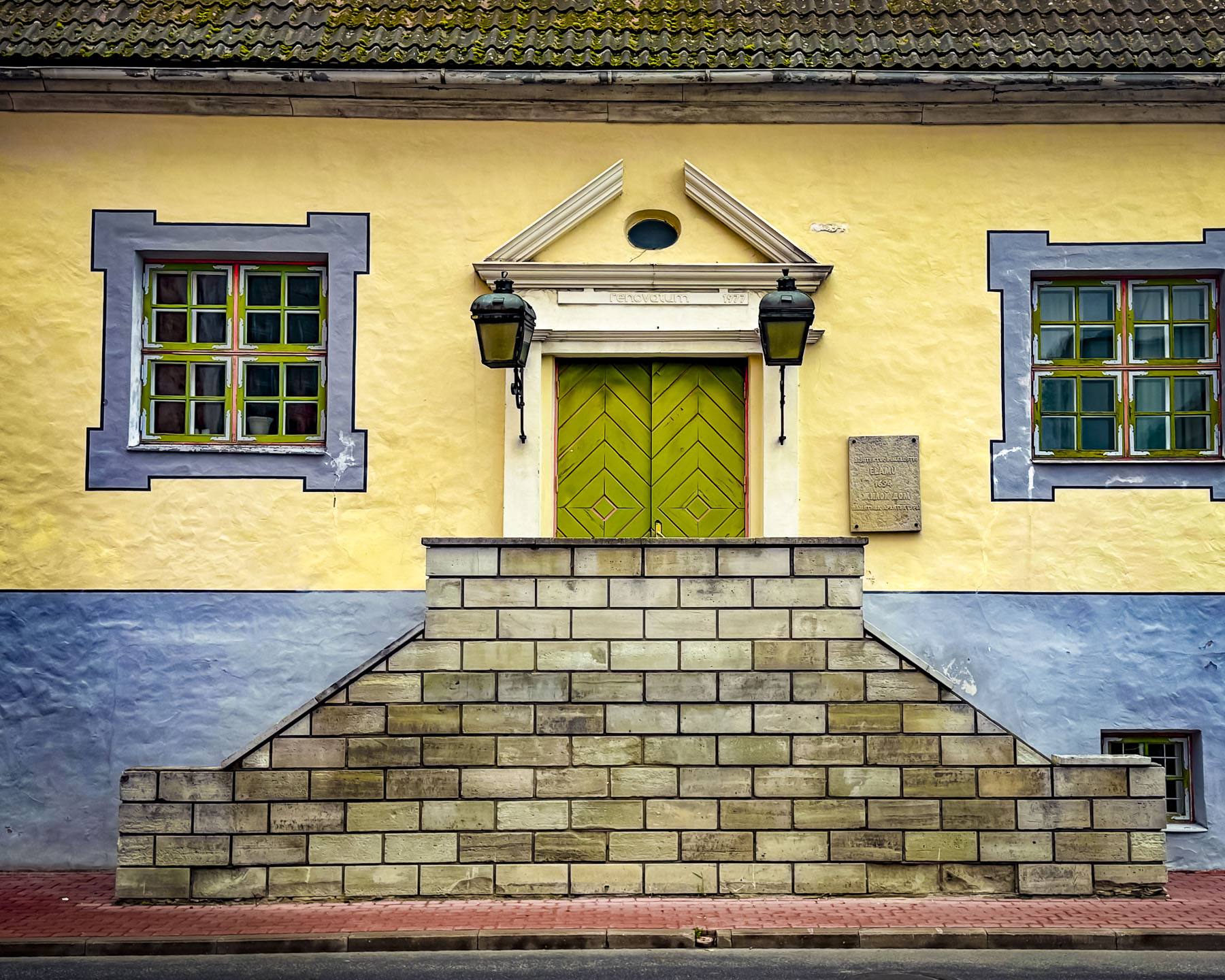
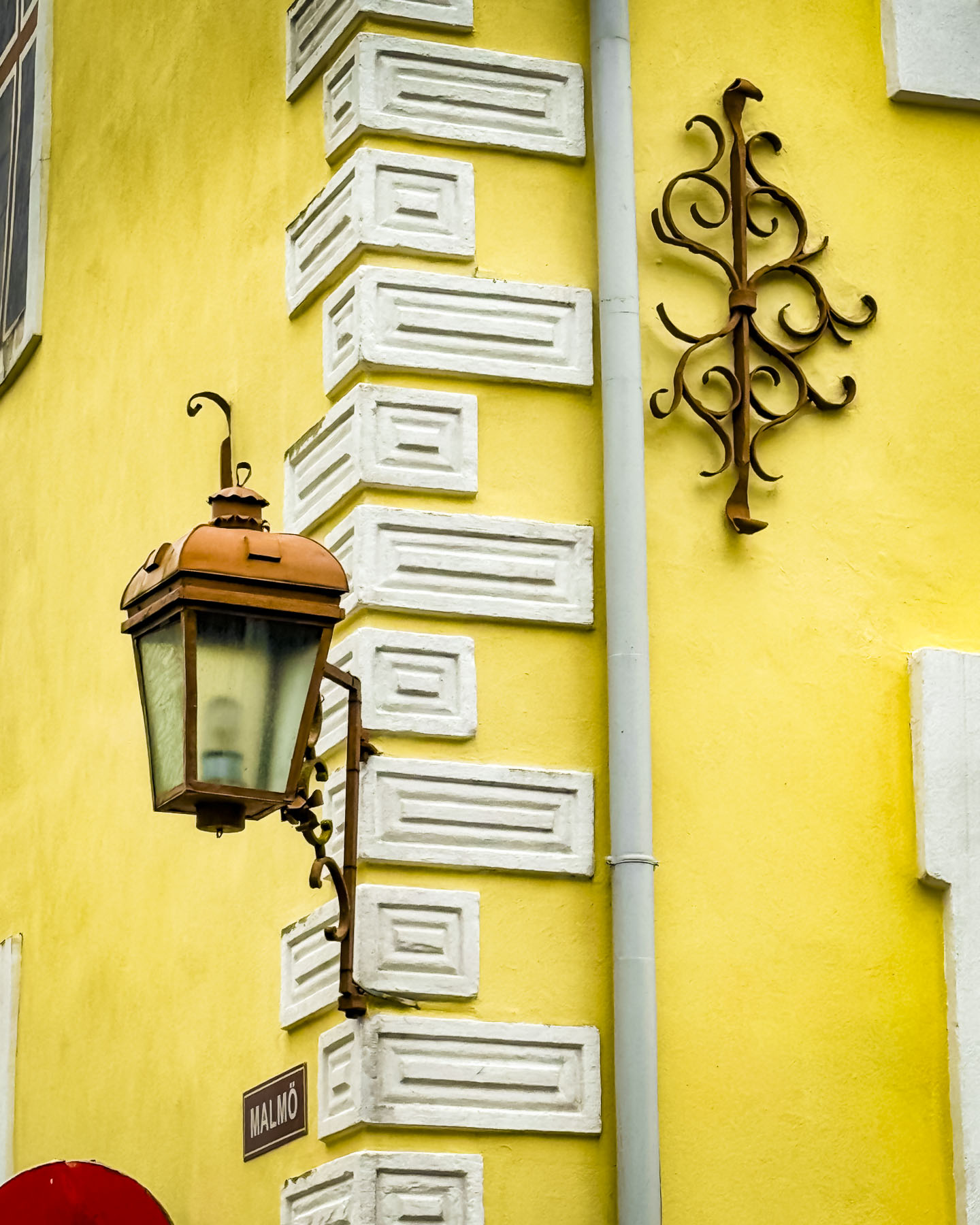
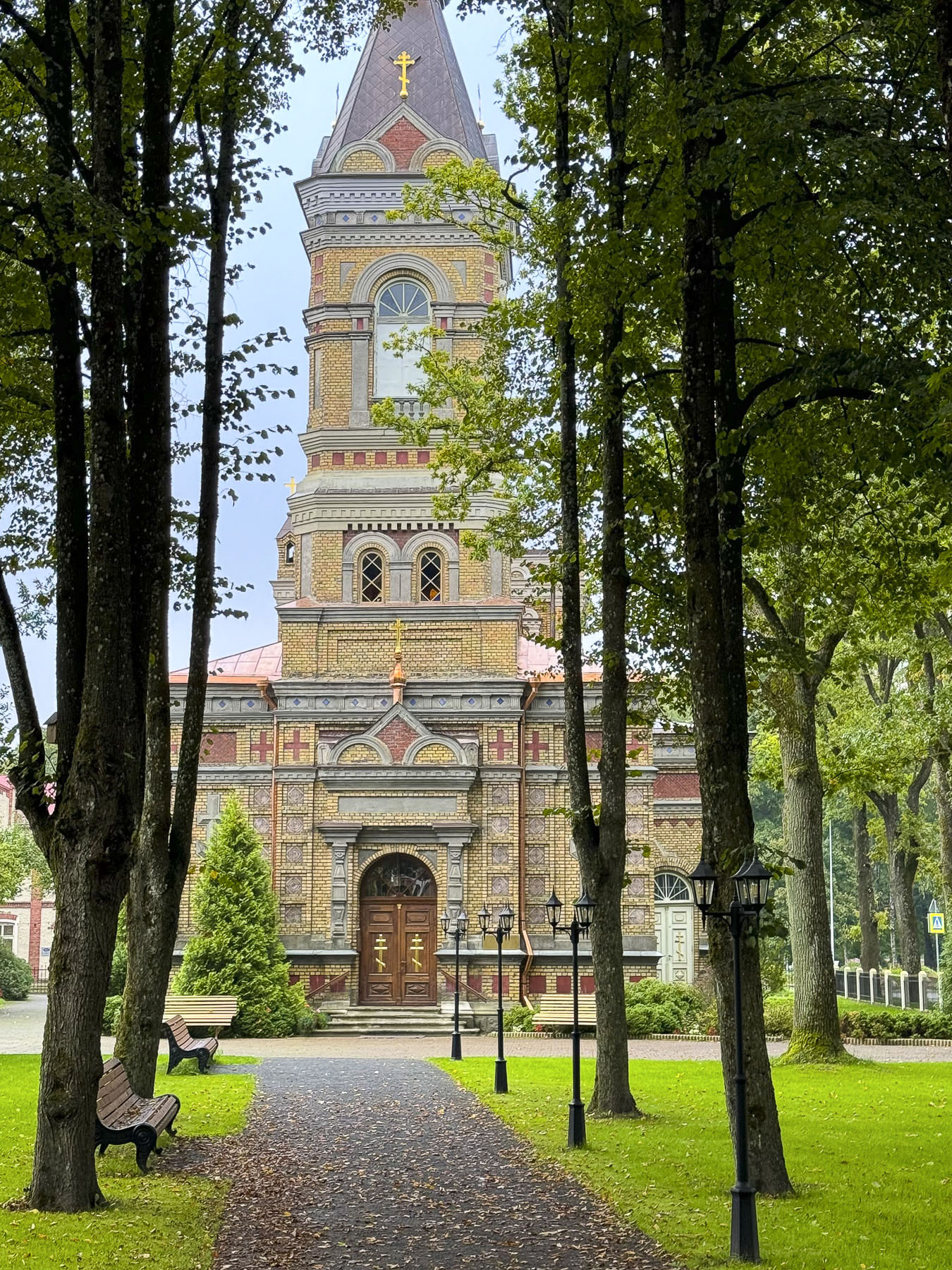
A walk across town to Punane Torn, Red Tower, revealed a cornucopia of wonderful 17th, 18th, and 19th century architectural styles that included painted doors, timbered buildings, stucco facades, orthodox church domes, and protestant steeples.


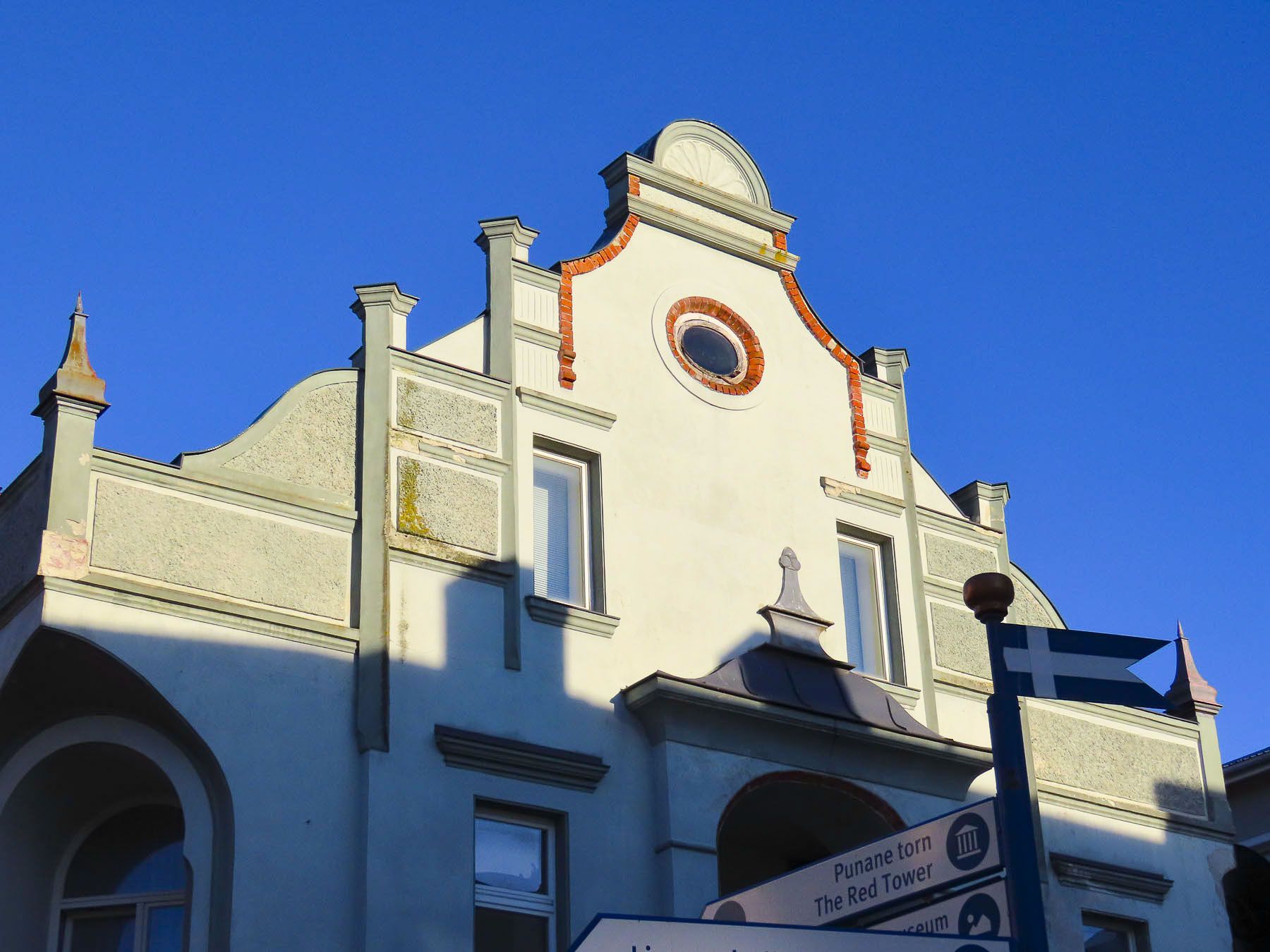
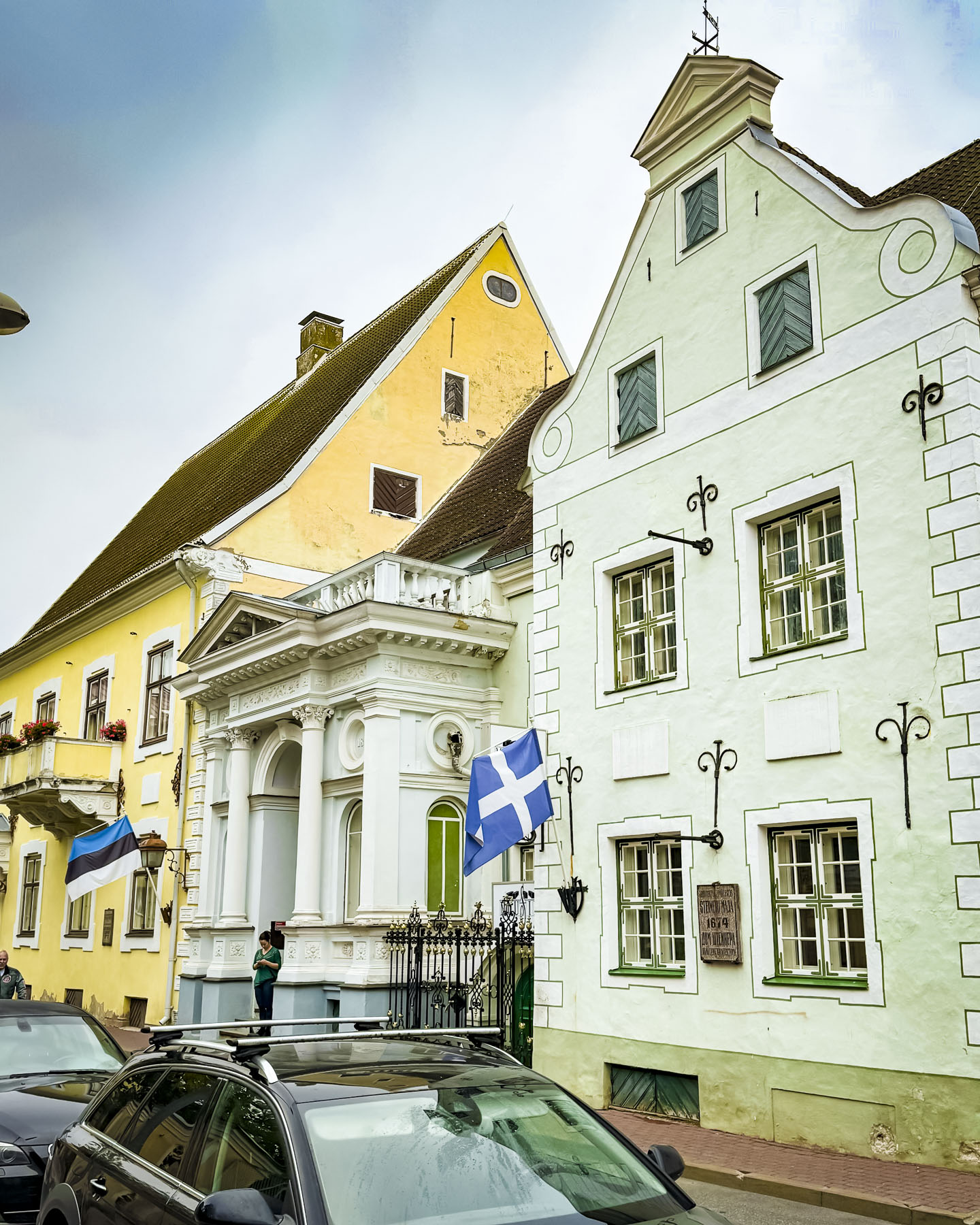


The tower, once part of the city’s defensive wall, was constructed in the 15th century, during the tenure of the Teutonic Knights, as a prison with a 6-meter-deep prisoner pit. It is the oldest preserved structure in Pärnu and houses a branch of the city’s museum. A block from the tower is the Seegi Maja Almshouse, first built in the13th-century to help Parnu’s destitute and disabled; it was rebuilt in 1658 and is now used as the restaurant for the St. Peterburg Hotel.

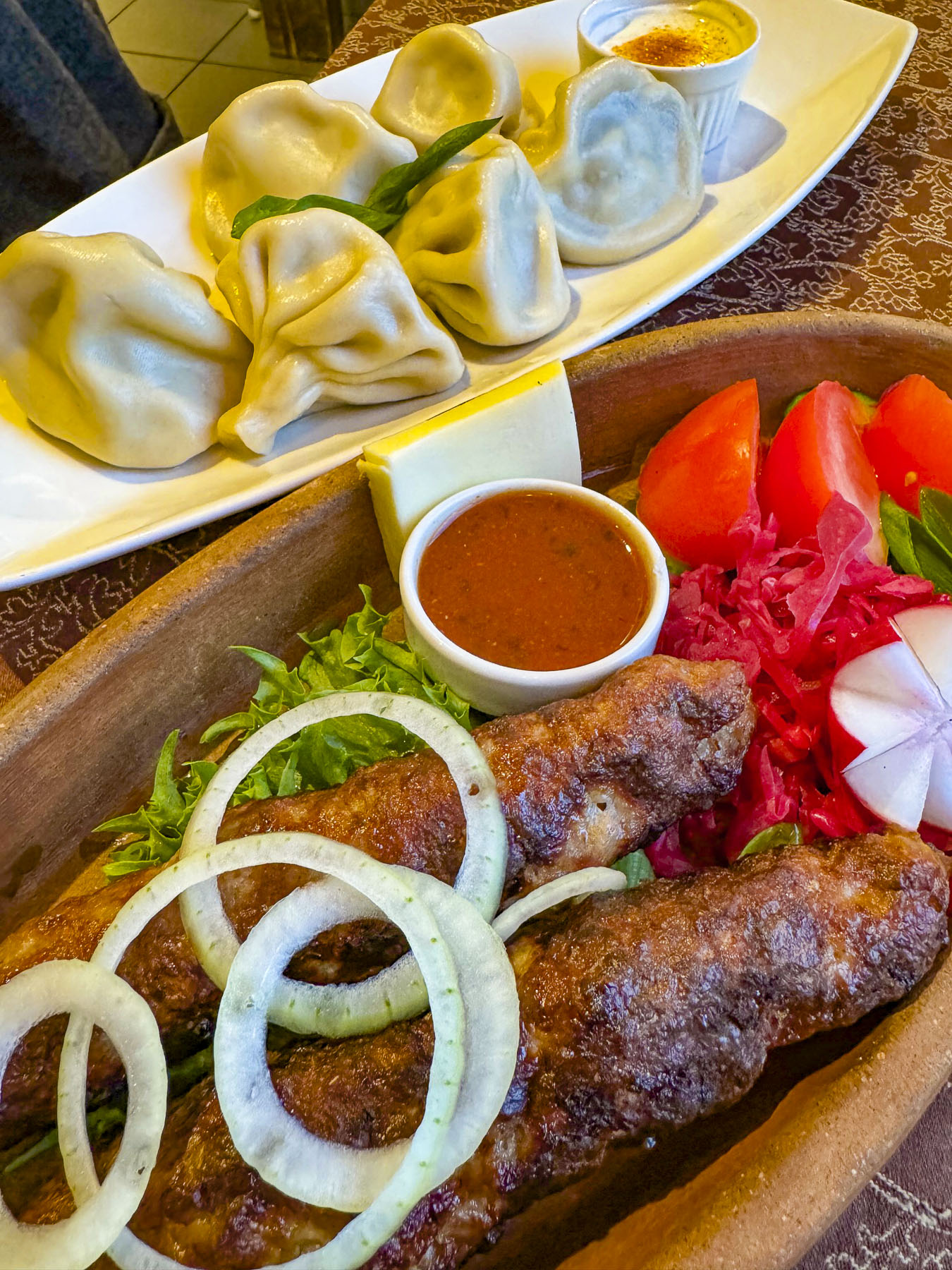
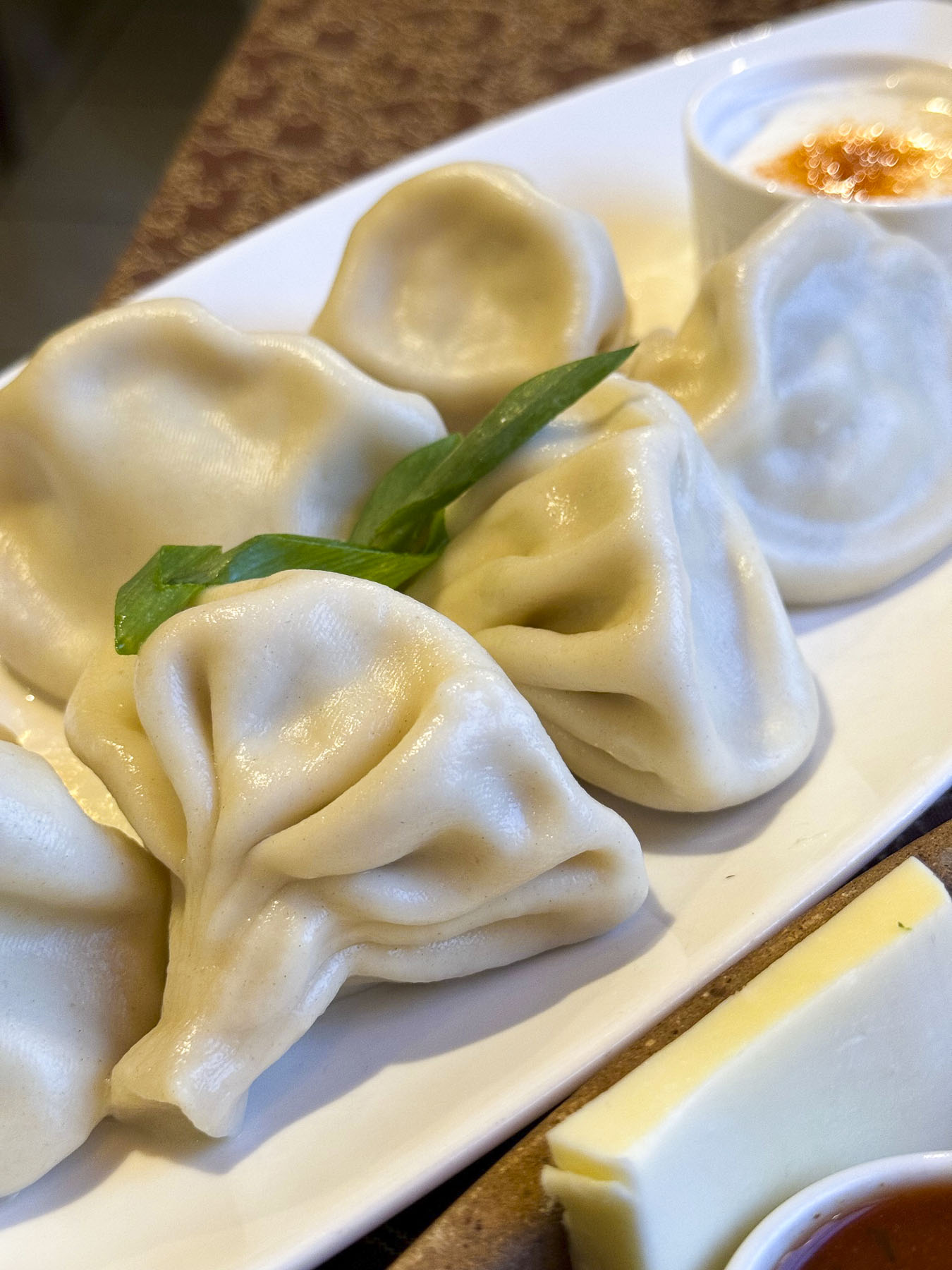
Rüütli Tänav, a pedestrian mall with several side alleys, runs for several blocks through the old town and is the center of activity. It boasts an array of coffee houses, shops, and restaurants featuring international menus. Later that evening we had a great dinner at Kolhethi, a Georgian restaurant, which we highly recommend.
On the edge of Old Town, the streets around the Hotel Victoria still hosted interesting architecture and a variety of street murals and graffiti.



The hotel, with its distinctive mansard roof, was built in 1926 and opened as the Grand Hotel with a café in 1931, “where the great soloists from Tallinn performed.” During the Soviet era it was known as the Hotel Voit and it was the only sanctioned hotel in Pärnu that westerners were allowed to stay in when visiting the city. But the café’s music tradition continued with a small orchestra that performed twice a day. The building was renovated after Estonia’s independence in 1991 and reopened as the Hotel Victoria with the Grand Café.
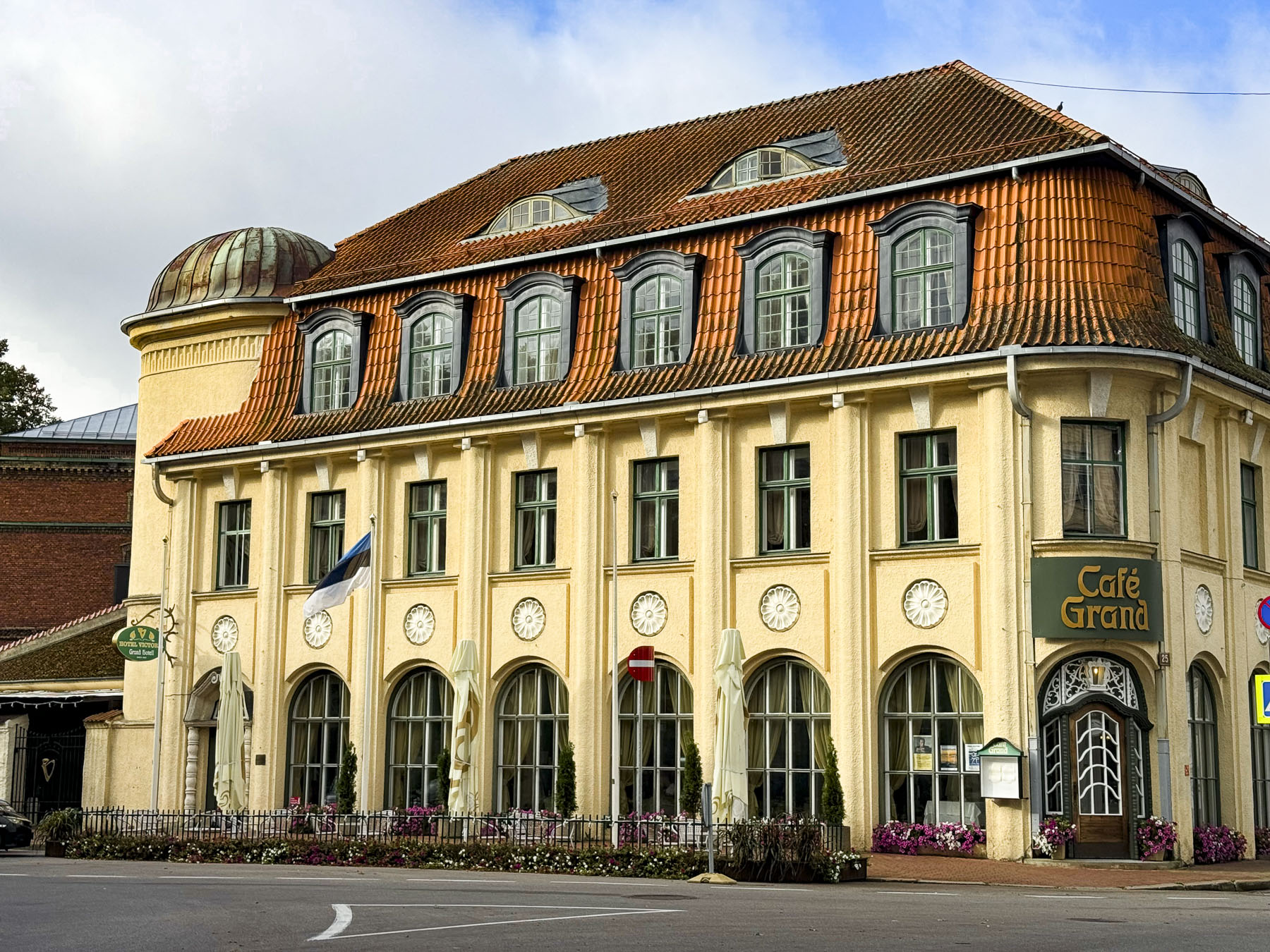
As we were checking in a celloist, an older gentleman, was playing in the lobby. We commented on how splendid his playing was, and the receptionist responded, “he practices in the lobby every time he stays with us, and he’s been coming here for many years.” Unaware of the hotel’s history then, we now wonder, was he old enough to have been an echo of the Soviet era orchestra?

The next morning, we continued to Riga. After entering Latvia, our search for a place to stop for a morning coffee break (there were few opportunities) took us to Saulkrasti, a small seaport along the rugged Baltic, where we found the Ostmala Café, in the lower level of the Saulkrasti Cultural Center. The café is a wonderful little hidden gem and the perfect spot to relax for a while on the way from Pärnu to Riga. It’s nicely decorated with paintings by local artists and seemed to have only two employees – our friendly and helpful waitress/cashier, and the talented chef in the kitchen. The restaurant had a simple menu with some tasty Latvian dishes and was very budget friendly. Afterwards we followed the walkway from the cafe along the harbor for a short way, and watched logging trucks bring their cut trees to the port for export. Afterwards we headed to nearby Saulkrasti beach for a walk along a dramatic stretch of boulders and sand.

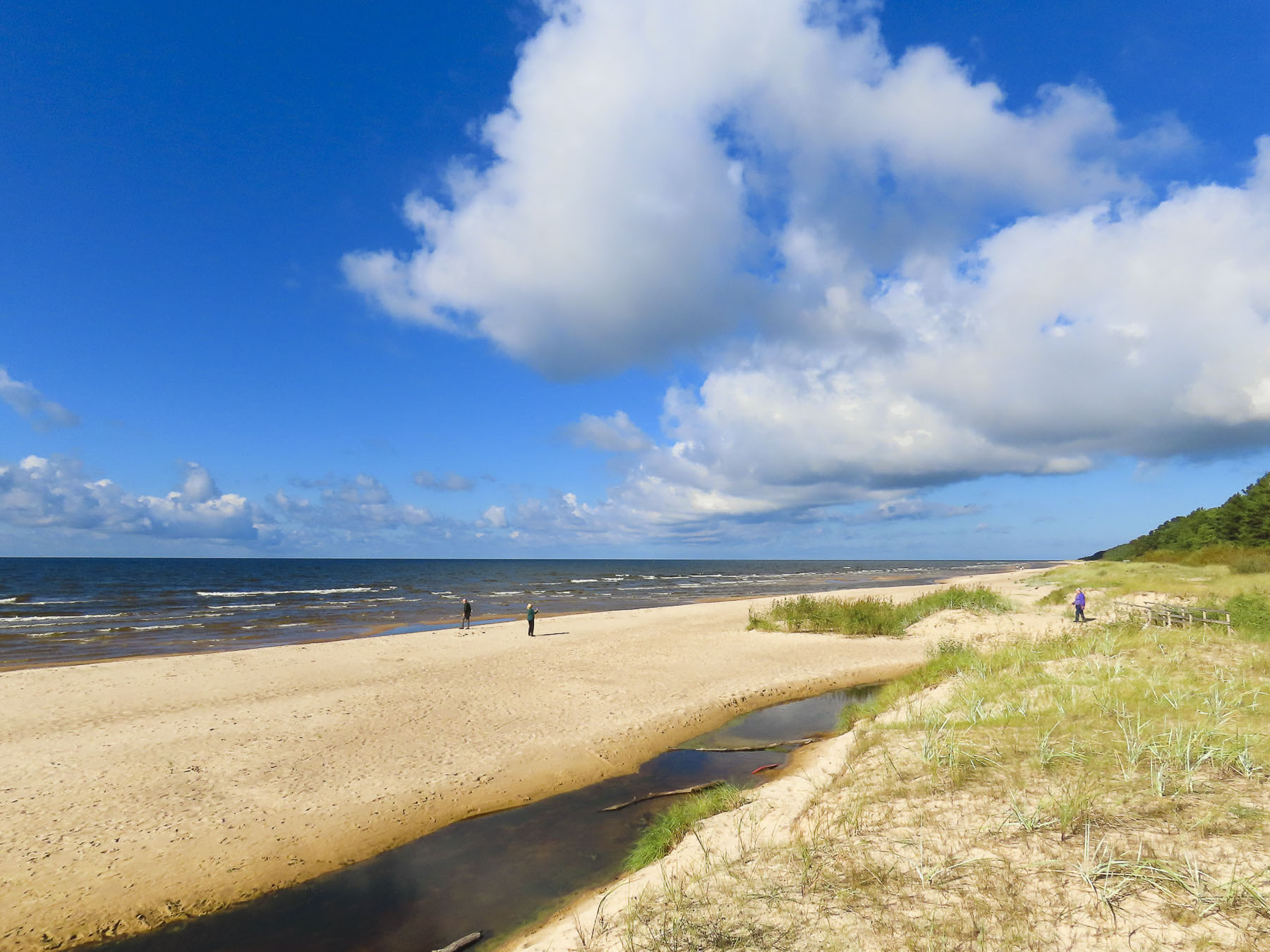
Closer to Riga we stopped at Carnikavas Pludmale, a picturesque and inviting wild beach that stretched for miles along the Baltic coast, north and south, as far as our eyes could see. A strong breeze off the water lifted the soft golden sand into the wind and tingled our skin. Latvia’s pristine coastline is the unintended result of Joseph Stalin’s paranoia that the western alliance was going to stage an amphibious landing along the coast. Do defend the USSR against this threat, the communists razed all the homes along the seacoast for 300km (186mi) and heavily guarded it against attack and preventing escape from behind the Iron Curtain.
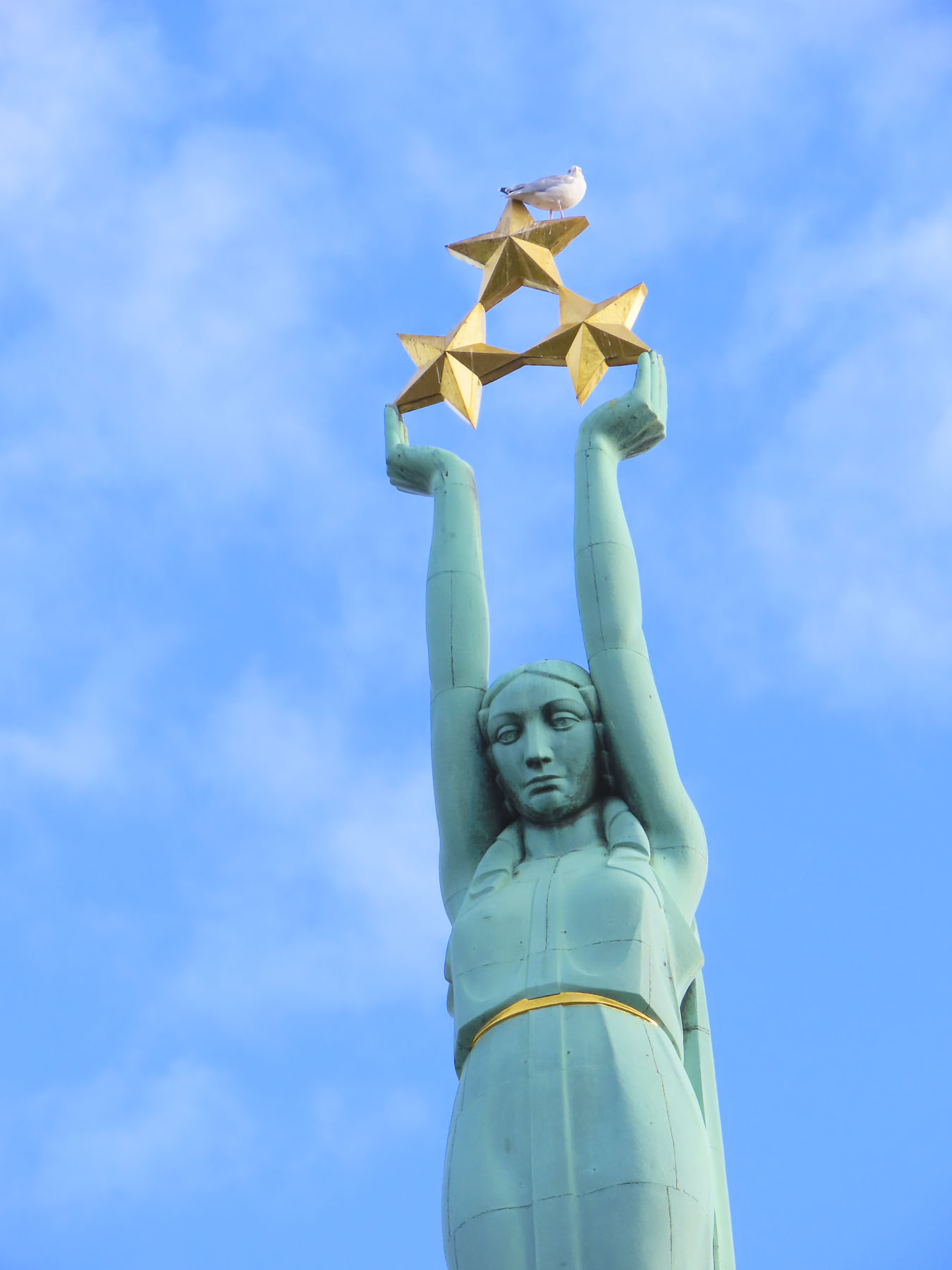
Riga’s Brīvības Piemineklis, Freedom Monument, greeted us later that day as we arrived in the city.
Till next time, Craig & Donna

 2 Suitcases for 2 years