

One of the tenets of slow travel is the ability to revisit a place many times to savor the changes in its ambience. The Plaza de España in Parque de María Luisa was one such lively spot that we enjoyed and returned to several times.


It is an iconic landmark for Seville with its eclectic mix of Baroque, Renaissance and Moorish architectural styles embellished with hand painted Mudéjar tiles created across the Guadalquivir River, in the Triana barrio.
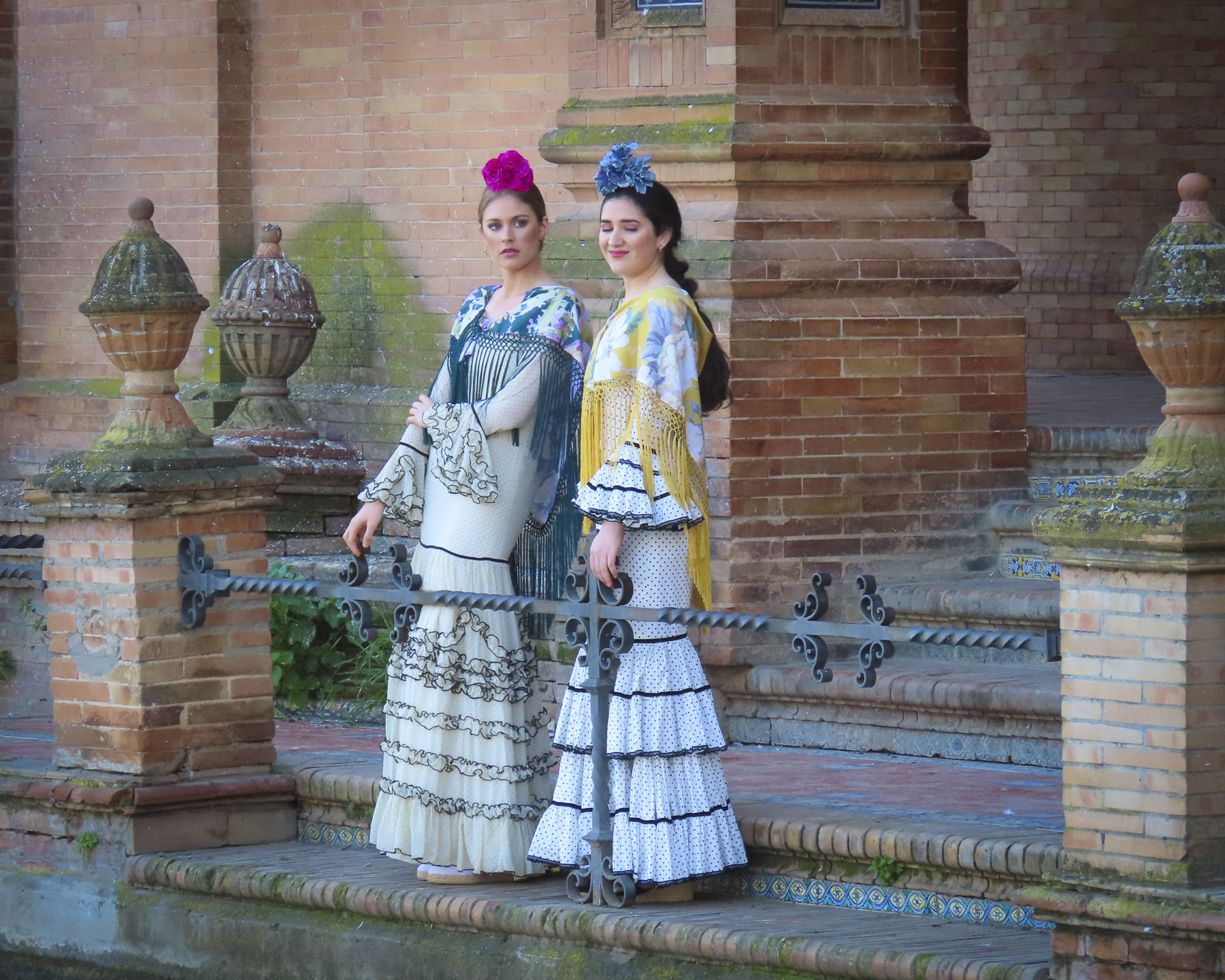

Along with an expansive plaza, signature horseshoe colonnade, and boating moat, it has been a popular destination since it was constructed for the Ibero-American Exposition of 1929. It, along with the Museum of Popular Arts and Traditions, and the Archeological Museum of Seville in Parque de María Luisa, are hubs of activity on the weekends when they fill with friends and families looking for more elbow room.


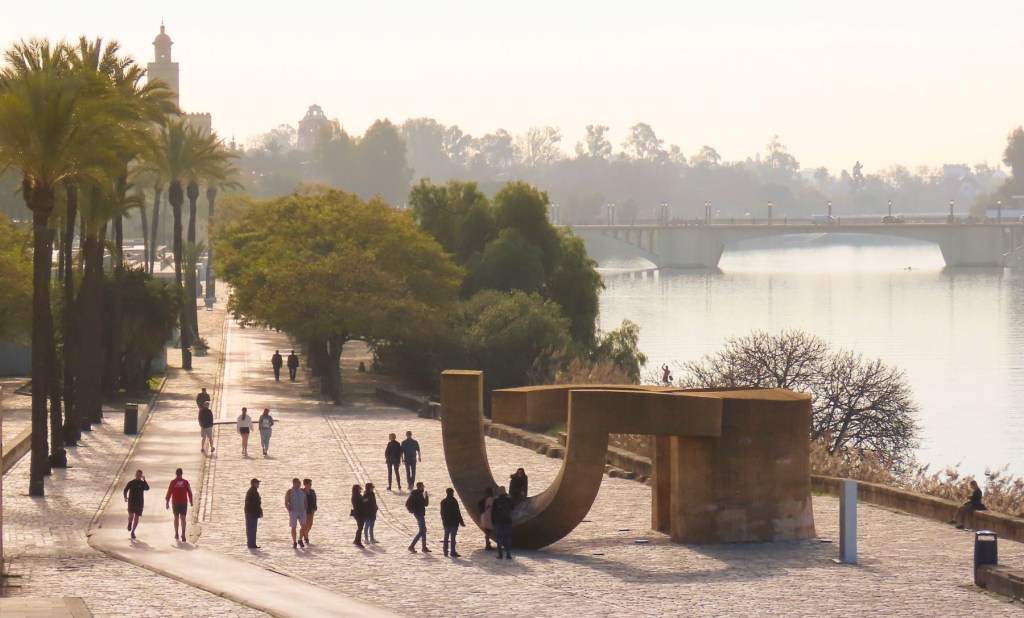
Several other architecturally interesting buildings were constructed in the park and along Paseo de la Delicias at this time to host exhibitions from countries that were formerly part of the Spanish Empire and which would later be used as consulate building.


On the way to the park one morning, we stopped for café along the edge of Jardines de Murillo and unsuccessfully tried to order cappuccinos from a brusque waiter who replied, “No,” just no and without any further explanation turned and walked away. Confounded, we left. This happened again several days later when we were early for a dermatologist appointment, for an overdue skin cancer screening at Hospital Fátima, a private hospital in Seville that facilitates multi-lingual medical tourism services for travelers. We used TripMedic to arrange our appointments.


We found the small café, Bar Puerto Chico, on the block behind the hospital. It was full of folks on the way to work, having the traditional Andalusian breakfast that consists of tostada, soft Mollette bread, perfectly toasted to a golden brown and drizzled with olive oil, a smear of crushed tomatoes and maybe a slice of jamon, along with coffee and zumo natural, fresh squeezed Spanish oranges. “Dos capuchinos por favor.” The barman smiled this time when he responded with a “No,” but seemed to be delighted that two foreigners had found his establishment, when he explained that they only serve espresso or café con leche. In some local bars cappuccinos just aren’t done. Mystery solved.
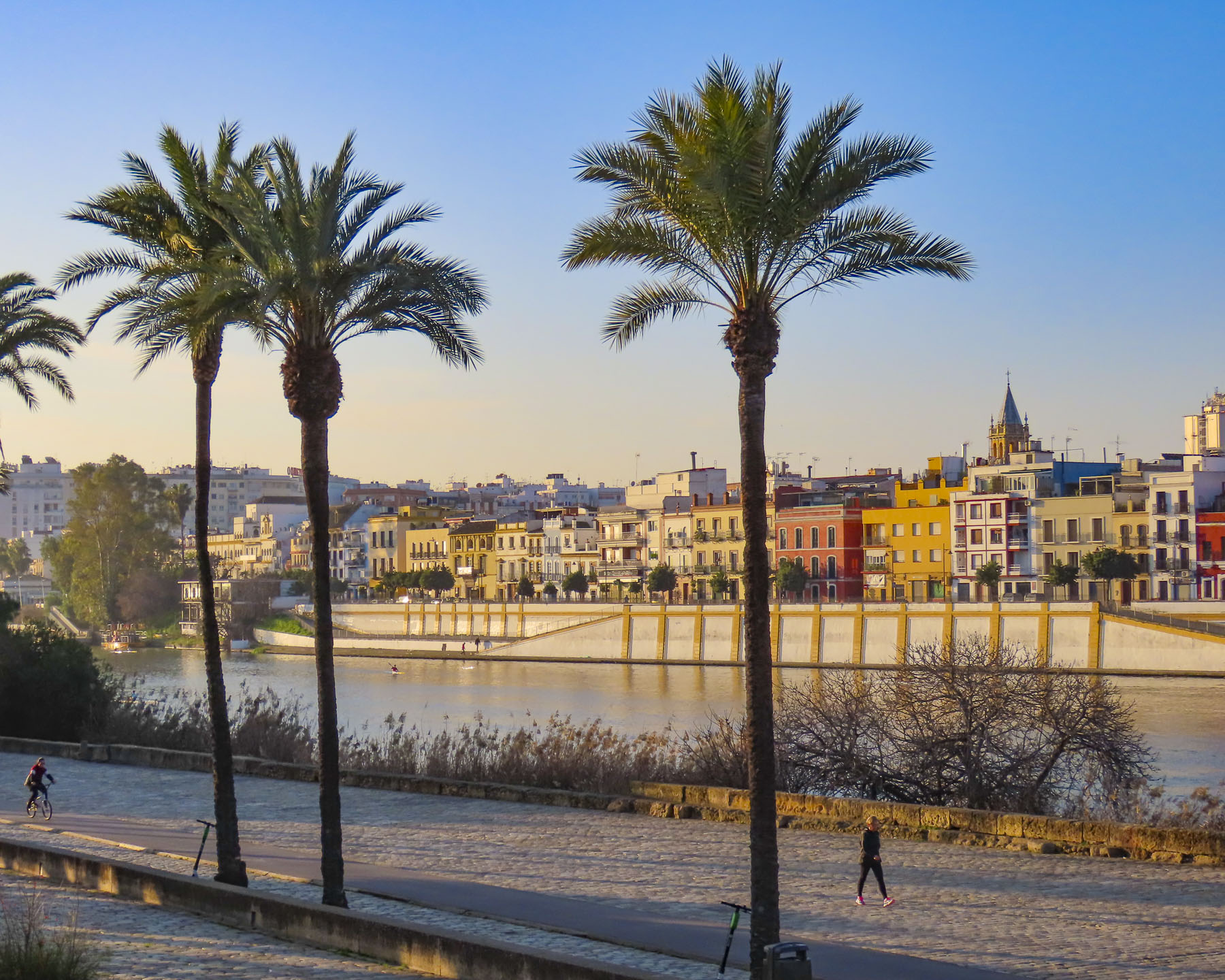
Heading back into the city center, the sidewalk along Paseo de la Delicias eventually dips down, near the Escuela de Mareantes (School of Navigation) and widens to a scenic esplanade for bicyclists and walkers, that parallels the Guadalquivir River through Seville for several miles.

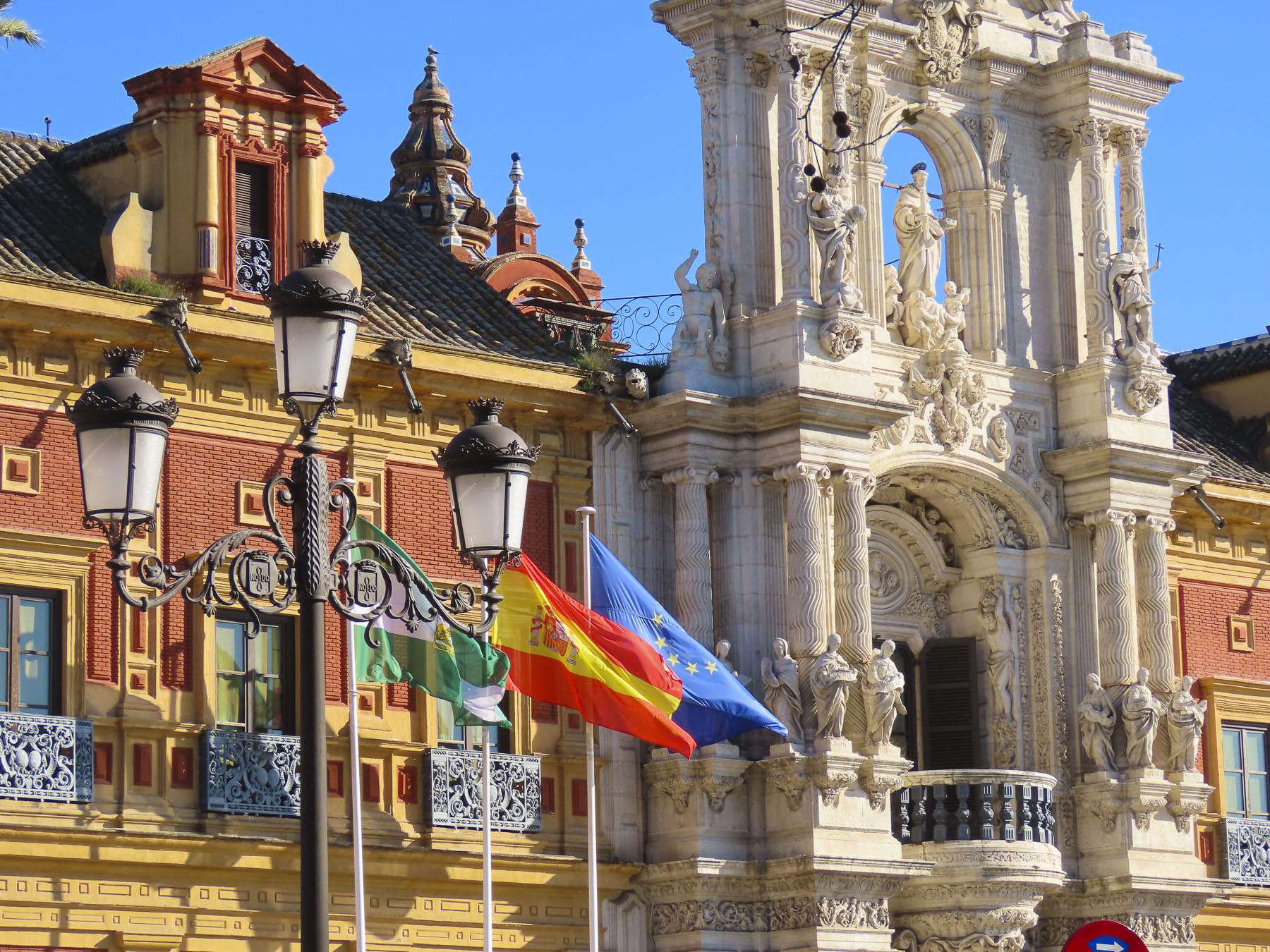
Speckled with buskers, sculptures, and benches, there are plenty of excuses to saunter slowly and savour the view. The river is popular with numerous kayaking and sculling clubs that launch miles upstream and then race down the river.

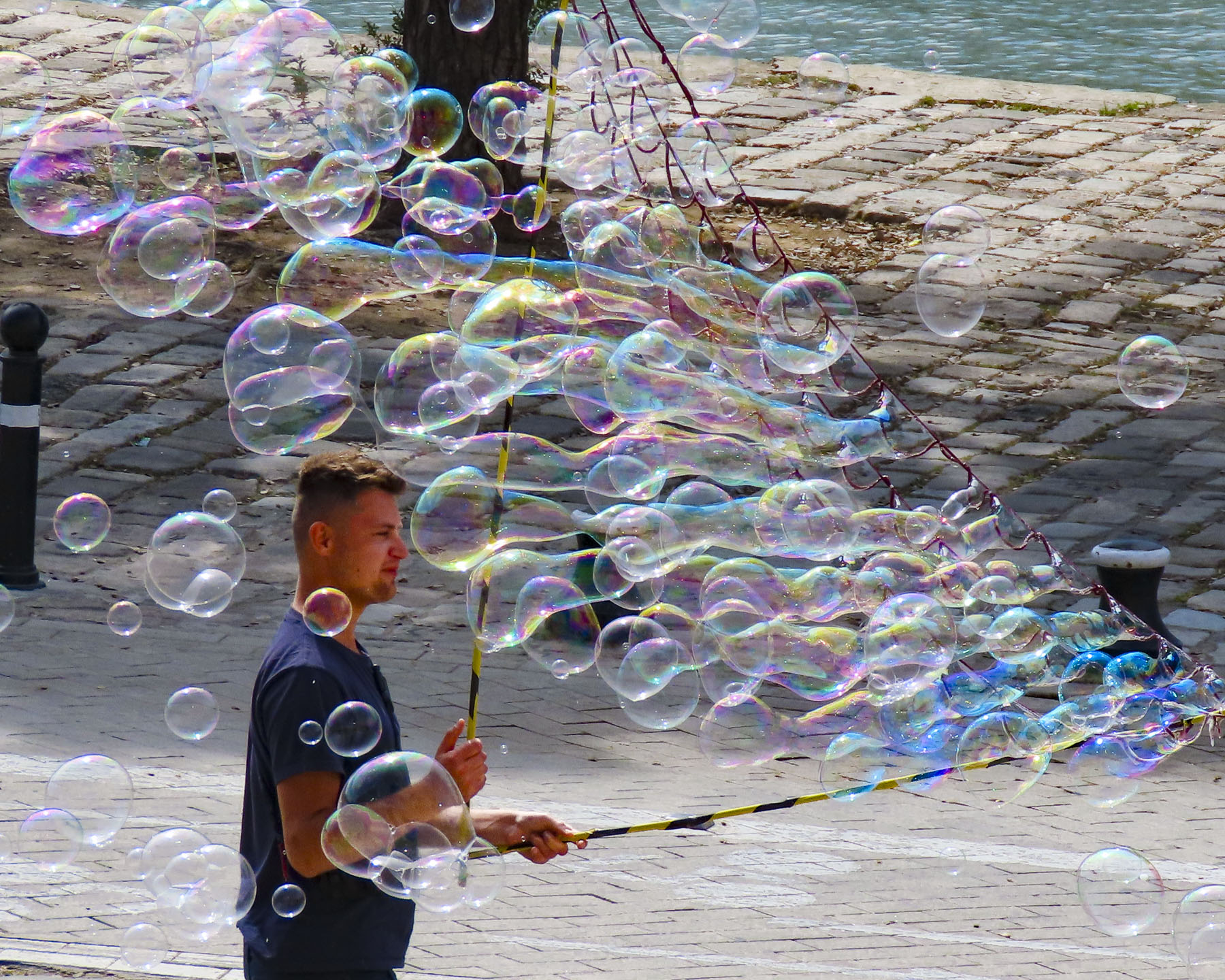
The waterway on the weekends was always bustling, but even during the week there were a good number of paddlers and rowers on the water, from sunrise to sunset.

It’s also an historic stretch of river that was the Port of Seville, where galleons returning from the Spanish colonies in the Americas during the 16th and 17th centuries unloaded cargo and registered their treasure of gold and silver bullion at the Torre del Oro, tower of gold bullion. The 118 ft tall tower dates from the 1100s and was part of the Moorish defensive wall that once encircled the entirety of ancient Seville and was the anchor point for a heavy chain that was stretched across to the Triana side of the river to control shipping.

Ferdinand Magellan launched the first circumnavigation of the world from this quay in 1519. For the 500th anniversary of this tremendous feat the city commissioned a full-size replica of his ship, the Nao Victoria, to be moored on the river. A small vessel by today’s standards, it made us wonder how they ever succeeded in sailing around the world.

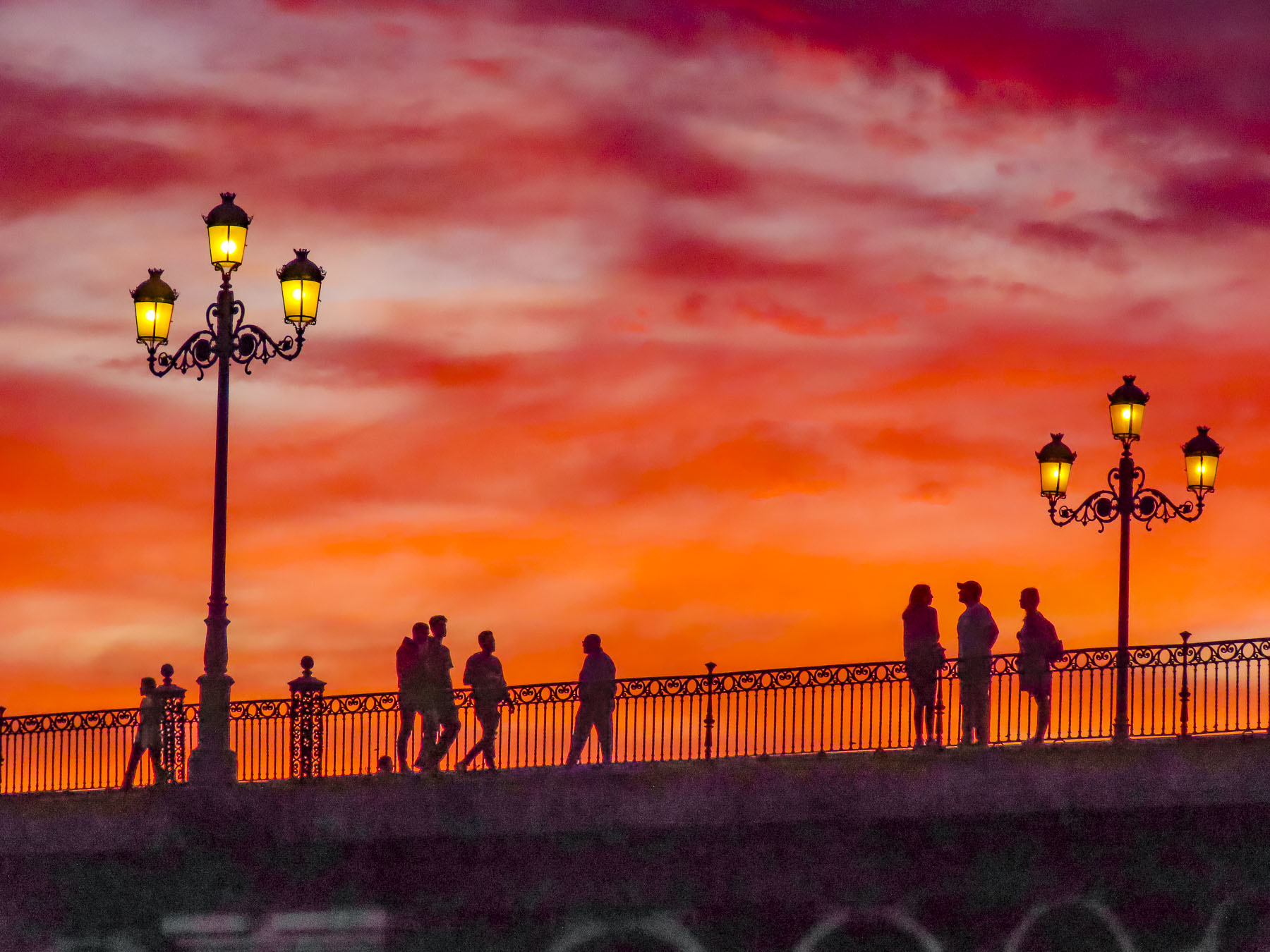
Nearing sundown, the quay along the river fills with folks waiting to watch the sky erupt with color as the sun sets behind the bridge and Triana.

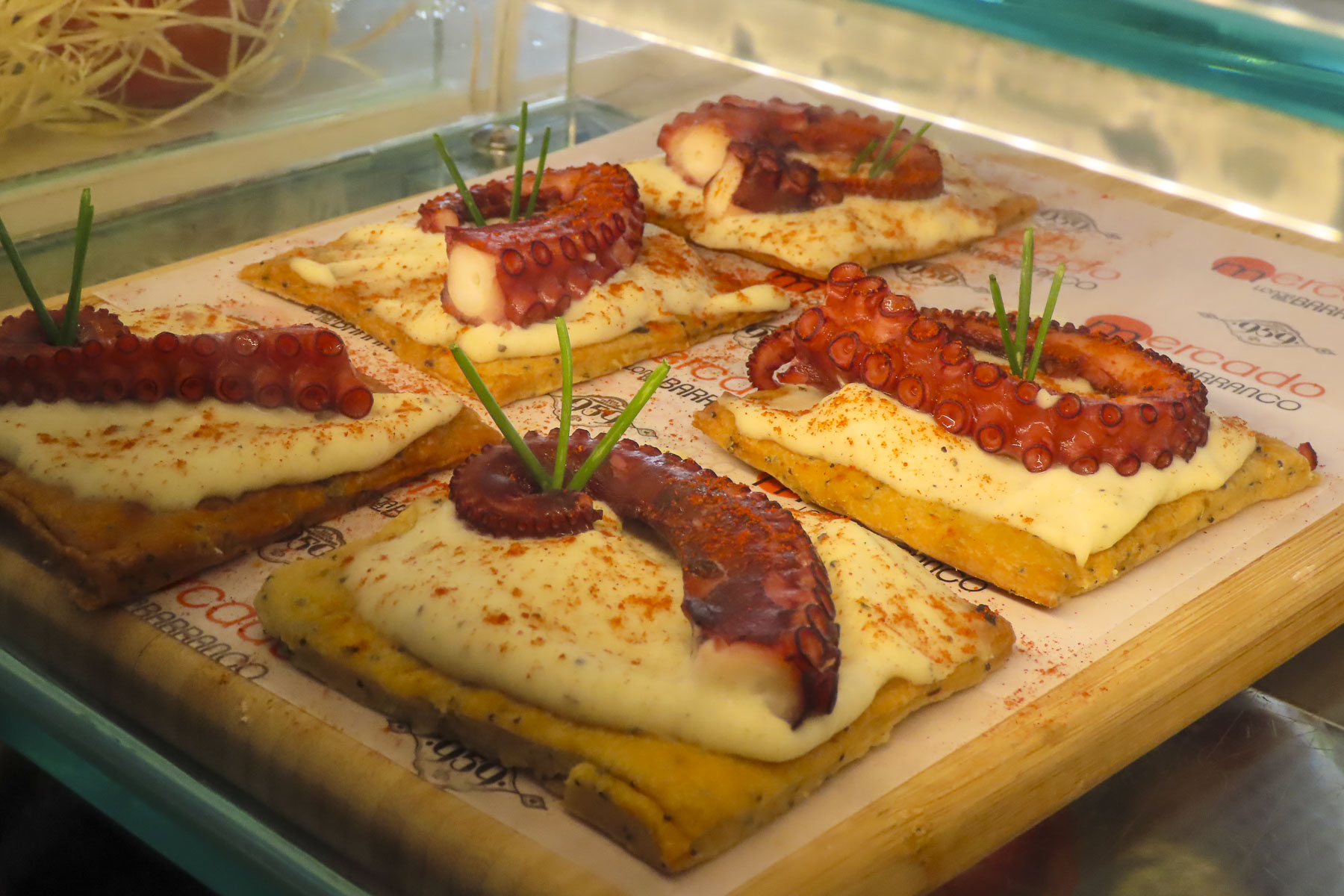
At the base of the bridge stands the lofty, wrought-iron and glass Mercado Lonja del Barranco, designed by Gustave Eiffel in 1883. It functioned as the city’s fish market for several decades before it was re-envisioned in 2014 as an upscale food hall with a contemporary, architecturally beautiful interior. It’s definitely a fun foodie destination; it is a savory gauntlet of display cases offering the full spectrum of Spanish cuisine prepared by twenty different restautrants. There is something delicous for everyone available here.

Aside from the completion of the Puente de Triana bridge in 1852, which replaced a well maintained 700 hundred year old Arab-designed pontoon bridge, it’s alleged that the Triana riverfront looks unchanged since Columbus recruited his sailors from the barrio.

While it still retains its authentic character, some wonderful alterations have been implemented, starting with the pedestrian only Calle San Jacinto that starts at the foot of the bridge on the Triana side. It is a lively stretch of outdoor cafes that offer an array of different cuisines.
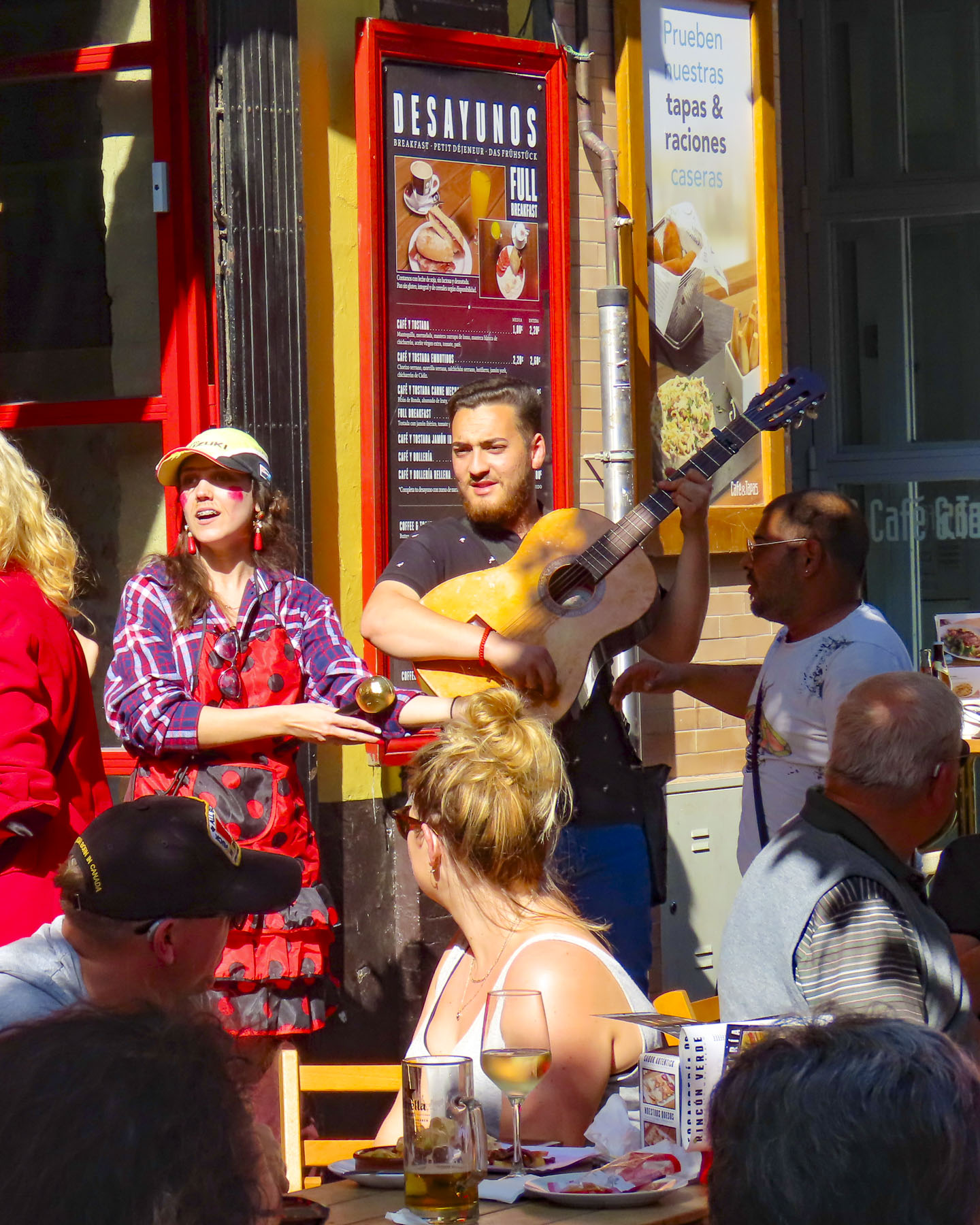

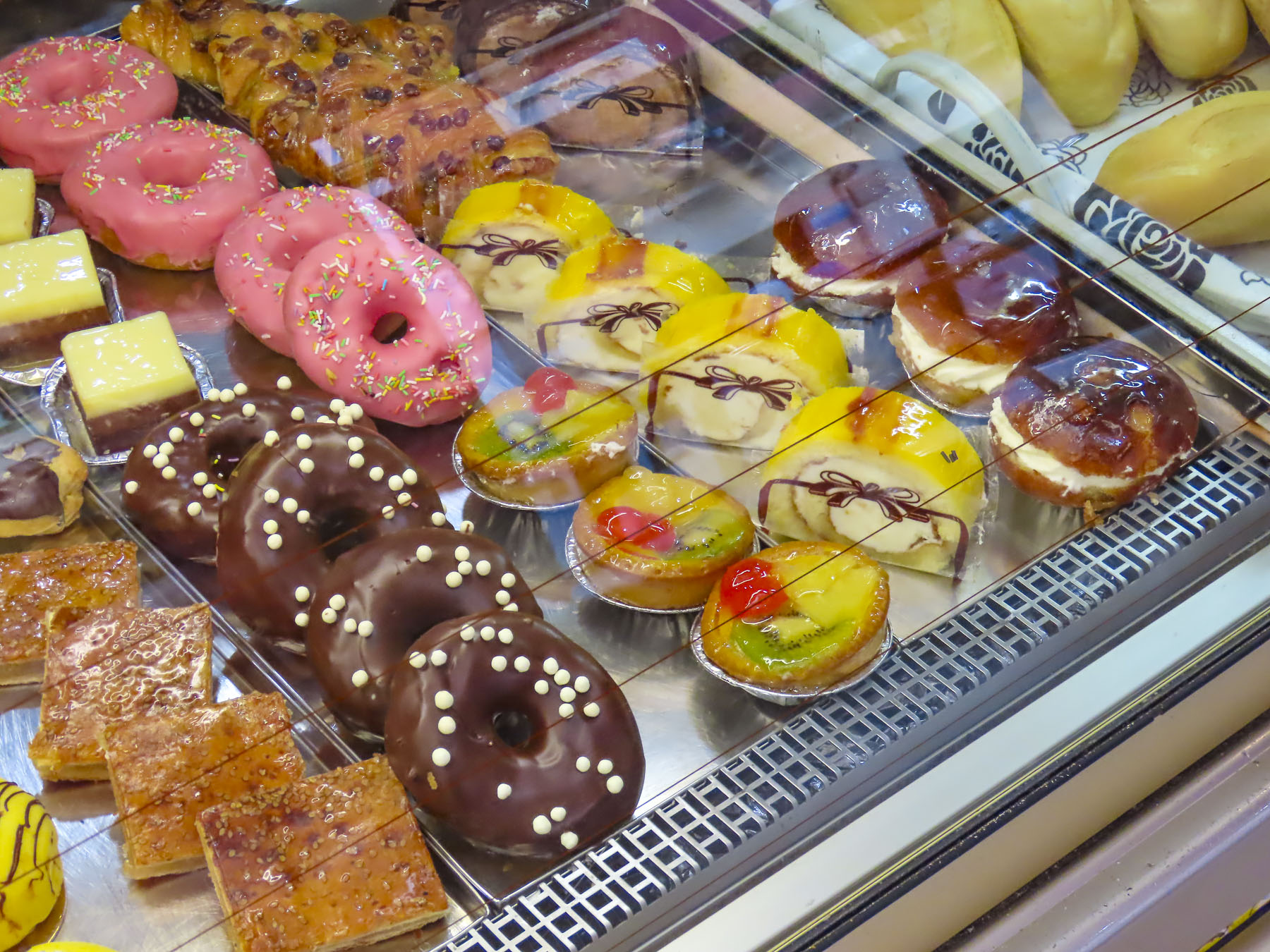
The ruined dungeons of Castillo de San Jorge castle, located under the Mercado de Triana, are now a museum and Interpretation Center for the 300 year terror known as the Spanish Inquisition. Nearby a short alley leading up from the river, the “Paseo de la Inquisición,” was the last walk of freedom for many before the prison door slammed behind them.
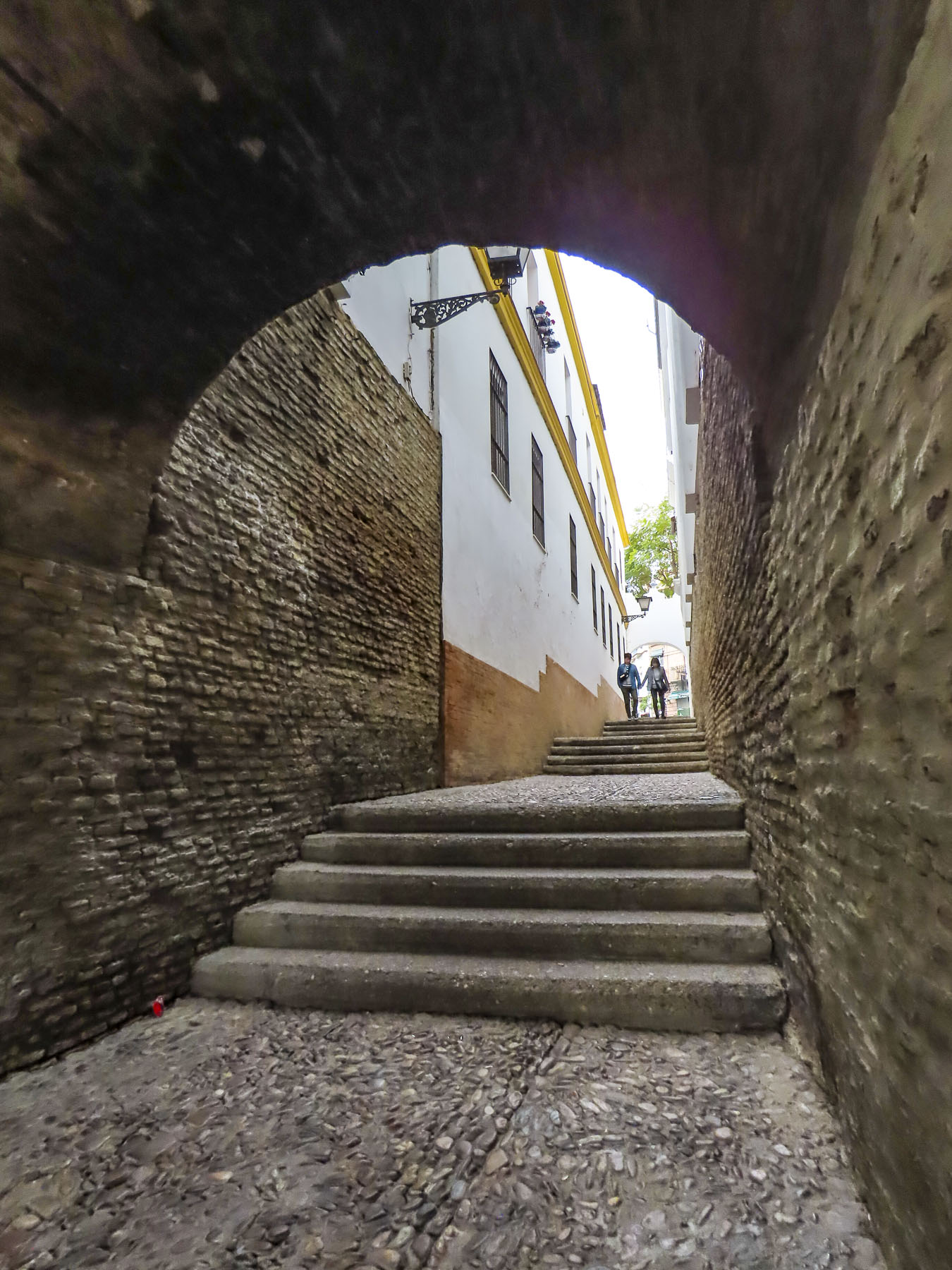

The mercado is a thriving, lively spot that draws locals for the seafood, meat, cheese and vegetable vendors, along with a slew of always busy restaurants. We caught a lesson in buying fresh fish while waiting in line at a fish monger’s stand. “Always look at the inside color of the gills, they should be very bright,” is what we gathered as he showed several large whole fish to the customer in front of us as we waited to purchase a filet of tuna to cook back at our apartment.

One stall, which we dubbed the olive porn store, only sold decadent large olives garnished with all sorts of delicious extras. Another booth offered artfully decorated puff pastries, which were as tasty as they were visually stunning. The mercado was a long walk from our apartment, but one of our favorite traditional markets to shop at, which we returned to several times during our six-week immersion in Seville.

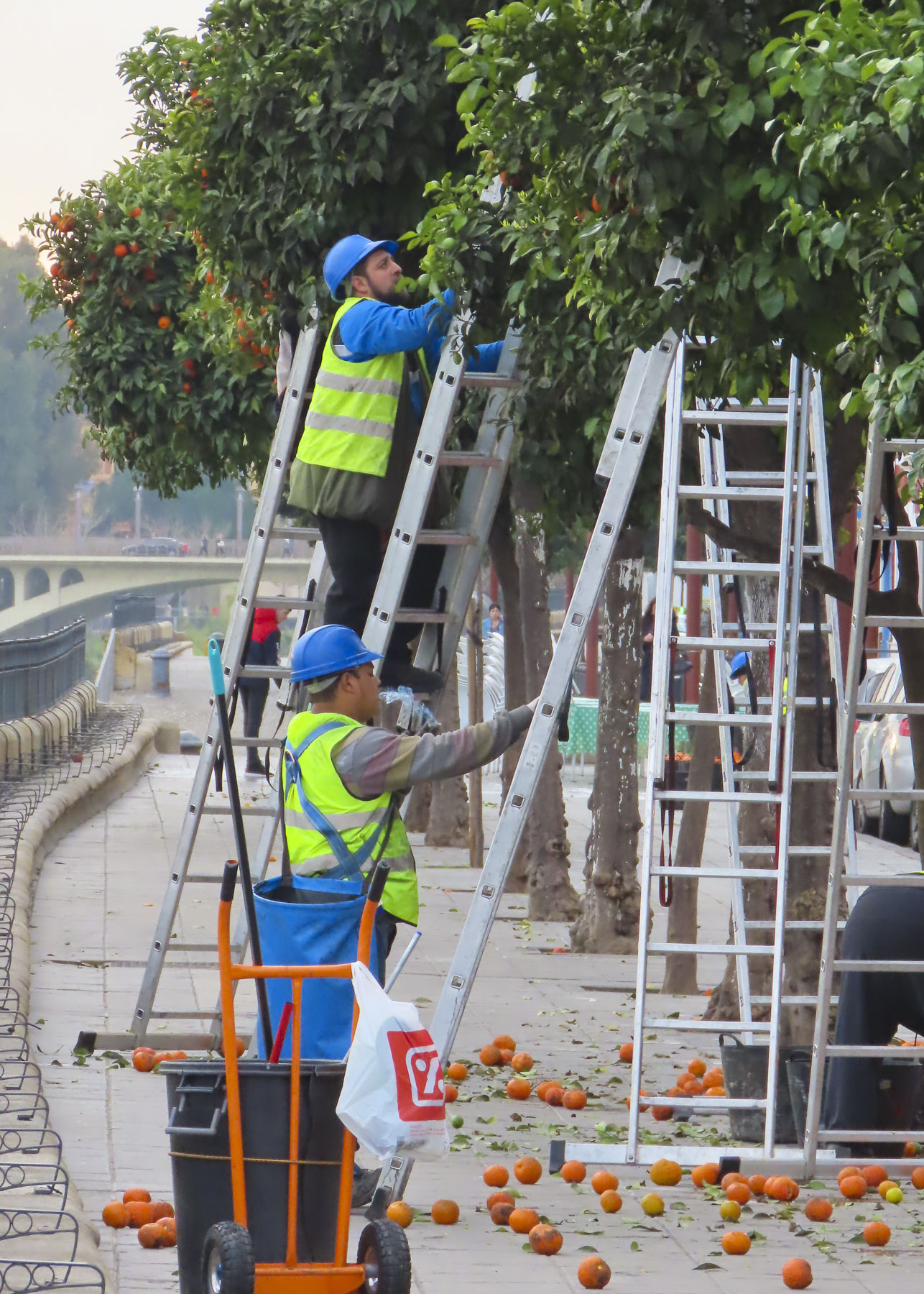
We were on the Triana side of the river one late February morning and came across a crew of city workers with ladders and buckets harvesting all the softball size Seville oranges from the trees that were lining the street. The fruit was brought to the city by the Arabs in the 9th century and Seville now, unbelievably, has 46,000 bitter orange trees that produce close to six million tons of fruit annually. Most of it is sold to be used to make marmalade, but it is also an ingredient in Cointreau, Curacao, Grand Marnier and Triple Sec liquors. Oil from the bitter orange skin is used for cosmetics, pharmaceuticals, and soaps. Recently the city started using the unsold oranges in an innovative Biogas program, where the methane gas created by the decomposing oranges is used to make “clean electricity” to run a water purification plant.

Before continuing our day, we stopped for coffee at one of the cafes that line the riverfront on Calle Betis. From our previous experiences we believed it was impossible to get a bad cup of coffee in Europe. All of it is usually made to order on one of those fancy deluxe espresso machines that you see behind the bars. My wife is more the coffee connoisseur than me as I’ve been known to make a mug of coffee last all day. But that day we both had the worst cup of coffee ever and couldn’t drink it beyond our first sips. It must have been the last pot of drip coffee from the day before that was left on the burner overnight. It’s amazing how waiters can vanish; perhaps ours did from embarrassment, but this could explain the beginning of the inquisition. Bad coffee leading to misplaced aggression, we all know what happens without that caffeine. Sympathetically the second waiter understood when we explained the situation and he didn’t request payment.
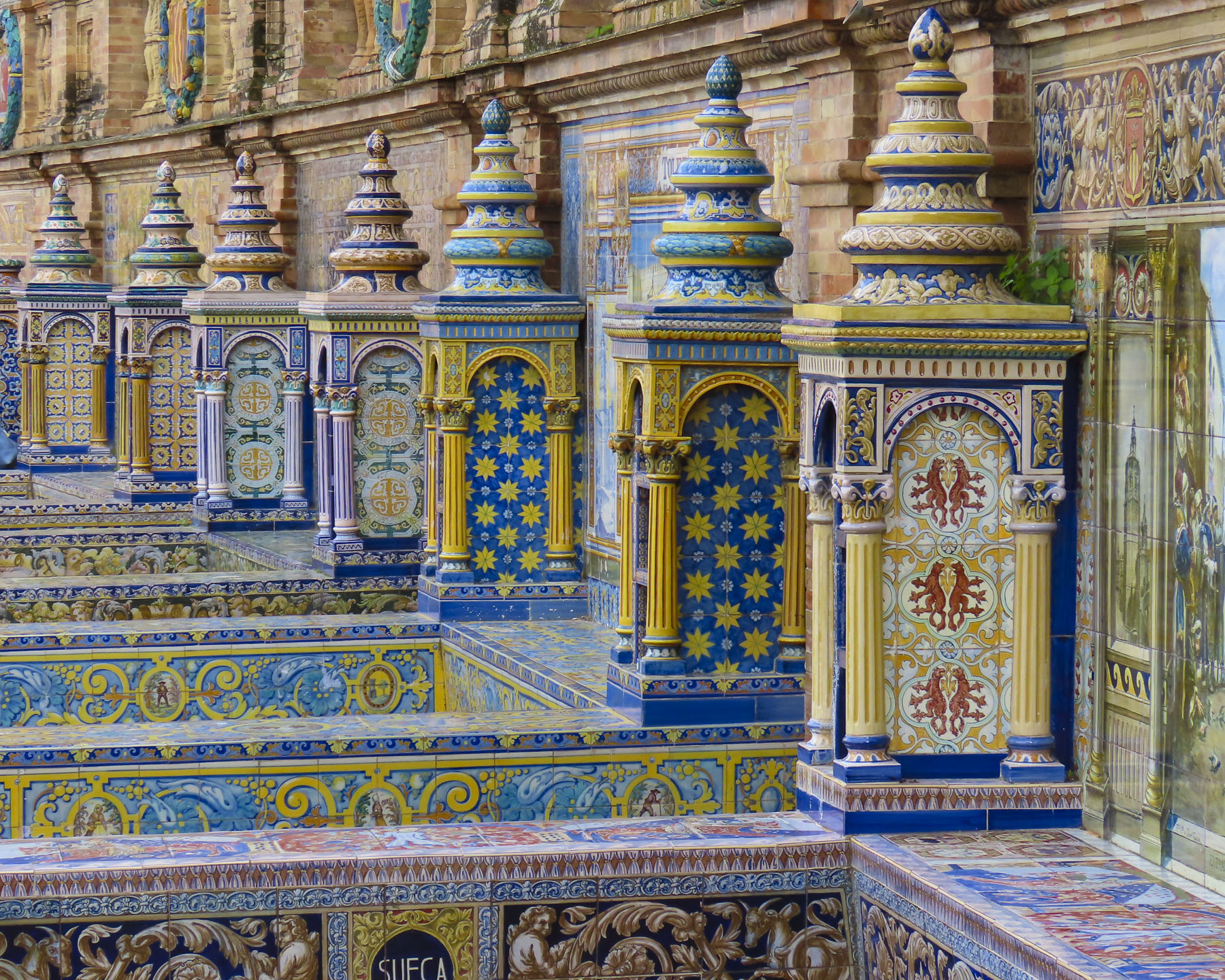

Triana was also famous for the ceramic workshops that painted and then fired in massive kilns the Azulejo and colorful Mudéjar style tiles that adorn many of the historic buildings in Seville. Along with sailors, Triana has cultivated many famous flamenco dancers, guitarists and bullfighters. The most admired matador was Juan Belmonte who stood famously close to the bulls and was gored several times over a career that spanned 109 bullfights. His statue stands in the plaza across from the Triana Mercado and if you follow his gaze you’ll see Seville’s beloved bullring, Plaza de toros de la Real Maestranza de Caballería de Sevilla, often simply called the Maestranza, across the river. It has been holding corridas in the same ring since 1761.
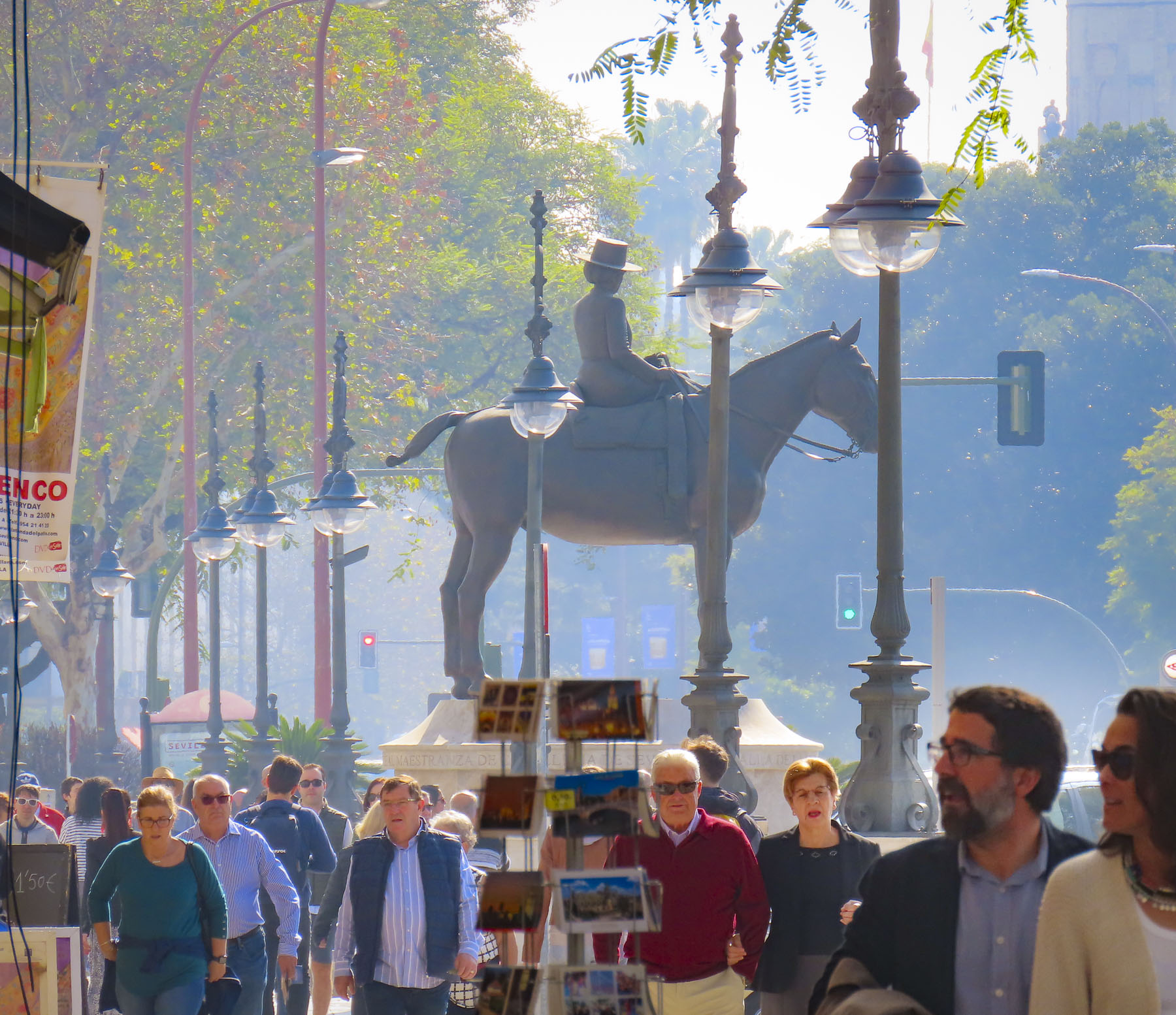

Many of the taverns surrounding the bullring are full of corrida memorabilia. Our favorite was Bar Baratillo on Calle Adriano which is also full of shops catering to the Andalusian equestrian tradition. La Feria de Abril is a colorful weeklong festival that celebrates this Andalusian equestrian tradition with the women wearing traditional traje de gitana or faralaes (flamenco style dress), while the men wear a cordobes hat along with a fitted short jacket, riding trousers and riding boots, refered to as traje corto. Every midday during the festival a parade of carriages and riders, called the paseo de caballos, heads to the bullring to watch the best matadores on Seville’s bullfighting calendar perform. Bullfighting season in Seville starts at the end of Semana Santa, Holy Week, on Easter Day.


Farther behind the bullring the Hospital de la Caridad, founded by the Holy Charity brotherhood in the 1600s, still follows its mission to help the poor and infirm. Its beautiful baroque chapel is now a museum filled with art.


Also, in this neighborhood in Casa Morales, we found one of Seville’s oldest abacerías, a small grocery store with a small tavern in the back, on the corner of Garcia de Vinuesa and Castillejo that is still run by the same family since its opening in 1850. The bodeguita retains its original atmosphere with antique cabinetry in the store and tall, large earthen wine vats lining tavern’s walls. It’s definitely worth a stop here to try their traditional tapas or montaditos, small sandwiches.


Just off Calle Adriano one Saturday in the weeks prior to Semana Santa we came upon a Christian brotherhood training to carry their float for the holy week processional. With military marching precision, the muscular team turned the weighted float around a tight corner and continued down the block in synchronized step.

We followed the marching band that accompanied them to a fundraiser for the brotherhood. Very much like a church bake sale, the only difference was they surprisingly sold bottles of various liquors.
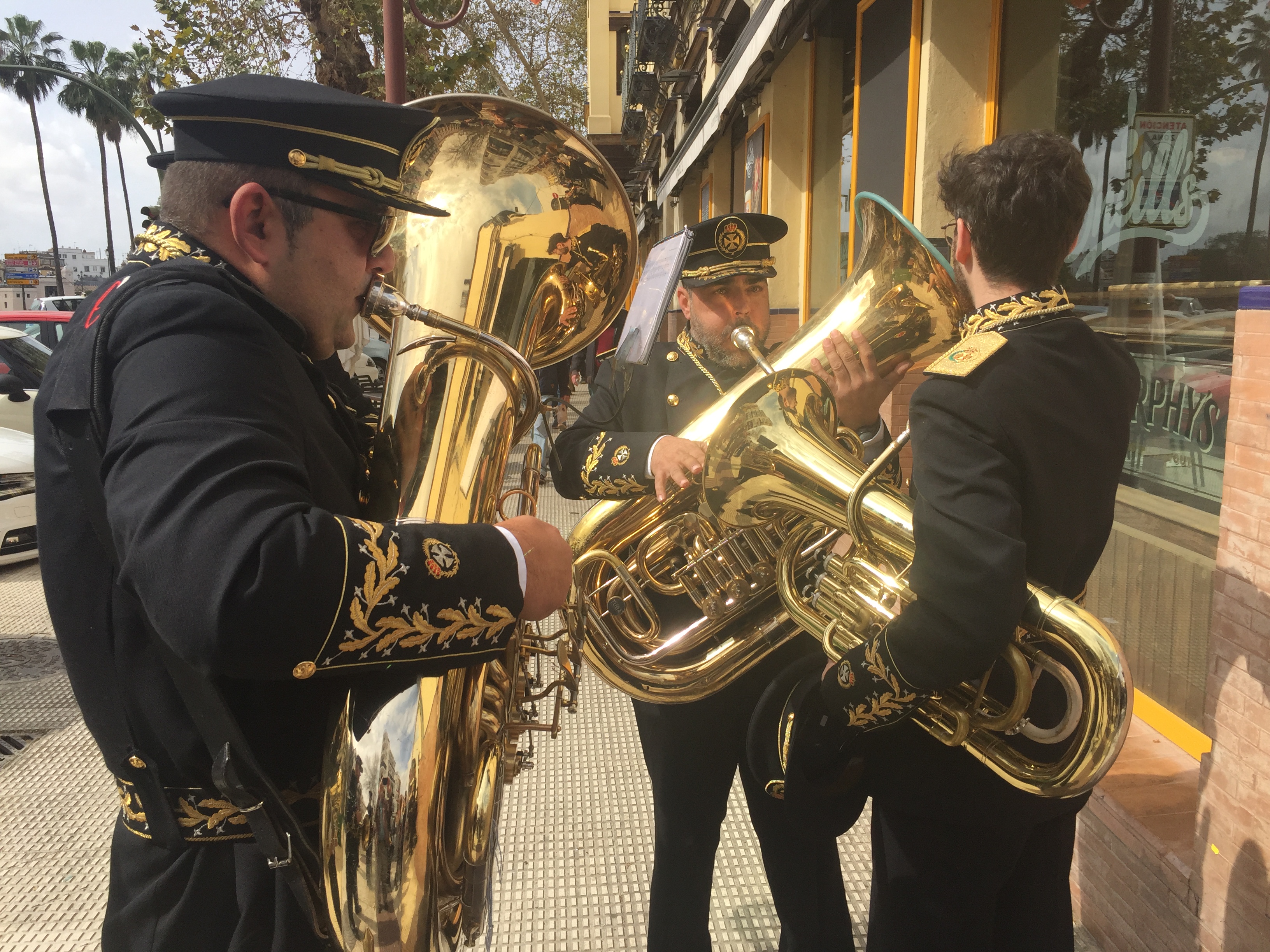

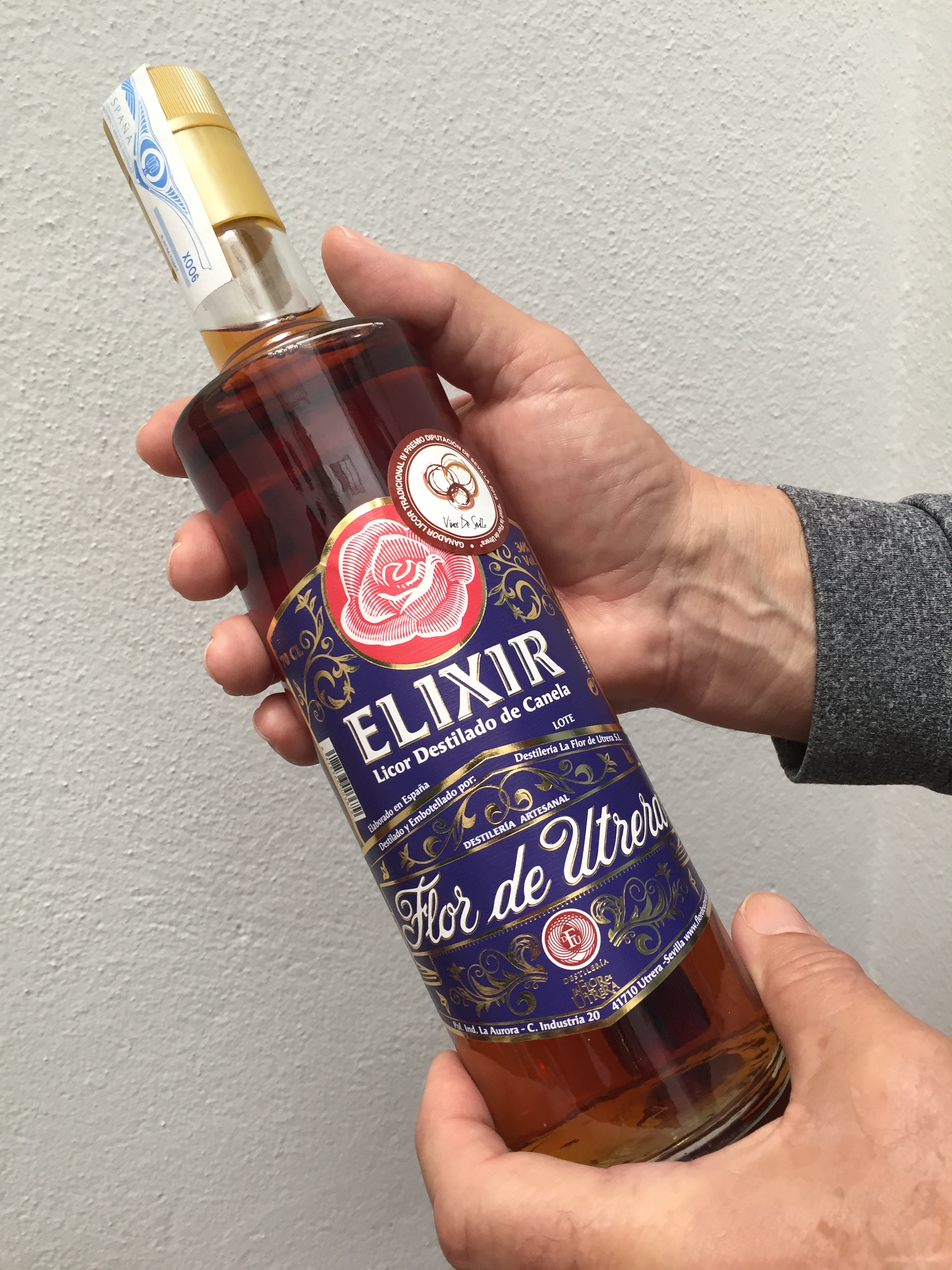
We smiled, bought one and saluted Seville’s spirit later that evening.
Salud! – Till next, Craig & Donna


 The city does a wonderful job supporting its craftspeople who still use traditional, made by hand, methods to create exceptional pieces in jewelry, textile, ceramic, wrought-iron, tin and copper workshops located across the city. Toquilla straw weavers in the villages around Cuenca who carry unfinished sacks of Panama Hats into the city’s sombrero (hat) factories also need to be included into this group. There are also several traditional felt hat tallerias (workshops) that cater to the indigenous women who live in the rural areas around Cuenca. The fine arts scene is also well represented with galleries and artists’ studios often next to traditional crafts workshops. To get the broadest experience of this vibrant arts and crafts community a tour through Cuenca’s most interesting neighborhood, El Barranco (the cliffs), and along its busiest street Calle Larga, is a must. The colonial buildings that front Calle Larga back onto the cliff which overlooks Rio Tomebamba and the newer southern part of Cuenca. Wide stairs in several parts lead down to Paseo 3 de Noviembre, a shaded pedestrian walkway and bike path that follows the river for several miles.
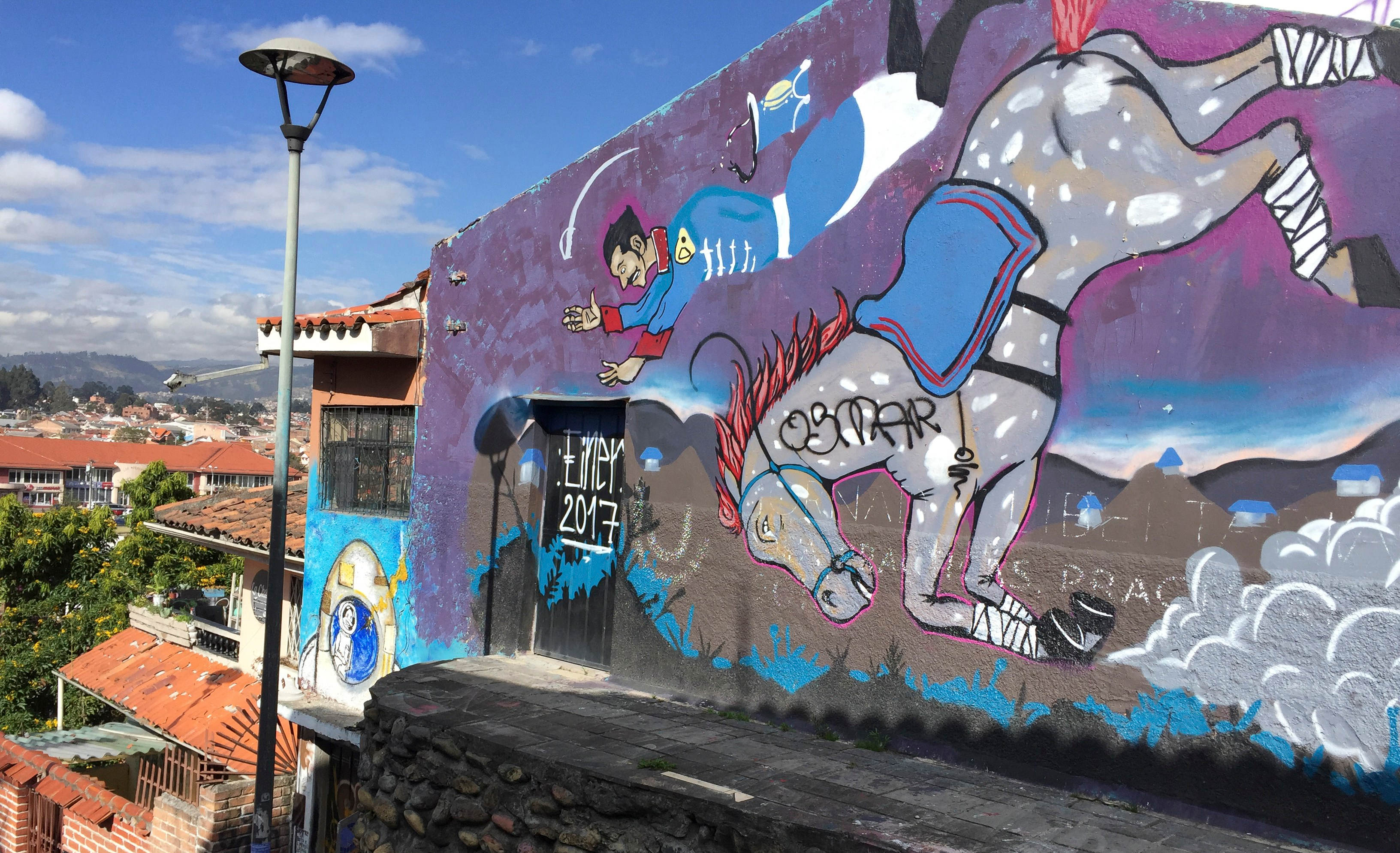 This route actually starts several blocks west of Calle Larga at Cuenca’s Museo de Arte Moderno (Museum of Modern Art) across from Parque de San Sebastian which has a large fountain and several nice places to eat. Casa Azul, which has rare sidewalk tables that face the quiet plaza, and Tienda Café are good choices. Most of the workshops won’t have business signs over their doors or street numbers, might open by ten, but will reliably close between one and three for lunch.


 2 Suitcases for 2 years