Zadar: The First Stop on Our Balkans Road Trip Through Croatia, Slovenia, & Bosnia and Herzegovina

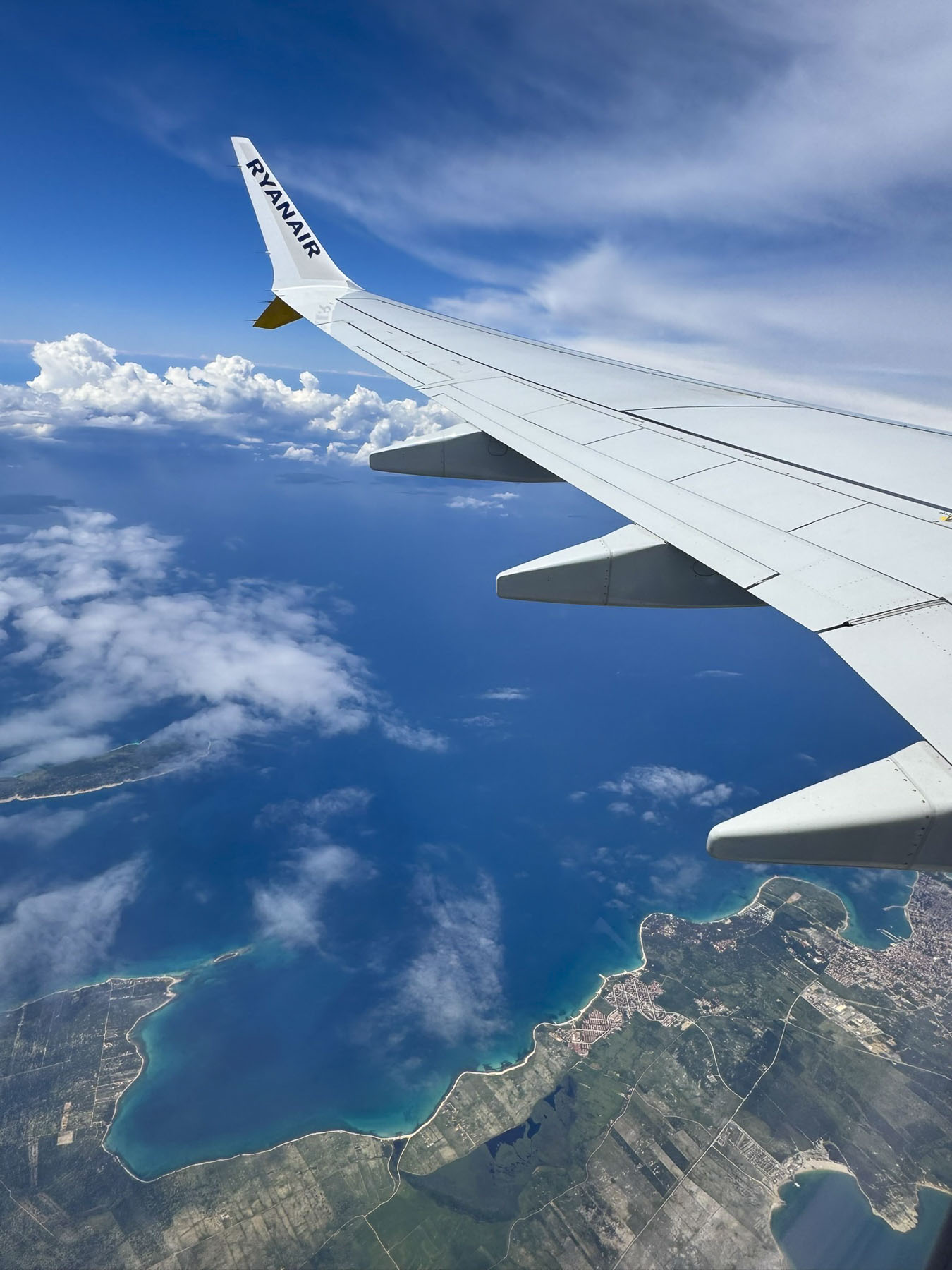
Peering down at the shimmering cobalt and turquoise blue water of the Adriatic Sea relieved the previous day’s anxiety of nearly missed connections. We encountered a long delay at passport control in Paris, before catching our connecting early morning flight to Zadar.

This temporary reprieve was short lived though, as we were confronted with a shuttered rental car window at the Sicily By Car booth, directly across from the small Zadar terminal. It was a Sunday morning – maybe the service at church ran long, or the coffee and pastries at the café were particularly delicious; nevertheless, the other passengers on our early morning flight who had rented with other agencies were long gone. At the terminal’s outdoor café we sipped coffee, waited, and discussed whether or not to cancel our existing reservation.  An hour passed before a car parked behind the booth, and the shuttered window was noisily cranked open. A pleasant young woman greeted us, and the morning’s delay was forgotten. Years ago, we began the habit of asking attendants at the rental car counters for suggestions to non-touristy places to eat. It appears it’s an unusual request from a customer, but folks seem pleased that we sincerely ask for their opinion. “Let me think on that, and by the time paperwork is done and I show you the car, my colleague and I will have some ideas for you.” With the names of three restaurants and a patisserie, “you should definitely try,” we headed off to see waterfalls at Skradinski Buk National Park in a nearly new small SUV, an upgrade from what we had reserved. The park was our first stop on our three-week long Croatian road trip, before our late afternoon check-in at an apartment rental in old town Zadar later.

The sunny April morning was now overcast as we drove into the small village of Benković to see its hilltop castle, and indulge our “drive a little, then café,” philosophy. Unfortunately, the castle was closed and the town seemed deserted in the pre-tourist season. Down the lane from the castle fig trees were setting their fruit and the first flowers of Spring were blooming. The café remained an unfulfilled desire.

We love traveling during the shoulder seasons to avoid the crowds of summer. But one of the drawbacks is fewer, if any, restaurants/cafes are open, especially in the more rural areas.

The drive to the park along Rt56 was semi-desolate, but pretty in an austere way, and passed through Croatia’s garigue shrublands, olive groves, and pine forests. From the road as we drove past Skradin, we could see large charter yachts at their winter moorings on the Krka River, two miles from the sea, sheltering there from fierce Adriatic storms, as they waited for the warmer cruising season to start.  Across the river the road zigged and zagged up the mountainside before leveling off on a high plateau.

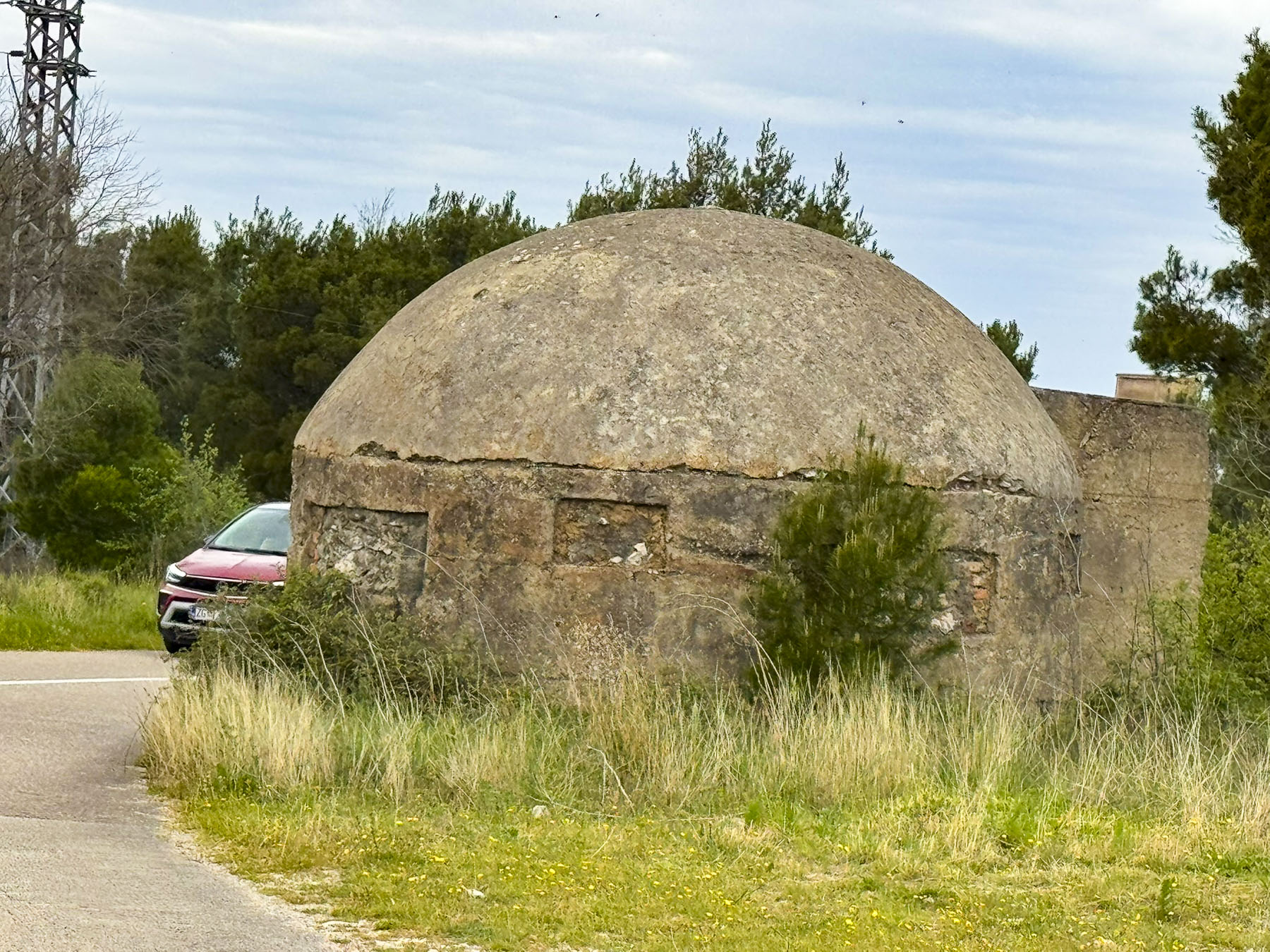
Following the signs to the national park we drove down a side road which passed a sprawling abandoned factory site, fronted with several concrete military bunkers. They were relics from the Cold War era like the ones that dot the landscape in Albania. Built in the 1930s, the IVANAL d.o.o. plant was the Balkans region’s first state-of-the-art aluminum processing complex that employed 400 people. It was confiscated by Czechoslovakia’s communist regime in the 1940’s and never upgraded or maintained. Over the decades production fell until the plant was closed after Croatia’s independence in 1991.

The parking lot at the national park was very full, considering it was a chilly Spring Sunday, but the queue at the ticket booth moved quickly. While the falls are quite a distance downhill from the entrance to the park, some folks chose to walk a route through the forest to forage for the wild asparagus that sprouts along its path from March to May.

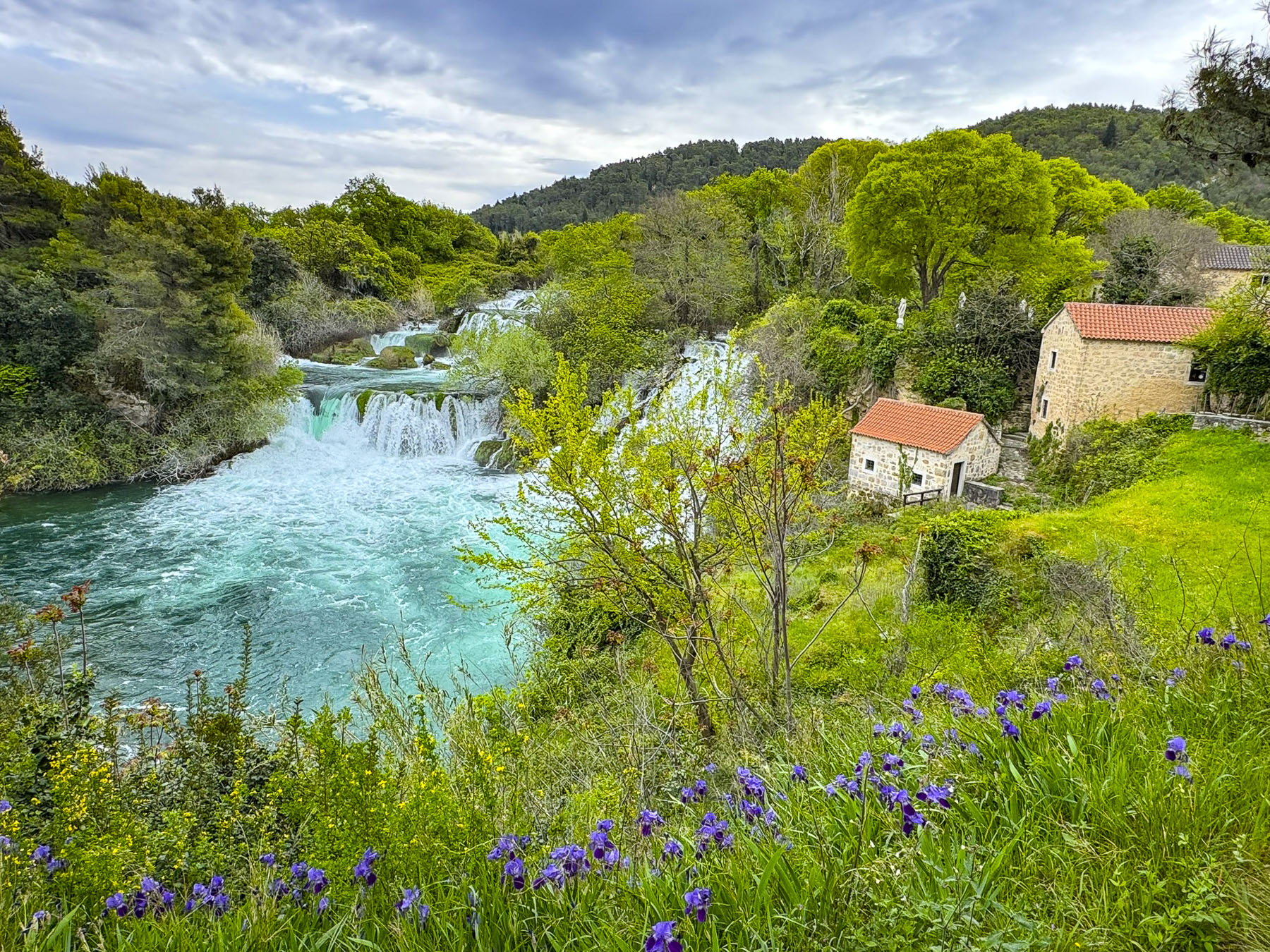
We opted for a ticket that included a shuttle bus ride to the largest waterfall, Skradinski Buk, at the bottom of a series of equally impressive waterfalls on the Krka River, then a walk back upstream along the waterway to another shuttlebus stop for a return ride to the top of the park entrance plateau. During the summer months the national park also offers a scenic twenty-minute boat ride from the harbor in Skradin,to the base of Skradinski Buk.

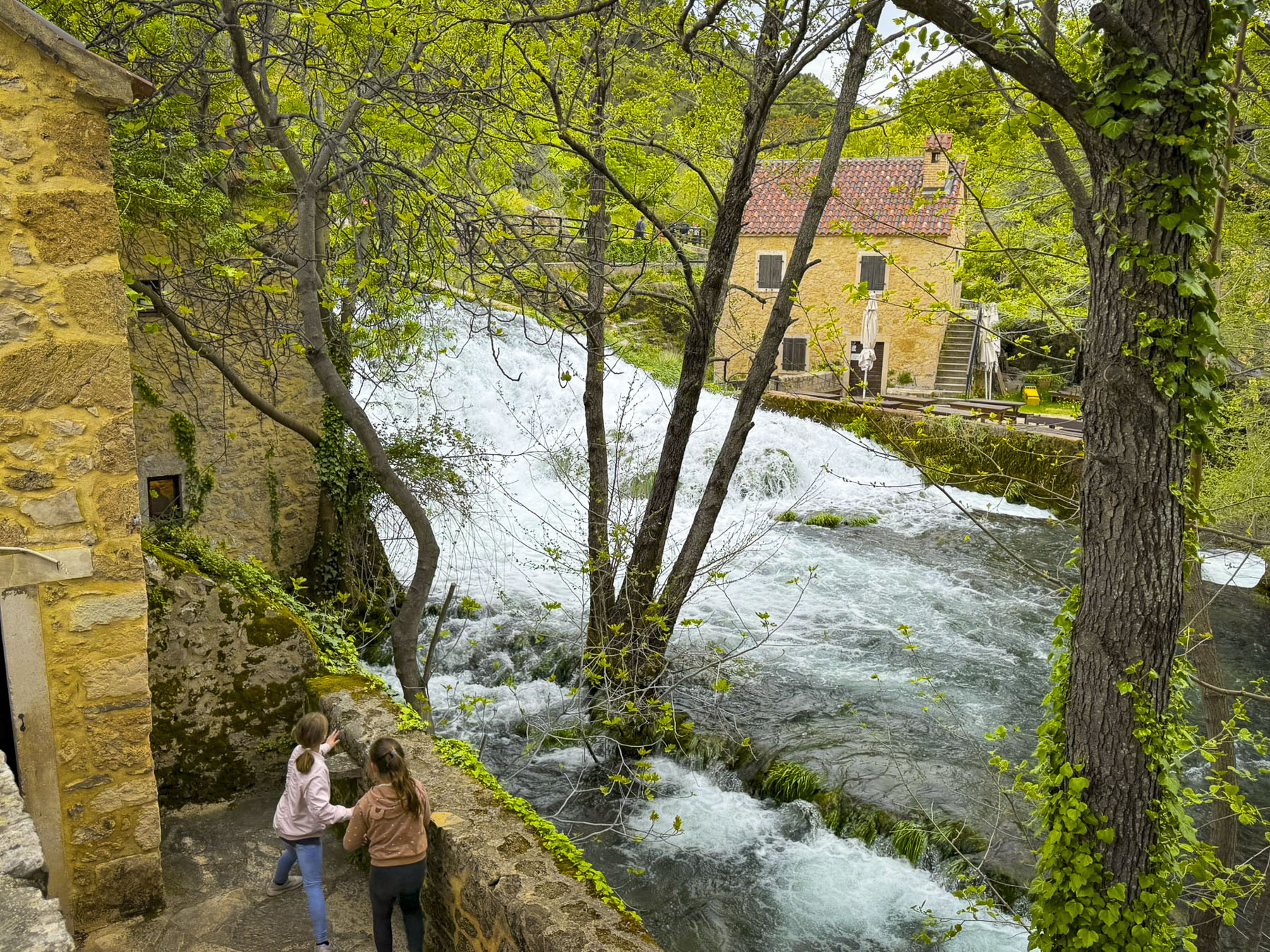
The overcast day was actually the perfect weather condition to photograph the waterfalls without heavy shadows or bright highlights, and the falls were thundering, foaming with the snowmelt from the Dinaric Alps, which run through the coastal Balkans region.

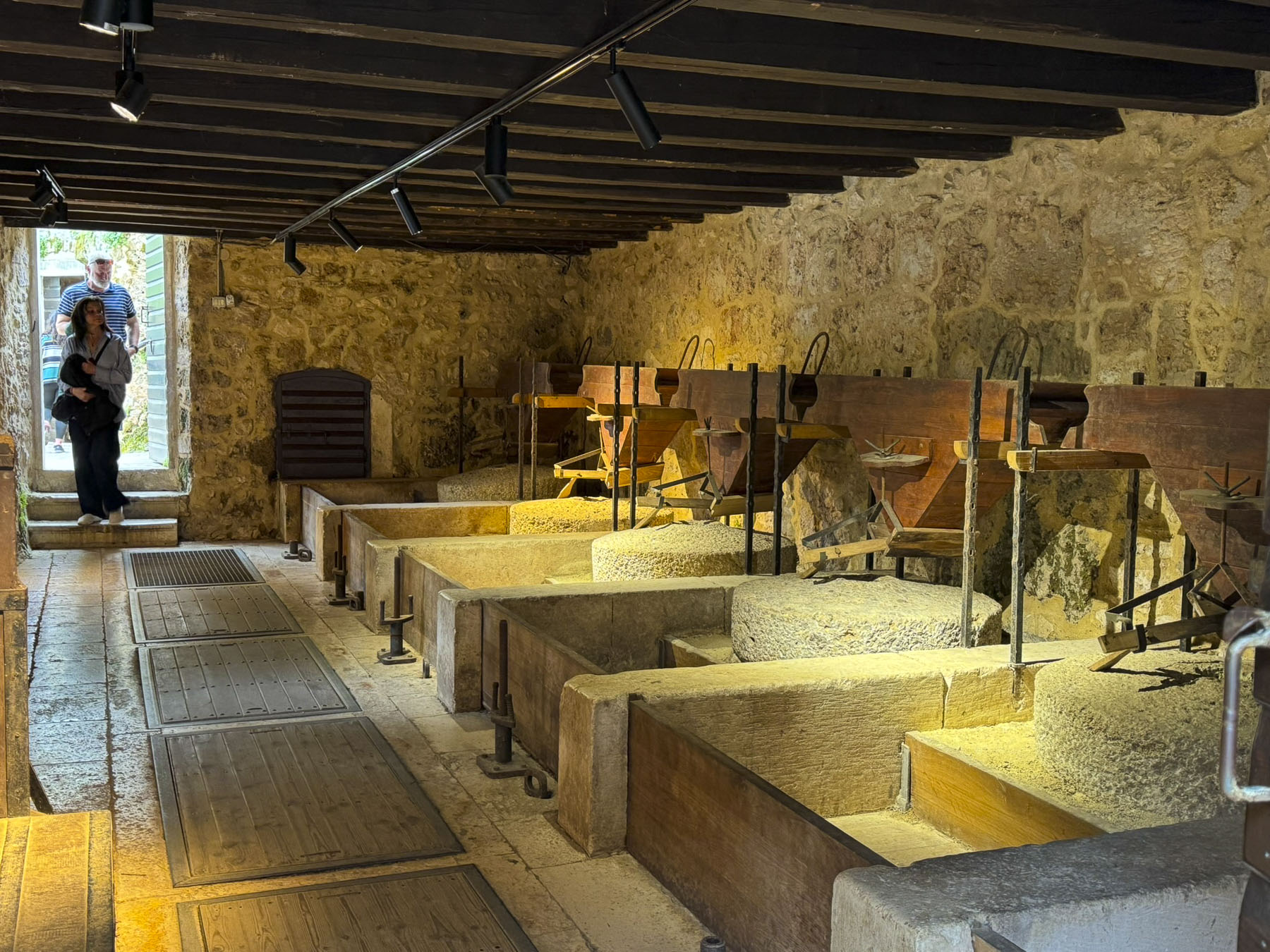
Along the way, we stopped at several restored watermills, with their mill races still intact. They were used primarily to grind locally harvested grain into flour, and to wash processed wool. A blacksmith shop also used a waterwheel to drive its furnace bellows to keep the fire hot enough to work the iron, and to power the heavy trip hammers the smith used to shape tools.

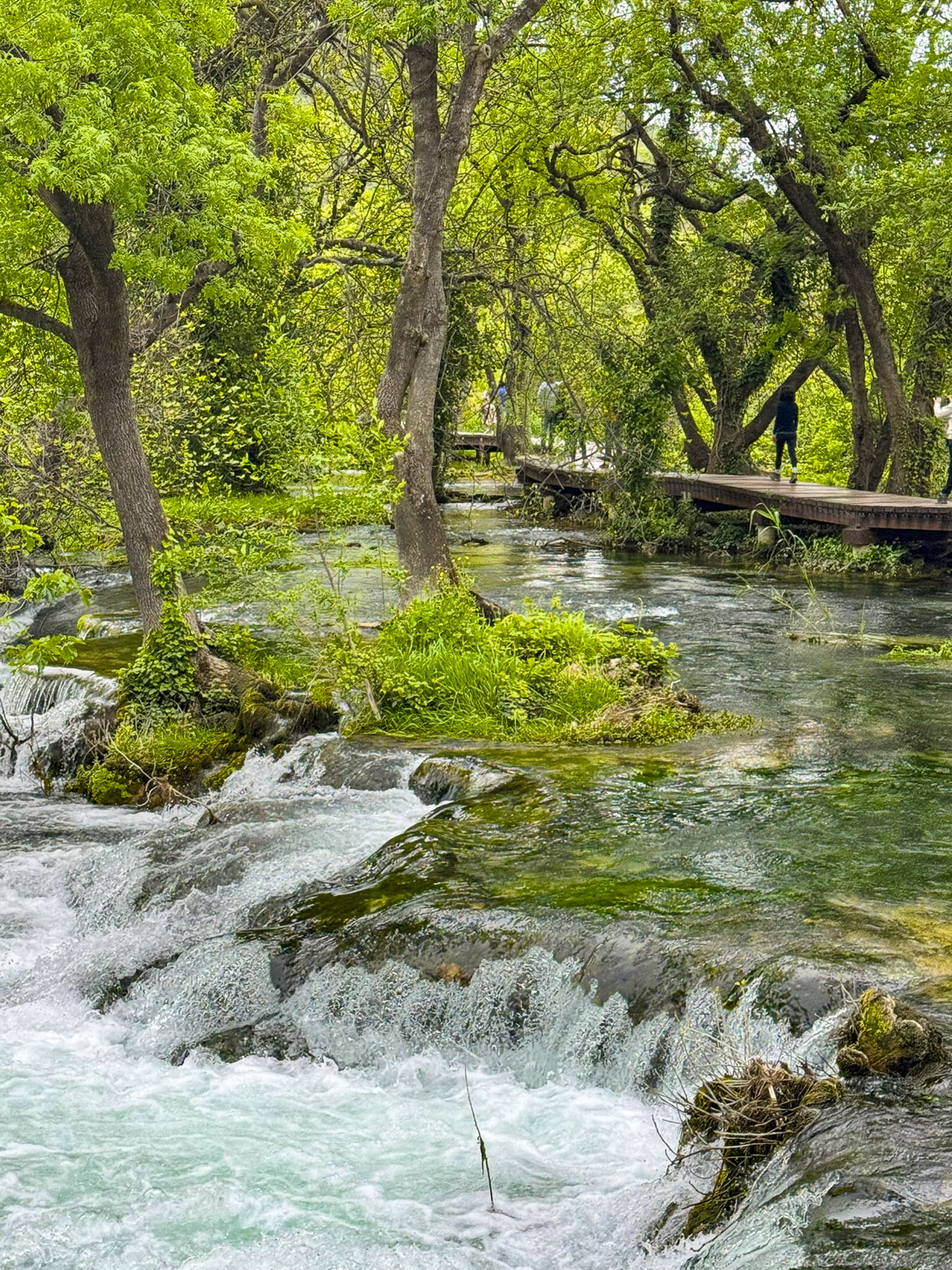
A serpentine elevated wooden walkway, without guardrails, twisted through groves of flooded forest, and kept us dry as the spring runoff rushed below us. It’s important to be aware of your footing in these circumstances, and we always waited at a wider part of the walkway for other folks to pass when the boardwalk was too narrow, to avoid fulfilling my mental image of being swept away down the rapids.

Unlike tourist sites in the United States, where everything is fenced to protect us from injury, in Europe you are expected to be responsible for yourself, and aware of your surroundings to guard against mishaps. We thoroughly enjoyed the waterfalls. We don’t see them in the coastal area at home, since we live nearly at sea level.

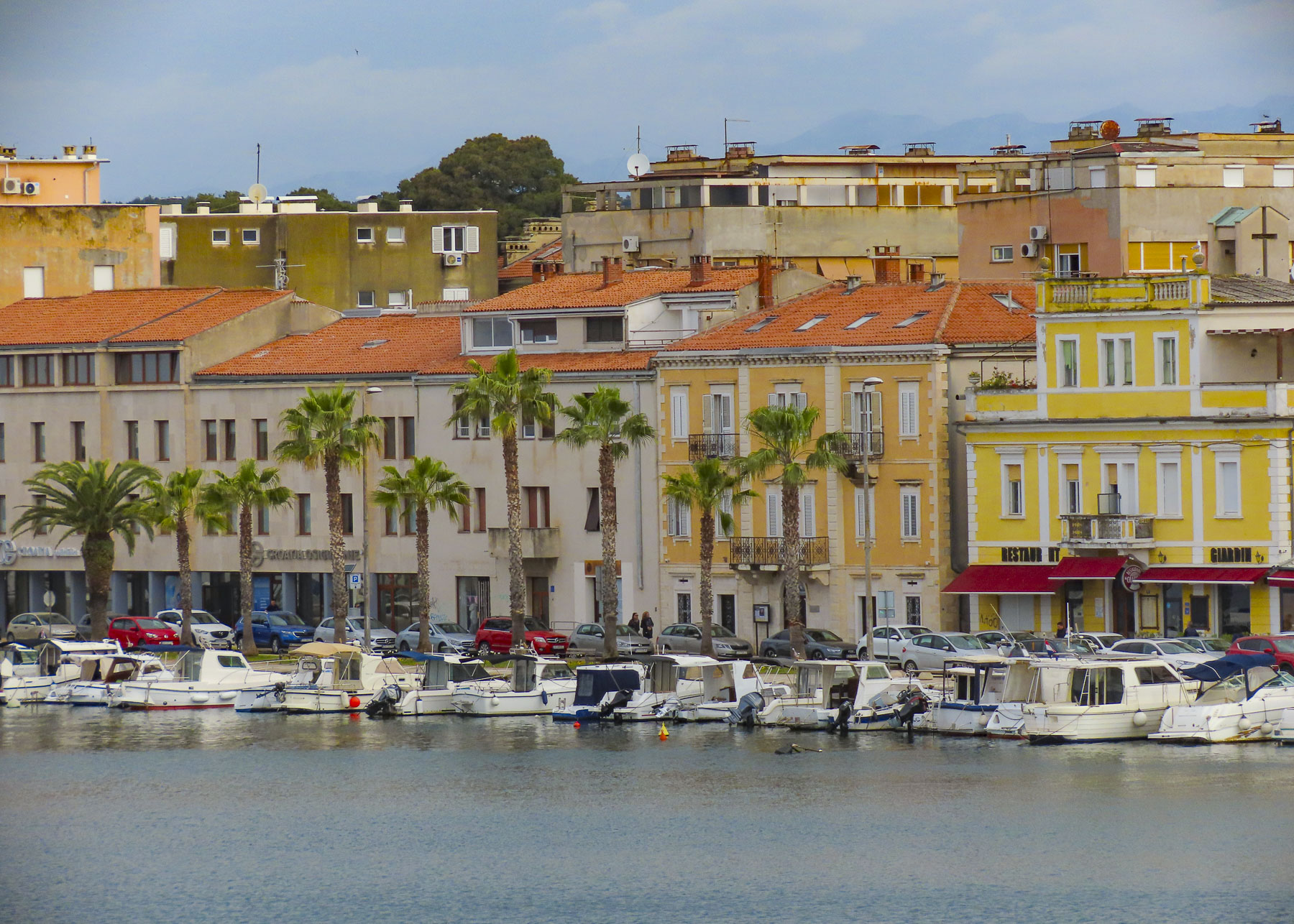
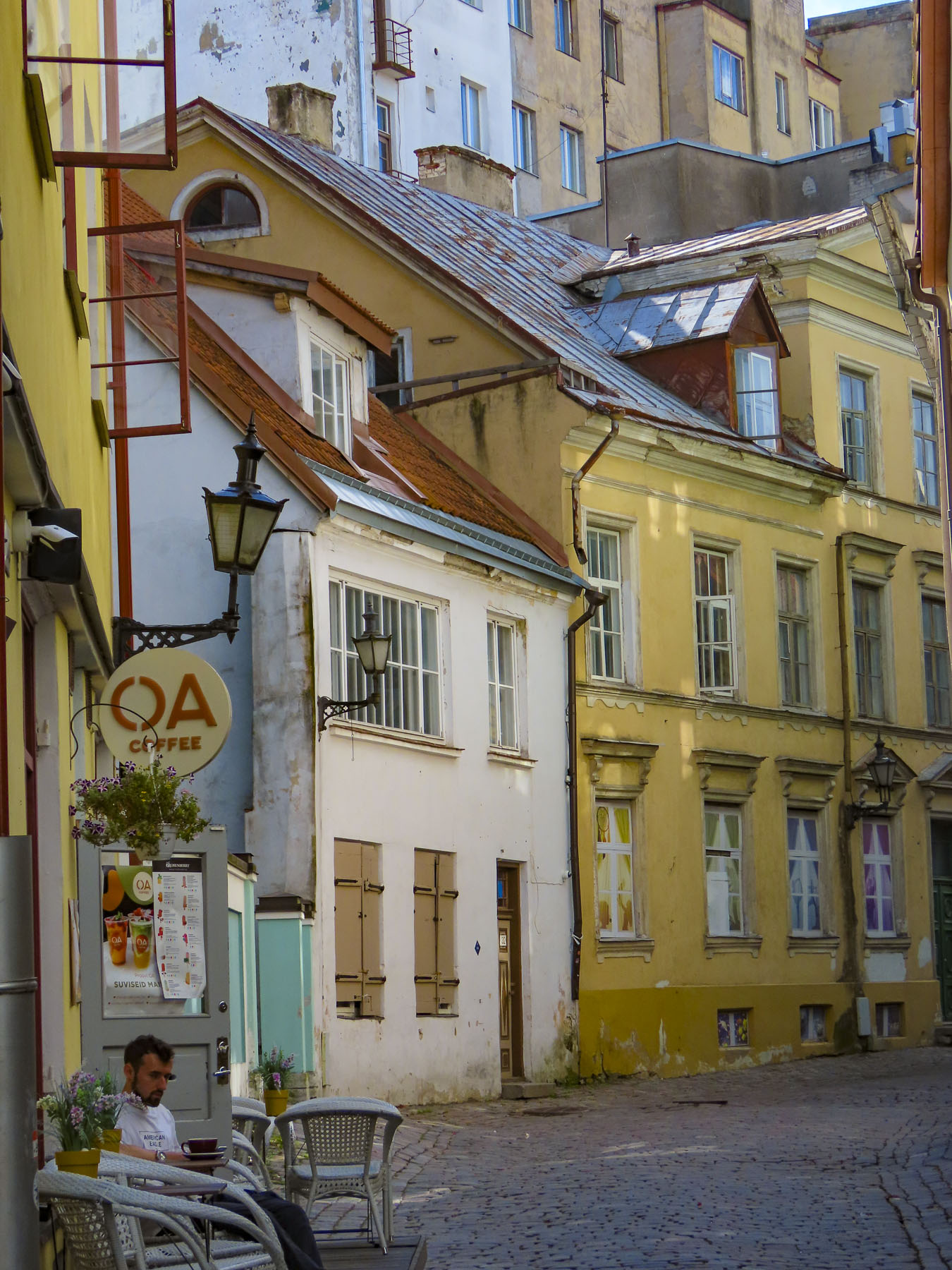
Zadar protrudes into the Adriatic, on a small peninsula, like a thumbs up sign, its once rough coastline now manicured with a sidewalk that follows its waterfront. Parking was challenging, but after circling the old town twice, we found a metered space near the Apartments Donat, our base for three nights. The rooms in the restored 700-year-old building were small. But the location, on a small lane overlooking the Cathedral of St. Anastasia and the Church of St. Donatus, was very convenient.

The manager of the building, who didn’t live on site, kindly made his parking space, next to the building, available to us for the duration of our stay. While having a rental car provides a lot of freedom, the typical 20 euro daily expense of parking in Europe can quickly add up. It’s not always possible, but we try to stay in hotels that provide free parking when we can.

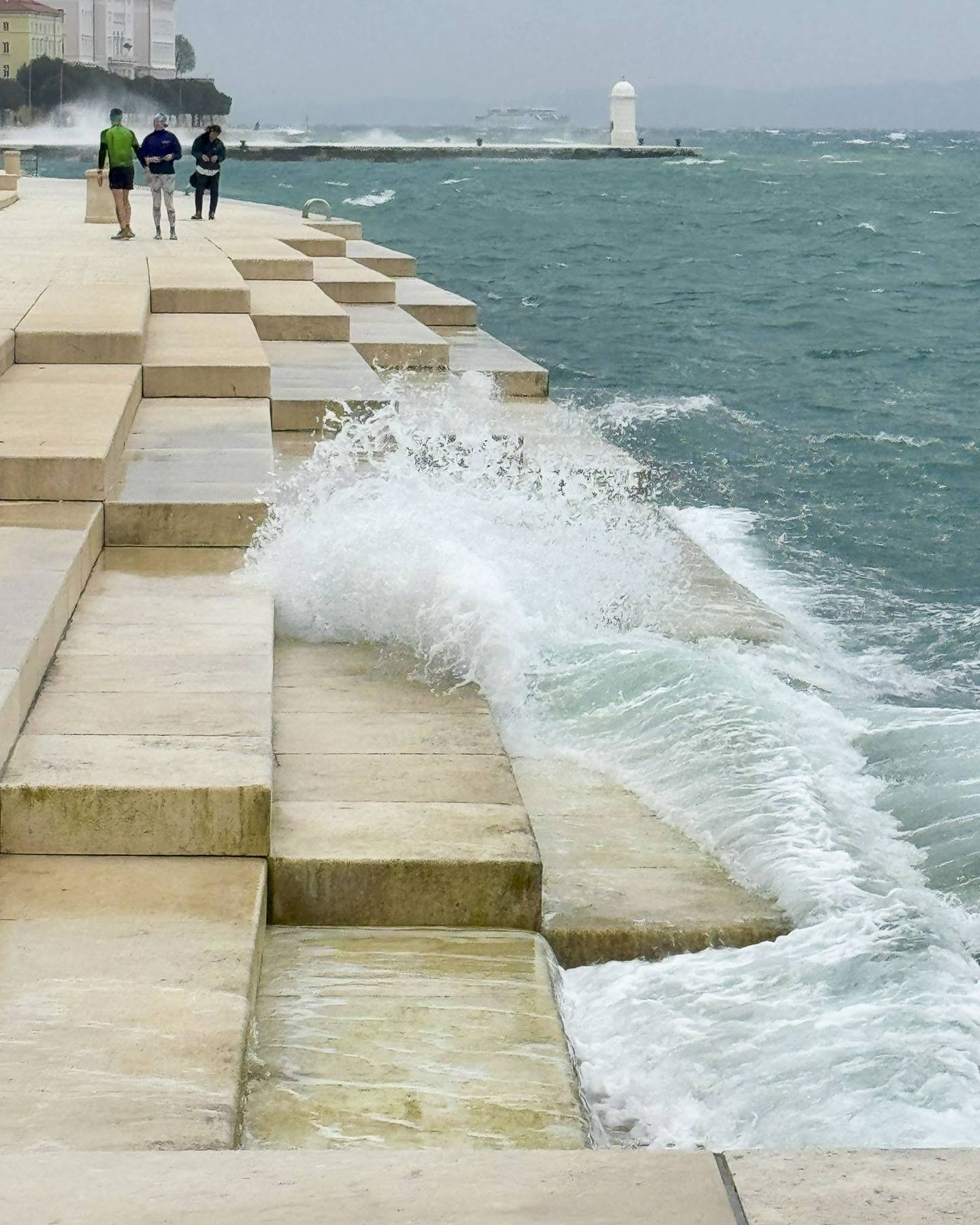
Later that day we walked along the waterfront to Obala Petra Krešimira, a jetty that was being battered by whipping winds and crashing waves, which lifted large sprays of water over anyone brave or foolish enough to venture out onto it.

Nearby, in front of Zadar’s City Hall was Morske Orgulje, the Sea Organ, an experimental architectural sound installation designed by the architect Nikola Bašić and completed in 2005 to refurbish Zadar’s waterfront which had been neglected since the end of World War Two. The design incorporates polyethylene organ pipes under the marble stairs that lead down to the water. The motion of the waves continuously forces air through these pipes to create a “harmonic symphony crested by the wind, waves, and tides,” that is vented through the rise of the steps. Visually it’s a flat surface, but as we walked across the plaza the ethereal music faded in and out moodily with the motion of the turbulent sea.

The Greeting to the Sun, a solar-powered light installation also designed by Bašić, was a short distance away, closer to the tip of the peninsula. It’s a 22m (72ft) wide disc composed of 300 multi-layered glass plates, embedded into the plaza, which you can walk across. The panels absorb solar energy during the day to turn the disk into a colorful light display in the evening.

We hoped the storm clouds would begin to break apart so we could catch a scene from the spot that “Alfred Hitchcock once declared during a 1964 visit to the city as having “the most beautiful sunsets in the world.”  Alas, during our stay in Zadar the mornings were sunny, the afternoons cloudy, and our sunsets stormy and grey.

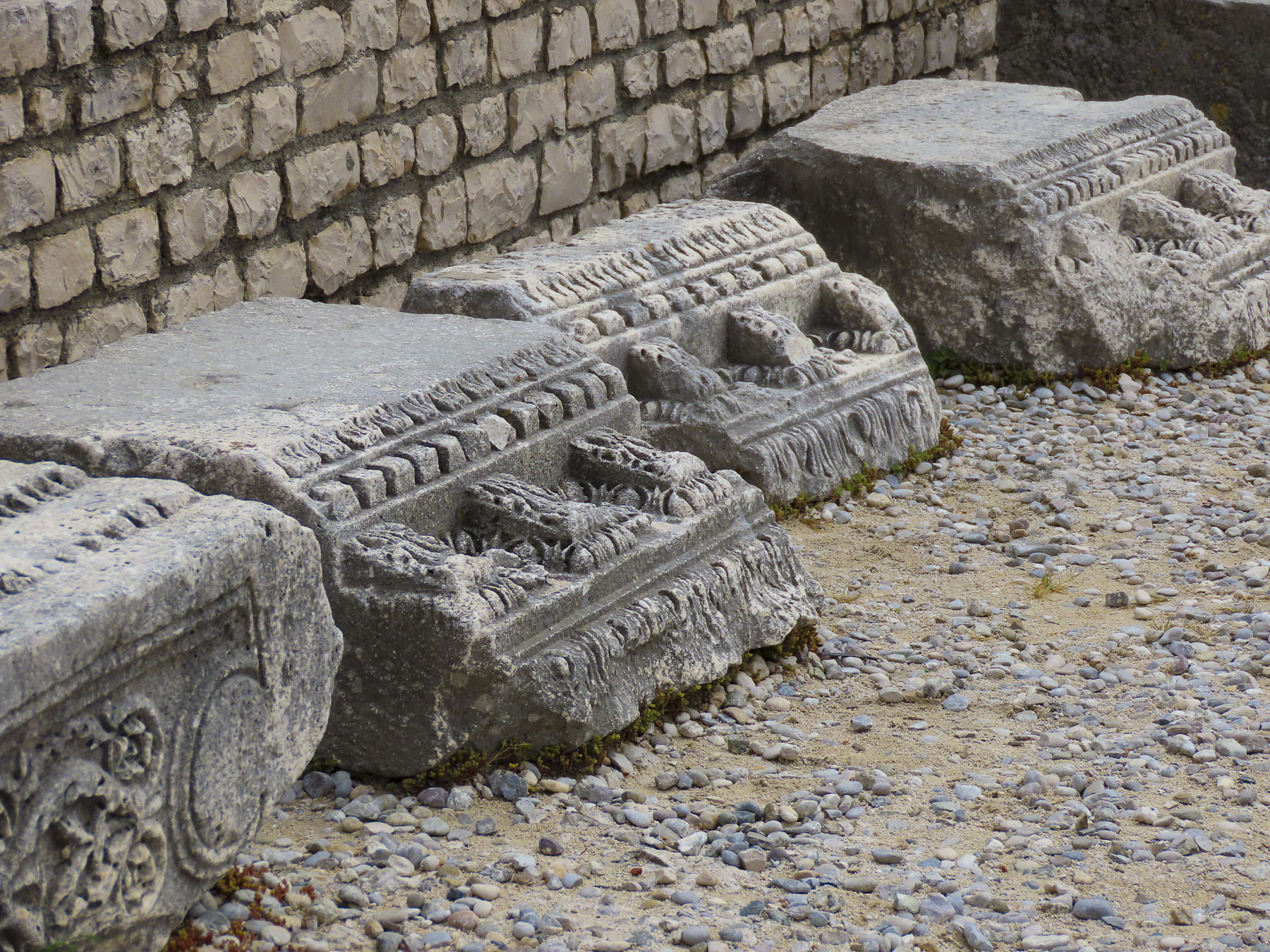
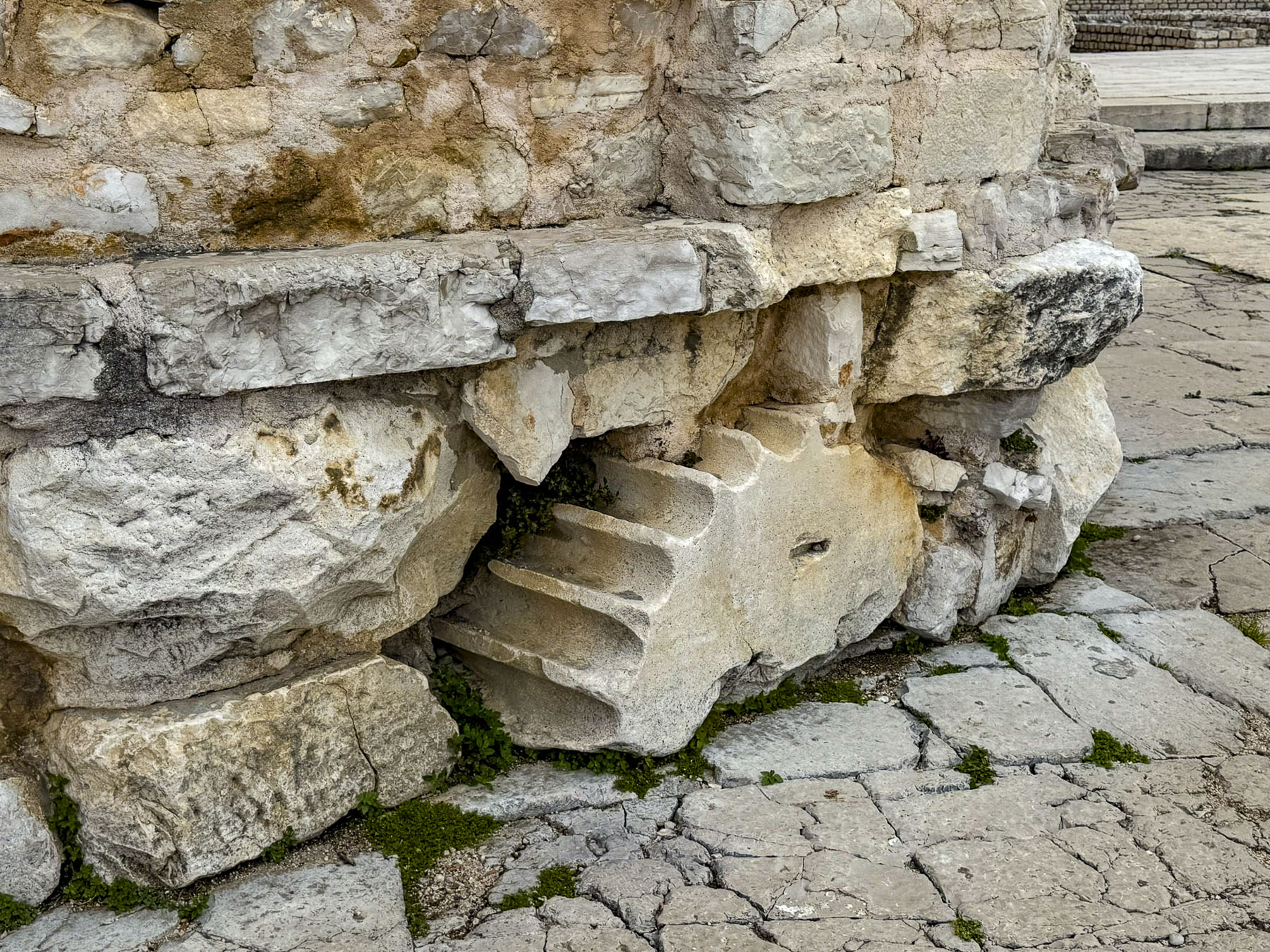
The next morning, we set out to properly explore the town, first stopping at the Roman Effigies, a collection of column sections and decorated capitals from the ancient Roman Forum, which stood in the area of Piazza Papa Giovanni Paolo (Pope John Paul II Square). The plaza itself was built over Zadar’s 16th century water cistern.

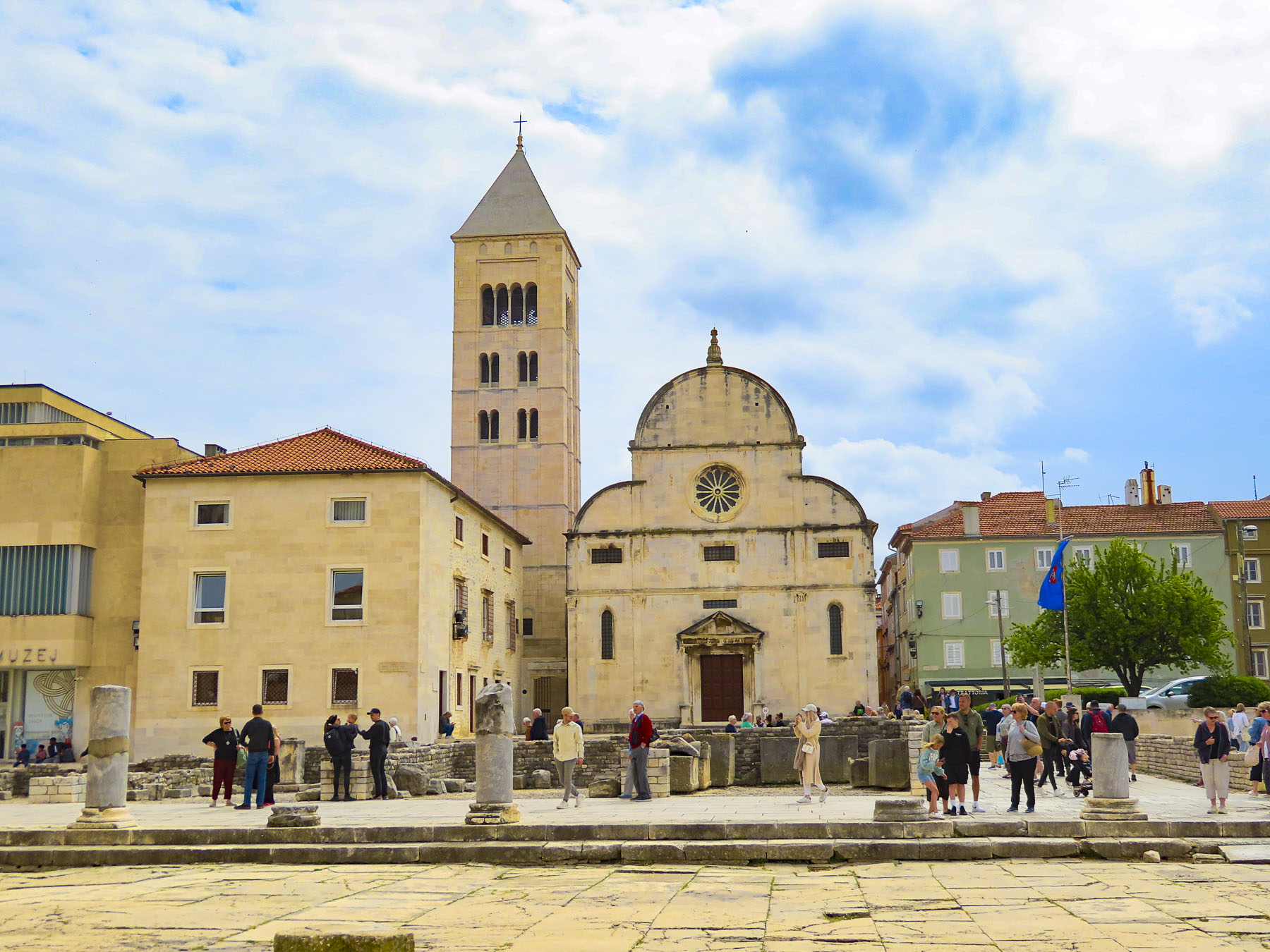
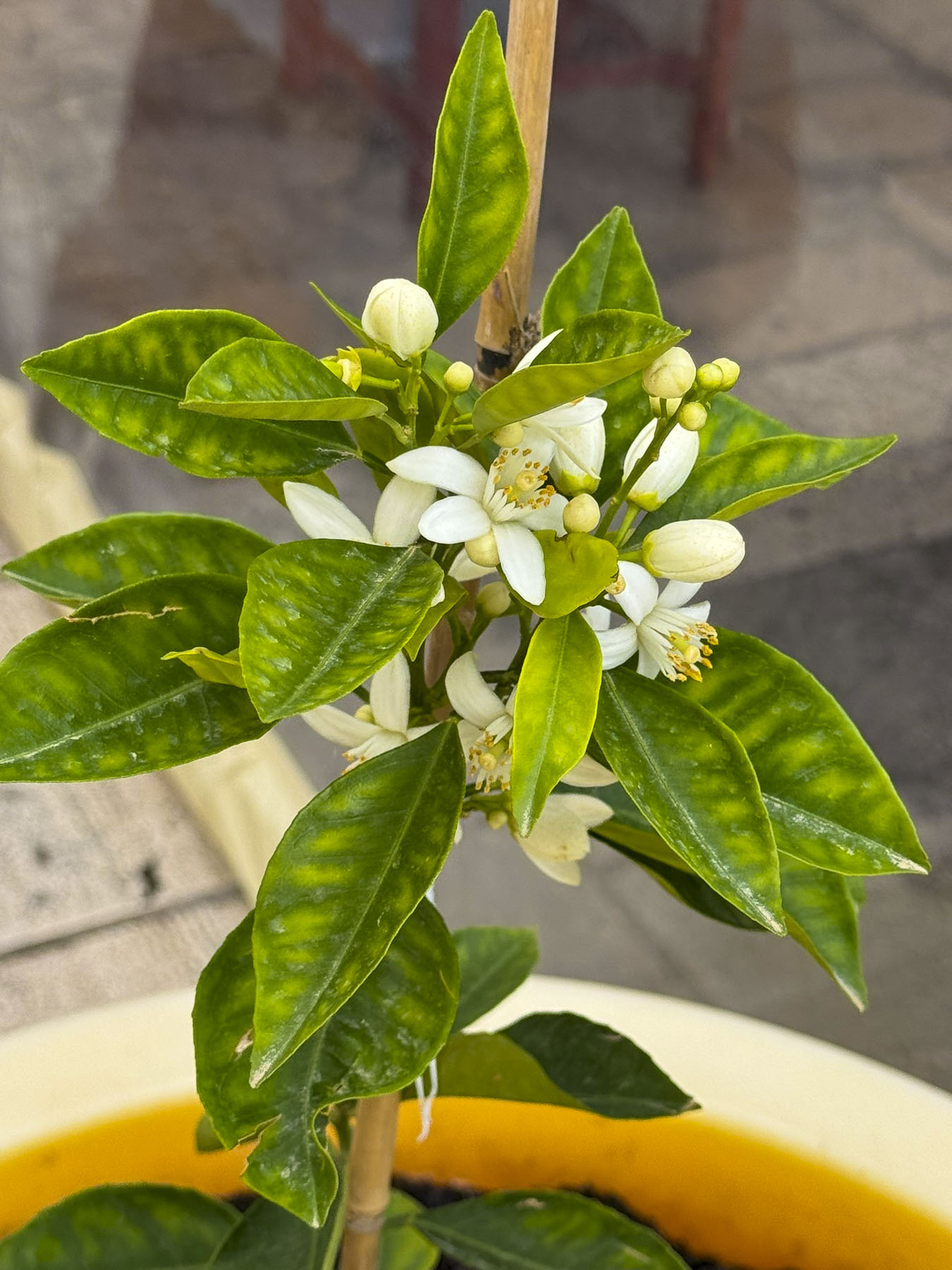
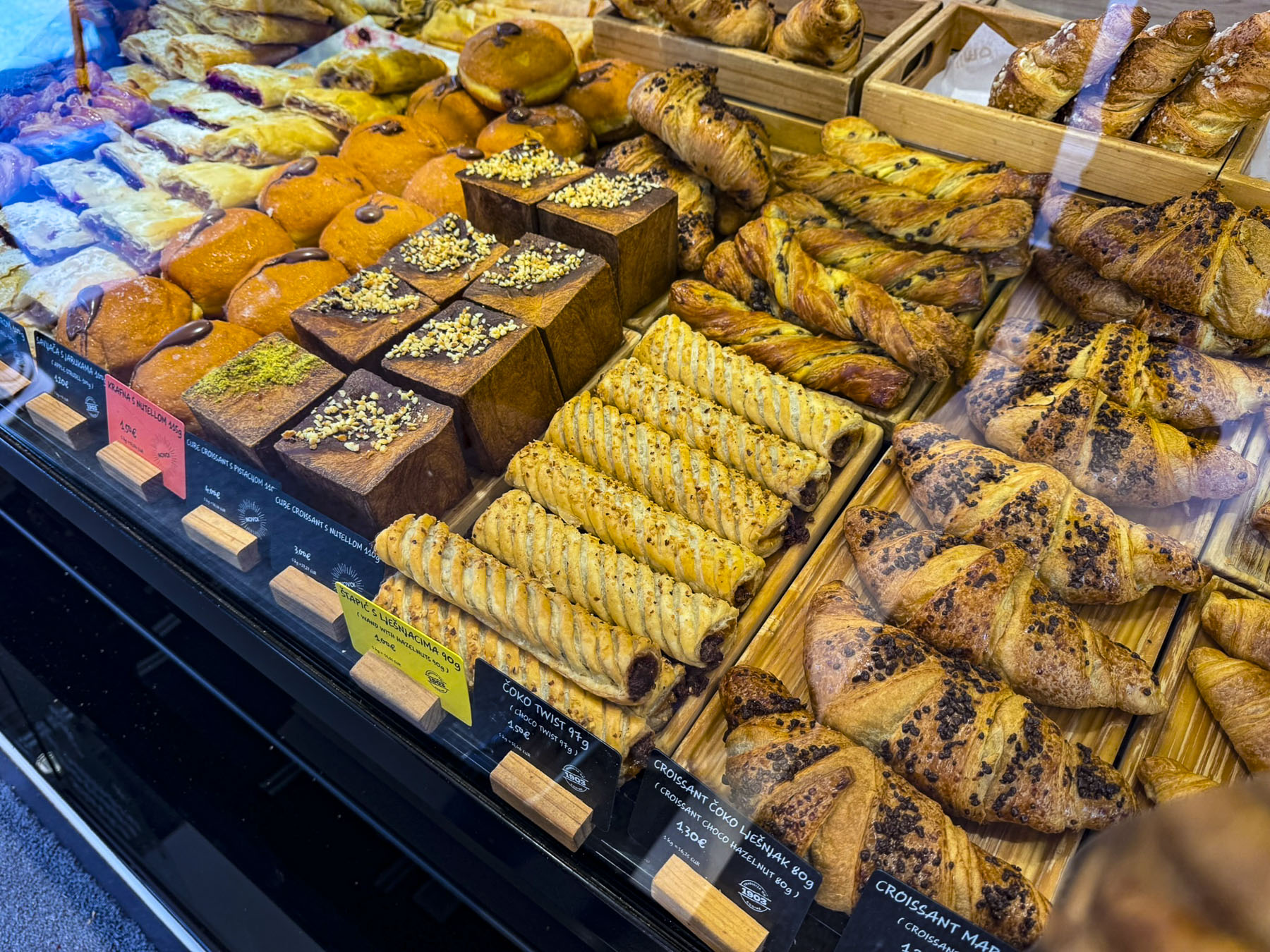
The piazza located next to the 9th-century Church of St. Donatus and the 11th-century Benedictine Monastery of St. Maria is the center point for the northern end of Zadar. The historic buildings did not open until later in the morning, so we continued down Zadar’s narrow lanes, enjoying the fragrance of orange blossoms while we strolled to Pekara Dalmatinka – Old Town Bakery, a recommendation from our friend at the car rental agency.

On the way, something piqued our curiosity down a narrower side alley and we detoured. There in a small workshop a craftsman was applying gold leaf to a frame. We appreciate old-world talents like this, and I asked in English, and gestured with my cell phone, if I could take a photo of him working. All was lost in translation and the man suddenly walked out, only to return a few minutes with his son who spoke English, and we chatted for a minute. Apparently, few tourists ever poked their heads into the workshop; the frame he was gilding was for a church, and his dad is a busy man, but it is okay to take his picture.

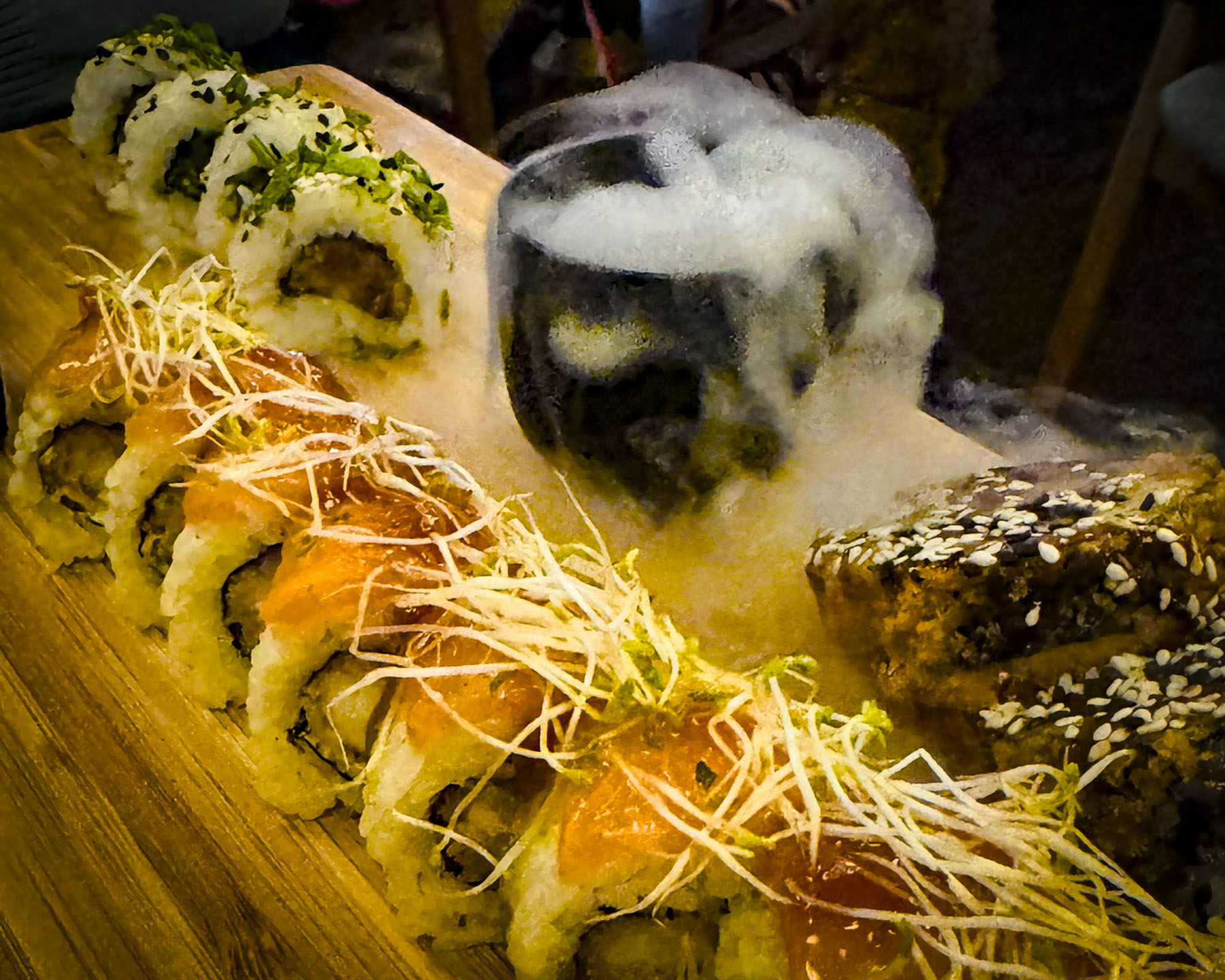
It’s a mistake to arrive hungry to a bakery that confronts you with a display case featuring mouthwatering Croatian pastries. We drooled over Kremšnita, custard cream cake; Madarica, a layered chocolate cake; Makovnjača & Orehnjača, a rolled dough pastry filled with walnuts or poppy seeds; Princes Krafne, a doughnut stuffed with luscious cream; Splitska Torta, a cake with layers of meringue, cream, almonds and figs; and of course Börek, a delicious, coiled phyllo dough pastry filled with feta cheese or spinach.

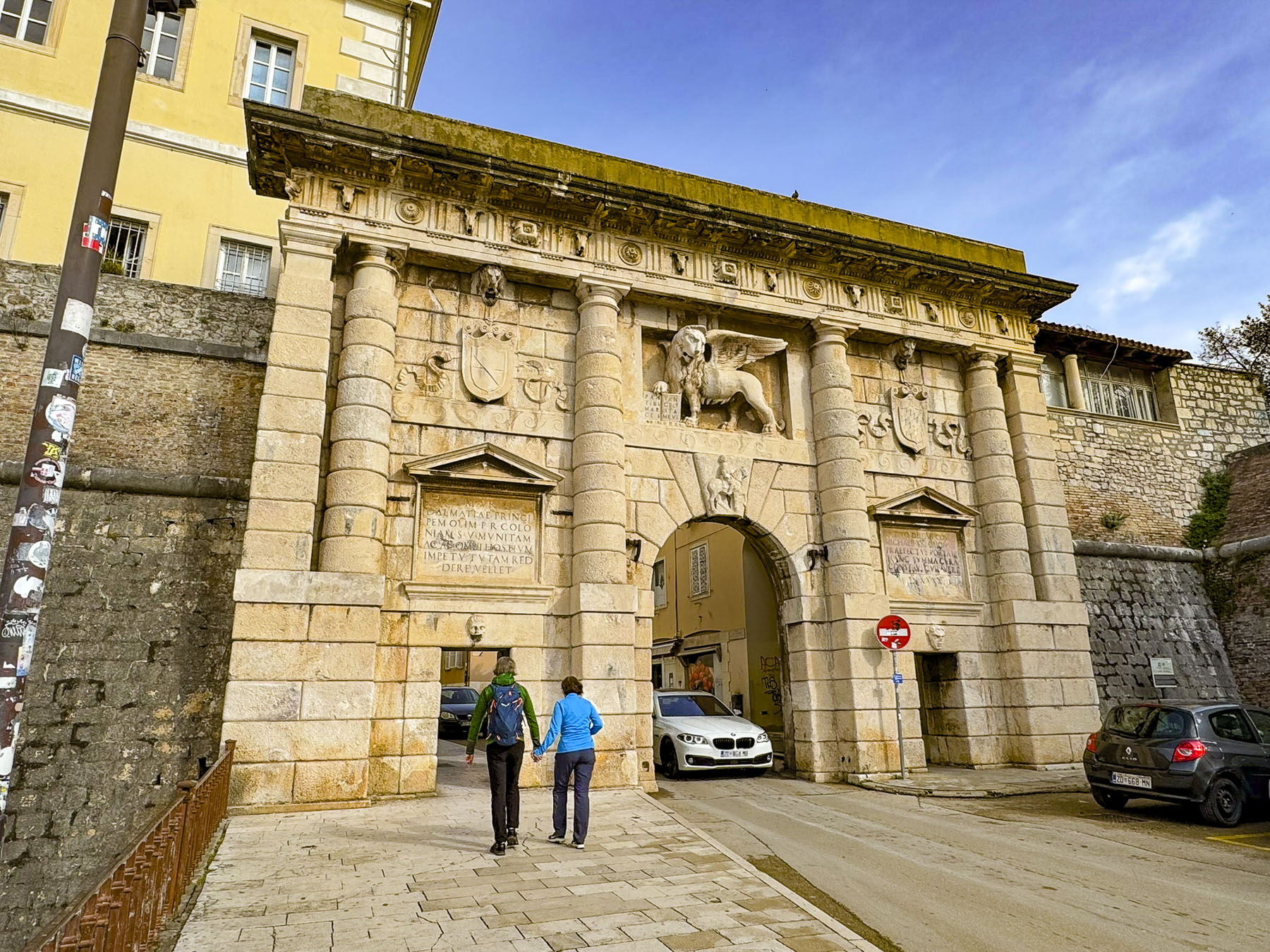
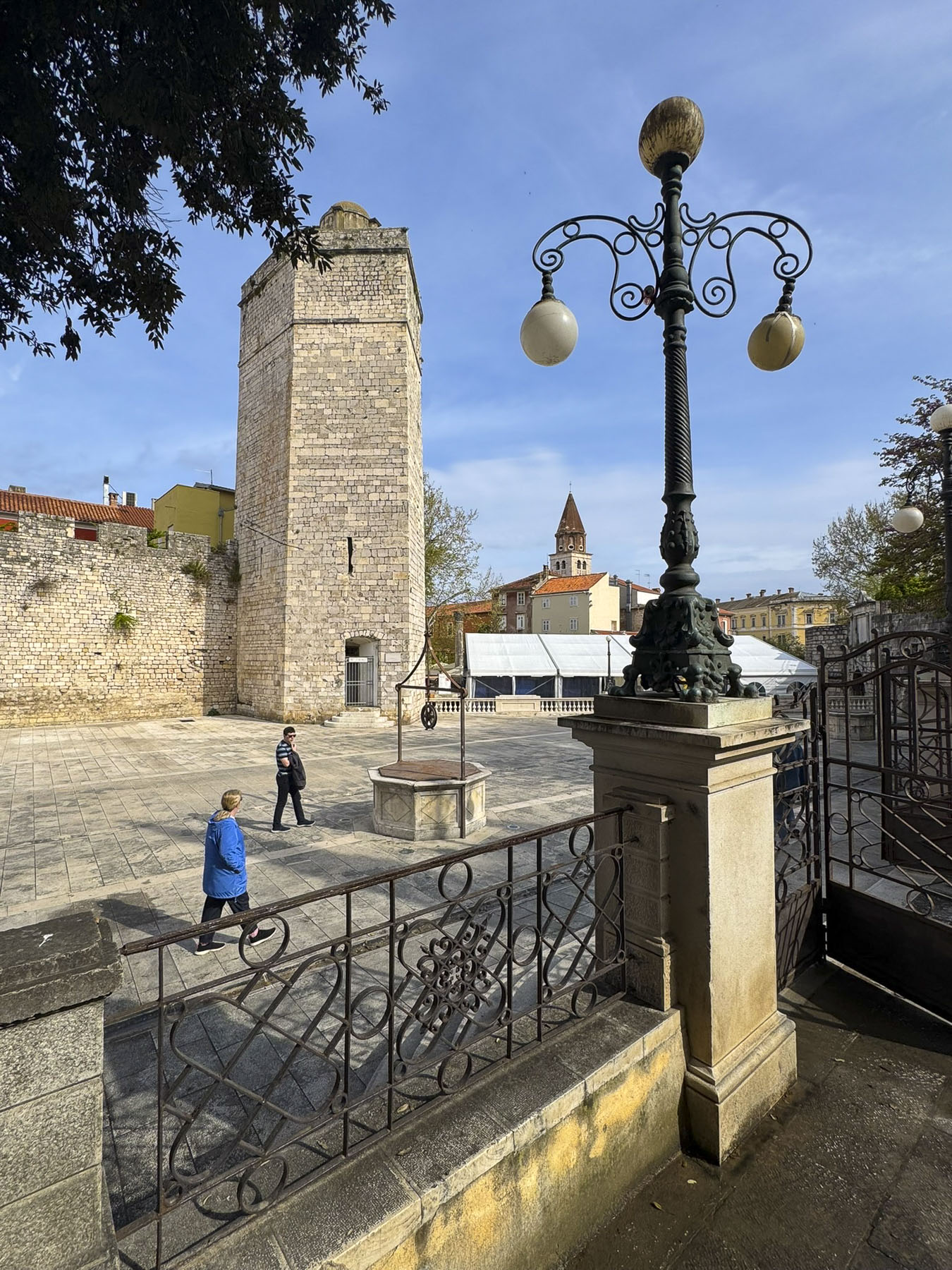
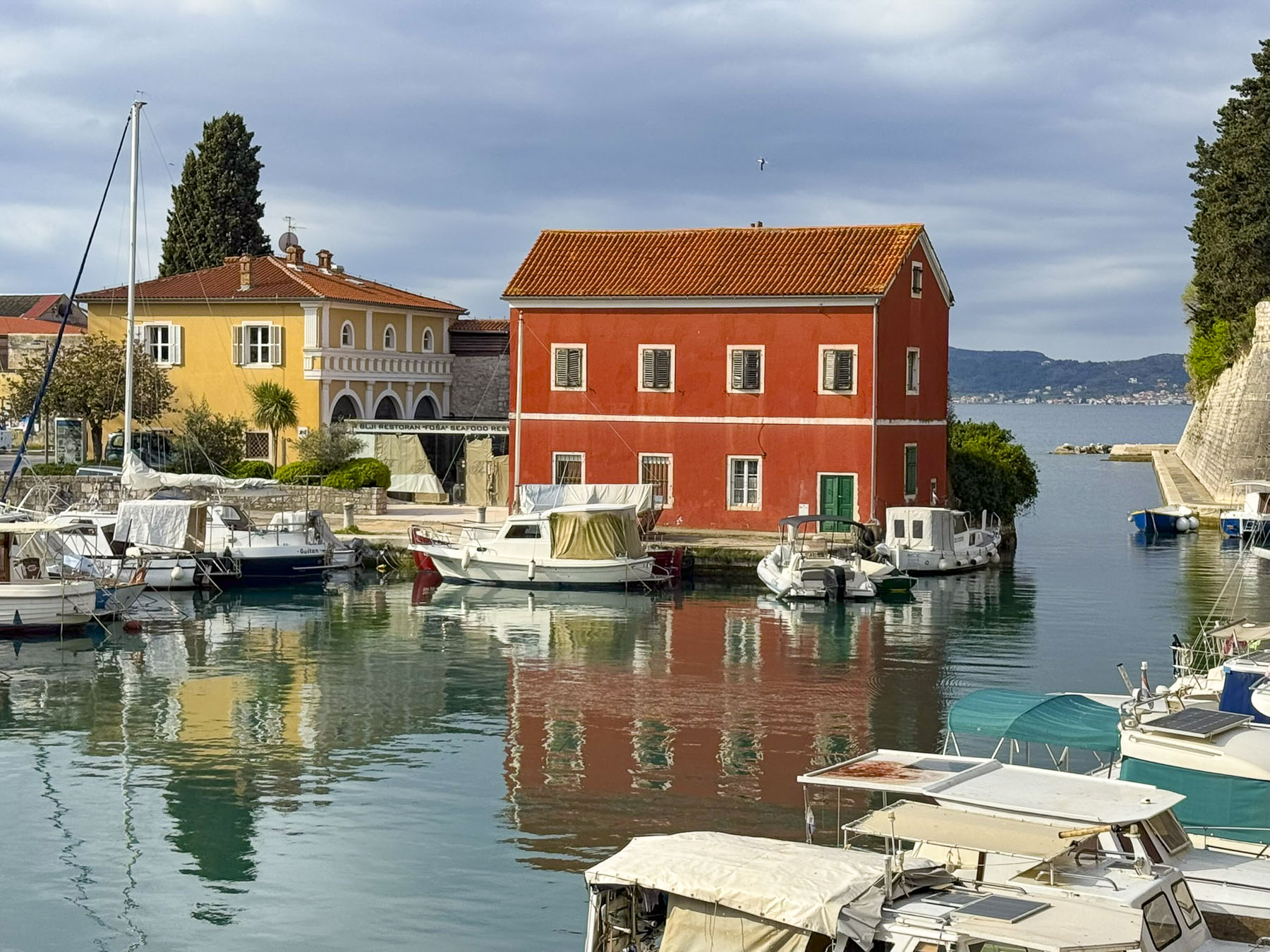
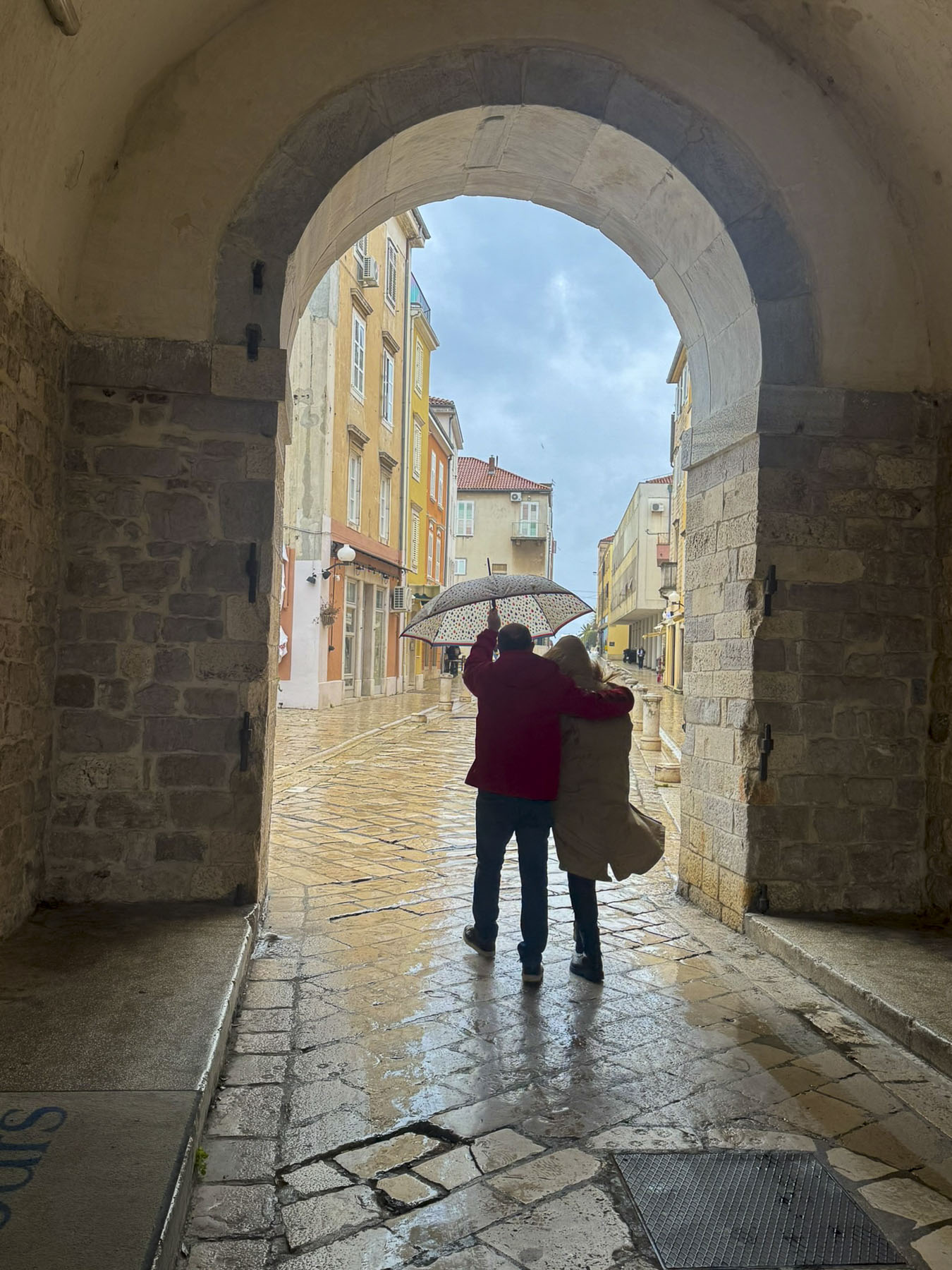
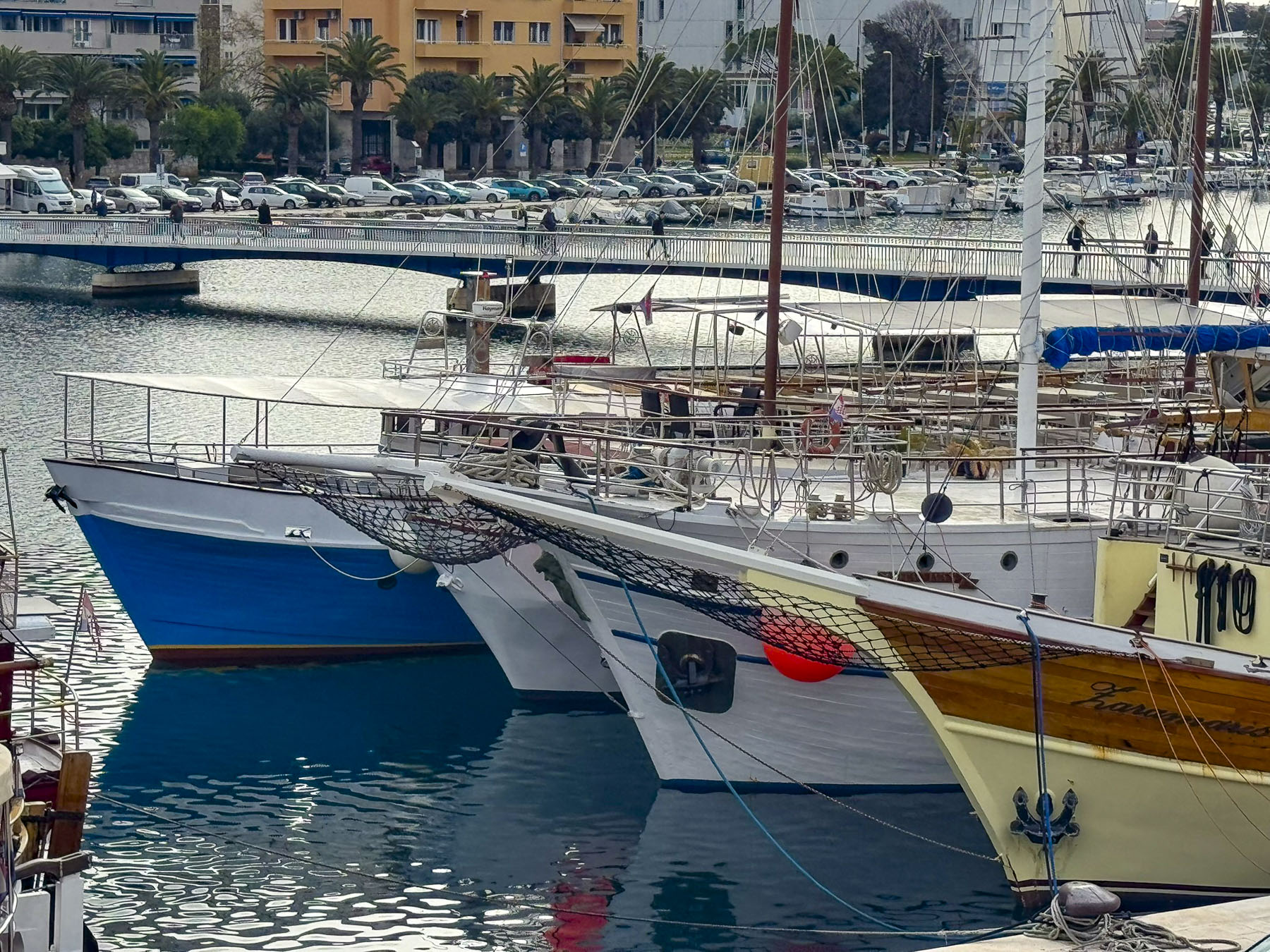
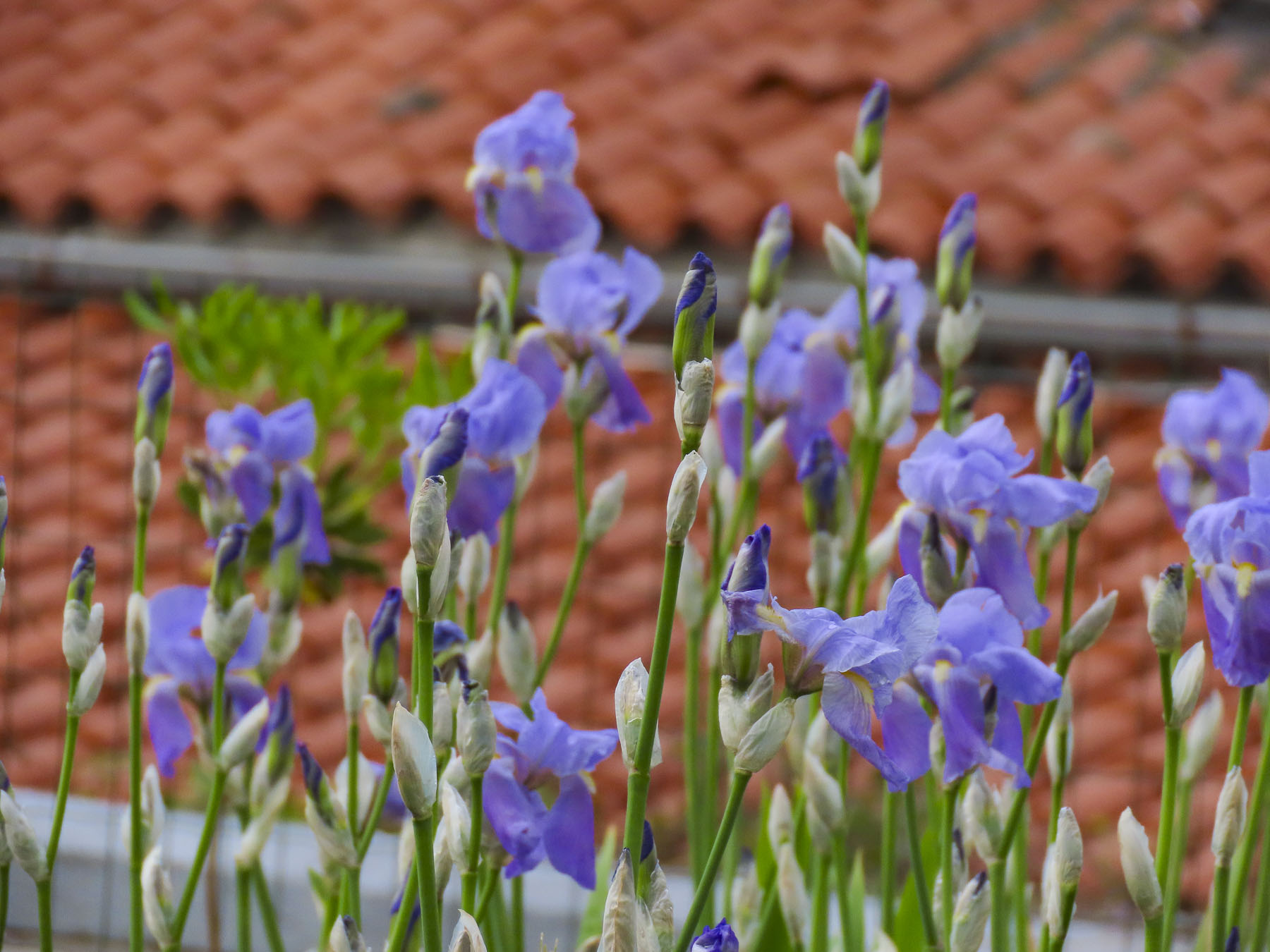
We planned to walk off our over-indulgence, and headed through Trg Pet Bunara, the Five Wells Square, to find a bench in Queen Jelena Madijevka Park. Tree branches laden with purple flowers hung over the decorative railing at the entrance to the park, which sits atop the city’s old bastion, next to the ancient Venetian Land Gate, and was the perfect spot for a morning picnic.  Built in 1573, it replaced an old Roman gate, and featured a relief of the Winged Lion of St. Mark, the symbol of the Venetian Empire, to celebrate a naval victory over the Turks. From our bench we watched a boat enter the small harbor in front of Zadar’s ancient defensive wall, a continuous activity since Zadar’s founding.

The ancient walls and gates around the city were first built by the Romans and then expanded upon by the Venetians in the 16th and 17th centuries, to defend the city from multiple attacks by the Ottoman Empire.

Several of the ancient gates still stand and allow passage from the old town to the ferry harbor. The top of the ramparts over the gates have been incorporated into a scenic walkway that parallels the waterfront and provides a pretty vantage point to view all the maritime activity, and some vignettes of old town Zadar.

Along this walk we spotted a younger man rowing a small boat with passengers across the narrow harbor, from a small lighthouse to a staired landing on the quay. Apparently, they were on the way to work and his service, like the traghetto in Venice, provided a shortcut. A sign we discovered the next day listed the fee as 2€.

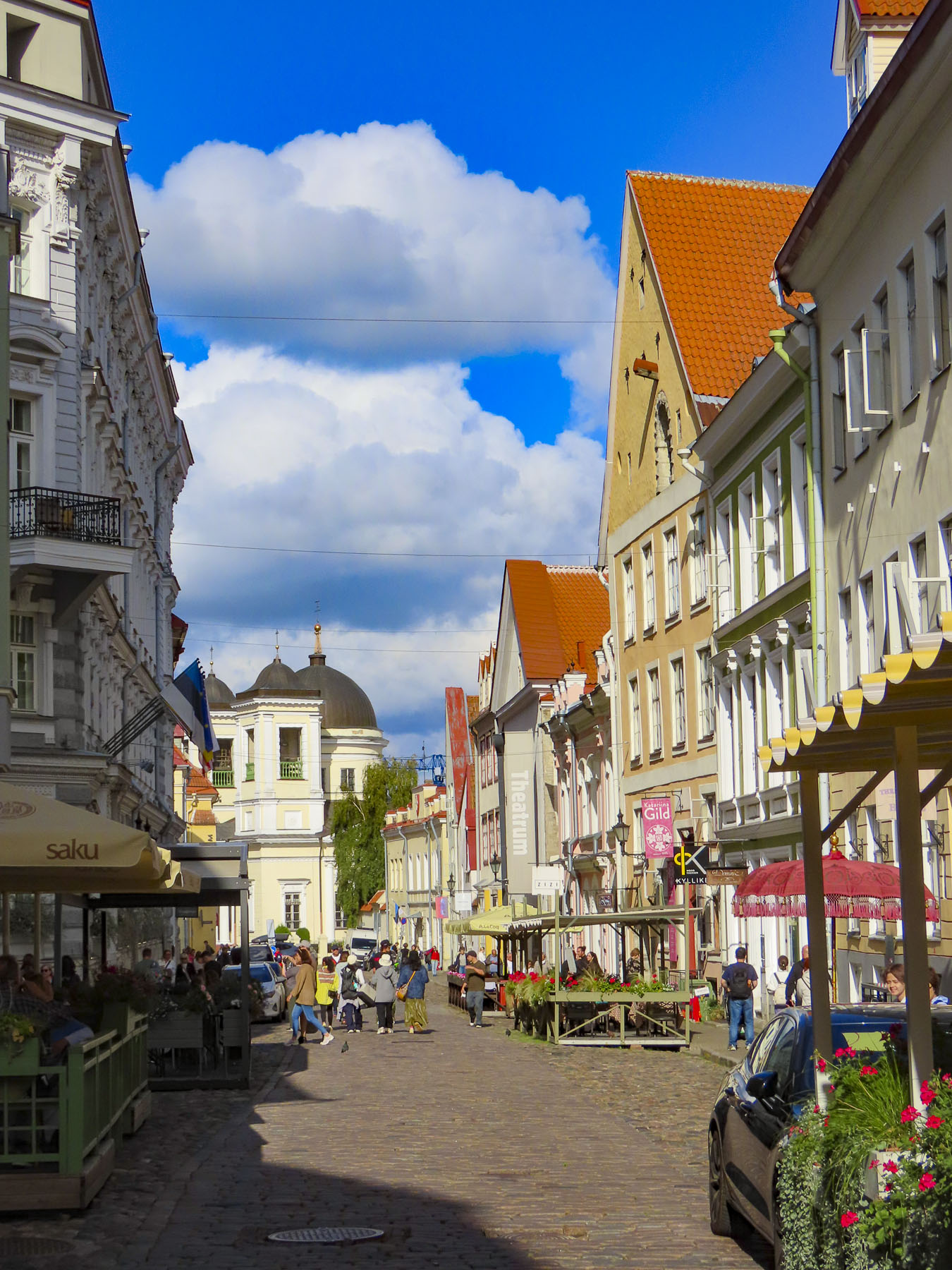
Over the years the population of Zadar has sprawled into new buildings on the mainland, unlike Dubrovnik, which has been gentrified into a theme park. Old Town Zadar, on the other hand, has some newer buildings on its peninsula, but also has many that show the patina of age, and give the town an authenticity and delightful ambience.

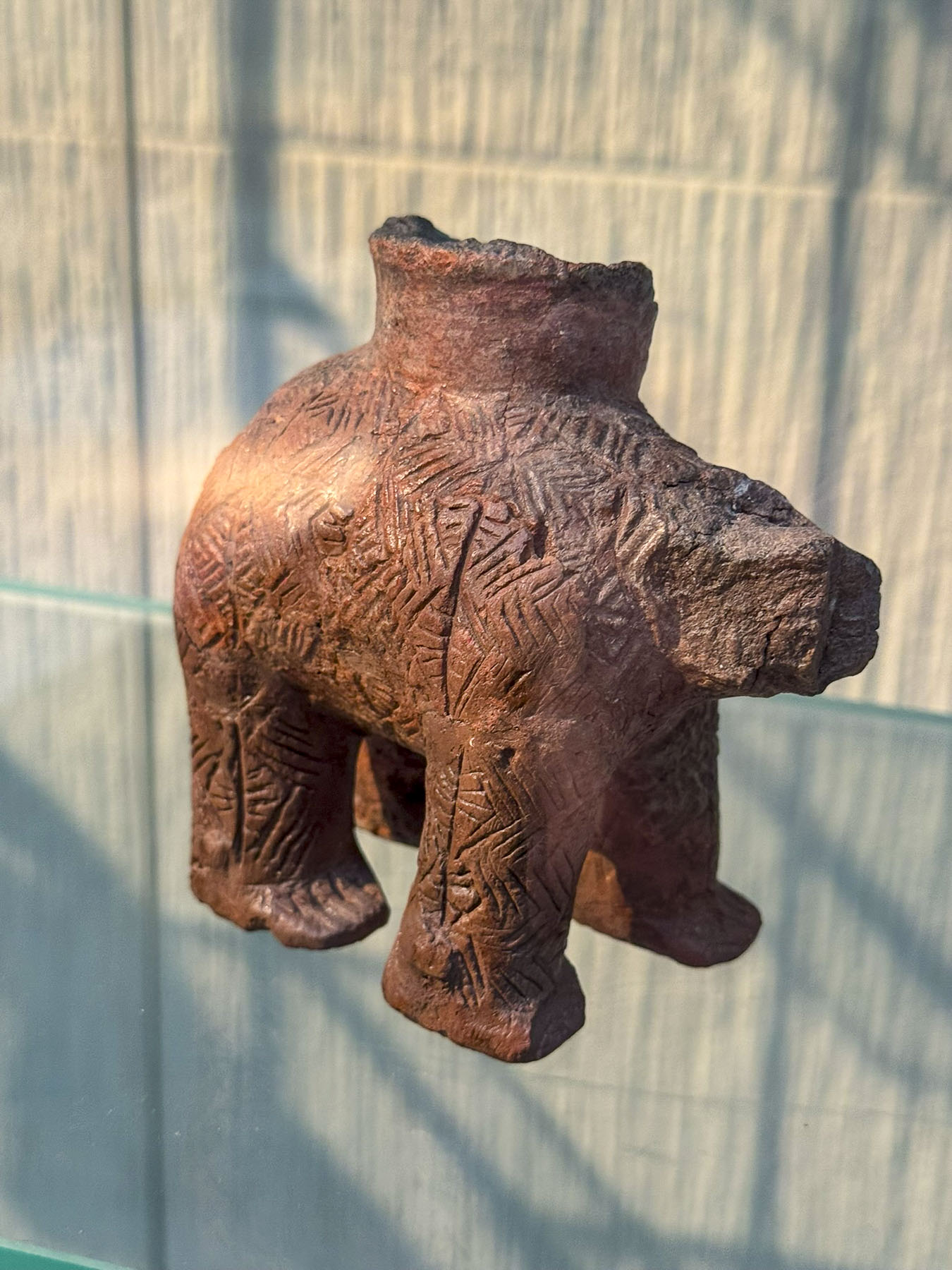
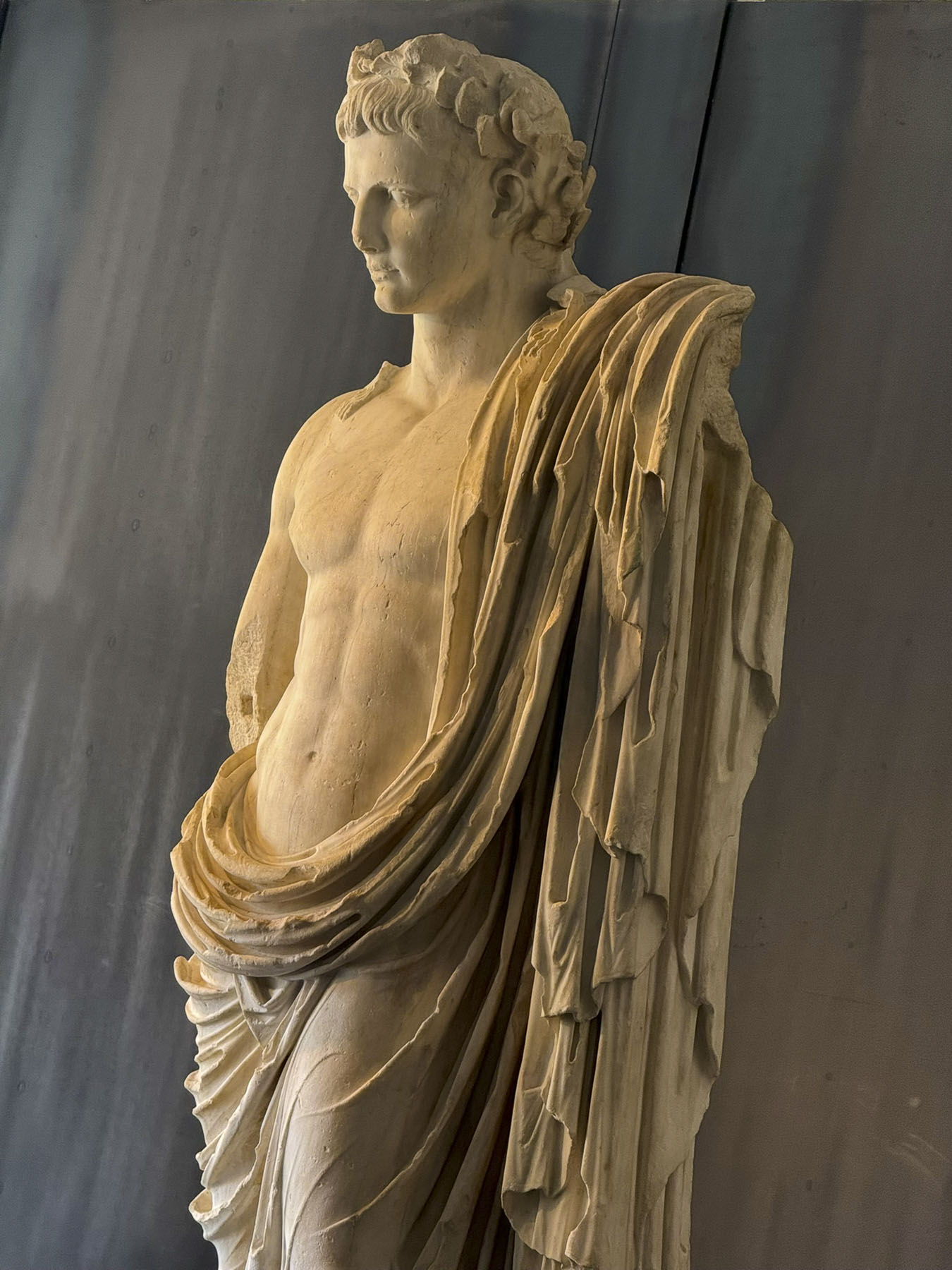
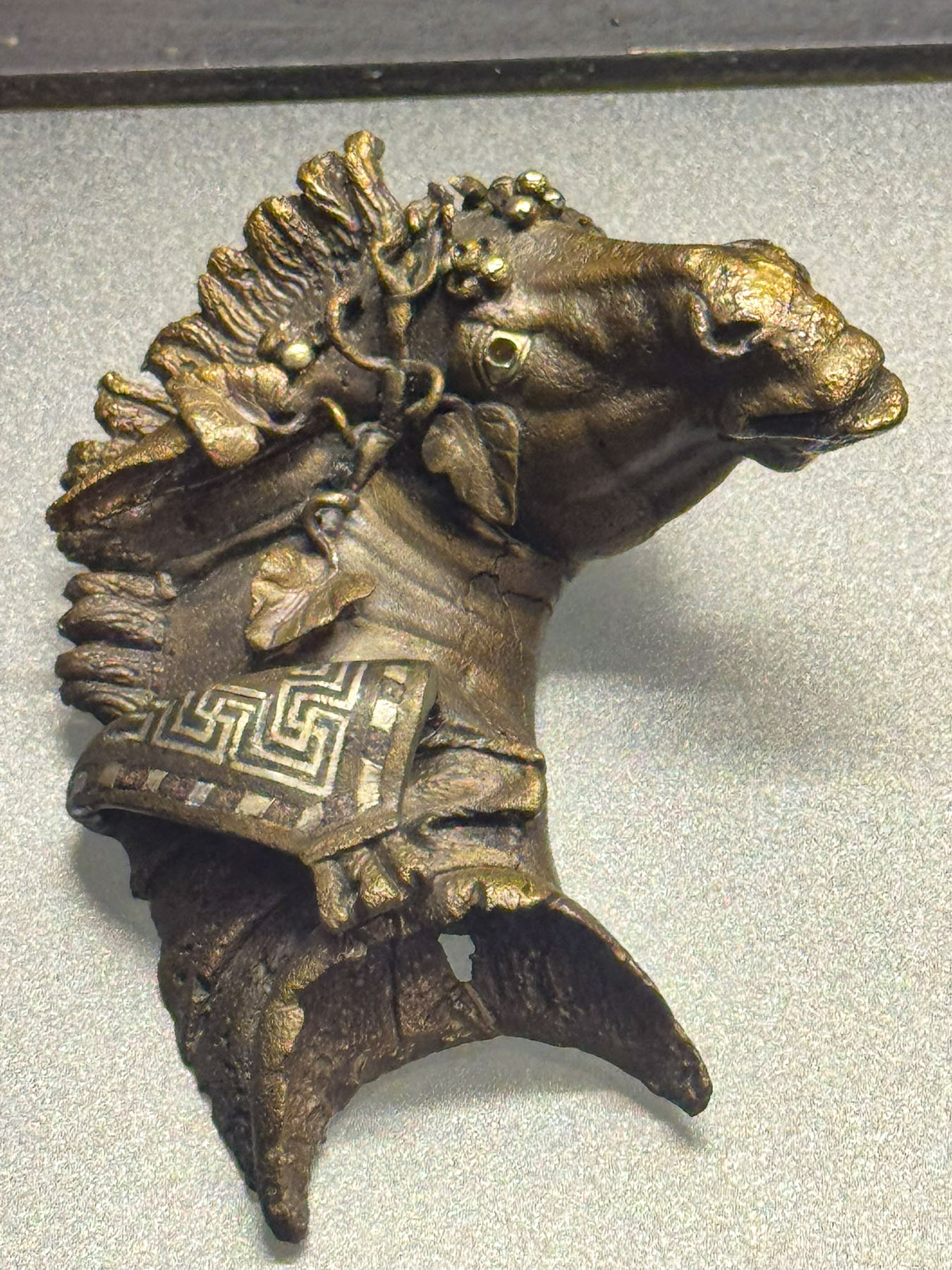
Our sunny morning was threatened with rain by noon, so we headed into the Archaeological Museum, where they have an interesting and diverse collection of ancient artifacts, statuary, and busts unearthed in Zadar, from its pre-history through the Roman Era and Venetian times. Especially unusual was the collection of Neolithic Rhytons, a  four-legged ceramic ritual vessel, from the Impresso and Danilo cultures.

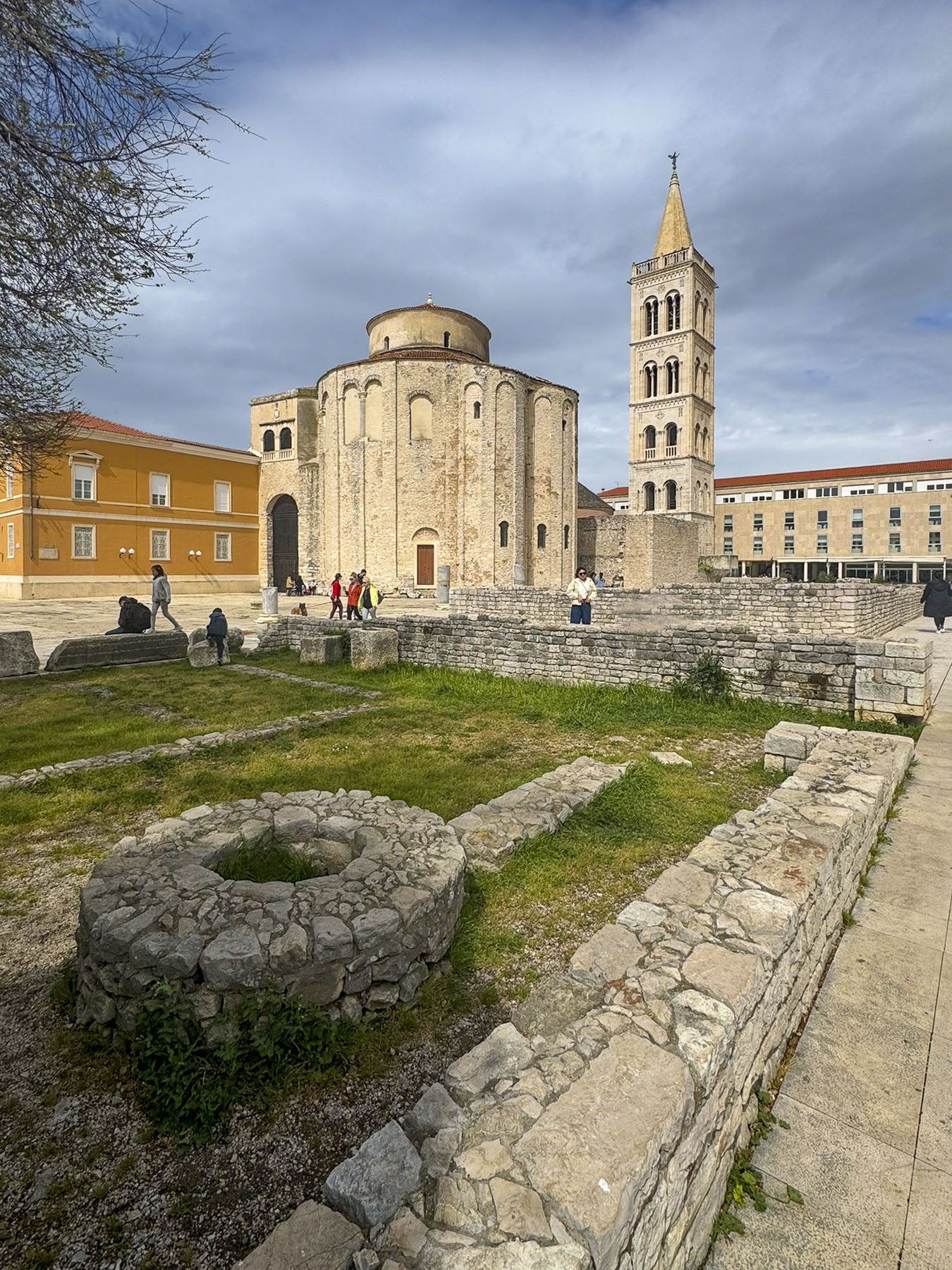
From the museum there is a good view of the Church of St. Donatus, and the belltower of Sainte Anastasie across from the ruins of the Roman forum. We’d pass these landmarks multiple times during our stay.

Fortunately, we did have good raincoats, and we scurried to Kavana Centar, a very nice café several blocks away that had some indoor tables still available and offered a reprieve from the rain. Located away from the main square, its menu was very budget friendly.

Though the rain had not stopped, folks continued on with their plans, and soon umbrellas were out everywhere.  After lunch, we headed back to St. Donatus, an unusual tall round cylinder-shaped church built during the 9th century in a pre-Romanesque style. Much of its construction utilized the ruins of the old Roman Forum, upon which it was built.

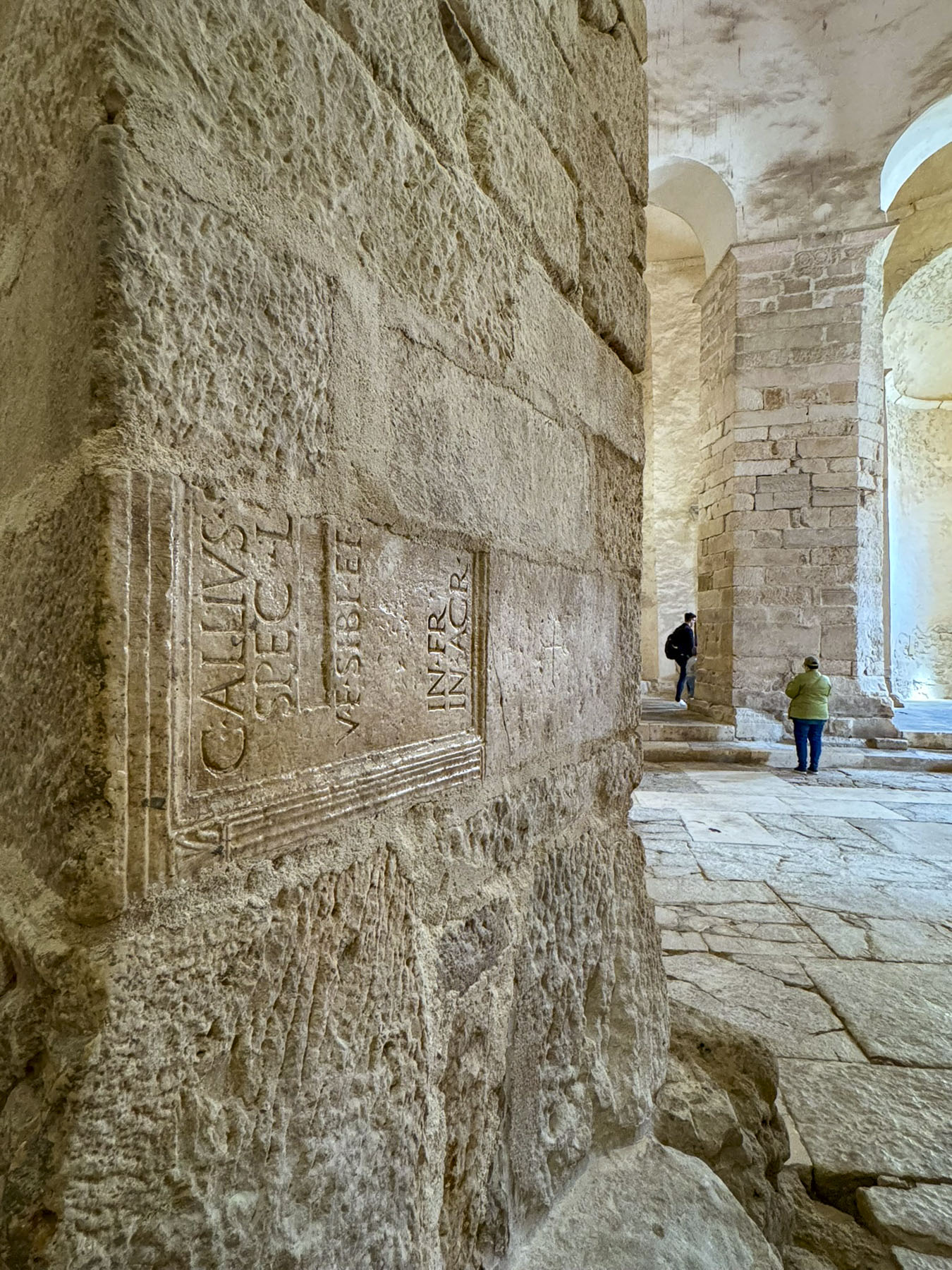
The fragments of reused columns, capitals, plinths, and cornices were used as fill, and can be seen in several exposed spots along the church’s foundation and interior. Its mammoth interior is 27m (89ft) tall, and at the top is a gallery that overlooks the space below.

The church was deconsecrated in the early 1700s, after which it was unceremoniously used as a wine cellar, warehouse, and Zadar’s first archaeological museum in the early 1900s. Nowadays, along with being a tourist site, it hosts theMusical Evenings at St Donatus, a concert series that utilizes the church’s excellent acoustics, every July.

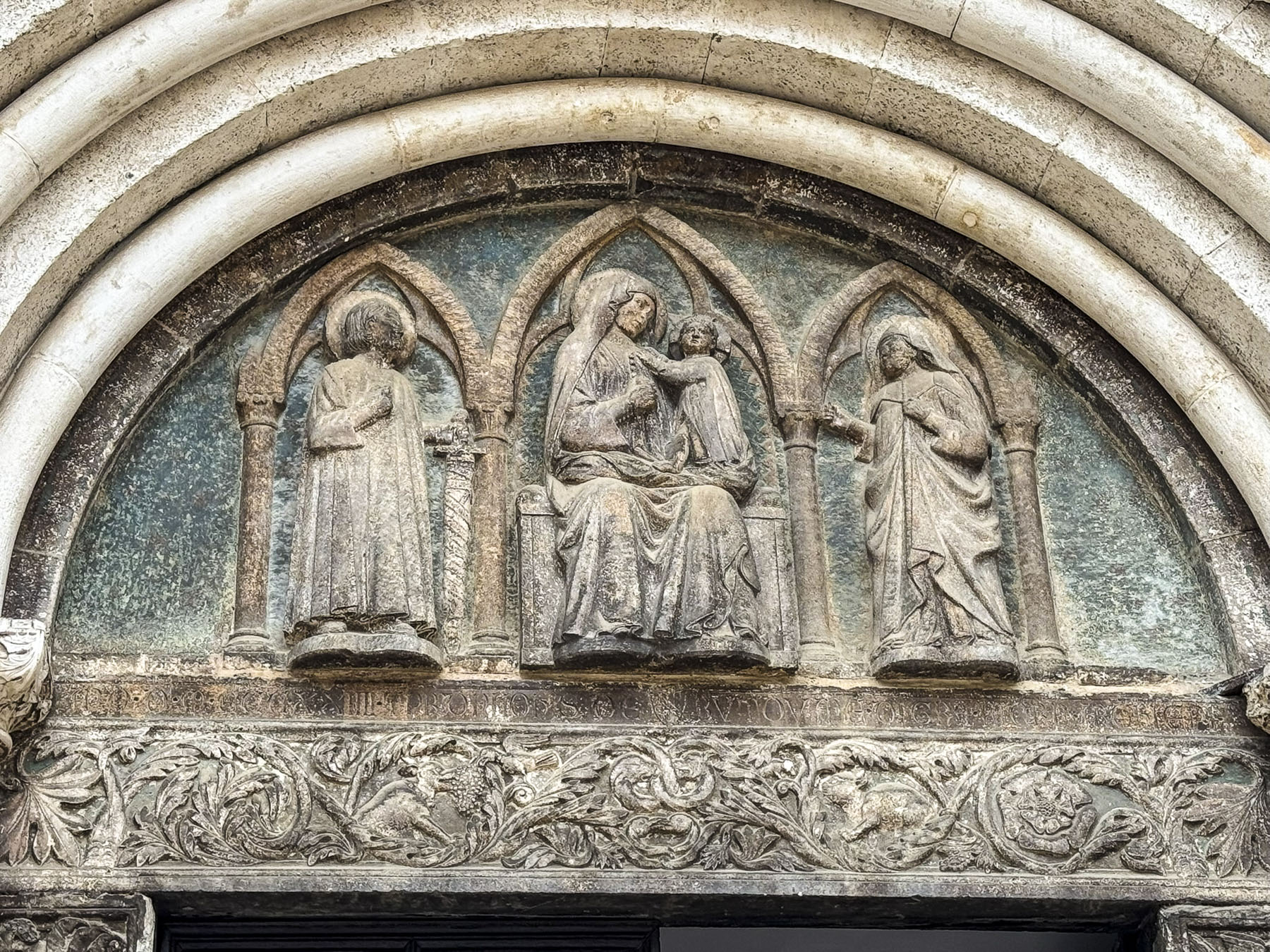
The Campanile di Sant’Anastasia, the belltower of the Cathedral of St Anastasia and its monastery, is right next to St. Donatus. The campanile was added to the church in the 15th century, four centuries after the church and its monastery were completed. During the high season it’s possible to climb the 186 steps to the top of the 55m (180ft) tall tower for a panoramic view of the city and sea. But unfortunately, in early April it was closed when we visited. Surprisingly, the entrance to the cathedral is on the other end of the building, around the corner from the belltower, and took us a few minutes to figure out its location.

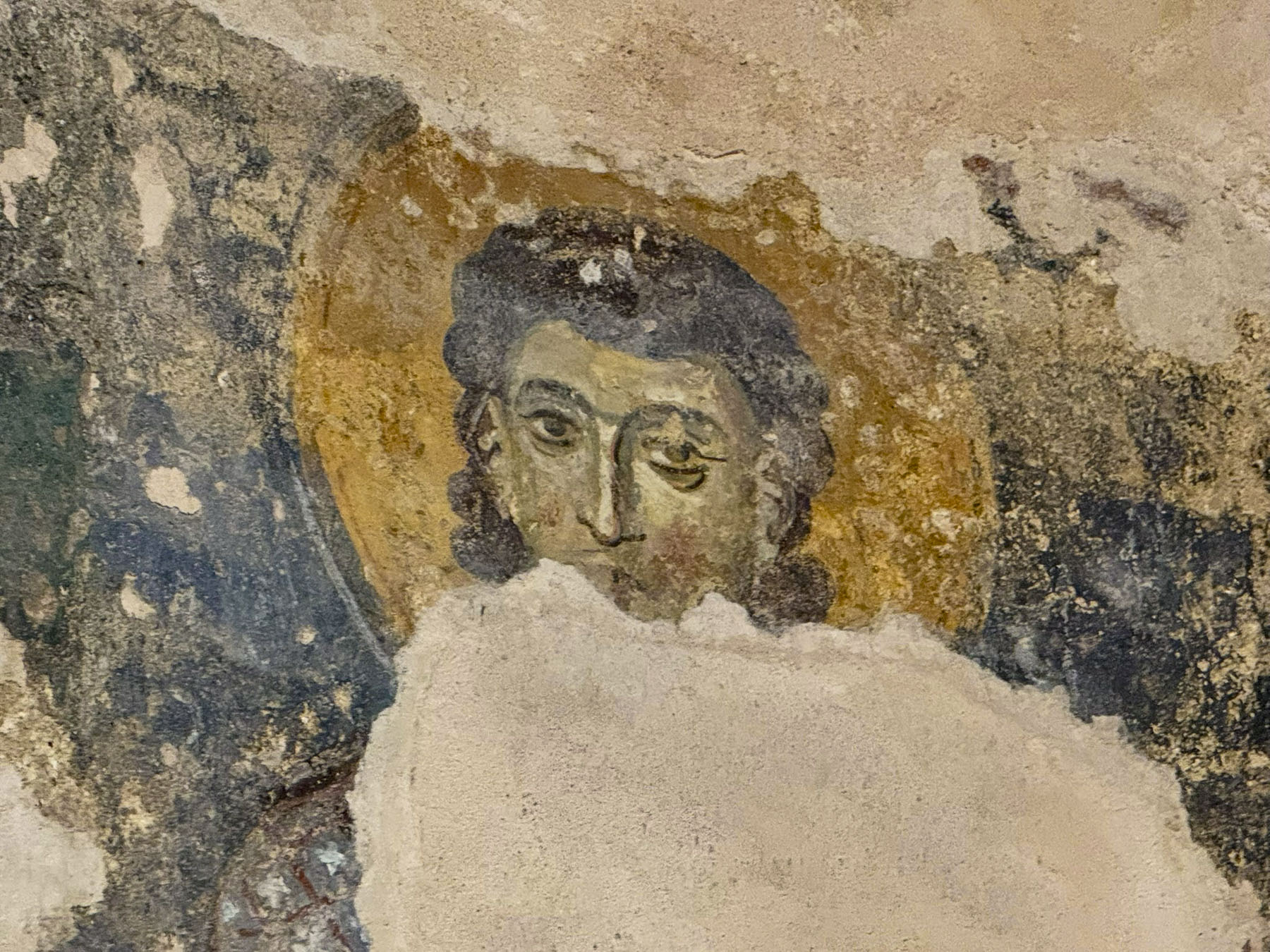
The interior of the Romanesque style church features an open timber truss roof, interesting side altars, an ancient fresco featuring what is believed to be a likeness of the saint, and the remnants of a 13th century mosaic floor, which I almost accidentally fell on, after losing my balance on the uneven stone flooring.

We could only imagine the uproar that would have ensued if I had damaged the antiquity. We wondered if our travel insurance would be of any use in this situation.

There are numerous other churches in old town Zadar. Choosing several churches and connecting the dots between them we found was a good way to see the various neighborhoods on the peninsula.

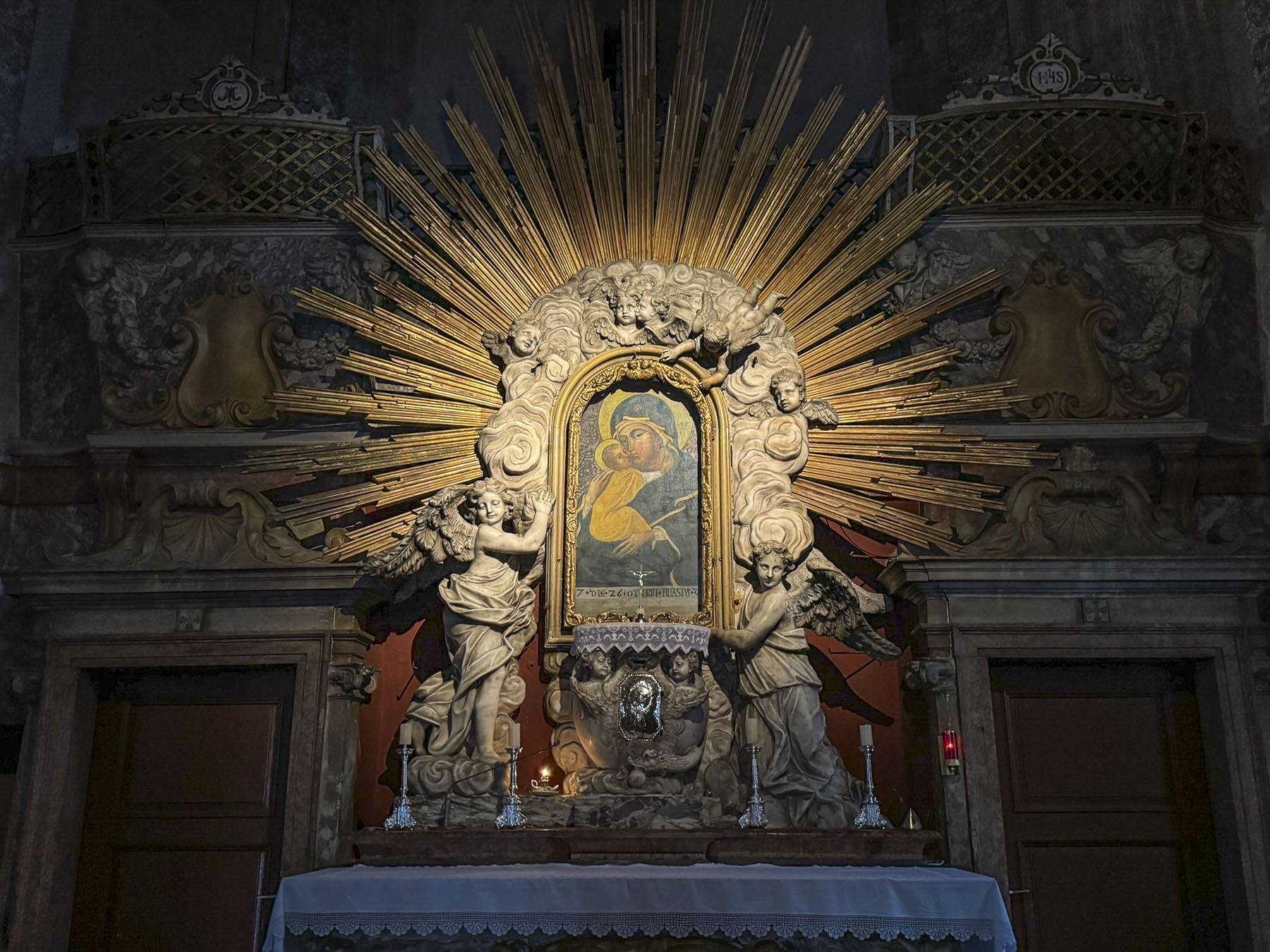
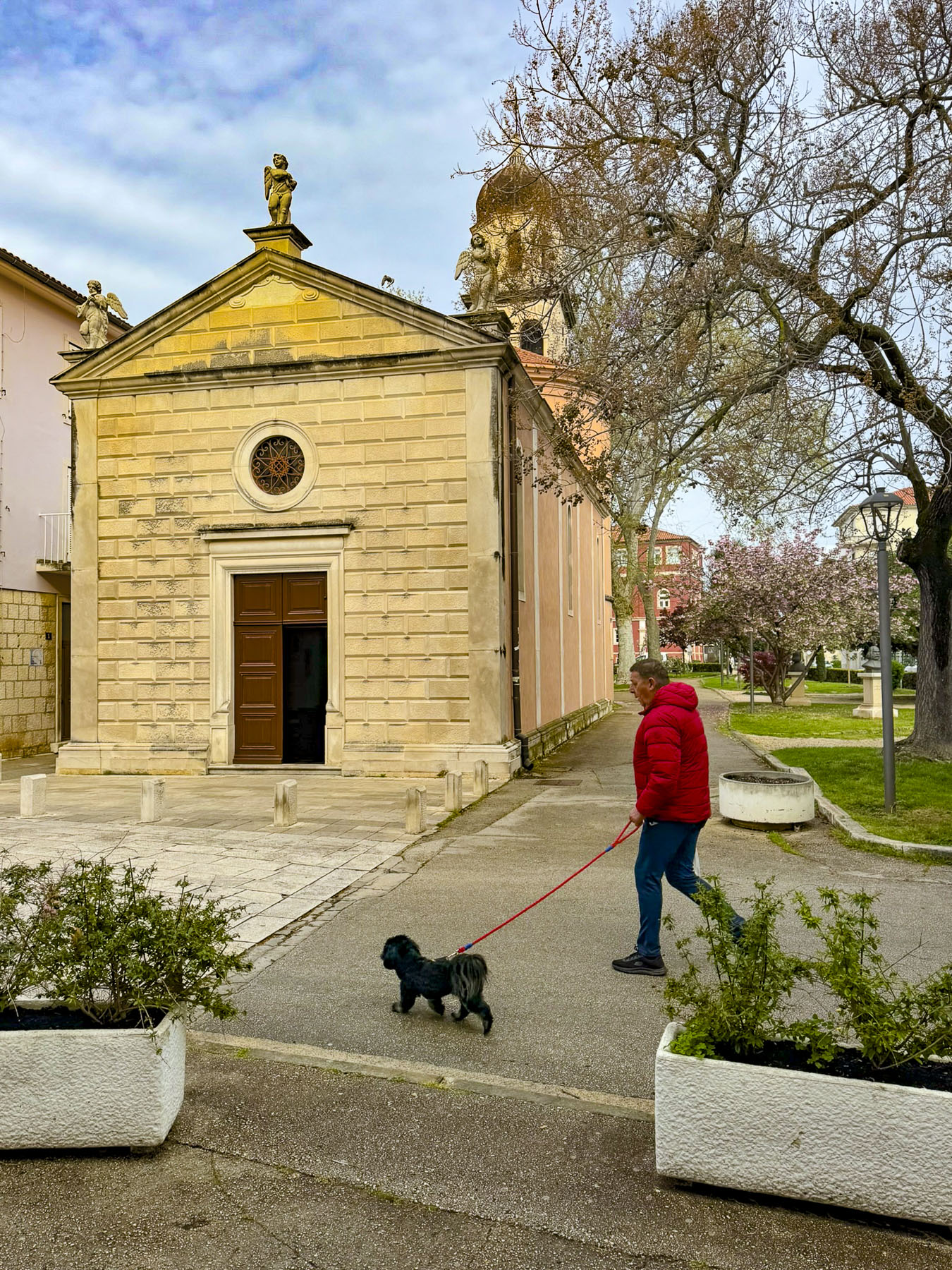
One of our favorites was the Crkva Gospe od Zdravlja, the Church of Our Lady of Health, set on the edge of a small park. Its small intimate interior was often visited by folks on their way to work in the morning.

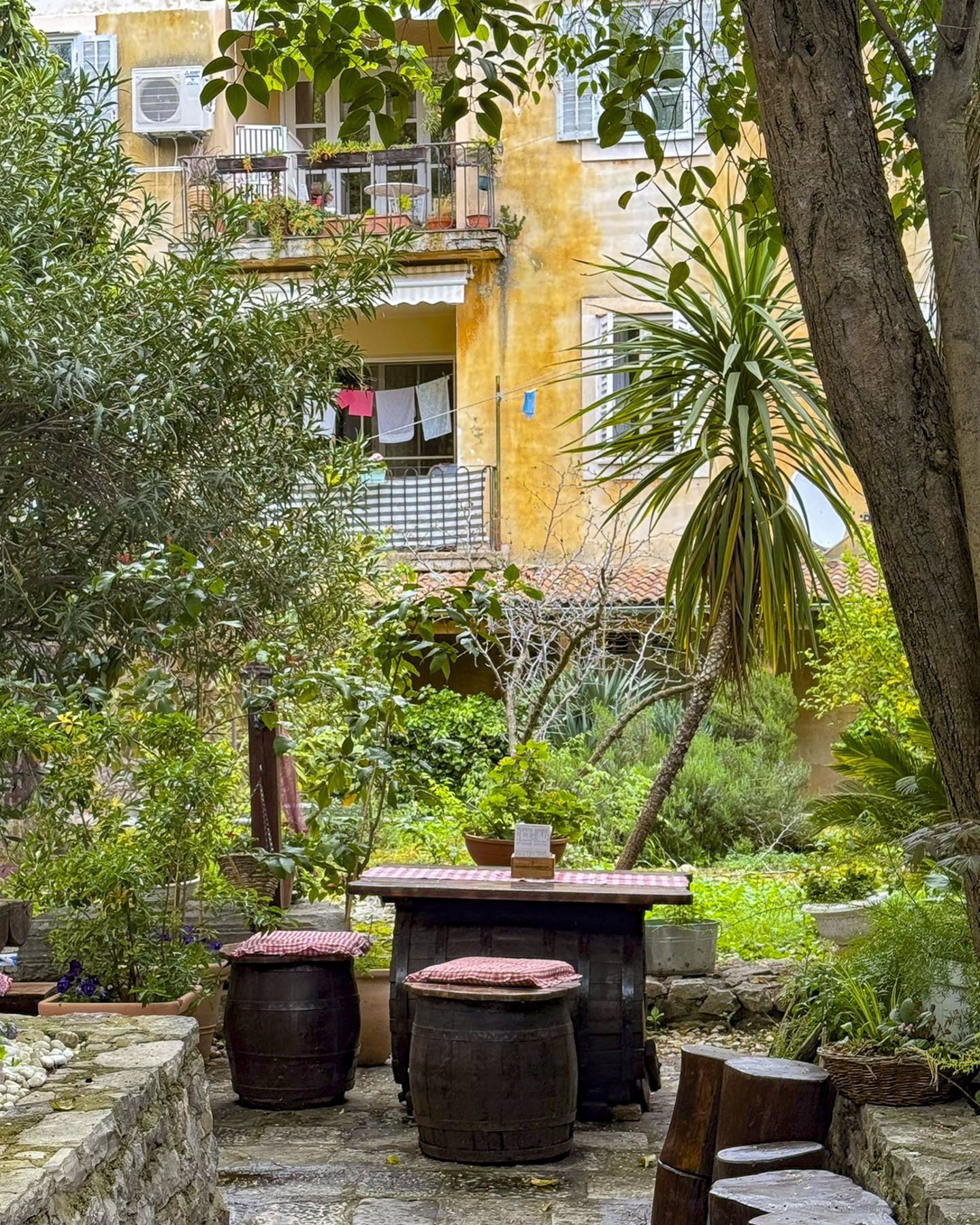
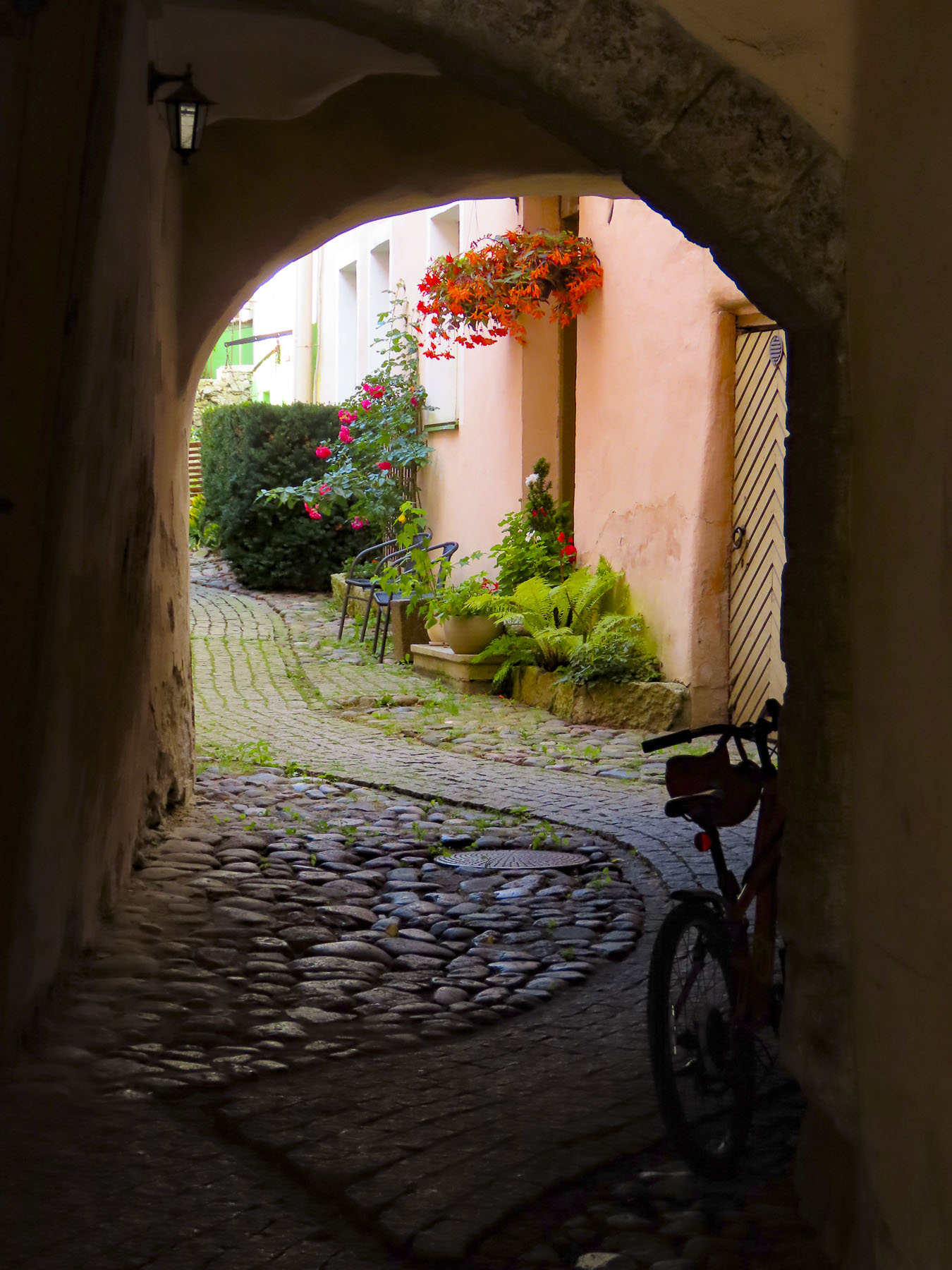
Over the course of our wanderings past random buildings, down narrow alleys, and in dim courtyards, we found examples of the many different architectural styles that have graced the city over the centuries.

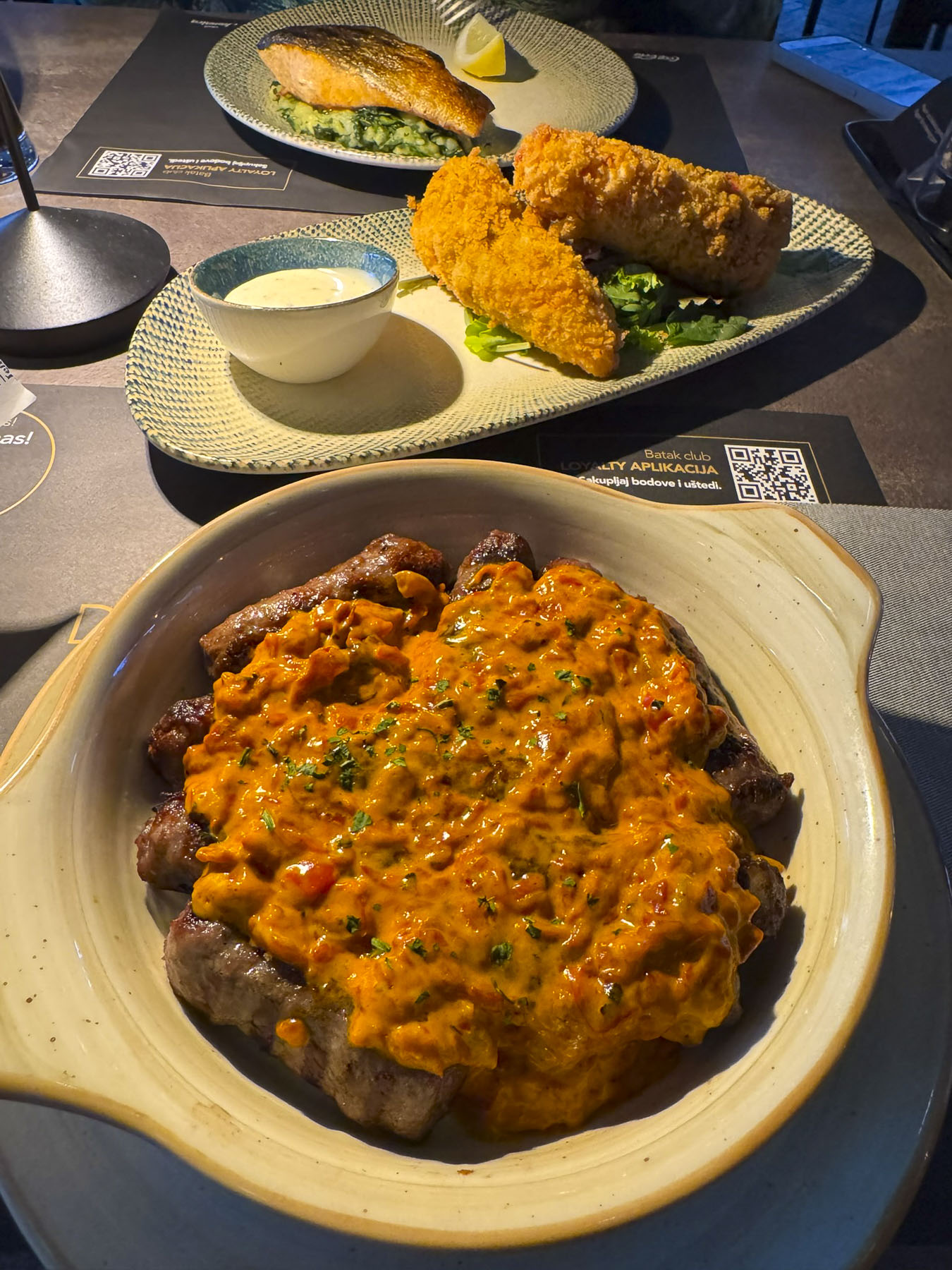
On our last night in Zadar, we drove off the peninsula to another recommended restaurant, Batak Zadar, located in a shopping center, far away from the tourist zone. We ordered several of their Croatian classics, and a local red wine. Everything was very good, and an excellent value compared to the inflated pricing of the restaurants in old town Zadar.

Though the weather could have been more cooperative, we enjoyed our three-night stay in Zadar, and found the size of the charming city just right for a short stay before the start our three-week road trip through Croatia, Slovenia, and Bosnia and Herzegovina.

Till next time,

Craig & Donna             

Prague – What’s all the fuss about? Confessions, Castles and Černý

That was the question put forth on a Reddit travel thread. A rather jaded inquiry, we thought, that questioned the city’s continued popularity with tourists, who in their opinion have ripped the local fabric of life from the city’s historic center and Disneyfied it. We don’t share that opinion, and found it to be an intriguing destination for a four-night stay before continuing on to Croatia, but we can understand why it might be perceived that way, especially if you are visiting the city during the high season. Prague has been on our radar since the fall of the Berlin Wall in 1989. Unexpectedly, it took us nearly 40 years to make visiting this enchanting city a reality, but like a good wine it has aged well. And while some folks lament that it’s not as inexpensive as it used to be, it’s still one of the most budget-friendly cities in Europe.

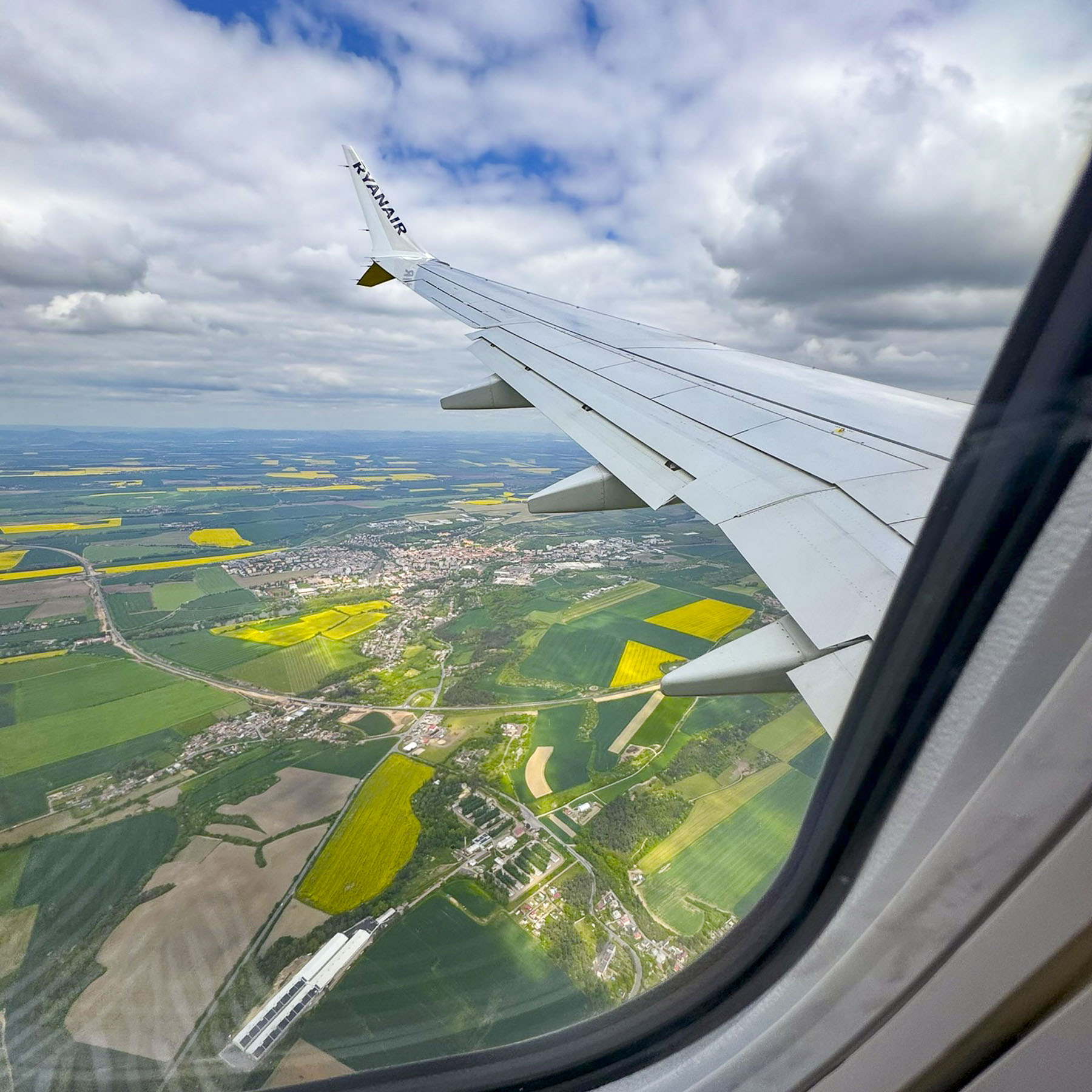
As we descended through the clouds on the approach, Prague revealed thousands of acres of brilliantly yellow rapeseed blossoms carpeting the landscape that was slowly greening. The scene literally brightened our day after a cloudy grey connecting flight from Paris during the first week of April. It was a quick 30 minute Bolt drive from the Václav Havel Airport through Prague’s outer suburbs and parks before catching a glimpse of the Petrin Tower,a 59m (194ft) tall building constructed in 1891 for Prague’s Jubilee Exhibition, that loosely follows the design of the Eiffel Tower. A climb of two-hundred-ninety-nine steps to its to apex offers views out over Prague, and on a clear day it’s said “you can see nearly all of Bohemia.”  

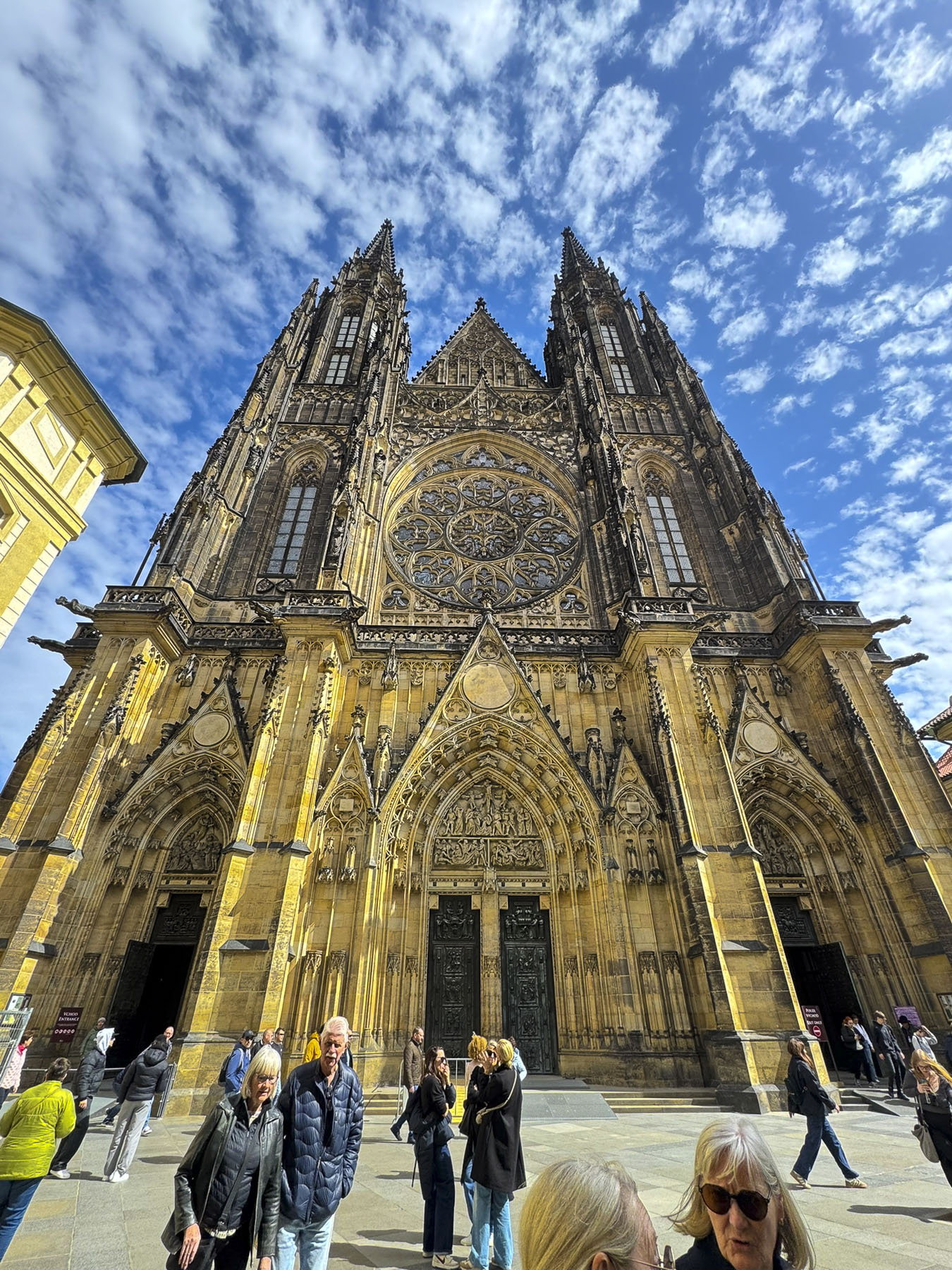
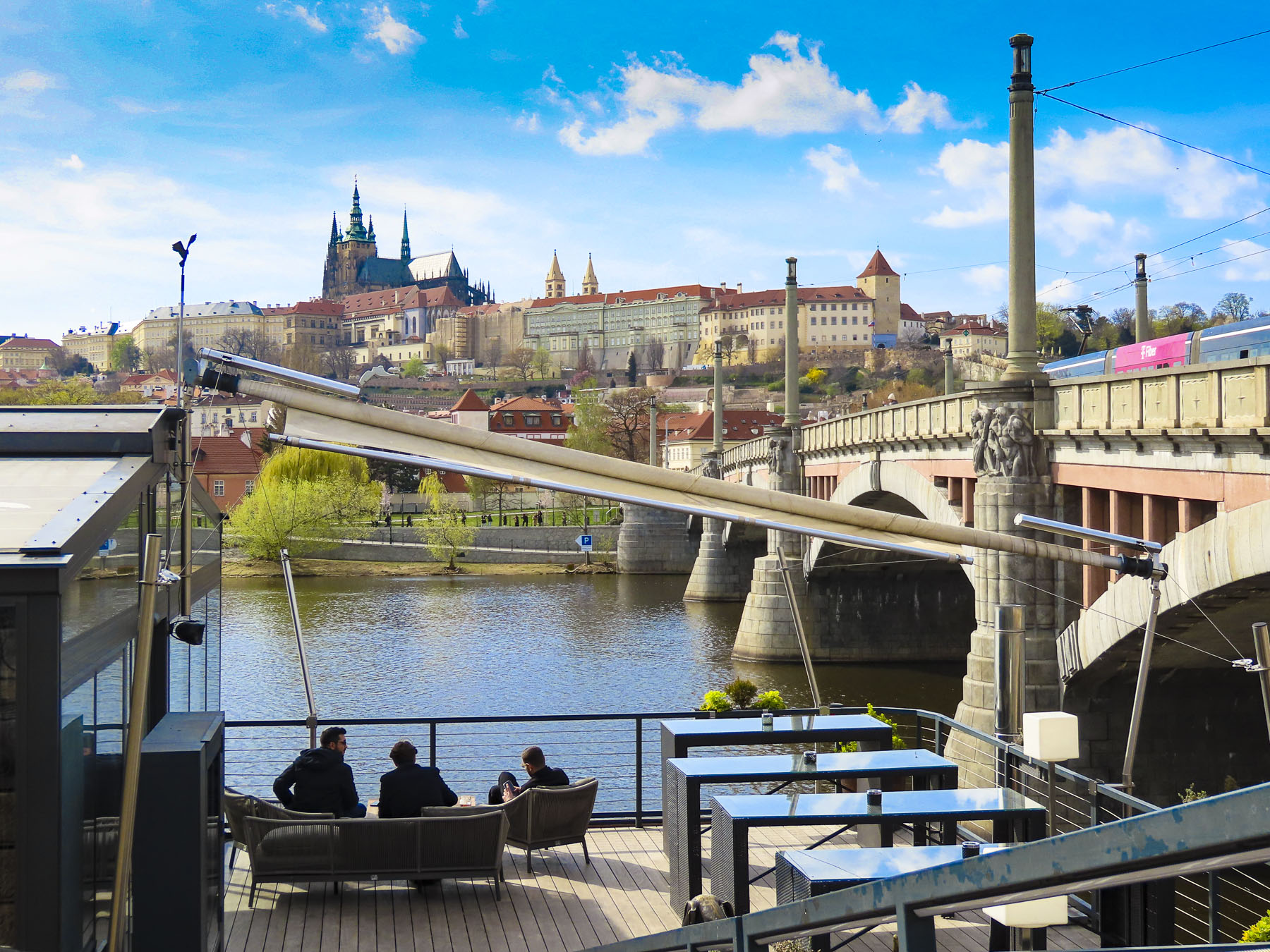
A short time later the silhouette of Starý královský Palác, the old Prague Castle, and the spire of St. Vitus Cathedral, which centers the bastion, came into view. The cathedral’s completion in the early 1300s established the city’s iconic skyline which hasn’t changed much over the centuries.

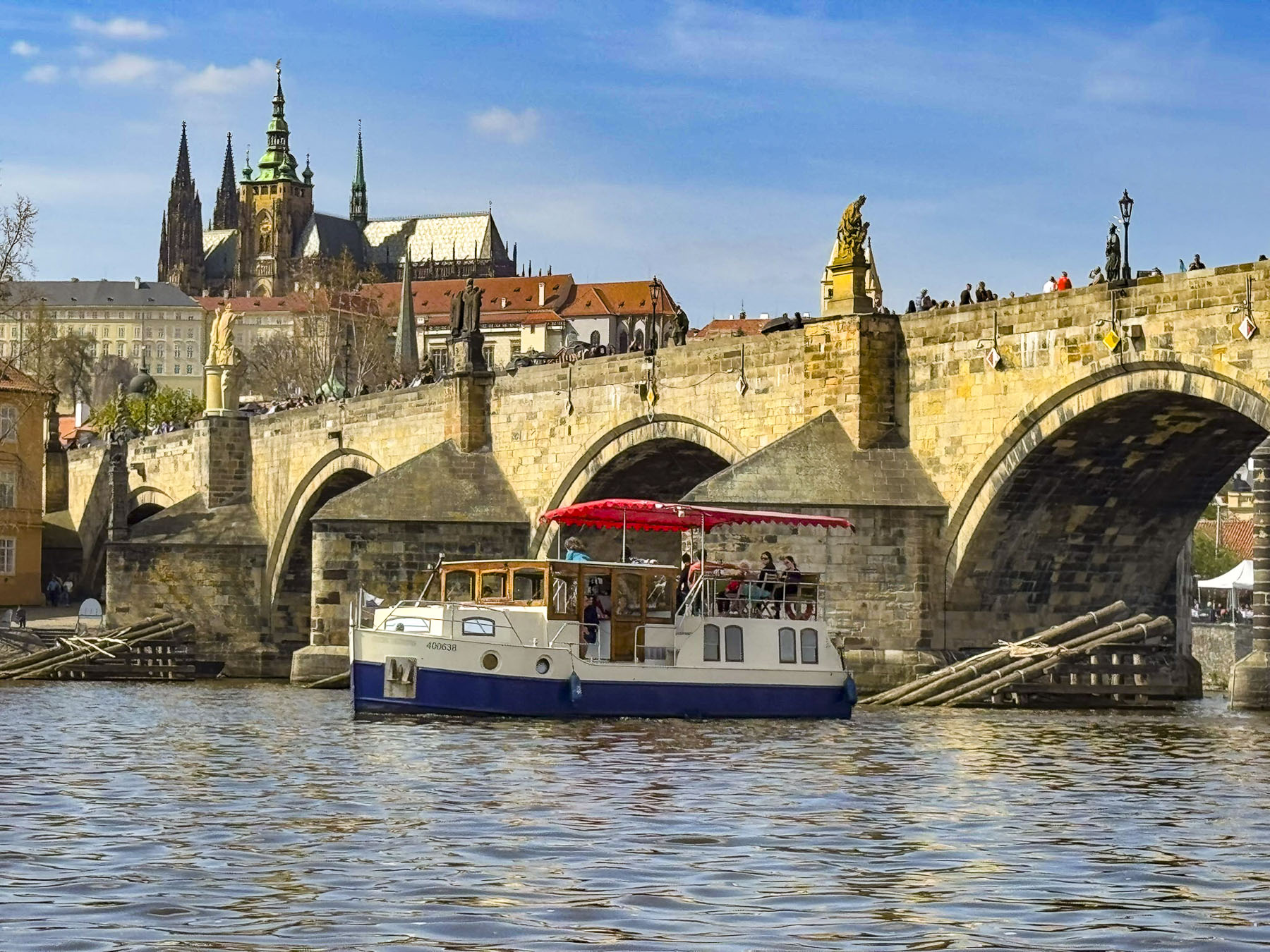
A long descent towards the Vltava River provided views of some of the eighteen bridges that link the historic Malá Strana, Lesser Town, situated on the western riverbank below Prague Castle to Staré Město, the Old Town, and New Town on the eastern bank, as well as our first glimpse of the famous Charles Bridge, which has survived numerous floods and wars for nearly 700 years.    

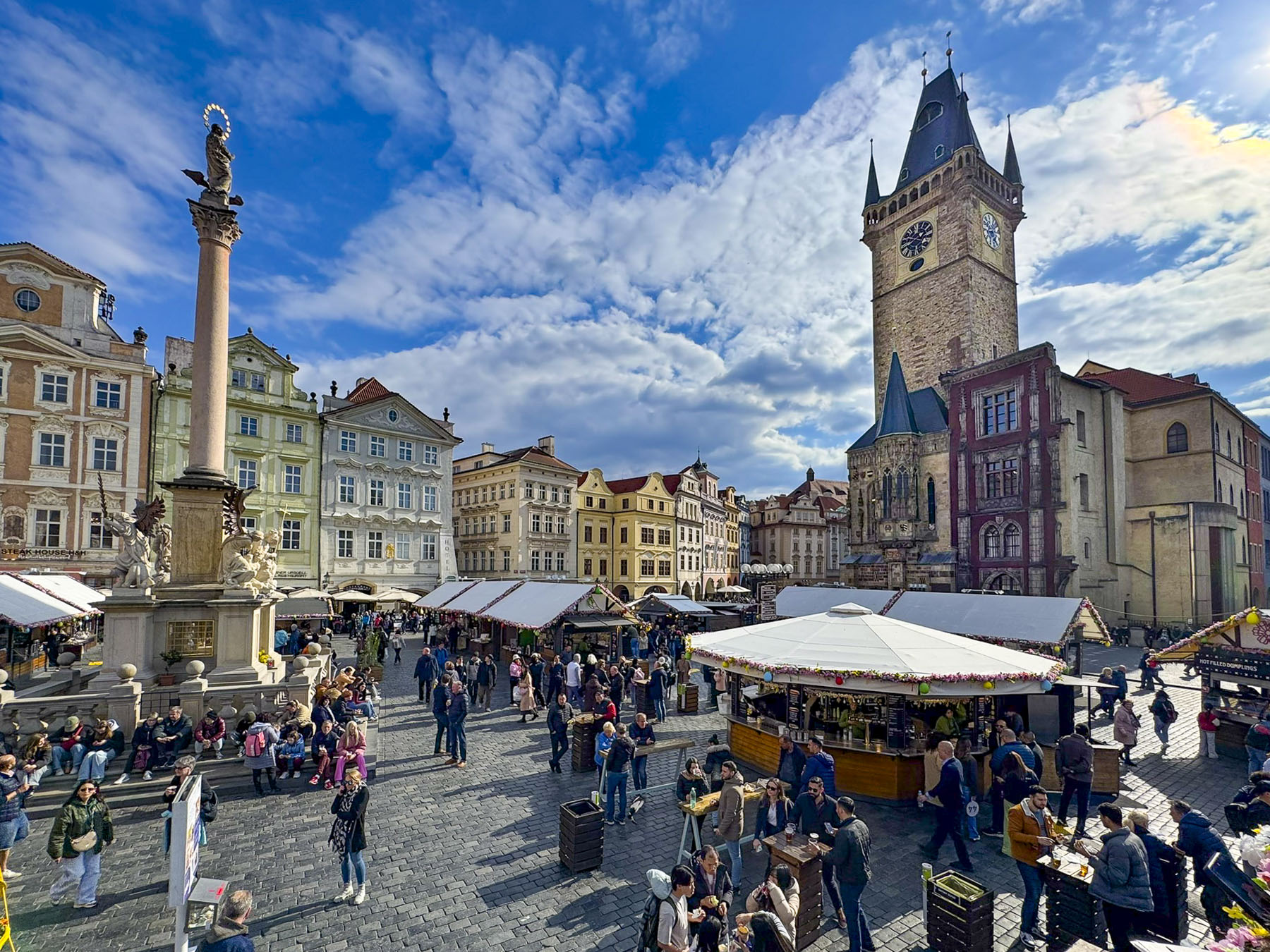
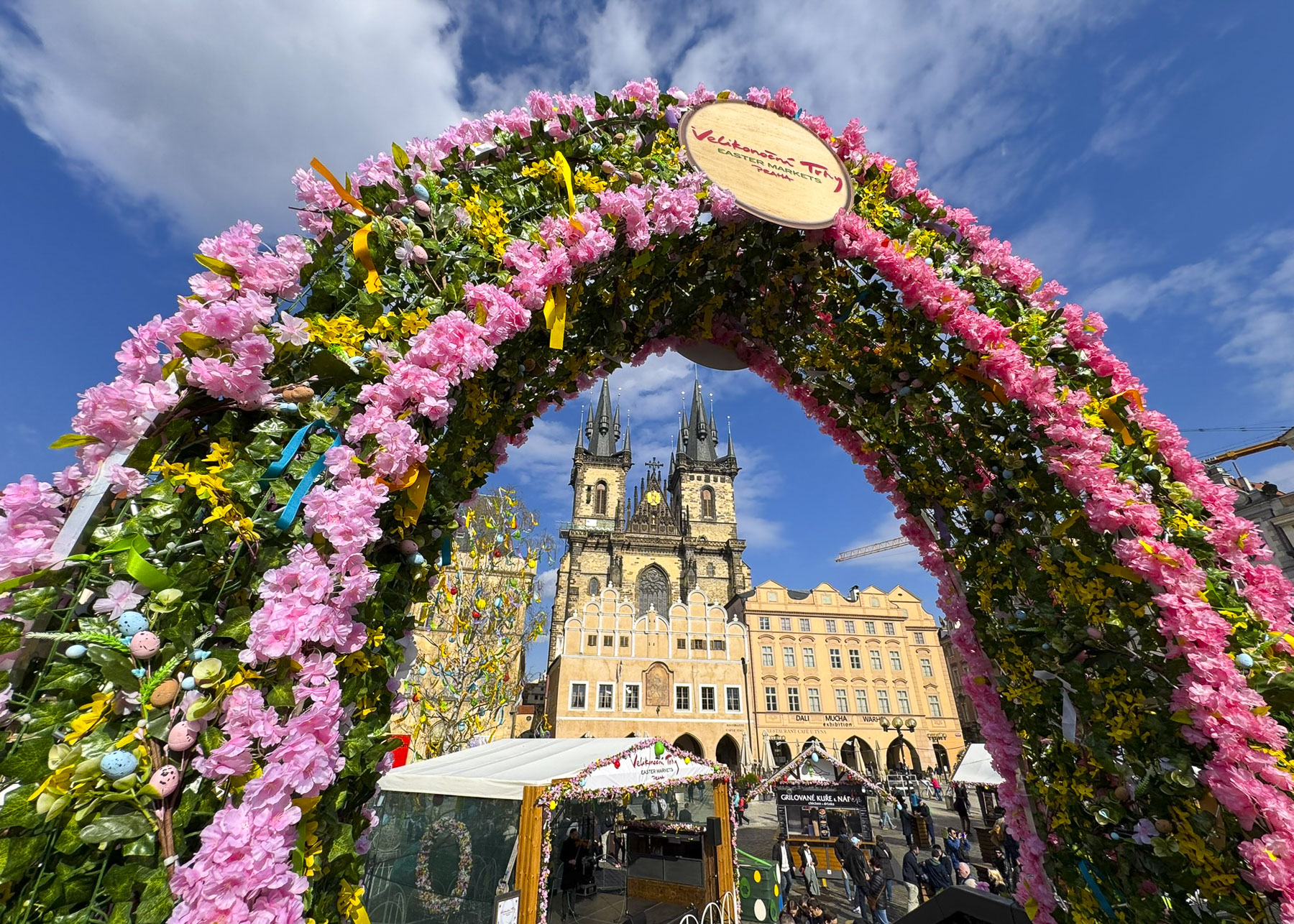
Many of the narrow streets in the historic quarter of the city are pedestrian only, but our hotel the Luxusní hotel Černý slon, the Black Elephant Hotel, was right on the edge of the restricted vehicle zone and our Bolt driver was able to navigate it easily. We passed Staroměstské Náměstí, the Old Town Square, which was already festooned with Easter decorations and food stalls, and we arrived at the corner of a cobbled alley across from the 14th century Chrám Matky Boží před Týnem, Church of Our Lady before Týn, and its twin 80m (262ft) tall bell towers which dominate the square.

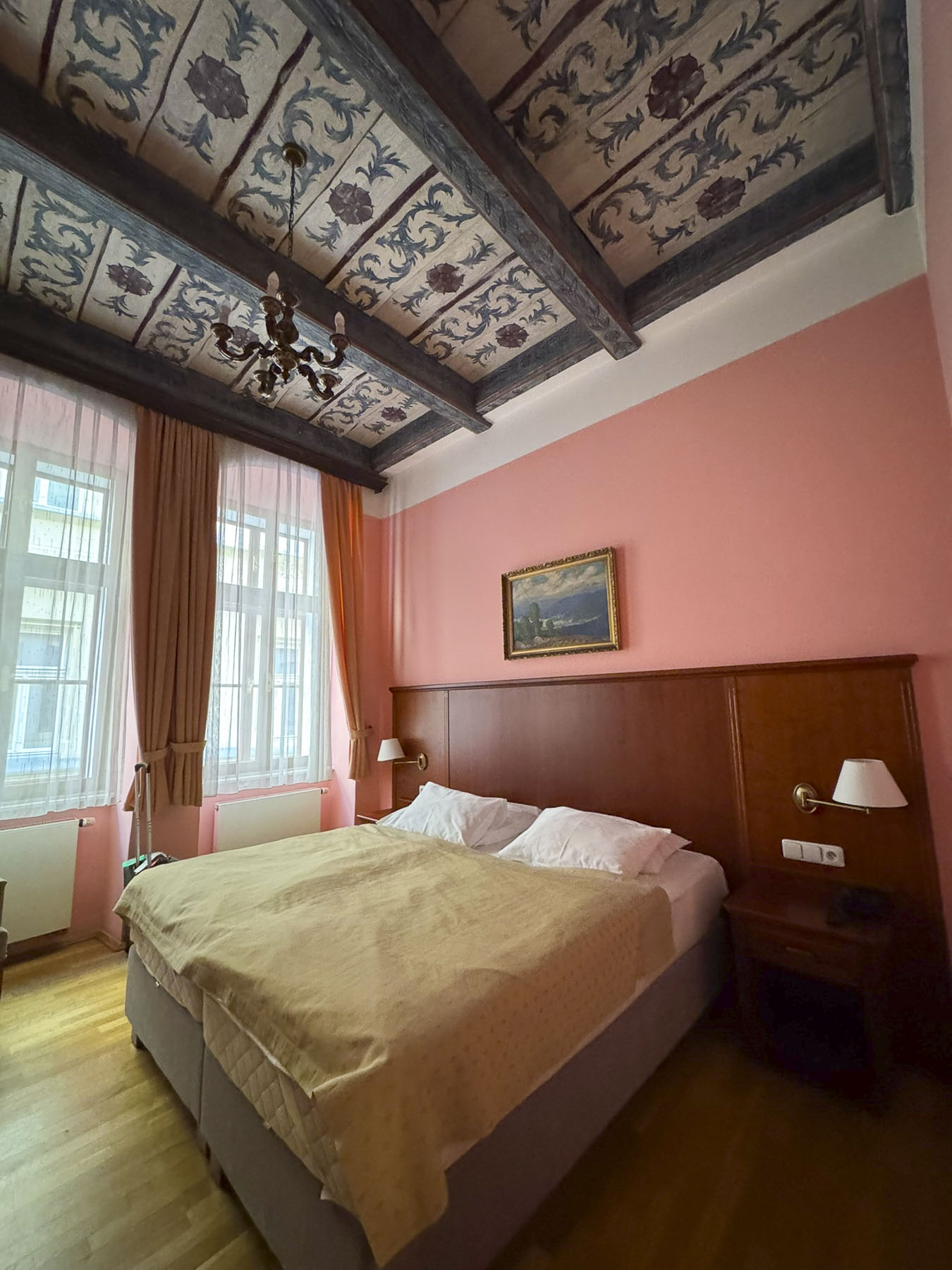
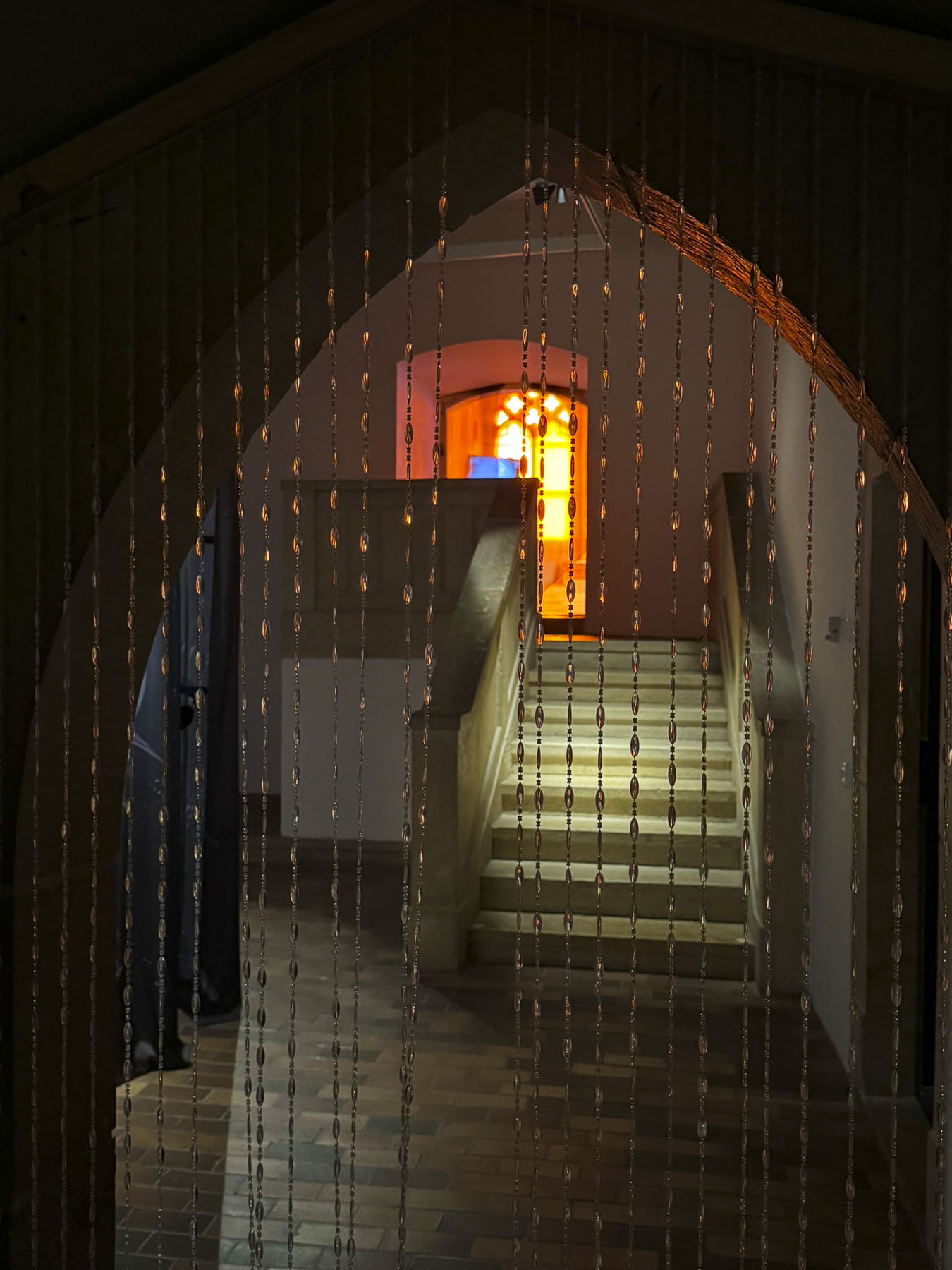
This charming hotel wonderfully retains its 13th century heritage, with a small and intimate polished wood bar, and a dining room with a Gothic vaulted ceiling, located across from the reception desk. Many of the rooms have painted wood ceilings, while the attic rooms incorporate the old wooden roof trusses into their atmospheric design. How it received its name remains an enigma.

Legend believes Holy Roman Emperor Charles IV was born in the neighboring house in 1316. An intricately designed arched doorway to a side apse of the church faced the hotel on the narrow alley that led to town square. The covered walkway across the ally once connected the church to its cloister, now the Stone Bell House, a contemporary art exhibition space.

It was a perfect spring day, and we were amazed by the amount of activity on the plaza, where folks were queueing for a spot under an arbor decorated with a beautiful floral arrangement, atop a raised platform in front of the church. It was a perfect location for a portrait.

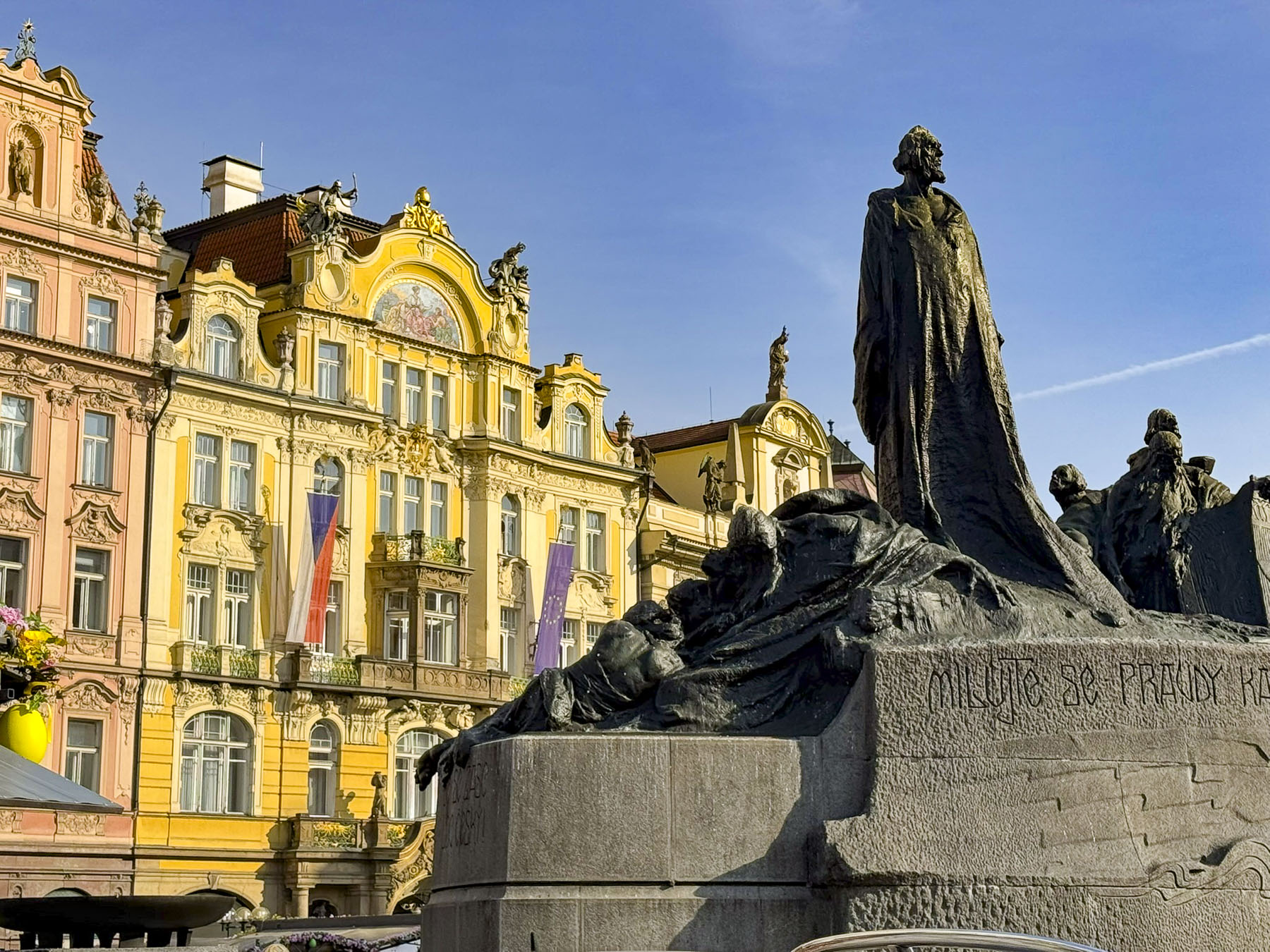
Food stalls grilled aromatic sausages and meats while others offered dumplings and donuts. Thousands of colorful tulips bloomed, ringing the base of a monument commemorating Jana Husa, in the center of the plaza. One hundred years before Martin Luther, there was Jana Husa, a theologian at Charles University in Prague who “criticized the religious moral decay of the Catholic Church,” and advocated that Mass be conducted in the local language instead of Latin. His calls for reformation branded him as a heretic and he was burnt alive on the square in front of the church in 1415. His martyrdom led to the creation of a Pre-Protestant religious movement by his followers who called themselves Hussites. The statue honoring him was erected in 1915, 500 years after his death. During the county’s communist era, sitting on the wall surrounding the statue was a way for folks to quietly protest against the oppressive rule of communism.

St. Nicholas Church, a Hussite place of worship, stands across from the monument and has an interesting historical display about the Hussite religion.

The architectural integrity of the city has remarkably survived relatively unscathed through centuries of wars that have engulfed the region. Old Town Square is definitely the epicenter of Prague’s rich architectural history, with fabulous examples of the different architectural styles that the city has embraced, which prominently surround the plaza; the earliest examples of Romanesque style dating from the 12th century are followed by Gothic, Renaissance, Baroque, Rococo, Classicist/Neoclassical, and Neogothic designs through the centuries.

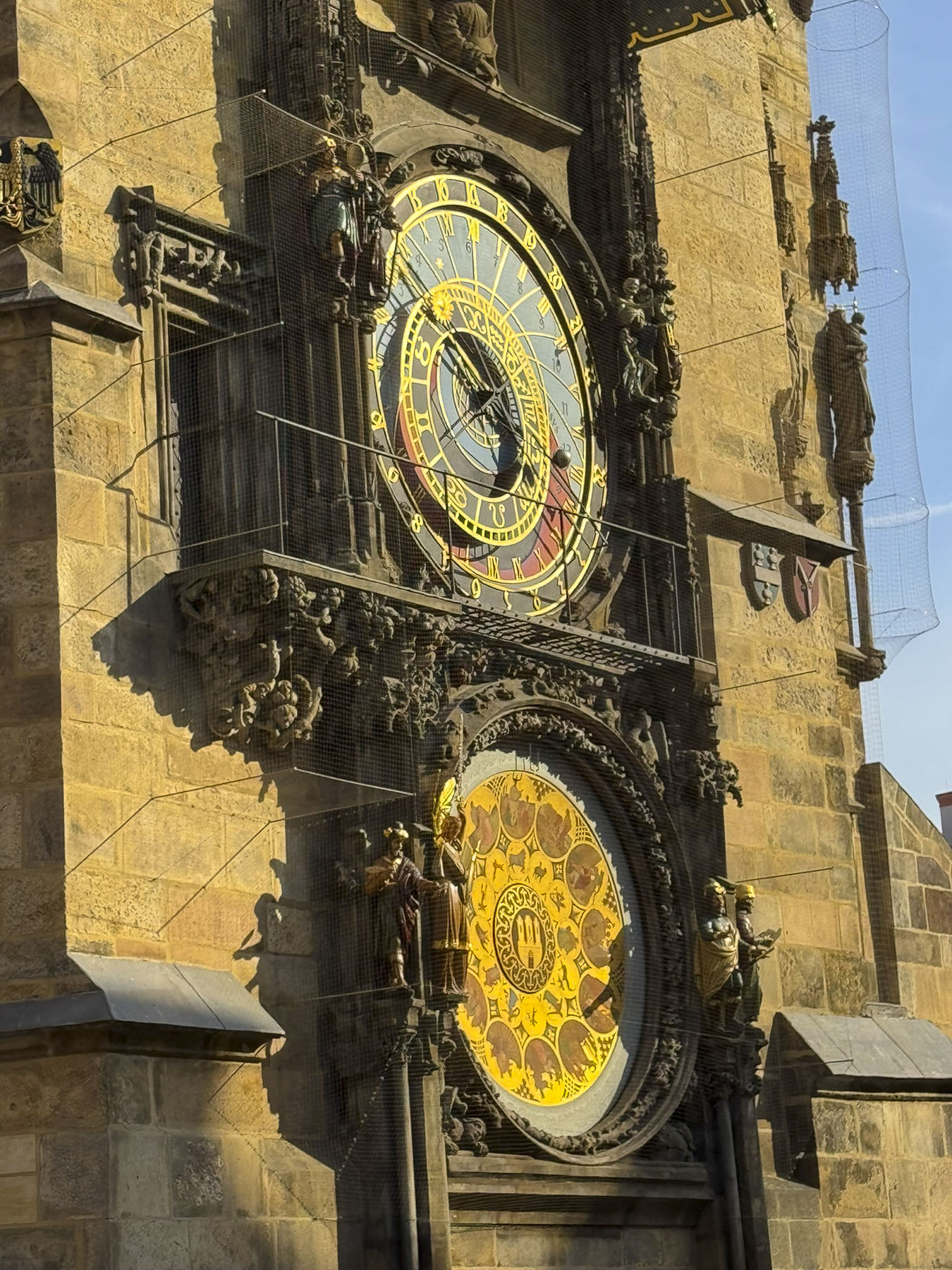
Prague’s Medieval Astronomical Clock dates from its installation on the side of city hall in 1410. Famously, it is the oldest still-operating astronomical clock in the world, with moving wooden apostles that appear on the hour as a skeleton, representing death, marks time with a bell.  

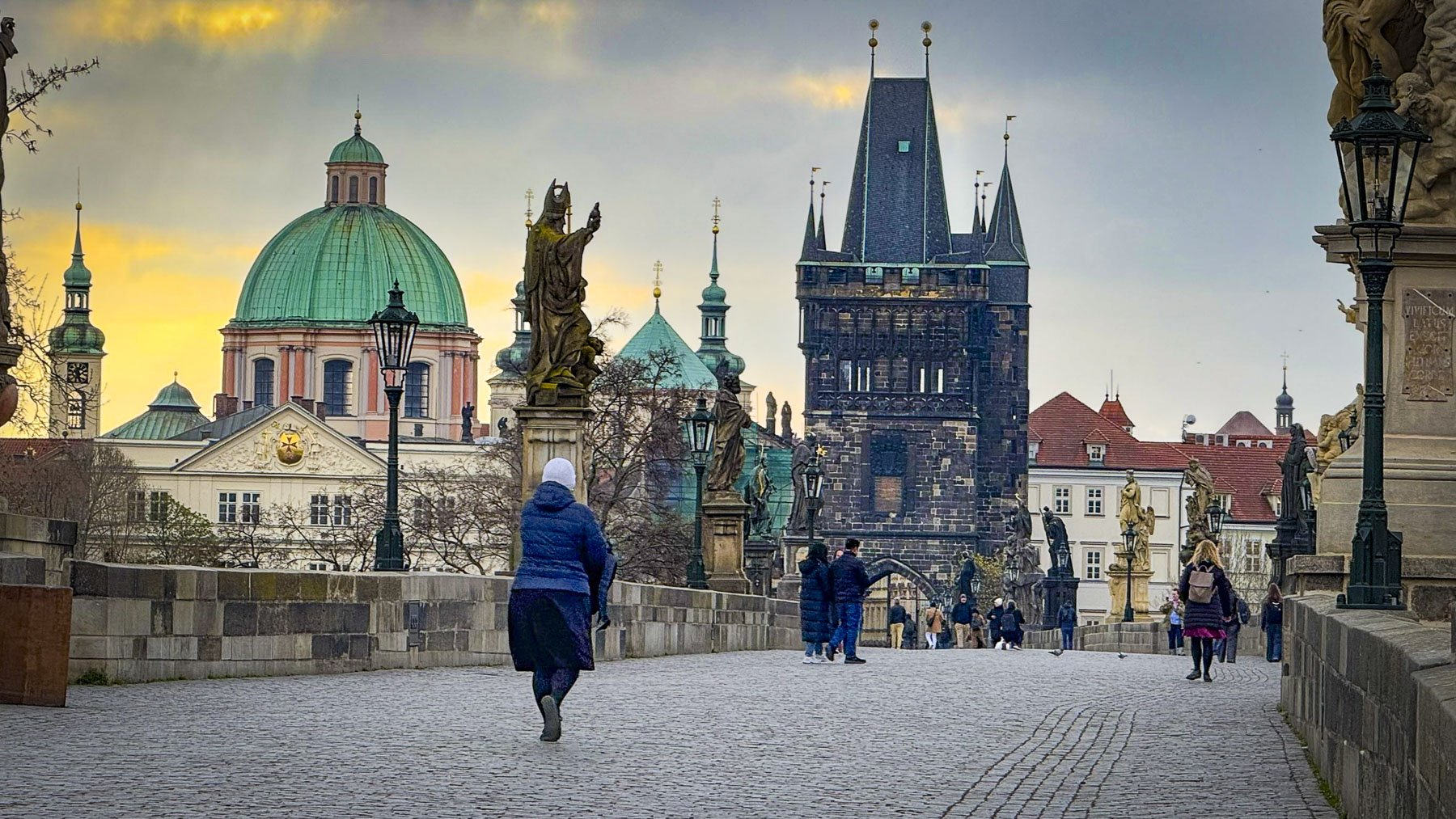
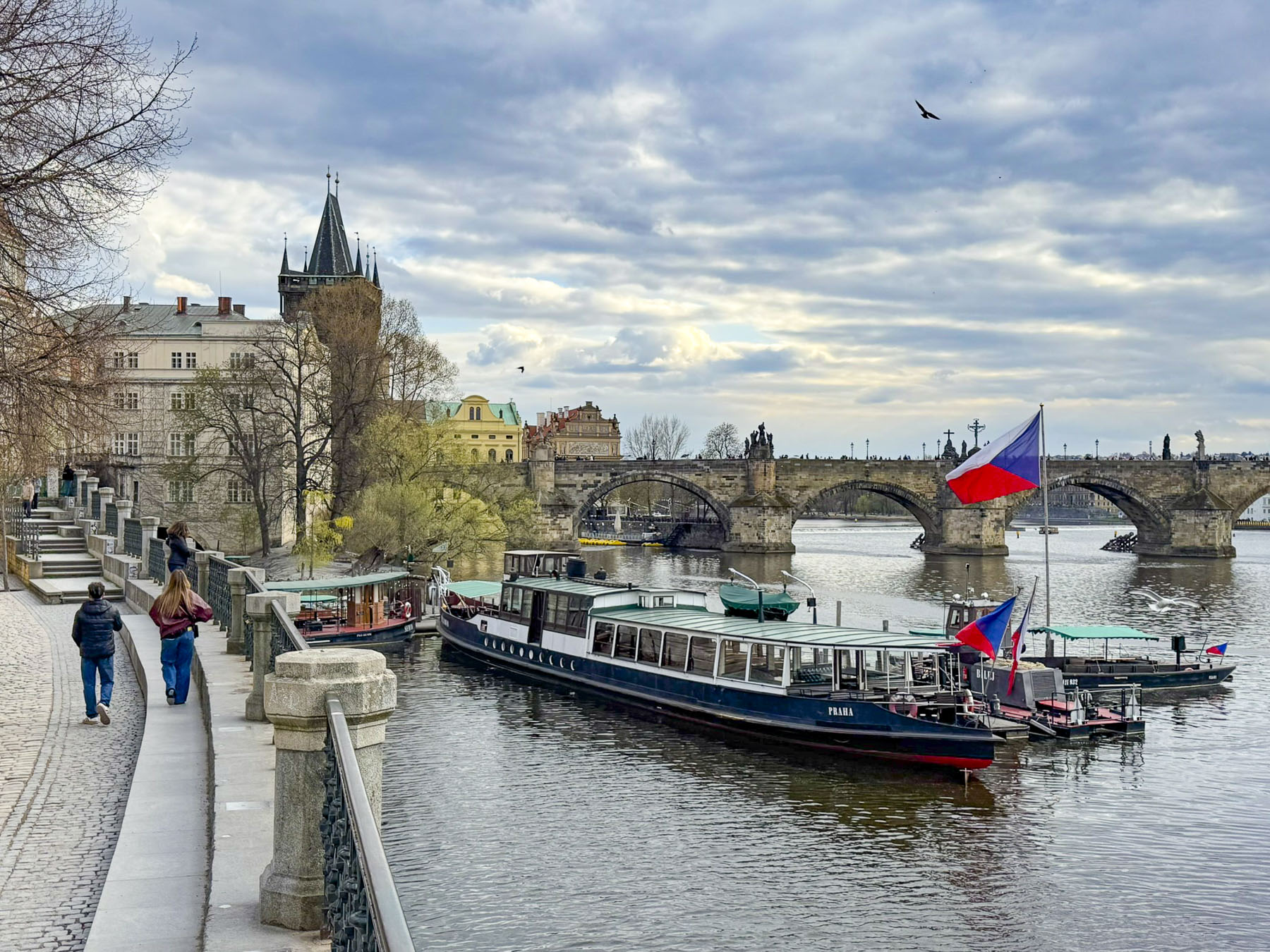
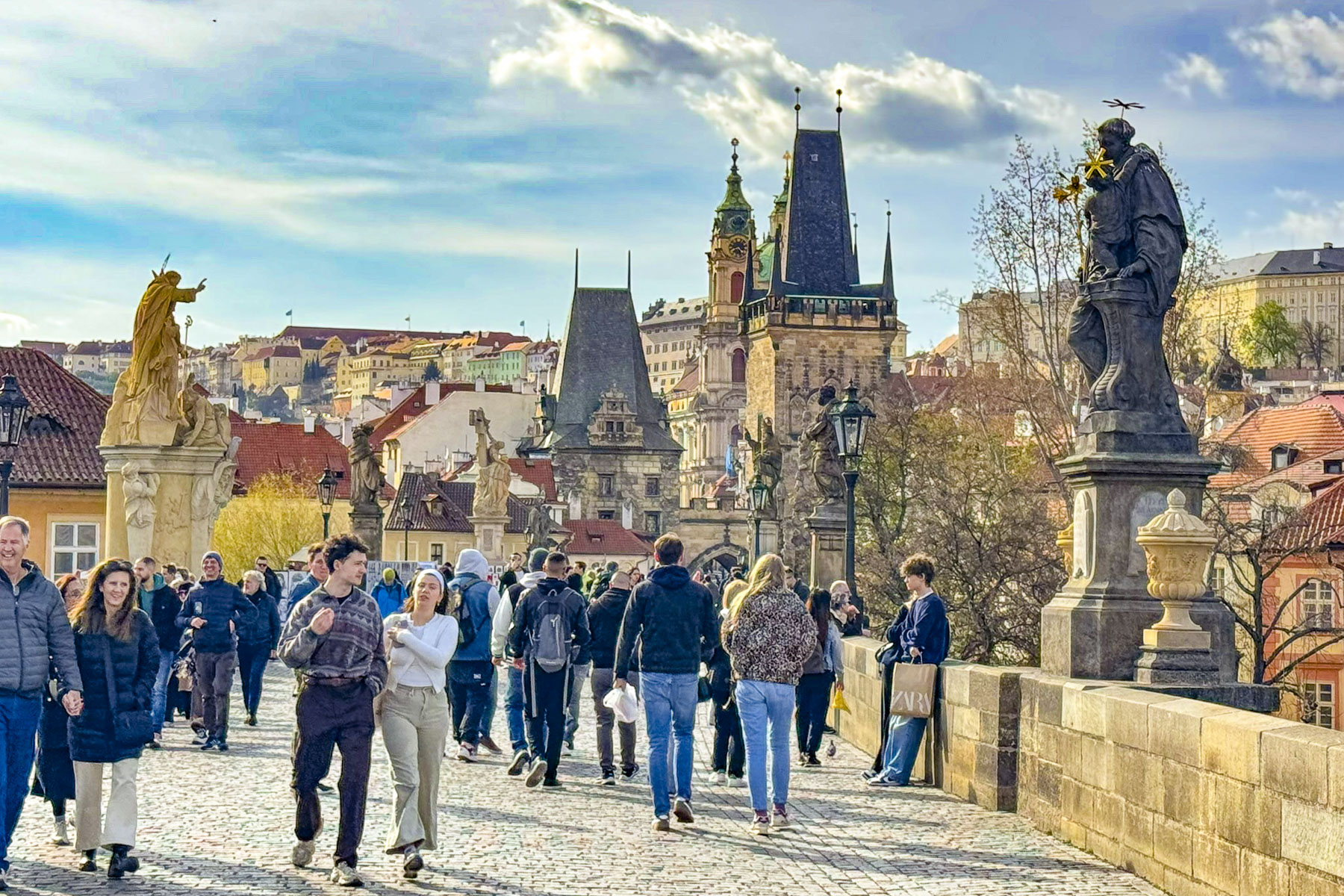
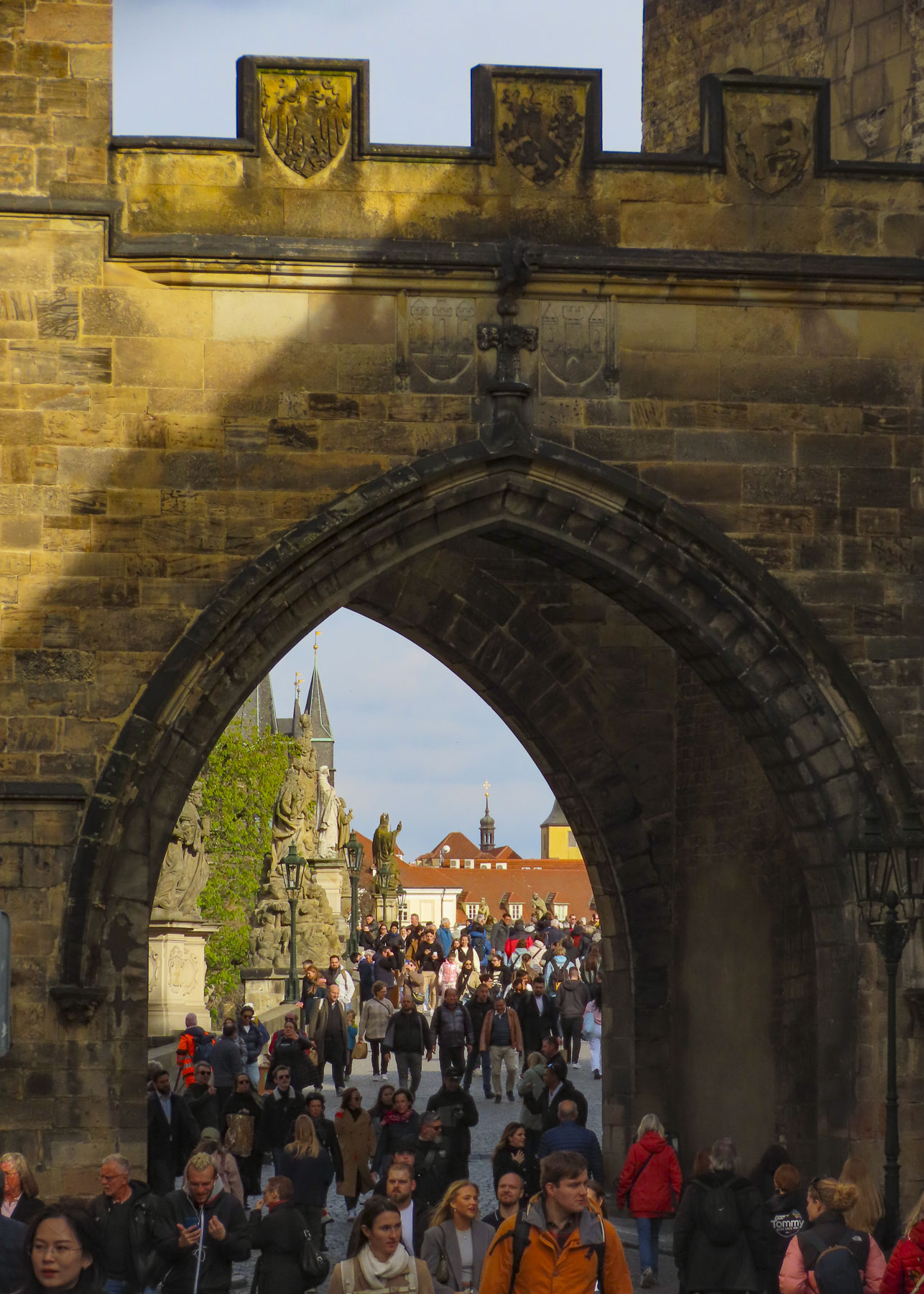
Walking was a delightful way to discover the city; it is relatively flat, and each morning we set off in a different direction to explore.  First, we walked along the riverbank to the Charles Bridge, a destination we returned to several times: to experience dawn breaking over the city as folks began to head to work, and later when it was jammed like the sidewalks along 5th Ave in New York City or Istiklal Caddesi in Istanbul, at the end of the day.

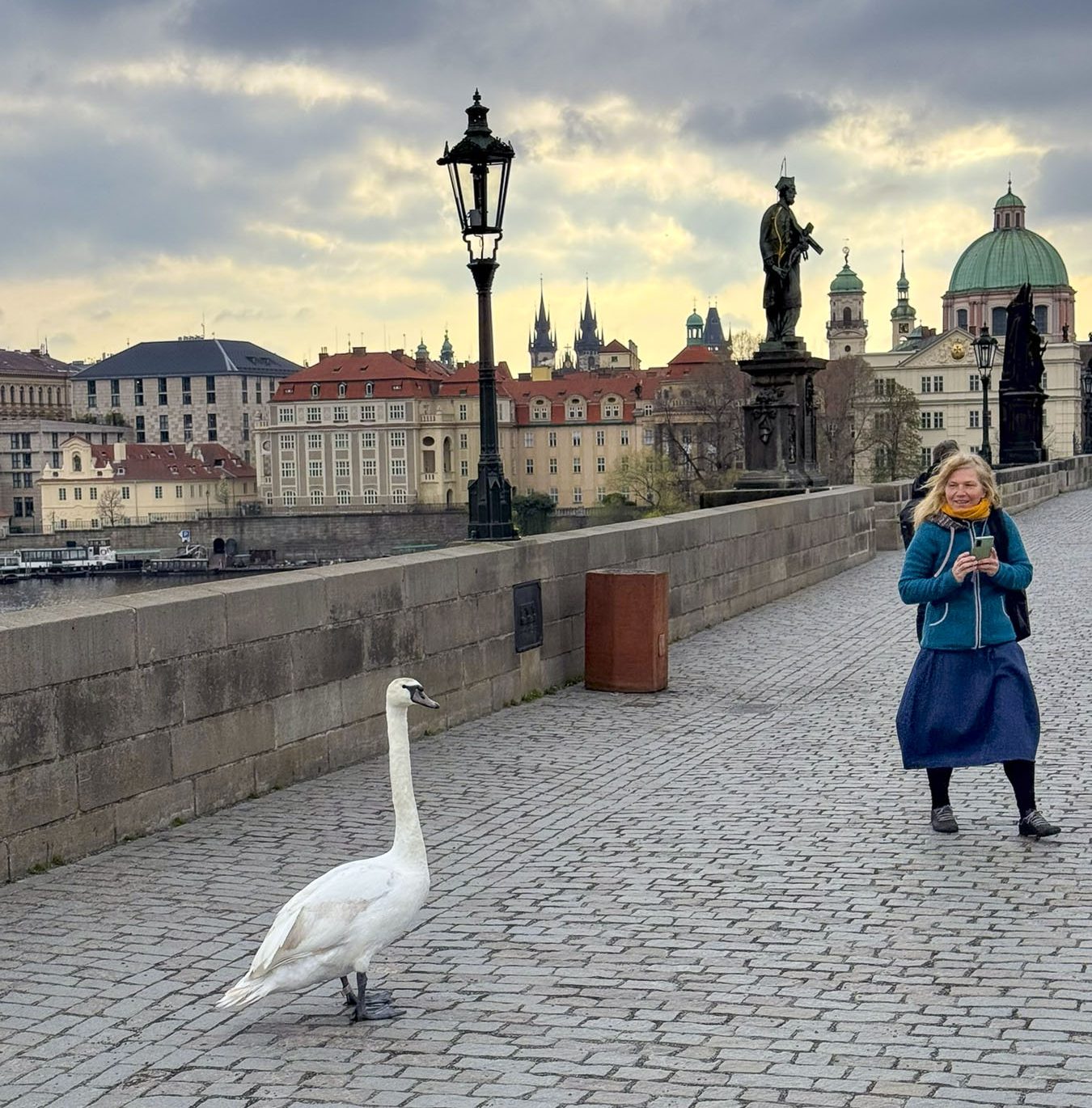
That morning a swan seemed to appear magically on the bridge, as if he was the reincarnation of a night watchman, intent on questioning our purpose for crossing the bridge.

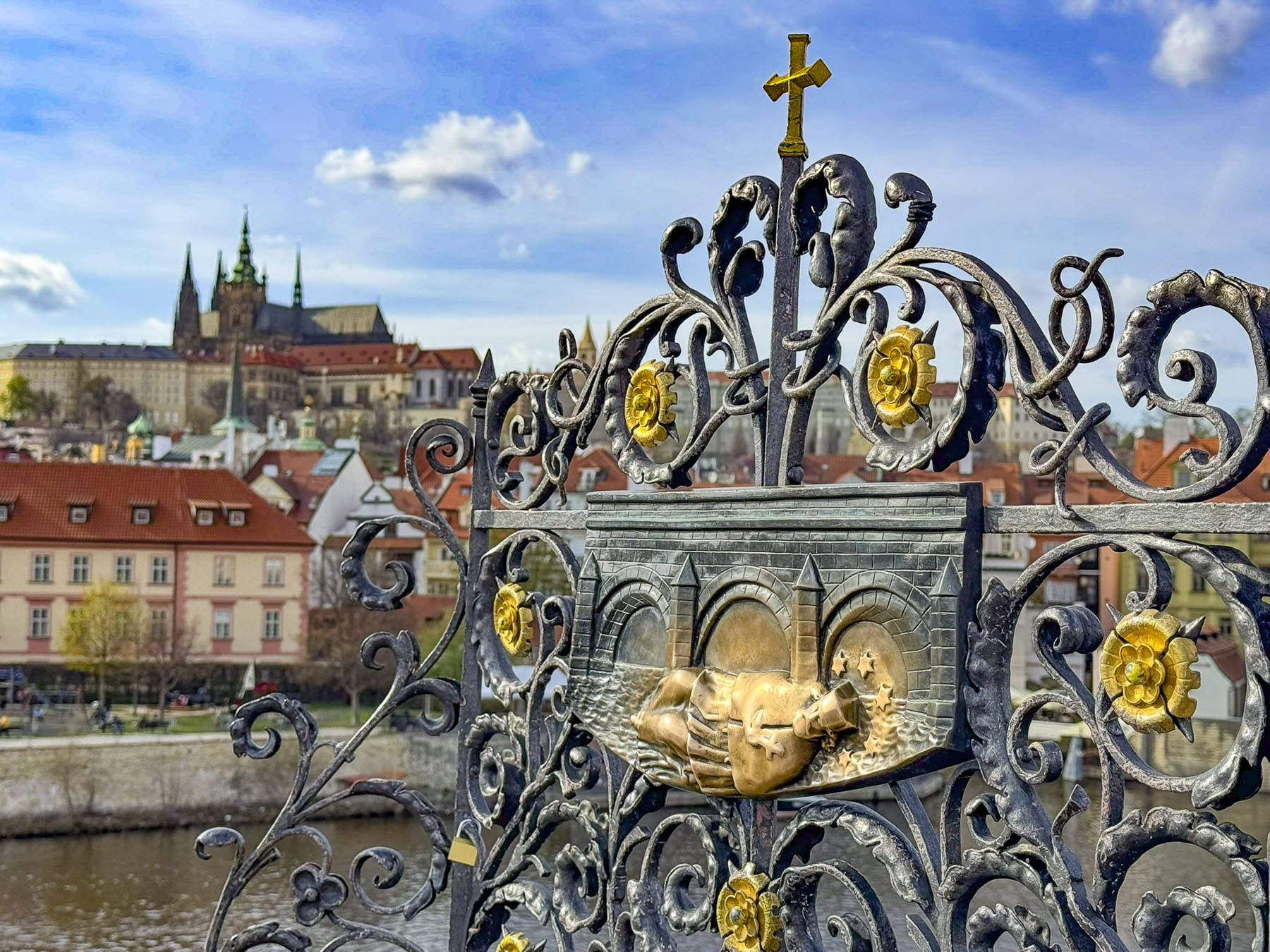
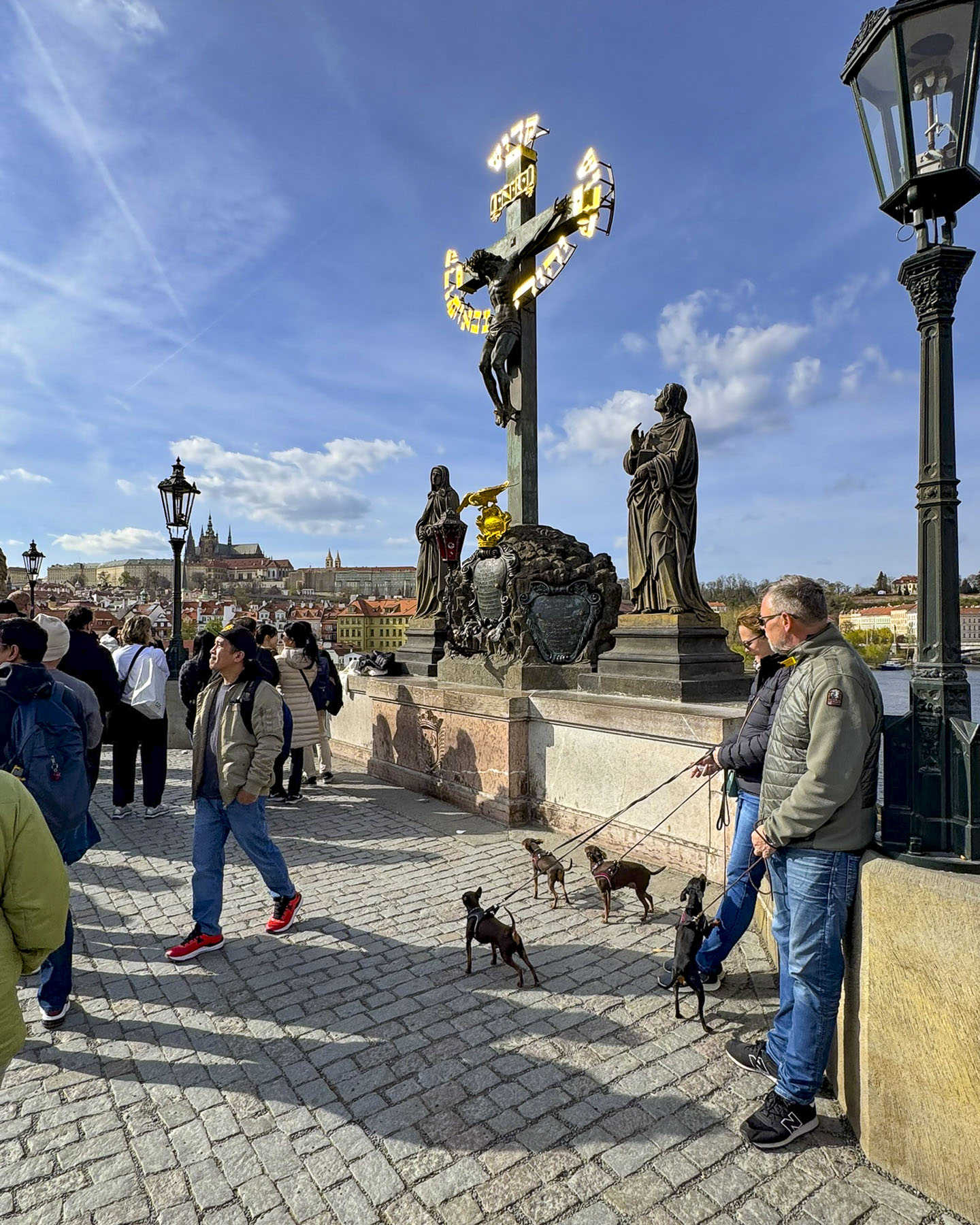
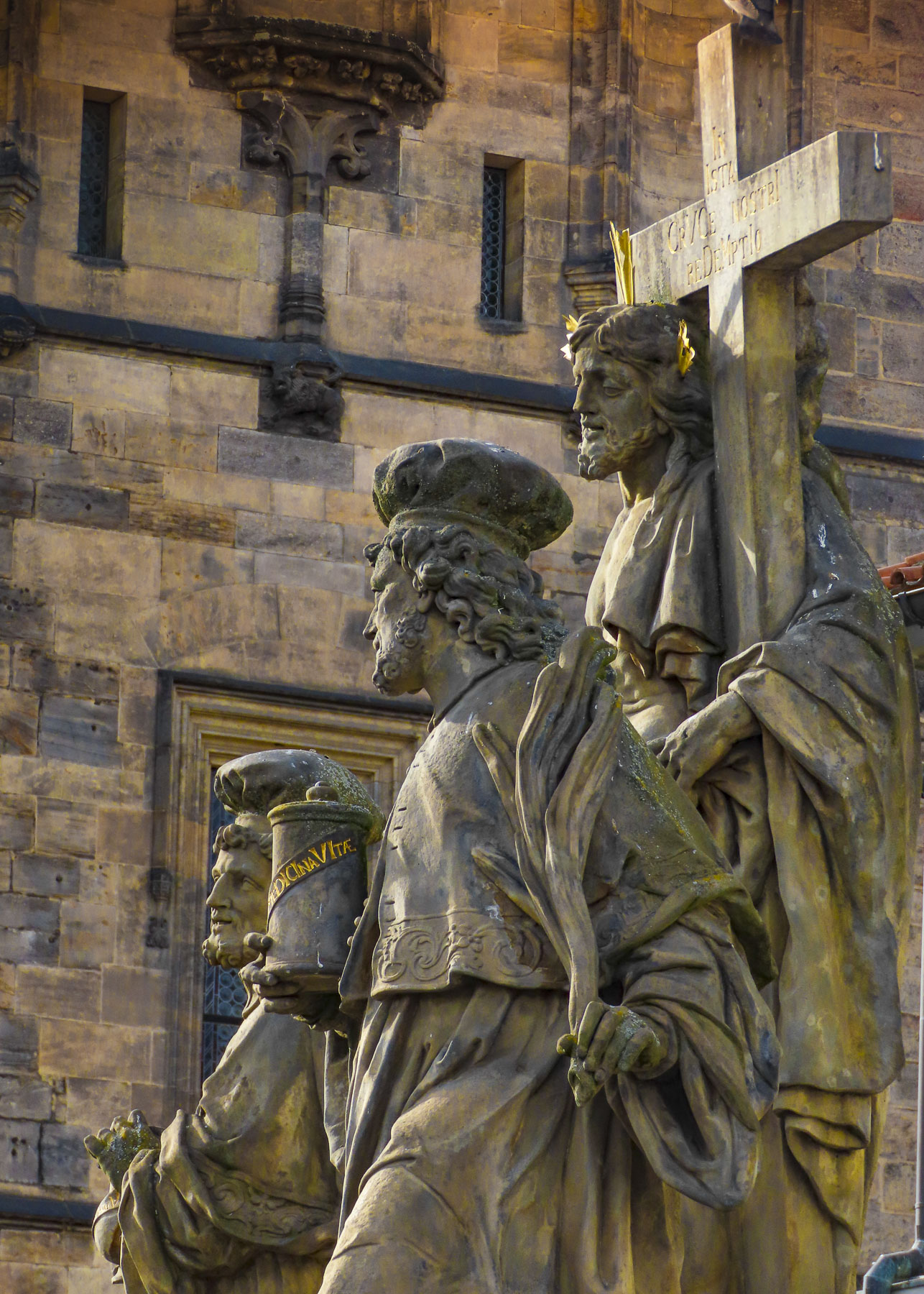
Thirty statues commemorating the city’s significant religious leaders through the centuries line the balustrade of the bridge that was completed in 1402. At the center of the span there’s a 17th century bronze statue memorializing St John of Nepomuk. He was a beloved and heroic 14th century priest who was thrown to his death from the bridge, for not revealing the confession secrets of Queen Sophia to her husband King Wenceslaus IV. Though some believe the Archbishop of Prague at the time thought it was the most expeditious way to end a political dispute with the priest and had his henchmen carry out the deed. His recovered body was enshrined at St. Vitus Cathedral with an elaborate two-ton silver tomb, where it serves as a quiet reminder of moral integrity in the face of tyranny.

Centuries of patina have been rubbed away by folks who believe touching the relief plaques at the base of the monument will bring good luck, good fortune, and a future return to Prague. 

As we continued across the bridge, we stopped at another small bronze relief that actually marks the spot where the priest’s body was discovered floating in the water. Both memorials to St John of Nepomuk on the bridge are considered pilgrimage sites.

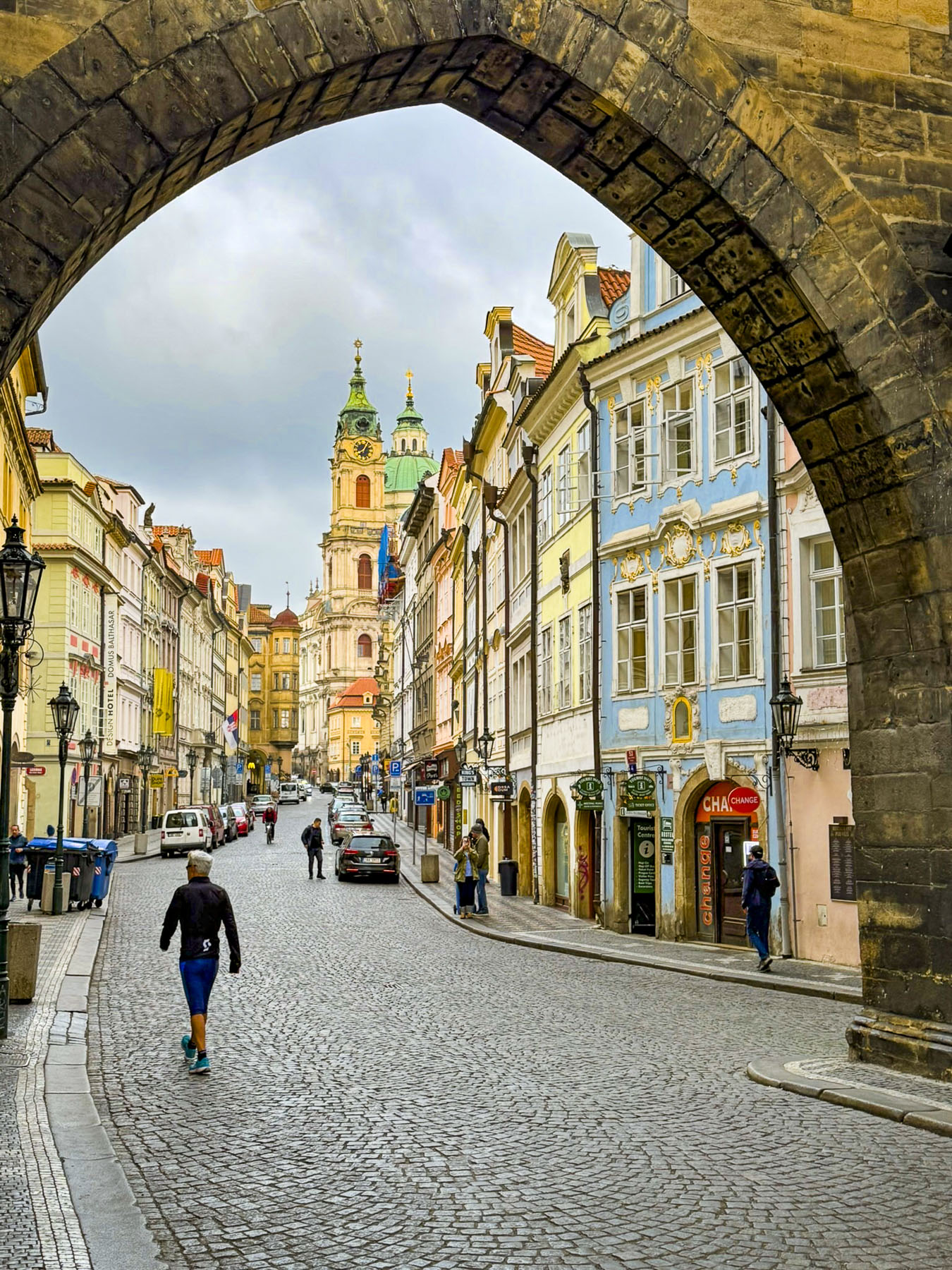
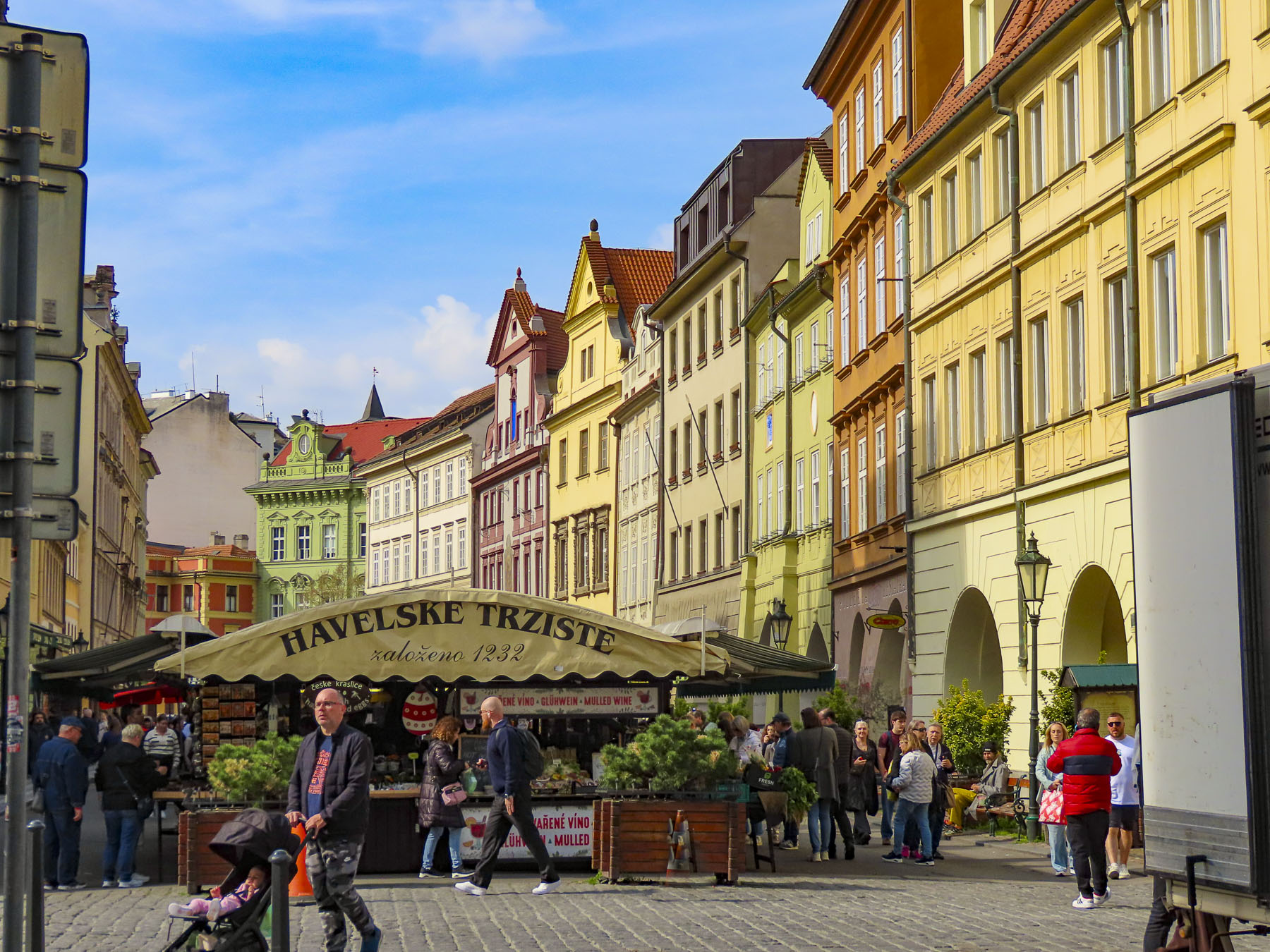
Reaching the other side, Malá Strana, the Lesser Town, we entered the old quarter through the Malostranská Bridge Tower, and happened upon a weekly market underway on the plaza, in the shadow of the tall walls of a former Jesuit college and St. Nicholas Church. Good coffee and tasty pastries helped alleviate the morning chill as we worked our way around the stands before heading into the church.

A Gothic church had been on this site from 1283 until 1743 when 100 years of construction started to create St. Nicholas, a Baroque masterpiece that was the vision of three generations of architects in the Dientzenhofer family. The interior is voluminous, and embellished with frescoes, gilded saints and cherubs. Mozart famously played the church’s organ, which has over 4,000 pipes, up to 6m (20ft) long, when he visited Prague in 1787.

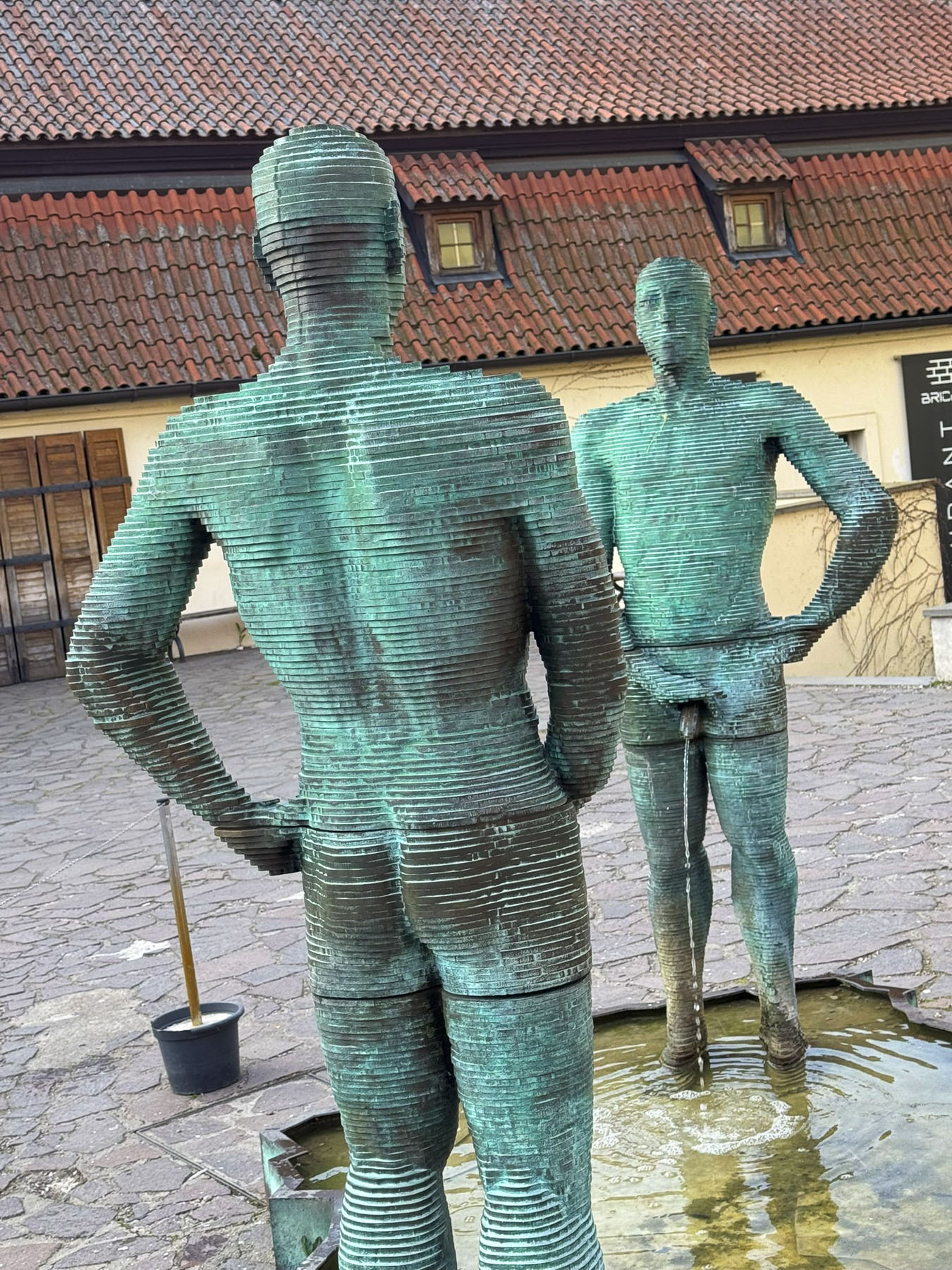
Afterwards we wandered the cobbled lanes to the Franz Kafka Museum, mostly because it was on the way to two city parks we wanted to visit. A courtyard in front of the museum featured an offbeat, quirky, whimsical mechanical sculpture created in 2004 by Czech artist David Černý. It’s called Čůrající Postavy and features two robotic men shaking their things in what could best be described as a “pissing contest.” Born in Prague, some of the artist’s larger sculptures, we would later learn, are featured in several places across the city.

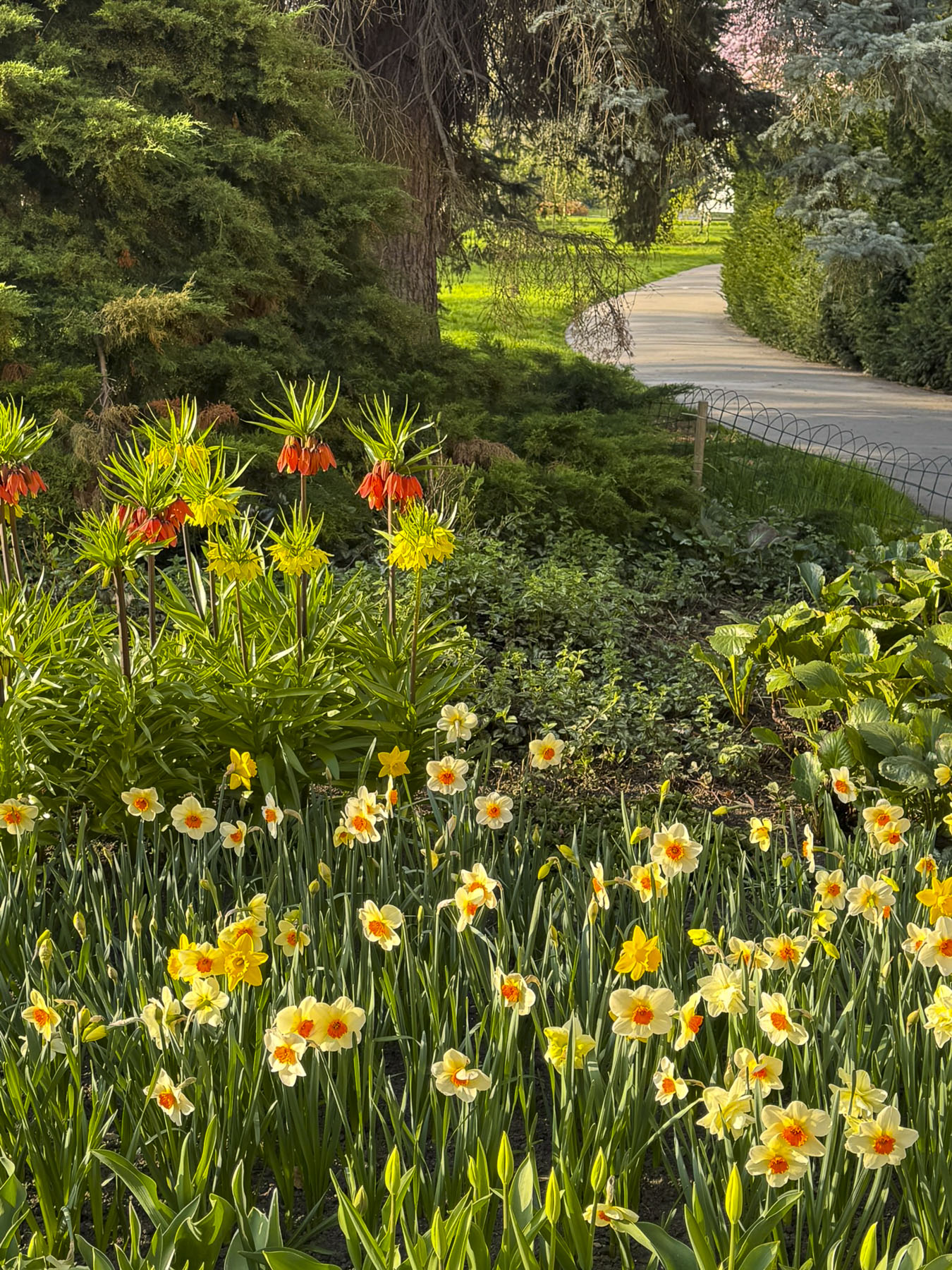
Vojanovy Sady, the park nearby, was a verdant oasis, in a city of sandstone and granite. The park’s blooming magnolia trees were the perfect backdrop for a photographer taking pictures of a newly engaged couple as they strolled along pathways lined with early spring flowers. 

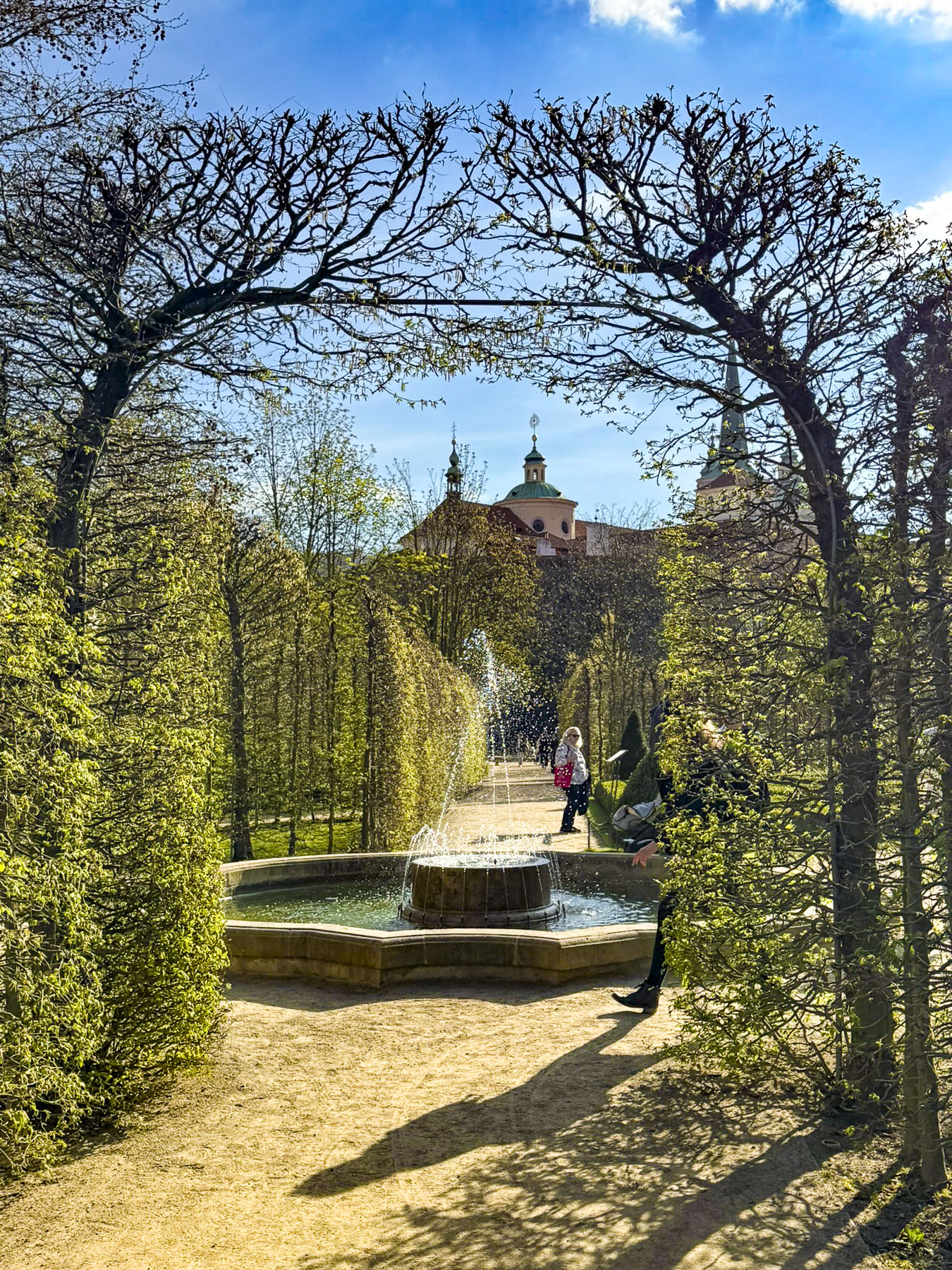
The Senate of the Parliament of the Czech Republic gathers at the Waldstein Palace, a 17th century structure, which along with the formal gardens underwent extensive restoration in the late 1990s. 

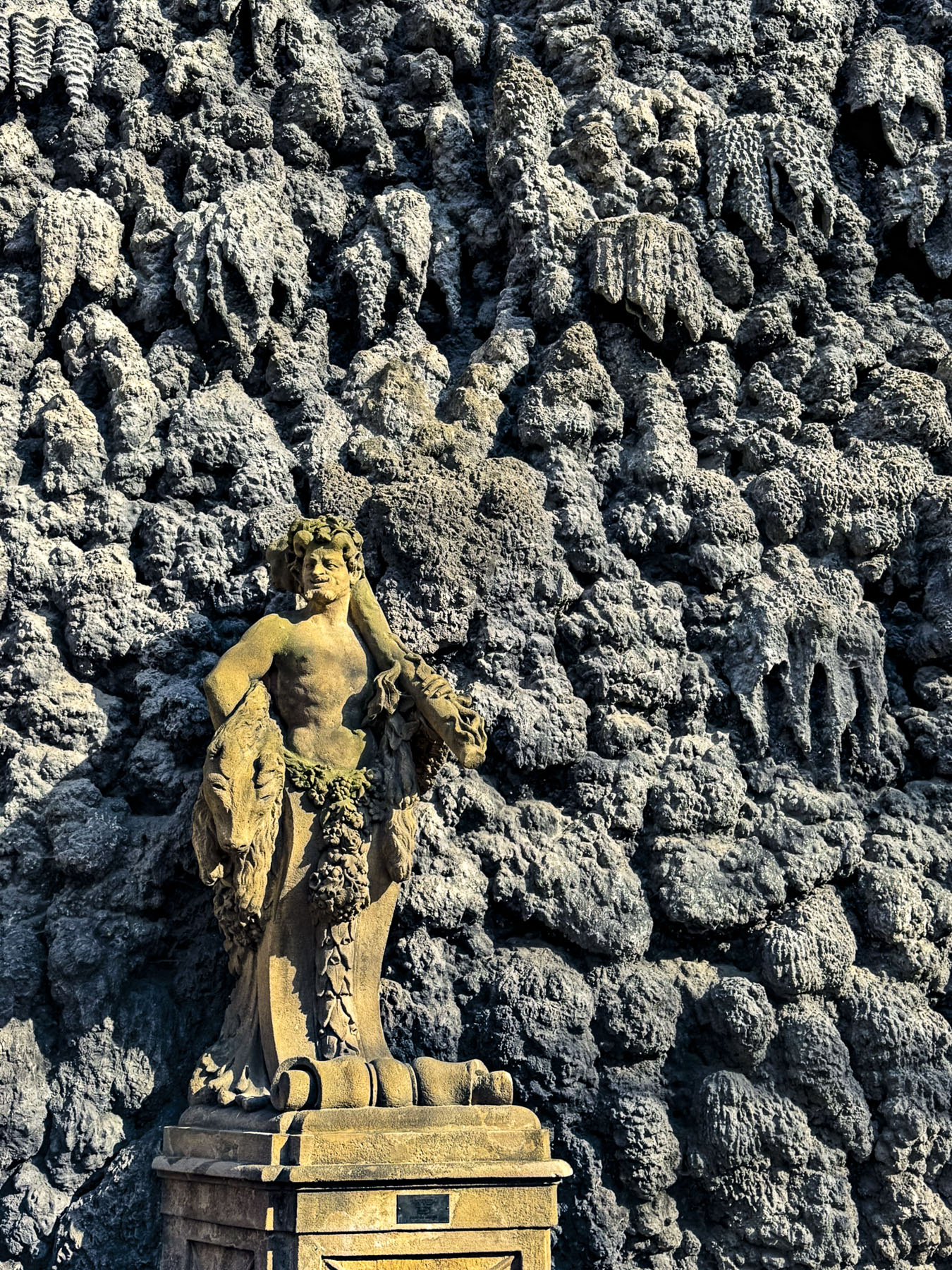
The gardens are quite extensive and feature a large reflecting pool, sculpture garden, roaming peacocks, and a dripstone wall from the 1600s that hides the likeness of faces in its construction. It’s a popular spot for its view of Prague Castle which towers above it on a hill.

After heading back towards the church we had a very satisfying late lunch at Dvorek pod Hradem on Nerudova Street before recrossing the bridge to the Charles Bridge Museum. It had some very interesting exhibits on how the bridge was constructed, and copies of some of the sculptures on the bridge, as well as the history of floods and conflicts which have required its repair.

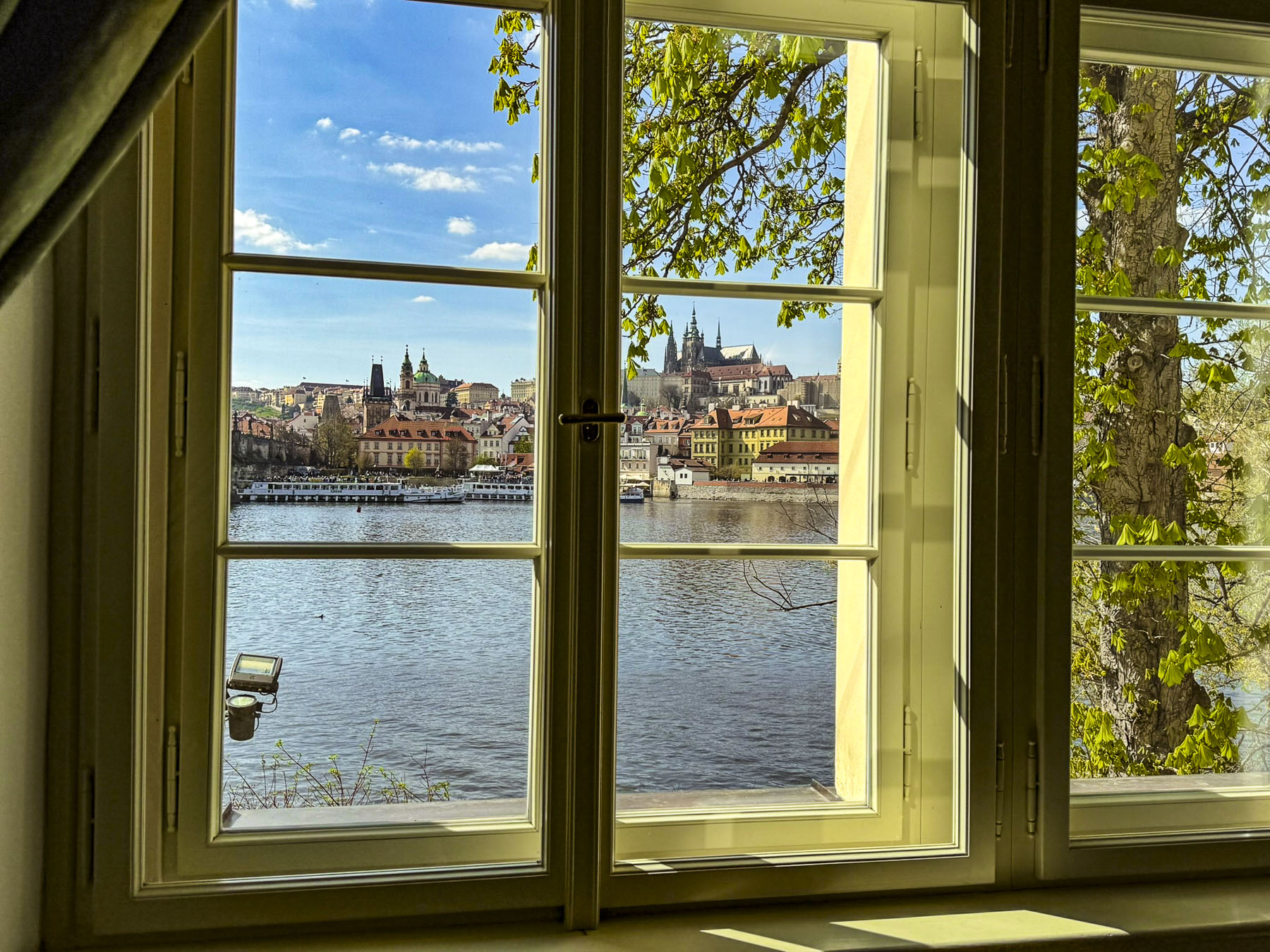
We are still amazed by the ingenuity of the stone masons who built the bridge and cathedrals in the city. The museum also has a window with one of the best views of Prague Castle across the river.

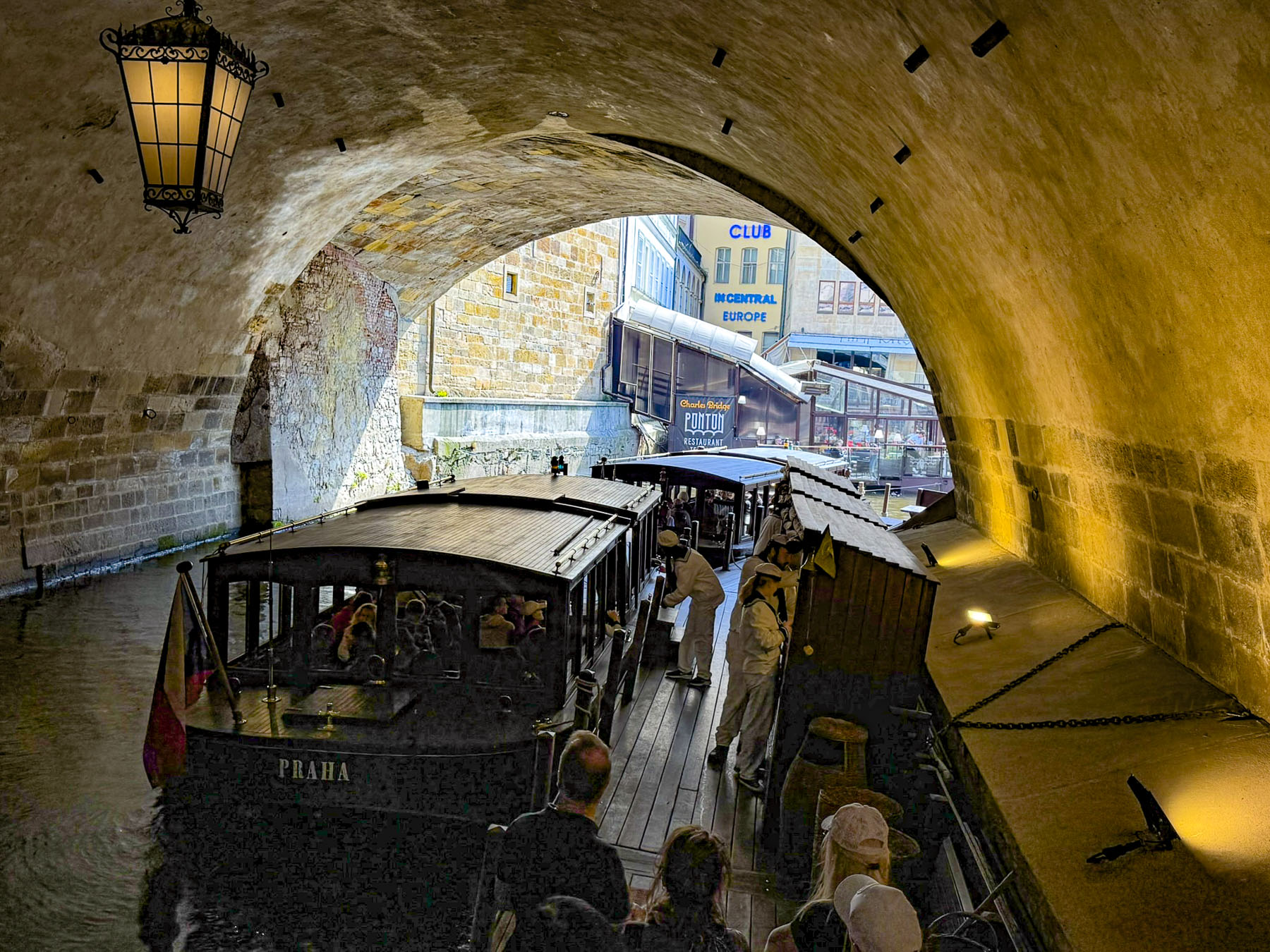
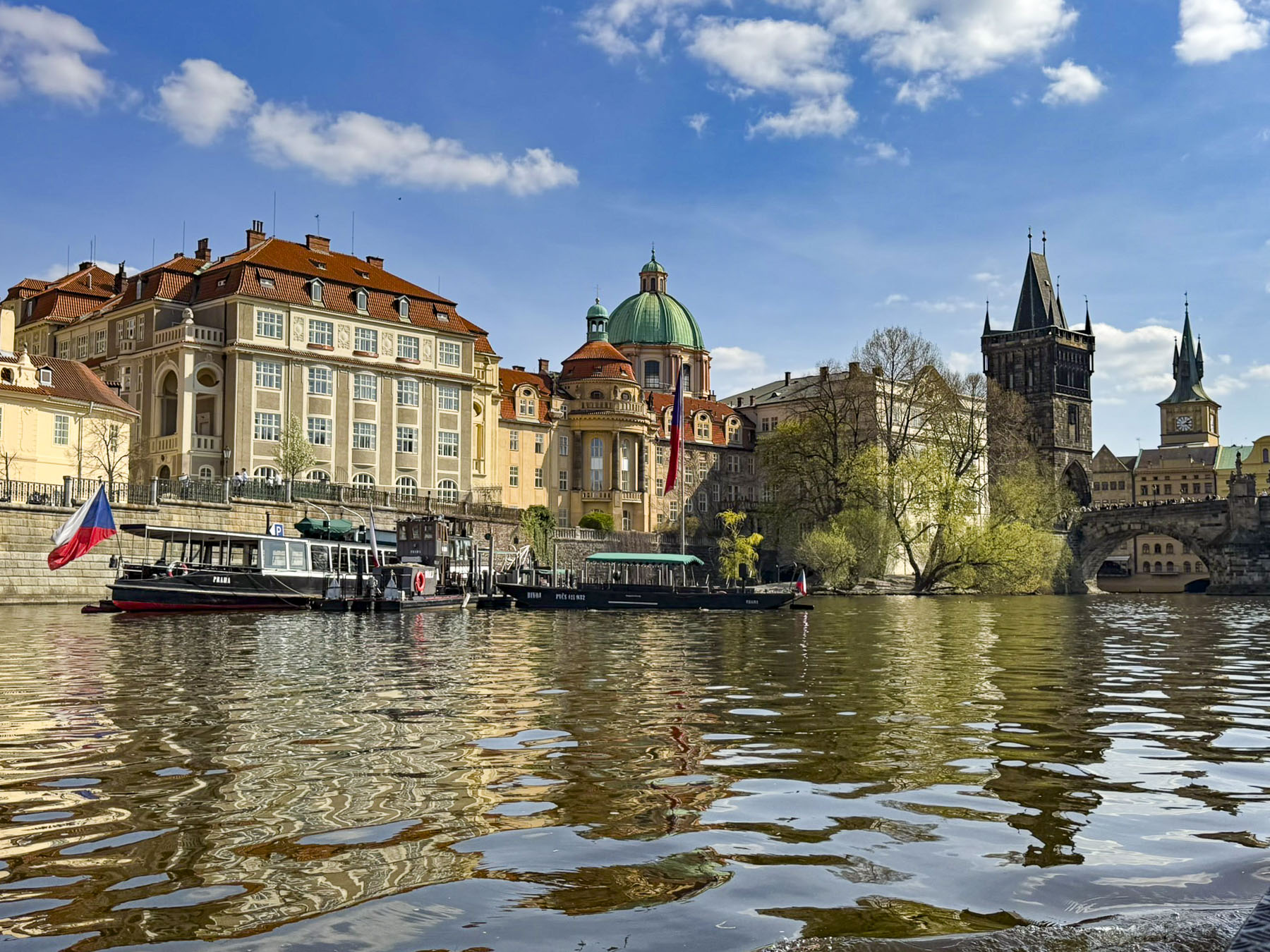
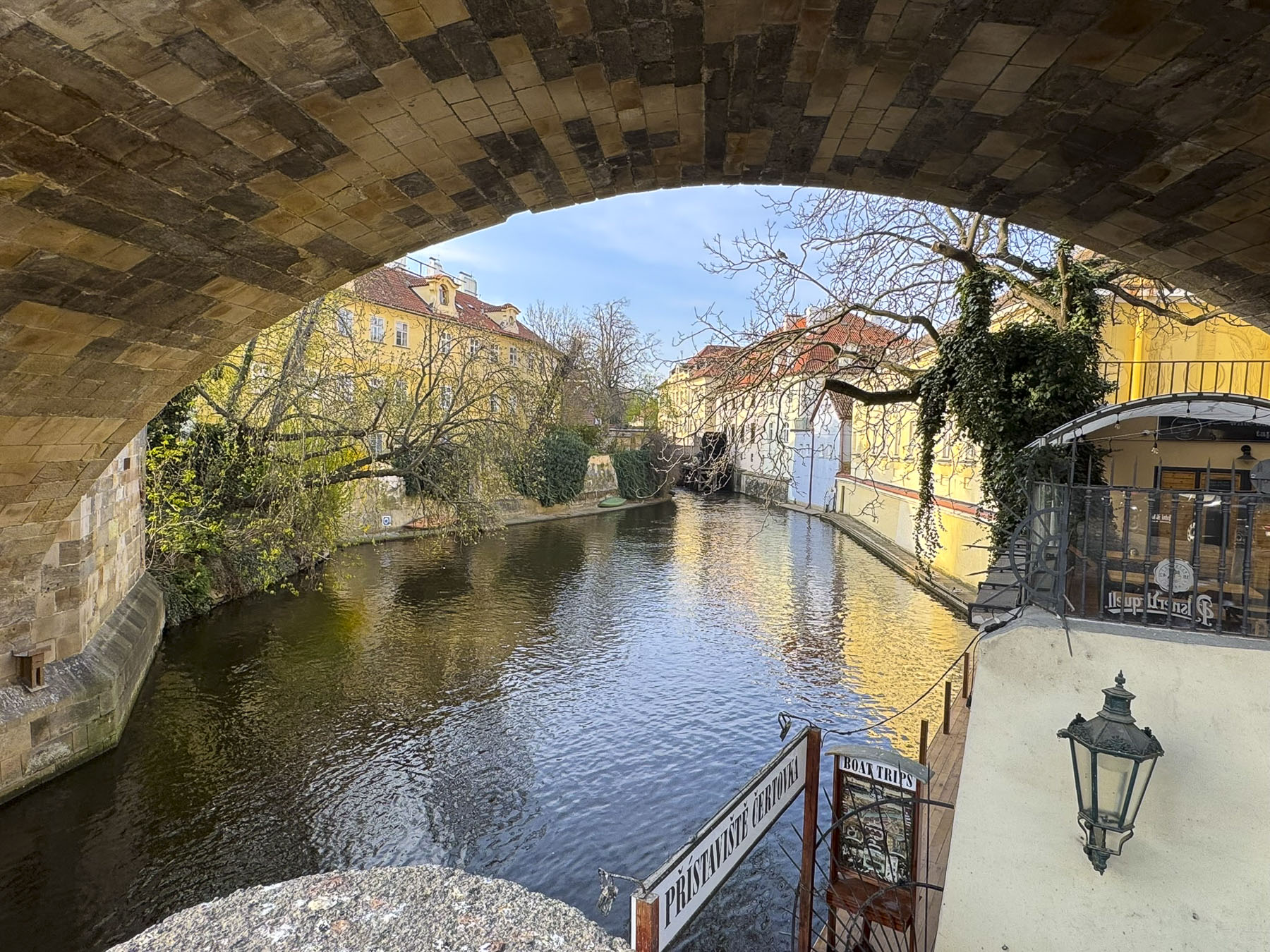
From the museum we took a Prague Venice Boat Trip, which originates from under one of the bridge’s arches at the foot of the bridge, out onto the Vltava River. It was a very nice experience and gave us a different perspective from which to view the city. During the boat ride the captain steered us close to a house on the west bank and pointed to a high-water mark on the side of a building. It was the result of a devasting 500-year flood that raised the level of the Vltava River 8m (26ft) above normal. The devastation was tremendous and forced 50,000 people to evacuate their homes.

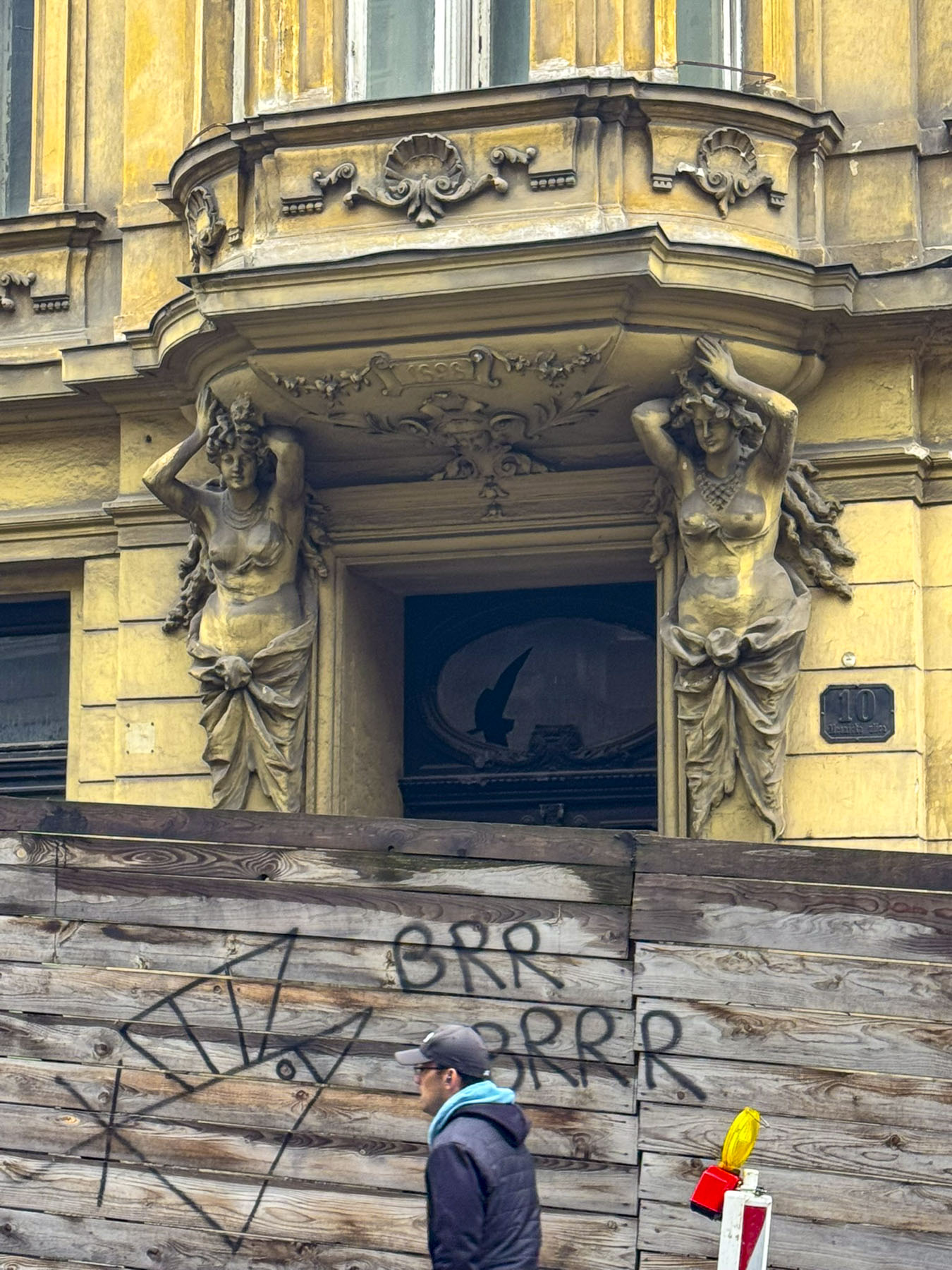
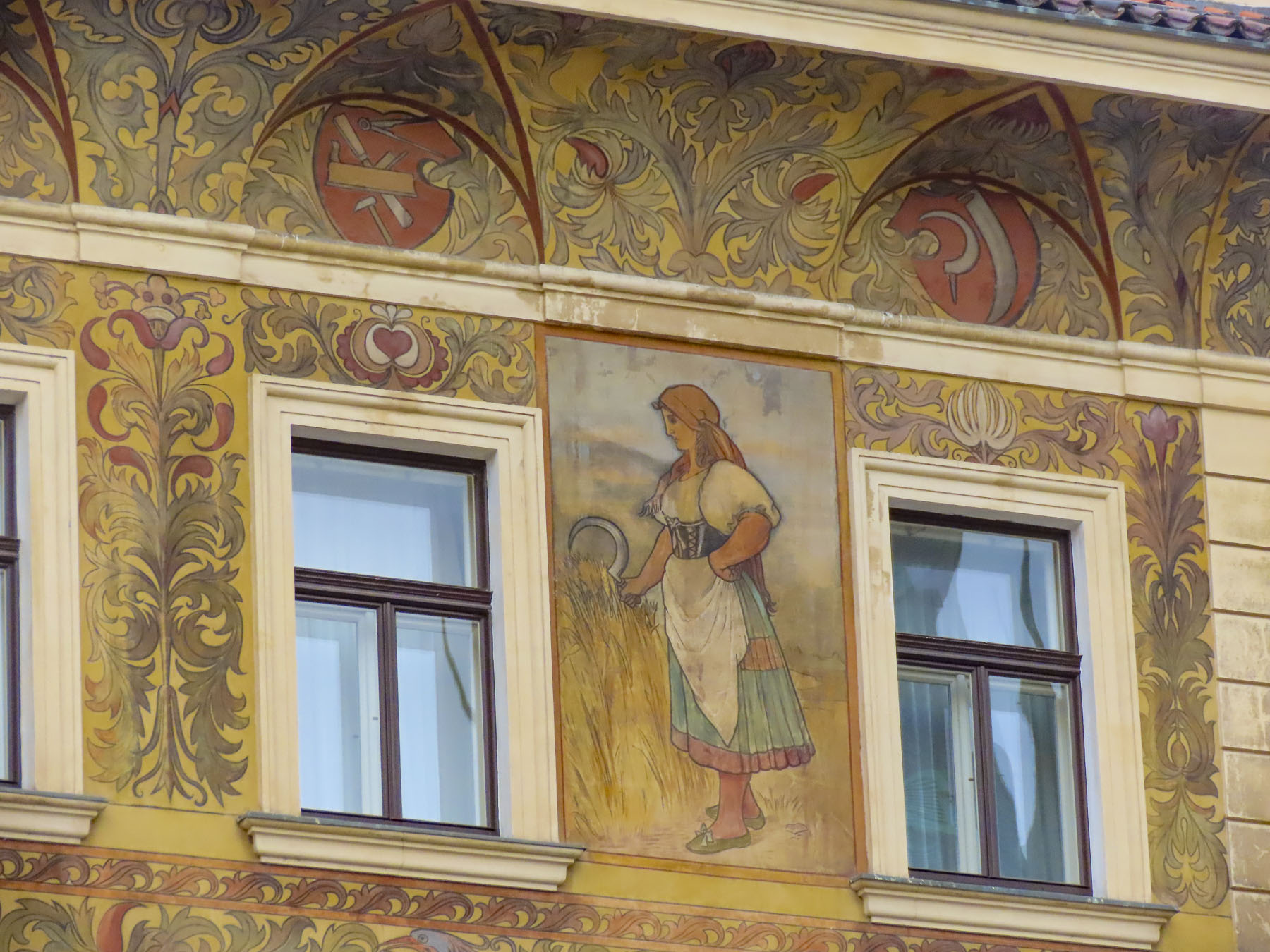
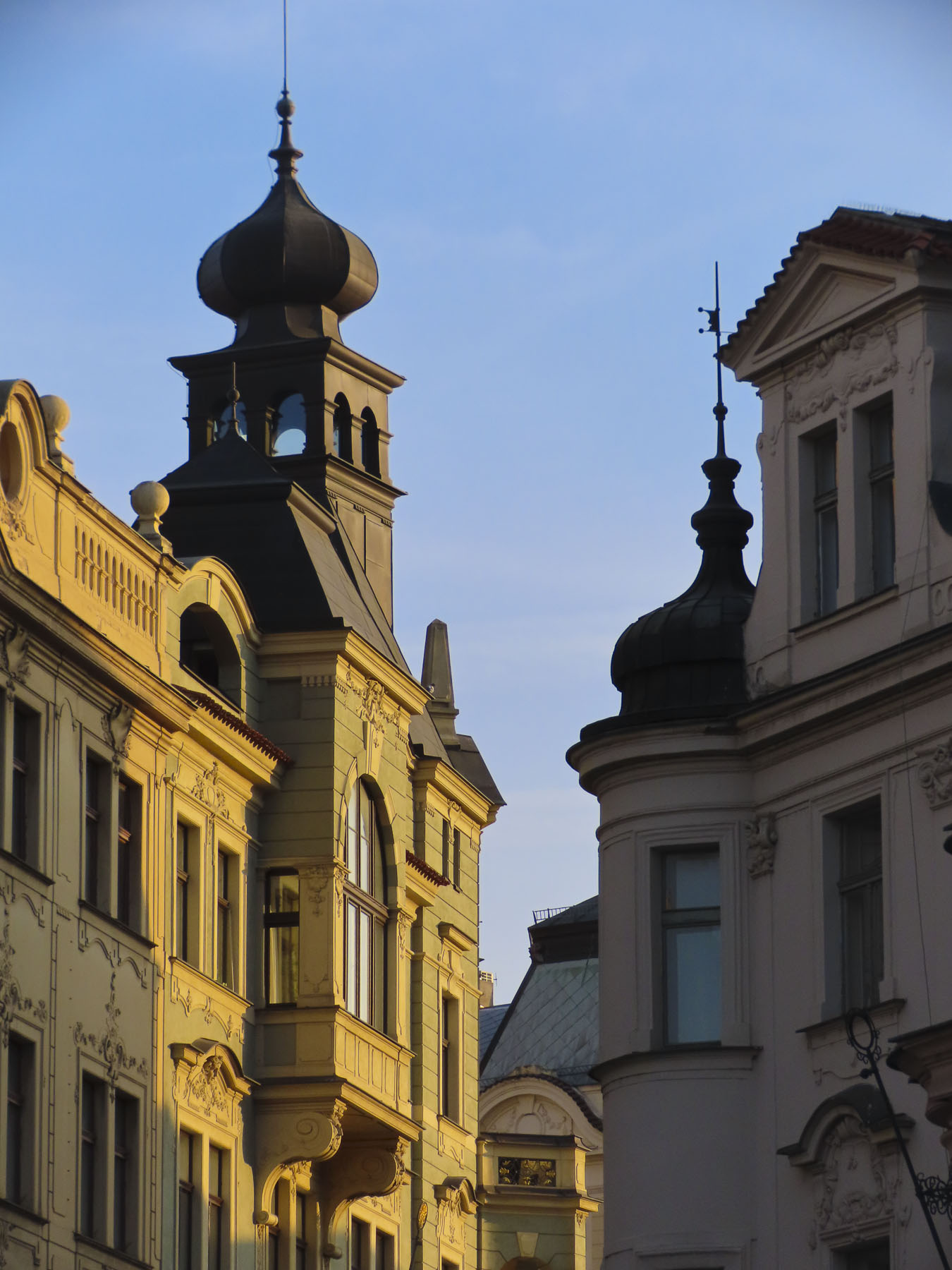
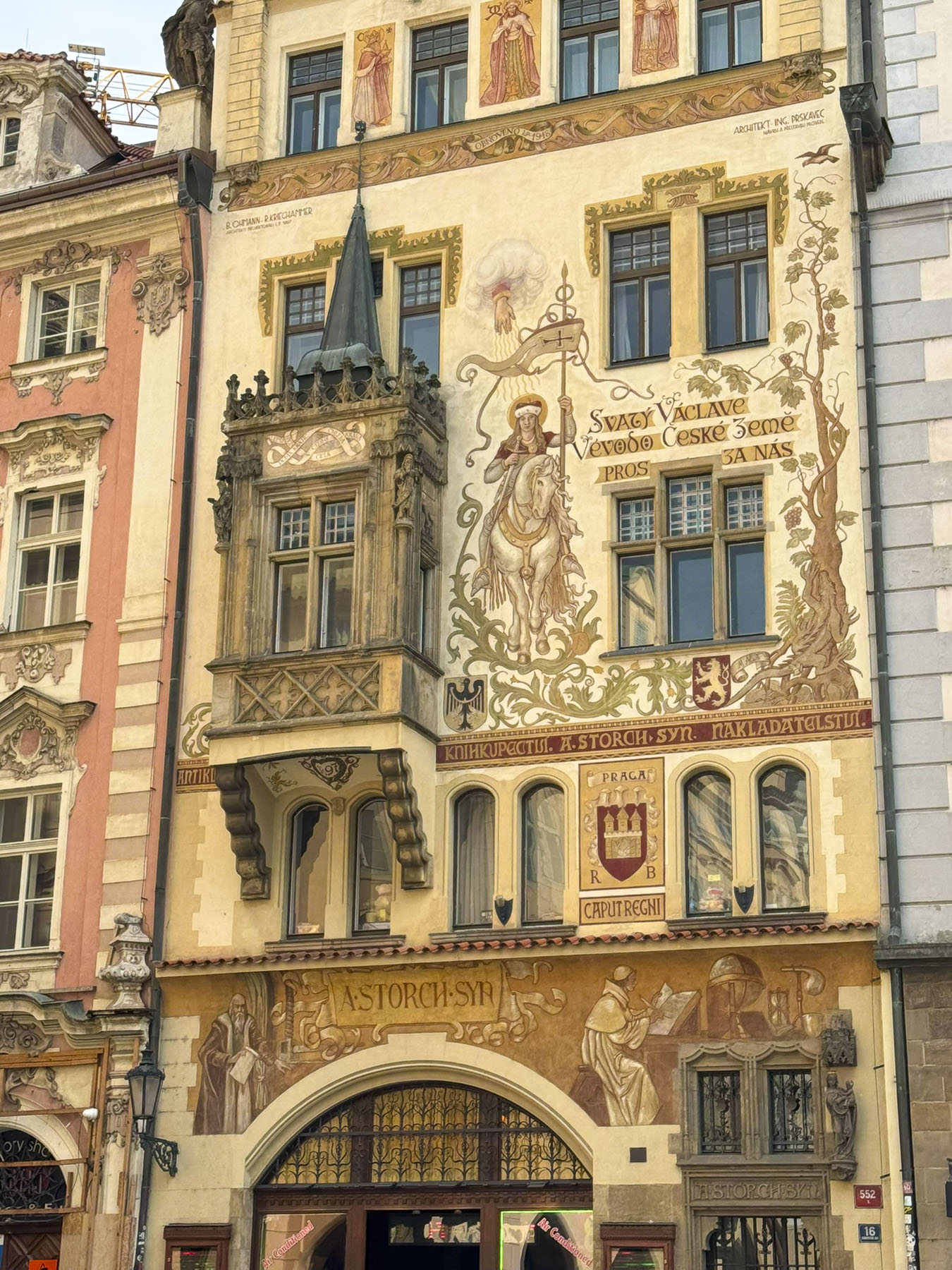
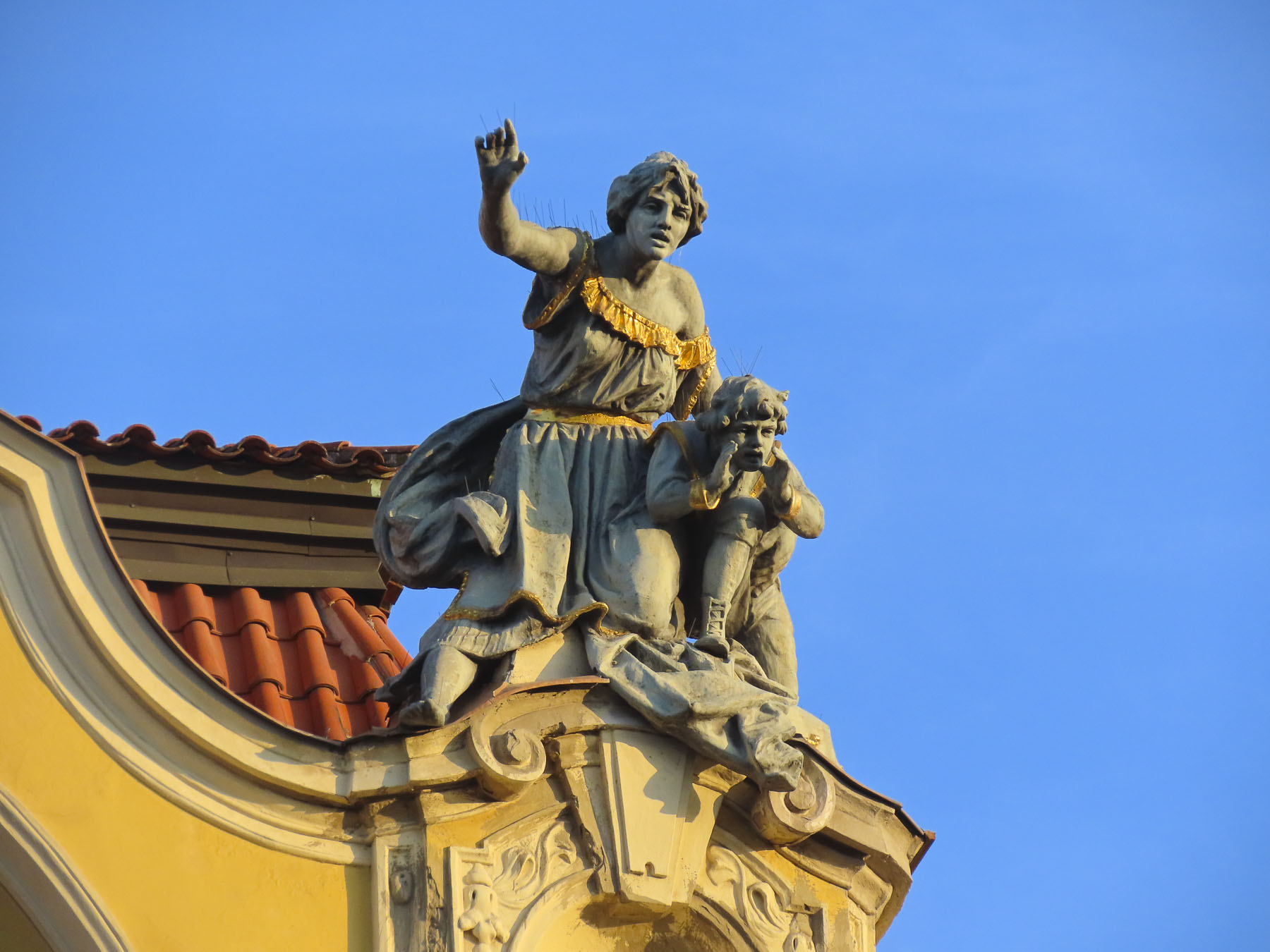
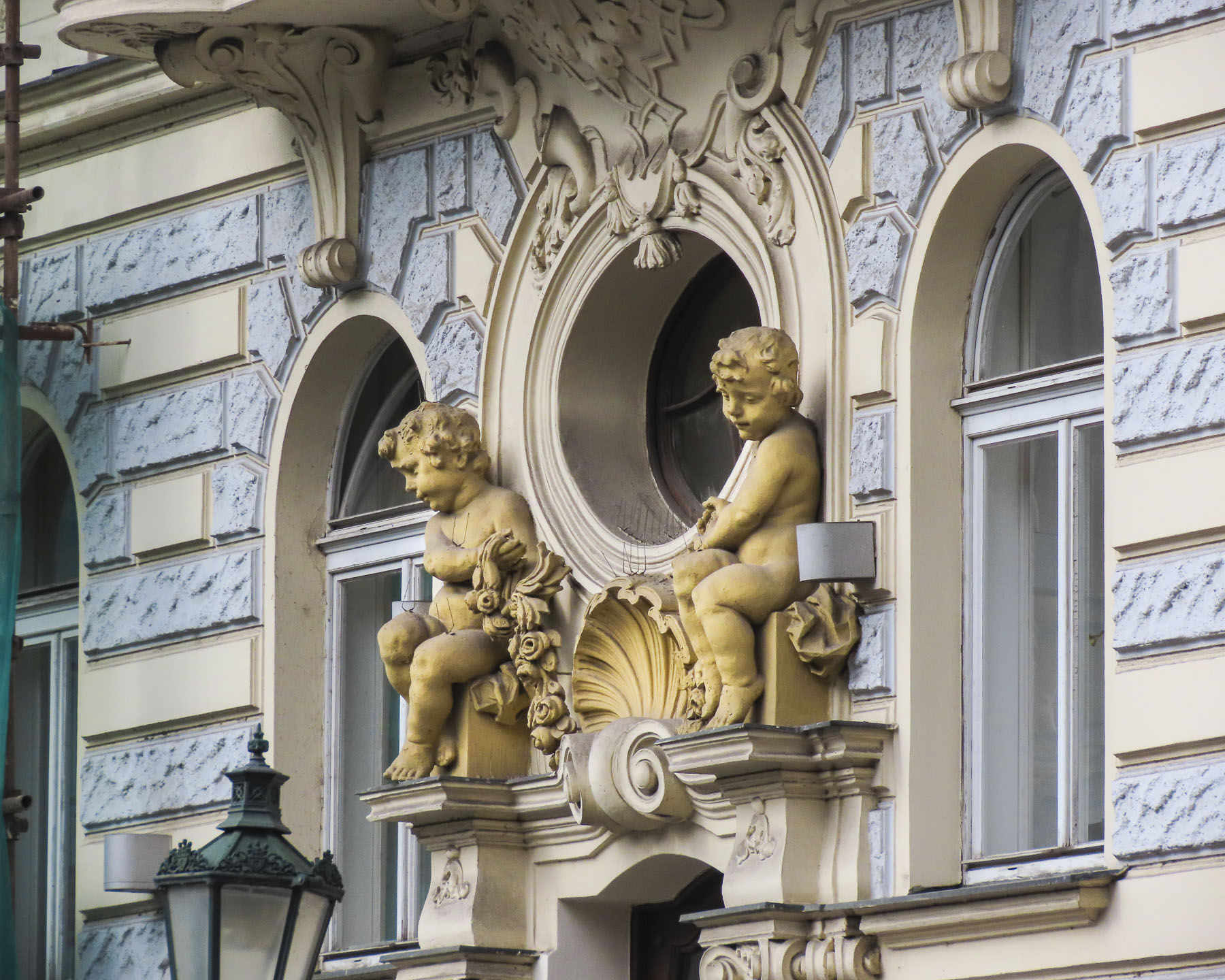
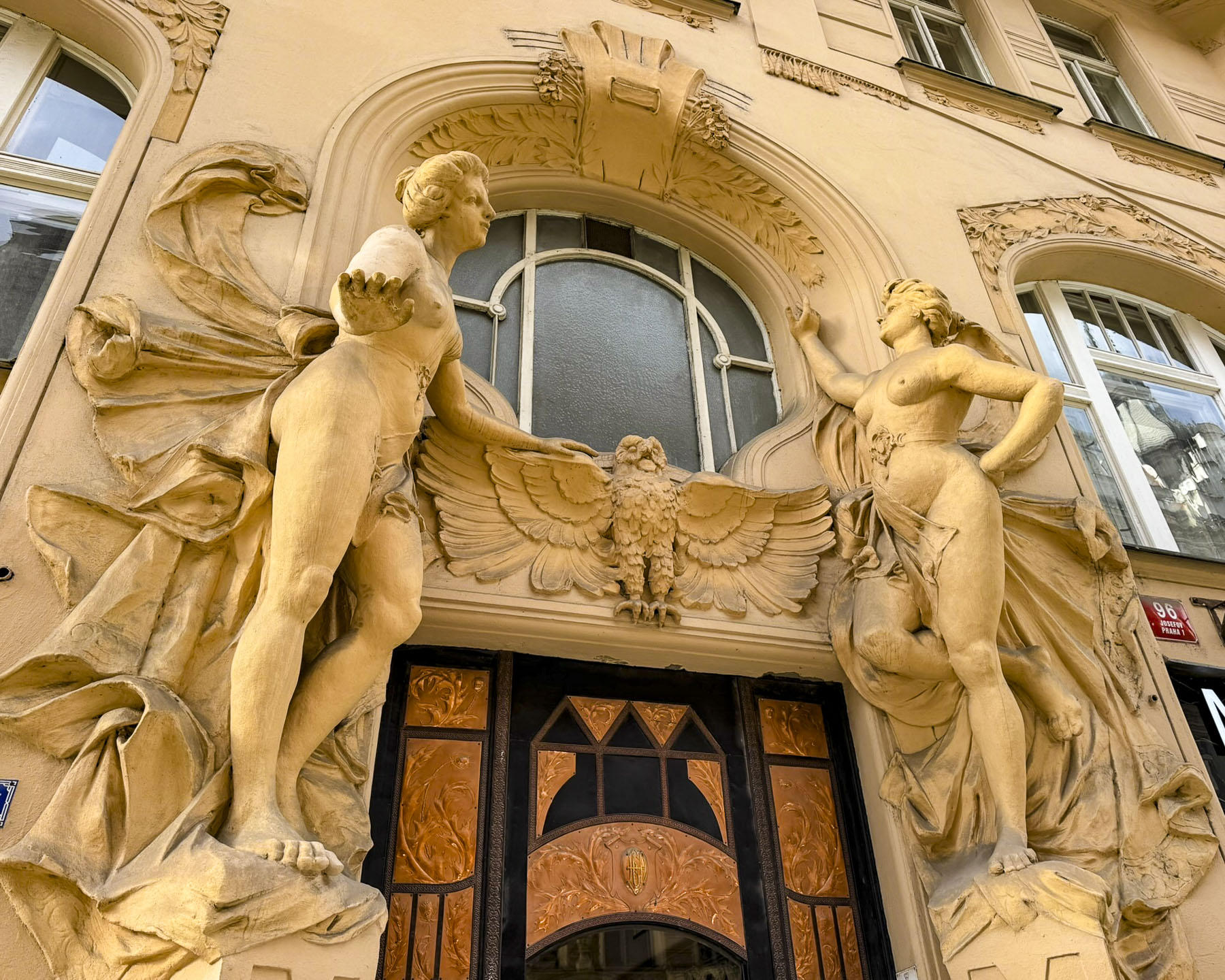
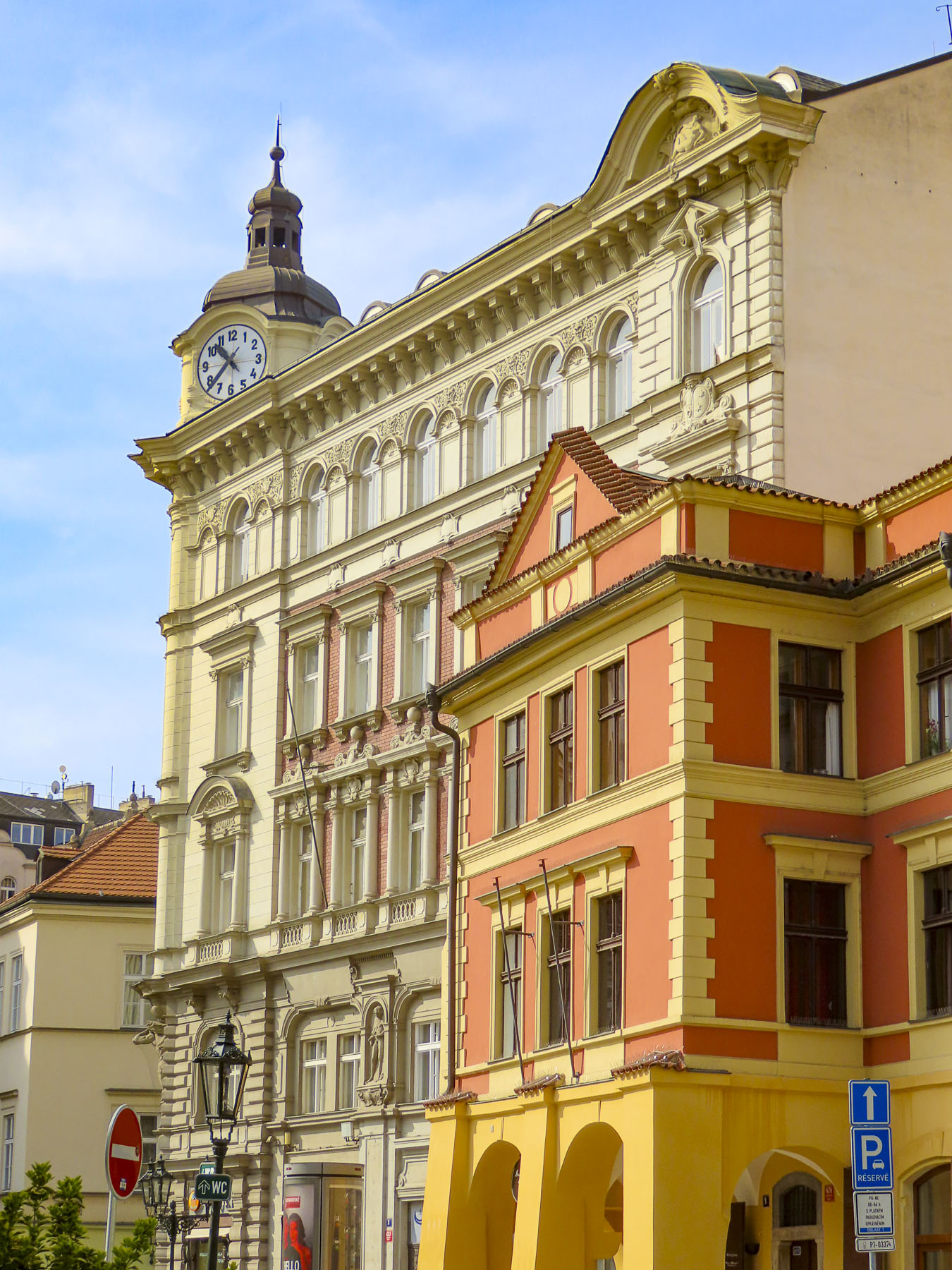
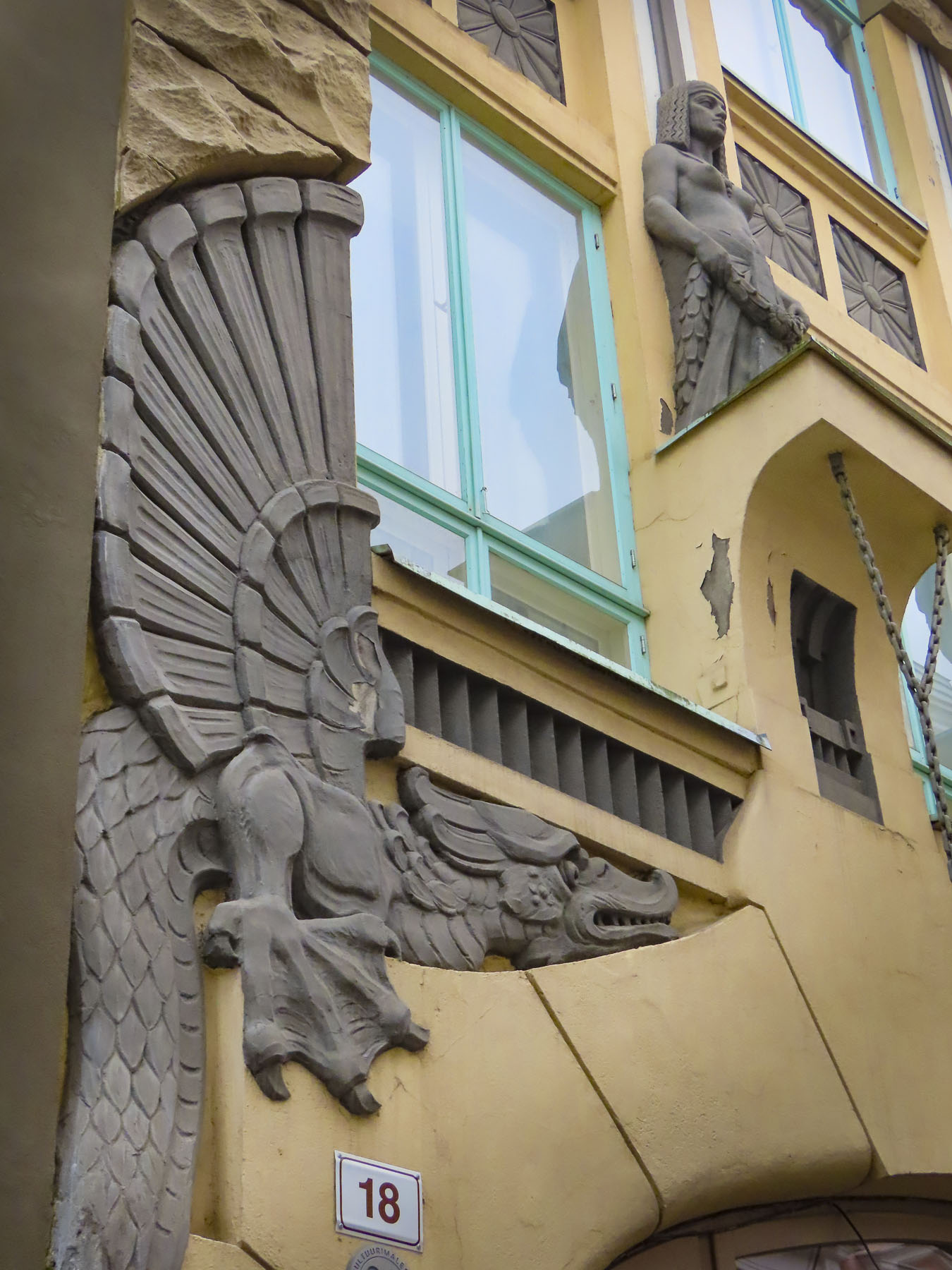
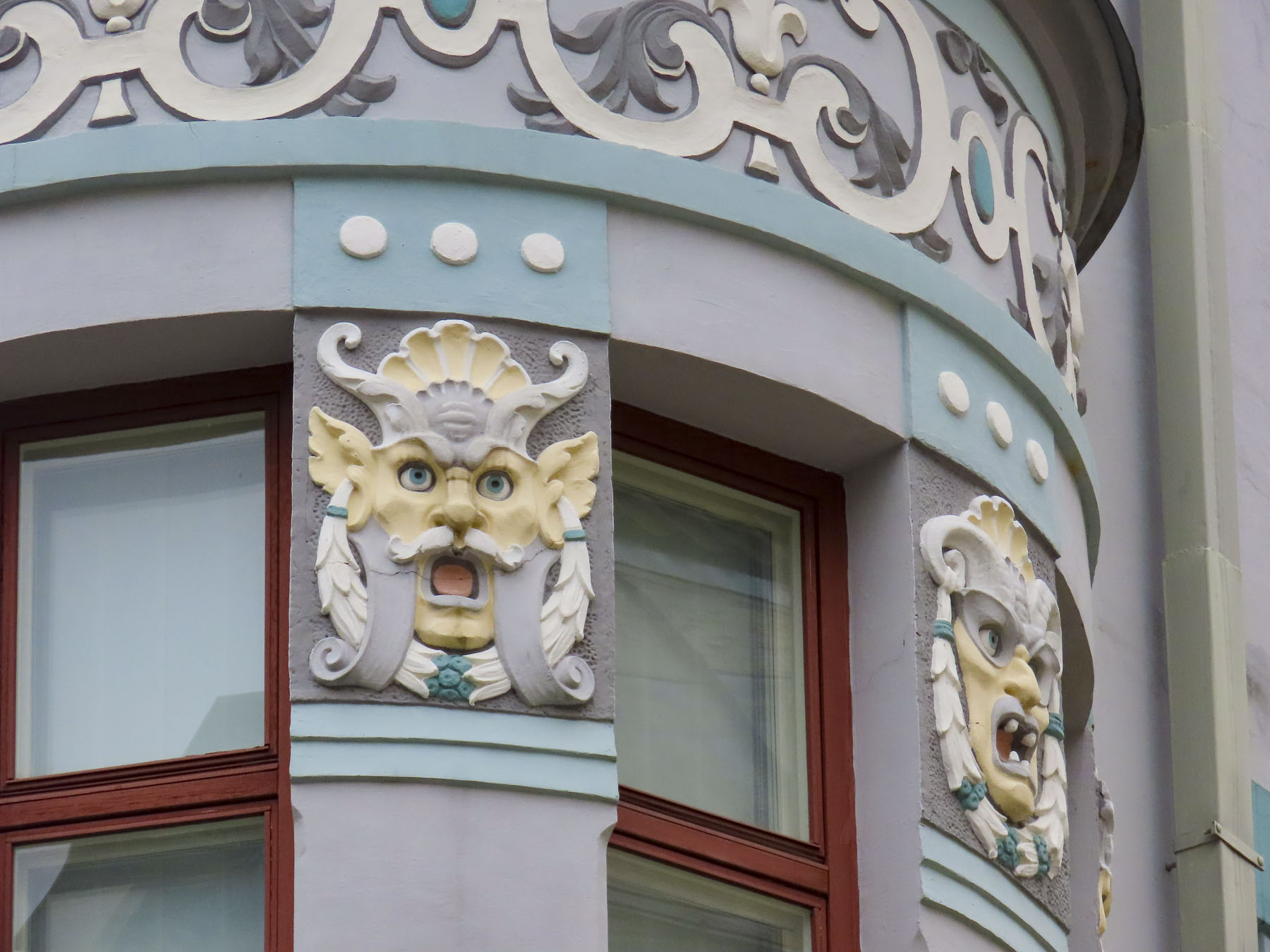
Walking back to the hotel we noticed numerous buildings with ornamentalist Art Nouveau facades featuring intricate details, natural forms and figures. The elaborate exterior decorations were popular during the late 1890s until the 1920s, when there was an effort to bring art into everyday life.

The streets between Mansson’s Bakery, a great spot for coffee and pastry, and Old Town Square are full of interesting buildings and atmospheric street scenes.

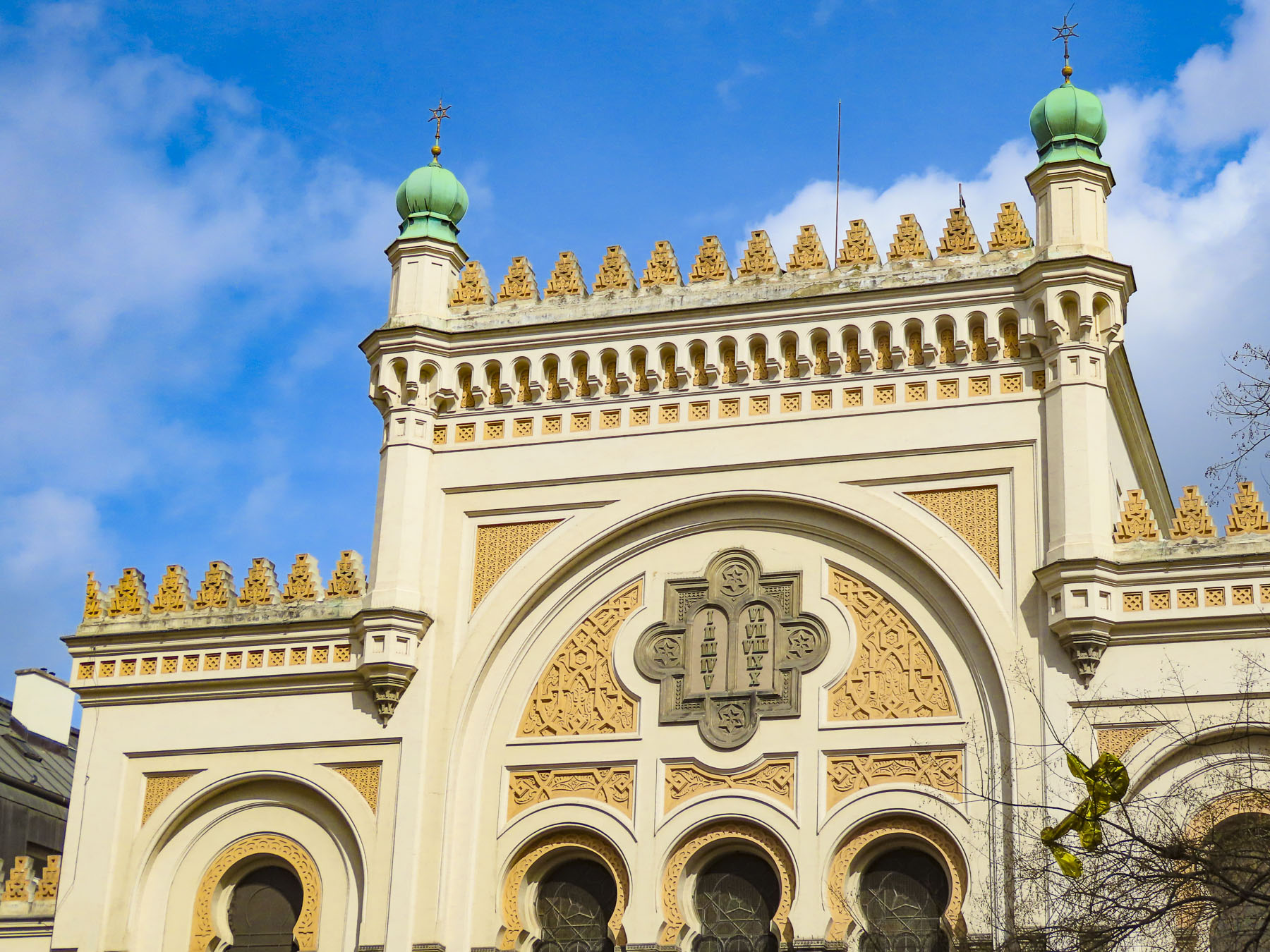
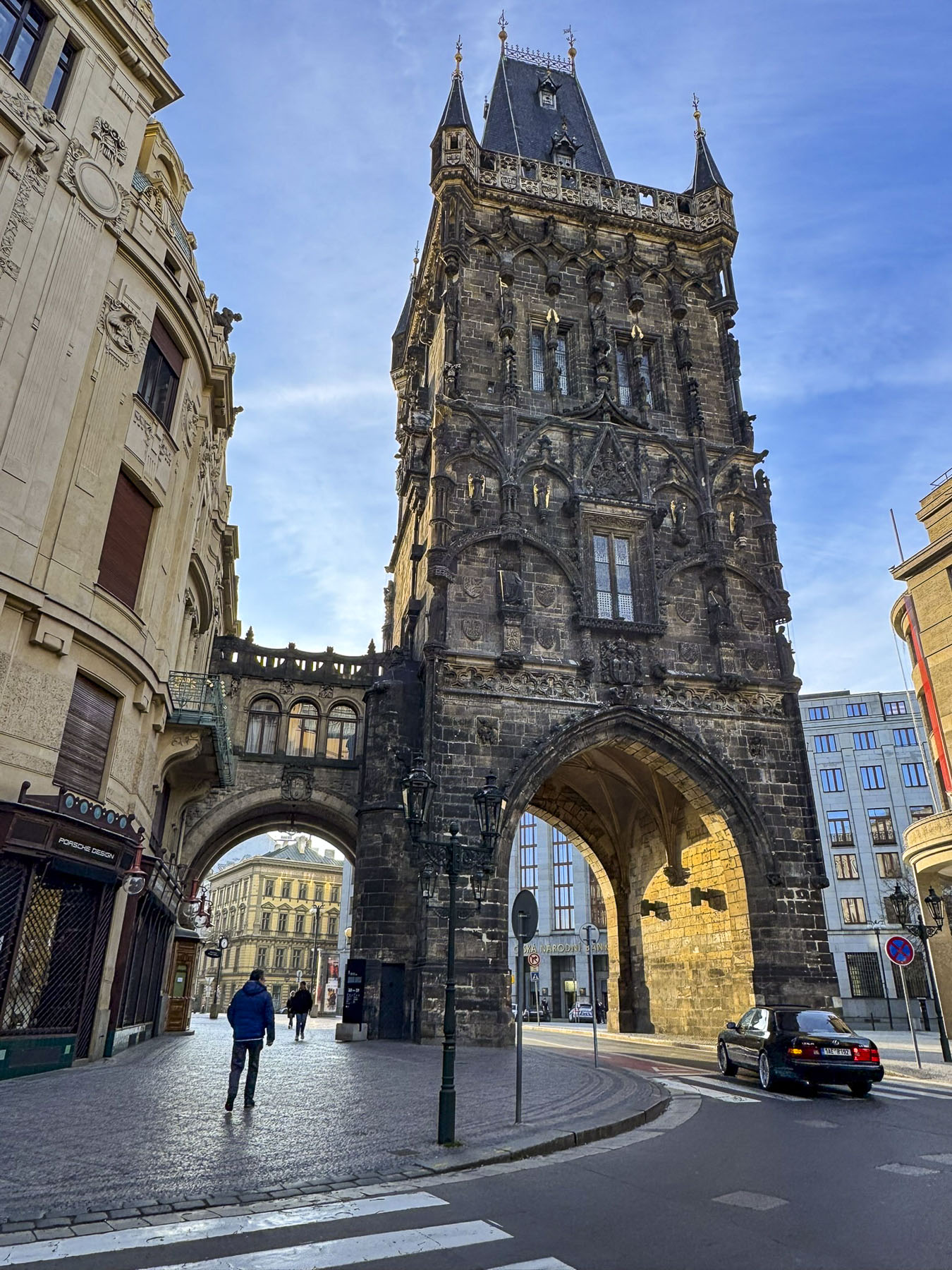
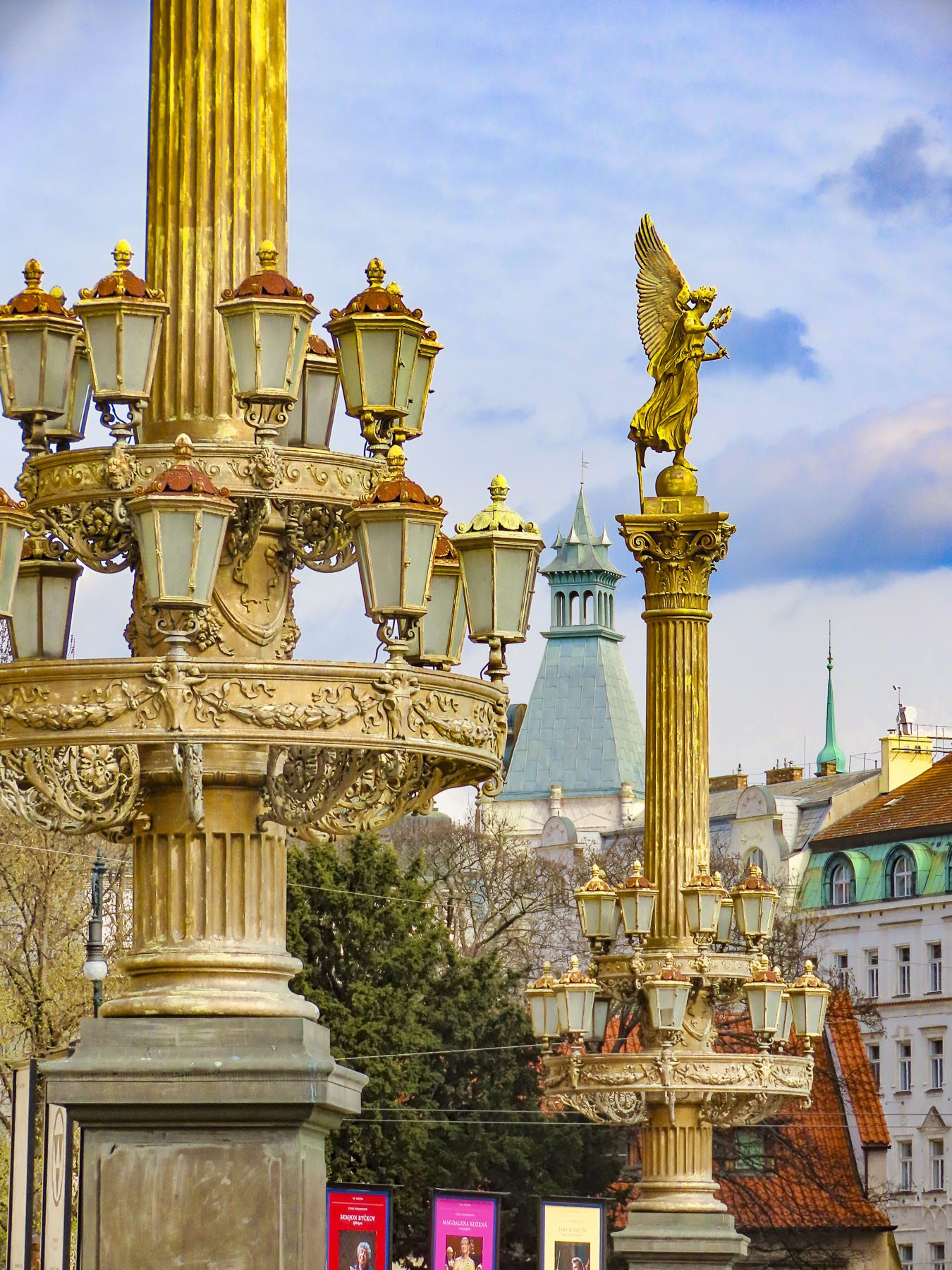
The next morning, we headed to the Municipal House, a 1905 concert hall, and the Powder Tower, an old Renaissance era gate to the city. The visual contrast between the two buildings was striking. Unfortunately, we missed visiting the Jubilee Synagogue, one of Prague’s finest examples of art nouveau design with a Moorish influence.

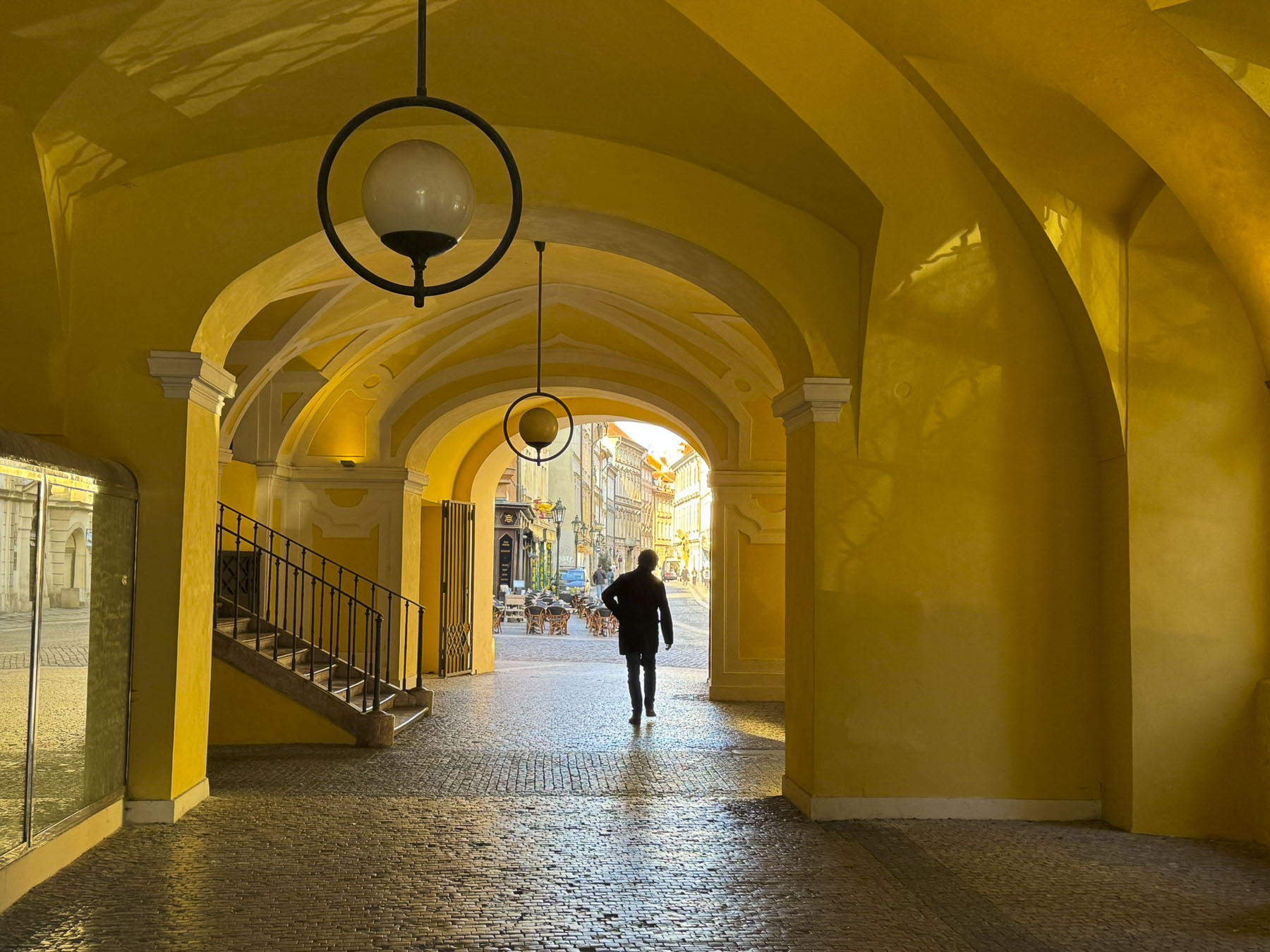
The architectural styles we encountered changed quickly from block to block and we were soon walking under an arcade which led to one of our best discoveries, Černá Madona, an amazing café where desserts and pastries are created as visually stunning pieces of art.

Nearby was the Basilica of St. James the Greater, that seemed inconspicuous at first, but when we rounded the corner to its entrance, we were captivated by a large stone relief sculpture above the door that depicted a fluid scene of saints, angels and cherubs ascending higher.  It drew us in and we were enthralled by the church’s lavish 18th century Baroque interior, which was so busy with murals and sculptures we were not sure where to look first.

We returned to our hotel through the quaint Týn courtyard, which originally started as a fortified merchant’s warehouse, with workshops, and lodges, like a caravanserai, in the 11th century when Prague was part of the Holy Roman Empire. It was predominantly used by German traders who were required to pay their ungelt, a customs tax there.

This growing and prosperous German trading community eventually funded the construction of Church of Our Lady before Týn in the 14thcentury. By the early 1900s the courtyard’s glory days had passed and the buildings were neglected until a 1990s renovation of the area reestablished it as a tourist destination. One of the best dinners we had in the city was just down the street from the courtyard at the vegetarian/vegan restaurant Maitrea, where we enjoyed an absolutely delightful evening.

Many folks choose to walk up Zámecké Schody, the castle stairs, which start near St. Nicholas Church in Malá Strana to visit Prague Castle. But our knees are not what they used to be, and we used a Bolt ride to drop us off above the castle at Loreta Praha, a beautiful pilgrimage site built around a replica of the Holy House of Nazareth, which is believed to be the house where the Virgin Mary lived and received the Annunciation.

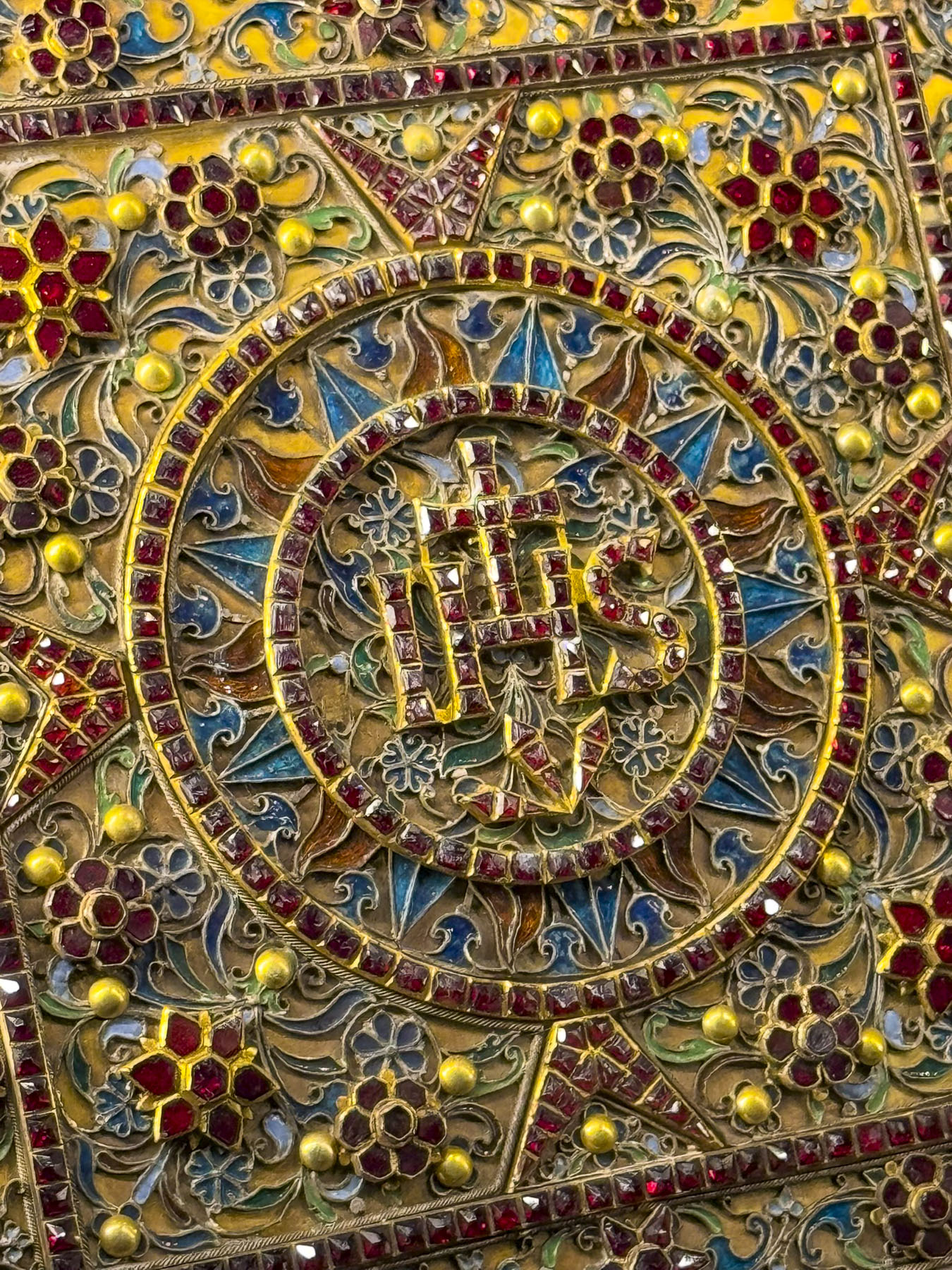
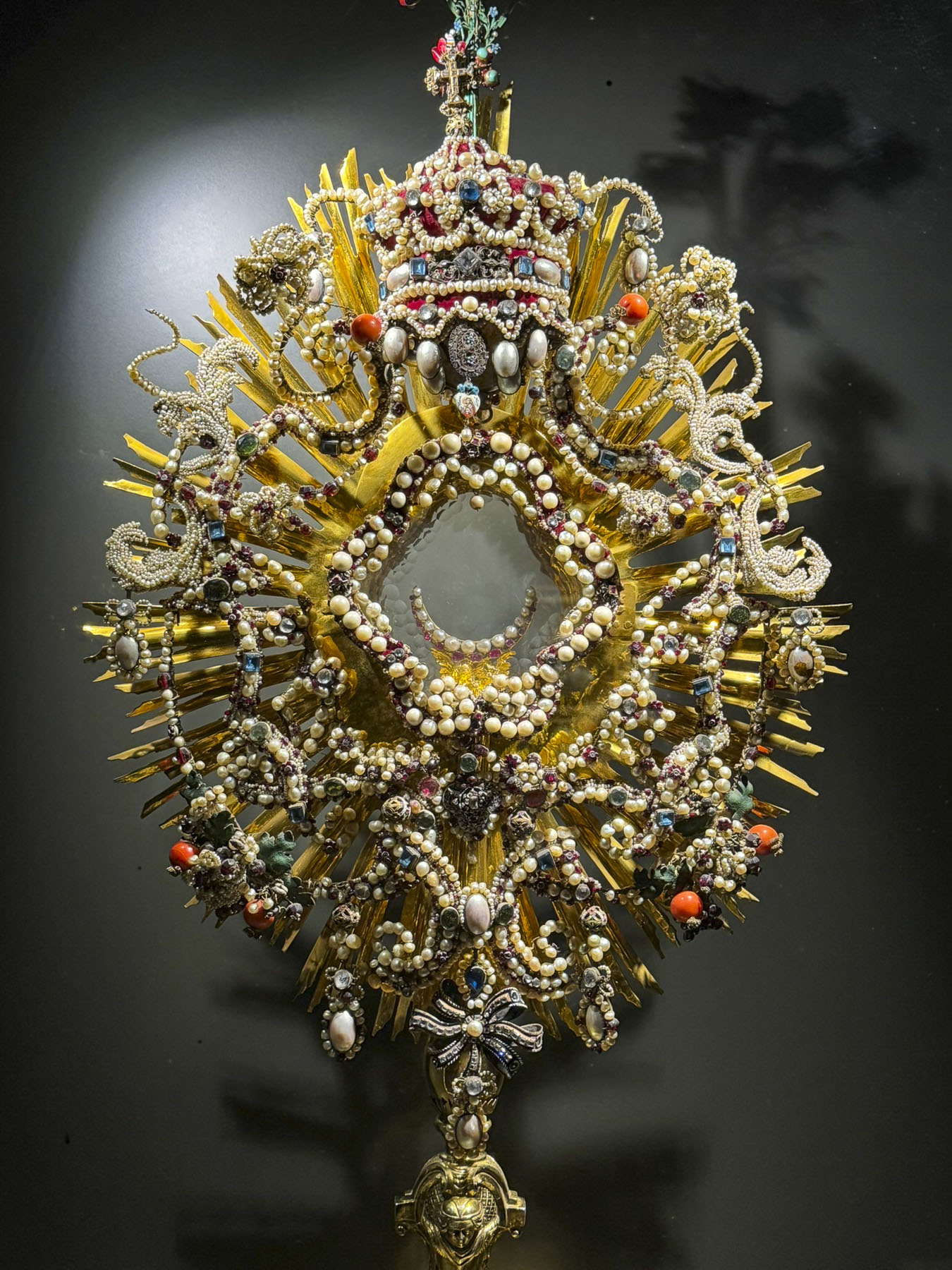
It is a fascinating complex with cloisters, the 18th century Church of the Nativity of Our Lord with a marvelous Roccoco interior, and the Loreto Treasury that safekeeps the shrine’s ecclesiastical treasures; the centerpiece of its collection is the Prague Sun, an ornate 17th century monstrance with 6,222 diamonds, which was crafted in Vienna.

In 2011 a long forgotten 1600s crypt was rediscovered at Loreto. Opening it unexpectedly revealed a tomb covered in gruesome yet heavenly black and white frescoes, the artwork copies of works by Dutch artists that included Rembrandt, Govert Flinck, David Vinckboons, and Hendrick Goltzius. The artist who created them was assumed to be an unknown monk. A full-size recreation of the crypt is now on display in the Loreto museum.

It was a pleasant downhill walk from the shrine to Prague Castle, passing fascinating examples of period architecture along the way, particularly Schwarzenberský Palace, a Renaissance era building that is now a museum featuring a collection of historic Czech art and medieval weaponry.

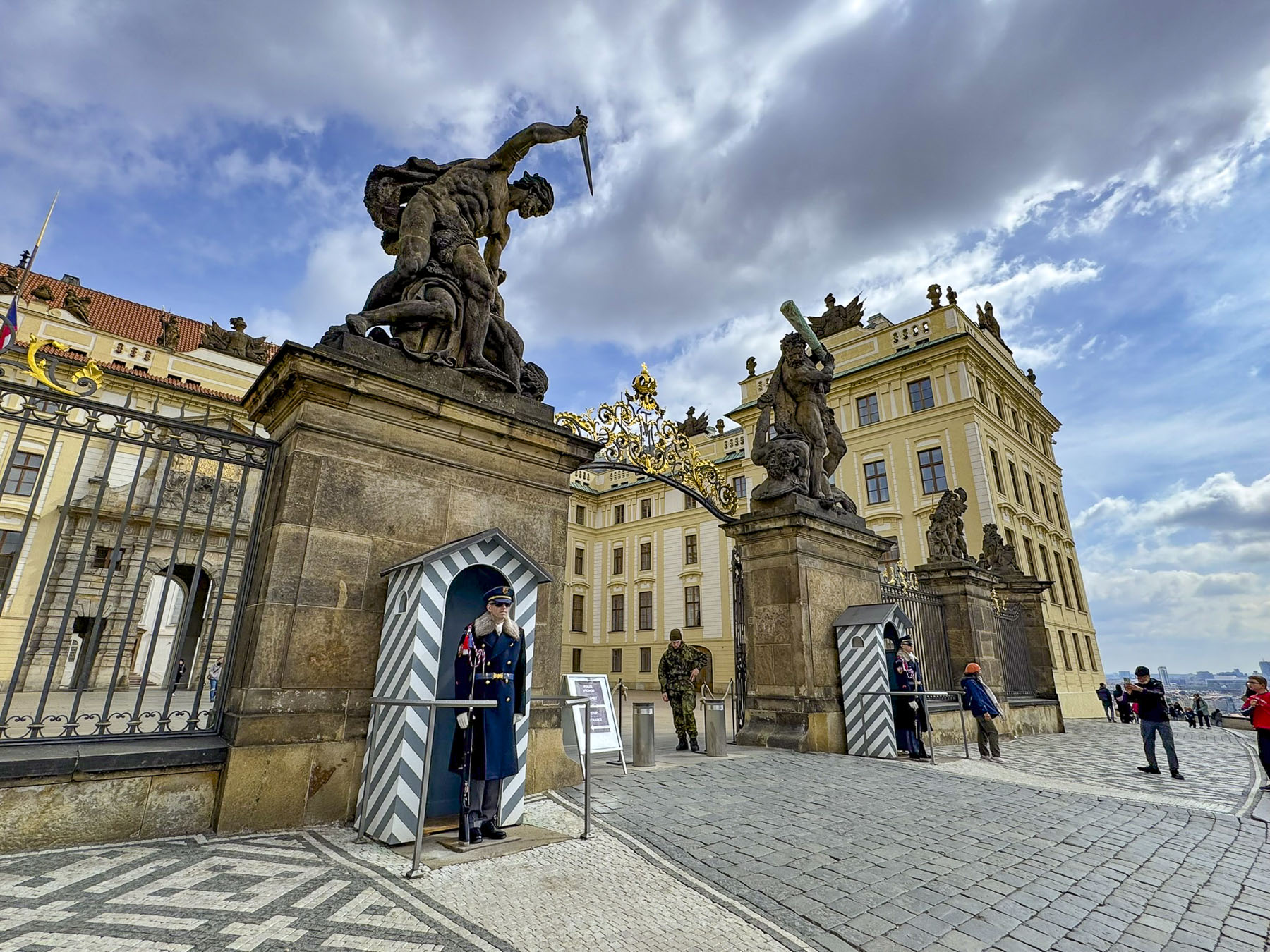
A crowd was gathering in front of the Castle in expectation of the changing of the guard ceremony which occurs every hour at the ornamental gate in front of the palace’s first courtyard. The gate features a monumental sculpture called the Clash of the Titans-Standbeeld which towers over the zebra striped guardhouses.

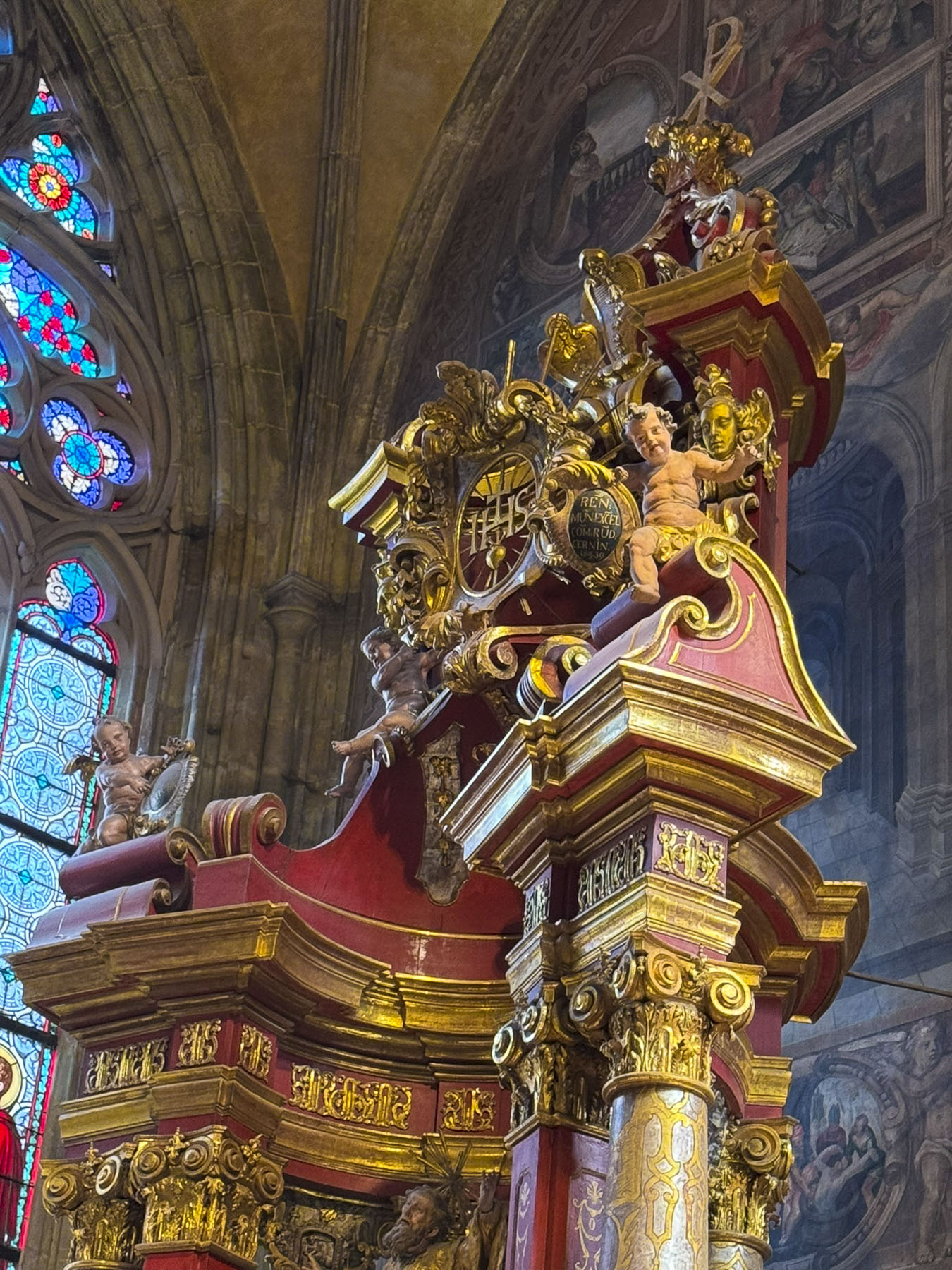
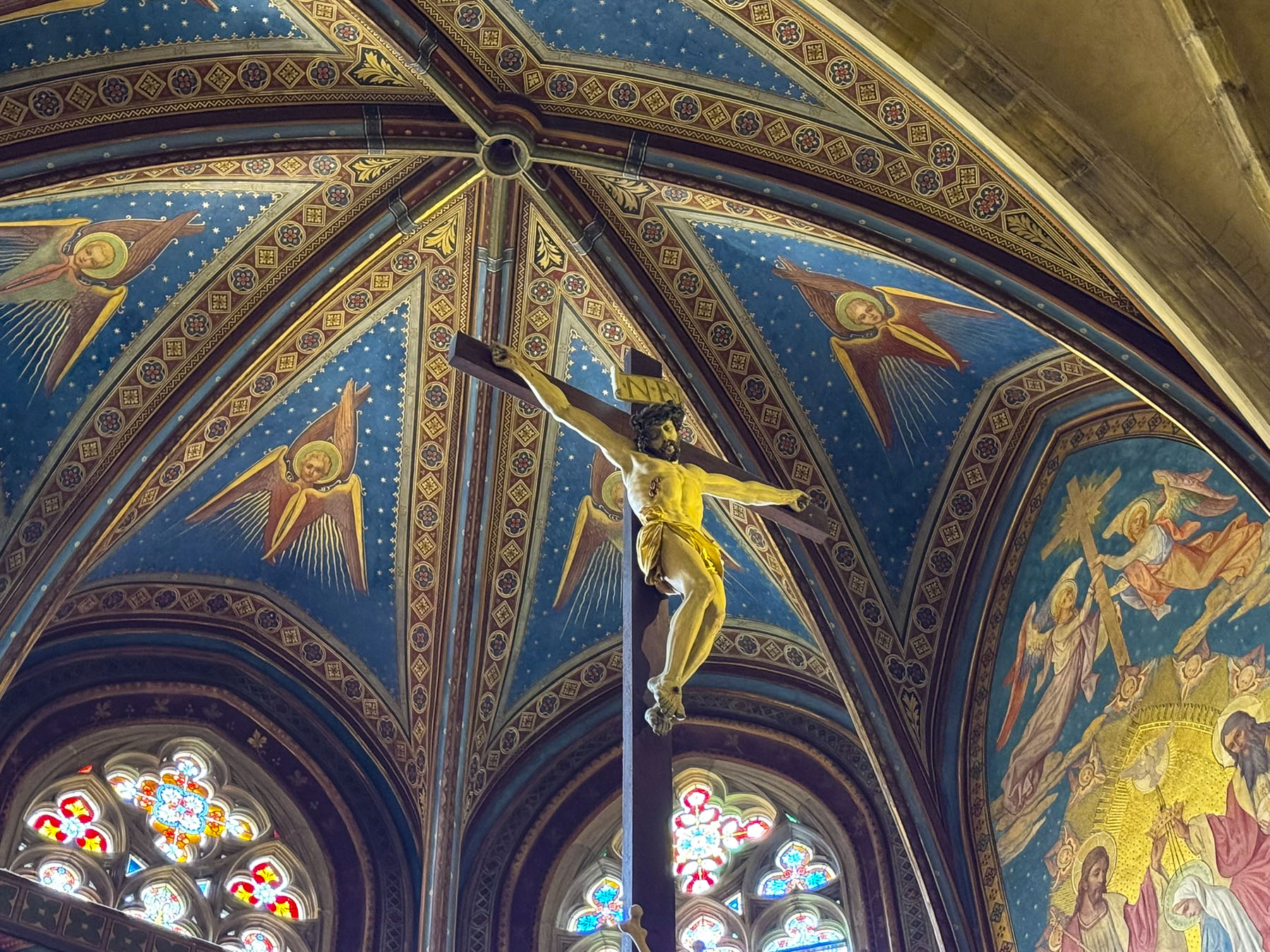
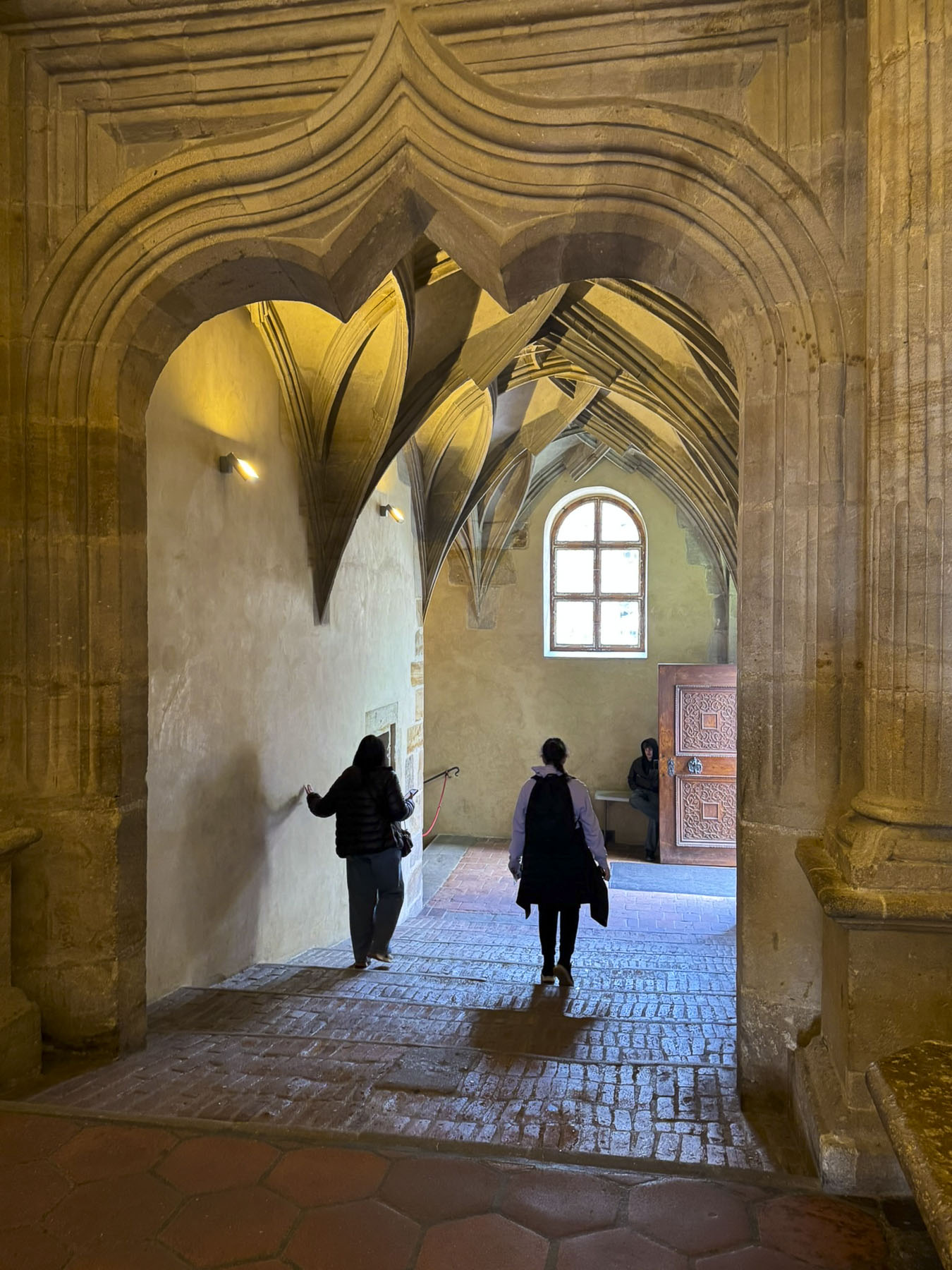
The castle is a sprawling array of majestically scaled buildings, the most impressive of which was St. Vitus Cathedral, with its beautiful interior, and the elaborate silver crypt of St John of Nepomuk, which dominates a side aisle of the church.

Construction of the Gothic cathedral started in 1344, but wasn’t fully completed until 1929. The delay was caused by devasting plagues and centuries of wars. The scale of the grand banquet hall in the royal place was also impressive.

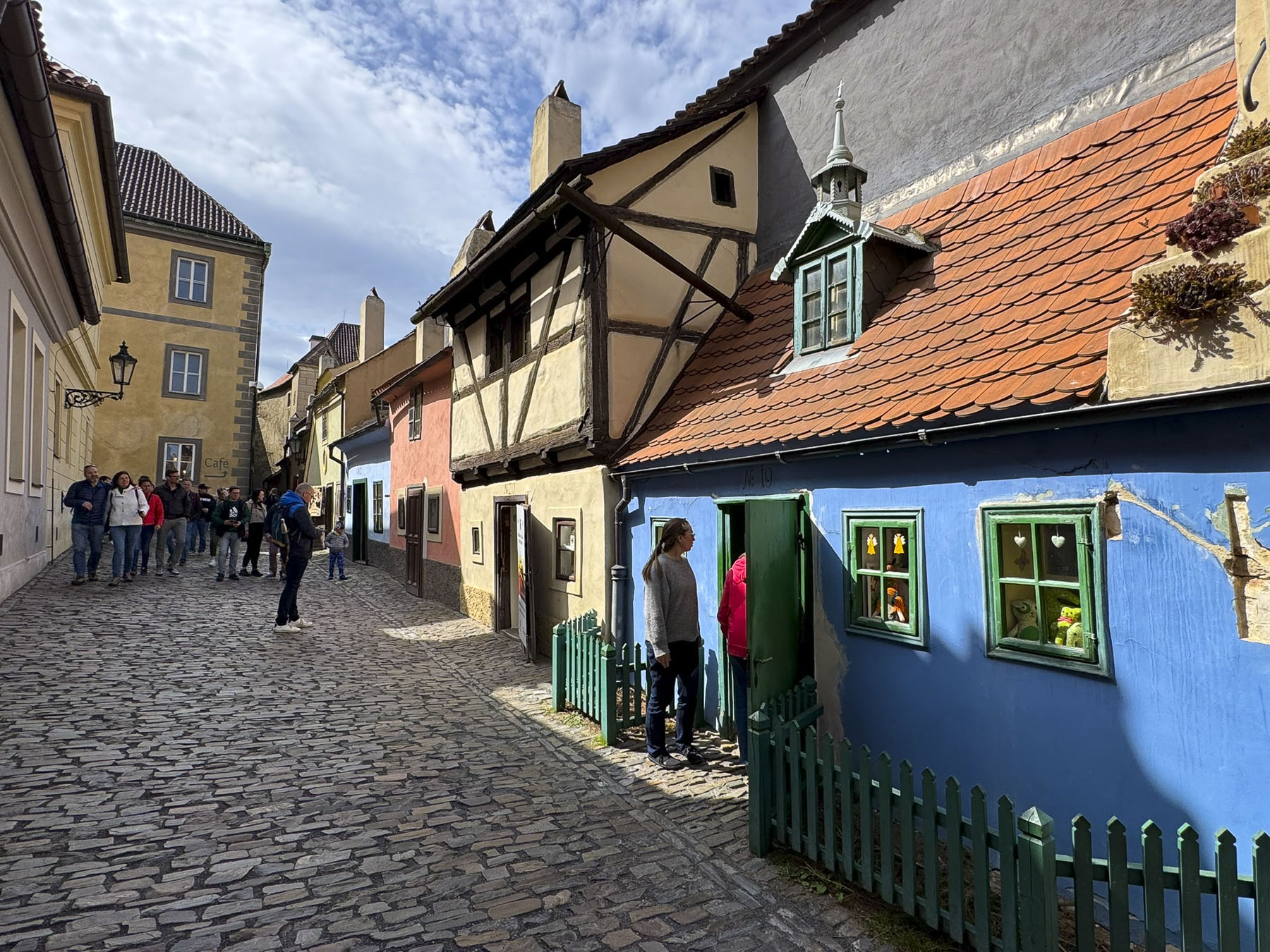
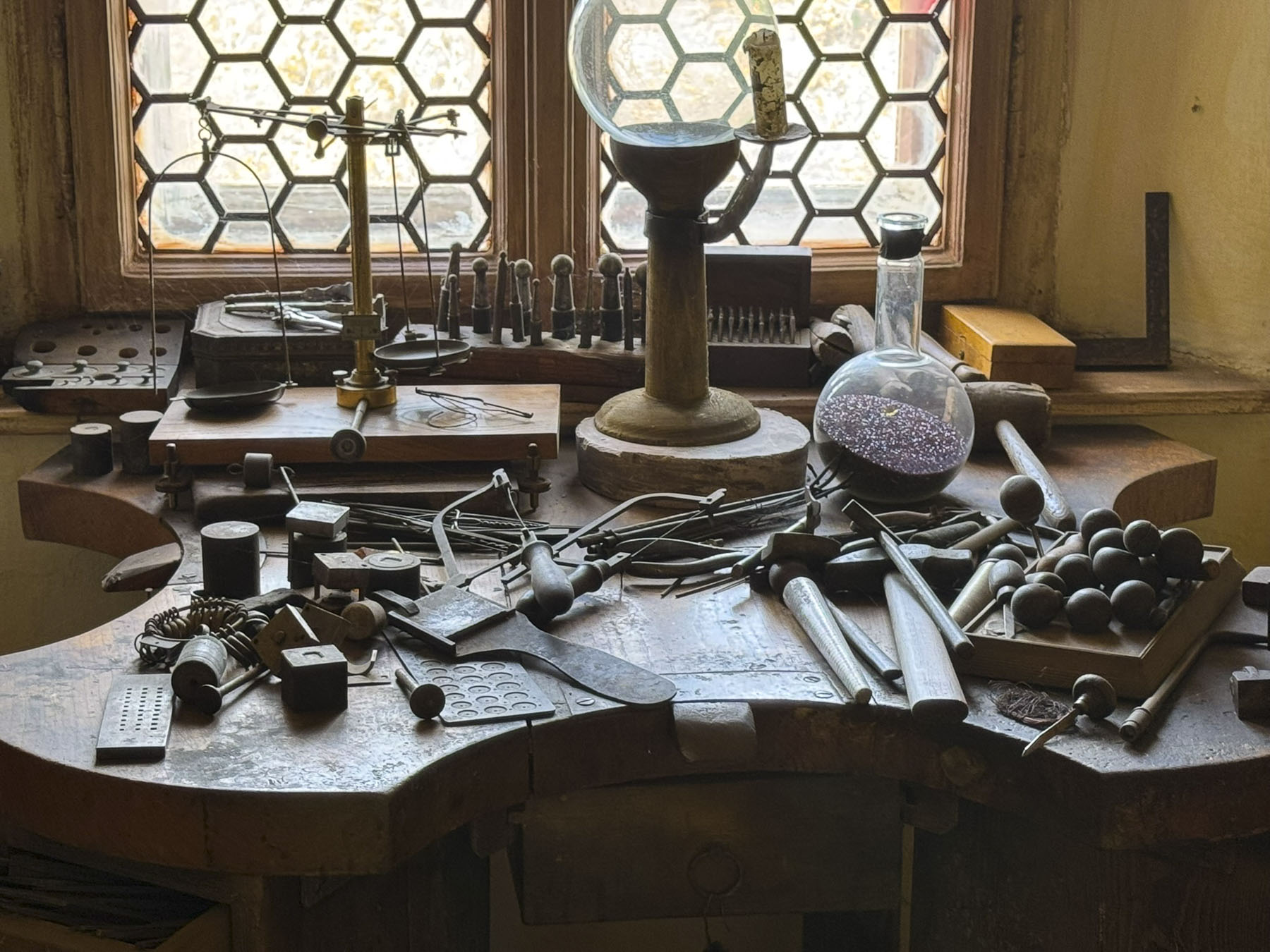
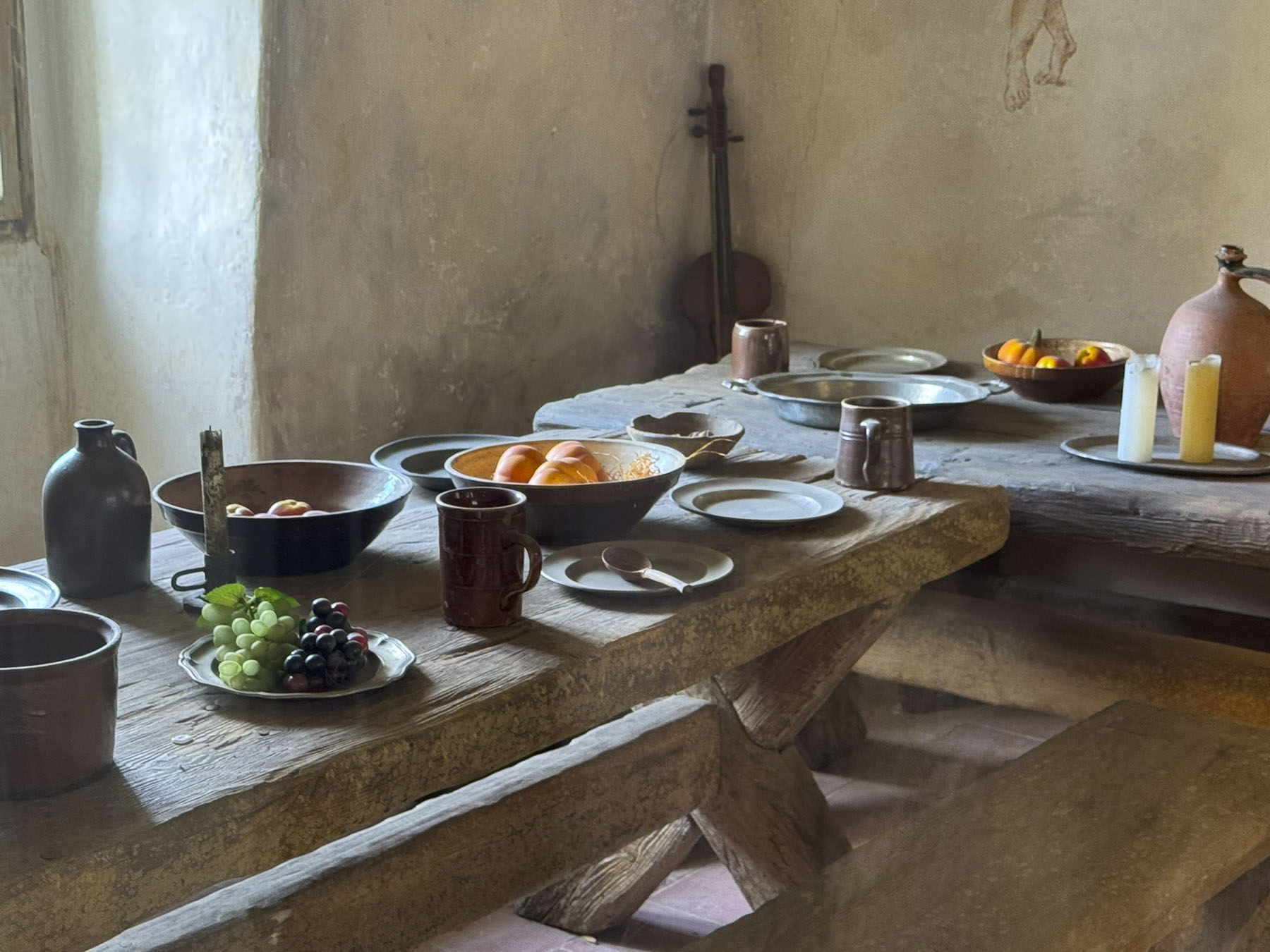
It should really be part of the overall ticket to the castle, but unfortunately there is a separate entrance fee to Zlatá ulička u Daliborky, the “Golden Lane,” a row of buildings first used as barracks for the castle guards, but later the home of numerous goldsmiths that setup shops along it. The street was somewhat interesting, but can surely be missed if you are budgeting.

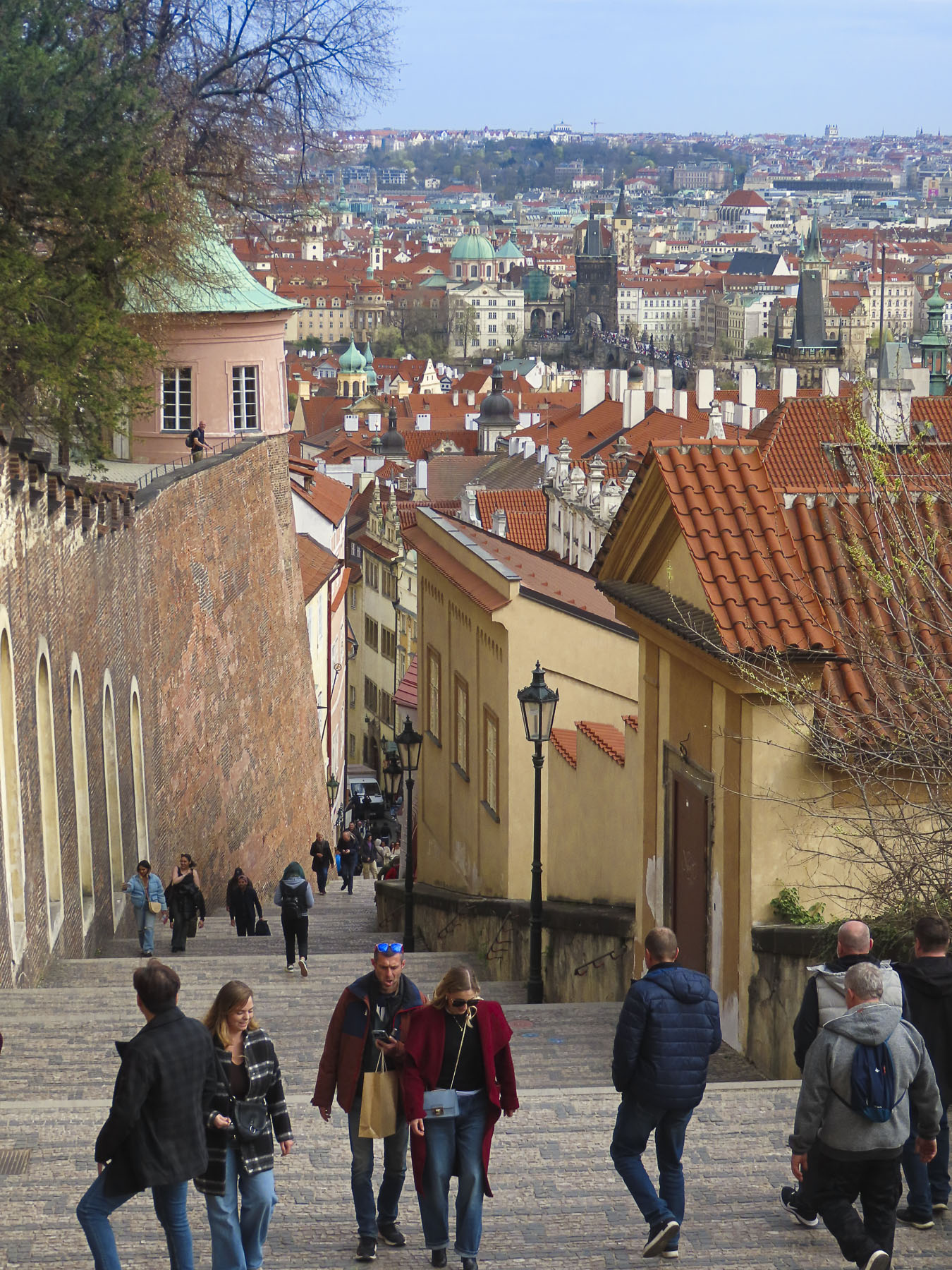
They are a number of spots within the castle grounds that have scenic views of Prague, but the best was at the mirador at the top of Zámecké Schody, the castle stairs, that lead back down to the Lesser Town.

On our last day in Prague we set out on a long walk to see the Dancing House, built in 1992, a deconstructivist project by Croatian-Czech architect Vlado Milunić and Canadian-American architect Frank Gehry that emphasizes a fluid asymmetrical design in the New Town section of the city. The undulating shape of the building has earned it the nickname Fred and Ginger (after the famous dancers Fred Astaire and Ginger Rogers). It stands out strikingly from the 19th century buildings which surround it.

Afterwards we set out on a route that zigged and zagged across New Town to see several interesting sculptures, which unbeknownst to us at the time, were more works of Prague’s favorite hometown artist David Černý. We first came across his large aircraft shaped butterflies with moveable wings that hang on the façade of the Levels building, an ultra-modern gaming facility. “The butterflies symbolize peace, while the Spitfire aircraft represents war,” and are a tribute to the 359 Czechoslovak fighter pilots, who served in RAF squadrons during World War II.

We enjoyed wandering in part of the city we hadn’t previously explored. There seemed to be something that interested us down every lane.

Eventually we arrived at Černý’s Franz Kafka head, a 11m (36ft) tall stainless steel kinetic sculpture of the writer’s head that is composed of 42 layers that shift on a regular schedule to alter the head’s shape.  It draws quite a crowd that patiently waits for the subtle changes to happen.

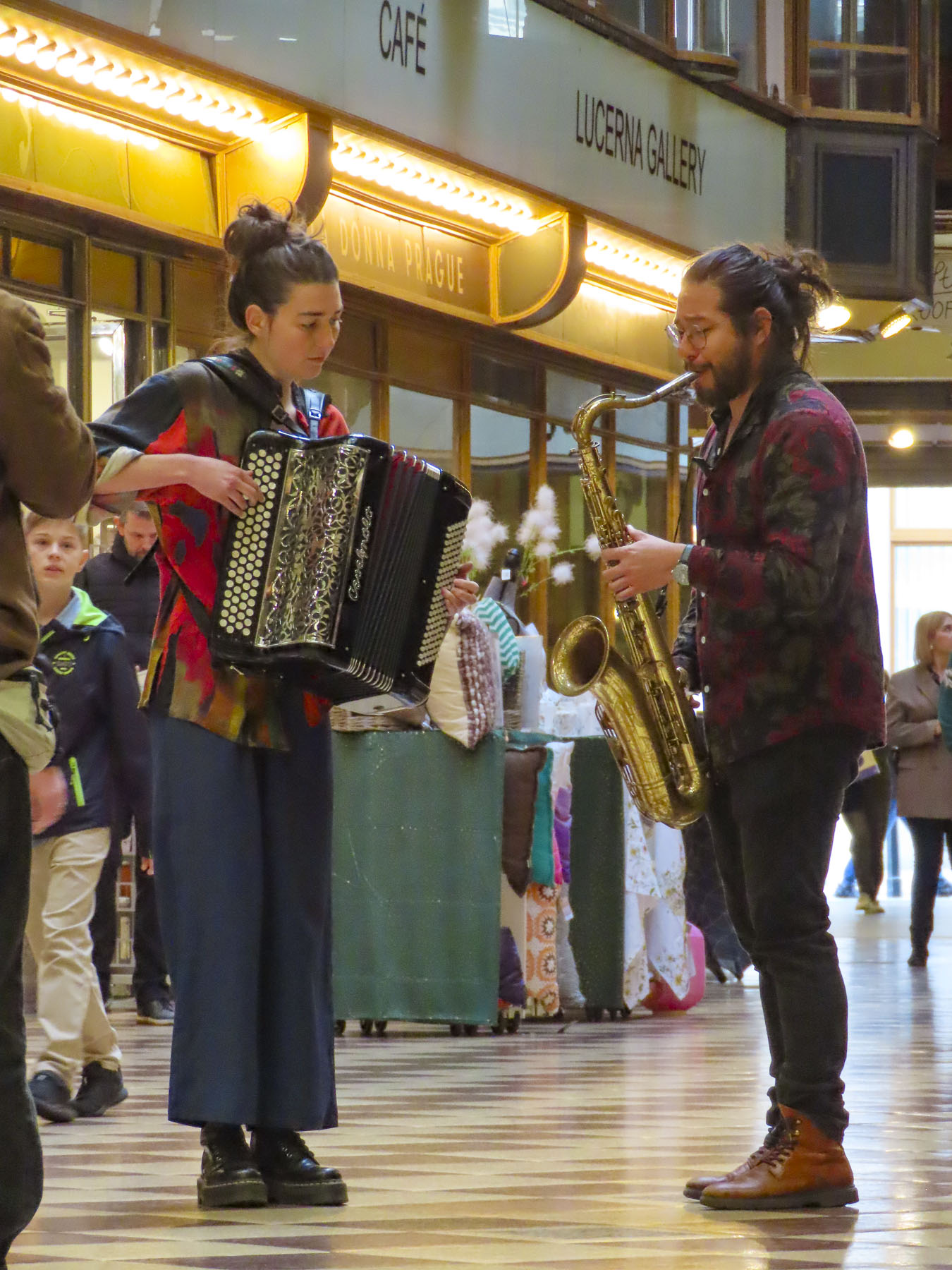
Our next stop was the Lucerna Palace, an early 1900s Art Nouveau shopping and entertainment venue that was the precursor of the modern mall. From its ceiling hangs Černý’s Saint Wenceslas Riding a Dead Horse. The 1999 piece is said to represent the artist’s opinion on the “political situation in the Czech Republic at the time and his views on the state of society.”

Though there are 22 tram lines that criss-cross the city, the best way to absorb the ambiance of Prague it is to wander its cobbled lanes and soak in the amazing architecture and streetscapes of one of Europe’s most beautiful timeless cities.

We had originally planned to spend 5 nights in Prague, but the airline we used canceled their flight on the day of our original departure. If we had that extra day, we would have used the time to explore the area around the National Museum and the Jerusalem Synagogue, both of which are in the New Town section of Prague. 

We had a grand time in the city and hopefully will get the chance to return one day, and maybe find the other 20 sculptures of Černý that are installed around the city.

Till next time,

Craig & Donna

Argentina – Buenos Aires: Empanadas, Tombs & Tango

The ferry vibrated gently as the engines were switched into reverse as we approached the Buquebus ferry terminal in Buenos Aires. We had departed earlier from Montevideo, Uruguay, and hoped to view the Argentinian coastline from the Río de la Plata estuary, as the first Spanish explorers did in the early years of the 16th century. But we hadn’t expected the ferry not to have an open observation deck, and instead had to contend with the view, or lack of view, through hazy saltwater-etched windows.

Seasoned travelers on this route between Montevideo and Buenos Aires had already called for the ride share services of Cabify, inDriver, Didi, Easy Taxi or BA Taxi and waited curbside in front of the terminal. By the time the ferry docked there were no available drivers for 45 minutes. We were among the last to leave the port that morning.

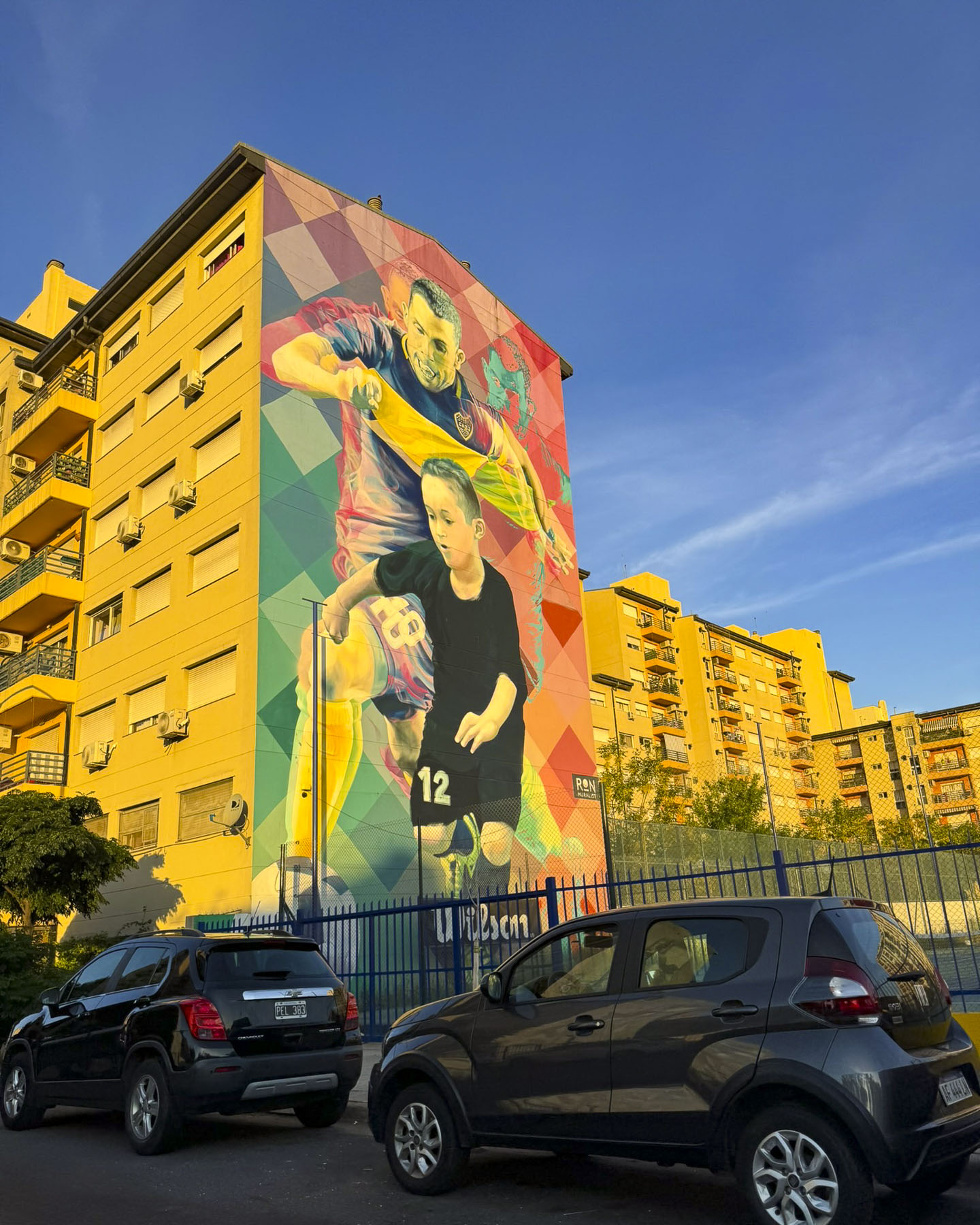
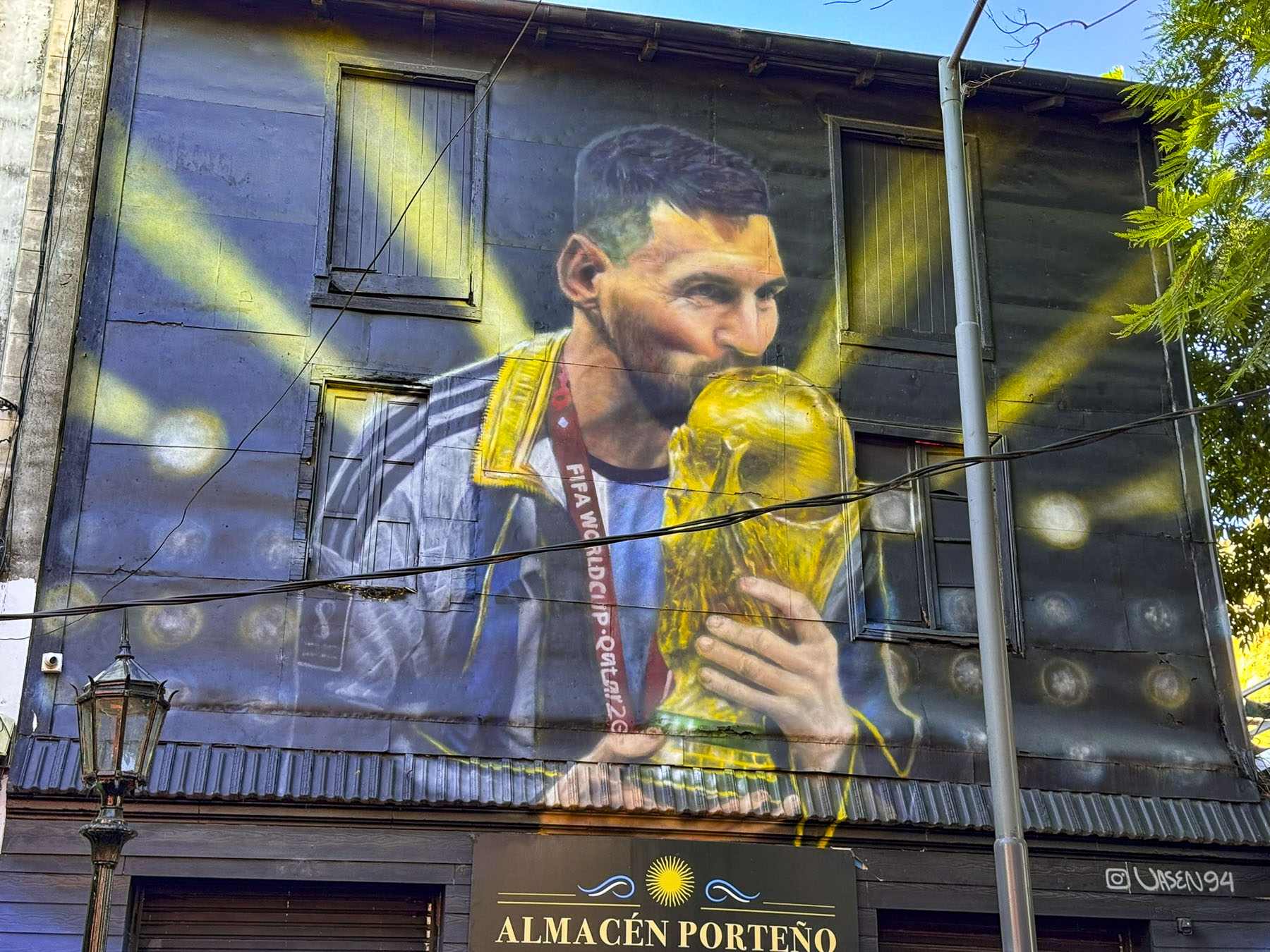
Our first impressions of this wonderfully cosmopolitan city were formed along the 16-lane wide – yes, 16 lanes – Av. 9 de Julio. Despite its width it is a pleasant tree-and park-lined esplanade, that extends for 27 blocks through the city and reminded us of the area around Central Park in Manhattan. Older buildings from the 18th and 19th century shared the skyline with more modern buildings than we expected, as well as the first of many street murals dedicated to the football player Lionel Messi #10 for Argentina national football team, and the country’s superstar at the moment. The sidewalks were bustling with activity. We wondered how we would ever cross 16 lanes of traffic on foot.
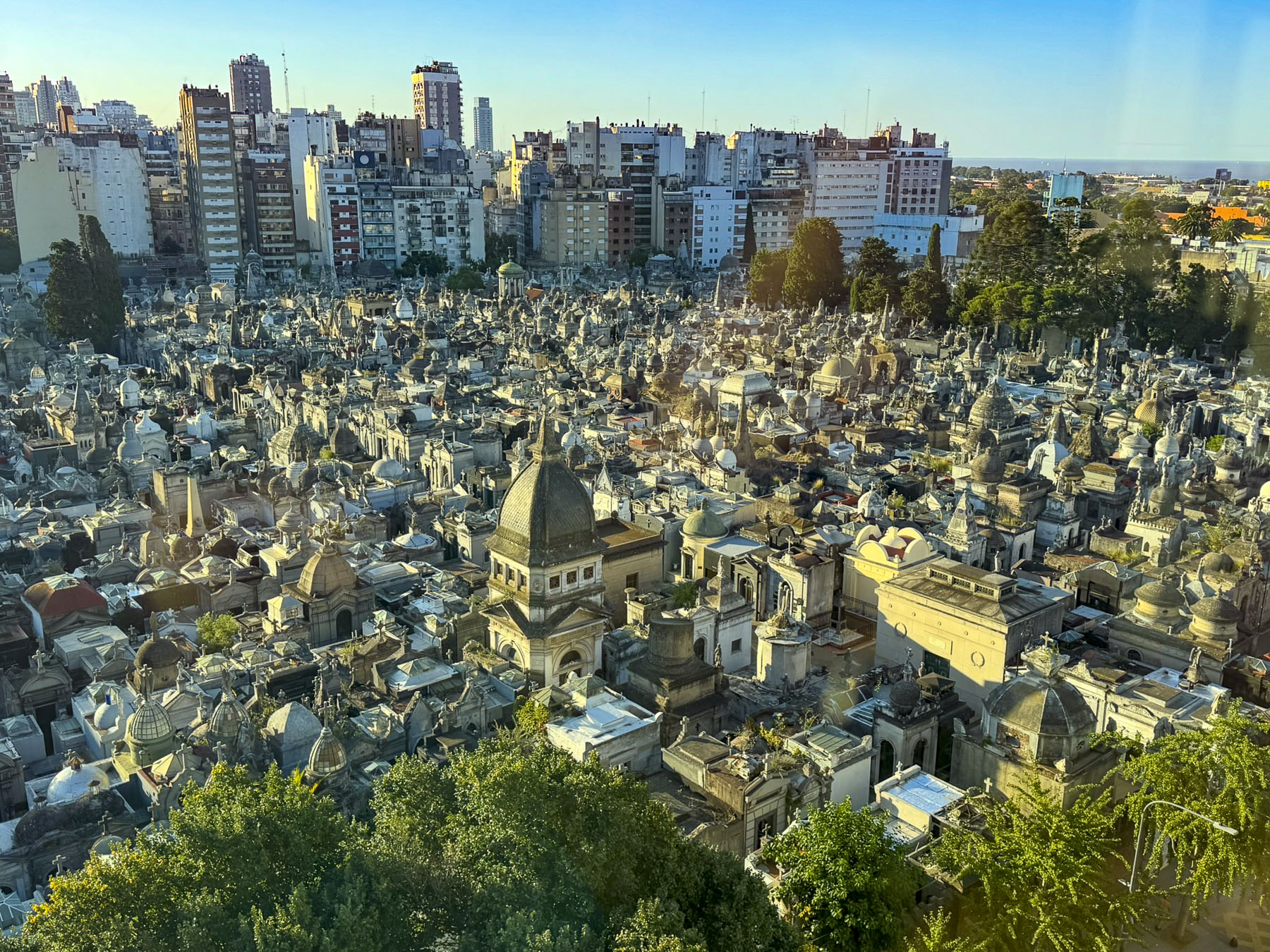
Our hotel for the next six nights, Urban Suites Recoleta, was across the street from Buenos Aire’s historic Cementerio de la Recoleta. We soon learned that most landmarks and hotels in the neighborhood ended with Recoleta in their name. The cemetery from our balcony looked like an ancient lost city.

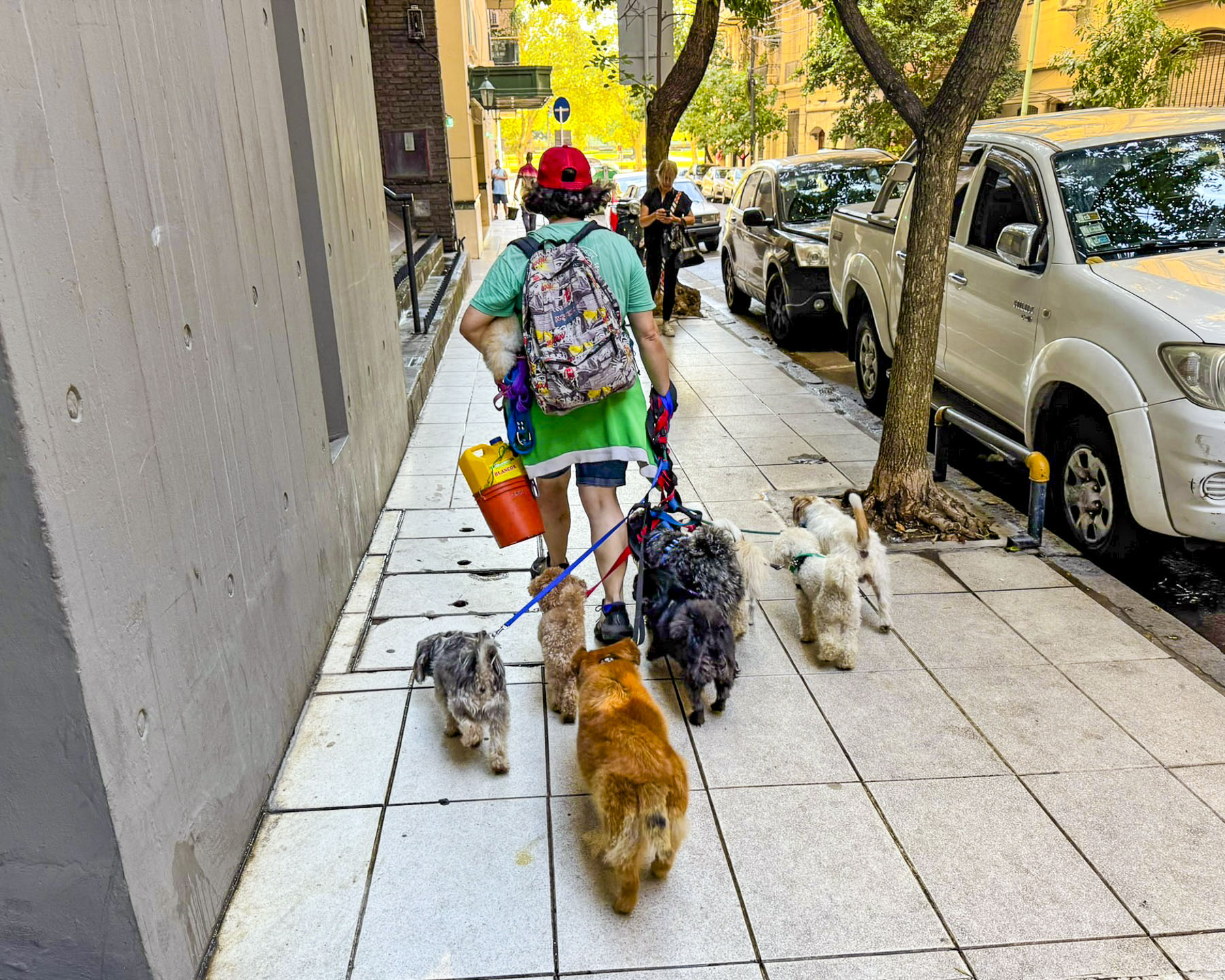
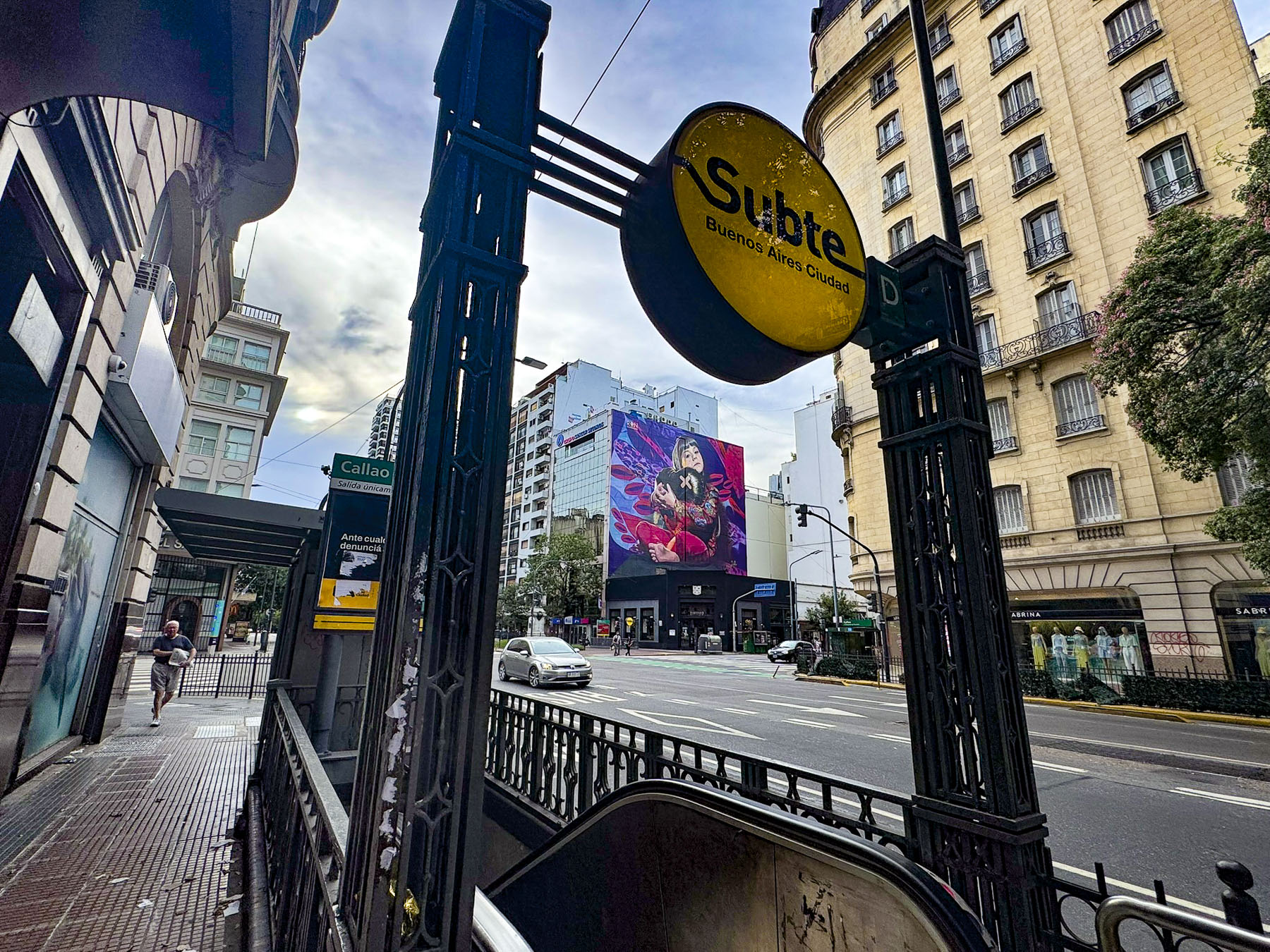
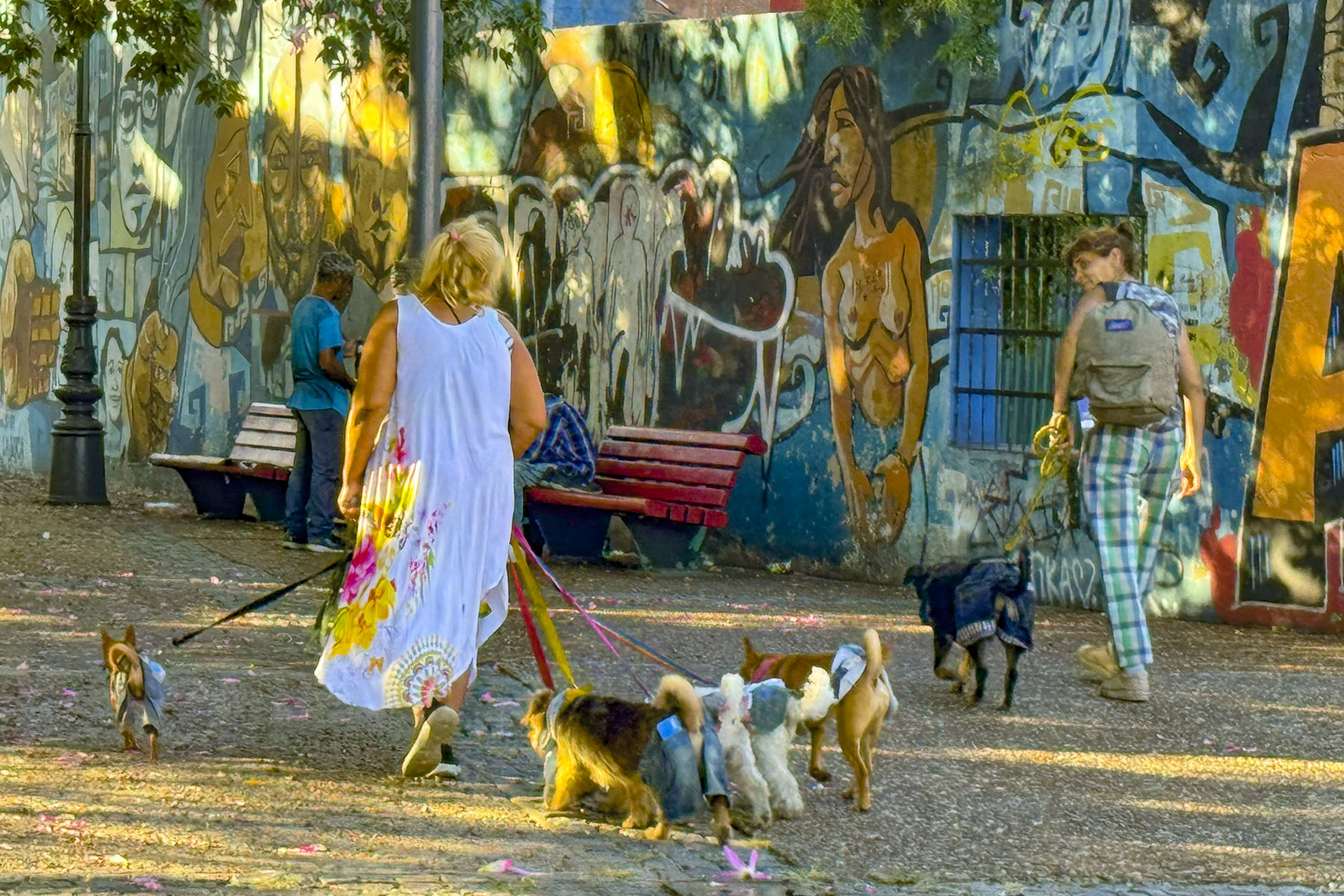
The next morning, we explored the immediate neighborhood around the hotel that was full of activity with delivery trucks off-loading produce and dog walkers leading their packs of small dogs to the parks. We eventually crossed the Puente Peatonal Dr. Alfredo Roque Vítolo, a brightly painted footbridge across the roadway that connects the parks around the Museo Nacional de Bellas Artes to the Universidad de Buenos Aires. The Facultad de Derecho subway station is located at the foot of the bridge. It is a terminus on the H-Line, one of Subte’s (from Subterráneo de Buenos Aires) six lines, that can get you nearly anywhere in this sprawling metropolis. Opened in 1913, Buenos Aires had the first subway in South America.

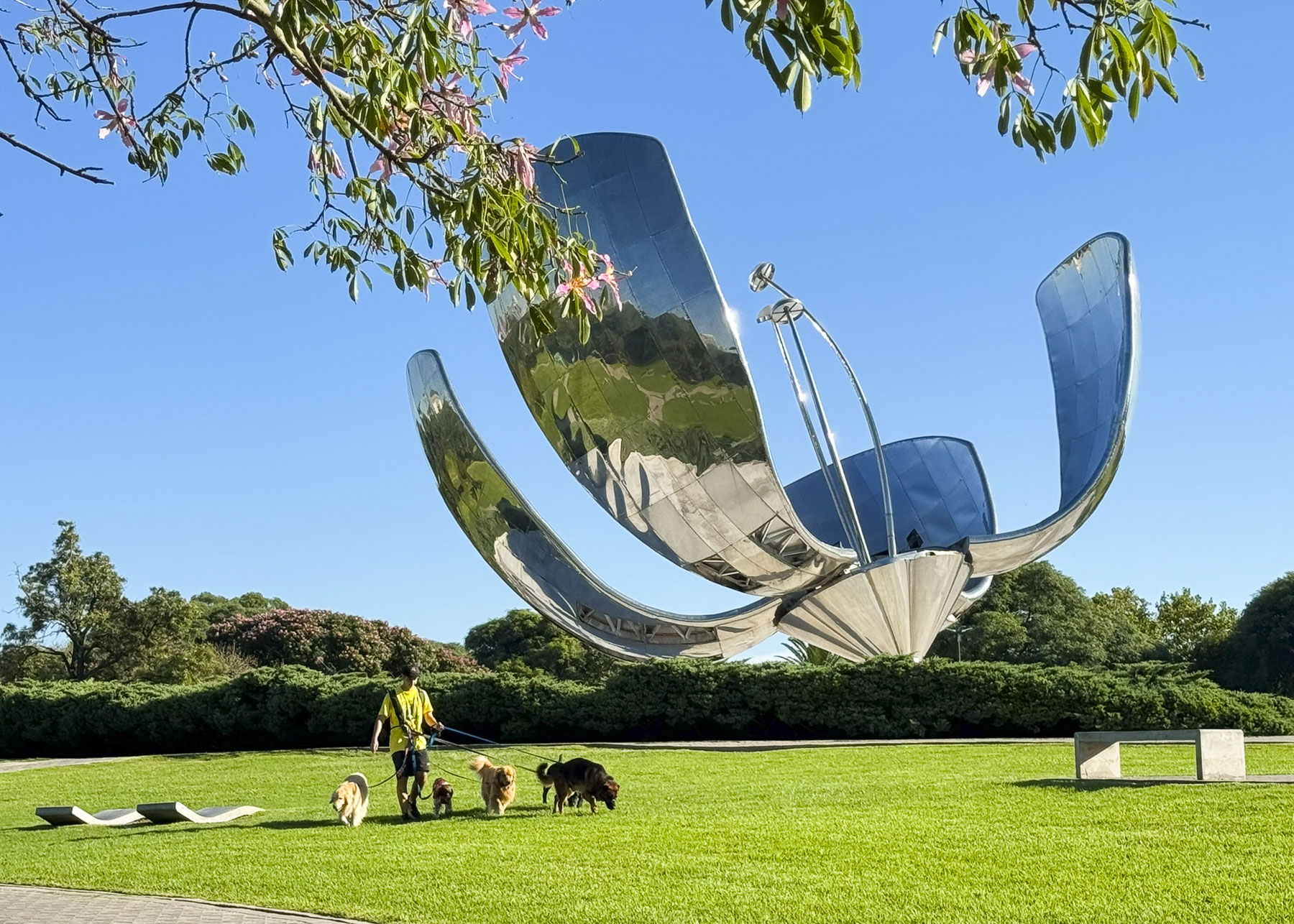
The Floralis Generica, a unique abstract aluminum sculpture, an iconic symbol of the city, centered the Plaza de las Naciones Unidas next to the school. The 23m (75ft) tall mechanical flower with six petals which opens in the morning and closes at night was a gift to the city by the Argentine architect Eduardo Catalano in 2002. Walking paths circled the sculpture and offered different viewing perspectives of the flower that the sculptor visualized to “represent all the flowers in the world.”

Walking back towards our hotel we veered down Avenida Alvear, seven blocks that were once Buenos Aire’s Park Ave or Champs-Élysées at the turn of the 20th century.  It is known for the art nouveau-influenced Belle Époque architecture of the old mansions along the street that have now been converted into hotels and embassies. Unfortunately, many of the building facades were hidden by the trees that line the street.

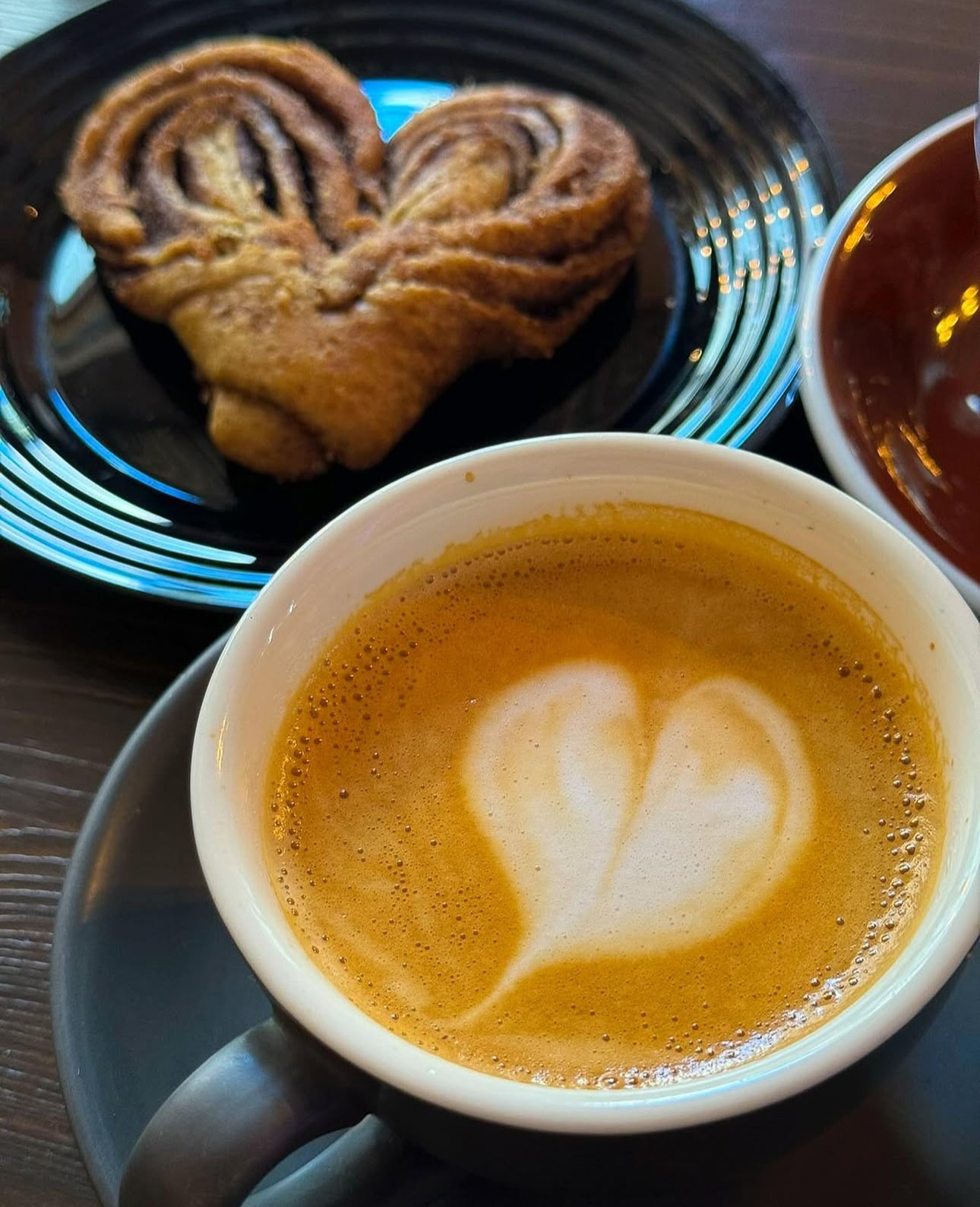
Long before Starbucks was a thing, the Porteños, “people of the port,” as the citizens of Buenos Aires are called, developed a strong coffee culture that coincided with the arrival of several waves of Italian immigrants that began in the mid-1800s. The result is a city where it’s nearly impossible to get a bad cup of coffee. One block over from Avenida Alvear on Av. Pres. Manuel Quintana our “walk a little then café” philosophy was easily satisfied at La Fleur de Sartí, Confiserié Monet, and Cafe Quintana 460, where espresso-based coffee drinks rule.

When we travel, our mid-afternoon lunch tends to be our big meal of the day, so we end up looking for supermarkets to buy crackers, cheese and fruit to snack on later. Near our hotel there was a large Carrefour Market on Av. Vicente López. Around the corner from the supermarket was a block of traditional shops with two butcheries, a fish monger, fruit stands, and a cheese store. Though our best find in the neighborhood was Möoi Recoleta, which had a pleasing interior and excellent food. To our surprise it’s part of a small local restaurant chain.
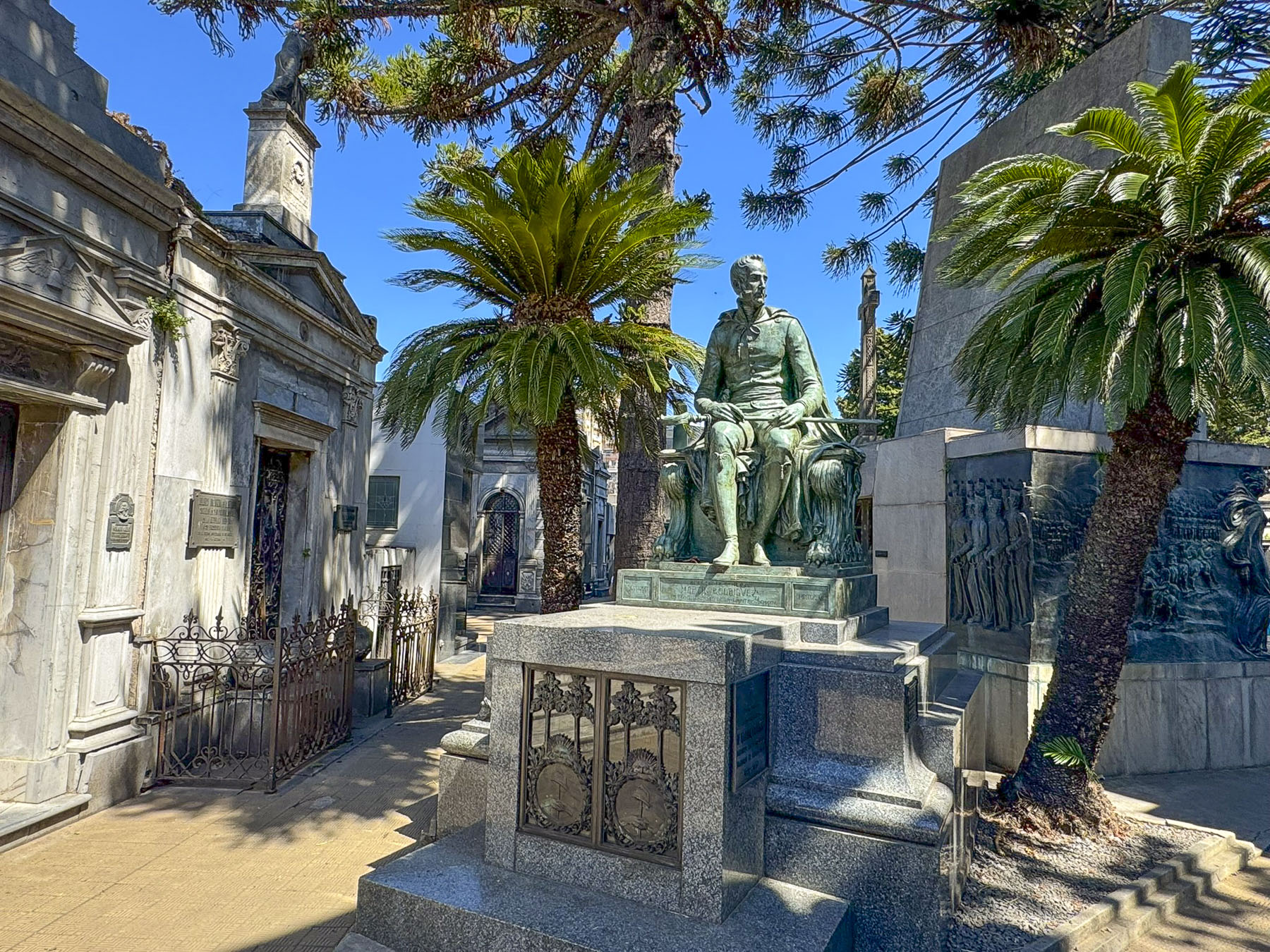
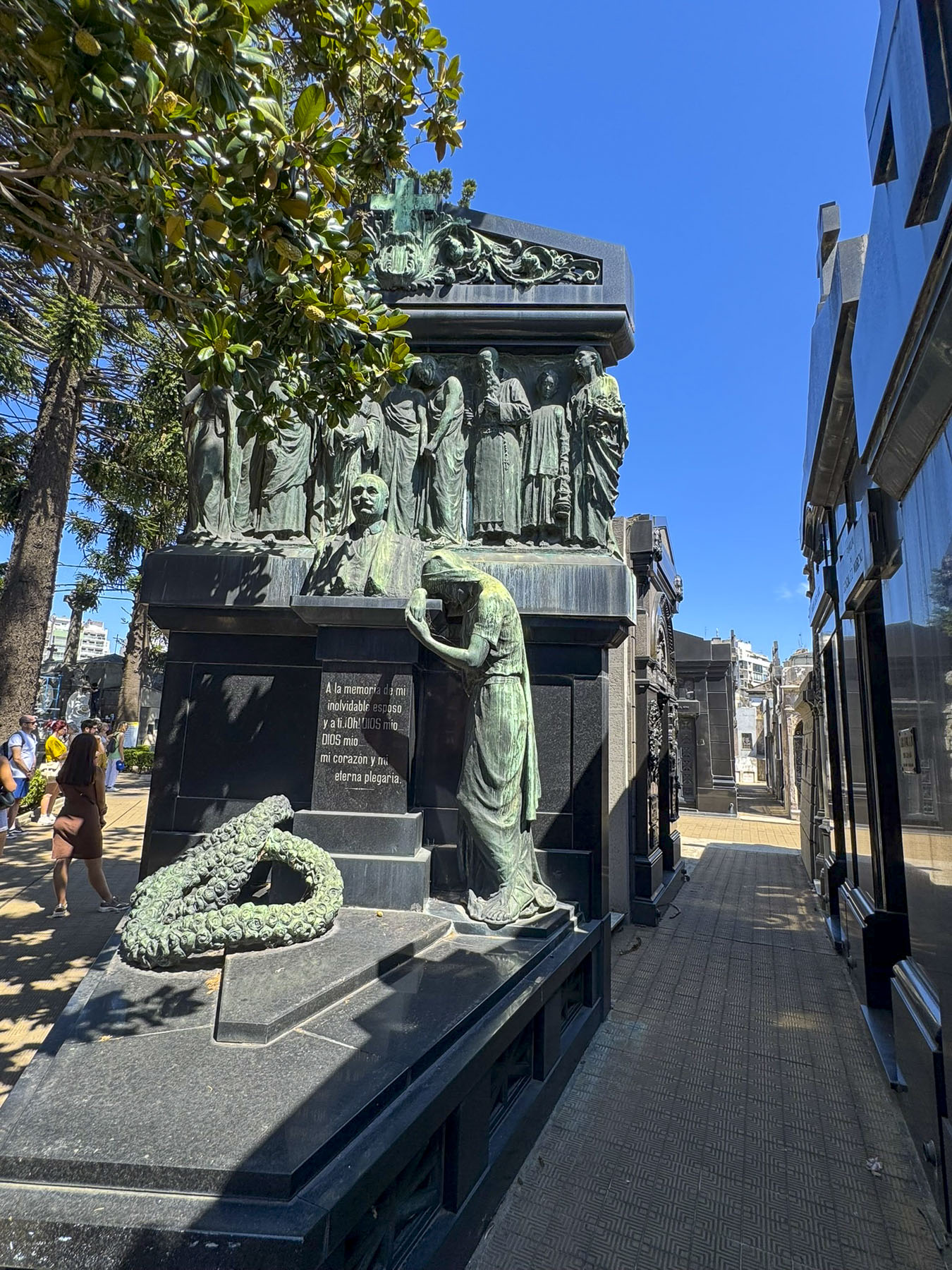
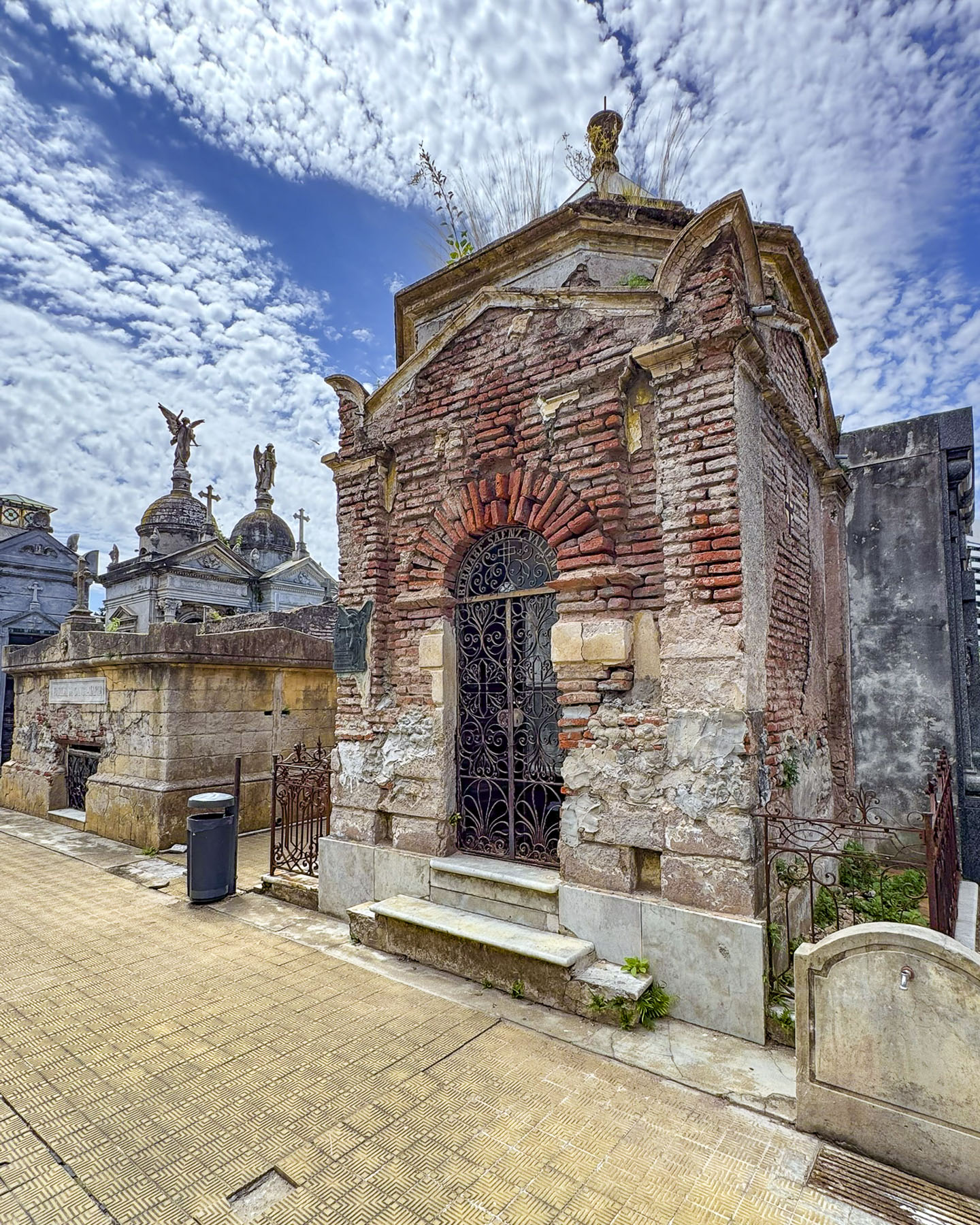
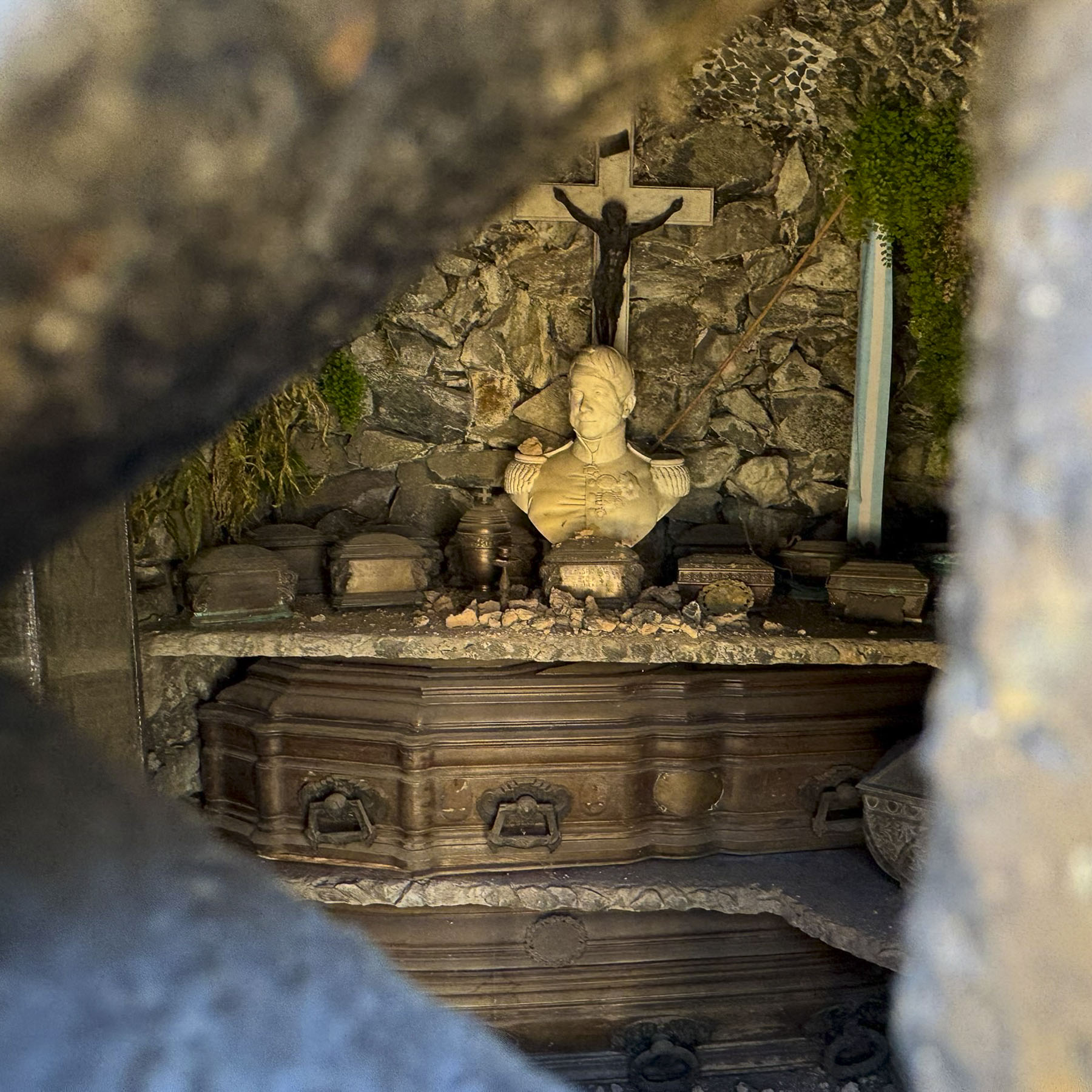
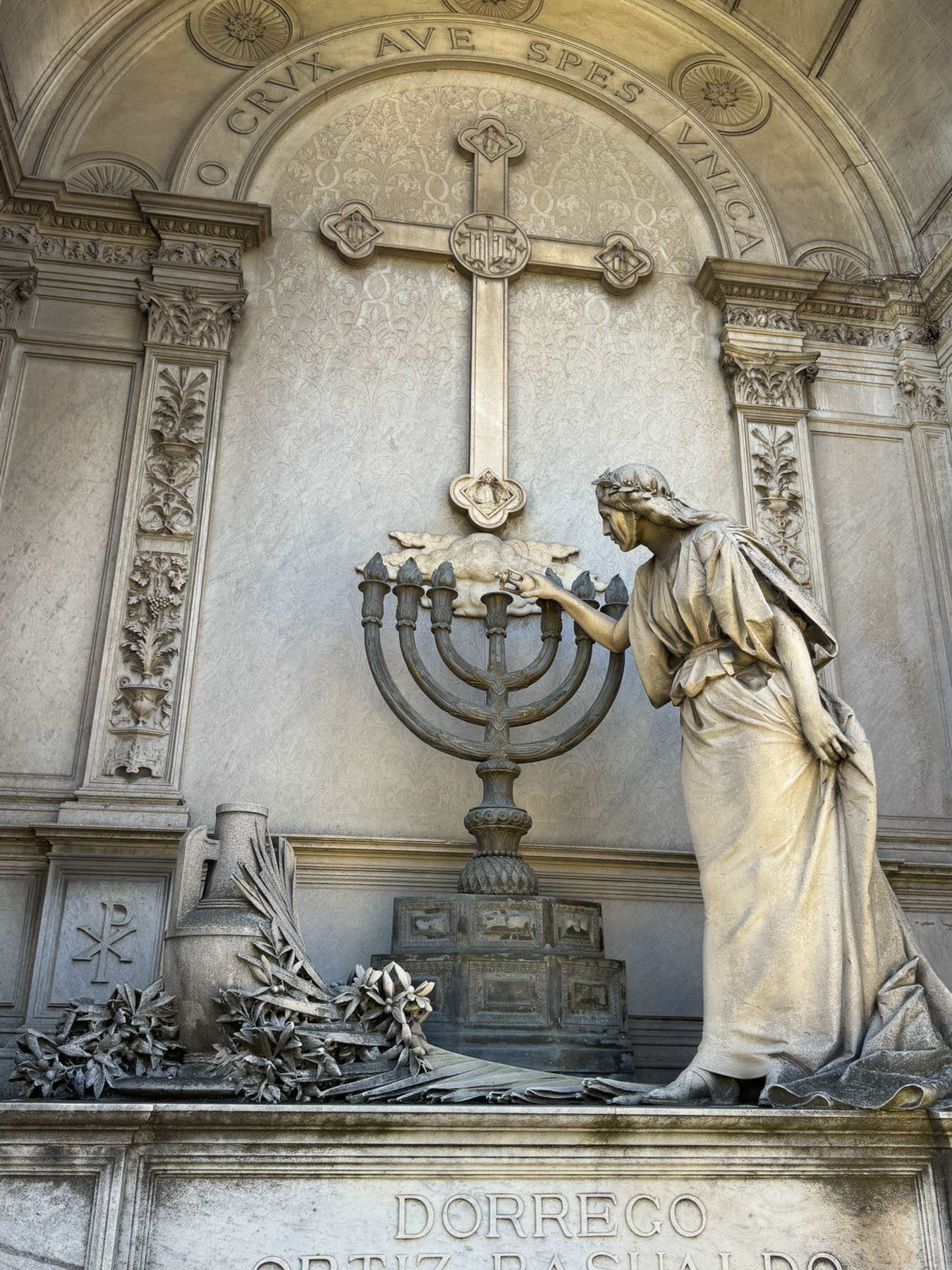
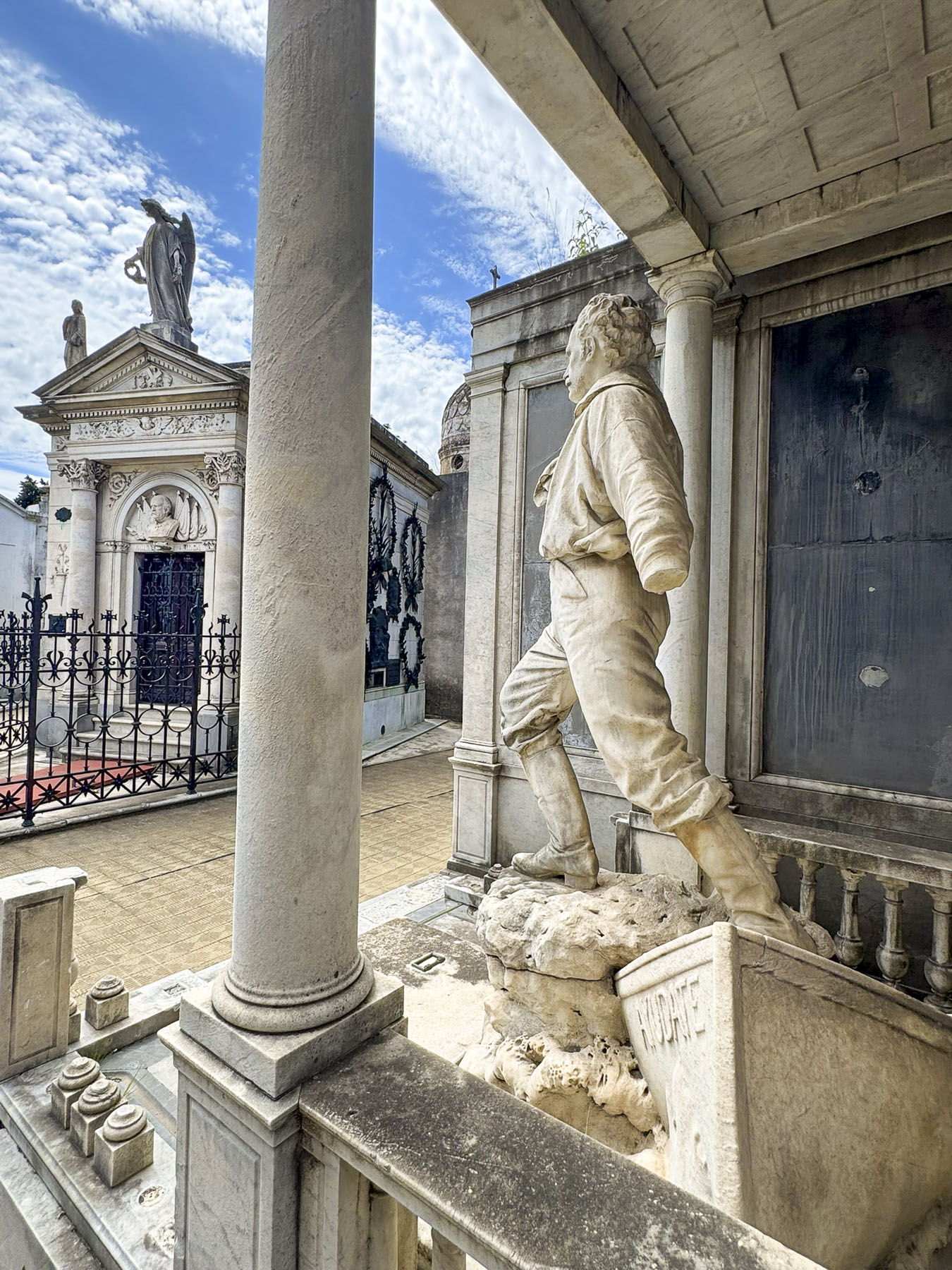
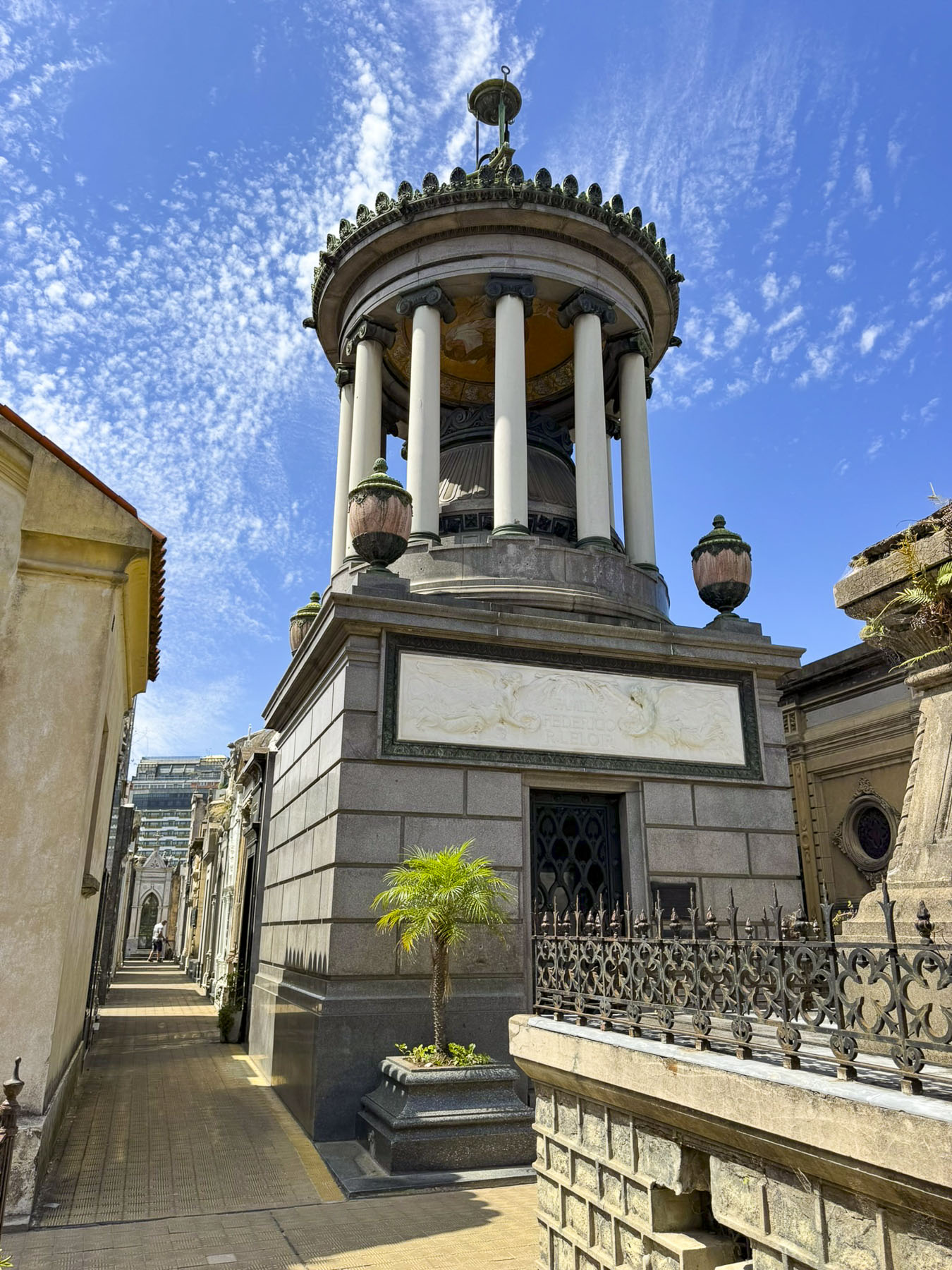
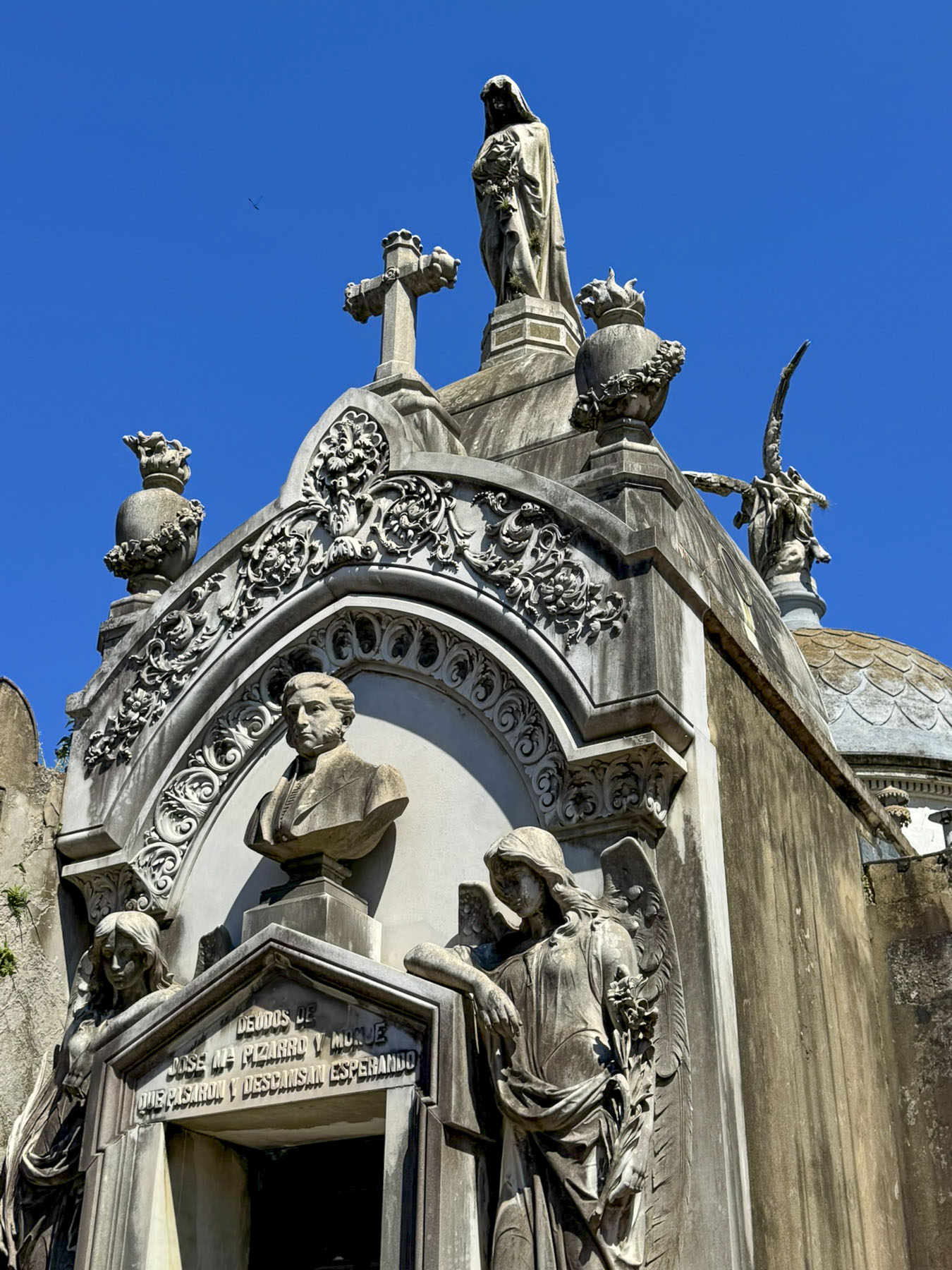
That afternoon we timed our visit to the Cementerio de la Recoleta after the surge of the morning’s tour buses had departed. It’s a huge cemetery with a labyrinth of narrow passages through the grand mausoleums of Buenos Aires’ who’s who of notable citizens and wealthy families.

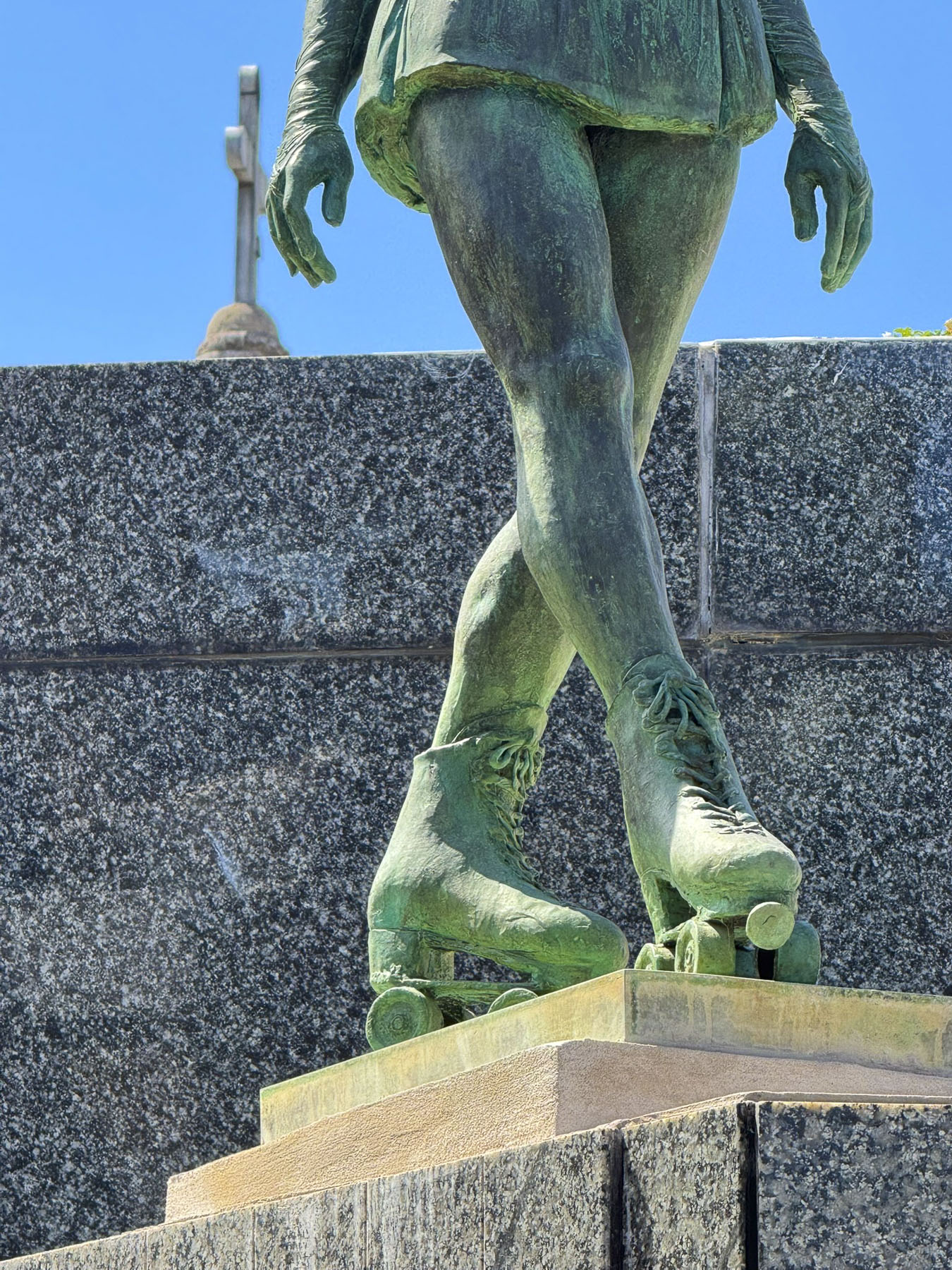
Some were very well kept, while others were under renovation, and a number appeared forgotten, with their doors broken and façades crumbling, as if the family line had ended or a once great fortune had been lost. One was highlighted by a whimsical statue of a woman roller skating atop her own tomb.

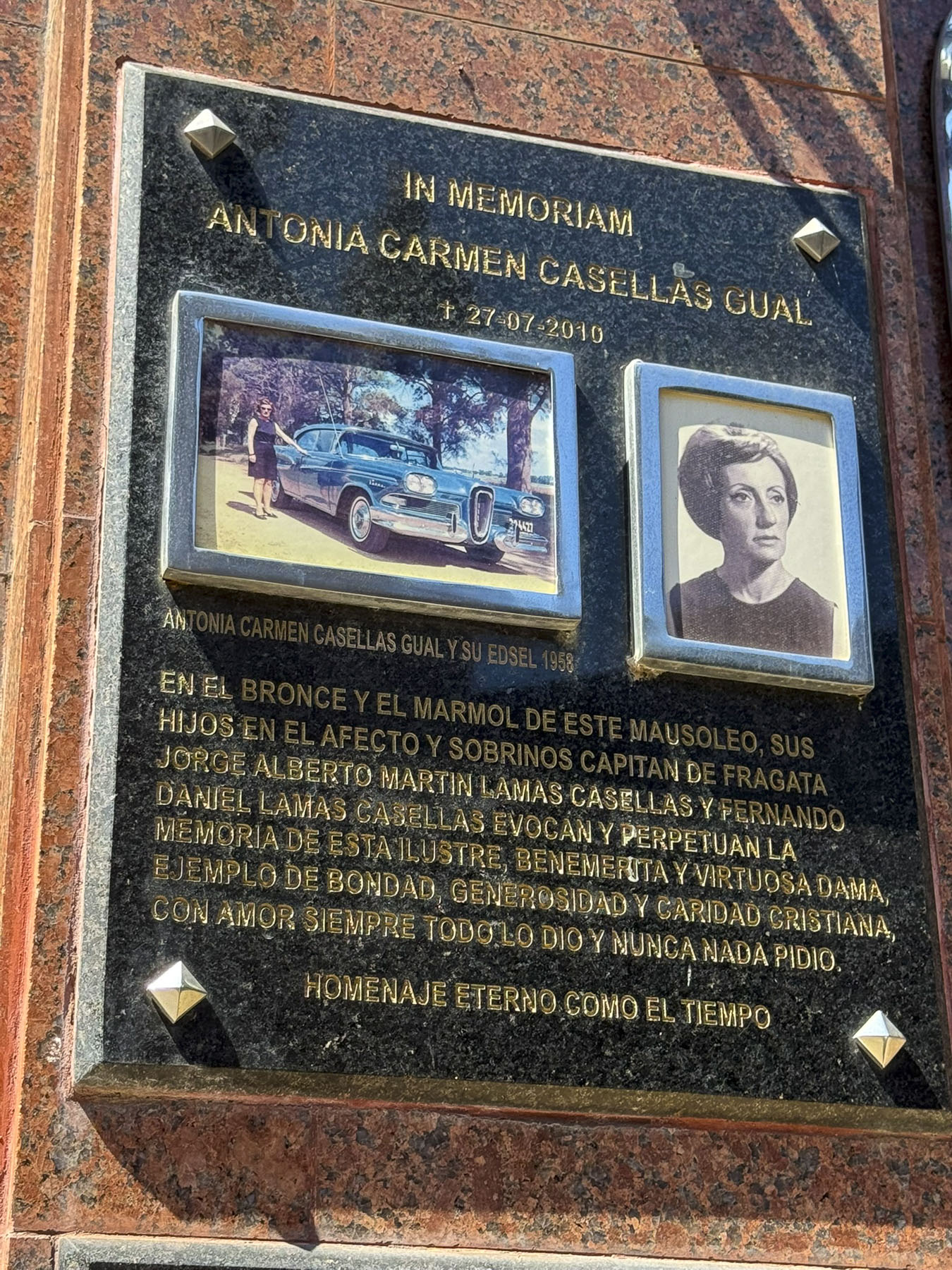
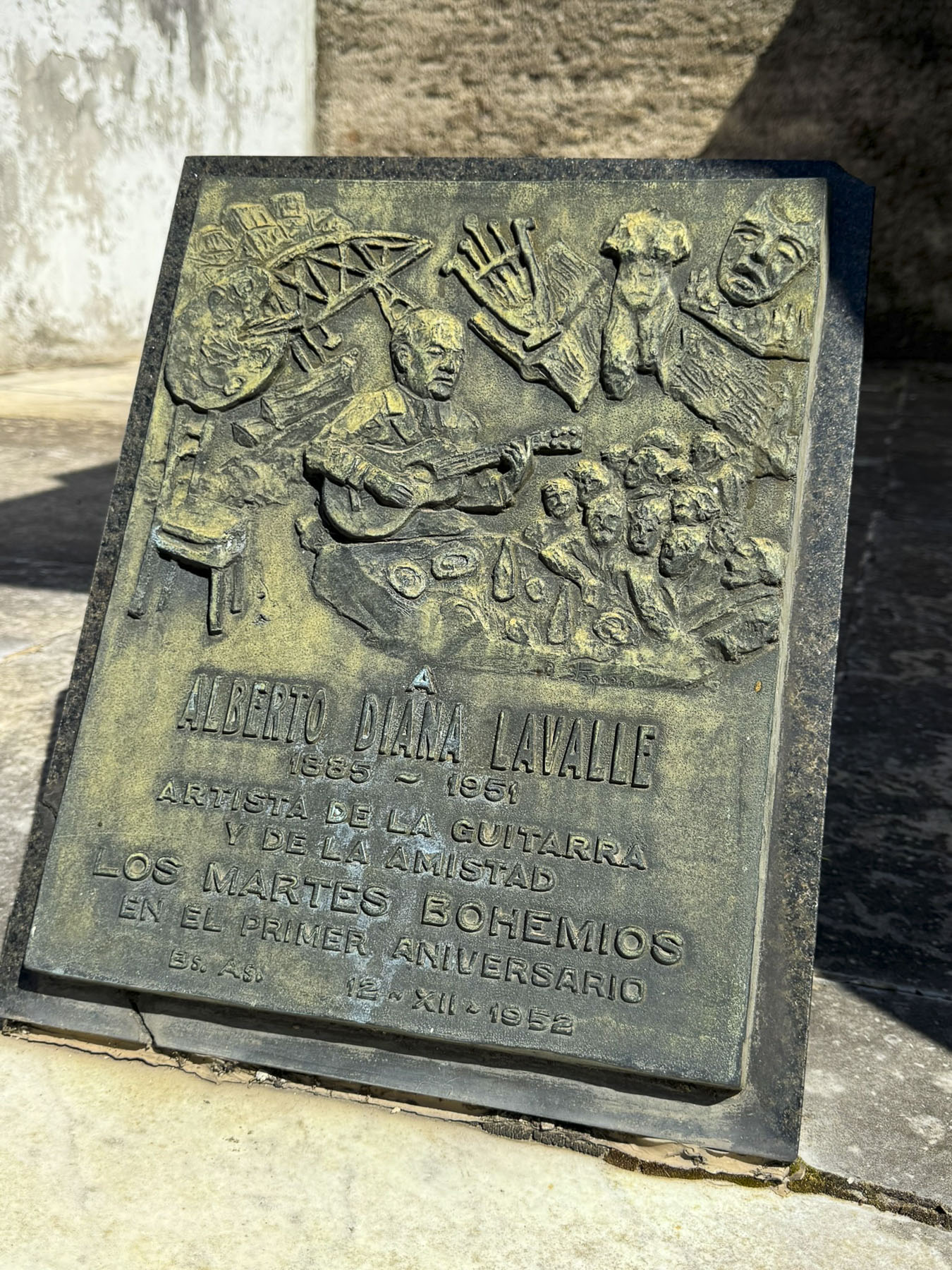
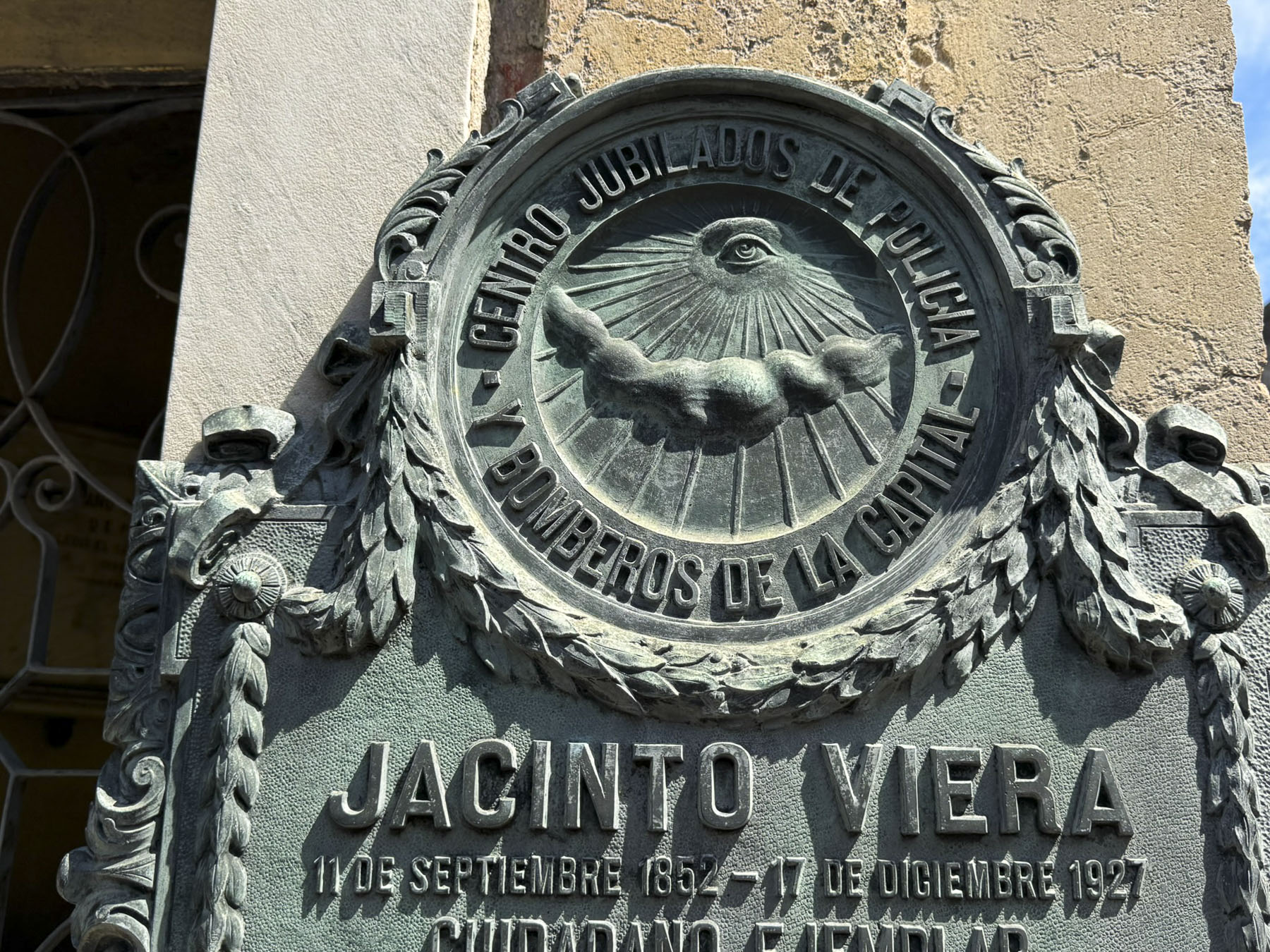
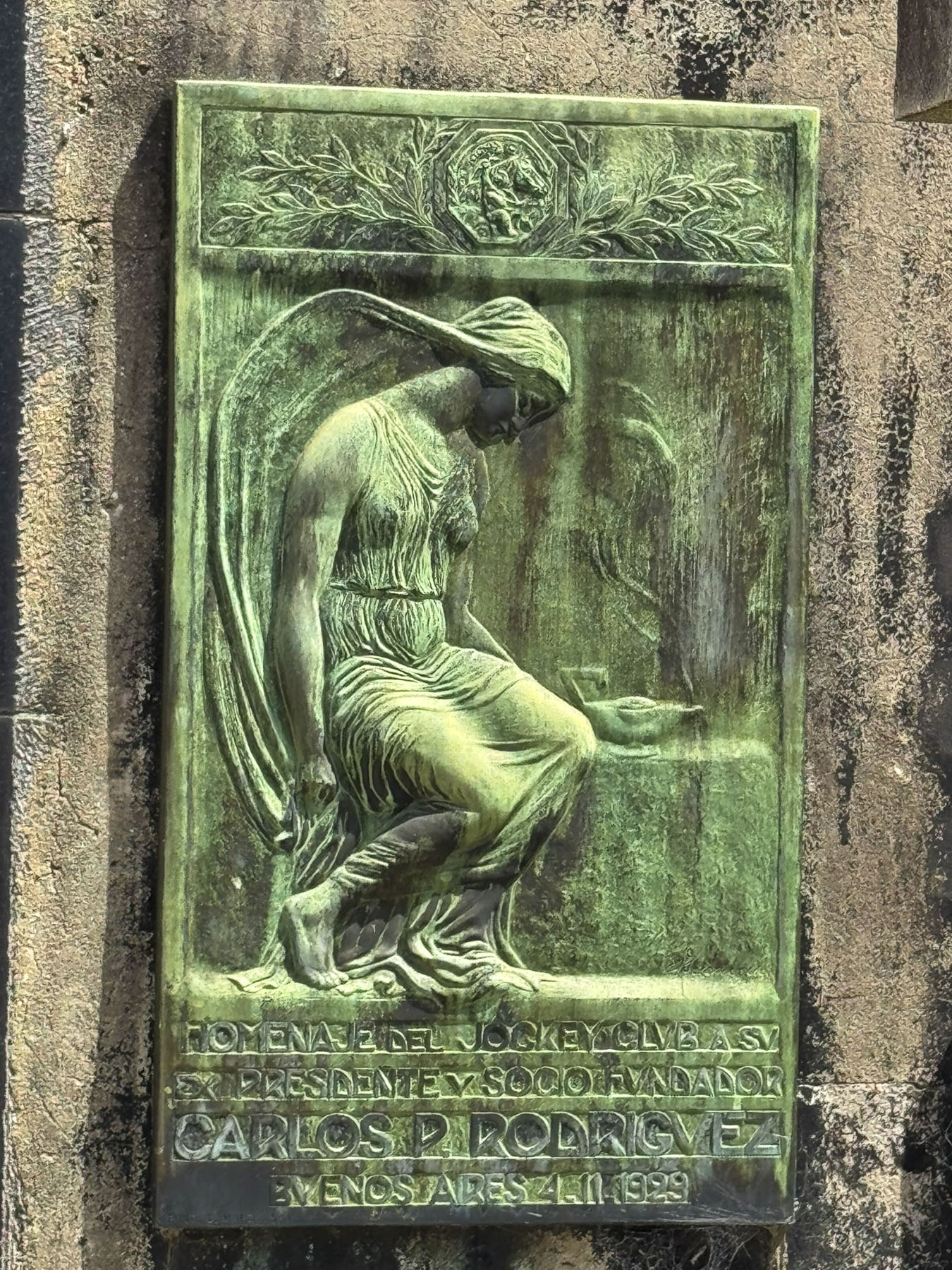
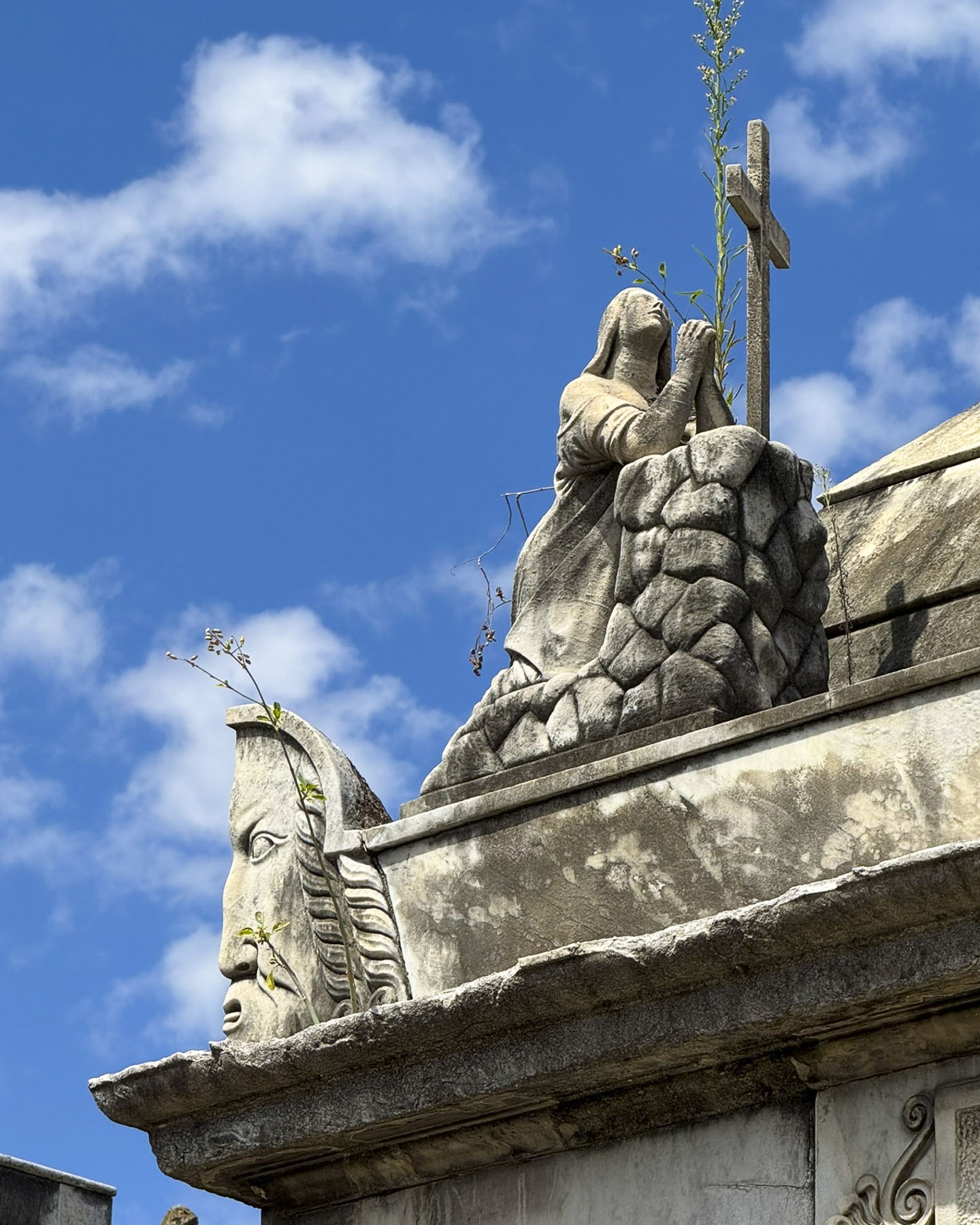
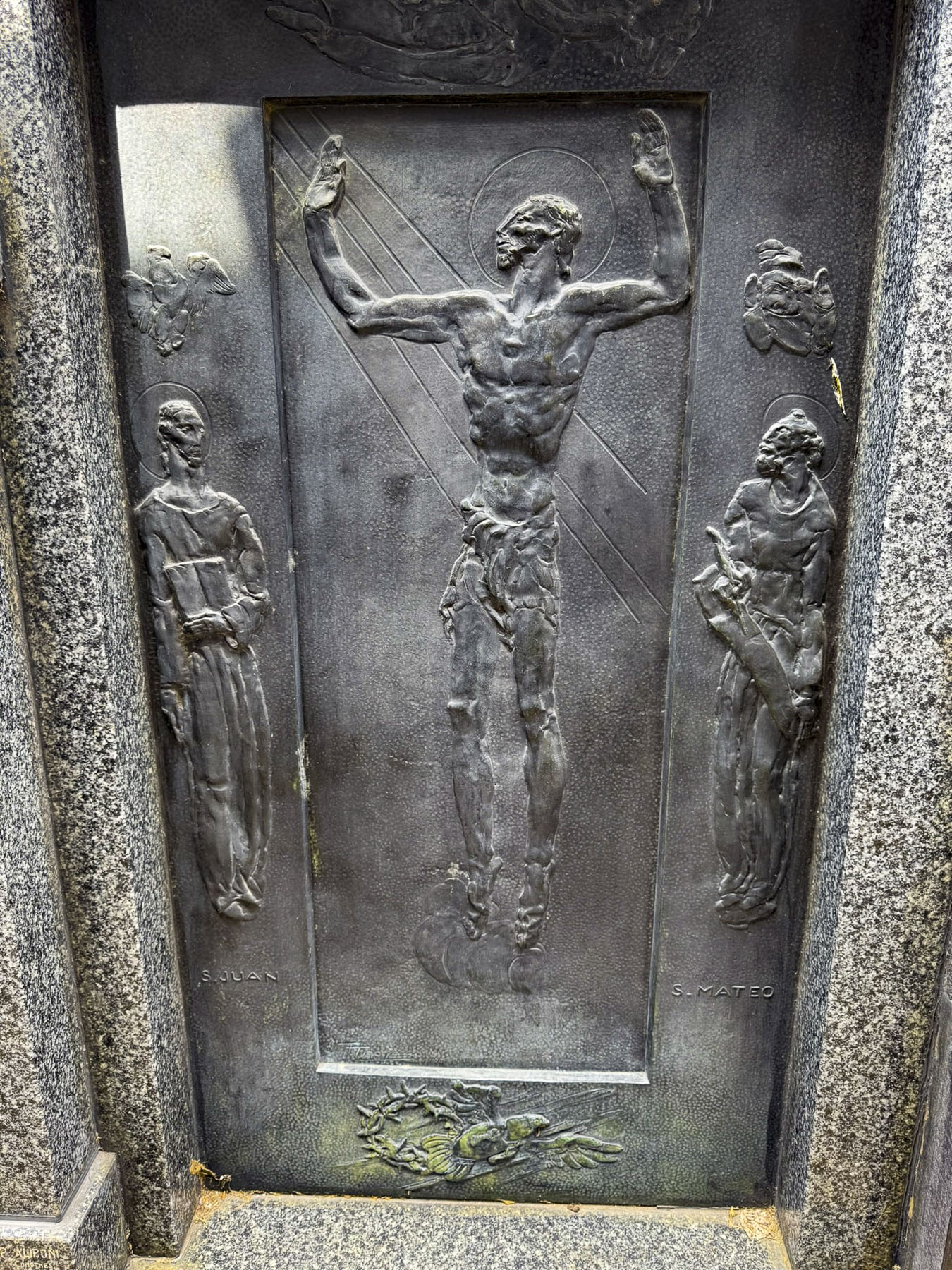
Many had small bronze plaques attached to the side of their tomb, hinting at the deceased’s illustrious career. Several had death masks protruding from the side of their mausoleums. The first one we happened across suddenly as we rounded a corner, and the very life-like stone face protruding from the side of a tomb, literally scared the wits out of me.

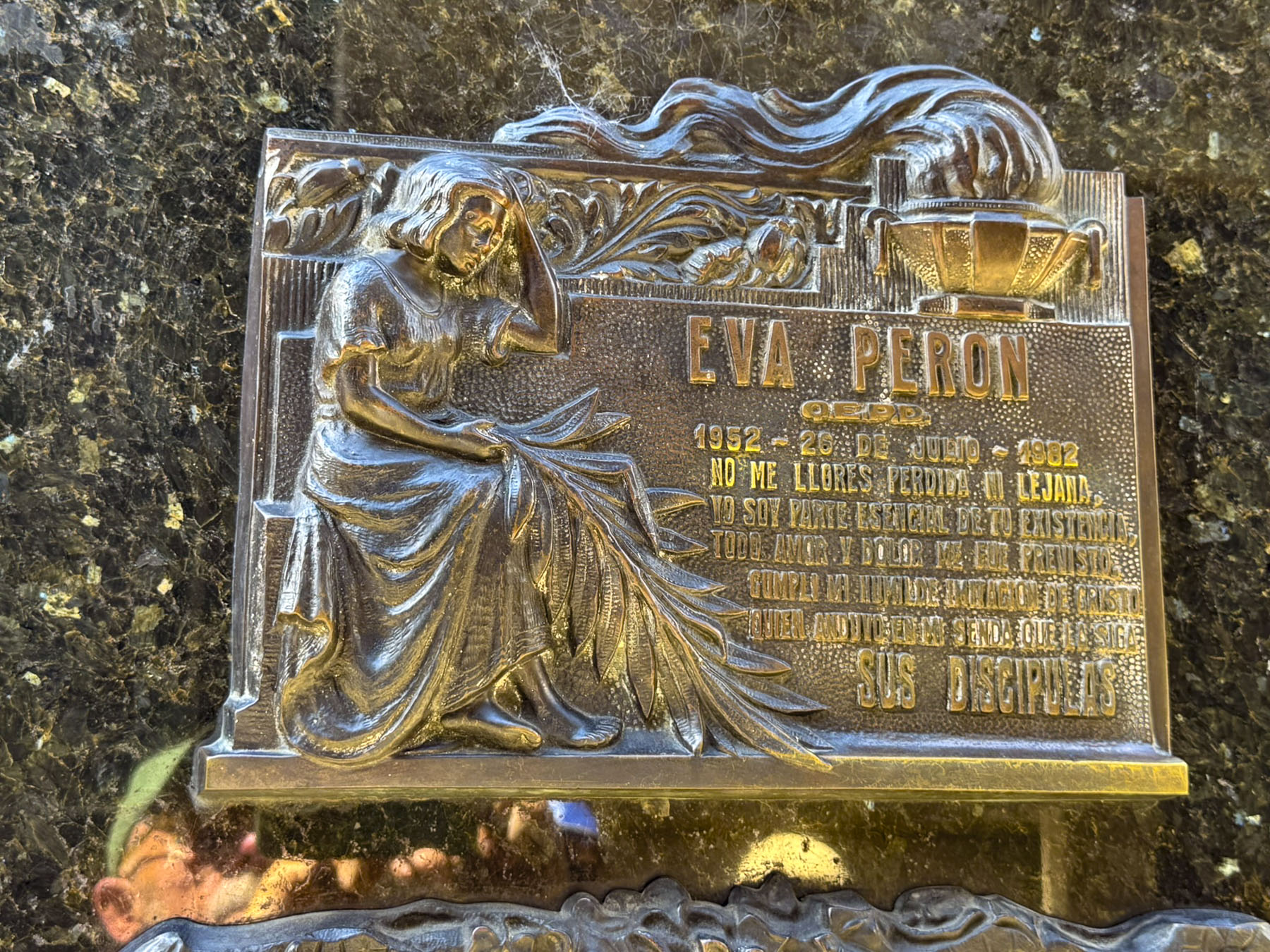
Surprisingly, Evita Peron’s tomb was one of the simplest structures. Immortalized since the Broadway musical “Evita,” by Andrew Lloyd Webber and Tim Rice opened its curtain in 1976, and the following 1996 movie starring Madonna, folks have been intrigued by the controversial legacy of Eva Duarte. It is the rags to riches story of a poor country girl, the illegitimate daughter of a wealthy rancher, who moved at the age of 15 to Buenos Aires and found fame as a radio and film actress, which resonated in the barrios of the “Paris of South America.” She found love at the age of 26, marrying 48-year-old Colonel Juan Perón, in 1945, two years before he was elected President of Argentina.

Passionate and combative, as Argentina’s First Lady she used her influence to champion social justice and worker’s labor rights, and was endeared to the less fortunate who saw her as the voice of the people. Her early death at the age of 33 from cancer saddened the nation and calls were made for her canonization. Flags across the country flew at half-mast for ten days. Blocks around the Presidential Palace were filled with mourners, and an estimated 3 million people watched the horsedrawn caisson carry her coffin through the streets of the city during her state funeral. Her embalmed body in its glass coffin was displayed for two years in her office in the Ministry of Labor building, as plans for a memorial that was taller than the Statue of Liberty were made.

After a 1955 military coup Juan Perón fled to exile in Spain, and the new military dictatorship secretly disappeared Evita’s corpse for 16 years. First it was secreted away in various locations across Buenos Aires until one “officer mistakenly shot his pregnant wife while guarding the corpse in his attic.”  The military dictatorship then enlisted the “covert help of the Vatican” to hide her body away in a crypt in Milan, Italy’s famous Cimitero Monumentale, for 16 years under a false name. In protest “Where is the body of Eva Perón?” was spray painted on walls all across Argentina.

In 1971, Evita’s body was exhumed and flown to Spain where Juan Perón and his third wife allegedly kept the “coffin on display in their dining room.” In 1973 Peron returned to the Presidency of Argentina, with his third wife as Vice President, but died a year later. The saga continued to get weirder when an anti-dictator revolutionary group, the Montoneros, “stole the corpse of General Pedro Eugenio Aramburu, whom they had also previously kidnapped and assassinated,” to use as a bargaining chip to get the third Mrs. Peron to return Evita’s body to her beloved country. Subsequent governments have gone to great lengths to secure Evita’s hopefully final resting place, in a subterranean tomb with trap doors and false caskets to deter grave robbers, within her father’s Duarte family mausoleum in Cemeterio de la Ricoleto.

Across the street was the Gomero de la Recoleta – Árbol Histórico, a majestic 225-year-old rubber tree planted in 1800. Over the decades its huge buttress trunk has grown to support a 50m (164ft) wide canopy, with tree limbs so long that wooden poles and sculptures are needed to support their weight.

Behind it, we found a reprieve from the hot February afternoon, and an early dinner at Bartola, which served an excellent lemonade, and has pleasant décor along with a rooftop terrace.

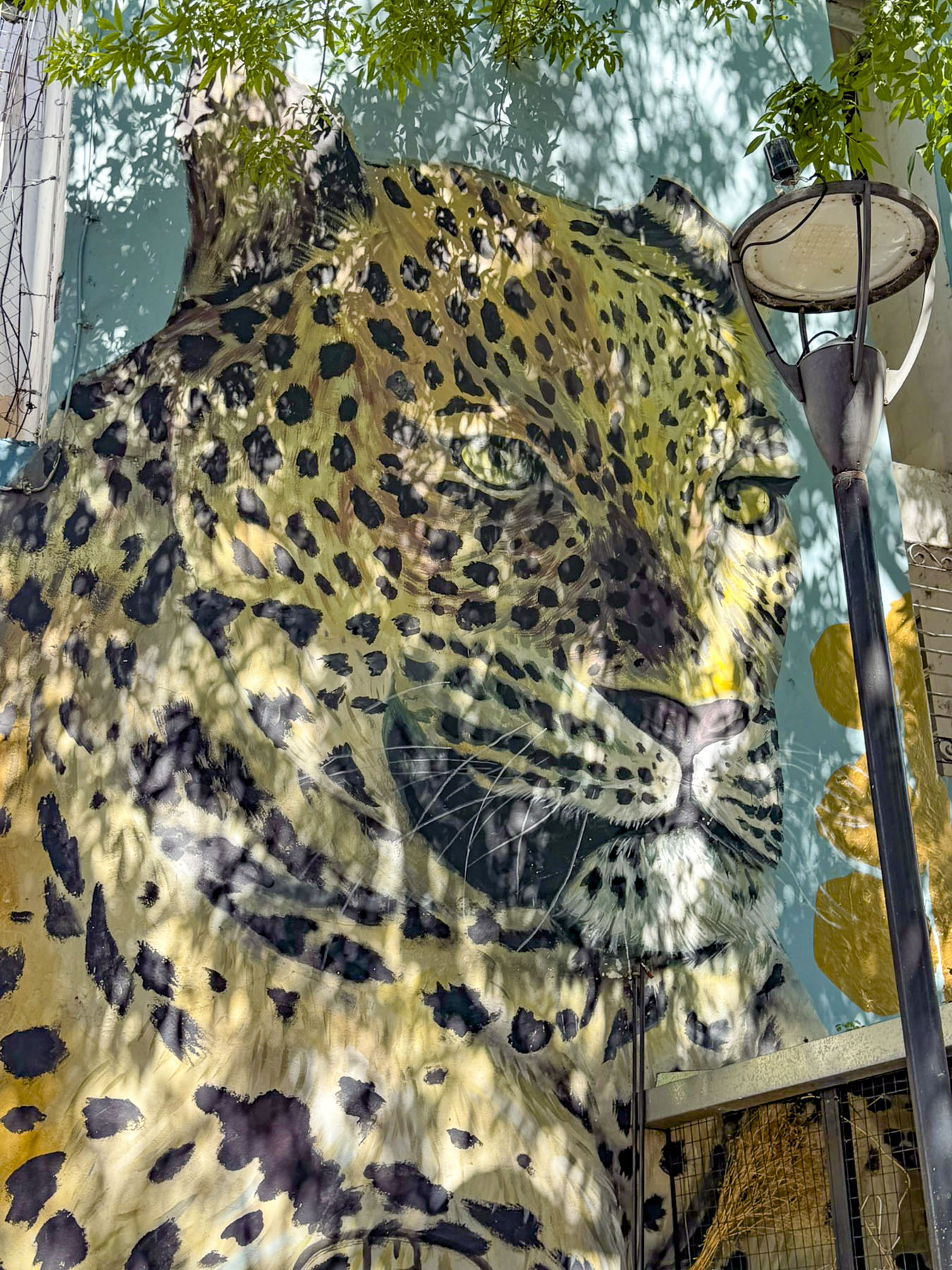
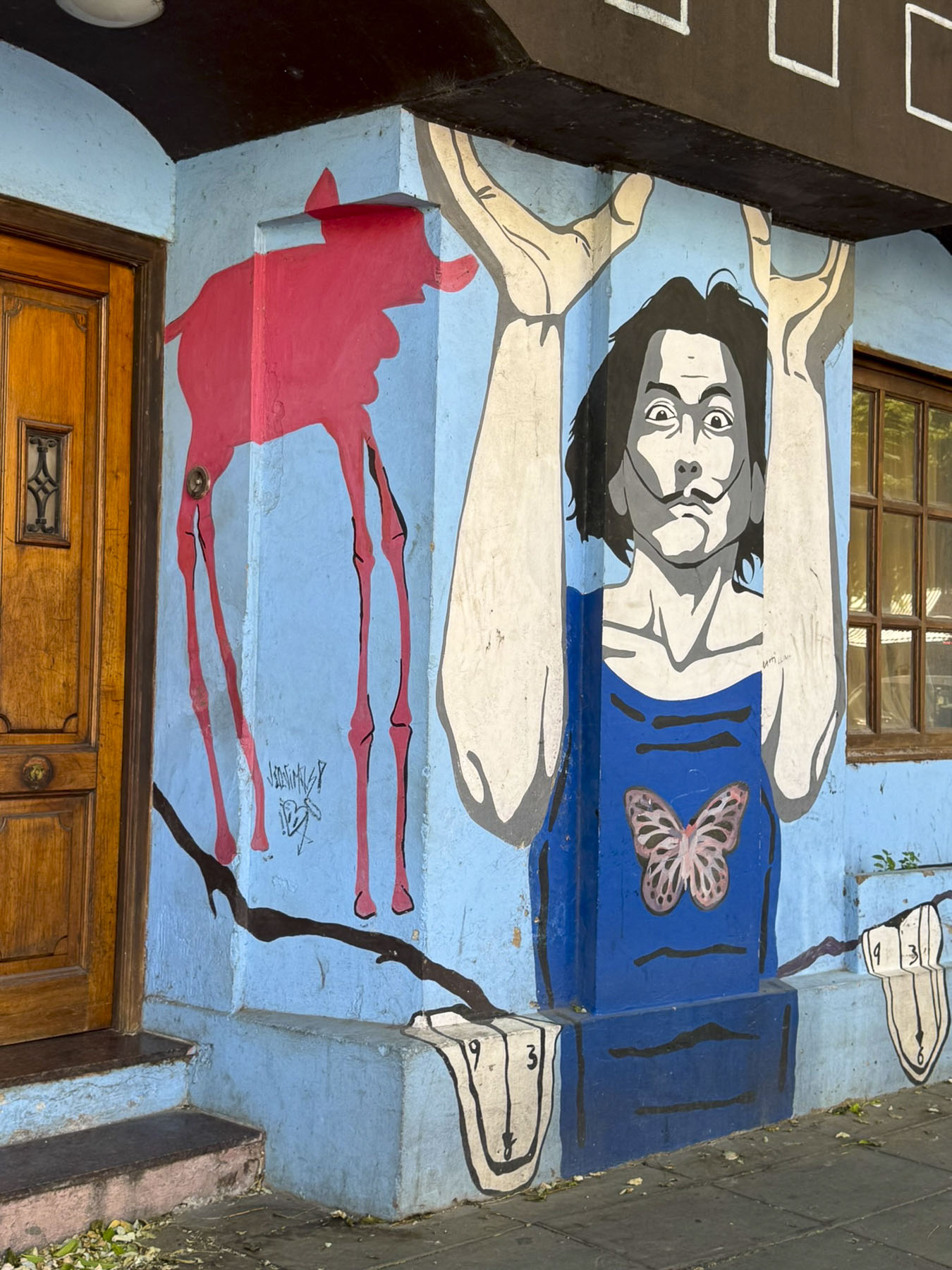
Buenos Aires is full of interesting street murals, and we spent the next morning wandering about searching for them.

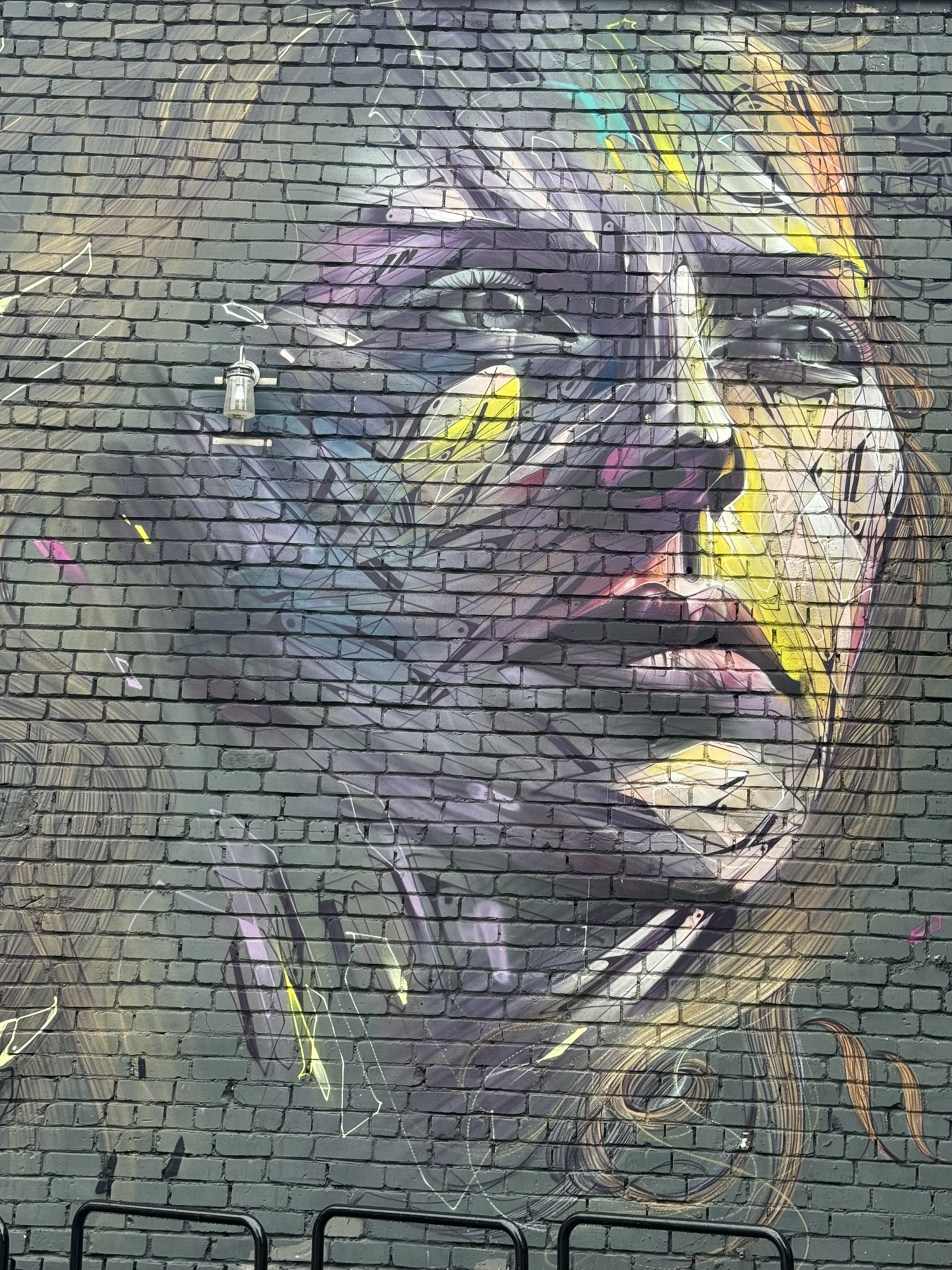
That afternoon, after exploring farther afield from our hotel, we took a rideshare across the city to La Boca, a colorful neighborhood that is also the location of La Bombonera stadium, home of the world-famous Boca Juniors football club, the team on which some of Argentina’s legendary football players first played. Our route eventually took us below the elevated portion of Rt1 amidst a forest of concrete pilings painted with a vast array of creative street murals in an area named Silos Areneros. We found the area intriguing, but a tad sketchy, so we kept going.

La Boca was originally Buenos Aires’ first port at the mouth of the Riachuelo River, as it flows into the Río de la Plata. It has always been a bustling working-class neighborhood, “filled with all kinds of people, dockworkers, fishermen, musicians, prostitutes, thieves, socialists, anarchists, and artists.” But it grew substantially with the arrival of new immigrants in the 1800s and early 1900s.  Hastily constructed tenements called conventillos were built with galvanized metal walls and roofs and brightly painted with whatever left over colors were available from the shipyards, in an effort to cheer up the area.
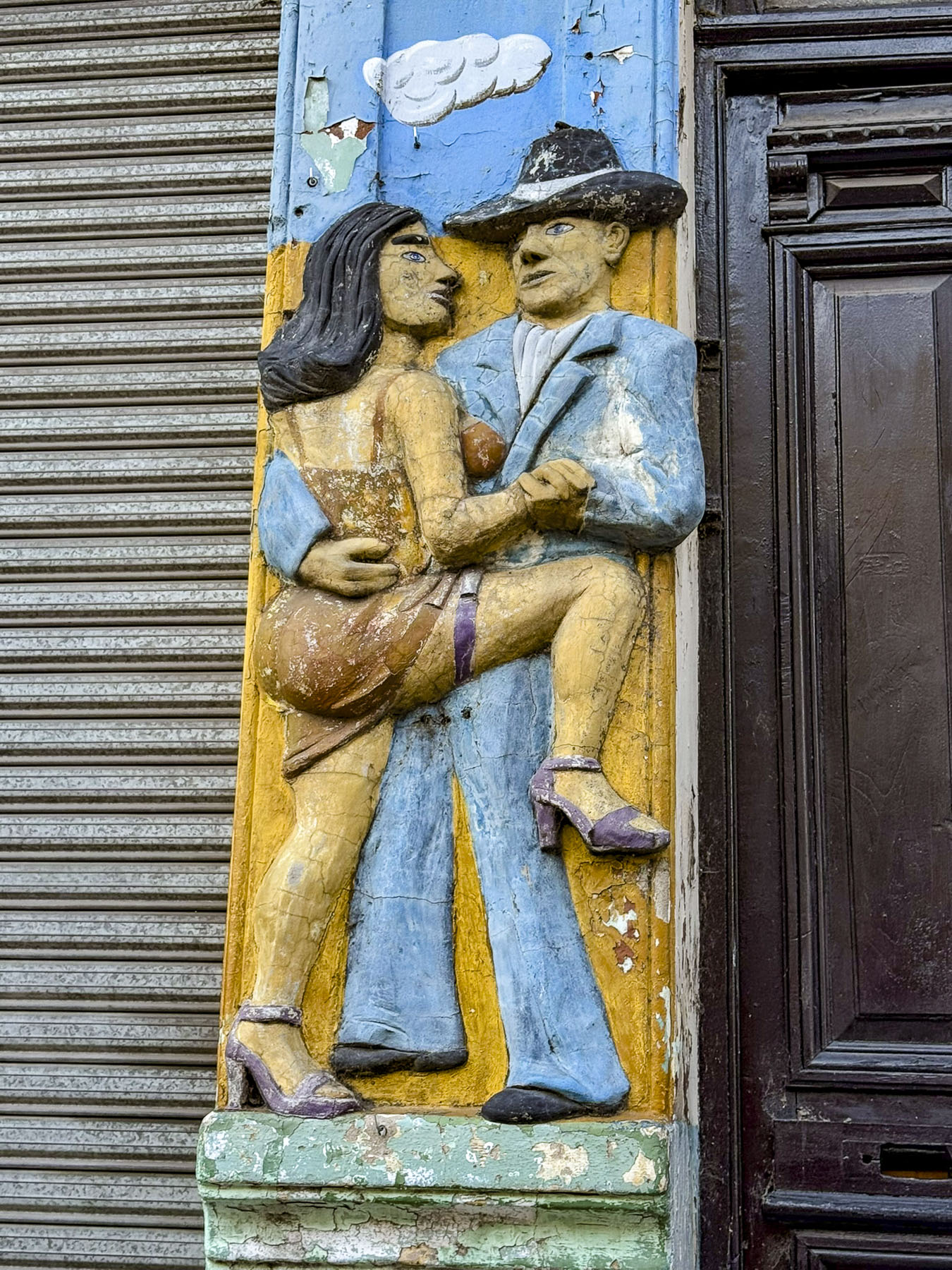
La Boca is one of the city’s vibrant neighborhoods where tango originated on its streets during the hot summer months and was perfected in the bars along Caminito and Magallanes during winters of the late 1800s.

Today, satirical figures adorn many of the balconies along Caminito and the adjacent streets, and poke fun at politicians, rival football teams or celebrities. Though we think you need to be Argentinian to fully appreciated the humor behind them.

A mural at the end of Caminito commemorates the Bomberos Voluntarios de La Boca (La Boca Volunteer Firefighters), Buenos Aires’ first fire brigade, formed in 1884.

Sadly, we found the wonderfully colorful area was oversaturated with cheap tourists’ shops heavily devoted to everything football, especially Lionel Messi’s #10 blue and white football shirt, which was available everywhere.

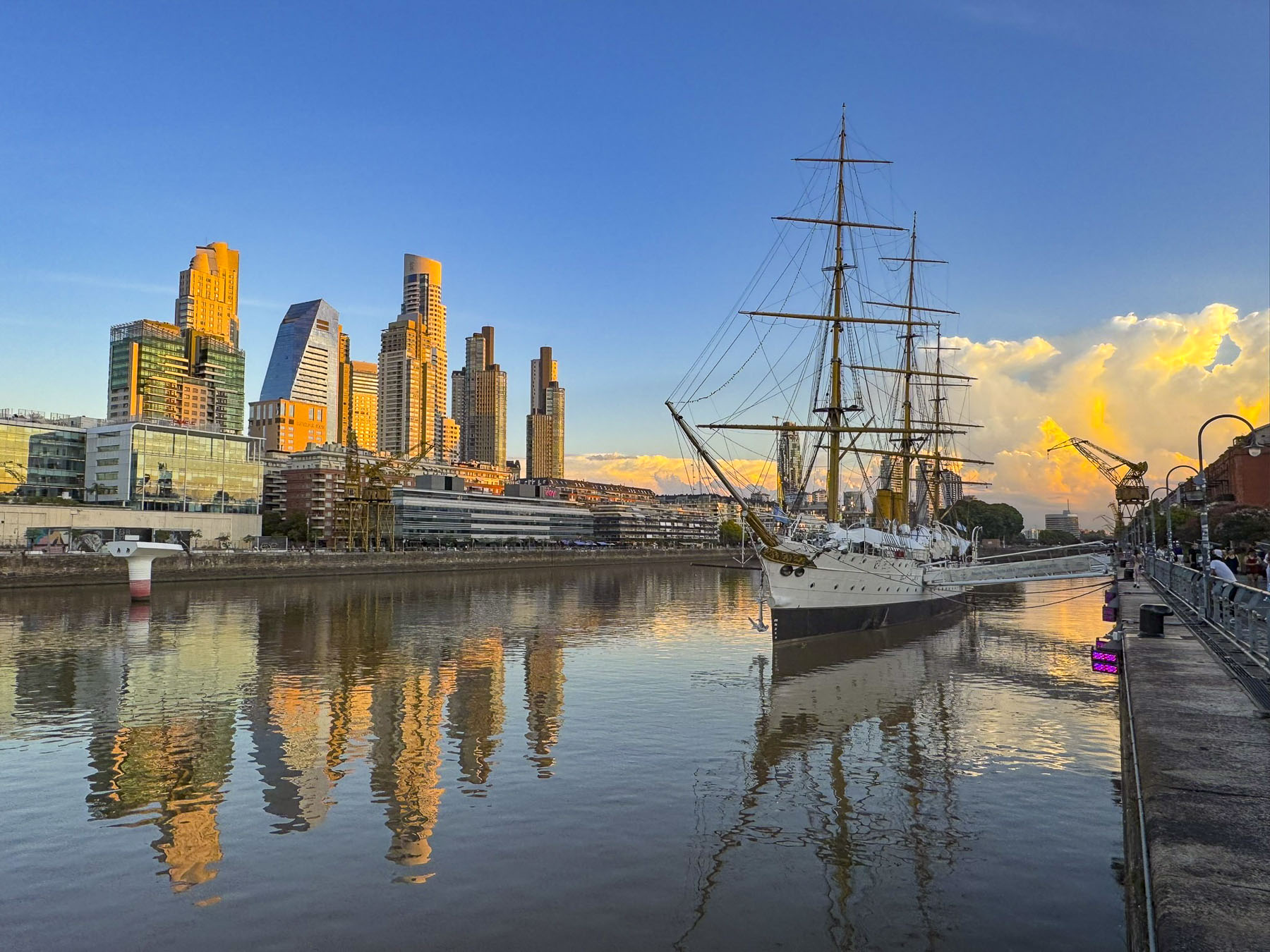
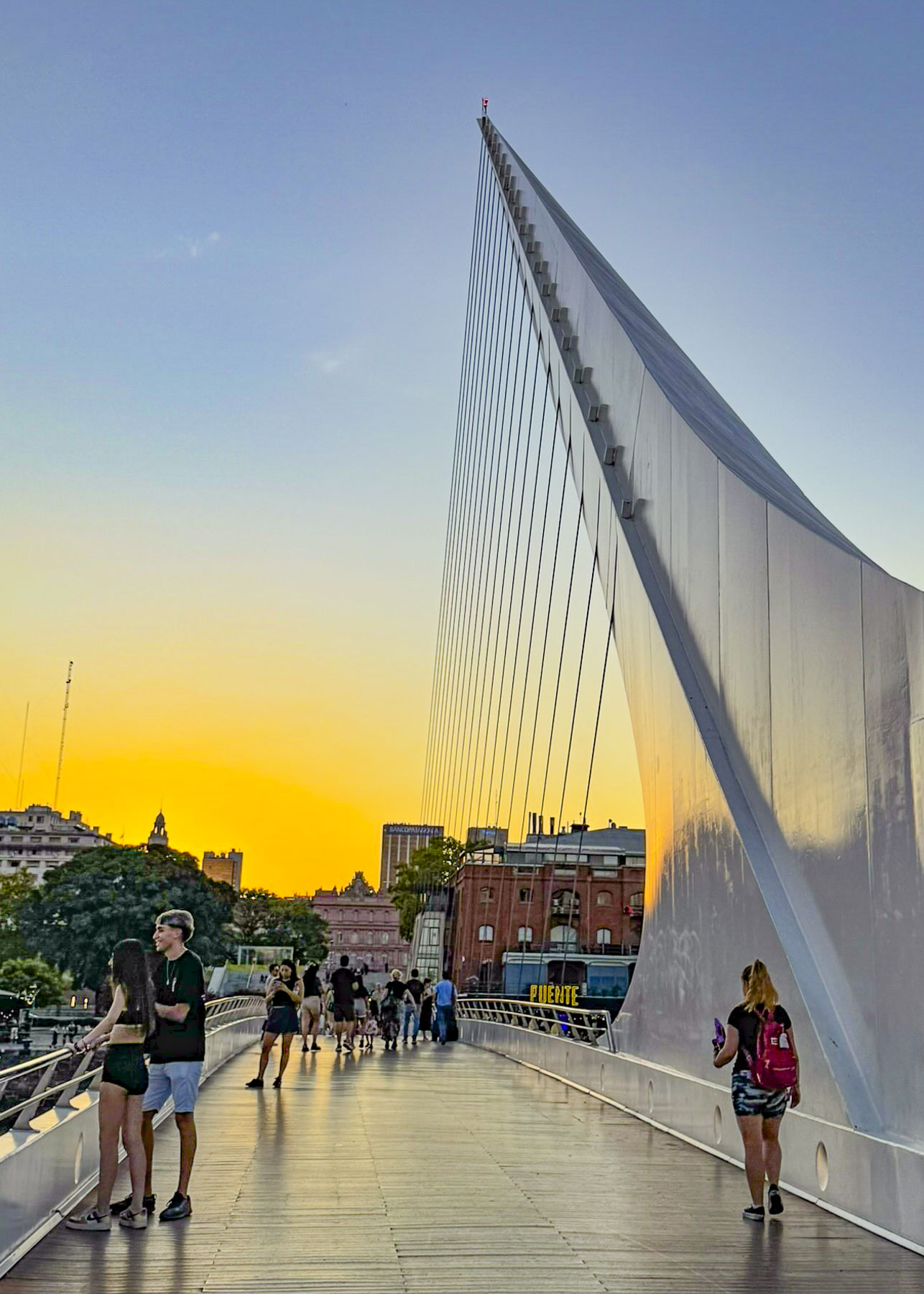
Afterwards we headed to the dockside area of Puerto Madero. Built in the late 18th century the port helped support Argentina’s economic growth during WWI and WWII as the country’s beef and food stocks were sent to a war-torn Europe. But the viability of the port declined as the size of merchant ships became larger and containerization took hold, until eventually the port was abandoned for many decades. A masterplan for the port’s redevelopment was realized in 1989 with plans to renovate some of the old warehouses along one side of the quay into restaurants and shops, while land on the other side would be developed into a mixed-use area of offices and residential towers, with the two sides connected by pedestrian-only bridge.

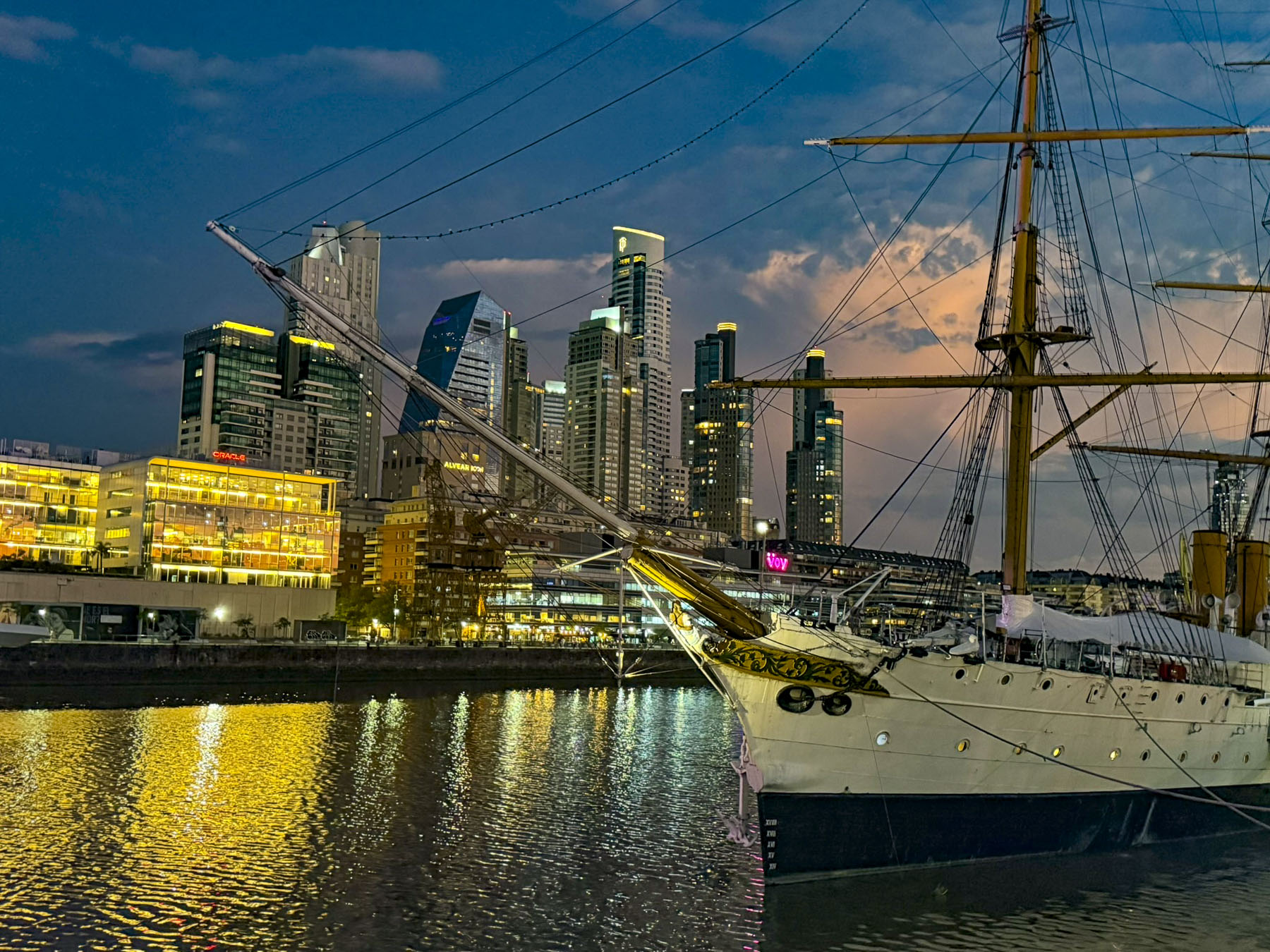
The redevelopment along the Puerto Madero waterfront was a great success and created a strikingly beautiful, new waterfront neighborhood. Its reflective skyline and restaurants along the old docks continue to be destinations for both locals and tourists. Us included! It was a great place to people watch as folks strolled along the quay and over the footbridge. Towering cumulonimbus clouds glowed with golden light, as the sunset silhouetted the “Presidente Sarmiento,” an old three-masted sailing ship that is now a nautical museum.

We both grew up in the suburbs of New Jersey and worked in New York City for a while, but living in Manhattan never appealed to us. It wasn’t until we started traveling and experienced living in some foreign cities through short-term rentals that we grew to appreciate the vitality that city life offers.

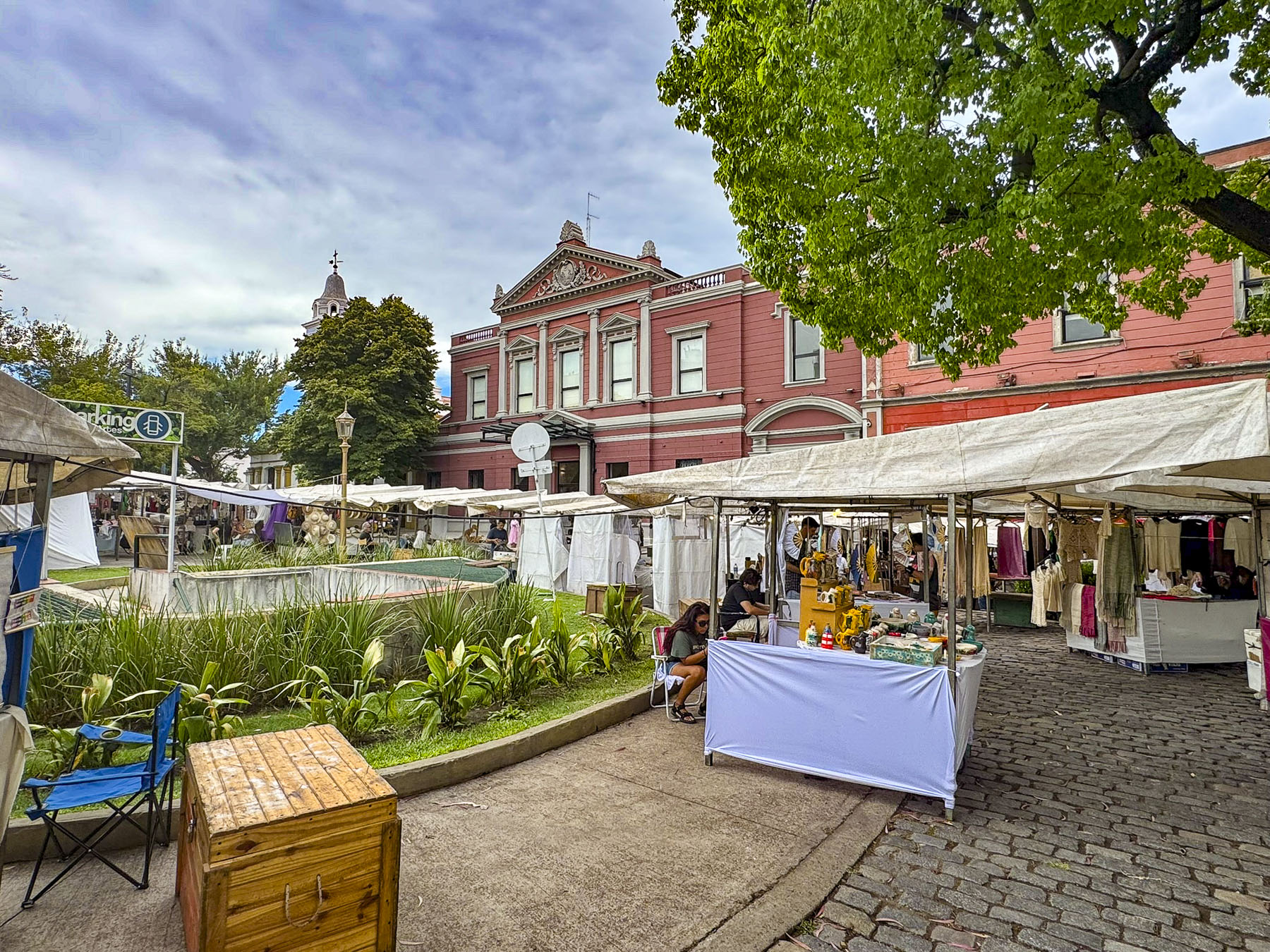
Mysteriously, overnight the Parque Intendente Torcuato de Alvear in front of the historic Centro Cultural Recoleta building was transformed into a sprawling art and crafts festival, that to our surprise happens every Saturday and Sunday. Artisans’ tents and tables lined nearly every path through the sprawling park that was filled with folks shopping and buskers playing to the crowd. This was probably the best crafts market we’ve been to, as the quality and variety of items offered were very impressive. If our suitcases had been bigger we would have made lots more purchases.

For many years the Cultural Center was repainted frequently with colorful murals, which added a nice flair to its otherwise stoic facade. Sadly, this policy was discontinued in 2024, and the building is now covered in a monochromatic “Pompeyan Red.” The decision has received a mixed public reaction, but hopefully the verdict will be reversed in the future. The historic 1732 building was originally the convent of the Recoleto monks, for whom the Recoleta neighborhood is named, as well as part of Our Lady of Pilar Basilica, the second oldest church in Buenos Aires. Over the decades as the influence of the church waned after Argentina’s 1810 May Revolution the building was used as a hospital, military barracks, asylum, and an art school before being renovated into an exhibits and events space in the 1980s.  

That afternoon the tree lined blocks around Plaza Serrano and Plaza Armenia in the charming Palmero Soho neighborhood were so different from the high-rise towers of Recoleta, and reminded us of Barcelona & Madrid, with the wonderful mix of sidewalk cafés, along with trendy shops. Colorful street murals brightened many of the narrow alleys.

Across from Plaza Armenia we passed the Las Petunias restaurant which was full of lively diners at lunchtime.  But we continued our wanderings and returned around 15:00 when the restaurant was quieter, though there were still enough other people dining to make it a nice experience. We shared Los Tablones de Carnes for two. The grilled meats were excellent, and it was the best parrillada we had during our stay in Buenos Aires.

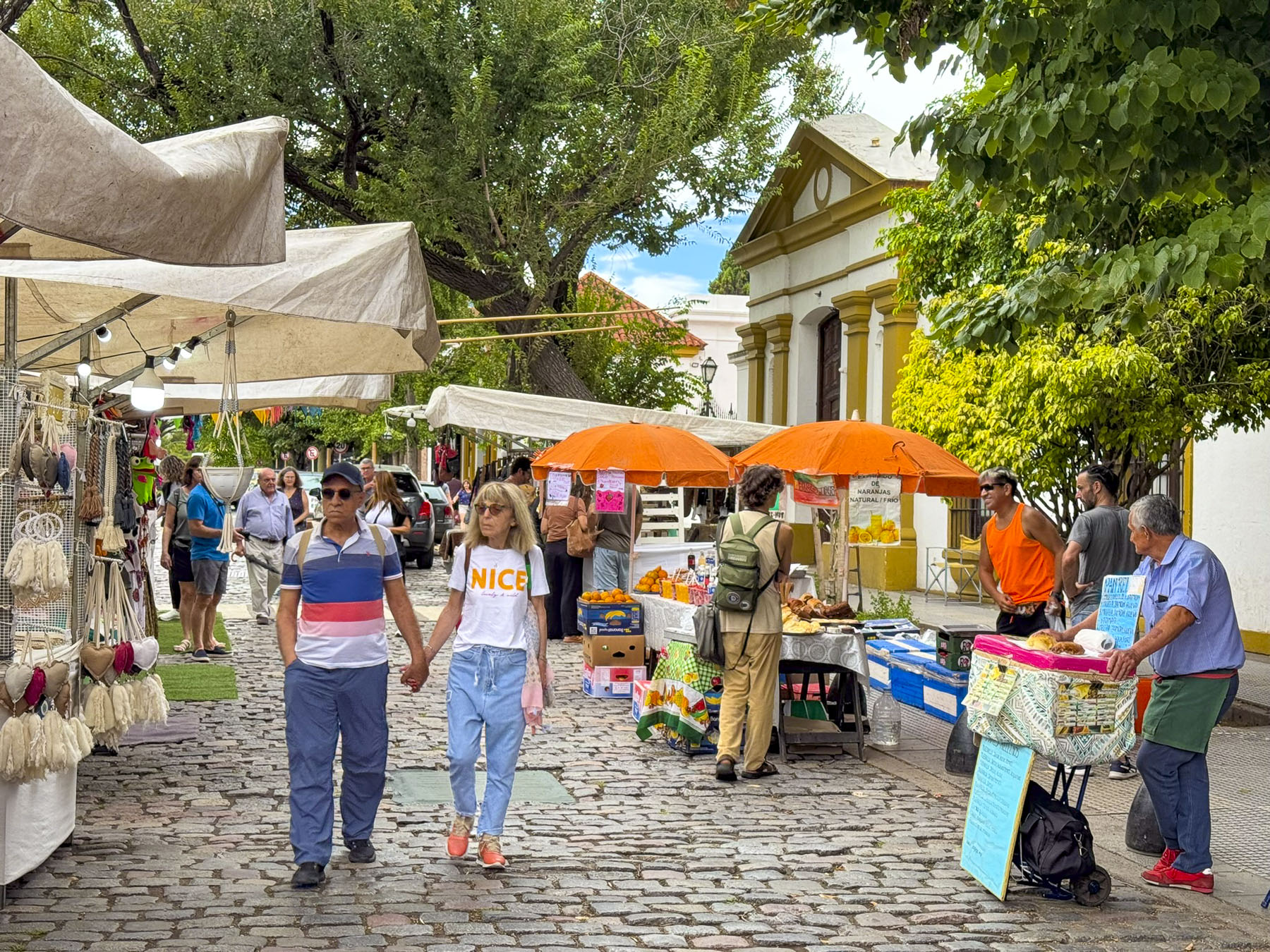
Sunday, we headed to the Feria de San Telmo, a weekly street fair that spans eleven blocks of Av. Defensa, a street known for its antique stores and art galleries. San Telmo is one of the oldest neighborhoods in Buenos Aires and has striven to retain its 19th and early 20th century character with well-preserved buildings.

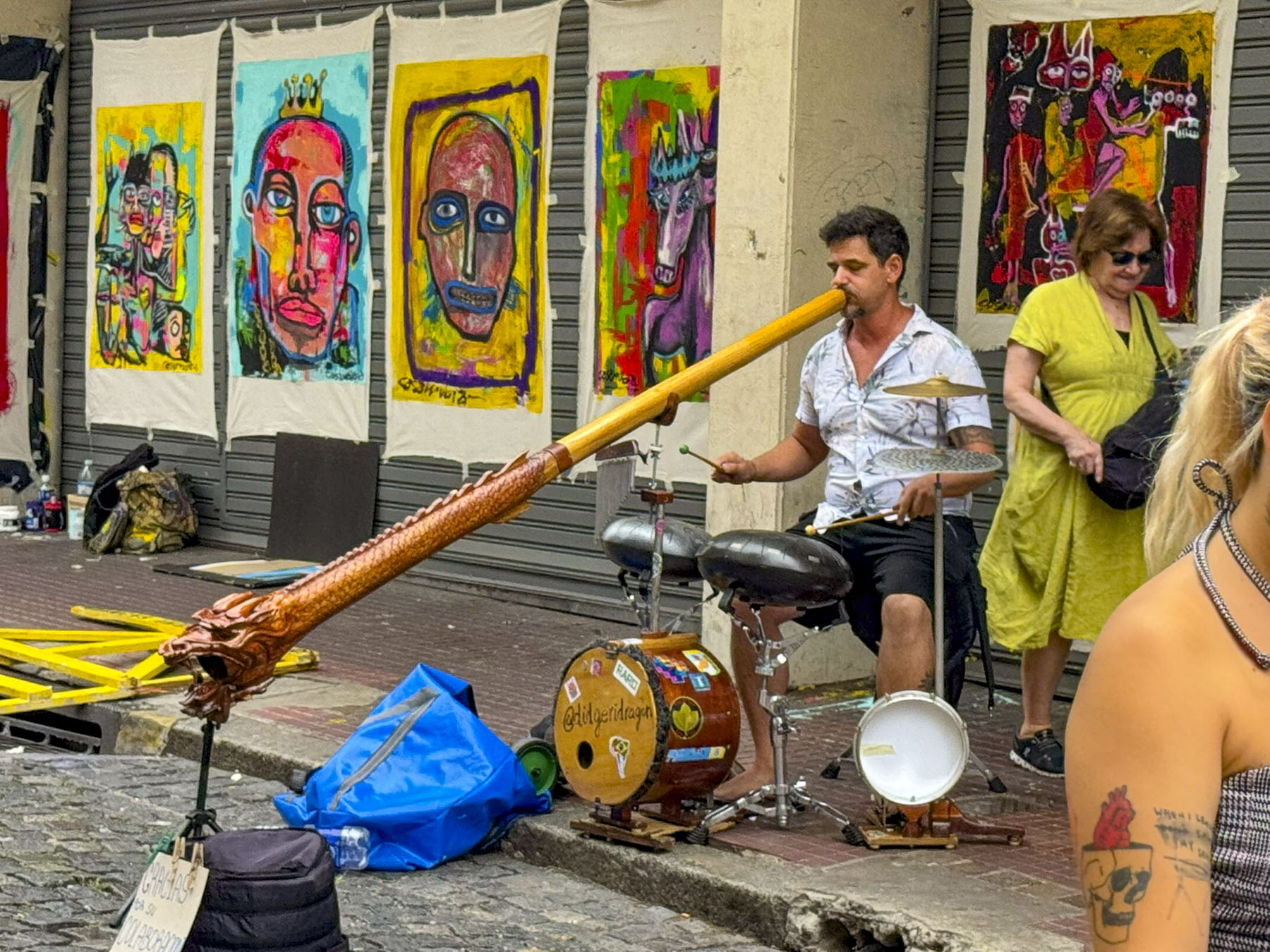
The street was full of activity, but the feira was really more like a flea market featuring clothing and everyday items with only a handful of artists’ and craftsperson’s tables mixed in between. Buskers worked the street corners, and a puppeteer dazzled a young audience. Occasionally a street mural graced a side street.

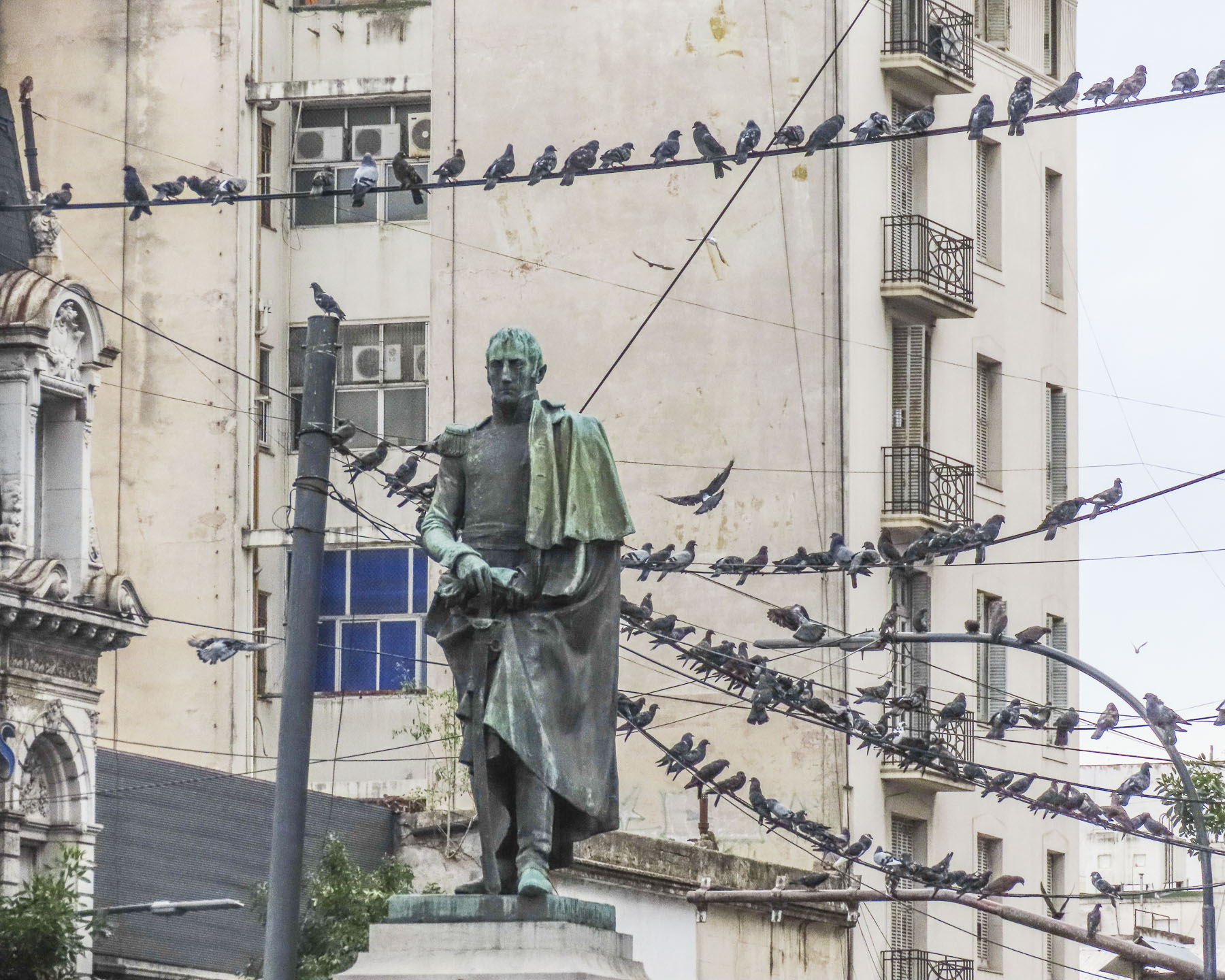
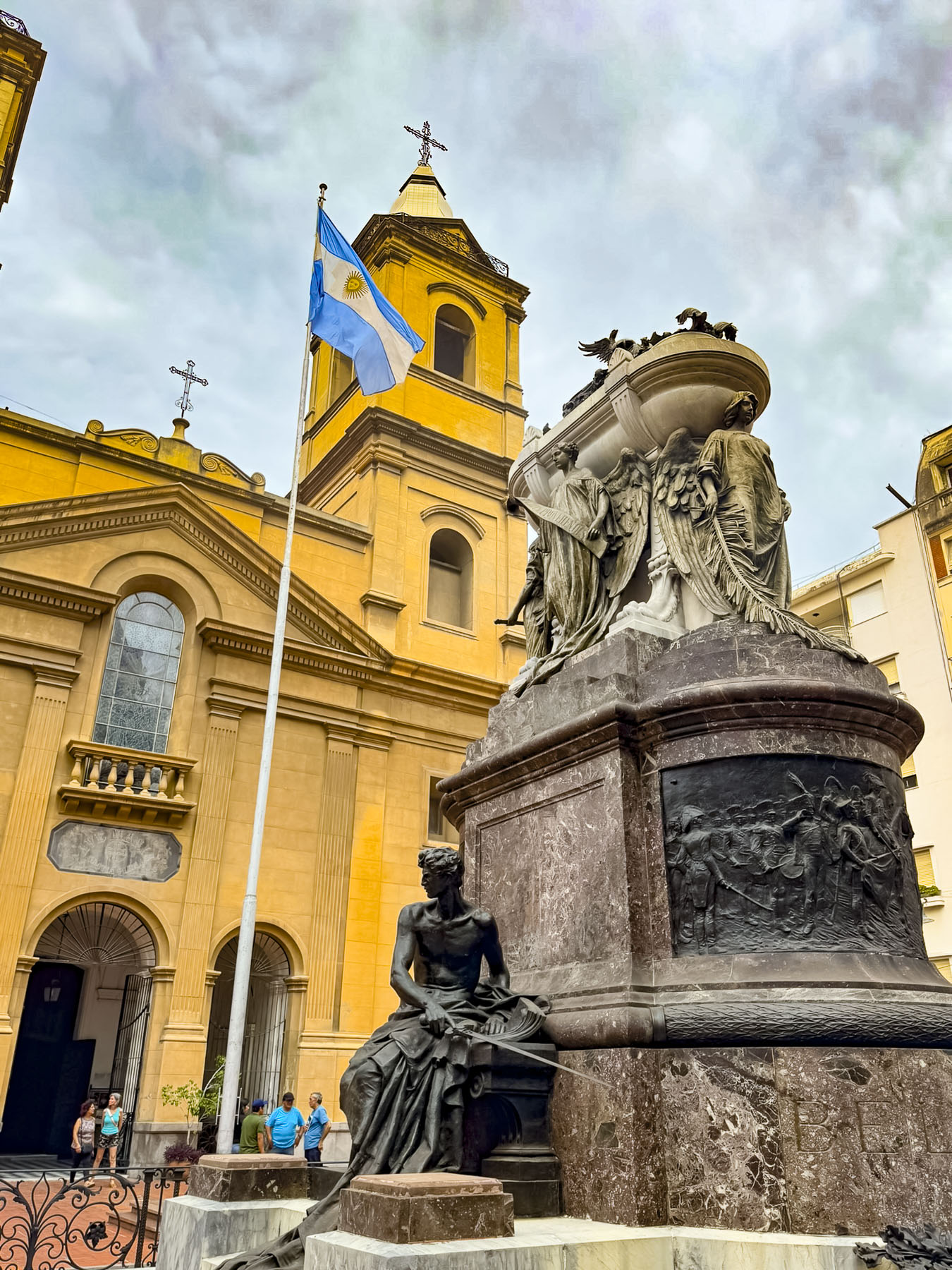
Along the way the ornate mausoleum of General Manuel Belgrano stood beneath the towers of Basílica Nuestra Señora del Rosario. The church was constructed in 1753 and British soldiers sought sanctuary here after a failed invasion of the city in 1807. General Belgrano was one of the founding fathers on Argentina’s independence and is also credited with designing the country’s flag.

The Mercado San Telmo was our destination for lunch. It is a cavernous hall set in an 1897 building that resembles a Victorian era train station with an ornate iron superstructure supporting a glass roof.  The hall’s traditional produce stands, butchers and bakers, now share the space with takeaway restaurants, and antique stalls. But it was crazy with activity on a Sunday afternoon, and we vowed to return if we had the chance. Instead, we ate at Havanna, a small café chain across Buenos Aires, that we had eaten at the day before in Palmero Soho, and enjoyed.

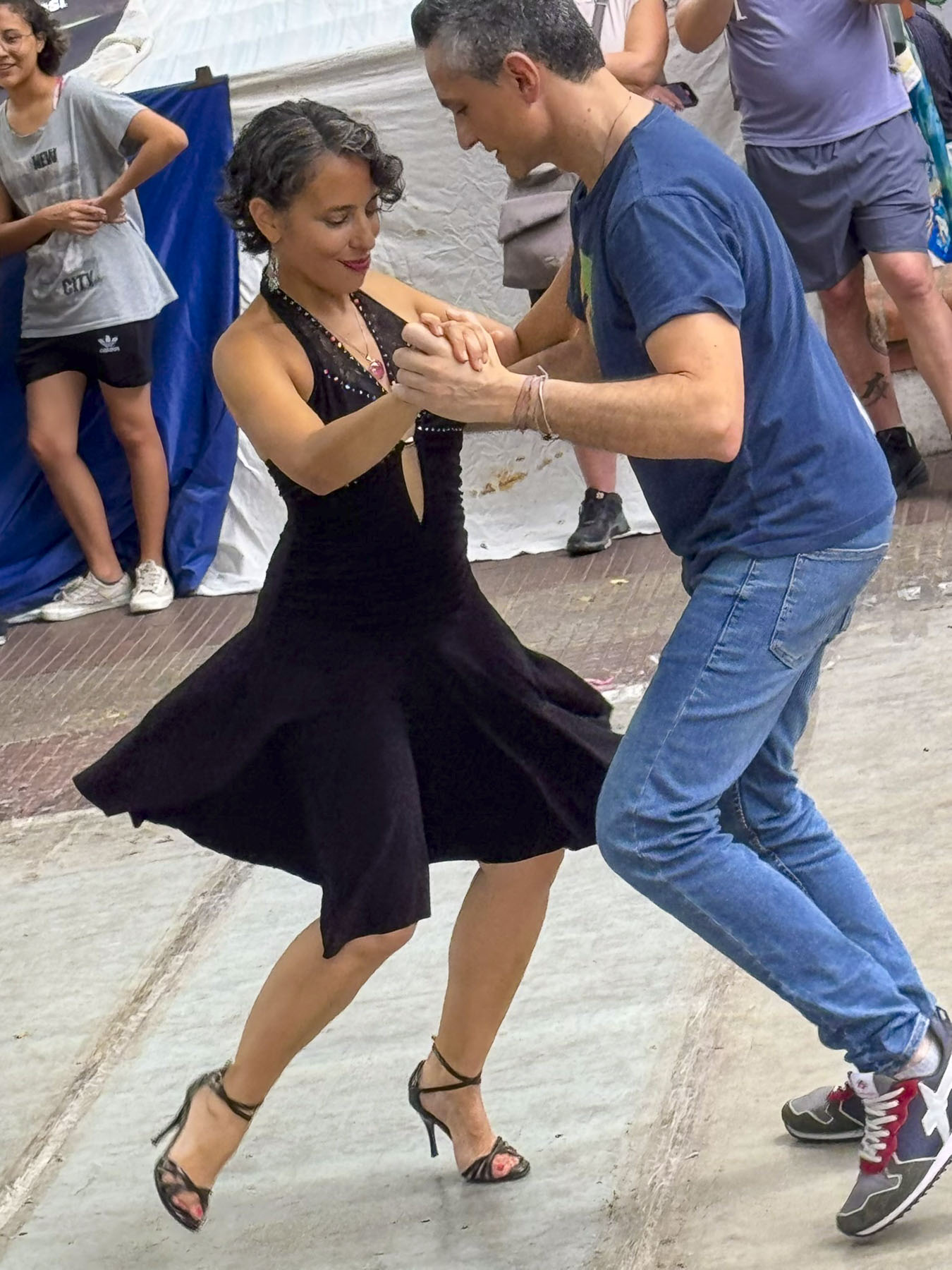
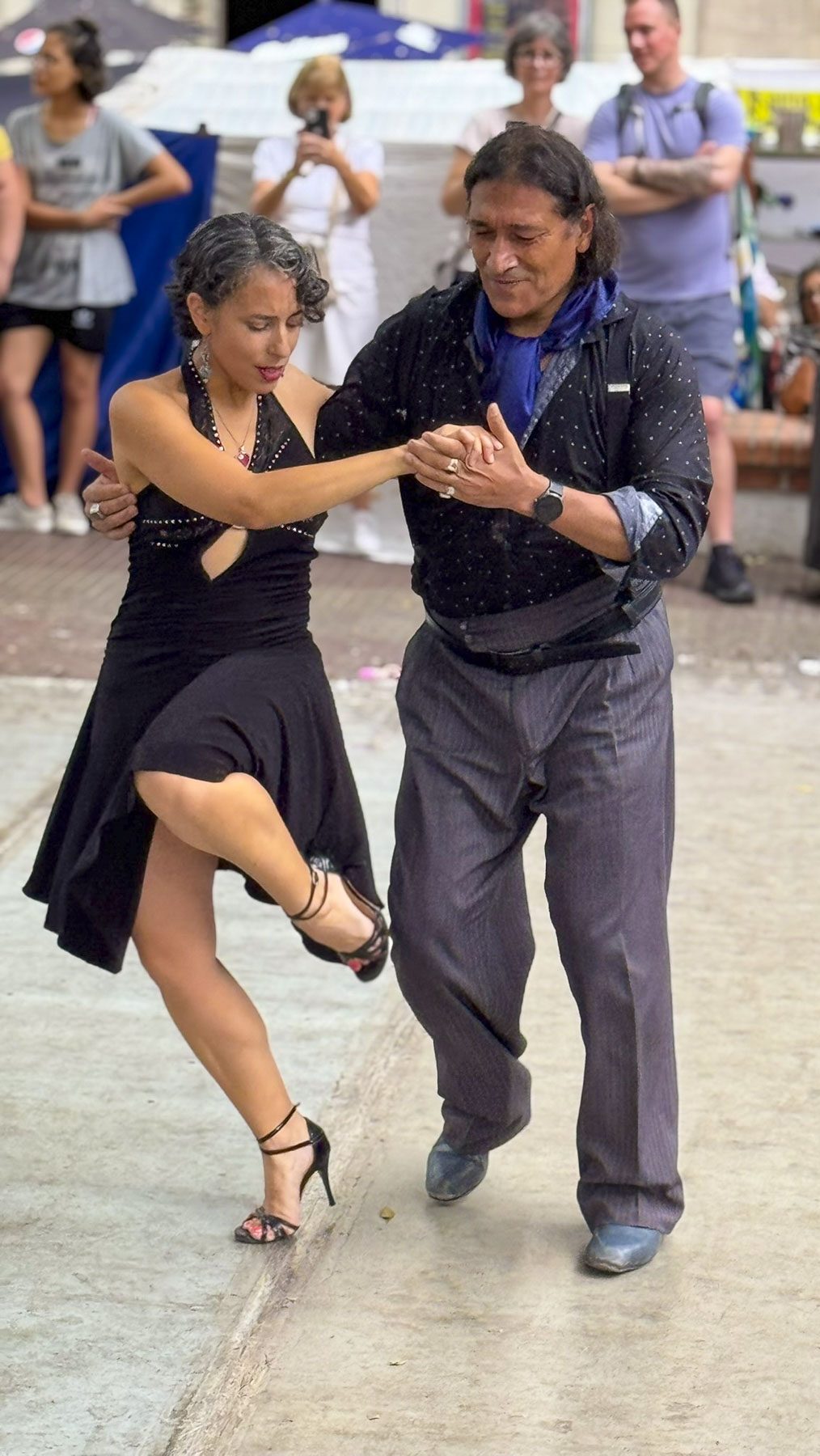
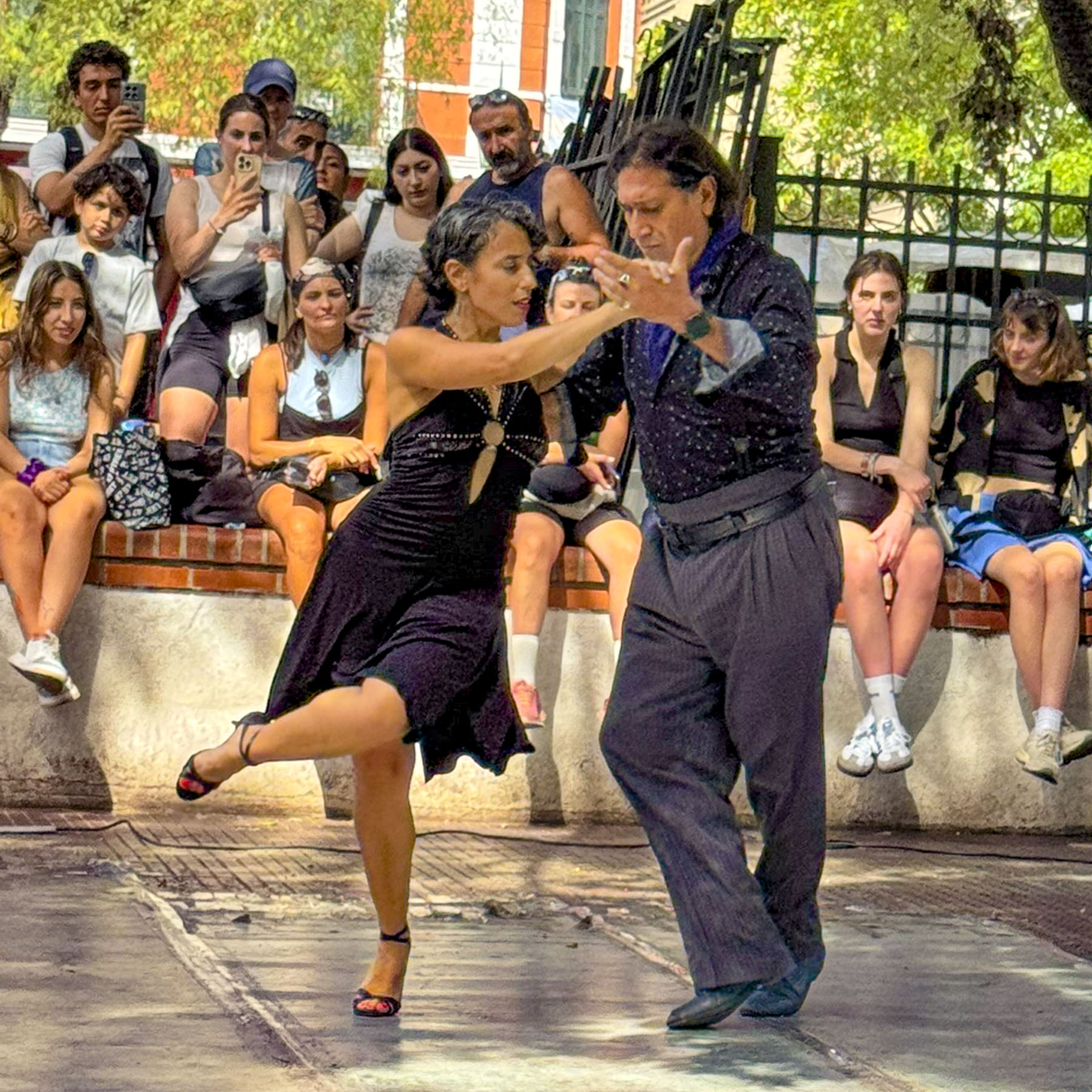
Tango dancers were mesmerizing a crowd with their graceful twists, turns, dips, and kicks at the Plaza Dorrego. Resting between dances, they encouraged folks to come forward and dance too. It was a thoroughly enjoyable afternoon, with a vibe totally different from the craft market in Retiro, and the shaded lanes of Palmero. Every August the city hosts the Buenos Aires Tango Festival & World Cup, a two weeklong dance-off, with concerts and shows where over 400 couples from around the world compete for the top spots in different categories.

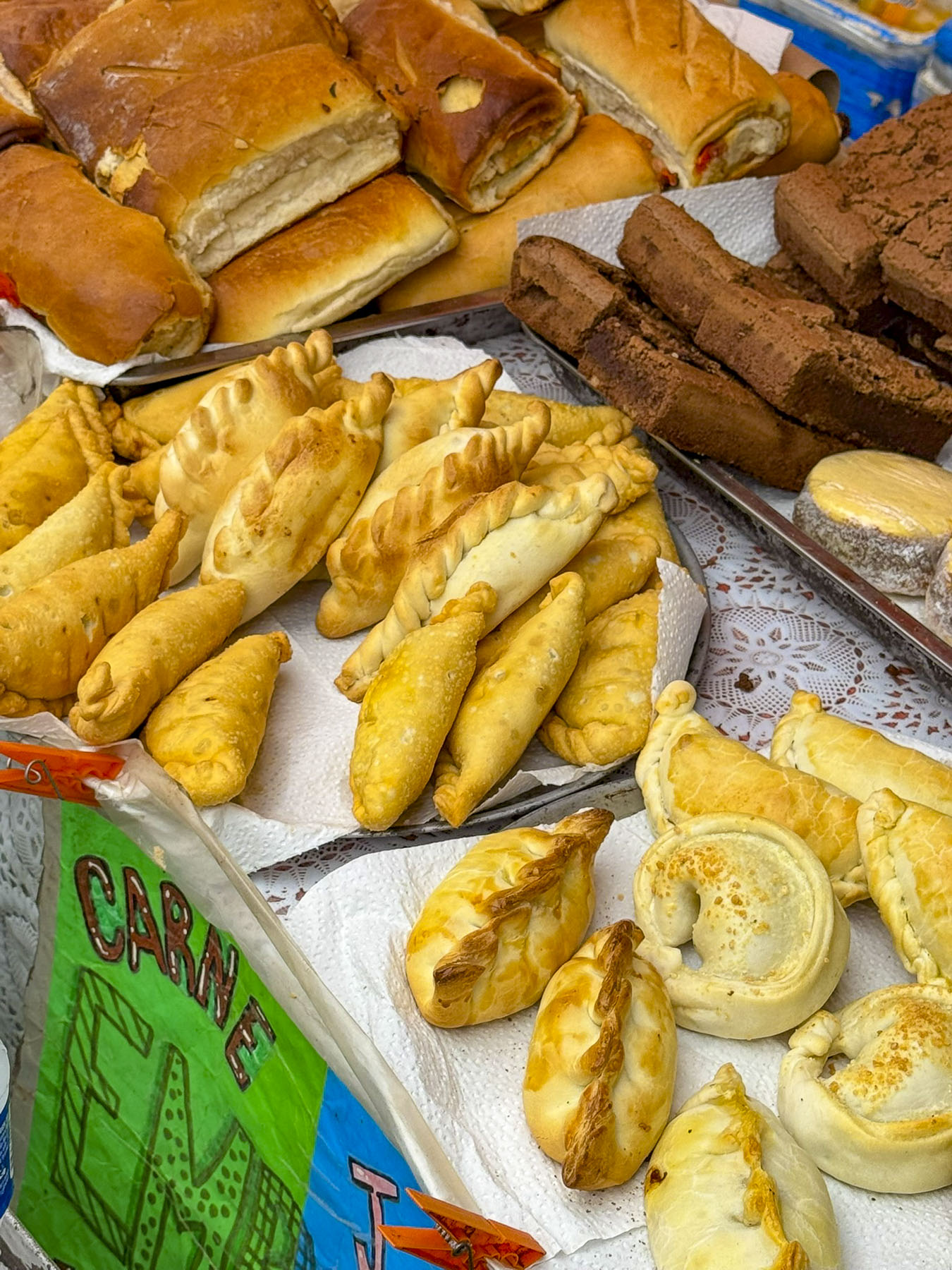
The next day a rainy morning finally cleared as we were on our way to a three hour cooking class to learn how to make those savory pastry meat-filled turnovers called empanadas, and alfajores, a melt in your mouth layered shortbread-like cookie filled with dulce de leche.

Our hosts Tomas and Lala graciously welcomed nine of us into their home; we were from France, Norway, Switzerland, and the United States. The other participants, like us, we learned after introductions all around, were snowbirds escaping a cold northern winter.

Tango music played softly in the background as Tomas divided us into three groups of 4, 2 and 3, the odd man out joining Donna and me. It was very well organized, and Tomas led us through the mixing of ingredients and made sure we added just the right amount of water so the dough was kneadable, but not sticky. Everyone cut their balls of dough and rolled them out into taco size discs, not too thin or too thick. Lala provided a meat filling. The hardest part was crimping the edges of the dough together to seal in the filling. The gal next to us was very good at it and created bakery worthy pockets. The three of us had various aesthetic results, that would improve with practice. Brushed with an egg white, trays of empanadas were put into the oven to bake. The cookie batter was also quite easy to make. We sipped some mate (a traditional herbal drink with lots of caffeine) and got to know our tablemates as we waited for the empanadas. We can see why people like mate (pronounced mah-tay) but I think for us it would be an acquired taste. The empanadas were tender and tasty, though it was obvious which ones my fingers had molded, as they oozed from some thin spots in the crust. This was the first cooking class we’ve ever taken during our travels and found the whole experience, along with the shared camaraderie, very enjoyable.

The next morning, we pulled our luggage behind us as we strolled down Calle Florida, a 10 block long pedestrian walkway in the center of Buenos Aire’s shopping district that runs from the Plaza General San Martín to Plaza de Mayo. It was a very pleasant lane centered with rows of young shade trees, and intermittent sidewalk cafes along the edges. The Galerías Pacífico, an upscale glass domed shopping complex, was our destination.

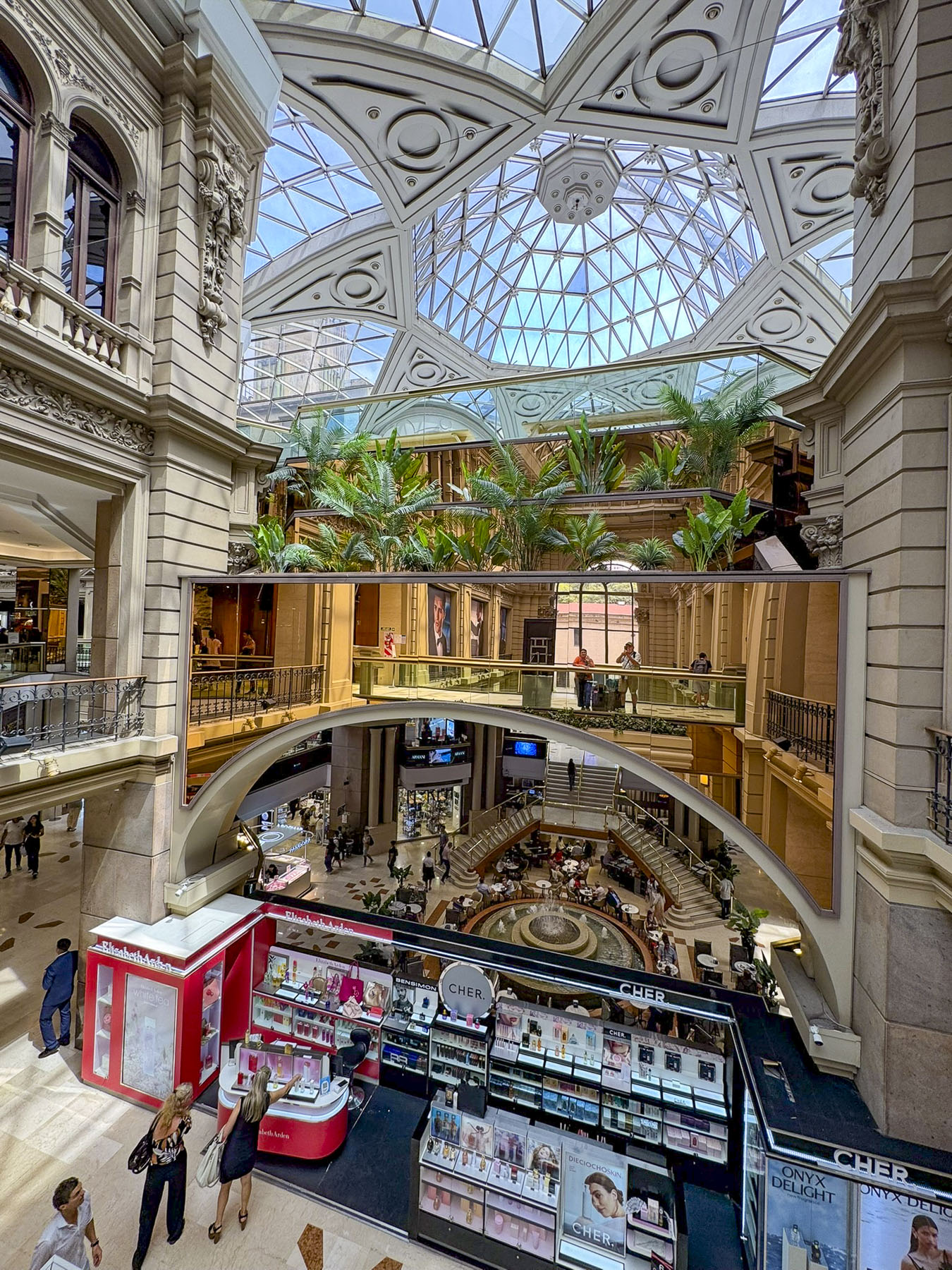
With architectural inspiration taken from the Vittorio Emmanuelle II galleries in Milan, the 1889 building was designed to be a shopping experience akin to the Bon Marche stores in Paris. But a long economic recession in Argentina during the 1890s and early 1900s nixed its realization and the gallery area was used as part of the National Museum of Fine Arts, while the Ferrocarril Buenos Aires al Pacífico acquired part of the building for offices. The company’s presence eventually led it to being called the “Edificio Pacífico,” (Pacífico Building).

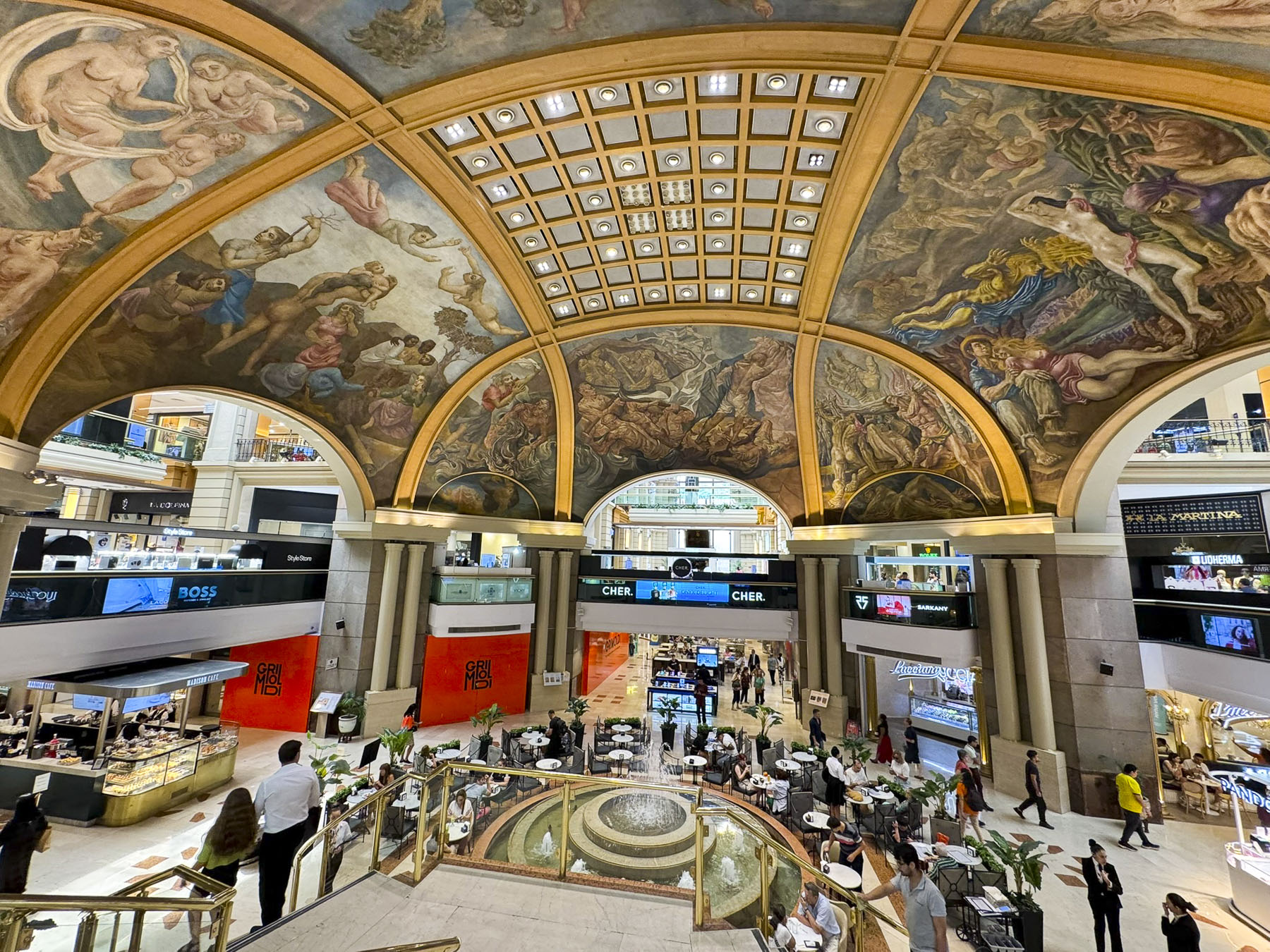
The famous domed lower level over what is now the food court was constructed during renovations in the 1940s and embellished with twelve spectacular murals by the artists Lino Eneas Spilimbergo, Antonio Berni, Juan Carlos Castagnino, Manuel Colmeiro, and Demetrio Urruchúa.

A hundred years later a 1990s renovation finally covered the galleries with a glass ceiling and the “Galerías Pacífico,” became the flagship of Buenos Aires’ shopping district. We really are not into mall shopping, but this is very nice, and an architecturally and culturally interesting spot that attracts a diversity of folks. It was the perfect spot for our “walk a little then café,” break before having an ice cream bar decorated with Lionel Messi’s blue and white uniform.  The Buquebus ferry terminal was only a short walk away for our crossing back to Uruguay and our flight home.

Buenos Aires is a sprawling city with 48 different neighborhoods and three million people. It is a great destination, and we only scratched the surface of the multitude of places to visit, and things to do within this vibrant city. In hindsight, we could have stayed several more days to explore the museums and government buildings, based ourselves in the Palermo neighborhood, and used the subway to get around.

Till next time,

Craig & Donna

Driving Through the Baltics: Part 11 – Lake Peipus or Old Believers, Onions, and Honey

Gently undulating farmlands soon flanked the road as we departed Tartu for a day trip to the Old Believers villages that dot the southern shoreline of Lake Peipus, Estonia’s largest lake which creates part of the country’s border with Russia. The villages are also part of the Onion Route, a 30km (19mi) tourist drive that promotes the area’s culture and “Estonia’s most celebrated onions, the Peipsi sibul, a golden variety known for their long storage life and flavor,” which the Old Believers have cultivated in the sandy soil of the region for several centuries.

The group’s name stems from a schism with the Russian Orthodox Church in the 17th century, in which they did not abide with the reforms Orthodox clergy patriarchates were initiating, and wow, wow, wow regarded the reforms which curled the beards of its elders, “as a corruption of their faith which was heralding the End of Days, and as such the Russian church and state were servants of the Antichrist.” Their dissent wasn’t allowed, and during The Russian Orthodox Synod of 1666-1667 the church and Tsar Alexis sanctioned their persecution. The group’s oppression was so severe that some ardent followers self-immolated in the ultimate act of protest. Thousands of Old Believers chose to escape their persecution and fled across Lake Peipus for refuge, and established a series of farming and fishing communities, in then Swedish-controlled Estonia, in which they prided themselves on their self-sufficiency.

We passed more farm tractors than cars that morning, but it was still a surprise when a large John Deere tractor pulled up alongside us in the gas station to refuel. Varnja is the southernmost village and the gateway to outdoor activities in the Peipsiveere Nature Reserve, which protects the fish and wildlife of the Emajõgi delta.

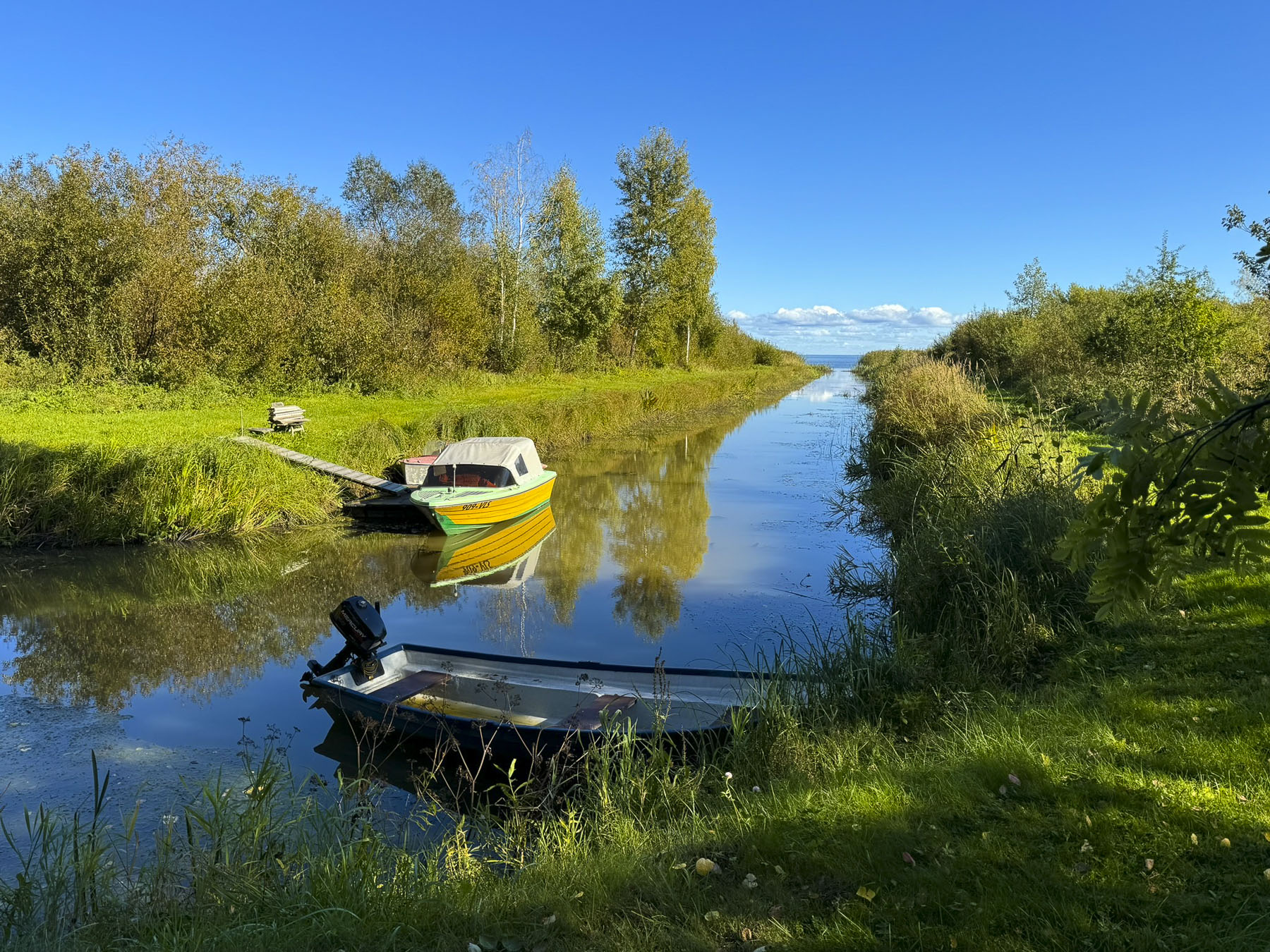
It’s a beautiful area, and was nearly deserted mid-week at the beginning of October. Fishing was once a viable livelihood, but only a few boats go out nowadays. Instead, some folks have converted them into niche rentals, like the owners of Mesi Tare who have creatively repurposed several small boats into maritime bungalows, both floating and permanently beached.

There wasn’t a soul about in the village, only an idle tractor in front of a barn with bundles of onions hanging from its rafters, or a plume of smoke from a chimney, and the lone dog sunning obliviously in the middle of the lane. Winter preparations were underway with large free-standing globe shaped piles of freshly split wood stacked along the lane or piled in cords neatly along the sides of houses.

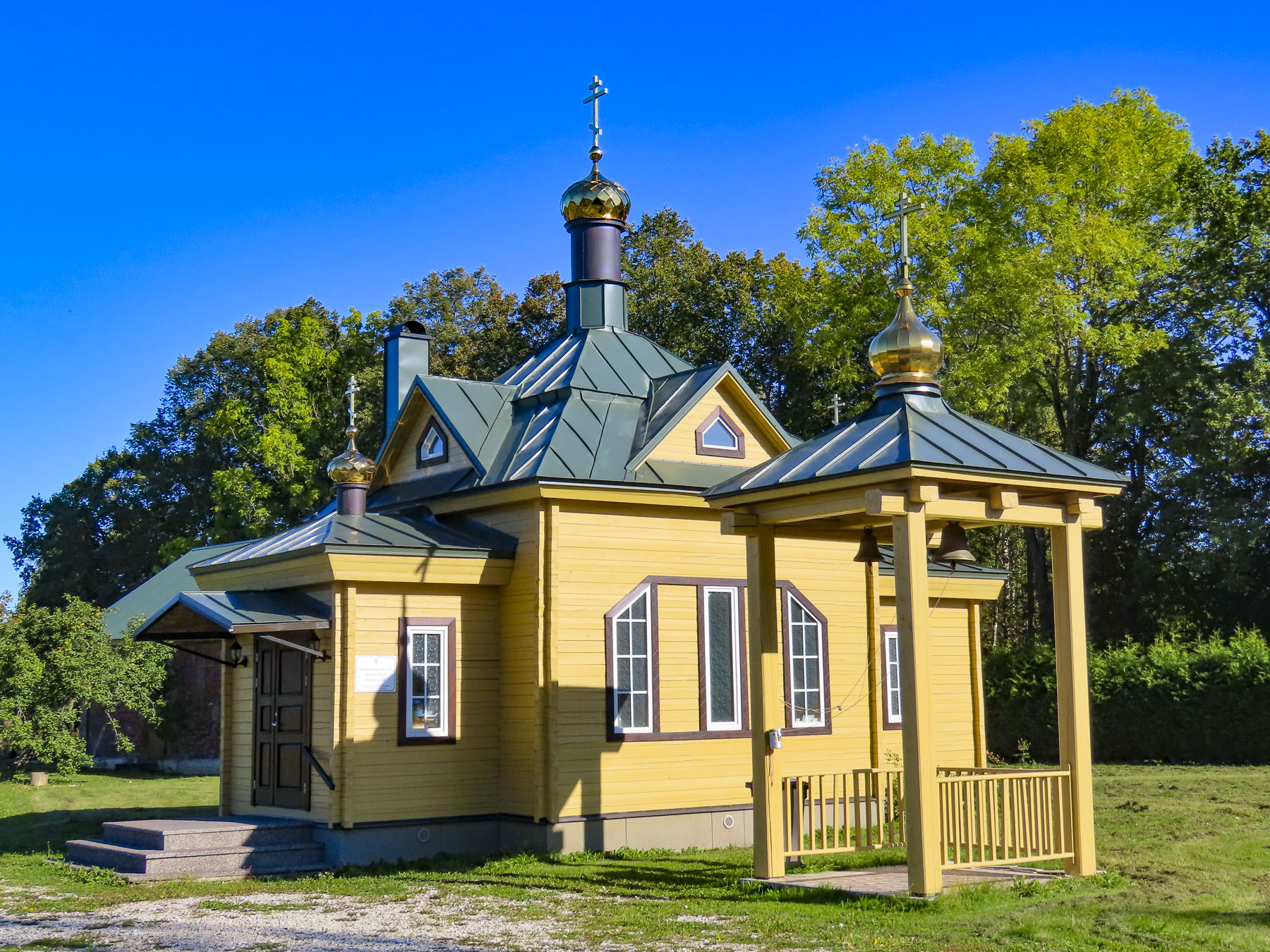
As we left the hamlet and headed north on Kesk Tn, the main road connecting all the settlements along the lake, we stopped at Varnja’s Old Believers Prayer House, a red brick structure built between 1928 and 1930, and the nearby Issanda Templisseviimise, the town’s youngest Old Believers chapel constructed in 2015.

As we headed farther north, long narrow inlets, like the fingers on our hands, stretched from the roadside into the lake. Baskets, bowls and buckets of apples were in front of homes with backyard orchards that had what is commonly called in Estonia, “the apple flood.” This abundance is shared with the community, and the apples are free. It’s a long-standing tradition that reflects a spirit of sharing and generosity within Estonian culture. Occasionally, an abandoned stork’s nest crowned a telephone pole along the road, their yearly winter migration to southern Africa had already started in August.

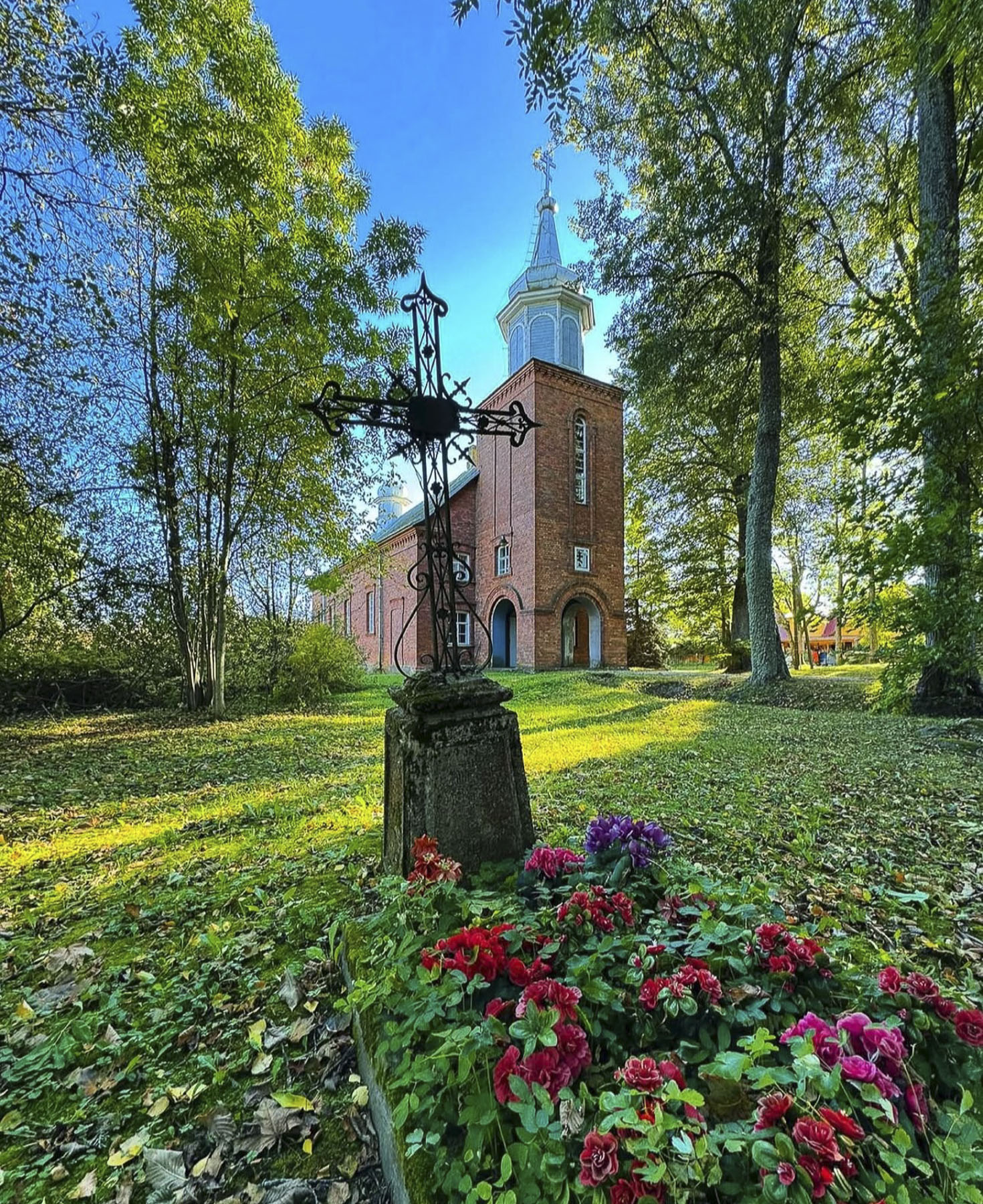
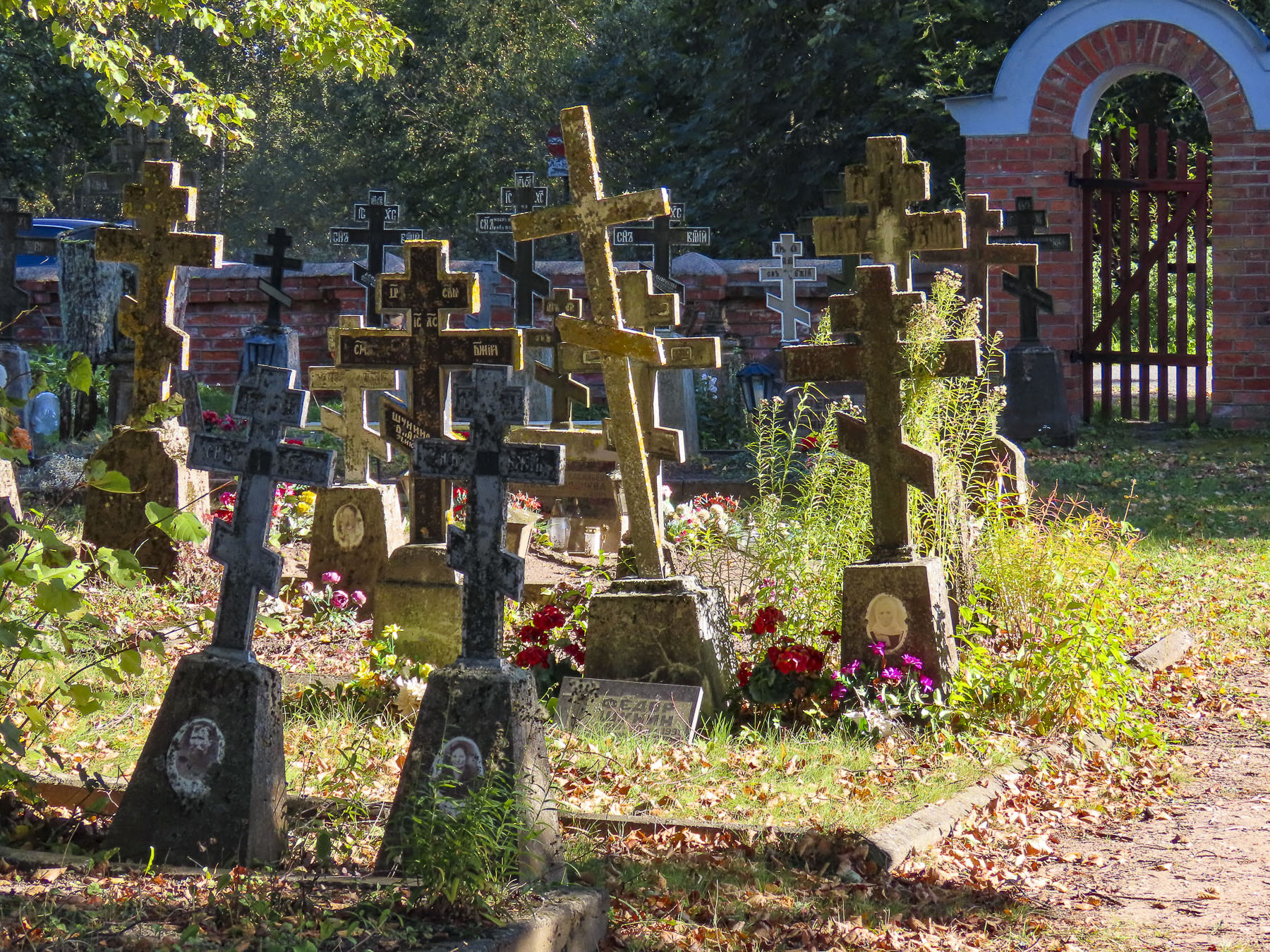
We turned off the main road at every sign that pointed to the way to a kirk, church. The Kasepää Old Believers Church and Cemetery were particularly interesting.  The current 1862 sanctuary sits atop the foundation of a building that is thought to be the site of one of the group’s earliest churches after their exodus from Russia. Graves in the cemetery were marked with the traditional three horizontal-bar Orthodox cross. The configuration dates from the 6th century in which the Top Bar represents the inscription ordered by Pontius Pilate, The Middle Bar, the main beam where Christ’s hands were nailed, and Bottom Slanted Bar symbolizes the footrest and its slant reflects the fate of the two thieves crucified alongside Jesus – upward towards the repentant thief (St. Dismas) and downward towards the unrepentant one.

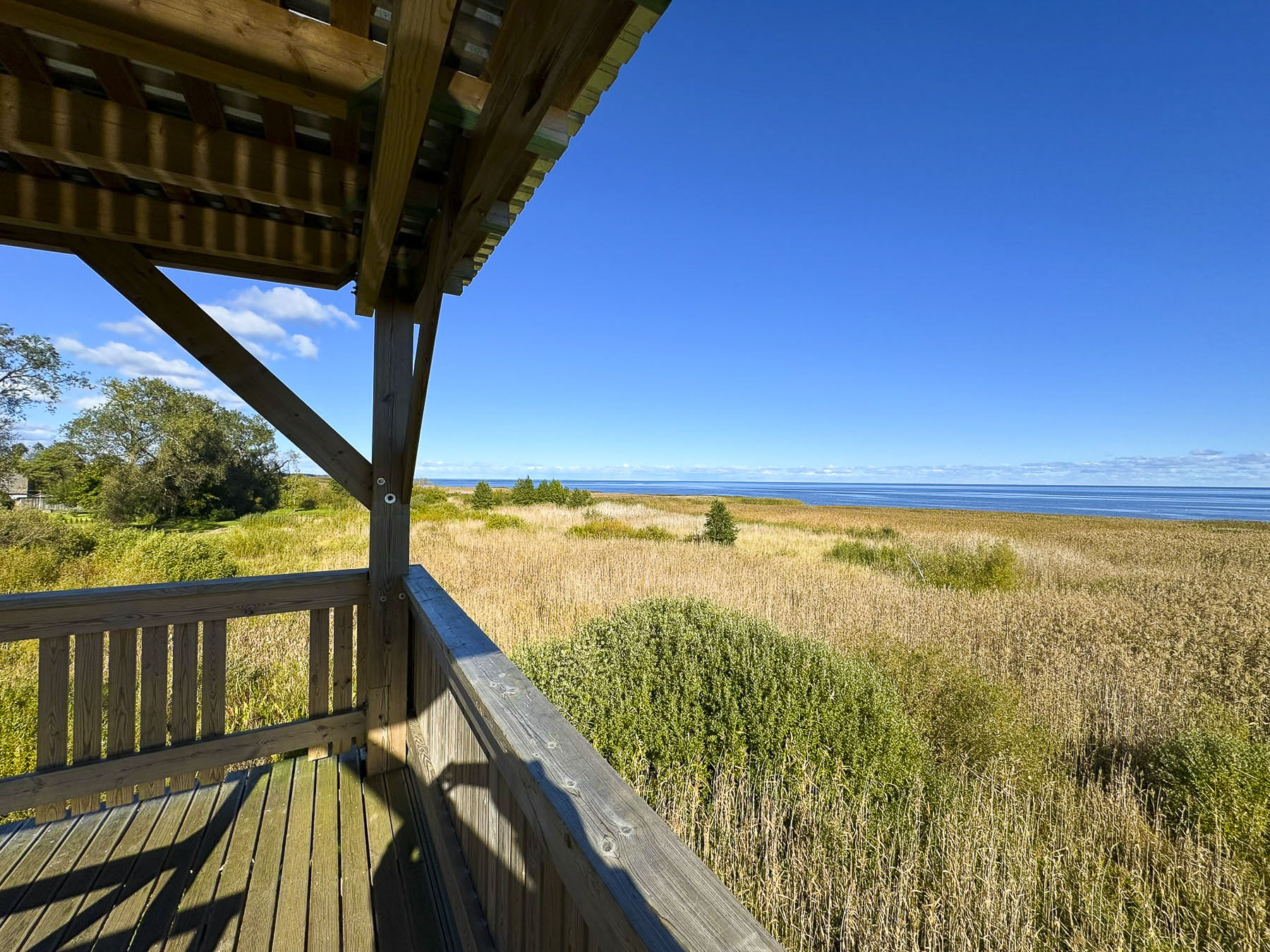
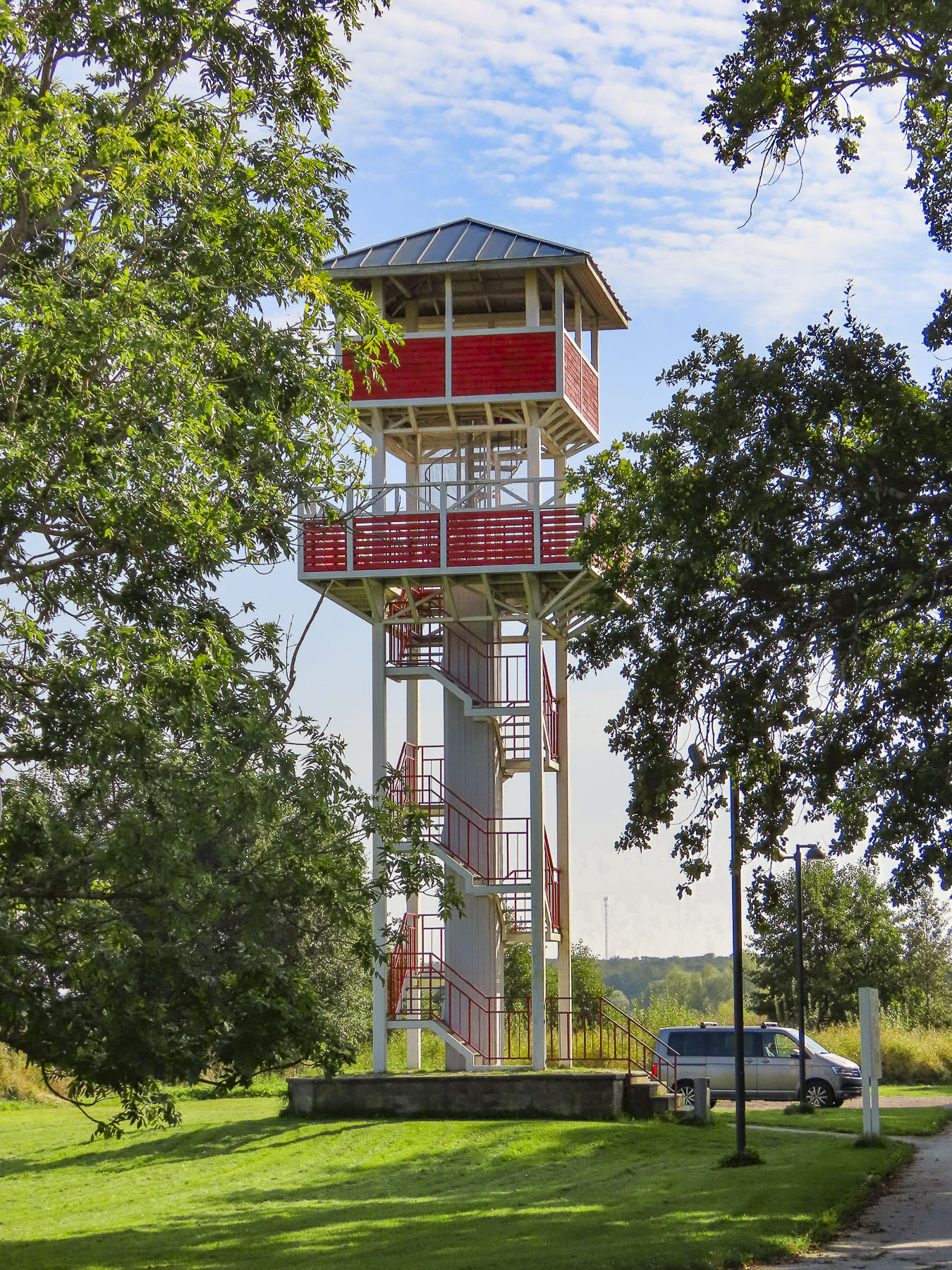
In Kolkja, a village first mentioned in historical records of 1592, we climbed the Vaatetorn bird-watching tower for an expansive view across the marshes and 3,555km2 (1,373 sq mi) Lake Peipus. The 219km (136mi) long lake has an average width of 82km (51mi), and is surprisingly very shallow, with an average depth of 7m (23ft). At its northern end the lake feeds into the Narva River between the Estonian border city of Narva and the Russian city of Ivangorod into the Gulf of Finland. Ice fishing is a popular winter activity on the lake which typically stays frozen from November to March. Small ice flows remain on the northern part of the lake until early May. Though with the recent climate change folks living along Lake Peipus have noticed a shortening of the ice season.

Afterwards, we stopped at Suur-Kolkja Vanausuliste Palvemaja, an Old Believers house of worship that was constructed in 1883, and its cemetery which was down the lane.

As we left the village an enterprising older woman, with a babushka covering her head, was unloading bags of onions, loaves of bread, and jars of jam from the trunk of a taxi and arranging them on a foldable card table she had already set up along the road. We had assumed the area was nearly deserted, but maybe there was an end-of-day rush hour as people returned home from work.

Although several museums, cafes and restaurants were shown on Google Maps, they were only open on the weekends during shoulder season. Our search for coffee took us to the larger town of Alatskivi, where we were able to satisfy our “drive a little, then café,” philosophy with a good lunch at Kivi kõrts, a bright eclectically decorated tavern, including a restroom decorated in a quirky theme.
We drove farther to Kallaste, a still larger village on the shore of Lake Peipus, but were discouraged from investigating the town in depth by the number of roadwork closures that hindered our travel.

On our return route to Tartu we passed through Alatskivi again and purchased honey from an automated vending machine near beehives in front of a local beekeeper’s home. We enjoy the simplest of things and found this combination of ancient practice and modern technology delightful. The machine even accepted credit cards.

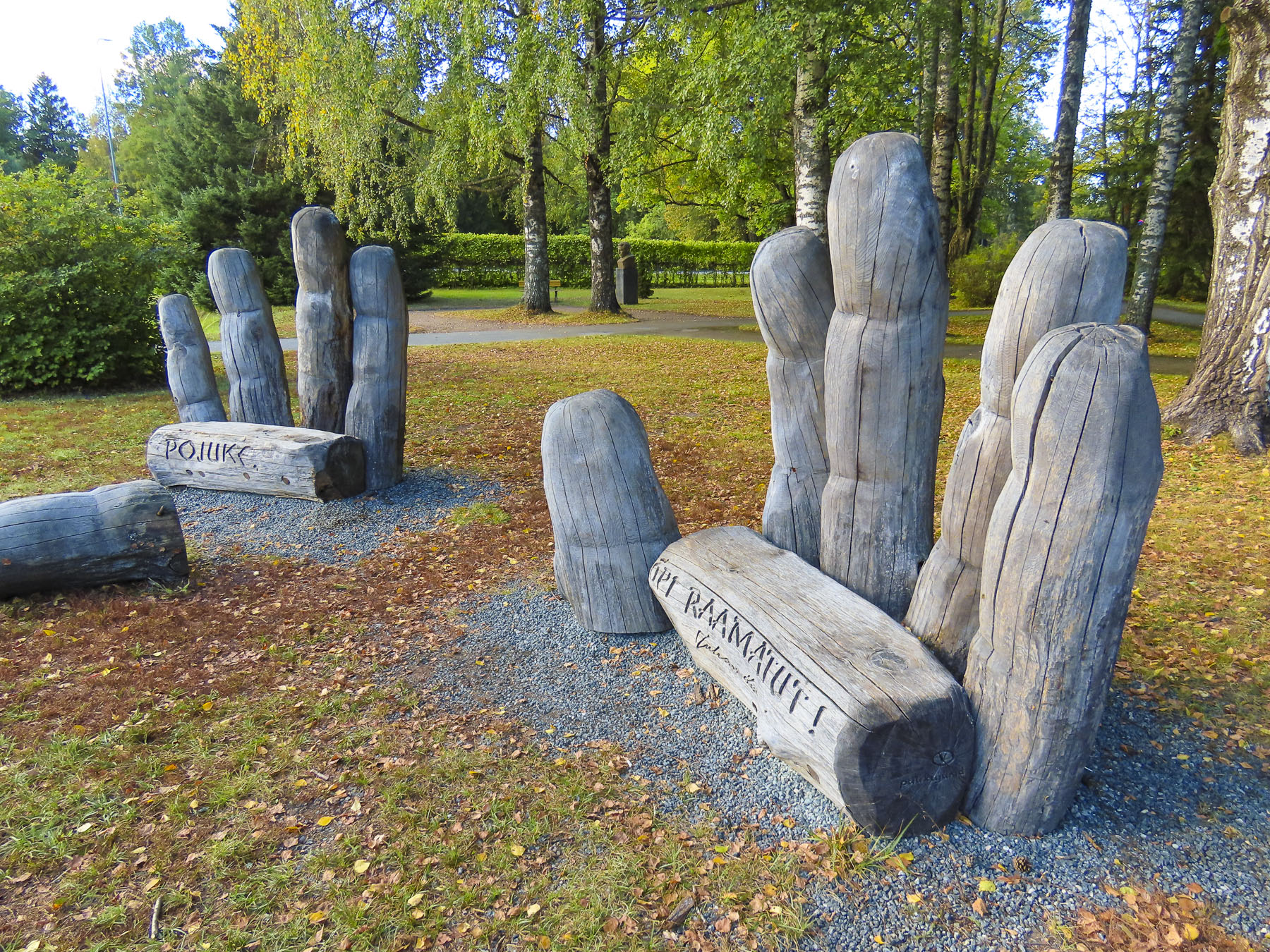
At the roundabout in town, we circled twice to figure out how to reach the town’s library, which had a large wooden sculpture of two hands, with fingers carved from tree trunks, protruding from the ground in front of the building.

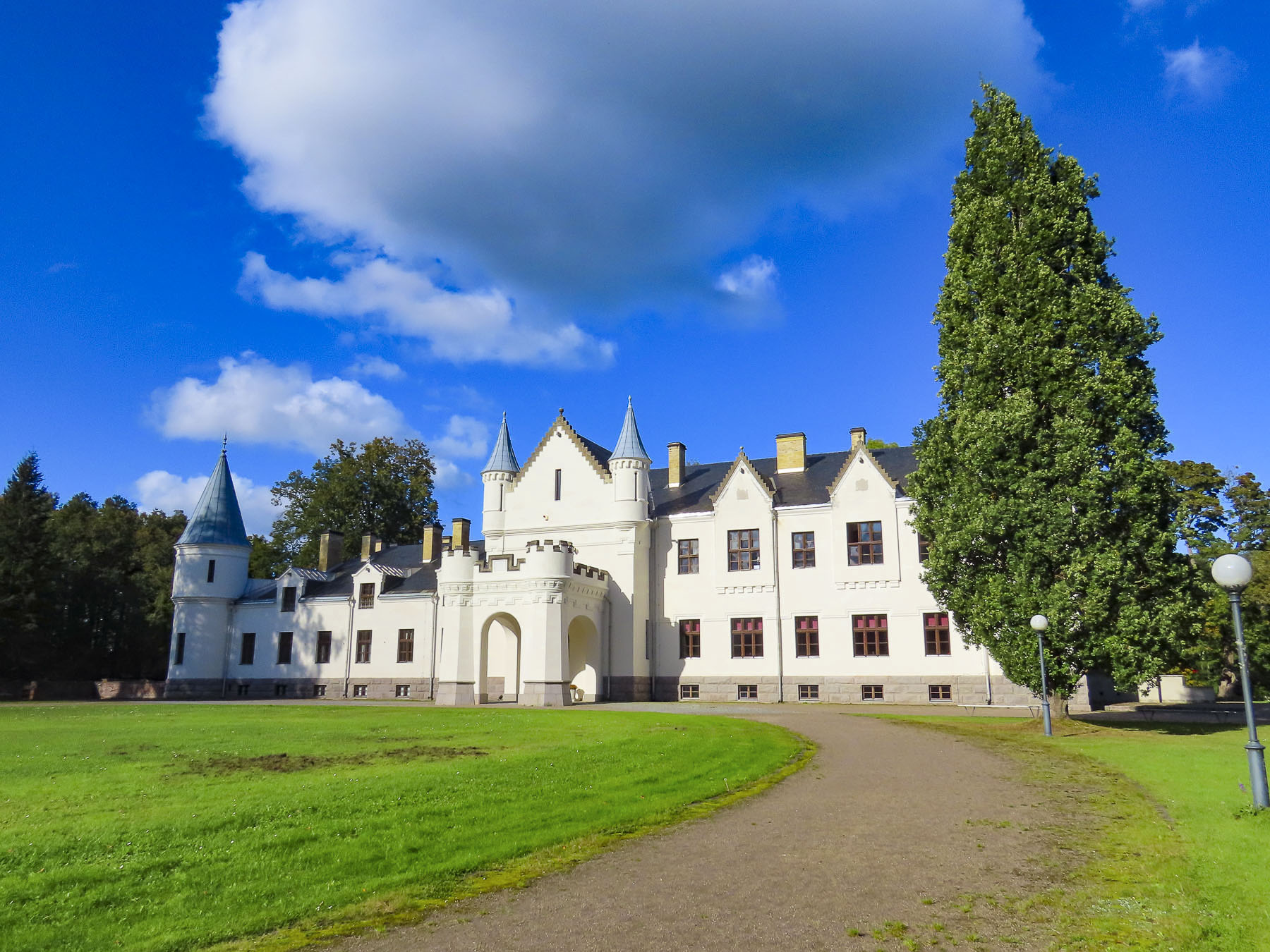
Earlier, the server at the tavern suggested we visit Alatskivi Castle,an old Baltic German feudal estate with vast land holdings, that was first mentioned in the historical records of the early 1600s. In 1885 Baron Arved von Nolcken, a widely traveled aristocrat, purchased the estate and reconstructed the old manor house in a Scottish baronial style, that is said to closely resemble Balmoral Castle, which he had recently visited. The von Nolcken family lived in the manor house for twenty years before they left for Germany with all their possessions, including the manor’s silk wallpaper, at the beginning of the Estonian Peasant Revolution in 1905. During the Soviet occupation of Estonia the lands of the estate were a state-controlled collective farm, and the castle was used as school, cinema, and library. Today, after extensive renovations the manor features a fine-dining restaurantand 4 suites available for booking directly through the castle, along with offering  a ceramic studio and workshop in the cellar. There is also a wax museum featuring figures of the manor’s servants; a butler, lady’s maid, cook, baker, groomsman, stable hands, and laundry maid are just a few of the various trades depicted. The exterior of the castle is totally white, and during the winter, with snow on the ground, must shine brilliantly on a sunny day. Or vanish totally from view during an Estonian tuiskav lumi, a blizzard. We wondered – if the walls of the castle could speak, what tales would they tell?
We had a great time exploring the cultures and complex histories of Estonia, Latvia, and regrettably only a small part of Lithuania during our three week-long road trip through these fascinating Baltic countries.

Till next time,

Craig & Donna

An Estonian Road trip: Part 2 – Across the Pine Barrens to the Pakri Peninsula & the Gulf of Finland or Soviets, Swans, Windmills & a Polar Bear

Dense forest lined the road, occasionally thinning to provide a glimpse of Tallinn Bay. It seemed as if we had only left Tallinn minutes earlier, quickly passing through its outer boroughs to enter a semi-wilderness beyond the city limits. To paraphrase; We weren’t in Tallinn anymore. Lively, and charming, one third (461,000) of Estonia’s 1,370,00 citizens call this “gem of the Baltic,” home.

Only 15 minutes from the center of Old Town, we were in the surprisingly different forested landscape of Eesti Vabaõhumuuseum, the Estonian Open Air Museum, an ethnological recreation of a historic fishing village on the shore of Tallinn Bay, with the wonderful mission of showcasing the country’s rural architecture and way of life during the 18–20th centuries.

A pleasant set of trails through the woodland connected 14 separate areas that featured different buildings.  Some of the buildings have docents dressed in traditional clothing to help explain how residents lived centuries ago. The wooden windmills were particularly interesting and the large sturdy log cabins surely would have made Daniel Boone envious.

Leaving Tallinn behind: this was the first stop of our 21-day road trip through Estonia, Latvia, and Lithuania. There was hardly any traffic on the roads through the sparsely populated countryside that traversed stretches of open fields, bogs, pine forests and swaths of beautiful birch trees. Vast tracks of forest still cover over fifty percent of Estonia’s territory. Set away from the roadway a bike path, just one of 7,230 cycling routes and bike trails in Estonia, loosely followed our route from the Open Air Museum to Keila in search of a mid-morning coffee break.
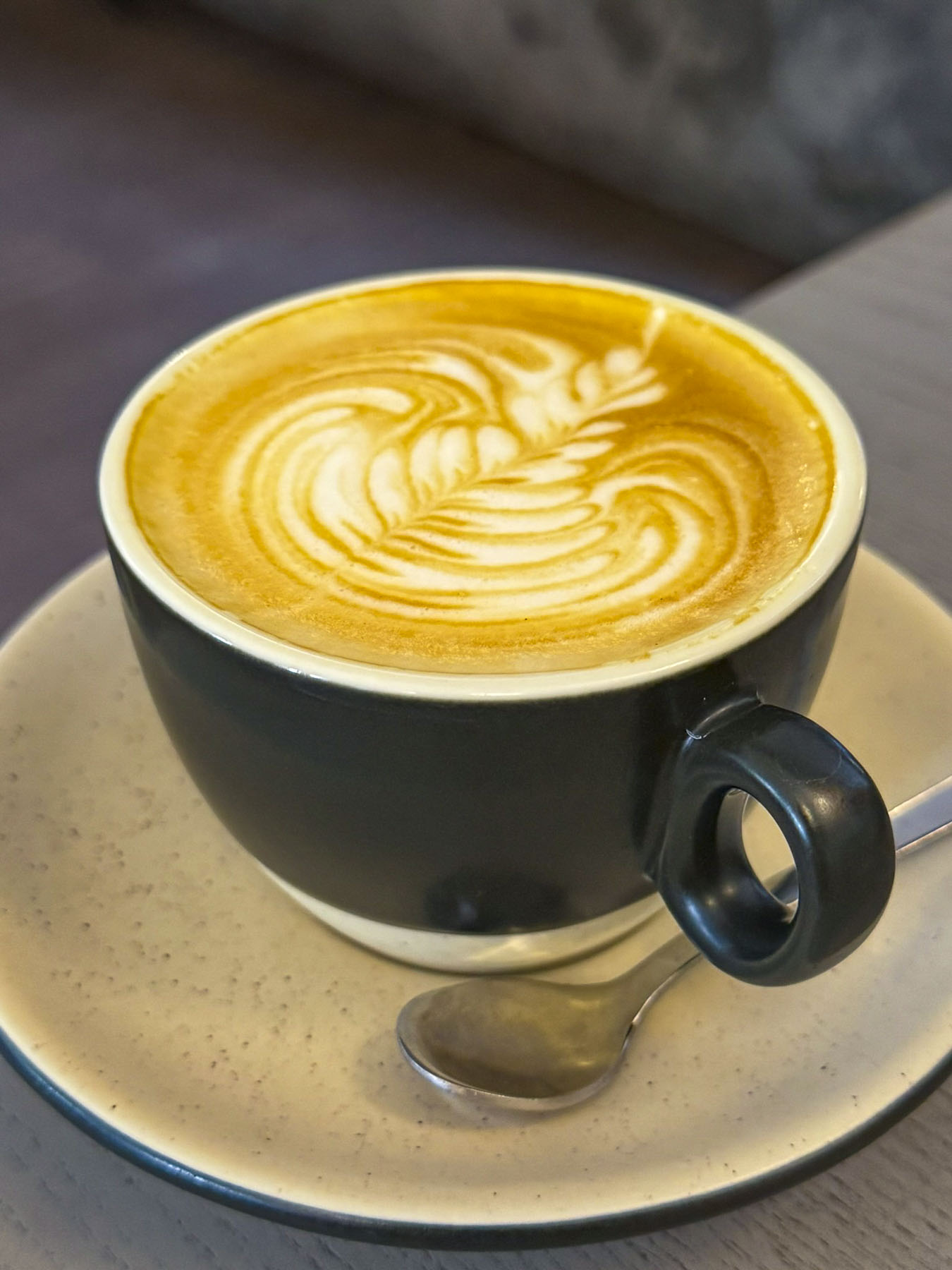
It was a surprisingly frustrating endeavor. Takeaway coffee from a gas station? No no. This was nearing a crisis situation for us. Those in the know understand that without that a coffee fix, life in the universe is imperfectly balanced. Fortunately, we found a very nice gourmet café, Cake Atelier, on the main road through Keila. Chatting with the owner about our trip through Estonia, she shared that we were in luck today, as it was one of the town’s twice-yearly craft and food festival days and pointed down the road.

We both like exploring local markets and this one in Keila, while very small, was a perfect local event to have stumbled across. Set up in the parking lot of a small strip mall, it wasn’t geared toward tourists. It was simply regional food purveyors sharing what they love to do. Samples were abundant. There were extraordinary amounts of smoked fish, pickles, sauerkraut, and baked goods, along with foraged lingonberries and wild mushrooms.

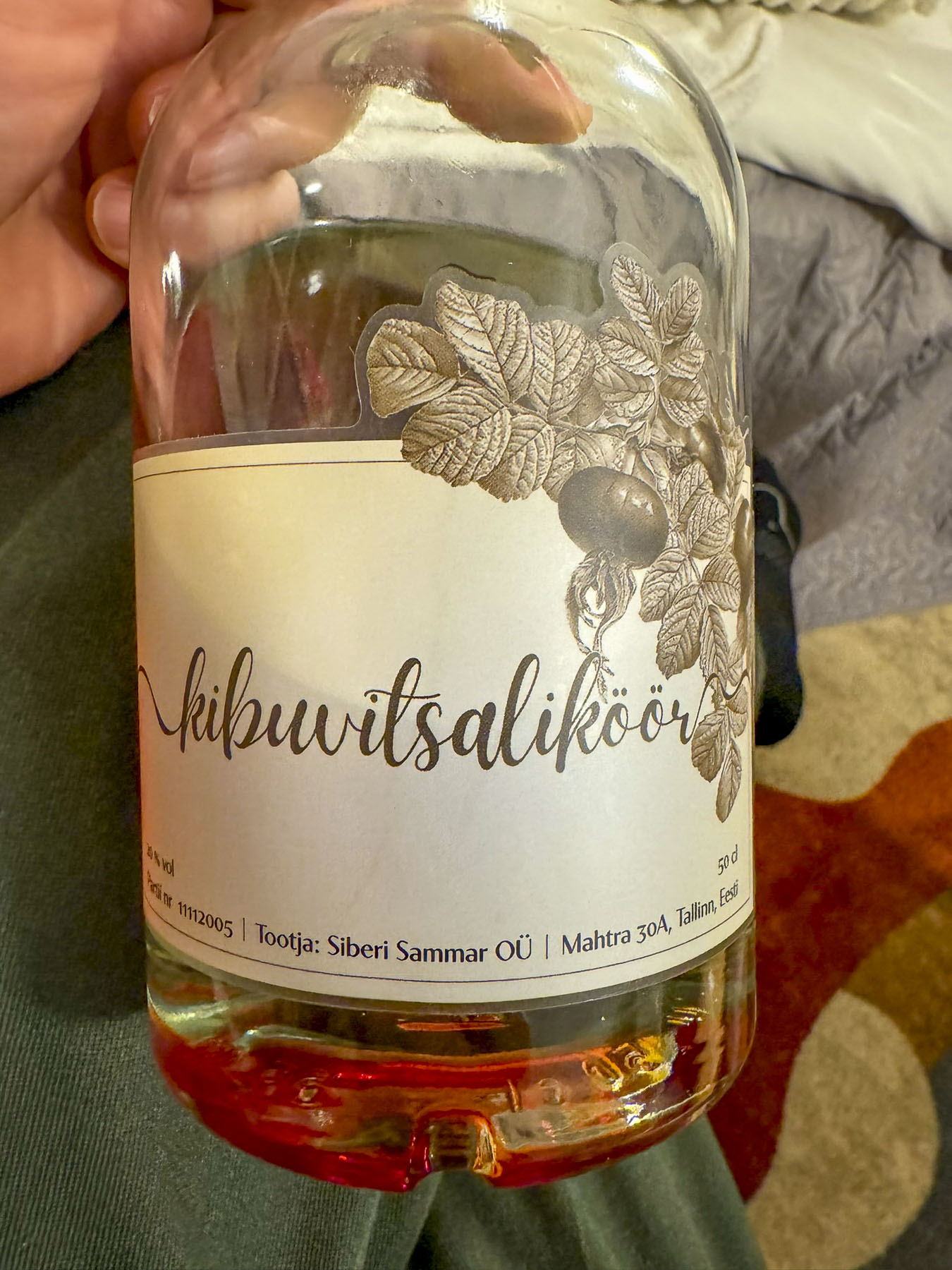
From July to October foraging for berries and other wild edibles is a popular activity in Estonia and explains why we saw so many cars parked at various spots along the road in the middle of nowhere. We ended up purchasing a bottle of artisanal Rose Hip liqueur from a middle-aged woman who had been an exchange student in Florida in the early 2000s. Her cordial, lovingly crafted from her grandmother’s ancient family recipe, was very tasty. We purchased a bottle and enjoyed it as a nightcap during the rest of our trip.

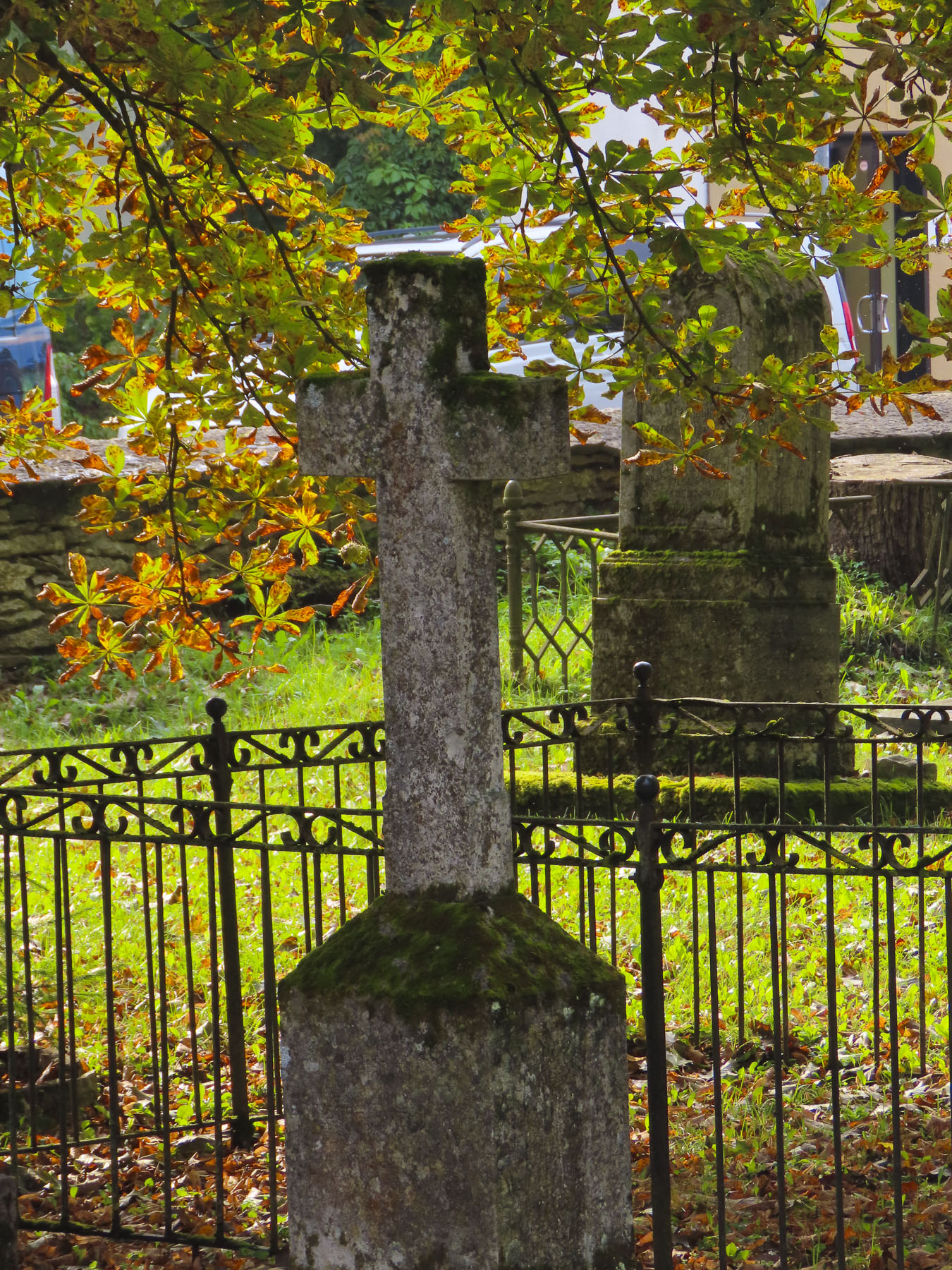
Next to the parking lot was a pretty church, Mihkli kirik, Keila’s St. Michael’s Church.  This wooden church was first erected here shortly after the Danes conquered northern Estonia in 1219. A century later a larger stone church was constructed to accommodate the worshippers living in the growing village. The present church replaced an older one destroyed during the Livonian War of the 16th century. There were some interesting stone carvings around the door to the church, and an intriguing cemetery that called for further investigation.

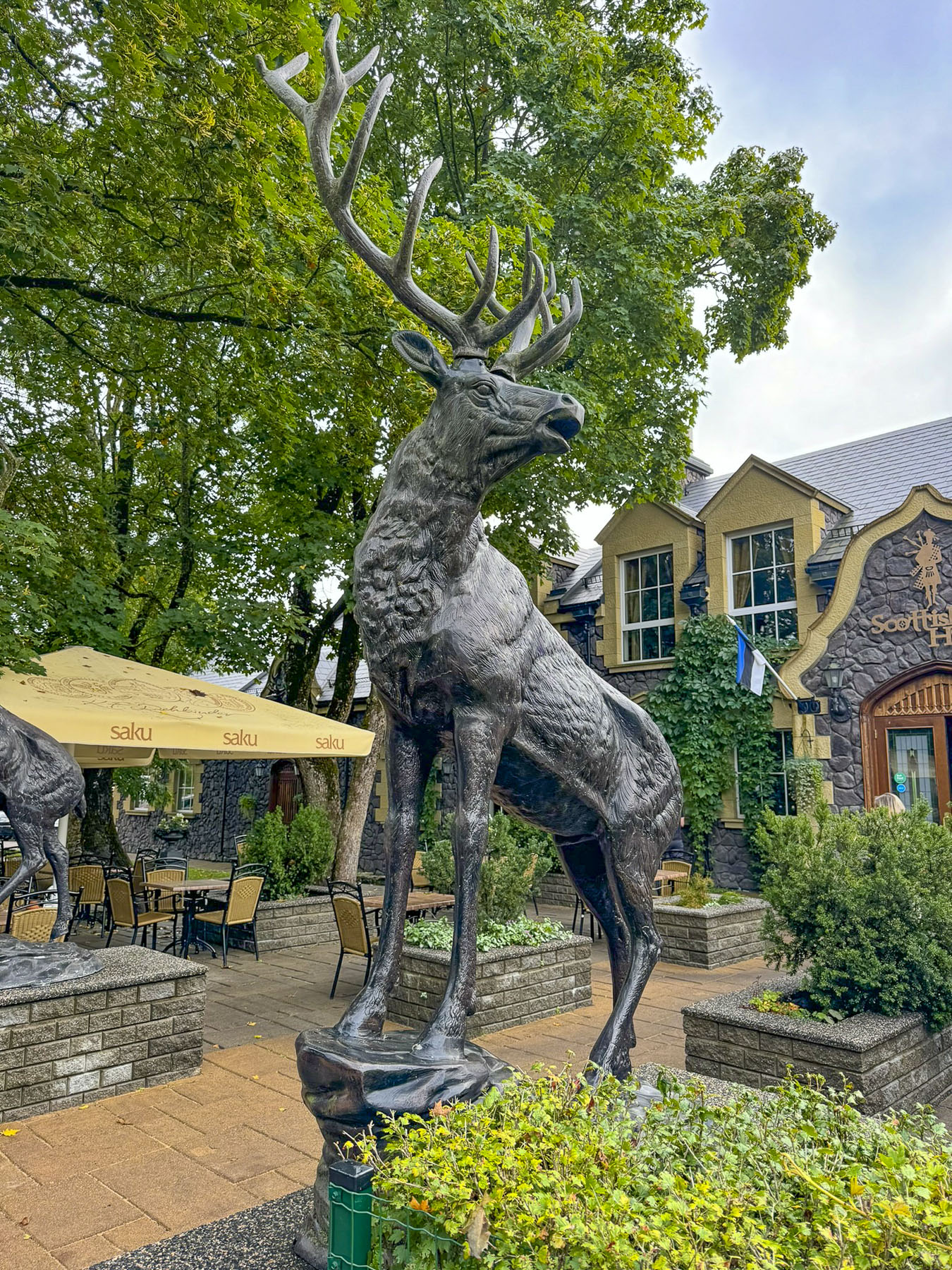
Across the way the Scottish House, with its majestic sculptures of highland stags in its courtyard, seemed incongruously placed. But we enjoyed resting, enveloped in its warm wood interior, and lunch was very good.

Our destination at the end of the day would be the guesthouse Pakri Baron, at the foot of the lighthouse, at the top of Pakri Peninsula. But we rarely drive the fastest and most direct route. Our road trips usually connect the dots, and resemble Ws or Zs to points of interest along the way. With that in mind we headed to the Keila Waterfall in Lõokese tee, Meremõisa – gotta love that name – 13km (8 miles) away.

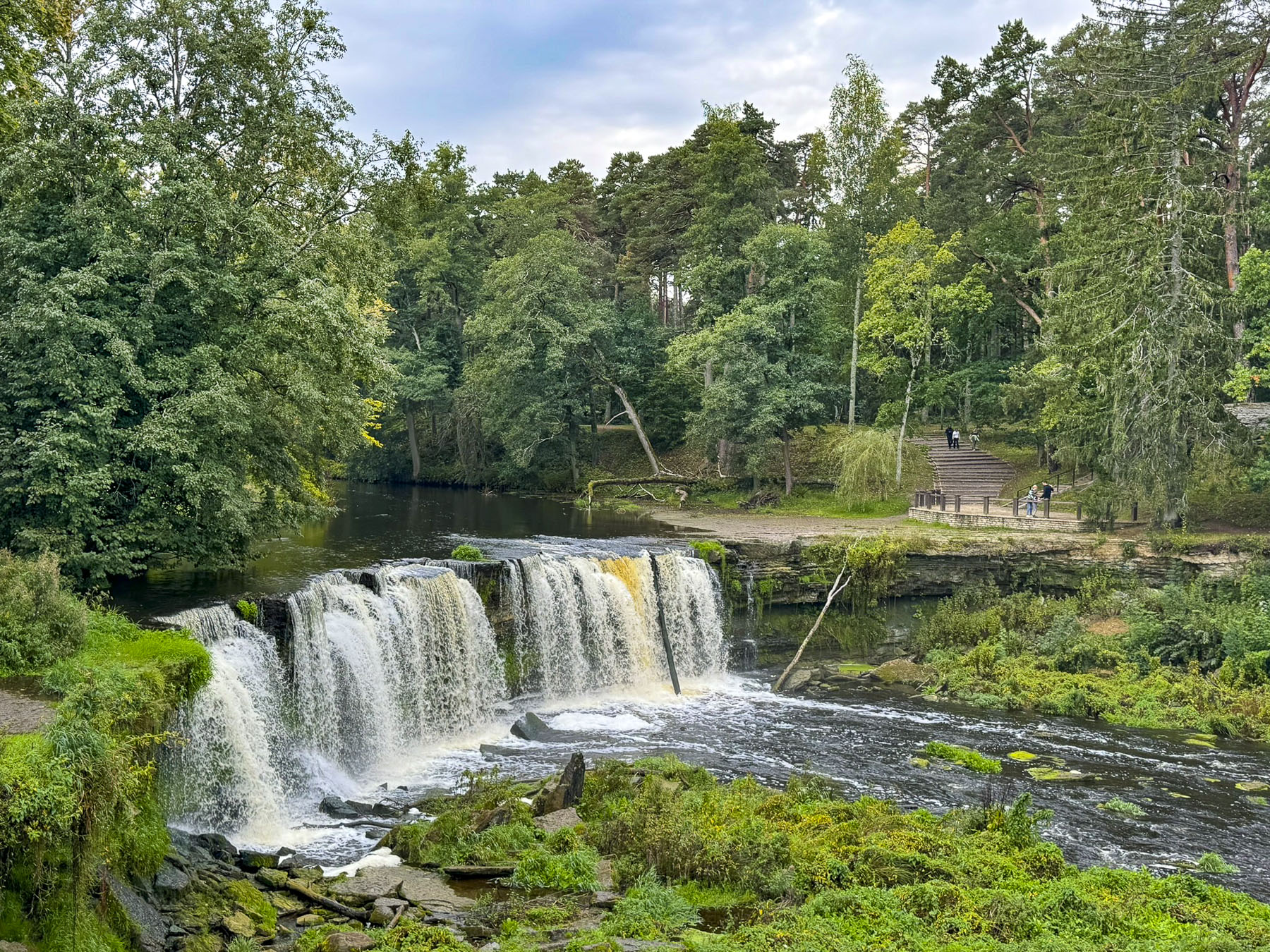
Without any tall mountain ranges, Estonia really isn’t noted for its waterfalls. But the Keila Falls, the third largest in the country, were relatively close. The falls are in a pretty river park that has a trail over a wooden suspension bridge that crosses to the opposite side of the falls. There is a small renovated hydroelectric power plant at the Keila waterfall that first started to produce electricity in 1928; the river park was originally part of the extensive grounds of the Keila-Joa manor. The neo-gothic style building was built in 1833 and is one of Estonia’s best surviving examples of the popular 19th-century architectural style. Unfortunately, the grounds of the manor house/museum were closed the day we were there.

Nearby, the all-wood Kõltsu Manor built in the late 1800s was another fine example of Estonian architecture. The large home was commissioned by a baroness to be used as her summer residence. After World War II, the house and grounds were used by the communist Russians as one of their Pioneer Camps. The name sounds so benign, but in reality, while they did offer camp activities, they were Soviet re-education camps that indoctrinated Estonian youth with communist ideology. Today the manor hosts events, weddings, and outdoor concerts during the summer months.

The forests in Estonia have their own stories to tell. We did not stop at the memorial to the 2000 Jewish victims of the Nazi massacre in 1944 at the forced labor Klooga concentration camp. Closer to our destination we stopped in Paldiski to purchase the makings of a picnic dinner and breakfast the next morning at the guesthouse. Apple trees grew wild along the edge of the road. We picked a few for munching later. White with a pink center, they were probably an heirloom variety called “Eva Kuld,” similar to the Pink Pearl variety. The apples were delicious.

We had timed our arrival at Pakri Baron to coincide with the sunset in hope of getting some nice photographs of the lighthouse and the coast as the sun dropped. However, the weather was fickle. But the guesthouse was wonderfully situated next to the lighthouse, which towered over us, and was a stone’s throw from the Baltic Sea. The still active lighthouse was built in 1889, and during the summer months it’s possible to climb its 275 steps to the top. Unfortunately, it was closed during our visit in mid-September. In front of the lighthouse is a copy of sculpture called The Ship’s Last Sigh (1899) by the Estonian artist Amandus Adamson (1855–1929), who grew up near Paldiski. The sculpture was chosen by vote from 5 of Adamson’s works by the residents of the community in 2008 to commemorate their native son. The guesthouse even had a traditional Estonian sauna in a separate building, just one of the 100,000 saunas in a country of 1.3 million. It’s definitely a cultural thing.

It was still dreary the next morning as we started our drive to the resort town of Haapsalu on the west coast of Estonia. But there were places to explore along the way. We don’t recall how we actually came across the existence of the Ämari Pilots’ Cemetery, but most likely it was a result of scouring Google Maps to find points of interest along our route. More accurately it could be referred to as the Russian Pilots’ Cemetery.

What piqued our interest was the use of tail fins from crashed Soviets planes as headstones to mark the graves of the pilots that died in accidents while flying from the former Russian airbase, Suurküla Aerodrome, during the Cold War era. The cemetery’s discreet location, in a forest almost obscuring it from the road, was so that reminders of the peacetime deaths, from a high accident rate, would not affect the morale of the military base.

The cemetery appeared to be well cared for, but it’s a reminder of a painful and repressive 46 yearlong occupation by communist Russia, unlike the monumental Soviet propaganda sculptures that were in public spaces across the country, which were destroyed or sent to the Soviet Statue Graveyard in Tallinn. This reminder of a dreaded past, like an uncle no one wants to talk about, was left to rest in peace.

Nearby was another reminder of Soviet rule: Murru vangla was a Soviet forced labor camp and re-education center where prisoners were sent to work in a limestone quarry for the duration of their sentences. After Estonia’s independence the prison and quarry were closed and abandoned. Water eventually filled the quarry and partially submerged some of old mining structures and prison buildings. Set against tall, eroded dunes created from slag left over from processing the limestone, the water of the quarry shimmers like a Caribbean beach. The uniquely beautiful manmade setting has slowly become a popular destination for divers and swimming. What’s left of the prison was turned into a museum. There is an admission fee to access the quarry area, but since the day was still heavily overcast, we kept driving a short distance down the road to the Padise Monastery. Founded in the early 14th Century by monks displaced from a monastery in Latvia, it flourished until the St. George’s Night Uprising, when Estonians rebelled against Danish rule and the imposition of Christianity upon them and killed 28 monks. The building was later turned into a fortress, but by the early 1700s the stones of the deteriorating fortification were used to build an adjacent manor house. What’s left of the monastery’s ruins has been preserved and now operates as a museum, and the manor house is now a boutique hotel and spa.

One of the many things we enjoy about traveling during the shoulder season, aside from fewer tourists like us out and about, is the affordability of really nice hotel rooms. Our case in point was our midweek 2-night stay at Hermannuse Maja, which backed up to the ramparts surrounding Haapsalu Castle, cost only €97.00, and included breakfast. Parking was easily available on the street.

Around the corner from our hotel the Müüriääre café, with an attractive interior and tempting food display, was the perfect spot for lunch before exploring the unusually named Haapsalu Episcopal Castle on a cloudy afternoon.

In the late 1100s Christian missionaries followed German merchants along old Viking trade routes into the region known as Livonia, that is today Estonia, Latvia, and Lithuania. The land was originally populated by pagan tribes, but unfortunately located between Orthodox Russia and Catholic Western Europe. Never happy with the status quo, religious zealots called for a Northern Crusade against the Baltic pagans, and with the blessing of Pope Celestine III, persecution began in 1195. The efforts to recruit an army was assisted by a papal bull which declared that “fighting against the Baltic heathens was of the same rank as participating in a crusade to the Holy Land.”  The medieval era was fierce, and bishops not only accompanied the crusaders spiritually into battle, but wielded swords alongside their troops fighting those heathen tribes. Haapsalu Episcopal Castle was built to project the power of the church during the thirty years it took to subjugate the region. In 1583 during the War of Reformation the Catholic stronghold fell to Protestant Sweden and the cathedral became a Lutheran church.

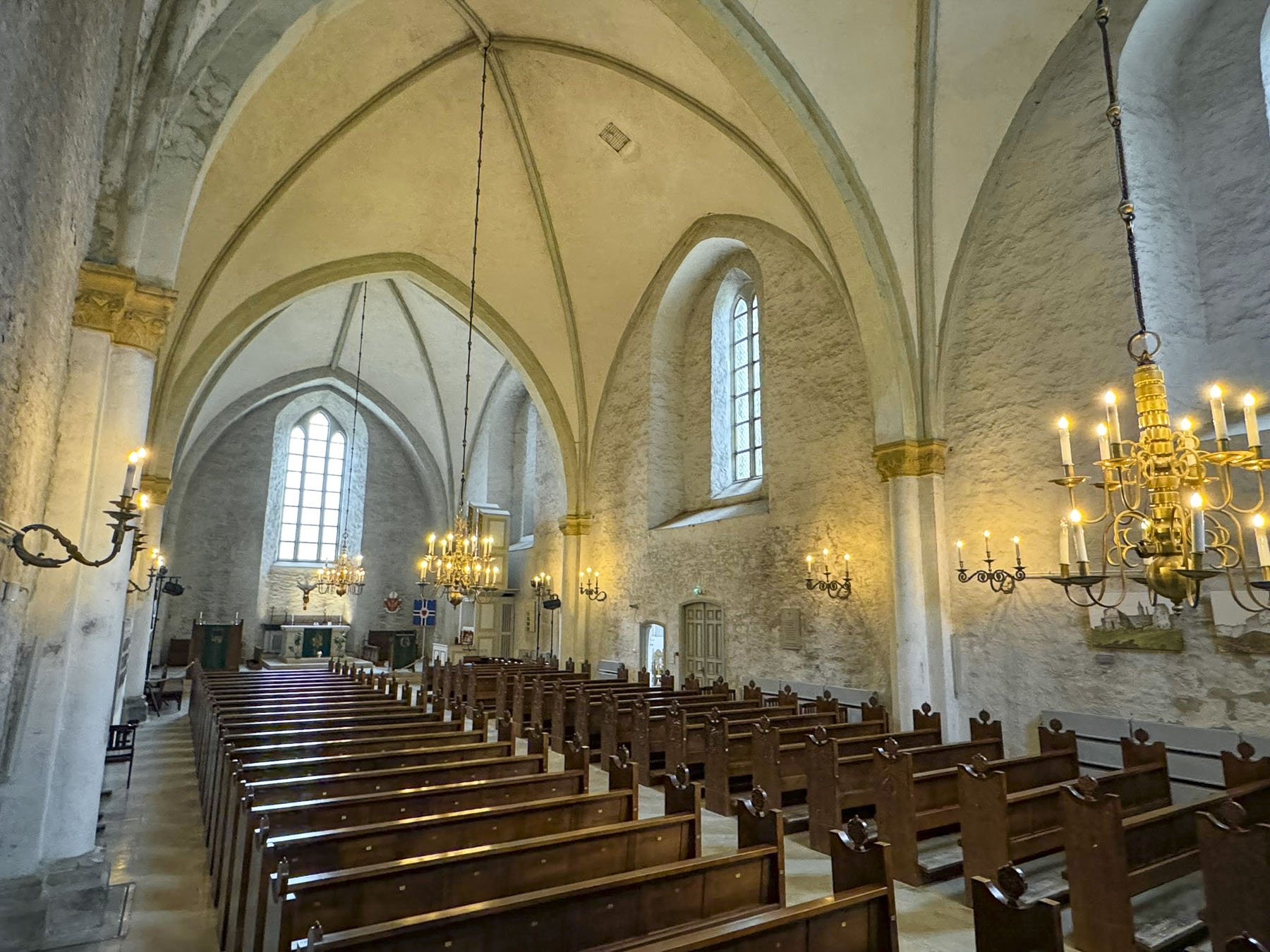
A tall defensive wall still encircles the nearly 1000-year-old castle. And the church has been nicely restored after surviving fires in 1668 and 1726 and neglect during the Soviet occupation when it was used as a granary. Though only the outer walls of the monastery, which was later converted to a palace, remain after the 1668 fire.

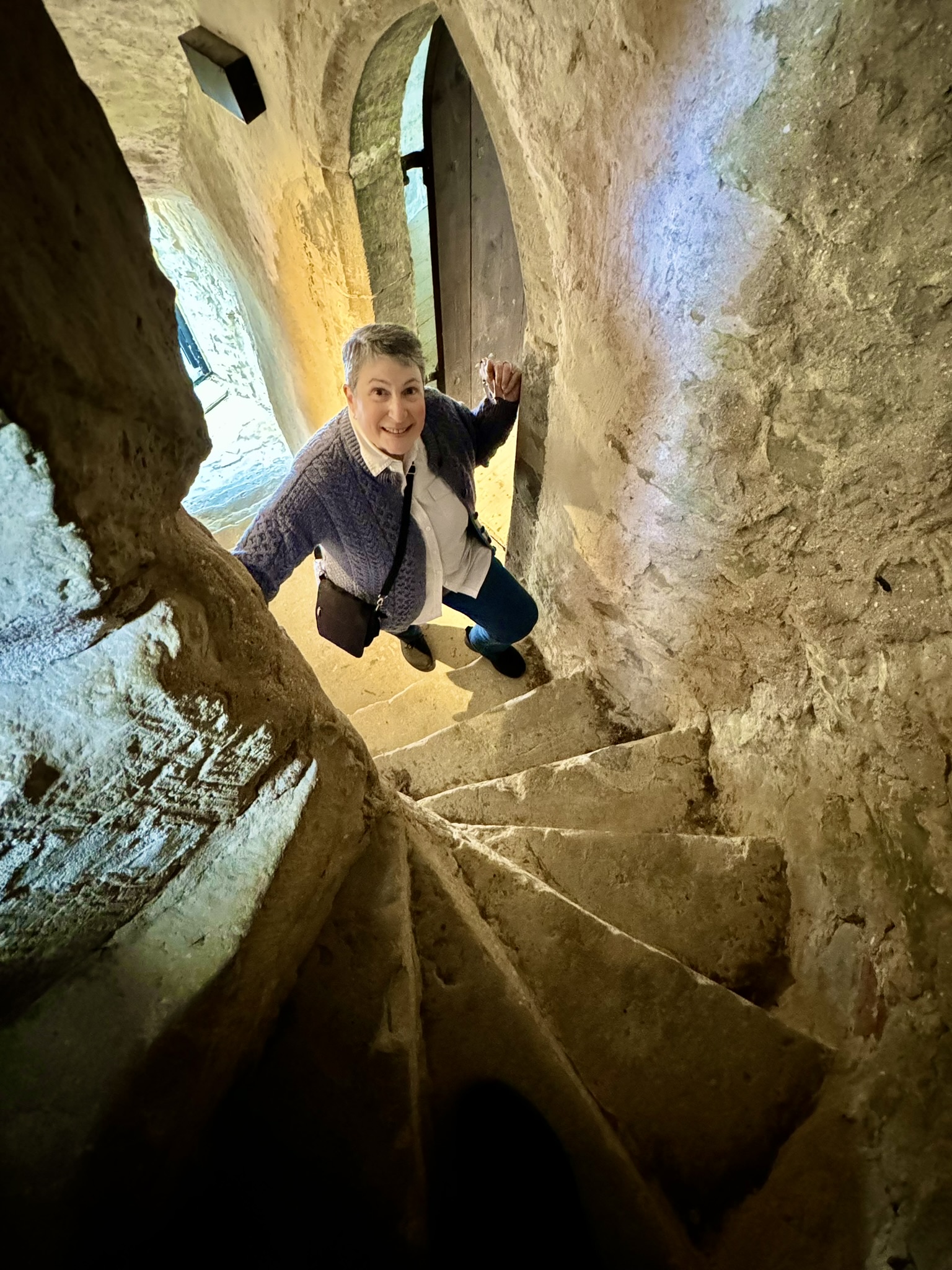
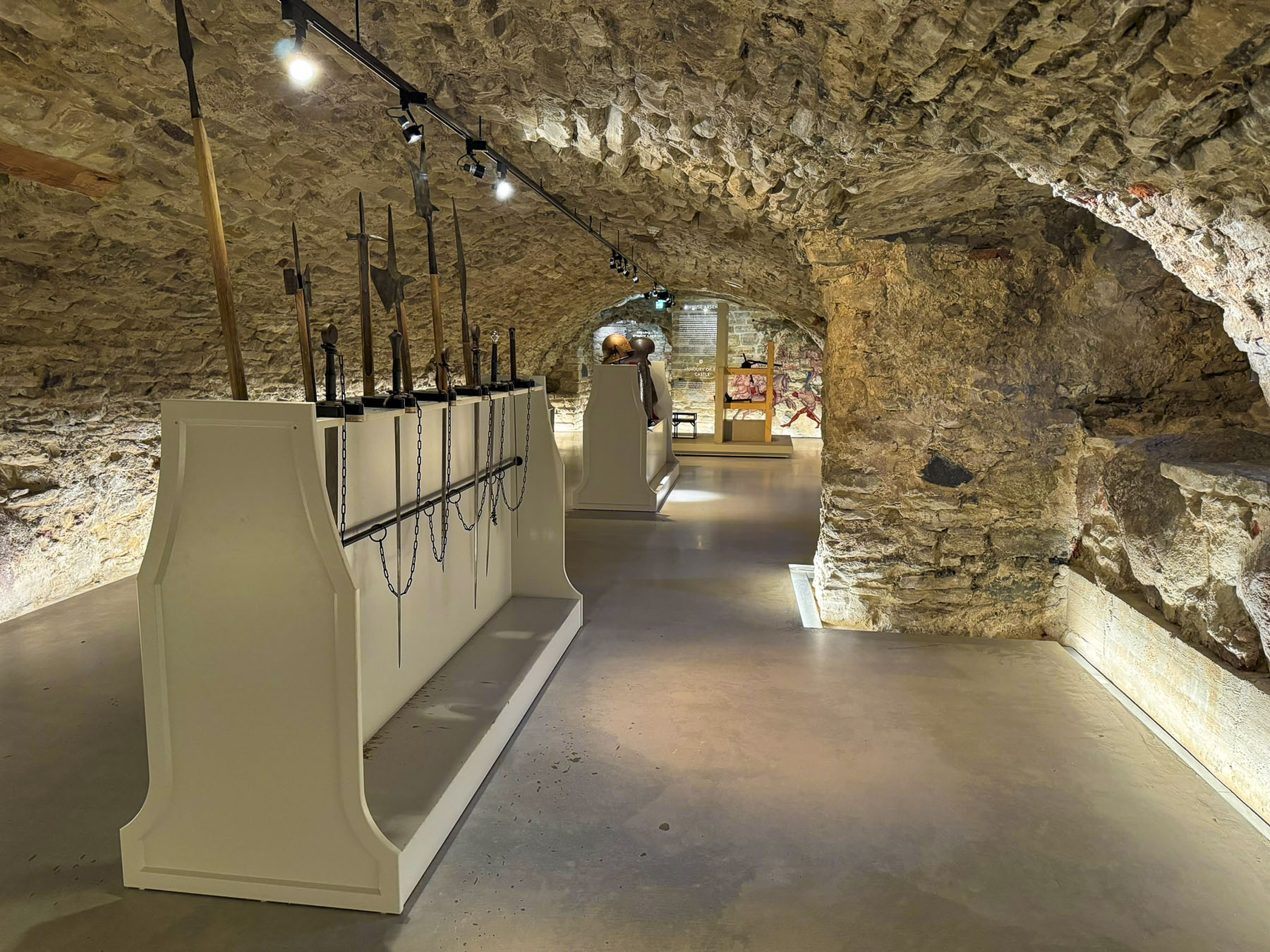
We enjoyed walking along the ramparts and climbing the castle’s tower. Surprisingly in mid-September we practically had the site to ourselves. Wandering through the ancient, vaulted dungeon-like rooms of the castle’s museum that showcased life in Medieval era was particularly interesting. The grounds of the castle are quite extensive, and one section in a now dry moat has a medieval themed playground with all sorts of structures for kids to climb on. During the summer the castle hosts a series of concerts, and the town welcomes tourists with a busy schedule of events.

Dinner that evening was across the street at the rustic Talumehe kõrts, which specialized in traditional Estonian dishes.

The next morning, we woke to a perfectly clear sky. The sunny weather was a welcome reprieve from several gloomy days, and we took full advantage of it to explore the picturesque town and walk along the Haapsalu’s bayside promenade. The walkway extends for quite a distance along the waterfront, and is flanked with a variety of architecturally interesting buildings along its length.

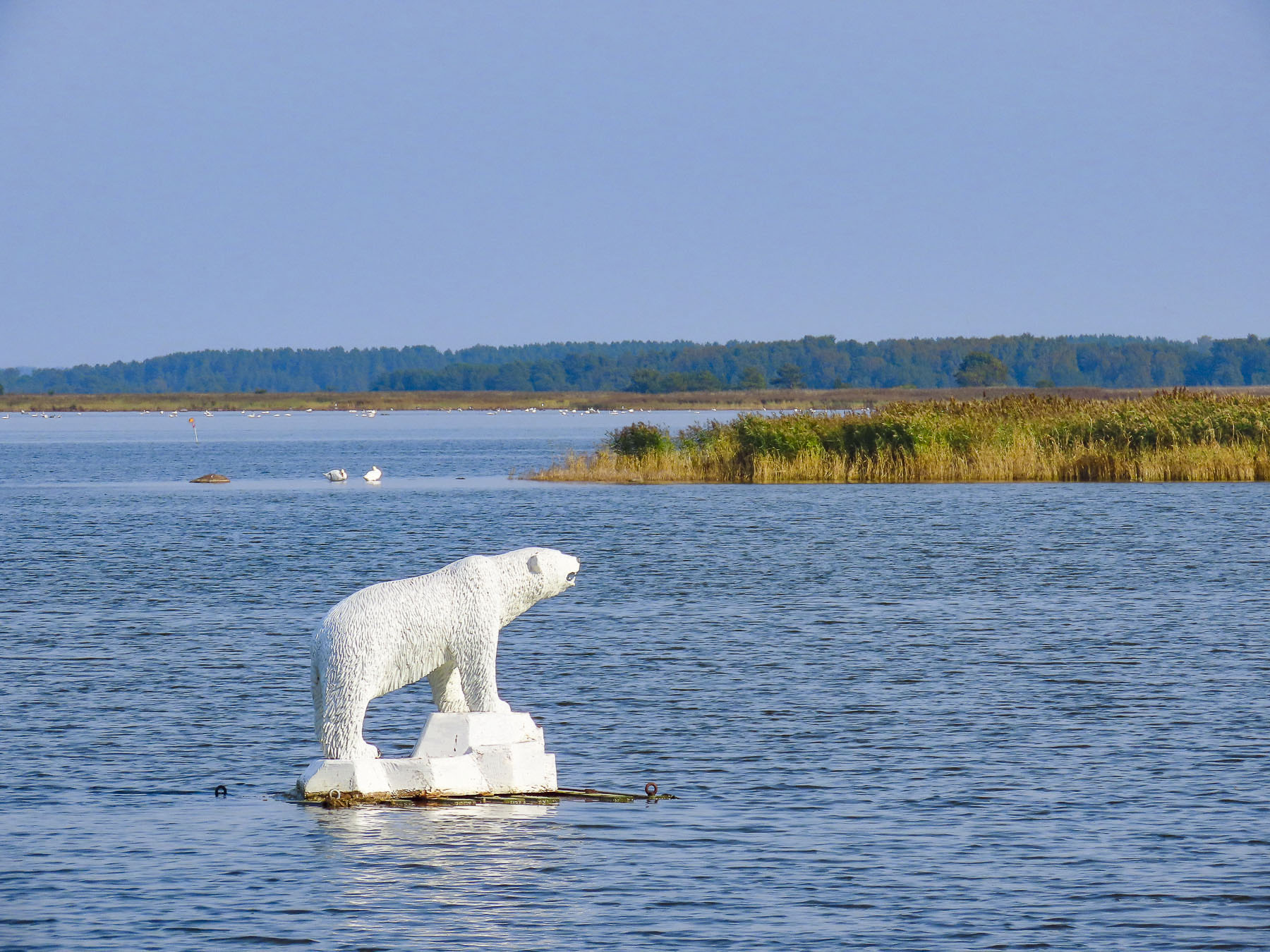
At one point we spotted a polar bear standing on an ice flow. A statue! It was one of several exotic animal sculptures, recreated from old photographs of the wooden figures made in the 1920s, for a section of the boardwalk called Africa Beach, a beloved small park from the 1800s. During the Soviet occupation the original wooden sculptures were used as firewood by Russian soldiers. With the Russians finally gone in 1991 the park was revamped as a children’s playground.

A short distance beyond the playground the walkway ends at the 5-story tall Tagalaht birdwatching tower. Climbing the tower offers views over the saltwater marshes of Haapsalu Bay, which is an important stopover for artic birds during their Spring and Fall migrations. Swans, cranes, and a variety of ducks can also be spotted.

The small town existed on the region’s fishing and agricultural base until a visiting physician observed that the local folk used sea mud to treat a number of ailments. He opened Haapsalu’s first therapeutic mud treatment resort in 1825. It soon became a popular destination for several generations of Russia’s czars and aristocracy. A bench along the path commemorates the spot from which the composer Tchaikovsky watched the sunrise when he summered there.

Walking back to town we passed the distinctive green onion shaped dome of Haapsalu’s Maria-Magdaleena kirik, a Russian Orthodox church. The church was consecrated on July 21, 1852. In the audience was the son of Czar Nikolai I, Alexander (later Czar Alexander II, Emperor of Russia, King of Poland and Grand Duke of Finland.)

We worked our way across town to Lake Väikese and savored a delicious lunch overlooking the water from the enclosed patio at Wiigi Kohvik, before following a walking path along the water that circled the lake. Along the pathway we noticed that nearly every home on the lake had a traditional Estonian sauna in their back yard. They were all different sizes and shapes, with some constructed with wood and others totally covered with earth. We wondered if folks jumped into the lake as part of their sauna ritual. Brrr! Just thinking of it made me shiver.

Overall, we had a very nice tme in Haapsalu. The next morning, we checked out early and drove to the harbor at Rohuküla to catch the first ferry of the day to Heltermaa on Hiiumaa Island.

Till next time, Craig & Donna

Estonia Part 1: Tallinn – Captivating, Charming & Caffeinated

Why Estonia? We are sure folks can relate, our pockets aren’t as deep as we’d like, but that doesn’t keep us home. A low budget, off-season destination is more attuned to our lifestyle anyway. So, when an under $400, September fare from New York City to Tallinn, Estonia popped up in our email we jumped at it after some research confirmed we could find some very nice hotels from $50 to $100 per night, often with breakfast included. Exploring the lesser visited Baltic countries of Estonia, Latvia, and Lithuania also fulfilled our desire to extend our travels beyond western Europe, which previously had been very Mediterranean-centric. Living in the very hot and humid southern United States is also affecting our decisions concerning vacation destinations, as we are now seeking alternative destinations as a result of climate change. The heat of a southern summer often continues into September and October, with temperatures at home in Georgia often in the high nineties. Estonia offered a wonderful reprieve from the sweltering summer heat with a daily high average of 14°C (57°F).

The history museum at Maarjamäe Castle was an unusual first stop for us after picking up our rental car at the airport. But it was the closest we’d be to it during our three-week road trip through Estonia, Latvia, and Lithuania. The museum is in a renovated 17th-century chateau, which was left to ruin for decades during the communist Russia occupation of Estonia. It is beautifully set on a bluff across from Tallinn Bay, and was built by the Brotherhood of Black Heads, a professional association of unmarried ship owners, merchants and foreigners dating from the 14th century, as a summer retreat.

Today the museum’s permanent exhibit, My Free Country, explores 100 years of modern Estonia’s history, from its 1918 declaration of independence from Russia, and the following War of Liberation, through twenty years as a sovereign nation before being invaded by Nazi Germany and communist Russia during the Second World War. The fifty years of brutal Russian occupation after World War II and communist propaganda are also covered, up to Estonia’s 1991 second declaration of independence from Russia, which was overwhelmingly supported by 78 percent of Estonians. It’s a difficult mission to reconcile the terror of the communist years into a bright, hopeful future, but historical research, as well as oral histories, document forced resettlements to Siberia and imprisonment in labor camps during the Soviet reign of terror, when Estonians were prisoners within their own country and shot if they tried to escape. The exhibit highlights a proud history of an unrelenting desire for freedom, which prevailed under the worst conditions. A history that, it is hoped, the younger generation of Estonians, who have not experienced communism, never forgets. As one quote on an exhibit referring to Russia said, “Nothing good ever comes from the east.”

After the 1991 independence, colossal, large-scale Russian propaganda sculptures, which once dominated prominent public spaces across the country, were removed from view but not destroyed, as they are part of Estonia’s history. However, they were erected behind the museum in a space fittingly called, with Estonian humor, “the Soviet Statue Graveyard.”

Our first lunch in Estonia was at the museum’s café, Maarjamäe Resto, an unexpected culinary delight, which could be considered a destination in and of itself.

It was still too early to check in to our hotel in Tallinn, so we headed nearby to the Tallinn Botanic Garden, a large park with an extensive greehouse. The grounds were quite pleasing with their plantings, and the greenhouse with its various collections of tropical plants was very interesting. Though in the section filled with cactuses from around the world, Donna, ouch!, accidently brushed one with her hand and imbedded some spines into her skin. Not a huge issue when you are home and have the proper tools to pluck the pesty spines from your skin and relieve the discomfort, but when you are traveling, it’s another issue entirely.

Fortunately, the barista operating the café in the greenhouse had dealt with this before, and he ran out to his car to fetch a roll of good old-fashioned duct tape to grasp those microscopic thorns. He was very nice, a 30ish Italian man who during conversation jokingly related that being a part time medic was not part of his job description when he was hired, and visitors getting pricked with cactus thorns happens more often than you would think.  We were curious how a warm-blooded southerner ended up in the northern Baltics. “You know there is always a woman to blame, and I followed my love back to her Estonian homeland.” We asked if he missed the warm Mediterranean weather and la dolce vita. Yes, the weather is nicer, so we visit my family, but life is better here in Estonia as there are more opportunities for those willing to work and get ahead. Estonia is leaps and bounds ahead of the other European countries in embracing digital technologies. So much so that the government considers internet access a fundamental right and ensures that everyone across the country, even on the smallest islands, has reliable internet, and offers digital literacy programs for the technology challenged. The government also endorses working from home remotely, and offers an Estonian Digital Nomad Visa. “Estonia is very big in cybersecurity, and this enables every person, business, and government institution to be connected. We are one of the most digitally advanced countries, and we can even vote securely online in Estonia.” This digital future contrasted with as well as complemented the vibrant centuries-old walled city of Tallinn.

Despite not having particular plans for Tallinn, we knew we would enjoy exploring the city as soon as we saw the ancient architecture along the way to our hotel. Having a rental car and finding a hotel with free parking is difficult in any city, but we scored big withTaanilinna Hotell. The hotel was in an excellent location, just on the opposite side of the old town’s historic ramparts, and a short walk from the 14th-century stone towers of the Viru Gate’s flower market.

Google Maps got us close, but the hotel was a little difficult to find, and we mistakenly drove through a pedestrian only area; fortunately, there were few people about. In order to find the hotel, we parked and walked down the street, when we spotted the hotel’s sign, which was set back from the lane. It’s a modest hotel, and the staff was very nice. We enjoyed a quiet 4-night stay.

With Tallinn’s old defensive wall only a stone’s throw away, history surrounded around us, and we quickly set out to explore and to find a place for dinner as twilight descended on the old town. Our wandering took us down various lanes, past distinctive centuries-old 4 to 5 story tall buildings that served, as was the medieval custom of the time, as the multifunctional home/warehouse/offices of wealthy merchants.

Lights twinkled on and illuminated the cobblestones in a golden glow. I know it’s cliché, but our first impressions of Raekoja Plats, the Town Hall Square, anchored with its soaring 64M (300FT) tall 13th-century watch tower, were beautiful, charming and magical. We were disappointed to learn that the tower is only open from the beginning of June to the end of August. We love a good tower climb!

Still retaining its original footprint, Tallinn is one of Europe’s best preserved medieval cities, with 26 watchtowers along its ancient ramparts and city gates, topped with distinctive cone-shaped red roofs.  The walled city still encircles a vibrant and active community, which supports a lively arts scene, along with a robust nightlife.

Its preservation seems surprising for a city that has stood at the crossroads of conflict since it was founded by a Danish King in the early 1200s. In addition to the Danes, Tallinn has been ruled by the Brotherhood of the Sword, the Teutonic Order, the Holy Roman Empire, the Swedish Empire, Czarist Russia, Nazi Germany, and the Soviet Union. The city’s prosperity and resilience throughout the centuries is testimony to the strong spirit of the Estonian people. 

One of the nice things we enjoy about staying in one place for several days is the opportunity to experience the locale as it quietly awakens with the sun. Whether it is cloudless blue skies or a place cloaked under clouds with folks huddled under umbrellas to ward off the rain, a place breathes and its mood changes by the hour, from day to day. The destinations on our walks were always different, but we often crossed the same lanes and stopped to photograph something different that caught our eye, which we hadn’t noticed before.

Old town Tallinn is mostly flat and is a wonderfully walkable city. There is a short uphill stretch to Toompea Hill (the upper city), where we visited the Kiek in de Kök Museum, the Bastion Tunnels, and Neitsitorn, the Maiden’s Tower. During the 1700s when the towers lost their military significance they were often repurposed as private apartments, with a craftperson’s workplace on the lower level, and rooms above. During both world wars the tunnels were used as air raid shelters. While the towers were lived in continually, most famously by the Estonian painters and twin brothers, Kristjan and Paul Raud, until the 1960s, when the city deemed them unsafe for habitation.  Abandoned, the towers became a destination for homeless squatters and Estonia’s emerging counterculture. The extensive tunnels were an area the police refused to go. A popular, unlicensed bar opened in the tower on New Year’s Eve in 1980. Unfortunately, it didn’t survive the economic turmoil of the era as the Soviet Union began its descent into a failed state.

After an extensive multiyear renovation, the Kiek in de Kök Museum opened in 2005. The Maiden’s Tower now hosts a new Neitsitorn café, which has a nice view out over the Danish King’s Garden, and the ghostly blackened bronze statues of three monks named Ambrosius, Bartholomeus, and Claudius. Legend holds that they occasionally appear spectrally in the garden, though the only thing that appeared the morning we visited was a sleek red Ferrari 296 GTB that was the center of a photo shoot. The tower also has the re-created art studio of the twins, Kristjan and Paul Raud. The tunnels under the ramparts have been creatively reenvisioned and now house a variety of interactive digital multimedia and historical exhibits.

A walkway along the ramparts between the towers at the museum led to an exhibit about Tallinn’s café culture. Though the first coffee house opened in the town of Narva in 1697, Tallinn didn’t get its first café until 1702 when one opened on Town Hall Square. The oldest still-operating café dates from 1864, when the renown marzipan bakery, Maiasmokk, decided to offer coffee to go along with their tasty, sweet treats. After 160 years the Maiasmokk Café, even surviving nationalization during the Soviet occupation, is still open and a beloved cultural institution in Tallinn. Most of the exhibits address Tallinn’s café culture during the repressive communist era, when going to a café to share a coffee was one of the few recreational activities people could afford. With our “walk a little then café” philosophy for exploring a city, we felt we had found kindred spirits in Tallinn.

Decades later Estonian’s infatuation with coffee continues. This cultural obsession was fully on display when Estonian singer Tommy Cash performed “Espresso Macchiato,” during the finals for Estonia’s 2025 Eurovision contest and came in third place! Though in Italy some humorless Italians didn’t like the caffeinated cliches and called for the song’s banning.

Other points of interest on the hill included the onion-shaped spires of the Russian Orthodox Alexander Nevsky Cathedral. It’s across the street from the pink building that houses the Estonian Parliament. (A very good eye-level view of the cathedral can be seen, on the uphill walk, from the restored bell tower of the mid-1400s St. Nicholas’ Church.

He was the patron saint of merchants and seafarers. It was formerly one of the wealthiest churches in Tallinn until it was severely damaged by WWII bombing. Fortunately, many of its fine ecclesiastical art works, acquired from the art capitals of Europe during the Hanseatic era, had been removed from the church for safekeeping at the start of World War II.  Now restored after a 30-year long renovation, the church serves as the Niguliste Muuseum, and exhibits the works that survived that cataclysmic war. Fortunately, the 105 meters, 345 ft, tall spire has an elevator that whisked us to the viewing deck.)

Farther along in one of Tallinn’s oldest churches, the 13th century St Mary’s Cathedral, there is a unique private worship box, totally enclosed with shaded windows, built directly across from and on the same level as the pulpit. Jokingly, we speculated it was designed for a wealthy patron so he could fall asleep and snore, without embarrassment, as the priest orated endlessly.

The hill also has the best vantage point for cityscapes of Tallinn’s historic skyline, the Patkuli Viewing Platform, and a mysterious red gorilla, that seems incongruously out of place. But we will leave him for you to find.

Stairs from the viewing platform ascended back toward the lower town, and we were close to Balti Jaama Turg, the Baltic Station Market. It was Tallinn’s first train station constructed in the 1860s, and became a market hall in 1993. A major renovation in 2017 totally revamped the three-level market, which has become a magnet for residents and tourists seeking a lively venue filled with diverse international eateries, antiques vendors, clothing shops, and food stores.

The next day, closer to our hotel, we wandered about, climbed more towers, walked along arched and tunneled alleyways, and descended into a cellar or two. Our walk along Müürivahe Street to the Hellemann Tower and Town Wall Walkway was quite interesting. The real prize was the view from the tower window towards Town Hall Square – it was a panorama filled with red tiled roofs and steeples.

Across from it was the Dominican Convent built in 1246. It was the oldest monastery in Tallinn and supported the adjacent St. Catherine’s Church which was completed in the early 1300’s. The convent couldn’t exist solely on the alms it collected, but the friars were an industrious group who supported themselves as farmers, and traders of fish, while also operating a brewery that sold four different kinds of beer, while they spread the gospel. “The monastery also drew profit from the veneration of relics,” and at one time, records suggest, they had “twelve silver reliquaries containing the heads of saints, with each head reputed to cure a different set of diseases.”

But everything came to an abrupt end during the Protestant Reformation in 1524 when a Lutheran mob ransacked the church and monastery, and the friars were expelled from Tallinn. A partial restoration was undertaken in 1954, and it’s now a museum, which also hosts art exhibits. Its rough stone chambers and some fine carved stone works were intriguing. We didn’t notice any fireplaces, which left us wondering how difficult living within these spartan walls must have been.

Next to the monastery is Katariina käik, St. Catherine’s Passage, an old medieval lane that separates the church from the surrounding buildings. Today it’s lined with restaurants offering Estonian cuisine, and artisanal crafts shops, featuring the talented women of the Katariina Gild who craft jewelry, weavings, ceramics, blown glass, and leatherwork. At the far end of the lane, under the arched entrance off Vene Street we found the Restaurant Munga Kelder to be a nice place to dine.

Within earshot of a town crier’s call was the Masters’ Courtyard. It similarly has unique craft vendors, but also has a restaurant that fills the courtyard with rustic tables covered with colorful tablecloths, which gives the courtyard a joyful, boisterous look.

Marzipan lovers, we had to stop one afternoon at the Maiasmokk Café. The ambiance in the front room was very old school with an ornate ceiling, and mirrored walls with polished wood trim and newspaper hooks! When’s the last time you’ve actually seen a newspaper? Their colorful back room is a temple to marzipan with display cases showcasing the sweet crafted into figurines and other shapes.  The variety was just mind boggling. And if your timing is right you might be able to see them being made.

With our sugar cravings satiated, we checked out Tallinn’s Great Guild Hall, directly across from the café. It featured several floors of interesting exhibits dedicated to the city’s history and trade guilds.

Across from the guild hall and the café is the Church of the Holy Spirit. During the medieval era it was the main church for everyday folk in Tallinn, and the first chapel to offer masses in Estonian, not German or Latin as was the tradition of the other churches in Tallinn at the time. With its stark white interior and original dark wood ornamentation, it is one of Tallinn’s least altered churches.

There were several other interesting facades down the street from the Great Guild Hall.

Tallinn has a rich nautical heritage that started during the early Viking era in the 6th-century when the area that would become Tallinn was a stop on the Baltic trade route that connected Sweden to Constantinople.  The area of Tallinn traded furs and bog iron for wine, spices, glass, and jewelry. Shortly after the Danes established rule over northern Estonia in the early 1200s, Tallinn now a larger port city, joined the Hanseatic League, a confederation of medieval trading cities located along the Baltic and North Sea coasts. The Dutch, German and Swedish merchants of this association brought several centuries of prosperity to the city that’s still reflected in the fine examples of merchants’ houses and guildhalls that line Pikk Street. The league’s maritime trading also supported ship building which remained a vital industry through the Soviet Era which saw the shipyards build warships and submarines for the Russian navy.

The importance of Tallinn’s maritime history is well told with two museums in the city.  One is housed in a squat, round, 16th-century cannon tower called Fat Margaret, which once guarded the port, but now is a modern, state of the art museum, with ship models, interactive displays, and the hull of an excavated wooden shipwreck to view.   

Its sister museum is on Tallinn’s waterfront at the Lennusadam Sea Plane Harbor. It was raining heavily the day we visited, so we didn’t see the historic ships docked outside, but we did enjoy the full-size boats on display inside the old seaplane hangar. Especially the submarine Lembit, built in Tallinn and launched in 1936, which was the pride of the Estonian Navy.

The large concrete hangars themselves are noteworthy, as the three connected shells were the largest reinforced concrete domes in the world, without any central support columns when their construction started in 1912. They were ordered built by Russian Tsar Nicholas II to shelter the seaplane squadron that was part of Peter the Great’s naval forces. It’s a cavernous space with a seaplane hanging from the ceiling, and where you can actually walk under a submarine. The museum also had a nice café which overlooked the exhibits.

When the weather was inclement or the walking distance too great, we used Uber to get around. The service worked very well for us in Tallinn. Getting to Telliskivi Loomelinnak, the Telliskivi Creative City, from the Lennusadam Sea Plane Harbor was one of those occassions and it worked perfectly.

It’s an old, street-mural covered industrial site that’s been revamped into a hip entertainment and nightlife destination with theaters, galleries, restaurants, and bars. It was a fun place to explore, but I think we skewed the demographics a little bit.

 Till next time, Craig & Donna

P.S. We purchased Tallinn Cards to use during our stay in the city and found it to be quite beneficial and cost effective. The card offered access to over 50 museums and attractions, free travel on public transportation, and discounts on sightseeing tours.

Driving the North Coast 500 – Part 7: Duncansby Head Lighthouse To Loch Ness or Castles, Myths & Bagpipes

A small flock of sheep, sleeping on the tarmac, scattered when we rounded a bend to Duncansby Head Lighthouse before the crack of dawn. The pinnacle stood silhouetted against a brightening sky of pink, amber and blue, as the sun crested the horizon over the North Sea.

We followed the trail along the cliffs towards the Duncansby Stacks and passed a spot where we imagined an ancient Norse god had wielded a broadaxe and severed the bluff in two. The stacks were glowing red in the early morning light as Kittiwakes and Guillemots swooped along the cliff face, which stretched south for miles.

Following a delicious hardy breakfast, we packed our bags and said goodbye to the innkeepers at the John o’ Groats Guest House, one of our nicest stays while in the Scotland, then began the final leg of our NC500 tour and headed south along the A99 and A9 to Dunrobin Castle & Gardens, before spending the night in Strathpeffer. A pleasant distance of only 113 miles, which took us all day with all the photo stops we made. But that’s the way we roll.

There’s a debate about the best way to drive the North Coast 500 and the consensus seems to be that exploring it in a counterclockwise direction leaves the breathtaking scenery of the west coast for the last part of your trip.

We did the opposite and followed the NC500 clockwise, heading south from Inverness to Edinburgh, then west through the highlands to the Isles of Skye and Lewis & Harris before returning to the mainland and heading north to Durness and John o’ Groats, before heading south along the North Sea Coast of Scotland. We found the scenery breathtaking.

Our only complaint was the lack of official scenic pullovers, as we often had to park at the entrance to a farmer’s pasture or on a side road, and walk back along its shoulder to the spot we wanted. Fortunately, there were few cars on the road, because we stopped numerous times.

At Wick we visited the Old Parish Church and wandered amid its ancient gravestones, the oldest of which dates to 1639. The present church was built in 1862 over the foundations of two earlier churches, the earliest dating to the 12th century. A prideful lot the Wicks were, and they didn’t take kindly to anyone disparaging St. Fergus, their church’s patron saint. History tells of an Archdeacon, a noted reformer, who visited the parish in 1613 and vented his wrath on a beloved image of St Fergus in the old church, attacking and defacing it. The congregation was incensed, and the Archdeacon might have met his maker on the steps of the altar if the local sheriff hadn’t escorted him out of town. But he only got as far as the Wick River when he was ambushed and drowned.  During the following enquiry, “witnesses swore on oath that they had seen the ghost of St Fergus astride the unfortunate minister holding him down in the river.”

Clan Gunn Museum & Heritage Centre is beautifully set on the coast.

There are few natural harbors along Scotland’s North Sea coast. Ferocious storms blowing in off the sea required many villages to build stout seawalls to prevent their fishing boats from being smashed against the rocky coast. One such place was the tiny Latheronwheel Harbour. We had it all to ourselves when we visited on a Wednesday in August.

Crossing the River Helmsdale, we stopped at the Emigrants Monument which graces a hilltop that overlooks the village of Helmsdale nestled against its river and the sea. It’s a heart-rending tribute to those who were forced from their homes and livelihoods during the Clearances. The inscription on the monument, in Gaelic and English, reads:

“The Emigrants commemorates the people of the Highlands and Islands of Scotland who, in the face of great adversity, sought freedom, hope and justice beyond these shores. They and their descendants went forth and explored continents, built great countries and cities and gave their enterprise and culture to the world. This is their legacy. Their voices will echo forever thro the empty straths and glens of their homeland.”

It was commissioned by Dennis MacLeod. The son of a war-widowed crofter, he emigrated from Scotland to South Africa and made his fortune in mining.

Dunrobin Castle & Gardens was our main destination for the day, but our hopes were temporarily dampened by a sudden heavy rain. Fortunately, after we ran through the storm to the entrance, the sky cleared.

The castle is one of the best-preserved examples of how the landed nobility extravagantly lived. A castle has stood on this site overlooking the Dornoch Firth and the North Sea since the Earldom of Sutherland was created in 1235. Only a few walls of the ancient castle’s keep remained after extensive renovations and expansion in the 1700 and 1800s. The result was a French style chateau with towering conical spires and 189 rooms. Amazingly, the beautiful estate has remained the seat of Clan Sutherland for 800 years and is today owned by the 25th Earl of Sutherland.

Our self-guided tour (there were staff along the way to answer any questions) through the

exquisite rooms of this immense family home was very interesting. And it does feel like a family home, opulent but not pretentious. It was significantly nicer than the royal Palace of Holyroodhouse in Edinburgh.

As gardeners, we delighted in wandering through the Versailles-inspired oasis of flower beds and fountains.

Off the garden was the estate’s former two-story summer house, now a museum that displayed a notable collection of Pictish Stones, along with a variety of ethnographic items collected from travels around the world, and animal head trophies from safaris in Africa. 

At the lower end of the garden, we watched the castle’s resident falconer demonstrate and explain the ancient art of falconry as a Harris hawk, Gyrfalcon and Peregrine swooped low over the gasping audience. It was a very entertaining and informative show.

Farther south we turned off the A9 and headed to an early dinner at the Surf and Turf in Dornoch, a small town that traces its roots back to the 8th century. We discovered the Surf and Turf through one of the Instagram feeds we follow. The reviews were quite favorable and pictures of the seafood looked delicious, but we didn’t realize it was a takeaway shop. Luckily for us, they had a long bar with stools along one wall. The fresh fried fish, calamari and mussels we ordered were excellent and all locally caught.

The Dornoch Cathedral was just around the corner, and we spent a while studying the grotesque ancient gargoyles and stone interior of the church, which held its first service in 1239. During the medieval era the gargoyles were believed to portray evil spirits, which were driven from the church by ringing its tower bells.

In 1245 the 1st Earl of Sutherland was buried in the cathedral, the first of many Sutherlands  to be entombed in the family vault under the sanctuary floor. Three centuries later the church was left in ruins after fire destroyed the nave and roof during a climatic feud between Clan MacKay of Strathnaver and Clan Murray of Dornoch. Fifty years later only the roof over the chancel and transept walls were replaced. The cathedral remained partially renovated for another 300 years until 1835, when the Duchess of Sutherland financed a full restoration. Light poured through 27 stained glass windows and brilliantly illuminated the church’s interior. Three of those windows, with the themes literacy, music, and peace, were donated to the church in 1926, in the memory of the famous Scottish-American industrialist, Andrew Carnegie, who summered nearby at his baronial estate, Skibo Castle.

Also of interesting note, the last burning at the stake of a witch in Scotland happened in Dornoch in 1727.  Janet Horne, a local woman, was accused of turning her daughter into a pony and riding her around the highlands to perform her witchcraft. The Scottish Witchcraft Act of 1563 was repealed in 1736. The singer Madonna had her son Rocco christened in the cathedral in 2000, before her wedding ceremony to Guy Ritchie at Skibo Castle.

We ended our day in the quaint village of Strathpeffer, a Victorian era spa town whose sulphurous spring waters were touted as a cure for many ailments. A railway line reached the town in the late 1800s, and it became an easy destination for wealthy Victorians who sought “to take the waters.” Our hotel, the Highland Hotel Strathpeffer was one of those grand, four-story wood paneled, railway hotels built to ease spa-goers’ visits to the village. It’s glory years now a distant memory, the hotel still has its original warm wood paneling, but our room was very spartan, and a far cry from what we imagined were its luxuries during its heyday. During World War I the hotel was requisitioned as a convalescent military hospital, and in the Second World War served as a naval training school.

The village was very charming with a visually pleasing assortment of well-kept Victorian architecture. The old train station now hosts the Highland Museum of Childhood and a nice cafe. Across the street from our hotel the town’s original pavilion was recently renovated and once again hosts music and theater events, along with weddings, and exhibitions. Behind the pavilion is a small whimsical sculpture garden with five 13ft tall wooden sculptures of mythical figures from Celtic, Viking and Pictish legends. They were created by Allister Brebner, a local woodcarver with a workshop in the old train station, from the trunks of giant Douglas Fir trees, harvested from the Highland’s forests.

Is a tour of the Scottish Highlands really complete without visiting Loch Ness? We didn’t want to have any regrets, so on our last full day in Scotland we headed to Urquhart Castle and hoped to catch a glimpse of the fabled serpent so we could tell our young grandchildren, with our fingers crossed and a wink of the eye, that we had indeed spotted and encountered the creature and tried to wrestle it to ashore. I had his head and Donna his tail, but the slippery slimy thing was wildly thrashing about, and we lost hold of him, and in a final splash he vanished. An epic fish story about the one that got away is always good for a child’s imagination.

The castle commands a strategic point that juts out into Loch Ness, the natural geographic dividing line between the northern and southern Highlands. Built in the 13th century, it was one of Scotland’s largest fortifications and had a tumultuous 500 year history as it was captured then retaken numerous times during the Wars of Scottish Independence. Finally British soldiers blew it up in 1692 as they retreated to prevent the Jacobite army of Bonnie Prince Charlie from occupying it. On the grounds is a full-sized working recreation of a medieval trebuchet, a catapult-like siege engine that used a counterweight to hurl large stones against castle walls. Unfortunately, they were not demonstrating its use when we visited. Urquhart Castle, along with the Glenfinnan Viaduct for the Harry Potter train, were the busiest attractions we visited while in the Highlands. The rest of the time it felt like we had the Highlands mostly to ourselves. This was wonderful considering we drove the NC500 during the summer high season in August.

Our last stop before catching an evening flight from Inverness Airport was in Drumnadrochit, a crossroads village at the foot of a bridge that crosses over the River Enrick. We drove through it on the way to Urquhart Castle, earlier that morning, and thought it would be a nice place to break for lunch.

A young bagpiper commanded the village green as we settled into an outside table at The Fiddler’s Highland Restaurant to people-watch for a while. We were a little melancholic that our trip was finally coming to an end after driving a big loop around the Highlands, an area blessed with an amazing array of beautiful mountains and seascapes. The wizardly spell cast by the pipes was hard to break as we departed.

My heart’s in the Highlands, my heart is not here,

My heart’s in the Highlands, a-chasing the deer;

Chasing the wild-deer, and following the roe,

My heart’s in the Highlands, wherever I go.

The poem was written by Robert Burns

Till next time, Craig & Donna

The North Coast 500, kind of – Part 1: Edinburgh to Glencoe

Traditionally the North Coast 500 is a 516-mile tourist route that hugs the vast coastline of northern Scotland, and in its serpentine course includes some of the most scenic seascapes and landscapes on the planet, and in the Scottish Highlands as well. Maps show it as a large roughly circular route that starts and ends in Inverness, as our trip did, but bypasses Edinburgh and Glencoe since they are farther south. In planning our trip, we used the traditional NC500 as inspiration for preparing our own itinerary that included Edinburgh, Skye, the Isle of Lewis and Harris, and the Orkney Islands. Ultimately, we drove 1,430 miles over 15 days. Roughly 95 miles per day, which was a very manageable pace and offered plenty of opportunities to visit sites and explore. We used Arnold Clark for our car hire and were quite pleased with their pricing and service. Visit Scotland has a great website that outlines 15 other scenic driving routes that will get your wheels spinning. We hope you enjoy this first part of trip that we fondly call the D&C1430.

By this point in our trip, we had already been in Scotland for four days, but really considered this the first day of our Highlands adventure. Leaving Edinburgh and the Fringe Festival behind us, we zipped past the Kelpies. You have to be mindful of the speed limits while driving on the roads in the United Kingdom, as there are speed cameras everywhere. But it seems to be a lenient system where your speed is averaged between two points, so if you enter the camera zone above the speed limit you have a chance to compensate for the error by slowing down. Five months on and we have not yet received any notices of fines, but it did take some getting used to.

The morning was gray. The plan for the day was to visit several intriguing sculptures around Cumbernauld, head to Stirling Castle, and spend the night in the small village of Kippen. Luckily, we had stopped at the Kelpies several days earlier, on a beautiful afternoon, as we drove into Edinburgh. The 100ft tall equestrian statues are located in Helix Park at the confluence of the Clyde Canal and the River Carron. The steel horseheads are the largest in the world, and were created by the internationally acclaimed Scottish sculptor, Andy Scott. They are based on Scottish folklore;  a kelpie is a dangerous shape-shifting water spirit that appears on land as a horse, who entices its unsuspecting victim to ride on its back, only to be sped away to a watery grave. 

We used to purchase guidebooks to research our travels, but now rely mostly on internet research and Instagram. We have found Google Maps to be a great tool and use it to find many points of interest that seem to fly under the radar. We highlight them as favorites on the app and then connect the dots for our itinerary.

That’s how we planned our first stop of the day at another artwork conceived by Andy Scott – Arria, the Angel of the ‘Nauld,’ or the Steel Mermaid. The sculpture appeared quickly above the tree line along the M80 then vanished from view like a mirage. There was not any signage to the sculpture, but we eventually found ourselves at the back corner of the Eastfield Cemetery in Cumbernauld, where a path led through the woods to the 33ft tall steel figure.        

The graceful sweep of the split tail combining as one is meant to represent the original meaning of Cumbernauld. In Gaelic ‘Comar nan Allt’, means the merging of water, which represents the town’s two rivers flowing into the Forth and Clyde.  The figure offers, with outstretched arms, the rivers as her gift of life to the earth. Encircling the base of the sculpture is the poem by ‘Watershed’ by Jim Carruth.

The first sounds spoken, from the spring’s core, are of a new beginning, of people and place,

a poetry that bubbles and gargles to the surface, to leave this watershed, flow east and west,

in a rush of words, that tumble and fall, to join the conversations, of two great rivers,

a voice calling out, I belong I belong, adding to the language of sea and ocean.

The name was chosen from a local school competition. Arria was the mother of the Roman Emperor Antoninus Pius, who in AD 142 built a series of forts along the Antonine Wall which crossed Scotland from the River Forth to the River Clyde and marked the Roman Empire’s most northern frontier. The Romans only held it for thirty years before Scottish tribes forced them to flee to safety farther south behind Hadrian’s Wall.

A short distance farther on we pulled down a narrow country track bordered by fields and horse pastures to a trailhead for Croy Hill, where soldiers were once stationed in a fort along the Antonine Wall. The only remainder of that era is an 18ft tall steel sculpture of a Roman centurion, created by the Edinburgh artist, Svetlana Kondakova, in 2021. Today 78 miles of trails along the wall welcome distance hikers, dog walkers and equestrians to explore the ancient history of the area.

Hunger called and we found refuge along a quiet pedestrian lane in Kilsyth, at Scarecrow Bar & Grill. It had friendly staff, good food, and was a nice place to relax before heading to Stirling Castle.

The Saturday crowd was tapering off by the time we arrived, around 3:00 pm, and we were able to park conveniently at the top of the hill next to the entrance. The ancient castle was entwined throughout Scotland’s epic history. Situated dramatically on a volcanic outcrop, the castle was built in the early 1100’s to guard the shallowest fording point across the River Forth, which divides the lowlands from the highlands. Over the centuries nearly ever Scottish monarch has paced the halls and ramparts of this mighty castle. Alexander I, Mary Queen of Scots, James IV, V & VI, William Wallace, Robert the Bruce, Margaret Tudor, and Bonnie Prince Charlie are just a few of the dozens of Kings and Queens who have called the castle home and most likely cursed the food, from the dungeon like kitchen, along with the wet weather and wind, while warming their bones next to one of the castle’s numerous fireplaces.

Many reconfigurations and additions have happened to the castle over the centuries. One of the most significant was the building of the Great Hall by James IV in 1501. This cavernous structure measuring, 138ft by 47ft, has five walk-in fireplaces, and a unique hammer beam roof, which resembles the inside of a wooden boat hull,. It was used to host royal banquets, weddings, christenings and meetings of state. One lavish event featured a specially built wooden boat with 40ft tall masts, and 36 brass canons, which were fired in celebration. After the smoke cleared and the guests stopped coughing, a seafood banquet was served from it. And, I’m assuming, the party planner lost his head the next day. Centuries later it was used as a stable before being renovated and used as a military barracks until the 1960’s.

Touring the rooms of the palace was the highlight of our visit to Stirling Castle. They were noticeably better furnished than Edinburgh Castle and the Palace of Holyroodhouse. Gorgeous tapestries were displayed throughout and the ceiling of one main rooms featured replicas of the famous 37 “Stirling Heads.” They were quite an unusual embellishment for a royal residence, depicting mythical heroes, historical Scots, and everyday people.

The original three-foot wide portrait medallions, often referred to as “Scotland’s other Crown Jewels,” were carved from solid oak in the 16th century, and are on exhibit in the castle’s gallery. The new medallions, installed on the ceiling in 2011, were painstakingly recreated over a six-year period by the master wood sculptor John Donaldson and then painted in a renaissance style, appropriate to the era, by artist Graciela Ainsworth.

It’s always debatable how far out we should make our hotel bookings. Six months out for hotel reservations is what we normally do, and it usually works very well, but surprisingly to our dismay most of our first-choice hotels in prime locations were already fully booked by then. 

Which is how we arrived at The Inn at Kippen in time for dinner. Kippen is a quaint crossroads village west of Stirling and was a wonderful off-the-beaten track discovery. The first public record of Kippen appears in the 1300’s when the village church is mentioned. But its heyday was in the 18th century when it was stagecoach stop along a military road between Stirling and Balloch.

The Kippen is a historic coaching Inn and continues the friendly tradition of welcoming travelers, with a dog-friendly bar and restaurant on the first floor and five well-appointed rooms on the second. The hosts pride themselves on sourcing all meats, fish and produce locally and the menu changes accordingly with the seasons. Our dinner, as well as breakfast the next morning, was delicous.

A bright early sunrise encouraged us to quickly dress and amble around the quiet village, and enjoy views pf the countryside before breakfast. We then continued our drive west into the Highlands.

Glencoe was the day’s ultimate destination, but with us it’s never a straight drive. We are always zigging, zagging, detouring and stopping for photos along the way. The view as we crossed a bridge over the Eas Gobhain, a river that flows from Loch Venachar into Callander, was beautiful, so we U-turned and parked. Our timing was perfect, as we caught photos of kayakers out for a Sunday paddle.

Afterwards, we stopped at a riverside park called the Meadows that was a popular spot for feeding the ducks and for fishing from the riverbank.

The A84 is the main route into the Highlands from Stirling and passes through Callander. We followed it west through a rolling landscape that gently changed to mountains covered by pine forests. Brilliant sunlight reflected off the water and glistened through the trees as we stopped at Loch Lubnaig. Our first Highland loch! We were captivated by the crystal blue lake shimmering in the sun, before a background of verdant mountain and clear sky.

We had read about the Highlands being unbearably full of tourists during the summer months, but hadn’t really noticed it until trying to find a parking space. This became a recurring issue during our trip. While the roads were not congested, the small parking areas were, and there was often a queue for a spot if you arrived later in the day.

We veered off the route to see the Falls of Dochart, and the Clan Macnab Burial Grounds on an island in the river at the village of Killin. While many local folks apologized for the unusually rainy August weather, it was surely beneficial to the rivers, which were running high, and the spectacular waterfalls.

The earliest note of the Clan Macnab goes back to 1124 during the reign of David I, the 9th King of Scotland. It was a rather violent clan known for beheading its defeated enemies, which is rather surprising considering the clan descended from an Abbot of Strathfillan. But occasionally they backed the wrong cause and famously fought against Robert the Bruce in 1306, and subsequently forfeited most of their extensive territory, which encompassed land between the village of Tyndrum and the south-west corner of Loch Tay, until their property rights were reinstated by King David II in 1336.

Across the Highlands, the clans notoriously pillaged villages and stole livestock from each other in a vicious cycle of attack and revenge. One episode is best illustrated in a description, by the Clan Macnab Society, of the Battle of Glenboultachan in 1522 between the Macnab and the Neish clans, after the Neishes initiated a major raid on the Macnab herds. “As the Macnabs rushed downhill they threw away their plaids and, naked apart from their brogues, flung themselves upon the Neishes. The Neishes threw off their plaids as well, and soon the glen was packed with naked, screaming warriors locked in mortal combat.” I can only image they wished to keep their clothes from being shredded. Ninety years later, only two young Neishes survived the swords of the Macnab’s after a retaliatory attack for a Christmas season ambush. The A85 now passes the site at Little Port Farm where the epic fight took place. 

As we continued west the pine covered slopes faded from green to hills and moorlands covered in the pink, purple, and lavender colors of flowering heather shrubs in full bloom, and the yellow and amber of late summer grasses. Vast areas were a treeless wilderness without signs of habitation. The clouds slightly thickened and their shadows raced across the panorama. Patiently we waited with our cameras ready at the Buachaille Etive Mòr car park for the sun to break through and were rewarded with dramatic shots of endless landscape. We stopped along the way so many times that it seemed we were not making any progress toward Glencoe. 

At the National Trust for Scotland – Glencoe Visitor Centre we encountered our first highland cows, or hairy coos as the Scots like to say. With how heavily these wonderful animals are used in advertising to promote Scottish tourism, we thought there would be abundant herds of the coos everywhere. But that was not the case, and based on our experience, I swear these two hairy coos were the only ones in the Highlands. We did see some from a great distance in the northern Highlands later in the trip, although they were so far away that they could have been plywood silhouettes of the beasts. And I can just imagine an elderly pensioner exclaiming to his wife, “those silly tourists stopped again to take photos of our fake coos. If I had a Two pence for every time someone stopped, we’d be vacationing on the Rock of Gibraltar this winter.”

Beyond the coos stood a re-creation of an ancient highlander turf and creel house. Sturdy log framing was built atop thick walls of insulating turf and then covered on the inside with a basket-like weaving of freshly cut and still pliable ‘green’ wood. The steep roof framing was then covered with a thinner layer of turf and thatched with heather. The dwellings had high peaked interiors and were built without windows or a chimney. The only ventilation for the cooking fire, in an open stone hearth, was through one or two low entries that would be covered with skins to protect the inside from the fierce wind, snow and rain of the highlands, along with attempting to contain the heat thrown off by the fire inside. In an 1822 letter to a friend, a Londoner traveling through the region snarkily described a creel house, “smoke came pouring out through the ribs and roof all over; but chiefly out at the door, which was not four feet high, so that the whole made the appearance of a fuming dunghill.”

It was in homes like this creel house that one of the greatest atrocities against the Scots was committed by the English. On February 13, 1692, in Glencoe, Clan MacDonald extended their hospitality and opened their homes to 120 Redcoats. On orders sent from John Dalrymple, the Earl of Argyll, the night before, the soldiers were ordered to “kill all,” and “not to trouble the government with prisoners,” at 5 the next morning. The Earl of Argyll suspected the chief of the clan opposed the new monarch William III, and the MacDonald Chief was not prompt in pledging allegiance to the new king, after James II was deposed during the Glorious Revolution of 1688, for supporting the Catholic religion. It was also an opportunity for the Earl, a Campbell, to settle a long-standing clan feud with the MacDonalds.

Thirty-eight innocent men, women, and children were massacred as dawn broke. Another forty died in the snow as they fled into mountains trying to escape. After the tragedy, several British army officers were court martialed for refusing to follow the heinous order. The poor Earl, who was also the Secretary of State for Scotland at the time, was only told to resign. It’s difficult to imagine that this tranquil valley holds such tragedy. This verse from the poem Glencoe by Douglas Alexander Stewart, says it well. 

Sigh, wind in the pine,
Cover it with snow;
But terrible things were done
Long, long ago.

A memorial to the MacDonald Clan stands on the Upper Carnoch road in the village.

After we settled in at the Beechwood Cottage B&B for a two-night stay, and admired the view of Sgorr na Ciche mountain from our window, our host offered to make early dinner reservations for us, relating that during the high season, the restaurants fill quickly and it’s not like Edinburgh where things stay open late. In Glencoe everything closes early and without dinner reservations, there is usually an impossible queue. Following her recommendation, we enjoyed the view of Lock Leven from the restaurant at the Isles of Glencoe Hotel, while having a wonderful dinner and a decadent dessert.

We should have listened more closely to our host’s tip about parking at the Glenfinnan Viaduct to photograph the old Jacobite Steam Train, often referred to as Harry Potter’s Hogwarts Express. Our host suggested it would be wise to arrive an hour before the train is scheduled to cross the bridge, as there are usually hundreds of folks wanting to do the same thing, and it takes a while to hike up the hill to find the right observation point. Well, we were the last car in line before they closed the gate to the Glenfinnan Car Park. Folks who were willing to walk a greater distance back resorted to all sorts of creative and illegal parking along the shoulder of the road. We searched for a while, but the historic area never envisioned the mass tourism that the Harry Potter train brings to the region when the line was constructed in the 1880’s. It began to rain.

For Plan B we backtracked to the Corpach Caol shipwreck on the shore of Loch Linnhe, near the Caledonian Canal Locks, just west of Fort William. The rain lessened as we walked across the locks and along a stoney beach to the evocative wreck silhouetted against Ben Nevis, the tallest mountain in the United Kingdom. The wreck of the old fishing trawler has rested on the beach since 2011, when a fierce storm broke the boat from its mooring, miles away, farther down the loch in Camusnagaul Bay, where a new owner was renovating it to liveaboard.

Afterwards we headed back, across the canal, to a small café for coffee and a reprieve from the rain that had started again and decided to try our luck one more time at the Glenfinnan Viaduct. We planned to be there very early for the afternoon crossing of the train. We secured a parking space easily enough, even though it was beginning to rain harder, and followed the other mad fools as intent as we down a long heavily mudded track. It rained harder. And harder. We thanked our lucky stars that we had invested heavily in completely waterproof jackets for this trip. The rain finally deterred us from continuing up the slope to those spots from which all the iconic photos of the steam train puffing across the curve of the viaduct are taken. Instead, we claimed a spot, under a tree, along the stream that runs through a valley, and stood there stoically like hairy coos in a drenching downpour. That in Gaelic is called a Goselet. One of the infinite number of words that the Scots use to describe their finicky weather.  It was a bust! The train stopped mid span for a minute, for us paparazzi-like tourists to snap away, but the sky was so grey and low that the steam from the engine was indiscernible from the gloom. Our young grandson, having just finished reading all the Harry Potter books, was delighted to see our photos that we texted to him later that day.

By the time we finished a late lunch at The Lochy, a nice unpretentious pub, with some very good value daily specials, the morning storm had cleared, and we headed back to Glencoe. We didn’t get far before we came to a halt at the lowered gates of a railroad crossing. Imagine our surprise when  the Jacobite Steam Train passed in front of us in all its steaming glory in the bright afternoon sun.

We capped the day wandering about closer to Glencoe, exploring various shorelines and St. John’s Scottish Episcopalian Church in Ballachulish. The original church on the site is actually the smaller stone building to the left. It was a storage shed before it was donated to the church and consecrated for use as a sanctuary in 1770. The larger old stone church was built in 1842 and is surrounded by an interesting cemetery.

Till next time, Craig & Donna

Timetable for the Jacobite Steam Train

The Scotland Explorer Pass helped with the price of admission to many sites across the country.

Visit ScotlandWhere to see Highland cows in Scotland

An Albanian Road Trip: Theth – Majestic Isolation in the Accursed Mountains & A Castle in Kruje

The day was crisp, the sky a clear blue, the mountains beautiful with their peaks still covered with late spring snow. We zigged and zagged our way along the infamous SH21, higher into the mountains, around many challenging blind corners and switchbacks. In spots the road narrowed to a single lane, but there were pullover areas to allow for oncoming cars to pass.  Fortunately, in late April we had the roads and the overlooks in this pristine region mostly to ourselves. The views were breathtaking. A half-hearted complaint if any, there just were not enough places to stop safely to enjoy the picturesque landscapes.

After cresting the Thore Mountain Pass, at 5,547ft the highest along the route, we stopped at the Monument commemorating Edith Durham, a British anthropologist who championed Albanian independence in the early 1900’s, and was lovingly called, “Queen of the Highlanders.” After that we could have coasted all the way into Theth, like Olympic bobsledders, but we were very judicious with braking.

Centuries ago, the inhospitable, saw-toothed mountains of northern Albania were a sanctuary for folks fleeing invaders. It’s a massive area at the southern end of the Dinaric Mountain Range, with nearly twenty mountain peaks having 9000 ft high summits, and it encompasses the border region where Albania, Montenegro, and Kosovo meet. The Dinaric Mountains are the spine of the Balkans, stretching from Slovenia through Croatia, Bosnia and Herzegovina, Serbia, Montenegro, and Kosovo before ending in Albania, where today they are called the Albanian Alps. A much friendlier name to encourage tourism than the Accursed Mountains, or “Bjeshkët e Namuna” as the original Albanian name goes.

There are three prevalent legends as to how the mountains got that original title, but hardship is at the core of each. One of the earliest legends credited the creation of the torturously steep mountains to the Devil when he escaped from Hell for a day. While there are streams and waterfalls throughout the mountains, they are not easily accessible and are often dry during the summer months. These dry conditions explained the tale of a mother fleeing her burning village. Her husband was killed in the fighting with Ottoman invaders, and she took her children into the mountains to save them from being forcibly converted to Islam. The days were hot, the terrain steep and unforgiving; her children were thirsty after three days without any water. Distraught, she cursed the mountains for causing their suffering. It’s also believed that soldiers struggling to cross the treacherous mountain terrain cursed the steep slopes, and most likely used many foul adjectives to make their point.

Footpaths and donkey trails were the only way into Theth for a millennium. The village didn’t have a school until 1917. The American Red Cross arrived in Theth in 1921 to help expand the educational opportunities in the Shala Valley. The American journalist Rose Wilder Lane tells of this school building mission in her 1922 book Peaks of Shala. Communication with the modern world didn’t expand until the first dirt track, a single lane, serpentine road that crested numerous mountain passes, was carved into the side of the masiffs that isolated the remote valley in 1936. It took another thirty years before the village received electricity in 1966.  

It is difficult to find accurate figures on the ancient population of Theth, which in some instances includes the entire Shala valley and its nine hamlets, and at other times just the village of Theth itself. But it’s thought that at the end of Albania’s Communist regime in 1991 the remote area had a population of roughly 3000 folks in 700 households, though it is much less today. Interestingly, most of these villagers claim Zog Diti as a common ancestor of the Shala tribe or clan. Oral tradition relates that the name Shala is derived from shalë, a saddle, a gift he was given by his brothers, when led his family into the northernmost reaches of the Shala Valley. They fled from the region of Pashtrik, during the Ottoman invasion of Albania in the early decades of the 15th century to preserve their Catholic faith.

A road changes everything. While it brought progress in its early years, it eventually was the route of exodus for families seeking non-agrarian jobs for themselves and better educational opportunities for their children. It was extremely difficult to recruit teachers to live in the “wilderness.” Currently Theth has about 370 summer residents that return to support the tourist season, but only a hearty, resourceful handful of residents winter over in the often snowbound valley.

Today the village, with its modest tourist infrastructure, is the jumping off spot to pursue outdoor activities in the northern Albanian park system that includes Nikaj-Mertur Regional Nature Park, Valbona Valley National Park, and Theth National Park. This vast area encompasses many diverse ecosystems that include oak and beech forests at lower elevations that transition to pine trees and scree-covered slopes the higher up the mountains you go. The region is home to over 50 bird species, including kestrels and eagles. And if you are lucky enough you can spot gray wolves, wild goats, brown bears, and roe deer.

We arrived at the Royal Land Hotel & Restaurant as the shadows were lengthening and the sun skimmed the snowy ridge across the valley from the hotel. Just a week earlier the hotel had reopened for the season, and we, along with several other couples, were some of the hotel’s first guests of the year. After checking in, we sat at picnic tables on the terrace outside, sipping glasses of their homemade red wine, and watching the inn keeper’s son rototill the fertile dark soil of a garden plot. The sky stayed light for several more hours, but the sun had disappeared behind the mountains behind us. The lodge is very rustic with fourteen cedar-planked rooms, and a glass enclosed dining area, where each table has fantastic views of the surrounding mountains. The Inn’s restaurant is open to the public, as are most of the hotel restaurants in the valley. The family that owns the hotel was very friendly and helpful. Their breakfast buffet and home cooked dinners were delicious, with many of the items on the menu homemade or locally sourced. The sky was clear that evening and the stars brilliant across the night sky. Early the next morning, moonlight filled our room.

Hiking is the main activity in the Shala Valley, and we eagerly headed down into the village to explore the valley. Many folks choose to trek the popular Theth to Valbona trail, a nine-hour hike one way, covering 11 miles that takes you through a pristine high alpine wilderness. Being the city folks we are, we stayed in the relatively flat flood plain of the Lumi i Shalës which tumults from its source in the mountains north of the village. Near the bridge that crossed the river we spotted an understated monument that upon closer inspection commemorated the schools built by the American Red Cross in the Shala Valley.

Farther along we reached Kisha e Thethit, Theth’s iconic church, and could hear music softly emanating from the Sunday service being held inside. Built in 1892, the church is a strong stone building with a steeply pitched roof, and a belltower, that looks like a small medieval castle, ready to withstand a siege. Though, during Albania’s communist era, the building was used as a health center. Nearby a sign pointed the way to the trailhead for the Theth – Valbonë hike. Sheep contentedly grazed as their shepherd checked his cell phone. Untethered horses sauntered nearby.

From the church we could see Kulla e Pajtimit, the Reconciliation Tower, or “Lock-in Tower,” and headed there. The formidable two-story stronghold, with three small windows, was built four centuries ago, and served a dual purpose; to provide shelter for the villagers in times of trouble, and to serve as the reconciliation tower, a neutral ground where disputes within the village were resolved by a council of elders. In more serious cases that involved a murder or threat of murder for revenge, the accused party would be locked in the tower for fifteen days as a cooling off period, while the elders tried to reconcile all parties affected by the crime.

This millennia old tribal custom was widespread throughout Albania and was part of the “Code of the Mountains,” that was passed down through an oral history tradition from generation to generation until it was codified in the 15th century by Lekë Dukagjini, an Albanian nobleman and contemporary of Skanderbeg, an Albanian hero. Since then, the tribal laws have been known as the Kanun of Lekë Dukagjini. The kanun has an extensive set of 1263 rules that cover everything from beekeeping to marriage and honor. It is most famously known for obligating families to partake in gjakmarrja, (blood feuds), that permitted koka për kokë (a head for a head), and hakmarrja, (vendettas), to maintain honor by seeking revenge. The heavy hand of Albania’s communist government had some success in outlawing this practice, but unfortunately, it’s still an issue for law enforcement today.

Later we stopped for lunch at the Thethi Paradise restaurant and enjoyed fresh trout, grilled lamb, and a few Korça beers, at an umbrella covered table on the patio.Surrounded by mountains from end to end, the Theth Valley was absolutely stunning and serenely tranquil in its “majestic isolation,” borrowing a phrase from Edith Durham.

The next morning, we retraced our drive across the mountains to Shkodër before continuing south to the Lezhë Castle and Kruje, where we spent the night. The drive out of the valley was just as beautiful as the drive in.

Our only companions on this quiet stretch were a flock of sheep being herded down the road, and a sow followed by her piglets crossing behind her. The drive was uneventful until the bridge over the river ahead of us was closed for road repairs, and we were directed to follow a deeply rutted farm track through the countryside for several miles. The road surface was so unforgiving that the car bottomed out several times regardless of how slowly we were going. At this point we didn’t have a cell signal, and there were no other detour signs, so we had to dead reckon our way back to the highway. The rental car company had cautioned us that they prohibited driving on dirt roads, and that we would be fined if their satellite tracking recorded us doing so. We kept our fingers crossed.

It was easy to spot Lezhë Castle, perched high on a hill, from miles away. Though getting there was a little more challenging and involved driving on some of the steepest roads we ever encountered. Think hills of San Francisco steep, but worse.

The castle had a commanding view of the surrounding terrain, though especially important was its western vista, where ships on the Adriatic Sea could be spied before they reached Albania’s shore. It was in this castle in 1444 that Skanderbeg, Albania’s national hero, rallied his countrymen to resist the occupation of the country by the Ottoman Empire. The best view of the castle was from the parking area. The area behind the walls is left in a rather rustic state with tumbled ruins and cisterns to explore. Overlooking the sea, we enjoyed a picnic lunch in the shade of the ramparts. 

The hillside town of Kruje, set high above the Tirana Valley, was our last destination in Albania. On our way to the Hotel Panorama we passed a large statue of Skanderbeg astride his steed, which commanded an overlook in a city park.

Albania’s national identify, a spirit of perseverance and resistance, is intimately linked to Skanderbeg and Kruje, his hometown. Born into the noble Kastrioti family during the early 1400’s, his parents were forced to give him to the Ottoman Empire as part of Sultan’s devşirme system. This “child tax” was to ensure a family’s loyalty to the sultan. Only one son could be taken. These children were then taught the Koran, given an education, and raised as Muslims, before being sent to serve in the Ottoman Empire’s Janissary corps, a highly trained infantry. Skanderbeg excelled as a skilled Ottoman soldier and rose through the ranks. But after a 1443 battle in Serbia he renounced Islam and escaped back to his homeland and reclaimed his title. A year later he led a league of Albanian Princes in revolt against the Ottoman occupiers. For over twenty years he rallied his fellow Albanians to repel 13 invasions, and was considered a hero throughout a Europe that feared the expansion of Islam across the continent. The citadel in Kruje was his headquarters during this time and endured three intensive sieges. Ten years after Skanderbeg’s death the castle fell and the Albanians relinquished their independence to the Ottomans for 400 years.

Its name said it all, and the Hotel Panorama’s guest rooms and rooftop terrace were the perfect spot for views out over the town’s ancient caravan market and Kruje castle. An arched stairway descended under the hotel from the main street and led to the historic bazaar, which is over 400 years old. A 16th century minaret towered above us.

It’s believed to be the most historically accurate representation of an ancient marketplace in Albania, with its cobbled street centered with a drainage divert and canvas awnings hung from the shops, to protect shoppers from the midday sun.

In centuries past it would have had a full array of merchants offering a wide assortment of ancient everyday items, and luxuries crafted in faraway lands. Today, it’s a gauntlet of tourist themed merchandise, but we found one hidden gem, the Berhami Silver shop. The proprietor and sole craftsman, specializes in unique, intricately woven filigree jewelry.

We shielded our eyes from the bright sun as we left the long, arched tunnel through the ramparts, and looked up at the Skanderbeg National Museum. Built in a historical style to reflect its surroundings, it was a majestic sight, its sandstone blocks glowing in the afternoon sun, and the red and black Albanian flag full out in the breeze.

Its exhibits feature artifacts from Skanderbeg’s era and Albania history. One of the most intriguing displays was a replica of the hero’s signature goat head-topped helmet. Albania’s flag evolved from the two headed eagle on the Byzantine Empire’s flag which flew over Albania from the 4th to 14th centuries.

The double eagle heads symbolized the unity between the Orthodox Church and the Byzantine Empire. The black eagles above the Kastrioti family coat of arms on a crimson background became the flag of rebellion when Skanderbeg raised it above Kruje in 1443. Its colors black and red represent the strength, bravery and heroism of the Albanian people.

Above the castle we rested outside at a small café with an expansive panoramic view. Unaware of castle’s closing time we headed down the slope to the Tekke of Dollma, a small Bektashi Sufi shrine that contains the tomb of the mystic leader, Baba Shemimi. We reached the gate of the tekke’s courtyard just as the caretaker was about to lock the door for the day.

Graciously, he let us stay for a few minutes. The building was still under repair from the 2019 earthquake, but still very interesting. Legend believes the ancient olive tree in the courtyard was planted by Skanderbeg. The castle was a wonderful site to explore, and if we had had more time, we would have visited its ethnographic museum.

The sun was casting a golden glow across the hillside by the time we reached the rooftop terrace of our hotel. We clinked glasses and reflected back upon a fabulous vacation exploring Albania.

Till next time, Craig & Donna