Lake Como – Natural Beauty, Swiss Olives and Pliny the Elder

We had only been settled into our Milan rental for a few days when, upon checking the long-term weather forecast, we decided to take the train to Lake Como the next day.  The days were solidly cold now in northern Italy, but still very pleasant if the sun was shining. By the end of the week, it was expected to rain for a while. What we didn’t expect was a dusting of fresh snow along the route.  In the distance the snowcapped Italian Alps were a blur as the train sped along, delivering us to the town of Como in an hour, the last stop in Italy before Chiasso, Switzerland.  Unsure of where we were heading, we followed the flow of day trippers into the town center past a blend of Gothic, Renaissance and 18th century architecture.

The famous inverted “Y” shaped lake was created by receding glaciers, 10,000 years ago, during the last Ice Age. Since the 1st century, Roman naturalist Pliny the Elder wrote about it as an “A list” destination for poets and writers. Today artists and celebrities continue to be mesmerized by its natural beauty. The Goths, Ostrogoths, French, Spanish and Austrians have all contributed to its convoluted history until the region was united into the Kingdom of Italy by Giuseppe Garibaldi’s troops in 1859.  Even Mussolini visited one last time as he tried to flee Italy in April 1945 and cross the border into neutral Switzerland, but he was captured by Italian partisans in Dongo, a small village on Lake Como. He was executed the next day.

It was an especially sunny day and the town’s Christmas market on Piazza Cavour across from the lakefront was thriving with folks enjoying the weather and shopping amidst all the stalls for the quickly approaching holiday. At the restaurants lining the piazza, outdoor dining was still in full swing, but was only bearable if you found a table in the sun and used the provided lap blankets to help ward off the winter chill.

Aside from the usual cheese, jam, sausage and porchetta sandwich stalls, there was an olive vendor with an incredible variety of olives for purchase.  One of his most surprising offerings was Lugano olives which originate from the Italian speaking part of Switzerland! – south of the Alps, on the shores of Lake Lugano, just over the hills from Como.

The Passeggiata Amici di Como, a lakefront promenade, was busy with tourist watching swans bob about on the water and folks queuing for the various ferry boats still offering tours.  We followed the walkway as it spurred onto a long pier that extended almost two thirds of the way across the lake and culminated at a large, futuristic monument called Life Electric. Designed by internationally acclaimed architect Daniel Libeskind in 2015, the highly polished chrome sculpture brilliantly reflects the sun, sky and water surrounding it and changes continually with the light, evoking continuous motion. It is dedicated to hometown physicist Alessandro Volta who is credited with the invention of the electric battery in 1800.
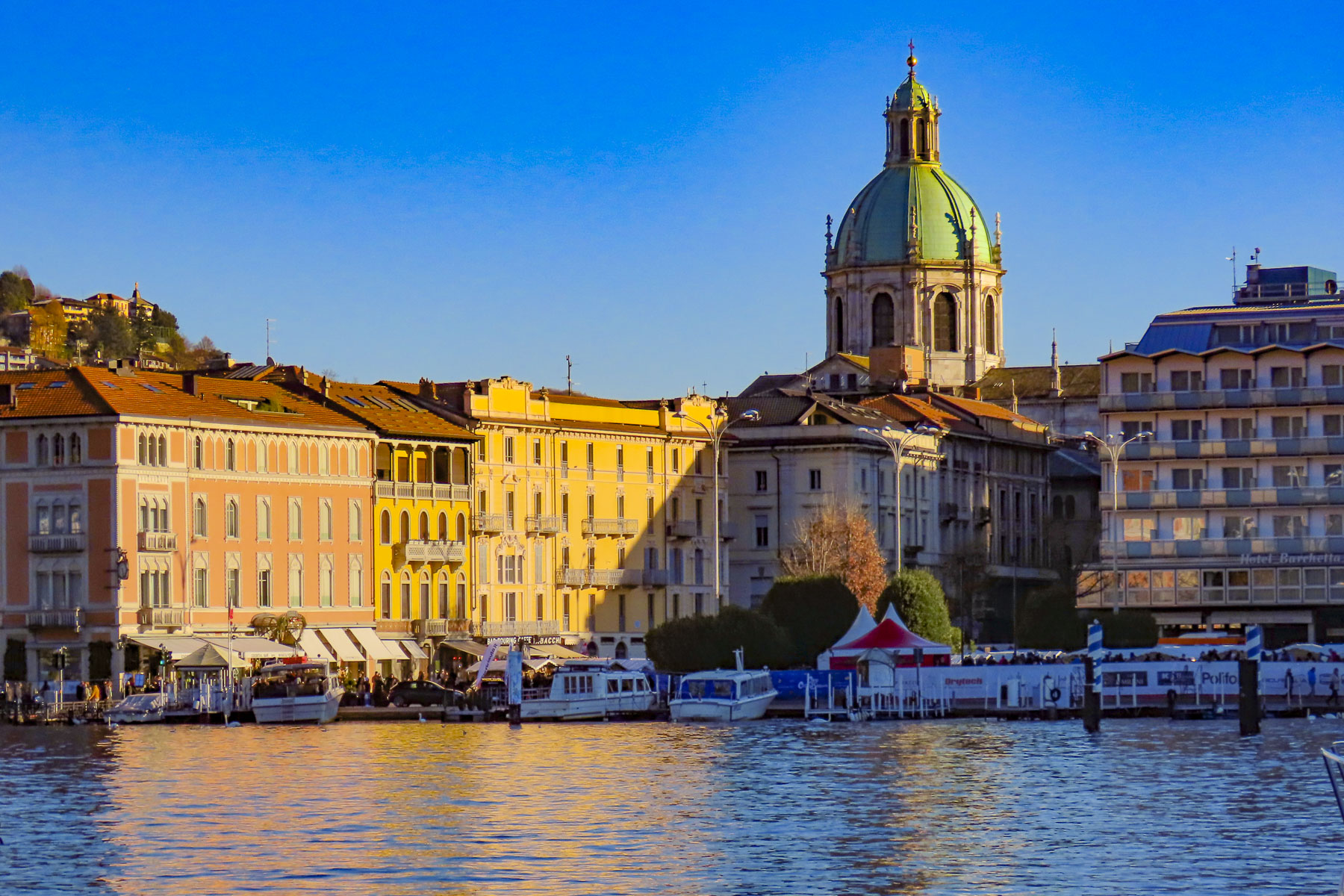
From here we also watched and listened to a continuous flow of seaplanes roar across the water from the Aero Club where one can book an aerial tour of Lake Como and surrounding mountains.  It’s been a popular activity since it was first offered in 1913.

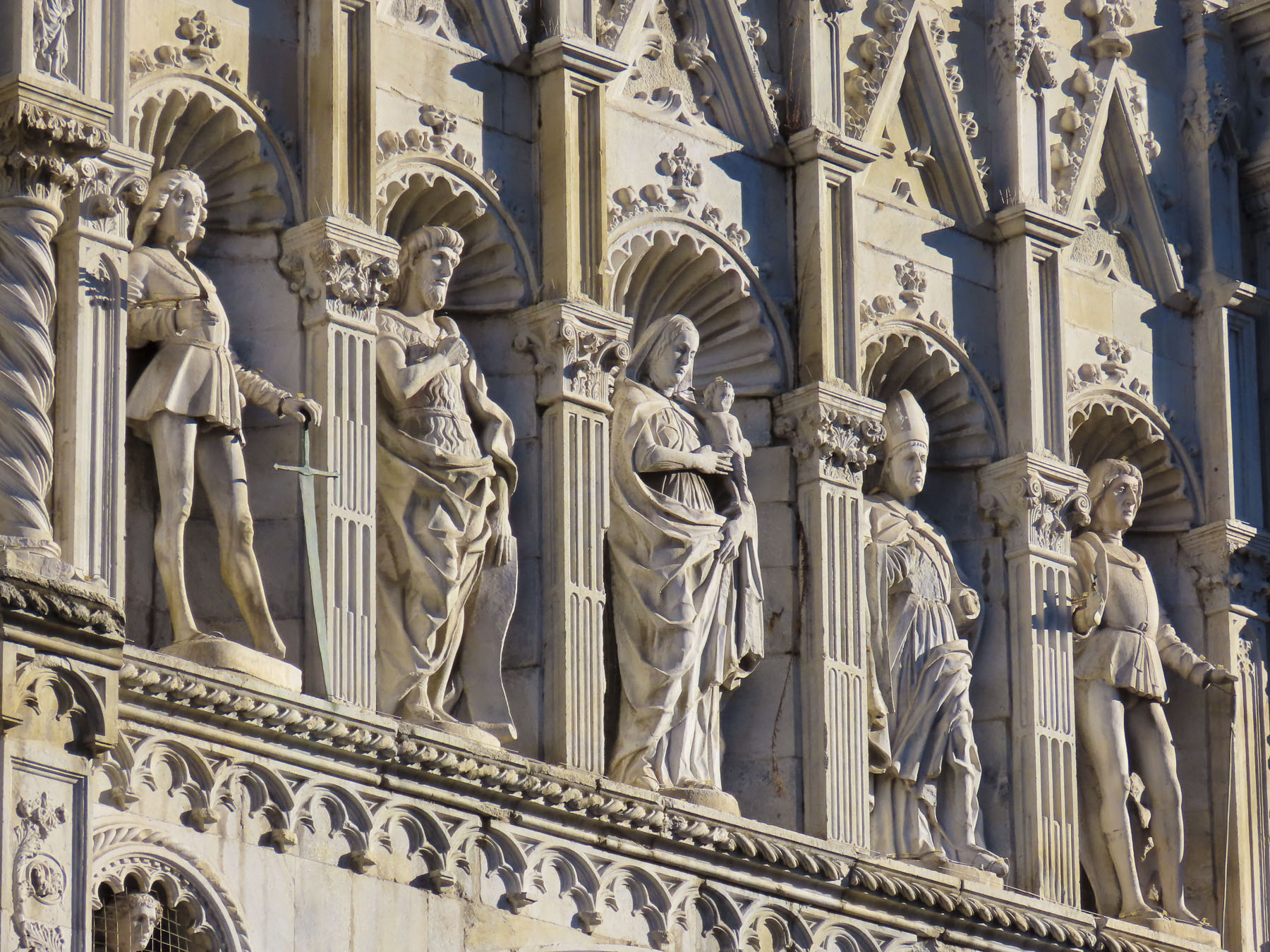
Back in the historic center we headed to the Cattedrale di Santa Maria Assunta-Duomo di Como. The façade is an exquisite example of Gothic architecture and includes sculptures of hometown stars Pliny the Elder and his nephew, Pliny the Younger, which flank either side of the church’s rose window. 

The interior is decorated with antique tapestries made in Antwerp, Florence and Ferarra during the 16th and 17th centuries. The church’s construction was started in 1396, but wasn’t completed until almost 400 years later in the later part of the 18th century, due to legendary Italian bureaucracy, civil unrest and a stone cutters strikes. (I’m just speculating here, but in 1629 the bubonic plague halved the population of Northern Italy and brought economic hardship to the area that lasted for decades afterward.)
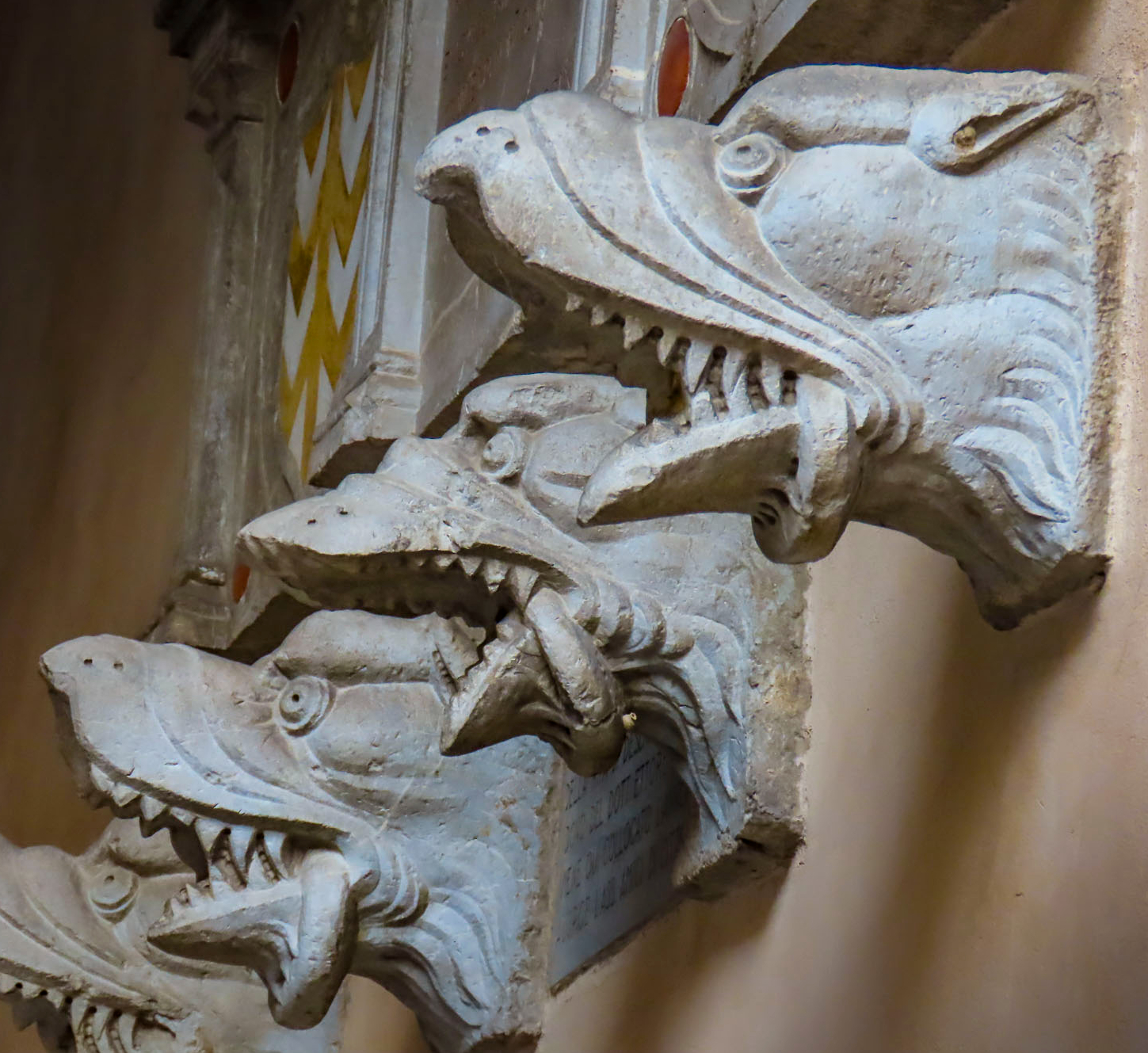
Farther along, the Basilica di San Fedele commanded the other side of the street.  Substantially altered in the 12th century, it incorporated some architectural elements from a 5th century church that originally occupied the site. Entering the church, we were confronted with a terrifying hand-carved wooden sculpture of hundreds of sinners, painted red, being consumed by flames – it’s reminiscent of Hieronymus Bosch’s Vision of Hell. We imagine it was a highly effective teaching tool in the middle-ages.  By late afternoon only a dim light was filtering through the church’s ancient windows as an organist dutifully labored to get the right pitch from the ancient pipes.

Darkness fell early as we walked back through town. Many of the buildings were colorfully illuminated with Christmas holiday projections. It was magical.

Till next time, Craig & Donna

Bergamo – Cathedrals, a Flat Tire and a Bell Tower

Somewhere along our route on the A4 motorway to Bergamo the tire blew. It wasn’t an obvious blowout, the car still handled well, but the car felt different.  Our dilemma was, if we stop on the shoulder of the highway to call for assistance how do we explain our location in our non-existent Italian, or do we keep driving to the next exit. We kept going. In the time it took to stop and pay the toll the tire totally deflated, and we limped off the highway on three wheels. Luck was with us we when we rolled into the gas station at the top of the exit ramp.  They didn’t offer any repair services, but did have a small café, and it being Italy, they served excellent cappuccino and pistacchio pasticcino.  With the barista’s help our exact location was given to the roadside assistance agent, and we settled in for what we thought would be a very long wait. Surprisingly, we were back on the road again in less than one hour.

Bergamo was a well-established ancient village before it became a Roman town in 49 BC and today is a hub of industrialization in the Lombardy region.  The newer portion of the city, Citta Bassa, or lower city, is a smart looking collection of contemporary buildings along tree-lined boulevards and pedestrian malls worthy of exploration. Though we were here to wander around the narrow lanes and ancient churches within the 16th century Venetian defensive walls of the Città Alta, the high city. The historic upper center of Bergamo was strategically located on a rock promontory with commanding views of the surrounding region.

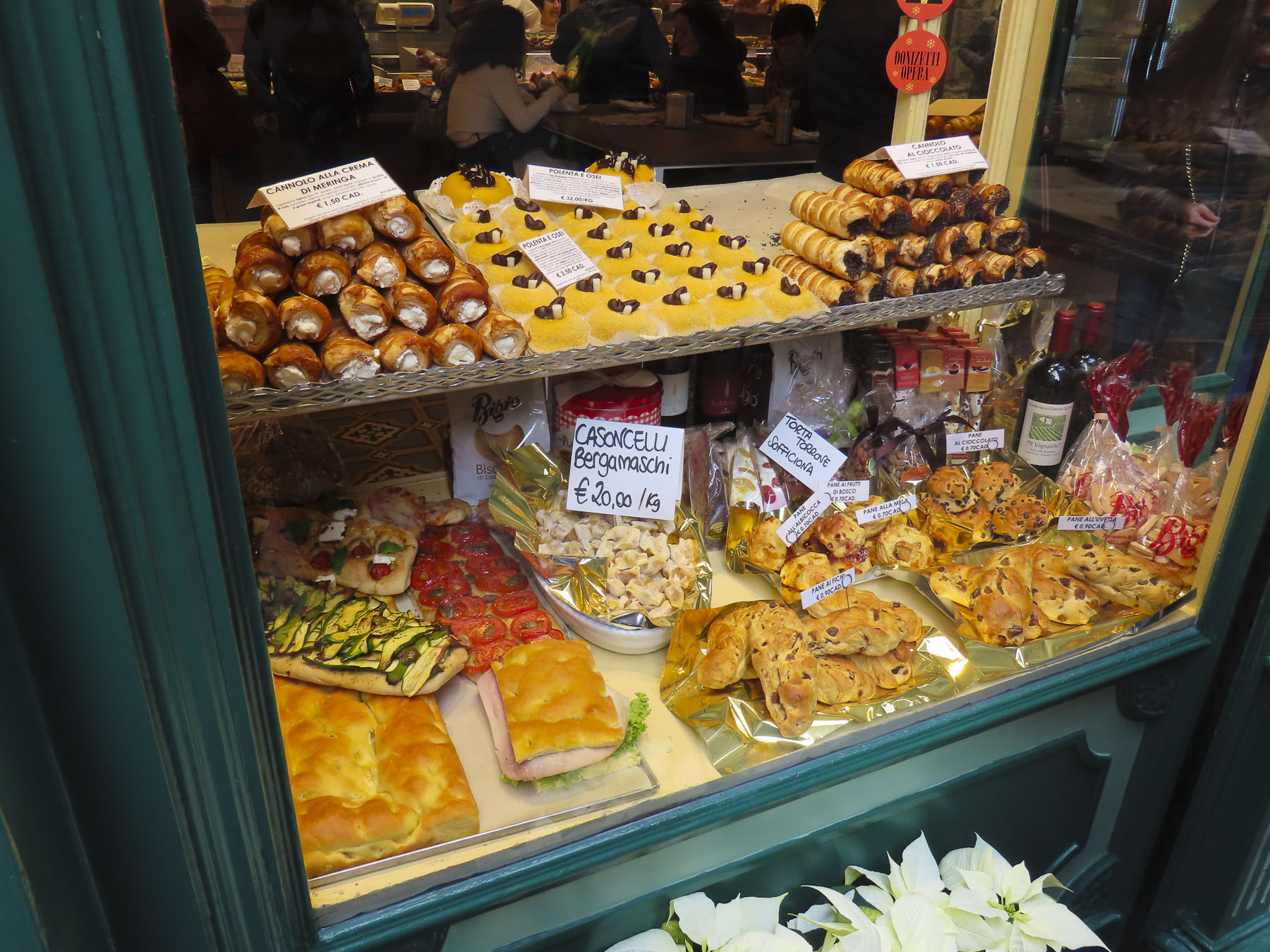
Completely pedestrian only, the old town is connected to the new town by a funicular  that runs up the side of a steep hill through an ivy-covered channel. We knew the old town would be full of history, but soon realized it was an unexpected foodie’s delight when we were faced with a gauntlet of gourmet food stores that started as soon as we got off the funicular.

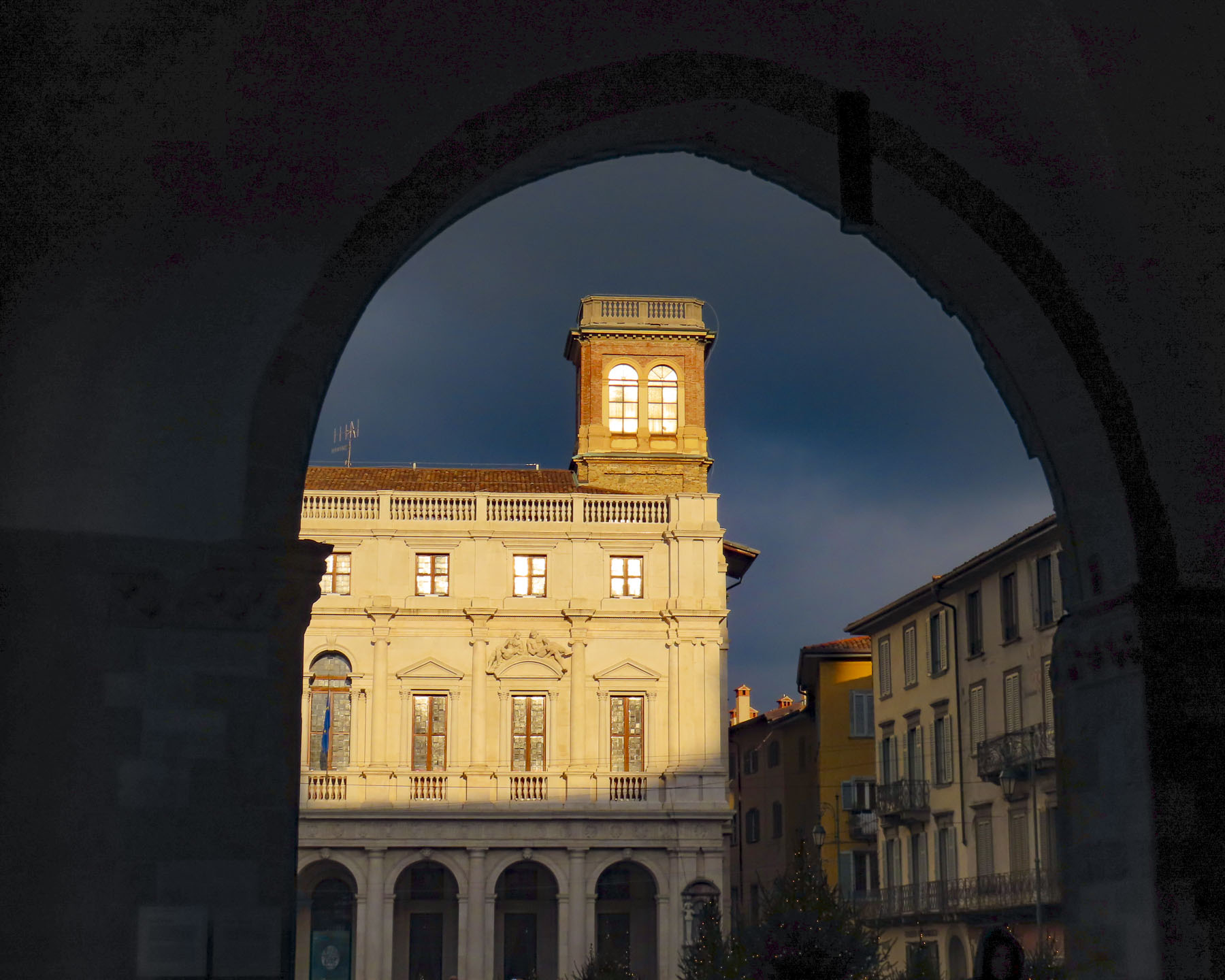
With each shop window more tempting than the previous, it was a challenging task walking along Via Gombito to Piazza Vecchia, the historic center of Bergamo.  It was the last week of November now and even though the days were sunny there was a definite chill to the air. Fortunately, the cafes on the piazza were still in full swing with outdoor dining and had heavy lap blankets available to ward off the chill.  The ambiance of the old town is wonderful and there’s plenty to absorb just by wandering around, but if you are short on time concentrating on the historic buildings that line Piazza Vecchia is rewarding.

Dominating the piazza is the Campanone, the town’s clock and bell tower. When it was built in the 12th century it was the private residence of the wealthy and influential Suardi family.  With admission there is an elevator that will take you most of the way to the top.  Interestingly at ten o’clock every evening the town keeps an ancient Venetian tradition alive by chiming the bells of the clock tower 100 times to signal the closing of the city gates. It was cloudy after lunch so we decided to delay our tower visit till later, hoping that the weather would change, and the sun would come out. Next to the tower stands the Palazzo del Podestà e Museo del Cinquecento a wonderful, high-tech, multimedia and interactive museum housed in a Renaissance era palazzo that highlights Bergamo’s history.

The Cattedrale (duomo) di Sant’Alessandro, the Bergamo Cathedral, is almost hidden away behind the arched portico that separates the Piazza Vecchia from the Piazza Duomo.  Majestic in scale, the duomo dates from the 1400s and has undergone many alterations over the centuries that has evolved the church into a treasured, religious art-filled sanctuary that is the Bishop of Bergamo’s seat.  An important center for Christianity since the religion was accepted by the Roman Empire in the third century, Bergamo has had a bishop since the fourth century. Underneath the Presbytery the Bishops’ Crypt of The Cathedral Of Bergamo holds, in a semi-circle, twelve tombs of bishops who guided the See in the 19th, 20th and 21st centuries.  Strikingly, the façade of the crypt, in my opinion, could pass as the entrance to a retro café; it just had that feel.

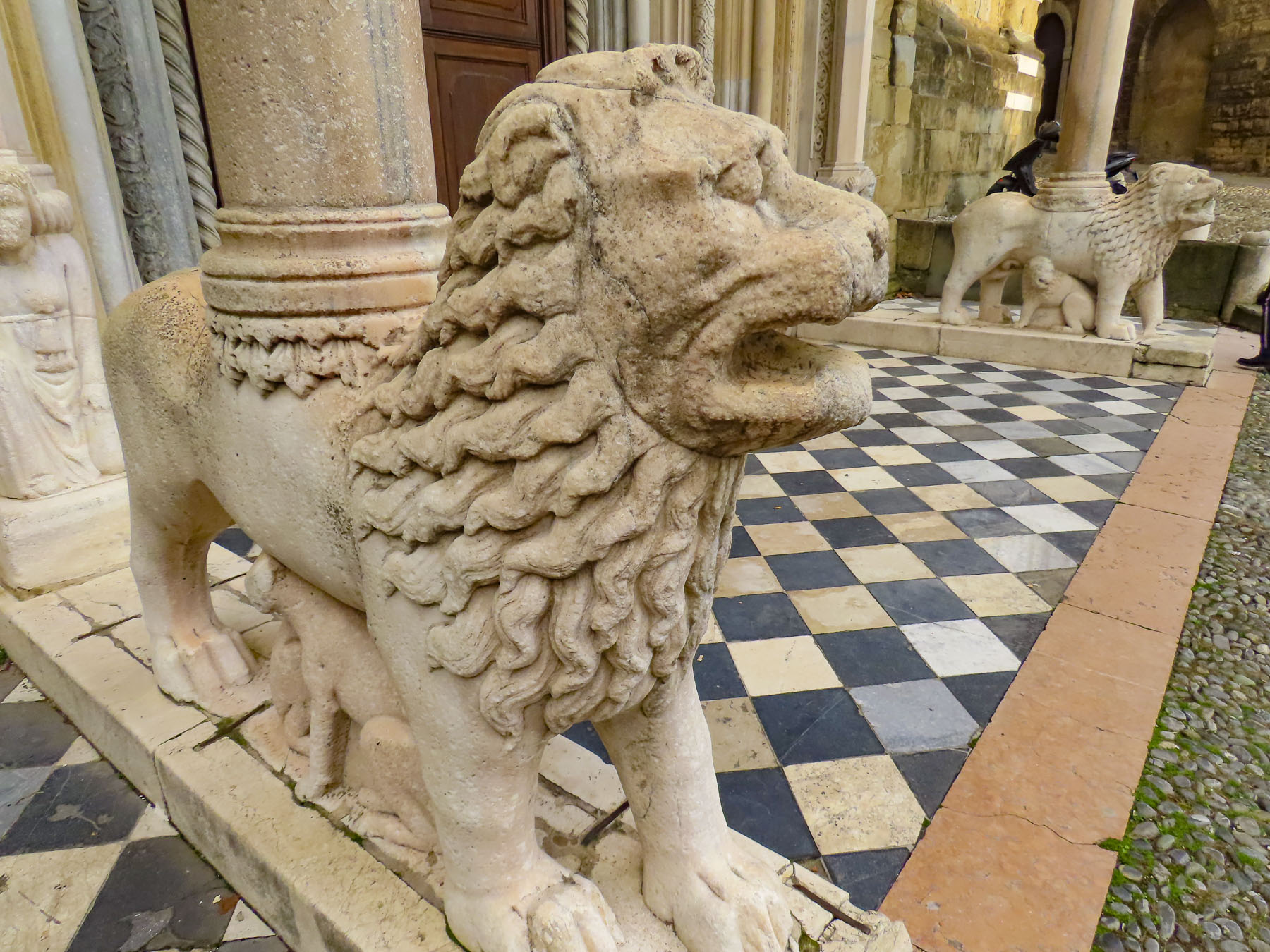
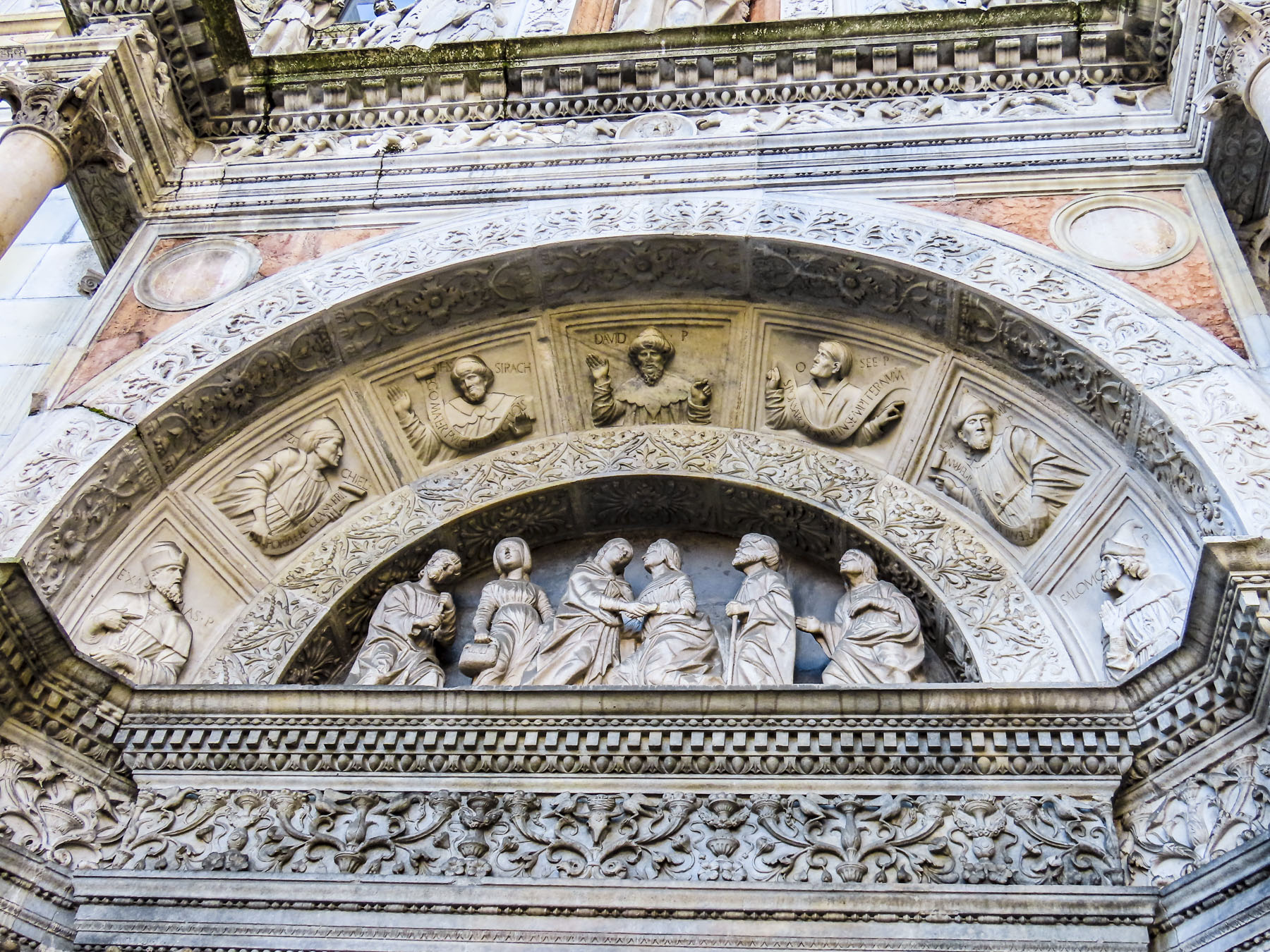
The highlight for us on Piazza Duomo was the Romanesque Basilica di Santa Maria Maggiore with its intricately designed marble façade and ornate gilded interior, and the Cappella Colleoni, a separate 15th century funerary chapel with a frescoed ceiling that seamlessly stands next to it. Founded in 1137, like so many other churches in Italy, it was built over the ruins of an earlier 8th century church and an older Roman temple. 

To our delight the church organist was practicing during our visit, and we stayed for twenty minutes and enjoyed this impromptu concert.

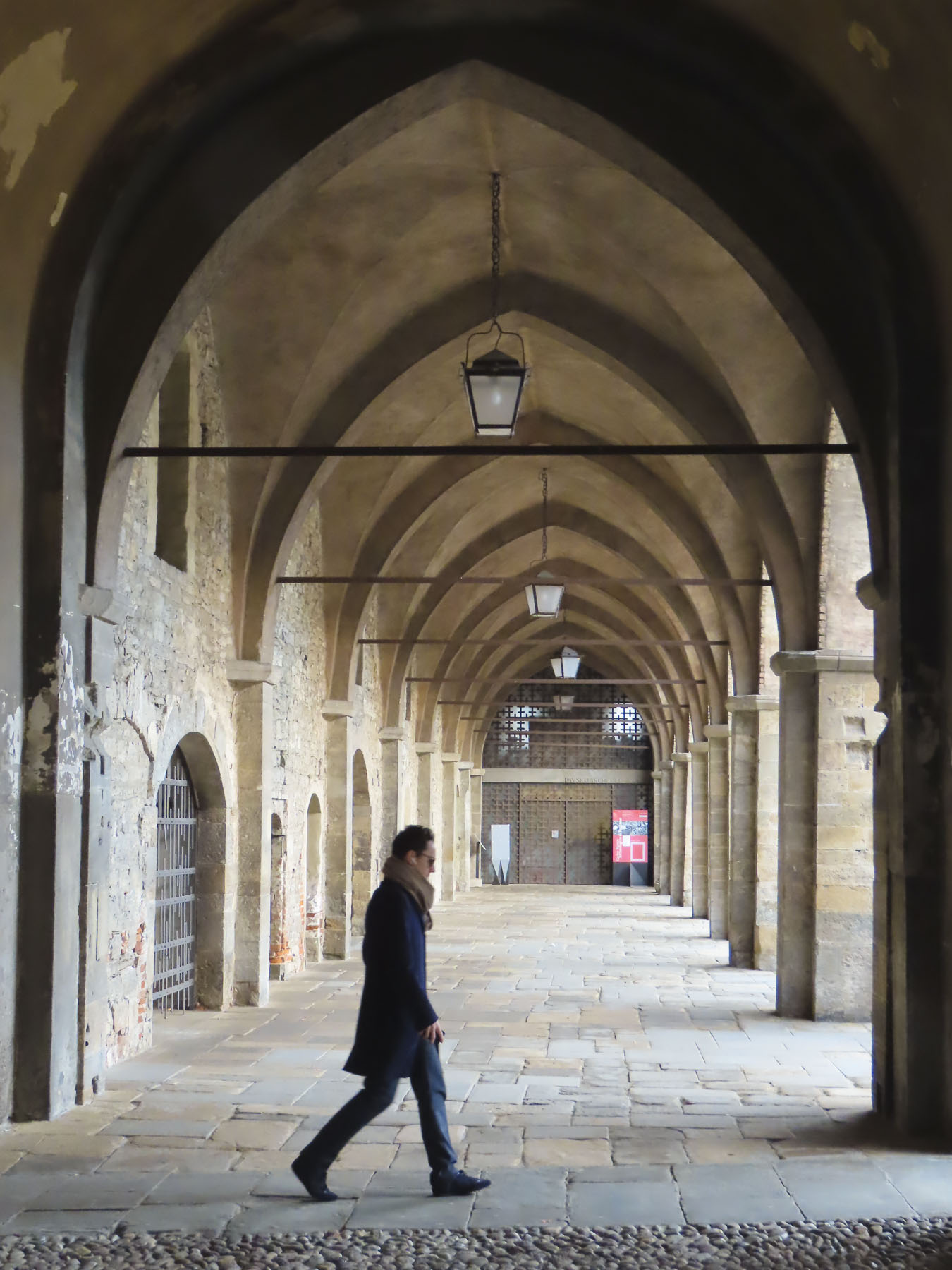
Just wandering around, we eventually arrived at the Torre della Campanella, the bell tower and arched gate entrance to Piazza Mascheroni and the Visconti Citadel which guarded the western entrance of the city from invasion, and protected the Visconti family from civil rebellion. The citadel is now home to the Civic Archaeological Museum and the Bergamo Science Museum. 

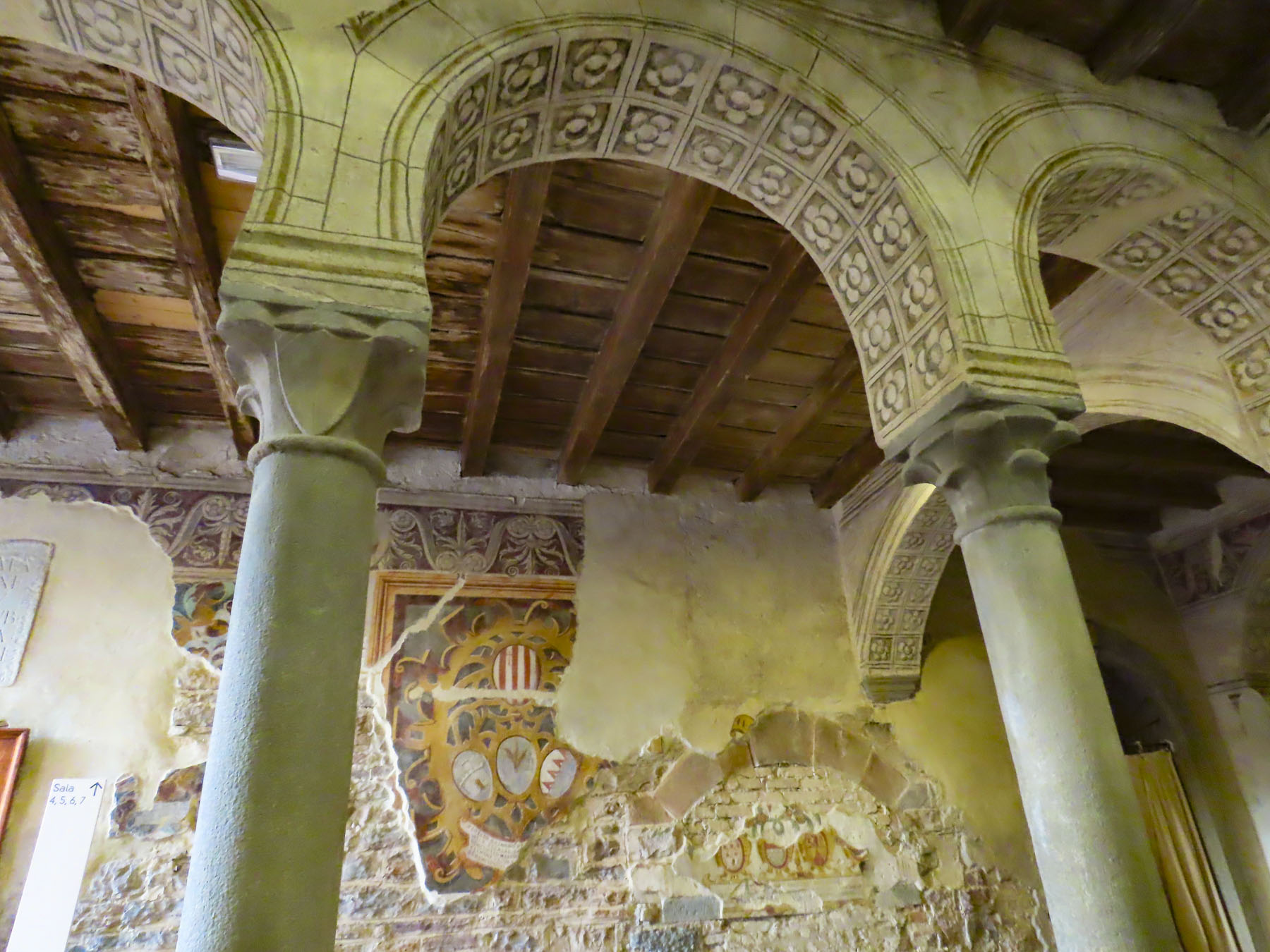
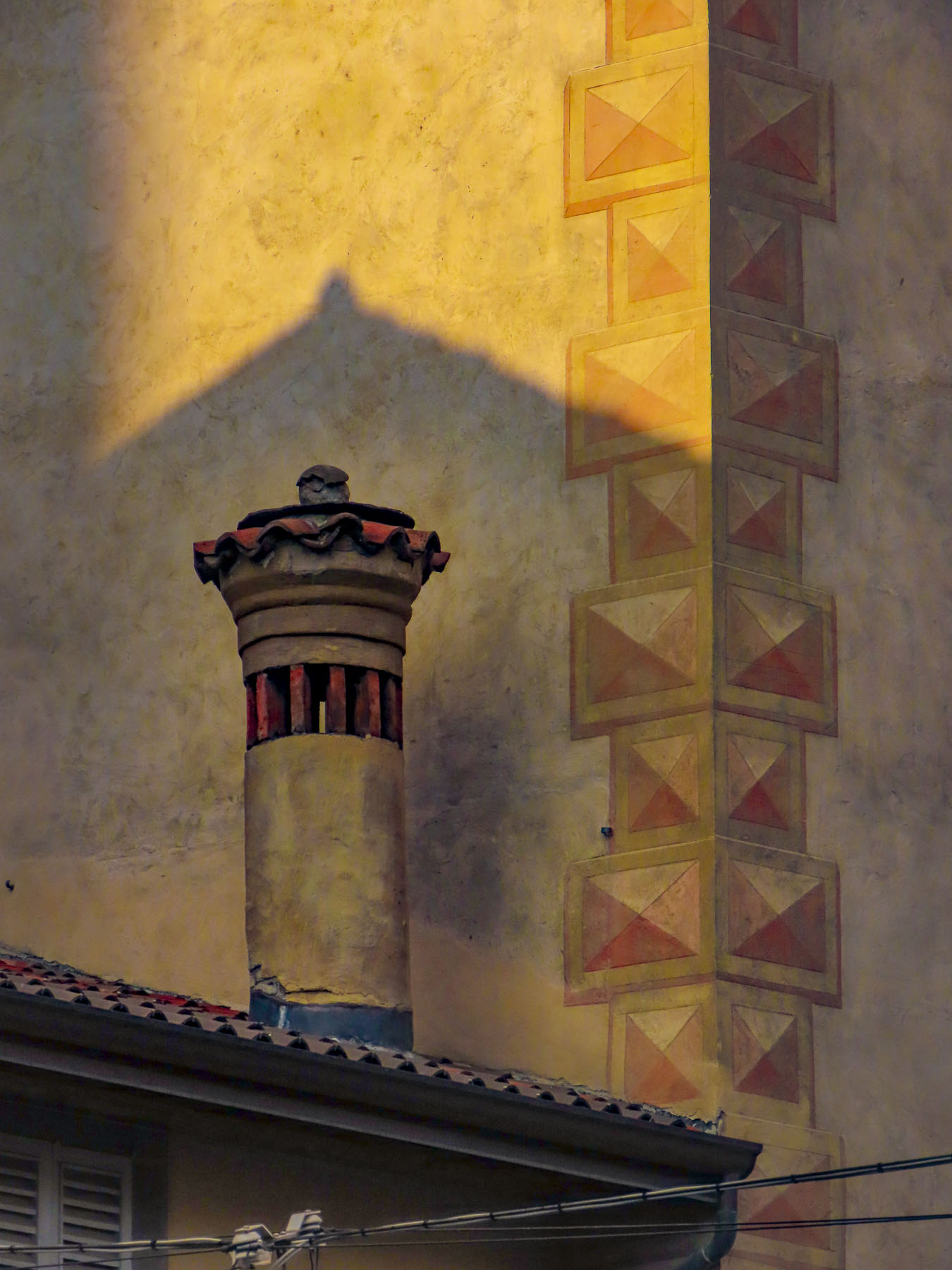
Remarkably, the buildings adjacent to the gateway still have faded remnants of renaissance era frescoes adorning their exterior walls.

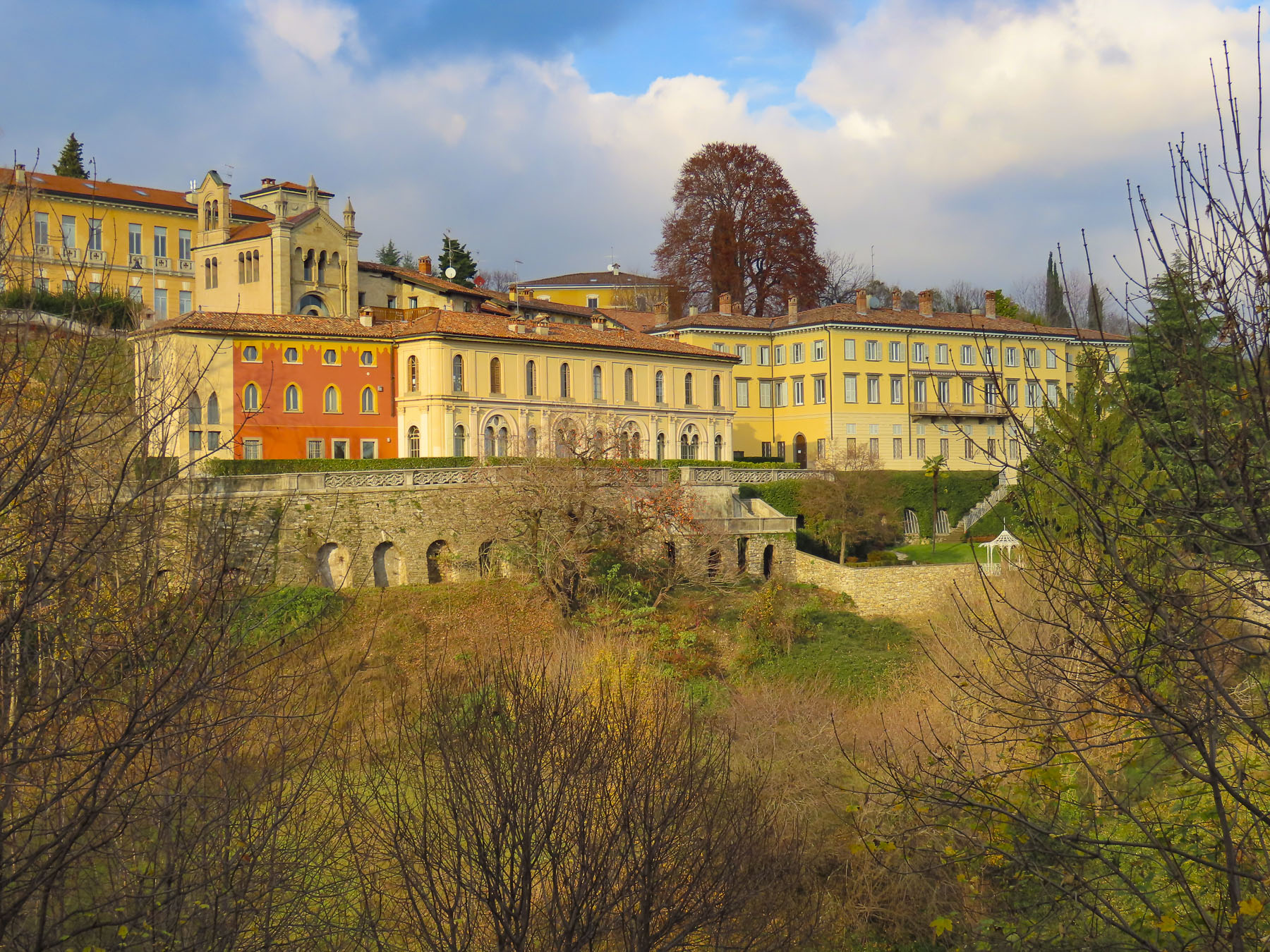
Outside the city walls, the landscape opened to vistas of rolling hills, still holding the fading colors of fall.

Back at Piazza Vecchia the afternoon sun was beginning to break through the clouds when we decided to head to the top of the Campanone. 

The elevator stopped short of the top and we had to navigate a narrow passage to reach the highest level.

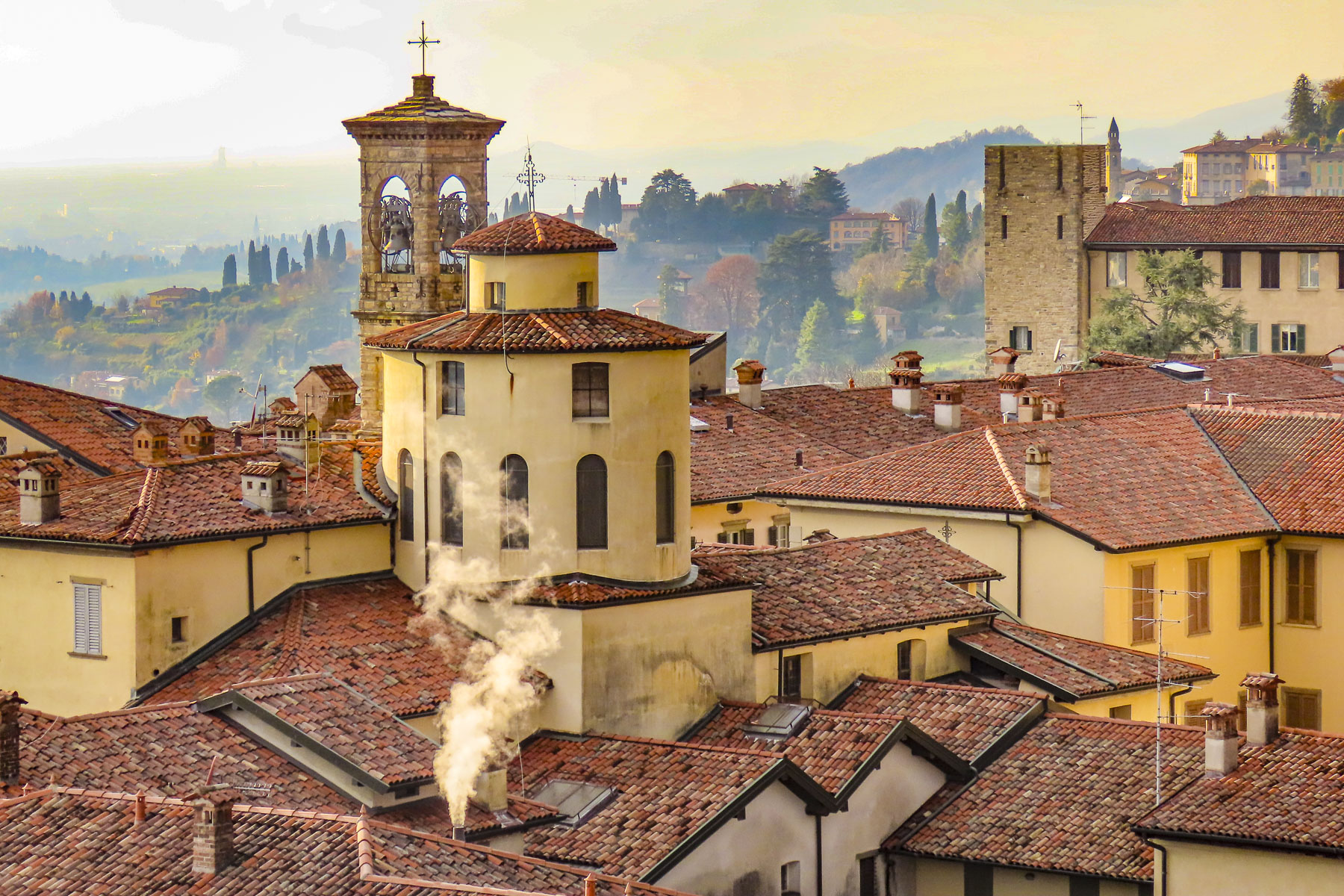
Each corner of the tower offered an amazing bird’s eye perspective of the ancient city, from soaring above the cathedrals on Piazza Duomo, to cityscapes of red tiled rooftops with smoke wafting from their chimneys, to distant still green hills.

The city is full of potential, and you won’t be disappointed if you spend two nights here to fully explore the Città Alta. But Old Town Bergamo is the perfect size to entertain you for four or five hours, on your way to or from Milan or Verona, either by train or car, without feeling you might have missed something.

Till next time, Craig & Donna