Road Trip Through Brittany: Josselin & Vannes or Castles, Standing Stones and Cheese

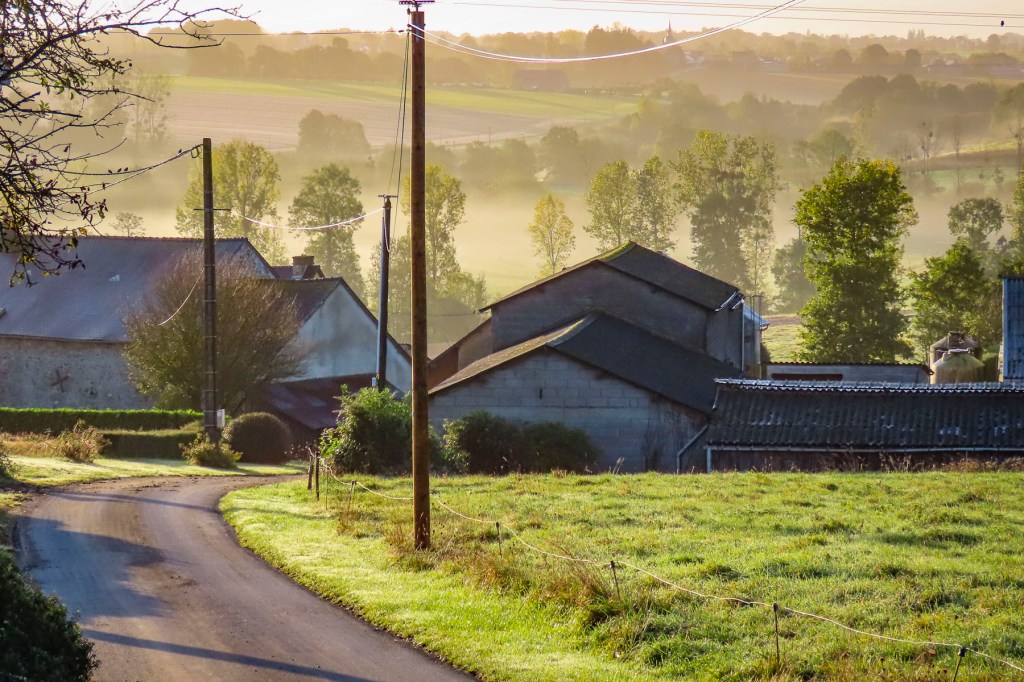
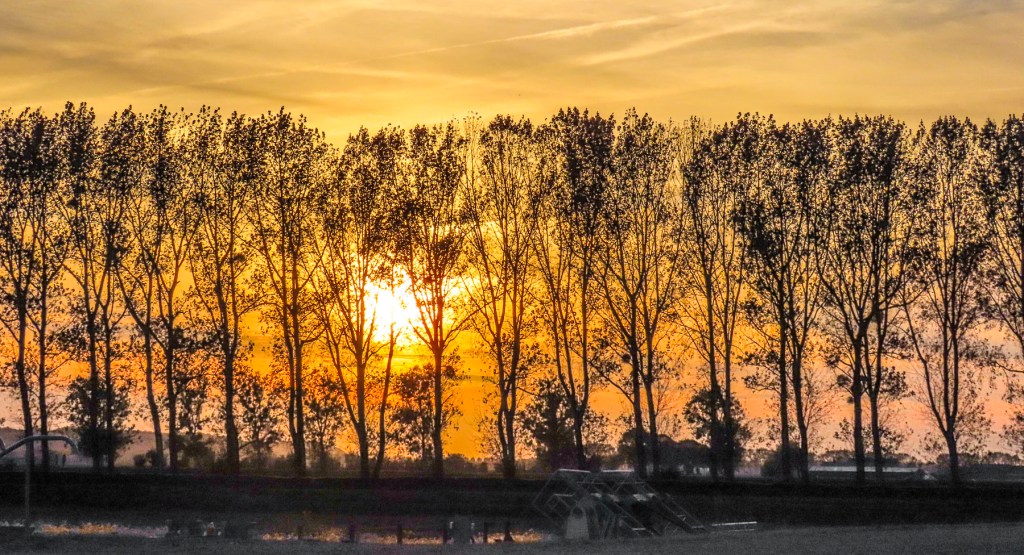
The sun’s early morning rays cast a soft glow across the gently rolling countryside, silhouetting farm buildings and highlighting here and there pockets of mist still clinging to warm earth, and stubble in freshly plowed fields waiting to be seeded with their winter over crop.

The timing was uncanny, but I had just started to write this story when Donna called from the porch, “you have mail from France!” It must have been some tourist information I requested, I thought, and excitedly stopped writing. But I should have suspected from Donna’s smug grin that something was off kilter. To my disappointment it was the notification of a traffic fine! Who drives when we are touring is a bone of contention between the two of us. But I’ll be the first to admit that I am a terrible passenger and believe that the “Oh God” strap above the passenger door was specifically designed for my benefit.

As a consequence, I prefer to drive slowly to see tomorrow’s sunrise. I deliberately choose to deny my lovely, daring wife the thrill of downshifting and accelerating along the many cliffside serpentine roads we might encounter, as I cower in the passenger seat. There weren’t any cliffside drives in Brittany, but you get my drift. I can safely say we have different driving styles. Seriously, my wife is an excellent driver, it’s more about the extravagant fee per day the car rental companies charge for the extra driver than anything else, kinda. It was not a speeding ticket, but a moving violation caught by a traffic camera on a quiet Sunday morning in the sleepy French village of Saint-Jouan-de-I’Isle, deep in the heart of Brittany. I alone was to blame, but would have preferred asking forgiveness from a gendarme, then the robotic indifference of a traffic spy camera, and a letter months later in the mail. Though I will give credit to the French authorities for designing a user-friendly website, Amendes.gouv.fr, for paying fines online.  

We arrived mid-morning in Josselin just as the first wave of walkers were completing a charity walk in support of Pink October, France’s breast cancer awareness month, along the towpath that followed the Oust River in front of the town’s ancient castle, the Château de Josselin. It was late October, but the first yellows and muted oranges of Autumn were just beginning to show and combined with the walker’s pink vests made for a very colorful sight under a brilliant blue sky.

There has been a castle on this spot in Josselin since the 11th century, but the chateau you see today dates from 1370. Early in the 1400s Alain VIII of Rohan inherited the castle and it has remained a House of Rohan estate for 600 years. The chateau suffered poorly during the 16th century French Wars of Religion, as Henry II of Rohan supported protestant Huguenots against the King of France and the Catholic church; five of its original nine towers were destroyed on the orders of Cardinal Richelieu. During the French Revolution the castle’s towers were used as a prison, but afterwards it sat abandoned until the mid-1800s when Duke Josselin X of Rohan piloted an extensive restoration.

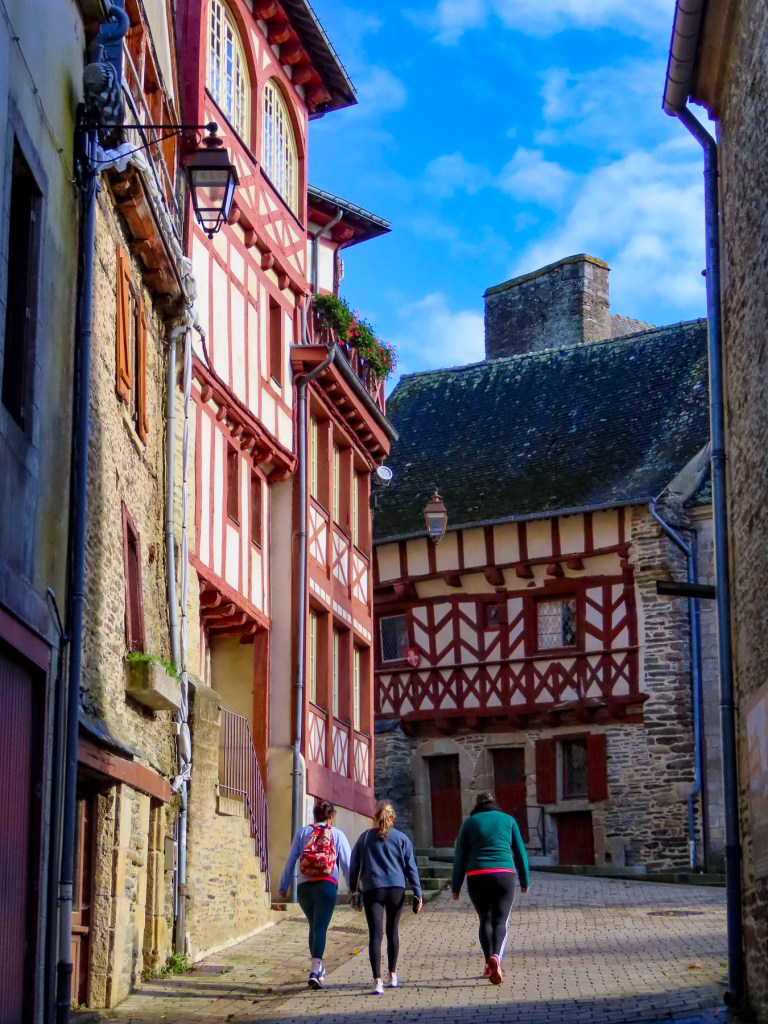
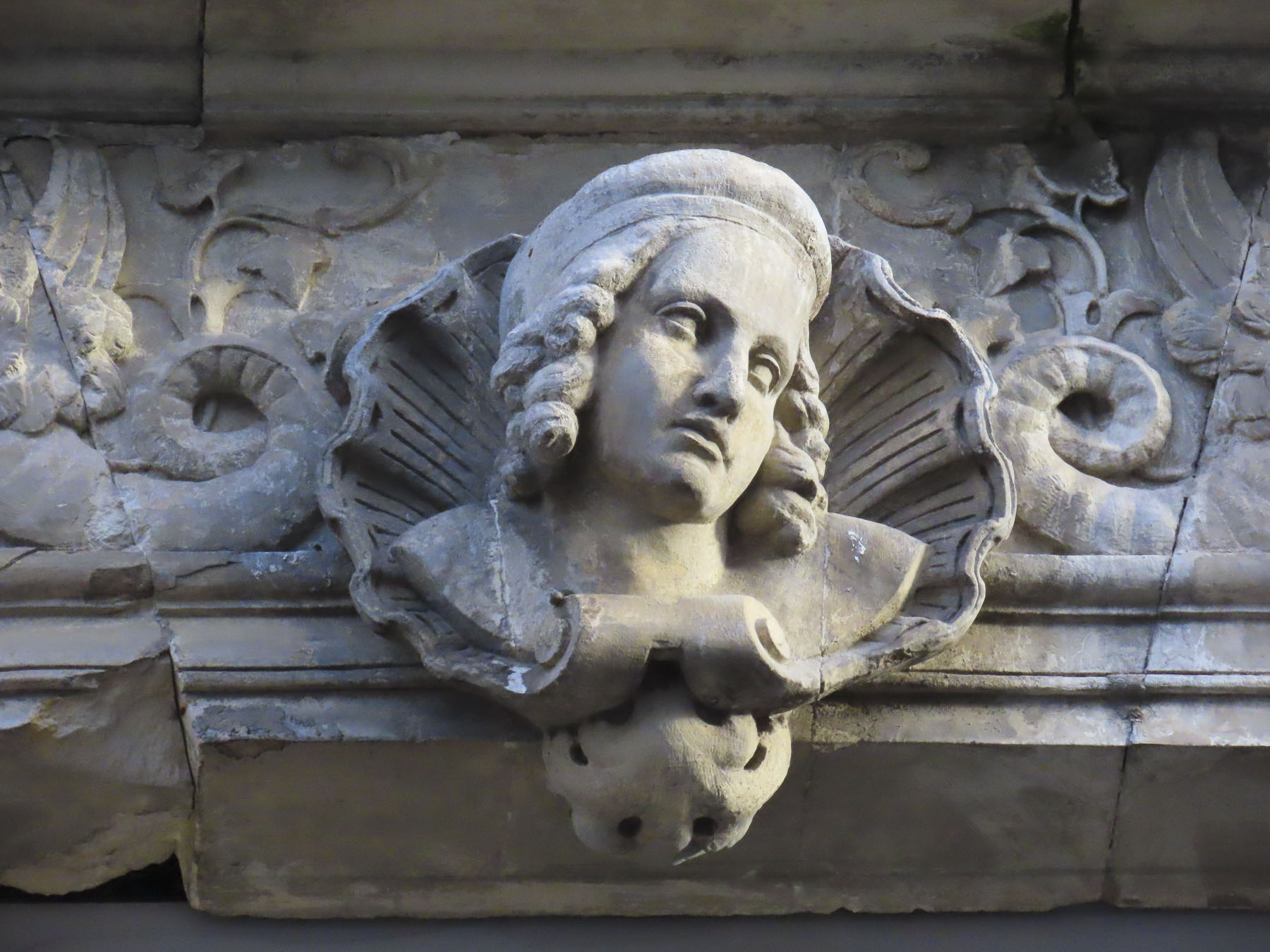
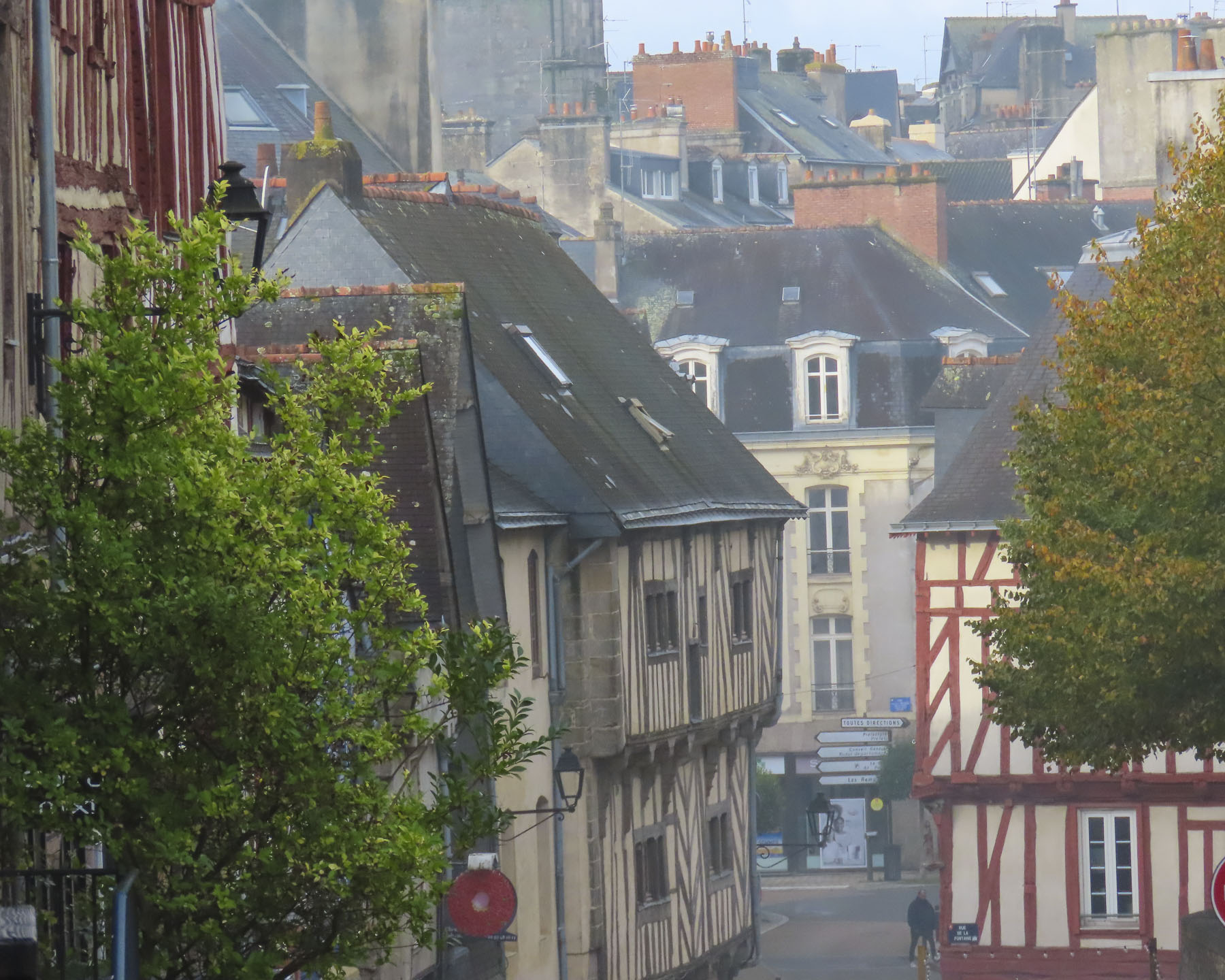
Strolling against the current of walkers we crossed a bridge to Josselin’s Quartier Sainte-Croix and wandered along narrow lanes past ancient half-timbered buildings dating from the early 16th century. Some leaned precariously, like an elderly person requiring a cane, while others featured ornamental heads carved into exposed roof rafters for decoration. Following our philosophy of “walk a little, then café,” we enjoyed a rest at the Logis Hôtel du Château, and its location on the riverbank.

Returning to the village, we stopped mid-bridge to admire the view along the riverport’s quay. With a renaissance chateau, charming buildings and a beautiful river to stroll along, no wonder Josselin has received the very French distinction as a Petite Cité de Caractère, a small town of character. During the high season paddle boards, kayaks, and boats are available for rent to enjoy this tranquil stretch of water.

The Oust is a canalized river and is part of the 220-mile-long Canal de Nantes à Brest which traverses inland Brittany to connect the seaports of Nantes and Brest, on the Bay of Biscay. The old towpath which follows the canal’s course is also a popular route for cyclists and hikers. We thoroughly enjoyed our morning in Josselin, but truly the quaint village deserves more time, or an overnight stay to absorb its wonderful ambiance. Vannes awaited us, so we drove on.

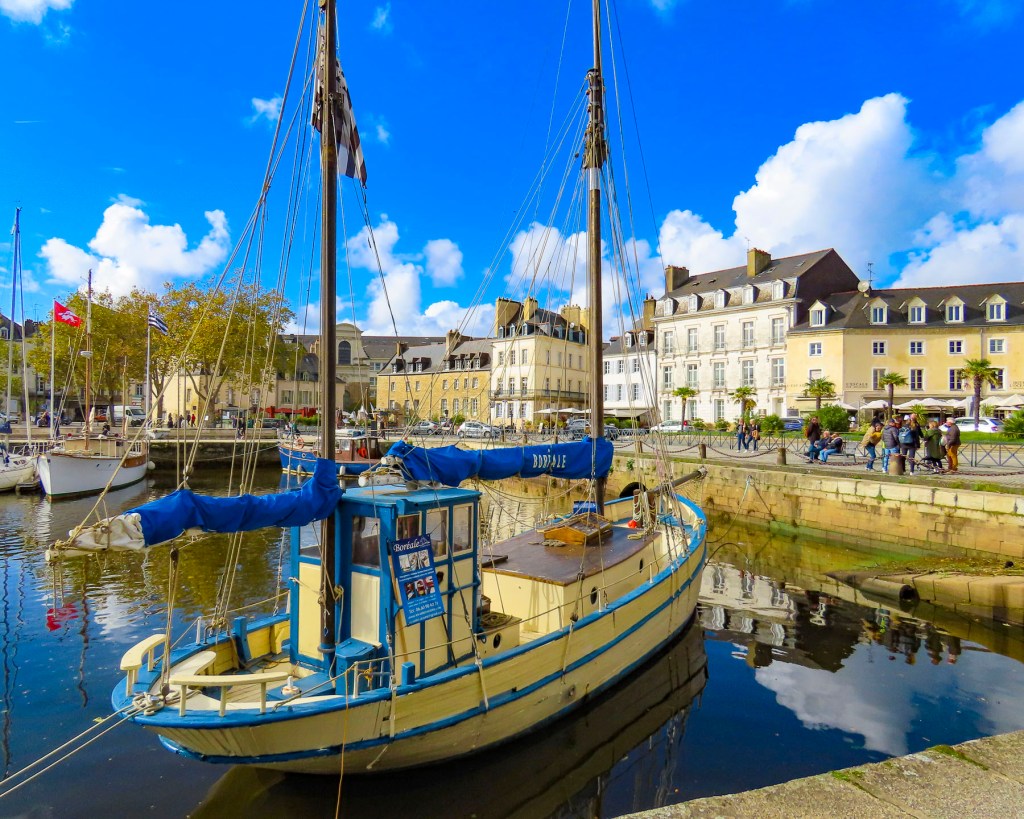
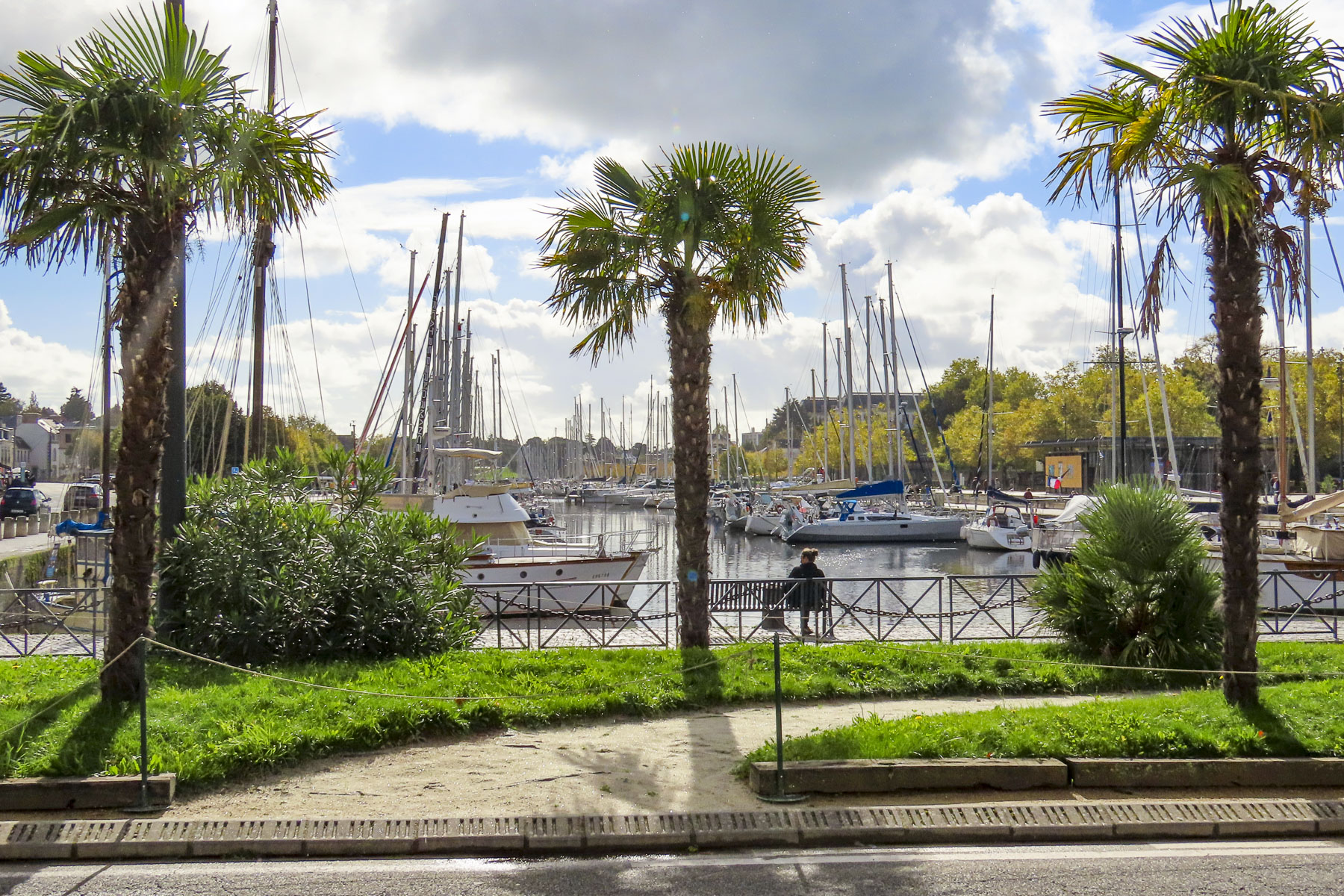
We arrived in Vannes and found convenient parking along the Port de Vannes quay, in an underground garage, in time for a late lunch. The masts of sailboats, with their colors flying, rocked gently in the afternoon breeze, against the background of the port’s Place Gambetta, and its iconic 19th century sandstone colored, Haussmann styled buildings, with their distinctive dormer windows in their mansard roofs. It’s difficult to imagine from the size of this petite harbor located on a narrow stretch of water called La Marle, that Vannes is actually an inland seaport, and the economic engine that drove Vannes’ prosperity since the era of the Romans, two-thousand years earlier. It was a favored protected anchorage, located three-quarters of a mile inland from the Gulf of Morbihan, for Rome’s merchant fleet of oared galleons, and it facilitated trade in wine and olive oil from France to England, while ships returned with valuable tin, lead and copper. Today the Port de Vannes hosts recreational and tour boats, which offer day trips to the islands in the Gulf of Morbihan, where on a windy day you can still see restored siganots, Brittany’s iconic two masted, gaff rigged, wooden fishing schooners, that typically have red sails, plying the waves.

Surprisingly, for this far north, a row of palm trees separated the Place Gambetta from the harbor, and gave the area a delightful French Caribbean vibe, before leading to the historic citadel through the Saint-Vincent gate. There were numerous restaurants, bustling with activity, surrounding the harbor, and we chose to lunch at Le Daily Gourmand for its outside tables and seasonal menu.

Excited by our first impressions of Vannes, we roughly planned our four days in the ancient city and day trips to Suscinio Castle, and the Alignements de Carnac. One of the attributes we consider when choosing a destination for a multiple day stay is the walkability of a city and are there enough things to do to keep us busy. Vannes fit the description perfectly, offering me multiple routes to explore the city during my 6 a.m. walks, while Donna slept in.

The walk along the Promenade de la Rabine, “the alley planted with trees,” was one of these walks that started near the Place Gambetta and followed the long sliver of La Marla, down its right bank a half-mile, towards the newer commercial port and the Gulf of Morbihan. The idea for this tranquil public space first arose in 1687, and over the following centuries it has been widened and extended several times. Halfway back on the return route there is a pontoon footbridge across the marina to the more cosmopolitan left bank.

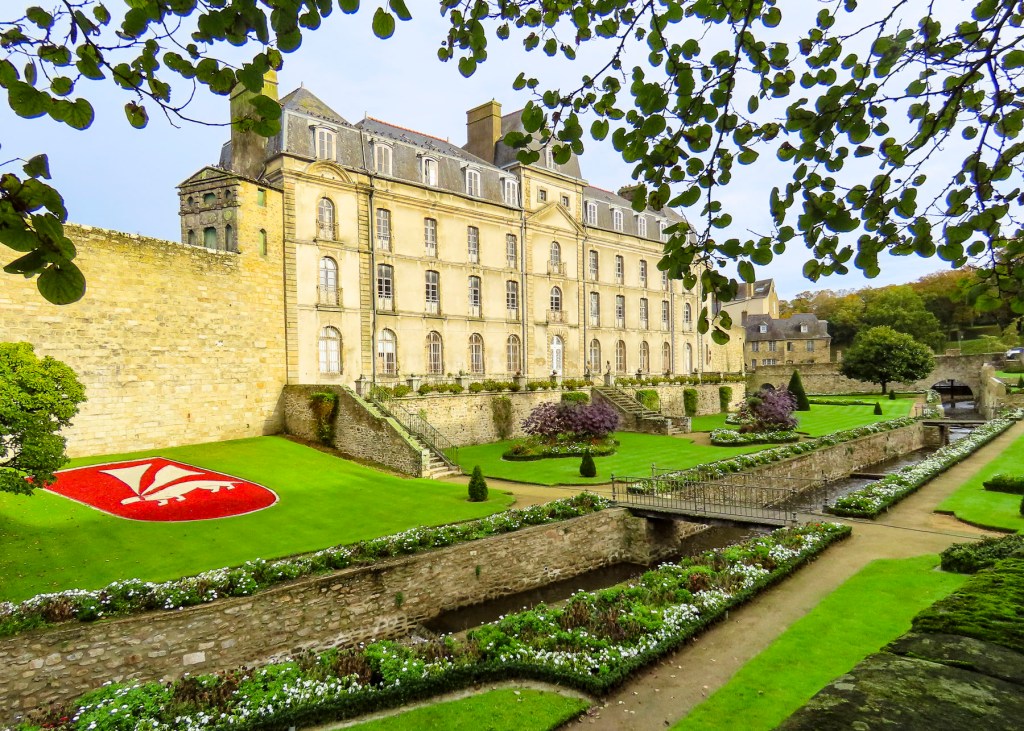
A short walk from the Place Gambetta, the 19th century faded away quickly as we approached the historic Château de l’Hermine, with its formal garden featuring the emblem of the L’Ordre de l’Hermine, a medieval chivalric order, worked into its landscaping, and the Remparts de Vannes. The ermine depicted might look like us like a flying weasel, but it’s a traditional symbol of Brittany that signifies nobility, courage, honesty, uncompromising integrity, and personal honor. The ancient order was revived by the Cultural Institute of Brittany in the 20th century to honor people who contribute to Breton culture. The château, built in 1785, is a beautiful example of 18th century French architecture, and operated as the Hôtel Lagorce until 1803. It was then used as a private mansion until the French State purchased it in 1876 and proceeded to use it as an Artillery School and barracks for the XIth Army Corps, treasury, and university.

But the more interesting history of the site begins in 1380 when the Dukes of Brittany decided to use Vannes as their seat of power and ordered a castle with moat built and the ramparts surrounding the town, first erected by the Romans in the 5th century, improved. It served several generations of Dukes as their main residence until the late 1400s when François II, the last Duke of Brittany, moved his court to Nantes. During the early 1600s, the now-old castle was dismantled for its stones, which were used to build the quay at the port.

Skip ahead to March 2024 and the18th century château is now owned by the City of Vannes and construction has begun to renovate it and add a new wing for a project that will eventually be the Vannes Museum of Fine Arts – Chateau de l’Hermine. While excavating for new footings, workers uncovered well preserved walls, parts of a moat with drawbridge, and evidence that the castle had been three to four stories tall and had indoor toilets. We visited Vannes shortly before this discovery, but still marvel at the amazing things out there that are yet to be rediscovered.

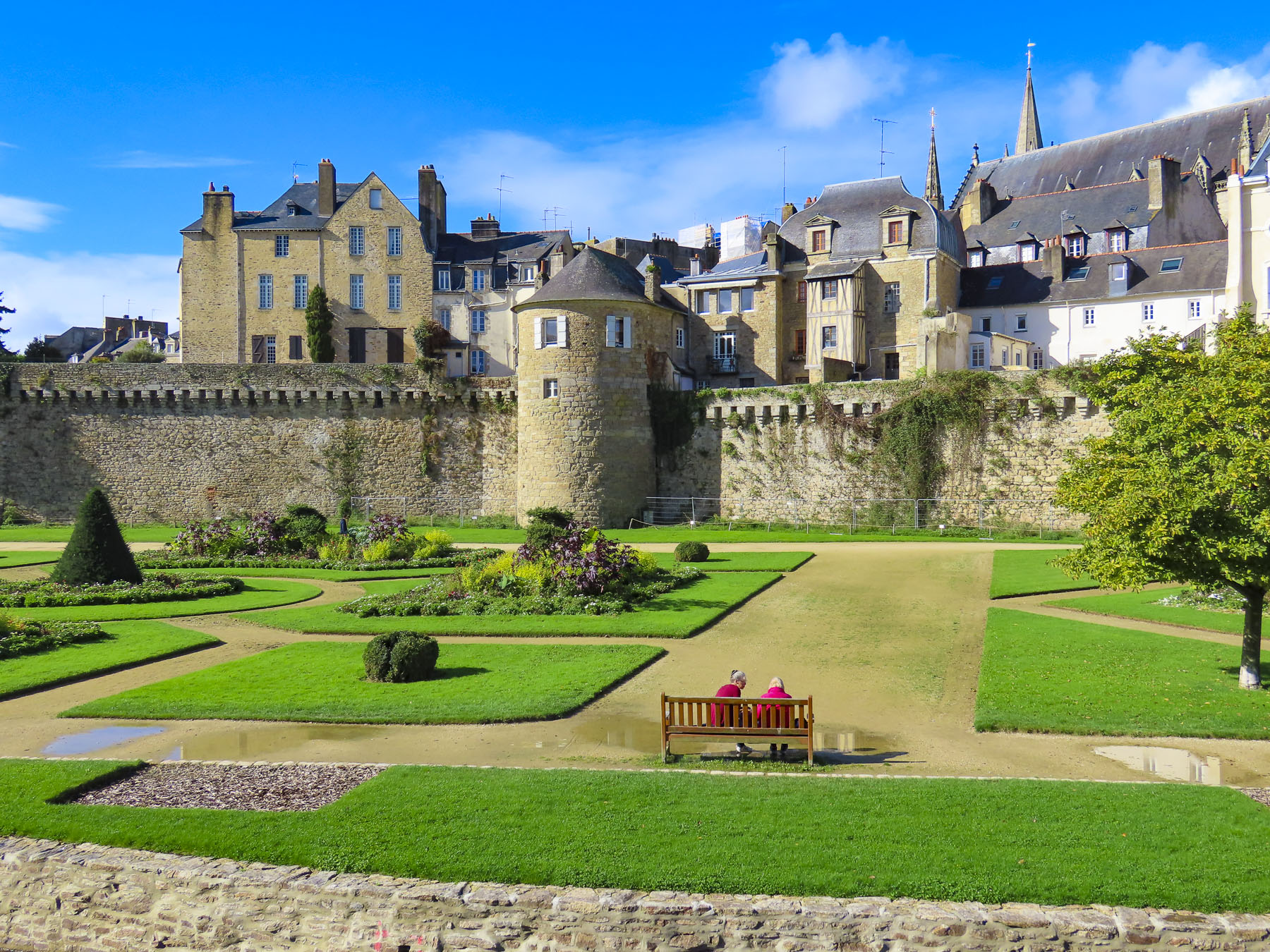
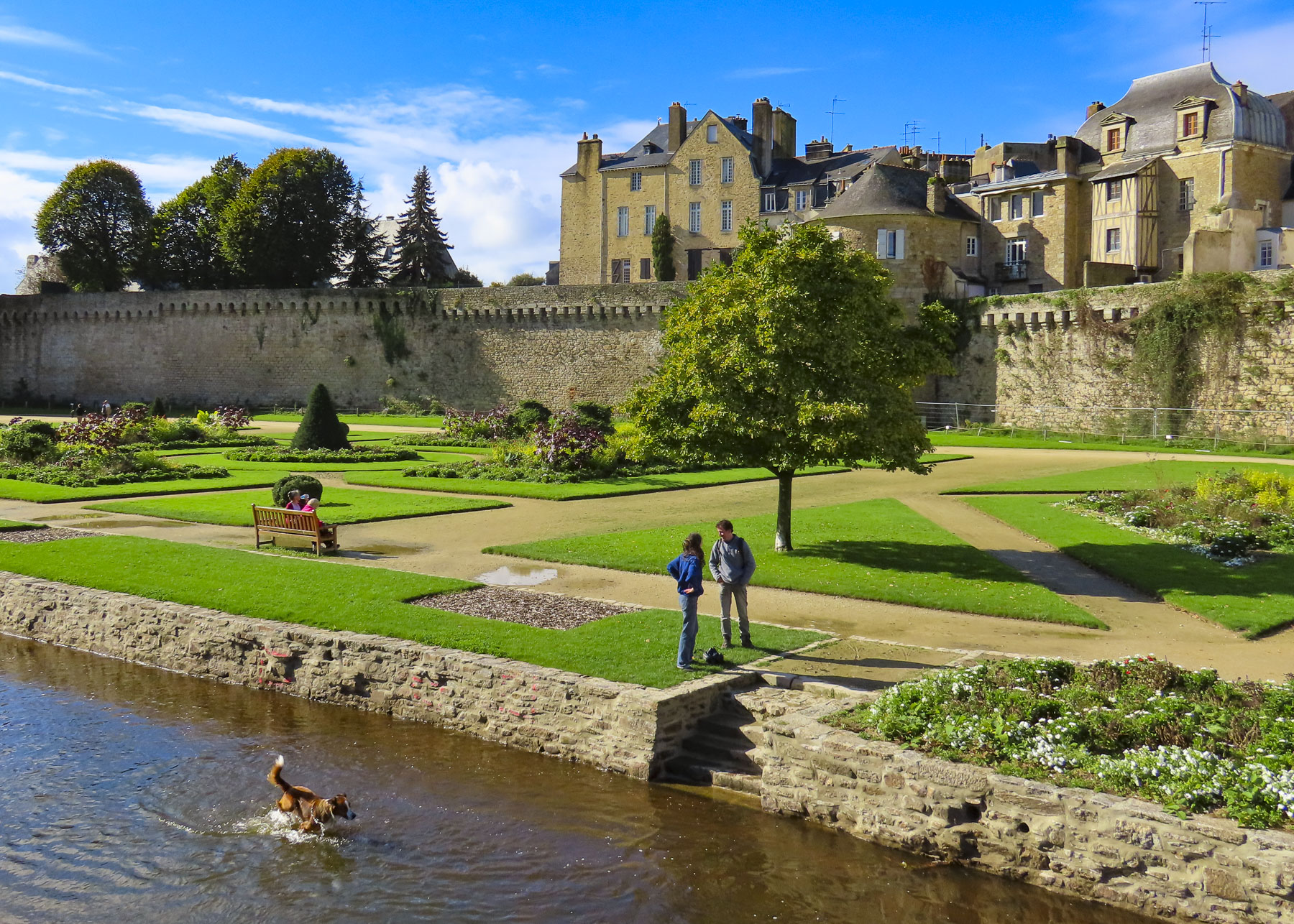
A little farther along the Jardin des Remparts has the longest remaining section the city’s ancient defensive wall, with gates and towers, as their backdrop. The formal gardens are beautiful, with more than 30,000 flowers planted each year. It’s a popular spot to relax and walk dogs along the banks of the La Marla River before it reaches the port. The gardens are also used several times throughout the year to host various fairs and most importantly, the Fêtes Historiques de Vannes every July 12-14th. It’s a huge, festive cosplay event that celebrates Vannes’ rich history, and spreads into the historic center, with craft demonstrations, and participants and visitors wearing medieval clothing. The Porte Poterne gate is near the gardens, and entering the city one night across worn cobblestones glistening in a cold rain was an experience that transported us back centuries.

Later that first day in Vannes we were thrilled when we arrived at the Hôtel Le Bretagne and were able to find inexpensive street parking directly in front of it. The hotel abutted the rampart’s Executioner Tower and was ideally located just outside the historic old town, between the Porte de la Prison and Porte Saint-Jean gates. Vannes’ architectural continuity is unique among cities in France as it escaped the destructive aerial bombings of WWII, which ravaged many towns throughout the country.

Consequently, it has kept its rich architectural history intact. This was evident as we rounded the first corner from our hotel and entered the ancient citadel under the narrow-arched Porte Saint-Jean gate. In its earlier years it was known as the Porte du Mené, the Door of the Executioner, because of its close proximity to the axeman’s place of work. Fittingly, his tower was only a short walk down the alley from the Cathédrale Saint-Pierre, for the priests to give prisoners their last rites.

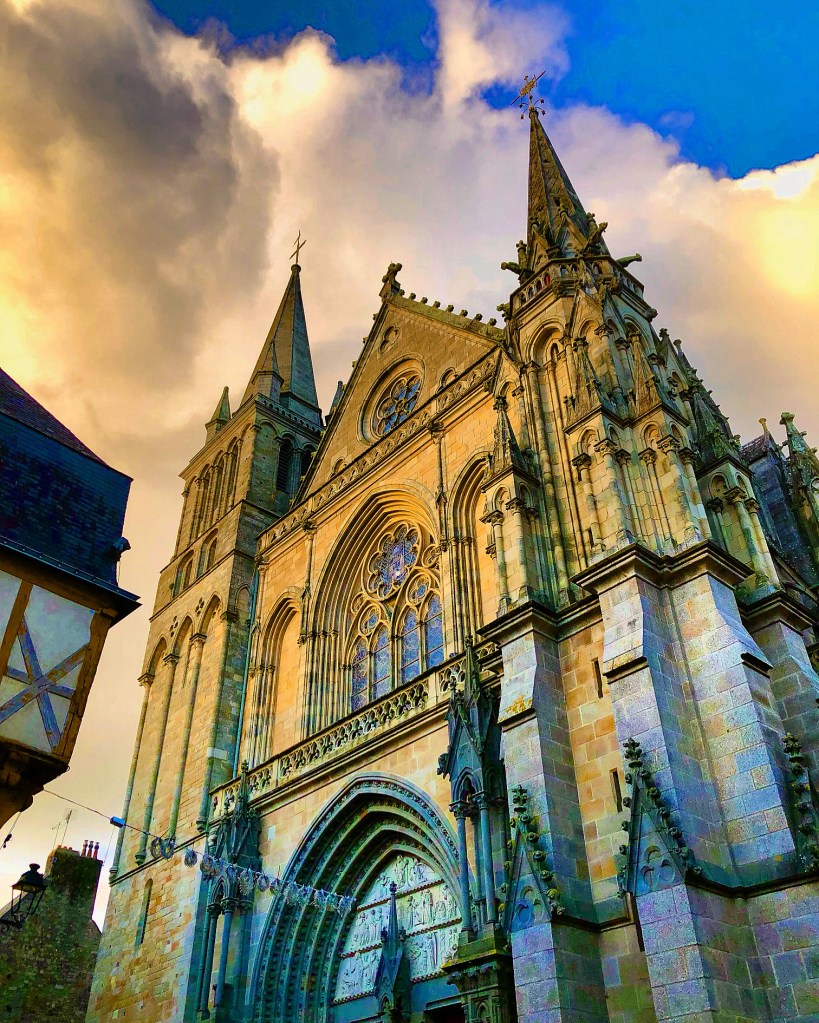
Built atop the ruins of an ancient Roman church, Saint-Pierre commands the highest point in the old town and blends Romanesque, Gothic, and neo-Gothic styles, which is what happens when a church is constructed, remodeled, expanded and restored from 1020 until 1857, when the carving of the façade was finally completed. It’s beautiful inside and out.

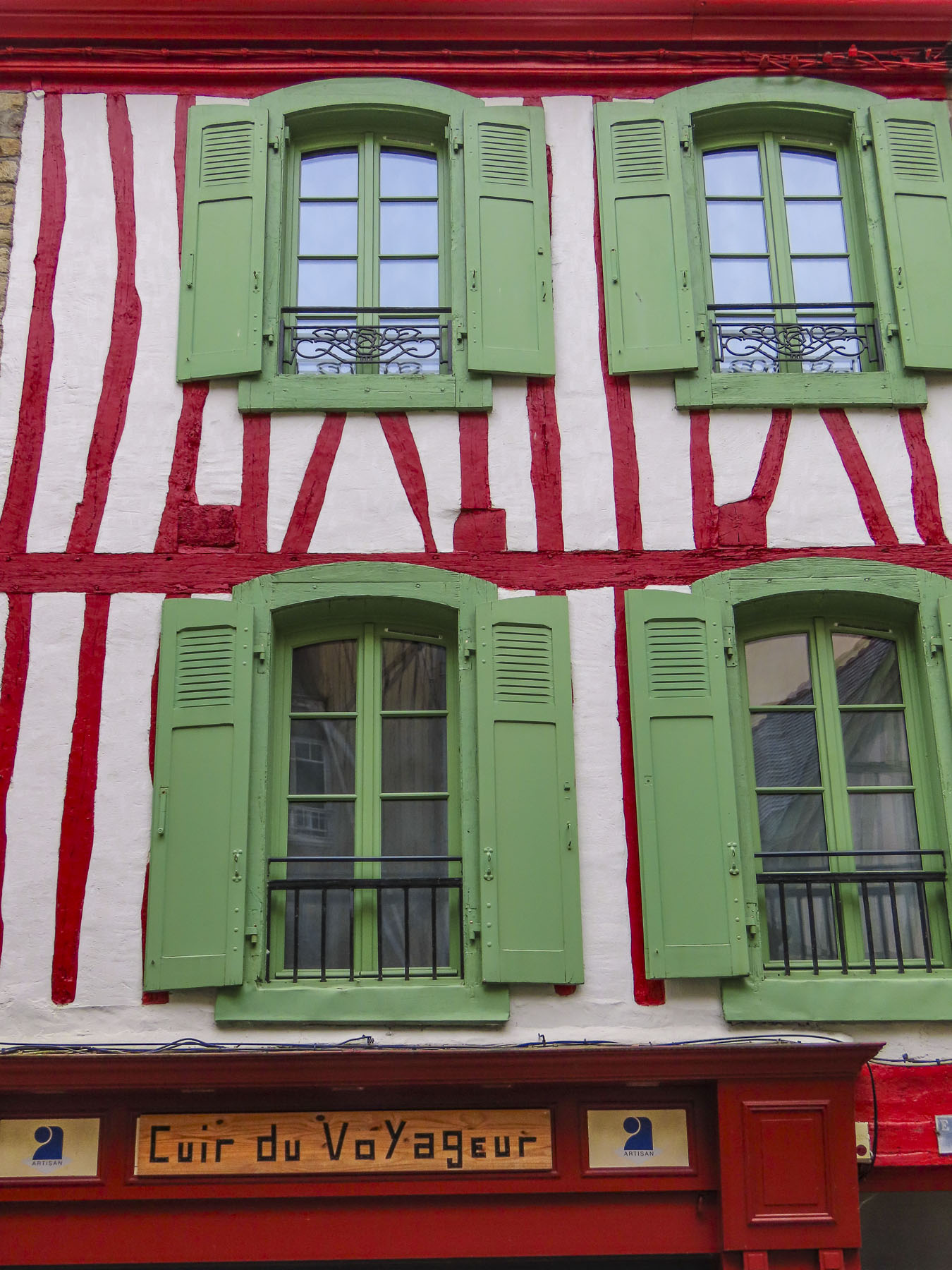
A short walk away, many fine examples of Vannes’ colorful,15th century, half-timbered buildings surround the Place Henri IV. A map isn’t needed to explore the ancient citadel. Wandering or “walk a little, then café,” as we like to say, is the perfect approach to discovering the town’s architectural gems and enjoying Vannes. After all, what’s the rush?

Wednesday and Saturday have been the traditional market days in Vannes for decades and the streets of the historic center fill with activity as folks shop among vendors selling housewares, clothing, breads, pastries, fruits and vegetables, wine, meat, sausages and CHEESE! Our weakness. Fromagers offering samples of soft and hard goat, sheep and cow cheeses with various ageing enticed us all too easily to purchase their products. Shopping there was a sensory experience that had us wishing we had opted for an apartment stay just so we could cook.

There are also two permanent food halls within the old town, Halle Aux Poissons, the fish market – is located down a side street just beyond the Porte Saint Vincent gate as you enter the city from the harbor. And the Halle des Lices, a large market hall with about thirty shopkeepers that is open Tuesday to Sunday from 8 am to 2 pm. It’s also a good place for breakfast or lunch.

The market takes its name from the Place des Lices on which it stands, though during the 14th and 15th centuries the Dukes of Brittany held jousts and tournaments there, between the Tour du Connétable, built for the commander of the Duke’s army, and the original Château de l’Hermine. The Tour du Connétable is a substantial tower that was part of the defensive wall that encircled Vannes, but what we found interesting was that you can still see where other ramparts intersected with the tower but were removed to reconfigure the fortifications as the city grew over time.

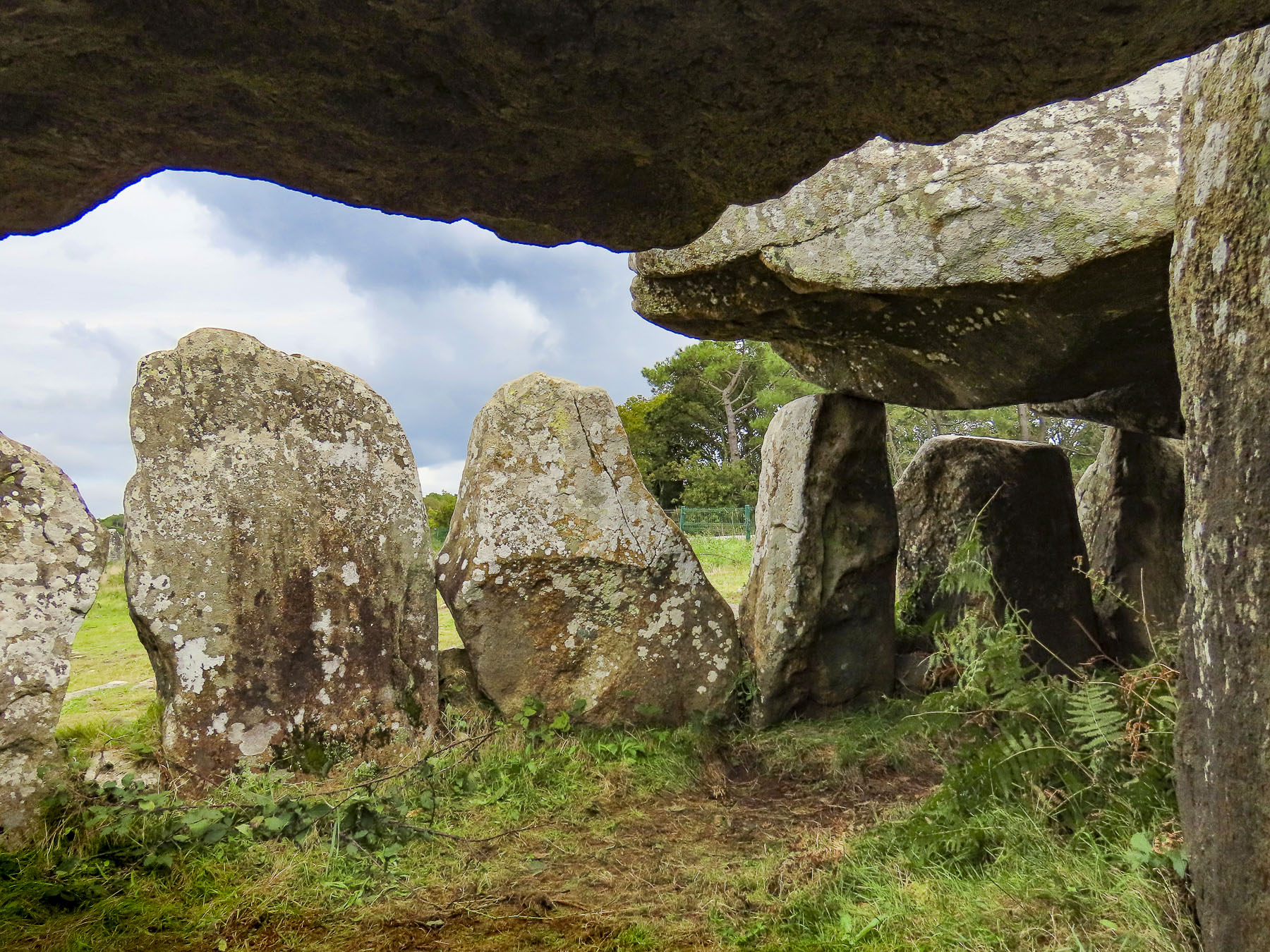
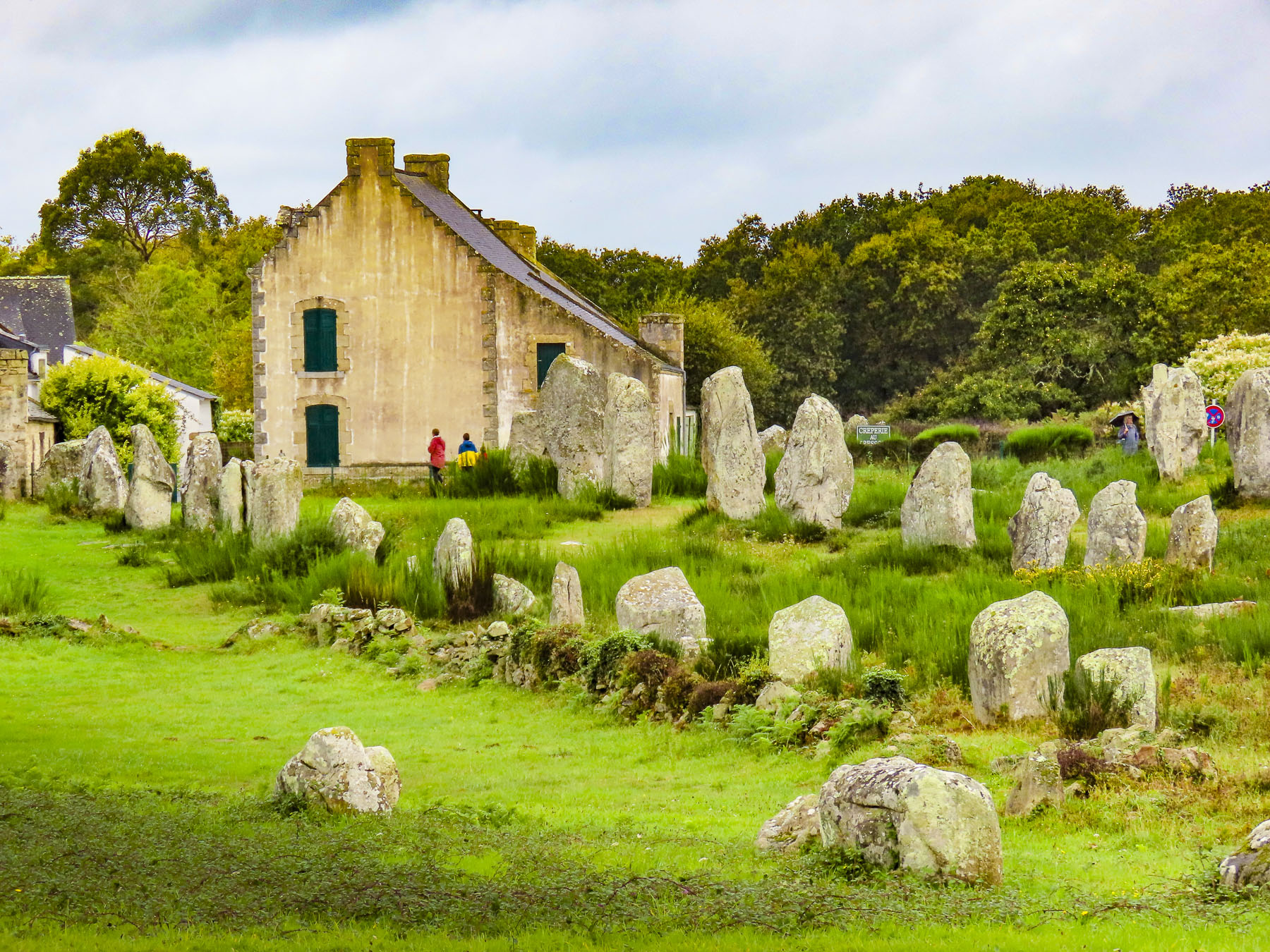
Only thirty minutes away, the Alignements de Carnac were an easy day trip from Vannes. We drove along D196 and followed a 1.6 mile route that started in a wooded glen at Alignements du Petit-Ménec and passed the alignments in Kerlescan, Kermario, and Toulchignan before ending at Carnac. It was a fascinating area with many opportunities to stop, touch and walk through the fields with over 3000 prehistoric standing stones.

Arranged in rows across a rolling landscape, the alignments are thought to have been erected around 4000BC, predating the 2500BC Stonehenge. Little is known of the Mesolithic hunter-gatherers that are thought to have erected the stones.

But a later Brittany Arthurian myth associated with them holds that they were a marching legion of Roman soldiers turned to stone by the sorcerer Merlin. Away from the road there is also a cycling/walking path through the countryside that paralleled our route. Afterwards we drove along the Trinité-sur-Mer waterfront, which we found reminiscent of coastal Maine.

Another day we drove a half-hour south from Vannes to the Domaine de Suscinio, one of the prettiest castles in Brittany, near the Bay of Biscay. It started as a modest seigneurial manor house for Peter I, Duke of Brittany, in 1218.  His son John I started to expand it and add fortifications, a building campaign that continued through successive Dukes until they moved their court to Vannes. Thereafter it was mostly used as a hunting lodge, unless there was a war in progress.

In the early 1500s it became the property of the French Crown and Francis I of France installed a favored mistress there. During the French Revolution, the now dilapidated castle was sold off to a stone quarry and its rocks were slowly carted away.

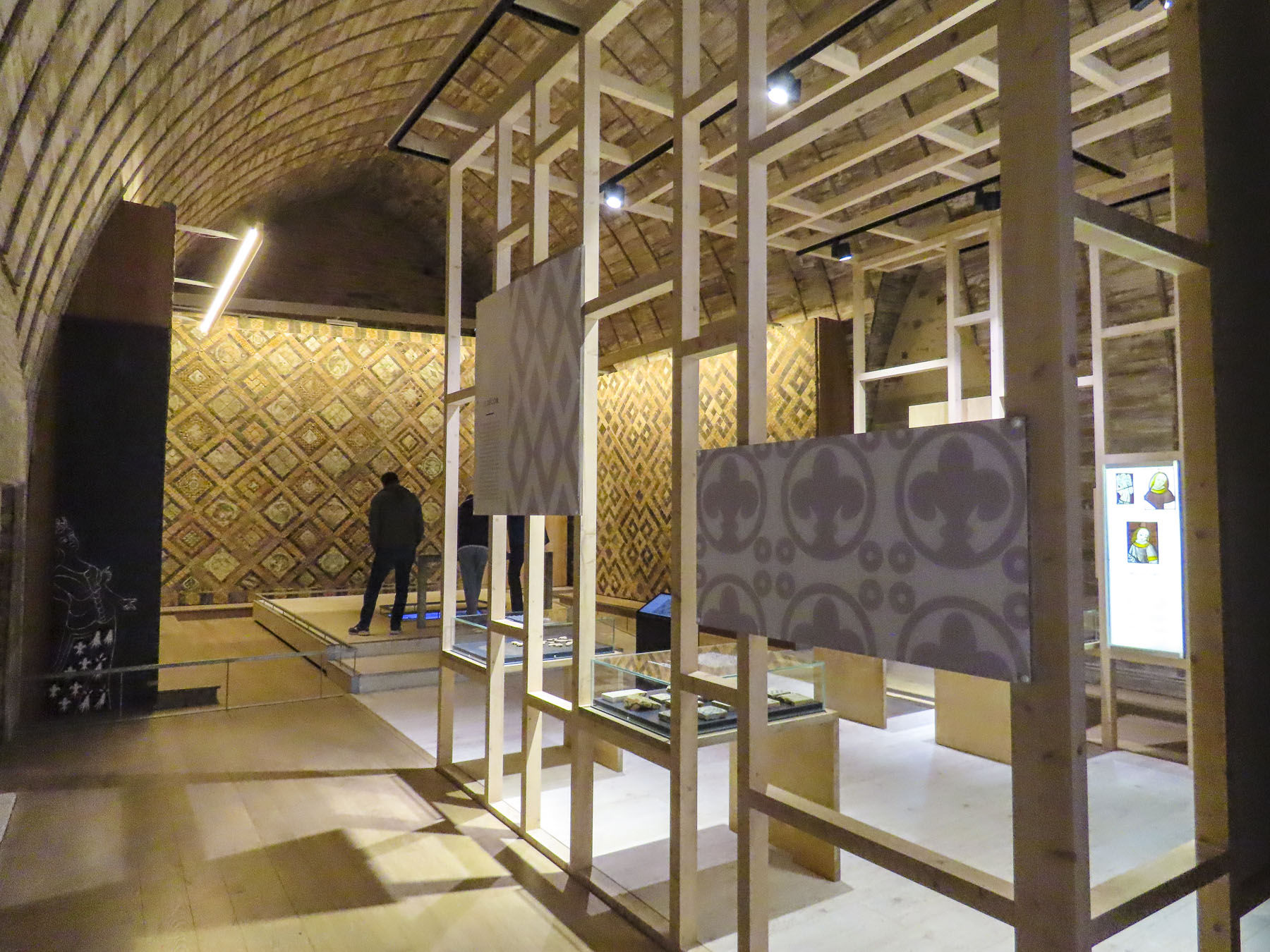
A dramatic restoration of the castle started in 1965, and was obviously a labor of love, that reflects the Bretonne pride in their heritage. It’s an exquisite space with many interesting, museum-quality displays. We thought the discovery of an intact, highly decorative, mosaic floor from the castle’s chapel, which was located across the moat, most intriguing.

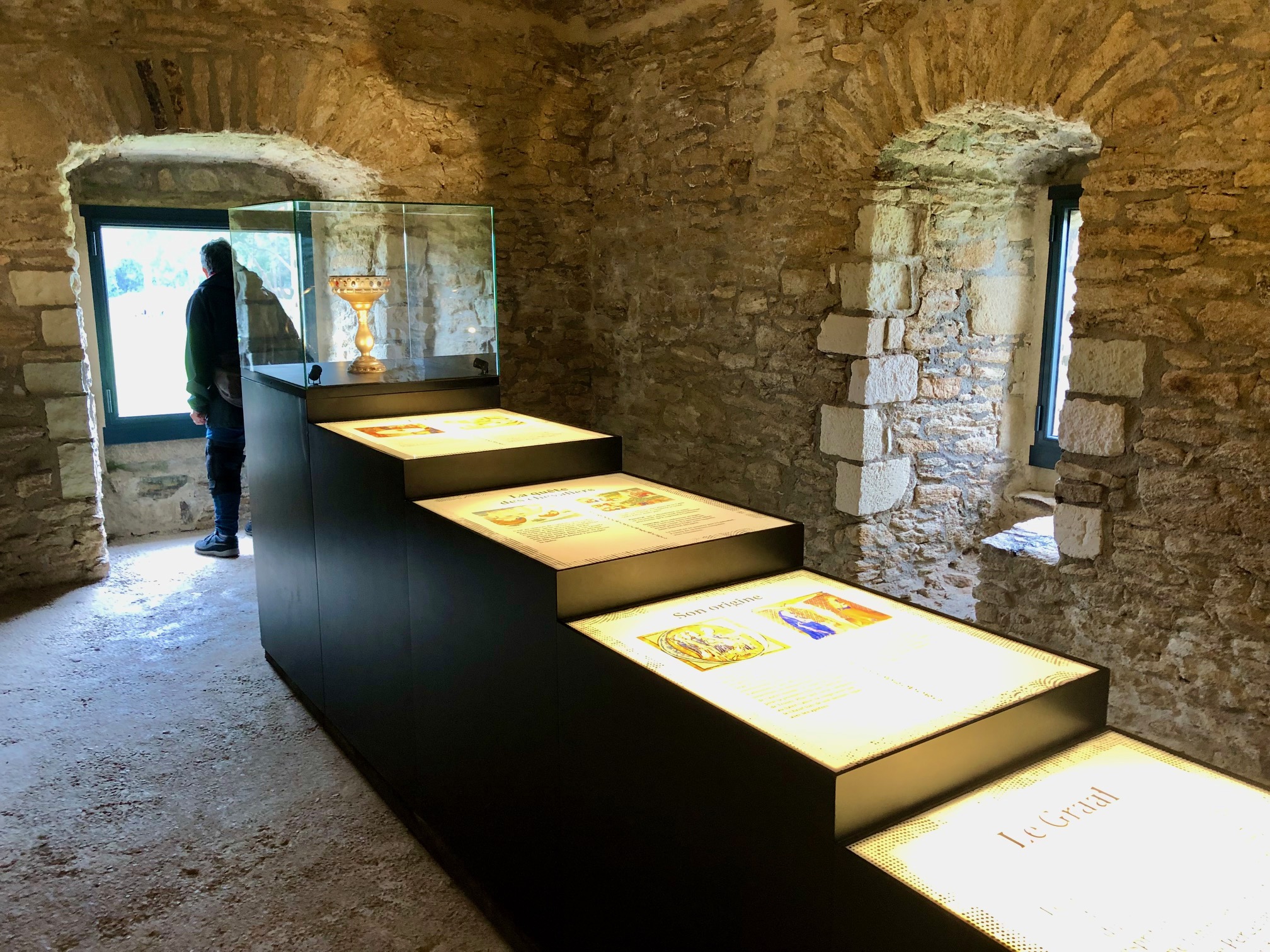
Archeological excavations around the site are still ongoing and objects discovered, are restored and exhibited. Refreshingly there are plenty of hands-on things for kids to do, like dressing as Renaissance knights, squires or princesses. Medieval board games are also available for kids to try.

Beyond the ramparts there is a medieval encampment complete with re-enactors for families to explore. Wandering around the castle was thoroughly engaging and from the top of the battlements, you can see the Bay of Biscay. With the coast so close we wondered if Henry Tudor, future King Henry VII of England, landed there after he fled England, and spent 11 years in exile at Suscinio before returning to seize his crown in the Battle of Bosworth Field in 1485.

Afterwards we headed to the Port du Crouesty marina in Arzon on the Peninsula Rhuys, surrounded by the Bay of Quiberon and Gulf of Morbihan. We sauntered along the port’s quay, admiring the boats docked in the marina, until we found Le Cap Horn. It was the perfect spot to enjoy some beers, and fresh seafood for dinner, our last meal in Brittany before heading home to the states.

We had a fantastic time exploring a small part of Brittany and hope one day to return to this charming, less explored, part of France.

Till next time, Craig & Donna

Road Tripping Through Normandy: Honfleur, Beuvron-en Auge & Mont Saint-Michel or South Across the Seine

The morning sky was dark and speckled with a few dim stars before sunrise as we walked through the carpark in Étretat by the light of our cell phones. The night air was still crisp and there was a heavy dew on the car windshield, which the wipers quickly cleared. The mirrors we cleared with our fingertips. Quickly we set the destination on the phone’s map app, before debating how much heat is enough to counteract the late October chill, but not fog the windows. We set off.

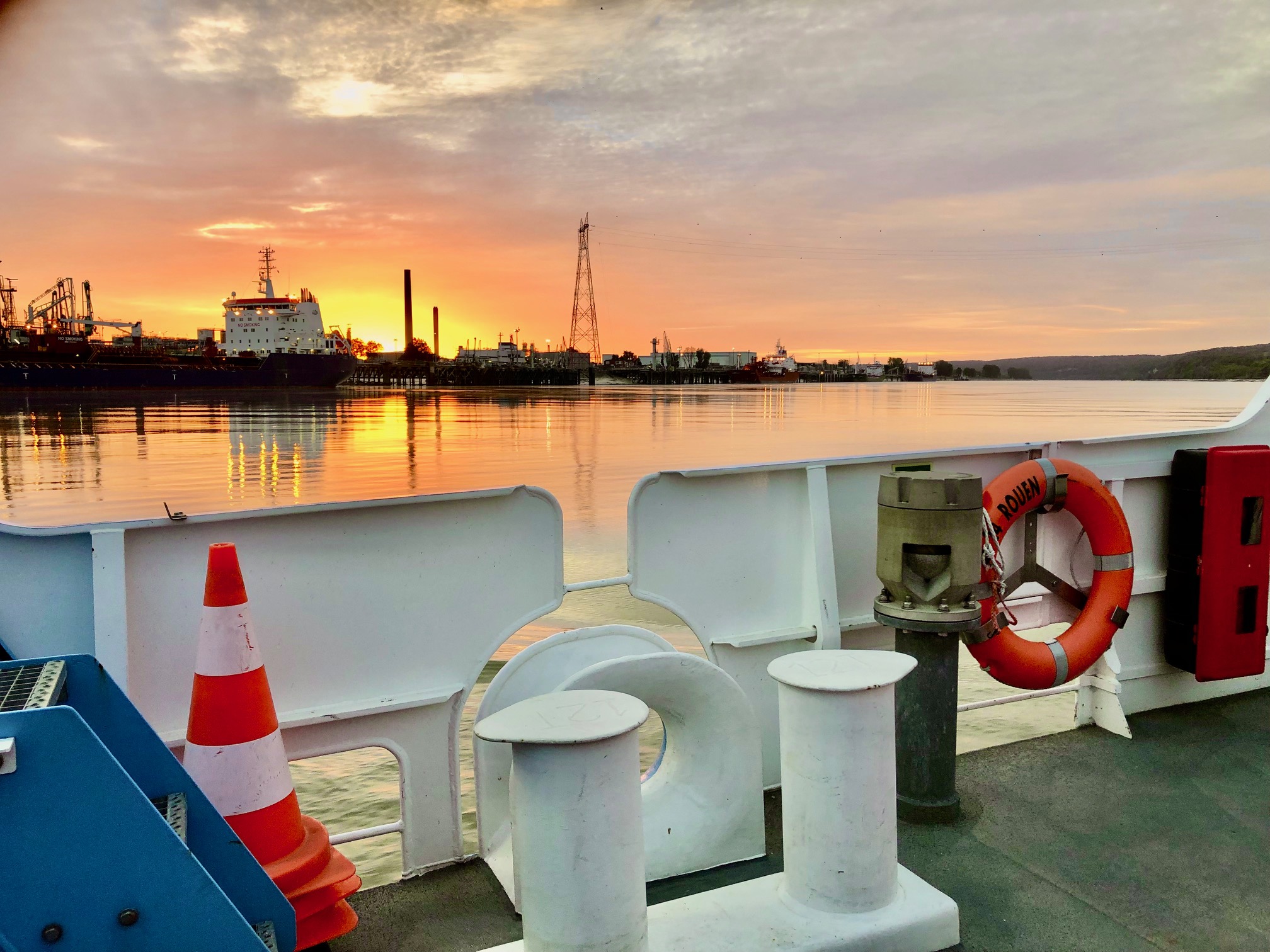
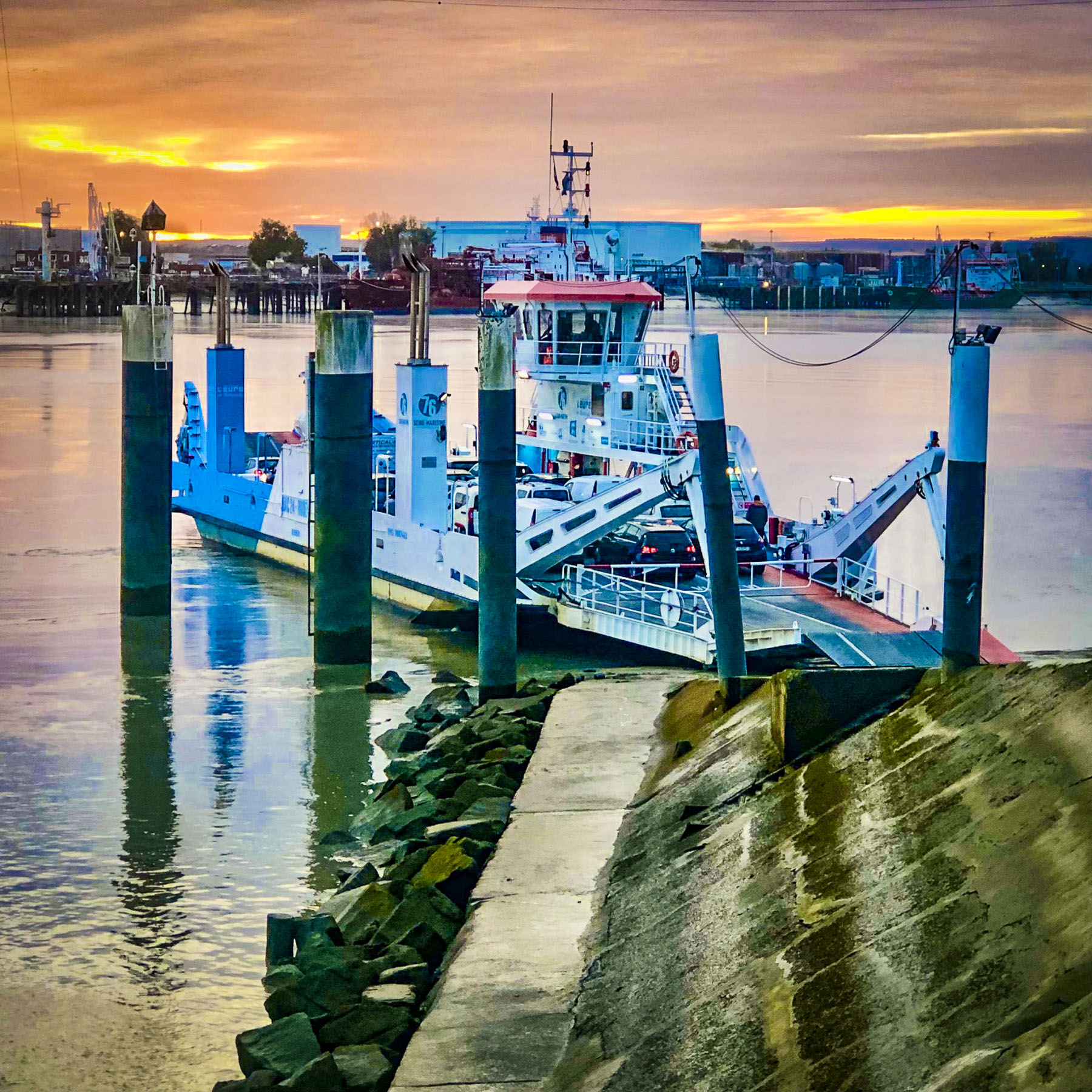
Forty-five minutes later the dawn’s first light reflected pink and yellow off the Seine River as we unexpectedly drove onto a queue ramp for a car ferry across the river. We were totally surprised, and not sure what the proper procedure was; there wasn’t a ticket booth or office to inquire at. We figured we would just follow the short line of cars ahead of us onto the small car ferry when it returned from the far shore. When the cars were waved aboard the ferrymen raised the ramp, brought in the mooring lines, and we departed. No payment was requested from any of the cars. Five minutes later we landed in the small riverport village of Quillebeuf-sur Seine, which looked intriguing in the early morning light, and whispered for further investigation. Had some of the shops been open we would have stopped for café, but the sun was still a small ball, just breaking the horizon. Honfleur was our first destination. By day’s end we’d be in Mont Saint-Michel.

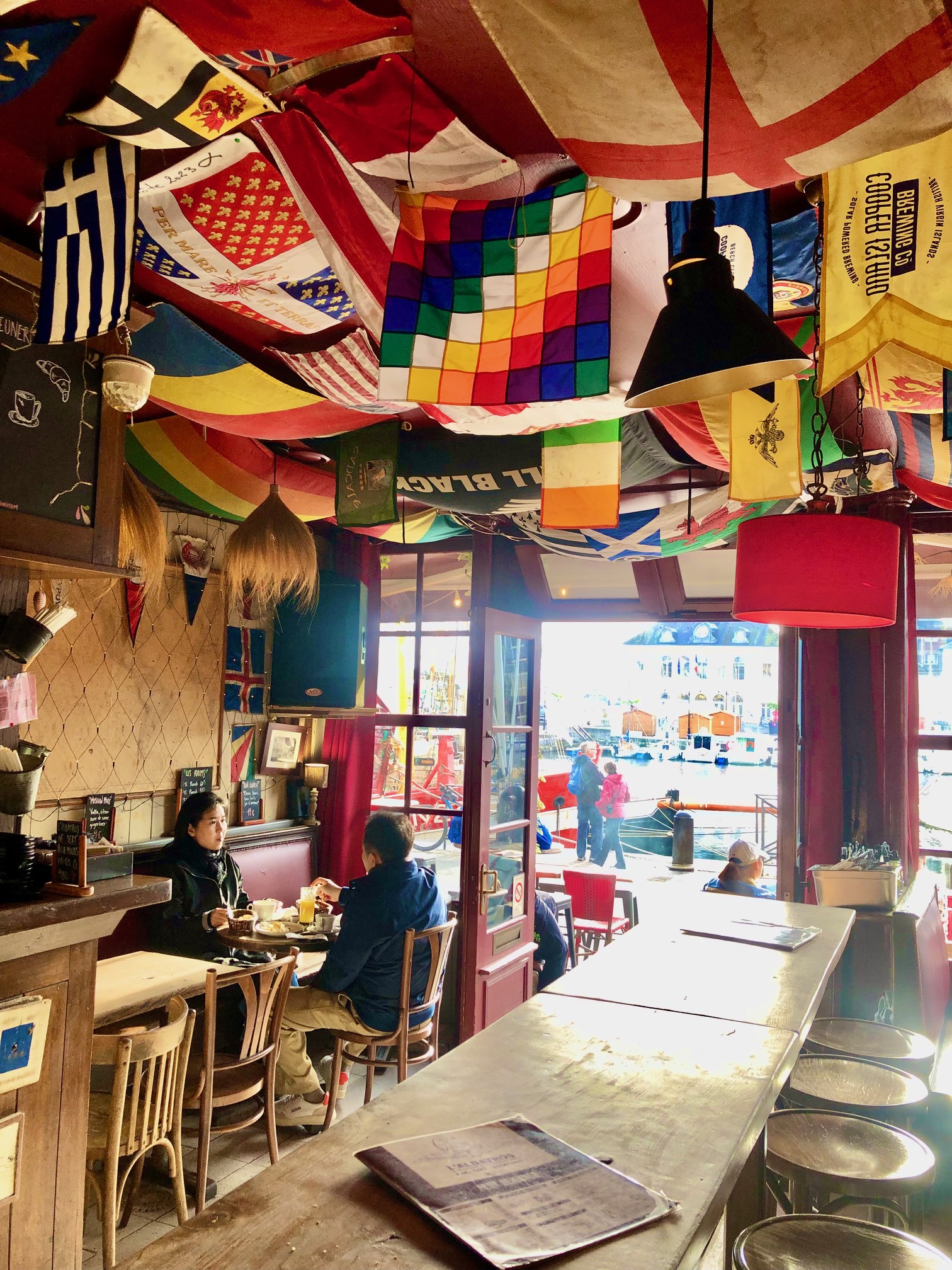
The sun was trying its hardest to burn through a stubborn, light cloud cover by the time we reached Honfleur. A café was desperately needed after such an early morning start without our usual cup of coffee. Our “walk a little” or “drive a little” philosophy was way behind schedule. The question of having our cup of joe inside or outside was moot as all the cafés along the Le Vieux-Bassin, Honfleur’s harbor had their doors swung wide open. Hoping the solar effect would help us, we found a table inside by a window, though we still needed to wear our coats.

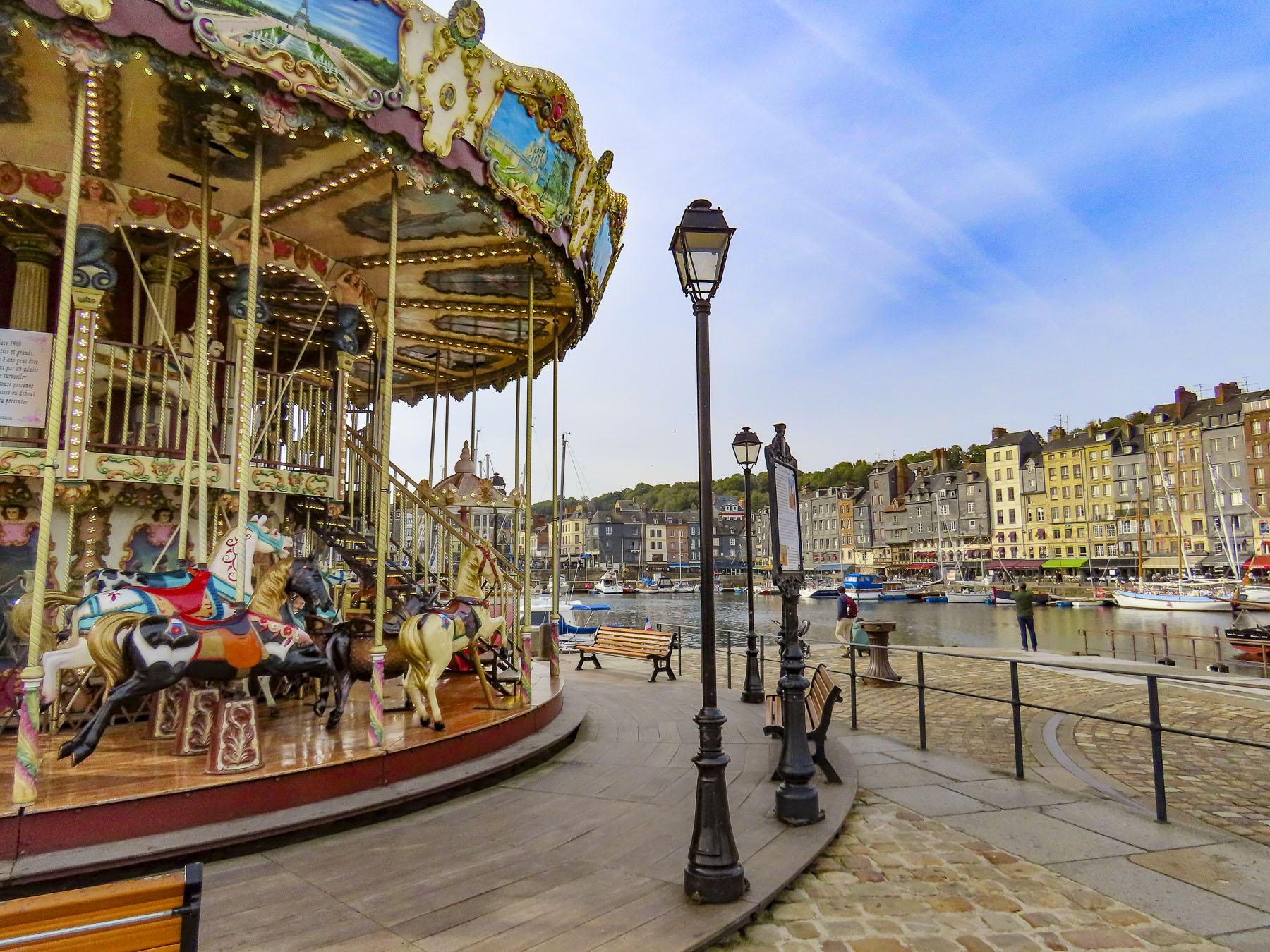
Accessed by a small channel off the La Morelle river before it empties into the Seine and the Bay of Le Harve a short distance away, Le Vieux-Bassin is a well sheltered anchorage that for centuries has provided French sailors a safe haven against ferocious North Atlantic storms. From the 1500s into the 1800s the seaport flourished as the gateway for goods entering France from Canada, its North America colony, and later Asia. Wealthy merchants surrounded the Le Vieux-Bassin with 4-6 story buildings that were warehouses on the lower levels and their homes above. Most of the vessels docked in the harbor today are recreational craft, but there was a predominance of sailboats, new and old with their masts swaying gently with the wind, that kept Honfleur’s historic waterfront in character.

From the harbor we wandered our way through the quiet town past galleries, restaurants, antique stores, and all variety of contemporary shops, which have replaced the sailmakers and ship chandlers which previously outfitted merchantmen and explorers before they set sail on long voyages to distant lands. Samuel de Champlain most famously sailed from Honfleur on his first voyage to Canada in 1603 and founded Quebec.

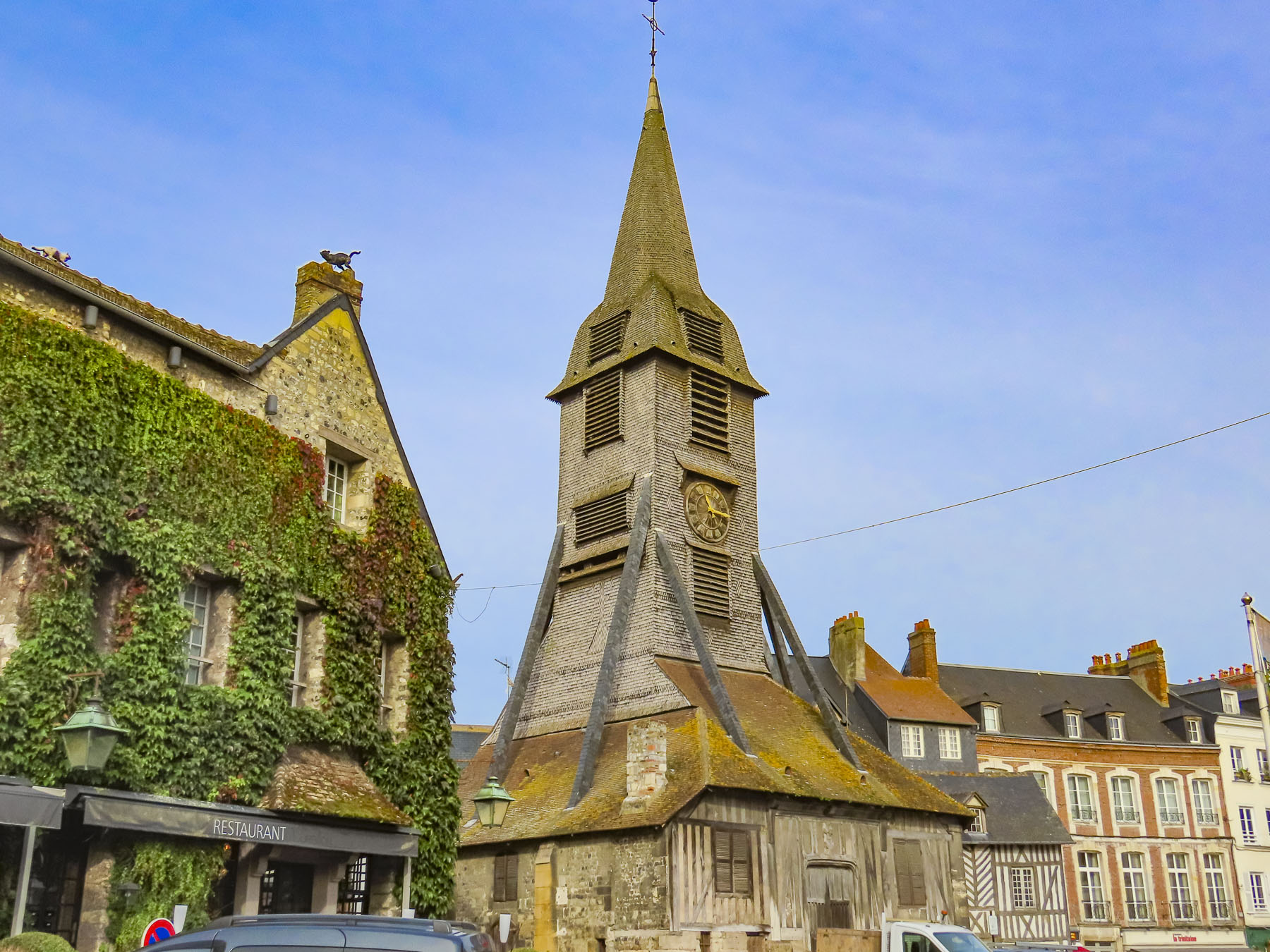
A block above the quay the 15thcentury Eglise Sainte-Catherine sits on the ruins of an early 11th century chapel destroyed in the Hundred Years War. The 11th century church was one of three in Fecamp, Honfleur, and Caen that Robert the Magnificent, an 11th century Duke of Normandy, constructed in thanks to God for surviving a shipwreck in the waters below the white cliffs of Normandy. Its 15thcentury replacement, the Eglise Sainte-Catherine, is the largest church constructed entirely of wood in France, with all of its structural oak beams hand hewn with axes. It features an amazing, vaulted ceiling which resembles the ribbed hull of a wooden ship.

The inspiration for the church’s design is credited to Honfleur’s shipbuilders who used their familiarity with wood and knowledge of naval construction techniques to build the massive structure. To reduce the risk of fire from a lightning strike, the church’s belltower was built separately and stands across the plaza quite a distance away from the chapel. The church continues to be a pilgrimage site for fishermen, sailors, and others who make their livelihood from the sea.Before leaving Honfleur we had a simple no-frills lunch at L’Hippocampe poissonnerie, a fresh seafood shop on the edge of the harbor, where we perused the morning’s catch before orderingfresh oysters, fried fish, and white wine. We enjoyed our short visit to Honfleur, but wish we had scheduled more time or an overnight stay to further explore this delightful town and absorb its ambience.

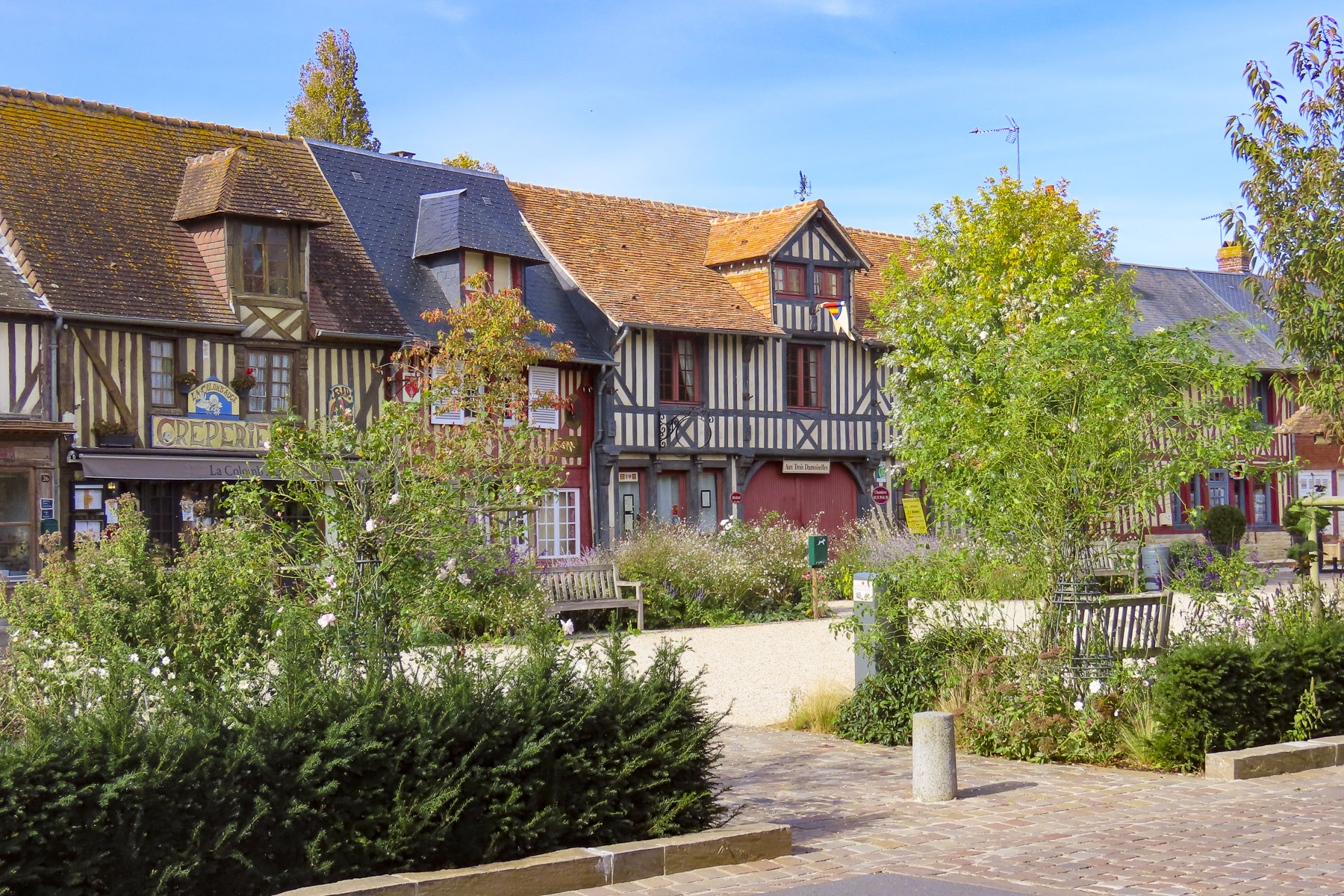
Afterwards we headed to Beuvron-en-Auge, a commune in the Calvados, the apple brandy and cider region of Normandy. It’s a small village, with one main thoroughfare and a cross street, meticulously lined with well-kept 15th,16th and 17th century half-timbered buildings. “Picture perfect,” the village is recognized as one of the Les Plus Beaux Villages de France, “Most Beautiful Villages of France.”

We practically had the whole hamlet to ourselves when we stopped mid-week on a sunny afternoon in mid-October.  Most of the restaurants and shops only open on the weekends this time of year, but we still delighted in walking the length of the village, taking numerous pictures, and investigating the churchyard and cemetery of the Église Saint-Martin.

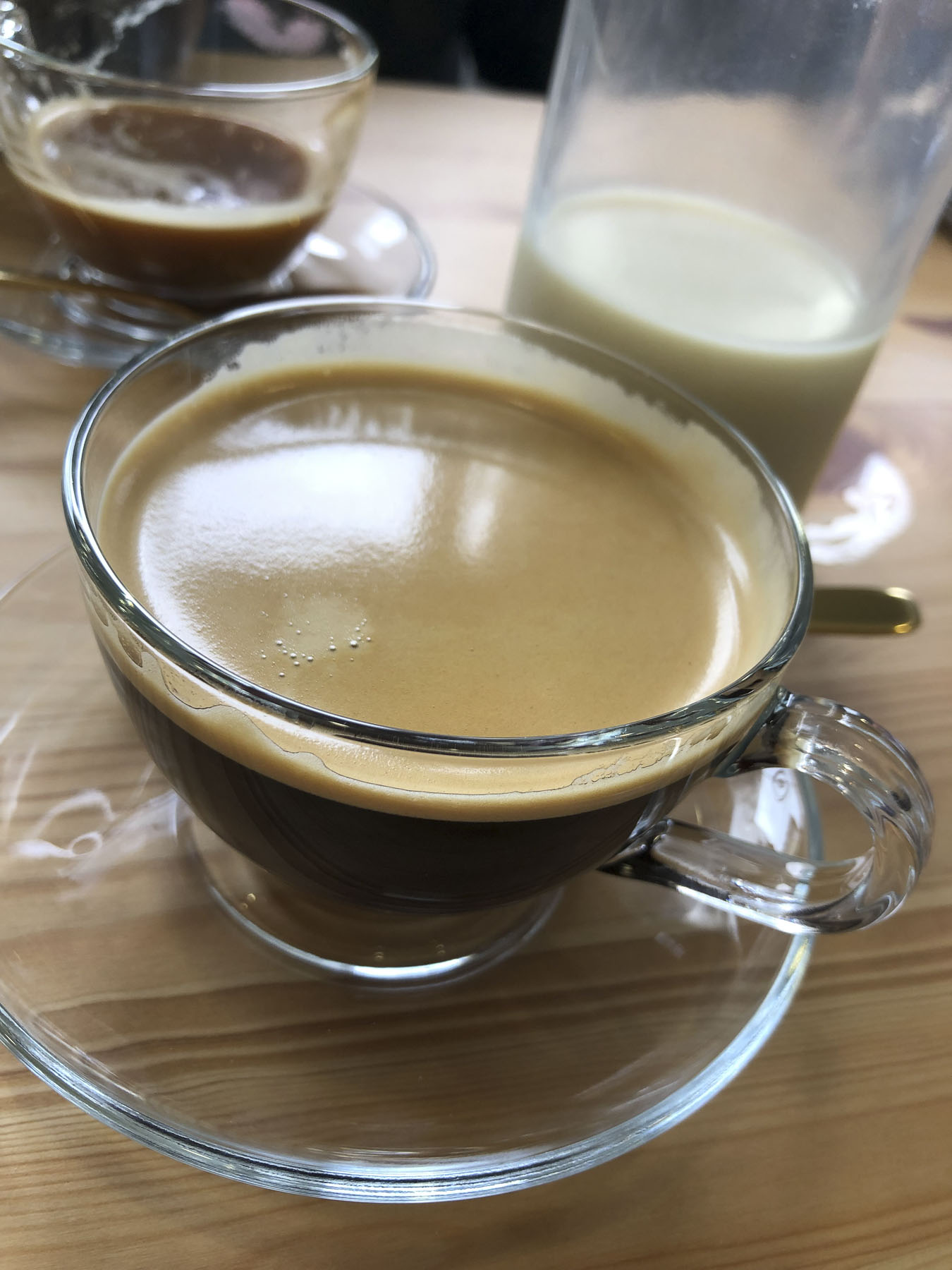
“Walk a little, then café,” we stopped at one of the few shops open, L’Orée du Village. The local tobacconist did a little bit of everything: off-track betting, souvenirs, post office, café. We sat outside in the sun and watched an occasional farm tractor rumble by. The coffee was very good.

Beuvron-en-Auge is also the starting point for the Cider Route, a 25-mile loop through small villages and the surrounding French countryside filled with apple orchards and over 20 cider and calvados, apple brandy producers. So far during our trip we had only encountered brief rain showers, but the weather along the Normandy coast in middle of October can be iffy and rain was predicted for the next day. So we pushed on, hoping to reach Mont Saint-Michel by late afternoon and the “golden hour.”

We had anticipated a high entry and parking fee but were pleasantly surprised when neither were requested. Driving access to the mainland part of Mont Saint-Michel is restricted by a traffic gate. But if you are staying at one of the town’s hotels, they text you an entry code when you call them. We stayed at Hôtel Vert, which was very convenient to the island’s free shuttle bus. Unless you choose to walk along the causeway to the Mont Saint-Michel island, a distance of 1.6 miles, the shuttle bus is the only way to reach the island. Hôtel Vert was kind enough to let us use their parking for an additional night even though we were staying at a different inn on the island.

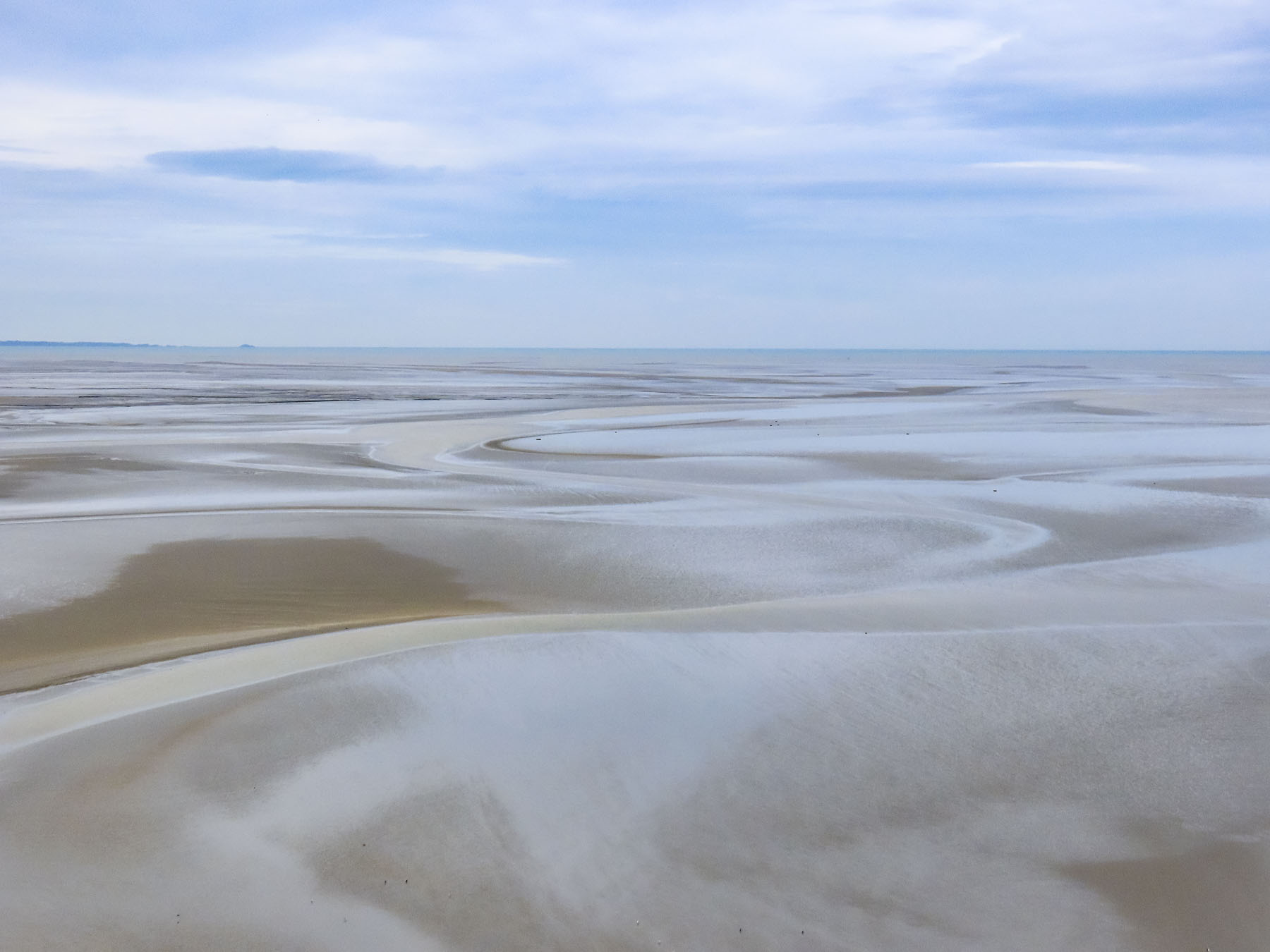
Luck was with us and the afternoon light that shined on this mystical island was beautiful and we snapped away till nightfall. The next morning, we repacked some clothes into a small duffel bag for our one night on the island. After all, visiting Mont Saint-Michel was the catalyst for our trip through Normandy and we wanted to experience it fully. Literally a “pyramid rising from the sea,” Mont Saint-Michel was built one stone at a time above a small rocky islet, a half-mile from the mainland, in the tidal mudflats of the Bay of Cancale which opens onto the English Channel. Its beauty has lasted for centuries, and in any weather, this iconic image of man’s symbiotic relationship with nature fascinates its visitors. It was visionary in the 8th century and will forever be enchanting.

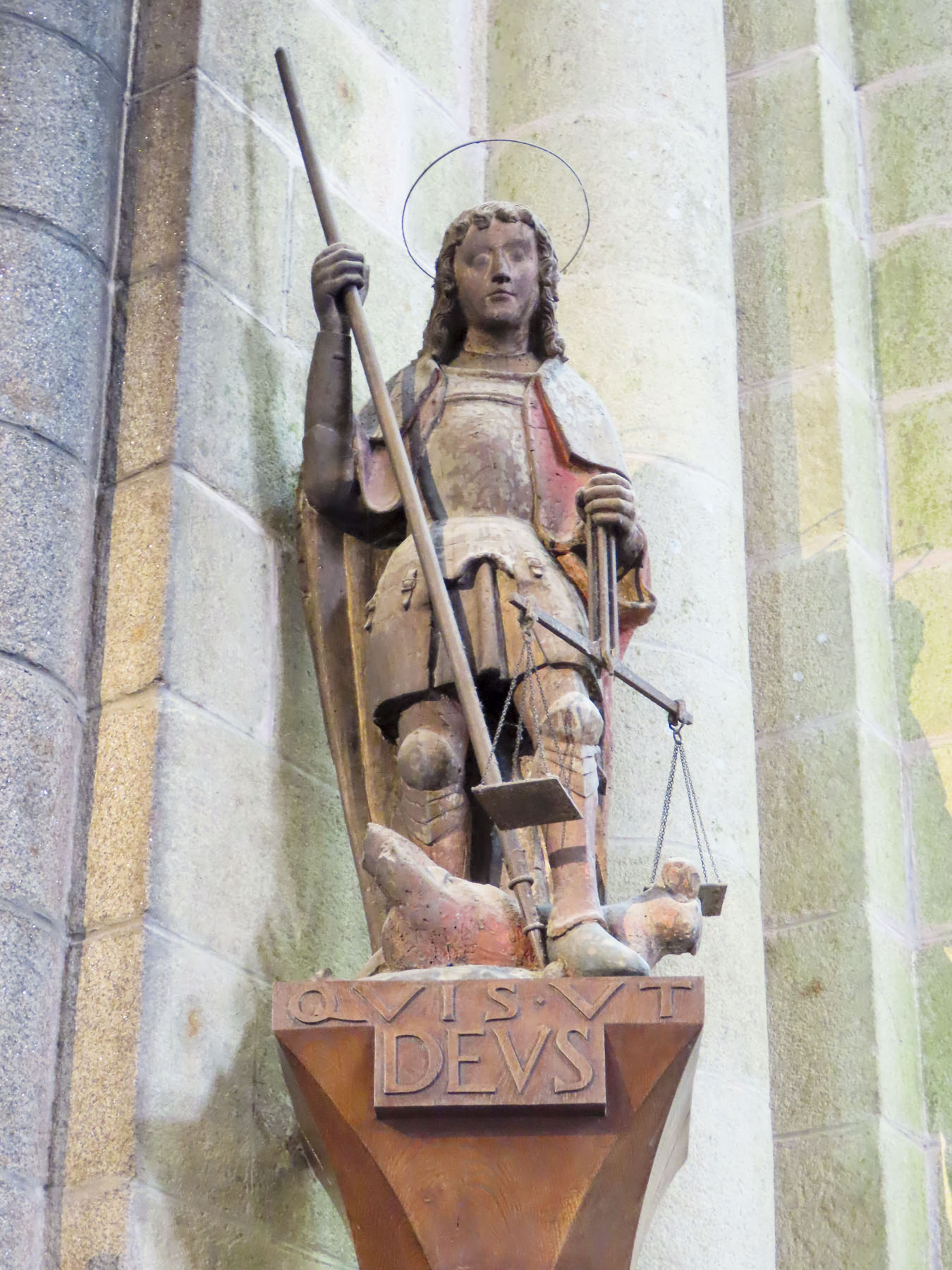
The monastery was celestially inspired through the dream-visions of Aubert, the Bishop of Avranches, who received the commands of the archangel Michael in 708 to build a sanctuary devoted to him. And since the seriousness of devotion seems to be questioned unless churches were built in extremely difficult places – why make it easy for the faithful? – an islet accessible only by boat, or a treacherous trek across mudflats dotted with patches of quicksand was chosen.

By 966, Benedictine monks were expanding Aubert’s chapel and establishing an abbey with a scriptorium, which was widely recognized for the copying skills and illuminated manuscripts created by its monks. The abbey was also a center for religious education supported by a library containing over 3800 ancient books and manuscripts and known for translating Aristotle’s texts to Latin. A small village was also growing on the island to support the abbey and pilgrims visiting the site. Granite stones for this construction and the islands’ fortress walls were quarried on the Chausey islands, some 19 miles away, and transported by boat across the bay to Mont Saint-Michel during the high tides. The stone ramparts successfully protected the island’s inhabitants from several sieges by the English during the Hundred Years’ War.

It was a never-ending, arduous effort to supply the abbey with food and wood to fuel the large walk-in fireplaces that heated the cavernous rooms and fire the kitchen hearths. Ingeniously, a human hamster wheel, operated by two people walking inside it, was designed and built to vertically lift a sled loaded with 2 tons of goods, several hundred feet up a cliff face from the dock below, where boats had brought supplies to unload.

Sadly, the books in its library were confiscated during the French Revolution (only 199 remained when they were inventoried in 1835,) and the abbey became a slowly decaying prison which housed over 600 inmates and operated until 1863, when Victor Hugo and other members of the French elite successfully petitioned the government for its closure and subsequent restoration as a pilgrimage site.

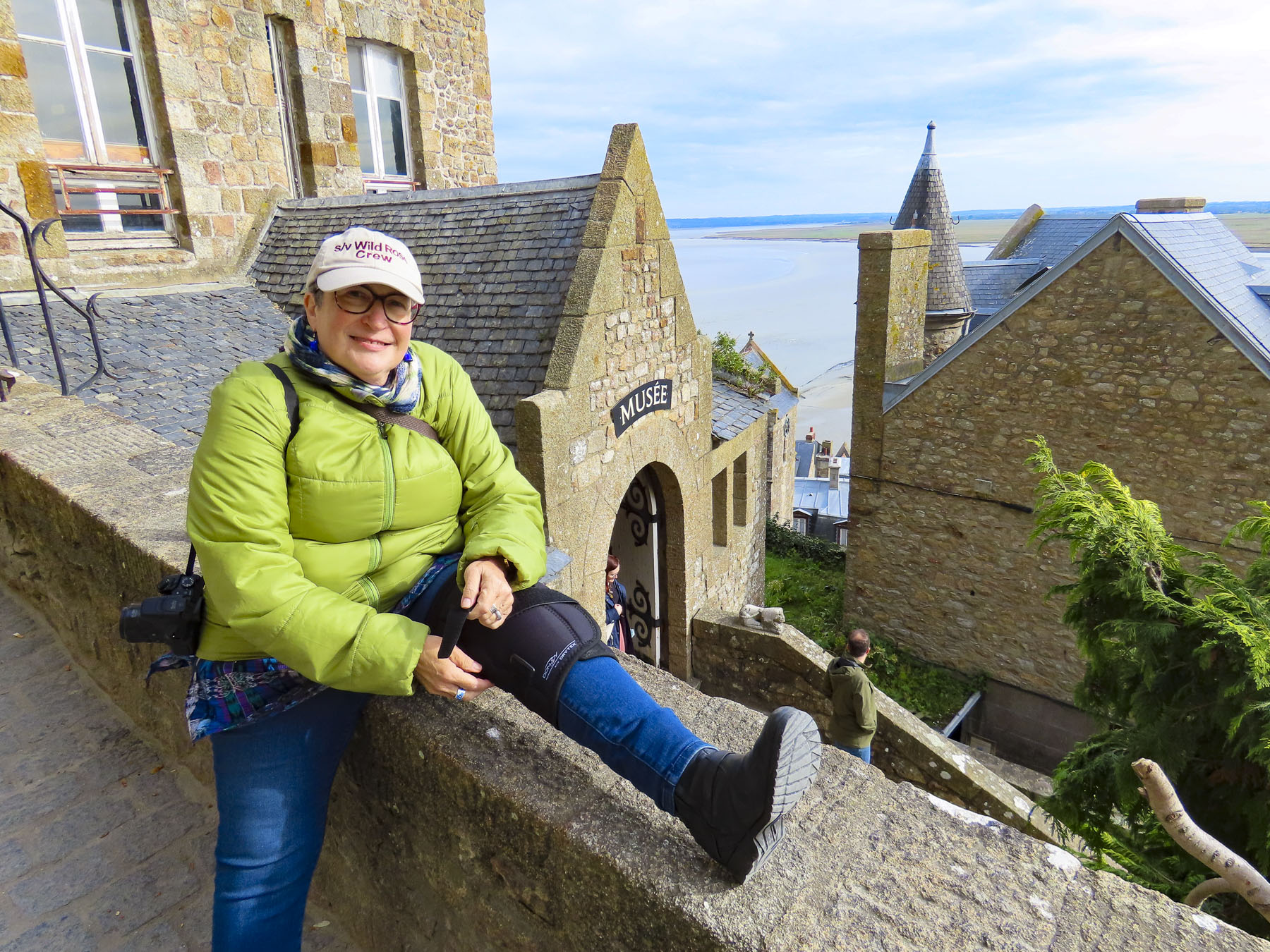
Even on a weekday in the middle of October the narrows alleys of Mont Saint-Michel were busy, not surprising for one of France’s most popular destinations that annually receives over three million visitors. Thankfully we were here in the colder shoulder season and the crowds were bearable. It’s all uphill to the Abbey and the closer you get to it the number of eateries near it decline inversely. We didn’t want to head back downhill only to walk up again, so we grabbed a bite to eat at a take-away and found an isolated section of wall, in the sun, to sit on, and rest Donna’s arthritic knee.

The afternoon sun was welcomed, and helped to alleviate the morning’s damp chill from our bones. Taking in the view over the rooftops, we contemplated how difficult life on this rock must have been in previous centuries, and joked about abbot Aubert possibly authoring an illuminated 10th century aerobics fitness manual and promoting the Mont Saint-Michel diet. They definitely would have been hits with the pilgrims and a good source of income for the abbey.

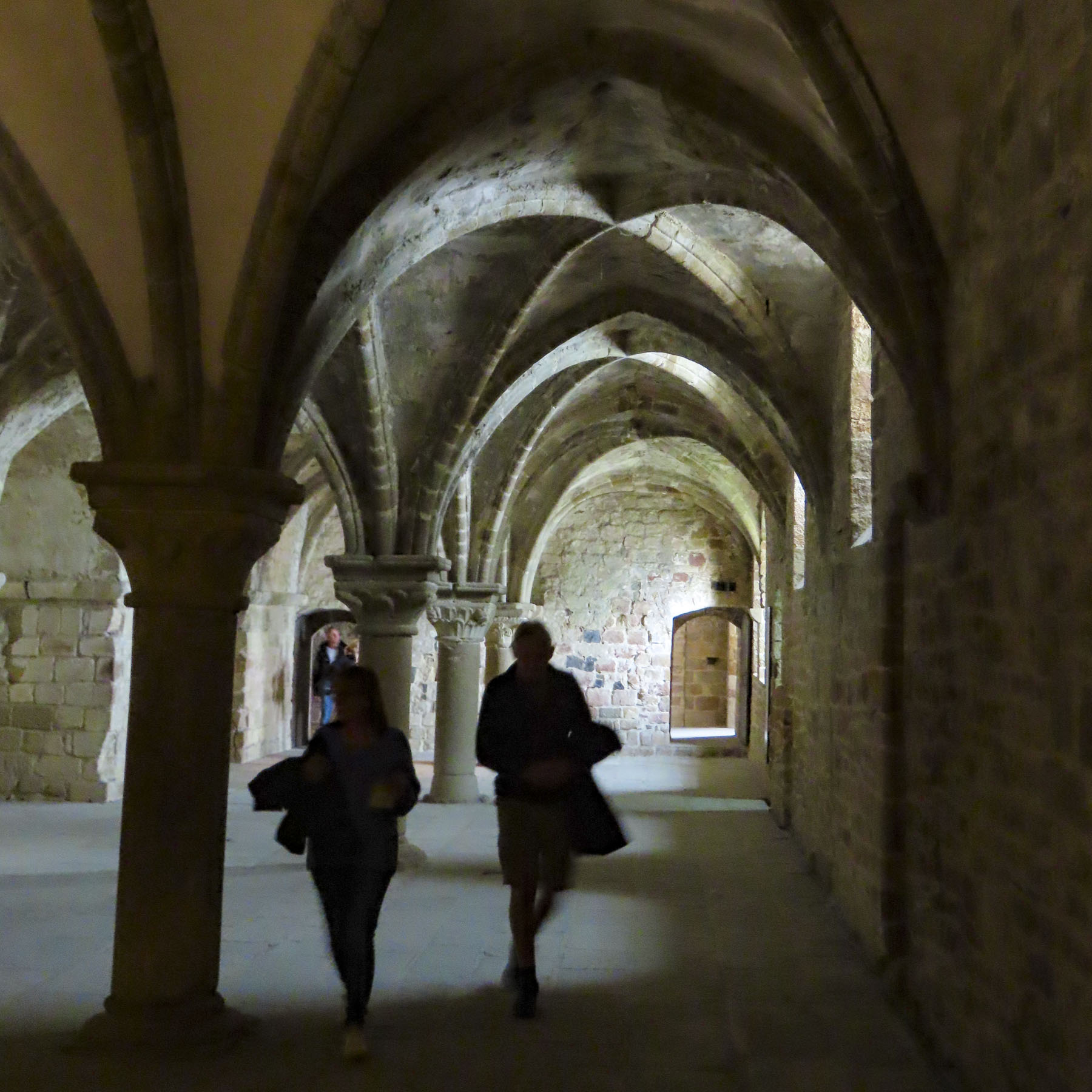
Rejuvenated from our restful picnic lunch, we continued climbing the final stretch of stairs to the top of the Mont. The expansive abbey was a wonder to explore and the views from it of the surrounding mud flats, with modern day pilgrims crossing them were extraordinary.

Later that evening as the lanes darkened and the amber lights from the restaurants illuminated their interiors, we wandered along until we found an establishment with a fire roaring in its hearth. Warmth, good food and wine restored us.

We slept well, exhausted from a long day of walking. The next morning it poured relentlessly as we waited for the shuttle bus on the causeway, but we were fulfilled, having accomplished a lifelong desire to visit this iconic site.

Victor Hugo famously expressed “Mont-Saint-Michel is to France what the Pyramids are to Egypt.” Another French writer described “The Pyramid of the Seas” as the “eighth wonder of the world.”

Sentiments we agree with.

Till next time, Craig & Donna
Madeira: Sao Vicente, Porto Moniz & the Fanal Forest – Mountains, Waterfalls and Waves

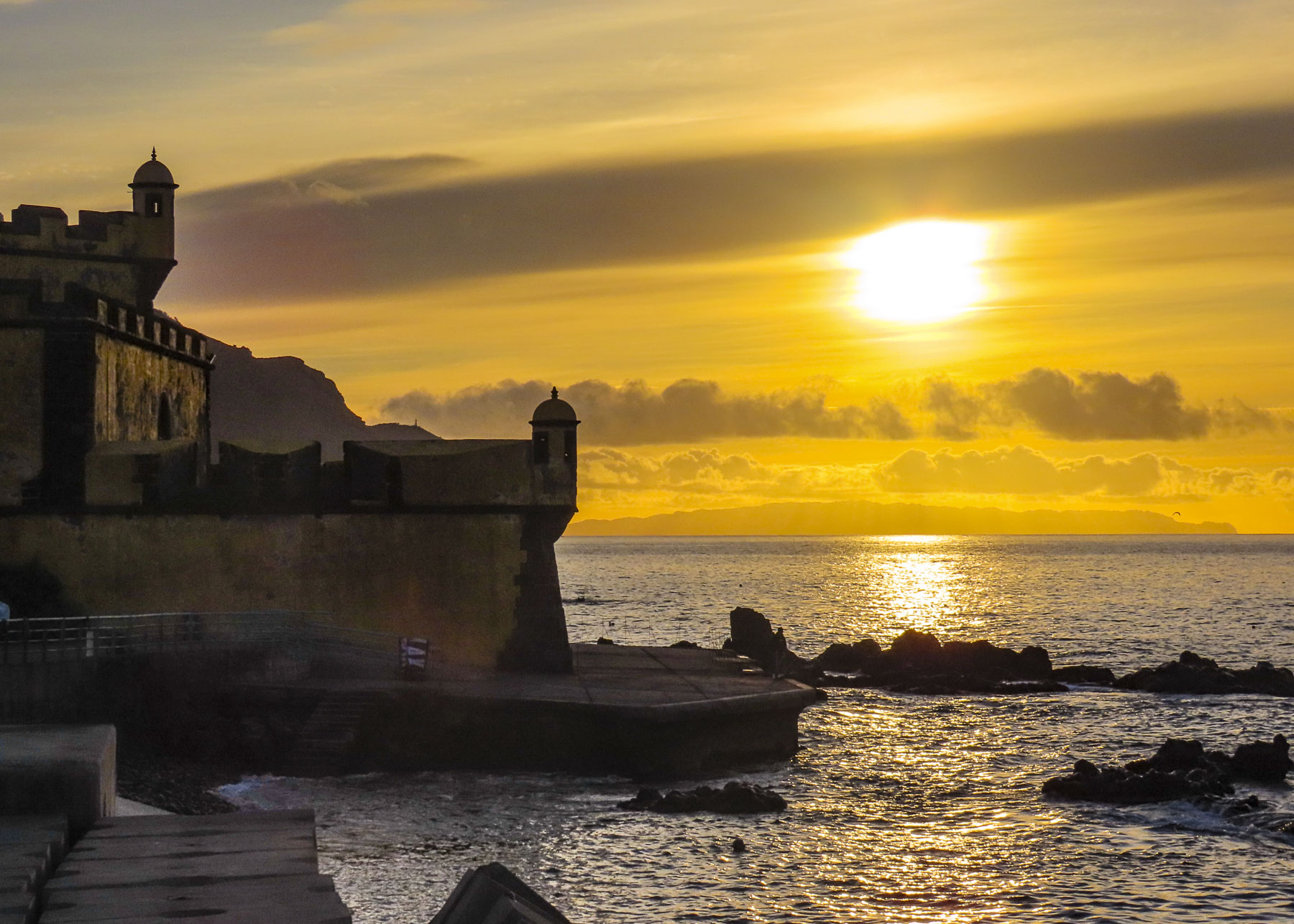
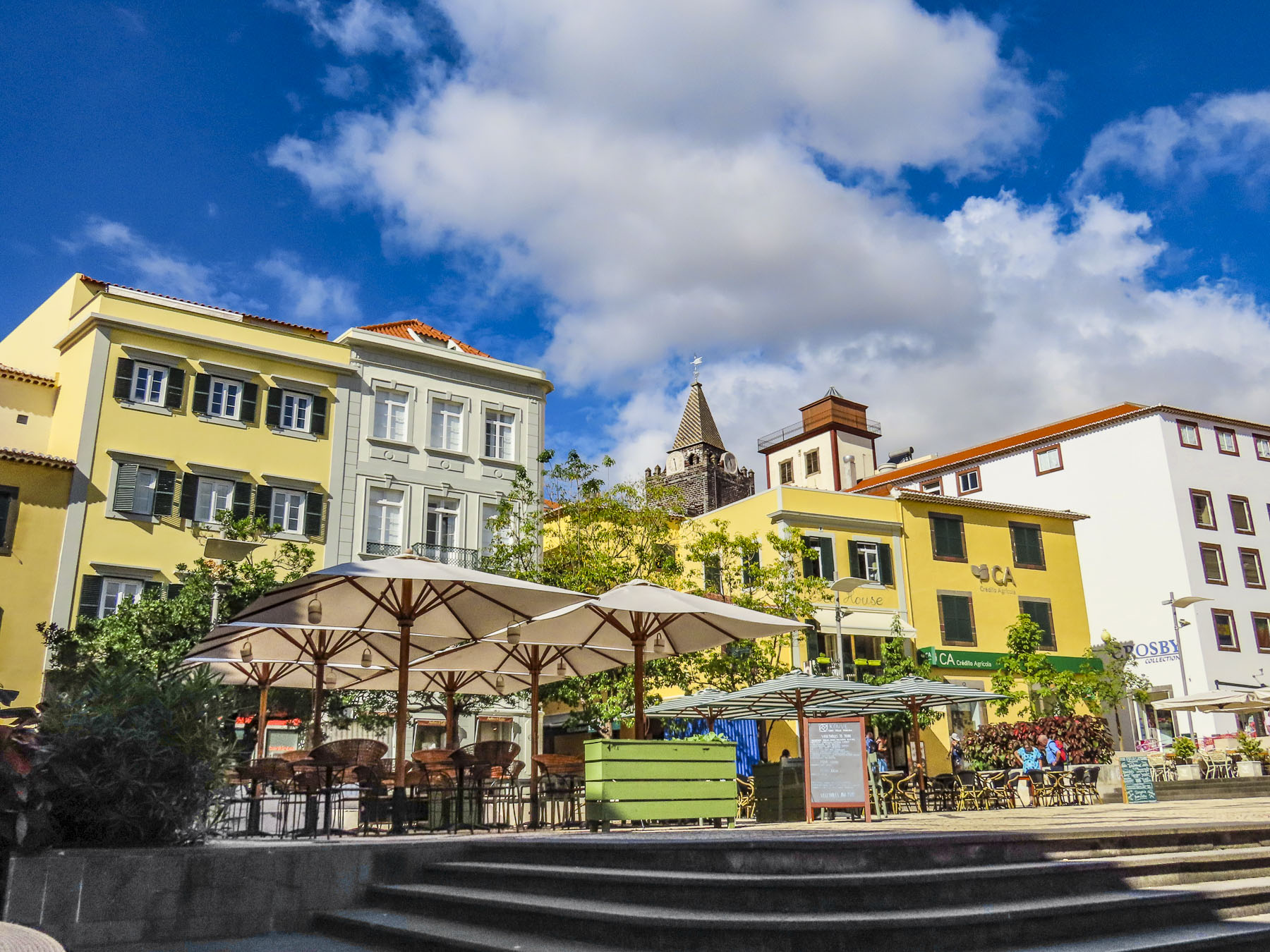
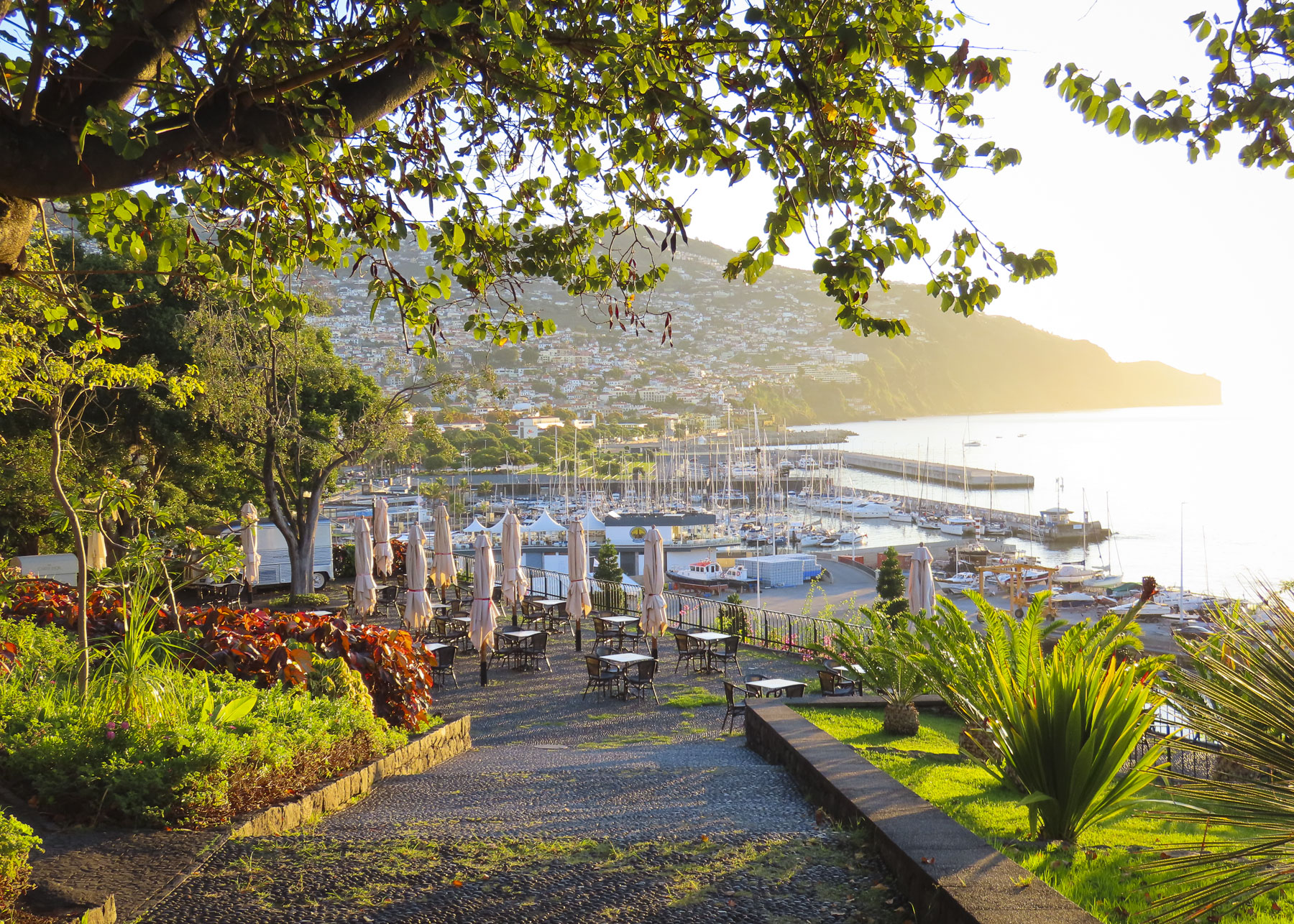
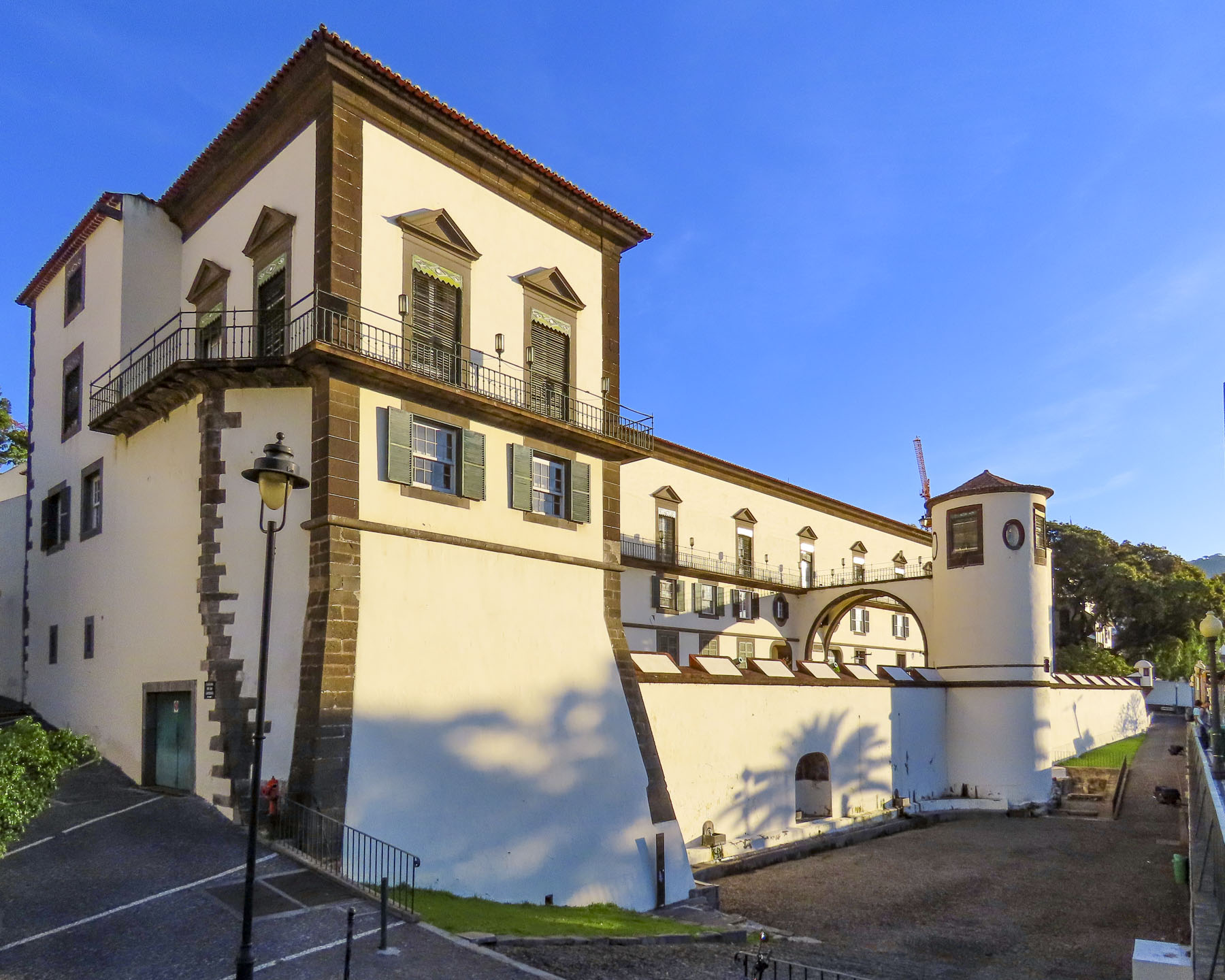
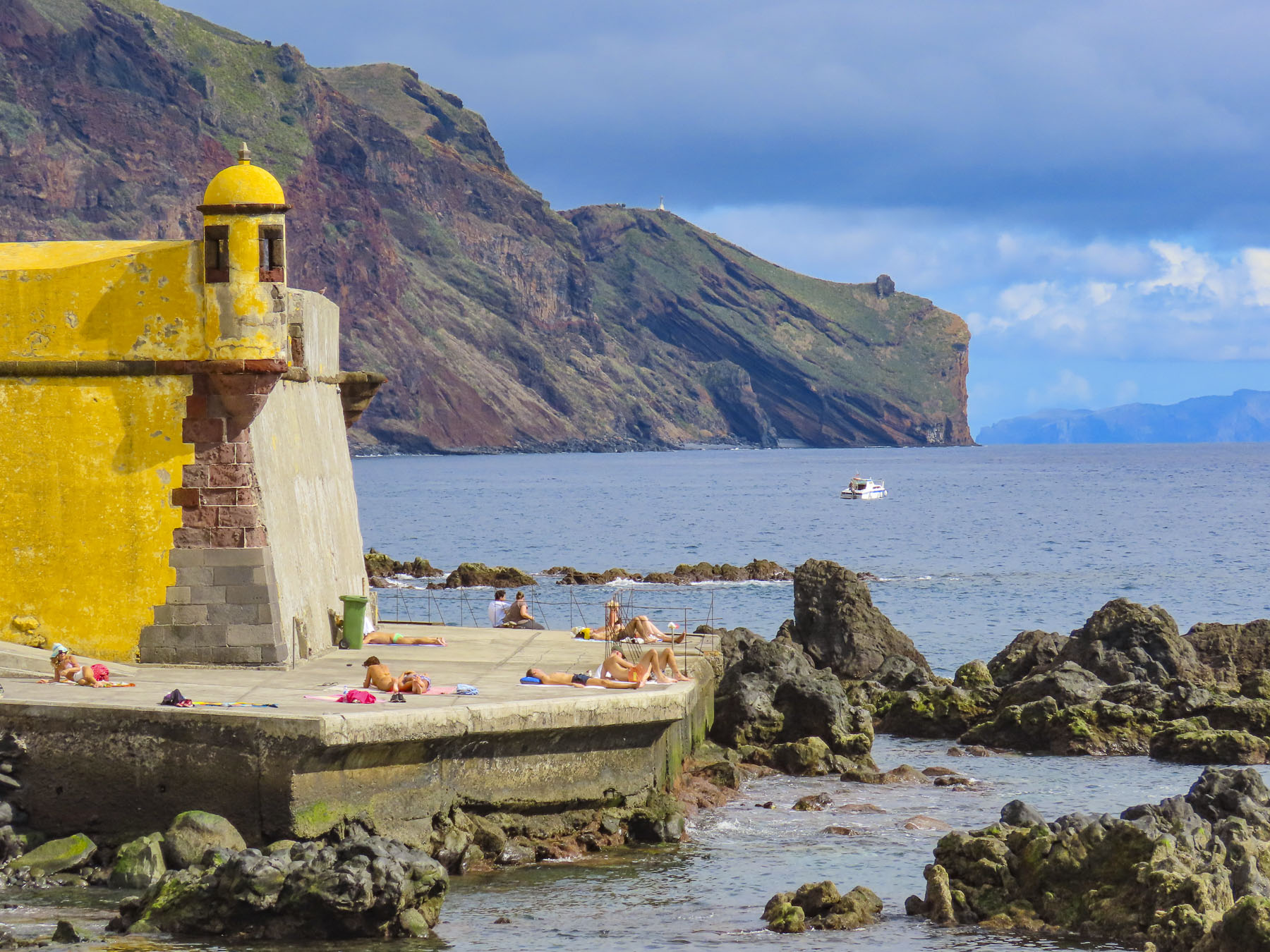
Often, we started our mornings at Forte de São Tiago on Funchal’s seafront to watch the sun rise over the ocean. But turn around and fog could be rolling down the slope of the hills above the city. The weather can be fickle on this mountainous, beautiful island. Though with its numerous microclimates created by the rugged terrain, it would usually be sunny someplace. A fifteen-minute drive in any direction and the weather could be totally different, as was often the case.

While it’s possible to enjoy an entire stay on the sunnier and dryer south side of the island, where Funchal is located, the dramatic mountains and deep valleys of the interior, which stretch the length of the island and the northern coast, are spectacular destinations.

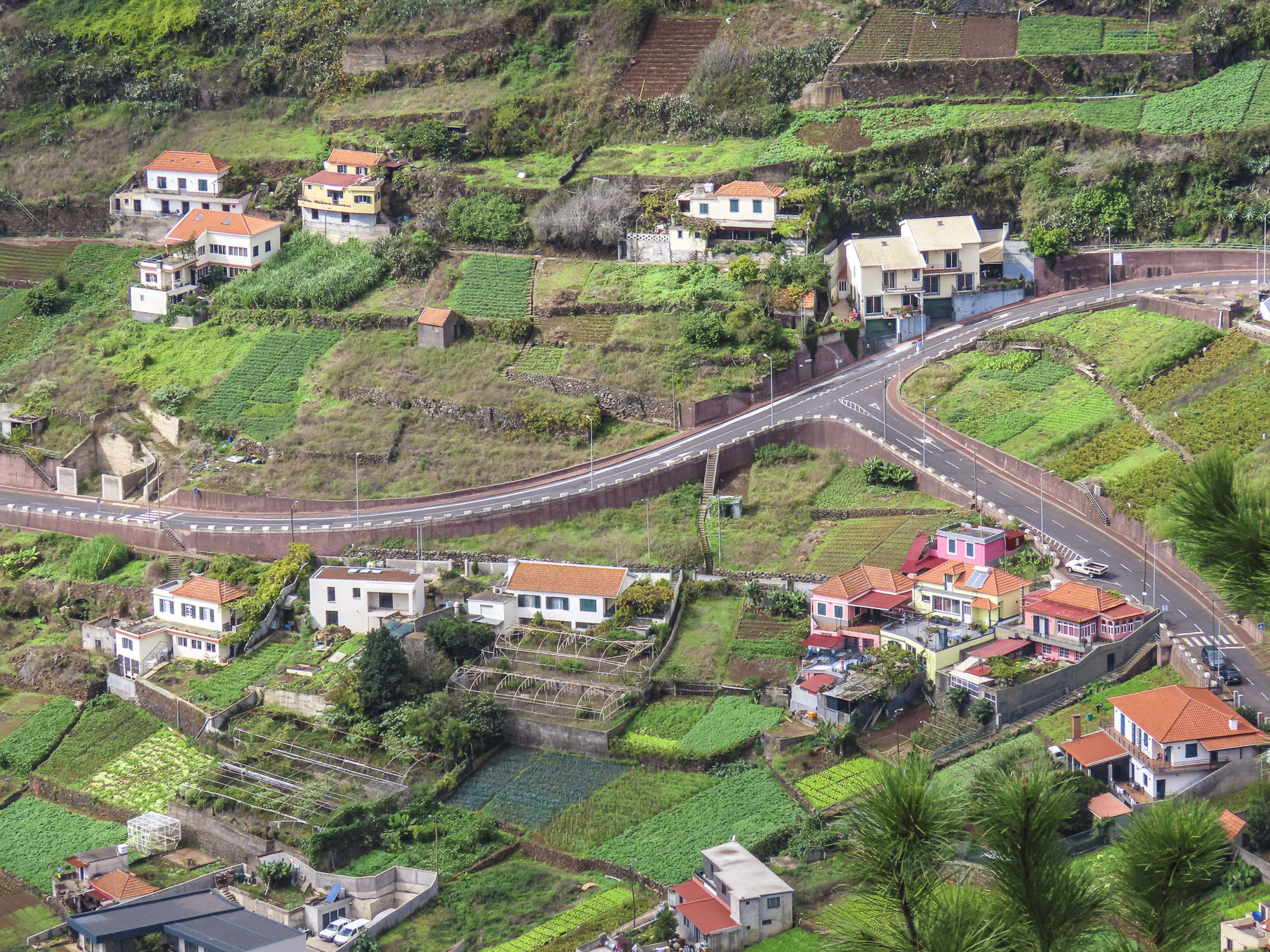
As rugged as Madeira is, man has left his mark on the landscape with terracing and irrigation channels, called levadas. They’ve been an integral part of island life since 1420 when the first settlers were recruited to the uninhabited island, and impossible to avoid. With a landscape covered with virgin forests, experienced lumbermen from the Minho region, farmers and terrace builders from the Douro valley, and fishermen from the Algarve, all seeking better fortunes, were recruited to the island by the promise of land if they worked it for five years.

With a plume of black ash rising from it, Madeira from the sea must have looked like a volcano erupting. Slash and burn fires started to clear the land reportedly lasted for seven years. By the mid-1400s, soil erosion became a problem; largescale slash and burn fires were prohibited and cleared land on the slopes had to be terraced immediately. The felled trees were a valuable export to ship builders in Europe. The enriched soil from the fires was perfect for the introduction of sugar cane, which quickly became the island’s main export. Slaves from west Africa were brought to the island to sweat out this economic expansion.

To support the expanding villages, hamlets, and agricultural terraces, narrow irrigation channels called levadas were arduously cut into the mountains to divert water around the island, from the wet northern side to the dryer southern side. Their water was also used to turn the waterwheels of the first lumber, flour, and sugarcane mills on the island. Close to five-hundred miles of levadas cover this mountainous island that is roughly thirty-four miles long and fourteen miles wide.

Madeira wine replaced sugarcane when Madeira lost market share to the larger sugarcane plantations of Brazil and the Caribbean. Madeira’s a small island with a large agricultural punch. Today it’s well-watered terraces support wine grapes, banana and flower exports to Europe, as well as the cultivation of other exotic fruits like custard apple, passion fruit, tamarillo, avocado, papaya and mango.

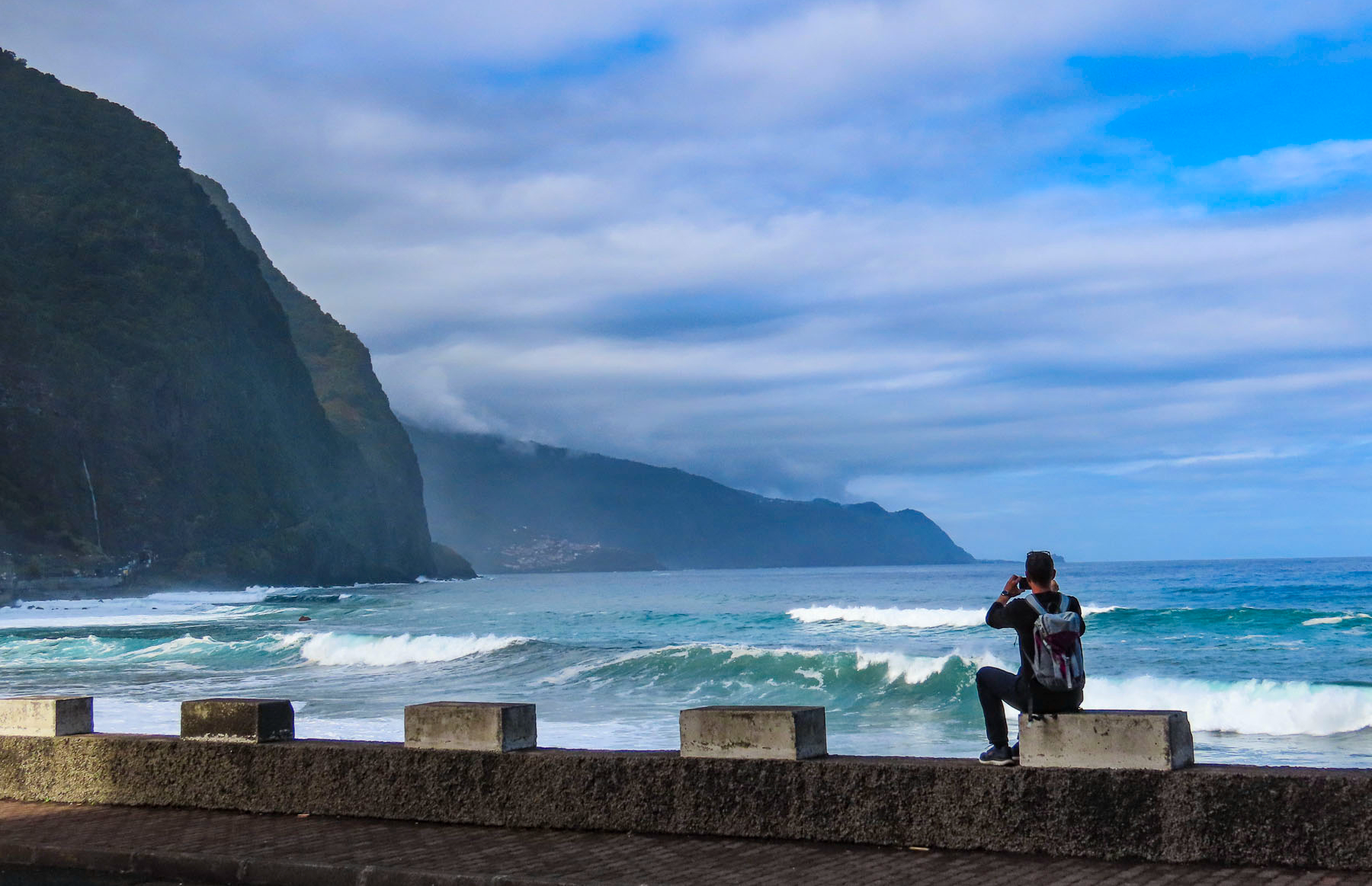
The clouds were slowly being torn apart. Shafts of light dramatically illuminated the valley as we drove north across the island to Sao Vicente. It’s a compact village centered around its church. Nearer the ocean, we explored an ancient lava tube that led down to the sea.

Surf pounded against a rocky beach across the road from a truly amazing bakery, Padaria do Calhau. Something we didn’t expect to find, but if you need an excuse to visit, a coffee and pastry at Padaria do Calhau should suffice. Heading west, just outside of town and before you enter a tunnel, the Cascata Água d’Alto tumbles down next to the road. Unfortunately, there is not any convenient parking here.

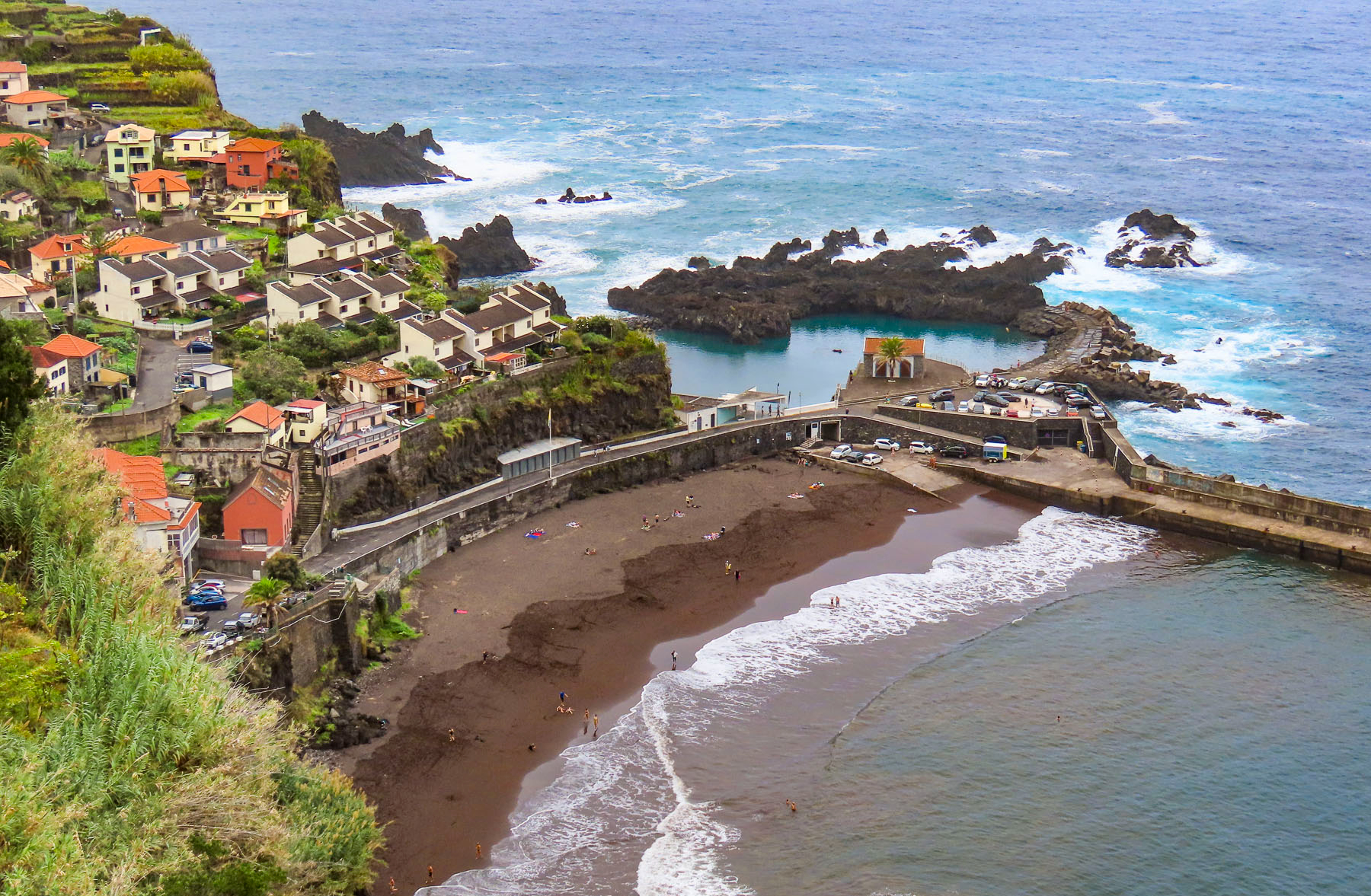
Following the ER101 west towards Porto Moniz there were a number of beautiful waterfalls on the way. First the Córrego da Furna waterfall will be on your left and has a small, unmarked parking area across from it. Then just past the picturesque village of Seixal with its black sand beach, there is the Cascata da Ribeira da Pedra Branca on an old coastal road.

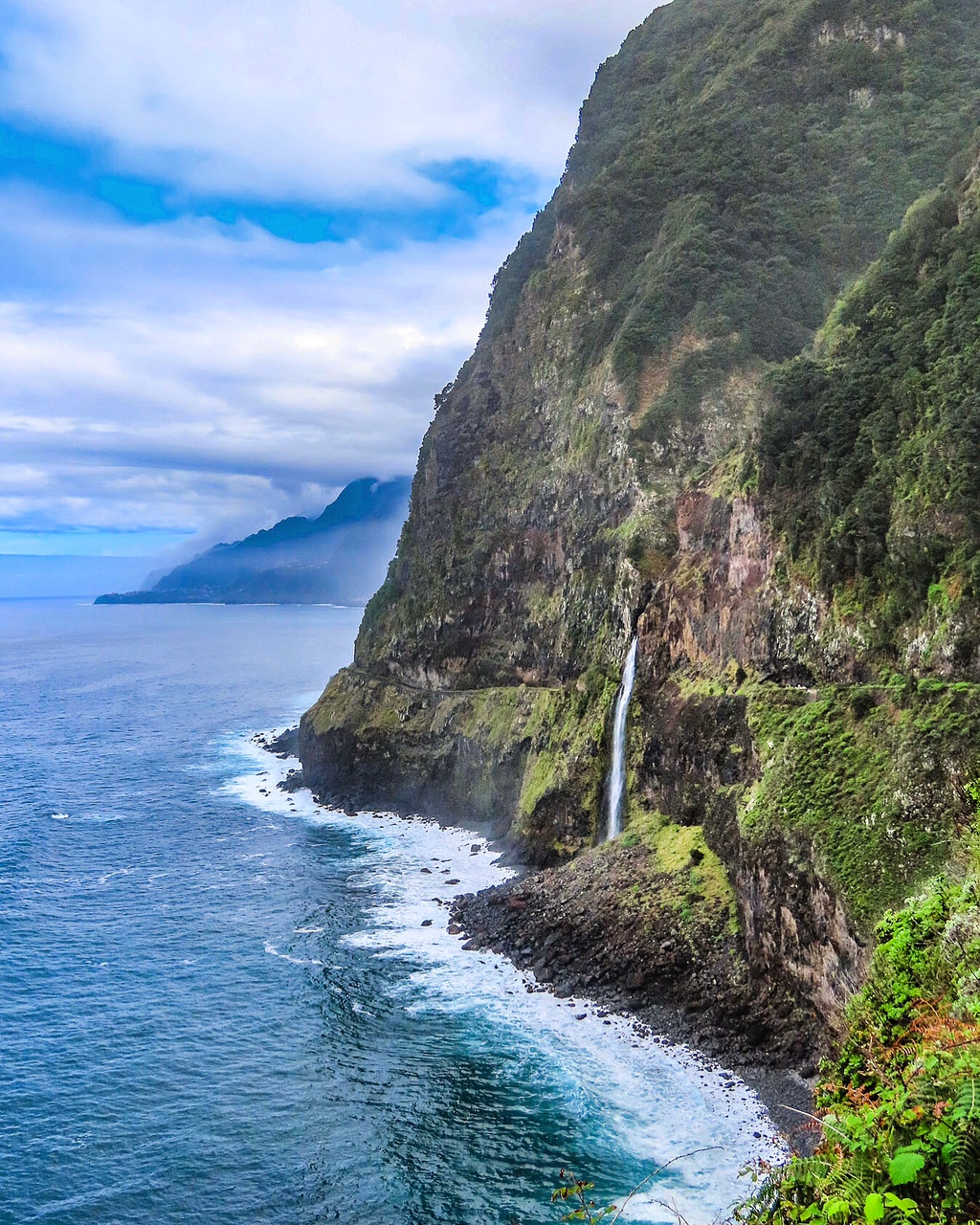
But farther along the most iconic of all of Madeira’s waterfalls is the Véu da Noiva, or bridal veil. It’s a beautiful waterfall that tumbles over a rockslide that permanently closed a section of the old coastal road. It’s a popular stop with plenty of parking, that’s perfect for lingering.

Before Porto Moniz the longest river on Madeira, the Ribeira da Janela, empties into the sea over a rocky, boulder-strewn beach. Tall, eroded sea stacks stand like sentinels amid a crashing surf only a few yards from the shore. We had lost the sun by this time, but the seascape was just as dramatic, nonetheless.

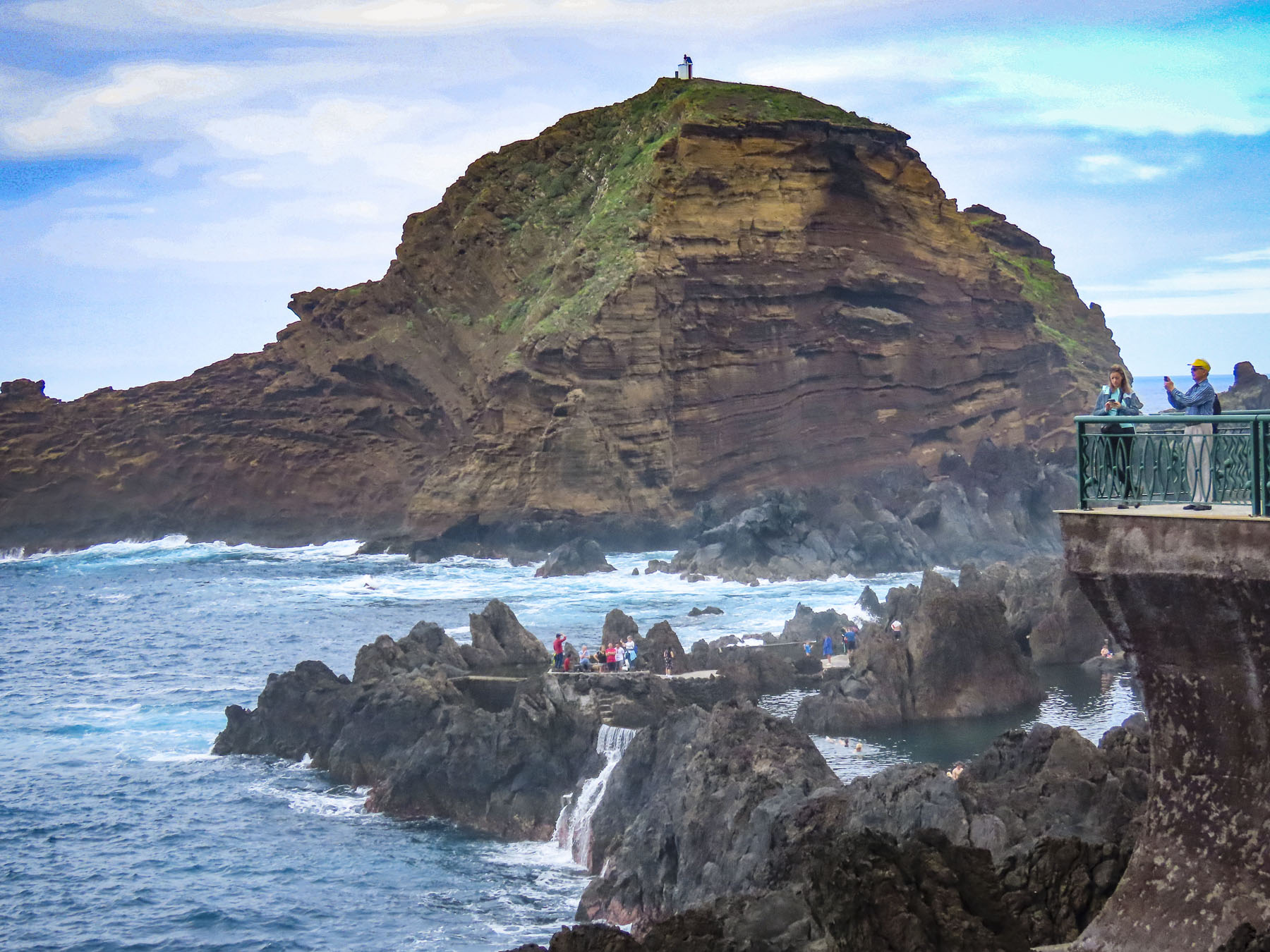
Madeira’s shoreline is very rugged; most of its beaches are pebbly rather than sandy. Then there are spots where over the eons the waves have eroded away the volcanic rock and created natural rock tidal pools along the coast.

Porto Moniz at Madeira’s northwestern tip is a popular destination for swimming safely in these coastal pools, set dramatically against a background of crashing waves. The pools have been enhanced over time, with steps into the water, sidewalks between swimming areas, and some areas being dammed to create deeper pools. There is modest entrance fee of 1.50€ per person, but it’s one of the best bargains on the island.

After a late lunch we retraced our route to Ribeira da Janela and followed a narrow secondary road over a stone bridge and through the small hamlet of pastel-colored homes set against verdant fields, into the cloud-shrouded mountains.

Whether it was cloudy or foggy we’re not sure, but it was perfectly misty as we pulled into the parking area for the Florestal do Fanal. Roughly 37,000 acres of primal laurel forest, and open woodland, the largest in Europe, it covers the mountainside 3500 feet above sea level. A short walk into the woodlands set us in an atmospheric wonderland of huge windblown trees with gnarled twisted trunks and crooked branches, covered with moss and lichens.

Other hikers and wandering cows vanished into and reappeared out of the mist as we wandered through the silent woods. Mysterious, eerie, or benignly moody are apt descriptions for this intriguing laurel forest that is a photographer’s delight.

Driving back to Funchal we crested the ridgeline of the mountains that divides northern Madeira from the south and suddenly we were driving above the clouds.

Till next time, Craig & Donna

Madeira: Pirates, Wine & Flowers or Everywhere There’s a Miradouro!

“Could you recommend any restaurants for lunch?” The young car rental agent seemed surprised, at first, that we asking her opinion. “Where are you staying. What do you like?” “In the center of Funchal. Meat, fish, we enjoy everything,” I replied. “Hah, most places in Funchal will be closed for the mid-afternoon break by the time you reach town, but nearby, though it’s in the opposite direction, there is Restaurante Snack-bar Frente Ao, one of my favorite places.” And so, our Madeira adventure began with a delicious lunch in a no-frills local place. Tasty grilled limpets in a buttery garlic sauce started our meal. A traditional Polvo a Lagareio, baked octopus with potatoes, and scabbardfish served with fried bananas followed. It was scrumptious, heavenly, you get my point, it was really GOOD!  Outside, planes flew close to the water on their final approach to FNC, across a panorama of the coast that stretched all the way to the headland of Ponta de São Lourenço.

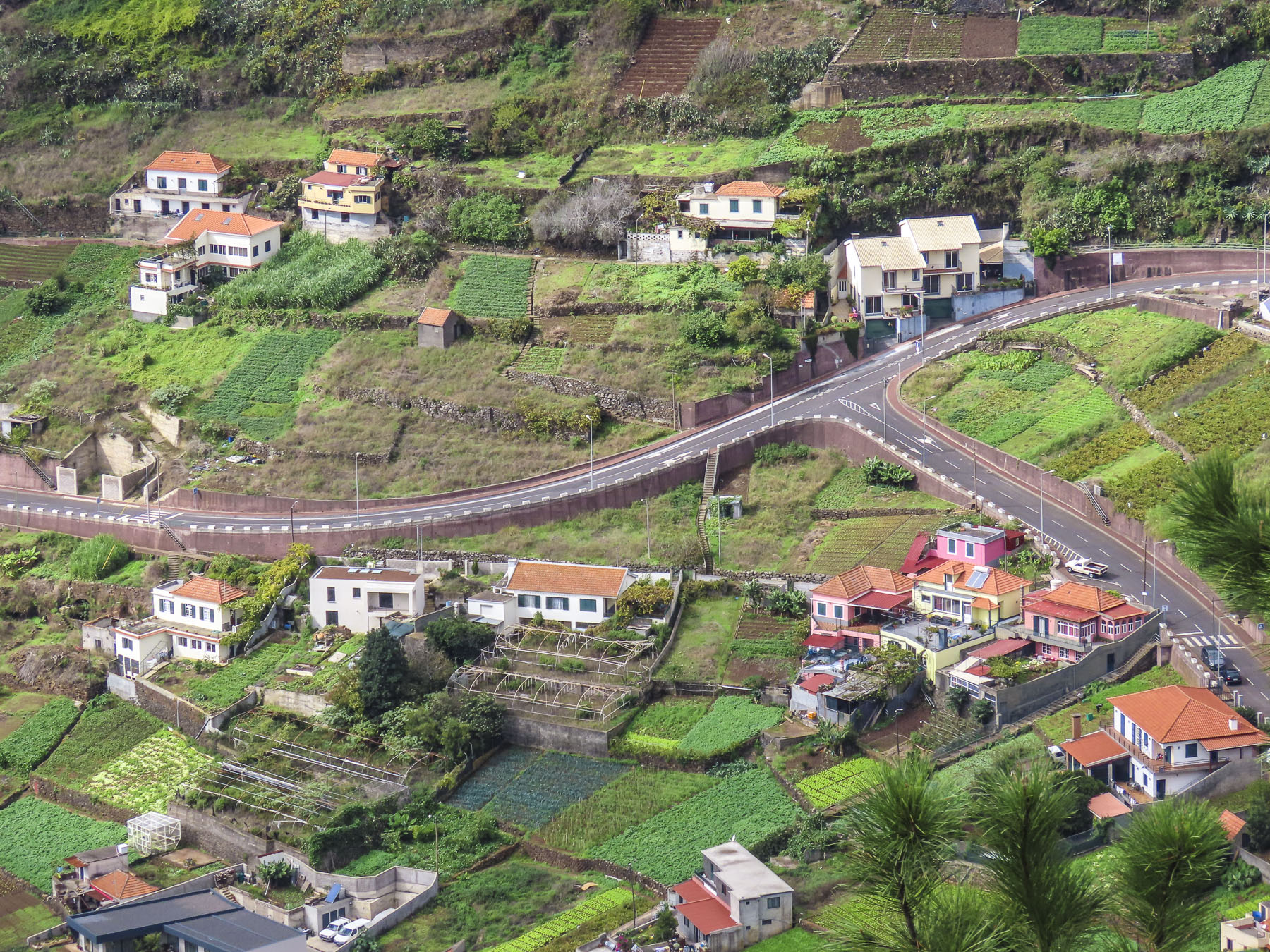
Our first short drive to the restaurant revealed a verdant, lush tropical island bursting with flowering plants, and mountainous with steep ravines that descended into the ocean, like the radial arms of a spider’s web, from a central ridge that runs the length of the island. Colorfully painted homes with red tiled roofs dotted the countryside like swathes of pigment in an impressionist painting. There are few direct, only circuitous routes, where even the bridges and tunnels, some almost 2 miles long, curve to follow the contour of the land. Banana groves large and small dotted every plot of land between the homes that covered the hillsides. Three vintage cars zoomed by.

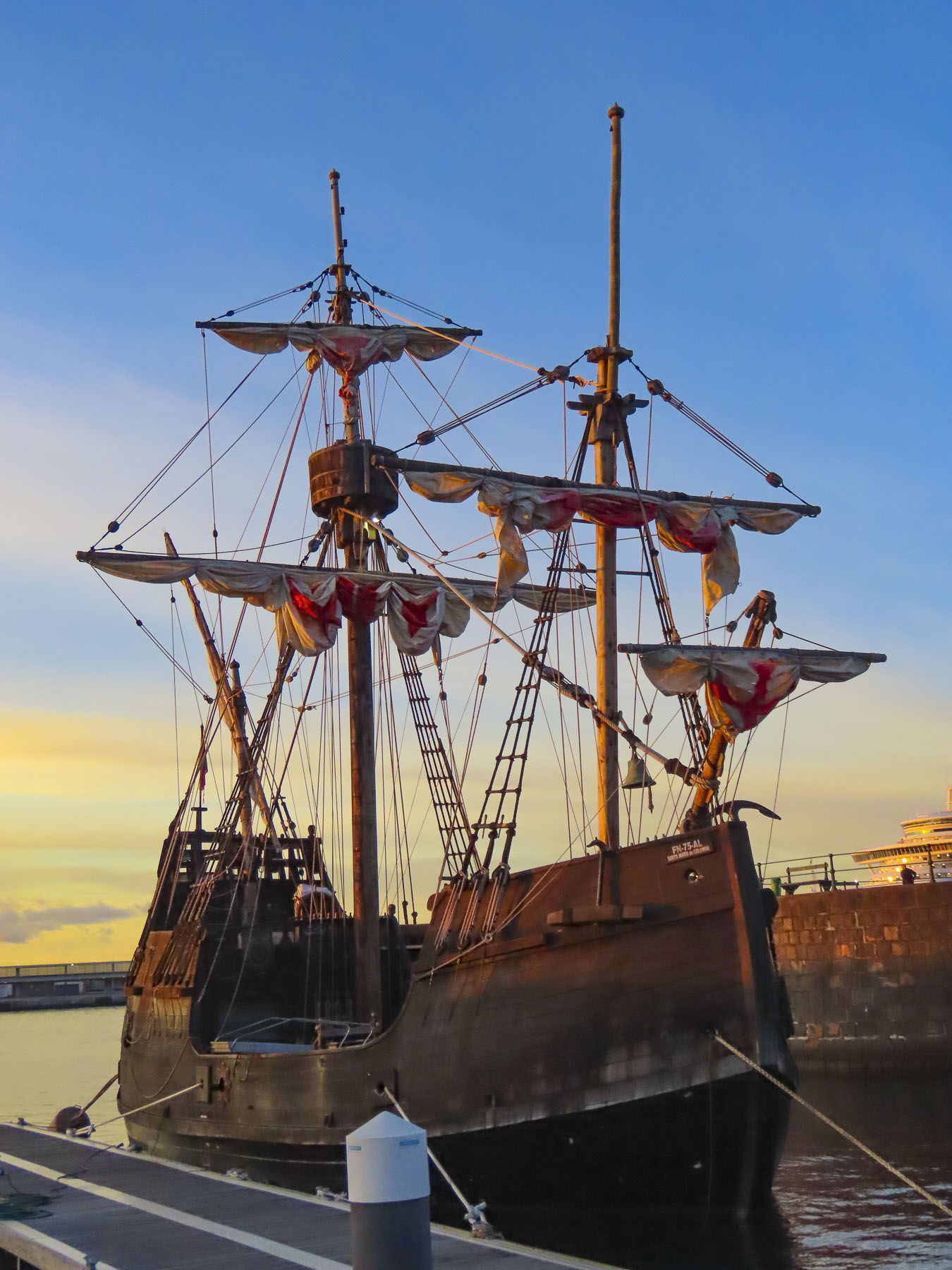
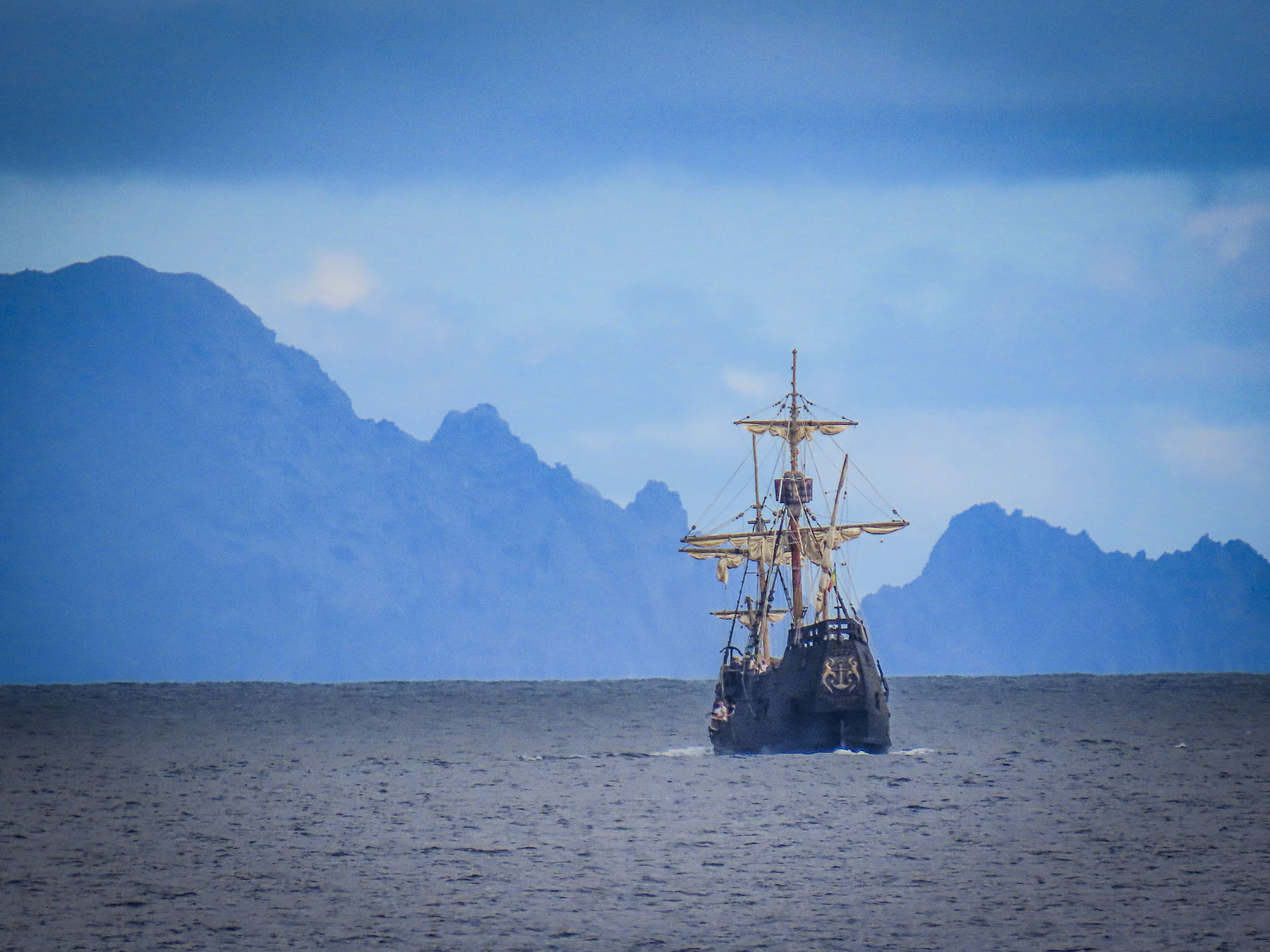
Portuguese sailors blown 300 miles off course by a violent storm as they explored the west coast of Africa in 1418 discovered a small uninhabited island, with a sheltered anchorage, where they rode out the storm. In thanks they christened the island Porto Santo, Holy Harbor. They noted in a ship’s log that on the western horizon a “dark monstrous shape loomed.” A year later they returned. Wood, madeira, from its virgin forests was the island’s first exports. The trees were so tall and straight that they allowed the Portuguese to design larger, sturdier ships, which Vasco da Gama’s fleet used to sail to India in 1497.

Felling trees for export opened the hillsides for extensive terracing of the lower slopes in the mid-1500s, when sugar cane became the prized export. Later grapes were introduced, and Madeira wine was born. Both crops thrived with irrigation provided by an extensive series of arduously cut, narrow channels called levadas, which traverse the rugged terrain and divert water from mountain streams to the agricultural terraces across the island. Their water was also used to turn the waterwheels of the first mills on the island. Close to five-hundred miles of levadas cover this mountainous island that is roughly thirty-four miles long and fourteen miles wide.

With Madeira wine came the English, who believed that fortified wines improved with age on long ocean voyages. Sailing to their various colonies in the Americas, English naval and merchant ships would sail south from England to catch the trade winds blowing west off Morocco. Fortuitously, Madeira was a well-placed port of call to resupply. With full sails and barrels of Madeira wine in the ship’s hold, they’d reach the Caribbean in a month’s time. Farther on, in their New England colonies, members of the Continental Congress toasted the signing of the Declaration of Independence in 1776 with Madeira wine. While being notoriously at odds with Spain for centuries, the Brits and the Portuguese have the world’s oldest alliance which stems from the Treaty of Windsor in 1386 and was fortified, port glasses raised, with the marriage of King John I of Portugal to a daughter of John of Gaunt, Philippa of Lancaster. This treaty of mutual support has lasted over 630 years. Cheers!

Captain Cook and Charles Darwin both visited at the beginning of their explorations. Napoleon in 1815 stopped for a final supply of Madeira wine while enroute to his permanent exile on St Helena. With the advent of steamships, Madeira became a destination for the well to do of Europe. Before the quay was constructed, historical photos show merchants rowing long boats laden with supplies out to ships anchored in the harbor, and returning with visitors to disembark on Funchal’s rocky beach. Doctors recommended its good fresh air for patients convalescing from tuberculosis. Winston Churchill visited in 1950, painted seascapes and stayed at Reid’s Palace, a Madeira institution since 1891 that still serves afternoon high tea.  He left the island with a reputation that it was for stogey old folks, that remained for decades.

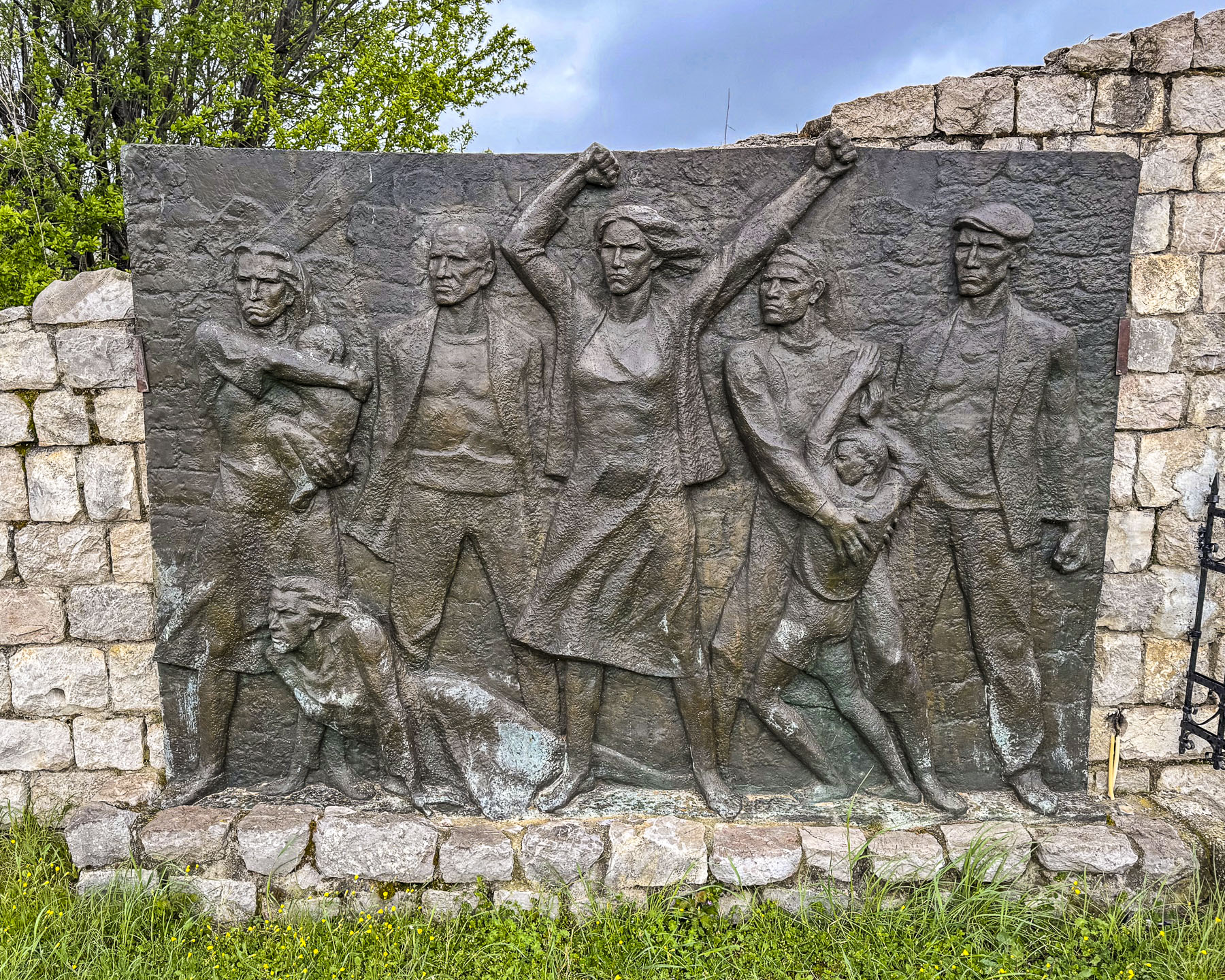
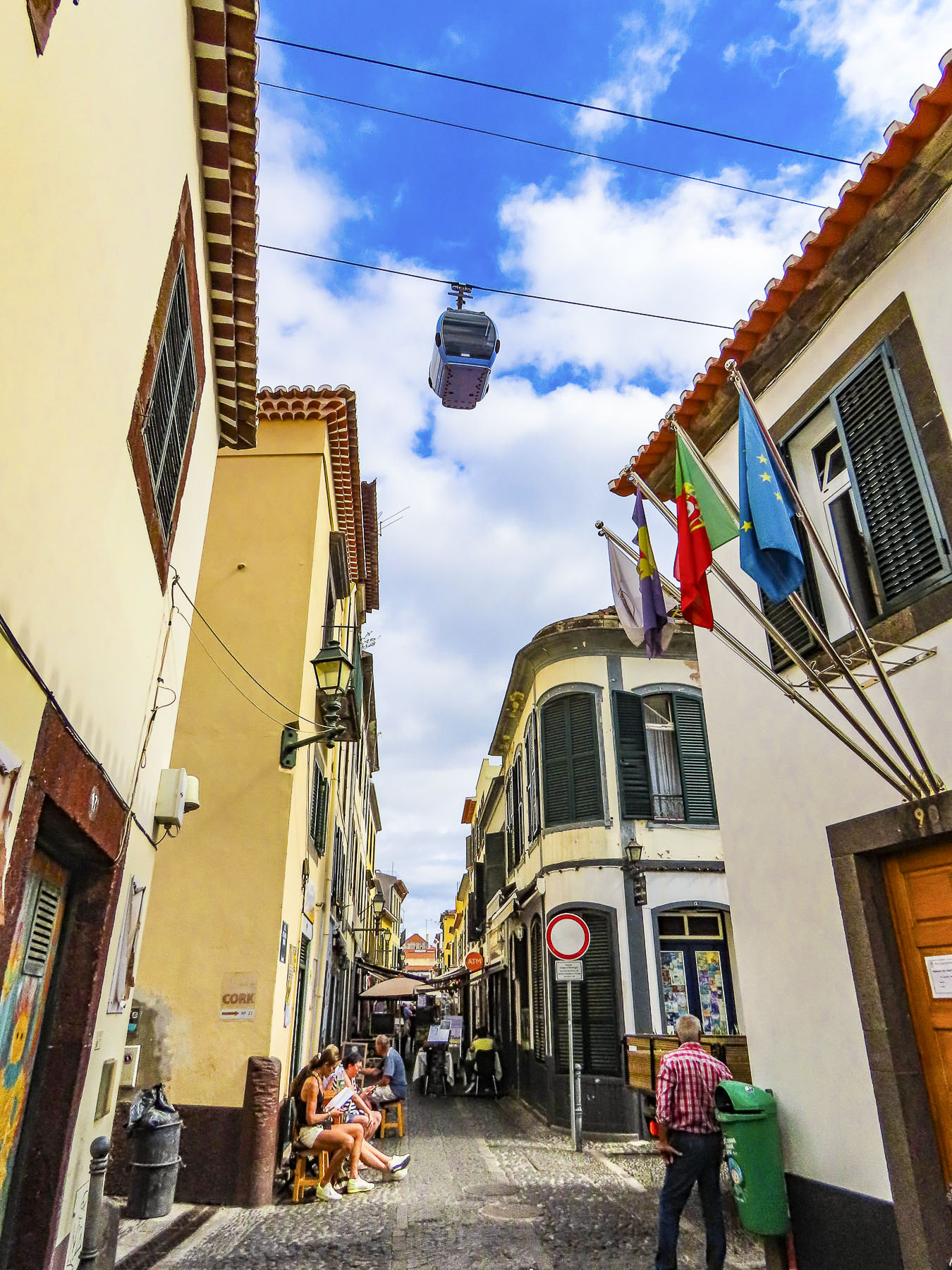
But with Portugal joining the European Union in 1986, it enabled a massive investment in infrastructure that united all parts of the island that were previously inaccessible by overland routes. The small island now has over 100 tunnels and bridges, along with seven cable car routes scattered around the island. Across from the cruise terminal at the base of Santa Catarina Park, there is a relief statue set into a granite embankment that commemorates the men who toiled to build the island’s tunnels and terraces.

Flat land is a rarity on Madeira, as is landfill, the lack of which required the airport runway extension in 2000 to be uniquely expanded over the ocean on 180 concrete columns, each of which are 230-foot-tall, for a total length of 9,000 feet. It felt like we were going to land on an aircraft carrier. Fifty-eight cities in twenty-one countries now have direct flights to the island. Cruises to the island continue to be popular and in 2022 Madeira was voted by the World Cruise Awards the Best Cruise Destination in Europe. Madeira has now reinvented itself into a destination packed with outdoor activities that include sailing, whale watching, surfing, paragliding, scuba diving, and mountain hikes for all levels of fitness.

Our hotel, São Francisco Accommodation, was a modest three-star hotel centrally located in Funchal’s historic old town. The big pluses for us were its elevator, underground parking lot across the street, and its location. The most interesting parts of Madeira’s capital city were within walking distance of our lodging. We were set for the week!  We chose to stay in Funchal because it is the island’s largest city, with enough things to do locally so we wouldn’t feel the need to go elsewhere. The car was for day trips to explore the rest of the island.

One afternoon we were drawn down the street by the sound of classical music flowing from the park around the corner from the hotel. Folks casually filled a small amphitheater in the midst of a manicured garden. Next to the bandstand a small kiosk offered a table.  We ordered drinks and enjoyed the afternoon entertainment. At the bottom of the park people mingled around a line of classic cars parked along the street.

Delightfully, Madeirans out of necessity have inadvertently created a sub-culture of serious vintage car enthusiasts. Importing cars to the island has always been very expensive. Consequently, automobiles have become family heirlooms. Many of them are passionately maintained or restored and passed down through the generations. So common is the practice that over 800 vintage cars are registered on this small island. Their enthusiasm is celebrated each year with the Madeira Classic Car Revival, a three day event that culminates with a race along the Praça do Povo waterfront every May.

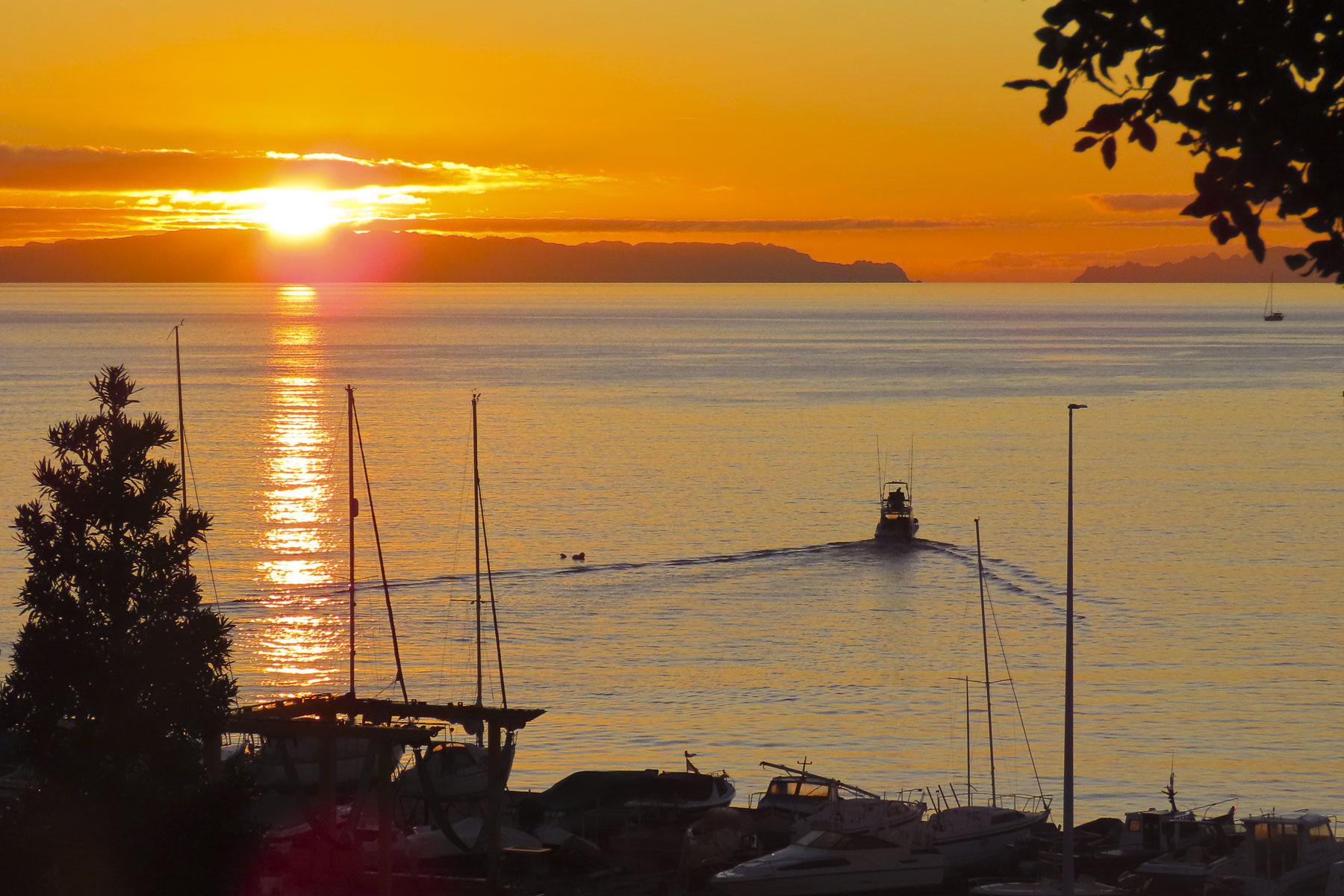
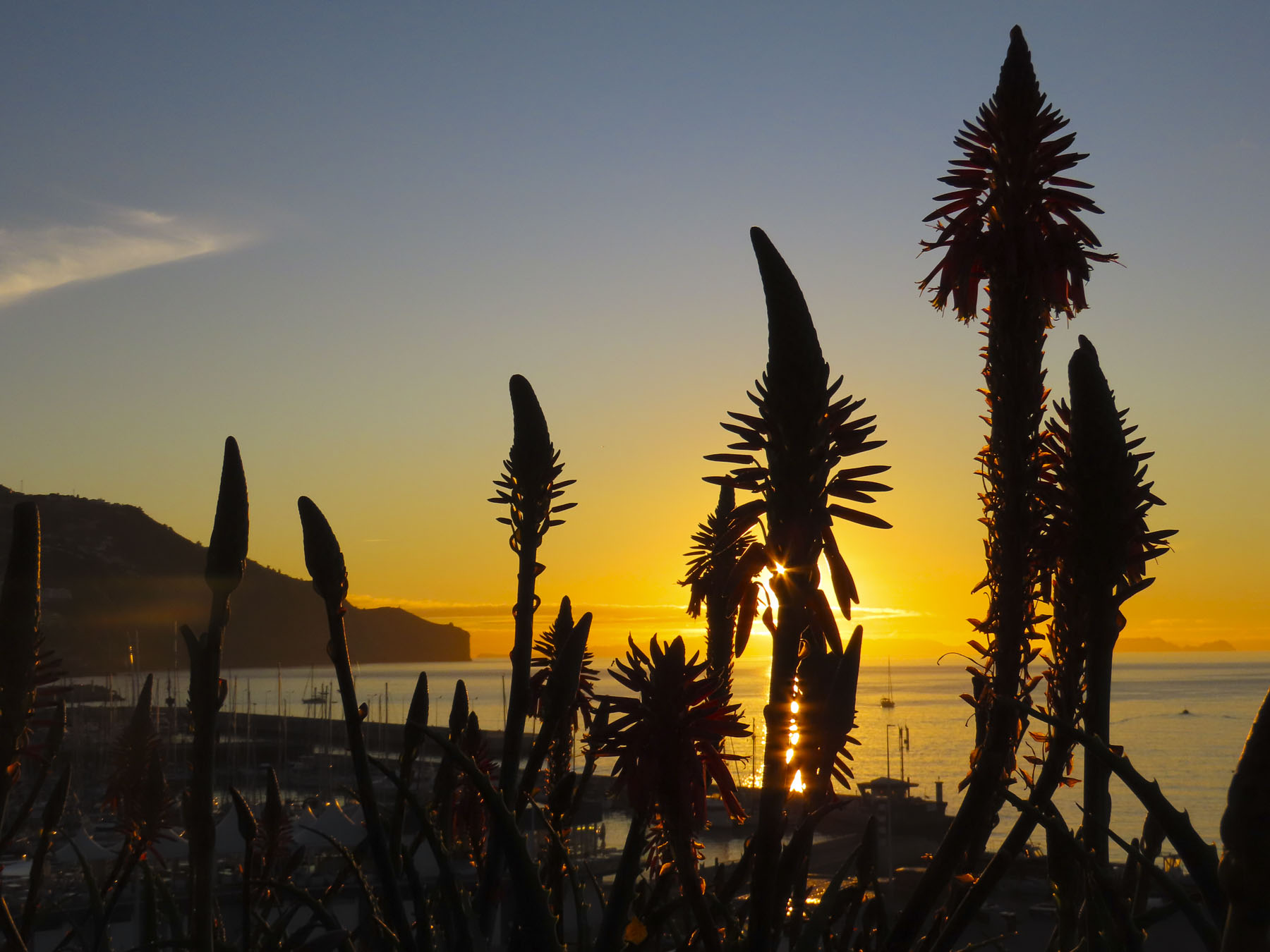
Several mornings we were up before dawn to walk along the waterfront in search of the ultimate sunrise shots with the unpopulated islands Selvagens and Desertas silhouetted on the horizon. We were not disappointed.

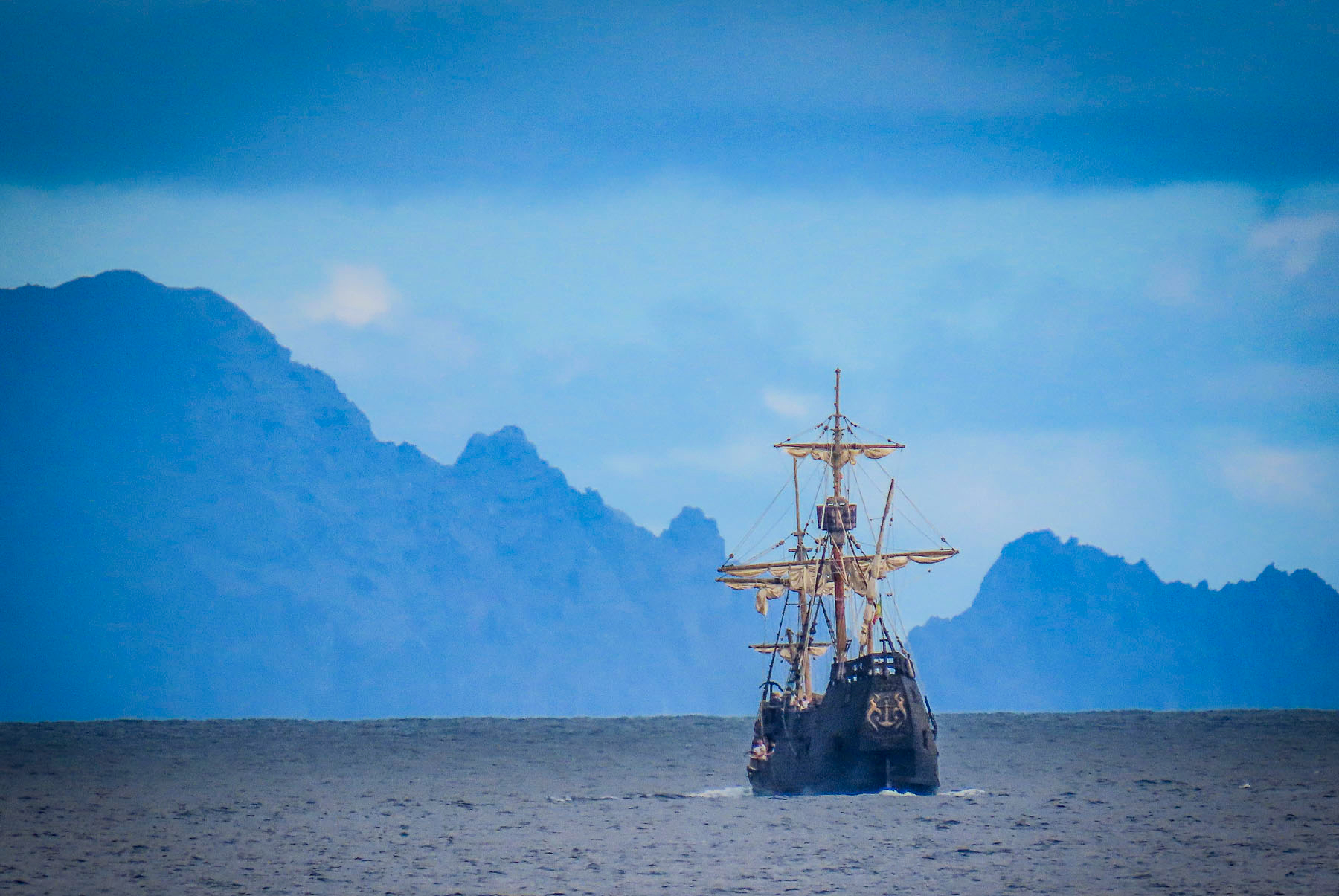
There were numerous interesting photo opportunities from the marina to Forte de São Tiago, which was built in the early 1600s in response to two brutal attacks by pirates. French pirate Bertrand de Montluc assaulted the town in 1566 with three ships. Mayhem ensued as his cut-throats   rampaged and plundered the streets for fifteen days. Then Barbary pirates with eight ships ransacked Funchal in 1617 and took 1200 people back to Algiers as slaves. Now, under the ramparts of the fort, pensioners enjoyed ritualistic morning swims along a peaceful, pebbly Praia de São Tiago.

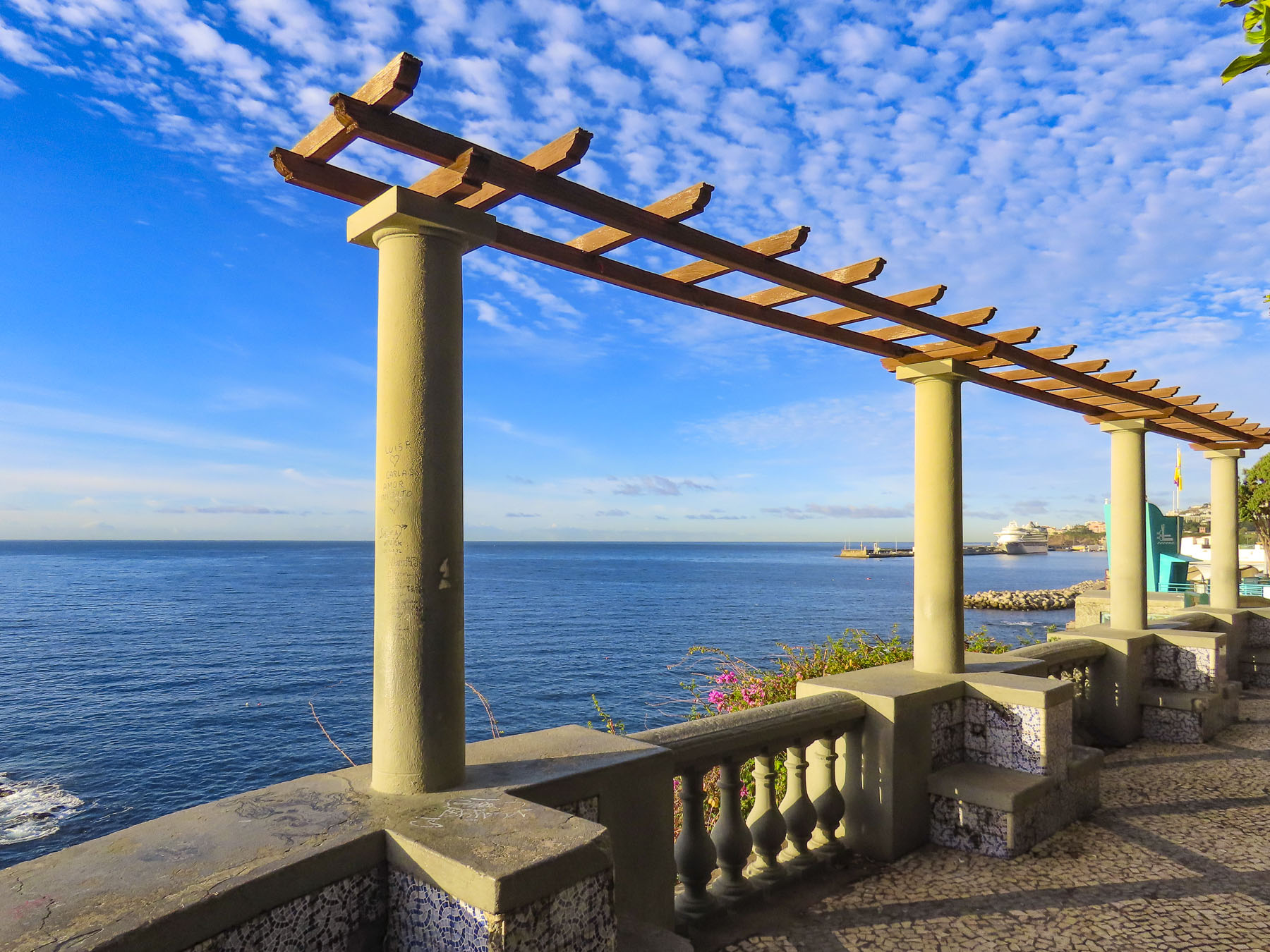
Around the corner from the fortress at the Miradouro do Socorro, a pretty arbor frames the view of the sea and the Complexo Balnear da Barreirinha, a waterfront day resort where you can rent a lounger and swim in their pool or the sea. Across the street the Igreja de Santa Maria Maior, a small parish church, serenely graces the neighborhood.

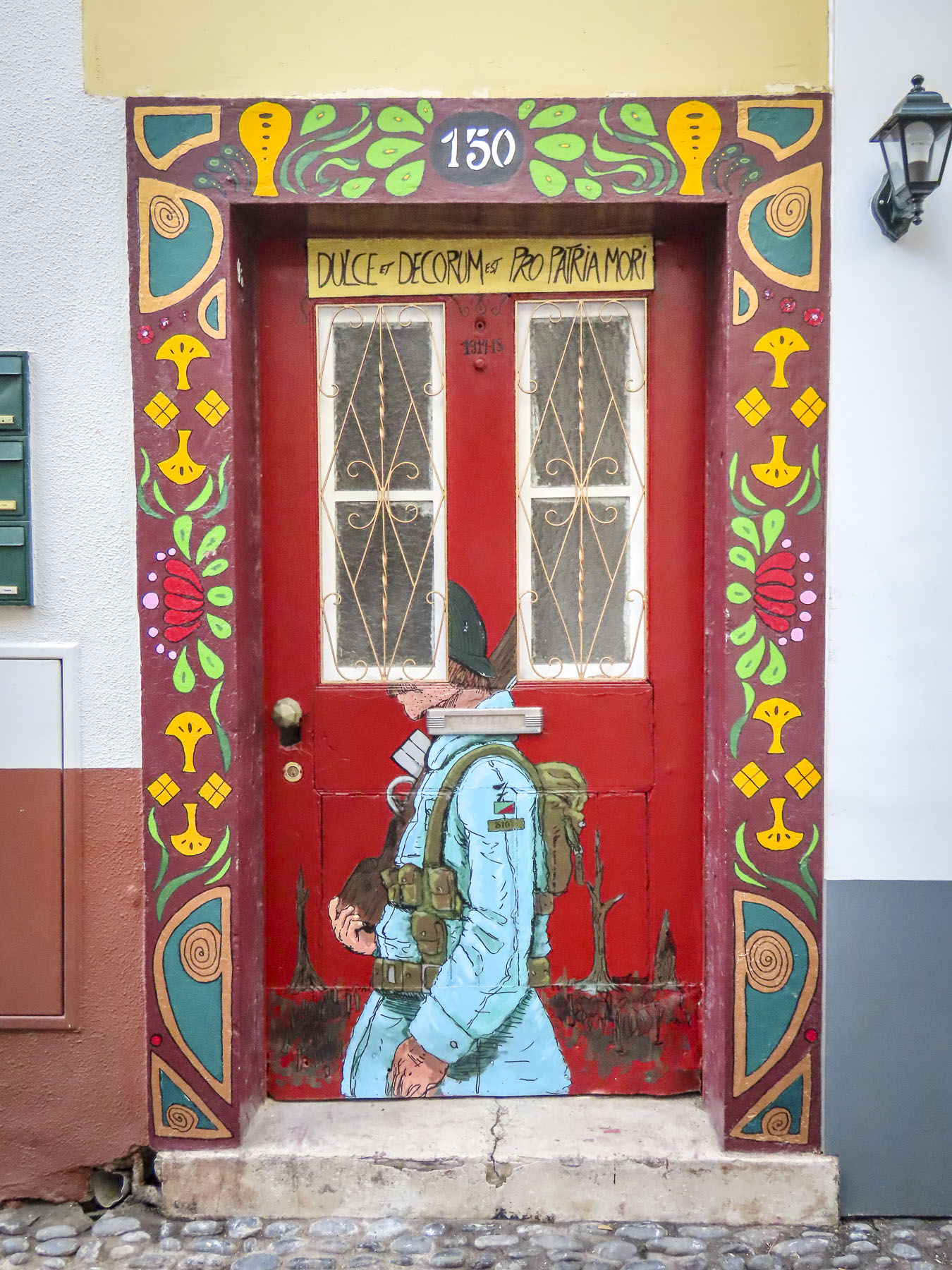
Heading back into town we walked along the Rua de Santa Maria, a narrow alley known for the uniquely painted doors on homes, galleries and restaurants that line the street.  To see many of the doors you have to visit the street early before the shops open them for the business day.

In front of the Mercado dos Lavradores, the town’s old central market, there is a bronze statue depicting a merchant driving a team of oxen pulling a flat wooden pallet loaded with barrels of wine. Versions of these toboggans fitted with wicker chairs were called Carro de Cesto. Until roads were introduced in 1904 to accommodate the first cars brought to the island, this was the preferred downhill method of public transport, as a wheeled cart might run away uncontrollably if there was a mishap.

Today, at the steps before the Nossa Senhora do Monte Church, toboggans filled with tourists are pushed downhill by two men, Carreiros, donning wicker hats and traditional white outfits. Hold on, the steep serpentine course is over a mile long and the sleds can go almost 25 miles an hour! There are no brakes, only the special, rubber-soled shoes the carreiros wear, and stopping is accomplished by dragging their feet along the road to slow the toboggan. It’s a popular activity easily combined with a cable car ride from the Funchal waterfront to the Monte Palace Tropical Garden.

Though when we visited we chose to use our car instead of taking the cable car to Monte. We didn’t realize when we started but the google map route we followed to the garden was up one of Funchal’s steepest streets. The Caminho de Ferro takes its name from the old funicular train tracks upon which the road was paved. It runs for two miles straight up a hill with a twenty-five-degree slope and gains nearly 2000ft in altitude. I was doing fine driving uphill in second gear until we encountered a semi-blind cross street that did not have a stop sign, only a large traffic mirror. This was something I hadn’t encountered before, so I came to a complete stop. The incline of the road was very steep at this point, and I had difficulty getting the car moving again without rolling back too far. Ultimately after several frustrating minutes I rolled the car back perpendicularly to the road, got the car in gear and powered slowly through the intersection. Fortunately, there is very little car traffic on the side roads in Funchal and we lucked out in finding a parking space near the garden. The return route into the city center, down streets so narrow it required pulling the mirrors in, was equally challenging.

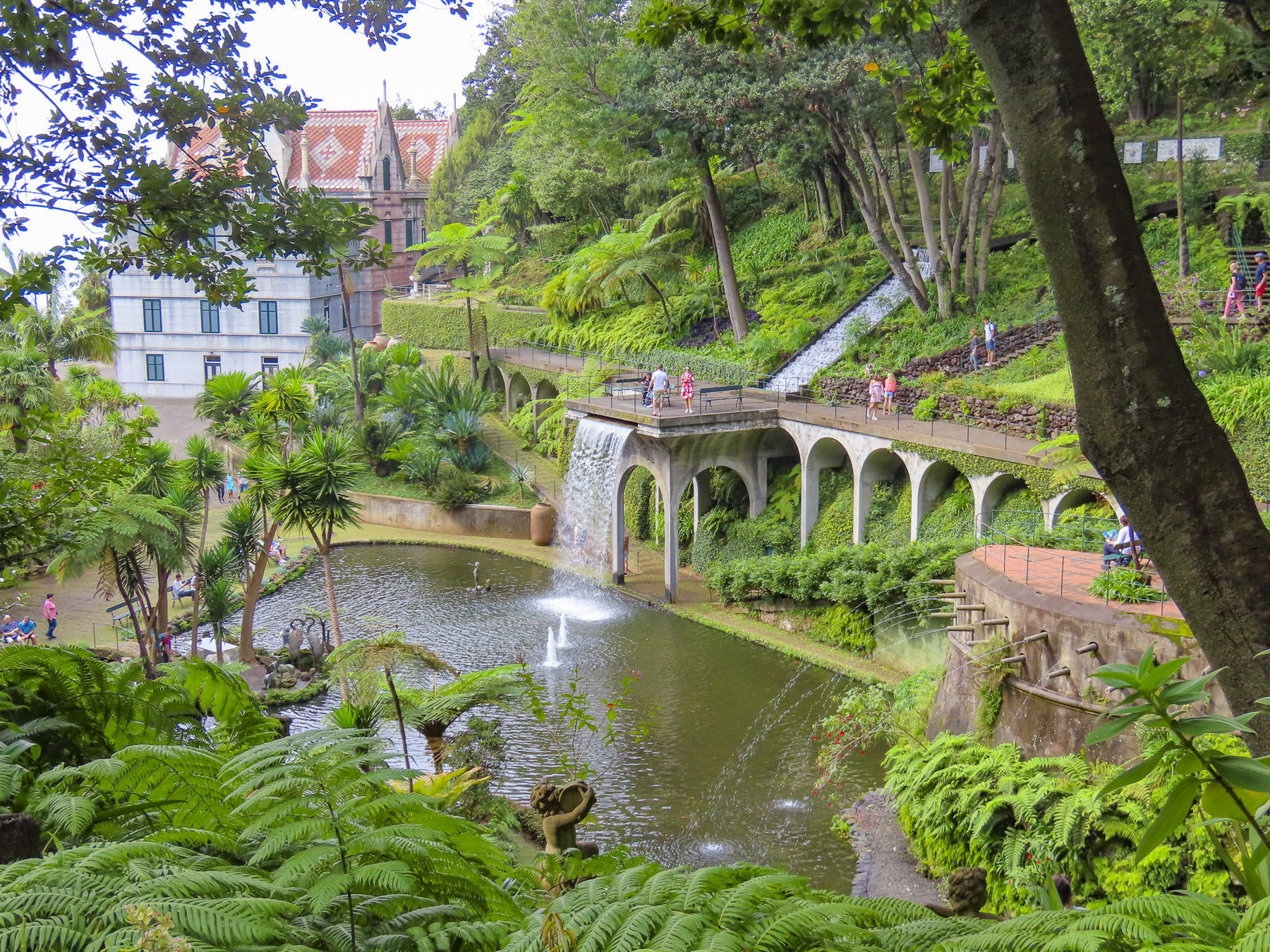
In the 1700s the hillside that the garden covers was a private estate with a small chateau. Later it functioned as a grand luxury hotel. In 1987 the entrepreneur Jose Manuel Rodrigues Berardo acquired it and transformed it into a serene Japanese themed botanical garden and opened it to the public. It’s a beautiful tranquil landscape, but it’s best to arrive early or late to avoid a crowd. There is also collection of contemporary Zimbabwean stone sculptures from the 1960s and a cave created to display a spectacular mineral collection gathered from around the world.

Slightly smaller and lower on the slope the Jardim Botânico da Madeira is also worth a visit to experience its stunning formal garden with a view of the Funchal coastline, and paths that weave through various plantings. There is also a nice cafe with a terrace that has one of the best views of Funchal.

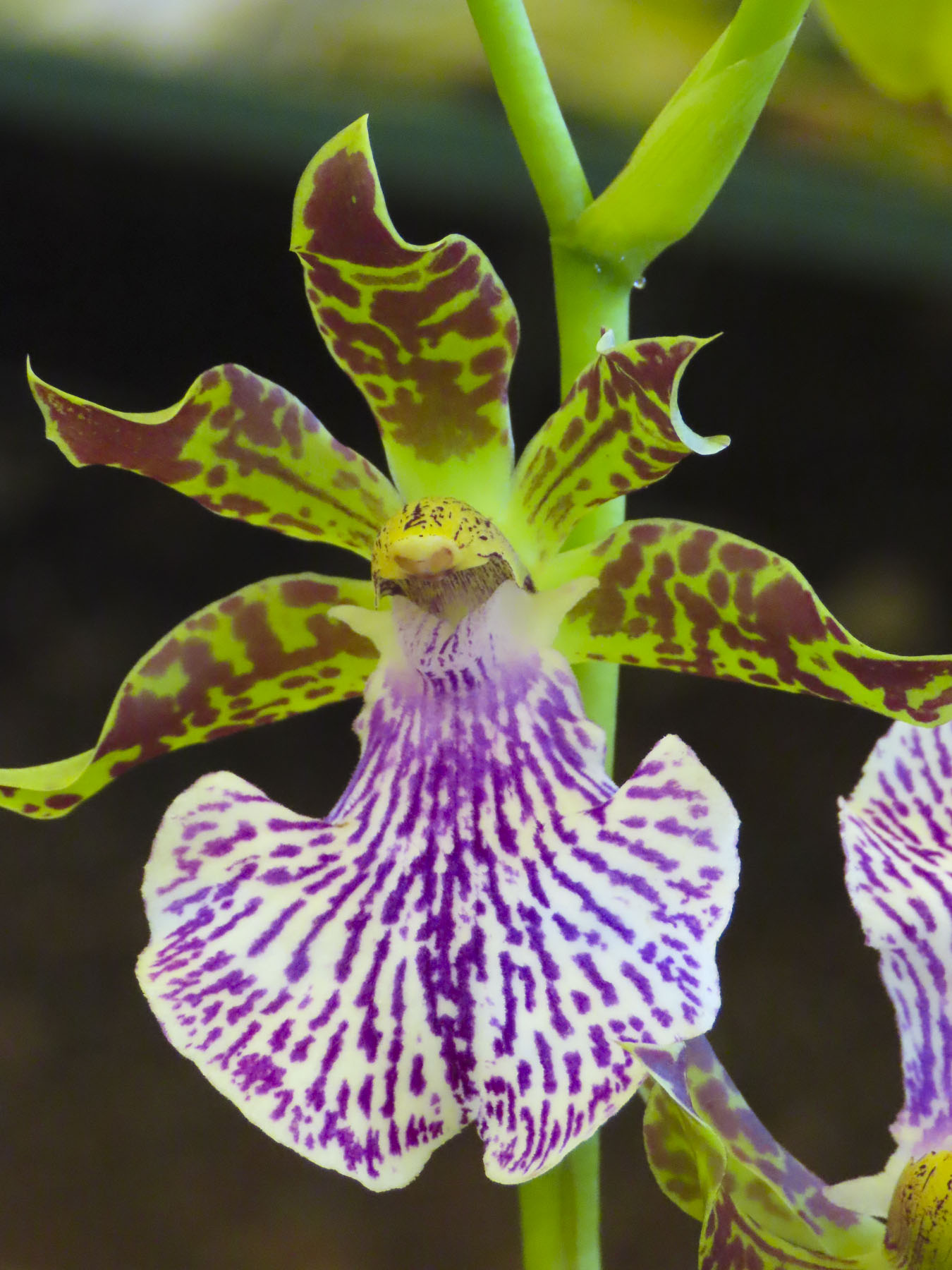
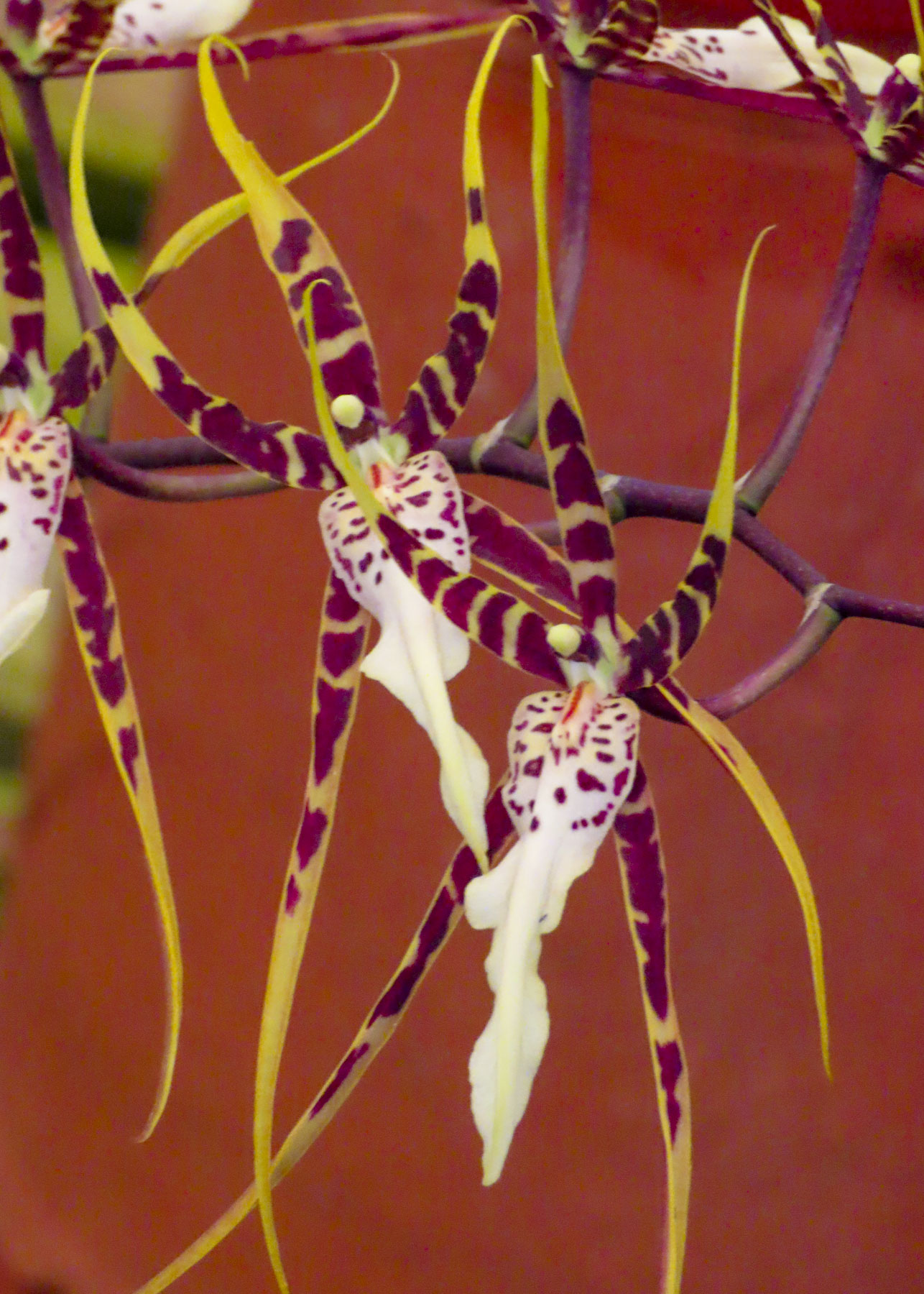
However, if you enjoy orchids the place to head is the Quinta da Boa Vista. It’s a quirky plant nursery that has been operated by several generations of the Garton family and has hundreds of different orchids. As we entered the first greenhouse, an eager attendant waved us over and encouraged us to smell a delicate plant she was holding. An Oncidium Sharry Baby, it had a delicate chocolate aroma. It was delightful. With two stunning botanical gardens in Funchal and smaller ones seeded around the island, Madeira justly earns its nickname as “The Floating Garden of the Atlantic.”

Earlier we had spotted the hulking edifice of the Fortaleza de São João Baptista do Pico. A 17th century stronghold, it was built high on a hill, 350 feet above Funchal’s waterfront to deter pirate attacks. It’s a wonderful destination within town, with a nice children’s playground and café outside the fortress battlements. The view out over the city and ocean was spectacular.

Other mornings we explored closer to home heading to the Igreja de São João Evangelista, on Funchal’s central plaza. Built by Jesuits in 1629, it is known for the fusion of its Mannerist exterior with a lavish Baroque interior.

We climbed to the church’s roof for an exceptional view of the old town. Funchal’s City Hall is adjacent to the church and has a stately courtyard centered around a unique fountain depicting Leda and the Swan. An odd choice we thought for decorating a municipal building.

But Funchal is very supportive of public art and we passed many interesting sculptures along our walks. The historic old town with its cobbled lanes lined with centuries old buildings and churches was a delight to explore.

One morning we photographed small boats leaving the port at sunrise from Parque de Santa Catarina, which commands a bluff across from the cruise terminal.

From the park we walked along Rua Carvalho Araujo up into São Martinho, an upscale area anchored by Reid’s Palace. Occasionally we popped into the hotels that faced the water to check out their views.

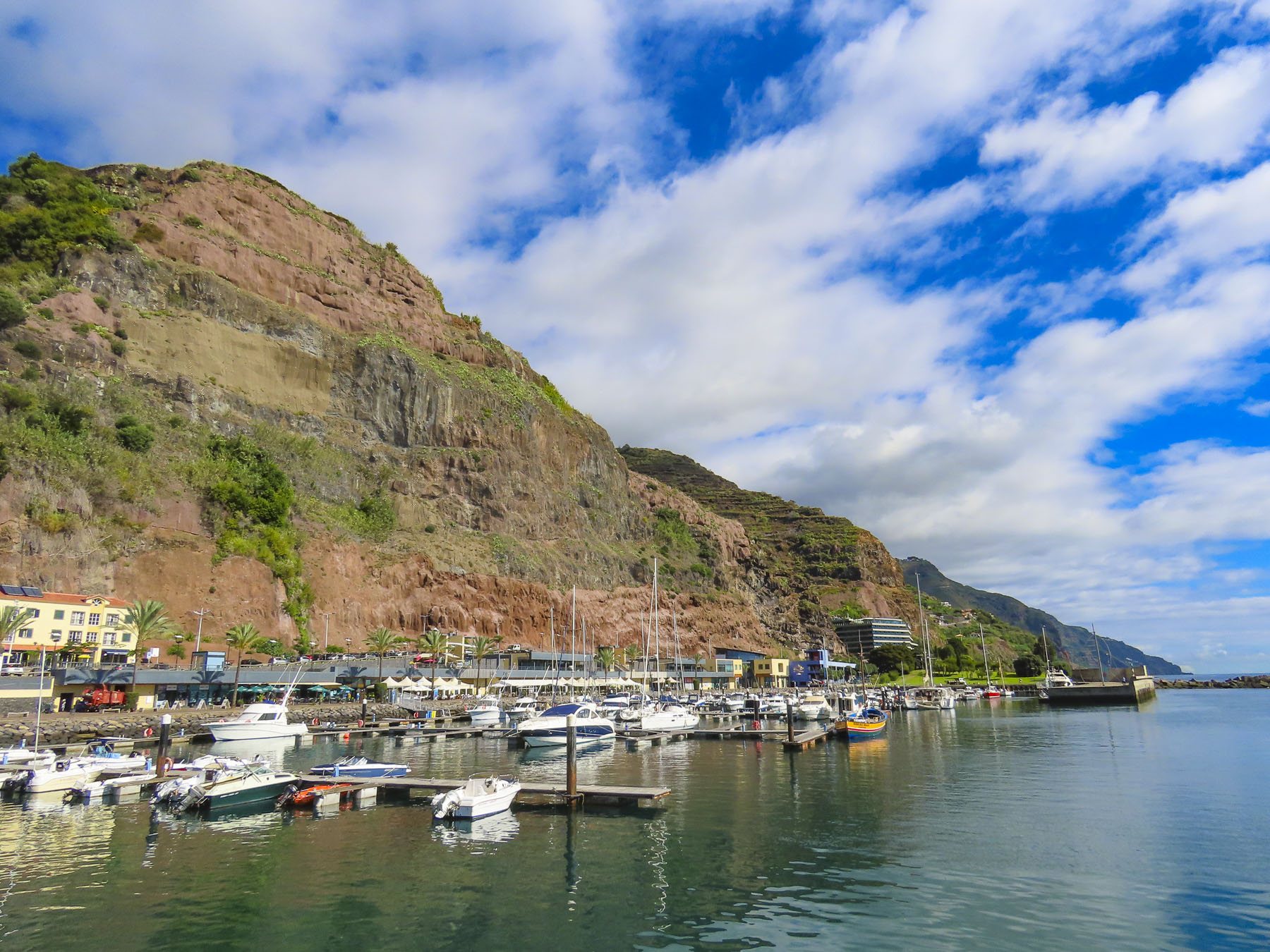
But there is more to this island than just Funchal, so we hopped in the car for farther explorations west along the coast. Our first day trip was on a Saturday afternoon to Câmara de Lobos, famous as a favorite spot for Winston Churchill to paint. A newly married couple was taking wedding photos amid the colorful small boats pulled ashore as young children splashed and played with their dog in the shallow surf  that splashed against the boat ramp.

Parallel parking on a steep incline was challenging, but it’s a skill that’s required on Madeira, and came in handy when we reached the Cabo Girão Skywalk, one of the highest cliffs in Europe. Relatively close to Funchal, this is a popular destination and there was actually a traffic jam as cars and buses creatively parked. This glass bottomed miradouro seems to hover miraculously over fertile fields that grow grapes and tomatoes nineteen-hundred feet below. Nearby the Cabo Girão cable car, originally built to help farmers bring their crops up from the fields, can whisk you down to a secluded beach. We have a healthy fear of heights and instead continued on.

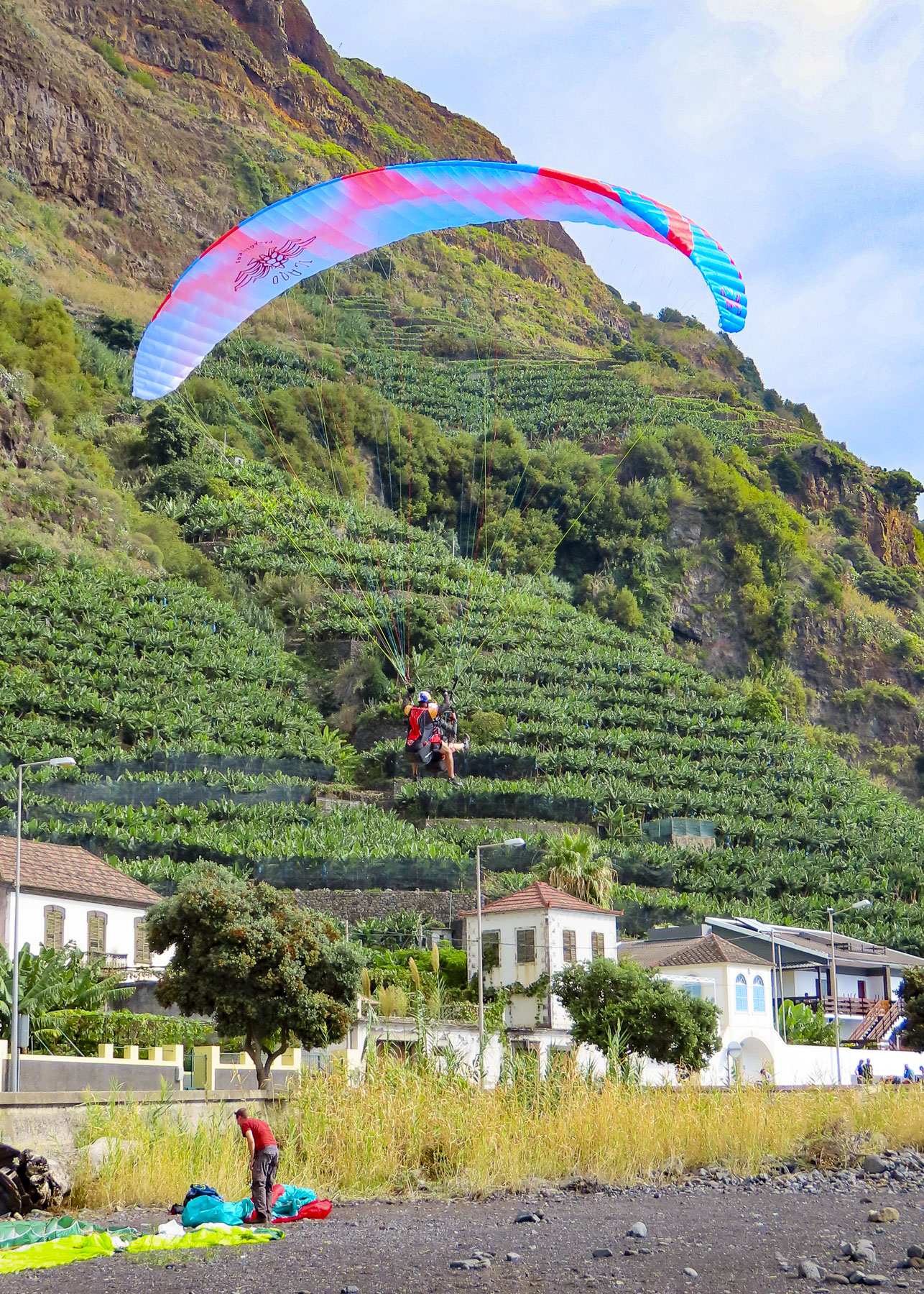
I wasn’t fast enough with my camera to grab a photo of a paraglider swooping low over our car as he landed along the stoney beach at Cais da Fajã do Mar. High above us a group of paragliders swirled on warm thermals and we waited for them to descend, but they kept floating back over the ridge.

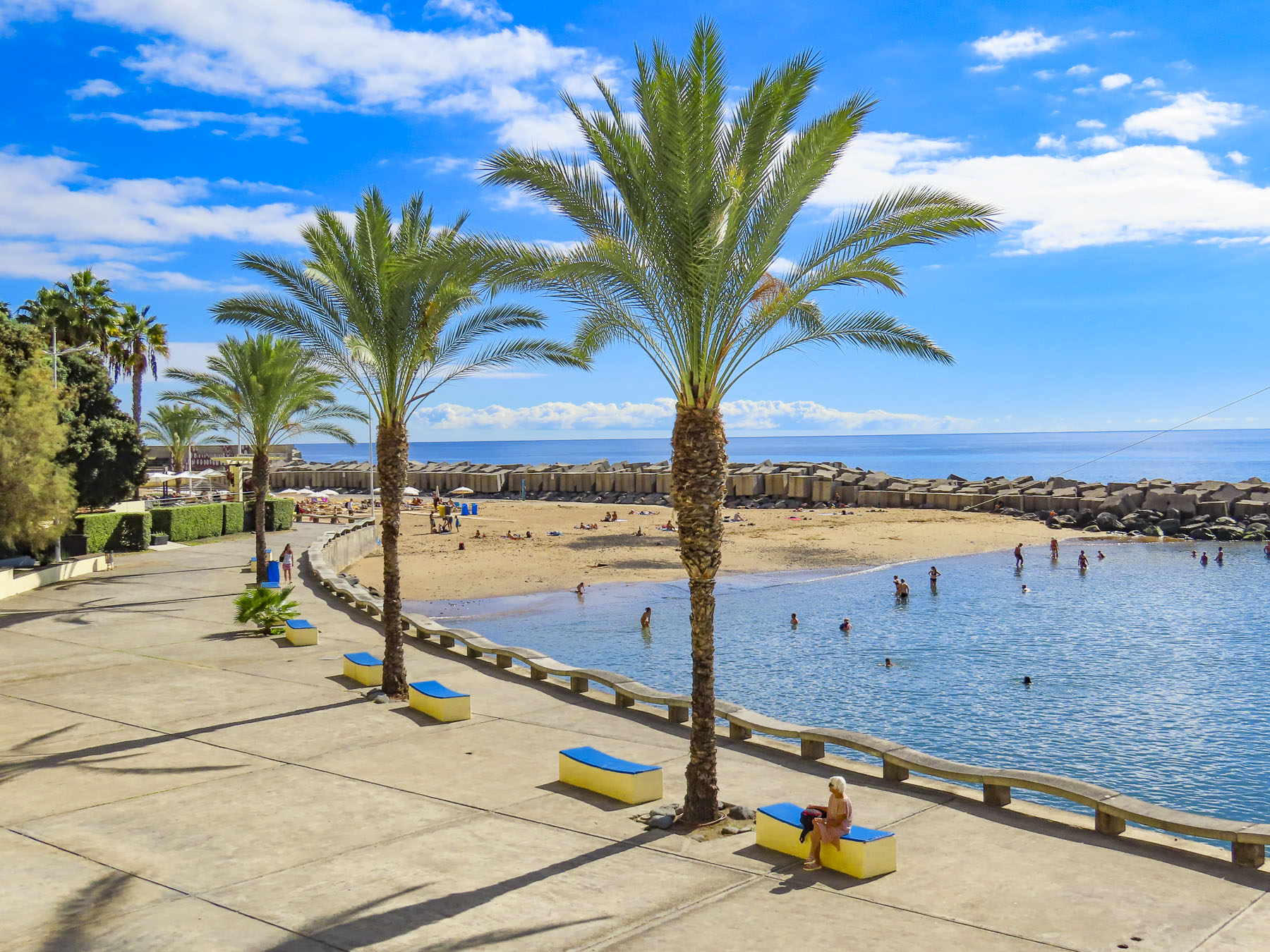
We meandered farther west to the beach and harbor, dramatically wedged between ocean and mountain, in Estreito da Calheta.  This is a largely human-altered section of the coast with a breakwater protecting Praia da Calheta, created with imported sand, and harbor next to it. We ate lunch on the promenade across from the marina.

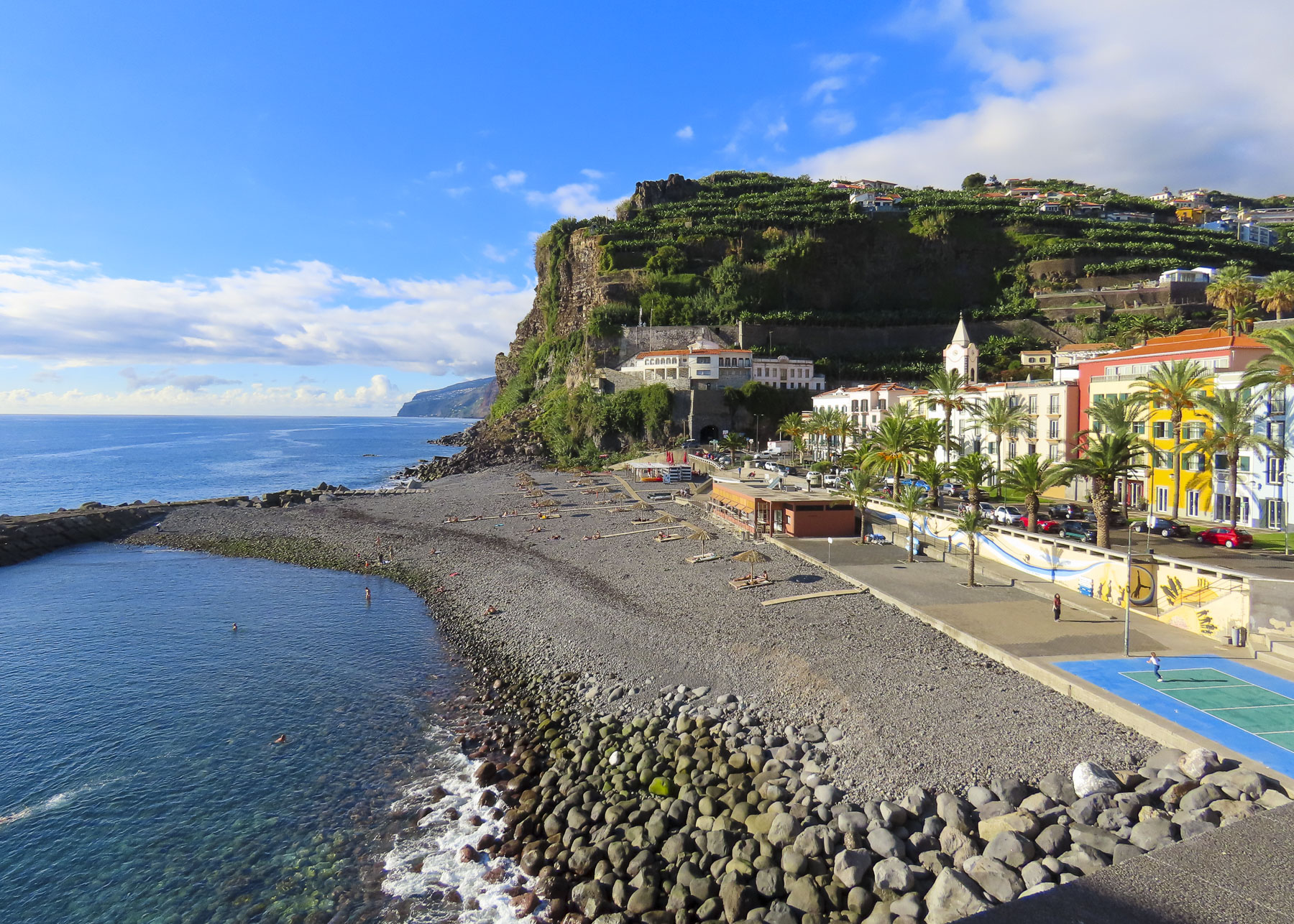
Heading back to Funchal later that afternoon we made a final stop in Ponta do Sol, and were able to find sanctioned parking in one of Madeira’s older, now decommissioned traffic tunnels. Walking out to a small headland we had late afternoon refreshments on a terrace with a brilliant view of the coastal village.

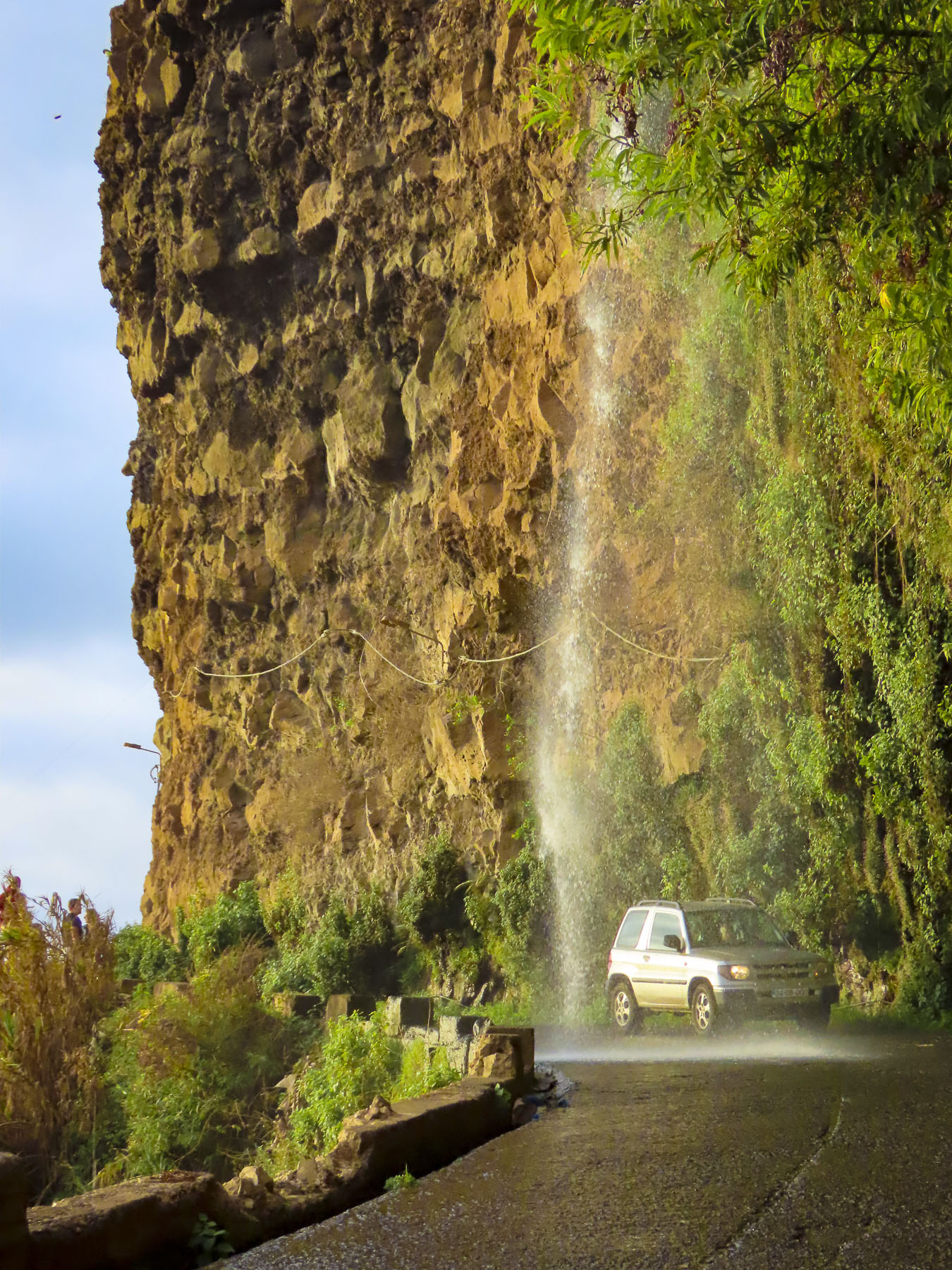
“Roll up your window.” “Wait, you’re not going to…” Yee haw! I yelled and we laughed while a thunderous cascade of water splashed off the roof of our car as we drove under the Cascade of Angels waterfall.

Till next time, Craig & Donna

Along the Algarve Coast – Lagos, Carvoeiro & the End of the World

Finally, the weather was improving as we headed south from Evora to the Algarve coast. We had hit an unusual week of rain in “sunny Portugal,” but the whole Iberian Peninsula had been experiencing a multi-year drought. So, it was good to know that some relief was in sight.

The sky was a refreshingly brilliant blue by the time we drove down palm-lined Av. dos Descobrimentos, along the Lagos riverfront, towards the ocean. On our left, Forte da Ponta da Bandeira stood, a silent sentinel still guarding Lagos’ fine harbor since the days of Henry the Navigator and the beginning of Portugal’s Age of Discoveries in the 1400s, when Lagos shipbuilders supplied fleets of caravels to explore the African coast, and later the Indian Ocean and beyond. In 1580,the fortress repelled the English privateer Sir Francis Drake, only to see him sail farther down the Algarve coast and sack Faro instead. Since antiquity Lagos has been an important trading port; Phoenicians established a settlement on the shore of the bay. Later Greek and Carthaginian seafarers visited and traded with the port.

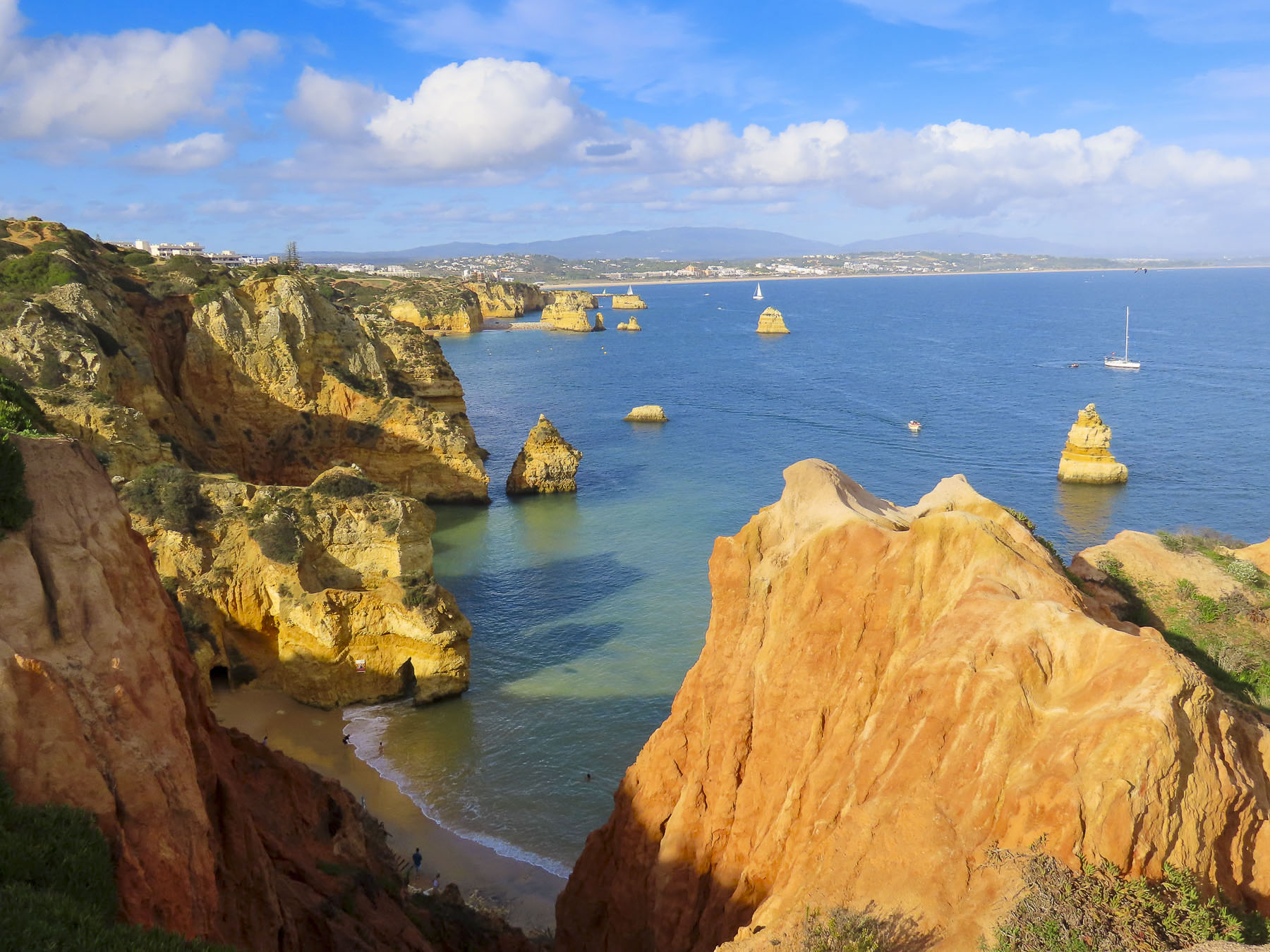
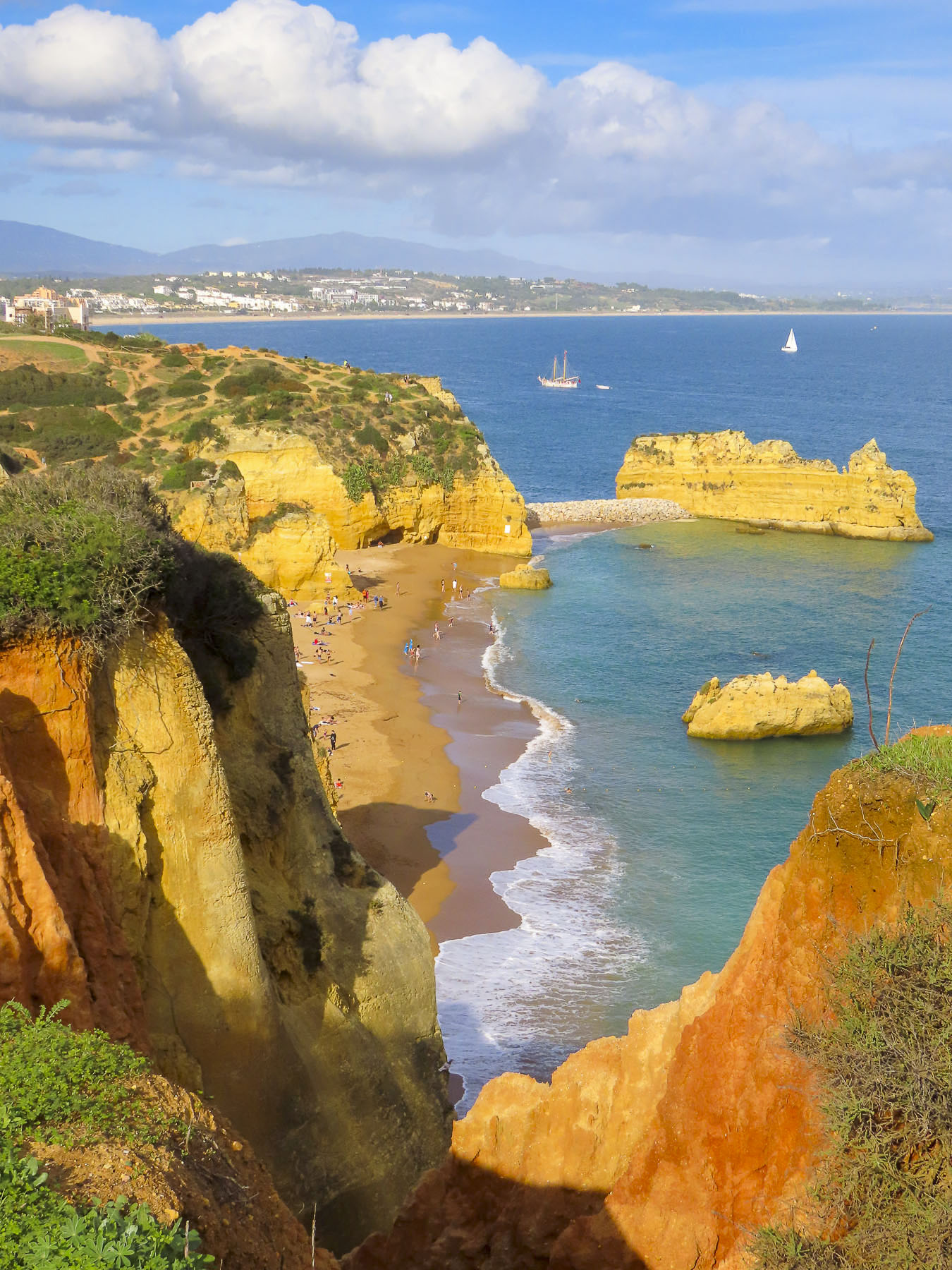
The Romans came, conquered, and left the first defensive walls and a fortress along the cliff. Over the centuries its ruins have slowly fallen into the sea as the cliff face erodes. The only remnant of its existence is an arched bridge, too dangerous to cross, connecting the mainland to a rock pinnacle. Later Visigoths were succeeded by Moors until the Portuguese reconquest in 1241 permanently secured the port for Portugal. The road curved and climbed to the Miradouro Praia da Batata, where we parked and reveled in our first glimpse of the dramatically sculpted Algarve coast and its turquoise waters.

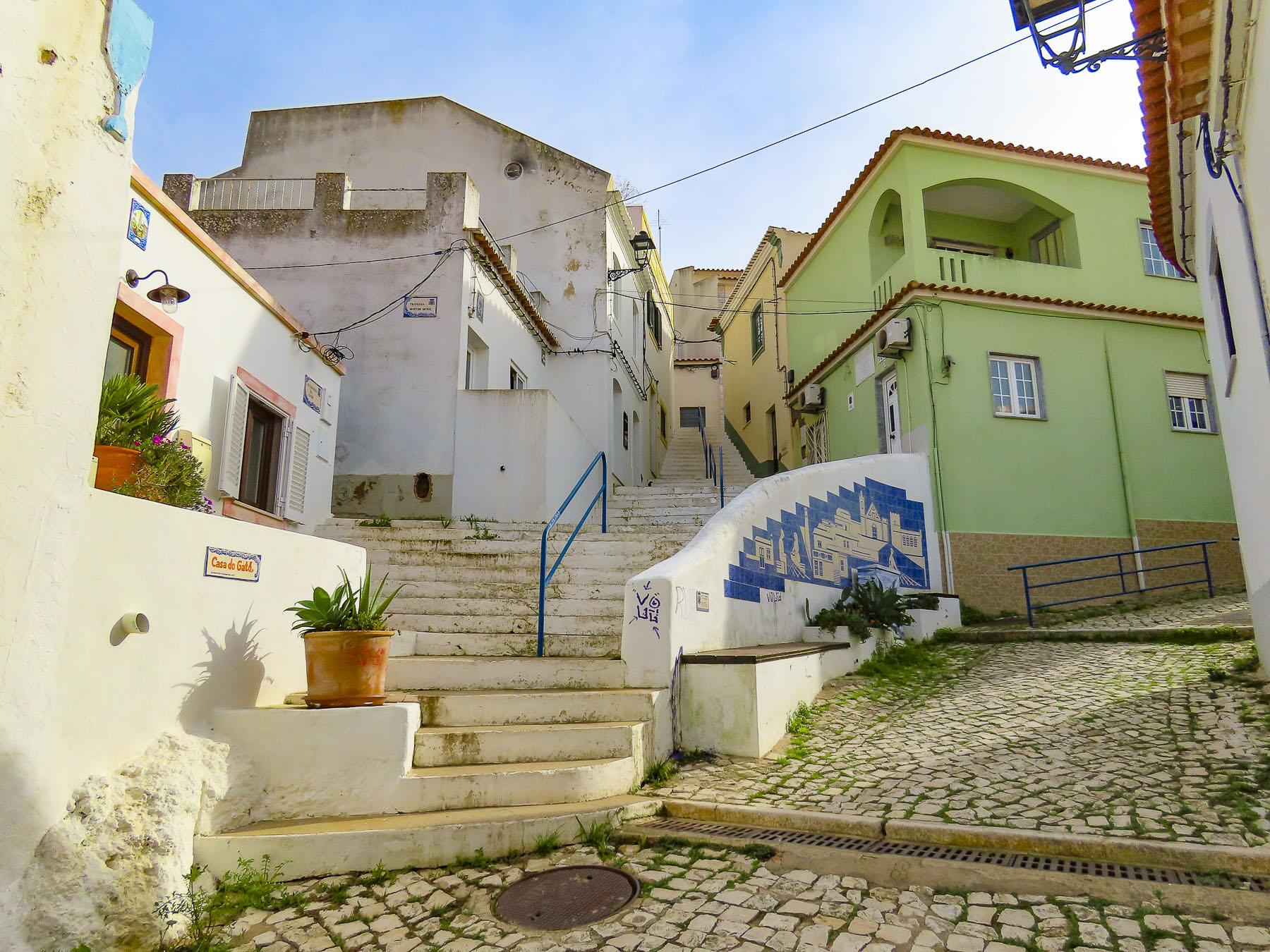
To our delight our accommodation at VI MAR – GUEST HOUSE was located within old town Lagos, just inside the massive defensive wall, which was expanded by the Moors in the tenth century and still encircles the town.

Our room was small, but it had a compact balcony that compensated for the lack of space and was the perfect spot for a morning coffee or evening glass of wine. The big plus was the location, only five minutes from the center of Lagos and just around the corner from MiMar, a great tapas restaurant, Padaria Centrala fabulous bakery, and MarLe Café for excellent coffees and a quiet place to chill. Our host recommended Casinha do Petisco, a small friendly and lively, family run restaurant famous for its cataplana de marisco (a traditional Portuguese seafood stew). We were not disappointed. Arrive right when it opens at 5:30pm if you’d like to be seated without making a reservation; after 7:00pm they are must.

One of our main reasons for choosing Lagos as a base for our five nights’ stay was the size of the town. Small enough to be manageable, yet large enough to be interesting. A walker’s and photographer’s delight within the old town. Plus the fascinating coastal rock formations of Ponta da Piedade and Praia dos Pinheiros were an easy twenty-minute walk away. We planned day trips to explore the coast, east to Carvoeiro and west to Sagres and Cabo de São Vicente.

At the end of October Lagos was quiet and beautiful, with daytime temperatures in the 70sF. With “walk a little then café” as our mindset we explored the old walled town, riverfront and on multiple occasions the trails and boardwalks along the ocean. The coastal rock formations were fascinating and kept revealing different fissures and crevices as the light kept changing throughout the day, though we thought the afternoon light was the nicest for photography.

The cobbled lanes of the historic district were uncrowded during the shoulder season and the ambience was wonderful amidst the palm trees and tiled facades of the buildings.

At the old Mercado Municipal de Lagos we were tempted by the bounty on display to buy “the catch of the day,” beautiful tuna from the fish mongers. On the top level a quaint small café overlooks the waterfront.

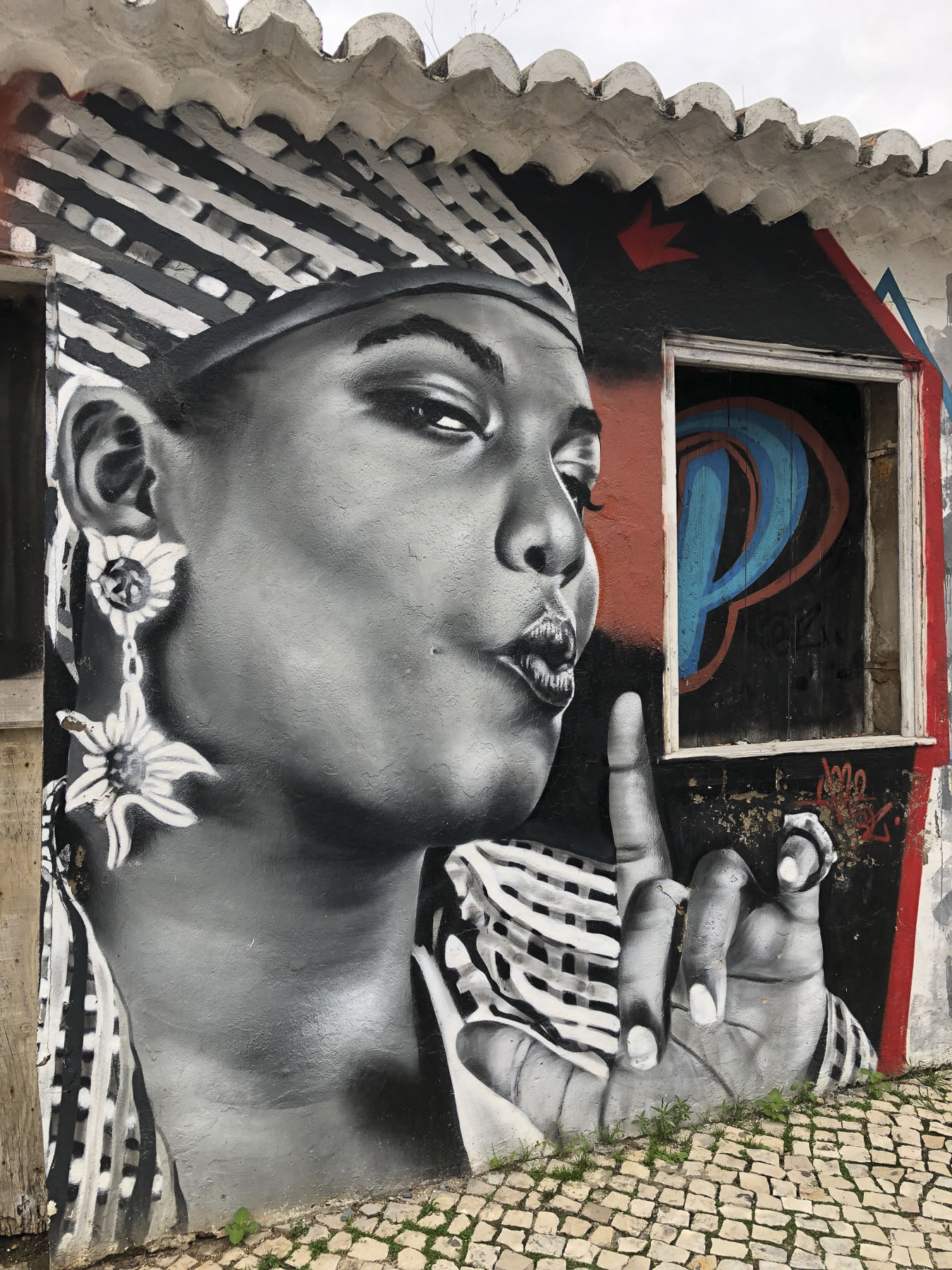
Farther along excellent street art decorated a store front awaiting reincarnation near a laundromat we were happy to use after washing clothes in various sinks for two weeks. It wasn’t Portuguese, but Poké Lagos served a delicious bowl of food as we waited for our laundry to finish.

In the evenings buskers performed in several plazas. One misty night a guitarist enthusiastically worked an appreciative crowd that kept growing and tossing coins into his guitar case. He must have sung for 90 minutes, breaking only to quench his thirst with a beer offered by a local waiter. Several times he announced it would be his last song. But the night was electrifying, and he played on. He proudly acknowledged his wife and young child in the crowd, playing for them as much as he was for us. He was, I imagine, in the ultimate musician’s groove, giving one of his best performances, and the folks who circled around watching and listening loved it as much as he did.

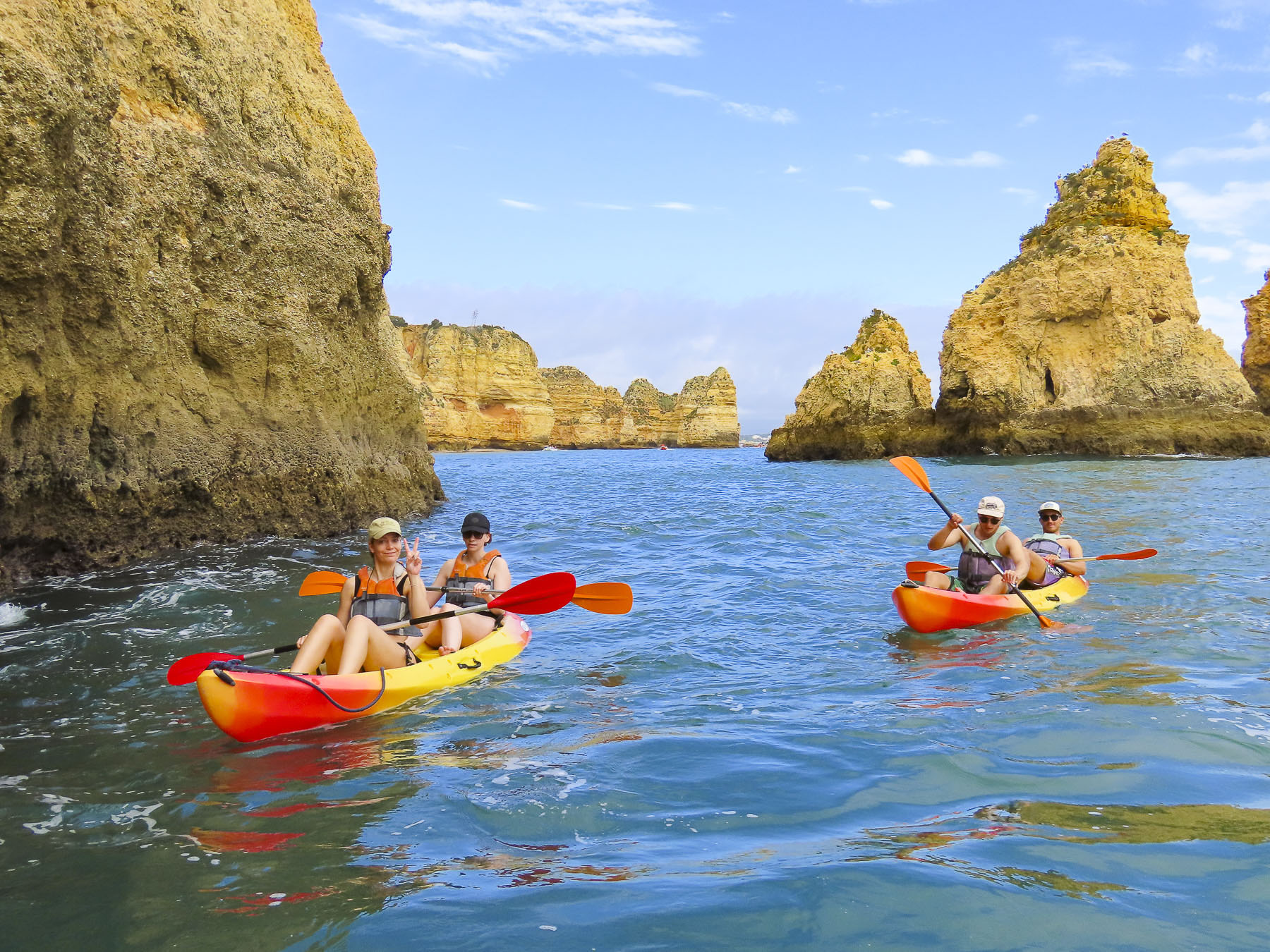
After several days of rough water, the wind and ocean finally calmed, and we spontaneously opted for a boat tour along the cliffs. Expertly timing the surge of the waves, our boatsman safely navigated us through tunnels and between rock formations.

At one point he looked high up the cliff face, waved and then yelled “hey Antonio!” to a lone fisherman wedged precariously on a ledge very high above the water. When asked why folks fish from the dangerous cliffs, our boatsman explained that only certain species of fish inhabit the zone where the bluffs meet the sea and that “Antonio, my cousin, thinks they taste better.” We saw this activity in several other places along the coast. Antonio wasn’t the only loco, maluco, fisherman.

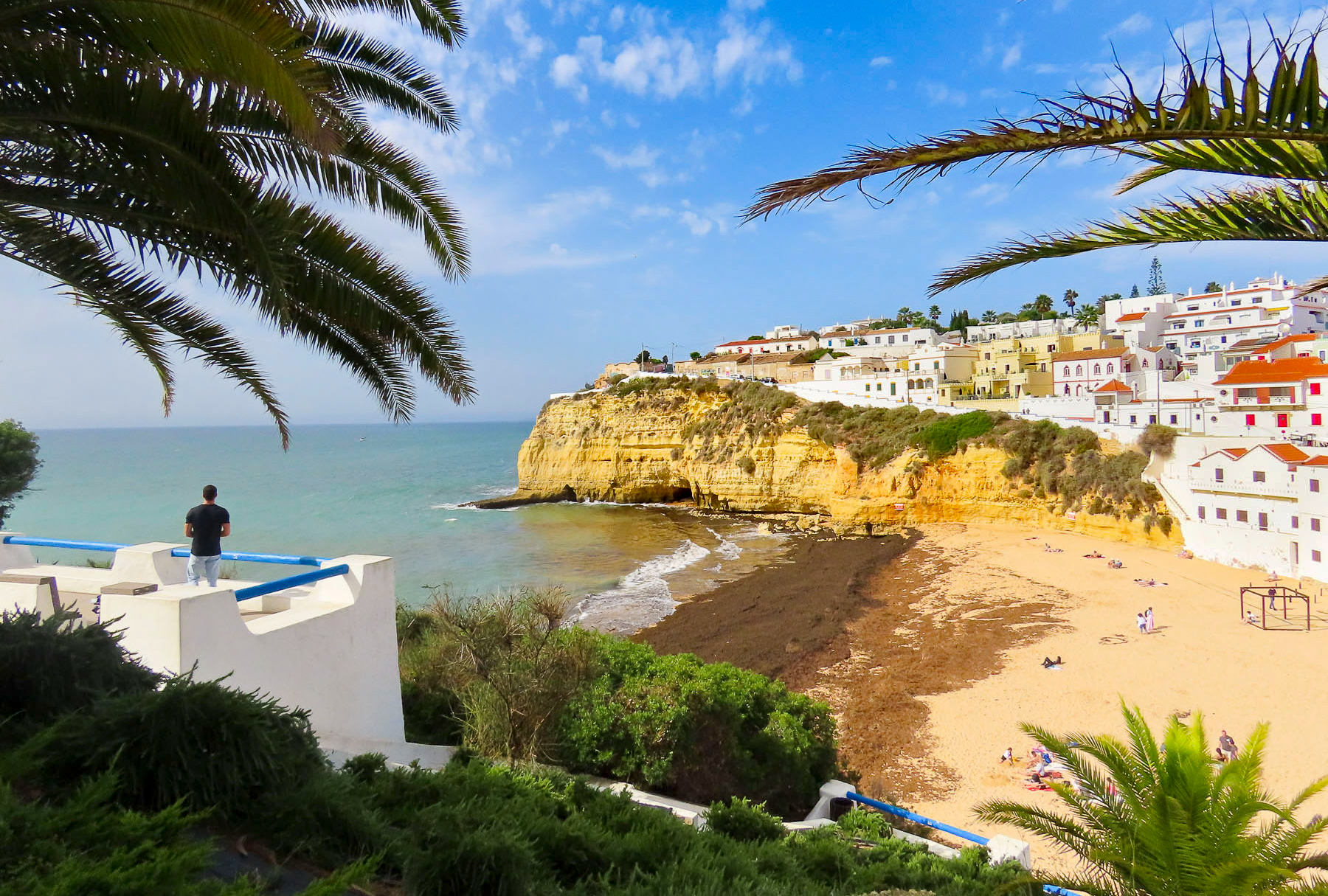
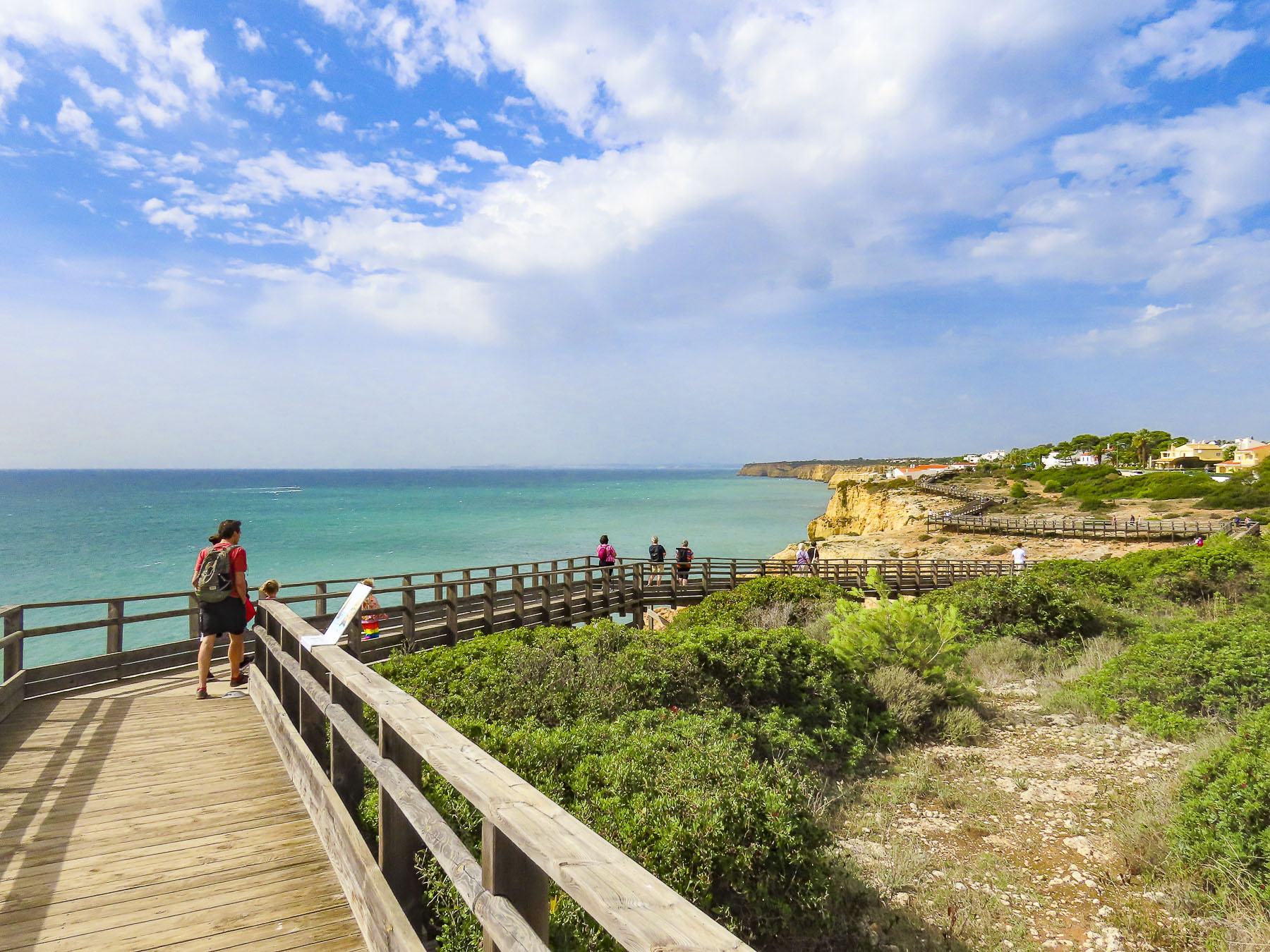
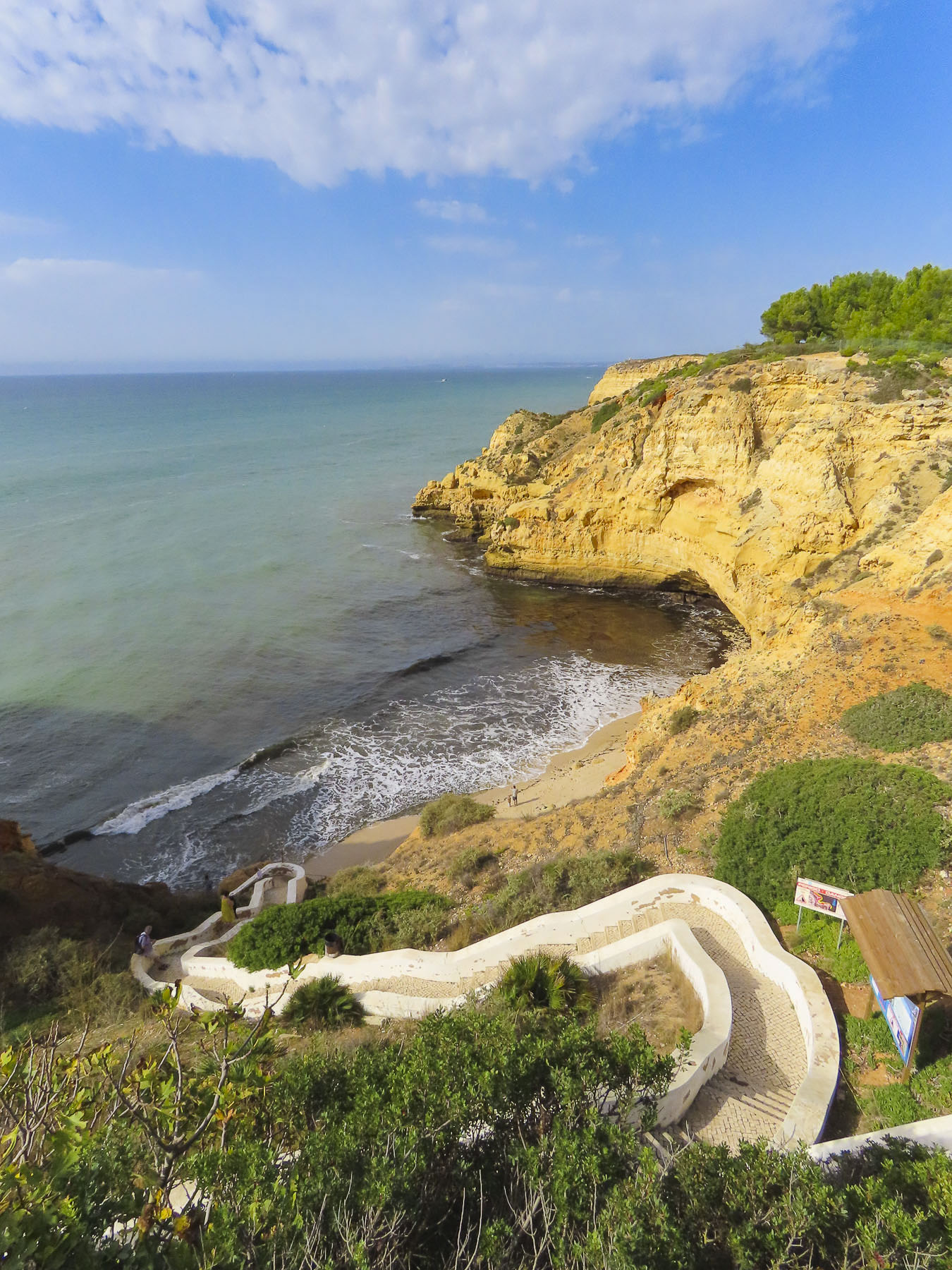
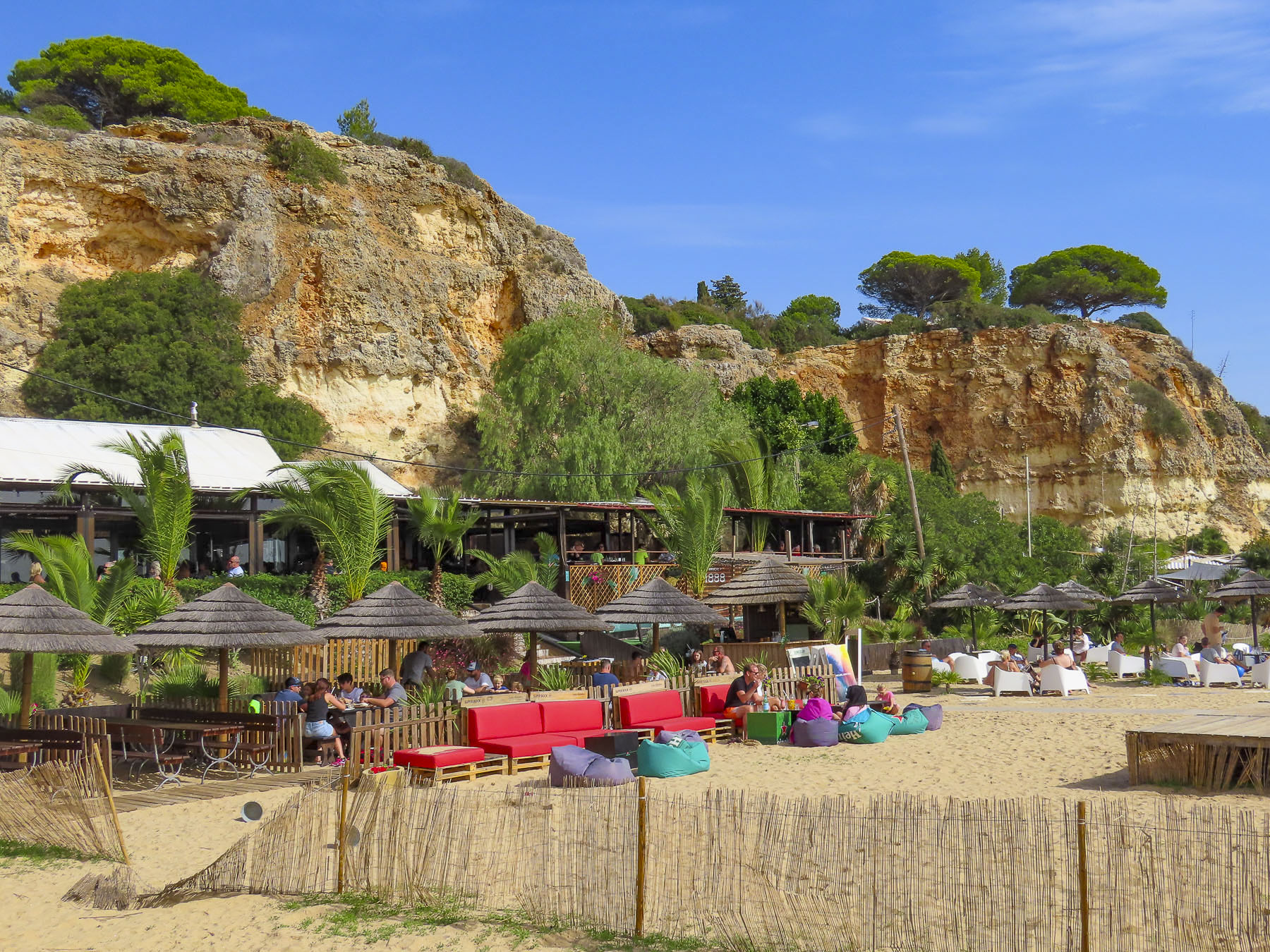
The seaside town of Carvoeiro, with its homes built on cliffs encirling a small crescent beach and a boardwalk which follows the rugged coastline, was a destination one morning. One of the things we appreciate about Portugal is that, while gasoline is expensive, parking is free in most places. Even along the beautiful coast.

Parking near the Forte de Nossa Senhora da Encarnação we followed the Passadiços do Carvoeiro boardwalk atop the cliffs and back into town, stopping often along the way to take photos of the seascape before lunch at a shaded café. Although the temperature was comfortably cool, the sun was strong and frequent escapes to shady spots were required.

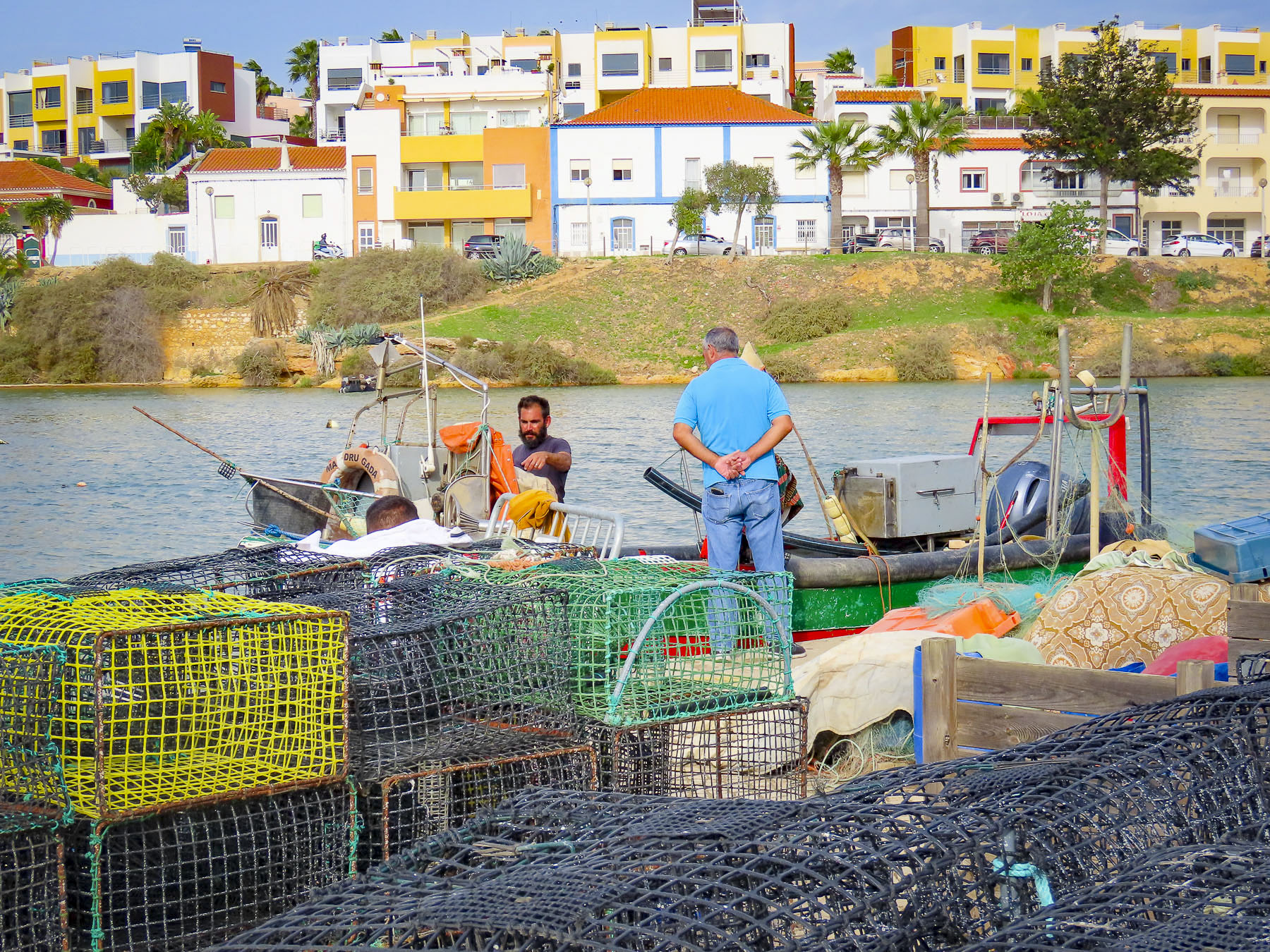
Afterwards we headed to Ferragudo, a small town, across from the busy port of Portimão, where the Arade River widens and meets the Atlantic Ocean. Two beautiful, wide sandy beaches with calm waters, the Praia Grande and the Praia da Angrinha front the tidal Arade River here. There are three relaxing restaurants along this stretch of sand to grab a beer and find some shade. The dividing point between the two beaches is the Castelo de São João do Arade. The castle was built in the 1500s to protect the important inland city of Silves from pirates, as the upper reaches of the Arade River were still navigable at the time. Over the centuries the fortress lost its relevance and was eventually abandoned and later auctioned off in 1896 to the Portuguese writer Joaquim José Coelho de Carvalho (1855-1934), who restored the cool digs into his summer residence. Years later the town of Ferragudo was unable to fund its transformation into a cultural center. Since 1998, the unique summer home has been owned by the Portuguese businessman Vasco Pereira Coutinho, who continues to use it as a private residence.

Just beyond the castle and the Praia da Angrinha the river juts to the right into a small, sheltered cove that fishermen have used for safe anchor since the Phoenicians. The harborside village, with whitewashed homes and narrow alleys that gently follow the contour of the hill, first appears on a Portuguese map of the Algarve coast in 1560.

It’s a picturesque harbor with boats bobbing softly on wind-blown waves. Quayside fishermen still piled their nets and pots, reminding us of its roots as a working village, but gentrification is slowly happening.

Driving home later that day we were delighted to spot storks resting in their nests before migrating further south to winter over on the African continent. Spontaneously we turned down a country road in search of more birds. We didn’t find any, but we happened across a historic moinho de vento, windmill, in Odiáxere. A nice surprise and something we would have missed if we had stayed on the main road.

Only an endless sky and sea filled the western horizon as we stood on the cliffs next to the Lighthouse of Cabo de São Vicente. The Atlantic Ocean stretched infinitely before us. In the time of Prince Henry the Navigator, this was the last frontier and filled with legendary monsters. Knowing the coast of North Africa can be seen from southern Spain, Henry sent his explorers south to follow the west coast of the African continent in the early 1400s, and later, when blown off course during a storm, Brazil. There was a high mortality rate amongst the sailors who ventured into the unknown. Fewer ships returned than set out.

But there was always the promise of riches and fame to be found. In 1484, in a plea to the Portuguese crown, Christopher Columbus pitched his idea of sailing due west, but maritime officials rejected it because they thought his estimate of distance to India was incorrect. In 1492 Spain was eager to match Portugal’s discoveries and accepted Columbus’ idea. One hundred and fifty miles east along the Algarve coast, just across the border with Spain, Columbus set sail from the river port of Palos de la Frontera.  For many millennia this barren land’s end, where the horizon swallowed the sun, was considered sacred. Today, near the lighthouse, a witty food truck vendor markets the “last hotdog before America.”

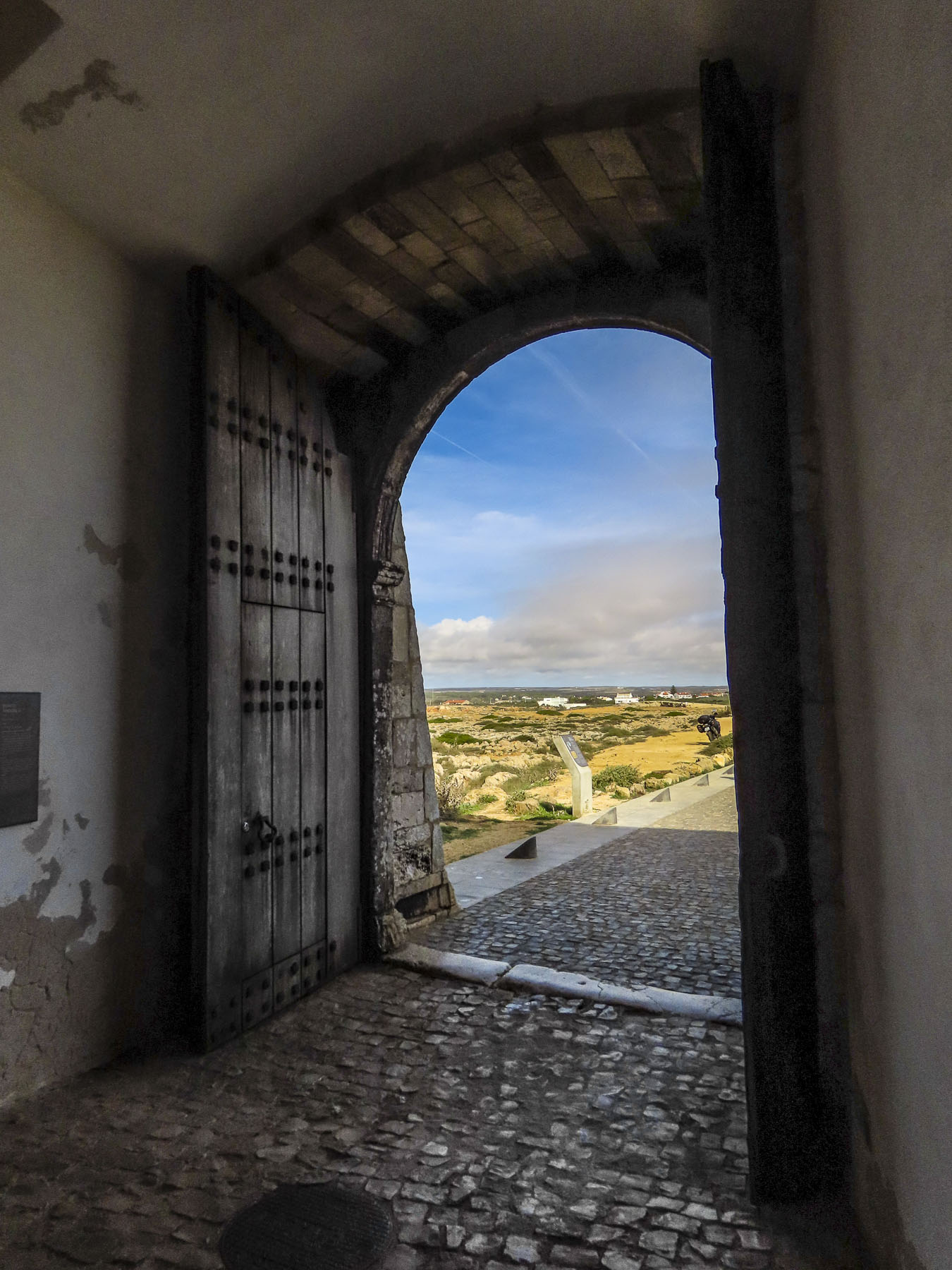
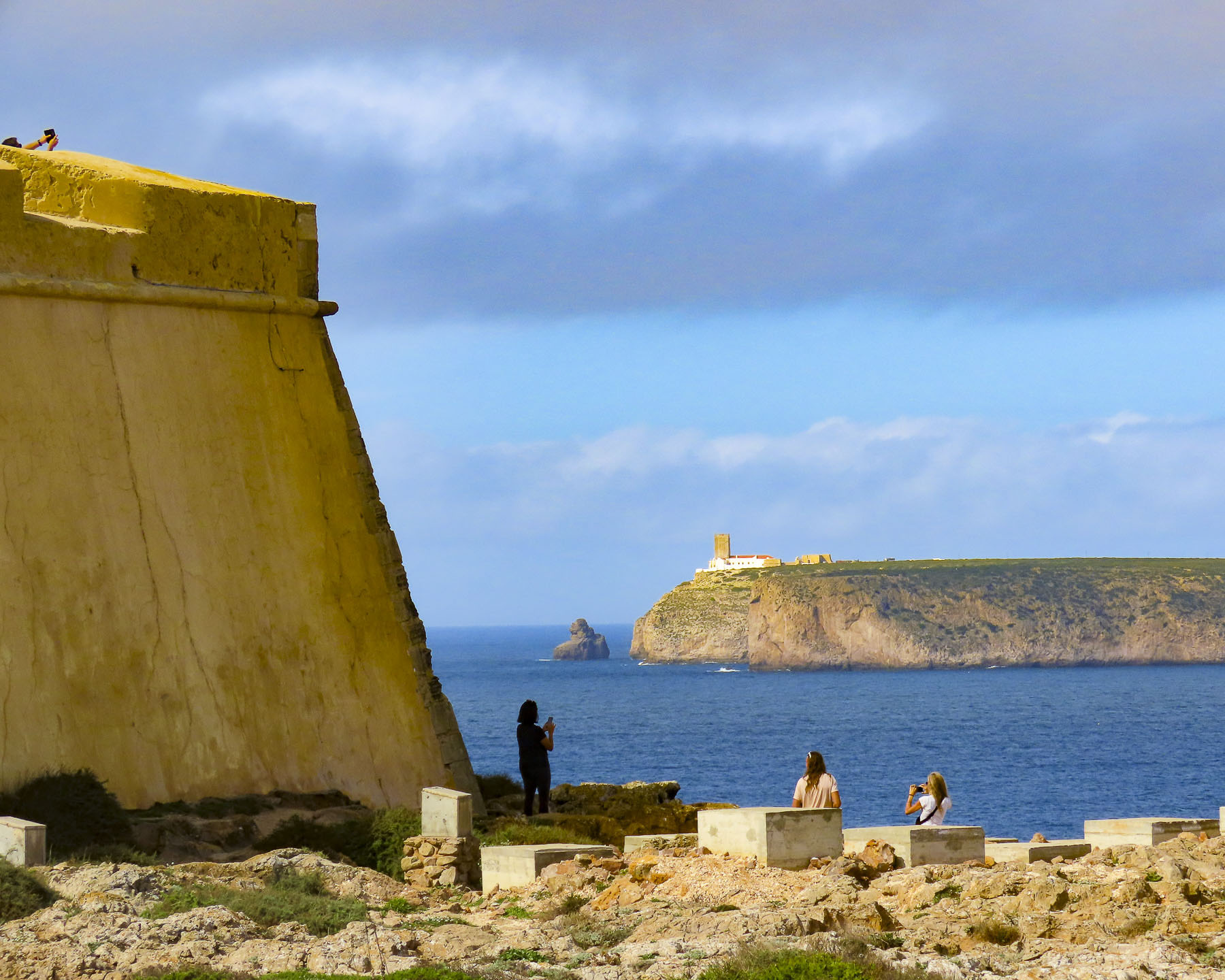
Fifteenth century fortresses dot the Algarve coast at every seaside port. While the Moors retreated from Portugal after their defeat during the Reconquista, Barbary pirates from Morocco, Algiers, Tunisia and Tripoli often raided ships and towns along the coast, taking mercantile goods and hostages. As a defense, Prince Henry ordered the unique Fortaleza de Sagres be constructed upon a narrow cliff-faced peninsula that protrudes like an index finger from the coast. From here you can look west and see the lighthouse of Cabo de São Vicente. The peninsula is flanked on both sides by two sandy beaches, Prainha das Poças and popular with surfers, Praia do Tonel. Only the entrance to the fort that divides the peninsula from the mainland is fortified across the narrow width of this windswept headland. The unscalable cliffs provided the bulk of the fort’s defense, or so it was thought. Though some how that thorn in every sailor’s side (if you weren’t English), Sir Francis Drake, returned to the Algarve Coast in 1587 when Portugal was under Spanish rule and raided the fort!

Without any natural harbor, the fishermen in the old village of Salema used to push their boats across the beach and launch their sturdy craft into the crashing surf, hop aboard and row further out into smoother waters.

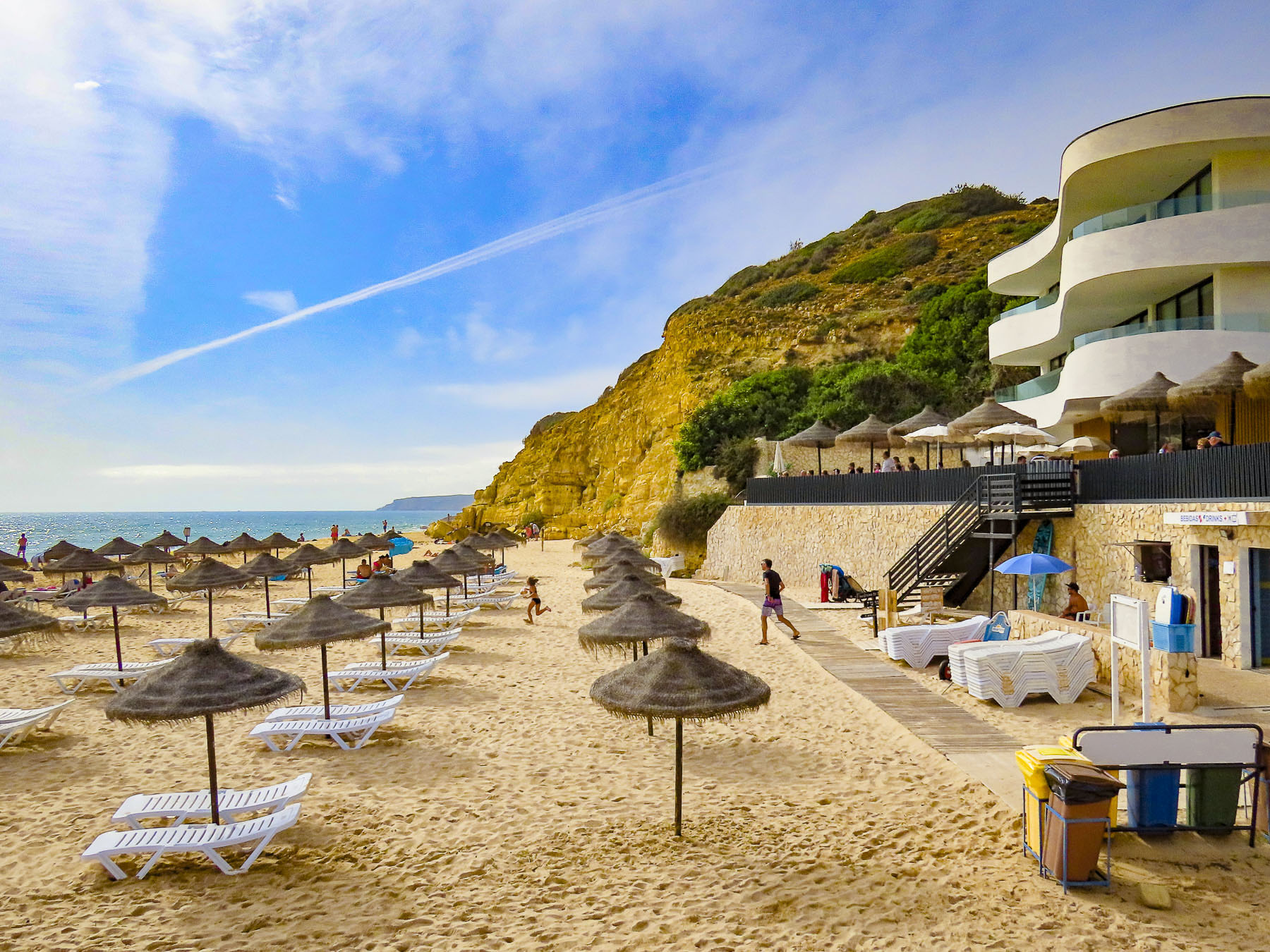
Fortunately, lifting glasses of sangria to our lips was the only exertion required to enjoy the beach today. The once sleepy whitewashed village has transformed itself into popular tourist destination with many new villas built along the coast that take advantage of the gorgeous seascape.

Trails going east and west from the town’s central Praia da Salema lead to small isolated beaches. From the top of an actively eroding cliff face the ruins of Forte de Almádena loom over the crescent shaped Praia da Boca do Rio below. We freely roamed the ancient ruins, but well away from the roped off precipice that had already swallowed parts of the castle into the ocean. 

The weather along the Algarve coast changes quickly and our sunny day was cut short as we were mesmerized by a fog bank that slowly blanketed the coast. We took this as our  signal to return to Lagos and back our bags for the next part of our journey to Maderia Island.

Till next time,

Craig & Donna
Portugal Road Trip – Part 3: Everywhere a Miradouro – Into the Douro River Valley

Portugal is blessed with wonderfully diverse landscapes, making it a challenge for photographers like us to actually make any forward progress in a timely manner toward our ultimate destination. As we were constantly tempted to divert and explore a photo opportunity.  Fortunately, after a time the backroads from Ucanha narrowed. Only teasing us with vistas quickly glimpsed, as if shuffling a deck of cards, between houses hugging the road that snaked down into the Douro River Valley.  Whetting our enthusiasm for the days ahead. To our surprise we occasionally passed snowflake signs warning of wintry conditions that sometimes encompass the region. Something we had difficulty reconciling with our sunny view of Portugal, especially since we were experiencing a splendidly warm stretch of fine October weather.

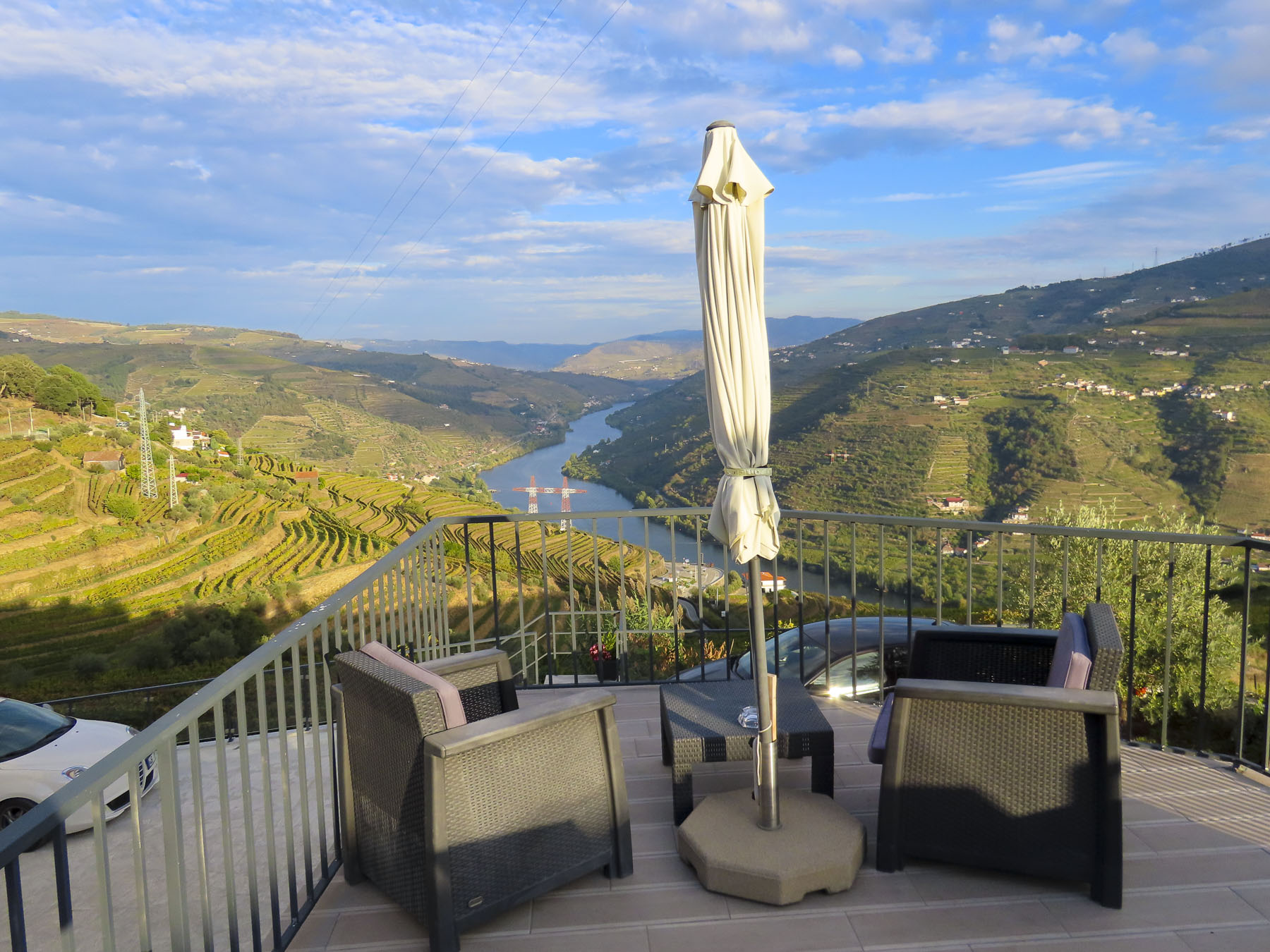
The gate to Casa Vale do Douro slowly swung open to reveal a steep long driveway, which abruptly ended atop the edge of a high retaining wall. It could have been used by Portugal’s Ski Jumping team for practice, if they had one. The view was glorious. Maneul, the charming owner, helped us with the bags to our room. Within minutes we were ensconced in chairs on our balcony. Savoring our glasses of wine and the view. One of the things we appreciate about vacationing in Portugal, during the shoulder seasons, is that it’s still possible to find marvelous accommodations for under €100 a night, that include breakfast. We’d be calling Casa Vale do Douro home for the next three nights.

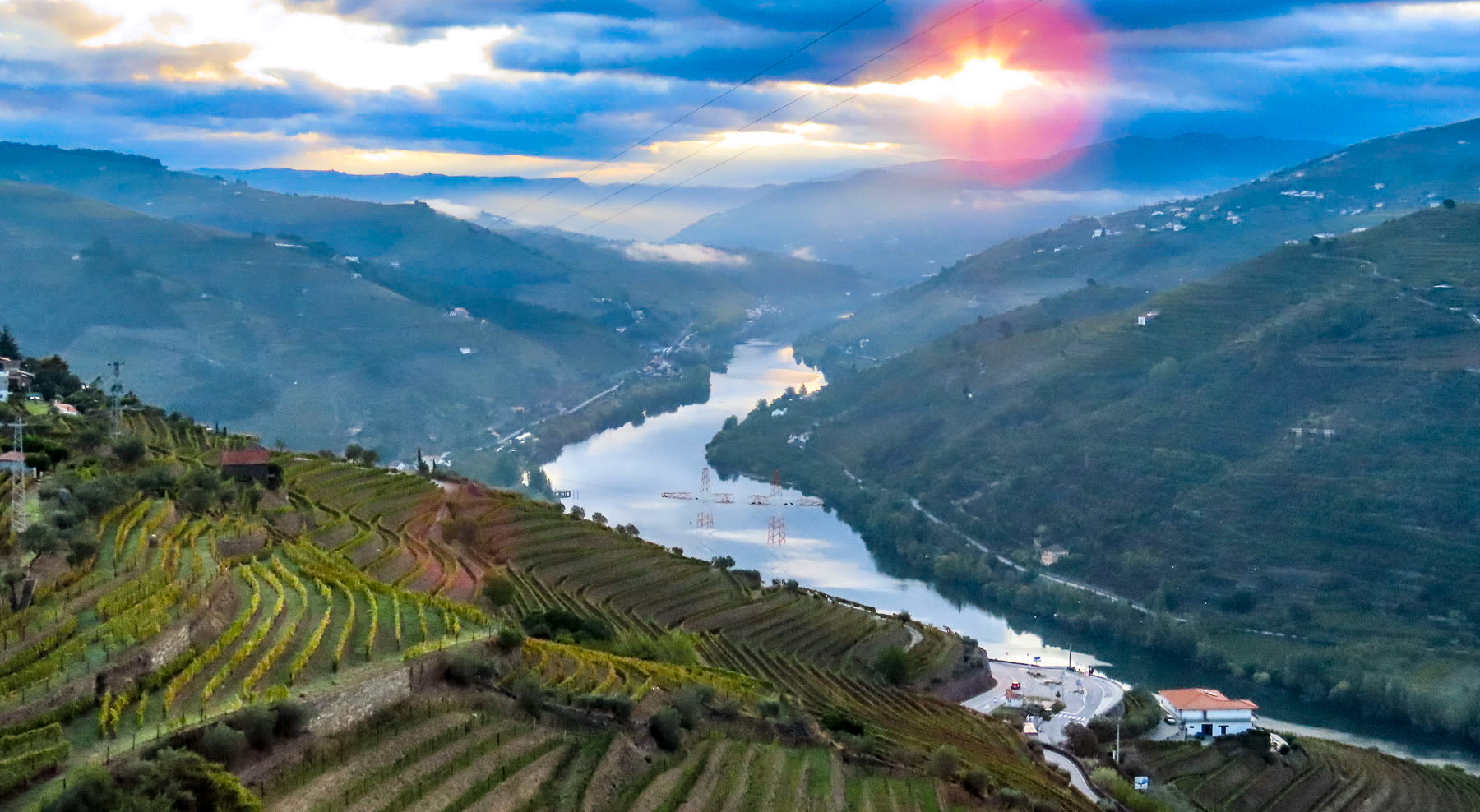
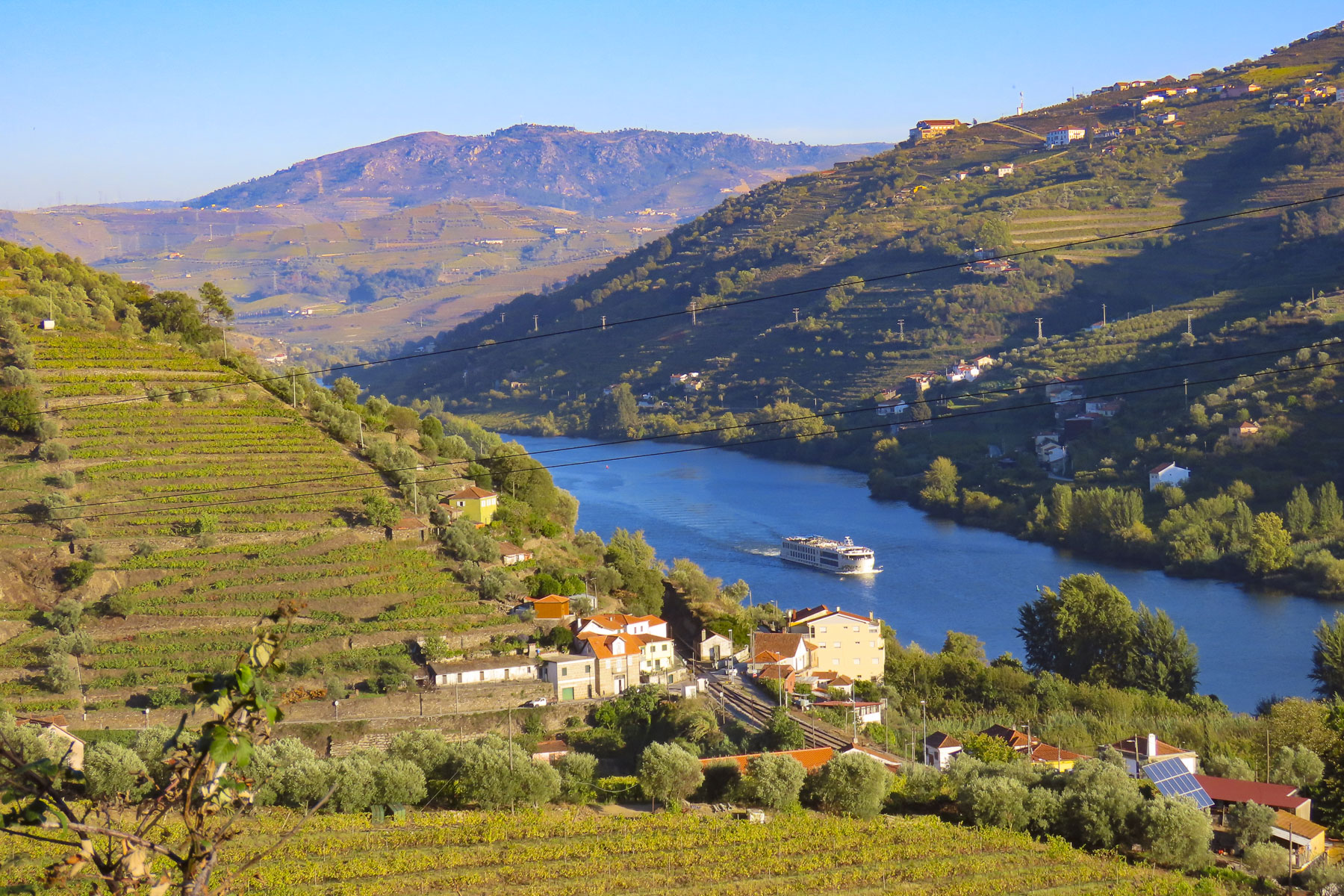
Incredible scenery attracted us to the Douro region, and we were not dissappointed, especially with the views from our room which faced due east. Brilliant sunrises transitioned to the river valley slowly being filled with fog.

Each morning we watched mesmerized as this ghostly blanket slowly engulfed buildings, vineyards and eventually us as we stood on the balcony. By ten o’clock it had usually burnt off.

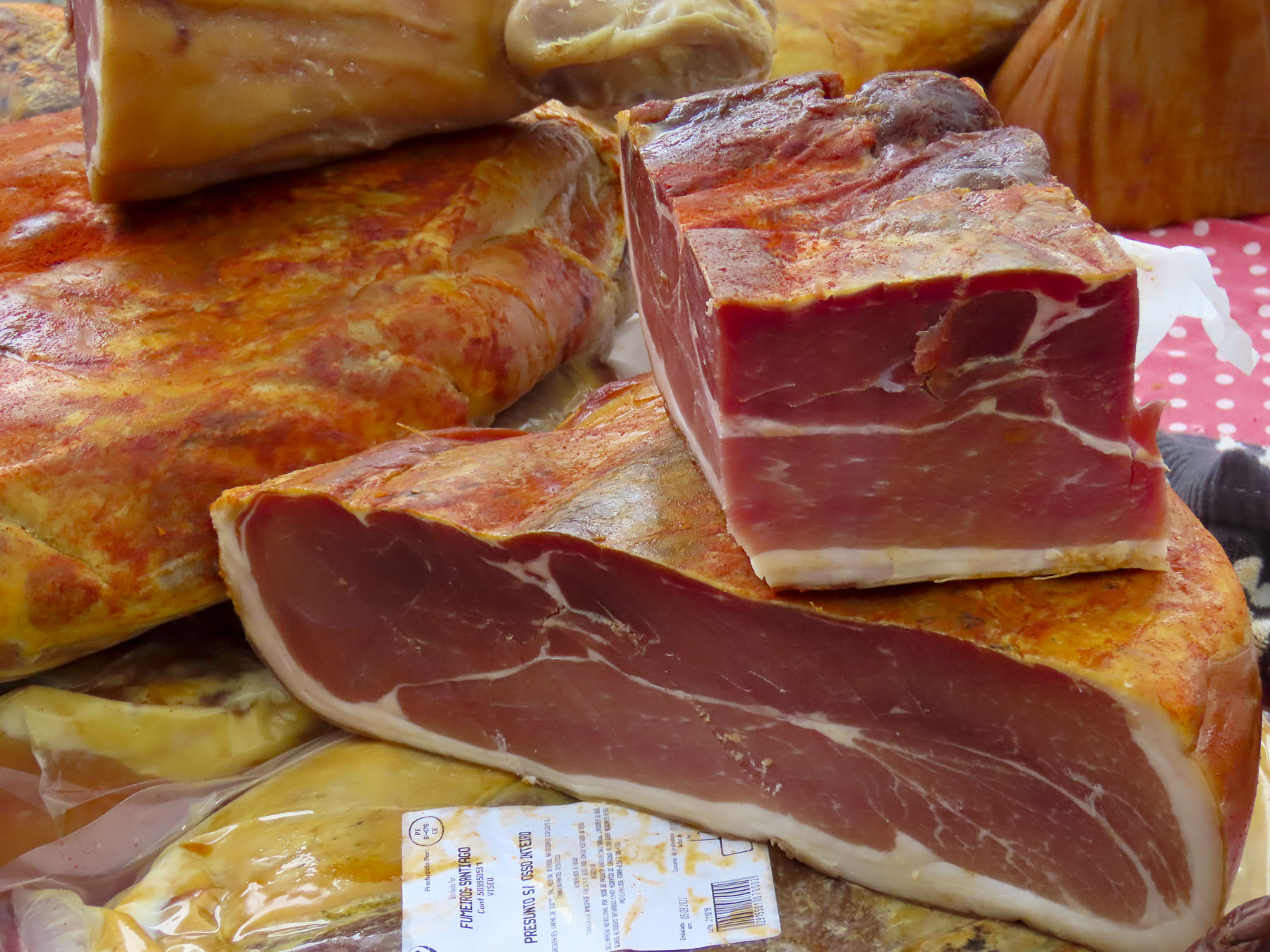
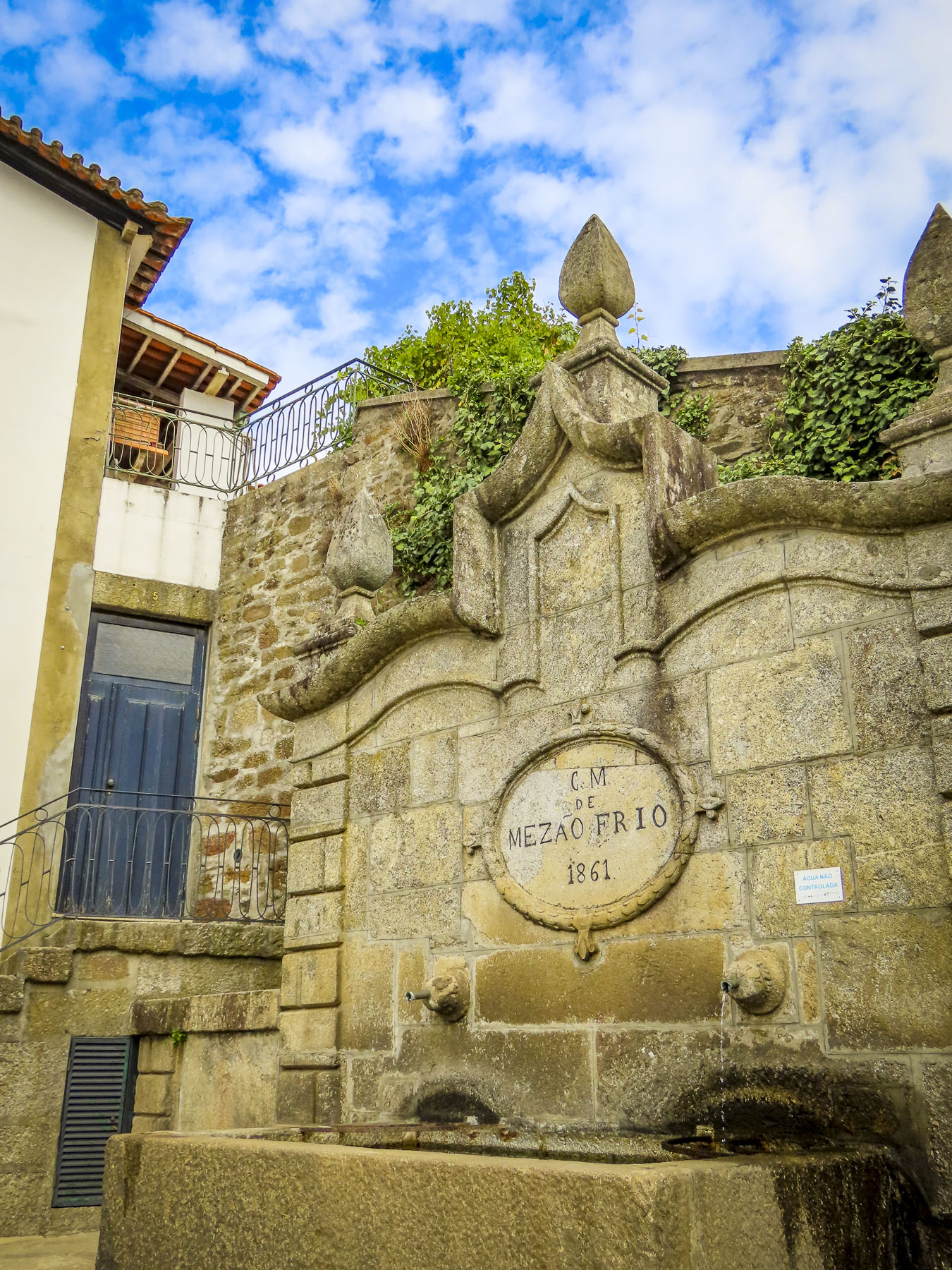
The small village of Mesão Frio was a short walk from our guesthouse and as luck would have it, market day. Being mid-October, it was a smaller affair than what we imagined takes place during the high season, but it was still interesting enough, with cheese, meat and vegetable purveyors, along with hardware tents and garden suppliers selling seedlings for fall planting. With a round of Portuguese cheese and jamon secured for a picnic lunch later it was time to enjoy our, “walk a little then café,” break. Afterwards we wandered from one end of the village to the other, along the village’s main lane bordered on one side with a wide plaza and lined with shade trees. At the far end stood the Church of São Nicolau.

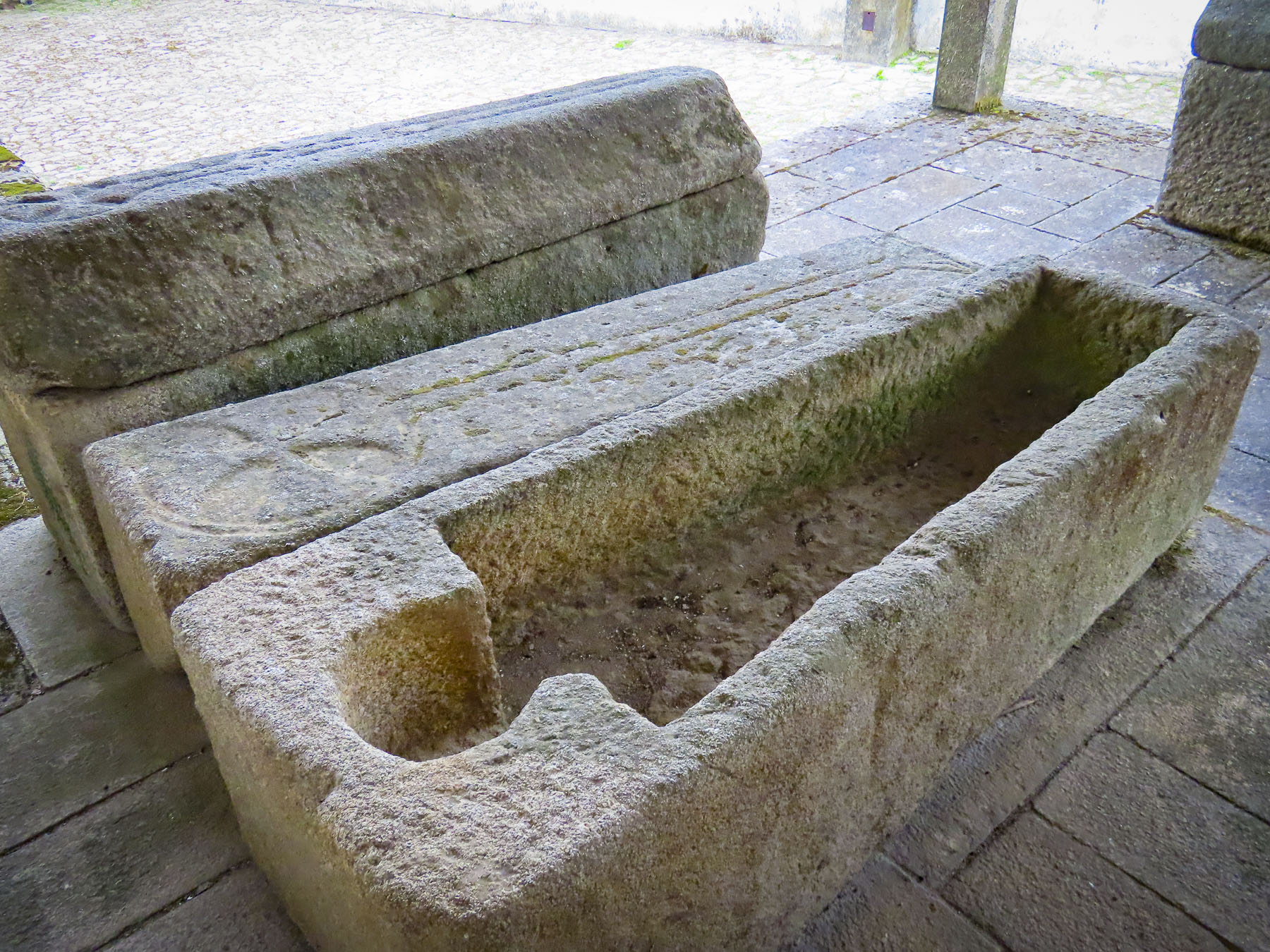
Tradition believes that the church was ordered built by Queen d. Mafalda, wife of d. Afonso Henriques in the 12th century, but the thickness of the church’s walls hint that it was constructed in the 14th century. Eighteenth century remodeling left the Baroque and Rococo character that’s visible today.  Several ancient stone sarcophagi, trapezoidal in shape, dating from the Medieval era stood under a side portico.

Heading back through the village we entered the Igreja de Santa Cristina, its interior now modestly decorated after it was looted and destroyed by Napoleon’s army during the Peninsula War of the early 1800s. Leaving only one bell tower that still stands today. It’s attached cloister, dating from 1724, was originally dedicated to Franciscan friars until 1834 when all male religious orders were banned from Portugal and their properties confiscated by the state.

Leaving many original stone details in place the building has been wonderfully repurposed as municipal offices. The most interesting detail a “janelas de vinho” or wine window from which wine used to be sold. The Regional Tourism Board located in the cloister has produced a very comprehensive 54-page Douro Tourism Guide that is a great resource and available to download for free. Listing an astonishing 120 major viewpoints, along with wineries, festivals, lodging, restaurants, and activities throughout the valley. There’s enough wonderful information in guide to encourage multiple vacations into the area.

After coffee, we drove leisurely along the north side of the river, stopping frequently to take photos. Driving through Peso da Régua to Covelinhas, where we followed the sinuous road high up into the mountains.

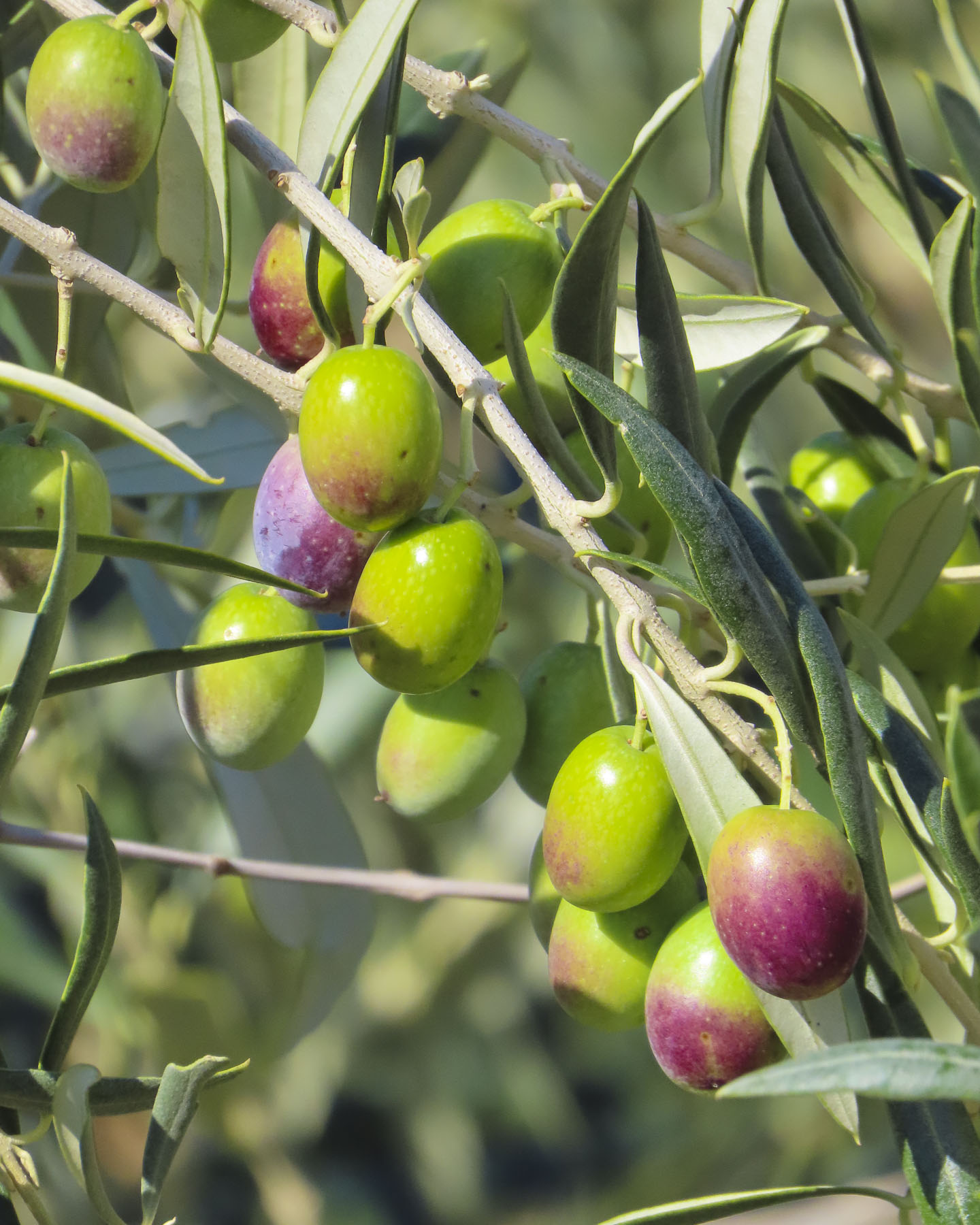
Occasionally passing olive groves and fruit orchards, their novelty highlighted by being oddities in a sea of grapes, until we reached the Miradouro São Leonardo de Galafura. At an elevation of 2100 feet it’s one of the highest viewpoints overlooking the valley.

Hawks circled on the thermal updrafts below us. As far as we could see, waves of undulating vineyards covered the hillsides, their pattern like a stone thrown into a pond. The unbroken views from the miradouro seemed if we were flying.  

Highly recommended by our host we dined each evening in Mesão Frio alternately at Tasca do Zéquinha an intimate rustic eatery with a silhouette of a wine cask hanging above the front door. Inside was a small bar packed with regulars. With a smile one pointed us upstairs when he saw our dismay that it was standing room only on the street level. Upstairs we were pleasantly greeted in a small dining room of eight tables. We enjoyed lamb chops, a rare and outrageously expensive menu item in the states, but well priced here and delicious. Fully sated, we were pleasantly pleased with how inexpensive appetizers, a house wine, dinner, dessert, and coffee were. In the Douro Valley the wine choices are infinite, or fathomless and as much as we enjoy wine, we are not knowledgeable oenophiles and are content with most restaurant’s house wines. Which in our experiences have found to be very good. 

The next night we ate at Convívio. Honestly, I can’t remember what we ordered, but we thoroughly relished the meal and the house wine. Here the house wine was a bottle of Serro d Asno, which featured a humorous illustration of a donkey’s ass. I’m not sure if the waiter was secretly a radical protesting the invasion of tourists into the Douro Valley or expressing his discontent with something I did not say, ha ha, my mind wanders. The wine was very good. Unfortunately, we haven’t been able to find it here in the states. For a change of pace we had dessert and coffee at Café Avenida, which features a tantalizing display case full of their divine homemade pastries. Staying open to 12AM, this quiet place is the ultimate experience for nightlife in Mesão Frio.

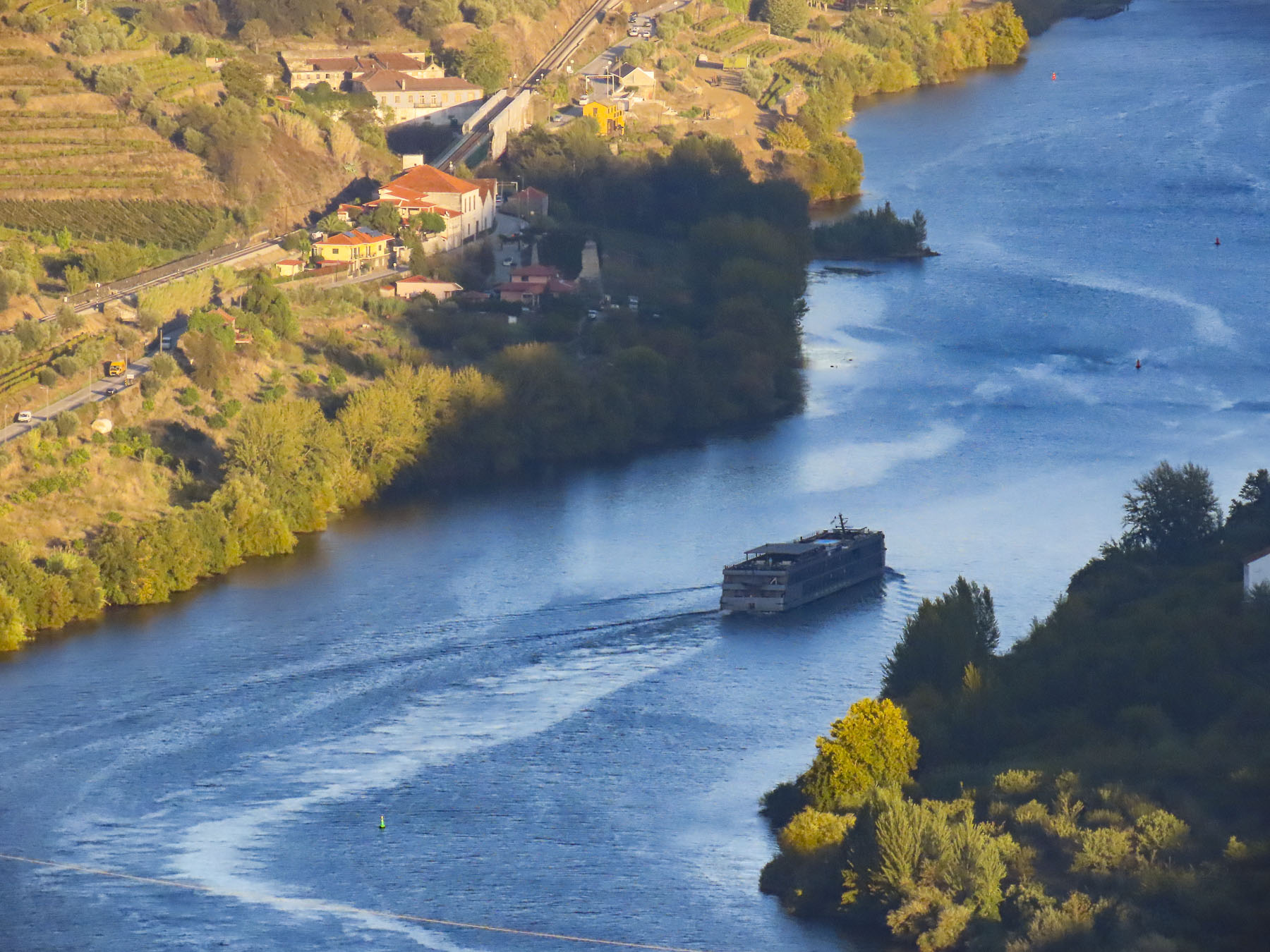
The waters of the Douro River rise in the mountains of central Spain, north of Madrid and flow of west for 557 miles before meeting the pounding waves of the Atlantic Ocean on the Portuguese coast at Porto. The famous region known for its production of Port, a fortified wine, encompasses 615,000 acres along 75 miles of river valley from the Spanish border to Mesão Frio.  

In September 1756 a Portuguese royal charter acknowledged the Douro River Valley as the exclusive region for the production of Port wine. Becoming the world’s first wine region to have a formal demarcation or DOC (Denominação de Origem Controlada).

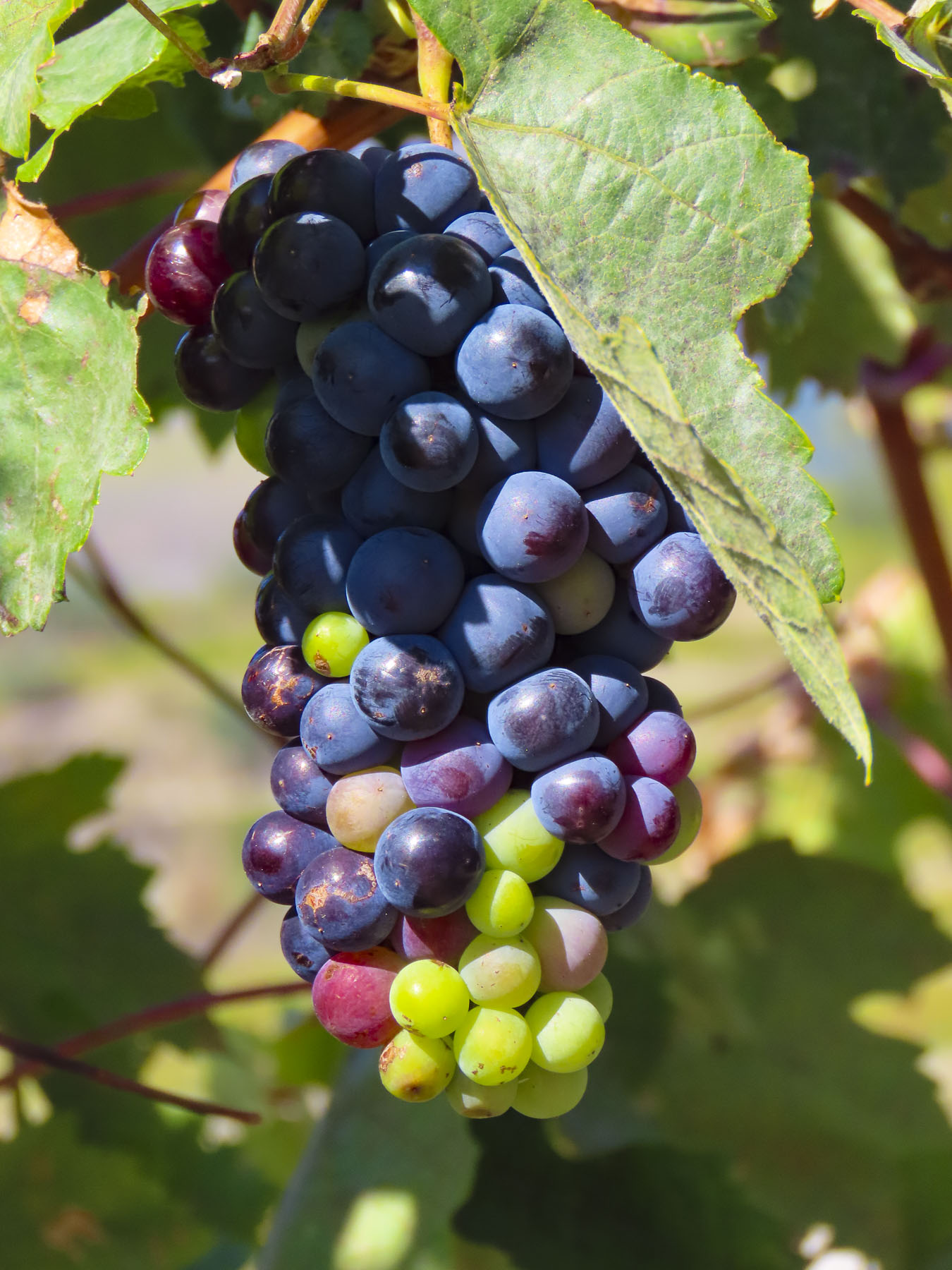
Though renowned for its Port wines, today production is evenly divided with Douro table wines, which are gaining international recognition. Eighty different grape varietals, many native to Portugal, are cultivated in the region, but by far the most popular red grape varieties are Touriga Franca, Tinta Roriz, Tinta Barroca, Touriga Nacio, nal, Tinta Cao, and Tinta Amarela. While Rabigato, Viosinho, Malvasia Fina, Donzelinho, Gouveio, and Codega are the favored white varieties. Used alone to make full-bodied reds or delicate white wines they are also blended to create the beloved Port wines of the region.  Interestingly grapes growns for Port wine are planted on rocky schist areas while grapes grown for table wines favor a looser soil. The steep terrain of the narrow-terraced hills along the valley are no match for modern harvesting equipment, dictating that every September into early October the grapes are harvested by hand.

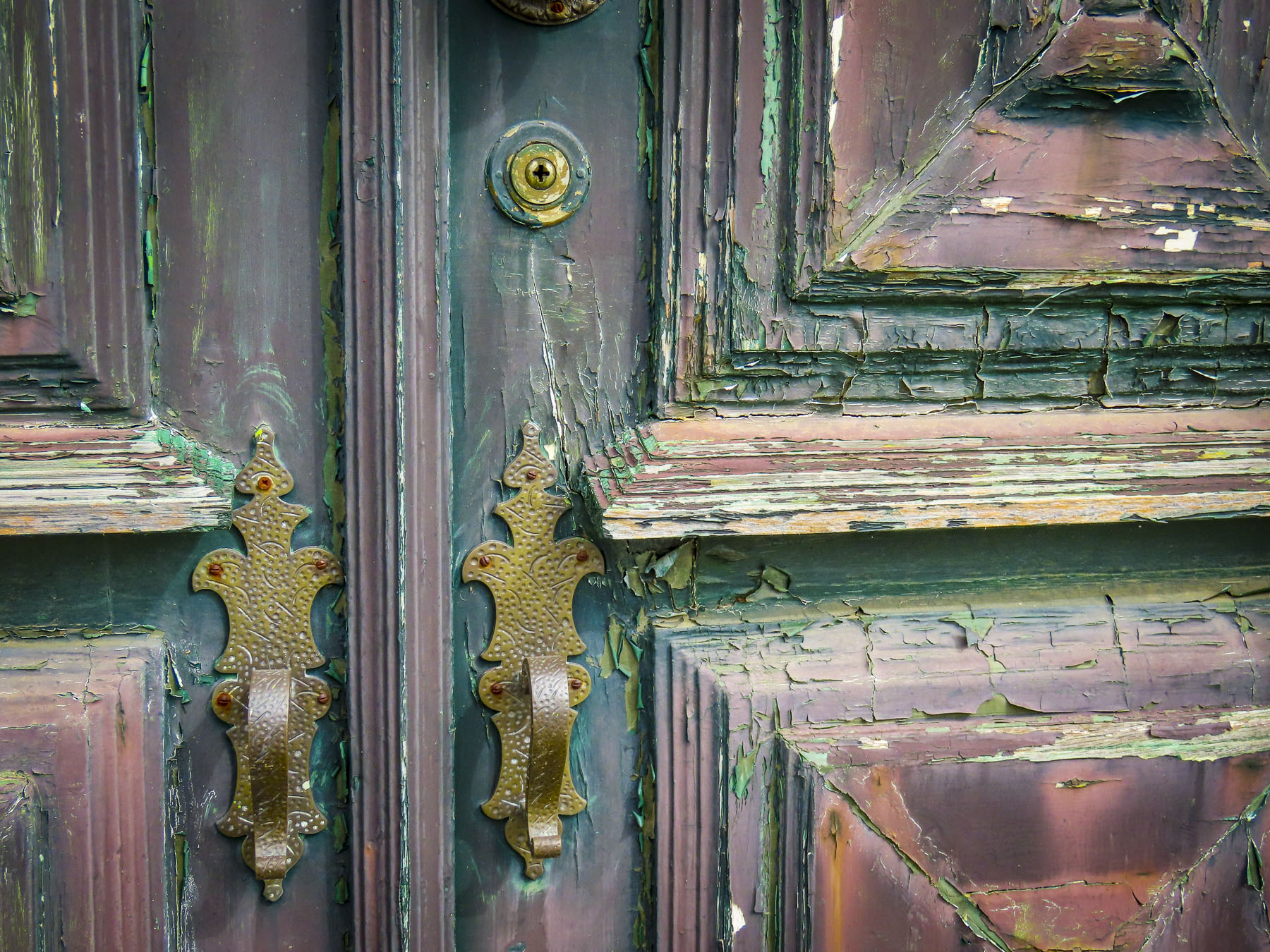
Small hamlets with parish churches of all different sizes are speckled across the landscape of the Douro Region. Picking one out on the map we headed to Cidadelhe for the Igreja de São Vicente. Built in the 1700s the stately baroque-style church is showing its age, with its textured graceful patina along with faded and peeling wood.

The backroads through the Douro Valley offered endless vistas of rolling hills and vineyards beginning to display their fall colors around every bend of the road. Fortunately, in October there were few cars or caravans on the roads and we able to stop often. With 119 official viewpoints in the region there’s and infinite number of photography worthy panoramas available just by pulling over onto the shoulder. The landscapes were endless. The fog intriguing.

We really didn’t have any solid plans for our time in the region. No must to this or that. Instead we chose, often remote miradouros on the map for our morning and afternoon destinations. The journey to reach them an integral part of the adventure.

We just brushed the surface of this alluring Douro Valley region. Hopefully, one day we’ll get a chance to return.

Till next time, Craig & Donna
.

Seville Part 3 – Walk a Little then Café

Parts of this ancient city with its labyrinth of cobbled lanes feel more akin to a small village with an earth toned, sun drenched patina. Vibrant traditions and a youthful vitality along with numerous historic sites scattered across the city all contribute to make Seville a walker’s delight. There’s no correct way to explore the city. How you do it depends on the amount of time you have to indulge yourself in the history and atmosphere of this beautiful city. Strolling through the city is the finest way to discover its character. Immersing ourselves into the city for six weeks, we walked the familiar cobbled lanes multiple times with many variations and sporadic detours that we hope you find interesting.  Seville never ceased to charm us. 

The routes we favored most webbed out from behind the Cathedral of Seville’s Patio de los Naranjos on Calle de Placentines, around the corner from the Palacio Arzobispal on Plaza Virgen de los Reyes, and wandered through the Alfalfa, Centro and La Macarena districts.

An old-world fabric store bedecked with selections of gold embroidered trim, ribbons, and tassels hanging from worn wooden cabinets enticed us inside.  Further on the display window of a religious goods store fascinated us with its selection of all things sacred. Before crossing into the Plaza Jesus de la Pasion, the savory window display at Confiteria La Despensa De Palacio stopped us dead in our tracks. Lovingly run by generations of the Santaella family, the shop has been Seville’s premiere chocolatier and pastelería for over 250 years. The pastries were sumptuous!

Across the street the Plaza Jesus de la Pasion widens to reveal a wonderful example of 19th century Andalusian architecture. The far end of the square features a façade of red brick framing Azulejos tiles and Moroccan influenced, pointed arched windows.  The plaza also seems to be a favored place for a protest or political rally as we came across several, over the weeks we spent there.

At this point it’s possible to head one block over to visit the Iglesia Colegial del Divino Salvador, on the plaza of the same name. This is a very popular square with many restaurants and outdoor tables along with buskers providing entertainment.

The Iglesia Colegial del Divino Salvador is the second most important church in Seville after the main cathedral and features a monumental and intricately carved 18th century Baroque altar. The beautiful piece was created by the Andulasian altarpiece architect and sculptor Cayetano de Acosta, who contributed works to numerous churches across southern Spain.

Returning to Plaza Jesus de la Pasion, the far end of the square funnels into the very cosmopolitan C. Puente y Pellon. Lined with a wide variety of shops, we found the most interesting to be the Zapaterias, shoe cobblers, and the dress shops, their windows filled with colorfully clad mannequins displaying tight fitting and frilly dresses called traje de flamenco or traje de gitana, for the upcoming Seville Fair (La Feria De Abril).

Here we found what we regard as the best bread bakery in Seville, Crustum Panem Bridge and Pellón, https://www.crustum.es/ sandwiched between window displays featuring towering pyramids of tasty Bocadillo de jamón, the ultimate hoagie lunch para llevar, to carry away, for an inexpensive picnic. The bakery offered a wide assortment of breads and empanadas. Our favorite though was a very dense bread made with nuts, seeds, and dried fruit which they sold by the slice and weight.  We returned often.

A little further on the Setas de Sevilla loomed over us as we left the alley.  The Setas is a massive, multi-story, Lego-like freeform sculpture with a viewing deck atop it. Constructed entirely of wood, it nearly covers a full city block. It’s an iconic symbol of modern Seville that the locals lovingly call The Mushroom because of its shape. 

For over 150 years this plaza was the true center of the city for Sevillianos when 400 market stalls of the Mercado de la Encarnación occupied the land above the ruins of the medieval Convento de la Encarnación, from which the plaza took its name.  The market operated until 1973 when the building was demolished for structural reasons and the remaining ninety vendors were housed in temporary facilities for what was hoped to be three years.  Inaction by the city left the site closed for 31 years and the area around the plaza became blighted, until the local government sponsored an international design competition in 2004 for ideas to revitalize the plaza and return it to its former prominence. 

Jürgen Mayer, a German architect, won with a concept called Metropol Parasol, constructed with sustainable wood. At 490 feet long by 230 feet wide and just under 100 feet tall, it is the largest wooden structure in the world made with laminated Finnish pine. Its unique design features 3500 sections attached together with 16 million nuts and bolts. The interior of the Setas now hosts a daily market with 38 vendors offering fruits and vegetables, fish, meat, poultry, and cheese. The base of the monument and plaza is ringed with restaurants that have excellent outdoor seating in the shade of the mammoth structure. Inside by the market stalls are several traditional luncheonettes that offer inexpensive daily specials.

A detour to the Guadalquivir River and Triana can be easily made here by following Calle Imagen west. This walk took us past many older buildings with interesting architectural details, and the 14th century Iglesia de San Antonio Abad which hosts the Brotherhood of Silence, the oldest brotherhood in Seville.

A block away the aroma of freshly roasted coffee beans drew us into Elhombre Pez, where you can only purchase bags of whole or ground coffee beans. Their coffee beans are definitely worth the purchase if you have an apartment stay in the city.

The Seville Museum of Fine Arts, set in a former 17th century palace, is also in this direction and is an intriguing detour with its extensive collection of Spanish masterpieces.

Several blocks farther the Real Parroquia de Santa María Magdalena was an interesting discovery. Built in 1691, this Baroque church has a fascinating interior.  The small bar on the corner, Casa Murillo, was a reliable spot for café and lunch. Across the street Churreria San Pablo always seemed to have a line waiting for its sweet treats.

Calle Regina directly behind the Setas de Sevilla begins to funnel folks away from the bustling historic district and into a more residential area, though it’s still lined with a variety of shops and eateries. And if you share our belief that the food is always better and more affordable two blocks away from a popular tourist attraction, you will like this neighborhood. On this stretch Mr. Cake Sevilla with its artfully prepared and tasty offerings is a nice place to rest.

The Iglesia de San Juan de la Palma stands at the crossroad to our favorite tapas bar in Seville, the Bodega La Plazoleta. The gothic portal of the church is one of its few remaining original features. Compared to other churches in Seville its relatively small, but it features three interesting side chapels devoted to the Brotherhoods of Bitterness, the Virgin of the Head, and Our Lady of Montemayor.

The restaurant is on a small square, to the right of the church, that was far enough off the main path that it didn’t attract many tourists. Over our six-week stay in Seville this was our go to bodega for its excellent food, relaxing atmosphere and chocolate cake! The restored 15th century Palacio de las Dueñas is nearby, but let’s face it, it’s impossible to do everything and we needed to save some ideas for future visits to this wonderful city.

If you make a left at this crossroad, it’s a simple detour to the Alameda de Hércules. The origins of this large park date to 1574 and it is believed to be the oldest public garden with tree lined promenades in Europe.  The park takes its name from a statue of Hercules, the mythical founder of Seville, excavated from the ruins of a nearby ancient Roman wall.  This part of the city now has a younger hipster atmosphere and is known for its nightlife and club scene as well as its array of restaurants offering a variety of international cuisine. In this barrio the Basílica de Jesús del Gran Poder is an unusual church with its circular sanctuary which is surprisingly hidden within the church’s traditional façade.

Back at the crossroads: Thursdays are, as the name Mercadillo Histórico del Jueves suggests, the best day for this final leg of the walk. Legend says that this street market has been a feature of the city since the Moors ruled Seville.  Every Thursday several blocks of Calle Feria are closed to traffic, and it becomes a pedestrian mall lined with vendors now selling antiques and flea-market type items.  The market is a popular destination, and occasionally we felt like we were in a conga-line weaving through a sardine can.  We did find a small, folkloric style painting of Seville’s La Feria de Abril that just fit into our suitcase.

It was quite a walk from our apartment on Plaza de Doña Elvira, but our favorite local food market in Seville was the Mercado de la Feria, several blocks past the mercadillo histórico.  The market had a very authentic feel to it, being in a neighborhood that is far away from the tourist center of the city. It had a wonderful fish monger, cheese shop and fresh pasta maker. Accustomed to their neighborhood clientele, the vendors seemed surprised with our purchases which indicated that we actually cook for ourselves.  This is also a great destination for lunch as there are a number of small restaurants that ring the market.

Next to the market – It’s not always open, but if the door under the 13th century pointed Gothic arch of the Real Parroquia de Omnium Sanctorum is ajar, it’s worth stopping to investigate – is one of the oldest churches in Seville. It has gone through many incarnations over the centuries, most notably after a 1355 earthquake, and arson attack in 1936 during the Spanish Civil War.

At this point in the walk, you can choose to head back towards the Alameda de Hércules or continue on towards the towers of the Puente del Alamillo bridge, which you’ve probably already spotted, that spans the northern part of the Guadalquivir River. Head to the river. There is a wonderful pedestrian foot/bike path that follows the course of the river. This stretch of the river is also popular with anglers using traditional long poles and line gear to catch fish from its bank.

It is a long but pleasant walk south along the river back towards the bustle of Seville.  Mid span on the Puente del Cachorro is a great vantage point for photos of the historic Triana waterfront with kayakers and scullers enjoying the river.

If its late in the day and you want to catch a movie, the Centro Comercial Plaza de Armas is only two blocks inland from here, in the restored 19th century Old Cordoba Train Station.

Till next time, Craig & Donna
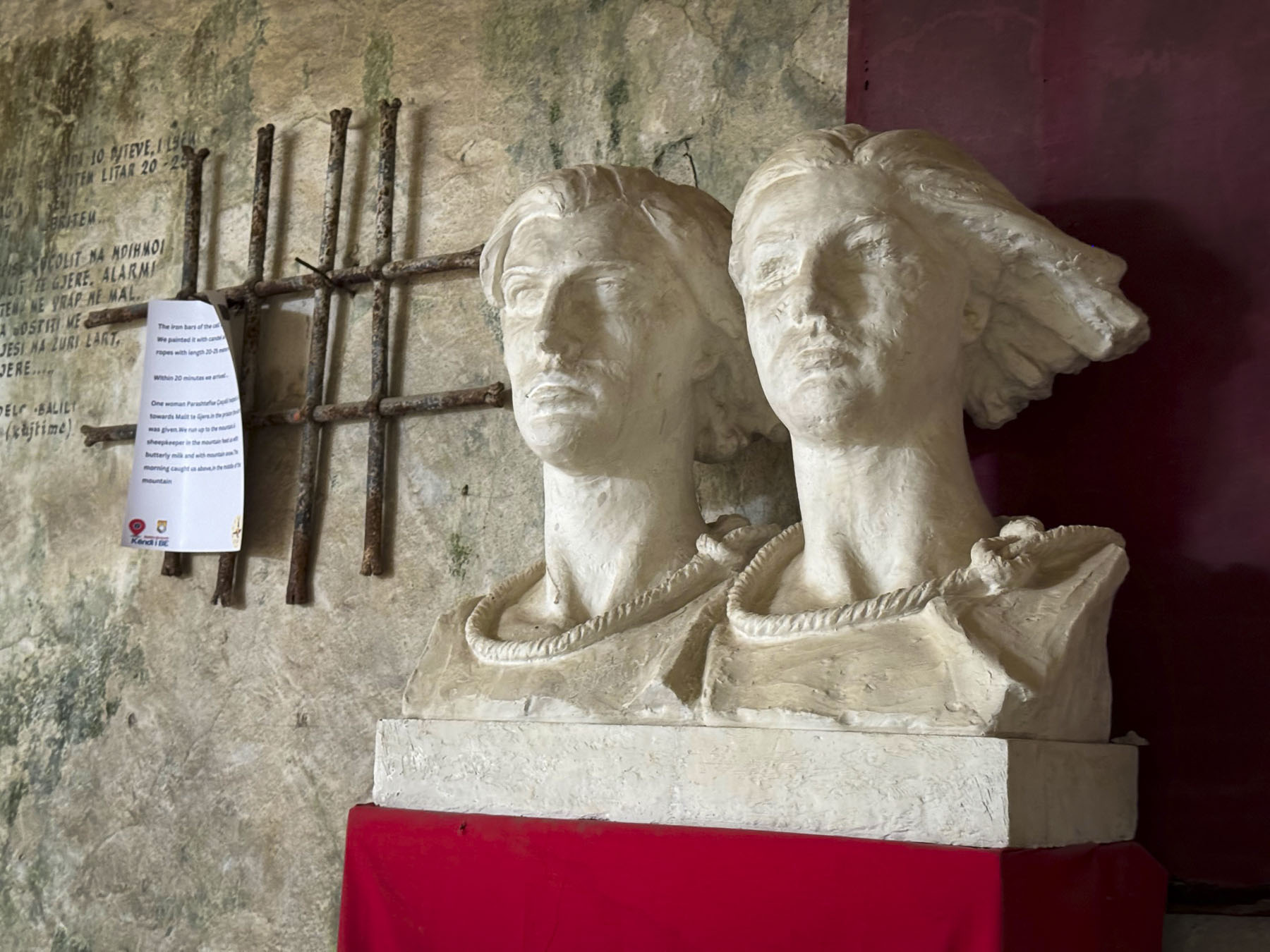
Seville Part 1 – Living in the Centro Historico

Our host had given us instructions to make our way to the Jardines de Murillo, past the historic monument commemorating Columbus’ discovery of the new world and then cross the park entering the Santa Cruz barrio through an old gate, under an elaborate balcony. It’s believed this balcony was the inspiration for a scene in Rossini’s comedic opera, The Barber of Seville, where Lindoro and his band of troubadours played a serenade below the window of the stunning Rosina.  We’d pass through this relaxing park many times during our time in Seville while heading out to explore the city or shop at the closest Supermercados MAS. An excellent small grocery store with bakery, meat, cheese, and fish departments. We signed up for their shopper’s club card!

“Continue down Calle Agua,” so called for the ancient aqueduct that ran atop the high wall that parallels its length and supplied water to Royal Alcázar of Seville, a former Moorish palace before the reconquest of Seville in the 13th century by the Castilians. “It turns and becomes Calle Vida.” A few steps down the lane Calle Judería veered off, a reminder that this was once the old Jewish quarter when the Moors ruled the city and continued until 1492 when King Ferdinand II and Queen Isabella decreed that all Hebrews be expelled from Spain.

We continued straight as the high walls of the lane narrowed to a point where walking single file was required, and the clickety-clack of our suitcases reverberated off the shadowed stone walls. With a broad smile and “Hola!” a sample of freshly toasted snacks was enthusiastically offered to us by an energetic saleswoman. It appeared that her mission was to have every tourist who passed her station sample the tasty treats created at Sabor a Espana, the shop that anchored a corner on Plaza de Doña Elvira, our final destination. Centered with a tiled fountain and surrounded by fragrant Seville orange trees, the intimate plaza was an oasis of greenery amidst the ancient stones of the old town.

Our host was waiting as promised with keys and an orientation of the apartment which we would call home for the next six weeks. It was the smallest apartment we had rented during our travels, but it had wonderful rooftop access with a super view of the plaza below and the Royal Alcázar, which was close enough for Seville football star Jesus Navas to kick a soccer ball into, if he were so inclined.

We will be the first to admit that our travels have not been in an orderly systematic approach to working our way slowly around the world. Instead, we seemed to have adopted a hybrid pinballer approach for ricochet shots to select our destinations across the globe. We wanted a location that offered a warm winter but eliminated any coastal towns for concern that a February/March stay would be too cold or damp along the oceanfront. We opted for Seville, with a population of 700,000, as an affordable alternative to staying in Madrid or Barcelona. The city was the ideal choice for an extended stay with near perfect weather and loads of interesting things to do and see within minutes of our apartment in the center of the historic district. This would have been totally prohibitive with our budget if we had booked this during the high season, but traveling in Spain during the shoulder season was very budget friendly and allowed us to immerse ourselves into the city’s cycle of activity.

A wonderful daily ritual soon emerged, with greetings exchanged with the shop attendant as she swept the cobblestones every morning or was offering samples later in the day when we passed.  Of course, we shopped there; the sweet aroma was too enticing to resist and the snacks were delicious. “We’ll walk it off,” we laughed. Then there were the tapas! Two favorite spots were La Fresquita, a tiny standing room only bar, uniquely devoted to “all things Semana Santa.” This included the playing of classical church music and the occasional wave of a smoky incense-filled censer over the countertop.  The other was Las Teresas, an old school tavern decked with polished wood and whole legs of Jamon Iberico dangling above the bar. We walked everywhere in Seville; it was the perfect city to explore by foot. Every direction proved rewarding with interesting discoveries.

Small plazas held cafés. With their tables set in deep shade, they dotted the historic center and provided a quiet spot to just sit back and enjoy the old-world ambiance of this foreign city, with an intriguing mix of Moorish and Spanish architecture. Our “walk a little then café, then walk a little more,” approach allowed ample opportunities to enjoy the sunny days.

Minutes from our door an arched passage under dwellings in the old Jewish quarter opened onto the Patio de Banderas. It was once a courtyard for a tenth century Moorish palace. In the 1700s the buildings that lined it were used as an armory. Later the square was planted with orange trees and converted to a riding ring for the local gentry to use. At the far end another arched gate framed the La Giralda belltower of the Catedral de Sevilla as we exited onto the Plaza del Triunfo. Built in the twelfth century during the Almohades dynasty when the Andalusian region was still part of Muslim Spain, the tower was originally a minaret.

Its square design is based on the Moorish architecture of the Koutoubia Mosque in Marrakech. The interior does not have a traditional set of stairs for the muezzin to climb to the top for the call to prayer. Instead, it was built with a ramp wide enough for the muezzin to ride a donkey to the summit of its 167ft height. I imagine they would have had a high muezzin turnover rate if this accommodation wasn’t made to facilitate the five times a day call to prayer. After a sixteen-month siege that ended in November 1248, the Muslim forces in Seville surrendered and originally wanted to destroy the minaret before their forced relocation from the city, to prevent its repurposing for another religion. Upon hearing this ing Ferdinand III of Castile included in the terms of surrender a passage that threatened “they would all be put the sword” if the beautiful minaret were defiled in any way. In the sixteenth century a new top third was added with renaissance architectural influences that expanded its height to 337ft and included space for its array of 24 bells. Giralda, “she who turns,” is the name given to the weathervane atop the belltower, with the heroic female statue representing the triumph of Christianity. The exterior of the tower blends Islamic decorative relief sculpture, featuring floral forms, intricate geometric shapes and stylized calligraphy, with Gothic, Romanesque and Renaissance architecture. This is referred to as Mudéjar style and is prevalent in many of the historic buildings in Seville and throughout Andalusia. It is an enchanting blending of cultures and a signature of the region.

The lower part of the belltower and the Mudéjar style Puerta del Perdón gate into the Patio de los Naranjos courtyard filled with perfuming oranges is all that remains of the grand mosque that was repurposed as Seville’s first Christian cathedral after the reconquest. The old building stood until 1401 when construction started on the Catedral De Sevilla, https://www.catedraldesevilla.es/cultural-visit/ with the mission to illustrate the city’s emerging importance and wealth as a trading center on the last navigable stretch of the Guadalquivir River. The church elders offered the following inspirational instructions to the builders: “let us build a church so beautiful and so magnificent that those who see it finished will think we are mad.”

The inside of the of the church, also known as Santa Maria de la Sede, is cavernous with eighty side chapels and a ceiling that soars 138ft high. It is the third largest Christian cathedral in the world. The grandiose Gothic woodcarving of the Retablo Mayor, altar piece, is the life work of one artisan, Pierre Dancart, and gilded with an amazing amount of gold from the then newly discovered Americas.

Statues representing four kings of Spain from Aragon, Castile, Leon and Navarra are pole bearers for Columbus’ tomb, belatedly acknowledging that the explorer, who died in poverty, had made a major contribution to the Spanish Empire.

Always up for a climb, we signed on for a rooftop tour of the cathedral. Following our guide, we climbed stairs worn smooth over the centuries through ancient passageways hidden in the walls and towers to the top of the church for a beautiful view across Seville. We were grateful that we didn’t pass up a chance to walk amid the Gothic spires, flying buttresses and gargoyles that adorn the inspirational structure.

When the tour ended, we rested across from the church, on the steps of the Monumento a la Inmaculada Concepción in Plaza del Triunfo. It seems to be a rite of passage for visitors to Seville, to sit here in the heart of the historic district and soak in the ambiance of this beautiful city.

We let your minds imagine life in Seville centuries ago as horse drawn carriages, filled with tourists now, clattered across the cobblestoned square in front of the Royal Alcazar of Seville. Despite the fact that we were visiting in February, every day the queue for the Royal Alcázar of Seville was always exceptionally long, so we opted to buy our tickets and reserve an entry time online.  The same option is available for the Catedral De Sevilla.

The Plaza del Triunfo sits on what was once Seville’s ancient river port until the 900’s when the area was filled, and the Caliph of Cordoba ordered the building, adjacent to it, of the Royal Alcázar of Seville to accommodate offices of the Muslim government and the Caliph’s residence.

It’s been expanded and renovated numerous times over the centuries by both Muslim and Christian rulers. But surprisingly each successive regime savored an appreciation of the previous ruler’s Islamic architecture, intricate wall and ceiling decorations and quiet, lush oasis-like gardens. All are designed to create a sense of wonder, a key element of Islamic art. The Spanish Kings and Queens continued to admire the Muslim architectural style and imported Mudéjar craftsmen from Toledo and Granada to enhance their newer constructions which favored European Gothic, Romanesque and Renaissance architectural styles. 

The importance of the Alcázar evolved significantly as Spain’s colonization of the Americas saw the country grow into the world’s first global empire, all of it directed from this seat of power in Seville. It’s an amazing place is the best way to sum it up.  Today the Alcázar of Seville is still occasionally used as a royal residence by King Felipe VI and Queen Letizia.

Flamenco is synonymous with Seville and one of most enjoyable ways to watch it was to find a street dancer or group busking. Our favorite dancer was Charli La Tornillo. She entertained crowds many afternoons with a passionate, fiery routine near the fountain in Puerta de Jerez Square, located on the tram line not far from the Alcázar. The Jardines de Murillo and the Plaza de España were also reliable spots to find Flamenco dancers.

One Saturday morning we decided to take the tram from the Prado De San Sebastian metro station into Plaza Nueva to start our morning, a relatively short trip in a modern coach through the pedestrian only historic center on a route lined with ancient stone and fin-de-siècle buildings.

It passed Seville’s 15th-century Exchange that now houses the Archivo de Indias, which contains centuries worth of records pertaining to Spain’s colonies in the new world. We first noticed a group of elegantly attired women wearing unique fashionable hats called tocados, or fascinators, walking along Av. de la Constitución, not far from city hall, our final stop. Saturday mornings, it turns out, are when civil weddings are performed in Seville.

It was an interesting morning watching the various fancifully dressed wedding groups queue in the plaza before their assigned time. Unlike civil ceremonies in the states, which usually are lowkey events, civil weddings in Spain are occasions for fashionistas to dress to the hilt.

After the ceremonies, friends and families escorted the bride and groom to nearby restaurants to continue the celebrations.

Seville is also a popular destination for joyful, outlandishly boisterous hen parties. Participants parade through the streets, dressed in quirky outfits, to celebrate their friend and bride to be.

Seville packs a lot into a small space and every direction we headed offered something interesting. The Hospital los Venerables was just a few steps away from our front door, down the narrow Calle Gloria that opens to the aptly named Plaza Venerables. 

It was built in the 1600s as a retirement home for poor, elderly or disabled priests.  The very austere exterior deceitfully hides a wonderfully ornate Baroque chapel and interior, as well as various tranquil courtyards. Today the building is used as a museum dedicated to the Sevillian born (1599) artist Diego Velázquez.  A collection of paintings by 17th century artists Francisco Pacheco, Murillo and Bartolomeo Cavarozzi are also on display.

There was an amazing amount to see in Seville as we wandered all over the city.  We’ll share our walks across this intriguing city in a number of future blogs.

Till next time, Craig & Donna

Christmas in Milan – A Monumental Cathedral, Cemetery and Horse

Snow started falling as we brewed the morning’s first cups of coffee on the stove using a traditional Italian Moka coffee pot.  Invented by Alfonso Bialetti in 1933, Italians readily accepted it as an easy way to make espresso at home, and it quickly became symbolic of “la dolce vita,” the sweet life and for us a pleasant morning ritual. The day before had been warmer, and bundled up we were able to take our coffee outside on the balcony of our fourth-floor Airbnb rental and enjoy a great sunset view.  This morning though, the tracks of the tram line melted through the thin blanket of freshly fallen snow and left two parallel lines, as if someone had drawn them on this new white canvas with a pencil.

Continuing with our philosophy of slow, immersive travel, we had opted for an apartment in the Isola neighborhood.  Though far away from Milan’s city center, it was situated near the Porta Garibaldi train station and the recently built modern skyscraper complex that surrounds Piazza Gae Aulenti. The illy Caffè here was a frequent stop for comsmopolitan people-watching and excellent coffee.

Nearby were the twin apartment towers of Boeri’s Bosco Verticale, Vertical Forest, famous for their lush foliage-covered balconies, and the Isola and Zara subway stations. The latter was only seven quick stops from the Milan Duomo.

The neighborhood also had numerous tram lines traversing it, but it was impossible to find a hardcopy map of this very extensive system while we were in Milan, though we were able to find this online map of the Milan Tram System while writing this. Ultimately, we relied on our phone’s mapping App to view our tram trips in real time and determine where to change lines to continue our journeys across the city.

Two blocks away, the bi-weekly outdoor food market closed the streets around Piazza Tito Minniti for the bulk of the day while families shopped the stalls for fresh vegetables, cheese, meat and seafood along with socks, pants, dresses and blouses. We enjoyed this aspect of Italian life after learning its subtle nuances – for example, only the vendor touches the fruits and vegetables. There is also a protocol of queueing. Sometimes though our schedule required us to shop around the corner at La Pastaia for fresh pasta or the Penny Market grocery store, where we signed up again for another shopper club card.  We’ve done this in every city where we have stayed long term – Cuenca, Antigua, Lisbon, Cape Town and Kotor. It seems silly, but those small savings do add up and jokingly it helps us feel more like a local.

Emerging from the darkness of the subway station onto the Piazza del Duomo, we were momentarily blinded by the bright sun reflecting off the monumental cathedral that towered before us. Breathtaking in its size and capable of holding 40,000 worshippers, the cathedral is the second largest in Europe, following Saint Peter’s Basilica in Vatican City, and the third largest in the world.  Designed in 1386, the ornate and dramatic Gothic façade of the cathedral is covered with 3,400 statues and spires, which required the recruitment of hundreds of stone masons and artisans from across Europe. 

The opulent exterior belies the cathedral’s spartan interior.  While massive in scale, the interior’s gray stone walls and towering columns are cold and austere even with the soft, filtered light of beautiful stained-glass windows illuminating the space. Most moving was a ghastly sculpture by 16th century Italian sculptor Marco d’Agrate of Saint Bartholomew holding his flayed skin, depicting how he was punished for converting an Armenian King to Christianity in the first century AD.

Wandering around the flying buttresses and sculpted spires on the roof of the church was the highlight of our visit to the Duomo. The day was crystal clear, and the panoramic view stretched from the Milanese skyline to the snowcapped Italian Alps. It was spectactular.

Across the plaza the Museum of the Milan Cathedral has an extensive and interesting collection of art and sculpture that at one time or another was part of the Duomo.

On the other side of the plaza stood Milan’s official Christmas tree, a modern conically shaped metal structure covered with thousands of multi-colored changing lights. Beyond the tree was the famous Galleria Vittorio Emanuele II, where four-story tall buildings and the promenade between them are covered with a spectacular vaulted glass ceiling.  It is considered the world’s first indoor shopping mall, built shortly after the unification of the Italian peninsular into the Kingdom of Italy in the 1860s when Vittorio Emanuele II was named king.  Lovingly nicknamed “il Salotto di Milano,” or “the living room of Milan” by the Milanese, the phrase acknowledges it’s the place to meet friends and be seen.

Wanting to stay in the city center till night fell, so that we could fully appreciated the Christmas lights on the tree in front of the Duomo, we wandered farther afield until we found the Chiesa di Santa Maria presso San Satiro. First built in the 9th century, the present church dates to the Italian Renaissance and  features a gilded interior and a rare example of Trompe-l’œil in a church. This painter’s effect utilizes a forced perspective to create an illusion of depth behind the altar.

After dark the plaza in front of the Duomo continued to fill with people eager to enjoy the festive mood of the Christmas season.  The Christmas tree was stunning, and its modernity nicely complimented the historic buildings surrounding the piazza.

From our balcony we could see the silhouette of Tomba di Manzoni, the grand entranceway and “Hall of Fame” mausoleum for the noteworthy, though not as wealthy, Milanese who are interned at the Cimitero Monumentale. 

As we wandered farther into the cemetery, we realized that monumental might be an understatement. It was difficult not to confuse this extraordinarily extravagant place of entombment for an outdoor sculpture garden with memorials created by a who’s who list of famous 19th and 20th century Italian artists and architects for prominent Milanese families. 

The family names on the mausoleums also adorn roads, parks, tram and subway stations across the city. There seemed to be an afterlife version of one upmanship in play here with each monument more grandiose than the last.  As if competition or success in life was not enough and had to continue till your final committal.  It was a fascinating place to explore. Plan on spending most of the day.

Donna’s mom had passed away the year before and one of our reasons for staying in Milan was to revisit a project her mother was instrumental in as a member of the United State’s Italian American Heritage Foundation and Leonardo da Vinci’s Horse Foundation. She helped for fifteen years in the 1980s and 90s to raise 2.5 million dollars to the see Leonardo da Vinci’s 24ft tall Il Cavallo recreated. The sculpture was finally realized by American sculptor Nina Akamu

Da Vinci was commissioned by the Duke of Milan in 1482 to create, at the time, what was the largest equestrian statue in the world, as tribute to his late father, Francesco Sforza.  The full-size clay sculpture was completed in 1491 and was waiting for its terracotta mold to be made and enough bronze amassed for its casting when the French invaded in 1499. Subsequentially, the clay model was totally destroyed by French crossbowmen who used it for target practice.

On its 500th anniversary, da Vinci’s Il Cavallo was unveiled outside the Ippodromo Snai San Siro, Milan’s famous horse racing track. Smaller artistic interpretations of Il Cavallo stand in the plaza behind it. This being modern Italy though a horse just can’t be a horse, and many were psychedelically painted and wore tutus or unicorn horns. Wonderfully whimsical, they definitely made us smile. 

One rainy afternoon we took the tram to the 15th century Sforzesco Castle, seat of power for the Sforza dynasty that lasted only 100 years. But in that time the fortress/palace was expanded to be one of the largest citadels in Europe and filled with works of art by numerous Italian Renaissance artists.  Leonardo da Vinci, Michelangelo, Bramante, Correggio, Bernardino Zenale and Bernardino Butinone were commissioned to adorn the walls and ceilings and sculpt pieces to fill the vast space. Today the castle houses several of the city’s museums and art collections where the artists’ contributions to the palace can still be seen. A heavy fog had blanketed the citadel by closing time and was evocative of the moods cast in the historical fiction novels set in Renaissance Italy by Sarah Dunant. Later that evening we attended an Anglican Lessons and Carols service as a prelude to Christmas, then headed back to our apartment humming Christmas tunes as we window shopped.

Signs for Artigiano in Fiera, the Fair, dotted our route into Milan when we first arrived from Bergamo and piqued our interest.  We hadn’t heard of it before, but with a quick internet search realized it was the shopping event of the Christmas season in Milan. While in line to enter the center we noticed many people pulling large suitcases. Toward the end of our shopping spree, laden with purchases, we realized the bags on wheels were pure genius, and allowed the seasoned pros to carry their holiday shopping with ease. The Fiera is a tremendously popular annual, nine-day event that draws over one million visitors to the Fiera Milano, Europe’s largest exhibition center, located in Rho, just outside Milan. Folks shop for home furnishings, fashion, jewelry, arts and crafts, along with artisanal foods, wines and liquor. The sites’ nine cavernous exhibition halls were filled with vendors from 100 countries, though displays from the twenty regions of Italy occupied ninety percent of the space. Plan on spending the whole day if you hope to see everything. It was all very interesting and entertaining and truly a marathon event. From Milan it’s an easy trip on the M1 subway, which stops right at the venue.

Wanting to make our last night in Milan special, we made dinner reservations at a highly reviewed restaurant, only to be turned away into a rainy night because we arrived early as the staff was enjoying their pre-work communal meal together. (The later you dine out in Italy the more you’ll feel like a local. Though this does take some getting used to and we haven’t mastered this yet.) “Okay, we will have a drink at the corner bar and return,” we agreed.

To our delight, our aperitives were accompanied by small sandwiches with chips and olives.  We had every intention of heading back to the restaurant, but our waiter was engaging, and the Aperol spritzes were very good. We spent the time watching folks fight the wind with their umbrellas through the bar’s rain-pelted window. The specular highlights from the streetlights added magic to the scene. Occasionally some groups popped inside seeking a warm reprieve from the downpour outside, shook out their umbrellas and found a seat.  Recapping our adventures, tentatively planning the next six months, and talking about Christmas with our kids back in the states, the evening flew by until the waiter said they were closing. Umbrellas up! We headed home.

Till next time, Craig & Donna
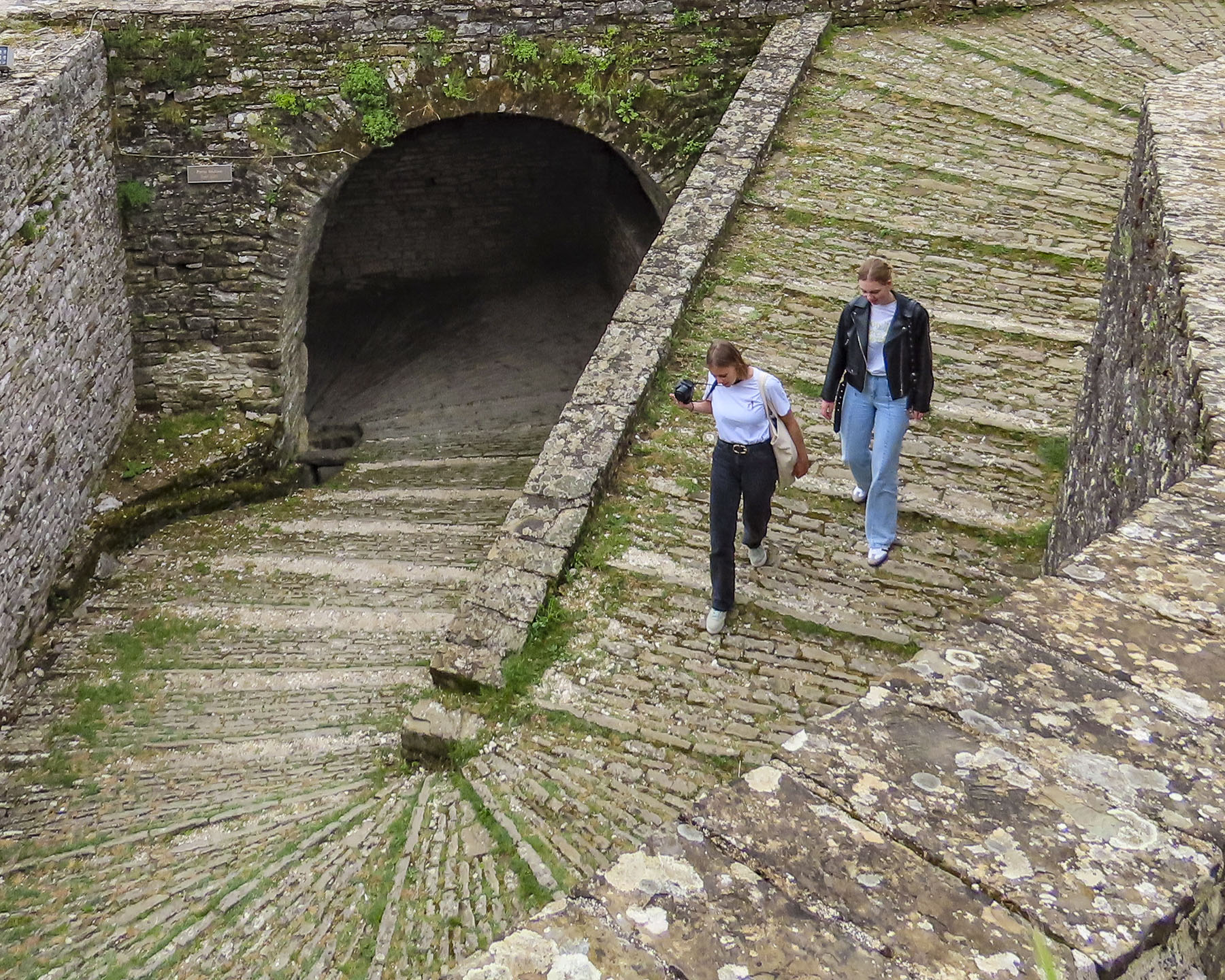
PS – The Artigiano was canceled in 2020 due to the Corona virus lock down in Italy. Hopefully, it will be allowed 2021.