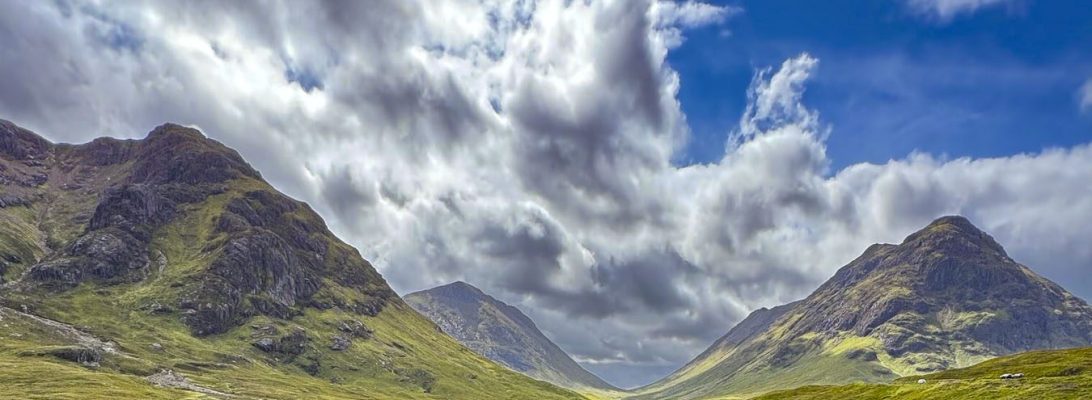
The North Coast 500, kind of – Part 1: Edinburgh to Glencoe

Traditionally the North Coast 500 is a 516-mile tourist route that hugs the vast coastline of northern Scotland, and in its serpentine course includes some of the most scenic seascapes and landscapes on the planet, and in the Scottish Highlands as well. Maps show it as a large roughly circular route that starts and ends in Inverness, as our trip did, but bypasses Edinburgh and Glencoe since they are farther south. In planning our trip, we used the traditional NC500 as inspiration for preparing our own itinerary that included Edinburgh, Skye, the Isle of Lewis and Harris, and the Orkney Islands. Ultimately, we drove 1,430 miles over 15 days. Roughly 95 miles per day, which was a very manageable pace and offered plenty of opportunities to visit sites and explore. We used Arnold Clark for our car hire and were quite pleased with their pricing and service. Visit Scotland has a great website that outlines 15 other scenic driving routes that will get your wheels spinning. We hope you enjoy this first part of trip that we fondly call the D&C1430.
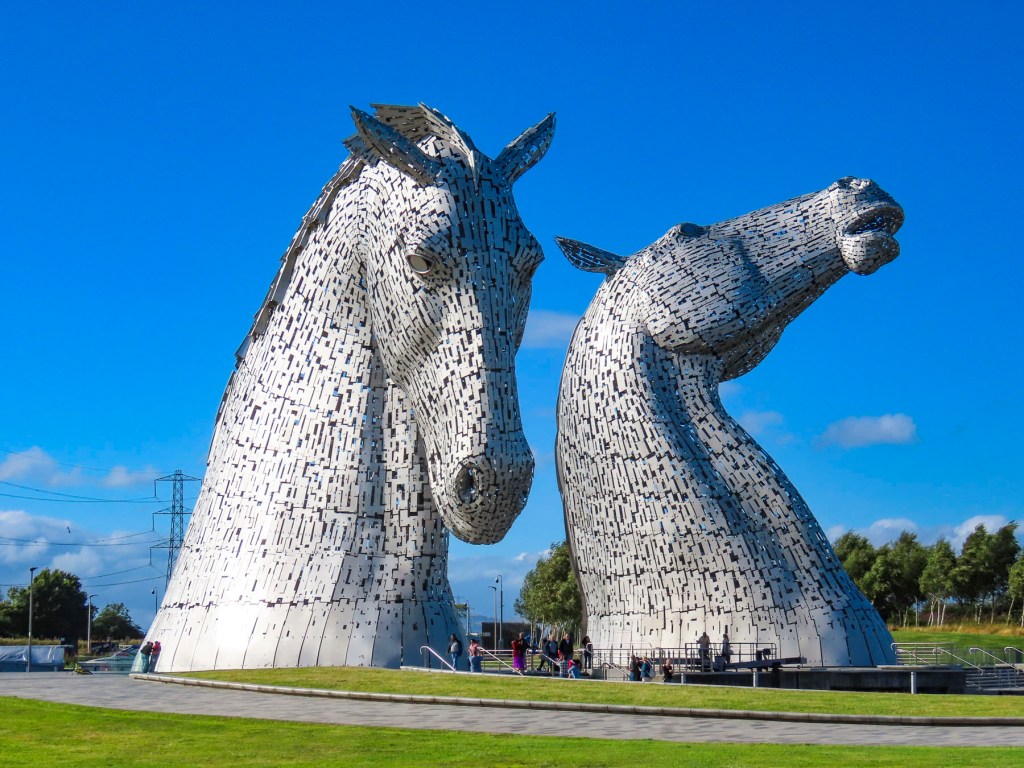
By this point in our trip, we had already been in Scotland for four days, but really considered this the first day of our Highlands adventure. Leaving Edinburgh and the Fringe Festival behind us, we zipped past the Kelpies. You have to be mindful of the speed limits while driving on the roads in the United Kingdom, as there are speed cameras everywhere. But it seems to be a lenient system where your speed is averaged between two points, so if you enter the camera zone above the speed limit you have a chance to compensate for the error by slowing down. Five months on and we have not yet received any notices of fines, but it did take some getting used to.
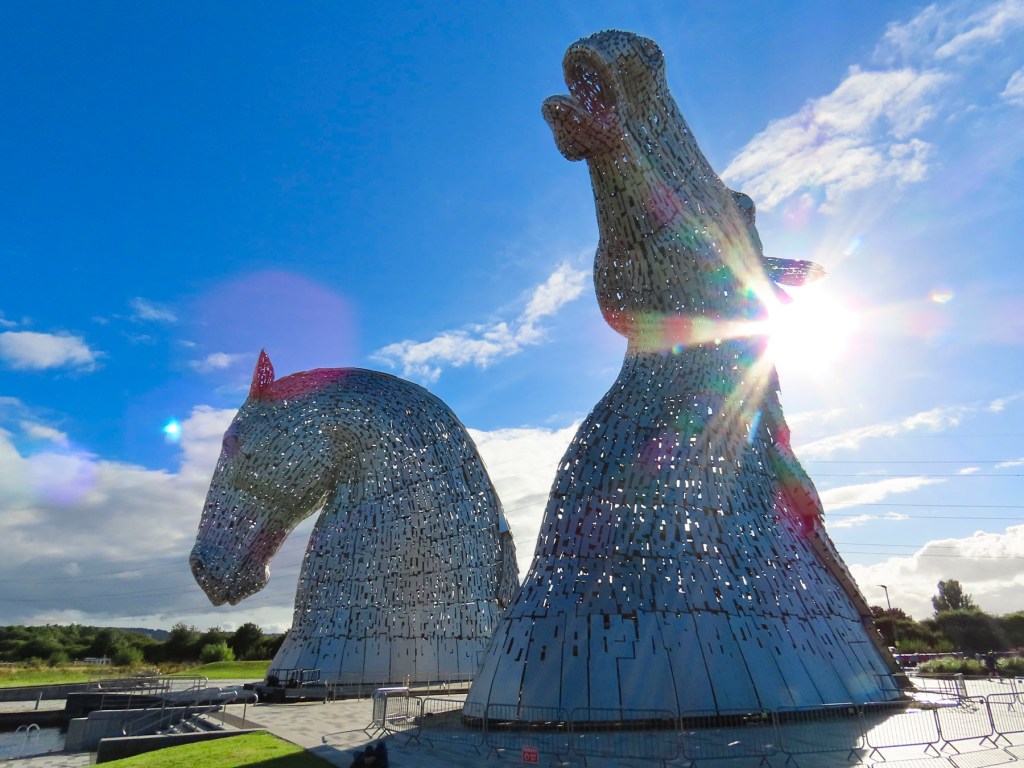
The morning was gray. The plan for the day was to visit several intriguing sculptures around Cumbernauld, head to Stirling Castle, and spend the night in the small village of Kippen. Luckily, we had stopped at the Kelpies several days earlier, on a beautiful afternoon, as we drove into Edinburgh. The 100ft tall equestrian statues are located in Helix Park at the confluence of the Clyde Canal and the River Carron. The steel horseheads are the largest in the world, and were created by the internationally acclaimed Scottish sculptor, Andy Scott. They are based on Scottish folklore;  a kelpie is a dangerous shape-shifting water spirit that appears on land as a horse, who entices its unsuspecting victim to ride on its back, only to be sped away to a watery grave. 

We used to purchase guidebooks to research our travels, but now rely mostly on internet research and Instagram. We have found Google Maps to be a great tool and use it to find many points of interest that seem to fly under the radar. We highlight them as favorites on the app and then connect the dots for our itinerary.

That’s how we planned our first stop of the day at another artwork conceived by Andy Scott – Arria, the Angel of the ‘Nauld,’ or the Steel Mermaid. The sculpture appeared quickly above the tree line along the M80 then vanished from view like a mirage. There was not any signage to the sculpture, but we eventually found ourselves at the back corner of the Eastfield Cemetery in Cumbernauld, where a path led through the woods to the 33ft tall steel figure.        
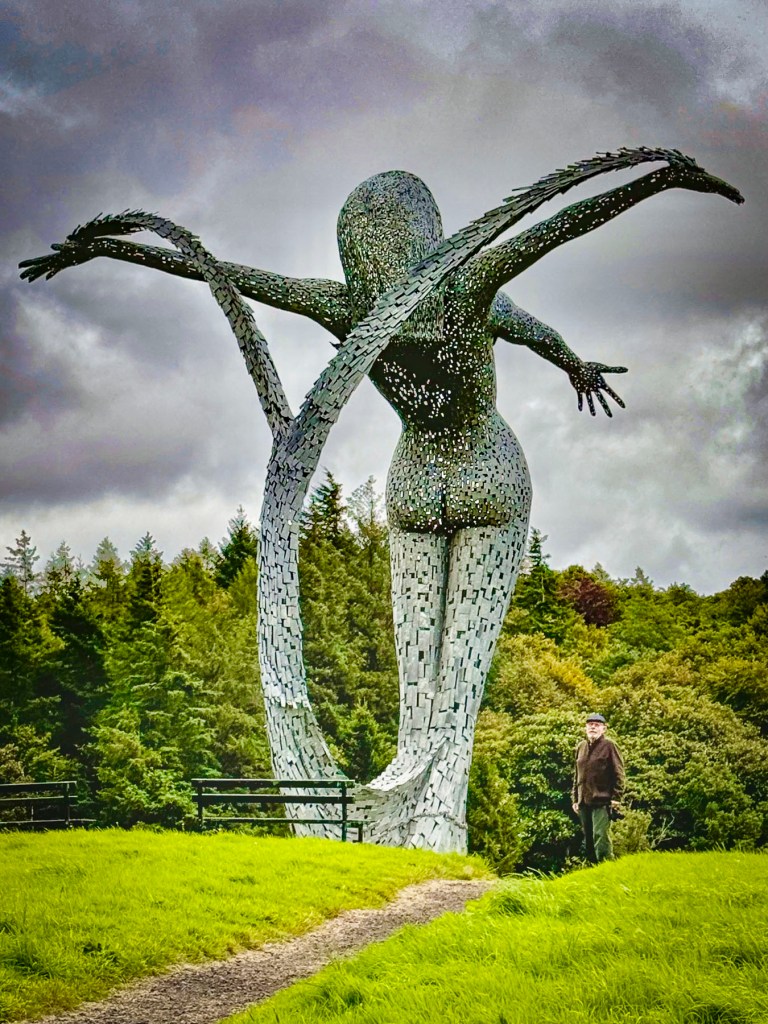
The graceful sweep of the split tail combining as one is meant to represent the original meaning of Cumbernauld. In Gaelic ‘Comar nan Allt’, means the merging of water, which represents the town’s two rivers flowing into the Forth and Clyde.  The figure offers, with outstretched arms, the rivers as her gift of life to the earth. Encircling the base of the sculpture is the poem by ‘Watershed’ by Jim Carruth.

The first sounds spoken, from the spring’s core, are of a new beginning, of people and place,

a poetry that bubbles and gargles to the surface, to leave this watershed, flow east and west,

in a rush of words, that tumble and fall, to join the conversations, of two great rivers,

a voice calling out, I belong I belong, adding to the language of sea and ocean.

The name was chosen from a local school competition. Arria was the mother of the Roman Emperor Antoninus Pius, who in AD 142 built a series of forts along the Antonine Wall which crossed Scotland from the River Forth to the River Clyde and marked the Roman Empire’s most northern frontier. The Romans only held it for thirty years before Scottish tribes forced them to flee to safety farther south behind Hadrian’s Wall.

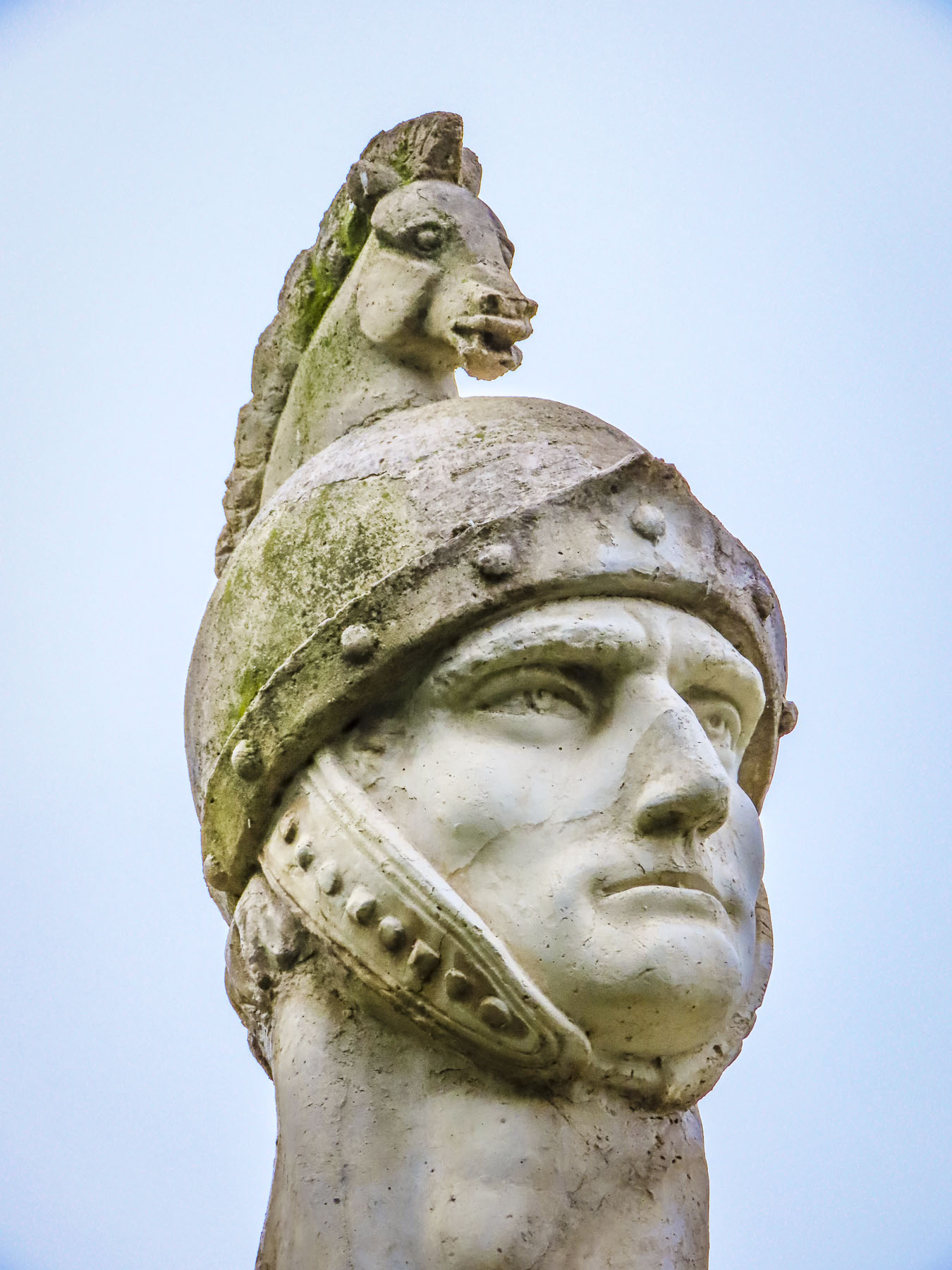
A short distance farther on we pulled down a narrow country track bordered by fields and horse pastures to a trailhead for Croy Hill, where soldiers were once stationed in a fort along the Antonine Wall. The only remainder of that era is an 18ft tall steel sculpture of a Roman centurion, created by the Edinburgh artist, Svetlana Kondakova, in 2021. Today 78 miles of trails along the wall welcome distance hikers, dog walkers and equestrians to explore the ancient history of the area.

Hunger called and we found refuge along a quiet pedestrian lane in Kilsyth, at Scarecrow Bar & Grill. It had friendly staff, good food, and was a nice place to relax before heading to Stirling Castle.

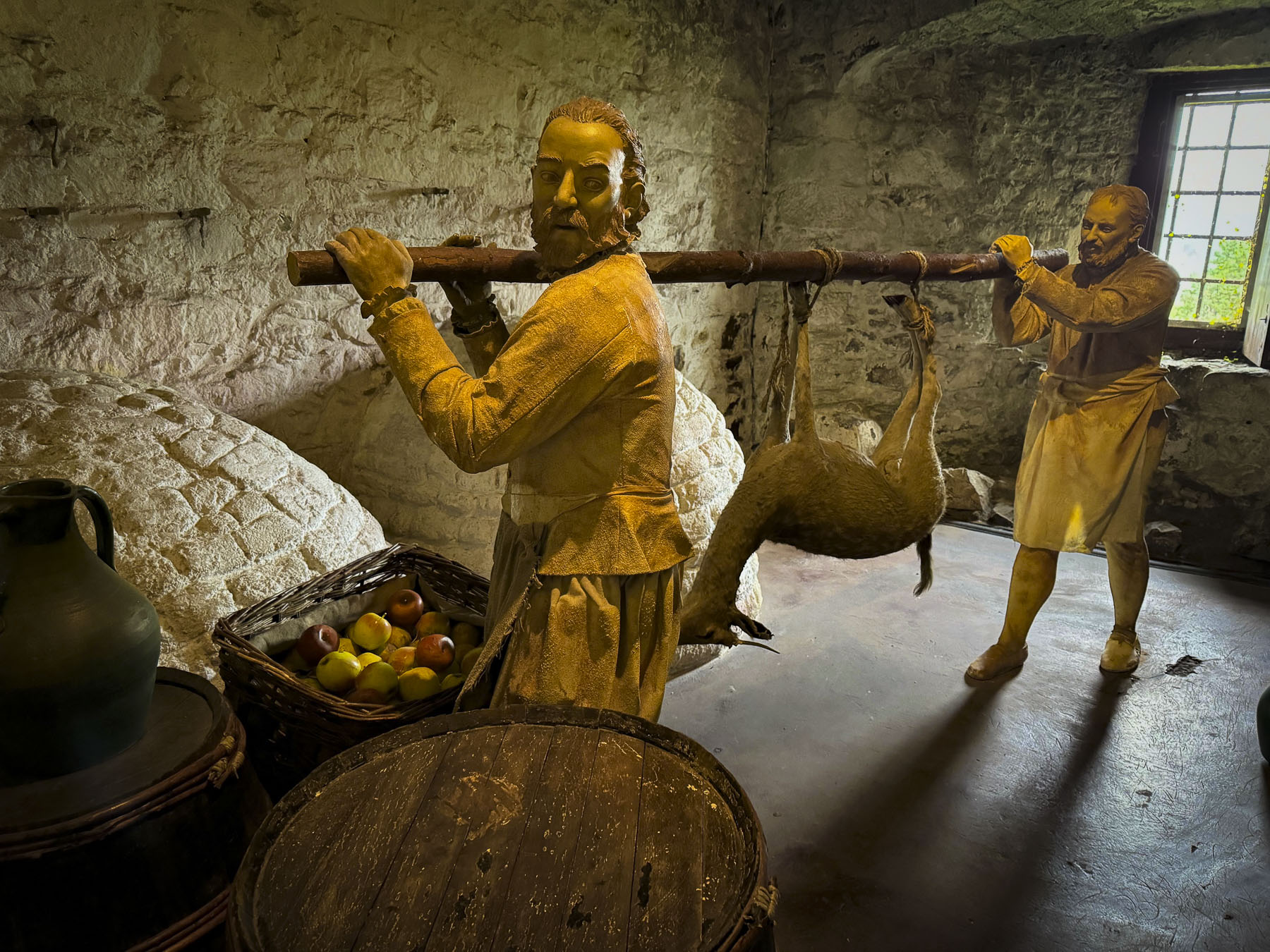
The Saturday crowd was tapering off by the time we arrived, around 3:00 pm, and we were able to park conveniently at the top of the hill next to the entrance. The ancient castle was entwined throughout Scotland’s epic history. Situated dramatically on a volcanic outcrop, the castle was built in the early 1100’s to guard the shallowest fording point across the River Forth, which divides the lowlands from the highlands. Over the centuries nearly ever Scottish monarch has paced the halls and ramparts of this mighty castle. Alexander I, Mary Queen of Scots, James IV, V & VI, William Wallace, Robert the Bruce, Margaret Tudor, and Bonnie Prince Charlie are just a few of the dozens of Kings and Queens who have called the castle home and most likely cursed the food, from the dungeon like kitchen, along with the wet weather and wind, while warming their bones next to one of the castle’s numerous fireplaces.
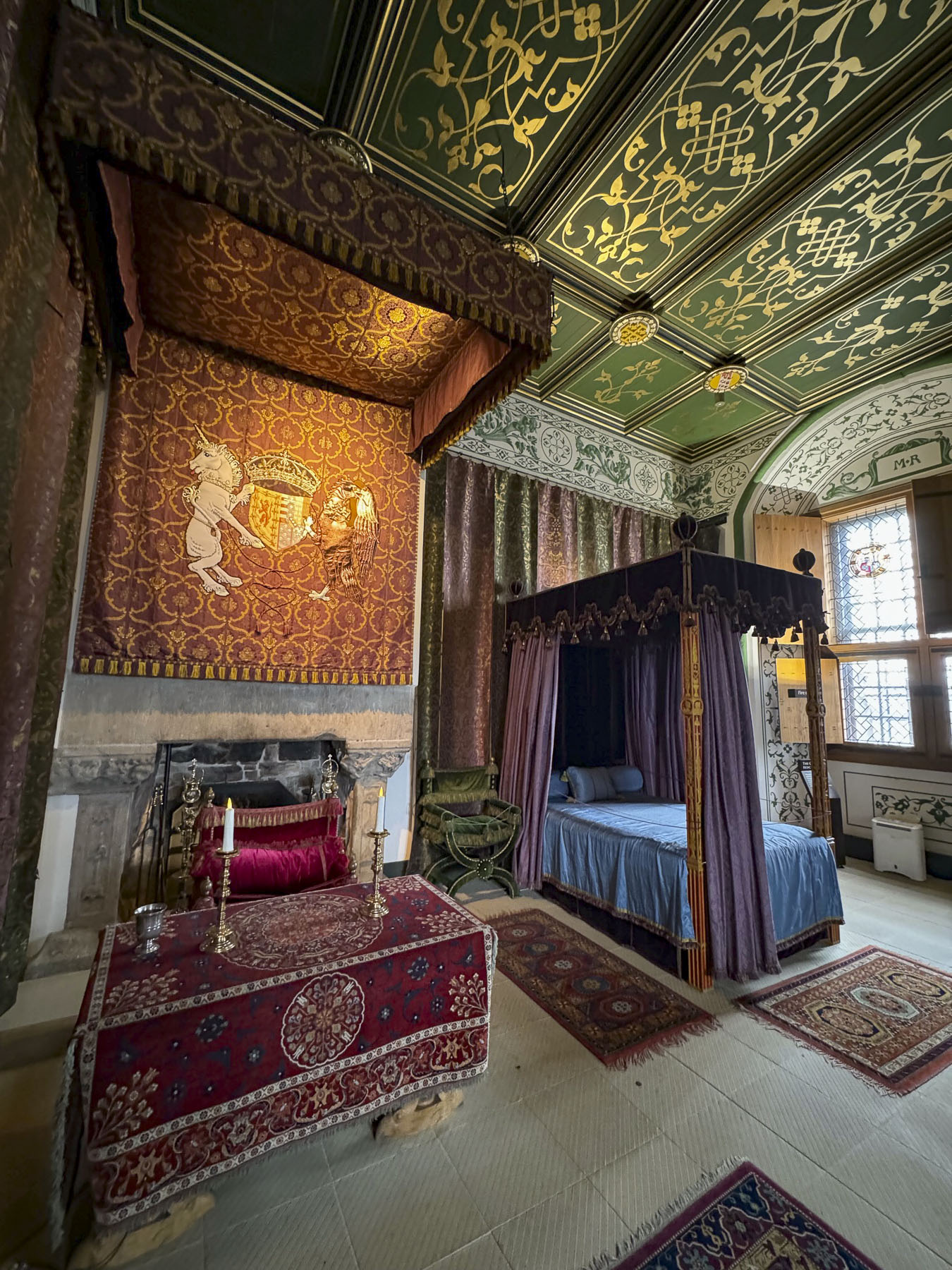
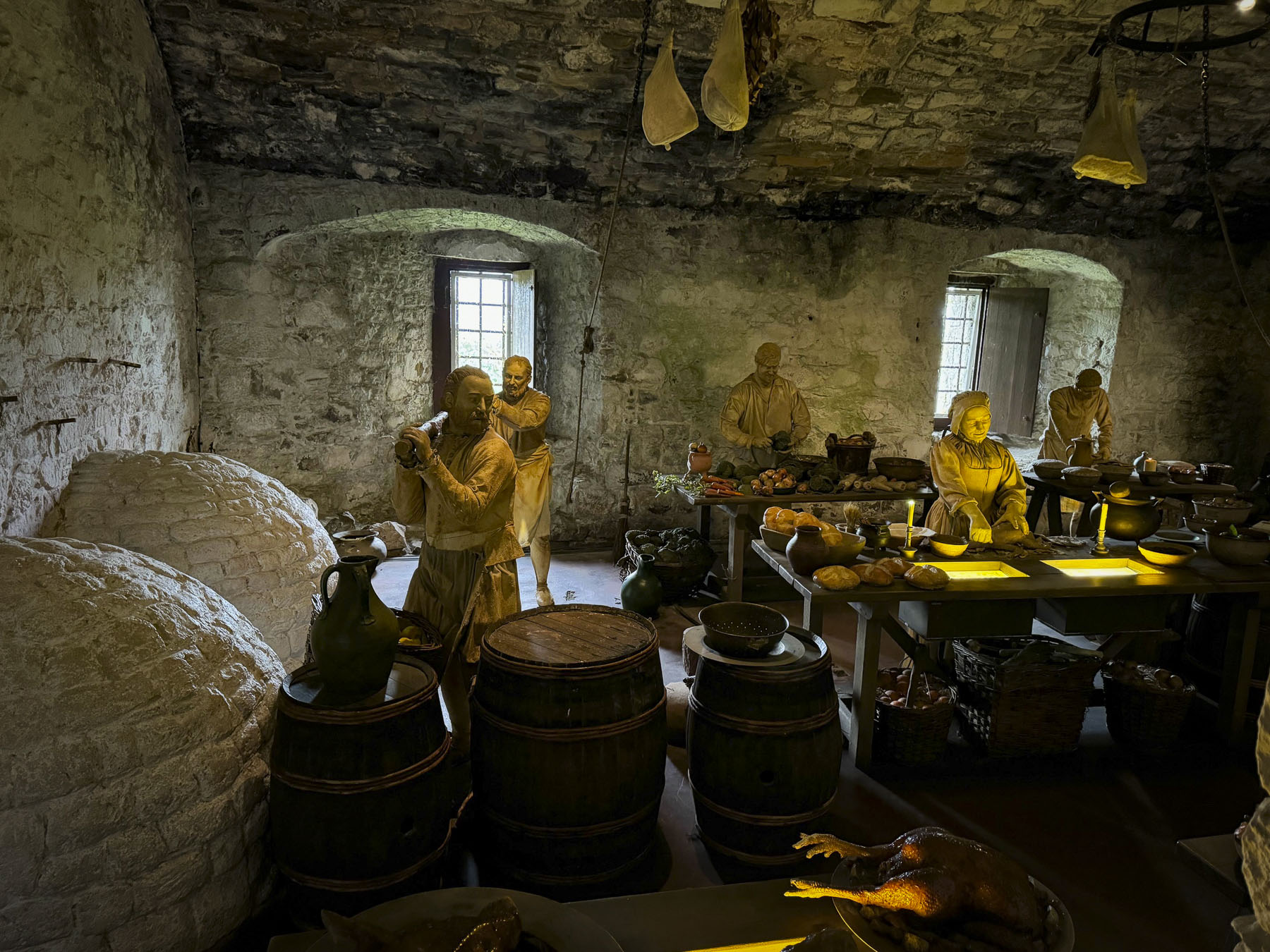
Many reconfigurations and additions have happened to the castle over the centuries. One of the most significant was the building of the Great Hall by James IV in 1501. This cavernous structure measuring, 138ft by 47ft, has five walk-in fireplaces, and a unique hammer beam roof, which resembles the inside of a wooden boat hull,. It was used to host royal banquets, weddings, christenings and meetings of state. One lavish event featured a specially built wooden boat with 40ft tall masts, and 36 brass canons, which were fired in celebration. After the smoke cleared and the guests stopped coughing, a seafood banquet was served from it. And, I’m assuming, the party planner lost his head the next day. Centuries later it was used as a stable before being renovated and used as a military barracks until the 1960’s.

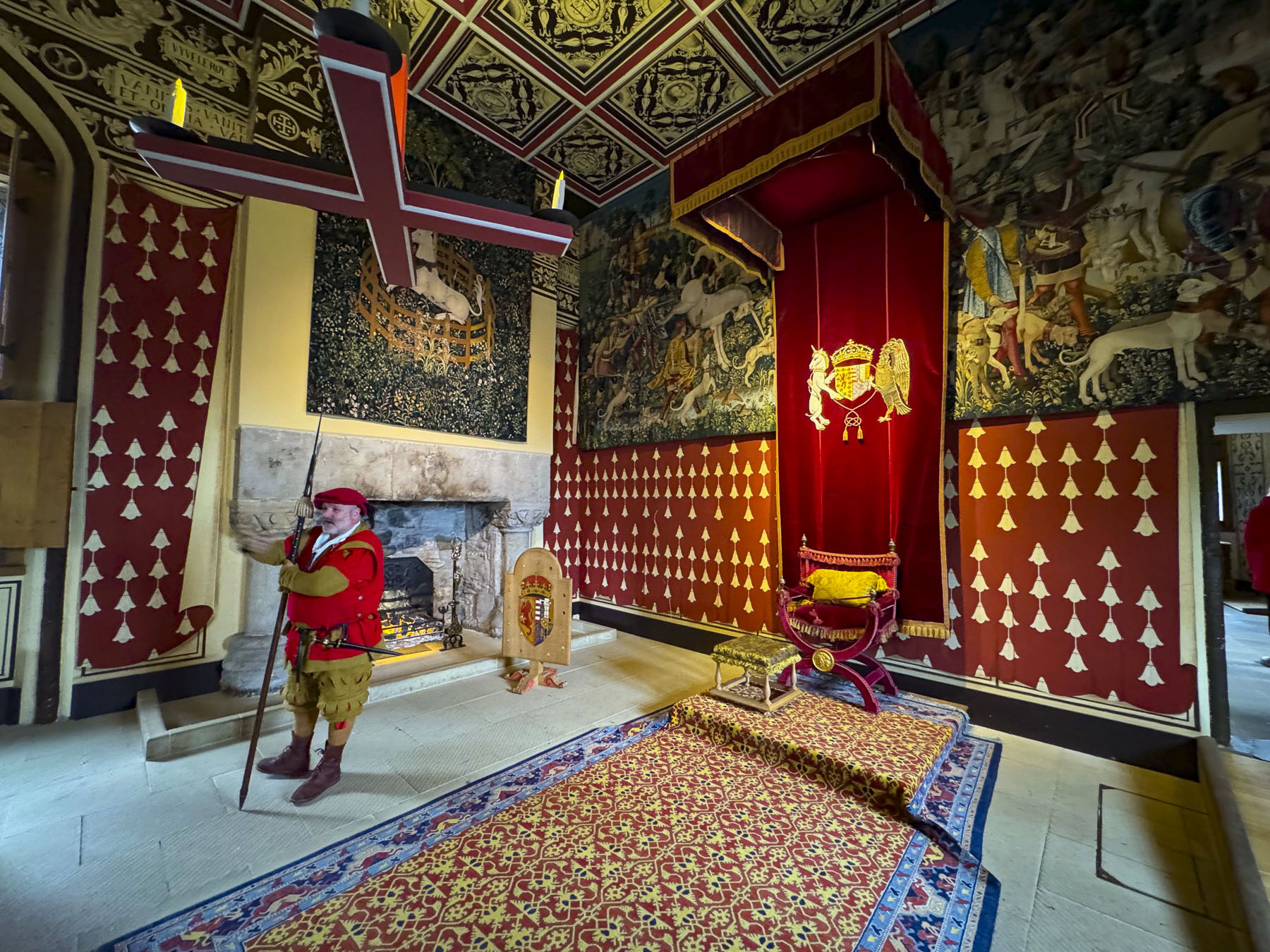
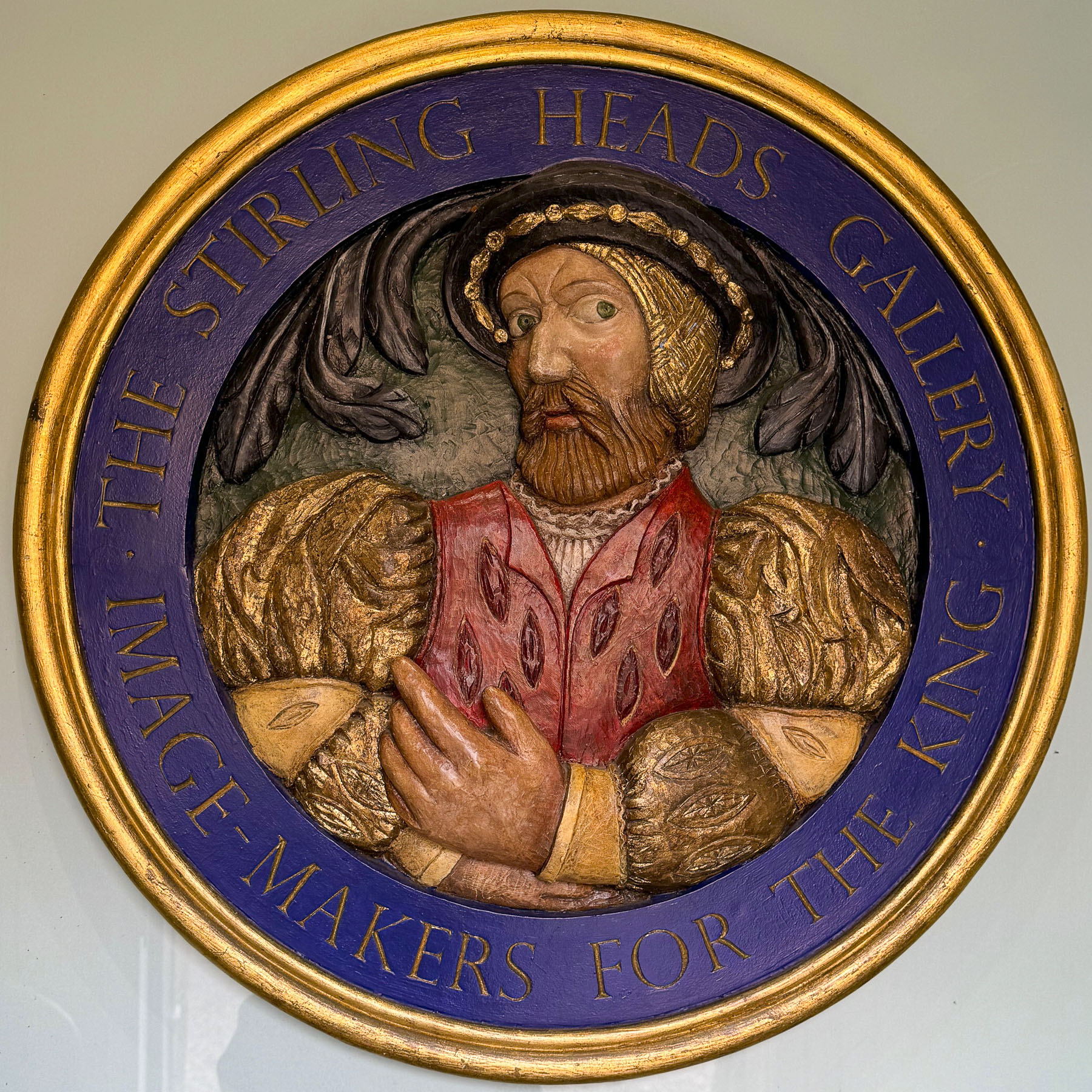
Touring the rooms of the palace was the highlight of our visit to Stirling Castle. They were noticeably better furnished than Edinburgh Castle and the Palace of Holyroodhouse. Gorgeous tapestries were displayed throughout and the ceiling of one main rooms featured replicas of the famous 37 “Stirling Heads.” They were quite an unusual embellishment for a royal residence, depicting mythical heroes, historical Scots, and everyday people.

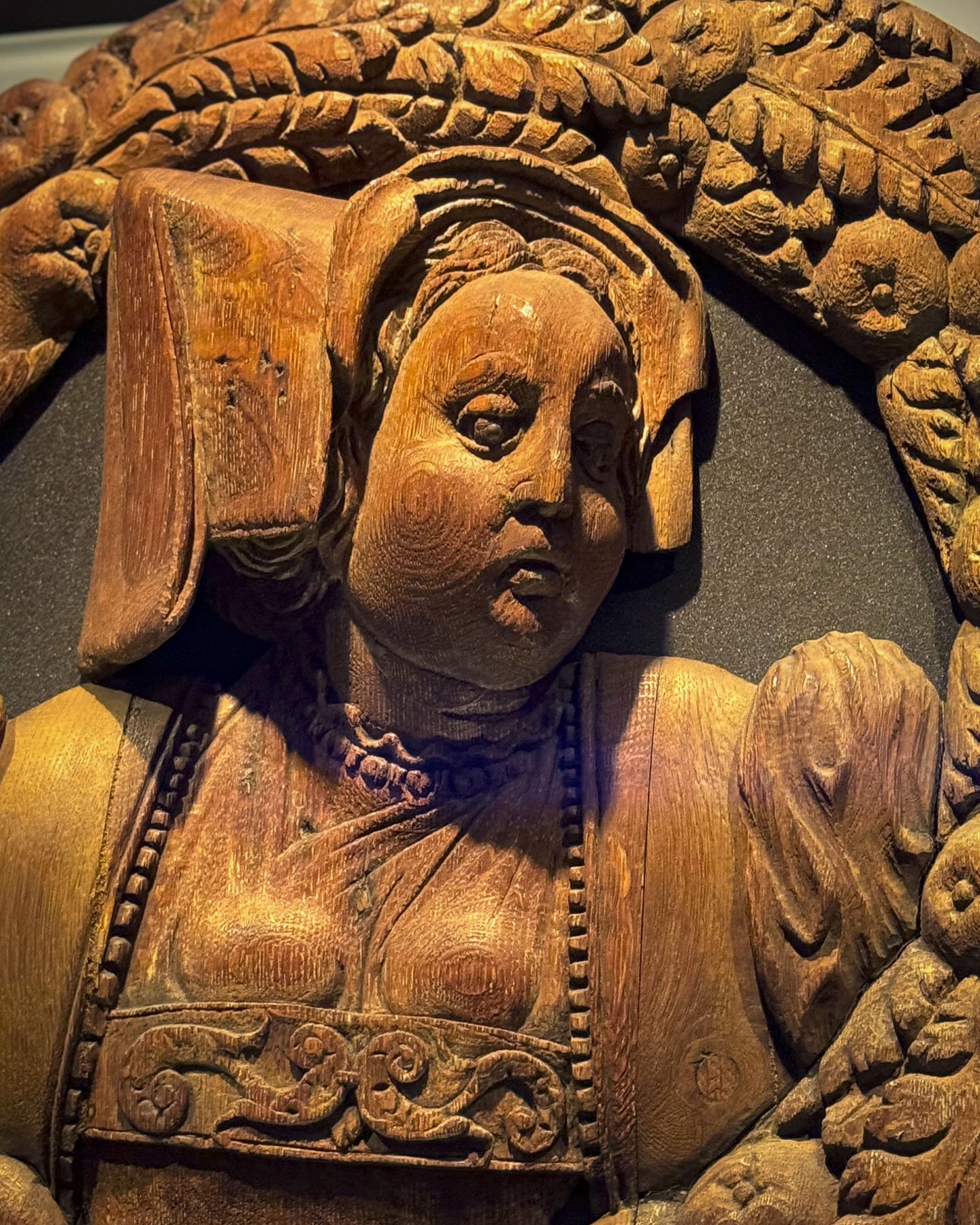
The original three-foot wide portrait medallions, often referred to as “Scotland’s other Crown Jewels,” were carved from solid oak in the 16th century, and are on exhibit in the castle’s gallery. The new medallions, installed on the ceiling in 2011, were painstakingly recreated over a six-year period by the master wood sculptor John Donaldson and then painted in a renaissance style, appropriate to the era, by artist Graciela Ainsworth.

It’s always debatable how far out we should make our hotel bookings. Six months out for hotel reservations is what we normally do, and it usually works very well, but surprisingly to our dismay most of our first-choice hotels in prime locations were already fully booked by then. 

Which is how we arrived at The Inn at Kippen in time for dinner. Kippen is a quaint crossroads village west of Stirling and was a wonderful off-the-beaten track discovery. The first public record of Kippen appears in the 1300’s when the village church is mentioned. But its heyday was in the 18th century when it was stagecoach stop along a military road between Stirling and Balloch.
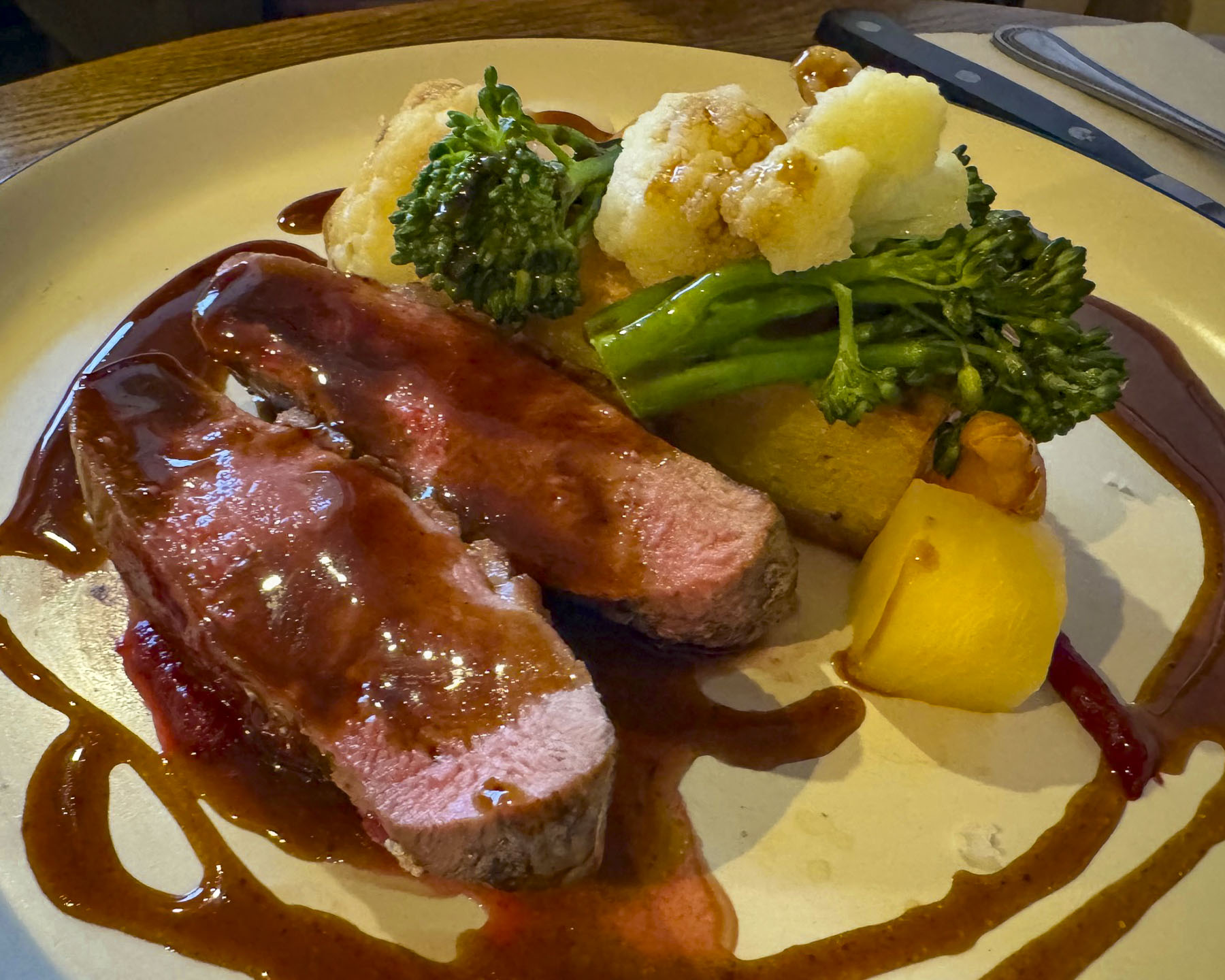
The Kippen is a historic coaching Inn and continues the friendly tradition of welcoming travelers, with a dog-friendly bar and restaurant on the first floor and five well-appointed rooms on the second. The hosts pride themselves on sourcing all meats, fish and produce locally and the menu changes accordingly with the seasons. Our dinner, as well as breakfast the next morning, was delicous.
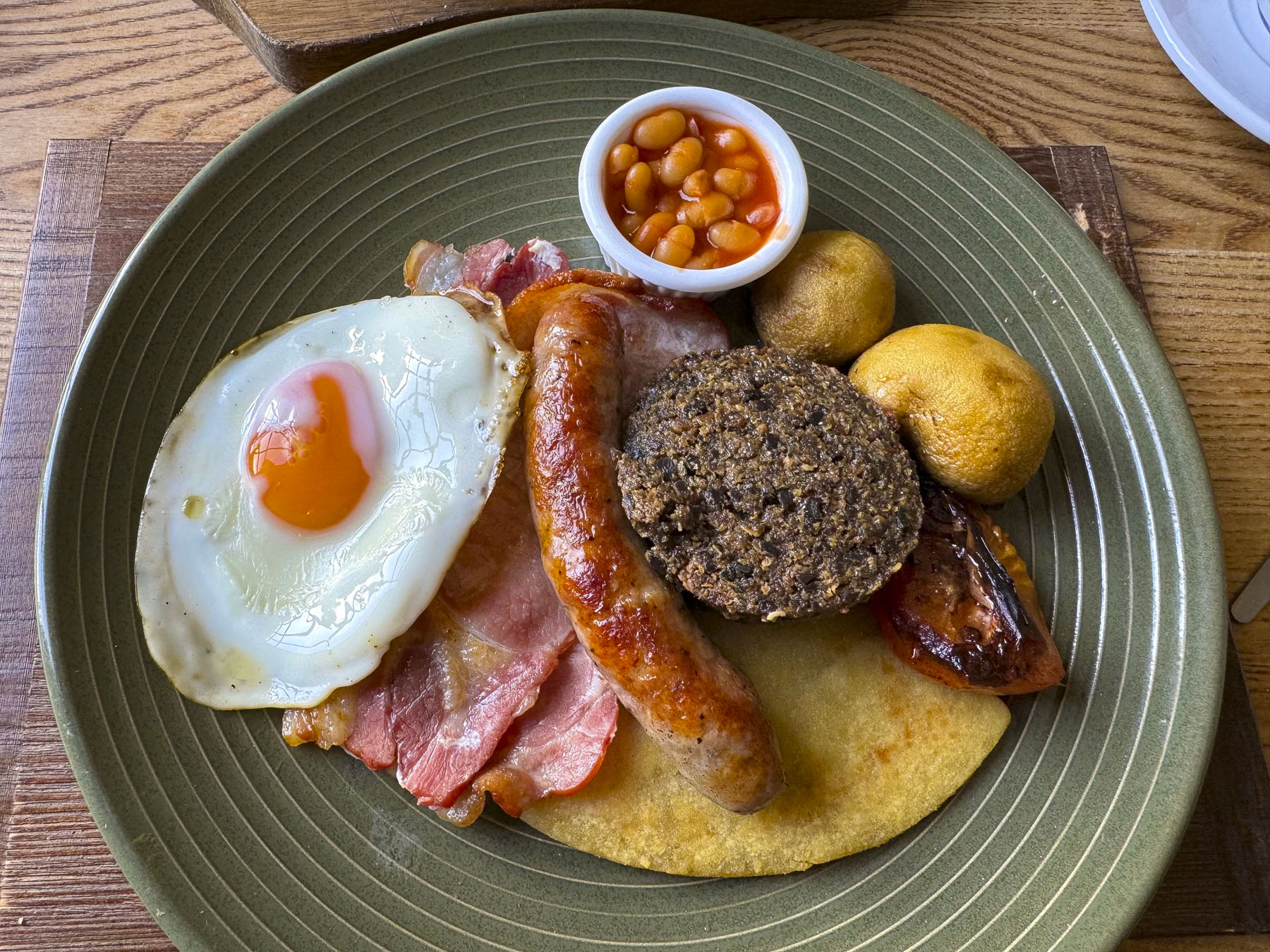
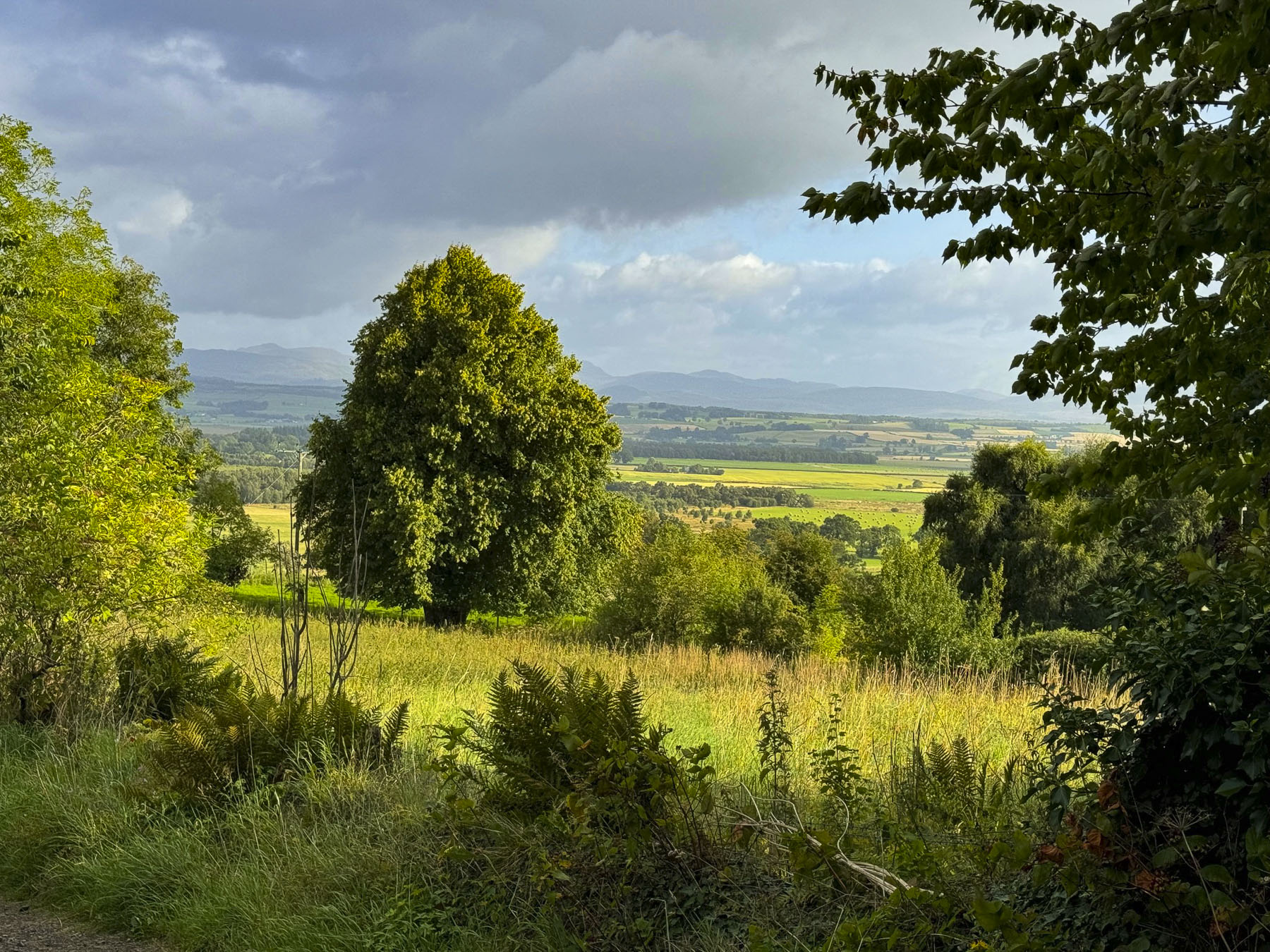
A bright early sunrise encouraged us to quickly dress and amble around the quiet village, and enjoy views pf the countryside before breakfast. We then continued our drive west into the Highlands.

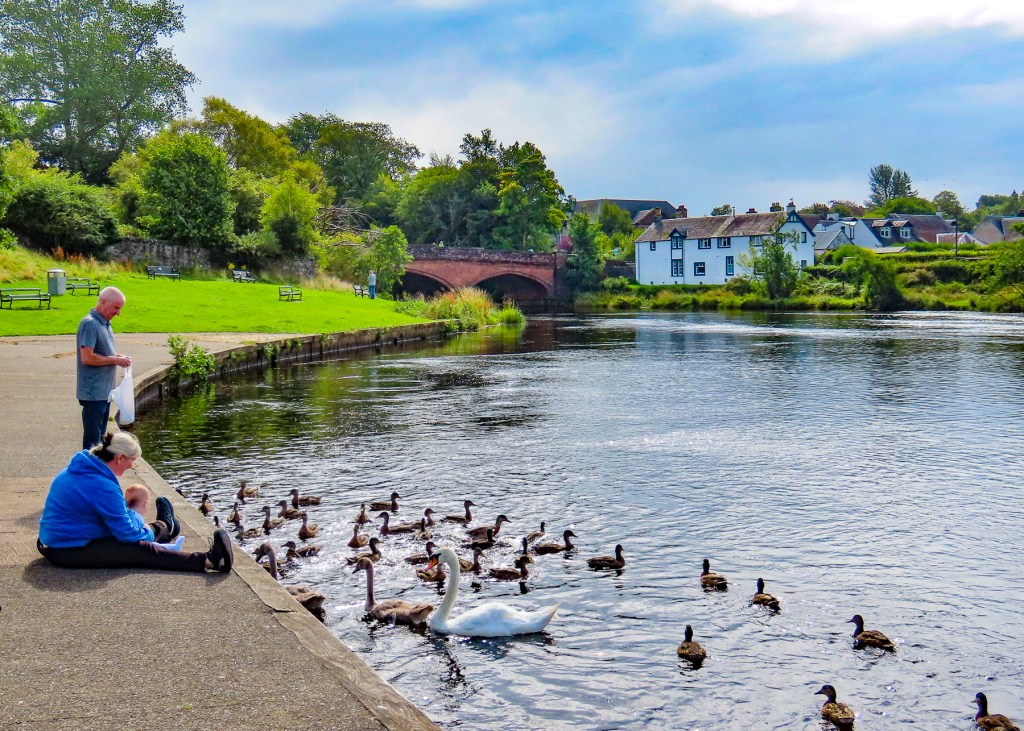
Glencoe was the day’s ultimate destination, but with us it’s never a straight drive. We are always zigging, zagging, detouring and stopping for photos along the way. The view as we crossed a bridge over the Eas Gobhain, a river that flows from Loch Venachar into Callander, was beautiful, so we U-turned and parked. Our timing was perfect, as we caught photos of kayakers out for a Sunday paddle.

Afterwards, we stopped at a riverside park called the Meadows that was a popular spot for feeding the ducks and for fishing from the riverbank.
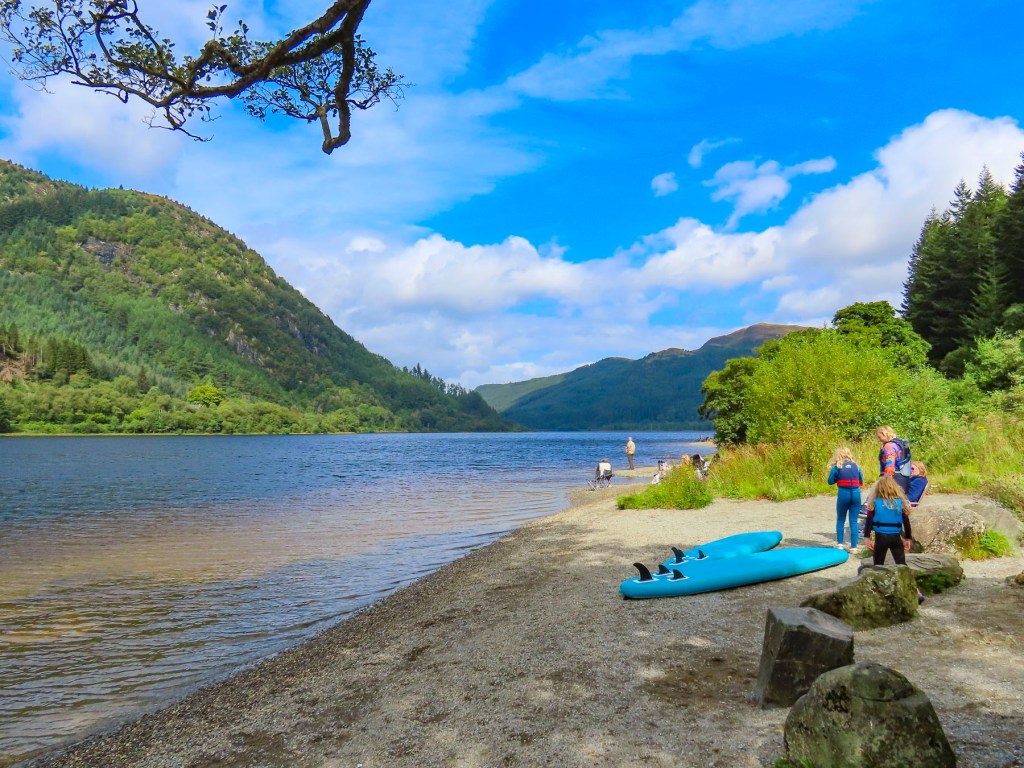
The A84 is the main route into the Highlands from Stirling and passes through Callander. We followed it west through a rolling landscape that gently changed to mountains covered by pine forests. Brilliant sunlight reflected off the water and glistened through the trees as we stopped at Loch Lubnaig. Our first Highland loch! We were captivated by the crystal blue lake shimmering in the sun, before a background of verdant mountain and clear sky.
We had read about the Highlands being unbearably full of tourists during the summer months, but hadn’t really noticed it until trying to find a parking space. This became a recurring issue during our trip. While the roads were not congested, the small parking areas were, and there was often a queue for a spot if you arrived later in the day.

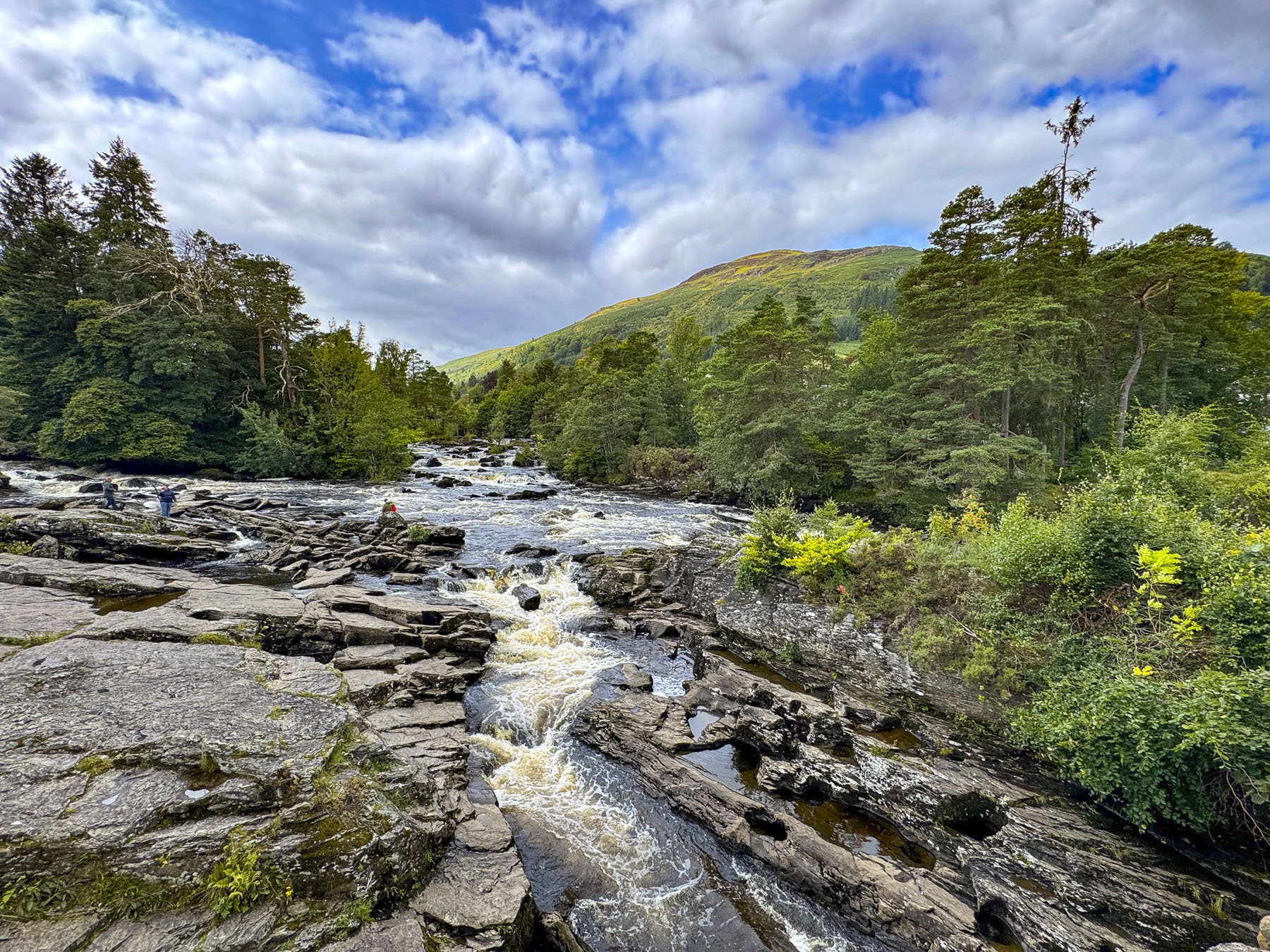
We veered off the route to see the Falls of Dochart, and the Clan Macnab Burial Grounds on an island in the river at the village of Killin. While many local folks apologized for the unusually rainy August weather, it was surely beneficial to the rivers, which were running high, and the spectacular waterfalls.

The earliest note of the Clan Macnab goes back to 1124 during the reign of David I, the 9th King of Scotland. It was a rather violent clan known for beheading its defeated enemies, which is rather surprising considering the clan descended from an Abbot of Strathfillan. But occasionally they backed the wrong cause and famously fought against Robert the Bruce in 1306, and subsequently forfeited most of their extensive territory, which encompassed land between the village of Tyndrum and the south-west corner of Loch Tay, until their property rights were reinstated by King David II in 1336.
Across the Highlands, the clans notoriously pillaged villages and stole livestock from each other in a vicious cycle of attack and revenge. One episode is best illustrated in a description, by the Clan Macnab Society, of the Battle of Glenboultachan in 1522 between the Macnab and the Neish clans, after the Neishes initiated a major raid on the Macnab herds. “As the Macnabs rushed downhill they threw away their plaids and, naked apart from their brogues, flung themselves upon the Neishes. The Neishes threw off their plaids as well, and soon the glen was packed with naked, screaming warriors locked in mortal combat.” I can only image they wished to keep their clothes from being shredded. Ninety years later, only two young Neishes survived the swords of the Macnab’s after a retaliatory attack for a Christmas season ambush. The A85 now passes the site at Little Port Farm where the epic fight took place. 

As we continued west the pine covered slopes faded from green to hills and moorlands covered in the pink, purple, and lavender colors of flowering heather shrubs in full bloom, and the yellow and amber of late summer grasses. Vast areas were a treeless wilderness without signs of habitation. The clouds slightly thickened and their shadows raced across the panorama. Patiently we waited with our cameras ready at the Buachaille Etive Mòr car park for the sun to break through and were rewarded with dramatic shots of endless landscape. We stopped along the way so many times that it seemed we were not making any progress toward Glencoe. 

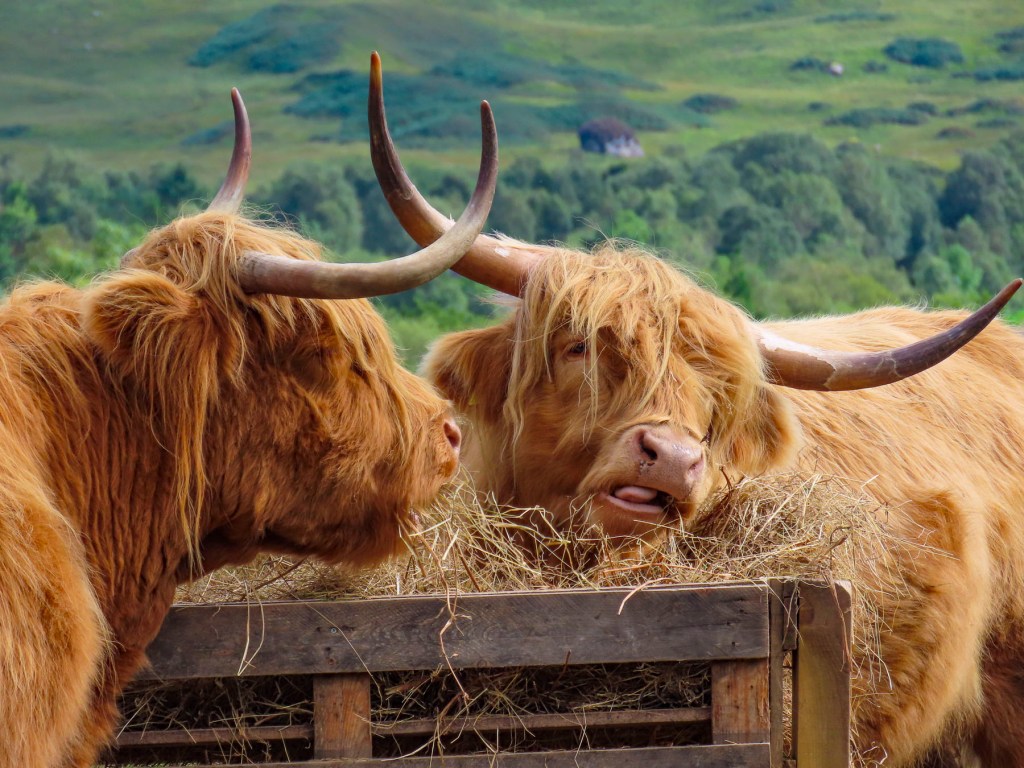
At the National Trust for Scotland – Glencoe Visitor Centre we encountered our first highland cows, or hairy coos as the Scots like to say. With how heavily these wonderful animals are used in advertising to promote Scottish tourism, we thought there would be abundant herds of the coos everywhere. But that was not the case, and based on our experience, I swear these two hairy coos were the only ones in the Highlands. We did see some from a great distance in the northern Highlands later in the trip, although they were so far away that they could have been plywood silhouettes of the beasts. And I can just imagine an elderly pensioner exclaiming to his wife, “those silly tourists stopped again to take photos of our fake coos. If I had a Two pence for every time someone stopped, we’d be vacationing on the Rock of Gibraltar this winter.”
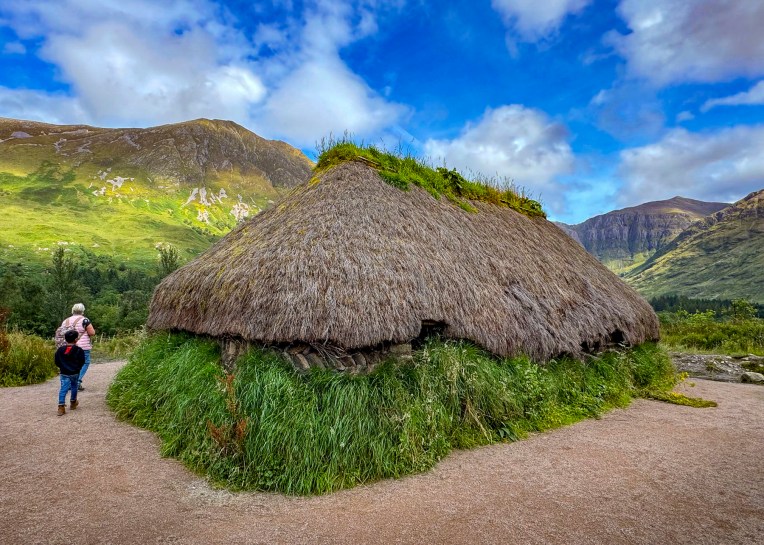
Beyond the coos stood a re-creation of an ancient highlander turf and creel house. Sturdy log framing was built atop thick walls of insulating turf and then covered on the inside with a basket-like weaving of freshly cut and still pliable ‘green’ wood. The steep roof framing was then covered with a thinner layer of turf and thatched with heather. The dwellings had high peaked interiors and were built without windows or a chimney. The only ventilation for the cooking fire, in an open stone hearth, was through one or two low entries that would be covered with skins to protect the inside from the fierce wind, snow and rain of the highlands, along with attempting to contain the heat thrown off by the fire inside. In an 1822 letter to a friend, a Londoner traveling through the region snarkily described a creel house, “smoke came pouring out through the ribs and roof all over; but chiefly out at the door, which was not four feet high, so that the whole made the appearance of a fuming dunghill.”

It was in homes like this creel house that one of the greatest atrocities against the Scots was committed by the English. On February 13, 1692, in Glencoe, Clan MacDonald extended their hospitality and opened their homes to 120 Redcoats. On orders sent from John Dalrymple, the Earl of Argyll, the night before, the soldiers were ordered to “kill all,” and “not to trouble the government with prisoners,” at 5 the next morning. The Earl of Argyll suspected the chief of the clan opposed the new monarch William III, and the MacDonald Chief was not prompt in pledging allegiance to the new king, after James II was deposed during the Glorious Revolution of 1688, for supporting the Catholic religion. It was also an opportunity for the Earl, a Campbell, to settle a long-standing clan feud with the MacDonalds.
Thirty-eight innocent men, women, and children were massacred as dawn broke. Another forty died in the snow as they fled into mountains trying to escape. After the tragedy, several British army officers were court martialed for refusing to follow the heinous order. The poor Earl, who was also the Secretary of State for Scotland at the time, was only told to resign. It’s difficult to imagine that this tranquil valley holds such tragedy. This verse from the poem Glencoe by Douglas Alexander Stewart, says it well. 

Sigh, wind in the pine,
Cover it with snow;
But terrible things were done
Long, long ago.

A memorial to the MacDonald Clan stands on the Upper Carnoch road in the village.
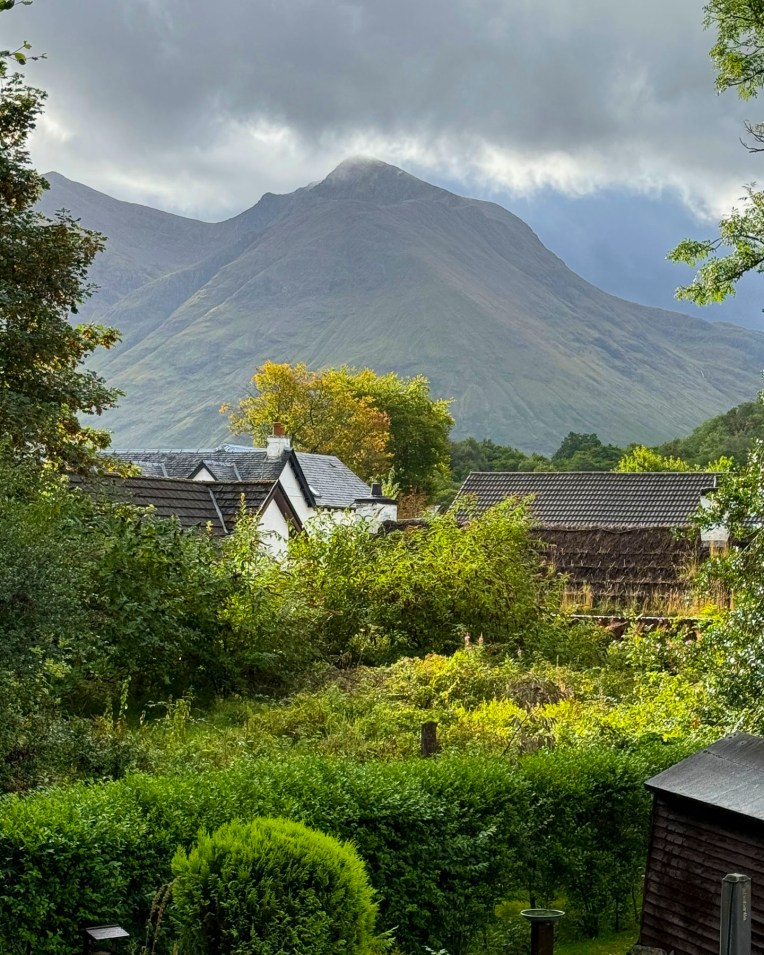
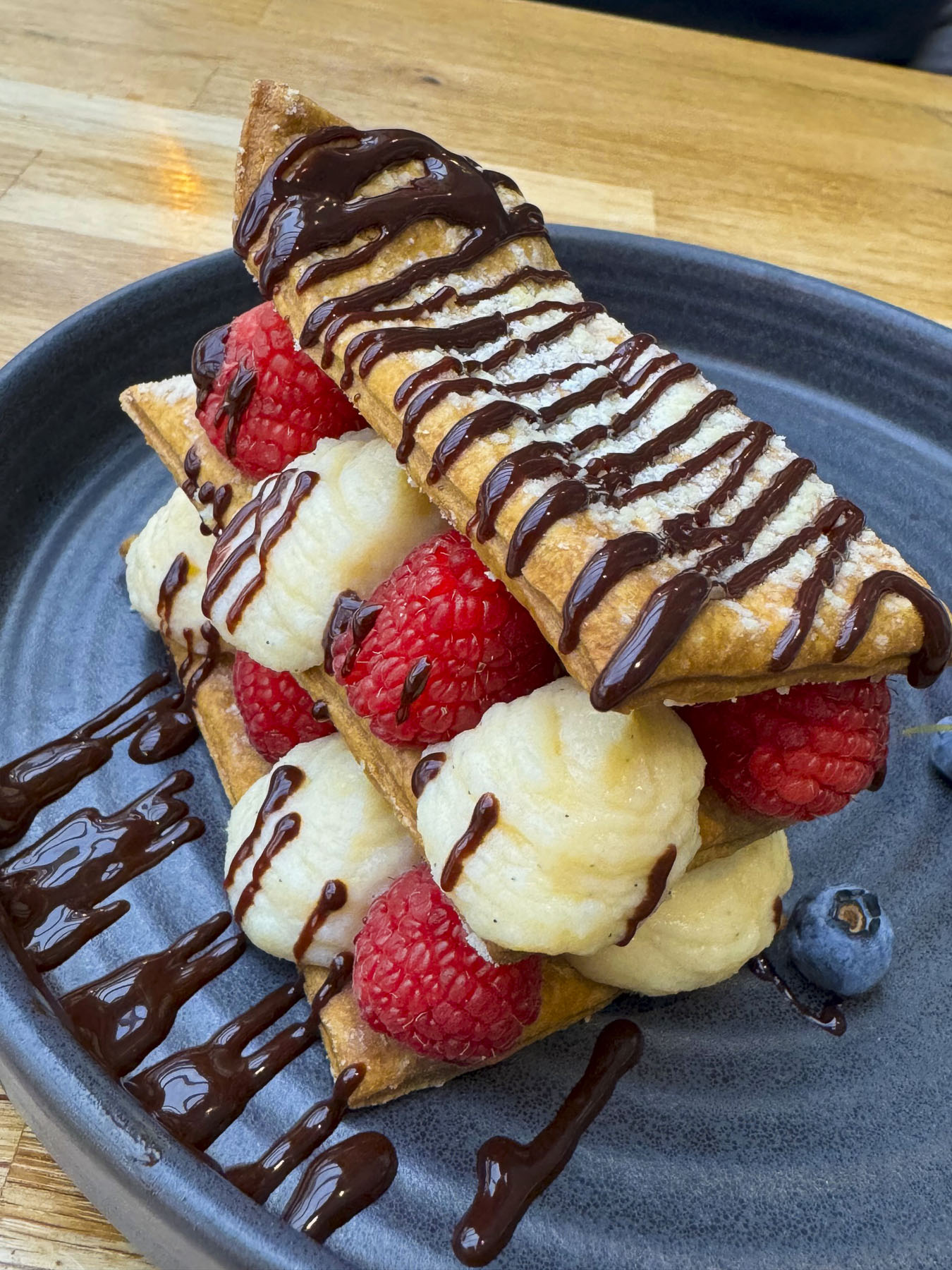
After we settled in at the Beechwood Cottage B&B for a two-night stay, and admired the view of Sgorr na Ciche mountain from our window, our host offered to make early dinner reservations for us, relating that during the high season, the restaurants fill quickly and it’s not like Edinburgh where things stay open late. In Glencoe everything closes early and without dinner reservations, there is usually an impossible queue. Following her recommendation, we enjoyed the view of Lock Leven from the restaurant at the Isles of Glencoe Hotel, while having a wonderful dinner and a decadent dessert.

We should have listened more closely to our host’s tip about parking at the Glenfinnan Viaduct to photograph the old Jacobite Steam Train, often referred to as Harry Potter’s Hogwarts Express. Our host suggested it would be wise to arrive an hour before the train is scheduled to cross the bridge, as there are usually hundreds of folks wanting to do the same thing, and it takes a while to hike up the hill to find the right observation point. Well, we were the last car in line before they closed the gate to the Glenfinnan Car Park. Folks who were willing to walk a greater distance back resorted to all sorts of creative and illegal parking along the shoulder of the road. We searched for a while, but the historic area never envisioned the mass tourism that the Harry Potter train brings to the region when the line was constructed in the 1880’s. It began to rain.
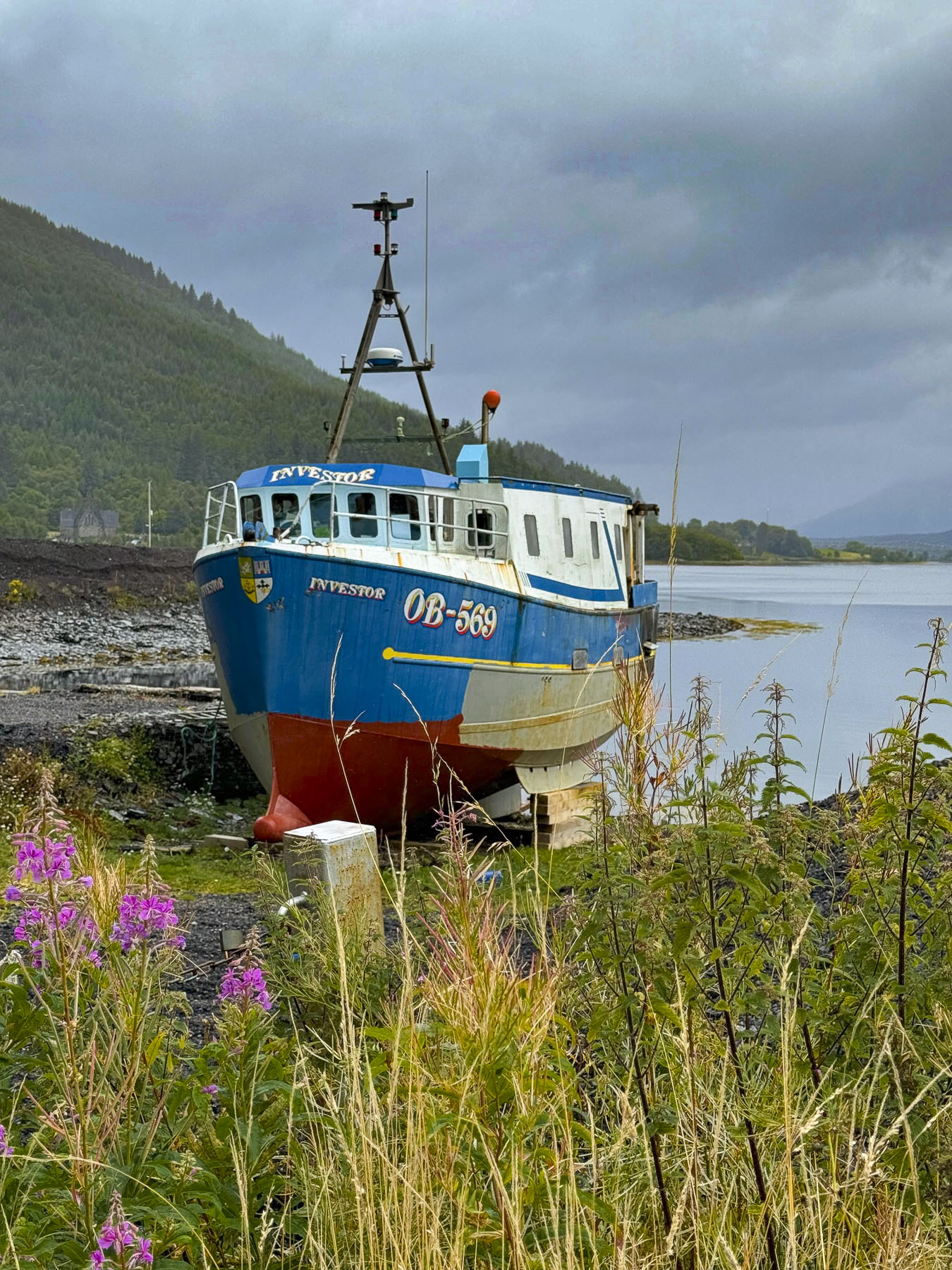
For Plan B we backtracked to the Corpach Caol shipwreck on the shore of Loch Linnhe, near the Caledonian Canal Locks, just west of Fort William. The rain lessened as we walked across the locks and along a stoney beach to the evocative wreck silhouetted against Ben Nevis, the tallest mountain in the United Kingdom. The wreck of the old fishing trawler has rested on the beach since 2011, when a fierce storm broke the boat from its mooring, miles away, farther down the loch in Camusnagaul Bay, where a new owner was renovating it to liveaboard.

Afterwards we headed back, across the canal, to a small café for coffee and a reprieve from the rain that had started again and decided to try our luck one more time at the Glenfinnan Viaduct. We planned to be there very early for the afternoon crossing of the train. We secured a parking space easily enough, even though it was beginning to rain harder, and followed the other mad fools as intent as we down a long heavily mudded track. It rained harder. And harder. We thanked our lucky stars that we had invested heavily in completely waterproof jackets for this trip. The rain finally deterred us from continuing up the slope to those spots from which all the iconic photos of the steam train puffing across the curve of the viaduct are taken. Instead, we claimed a spot, under a tree, along the stream that runs through a valley, and stood there stoically like hairy coos in a drenching downpour. That in Gaelic is called a Goselet. One of the infinite number of words that the Scots use to describe their finicky weather.  It was a bust! The train stopped mid span for a minute, for us paparazzi-like tourists to snap away, but the sky was so grey and low that the steam from the engine was indiscernible from the gloom. Our young grandson, having just finished reading all the Harry Potter books, was delighted to see our photos that we texted to him later that day.

By the time we finished a late lunch at The Lochy, a nice unpretentious pub, with some very good value daily specials, the morning storm had cleared, and we headed back to Glencoe. We didn’t get far before we came to a halt at the lowered gates of a railroad crossing. Imagine our surprise when  the Jacobite Steam Train passed in front of us in all its steaming glory in the bright afternoon sun.
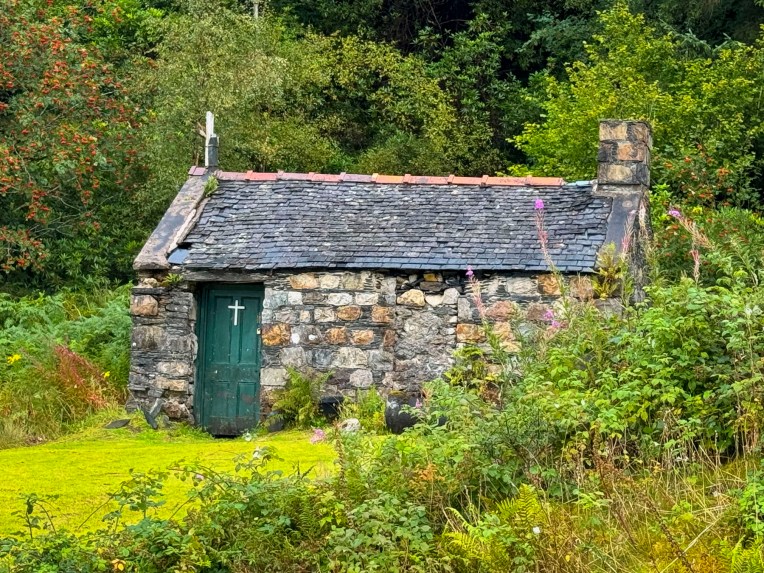
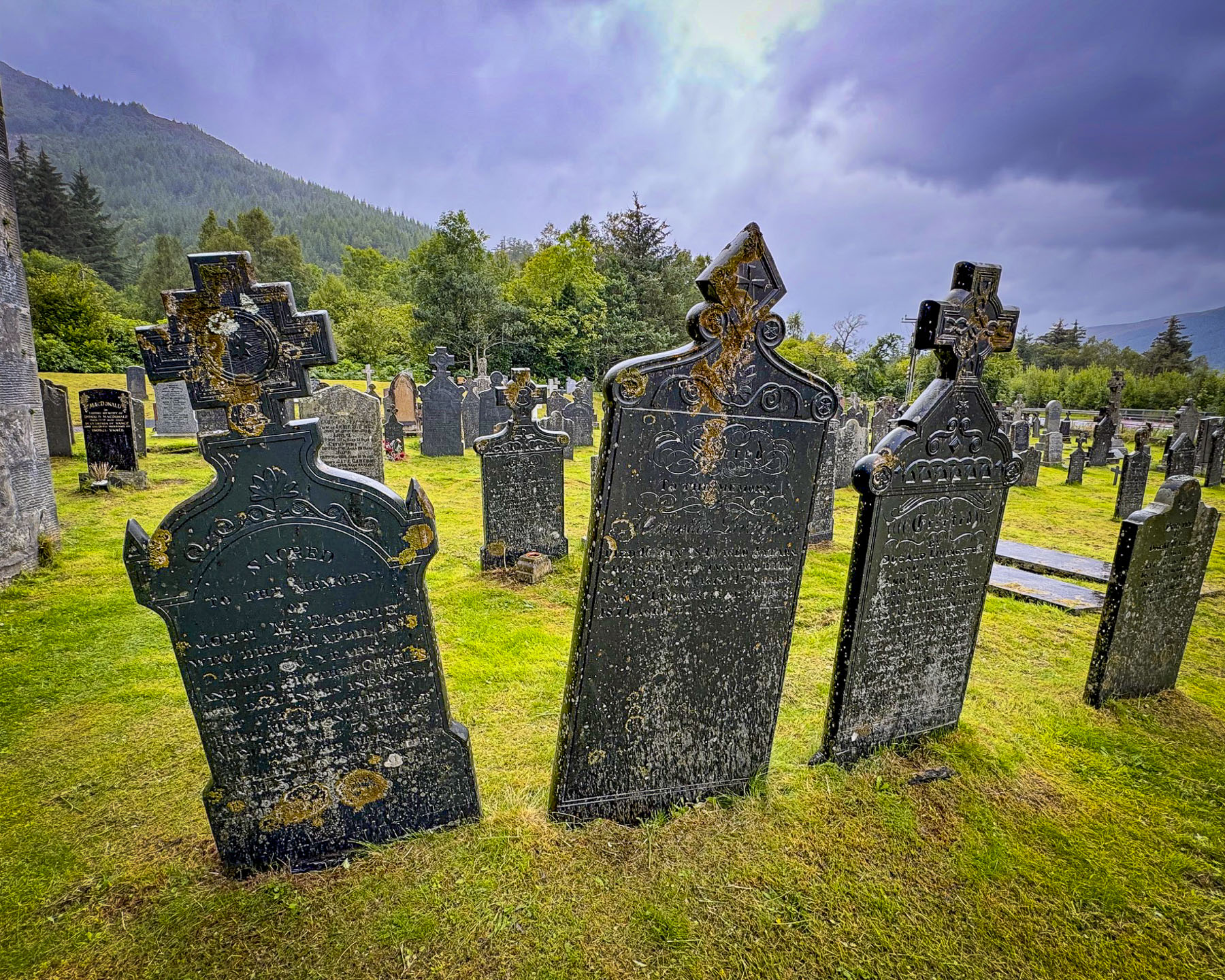
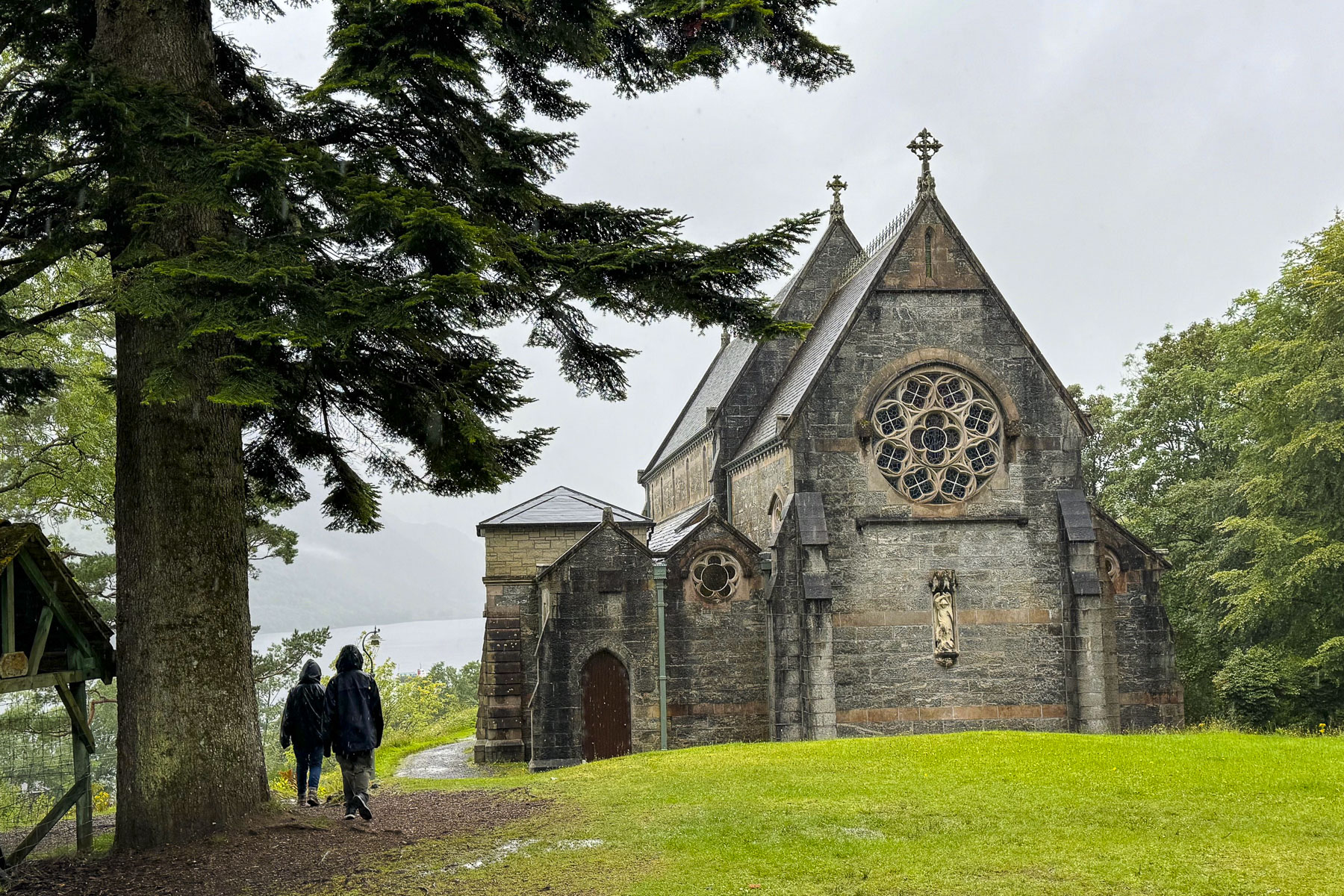
We capped the day wandering about closer to Glencoe, exploring various shorelines and St. John’s Scottish Episcopalian Church in Ballachulish. The original church on the site is actually the smaller stone building to the left. It was a storage shed before it was donated to the church and consecrated for use as a sanctuary in 1770. The larger old stone church was built in 1842 and is surrounded by an interesting cemetery.

Till next time, Craig & Donna

Timetable for the Jacobite Steam Train

The Scotland Explorer Pass helped with the price of admission to many sites across the country.

Visit ScotlandWhere to see Highland cows in Scotland

On the Road to Durrës, Albania: or Lady Bugs, Metallic Men and a Beautiful Seaside City

Loose gravel gently slid down from the top of the earthen embankment along the road. It was the “heads up!” prelude to a small herd of goats scurrying down the slope to cross the road ahead of us. The last to cross was a young yearling goat, unsure of his footing. It was a transition day for us. We had left Lin, on the shore of Lake Ohrid, near the border with North Macedonia, earlier that morning to drive to Durrës, on the Adriatic Sea. The journey of only 90 miles, 142 km, was our longest single drive in Albania, and can be accomplished in three hours, if so desired. But with us there is always something that piques our interest and requires a detour or U-turn.

Much of the SH3 highway that connects Lin, through Elbasan, to Durrës traverses a sparsely populated remote region of Albania. Occasionally, in what seemed the middle of nowhere, we passed enterprising farmers who had set up temporary produce stands perched atop the road’s guardrails, their donkeys tied nearby. Sadly, factories abandoned after the fall of communism littered the countryside. In Prrenjas though, the artist Eljan Tanini whimsically covered the towers of a defunct nickel mine with 1,380 charming ladybugs, a symbol of good fortune and hope for the future.

On the outskirts of Elbasan we stopped for a snack at the Elita Grill, a newly opened restaurant. It was a very attractive, contemporary space, which stood as a nice counterbalance to the rustic region we had just driven through. The pastries and coffees were very good, and the prices budget friendly. Across the street, the dome of a larger-than-average Cold War era concrete bunker inched above a mechanics shop.

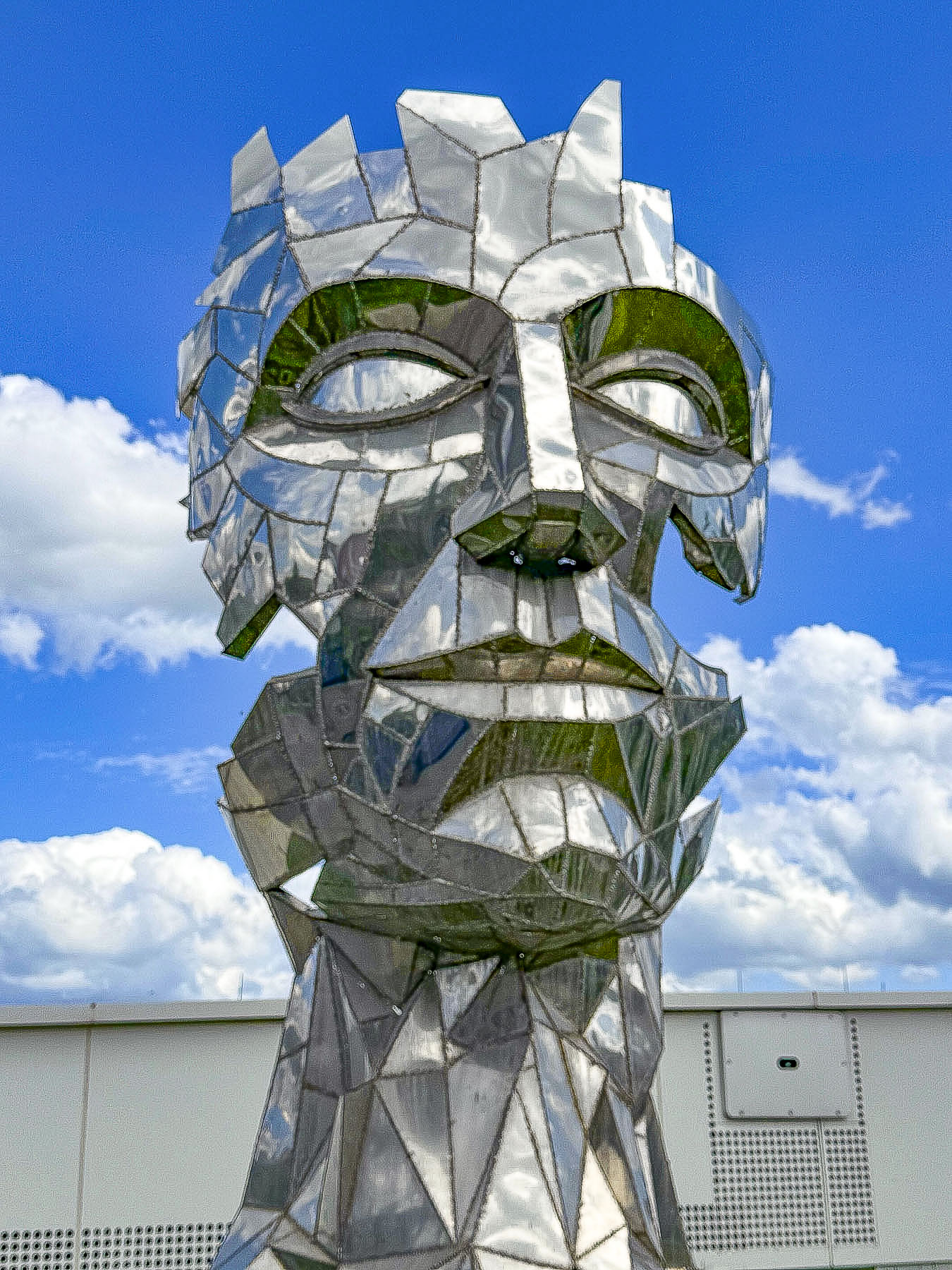
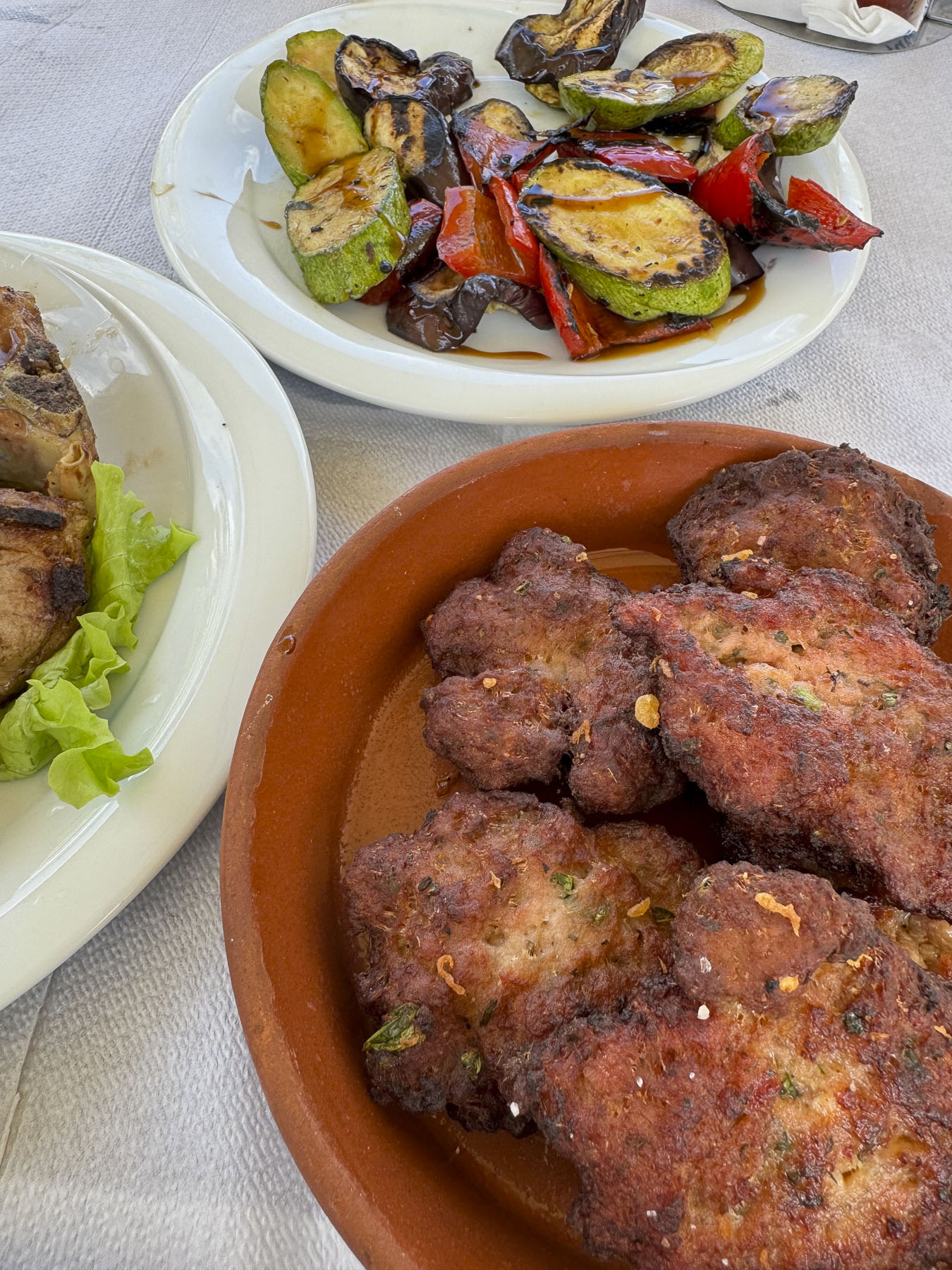
Entering Elbasan we passed the Xhamia e Nazireshës mosque. Across the street from it, a dreamy street mural of a child playfully dancing amidst clouds graced the side of an apartment building. Unfortunately, the traffic was too congested in this spot, and we didn’t stop. An abandoned train track paralleled most of our route from Prrenjas to Elbasan. The rail line once carried nickel ore to the Kombinati Metalurgjik, a huge industrial complex that was built with cooperation from Chairman Mao’s Chinese Communist Party in the 1970’s. The site, easily seen from the highway, now lies in ruins and is a popular spot for amateur industrial archeologists. But at its height it employed 12,000 people and produced the iron, steel and cement for Albania’s 173,000 military bunkers ordered built by the paranoid communist dictator Enver Hoxha, who feared invasion from everyone. We were getting hungry as we reached Tirana. While there were numerous lunch options available, we wanted something with easy on and off access, close to our route. With a quick google search we chose the restaurant Xhafa, which had an outside patio on a hillside that overlooked Tirana. From our experiences across Albania we found that the food was delicious no matter where we stopped. As it was here. Leaving the restaurant, we noticed a large futuristic metallic head in front of an office building next door. We are not sure, but we think the sculpture can be accredited to the Albanian sculptor, Ilirjan Xhixha.

We continued our westerly drive along SH3 until signs for Durrës directed us onto SH2. We wished we had been prepared with our cameras for what emerged next. Across the highway, the most unusual building crowned a small hill. It was seven stories tall, with a neoclassical birthday cake-like façade. On the multi-level corners of the building larger than life statues of the Illyrian Kings stood, as if they were surveying the landscape. Centered atop the colossal building was a mammoth sculpture of the great warrior Skanderbeg, the famous 15th century commander who united Albanians to rebel against the Ottoman Empire. This grand building, with its Las Vegas-type schmaltz, was the Amadeus Palace Hotel. If you enjoy quirky, off-beat things, this might be a place to check out.

We arrived in Durrës late in the afternoon, just in time to see a passenger ferry from Italy enter the harbor, as we drove along the waterfront. Parking with a rental car is always a concern, but we had asked the hotel, Ventus Harbor, where to park. “During the April shoulder season there is plenty of free parking available close to the hotel,” was the response. We are always skeptical of these easy answers, and there was street parking a short distance from the hotel. Though there was an informal parking assistant waving to drivers coming down the street, pointing as to where to park or wait as a cement truck driver readied a delivery to a construction site. We tipped him and hoped for the best. At the reception desk we told them where we left the car, and they said it would be okay, but we could also park on the pier which led to the floating hotel if we preferred. While that option was closer, it required driving through a small, pedestrian-filled shopping mall. The car stayed where we left it and was fine for two days.

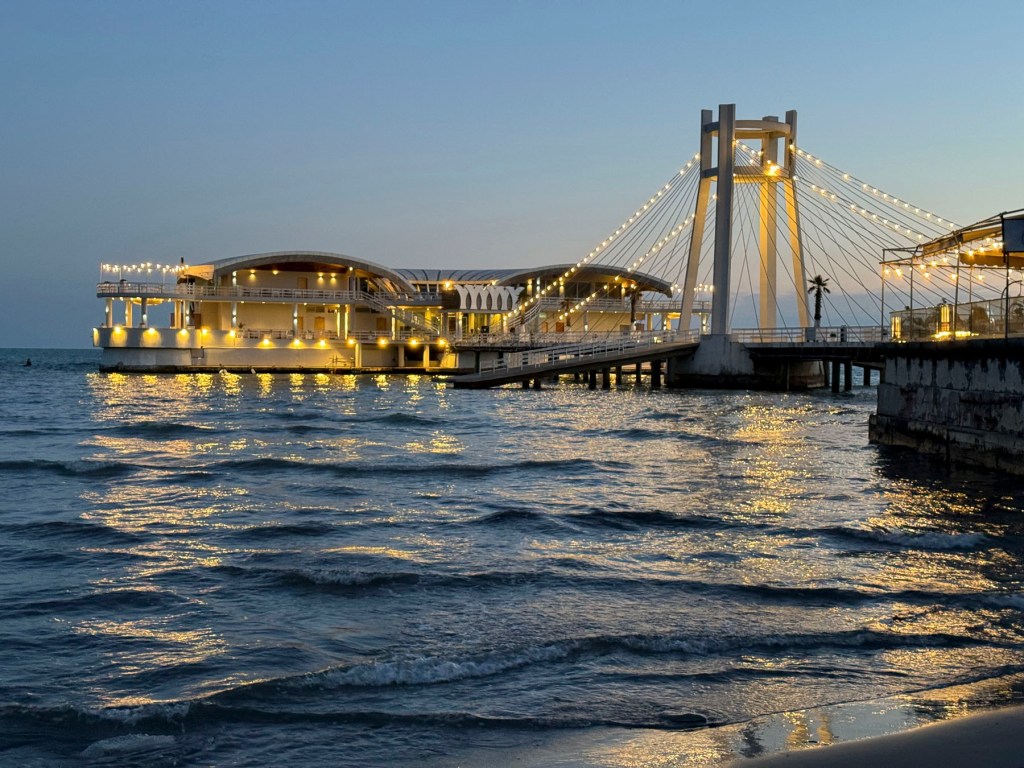
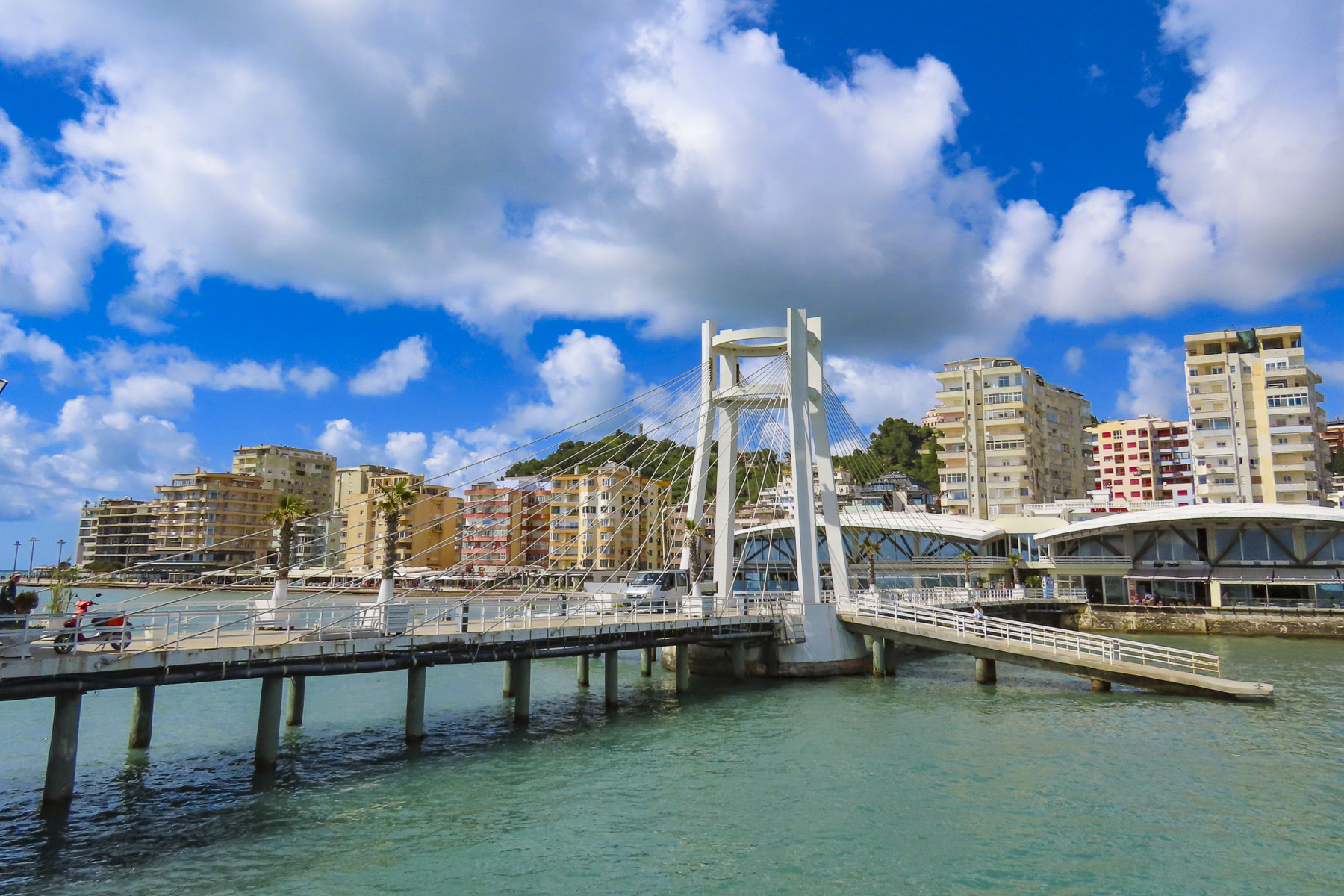
Though the futuristically designed Ventus Harbor appears to float above the Adriatic Sea like a spaceship, it is in fact built securely atop pilings pounded into the seabed and connected to shore via a narrow, 300ft long suspension bridge. The hotel’s refreshing uniqueness, which contrasts so distinctively with the stone castles and villages of rural Albania, was our main reason for choosing to stay there.

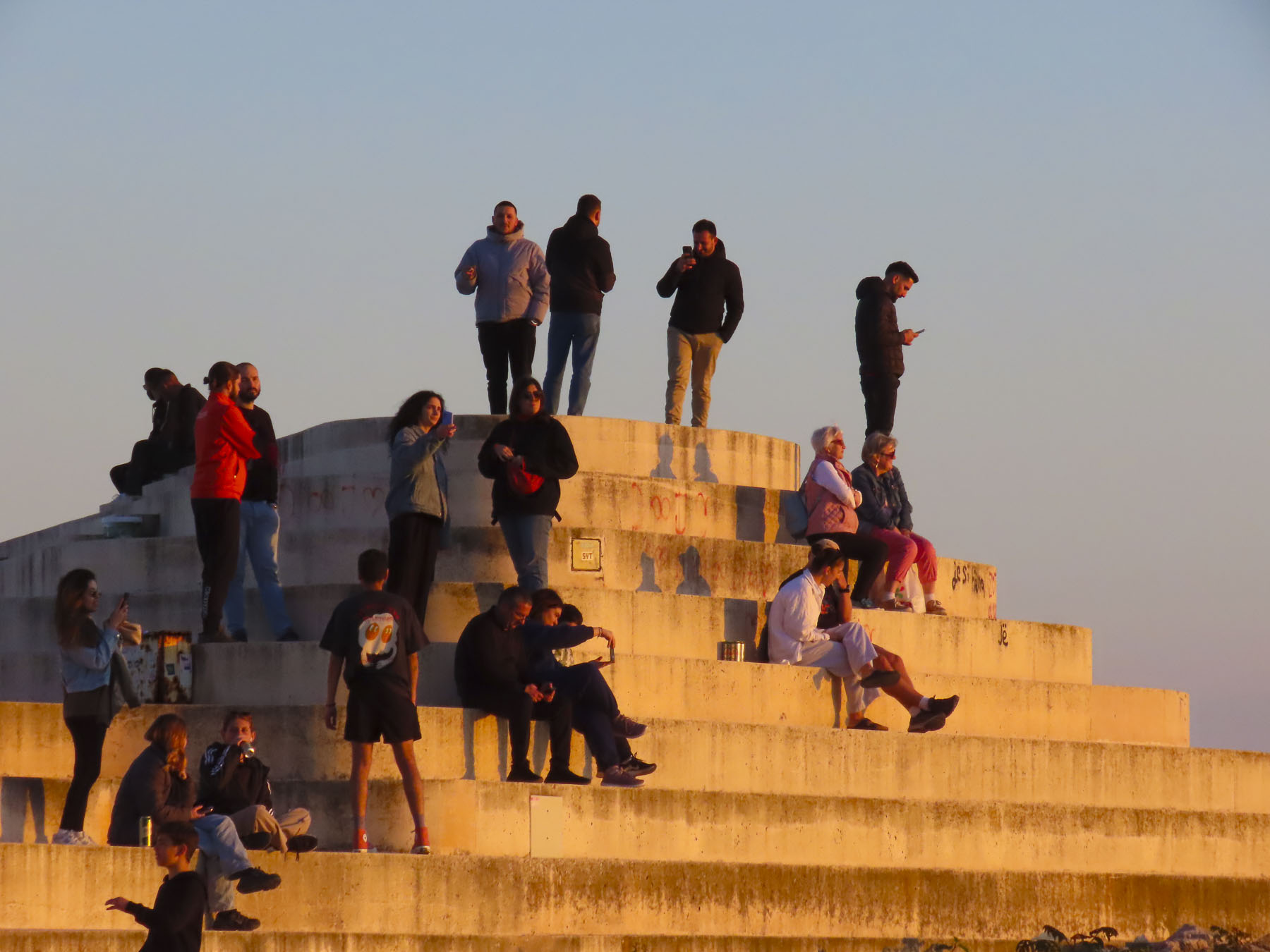
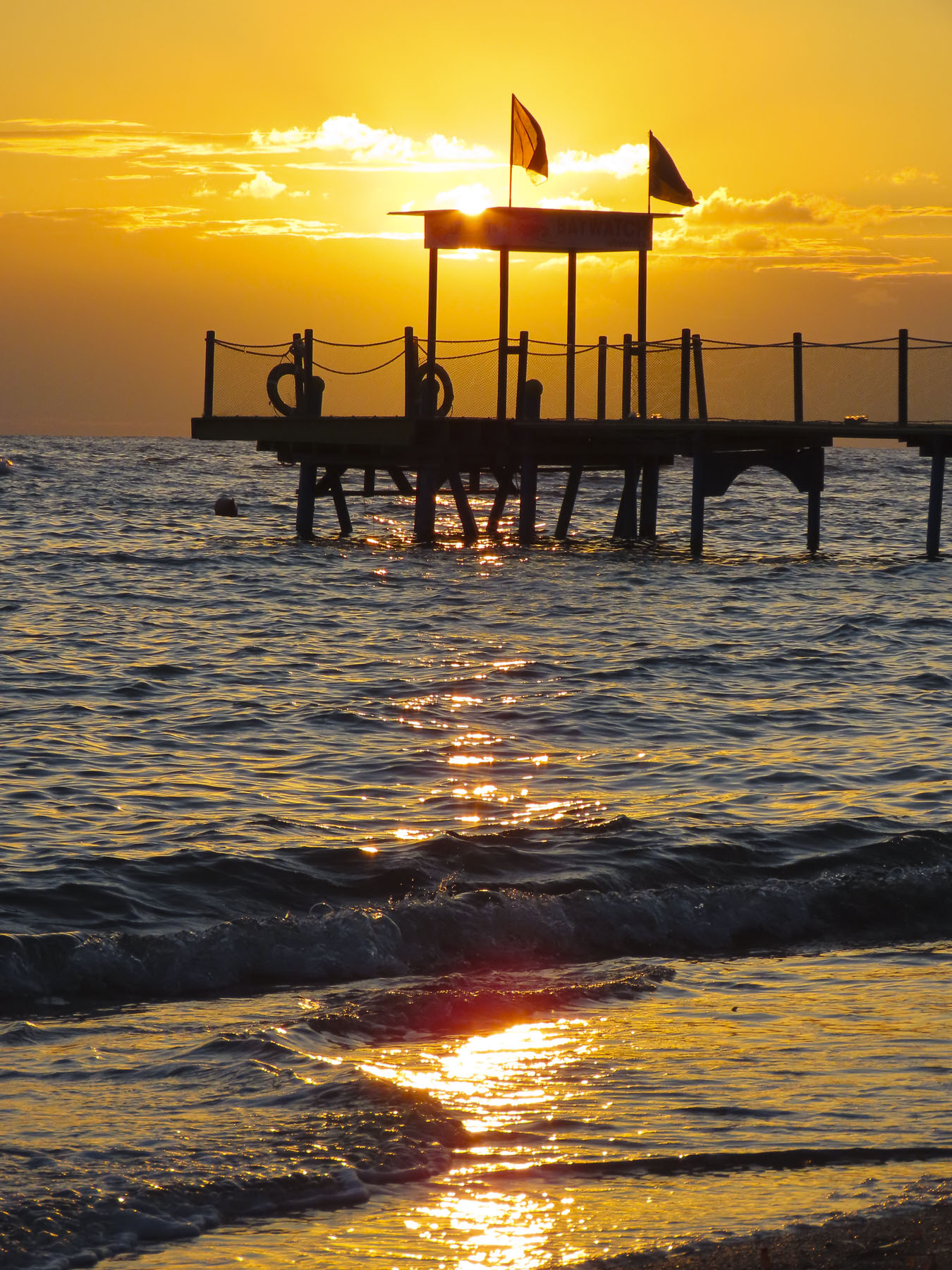
Towards sunset we headed to the promenade along the seafront and were engulfed by families and friends enjoying the xhiro, the Albanian tradition of an evening stroll to relax and socialize. Fishermen cast the last lines of the day into gentle waves as we walked towards the setting sun and the Sfinksi, a small concrete step pyramid where folks gathered to watch the sun dip below the horizon as the sky faded from a fiery orange to the blue of the evening.

The city’s night skyline slowly awakened with lights, before the stars shined. It was a warm April evening and we slept well with the door to the balcony open, listening to the water lap against the pilings below us.

After breakfast we walked along the promenade into Durrës’ historic old town, which has been centered around the harbor since time immemorial. It has been Albania’s economic engine and vital link connecting Europe to Asia Minor since Greece established a trading colony there in 7th century BC. An Illyrian Kingdom followed in the 4th century BC. But it was the Roman Empire which left the most significant impact. The Romans turned the ancient town, now Illyricum, into a vital trade and military hub with the creation of the Via Egnatia, a cobbled road that crossed 700 miles through the rugged Balkan mountains to Thessaloníki, Greece, and Constantinople. Troops, merchants and religion flowed across its path. The Apostle Paul traveled this route to Durrës in the 1st century, a time when Christians were still thrown to the lions for entertainment in the coliseum across the Roman Empire. Upon the Western Roman Empire’s collapse in 476, the Byzantine Empire filled the void until the tumultuous Dark and Middle Ages brought a succession of invaders to the region. Visigoths, Huns, Bulgarians, Slavs, Normans, and Venetians conquered and fled until the armies of the Ottoman Empire arrived in the 15th century. Austria ruled for a time during WWI. Mussolini’s Fascist troops landed in the port at the start of WWII. The Albanian’s communist partisans defeated their opponents after WWII. In 1967, as if needing to put a sword into the heart of any remaining hope the people of Albania had, the communist dictator, Enver Hoxha, banned all religions, and proclaimed, in the city where the Apostle Paul preached, that Albania is “the first atheistic state in the world.” The city and country has had a turbulent history to say the least.

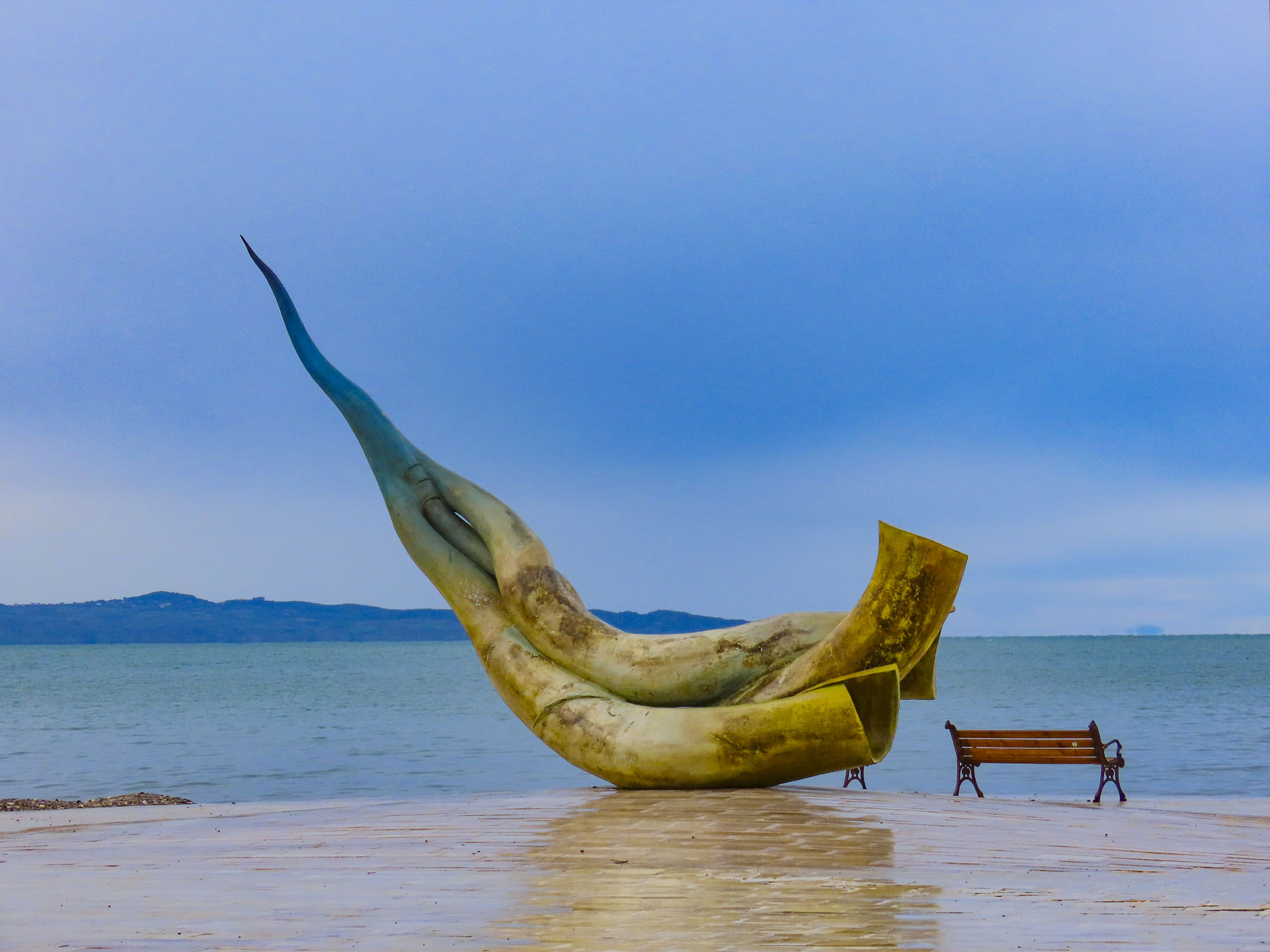
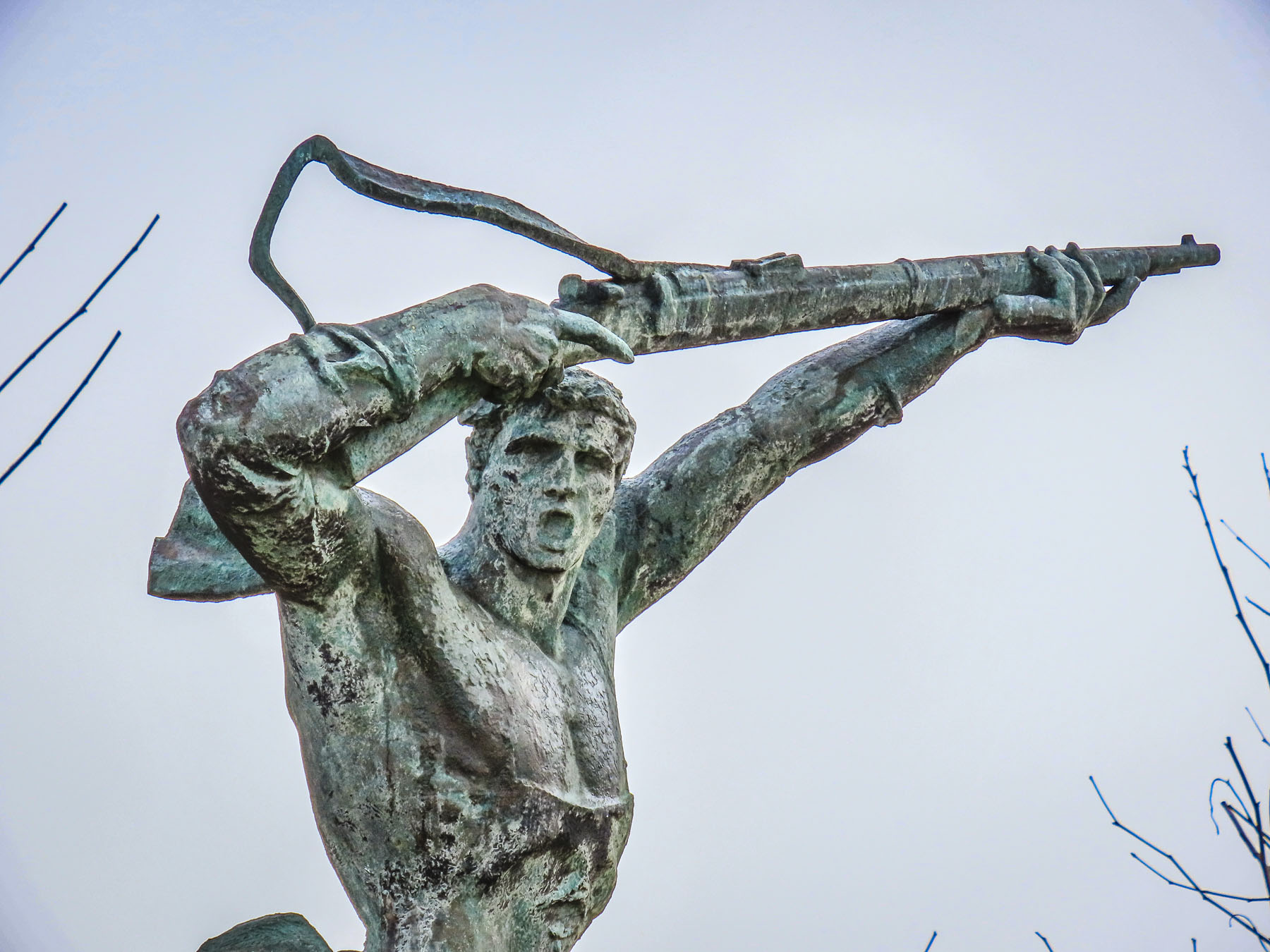
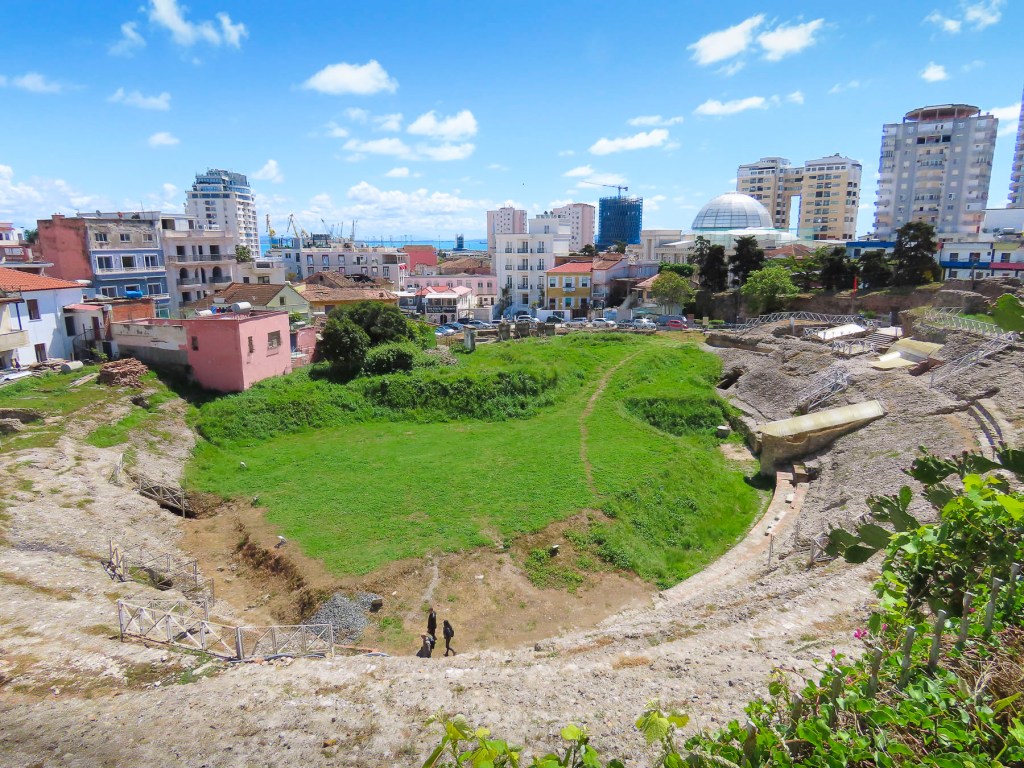
“Walk a little, and the café,” is a philosophy we like to indulge in, and after our stroll along the promenade past statues of gladiators, liberation fighters, and modern art we needed a break to savor a fine Spring day before reaching the ruins of the city’s ancient Roman amphitheater. The amphitheater was the largest in the Balkans and capable of holding 20,000 spectators.

We passed through a gate in the last remaining section of a defensive wall that once encircled the city. The city’s first ramparts, which stood 40ft tall and stretched for three miles around the core of Durrës, were built by the Byzantine Emperor Anastasius I, a native son, in the 5th century AD. The walls were later expanded and improved upon by the Venetians with stones repurposed from the amphitheater after it suffered irreparable damage from a devastating earthquake in 1267. During the Ottoman era homes were built over the site. Surprisingly, they were rediscovered in 1966 by archeologists surveying the area to identify sites that might be of interest to western tourists. Based on the size of its ruins, the amphitheater must have been magnificent. Sadly, the site has not been improved, and sits surrounded by apartment buildings, but it is on the short list of sites for future inclusion in the UNESCO World Heritage program. Oddly, archeology and building concrete bunkers across Albania were two of Enver Hoxha’s passions.

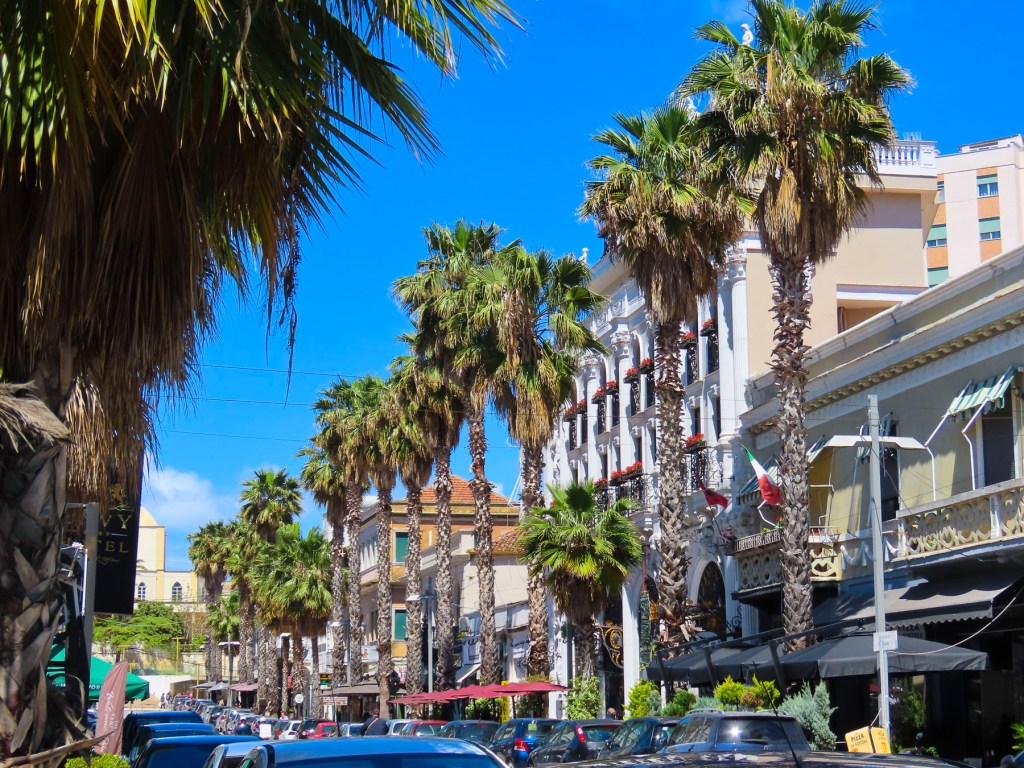
From the amphitheater it was only a short stroll to the Bulevardi Epidamn, Durrës’ prettiest avenue. It’s not a particularly long street, but its pleasant five blocks are lined with stately palm trees, that give it a splendid Costa del Sol vibe.

We followed it until we reached a well-preserved Venetian Tower, that was once part of the defensive wall that encircled the city, across from the harbor. It was an interesting plaza with more statutes commemorating partisan heroes and a gleaming metal sculpture of Redon, the Illyrian god of the sea, which was strikingly similar to the statue in Tirana. This statue, which nicely blends modern technology with the historical past through its use of materials, was also created by the Durrës-born artist, Ilirjan Xhixha.

Before returning to the waterfront, we detoured back towards the amphitheater, where earlier we had passed a tiny window-in-the-wall bakery, confidently named Bule’s Best Byrek in Town, and single handedly run by the formidable Bule. We bought several byrek and enjoyed them as we picnicked along the coast. The cheese and spinach ones were our favorites, and indeed were delicious, and so inexpensive. Go early, as they sell out quickly.

It was still the Spring shoulder season, and many restaurants stayed closed until the warmer weather in May arrives. We had crisscrossed Albania for two weeks by this time and were familiar with prices, but the night before we choose to dine at slightly upscale establishment, for a nice seafood dinner, that received good reviews. While our dinners were tasty, the portions were smaller than what’s typically Albanian. And it was the first time that we felt there was some tourist price-gouging happening.

For our last night in Durrës we decided to go no-frills. After much hemming and hawing we entered the Hepta Grill, a Greek fast-food restaurant, located at the base of the walkway that led to our hotel. The place was lively, the staff was nice, and the food was perfect. We left thinking we could enjoy living in Durrës.

Till next time, Craig & Donna

Puglia – Alberobello Part 2: Lecce and Nardo – The Florence of the South

“Signor, mio gattino si è nascosto sotto la yuan automobile ed è salito nel motore.” Roughly translated it means – Sir, my kitten ran under your car and is hiding in the engine! My racing imagination added, I will paint a pagan symbol on your car and you will be cursed for the rest of your life if she is hurt.  I exaggerate a little in jest just so you understand this was a crisis!

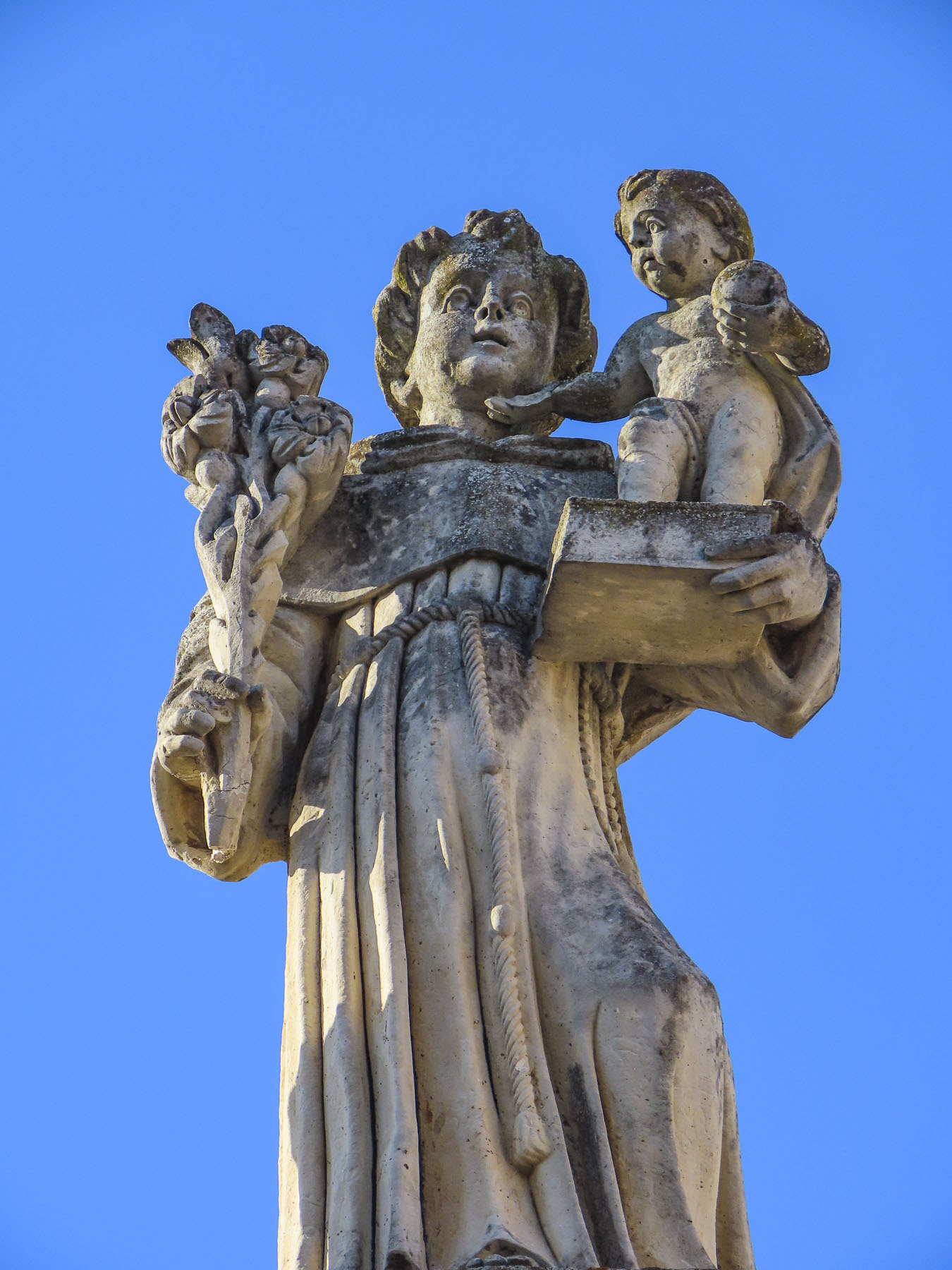
The night before we had agreed on an early start to Lecce to rendezvous with our friend Giulia for a day exploring her adopted city.  To help move the day along I offered to retrieve our rental car, which was parked a good distance away, uphill, across from the trullo-shaped Church of Saint Anthony of Padua which crowned the hill.

Donna is the designated linguist of the family. I on the other hand have been lovingly accused of slaughtering a fine romance language with just the utterance of a single word, on more than one occasion.

So, when I heard, “Signor, mio gattino si è nascosto sotto la yuan automobile ed è salito nel motore,” I smiled, as I really didn’t understand a word.  But two very worried young girls and their grandfather were standing next to the car and pointing at the engine.  They had placed a saucer of milk and some cat food near the front tire. I understood and joined the older girl who was on ground, looking under the car and meowing for her kitten, quite convincingly I might add. With no sign of a tail dangling from the undercarriage, I popped the engine hood expecting to find the kitten. Nothing.  I slammed the engine hood hoping the loud sound would jolt her from her hidden perch. Still nothing!  The way the car was parked close to an ivy-covered wall I wasn’t convinced that the kitten hadn’t scampered away unseen earlier.  They were signs of growing concern written on the girls’ faces and a growing crowd of onlookers.  Miming turning the ignition key, I conveyed that I needed to start the car and move it around the corner to jump the curb in order to get better access to the engine from below.  Hesitantly, I turned the starter and was deeply relieved when there weren’t any shrieks of horror from the girls or any fur flying. 

With my entourage trailing along, I drove the car around the corner and put two wheels up over the curb to give me just enough room to shimmy underneath for a closer look.  Fortunately, by this time Donna and Gary were rounding the corner in search of me. Much skinnier and a cat lover, Gary was enlisted to wiggle on his back underneath the car. “I don’t see anything. She’s not here.” I frowned, the girls frowned. “Keep looking.” Time passed. “I see her! she’s tucked up very high – let me have some food.” A few moments later, “I have her!” Beaming with joy, the girls and grandad took the kitten to the quiet sidewalk across the street and set her down on the ground.  Almost immediately, to everyone’s horror, the kitten dashed back across the road. The girls screamed and, oblivious to the traffic, dashed into the street in hot pursuit. The terrified kitten once again raced into her hiding place in the engine!  Mercifully, the second rescue was much faster, and with the kitten firmly in the hands of a local woman who assisted, we jumped into the car and sped away to Lecce.

After circling the port city of Brindisi, the highway (SS613) was a straight shot, past the Mura Urbiche architectural complex that highlights remnants of a once formidable city wall that encircled Lecce, to Giardini Pubblici Giuseppe Garibaldi pretty much in the center of the city.

Even though Lecce is located in the middle of the Salento Peninsular, that is often called the “heel of Italy,” the city has had a long bond with the sea.  Legend has it that the King of Crete, Idomene, was blown off course and shipwrecked here while returning home from the Trojan War.  He married the local Salento King’s daughter, Euippa, and named their newborn girl Lecce, after his Lycia homeland in the eight century BC.

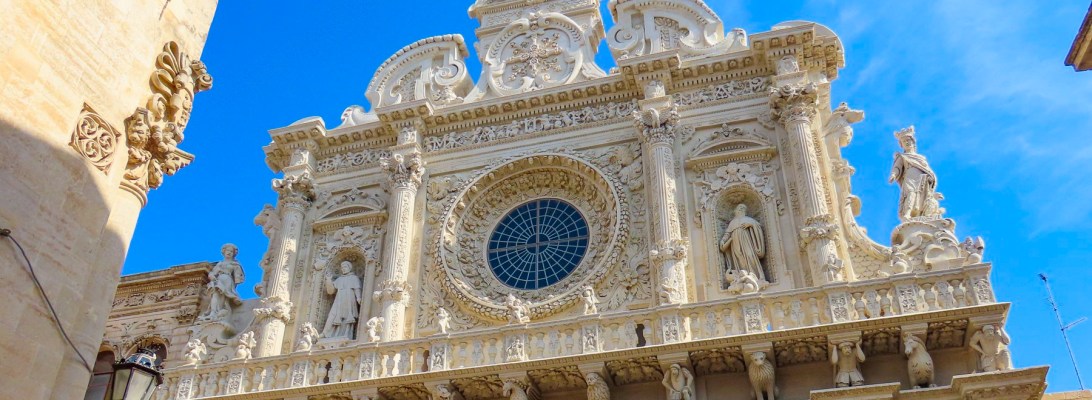
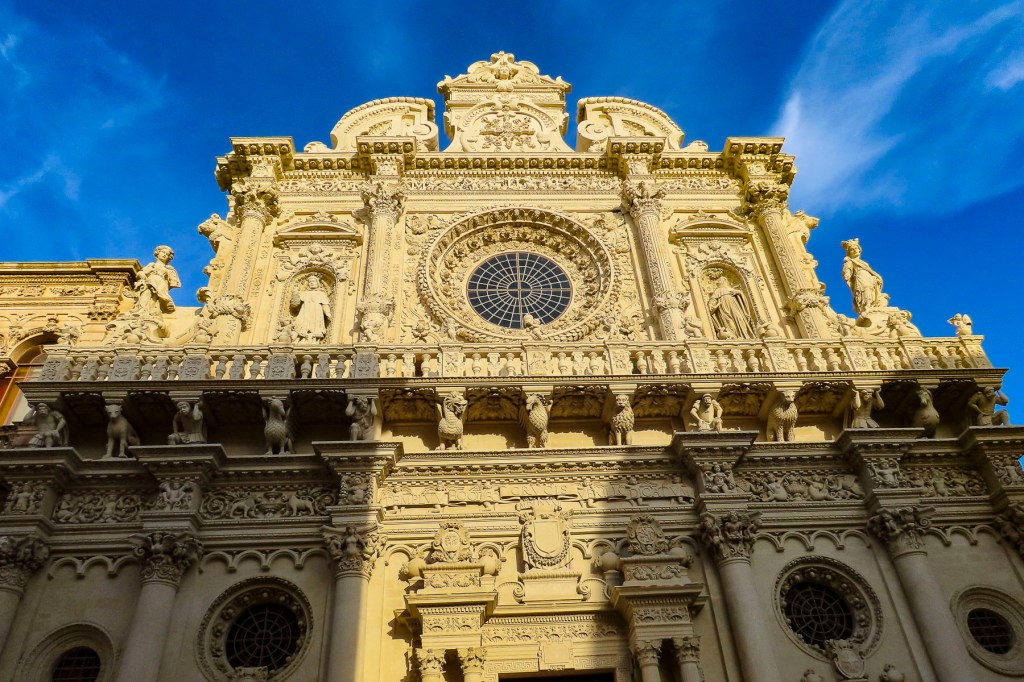
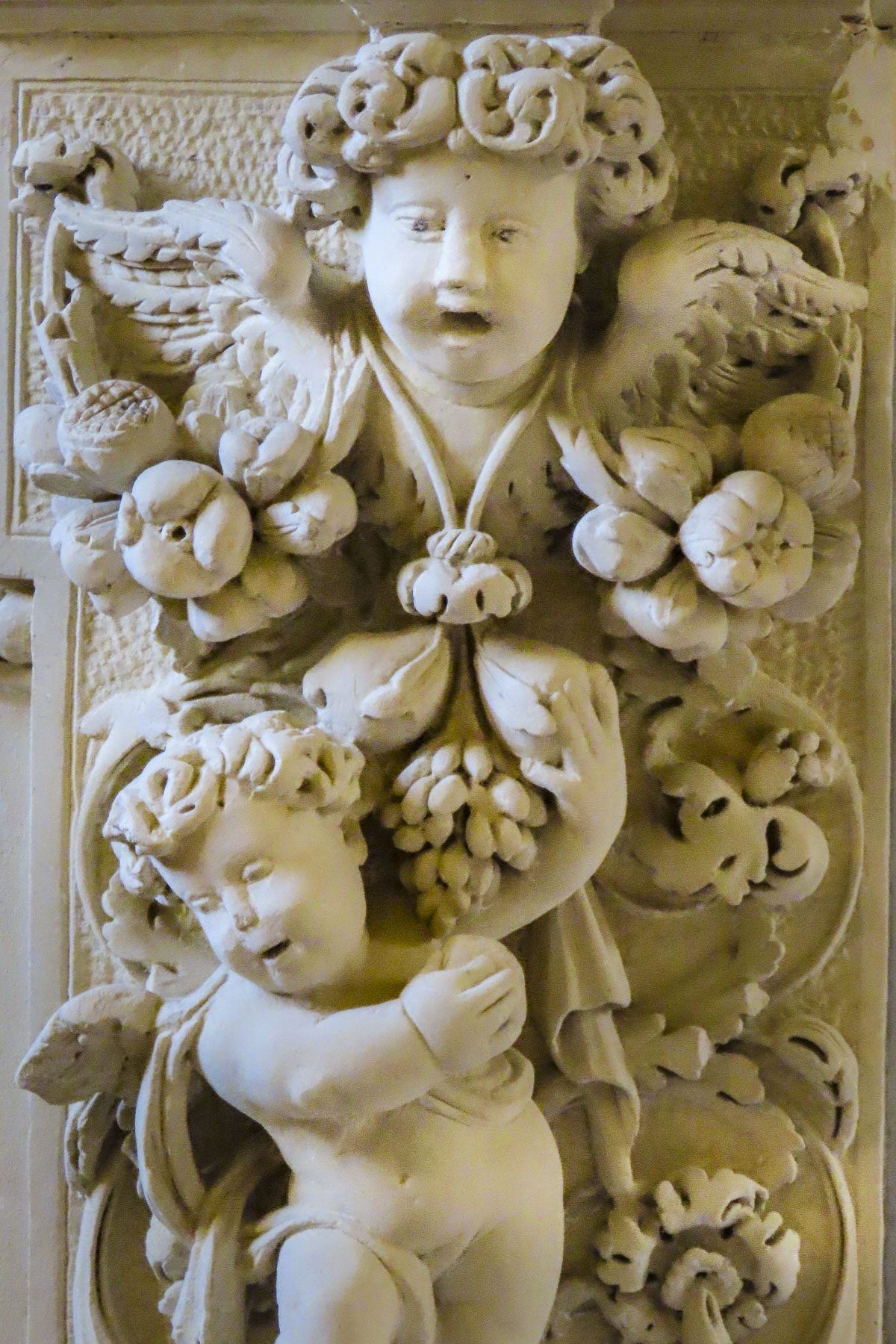
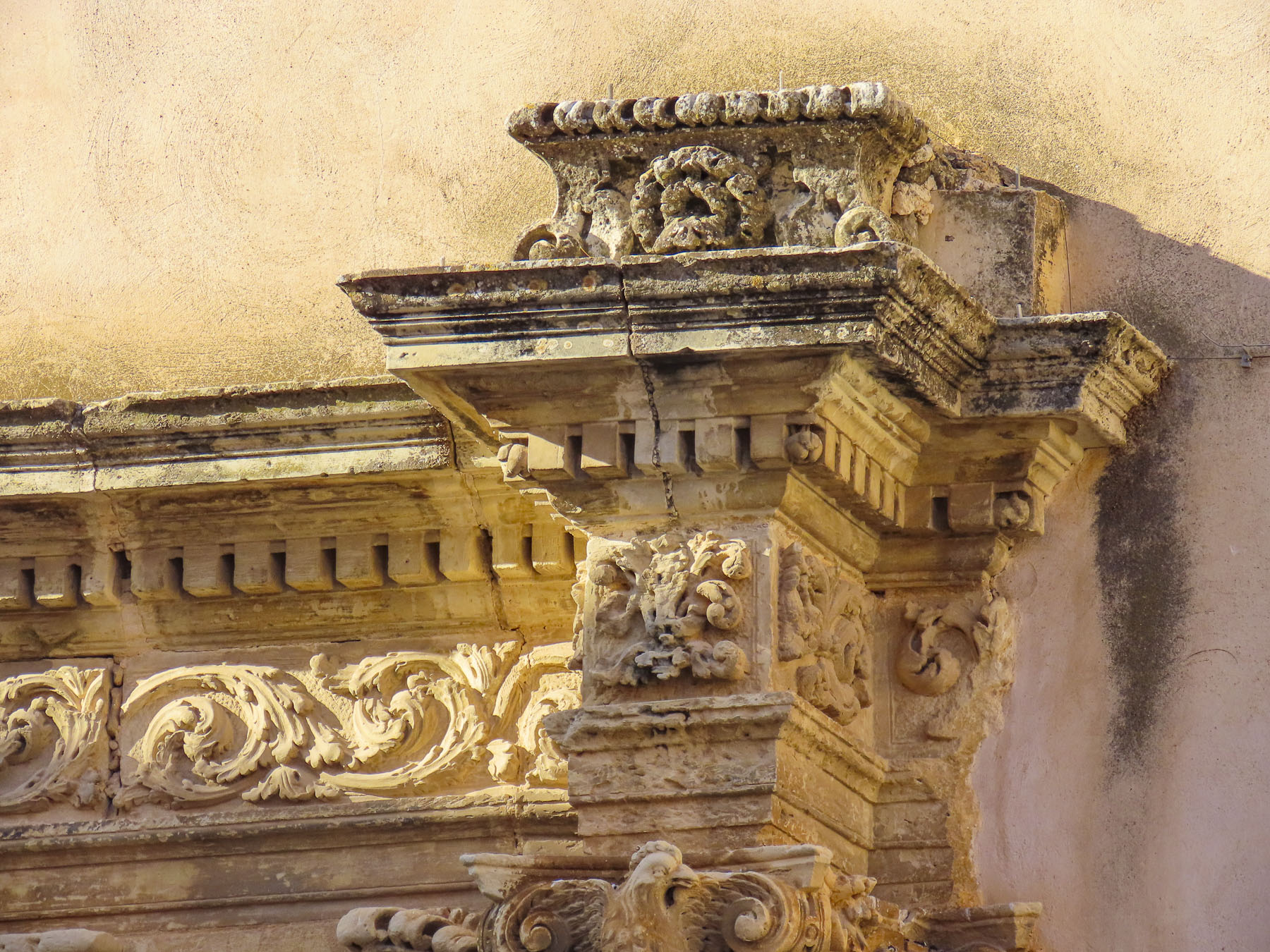
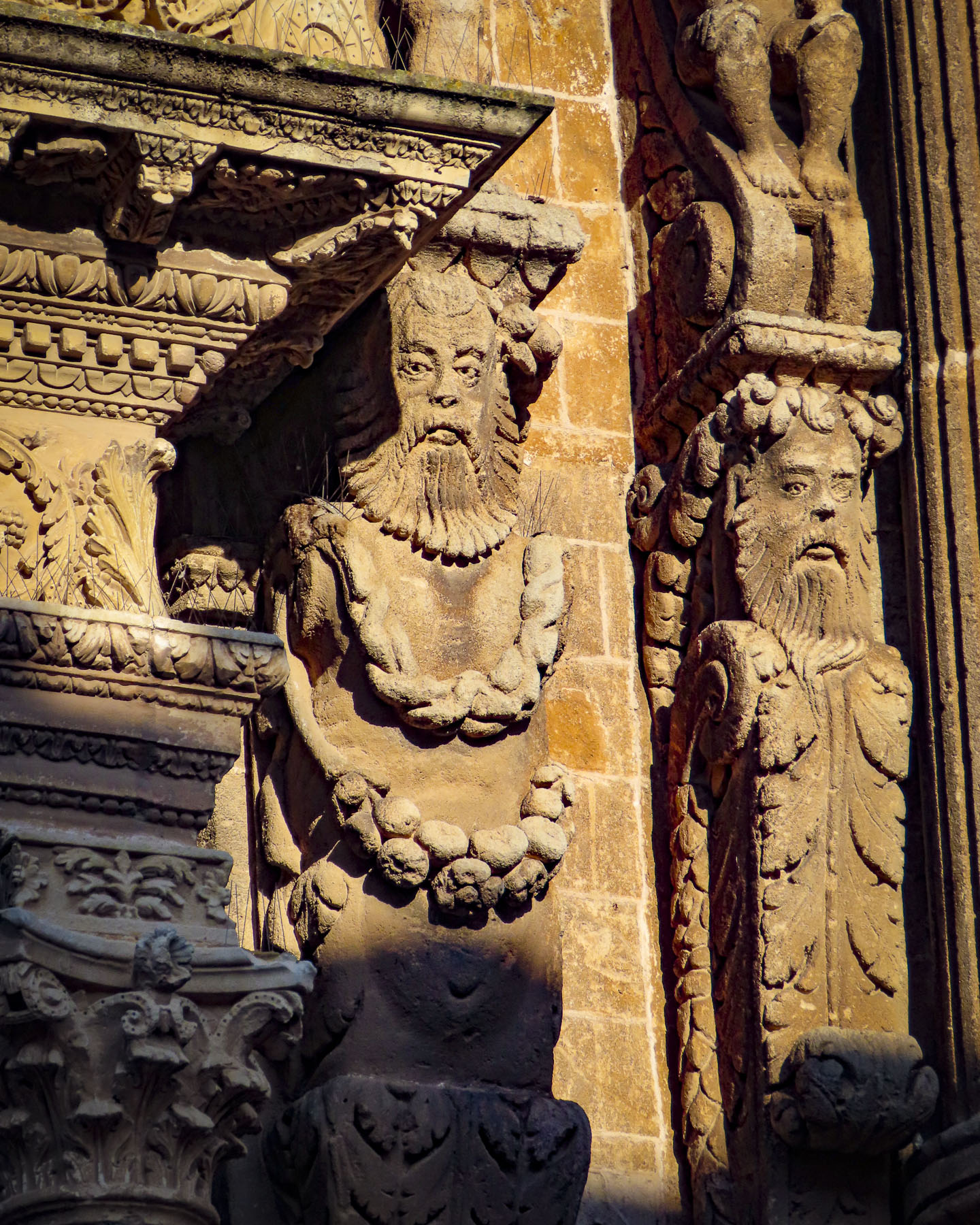
Meter parking was available near the Garibaldi Garden, but we opted to find a 24-hour garage so that we wouldn’t have to worry about time.  Lecce has a population of approximately 96,000 folks, 16,000 of which are students. Their presence was evident with in the jovial sidewalk café life we passed as we headed to meet Giula at the tourist information office on Piazza Sant’Oronzo.  We entered the pedestrian-only historic center through an arched gate that led through the 17th century Palazzo dei Celestini’s impressive, cloistered courtyard. Once the private retreat of nuns, it now seats the regional government. Next door stands the Basilica di Santa Croce with its elaborate façade of carved demons, ogres, gargoyles, and beasts.  It’s enough to send any parishioner questioning his faith inside to seek sanctuary.  Fortunately, our timing to visit Lecce was perfect, as just the month before the façade of the basilica was still under wrap from a multi-year renovation project to freshen the sculptures after centuries of erosion.  Its architect Giuseppe Zimbalo took full advantage of the abundant local rock, called Lecce Stone, with its warm color and malleable characteristics.  His opulent Baroque style along with the lavish designs of his contemporaries is credited with earning Lecce the distinction of being “The Florence of the South” during the 17th century.  The talents of the city’s stone carvers rivaled those in Firenze. 

We had a few minutes to view ruins of the 2nd century Roman Amphitheatre that was undiscovered until construction in 1900 unearthed it. Its full size wasn’t realized until further excavation in 1938 determined it could seat 24,000 spectators.  We think it’s wonderful that ancient archeological discoveries are still happening in cities that have been continuously lived in for over two thousand years.

After joyfully greeting Giulia and making introductions all around, we sat at an outdoor café on the edge of the piazza and relished hearing each other’s adventures over the past year.  “The best way to experience the ambience of historic Lecce is to just wander slowly, discover the small details, touch the walls, enjoy the brilliant light and the warmth of the buildings,” Giulia offered as she stood to lead us through the past glory of Lecce. We followed her along shaded lanes, nearly empty of tourists in late October, past Baroque churches and shops shuttered for the afternoon siesta, still a time-honored tradition in southern Italy. “It’s quiet now, but in the evenings the historic district is transformed into a spirited hot spot. The passegiata brings families into the streets, and later the university students keep it lively with their barhopping.”

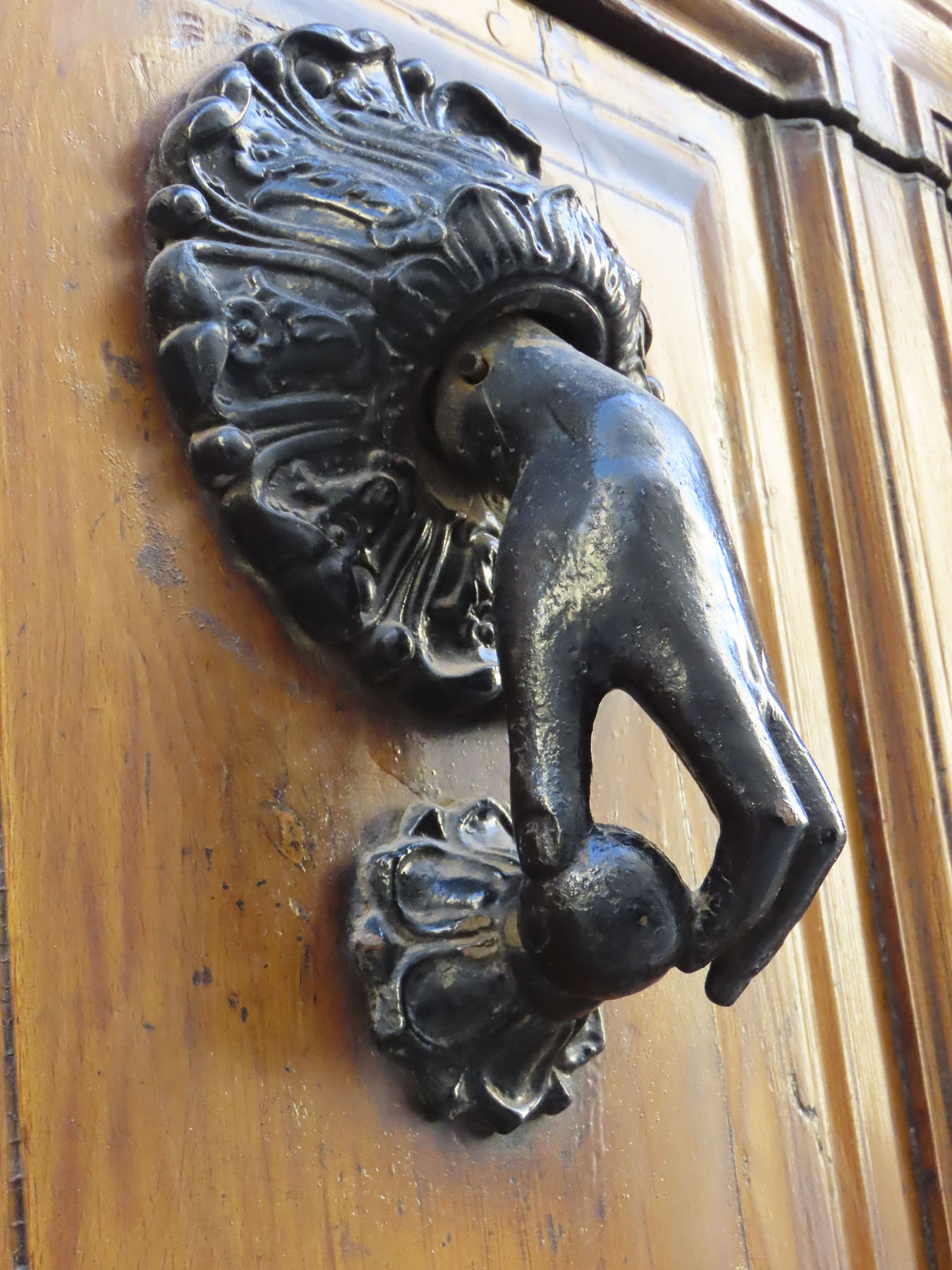
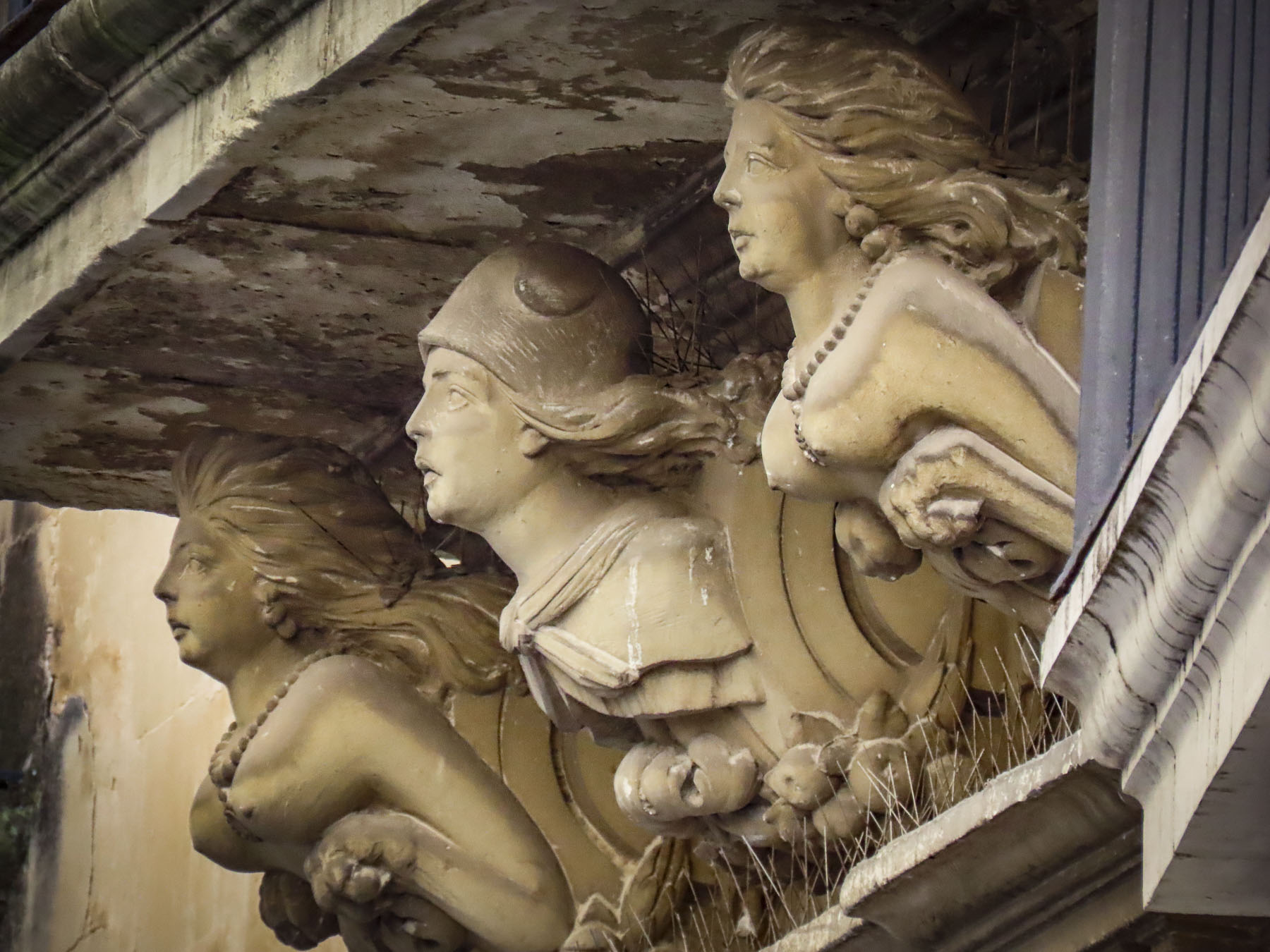
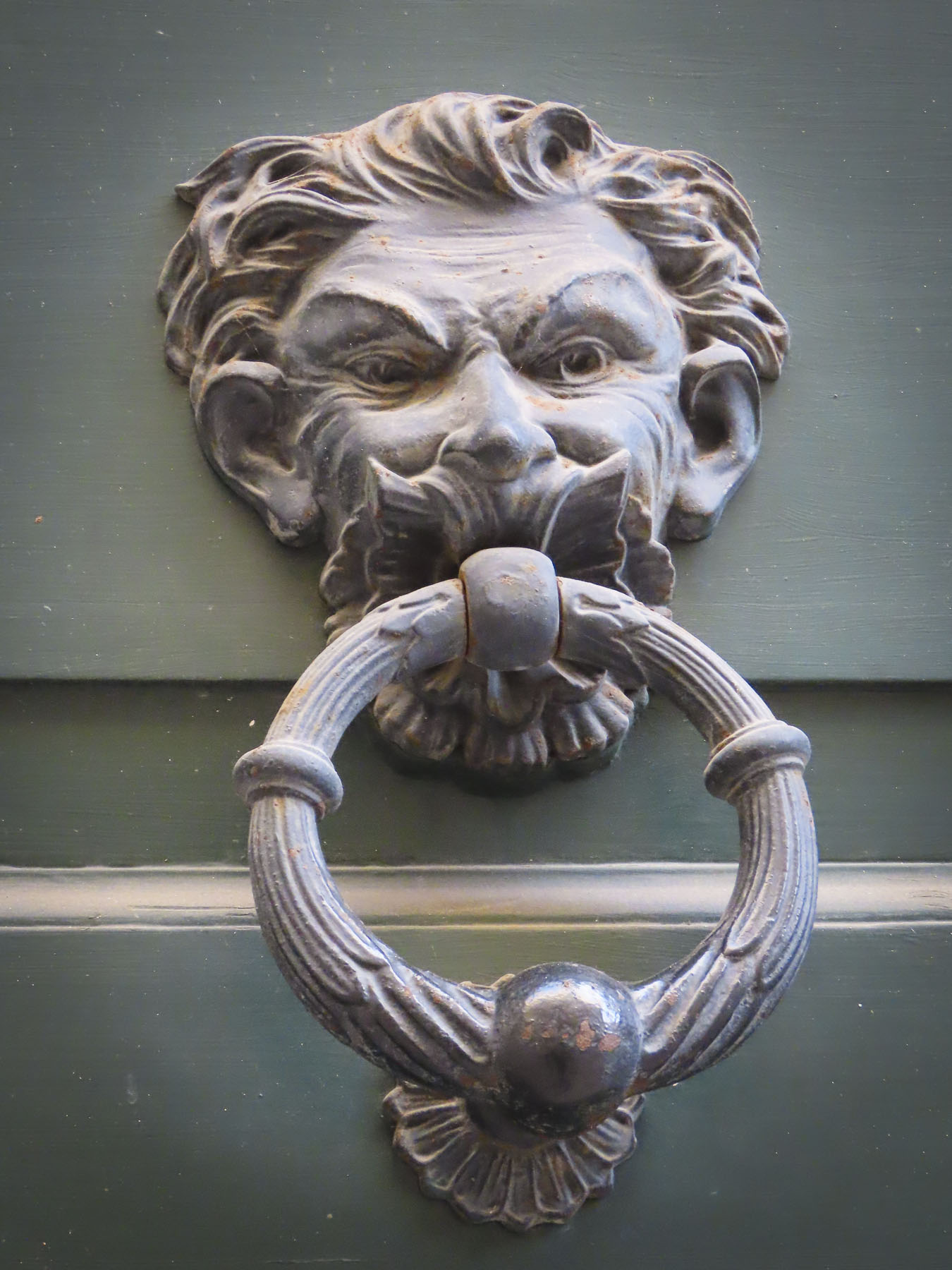
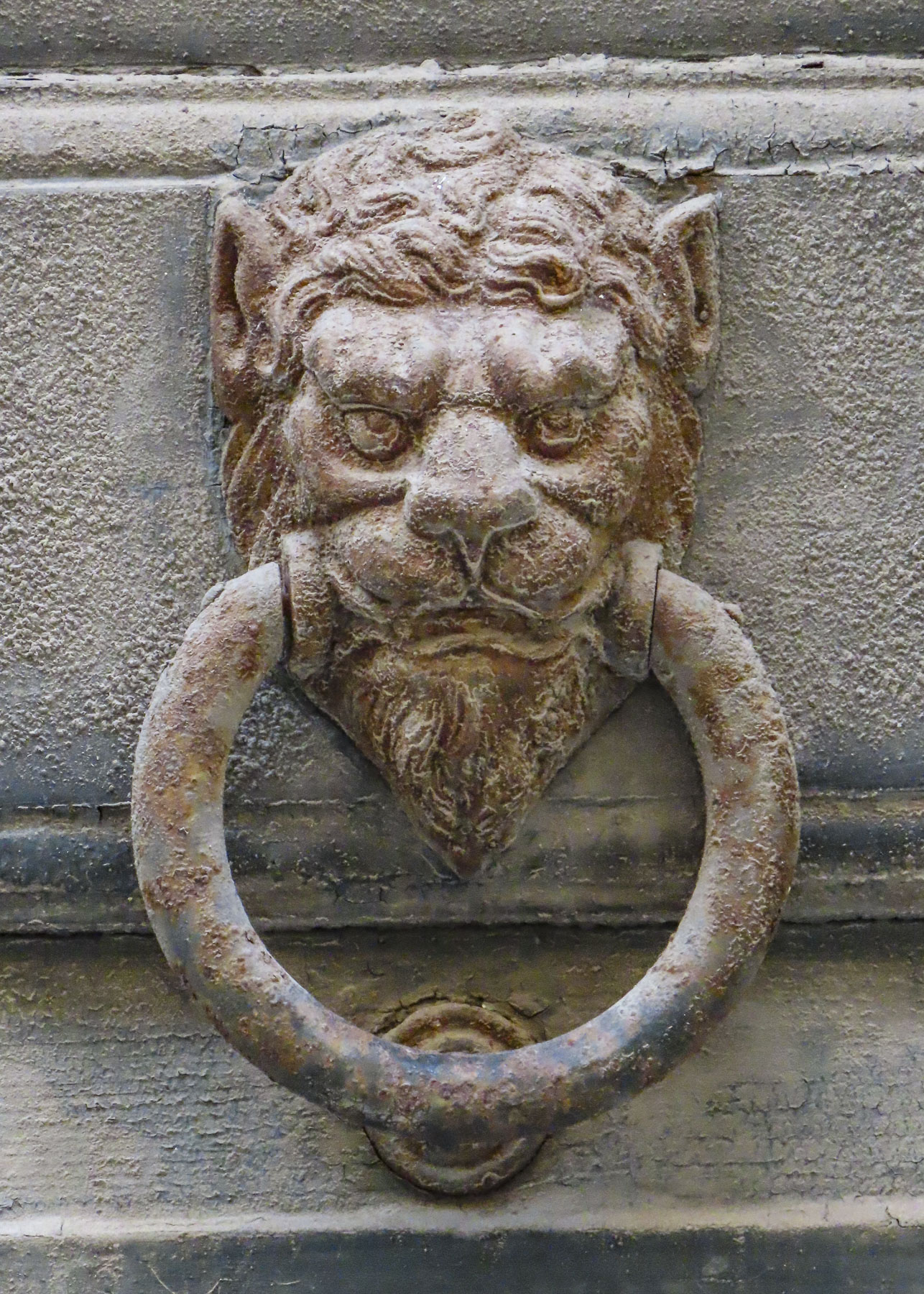
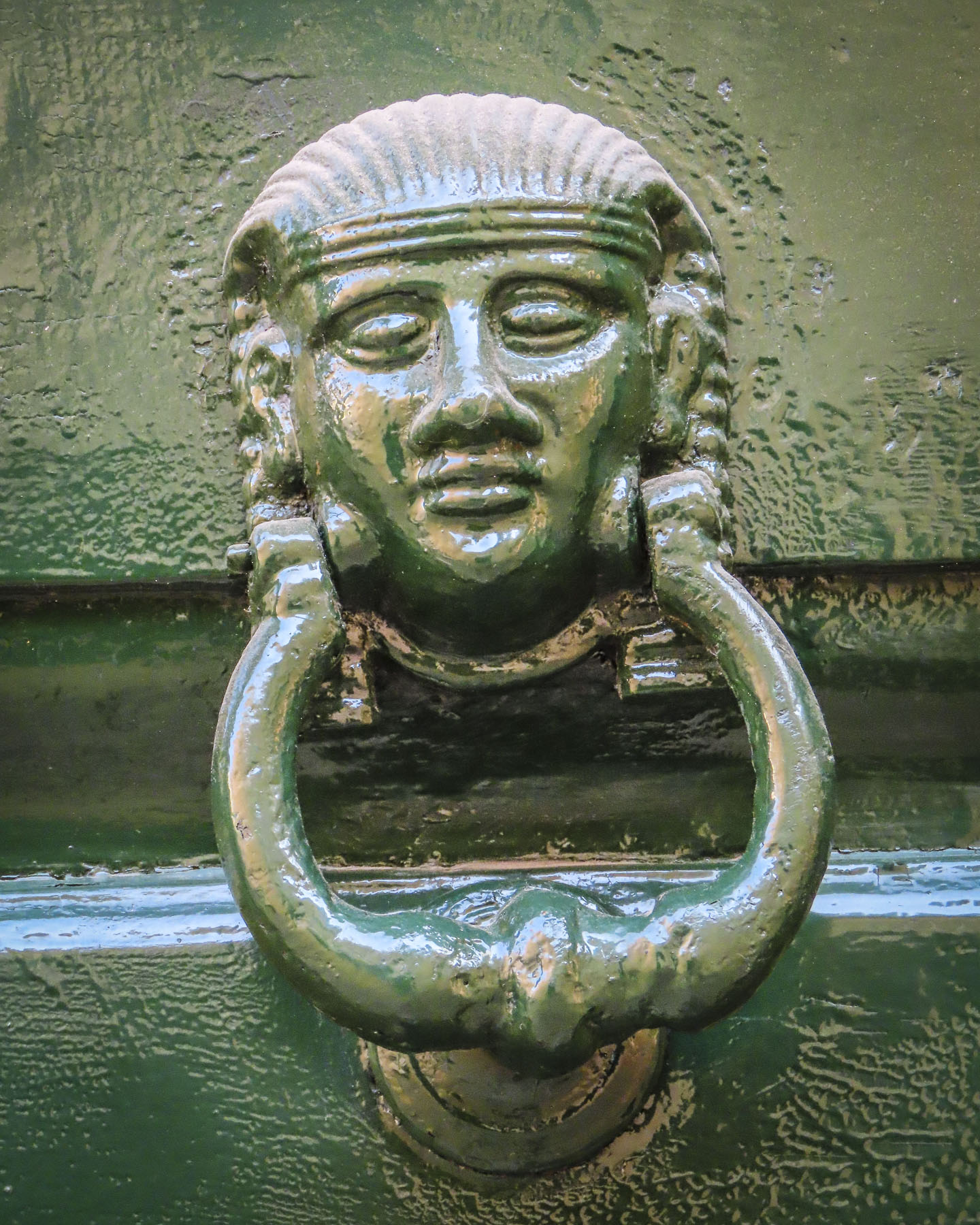
Large palazzo, with their arched entrances wide enough for a horse drawn carriage, lined the larger streets. Above, stone buttresses carved with gargoyles and animals supported balconies over the street. Interesting antique door knockers beckoned passers-by to rap on ancient doors, some so covered with cobwebs we wondered how many decades ago they we last used. We resisted the temptation.

As we turned a corner, the large Piazza del Duomo spread out before us.  Unlike other piazza in Italy where there are multiple entrances and shops, this piazza only has one way in and out.  The Lecce stone facades of the Museo di Arte Sacra (once a seminary,) Palazzo Arcivescovile (formerly the Bishops’s residence,) and Cathedral of Maria Santissima Assunta with its belltower enclose the plaza on three sides, giving it the ambience of a tranquil cloister.  The first church on this site was built in 1144 and repaired several times over the next 500 years until 1659 when hometown master architect Giuseppe Zimbalo was commissioned to rebuild the cathedral and design the freestanding 230ft tall belltower in the “Baroque of Lecce” style he helped popularize.  His burial under the altar of the cathedral reflected the honor accorded him.

Sitting on the steps of the museum, we admired the warm glow of the late afternoon light as it lit the walls across the piazza. “I would love to live there,” Giulia said, as she pointed to a small, corner terrace brilliant in the sun on an old building at the entrance to the piazza. I think there was a collective “ah, yes;” we understood.

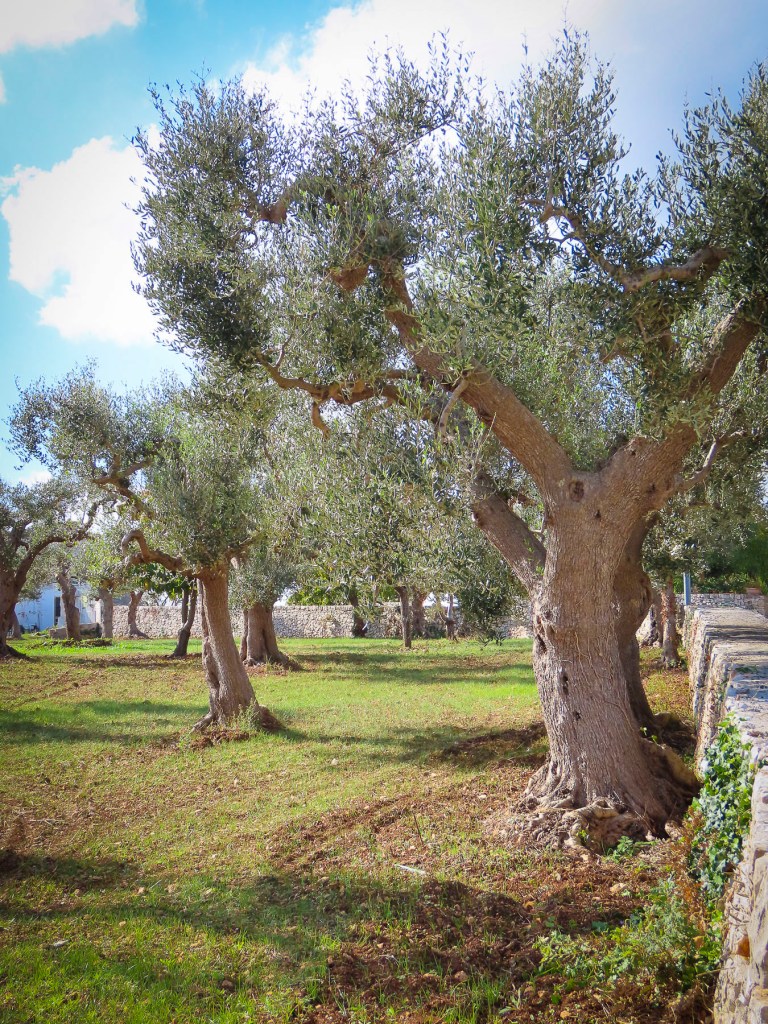
Later in the week Giulia invited us all to visit her in Nardo, her family’s hometown.  It would be our farthest point south on the “heel of Italy.” The GPS directions from Alberobello suggested the fastest route to Nardo through Lecce, but we chose an alternative route that gave us our first glimpse of the Ionian Sea. Following backroads, we drove through vineyards and olive orchards.  Many of the orchards, though, were suffering from a deadly olive tree disease caused by a bacteria, xylella fastidiosa, that is ravishing southern Puglia and its important olive oil industry.  To curb the bacterium’s further spread drastic measures have been implemented. Infected trees and those within 150ft of it are culled from the orchard. Unfortunately, it has radically changing the landscape and farmers’ lives.

We met Giulia and her family at their winery on Via A. Volta, located just outside the historic district. Giulia’s grandfather started Cantine Bonsegna in 1964. Today her father and uncle continue vinting wines in a 1930’s era industrial building on one of the main thoroughfares of Nardo.  Wines from their vineyards in the countryside are brought into town, then pressed and fermented at the rear of the building, where they cork about 150,000 bottles of wine a year, while the front serves as a retail store.  On the second floor a wine bar is open in the evenings and specializes in small plate fare.  Their Danze della Contessa, Dances of the Countess, label was inspired by Giulia’s love of ballet. We might be slightly prejudiced, but we thought their wines were very enjoyable and definitely worth a visit to taste some fine regional wines and buy a case or two, maybe three. We purchased several bottles to enjoy during our trip, and were disappointed to learn that the Bonsegna label was unavailable in the US.

Heading into the historic district we were treated to a festive lunch at the Hostaria Corte Santa Lucia, a local favorite that specializes in “the forgotten recipes of the Salento region.” Plate after plate of mouthwatering local specialties were placed before us; our young men did justice to the platters, but were soon groaning for mercy as more and more food appeared. Mr. Bonsegna wouldn’t hear of us paying the bill, and afterward our boys marveled at the warmth and hospitality our host showed to us. “It is the Italian way,” Donna explained. “This is how I grew up – family and friends are lovingly embraced, and everyone is fed!”

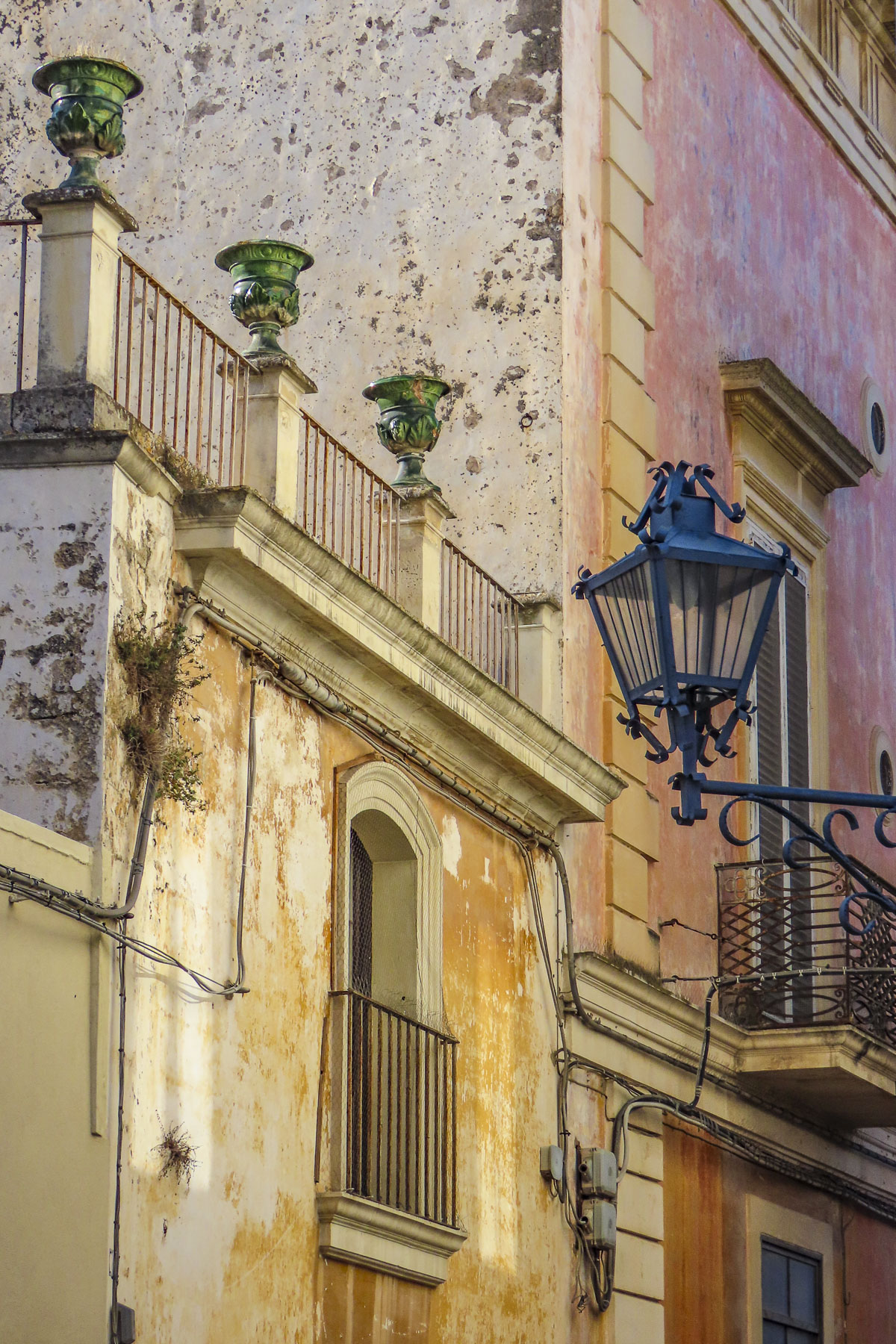
We followed Giulia’s father into the old town, hugging the shade to avoid the intense sun still strong in late October.  The colors of the buildings were softer here, pastel colors chosen to reflect the nearby sea and surrounding farmlands.  Being close to Lecce, Nardo shared a similar history and the Baroque style adorns many of the town’s ancient churches.  The façade of the Church of Saint Dominic is the best example of that opulent exterior decoration, and was the only wall to remain standing after a 1746 earthquake.  

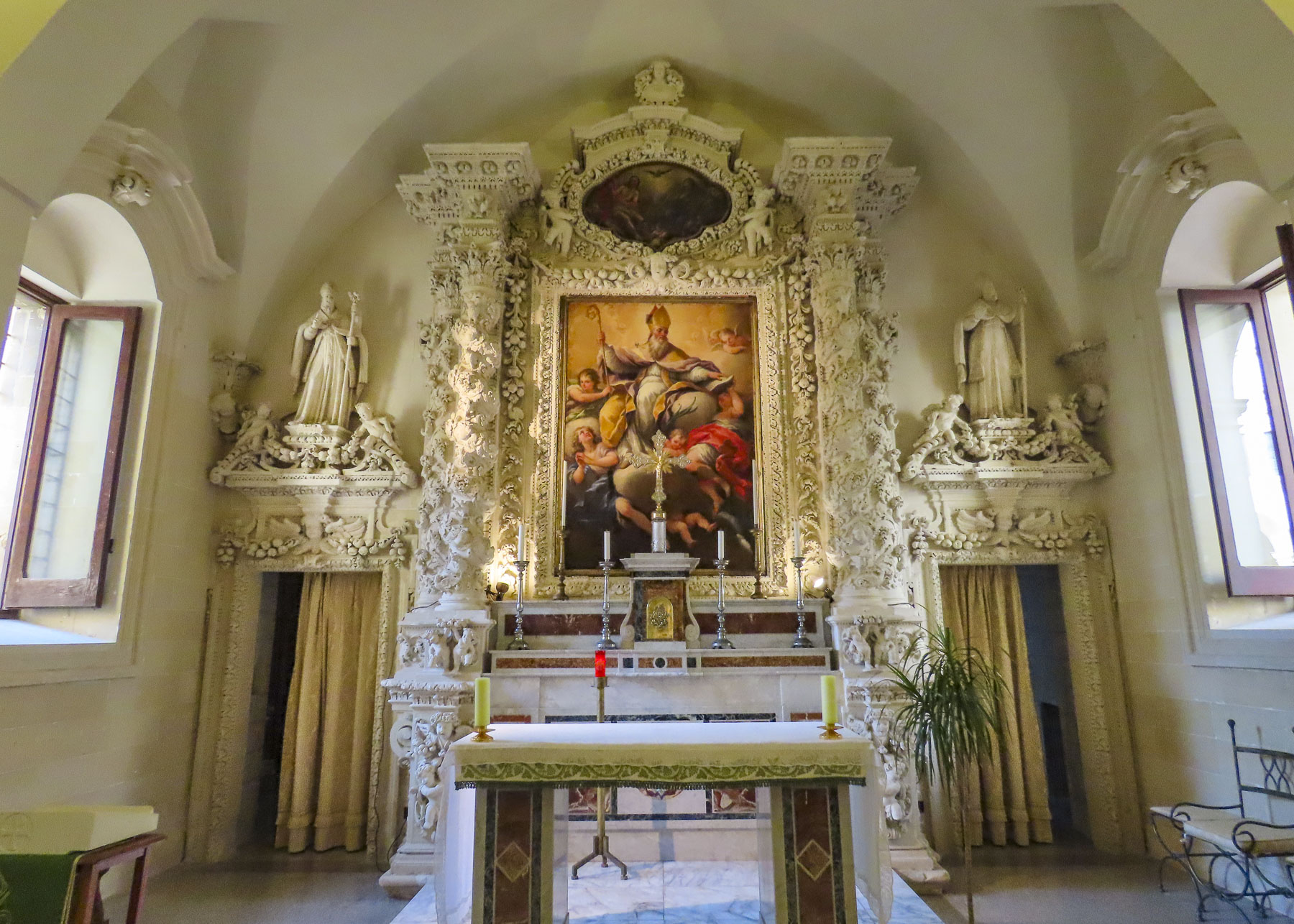
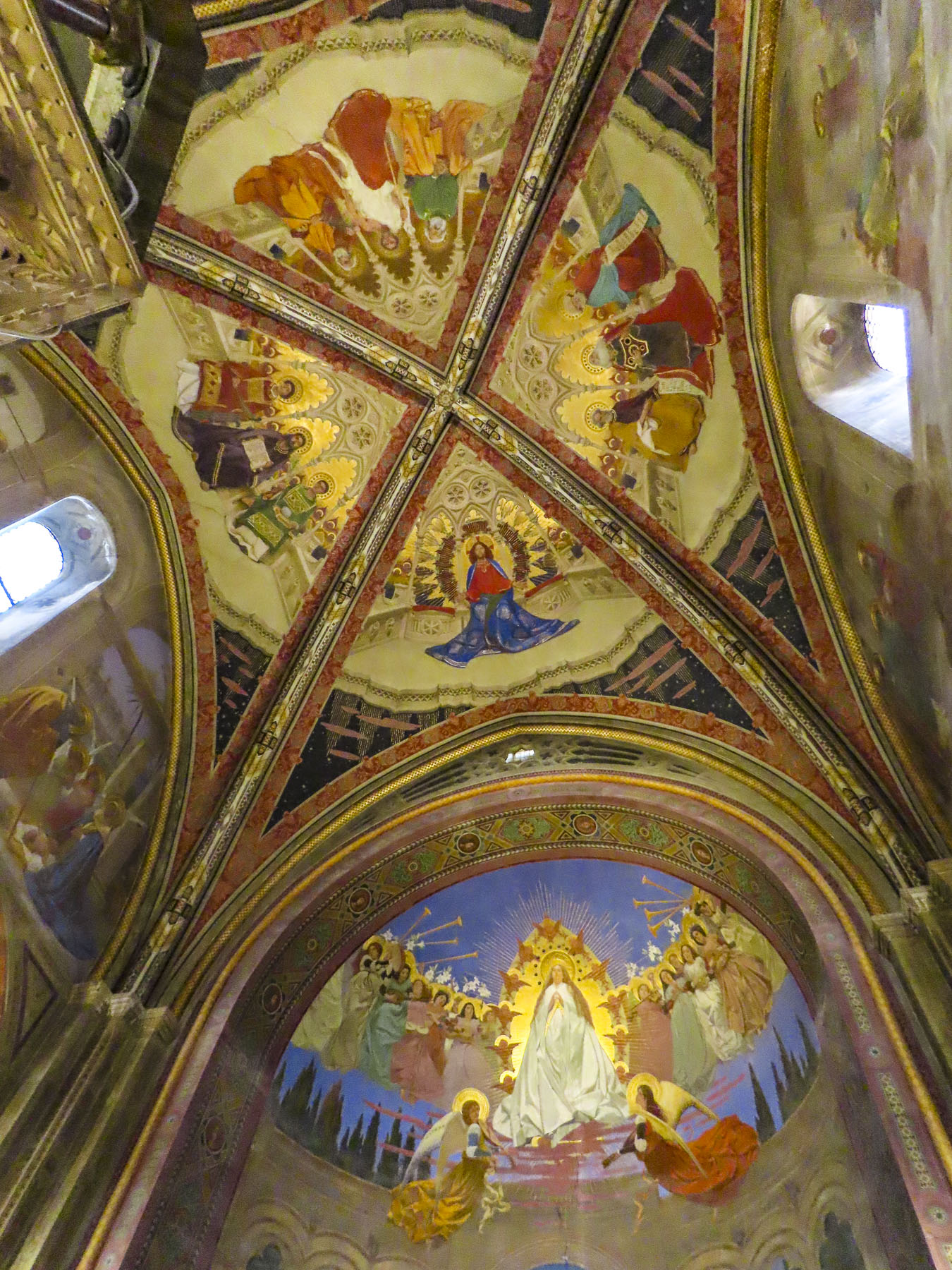
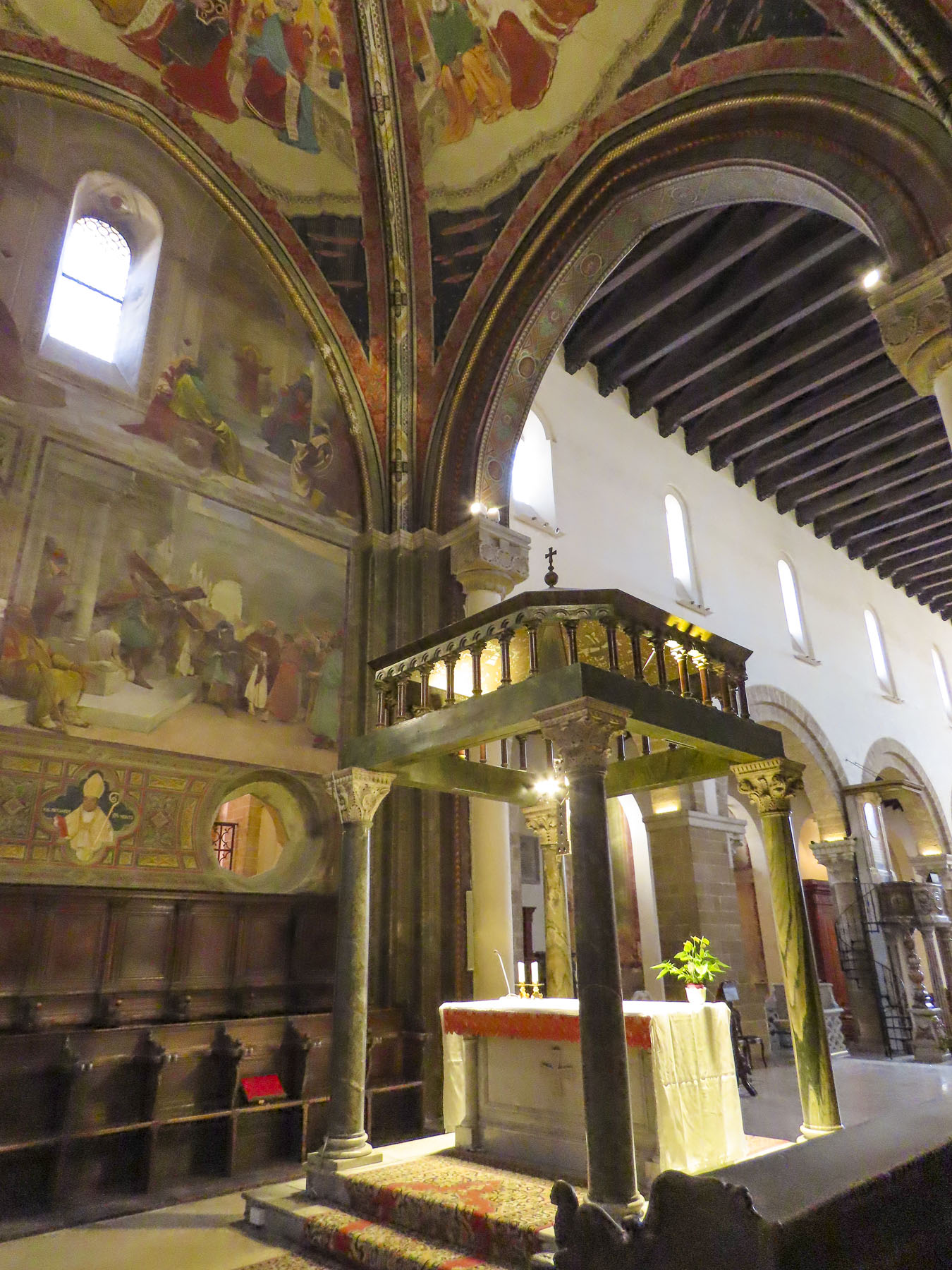
The Cattedrale di Nardo was our destination.  Partially damaged in the upheaval that shook the region, half of the 11th century church needed to be rebuilt.  Interestingly the effects of this could be seen as we looked down the center nave of the church.  The arches on either side reflected different styles.  The surviving arches were slightly pointed at their apex, while the newer ones are completely curved, a fine detail that Mr. Bonsegna enthusiastically revealed.  Farther inside, original medieval frescoes survived, untouched from the catastrophe, while along the outer wall 19th century murals replaced ones lost to the earthquake. 

Nearby the Guglia dell’Immacolata, a 100ft tall ornately carved baroque spire dedicated to the Virgin Mary, centers Piazza Antonio Salandra. “The piazza is jammed with people every December 8th to watch a fireman climb to the top and place a wreath of flowers on Mary’s head, to honor the Immaculate Conception,” Giulia shared as we crossed the piazza to a still-flowing, ancient public water fountain decorated with a relief carving of a bull. 

Legend says the fountain marks the spot where 3000 years ago settlers watched a large wild bull scuff the earth and uncover a natural spring.  Behind us stood the small Church of San Trifone, built in the 1700’s to honor the martyr who saved Nardo from an infestation of caterpillars. We were disappointed that an explanation of this odd plague was not provided.  Most likely it was an infestation of oak processionary caterpillars. Contact with their toxic hairs can trigger an asthma attack, but most often results in a severe, blistering rash that lasts for weeks. “We have it all here and yet we are still far off the tourist track,” Giula happily joked. “We get very few foreign visitors, and rarely, if ever, Americans.”

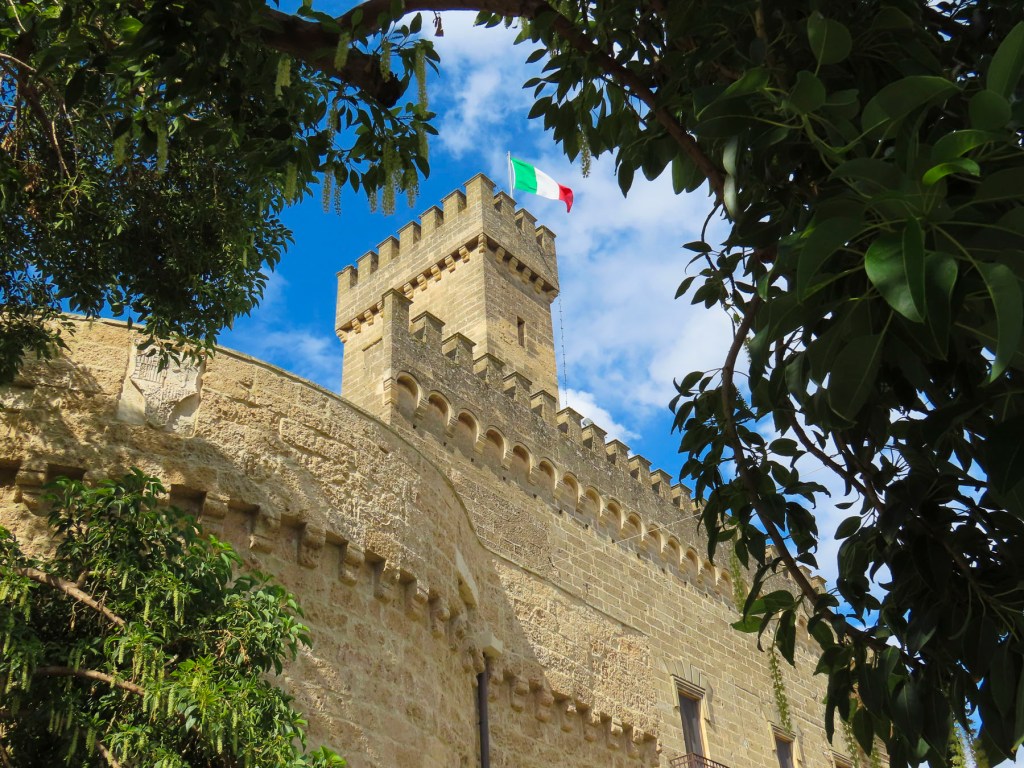
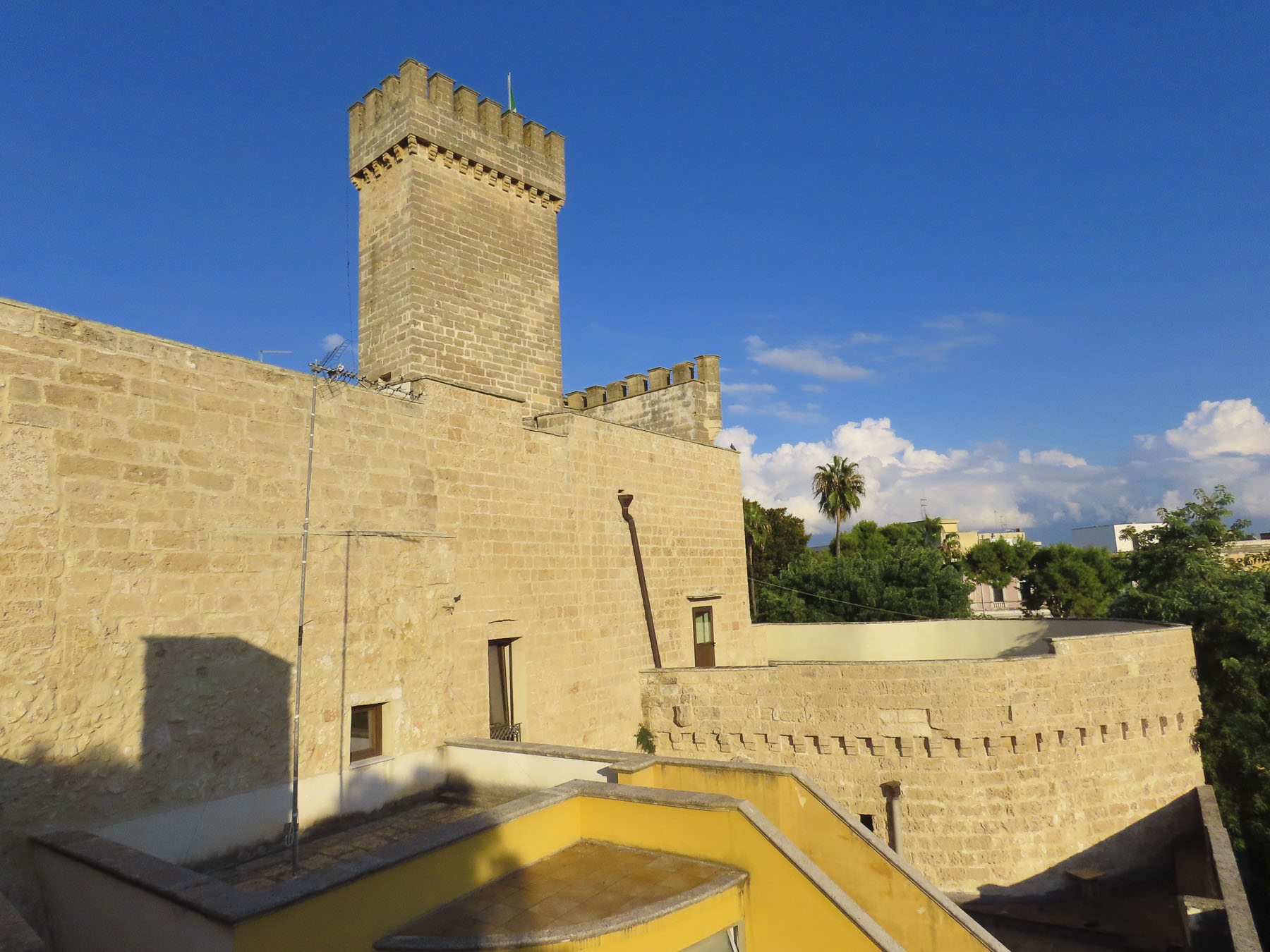
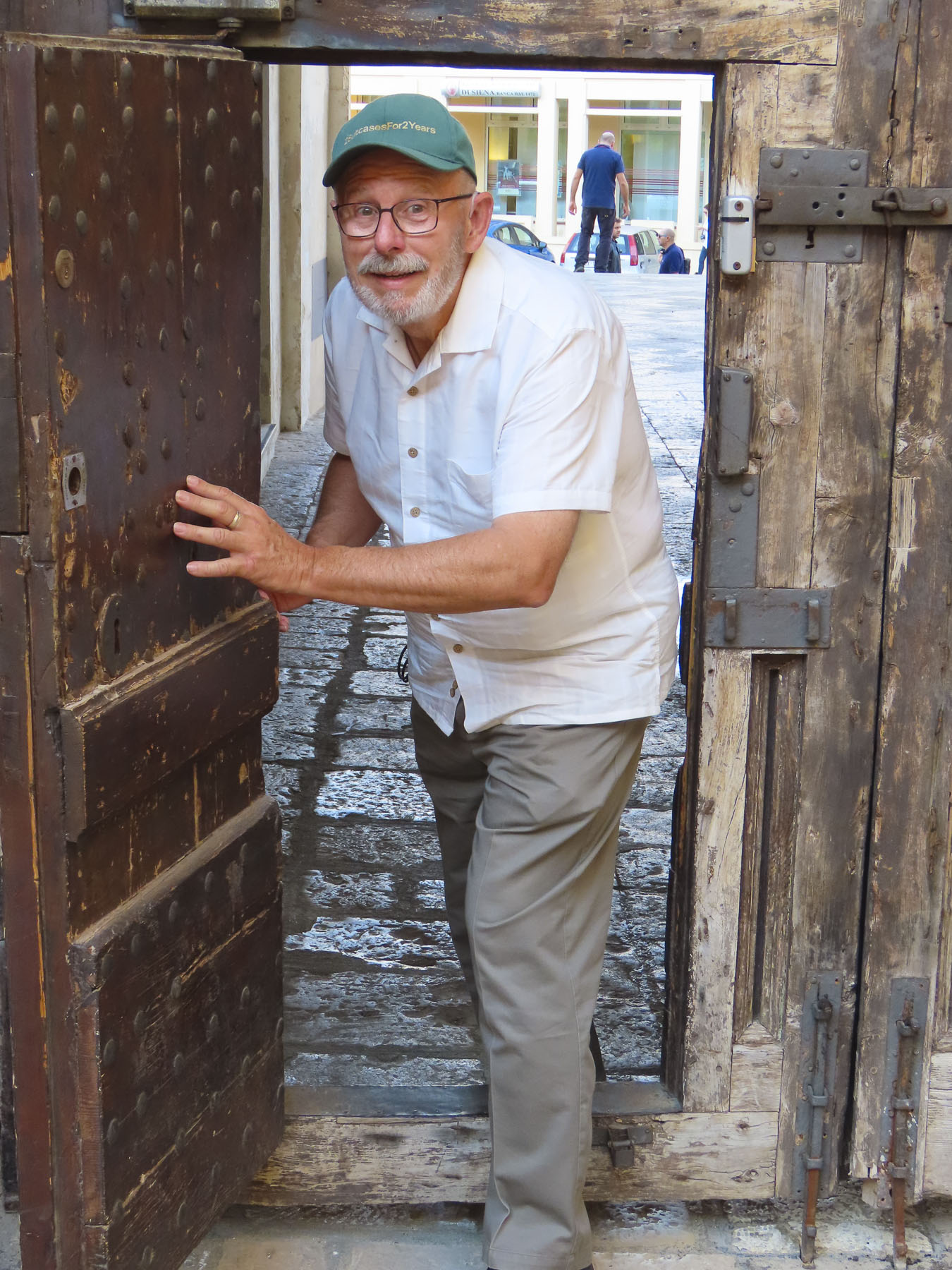
Heading back to the car we stepped through the heavy wooden door of the Aragonese Castle of Nardo. Formerly the private residence of the 15th century Acquaviva family, rulers of the fief of Nardò, a reward from King Ferdinand II of Naples.  Today the once moated fortification serves as the city’s town hall.

A very enjoyable day was celebrated and “till next time” was said over coffee before we said our farewells and drove to the seashore to find one of the numerous watch towers that were built along the Ionian coast to warn the country of imminent invasion. 

The sun was setting as we came to a stop behind a car about to turn onto the coast road. A car on the opposite side of the road turned the corner and stopped to wave at the person in front of us. Quickly both parties were out of their cars, hugging and chatting away, oblivious to us. I rolled down my window and photographed the dark silhouette of a square “Nardo tower” against an orange sky. No impatient honking, just enjoying life in Nardo.

Fino alla prossima volta – till next time,

Craig & Donna

Back Roads – Lisbon to Marvão

“Set it to avoid toll roads?” “Yep.” And with that our mapping app committed us to back roads for our journey to the Portuguese frontier. The medieval hilltop citadel of Marvão,  located along the border with Spain, was our day’s destination.  We had just wrapped up a splendid month in Lisbon, but were looking forward to a fifteen-day road trip exploring the smaller villages of the Portuguese countryside, between Marvão to the east of Lisbon and Porto to the north.IMG_7889Leaving Lisbon behind, we crossed the graceful Vasco da Gama suspension bridge spanning the Tagus River.  Within minutes we entered a gently rolling landscape of cork, olive and chestnut orchards dotted with sheep grazing in the shade beneath the trees.  Along the roads, storks were building their nests atop powerline towers or the chimneys of abandoned houses.  These stunning birds, having just completed their seasonal migration north from Africa, are always a joy to watch and we interpreted their sighting as a sign of good fortune ahead.  Heads turned as we passed through small farming towns more used to seeing the twice daily bus or farm tractors rumbling along than unfamiliar tourists cruising through.  Each village, regardless of how small, had a café, which was the center of activity.  Short on atmosphere, they offered espresso or cappuccino, just as good as in Lisbon, along with a limited selection of sandwiches and pastries. 

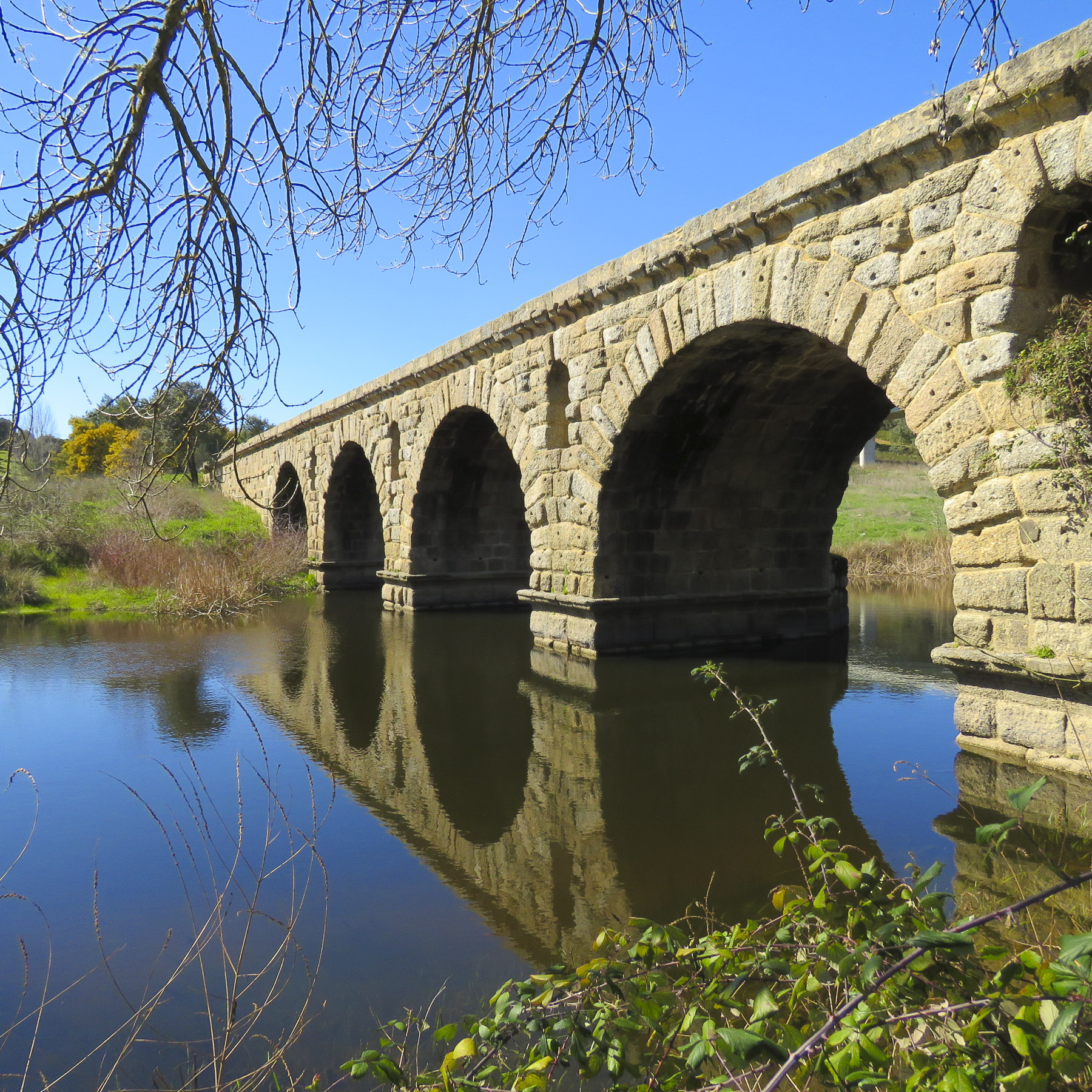
Crossing the Ribeira de Seda on a high modern overpass, we spotted a large old stone bridge below.  The next exit led us down to Ponte de Vila Formosa, an impressive 2,000-year-old Roman bridge with six arches dating to the 1st century CE.  This 330-foot span was once a vital crossing on the Roman road linking Lisbon to Mérida, Spain.  Today it’s one of the best-preserved examples of Roman engineering remaining in Portugal.  Closer to Marvão is a one arch bridge built in 1494, and not nearly as elegant or substantial as the Ponte de Vila Formosa. We wondered how a royal carriage ever crossed it safely.IMG_6849Typically, we double the amount of time it’s suggested to get to our destination to account for coffee, lunch breaks and photo ops.  We drive, we stop, jump out for snaps, make U-turns and so on.  As the sun lowers in the afternoon sky, “We’ll never get there if you stop every 100 yards to take pictures!” is often voiced from the navigator’s seat.

A serpentine road twisted up the side of the 3,000-foot-tall butte, occasionally offering a glimpse of our formidable destination high above.  Driving through the slender entrance gate, the portal narrowed to the point where we had to pull the mirrors in.  It seemed the further we drove uphill the farther time receded. By the time we reached the summit of the walled village and checked in at Dom Dinis, a small boutique hotel, the golden hour was in full glory and bathed the countryside in a warm glow.IMG_8053The cold wind chilled us to our bones, but we found warmth by the fireplace in the tavern across from our inn.  After dinner, as we stood on the ramparts behind our hotel, the darkness offered us a view of the stunning star-filled sky above and the twinkle of village lights far below.  With a stiff breeze in our faces, we felt like we were flying. The glorious sunrise the next morning cast a beautiful light on the panoramic view of the flat plains that run all the way into Spain, while the rugged mountains and valleys to the west stayed covered in an early morning mist. 

Marvão was important as a strategic stronghold since the ninth century, when the Moors first possessed it, and subsequently improved and expanded upon it over the centuries when the Kings of Portugal controlled it.  The fortress was sacked and retaken many times over the years. Today after extensive restoration it’s possible to walk all the way around the lower town atop the ramparts that encircle it. The castle walls jut from the steep sides of this granite monolith, like the bow of a ship breaking a huge wave.  Within its battlements, storage rooms and an impressively large rainwater cistern helped sustain the town folks when under siege.  As the last line of defense, the entrance to the castle’s tall keep was high above the courtyard and accessible only by crossing a gang plank which was drawn inside for security. 

Outside the castle, the hilltop village is wonderful to wander around. It reveals formal garden, narrow lanes and arched passageways that lead to whitewashed houses with decorative, Manueline windows, wrought iron balconies, ancient doors and red tiled roofs. 

One of the town’s old churches, Igreja de Santa Maria, has been converted into a civic museum with interesting displays explaining the history of the area. 

Fortunately, in 2017 Marvão requested to be removed from the UNESCO tentative site list, so it isn’t on the bucket list of busloads of day tourists from Lisbon.  At one time Marvão was home to 3,000 residents, but today there are fewer than one hundred full time residents living within its walls. We had the village practically to ourselves in mid-March.

Till next time,

Craig & Donna