The weather in mid-November was still nice; most of the days were sunny, but cooler. Sometimes a damp dreary, grey day snuck in and reminded us that winter did come this far south as was the occasion when we started our drive to Cefalu. It was honestly just plain yucky! On the wet roadtrip south, we passed two men selling roasted chestnuts and plastic, one-liter bottles of Vino Novello, young wine, or the Italian version of Beaujolais Nouveau, made from an accelerated fermentation process that eliminates the aging normally associated with vinting wines. With a quick u-turn and purchase our spirits were immediately lifted, as the aroma of the freshly roasted chestnuts filled the car. They took the chill off the day. The bottles of wine would wait until Palermo. This continues a tradition started years ago, stopping at roadside stands for any type of food, craft or wine purchase. Some days we made very slow progress indeed.
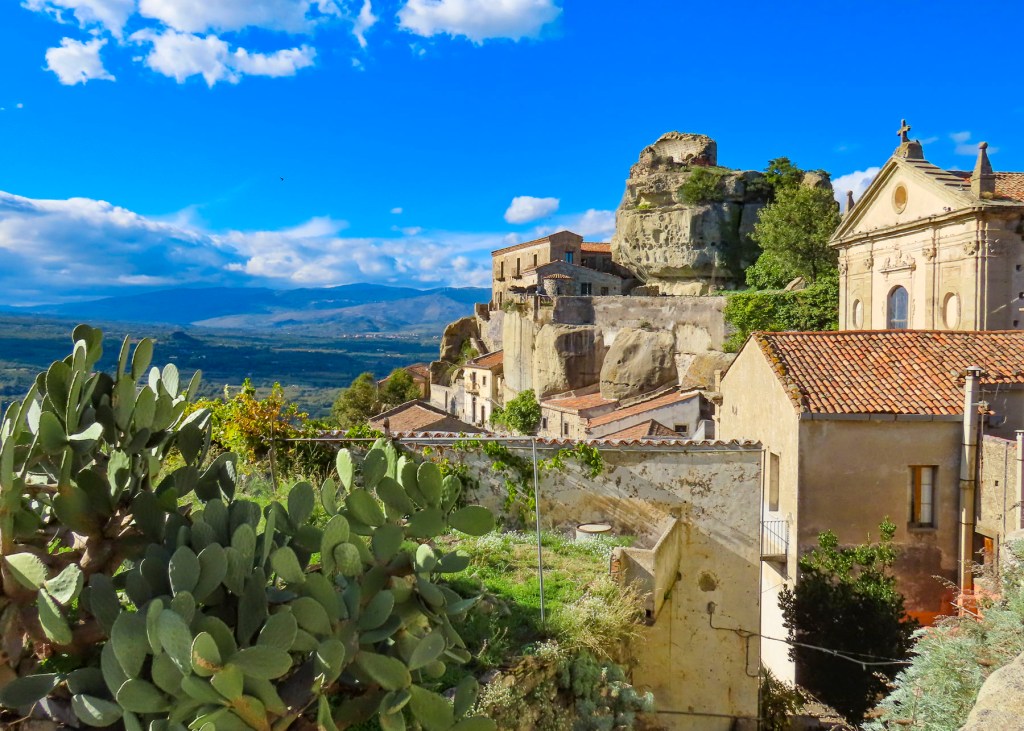
Heading inland from the coast road we followed the A19 west across the desolate, mountainous interior of Sicily past sporadically placed hilltop villages of various size. Calascibetta was particularly impressive from the road; its recorded history dates to its Arabic settlement in 851 AD. An area of 300 rock-cut tombs, Necropoli di Realmese, and a warren of cave dug dwellings at the Byzantine Village of Vallone Canalotto called for further exploration. “Next time,” we agreed as we raced to spend the afternoon in Cefalu.

On the Sicilian list of most beautiful villages, it is also thought to be one of the inspirations for the coastal village “Vigata” where our favorite fictional detective, Salvo Montalbano, created by Andrea Camilleri, enjoys quietly eating his beloved Sicilian dishes on his patio overlooking the beach. A step above the typical crime novel, Andrea Camilleri’s inspector Montalbano critically confronts Italy’s difficult political and social issues.
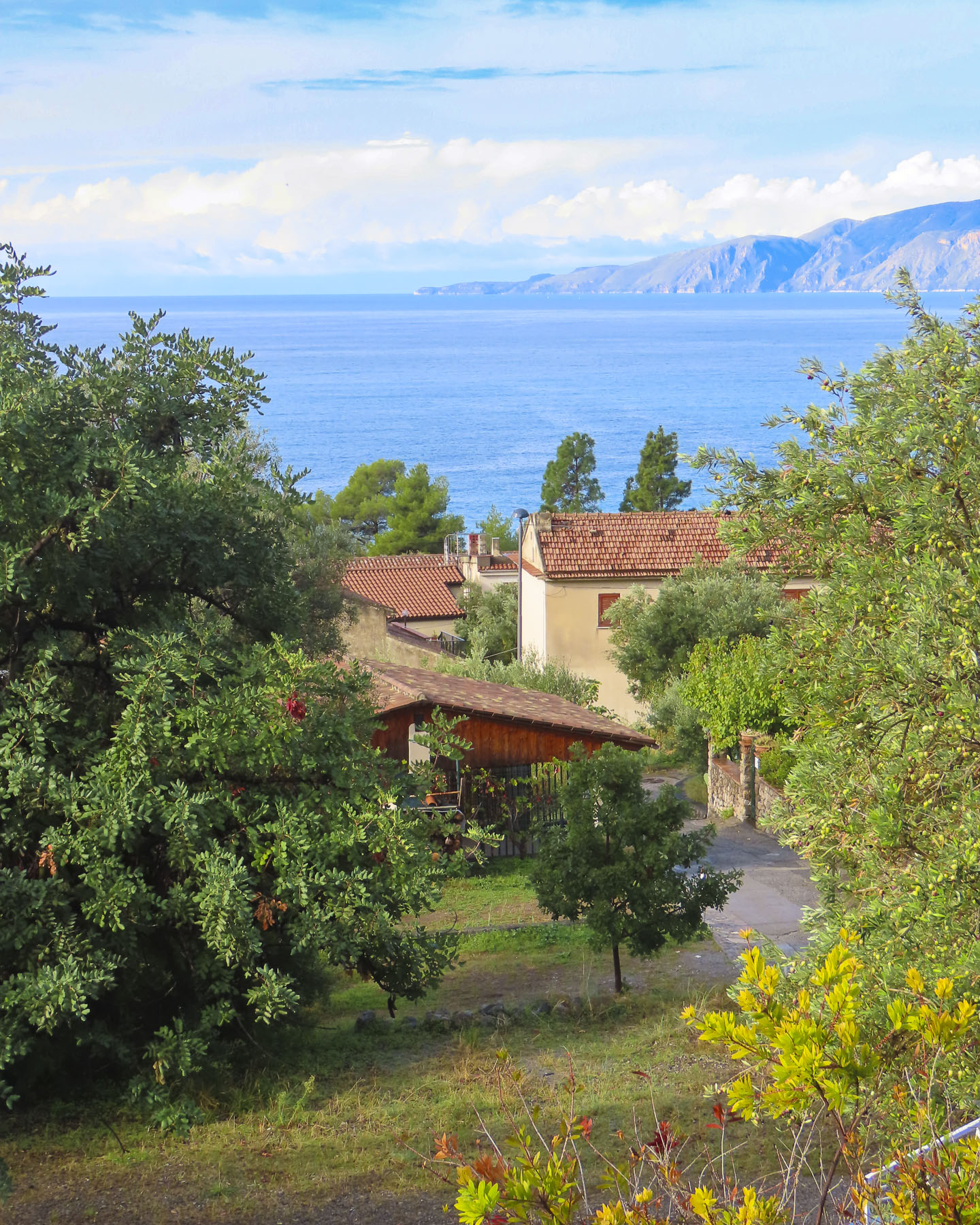
A graceful, curved beach, with ancient stone homes built to the Tyrrhenian Sea’s edge, under a bold headland defines Cefalu’s beauty. Offshore lie the Aeolian Islands, a volcanic archipelago.

The town’s first settlement was atop the nearly inaccessible 1200ft tall promontory that dominates this spur of land that protrudes into the ocean like a bent knuckle. A new town was established on the coast under the cliff face when the Normans captured it from the Arabs in 1063 and proceeded to anchor the new village with a cathedral that was built to fulfill a promise to the Holy Savior by Roger II, the King of Sicily, upon his survival of a vicious storm at sea that cast him ashore at Cefalu. Started in 1131, the fortress-like church, with Arab influenced architectural elements, took over 100 years to construct and was finished in 1240.


A handful of tourists sheltered under the tent of a café on the plaza in front of the Cefalù Cathedral, trying to ward of the November chill with coffee or wine. Unfortunately, the church was closed and we were unable to view its Byzantine mosaics. A trailhead on Via Pitre leads to the top of the massive promontory that towers over the town. Paths connect the ruins of a Greek temple dedicated to Diana that dates to the 9th century BC, as well as a Saracenic castle. The panoramic views of the Cefalu and the Sicilian coast are phenomenal.
A plastic curtain at the restaurant shielded us from a sudden downpour as we sat enjoying pizza, just above the gentle lapping waves. By the end of lunch, the rain had lessened to a misty drizzle and we ventured forth, with our umbrellas at the ready, down slick cobbled lanes to a wide, curved stone staircase.

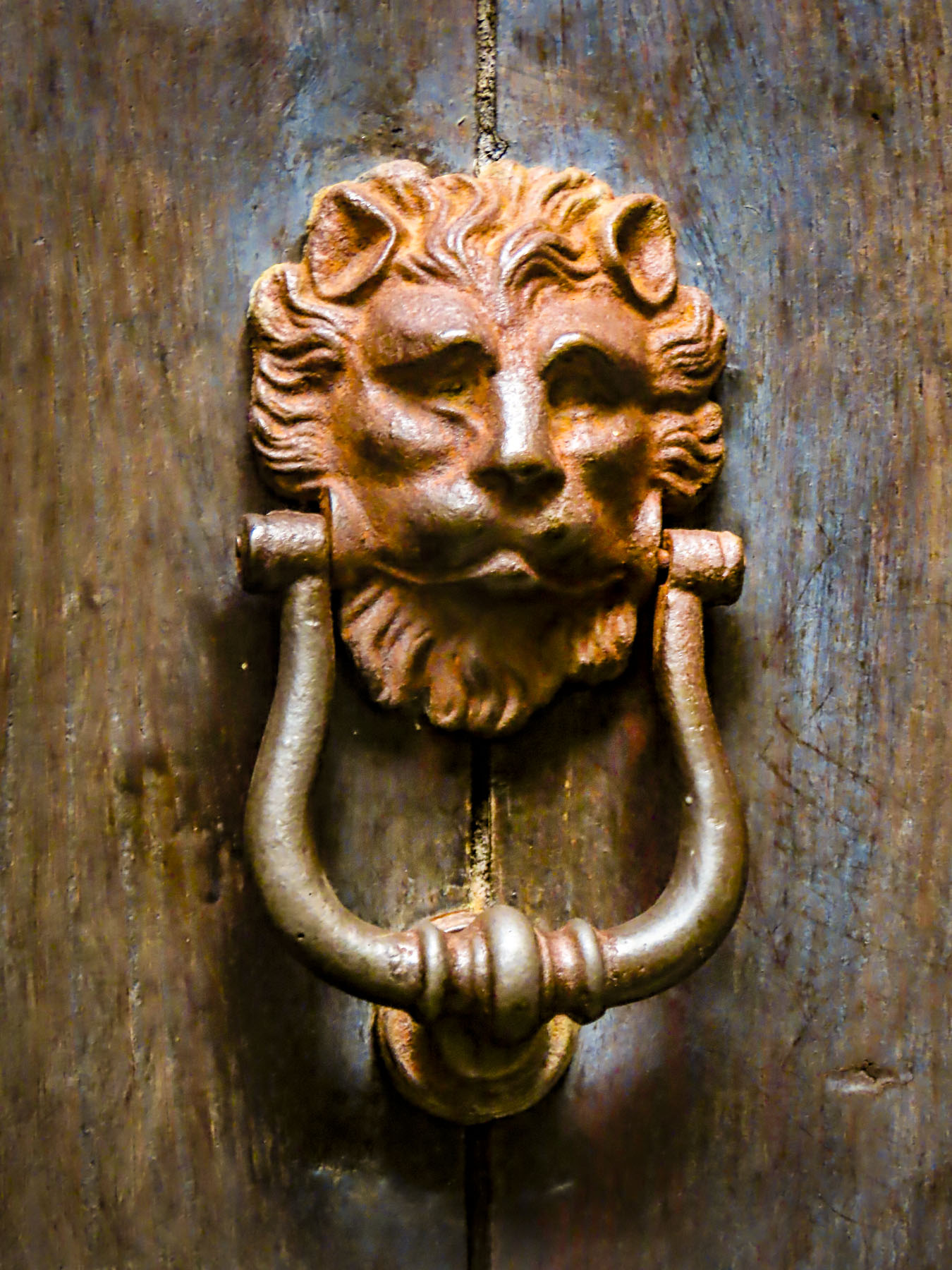
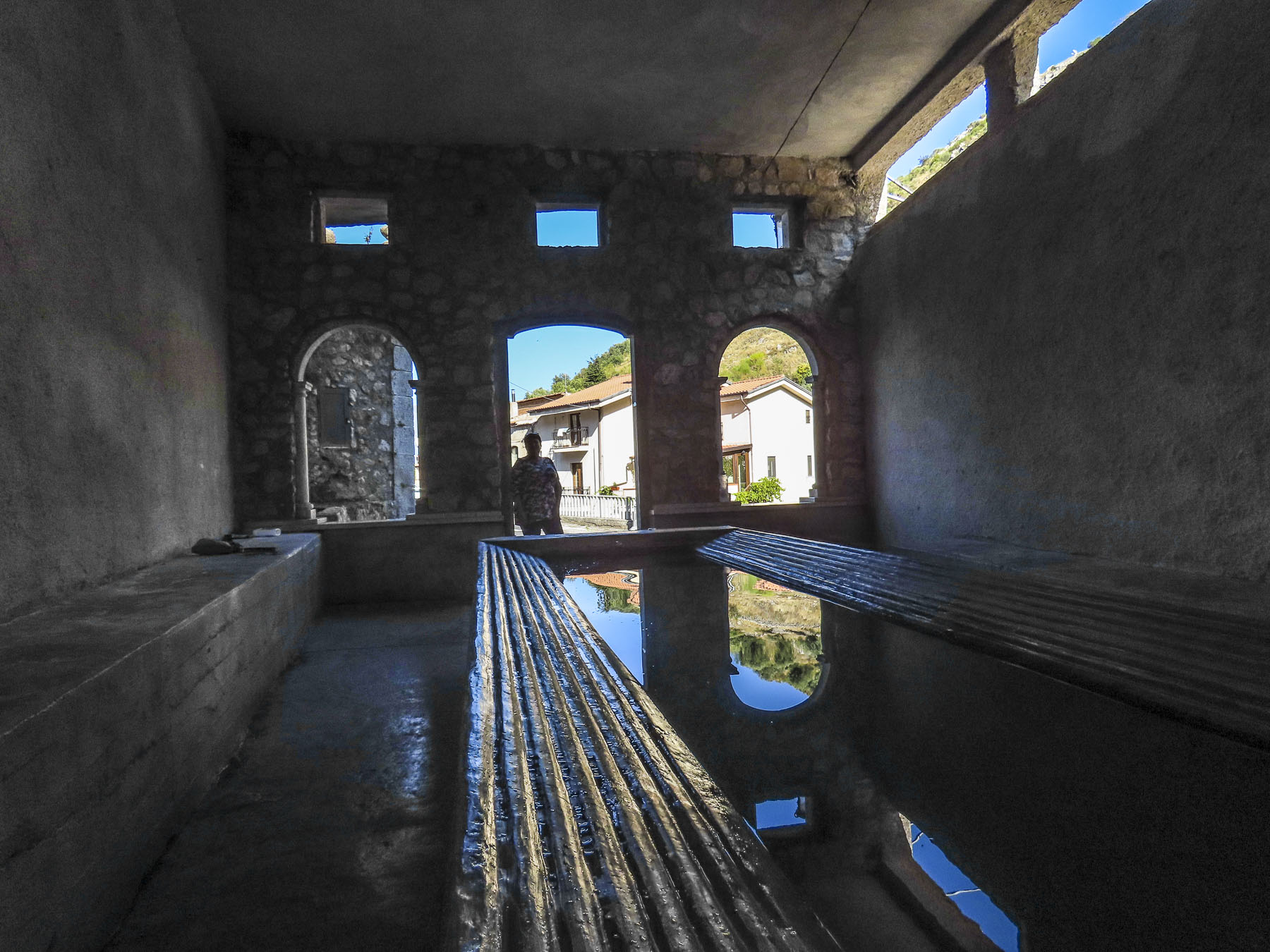
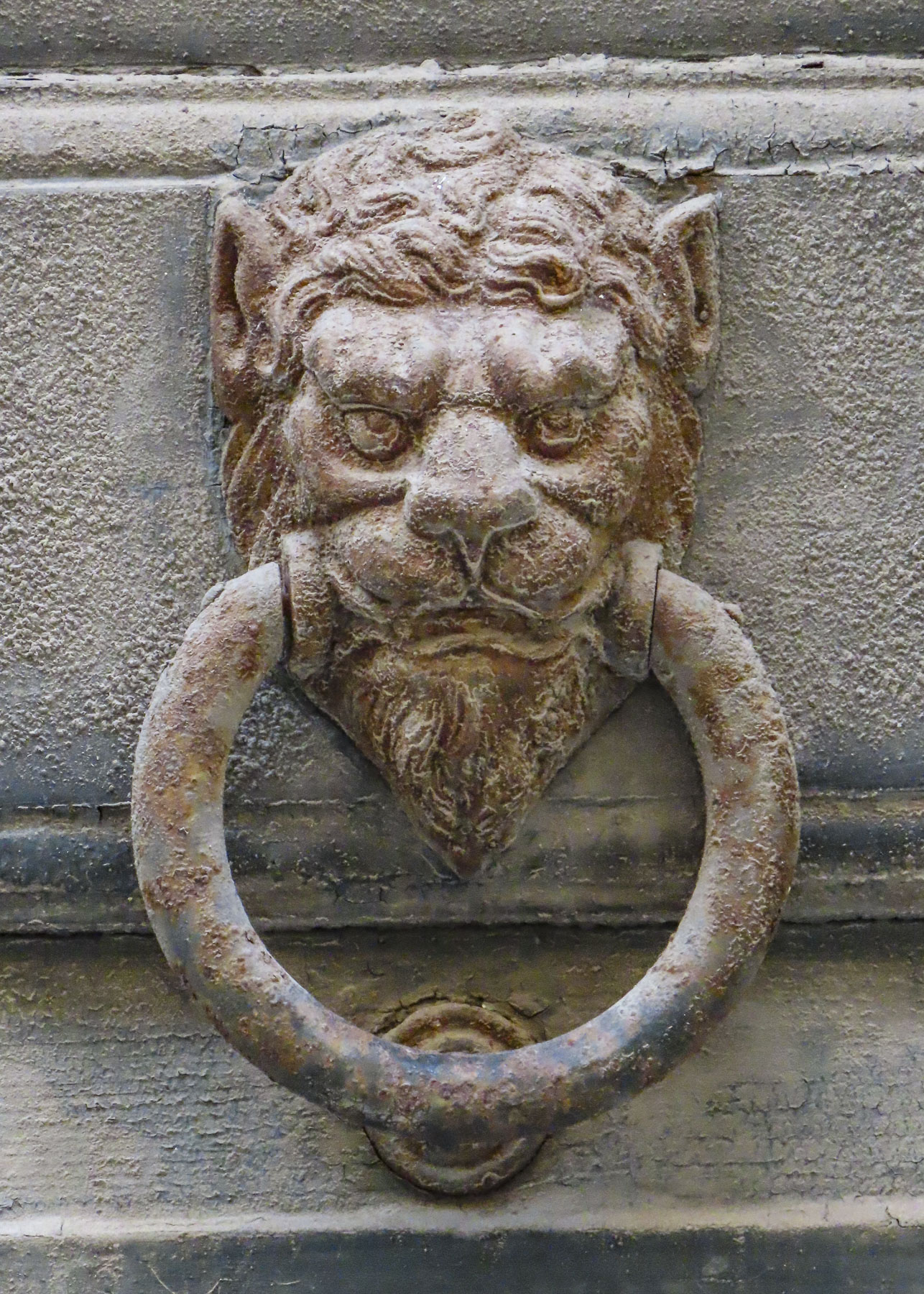
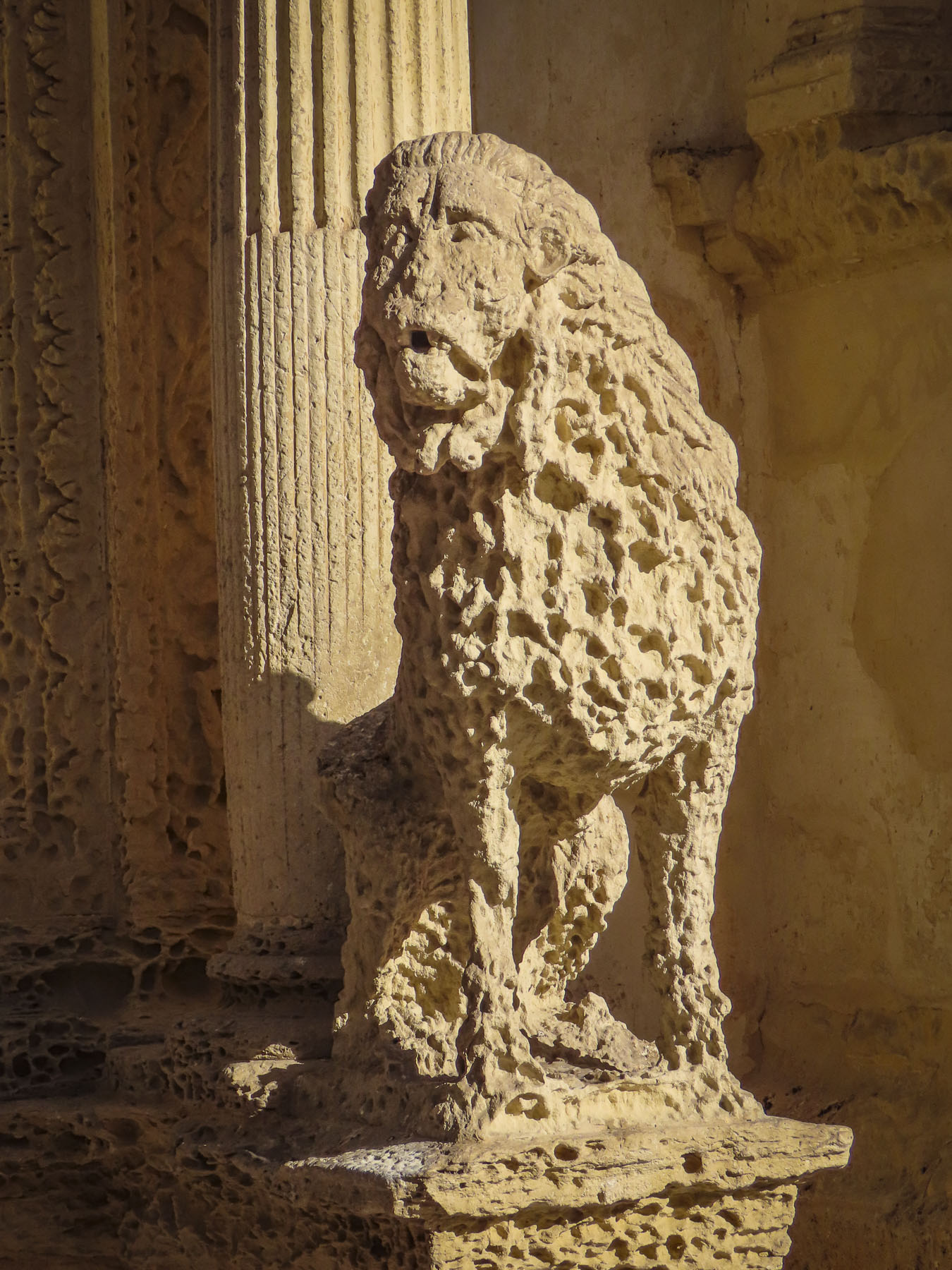
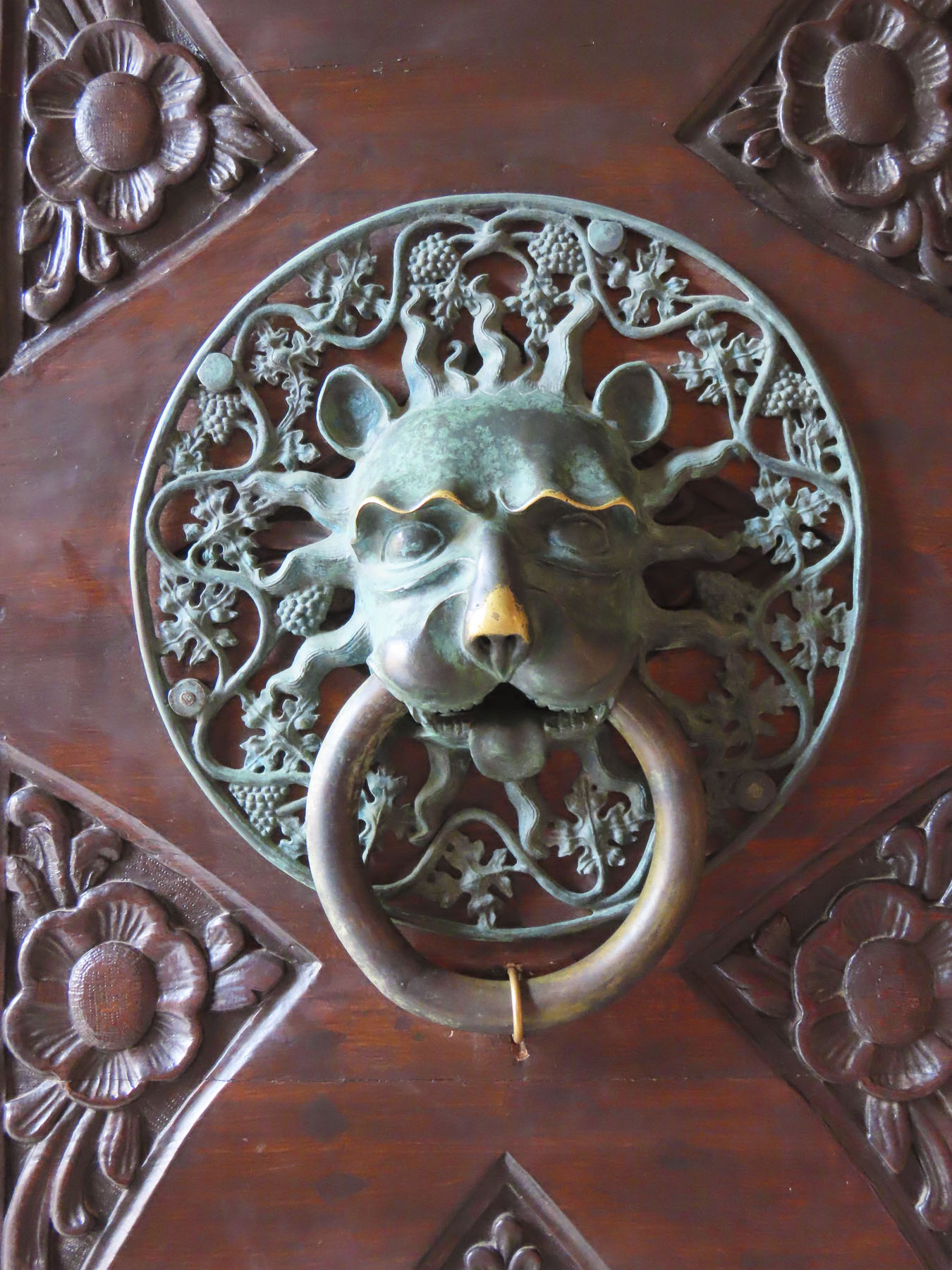
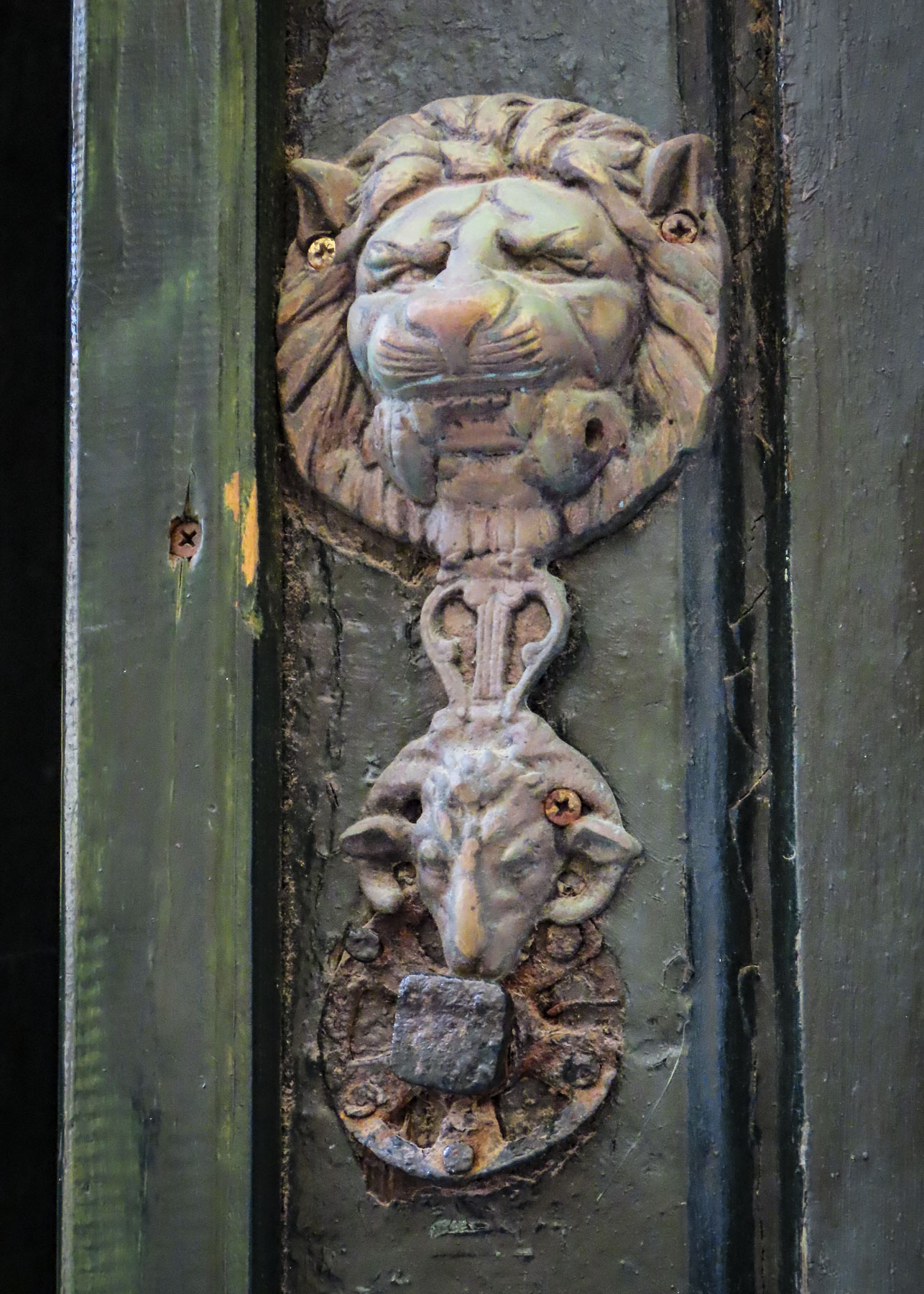
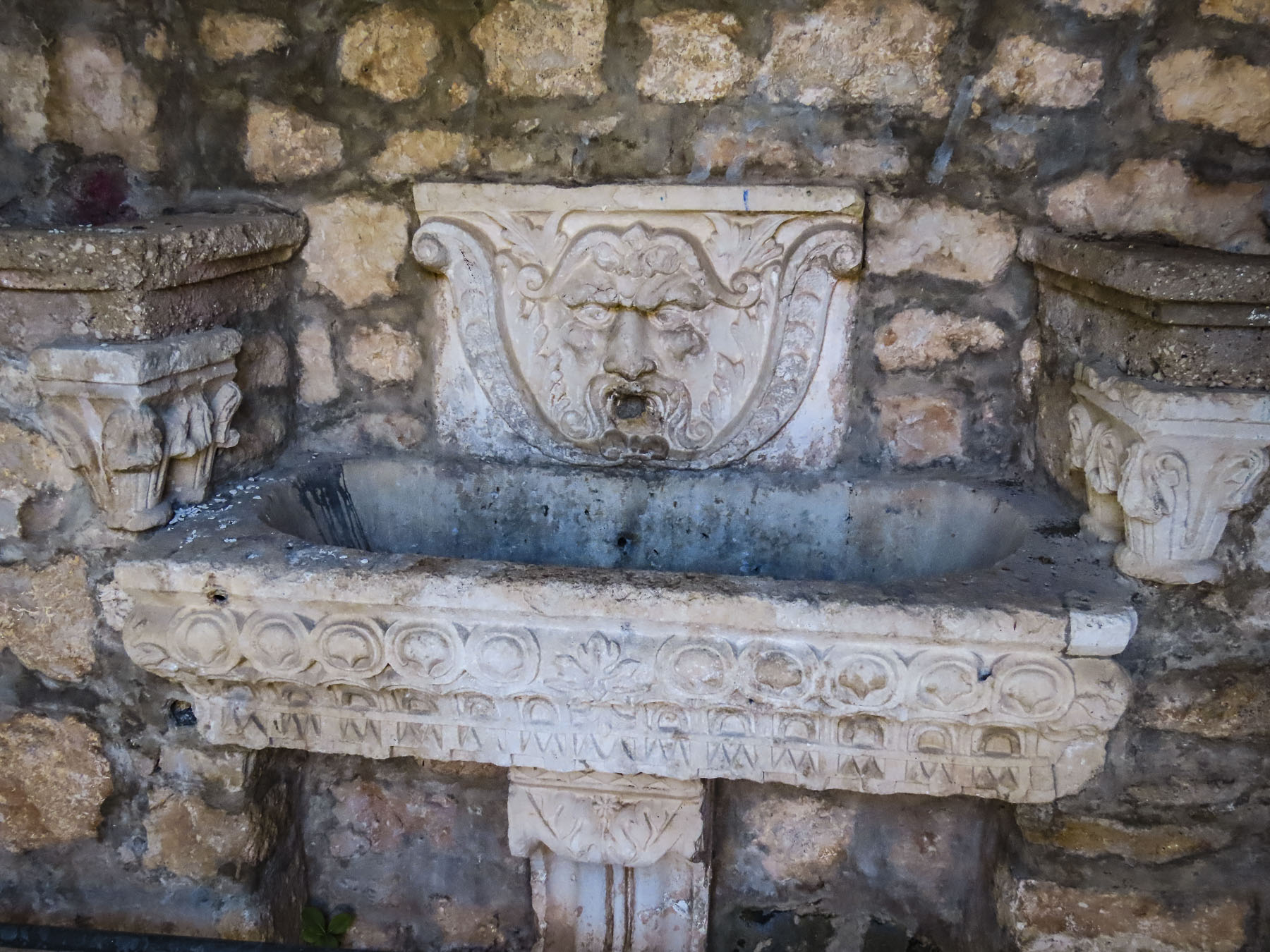
Legend says the waters of the Cefalino River that feed the The Lavatoio Medievale, a medieval washhouse, were created from the tears of a nymph mourning the loss of her lover. The waters originate six miles away in the Madonie Mountains near the village of Gratteri and flow under the streets of Cefalu before reaching the sea. Lion-headed spouts filled a series of stone basins that the town’s women used from their construction in 1665 until the last traditionalist scrubbed clothes there in the 1990s. An ancient stone plaque at the top of the stairs is inscribed with the saying “Here flows Cefalino, healthier than any other river, purer than silver, colder than snow.”


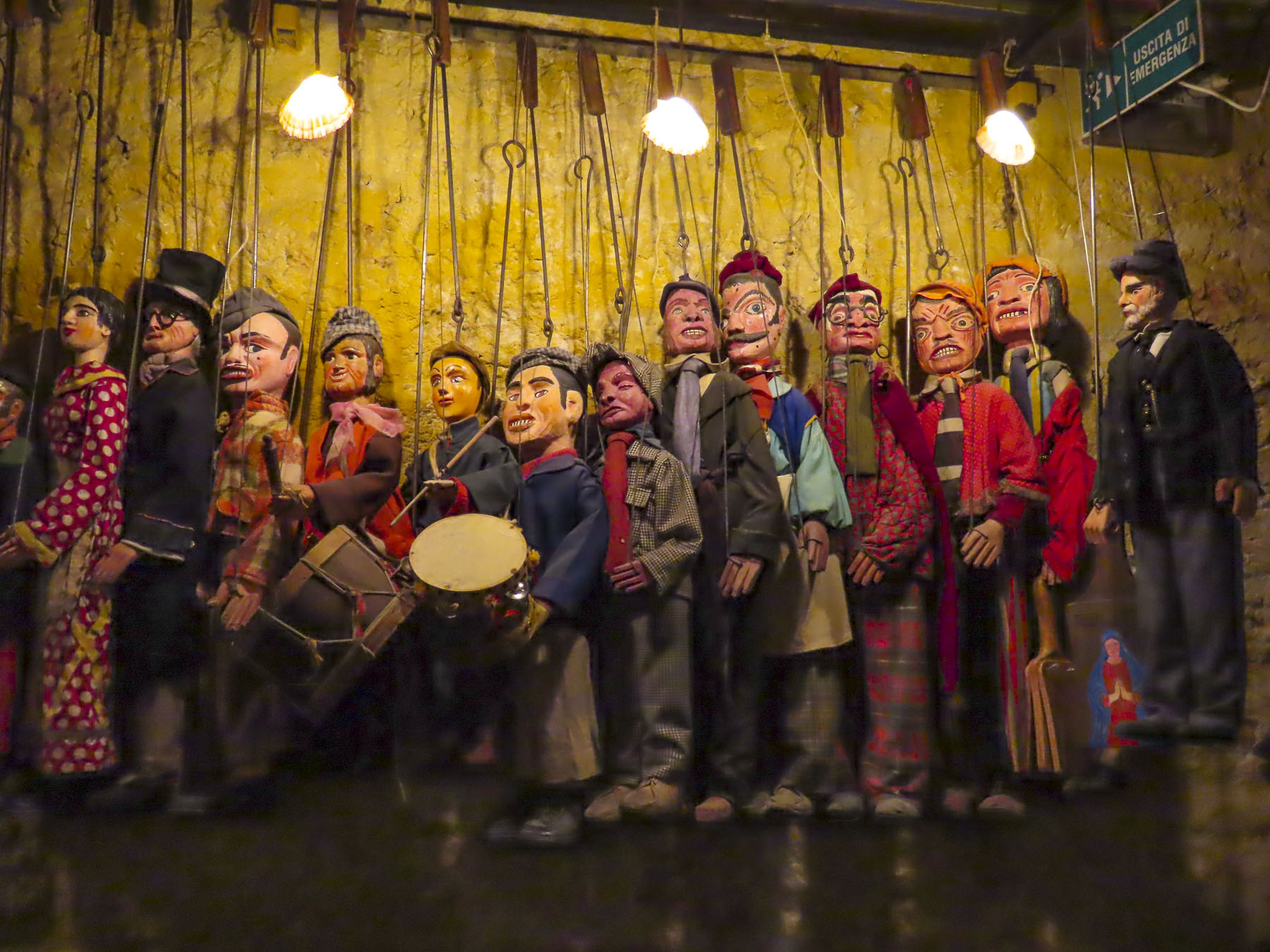
Our stay on Via Bara All’Olivella, a street known for its Opera dei Pupi, puppet theatres, was on the edge of Palermo’s historic district and near the classical Massimo Theater. Craftspeople carve and dress the puppets with fine cloth and metal armor, and their workshops can still be visited along the lane. The shows, which can last two hours and have three acts, re-tell the legends of medieval Christians kings, chivalric knights, damsels in distress, and Saracen nobles, with a supporting cast of sorcerers, witches, dragons, giants, and various other evil doers. Sicilian puppetry is a dying art and has been recognized by UNESCO an “Intangible Cultural Heritage.”
Sicily and Palermo have a long, convoluted history with the city as the capital of the Kingdom of Sicily when the Normans ruled. Later it was a sister city to Naples when it was part of the Kingdom of Naples. Eventually the distinct regions finally agreed to be called Kingdom of the Two Sicilies in 1816, until the unification of Italy in 1870. The prestige of both cities is seen in the wealth and the number of their churches. And there really are a lot of them.

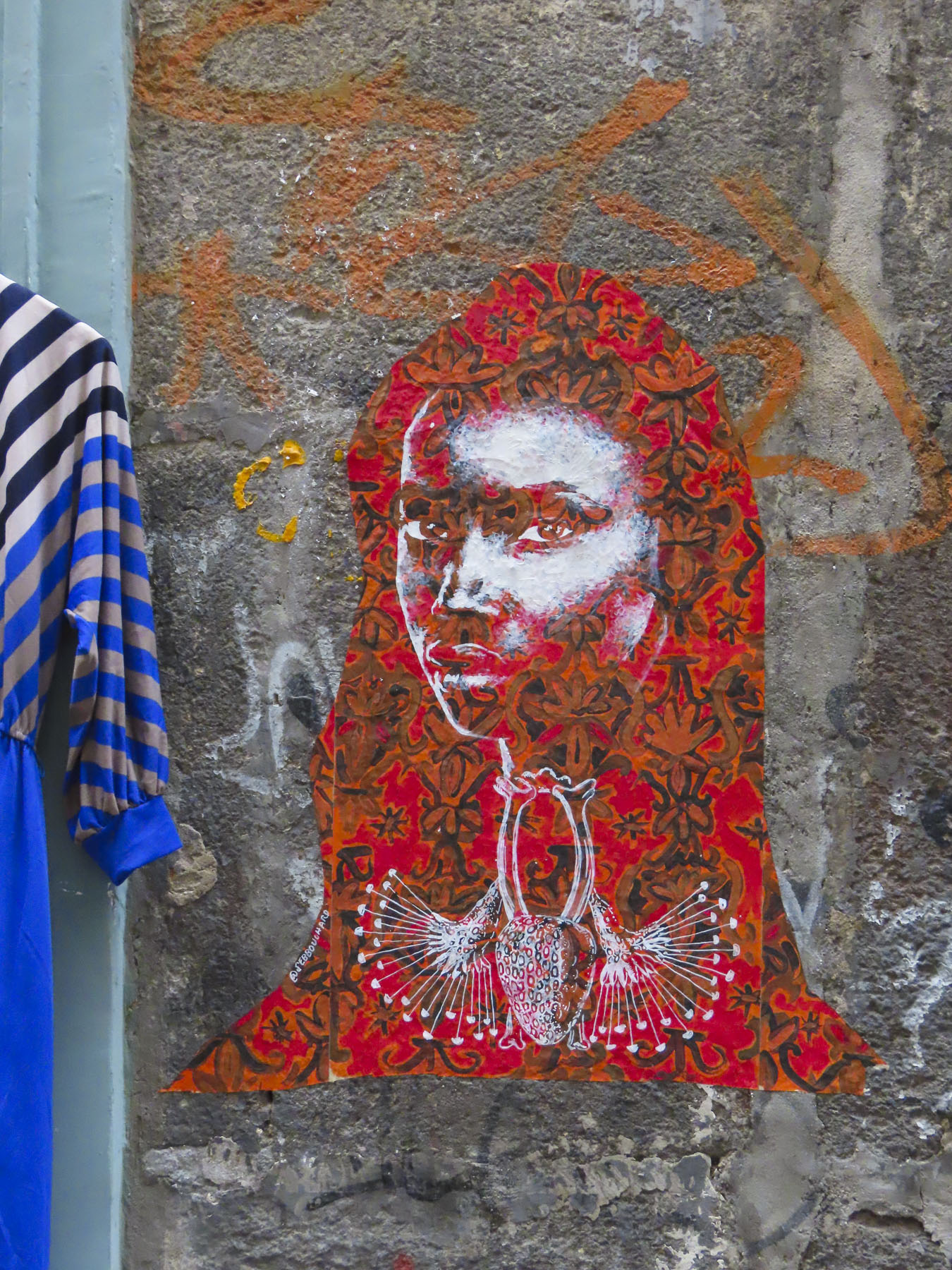
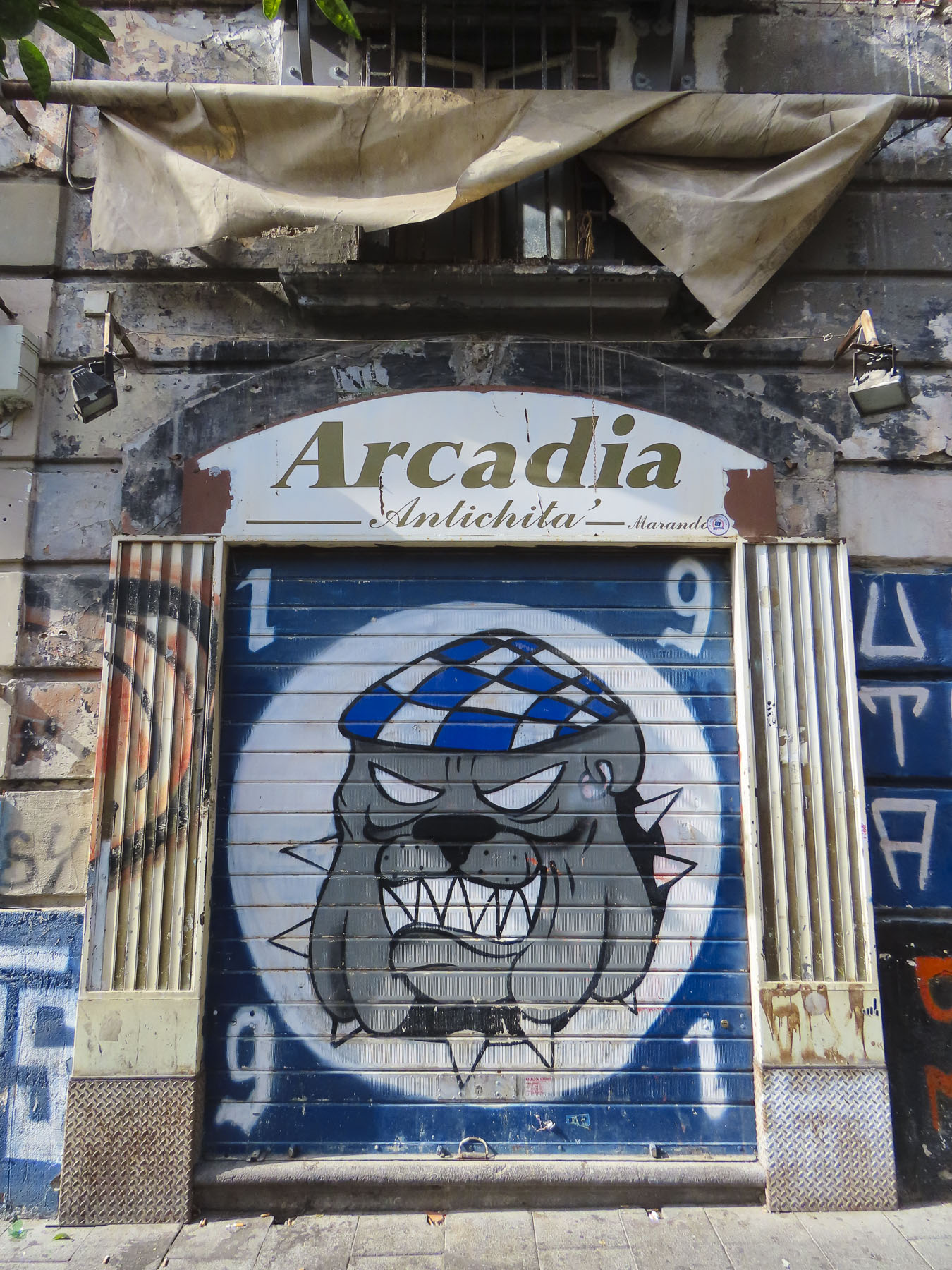
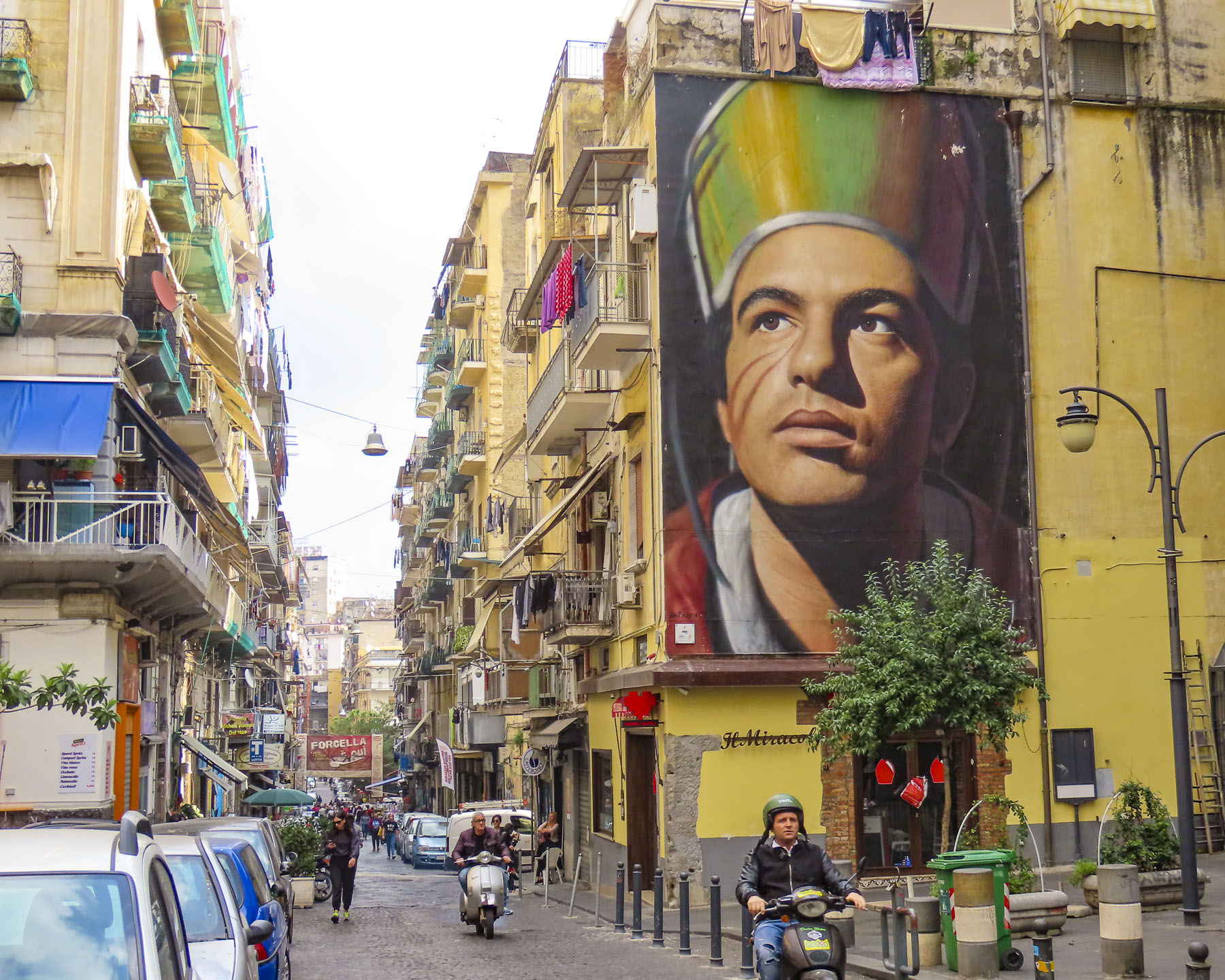
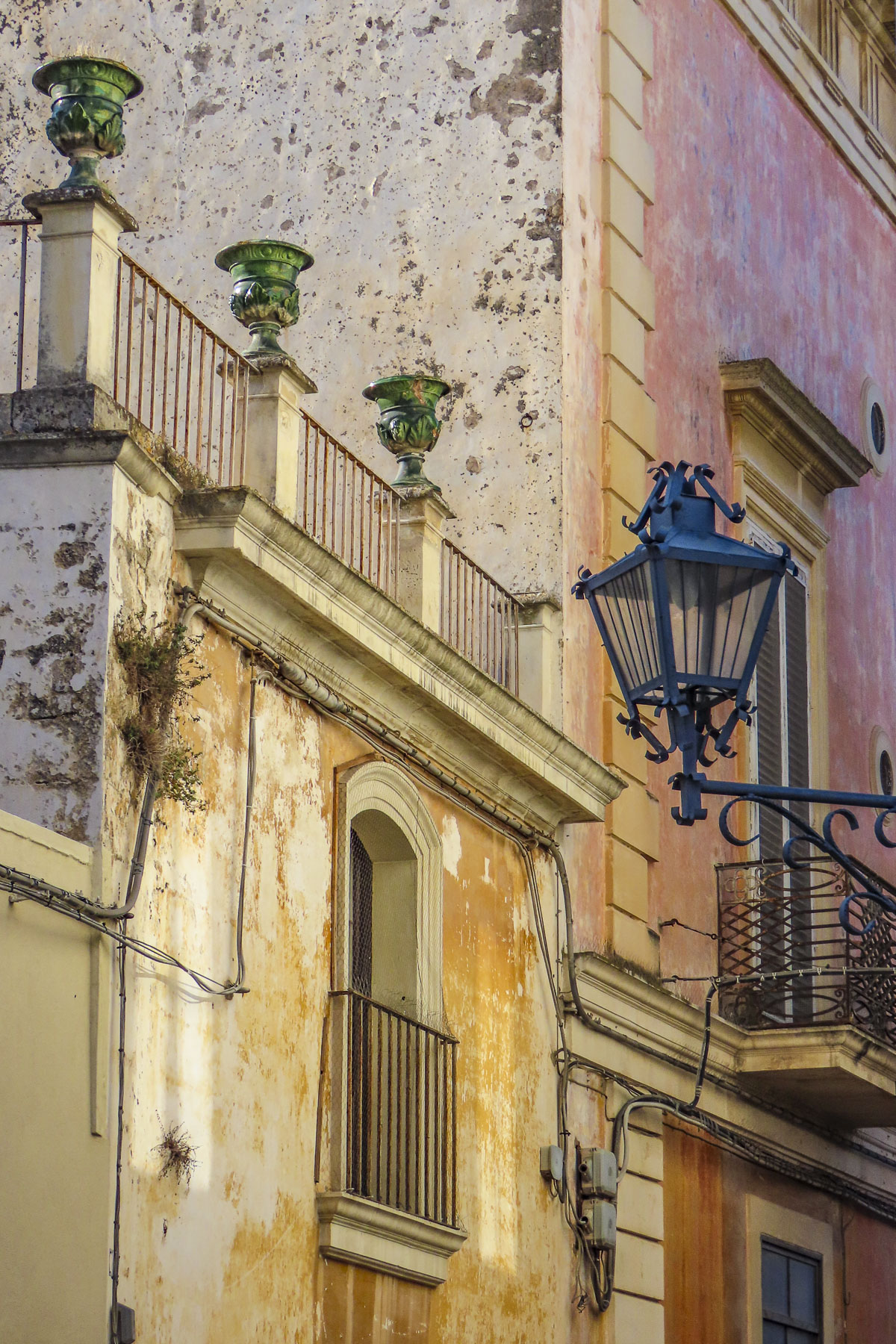
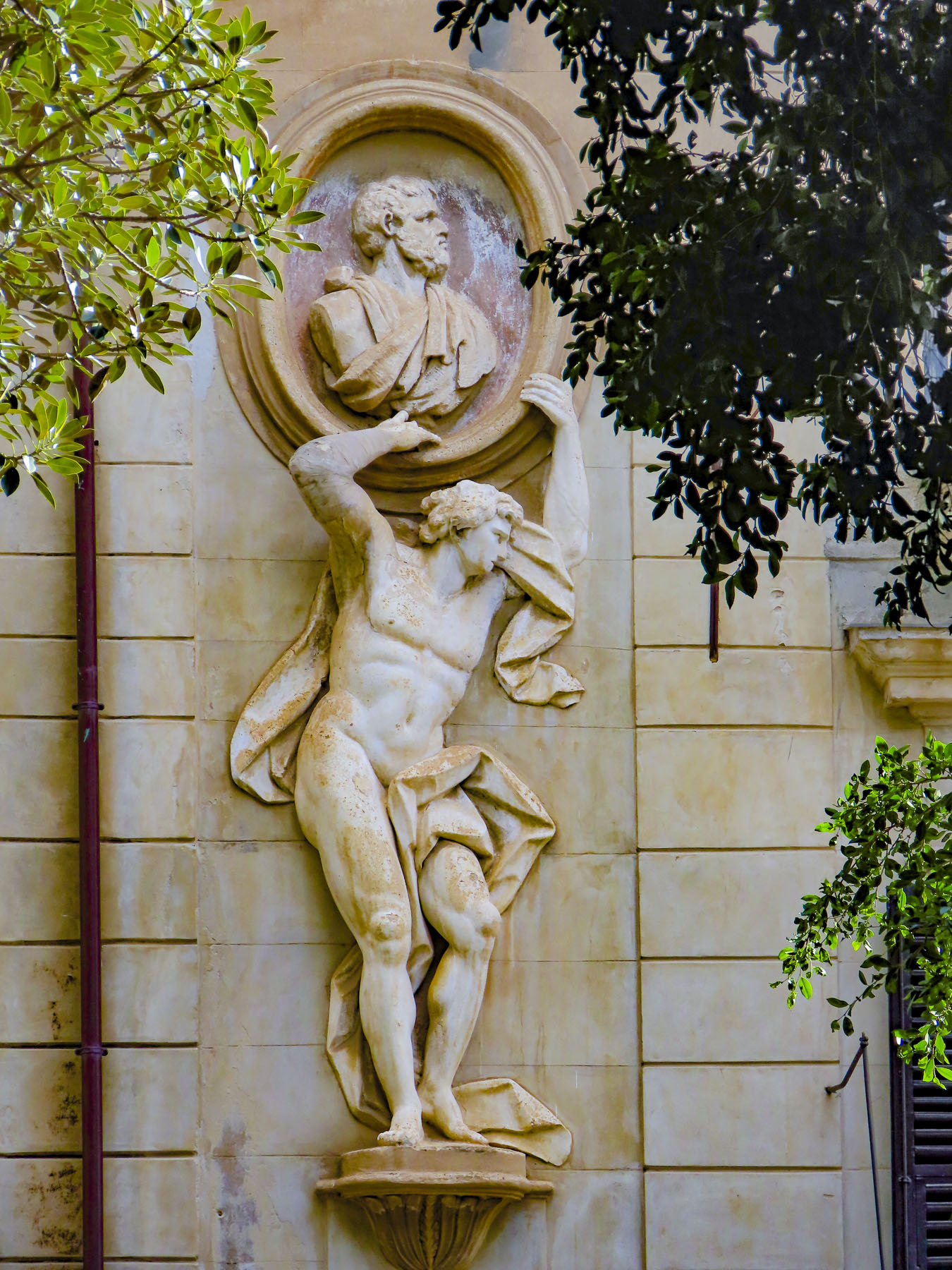
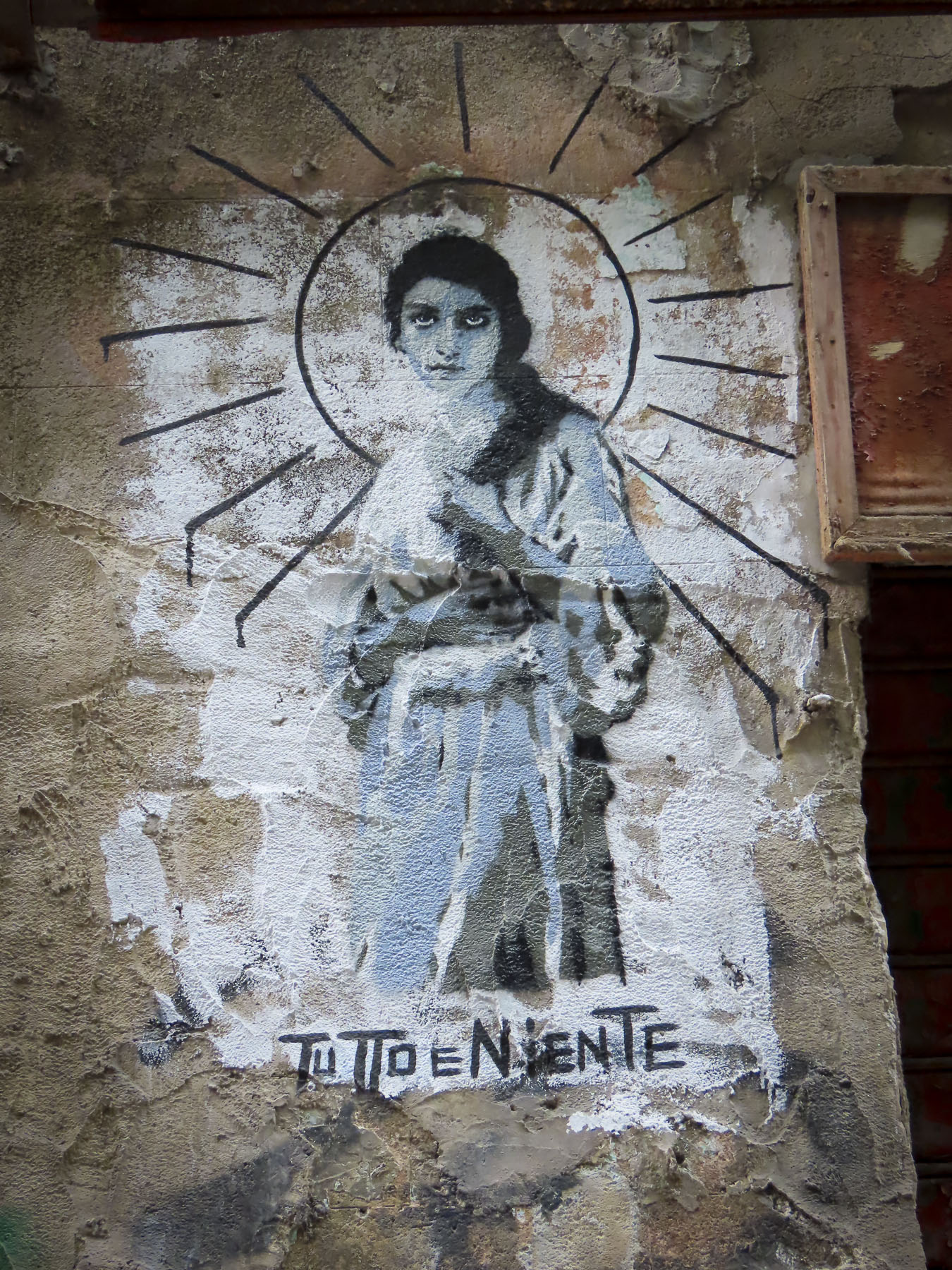
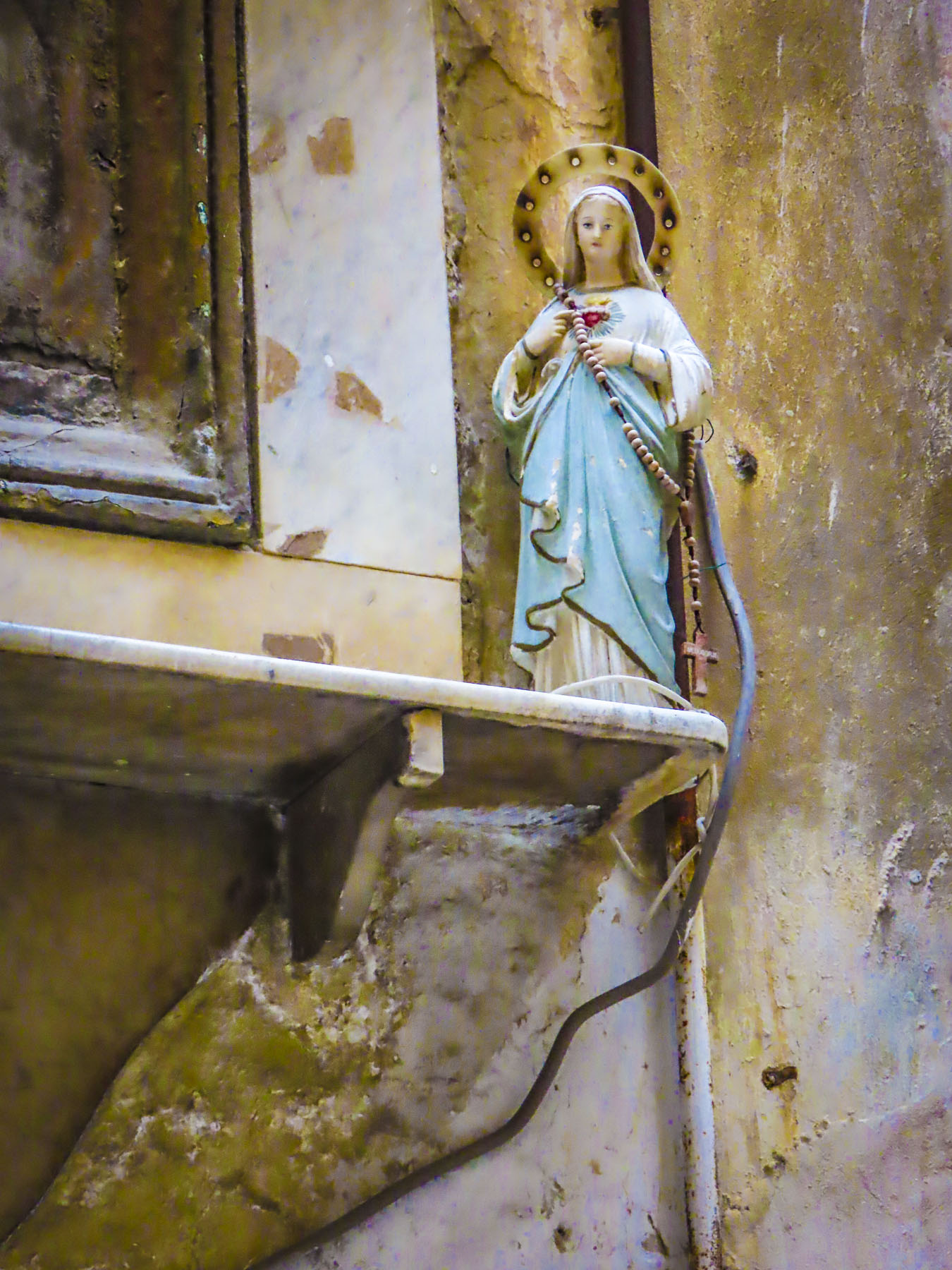
Like Naples, this large urban center has fallen on hard times in recent decades. In the historic center the landmarks have been maintained, but the remaining residential areas have been allowed to deteriorate to the point where the crumbling buildings seem to cry out for restoration. With oases of beauty scattered about between gritty and raw neighborhoods, Palermo stands in stark contrast to the experience of Cefalu and Taormina. This doesn’t mean that it wasn’t enjoyable and interesting. On the contrary, along with being fascinating and different, it was a very urban experience! Plotting our routes between churches exposed us to high culture and art along with the rough-and-tumble ambience of the city, sprinkled with graffiti, as we wandered the streets.
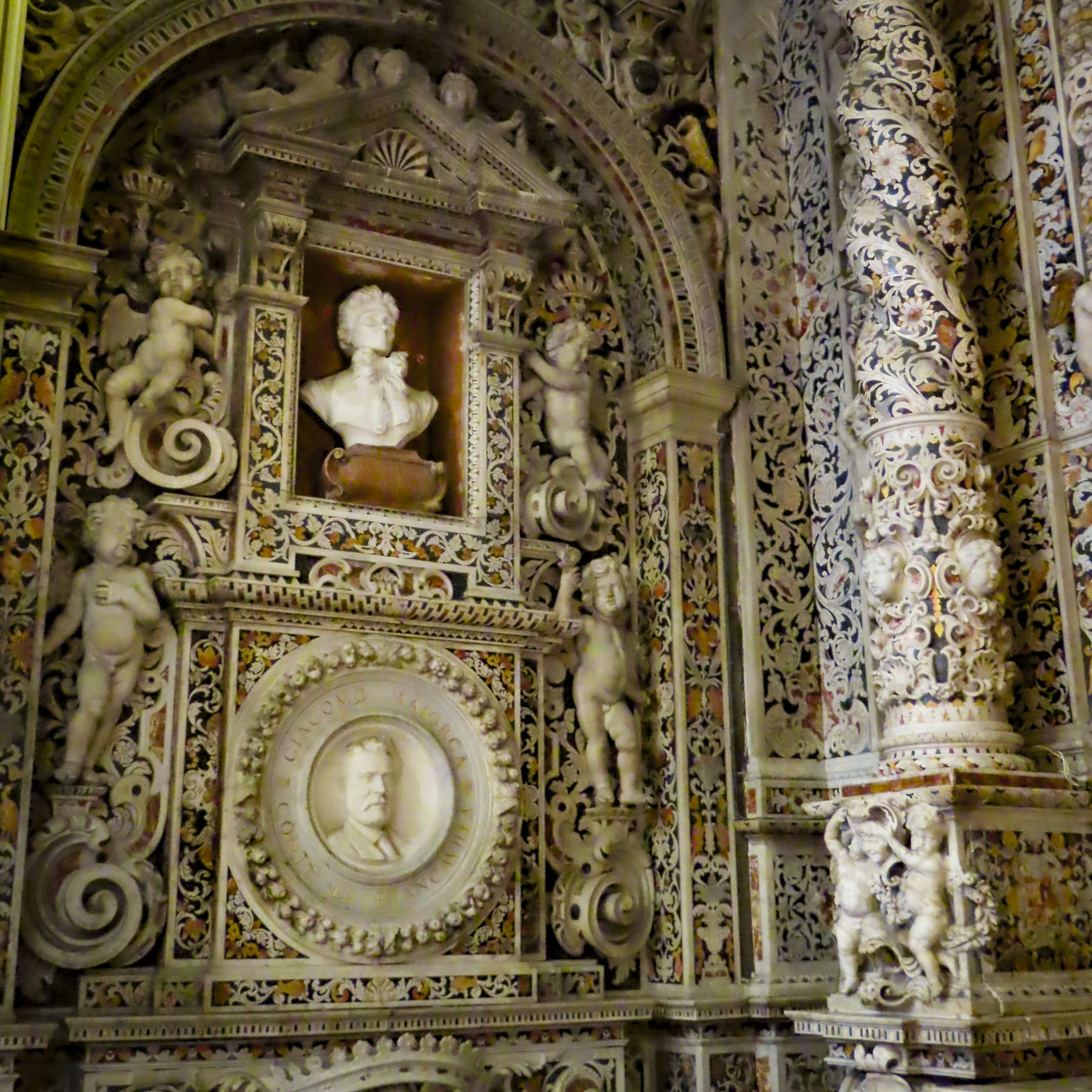
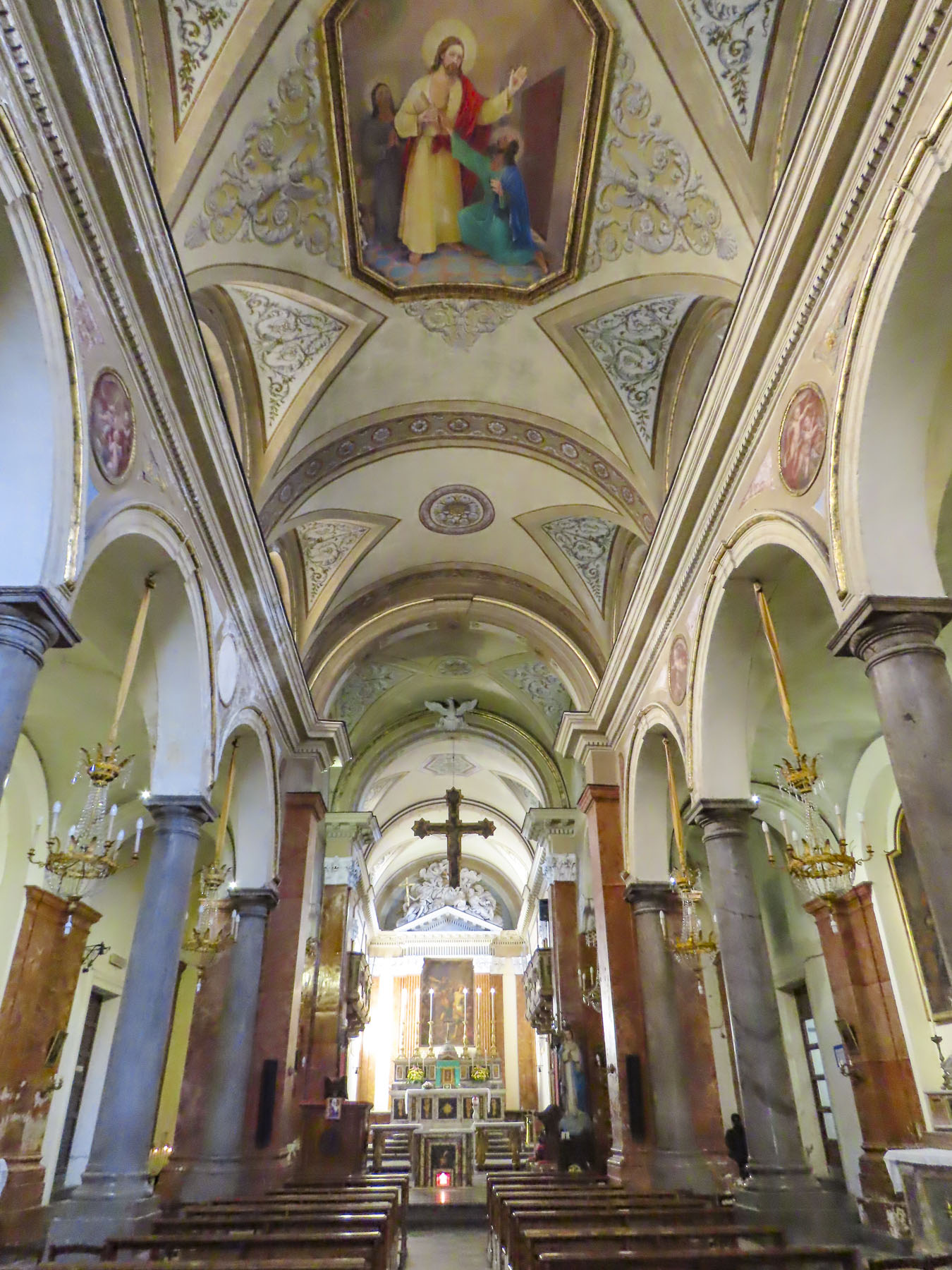
Only a few blocks away from our lodging, we started our morning at Chiesa di San Domenico. It has under undergone many incarnations since the Dominicans commissioned the first church in 1280. The Baroque façade and interior are the result of an expansion in the 1700s. With the burial of many notable Sicilian artists and politicians within its wall, it is recognized as the “pantheon of illustrious Sicilians,” and continues this tradition with modern heroes, most notably the tomb of anti-mafia prosecutor Giovanni Falcone, who was assassinated by organized crime in 1992, and which still receives tributes.


Somehow, we ended up on the top floor of the department store next to the church. Surprisingly, it had a nice café and patio with a view of the Colonna dell’Immacolata on the piazza and the gateway to the La Loggia quarter, one of the original Palermo neighborhoods.


The colorful Vucciria Market on Piazza Caracciolo and the decaying remnants of past glories on the surrounding streets led to the fountain on Piazza Garraffello. Built in 1591, its beauty was overshadowed by the street art on the grim encircling buildings and haphazardly parked cars that nearly obscured it from view. The area was very quiet when we strolled through but is known for its raucous nightlife that lasts until morning.


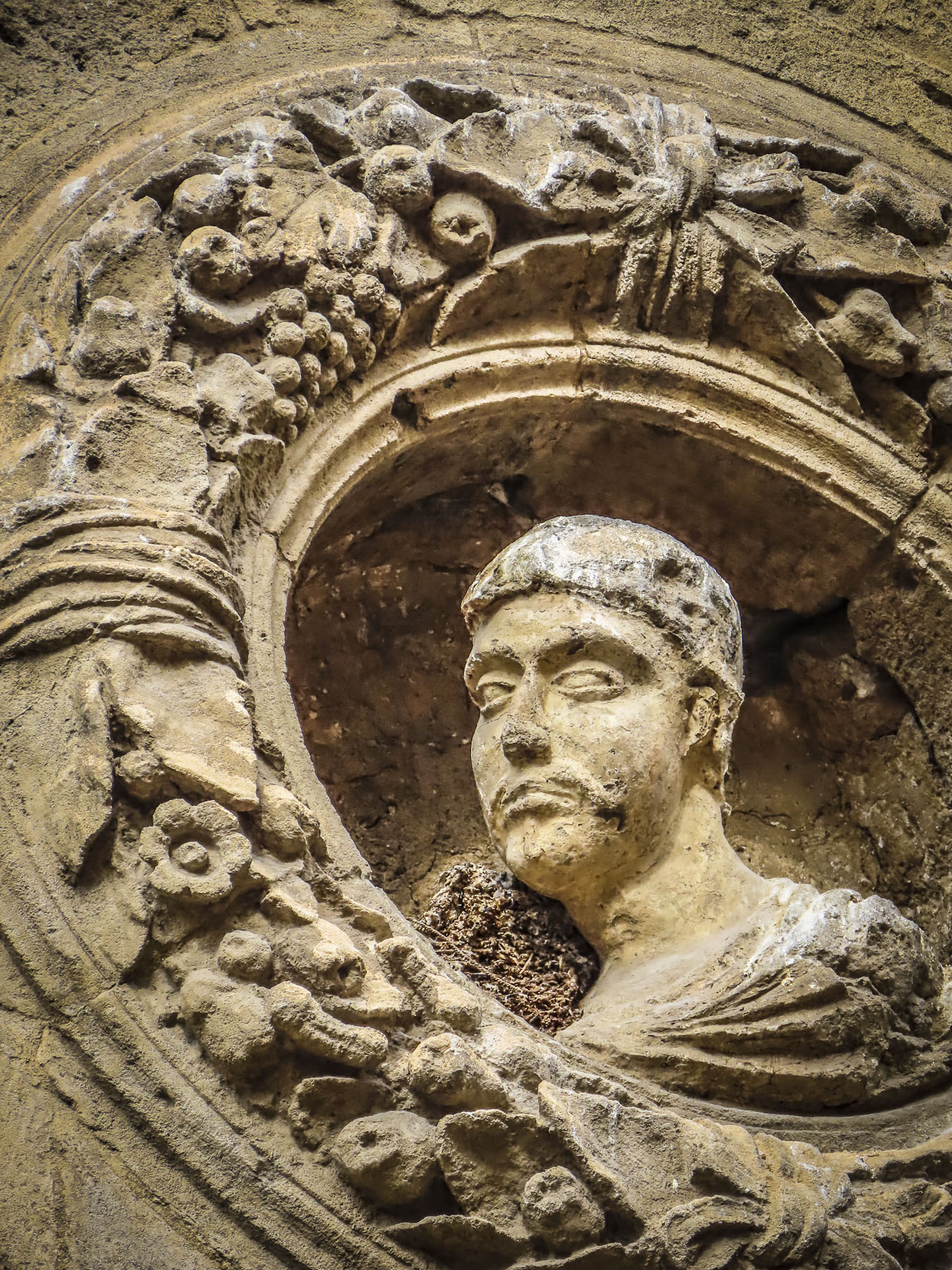
Across from the port a heavenly aroma emerged from a small storefront that was doing an active business. The place got its name from its specialty, Pani câ Meusa – Porta Carbone, a street food sandwich famous in Palermo that is made with boiled and then fried cow spleen and cow lung, grated caciocavallo cheese and lemon, served on a sesame roll. We thought its strong and rich flavor was a taste that might take a lifetime to acquire.
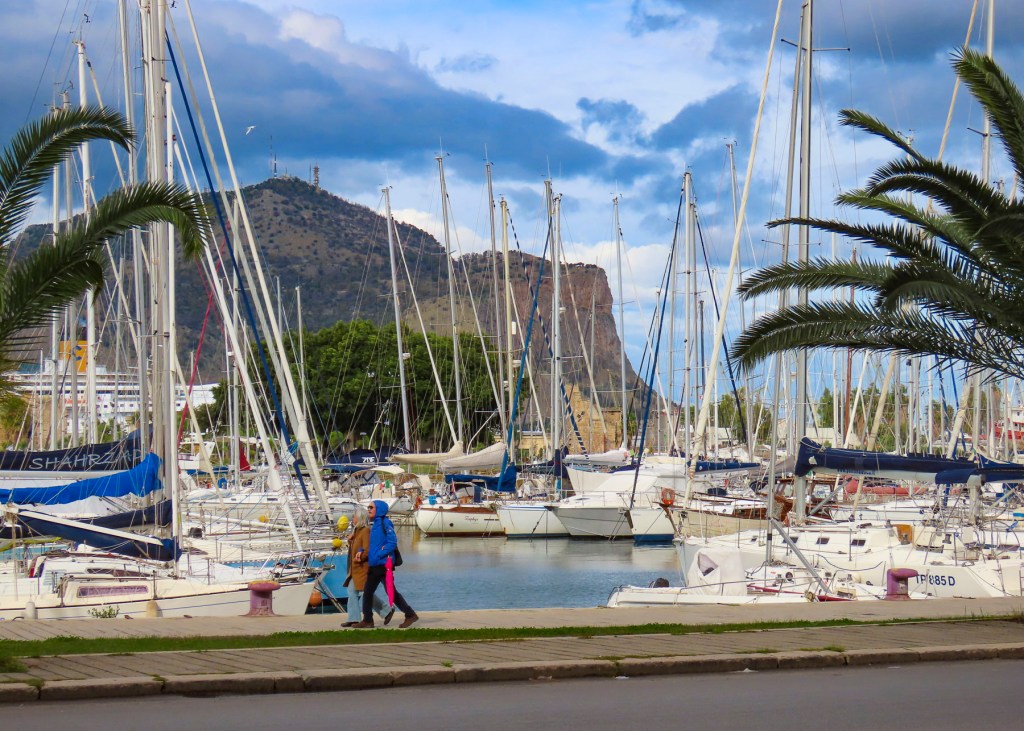
Two blocks away, the Giardino Garibaldi’s stately centuries-old specimen trees anchored a neighborhood of fine palazzo now functioning as museums and university buildings.


Around the corner a large, tall-wheeled float shaped like boat, called a Carro Trionfale, was on display in front of the municipal office. On top was a statue of Santa Rosalia, a 12th century hermit who is credited with saving the city from the plague when a relic of the saint was paraded three times around the city in 1624. The highlight of her weeklong festival, held every July, is the procession when the carro is pulled through the streets by teams of men from the Cathedral of Palermo to the waterfront. Every year a different district gets the honor of hosting the carro until the next festival.


Farther afield, our wanderings took us down blocks that seemed to retreat further back in time with every step. We saw contemporary street art on urban housing projects within steps of a ghostly unfinished renaissance cathedral, the Santa Maria Dello Spasimo. Started in 1506, it was never completed and now is used as an open-air theater and concert venue. The juxtapositions of the treasured and the forgotten in Palermo are stunning.
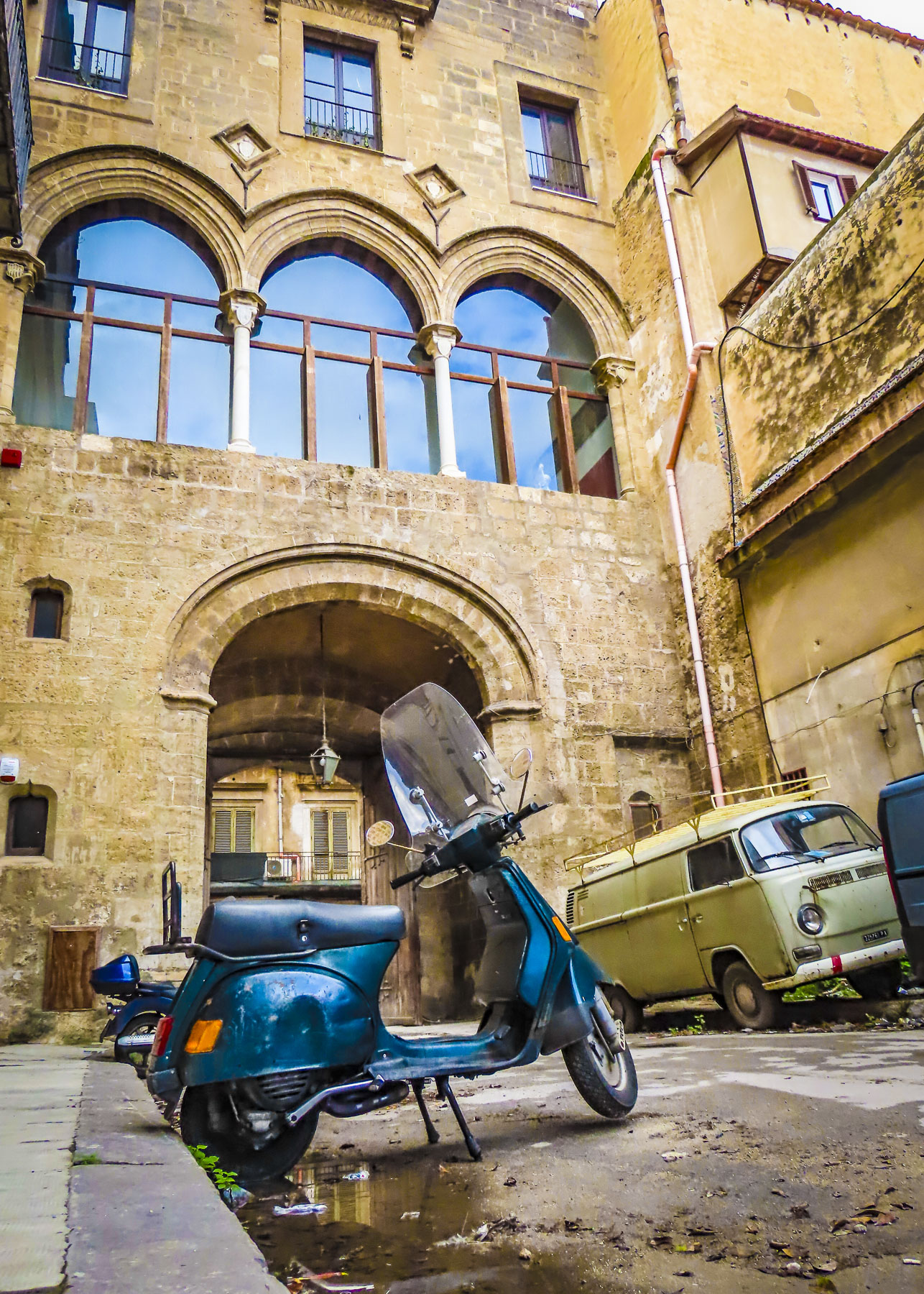


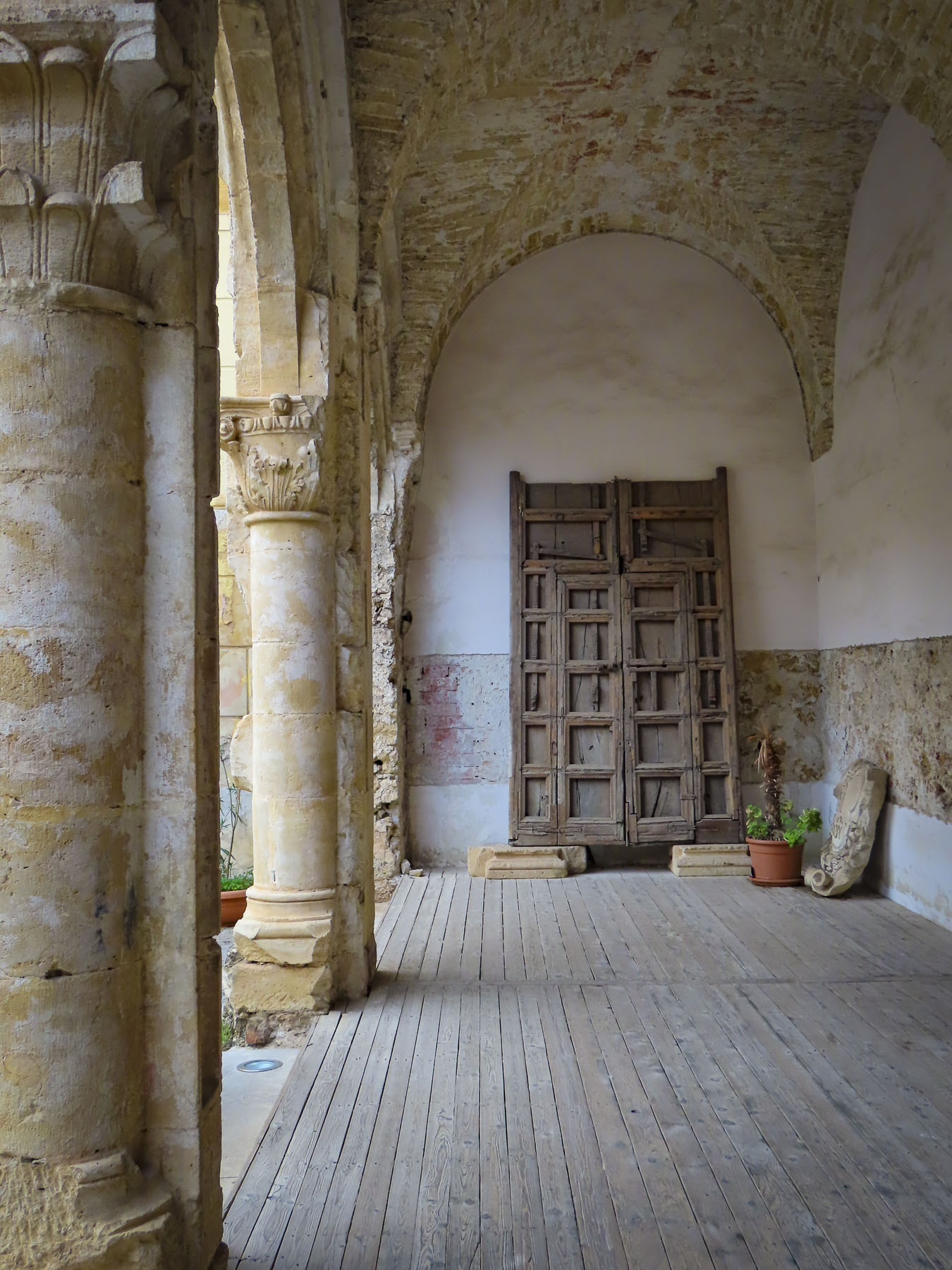
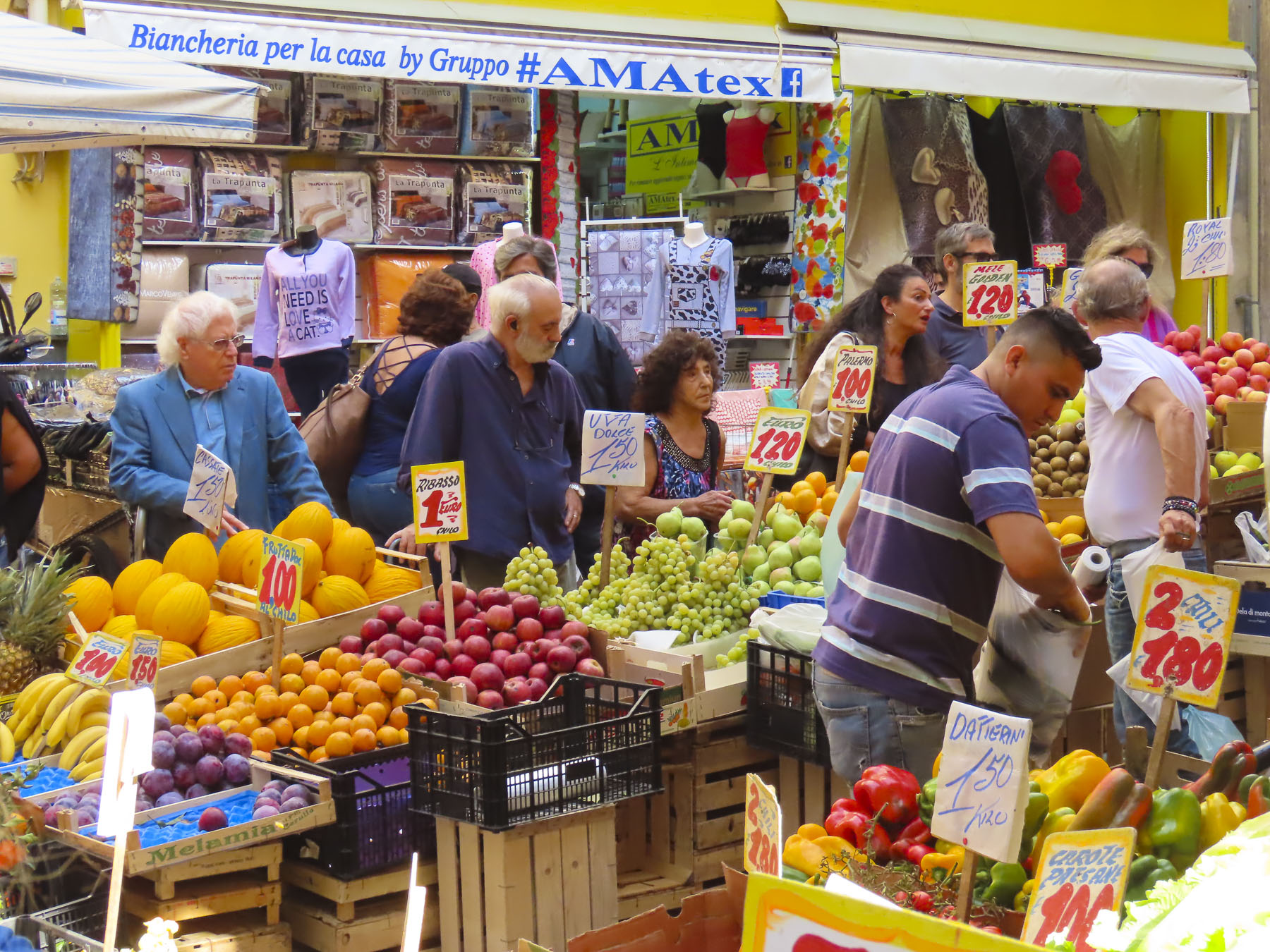
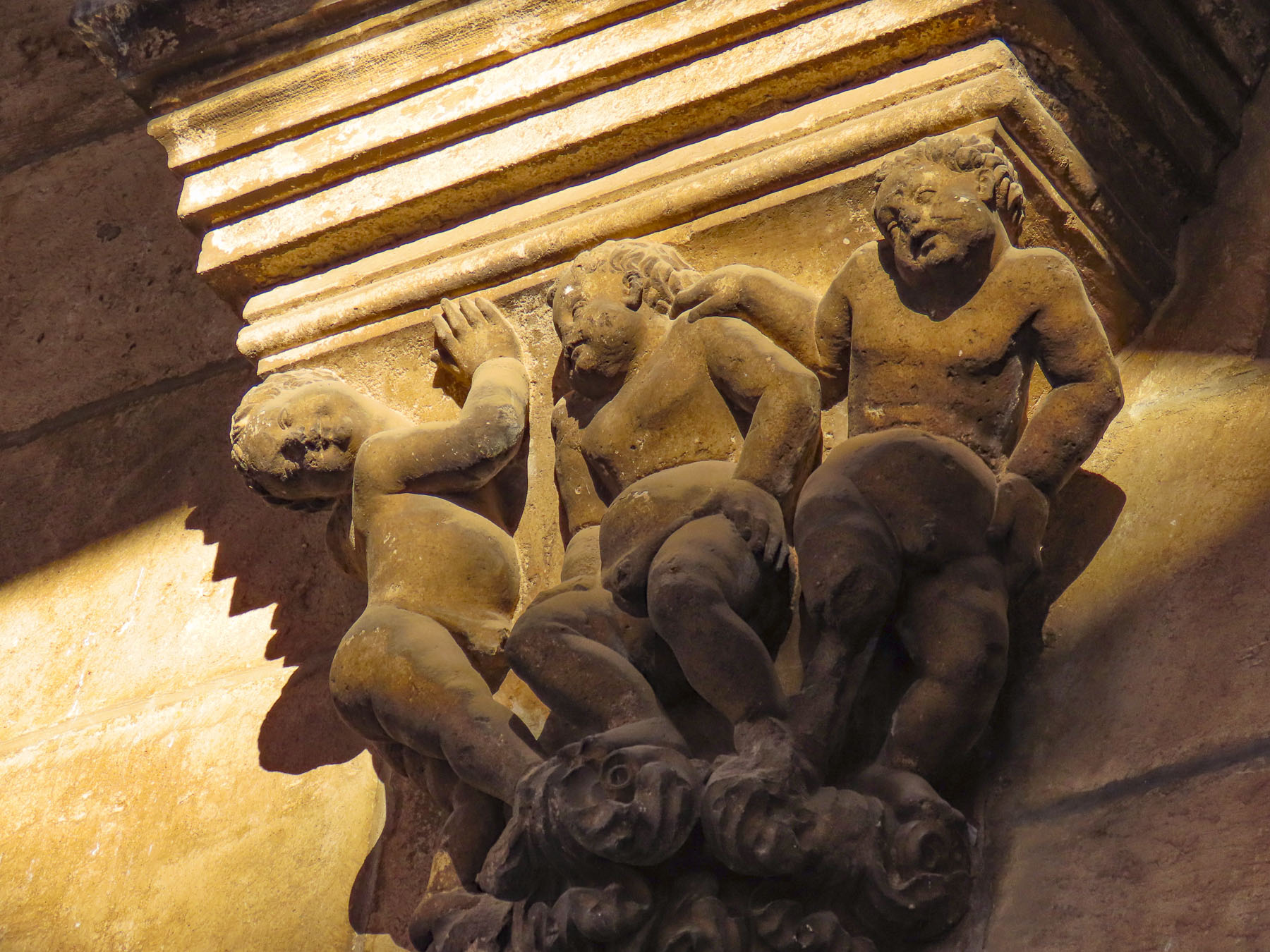
The warren of narrow lanes off the Il Capo district between the Massimo Theater and the Cattedrale di Palermo were ripe for exploration. Off Via Volturno, two stone columns with decorative capitals, Porta Carini, grace the entrance to the Mercato del Capo, one of the oldest outdoor markets in the city. Built before 1310, the columns symbolize the neighborhood’s grand past that’s difficult to visualize amidst the colorful canvas awnings of the raucous street vendors.

Nearby is the site of the brutal assassination of Carabinieri General Dalla Chiesa, an anti-mafia investigator, his wife and a police escort. They were murdered by AK47 wielding gunmen on motorcycles one night in 1982. This vicious event epitomizes the Mafia war or Mattanza, the Slaughter, that gripped Palermo and the whole of Sicily from the 1970s to the 90s with thousands of homicides of rival mafioso foot soldiers, journalists, politicians and judges. Fortunately, things are vastly different now.


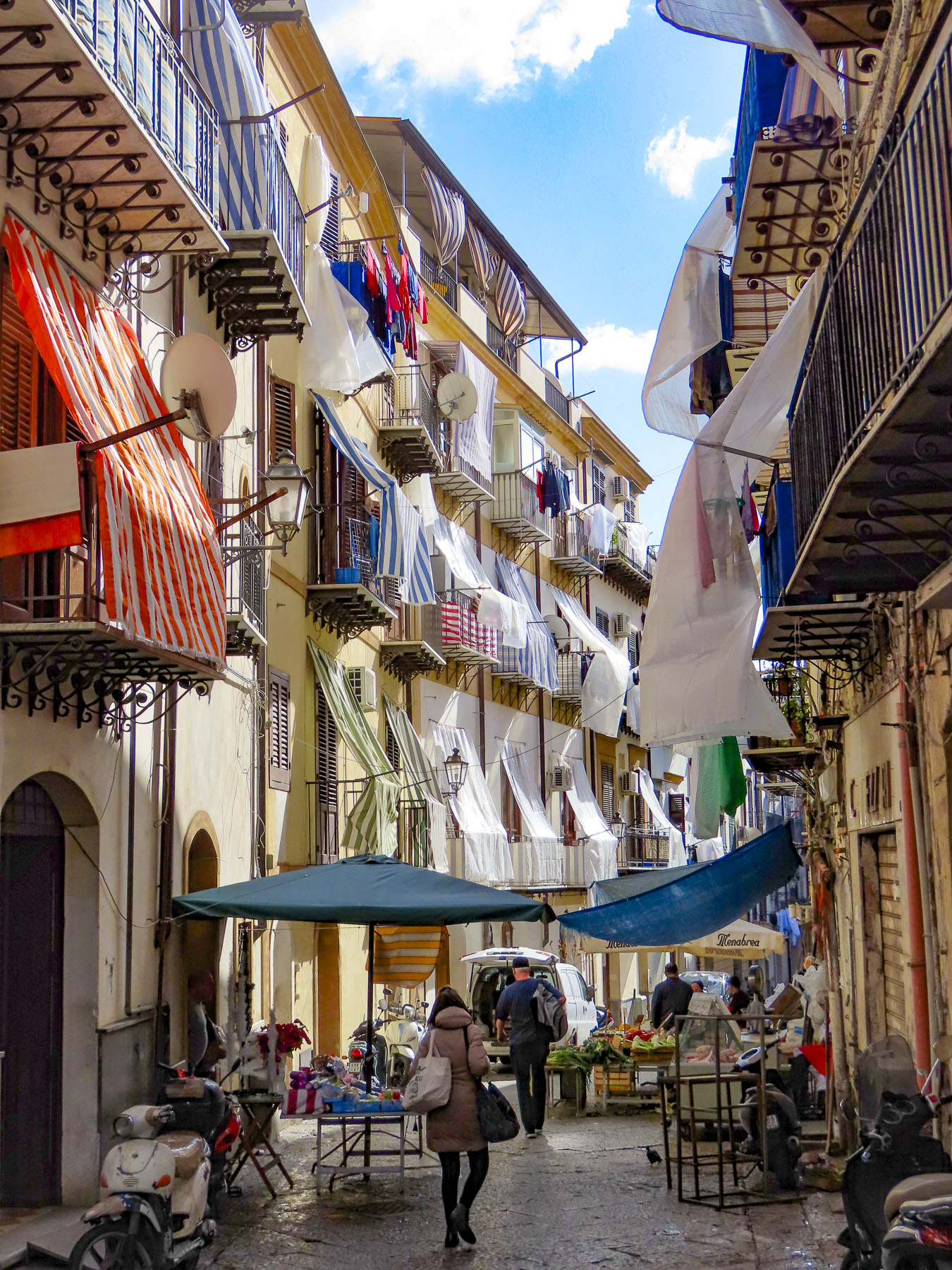
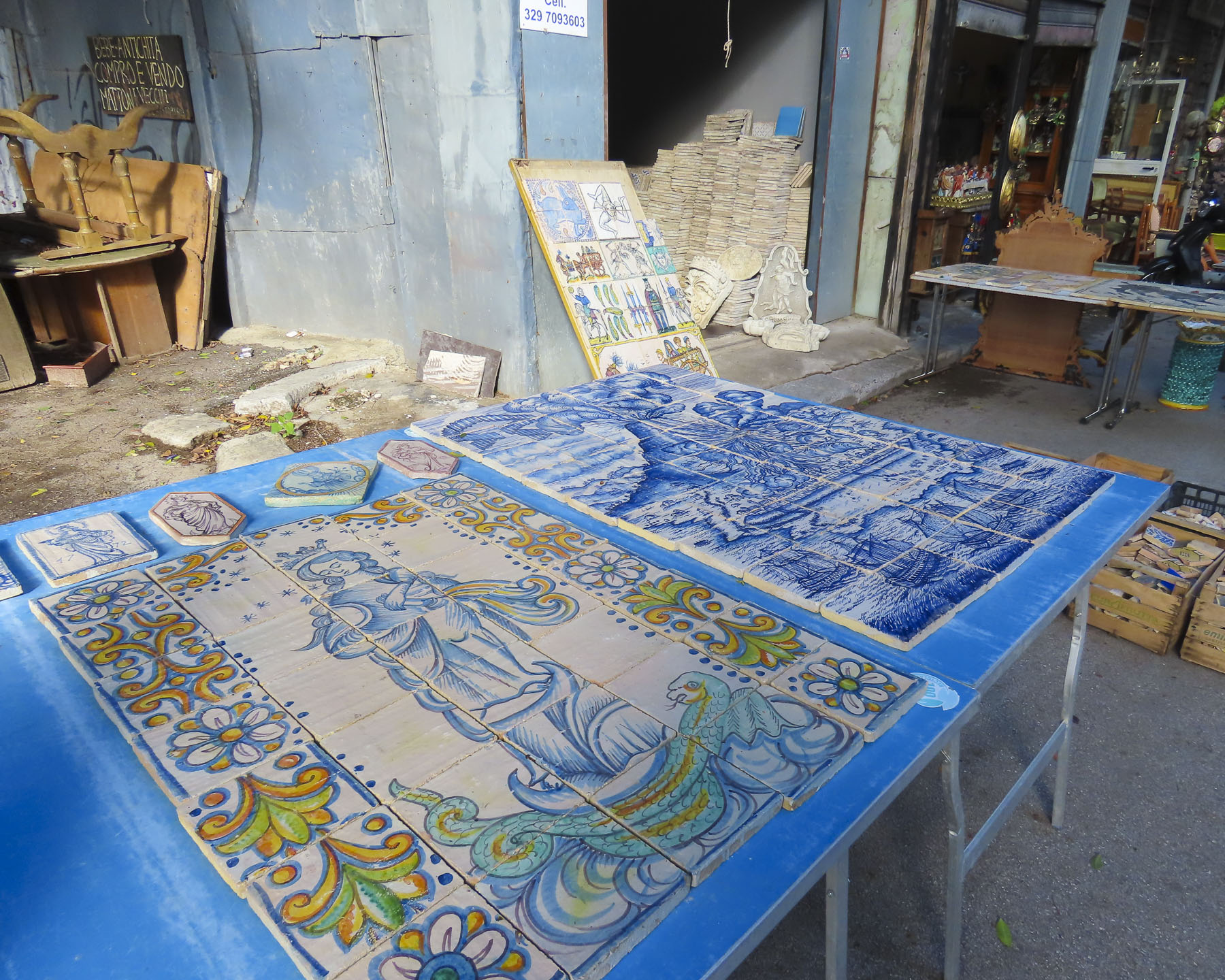
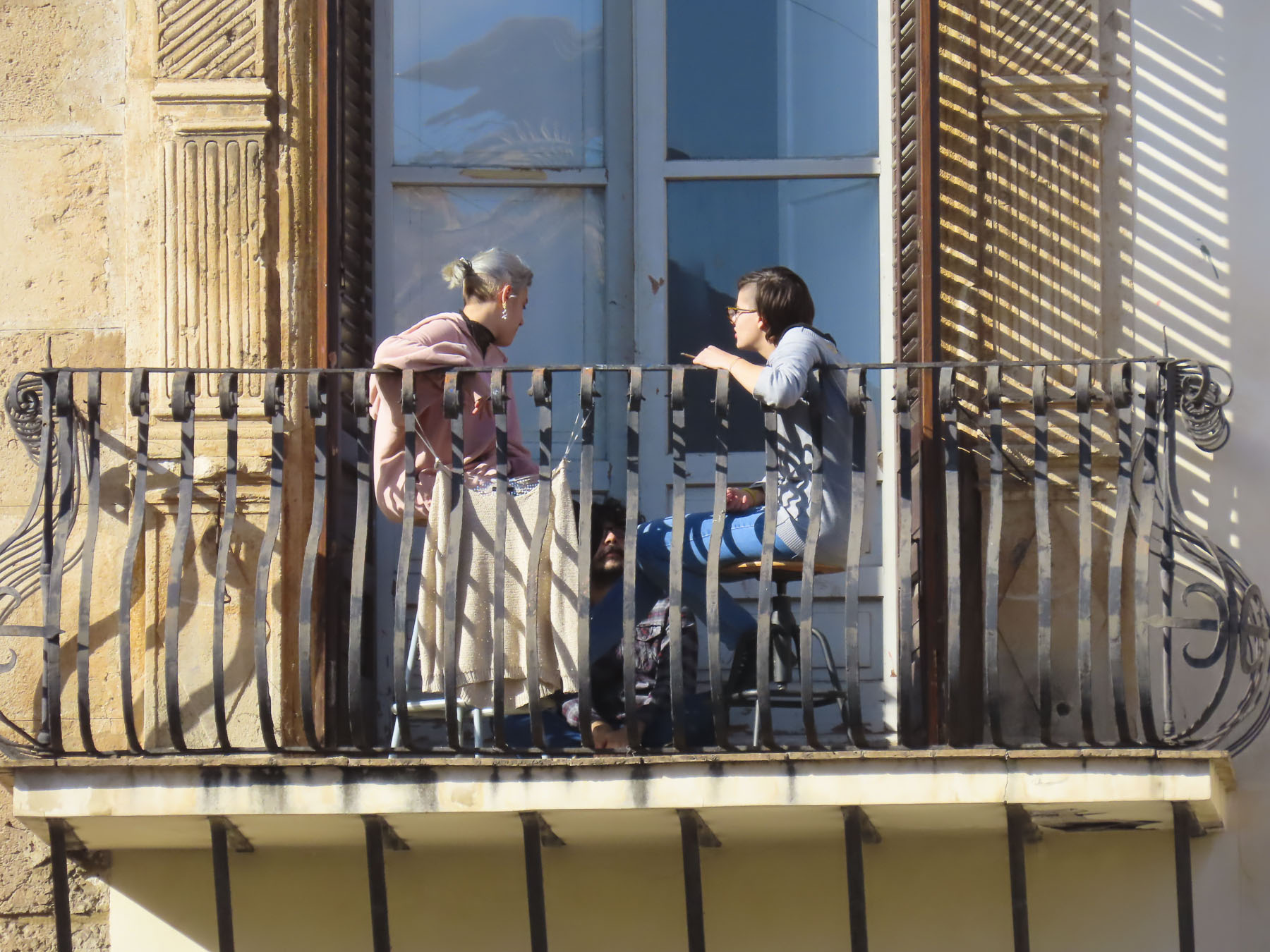
Farther along, the street narrows enough that from their balconies, neighbors can easily talk to one other across the lane. At Piazza Domenico Peranni haphazard stalls, some with trees growing through the roofs, house a permanent flea market filled with dusty curiosities.
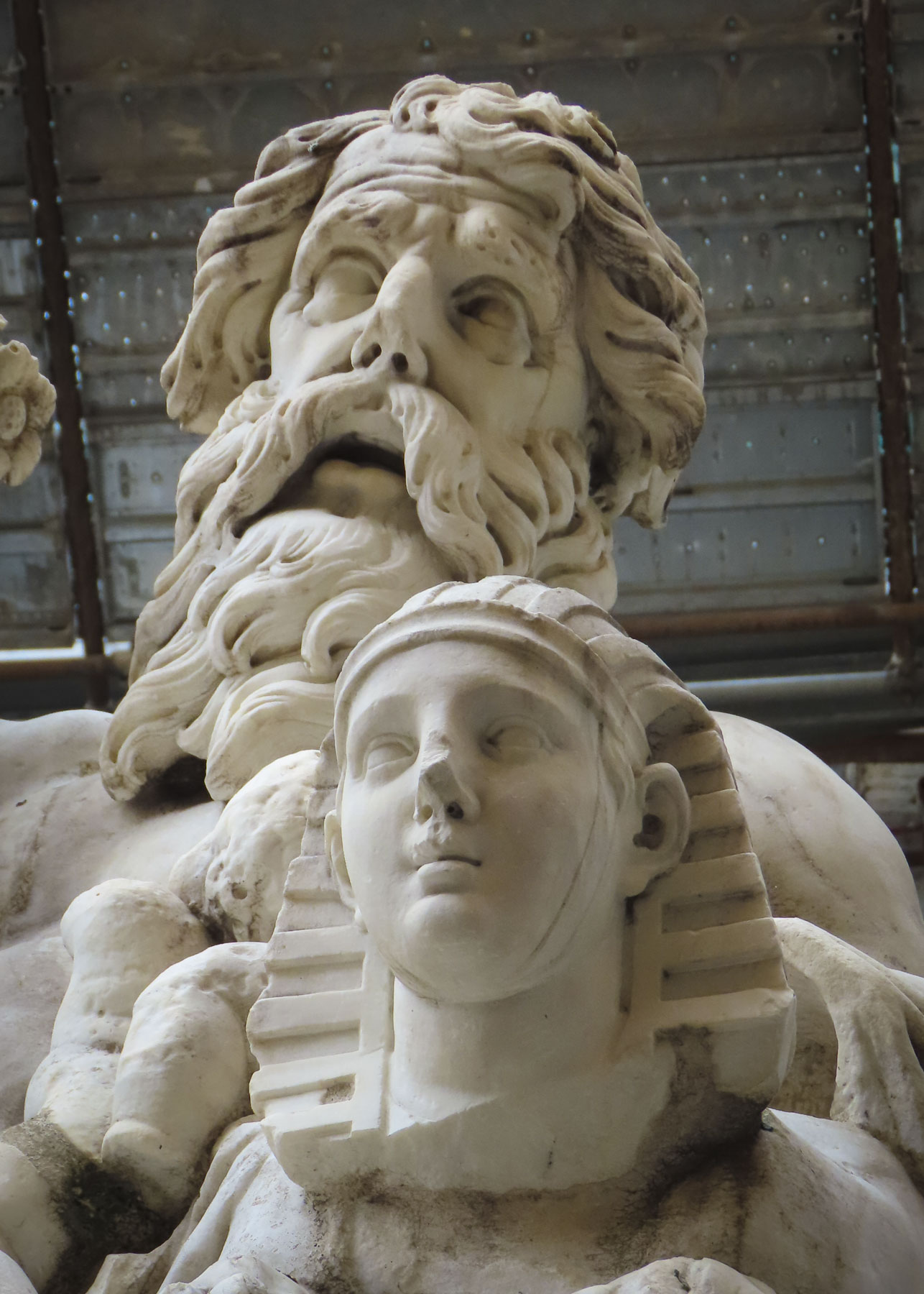
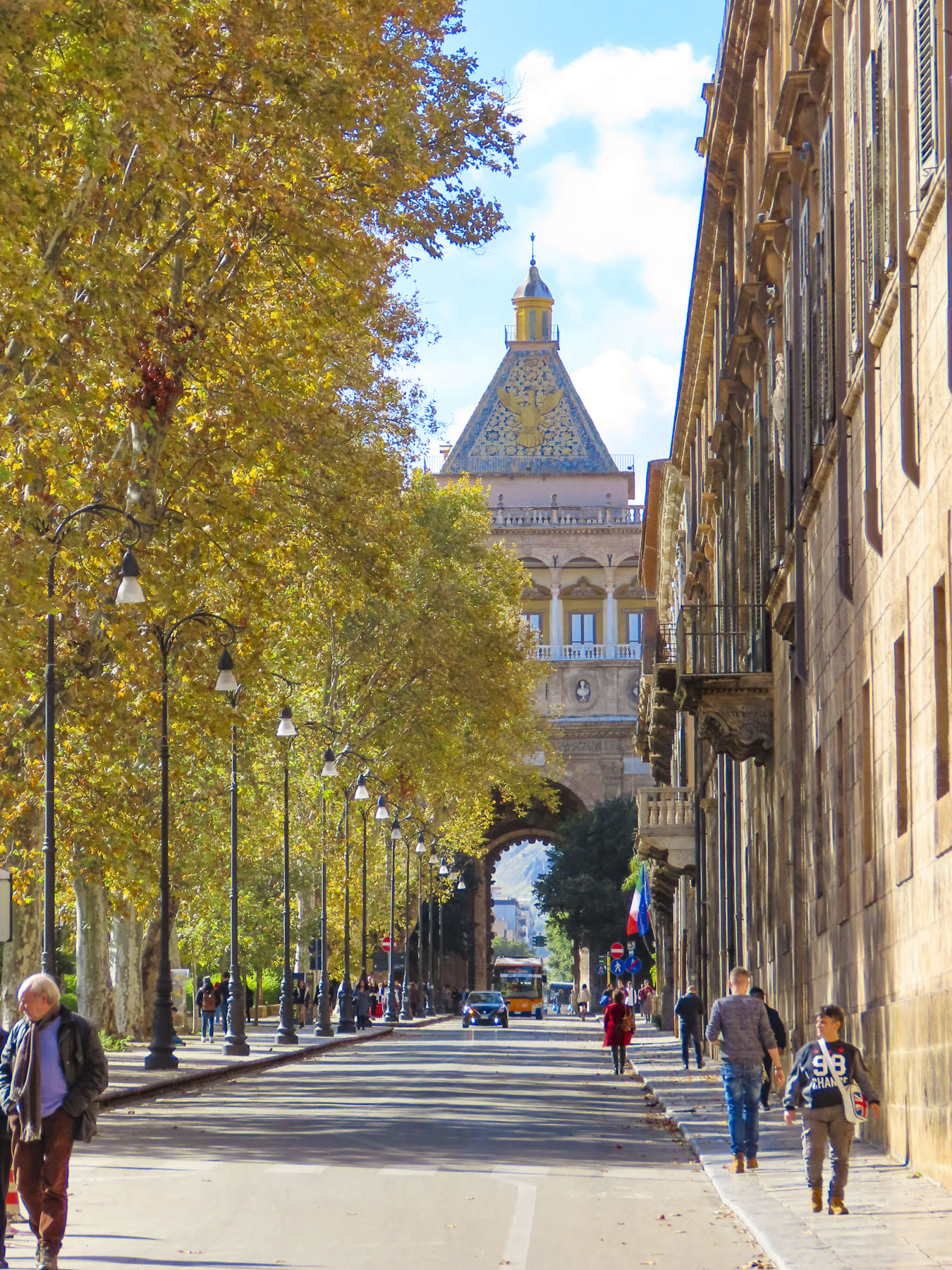
Every seat of power in antiquity had a triumphal arch to signify its greatness, and Palermo’s is certainly unusual with its columns depicting turbaned Arab slaves. The Porta Nuova gateway was reconstructed in 1570 to celebrate the 1535 triumph of Charles V, Holy Roman Emperor, over Ottoman forces in Tunis. Landing in Palermo after his victory, the monarch paraded 14,000 Arab slaves through the city. Standing next to Palermo’s Royal Palace, the Palazzo dei Normanni, the 140ft tall monument was part of the defensive wall that once surrounded the city.

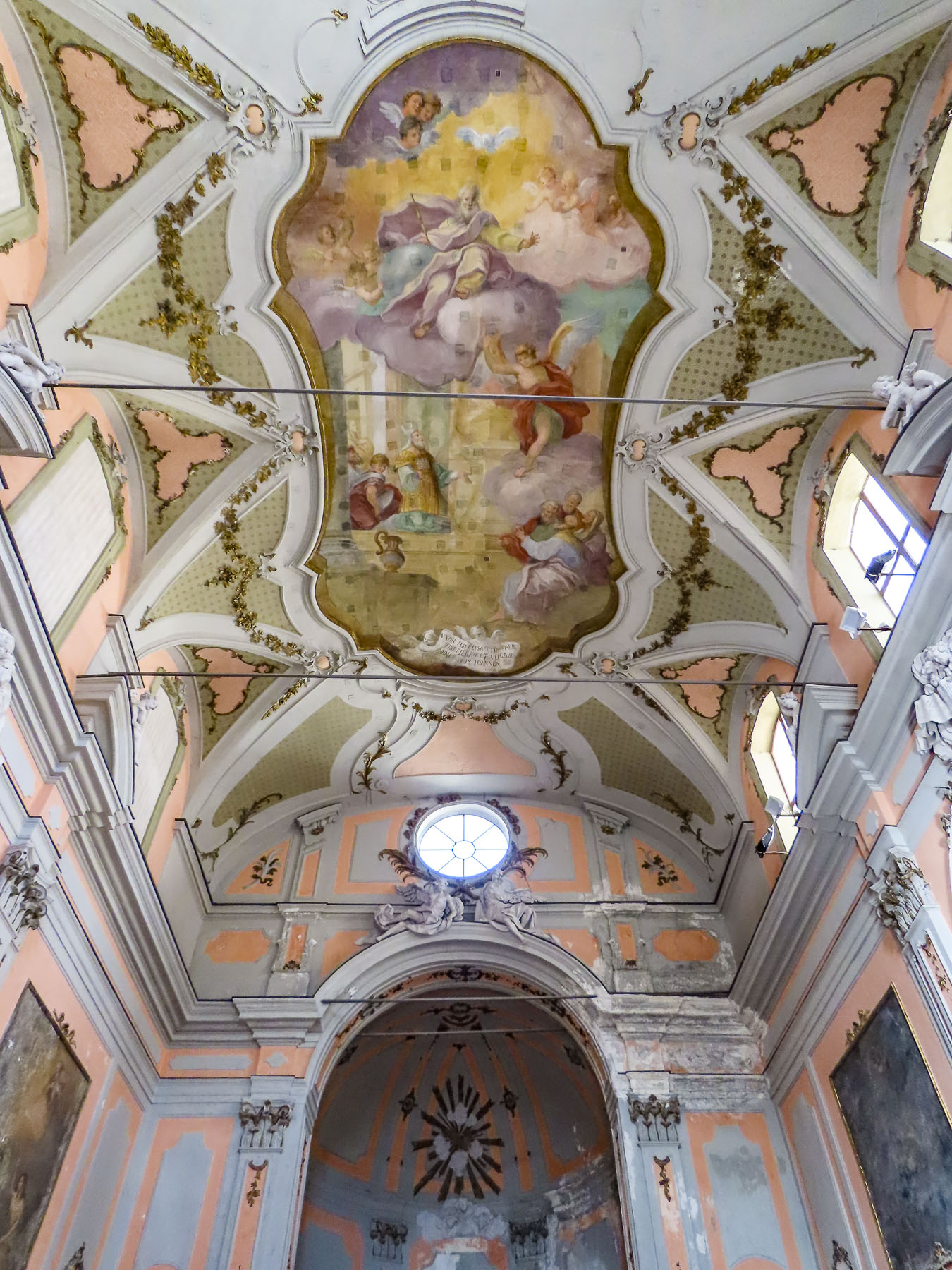
When the Normans won Palermo in 1072, it is believed they found 300 mosques in the ancient city and proceeded to change them all to churches, many sponsored by baronial families. Grand, lesser and forgotten, it was nearly impossible to avoid the churches as we walked through the historic district. Many were closed, but the larger ones still open to tourists were all different and magnificent.

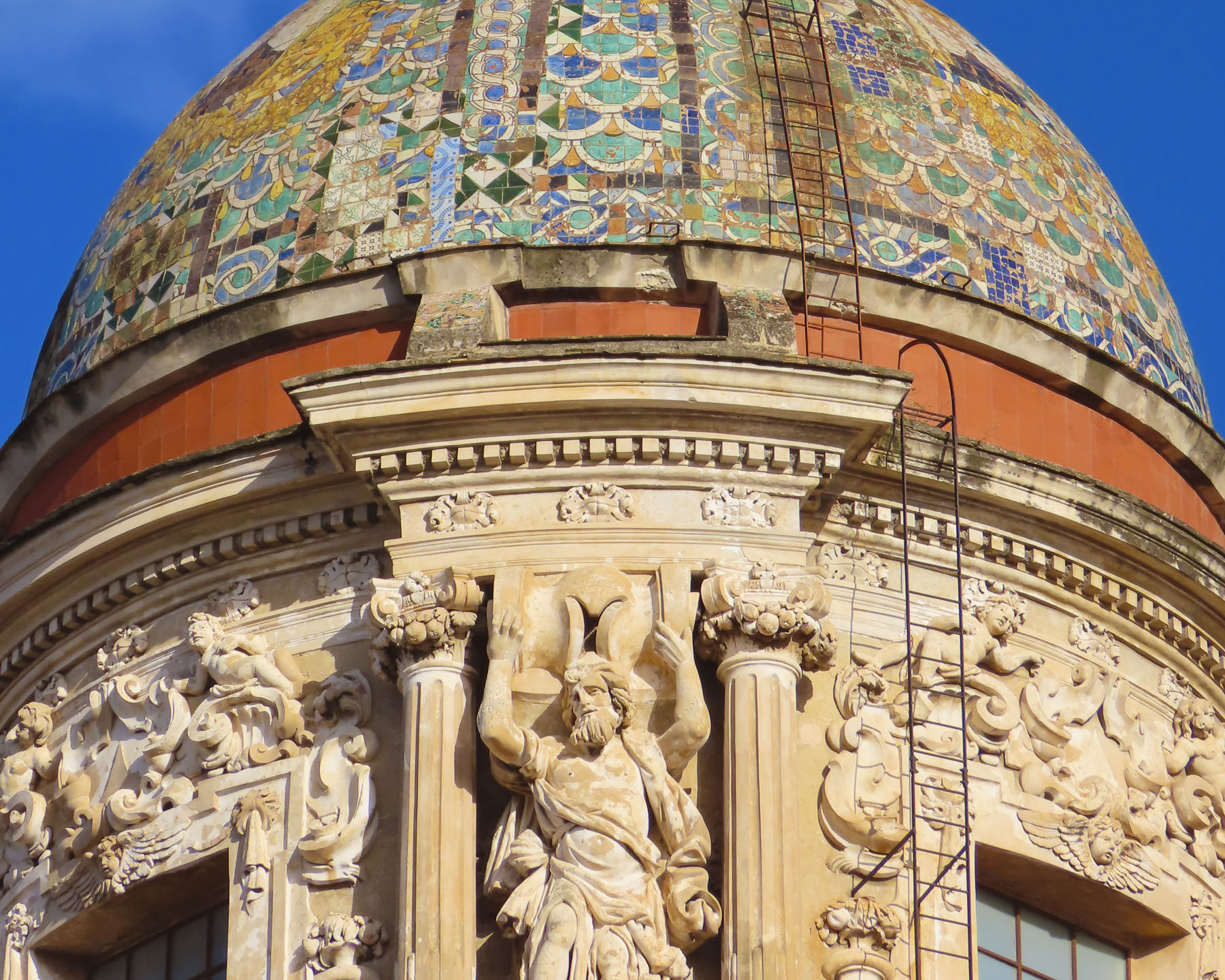
The Cathedral of Palermo is definitely one not to miss. It was constructed by the Normans in 1184 over a mosque that was built atop the ruins of an earlier Christian church. It’s undergone many architectural alterations over the centuries, embracing Arabic, Gothic and Renaissance influences which have combined to create a visual compelling architectural façade with numerous interesting details.

The cavernous inside is rather plain in comparison to some of the richly decorated interiors of other Palermo churches. The piazza in front of the church is perfectly scaled for viewers to appreciate the grandeur of the church behind it. The roof, tombs and treasury of the cathedral are all accessible for a fee, while entrance to the church is free.


If you are short of time head to the Quattro Canti (Four Corners) intersection of Corso Vittorio Emanuele and Via Maqueda. It is the heart of Palermo’s historic district. A short walk took to us to the fanciful Fontana Pretoria, a tiered fountain from the 1500s, which is bedecked with mythological figures.

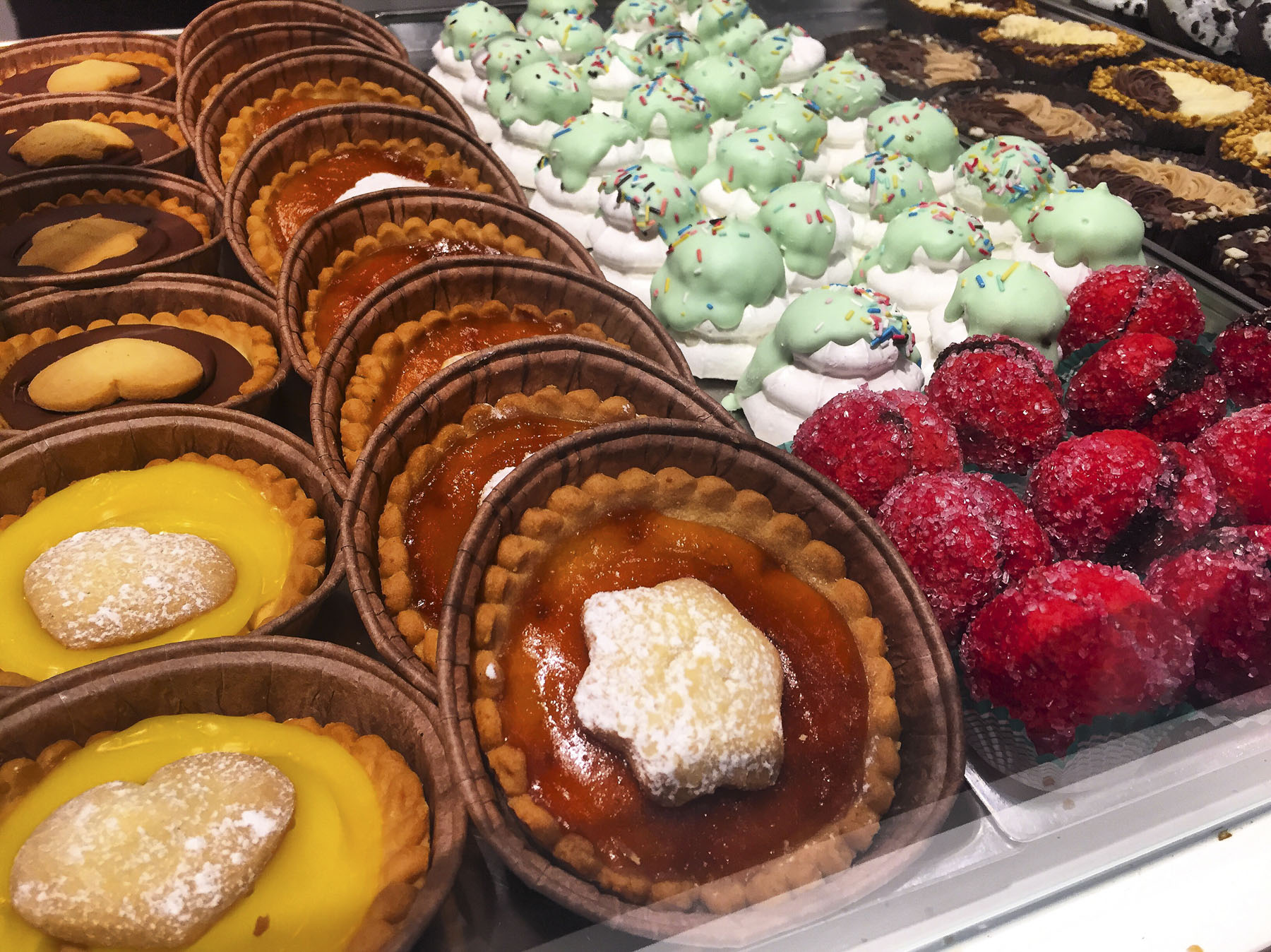
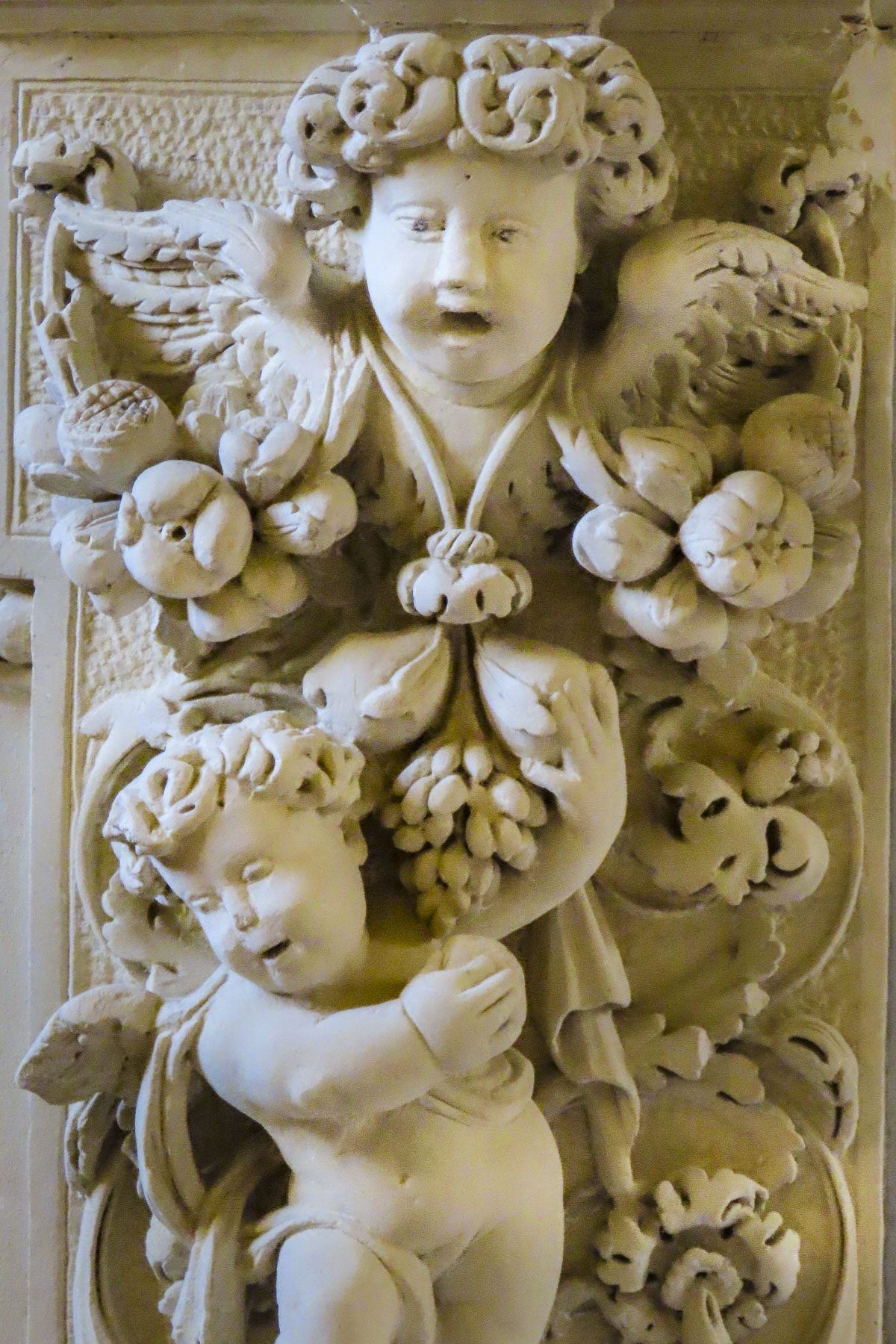
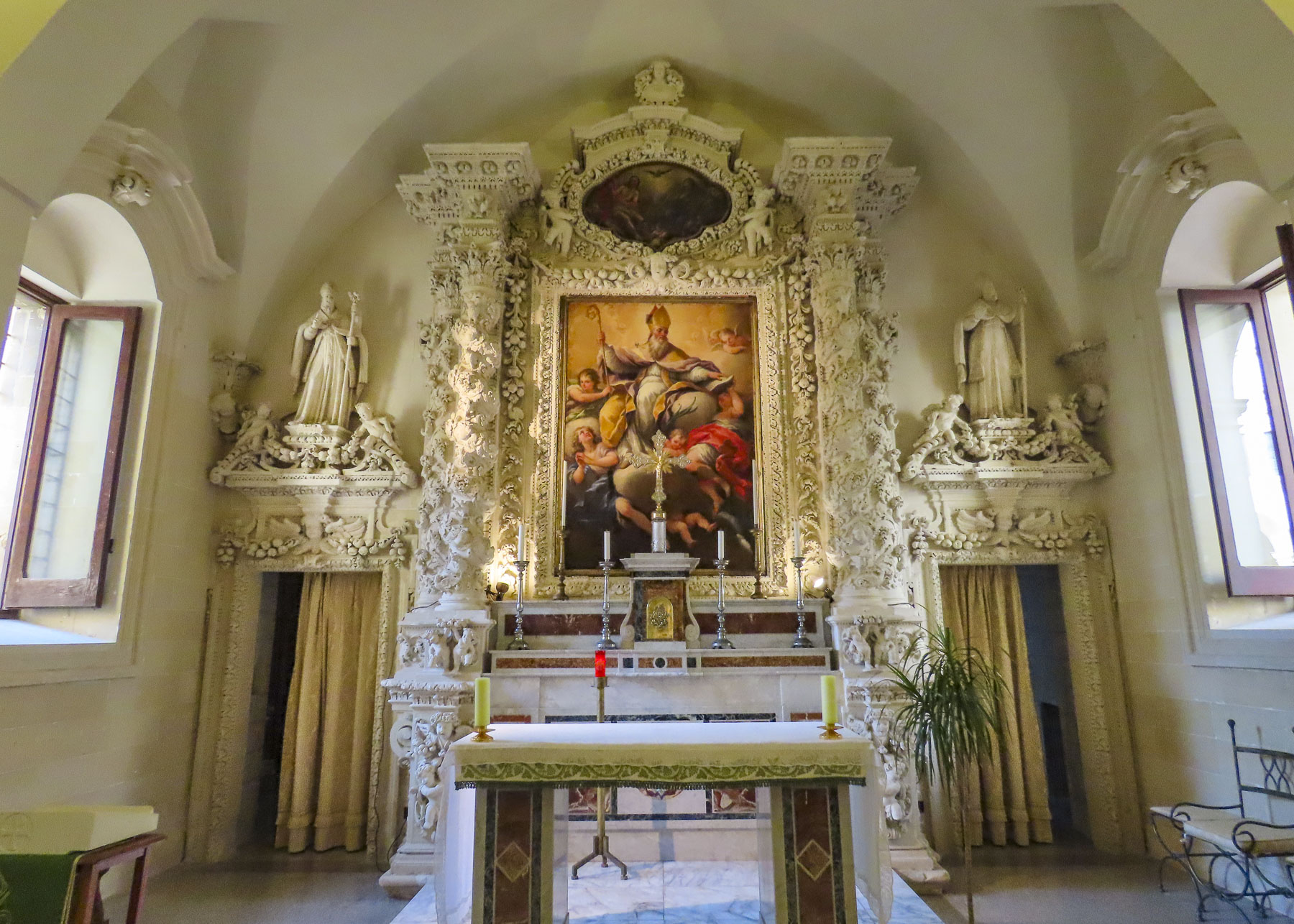
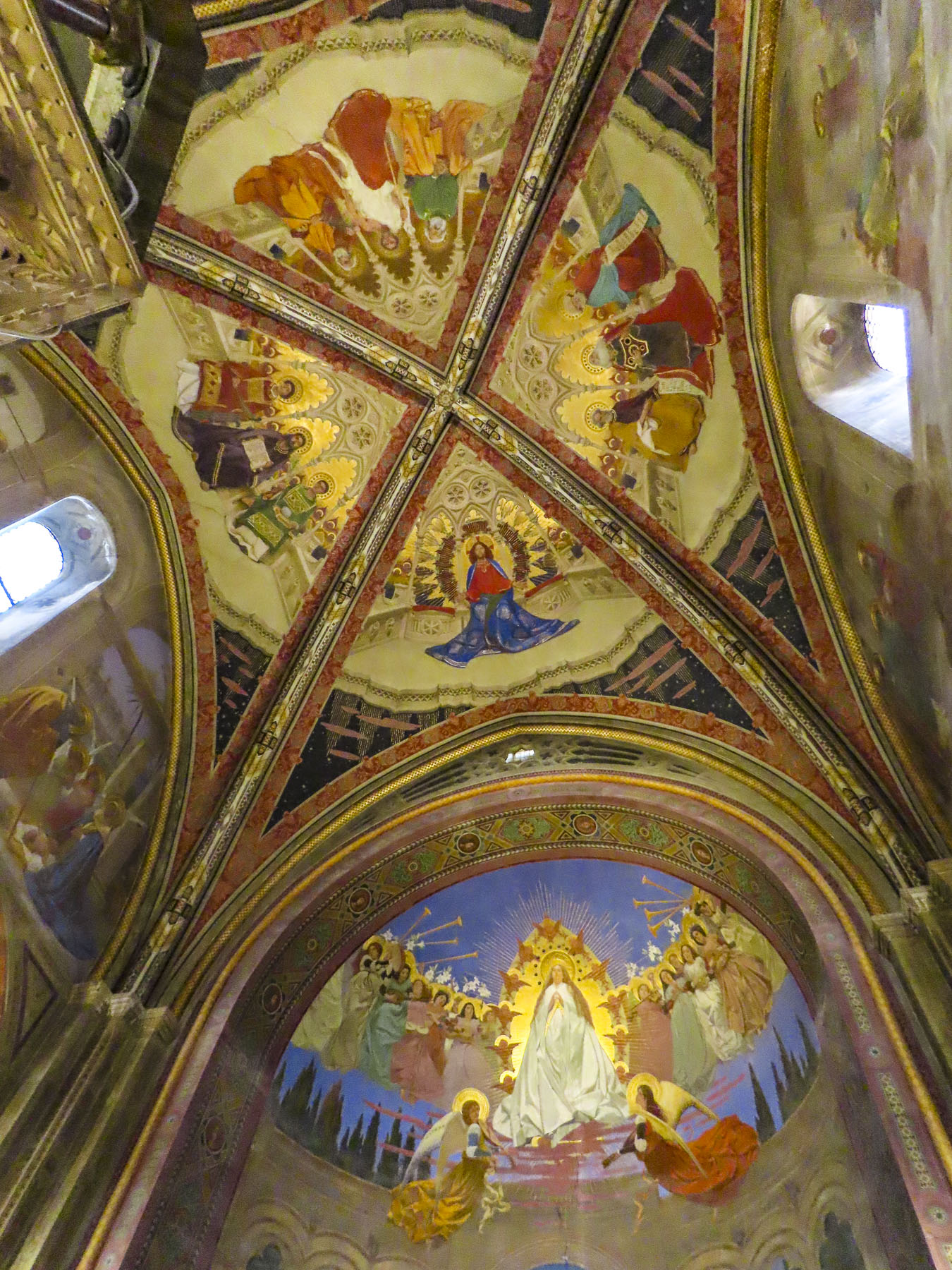
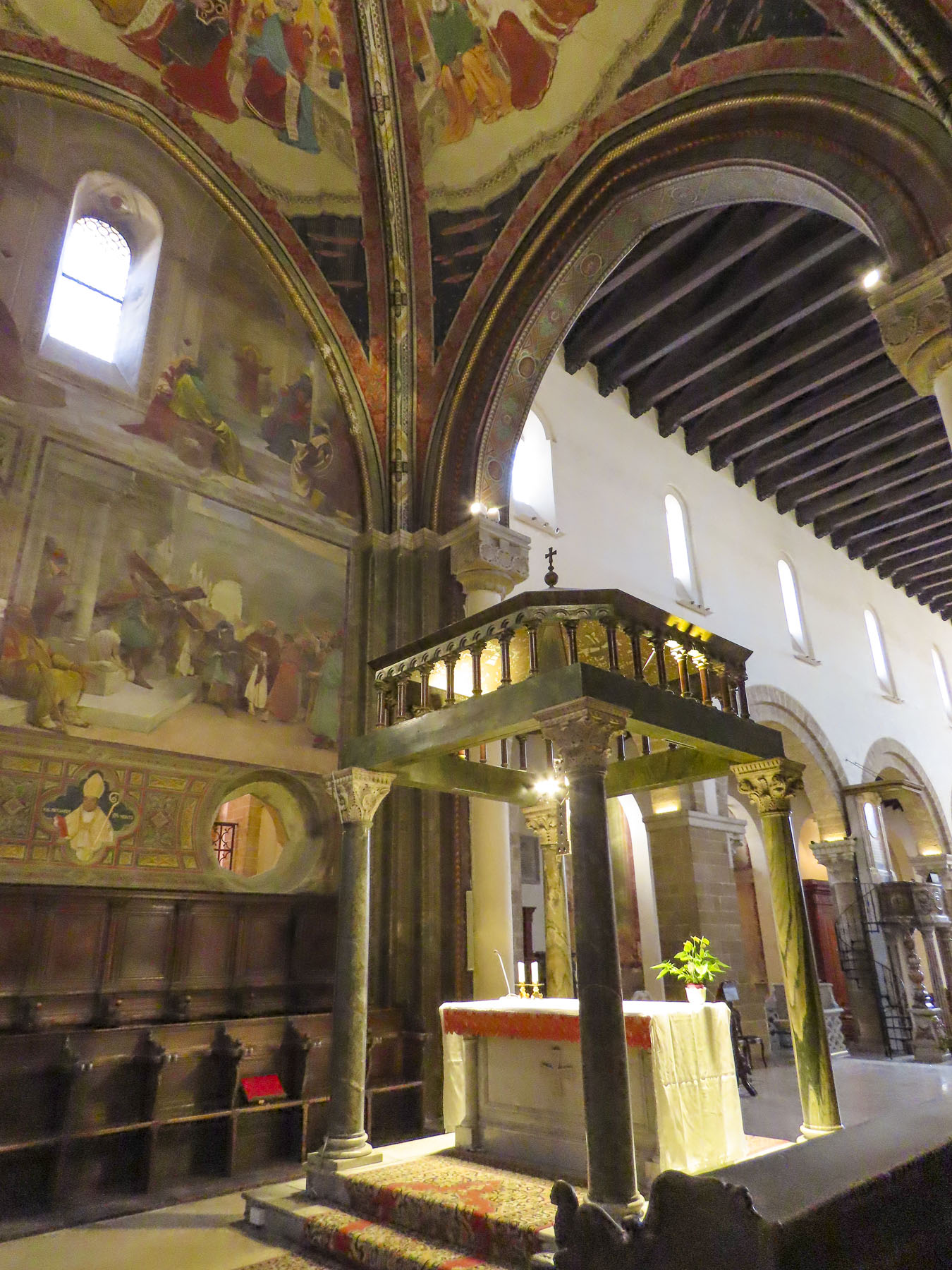
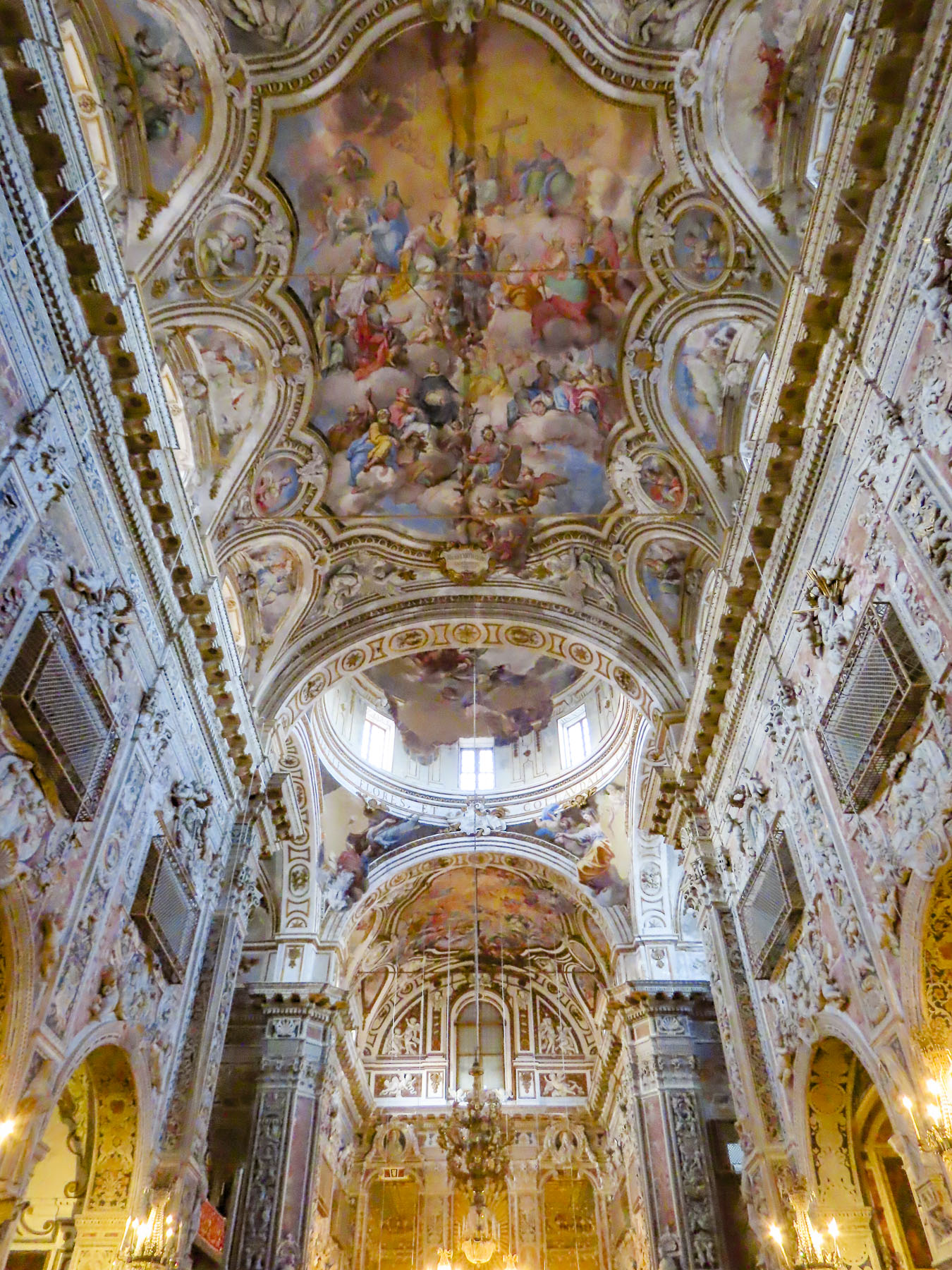
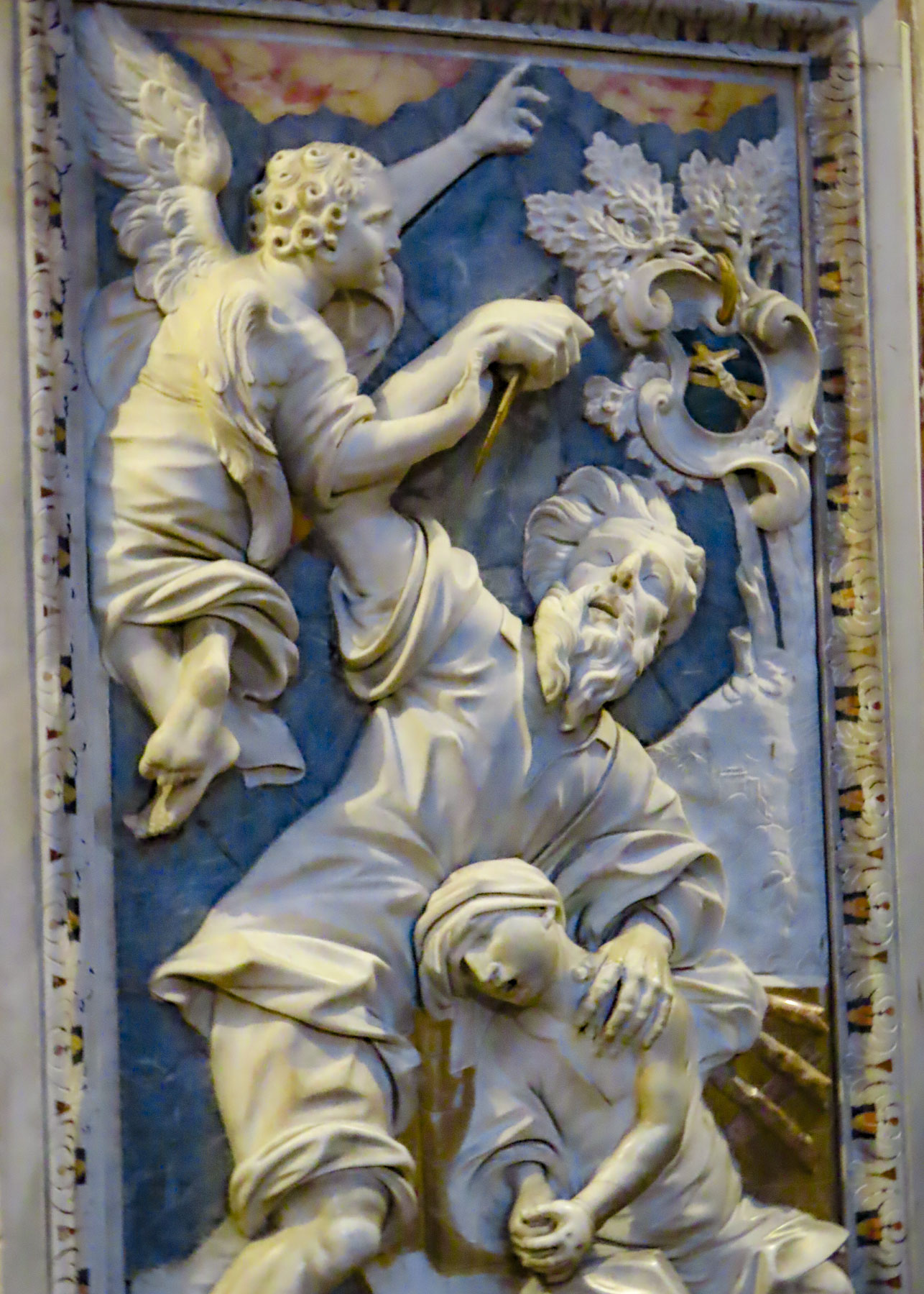
Beyond it three ancient churches ring Piazza Bellini, and back-to-back visits of all three then required Bellini cocktails to loosen our stiff neck muscles afterward to reground us after this celestial bliss. The Church and Convent of Santa Caterina d’Alessandria was originally built as a hospice in the 1300s. Its caverneous, highly decorated Baroque interior, with every surface sculpted or painted with cherubs, angels, saints and martyrs celebrating the heavenly kingdom, was built for the cloistered Domenican nuns from wealthy and noble families who arrived a century later, only to close the hospital and open a bakeshop, “i Segreti del Chiostro – the secrets of the cloister,” instead. Hey, everyone enjoys a good cookie, and the nuns are still turning out traditional Sicilian baked marzipan sweets like frutta di Martorana today, from the convent’s original recipes. Near the entrance to the convent its original ruota, a small wheel-like door, is still in use. Through it the cloistered nuns can pass baked goods while remaining unseen, and poor mothers could anonymously leave babies for adoption. The last nuns left the monastery in 2014 and it was opened to the public in 2017.
Across the piazza stands Santa Maria dell’Ammiraglion, named after the Norman admiral, who commissioned it in 1143. Its exterior is a hybrid of Baroque and Romanesque styles with Arab influences. Inside, golden Byzantine mosaics cover the walls, arches, and domes.

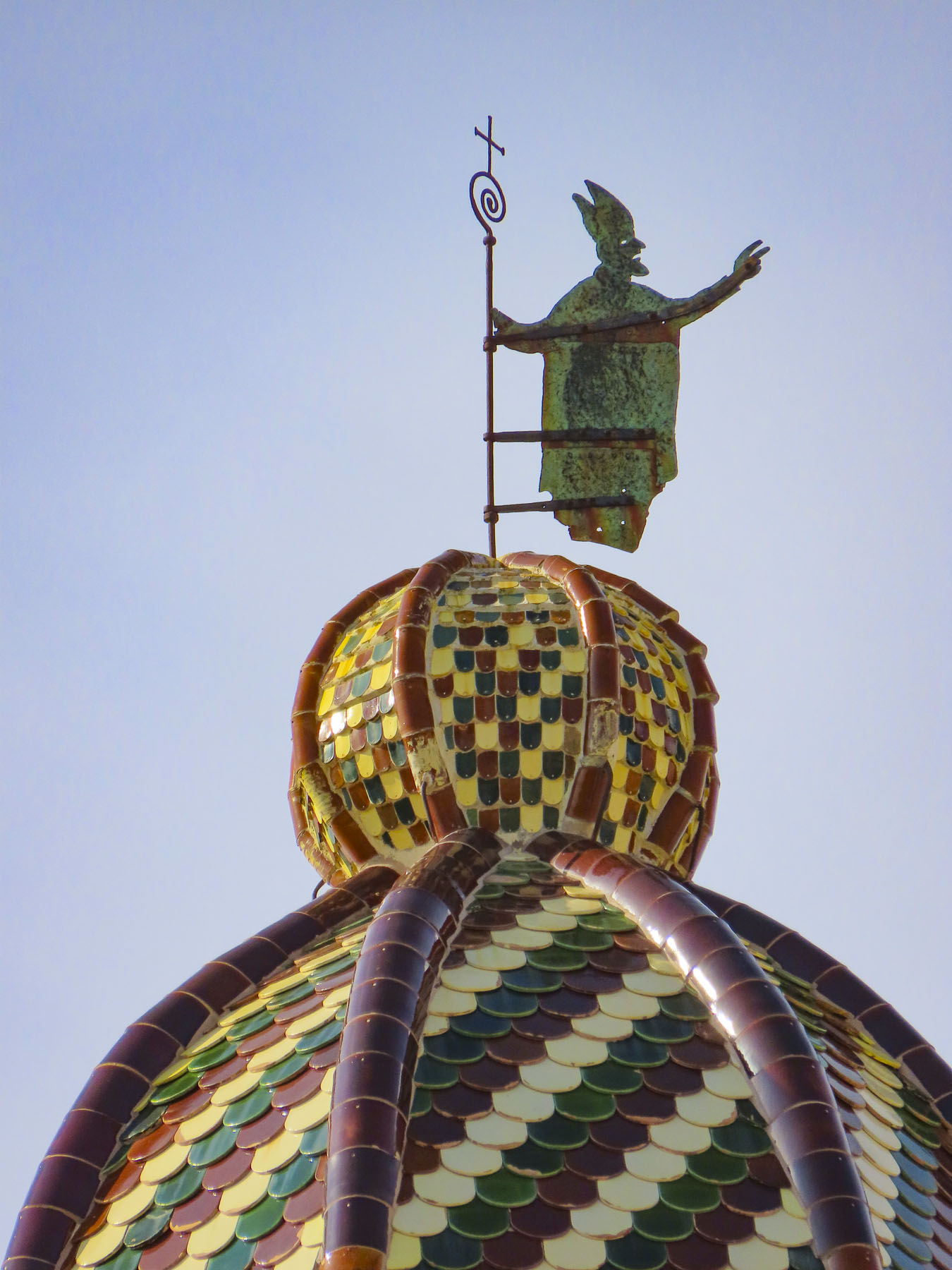
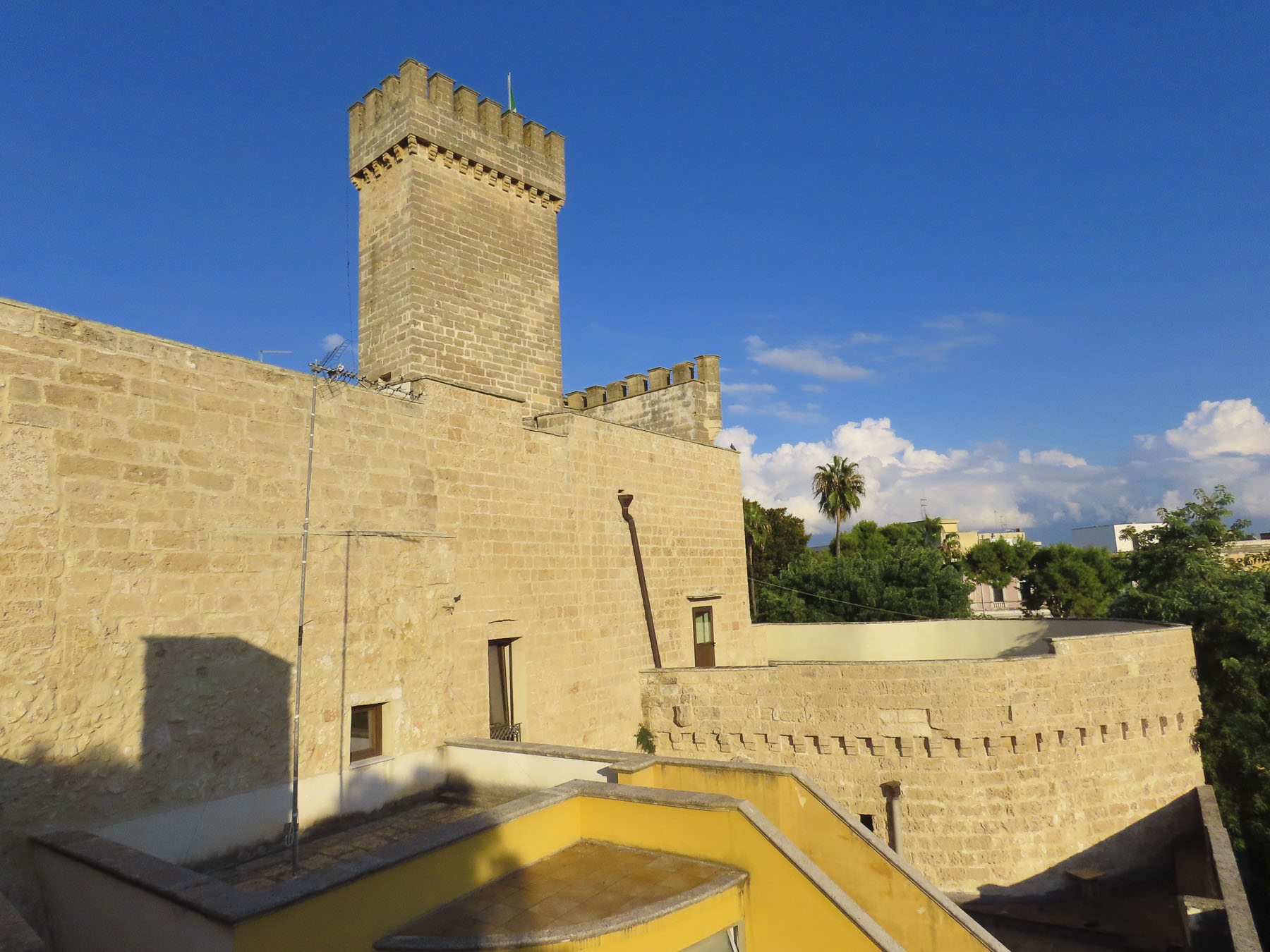
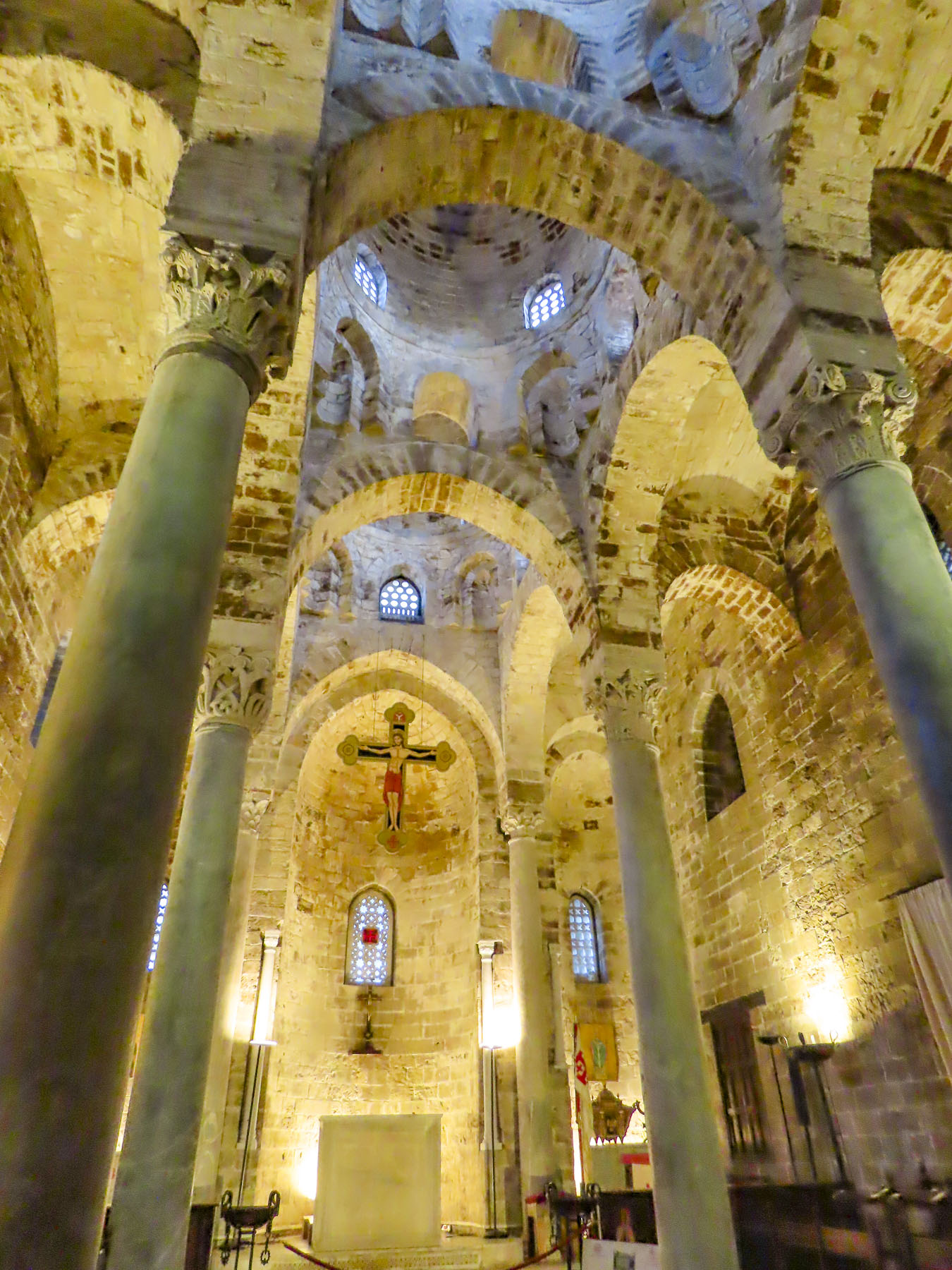
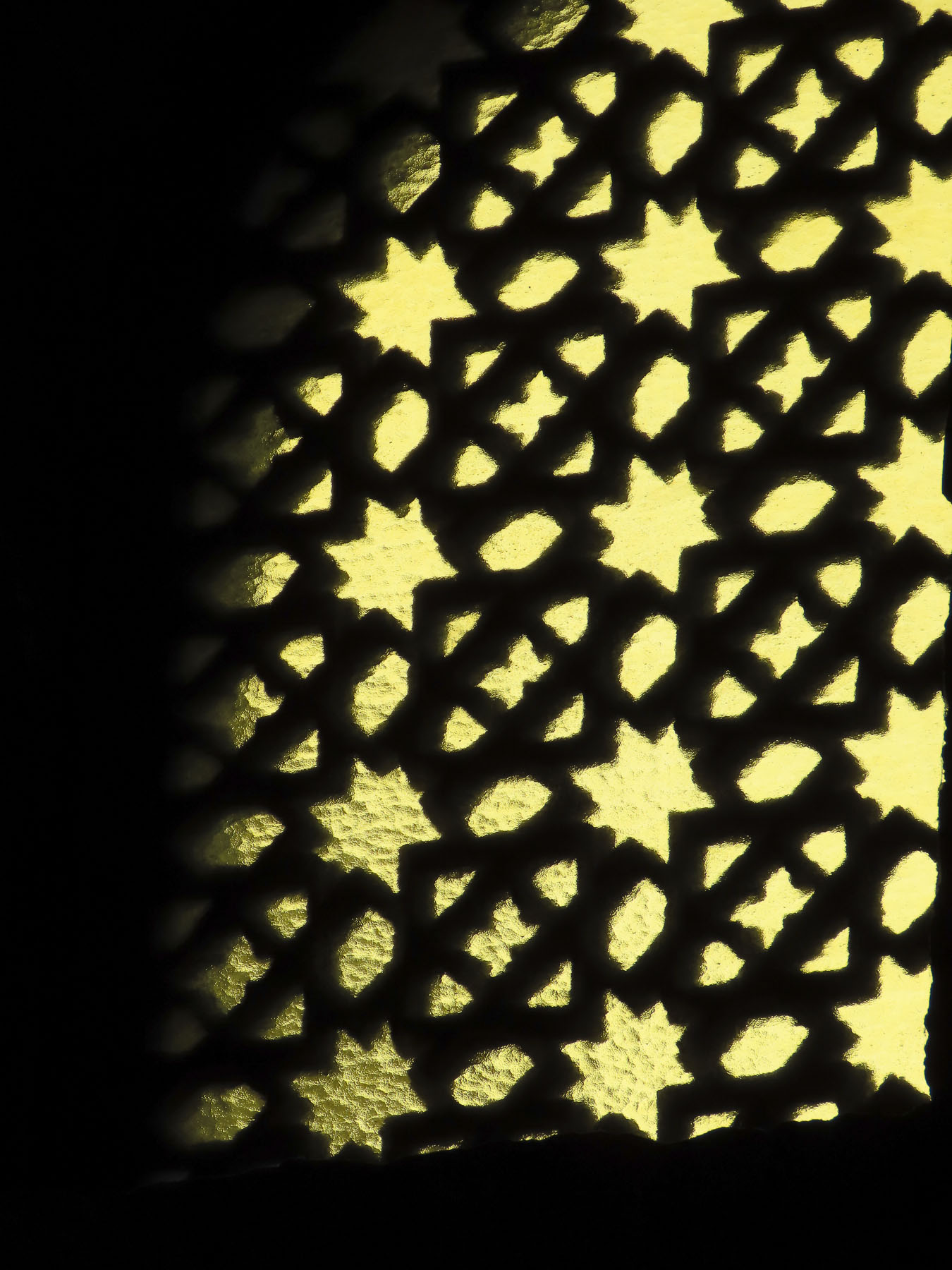
The Arab-Norman architecture continues next door with the fortress-like Church of San Cataldo. The smallest church on the square, its austere block shape has three red bulging domes of Arabic style on the roof. During the 18th century it was unceremoniously used as a post office until its façade was restored in the 19th century and the building annexed to Santa Maria dell’Ammiraglion. Without clues to its original interior decoration the inside has been left unadorned, just bare stone.
We only scratched the surface of places to explore on an island that we found enchanting and fascinating. It could take a lifetime to experience all it has to offer – an interesting idea. We hope to return one day.
The wing of the plane dipped one last time to reveal the turquoise waters along the Sicilian coast as we headed for Northern Italy.
Till next time, Craig & Donna