
For a moment I thought I was hallucinating, when the truck in front of us pulled away at the traffic circle and revealed a towering paranormal monster. A scene and song from GhostBusters! played through my mind. To say the least, this puffy creation was an odd introduction to a new destination, but Bibendum, or Bib, aka the “Michelin Man,” made us laugh.

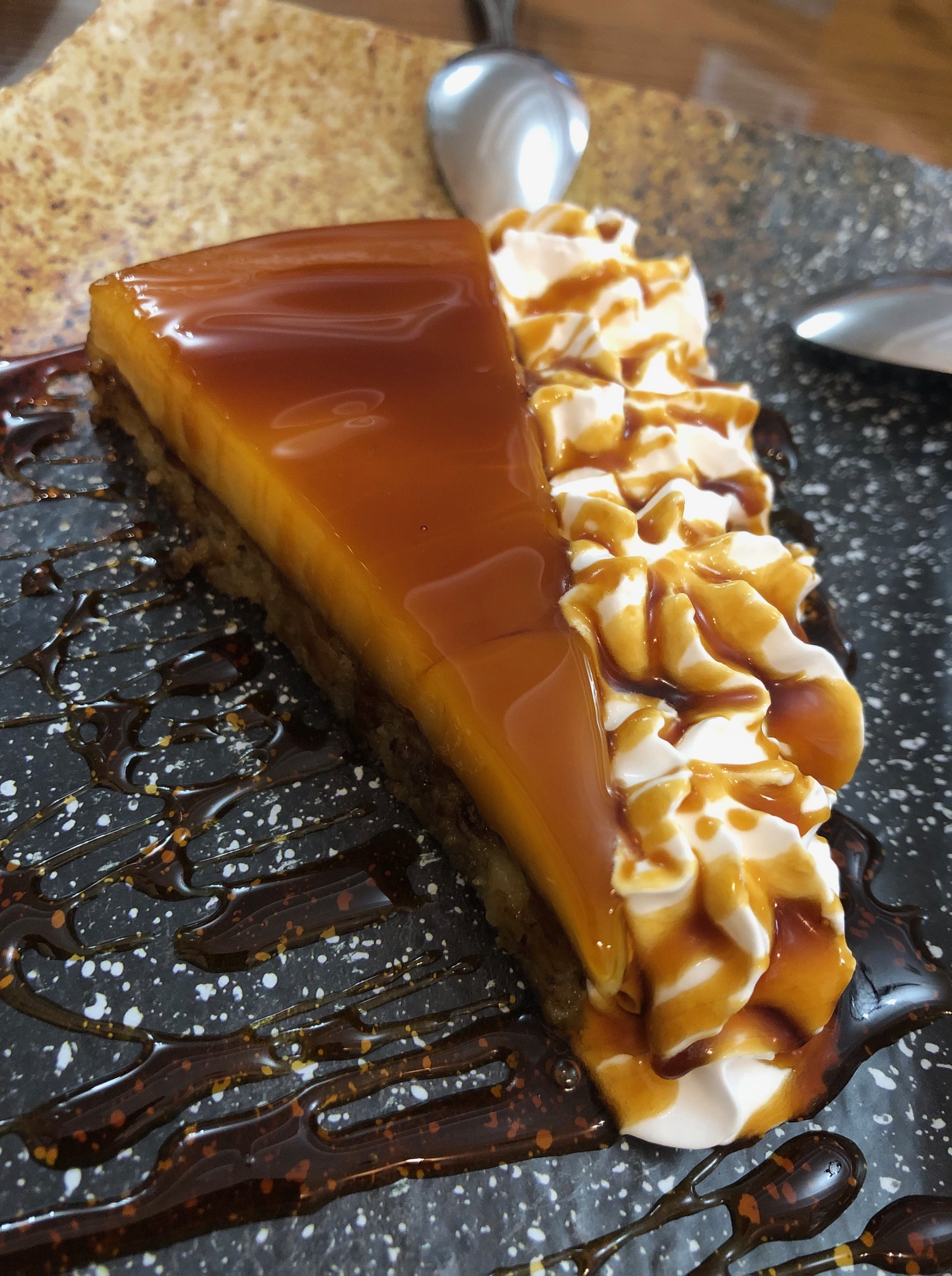
After a long day of travel, our stomachs were now growling from hunger and Donna quickly located a small neighborhood restaurant, Rincón de Castro. It was only a few blocks away from Bib, down a side street, on the outskirts of Jerez de la Frontera. Shouldering our day packs, we entered the taverna and were obviously tourists – from the puzzled looks we received it was clear they didn’t get many foreign visitors through their doors. It turned out to be a delightful meal. We apologized for our minimal Spanish, and as the waitress seated us she asked Javier, who spoke very good English, to help us through the menu. He suggested the sherry, our first glasses in Spain, an appetizer, and a main. All the dishes were very good and we were enjoying the sherry. “And with your cafe, have you tried Tocino de Cielo? It’s a traditional Jerez dessert.” The name of the dessert roughly translates to ‘heaven’s bacon’, which reflects the dessert’s color only and is a total misnomer for this wonderful flan-like creation. The nuns of Convento del Espíritu Santo have been credited with the divine inspiration for this sweet treat, first baked 600 years ago. They created a recipe to use the huge quantity of leftover egg yolks donated to the convent from the sherry producers of Jerez, who only used the egg whites to clarify their wines. The oldest convent in the city, it dates from 1430, and still stands near the Cathedral of Jerez de la Frontera, between the Bodega Tio Pepe and Bodegas Fundador. Thus began our vacation. We were off to a good start.

We hadn’t heard any buzz about Jerez de la Frontera when we started planning our March Andalucia road-trip. This was a decision sparked by a great deal on airfare. Ultimately, we were headed to Cadiz, a destination highly recommended by our Italian friend Giulia several years ago. While planning the trip, we learned that Malaga, Seville, and Jerez de la Frontera all had good regional airports. We’d lived in Seville for a month several years ago and totally enjoyed immersing ourselves in the city’s life. But this would be a short two-week adventure and we didn’t want to repeat anything. Malaga, on the Mediterranean, seemed too far and we decided we would save that city for another time. And then there was Jerez de la Frontera, which looked surprisingly fascinating, when I started clicking around Google maps. We say surprisingly, because really it gets very little notice, even though it anchors the Sherry Triangle, an area that extends from Jerez northwest to Sanlúcar de Barrameda on the Atlantic coast, and south to El Puerto de Santa Maria, near Cadiz. It’s a quiet off-the-beaten-path destination, especially in the shoulder season. Larger than Cadiz, smaller than Seville, the city was the perfect size for a three-night, two-day stay, after arriving XRY. We don’t like to admit aging, but twenty hours of airports and flights takes a toll on us. So now that first afternoon after we land is spent recovering: airport, rental car, food, hotel in short order.

We emerged from the underground parking at the Plaza del Arenal, onto a large square centered with a bubbling equestrian statue, surrounded by empty tables. We would learn that come 8:00 every evening this would all change when folks filled the restaurants, tapas bars and side streets around the plaza with activity.
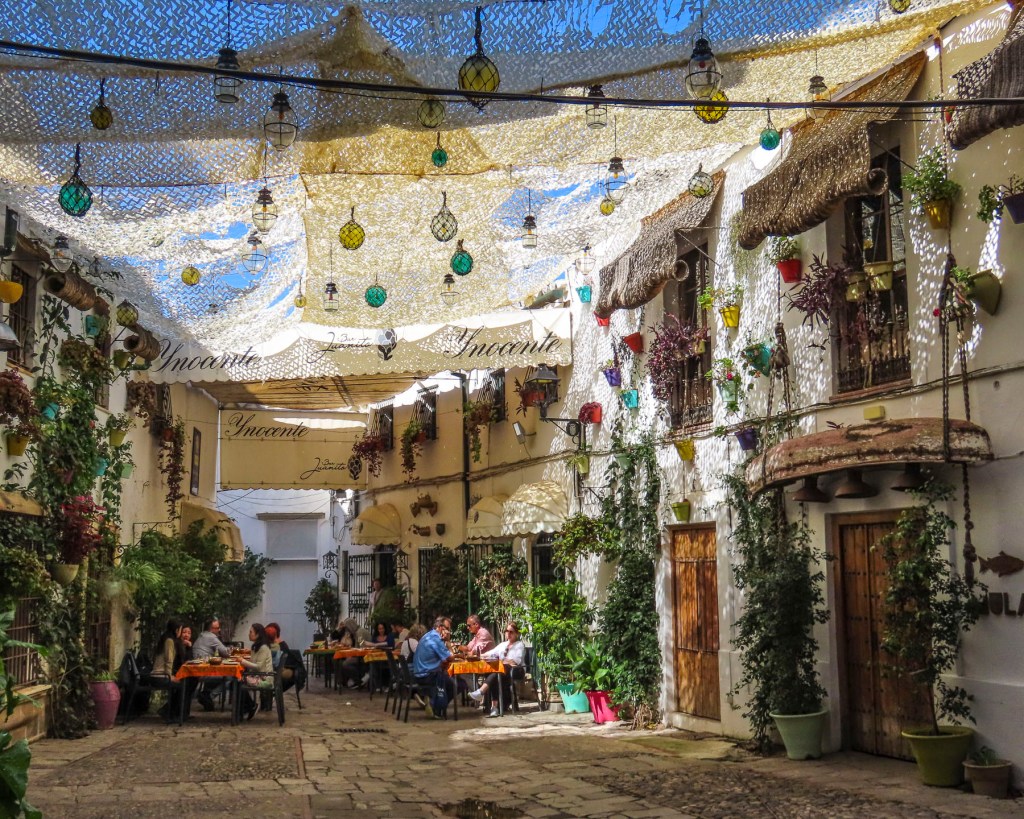
Following our host’s directions, we crossed the plaza and entered an arched alley that opened to the sky when it reached a small courtyard between the buildings. Shade netting strung across the alley created a picturesque play of light on the diners outside Bar Juanito.

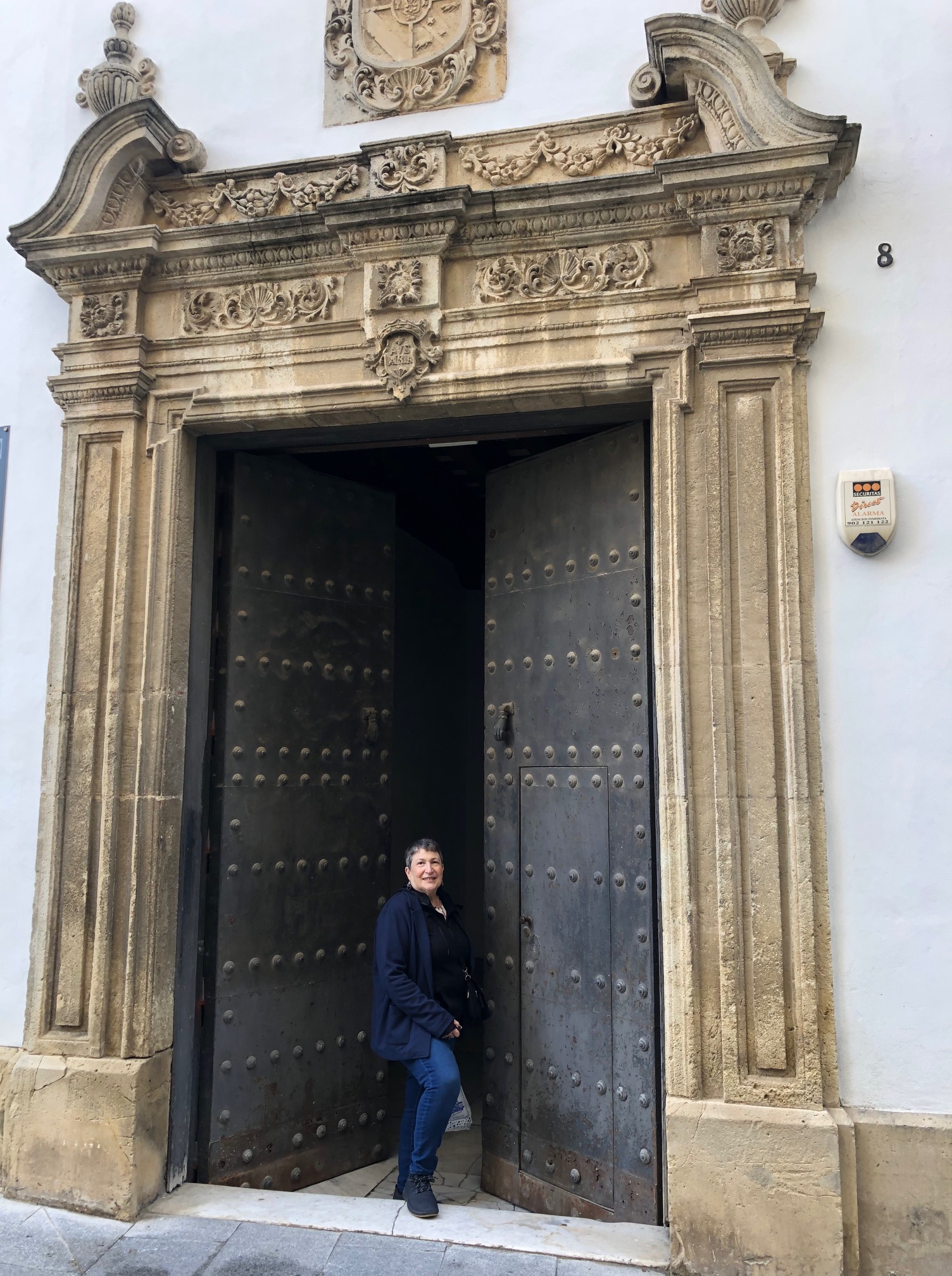

The restaurant was just around the corner from our lodging at the Palacio del Virrey Laserna, a 13th century palace that has remained in the same family for several centuries. While the name is quite impressive, being a palace and all, and it does have some nice antiques along with some interesting décor in the guest wing, it feels a little tired. Perhaps this is an unfair criticism for an ancient family home. A tour of the private part of the palace was included in our room rate. Sadly, they restrict photos in this part of the palace, which is filled with fascinating ancient memorabilia and furniture collected from Spain’s various colonies at the apex of its empire. Interestingly, in 1264, it was one of forty Moorish properties given as a reward to the knights that valiantly served King Alfonso X during the Reconquista of Jerez. Located only a short distance from the Alcazar, the old Moorish fortress, its proximity and size indicated it was once the home of an important Moor.


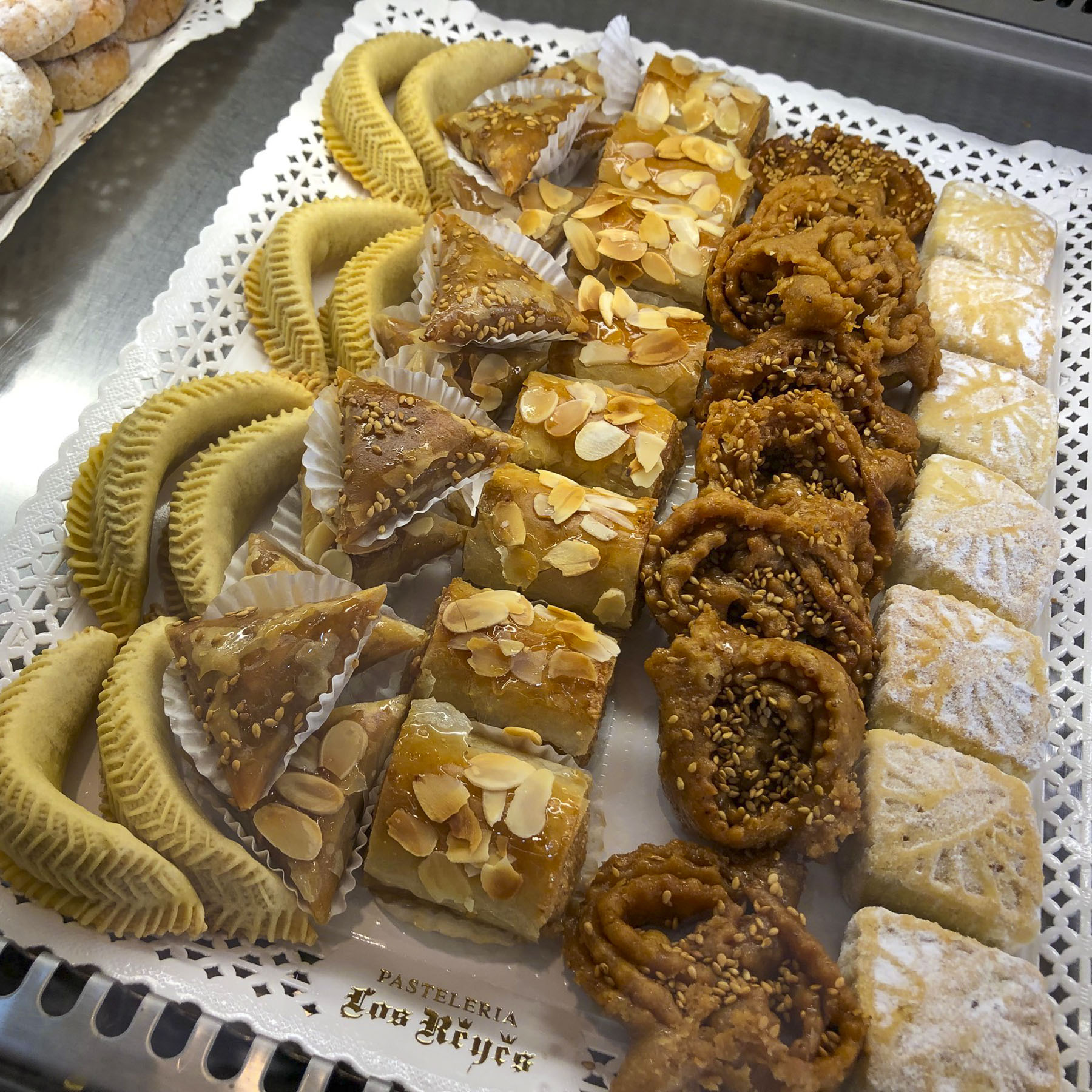
As nice as the ambience was on the Plaza the del Arenal, prices were rather steep, so the next morning we walked down a side street off the square to Los Reyes Pastelería. One of everything would have been our first choice. Yum!

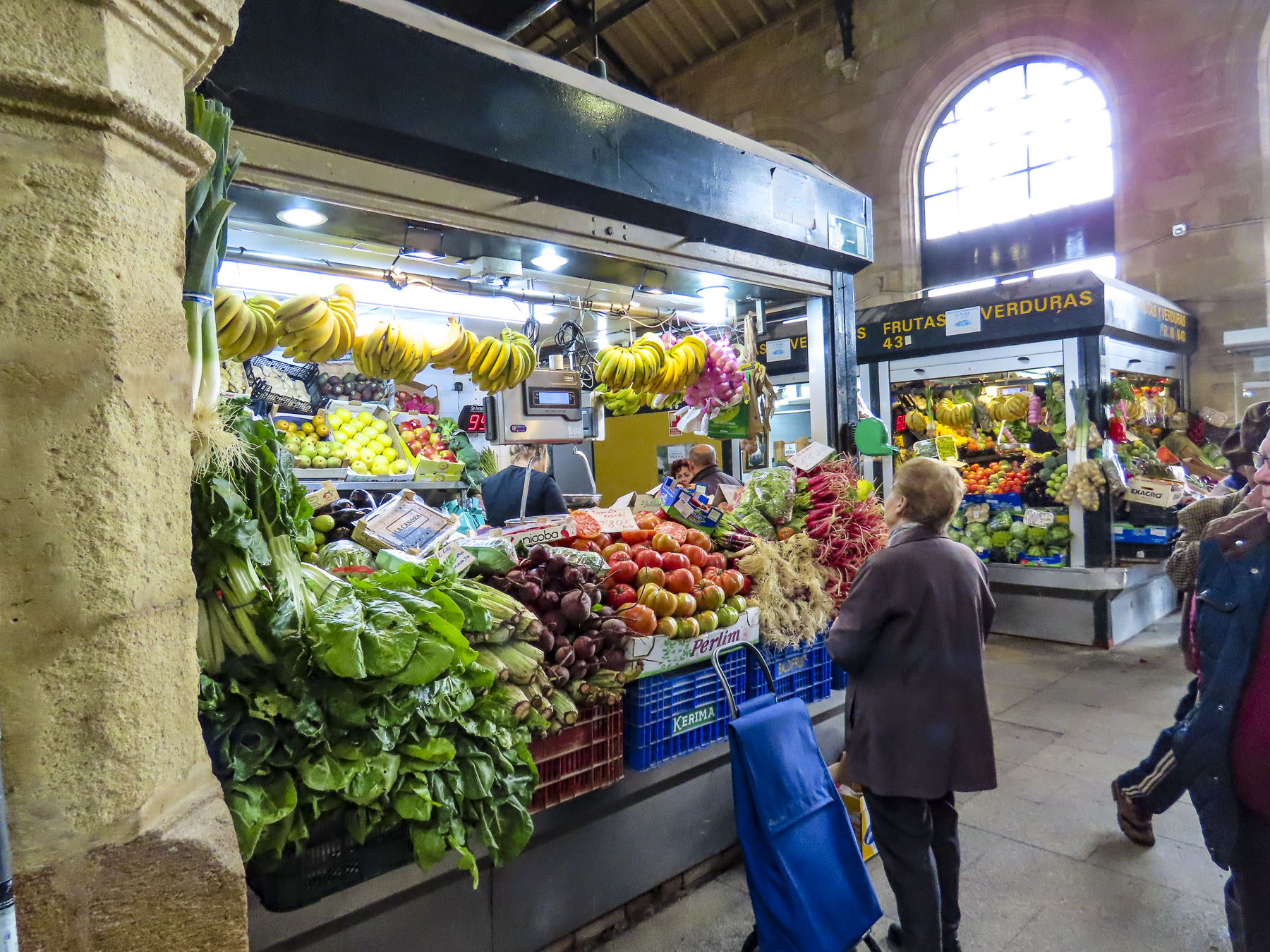
Later that morning we worked our way to the Mercado Central de Abastos, one of the oldest covered markets in Spain dating back to 1837. It has become part of our travel ritual to explore the central markets in the cities and towns we visit. The ones in Spanish cities close to the ocean are especially rewarding, as vendors display fresh seafood, shellfish, prawns and sea urchins. The Andalucia bounty doesn’t stop there. Olives, sausages, cheeses, and vegetables galore. And of course, jamon! The finest being named Pata Negra, in reference to their black hoofs. This jamon comes mostly from three villages, Jabugo, Cortegana, and Cumbres Mayores in the Sierra de Arecena mountains, two hours north of Jerez. Here the free-range pigs are raised on an organic diet of only acorns which imparts a unique flavor to the jamon. We made some purchases for a snack later.

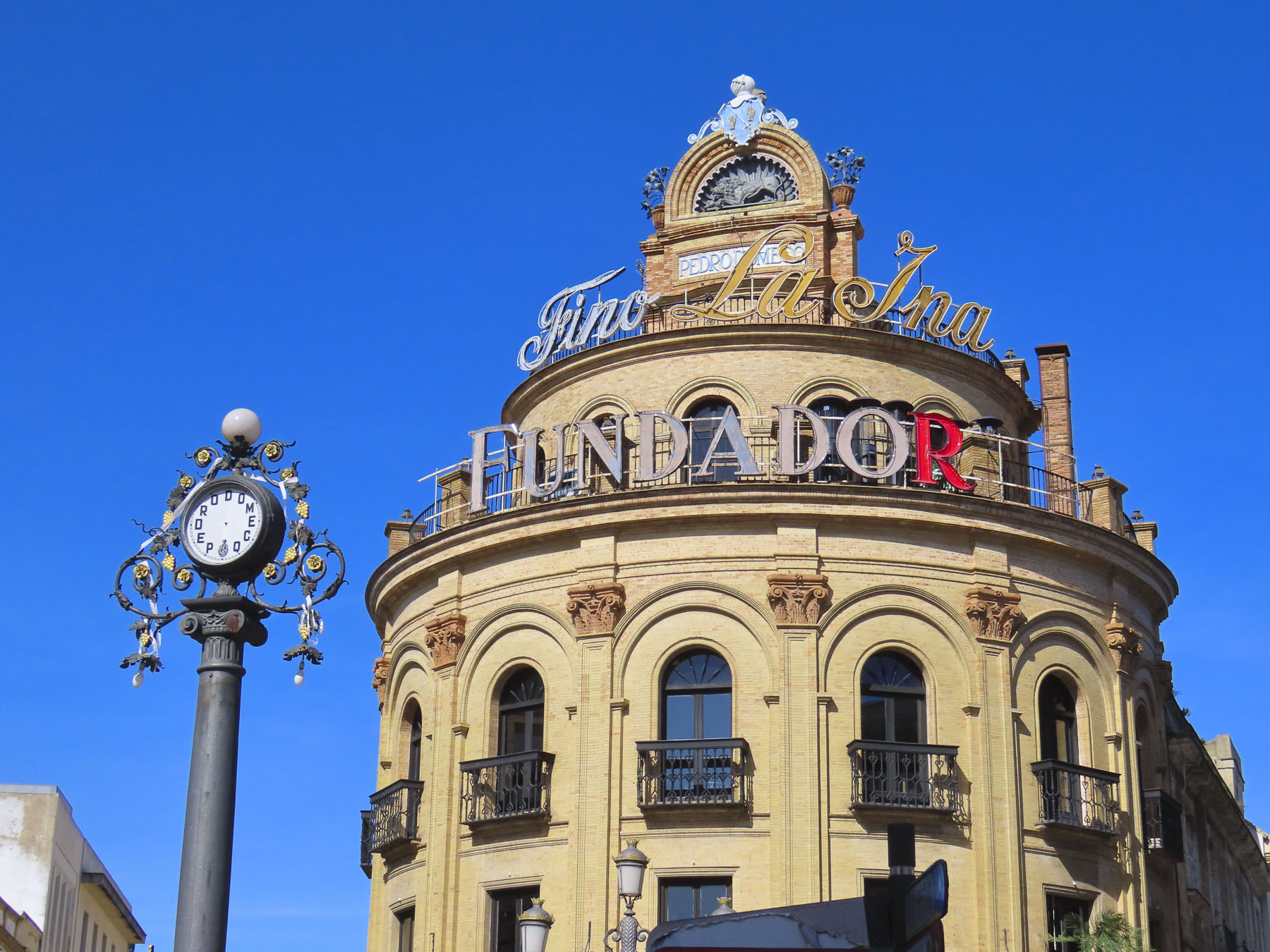
Around the corner from the market the iconic Fundador sign sits atop a historic building which is home to an equally famous 100-year-old bar named the Gallo Azul, or Blue Rooster. Known for its 6th floor semi-circular bar, interesting interior, and view of Jerez from its windows, it was unfortunately under renovation when we were in the city but is now open.
Walk a little then café was our philosophy as we wandered our way across Jerez towards Plaza de la Yerba and Plaza de la Asunción. There seems to be an infinite number of eateries across the city to the point that it feels like are more restaurants than retail shops. The dilemma is that they all look so inviting.

We were in Jerez several weeks before Easter and signs of Holy Week preparations were evident at the Plaza de la Asunción, where reviewing stands surrounded the plaza in front of the ancient City Hall and Real Iglesia De San Dionisio Areopagita. Built in 1575, during the reign of Felipe II, the façade of the old town hall is covered in ornate relief carvings depicting popular Renaissance motifs and is considered one of the finest examples of Andalusian Renaissance architecture. Though now, its weathered stonework is in need of some tender-loving care.

The church across the plaza stands in austere beauty by comparison, its simple 15th-century Gothic-Mudejar architecture the perfect backdrop for the monument to la Virgen de la Asunción, centered in the plaza before it. Interestingly, the monument was a relatively new addition to the plaza in 1952. It was created by the legendary religious sculptor Juan Luis Vassallo, from Cadiz, whose many monumental pieces can be seen atop buildings and in public spaces across Spain.


The church’s belltower was originally a civilian construction in 1447 to serve as a watchtower to spot attackers or fires. Several years later the town’s first public clock was installed on it. The inside of the church features an 18th-century baroque interior. In preparation for Semana Santa, the statue of the Virgin stood in one corner dressed in her ceremonial attire. Maybe it’s just me, but I think there was a Barbie as Scarlett O’Hara, from Gone with the Wind, theme happening?
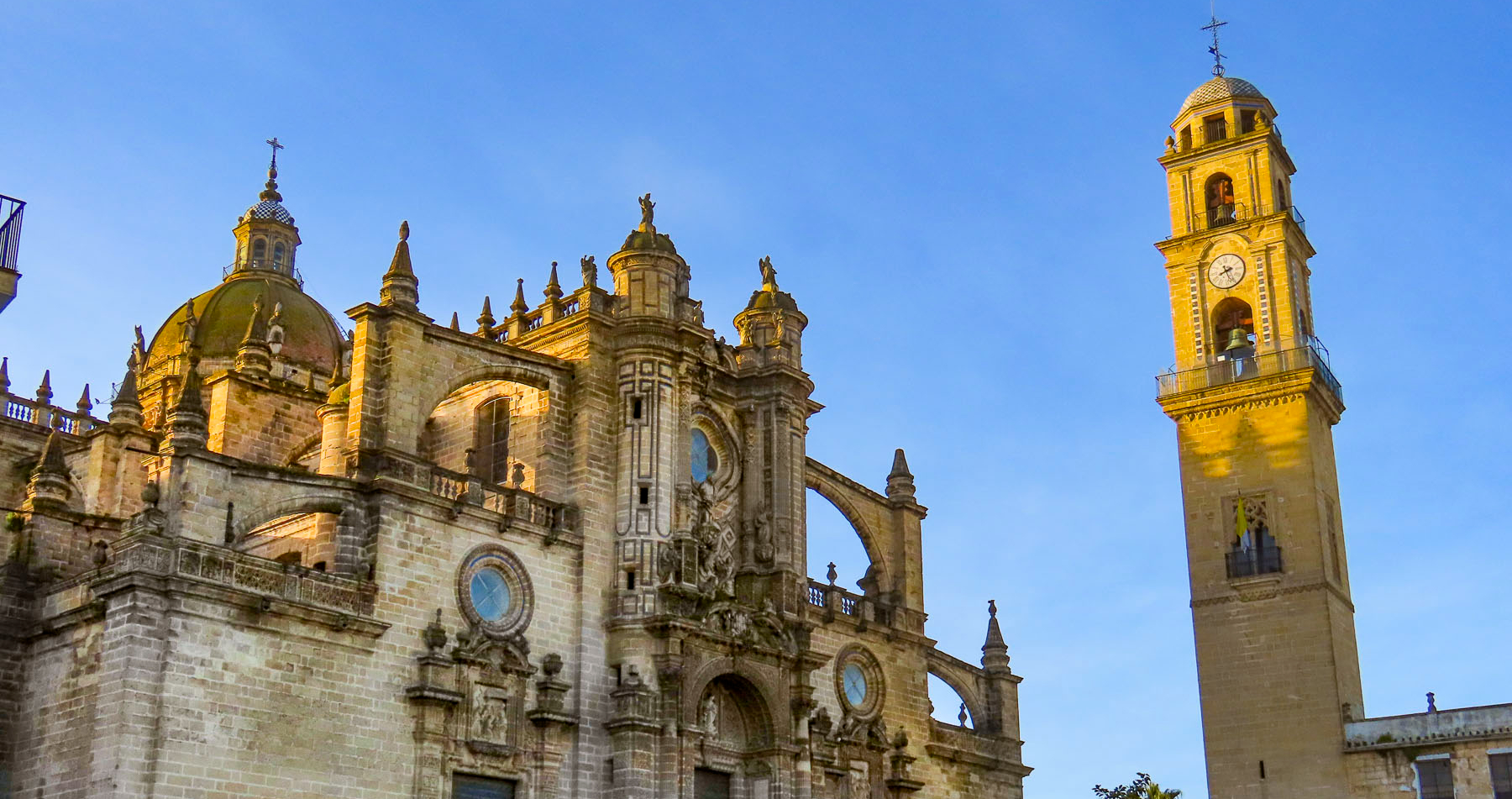
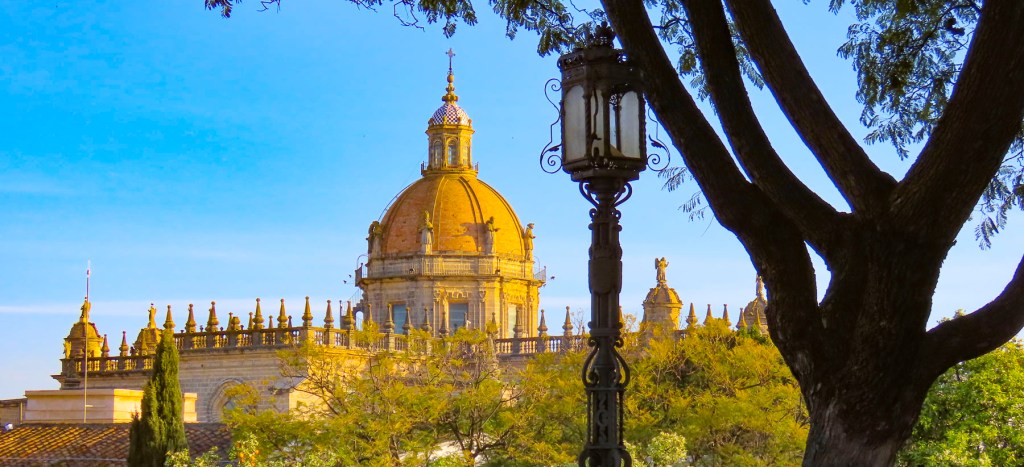
A huge church needs a significant name to match it and the Cathedral of Jerez de la Frontera / Colegiata de Nuestro Señor San Salvador successfully fills this obligation. It’s a massive structure supported with flying buttresses that we were able to get an aerial view of from the belltower across the way. It’s thought the belltower was reconfigured around a minaret that was part of the Great Mosque of Jerez before the reconquest.


With a special tax on sherry wine approved by the crown, construction of the cathedral was started in 1695. The first worship service was held sixty years later, but it would take another twenty years before the church was completed.


Inside the church is very austere, but voluminous. The soaring ceilings of the cavernous space is supported by monumental Corinthian columns, the width and height of giant sequoia trees. The huge doors on the ends of the naves dwarfed us. It was an enormous engineering feat.

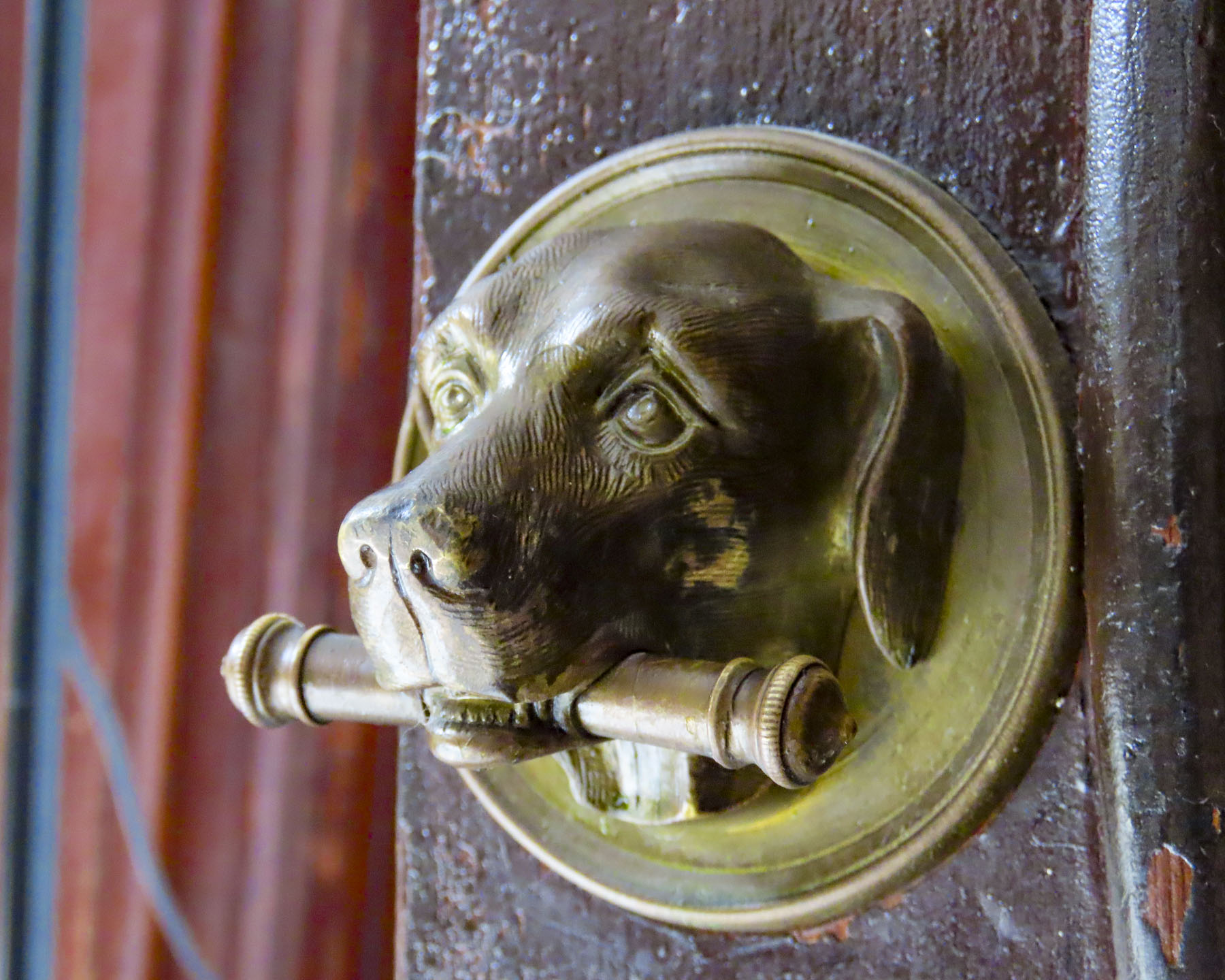
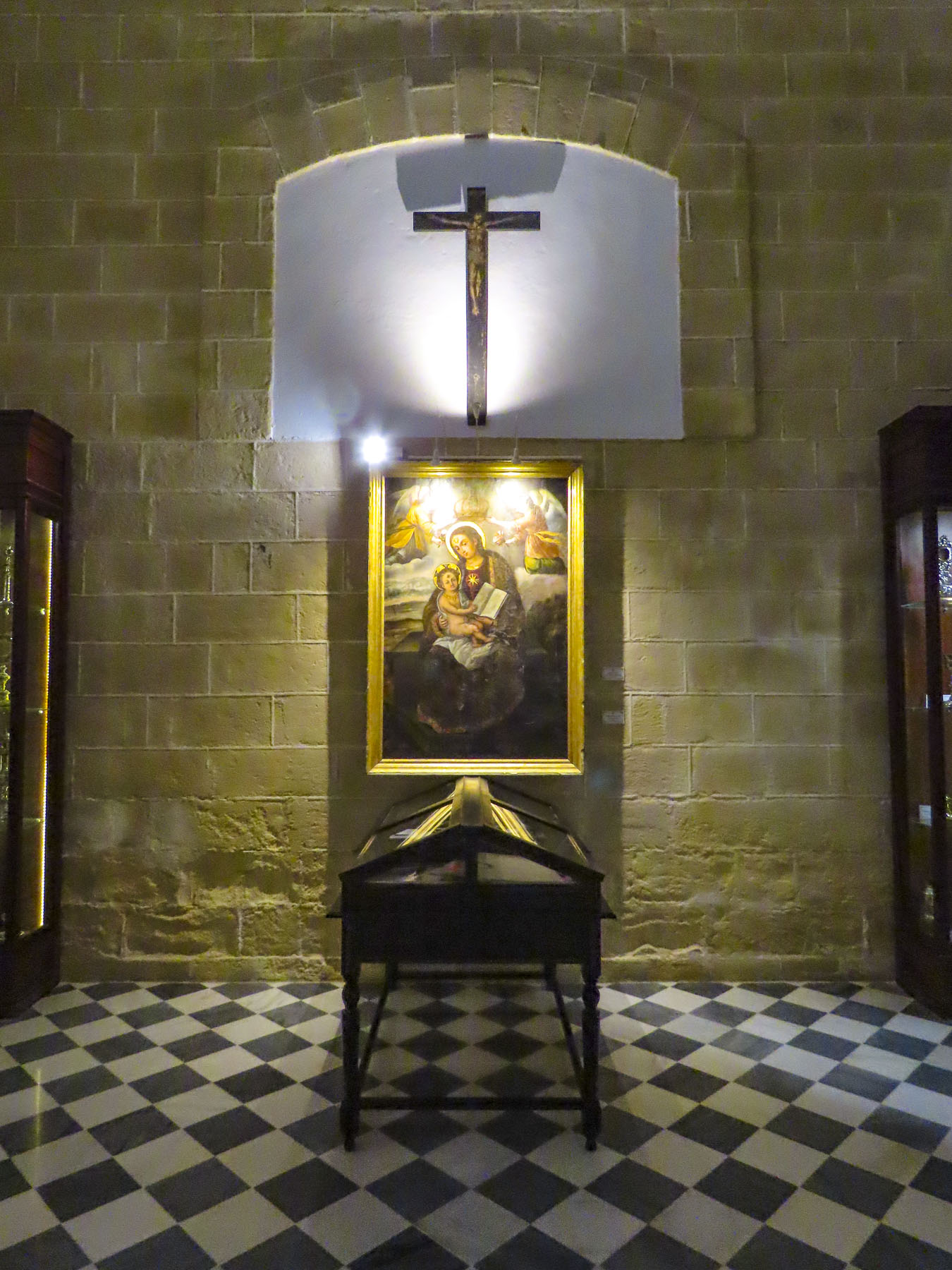
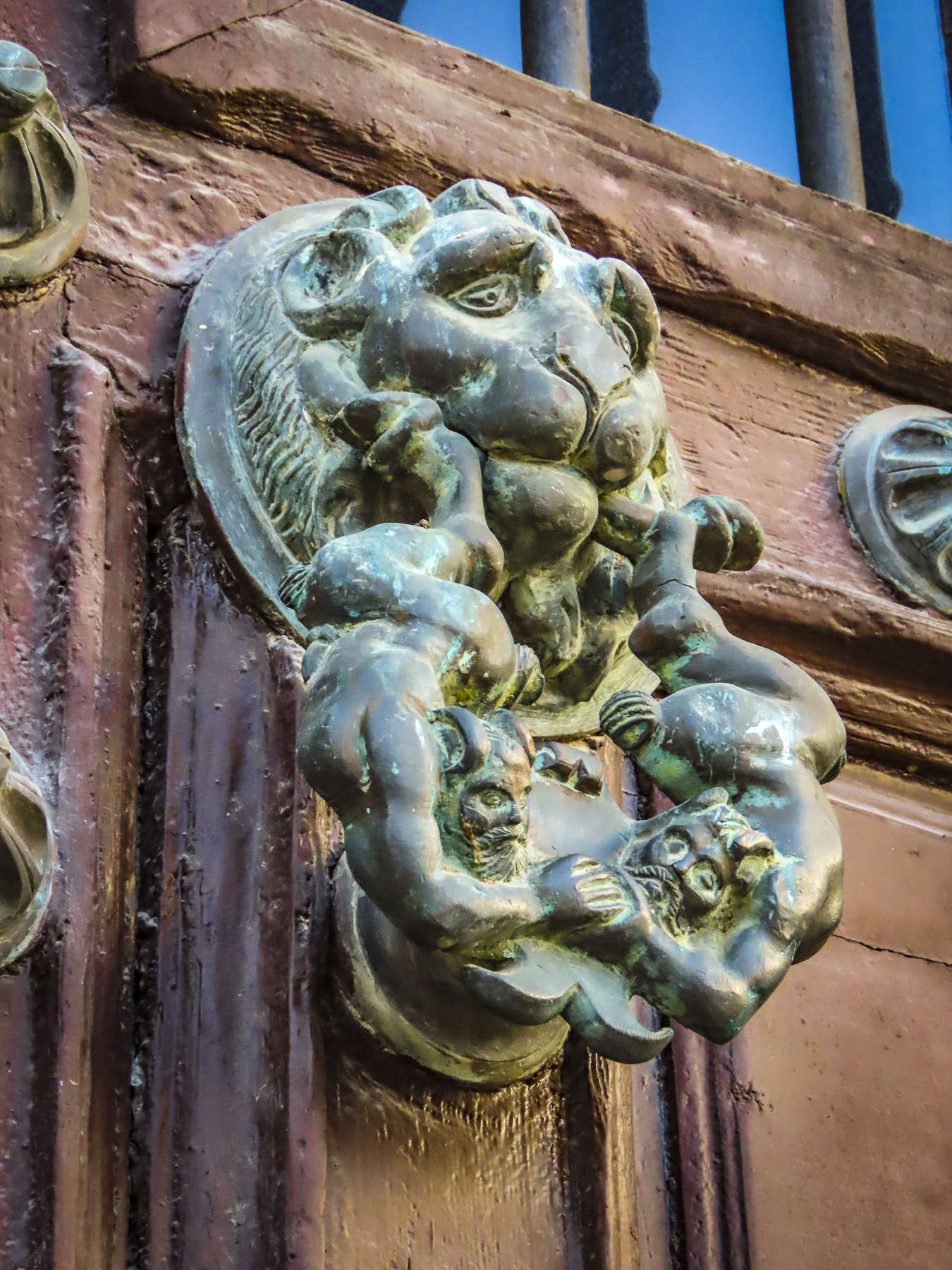
The sacristy was interesting with a display of the church’s treasure. The old-world craftsmanship in the archaic religious objects was amazing. An odd detail was two doorknobs sculpted as dog heads. We asked the attendants if they knew the story behind them, but no. They were a playful insight into the mind of God’s representative in Jerez. In one corner a small alcove revealed a nautilus staircase that spiraled aloft. Disappointingly, it was roped off and Donna was unwilling to create a diversion for me to explore further.


Walking by along the bodegas of Gonzalez Byass, famous for its sherry aging warehouses, we made our way through a lovely, shaded park to Taberna La Sureña, a small tavern across from the Alcazar. “No se permite hablar de política, religión o deportes,” roughly translated as no talk of politics, religion or sports allowed, was wisely written in chalk above the bar. It’s a small space with only three tables inside and three on the sidewalk. We snacked on two local cheeses with sausage, crunchily addictive picos (a mini dry bread stick,) and our first taste of vermut, or vermouth, that wasn’t part of a martini. It was a wonderful, flavorful revelation. Though sherry and vermouth are considered fortified wines because brandy is added after fermentation, vermut additionally gets infused with spices and aromatic herbs. Flavorful and complex, the local vermut became our wine of choice during our trip through Andalucia.

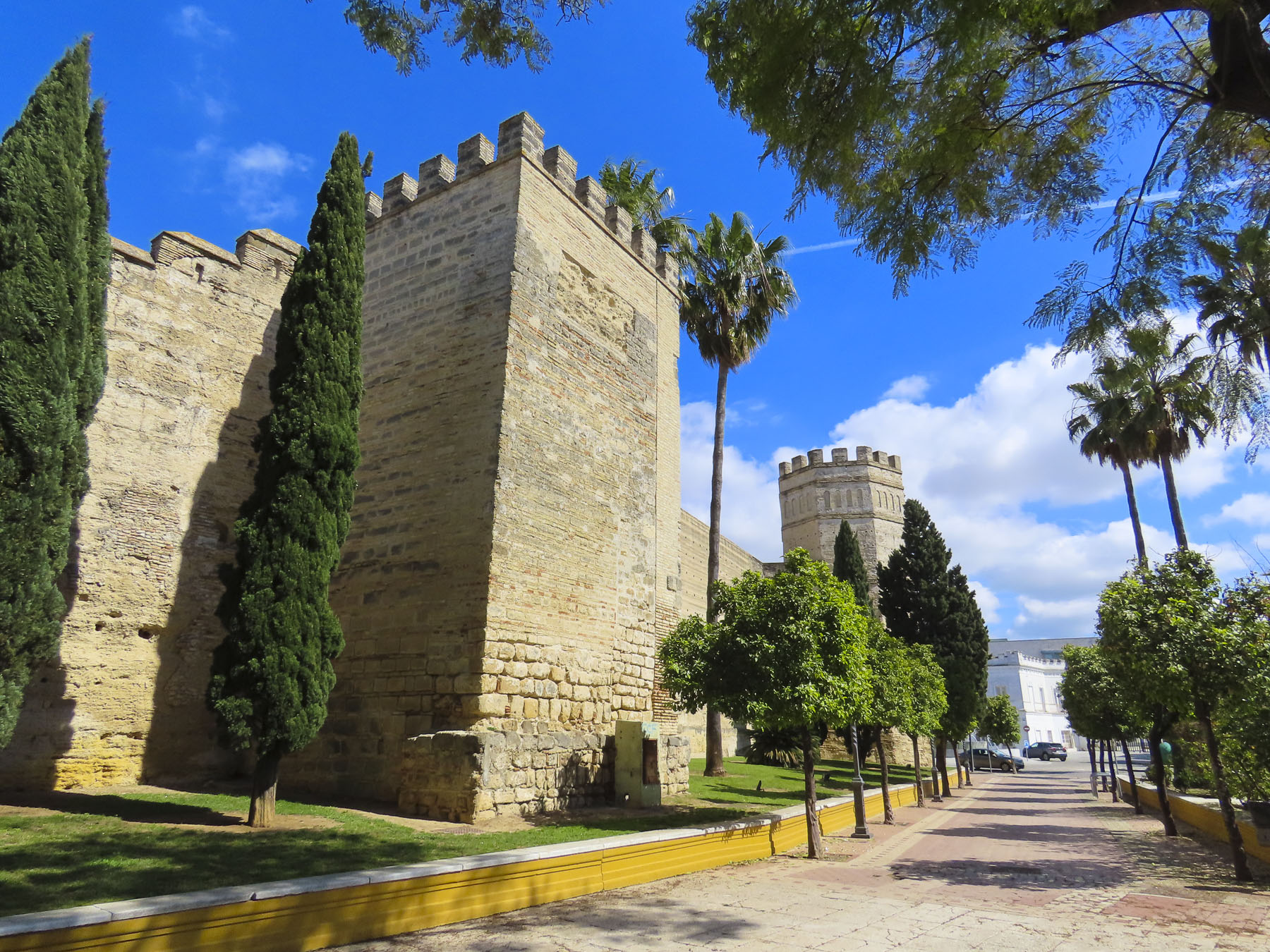
Across the way the Alcazar of Jerez beckoned for exploration. The history of all the towns in Andalucia is complex, with loosely associated tribes, Phoenicians, Romans, Vandals and Visgoths. It wasn’t until the Moorish rule of the region between the 8th and 13th centuries that Jerez underwent a period of great urban development. It was during this time that the city was ringed with a defensive wall and the Alcazar was expanded to become a fortified palace and city-within-a-city, with its own separate economy, supported by a granary, warehouses and olive presses. With the Christian Reconquista in 1264 the Alcazar became the seat of the first Christian mayors of the city and the palace was used by royal visitors. The addition de la frontera (“of the frontier”) to cities’ name reflects that this was a hotly contested region, with an expanding and contracting border for many decades.


The discovery of the Americas in 1492 brought prosperity with the export of wine to Spain’s colonies in the New World. Interestingly a conquistador from Jerez, lvar Núñez Cabeza de Vaca, survived an ill-fated expedition which explored from the gulf coast of Florida to Texas. Surviving capture and enslavement by Indians, he and three compatriots trekked across the wilderness for eight years before being reunited with fellow Spaniards along the Gulf of Baja on the Pacific coast of Mexico. In his book La relacion y comentarios del gouernador Aluar Nuñez Cabeca de Vaca, the documenting of the native American tribes he encountered is so unique that he is regarded as the first ethnologist of the American southwest.


The ancient olive oil press at the Alcazar is huge. Touring the supporting production rooms with smaller presses and underground ceramic storage vats reinforced the importance of olive oil to the local economy centuries ago. A path through the gardens led to the old hammam. Centuries ago, it must have been quite an impressive structure with cool and hot baths, surely a luxury back then. The scale of the hammam is best seen from atop the fortress walls, some of which were constructed using a rammed earth technique.
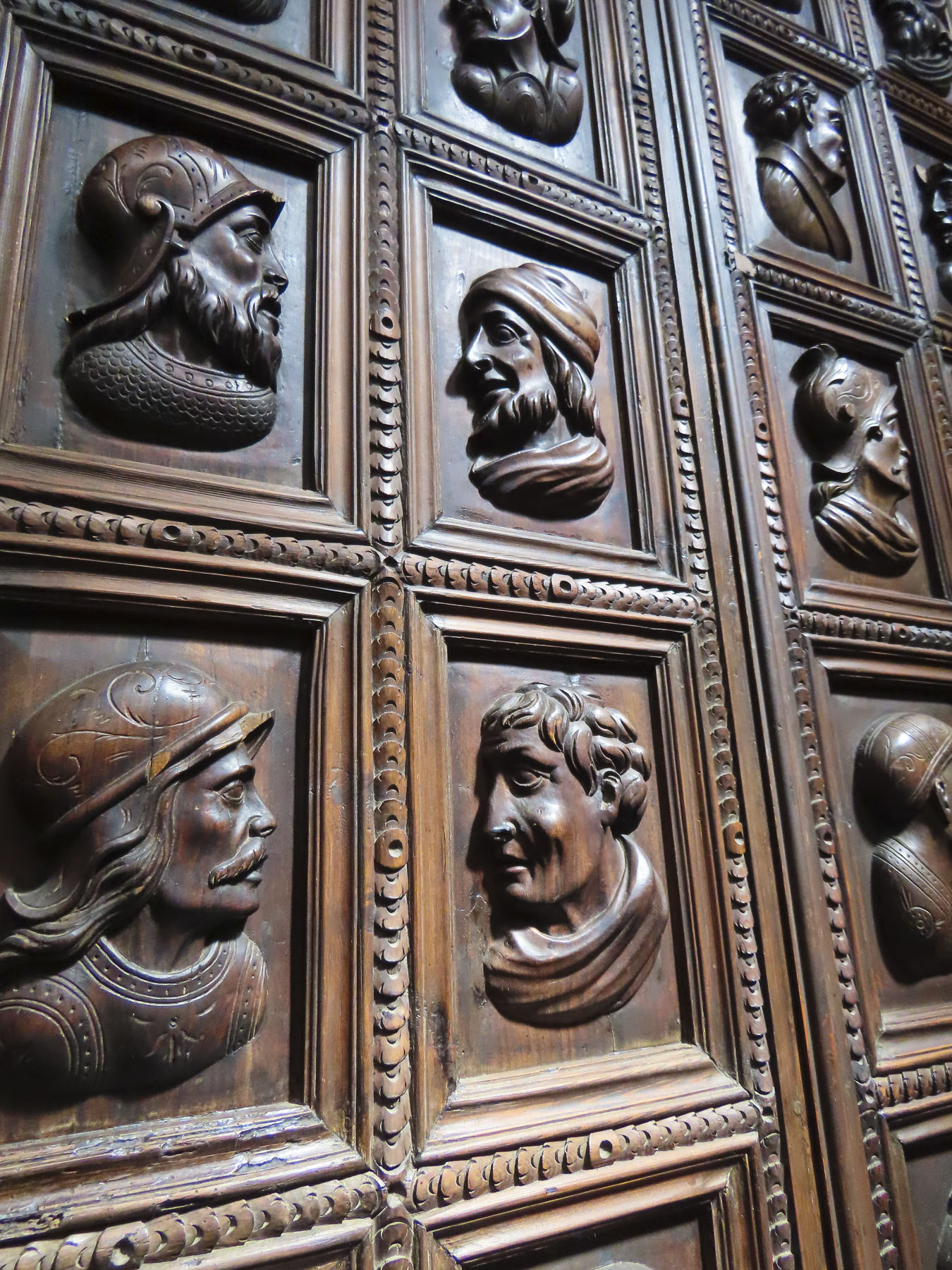


We found the palace, renovated to a utilitarian boredom, the least interesting part of the grounds. Though it did have an intriguing set of wood doors carved with the profiles of famous citizens. And on the highest level there is a nice view of the Cathedral of Jerez across the park.

Later that evening as we strolled across town in search of elusive Alcauciles Fritos (Fried Baby Artichokes) we happened upon one of the cities’ brotherhoods practicing marching with a weighted platform before the big events of Holy Week. With military precision they followed their captain’s instructions and performed a switchback maneuver through restaurant tables that nearly blocked their route.
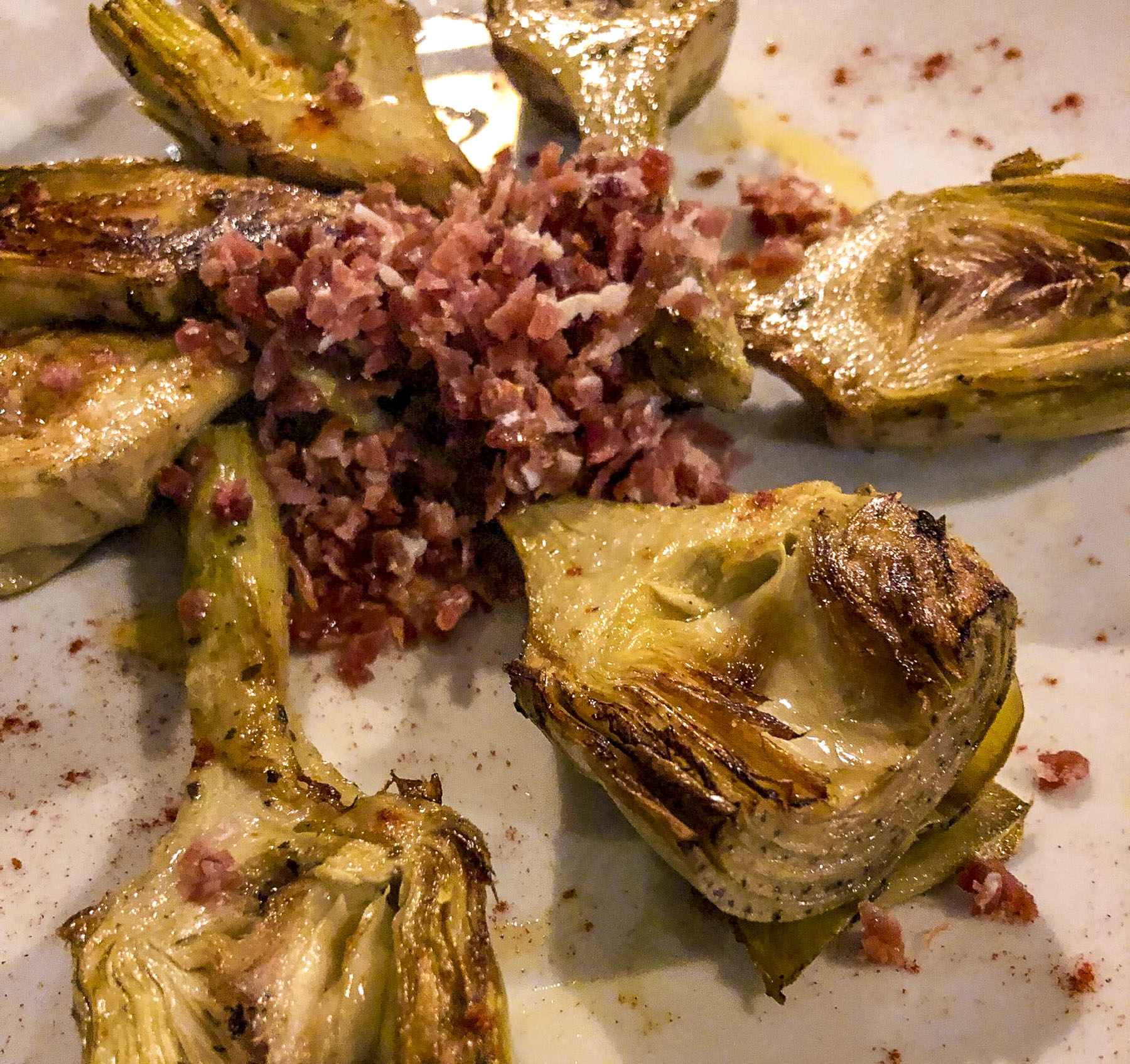
Down a side street near the central market, we found Tabanco La Reja, a small tapas bar far removed from the center of the city, that’s known for its local fare. The young seasonal artichokes are sprinkled with lemon juice and sea salt, then pan fried in oil over high heat until the stalks and hearts are tender, and the juices caramelized to set the flavor. They were sublime. Flamenco music from a tabanco across the calle drifted in, the vermut was good, the evening was perfect.


Strolling back to our hotel, concert music filled the street as we passed the Iglesia Conventual de San Francisco, drawing us inside. A Brotherhood band was playing to a full church. Another pre Semena Santa event that charmed us.
Churches, churches, churches. Spain, Italy, Portugal. Everywhere a church They share that history of religious influence that so dominated the emergence of European kingdoms during the Middle Ages and Renaissance. Princes and paupers donated for that access to the stairway to heaven, enriching the church with grand architecture, priceless art, and jeweled encrusted religious iconography. Which is exactly why we visit so many of them. “Follow the money, it’s where the art is,” is how I like to phrase it.

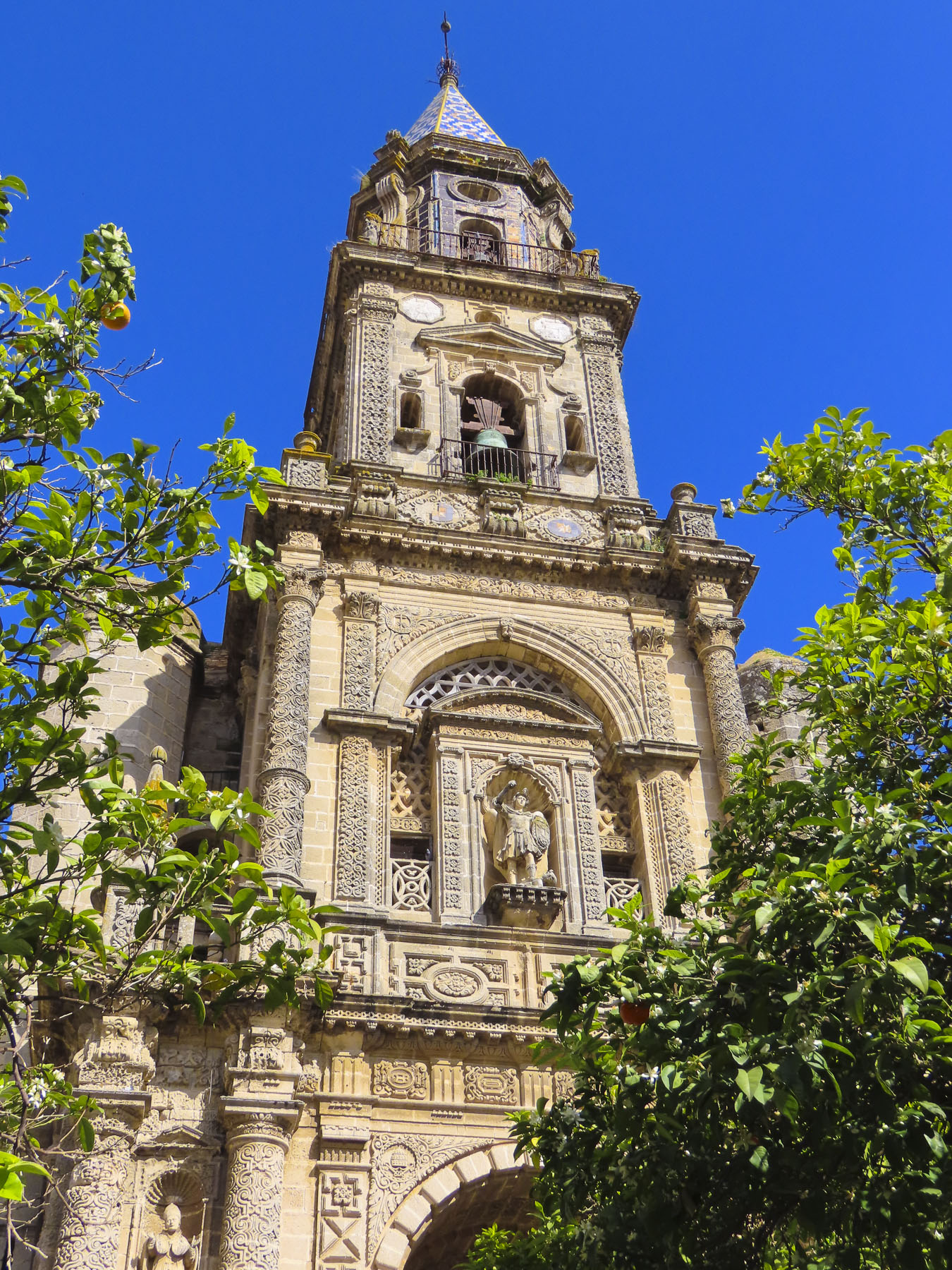
Covered in highly detailed baroque relief carvings, the Iglesia de San Miguel stood magnificently before us. Though much smaller than the Jerez Cathedral, the façade of this church and belltower are stunningly beautiful.
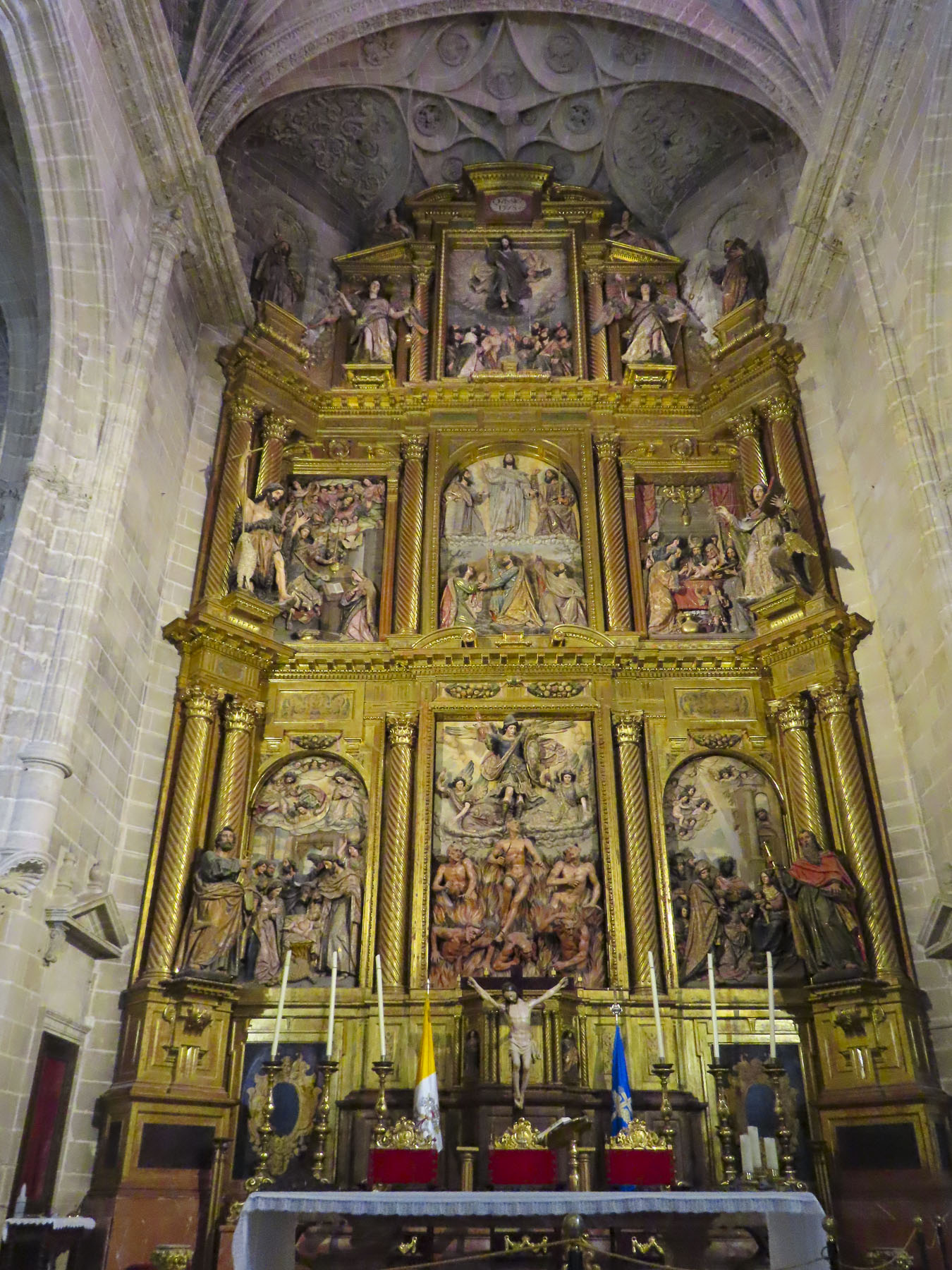
And the inside feels more intimate with a modest gilded altar. But we could only speculate on the hell fire and brimstone sermons that might have been delivered here based on a fiery retablo which dominates the church. Created by master sculptors Martínez Montañés and José de Arce, in the 17th Century, it depicts the Archangel Michael fighting very realistic devils.

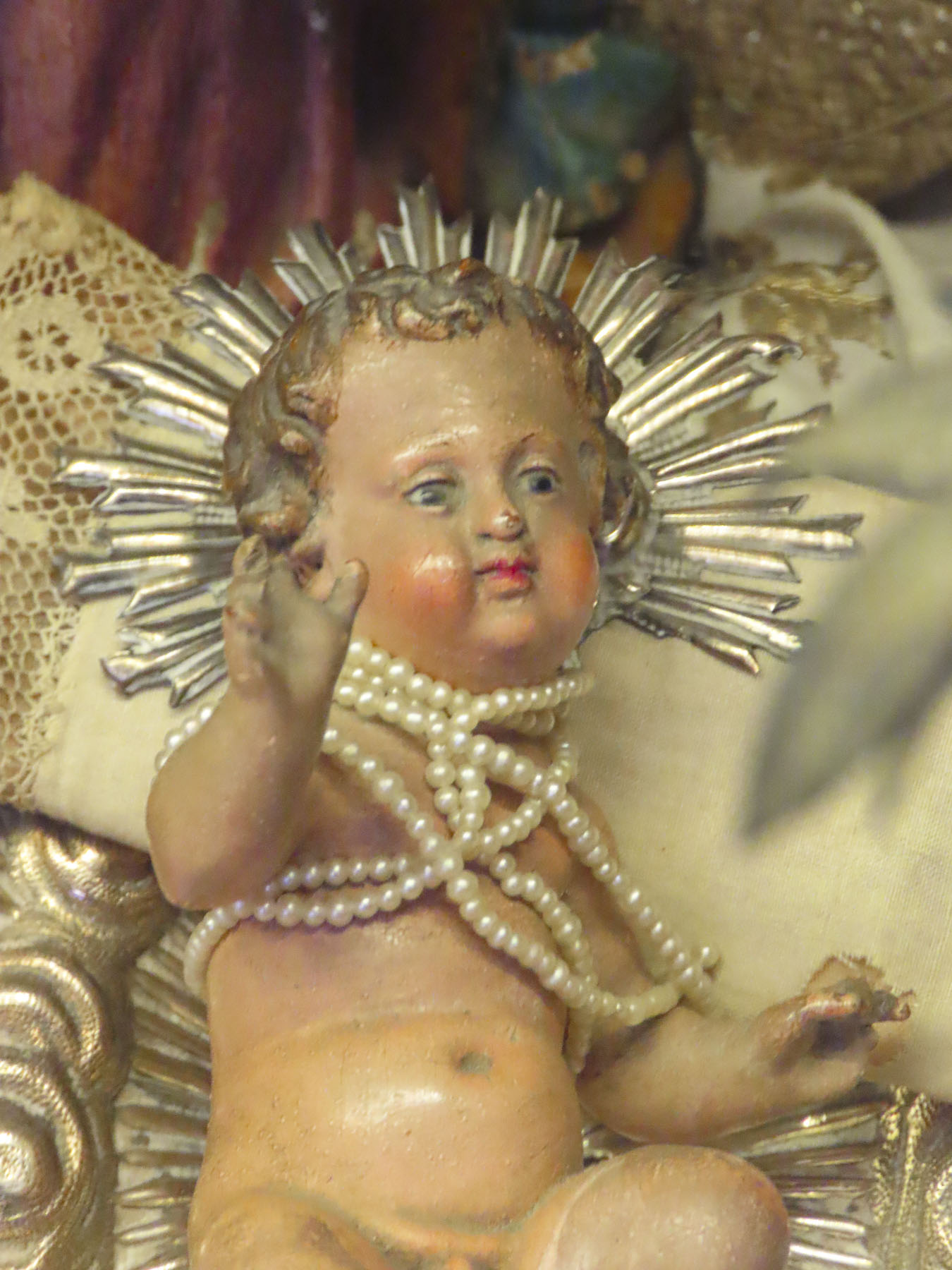


Across from the church the sequestered nuns of the Convento San José Franciscanas Descalzas still operate a dulces turno, a lazy susan type cabinet, in the wall of the convent from which they sell pastries and cookies made from ancient church recipes to support themselves. It’s handy to have paper and pen to write down what you want from a list that hangs on the wall, or to use the translator app on your phone. It’s a wonderful centuries-old tradition that continues in many convents across Spain.

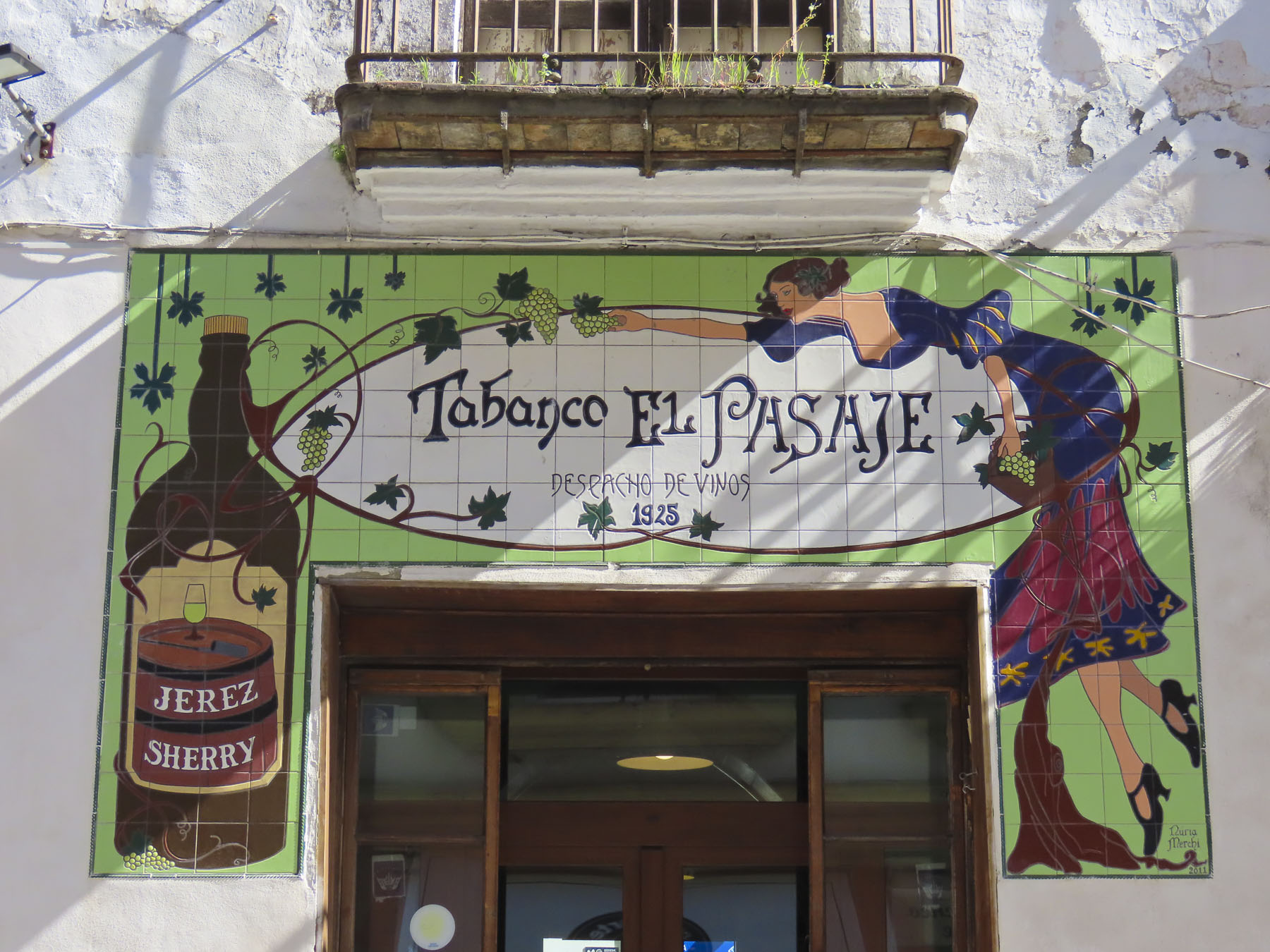

Scattered across Jerez are colorful ceramic advertising murals that usually highlight various sherries. They are all very artistic and seem to be unique to Jerez.
Touring a sherry bodega, a wine cellar, is a must in Jerez and there are several vintners in the city that offer tours, then tastings at their facilities. We chose Bodega Tio Pepe at Gonzalez Byass, basically for its convenience to other historic sites nearby. And we do admire their iconic Tio Pepe logo and advertising.


The bodega was started in 1835 by a young 23-year-old businessman, Manuel María González Ángel, who had no experience creating wine, but he enlisted the help of his beloved Uncle Pepe to show him the ropes. Their first sherry was well received, especially in England. In appreciation for his uncle’s expertise González named their sherry Tio Pepe, “Uncle Pepe.” The iconic logo was created in 1935 , and shows a bottle dressed with a wide-brimmed hat, Andalusian jacket, and Spanish guitar to celebrate the company’s 100th anniversary. It soon became one of the world’s most recognizable advertising logos. The sherry is exported to 115 countries around the world.

The tour through the old bodegas was very interesting, as the guide explained that tiered casks never get completely emptied. The ready-to-drink aged sherry is siphoned from the bottom barrel until it is one-third-full. It is then refilled with less aged sherry from the cask above. The procedure is repeated until new wine is added to the partially emptied top cask. From start to finish the aging of sherry takes four years. In keeping with the times, the tour ended in a very hip tasting area that features various configurations of the Tio Pepe logo.


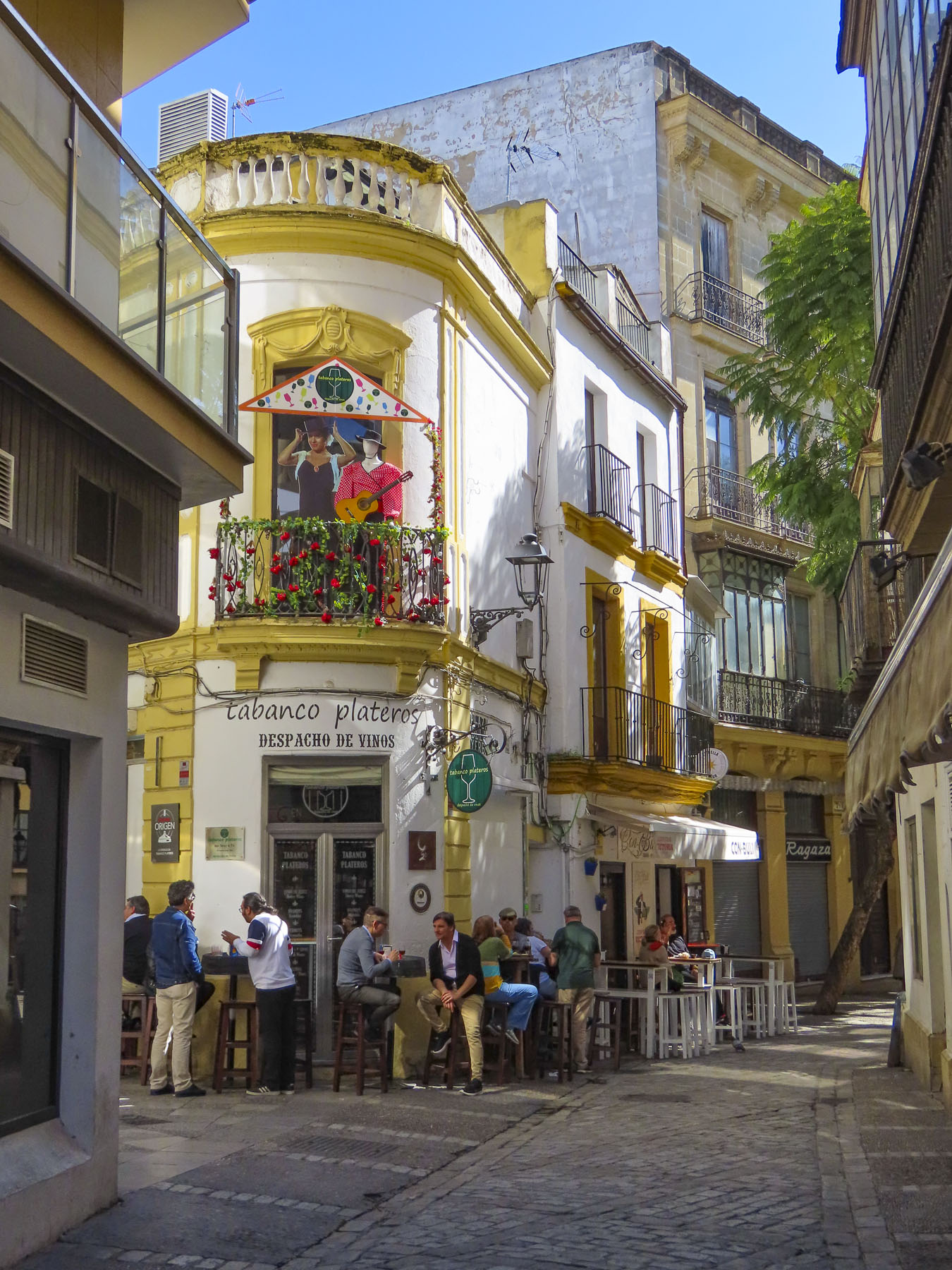
Most worthy restaurants in Jerez don’t open until 8:00PM and then seem to instantly fill up, with patrons spilling onto the street. If you have a particular spot in mind, our suggestion is to arrive when it first opens, as many do not take reservations, or try dining there for lunch. The good news is Jerez takes its cuisine very seriously and there are few places geared toward tourists. The most popular street we found was Calle San Pablo, a narrow alley filled with lively tapas bars. It’s located between the Iglesia de San Miguel and Plaza del Arenal. A walk along Calle Consistorio which starts at the plaza will also lead you past many places that will whet your appetite.


Jerez de la Frontera has a wonderful tranquil ambience. Historic with a cosmopolitan flare, the city is often overlooked by folks visiting Andalucia. This is a blessing for those that enjoy its charms.
“If God had not made Jerez, how imperfect would his work be!” – Benito Perez Galdos.
Till next time, Craig & Donna


This was a lovely, informative read, so thank you! As a Brit who’s been resident in Valencia for the past 8 years and is now looking to relocate to Cádiz province, deciding on a city/town that I’ll be happy in is proving to be something of a challenge. I’m drawn to living right on the coast, which is why I love Cádiz city, but the real likehood of over-tourism there is of concern to me (Valencia is now the new Barcelona, which is why I want to leave). I’ve never been to Jerez but, having read your post, this small-ish city appears to have a combo of all the things I like in a place – history, wine culture, wonderful architecture/townscape, good food and, hopefully, a sophisticated sensibility. I’ll be in Andalucia for 2 weeks next month and have already put Vejer de la Frontera as a place to look at. I’ll now put Jerez on my list. Thank you again!
LikeLike
We are delighted that you enjoyed our story and hope you enjoy Jerez.
LikeLike