

Standing in the center of the Praça do Comércio today, it’s difficult to imagine the catastrophe of the 1755 earthquake and following tsunamis that destroyed eighty-five percent of Lisbon’s buildings. Cathedrals, palaces, and bordellos (it was a seaport) collapsed and burned. An estimated forty thousand people died. Renaissance masterpieces by Correggio, Rubens, Titian, and others were reduced to ash. Detailed accounts of Portugal’s early history and the explorations of its famous navigators were lost when the royal archives were swept away. Nearly 100,000 early manuscripts vanished when the libraries housing them were incinerated in the fire that lasted for five days. From the landing, where today street entertainers perform and folks gather to dance and watch the sunset, barges were loaded with the bodies of the dead, towed out to sea and, against the wishes of the church, torched to prevent the spread of epidemic diseases. This event was so calamitous it derailed Portugal’s plans for further colonial expansion.  The grand plazas and city center we enjoy today are the results of the visionary prime minister, the Marquis of Pombal, and his head architect, Manuel da Maia. They presented to King Joseph I the bold idea to start afresh – to reclaim land along the Tagus River, raze what was left of central Lisbon and replace it with a grid pattern. Wishing order to be returned to his capital, the king endorsed “the construction of big squares, rectilinear, large avenues and widened streets” and with that the new age of city planning began.
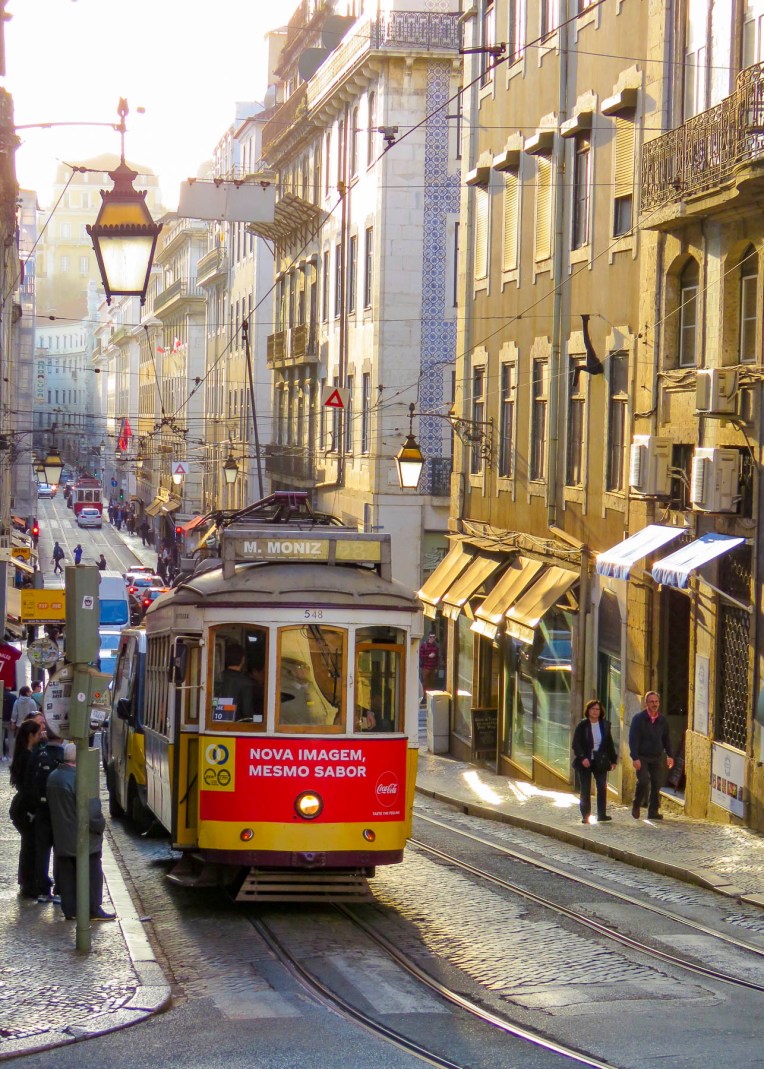
Trams 15 and 12 share the same starting point on Praça da Figueira. Tram 12 will take you on a slightly different route up into Alfama than the famous #28 does. Tram 15 will make its second stop at Praça do Comércio, head to Cais do Sodré then mostly run parallel to the Tagus River all the way out to Belem, before turning around at Algés (Jardim). Sleek modern as well as classic trams run on this route; both are usually packed, depending on the time of day you travel. There is so much to do along this route that it’s easier to walk between points of interest that are close together at the beginning. Save a trip on the tram until later, when you want to head to the LXFactory or Belem Tower, which are much further away.
Restaurants line the impressive Praça do Comércio, offering great vantage points to watch the activity on the plaza unfold throughout the day. A coffee or beer will secure your chair for as long as you wish.


Down at the waterfront folks gather to listen to street musicians, watch performance artists, and just sit to soak up the sun along a beautiful shoreline as boats cruise by. Stone steps lead down to two tall marble pillars at the edge of the Tagus River marking the Cais das Colunas, the “door to Lisbon.” Over the centuries, royal barges with eighty oarsmen would deliver kings and other dignitaries to this portal where they were greeted with ceremonial pomp, before they paraded into Lisbon through the Arco da Rua Augusta. Walking along the river towards Cais do Sodré by the Ministério da Defesa Nacional – Marinha building you can see remnants of a stone wharf in the reflecting pool; landlocked now, it’s all that remains of an extensive old navy quay. There are many places to dine in this area, but we preferred to continue onto Av. 24 de Julho to check out the street art in the area and then stop at The Time Out Market.


This is a tremendous food hall with a great variety of restaurants and communal seating. It’s always busy, loud and fun! Close by, in the evenings, you’ll find the club scene on Pink Street. If you’ve had enough of this area, funicular Bica is only a few blocks away and will whisk you back to the heights of the Baixa neighborhood where you can jump on tram 28. Watch for the gentleman walking his pet Vietnamese pot belly pig along the funicular tracks.


Farther along Av. 24 de Julho, a steep set of twin stairs leads to Jardim 9 de Abril, a small, quiet park, and the Miradouro da Rocha Conde de Óbidos, which overlooks an active freight harbor. It’s a different view of Lisbon that reminded us of the city’s long merchant marine history. Next to the park the Museu Nacional de Arte Antiga exhibits an interesting collection of European furniture, paintings and sculpture in a revamped 17th century palace. A short walk from here you’ll find the most colorfully tiled highway exit and entrance ramp in the city, on Av. Infante Santo. 
 One of the nicest Sundays we enjoyed was spent at the LXFactory. This was formerly a huge industrial complex, located under the Ponte 25 de Abril bridge, that has now been revamped into a hip destination with co-working areas, boutique shops, art galleries and fabulous restaurants. The streets where forklifts once rumbled now host a wildy popular outdoor market on Sundays with all sorts of food, jewelry and clothing stalls to wander through.


There is plenty to entertain yourself with here during the week too. With stops at the whimsical Livraria Ler Devagar bookstore, Landeau Chocolate where they only serve their legendary chocolate cake, and drinks or dinner at Rio Maravilha on the rooftop deck, under the iconic sculpture of the diving lady. The spot is so mesmerizing we returned several times during our time in Lisbon. The stack of colorful shipping containers and double-decker buses you’ll see from here is Village Underground Lisboa, which is also a neat place to check out.
![IMG_3140[31166]](https://i0.wp.com/2suitcasesfor2years.com/wp-content/uploads/2019/06/img_314031166.jpg?w=484&h=363&ssl=1 "IMG_3140[31166]")


![IMG_3170[31169]](https://i0.wp.com/2suitcasesfor2years.com/wp-content/uploads/2019/06/img_317031169.jpg?w=272&h=363&ssl=1 "IMG_3170[31169]")
There is just so much to explore in Belem, between the outdoor sites and the congregation of museums, that it’s impossible to cover it all in one day. All too conveniently, tram 15 stops in front of Pastéis de Belém, the origin of those heavenly sweet custards. The waiting line for these divine mouthfuls of temptation can lead down the street at times. If that’s the case, enter through the exit door on the left, and walk straight back into their 400 seat coffee shop and place your order with a waiter. The only saving grace from this near sinful indulgence is that the rest of your day in Belem requires walking, lots of walking, between sites. Burn those calories!


Museu Nacional dos Coches houses a marvelous display of 16th – 19th century wheeled opulence, that should have inspired the revolutionaries of the day to storm the palace and send the royals into exile. The ceremonial coaches sent to the Vatican are simply over the top. It is amazing to think that in 1905 when this collection was first opened that there were still so many royal coaches around. Were they covered in tarps, pushed to the back of the stable and forgotten, only to be rediscovered later?


The walk along the Tagus River from the Monument to the Discoverers, built in 1960 to commemorate Portugal’s role in the Age of Discovery, to Belem Tower, which was once in the center of the river, is beautiful and long enough to temporarily tire any revolutionaries’ desire for change. The first flight across the South Atlantic in 1922 from Lisbon to Rio de Janerio, which took 62 hours in an amphibious biplane, is also honored with a metallic sculpture that shines brilliantly in the sun. Visit these sites early in the morning or at the end of the day to avoid the crowds.


We waited out a brief passing shower in one of the cafés adjacent to Belem Tower before working our way back into town. Stop at Museu Coleção Berardo (free on Saturdays) which displays an impressive collection of world renowned contemporary and modern artists in permanent and changing exhibitions. The visit to this museum was a refreshing break from the old-world charm of Lisbon. They also have a wonderful café that has a terrace with views overlooking the monuments along the Tagus River. It’s a very nice place to relax that is off the usual tourist path.


Visits to Museu de Marinha, naval history museum, and Jerónimos Monastery capped our day in Belem. It’s all too easy to forget that Portugal was once a sea-going power with fleets of ships and an empire that rivaled England’s and Spain’s. This fascinating nautical museum will drive home the importance of the sea to Portugal’s livelihood, and the contributions Portugal made to the Age of Discovery. A collection of historic royal barges will make you wonder about the court’s indulgence for extravagance. Some are so large they required forty oars to propel them through the water.


Jerónimos Monastery, started in 1501, is a treasure of gothic architecture with every surface painted or carved in ornamentation for the glory of the Holy Trinity. It’s huge and an interesting place to wander about; however, we felt it was not worth the price of its rather steep entry fee of 12.50€ per adult. Next door, just as gothic, interesting and free is the cathedral of the monastery – Santa Maria de Belém.


Within this cathedral the ornate tombs of Vasco da Gama and Manuel I of Portugal can be seen along with those of many other notable Portuguese citizens. Near da Gama’s sarcophagus one of the stone carvers from the 1500s left his whimsical signature carved into a highly decorated column. It’s a small, upside-down face that is hidden amidst all the other decoration. Why? It’s a curiosity that tempts one to create a vibrant backstory for him. Can you find it?
With so much to do and see in Belem you might want to plan multiple visits to this captivating part of Lisbon.
Till next time,
Craig & Donna


 As if guarding the plaza,


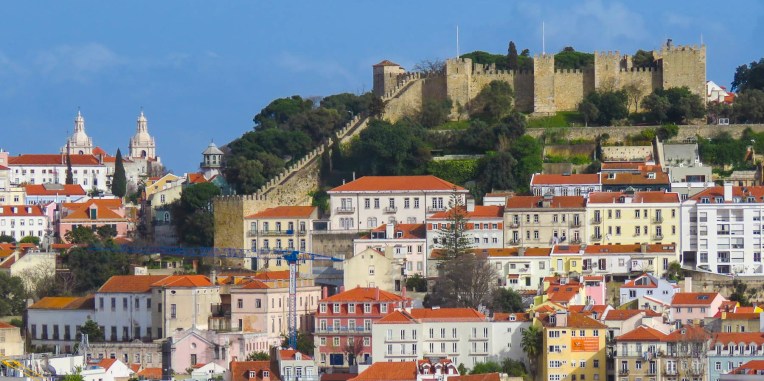 Shady Miradouro de São Pedro de Alcântara overlooks this colorful chaos and has splendid views of Lisbon below. From the miradouro it’s a gentle uphill walk into Bairro Alto. Fortunately, there’s no lack of places to rejuvenate yourself along the way. For lunch we found


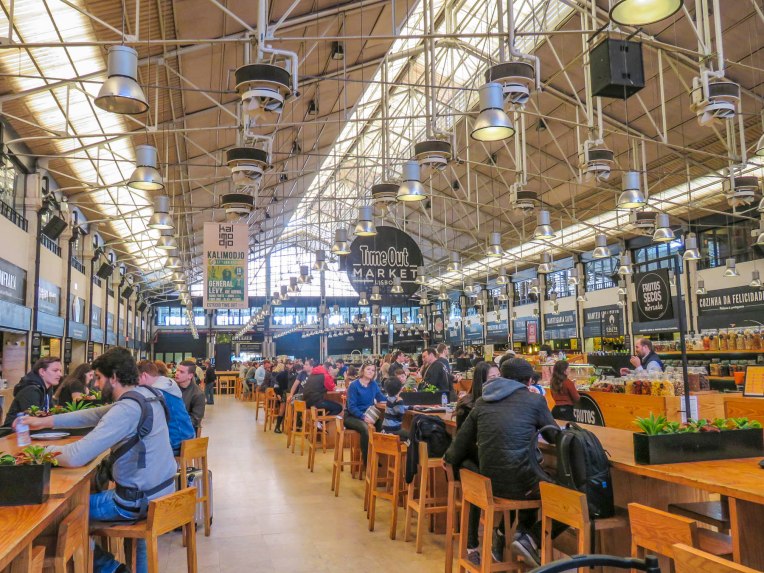 Set in a historic 1890s building in Cais do Sodré, this is a huge, lively food court with numerous restaurant choices that is very popular with Lisboans. Whatever you are craving at the time, you’ll find something satisfying here. Next door, during the week, Mercado da Ribeira operates a central market with fish, meat and produce vendors offering Portugal’s finest products. Brightly painted Pink Street, popular for its club scene, is nearby.


 Heading west, tram 28 weaves through a very narrow section similar to parts of its route in Alfama, before reaching the open area around Assembleia da República. The parliament of Portugal is headquartered in a neoclassical building that was first used as a convent in the sixteenth century. Formal gardens behind the parliament building, hidden by an imposing wall, can be seen from tram 28 or if you stand on your tip-toes and peer over. Never immune from criticism, the politicians must endure a large satirical wall mural, painted on a nearby building, as they head to work each day.



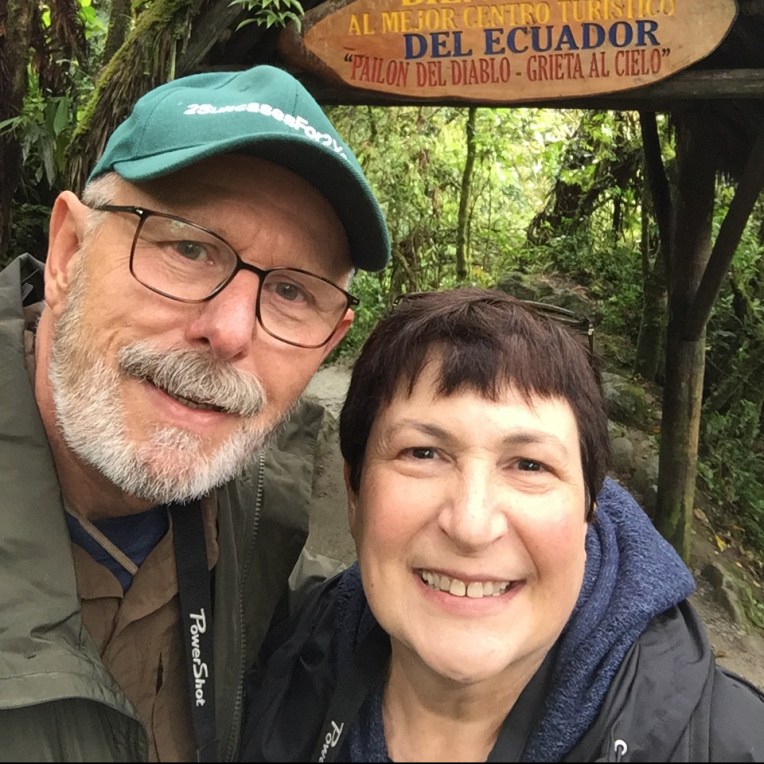 The good news is we haven’t killed each other, though there have been times that I’ve dreamt a pillow was hovering over my head. Just kidding. We have gone from the two of us working six days a week while living in an eight-room house, to being together 24/7 with only a suitcase each. Boy did we downsize! It was challenging: what not to bring, considering all the seasonal changes we have encountered. Don’t laugh, but I have thermals, wool hats and gloves packed, just on the off chance we get snowed in on a mountain pass in the French Alps, this July. Yes, there’s also a flask of medicinal whisky packed in the bags for emergencies. And to my wife’s amusement, a cheap plastic fly swatter. Tragically the backup swatter was left behind in Antigua. In Lisbon I finally caved in and bought a pair of slippers because the floors of the stone buildings just don’t retain any heat in the winter. The comfort of a pair of slippers in the evening, after a long day of walking, can’t be underestimated.
 It’s been a huge but surprisingly easy transition for us. 253 days ago (I thought I was writing this at around day 200, it’s easy to lose track of time on the road) we slammed the door shut on our storage pod, locked it, and popped open a bottle of champagne to celebrate our impending journey. We haven’t looked back. Ecuador, Guatemala, Cuba and now Portugal; I can’t imagine undertaking this adventure with anyone else.


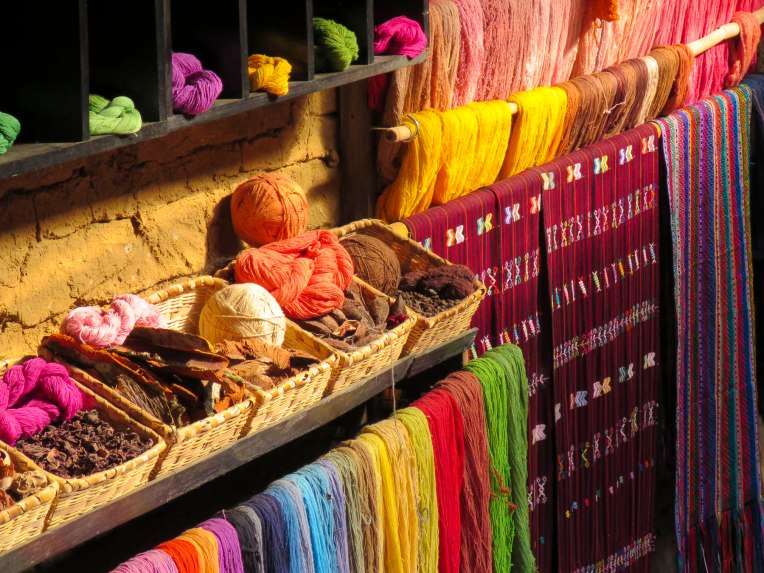 This visit also gave us an opportunity to jettison the wonderful textiles and ceramics we had purchased along the way for a home we don’t have yet. Imagine this scene from our last stop in San Pedro – the backseat of a tuk-tuk overflowing with Donna and all our suitcases, while I’m sharing the driver’s seat with the driver, one cheek on, one cheek off and a foot dangling outside the cab as we speedily snaked through the steep narrow alleys of the village.


![IMG_2836[12654]](https://i0.wp.com/2suitcasesfor2years.com/wp-content/uploads/2018/11/img_283612654.jpg?w=279&h=209&ssl=1 "IMG_2836[12654]")
![IMG_2841[12658]](https://i0.wp.com/2suitcasesfor2years.com/wp-content/uploads/2018/11/img_284112658.jpg?w=279&h=209&ssl=1 "IMG_2841[12658]")
![IMG_6276[12629]](https://i0.wp.com/2suitcasesfor2years.com/wp-content/uploads/2018/11/img_627612629.jpg?w=477&h=636&ssl=1 "IMG_6276[12629]")


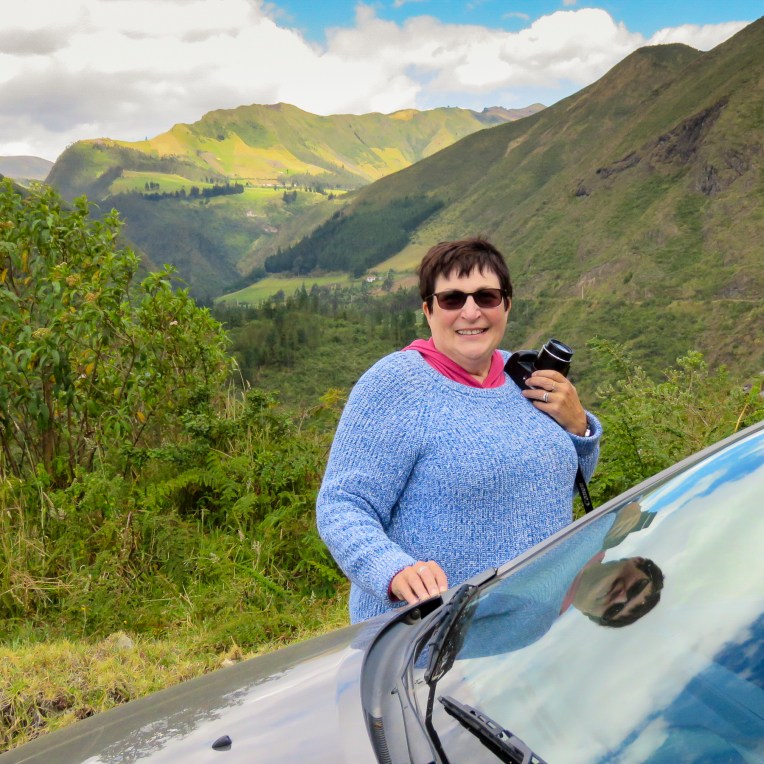

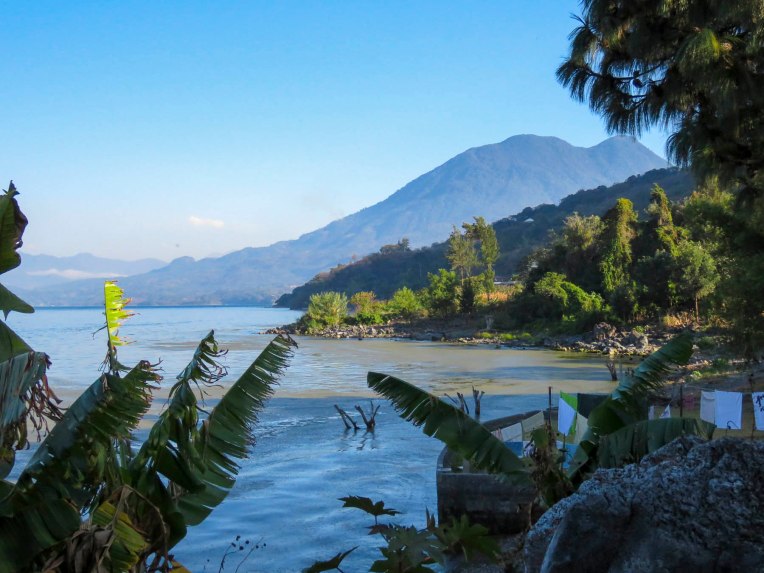


 The scenery along the drive to Lake Atitlan, along roads that continued to climb higher, was spectacular with verdant greenery and distant volcanos appearing then disappearing again with each twist of the serpentine route.
 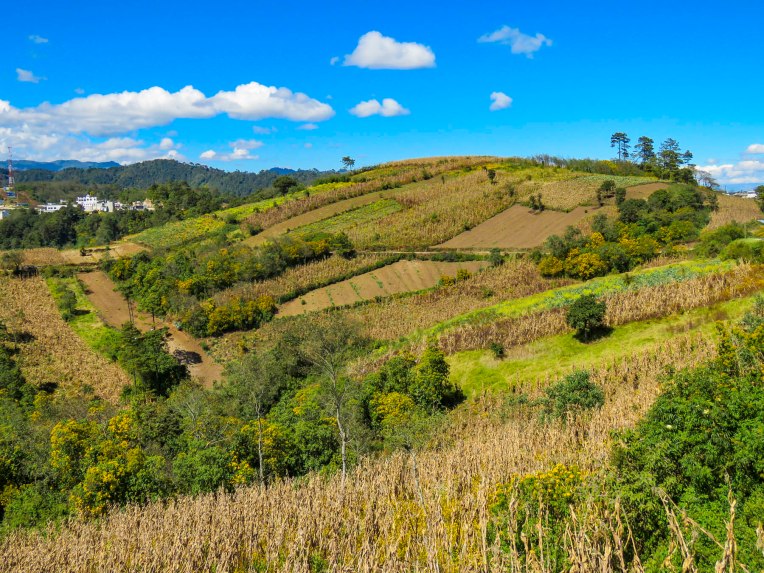 Arriving in San Pedro we thought we were on a movie set for a sequel to Mad Max or Water World. Down by the Panajachel dock dreadlocked travelers, wearing eccentric attire, filled the streets along the lakeshore. Feeling as if we had time traveled, we were relieved to find our Airbnb far out of town on a dead-end road that ran along the lake. According to Google maps the road was unnamed. Our host said “tell the tuktuk drivers you are staying on Calle Finca,” which referred to a distant and abandoned coffee farm, about an hour’s walk from the trail head at the end of the road.
 Our new home for our last week in Guatemala had a wonderful porch with great view of Lake Atitlan and tranquility. A relaxing change of pace was called for after the Christmas and New Year’s Day celebrations in Antigua. Bird calls or the soft Mayan chatter of coffee pickers, harvesting ripe beans right outside our door, were the only sounds that filled the air. Fortunately, we were much closer to town than the abandoned coffee finca and were able to walk to the daily outdoor market, along streets where we could see women washing clothing in the distant lake, and make-shift scales were set up to buy coffee beans hauled down from the slopes of Volcan San Pedro.


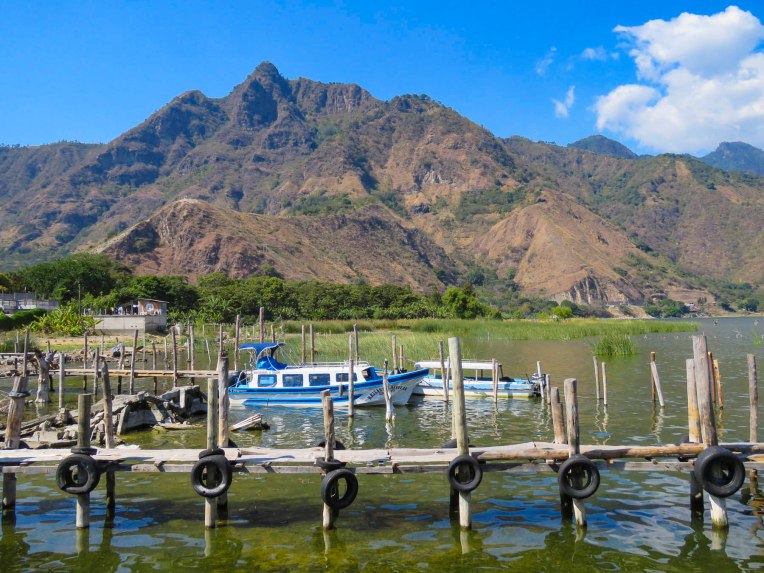 A short ferry ride took us to San Juan La Laguna, a weavers and artists village that visually celebrates its Mayan heritage with colorful street murals. The steep walk uphill from the boat dock to the center of town was lined with art galleries.


 It’s a long ferry ride to Santiago de Atitlan and even longer when the wind churns up whitecaps on the water, and the small boat we were in rocked side-to-side for the duration of the crossing. We silently said our prayers when the local folks stated to reach for the life preservers. Fortunately, we were never too far from shore and know how to swim. It is a breathtaking view coming into the boat dock at Santiago with its namesake volcano towering over the town and Volcan San Pedro just an avocado toss away, across the water.


 Enjoying the stars from our porch we were surprised when fireworks celebrating Epiphany lit up the night sky above villages across the lake, their colorful bursts reflected brilliantly on the water. With magical moments like this, still fresh in our memories, Guatemala tugged at our hearts as we packed for our next adventure.

 Paradise is such a subjective feeling and if you don’t require a turquoise blue sea and white sand beaches, Antigua, Guatemala just might fit the bill. This charming colonial city with its ever spring-like weather was perfect for our two-month stay.
  We arrived in Antigua at the end of October so that we could attend the Sumpango Giant Kite Festival held every year on November 1st, All Saints Day. That spectacularly colorful event and a religious procession that burst forward from La Merced Church on October 28th would prove to be representative of the people and life in Guatemala we experienced.


 On Mondays, Thursdays and Saturdays the market tripled in size when the outdoor portion was open, and farmers brought in truckloads of fruits and vegetables from the surrounding villages. There we experienced one of the best markets going, set in a bustling, dusty lot with Volcans Agua, Fuego and Acatenango touching the sky in the background. Most produce was sold in quantities of 5 quetzals (60 cents) so bring lots of small bills, as vendors didn’t usually have change for anything larger than 10Q. The flavor of the locally grown vegetables was amazing. Being backyard gardeners ourselves, we were duly impressed. Twenty quetzals would buy enough vegetables for a week.


 Shopping at the local supermarket, La Bodegona, was a wonderfully hectic experience. At times it could feel like you were shopping from a conga line, weaving up and down aisles, afraid to leave the line for fear of not being able to enter it again and being stuck in dairy for eternity. Numerous store employees lined the aisles offering samples of cookies, deli meats, drinks and other temptations to keep the energy level of the beast alive. It was a hoot! We had to psych ourselves up, like players before the big game, to shop there because it was so hectic and required a certain mental and physical stamina. I will confess though to dancing in the checkout line to blaring Latino Christmas music – the mood was contagious.
  On the same block D&C Cremas, a Walmart affiliate, offered a more sedate shopping experience. Both supermarkets had excellent poultry, which was more tender and tastier than back in Pennsylvania. We were also fortunate that a pork butcher opened a new shop a half block away and offered fresh meat and sausage daily. We enjoyed all the different varieties of Guatemalan sausage he made and found them to be very flavorful and lean, with almost no fat.


 The next day we a followed a serpentine mountain road, second gear all the way, up to Santo Domingo del Cerro, a beautiful sculpture and art park with museums, walking trails and a restaurant that overlooks Antigua. Plan on spending at least a half day there, because it is a beautiful setting for a restful day or afternoon. Casa Santo Domingo offers a free hourly shuttle to the park from the hotel in town.


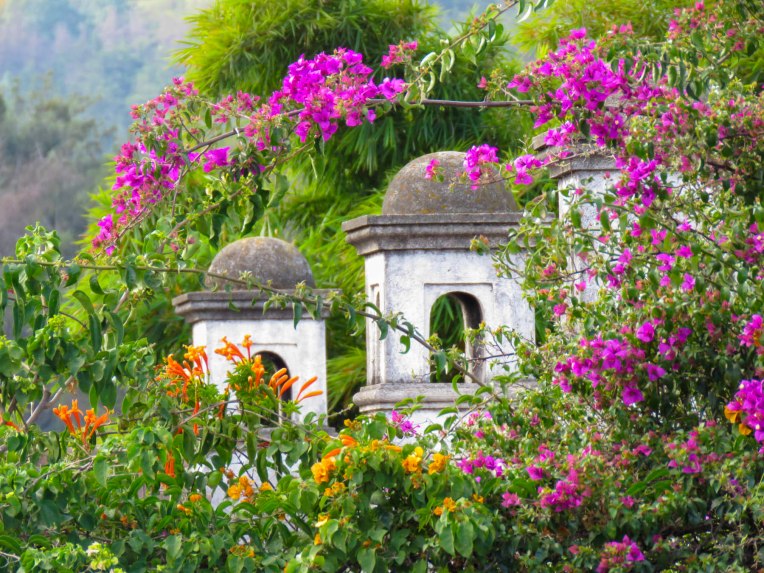 Antigua filled early with people in all their finery on New Year’s. Vendors selling textiles the day before were now offering party hats and all sort of 2019 memorabilia. Concerts were held in Plaza Mayor and under El Arco. Firework launchers were being setup amidst the crowds in the streets. Families were picnicking in the park and folks were staking their spots early to watch the fireworks later. At midnight a loud and colorful display filled the night sky. We could hear the roar of an appreciative crowd from our rooftop. We heard random explosions throughout the night to sunrise. Guatemalans love their fireworks!
 2 Suitcases for 2 years