

That was the question put forth on a Reddit travel thread. A rather jaded inquiry, we thought, that questioned the city’s continued popularity with tourists, who in their opinion have ripped the local fabric of life from the city’s historic center and Disneyfied it. We don’t share that opinion, and found it to be an intriguing destination for a four-night stay before continuing on to Croatia, but we can understand why it might be perceived that way, especially if you are visiting the city during the high season. Prague has been on our radar since the fall of the Berlin Wall in 1989. Unexpectedly, it took us nearly 40 years to make visiting this enchanting city a reality, but like a good wine it has aged well. And while some folks lament that it’s not as inexpensive as it used to be, it’s still one of the most budget-friendly cities in Europe.
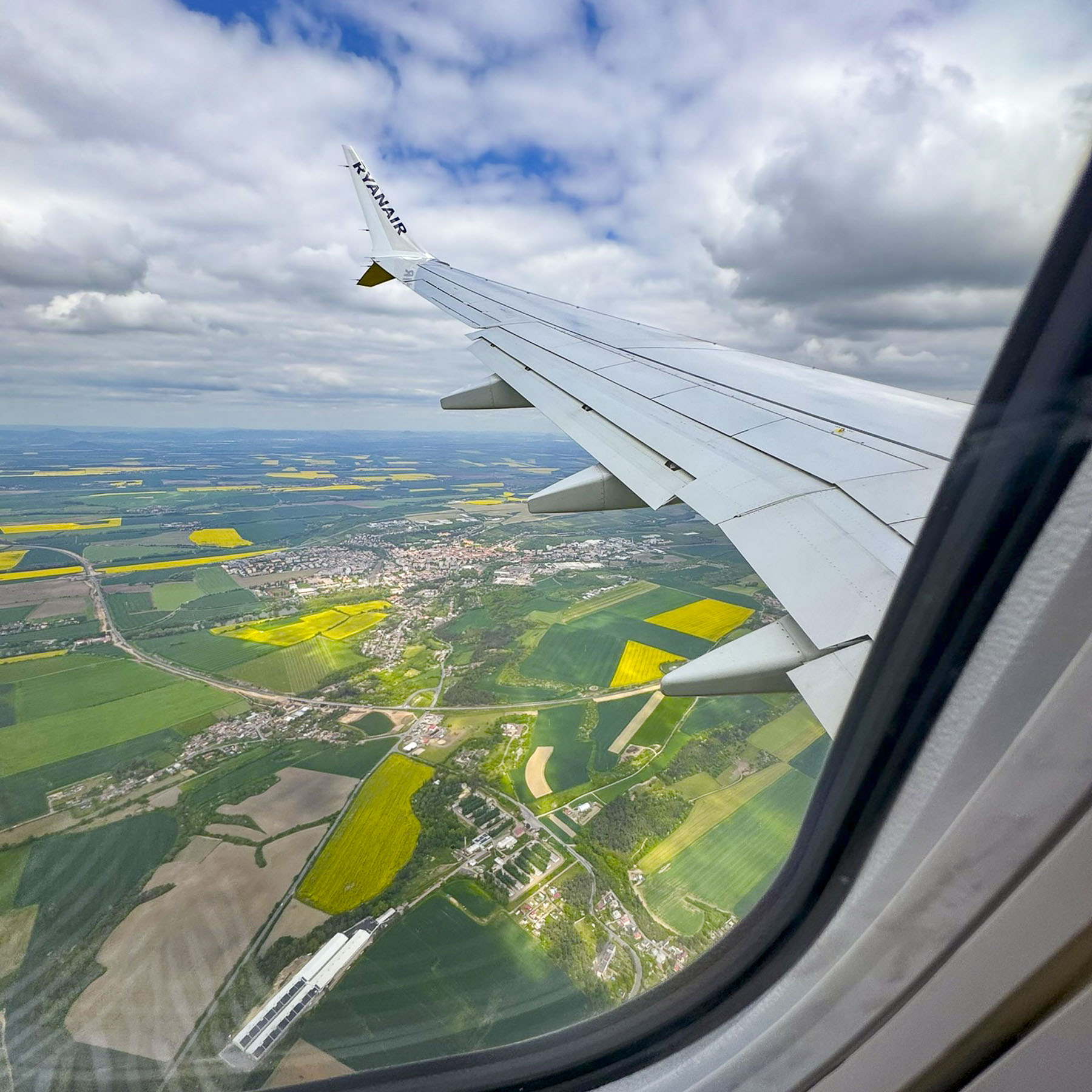
As we descended through the clouds on the approach, Prague revealed thousands of acres of brilliantly yellow rapeseed blossoms carpeting the landscape that was slowly greening. The scene literally brightened our day after a cloudy grey connecting flight from Paris during the first week of April. It was a quick 30 minute Bolt drive from the Václav Havel Airport through Prague’s outer suburbs and parks before catching a glimpse of the Petrin Tower,a 59m (194ft) tall building constructed in 1891 for Prague’s Jubilee Exhibition, that loosely follows the design of the Eiffel Tower. A climb of two-hundred-ninety-nine steps to its to apex offers views out over Prague, and on a clear day it’s said “you can see nearly all of Bohemia.”

A short time later the silhouette of Starý královský Palác, the old Prague Castle, and the spire of St. Vitus Cathedral, which centers the bastion, came into view. The cathedral’s completion in the early 1300s established the city’s iconic skyline which hasn’t changed much over the centuries.

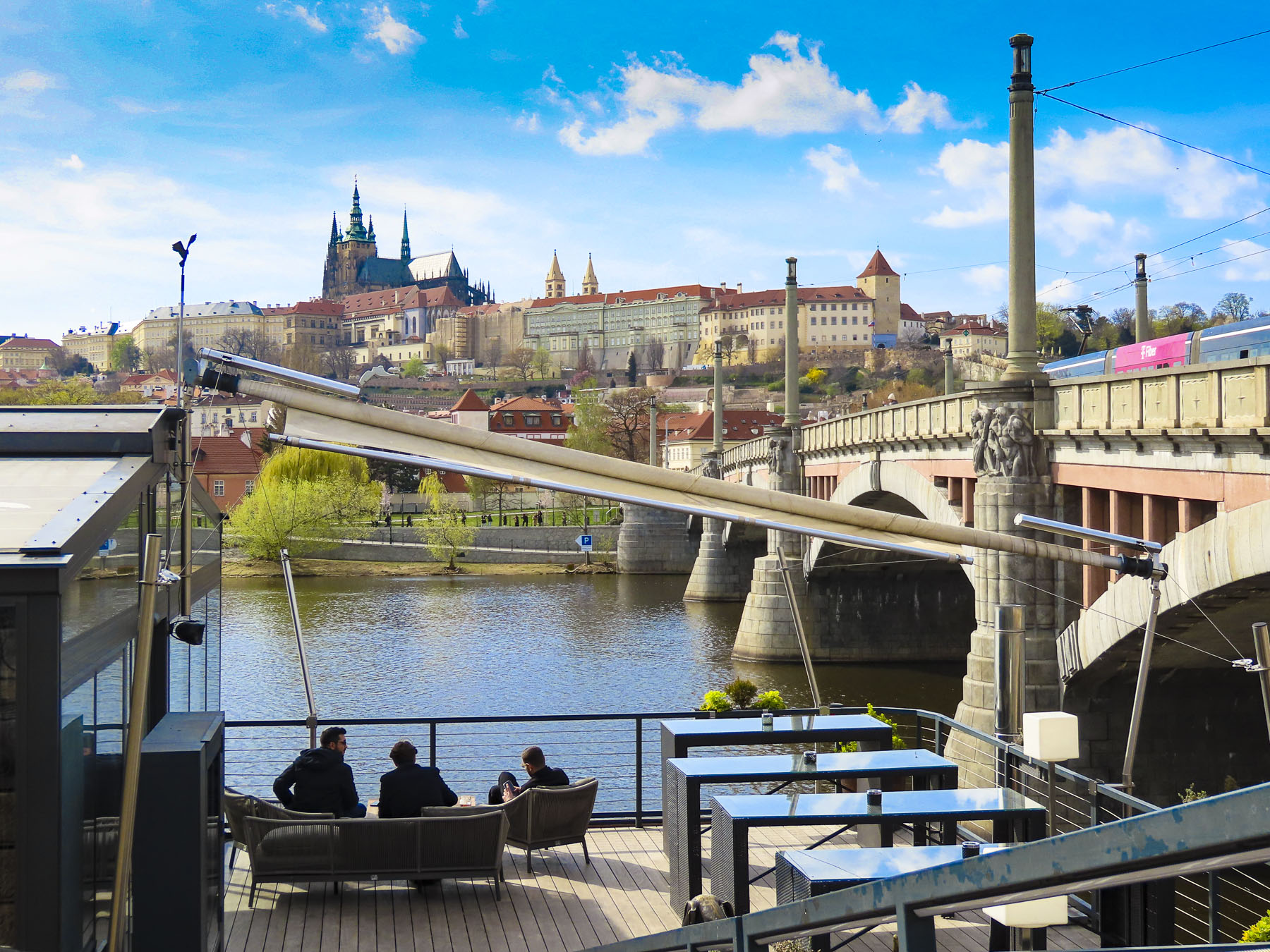
A long descent towards the Vltava River provided views of some of the eighteen bridges that link the historic Malá Strana, Lesser Town, situated on the western riverbank below Prague Castle to Staré Město, the Old Town, and New Town on the eastern bank, as well as our first glimpse of the famous Charles Bridge, which has survived numerous floods and wars for nearly 700 years.

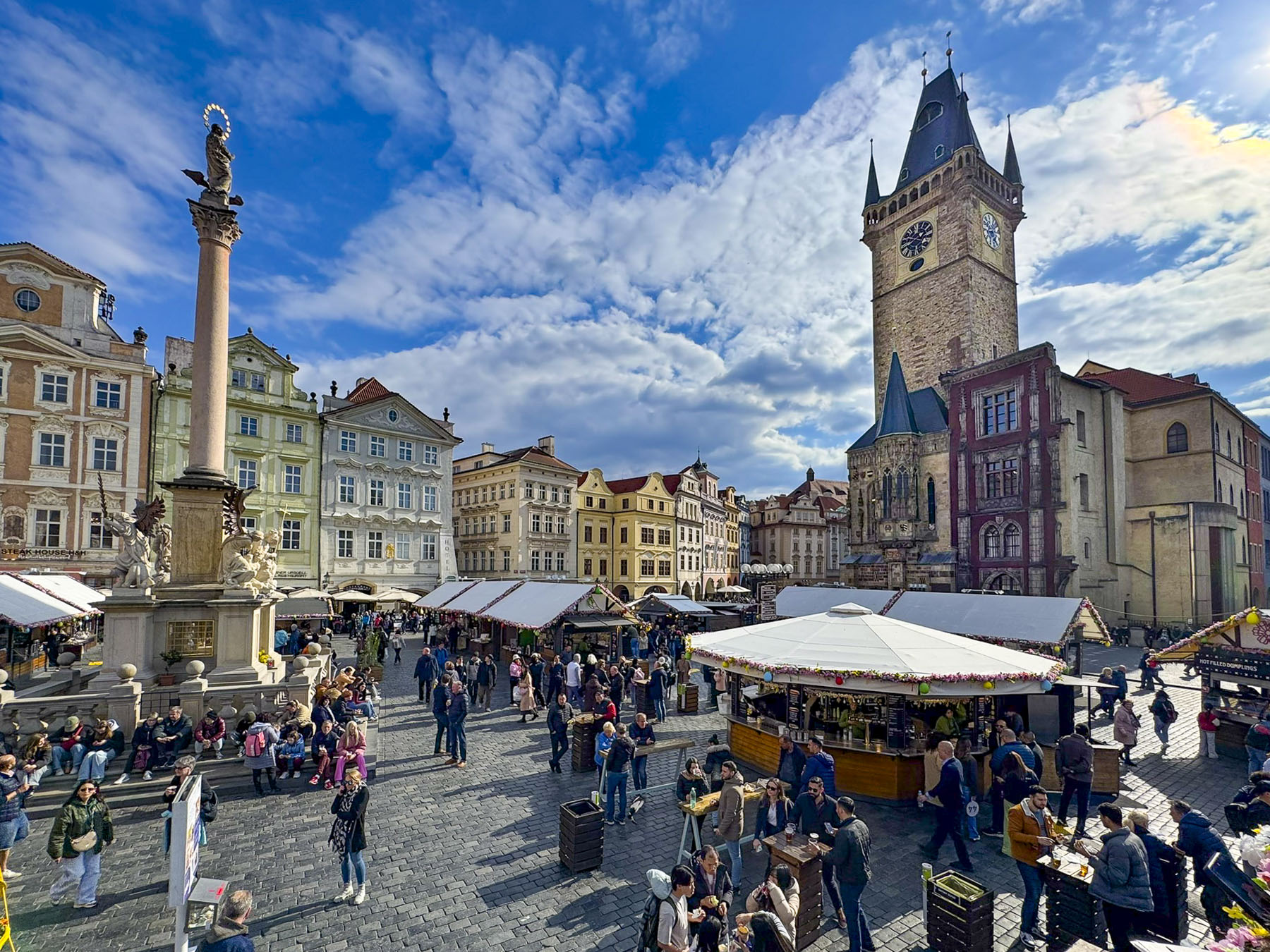

Many of the narrow streets in the historic quarter of the city are pedestrian only, but our hotel the Luxusní hotel Černý slon, the Black Elephant Hotel, was right on the edge of the restricted vehicle zone and our Bolt driver was able to navigate it easily. We passed Staroměstské Náměstí, the Old Town Square, which was already festooned with Easter decorations and food stalls, and we arrived at the corner of a cobbled alley across from the 14th century Chrám Matky Boží před Týnem, Church of Our Lady before Týn, and its twin 80m (262ft) tall bell towers which dominate the square.
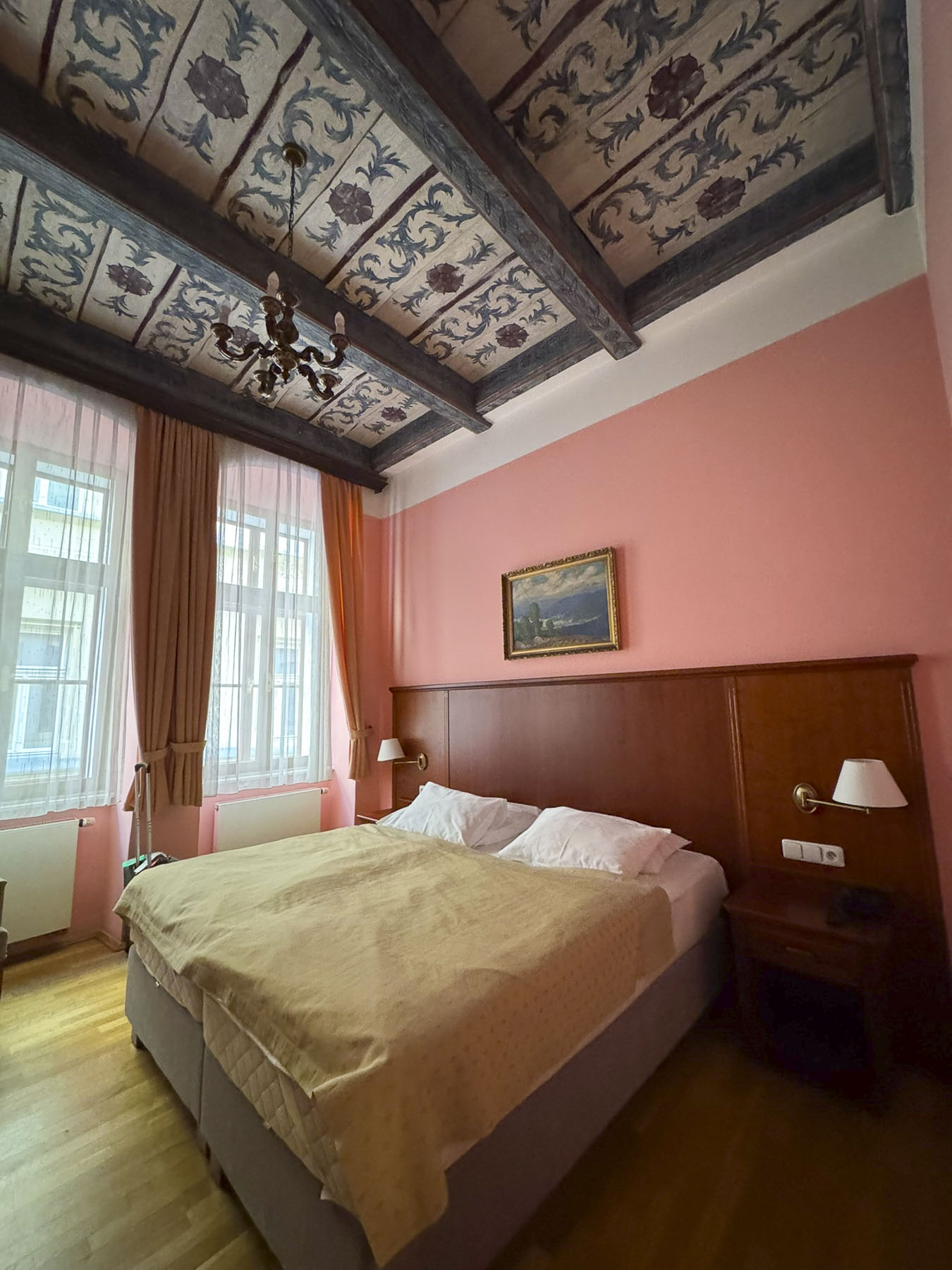

This charming hotel wonderfully retains its 13th century heritage, with a small and intimate polished wood bar, and a dining room with a Gothic vaulted ceiling, located across from the reception desk. Many of the rooms have painted wood ceilings, while the attic rooms incorporate the old wooden roof trusses into their atmospheric design. How it received its name remains an enigma.
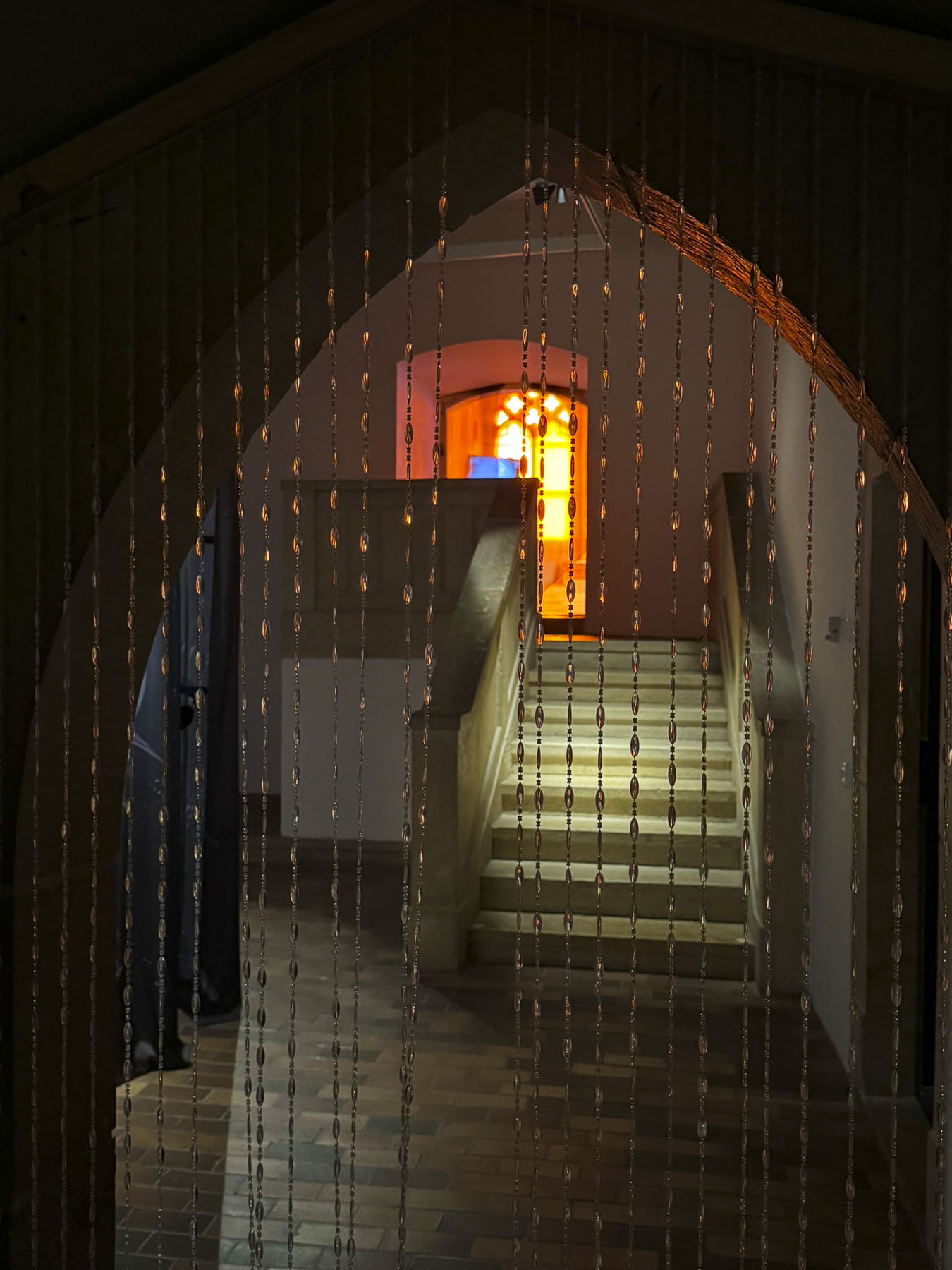


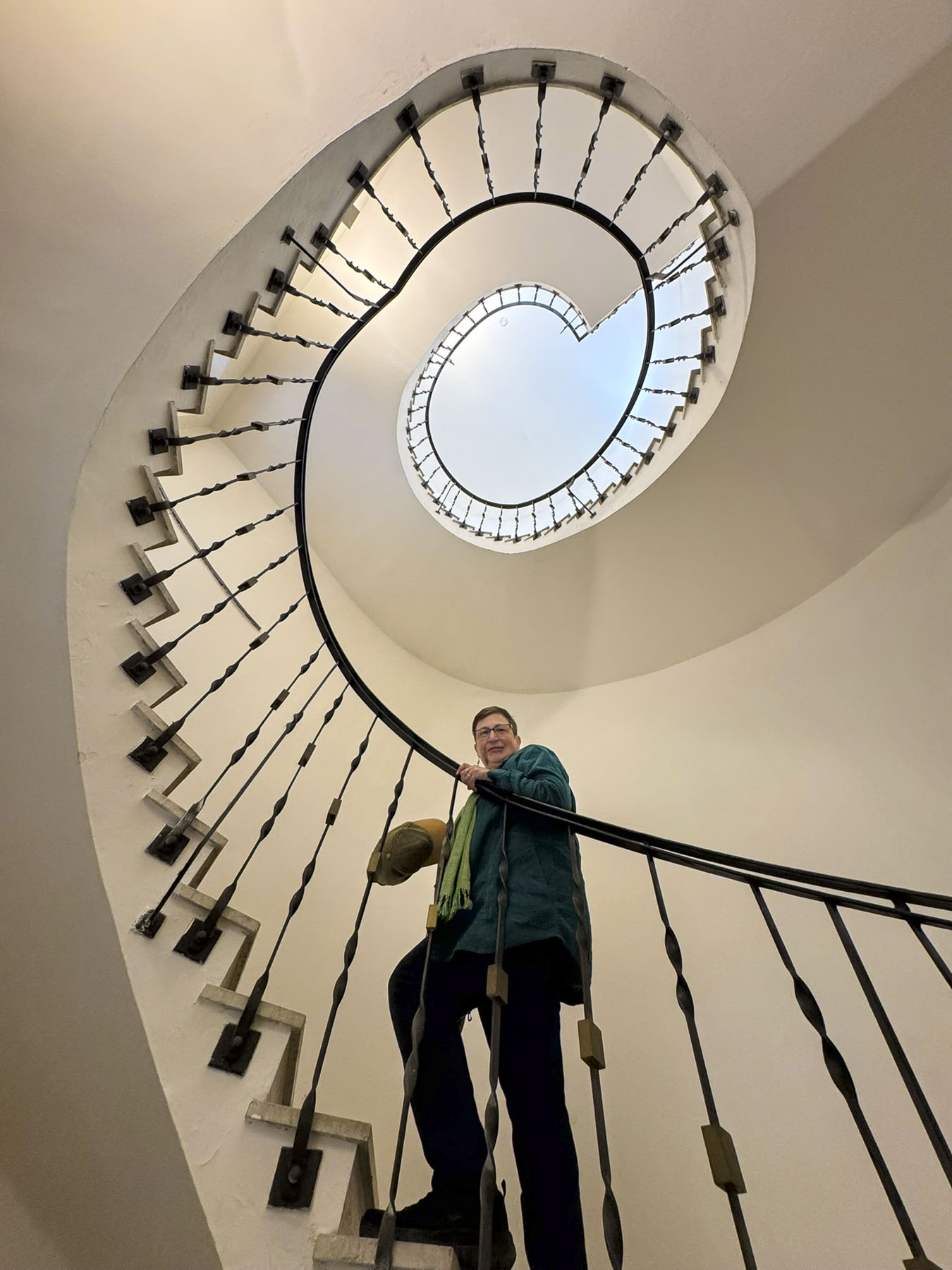
Legend believes Holy Roman Emperor Charles IV was born in the neighboring house in 1316. An intricately designed arched doorway to a side apse of the church faced the hotel on the narrow alley that led to town square. The covered walkway across the ally once connected the church to its cloister, now the Stone Bell House, a contemporary art exhibition space.
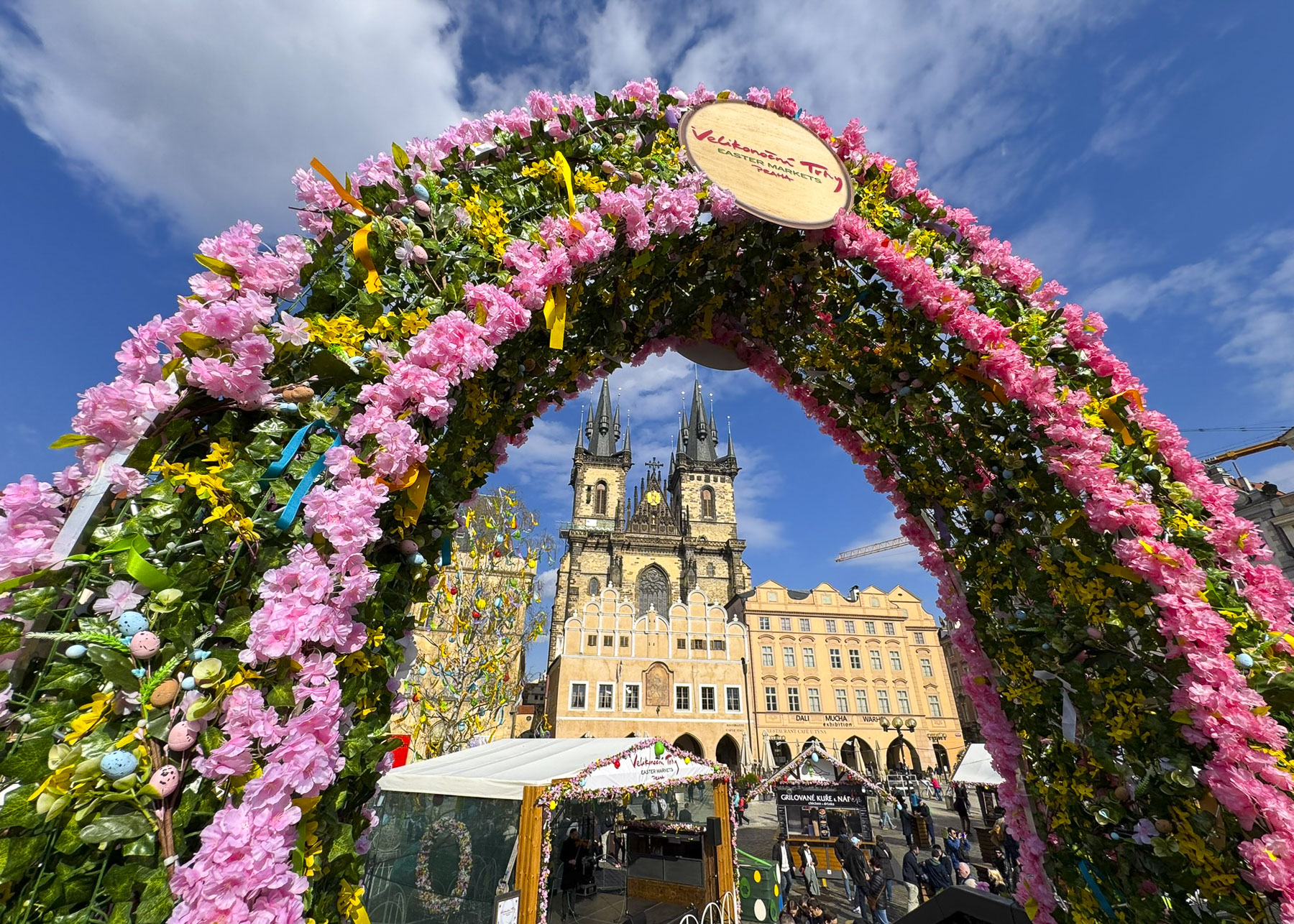

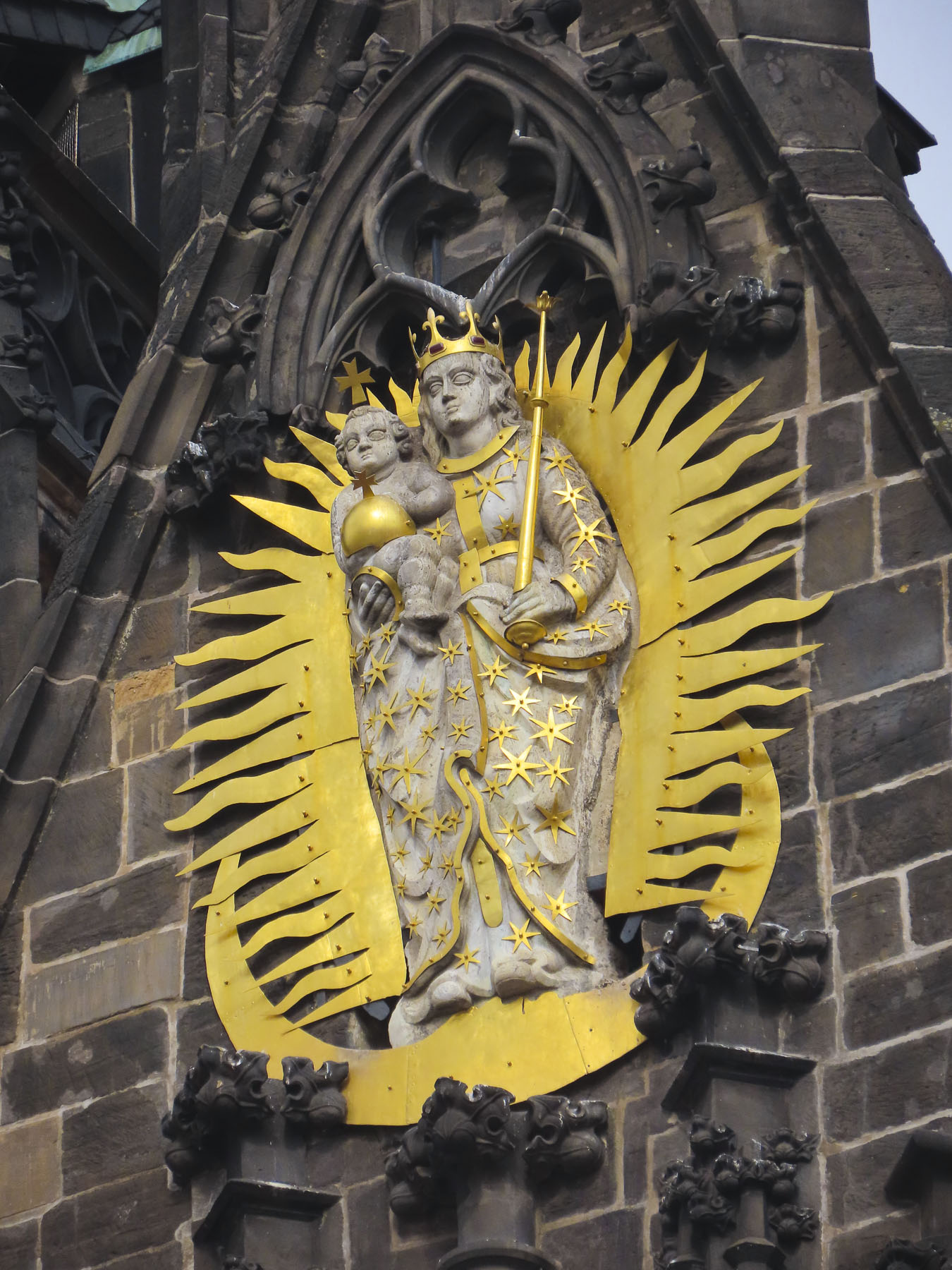
It was a perfect spring day, and we were amazed by the amount of activity on the plaza, where folks were queueing for a spot under an arbor decorated with a beautiful floral arrangement, atop a raised platform in front of the church. It was a perfect location for a portrait.

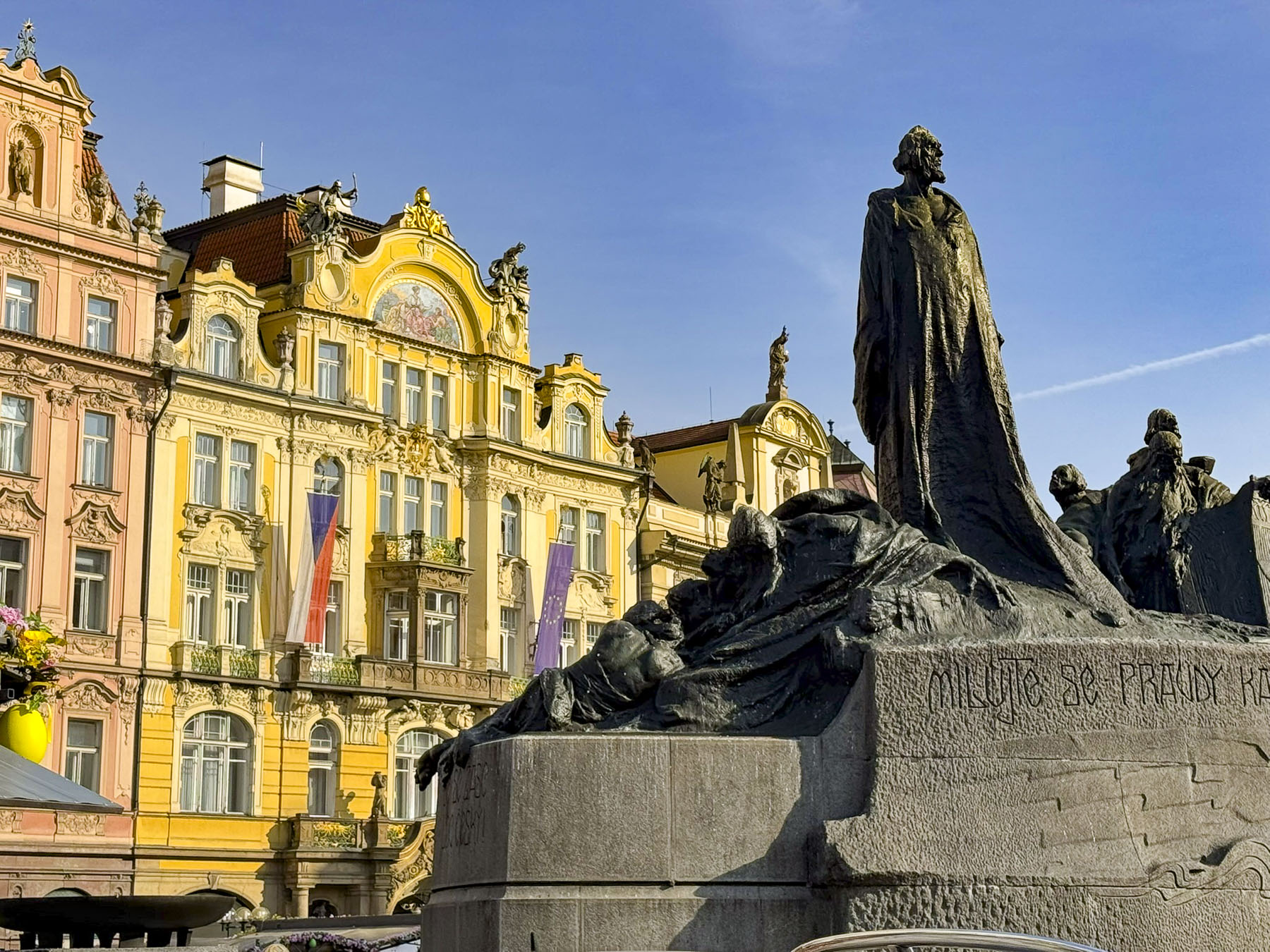
Food stalls grilled aromatic sausages and meats while others offered dumplings and donuts. Thousands of colorful tulips bloomed, ringing the base of a monument commemorating Jana Husa, in the center of the plaza. One hundred years before Martin Luther, there was Jana Husa, a theologian at Charles University in Prague who “criticized the religious moral decay of the Catholic Church,” and advocated that Mass be conducted in the local language instead of Latin. His calls for reformation branded him as a heretic and he was burnt alive on the square in front of the church in 1415. His martyrdom led to the creation of a Pre-Protestant religious movement by his followers who called themselves Hussites. The statue honoring him was erected in 1915, 500 years after his death. During the county’s communist era, sitting on the wall surrounding the statue was a way for folks to quietly protest against the oppressive rule of communism.

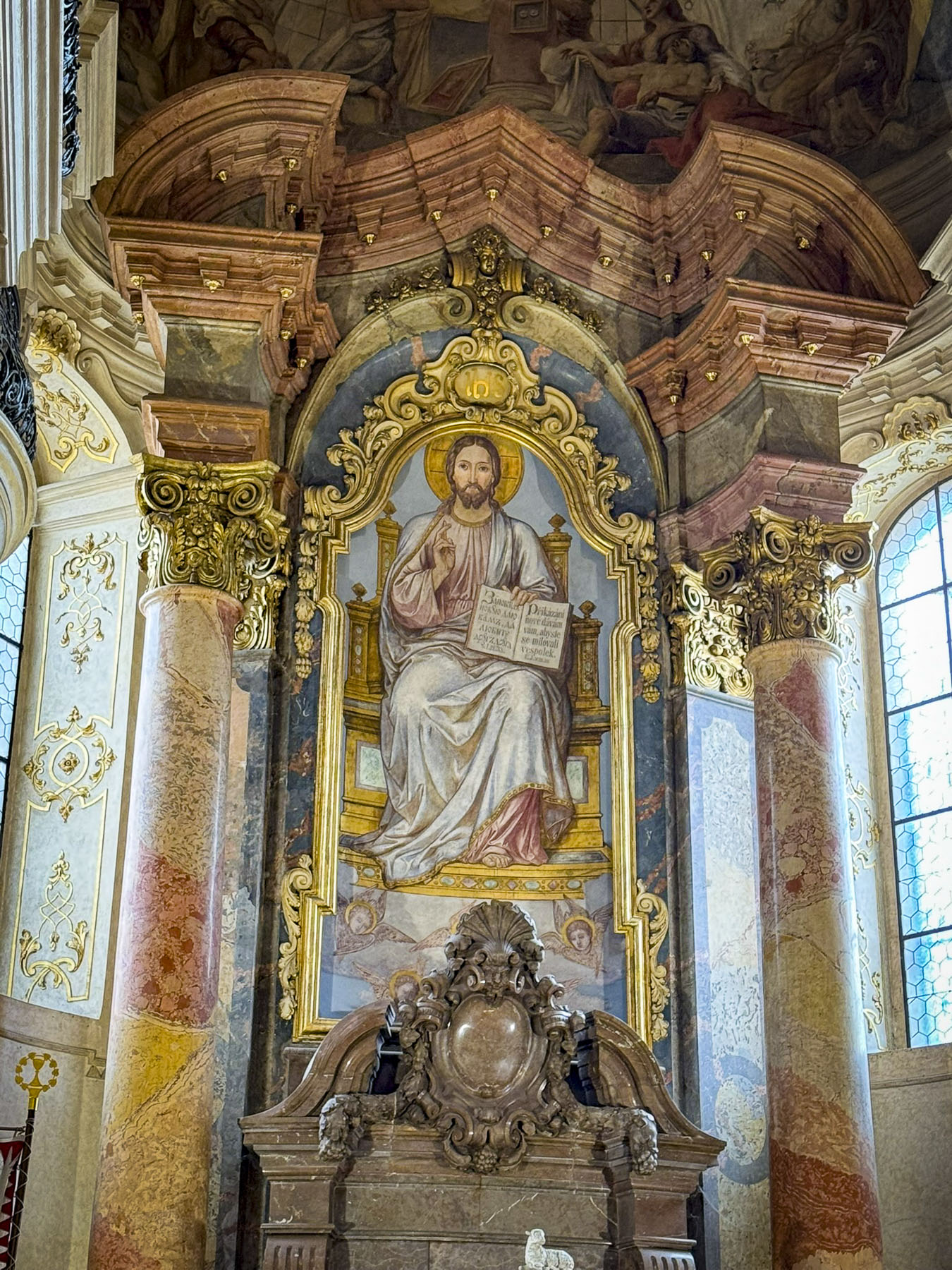
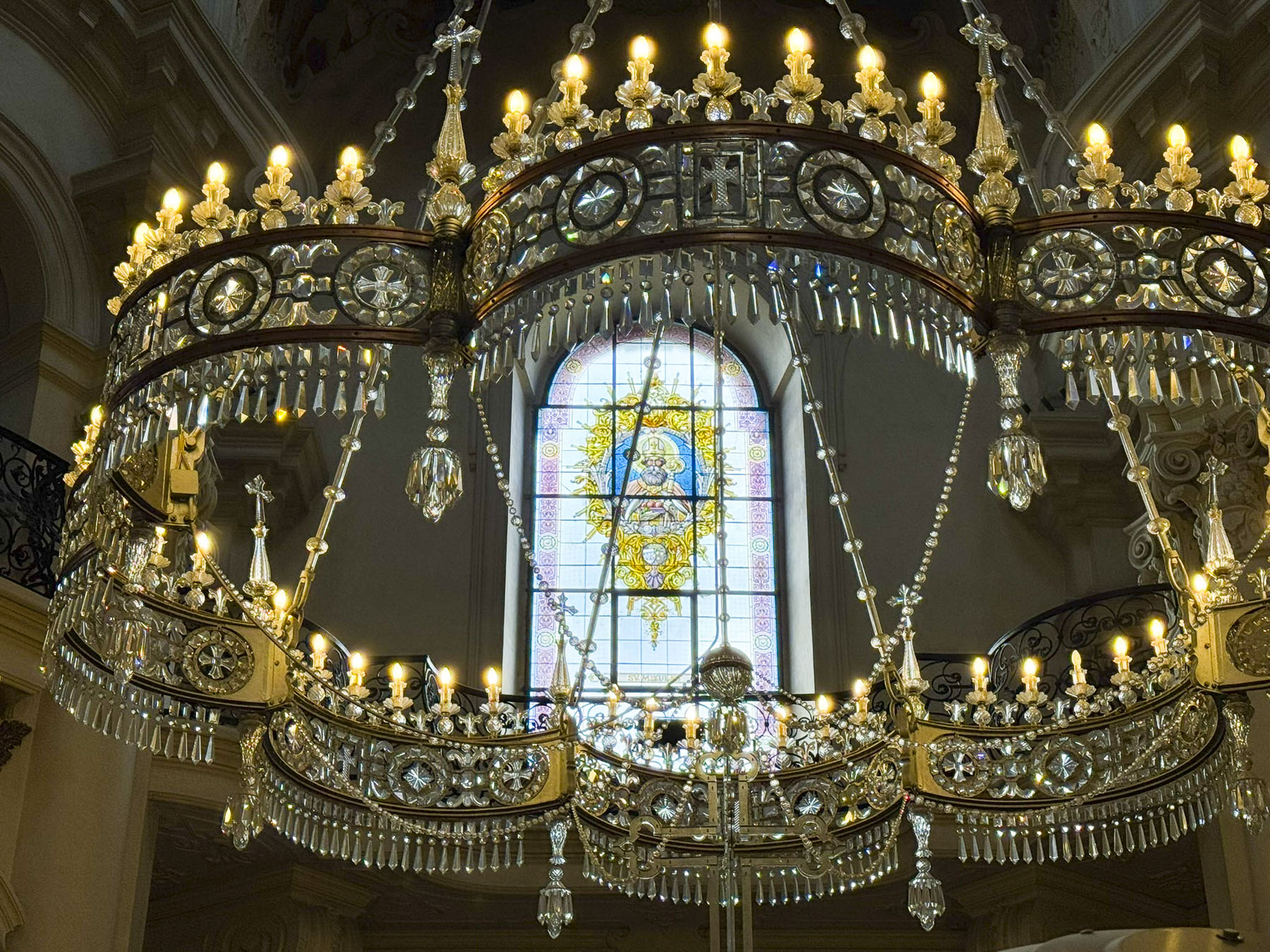
St. Nicholas Church, a Hussite place of worship, stands across from the monument and has an interesting historical display about the Hussite religion.


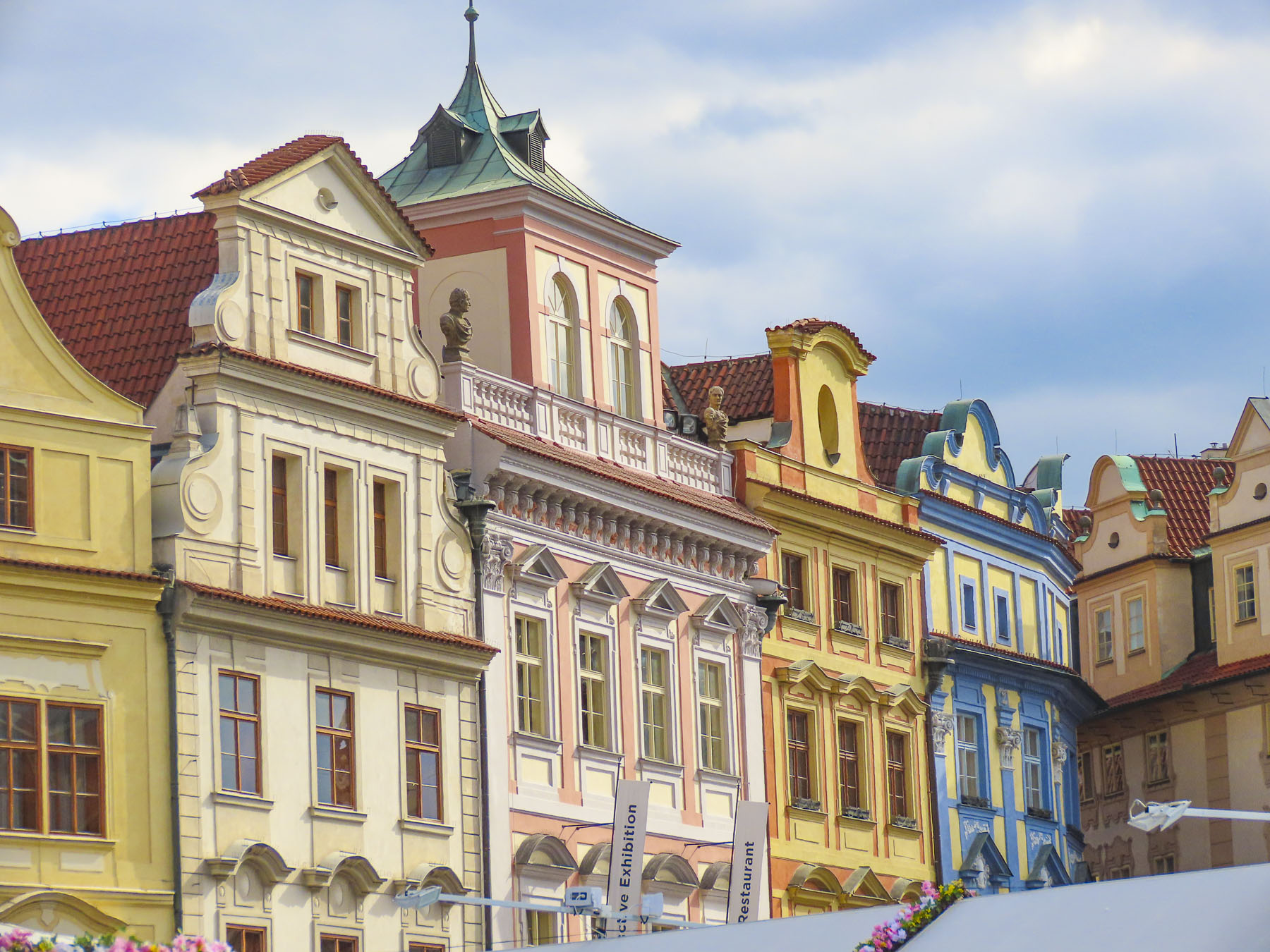
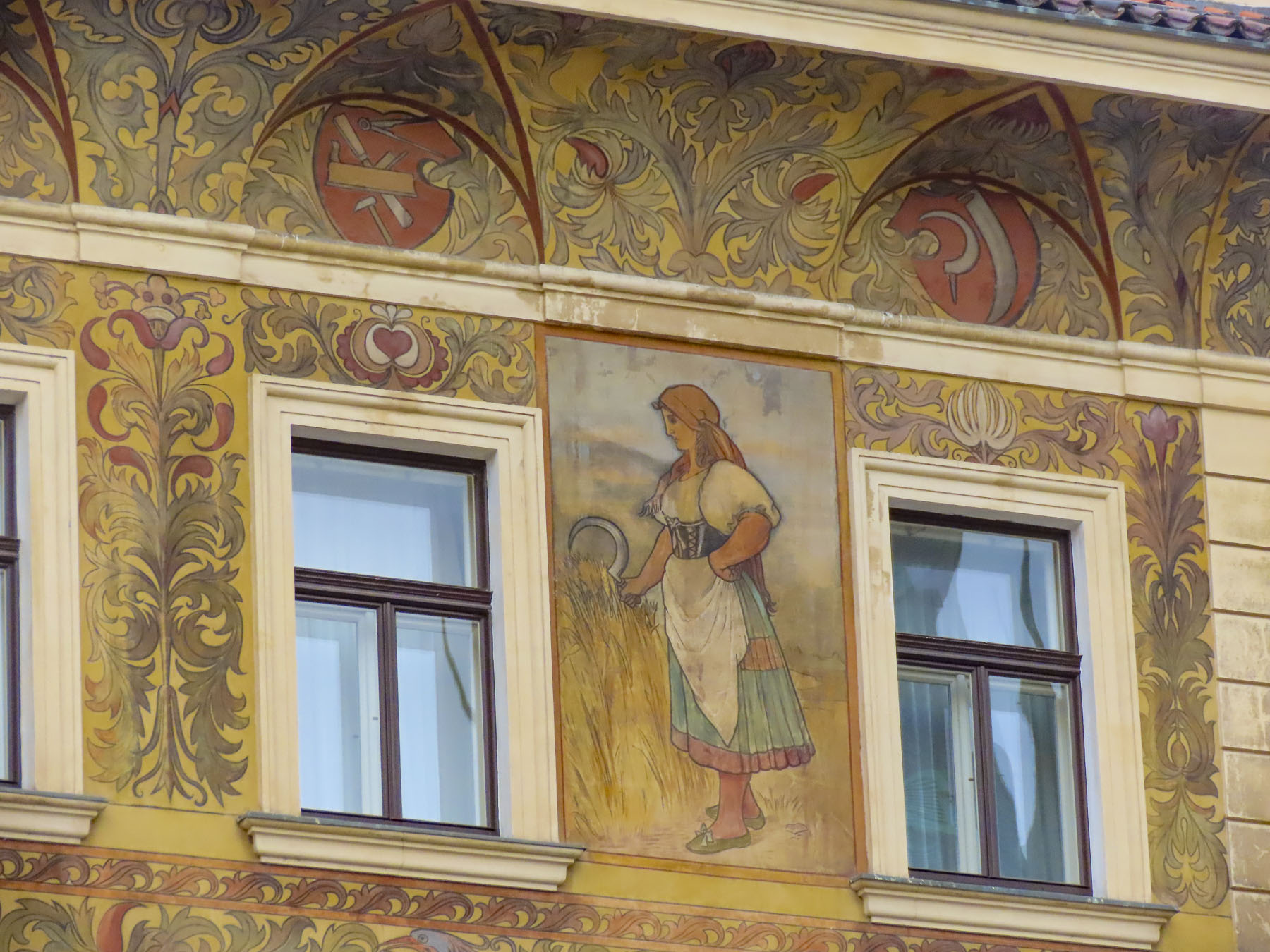

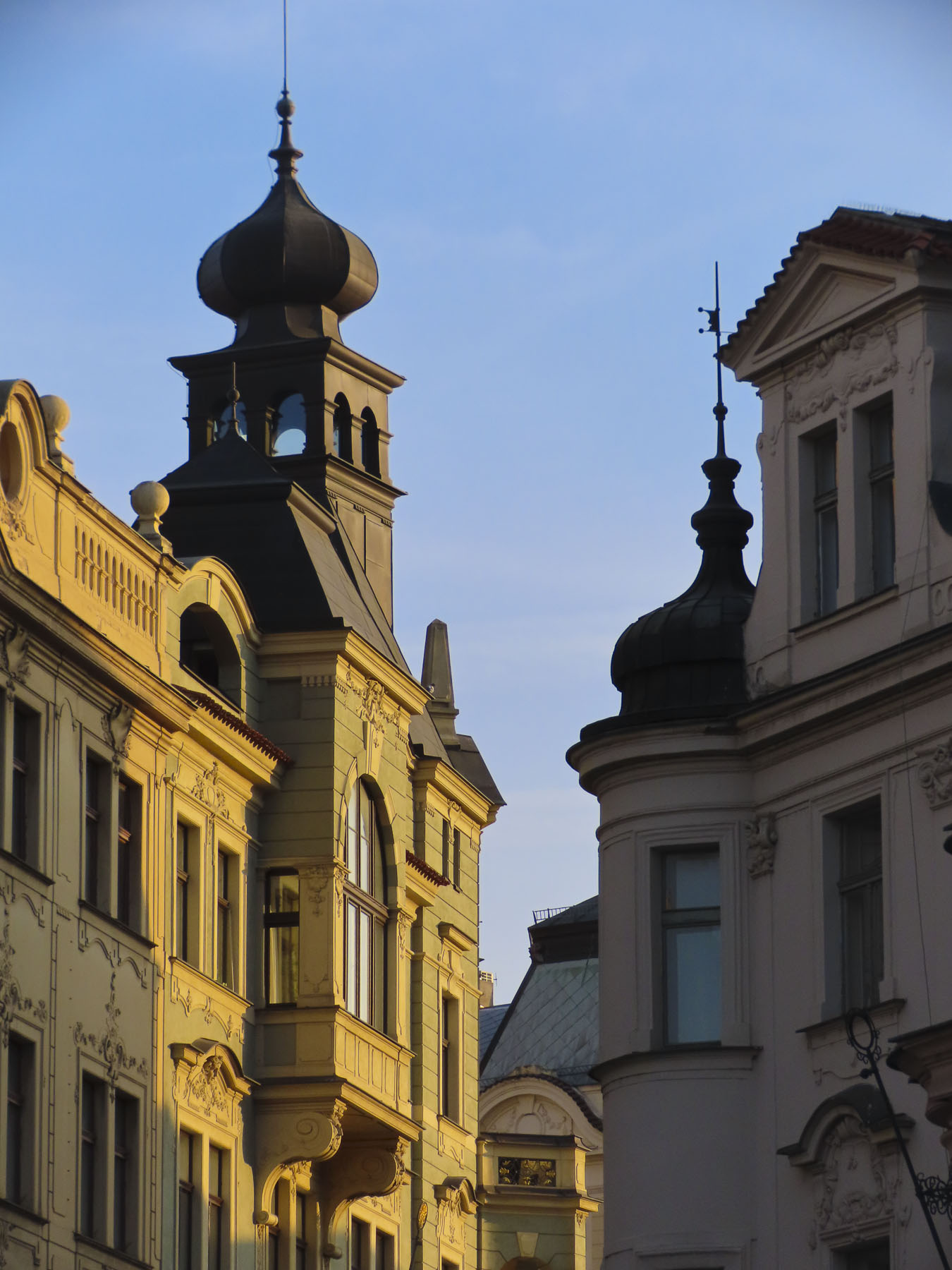
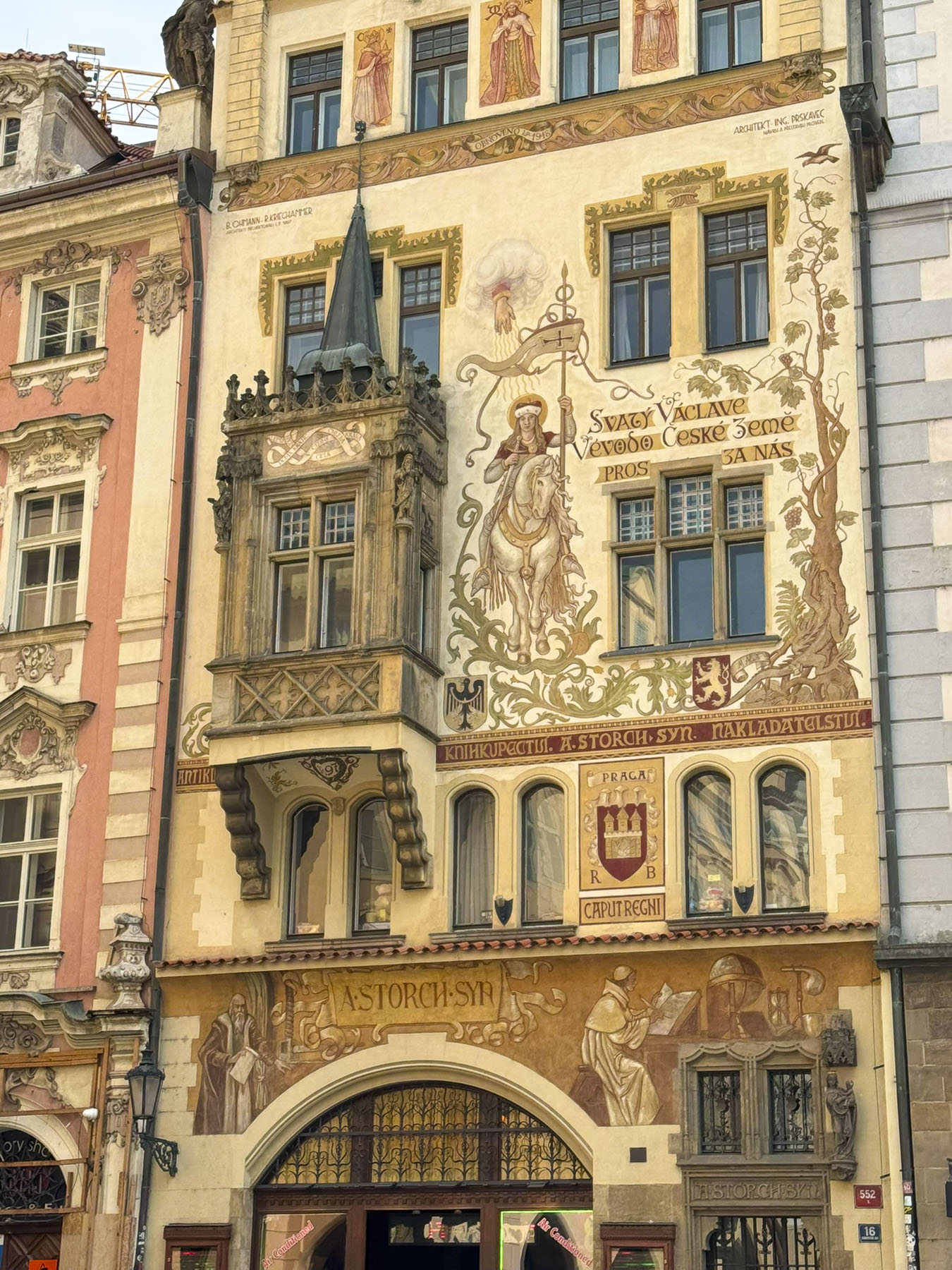
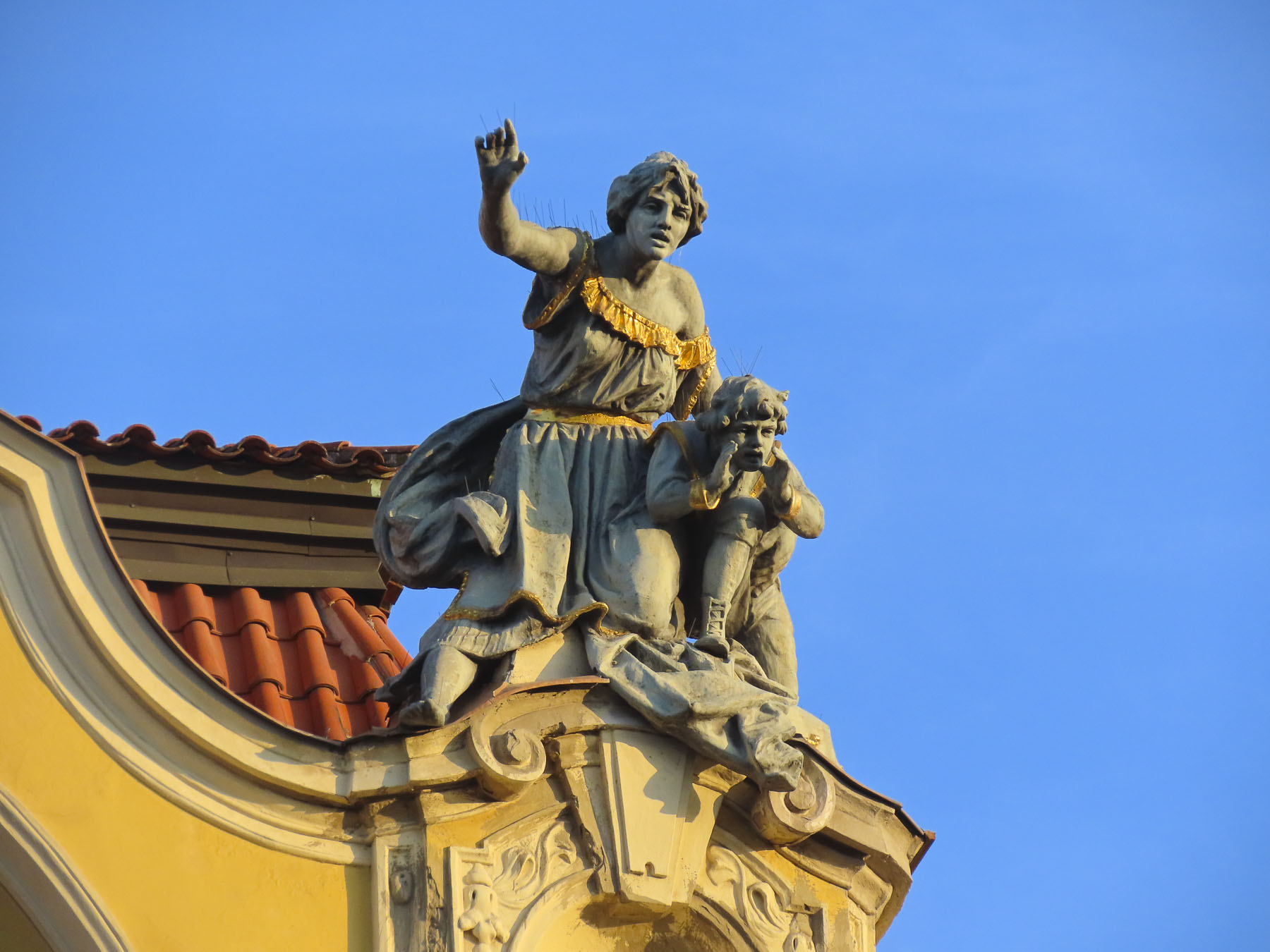
The architectural integrity of the city has remarkably survived relatively unscathed through centuries of wars that have engulfed the region. Old Town Square is definitely the epicenter of Prague’s rich architectural history, with fabulous examples of the different architectural styles that the city has embraced, which prominently surround the plaza; the earliest examples of Romanesque style dating from the 12th century are followed by Gothic, Renaissance, Baroque, Rococo, Classicist/Neoclassical, and Neogothic designs through the centuries.

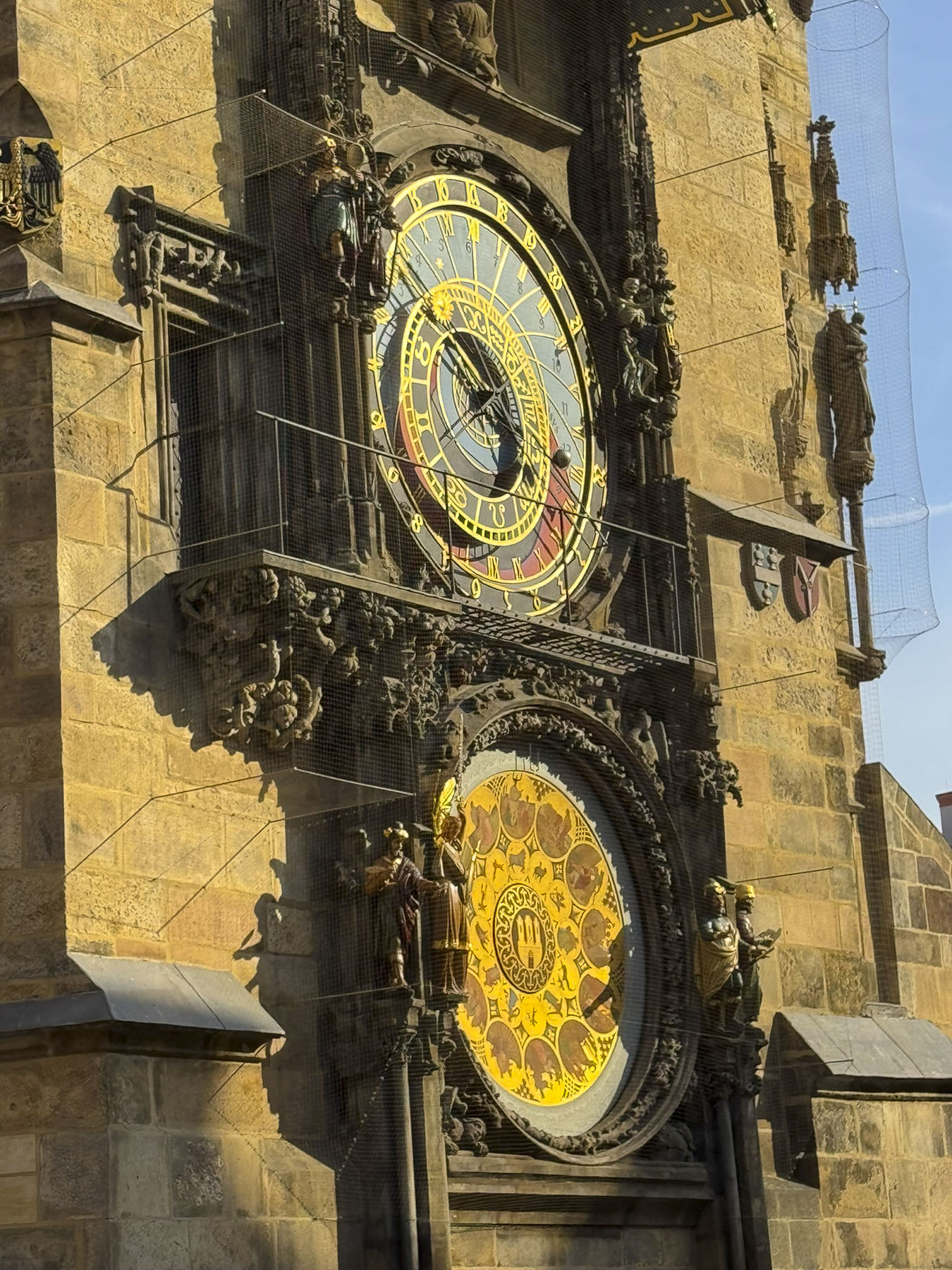
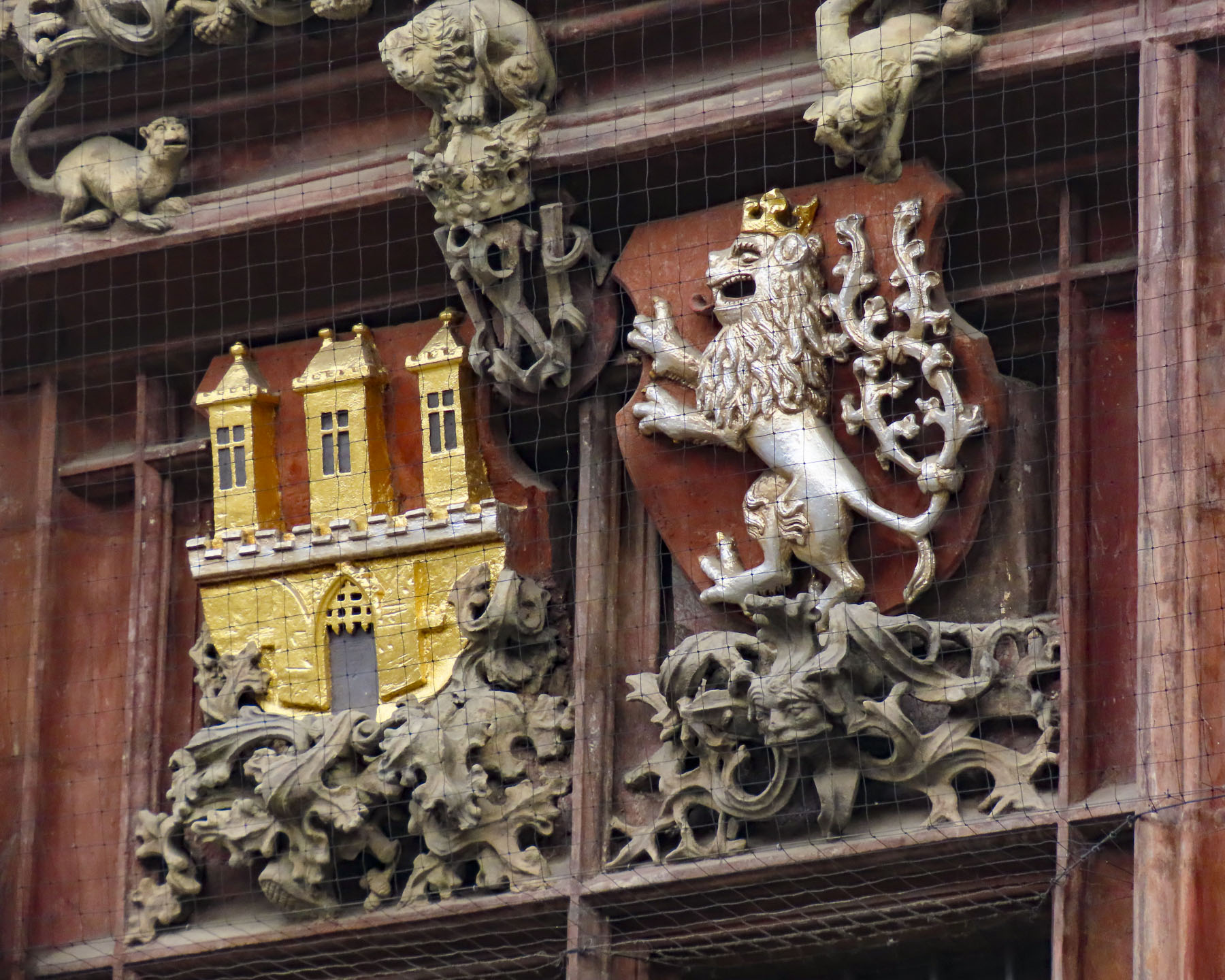
Prague’s Medieval Astronomical Clock dates from its installation on the side of city hall in 1410. Famously, it is the oldest still-operating astronomical clock in the world, with moving wooden apostles that appear on the hour as a skeleton, representing death, marks time with a bell.
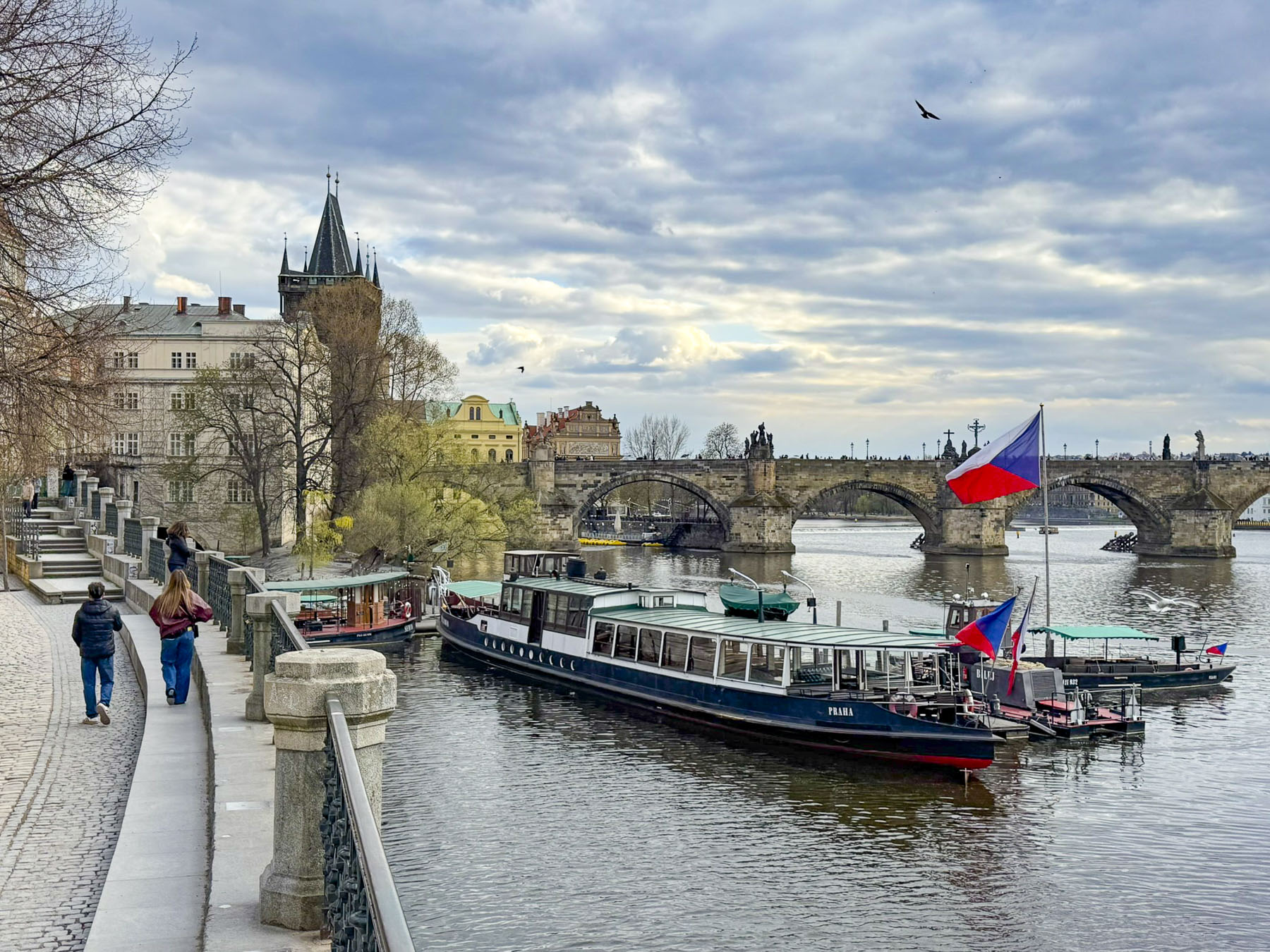


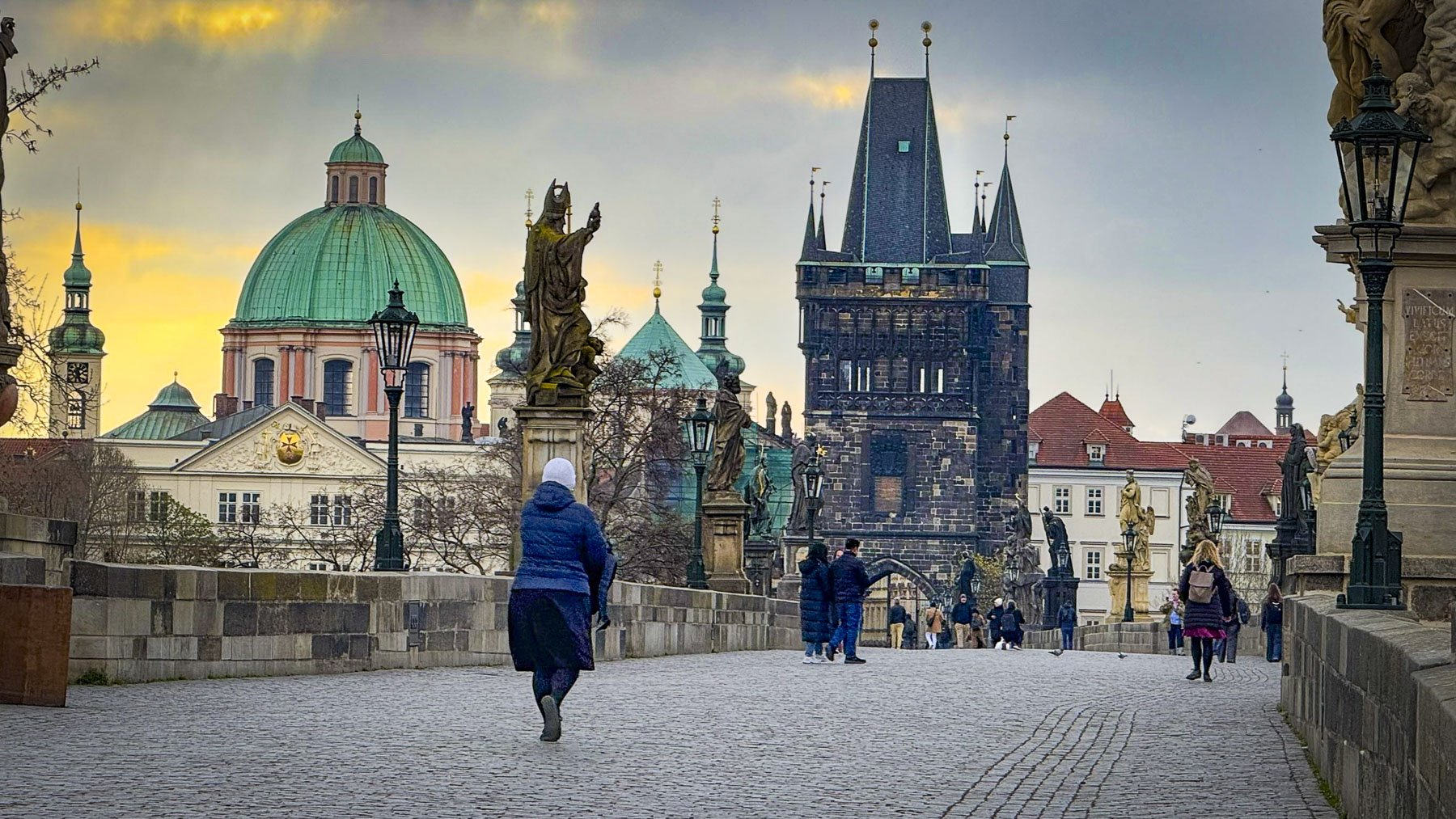
Walking was a delightful way to discover the city; it is relatively flat, and each morning we set off in a different direction to explore. First, we walked along the riverbank to the Charles Bridge, a destination we returned to several times: to experience dawn breaking over the city as folks began to head to work, and later when it was jammed like the sidewalks along 5th Ave in New York City or Istiklal Caddesi in Istanbul, at the end of the day.
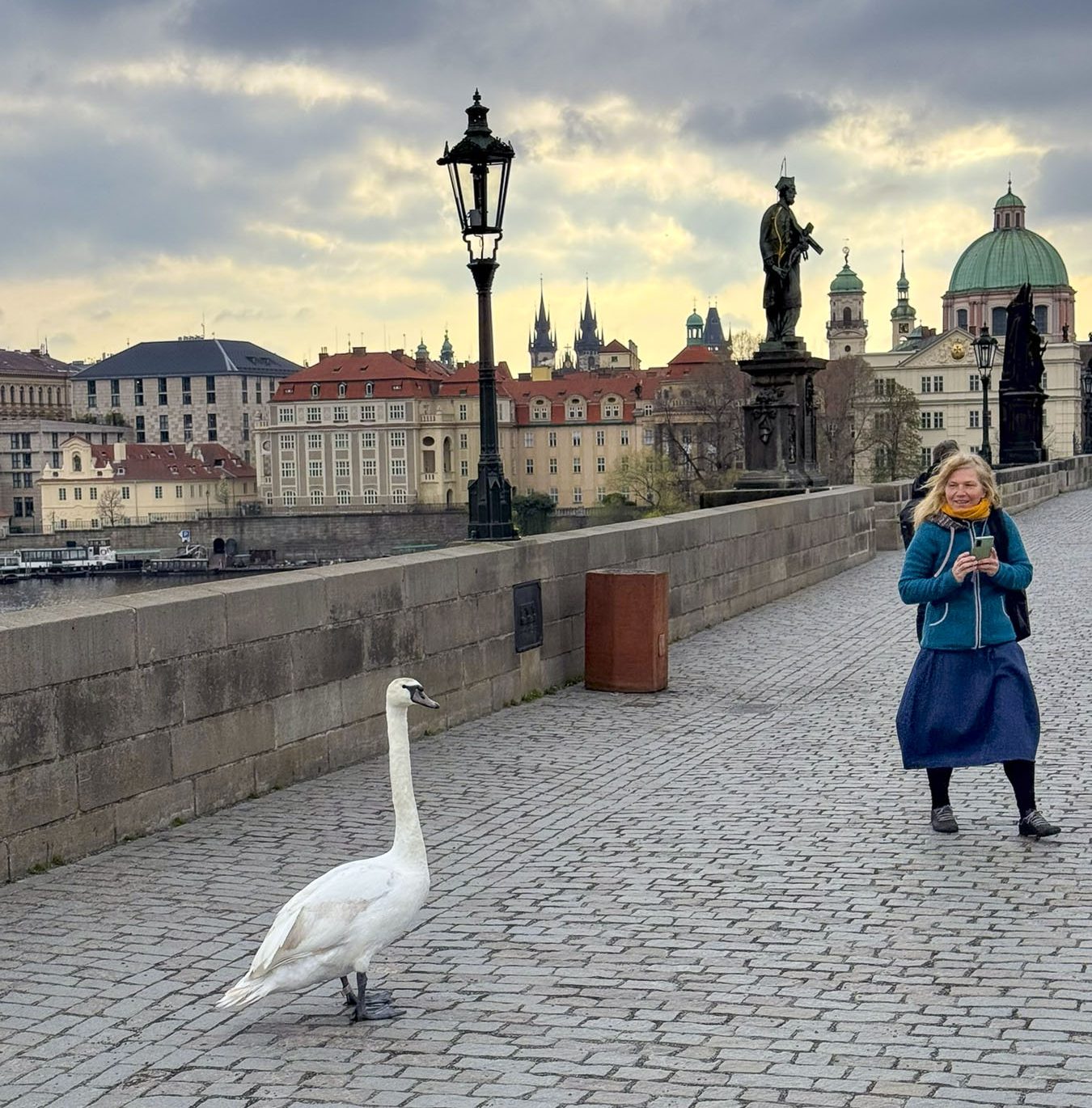
That morning a swan seemed to appear magically on the bridge, as if he was the reincarnation of a night watchman, intent on questioning our purpose for crossing the bridge.

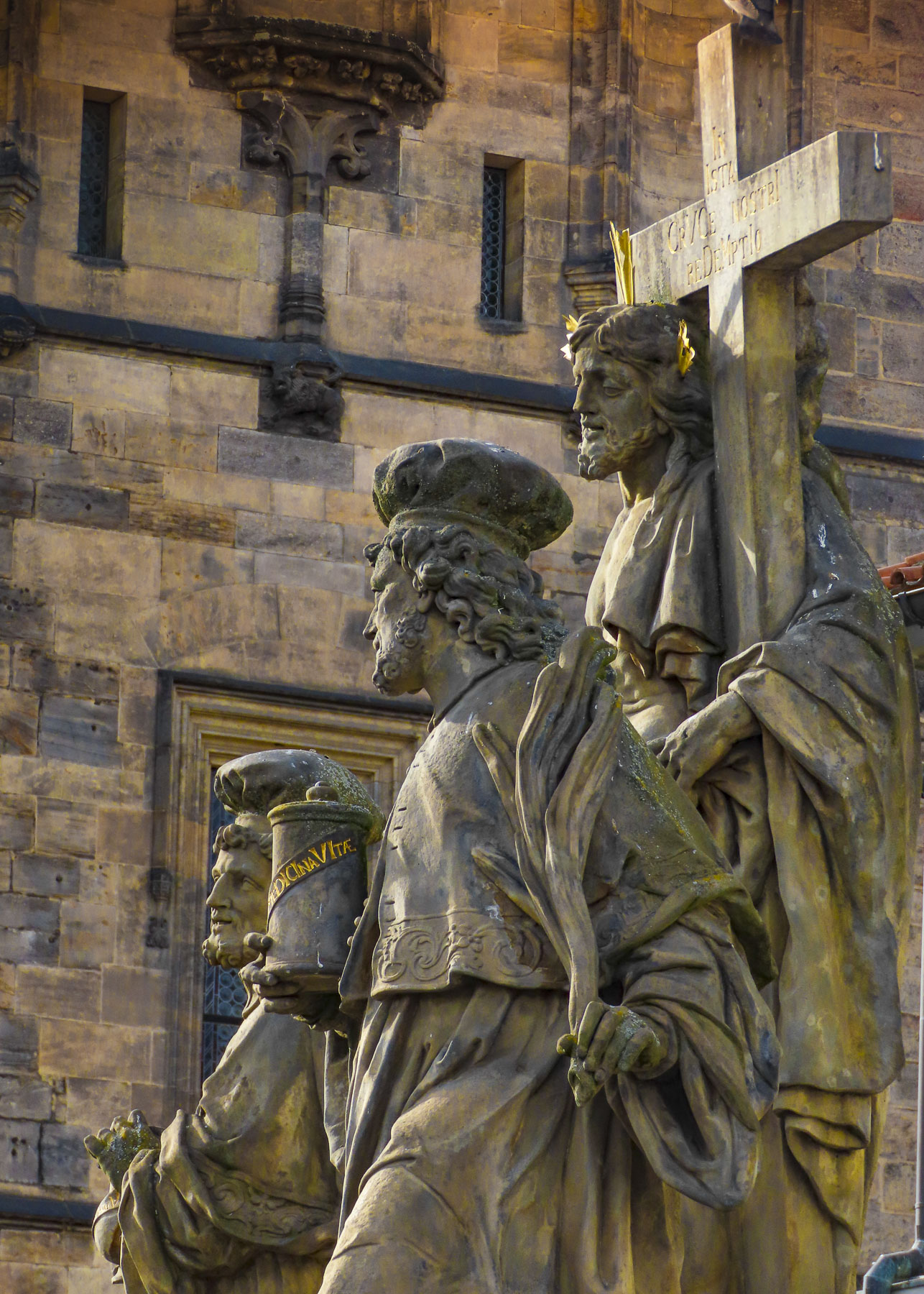
Thirty statues commemorating the city’s significant religious leaders through the centuries line the balustrade of the bridge that was completed in 1402. At the center of the span there’s a 17th century bronze statue memorializing St John of Nepomuk. He was a beloved and heroic 14th century priest who was thrown to his death from the bridge, for not revealing the confession secrets of Queen Sophia to her husband King Wenceslaus IV. Though some believe the Archbishop of Prague at the time thought it was the most expeditious way to end a political dispute with the priest and had his henchmen carry out the deed. His recovered body was enshrined at St. Vitus Cathedral with an elaborate two-ton silver tomb, where it serves as a quiet reminder of moral integrity in the face of tyranny.


Centuries of patina have been rubbed away by folks who believe touching the relief plaques at the base of the monument will bring good luck, good fortune, and a future return to Prague.
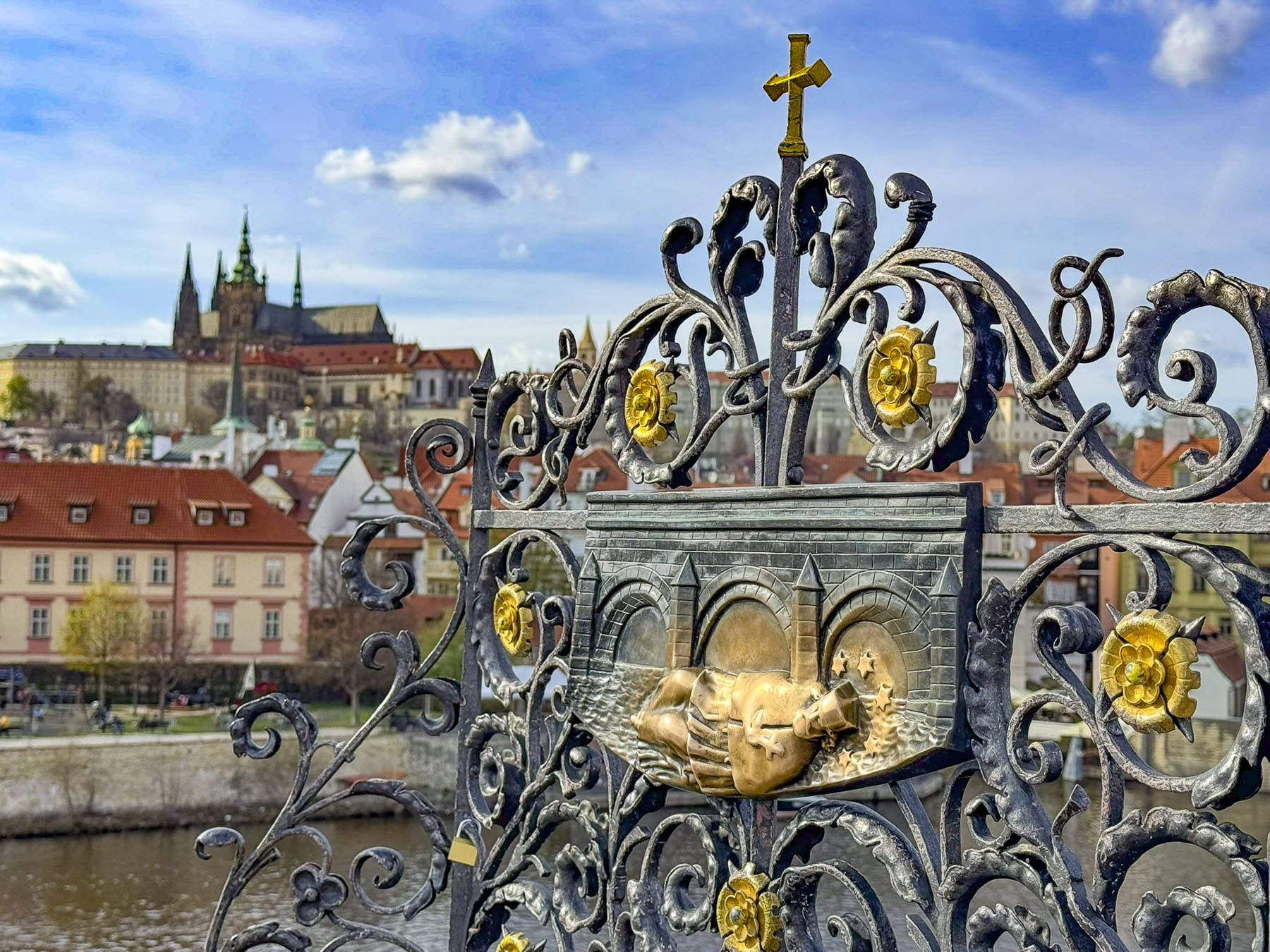
As we continued across the bridge, we stopped at another small bronze relief that actually marks the spot where the priest’s body was discovered floating in the water. Both memorials to St John of Nepomuk on the bridge are considered pilgrimage sites.
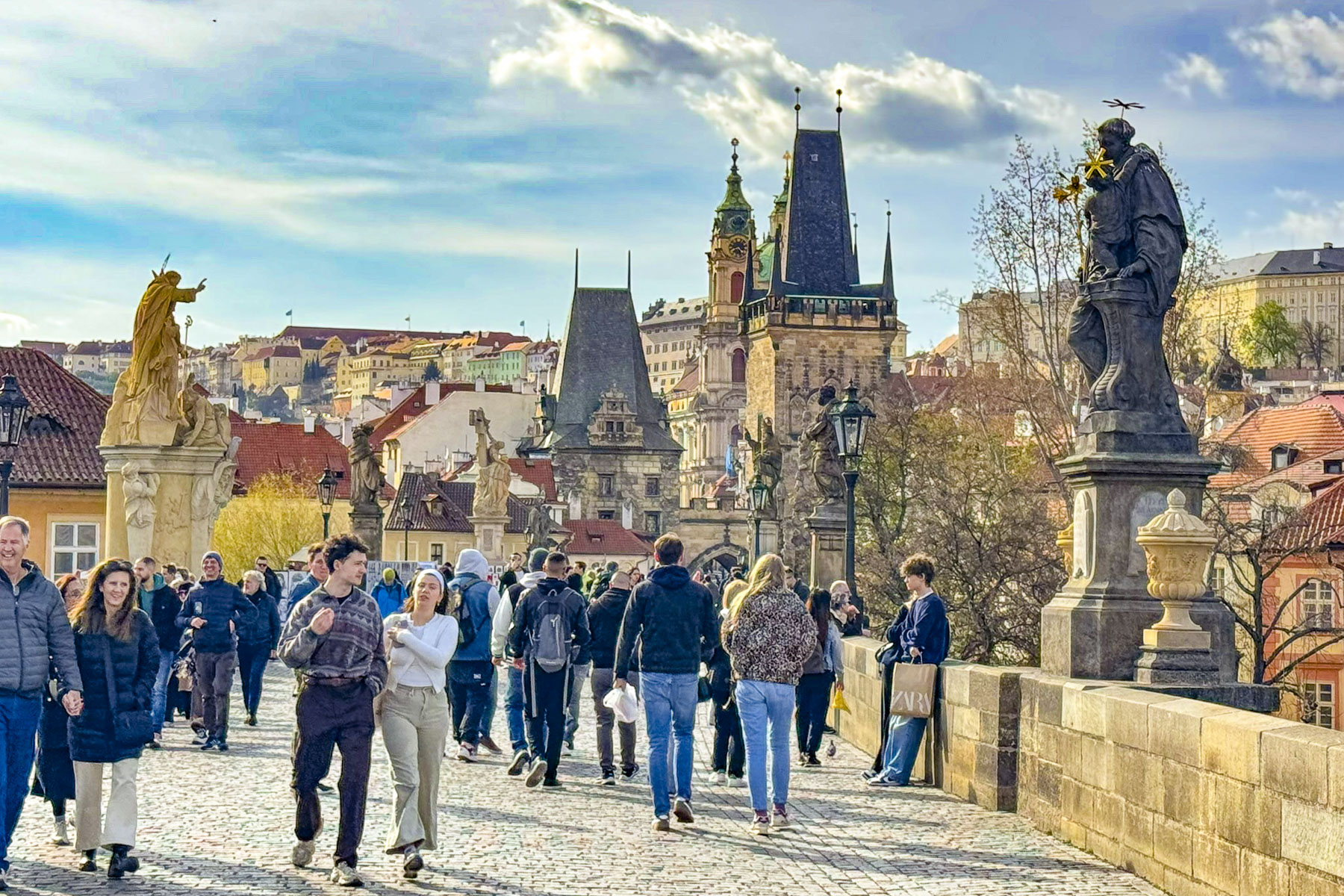
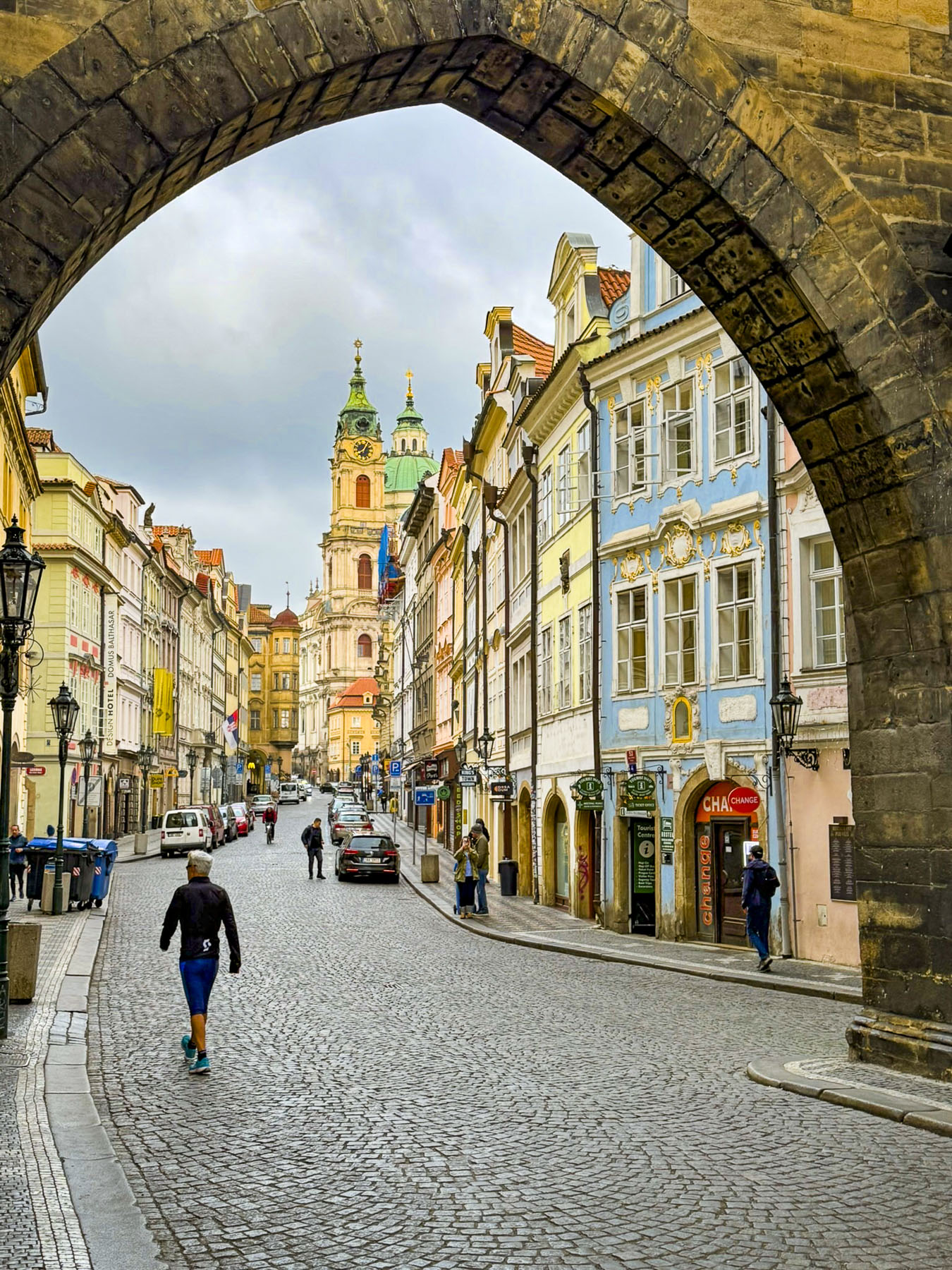

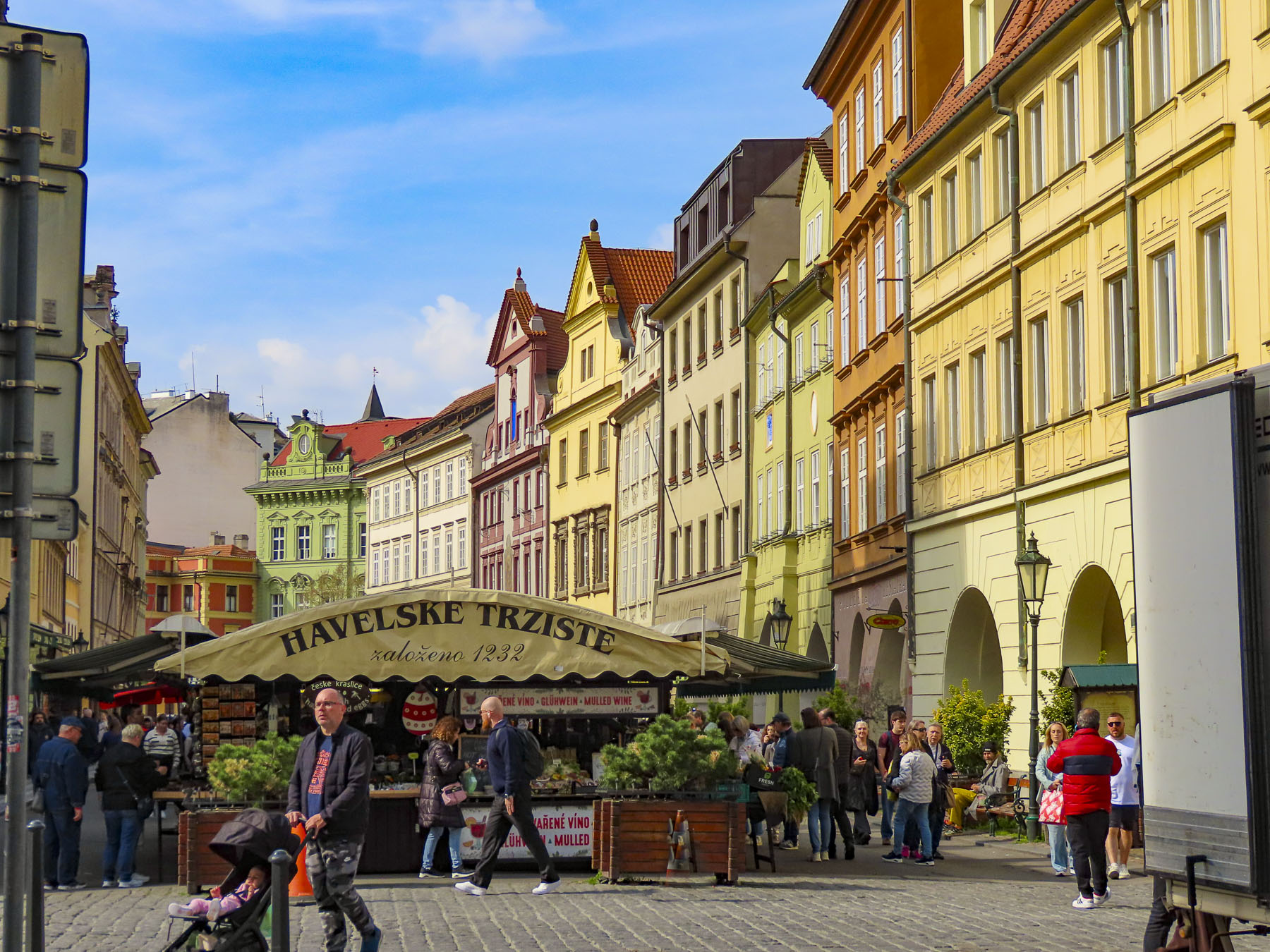
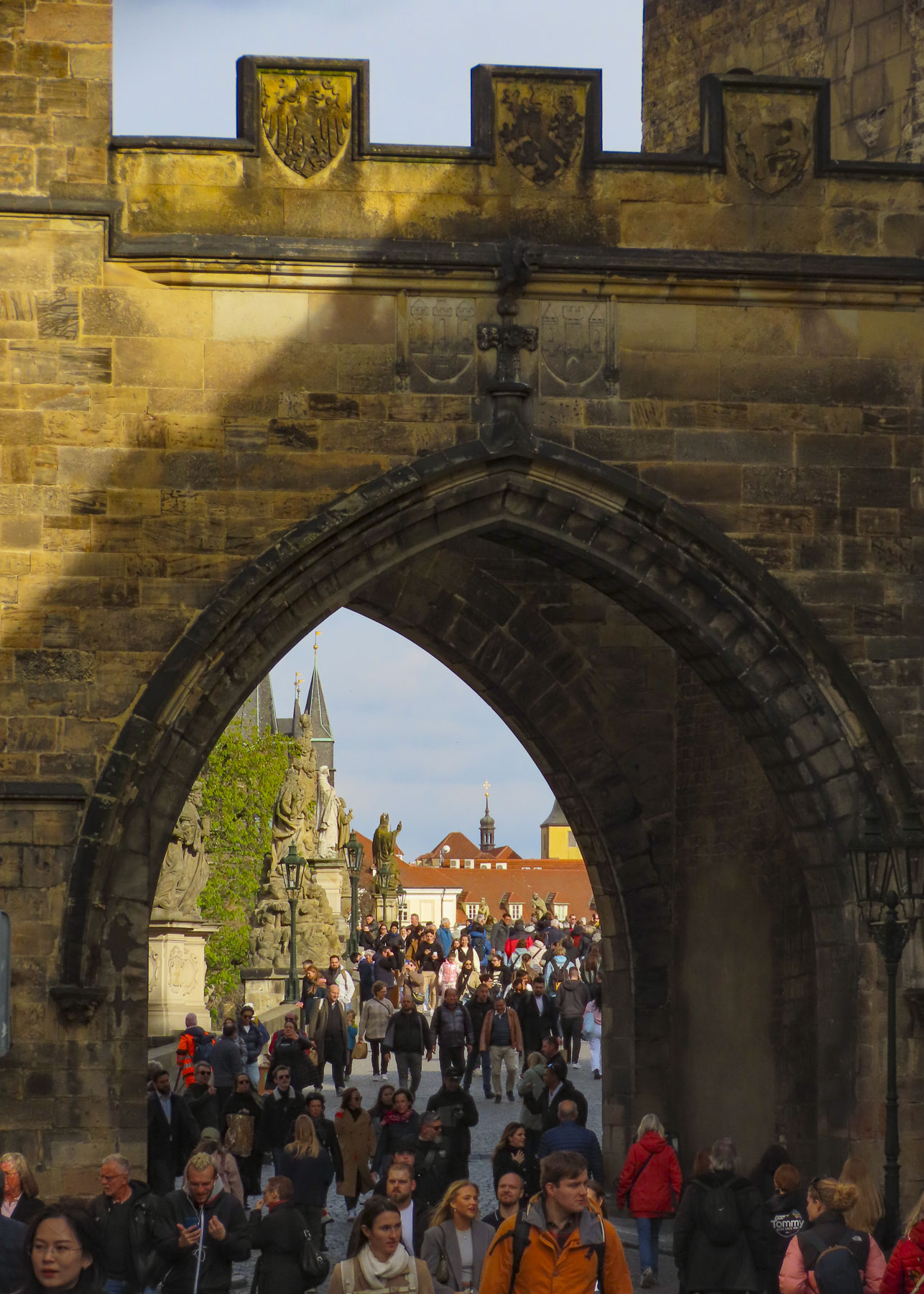
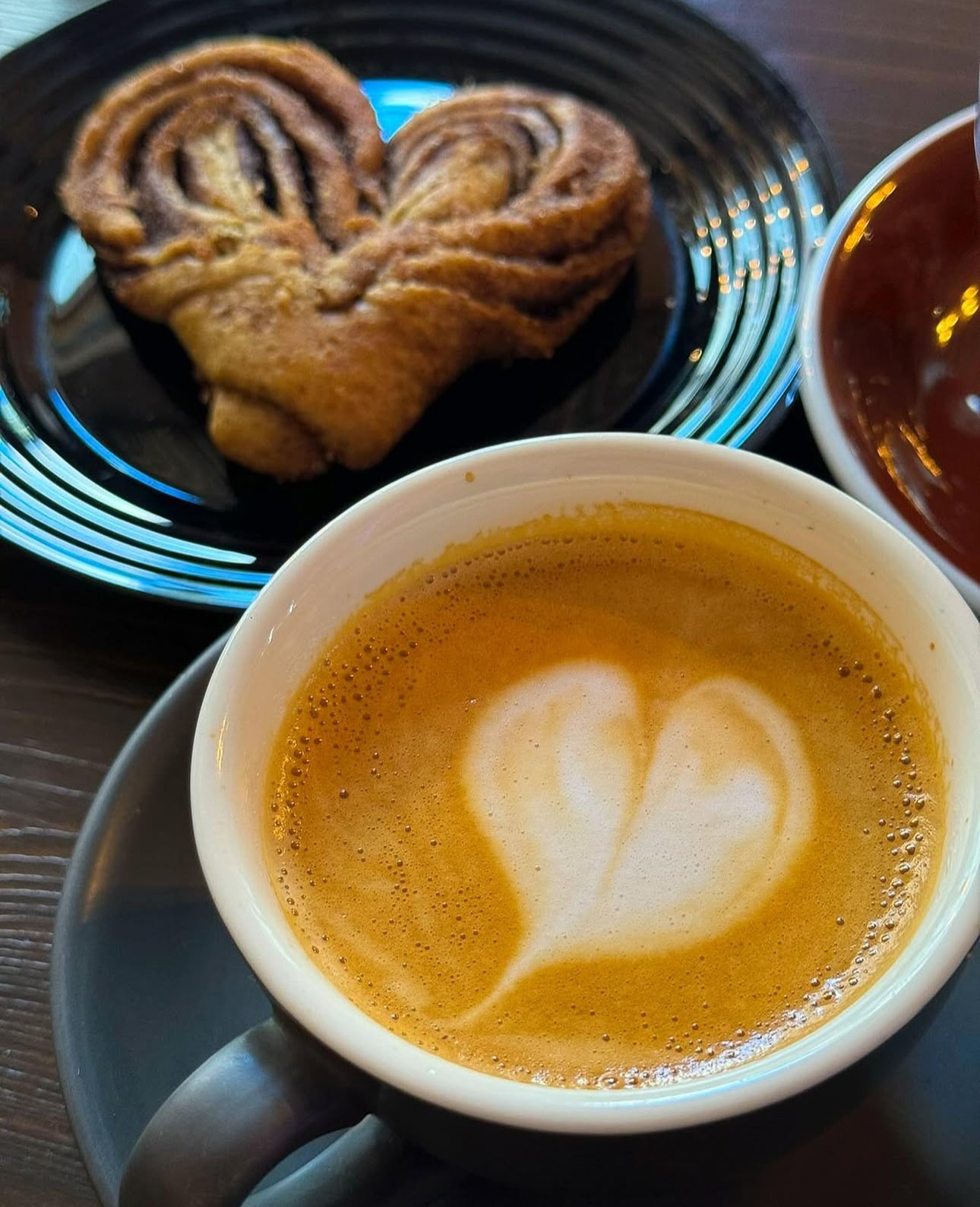
Reaching the other side, Malá Strana, the Lesser Town, we entered the old quarter through the Malostranská Bridge Tower, and happened upon a weekly market underway on the plaza, in the shadow of the tall walls of a former Jesuit college and St. Nicholas Church. Good coffee and tasty pastries helped alleviate the morning chill as we worked our way around the stands before heading into the church.


A Gothic church had been on this site from 1283 until 1743 when 100 years of construction started to create St. Nicholas, a Baroque masterpiece that was the vision of three generations of architects in the Dientzenhofer family. The interior is voluminous, and embellished with frescoes, gilded saints and cherubs. Mozart famously played the church’s organ, which has over 4,000 pipes, up to 6m (20ft) long, when he visited Prague in 1787.
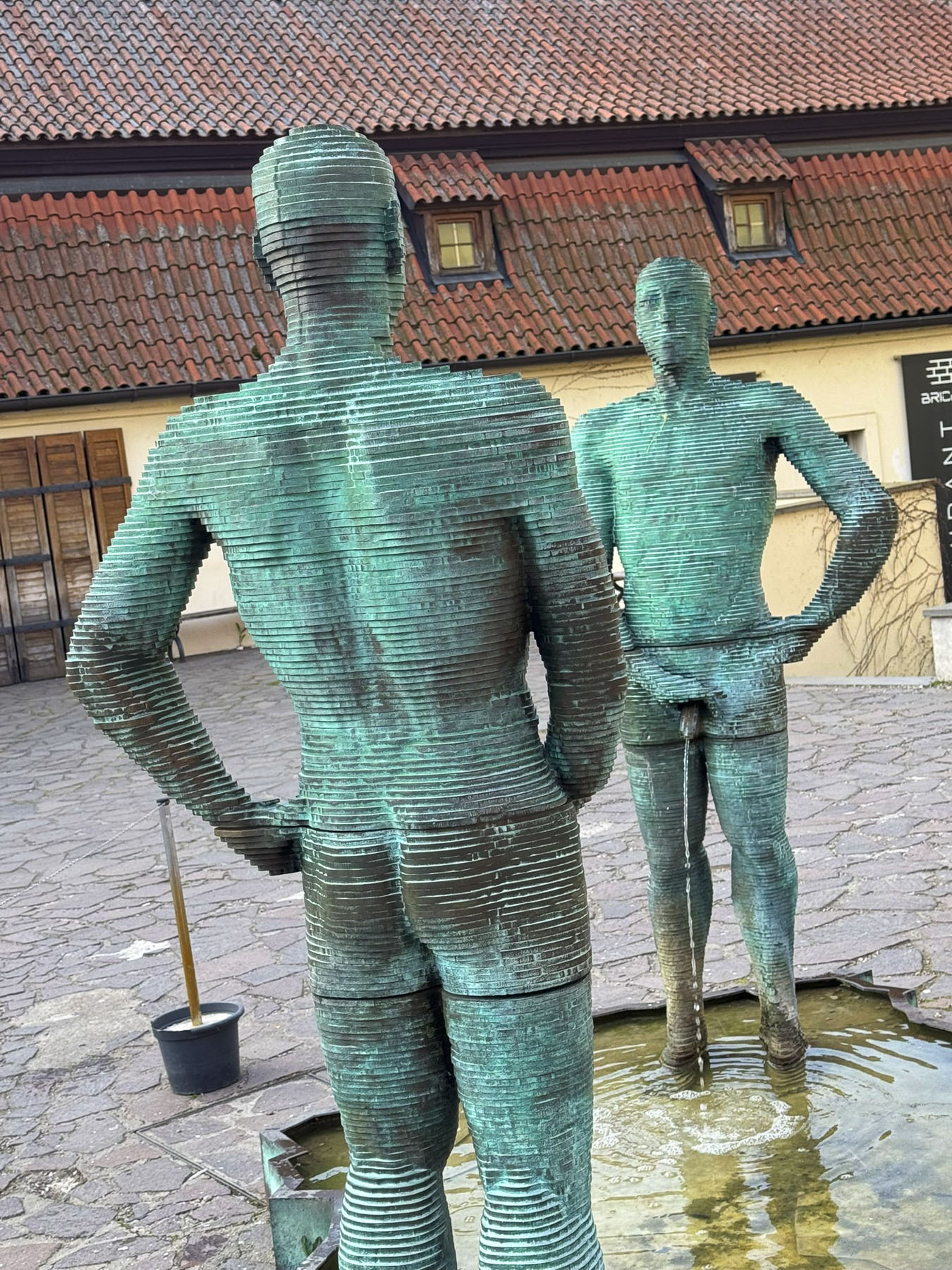
Afterwards we wandered the cobbled lanes to the Franz Kafka Museum, mostly because it was on the way to two city parks we wanted to visit. A courtyard in front of the museum featured an offbeat, quirky, whimsical mechanical sculpture created in 2004 by Czech artist David Černý. It’s called Čůrající Postavy and features two robotic men shaking their things in what could best be described as a “pissing contest.” Born in Prague, some of the artist’s larger sculptures, we would later learn, are featured in several places across the city.

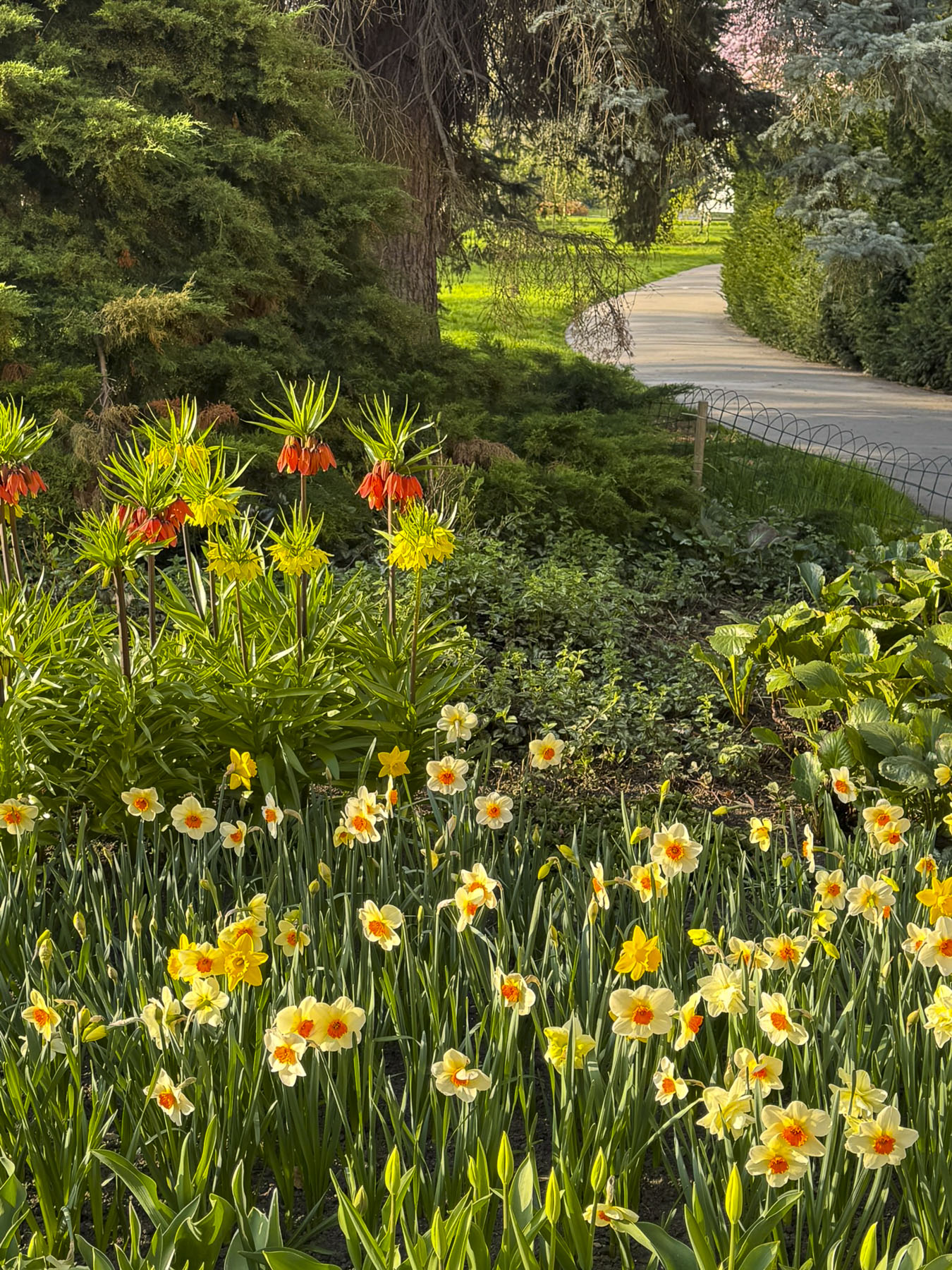
Vojanovy Sady, the park nearby, was a verdant oasis, in a city of sandstone and granite. The park’s blooming magnolia trees were the perfect backdrop for a photographer taking pictures of a newly engaged couple as they strolled along pathways lined with early spring flowers.

The Senate of the Parliament of the Czech Republic gathers at the Waldstein Palace, a 17th century structure, which along with the formal gardens underwent extensive restoration in the late 1990s.


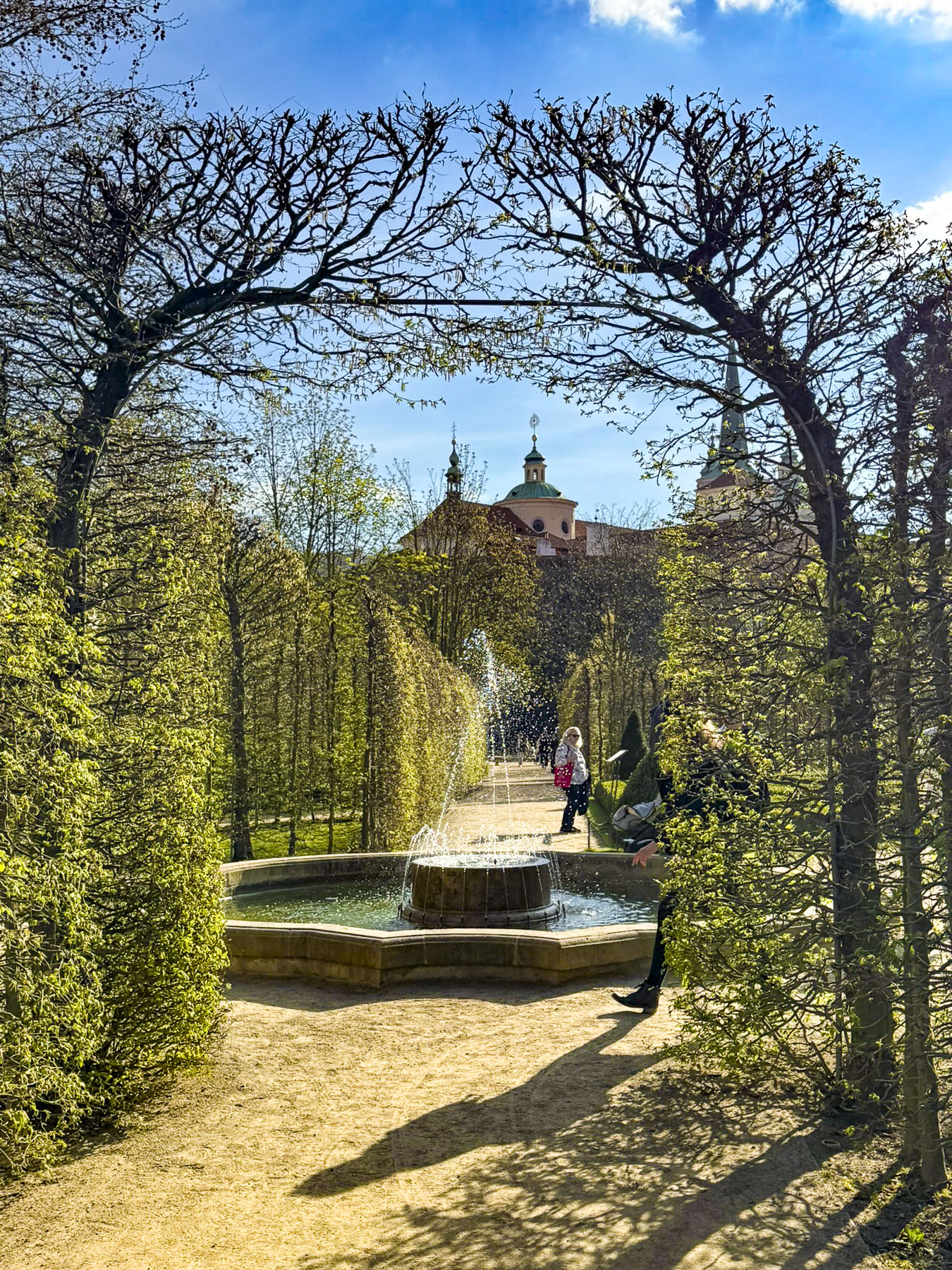

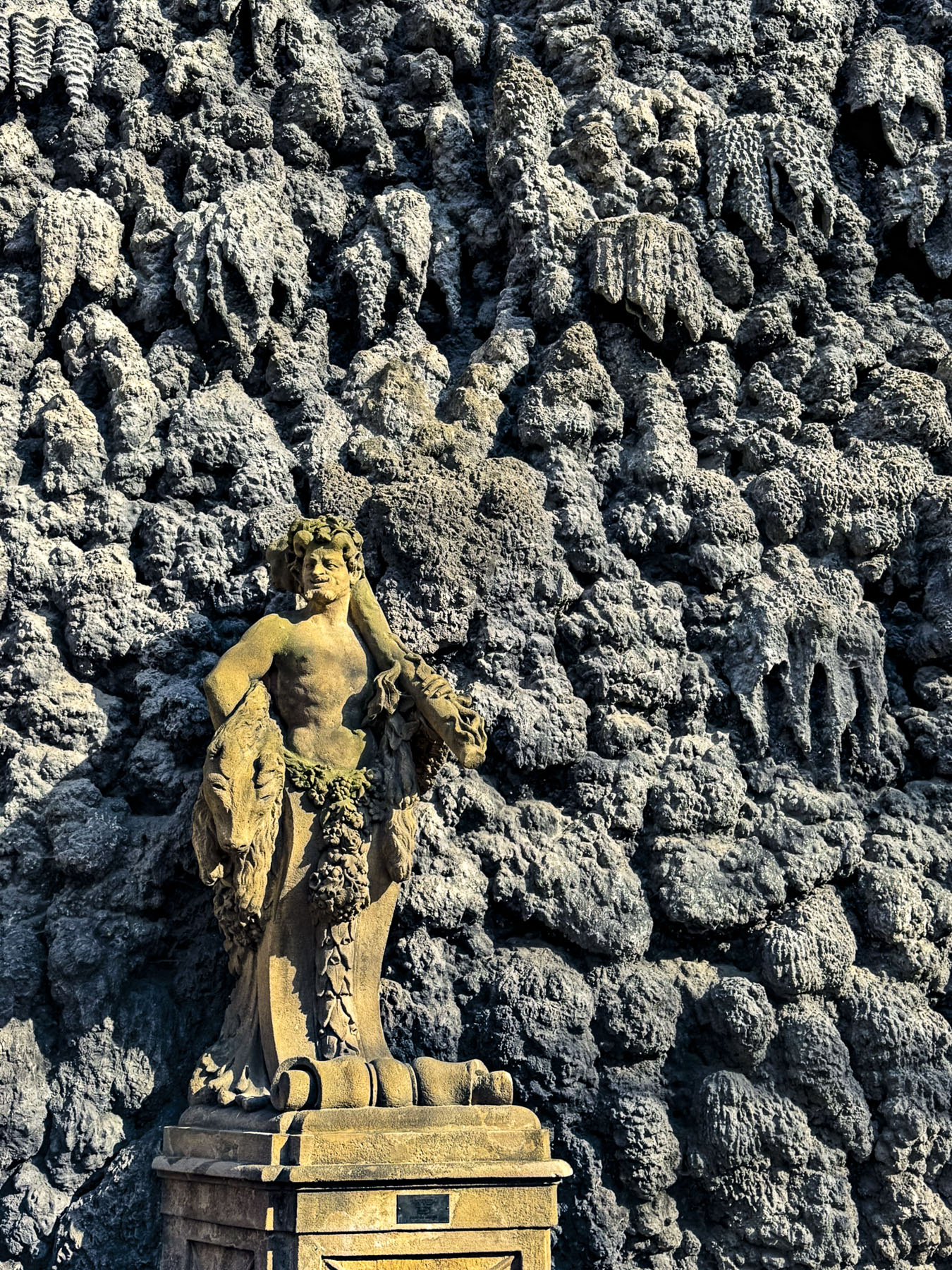
The gardens are quite extensive and feature a large reflecting pool, sculpture garden, roaming peacocks, and a dripstone wall from the 1600s that hides the likeness of faces in its construction. It’s a popular spot for its view of Prague Castle which towers above it on a hill.

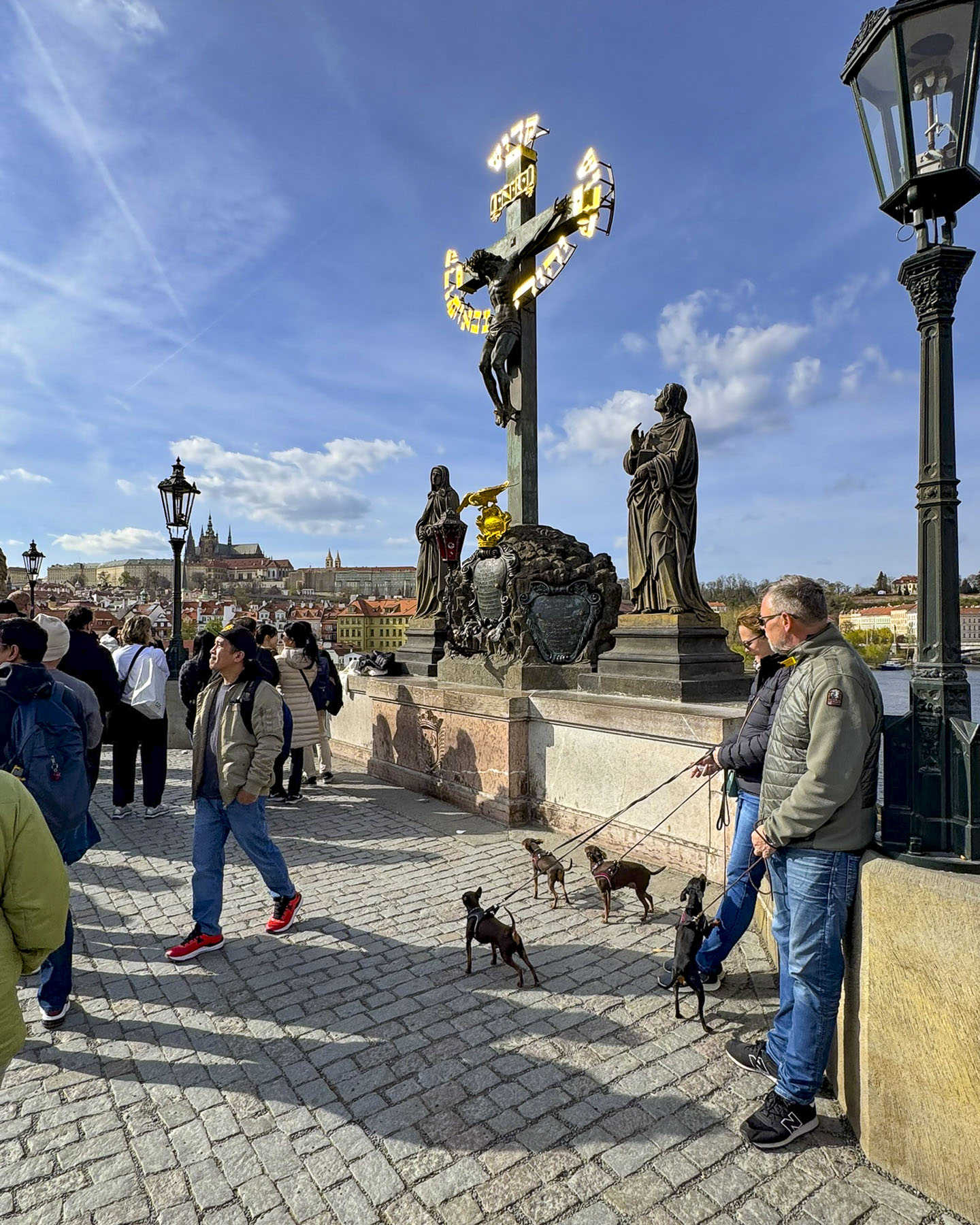
After heading back towards the church we had a very satisfying late lunch at Dvorek pod Hradem on Nerudova Street before recrossing the bridge to the Charles Bridge Museum. It had some very interesting exhibits on how the bridge was constructed, and copies of some of the sculptures on the bridge, as well as the history of floods and conflicts which have required its repair.

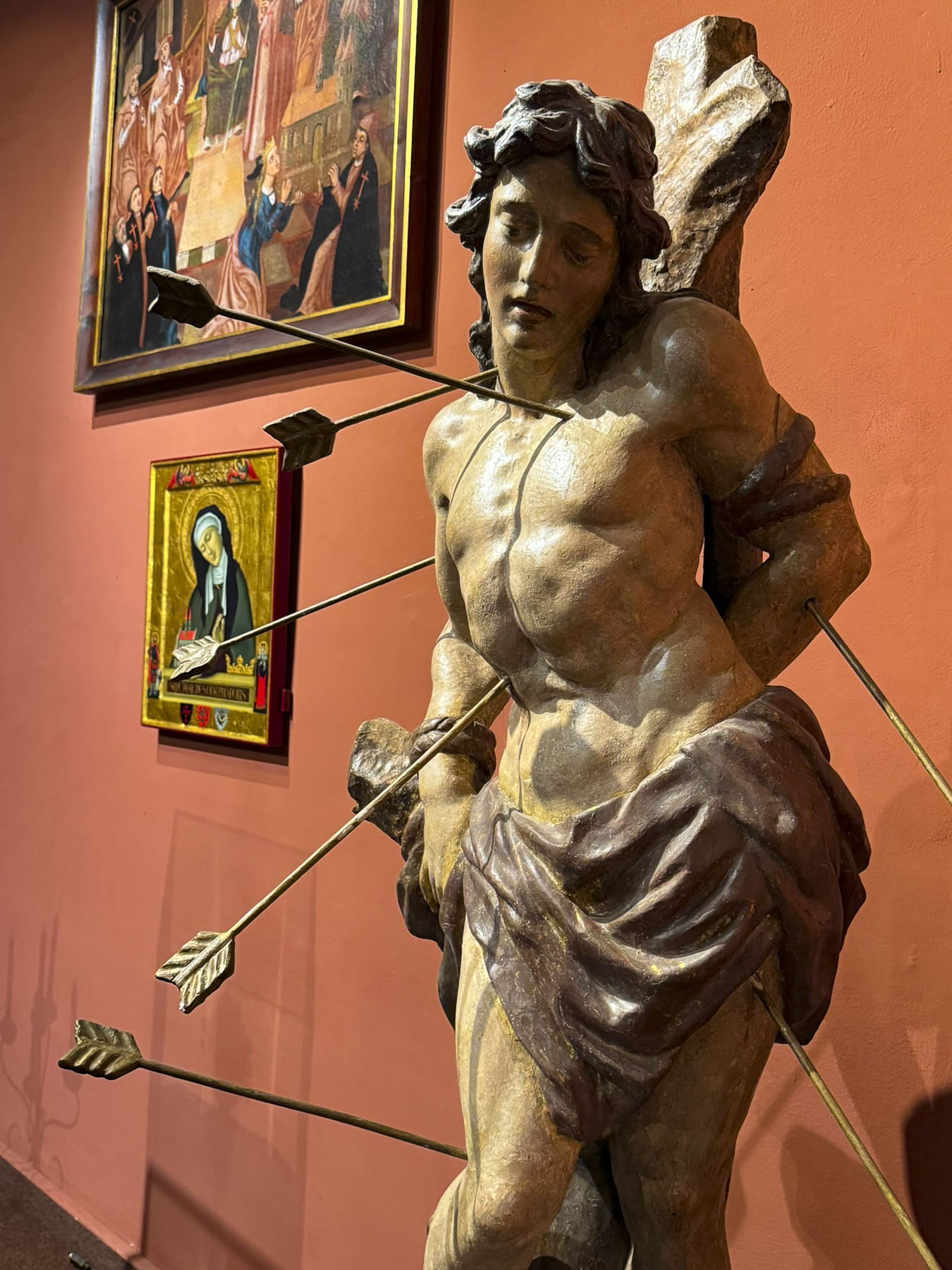
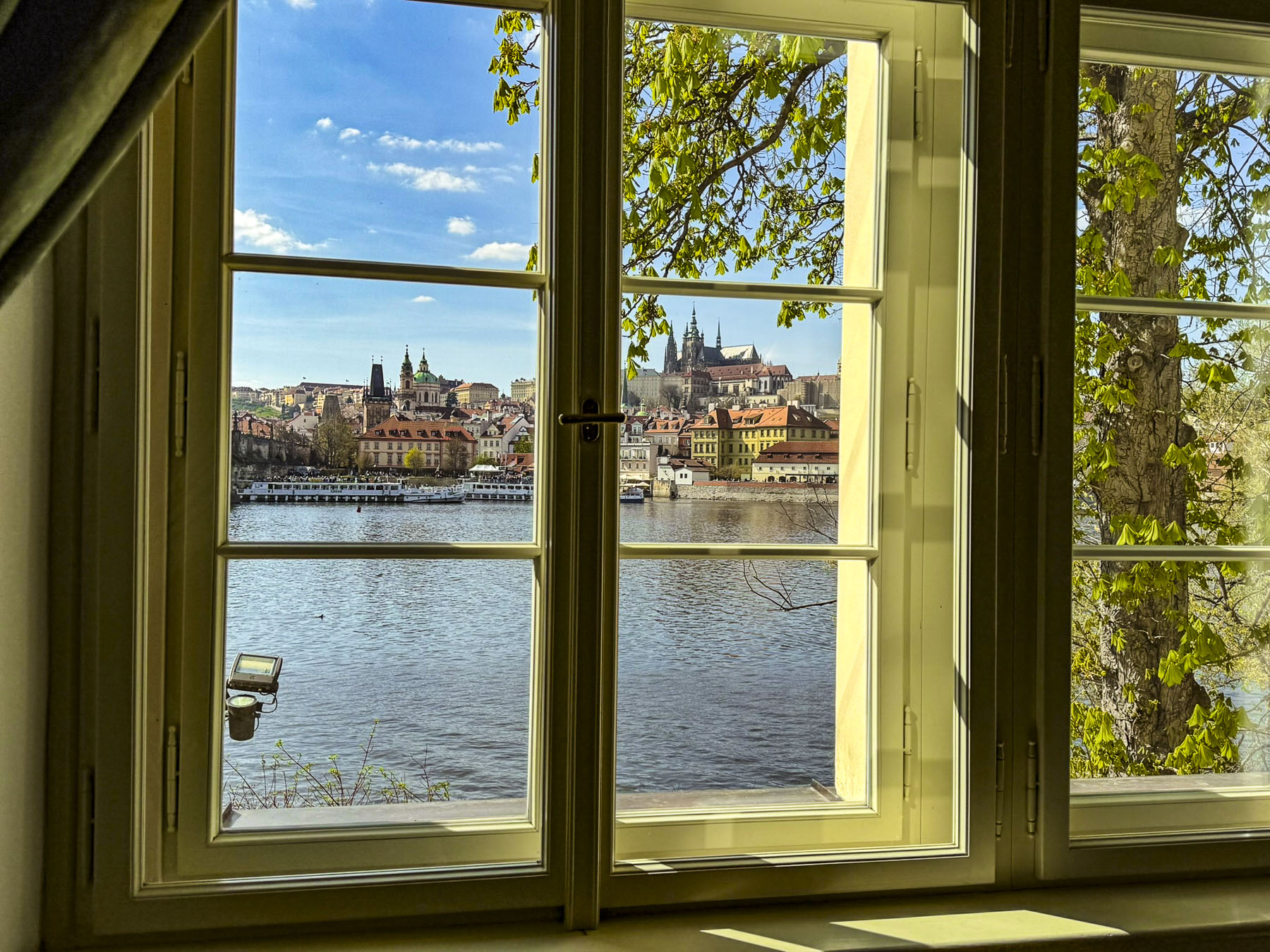
We are still amazed by the ingenuity of the stone masons who built the bridge and cathedrals in the city. The museum also has a window with one of the best views of Prague Castle across the river.
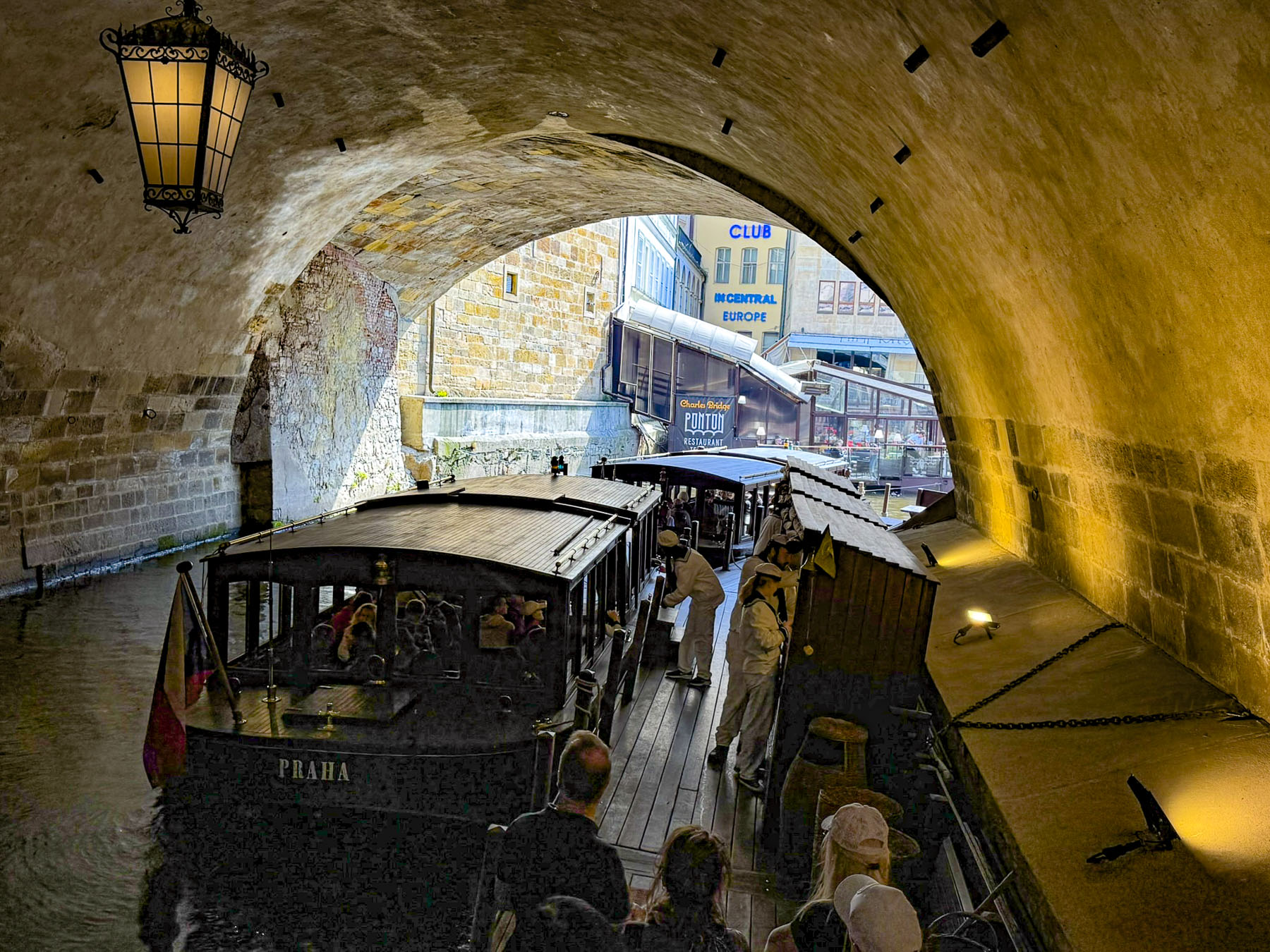
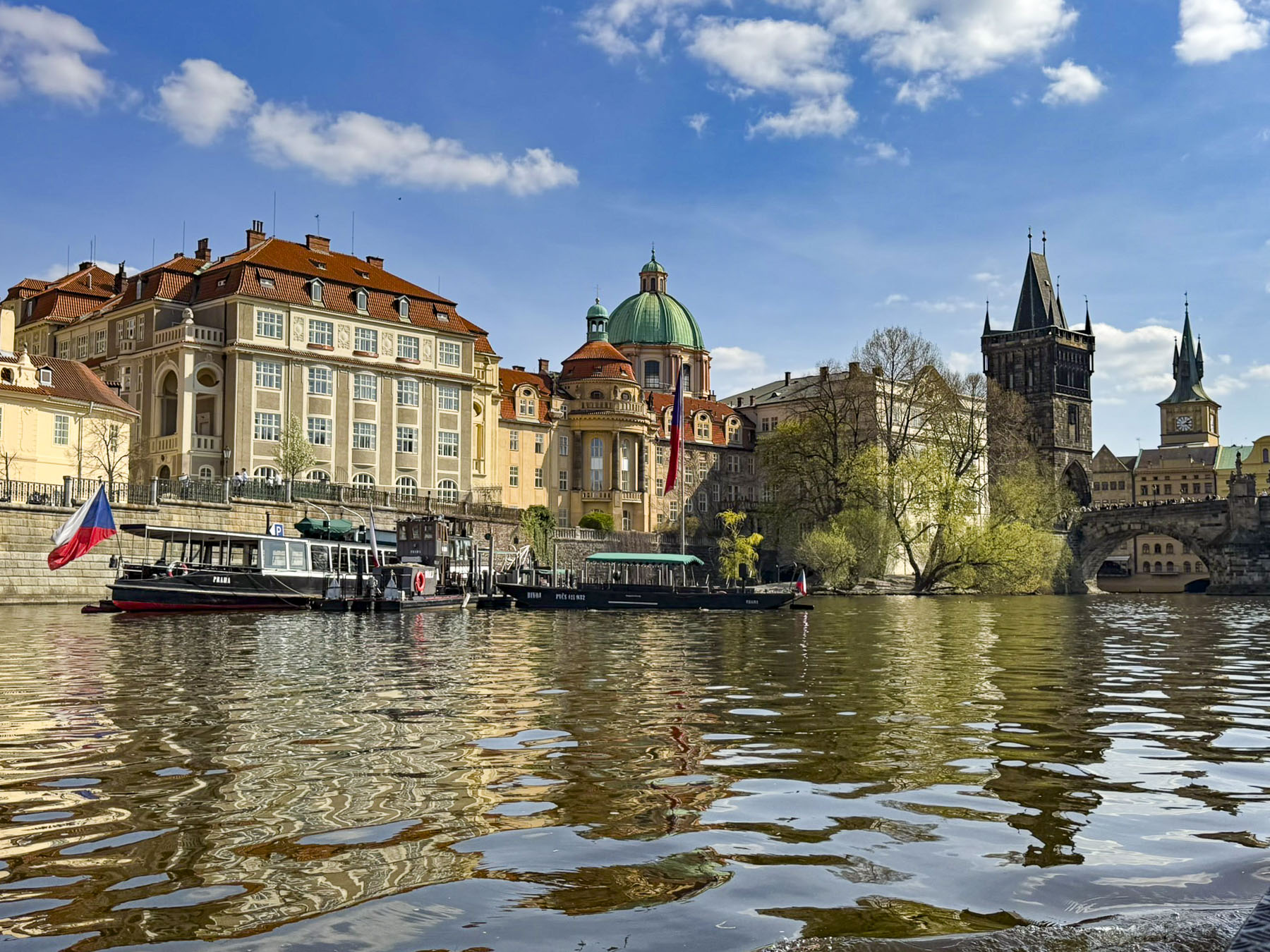
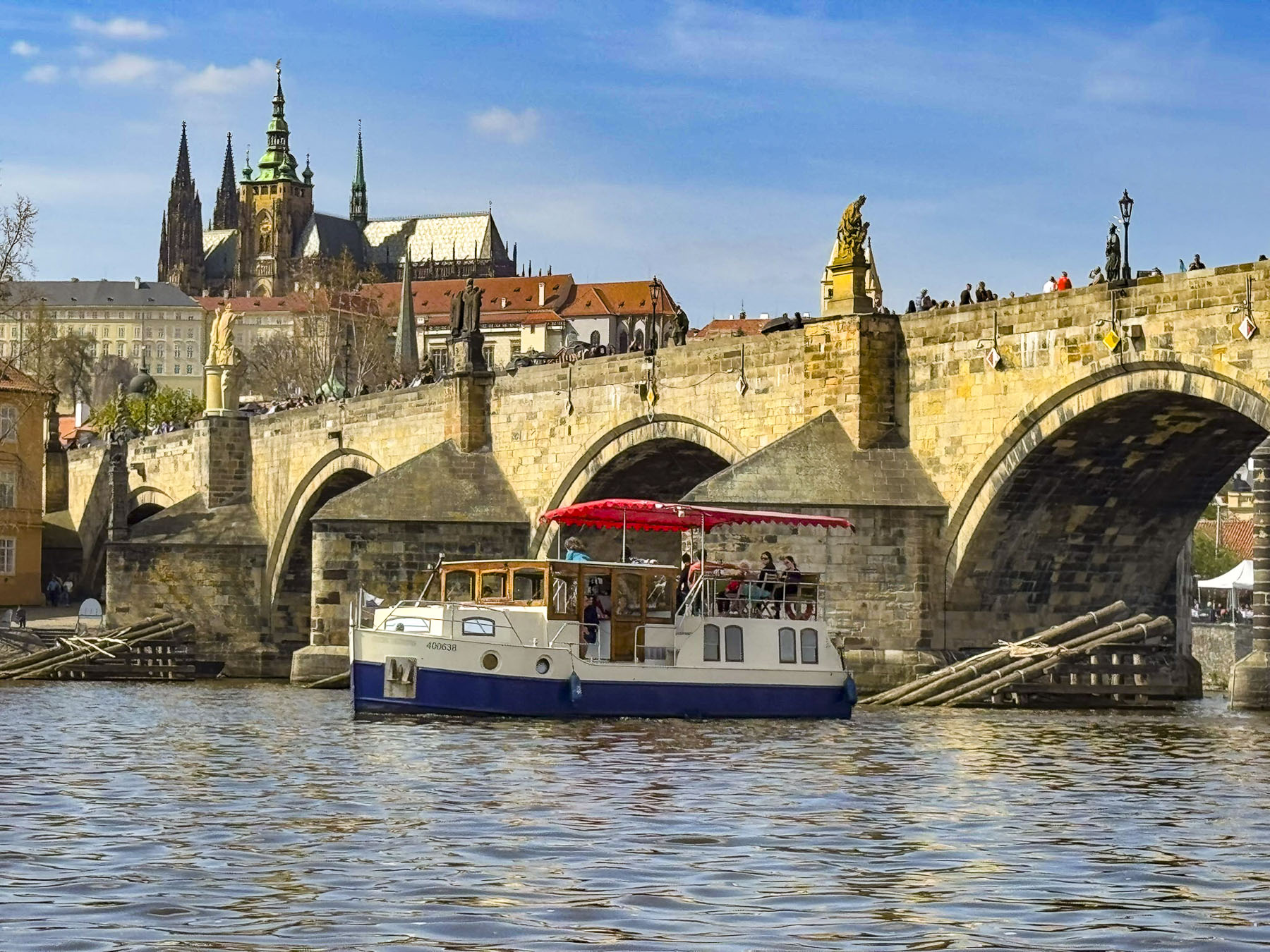
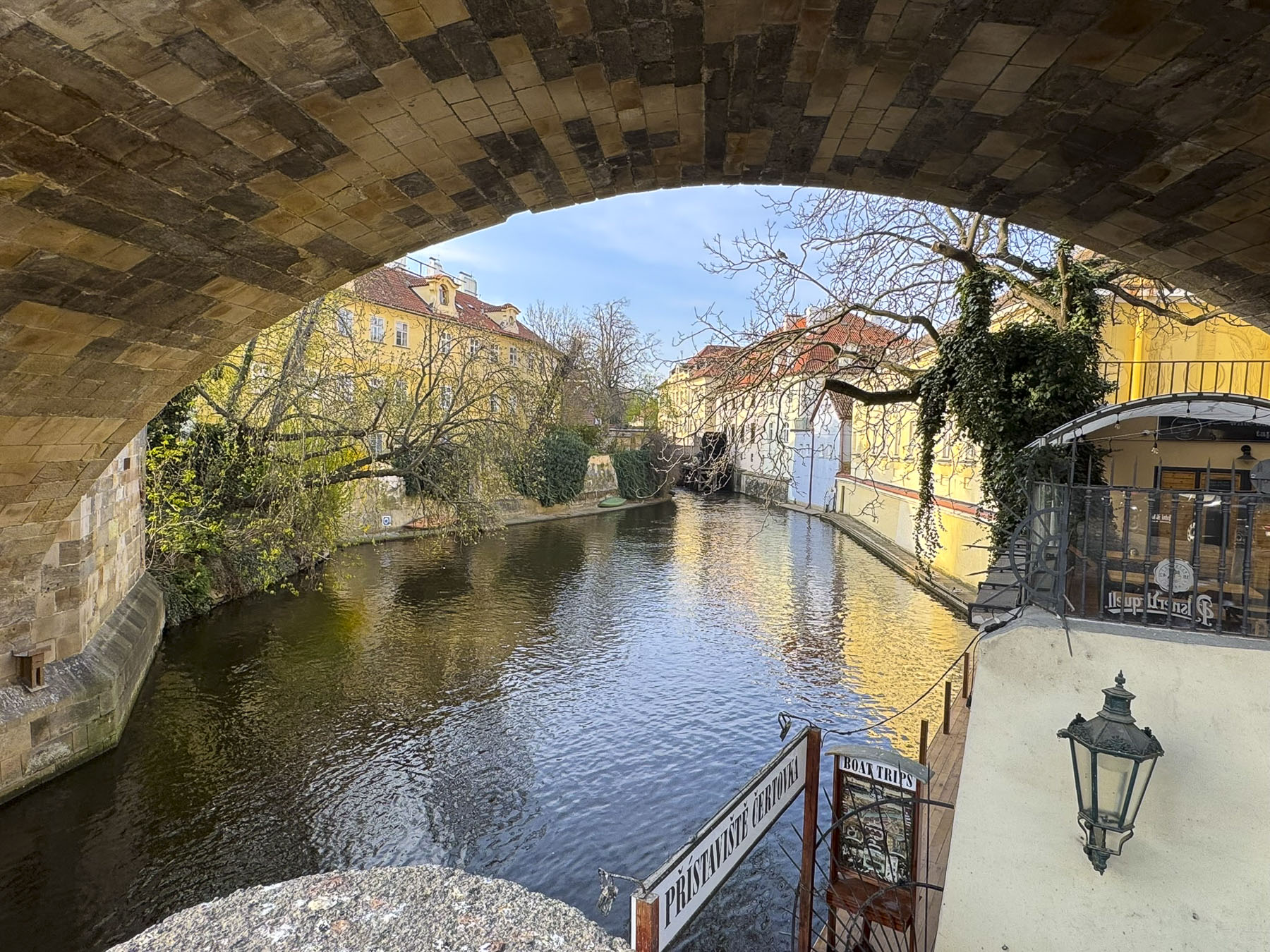
From the museum we took a Prague Venice Boat Trip, which originates from under one of the bridge’s arches at the foot of the bridge, out onto the Vltava River. It was a very nice experience and gave us a different perspective from which to view the city. During the boat ride the captain steered us close to a house on the west bank and pointed to a high-water mark on the side of a building. It was the result of a devasting 500-year flood that raised the level of the Vltava River 8m (26ft) above normal. The devastation was tremendous and forced 50,000 people to evacuate their homes.

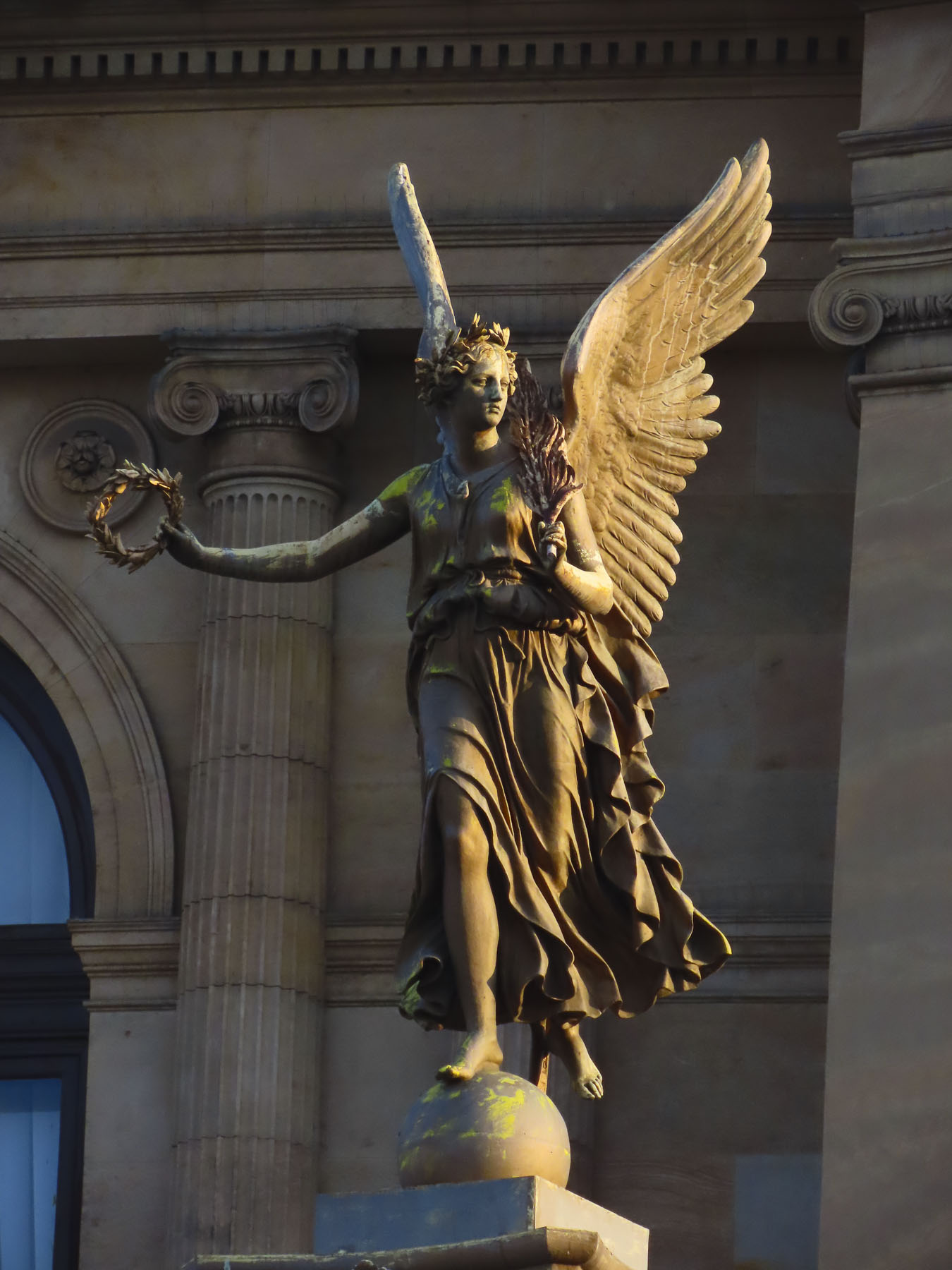

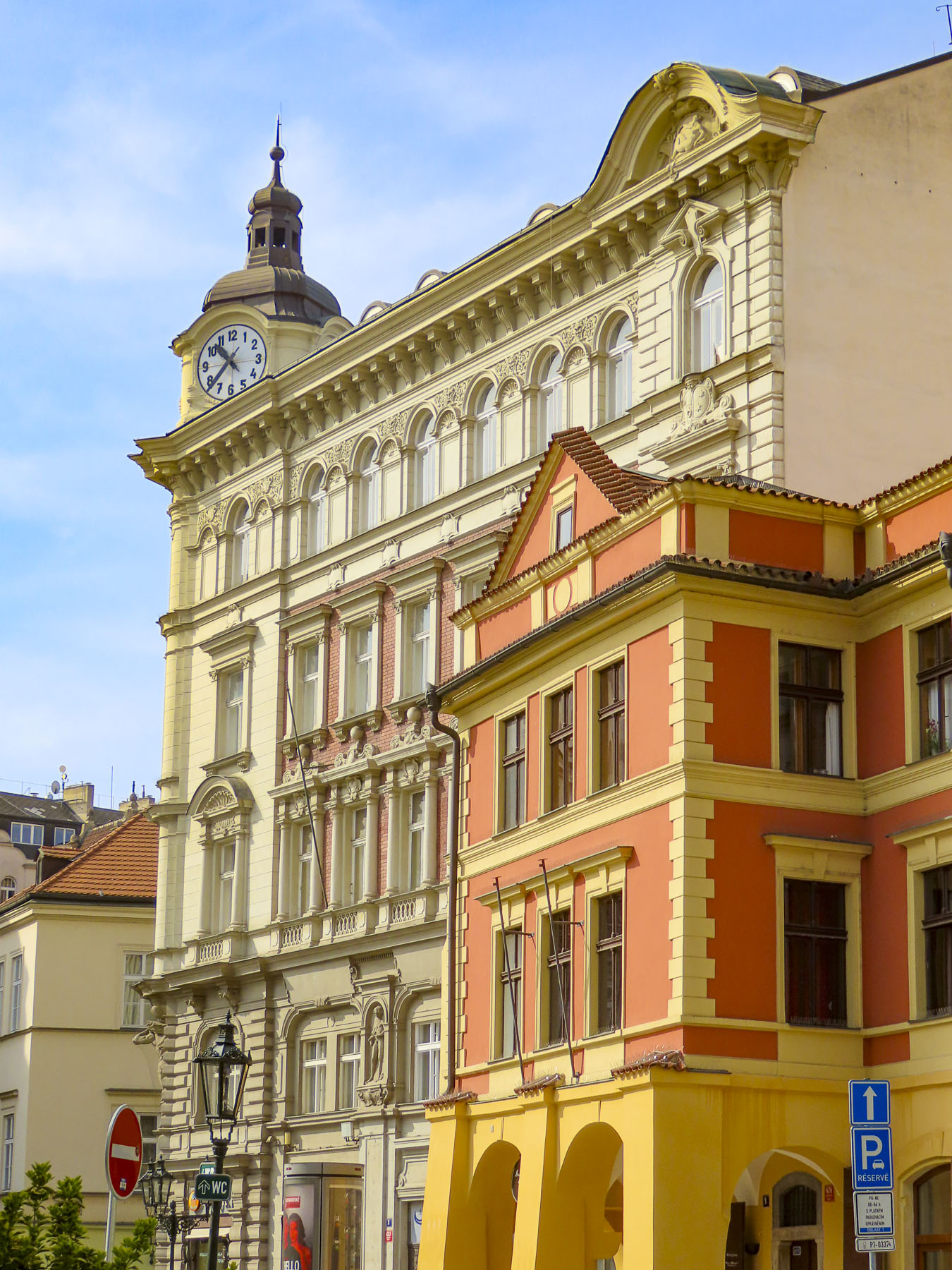
Walking back to the hotel we noticed numerous buildings with ornamentalist Art Nouveau facades featuring intricate details, natural forms and figures. The elaborate exterior decorations were popular during the late 1890s until the 1920s, when there was an effort to bring art into everyday life.
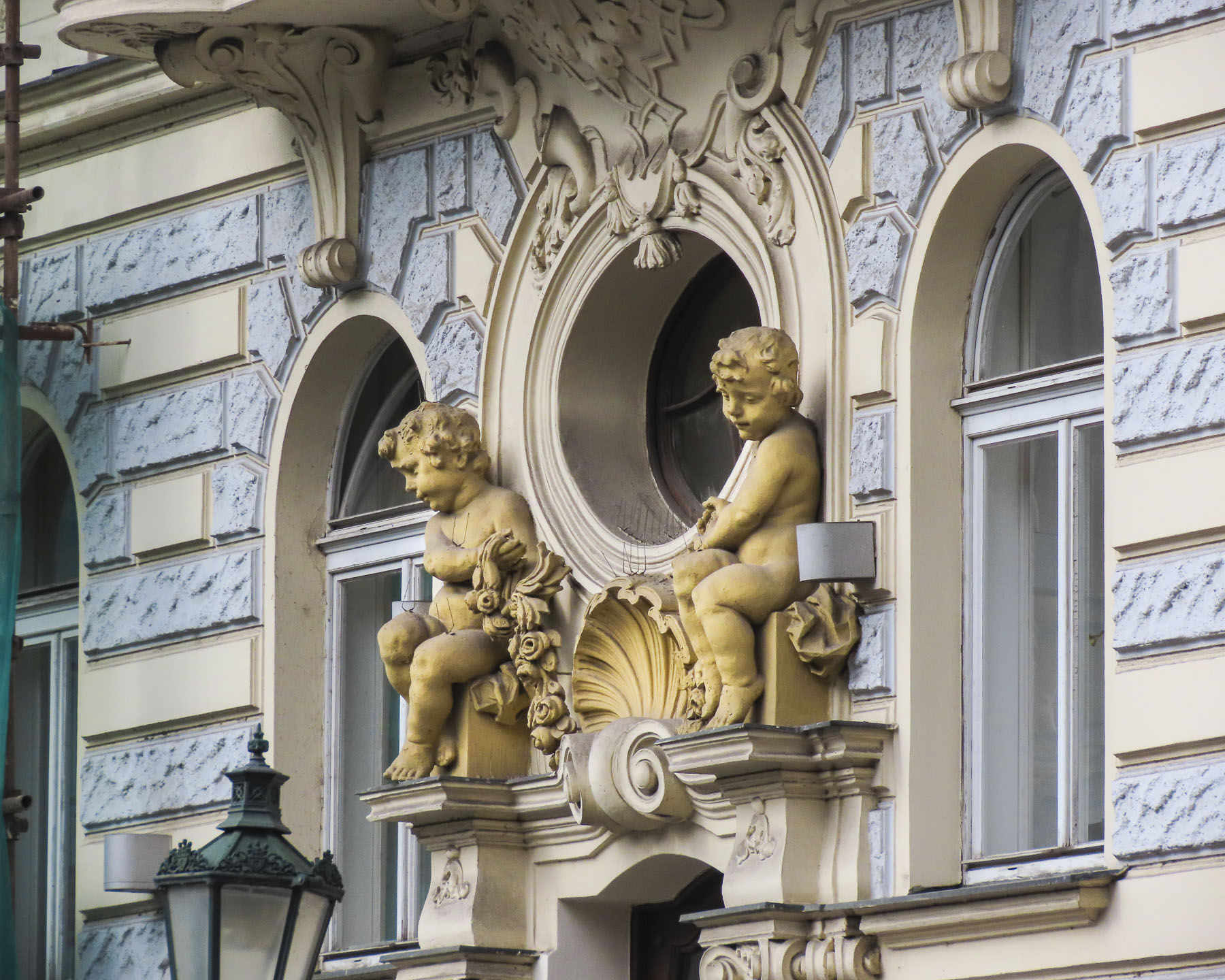
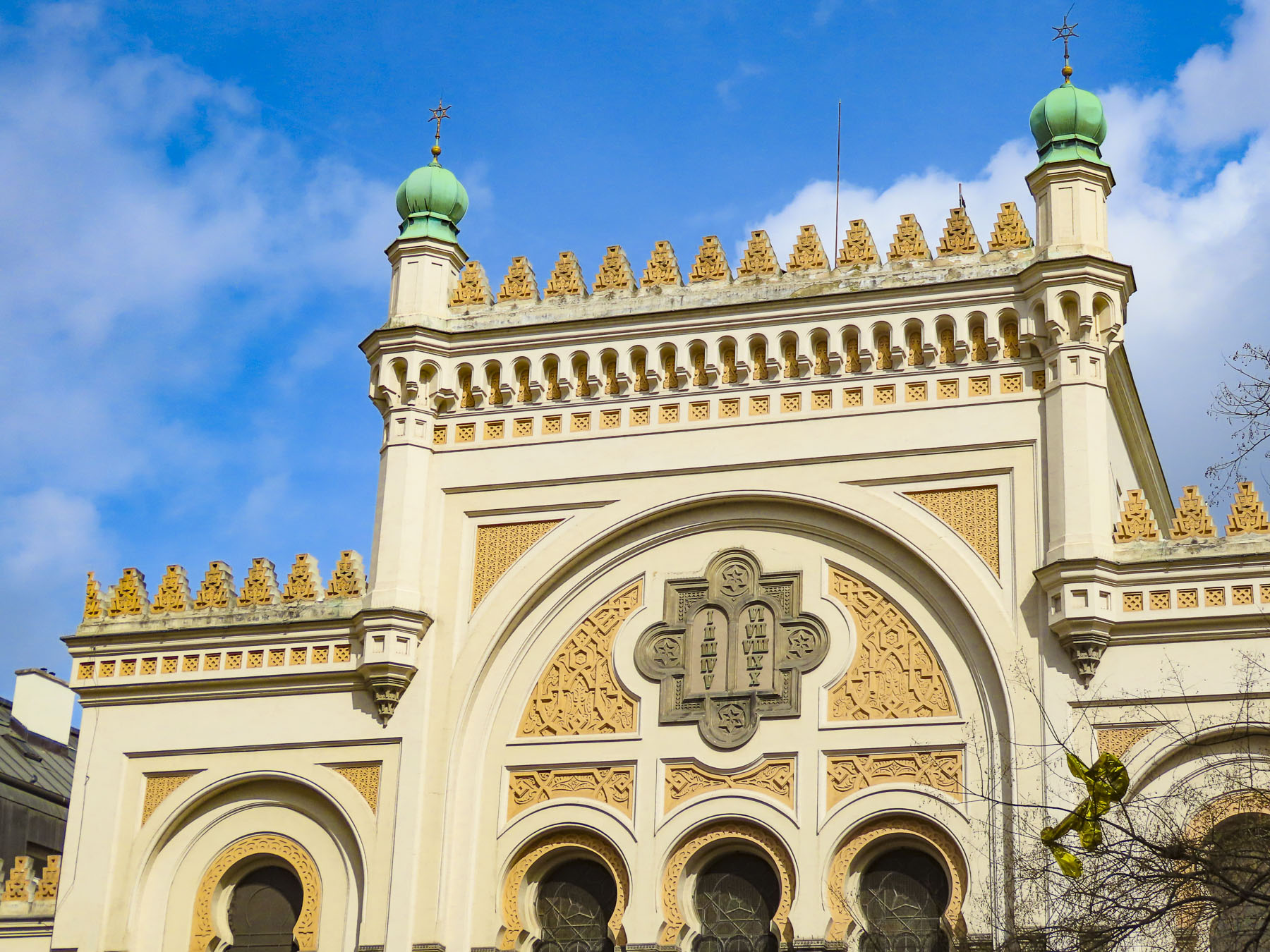


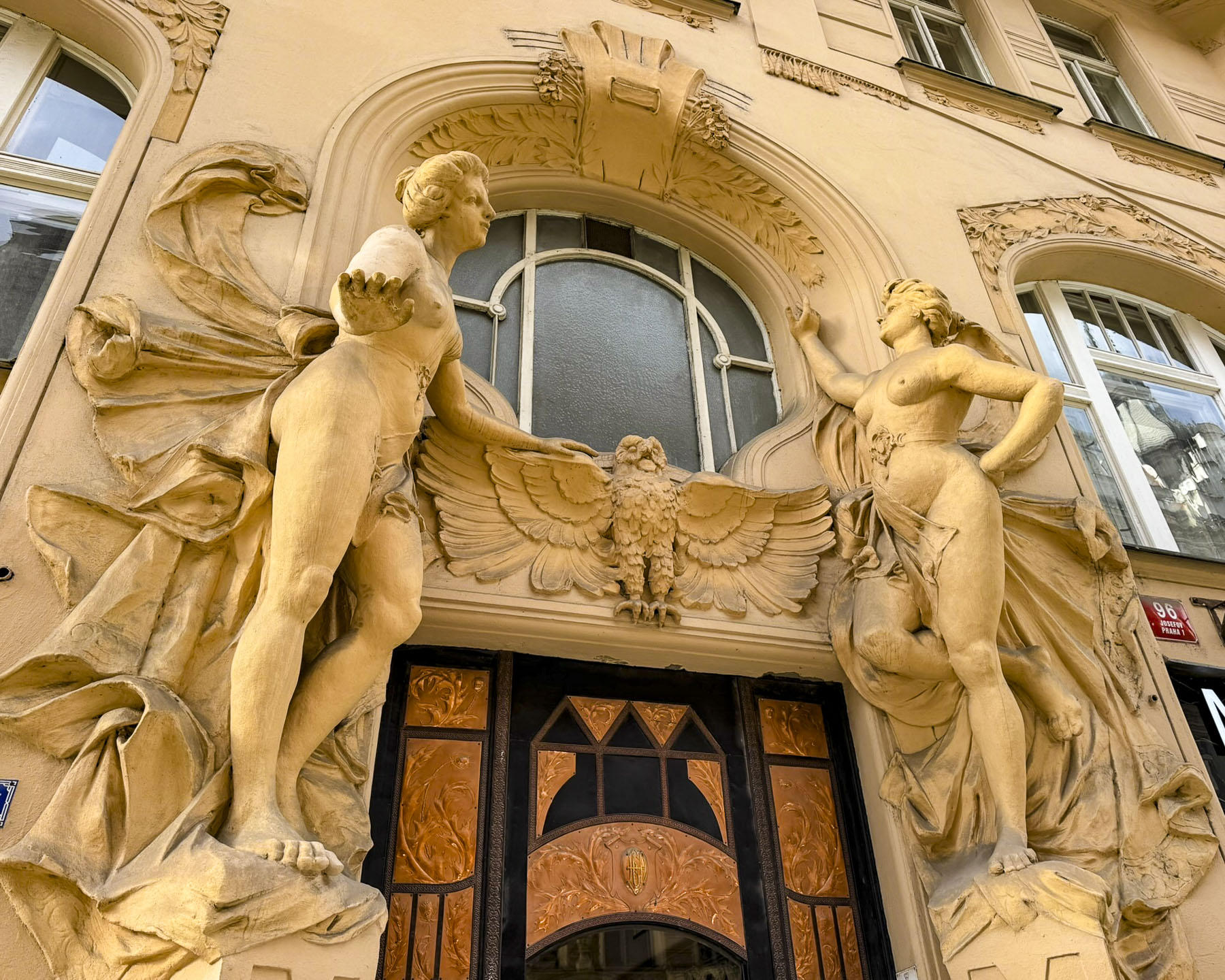
The streets between Mansson’s Bakery, a great spot for coffee and pastry, and Old Town Square are full of interesting buildings and atmospheric street scenes.


The next morning, we headed to the Municipal House, a 1905 concert hall, and the Powder Tower, an old Renaissance era gate to the city. The visual contrast between the two buildings was striking. Unfortunately, we missed visiting the Jubilee Synagogue, one of Prague’s finest examples of art nouveau design with a Moorish influence.
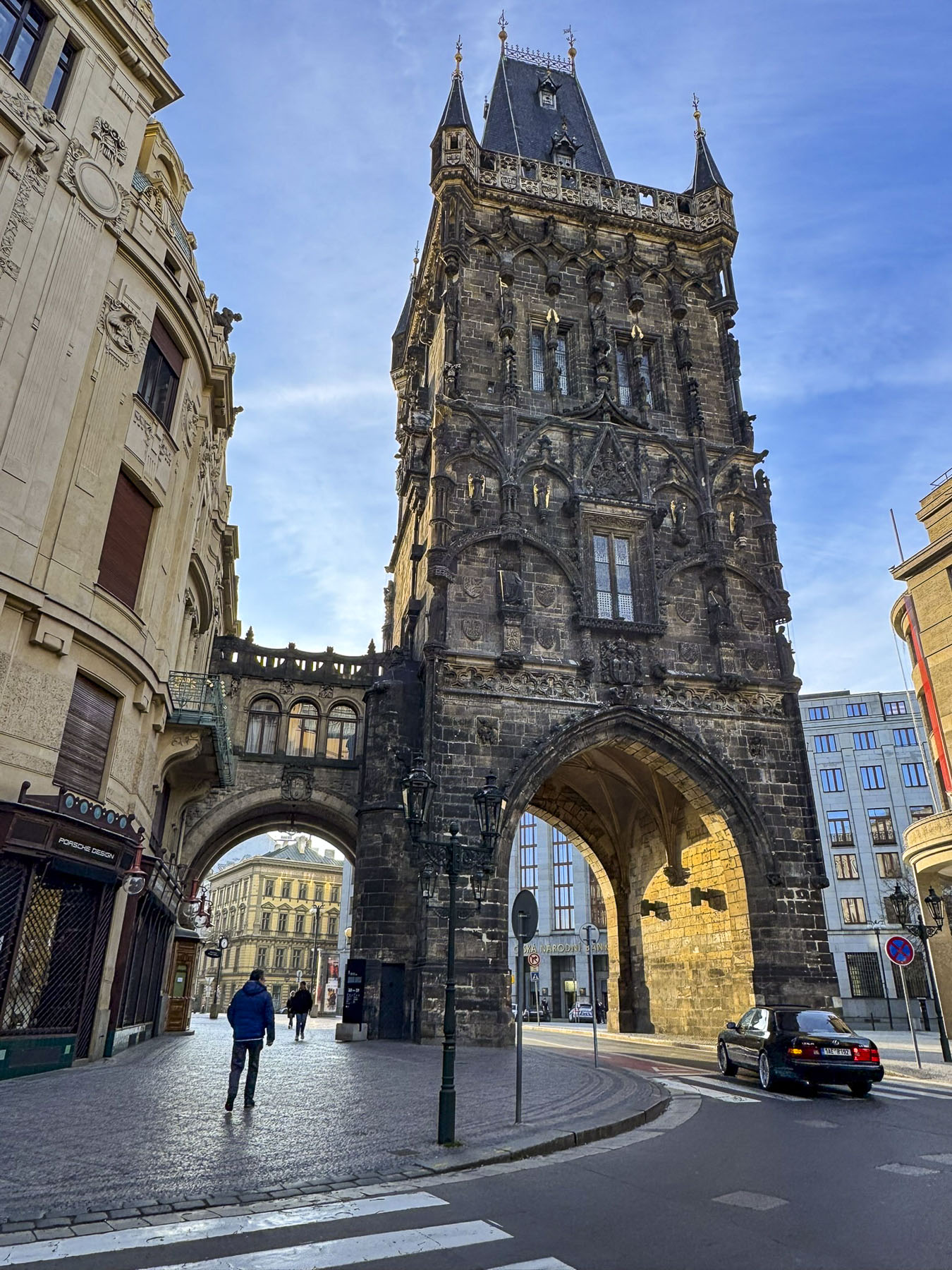


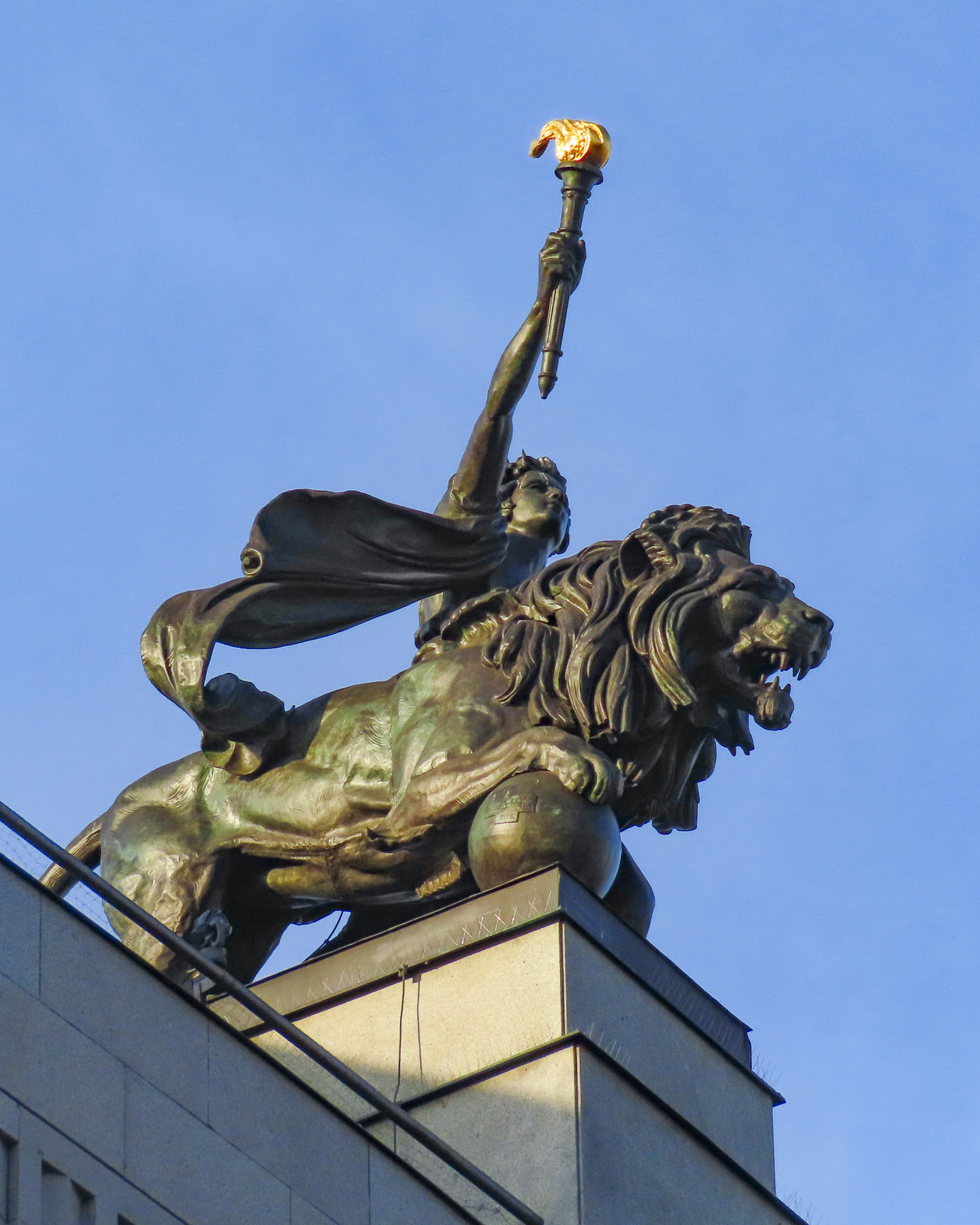
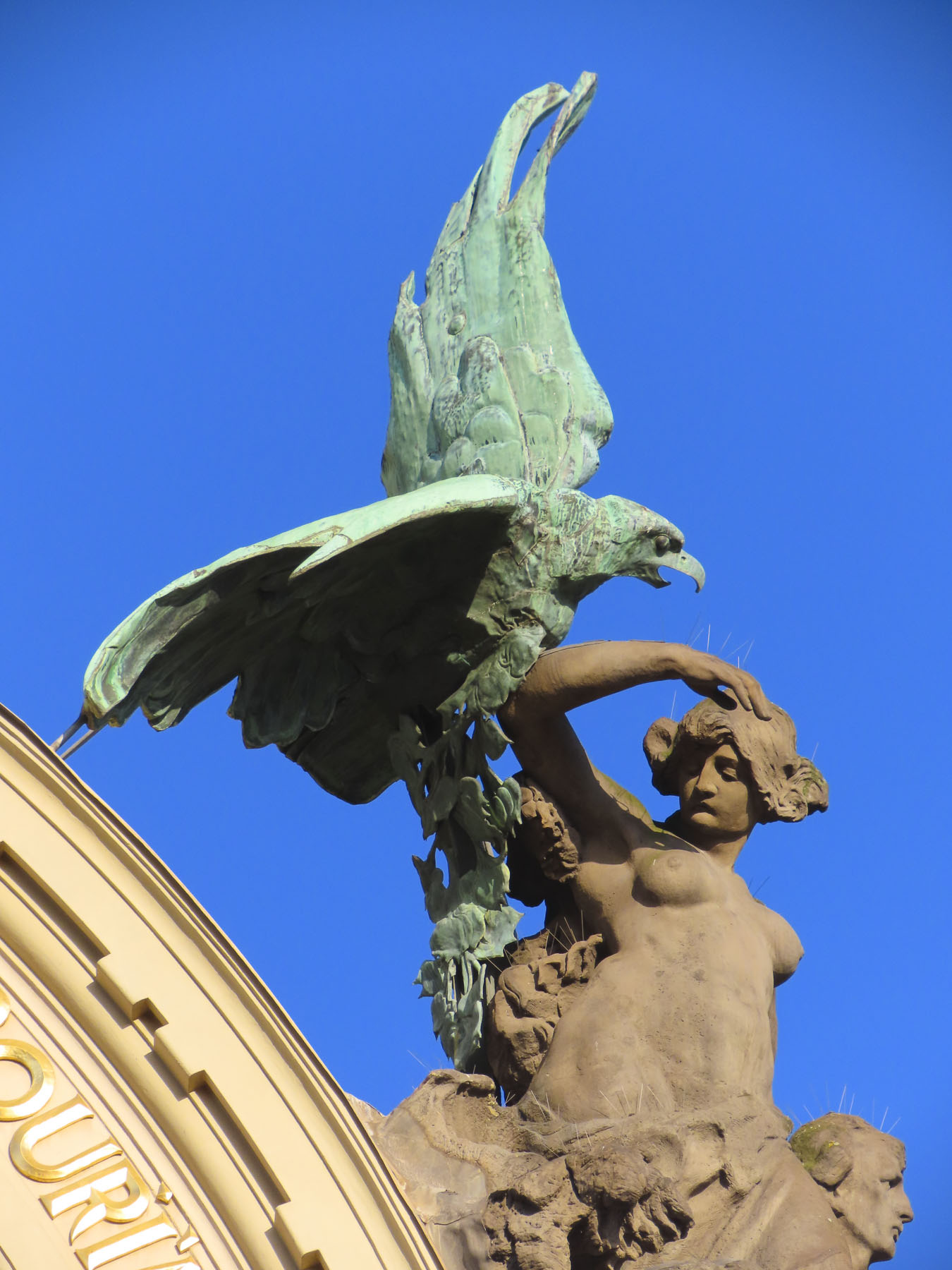
The architectural styles we encountered changed quickly from block to block and we were soon walking under an arcade which led to one of our best discoveries, Černá Madona, an amazing café where desserts and pastries are created as visually stunning pieces of art.
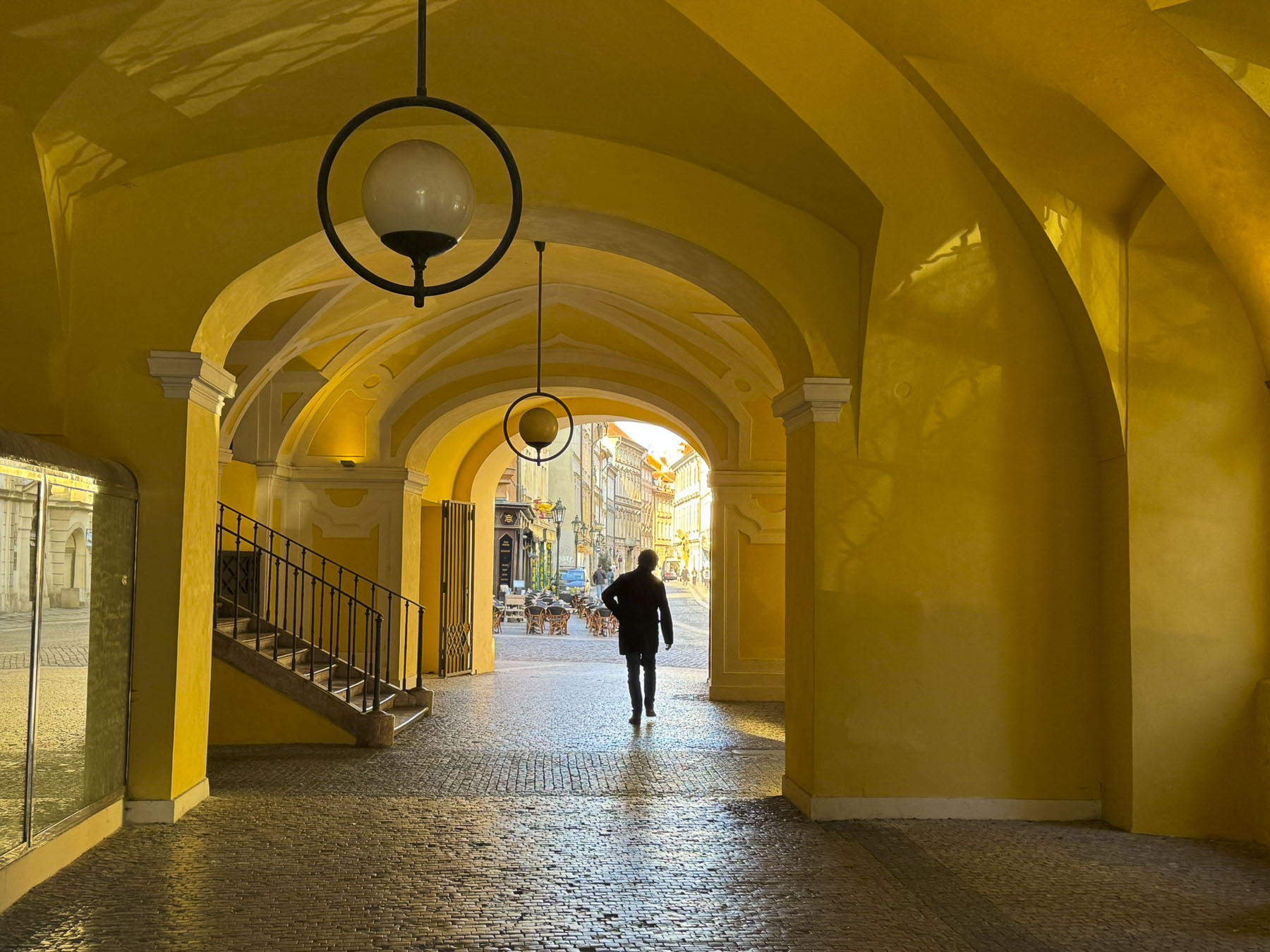


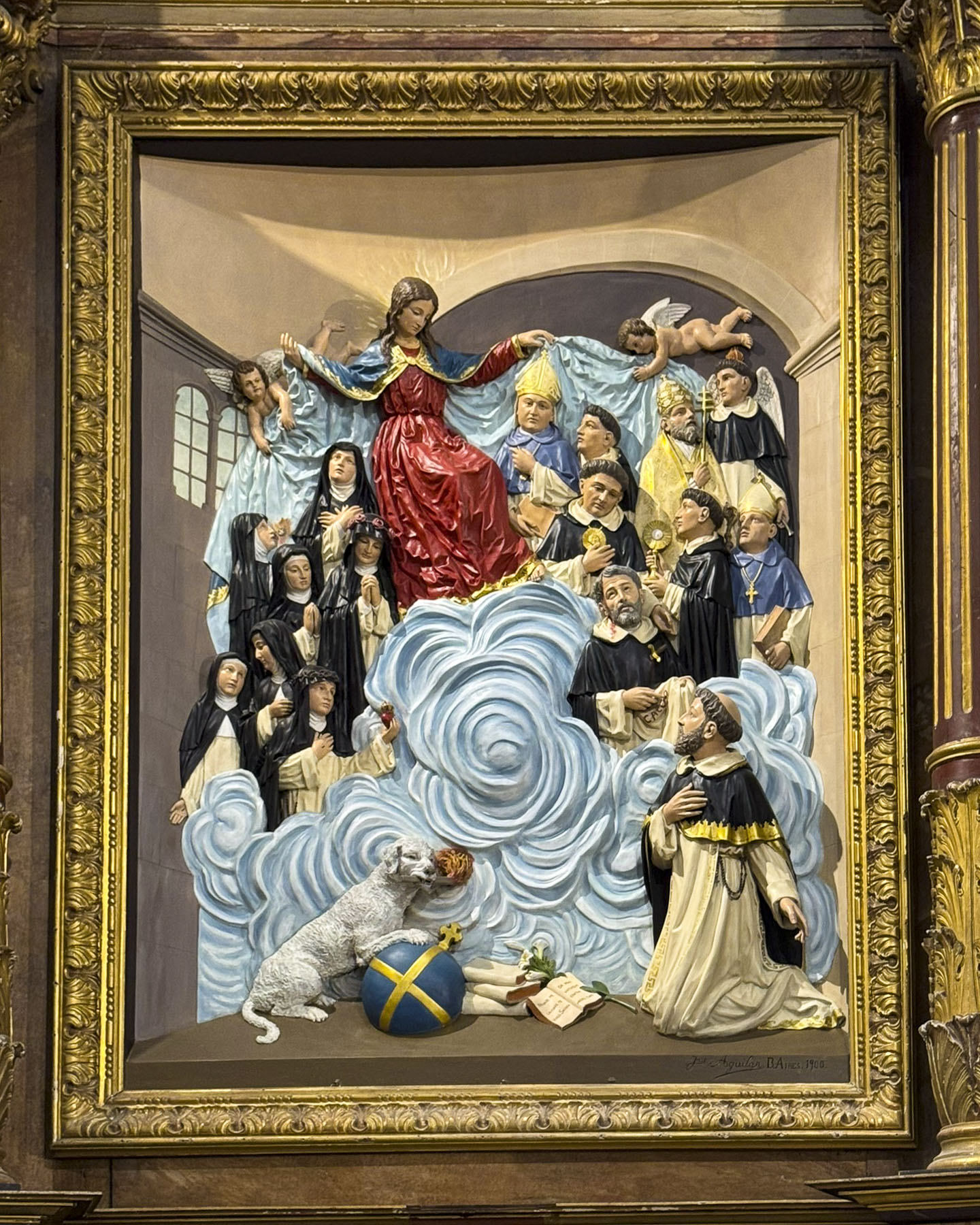
Nearby was the Basilica of St. James the Greater, that seemed inconspicuous at first, but when we rounded the corner to its entrance, we were captivated by a large stone relief sculpture above the door that depicted a fluid scene of saints, angels and cherubs ascending higher. It drew us in and we were enthralled by the church’s lavish 18th century Baroque interior, which was so busy with murals and sculptures we were not sure where to look first.


We returned to our hotel through the quaint Týn courtyard, which originally started as a fortified merchant’s warehouse, with workshops, and lodges, like a caravanserai, in the 11th century when Prague was part of the Holy Roman Empire. It was predominantly used by German traders who were required to pay their ungelt, a customs tax there.


This growing and prosperous German trading community eventually funded the construction of Church of Our Lady before Týn in the 14thcentury. By the early 1900s the courtyard’s glory days had passed and the buildings were neglected until a 1990s renovation of the area reestablished it as a tourist destination. One of the best dinners we had in the city was just down the street from the courtyard at the vegetarian/vegan restaurant Maitrea, where we enjoyed an absolutely delightful evening.

Many folks choose to walk up Zámecké Schody, the castle stairs, which start near St. Nicholas Church in Malá Strana to visit Prague Castle. But our knees are not what they used to be, and we used a Bolt ride to drop us off above the castle at Loreta Praha, a beautiful pilgrimage site built around a replica of the Holy House of Nazareth, which is believed to be the house where the Virgin Mary lived and received the Annunciation.


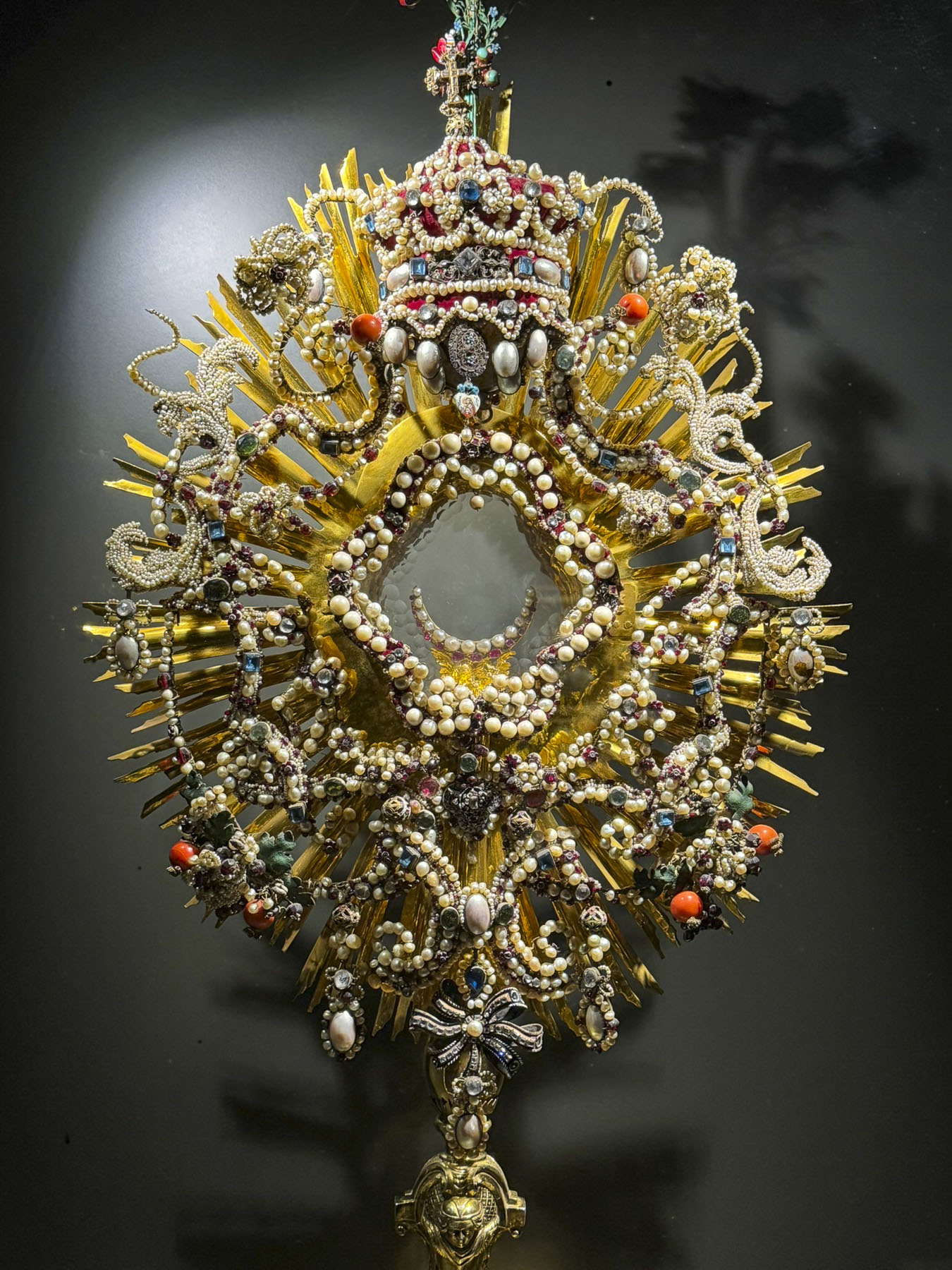
It is a fascinating complex with cloisters, the 18th century Church of the Nativity of Our Lord with a marvelous Roccoco interior, and the Loreto Treasury that safekeeps the shrine’s ecclesiastical treasures; the centerpiece of its collection is the Prague Sun, an ornate 17th century monstrance with 6,222 diamonds, which was crafted in Vienna.
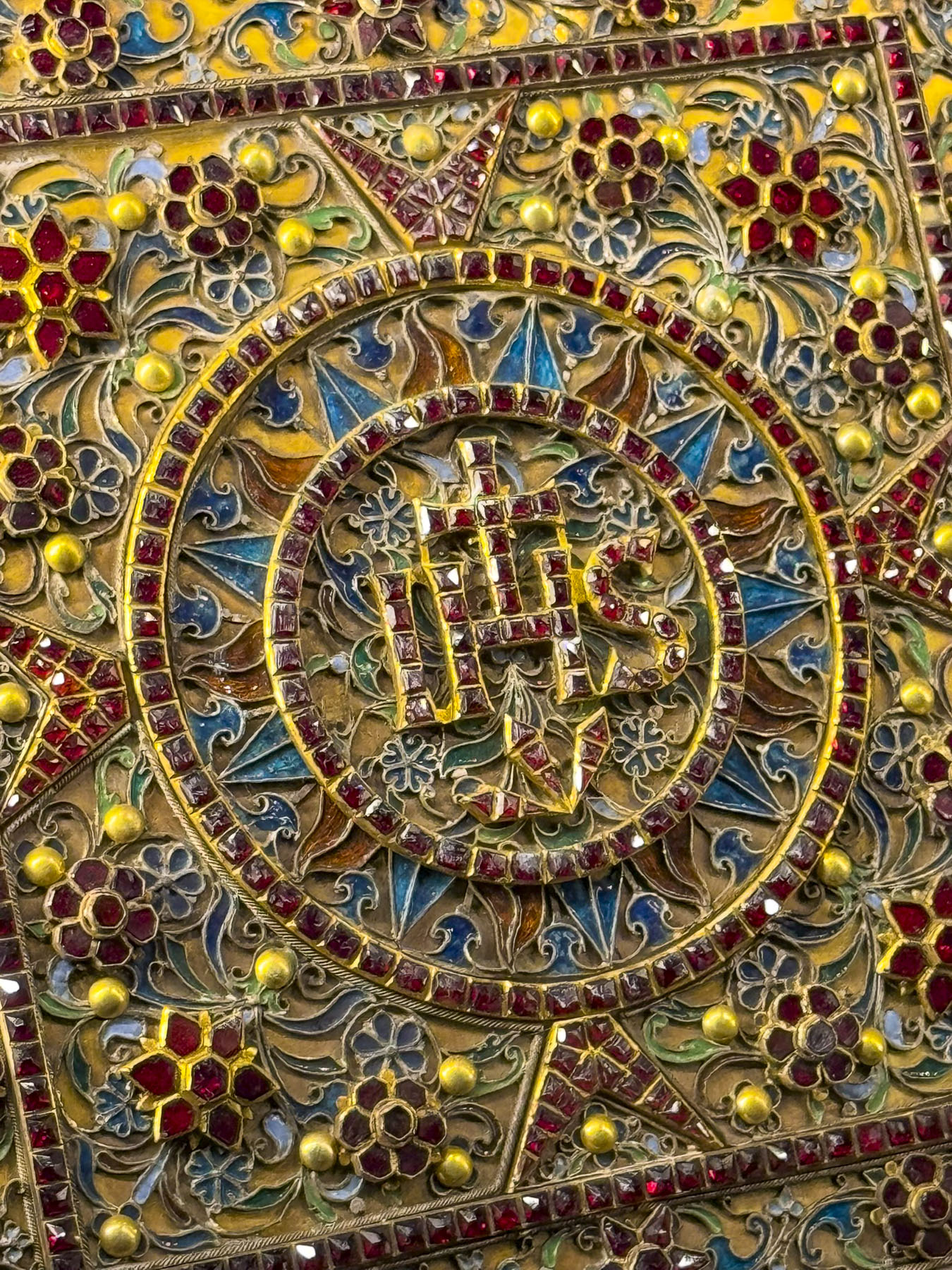


In 2011 a long forgotten 1600s crypt was rediscovered at Loreto. Opening it unexpectedly revealed a tomb covered in gruesome yet heavenly black and white frescoes, the artwork copies of works by Dutch artists that included Rembrandt, Govert Flinck, David Vinckboons, and Hendrick Goltzius. The artist who created them was assumed to be an unknown monk. A full-size recreation of the crypt is now on display in the Loreto museum.


It was a pleasant downhill walk from the shrine to Prague Castle, passing fascinating examples of period architecture along the way, particularly Schwarzenberský Palace, a Renaissance era building that is now a museum featuring a collection of historic Czech art and medieval weaponry.
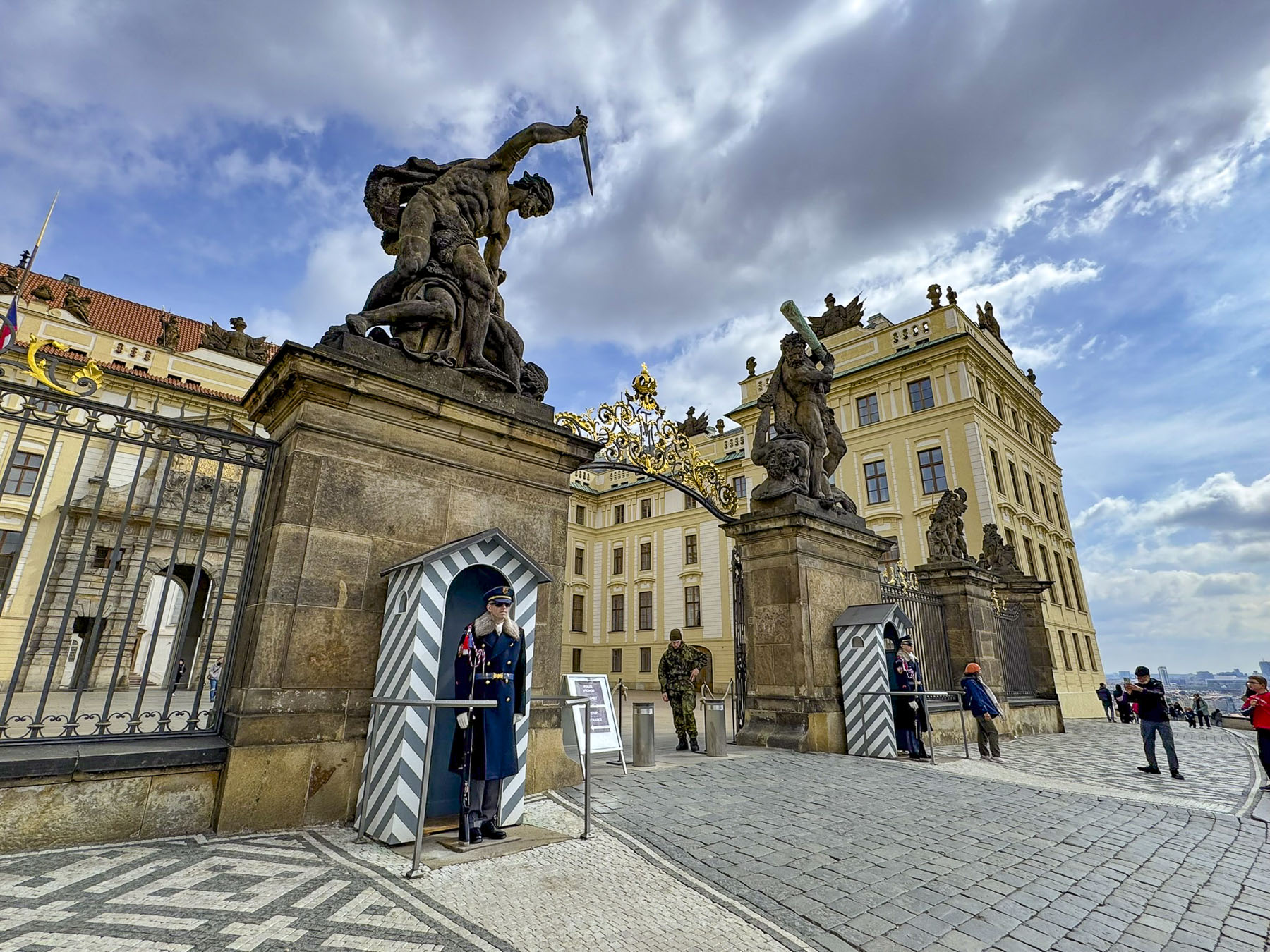
A crowd was gathering in front of the Castle in expectation of the changing of the guard ceremony which occurs every hour at the ornamental gate in front of the palace’s first courtyard. The gate features a monumental sculpture called the Clash of the Titans-Standbeeld which towers over the zebra striped guardhouses.
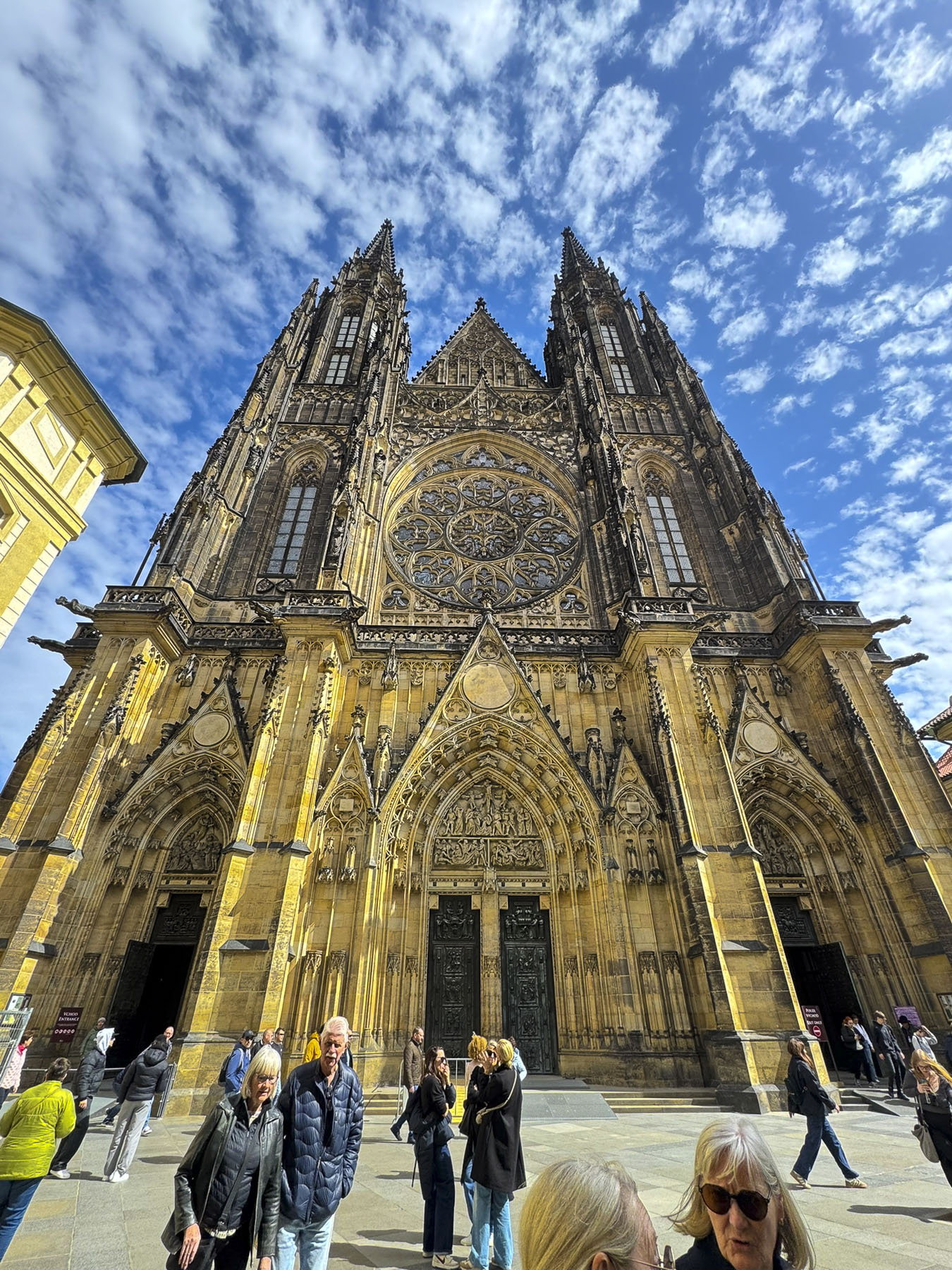


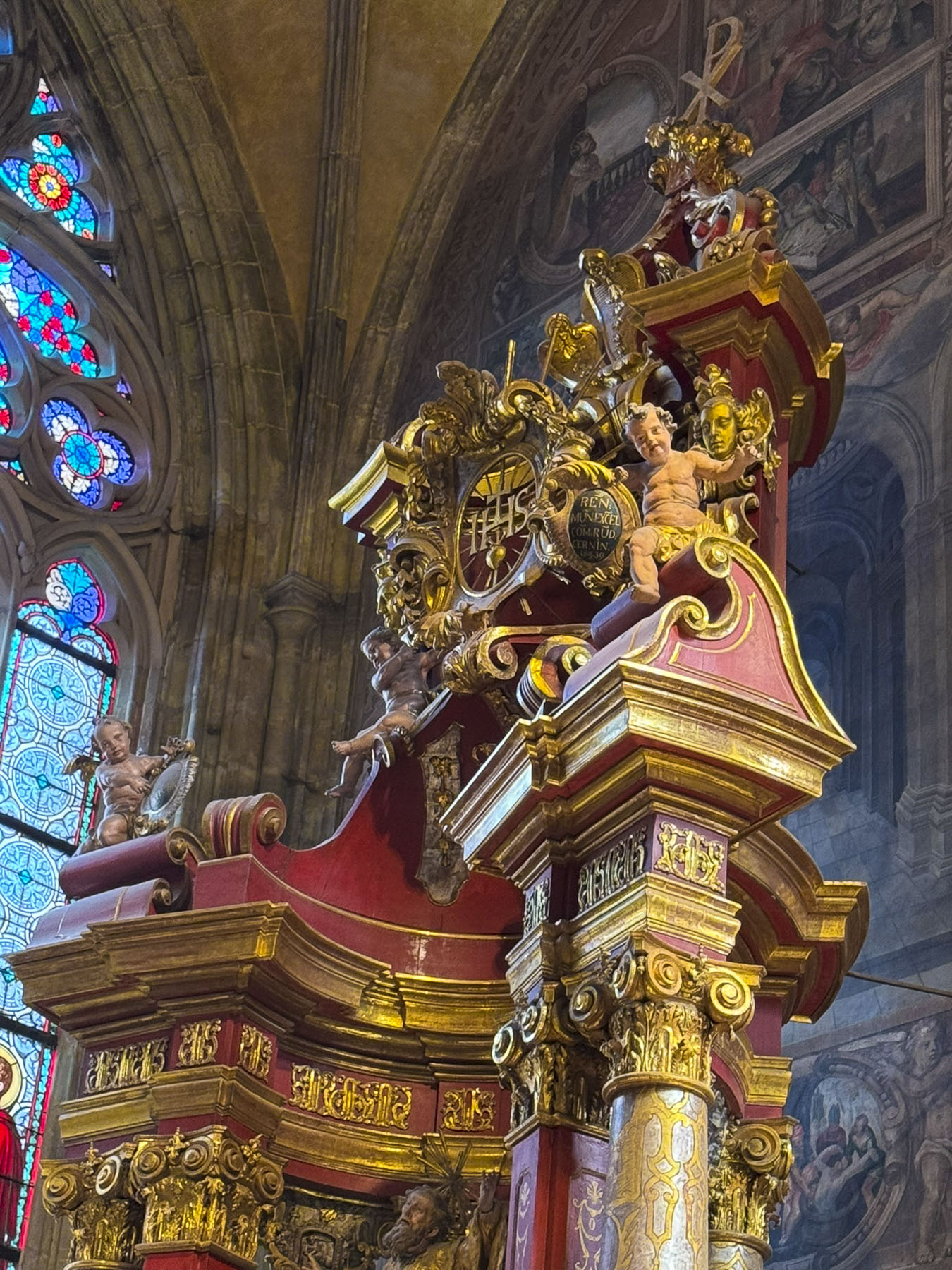

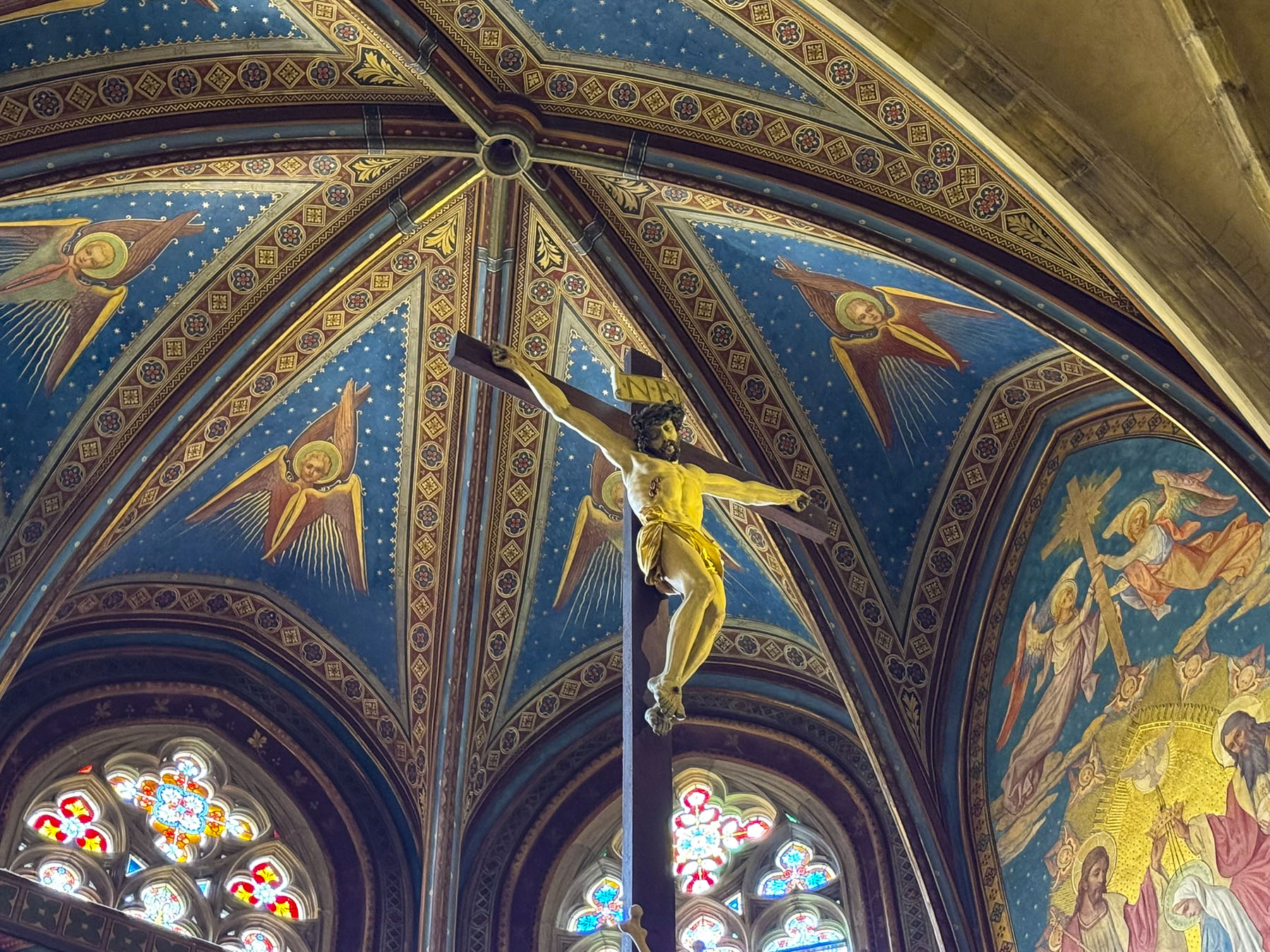

The castle is a sprawling array of majestically scaled buildings, the most impressive of which was St. Vitus Cathedral, with its beautiful interior, and the elaborate silver crypt of St John of Nepomuk, which dominates a side aisle of the church.


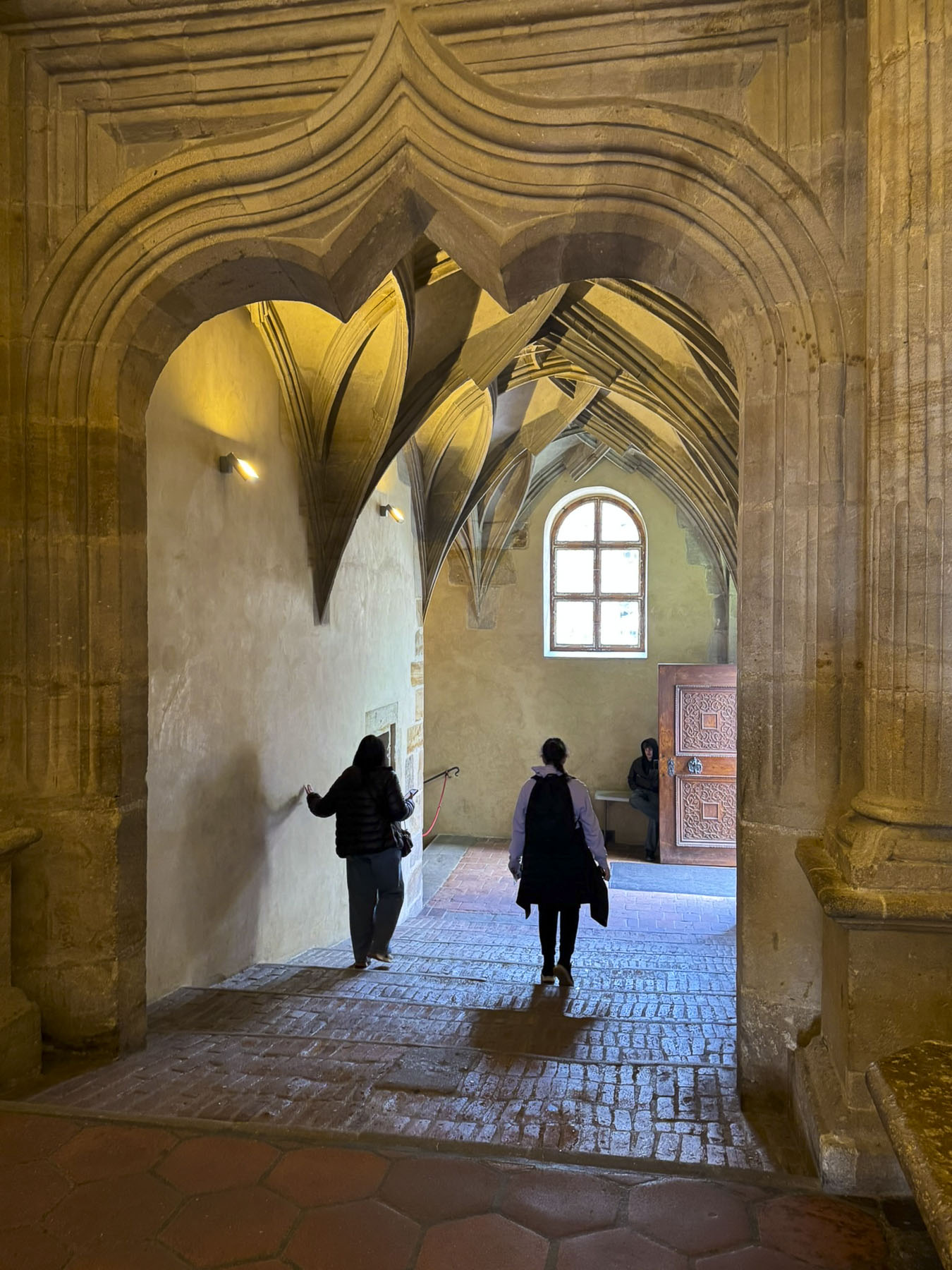

Construction of the Gothic cathedral started in 1344, but wasn’t fully completed until 1929. The delay was caused by devasting plagues and centuries of wars. The scale of the grand banquet hall in the royal place was also impressive.
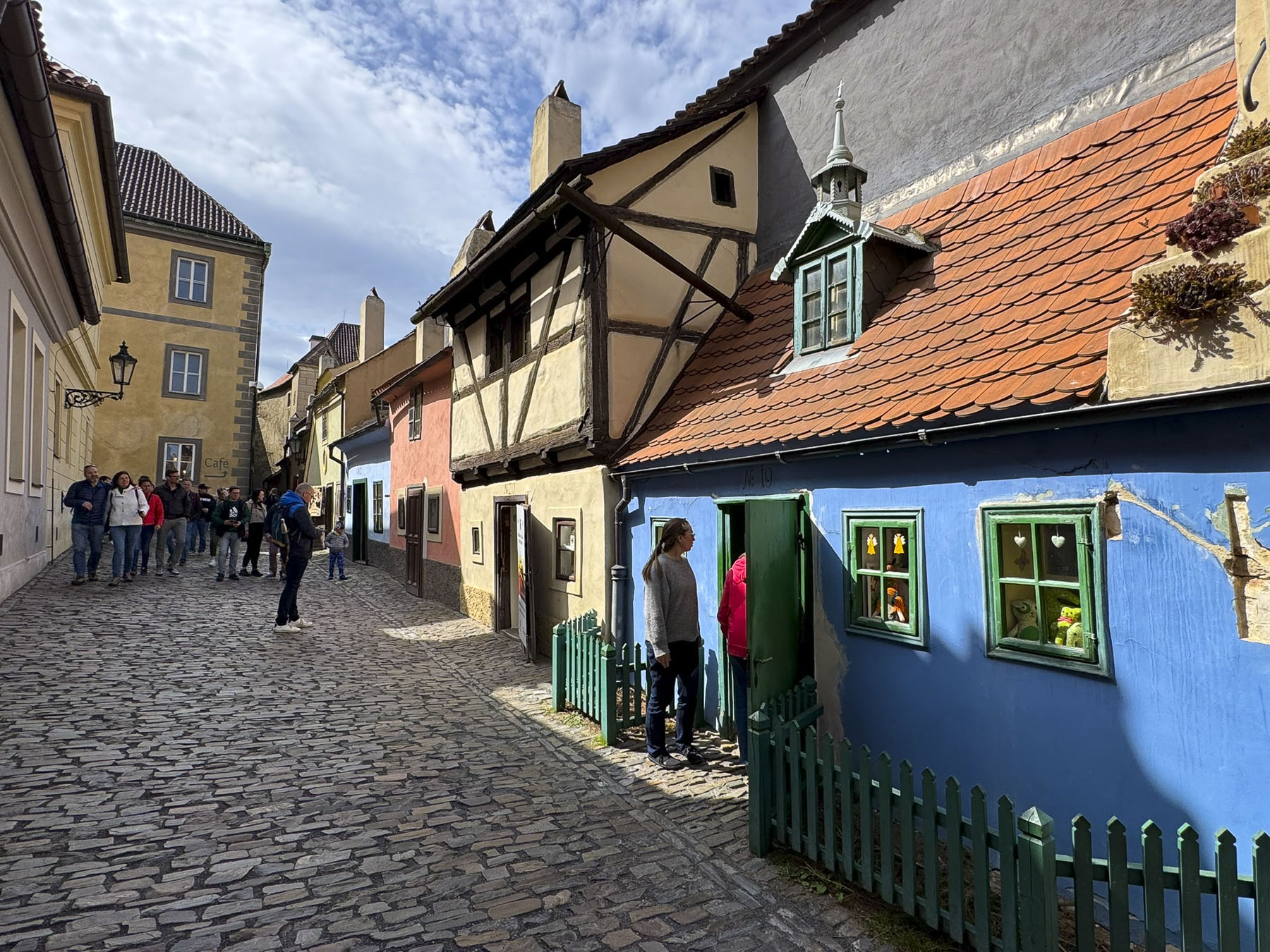
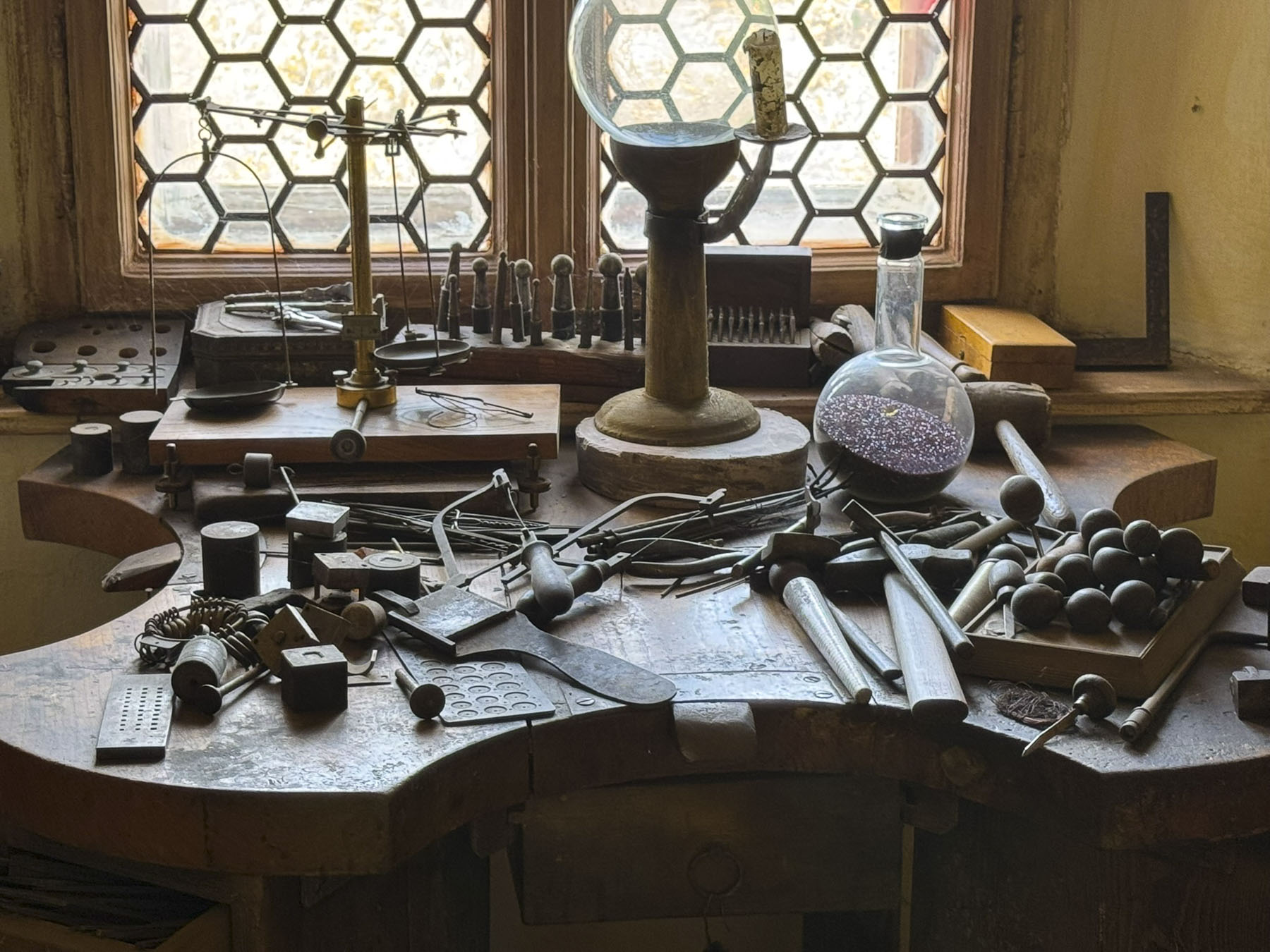
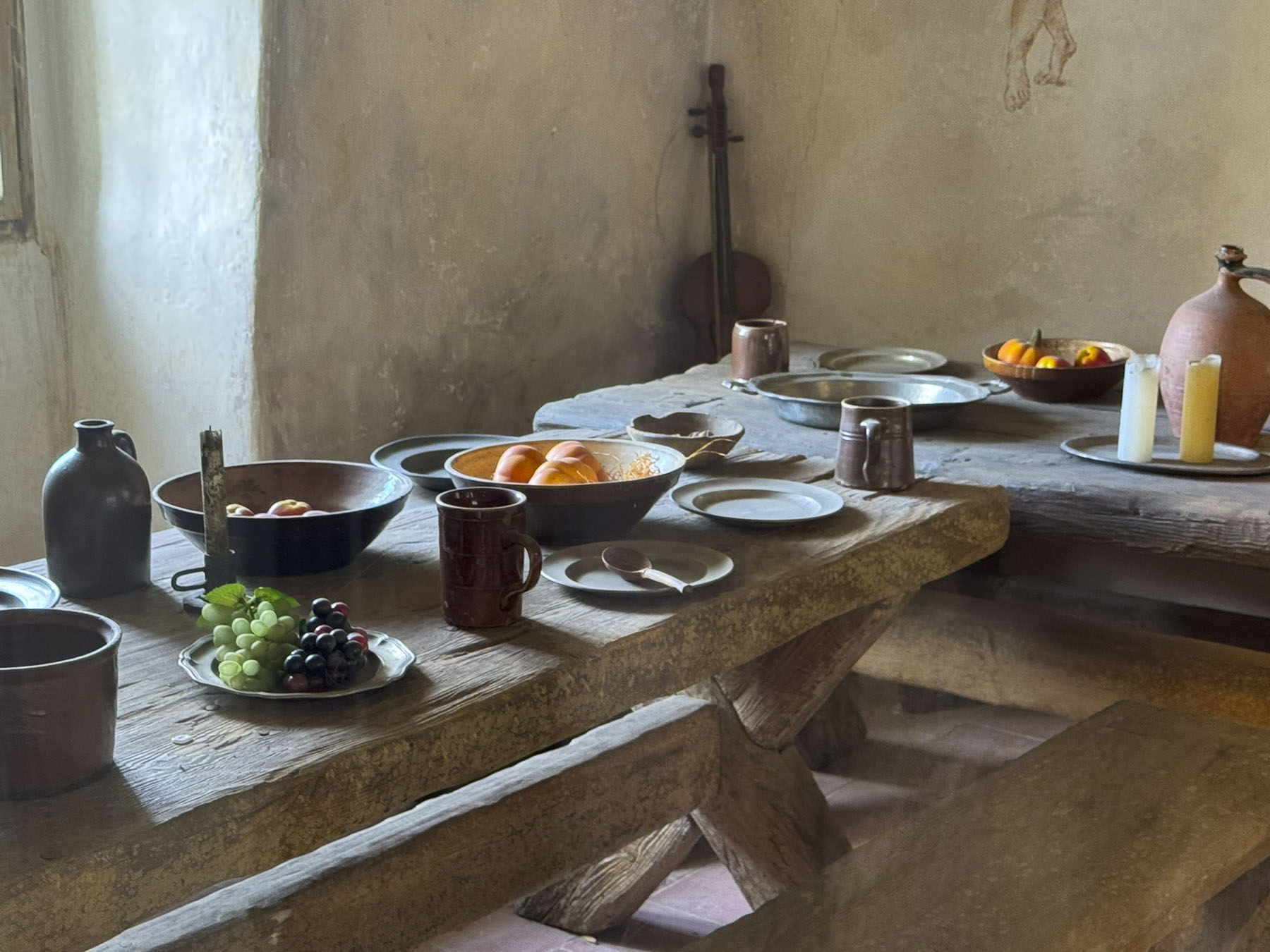
It should really be part of the overall ticket to the castle, but unfortunately there is a separate entrance fee to Zlatá ulička u Daliborky, the “Golden Lane,” a row of buildings first used as barracks for the castle guards, but later the home of numerous goldsmiths that setup shops along it. The street was somewhat interesting, but can surely be missed if you are budgeting.


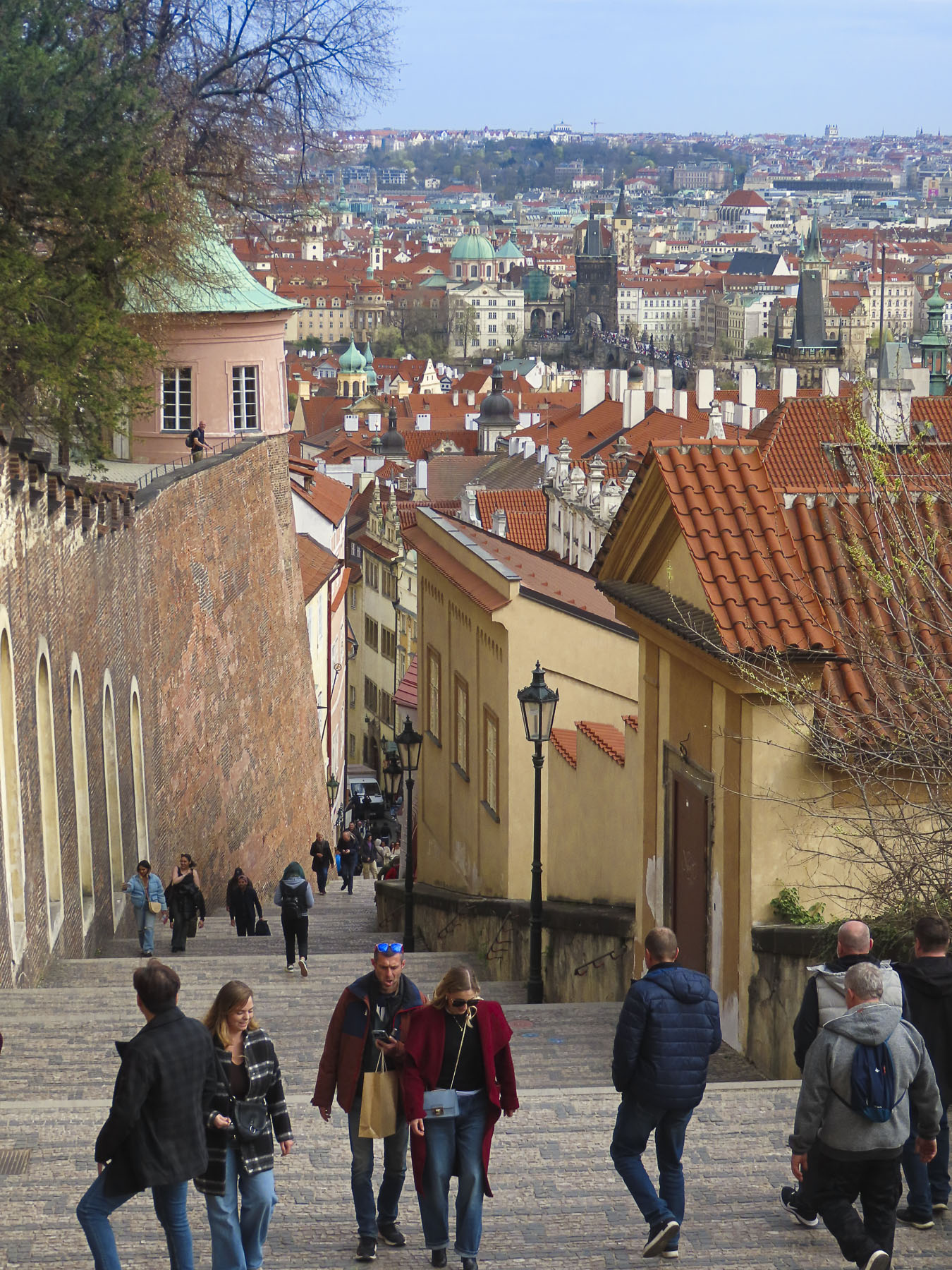
They are a number of spots within the castle grounds that have scenic views of Prague, but the best was at the mirador at the top of Zámecké Schody, the castle stairs, that lead back down to the Lesser Town.

On our last day in Prague we set out on a long walk to see the Dancing House, built in 1992, a deconstructivist project by Croatian-Czech architect Vlado Milunić and Canadian-American architect Frank Gehry that emphasizes a fluid asymmetrical design in the New Town section of the city. The undulating shape of the building has earned it the nickname Fred and Ginger (after the famous dancers Fred Astaire and Ginger Rogers). It stands out strikingly from the 19th century buildings which surround it.


Afterwards we set out on a route that zigged and zagged across New Town to see several interesting sculptures, which unbeknownst to us at the time, were more works of Prague’s favorite hometown artist David Černý. We first came across his large aircraft shaped butterflies with moveable wings that hang on the façade of the Levels’ building, an ultra-modern gaming facility. “The butterflies symbolize peace, while the Spitfire aircraft represents war,” and are a tribute to the 359 Czechoslovak fighter pilots, who served in RAF squadrons during World War II.

We enjoyed wandering in part of the city we hadn’t previously explored. There seemed to be something that interested us down every lane.




Eventually we arrived at Černý’s Franz Kafka head, a 11m (36ft) tall stainless steel kinetic sculpture of the writer’s head that is composed of 42 layers that shift on a regular schedule to alter the head’s shape. It draws quite a crowd that patiently waits for the subtle changes to happen.

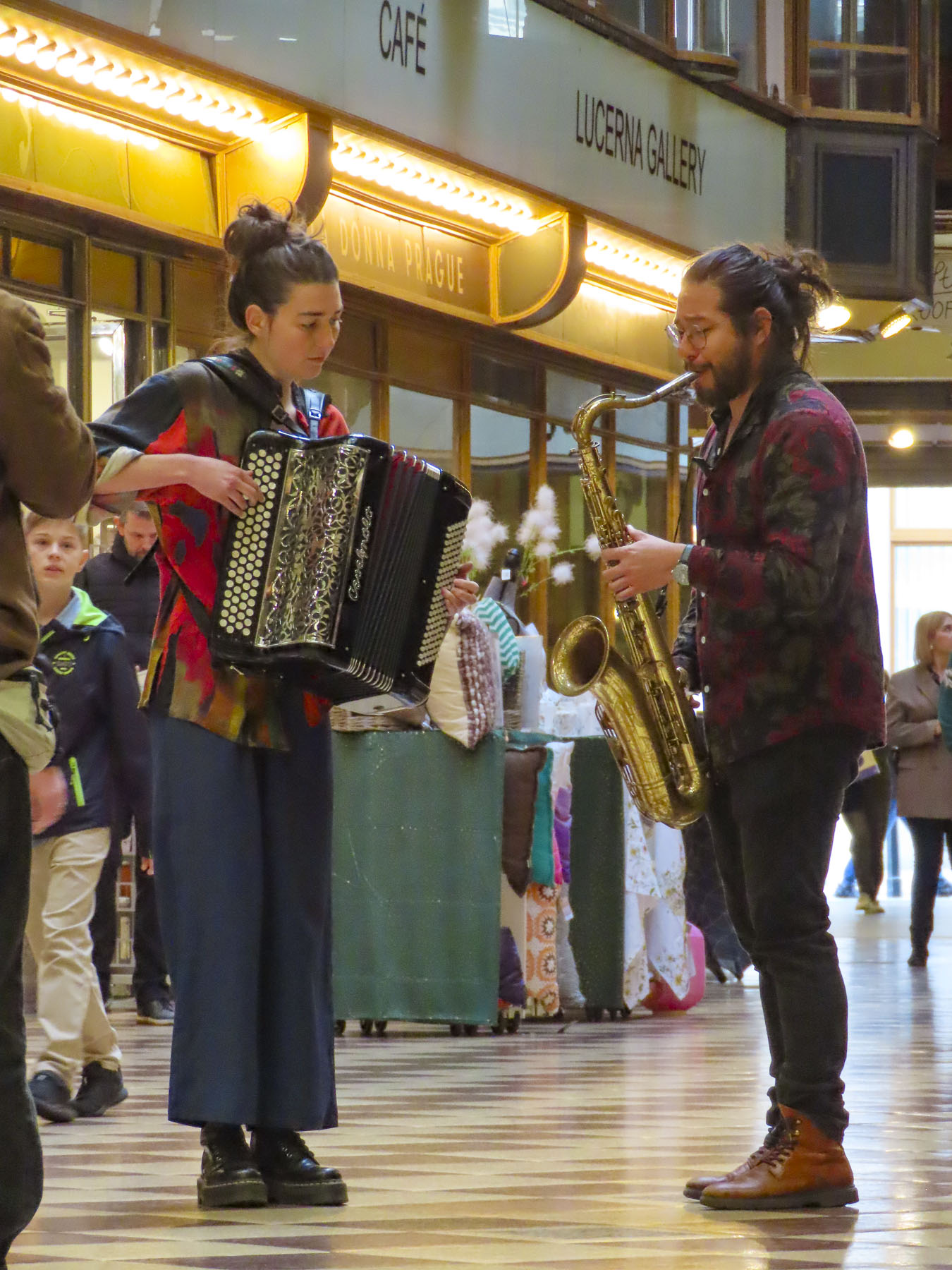
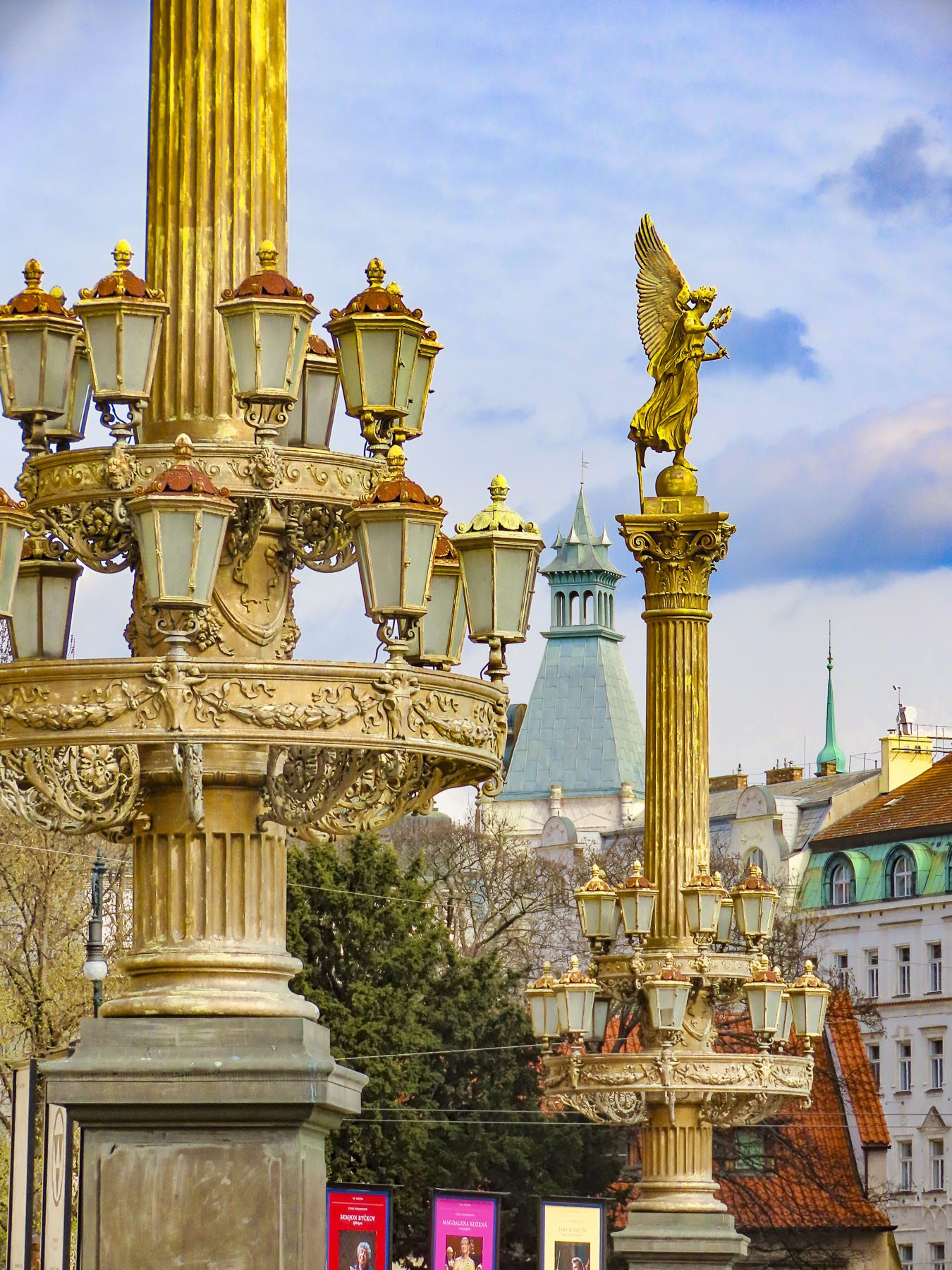
Our next stop was the Lucerna Palace, an early 1900s Art Nouveau shopping and entertainment venue that was the precursor of the modern mall. From its ceiling hangs Černý’s Saint Wenceslas Riding a Dead Horse. The 1999 piece is said to represent the artist’s opinion on the “political situation in the Czech Republic at the time and his views on the state of society.”

Though there are 22 tram lines that criss-cross the city, the best way to absorb the ambiance of Prague it is to wander its cobbled lanes and soak in the amazing architecture and streetscapes of one of Europe’s most beautiful timeless cities.


We had originally planned to spend 5 nights in Prague, but the airline we used canceled their flight on the day of our original departure. If we had that extra day, we would have used the time to explore the area around the National Museum and the Jerusalem Synagogue, both of which are in the New Town section of Prague.



We had a grand time in the city and hopefully will get the chance to return one day, and maybe find the other 20 sculptures of Černý that are installed around the city.
Till next time,
Craig & Donna




































































































































 2 Suitcases for 2 years