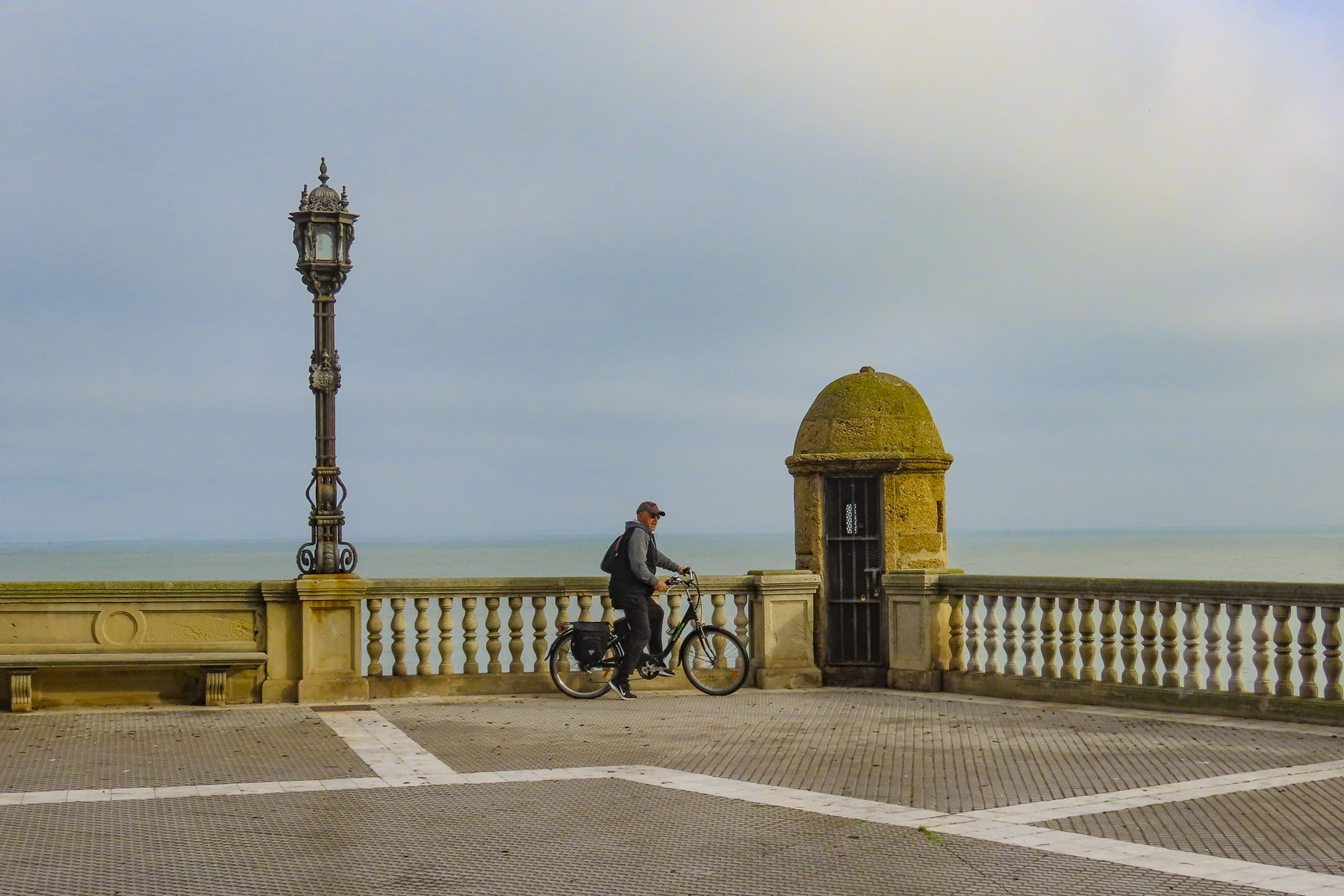
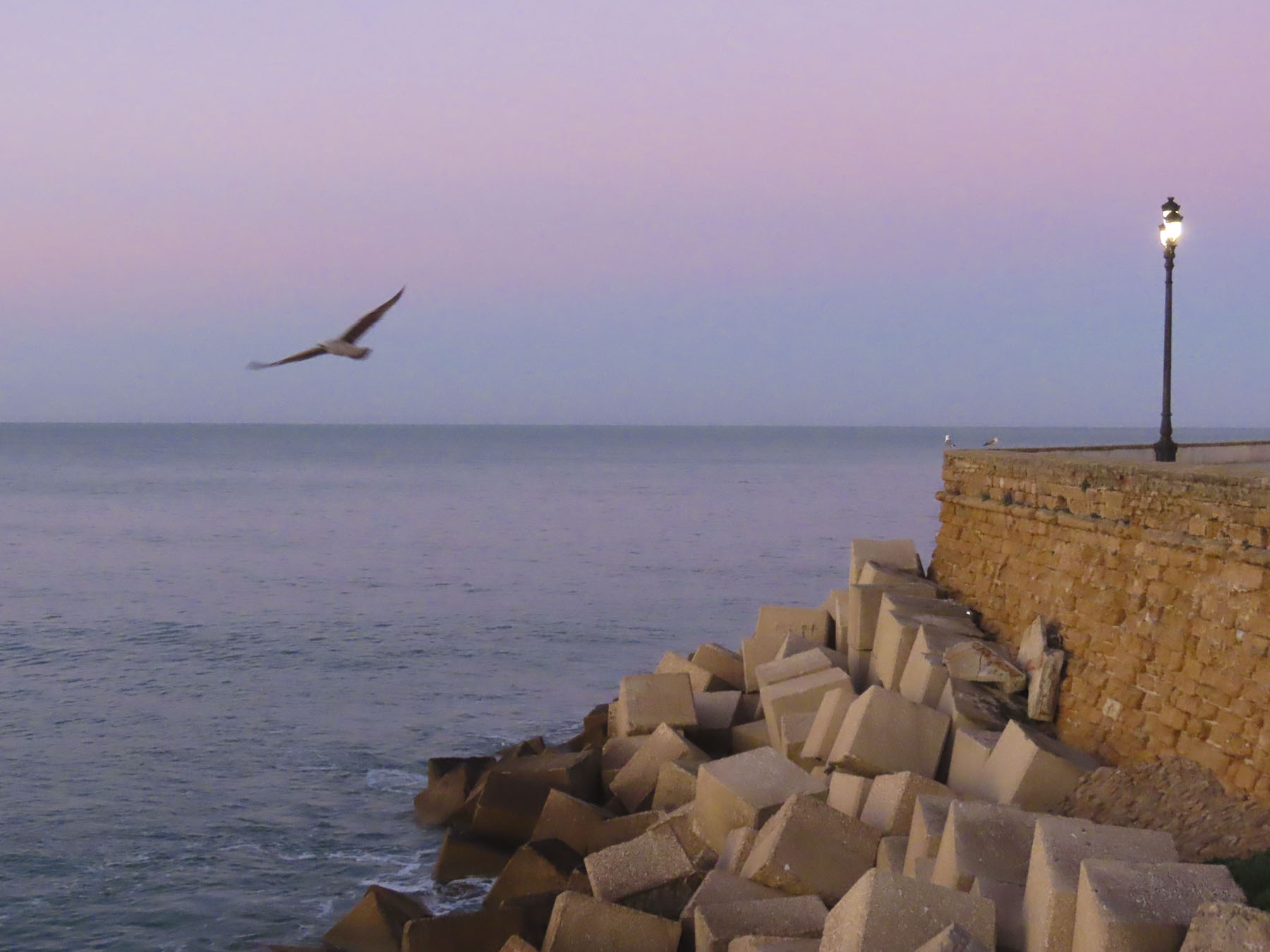
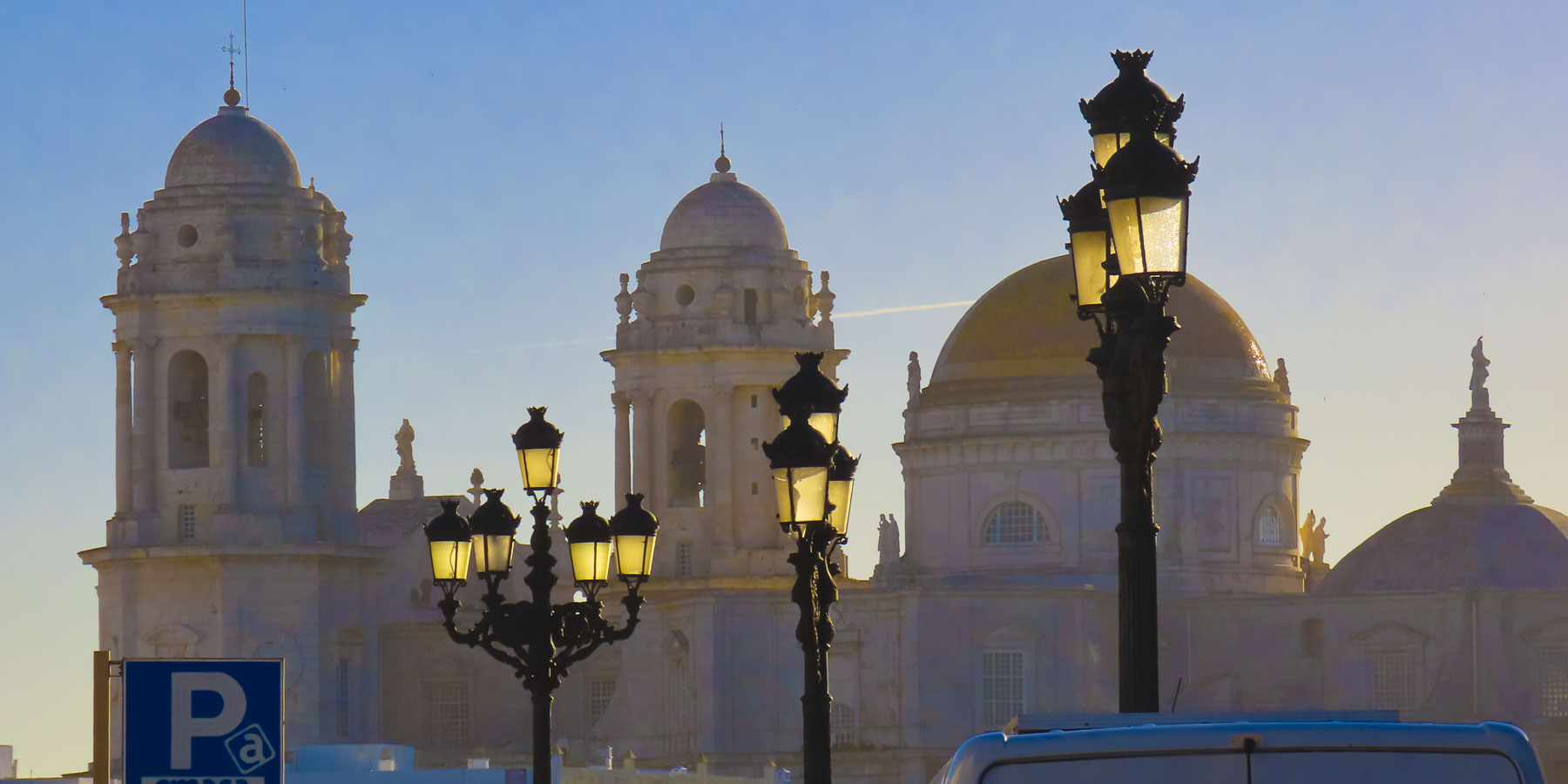
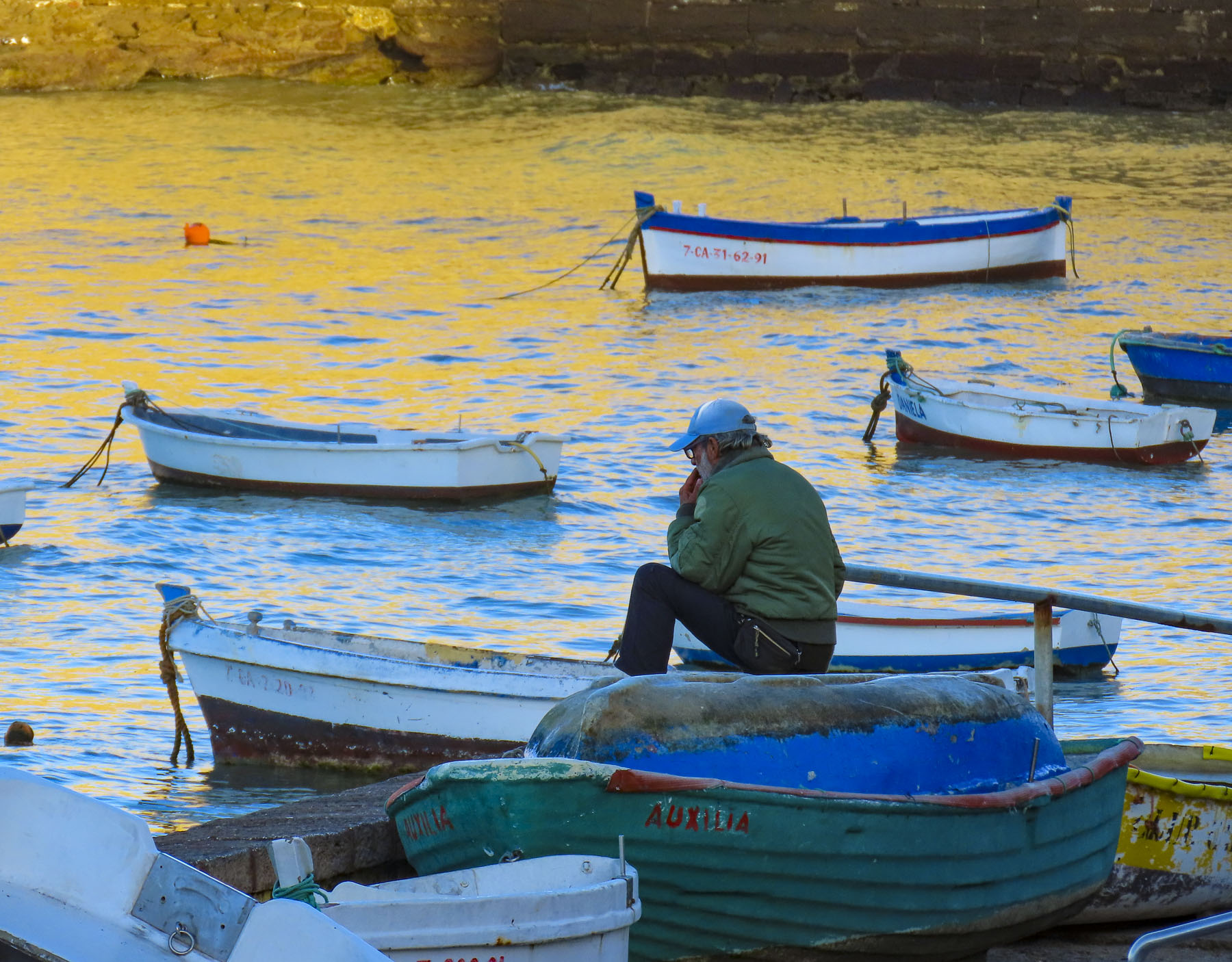
Tenerife Part 1: Santa Cruz de Tenerife & San Cristóbal de La Laguna: Old & New, Rugged Mountains & Seascapes

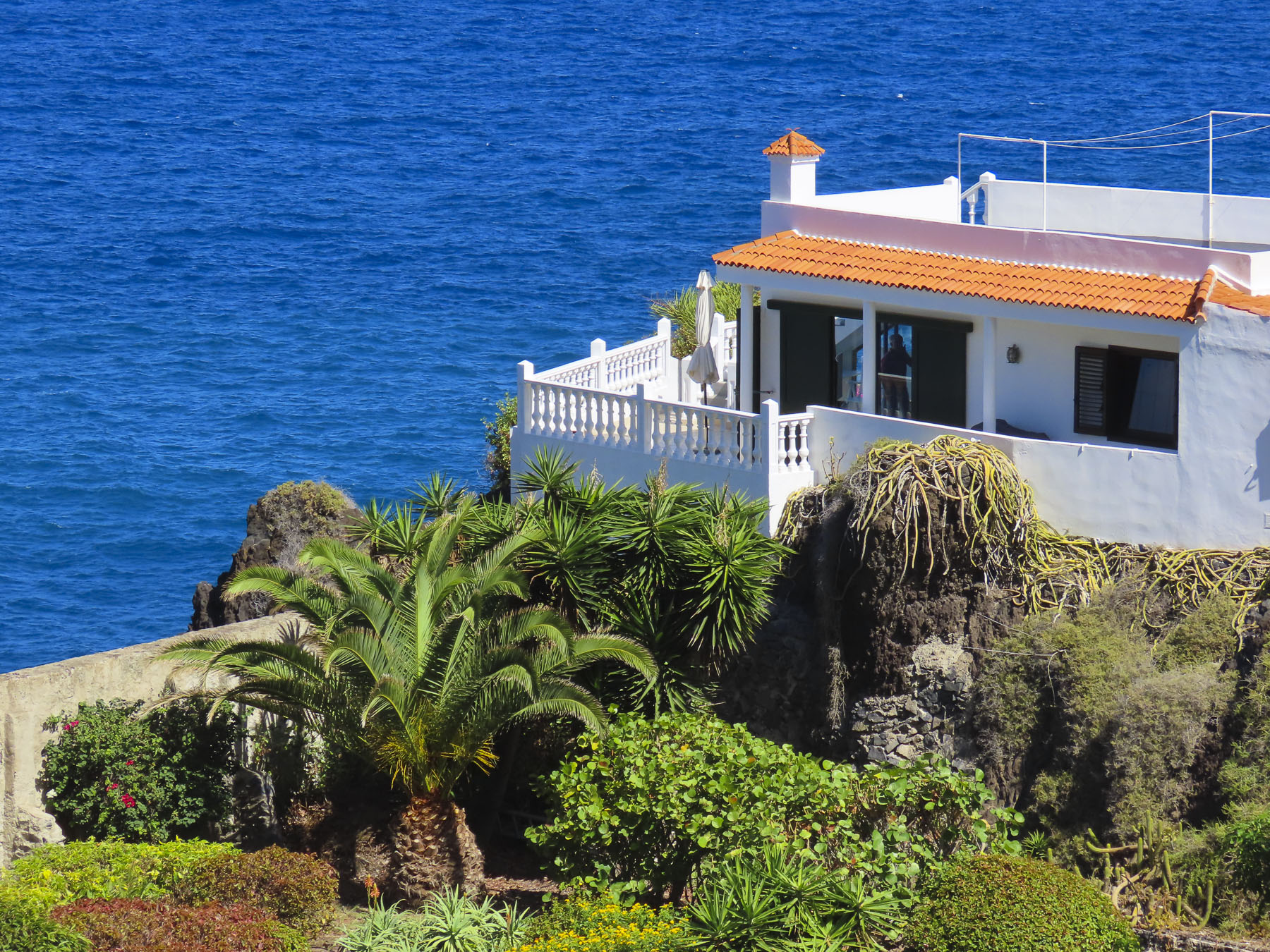
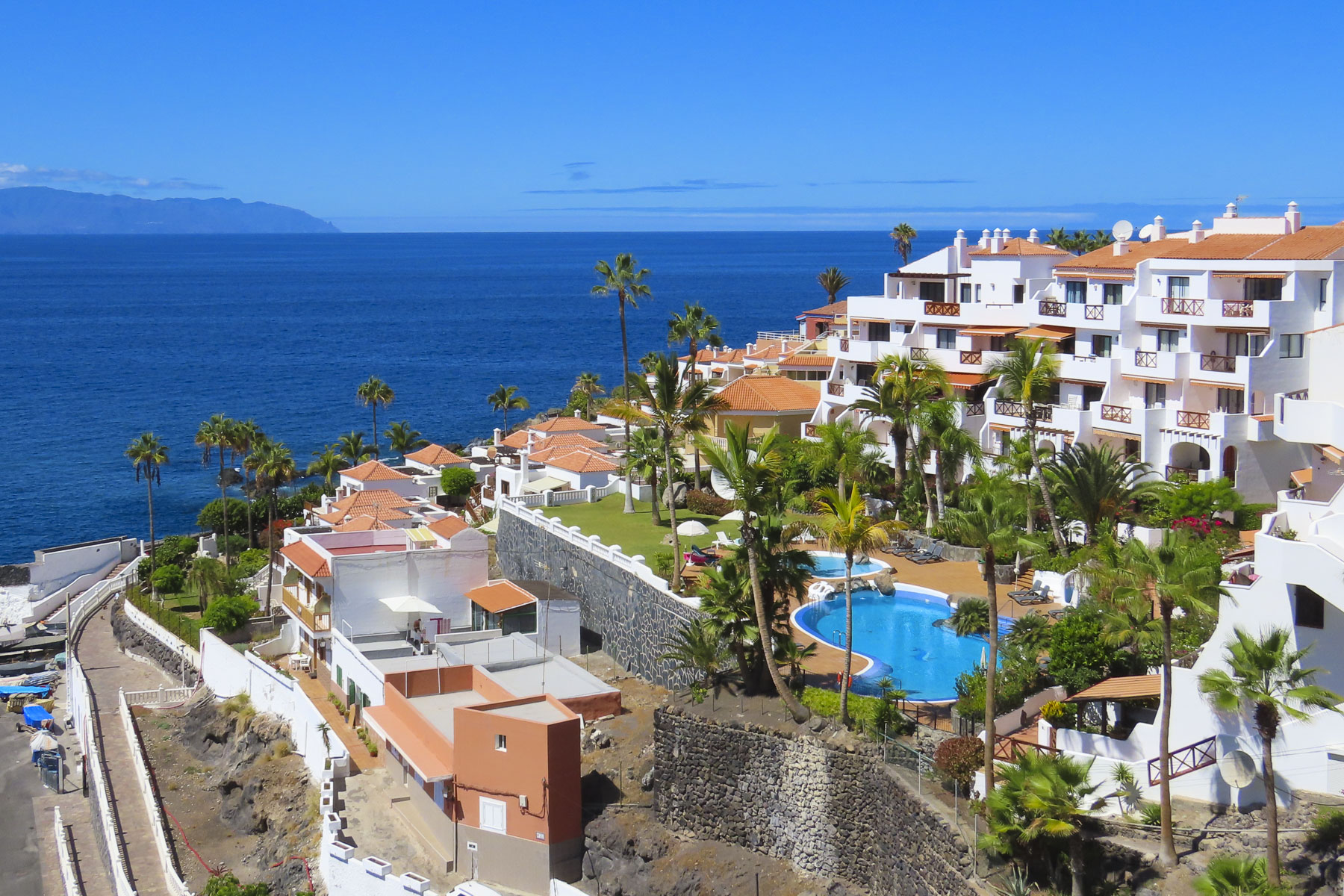
Bright sunlight filled the jet’s cabin as our pilot dipped the plane’s wing into a descending curve that revealed an arid rugged coast, bound by surf and azure waters. Tenerife! The walk to the car park under gently swaying palm trees was refreshingly balmy, a good omen for our visit.

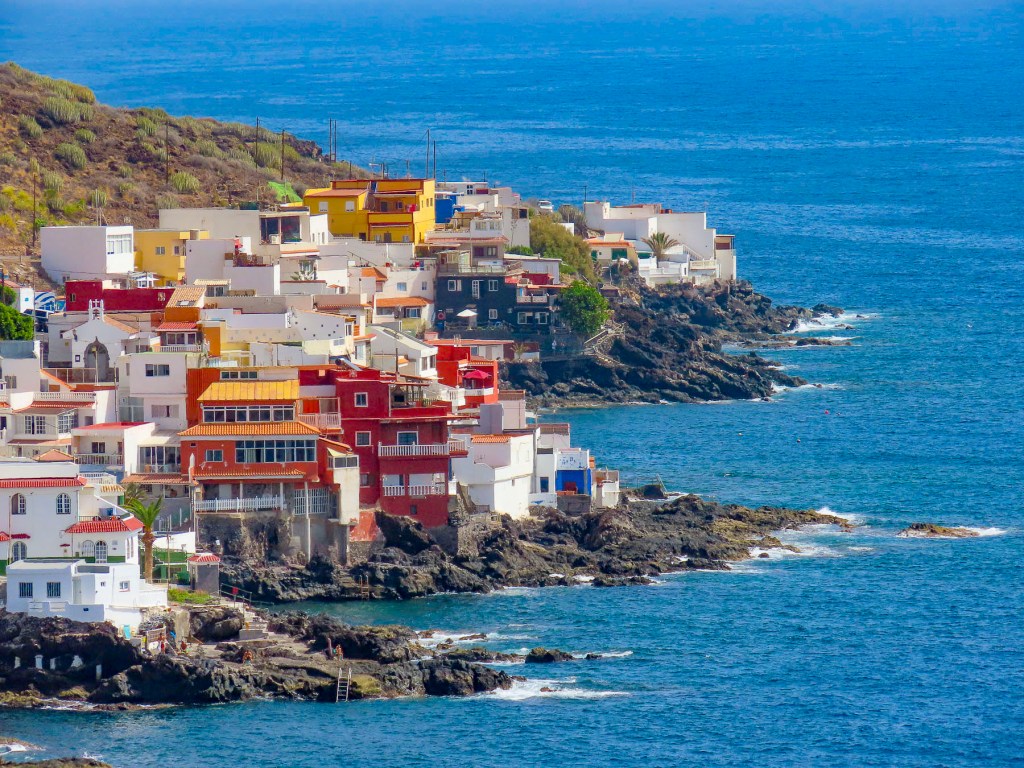
Heading north on TF-1 in our rental car, views of picturesque small villages along the coast awakened our expectations for the days ahead. Our 14 days on Tenerife were divided evenly between stays in Santa Cruz de Tenerife, Icod de los Vinos and La Orotova, with multiple day trips planned from each town to explore the island in depth. Traveling during the September shoulder season, we were able to find some very good pricing for stays at the Iberostar Heritage Grand Mencey, Hotel Emblemático San Marcos, and the Hotel Alhambra.

Three hotels with distinctive character. Santa Cruz de Tenerife was our first destination, the island’s capital; it is a surprisingly large yet intimate, historic and cosmopolitan port city that offers ferry service to several of the other Canary Islands.

The volcanic seven island archipelago is closer to the coast of Morocco than the Iberian Peninsula. Discovered and populated by folks of Berber origin known as the Guanches around the 5th century B.C., It’s thought their indigenous Canary culture developed in isolation over the next 2000 years until Spain’s Age of Discovery sent fleets of ships south along the African coast in the early 1400s. In 1492, after sailing south from Spain, Christopher Columbus’s fleet of three ships and his intrepid explorers stopped in the Canary Islands to resupply their fresh water and food before catching the favorable, westward-blowing trade winds that carried them across a vast ocean to the discovery of the New World. Tenerife was the last island to succumb to Spanish rule in 1496 after the Guanches were forcefully defeated. For the next 400 years the islands played a crucial role in the colonization of the Americas, sending settlers to help establish Caracas, Buenos Aires, Montevideo, and San Antonio, Texas, along with exporting the first banana plants and sugarcane seeds to the islands in the West Indies. Potatoes and maize, new foods from the Americas, arrived first in the Canaries along with treasure ships laden with silver and gold destined for Spain. The importance of the islands to the Spanish crown was noted by the English privateer and favorite royal bad boy Sir Francis Drake, who found the weather so much more agreeable than England and attacked them in 1586 and 1595. Dutch privateers along with Barbary and French pirates also attacked the islands frequently.

Situated along the tree lined Rambla de Santa Cruz, with its wide pedestrian walkway that runs down the center entire length of the boulevard, the Iberostar Heritage Grand Mencey blended effortlessly into the beautiful 19th architecture that surrounds it. While parking on the street in Santa Cruz de Tenerife is free, there is tremendous competition in finding a space, so we opted to use the hotel’s garage during our stay. Fortunately, our lodging was only a fifteen-minute walk from the city center. It was an ideal location to explore the city from.

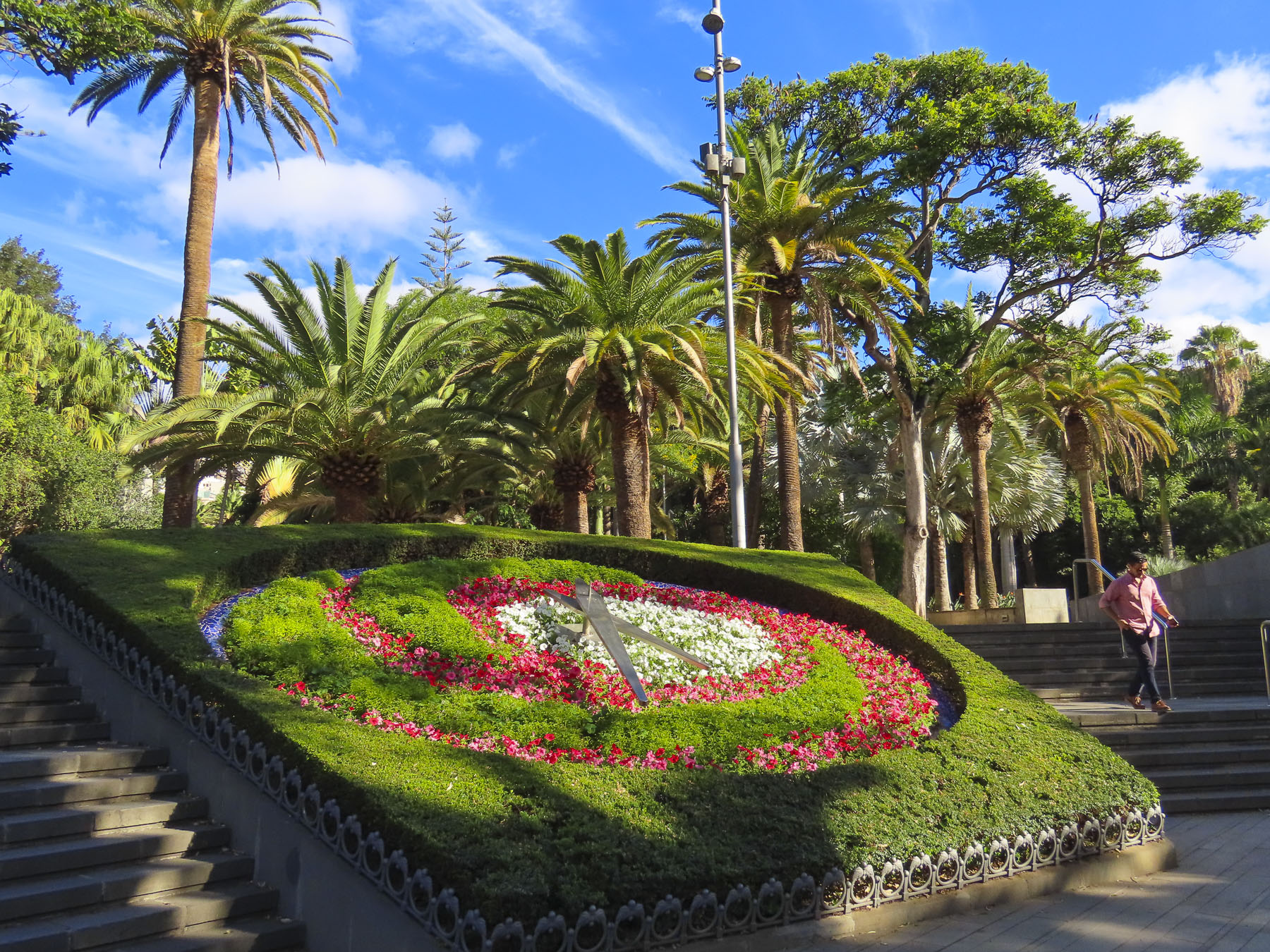
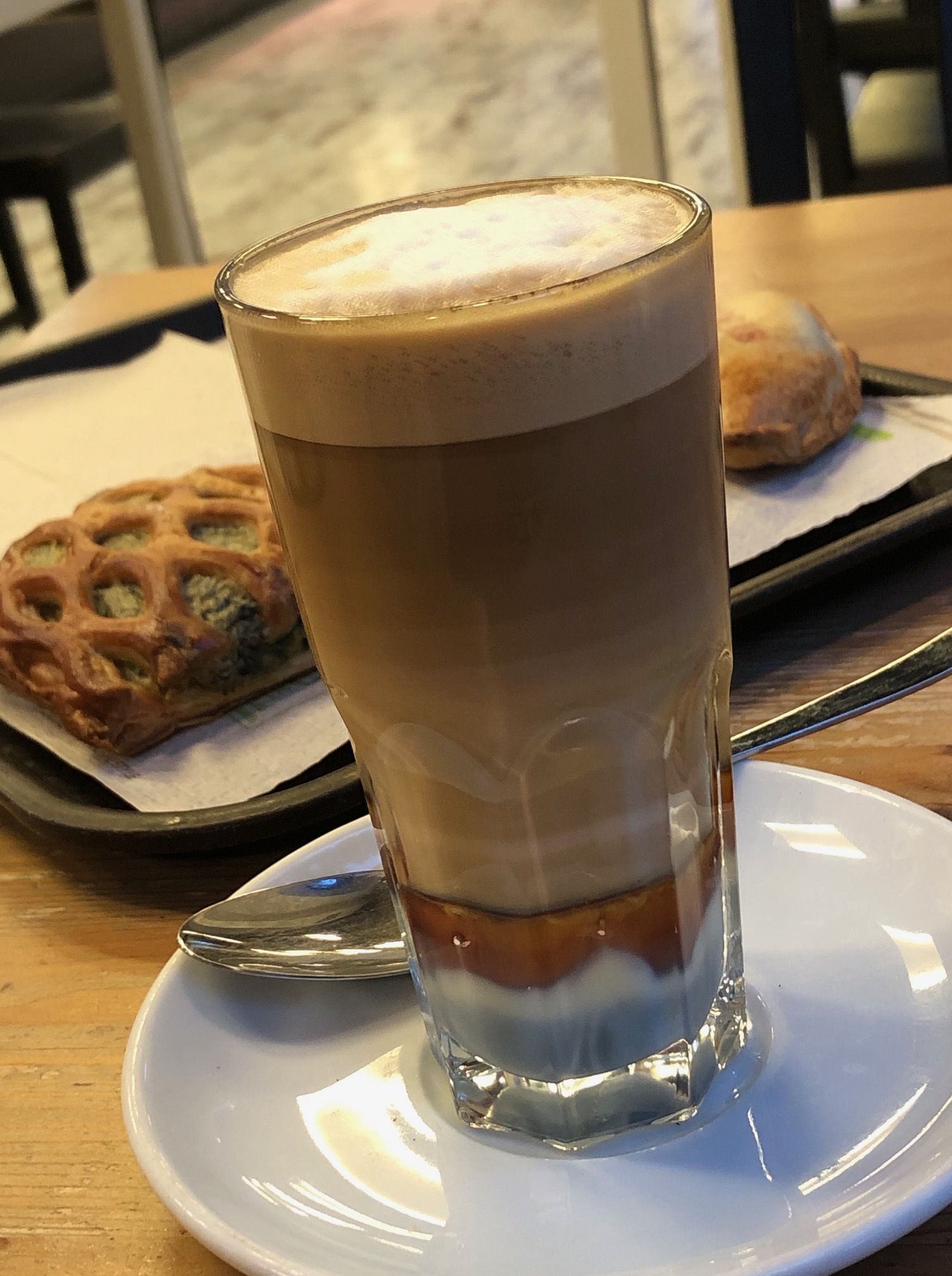
Adjacent to the hotel, the Parque García Sanabrias provided a tranquil sanctuary under a canopy of old growth trees. It’s a huge city park with different gardens, monumental sculptures, and several eateries, and is popular with folks seeking a place to exercise or relax. It’s here that we were first introduced to café leche y leches, a visually attractive layered coffee that was originally created in Santa Cruz de Tenerife early in the 1900s. Surely it was an act of divine inspiration that led to its creation at the Bar Imperial for a loyal customer who always requested the same special coffee. Made with whole milk, condensed milk, espresso, and cinnamon, its popularity quickly spread across the Canaries. Made with an additional shot of Liquor 43, it’s called a “Barraquito,” in honor of the customer who inspired the drink’s creation.

Walking through the city on the way to the harbor and the Palmetum one day revealed a vibrant combination of old and new. Beautiful historic buildings and grand sculptures dotted our route. We were surprised to find that the city also has a modern tramline, the Tranvia de Tenerife, that connects its outer neighborhoods and La Laguna to the city center and port area.

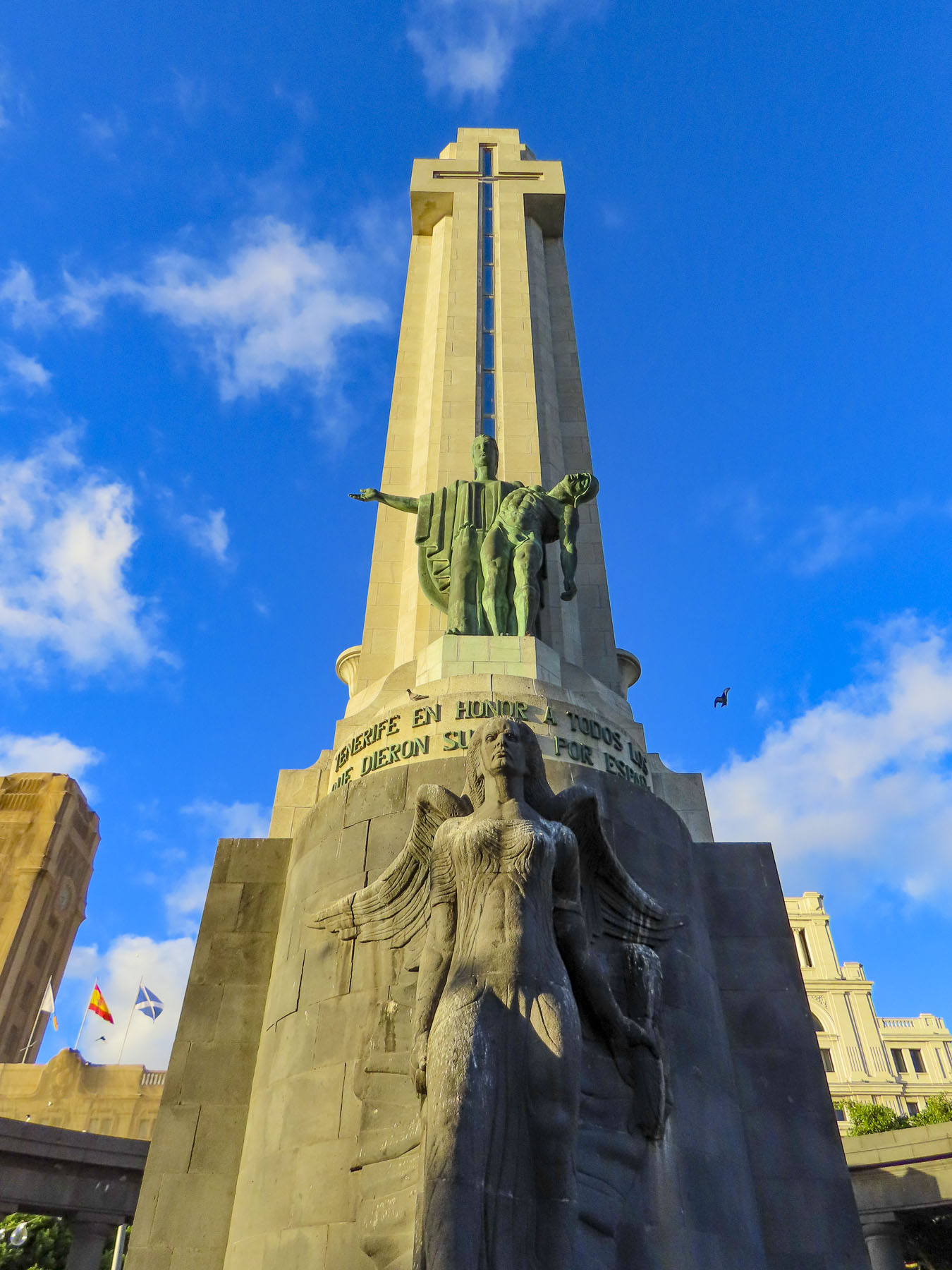
Reaching the Plaza de Espana, we paused to contemplate a tall obelisk, the Monument to the Fallen. A controversial piece today, it was erected in 1947 during the dictatorship of General Franco, and sadly dedicated to the victors in the Spanish Civil War. In 2019 a local government commission determined that the forced labor of political prisoners was used to construct it. And the “monument violates the Law of Historical Memory, and it needs to undergo a resignification process.” Nearby stands a contemporary sculpture called “Lo llevo bien,” or “I’m doing well,” by Julio Nieto, a Basque artist based in Tenerife. It’s a 16-foot-tall stainless-steel sculpture shaped like a humanized tree. A re-interpretation of Atlas carrying the world on his shoulders, Nieto’s piece symbolizes “the optimism of the human being, who, despite all his thoughts, carries it well.”

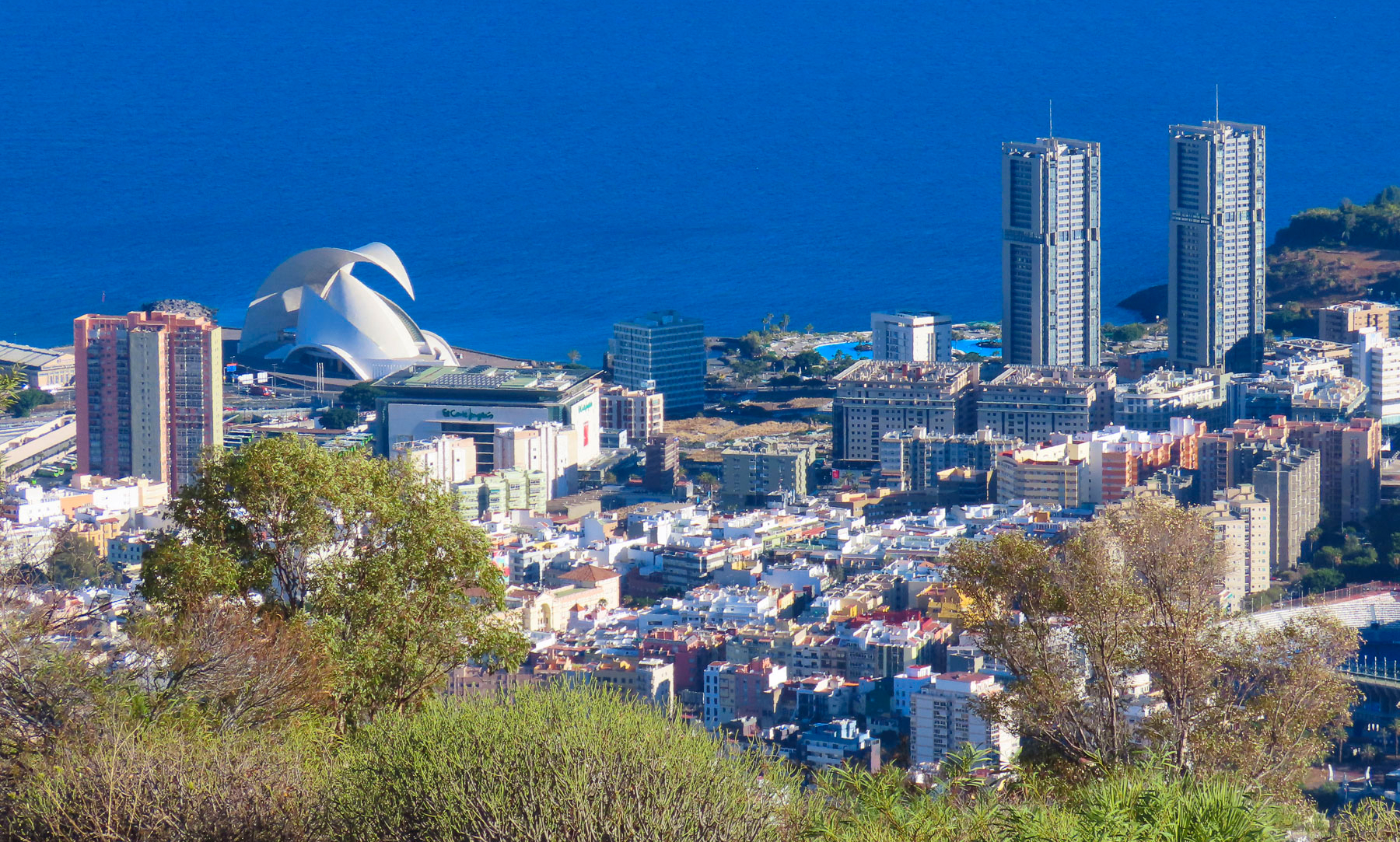
Looking back at the city from the park’s edge, the rectangular modern shapes of the city contrasted sharply with the jagged silhouette of the rugged Tenerife mountains behind them.

We walked along the waterfront to the Auditorio de Tenerife Adán Martín, Santa Cruz’s iconic landmark, an auditorium and arts center, designed by the Spanish architect Santiago Calatrava. Its ultramodern design reflects Tenerife’s prosperity and optimism for the future.

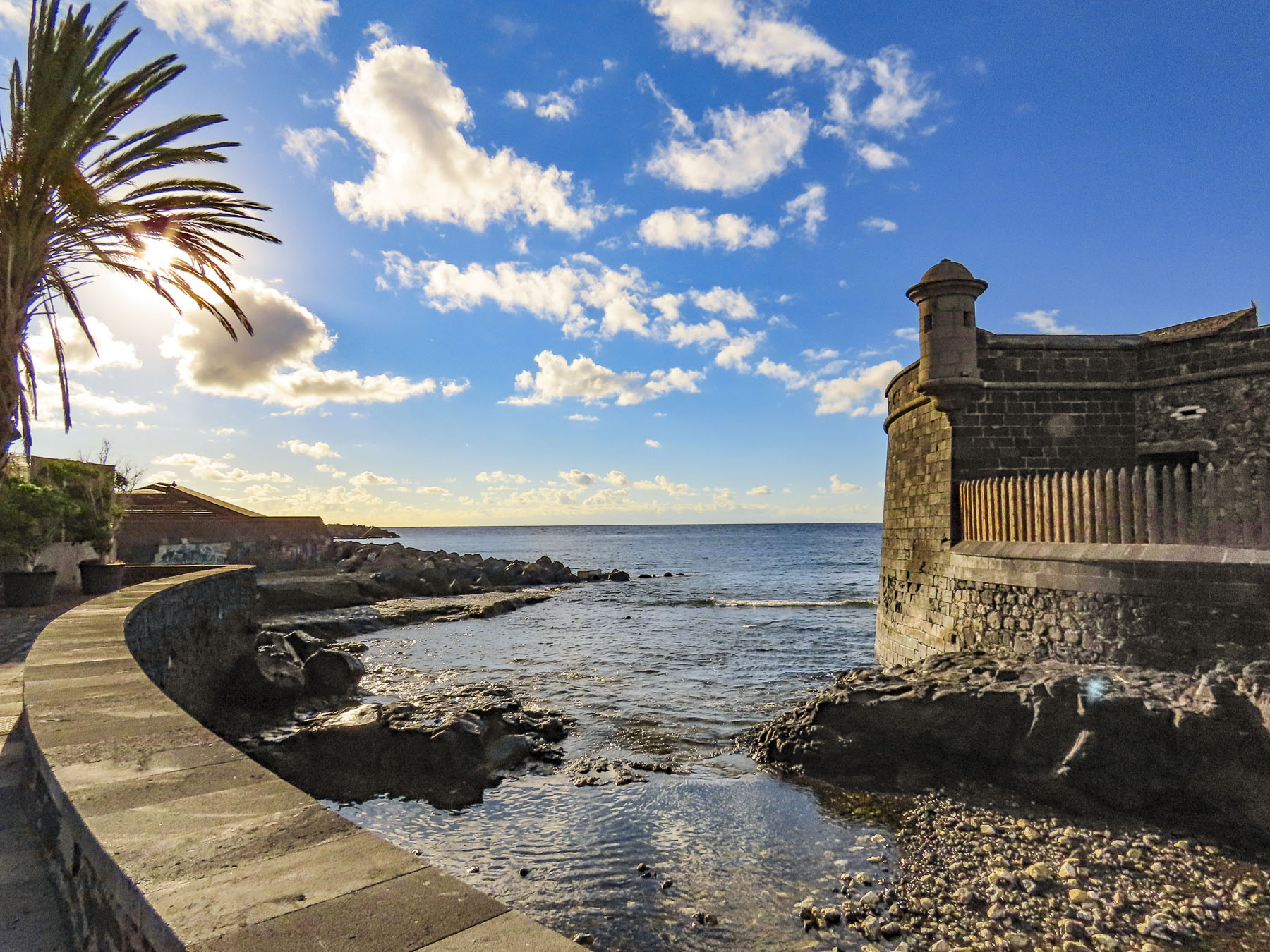
From there it seemed as if we were walking back through time as we passed the Castillo de San Juan Bautista, a short circular fortress constructed in 1640s to defend Santa Cruz from pirate and British attacks, and the Ermita de Nuestra Señora de Regla, a small church that dates from this era.

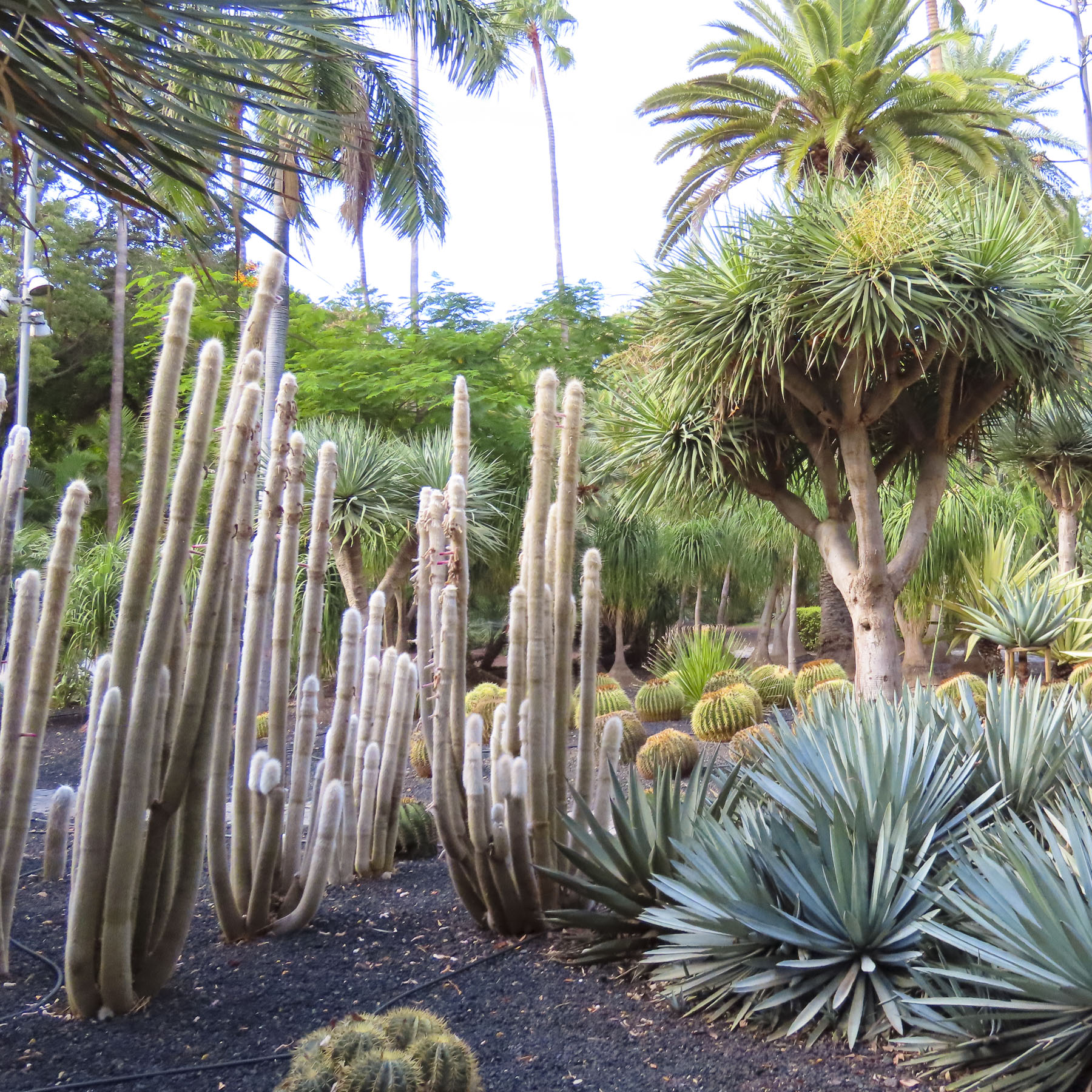
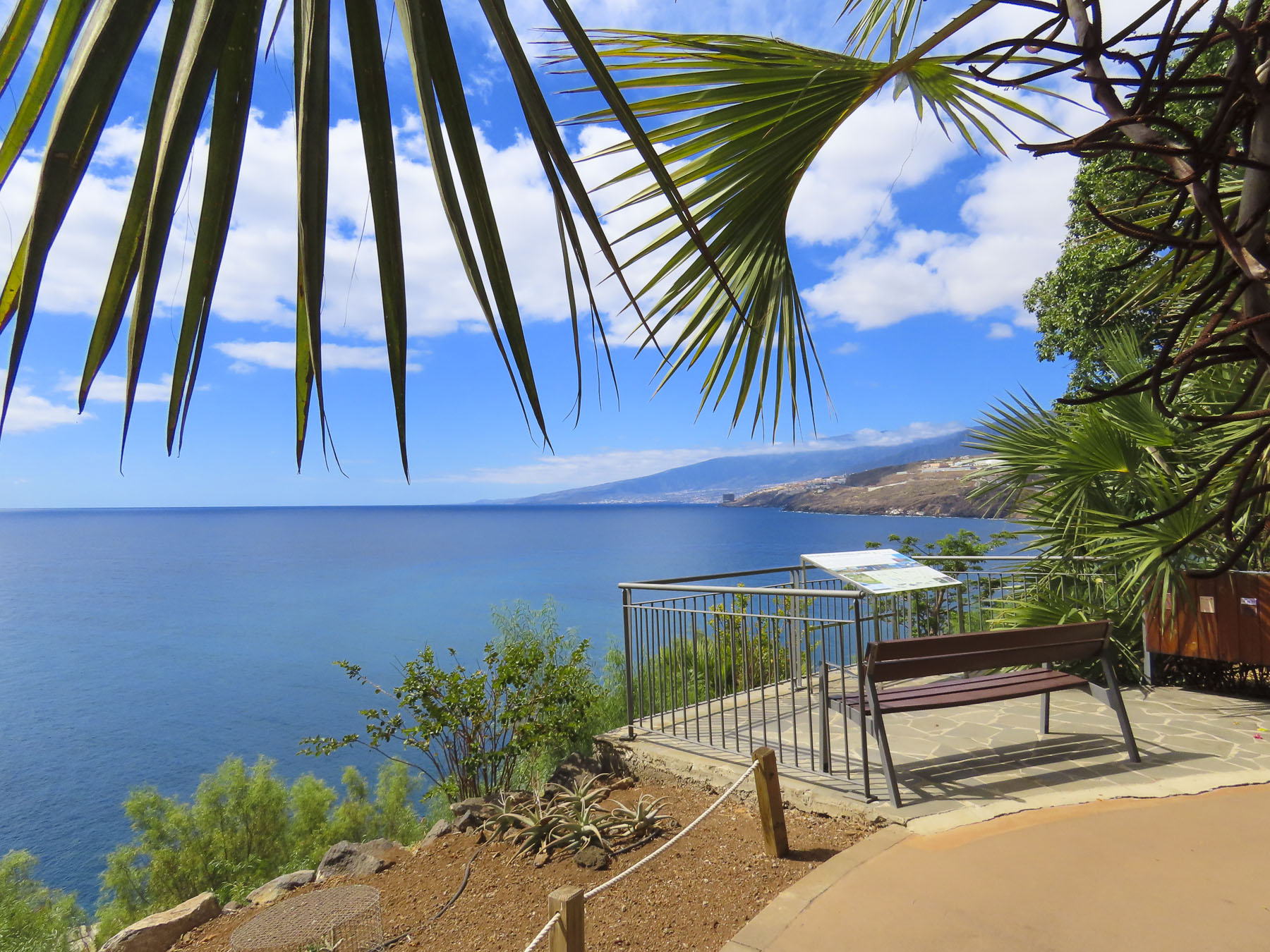
Reaching the Mirador Caribe at the Palmetum, we were rewarded with an expansive view of the city with Auditorio de Tenerife, and Parque Maritimo iCesar Manrique. A botanical garden, the Palmetum was started in 1995 atop 30 acres of reclaimed land that was once a landfill. Now it’s filled with nearly a thousand palm trees gathered from around the world and other plantings. It’s a spectacular place.

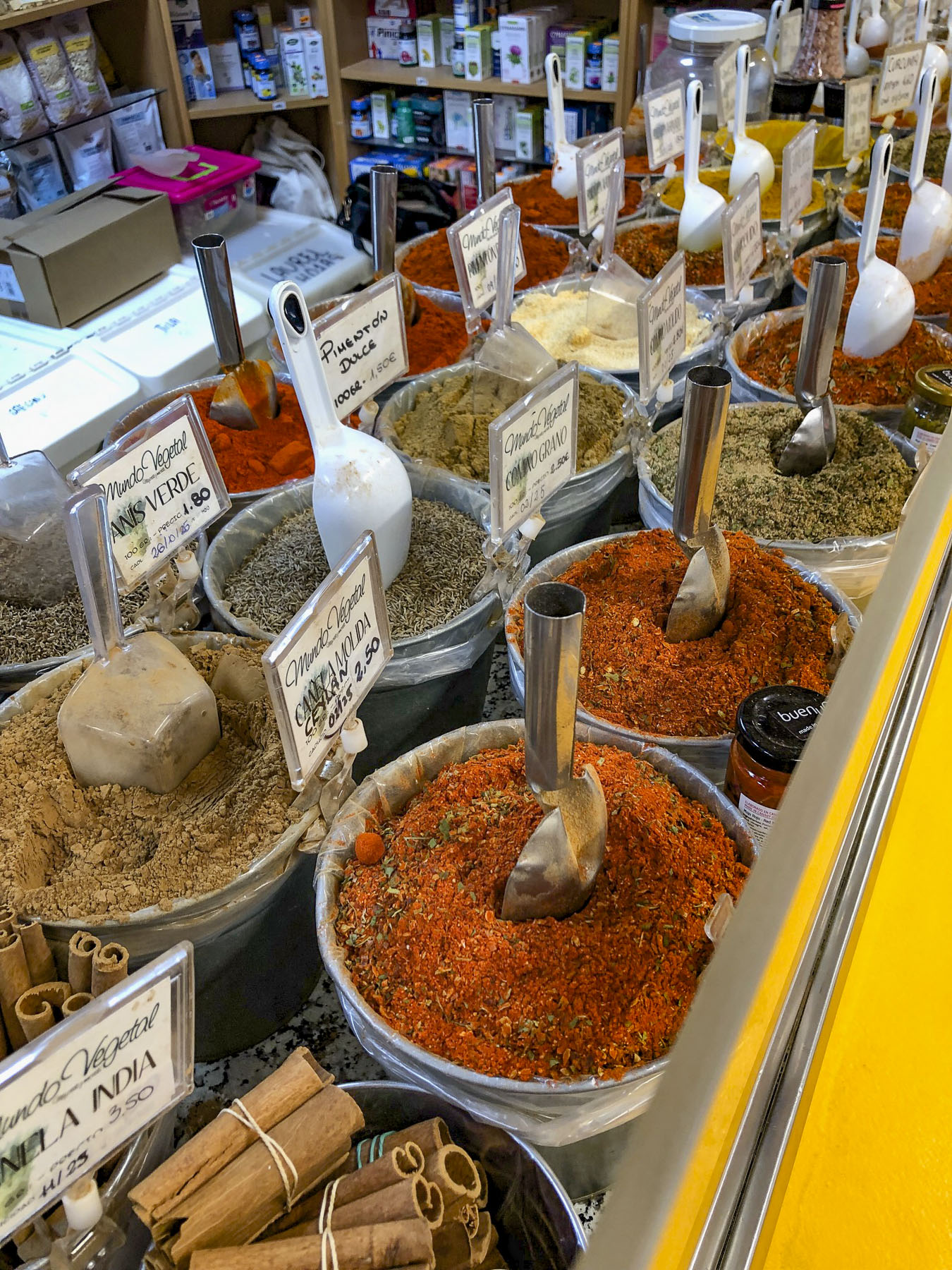
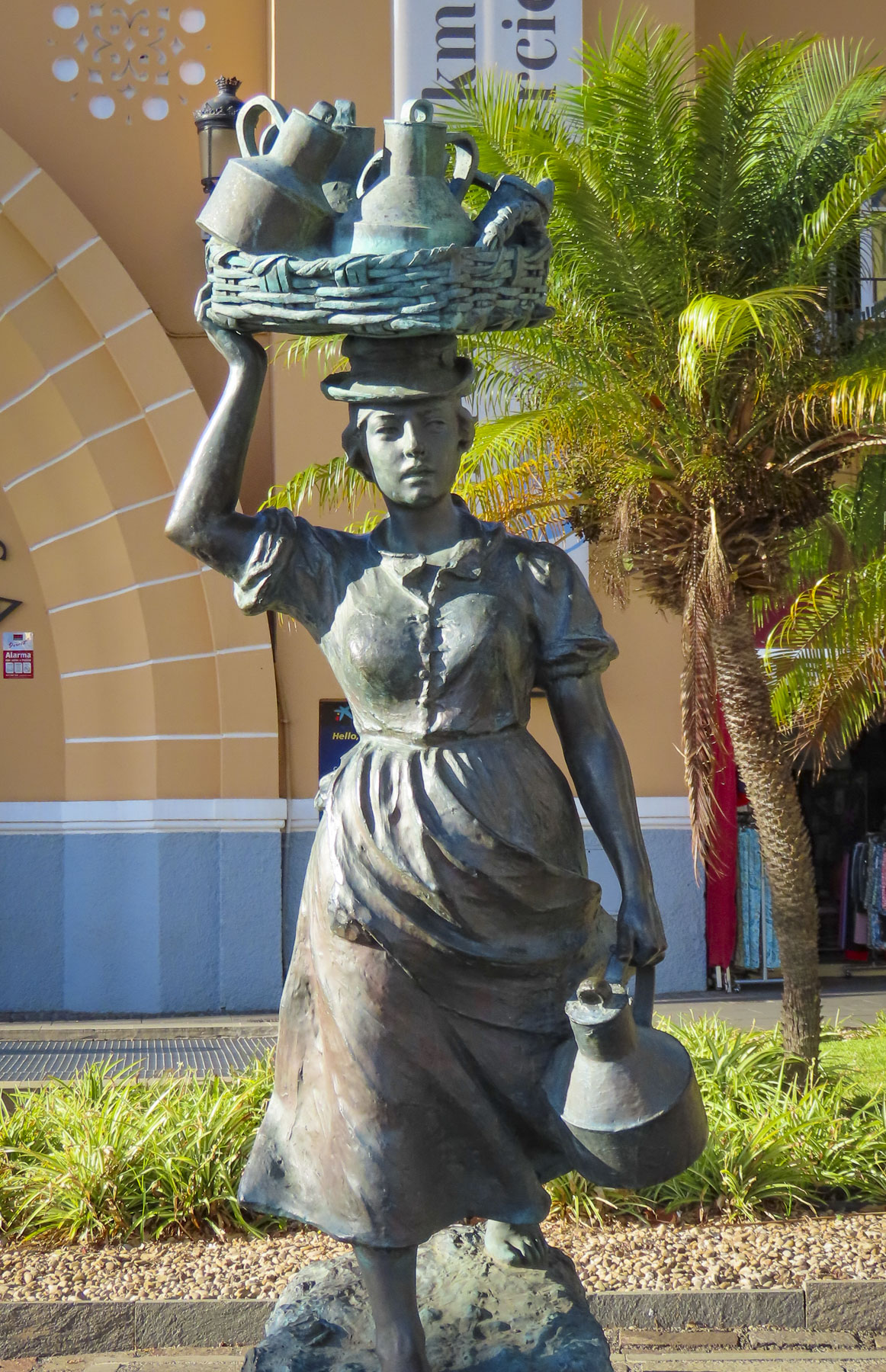
Heading back through the city, we stopped at the old-town market Nuestra Señora de Africa; it’s a sensory experience with colorful fruit displays, aromas of fresh baked goods and the clattering of commerce. Originally an open-air market, it was reconfigured in the 1940s. Built in a neo-colonial style, its arcaded shops and plazas attract locals and tourists. Outside the main entrance two statues reminded us of the old way of life on Tenerife when men still rowed heavy wooden boats through the surf to fish and women called Lechere would walk from village to village with baskets balanced on their heads, carrying jugs of milk to sell.

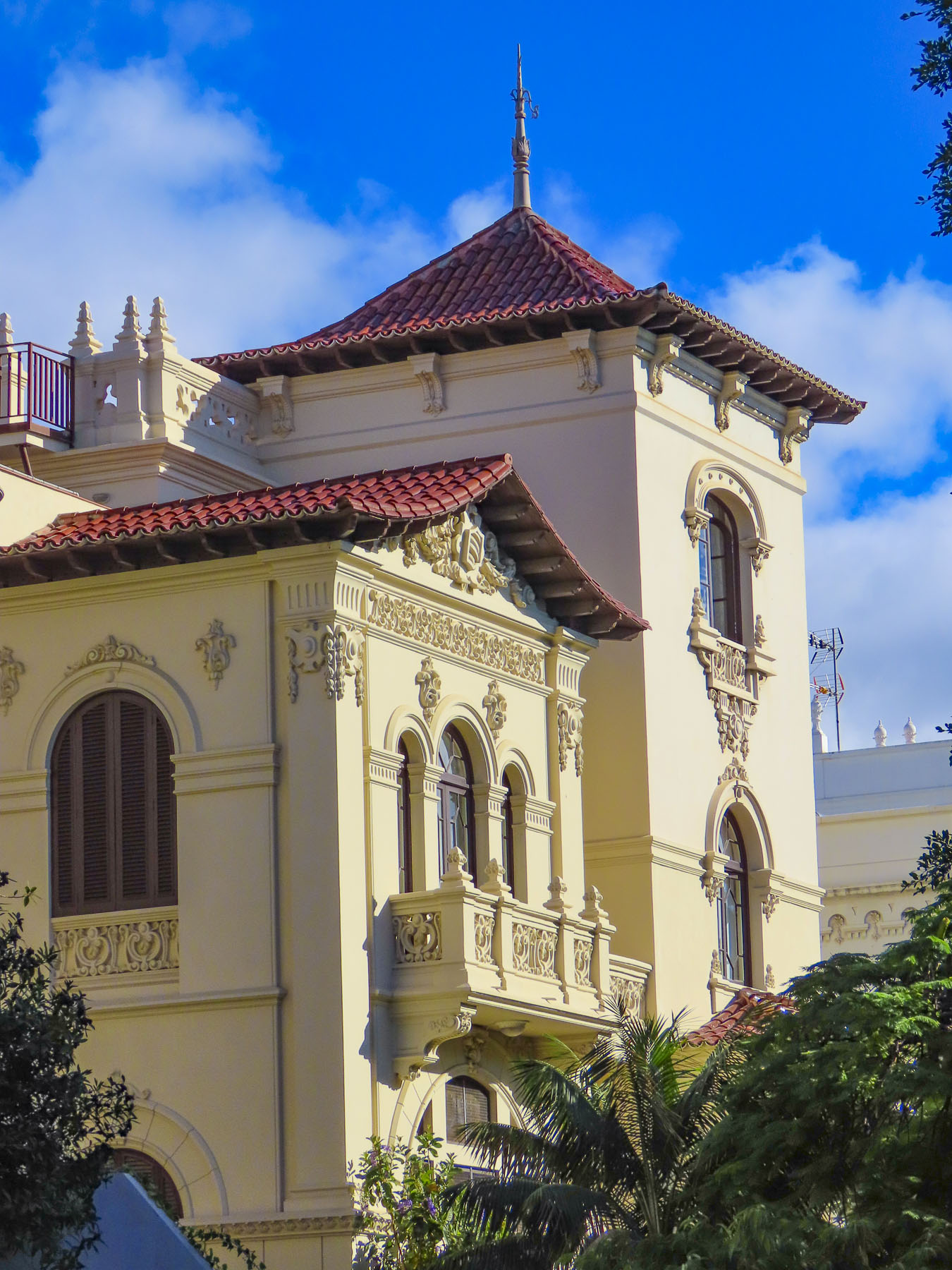
We finished our walk to the hotel down the wide pedestrian walkway in the center of Rbla. de Sta. Cruz, so we could get a better look at some of the interesting architecture that we passed when we first drove through town.

The weather on Tenerife can be fickle, sunny, foggy, rainy, and cloudy all within the same hour, as it was when we headed northeast early the next morning to the small village of San Andrés for breakfast, before visiting Playa de Las Teresitas, a wide manmade beach of imported yellow sand built behind a series of protective breakwaters. Across from the small café where we had breakfast under a threatening sky stood the ruins of Castillo de San Andrés, a small round fortress built to deter pirates from landing and ransacking the village and Santa Cruz. As British troops attempted to land in 1797 and seize Spanish treasure from the Americas, it’s believed a canon shot from this fortress wounded the famous Admiral Horacio Nelson, causing the amputation of one arm. This cannon is oddly on exhibit in the museum at the Castillo de San Cristobal in Santa Cruz. During the 18th and 19th centuries flooding from the stream next to the castle undermined its foundation causing it to split into almost even pieces, like a cake sliced in half.

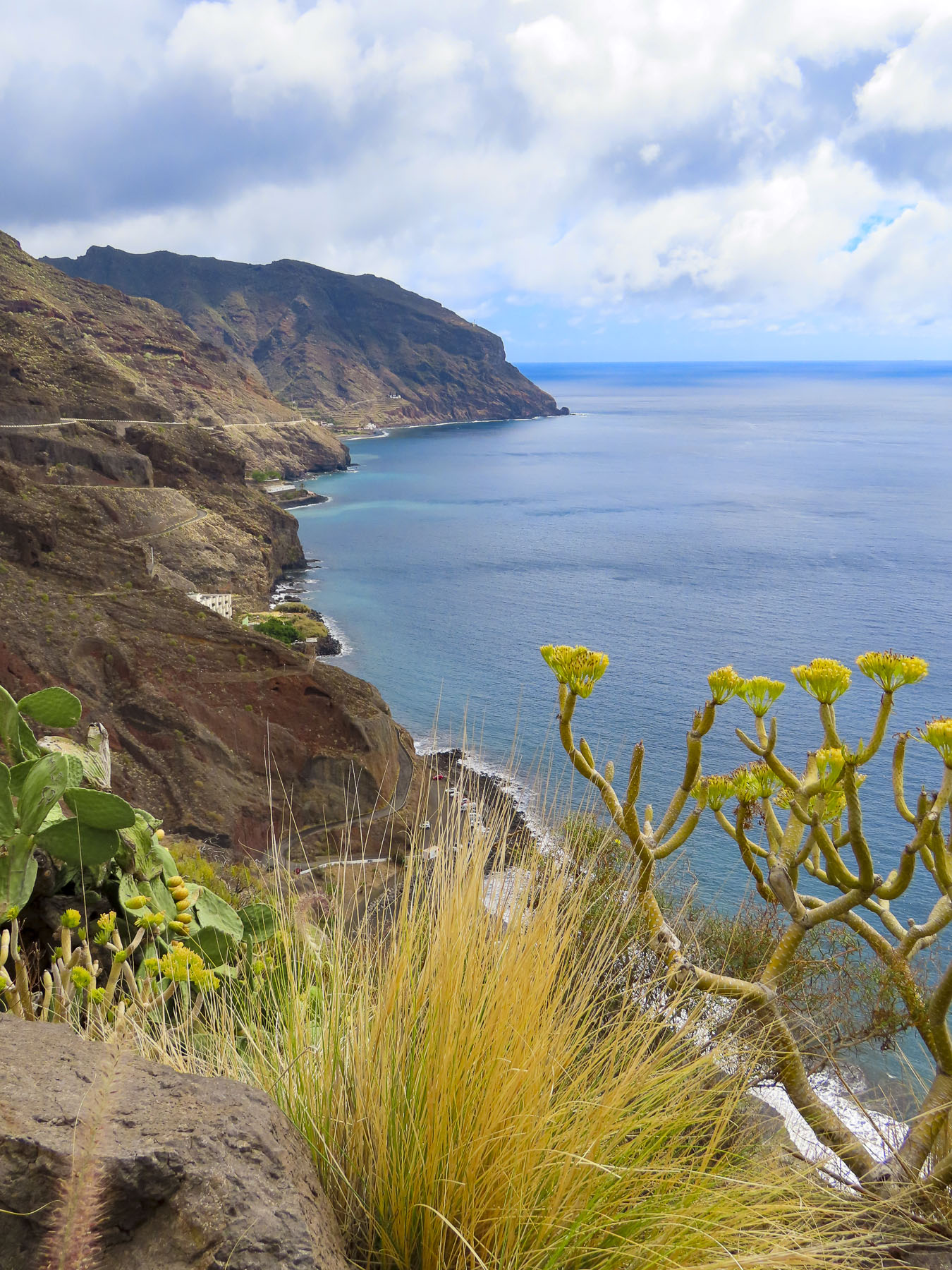
Above the beach the Mirador Playa de las Teresitas offers tremendous views south of the coast. Turn around and walk a few yards back along the road for a spectacular view of the black sand beaches Playa de Las Gaviotas and Playa Cueva del Agua.

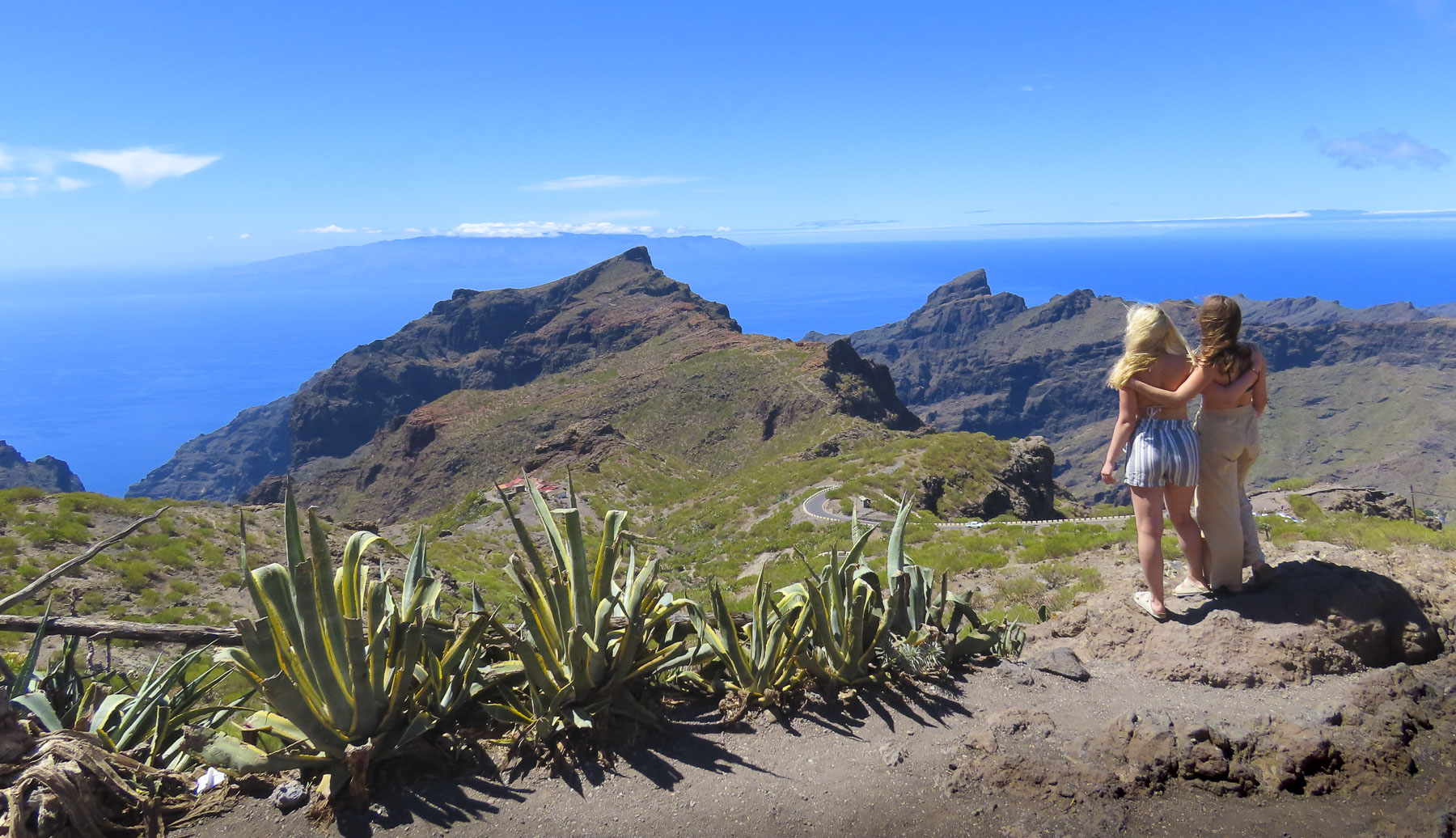
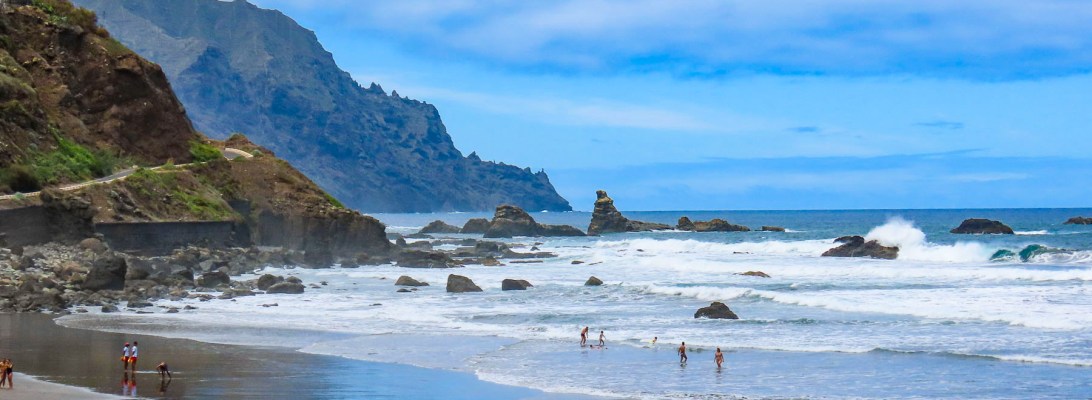
Any resemblance to a straight road disappeared as we turned onto TF-12 to work our way across the island to Playa del Roque de las Bodegas, the Mirador de Playa Benijo and continue onto the El Draguillo mirador in an isolated hamlet in the Anaga Rural Park.

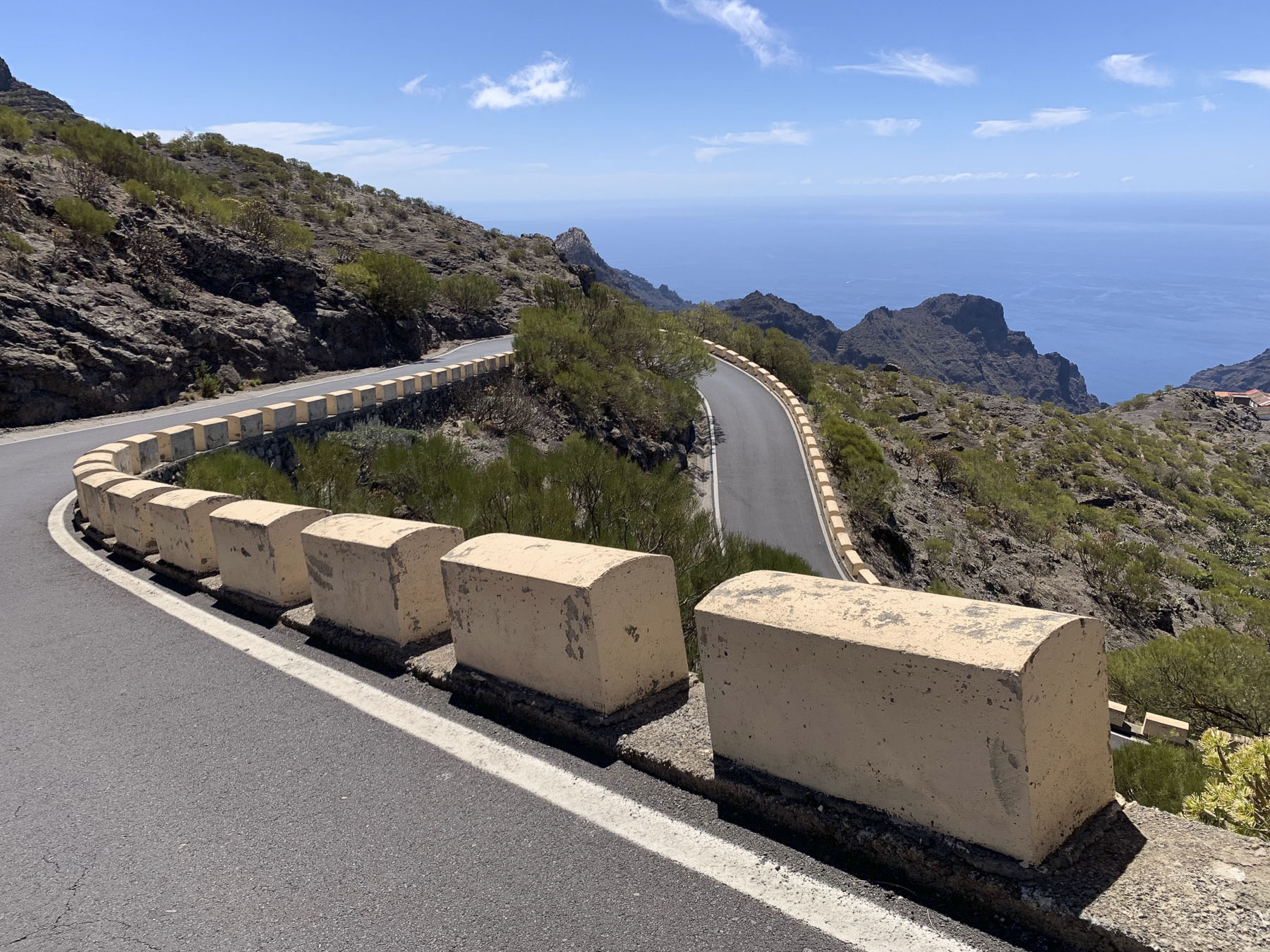
Distance between sites on Tenerife are relatively short as the crow flies, but the roads are narrow and serpentine, so the driving is slow, even though not many cars are on the roads. Rising into the mountains, the terrain changed from arid browns to verdant greens. The views along the way of isolated villages hugging the steep slopes were awesome.

Our intent was to drive all the way to the El Draguillo Mirador, as our GPS map led us to believe was doable, but the road ended at a very small gate in a muddy car park with a sign that said only residents of the village were allowed to drive past this point. Evidently this is the starting point for the El Draguillo trail, a 6 hour hike. The parking lot was jammed full and it took a serious multipoint K turn to get us out. We recovered nicely though by having a great lunch nearby at La Venta de Marrero, a cliffside restaurant with a fabulous view.

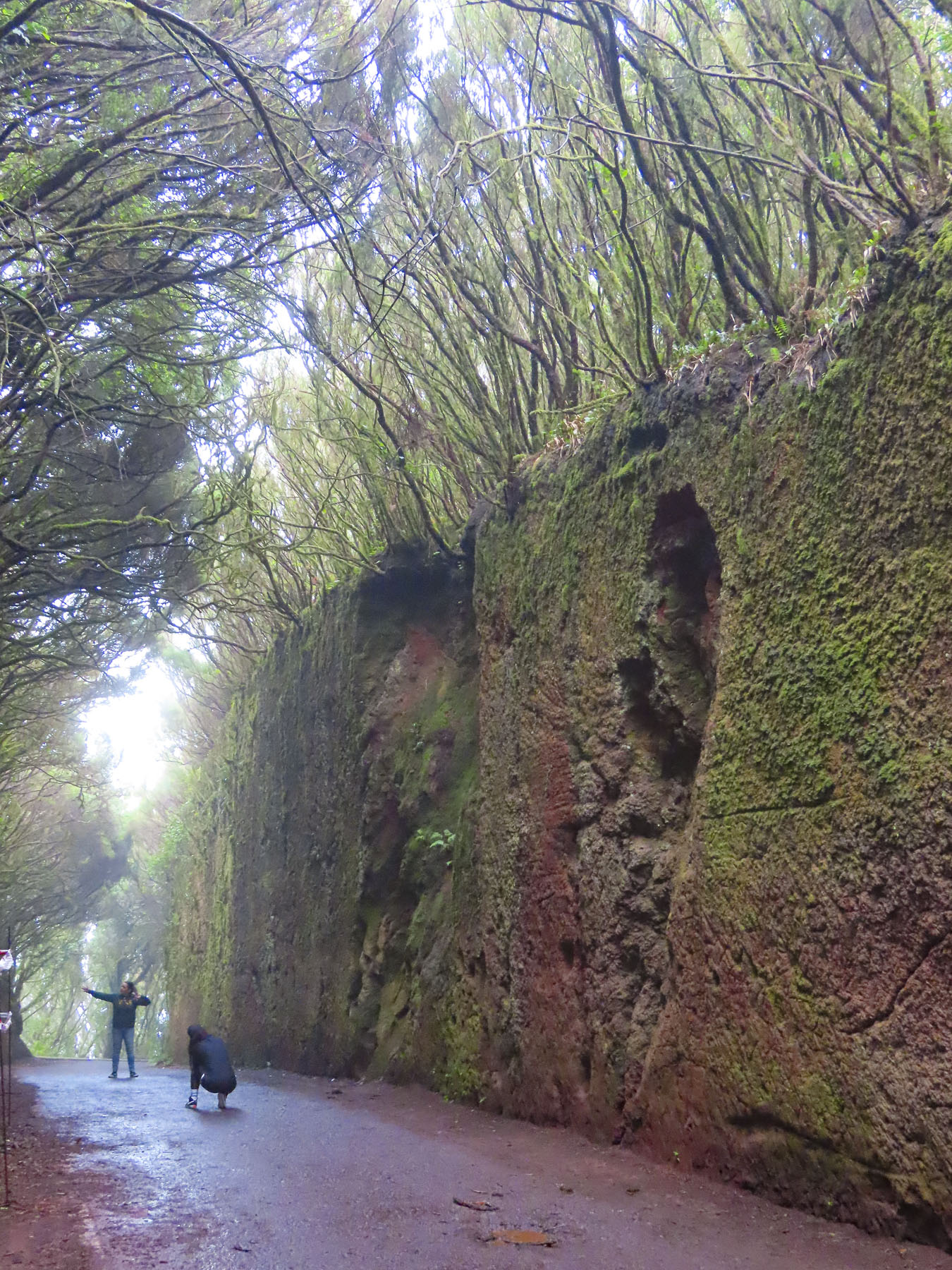
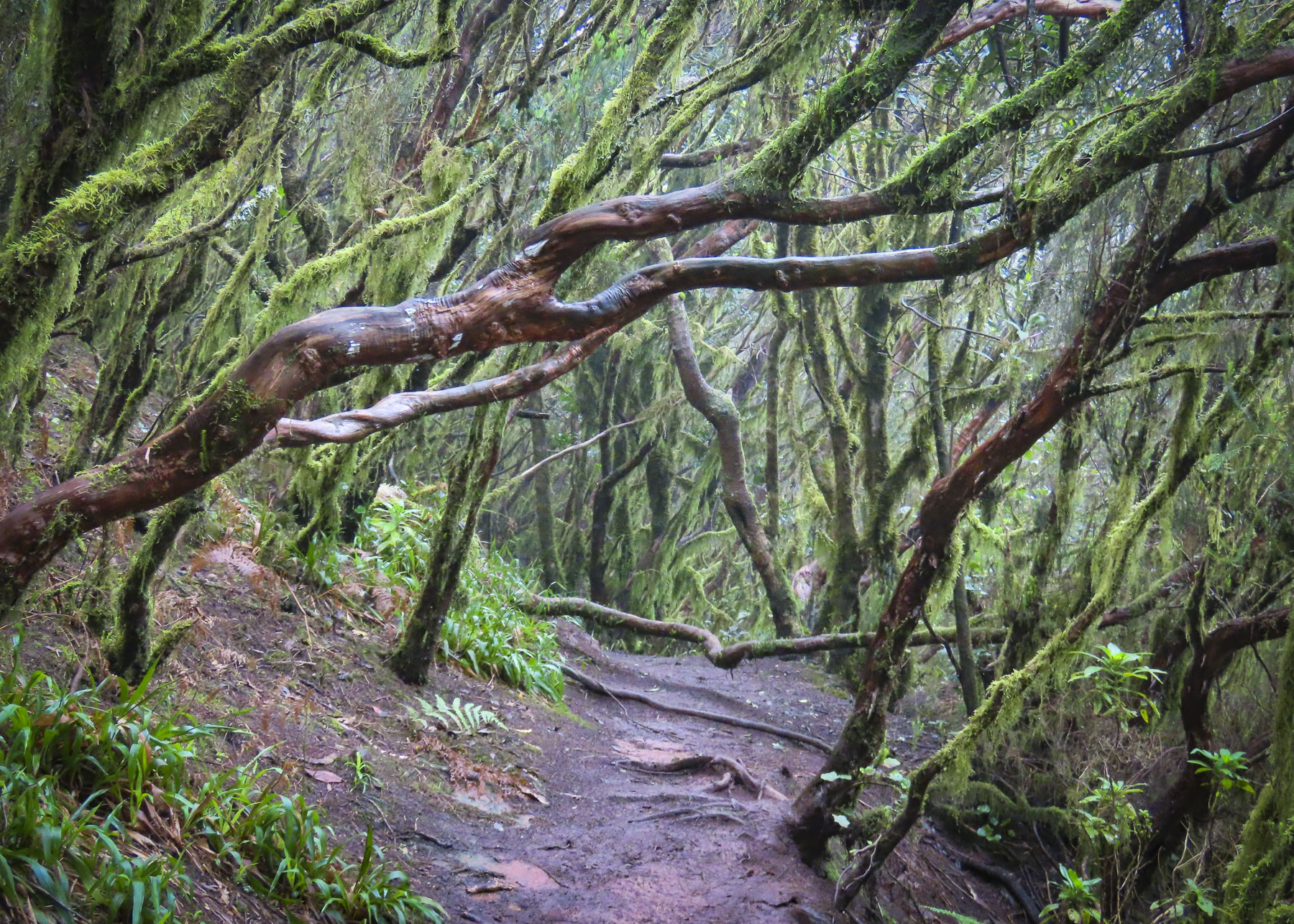
Scenes obscured by fog and low clouds as we drove across the mountainous interior that morning were now brilliant in the afternoon sunlight as we headed toward the Túnel de las Hadas. It’s a mesmerizing channel covered with moss, that was cut through the surrounding laurel forest. It is located in the Parque Rural de Anaga, which is recognized as a biosphere reserve with the largest number of endemic plants in Europe. The fog rolled in again and it was enchanting.

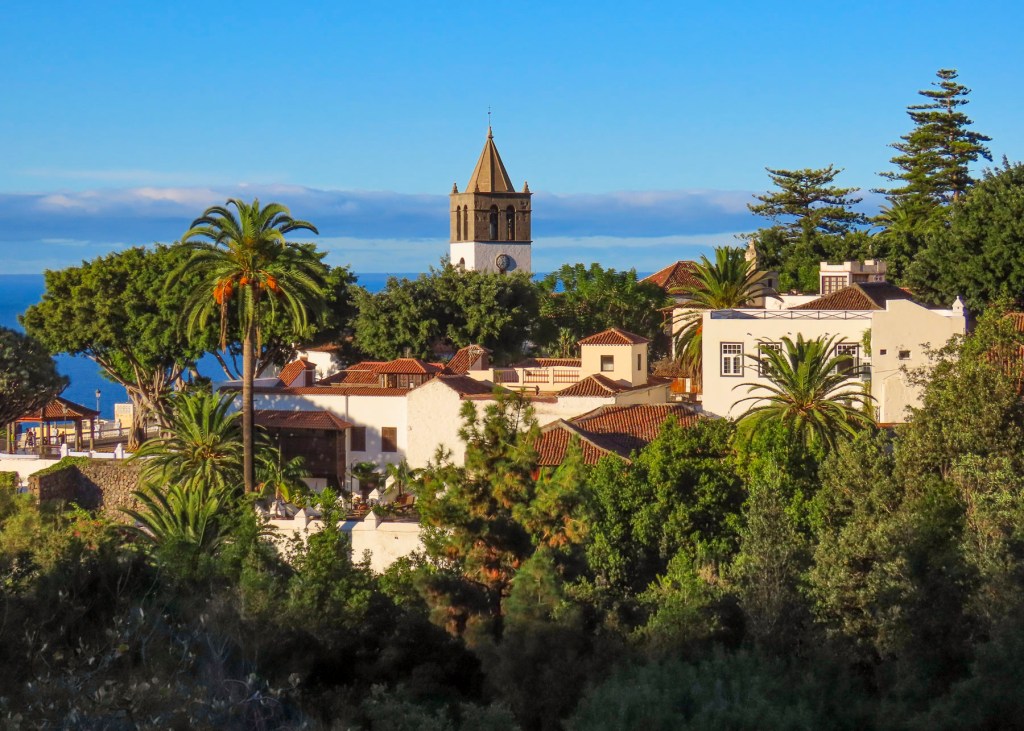
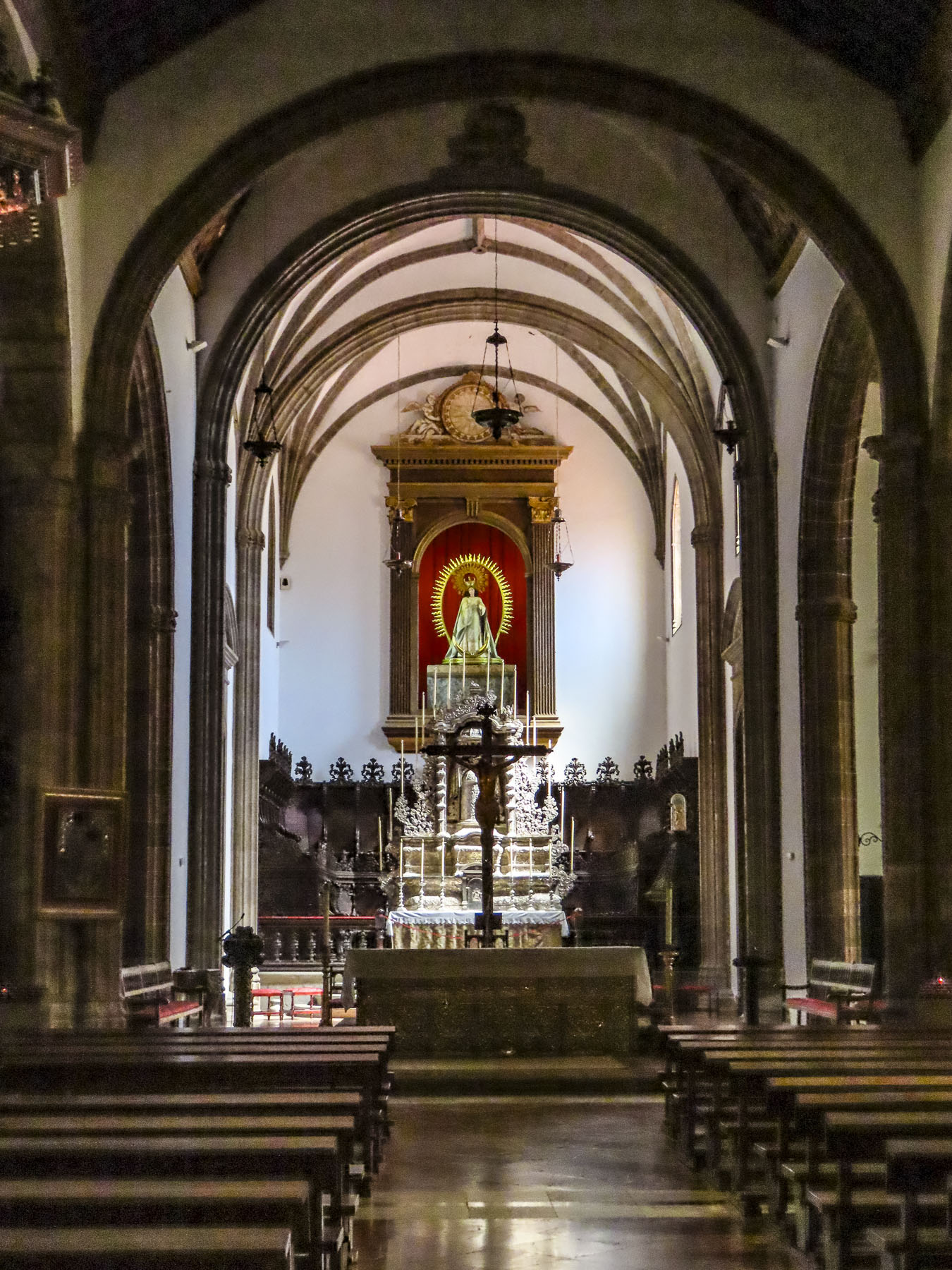
Our last day trip from Santa Cruz was to San Cristobal de La Laguna, an old colonial city that on its founding in 1497, after the defeat of the indigenous Guanche kingdoms, became Tenerife’s and the Canary Archipelago’s first capital. The village at first grew haphazardly around the Iglesia de la Concepción.

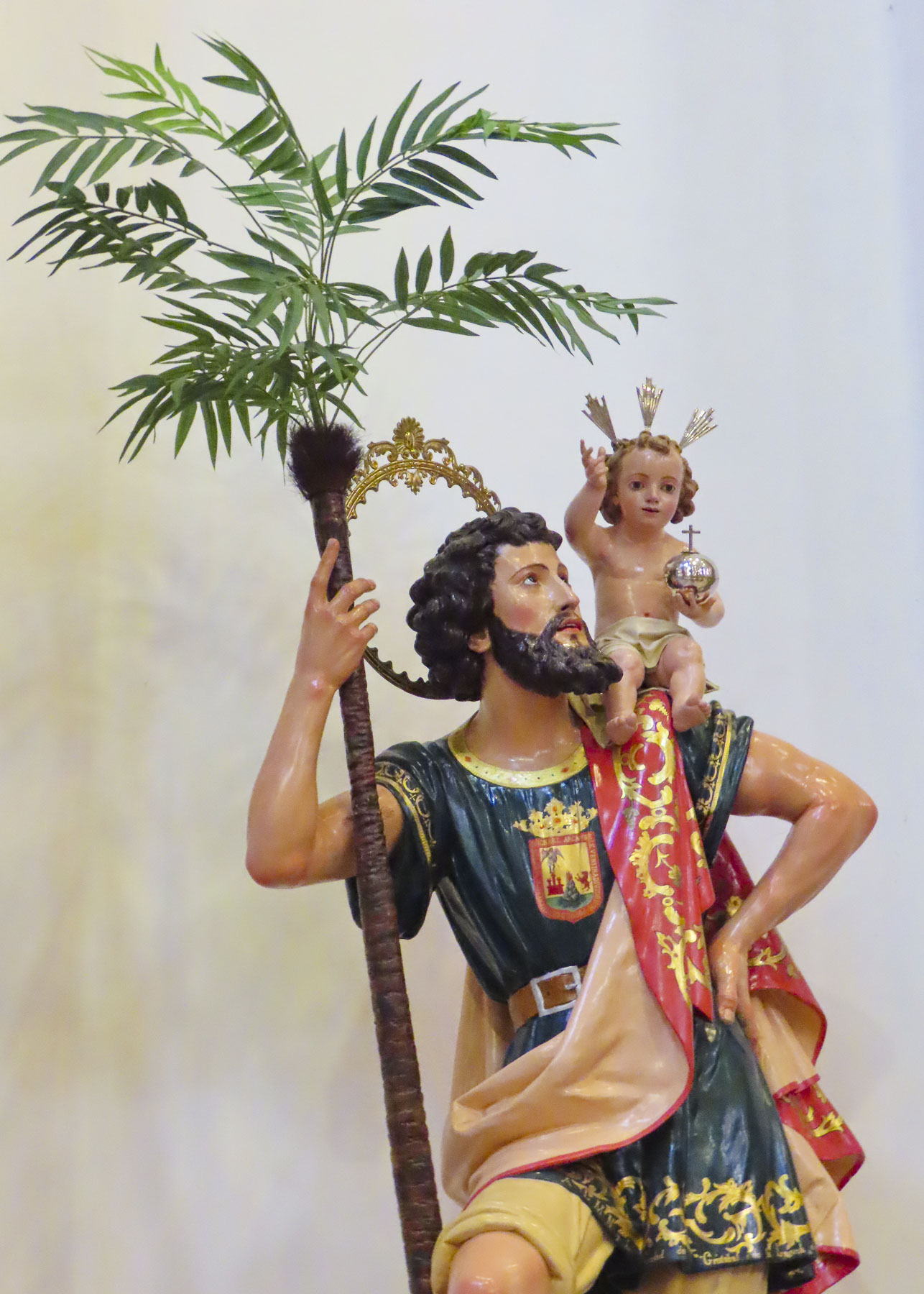
These first dwellings, built mostly of reeds, were ordered to be replaced in 1502, as their building material threatened to destroy the growing town if it ever caught fire. By this time La Laguna was the largest city in the Canaries with 6000 thriving inhabitants, two large churches and several monasteries. The city leaders adapted a plan Leonardo Da Vinci created for the city of Imola, Italy, as a blueprint for their city. Local son and Jesuit missionary José de Anchieta is credited with the inspiration to use this design of La Laguna when he founded the cities of Sao Paulo and Rio de Janeiro, Brazil, in the mid-1500s. The priest is highly revered on Tenerife and a venerated wooden sculpture of him from the Cathedral of La Laguna is carried in procession through the streets every June 9th.

On the flip side of good there is always bad, and San Cristóbal de La Laguna also recognizes another historical figure from their city, Amaro Pargo, a famous corsair, from, as the Spanish like to call it the “Golden Age of Piracy,” who savaged ships flying the British and Dutch flags sailing to their colonies in the West Indies. With a reputation as notorious as Sir Francis Drake’s, he was also recognized for his services by the Spanish crown and was declared a Caballero hidalgo, a knighthood, in 1725. He was also a merchant with many business interests and during his time the richest man in the Canary Islands, who was also highly regarded for frequent and large religious donations. He had an interesting relationship with a nun from the Catedral de San Cristóbal de La Laguna, Mary of Jesus de León y Delgado, who he credited with saving his life during a fight in Cuba by her ability to bilocate. Sister Mary is an interesting individual in her own right, credited with miracles, acts of healing, clairvoyance, levitation, psychokinesis, and stigmata. Sister Mary’s incorrupt body is preserved in the Monastery of St. Catherine, where she lived for 63 years, without ever leaving. Every 15 February her ornate glass-covered coffin, gifted by Amaro Pargo, is placed on display in the convent. With 1,251 miracles attributed to her, she has been nominated for canonization.

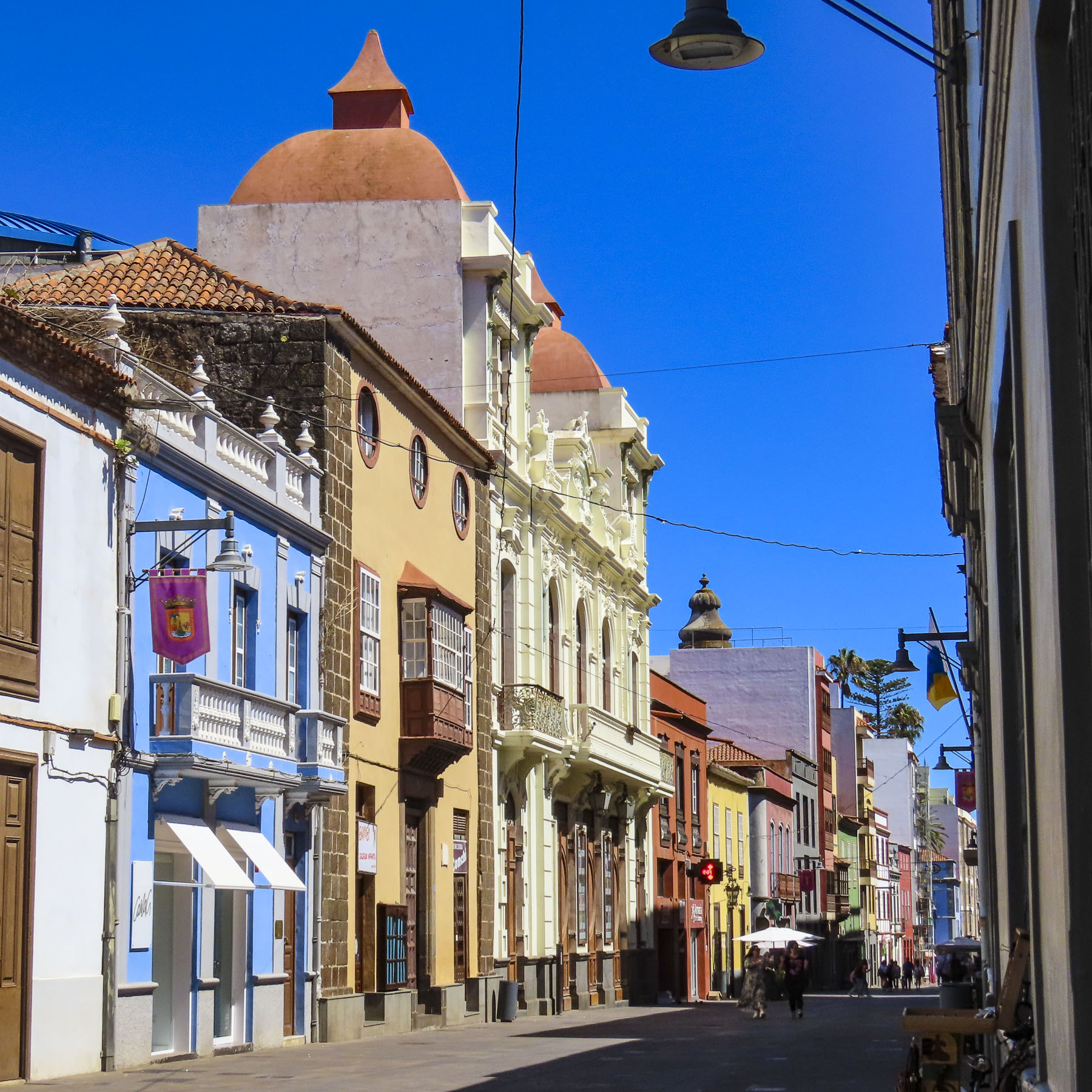
Though La Laguna is over 500 years old, it hosts a 300-year-old university with nearly 25,000 students that keeps it young at heart. Vibrantly colored buildings are interlaced between traditional examples of Canary architecture that feature wooden balconies that face the street and have deep courtyards to provide a shady sanctuary from the midday sun. The city’s major buildings incorporate a variety of styles that have been trendy across the centuries.

Older Gothic, Baroque, and Renaissance style buildings dot the historic center, while Neoclassical elements are present in the newer 18th century buildings that were built around the city’s core. In other words, there’s a delightful hodgepodge of architectural styles to enjoy.

Some of the older buildings have now been re-envisioned as exhibition spaces, as was the deconsecrated Ermita de San Miguel, which hosted a show of 3D printed sculptures when we visited. Others are now hotels or restaurants. The historic core of the city is pedestrian only and as we like to say “walk a little then café” is the best way to explore it.

Returning to Santa Cruz, we detoured into the mountains above the city to Parque de Las Mesas for an expansive view of the city below us. Brilliant in the afternoon sun.

Till next time,

Craig & Donna


Madrid: An Ambience That Ages Well

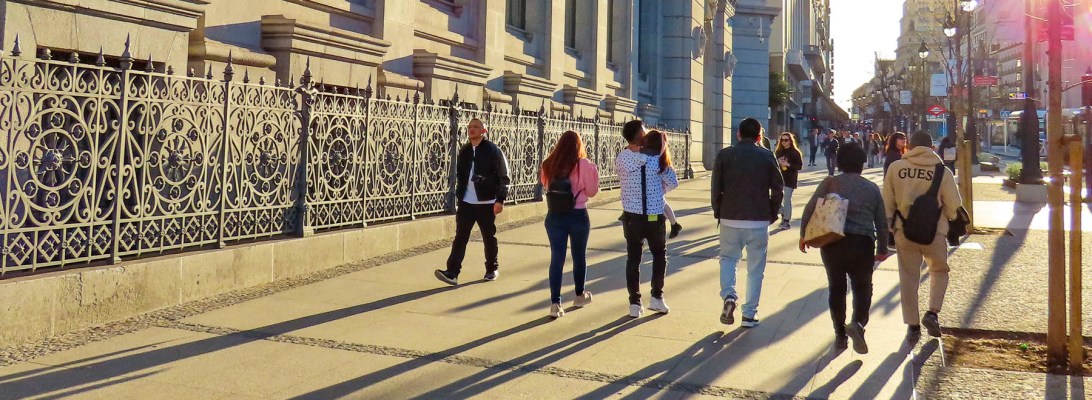
First Impression: Madrid is monumental! The minute we exited the Puerta de Atocha train station onto the sidewalk, we were struck by the beauty of the wide boulevards lined with stately trees and grand architecture, and the top of buildings graced with colossal sculptures of mythic gods.

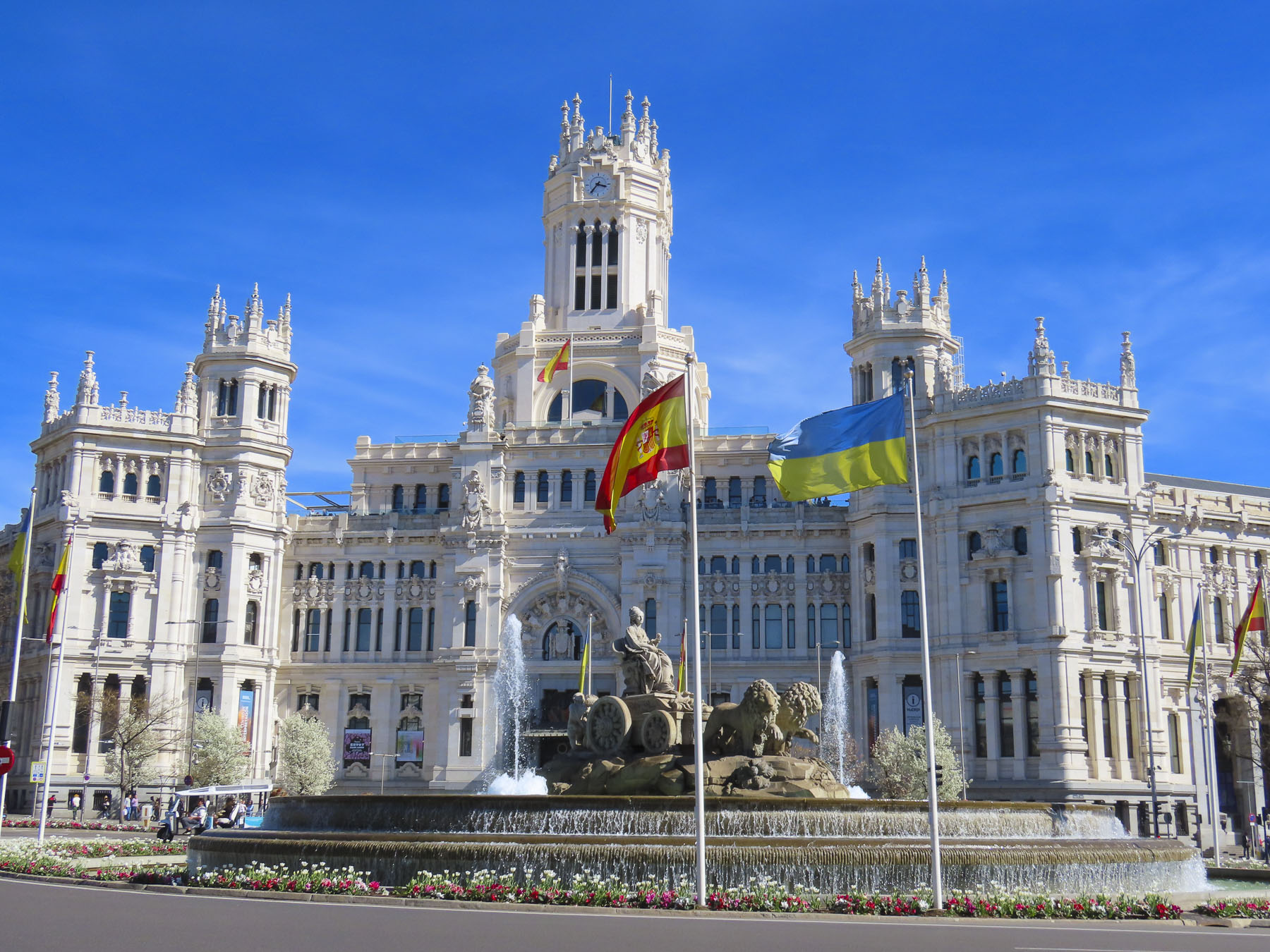
If the Paseo del Prado, the route to our hotel, could speak, it would surely boast of its famous destinations along its length: Madrid’s Museum Triangle, which includes the Reina Sofia Museum where Picasso’s Guernica hangs; the Prado Museum, which highlights the works of Diego Velázquez and Goya; as well as the Thyssen-Bornemisza Museum, which displays 13th-20th-century European masterpieces. But its bragging rights continue with the Real Jardín Botánico, the Museo Naval with its fascinating exhibits devoted to Spanish maritime history, The Glory and Pegasus sculptures atop the Ministry of Agriculture, and the famous fountain depicting the goddess Cybele’s chariot being pulled by two lions. This relatively short distance is packed with so many highlights it should be called Madrid’s marvelous mile.

Our hotel the Apart-Hotel Serrano Recoletos was just a few blocks from the iconic Cibeles Fountain, which is centered in a traffic circle you usually have to observe from a distance, but overnight the Paseo del Prado was transformed into the festive final leg of the Movistar Half Marathon, with the finish line down the street from our hotel.

With the majestic boulevard closed to traffic, folks were free to wander up to the fountain for a close view, an accessibility that rarely happens. Yesterday we hadn’t realized the median strip that runs the length of Paseo del Prado was lavishly planted with gardens and as luck would have it, the tulips and flowering trees were in bloom. Heading towards the historic center of Madrid, we observed a large group of healthcare professionals marching peacefully down the Gran Via protesting government policies. It was a busy Spring Sunday in Madrid.

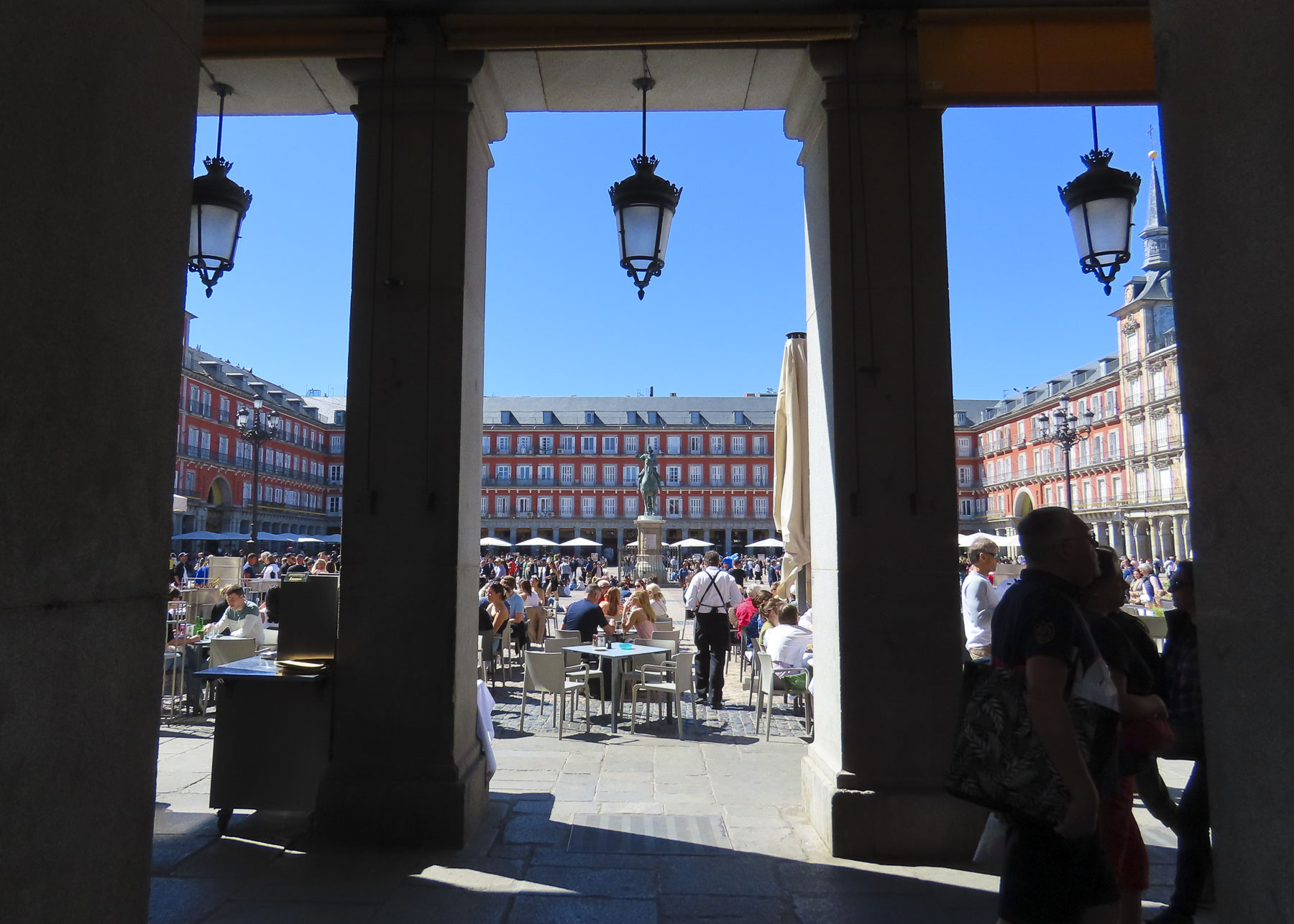
Plaza Mayor, ground zero for the historic center of Madrid, was our destination. Once the ancient city’s market area, the area was transformed by architect Juan Gómez de Mora during Philip III’s reign in 1617, and of course the King is dutifully recognized, gallantly astride an equestrian statue in the plaza’s center.

The vision of three successive architects contributed to the plaza as seen today, the result of three devasting fires in 1631, 1670 and 1790. Over the centuries it has hosted bullfights, executions during the Inquisition, Royal wedding celebrations, soccer games and Christmas markets. As an exclusive address in Madrid, many of the apartments are passed down within the same families from generation to generation.

Plaza Mayor gets hectic, but tucked away under the arcaded sidewalk, there are some hidden gems worth finding. Our favorite was La Torre del Oro. It’s an old atmospheric bar dedicated to celebrating Spain’s bullfighting traditions.

There are so many interesting destinations centered around this plaza that we often started our days here as a way to get oriented in old Madrid’s labyrinth of alleys. Treating the nine ancient gateways into the plaza as compass points, we would follow their direction into the surrounding barrios.

Our wanderings to soak up the ambience of this ancient quarter were frequently determined by a list of restaurants and cafes, along with historic sites and churches, we hoped to find. The choices were overwhelming. Since this was our first time in Madrid, we hit many of the tried-and-true spots, like Chocolatería San Ginés, famous for serving Madrileños the best hot chocolate with churros for over 125 years. There was a fast-moving queue when we arrived before 11, which suddenly evaporated and freed sidewalk tables, but it was much more interesting before the lull in activity. And El Riojano, a renowned 19th-century Pastelería with a tantalizing spinning tower of sweet temptations in its storefront window, is sure to break the will of any dieter. When you first enter, it looks like there are not any tables to sit at, but next to one of their display cases there is an opening into a large, popular back room for café. We are after all tourists.

One late afternoon by the El Oso y el Madroño sculpture, a band of buskers filled the Puerta del Sol with music. The Bear and the Strawberry Tree is a medieval heraldic emblem that has been associated with Madrid since 1222, when King Alfonso VIII used the image on a stamp to seal a royal decree.

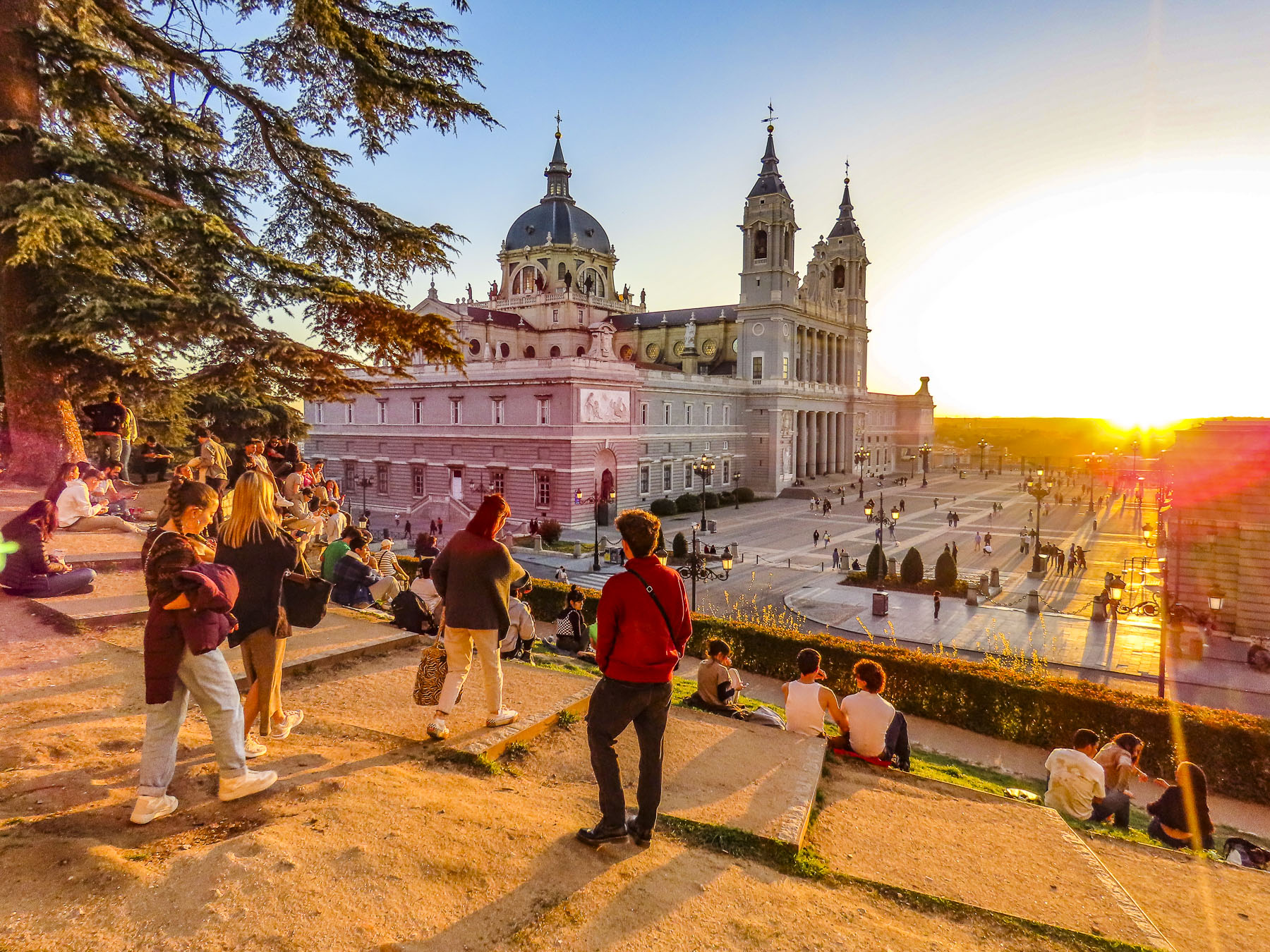
We continued past the Plaza Mayor towards the Plaza de la Armería, where the Catedral de la Almudena, (1883), and the Royal Palace of Madrid (1738), face each other. Turning onto Calle del Factor, we walked a short distance uphill to the Jardín de Larra and joined a small group of folks waiting to enjoy the sunset.

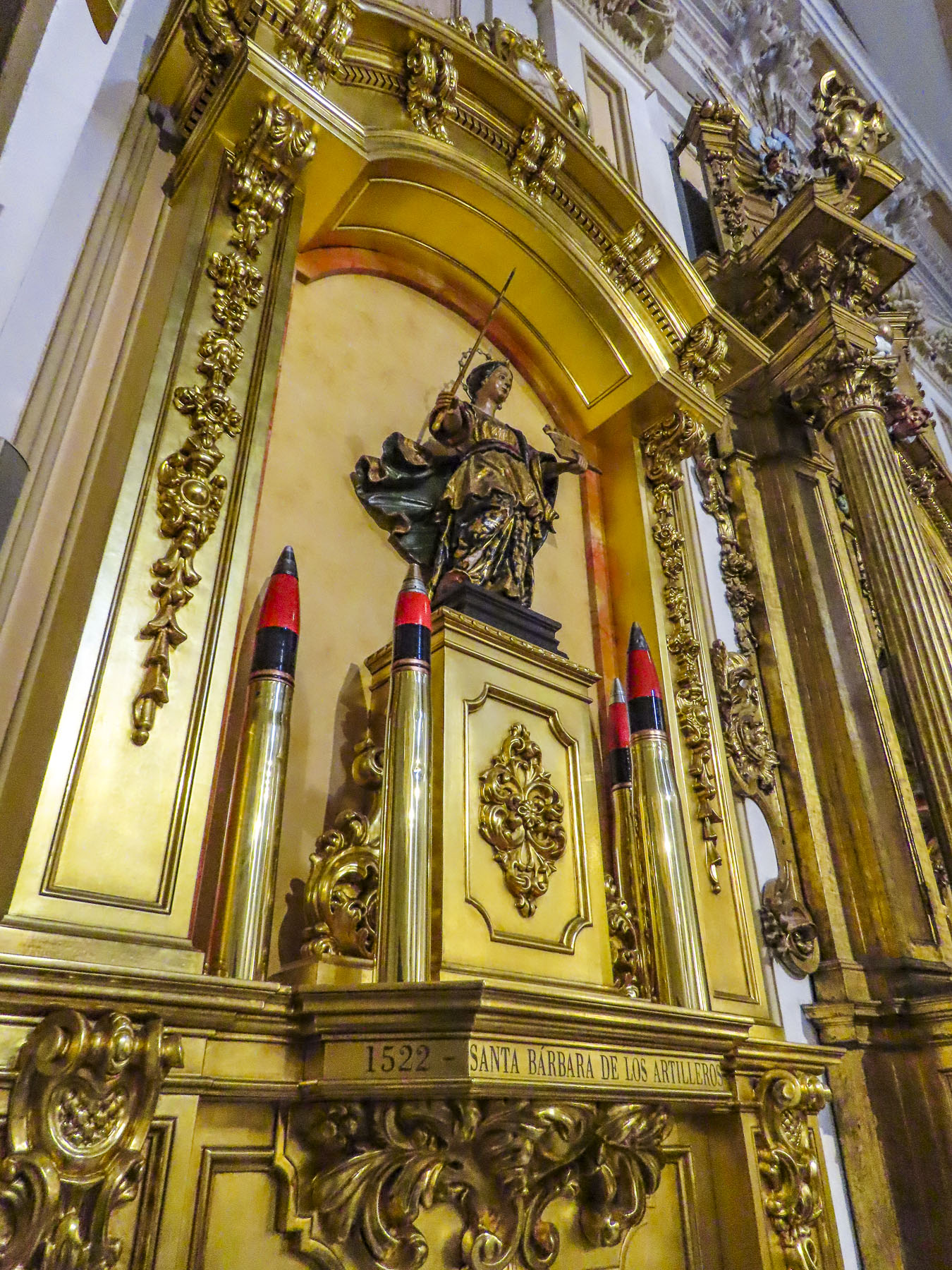
Afterwards at the bottom of the street we entered the Iglesia Catedral de las Fuerzas Armadas. It’s a small 17th century church dedicated to the Spanish armed forces. The church’s simple façade conceals a lavish marble interior with several interesting altars depicting paternalistic colonial themes.

The streets of Madrid seem even busier at night with folks bustling about after work. On the way back to our hotel, we stopped at the Mercado de San Miguel, one of Madrid’s old, covered food markets, which dates from 1916. Today it’s a gentrified, popular gastronomic destination, with tapas, tapas, and more tapas to satisfy everyone’s tastes.

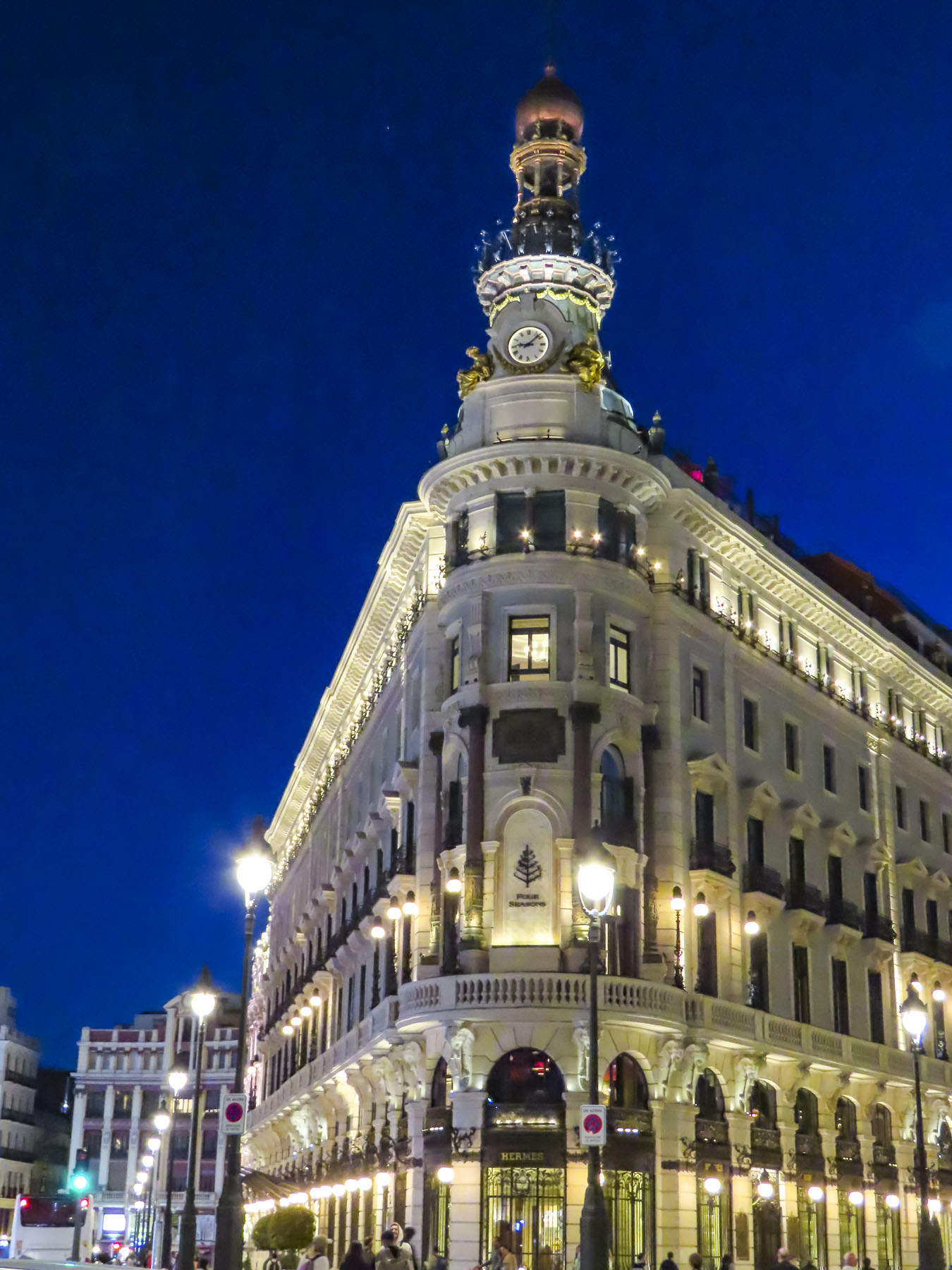
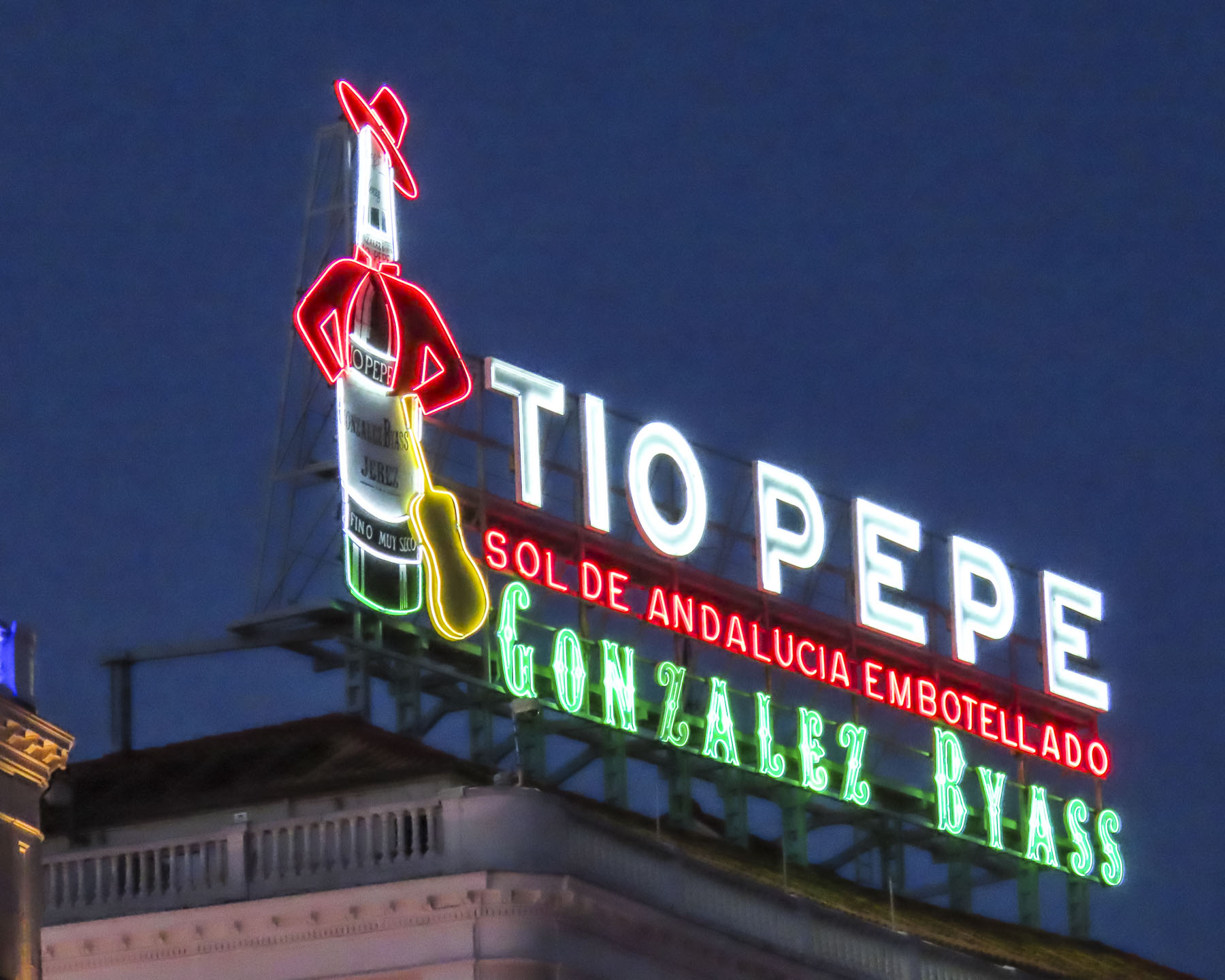
Madrid’s iconic Tio Pepe neon sign blazed brightly above the Puerta del Sol, and shops along the plaza brilliantly displayed their merchandise in dramatically lighted storefront windows. While Madrid exudes ambience during the day, the city becomes magical in the evenings.

Dinner was at La Casa del Abuelo CRUZ, a traditional tapas bar that has been run by the same family since 1906. Their specialty, gambas al ajillo (sizzling garlic prawns), while very delicous, was a terrible value for the portion size. Their vino de casa, an excellent strong red wine, was memorable and eased the pain of the excessive bill.

Spain’s empire building and wealth followed Columbus’ discovery of the Americas in 1492. A daring nautical leap of faith at the time, it set in motion an era of exploration by sea, that would expand the Spanish Empire around the globe. With that in mind, and an interest in boats, we headed to the Museo Naval on Paseo del Prado, near the Prado Museum. It’s a wonderful museum with exhibits in chronological order, which highlight exquisite ship models, nautical instruments, maps, weaponry, and paintings depicting important naval battles. The exhibits include models of the Niña, Pinta, and Santa Maria which composed Columbus’ small fleet on his epic first voyage.

Afterwards we headed into the centro historico for lunch at Casa Toni, an intimate, no-frills bar, that serves tasty seafood and offal tapas. A short line had formed for tables by the time we arrived, but it moved quickly, especially if you opted for a table upstairs, though downstairs is where all the action is with other folks, jammed into a small space, standing at the bar, and seated at some very tiny tables. It’s a friendly boisterous spot. Pig ears and fried lamb lungs might not be for everyone, but they were surprisingly very tasty. 

Gold and silver from the Americas fueled church building across Spain in the 16th – 18th centuries.While it’s possible to enjoy Madrid without visiting any churches, we’ve developed a policy of going inside if the door was open. It nicely slowed down our day and transported us back to a time when amazing buildings were constructed only using hand tools to carve stone and shape wood. And the religious paintings and iconography, while they might not be of interest to everyone, display a level of craftsmanship and imagination that’s worthy of appreciation. Unfortunately, the churches were also vast repositories of riches, donated by the wealthy and poor alike, to secure a place in heaven.

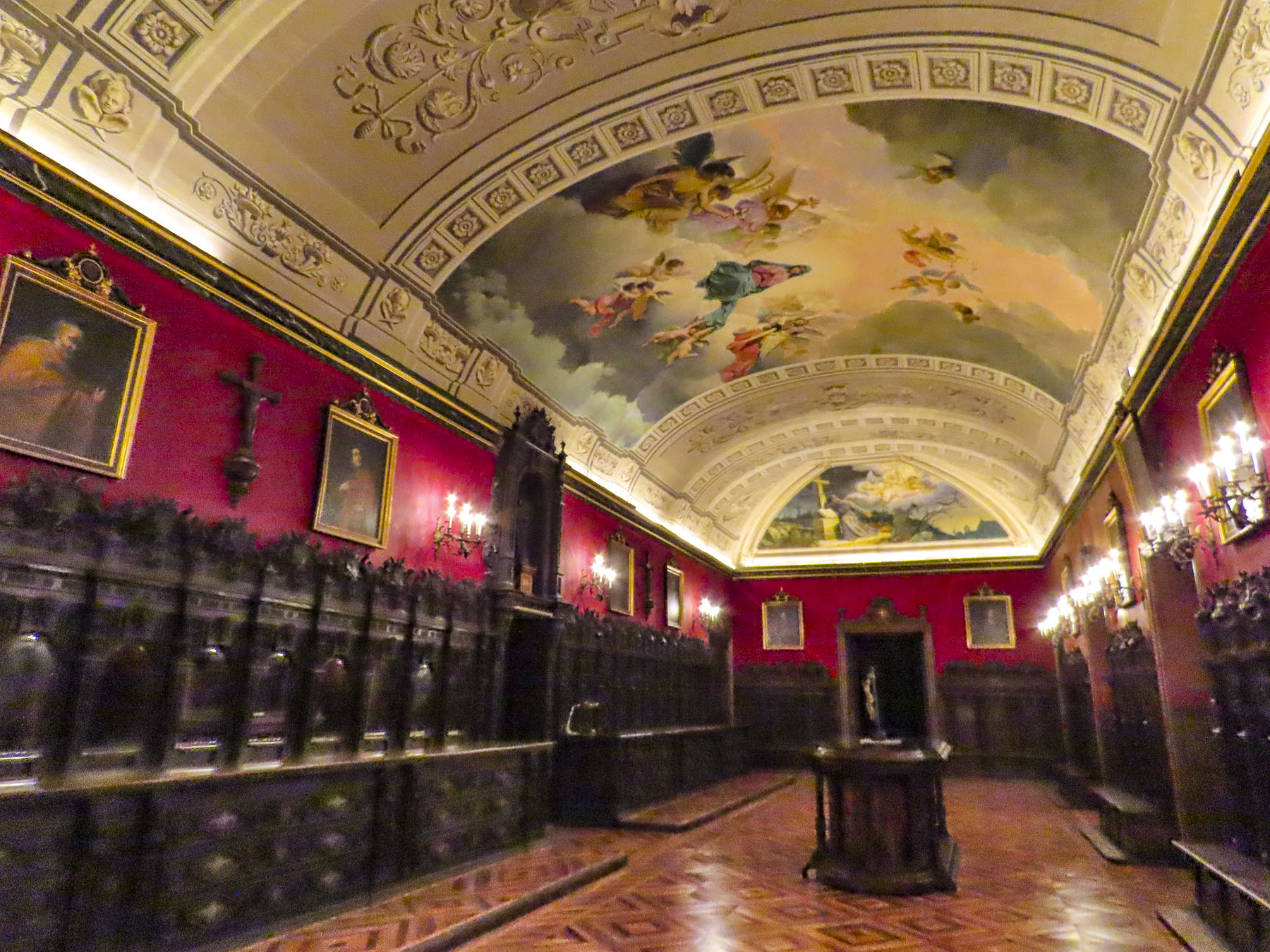
Near the San Miguel market, down from the Plaza de la Villa, on Calle de Puñonrostro, we happened upon the inconspicuous entrance to the small chapel at the Monastery of Corpus Christi las Carboneras, that dates from the early 1600s. It’s a tall, narrow, petite sanctuary. When we were turning to leave, I noticed on the second level the privacy screen across the prayer area for the sequestered nuns. It didn’t actually offer much privacy since a I spotted a seated nun watching the tourists in the chapel. I waved gently, she smiled and waved discreetly back.

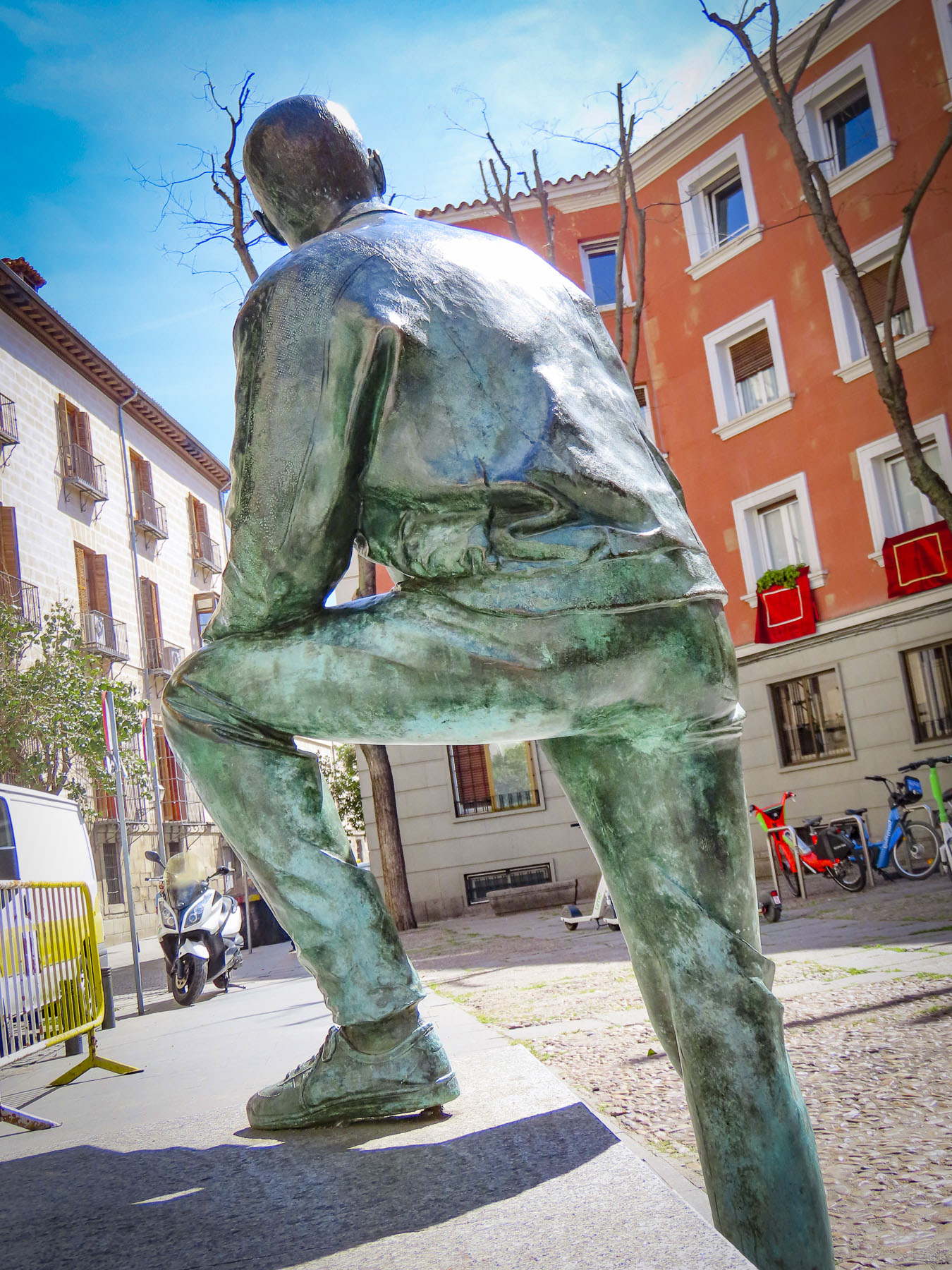
A door further along the calle leading to the convent’s dulces turno was just being locked; I could hear the click, a few minutes shy of their posted hours. The dulce turnos are a centuries-old tradition that has remarkably survived in convents across modern Spain, as a means for nuns to support themselves. The turno is essentially a lazy-susan style cabinet with doors on both sides of the wall that lets the customers purchase cookies and other baked cooked from the sequestered nuns while still maintaining the nuns’ privacy. Cookie orders are spoken through the wall. If your Spanish is insufficient, it’s handy to write out what you’d like. There is usually a list of what’s available taped to the door of the cabinets. You place your money on the shelf, the wheel turns, and cookies appear as if by magic. It’s delightful! At the bottom of the street, in front of a public library, stands a bronze statue of a man. It’s named El Lector, the reader, a tribute to Carlos Cambronero, a writer devoted to Madrid’s history. Across the street the unusual convex, baroque facade of the Basílica Pontificia de San Miguel (1739) intrigued us, and we explored more inside.

The calles go every which way in La Latina, one of Madrid’s oldest areas, where the narrow streets and plazas follow the original 9th century footprint of the Arab citadel that originally stood there. Though its buildings might be old, the area now attracts a vibrant young crowd that enjoys an immense collection of tapas bars and restaurants along Cava Baja and Cava Alta. The two nearly parallel streets have been popular since medieval times, when traveling merchants stayed at inns and taverns along the calles, and used tunnels or access holes dug at the end of the streets to enter the walled city at night when the gates were closed.

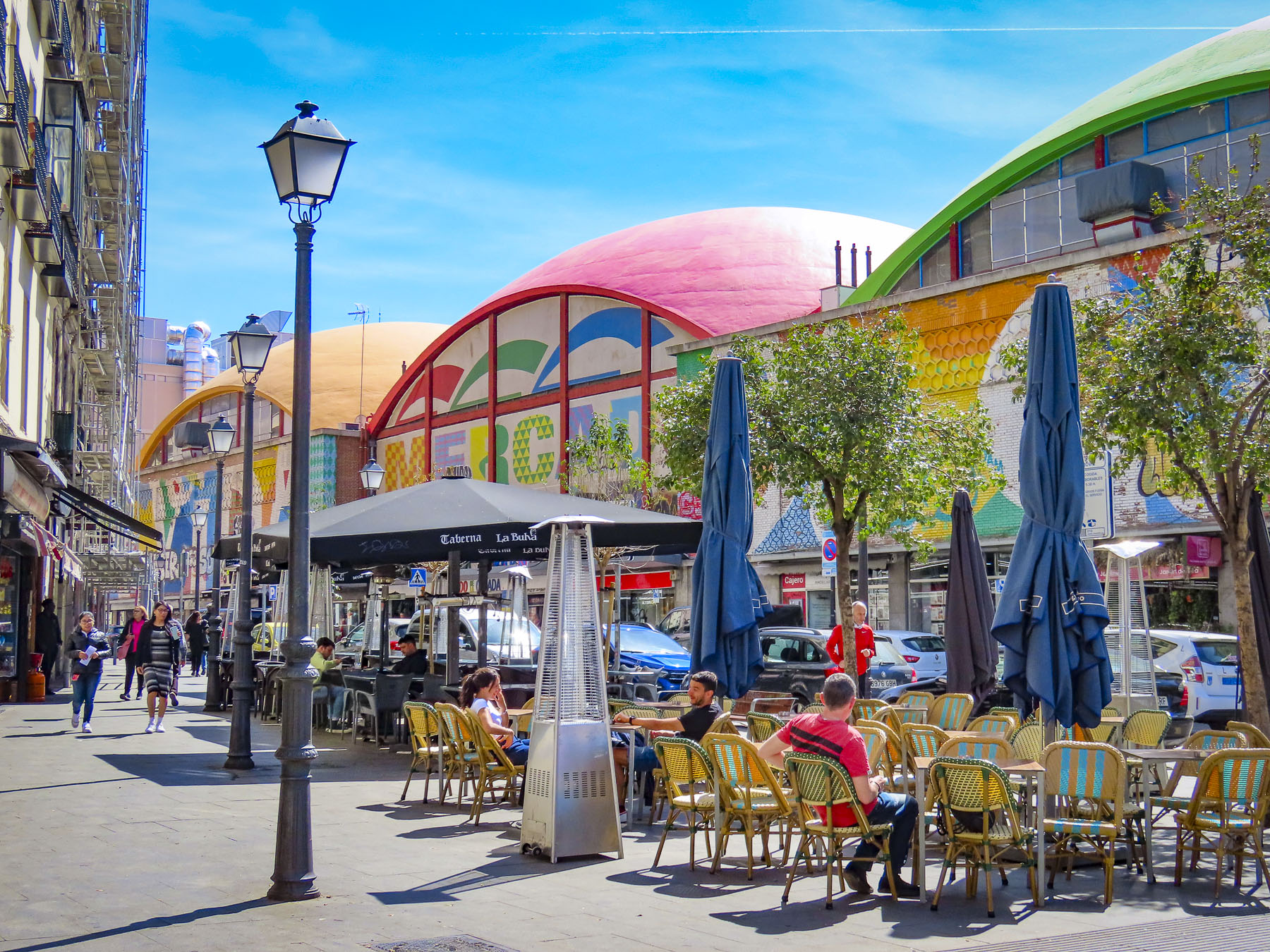
At the end of Cava Baja and Cava Alta, the colorful Mercado de la Cebada, with its distinctive wavy roof, is a modern architectural dichotomy in its surroundings. The shopping in this mercado is an authentic Madrileño experience that is not touristy at all.

From the entrance to the market, we noticed the tall silhouette of the Royal Basilica of Saint Francis the Great’s large dome, several blocks away, dominating the neighborhood, and decided to check it out.

This is a mammoth, mid-18th century cathedral designed in the Neoclassic style, the size of which we did not fully realize until we were standing under its 108-foot-wide and 190-foot-high dome. Legend believes that St. Francis chose this site himself when he visited Madrid in 1214 during his pilgrimage to Santiago de Compostela. The dome is the largest in Spain and the fourth largest in Europe. It was breathtaking in scale and equally fascinating with celestial frescos by Casto Plasencia Mayor decorating the cupola, and paintings behind the altar by Manuel Dominquez and Alejandero Ferrant, illuminating biblical stories.

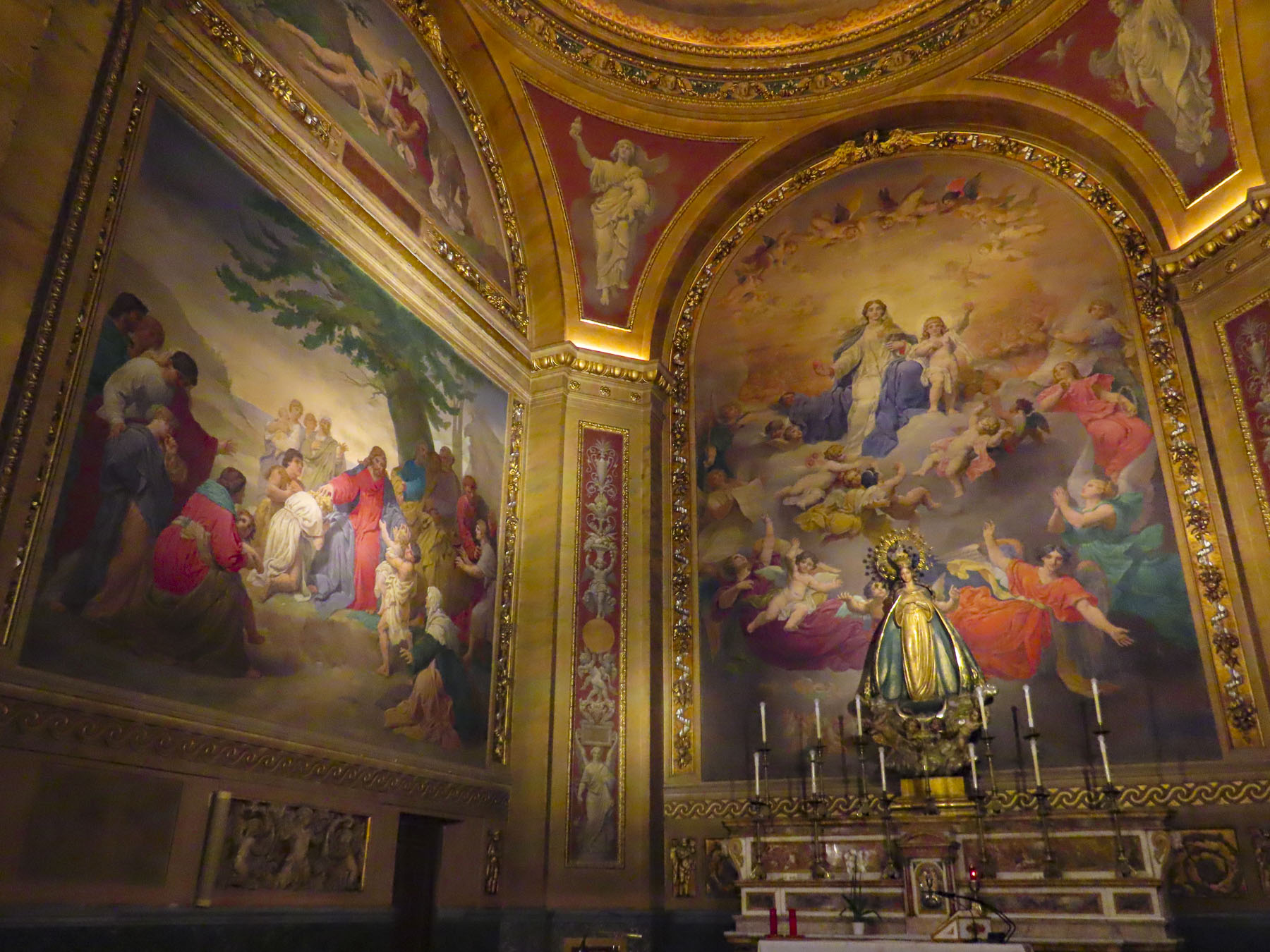
Six smaller but equally opulent chapels in several different architectural styles, from Baroque to Byzantine, and Renaissance to Rococo, ring the main altar, each mini museum displaying a wealth of religious art created by the Spanish masters Francisco José de Goya, Alonso Cano, Francisco Zurbarán, Antonio González Velazquez, José Moreno Carbonero, and others. This church is one of the most beautiful we’ve visited in Spain and should be on everyone’s “must do in Madrid,” lists.

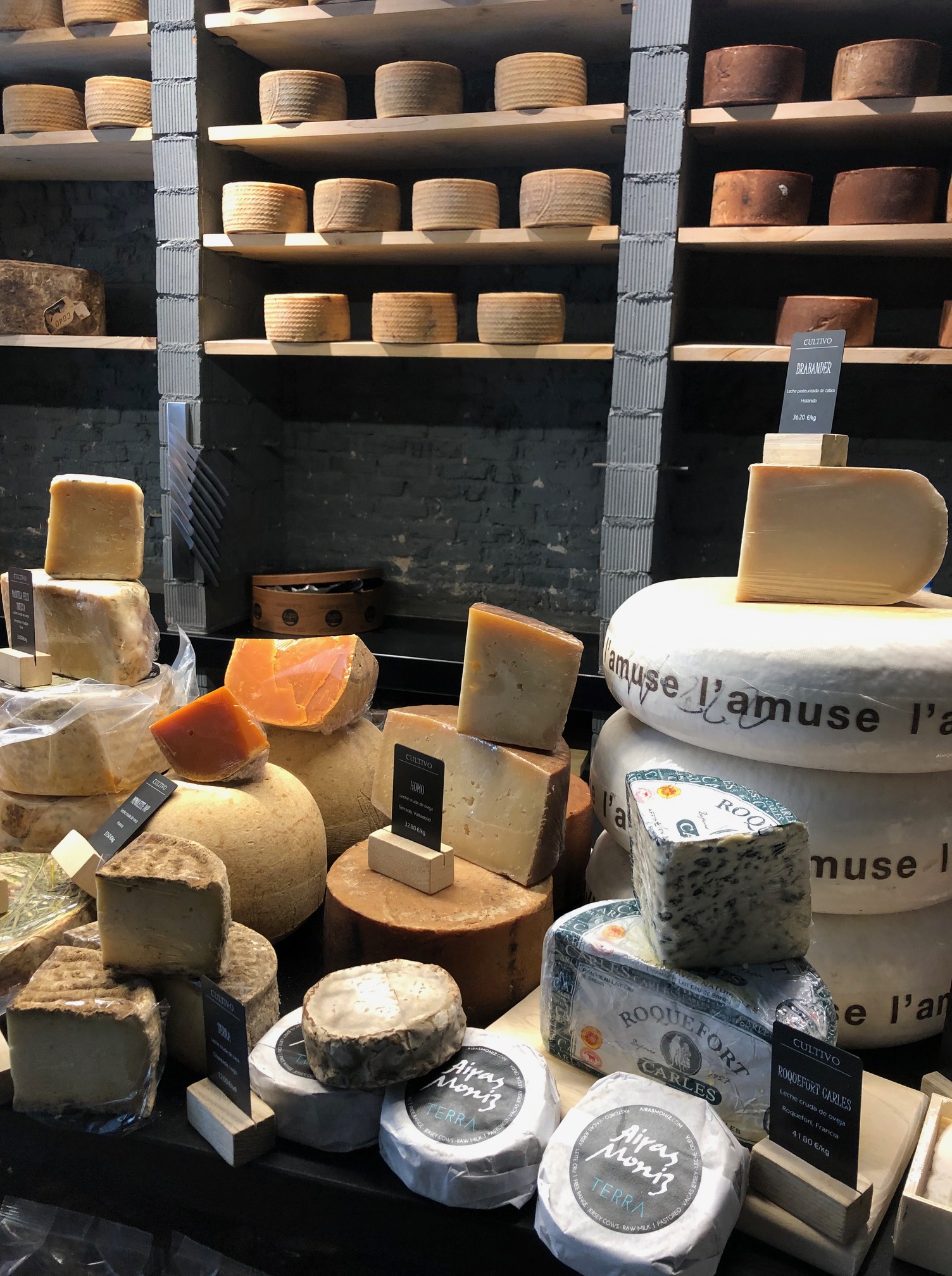
Afterwards, on Carrera de San Francisco, 14, as we started our return leg to our hotel, we happened upon two very good gastronomic discoveries. The artisanal bakery, Obrador San Francisco, was full of the wonderful aroma from fresh baked bread that was just being put out for purchase. And of course, to go along with good bread, you need good cheese. This was accomplished easily enough, right next door, at Quesería Cultivo, a cheese shop, with an amazing array of Iberian cheeses. It’s worth stopping here just for the earthy aroma that greets you when you enter the store, an experience that will have you picturing idyllic Spanish mountain pastures, full of grass-grazing and milk-producing livestock.

Being the cheese aficionados that we are, we had one more stop in mind, at Casa González.  They have been selling cheese in Madrid since 1931 and have slowly expanded to become a petite gourmet shop and small bar with a handful of tables, where they are happy to advise you on which wines to pair with each cheese.  

On our last full day in Madrid, we wandered the exhibition galleries at the Prado, viewing the museum’s vast collection of classical European art, which spans from the sixth century BC until the late 19th century. We especially enjoyed the works of Goya, Velázquez, and El Greco. Goya created over 700 paintings during his lifetime and embraced many different themes from royal portraiture, to Romanticism, to religious art, and later his dark paintings, toward the end of his life.

Around the corner from the museum, we lunched at Plenti, which served delicious and inexpensive food. We spent the rest of the afternoon exploring Real Jardín Botánico, where many of its plantings were just beginning to flower.

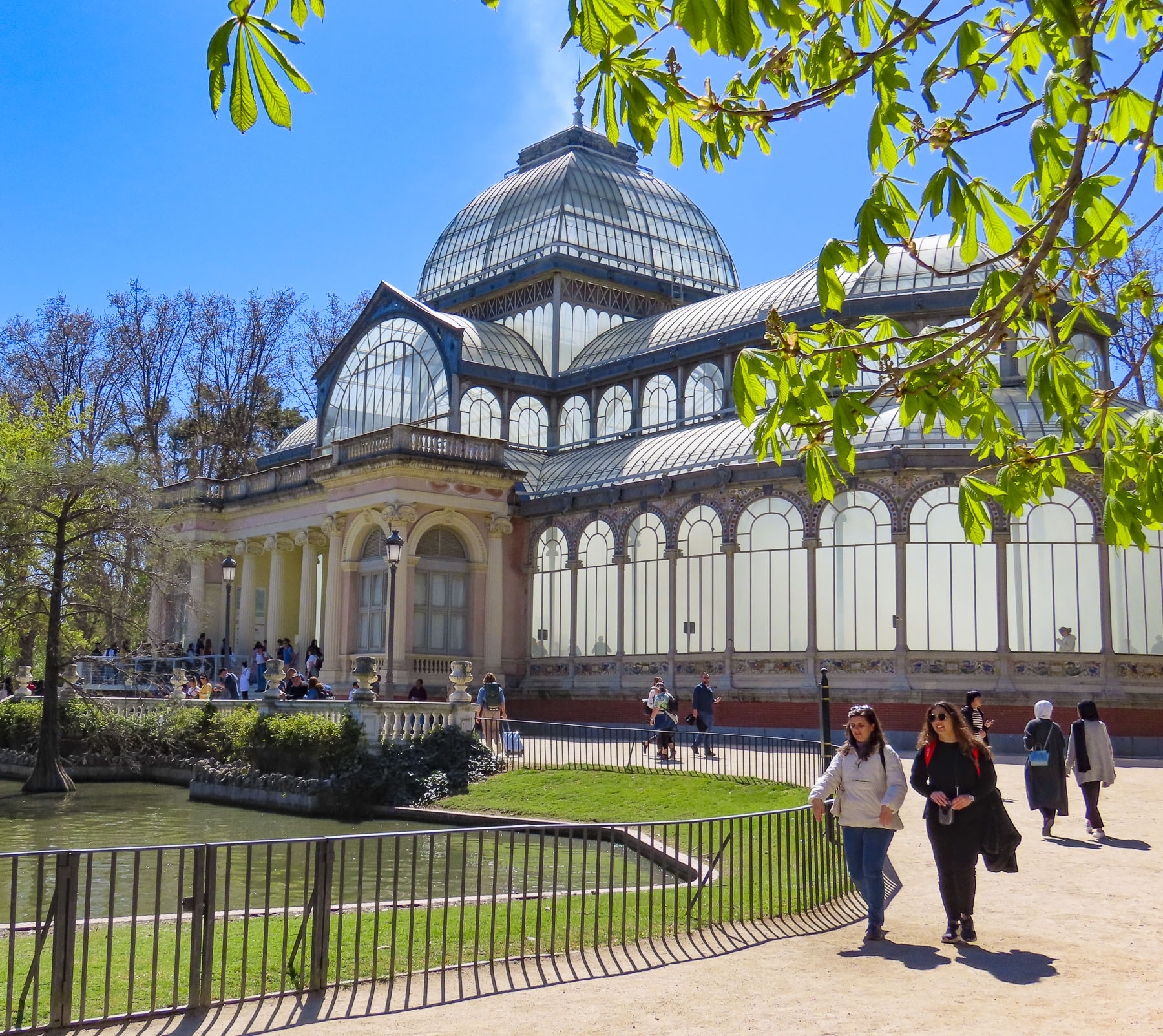
In El Retiro Park we did the classic tourist stuff, visiting the Palacio de Cristal, originally built as an exposition greenhouse, but now hosting art exhibits, and the Monument to Alfonso XII on the El Retiro boating pond. Interestingly, the park was originally created in 1630 as an exclusive sanctuary for Spanish Kings and members of the royal court, and famous naval battles were re-enacted on the boating pond for the monarchy’s entertainment.

The large 350-acre treed park, with manicured gardens, fountains and monuments was perfect for royal courtships and discreet liaisons. It was gifted by the monarchy to Madrid and permanently opened to the public in 1868, a much-needed addition to the city’s greenspace at the time.

The sun was warm for late March and folks were out and about, enjoying life. It was a perfect day.

Till next time,

Craig & Donna

Barcelona: An ancient yet modern metropolis

Usually, we shy away from large cities. I am not sure exactly why, though it’s probably anxiety about how hectic a new city might be and imaginary stress of navigating public transit, or predatory taxi drivers. But we’ve only ever heard how wonderful Barcelona was from our friends and decided to take the plunge ourselves. Boy were our pre-conceived notions way off! Starting with a trouble-free taxi ride (it’s as if the Barcelona City Council told the taxi union to treat the tourists well or we’ll allow Uber and Lyft to operate in the city) from the airport to our hotel, One Shot Aragó 257 in Barcelona’s Eixample district.
The district dates from the city’s expansion in 1855 when the Spanish Crown finally relented and permitted the demolition of the ancient defensive walls around the historic core of Barcelona. This allowed the city to expand beyond its ancient footprint to accommodate a growing population, that was literally bursting the city’s walls. A visionary plan by Ildefons Cerdà to urbanize the farmlands surrounding the old walled city was chosen.

An enlightened architect and civil engineer, he envisioned Eixample to be a model of urban living, where every citizen had enough sunlight, clean air, water and green space for a healthy lifestyle. Cerdà designed the Eixample district with short blocks to encourage “walking, mixing, and vibrant street life,” and oriented the streets to run northwest to southeast to receive maximum sunlight. The buildings on each block were no higher than seven floors and built around a central treed courtyard.

Comprised of six neighborhoods, Dreta de l’Eixample, Antiga Esquerra, Sagrada Familia, Fort Pienc, Sant Antoni, and Nova Esquerra, we can attest that Cerdà’s Eixample district and his vision for Barcelona’s future has withstood the test of time and the city continues to be a wonderful, people-friendly place to explore by foot. Today Barcelona is a sprawling city of millions; still, with most of its 19th century buildings only 7 stories tall, it never felt congested and always felt as if we were strolling through intimate neighborhoods. Of course, there were exceptions on La Rambla and the promenade along the Platja de la Barceloneta oceanfront, which were busy even in off-season March.

Today, continuing improvements to the city’s urban landscape, fostered by the concerns of climate change, are being implemented to the city’s 19th century footprint with the pioneering of Superblocks. These are 3 square block areas that will become pedestrian only with trees planted where the roadway was removed in order to expand the city’s green spaces and enhance urban living.

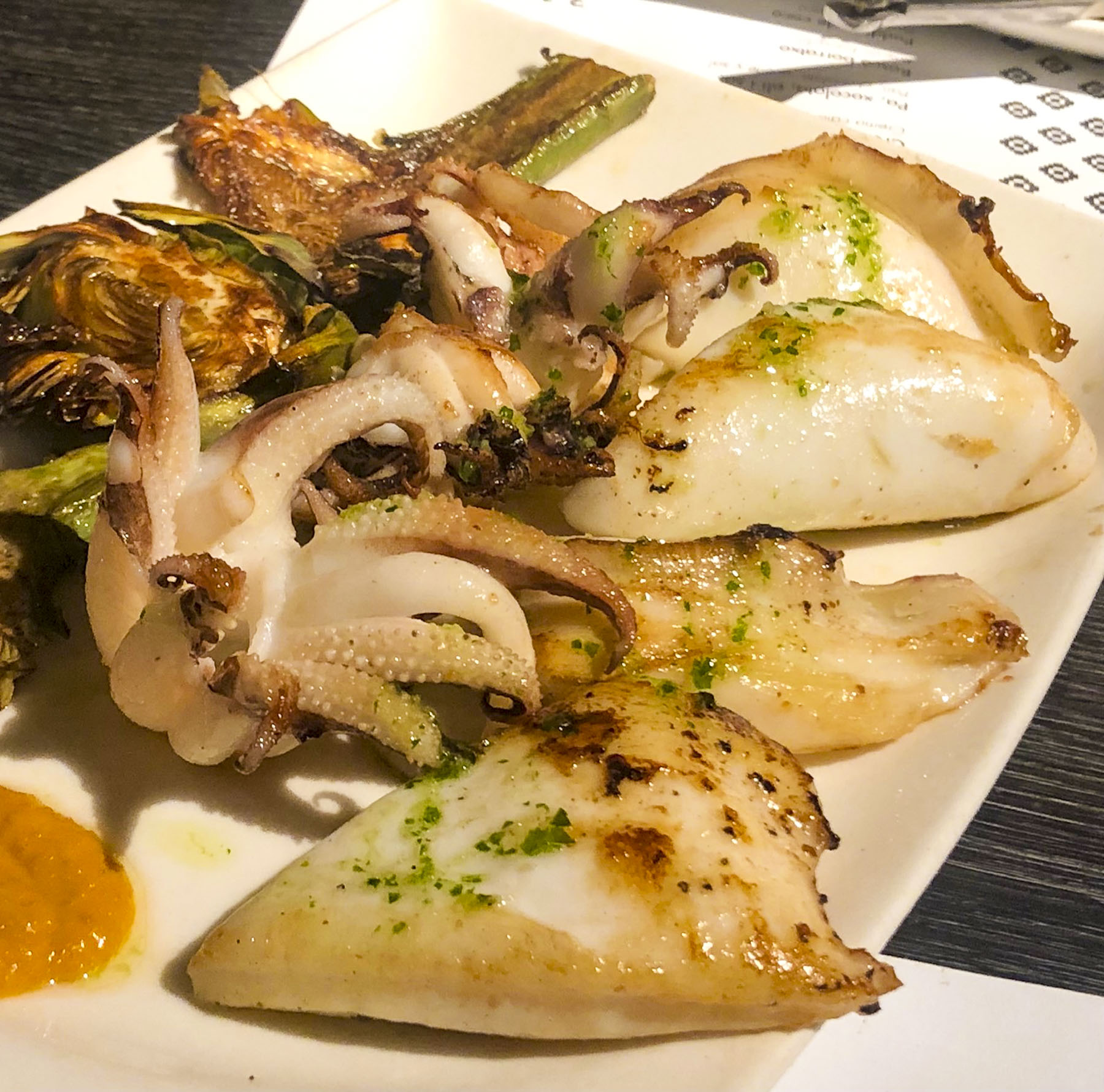
Just exploring the blocks immediately surrounding our hotel was rewarding with discoveries of cafés, tapas bars and interesting shops. Our favorite for morning coffee was the Catalan pastry shop, Casa Vives, located too easily, on the corner down the street from our hotel. The contemporary tapas at Vinitus couldn’t be beaten, and a formidable line awaited if we didn’t arrive early enough.

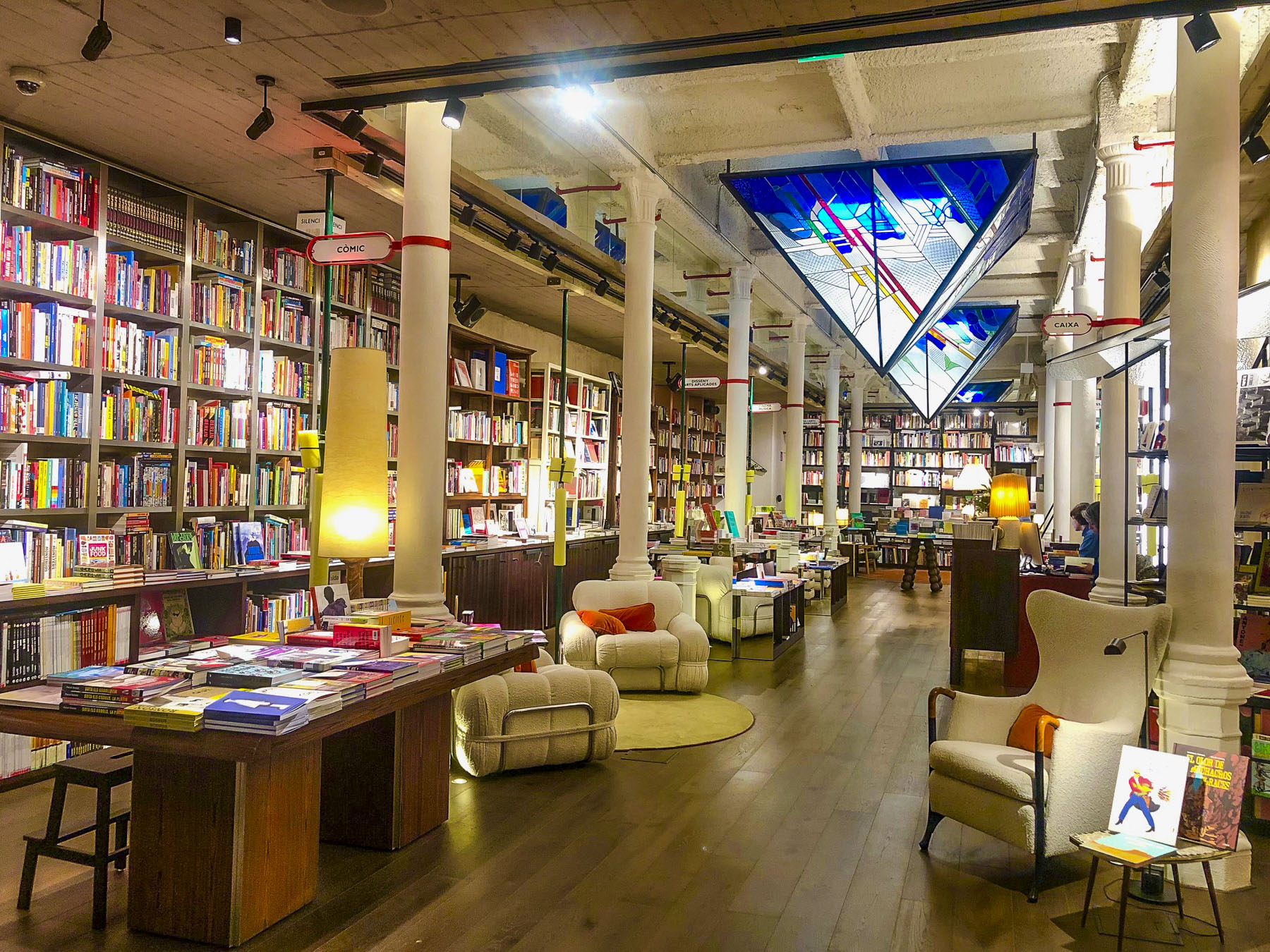
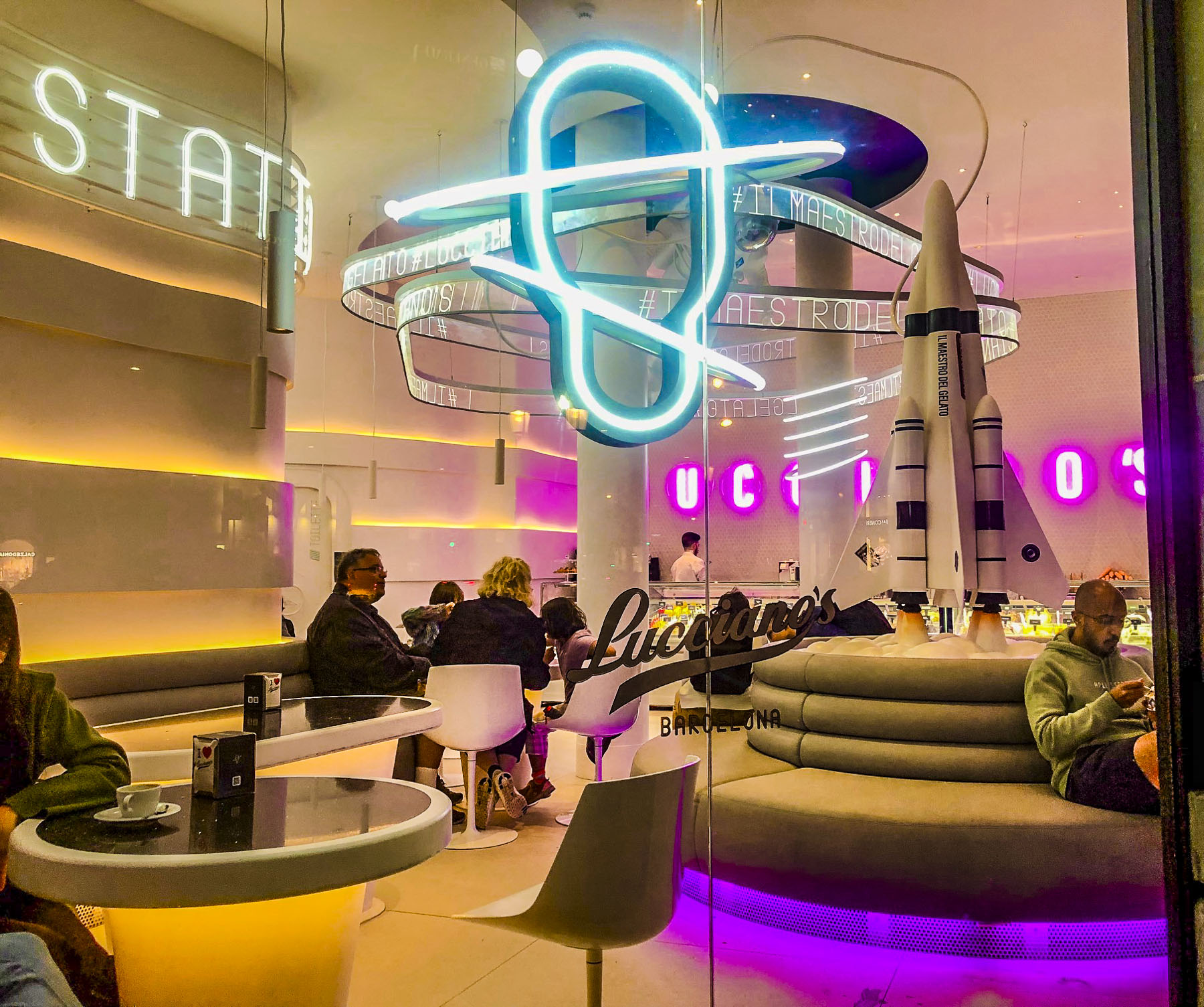
Contemporary interior design has always intrigued us, and fine examples can be found all across the city. But in our neighborhood the bookstore Llibreria Finestres and Lucciano’s Barcelona, an ice cream shop, stood out, along with Bolibar Bronzes with its vast array of fascinating architectural door hardware. We can’t imagine how much our suitcases would have weighed if we had indulged ourselves by shopping there.

Eixample also claims several buildings designed by the innovative modernista architect Antoni Gaudi. Near our hotel, on Passeig de Graçia, was the Casa Batlló, a private residence that Gaudi redesigned in 1904 with his signature use of flowing organic forms, whimsical decorative elements, and texture. Also, on Passeig de Graçia is Gaudi’s La Pedrera-Casa Milà, 1906, a private residence for his client on the lower floor and apartments above. The building is known for the undulating lines of its facade and sculptural chimneys. Sadly, we sufficed with just viewing the exteriors of these landmarks, as we felt the entrance fees were exorbitant at €30 per person at each site.

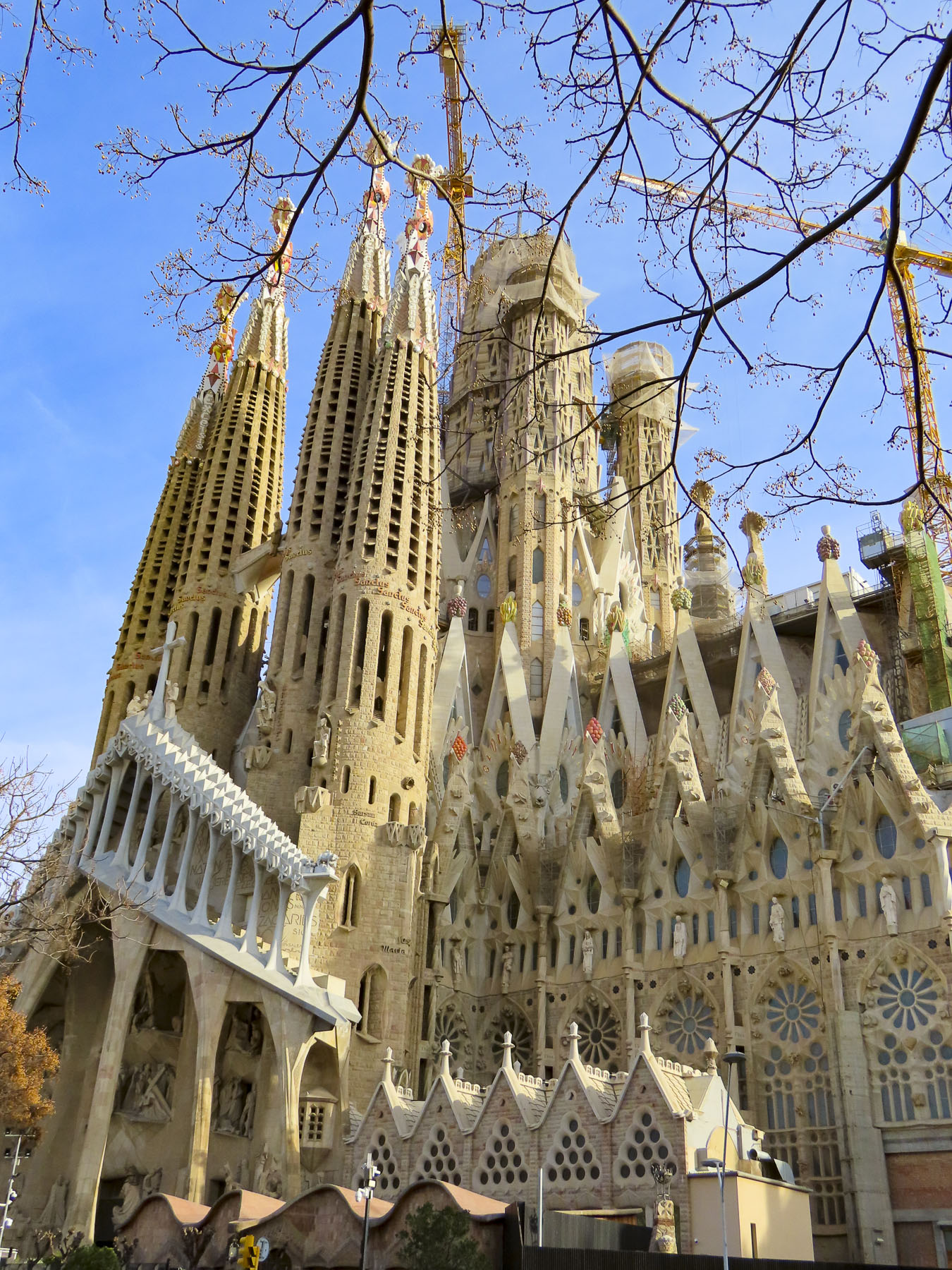
We put these savings towards the tickets for the Basílica i Temple Expiatori de la Sagrada Família, or simply the Sagrada Familia, Antoni Gaudi’s masterpiece. Like the Eiffel Tower in Paris, Big Ben in London, and Rome’s Coliseum, Gaudi’s soaring towers at the Sagrada Familia serve as Barcelona’s iconic landmark.

The cornerstone of the Sagrada Familia was laid in 1882, but Gaudi was not the first architect. He replaced a colleague who designed a more traditional church with a gothic façade, flying buttresses and a pointed bell tower. Gaudi transformed it into the enlightened, visionary structure that now graces Barcelona with eighteen spires.

Twelve of the spires are dedicated to the Apostles, while the remaining six are dedicated to the four Evangelists, the Virgin Mary and Jesus Christ. Realizing the project would outlive him, Gaudi left detailed plans and models that are still being followed, nearly 100 years after his untimely death in 1926 (he was struck by a tram and died from his injuries a few days later.) Construction of the cathedral relies on ticket sales and private donations, consequently during the pandemic, work nearly came to a stop. Currently the church’s final completion date is set for 2026, one-hundred-forty-four years after that cornerstone was laid and 100 years after its architect’s death. Talk about a lasting vision!

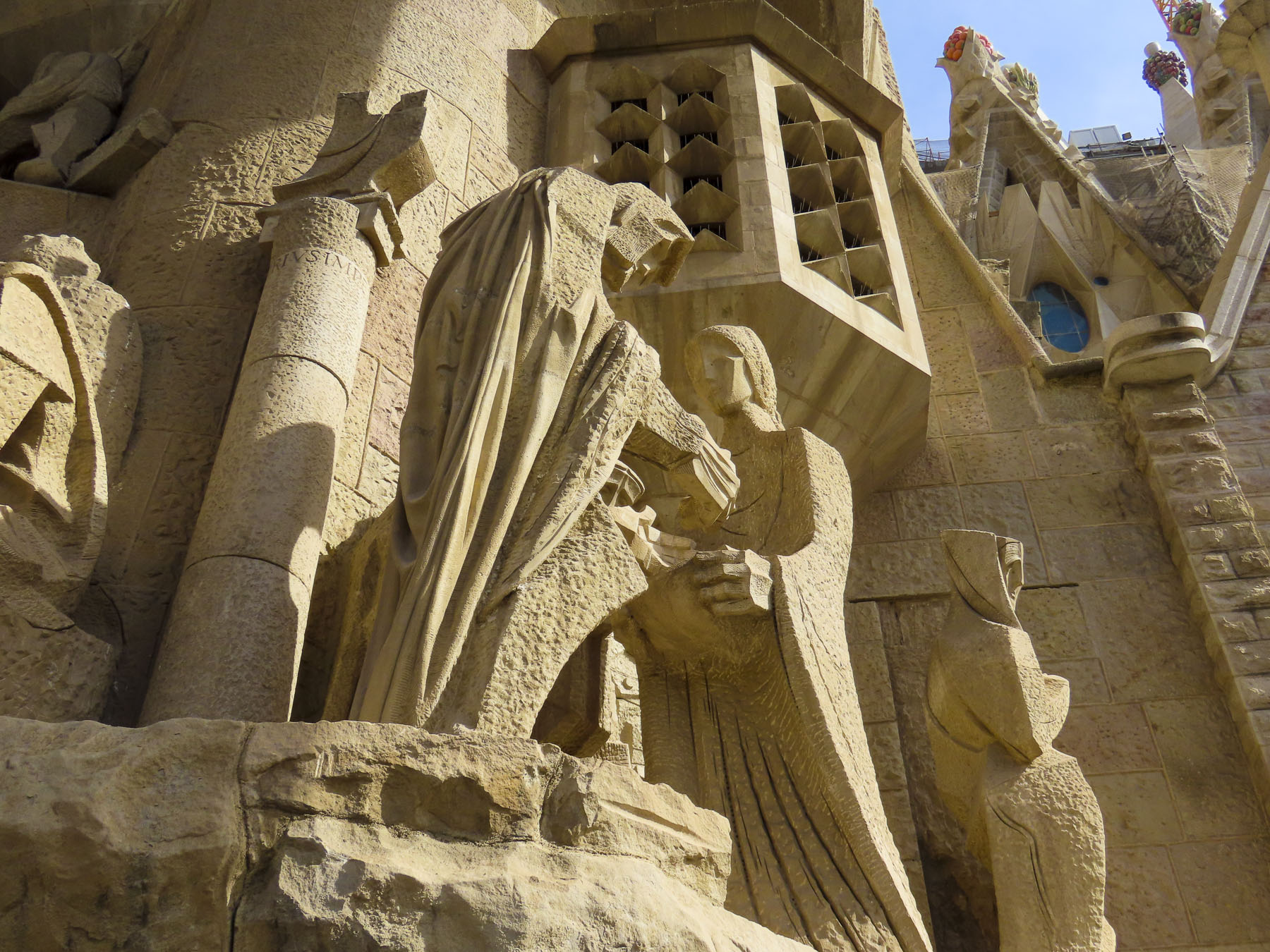
The Cathedral is an awe-inspiring temple that is visually uplifting and celebrates life, with its unique use of organic forms and stunning play of light from its stained-glass windows. We highly recommend purchasing your tickets and scheduling a time to visit online, well ahead of your visit to avoid the queue at this celebrated monument.

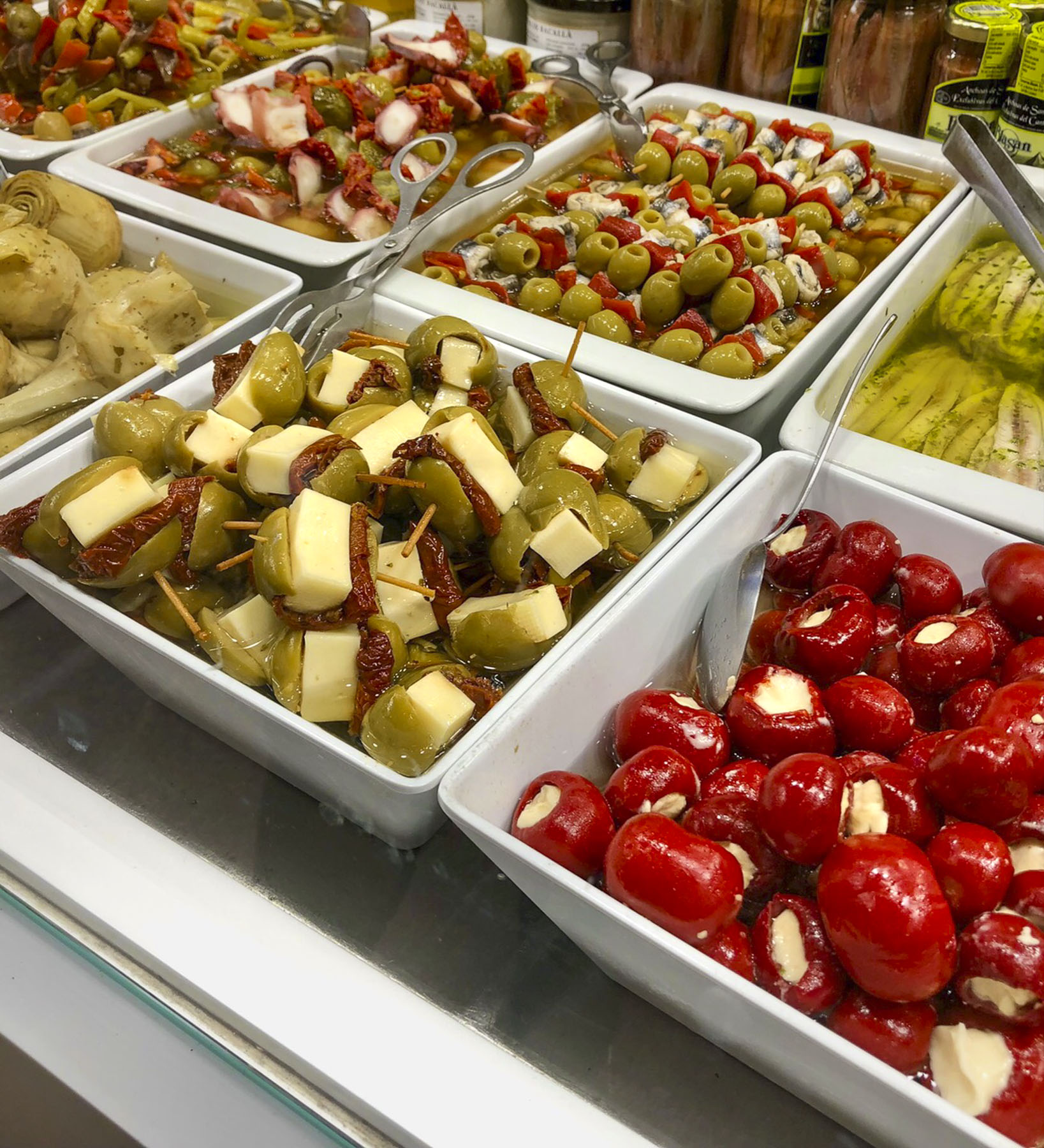
Walking between landmarks is one of the best ways to experience Barcelona and with that in mind we headed to Mercat de l’Abaceria, a traditional neighborhood mercado with multiple vendors on Pg. de St. Joan. Though much smaller than the famed Mercado de La Boqueria on La Rambla, which has sadly become gentrified and overly touristy, this mercado is a genuine neighborhood experience, where we enjoyed lunch and purchased olives, cheese, and sausages for snacking later.

Any first visit to Barcelona can’t be complete without a stroll down La Rambla, taking its name from the Arab word “ramla,” for sandy riverbed, which is how the path from the old walled city to the Mediterranean Sea started eons ago. La Rambla became a street leading to one of city’s ancient gates in the 1400s when a riverbed was filled in and folks trekked to an open-air market in an area known as Pla de la Boquería. It eventually became the main thoroughfare to the port and was lined with several convents.

The market wasn’t officially recognized as La Boqueria until the 1840s and didn’t exist in a covered structure until 1914 and now famously hosts 200 food stalls and millions of visitors every year. Flowers have always been a tradition along La Rambla and it started with La Boqueria’s market stall owners, centuries ago, giving flowers to their customers as a token of appreciation for their shopping. In 1702, 280 trees were planted along La Rambla. Streetlamps were installed along its length in 1860 and its newspaper stands remained open all night. Since then, it has been Barcelona’s most historic boulevard, the place to stroll, to be seen, to people watch.

Now three quarters of a mile long, the tree lined boulevard runs from the Columbus Monument at the harbor past the historic Gothic Quarter to Plaça de Catalunya, Barcelona’s central plaza where the old medieval city ends and the newer Eixample district begins.

Wandering through the historic old town section, we visited the Cathedral of Barcelona, a massive Gothic structure that dates from 1298, when it was built upon the ruins of an old Roman temple.

It was the city’s most important church for 600 years until the construction of the Sagrada Familia was started. The difference between the two is night and day. The cathedral is somber, while the Sagrada Familia lifts your spirit.

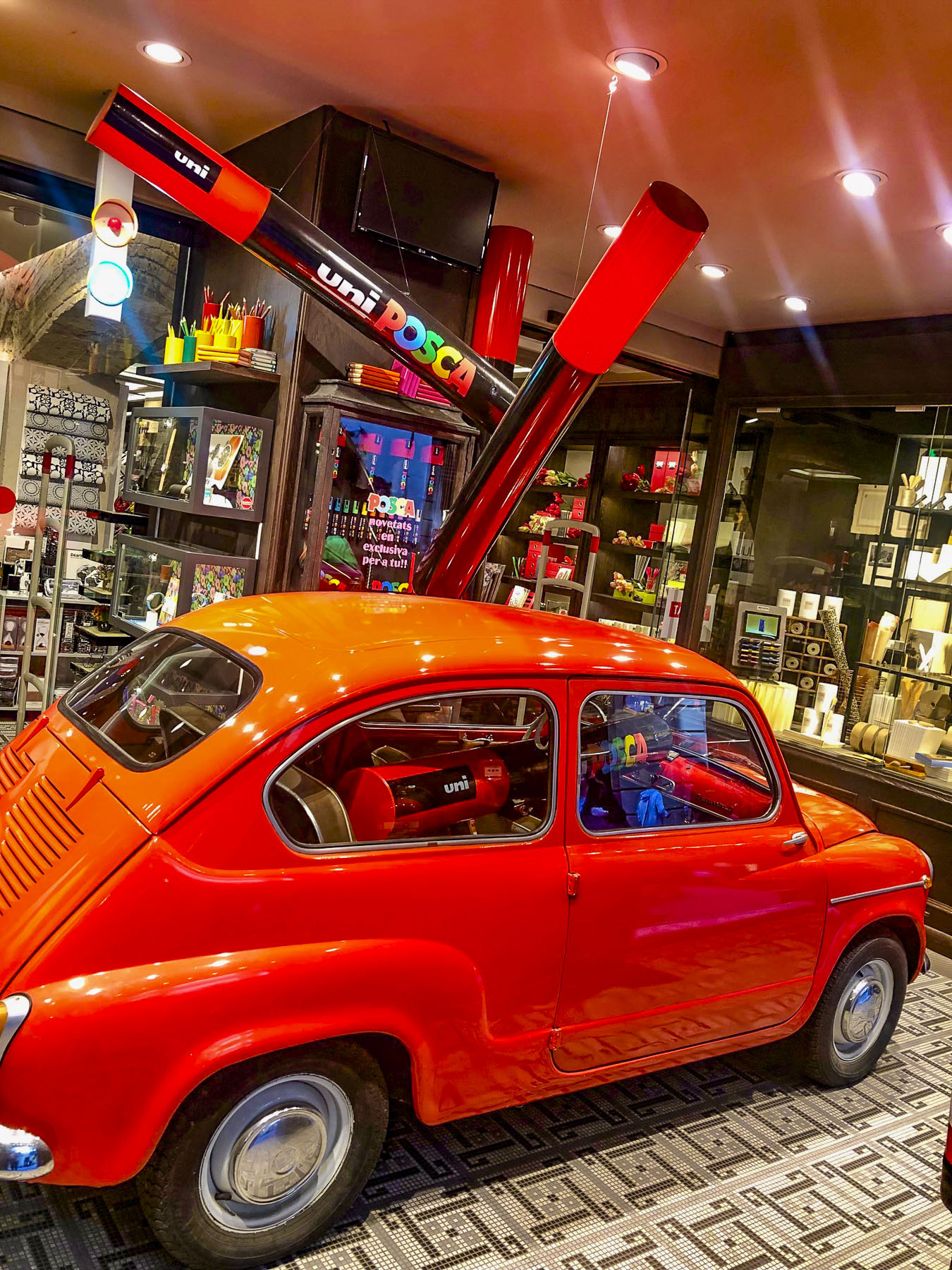
Afterwards on our way to the Palau de la Música Catalana, we stumbled upon Raima, a fantastic stationery and art supply store that is so out of place in the medieval old town, it’s wonderful. If you enjoy artful things, Raima has four floors full of visually stimulating displays and a hidden gem, a quiet rooftop café.

The walk through the narrow alleys of Barcelona’s ancient city center is filled with interesting architectural details fronting centuries-old buildings. Each successive generation decorated their city with sculptures and monuments, small visually intriguing vignettes, but which sadly have lost their historical significance over time. Now in many of the city’s plazas, modern art stands wonderfully juxtaposed against the ancient buildings.

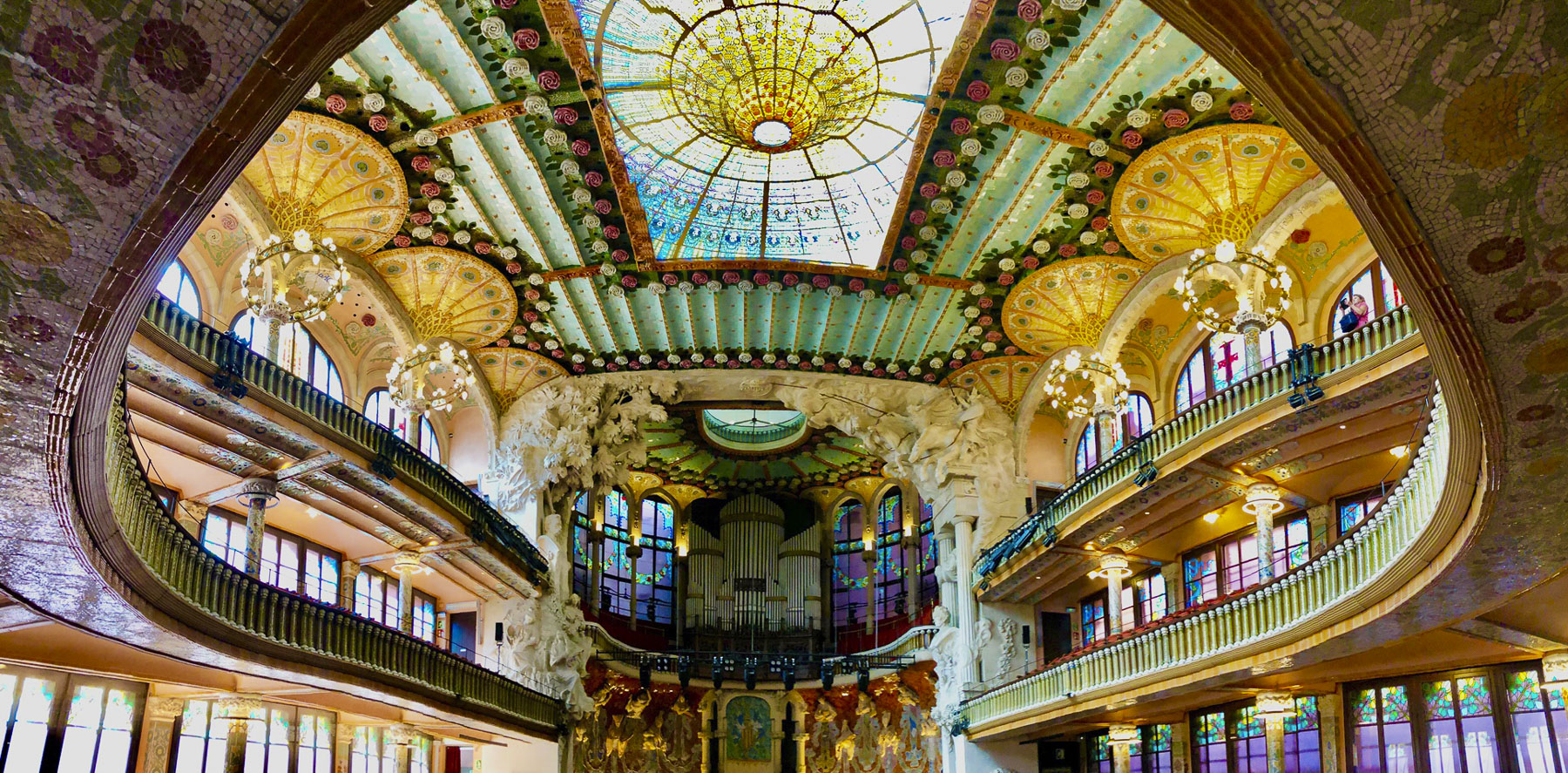
The Palau de la Música Catalana is Barcelona’s most beautiful concert hall and is often referred to as the city’s, “magical music box.” It was constructed in 1905 by a contemporary of Gaudi’s, modernist architect Lluís Domènech i Montaner, in a style that is referred to as Catalan Art Nouveau, which incorporates the decorative arts of stained glass, ironwork, mosaic, painting, and sculpture together in a project. It’s a captivating space that highlights the great craftsmanship of the era. 

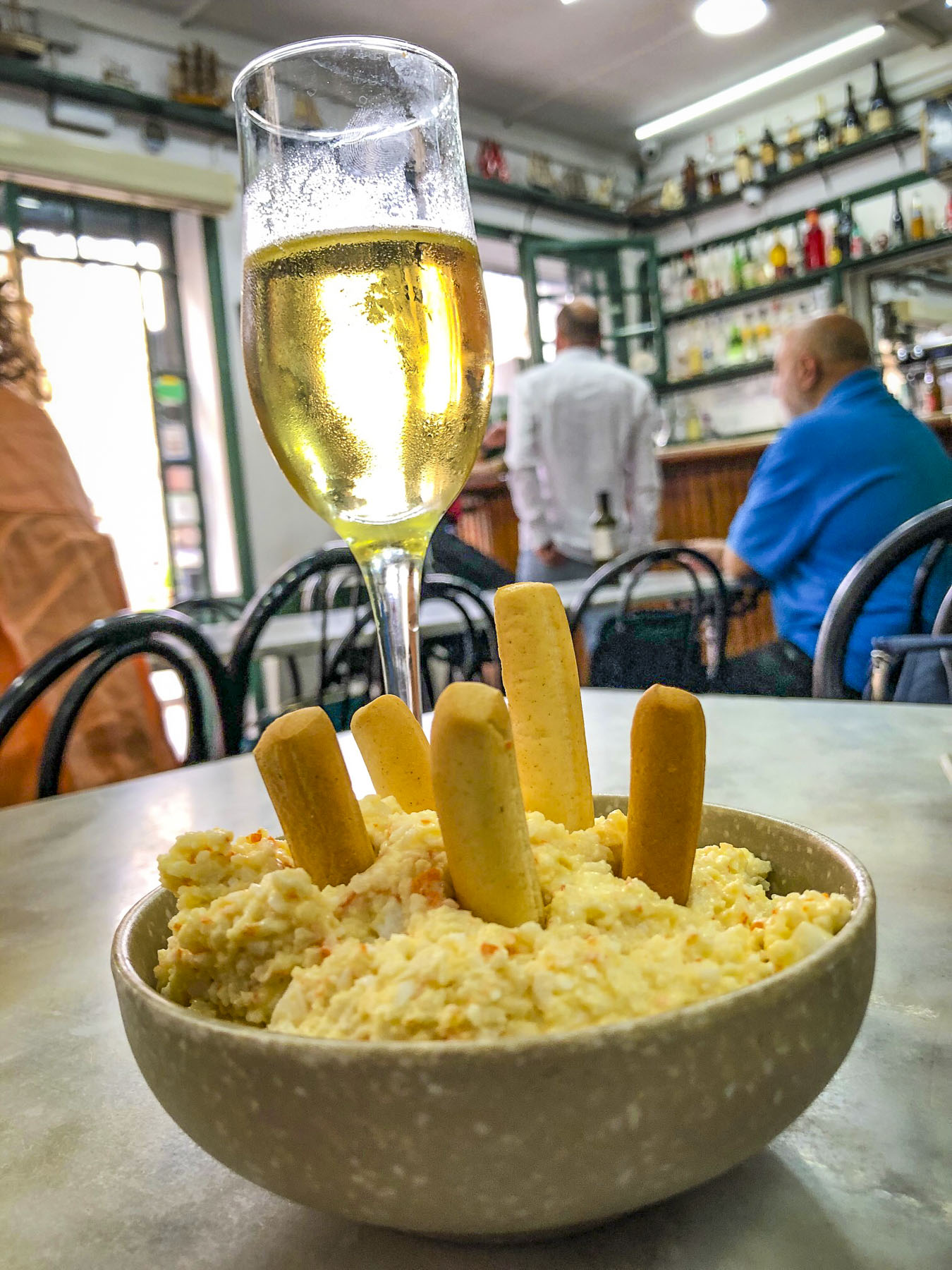
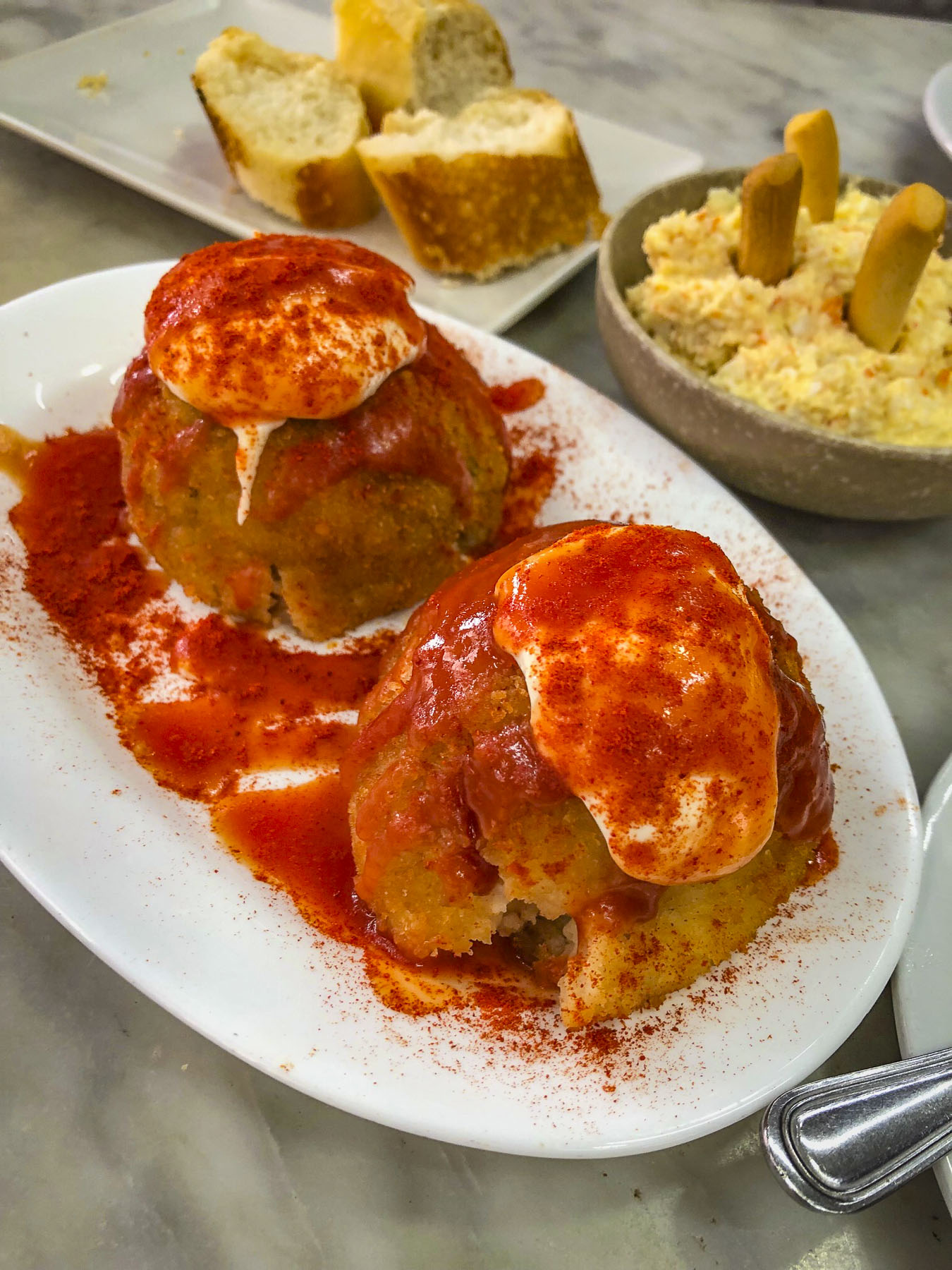
The Barcelona beaches were not tempting us, but someone during our travels suggested that we must go to the seaside district of Barceloneta and find Bar Electricitat. “Because, they have the best bombas in Barcelona.” Try saying that tongue twister three times fast! We haven’t done a lot of comparative taste testing regarding this, however the bombas, fried mashed potato balls stuffed with sauteed ground pork and beef, were delicious. And the bar itself is a friendly, delightful no-frills place with a gregarious waiter, who seemed to know everyone, and a good house wine. We cut our walk along the beach short when the wind started to kick up sand.

Unfortunately, by the time we reached Parc de la Ciutadella, our cloudless morning was becoming overcast, though that did not deter folks from relaxing on the parks expansive lawns and enjoying a warm Spring Day in mid-March. Designed in the late 19th century for the Universal Exposition of 1888, the park has an assortment of monuments dedicated to Spain’s glories, a boating lake, and life-size concrete sculpture of a woolly mammoth named Júlia. She’s been popular with generations of Barcelonian families since she was installed in the park over 100 years ago.

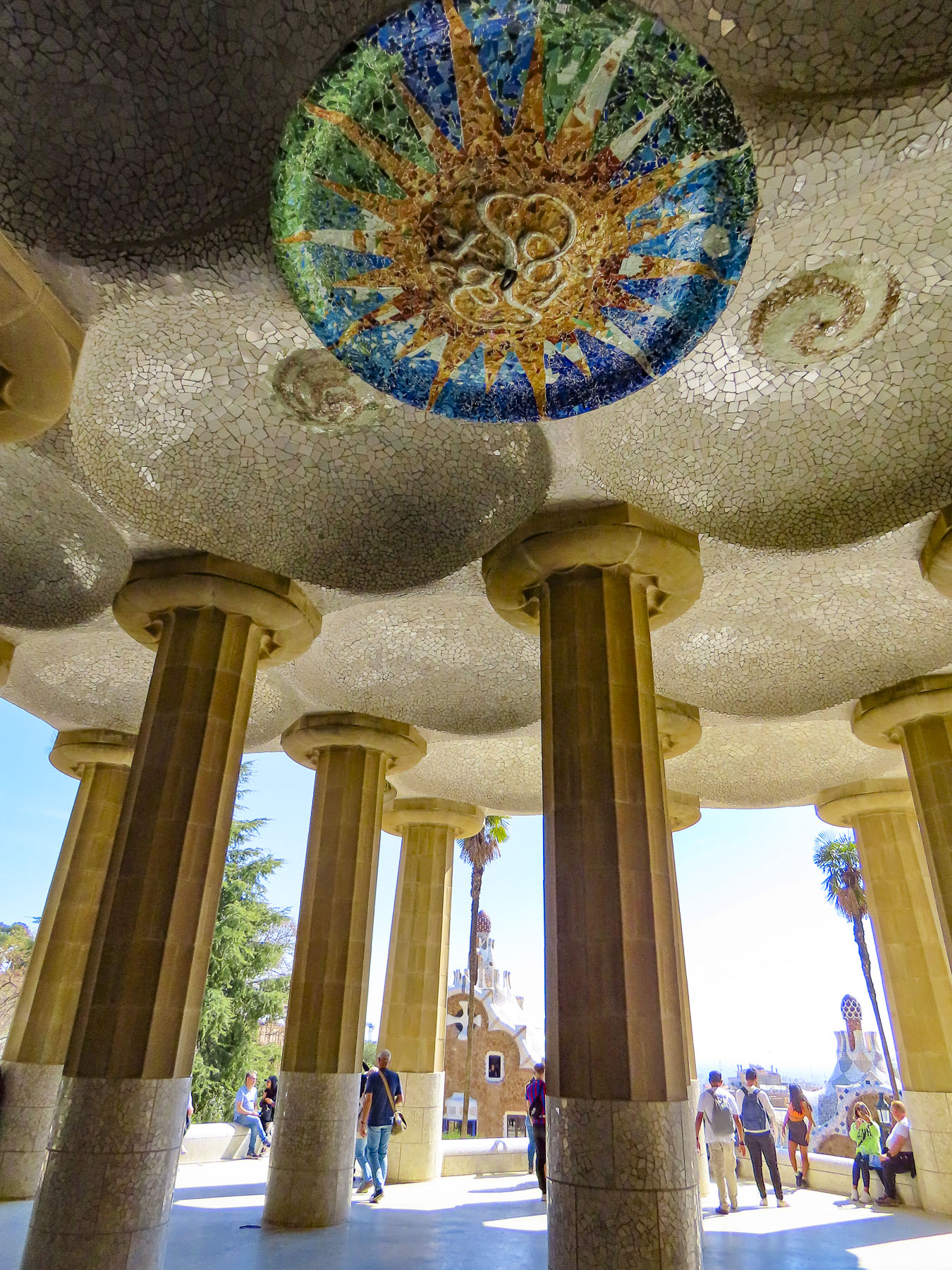
The next morning, we took a cab to Park Guell, another Antoni Gaudí creation set in the hills above Barcelona. In 1900, Eusebi Güell, a wealthy industrialist, envisioned the wooded hillside as an exclusive gated community with sixty homes and common areas designed by Gaudí.

By 1907, the whimsical entrance pavilions, viaducts, hypostyle market area, and the grand esplanade with its stairway were completed.

But the project failed to attract buyers and the hillside became Güell’s private retreat. Upon his death his heirs offered to sell the park to the city. Barcelona agreed and opened the park to the public in 1926. The park has been a UNESCO World Heritage Site since 1984 and annually attracts nine million visitors. Get your tickets online ahead of time and arrive at the park as early as possible. Even by 11AM, in March, there was a hefty crowd of folks visiting the park.

Something old, something new, there are plenty of interesting things to do and see in this dynamic, ancient yet modern metropolis. We had a great 5 days exploring Barcelona. And one of the surprising things we discovered about ourselves during our years of travel is that after having purposedly avoided living and working in cities in the United States, we actually enjoy European city life!

“Just close your eyes and let’s pretend we’re dancing in the street in Barcelona”- Ed Sheeran

Till next time, Craig & Donna

Road Tripping Through Andalucia: The Pueblos Blancos of Ubrique, Villaluenga del Rosario and Arcos de la Frontera

Just below the northern horizon, a white brushstroke highlighted the verdant canvas before us as we savored the view from the top of the castillo in Castellar de Frontera one last time. That swath of white slowly changed into Jimena de la Frontera as we drove closer. One of Andalucia’s famed Pueblos Blancos, the village is set on the hillside below the ruins of its ancient castle which once protected it.

In ancient times the homes in villages featured roughhewn stone masonry. Lime paint was a luxury, until its use was greatly expanded during the mid-1300’s when a bubonic plague pandemic swept through the Mediterranean countries. Residents of villages were required yearly to cover the outside and the interiors of their homes and churches with a limewash, known for its natural anti-bacterial and insecticidal properties, in an effort to reduce the spread of disease. Community inspections were done, and folks were fined for noncompliance. This mandated conformity was eventually appreciated as an aesthetically pleasing look and a symbol of meticulous tidiness. Fortunately, the custom stayed and has become an iconic signature of southern Andalusia.

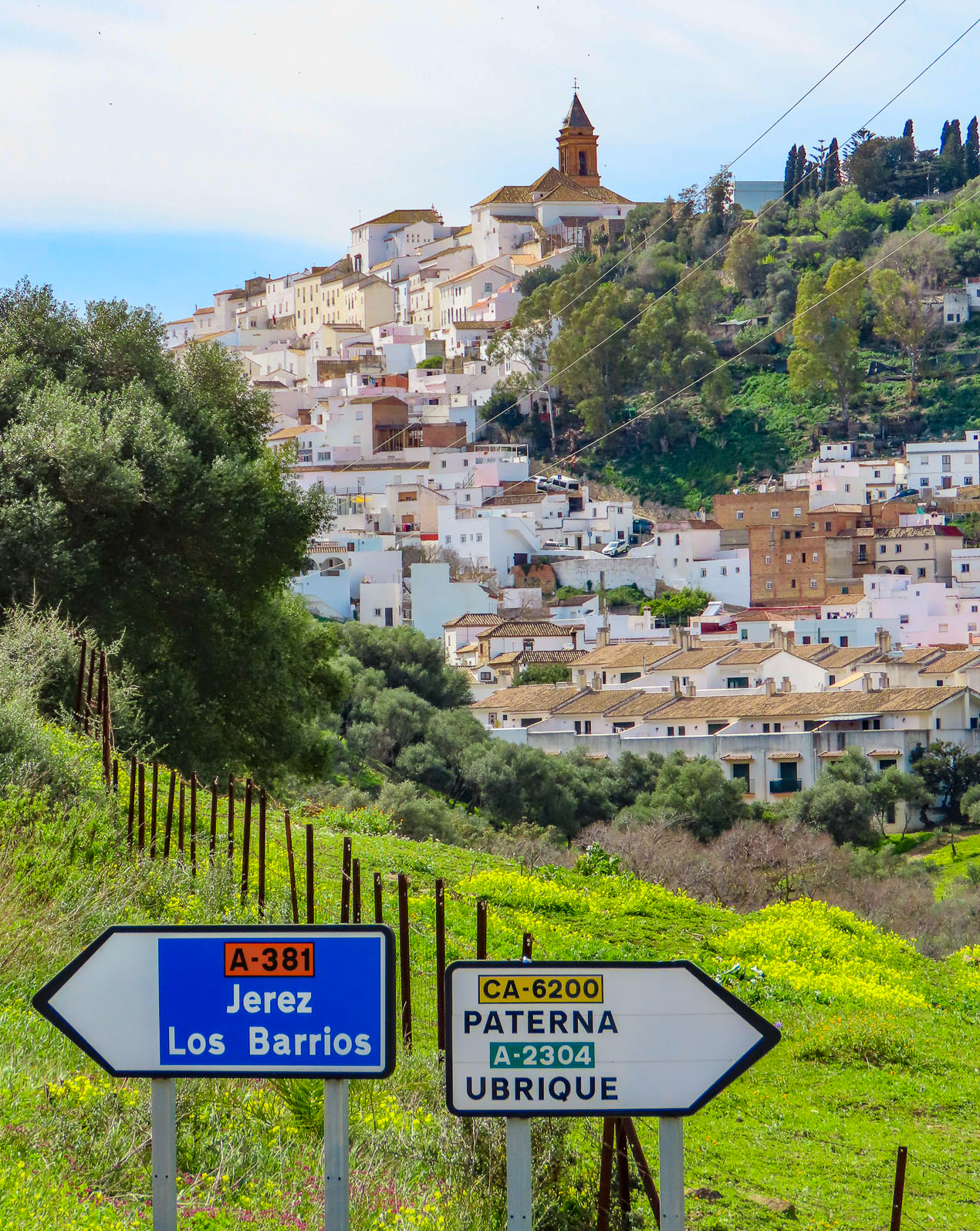
Villaluenga del Rosario was our ultimate destination for the day, but before that we would be driving through the expansive forests of Parque Natural Sierra de Grazalema and stopping along the way in Ubrique, and Benaocaz. All pueblos blancos, though all different in size, setting and atmosphere. According to our maps app the trip would take 2 hours. But it was a glorious 58-mile sinuous route through the mountains, and with several stops it took us most of the day.

The vast 130,000-acre Parque Natural Sierra de Grazalema, with peaks reaching 5400 feet, is one of the wettest areas in Spain, receiving almost 80 inches of rain a year. This is surprising, considering that many areas in Andalucia are often used to replicate the American southwest for European filmmakers. These wet conditions over many millennia have created a dramatic karstic landscape of shear mountains, lush valleys and caves, especially Pileta Cave with its 30,000 year old prehistoric paintings. The park’s lower elevations feature forests of cork oak, carob, hawthorn, and mastic. Higher slopes transition to a landscape of gall oaks and Spanish fir, a tree species that survived the last Ice Age. This ecosystem supports a diverse fauna that contains 136 species of birds, most notably a large population of griffon vultures, and 42 mammal species, that include foxes, badgers, roe deer, otters, and Spanish ibex. And in ancient times it was the refuge of wild, now extinct, aurochs, the ancestor of the famous Spanish Fighting Bulls, toro bravo. The park has been a UNESCO Biosphere Reserve since 1977.

Farmers still harvest cork and olives amidst the rocky terrain and graze cattle, sheep, and goats within the park. This practice made for an interesting encounter when we rounded a curve and faced a VERY LARGE BULL standing in the middle of the road, adjacent to some pasture. We stopped, looked around for his farmer, but there was no one in sight. It was obvious he was the king of this domain, with no intention of moving aside until he felt like it. Slowly we inched forward and watched him eye us until he decided to saunter across the road and let us pass.

Ubrique is a large thriving town with 17,000 inhabitants set in a valley surrounded by tall peaks and steep scree slopes, its homes built above and around boulders too large to move. The town’s prosperity comes from its fine leather workshops, which account for 60% of the townspeople being employed directly or indirectly in the creation of leather products. It started simply enough with leather cases and pouches to carry tobacco and the Precise, a heavy-duty strap that allowed workers to safely carry silex stones and iron bricks.

By the mid-1700s their fine leather products and artisanal craftsmanship was recognized across Europe which fueled an export industry. The good fortunes of the town continued to grow until the mid-2000 when clients seeking higher profit margins moved their leather goods production to China and other Asian countries. Fortunately, their exodus did not last long, and they returned to Ubrique when they realized that the excellent craftsmanship in this small Andalucian town could not be rivaled by cheap labor. Today Ubrique is considered the “artisanal leather capital, “ for high-end fashion brands like Chloe, Gucci, Hermes and Louis Vuitton. “So many stores, so little time.” Of course, we shopped! The decision-making process was painful, but Donna managed to select one single beautiful purse to take home.
In March the twisting roads, higher into the mountains, were nearly void of traffic. Occasionally a campervan passed. Reaching Benaocaz, we parked and strolled through a nearly empty town square in search of coffee. It was a quiet weekend afternoon in the shoulder season, and few people were about, but luckily, we happened to come across Restaurante Nazari, a rustic restaurant with outside tables that had a view of the valley below the town.

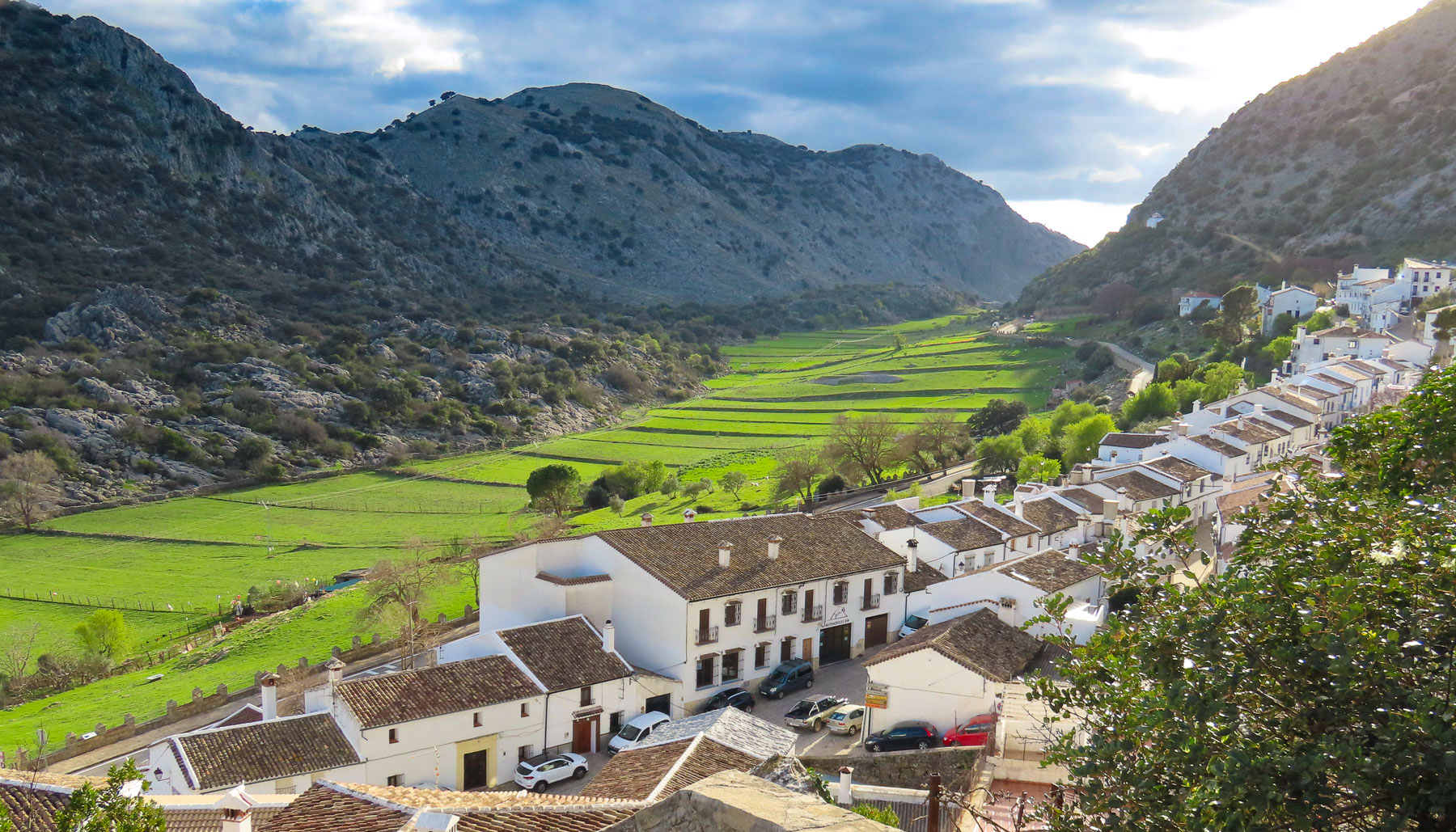
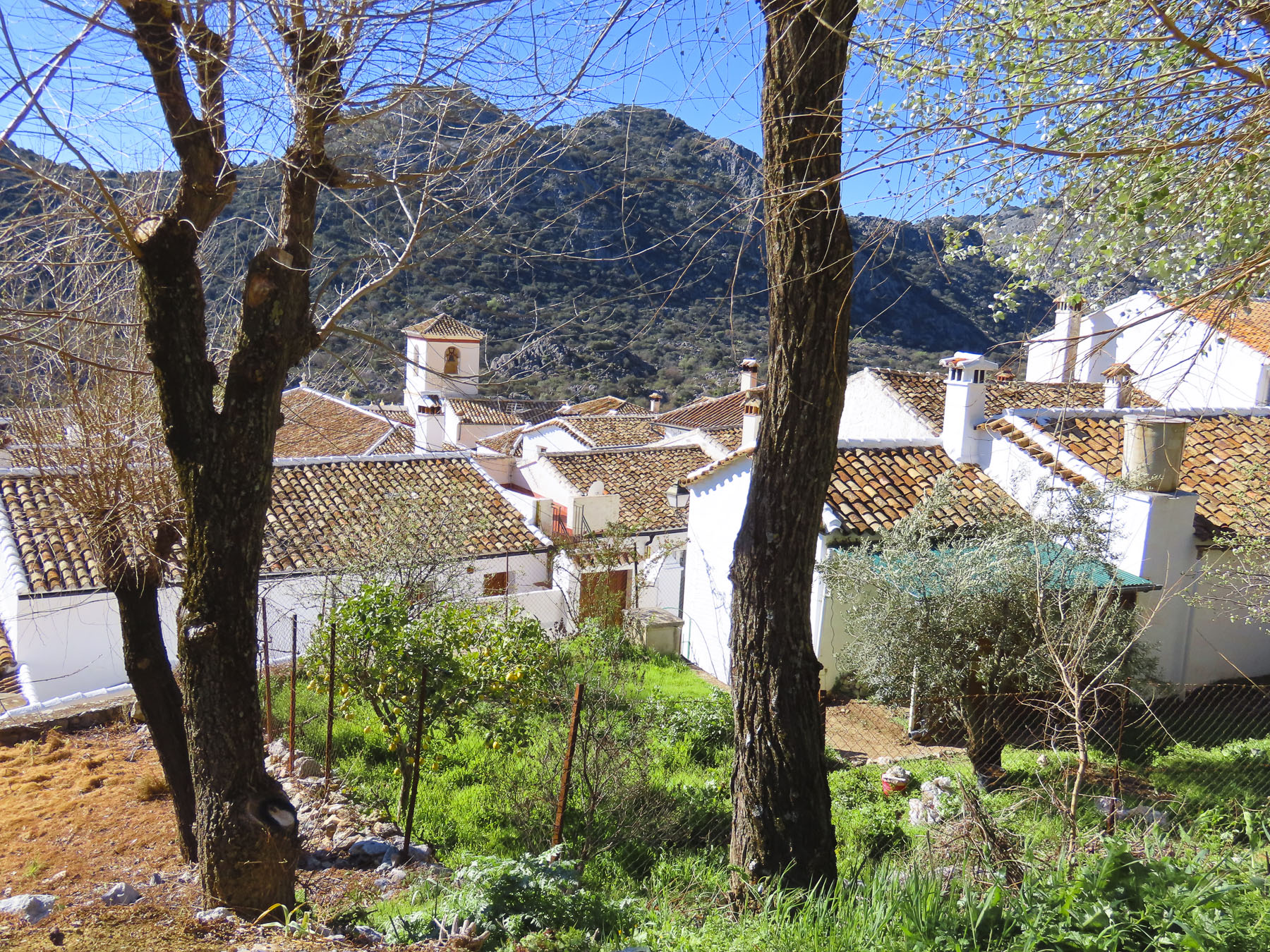
Villaluenga del Rosario was only a little farther, and higher into the mountains. The village is dramatically set along one side of a narrow green valley at the base of a sheer mountain massif. The lane to our inn, the Tugasa La Posada, looked too narrow to drive down, and I was concerned about getting to a point that required backing up. A difficult task in an alley barely wider than our rental car, and there was plenty of parking above the village.  La Posada wonderfully reflects the typical inn of centuries past, with a large tavern, featuring regional recipes, on the ground level and a handful of rooms above.

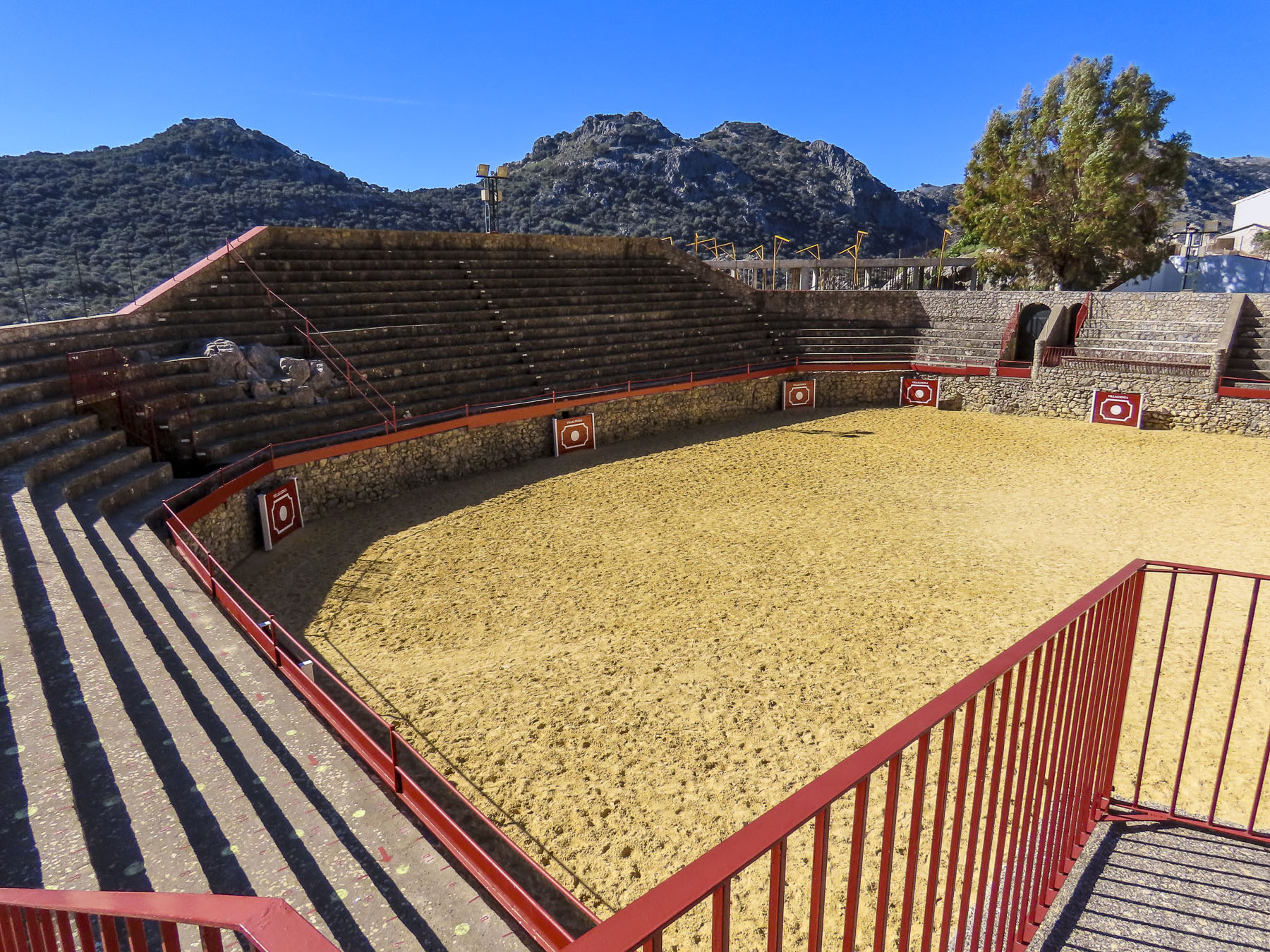
Several things are unique to this pueblo: Snowy winters are common in the Sierra de Grazalema Natural Park’s highest village, situated at an elevation of 2800ft. It is also the smallest village in the Province of Cadiz, with only 438 residents. And the village has a unique octagon shaped bullring, built around a natural rock formation, that is the oldest in Cadiz Province, dating from the mid-1700s. The exact year of construction for the bullring isn’t known, as the town’s archives were lost in a 1936 fire. Located on an important cattle trading route through the mountains, the bullring was also used as a corral during livestock festivals.

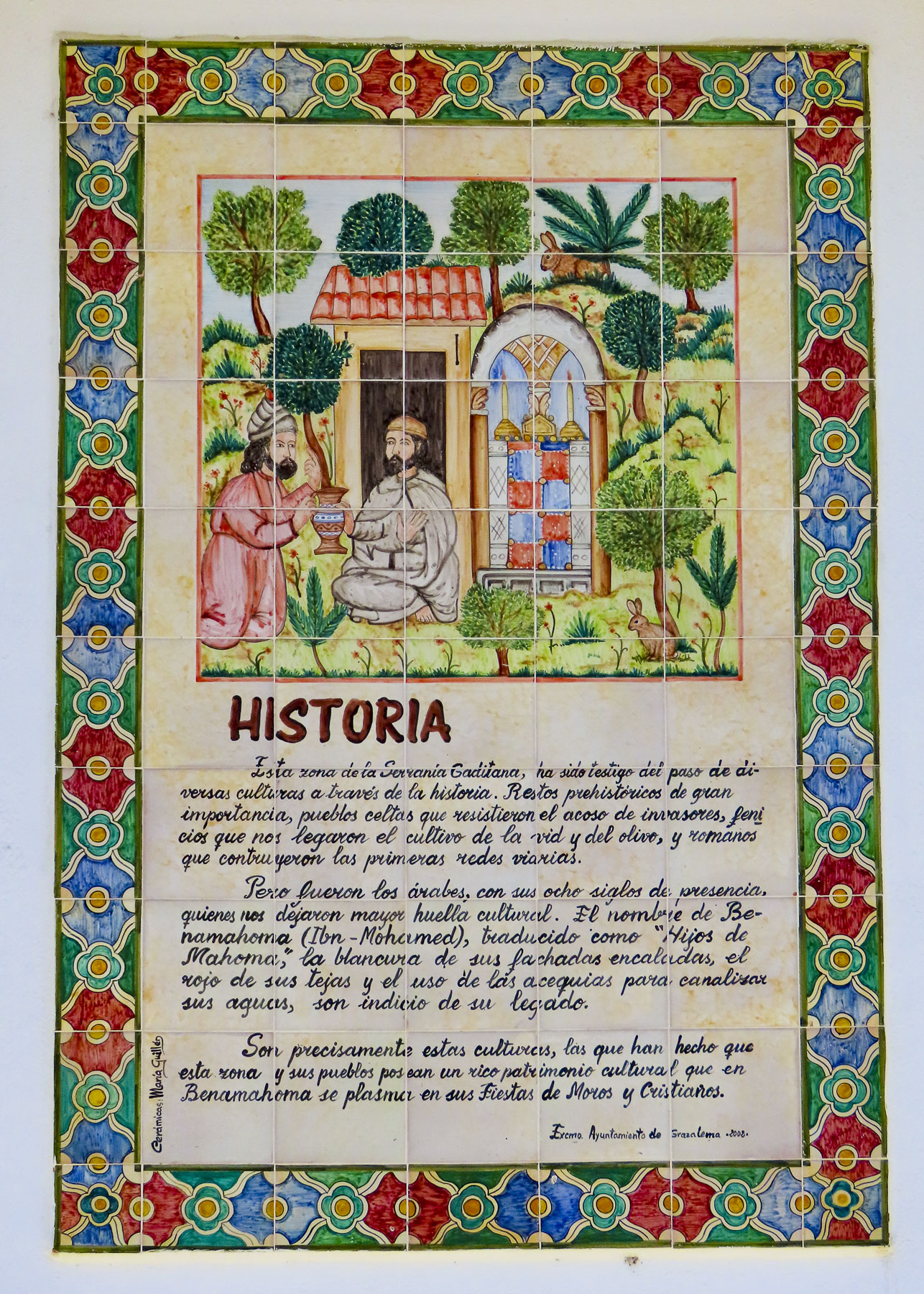
But before domestic cattle were raised in the area, prehistoric people used to pursue auroch, a wild bull that lived in the Sierra de Grazalema until it was hunted to extinction in the Middle Ages. Nearby in Cueva de la Pileta, primitive cave paintings of bulls have been dated to the Paleolithic era 27,000 years ago. The famous fighting bulls of Spain, Toro Bravo, descend from this primal auroch lineage that once roamed wild. Ancient pagan festivals often conducted a running of the wild bulls, tethered to a group of men by a long rope, through their villages before a ritual sacrifice.  “Toro de Cuerda'”(Bull on Rope) festivals, are thought to be the foundation of the modern Spanish Bull Fight, and are still held in Villaluenga del Rosario, Grazalema, and Benamahoma. With the advent of Christianity some of these pagan elements were incorporated into church celebrations of a pueblo’s patron Saint. In Grazalema the early church Christianized the practice and includes the Feast of the Bull in celebrations to the Virgen del Carmen every July. Benamahoma’s “Toro de Cuerda” is held in August during their festival to honor the town’s patron saint, Anthony of Padua.

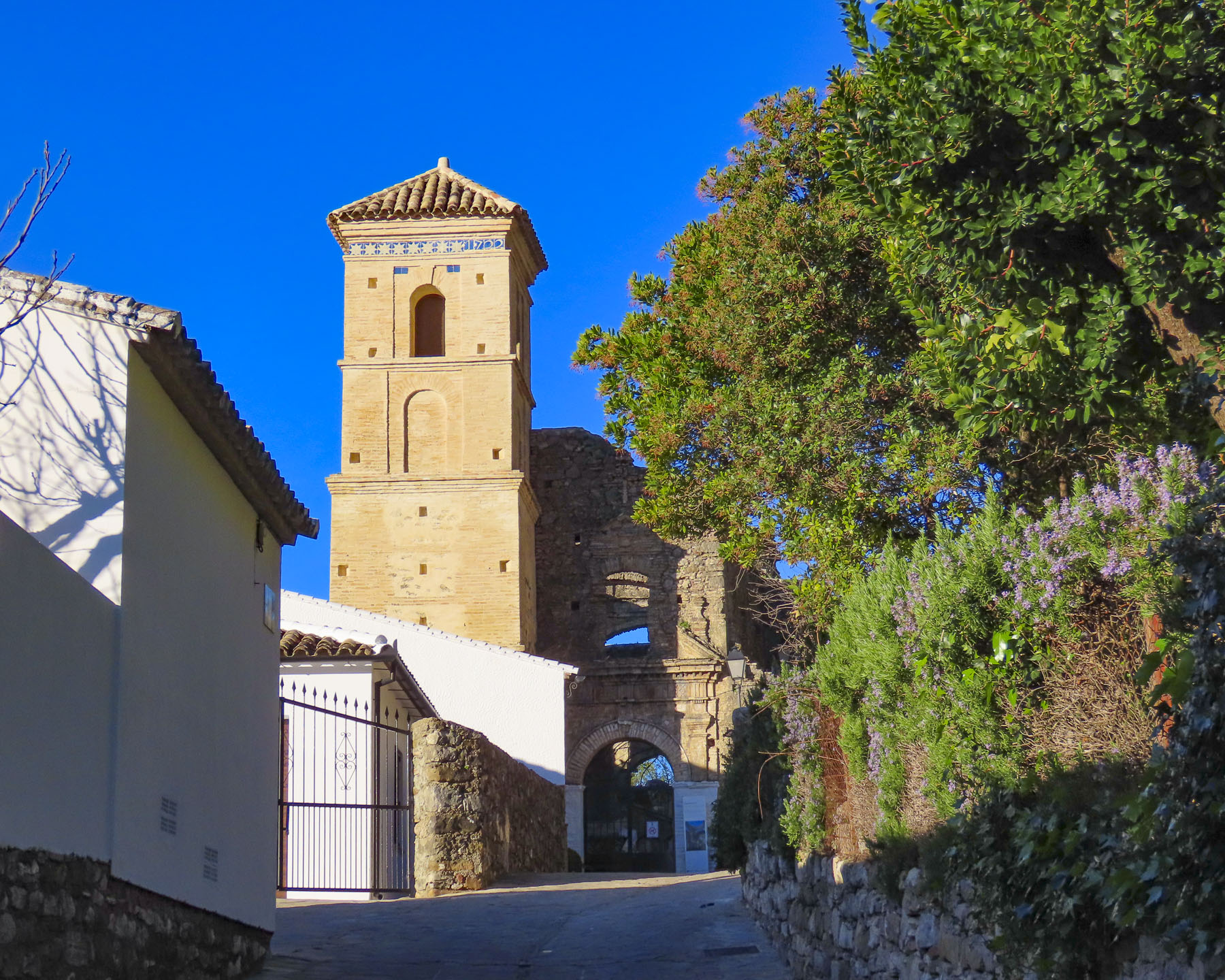
This tranquil village has gone through some turbulent times in its past. Villaluenga del Rosario, known for its woolen textiles in the 17th century, did not escape Napoleon’s destruction as his troops retreated across the mountains after they abandoned their siege of Cadiz in 1812. French troops sacked the village and torched the old Church of El Salvador. Now only the walls and roof arches remain, open to the sky. The sanctuary is now used as a cemetery.  The economy declined throughout the region in the 1800s and early 1900s, and the mountains were beset with bandits. Notoriously, José María El Tempranillo and Pasos Largos, the most infamous of the Sierra’s outlaws, would frequent the village and hideout in the surrounding caves. They are celebrated as Robin Hood bandoleros, robbing the wealthy and redistributing their stolen goods to help the poverty-stricken locals – Andalucia’s mountain justice. These same caves in the 1930s would shelter Republican resistance fighters escaping Fascist troops during the Spanish Civil War. A hiking trail, Los Llanos del Republicano, from the village to caves is named after them.

The rural population continued to emigrate, contributing to further economic deterioration until the villages’ employment prospects improved with the opening of a cheese factory, Queso Payoyo, in 1997. The Payoyo goat is an ancient breed from the Sierra de Grazalema and considered endangered. Since Queso Payoyo opened 25 years ago, its goat and sheep cheeses have received 175 national and international awards. Thirty-five farms now supply Payoyo goat and Merina grazalemeña sheep milk to the cheesemaker. Their shop just across the road from the village seems to be a Mecca for cheese aficionados. Open seven days a week, we were surprised to find it packed with customers early on a Sunday morning, when we stopped to buy some cheese before we headed to Benamahoma.

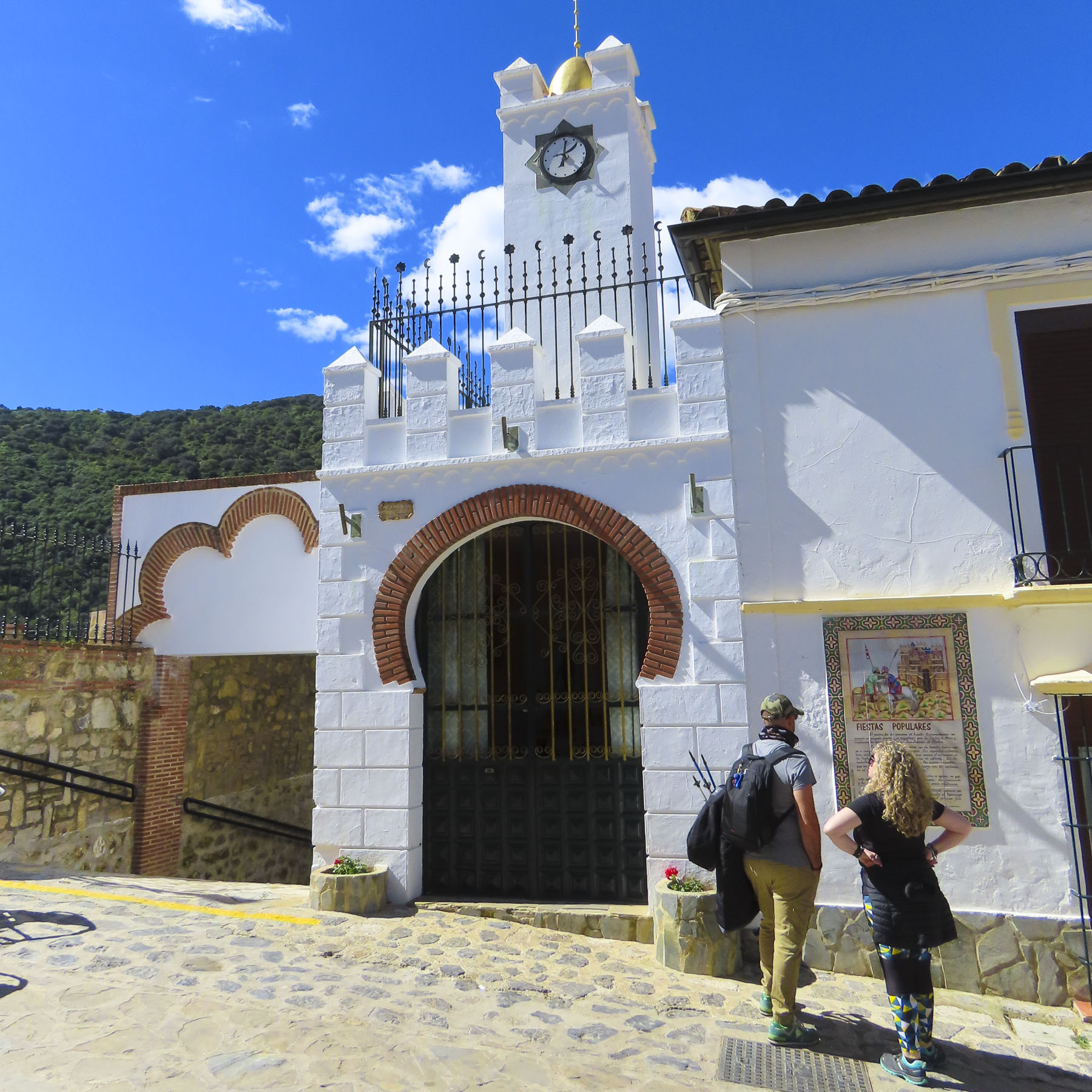
It was a beautiful crisp spring day, and we enjoyed a slow walk uphill into the village. Next to the Plaza de las Huertas the façade of the Ermita/mezquita de San Antonio, a church/mosque, visually represents Benamahoma’s complex cultural identity, with Moorish horseshoe-shaped arches and three golden spheres topped by with a gold crescent, typically seen on minarets, atop its tower.

This region in Spain has a very complicated history, beginning with Alfonso X’s Reconquista which started in the mid-1200s, paused, then continued for the next 400 years with his successors. Benamahoma was the last Moorish village in the mountains to have its inhabitants expelled from the region in 1609, eighteen years after Grazalema’s Muslim villagers were forced out, though the hamlets are only nine miles apart. Their reprieve was caused by the fact that although Alfonso X and later Kings achieved military victories, they did not have enough troops to garrison each village, nor sufficient numbers of willing Christian settlers from Northern Spain to repopulate the conquered towns. Consequently, to keep the economy of the area going and subjects to collect taxes from, Moors were allowed to stay as long as their local Princes swore allegiance to a Christian King and declared themselves loyal vassals.  This did not always go smoothly and there were rebellions. Most famously the Mudéjar Revolt in 1264, when the towns of Jerez, Lebrija, Arcos, and Medina-Sidonia were recaptured and occupied by Moors for several years before Christian armies secured the towns once again. 

Benamahoma’s historic, pragmatic tolerance is celebrated the first weekend every August with a Moros y Cristianos Festival. Carrying swords, shields and blunderbusses, historical reenactors dressed in period clothing parade through the village to the bullring, where they then engage in mock hand-to-hand combat. The battles are won with the capture of an image of San Antonio de Padua by the Moors on Saturday and then won by Christians on Sunday with the rescue of his image. Many of the positions in the opposing armies are hereditary, the tradition being passed down from father to son, through the generations. Benamahoma is the only village in western Andalucia which celebrates this festival.

This village’s remoteness in the Sierra de Grazalema did not protect it from the atrocities committed during the Spanish Civil War. Near the bullring, in the Parque de Memoria Historica, silhouettes stand where villagers once stood against a wall before they were massacred by Fascists. Sadly, this memorial is also near the village’s second church, the Iglesia de San Antonio de Padua.

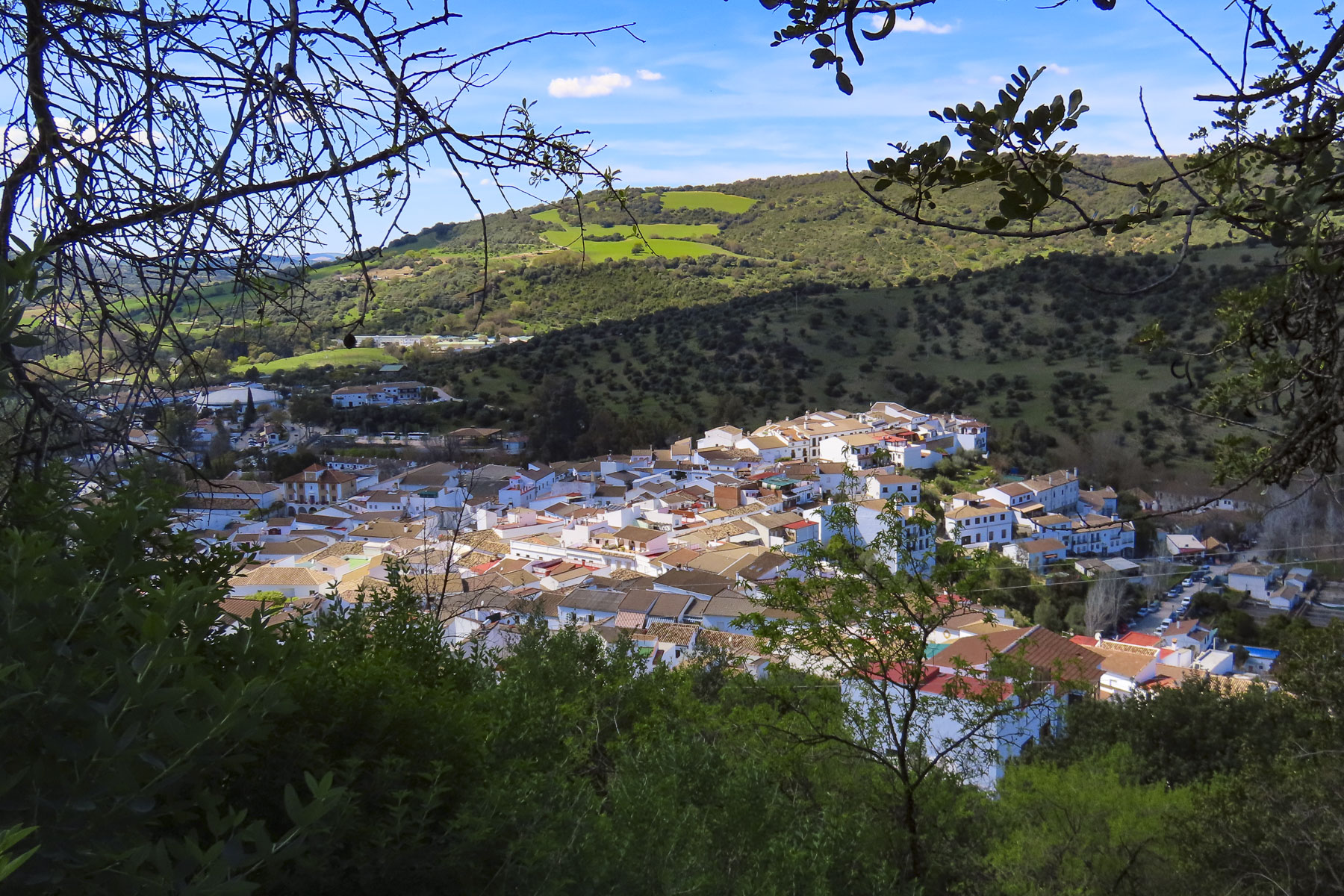
Backtracking as we headed to Arcos de la Frontera, we stopped at a radio station above El Bosque. A trail behind its tall antenna offered the perfect vantage point to capture a photo of the village below. We did not stop in El Bosque, but after catching glimpses of the village as we drove through, in hindsight we wished we had.  But there was a time constraint, we wanted to spend the afternoon exploring Arcos de la Frontera, before flying on to Barcelona the next morning. 

The A-372 between El Bosque and Arcos de la Frontera has to be one of the prettiest stretches of highway anywhere. With the reflection of the Sierra de Grazalema in our rearview mirrors, we wished we could have lingered longer.

I’ve always loved maps for researching routes, finding obscure sites, and figuring out the best vantage point to capture a landscape from. This brought us to our first two stops at the Molino de Angorrill, an old mill, and the Mirador Los Cabezuelos, before we entered the hilltop citadel. Both places along Guadalete River had wonderful views of the ancient city.

After this our map app failed us when it suggested we head the wrong way down a one-way calle into the village. We eventually found an underground parking garage at Parque El Paseo and towed our suitcases uphill to the Parador de Arcos de la Frontera.

It was LONG walk, but of course we stopped frequently to take photos. Located next to the 500-foot-high Mirador Plaza del Cabildo and adjacent to the Basílica de Santa María de la Asunción and the Castillo de los Duques de Arcos, the hotel was a perfect base for a one-night stay. Formerly the Casa del Corregidov was an Andulcian palace before it was acquired by the government and renovated to be a parador in 1966.

Arcos has always been a favored spot, appreciated for its access to abundant water sources and its easily defensible position atop a cliff face. It has hosted settlements since the Neolithic period, Bronze Age, Tartessians, Phoenicians and Romans periods.

The village continued to grow under the Moors and while the facades and interior of buildings in this ancient town have changed over the centuries the original Arab footprint of the village, with its exceedingly narrow lanes has remained the same.

The view from the mirador and the hotel’s patio were phenomenal during the golden hour. As the sun was setting, a large flock of storks appeared over the bell tower of the Basilica and circled for about fifteen minutes before flying away. It was a magical experience that nicely capped our short time in Arcos.

The next morning, we watched the sun rise over the Sierra de Grazalema and the village’s church steeples from our hotel room, before wandering through the village’s ancient lanes one last time.

Till next time,

Craig & Donna

Road Tripping Through Andalucia: Medina-Sidonia, Alcalá de los Gazules, & Castellar de la Frontera

“We should tuck the mirrors in,” I said as we eyeballed the passage through the narrow arch ahead of us. We were on the Plaza de Espana in Medina-Sidonia, a forty-minute drive from Cadiz. But we couldn’t be further away, as it felt like a passage in time to centuries past as we drove into the village. Folks have lived on this hill since before the Phoenicians settled Cadiz in 1100 BC, making the village one of the oldest settlements in western Europe. But it is with the Phoenicians and later the Romans, Visgoths, Moors and finally the Spanish that the village grew. Sitting 1,000ft above the fertile rolling plains below, the highest point for miles around, the village offers incredible vistas of the surrounding countryside out to the Atlantic Ocean. The pueblo blanco we see today has its roots with the Moors in the 8th century.

The plaza was nearly deserted when we strolled across it, mid-week in the middle of March, looking for a café. While the plaza was empty, we found a café, Restaurante Paco Ortega, bustling with activity. We ordered Tostadas de Jamón and Alfajor, a sweet gingerbread-like confectionary from the Arab period, that the town is famous for. We enjoyed the tostadas and the lively chatter of the café, but we were pointed across the plaza to Pasteleria Aromas de Medina for the Alfajor. True to its name, delicious whiffs of fresh baked pastries greeted us as we crossed the threshold of temptation. The Alfajor de Medina Sidonia was heavenly. It’s made with local honey, nuts, breadcrumbs, and a variety of spices – what’s not to like? The only question was how much to buy.

The day was really the first one of our Andalucian road-trip. Previously we had stayed for multiple days in Jerez de la Frontera and Cadiz (click to read those blogs.) Medina-Sidonia was the first of two stops, before we stayed in Castellar de la Frontera.

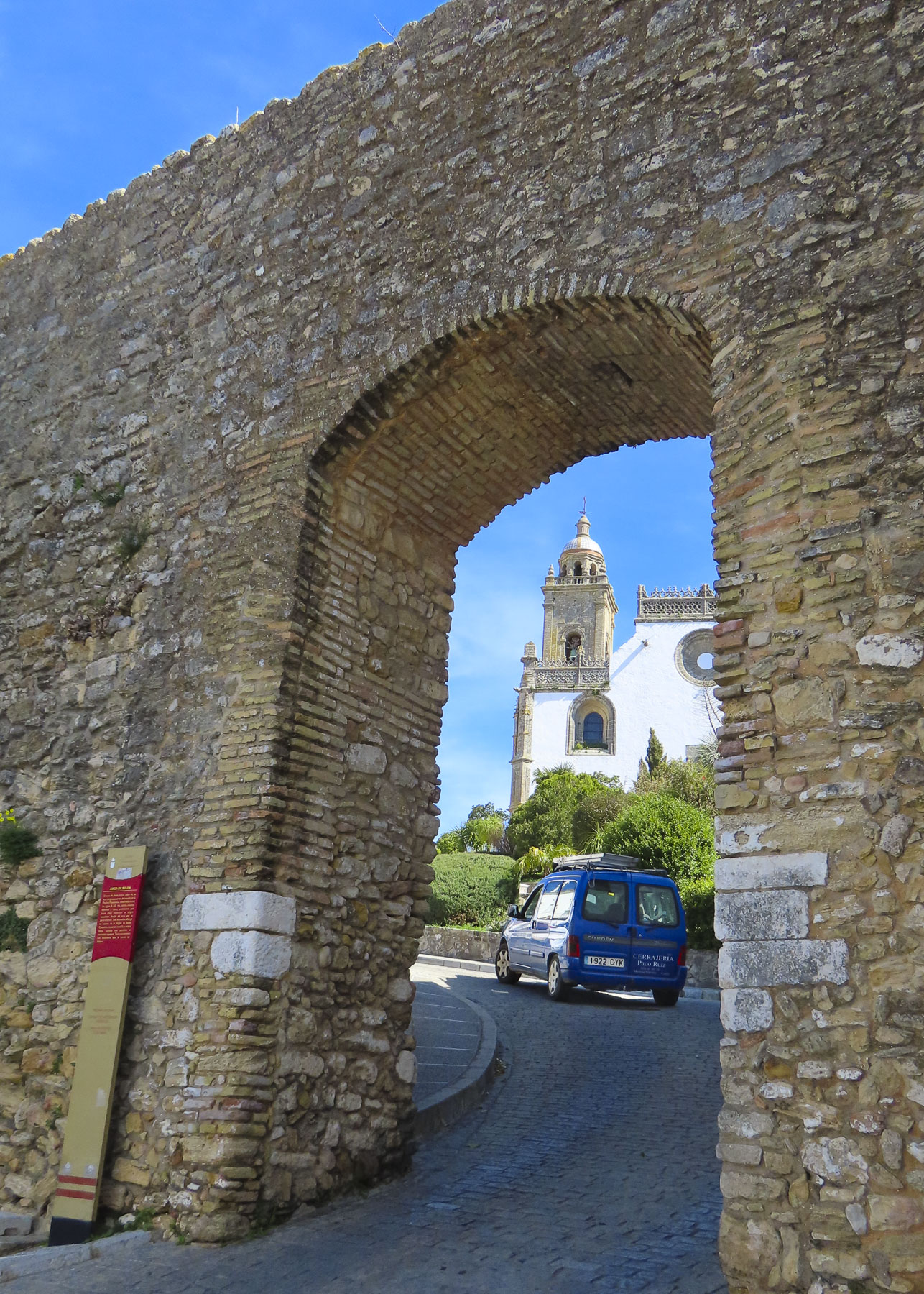
I swear the 12th century Arco de Belén, one of the original gates into the old walled Arab village, was slimmer than the one at the plaza. Located on a narrow, uphill blind curve, it took me two tries to align the car correctly for safe passage through the wall.

It’s a nice walk from the plaza in front of the cathedral to the ruins of the ancient castillo that once crowned the crest of the village. It must have been magnificent when it was the seat of the Dukedom of Medina Sidonia in the 15th century. The hereditary dukedom was one of the oldest in the kingdom of Spain and its land holdings encompassed most of Andalucia. But the castle eventually lost its significance, and its massive walls were slowly dismantled. The castle’s stones used to expand the village are now hidden behind plaster and white paint. Interestingly, the 7th Duke of Medina Sidonia was commander of the Spanish Armada that sailed to attack the south of England in 1588. Currently the 22nd Duke of Medina Sidonia resides in Madrid.

Next to the cathedral there is another set of ruins, one massive corner of which is all that is left of the Torreón de Doña Blanca, named for Doña Blanca (who was Blanche of Borbón,) the 14-year-old child bride of King Peter of Castile. They married in 1353 for King Peter to secure an alliance with France. However, there were difficulties in receiving her promised dowry. Shortly after their marriage, Peter abandoned Blanche for his lover, the Castilian noblewoman Maria de Padilla, who many believed he had married in secret before Blanche. He ordered Blanche, now officially the Queen of Castille, imprisoned in the Castle of Arevalo. In 1361 she was moved to the tower in Medina Sidonia to prevent rescue by French forces that were now battling King Peter. He ordered one of his noblemen to execute Blanche, now 22, but the knight bravely refused the king’s command, saying it was treasonous and would cause further disorder in the country. However, she was handed over to the King’s willing crossbowman, Juan Pérez de Rebolledo of Jeréz, who executed her. I can only imagine how many bags of silver changed hands. Peter only lasted another eight years on his throne until his half-brother, Henry of Trastámara, defeated him.

Built in the 16th century on the foundations of the village’s old mosque, the Iglesia de Santa María la Mayor still gracefully commands the hilltop. With Gothic and Renaissance elements inside and out, we found it to be one of the more interesting churches we had visited in Andalucia, not including Seville.

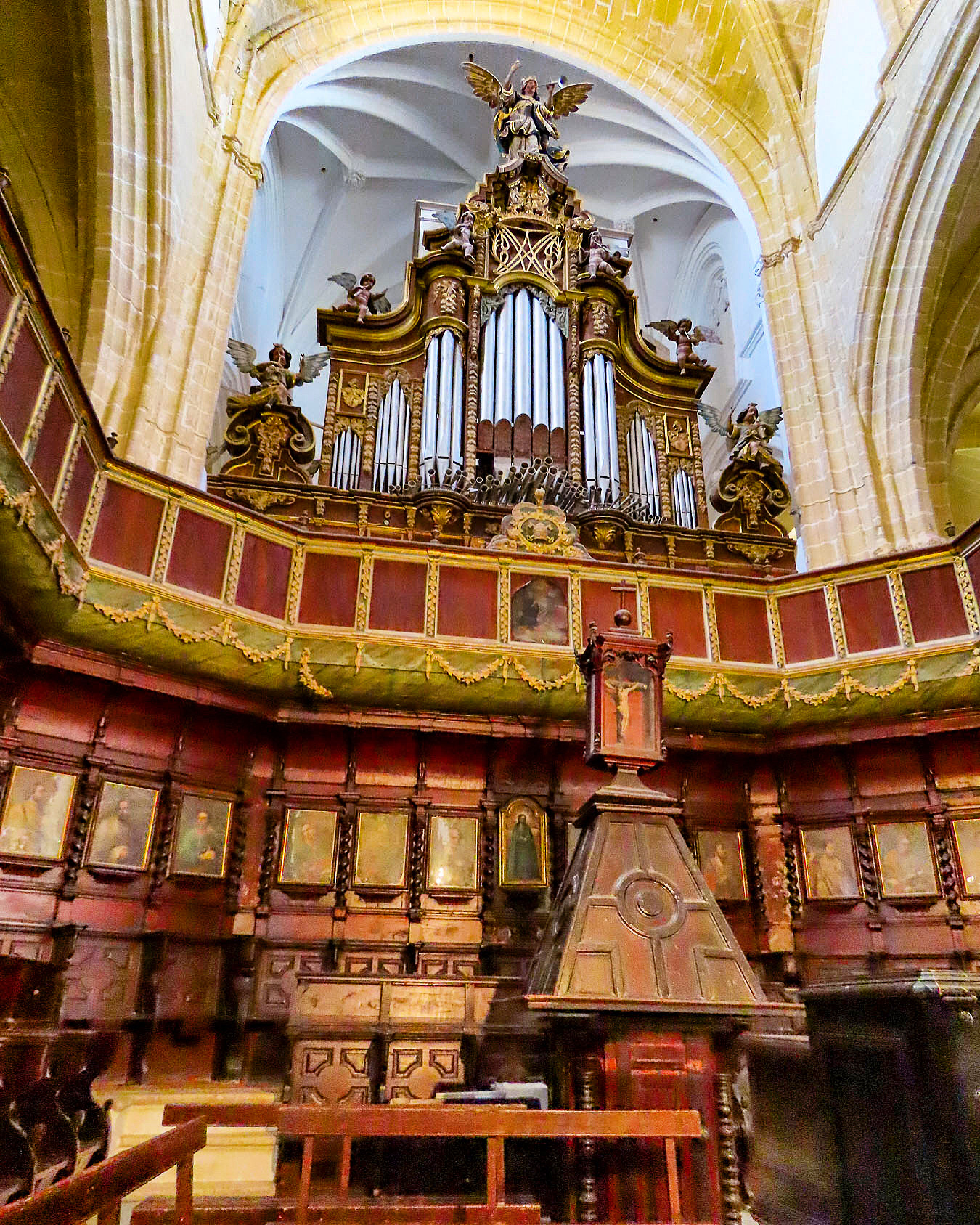
It is filled with wonderful pieces of religious art and has a very fine baroque sculpted altar, depicting stories from the Bible, and an ornate choir stall. The church also has a very nice arched cloister. The 135-foot-tall belltower, its upper portion built upon the minaret of the former mosque, was definitely worth the climb for the fantastic aerial views of the town and surrounding farmlands.

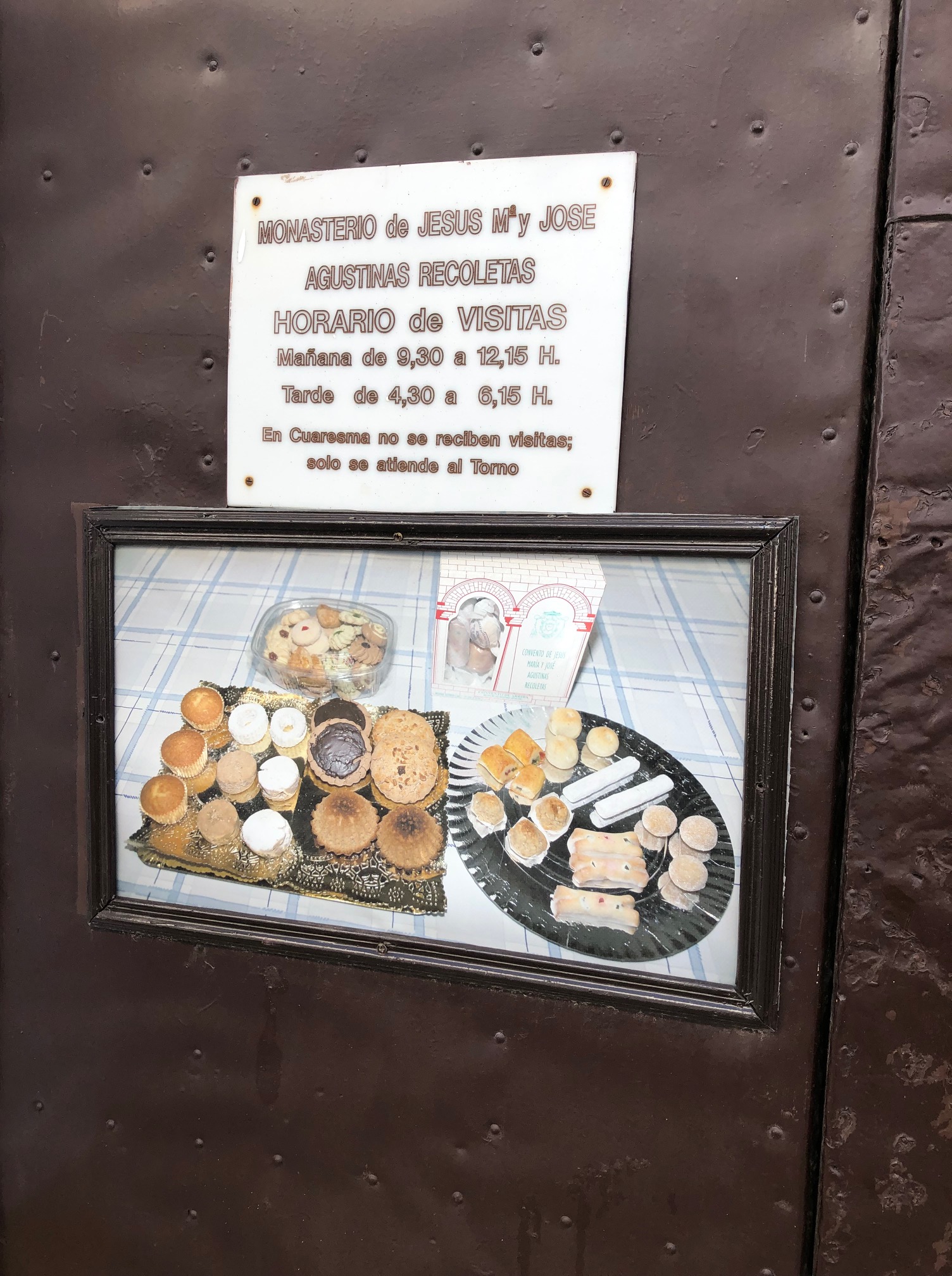
Next to the church, we were delighted to find that the Monasterio De Jesús, María Y José has a dulce turno. This is a lazy-susan type cabinet that allows you to purchase cookies and pastries made by the sequestered nuns who follow the convent’s centuries old recipes. It’s an interesting experience, talking in our inadequate Spanish through the wall to the invisible nun on the other side. We now seek out this opportunity wherever possible. The convent’s church has a noteworthy octagonal floor plan with its ceiling decorated with mural paintings.

Alcalá de los Gazules, a half hour away, was our next destination. Along with Medina-Sidonia and several other pueblos blancos, it is on the Ruta del Toro. This route through the open ranges of Cadiz Province highlights the region’s equestrian traditions on large fincas that raise Spain’s famous fighting bulls for the ring, as well as for their beef. Along the roadside here the iconic Osbourne Bull billboards playfully promote their brandy.

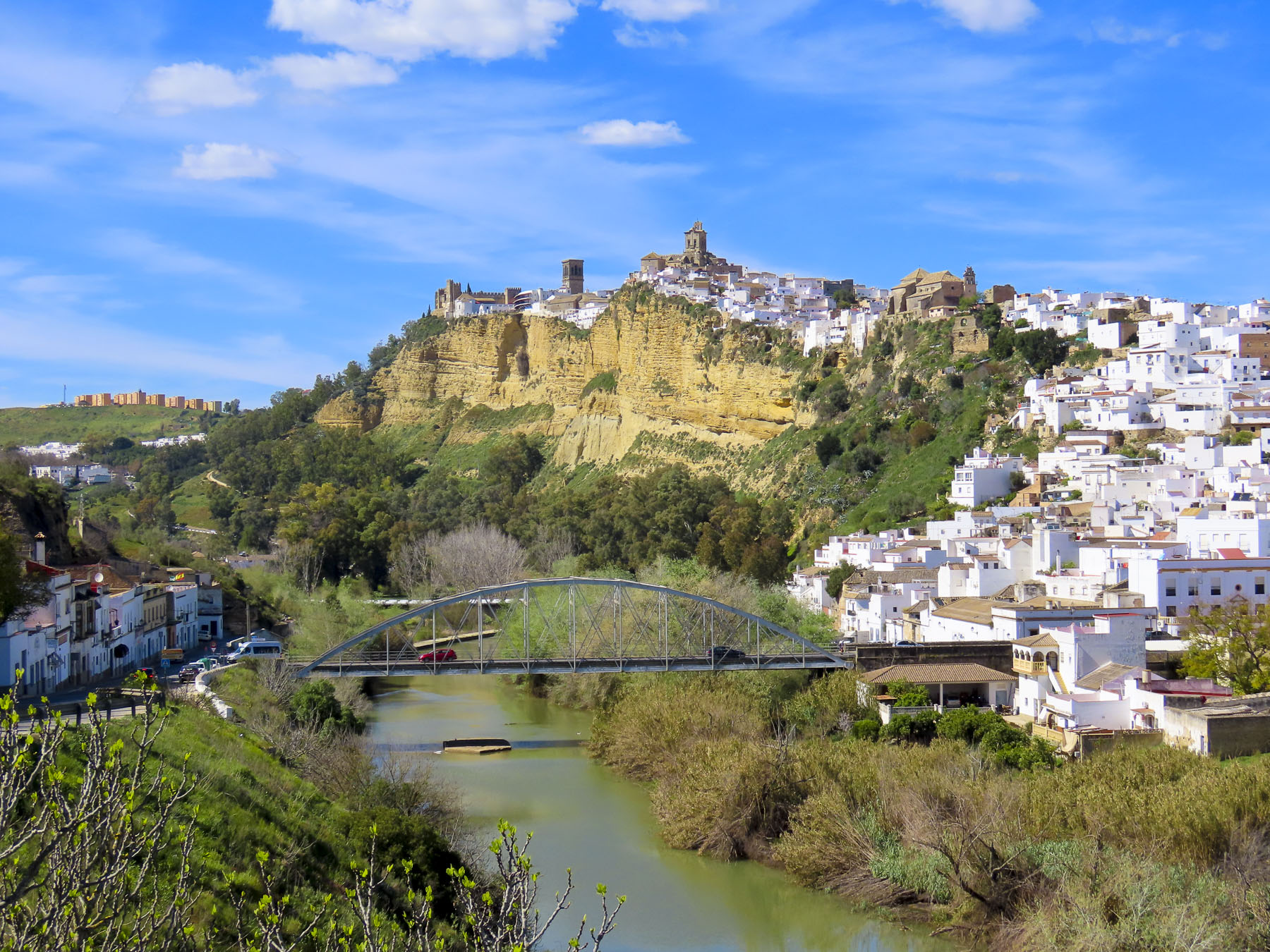
Rounding a curve, the hillside before us glittered with impressionistic white dots, which were nearly blinding in the midday sun. As we approached, their definition improved and revealed the old Arab village.  The ancient footprint of the town hasn’t changed in centuries. The village is composed of multiple levels of terraced dwellings built above each other, along staircases, winding narrow lanes and alleys that traced the natural topography of the hill to its apex.

One of the advantages of shoulder season travel is that it is much easier to find a parking space. The disadvantage, though, is that some sites of interest have off-season hours, which was what we encountered with the Iglesia Parroquial de San Jorge and the Castillo de Alcala de los Gazules.

Since the Romans first laid stones for a fortress, the town has had a castle at its summit. It was the Moors though who built a small but substantial fortification that used the sloping wall technique, copied from the Templars, to build the Homage Tower. This impressive tower is all that is left after Napoleon’s troops blew apart the rest of the castillo as they exited following a brutal occupation of the town in 1810.

After the Reconquista, the towns’ Moorish past was erased with the construction of the Iglesia Parroquial de San Jorge above the old mosque. Its ornate gothic façade, carved from soft stone, now shows centuries of erosion. Later with the building of the Santo Domingo monastery, in 1506, the town was decreed to be a religious learning center. Although the monastery served as a training center for priests, it was also used for centuries to hold prisoners of the Spanish Inquisition.

A few minutes outside of the village, before continuing onto Castellar de la Frontera, we stopped for a late lunch/early dinner at los Corzos. It’s a large facility with a restaurant, café, grill and charcuterie shop, all featuring typical Andalusian fare. Though it appears to be geared for tourist buses that ply the route between Malaga and Cadiz, they take their cuisine very seriously and we had a splendid lunch.

The de la Frontera attached to many village names in Andalucia refers to a region officially called “Terra Nullius,” a ‘no man’s land.’ A fluctuating border area was established in the 1200s, when the first Reconquista, led by Ferdinand III of Castile-León, ran out of resources to continue their conquests farther. For two-hundred years this was an unclaimed land, in which Christian crusaders and Islamic jihadists continued to clash.

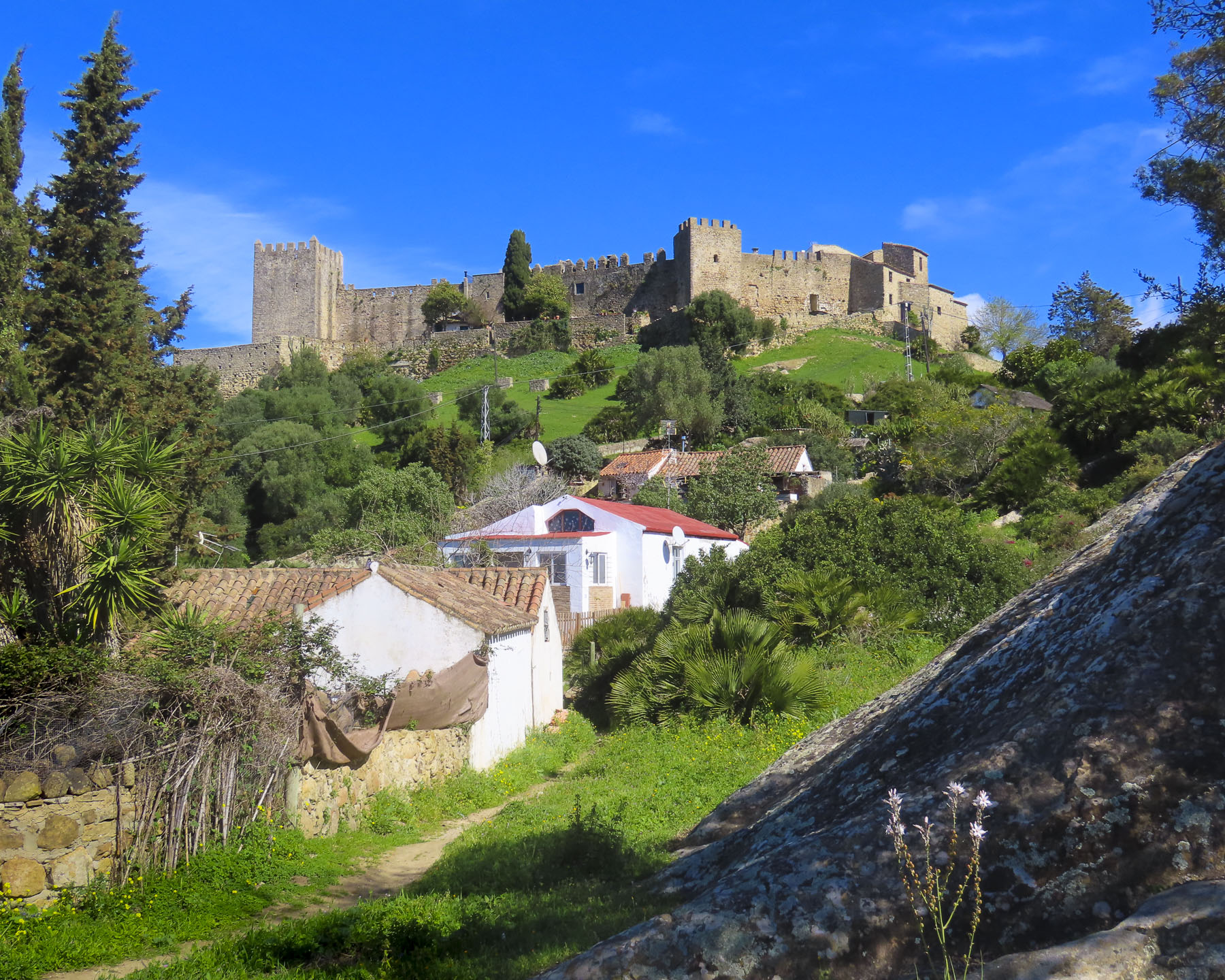
Castellar de la Frontera, still remotely isolated in the cork forests of Los Alcornocales Natural Park, truly exemplifies a wilderness fortress; with only one serpentine road in and out, it’s many miles off the main road. Today it is one of Europe’s best-preserved examples of a medieval village existing within a castle. But in the 1960’s it was a different story, when after centuries of neglect, and a dwindling population due to emigration, the remaining residents were relocated to a newly constructed town, Nuevo Castellar, ten miles away.

In the 1970s, northern European “hippies” discovered the fine Andalucian weather and the now abandoned village, squatting in some homes, and building rough shelters outside the castle walls. The old town was eventually obtained as an investment by the Rumasa Group, Spain’s largest conglomerate and the country’s leading hotel chain in the 1980’s. Later the company’s financial troubles led the Spanish Government to expropriate Castellar. They declared it a ‘Historical and Artistic Monument,’ and invested funding to restore the old castle and its village. Today rooms in the castle and several casas in the old village are reservable through Tugasa Castillo de Castellar Tugasa is a hotel organization formed by the Cadiz regional government and operates nine hotels and nine separate restaurants throughout the province.

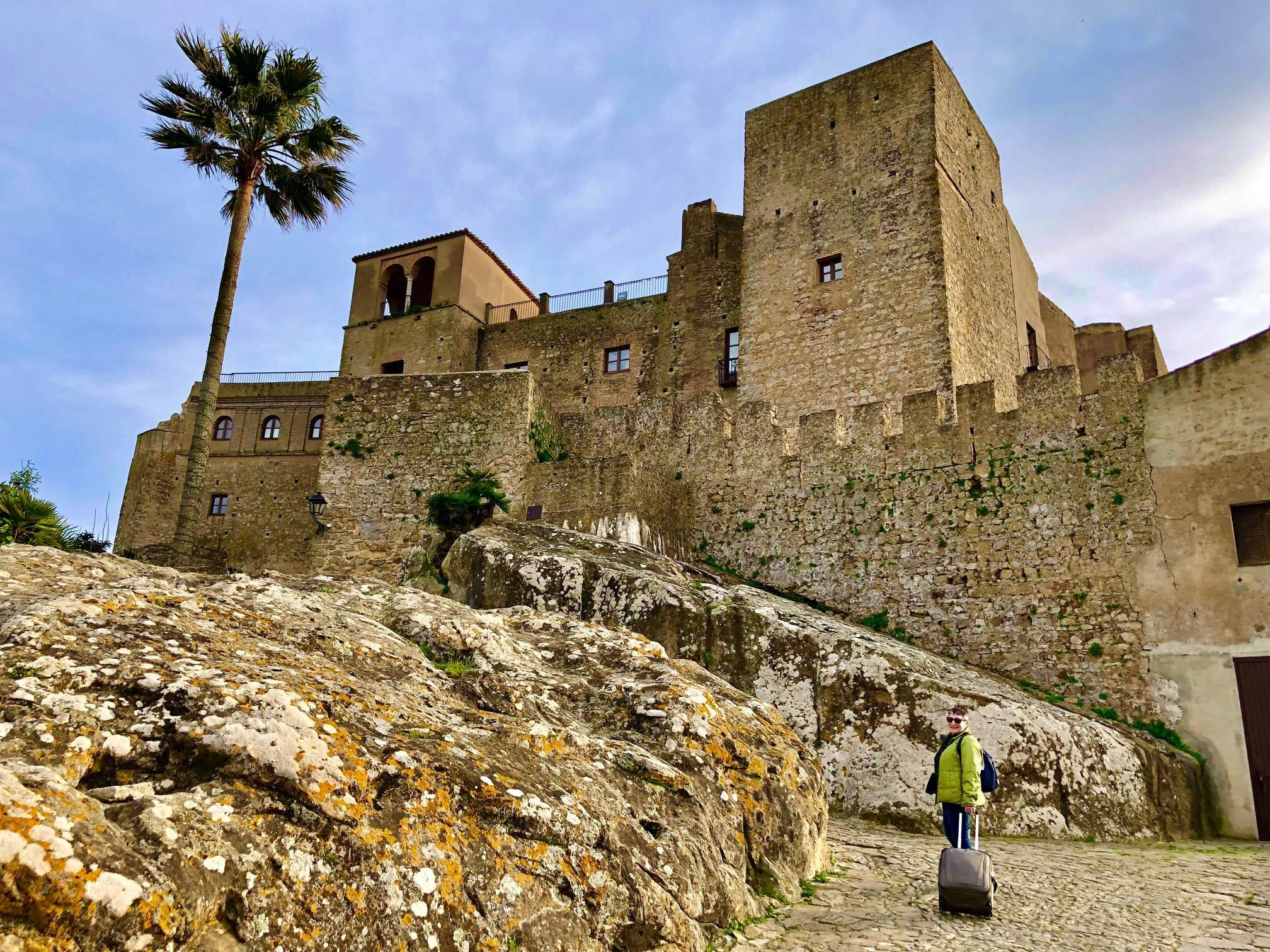
We didn’t realize our modestly priced (under €100) room would be ideally located in the Torre del Homenaje, the highest part of the castle with spectacular panoramic views. Getting to it was a bit of a challenge, even with the use of an elevator. The castle was built atop a huge multi-faceted rock protrusion, so that each ledge of the stone became one floor for rooms. While there are hallways from the elevator landings, they branch off and have short flights of stairs, up and down, to the rooms in various wings of castle. Signage was rather lacking, but after a few wrong turns we located No. 206.

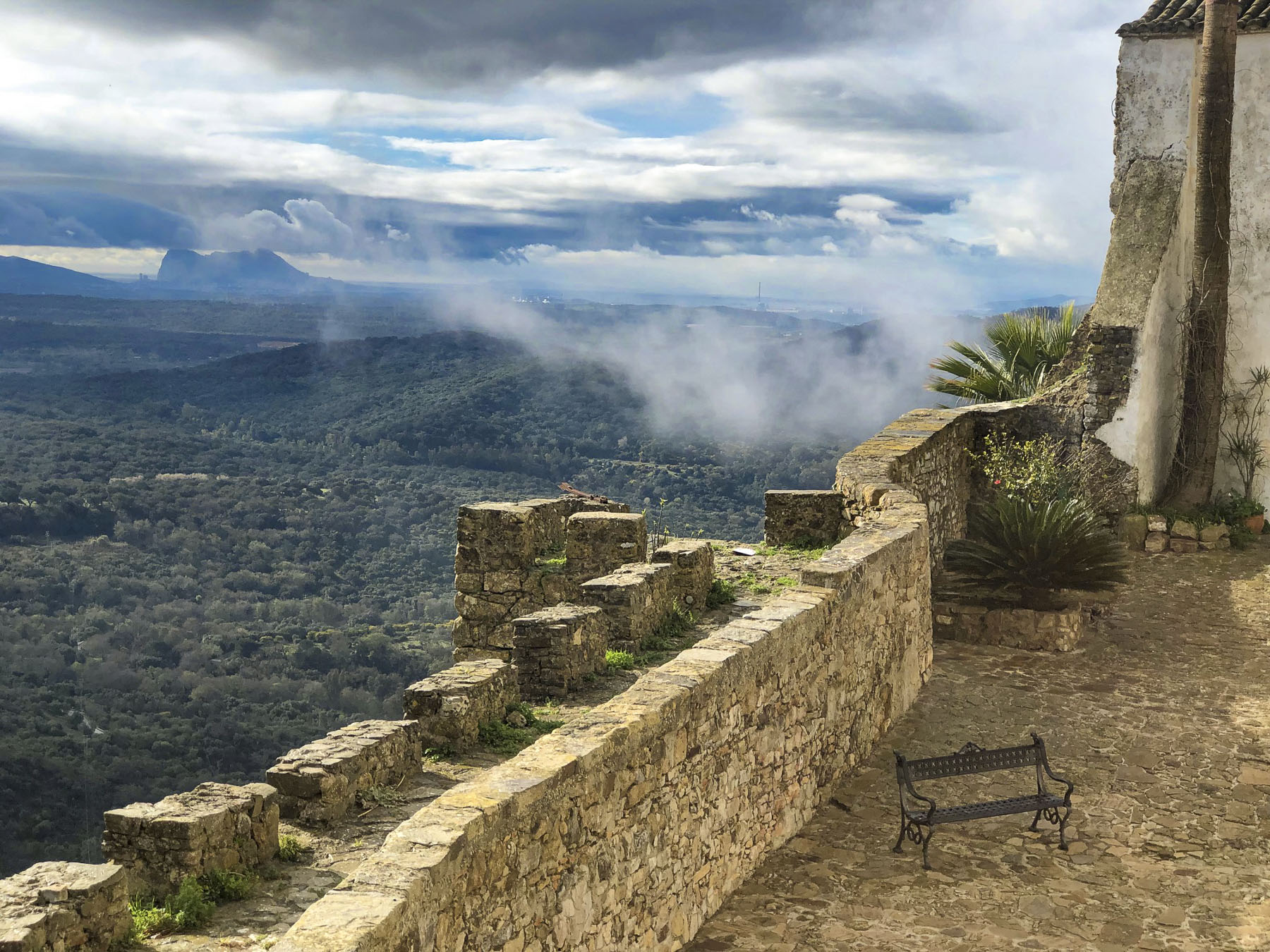
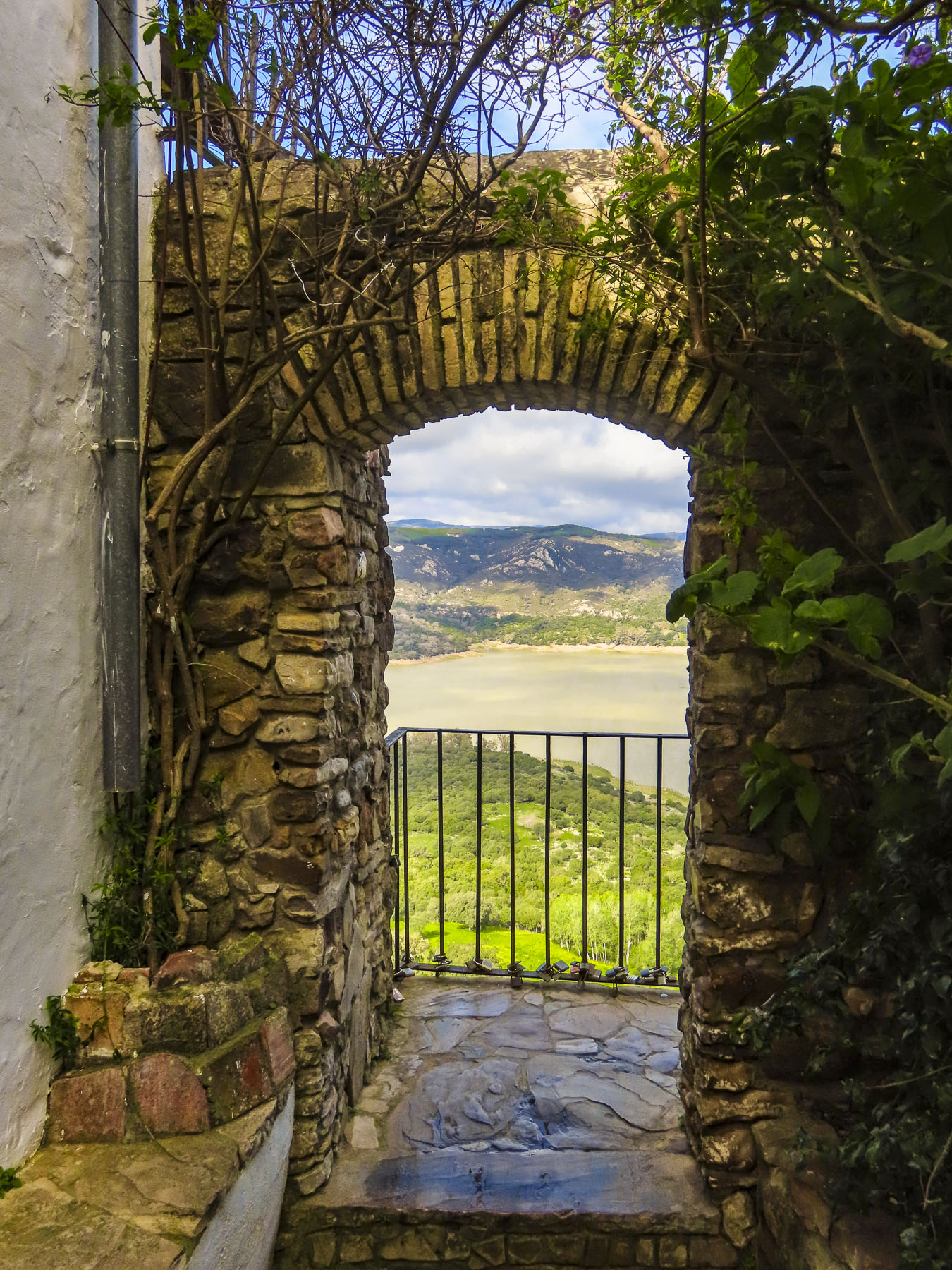
We were further surprised when we discovered that a narrow alcove in our room, with a twist and a turn, led to a sitting area with a small bedroom. Geez, if we had known we would have invited our kids. Better still, a set of stairs led to the top of the tower – our private mirador! To the manor born, for the next two days! We enjoyed incredible views: to the west over the Guadarranque reservoir, below the village, and southeast to the Rock of Gibraltar and the coast of Morocco beyond.

“Hey Rosa,” a lanky toothless patron smiled as he yelled, “tienes clientes,” you have customers, after we stood at the bar long enough to learn the gentleman was one of the original squatters of the 70’s. Two beers were all we could get from Rosa, as the kitchen was only open on weekends until the tourist season started later that Spring. Fortunately, we had purchased some bread, cheese, and sausage at los Corzos earlier, and we still had a vermut with us from Jerez de la Frontera, so we were set for a picnic dinner.
We rose for sunrise the next morning and watched kestrals zip along the castle’s walls. Over the reservoir a kettle of griffon vultures circled for a while before flying off. The medieval village within the castle’s wall is very compact and it was easy to wander through its attractive lanes. Outside the walls we spent a good bit of time walking about looking for the best vantage points to photograph this pretty village, which is recognized by Los Pueblos más Bonitos de España as being one of the nicest in Spain.

Later for coffee we stopped at the Hotel La Almoraima, located off the only road between the old town and Nuevo Castellar. The stunning hotel is set in what once was a 1600s convent and takes excellent advantage of the orange tree-filled courtyard and surrounding old cloisters, now renovated into chic rooms.  

The convent’s original chapel has also been lovingly restored and is used regularly for weddings. The history of the architecturally distinctive tower that stands next to the cloister is vague, with some thinking it was an Arab watch tower, when this was the “Terra Nullius,” and existed before the religious complex was built. The old convent and its extensive lands, a vast 34,000-acre cork forest, eventually became the property of the Dukes of Medinaceli, who turned it into a palatial hunting estate, one of the largest in Spain.
By the 1890’s it was the destination for Spanish nobles and English aristocrats from Gibraltar, who participated in Royal Equestrian Hunts, and the Duke had a private station built on Henderson’s railway for their use. In 1922 Queen Victoria Eugenie of Spain exited at the Duke’s station and then traveled by horse drawn carriage to the estate and the ancient castillo for a brief visit. The eroded cart track to the castillo was finally improved and paved in 1924. In 1973 the 18th Duchess of Medinaceli sold the estate, which included the old hilltop castle, to the Rumasa Group. It was later seized by the Spanish government in the financially troubled 2010s and the Mexican actress Salma Hayek expressed interest in acquiring it before the government decided to manage the estate itself. I find these obscure histories fascinating!

Bar el Molino, a small taberna on the edge of Nuevo Castellar’s central plaza, was a wonderful untouristy spot. With shaded outside tables, cold beer and delicious food, our lunch was perfect. In an effort to experience as many different places as possible, we’ve started to take our after lunch or dinner coffee and dessert at a different establishment.

With this in mind we found Pasteleria Gastrokook, off by itself on the edge of town. Wow! We were so fortunate to stumble across this incredible pastry shop. This gourmet pastelería is reason enough to visit Castellar de la Frontera or even Spain. It is definitely worth a detour especially if you are near Gibraltar. We quickly conferred and declared a calorie-free day! I mean, what is the point of exploring all these distant locales without enjoying their cuisine. Geez, at our home in Georgia, USA, we can’t even find artisanal bread! I did gently chide the two cyclists that pedaled over from Gibraltar for ordering only black coffee. Surely, they would have burnt off all those calories by the time they returned to the rock. Sometimes, willpower is simply deprivation by choice.

Till next time,

Craig & Donna

.

Cadiz: Walk a little, then Café

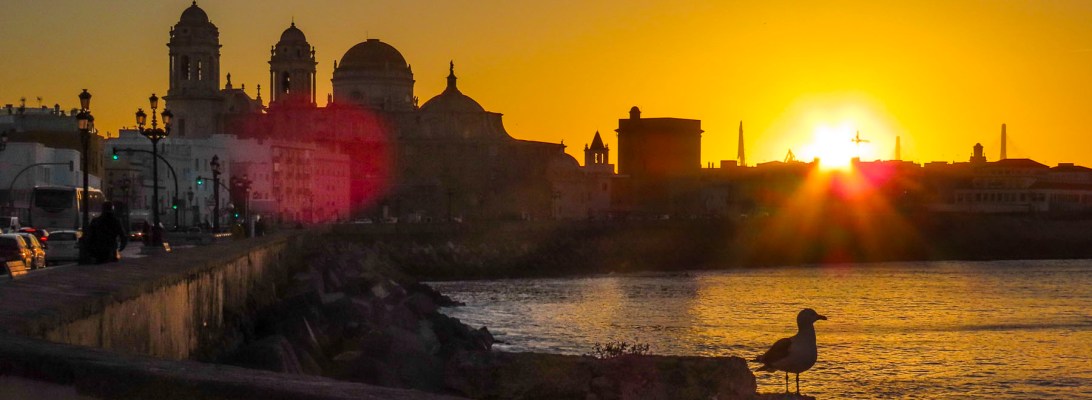
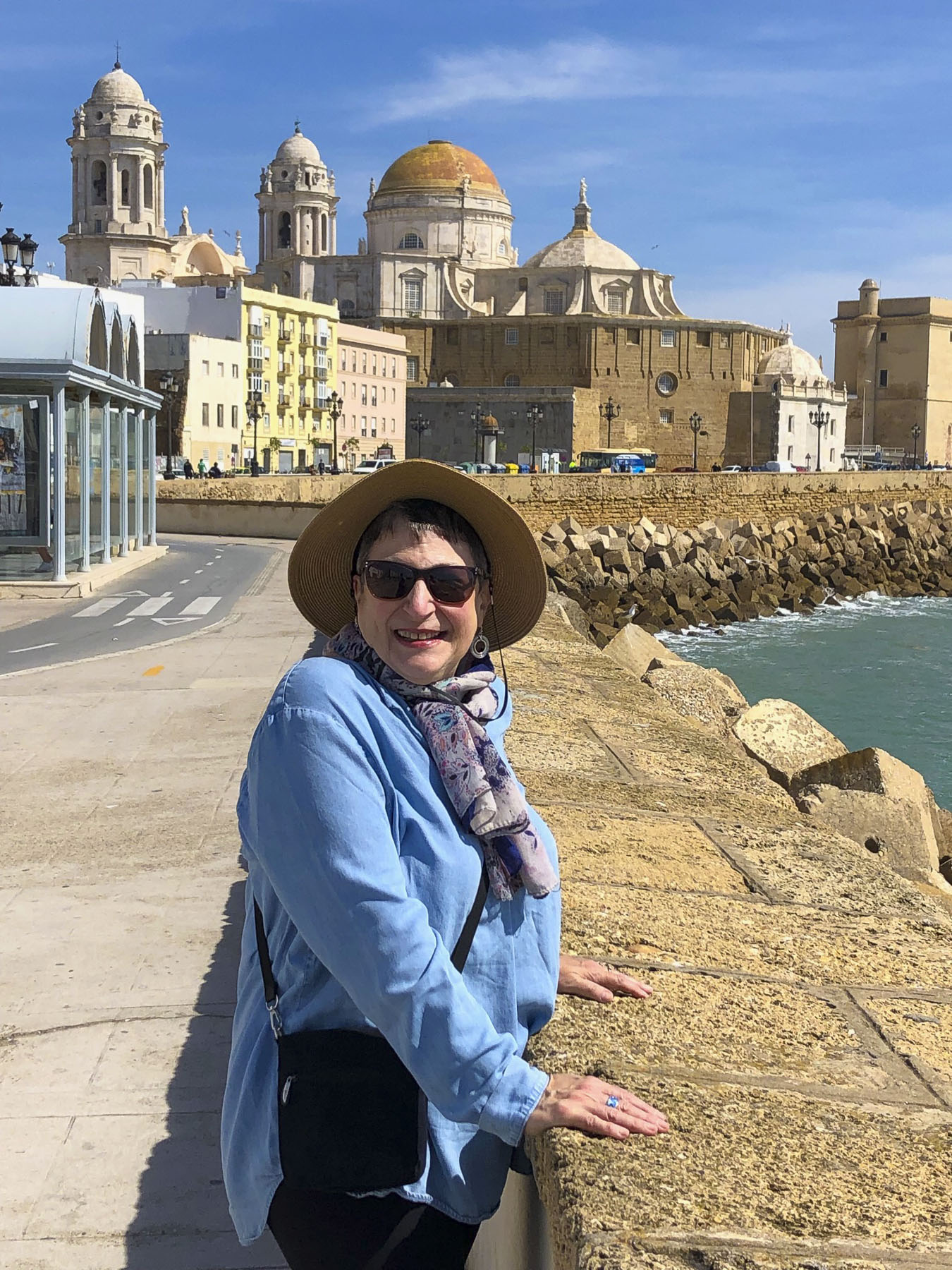
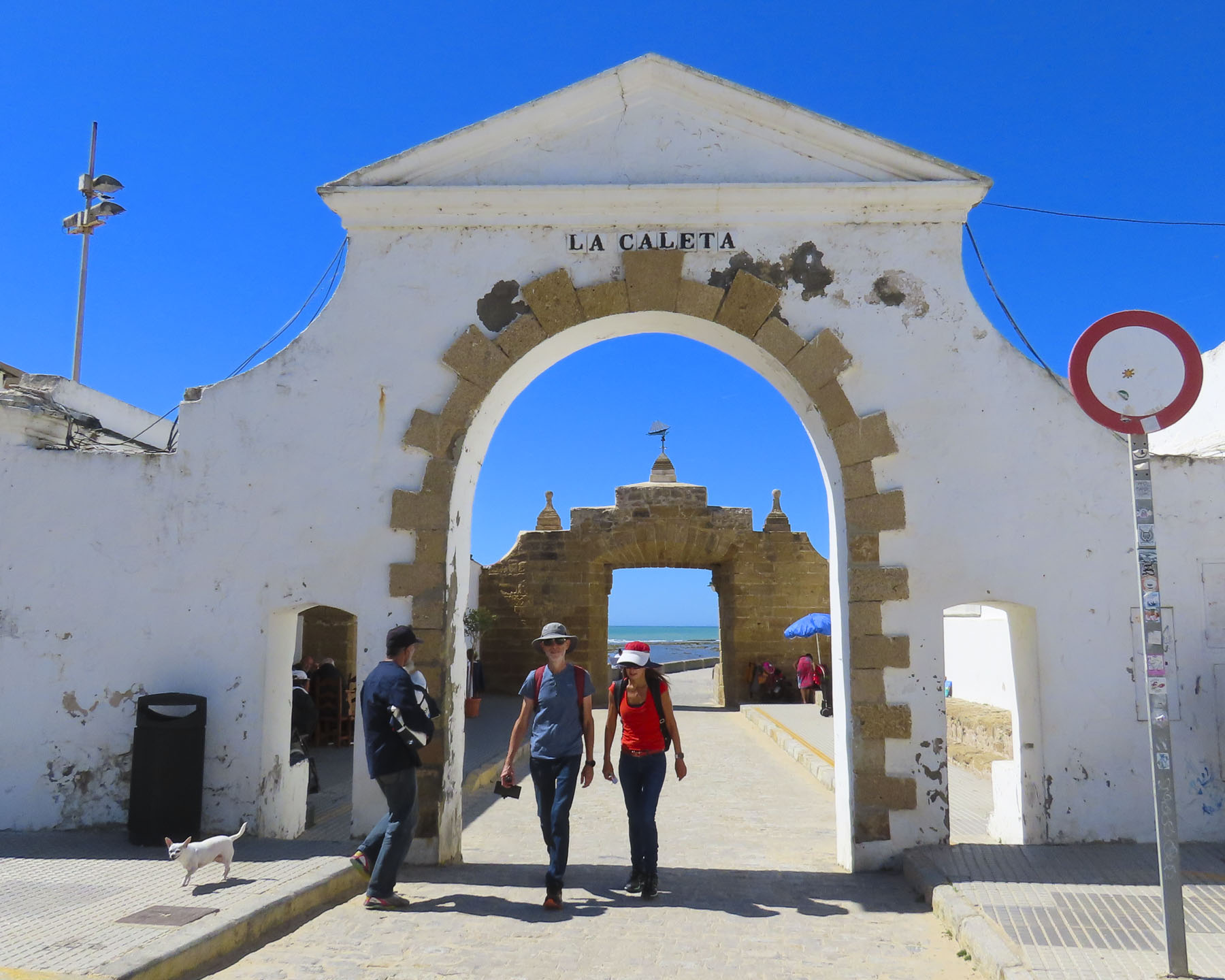
With a leisurely departure from Jerez de la Frontera, we headed towards Cadiz for four nights before continuing our road-trip through the southwest corner of Andalucia. Our friend Giulia had shared her fond memories of Cadiz with us several years ago and we were finally on our way to experience the charms of this coastal city ourselves. Situated on a narrow peninsula that juts into the Atlantic Ocean, the city’s small size appealed to us. “You won’t need a map!” Donna teased, referring to my inclination to track our every route. While the city does have several beach areas, only one, La Caleta is in the Casco Antiguo, old town district.
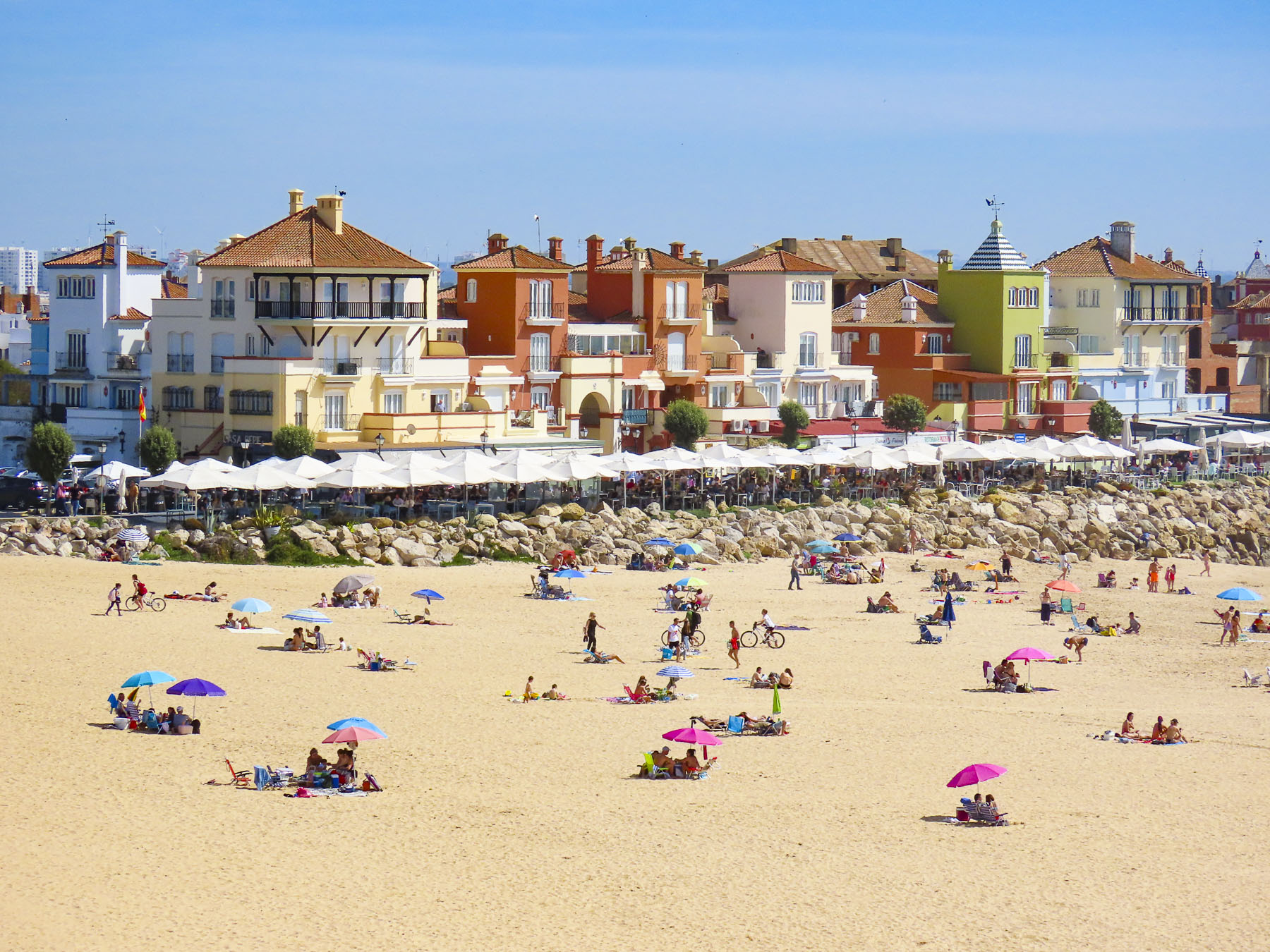
We decided to have lunch along Andalucia’s Atlantic coast before we reached Cadiz and followed the signs to Vistahermosa, an upscale neighborhood in El Puerto de Santa María that has a crescent shaped beach. It’s a wide stretch of golden sand, with the ruins of an old fortress at one end and a marina at the other.

The Sunday afternoon in March when we visited, folks were sunbathing and swimming. Offshore boaters, kite surfers, and a sailing class were enjoying the gentle waves of Cadiz Bay. We parked at the marina and strolled along the restaurants and homes that lined the breakwater until we decided on Sotavento Puerto Sherry, which offered some shade from the intense afternoon sun.

Afterwards we headed to the lighthouse that marks the entrance to the marina. If you ask locals where the best beaches in Spain or Europe are, they’ll spread their arms wide to encompass the north and south vistas along the coast and say, “aquí mismo,” right here, proud of the fact that their beaches are consistently awarded numerous Blue Flags, a European Union award for water purity and beach cleanliness, in the Mediterranean region. Though it shares the same climate as the Costa del Sol on Spain’s Mediterranean coast, with 300 days of sunshine annually, the Atlantic coast beaches have stayed relatively undiscovered by mass tourism. This is attributed to the provinces’ wilder, windswept coastline, with many nature preserves and few large tourists resorts.

When you look at a map of old town Cadiz the streets appear to be laid out in a slightly modified grid pattern. In actuality they are a confusing array of one-way streets that inhibit easily circling around the block. Fortunately, there is very little auto traffic through the historic district, as there are no sidewalks and folks treat the calles as pedestrian only thoroughfares, stepping into doorways for the occasional delivery vehicle to pass. There are expensive parking garages scattered about the city; however, if you are willing to walk a little farther, the least expensive parking areas are near Parque Genovés.

We were delighted when the elevator doors opened onto a rooftop terrace and we realized that our room was on the hotel’s top floor, which we shared with one other guest room and an outdoor bar that was closed until the high season started later in the Spring. For under $100 a night our room, with sitting area, large bath, and private patio at Hotel Las Cortes De Cádiz   was an incredible value in mid-March.

Breakfast was not included, but we had a coffee maker and I always enjoy photographing sunrise, then wandering about in the early morning hours looking for a neighborhood pastelería. Our sweet tooth was not dissappointed in Cadiz.

While many of the calles in Cadiz are strictly utilitarian aside from their fascinating architecture, the plazas, parks, and some strictly pedestrian only lanes are lined with palm trees, and a variety of other specimen trees collected from Spain’s far-flung empire, which lasted from the 16th to 18th century.

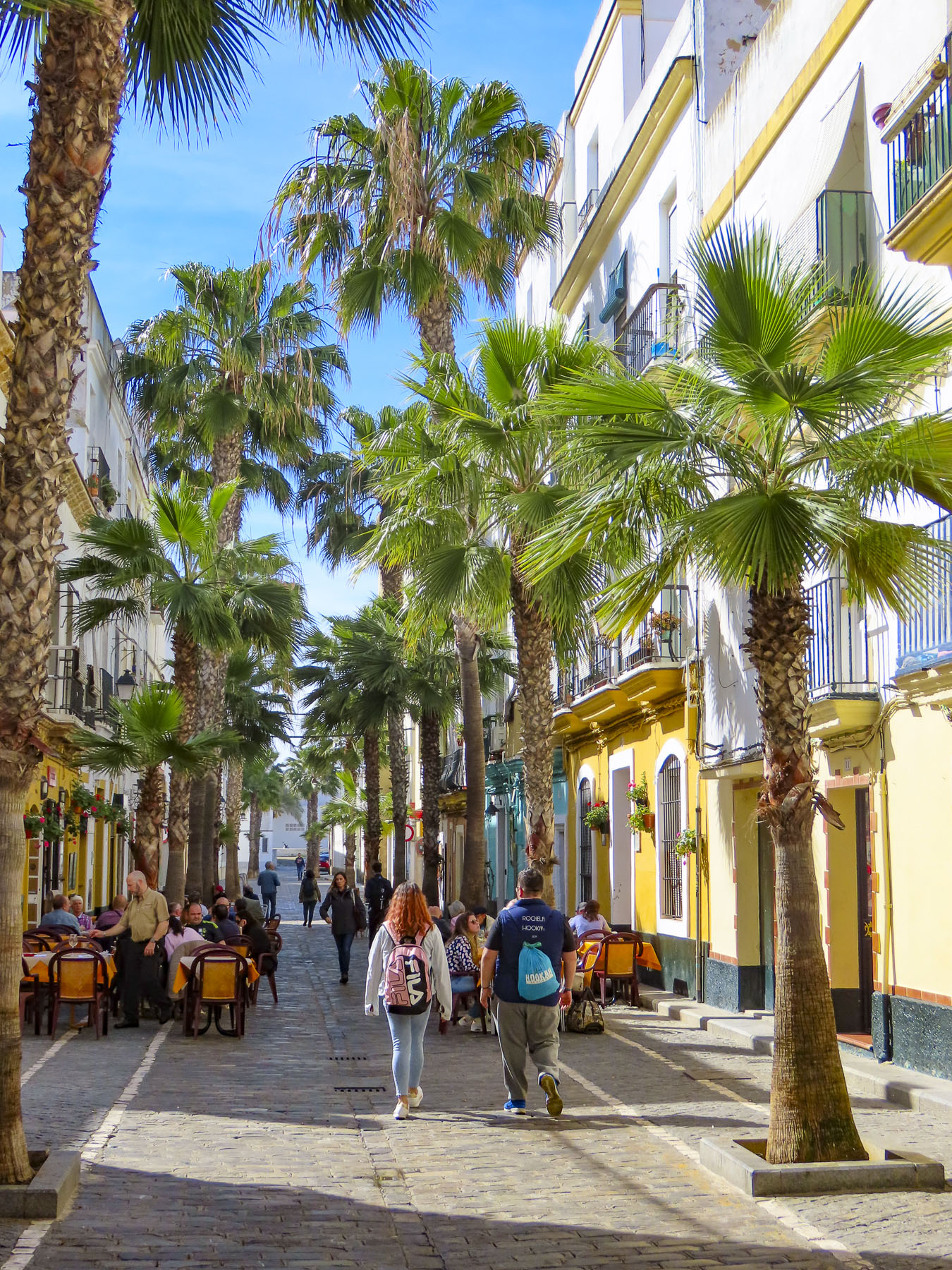
Calle Virgen De La Palma is particularly attractive with its tall palms lending a Caribbean vibe to this quiet barrio that has two of Cadiz’s best tapas bars and restaurants, Taberna Casa Manteca and Restaurante La Isleta de la Viña.

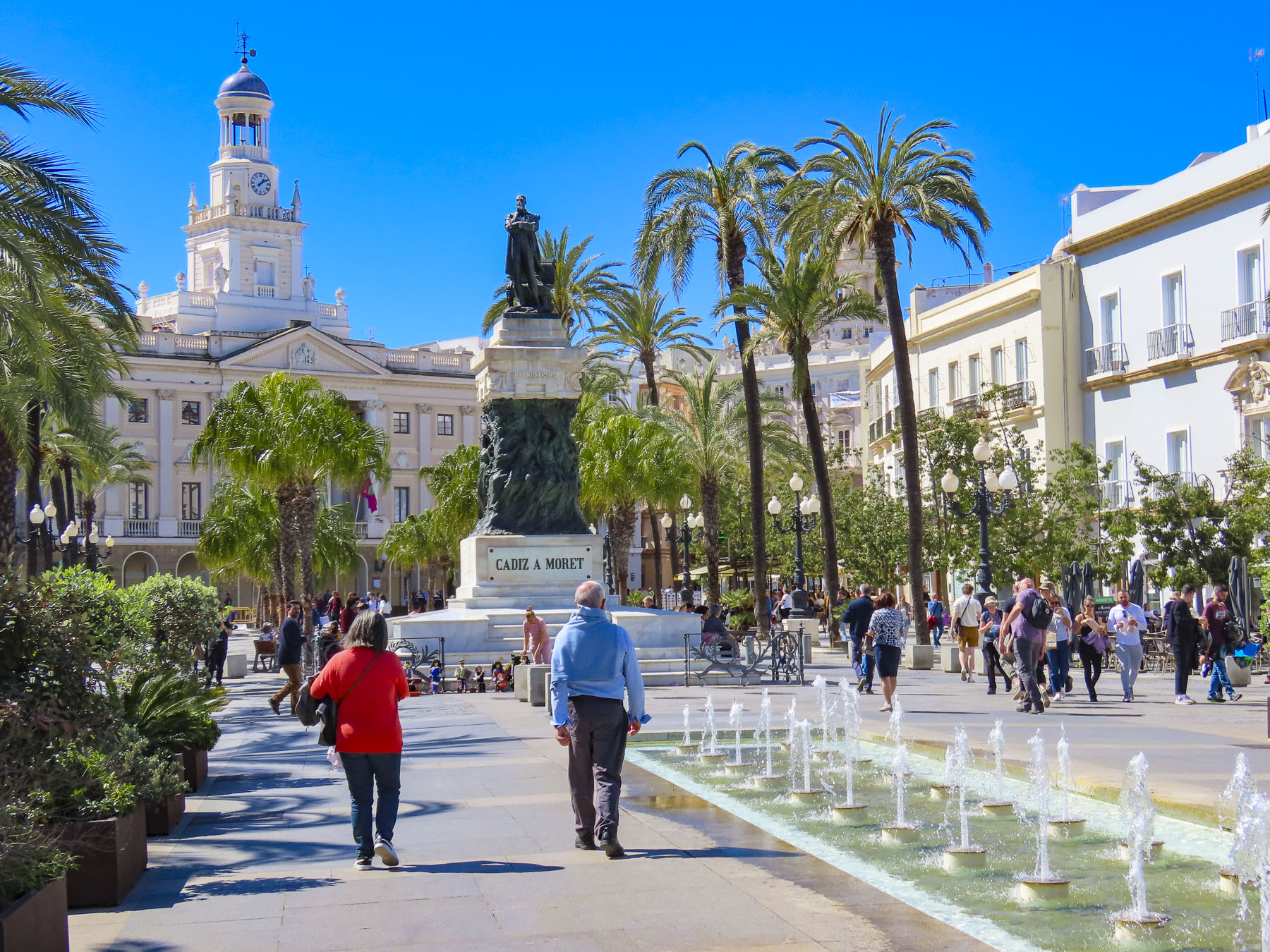
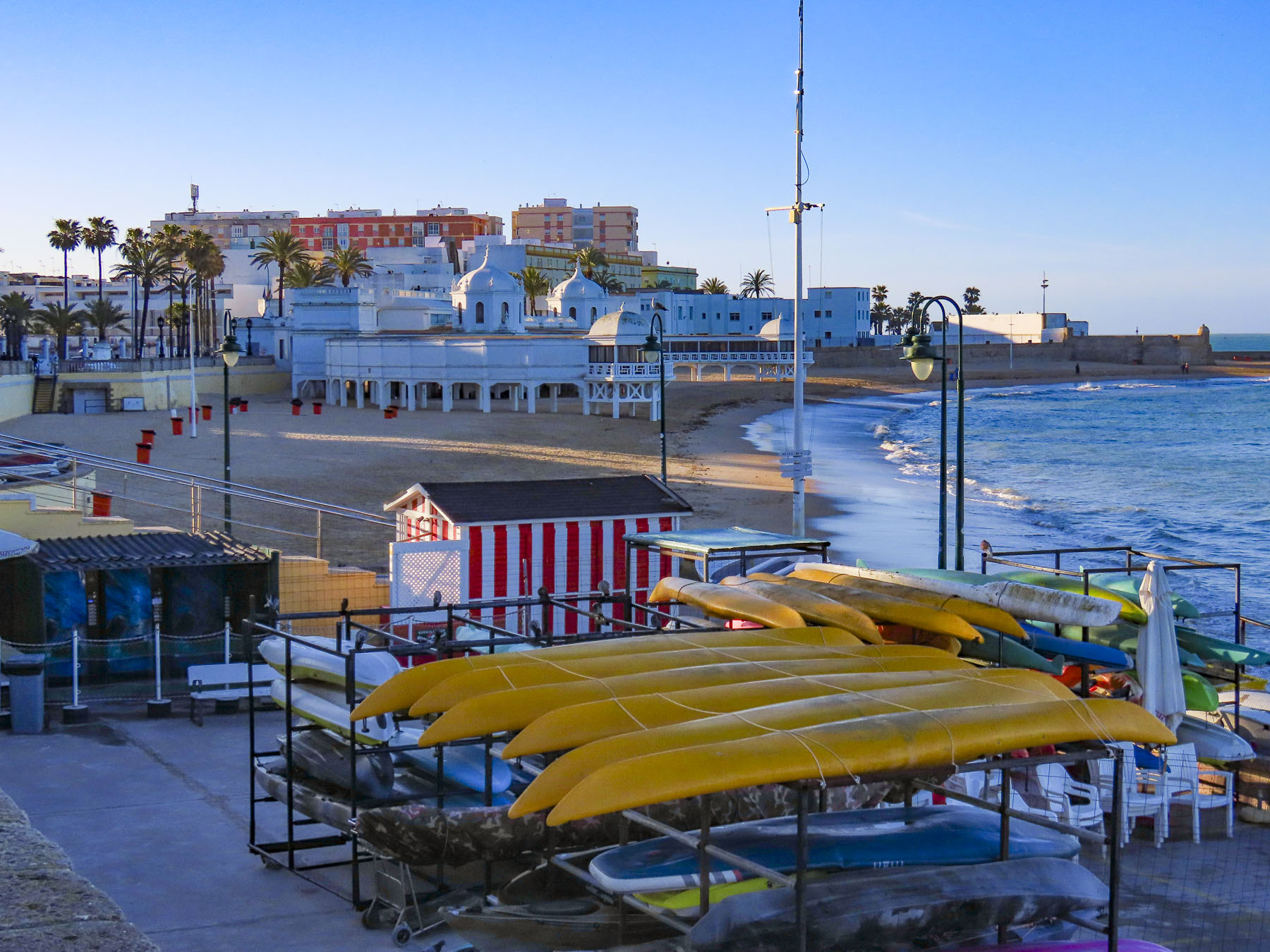
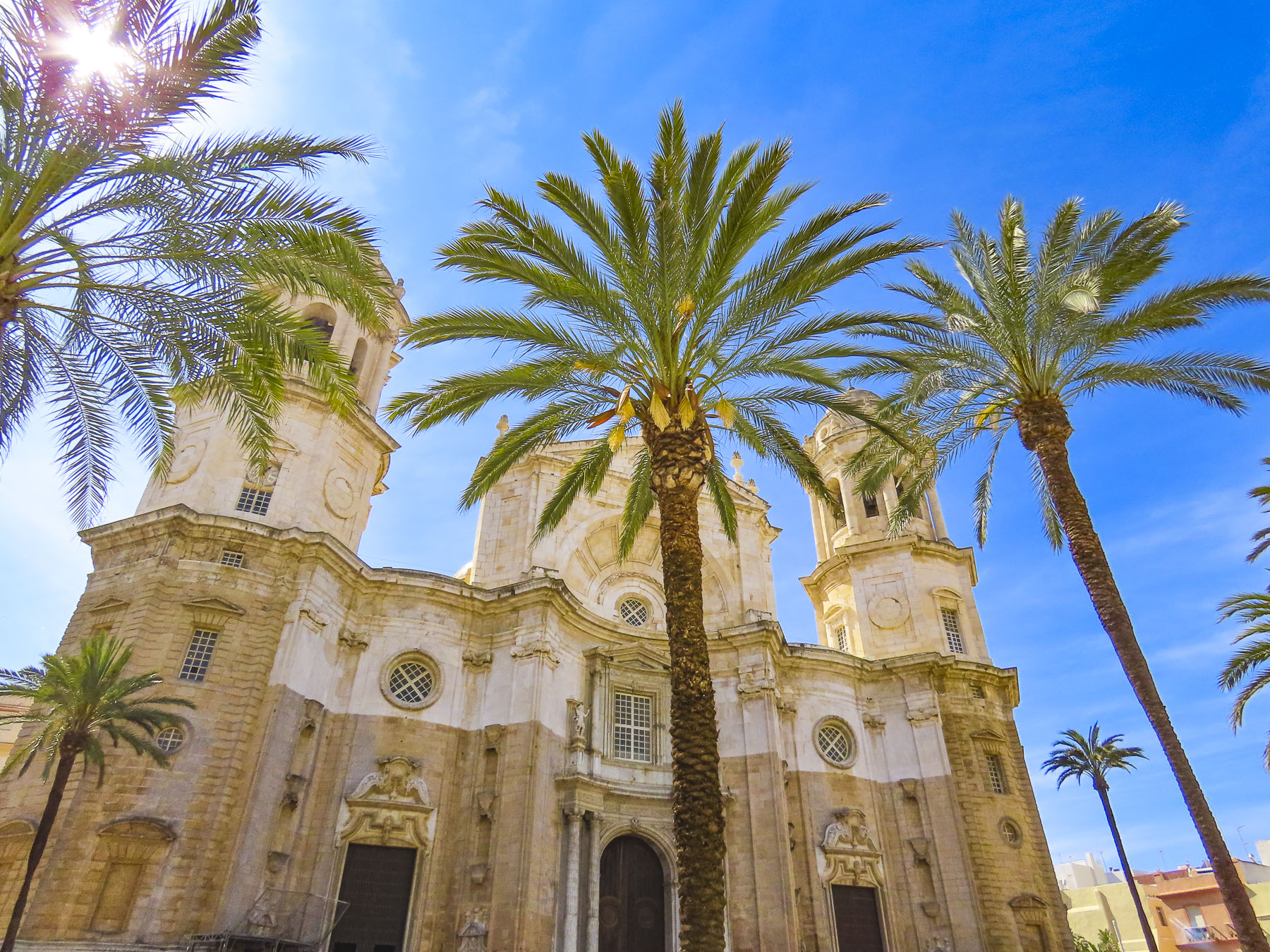
Plaza de Mina, Plaza de San Juan de Dios, and Plaza de la Catedral are especially beautiful, with the latter two also providing an Island flare to the stately stone buildings surrounding them. The Caribbean ambiance is so intense that the barrios of Cadiz are often used by the movie industry as a location stand-in for Cuba. Parts of 007: Die Another Day (2002,) were filmed at Cadiz’s La Caleta beach and Malecon.

There were two islands, separated by a natural narrow channel near La Caleta beach that extended to what is now the cruise ship harbor, when the Phoenicians landed 3000 years ago, making this the oldest continually inhabited city in western Europe. Over time the detritus of ancient Phoenician, Greek, Carthaginian, Roman, Visgoth, and Moor civilizations filled the canal and connected the two pieces of land.

Some interesting notes from the history of Cadiz:

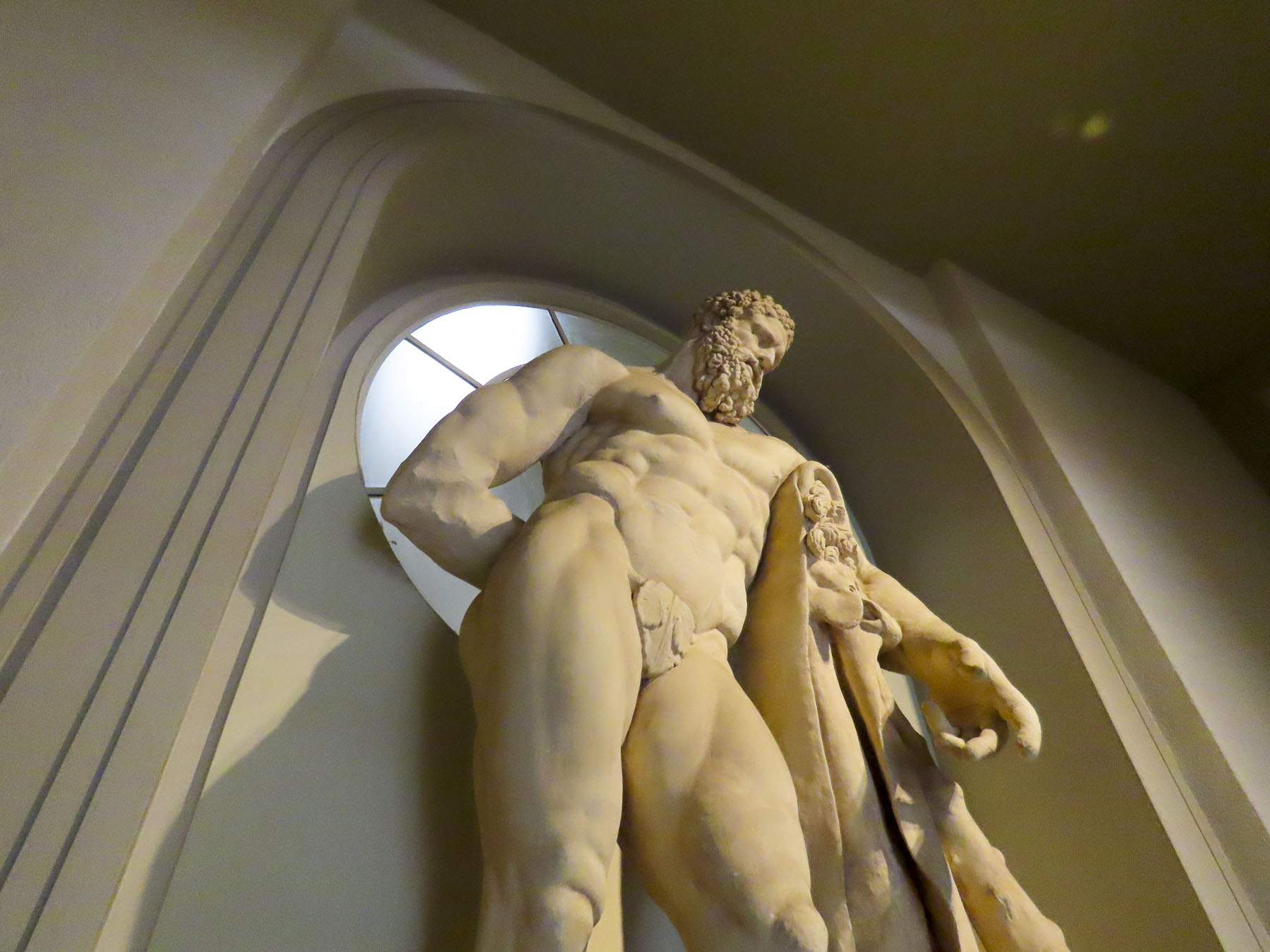
In Greek mythology Hercules needs to travel to an island called Erytheia, beyond the Pillars of Hercules, to slay the three-bodied, winged monster, Geryon. The Pillars of Hercules were thought to be the Rock of Gibraltar in Spain and Jebel Musa in Morocco at the mouth of the Mediterranean Ocean, and represented the end of the known world at the time. Cadiz is believed to be Erytheia.

Hannibal famously departed Cadiz in 218 BC with his calvary of elephants to trek across the Iberian Peninsula, the Pyrenees Mountains, and the Italian Alps to battle the Roman Empire.

During Spain’s Age of Discovery, Christopher Columbus set sail to the New World from Cadiz on his second and fourth voyages. As Spain’s closest deepwater port to its new colonies in the Americas, it subsequently became the home port of the Spanish treasure fleet and the city prospered for several centuries.

England’s favorite bad boy, Sir Francis Drake, attacked Cádiz in 1587 and pirated away 3,000 kegs of sherry, starting Britain’s long obsession with the Andalucian wine. This event prompted the city to build better fortifications.

1596 was a bad year for Cadiz. An Anglo-Dutch fleet of 150 ships with 15,000 men captured Cádiz, burning 685 homes and the old Parroquia de Santa Cruz Cathedral before they left. But the Spanish treasure ships they were after were purposely sunk by the Spaniards in the Bay of Cadiz, where the gold and silver was later recovered.

In 1805 smoke from the Battle of Trafalgar, a decisive naval engagement between a British Fleet, commanded by Admiral Lord Nelson, and a combined French and Spanish Fleet, could be seen on the horizon from Cadiz.

During the Napoleonic Wars, Cadiz successfully resisted French invasion and served as the capital of Spain for a short time.

In 1887 two large 5th century BC Phoenician stone sarcophagi were discovered at the Cadiz shipyards.

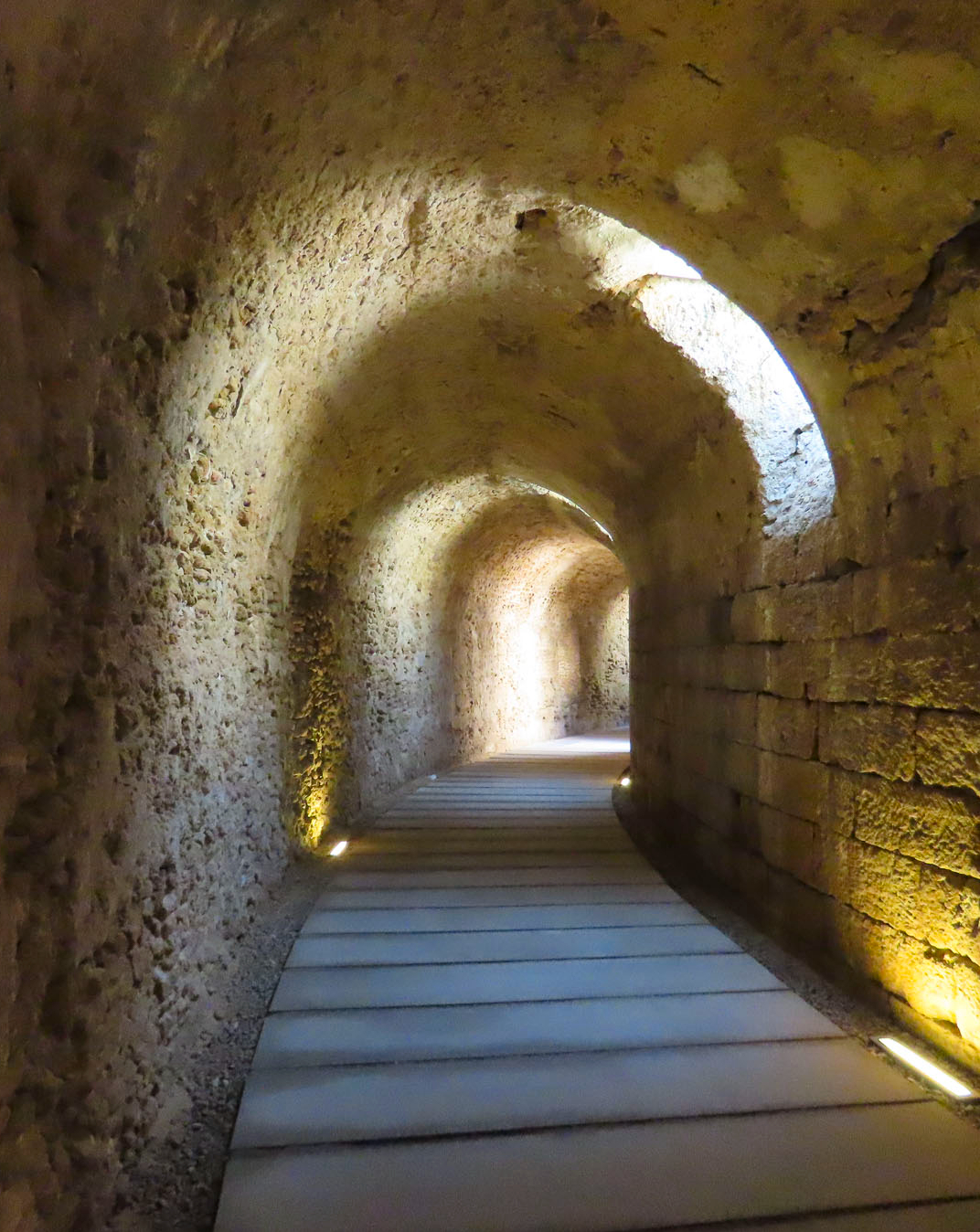
Construction crews in 1980 unearthed the ruins of a 1st century BC Roman amphitheater. Estimated to seat 10,000 spectators, the theater was one of the largest ever built in the Roman Empire.

I find these recent archeological findings fascinating, in the sense that there are still discoveries about the extent and complexity of ancient civilizations to be made, even though we’ve been living atop them for centuries.

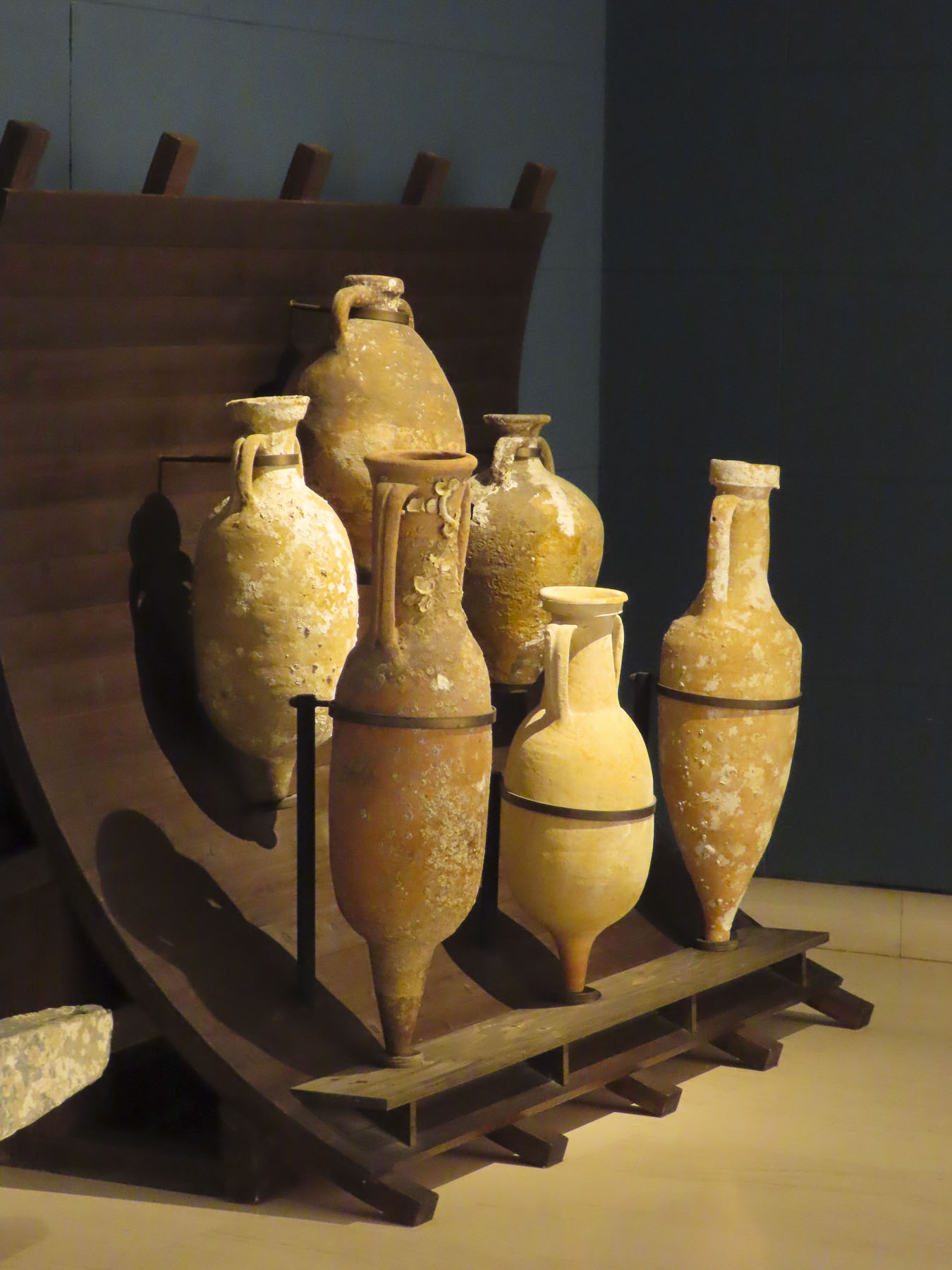
The Cadiz Museum is a great destination and has a very interesting collection of ancient Cadiz artifacts on display. Its location on the verdant Plaza de Mina surrounded by several cafés and the excellent restaurant Mesón Cumbres Mayores was a huge bonus. At the restaurant we shared a delightful experience with a young Spanish/American couple from Oregon who were back in the woman’s hometown visiting family. “You must try the Chicharrones.” We never could have imagined that pure fat is a gourmet delight! Pork belly cooked with spices and garlic, then pressed and chilled, before being sliced paper thin, and served with a squeeze of lemon and a dash of salt. Pared with a nice Andalucian wine, it was Heaven! Obviously, this artery clogger is a tapas to share in moderation.

The urban footprint of Cadiz that we see today is a result of the reconstruction of the city after its 1596 sacking. Resilient, Cadiz was like a phoenix that continued to rise from the ashes and thrive through 200 years of pirate raids and war. Such was the power of the Spanish throne’s, “Casa de Contratación,” a contract with a city that allowed it to impose a tax of 20% on all goods, including gold and silver entering Spain from the New World colonies.

Seville previously held this coveted right before it was granted to Cadiz in 1717. With this new wealth the construction of the Cathedral of Cadiz or, as it was often called, “The Cathedral of The Americas,” was started in 1722.

The church is a huge, cavernous space in need of some maintenance as evidenced by the construction netting suspended below the arched ceiling, which still allowed smaller pieces of plaster to fall through and splinter on the marble floor. The ornately carved choir stalls are a masterpiece of wood sculpture.

In one side chapel there is a huge ceremonial monstrance crafted with an estimated 800lbs of silver from the New World. There are also many other notable works of religious art scattered throughout this chamber. It’s definitely worth the effort to walk to the top of the church’s Levante Tower for the best panoramas of Cadiz from the highest point in the Casco Antiguo.

One of the nicest ways we experienced Cadiz was to walk along its seafront Malecón, a wide sidewalk that runs almost completely around the peninsula. The speedy can do it in a day. But why? Walk a little then café is our mantra.

We enjoyed the brisk salt air and occasionally detoured when something caught our interest. Here we enjoyed the iconic view of the Malecón being caressed by waves as the Cathedral dominated the skyline behind it.

At La Caleta beach there are many chiringuitos, typical Spanish beach bars, for food, beer or a spritz. It’s okay to linger and people watch; we never were encouraged to move along. The beach is guarded by two ancient fortresses. The Castillo de San Sebastian is far offshore but can be reached on foot via a long causeway across the shallows that gets pounded with surf.  Onshore the Castillo de Santa Catalina commands the beach and has been recommissioned as an exhibit space for modern art and concerts. On the sunny afternoon in March when we visited, the beach had a good number of sunbathers enjoying a nice spring day.

Farther along, the Parque Genovés is noteworthy for a grotto, waterfall and a stately promenade of topiary evergreens that could rival Versailles.

Cadiz’s love of botanical gardens continues in the elegant Jardines de Alameda Apodaca which features formal walkways with monuments and statues, as well as fountains and pergolas. Along the waterfront, pensioners jangled fishing rods into the ocean in hopes of enticing fish to bite. There are also several grand centenarian ficus trees, with enormous branches that provide abundant shade, in this tranquil seaside park. Across from the park the pastel façade of the Iglesia del Carmén is noteworthy. While Cadiz has many churches, it is difficult to enter them, since most are open only for morning and evening mass.

Monuments celebrating the 1812 Constitution of Cádiz, Spain’s first short-lived constitution, stand in Plaza de Espana. For Europe it was a liberal document that established equality between Spanish-born Spaniards and citizens from their foreign colonies, ended feudalism, abolished the Spanish Inquisition and limited the power of the monarchy. When King Ferdinand VII returned to the throne in 1814, after the defeat of Napolean, he abolished the constitution and reinstated an absolute monarchy.

If you were a wealthy 17th century merchant in Cadiz it was popular to have a mirador tower atop your home, from which you could scan the harbor with a spyglass looking for ships that were important to your trade. Often the tops of the towers were festooned with the flags of various nations, colonies or family’s coat of arms, for a sea captain to identify and head to when he finally came ashore with news of his cargo. There were originally 160 of them in Cadiz. Several of the remaining ones can be seen from Plaza de Espana.

Walking back to our hotel later, we discovered a fantastic small wine shop, the Despacho de Vino Virgen de la Caridad, that specializes in Andalucian sherry, vermut and wine. Here they will fill your empty water bottles directly from the casks of wine behind the counter.

Cadiz with its touch of the Caribbean was the perfect sunny, friendly, seaside Andalucian town for us.

Thank you, Giulia, for the tip.

Till next time,

Craig & Donna

Madeira: Pirates, Wine & Flowers or Everywhere There’s a Miradouro!

“Could you recommend any restaurants for lunch?” The young car rental agent seemed surprised, at first, that we asking her opinion. “Where are you staying. What do you like?” “In the center of Funchal. Meat, fish, we enjoy everything,” I replied. “Hah, most places in Funchal will be closed for the mid-afternoon break by the time you reach town, but nearby, though it’s in the opposite direction, there is Restaurante Snack-bar Frente Ao, one of my favorite places.” And so, our Madeira adventure began with a delicious lunch in a no-frills local place. Tasty grilled limpets in a buttery garlic sauce started our meal. A traditional Polvo a Lagareio, baked octopus with potatoes, and scabbardfish served with fried bananas followed. It was scrumptious, heavenly, you get my point, it was really GOOD!  Outside, planes flew close to the water on their final approach to FNC, across a panorama of the coast that stretched all the way to the headland of Ponta de São Lourenço.

Our first short drive to the restaurant revealed a verdant, lush tropical island bursting with flowering plants, and mountainous with steep ravines that descended into the ocean, like the radial arms of a spider’s web, from a central ridge that runs the length of the island. Colorfully painted homes with red tiled roofs dotted the countryside like swathes of pigment in an impressionist painting. There are few direct, only circuitous routes, where even the bridges and tunnels, some almost 2 miles long, curve to follow the contour of the land. Banana groves large and small dotted every plot of land between the homes that covered the hillsides. Three vintage cars zoomed by.

Portuguese sailors blown 300 miles off course by a violent storm as they explored the west coast of Africa in 1418 discovered a small uninhabited island, with a sheltered anchorage, where they rode out the storm. In thanks they christened the island Porto Santo, Holy Harbor. They noted in a ship’s log that on the western horizon a “dark monstrous shape loomed.” A year later they returned. Wood, madeira, from its virgin forests was the island’s first exports. The trees were so tall and straight that they allowed the Portuguese to design larger, sturdier ships, which Vasco da Gama’s fleet used to sail to India in 1497.

Felling trees for export opened the hillsides for extensive terracing of the lower slopes in the mid-1500s, when sugar cane became the prized export. Later grapes were introduced, and Madeira wine was born. Both crops thrived with irrigation provided by an extensive series of arduously cut, narrow channels called levadas, which traverse the rugged terrain and divert water from mountain streams to the agricultural terraces across the island. Their water was also used to turn the waterwheels of the first mills on the island. Close to five-hundred miles of levadas cover this mountainous island that is roughly thirty-four miles long and fourteen miles wide.

With Madeira wine came the English, who believed that fortified wines improved with age on long ocean voyages. Sailing to their various colonies in the Americas, English naval and merchant ships would sail south from England to catch the trade winds blowing west off Morocco. Fortuitously, Madeira was a well-placed port of call to resupply. With full sails and barrels of Madeira wine in the ship’s hold, they’d reach the Caribbean in a month’s time. Farther on, in their New England colonies, members of the Continental Congress toasted the signing of the Declaration of Independence in 1776 with Madeira wine. While being notoriously at odds with Spain for centuries, the Brits and the Portuguese have the world’s oldest alliance which stems from the Treaty of Windsor in 1386 and was fortified, port glasses raised, with the marriage of King John I of Portugal to a daughter of John of Gaunt, Philippa of Lancaster. This treaty of mutual support has lasted over 630 years. Cheers!

Captain Cook and Charles Darwin both visited at the beginning of their explorations. Napoleon in 1815 stopped for a final supply of Madeira wine while enroute to his permanent exile on St Helena. With the advent of steamships, Madeira became a destination for the well to do of Europe. Before the quay was constructed, historical photos show merchants rowing long boats laden with supplies out to ships anchored in the harbor, and returning with visitors to disembark on Funchal’s rocky beach. Doctors recommended its good fresh air for patients convalescing from tuberculosis. Winston Churchill visited in 1950, painted seascapes and stayed at Reid’s Palace, a Madeira institution since 1891 that still serves afternoon high tea.  He left the island with a reputation that it was for stogey old folks, that remained for decades.

But with Portugal joining the European Union in 1986, it enabled a massive investment in infrastructure that united all parts of the island that were previously inaccessible by overland routes. The small island now has over 100 tunnels and bridges, along with seven cable car routes scattered around the island. Across from the cruise terminal at the base of Santa Catarina Park, there is a relief statue set into a granite embankment that commemorates the men who toiled to build the island’s tunnels and terraces.

Flat land is a rarity on Madeira, as is landfill, the lack of which required the airport runway extension in 2000 to be uniquely expanded over the ocean on 180 concrete columns, each of which are 230-foot-tall, for a total length of 9,000 feet. It felt like we were going to land on an aircraft carrier. Fifty-eight cities in twenty-one countries now have direct flights to the island. Cruises to the island continue to be popular and in 2022 Madeira was voted by the World Cruise Awards the Best Cruise Destination in Europe. Madeira has now reinvented itself into a destination packed with outdoor activities that include sailing, whale watching, surfing, paragliding, scuba diving, and mountain hikes for all levels of fitness.

Our hotel, São Francisco Accommodation, was a modest three-star hotel centrally located in Funchal’s historic old town. The big pluses for us were its elevator, underground parking lot across the street, and its location. The most interesting parts of Madeira’s capital city were within walking distance of our lodging. We were set for the week!  We chose to stay in Funchal because it is the island’s largest city, with enough things to do locally so we wouldn’t feel the need to go elsewhere. The car was for day trips to explore the rest of the island.

One afternoon we were drawn down the street by the sound of classical music flowing from the park around the corner from the hotel. Folks casually filled a small amphitheater in the midst of a manicured garden. Next to the bandstand a small kiosk offered a table.  We ordered drinks and enjoyed the afternoon entertainment. At the bottom of the park people mingled around a line of classic cars parked along the street.

Delightfully, Madeirans out of necessity have inadvertently created a sub-culture of serious vintage car enthusiasts. Importing cars to the island has always been very expensive. Consequently, automobiles have become family heirlooms. Many of them are passionately maintained or restored and passed down through the generations. So common is the practice that over 800 vintage cars are registered on this small island. Their enthusiasm is celebrated each year with the Madeira Classic Car Revival, a three day event that culminates with a race along the Praça do Povo waterfront every May.

Several mornings we were up before dawn to walk along the waterfront in search of the ultimate sunrise shots with the unpopulated islands Selvagens and Desertas silhouetted on the horizon. We were not disappointed.

There were numerous interesting photo opportunities from the marina to Forte de São Tiago, which was built in the early 1600s in response to two brutal attacks by pirates. French pirate Bertrand de Montluc assaulted the town in 1566 with three ships. Mayhem ensued as his cut-throats   rampaged and plundered the streets for fifteen days. Then Barbary pirates with eight ships ransacked Funchal in 1617 and took 1200 people back to Algiers as slaves. Now, under the ramparts of the fort, pensioners enjoyed ritualistic morning swims along a peaceful, pebbly Praia de São Tiago.

Around the corner from the fortress at the Miradouro do Socorro, a pretty arbor frames the view of the sea and the Complexo Balnear da Barreirinha, a waterfront day resort where you can rent a lounger and swim in their pool or the sea. Across the street the Igreja de Santa Maria Maior, a small parish church, serenely graces the neighborhood.

Heading back into town we walked along the Rua de Santa Maria, a narrow alley known for the uniquely painted doors on homes, galleries and restaurants that line the street.  To see many of the doors you have to visit the street early before the shops open them for the business day.

In front of the Mercado dos Lavradores, the town’s old central market, there is a bronze statue depicting a merchant driving a team of oxen pulling a flat wooden pallet loaded with barrels of wine. Versions of these toboggans fitted with wicker chairs were called Carro de Cesto. Until roads were introduced in 1904 to accommodate the first cars brought to the island, this was the preferred downhill method of public transport, as a wheeled cart might run away uncontrollably if there was a mishap.

Today, at the steps before the Nossa Senhora do Monte Church, toboggans filled with tourists are pushed downhill by two men, Carreiros, donning wicker hats and traditional white outfits. Hold on, the steep serpentine course is over a mile long and the sleds can go almost 25 miles an hour! There are no brakes, only the special, rubber-soled shoes the carreiros wear, and stopping is accomplished by dragging their feet along the road to slow the toboggan. It’s a popular activity easily combined with a cable car ride from the Funchal waterfront to the Monte Palace Tropical Garden.

Though when we visited we chose to use our car instead of taking the cable car to Monte. We didn’t realize when we started but the google map route we followed to the garden was up one of Funchal’s steepest streets. The Caminho de Ferro takes its name from the old funicular train tracks upon which the road was paved. It runs for two miles straight up a hill with a twenty-five-degree slope and gains nearly 2000ft in altitude. I was doing fine driving uphill in second gear until we encountered a semi-blind cross street that did not have a stop sign, only a large traffic mirror. This was something I hadn’t encountered before, so I came to a complete stop. The incline of the road was very steep at this point, and I had difficulty getting the car moving again without rolling back too far. Ultimately after several frustrating minutes I rolled the car back perpendicularly to the road, got the car in gear and powered slowly through the intersection. Fortunately, there is very little car traffic on the side roads in Funchal and we lucked out in finding a parking space near the garden. The return route into the city center, down streets so narrow it required pulling the mirrors in, was equally challenging.

In the 1700s the hillside that the garden covers was a private estate with a small chateau. Later it functioned as a grand luxury hotel. In 1987 the entrepreneur Jose Manuel Rodrigues Berardo acquired it and transformed it into a serene Japanese themed botanical garden and opened it to the public. It’s a beautiful tranquil landscape, but it’s best to arrive early or late to avoid a crowd. There is also collection of contemporary Zimbabwean stone sculptures from the 1960s and a cave created to display a spectacular mineral collection gathered from around the world.

Slightly smaller and lower on the slope the Jardim Botânico da Madeira is also worth a visit to experience its stunning formal garden with a view of the Funchal coastline, and paths that weave through various plantings. There is also a nice cafe with a terrace that has one of the best views of Funchal.

However, if you enjoy orchids the place to head is the Quinta da Boa Vista. It’s a quirky plant nursery that has been operated by several generations of the Garton family and has hundreds of different orchids. As we entered the first greenhouse, an eager attendant waved us over and encouraged us to smell a delicate plant she was holding. An Oncidium Sharry Baby, it had a delicate chocolate aroma. It was delightful. With two stunning botanical gardens in Funchal and smaller ones seeded around the island, Madeira justly earns its nickname as “The Floating Garden of the Atlantic.”

Earlier we had spotted the hulking edifice of the Fortaleza de São João Baptista do Pico. A 17th century stronghold, it was built high on a hill, 350 feet above Funchal’s waterfront to deter pirate attacks. It’s a wonderful destination within town, with a nice children’s playground and café outside the fortress battlements. The view out over the city and ocean was spectacular.

Other mornings we explored closer to home heading to the Igreja de São João Evangelista, on Funchal’s central plaza. Built by Jesuits in 1629, it is known for the fusion of its Mannerist exterior with a lavish Baroque interior.

We climbed to the church’s roof for an exceptional view of the old town. Funchal’s City Hall is adjacent to the church and has a stately courtyard centered around a unique fountain depicting Leda and the Swan. An odd choice we thought for decorating a municipal building.

But Funchal is very supportive of public art and we passed many interesting sculptures along our walks. The historic old town with its cobbled lanes lined with centuries old buildings and churches was a delight to explore.

One morning we photographed small boats leaving the port at sunrise from Parque de Santa Catarina, which commands a bluff across from the cruise terminal.

From the park we walked along Rua Carvalho Araujo up into São Martinho, an upscale area anchored by Reid’s Palace. Occasionally we popped into the hotels that faced the water to check out their views.

But there is more to this island than just Funchal, so we hopped in the car for farther explorations west along the coast. Our first day trip was on a Saturday afternoon to Câmara de Lobos, famous as a favorite spot for Winston Churchill to paint. A newly married couple was taking wedding photos amid the colorful small boats pulled ashore as young children splashed and played with their dog in the shallow surf  that splashed against the boat ramp.

Parallel parking on a steep incline was challenging, but it’s a skill that’s required on Madeira, and came in handy when we reached the Cabo Girão Skywalk, one of the highest cliffs in Europe. Relatively close to Funchal, this is a popular destination and there was actually a traffic jam as cars and buses creatively parked. This glass bottomed miradouro seems to hover miraculously over fertile fields that grow grapes and tomatoes nineteen-hundred feet below. Nearby the Cabo Girão cable car, originally built to help farmers bring their crops up from the fields, can whisk you down to a secluded beach. We have a healthy fear of heights and instead continued on.

I wasn’t fast enough with my camera to grab a photo of a paraglider swooping low over our car as he landed along the stoney beach at Cais da Fajã do Mar. High above us a group of paragliders swirled on warm thermals and we waited for them to descend, but they kept floating back over the ridge.

We meandered farther west to the beach and harbor, dramatically wedged between ocean and mountain, in Estreito da Calheta.  This is a largely human-altered section of the coast with a breakwater protecting Praia da Calheta, created with imported sand, and harbor next to it. We ate lunch on the promenade across from the marina.

Heading back to Funchal later that afternoon we made a final stop in Ponta do Sol, and were able to find sanctioned parking in one of Madeira’s older, now decommissioned traffic tunnels. Walking out to a small headland we had late afternoon refreshments on a terrace with a brilliant view of the coastal village.

“Roll up your window.” “Wait, you’re not going to…” Yee haw! I yelled and we laughed while a thunderous cascade of water splashed off the roof of our car as we drove under the Cascade of Angels waterfall.

Till next time, Craig & Donna

Along the Algarve Coast – Lagos, Carvoeiro & the End of the World

Finally, the weather was improving as we headed south from Evora to the Algarve coast. We had hit an unusual week of rain in “sunny Portugal,” but the whole Iberian Peninsula had been experiencing a multi-year drought. So, it was good to know that some relief was in sight.

The sky was a refreshingly brilliant blue by the time we drove down palm-lined Av. dos Descobrimentos, along the Lagos riverfront, towards the ocean. On our left, Forte da Ponta da Bandeira stood, a silent sentinel still guarding Lagos’ fine harbor since the days of Henry the Navigator and the beginning of Portugal’s Age of Discoveries in the 1400s, when Lagos shipbuilders supplied fleets of caravels to explore the African coast, and later the Indian Ocean and beyond. In 1580,the fortress repelled the English privateer Sir Francis Drake, only to see him sail farther down the Algarve coast and sack Faro instead. Since antiquity Lagos has been an important trading port; Phoenicians established a settlement on the shore of the bay. Later Greek and Carthaginian seafarers visited and traded with the port.

The Romans came, conquered, and left the first defensive walls and a fortress along the cliff. Over the centuries its ruins have slowly fallen into the sea as the cliff face erodes. The only remnant of its existence is an arched bridge, too dangerous to cross, connecting the mainland to a rock pinnacle. Later Visigoths were succeeded by Moors until the Portuguese reconquest in 1241 permanently secured the port for Portugal. The road curved and climbed to the Miradouro Praia da Batata, where we parked and reveled in our first glimpse of the dramatically sculpted Algarve coast and its turquoise waters.

To our delight our accommodation at VI MAR – GUEST HOUSE was located within old town Lagos, just inside the massive defensive wall, which was expanded by the Moors in the tenth century and still encircles the town.

Our room was small, but it had a compact balcony that compensated for the lack of space and was the perfect spot for a morning coffee or evening glass of wine. The big plus was the location, only five minutes from the center of Lagos and just around the corner from MiMar, a great tapas restaurant, Padaria Centrala fabulous bakery, and MarLe Café for excellent coffees and a quiet place to chill. Our host recommended Casinha do Petisco, a small friendly and lively, family run restaurant famous for its cataplana de marisco (a traditional Portuguese seafood stew). We were not disappointed. Arrive right when it opens at 5:30pm if you’d like to be seated without making a reservation; after 7:00pm they are must.

One of our main reasons for choosing Lagos as a base for our five nights’ stay was the size of the town. Small enough to be manageable, yet large enough to be interesting. A walker’s and photographer’s delight within the old town. Plus the fascinating coastal rock formations of Ponta da Piedade and Praia dos Pinheiros were an easy twenty-minute walk away. We planned day trips to explore the coast, east to Carvoeiro and west to Sagres and Cabo de São Vicente.

At the end of October Lagos was quiet and beautiful, with daytime temperatures in the 70sF. With “walk a little then café” as our mindset we explored the old walled town, riverfront and on multiple occasions the trails and boardwalks along the ocean. The coastal rock formations were fascinating and kept revealing different fissures and crevices as the light kept changing throughout the day, though we thought the afternoon light was the nicest for photography.

The cobbled lanes of the historic district were uncrowded during the shoulder season and the ambience was wonderful amidst the palm trees and tiled facades of the buildings.

At the old Mercado Municipal de Lagos we were tempted by the bounty on display to buy “the catch of the day,” beautiful tuna from the fish mongers. On the top level a quaint small café overlooks the waterfront.

Farther along excellent street art decorated a store front awaiting reincarnation near a laundromat we were happy to use after washing clothes in various sinks for two weeks. It wasn’t Portuguese, but Poké Lagos served a delicious bowl of food as we waited for our laundry to finish.

In the evenings buskers performed in several plazas. One misty night a guitarist enthusiastically worked an appreciative crowd that kept growing and tossing coins into his guitar case. He must have sung for 90 minutes, breaking only to quench his thirst with a beer offered by a local waiter. Several times he announced it would be his last song. But the night was electrifying, and he played on. He proudly acknowledged his wife and young child in the crowd, playing for them as much as he was for us. He was, I imagine, in the ultimate musician’s groove, giving one of his best performances, and the folks who circled around watching and listening loved it as much as he did.

After several days of rough water, the wind and ocean finally calmed, and we spontaneously opted for a boat tour along the cliffs. Expertly timing the surge of the waves, our boatsman safely navigated us through tunnels and between rock formations.

At one point he looked high up the cliff face, waved and then yelled “hey Antonio!” to a lone fisherman wedged precariously on a ledge very high above the water. When asked why folks fish from the dangerous cliffs, our boatsman explained that only certain species of fish inhabit the zone where the bluffs meet the sea and that “Antonio, my cousin, thinks they taste better.” We saw this activity in several other places along the coast. Antonio wasn’t the only loco, maluco, fisherman.

The seaside town of Carvoeiro, with its homes built on cliffs encirling a small crescent beach and a boardwalk which follows the rugged coastline, was a destination one morning. One of the things we appreciate about Portugal is that, while gasoline is expensive, parking is free in most places. Even along the beautiful coast.

Parking near the Forte de Nossa Senhora da Encarnação we followed the Passadiços do Carvoeiro boardwalk atop the cliffs and back into town, stopping often along the way to take photos of the seascape before lunch at a shaded café. Although the temperature was comfortably cool, the sun was strong and frequent escapes to shady spots were required.

Afterwards we headed to Ferragudo, a small town, across from the busy port of Portimão, where the Arade River widens and meets the Atlantic Ocean. Two beautiful, wide sandy beaches with calm waters, the Praia Grande and the Praia da Angrinha front the tidal Arade River here. There are three relaxing restaurants along this stretch of sand to grab a beer and find some shade. The dividing point between the two beaches is the Castelo de São João do Arade. The castle was built in the 1500s to protect the important inland city of Silves from pirates, as the upper reaches of the Arade River were still navigable at the time. Over the centuries the fortress lost its relevance and was eventually abandoned and later auctioned off in 1896 to the Portuguese writer Joaquim José Coelho de Carvalho (1855-1934), who restored the cool digs into his summer residence. Years later the town of Ferragudo was unable to fund its transformation into a cultural center. Since 1998, the unique summer home has been owned by the Portuguese businessman Vasco Pereira Coutinho, who continues to use it as a private residence.

Just beyond the castle and the Praia da Angrinha the river juts to the right into a small, sheltered cove that fishermen have used for safe anchor since the Phoenicians. The harborside village, with whitewashed homes and narrow alleys that gently follow the contour of the hill, first appears on a Portuguese map of the Algarve coast in 1560.

It’s a picturesque harbor with boats bobbing softly on wind-blown waves. Quayside fishermen still piled their nets and pots, reminding us of its roots as a working village, but gentrification is slowly happening.

Driving home later that day we were delighted to spot storks resting in their nests before migrating further south to winter over on the African continent. Spontaneously we turned down a country road in search of more birds. We didn’t find any, but we happened across a historic moinho de vento, windmill, in Odiáxere. A nice surprise and something we would have missed if we had stayed on the main road.

Only an endless sky and sea filled the western horizon as we stood on the cliffs next to the Lighthouse of Cabo de São Vicente. The Atlantic Ocean stretched infinitely before us. In the time of Prince Henry the Navigator, this was the last frontier and filled with legendary monsters. Knowing the coast of North Africa can be seen from southern Spain, Henry sent his explorers south to follow the west coast of the African continent in the early 1400s, and later, when blown off course during a storm, Brazil. There was a high mortality rate amongst the sailors who ventured into the unknown. Fewer ships returned than set out.

But there was always the promise of riches and fame to be found. In 1484, in a plea to the Portuguese crown, Christopher Columbus pitched his idea of sailing due west, but maritime officials rejected it because they thought his estimate of distance to India was incorrect. In 1492 Spain was eager to match Portugal’s discoveries and accepted Columbus’ idea. One hundred and fifty miles east along the Algarve coast, just across the border with Spain, Columbus set sail from the river port of Palos de la Frontera.  For many millennia this barren land’s end, where the horizon swallowed the sun, was considered sacred. Today, near the lighthouse, a witty food truck vendor markets the “last hotdog before America.”

Fifteenth century fortresses dot the Algarve coast at every seaside port. While the Moors retreated from Portugal after their defeat during the Reconquista, Barbary pirates from Morocco, Algiers, Tunisia and Tripoli often raided ships and towns along the coast, taking mercantile goods and hostages. As a defense, Prince Henry ordered the unique Fortaleza de Sagres be constructed upon a narrow cliff-faced peninsula that protrudes like an index finger from the coast. From here you can look west and see the lighthouse of Cabo de São Vicente. The peninsula is flanked on both sides by two sandy beaches, Prainha das Poças and popular with surfers, Praia do Tonel. Only the entrance to the fort that divides the peninsula from the mainland is fortified across the narrow width of this windswept headland. The unscalable cliffs provided the bulk of the fort’s defense, or so it was thought. Though some how that thorn in every sailor’s side (if you weren’t English), Sir Francis Drake, returned to the Algarve Coast in 1587 when Portugal was under Spanish rule and raided the fort!

Without any natural harbor, the fishermen in the old village of Salema used to push their boats across the beach and launch their sturdy craft into the crashing surf, hop aboard and row further out into smoother waters.

Fortunately, lifting glasses of sangria to our lips was the only exertion required to enjoy the beach today. The once sleepy whitewashed village has transformed itself into popular tourist destination with many new villas built along the coast that take advantage of the gorgeous seascape.

Trails going east and west from the town’s central Praia da Salema lead to small isolated beaches. From the top of an actively eroding cliff face the ruins of Forte de Almádena loom over the crescent shaped Praia da Boca do Rio below. We freely roamed the ancient ruins, but well away from the roped off precipice that had already swallowed parts of the castle into the ocean. 

The weather along the Algarve coast changes quickly and our sunny day was cut short as we were mesmerized by a fog bank that slowly blanketed the coast. We took this as our  signal to return to Lagos and back our bags for the next part of our journey to Maderia Island.

Till next time,

Craig & Donna

Portugal Road Trip – Part 4: North to Amarante (They’re Obsessed), Guimares & Soajo

Cresting the ridgeline that overlooks Mesão Frio, we left the vineyard-covered slopes of the Douro Valley behind us and headed to Armarante on roads lined with forests and fields. Crossing the bridge over the Tâmega River we viewed a beautiful scene reminiscent of a Romanesque cityscape painted by a 16th century Dutch master, uniquely different from the other Portuguese towns we had visited so far, the ambiance and architecture more northern European than Iberian. Surprisingly for Portugal, this historic town, one of the oldest in the north of the country was never centered around a castle, even though the site has been continually inhabited since its founding in the 4th century BC.

Colorful, whimsical pedal boats were beached on the riverbank, waiting for customers, as we walked along the path that followed the river into town. It ended in a parking lot full of craft vendors, at the foot of a grand triple-arched stone bridge that spanned the river. Here in 1809 the brave citizenry barricaded the bridge and repelled Napoleon’s Army for fourteen days during the Peninsular War, before their village was looted and razed. With a bag of freshly roasted chestnuts in hand, we strolled through the craft fair and came upon a grandmotherly woman with a table full of doces fálicos (literally “phallic sweets”) for sale. Bolos de São Gonçalo, Saint Gonçalo cakes were created and named after a beloved 13th century hermit, and the town’s patron saint, who slept in a forest cave for many years. Yep, boldly-sized penis-shaped baked goods! Best to just allow your imagination to run wild here and you’ll visualize them perfectly. It’s thought that this tradition originated from a pagan fertility ritual and was syncretized by the church to encourage more folks to follow Christianity. It’s nice to think some early church leaders had a good sense of humor.

I digress here, but it’s my blog and I’m occasionally irreverent. What’s the back story for such cherished tradition? While he bathed in a stream, was he happened upon by a group of women foraging for firewood? His manhood was suddenly legendary, the talk of the village. “I hear the hermit has a pretty good package.” “Yes, I saw him. He’s hung like a horse.” “Someone else said it hung to his knees!” And so, legends begin and grow. Did mothers, aunts and neighbors make idols of his manhood to encourage young newlyweds who couldn’t conceive quickly? Perhaps some women made a pilgrimage to his cave in the middle of the night in the face of their husbands’ inadequacy, thus ensuring the birth of an heir. What tales do mothers tell their daughters as they stand at their kitchen tables kneading the balls of dough? Could Amarante have been the inspiration for Chaucer’s Canterbury Tales?

At the foot of the bridge stands the grand Igreja de São Gonçalo. Yes, as if naming a pastry after him wasn’t enough, he’s also celebrated on January 10th, plus there’s a June festival in his honor. Will the sacrilege ever stop, we wondered with a smile.  Unfortunately, a military dictatorship came to rule Portugal in 1926. Not nearly as liberal as the early church leaders in Amarante, and definitely insecure in their masculinity, they outlawed the pastries and festival as “obscene and against public morals.” Like resistance fighters, the practice went underground and Bolos de São Gonçalo were made and exchanged behind bolted doors, in order to hide from the dreaded pastry police! Wait, I just make that up! The tradition was allowed again after the last dictatorship fell during the Carnation Revolution in 1974, which eventually led to Portugal becoming a democracy again. The June São Gonçalo Festival is now one of the most popular events in Portugal.

Dating from the mid-1500s, the interior of the church is known for its gilded pulpits and baroque altar. It also features an amazing organ held aloft by sculptures of fish-tailed giants. São Gonçalo’s tomb stands in a side chapel. His stone features have been rubbed smooth over the centuries by folks hopeful for love and marriage. The cloisters attached to the church have been renovated into the Museu Municipal Amadeo de Souza-Cardoso, which is dedicated to the works of many famous artists and writers born in Amarante.

Included amidst the artworks on exhibit are the “The Devils of Amarante,” two near life size, carved wooden statues of he and she devils, with exaggerated sexual features. They are thought to be of Nubian or Far East origin and gifted to the monks of the convent by a sailor or merchant returning from a Portuguese colony sometime in the 1600s. These beloved mafarricos, tricksters, were used by the monks to frighten their congregation before confession. To the horror of the monks, French soldiers dressed the devils in religious vestments and paraded them through the streets before putting the statues and the town to the torch in 1809.  The distraught friars quickly tasked a local craftsman to replace them. This troubled pair was then later ordered expelled from the walls of such a sacred institution by King D. Pedro V, The Hopeful, when he visited sometime in the mid-1800s. They were hidden away until 1870, when the Archbishop of Braga, José Joaquim de Moura, who thoroughly lacked a sense of humor, ordered them burned again! The Prior of the Convent didn’t have the heart to destroy this cherished pair, but ordered the male statue be castrated. A local wood sculptor was tasked with reshaping the she-devil to be less offensive. Somehow Alberto Sandeman, of port wine fame, discovered them and shipped them to London to promote his business. Outraged that their mafarricos were sold and their culture misappropriated, the citizens of Amarante waged a decades long campaign to have them returned. Finally, after much public anguish and through the intercession of the Portuguese Minister of Foreign Affairs, their return was celebrated with a parade through the streets and the crowd singing “Aí vem os Diabos!”, “Here come the Devils!” They are still celebrated every August 24th.

Crossing the narrow bridge, we were surprised that cars are still allowed to use it. We were in search of a café with tables overlooking the river. The cobbled lane seemed to be lined with every other shop window displaying various sizes of doces fálicos. Cocks, dicks, peckers, peters, schlongs, willies and weinies, from three feet long to bags of full of thumb sized ones for wedding shower gifts, and every size in between were proudly displayed, front and center. Does size really matter? Seems this quaint village is possessed and has been wrestling with this archaic question for centuries. Why is this religious monk associated with having a big one? Really, there must be something in the drinking water.

After our adventurous morning in Amarante, the afternoon in Guimarães seemed tame by comparison. The day was still mild, but the sky had greyed by the time we reached the Castelo de Guimarães. An impressive shield-shaped castle with eight towers and a massive keep at its center, it crowns a small hill. It was built in the mid-900s on the orders of Countess D. Mumadona Dias to protect the nearby town and monastery from Viking raids, which did torment northern Portugal in the 10th century, and Moors who were contesting the area. In 1095, when Portugal was still part of Spain, the King of León and Castile gave his daughter D. Teresa in marriage to the French nobleman, Henry of Burgundy, as a reward for his heroic efforts to drive the Moors from Northern Spain. The castle and lands extending to Porto were part of her wedding dowry. It is believed Teresa gave birth to Afonso Henriques in the castle. An advocate for Portuguese independence, he would later crown himself the first King of Portugal in 1139, establishing Guimarães as Portugal’s first capital, after defeating his mother who allied herself with the King of León and Castile, her father.

The Igreja de São Miguel do Castelo is set a short walk down the hill from the castle’s entrance. A rather austere medieval church, its floor is created of gravestones of ancient nobility. Their carved stone features have slowly been worn away over centuries by the feet of the faithful. It is also believed that Afonso Henriques was baptized here.

Farther down the hill stands the 15th century Paço dos Duques, Ducal Palace, with an exquisitely crafted cathedral ship’s hull ceiling. The former royal residence is full of exquisite renaissance era artworks, castle furnishings, and priceless items from the Far East. Large Flemish tapestries celebrating military victories hang on the walls. The collection represents the vast wealth flowing into the country from its far-flung colonies during the age of exploration. Portugal was at the time a superpower.

The Trovador City Guest House was our home for the next two nights. Set on a small square across from the historic district, it occupies three historic buildings which have been keenly modernized. For €43 a night in October it was a tremendous value, and we were able to use one of the hotel’s parking spaces on the square for free.

After dropping our bags in the room, we walked along cobbled lanes that twisted about through the old town. Narrow centuries-old buildings, many three or four stories tall with colorful Azulejo tile facades and shallow wrought iron balconies, lined our way. Our destination was the Padrão do Salado, a 14th century monument, then on to Largo da Oliveira in the Centro Histórico. It commemorates the Battle of Salado in 1340, when combined Spanish and Portuguese armies defeated a larger Muslim force in southern Spain. It’s an arched rectangular structure open on four sides. A stone roof shelters a tall cross with the Portuguese Coat of Arms at the base. 

Adjacent to it stands the Igreja de Nossa Senhora da Oliveira. In 949, the church was built as part of a Benedictine monastery financed by Mumadona Dias, the same Countess responsible for Guimarães Castle. She’s an interesting character in her own right. Refusing to remarry after her husband Count Hermenegildo González died, she ruled alone an area from the Minho River to Coimbra, which would eventually become the foundation of Portugal. Suddenly the square erupted into a cacophony of music, when a group of folk singers joined a group of accordion players and burst forth with song. We grabbed an open table on the plaza, ordered beers, and tapped along.

The next morning, we headed to see the espigueiros, stone granaries, of Soajo and Lindoso. These really are off the beaten track destinations in the far north of Portugal near the border with Spain. It’s a remote mountainous region that includes the Parque Nacional Peneda-Gerês, an area where wolves still roam. The sunny days we had at the start of our trip slowly evolved into rain showers, and then downpours. I hesitate to say unfortunately because we’ve been quite lucky over the years concerning adverse weather. It did slow us down a bit, and I do prefer blue skies in my photos, but moody works too. Oh, and there was that funky windshield wiper on our rent-a-wreck!

The vineyards that we became so accustomed to earlier in our trip disappeared in this corner of the Minho region. Thick forests that grew to the road’s edge were occasionally interrupted by verdant pasture lands. Turning off the N203 we followed the sign for Soajo down a narrow road that crossed the Limia River. Three loose horses grazed along the road’s edge, oblivious to our passing, their pasture and owner out of sight. Farther along, a large bull eyed us from his enclosure. Signs for hiking trails to two still-standing, ancient stone bridges, the Ponte Medieval de Ermelo and Ponte Romana, attest to the long history of the area. We parked in the municipal lot.

The unique stone granaries are perched dramatically atop a rocky outcrop behind the village’s school. From a distance the twenty-four stately stone structures, elevated several feet off the ground, could be confused for ancient sarcophagi of long dead Kings and Queens. The unique structures, now textured with lichen, were built to keep vermin away from farmers’ harvested crops. Evidently effective, several were still being used. Though they appear much older, the espigueiros were constructed in the 18th and 19th centuries.

The rain came down harder as we sought warmth and hot coffee at Seara Nova, the only café open mid-week during the slow season. “Ah, he’d like an Americano,” my request broadcast across the café with a smile to her pal stationed at the espresso machine. “As much as I try to convince him otherwise, he always does,” my wife apologized as she ordered a cappuccino. It’s not that I don’t enjoy an espresso, all the coffees in Portugal have been great, but they just don’t have enough liquid in them to satisfy my java cravings. And like the Brits with a proper cup of tea, I’m inspiring the uninitiated in how to serve a good cup of joe. Just top that cup of espresso off with hot water to the rim of the cup and its perfect. Smiles all around. I was not disappointed. Our two cafes and pastries came to less than €4. 

Warm again and relieved that the rain had stopped, we drove to Lindoso to see their espigueiros and adjacent castle. Here, about fifty granaries sit on a gentle slope that leads to the town’s castle. The castle’s proximity was an added bonus and we quickly scampered up the hill to investigate. It was built in the 13th century during the reign of Afonso III to defend Portugal’s northern frontier from Spanish invasion.

The border in fact is just a catapult shot away. It was renovated in the 1600s to include an outer star-shaped bastion defensive wall, with a moat and drawbridge, along with watchtowers and machicolations for pouring hot oil on any besiegers. Despite all those impressive defensive features, Spaniards captured it for a brief time. From its walls we watched a moody mist begin to fill the valley below.

We heard Braga calling.

Till next time, Craig & Donna