Driving Through the Baltics: Part 11 – Lake Peipus or Old Believers, Onions, and Honey

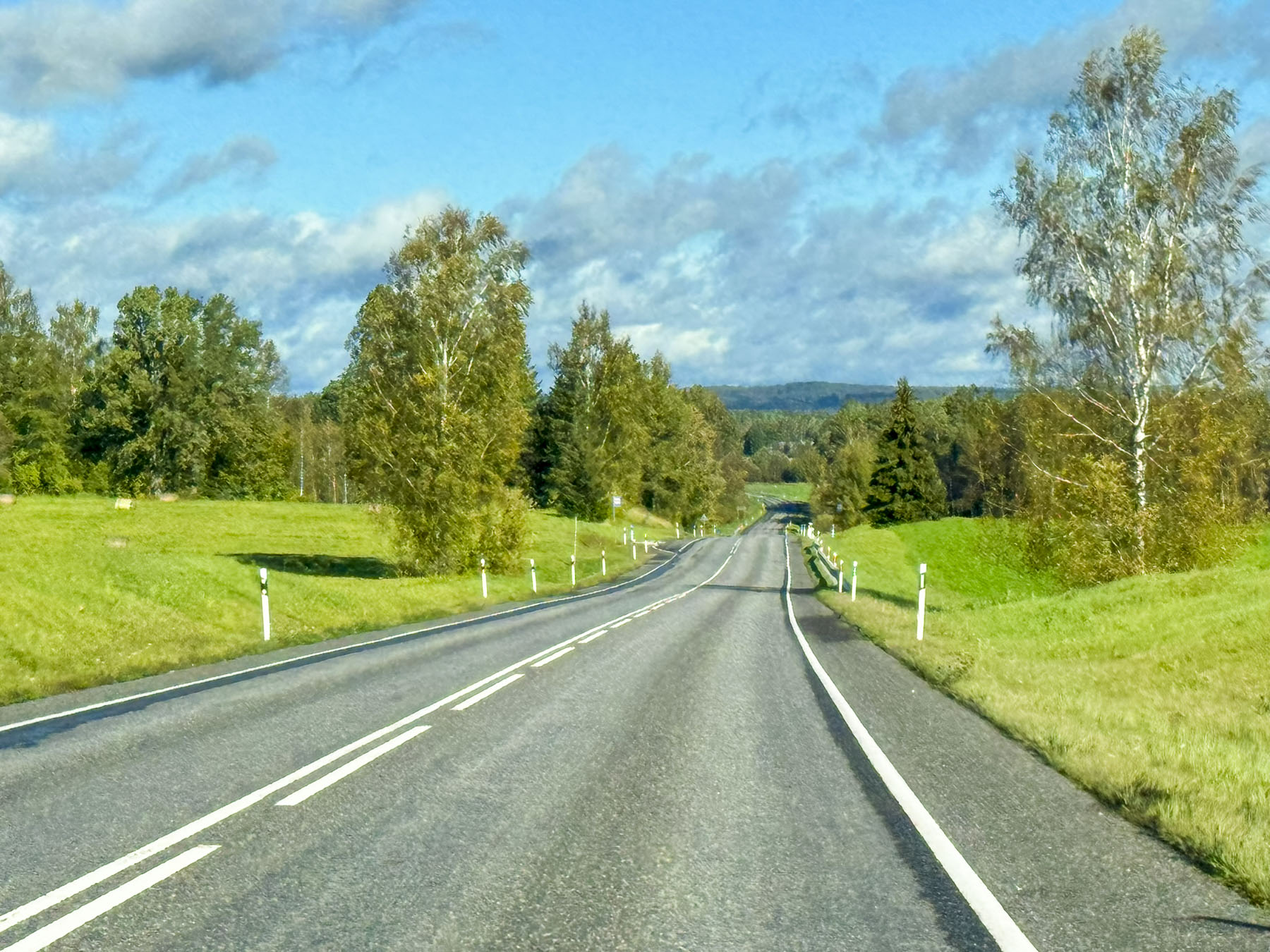
Gently undulating farmlands soon flanked the road as we departed Tartu for a day trip to the Old Believers villages that dot the southern shoreline of Lake Peipus, Estonia’s largest lake which creates part of the country’s border with Russia. The villages are also part of the Onion Route, a 30km (19mi) tourist drive that promotes the area’s culture and “Estonia’s most celebrated onions, the Peipsi sibul, a golden variety known for their long storage life and flavor,” which the Old Believers have cultivated in the sandy soil of the region for several centuries.
The group’s name stems from a schism with the Russian Orthodox Church in the 17th century, in which they did not abide with the reforms Orthodox clergy patriarchates were initiating, and wow, wow, wow regarded the reforms which curled the beards of its elders, “as a corruption of their faith which was heralding the End of Days, and as such the Russian church and state were servants of the Antichrist.” Their dissent wasn’t allowed, and during The Russian Orthodox Synod of 1666-1667 the church and Tsar Alexis sanctioned their persecution. The group’s oppression was so severe that some ardent followers self-immolated in the ultimate act of protest. Thousands of Old Believers chose to escape their persecution and fled across Lake Peipus for refuge, and established a series of farming and fishing communities, in then Swedish-controlled Estonia, in which they prided themselves on their self-sufficiency.

We passed more farm tractors than cars that morning, but it was still a surprise when a large John Deere tractor pulled up alongside us in the gas station to refuel. Varnja is the southernmost village and the gateway to outdoor activities in the Peipsiveere Nature Reserve, which protects the fish and wildlife of the Emajõgi delta.

It’s a beautiful area, and was nearly deserted mid-week at the beginning of October. Fishing was once a viable livelihood, but only a few boats go out nowadays. Instead, some folks have converted them into niche rentals, like the owners of Mesi Tare who have creatively repurposed several small boats into maritime bungalows, both floating and permanently beached.
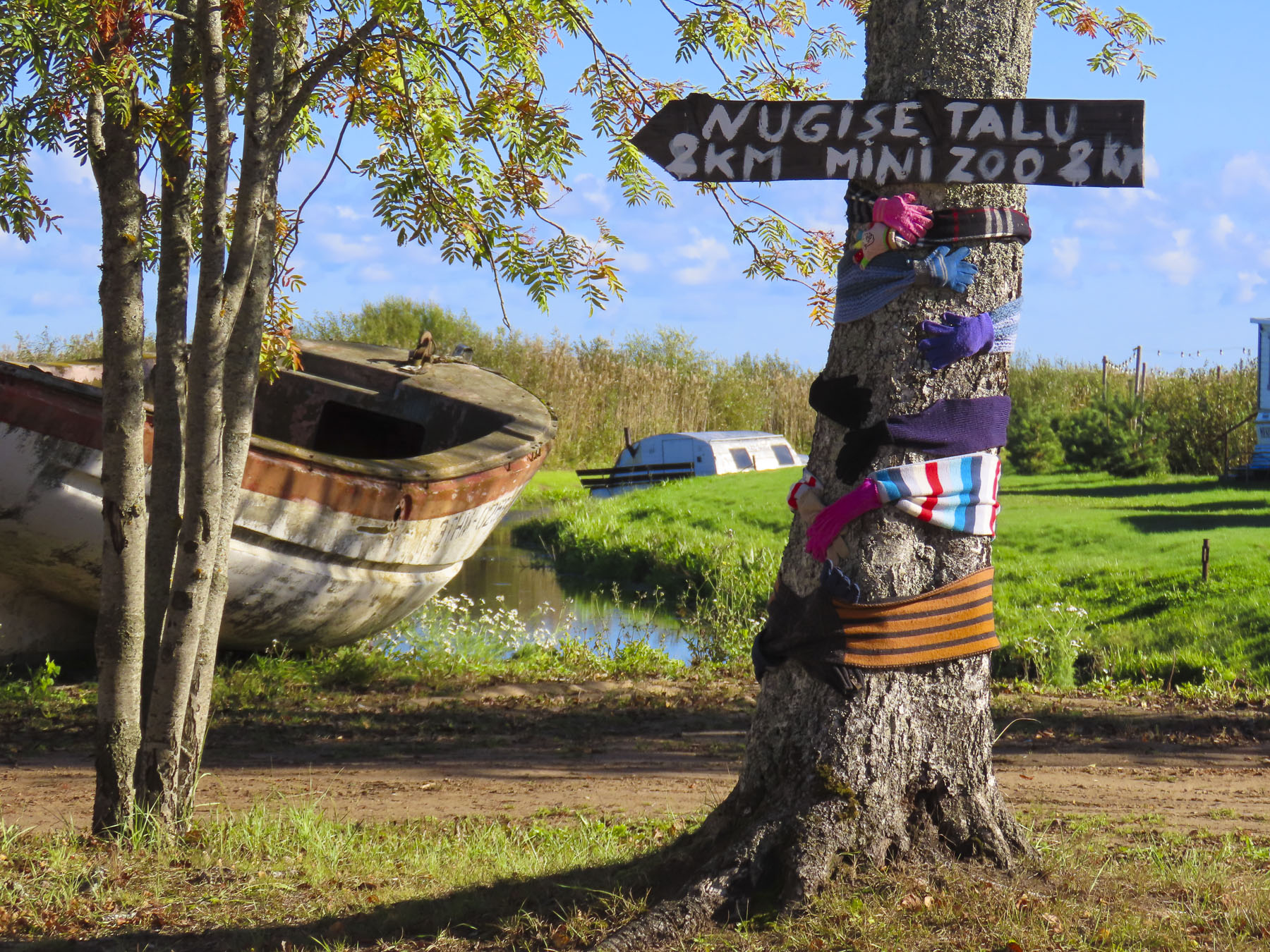
There wasn’t a soul about in the village, only an idle tractor in front of a barn with bundles of onions hanging from its rafters, or a plume of smoke from a chimney, and the lone dog sunning obliviously in the middle of the lane. Winter preparations were underway with large free-standing globe shaped piles of freshly split wood stacked along the lane or piled in cords neatly along the sides of houses.
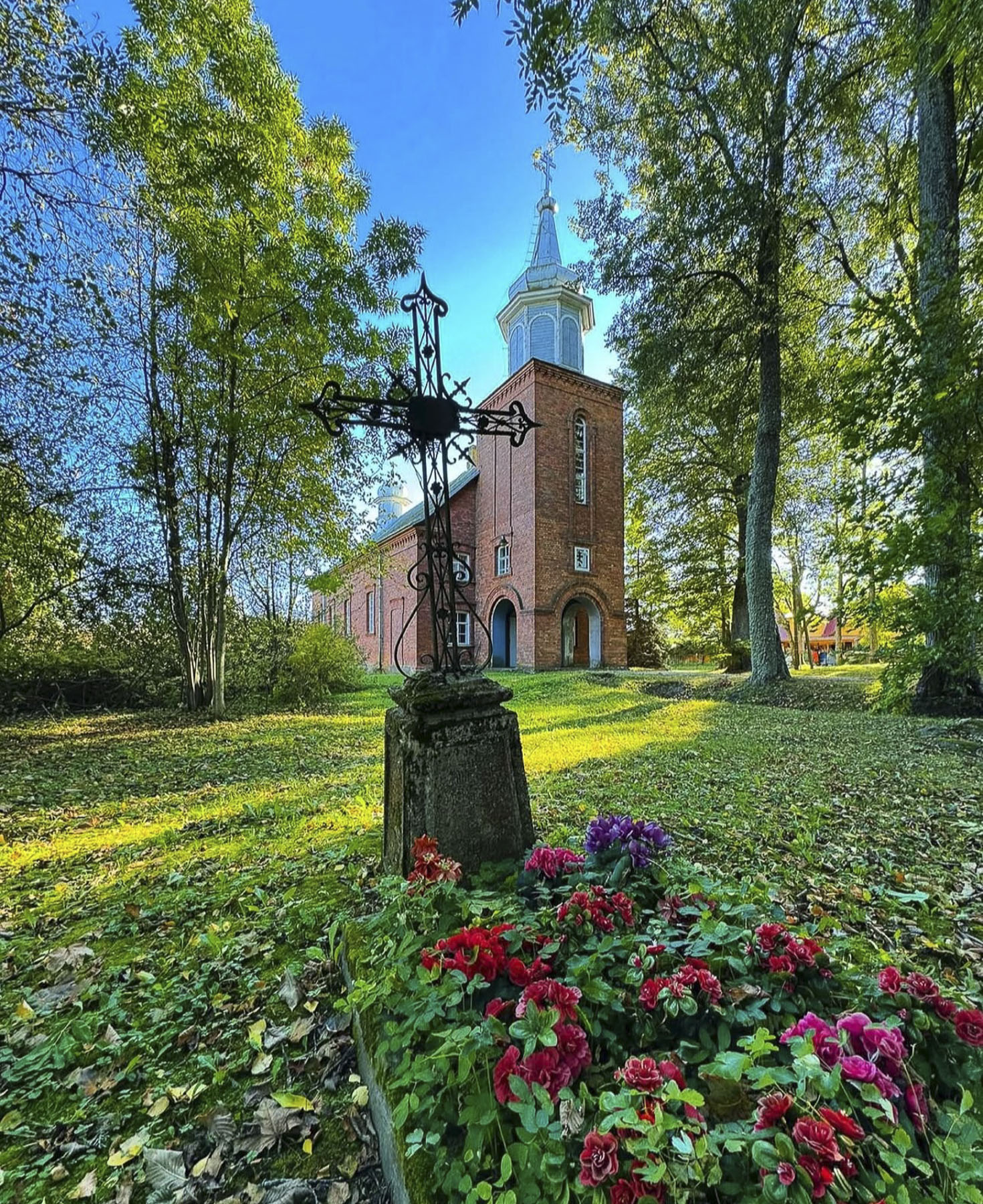
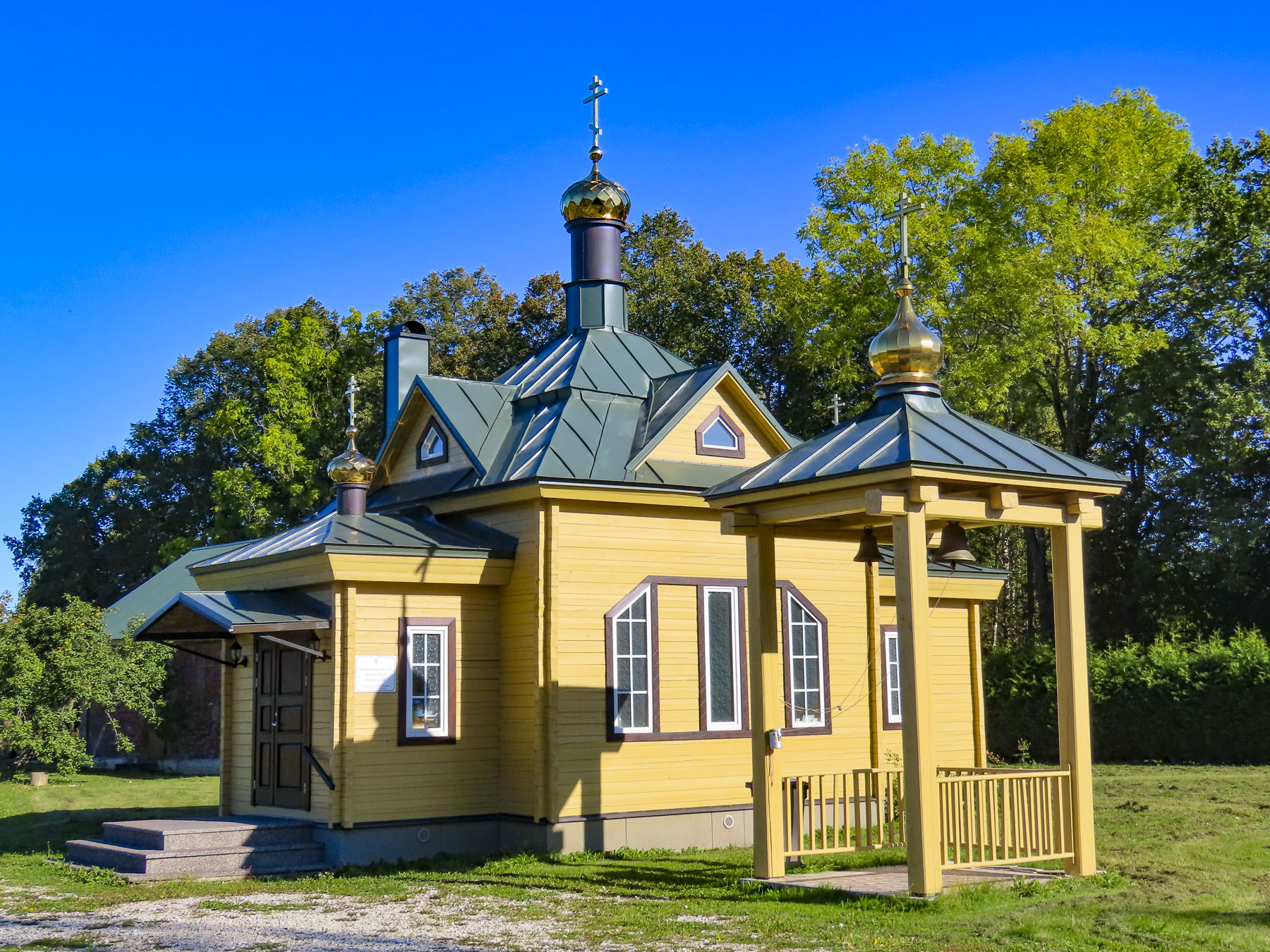
As we left the hamlet and headed north on Kesk Tn, the main road connecting all the settlements along the lake, we stopped at Varnja’s Old Believers Prayer House, a red brick structure built between 1928 and 1930, and the nearby Issanda Templisseviimise, the town’s youngest Old Believers chapel constructed in 2015.
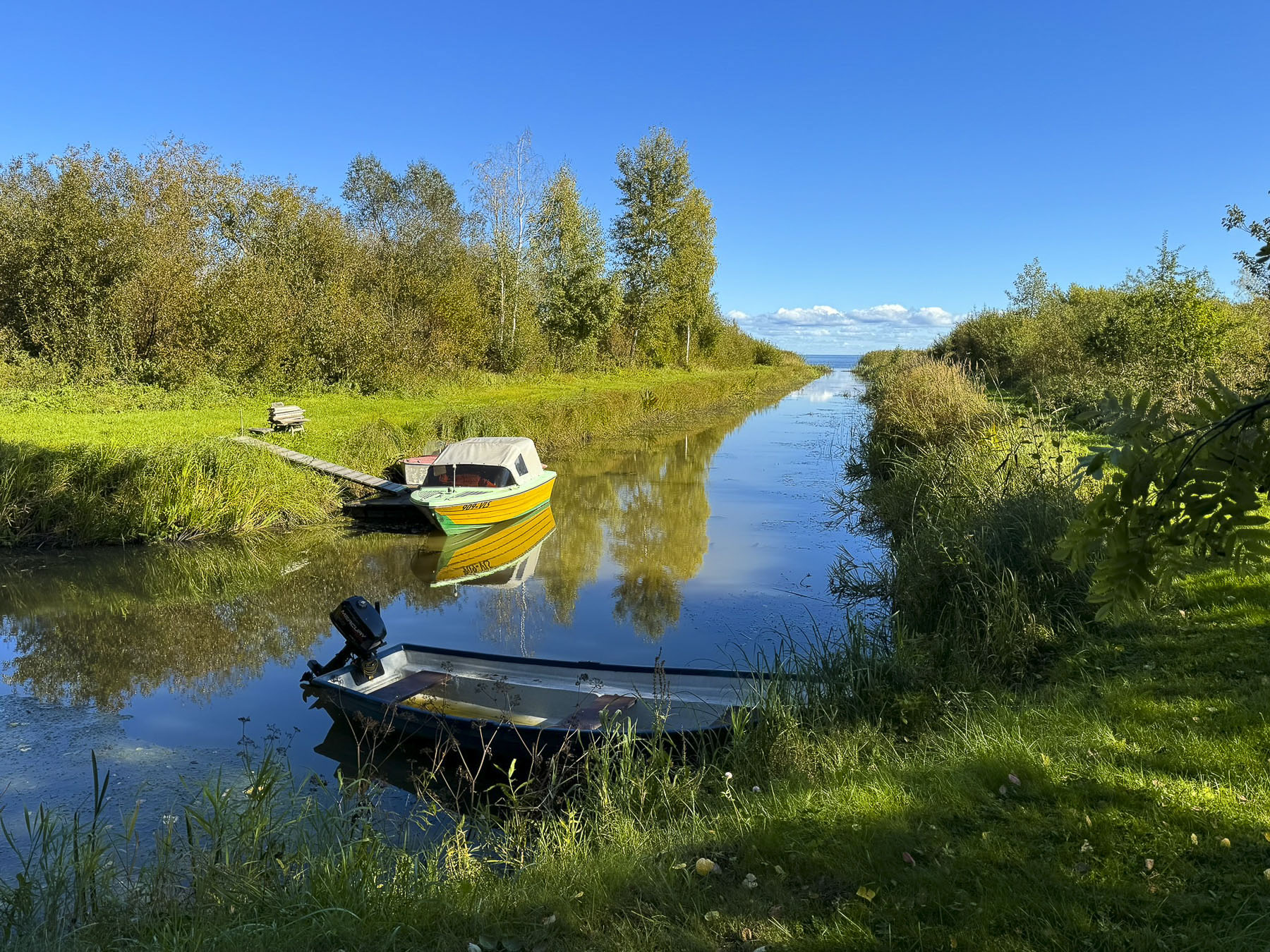
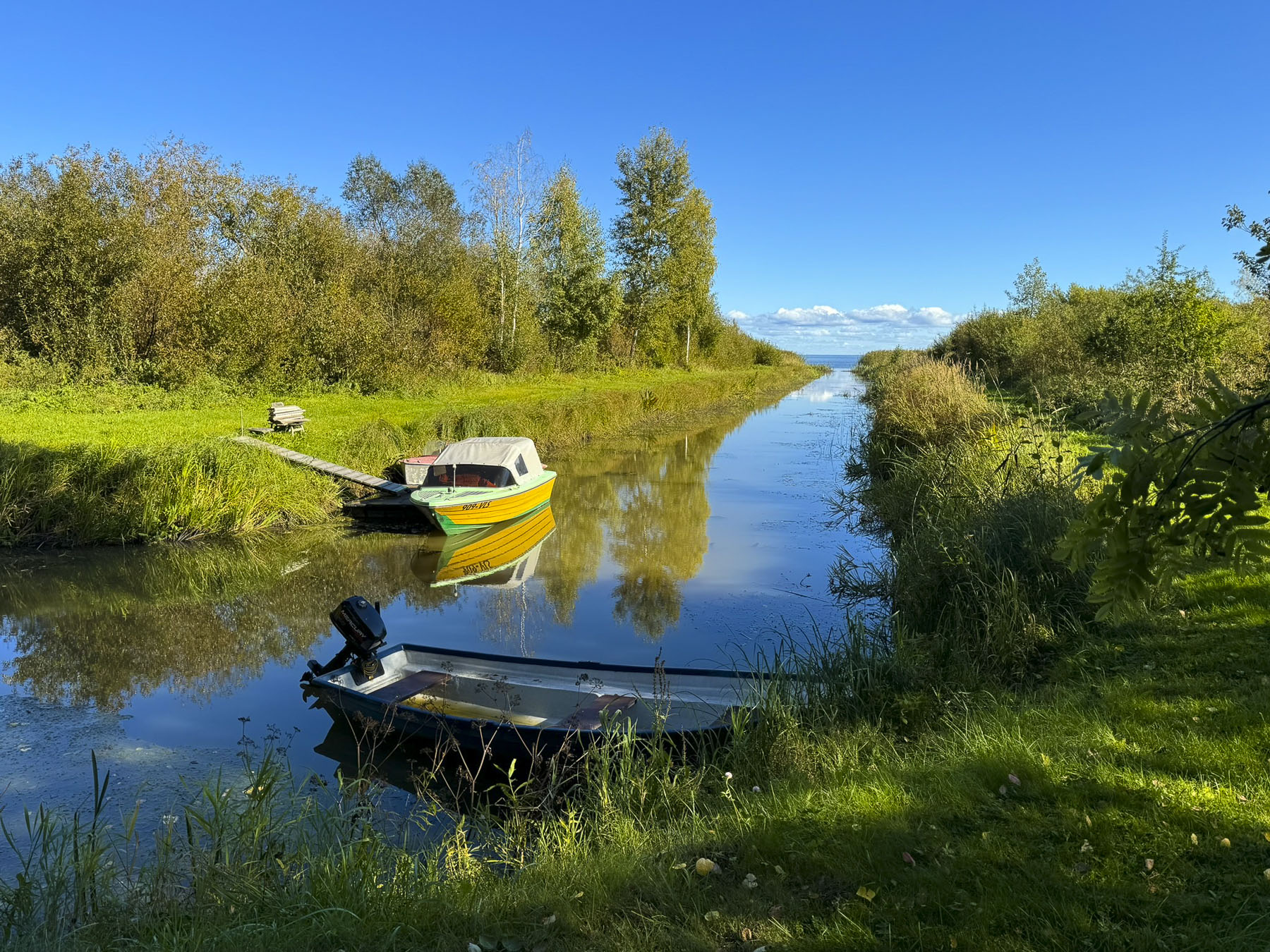
As we headed farther north, long narrow inlets, like the fingers on our hands, stretched from the roadside into the lake. Baskets, bowls and buckets of apples were in front of homes with backyard orchards that had what is commonly called in Estonia, “the apple flood.” This abundance is shared with the community, and the apples are free. It’s a long-standing tradition that reflects a spirit of sharing and generosity within Estonian culture. Occasionally, an abandoned stork’s nest crowned a telephone pole along the road, their yearly winter migration to southern Africa had already started in August.
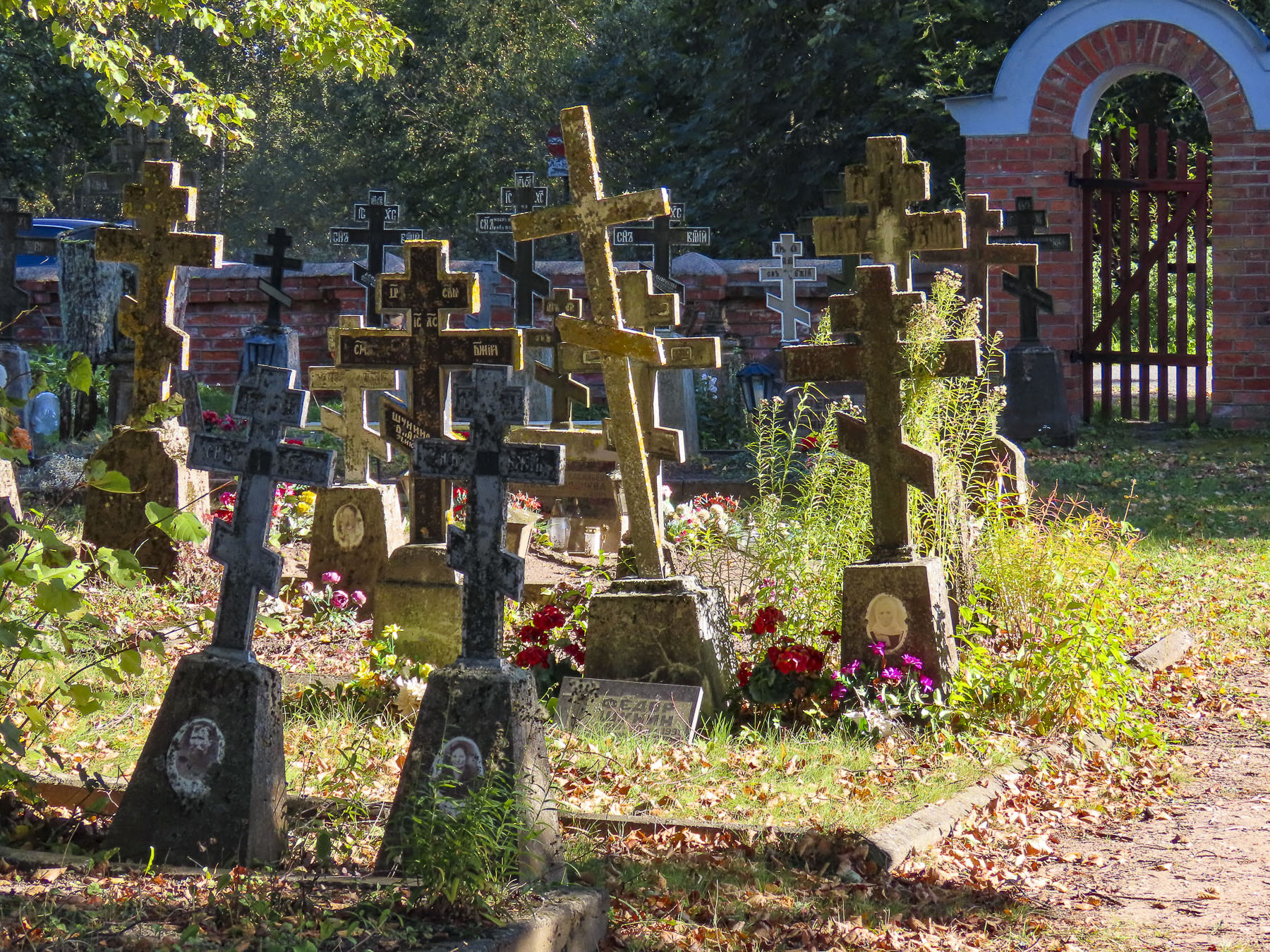
We turned off the main road at every sign that pointed to the way to a kirk, church. The Kasepää Old Believers Church and Cemetery were particularly interesting.  The current 1862 sanctuary sits atop the foundation of a building that is thought to be the site of one of the group’s earliest churches after their exodus from Russia. Graves in the cemetery were marked with the traditional three horizontal-bar Orthodox cross. The configuration dates from the 6th century in which the Top Bar represents the inscription ordered by Pontius Pilate, The Middle Bar, the main beam where Christ’s hands were nailed, and Bottom Slanted Bar symbolizes the footrest and its slant reflects the fate of the two thieves crucified alongside Jesus – upward towards the repentant thief (St. Dismas) and downward towards the unrepentant one.

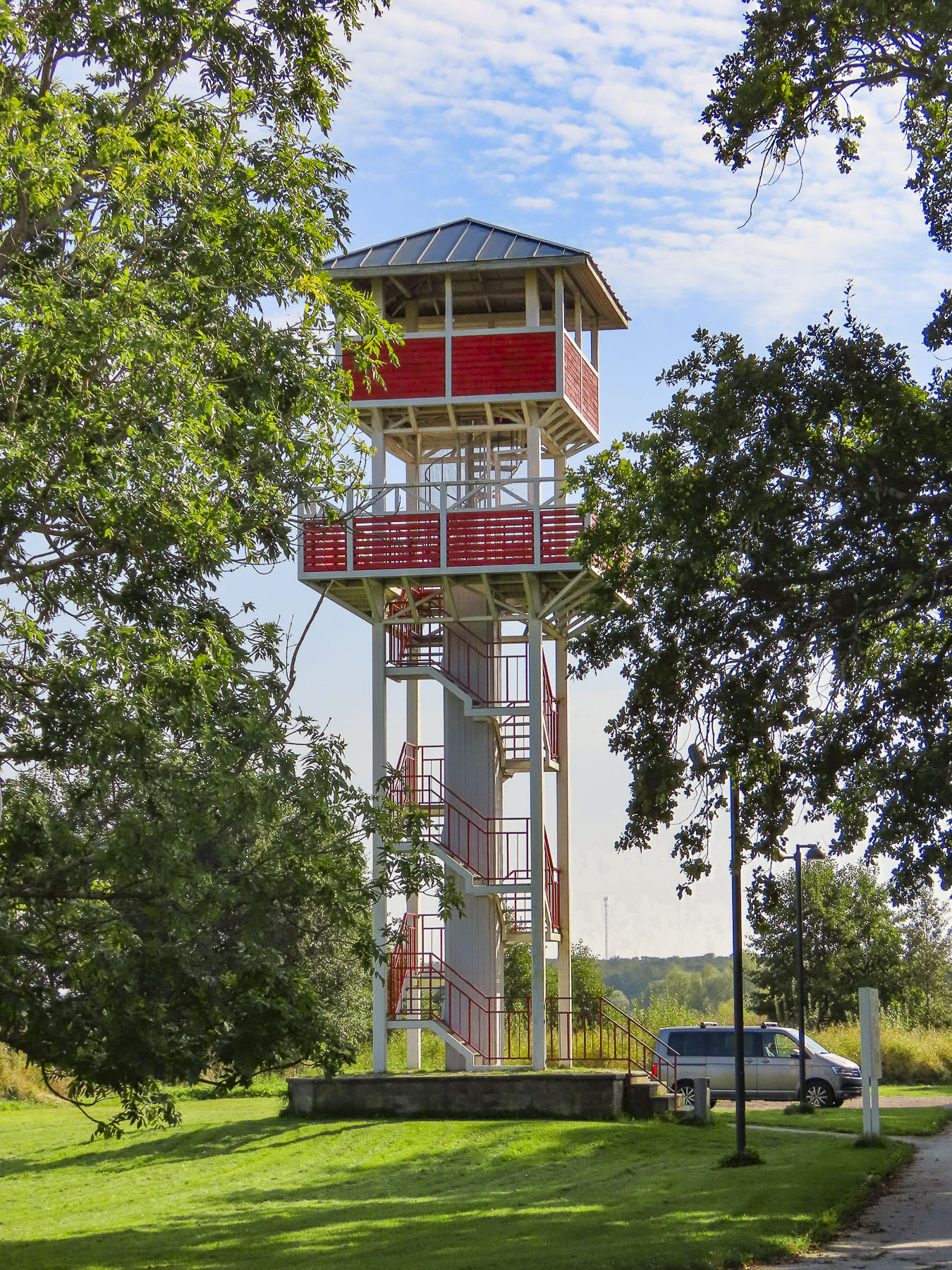
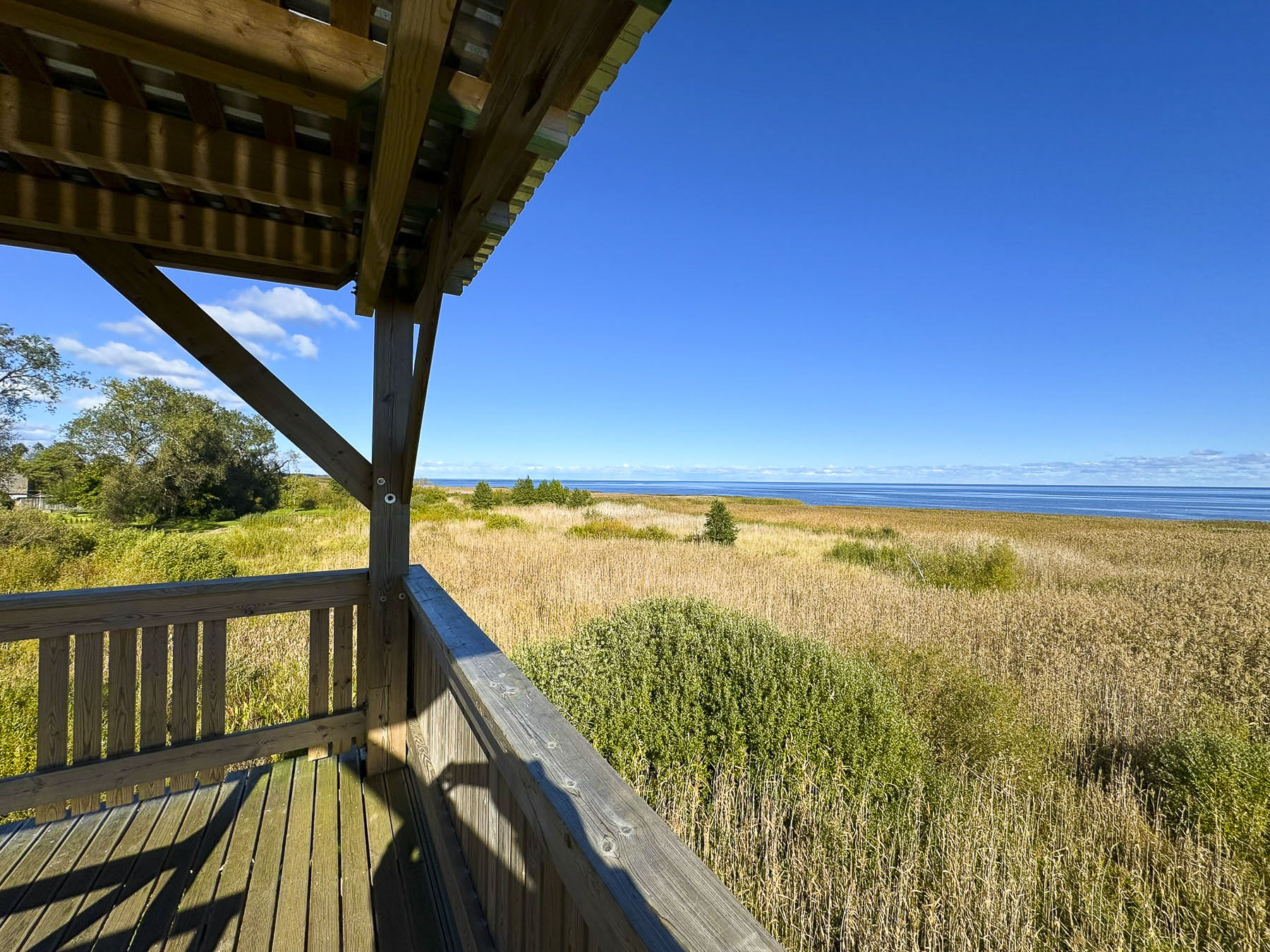
In Kolkja, a village first mentioned in historical records of 1592, we climbed the Vaatetorn bird-watching tower for an expansive view across the marshes and 3,555km2 (1,373 sq mi) Lake Peipus. The 219km (136mi) long lake has an average width of 82km (51mi), and is surprisingly very shallow, with an average depth of 7m (23ft). At its northern end the lake feeds into the Narva River between the Estonian border city of Narva and the Russian city of Ivangorod into the Gulf of Finland. Ice fishing is a popular winter activity on the lake which typically stays frozen from November to March. Small ice flows remain on the northern part of the lake until early May. Though with the recent climate change folks living along Lake Peipus have noticed a shortening of the ice season.
Afterwards, we stopped at Suur-Kolkja Vanausuliste Palvemaja, an Old Believers house of worship that was constructed in 1883, and its cemetery which was down the lane.
As we left the village an enterprising older woman, with a babushka covering her head, was unloading bags of onions, loaves of bread, and jars of jam from the trunk of a taxi and arranging them on a foldable card table she had already set up along the road. We had assumed the area was nearly deserted, but maybe there was an end-of-day rush hour as people returned home from work.

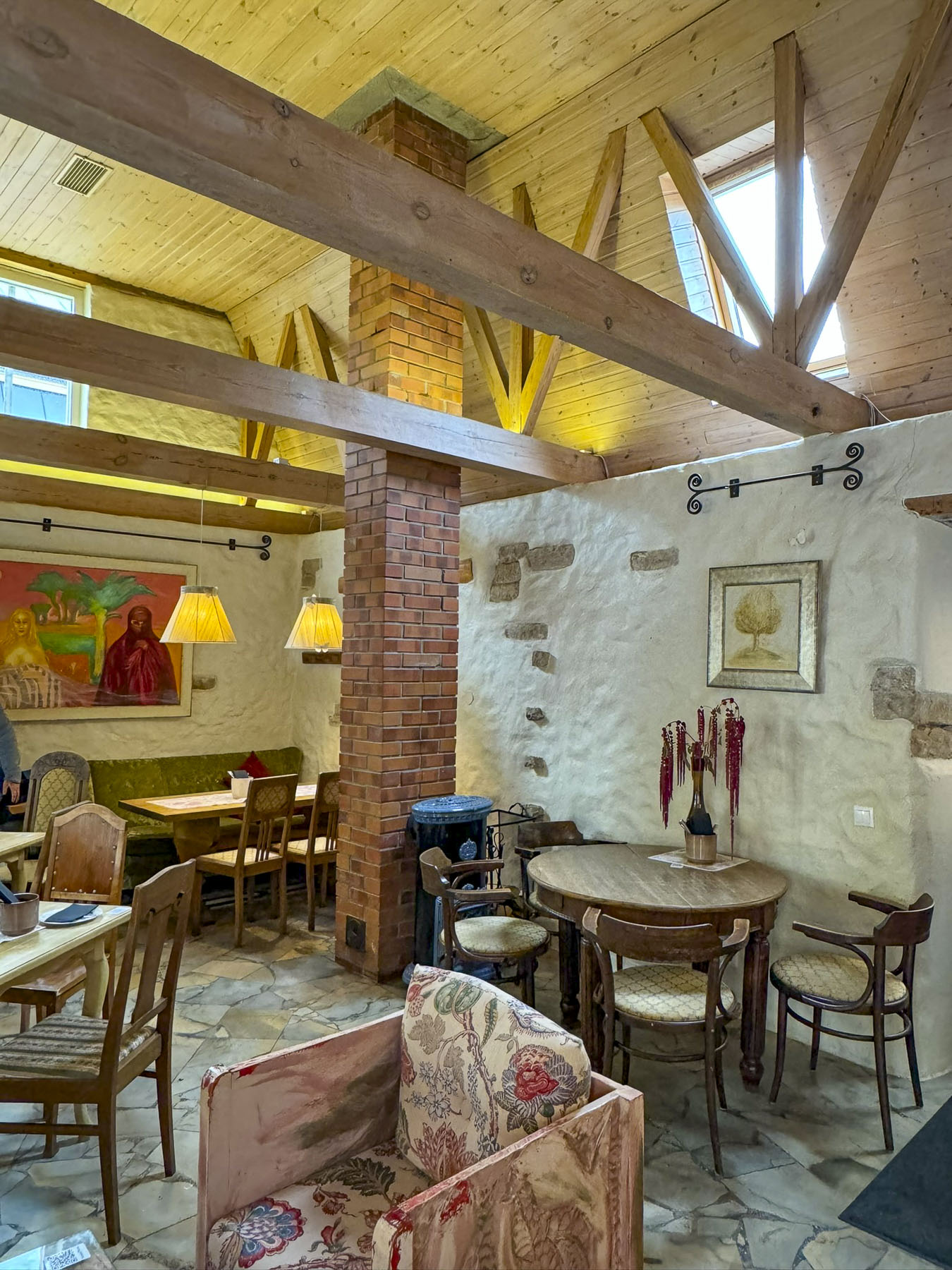
Although several museums, cafes and restaurants were shown on Google Maps, they were only open on the weekends during shoulder season. Our search for coffee took us to the larger town of Alatskivi, where we were able to satisfy our “drive a little, then café,” philosophy with a good lunch at Kivi kõrts, a bright eclectically decorated tavern, including a restroom decorated in a quirky theme.

We drove farther to Kallaste, a still larger village on the shore of Lake Peipus, but were discouraged from investigating the town in depth by the number of roadwork closures that hindered our travel.

On our return route to Tartu we passed through Alatskivi again and purchased honey from an automated vending machine near beehives in front of a local beekeeper’s home. We enjoy the simplest of things and found this combination of ancient practice and modern technology delightful. The machine even accepted credit cards.

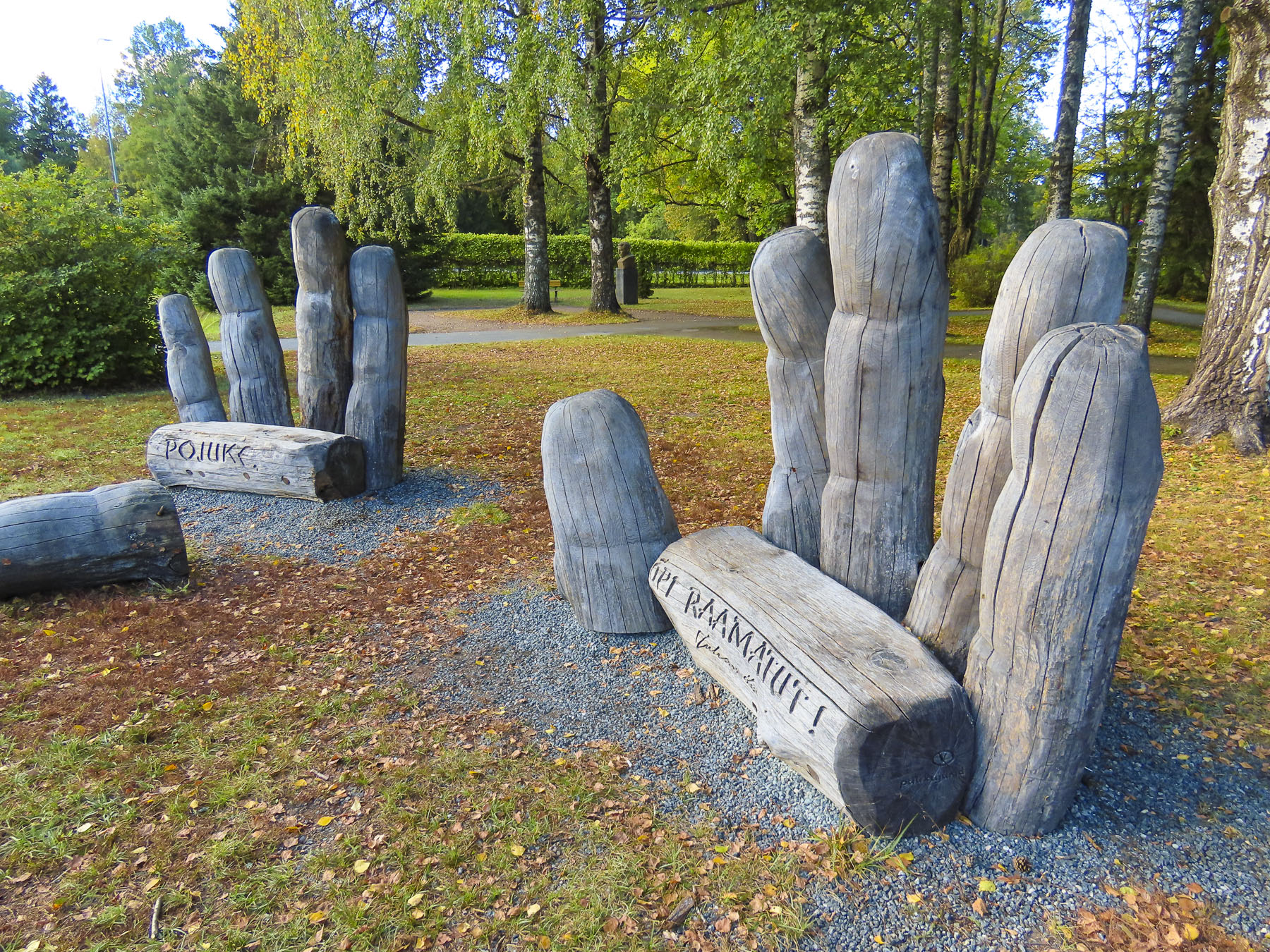
At the roundabout in town, we circled twice to figure out how to reach the town’s library, which had a large wooden sculpture of two hands, with fingers carved from tree trunks, protruding from the ground in front of the building.
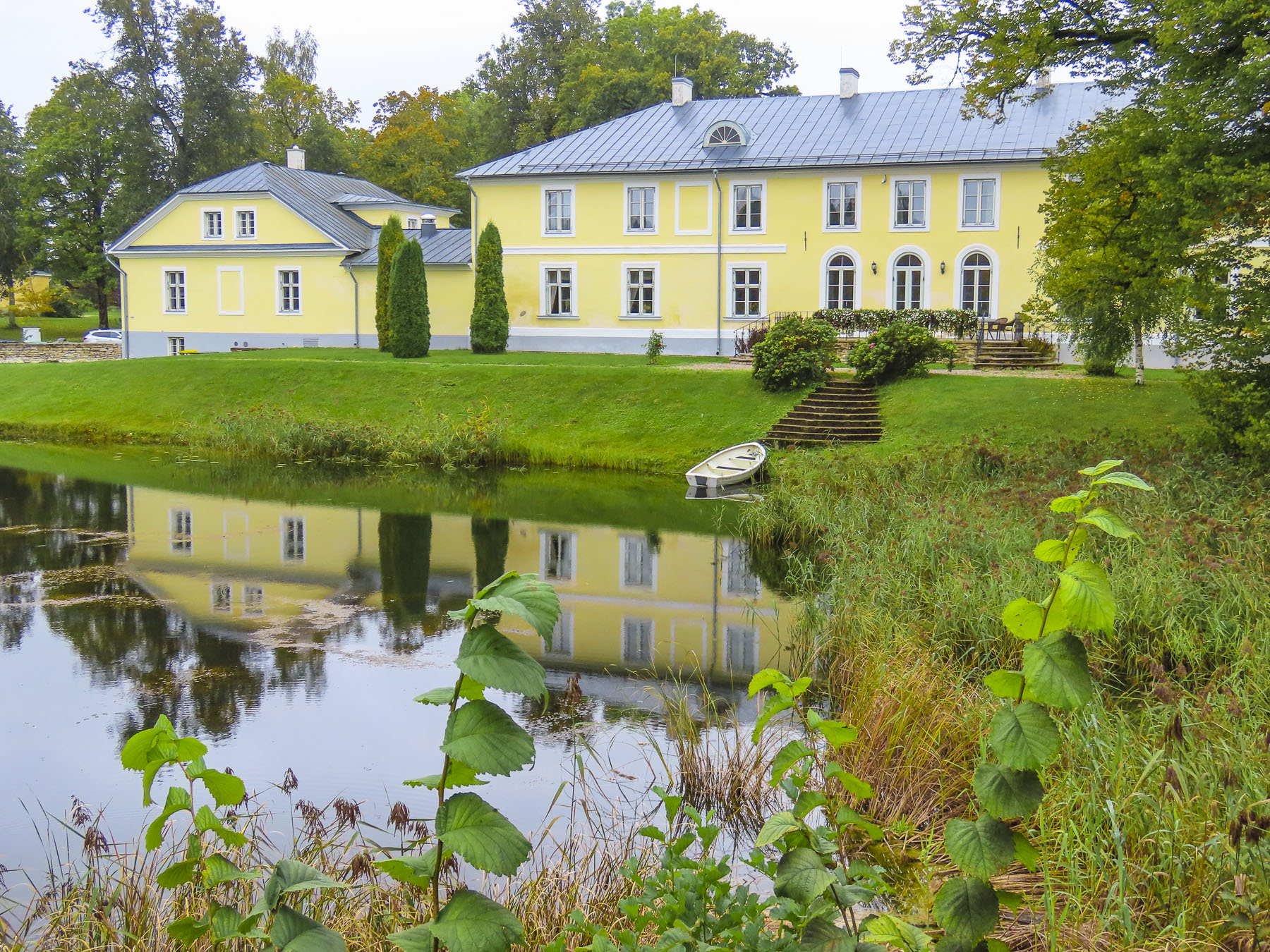
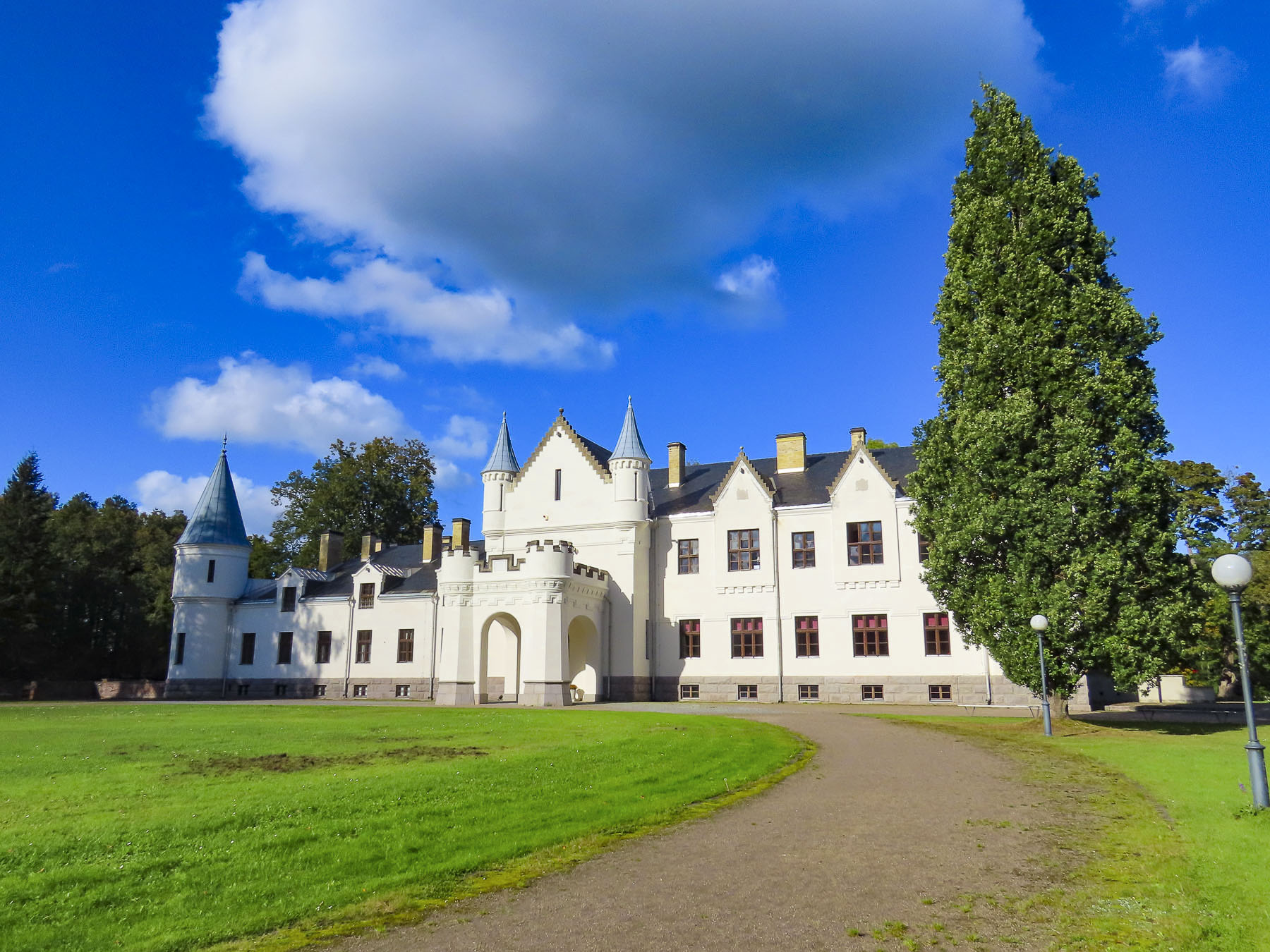
Earlier, the server at the tavern suggested we visit Alatskivi Castle,an old Baltic German feudal estate with vast land holdings, that was first mentioned in the historical records of the early 1600s. In 1885 Baron Arved von Nolcken, a widely traveled aristocrat, purchased the estate and reconstructed the old manor house in a Scottish baronial style, that is said to closely resemble Balmoral Castle, which he had recently visited. The von Nolcken family lived in the manor house for twenty years before they left for Germany with all their possessions, including the manor’s silk wallpaper, at the beginning of the Estonian Peasant Revolution in 1905. During the Soviet occupation of Estonia the lands of the estate were a state-controlled collective farm, and the castle was used as school, cinema, and library. Today, after extensive renovations the manor features a fine-dining restaurantand 4 suites available for booking directly through the castle, along with offering  a ceramic studio and workshop in the cellar. There is also a wax museum featuring figures of the manor’s servants; a butler, lady’s maid, cook, baker, groomsman, stable hands, and laundry maid are just a few of the various trades depicted. The exterior of the castle is totally white, and during the winter, with snow on the ground, must shine brilliantly on a sunny day. Or vanish totally from view during an Estonian tuiskav lumi, a blizzard. We wondered – if the walls of the castle could speak, what tales would they tell?
We had a great time exploring the cultures and complex histories of Estonia, Latvia, and regrettably only a small part of Lithuania during our three week-long road trip through these fascinating Baltic countries.

Till next time,

Craig & Donna

Driving Through the Baltics: Part 10 – Tartu, Estonia or Wandering through a University Town

The street was alive with activity. Three buskers with drum, sax, and tuba were jazzily rendering Bruno Mars’ “Marry You” on the pedestrian mall full of folks strolling and bicyclists weaving amidst a food fair and participants readying their wacky go-cart entries for a Red Bull event later that afternoon.

There’s a long tradition in Estonia of student rock bands in the 70s and 80s transcribing western songs heard via Radio Free Europe broadcasts to countries behind the “Iron Curtain,” including Estonia. Soviet censors viewed any foreign influence, especially rock ’n roll as a threat to communist ideology, and these street musicians were upholding a long-standing musical tradition.

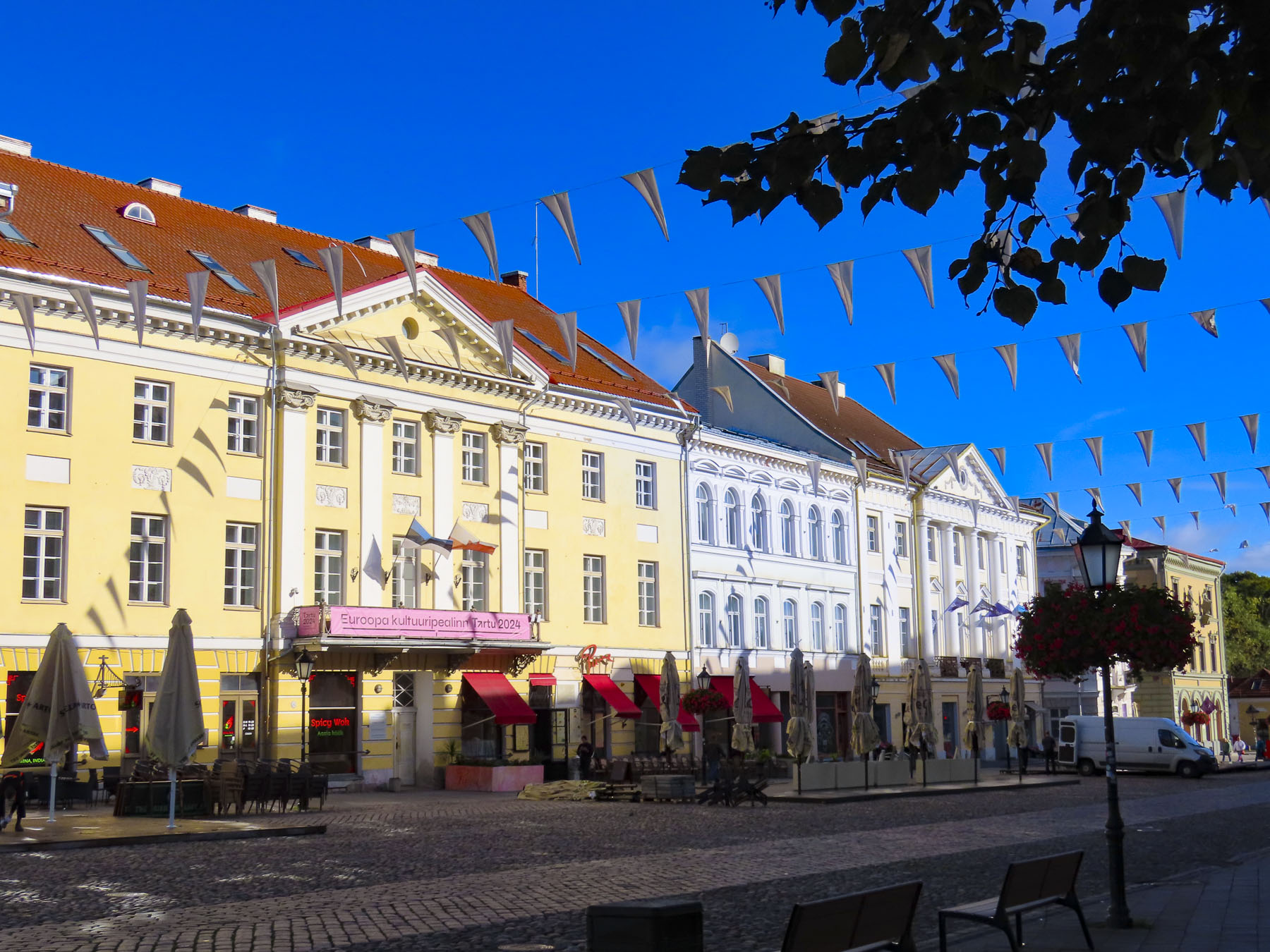
Tartu has been a university town since the 17th-century, and today 14,000 students give the city, Estonia’s second largest with only a population of 104,000, an energetic youthful vibe. They are an important part of the town’s character and are playfully acknowledged on the café-lined cobblestone plaza in front of Tartu’s City Hall with the ‘The Kissing Students’ sculpture and fountain.

The University of Tartu’s students also played a crucial role in Estonia’s expression of national identity and resistance to Soviet rule in the late 1980’s. Their support of the “Five Patriotic Songs” by Alo Mattiisen led to spontaneous mass singing demonstrations at the Tartu Pop Festival in May 1988. These musical protests spread to Tallin, then Latvia and Lithuania. These peaceful protests culminated in the The Baltic Way, a human chain of two million people which spanned from Tallinn, Estonia to Vilnius, Lithuania in August of 1989. The popularity of these peaceful movements strengthened the determination of Estonians to redeclare their independence from the Soviet Union in 1991. Latvia and Lithuania followed suit soon after.

The Kissing Students’ fountain is really the center of activity in Tartu, a splendidly walkable city. Its car-free center extends north along Küüni tn from the modern Kvartal shopping mall, with an array of nice shops, and an excellent Coop supermarket, past the central plaza all the way to the Botanical Garden of the University of Tartu. And there were numerous points of interest just off this route that we explored during our five-night stay at the Art Hotel Pallas, a boutique hotel nicely located across from the Kvartal mall, with views from our hotel room of the spires atop the town’s city hall and churches. It also had convenient free parking, and a scrumptious breakfast buffet. The pickled herring, yes for breakfast, was really good. It was the perfect spot to get some much-needed R&R after driving through Estonia, Latvia, and Lithuania for three weeks.

One of the nicest things we’ve encountered during our road trip through the Baltics is the extensive amount of public art that graces the region’s cities and small towns. Few are of a historical nature. The sculptures of Lenin and Stalin that the Soviet Union installed during their fifty years of occupation to erase the Estonia’s history were quickly removed from all public spaces, and sent to the scrap yard. The current sculptures now honor influential writers, poets, and folk heroes or are simply artistic inspirations without any political messaging.

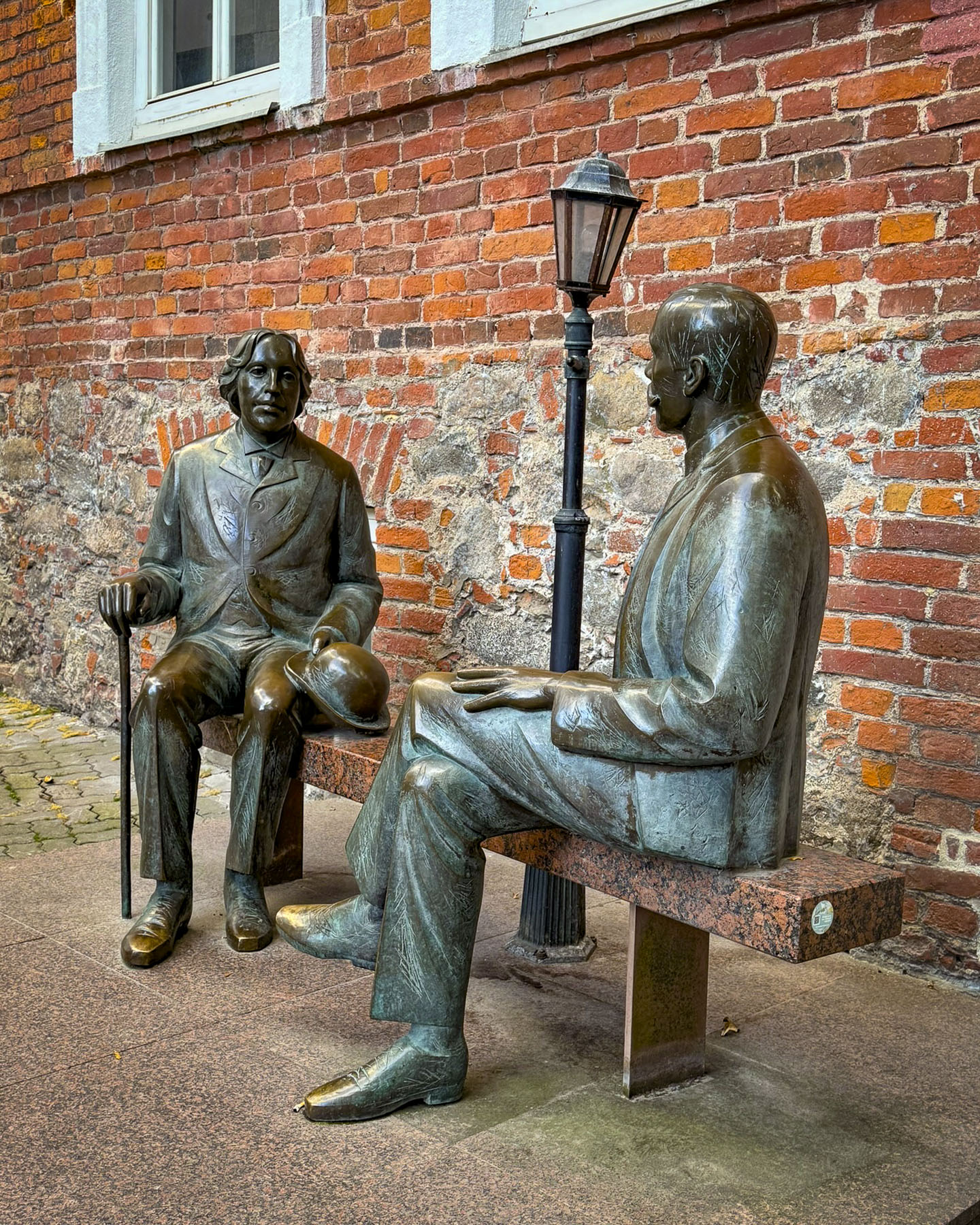
Along Küüni there was a sculpture of Irish playwright Oscar Wilde and Estonian writer Eduard Vilde depicted in an imaginary encounter between the literary heavyweights. Though the two never met, Wilde did give a lecture at the university in 1892.

Nearby was the sculpture “Father and Son,” by the Tartu native Ülo Õun (1944-1988). The Visit Tartu website explains the work represents the sculptor with his 18-month-old son, and “is a symbol of the relationship between different generations, where children are increasingly growing apart from their parents.” A side note – the Visit Tartu website has an extensive calendar of events page. In a park they had a pop-up information tent, and detrimentally to our waistlines, it was across from the Kalev Chocolate Shop and cookie store. This Estonian brand makes, in our opinion, some of the best store-bought snacks. You can buy them in grocery stores across the Baltics, but they surprisingly cost less in their own stores.

A diagonal walk through the park took us to Tartu Turuhoone, the town’s old market hall where a large sculpture of “Siga Roosi,” a pig, advertises the building’s entrance and the products available inside. If you have visited Riga’s large market, this wanes in comparison, but the pig immortalized in bronze appears to be smiling.

From here a very pleasant walk along the riverfront promenade that follows the Emajõgi River leads to the Kaarsild, an arched footbridge that spans the river to Ülejõe Park and the neighborhoods east of the historic center.

The approach to the bridge was a perfect spot to admire the beautiful buildings surrounding the town’s plaza which represent an eclectic assortment of architectural styles from the 13th to 17th centuries, when the town was a prominent member of the Hanseatic Merchant League.

At the foot of the plaza the Tartu Kunstimuuseum, a museum of art, occupies a 1793 building that is often referred to as Tartu’s Tower of Pisa. The three-story building’s 5.8 degree of tilt is actually greater than the famous tower in Italy. The tilt was a result of one side of the building being constructed on the medieval footing of the ancient defensive wall that once encircled the town, and the other side was erected above loose soil. As the decades passed, the structure slowly sank into the ground. Polish engineers successfully stabilized the building during the communist era, and it was determined safe enough to house the museum since 1988.

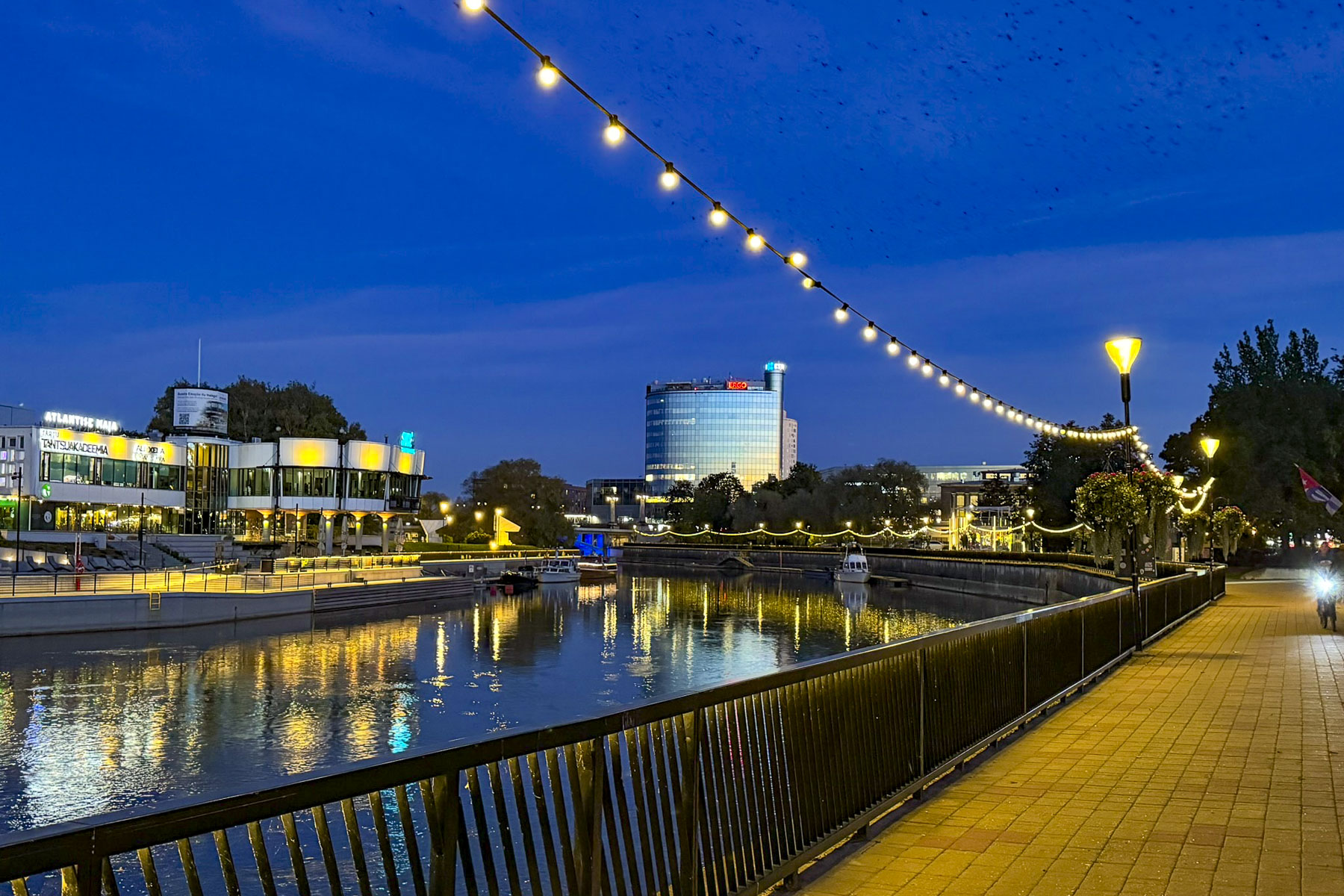
In the other direction there was the reflection of the growing city’s modern skyline reflected on the rippling water of the river. These views were beautiful and equally enchanting in the early evening twilight as we watched the murmurations of European starlings swooping over the river, before they noisily roosted in the park.

Just behind Town Hall and across from a large street mural of the University of Tartu was café/restaurantWerner, an excellent establishment with a nice vibe, that’s popular with both students and professionals; we dined there several times during our stay in the city.

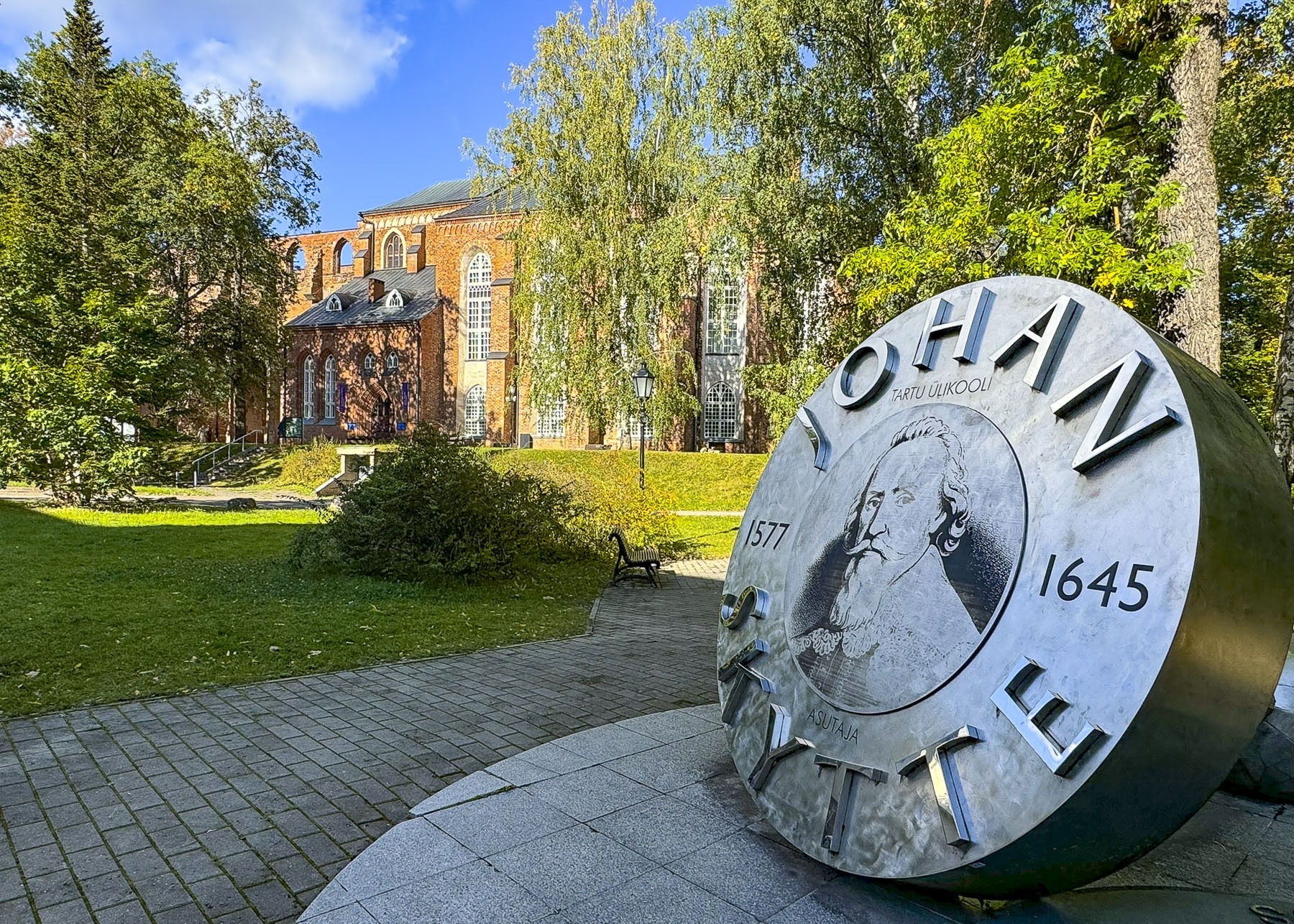
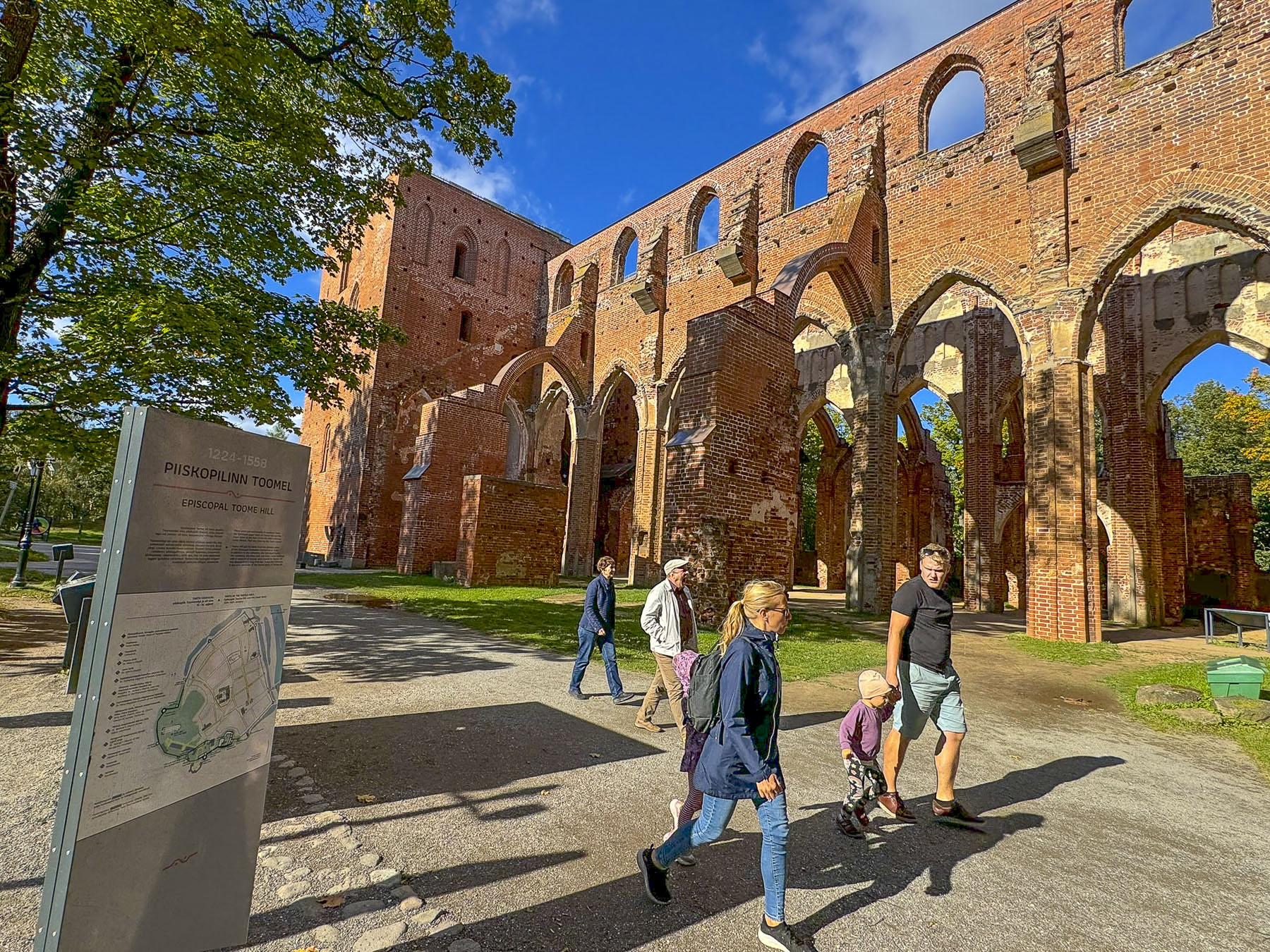
Afterwards we took the long uphill walk to the ruins of Tartu’s immense 13th century cathedral, now on the grounds of the University of Tartu. Construction of the Gothic style church started shortly after the Brothers of the Sword subjugated the pagan tribes around Tartu in the early 1200s and lasted nearly 400 years before it was destroyed during the Livonian Wars that ravished the region. It was never rebuilt.

We chose not to, but it’s possible to climb its towers to a viewing platform above the ruins for a panoramic view of the school’s campus and Tartu. The choir end of the cathedral has been restored and since 1981 houses The University of Tartu Museum.

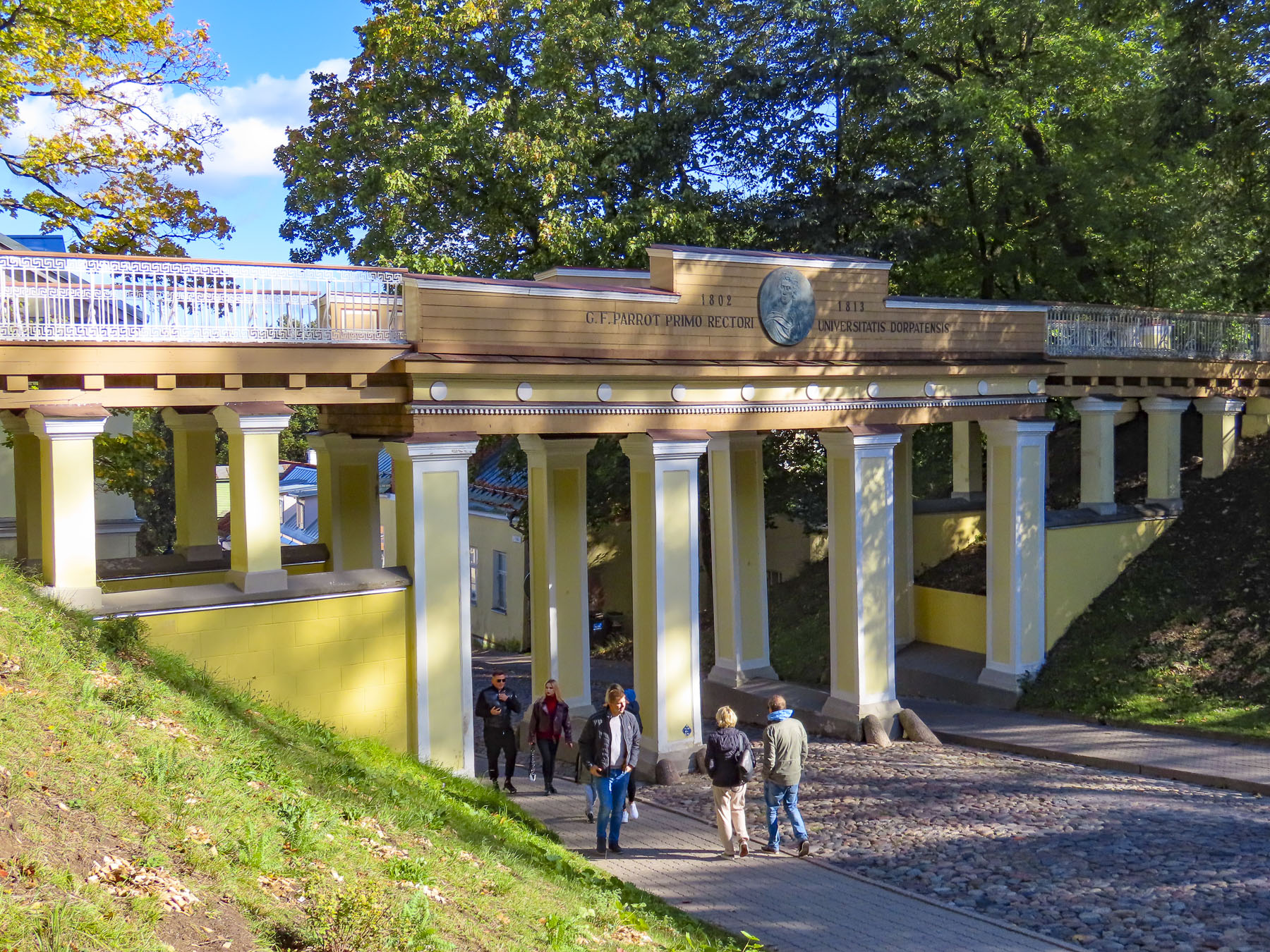
Heading back to the old town we passed under the Angel Bridge, built in 1838 to ease students’ efforts getting across campus. The scenic spot has a bit of a lovers’ lane reputation, as well as having several legends associated with it. The most popular one being “when you cross the bridge for the first time you should make a wish, and if you can hold your breath until you reach the other side your wish will come true.”   

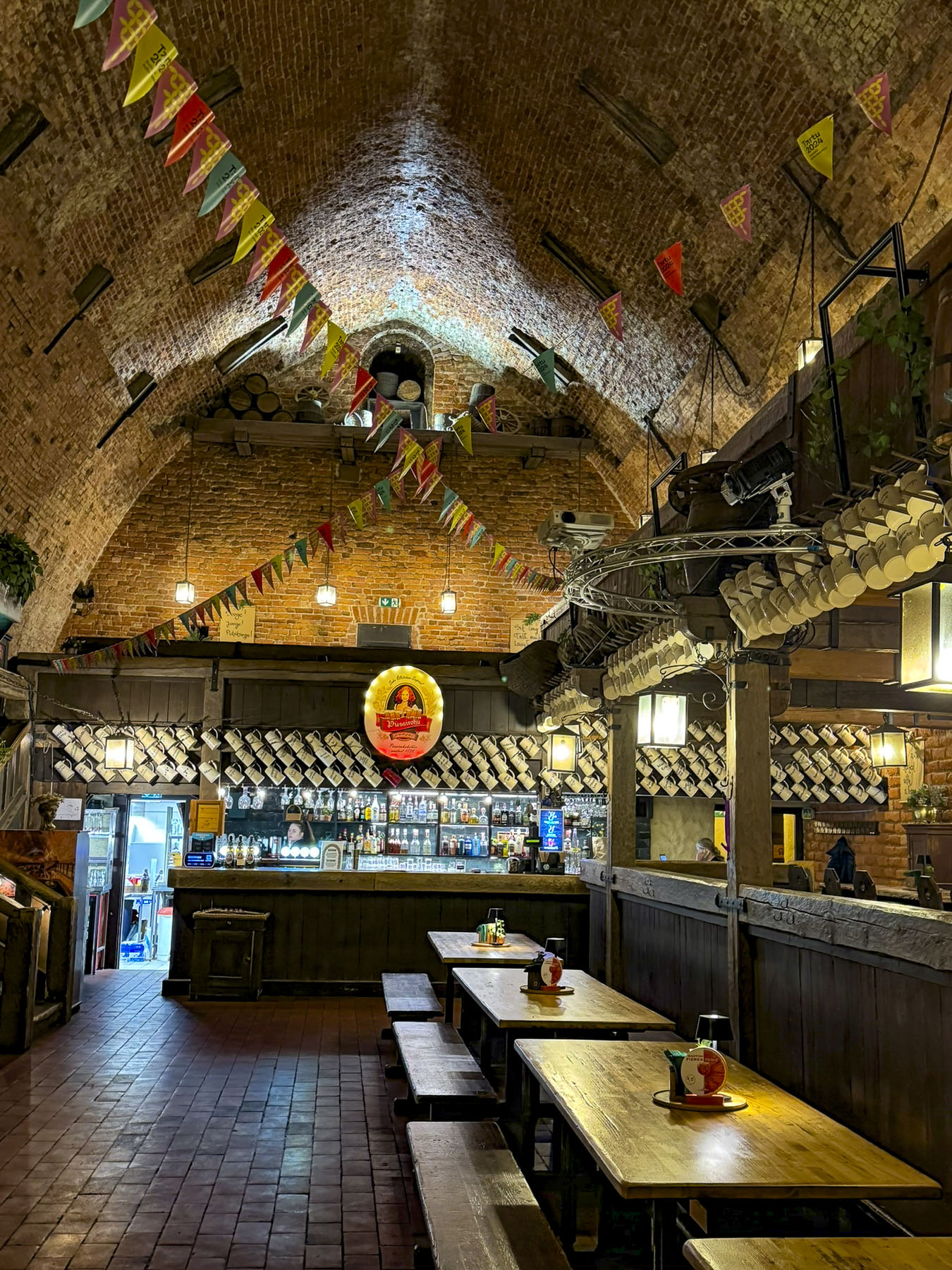
Just off the lane was the Gunpowder Cellar built into the side of a hill, it’s a rustic tavern set in a cavernous old 18th century munitions warehouse with an arched brick ceiling. It’s a popular beer hall and is known for its tasty Gunpowder Red beer, while also hosting frequent band appearances.

Later in the week after having lunch at the Café Werner a second time, we turned right and wandered down Ülikooli tn towards the neoclassic columned façade of the University of Tartu’s main building. It is Estonia’s oldest and largest university and the pride and joy of Tartu. The school was originally founded 1583 as a Jesuit institution during Poland’s brief rule of the country, but most of the credit is given to the Swedish King Gustave II Adolph when he upgraded the school to a university in 1632. It was forced to close several times over the centuries due to regional wars, but was later reopened by Russian Czar Alexander I in 1802 and was again reopened by the Soviet Union after World War II, where it became an important contact spot for Soviet academics to meet their western counterparts during the Cold War era.

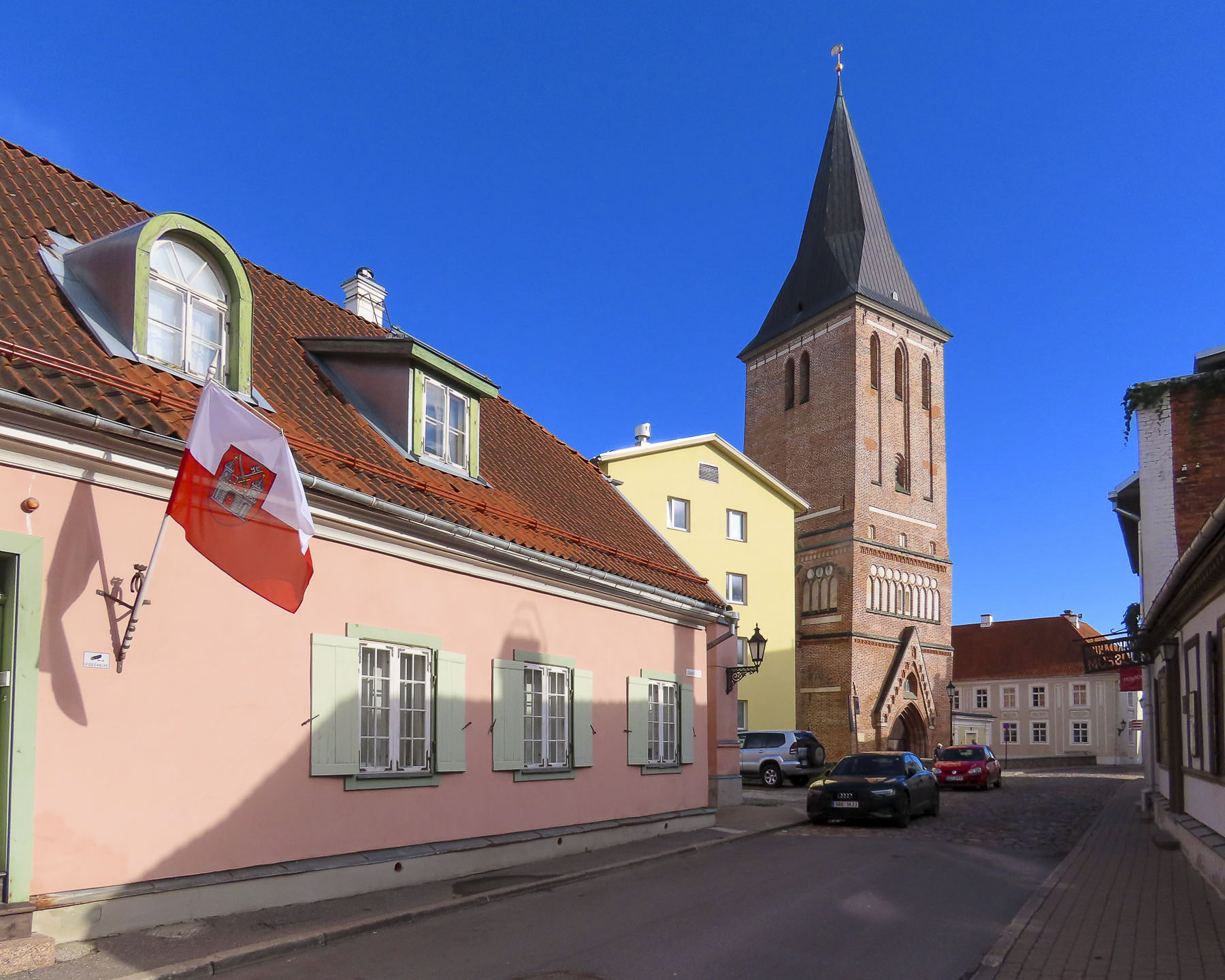
Farther along some of the buildings near Tartu’s St. John’s Church had unique details. Archeological evidence suggests the church dates back to the late 1100s, and could be the first “Christian church building in Estonia before the 13th-century conquest and great Christianization of the country.”  The basic form of the current church dates from the beginning of the 13th century. Due to the region’s conflicts, the church has been reconstructed several times over the centuries. Unfortunately, the church was closed when we visited the area.

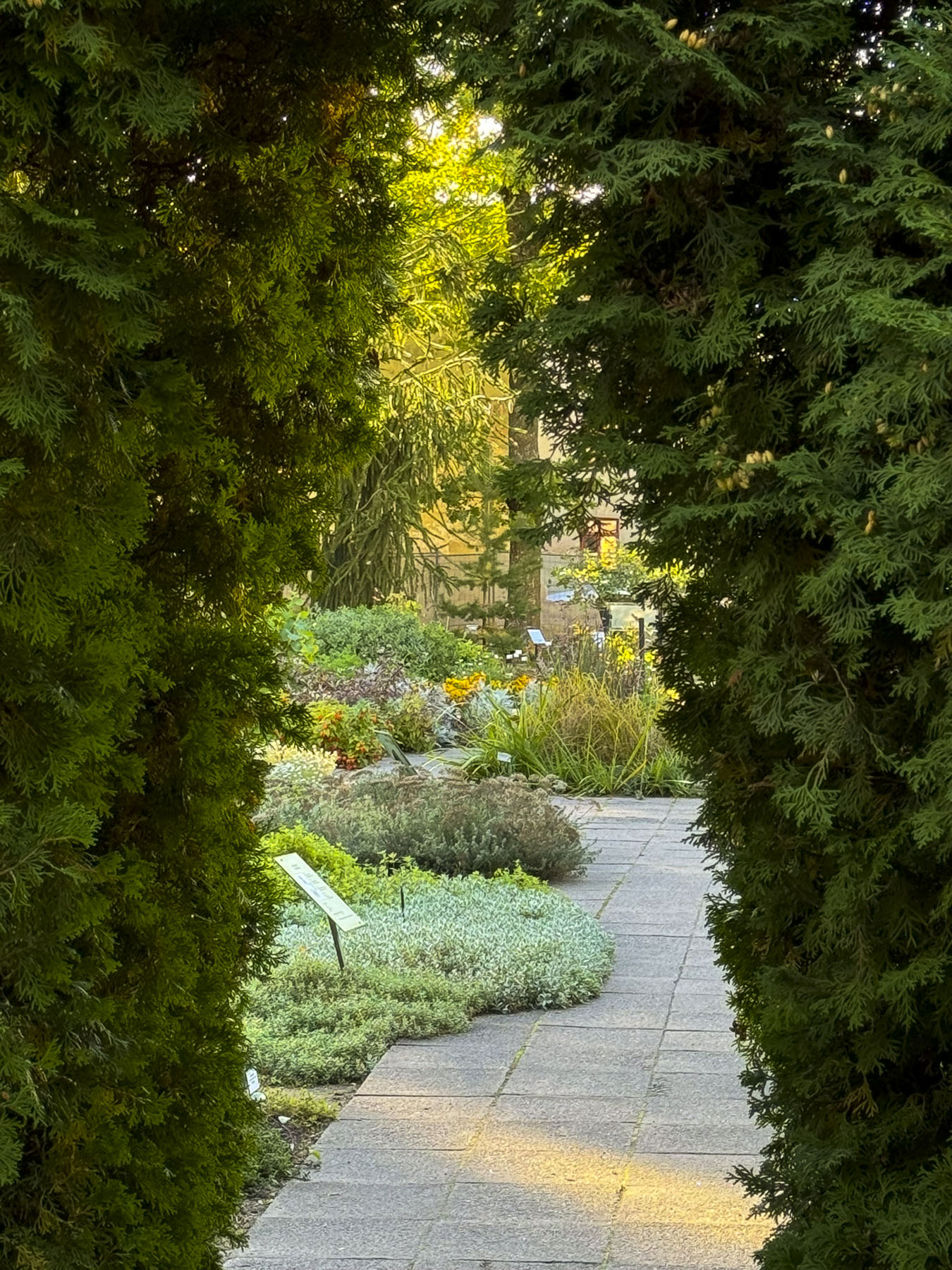
At the end of Ülikooli tn a short walk to the right led us to the Botanical Garden of the University of Tartu. Though in early October it was evident that Estonia has a short growing season and most of the plants were past their prime, but we still enjoyed exploring the various oases of greenery with a number of other couples and families, and imagined how beautiful the gardens must look in the Spring and Summer.

We followed Ruutli tanav, one of Tartu’s oldest streets, back towards the historic center of the town. During the Middle Ages when the winter snows melted during the spring thaw  – “mud season” or Estonia’s “fifth season” – traveling about the countryside was quite difficult. In the larger towns like Tartu the thoroughfares were lined with logs laid perpendicularly across the road to ease the life of the townsfolk and facilitate merchant trade with the Hanseatic League through the town’s riverside port on the Emajõgi. Evidence of these ancient timbered roads is still occasionally discovered whenever there is any infrastructure improvement required in the city. Cobblestones weren’t used for the lanes through town until the 15th century.

We made a short detour off our route to the Virgin Mary’s Dormition Cathedral, an Estonian Apostolic Orthodox Church. The beautiful Russian baroque style church was built in 1840 atop the foundations of an earlier wooden church that was burnt down during the 1775 Great Fire of Tartu, a devastating inferno which destroyed almost all the old wooden medieval era buildings in the central part of Tartu.

As we reached the central plaza it was evident that the weekend’s festivities were Tartu’s last big event for the summer high season. The weather was now noticeably colder with morning temperatures of 36F (2C) warming only to 54F (12C), and the outdoor café tables and chairs that lined the square were being taken down and sent into storage, until needed again next Spring. But the season is not over until the buskers stop playing and the trio of musicians from the other day were still entertaining folks around the Kissing Students fountain in the warm afternoon sun.

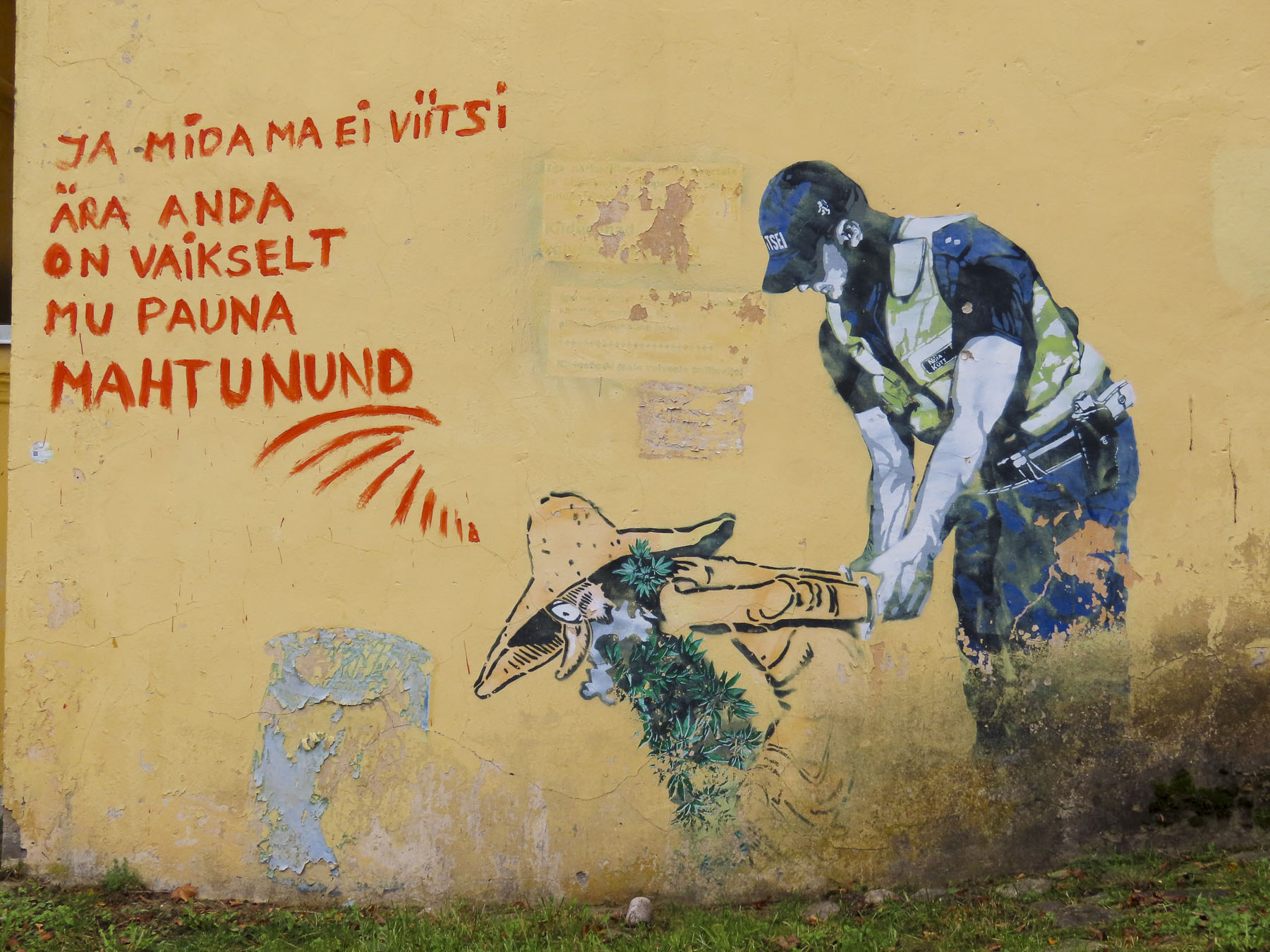
On our walks through the town, we came across some interesting and creative street murals. All were in well-chosen places that enhanced the wall, none were of the loud bubblegum type, though some were of a political nature. After all, our hotel was named for the Pallas Art School, which existed from 1919 to 1944 in Tartu, and was influential in establishing the aesthetic values of the newly independent country, but was closed during the communist occupation of the country.

Today the school’s artistic legacy continues at the  Pallas University of Applied Sciences which opened in 2000, and features ongoing exhibits in the Pallas Gallery.

The Gray House, now the KGB Cells museum, was uphill from the gallery, just three doors down from a busy intersection, on a street that leads to university housing. It was a non-descript door with buzzers for the three-story apartment building above it, and one for the museum. In the 1940s and 1950s the upper floors served as offices for the Soviet’s secret police. We buzzed and a voice released the door lock for us to enter the lobby, where an arrow pointed to a heavy metal door to the basement, and a set of intimidating stairs that descended to a flickering fluorescent lit hallway. It’s a small space with a dozen prison cells and several interrogation rooms in which the brutality of the Soviet years is documented. Notoriously, on July 8th & 9th, 1941, 173 men and 20 women were summarily executed and buried in the building’s courtyard. Mass deportations of 45,000 Estonians to the Soviet gulags in Siberia continued until 1953. For many it was a death sentence, and few ever returned to their homeland. Across the country the KGB is believed to have murdered nearly 60,000 political prisoners between 1940 -1991. It’s a reminder of the danger of authoritative regimes and sadly is still relevant today.

We discovered another street mural just around the corner from our hotel as we headed to dinner at Restoran Spargel. Over an enjoyable evening, we discussed plans to take advantage of the nice weather predicted for the next day by exploring the small fishing villages along the shoreline of Lake Peipus.

We thoroughly appreciated Tartu’s mix of history and youthful enthusiasm for the future. It’s a city but felt like a small town that we could see ourselves quite comfortably living in and enjoy experiencing all of its cultural events throughout the year.

Till next time,

Craig & Donna

An Estonian Road trip: Part 2 – Across the Pine Barrens to the Pakri Peninsula & the Gulf of Finland or Soviets, Swans, Windmills & a Polar Bear

Dense forest lined the road, occasionally thinning to provide a glimpse of Tallinn Bay. It seemed as if we had only left Tallinn minutes earlier, quickly passing through its outer boroughs to enter a semi-wilderness beyond the city limits. To paraphrase; We weren’t in Tallinn anymore. Lively, and charming, one third (461,000) of Estonia’s 1,370,00 citizens call this “gem of the Baltic,” home.

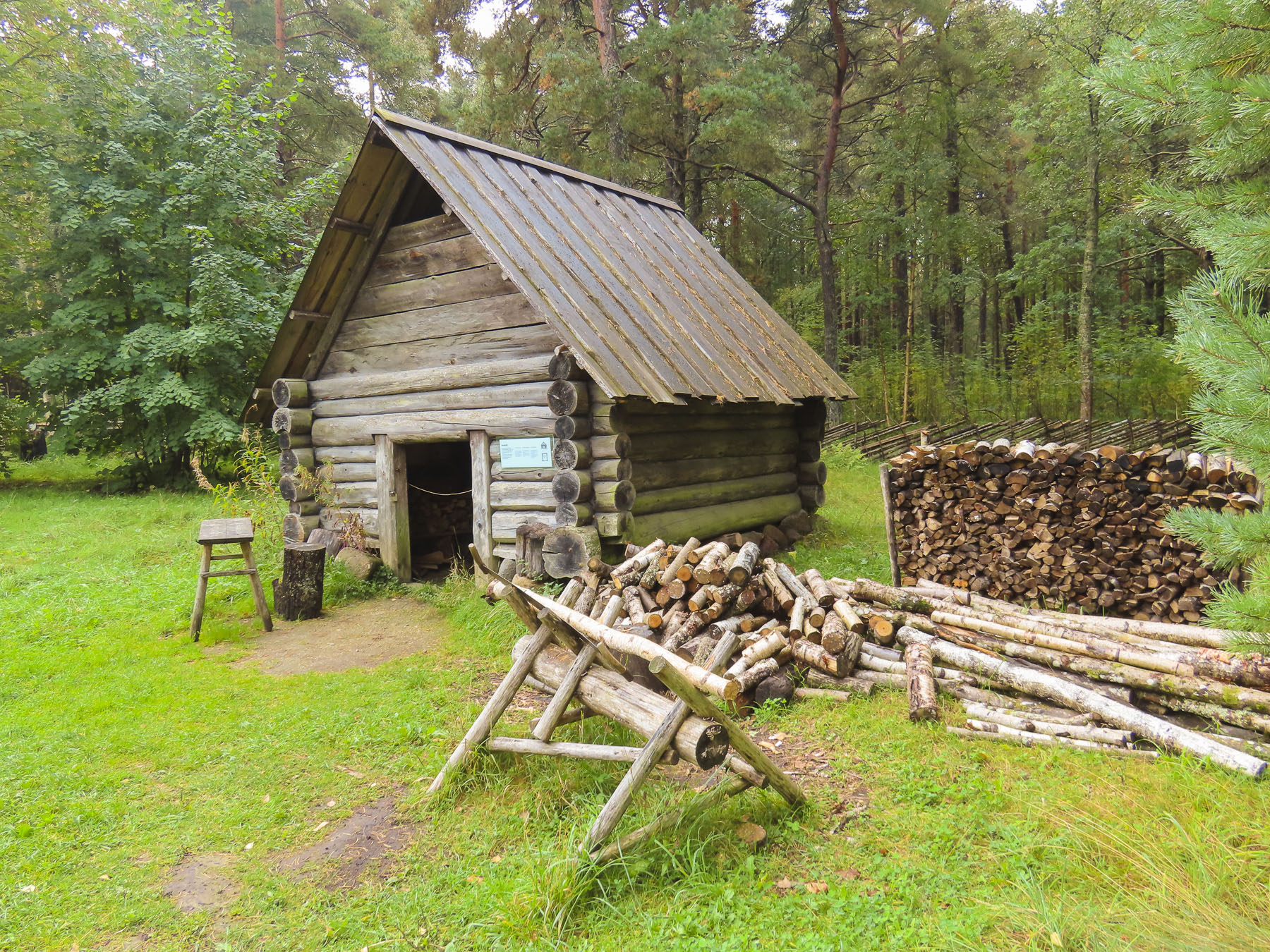
Only 15 minutes from the center of Old Town, we were in the surprisingly different forested landscape of Eesti Vabaõhumuuseum, the Estonian Open Air Museum, an ethnological recreation of a historic fishing village on the shore of Tallinn Bay, with the wonderful mission of showcasing the country’s rural architecture and way of life during the 18–20th centuries.

A pleasant set of trails through the woodland connected 14 separate areas that featured different buildings.  Some of the buildings have docents dressed in traditional clothing to help explain how residents lived centuries ago. The wooden windmills were particularly interesting and the large sturdy log cabins surely would have made Daniel Boone envious.

Leaving Tallinn behind: this was the first stop of our 21-day road trip through Estonia, Latvia, and Lithuania. There was hardly any traffic on the roads through the sparsely populated countryside that traversed stretches of open fields, bogs, pine forests and swaths of beautiful birch trees. Vast tracks of forest still cover over fifty percent of Estonia’s territory. Set away from the roadway a bike path, just one of 7,230 cycling routes and bike trails in Estonia, loosely followed our route from the Open Air Museum to Keila in search of a mid-morning coffee break.

It was a surprisingly frustrating endeavor. Takeaway coffee from a gas station? No no. This was nearing a crisis situation for us. Those in the know understand that without that a coffee fix, life in the universe is imperfectly balanced. Fortunately, we found a very nice gourmet café, Cake Atelier, on the main road through Keila. Chatting with the owner about our trip through Estonia, she shared that we were in luck today, as it was one of the town’s twice-yearly craft and food festival days and pointed down the road.

We both like exploring local markets and this one in Keila, while very small, was a perfect local event to have stumbled across. Set up in the parking lot of a small strip mall, it wasn’t geared toward tourists. It was simply regional food purveyors sharing what they love to do. Samples were abundant. There were extraordinary amounts of smoked fish, pickles, sauerkraut, and baked goods, along with foraged lingonberries and wild mushrooms.

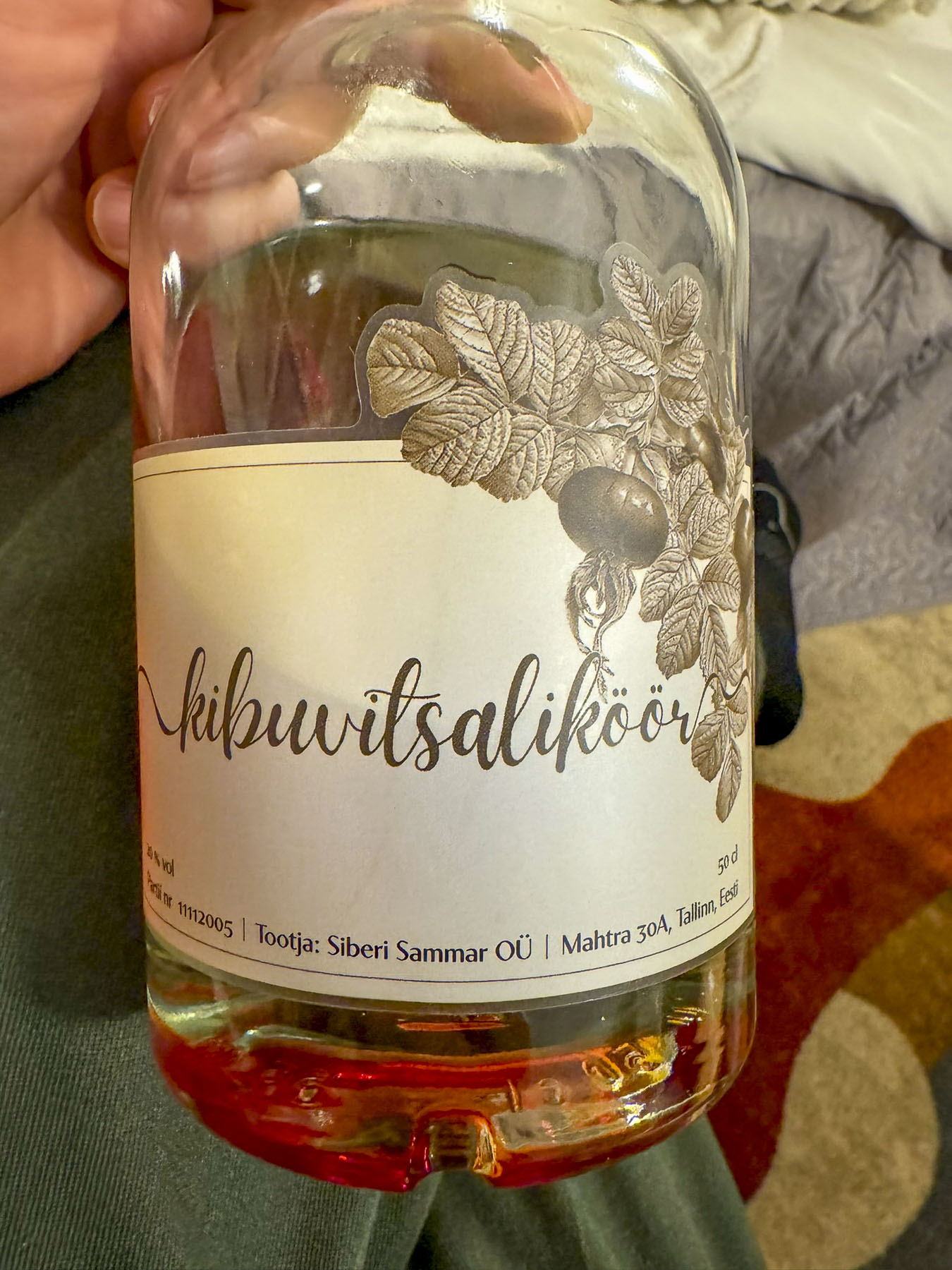
From July to October foraging for berries and other wild edibles is a popular activity in Estonia and explains why we saw so many cars parked at various spots along the road in the middle of nowhere. We ended up purchasing a bottle of artisanal Rose Hip liqueur from a middle-aged woman who had been an exchange student in Florida in the early 2000s. Her cordial, lovingly crafted from her grandmother’s ancient family recipe, was very tasty. We purchased a bottle and enjoyed it as a nightcap during the rest of our trip.

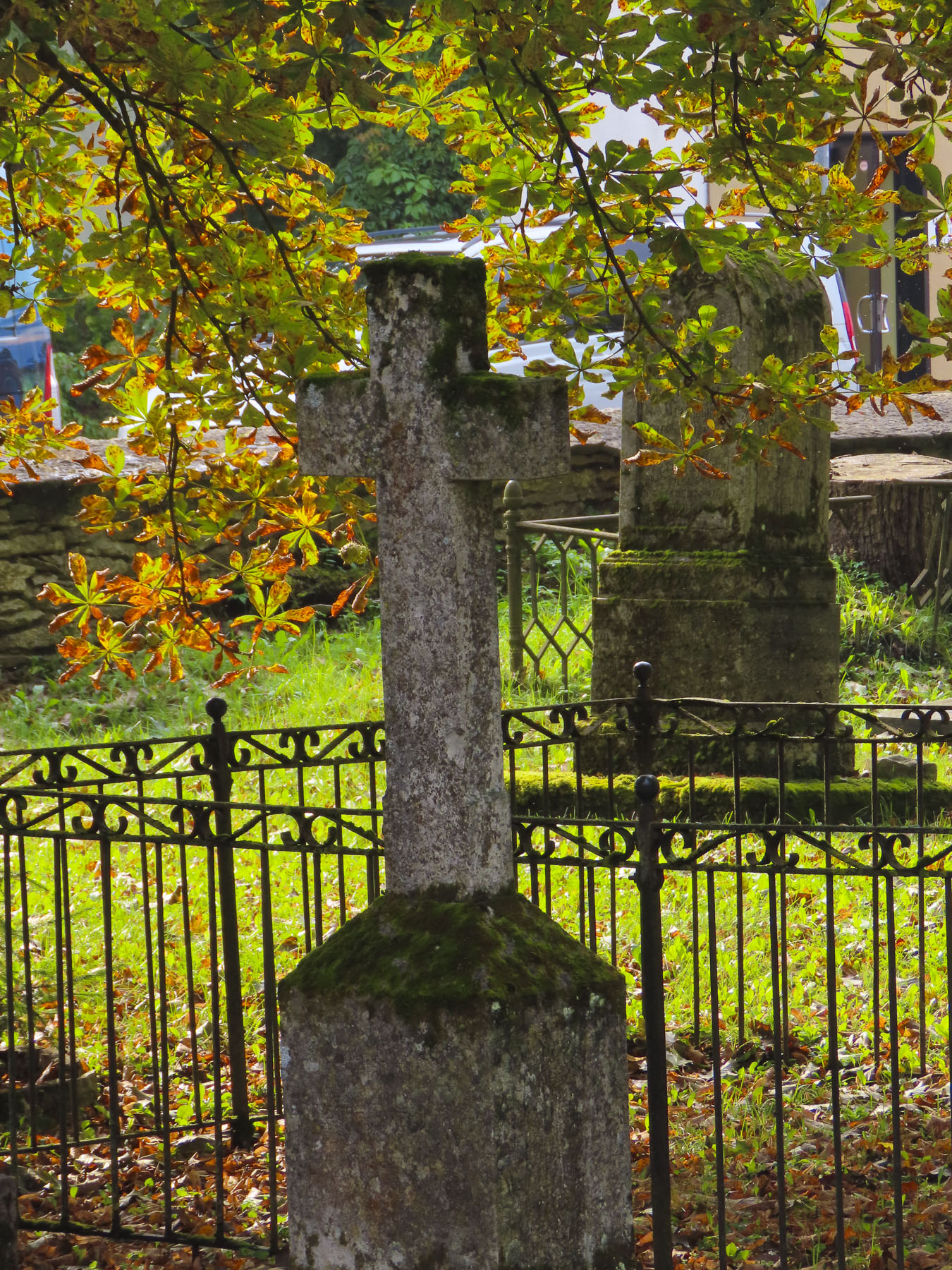
Next to the parking lot was a pretty church, Mihkli kirik, Keila’s St. Michael’s Church.  This wooden church was first erected here shortly after the Danes conquered northern Estonia in 1219. A century later a larger stone church was constructed to accommodate the worshippers living in the growing village. The present church replaced an older one destroyed during the Livonian War of the 16th century. There were some interesting stone carvings around the door to the church, and an intriguing cemetery that called for further investigation.

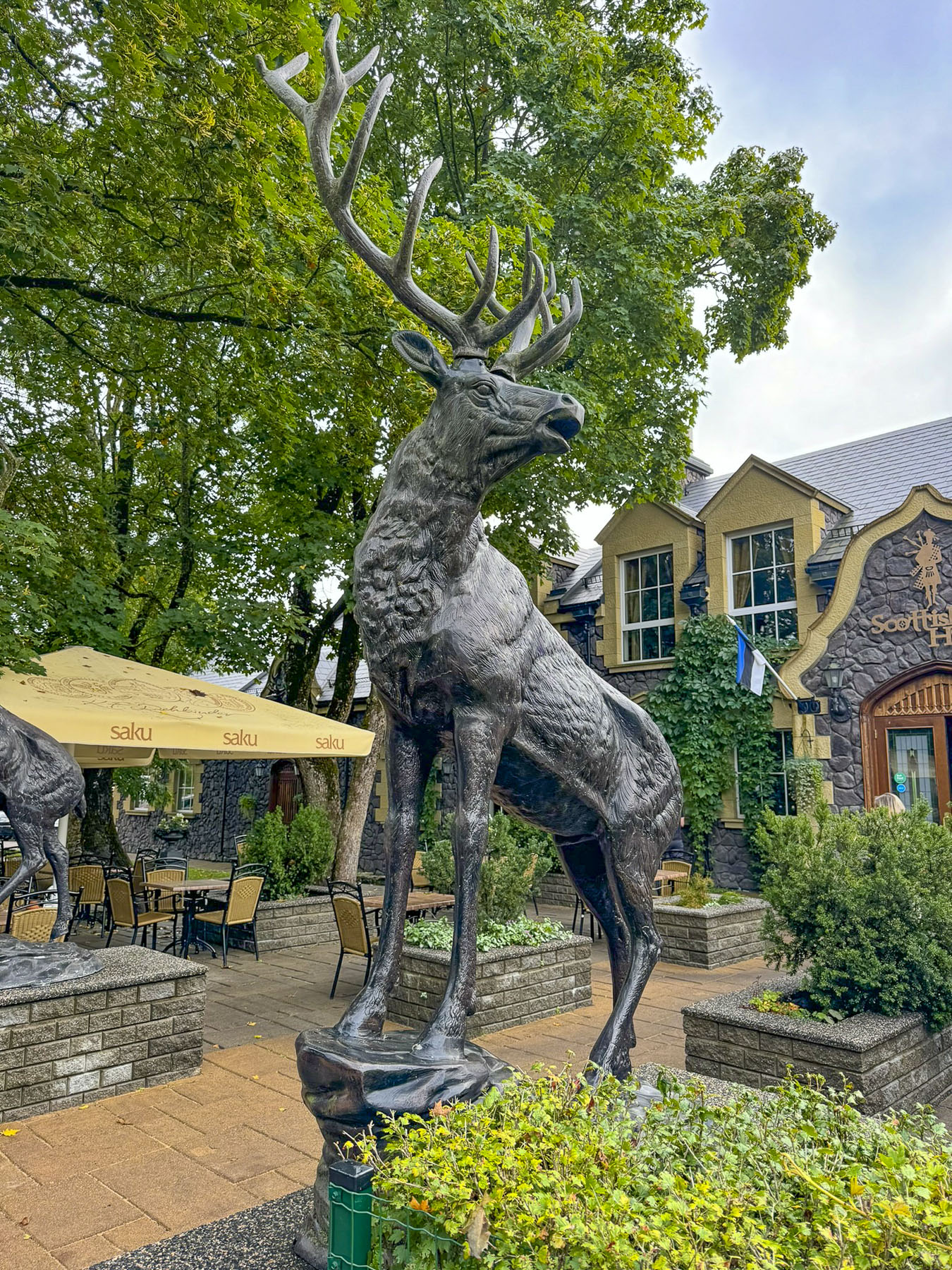
Across the way the Scottish House, with its majestic sculptures of highland stags in its courtyard, seemed incongruously placed. But we enjoyed resting, enveloped in its warm wood interior, and lunch was very good.

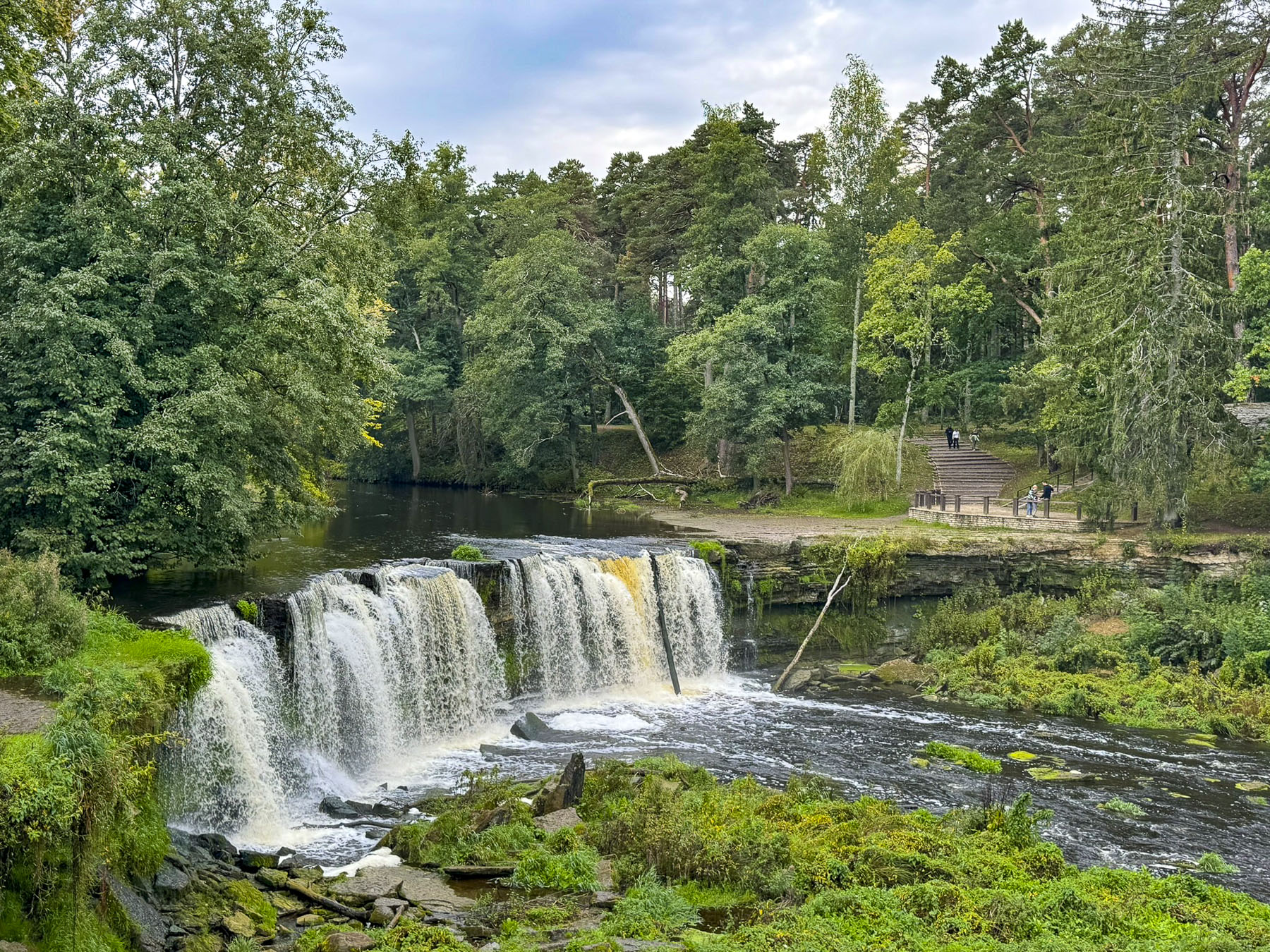
Our destination at the end of the day would be the guesthouse Pakri Baron, at the foot of the lighthouse, at the top of Pakri Peninsula. But we rarely drive the fastest and most direct route. Our road trips usually connect the dots, and resemble Ws or Zs to points of interest along the way. With that in mind we headed to the Keila Waterfall in Lõokese tee, Meremõisa – gotta love that name – 13km (8 miles) away.

Without any tall mountain ranges, Estonia really isn’t noted for its waterfalls. But the Keila Falls, the third largest in the country, were relatively close. The falls are in a pretty river park that has a trail over a wooden suspension bridge that crosses to the opposite side of the falls. There is a small renovated hydroelectric power plant at the Keila waterfall that first started to produce electricity in 1928; the river park was originally part of the extensive grounds of the Keila-Joa manor. The neo-gothic style building was built in 1833 and is one of Estonia’s best surviving examples of the popular 19th-century architectural style. Unfortunately, the grounds of the manor house/museum were closed the day we were there.

Nearby, the all-wood Kõltsu Manor built in the late 1800s was another fine example of Estonian architecture. The large home was commissioned by a baroness to be used as her summer residence. After World War II, the house and grounds were used by the communist Russians as one of their Pioneer Camps. The name sounds so benign, but in reality, while they did offer camp activities, they were Soviet re-education camps that indoctrinated Estonian youth with communist ideology. Today the manor hosts events, weddings, and outdoor concerts during the summer months.

The forests in Estonia have their own stories to tell. We did not stop at the memorial to the 2000 Jewish victims of the Nazi massacre in 1944 at the forced labor Klooga concentration camp. Closer to our destination we stopped in Paldiski to purchase the makings of a picnic dinner and breakfast the next morning at the guesthouse. Apple trees grew wild along the edge of the road. We picked a few for munching later. White with a pink center, they were probably an heirloom variety called “Eva Kuld,” similar to the Pink Pearl variety. The apples were delicious.

We had timed our arrival at Pakri Baron to coincide with the sunset in hope of getting some nice photographs of the lighthouse and the coast as the sun dropped. However, the weather was fickle. But the guesthouse was wonderfully situated next to the lighthouse, which towered over us, and was a stone’s throw from the Baltic Sea. The still active lighthouse was built in 1889, and during the summer months it’s possible to climb its 275 steps to the top. Unfortunately, it was closed during our visit in mid-September. In front of the lighthouse is a copy of sculpture called The Ship’s Last Sigh (1899) by the Estonian artist Amandus Adamson (1855–1929), who grew up near Paldiski. The sculpture was chosen by vote from 5 of Adamson’s works by the residents of the community in 2008 to commemorate their native son. The guesthouse even had a traditional Estonian sauna in a separate building, just one of the 100,000 saunas in a country of 1.3 million. It’s definitely a cultural thing.
It was still dreary the next morning as we started our drive to the resort town of Haapsalu on the west coast of Estonia. But there were places to explore along the way. We don’t recall how we actually came across the existence of the Ämari Pilots’ Cemetery, but most likely it was a result of scouring Google Maps to find points of interest along our route. More accurately it could be referred to as the Russian Pilots’ Cemetery.

What piqued our interest was the use of tail fins from crashed Soviets planes as headstones to mark the graves of the pilots that died in accidents while flying from the former Russian airbase, Suurküla Aerodrome, during the Cold War era. The cemetery’s discreet location, in a forest almost obscuring it from the road, was so that reminders of the peacetime deaths, from a high accident rate, would not affect the morale of the military base.

The cemetery appeared to be well cared for, but it’s a reminder of a painful and repressive 46 yearlong occupation by communist Russia, unlike the monumental Soviet propaganda sculptures that were in public spaces across the country, which were destroyed or sent to the Soviet Statue Graveyard in Tallinn. This reminder of a dreaded past, like an uncle no one wants to talk about, was left to rest in peace.

Nearby was another reminder of Soviet rule: Murru vangla was a Soviet forced labor camp and re-education center where prisoners were sent to work in a limestone quarry for the duration of their sentences. After Estonia’s independence the prison and quarry were closed and abandoned. Water eventually filled the quarry and partially submerged some of old mining structures and prison buildings. Set against tall, eroded dunes created from slag left over from processing the limestone, the water of the quarry shimmers like a Caribbean beach. The uniquely beautiful manmade setting has slowly become a popular destination for divers and swimming. What’s left of the prison was turned into a museum. There is an admission fee to access the quarry area, but since the day was still heavily overcast, we kept driving a short distance down the road to the Padise Monastery. Founded in the early 14th Century by monks displaced from a monastery in Latvia, it flourished until the St. George’s Night Uprising, when Estonians rebelled against Danish rule and the imposition of Christianity upon them and killed 28 monks. The building was later turned into a fortress, but by the early 1700s the stones of the deteriorating fortification were used to build an adjacent manor house. What’s left of the monastery’s ruins has been preserved and now operates as a museum, and the manor house is now a boutique hotel and spa.

One of the many things we enjoy about traveling during the shoulder season, aside from fewer tourists like us out and about, is the affordability of really nice hotel rooms. Our case in point was our midweek 2-night stay at Hermannuse Maja, which backed up to the ramparts surrounding Haapsalu Castle, cost only €97.00, and included breakfast. Parking was easily available on the street.

Around the corner from our hotel the Müüriääre café, with an attractive interior and tempting food display, was the perfect spot for lunch before exploring the unusually named Haapsalu Episcopal Castle on a cloudy afternoon.

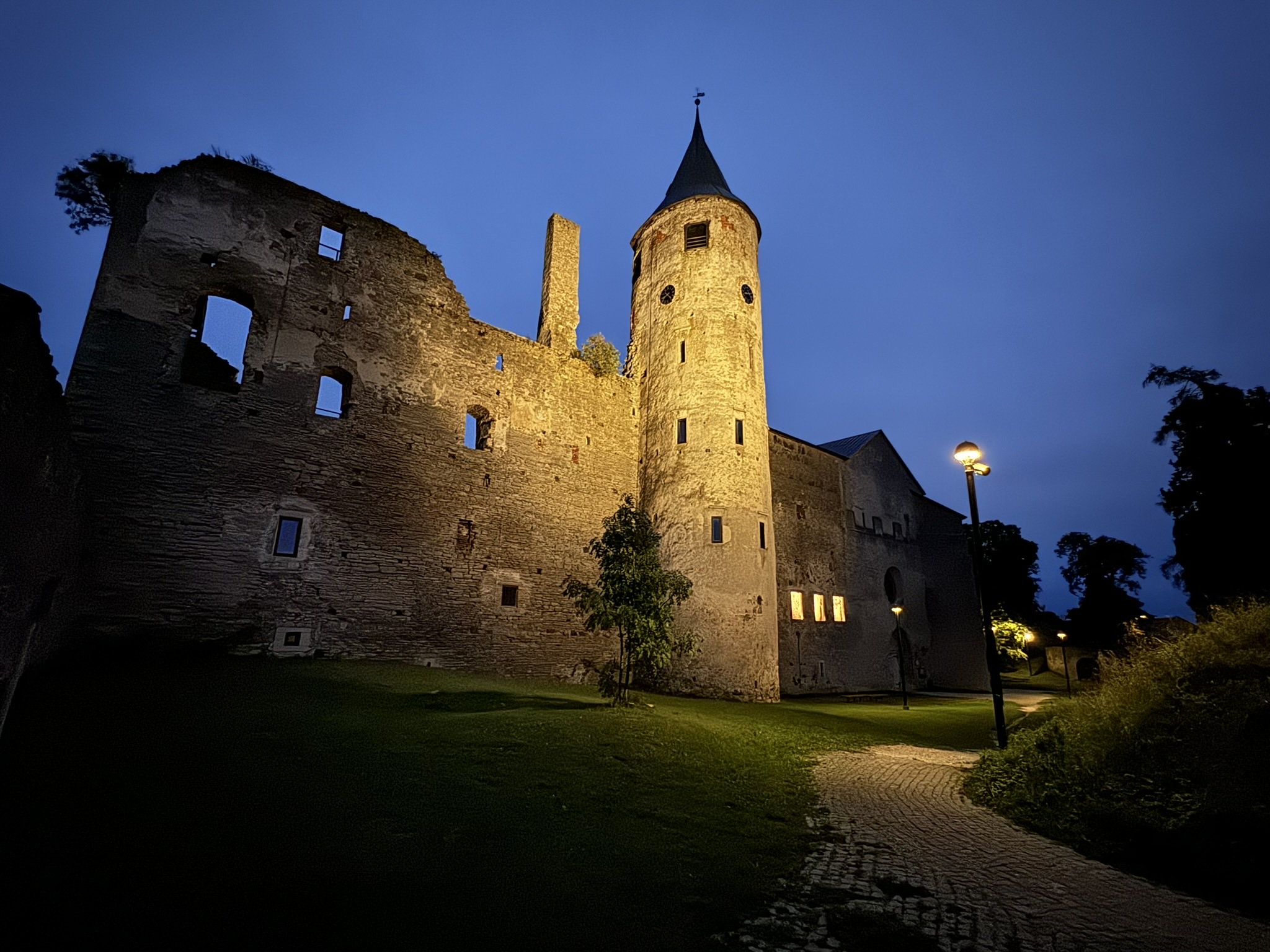
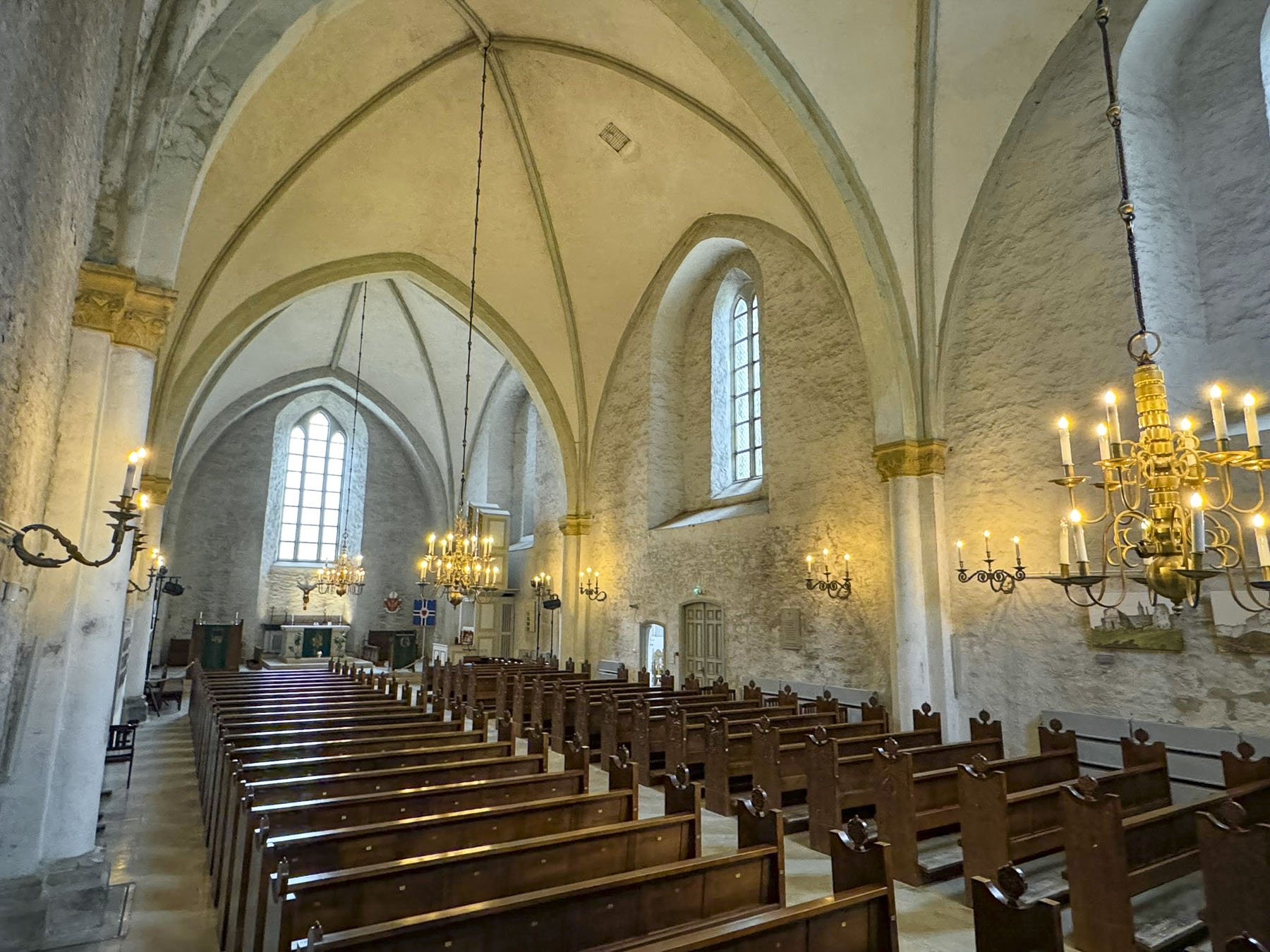
In the late 1100s Christian missionaries followed German merchants along old Viking trade routes into the region known as Livonia, that is today Estonia, Latvia, and Lithuania. The land was originally populated by pagan tribes, but unfortunately located between Orthodox Russia and Catholic Western Europe. Never happy with the status quo, religious zealots called for a Northern Crusade against the Baltic pagans, and with the blessing of Pope Celestine III, persecution began in 1195. The efforts to recruit an army was assisted by a papal bull which declared that “fighting against the Baltic heathens was of the same rank as participating in a crusade to the Holy Land.”  The medieval era was fierce, and bishops not only accompanied the crusaders spiritually into battle, but wielded swords alongside their troops fighting those heathen tribes. Haapsalu Episcopal Castle was built to project the power of the church during the thirty years it took to subjugate the region. In 1583 during the War of Reformation the Catholic stronghold fell to Protestant Sweden and the cathedral became a Lutheran church.

A tall defensive wall still encircles the nearly 1000-year-old castle. And the church has been nicely restored after surviving fires in 1668 and 1726 and neglect during the Soviet occupation when it was used as a granary. Though only the outer walls of the monastery, which was later converted to a palace, remain after the 1668 fire.

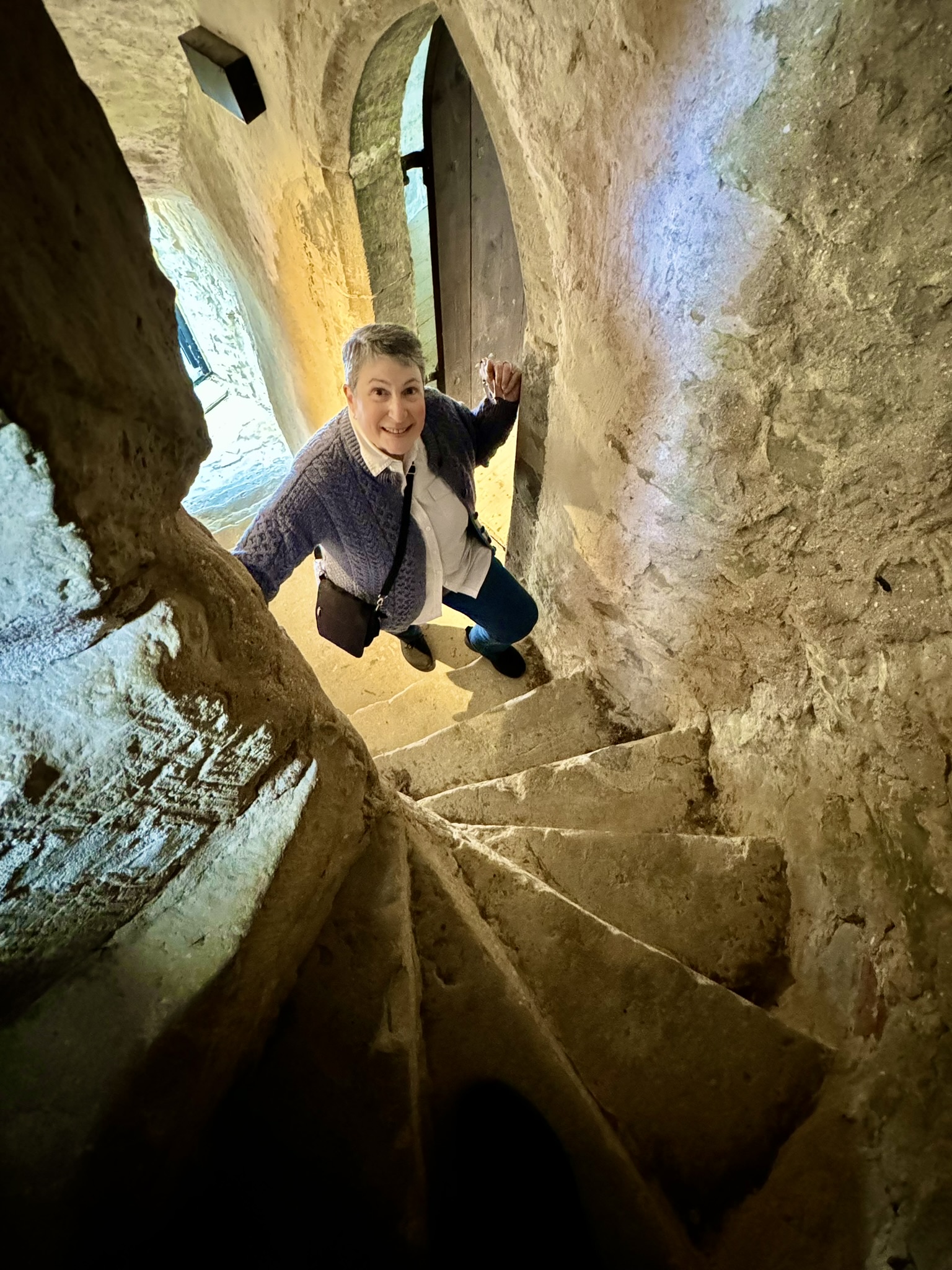
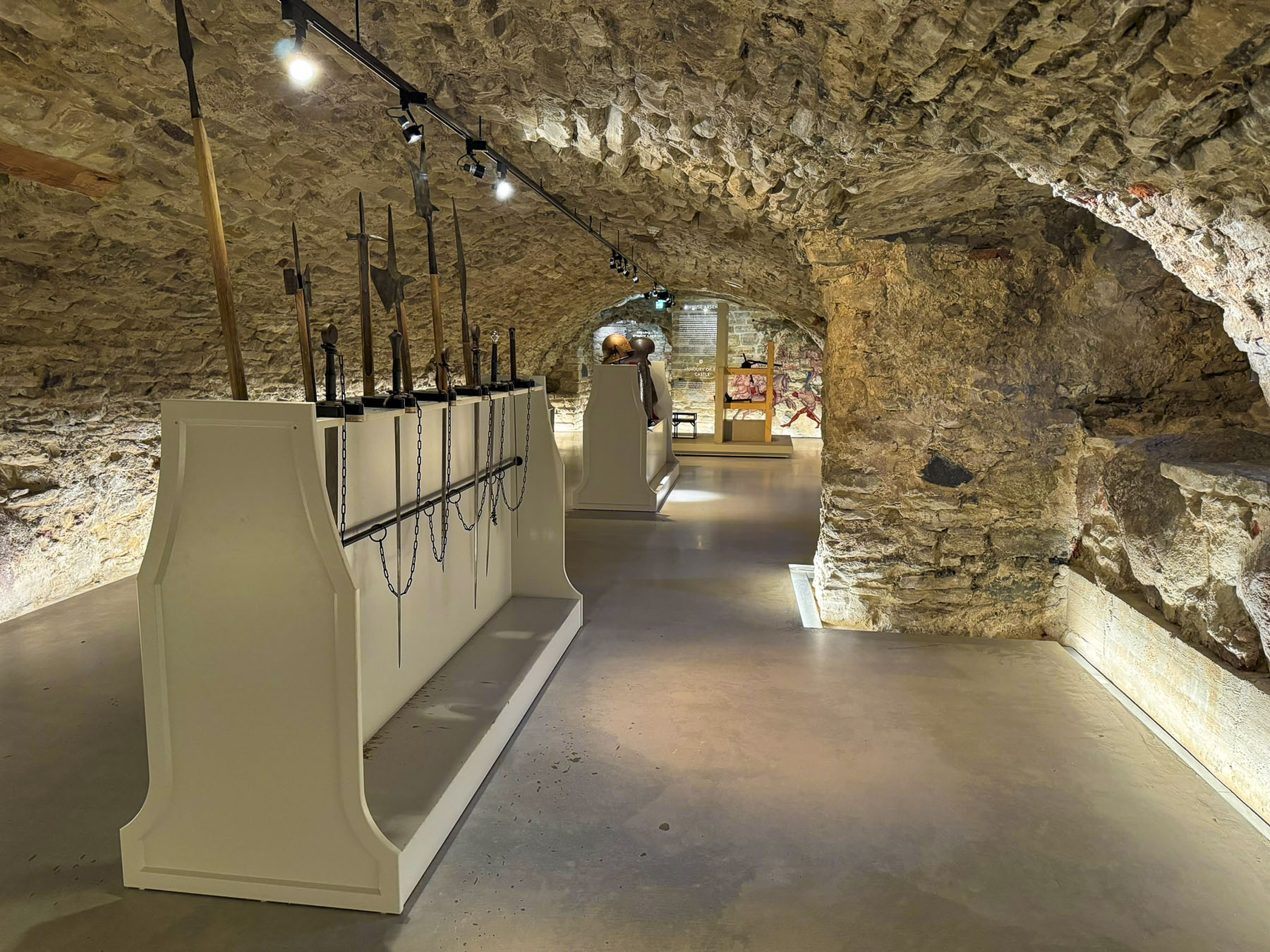
We enjoyed walking along the ramparts and climbing the castle’s tower. Surprisingly in mid-September we practically had the site to ourselves. Wandering through the ancient, vaulted dungeon-like rooms of the castle’s museum that showcased life in Medieval era was particularly interesting. The grounds of the castle are quite extensive, and one section in a now dry moat has a medieval themed playground with all sorts of structures for kids to climb on. During the summer the castle hosts a series of concerts, and the town welcomes tourists with a busy schedule of events.

Dinner that evening was across the street at the rustic Talumehe kõrts, which specialized in traditional Estonian dishes.

The next morning, we woke to a perfectly clear sky. The sunny weather was a welcome reprieve from several gloomy days, and we took full advantage of it to explore the picturesque town and walk along the Haapsalu’s bayside promenade. The walkway extends for quite a distance along the waterfront, and is flanked with a variety of architecturally interesting buildings along its length.

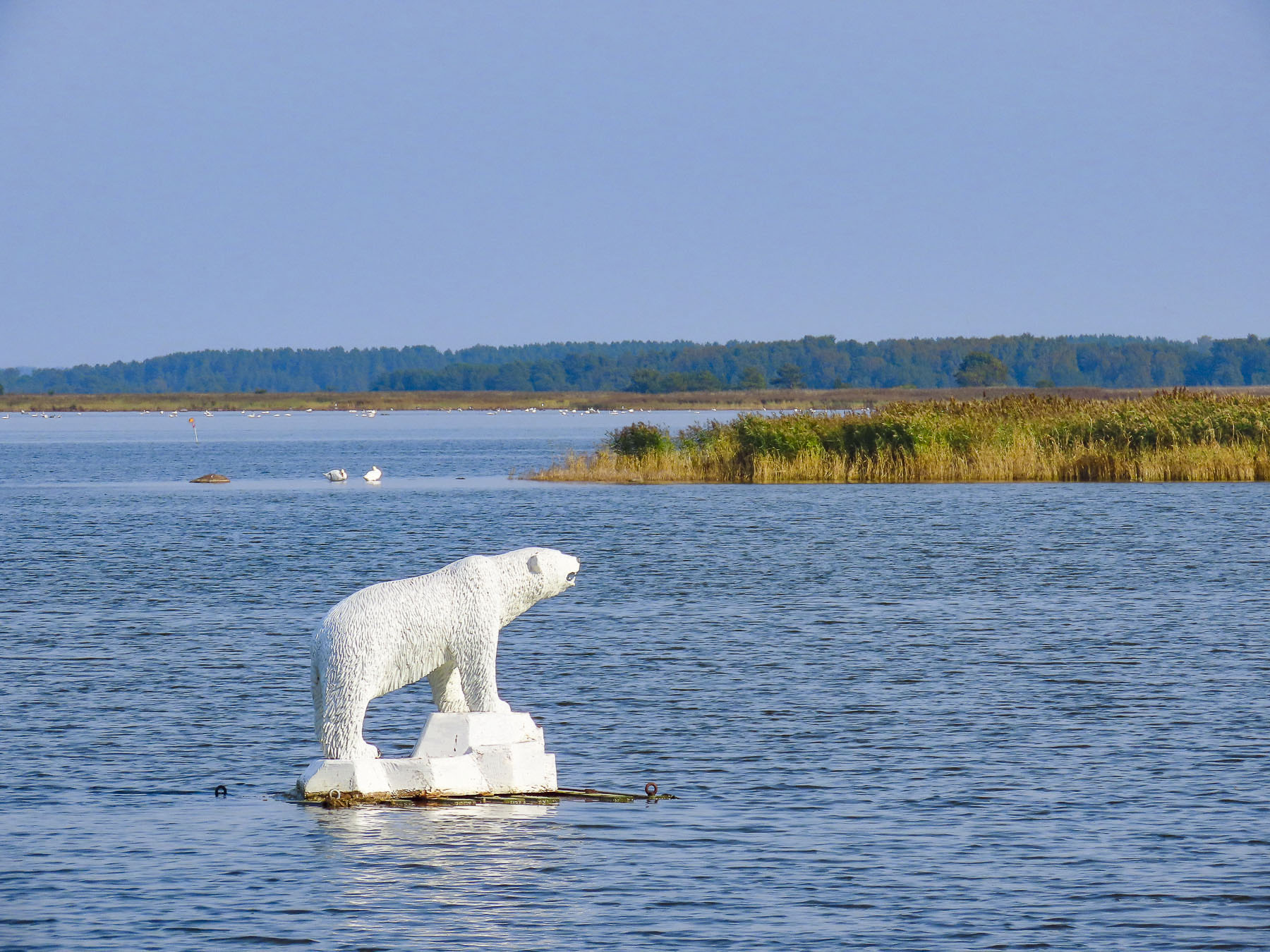
At one point we spotted a polar bear standing on an ice flow. A statue! It was one of several exotic animal sculptures, recreated from old photographs of the wooden figures made in the 1920s, for a section of the boardwalk called Africa Beach, a beloved small park from the 1800s. During the Soviet occupation the original wooden sculptures were used as firewood by Russian soldiers. With the Russians finally gone in 1991 the park was revamped as a children’s playground.

A short distance beyond the playground the walkway ends at the 5-story tall Tagalaht birdwatching tower. Climbing the tower offers views over the saltwater marshes of Haapsalu Bay, which is an important stopover for artic birds during their Spring and Fall migrations. Swans, cranes, and a variety of ducks can also be spotted.

The small town existed on the region’s fishing and agricultural base until a visiting physician observed that the local folk used sea mud to treat a number of ailments. He opened Haapsalu’s first therapeutic mud treatment resort in 1825. It soon became a popular destination for several generations of Russia’s czars and aristocracy. A bench along the path commemorates the spot from which the composer Tchaikovsky watched the sunrise when he summered there.

Walking back to town we passed the distinctive green onion shaped dome of Haapsalu’s Maria-Magdaleena kirik, a Russian Orthodox church. The church was consecrated on July 21, 1852. In the audience was the son of Czar Nikolai I, Alexander (later Czar Alexander II, Emperor of Russia, King of Poland and Grand Duke of Finland.)

We worked our way across town to Lake Väikese and savored a delicious lunch overlooking the water from the enclosed patio at Wiigi Kohvik, before following a walking path along the water that circled the lake. Along the pathway we noticed that nearly every home on the lake had a traditional Estonian sauna in their back yard. They were all different sizes and shapes, with some constructed with wood and others totally covered with earth. We wondered if folks jumped into the lake as part of their sauna ritual. Brrr! Just thinking of it made me shiver.

Overall, we had a very nice tme in Haapsalu. The next morning, we checked out early and drove to the harbor at Rohuküla to catch the first ferry of the day to Heltermaa on Hiiumaa Island.

Till next time, Craig & Donna