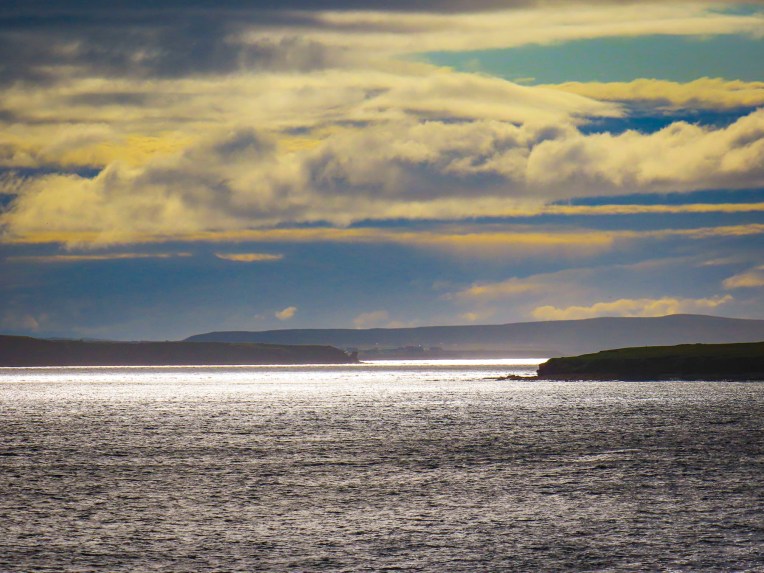
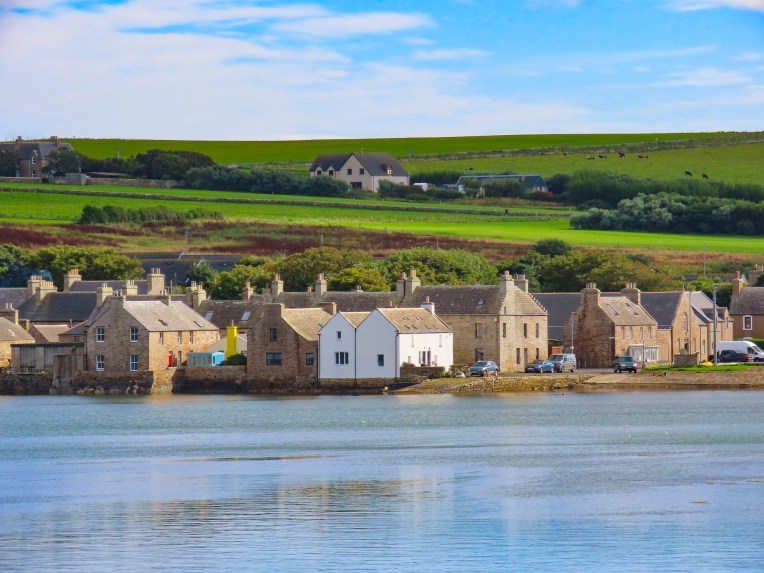
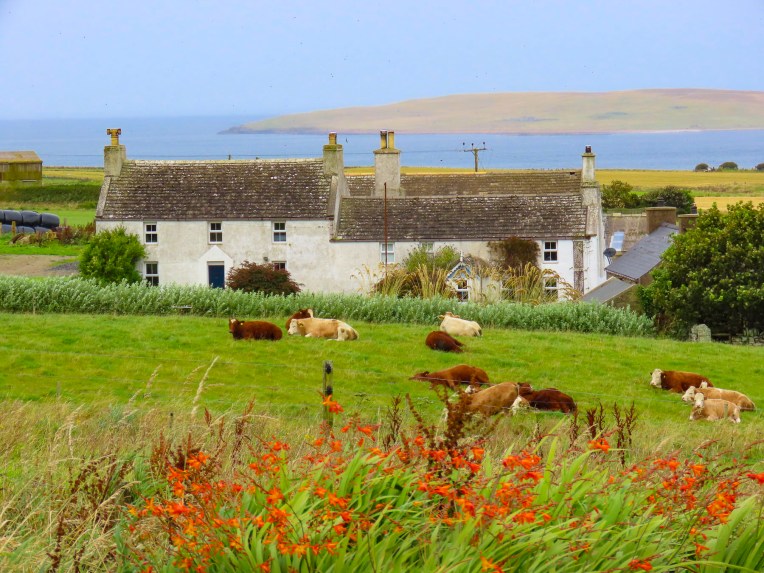
Driving the North Coast 500 – Part 6: A Day Trip to Orkney

We had spent the previous day enjoying the fantastic landscapes of the Highlands along the NC500 from Ullapool to Durness before calling it a night at the John o’ Groats Guest House, just outside the village of the same name, at the land’s end of northern Scotland. With any trip it’s a matter of choices: how long, how much to spend, what to see, and where to go. Being this close to the Orkney Islands, how could we resist a visit? Sorry Inverness, but you were scratched off the itinerary.

After a hearty full Scottish breakfast, we were off early to catch the Pentland Ferry, only 8 minutes away in Gills Bay. Reading about how busy the Highlands are during the summer months, especially the car ferries, we made our reservations back in February as soon as their new yearly schedule was posted online. While it wasn’t inexpensive (RT 2 ppl, 1 car for £170) to get the car to Orkney, it was 40% less than doing a coach tour for the day, and it retained our freedom to dally and dither. After scanning our e-ticket, the attendant directed us to the proper queue. Within a few minutes the ferry from St Margaret’s Hope, on Orkney, docked and disembarked its cars and passengers, and we drove aboard.

As we rounded Hoxa Head, long abandoned coastal gun batteries were a reminder of the important role Orkney and its large natural harbor Scapa Flow played during WWI & WWII. During these conflicts it served as the main naval base for the British Home Fleet and a strategic location for patrolling the North Sea and Atlantic Ocean. As remote as the island was, it did not prevent Nazi war planes from bombing it in 1940. The short crossing of 19 miles took an hour. We pulled aside in the parking area to let the tour buses and delivery trucks race ahead, along with all the other drivers who knew where they were going. St. Margaret’s Hope is actually on a separate island and is connected to Orkney by the A961 which crosses several islets and causeways to reach the mainland.

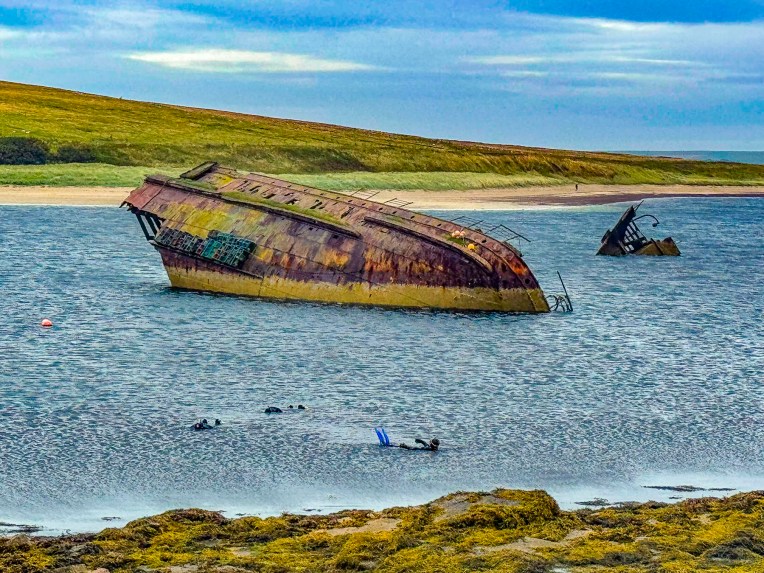
We planned to stop first at the Italian Chapel on the small island of Lamb Holm, but the tour buses were there so we moved on. We did stop at the foot of the last causeway, to photograph divers exploring the half-exposed hull of a rusted shipwreck. The wreck wasn’t the result of a tragic storm, but an intentional sinking of a block ship to prevent German U-boats from entering Scapa Flow again after an earlier U-boat attack sank the battleship HMS Royal Oak in 1939.

We figured we would race ahead of the tour buses now and headed across the Orkney mainland, a distance of 24 miles, to the Broch of Gurness.

Located on the shoreline of Eynhallow Sound, the Broch is one of Scotland’s most complete and best-preserved Iron Age settlements. The historic settlement dates to around 500BC and featured a large stone tower, the broch, surrounded by smaller stone houses and animal sheds, all of which were protected by an encircling earthen rampart.

Broches are drystone hollow-walled structures unique to Scotland, and were usually the large home of the village chief, which also served as a place of refuge for villagers during times of conflict. The site was used for about 600 years before it was abandoned around 100AD. Slowly the abandoned ruins were covered, and the site was a Pictish farmstead until the Vikings landed on Orkneys in 8th century and established farming communities while also using the islands as a base for seafaring raids to Scotland, England and France.

The site slowly vanished into obscurity until 1929, when the leg of stool which a local artist was sitting on to sketch sank unusually deep into the earth. A little digging revealed a staircase into the broch. With news of this discover the Society of Antiquaries of Scotland bought the land and started a full excavation which revealed Iron Age settlement, along with artifacts and the medieval era grave of a Viking woman buried with a sickle blade and a pair of tortoise brooches.

We are constantly amazed by the desire of older civilizations to explore the horizon. On Orkney and the other islands of the archipelago the curiosity of Mesolithic hunter gatherers 8,000 years ago was rewarded with the discovery of a fertile landscape, and the abundant resources of the surrounding seas, as they followed the retreating glaciers of the Ice Age north. The Broch of Gurness is not the earliest settlement on Orkney, that distinction goes to Skara Brae, a 5000-year-old Neolithic era village that was also on our itinerary.

Often the journey between destinations is half the fun, and the vast landscapes of the windswept Orkney farmlands and brilliant seascapes delighted us as we headed toward Skara Brae.

The historic ruins of the Earl’s Palace in the tiny seaside hamlet of Birsay was on the route and of course we stopped. The vistas of the coast, and the Brough of Birsay Lighthouse from the hamlet were beguiling, and it was easy to see why the, “I want to be king,” Lord Robert Stewart, the illegitimate son of King James V of Scotland, choose the spectacular spot to build his fortress palace. It was probably the only instance of good taste he displayed while on Orkney.  

In 1564 Mary, Queen of Scots, his half-sister, dispatched Robert, as the sheriff and justiciar of Orkney and Shetland, to the remote recently acquired islands, (the resolution of an unpaid dowry for the King of Norway’s daughter Margaret’s marriage to James III of Scotland,) to get him out of Edinburgh. A few years later he was made the Lord of Shetland and Orkney, but took advantage of the island’s isolation and ruled over them as a tyrant with an iron fist, making the area his own private fiefdom.

His time was marked by severe taxation, the seizure and redistribution of land to his allies, a gang of henchmen who violently enforced his rule, and conscripted labor to build his palace. The palace was a large two-story structure, with three-story towers on the corners, and a central courtyard. The upper level had two halls, a gallery, and the Earl’s private chambers. The ground floor was for servant’s quarters and workrooms for the support of the estate. The exterior walls on this level had gunports for defense. Above the entrance to the palace was inscribed the Latin phrase, “Dominus Robertus Stewartus, filius Jacobi Quinti, Rex Scotorum, hoc opus instruxit.” The controversial use of “Rex” in the phrase was interpreted by some as Robert calling himself King, a traitorous act.

He died in 1593, but his legacy of ruthlessly treating the Orcadians as serfs was continued by the successive rule of his son and grandson. Their subjugation of the islanders ended with their execution during an armed rebellion in 1615.

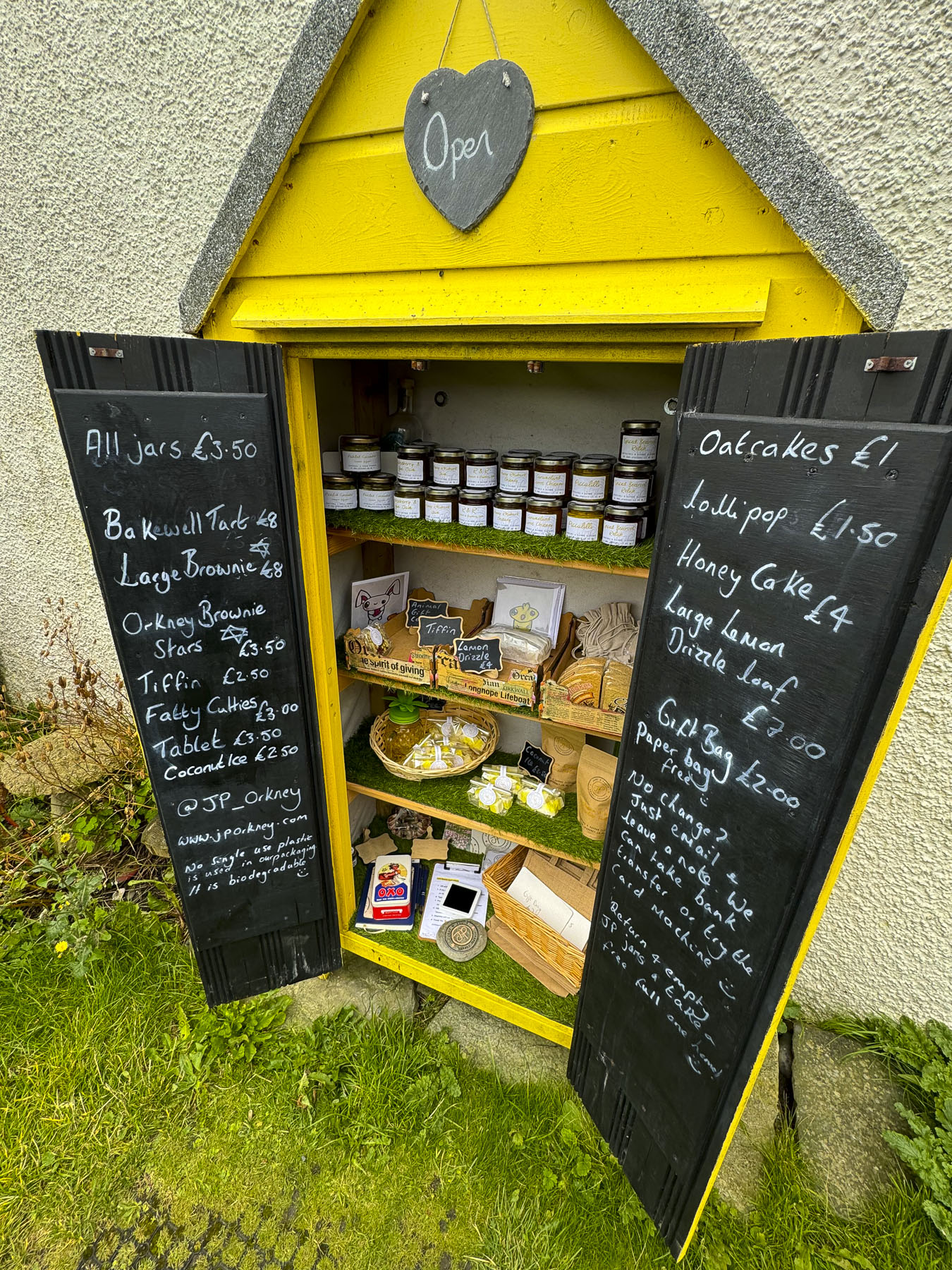
Beyond the ruins sheep graze peacefully in the surrounding pasturelands. Across the street we spotted our first Honesty Box stocked with the tasty creations made by Jane & Paul’s Orkney Produce, and there we procured the makings for a picnic lunch. The Honesty Boxes are a wonderful concept of selling homemade treats, and relying on the honesty of the purchasers to deposit money in the box. Unfortunately, this doesn’t exist in the states anymore.

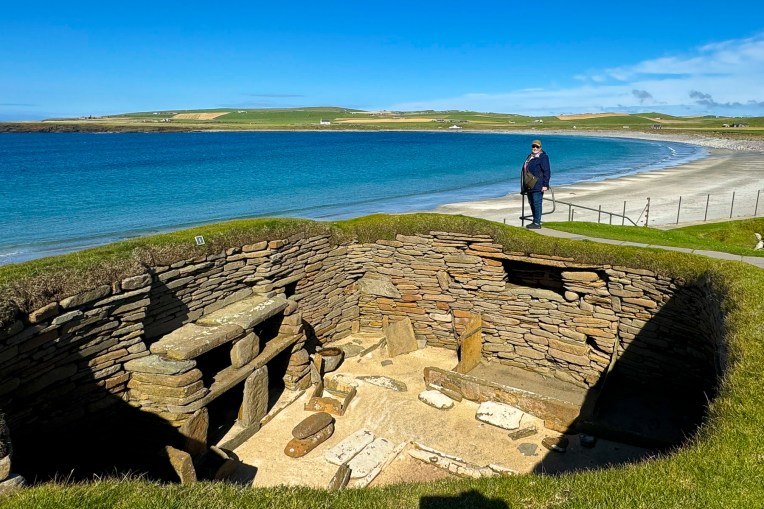
Knowledge of Skara Brae remained hidden until a severe North Atlantic storm in 1850 washed away the dunes that were covering the small cluster of eight dwellings on the shore of the idyllic Skaill Bay, though the site was only 700ft away from the Skaill House, a 17thcentury mansion, and the estate of the Lairds of Skaill.  The first partial excavation of the site was conducted by 7th Laird of Skaill, William Watt.

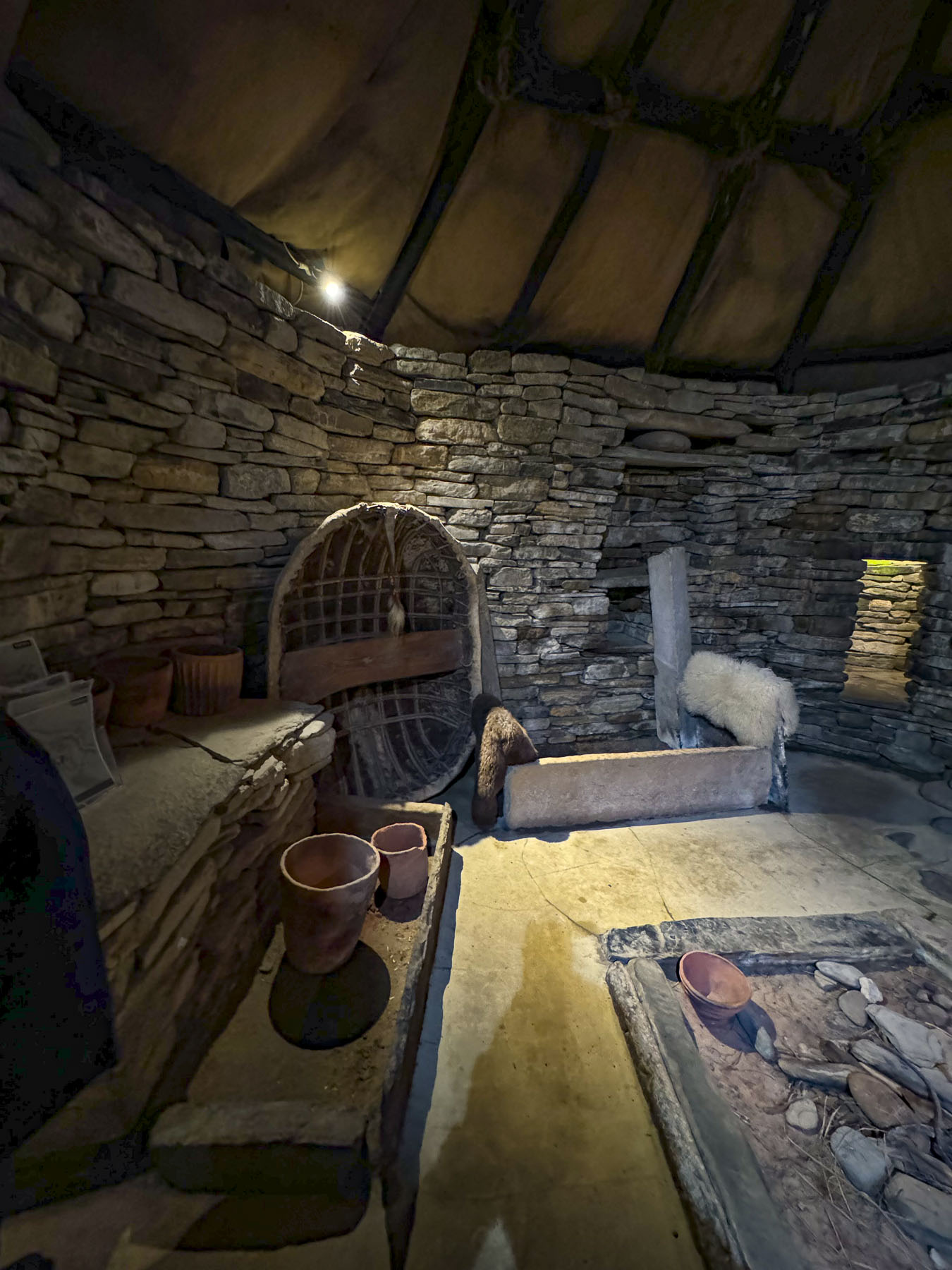
After another storm in 1926, extensive excavations were undertaken by the Ancient Monuments branch of the British Ministry of Works, which revealed the dwellings had earthen or thatch covered roofs supported by a structure made from driftwood and whalebones, with stone sleeping platforms and in the center of each house was a water pit which drained onto the beach.

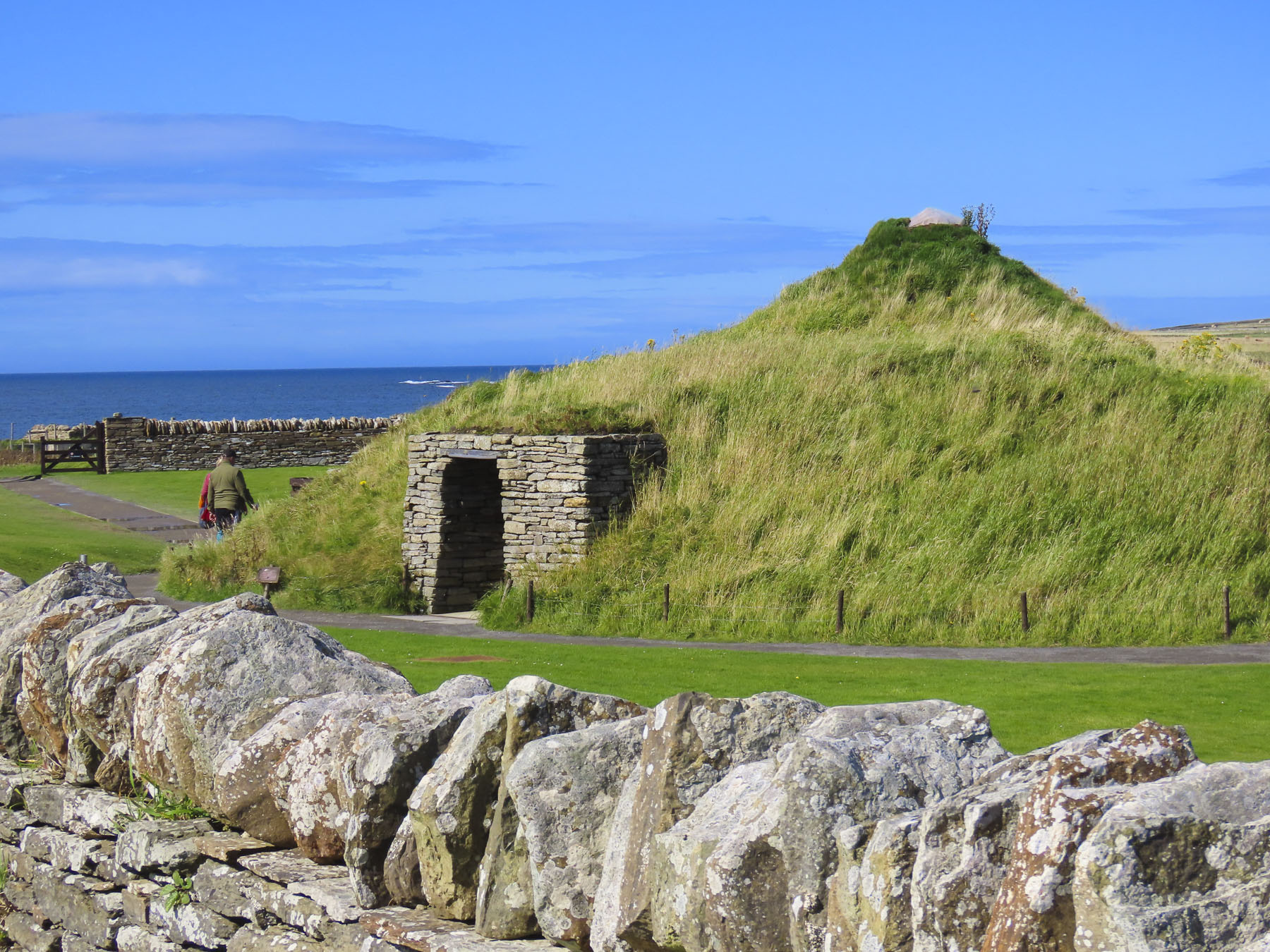
Stone slabs covered narrow sunken passageways between the houses. But the age of the site wasn’t established until the 1970s when radiocarbon dating of the artifacts discovered at the site dated them to the Neolithic era around 3200BC. While you can’t walk amid the archeological ruins here as you can at the Broch of Gurness site, there was a recreated Neolithic dwelling next to the Skara Brae Visitor Center that we walked through and found very interesting.

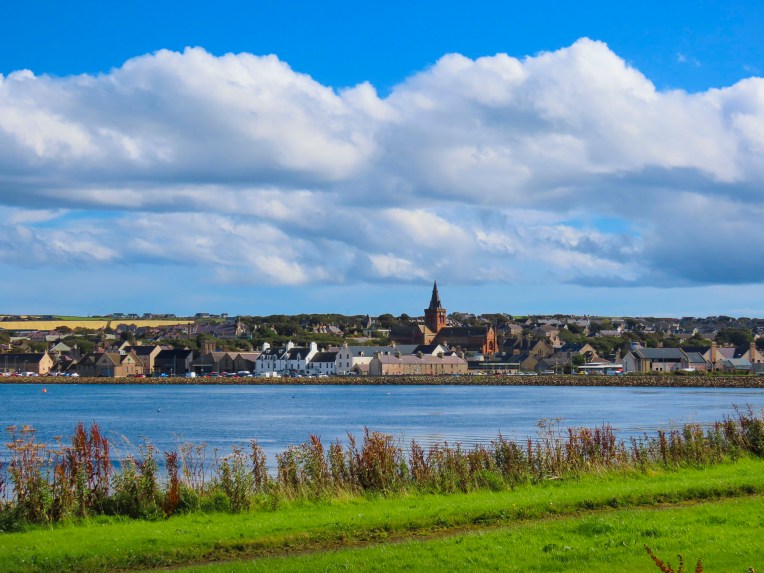
It was late in the afternoon when we headed back to the ferry along a route that took us through Kirkwall. It’s the largest town in the Orkney archipelago and a ferry hub onto the other islands and the Shetlands. The town looked intriguing and we wished that we had time to explore it. Hopefully, there’s a next time to Orkney.

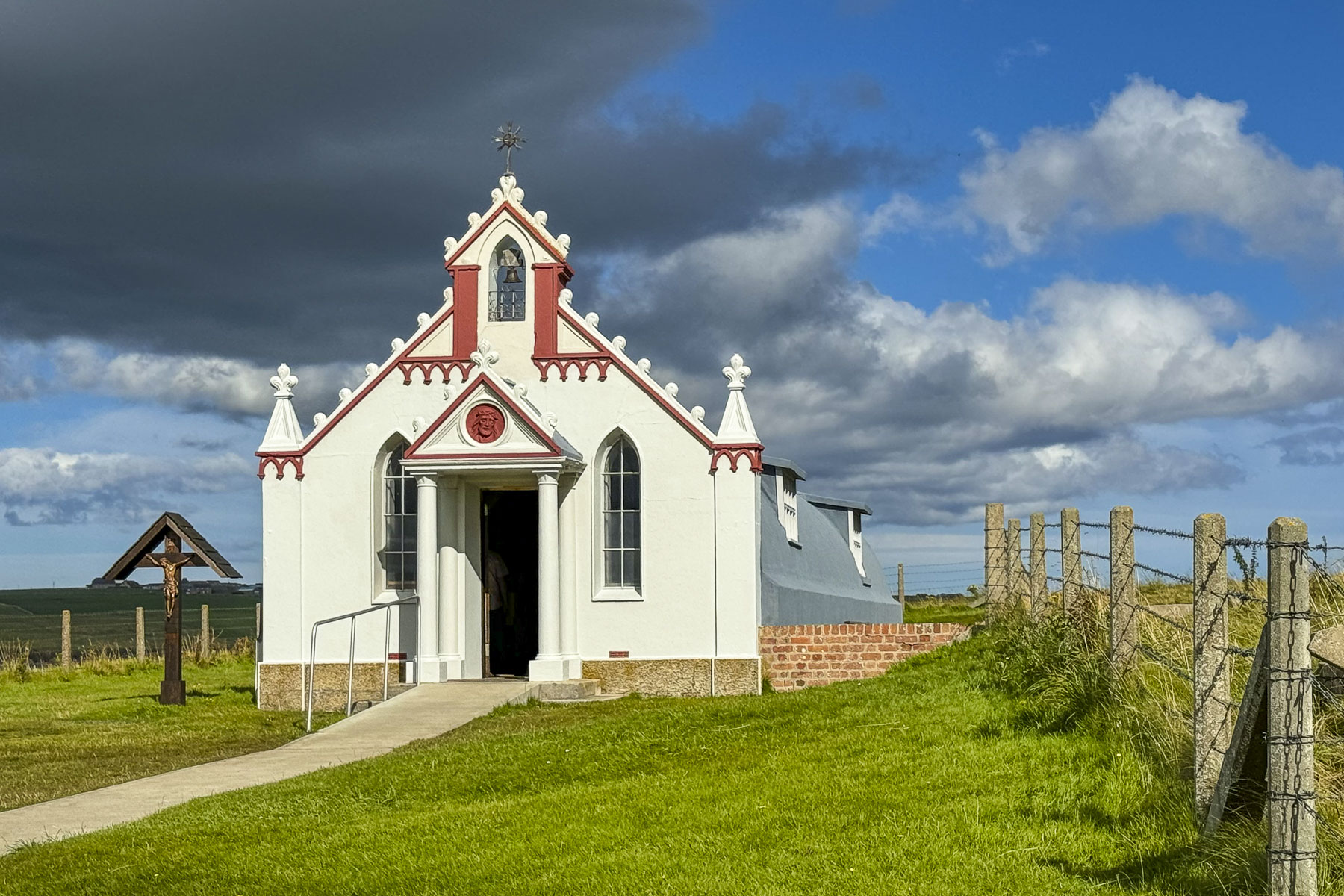
Now there was only one other car in the parking lot at the Italian Chapel, a beautiful small country church built by Italian POWs captured in North Africa.  Five-hundred Italian soldiers were incarcerated in Camp 60 on the uninhabited islet of Lamb Holm during WWII to construct the causeways that connected St Margaret’s Hope to the Orkney mainland. The causeways were also called the Churchill Barriers, as he ordered their construction to prevent Nazi U-boats from entering Scapa Flow, where the British Home Fleet was based, from the North Sea.

After petitioning the prison camp’s commandant that they needed a place of worship, the Italians were allowed to repurpose two Quonset huts and craft the interior and exterior of the chapel with concrete material leftover from the construction of the causeways. It was definitely an inspired labor of love, and the chapel is beautiful.

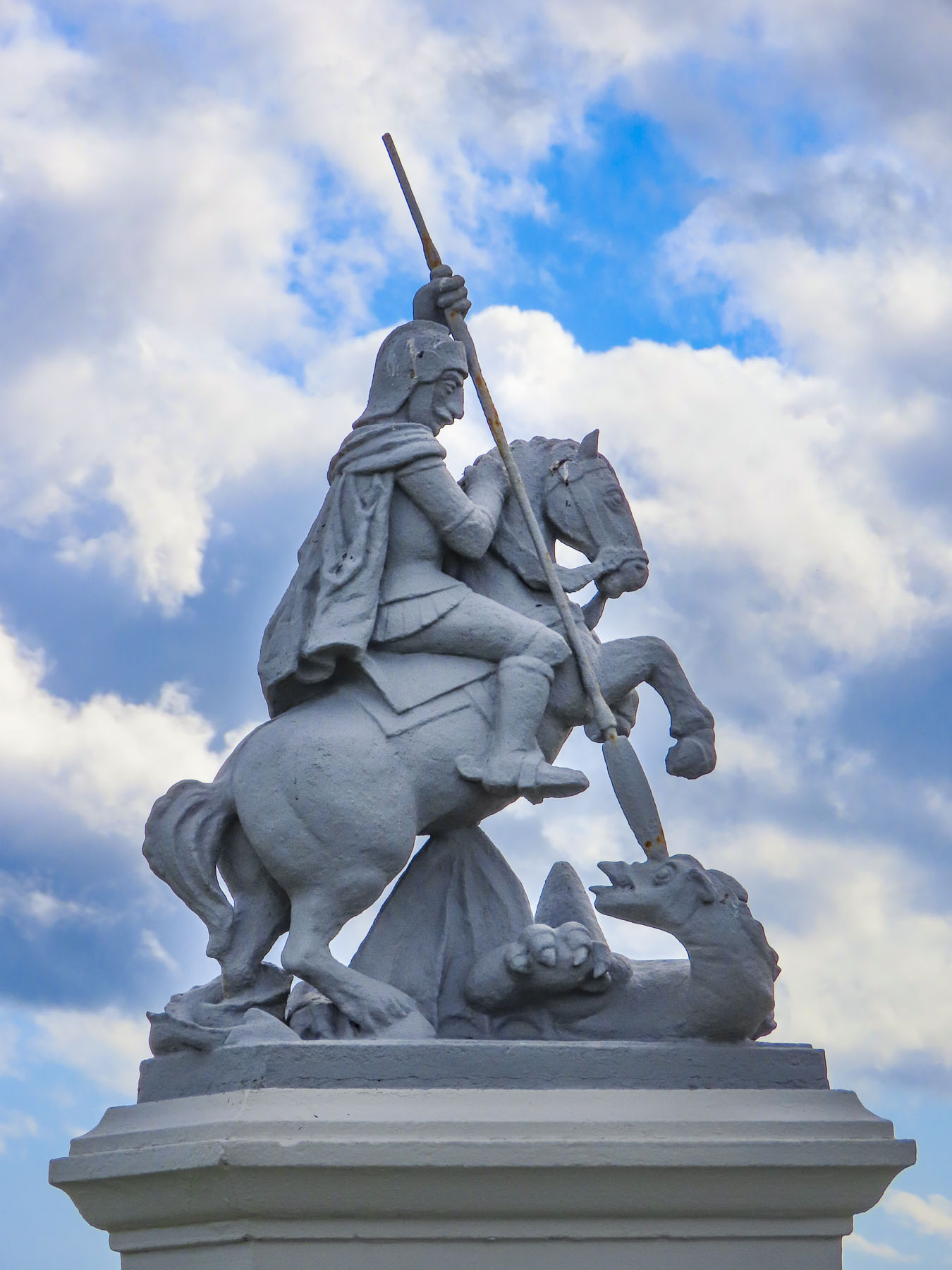
The statue of Saint George, the patron saint of soldiers, in front of the chapel was sculpted by the POW Domenico Chiocchetti, an artist from Moena, Italy. A 1970s restoration revealed it was sculpted with concrete over a tower of glass milk bottles and barbed wire frame. The milk bottles contained names of all the prisoners, Italian notes and coins, along with prayers.

We made it back to the ferry with only a few minutes to spare before boarding began. Ideally, we wish we had an extra day on Orkney to explore it in more depth.

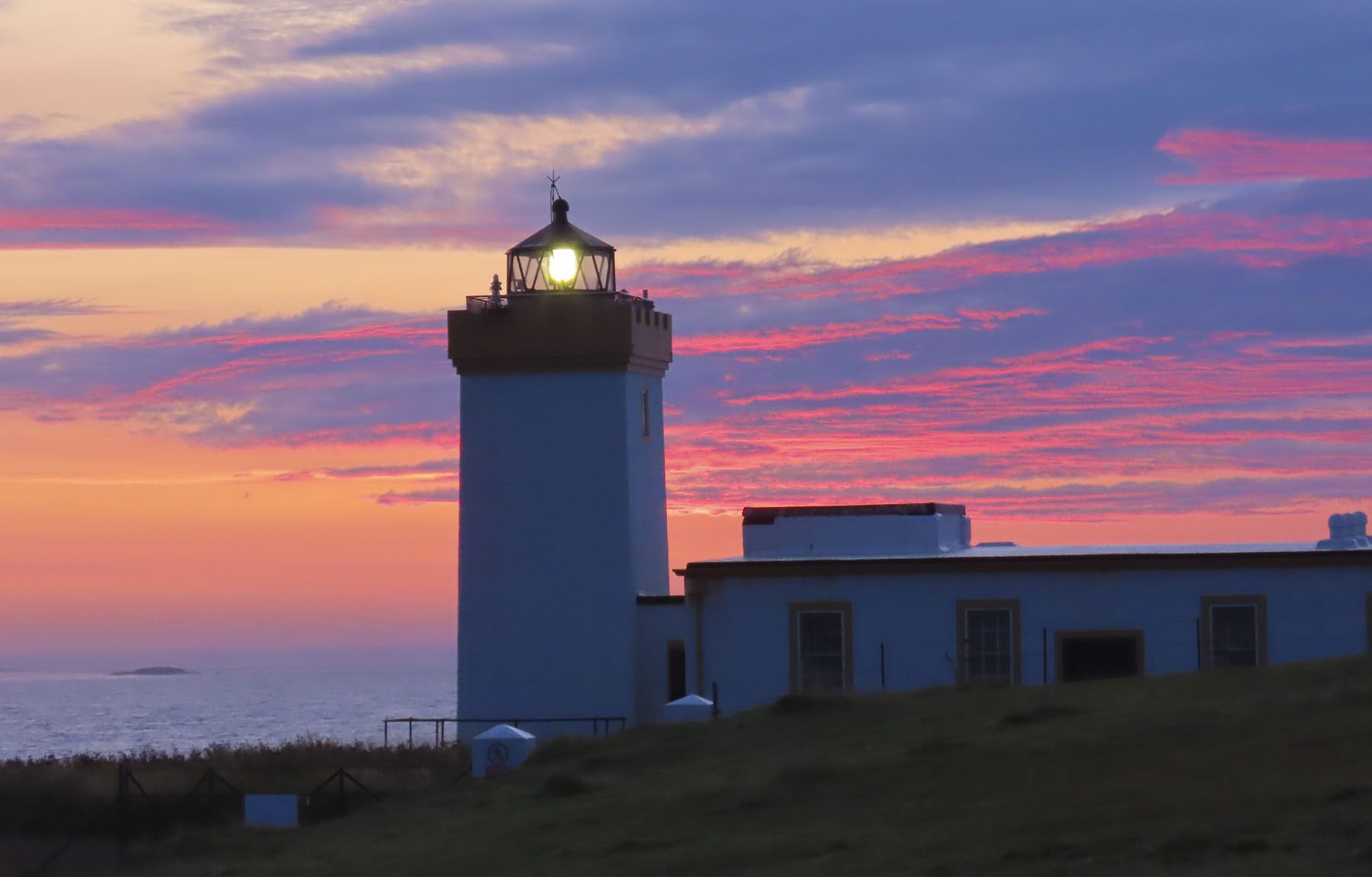
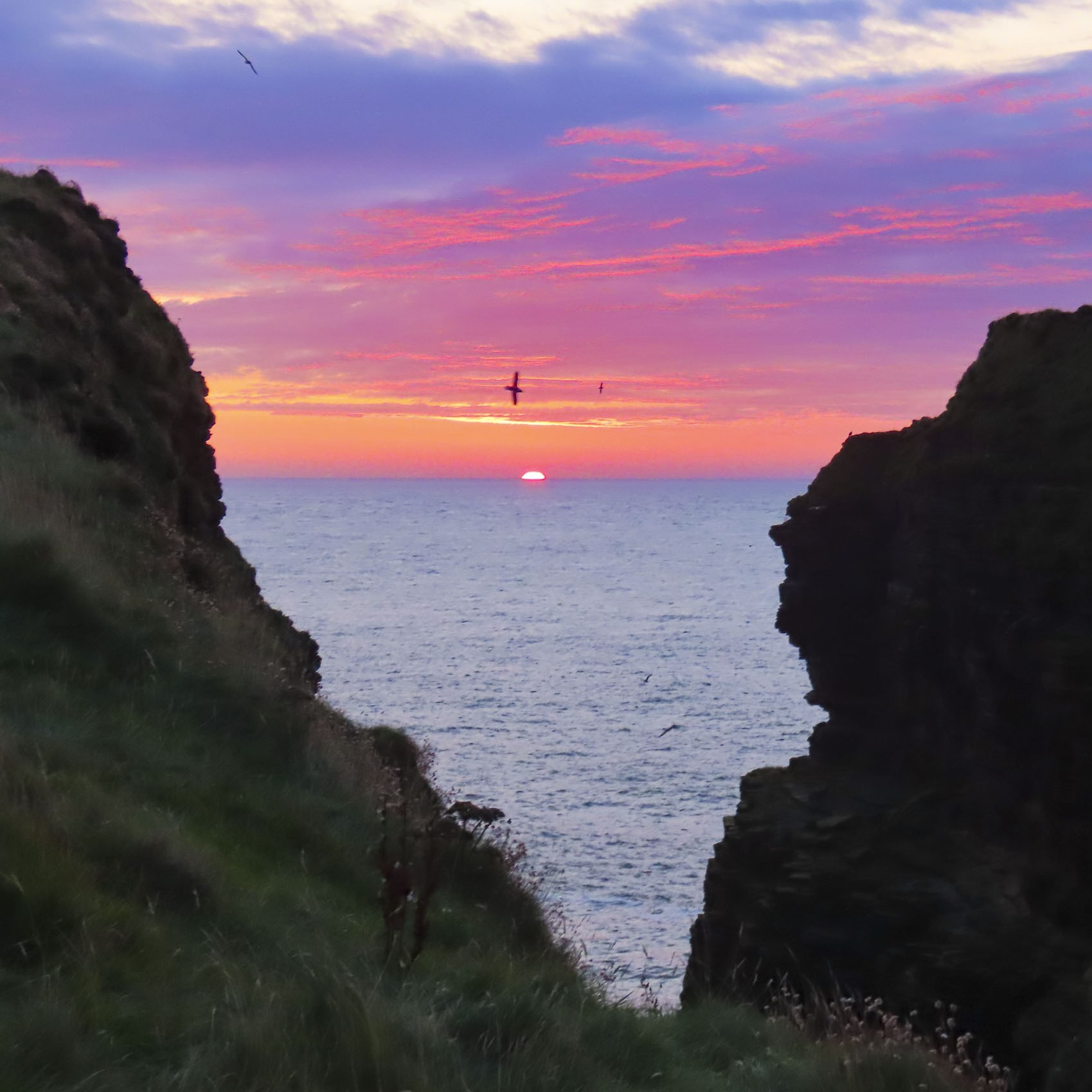
Back on the Scottish mainland we still had time to catch the sunset, and we headed to the Duncansby Head Lighthouse which overlooks the North Sea. It’s a tranquil, beautifully expansive spot on the headland. It was a nice way to end a busy day.

Till next time, Craig & Donna

Driving the North Coast 500 – Ullapool to John o’ Groats or Mountains, Lochs, Seas, and Midges

True to form, blustery afternoon winds were ripping the clouds apart as the CalMac ferry steamed past the Rhue Lighthouse, heading into Loch Broom and the ferry dock at Ullapool. Being one of the last cars to board the ferry, we were one of the first off in Ullapool, and decided to pull over out of everyone else’s way to get our bearings before taking a spin around the village. Ullapool isn’t a particularly large village, only a couple of blocks, but within ten minutes of folks disembarking from the ferry, there was no sign of life on the streets. Granted, it was a Sunday, but in August, which is the tourist high season, and it felt like a ghost town. Fortunately, we did find the local Tesco supermarket open, and we bought some provisions for breakfast the next morning, as where we were staying for the night, the Altnacealgach Motel on Loch Borrolan only offered dinner.

We were back on mainland Scotland and on the NC500 again, after modifying our NC500 route to include the Isles of Skye, and Lewis & Harris, for seven days of exploring those interesting islands.

Scotland is so outstandingly beautiful, and with every twist and bend in the road there always seemed to be another vista worthy of photographing. While the roads around the Highlands are in excellent condition, our one pet peeve is there are not enough designated vantage points to pull over and take pictures from. Often, we u-turned and pulled into a gated entrance to a field. Pulling over onto the hard shoulder wasn’t an option as The NC500 throughout the Highlands is mostly a two-lane road without shoulders. The narrower country roads off the NC500 have pullovers called Passing Places for when you encounter oncoming cars, but they are not to be used for parking.

Our recently refurbished room at the Altnacealgach Motel was nice and large. Most importantly it had a kettle for our early morning coffee. The motel is a modest place with 8 rooms, but it’s beautifully situated, a pebble’s toss across the road from Loch Borrolan. Dinner was simply pizza and chili, but quite good. https://www.altnacealgachmotel.co.uk/

Our 144-mile route along the NC500 to Balnakeil Beach then onward to John o’ Groats the next day was our longest drive in the Highlands. We figured as always, we’d make many other stops along the way, so planned for an early departure the next morning.

For a third day in a row, it seemed we couldn’t shake the overcast sky from the heavens and have a sunny morning. It was unusually dreary weather for a Highland August, so much so that many of the folks we encountered felt it necessary to apologize for the unusually dreary weather.

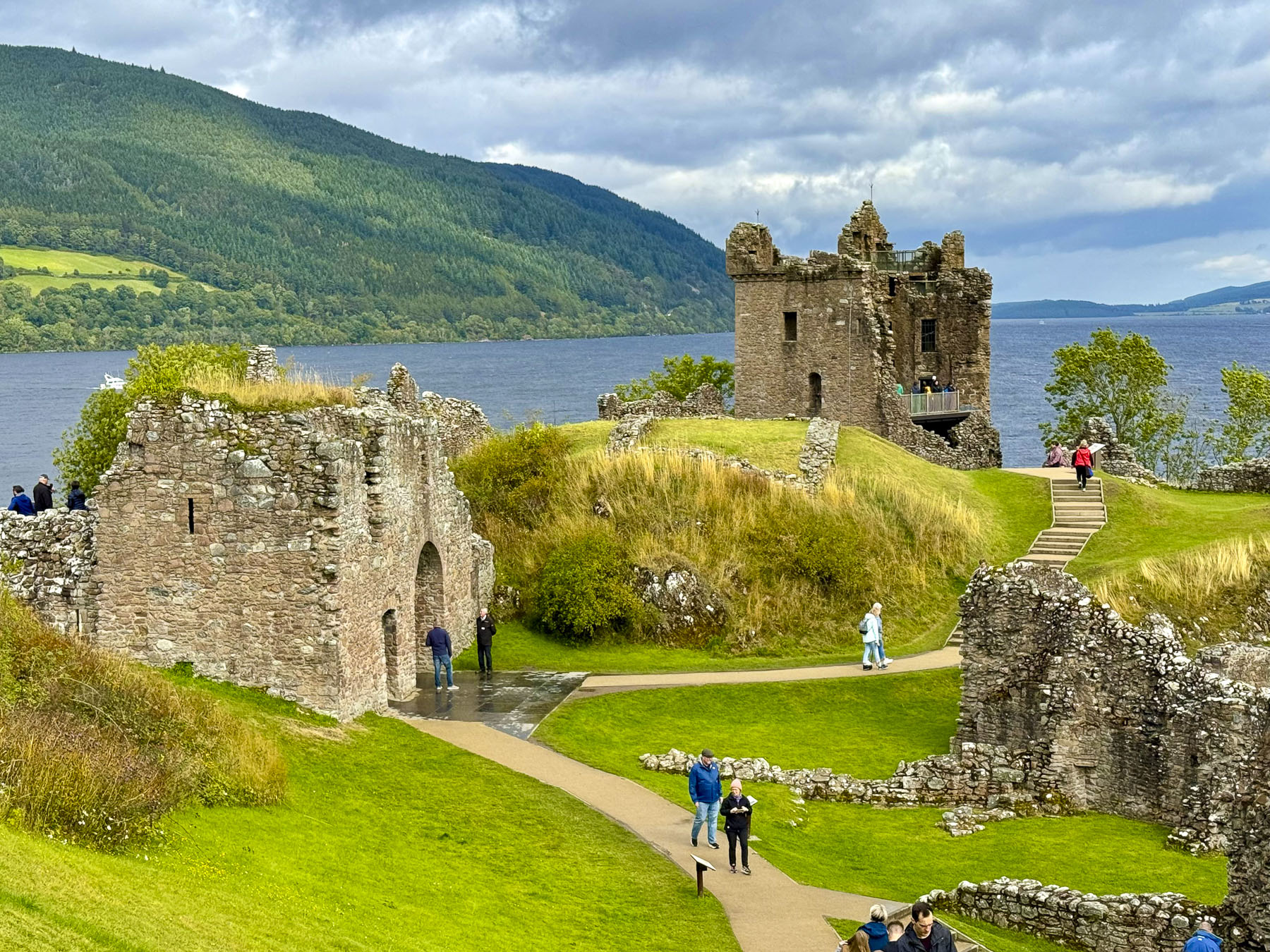
We followed the A837 north and stopped at Ardvreck Castle, once the seat of the MacLeods of Assynt, and Calda House, now ruins. The ancient 3-4 story fortified tower house dates to the late 15thcentury and is set on an island in Loch Assynt. It’s a dramatic setting, with the loch surrounded by the magnificent mountains Quinag, Ben More Assynt, and Canisp. A narrow, sandy isthmus connects the island to the mainland. Accusations of a sinister betrayal made by the MacKenzies of Wester Ross ruined the reputation of the MacLeods of Assynt and was believed to be the cause for the rapid decline of the MacLeods’ fortunes. A final battle between the clans in1672 forced the MacLeods to surrender their rule of the Assynt region to the MacKenzies. The Calda House was built in 1726 by Kenneth MacKenzie II of Assynt for his new bride who found the old fortress dreary and uncomfortable, and “much to her dislike.” Built with imported sandstone, her new mansion stood three stories high and had 14 bedrooms. As legend tells it, the joy of a new home only lasted until 1737 when a late-night celebration continued past midnight into the sabbath, and the house was struck by lightning. Only a bagpiper who refused to play on the sabbath survived. The castle stood strong until 1795 when a lightning strike also destroyed it.  It wouldn’t be proper castle ruins without a ghost and local lore obliged with the story of the daughter of the MacLeod chief, who threw herself from the tower of Ardvreck Castle when she realized her father had betrothed her to the Devil, as payment for the Devil’s help in building it.

We pulled over at several spots along the A894 in Unapool to take pictures of Loch Gleann Dubh. The views of the loch were gorgeous, and we were a little envious of the folks who owned homes above the loch and could enjoy this panoramic vista every day.

The road swerved through a mountainous landscape sprinkled with lochs. Clouds raced across the sky. Surprisingly this popular route did not have many restaurants open on a Monday. This was a near crisis situation for two under-caffeinated coffee aficionados.  Our  pursuit of coffee was almost a forgotten memory when we spotted a Spar grocery store in Scourie, adjacent to a caravan campsite overlooking Scourie Bay and a beautiful beach. Back in the car we enjoyed two cups of coffee and the view.

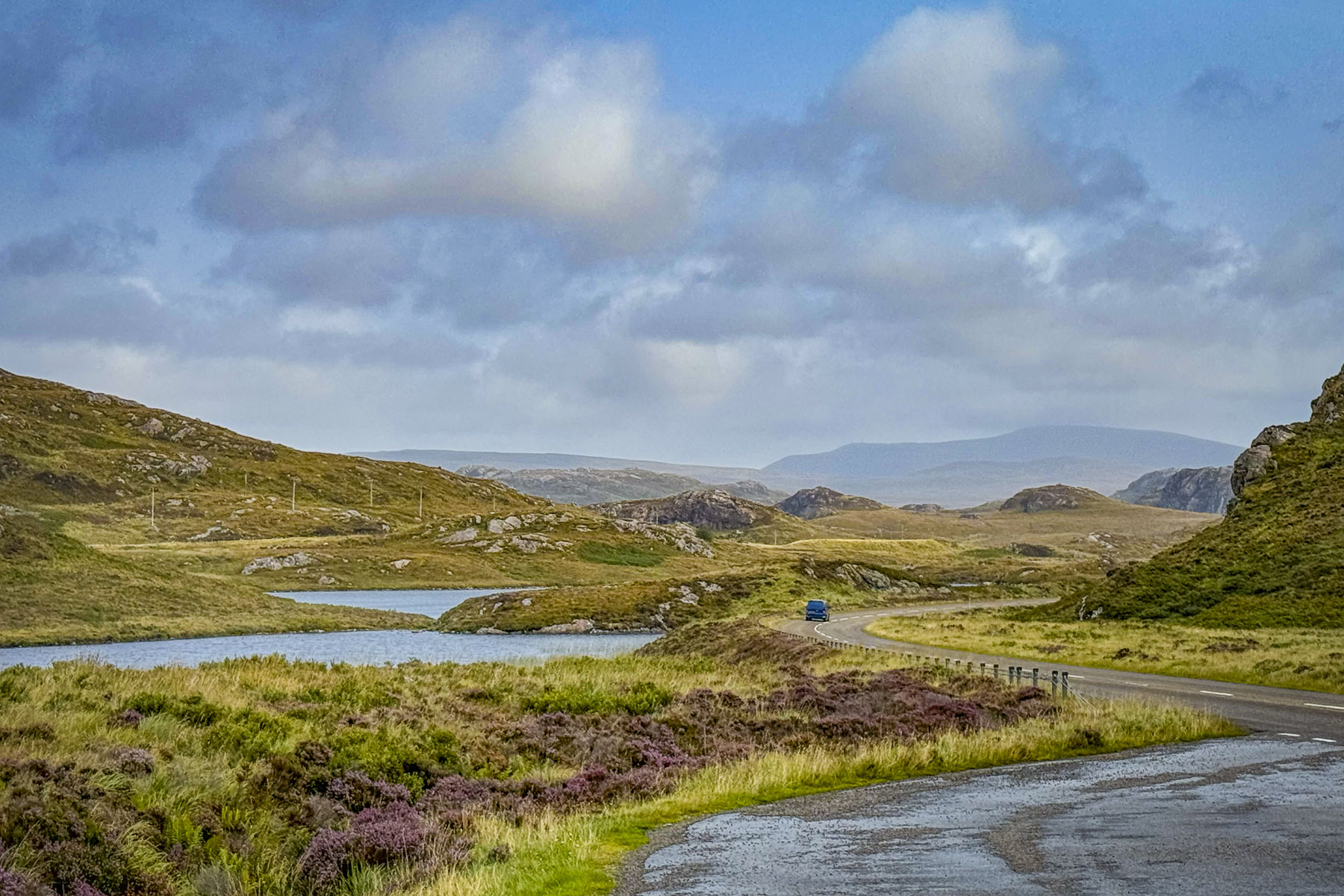
We eventually turned onto the A838 at Laxford Bridge and followed it to Rhiconich. Past the hamlet this section of the A838 narrows to a single lane track as it winds through a desolate landscape of rolling hills and heather land. It was on this stretch that we encountered oncoming “traffic,” the occasional grouping of 3 or 4 cars or caravan. The narrow road allowed two-way traffic, but in order to pass an oncoming car one vehicle has to pullover into a small bump-out called a Passing Place. These are well marked and spaced along the country roads, but you need to be on the lookout for approaching cars, as the protocol is for drivers to pull into the closest Passing Place on their side of the lane and wait for the other vehicles to pass. It took some getting used to. Surprisingly, the speed limit on these single-track roads is 60 mph, but we were only comfortable driving at half that speed. Donna says that’s because I drive like an old man.

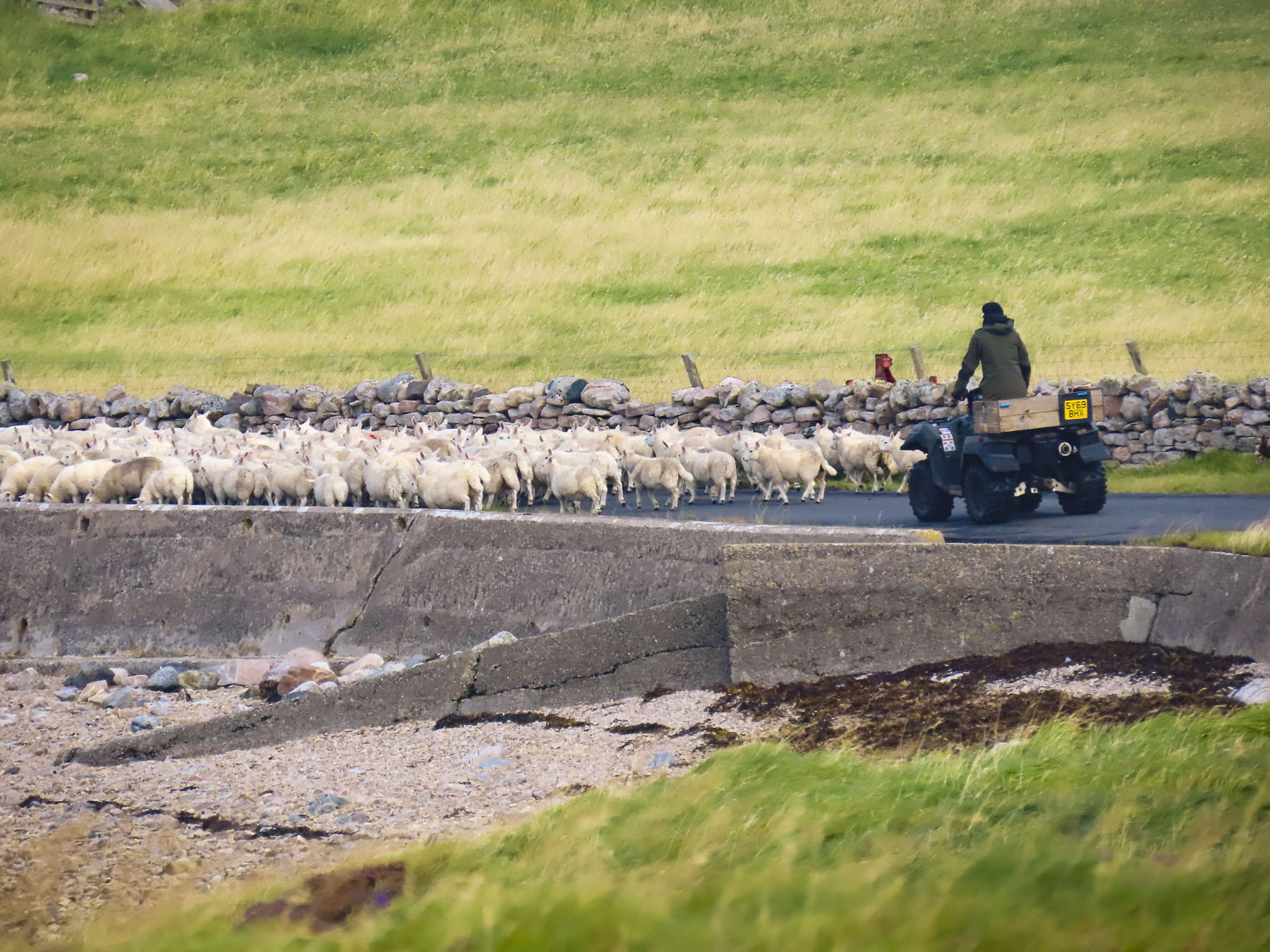
We pulled over at the Geological Information Point along the bank of Kyle of Durness, a sea loch, to read the placard and stretch our legs. Here we were fortunate to spot a shepherd on an ATV, as he and his sheep dog herded a large flock of the wooly beasts down the side road to a new pasture. The A838 continued as a single lane road all the way to the crossroad in Durness. It was suddenly a sunny day!

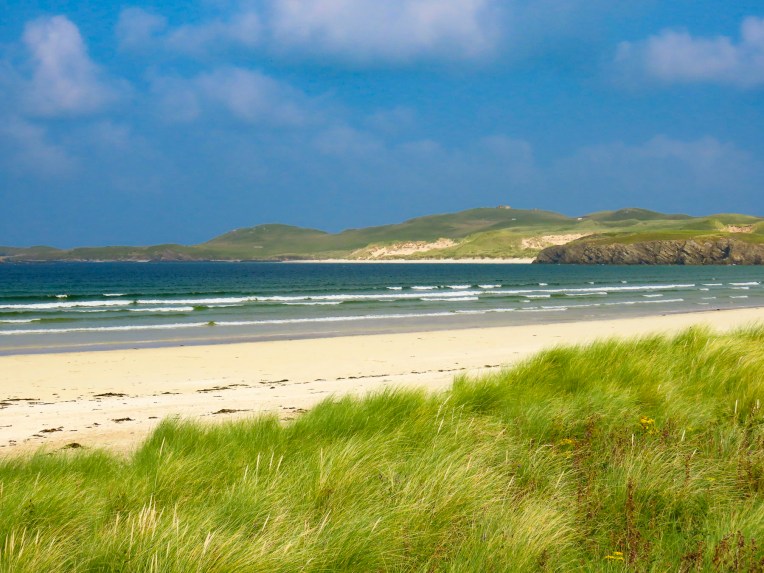
The beaches along the coast of Durness were our main destination for the day. Compared to the barren earth toned landscapes we traversed earlier in the morning, the striking Caribbean blues of the ocean off Balnakeil Beach were exotic, and for a moment we thought we might have been transported to the British Virgin Islands. The wide white sandy beach stretches for nearly a mile and is flanked by dunes covered with beach grass. Following the curve of the beach to the Faraid headland and stacks is a popular walking activity. There was a strong breeze which discouraged sunbathers, but there were a few hardy folks willing to take off their shoes and dip their toes in the chilly water of the North Atlantic, which hovers around 56F/13.5C in late August.

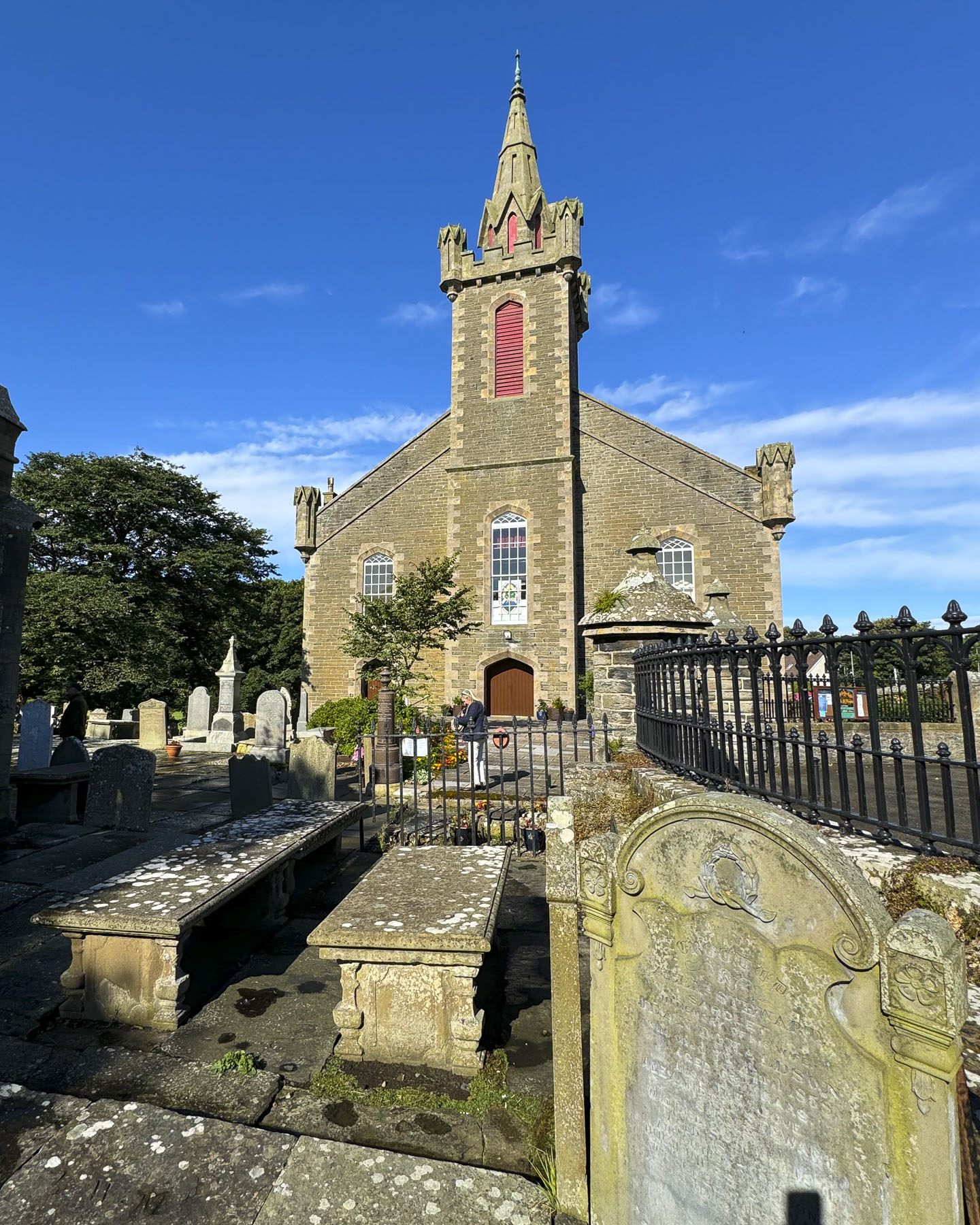
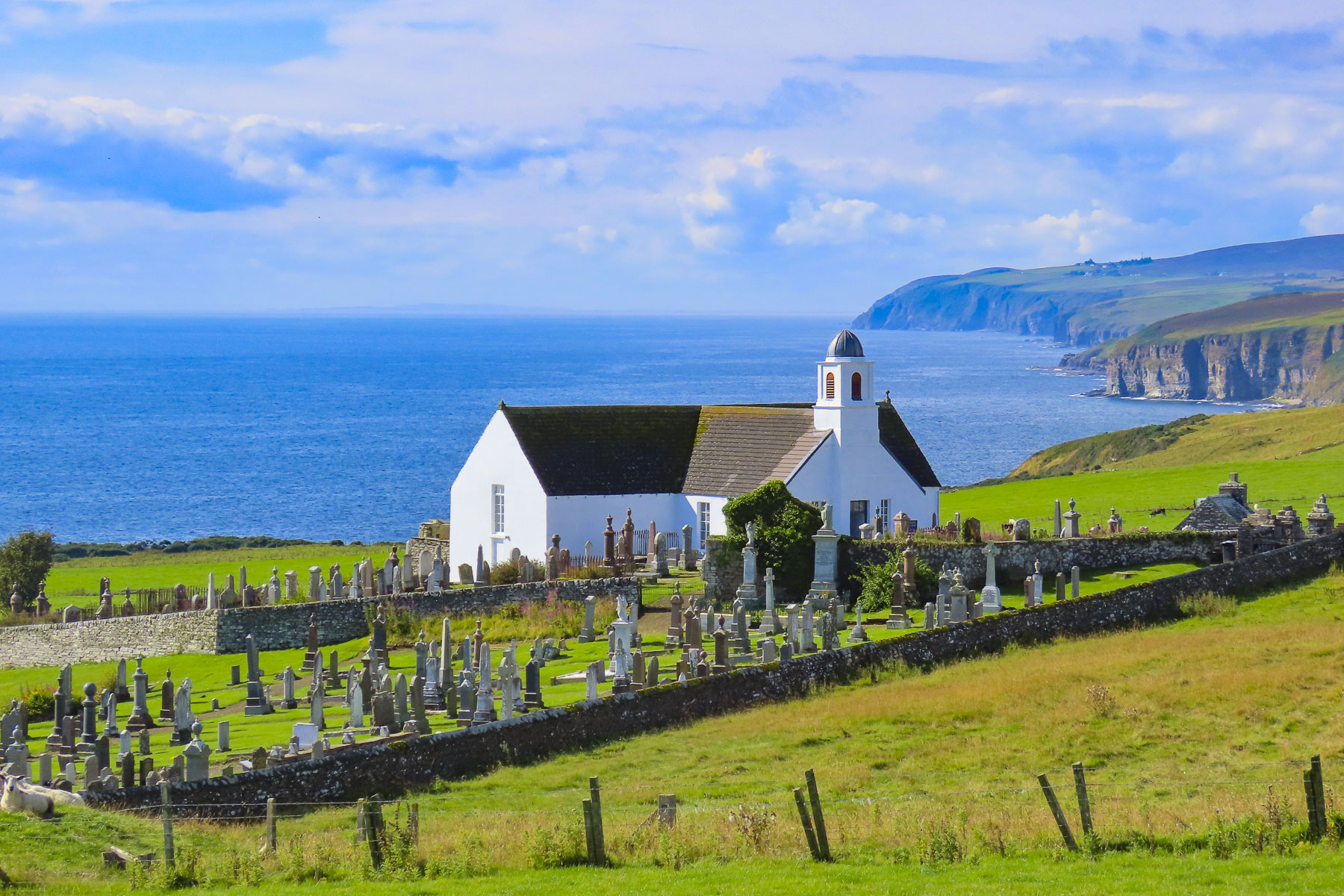
The location of the Balnakeil Church overlooking the beach and bay must have been very inspirational back in the early 1600s when it was constructed atop the ruins of an earlier 6th century Celtic monastery. Services were held in the church for about 200 years before a new place of worship was built on the southern side of the hamlet.

Today, headstones in the graveyard surrounding the ivy-covered ruins are slowly being swallowed into the peaty earth. Some interesting folks are buried in the cemetery. Notably Domhnull MacMhurchaidh, a hitman for the Clan MacKay. He is believed to have murdered 18 people and dumped their bodies into the waterfall that runs down into the caves at Smoo. “Apparently, he believed the folklore tale that the Devil lived below the falls and thence his crimes would never be discovered.” Fearing his grave would be desecrated after his death he paid a princely sum beforehand to be interned in a tomb inside the church.

A monument to the Durness born poet Rob Donn, aka, the Robbie Burns of Gaelic poetry, also stands in the churchyard. He never learned to speak English and composed in Scots Gaelic. His poems sometimes contained bawdy verse and satirical social commentary, but they were faithfully memorized and orally repeated around Scotland for 50 years before the first printed versions were available after his death.

Elizabeth Parkes, the aunt of John Lennon, is also buried in the churchyard, and he is said to have visited Durness frequently. It’s believed locally that his song In My Life, “There are places I remember,” reflects his experiences in the area.

Since the 1500s, one of the historic residences of the chiefs of Clan MacKay, Balnakeil House has commanded a prominent spot across from the ancient church, with a sweeping view of the beach. The current, bright yellow dwelling on the site dates to 1744.

Continuing our travels east on the A838, a two-lane road again, we stopped at Durness Beach. Though much smaller than Balnakeil, its waters were still a pristine blue and the beach, which backed to a steep slope, had dramatic rock outcroppings. 

Farther along from the overlook above Ceannabeinne Beach we watched paddle boarders in wetsuits set out onto the calm waters.

With our stomachs growling, we were beginning to envision all that lamb on the hoof turned in to chops; lunch was finally procured at the Norse Bakehouse in Rhitongue. This is a fine family-owned establishment that has probably saved the lives of many tourists driving the NC 500 on a Monday. It was an excellent casual restaurant, with indoor and outdoor seating that serves sandwiches, soup and pizza. Their coffee was wonderful and the food was fairly priced. https://norsebakehouse.wixsite.com/my-site/dinner-menu

“From Land’s End to John o’Groats.” We made it! Though the expression usually relates to traveling from the tip of southern England. We had cheated and started in Inverness and headed south to Edinburgh before going west across the Highlands to the Isles of Skye and Lewis and Harris. Then returning to the mainland and driving north along the west coast to John o’Groats, traditionally considered the northernmost point on the English mainland, though the designation actually belongs to Dunnet Head, about 13 miles west. Our own expanded version of the iconic NC500!

The clouds had thickened again by the time we arrived at the famous signpost overlooking a small harbor, and the sea. That’s pretty much the main drawing card to the village, which otherwise feels like an outlet shopping center. But it’s considered a must stop for most tourists before they continue on to explore the immense beauty of the northern Highlands. That seems to be the case since 1496, when King James IV granted a license to Jan de Groot, a Dutchman, to operate a ferry between this northern-most port in Scotland to the Orkney Islands, which had recently been acquired from Norway in 1472, as the resolution of an unpaid dowry for the King of Norway’s daughter Margaret’s marriage to James III of Scotland.

Business boomed for the enterprising de Groot and he was eventually able to build a large octagonal house with eight doors, in the center of which was an eight-sided table, designed so his seven sons seated at the table would be recognized as equals, as there was not a head of the table.  Over time Jan de Groot was anglicized to John o’Groats.  A modern art installation, in front of the John o’ Groats Hotel, now occupies the spot where the family home once stood. But a nod to his legacy was incorporated into the Victorian era John o’Groats Hotel built in 1875 with the inclusion of an octagonal tower in its design. The hotel now called the ‘The Inn at John o’Groats’ underwent an extensive renovation, which included a modern Norse style extension in 2013, and now features individually unique, self-catering apartments with 1, 2 or 4 bedrooms. https://www.togethertravel.co.uk/destinations/scotland/john-ogroats?guests=1&nights=1&bedrooms=0

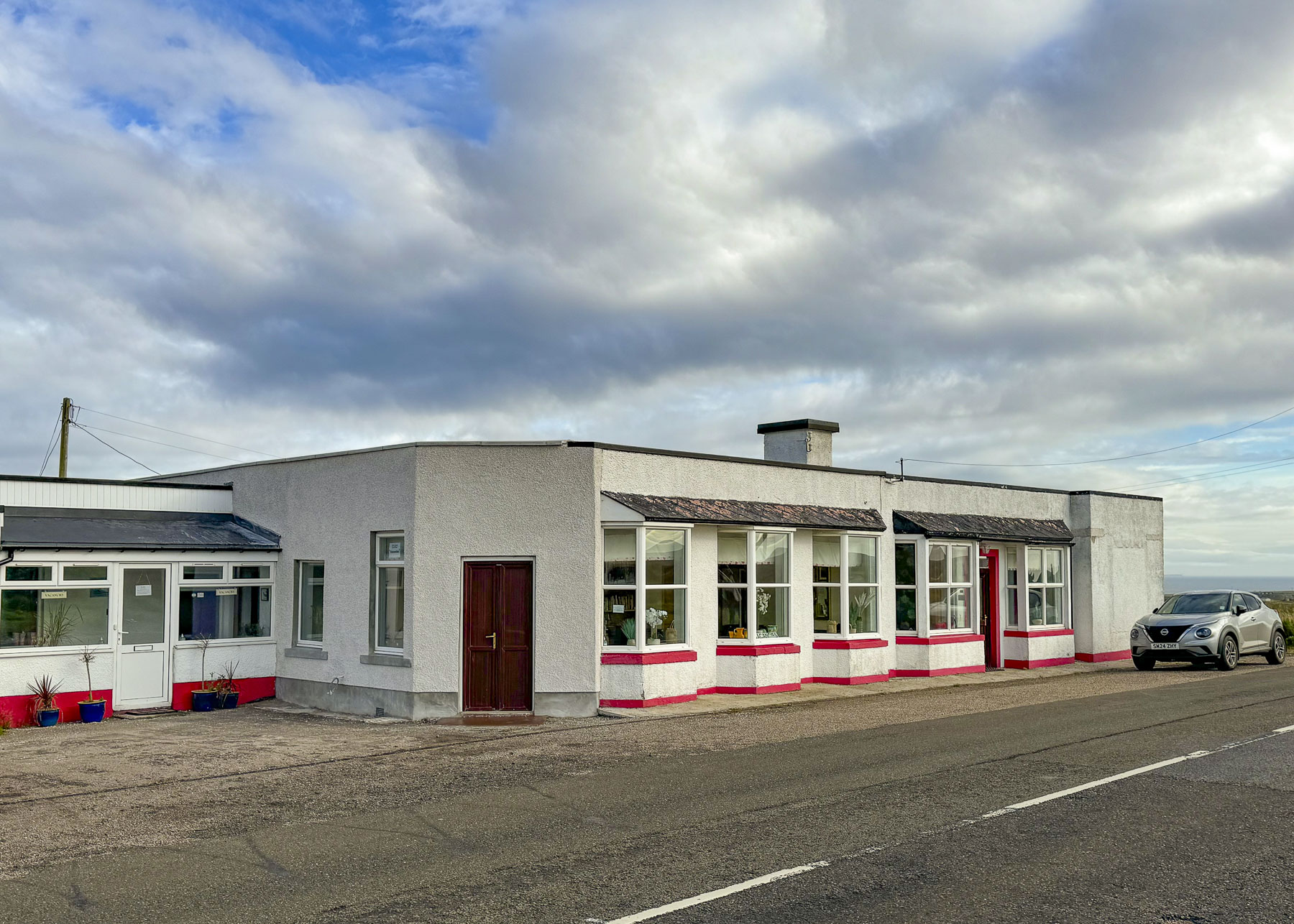
Outside of town Leonna and Adam, the innkeepers of the John o’ Groats Guest House, warmly greeted us when we arrived very late that afternoon, but still with enough time for a short rest before dinner. While the inn looks a little spartan from the road, our accommodation was quite large and comfortable. https://www.johnogroatsguesthouse.com/

We were enjoying a whisky before dinner when Adam came into the lounge to mention that the sunset that evening, after several cloudy days, looked like it could be quite spectacular. Now, we had read about the intensity of midges during the summer months and came fully equipped to ward off the tiny nuisances with all sorts of repellents: bug sprays, lotions, insecticide wipes, and head netting. We were prepared! But in our almost two-week long trip through the highlands, we hadn’t encountered any – none, nada, zero, zip – until I spontaneously grabbed my camera and rushed outside to the corner of the building. Suddenly I was engulfed in a swarm of nearly invisible Culicoides impunctatus, the Highland Midge, Scotland’s most ferocious foe, and reportedly the reason why the Highlands remain so underpopulated. I was woefully unprepared! If anyone was watching me, I must have looked like a dancing fool with one arm frantically waving about my head as I tried to level the horizon through the viewfinder of my camera to capture the sunset. Thankfully there were still a couple of sips of whisky left to settle my nerves.

The dinners and breakfasts that Leonna and Adam created over the next two days, which showcased locally sourced provisions, were especially delicious. Their inn was one of the nicer places we stayed during our travels through Scotland. We would definitely return.

The next morning, we caught the ferry to Orkney.

Till next time, Craig & Donna
Three days in Edinburgh or Jugglers, Sandstone, Whisky & Thistle  

Good hosts, Shopkeepers, and restauranteurs constantly apologized for the unusually cold and fickle August weather that Scotland was experiencing. In the Outer Hebrides, on the Isle of Lewis and Harris, strong winds and high tides led to road flooding in the center of Stornoway, a destination on our itinerary. “Normally the weather is perfect this time of year,” was a frequent refrain. “Lively thunderstorms,” such a nice phrase, had delayed our flight from London to Inverness, several days earlier. Later in the month heavy rain and strong winds led to the naming of the 12th storm of the 2024 season, Storm Lilian.

We had donned our Gore-tex rain gear for two days straight, and were thankful we made the investment in some reliable waterproof jackets. But yesterday afternoon as we visited The Kelpies while driving to Edinburgh, it was 65°F and the sun was shining. The weather was brilliant. Rain then clearing storms was the weather pattern that would repeat itself for the next three weeks, which provided many opportunities for some dramatic landscape photography.

With the weather predicted to be nice for the next several days, we planned to head to the Dugald Stewart Monument on Calton Hill for that iconic view of Edinburgh at sunrise. It didn’t go exactly as planned, as we didn’t get up early enough, underestimated the length of time our tram journey from the Holiday Inn Express Edinburgh – Leith Waterfront would take, and we overshot our stop.

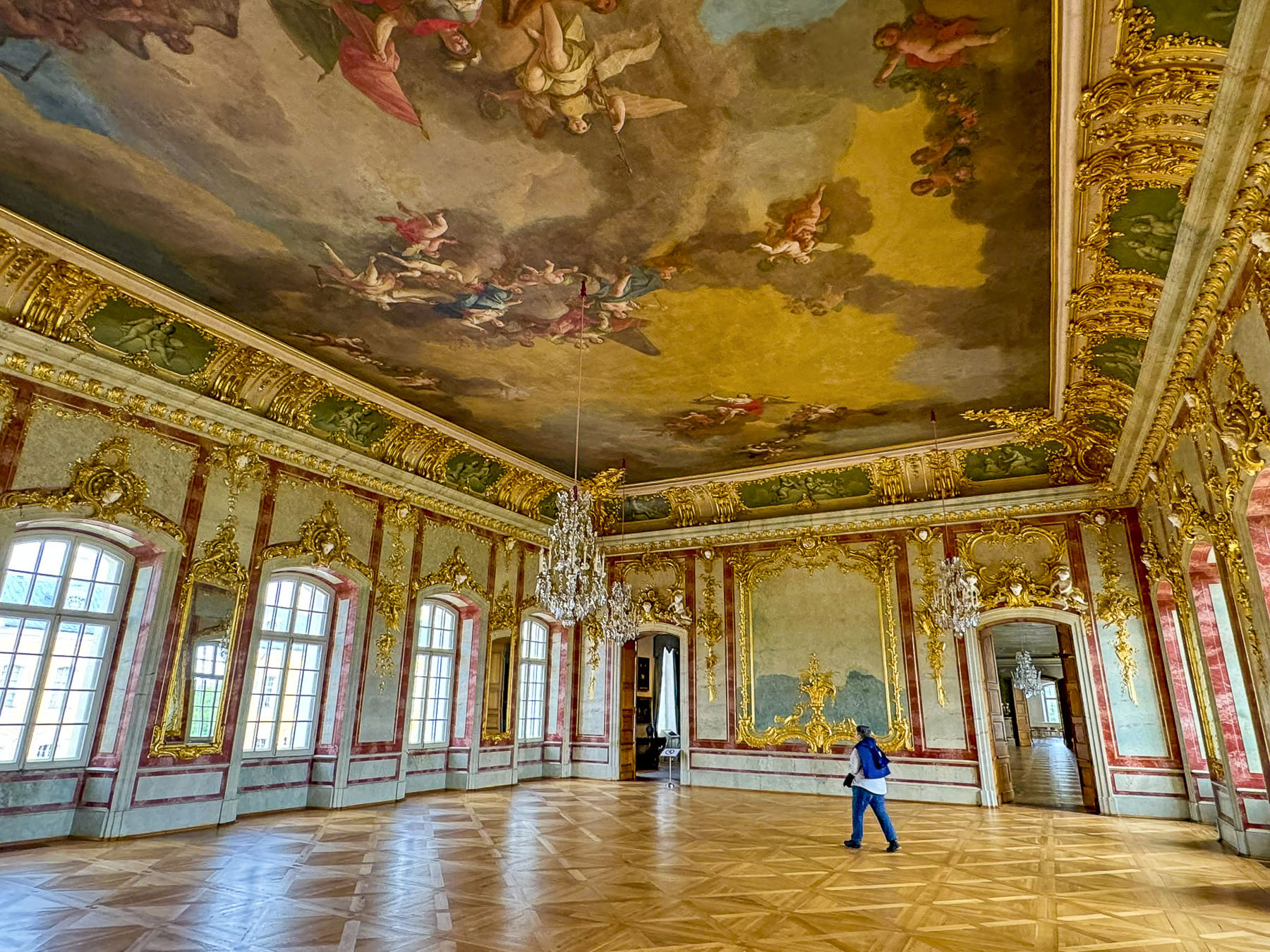
Nevertheless, we enjoyed a quiet early morning in the Princes Street Gardens, catching Edinburgh castle in early morning light from the Ross Fountain. Before walking back to Calton Hill, as the city’s streets slowly awakened, and sculptures atop buildings glowed in the morning sun.

Along our route were solid examples of buildings constructed with Craigleith sandstone. The locally quarried stone was the building material of choice for James Craig, the 18th century Scottish architect tasked with replacing the ancient city’s medieval Old Town’s unsanitary tenements and warren of alleys, with a grid of avenues, squares, and gardens. The results, James Craig’s New Town, are today treasured as  a prime example of Georgian era town planning.

An obscure alley-like entrance across the road from the stairs to Calton Hill caught our attention and we followed a forgotten walkway into the Old Calton Cemetery. Long neglected tombs and teetering headstones dotted the graveyard. In the middle was a stately monument depicting a freed slave looking skyward to a statuesque Abraham Lincoln.  

The Scottish-American Soldiers Monument, as it is called, commemorates the six Scotsmen who volunteered to fight against slavery during the American Civil War. Donations for its construction were solicited across the Scottish dispora in the United States with the American business magnates; Andrew Carnegie and John D. Rockefeller becoming major contributors. The memorial monument was erected in 1893, was the first statue of Abraham Lincoln outside of the United Sates, and continues to be the only American Civil War monument in Europe.

Even though our heart rates were up, after the walk from the center of Edinburgh, the long climb of stairs to the top of Calton hill was a challenge, though it was well worth the effort for that iconic view across The Athens of the North. The 19th century nickname references the Grecian architectural influences incorporated into some of the city’s most notable neoclassical buildings.

Atop the hill the style is most evident in the Dugald Stewart Monument, a memorial to the Scottish philosopher and mathematician; the old City Observatory; and the National Monument of Scotland, a Napoleonic Wars memorial built in remembrance of the soldiers and sailors who fought in those wars. Afterwards we walked down the opposite side of the hill towards the Omni building, a theater and entertainment center, across from the tram stop at Picardy Place. A tall statue of Scotland’s favorite detective, Sherlock Holmes, commands the plaza located a short distance away from the birthplace of the writer Sir Arthur Conan Doyle. 

Our goal now was to walk towards the Port of Leith along the Leith Way to delve into some of Donna’s family history. Here’s Donna to explain:

Before I was Donna Hammell, I was Donna Leith. My mother-in-law was a sweet Italian woman who married a Scottish fellow named John Leith. In the 1970s, they traveled to Scotland to explore the family heritage. They knew that generations back, one of the Leith men had been a sailmaker with a shop along Water Street; another had been a ship builder. Mom and Dad wandered around Leith, trying to find the shop. They were about to give up the search, when they decided to ask at a pharmacy. Turns out that was the very building the sailmaker had occupied, and the people who ran the shop were cousins, once or twice removed. The two women corresponded for decades and exchanged recipes. I just baked a batch of Eyemouth Tarts – deliciously addictive little squares of candied fruit atop a buttery crust. My children are named Sandra Leith and Ian Leith, and I was determined to bring them a souvenir with the Leith name on it. Although for obvious reasons there is some antipathy between my former and current husbands, nevertheless Craig kindly indulged me on this search for my kids’ ancestry. I think he was as pleased as I was when we hit the jackpot at a lovely little store. I cleaned her out on all things Leith.

Leith Way, is one of Edinburgh’s oldest streets, that followed the line of a now long- gone earthen rampart built to defend Edinburgh from Oliver Cromwell’s army in 1650. On either side of the road, it seemed as if every storefront we passed incorporated Leith into the name of their business: Leith Shwarma, The Dog House Leith, Leith Artisan Coffee, Leith Walk Denture Studio, Leith Barber, and Tribe Leith, a yoga studio. Nearing sensory overload, we stopped for a pint of beer at the Boundary Bar. It’s an unpretentious neighborhood pub famously known for its line painted along the floor that marked the border between Leith and Edinburgh, and most importantly allowed customers who crossed to the Leith side of the bar to party an hour longer, when the pubs in Edinburgh closed at 9 PM. Leith’s advantage ended when the two cities merged in1920. Across the street we enjoyed an inexpensive lunch at the Kukina Turkish Bakery, just down from The Wee Leith Shop, which was only twice as wide as its door. Farther along we found a very nice shop, Destined for Home, with all things Leith souvenirs. Donna was thrilled!

Leith’s history was tied to the rise of Edinburgh as the seat of the Scottish crown. Archeological discoveries along the port’s waterfront suggest an extensive wharf area that dates to the 12th century. The port thrived for centuries upon shipbuilding, whaling, fishing, and glass making, along with warehouses storing whisky and wines imported from Europe. Leith was so prosperous that it had gas street lighting in 1822, and electrified its tram network in 1905, years before the town merged with Edinburgh in 1920. Severely hard times fell on Leith after WWII when ship building declined, and the advent of mega container ships required larger, modern port facilities. Notoriously, the city was unceremoniously depicted in the 1993 novel, Trainspotting. It was a much different perspective than that of the Proclaimer’s1988 hit song, Sunshine on Leith, which the BBC hailed as a “love song to the city and Scotland.” The song became an anthem of endurance for a city once down on its luck. But since then, the dock area has undergone a transformation with new office buildings and residential towers being built along the old canals and dock area of the port, reinvigorating the area and earning the designation as the “Venice of the North.”

Later that afternoon we returned to the center of Edinburgh via the tram and walked across town to theSpace @ Surgeons’ Hall, a performing arts theater, to see a play hosted by the Fringe Festival. I Love You, You’re Perfect, Now Change was written by award-winning playwright Joe DiPietro, who happens to be the little brother of Donna’s girlfriend from grade school. The four-person performance, the second longest-running off-Broadway play, was performed in a small intimate space with seating on three sides of the stage. The play was fantastic, and the tickets were extremely inexpensive. 

At this point we need to confess that we didn’t know anything about the Edinburgh Fringe Festival, a large three-week entertainment event held every August in Edinburgh, for over 75 years. It was only after purchasing our airfare, when we tried to book a hotel, six months out, that room availability was severely limited, and we delved deeper as to why. The Fringe Festival started as an act of rebellion against the status quo in 1947 when eight theater companies, not invited to the Edinburgh International Festival, performed on the streets in Edinburgh. The event has mushroomed over the years and in 2024 “sold more than 2.6 million tickets and featured more than 51,446 scheduled performances of 3,746 different shows across 262 venues from 60 different countries.” The Edinburgh Fringe Festival website and catalog of shows was very helpful in planning what to see. Everything we read said Edinburgh would be insanely packed with tourists. But our barometer was a New York city rush hour, and Edinburgh’s streets were an oasis of calm in comparison. Not being able to find any reasonably priced hotels near the center of the city, the Holiday Inn Express Edinburgh – Leith Waterfront, located on the tram line, was the perfect alternative.

For the next morning Donna secured us tickets for the opening time at Edinburgh Castle, and we arrived to join the small queue already forming. The top of this massive rock has been a safe haven since the Iron Age when folks first sought refuge there. It was the seat of the Scottish crown for several centuries after Malcolm III Canmore, the first King of Scotland, set foot upon the Castle Rock in the 11th century, though the principal royal residence, since its construction in the 16th century has been Holyrood Palace.

I imagine the wind carries the stories of Mary Queen of Scots, James VI, Oliver Cromwell, and soldiers barracked, and prisoners of wars in its dungeons, that walked upon the rock. Noteworthy historical oddities include: the first fireworks lit the sky above the castle in 1507 to celebrate a lavish jousting tournament hosted by James IV. In 1838, the 78th Highlanders, stationed at the castle, returned from serving in Sri Lanka with an elephant in tow. The parade ground before the castle entrance hosts a spectacular event every August evening called The Royal Edinburgh Military Tattoo.

Afterwards we wandered the streets and alleys of Edinburgh’s ancient Old Town below the castle. The cheerfully painted storefronts along the bow of Victoria Street certainly brightened the day after a gloomy morning. The streets were busy with crowds gathered around entertainers performing in the squares. Eventually, we found our way to the Greyfriars Kirkyard Cemetery.

The land for the graveyard was granted to the city by Mary Queen of Scots in the mid-16th century. Soon the city started to use the graveyard for the mass burials of thousands that died during the multiple plagues that struck the city over a seventy-five year period. Though there are only several hundred headstones in the cemetery, it is thought nearly 100,000 people were buried there over a three-hundred-year period, and tour guides will have you believing it’s the most haunted cemetery in the world.

After the establishment of Edinburgh’s Medical College in the 1700s, graverobbers often exhumed the recently deceased and sold the cadavers to the school for use in their anatomy classes. The cemetery is also known for the story of Bobby, the beloved pet of John Grey. The Skye Terrier is remembered for dedicatedly guarding his owner’s grave for 14 years before his own death at age 16, in 1872. More recently, the success of JK Rowling’s Harry Potter books have drawn fans of the novels to the cemetery where the author borrowed the names of Robert Potter, Thomas Riddle (aka Lord Voldemort), William McGonagall (a famously bad poet), Elizabeth Moodie, and Margaret Louisa Scrymgeour Wedderburn off the gravestones for some of her important characters.

After lunch at the Greyfriars Bobby’s, a pub at the entrance to the cemetery, we walked across town. At the National Galleries of Scotland we stopped to watch a juggler tossing flaming torches from atop a tall teetering platform, held aloft by members of the audience.

At the Princes Street Gardens the skirl of bagpipes filled the air near the sculpture of Wojtek, an orphaned Syrian brown bear cub that Polish soldiers found in Iran, and adopted while they were serving with the British army in WWII. After the war Wojtek lived out his life in the Edinburgh Zoo.

Our destination was Dean Village, an old, though now gentrified, milling community, that once had eleven mills along the Water of Leith. It’s a tranquil bucolic area with a foot and bike path that can be followed to the Port of Leith, four miles away. Saint Bernard’s Well is along the walkway, and during the Middle Ages the water from the natural spring was believed to have curative powers.

For dinner that evening we headed back into the new town and stopped at The Black Cat pub, which was recommended as having a great selection of whisky, friendly knowledgeable bartenders, and good fairly priced food. We tried a flight of three single malt coastal whiskies. Two were from islands off Scotland’s west coast; an Arran 10 year from the Isle of Arran, and a Ledaig 10 from the Isle of Mull. The third was a Glenglassaugh 12 year distilled near Sandend Bay in northern Scotland. The young barkeep was also a well versed whisky sommelier, and guided us through the subtle influences the Atlantic and North Sea air have on the aging process.  Poetically using a cask full of adjectives to describe the Nose – floral seaside aromas, with gentle smokey palate – a malty creaminess, and finish – sublimely spicy, a kick of cloves, or an exquisite lingering saltiness, to variously describe the warm amber liquors we were enjoying. All were very nice to sip slowly, though the Ledaig 10 was a little too peaty for our taste, and we likened it to inhaling too deeply with your first cigar – it took some getting used to.

The following morning, we set off for the Palace of Holyroodhouse. It has been an official royal residence since James IV constructed the palace in1501, adjacent to the Holyrood Abbey’s cathedral that was completed in 1230. The original palace was destroyed in the 1650s when a fire consumed much of the building while it was being used as a barracks by Oliver Cromwell’s troops. Though there have been many interior alterations over the centuries, the façade of the palace today closely resembles its 1679 construction.

The Renaissance fountain in the forecourt was installed in 1850 to spiff the place up for a visit by Queen Victoria. Sadly, that seems to be the last attempt to improve the place, and our tour of the inside felt like we were walking through spartanly furnished, shabby aristocratic public housing. The Abbey’s cathedral is an ancient ruin, and the gardens surrounding the palace get much better PR than they deserve. For the exorbitant admission price, they didn’t deliver the expected enthralling experience. If you are watching your budget, we suggest skipping Holyroodhouse and visiting Stirling Castle or Dunrobin Castle with its spectacular interior and garden instead.

For our last afternoon in the city, we visited the Royal Botanic Garden, seventy acres of beautiful, manicured rolling woodland with formal gardens. We followed the signs through the park, passing under a 23ft tall hedge over 100 years old, to the Queen Mother’s Memorial Garden, that’s noted for its perennial flowers and collection of indigenous plants.

The gardens were thriving in the moist moderate weather of Scotland, and bursting with color. At the very end of the garden is a small building called The Memorial Pavilion. It’s very unique, with every square inch of the interior walls and ceiling covered with shells collected by school children all across Scotland.

Planted outside was a bed of thistle, Scotland’s national flower. Scottish folklore credits the thistle with saving an ancient village from a Viking raid, when the barefooted invaders stepped on the spiky plant. Their cries of agony alerted the sleeping warriors of the village who then defeated their enemy. It has since become an important symbol of Scottish heraldry, and being invested into the ancient chivalric order of the Most Ancient and Most Noble Order of the Thistle, is one of Scotland’s and England’s highest awards. The prickly flower was even celebrated in a 1926 poem, A Drunk Man Looks at the Thistle, by the famous Scottish poet by Hugh MacDiarmid. The epic, “stream-of-consciousness” poem touches on everything from the state of the nation and the mysteries of the universe to the joy of whisky.

Edinburgh was a fantastic destination, that requires multiple visits to fully explore.

Till next time, Craig & Donna

P.S. The Scotland Explores Pass helped with the price of admission to many sites across the country.

A Road Trip in Scotland:  Monks, Potters, Flowers, and Kelpies or A Day in the Highlands

Large swathes of sunlight graced the rolling landscape of the northern highlands as the plane began its descent toward Inverness. The change in weather was welcomed after a delayed flight from London put us two hours behind schedule, and we were landing in Inverness after all the car rental agents in the airport closed at 5 pm. It was a situation we didn’t realize until we departed London, and in the air. Being from the states where the airports stay open extremely late, we hadn’t made any contingency plans for this unexpected delay, and it, along with fretting about driving on the left side of the road, filled us with anxiety as the last car hire bus to Arnold Clark’s offsite lot ran at five. While waiting at baggage claim we somehow connected with another couple on our flight with the same dilemma and shared our worries. An audible sigh of relief was released when to our surprise an Arnold Clark agent was waiting for all of us, holding a placard with our names on it, as we exited the baggage claim area. Our cars were parked for us outside. The agent was absolutely wonderful, and prevented a rough start to our vacation. He also recommended an excellent restaurant, The Snow Goose, just minutes from the airport. Arnold Clark really went the extra mile for us, and we thanked the agent profusely.

I think driving away from any new airport is the most dangerous part of many trips. Horns blared. Stay left, look right was our mantra. Lunch had happened many hours earlier, and with a two-hour drive south to Pitlochry ahead of us, we decided to stop for dinner. First impressions of a new destination are important, and ours were pleasantly exceeded when we stopped at The Snow Goose, first with a riotous display of color from beautiful hydrangeas that lined the walkway. Then the realization that customers’ dogs are welcomed inside restaurants, pubs too, and just want the chance to wag their tails, and have their heads rubbed. This is something totally alien to the restaurant scene in the United States, but it was very nice, and all the dogs were so well behaved. Lastly, the food was great. Beetroot and Pumpkin Seed Arancini to start, followed by Seared Sea Bass and Pan-Roasted Lamb.

Grand expanses of heather covered the hillsides between forests of pine, while tufted vetch in infinite shades of purple and pink carpeted the edge of the road.

After a little difficulty finding the driveway, the hosts, a husband-and-wife team, of the Craigroyston House & Lodge greeted us as dusk was descending, and showed us our room. It was late, a friendly “See you in the morning. Good night,” was all that was called for. The Full Scottish breakfast  – bacon, sausage, black pudding, haggis, mushrooms, tomatoes, and egg was a delicious as the dinner the evening before. The small medallion of haggis that accompanied this breakfast was the perfect introduction to the national dish of Scotland that’s made with minced liver, heart, and lungs of a sheep, and mixed with mutton suet, oatmeal, then seasoned with onion, cayenne pepper, and other spices. It really was very good, and we enjoyed it many times with breakfast during our stay in the Highlands.

The Craigroyston House is a small eight-room inn, with a beautiful, terraced garden, conveniently located one block away from Pitlochry’s main thoroughfare. Colorful hanging baskets hung from many shops, and brightened a gray morning. The weather report for the week ahead showed the possibility of rain every day.

Shopkeepers apologized for the unusually cold and rainy August Scotland was having. We soon realized, though, that those dreary mornings often gave way to brilliantly sunny afternoons. Heading back to the inn we stopped at Heathergems, a shop that turns highly compressed heather stems into unique jewelry. If you are looking for a souvenir this is definitely a place to consider.

The plan for the day was to drive to the village of Dunkeld. Then continue to Drummond Castle to wander around its formal garden, before ending the day in Edinburg.

By late morning we arrived in Dunkeld and spent a while searching for parking close to the town’s ancient cathedral. It had started to rain, and it became a futile task competing with other tourists also wanting to find a parking space in the small village. We opted to park along the Tay River at the Tay Terrace Car Park, only a short walk away from the cathedral. The village has a long history that has always been tied to the early church in Scotland since 730AD, when Culdee Monks, Celtic missionaries, built a monastery there. One hundred and twenty years later the small village’s influence mushroomed when the first King of the newly united Picts and Scots, Kenneth I MacAlpin, moved the relics of Saint Columba from the Hebrides’ Isle of Iona to Dunkeld, to prevent their desecration by Viking raiders. Columba was a 6th century Irish missionary who founded an abbey on Iona, and is credited with spreading Christianity in Scotland.

In the mid 1200’s construction of a grand cathedral started above the ruins of the ancient Culdee Monastery. It was finished 250 years later in 1501, but only served in all its glory for sixty years before the altar and nave of the cathedral were seriously damaged when the roof of the cathedral was destroyed during the Protestant Reformation. At this time, the Scottish Parliament outlawed Catholicism and ended centuries of Papal authority over Scotland, which fundamentally altered the country’s cultural and social landscape. “Churches were to be stripped of their idolatrous religious art and decoration and then whitewashed, so that only God and Christ would be worshipped, and not their images, or images of the saints.” 

The choir end of the cathedral was reroofed in 1600 to serve as the parish church or kirk, but was again damaged, when most of Dunkeld was destroyed in the Jacobite Rebellion of 1689. Over time the village slowly re-emerged as a market town, and supported weaving, candle-making, tanning and brewing businesses.

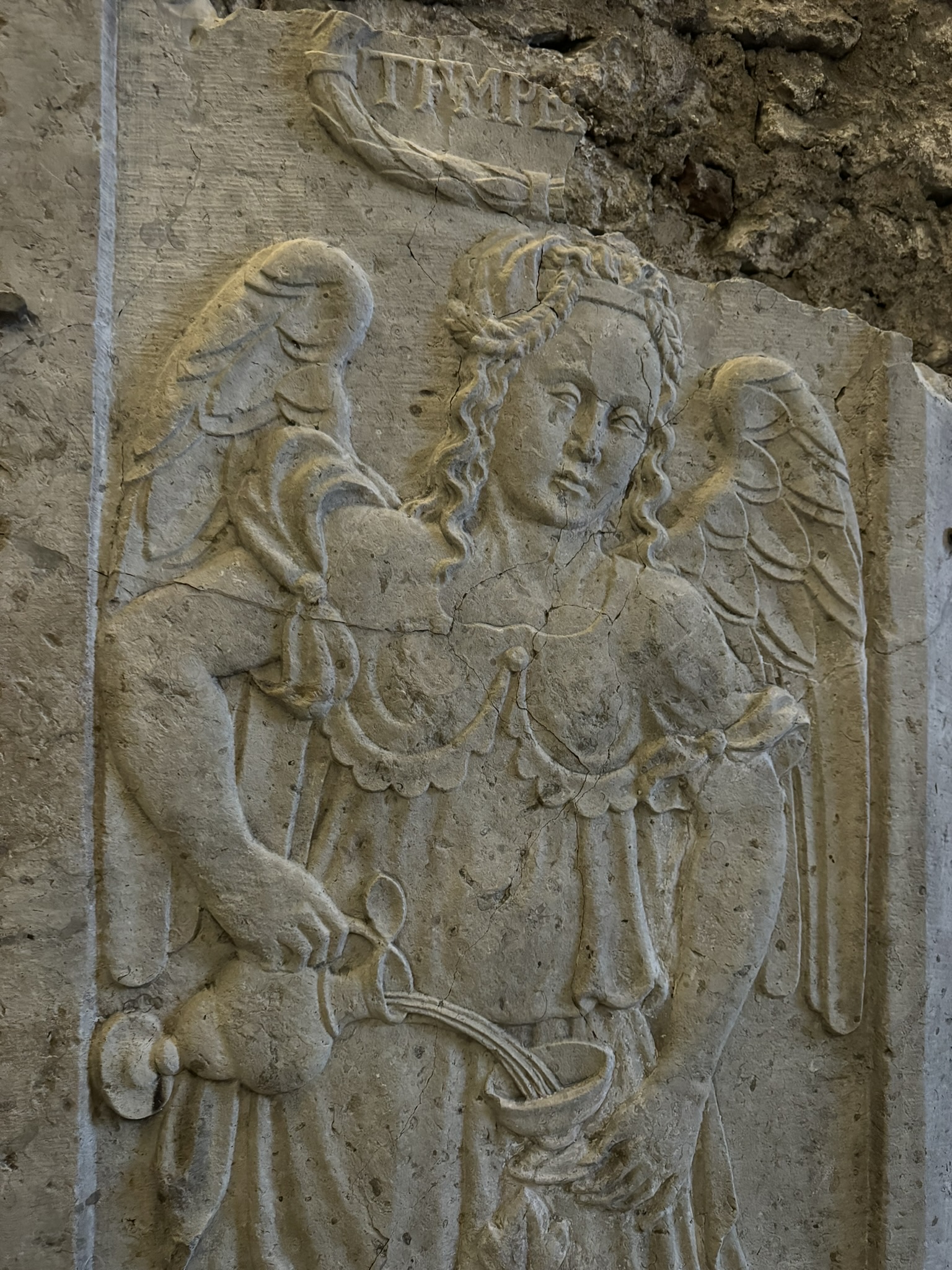
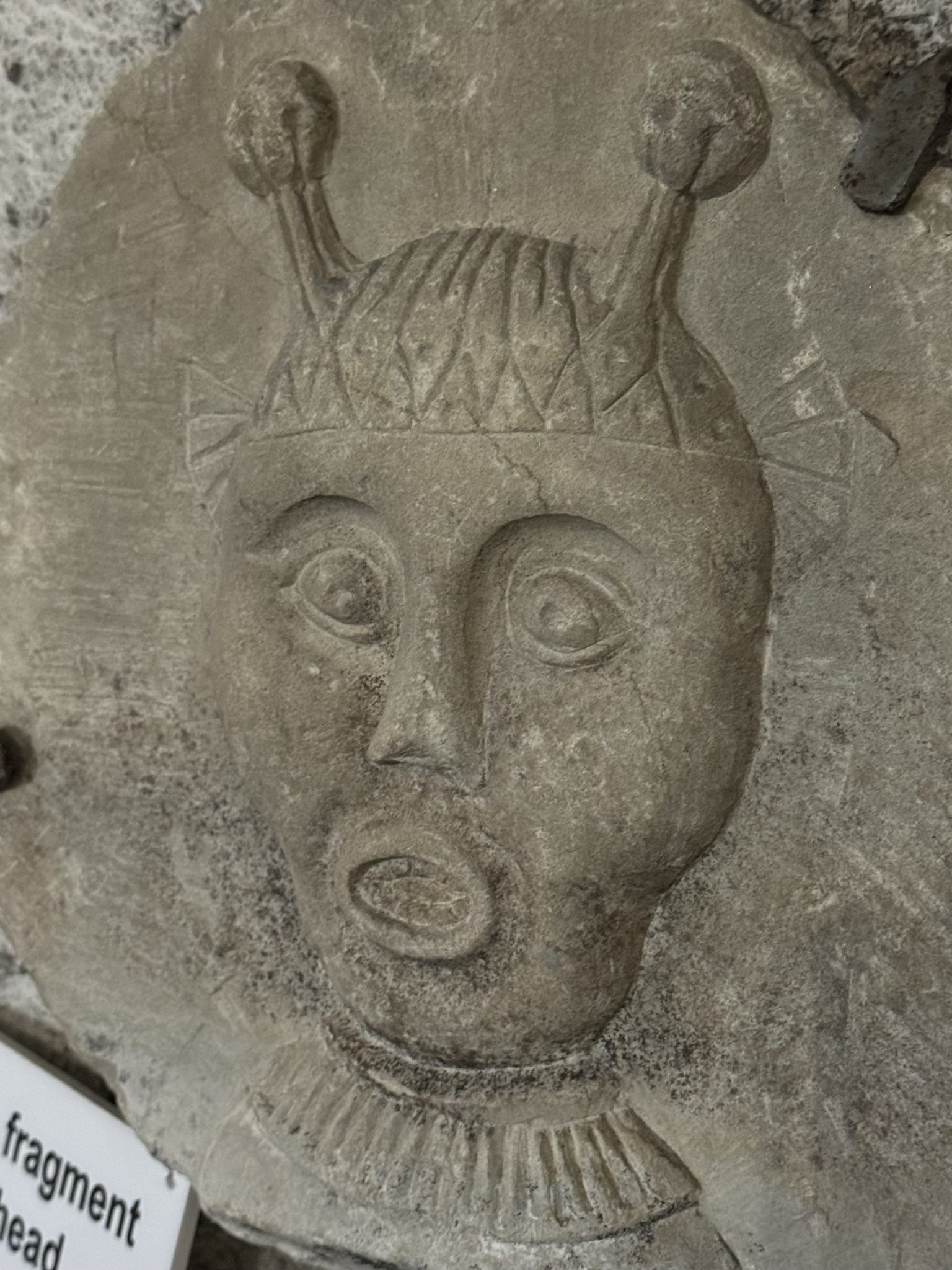
Off to the side and behind the altar in the “new” parish kirk, there is an interesting small museum with sculptures and tombs. Nearby in front of the cathedral, in the town’s old market square, there is an elegant stone fountain detailed with carvings of animals, birds, and Masonic symbols. It’s dedicated to George Augustus Frederick John, the 6th Duke of Atholl, and a Grand Master of the Scottish Masons, who brought piped water to the village in the mid 1800’s.

Dunkeld, with its many nooks and crannies and architectural details, was a delight to explore. When it started to rain harder, we sought refuge and lunch at Palmerstons, a small café busy with wet tourists. They served a great hearty lunch and good coffee at a fair price.

Centuries ago a ferry was the only way to cross the Tay river to Dunkeld’s sister village, Little Dunkeld, but it was extremely dangerous when the river was running high and fast. So, with great relief and fanfare, a stone bridge across the river was built in 1809. It’s a simple seven-arch construction that has withstood the test of time. It was designed by Thomas Telford, who is more famously known for engineering the 60-mile long Caledonian Canal which joined Inverness to Fort William, essentially connecting the North Sea to the Atlantic Ocean.

The Legacy of Beatrice Potter drew us across the bridge. The author and illustrator of the widely loved children’s books, The Tale of Peter Rabbit, The Tale of Jemima Puddle Duck and The Tale of Tom Kitten spent many summers of her youth vacationing in Dunkeld and exploring the flora and fauna along the River Tay. A charming park featuring small bronze sculptures of her animal characters along a pathway through the woods is dedicated to her memory.

We abandoned the highways and drove southwest through rolling hills along the famously narrow single-track roads of the highlands. The lanes, often lined with stone walls and fencing, allow two-way traffic, but in order to pass an oncoming car one vehicle has to pullover into a small bump-out called a Passing Place. These are well marked and spaced along the country roads, but you need to be on the lookout for approaching cars, as the protocol is for drivers to pull into the closest Passing Place on their side of the lane and wait for the other vehicles to pass. It took some getting used to. Surprisingly, the speed limit on these single-track roads is 60 mph, but we were only comfortable driving at half that speed. It was also important to be on the lookout for any stray farm animals that might have escaped their pasture, or equestrians, and those adorable tiny hedgehogs that wander across the road. Fortunately, no one was behind us when Donna, my eagle-eyed co-pilot shouted, “STOP!” and was out of the car in a flash to usher a hedgehog across the lane. The one big drawback is that you are not allowed to use the Passing Places to park and take pictures of the beautiful scenery.

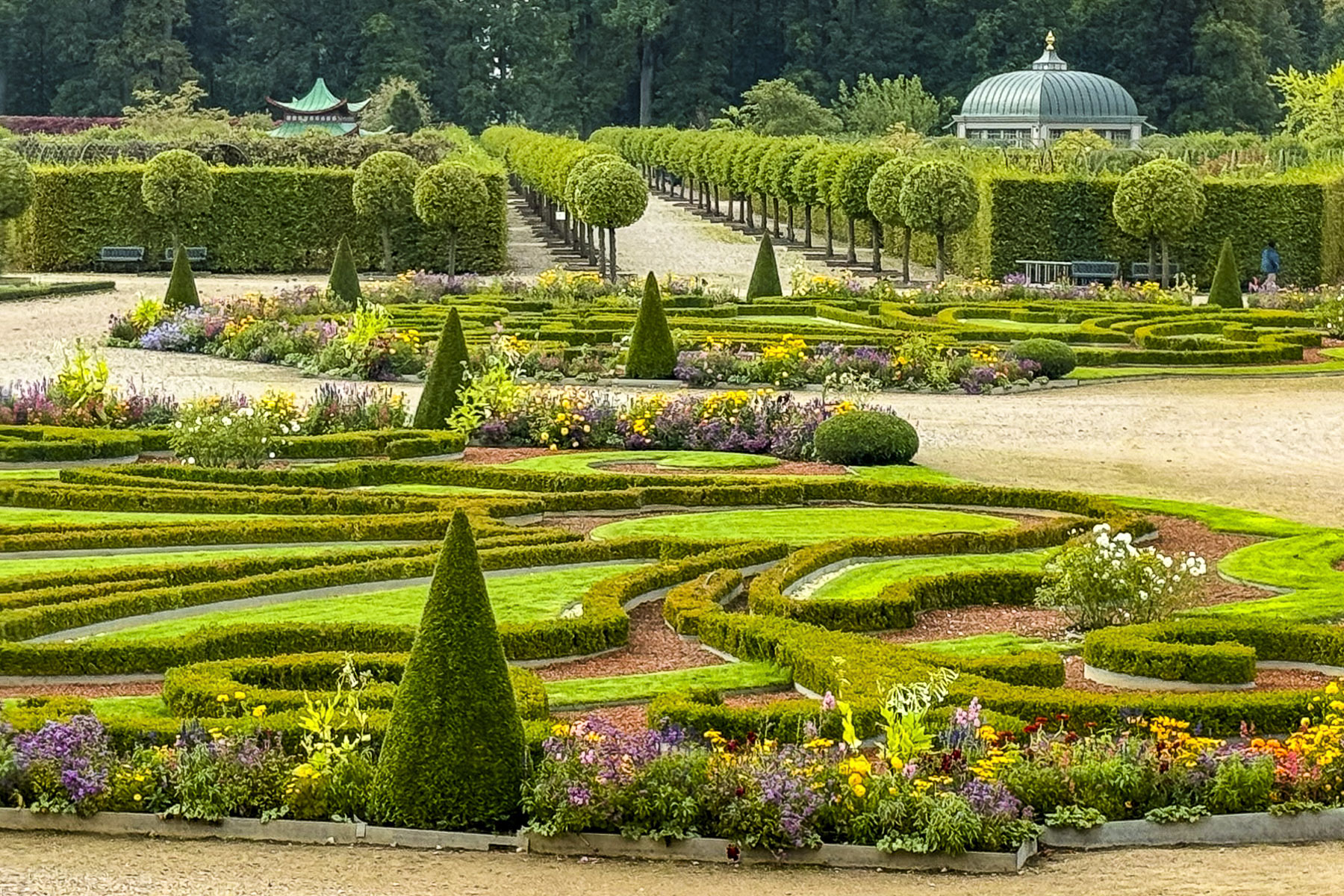
Just beyond Crieff we turned off the main road and followed a mile long driveway through a tunnel of ancient trees to Drummond Castle to see its Renaissance style formal gardens. It was still cloudy, but there was a hint of blue sky on the horizon as we stood in the castle’s courtyard above the gardens and readied ourselves for the walk down a long set of wide stairs into the flowering oasis, when suddenly a cloud burst above our heads and drenched us.

We scrambled back to the ticket office and asked for a refund, as we had only been there for a few minutes, but none was offered. That patch of blue above still teased us. We waited, and the sky brightened. The gardens were spectacular, as if the flowers had received a heavenly command to overcompensate for the bleak weather.

The castle’s original 15th century six-story stone keep still stands, but only the lower 2 floors are open to the public. The other chateau-like buildings were added in the 1600’s and are the private rooms of the Drummond family, which remarkably still owns the place after 500 years. In 1842 Queen Victoria is believed to have planted a beech tree in the garden, and understatedly praised the grounds in a letter to a friend, “Prince Albert and I walked in the garden, which is really very fine, with terraces, like an old French garden.”

After climbing back up the stairs we ordered two cappuccinos to ward off the day’s chill from a barista, boredly pacing in a coffee trailer parked in the courtyard. “Do the folks who own this live here?” I asked. “No, they have other castles but visit occasionally.”  We walked away with a new realization about one-percenters.

As we headed to Edinburg the sky finally cleared. Originally, I had planned our route to follow the M90 south and cross the Firth of Forth bridge into the city. But somehow, we ended up much further west, and were totally surprised when the 100ft tall steel Kelpies, shining brilliantly in the afternoon, towered above the tree line along the side of the highway. We had planned to stop there after visiting Edinburgh, but with the afternoon weather now perfect we seized the day and changed our plans. These equestrian statues are located in Helix Park at the confluence of the Clyde Canal and the River Carron. The steel horseheads are the largest in the world, and were created by the internationally acclaimed Scottish sculptor, Andy Scott. They are based on Scottish folklore where a kelpie is a dangerous shape-shifting water spirit that appears on land as a horse, who entices its unsuspecting victim to ride on their backs, only to be sped away to a watery grave. 

It was a great second day in Scotland. On to Edinburgh!

Till next time, Craig & Donna

P.S. Scottish weather is notoriously fickle and changes dramatically throughout the day. Being prepared to layer up or down and having proper waterproof rain gear and footwear was essential. We invested in some Gore-Tex rain jackets and were delighted that they kept us totally dry.

An Albania Road Trip: On the road to Shkodër or Olives, Castles, and Lamb

Ancient, gnarled olive trees covered the sharp slopes on either side of the road, along a narrow razorback ridge. Their silver-gray olive leaves undulated with light from a morning breeze. Some of the older trees are 3000 years old, and the fruit from the trees is believed to make the best olive oil in Albania, and is sought after by connoisseurs and chefs. An elderly man herded a small flock of sheep across the road, a common occurrence in rural Albania where it seems there is more four-legged traffic than cars.

We parked and walked up a short steep lane, past a school where a coed basketball game was enthusiastically underway, to the ridge’s 1300ft summit and the Preza Fortress. The stronghold was built in the mid 1400’s and played an important role in the Albanian resistance to Ottoman rule.

It was once a massive compound with commanding views of the broad plane of the Tirana Valley to the east. This valley was the favored north-south route for invaders, and was the fertile breadbasket of Albania since the Iron Age. Mid-week in late April we had the site to ourselves except for a group of older men, seemingly an old boys’ club, enjoying each other’s company, tucked away in a small outbuilding with a large glass window through which we could see them playing cards, drinking coffee, and reading the newspaper. Unfortunately, only one tall watch tower remains of the compound, but the panoramic view was fantastic.

Bar Kalaja e Prezës is the restaurant at the site and was a great place to relax with a coffee and absorb the serenity of the landscape from their terraces. There was also a very large lover’s heart perched on the overlook that was the perfect spot for an Instagram photo.

We had left Durrës earlier that morning, headed toward the northern city of Shkodër, and followed the A1 north. We had been in southern Albanian for the prior two weeks and were surprised now by the amount of traffic congestion along this main artery. It was mostly due to the construction project widening the two-lane road, and the economic activities of businesses, with parking lots right next to the road which creaed all sorts of mayhem – cars were pulling off and onto the highway. There were few traffic lights. One section of the road was lined with folks selling parrots and chickens right from the curbside, while at another point men on either side of the road carried puppies up and down the traffic, offering them for sale. Fruit and vegetable stands were a common occurrence. As we’ve mentioned in our earlier blogs, we found Albanians to be very friendly. But put them behind the wheel of a car, and there is an aggressive personality shift, where they throw the driving rules out the window. I know this is a sweeping statement, but when you experience the roads firsthand, you’ll understand, and any Albanian citizen will agree with me. Driving in Albania was a blood sport – the automotive version of rugby.

The one big plus of driving along Albania’s main roads was the superb quality of restaurants attached to gas stations. In the states these are often fast-food chains or “greasy spoons,” that serve caloric, processed foods. Albanians take their cuisine quite seriously, and we found it nearly impossible to have a bad meal in the country. The key though to these roadside restaurants is to pick one where the parking lot is almost full. It’s always a good sign that the place is busy with satisfied customers. The restaurant Autogrill Emanuel, along the SH1, in Balldren was a wonderful find, and a great place for lunch. The façade was ho-hum, it is after all located at a gas station, but the inside was pleasant, and the tables were covered with linen tablecloths.

Near closing time we arrived at Rozafa Castle, parked and started to walk around a small hill that obstructed our view of the fortress. It quickly became apparent that it was too long of a trek uphill, and it would diminish our time exploring the site. Several cars passed us coming downhill and we realized we just might get lucky finding a place to park nearer the entrance. Fortunately, that was the case, but even so it was still a strenuous walk to the center of the citadel.

The views were fantastic. We could see for miles around, especially out over Shkodra Lake where the mountains of Montenegro rose on the northern horizon. To the east the small metropolis of Shkoder spread imposingly across the flatland beneath the foothills of Albanian’s beloved Accursed Mountains. While the panorama to the south encompassed the meandering Drin River.

The first fortifications on the hill date to the Illyrian kingdom during the 4th century BC, though archeological discoveries confirm the hilltop had inhabitants since the Bronze Age. Albania folklore is full of tales of stoic women sacrificing for their country. Though the legend of how Rozafa Castle received its name is one of the more tragic and involves human sacrifice. The tale goes that construction of the castle was beset with difficulties, walls collapsed, workers died. An oracle was consulted and advised that a woman be entombed in the castle’s wall to appease the Gods. Rozafa, a young mother, was chosen, and as the legend goes, willingly participated as long as her chest was left exposed for her infant to breastfeed. For ages afterward it was believed that the liquid dripping from the limestone stalactites on the ceiling of the ancient Illyrian gateway to the fortress was the entombed mother’s milk, and that the castle was alive with her spirit.

The Roman Empire defeated the Illyrians, and over the following centuries the fortress was controlled by an ever-evolving list of rulers that included the Byzantine Empire, Kingdom of Serbia, Lordship of Zeta, Principality of Zaharia, the Venetian Empire, the Ottoman Empire, the Pashalik of Scutari, and the Kingdom of Montenegro.  T

We were taken by the beauty of the old town at the Migjeni roundabout, where an intriguing cityscape included Ebu Beker Moosque’s minarets, and Kisha Katolike Frencekane’s belltower; crenellates and fountains revealed themselves. Shkodër today is Albania’s fifth largest city with a population of 102,000. Though thriving today, the city has had a tumultuous history. Most poignantly in 1967, the Communist dictator Enver Hoxha declared Albania an atheist state and banned the practice of all religions. Churches and mosques were seized and converted to other uses or destroyed. Religious leaders were executed or imprisoned for decades in brutal labor camps and prisons to break their faith. The communist regime viewed anyone who believed in religion as an enemy of the state. Family members of the accused were victimized as well, with the denial of educational opportunities, and decent jobs. Consequently, the citizens of Shkodër who cherished their religious harmony and embraced each other’s Muslim and Christian traditions, in a city where it was not uncommon for members of the same family to practice different religions or intermarry, suffered greatly under communism.

The most poignant insult was the creation of the National Museum of Atheism, an anti-religious propaganda center, in the city. While the borders of Albania were closed to the outside world, even the cities within the country were isolated from each other, and Shkodër sat alone and inaccessible in the northern part of the country. Any news it received of events in southern Albania was heavily censored. Even folks that were “free” likened it to living in a penal colony, as the town had 23 prisons, and nearly every family had someone in jail. The Sigurimi, the communist secret police, had a heavy presence in the city, and encouraged informants to denounce anyone, even for simply wearing a religious cross. Similar to Bunk’Art 2 in Tirana, the site of the Witness and Memory Museum in Shkodër documents the atrocities the communists committed against the townsfolk, in a confiscated Catholic school that was operated as an interrogation center.

The Çoçja Boutique Hotel was only a few minutes from the roundabout, had underground parking, and most importantly was a short walk away from the pedestrian only streets Rruga Kolë Idromeno, and Rruga 28 Nëntori. We are not sure why this small 17-room hotel is only rated three-stars, but it was one of the nicest hotels we have ever stayed in. It’s a newer building that’s exquisitely well decorated, and our bathroom was a modern wonder. The staff was also very nice.

Ten thousand undergraduates attend the University of Shkodër, and the cosmopolitan city’s streets are full of students pedaling across the town’s flat roads. Their presence contributed greatly to Shkodër’s youthful contemporary vibe, that’s much different from the rest of the country. In the evenings the restaurants and cafés along the pedestrian mall were filled with their energetic enthusiasm.

We took advantage of a warm night and enjoyed eating outside on the second-floor balcony, which overlooked the mall, at Bar Restaurant San Francisco, on Rruga Kolë Idromeno. I tried the traditional Shkodër specialty, Tavë kosi, made with lamb, yogurt, eggs, garlic, and oregano, while Donna ordered baked lamb with rice. Roasted vegetables and the house wine accompanied our dinner. All were quite good. We ordered lamb frequently while traveling around Albania, as in the states it is not offered in many restaurants, and when it is it’s very expensive.  

The next morning, we strolled in the opposite direction down the shaded Rruga 28 Nëntori, where preparations were underway for the 11th annual Hemingway Jazz Fest & Swing Marathon, that’s held at the end of April. Unfortunately, we were not in Shkodër for it, but it would have been really nice to watch folks cutting loose. Towards the end of our walk, we reached Shatërvani Park, where there were several sculptures.

One was a whimsical and retro collection of towering, stylized dandelions, which I haven’t been able to find any information about. Nearby, across from the City Hall, stood the Monument Dedicated to the Victims of Communist Persecution.

A plaque near the sculpture states it’s dedicated to the sacrifices, and resistance the people of Shkodër made during the communist dictatorship. This is the first memorial of its kind in Albania and considered long overdue. Many think it is an important first step towards reconciling the atrocities of Albania’s communist past with survivors of the nightmare.

In hindsight two nights in Shkodër wasn’t enough time to adequately explore the city. An extra day would have allowed time to visit some of the museums in the city.

Till next time, Craig & Donna
On the Road to Durrës, Albania: or Lady Bugs, Metallic Men and a Beautiful Seaside City

Loose gravel gently slid down from the top of the earthen embankment along the road. It was the “heads up!” prelude to a small herd of goats scurrying down the slope to cross the road ahead of us. The last to cross was a young yearling goat, unsure of his footing. It was a transition day for us. We had left Lin, on the shore of Lake Ohrid, near the border with North Macedonia, earlier that morning to drive to Durrës, on the Adriatic Sea. The journey of only 90 miles, 142 km, was our longest single drive in Albania, and can be accomplished in three hours, if so desired. But with us there is always something that piques our interest and requires a detour or U-turn.

Much of the SH3 highway that connects Lin, through Elbasan, to Durrës traverses a sparsely populated remote region of Albania. Occasionally, in what seemed the middle of nowhere, we passed enterprising farmers who had set up temporary produce stands perched atop the road’s guardrails, their donkeys tied nearby. Sadly, factories abandoned after the fall of communism littered the countryside. In Prrenjas though, the artist Eljan Tanini whimsically covered the towers of a defunct nickel mine with 1,380 charming ladybugs, a symbol of good fortune and hope for the future.

On the outskirts of Elbasan we stopped for a snack at the Elita Grill, a newly opened restaurant. It was a very attractive, contemporary space, which stood as a nice counterbalance to the rustic region we had just driven through. The pastries and coffees were very good, and the prices budget friendly. Across the street, the dome of a larger-than-average Cold War era concrete bunker inched above a mechanics shop.

Entering Elbasan we passed the Xhamia e Nazireshës mosque. Across the street from it, a dreamy street mural of a child playfully dancing amidst clouds graced the side of an apartment building. Unfortunately, the traffic was too congested in this spot, and we didn’t stop. An abandoned train track paralleled most of our route from Prrenjas to Elbasan. The rail line once carried nickel ore to the Kombinati Metalurgjik, a huge industrial complex that was built with cooperation from Chairman Mao’s Chinese Communist Party in the 1970’s. The site, easily seen from the highway, now lies in ruins and is a popular spot for amateur industrial archeologists. But at its height it employed 12,000 people and produced the iron, steel and cement for Albania’s 173,000 military bunkers ordered built by the paranoid communist dictator Enver Hoxha, who feared invasion from everyone. We were getting hungry as we reached Tirana. While there were numerous lunch options available, we wanted something with easy on and off access, close to our route. With a quick google search we chose the restaurant Xhafa, which had an outside patio on a hillside that overlooked Tirana. From our experiences across Albania we found that the food was delicious no matter where we stopped. As it was here. Leaving the restaurant, we noticed a large futuristic metallic head in front of an office building next door. We are not sure, but we think the sculpture can be accredited to the Albanian sculptor, Ilirjan Xhixha.

We continued our westerly drive along SH3 until signs for Durrës directed us onto SH2. We wished we had been prepared with our cameras for what emerged next. Across the highway, the most unusual building crowned a small hill. It was seven stories tall, with a neoclassical birthday cake-like façade. On the multi-level corners of the building larger than life statues of the Illyrian Kings stood, as if they were surveying the landscape. Centered atop the colossal building was a mammoth sculpture of the great warrior Skanderbeg, the famous 15th century commander who united Albanians to rebel against the Ottoman Empire. This grand building, with its Las Vegas-type schmaltz, was the Amadeus Palace Hotel. If you enjoy quirky, off-beat things, this might be a place to check out.

We arrived in Durrës late in the afternoon, just in time to see a passenger ferry from Italy enter the harbor, as we drove along the waterfront. Parking with a rental car is always a concern, but we had asked the hotel, Ventus Harbor, where to park. “During the April shoulder season there is plenty of free parking available close to the hotel,” was the response. We are always skeptical of these easy answers, and there was street parking a short distance from the hotel. Though there was an informal parking assistant waving to drivers coming down the street, pointing as to where to park or wait as a cement truck driver readied a delivery to a construction site. We tipped him and hoped for the best. At the reception desk we told them where we left the car, and they said it would be okay, but we could also park on the pier which led to the floating hotel if we preferred. While that option was closer, it required driving through a small, pedestrian-filled shopping mall. The car stayed where we left it and was fine for two days.

Though the futuristically designed Ventus Harbor appears to float above the Adriatic Sea like a spaceship, it is in fact built securely atop pilings pounded into the seabed and connected to shore via a narrow, 300ft long suspension bridge. The hotel’s refreshing uniqueness, which contrasts so distinctively with the stone castles and villages of rural Albania, was our main reason for choosing to stay there.

Towards sunset we headed to the promenade along the seafront and were engulfed by families and friends enjoying the xhiro, the Albanian tradition of an evening stroll to relax and socialize. Fishermen cast the last lines of the day into gentle waves as we walked towards the setting sun and the Sfinksi, a small concrete step pyramid where folks gathered to watch the sun dip below the horizon as the sky faded from a fiery orange to the blue of the evening.

The city’s night skyline slowly awakened with lights, before the stars shined. It was a warm April evening and we slept well with the door to the balcony open, listening to the water lap against the pilings below us.

After breakfast we walked along the promenade into Durrës’ historic old town, which has been centered around the harbor since time immemorial. It has been Albania’s economic engine and vital link connecting Europe to Asia Minor since Greece established a trading colony there in 7th century BC. An Illyrian Kingdom followed in the 4th century BC. But it was the Roman Empire which left the most significant impact. The Romans turned the ancient town, now Illyricum, into a vital trade and military hub with the creation of the Via Egnatia, a cobbled road that crossed 700 miles through the rugged Balkan mountains to Thessaloníki, Greece, and Constantinople. Troops, merchants and religion flowed across its path. The Apostle Paul traveled this route to Durrës in the 1st century, a time when Christians were still thrown to the lions for entertainment in the coliseum across the Roman Empire. Upon the Western Roman Empire’s collapse in 476, the Byzantine Empire filled the void until the tumultuous Dark and Middle Ages brought a succession of invaders to the region. Visigoths, Huns, Bulgarians, Slavs, Normans, and Venetians conquered and fled until the armies of the Ottoman Empire arrived in the 15th century. Austria ruled for a time during WWI. Mussolini’s Fascist troops landed in the port at the start of WWII. The Albanian’s communist partisans defeated their opponents after WWII. In 1967, as if needing to put a sword into the heart of any remaining hope the people of Albania had, the communist dictator, Enver Hoxha, banned all religions, and proclaimed, in the city where the Apostle Paul preached, that Albania is “the first atheistic state in the world.” The city and country has had a turbulent history to say the least.

“Walk a little, and the café,” is a philosophy we like to indulge in, and after our stroll along the promenade past statues of gladiators, liberation fighters, and modern art we needed a break to savor a fine Spring day before reaching the ruins of the city’s ancient Roman amphitheater. The amphitheater was the largest in the Balkans and capable of holding 20,000 spectators.

We passed through a gate in the last remaining section of a defensive wall that once encircled the city. The city’s first ramparts, which stood 40ft tall and stretched for three miles around the core of Durrës, were built by the Byzantine Emperor Anastasius I, a native son, in the 5th century AD. The walls were later expanded and improved upon by the Venetians with stones repurposed from the amphitheater after it suffered irreparable damage from a devastating earthquake in 1267. During the Ottoman era homes were built over the site. Surprisingly, they were rediscovered in 1966 by archeologists surveying the area to identify sites that might be of interest to western tourists. Based on the size of its ruins, the amphitheater must have been magnificent. Sadly, the site has not been improved, and sits surrounded by apartment buildings, but it is on the short list of sites for future inclusion in the UNESCO World Heritage program. Oddly, archeology and building concrete bunkers across Albania were two of Enver Hoxha’s passions.

From the amphitheater it was only a short stroll to the Bulevardi Epidamn, Durrës’ prettiest avenue. It’s not a particularly long street, but its pleasant five blocks are lined with stately palm trees, that give it a splendid Costa del Sol vibe.

We followed it until we reached a well-preserved Venetian Tower, that was once part of the defensive wall that encircled the city, across from the harbor. It was an interesting plaza with more statutes commemorating partisan heroes and a gleaming metal sculpture of Redon, the Illyrian god of the sea, which was strikingly similar to the statue in Tirana. This statue, which nicely blends modern technology with the historical past through its use of materials, was also created by the Durrës-born artist, Ilirjan Xhixha.

Before returning to the waterfront, we detoured back towards the amphitheater, where earlier we had passed a tiny window-in-the-wall bakery, confidently named Bule’s Best Byrek in Town, and single handedly run by the formidable Bule. We bought several byrek and enjoyed them as we picnicked along the coast. The cheese and spinach ones were our favorites, and indeed were delicious, and so inexpensive. Go early, as they sell out quickly.

It was still the Spring shoulder season, and many restaurants stayed closed until the warmer weather in May arrives. We had crisscrossed Albania for two weeks by this time and were familiar with prices, but the night before we choose to dine at slightly upscale establishment, for a nice seafood dinner, that received good reviews. While our dinners were tasty, the portions were smaller than what’s typically Albanian. And it was the first time that we felt there was some tourist price-gouging happening.

For our last night in Durrës we decided to go no-frills. After much hemming and hawing we entered the Hepta Grill, a Greek fast-food restaurant, located at the base of the walkway that led to our hotel. The place was lively, the staff was nice, and the food was perfect. We left thinking we could enjoy living in Durrës.

Till next time, Craig & Donna
Road Trip Through Brittany: Josselin & Vannes or Castles, Standing Stones and Cheese

The sun’s early morning rays cast a soft glow across the gently rolling countryside, silhouetting farm buildings and highlighting here and there pockets of mist still clinging to warm earth, and stubble in freshly plowed fields waiting to be seeded with their winter over crop.

The timing was uncanny, but I had just started to write this story when Donna called from the porch, “you have mail from France!” It must have been some tourist information I requested, I thought, and excitedly stopped writing. But I should have suspected from Donna’s smug grin that something was off kilter. To my disappointment it was the notification of a traffic fine! Who drives when we are touring is a bone of contention between the two of us. But I’ll be the first to admit that I am a terrible passenger and believe that the “Oh God” strap above the passenger door was specifically designed for my benefit.

As a consequence, I prefer to drive slowly to see tomorrow’s sunrise. I deliberately choose to deny my lovely, daring wife the thrill of downshifting and accelerating along the many cliffside serpentine roads we might encounter, as I cower in the passenger seat. There weren’t any cliffside drives in Brittany, but you get my drift. I can safely say we have different driving styles. Seriously, my wife is an excellent driver, it’s more about the extravagant fee per day the car rental companies charge for the extra driver than anything else, kinda. It was not a speeding ticket, but a moving violation caught by a traffic camera on a quiet Sunday morning in the sleepy French village of Saint-Jouan-de-I’Isle, deep in the heart of Brittany. I alone was to blame, but would have preferred asking forgiveness from a gendarme, then the robotic indifference of a traffic spy camera, and a letter months later in the mail. Though I will give credit to the French authorities for designing a user-friendly website, Amendes.gouv.fr, for paying fines online.  

We arrived mid-morning in Josselin just as the first wave of walkers were completing a charity walk in support of Pink October, France’s breast cancer awareness month, along the towpath that followed the Oust River in front of the town’s ancient castle, the Château de Josselin. It was late October, but the first yellows and muted oranges of Autumn were just beginning to show and combined with the walker’s pink vests made for a very colorful sight under a brilliant blue sky.

There has been a castle on this spot in Josselin since the 11th century, but the chateau you see today dates from 1370. Early in the 1400s Alain VIII of Rohan inherited the castle and it has remained a House of Rohan estate for 600 years. The chateau suffered poorly during the 16th century French Wars of Religion, as Henry II of Rohan supported protestant Huguenots against the King of France and the Catholic church; five of its original nine towers were destroyed on the orders of Cardinal Richelieu. During the French Revolution the castle’s towers were used as a prison, but afterwards it sat abandoned until the mid-1800s when Duke Josselin X of Rohan piloted an extensive restoration.

Strolling against the current of walkers we crossed a bridge to Josselin’s Quartier Sainte-Croix and wandered along narrow lanes past ancient half-timbered buildings dating from the early 16th century. Some leaned precariously, like an elderly person requiring a cane, while others featured ornamental heads carved into exposed roof rafters for decoration. Following our philosophy of “walk a little, then café,” we enjoyed a rest at the Logis Hôtel du Château, and its location on the riverbank.

Returning to the village, we stopped mid-bridge to admire the view along the riverport’s quay. With a renaissance chateau, charming buildings and a beautiful river to stroll along, no wonder Josselin has received the very French distinction as a Petite Cité de Caractère, a small town of character. During the high season paddle boards, kayaks, and boats are available for rent to enjoy this tranquil stretch of water.

The Oust is a canalized river and is part of the 220-mile-long Canal de Nantes à Brest which traverses inland Brittany to connect the seaports of Nantes and Brest, on the Bay of Biscay. The old towpath which follows the canal’s course is also a popular route for cyclists and hikers. We thoroughly enjoyed our morning in Josselin, but truly the quaint village deserves more time, or an overnight stay to absorb its wonderful ambiance. Vannes awaited us, so we drove on.

We arrived in Vannes and found convenient parking along the Port de Vannes quay, in an underground garage, in time for a late lunch. The masts of sailboats, with their colors flying, rocked gently in the afternoon breeze, against the background of the port’s Place Gambetta, and its iconic 19th century sandstone colored, Haussmann styled buildings, with their distinctive dormer windows in their mansard roofs. It’s difficult to imagine from the size of this petite harbor located on a narrow stretch of water called La Marle, that Vannes is actually an inland seaport, and the economic engine that drove Vannes’ prosperity since the era of the Romans, two-thousand years earlier. It was a favored protected anchorage, located three-quarters of a mile inland from the Gulf of Morbihan, for Rome’s merchant fleet of oared galleons, and it facilitated trade in wine and olive oil from France to England, while ships returned with valuable tin, lead and copper. Today the Port de Vannes hosts recreational and tour boats, which offer day trips to the islands in the Gulf of Morbihan, where on a windy day you can still see restored siganots, Brittany’s iconic two masted, gaff rigged, wooden fishing schooners, that typically have red sails, plying the waves.

Surprisingly, for this far north, a row of palm trees separated the Place Gambetta from the harbor, and gave the area a delightful French Caribbean vibe, before leading to the historic citadel through the Saint-Vincent gate. There were numerous restaurants, bustling with activity, surrounding the harbor, and we chose to lunch at Le Daily Gourmand for its outside tables and seasonal menu.

Excited by our first impressions of Vannes, we roughly planned our four days in the ancient city and day trips to Suscinio Castle, and the Alignements de Carnac. One of the attributes we consider when choosing a destination for a multiple day stay is the walkability of a city and are there enough things to do to keep us busy. Vannes fit the description perfectly, offering me multiple routes to explore the city during my 6 a.m. walks, while Donna slept in.

The walk along the Promenade de la Rabine, “the alley planted with trees,” was one of these walks that started near the Place Gambetta and followed the long sliver of La Marla, down its right bank a half-mile, towards the newer commercial port and the Gulf of Morbihan. The idea for this tranquil public space first arose in 1687, and over the following centuries it has been widened and extended several times. Halfway back on the return route there is a pontoon footbridge across the marina to the more cosmopolitan left bank.

A short walk from the Place Gambetta, the 19th century faded away quickly as we approached the historic Château de l’Hermine, with its formal garden featuring the emblem of the L’Ordre de l’Hermine, a medieval chivalric order, worked into its landscaping, and the Remparts de Vannes. The ermine depicted might look like us like a flying weasel, but it’s a traditional symbol of Brittany that signifies nobility, courage, honesty, uncompromising integrity, and personal honor. The ancient order was revived by the Cultural Institute of Brittany in the 20th century to honor people who contribute to Breton culture. The château, built in 1785, is a beautiful example of 18th century French architecture, and operated as the Hôtel Lagorce until 1803. It was then used as a private mansion until the French State purchased it in 1876 and proceeded to use it as an Artillery School and barracks for the XIth Army Corps, treasury, and university.

But the more interesting history of the site begins in 1380 when the Dukes of Brittany decided to use Vannes as their seat of power and ordered a castle with moat built and the ramparts surrounding the town, first erected by the Romans in the 5th century, improved. It served several generations of Dukes as their main residence until the late 1400s when François II, the last Duke of Brittany, moved his court to Nantes. During the early 1600s, the now-old castle was dismantled for its stones, which were used to build the quay at the port.

Skip ahead to March 2024 and the18th century château is now owned by the City of Vannes and construction has begun to renovate it and add a new wing for a project that will eventually be the Vannes Museum of Fine Arts – Chateau de l’Hermine. While excavating for new footings, workers uncovered well preserved walls, parts of a moat with drawbridge, and evidence that the castle had been three to four stories tall and had indoor toilets. We visited Vannes shortly before this discovery, but still marvel at the amazing things out there that are yet to be rediscovered.

A little farther along the Jardin des Remparts has the longest remaining section the city’s ancient defensive wall, with gates and towers, as their backdrop. The formal gardens are beautiful, with more than 30,000 flowers planted each year. It’s a popular spot to relax and walk dogs along the banks of the La Marla River before it reaches the port. The gardens are also used several times throughout the year to host various fairs and most importantly, the Fêtes Historiques de Vannes every July 12-14th. It’s a huge, festive cosplay event that celebrates Vannes’ rich history, and spreads into the historic center, with craft demonstrations, and participants and visitors wearing medieval clothing. The Porte Poterne gate is near the gardens, and entering the city one night across worn cobblestones glistening in a cold rain was an experience that transported us back centuries.

Later that first day in Vannes we were thrilled when we arrived at the Hôtel Le Bretagne and were able to find inexpensive street parking directly in front of it. The hotel abutted the rampart’s Executioner Tower and was ideally located just outside the historic old town, between the Porte de la Prison and Porte Saint-Jean gates. Vannes’ architectural continuity is unique among cities in France as it escaped the destructive aerial bombings of WWII, which ravaged many towns throughout the country.

Consequently, it has kept its rich architectural history intact. This was evident as we rounded the first corner from our hotel and entered the ancient citadel under the narrow-arched Porte Saint-Jean gate. In its earlier years it was known as the Porte du Mené, the Door of the Executioner, because of its close proximity to the axeman’s place of work. Fittingly, his tower was only a short walk down the alley from the Cathédrale Saint-Pierre, for the priests to give prisoners their last rites.

Built atop the ruins of an ancient Roman church, Saint-Pierre commands the highest point in the old town and blends Romanesque, Gothic, and neo-Gothic styles, which is what happens when a church is constructed, remodeled, expanded and restored from 1020 until 1857, when the carving of the façade was finally completed. It’s beautiful inside and out.

A short walk away, many fine examples of Vannes’ colorful,15th century, half-timbered buildings surround the Place Henri IV. A map isn’t needed to explore the ancient citadel. Wandering or “walk a little, then café,” as we like to say, is the perfect approach to discovering the town’s architectural gems and enjoying Vannes. After all, what’s the rush?

Wednesday and Saturday have been the traditional market days in Vannes for decades and the streets of the historic center fill with activity as folks shop among vendors selling housewares, clothing, breads, pastries, fruits and vegetables, wine, meat, sausages and CHEESE! Our weakness. Fromagers offering samples of soft and hard goat, sheep and cow cheeses with various ageing enticed us all too easily to purchase their products. Shopping there was a sensory experience that had us wishing we had opted for an apartment stay just so we could cook.

There are also two permanent food halls within the old town, Halle Aux Poissons, the fish market – is located down a side street just beyond the Porte Saint Vincent gate as you enter the city from the harbor. And the Halle des Lices, a large market hall with about thirty shopkeepers that is open Tuesday to Sunday from 8 am to 2 pm. It’s also a good place for breakfast or lunch.

The market takes its name from the Place des Lices on which it stands, though during the 14th and 15th centuries the Dukes of Brittany held jousts and tournaments there, between the Tour du Connétable, built for the commander of the Duke’s army, and the original Château de l’Hermine. The Tour du Connétable is a substantial tower that was part of the defensive wall that encircled Vannes, but what we found interesting was that you can still see where other ramparts intersected with the tower but were removed to reconfigure the fortifications as the city grew over time.

Only thirty minutes away, the Alignements de Carnac were an easy day trip from Vannes. We drove along D196 and followed a 1.6 mile route that started in a wooded glen at Alignements du Petit-Ménec and passed the alignments in Kerlescan, Kermario, and Toulchignan before ending at Carnac. It was a fascinating area with many opportunities to stop, touch and walk through the fields with over 3000 prehistoric standing stones.

Arranged in rows across a rolling landscape, the alignments are thought to have been erected around 4000BC, predating the 2500BC Stonehenge. Little is known of the Mesolithic hunter-gatherers that are thought to have erected the stones.

But a later Brittany Arthurian myth associated with them holds that they were a marching legion of Roman soldiers turned to stone by the sorcerer Merlin. Away from the road there is also a cycling/walking path through the countryside that paralleled our route. Afterwards we drove along the Trinité-sur-Mer waterfront, which we found reminiscent of coastal Maine.

Another day we drove a half-hour south from Vannes to the Domaine de Suscinio, one of the prettiest castles in Brittany, near the Bay of Biscay. It started as a modest seigneurial manor house for Peter I, Duke of Brittany, in 1218.  His son John I started to expand it and add fortifications, a building campaign that continued through successive Dukes until they moved their court to Vannes. Thereafter it was mostly used as a hunting lodge, unless there was a war in progress.

In the early 1500s it became the property of the French Crown and Francis I of France installed a favored mistress there. During the French Revolution, the now dilapidated castle was sold off to a stone quarry and its rocks were slowly carted away.

A dramatic restoration of the castle started in 1965, and was obviously a labor of love, that reflects the Bretonne pride in their heritage. It’s an exquisite space with many interesting, museum-quality displays. We thought the discovery of an intact, highly decorative, mosaic floor from the castle’s chapel, which was located across the moat, most intriguing.

Archeological excavations around the site are still ongoing and objects discovered, are restored and exhibited. Refreshingly there are plenty of hands-on things for kids to do, like dressing as Renaissance knights, squires or princesses. Medieval board games are also available for kids to try.

Beyond the ramparts there is a medieval encampment complete with re-enactors for families to explore. Wandering around the castle was thoroughly engaging and from the top of the battlements, you can see the Bay of Biscay. With the coast so close we wondered if Henry Tudor, future King Henry VII of England, landed there after he fled England, and spent 11 years in exile at Suscinio before returning to seize his crown in the Battle of Bosworth Field in 1485.

Afterwards we headed to the Port du Crouesty marina in Arzon on the Peninsula Rhuys, surrounded by the Bay of Quiberon and Gulf of Morbihan. We sauntered along the port’s quay, admiring the boats docked in the marina, until we found Le Cap Horn. It was the perfect spot to enjoy some beers, and fresh seafood for dinner, our last meal in Brittany before heading home to the states.

We had a fantastic time exploring a small part of Brittany and hope one day to return to this charming, less explored, part of France.

Till next time, Craig & Donna

Road Tripping Through Brittany: Saint Malo, Dinard & Dinan or For the Love of Oysters

Tractors pulling wagons laden with huitres just harvested from the oyster beds of Cancale Bay now replaced the apple carts we passed two days ago in the Calvados region. Leaving Mont Saint-Michel in Normandy, we had entered Brittany in mid-October at the height of oyster season, which is traditionally considered the months that contain “r” in them, September – April. Our destination was Dinard, after stopping for lunch in Cancale, ground zero for huitres aquaculture in France. We had detoured from our route into Cherrueix to see the wide beach there that is popular for land-sailing, where specially designed three wheeled carts, outfitted with a sail, glide along the flat sand and attain high speed due to the strong winds that blow in off the ocean, filling their sails. But a windless day dampened that activity. The weather was pretty miserable that morning with intermittent squalls at times, limiting our explorations and photography. Our course diversion wasn’t a total loss as we found that the small village had several historic windmills and thatched roofed homes, which lent the town an unexpected Dutch and English feel.

Oyster connoisseurs enjoy Brittany oysters for their unique merroir. Just as wines derive a distinguishable terroir from the soil their grape vines grow in, oysters get their signature flavor from the saltiness and temperature of the seawater they are harvested from. The extreme, fast moving  tides, which Victor Hugo once described as “moving as swiftly as a galloping horse,” and cold water of Mont Saint-Michel Bay, which encompasses the ocean from Saint Malo, Brittany to the Cotentin Peninsula of Normandy, impart the oysters grown here with a sweet delicate flavor, which have won them fans the world over. Really, they are the best we’ve ever tasted, and we would order them whenever we saw them offered during our trip. They were also very affordable, which was a delight. Low tide along the coast revealed the extensive network of oyster farm pilings that support the growth of over 5,000 tons of succulent huitres a year.

Oysters have been gathered along the coast of Brittany since this region of France was part of the Roman Empire 2000 years ago. As with all ancient agrarian traditions, women have played a vital role harvesting oysters and Cancale’s town plaza hosts a bronze statue commemorating them. The day we visited, and it took us a while to figure out why, the female figures of the memorial were adorned in pink aprons. Turns out this was in recognition of France’s Breast Cancer Awareness Day, which happens every October. At lunch in a small establishment on the square, of course we slurped a dozen oysters, with just a touch of shallot mignonette sauce. They were divine. On Cancale’s waterfront there is also a daily Marche aux Huitres, surprisingly this oyster market which is open year-round. That old tradition of eating oysters only during the ‘r’ months dates back to King Louis XV in the 1700’s when refrigeration wasn’t possible, and it was unsafe to consume them during the warmer months. It’s also a matter of preference as the texture of the oyster becomes creamier during the warmer months, but today in France they are consumed year-round.

The late afternoon sun was shining brilliantly by the time we arrived in Dinard, found a free parking space on the street, and checked into the Hôtel du Parc Dinard, our home for four nights. The popular vacation spot is practically a ghost town in the fall, with most of its elegant Victorian-era homes battened down tight awaiting winter storms. The quietness was perfect for us, and the town would be our base for visiting Saint-Malo, a short distance away across the Rance Estuary, and farther inland the ancient riverport town of Dinan.

A former fishing village, Dinard was transformed into a vacation hotspot, when the French gentry, wealthy Americans, and British aristocrats discovered its picturesque beaches, and cliffside walks in the late-nineteenth century. A pleasant mild climate, influenced by the nearby warm waters of the Atlantic gulf stream helped set its reputation as “the Pearl of the Emerald Coast.” A who’s who list of celebrities – Picasso, Gary Grant, Joan Collins, Winston Churchill, and Oscar Wilde – frequented the seaside resort. The British film director Alfred Hitchcock visited often enough that the town erected a statue in his honor. Film legend believes he based the house in the film “Psycho,” on one of the town’s elegant mansions and the movie “Birds,” partly on experiences with raucous seagulls along the cliffs here. His relationship with the town led to the establishment of the Dinard Festival of British & Irish Film. Now in its 35th year, it’s held early in October. Prize winners receive a golden Hitchcock statuette.

One of France’s most “British resorts,” the town’s luster faded in the 1960’s when the “jet set” discovered the Mediterranean beaches of southern France. Fortunately, the town has been rediscovered as a holiday destination and today attracts folks looking for vacation rentals in the now sub-divided mansions, who appreciate its quite ambiance and location along the Cote d’Emeraude of Brittany.

One of the best ways to enjoy the town, in any season, is to follow the Coastal Path of Dinard, a 5-mile-long improved trail that hugs the rocky coastline, passes sandy coves and fascinating old architecture. From our hotel we broke our walk into two manageable segments and included a stop at the weekly market one day to purchase supplies for a picnic lunch for later in the day. One afternoon we drove west along the backroads to Saint-Briac-sur-Mer. Here we could see the extreme tides of the Brittany coast, which left boats at their moorings high and dry at low tide.

Just across the water from Dinard the old fortress city of Saint-Malo still guards the natural harbor created by the La Rance estuary as it enters the Gulf of Saint-Malo and the English Channel.  Its ramparts have remained mostly unscathed since their first construction in the 12th century, in order to deter feared Viking attacks. Centuries later the Corsairs of Saint-Malo, French privateers serving the King of France, would pillage foreign ships sailing the English Channel, or extort a transit tax from them, then flee the scene of the crime and seek refuge from the pursuing English Navy under the cannons along Saint-Malo’s ramparts. This tactic was so annoying to the British that they launched an amphibious naval assault against the Saint-Malo corsairs in 1758, but determined the city’s ramparts were impenetrable and instead attacked the nearby town of Saint-Servan and destroyed 30 of the pirate’s ships there.

Outlaws to the English and Dutch, the corsairs of Saint-Malo had more nuanced careers and were well respected as explorers and merchants in France, enriching the town and serving the interests of several French kings over the centuries. Departing from Saint-Malo, Jacques Cartier sailed down the St. Lawerence River and claimed the discovery of Canada for France in the 16th century and sacked a few vessels along the way. Jacques Gouin de Beauchêne would lead the first French expedition into the South Atlantic, raid Rio de Janeiro, find the Falkland Islands, sail through the Strait of Magellan, visit the Galapagos Islands and return to the Atlantic Ocean by sailing west to east across the treacherous waters of Cape Horn. Other corsairs helped establish trade with ports along the west coast of Africa, Southeast Asia and the Pacific, which would evolve into French colonies. Corsair Duguay-Trouin led a Moka expedition to Yemen in the early 1700s, returned with the legendary coffee beans, and French society was changed forever: the café tradition had begun. Saint-Malo prospered.

Walking atop the ramparts that encircle the ancient citadel, it’s difficult to imagine that this beautiful city lay in ruins in September 1944. The D-Day invasion of Normandy had happened three months earlier, but well dug-in German forces, led by a commander who swore to defend the Third Reich to the last man, refused to surrender their reinforced positions in Saint-Malo. It took a relentless, months long campaign of allied aerial and artillery bombardment for the Germans to concede defeat.  The ramparts still stood, but 683 of the town’s 865 historic buildings were leveled, its 6,000 inhabitants homeless. The mayor at the time, Guy Lachambre, petitioned vigorously for the reconstruction council and its architects Marc Brillaud de Laujardière and Louis Arretche not to modernize the war-torn town, but to respect the ancient medieval character of the city and retain its maze of alleys, granite facades and steep slate roofs. It took two years to painstakingly remove the rubble, before rebuilding could start. Workers cataloged the ruins like an archaeological excavation, numbering each brick and stone, so that town’s original building materials could be reused, when possible, to authentically resurrect it from its ashes. Major reconstruction lasted until 1960; however, the Cathédrale de Saint-Malo, the final resting place for the famous Corsairs Jacques Cartier and René Duguay-Trouin, didn’t acquire its new steeple until 1971. The church’s spire, rightfully returned to its place of honor on the citadel’s skyline, was once again a welcome landmark for sailors returning from the sea. Renewed prosperity returned to Saint-Malo in the mid-1960s when folks rediscovered the seaside town as a great place to rent a vacation flat in apartments now vacated by families that moved away during the reconstruction years.

The views from atop the ramparts of the sea and the citadel were great. It’s an easy 1.4 mile loop around the ramparts, with many gateways that descend back into to the walled city or out onto the surrounding beach. At low tide it’s possible to walk across a sandy peninsula to the nearby 17th century Fort Natioinal, or to the small island Grand Bé, where the French writer François-René de Chateaubriand is buried, but be careful not to get stuck out there during an incoming high tide. Afterwards, back in town we found a rustic bar with a fire going in its stove and warmed ourselves with snifters of Calvados and café.

During the high season, parking in Saint-Malo can be problematic. However, if you are staying in Dinard it’s possible to take the small ferry across to the “The Corsair City.” If you are looking for a good read, the book All the Light We Cannot See, written by Anthony Doerr, evocatively tells an intriguing and mysterious story of life during WWII in Saint-Malo.

Traveling 30 minutes south from Dinard, we seemed to have arrived in the 14th century. We were greeted by an equestrian statue of the famous French general Bertrand du Guesclin, which towered above us in the car park. He was known for his many victories over the English during the Hundred Years War. He was so well regarded that upon his death, in 1380, he was given a royal funeral, his body quartered for burial, a practiced usually reserved for France’s kings. “His heart was buried in Dinan in his native Brittany, his entrails were buried in Puy, his flesh at Montferrand, and his skeleton in the tomb of St. Denis outside Paris.” We were off to an interesting start.

Somehow having escaped the destruction that befell Saint-Malo, Dinan’s historic center is filled with charming leaning, half-timbered medieval buildings dating from the 13th to 16th centuries, and shares an ambiance that felt more akin to Rouen than its neighbors Saint-Malo and Dinard.  This morning the narrow-cobbled alleys were busy with activity, modern shops behind the ancient facades, replacing the craftsmen and guild merchants of this market town and riverport who traded with Spain, England, Holland, and the new world colonies.

Our “walk a little, then café,” led us to Marcel, on Rue de la Cordonnerie, a delightful patisserie, where between cheerfully serving customers, the staff was photographing their artistic, mouthwatering temptations to post to the store’s Instagram page. Outside it could have been 1305 or 1673; only folks’ clothing had changed.

Farther along, stores had their merchandise displayed along the sidewalks under the porches of the buildings. This style resulted from the tax code at the time when merchants’ stores were taxed based on their ground floor square footage, but were allowed to expand outward on the higher floors.

Polished from a millennium of footfalls, the cobbled lanes in Dinan glowed with different tones and hues, especially apparent on the damp overcast day we followed the long Rue du Jerzual downhill to the Port de Dinan. It’s an amazing street lined with a vast array of interesting buildings and a tower gate, which was once part of the ramparts which encircled upper Dinan.

The waters of the La Rance river were calm and reflected the boats docked along the waterfront and the emerging autumn colors on the hillside above the river. Here the tributary narrows, no longer navigable for larger ships, a single arch stone bridge allowing only small recreational boats to proceed upstream to the pretty village of Léhon. A bike and footpath also follow the contour of the river to the village, only a 30 minute walk away.

We lunched outside along the quay trying some garlicky escargot and enjoyed the now-sunny afternoon. We were dreading the long uphill walk back and had asked at the restaurant to arrange for a cab, but they cheerfully informed us there was no need as a local small bus stopped just over the bridge and would take us back to the historic center.

The driver stopped at the Basilique Saint-Sauveur for us. Built in the early 1100s, it retained its Roman style façade during a 15th century expansion. But we only had a few moments for outside shots before a late afternoon thunderstorm chased us inside.

The inside has an impressive altar and artworks, while the interior architecture reflects a church renovated over several centuries. One side features Romanesque arches, though the other side displays a Gothic influence.

Rain kept us from walking through the Jardin Anglais, an English-style garden behind the town’s ramparts, with views across the La Rance river valley. We wrapped up a wonderful day in Dinan at the Château de Dinan, once a palace and fortress for the Dukes of Brittany in the 14th and 15th centuries. We seemed to have just scratched the surface of this intriguing town. And looking back it would have been a more interesting locale for a four-night stay.

Till next time,

Craig & Donna

The Rouen Lean: It’s not a Dance
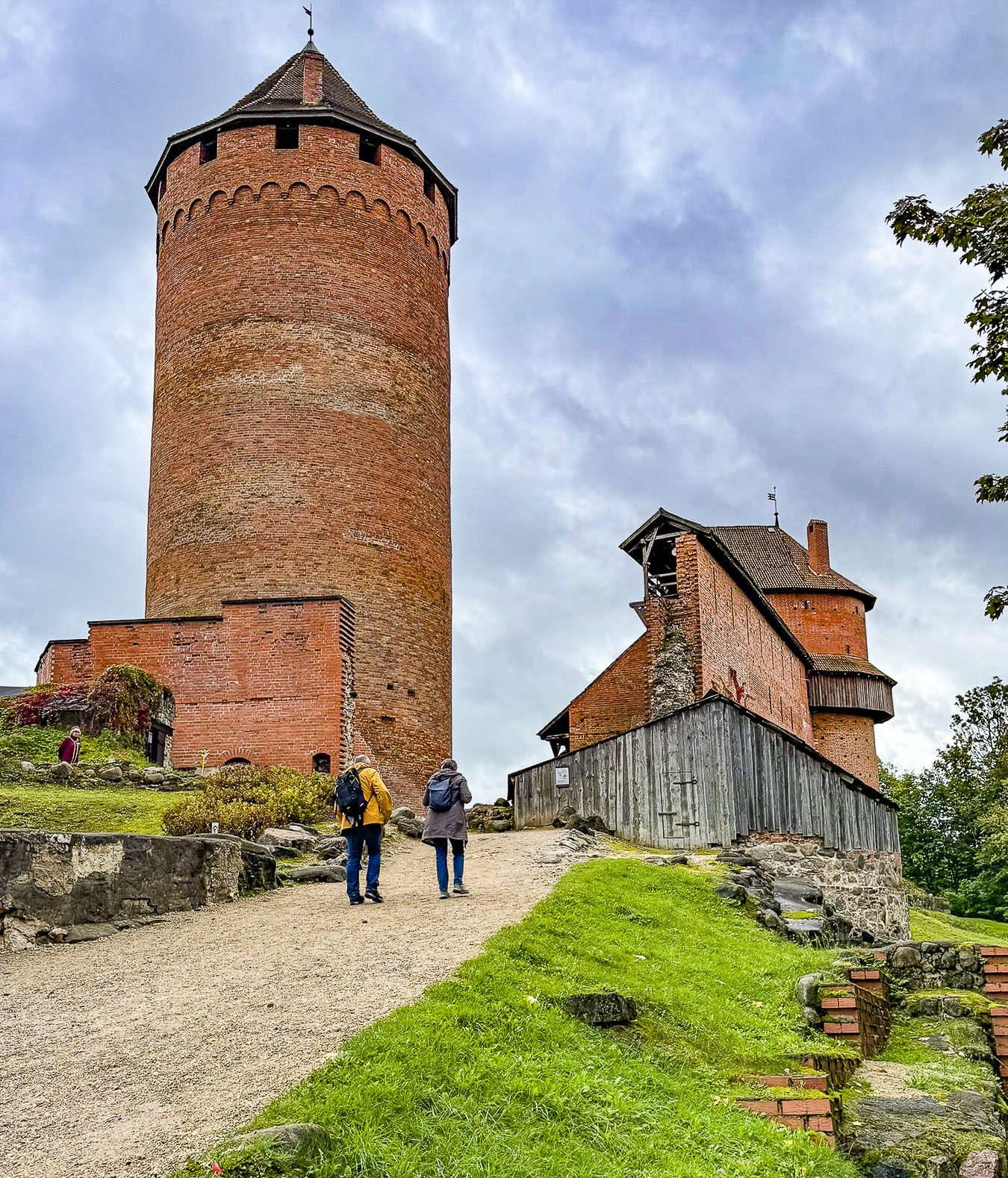
We had narrowly escaped Paris’s evening rush hour as we sped away from Orly through the French countryside. Our destination is Rouen, an ancient port town on the river Seine with a pivotal role in France’s history since the Romans first settled along the graceful bend of the river there. It would be a restart to a trip cut short by covid in 2020.

The last light of the darkening sky reflected off the Seine, like a brush stroke of silver paint across a dark canvas, as we turned away from the river and entered Rouen. We are not fans of night driving, especially in a new locale, and our maps app had difficulty with the narrow one-way streets in the historic center of the city. Frustrated, we decided to park at the first opportunity. Miraculously the planets were aligned in our favor as we entered the Q-Park Palais de Justice Musée des Beaux-Arts, a massive unground parking garage that encompasses several subterranean blocks beneath a park in Rouen’s historic district. Not sure exactly where to park, something urged us to continue through the cavernous space until we found a garage attendant moments before he locked his booth for the night. Friendly and extremely helpful, he explained how their multiday ticket would be the best value for us. Yes, we were so lucky he spoke English. Our good fortune continued at street level when we realized we were only two blocks from our hotel. But we had arrived later than planned and the gate to Le Vieux Carré was locked. Fortunately, another guest was returning to the hotel at that time and let us in. “I saw several keys on the reception desk when I went out, and figured you were one of the late arrivals.” Indeed, a room key with our name on it was there waiting for us.

Early the next morning the unusual, but pleasant aroma of caramelized onions drifted in through our open window. With our tastebuds awakened and appetites whetted we headed out. “Walk a little, then café,” is how we like to describe our wanderings. Our first stop – coffee and pastries. It is France, after all! But where to stop? There’s an abundance of eateries in Rouen, thanks to the city hosting two universities and thousands of students. There were so many places that looked inviting, but the criteria for us first thing of a morning was a café with a table in the sun, a must in mid-October to help alleviate the day’s early chill. Once sufficiently caffeinated, we set out.

Flat as a crepe, Rouen was a walker’s delight and savory with explorations that pulled us in every direction. During the 9th century, Vikings pillaged and then stayed to become the first Normans, and the prosperous town of became the capital of Normandy in the 10th century. During the Middle Ages, conflicts in the region were nearly continuous, but the city somehow evolved into one of France’s gems, with its distinctive medieval half-timbered buildings and three towering, majestic churches which still grace the city’s skyline. 

A who’s who of historical figures have crisscrossed Rouen’s cobbled lanes for centuries. The Anglo-French kings, William the Conqueror, a succession of King Henrys, Eleanor of Aquitaine and Richard the Lionheart viewed the city as their home away from home. In 1431, after inspiring her countrymen to rally against English expansionism, Joan of Arc was captured, tried, and burnt at the stake in Rouen’s Old Market Square. It wasn’t until the Siege of Rouen in 1449 when forces commanded by King Charles of France finally defeated the English. Later the French impressionist painter Claude Monet found inspiration in the city, featuring the Rouen Cathedral over thirty times as he put paint to canvas to catch its essence perfectly. With conflicts never seeming to end in Europe, somehow, this beautiful renaissance city, though deeply wounded, miraculously survived World War II. Most importantly perhaps, in March 1948, Julia Child had her first taste of French cuisine at Restaurant La Couronne, on Rouen’s central square, the Place du Vieux-Marché.  

Open since 1345, La Couronne is France’s oldest inn. Savoring her Sole Meuniere, a lightly breaded fish dish flavored with fresh butter, lemon, parsley and capers, it was an experience she described “as the most exciting meal of my life.” Local oysters and a bottle of Pouilly-Fumé were also enjoyed. She was hooked and a Francophile was born!

The Rouen Lean is not a dance, nor the result of drinking too much wine, but the very obvious tilt exhibited by many of the city’s ancient half-timbered buildings constructed during the Middle Ages. Our hotel was a prime example of this with scarcely a wall or floor that was square, plumb, and level. But that was the charming character and ambiance we were looking for. The half-timbered building’s superstructures were constructed with huge square oak timbers held together only with mortises, tenons, and wooden pegs, while the nonstructural area between the supporting timbers was filled with bricks or stones and covered with plaster. Over the centuries it has proven to be an aesthetically pleasing and durable construction method used to build five to six story houses. Many of the buildings still retain a centuries old, carved wooden sculpture on the front of the building that represented a service or craft that was once conducted there.

Approximately two thousand half-timbered structures from the Middle Ages still stand in Rouen. The abundance of wooden buildings surprised us as most of our travels have been through the countries of Southern Europe, Portugal, Spain, and Italy, where stone was historically used to construct everything. In Rouen, scarce stone was saved for the churches and castles.

Even stone erodes over time and occasionally old churches need a facelift every few centuries, as was evident by all the scaffolding surrounding the15th century, Gothic style, Saint-Ouen Abbey Church, though with a selective camera angle I was able to eliminate most of the temporary platforms from our photo. But the difference between the areas covered by grime and the newly cleaned sections was phenomenal. The multiyear project is scheduled to be completed later in 2024. Though the interior of the church was closed the day we visited, we were able to watch a stone carver as she worked to create a new gargoyle to replace one beyond repair.

Rouen’s three main churches, Saint-Ouen Abbey Church, Église Catholique Saint-Maclou, and the Cathédrale Notre-Dame de Rouen are all located a short distance from each other on the eastern edge of the historic district, but the journey through the narrow lanes connecting them and exploring many other splendid points of interest along the way made for a wonderful day.

After the abbey we window-shopped down Rue Damiette, admiring the handcrafted violins created by master luthier Sarhan Jean-Marc. Farther on, interesting antique stores lined the narrow lane. Behind us the abbey’s belltower rose over the street. A view that hasn’t changed significantly in centuries. One of the best examples of the “Rouen Lean” is at the end of the street across from Saint-Maclou and caused us to stop for a double take. How, we wondered, can these buildings still be standing?

There was a shortage of cemetery space in Rouen during the Middle Ages when the plague revisited the city repeatedly and 75% of its citizens died. At the time it was the custom to bury the dead only until their bodies decomposed.

Then the bones were exhumed and reinterned above ground in the ossuary Aitre Saint Maclou and the grave reused for the newly departed. Hidden away down a discreet side alley, the ossuary complex was expanded several times and functioned as a secondary cemetery until the early 1700s when the remains were removed, and the buildings were repurposed as a school for poor boys. Today the space houses a fine arts academy and exhibition space. Though it’s still a macabre place with skull and crossbones carved into its exterior timbers.

We rested with coffees at a café on Place Barthélémy in front of Saint Maclou. While a lovely spot, the coffees were overpriced to the point that we could have purchased lunch for two if we’d chosen a less touristy spot. Just a reminder, a block or two off the usual tourist routes and prices drop dramatically.

Rouen’s Cathédrale Notre-Dame has been the center of focus since the first early Christian converts built a temple in 395 AD, on the spot where the current church now stands. And, like the city, the church has a turbulent history. Charlemagne visited in 769, but those pesky Vikings couldn’t decide if they hated or loved the place, sacking it repeatedly in the 9th century, only to later claim the Duchy of Normandy as theirs and embrace Christianity after the Viking leader Rollo was baptized in the church and later buried there as well. Nearby, Richard the Lionheart’s tomb only contains his heart.

Romanesque architecture was the rage during the 11th century and William the Conqueror attended the consecration for the first of many expansions and renovations that would follow over the centuries.

More chiseling and hammering continued during the 12th century when successive Archbishops embraced the new Gothic style. In 1204, Philip II of France celebrated Normandy’s merging with his kingdom amidst the new Gothic renovations.

During the 16th century, a second tower in the Renaissance style was built and ornate stonework and hundreds of statues were added to the front of the church, creating the visage that remains today.

Later lightning strikes, hurricanes and Calvinists would wreak havoc on the church. During the French Revolution any metal objects, not hidden away, were seized and melted down to create cannon balls. During WWII the cathedral was heavily damaged by Allied bombs. The damage was so extensive that final restoration wasn’t completed until 2016, when all the scaffolding was finally removed. Built and rebuilt, inside and out, for over eight hundred years, the cathedral is a fascinating place to explore.

The next morning we headed down Rue de Gros-Horloge, Rouen’s main pedestrian-only thorough fare that runs east to west from the cathedral to the Place du Vieux-Marche, a historic market square. This is the street where the city’s famous 14th century astronomical clock, Le Gros-Horloge, seems to transport you backwards through time to the Renaissance. Early in the morning is the best time to experience this landmark without crowds, as later in the day the narrow lane is as busy as Paris’ Champs-Élysées. During our short time in Rouen, we passed under its gilded façade many times and always, like Monet and his multiple paintings of the cathedral, tried to capture this beautiful clock just right in our photographs.

Indulging our wanderlust, we veered left and right off the lane to satisfy our curiosity. We found ancient gargoyles on the Tribunal Judiciaire de Rouen, and whimsical unicorns, a porcupine, and a reference to L’Ordre de l’Hermine, the Order of the Ermine, a medieval chivalric order on the exterior walls of the Hotel de Bourgtheroulde, a former 1500s mansion, built in what is kindly referred to as the Flamboyant Gothic style popular at the time.

Seriously – the Order of the Ermine is not from a Monty Python skit. A small but ferocious animal, during the Middle Ages the ermine was believed to to fight to its death if attacked rather than “sully the purity of its white fur,” and was used by many medieval chivalric orders to symbolize their uncompromising integrity and honor.

There was also the Ordre du Porc-Épic, porcupine, for prickly knights, and the Order of the Golden Fleece, for royal embezzlers. These were actual chivalric orders, though I am taking liberty with their membership.

Today the Place du Vieux-Marché is surrounded with restaurants and cafes with outside tables, which were very lively at Happy Hour when students and folks just off work congregated on the square. Quite a different scene now as opposed to the day in 1431 when Joan of Arc was burned alive at the stake, in the center of the square, though her heart remained untouched by the flames. A beautiful, modern wooden church built in 1979, the Église Sainte-Jeanne-d’Arc now memorializes the spot where her pyre stood. A plaque nearby reads “Oh Joan, you who knew that the tomb of heroes is in the hearts of the living.”

Inside the food market we savored our first fresh oysters from the Brittany coast and purchased some fruit, and of course cheese! A difficult process considering the tremendous variety we could choose from.

Intrigued by Joan of Arc’s story, the next day we headed to the Historial Jeanne d’Arc, which is housed in a wing of the ancient Archbishop’s Palace where part of her trial was held. We were skeptical at first while buying our tickets, thinking we’d just be watching a movie. But we both ended up being enthralled with the interactive digital technologies used to project Joan’s saga onto the old stone walls, floors, and domed arches.

Her history was exceptionally well portrayed and presented as chapters, with each chapter presented in a different room of the architecturally interesting space. We climbed one of the palace’s towers and were rewarded with a timeless view down Rue Saint Romain to the church of St. Maclou; a view that would look familiar to Joan of Arc were she to stand in this spot today, so little changed from her time.

A symbol of defiance, heroine for the French, and a successful military adversary against the English, she claimed God supported Frances’s freedom, but this was a position the Rouen church could not support as they were allied to England and claimed God was on their side. She was tried and convicted for her heresy. Her male jury also had difficulty with her dressing in men’s clothing for battle. As if because she was a woman, she should have worn a skirt and sat side saddle as she rallied the French to fight. But this practicality was viewed as cross dressing and as such was held to be against God’s law. (Though the robes of the clergy were not considered feminine.) The French finally defeated the English and succeeded in uniting Normandy and Rouen with France. Twenty-five years after her execution, Joan’s family petitioned for the trial records to be reviewed. The court determined she had been tried “under false articles of accusation,” and posthumously declared her innocent and annulled her sentence in 1456.

Our time in Rouen was a beautiful look back into Medieval France.

Till next time, Craig & Donna