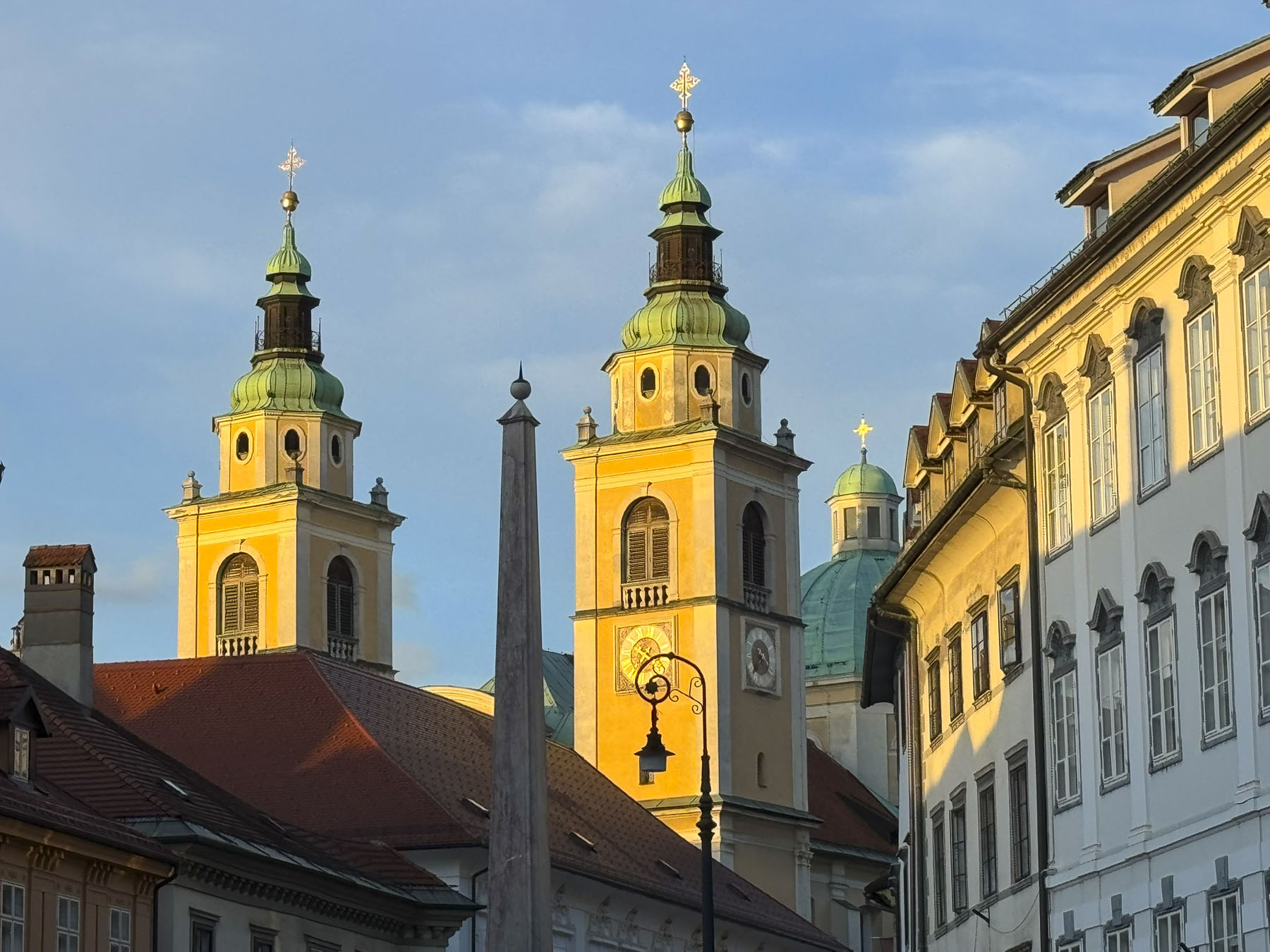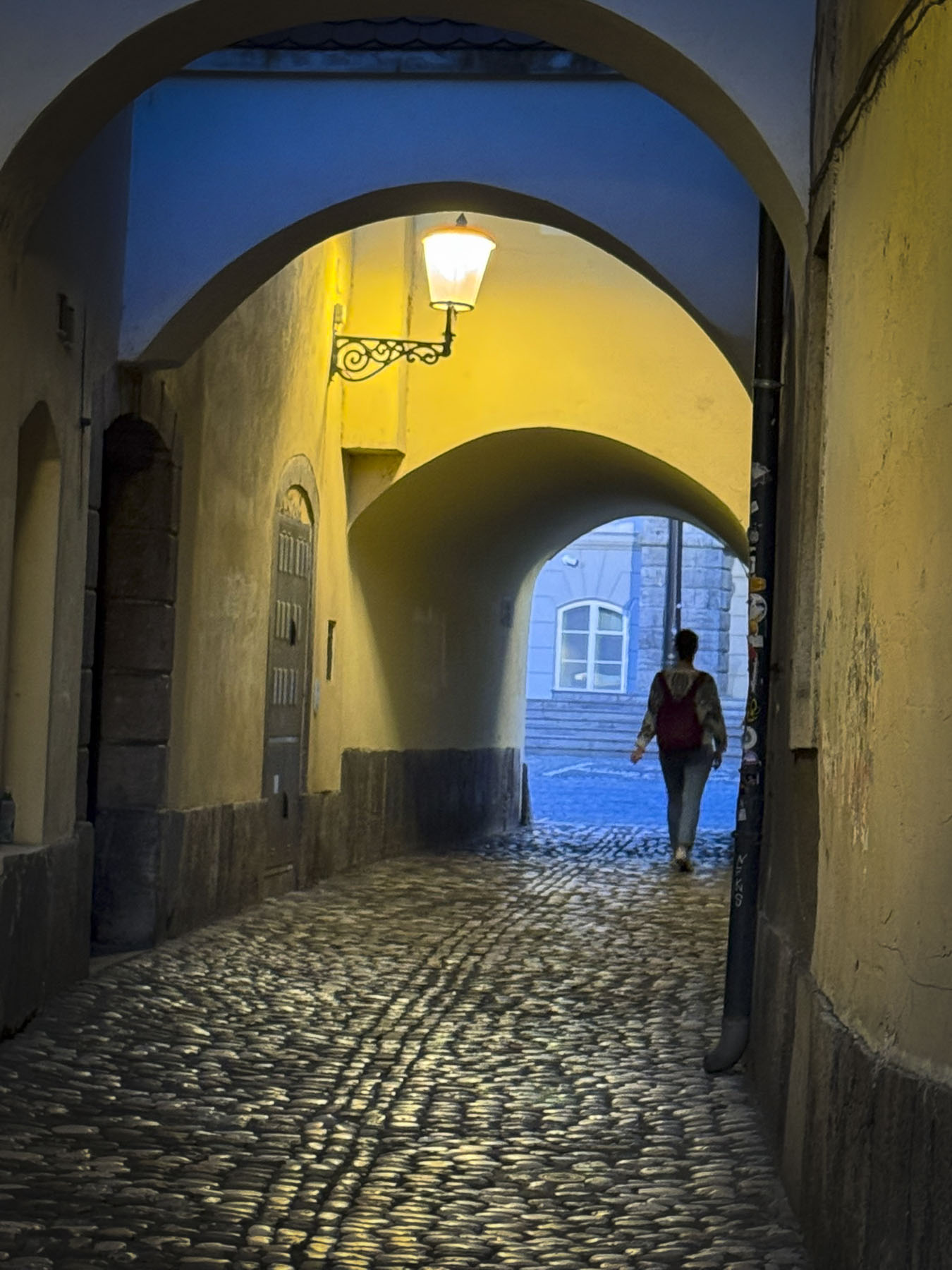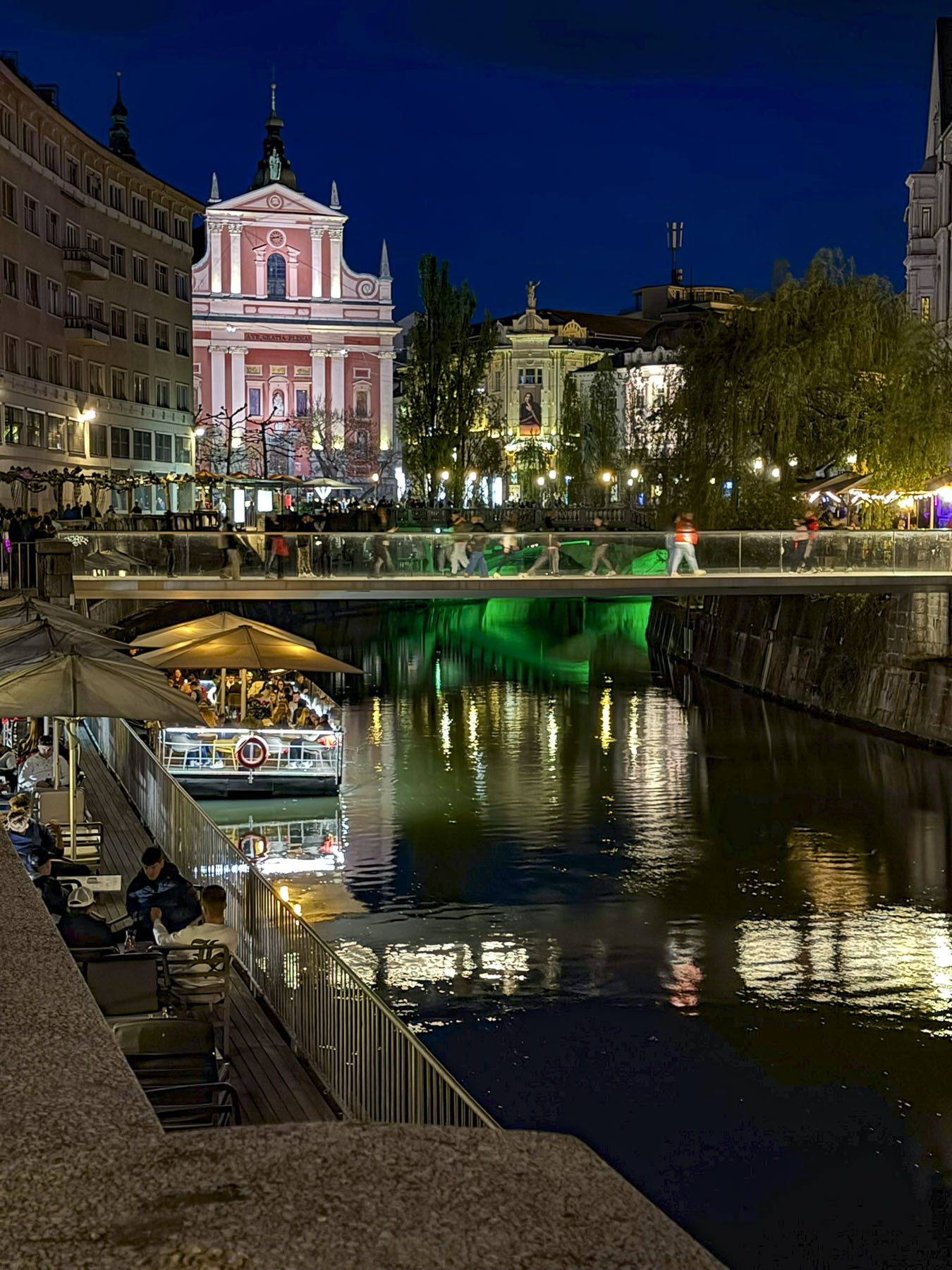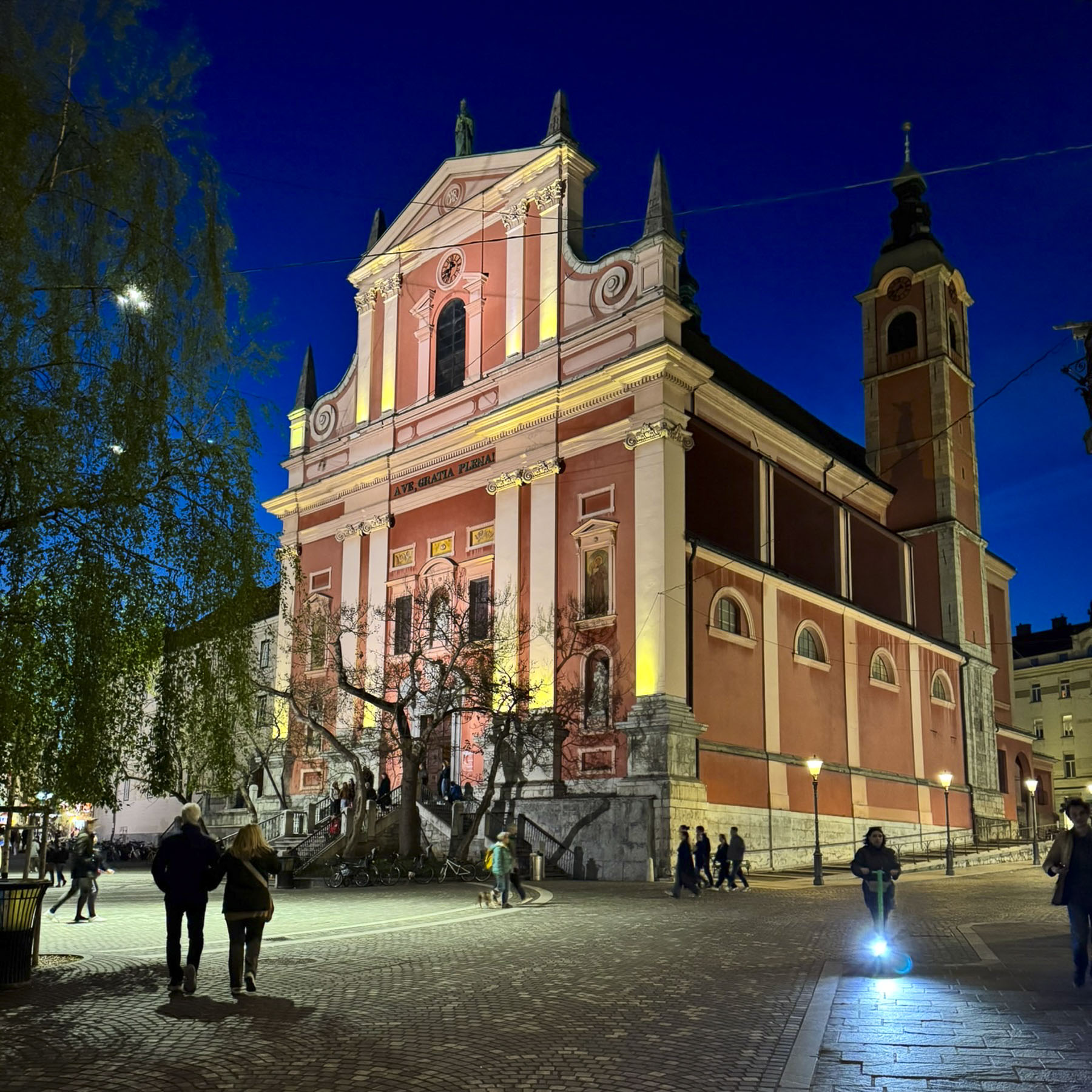
Croatia Road Trip Part 2: The Istria Peninsula – Plitvička Jezera, Pula, and Rovinj or Waterfalls, Roman Ruins & a Saint

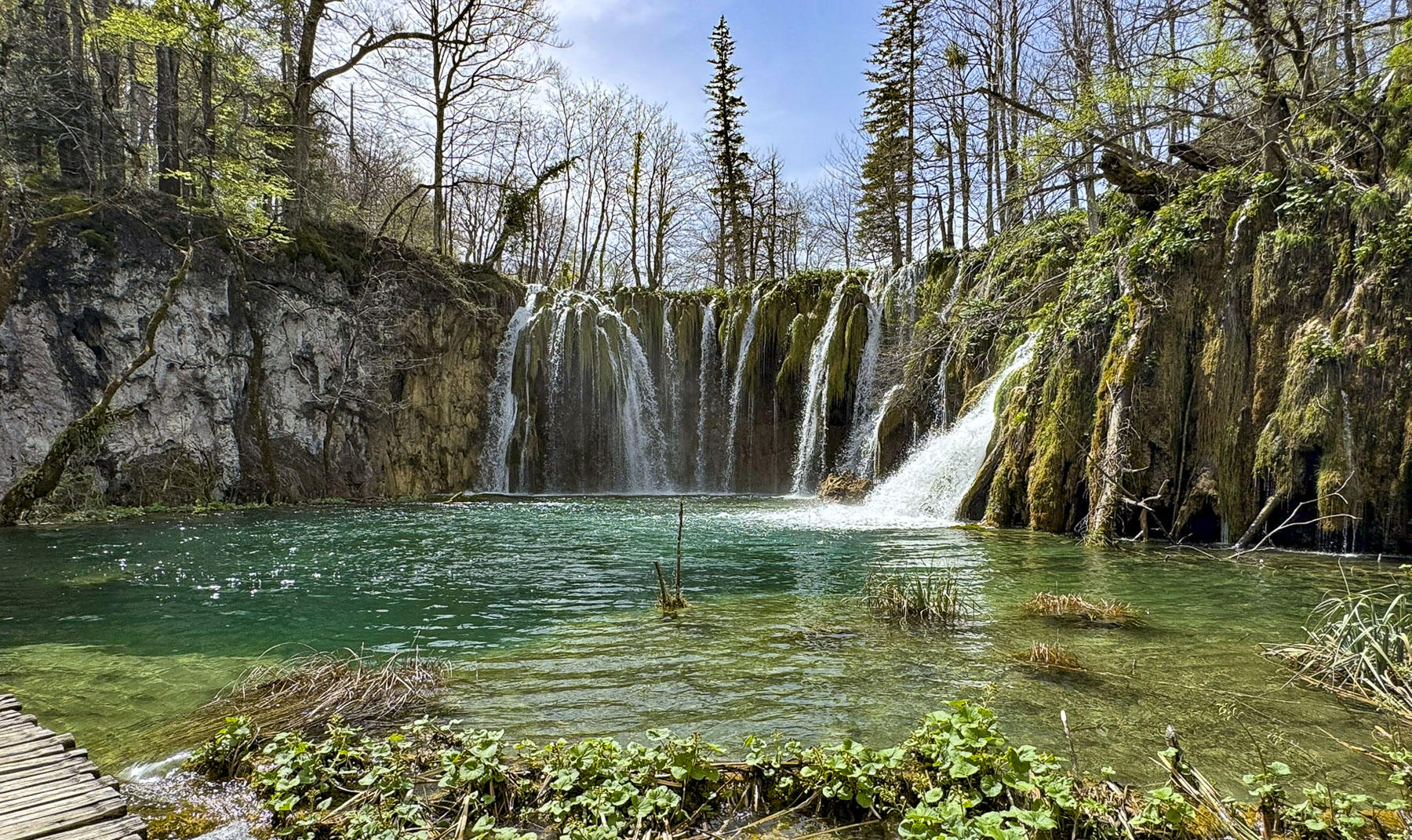
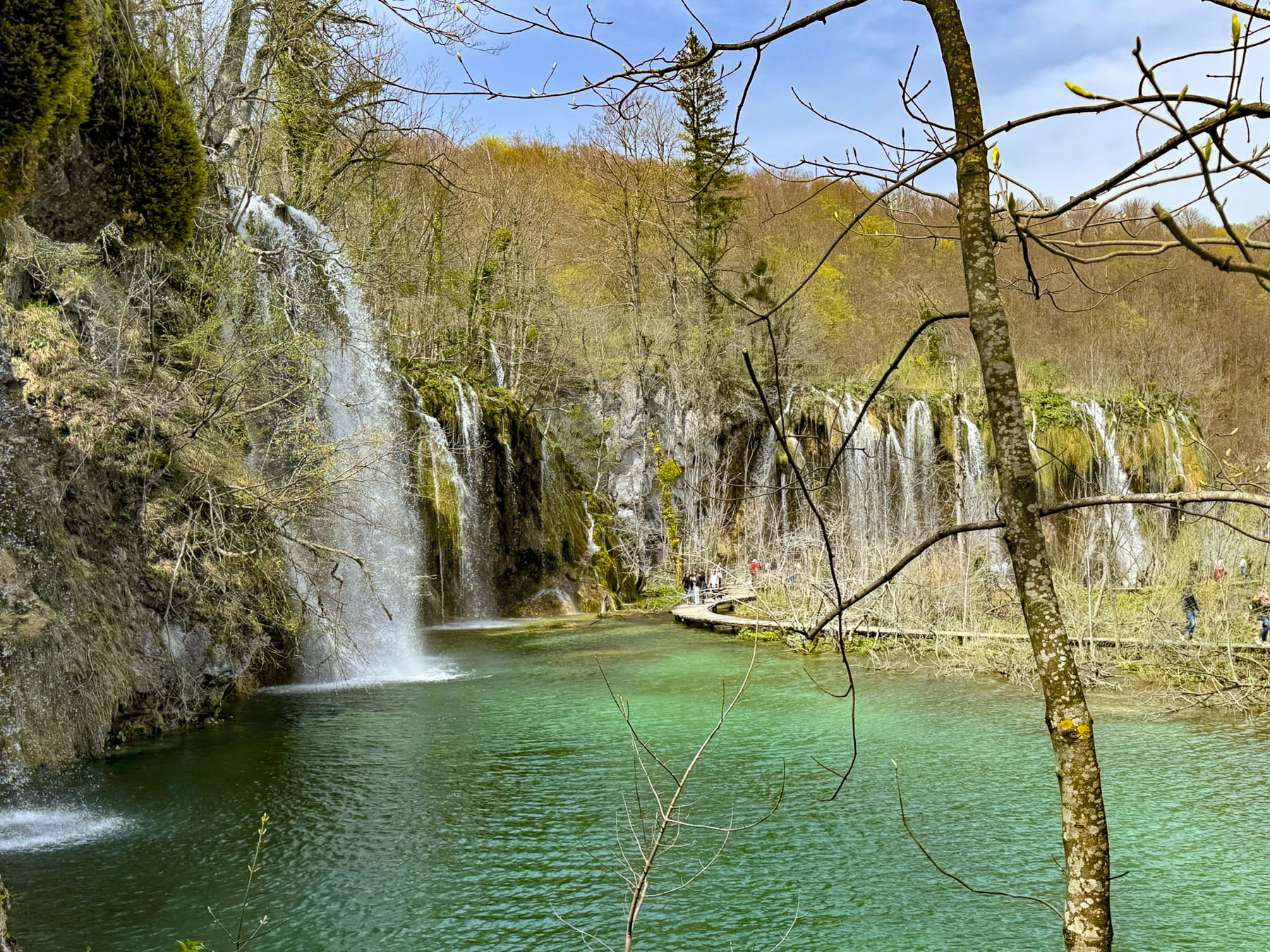
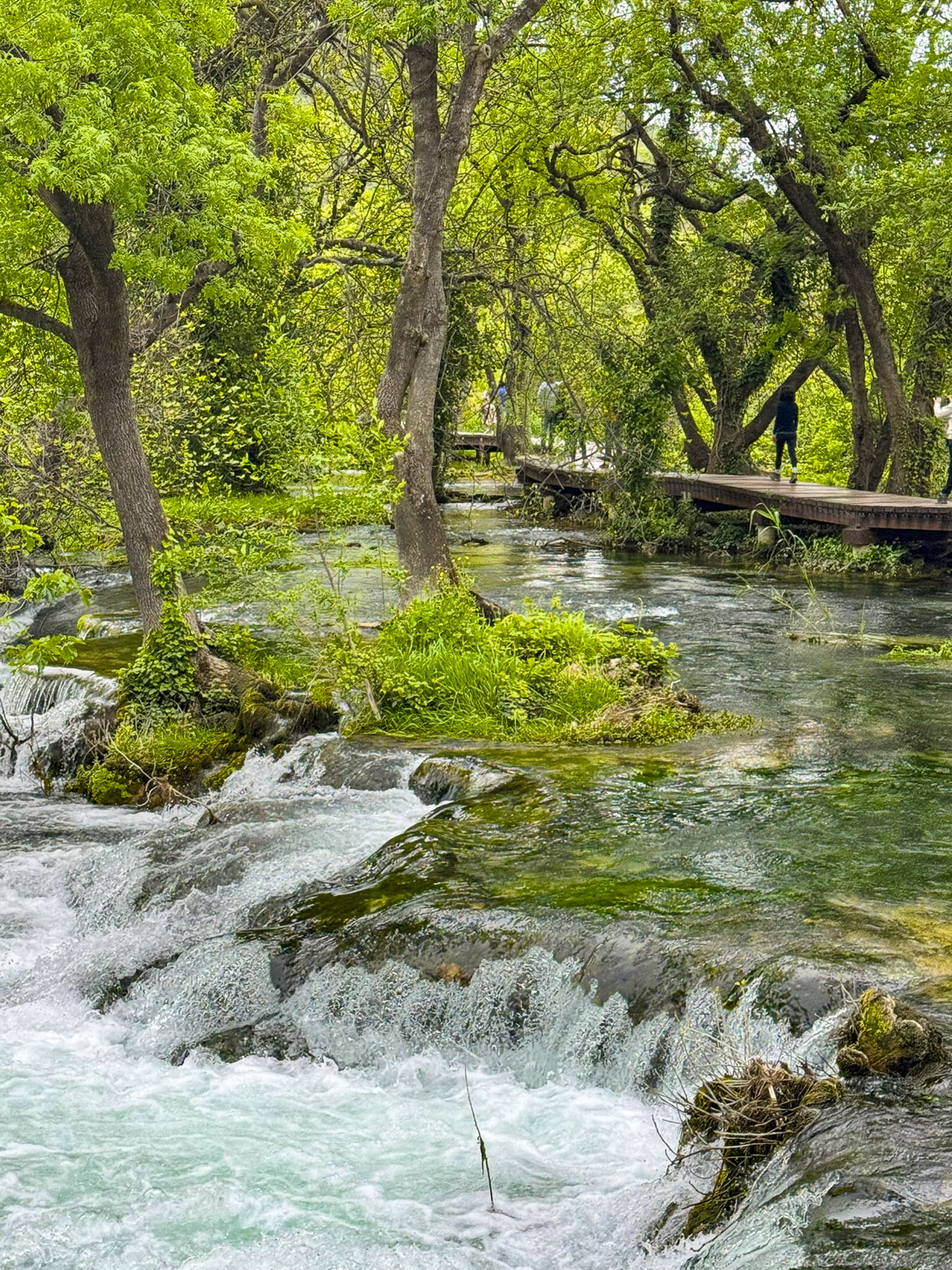
We experienced an infinite palette of blues spread across the sea, sky and waterfalls of Croatia, as if they were an artist’s inspiration, but in fact were mother earth’s creation. The emerald green, turquoise and azure arteries of the rivers were particularly enthralling; they shimmered with the changing light, almost glowing, as they coursed through their surrounding landscapes. The intense colors are the result of limestone and other mineral deposits that line the waterways, and the angle of sunlight on the water. This majestic display of nature’s wonder is on display at Plitvička Jezera National Park, just two hours from Zadar. 

Created in 1949, Plitvička Jezera was Croatia’s first national park and protects a massive 296.85 km2 (114.61 sq mi) area, situated on a plateau in the mountainous Dinaric Alps of central Croatia, that separate the inland region of the country from the Adriatic coast.

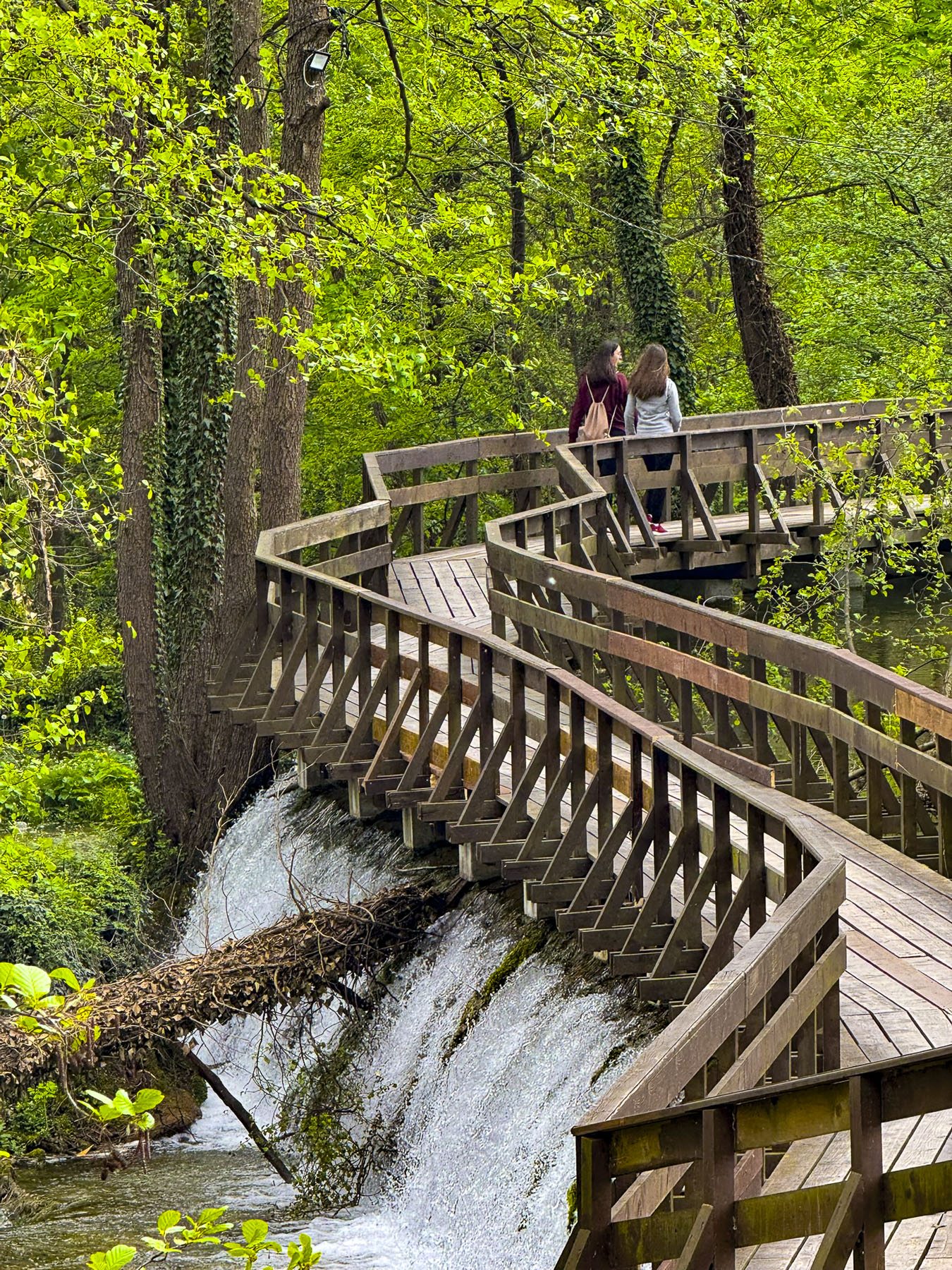
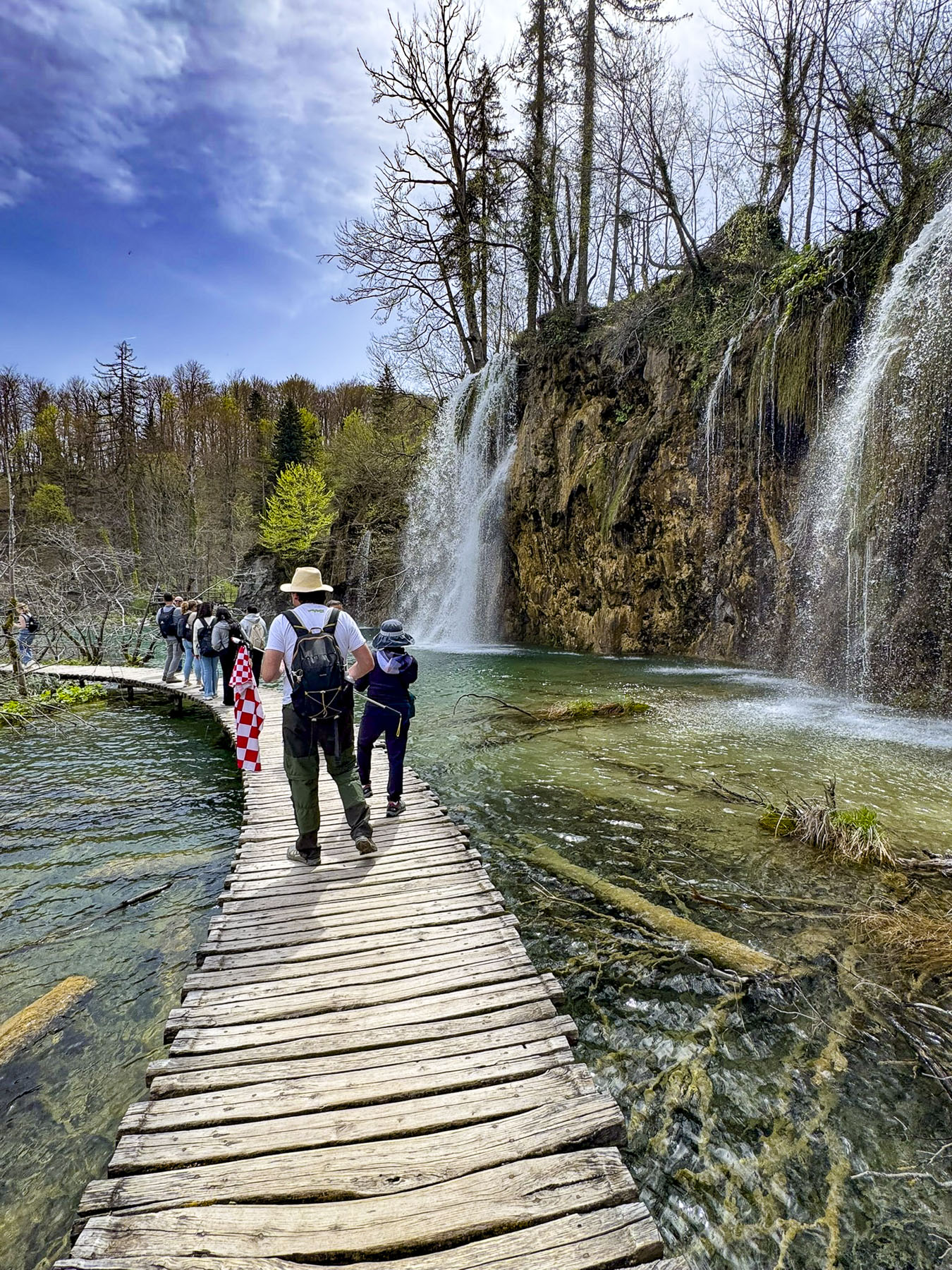
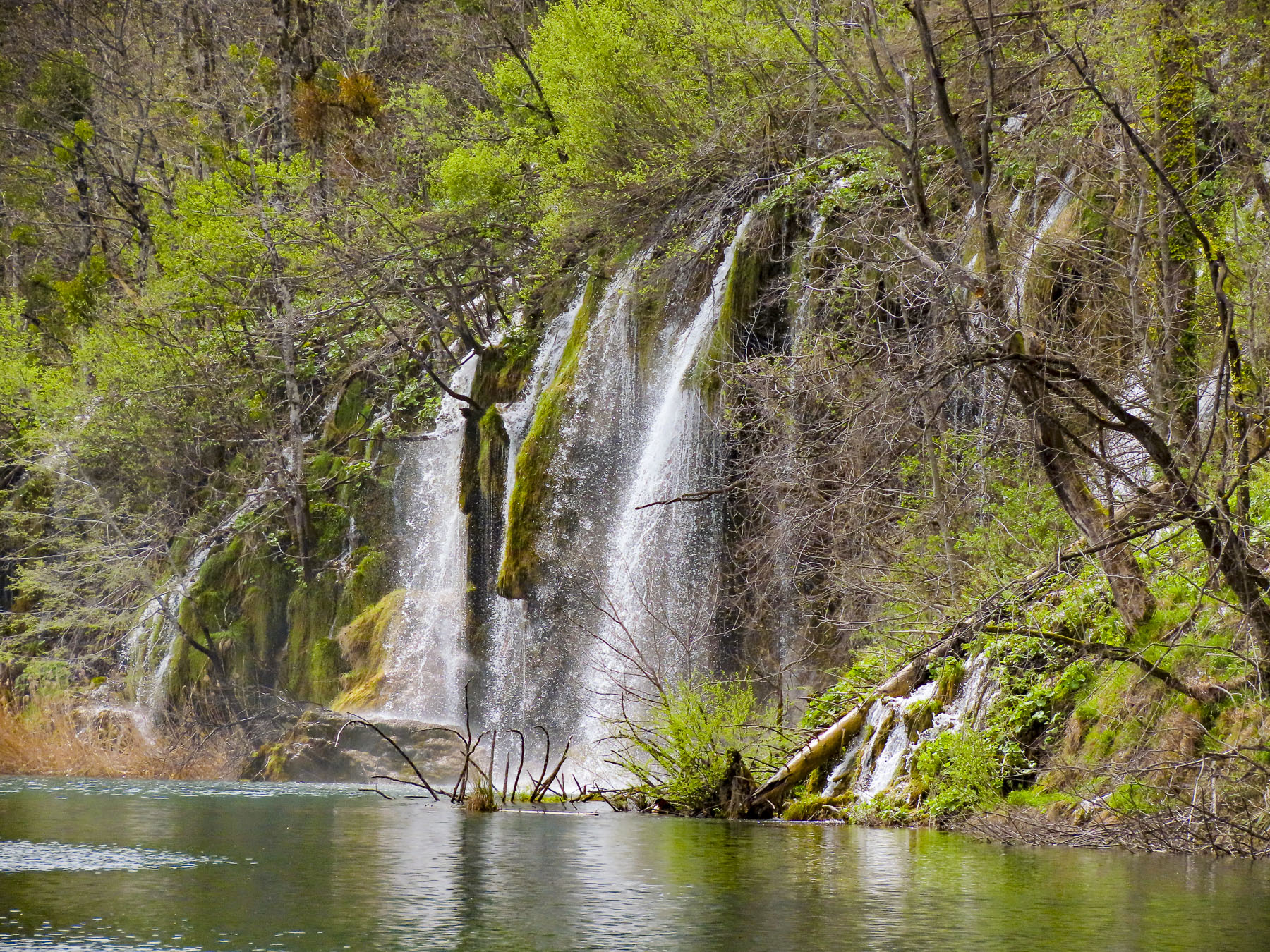
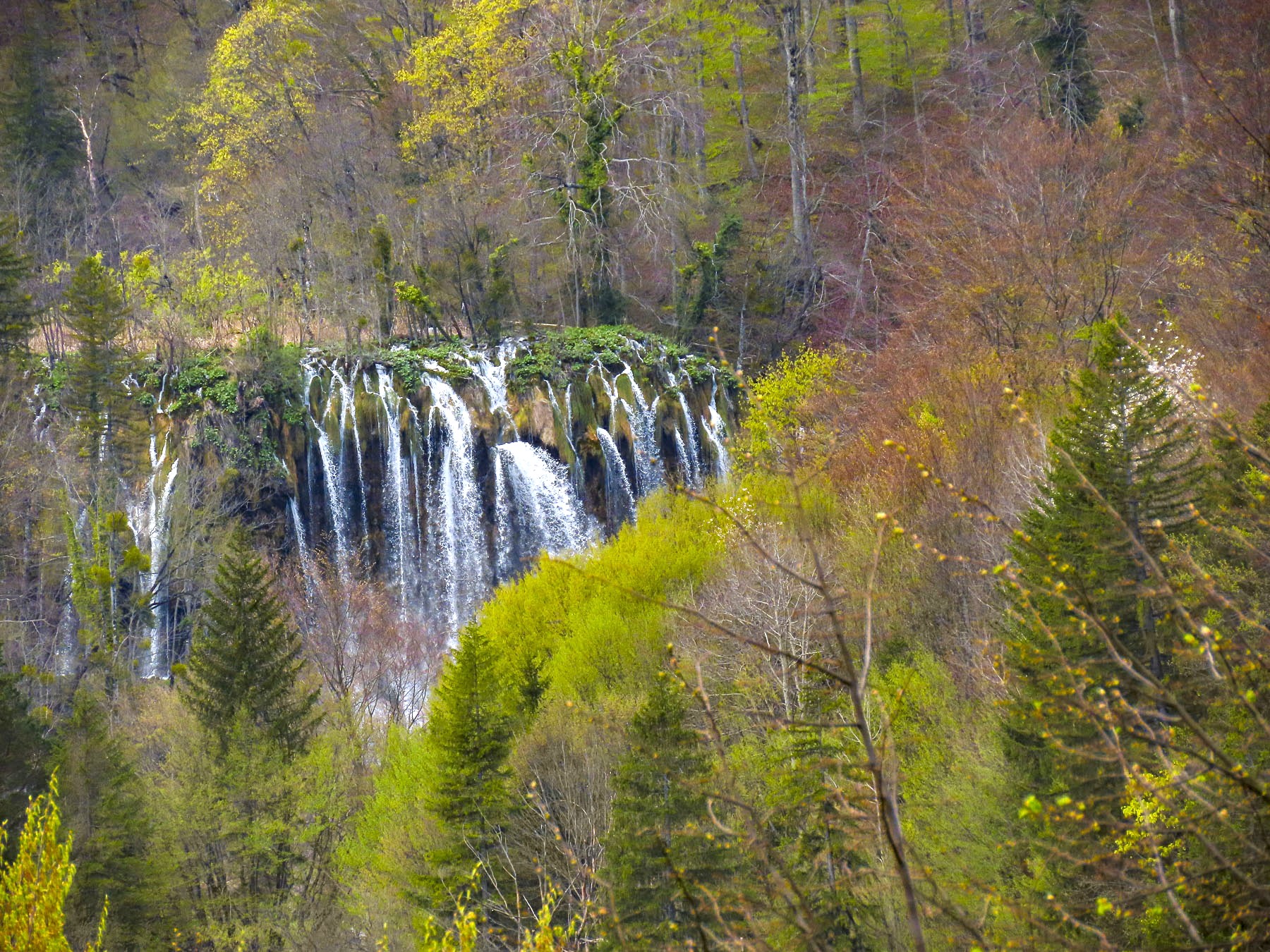
The park has 16 terraced lakes with numerous waterfalls of various heights which folks can view via a series of meandering boardwalks built across the shallow pools below each cascade. The park service has organized these walkways into eight different touring routes/programs.

We visited the park on the Wednesday before Easter, a school vacation week, and the park was busy, but not overwhelmed with visitors. Those in the know arrived early, as convenient parking vanished quickly, and it was a very long walk to the ticket booth.

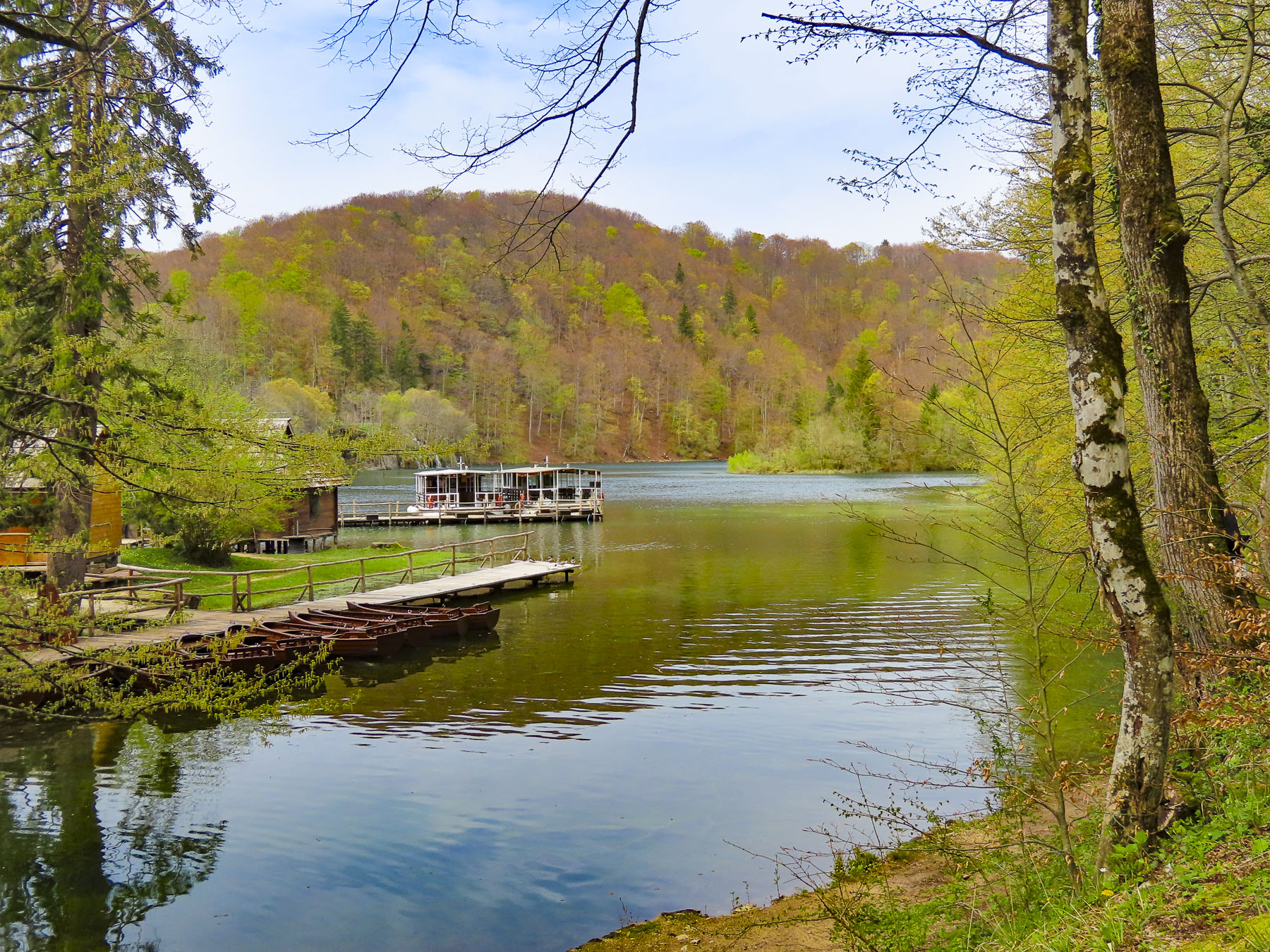
We chose route E, a three hour, 5100m (3mi) circular walk through the Upper Lakes section past Veliki prštavac, and Mali Prštavac falls to Lake Prošćansko, that included a short boat ride across Kozjak Lake at the beginning and end of the trek.

The falls were enthralling, flowing like delicate veils across the rock face of the hills. The boardwalks above the crystal-clear pools were narrow, and for the most part without railings except for sections of stairs that ascended a hillside. But the walk was very easy, and we encountered folks of all different ages, and parents carrying young children.

In mid-April the foliage on the trees in the park was just beginning to leaf out, making it the perfect season to view the falls without them being hidden by trees. Trying to take photographs of the falls, midday, without people in them was nearly impossible, and you need to be at the park before most folks arrive to accomplish that.

Our destination for the end of the day was the Hotel Katarina in Selce, a modest-sized resort village, on the Adriatic. The two-hour drive first took us through mountains covered in pine forests along Rt D52, past small villages where all the homes still had cords of wood for their fireplaces and wood stoves stacked high. Descending the mountains, the landscape slowly greened and transitioned to a rolling pastureland dotted with cows and sheep. Freshly turned gardens along the way were already planted with spring onions. Some of the small farms had roadside stands offering honey and homemade cheese for sale. It was a very pretty drive, but the roads were narrow and did not have any shoulder area to pullover to safely take photographs. Intersecting D23, we continued our descent to the coast through thinning forests then Garrigue, an evergreen shrubland well suited for the region’s hot dry summers.

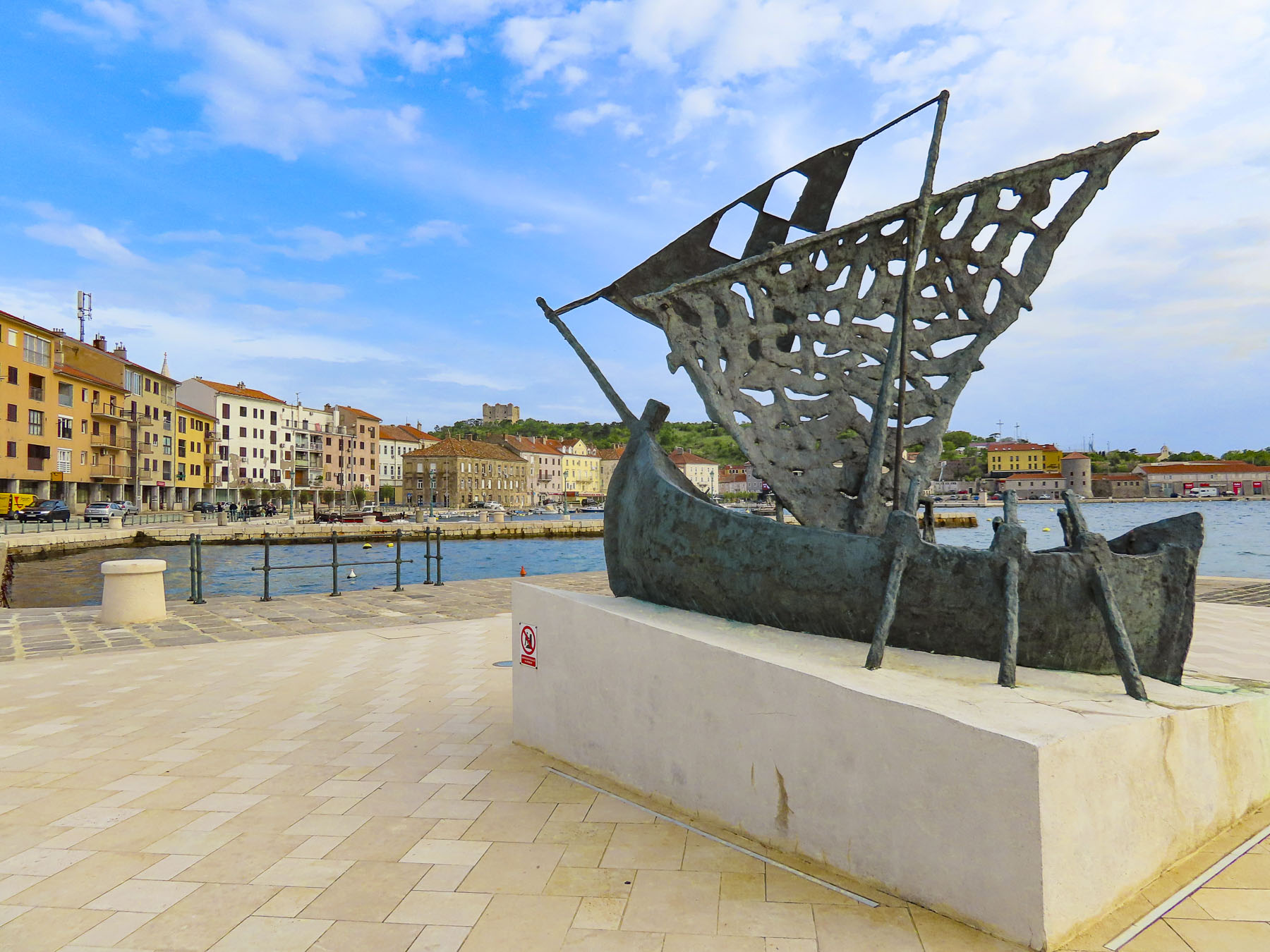
We reached the coast at Senj, the oldest town on the North Adriatic coast, with a history that goes back 3,000 years. The town is located on a crescent shaped bay under the watchful eye of the Nehaj Fortress, a 16th-century bastion that helped to keep the Croatian town independent during the centuries of Ottoman and Venetian aggression in the Adriatic Region. Unfortunately, we didn’t have time to visit the castle, which also hosts an annual three day Renaissance festival called the Days of Uskoks every July. But we did enjoy a short walk along its waterfront before continuing on.

Large modern hotels like the Hotel Katarina, which cater to tour groups, are not our first choice when we travel, but unfortunately during the shoulder seasons along the Adriatic coast many of the hotels that would normally be open during the summer are closed, and options are limited. But the hotel’s location for a one-night stay, in the town of Selce, worked well with our driving plans, as we headed to historic town of Pula, on the Istrian Peninsula.

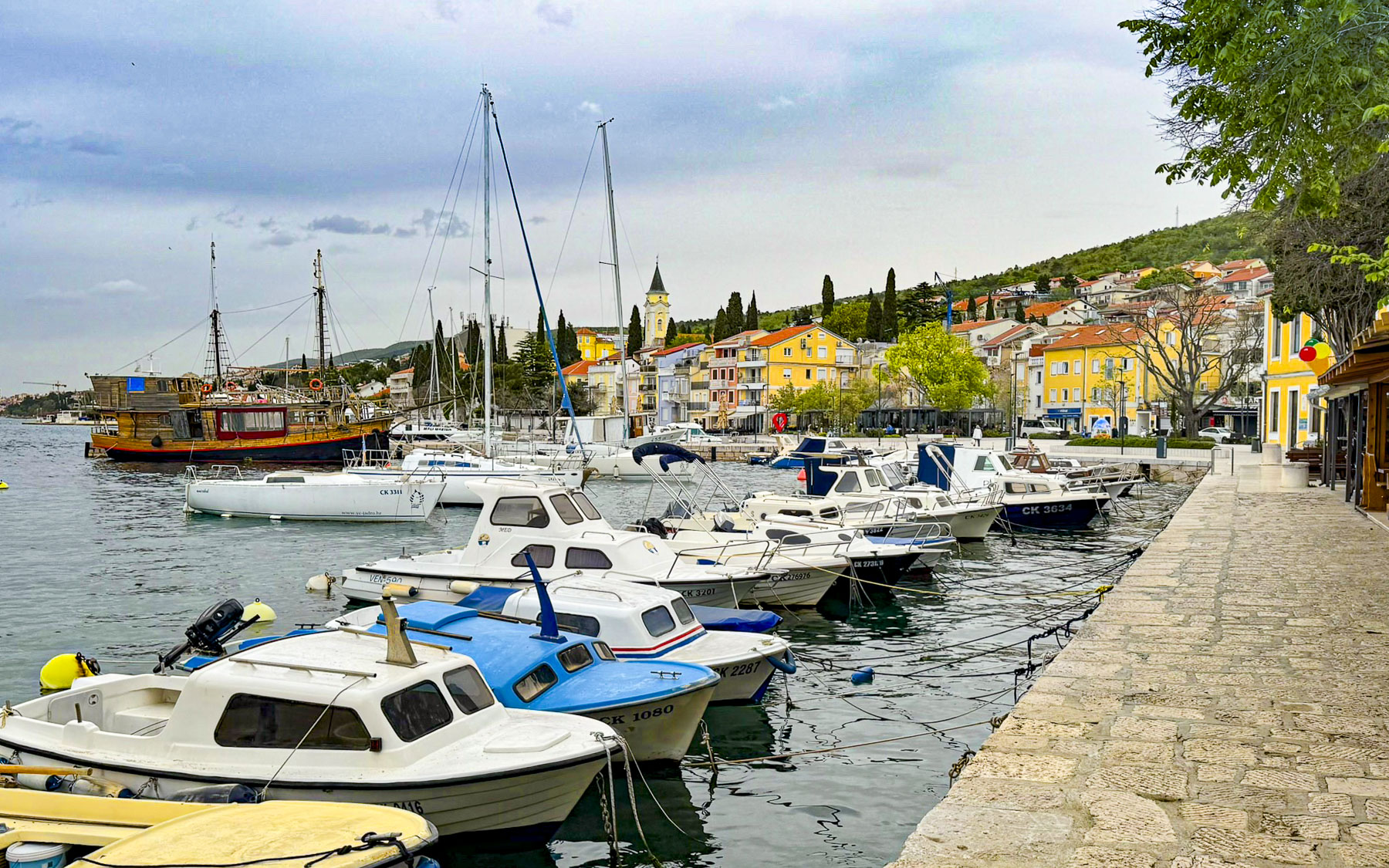
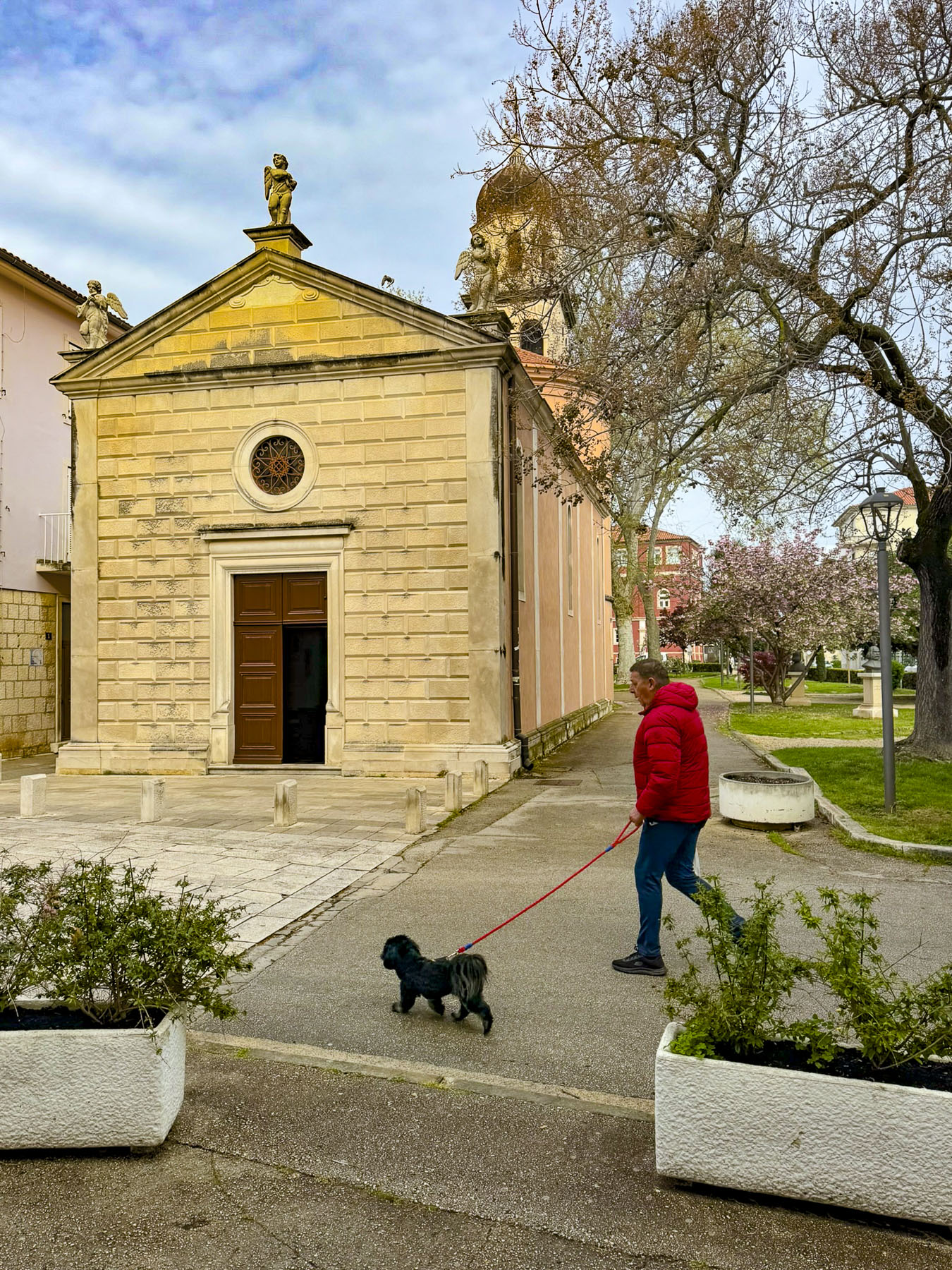
The hotel was directly across from a promenade, alive with a chorus of wonderful song birds, which we followed the next morning.  At the town’s port the walkway widened into a small plaza planted with tulips and centered with a large Easter Egg, called a pisanice.  

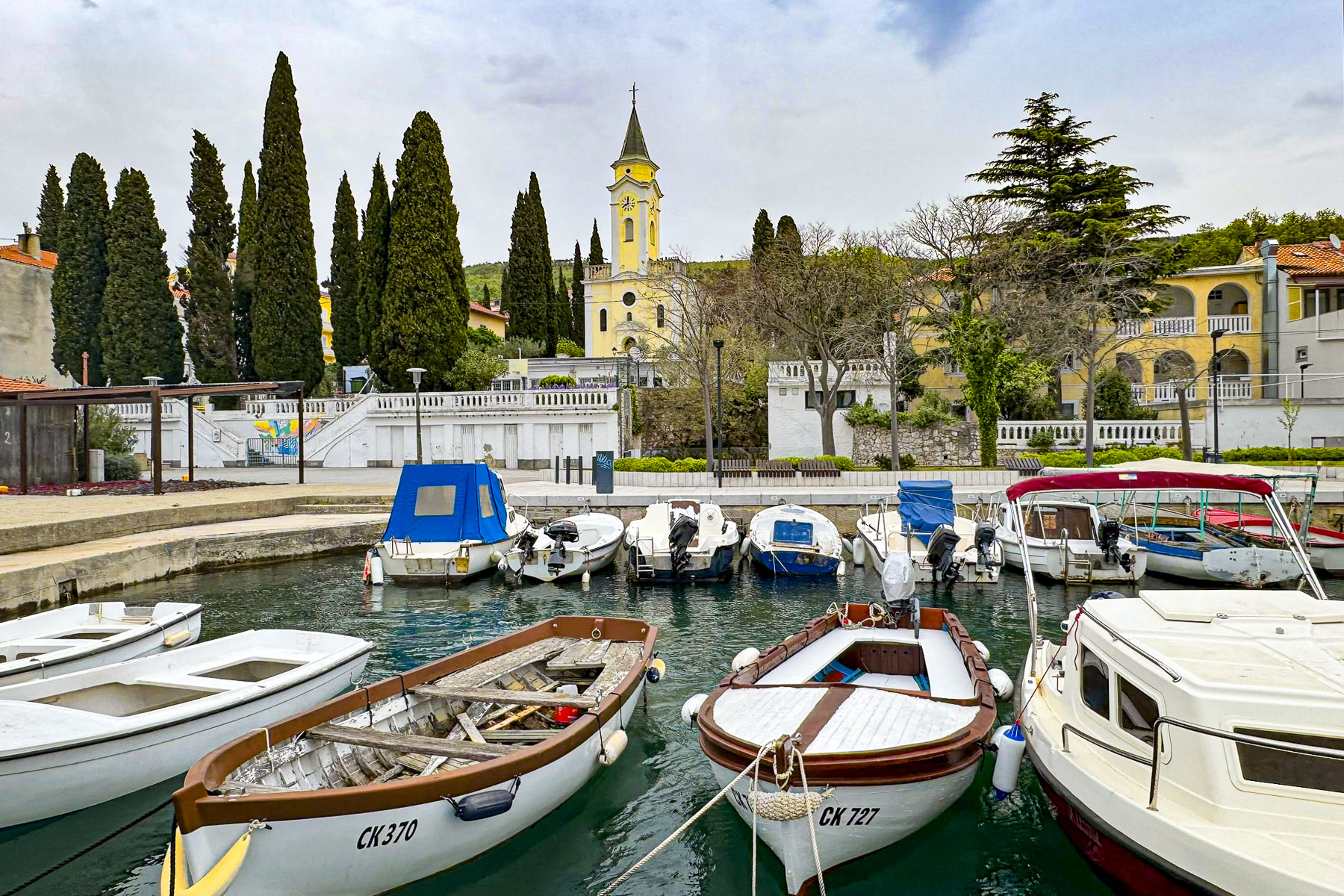
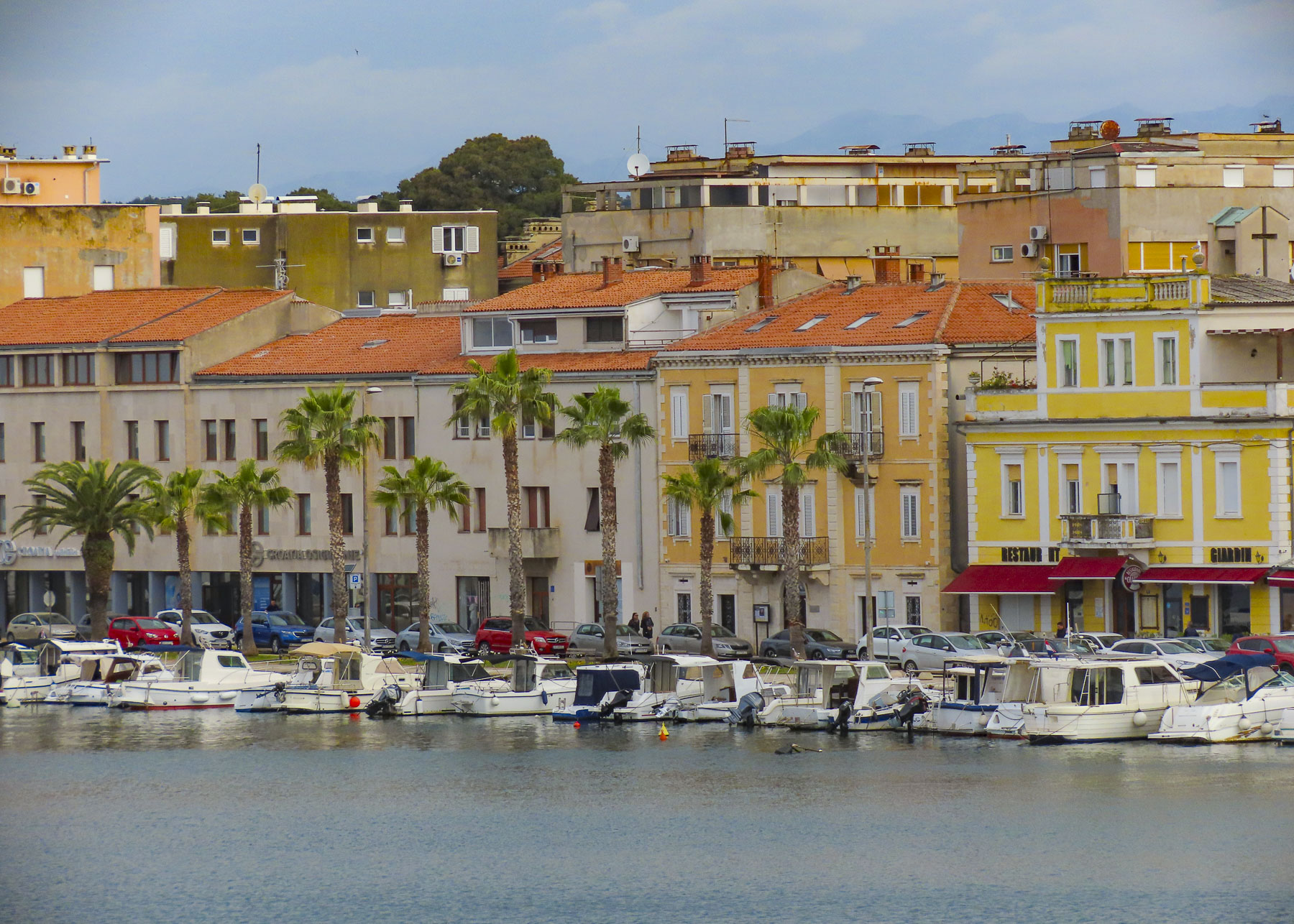
These fiberglass eggs are painted by local artists with themes that reflect the Croatian Christian traditions, and celebrations of Spring. There were numerous restaurants along the quay, but only a few of the smaller cafés were open this time of year. Even though the morning was overcast, the town’s small harbor was a colorful scene of boats and waterfront buildings.

Our drive north from Selce mostly hugged the coast and was reminiscent of Italy’s Cilento Coast along the Mediterranean in the Campagna region. We found the towns and glimpses of the sea along the Croatian coast fascinating and started to think about future return trips to the area. 

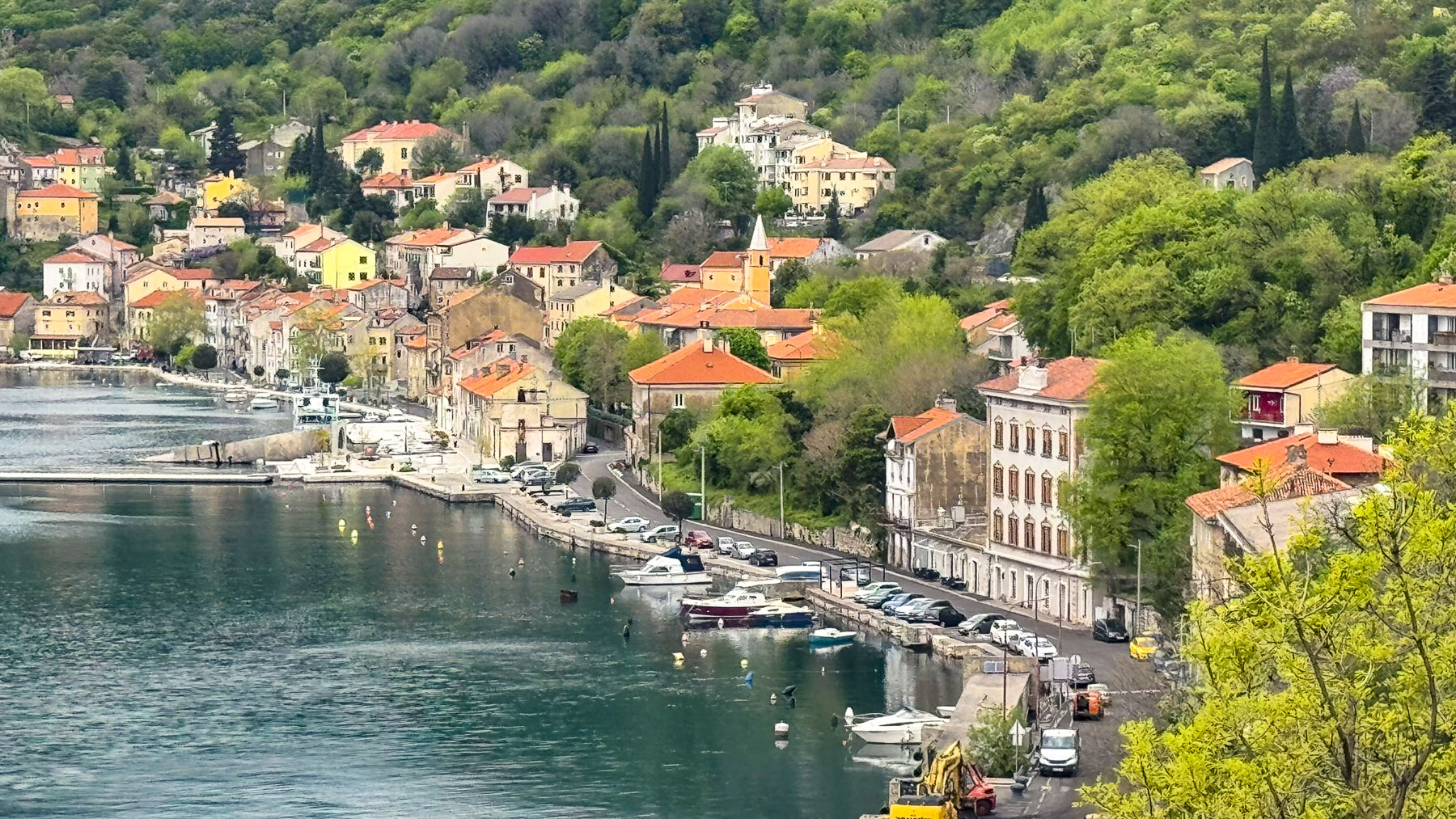
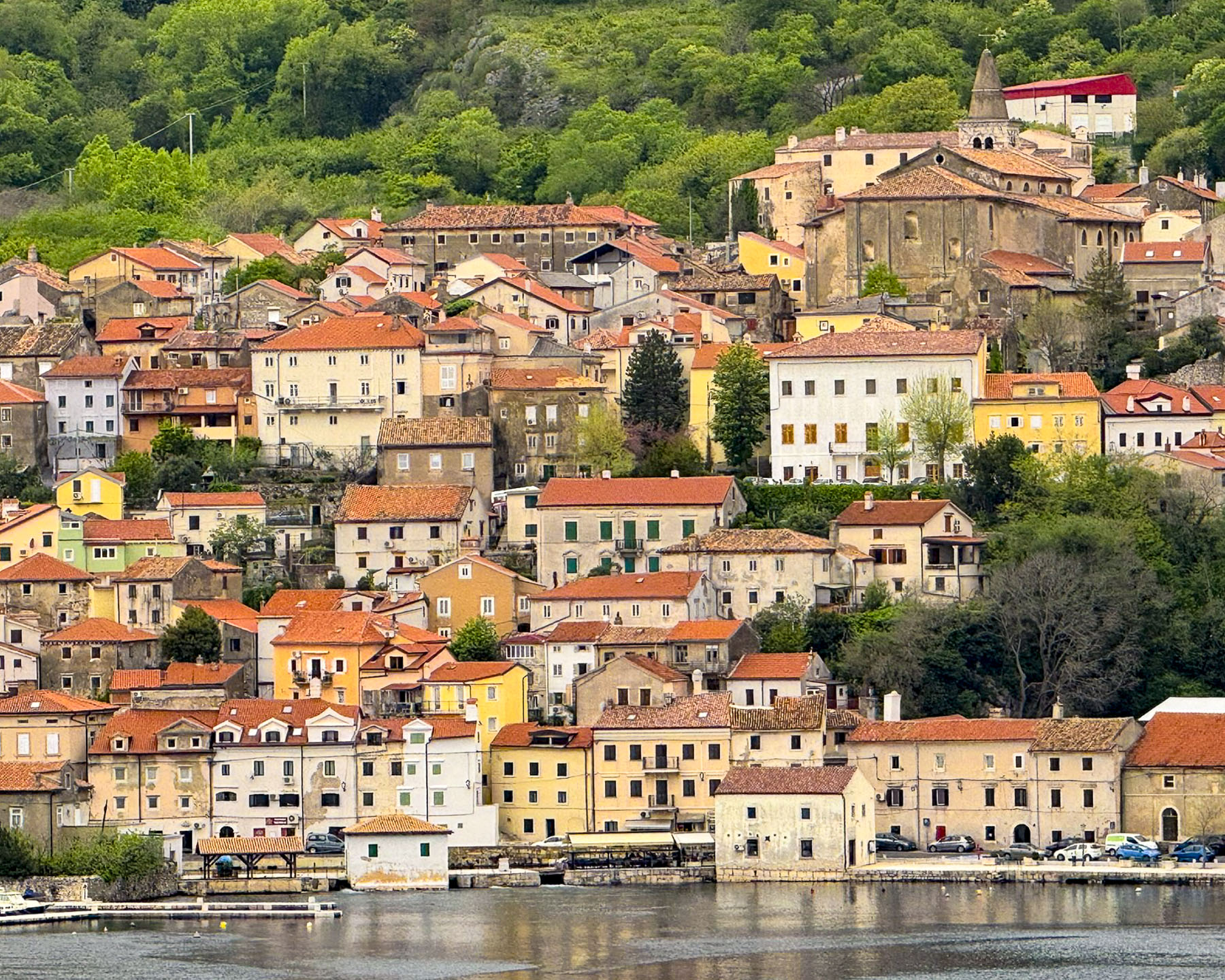
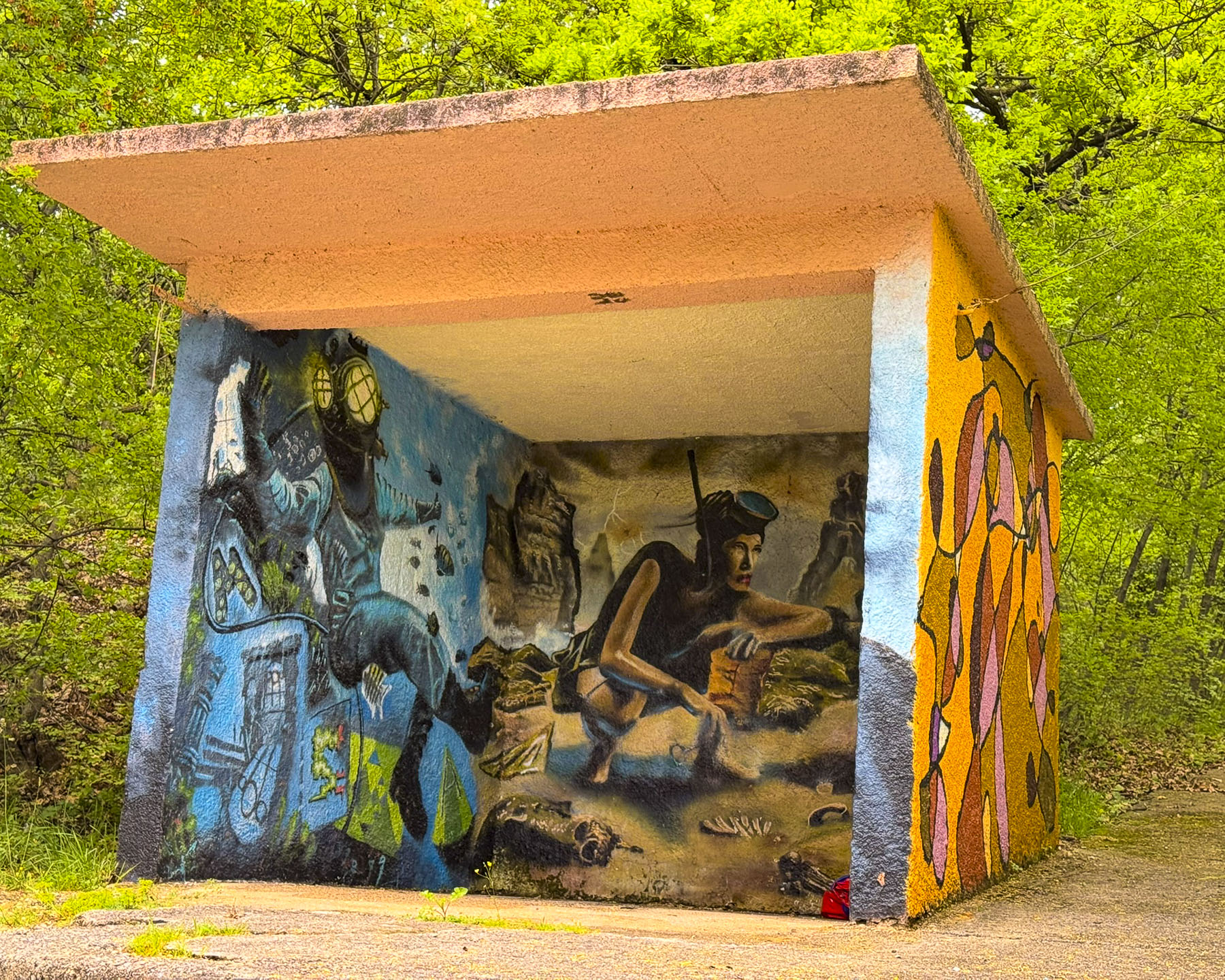
We would enjoy time  to explore in depth not just the small coastal villages like Bakar, where just beyond the village some of the bus stops along the road are covered with murals that reflected the areas maritime heritage, and Mošćenička Draga, beautifully set on a small cove, but also some of the less mentioned larger coastal cities like Jadrolinija and Opatija, which were fashionable Habsburg-era resorts in the 19th century and still retain their fine architecture. We regretted that we only had time to drive through these areas.

The Istrian Peninsula is known for the high quality of its olive oils, wine and regional cuisine which spans from light seafood entrees to hearty meat dishes and stews, the first of which we tried at Tri Murve in Plomin. I wish we could say that this was a well-researched choice, but it was a spontaneous stop, to satisfy a mutinous co-pilot, but we were pleasantly rewarded with a very wonderful lunch. On this chilly day, the temptation to linger here was overwhelming.

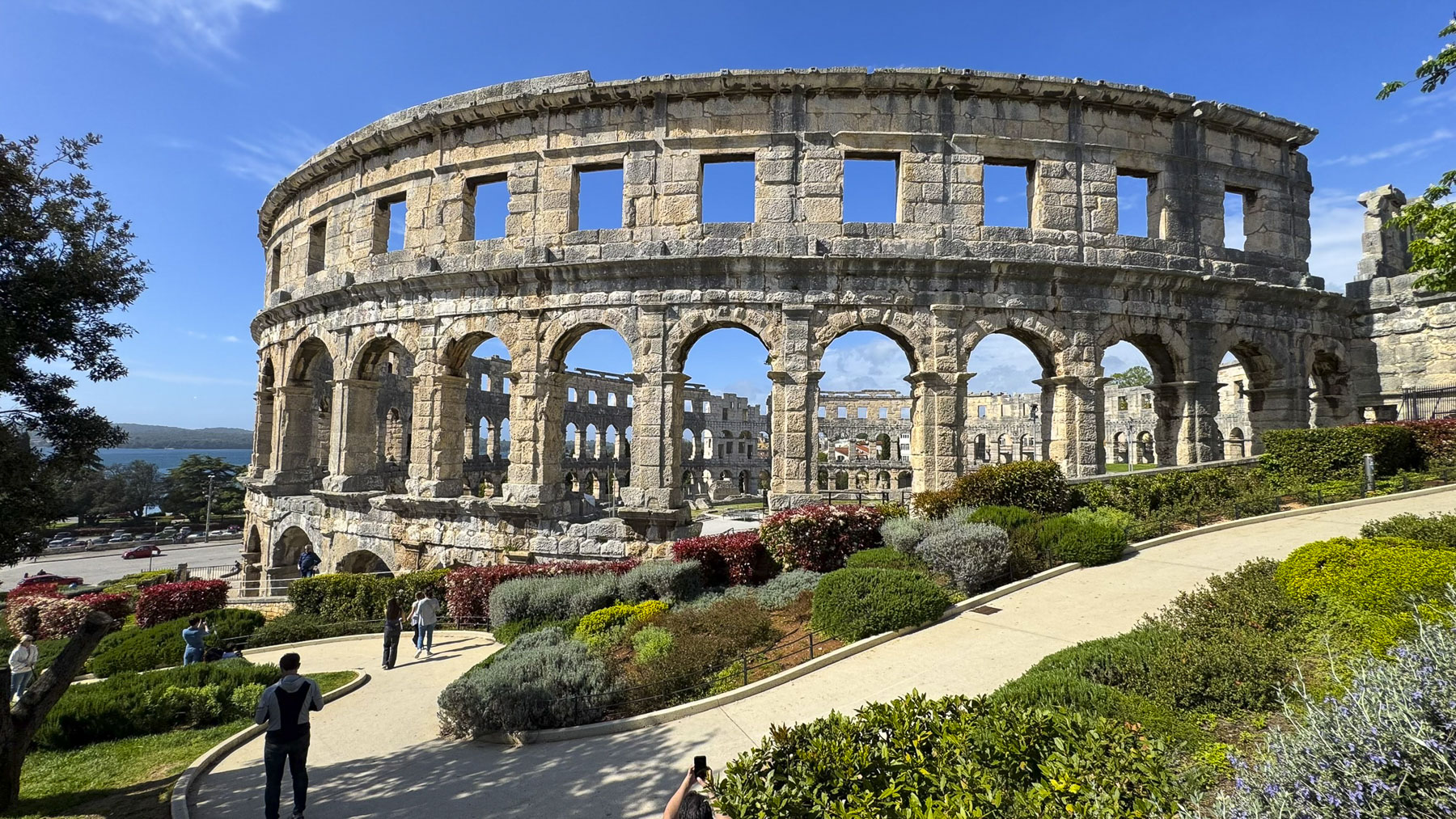
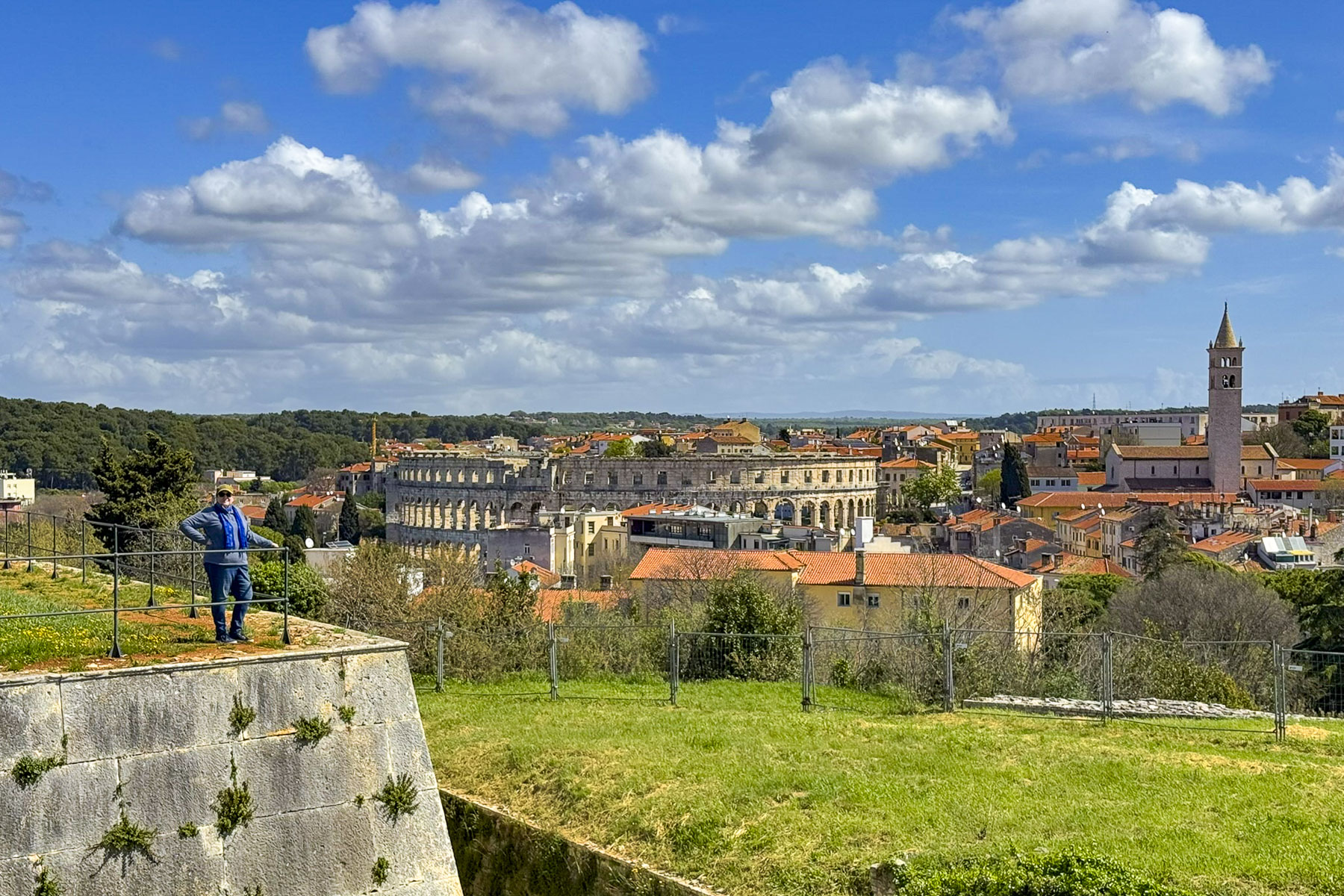
The top of Pula’s ancient Roman colosseum surged above the trees as we drove into the center of the port city. Rome’s presence in the city dates back over 2,000 years, but legend believes the city’s founding was a thousand years earlier and linked to the mythological Greek hero Jason and the Argonauts who sailed into the northern Adriatic Sea to escape the pursuit of the Colchians. The Colchians, exhausted after years of pursuing the Argonauts, feared returning home without the Golden Fleece, and founded Polai, the City of Refuge.

In the mid-1500s when Pula was part of the Venetian Empire plans were proposed to dismantle the arena and rebuild it in Venice. But they were rejected after the passionate arguments of Venetian senator Gabriele Emo, who is remembered with a plaque in the stadium. Though his efforts did not stop the removal of stones to build other structures in Pula which continued well into the 18th century. The arena, a masterpiece of Roman engineering, was originally built to seat 23,000 spectators, and is used to host a variety of events that range from film festivals to concerts and soccer matches, though its seating capacity has been reduced to a safe 7,000.

We thought we were in luck when we found a spot in an untended parking lot atop the hill near the Citadel of Pula, and the Monastery of St. Francis, only two blocks from our lodging at Luxury Flats. However, as we were lifting our luggage from the trunk a parking attendant appeared and informed us the lot was reserved for local residents with permits and we would be ticketed, but he was very gracious and gave us 15 minutes to get our bags to the apartment before we needed to move the car to a municipal paid parking lot across from the Roman colosseum, that he suggested. Finding parking for a rental car is always a task in small European cities. This one was reasonably priced, charging hourly during the day, but free after 18:00 until 8:00 the next morning. 

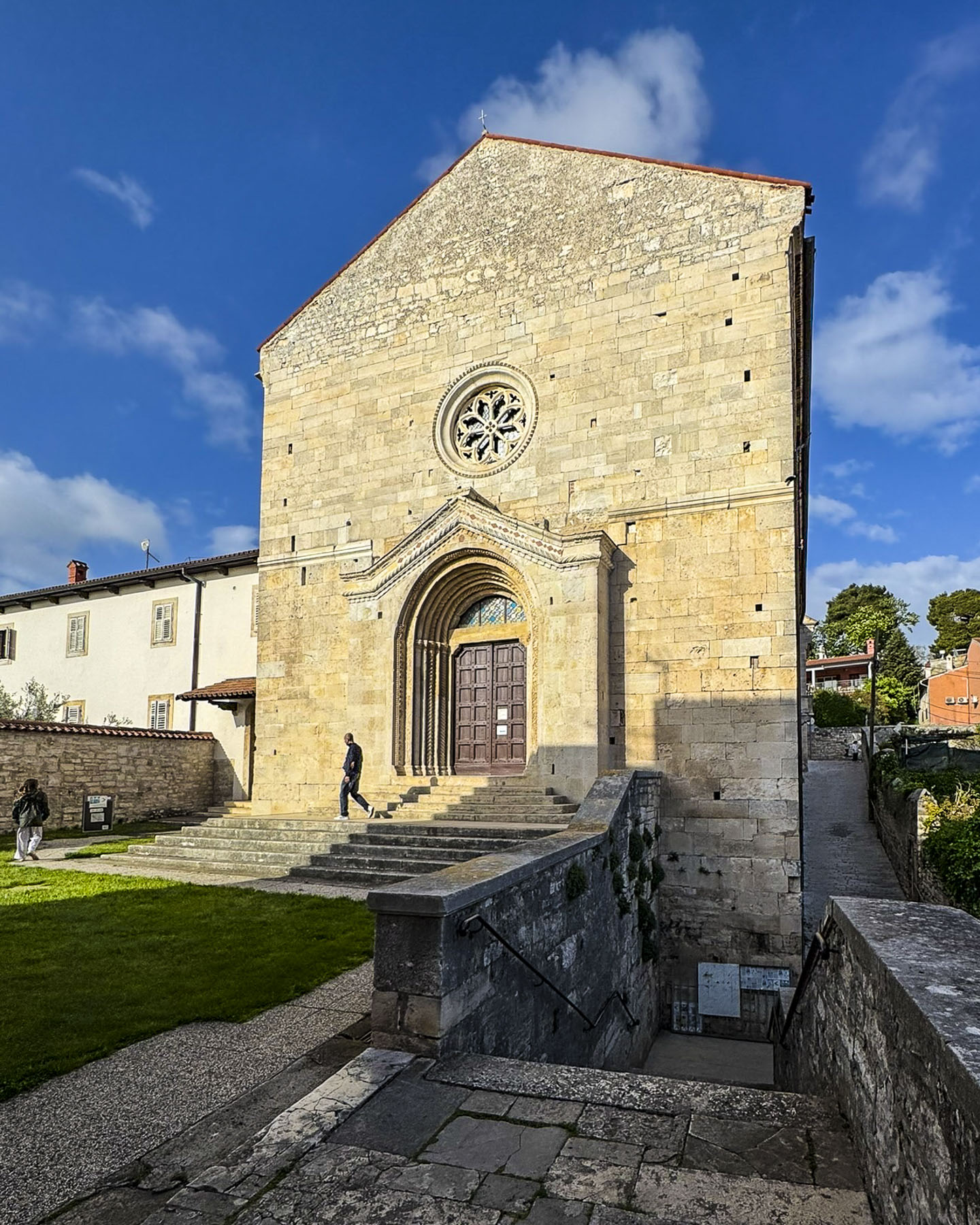
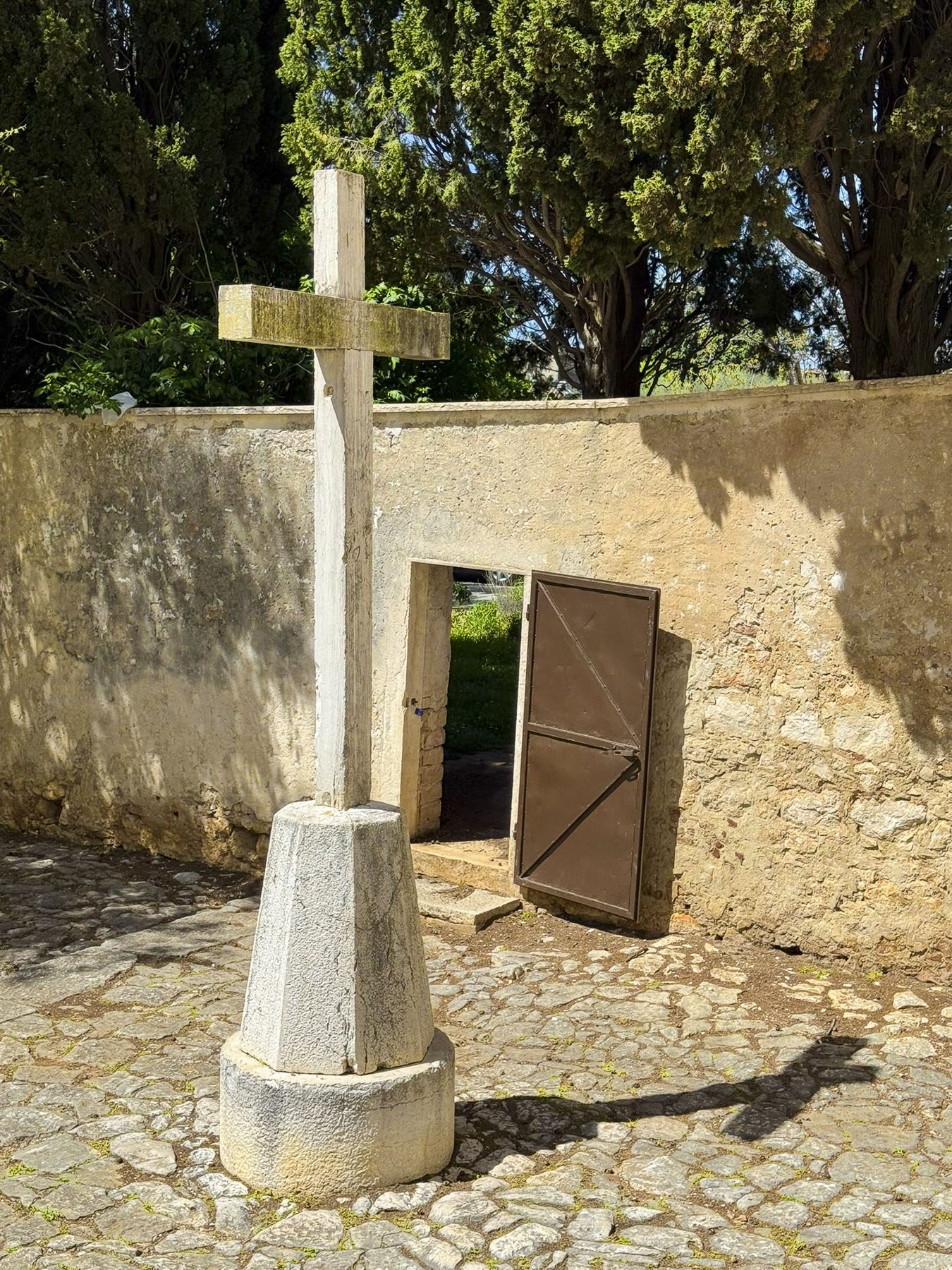
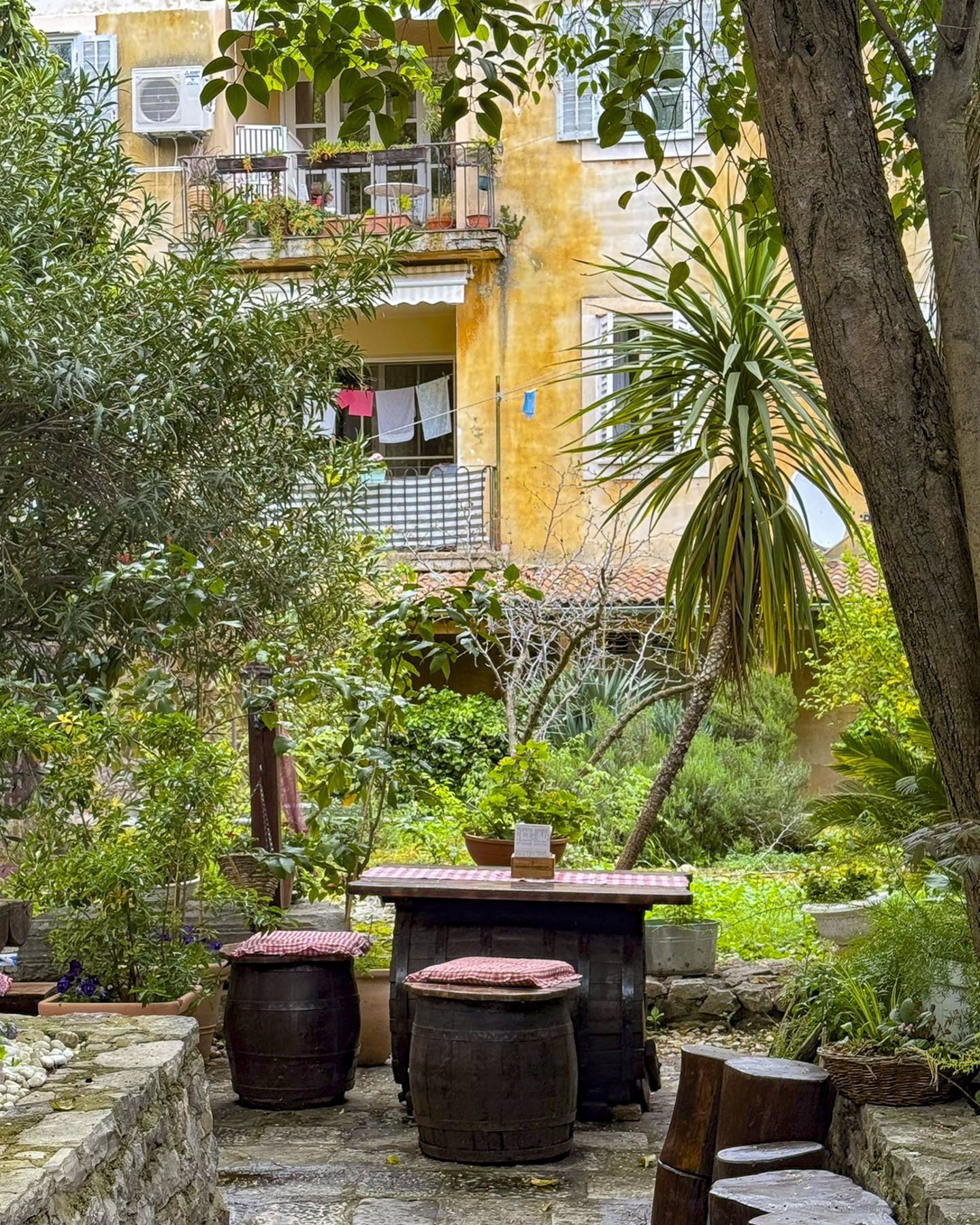
The small studio apartment we rented was modern and had a shared balcony which overlooked an orchard with a garden area that was once tended to by the nuns of the Monastery of St. Francis, next door. The monastery was built by the Franciscan Order in the 1300s and served the religious needs of the community until the country’s communist era. When the complex was then used as a military barracks, then kindergarten, before being returned to the Franciscans in 1992.

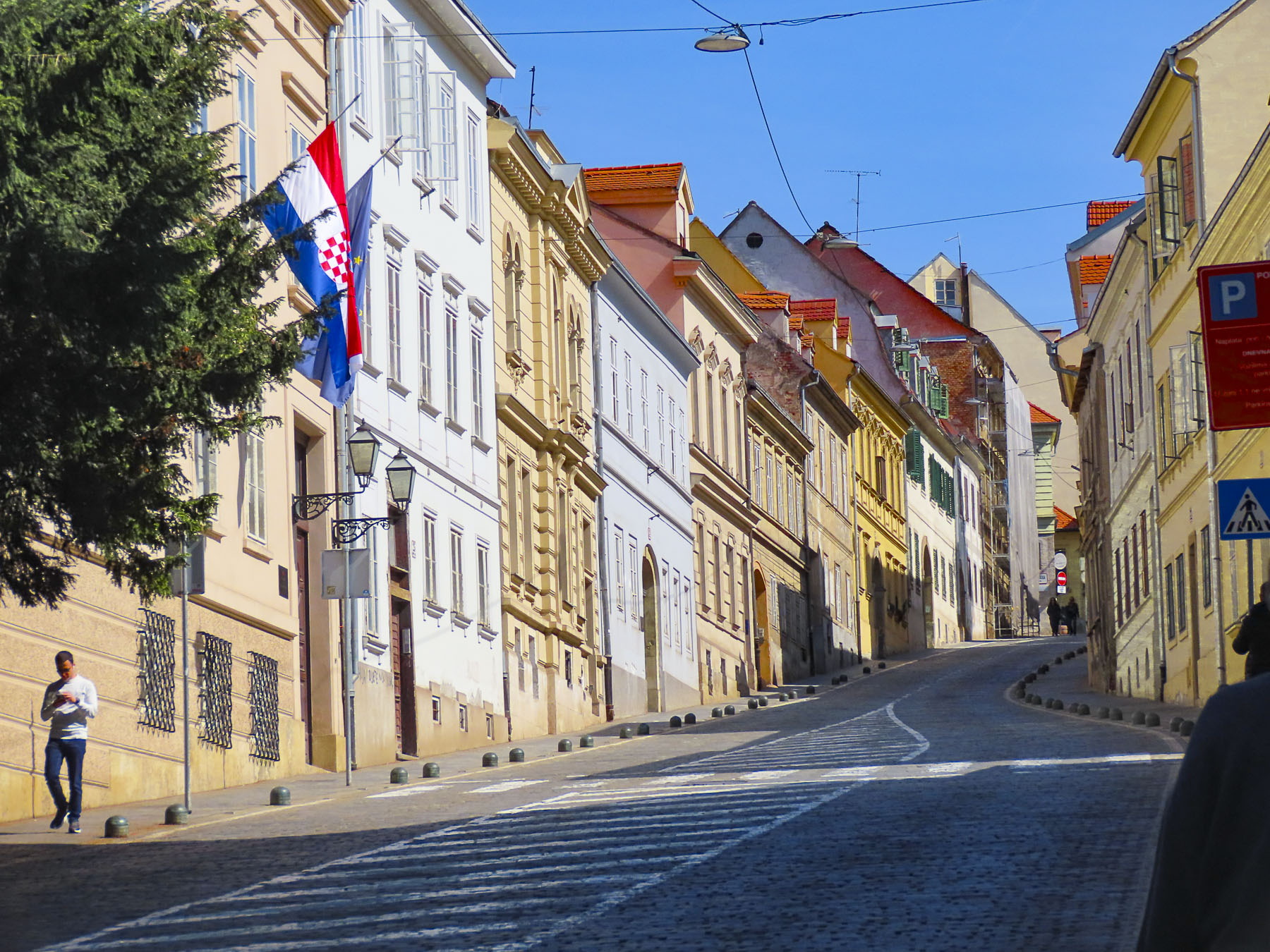
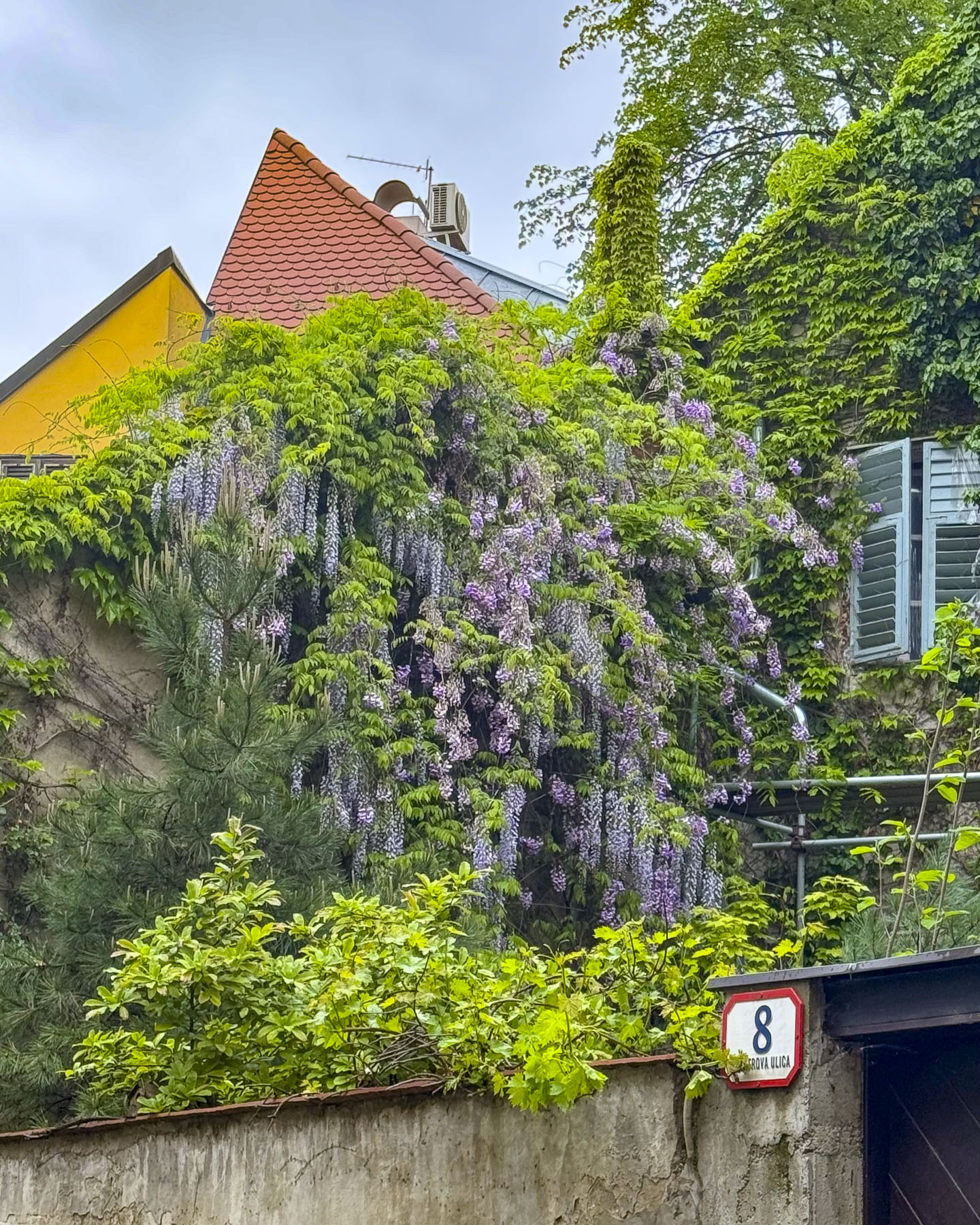
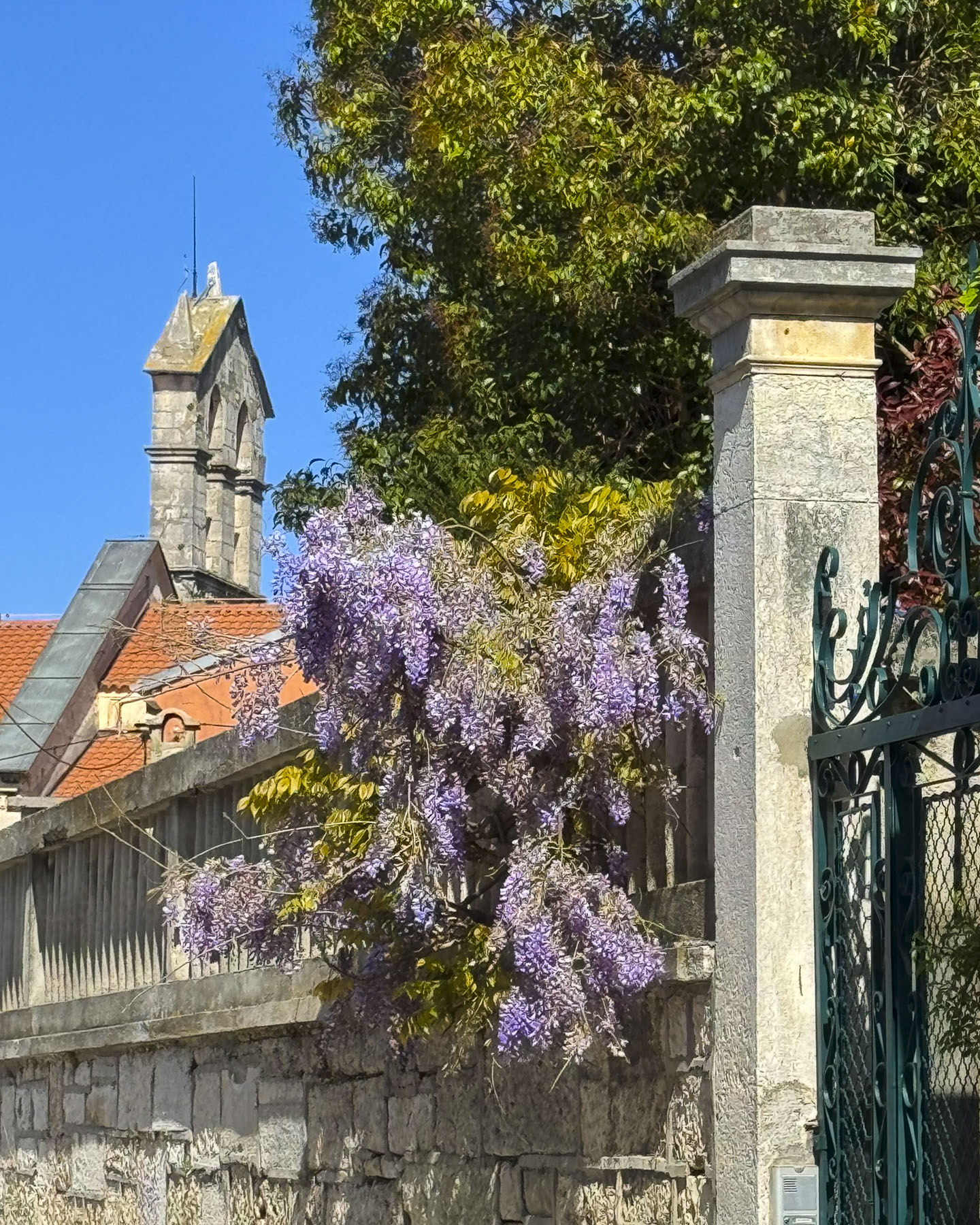
While our flat was adequate for our 3-night stay, we wouldn’t describe it as luxurious, but its location on a steep lane in the center of the historic district was excellent, being only a short walk away from everything in Pula. Wanting to take advantage of the sunny afternoon that appeared as we entered the city, we were soon out and about, walking past colorful homes and flowering wisteria along the road to the Citadel of Pula or Kaštel, as it is locally known.

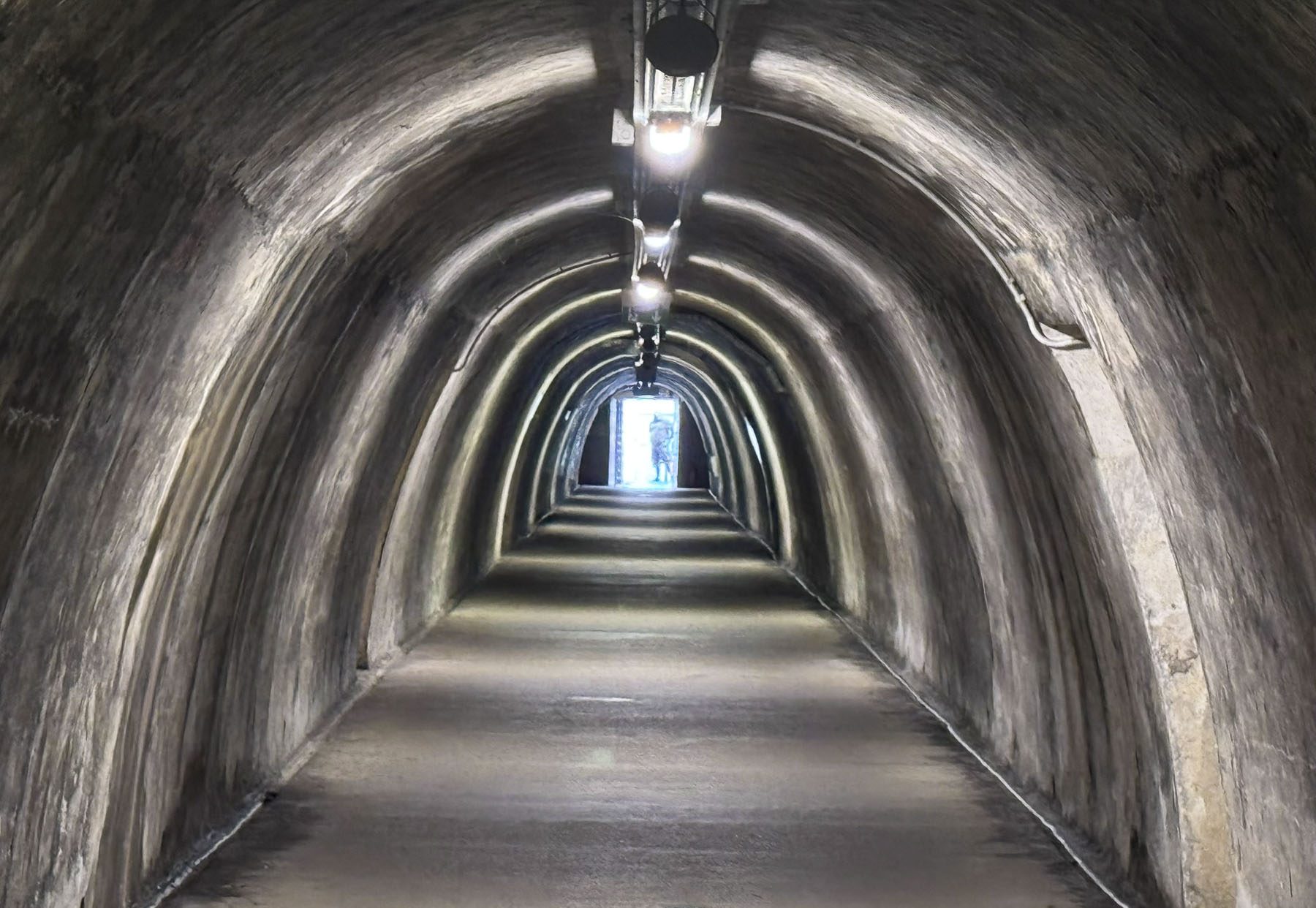
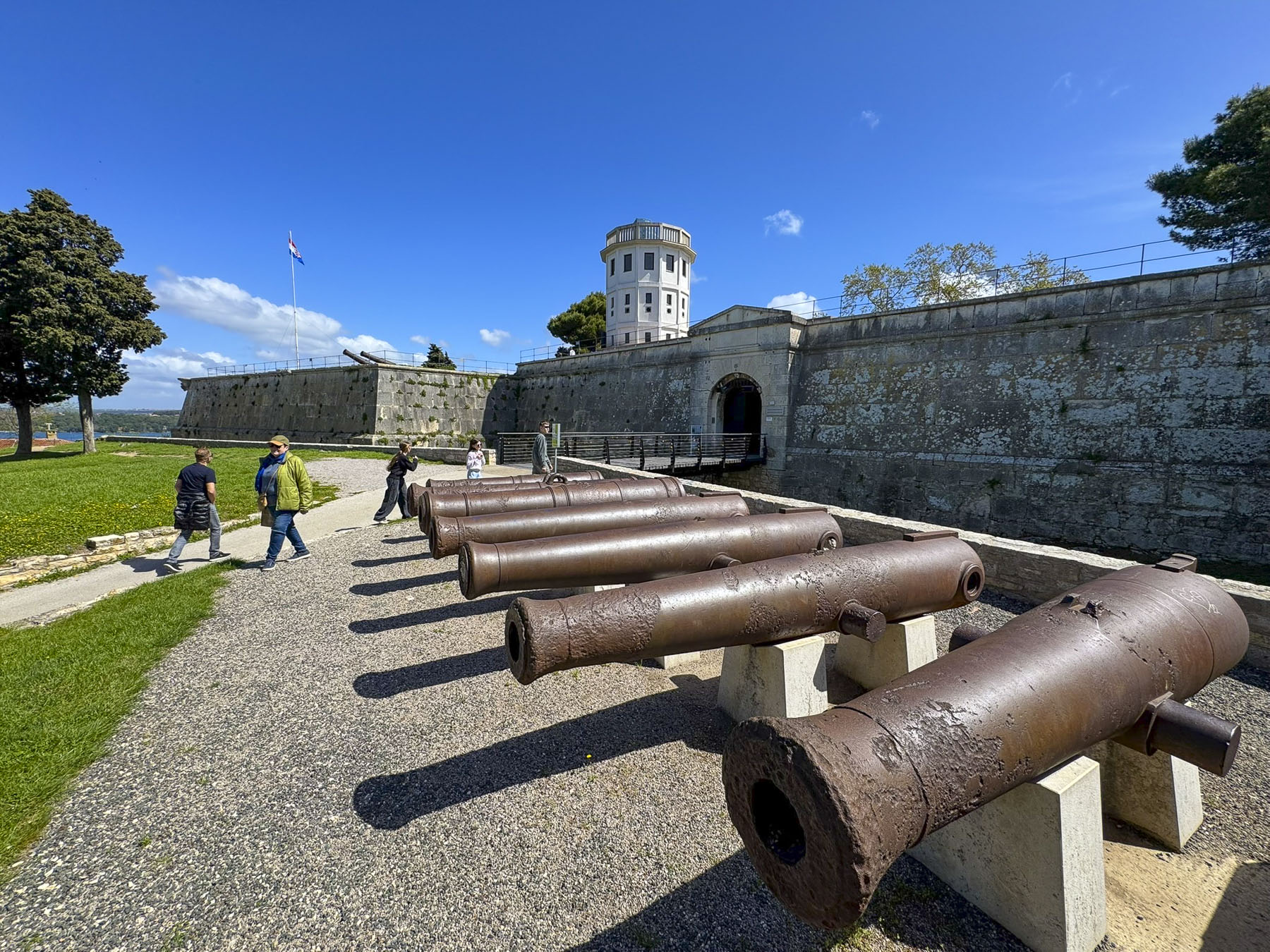
The star shaped bastion was built by the Venetian Empire in the 1500s over the ruins of an earlier Roman fortress and partially used some of the stones from the old colosseum in its construction. It has a commanding view of the harbor and the town surrounding it, and was actively used as military installation by the Austrians during WWI, who built an extensive network of tunnels under the castle known as the Zerostrasse. The tunnels were later expanded upon by the Italians during WWII, and later still, by Yugoslavia’s communist regime, to shelter 50,000 people. Unfortunately, the tunnels were closed when we visited Pula. Near the Zerostrasse’s entrance, at the bottom of the hill behind the Kaštel, there are also the ruins of a small Roman era amphitheater and museum with historical artifacts from the period. The Gate of Hercules and remnants of Pula’s ancient defensive wall are nearby.

Earlier at the Kaštel, we had noticed large idle shipping cranes in the harbor, remnants of Pula’s once important shipping industry. Now from a window in our apartment, as the night sky darkened, we could see the “Lighting Giants” as they are called, lit with colorful lights.

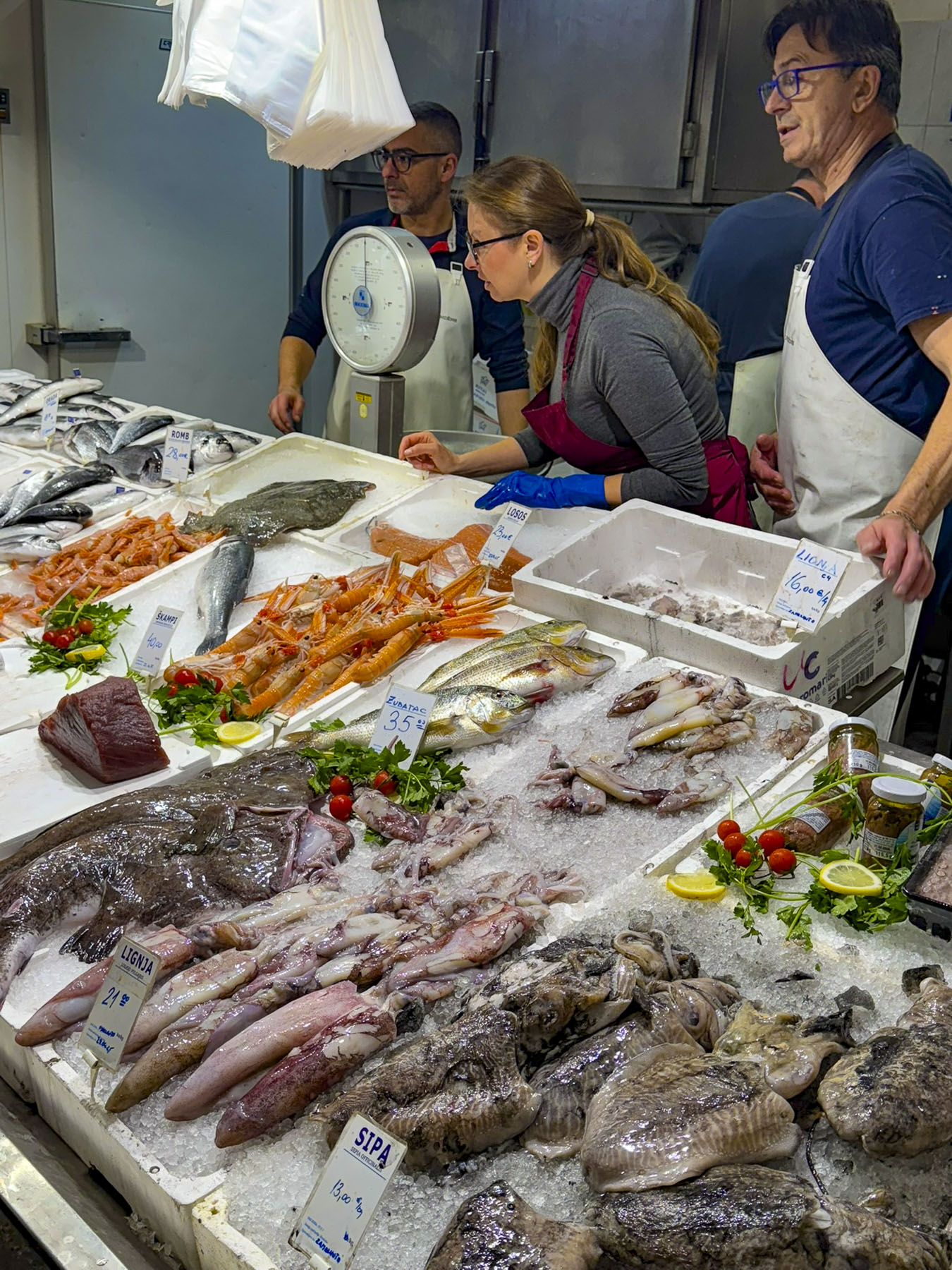
The next morning, in search of breakfast, we headed to Gradska tržnica, Pula’s traditional daily market where the seafood and meat vendors are indoors and the produce and flower sellers are setup outdoors in a shaded park. All the produce in the market looked extraordinary, and we were tempted to purchase some foodstuffs to cook later, but our apartment only had a coffee maker. Excellent pastries and coffee were found at Mlinar, an Adriatic region bakery chain, which we ended up visiting frequently during our road trip through the Balkans.

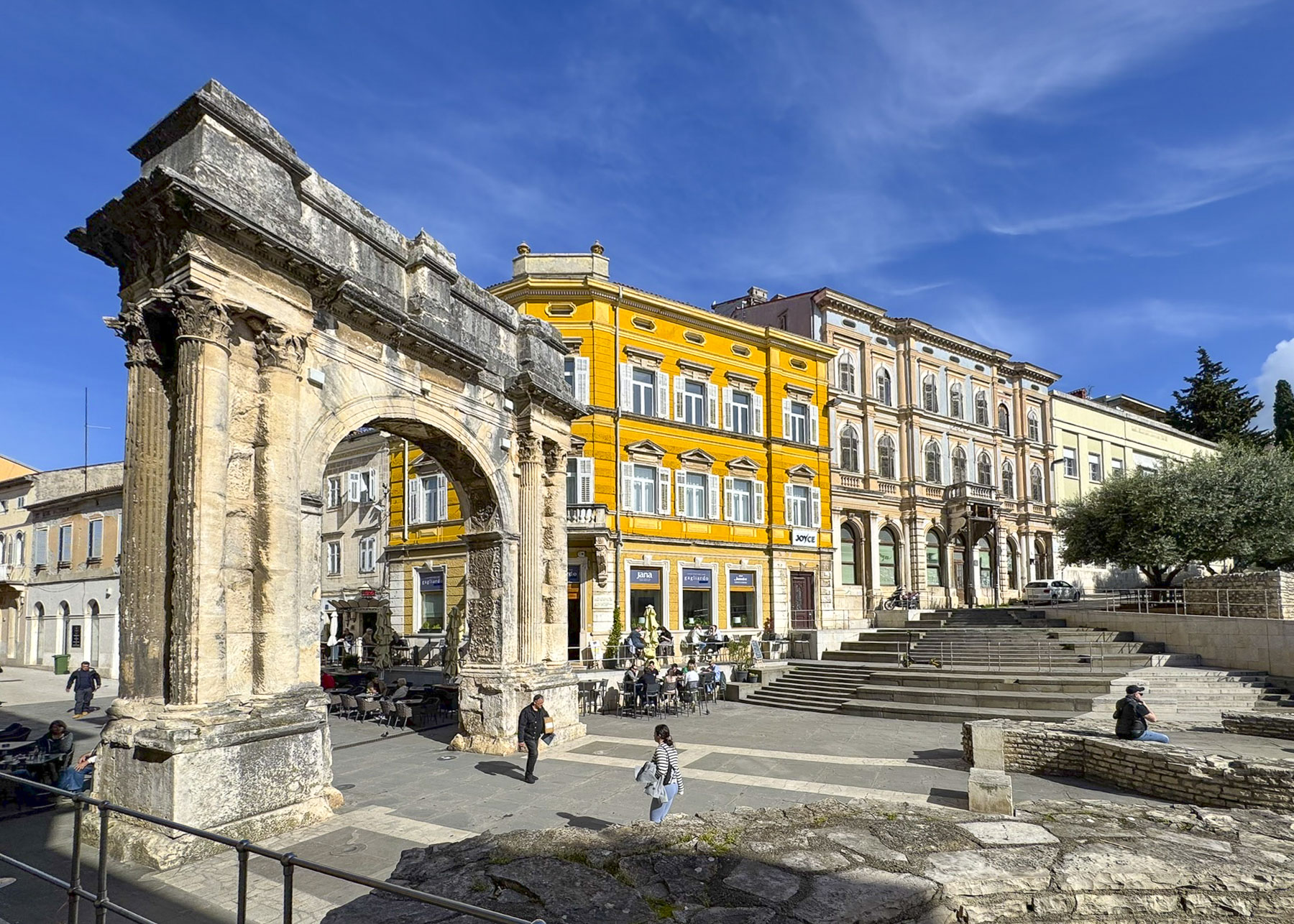
Our route took us through the Arch of the Sergii (29 BC), a Roman triumphal arch, and main gate through Pula’s defensive wall, which once stood around the city.  The ramparts were dismantled in the early 19th century, when Pula was an important naval base for the Austrian Empire, and the prosperous city needed room for expansion.    

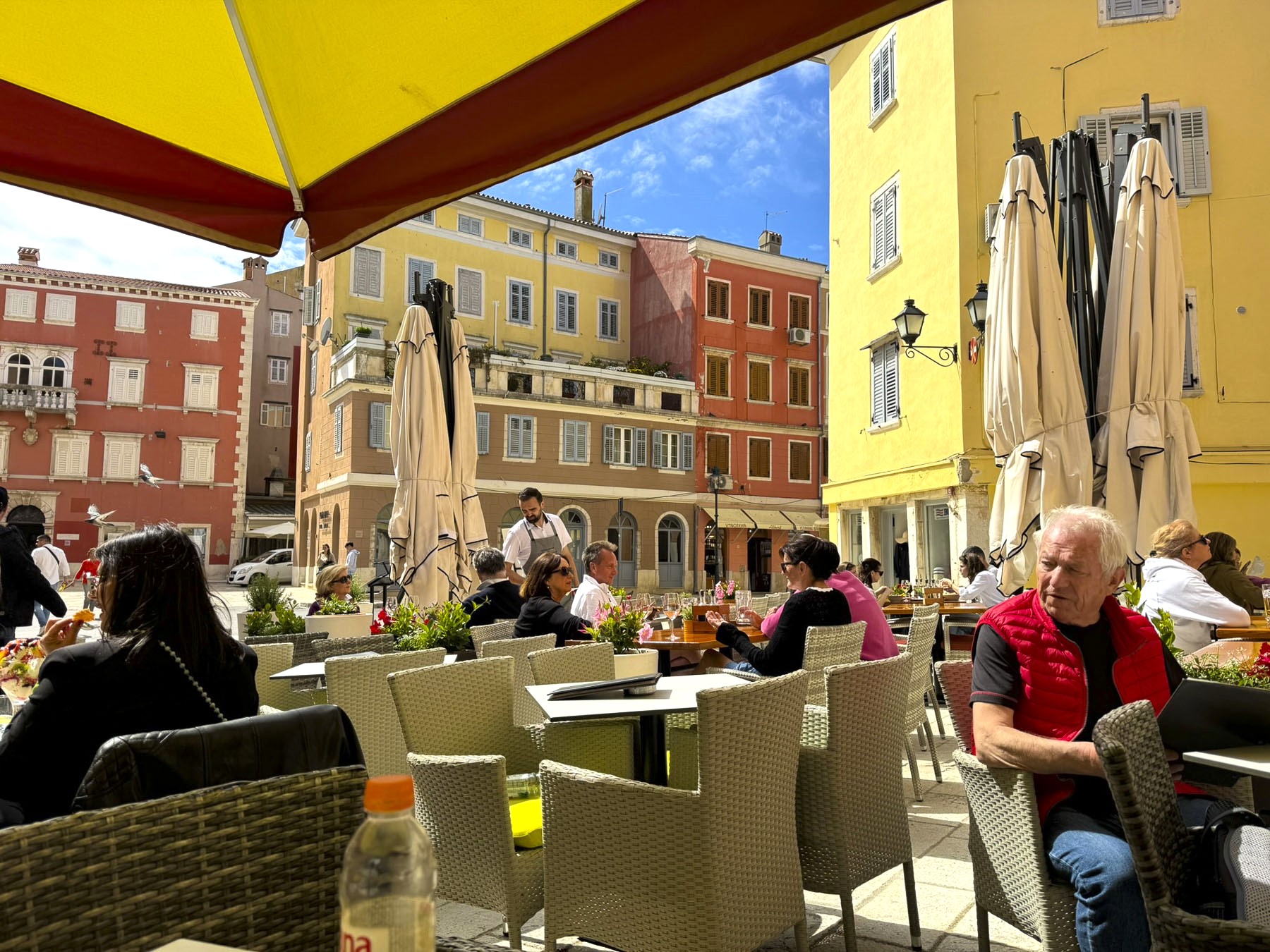
Back-tracking through the arch we walked along the pedestrian only Sergijevaca Street, Pula’s main shopping lane, to the old Roman Forum.  After 2000 plus years, the plaza is still surrounded with ancient buildings that include the 2BC Temple of Augustus, and a 13th century Communal Palace, now used as Pula’s City Hall, and remains the center of activity in this historic town. Cafés with outdoor tables lined the perimeter of the square, though the popularity of each seemed to change during the day as people sought tables in the sun to help relieve the chill of an April day. Across from a busker, folks queued up to lend an artistic hand to the painting of two large fiberglass pisanice, Easter Eggs, as part of a fund-raising event.

Farther along the lane, which is now called Kandlerova, curved with the base of the hill below the Kaštel, and opened into a smaller plaza in front of the Cathedral of the Assumption of the Blessed Virgin Mary, Pula’s main church. It was constructed in the 4th century over the foundation of an earlier Roman temple dedicated to the mythological god Jupiter. In the early 1700s, masons reused stones taken from the colosseum to construct the free-standing belltower in front of the church.

Next to the church was Park Jurja Dobrile, a quaint patch of greenery across from the promenade that stretches along the harbor.

It was very easy to enjoy Pula’s sites in a day and a half, so the next morning we set out for a day trip to Rovinj, less than an hour away. Olive groves and farmland graced our route through the verdant Istrian countryside.

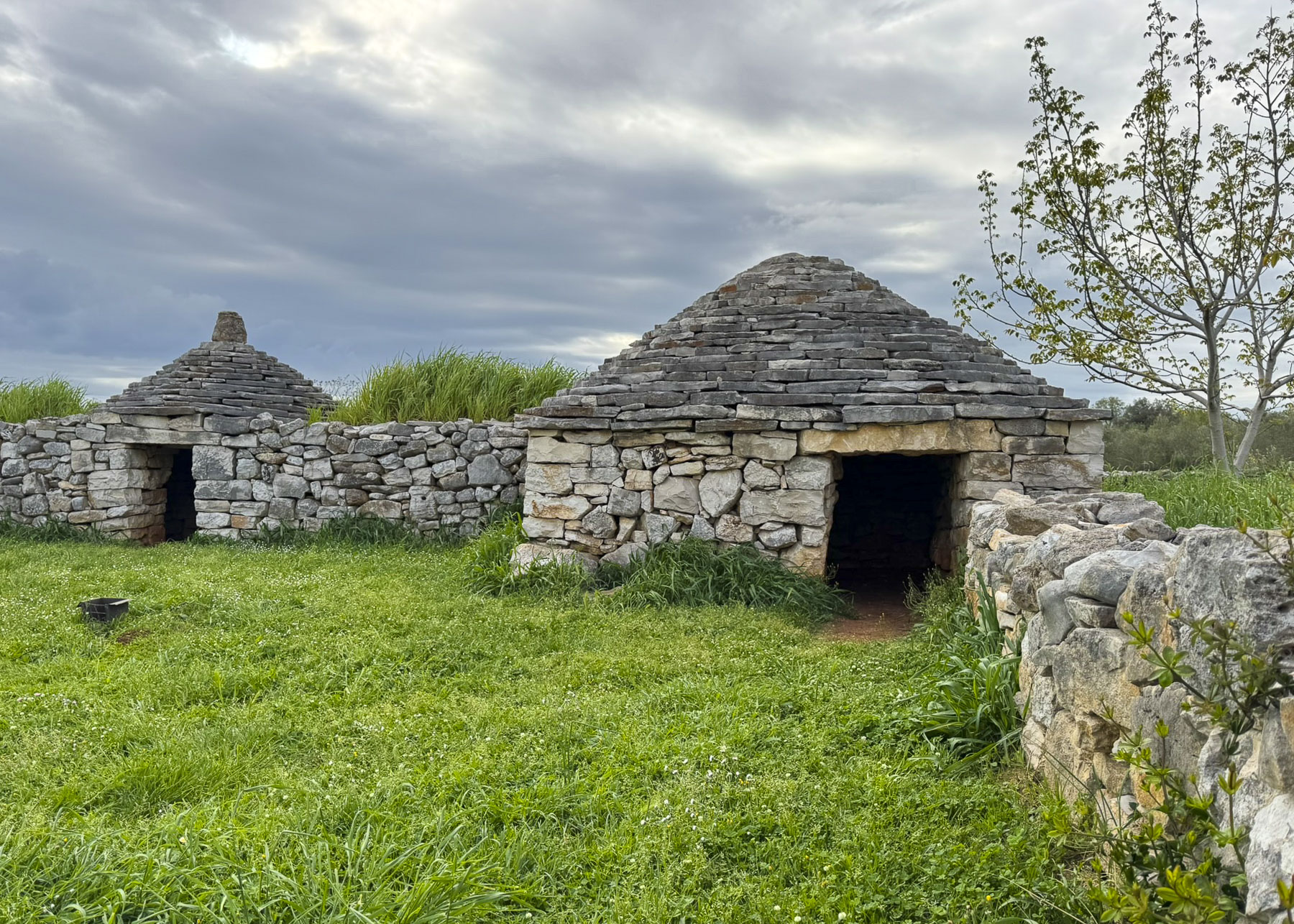
In the fields just beyond Vodnjan we noticed small round stone structures with conical roofs called Kažun. They were very similar to the Trulli we saw several years ago in the Puglia region of southern Italy. Though they share the dry-stone construction technique used to build the Trulli, the Kažun in the Istrian region are much smaller, and were mainly used to store crops, keep animals, and provide temporary shelter for farmers.

Like Pula, parking in Rovinj was limited and the large municipal lot, on the quay nearest to the old town, filled up quickly, even during the shoulder season. Fortunately, we found a parking lot on Vijenac braće Lorenzetto, a little farther away.  From there it was a steep uphill walk until we reached Crkva sv. Franje, the Church of St. Francis, and its Franciscan Monastery which date from the early 1700s.

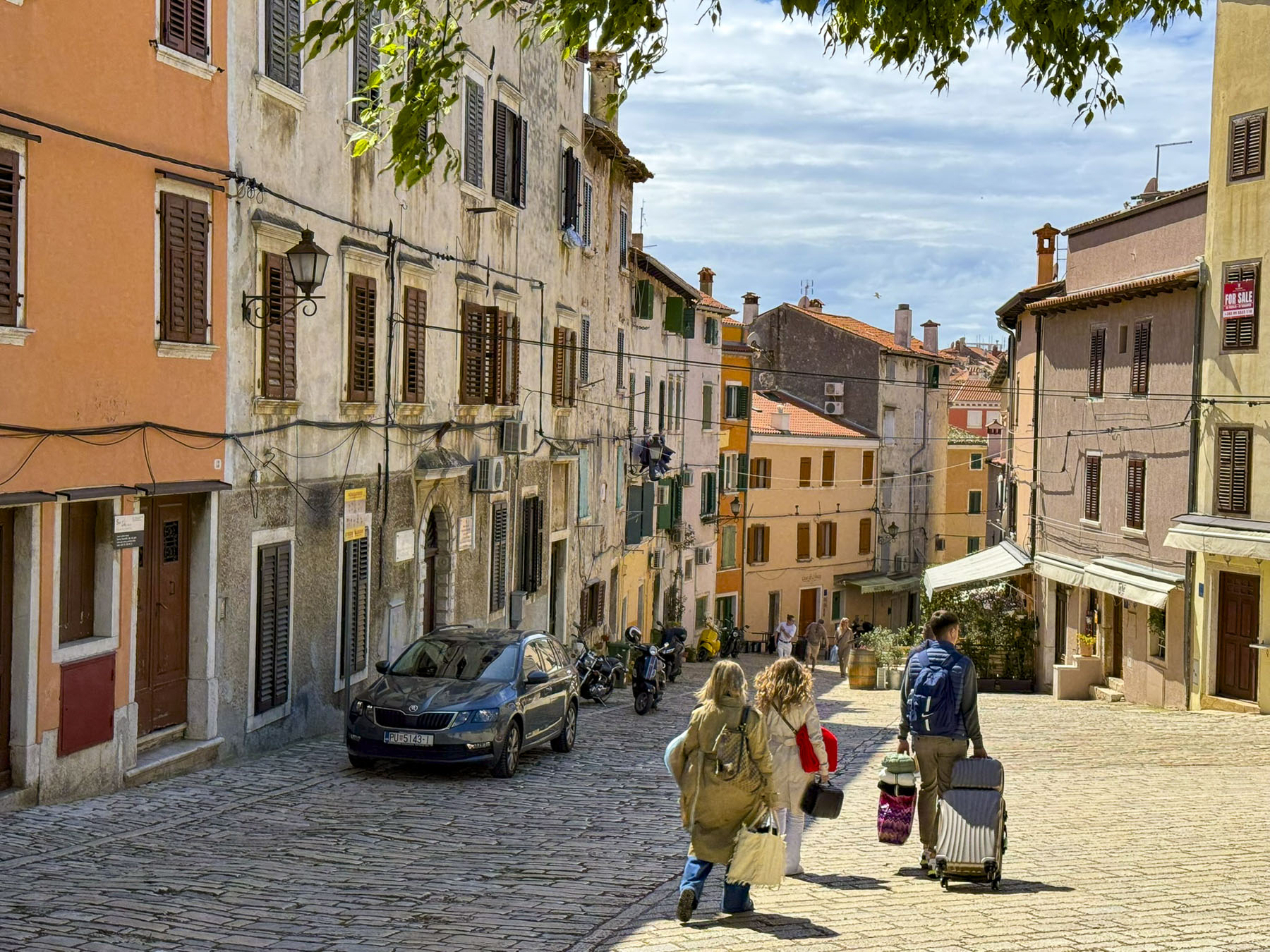
The rattling of suitcases pulled across ancient cobblestones by vacationers heading to their hotels accompanied us downhill. Surely an annoying sound, and we wondered if it was any better or worse than the hoofs of donkeys or horses, and wagon wheels clattering across the stones centuries ago.

This lane from the church passed several restaurants, but the wonderful aroma originating from Fish House Rovinj encouraged us to stop for lunch. It’s a tiny no frills seafood bar with limited seating on bar stools inside and along the wall outside. All the fish is locally sourced and purchased fresh every morning at the docks. We tried fried calamari, grilled shrimps and fish tacos. Every dish was delicious. Their staff were very nice, and the menu was extremely budget friendly considering Rovinj is a top tourist destination. The place should definitely be considered a destination spot when visiting Rovinj.

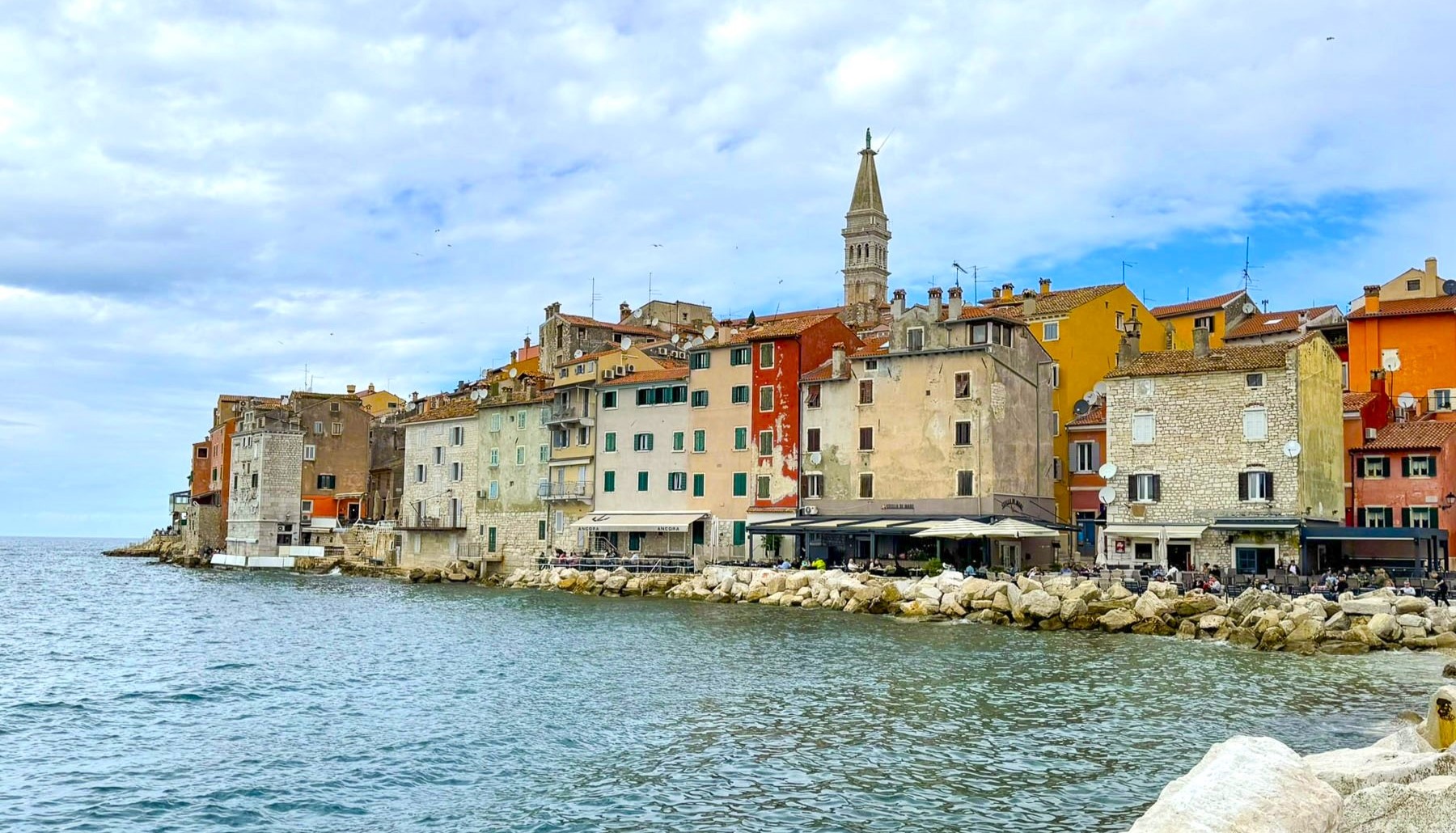
The attraction of Rovinj is its beautiful location on a small headland, that juts out into the northern Adriatic Sea, every square foot of which is covered with picturesque buildings which cascade down to the water’s very edge. The iconic picture of this 16th century merchant and fishing town is taken from the sea and captures the town, centered with the belltower of St. Euphemia’s Church at its apex, as if it was an island floating effortlessly on a horizon that seamlessly merges the sea and sky. The town was in fact an island until it the channel separating it from the mainland was filled in 1763, when the town was part of the Austrian Empire.

We had hoped to take our own pictures of the town from the sea, but the weather we felt was too cloudy to justify the expense of the boat trip. We contented ourselves instead with wandering along the harbor front before entering the old town through Balbi’s Arch, an old  Venetian gate, to the once walled citadel, before following the twisting stone lanes up to St. Euphemia’s Church.

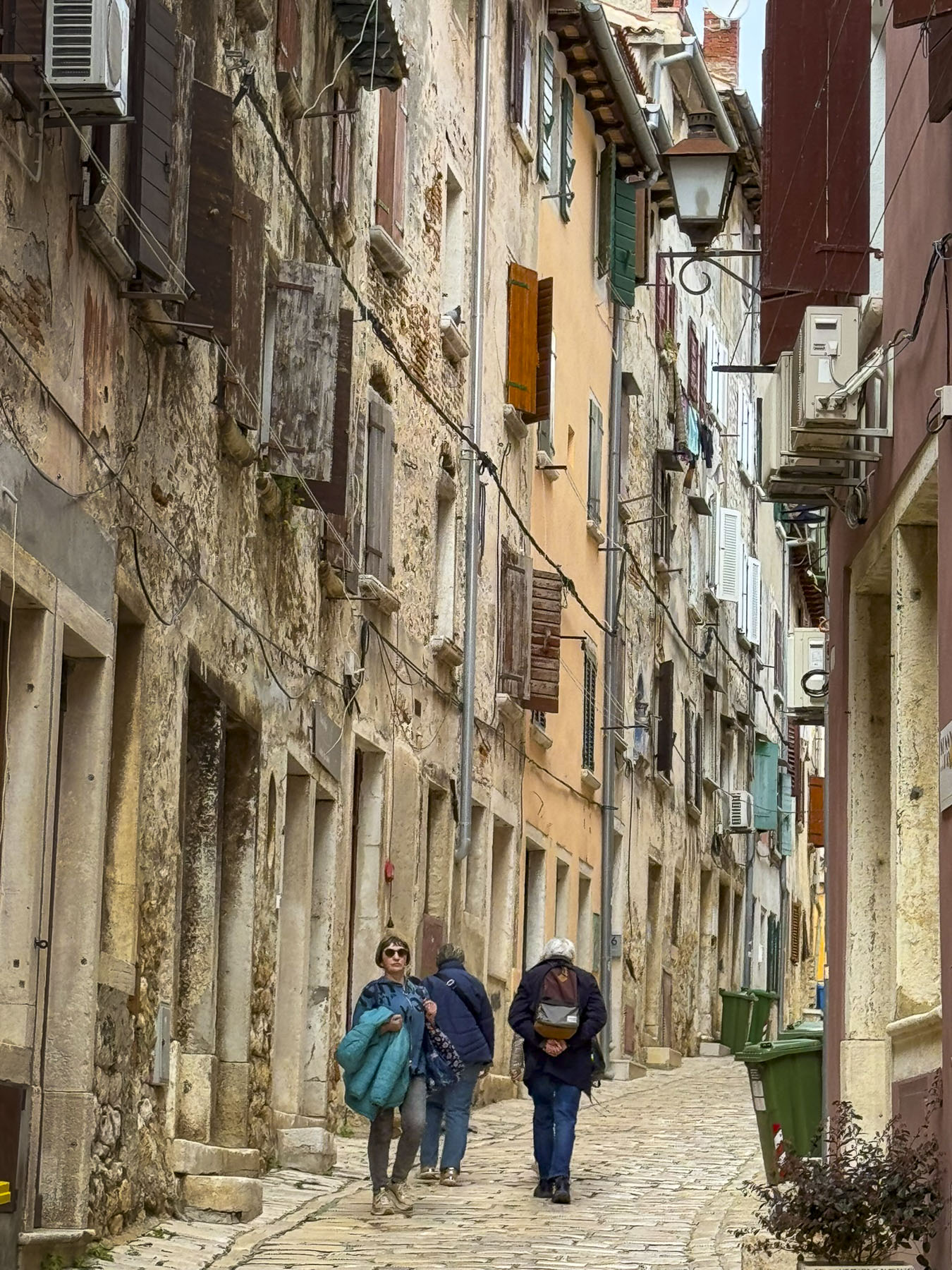
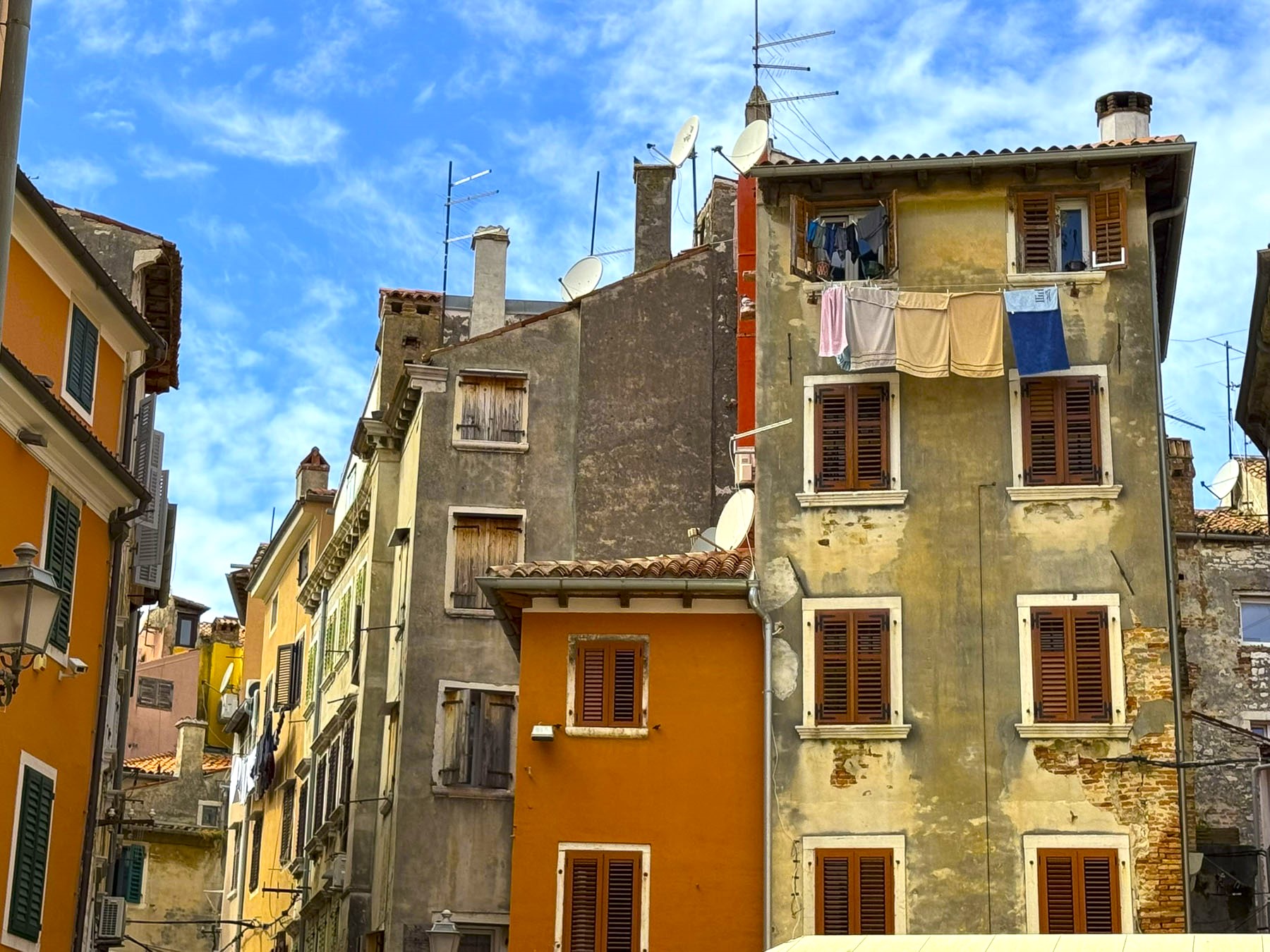
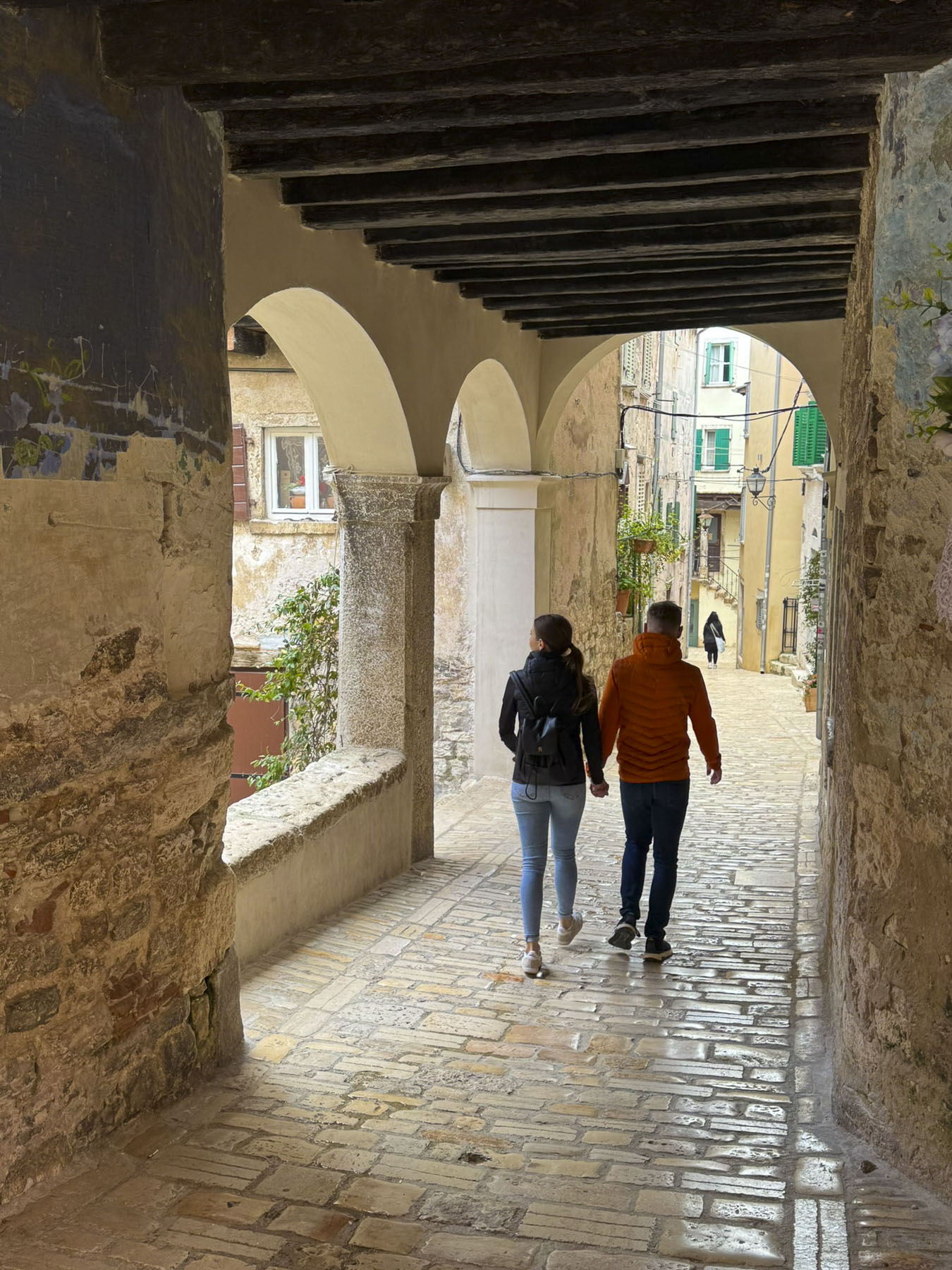
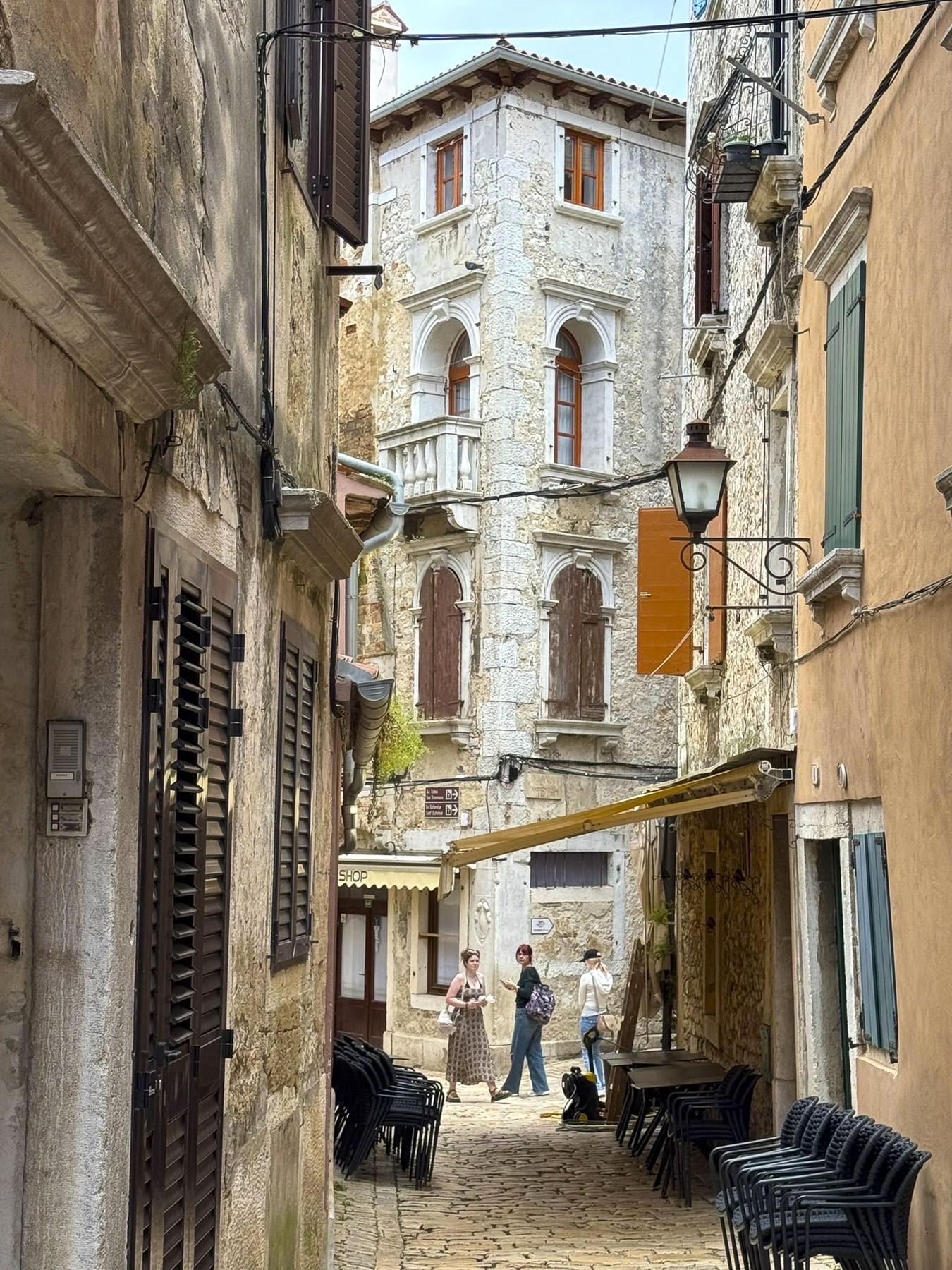
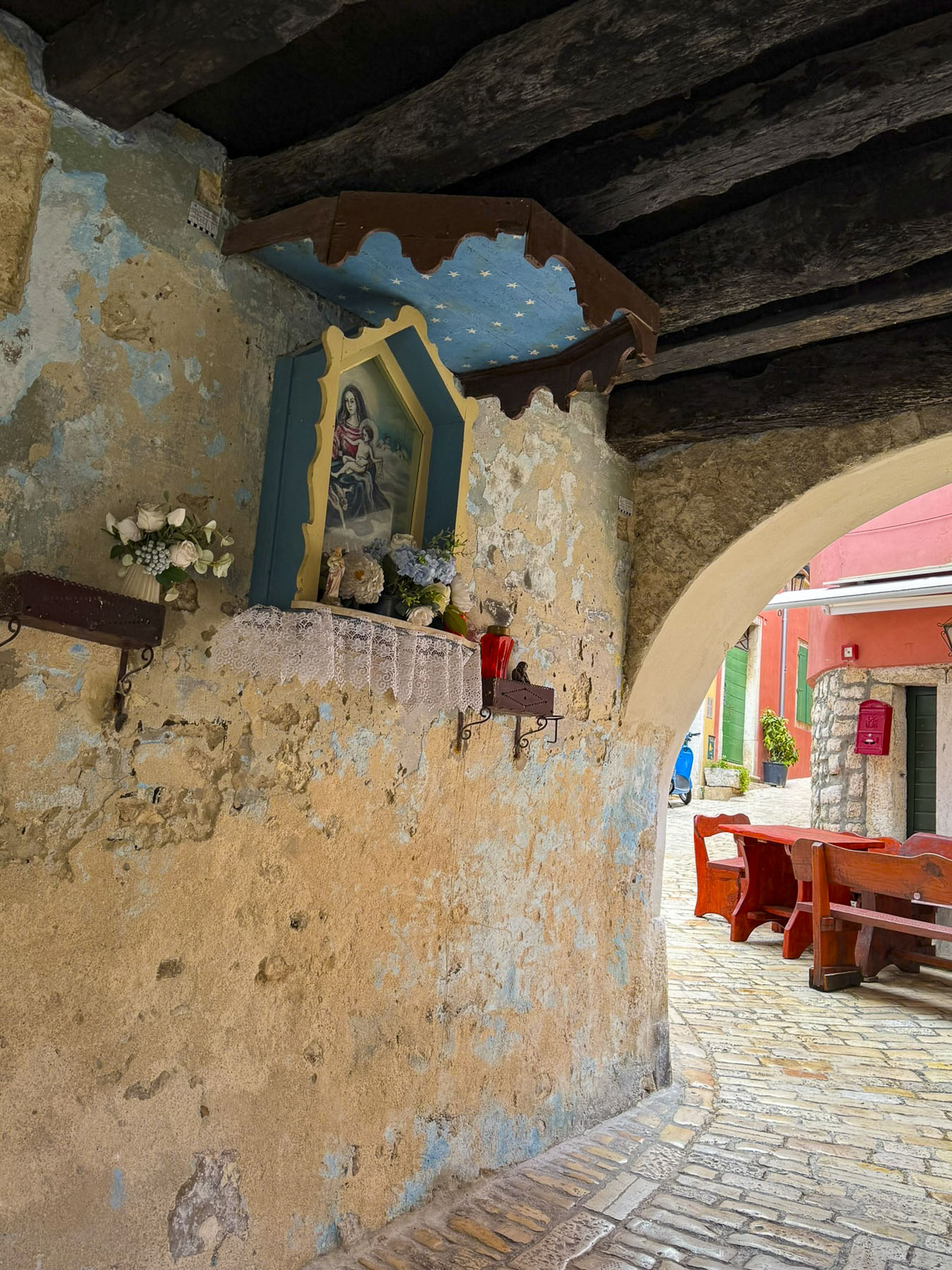
The old town was charming, and while many of the alleys have been gentrified with upscale shops and lodging above them, several retain a rawness, similar to the historic quarter in Naples, Italy.

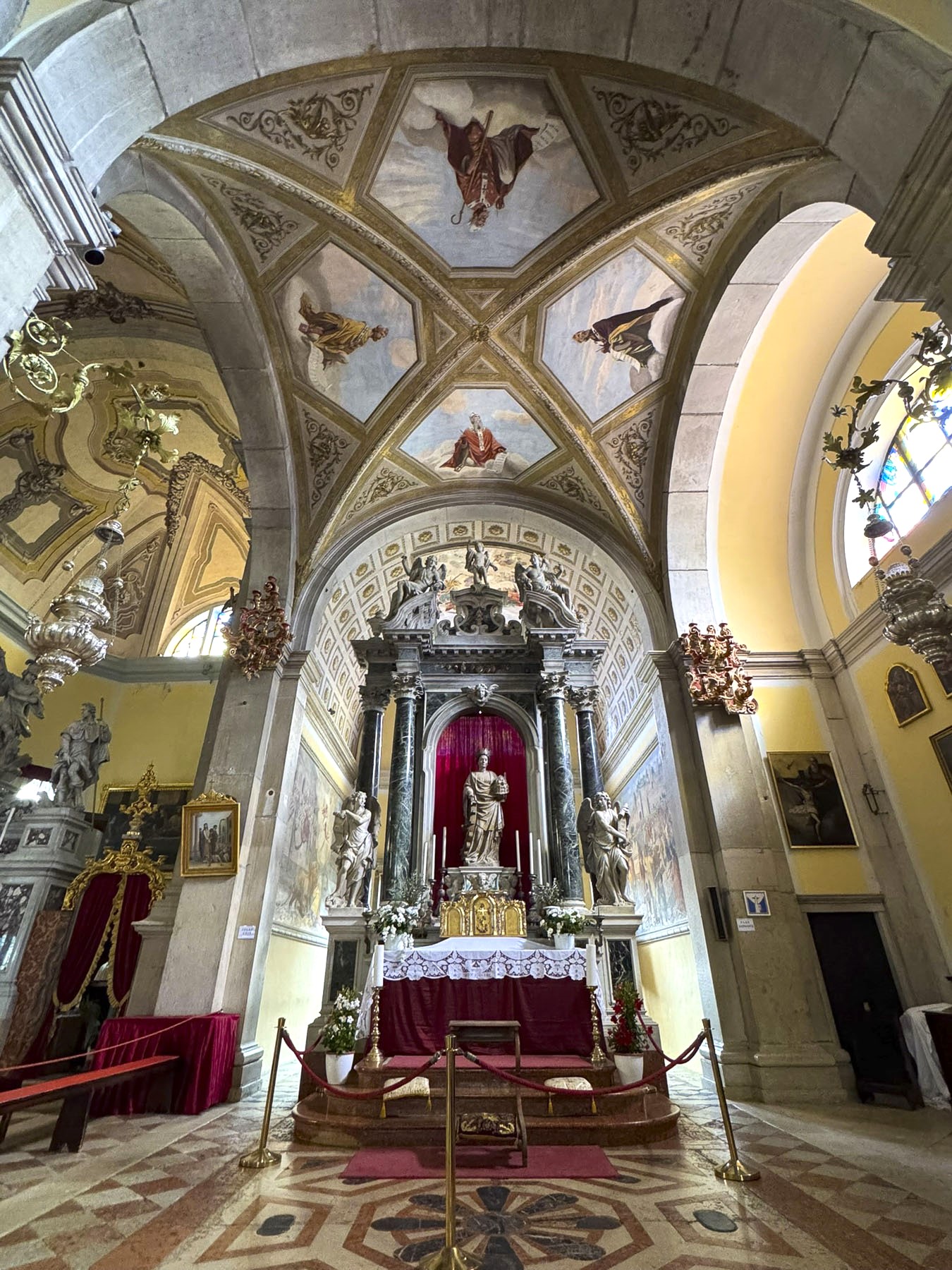
The lanes to the top of the hill twisted and rose before ending at a large plaza in front of the church. This church was constructed in the mid-1700s, to accommodate the growing city, over the foundation of a small church dedicated to St. George which was built in the mid-300s when the region adopted Christianity.

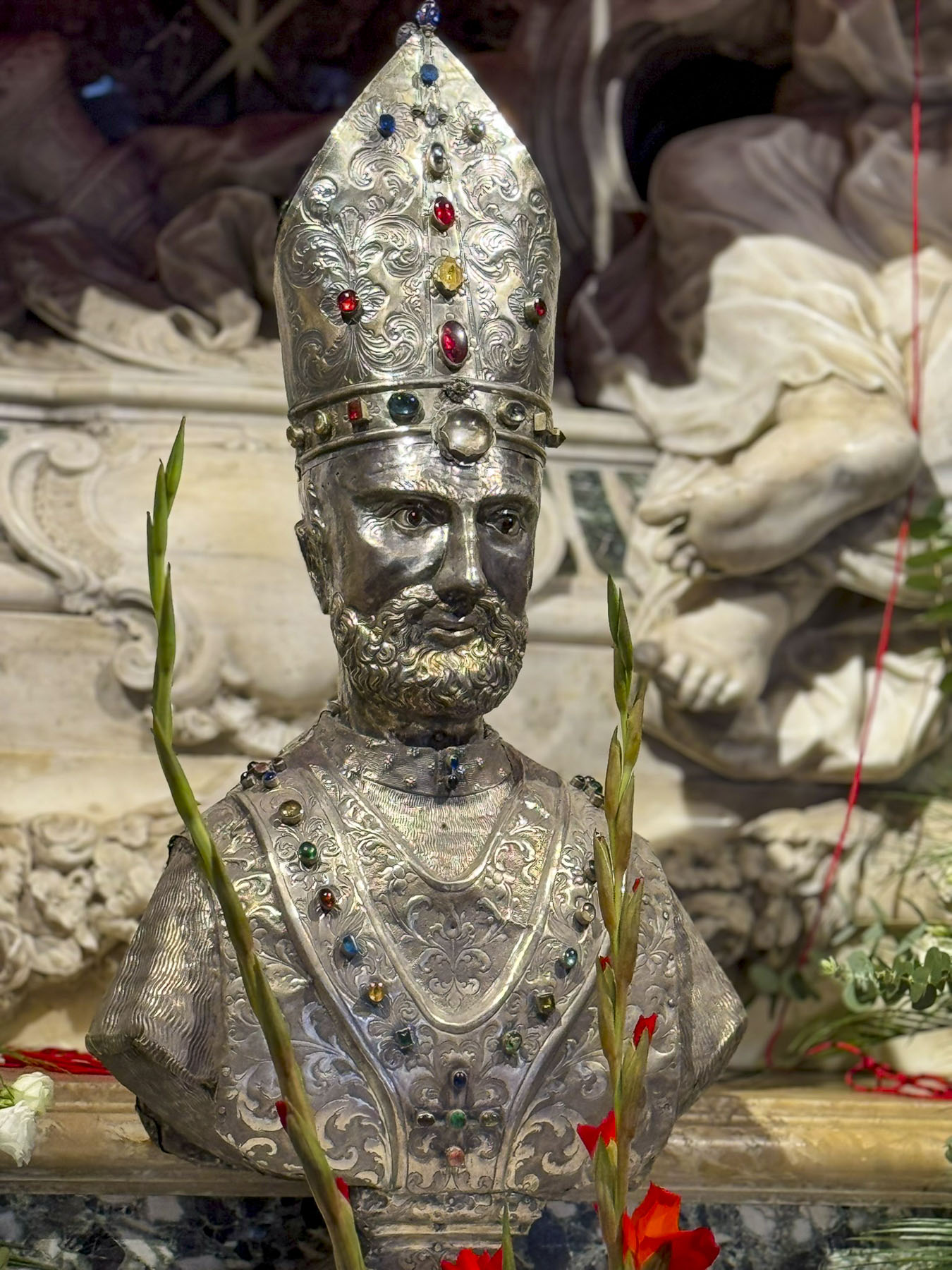
But part of the reason for the new church was to honor the miracle of St. Euphemia, a 4th century martyr, executed by the Eastern Roman Empire in Constantinople, before the empire adopted Christianity. The legend of St. Euphemia’s sarcophagus arrival to Rovinji  begins during the 700s Iconoclast heresy, when Emperor Constantine V, ordered her relics thrown into the sea. One hundred years later “fishers early one morning discovered a marble sarcophagus which had floated ashore like a stone ship. The townsfolk enlisted their strongest men, horses and oxen attempted  to pull the tomb off the beach, but to no avail.  

Miraculously, the saint presented herself to the crowd and singled out a small boy and said, “I am Euphemia of Chalcedon and I have engaged Jesus by blood. You will pull the stone ark with your body to the church at the top of the hill.” Awed, the crowd parted and watched the child pull the amazing weight of the tomb uphill. There priests slid off the tomb’s top and revealed the motionless body of a beautiful 14 year old girl. Next to her was a scroll of parchment paper with these words written on it: Hoc est corpus Euphemiae Sancte. “This is the body of Saint Euphemia.” Saint Euphemia is now the patron saint of Rovinj and her feast day is celebrated every September 16th, the day her sarcophagus floated ashore.

We had great experiences in Pula and Rovinj, and enjoyed learning about their fascinating history and legends.

Till next time,

Craig & Donna

Zadar: The First Stop on Our Balkans Road Trip Through Croatia, Slovenia, & Bosnia and Herzegovina

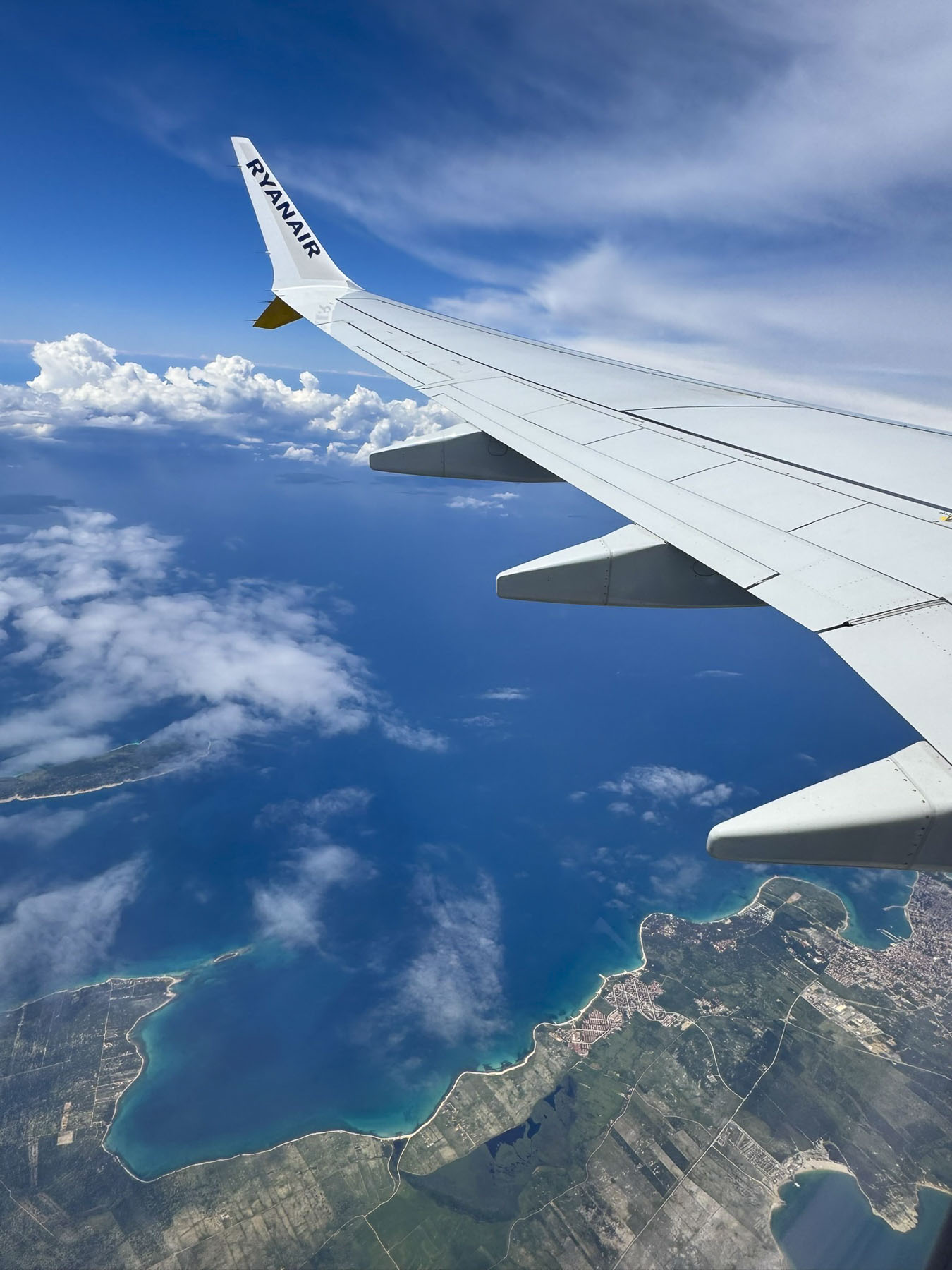
Peering down at the shimmering cobalt and turquoise blue water of the Adriatic Sea relieved the previous day’s anxiety of nearly missed connections. We encountered a long delay at passport control in Paris, before catching our connecting early morning flight to Zadar.

This temporary reprieve was short lived though, as we were confronted with a shuttered rental car window at the Sicily By Car booth, directly across from the small Zadar terminal. It was a Sunday morning – maybe the service at church ran long, or the coffee and pastries at the café were particularly delicious; nevertheless, the other passengers on our early morning flight who had rented with other agencies were long gone. At the terminal’s outdoor café we sipped coffee, waited, and discussed whether or not to cancel our existing reservation.  An hour passed before a car parked behind the booth, and the shuttered window was noisily cranked open. A pleasant young woman greeted us, and the morning’s delay was forgotten. Years ago, we began the habit of asking attendants at the rental car counters for suggestions to non-touristy places to eat. It appears it’s an unusual request from a customer, but folks seem pleased that we sincerely ask for their opinion. “Let me think on that, and by the time paperwork is done and I show you the car, my colleague and I will have some ideas for you.” With the names of three restaurants and a patisserie, “you should definitely try,” we headed off to see waterfalls at Skradinski Buk National Park in a nearly new small SUV, an upgrade from what we had reserved. The park was our first stop on our three-week long Croatian road trip, before our late afternoon check-in at an apartment rental in old town Zadar later.

The sunny April morning was now overcast as we drove into the small village of Benković to see its hilltop castle, and indulge our “drive a little, then café,” philosophy. Unfortunately, the castle was closed and the town seemed deserted in the pre-tourist season. Down the lane from the castle fig trees were setting their fruit and the first flowers of Spring were blooming. The café remained an unfulfilled desire.

We love traveling during the shoulder seasons to avoid the crowds of summer. But one of the drawbacks is fewer, if any, restaurants/cafes are open, especially in the more rural areas.

The drive to the park along Rt56 was semi-desolate, but pretty in an austere way, and passed through Croatia’s garigue shrublands, olive groves, and pine forests. From the road as we drove past Skradin, we could see large charter yachts at their winter moorings on the Krka River, two miles from the sea, sheltering there from fierce Adriatic storms, as they waited for the warmer cruising season to start.  Across the river the road zigged and zagged up the mountainside before leveling off on a high plateau.

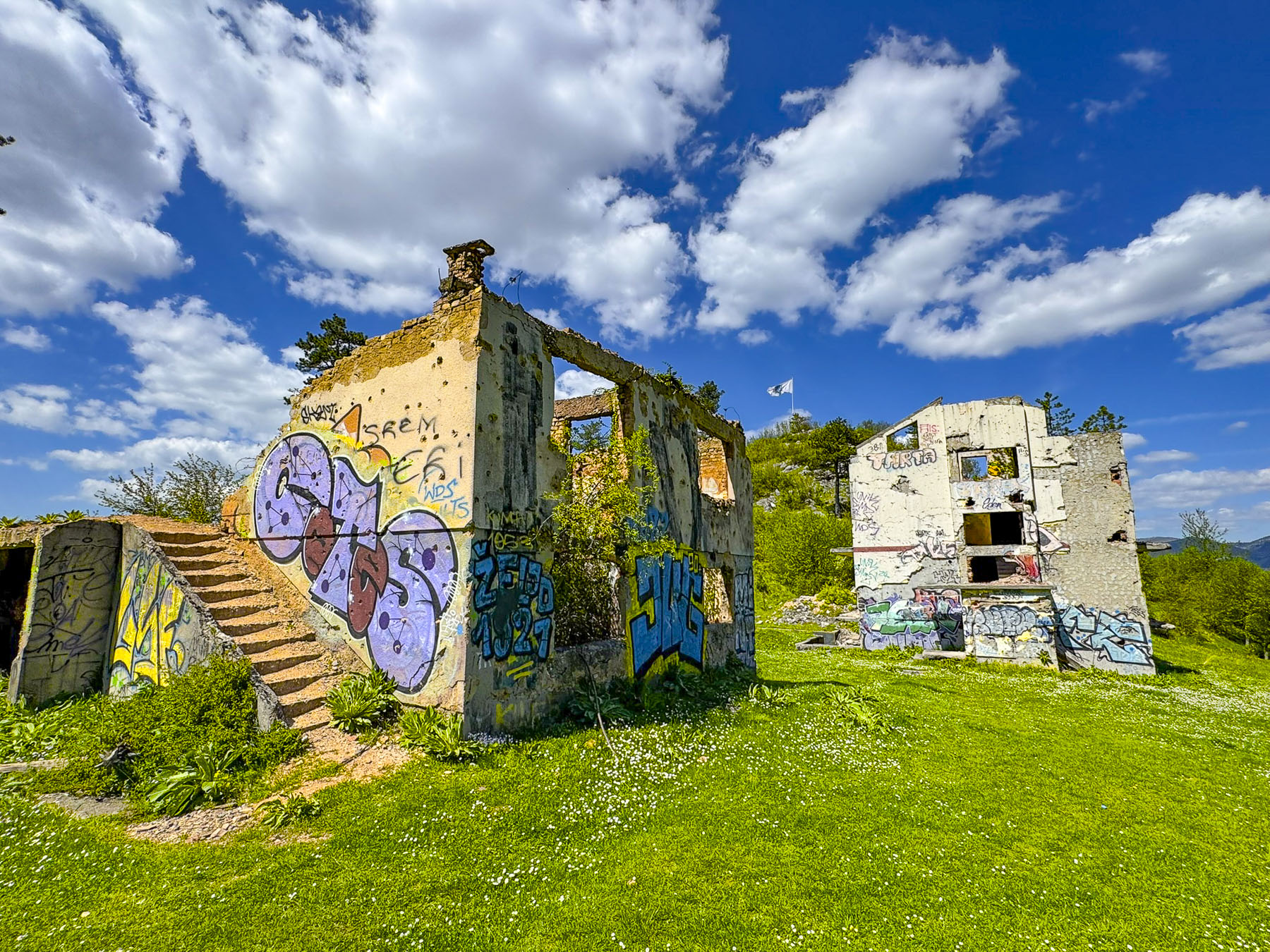
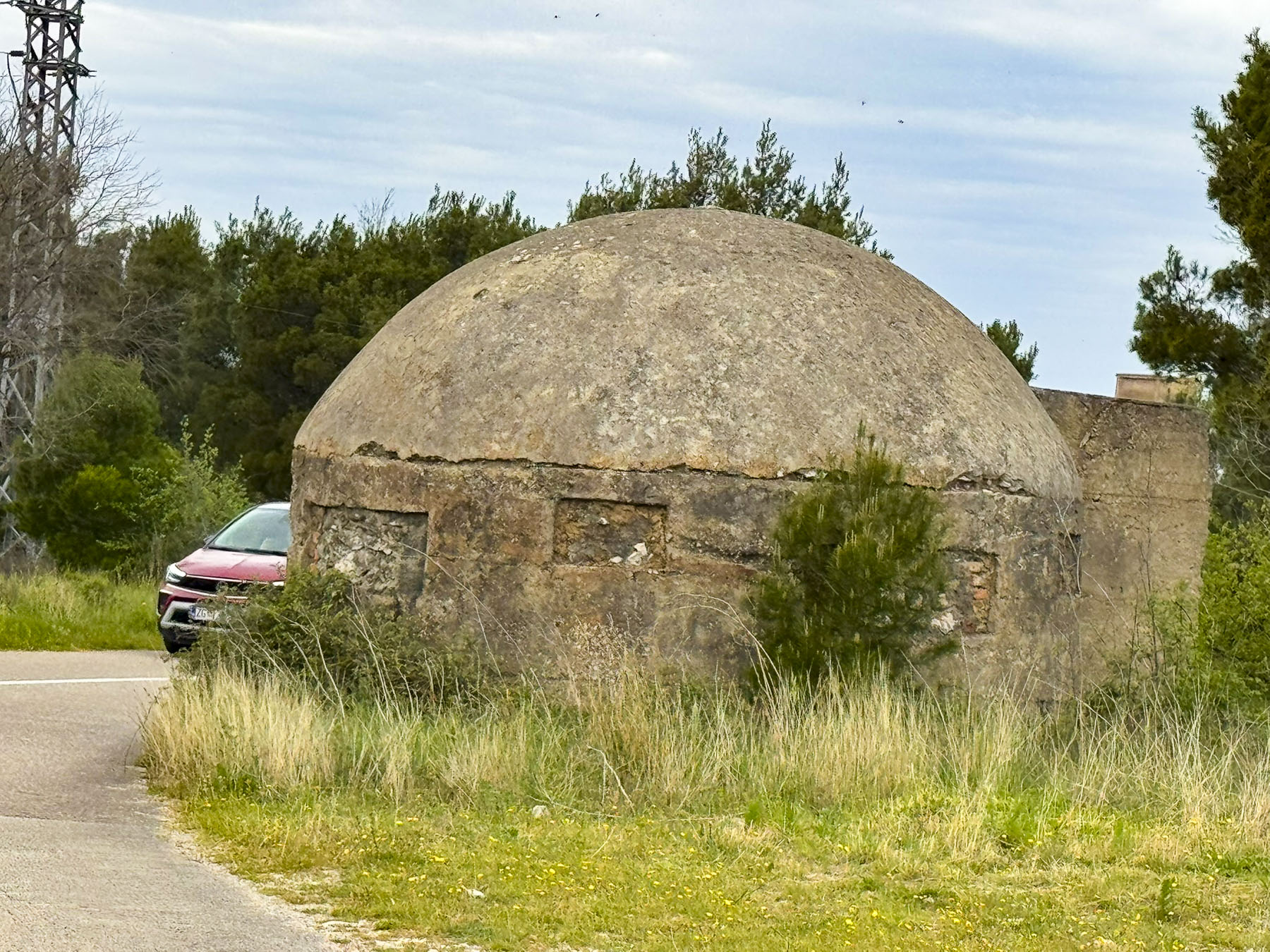
Following the signs to the national park we drove down a side road which passed a sprawling abandoned factory site, fronted with several concrete military bunkers. They were relics from the Cold War era like the ones that dot the landscape in Albania. Built in the 1930s, the IVANAL d.o.o. plant was the Balkans region’s first state-of-the-art aluminum processing complex that employed 400 people. It was confiscated by Czechoslovakia’s communist regime in the 1940’s and never upgraded or maintained. Over the decades production fell until the plant was closed after Croatia’s independence in 1991.

The parking lot at the national park was very full, considering it was a chilly Spring Sunday, but the queue at the ticket booth moved quickly. While the falls are quite a distance downhill from the entrance to the park, some folks chose to walk a route through the forest to forage for the wild asparagus that sprouts along its path from March to May.

We opted for a ticket that included a shuttle bus ride to the largest waterfall, Skradinski Buk, at the bottom of a series of equally impressive waterfalls on the Krka River, then a walk back upstream along the waterway to another shuttlebus stop for a return ride to the top of the park entrance plateau. During the summer months the national park also offers a scenic twenty-minute boat ride from the harbor in Skradin,to the base of Skradinski Buk.

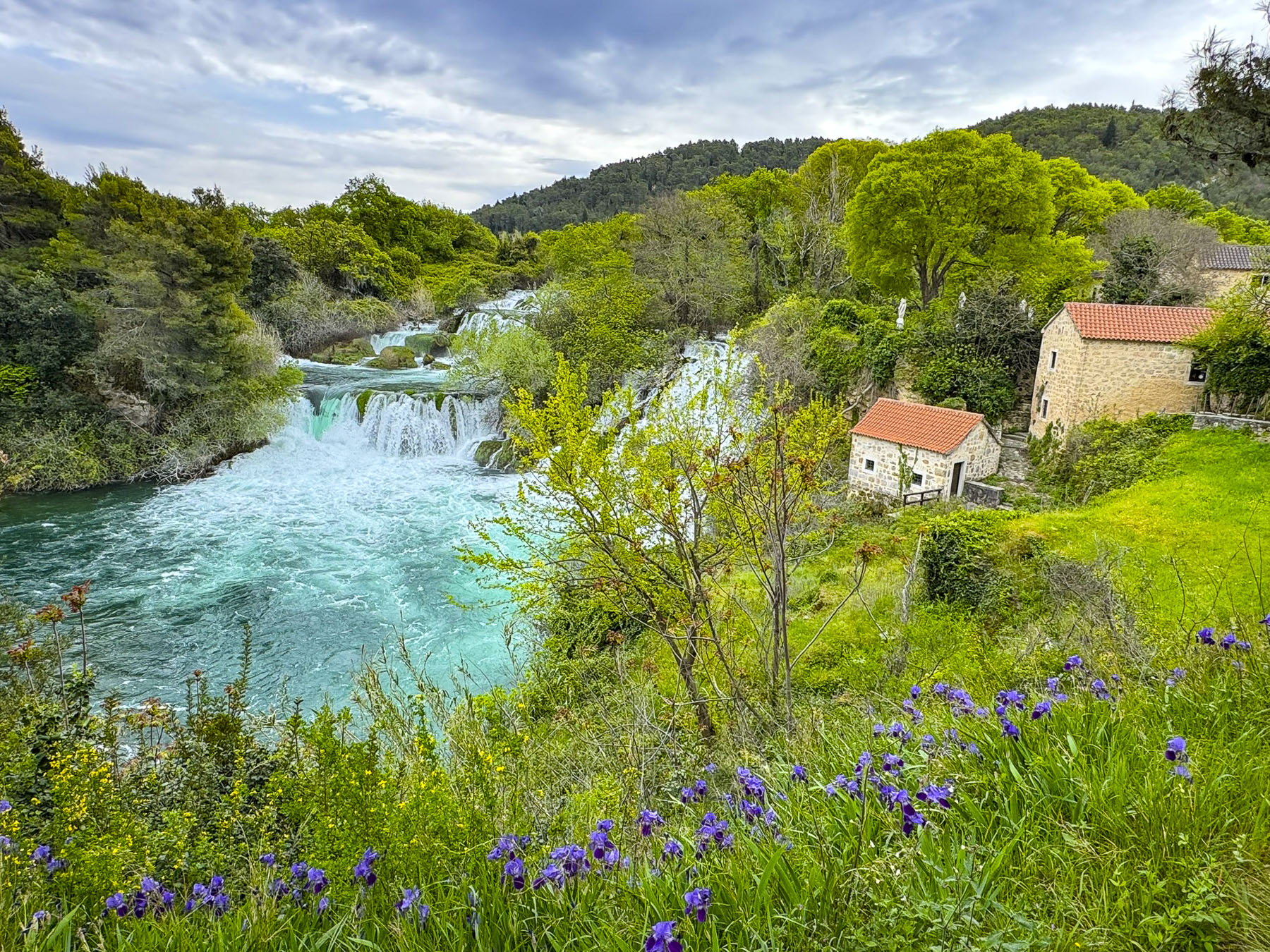
The overcast day was actually the perfect weather condition to photograph the waterfalls without heavy shadows or bright highlights, and the falls were thundering, foaming with the snowmelt from the Dinaric Alps, which run through the coastal Balkans region.

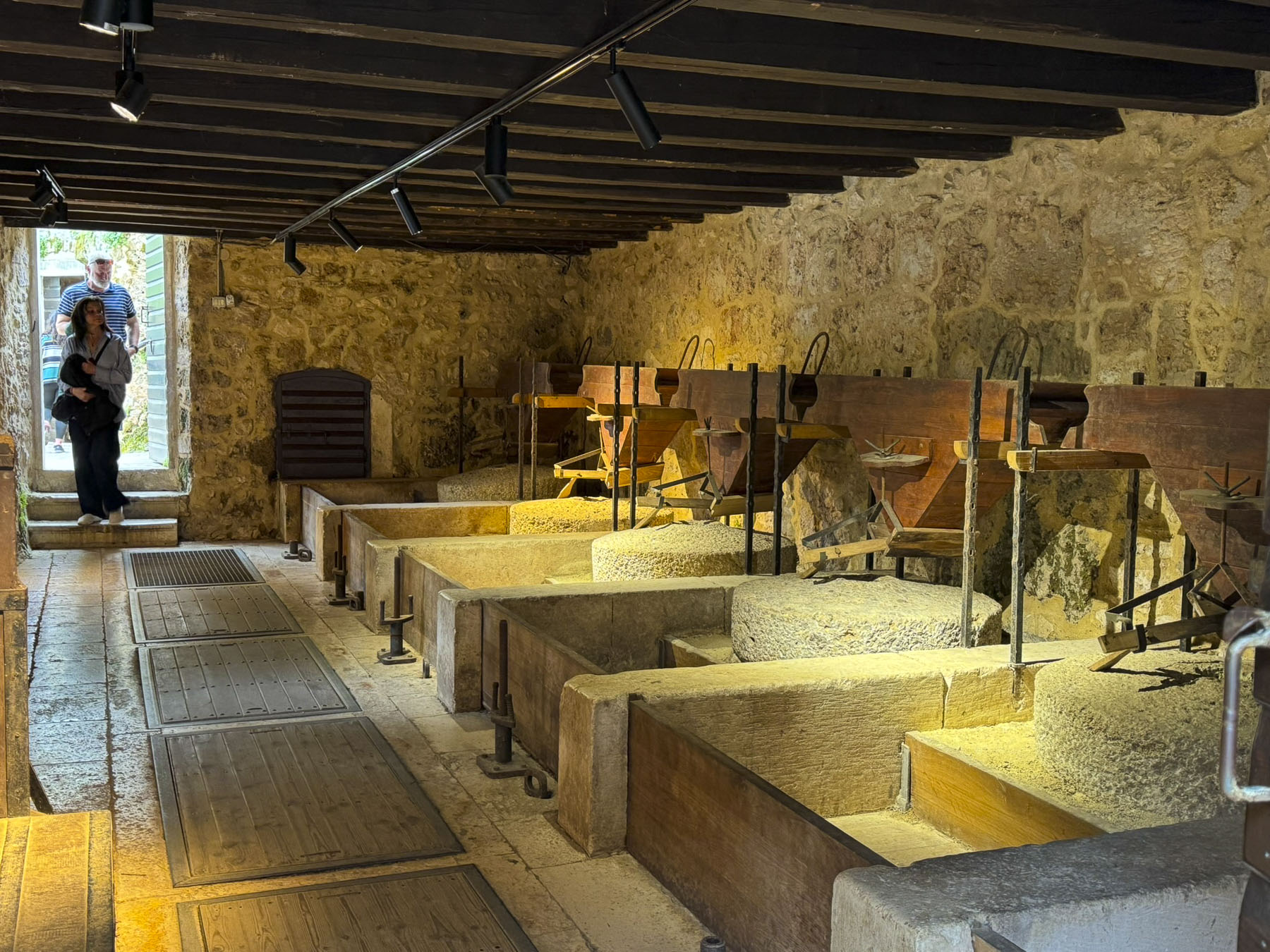
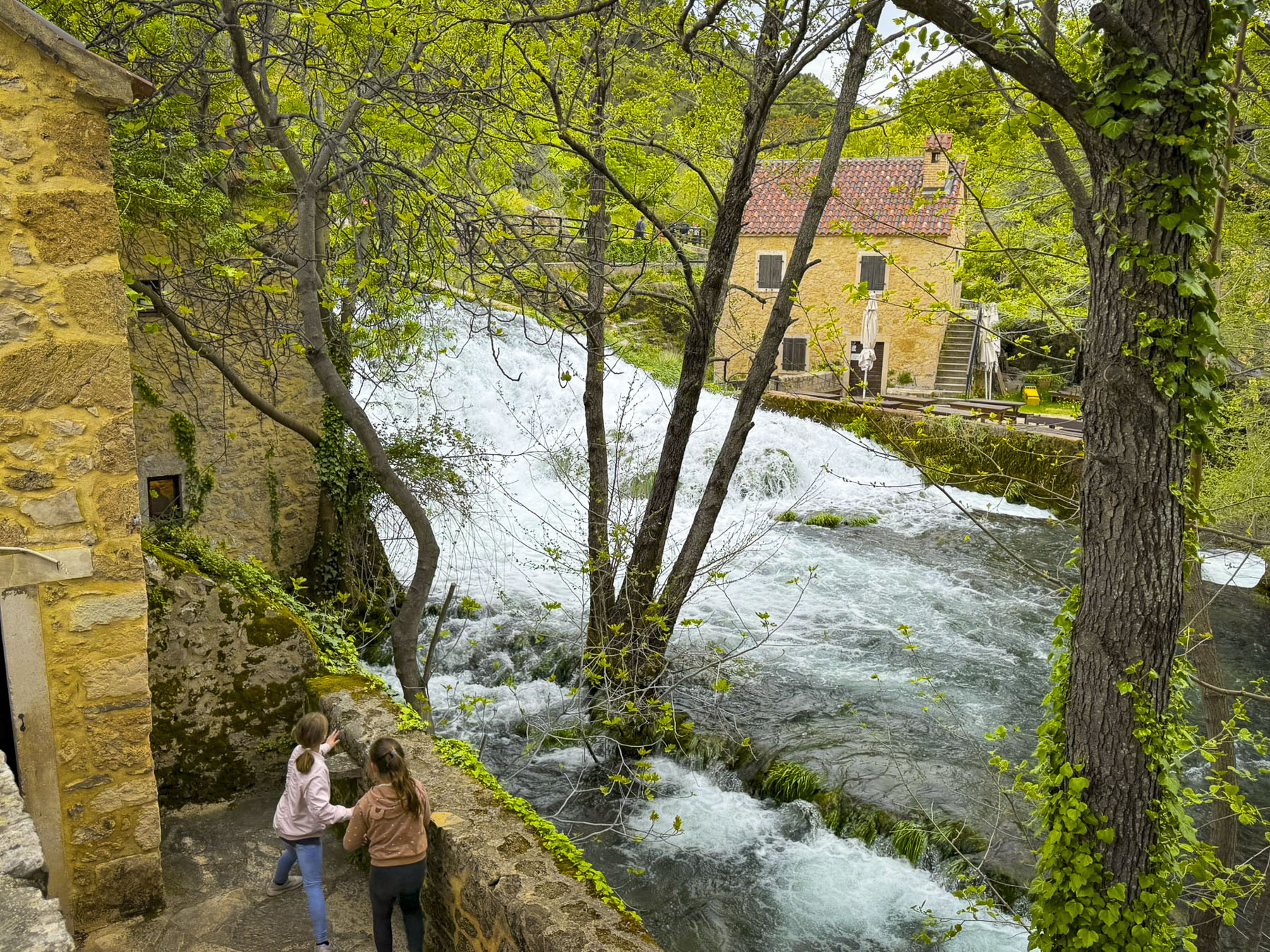
Along the way, we stopped at several restored watermills, with their mill races still intact. They were used primarily to grind locally harvested grain into flour, and to wash processed wool. A blacksmith shop also used a waterwheel to drive its furnace bellows to keep the fire hot enough to work the iron, and to power the heavy trip hammers the smith used to shape tools.

A serpentine elevated wooden walkway, without guardrails, twisted through groves of flooded forest, and kept us dry as the spring runoff rushed below us. It’s important to be aware of your footing in these circumstances, and we always waited at a wider part of the walkway for other folks to pass when the boardwalk was too narrow, to avoid fulfilling my mental image of being swept away down the rapids.

Unlike tourist sites in the United States, where everything is fenced to protect us from injury, in Europe you are expected to be responsible for yourself, and aware of your surroundings to guard against mishaps. We thoroughly enjoyed the waterfalls. We don’t see them in the coastal area at home, since we live nearly at sea level.

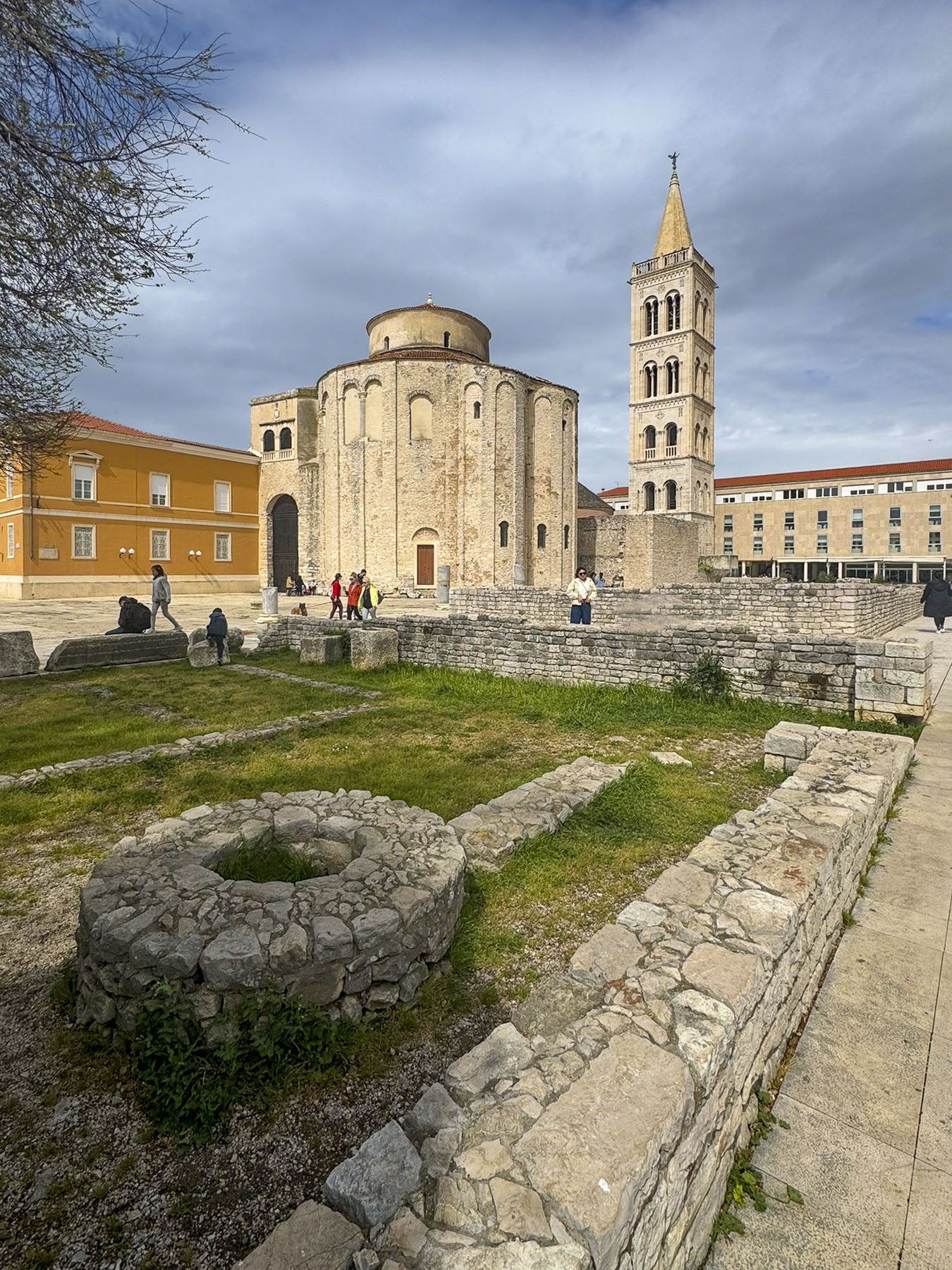
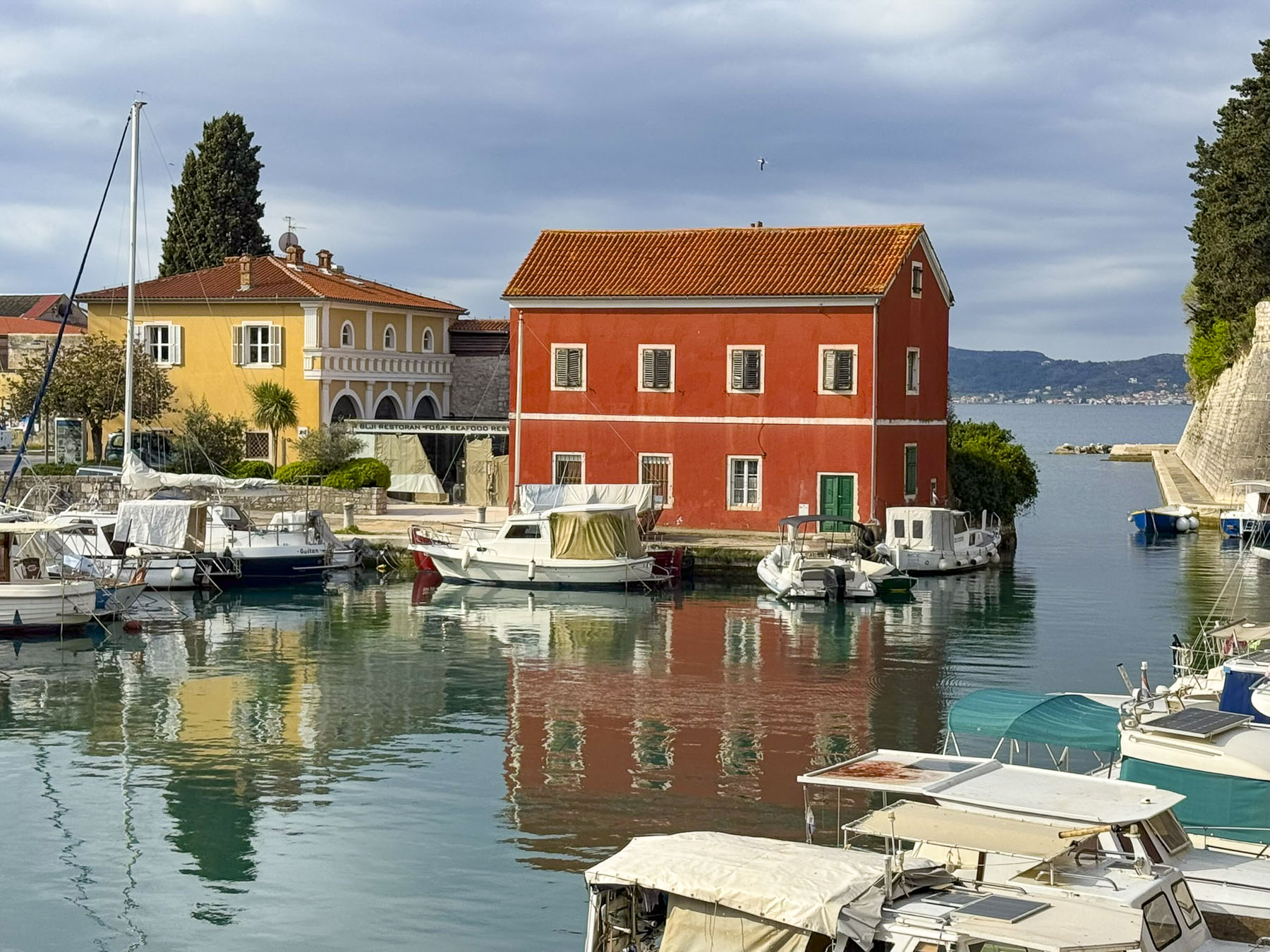
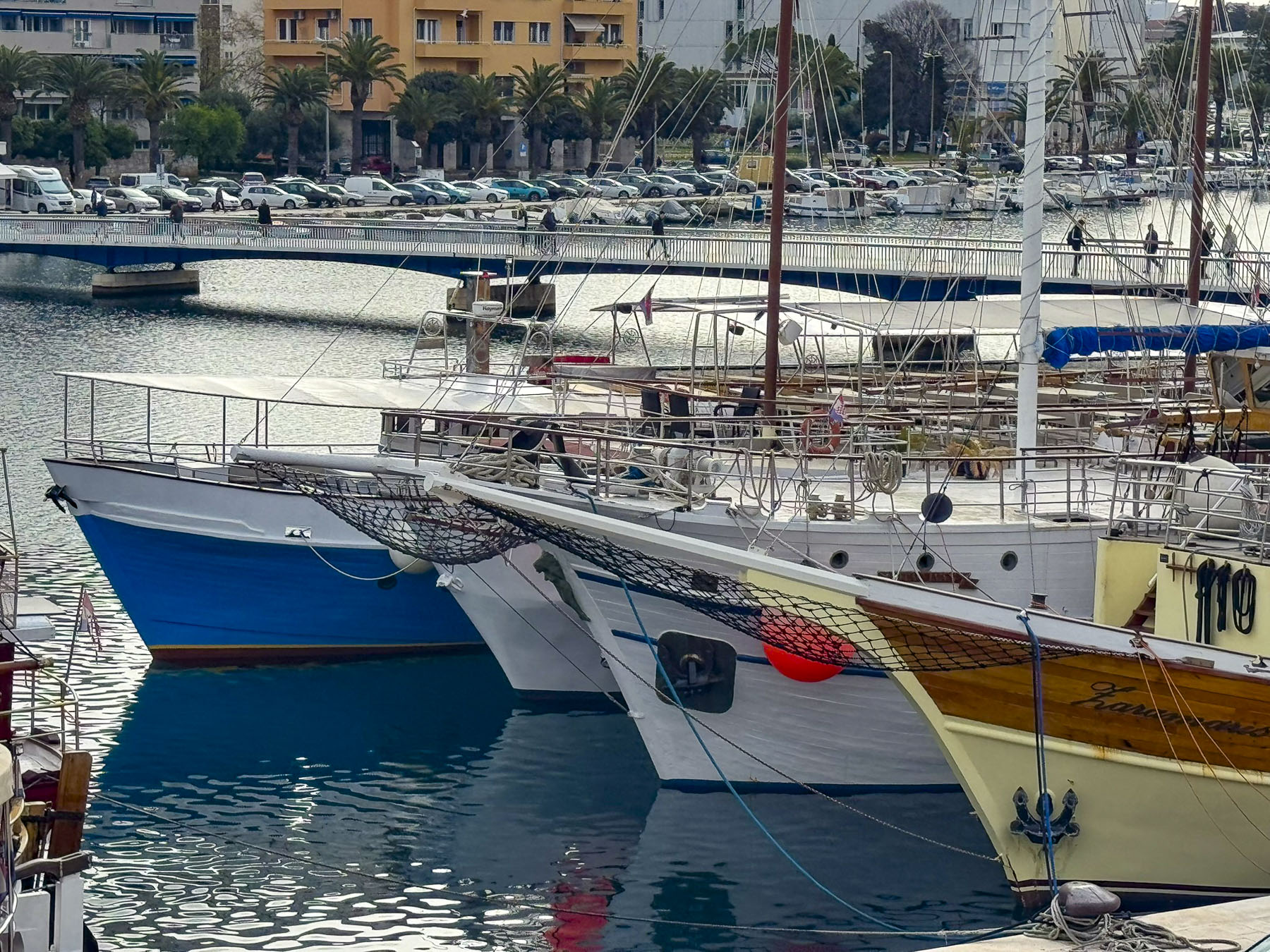
Zadar protrudes into the Adriatic, on a small peninsula, like a thumbs up sign, its once rough coastline now manicured with a sidewalk that follows its waterfront. Parking was challenging, but after circling the old town twice, we found a metered space near the Apartments Donat, our base for three nights. The rooms in the restored 700-year-old building were small. But the location, on a small lane overlooking the Cathedral of St. Anastasia and the Church of St. Donatus, was very convenient.

The manager of the building, who didn’t live on site, kindly made his parking space, next to the building, available to us for the duration of our stay. While having a rental car provides a lot of freedom, the typical 20 euro daily expense of parking in Europe can quickly add up. It’s not always possible, but we try to stay in hotels that provide free parking when we can.

Later that day we walked along the waterfront to Obala Petra Krešimira, a jetty that was being battered by whipping winds and crashing waves, which lifted large sprays of water over anyone brave or foolish enough to venture out onto it.

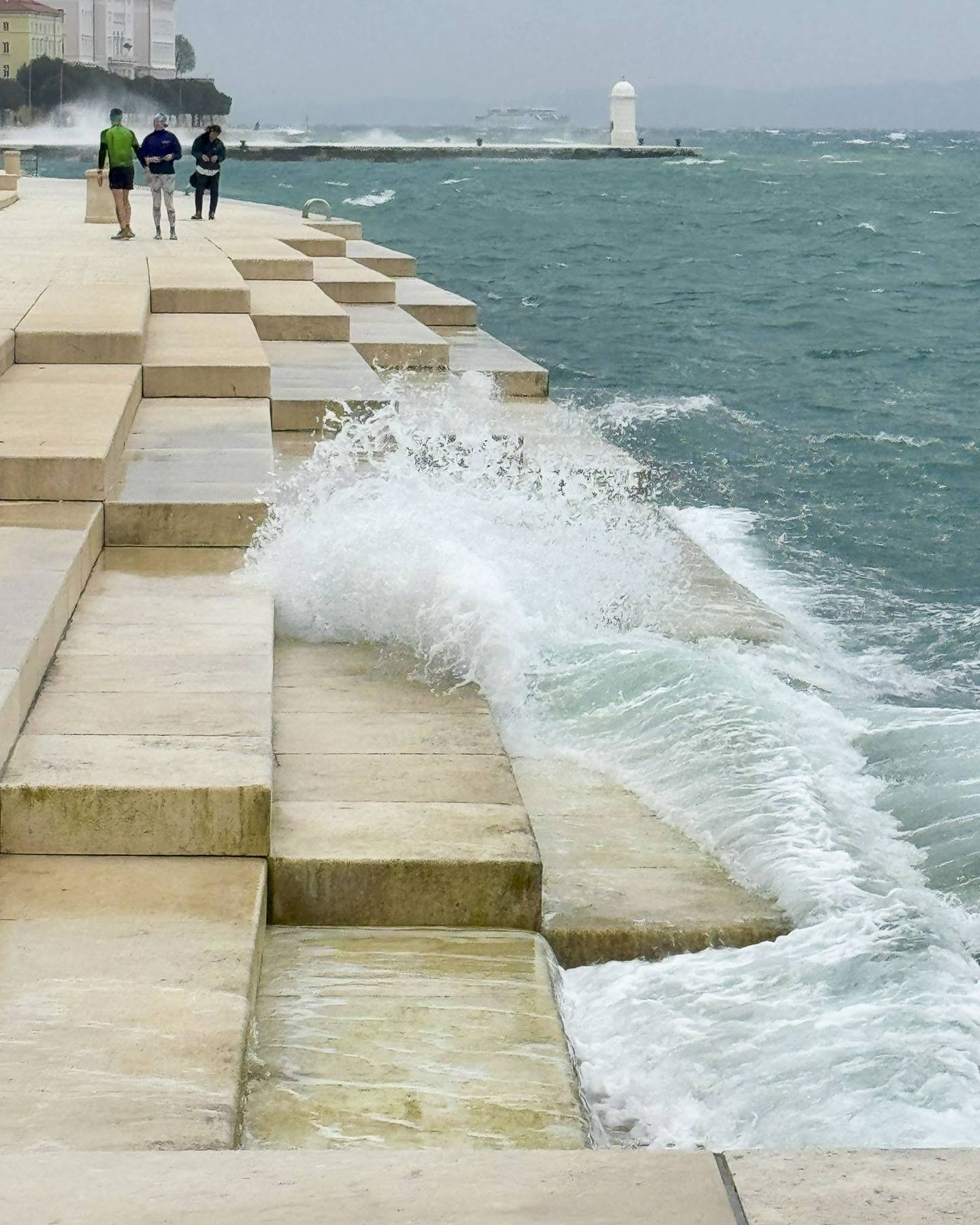
Nearby, in front of Zadar’s City Hall was Morske Orgulje, the Sea Organ, an experimental architectural sound installation designed by the architect Nikola Bašić and completed in 2005 to refurbish Zadar’s waterfront which had been neglected since the end of World War Two. The design incorporates polyethylene organ pipes under the marble stairs that lead down to the water. The motion of the waves continuously forces air through these pipes to create a “harmonic symphony crested by the wind, waves, and tides,” that is vented through the rise of the steps. Visually it’s a flat surface, but as we walked across the plaza the ethereal music faded in and out moodily with the motion of the turbulent sea.

The Greeting to the Sun, a solar-powered light installation also designed by Bašić, was a short distance away, closer to the tip of the peninsula. It’s a 22m (72ft) wide disc composed of 300 multi-layered glass plates, embedded into the plaza, which you can walk across. The panels absorb solar energy during the day to turn the disk into a colorful light display in the evening.

We hoped the storm clouds would begin to break apart so we could catch a scene from the spot that “Alfred Hitchcock once declared during a 1964 visit to the city as having “the most beautiful sunsets in the world.”  Alas, during our stay in Zadar the mornings were sunny, the afternoons cloudy, and our sunsets stormy and grey.

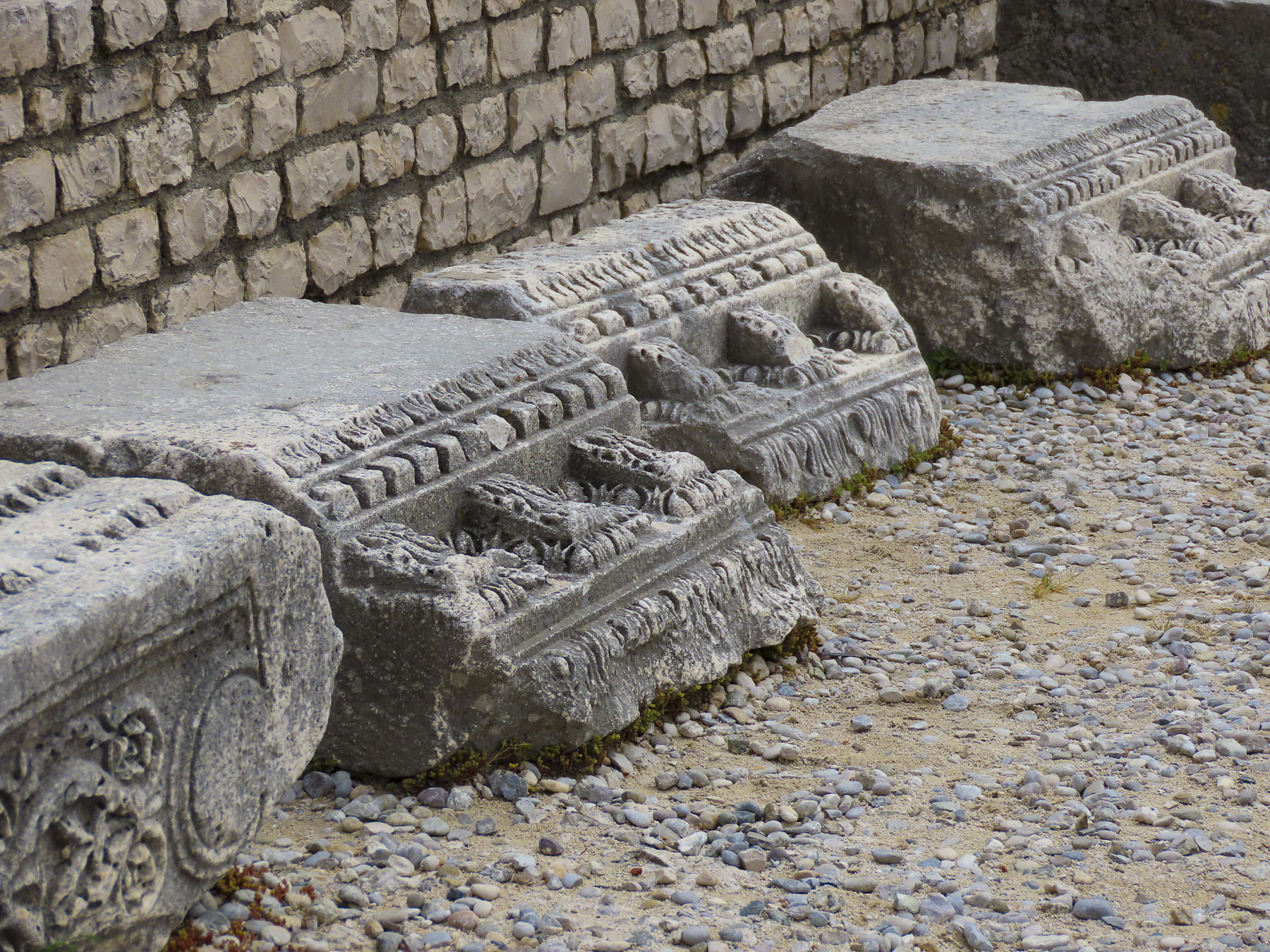
The next morning, we set out to properly explore the town, first stopping at the Roman Effigies, a collection of column sections and decorated capitals from the ancient Roman Forum, which stood in the area of Piazza Papa Giovanni Paolo (Pope John Paul II Square). The plaza itself was built over Zadar’s 16th century water cistern.

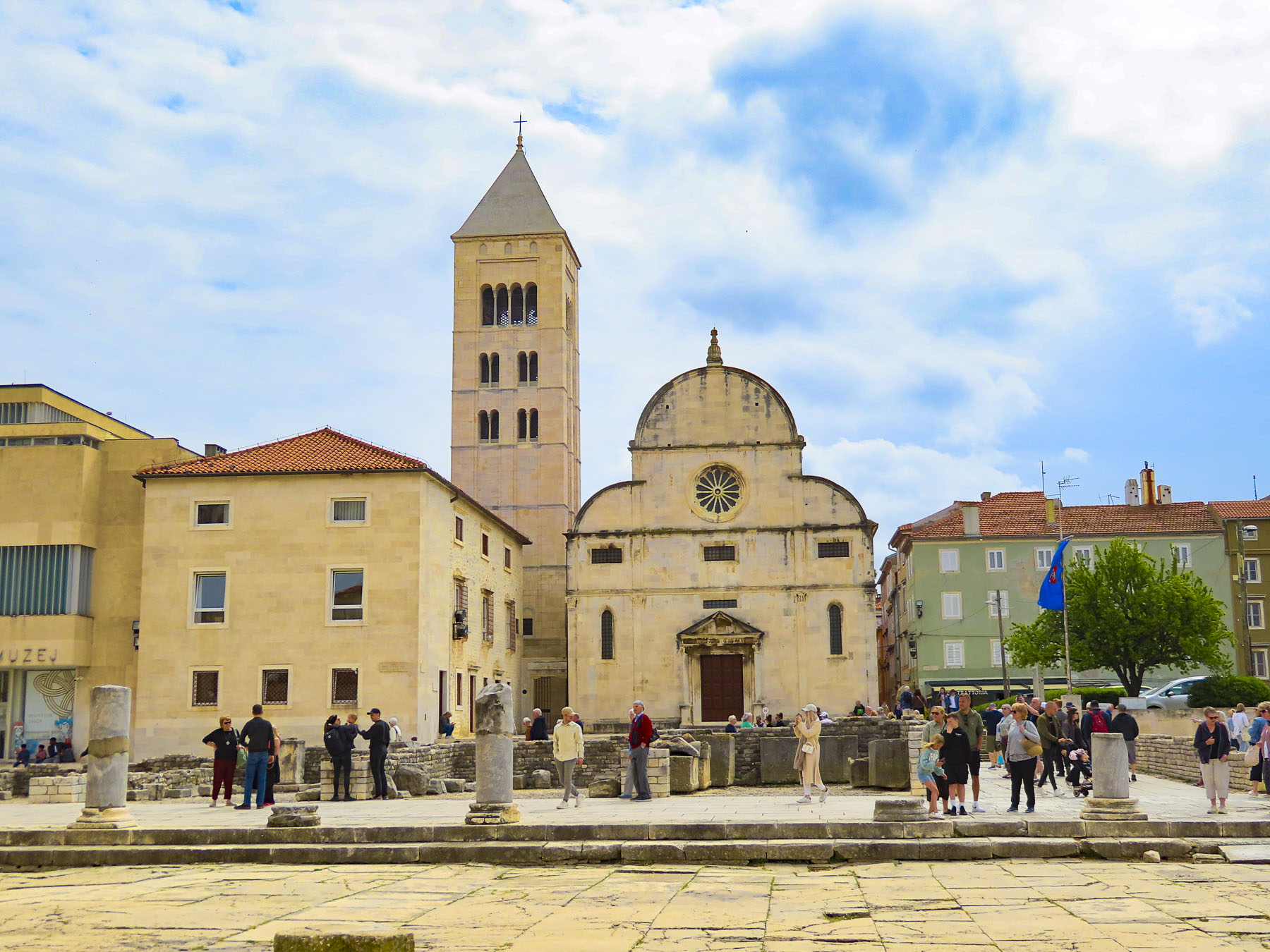
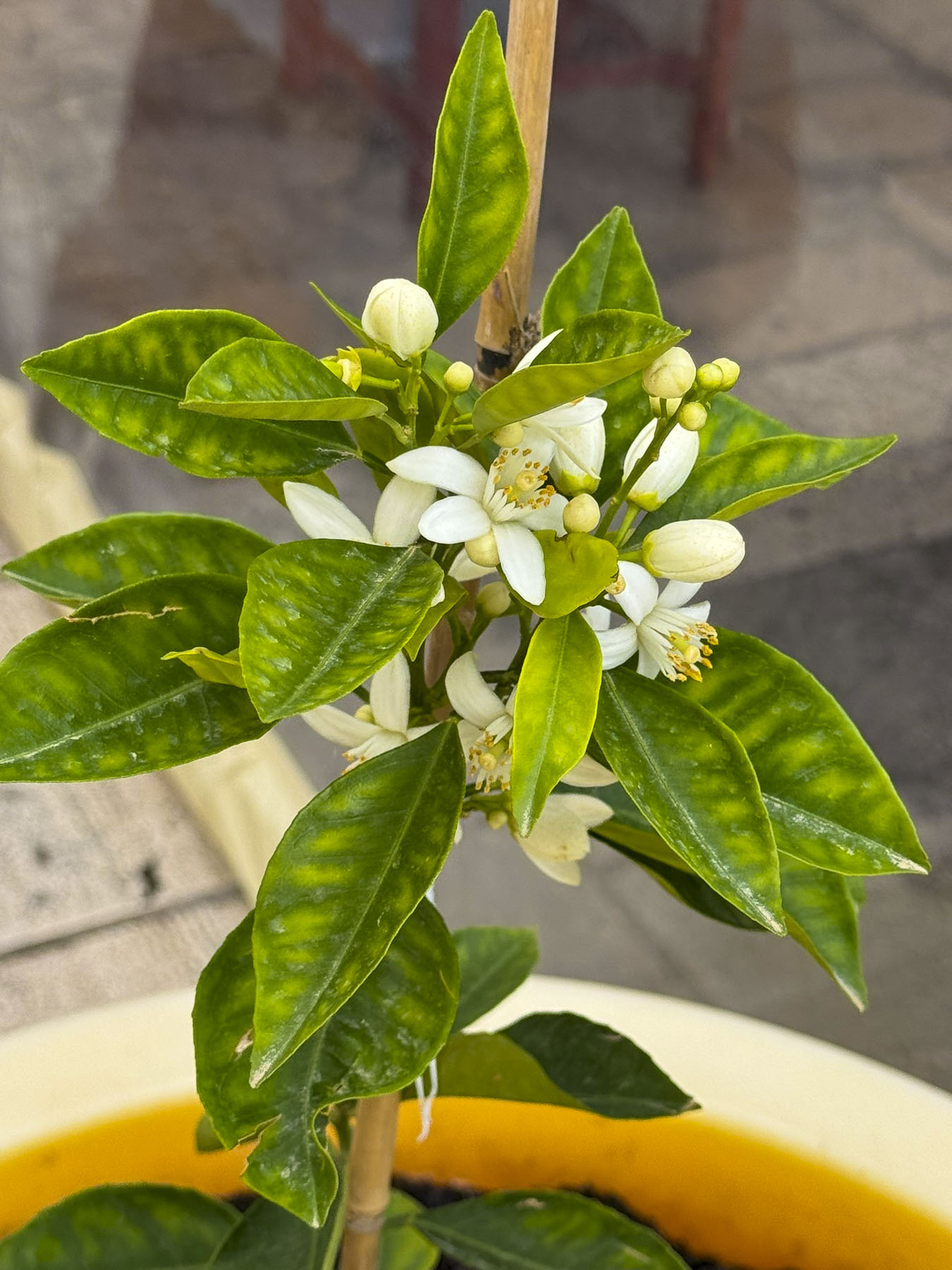
The piazza located next to the 9th-century Church of St. Donatus and the 11th-century Benedictine Monastery of St. Maria is the center point for the northern end of Zadar. The historic buildings did not open until later in the morning, so we continued down Zadar’s narrow lanes, enjoying the fragrance of orange blossoms while we strolled to Pekara Dalmatinka – Old Town Bakery, a recommendation from our friend at the car rental agency.

On the way, something piqued our curiosity down a narrower side alley and we detoured. There in a small workshop a craftsman was applying gold leaf to a frame. We appreciate old-world talents like this, and I asked in English, and gestured with my cell phone, if I could take a photo of him working. All was lost in translation and the man suddenly walked out, only to return a few minutes with his son who spoke English, and we chatted for a minute. Apparently, few tourists ever poked their heads into the workshop; the frame he was gilding was for a church, and his dad is a busy man, but it is okay to take his picture.

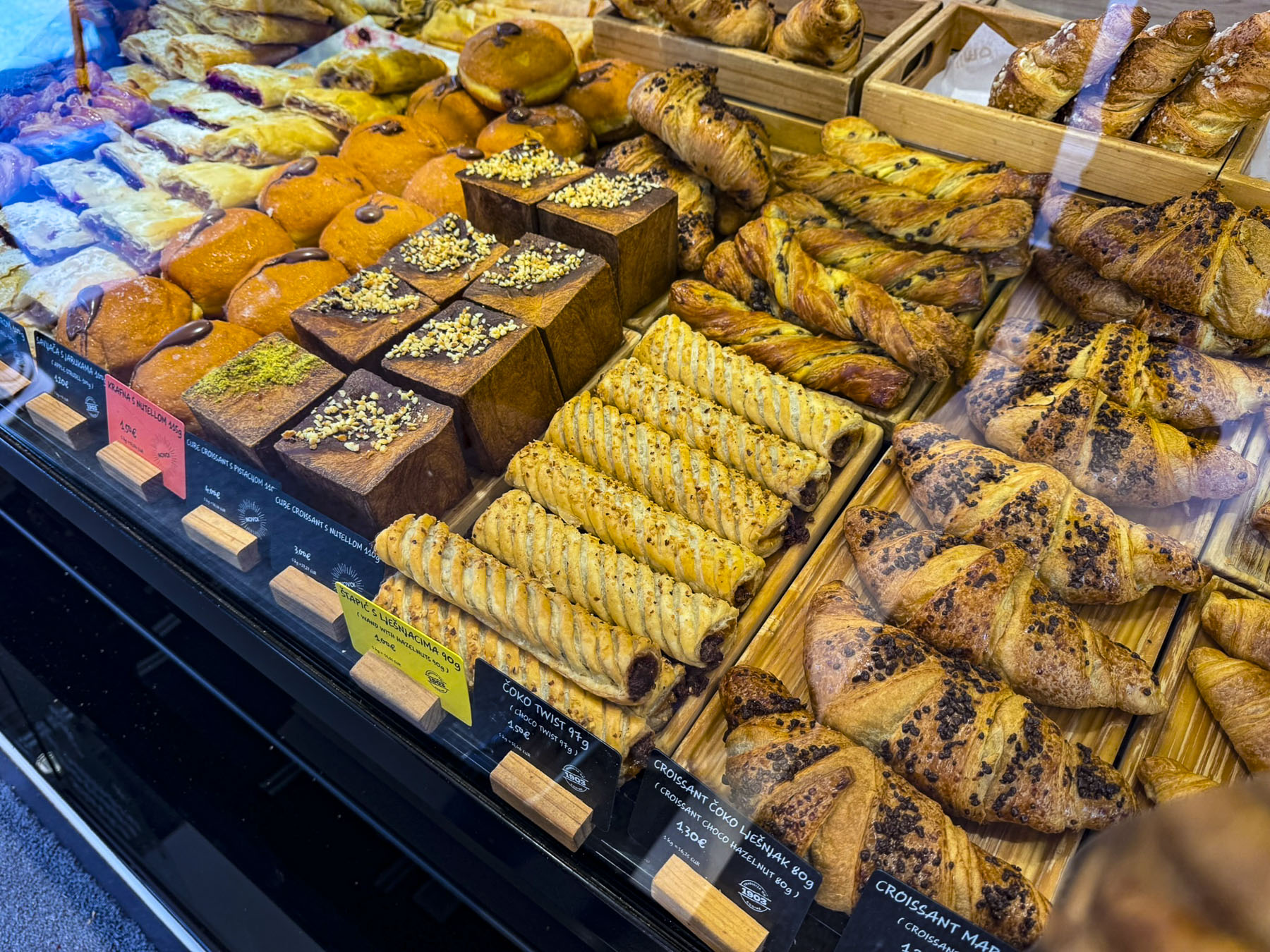
It’s a mistake to arrive hungry to a bakery that confronts you with a display case featuring mouthwatering Croatian pastries. We drooled over Kremšnita, custard cream cake; Madarica, a layered chocolate cake; Makovnjača & Orehnjača, a rolled dough pastry filled with walnuts or poppy seeds; Princes Krafne, a doughnut stuffed with luscious cream; Splitska Torta, a cake with layers of meringue, cream, almonds and figs; and of course Börek, a delicious, coiled phyllo dough pastry filled with feta cheese or spinach.

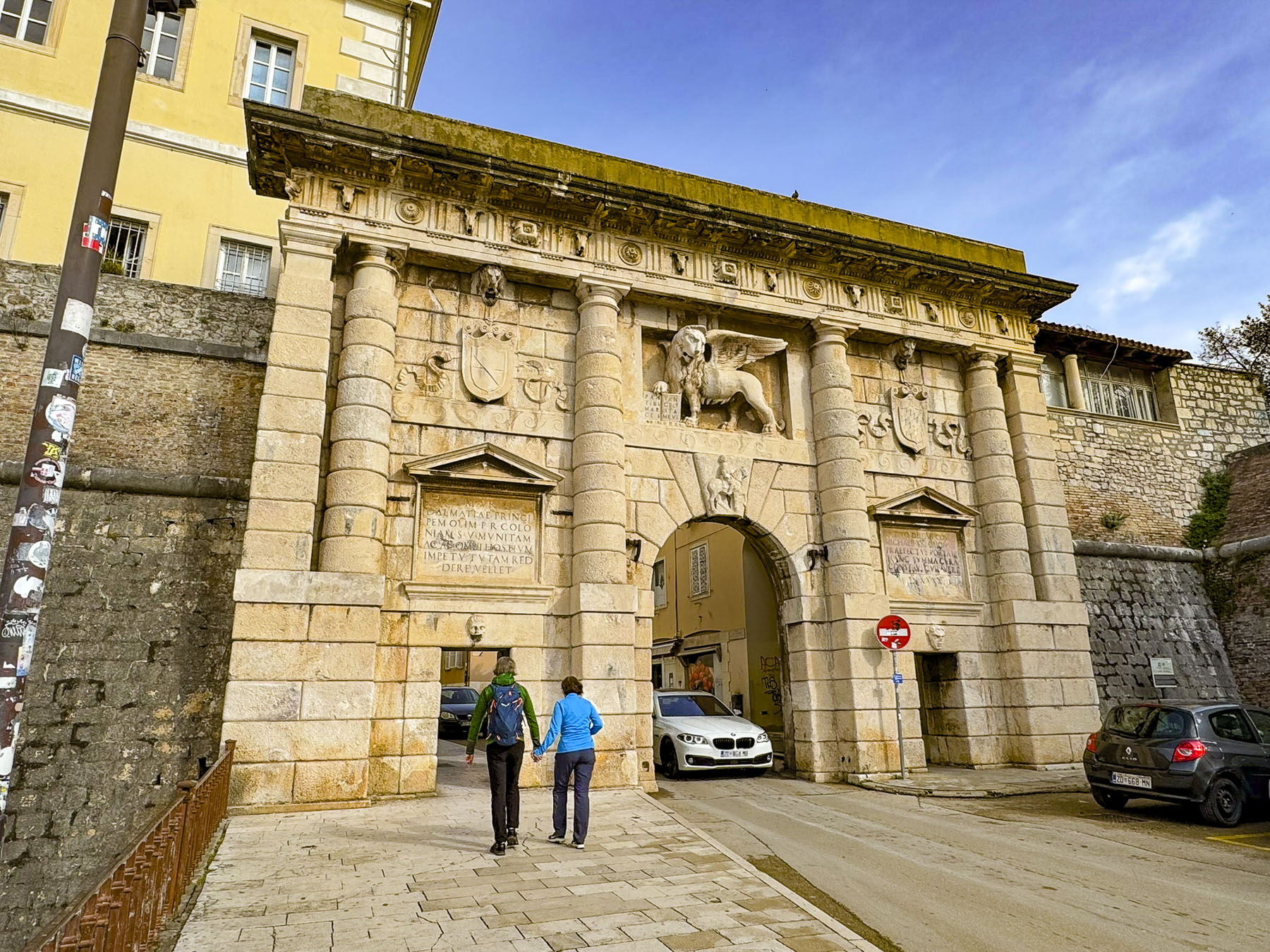
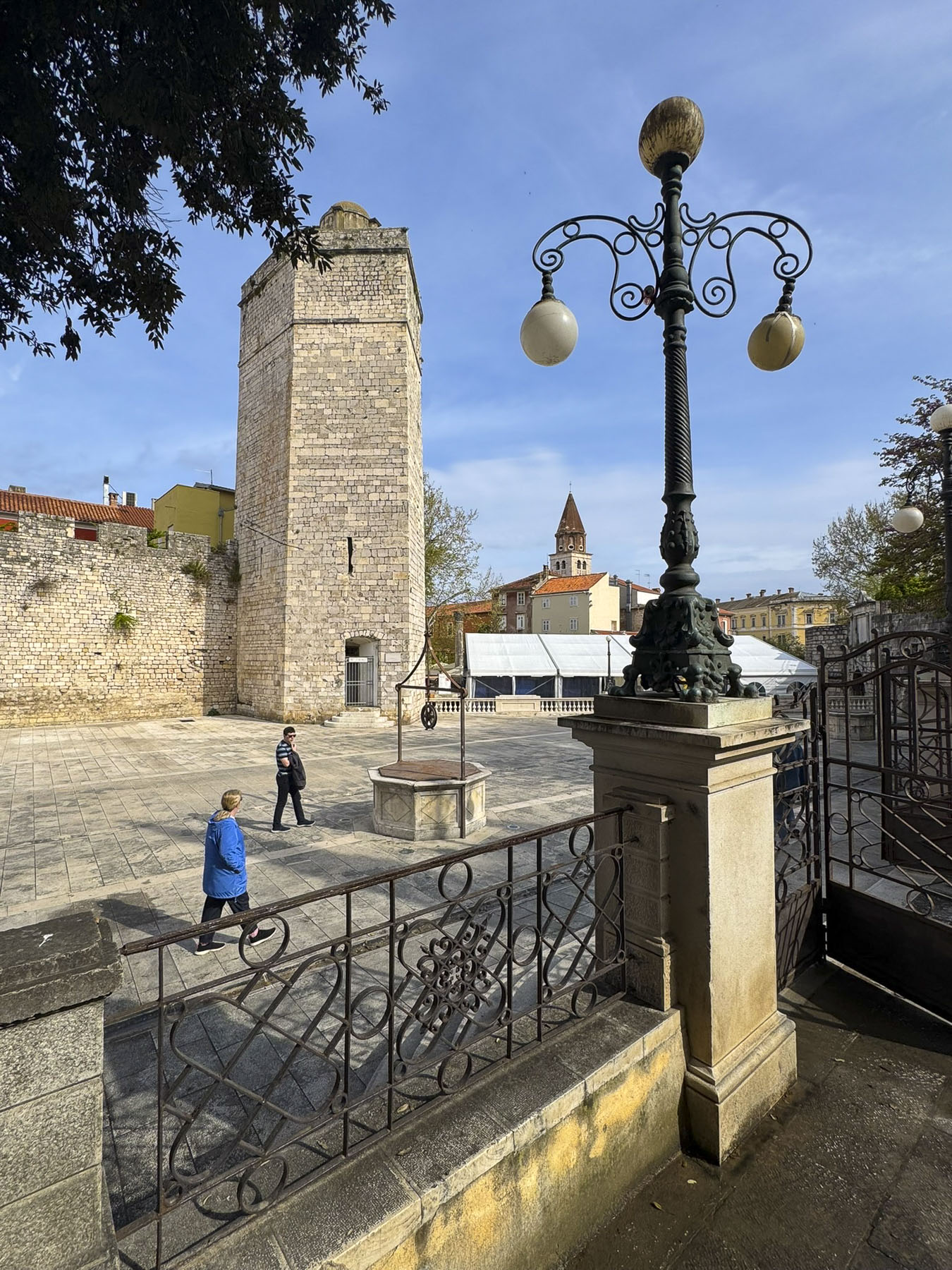
We planned to walk off our over-indulgence, and headed through Trg Pet Bunara, the Five Wells Square, to find a bench in Queen Jelena Madijevka Park. Tree branches laden with purple flowers hung over the decorative railing at the entrance to the park, which sits atop the city’s old bastion, next to the ancient Venetian Land Gate, and was the perfect spot for a morning picnic.  Built in 1573, it replaced an old Roman gate, and featured a relief of the Winged Lion of St. Mark, the symbol of the Venetian Empire, to celebrate a naval victory over the Turks. From our bench we watched a boat enter the small harbor in front of Zadar’s ancient defensive wall, a continuous activity since Zadar’s founding.

The ancient walls and gates around the city were first built by the Romans and then expanded upon by the Venetians in the 16th and 17th centuries, to defend the city from multiple attacks by the Ottoman Empire.

Several of the ancient gates still stand and allow passage from the old town to the ferry harbor. The top of the ramparts over the gates have been incorporated into a scenic walkway that parallels the waterfront and provides a pretty vantage point to view all the maritime activity, and some vignettes of old town Zadar.

Along this walk we spotted a younger man rowing a small boat with passengers across the narrow harbor, from a small lighthouse to a staired landing on the quay. Apparently, they were on the way to work and his service, like the traghetto in Venice, provided a shortcut. A sign we discovered the next day listed the fee as 2€.

Over the years the population of Zadar has sprawled into new buildings on the mainland, unlike Dubrovnik, which has been gentrified into a theme park. Old Town Zadar, on the other hand, has some newer buildings on its peninsula, but also has many that show the patina of age, and give the town an authenticity and delightful ambience.

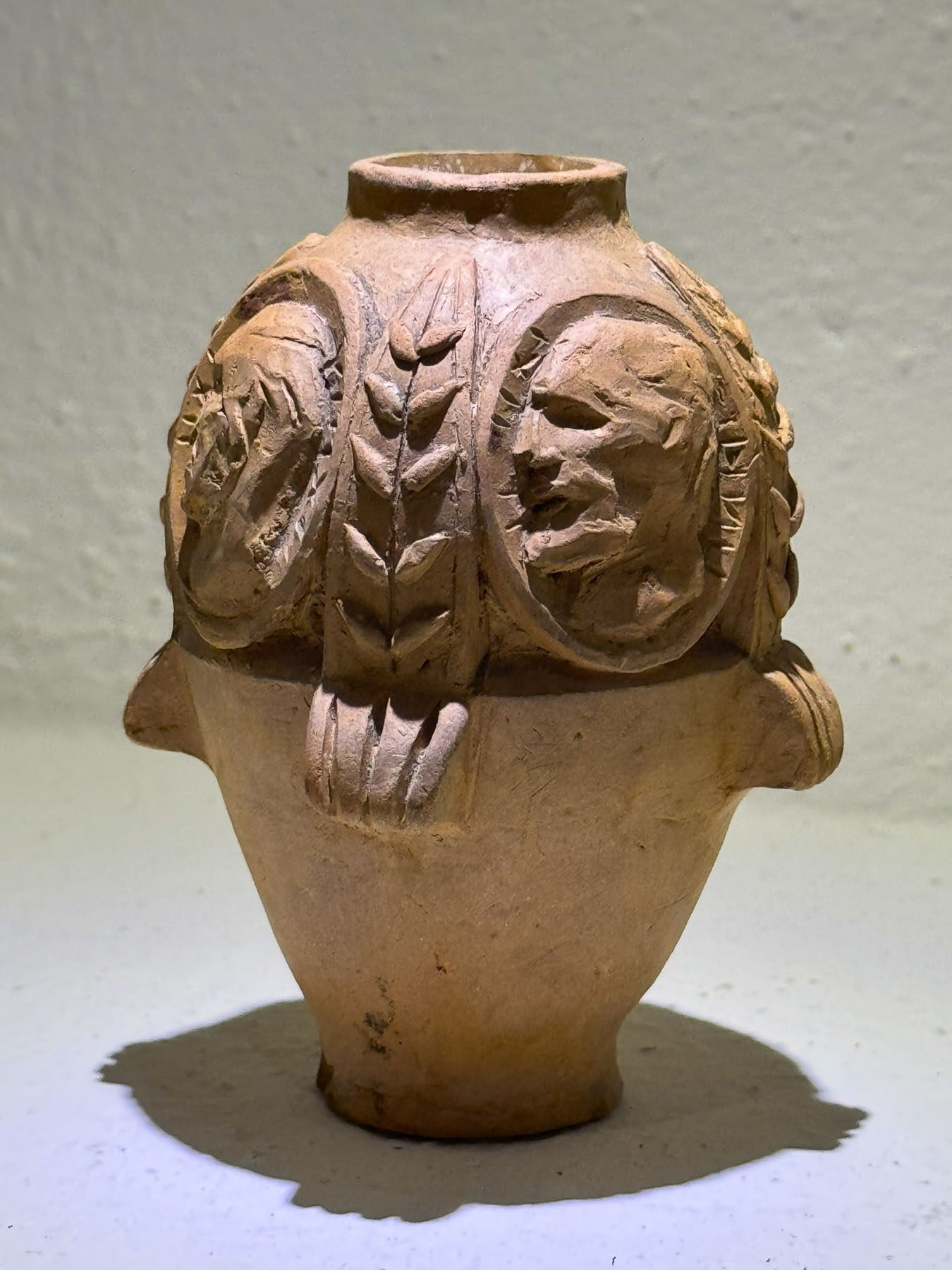
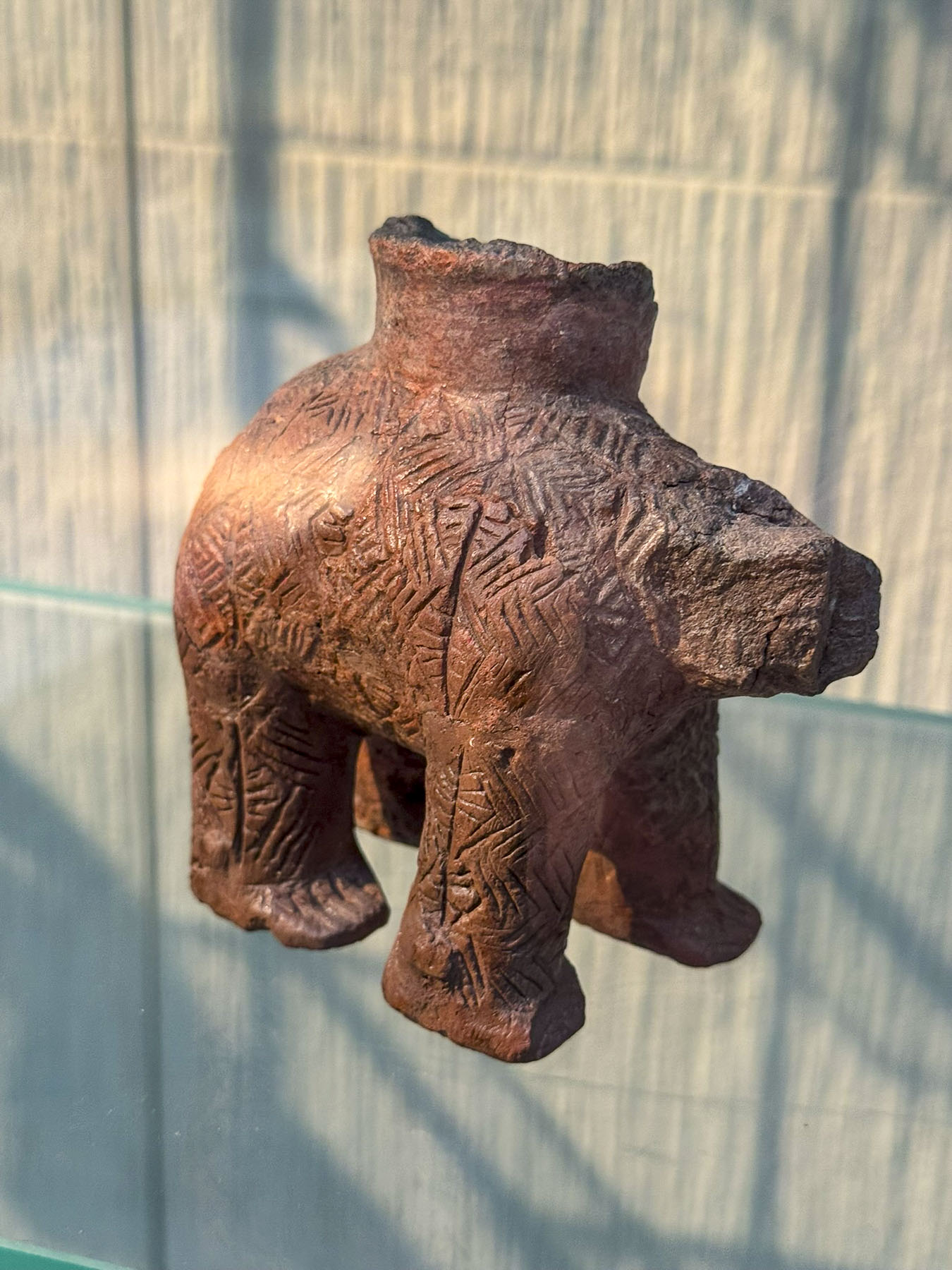
Our sunny morning was threatened with rain by noon, so we headed into the Archaeological Museum, where they have an interesting and diverse collection of ancient artifacts, statuary, and busts unearthed in Zadar, from its pre-history through the Roman Era and Venetian times. Especially unusual was the collection of Neolithic Rhytons, a  four-legged ceramic ritual vessel, from the Impresso and Danilo cultures.

From the museum there is a good view of the Church of St. Donatus, and the belltower of Sainte Anastasie across from the ruins of the Roman forum. We’d pass these landmarks multiple times during our stay.

Fortunately, we did have good raincoats, and we scurried to Kavana Centar, a very nice café several blocks away that had some indoor tables still available and offered a reprieve from the rain. Located away from the main square, its menu was very budget friendly.

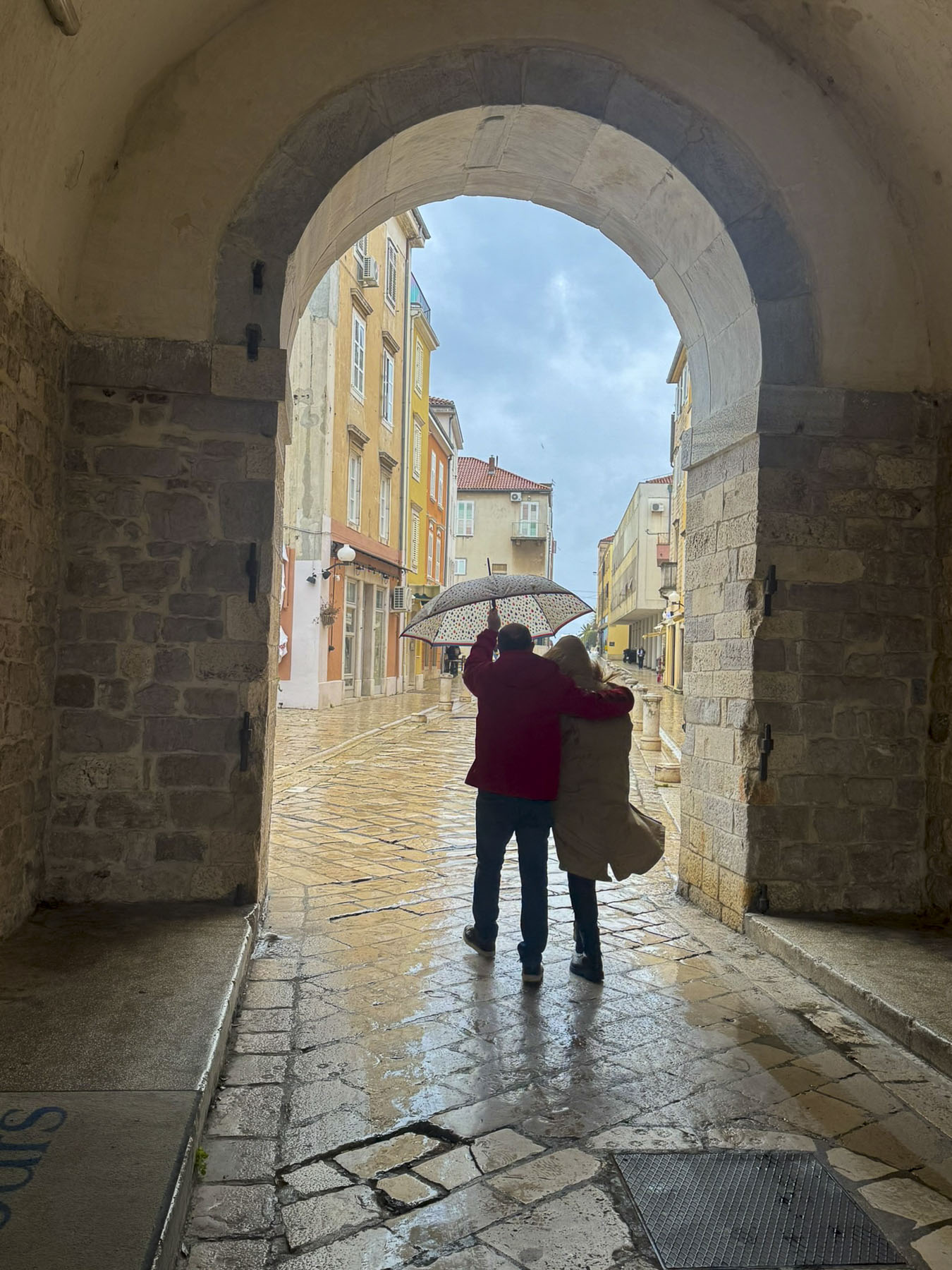
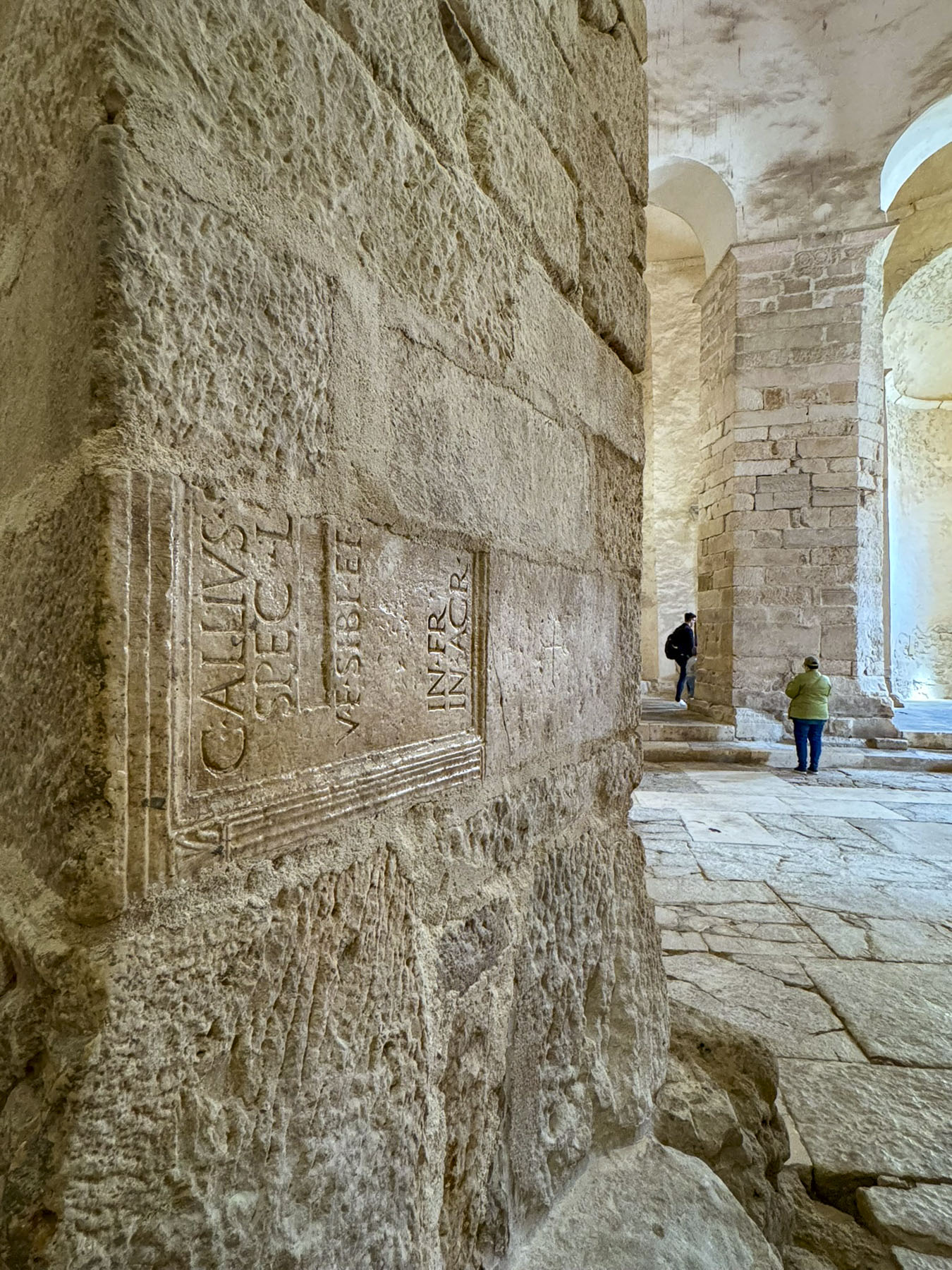
Though the rain had not stopped, folks continued on with their plans, and soon umbrellas were out everywhere.  After lunch, we headed back to St. Donatus, an unusual tall round cylinder-shaped church built during the 9th century in a pre-Romanesque style. Much of its construction utilized the ruins of the old Roman Forum, upon which it was built.

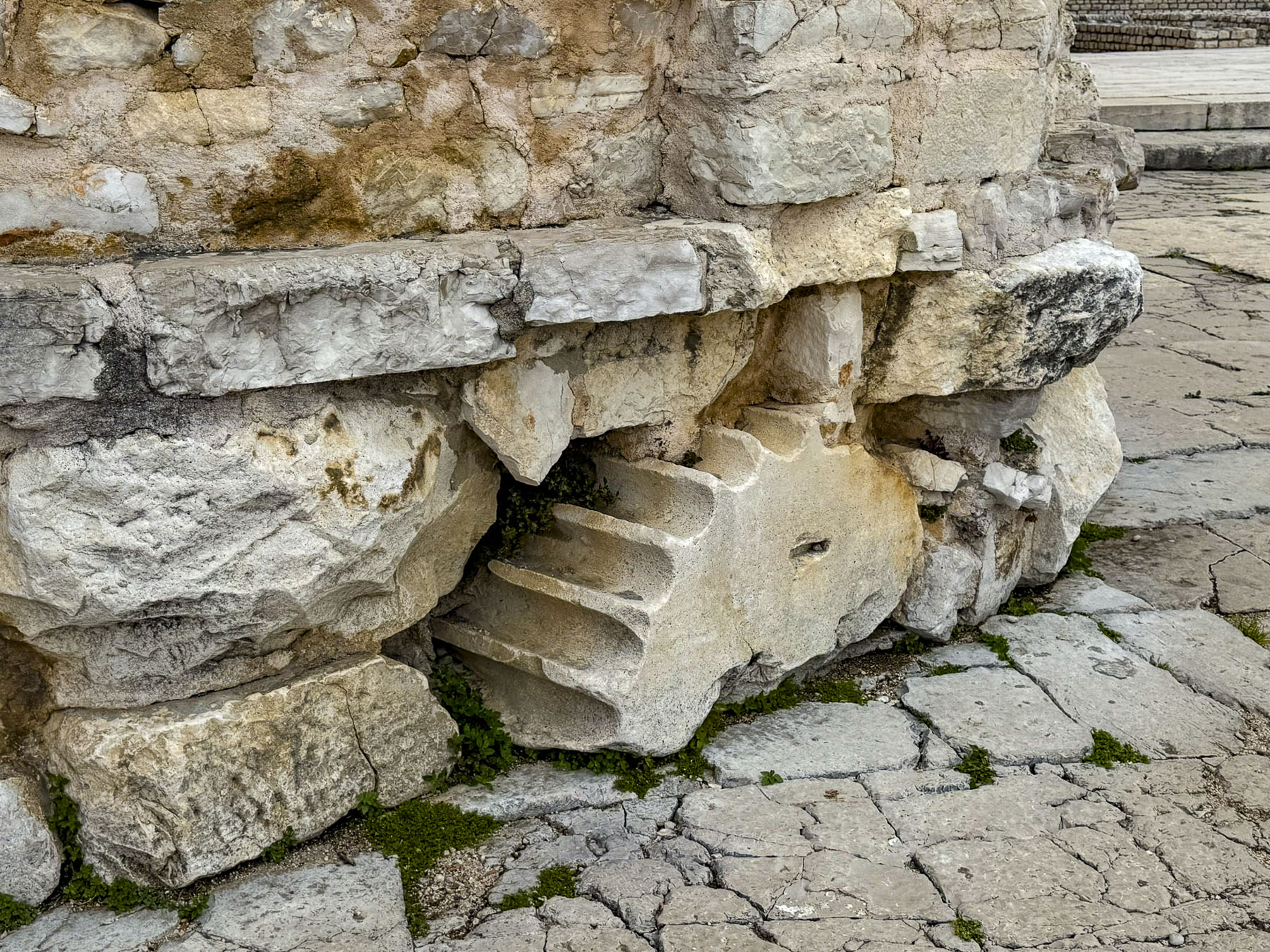
The fragments of reused columns, capitals, plinths, and cornices were used as fill, and can be seen in several exposed spots along the church’s foundation and interior. Its mammoth interior is 27m (89ft) tall, and at the top is a gallery that overlooks the space below.

The church was deconsecrated in the early 1700s, after which it was unceremoniously used as a wine cellar, warehouse, and Zadar’s first archaeological museum in the early 1900s. Nowadays, along with being a tourist site, it hosts theMusical Evenings at St Donatus, a concert series that utilizes the church’s excellent acoustics, every July.

The Campanile di Sant’Anastasia, the belltower of the Cathedral of St Anastasia and its monastery, is right next to St. Donatus. The campanile was added to the church in the 15th century, four centuries after the church and its monastery were completed. During the high season it’s possible to climb the 186 steps to the top of the 55m (180ft) tall tower for a panoramic view of the city and sea. But unfortunately, in early April it was closed when we visited. Surprisingly, the entrance to the cathedral is on the other end of the building, around the corner from the belltower, and took us a few minutes to figure out its location.

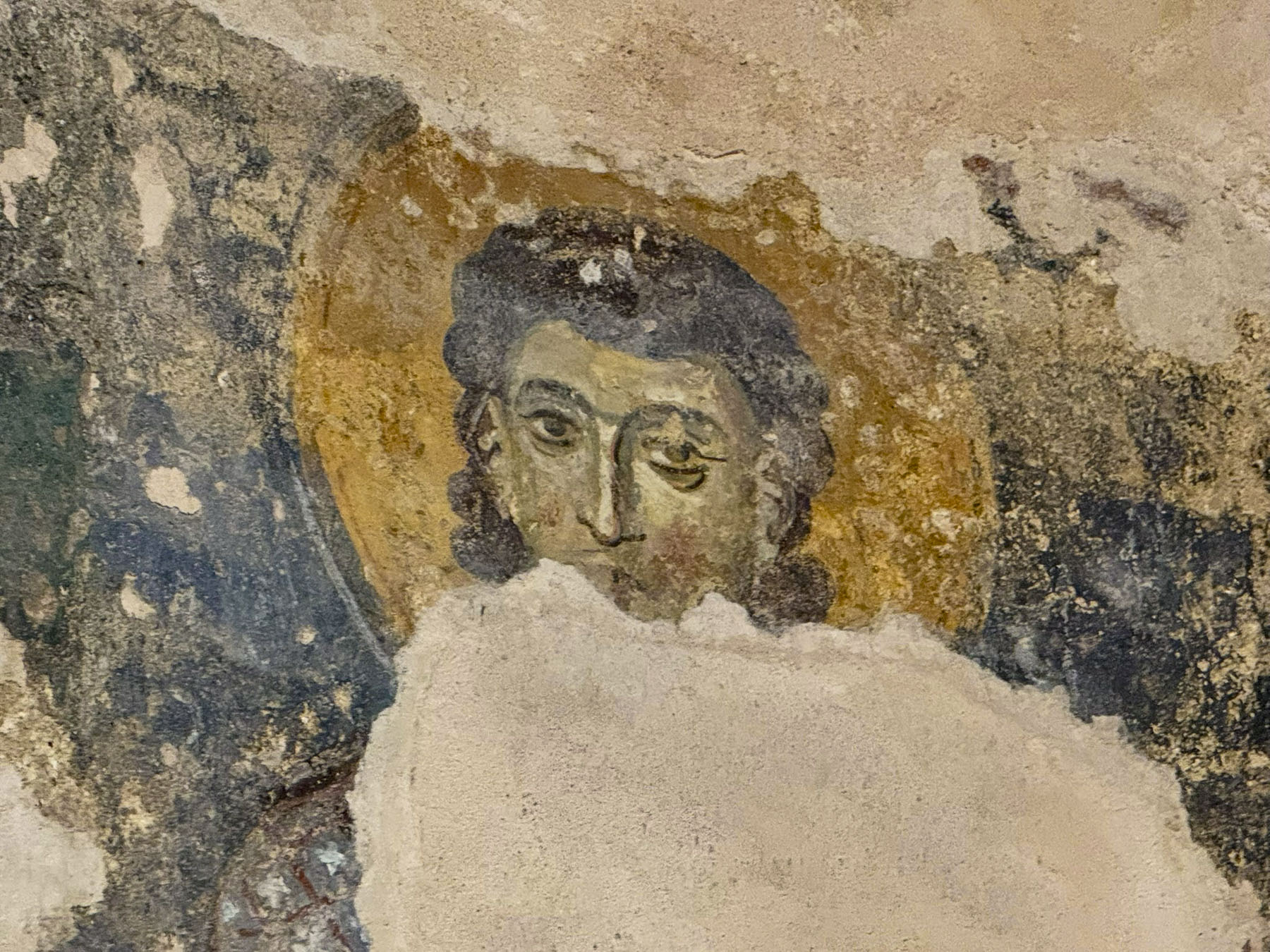
The interior of the Romanesque style church features an open timber truss roof, interesting side altars, an ancient fresco featuring what is believed to be a likeness of the saint, and the remnants of a 13th century mosaic floor, which I almost accidentally fell on, after losing my balance on the uneven stone flooring.

We could only imagine the uproar that would have ensued if I had damaged the antiquity. We wondered if our travel insurance would be of any use in this situation.

There are numerous other churches in old town Zadar. Choosing several churches and connecting the dots between them we found was a good way to see the various neighborhoods on the peninsula.

One of our favorites was the Crkva Gospe od Zdravlja, the Church of Our Lady of Health, set on the edge of a small park. Its small intimate interior was often visited by folks on their way to work in the morning.

Over the course of our wanderings past random buildings, down narrow alleys, and in dim courtyards, we found examples of the many different architectural styles that have graced the city over the centuries.

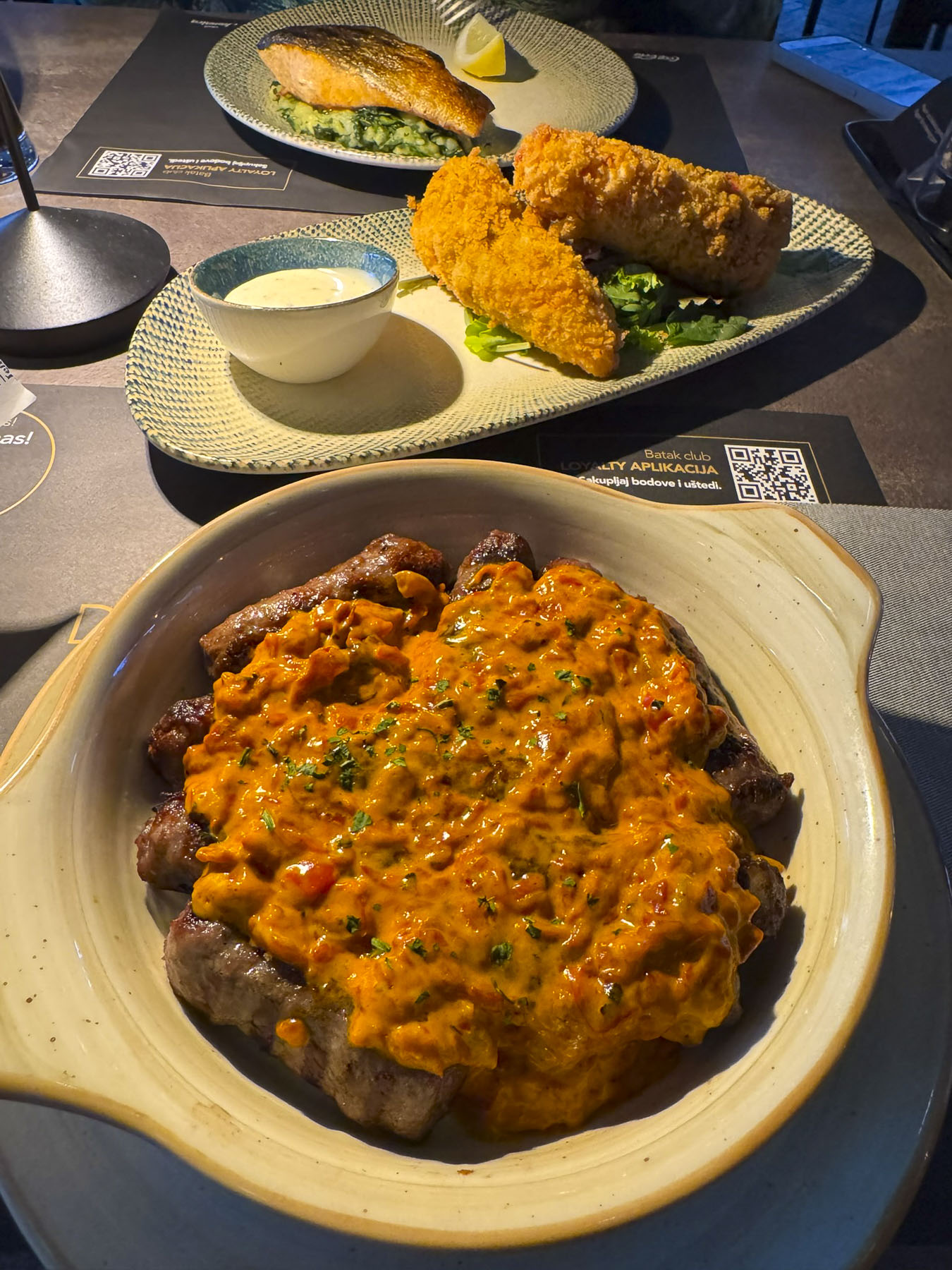
On our last night in Zadar, we drove off the peninsula to another recommended restaurant, Batak Zadar, located in a shopping center, far away from the tourist zone. We ordered several of their Croatian classics, and a local red wine. Everything was very good, and an excellent value compared to the inflated pricing of the restaurants in old town Zadar.

Though the weather could have been more cooperative, we enjoyed our three-night stay in Zadar, and found the size of the charming city just right for a short stay before the start our three-week road trip through Croatia, Slovenia, and Bosnia and Herzegovina.

Till next time,

Craig & Donna             

Prague – What’s all the fuss about? Confessions, Castles and Černý

That was the question put forth on a Reddit travel thread. A rather jaded inquiry, we thought, that questioned the city’s continued popularity with tourists, who in their opinion have ripped the local fabric of life from the city’s historic center and Disneyfied it. We don’t share that opinion, and found it to be an intriguing destination for a four-night stay before continuing on to Croatia, but we can understand why it might be perceived that way, especially if you are visiting the city during the high season. Prague has been on our radar since the fall of the Berlin Wall in 1989. Unexpectedly, it took us nearly 40 years to make visiting this enchanting city a reality, but like a good wine it has aged well. And while some folks lament that it’s not as inexpensive as it used to be, it’s still one of the most budget-friendly cities in Europe.

As we descended through the clouds on the approach, Prague revealed thousands of acres of brilliantly yellow rapeseed blossoms carpeting the landscape that was slowly greening. The scene literally brightened our day after a cloudy grey connecting flight from Paris during the first week of April. It was a quick 30 minute Bolt drive from the Václav Havel Airport through Prague’s outer suburbs and parks before catching a glimpse of the Petrin Tower,a 59m (194ft) tall building constructed in 1891 for Prague’s Jubilee Exhibition, that loosely follows the design of the Eiffel Tower. A climb of two-hundred-ninety-nine steps to its to apex offers views out over Prague, and on a clear day it’s said “you can see nearly all of Bohemia.”  

A short time later the silhouette of Starý královský Palác, the old Prague Castle, and the spire of St. Vitus Cathedral, which centers the bastion, came into view. The cathedral’s completion in the early 1300s established the city’s iconic skyline which hasn’t changed much over the centuries.

A long descent towards the Vltava River provided views of some of the eighteen bridges that link the historic Malá Strana, Lesser Town, situated on the western riverbank below Prague Castle to Staré Město, the Old Town, and New Town on the eastern bank, as well as our first glimpse of the famous Charles Bridge, which has survived numerous floods and wars for nearly 700 years.    

Many of the narrow streets in the historic quarter of the city are pedestrian only, but our hotel the Luxusní hotel Černý slon, the Black Elephant Hotel, was right on the edge of the restricted vehicle zone and our Bolt driver was able to navigate it easily. We passed Staroměstské Náměstí, the Old Town Square, which was already festooned with Easter decorations and food stalls, and we arrived at the corner of a cobbled alley across from the 14th century Chrám Matky Boží před Týnem, Church of Our Lady before Týn, and its twin 80m (262ft) tall bell towers which dominate the square.

This charming hotel wonderfully retains its 13th century heritage, with a small and intimate polished wood bar, and a dining room with a Gothic vaulted ceiling, located across from the reception desk. Many of the rooms have painted wood ceilings, while the attic rooms incorporate the old wooden roof trusses into their atmospheric design. How it received its name remains an enigma.

Legend believes Holy Roman Emperor Charles IV was born in the neighboring house in 1316. An intricately designed arched doorway to a side apse of the church faced the hotel on the narrow alley that led to town square. The covered walkway across the ally once connected the church to its cloister, now the Stone Bell House, a contemporary art exhibition space.

It was a perfect spring day, and we were amazed by the amount of activity on the plaza, where folks were queueing for a spot under an arbor decorated with a beautiful floral arrangement, atop a raised platform in front of the church. It was a perfect location for a portrait.

Food stalls grilled aromatic sausages and meats while others offered dumplings and donuts. Thousands of colorful tulips bloomed, ringing the base of a monument commemorating Jana Husa, in the center of the plaza. One hundred years before Martin Luther, there was Jana Husa, a theologian at Charles University in Prague who “criticized the religious moral decay of the Catholic Church,” and advocated that Mass be conducted in the local language instead of Latin. His calls for reformation branded him as a heretic and he was burnt alive on the square in front of the church in 1415. His martyrdom led to the creation of a Pre-Protestant religious movement by his followers who called themselves Hussites. The statue honoring him was erected in 1915, 500 years after his death. During the county’s communist era, sitting on the wall surrounding the statue was a way for folks to quietly protest against the oppressive rule of communism.

St. Nicholas Church, a Hussite place of worship, stands across from the monument and has an interesting historical display about the Hussite religion.

The architectural integrity of the city has remarkably survived relatively unscathed through centuries of wars that have engulfed the region. Old Town Square is definitely the epicenter of Prague’s rich architectural history, with fabulous examples of the different architectural styles that the city has embraced, which prominently surround the plaza; the earliest examples of Romanesque style dating from the 12th century are followed by Gothic, Renaissance, Baroque, Rococo, Classicist/Neoclassical, and Neogothic designs through the centuries.

Prague’s Medieval Astronomical Clock dates from its installation on the side of city hall in 1410. Famously, it is the oldest still-operating astronomical clock in the world, with moving wooden apostles that appear on the hour as a skeleton, representing death, marks time with a bell.  

Walking was a delightful way to discover the city; it is relatively flat, and each morning we set off in a different direction to explore.  First, we walked along the riverbank to the Charles Bridge, a destination we returned to several times: to experience dawn breaking over the city as folks began to head to work, and later when it was jammed like the sidewalks along 5th Ave in New York City or Istiklal Caddesi in Istanbul, at the end of the day.

That morning a swan seemed to appear magically on the bridge, as if he was the reincarnation of a night watchman, intent on questioning our purpose for crossing the bridge.

Thirty statues commemorating the city’s significant religious leaders through the centuries line the balustrade of the bridge that was completed in 1402. At the center of the span there’s a 17th century bronze statue memorializing St John of Nepomuk. He was a beloved and heroic 14th century priest who was thrown to his death from the bridge, for not revealing the confession secrets of Queen Sophia to her husband King Wenceslaus IV. Though some believe the Archbishop of Prague at the time thought it was the most expeditious way to end a political dispute with the priest and had his henchmen carry out the deed. His recovered body was enshrined at St. Vitus Cathedral with an elaborate two-ton silver tomb, where it serves as a quiet reminder of moral integrity in the face of tyranny.

Centuries of patina have been rubbed away by folks who believe touching the relief plaques at the base of the monument will bring good luck, good fortune, and a future return to Prague. 

As we continued across the bridge, we stopped at another small bronze relief that actually marks the spot where the priest’s body was discovered floating in the water. Both memorials to St John of Nepomuk on the bridge are considered pilgrimage sites.

Reaching the other side, Malá Strana, the Lesser Town, we entered the old quarter through the Malostranská Bridge Tower, and happened upon a weekly market underway on the plaza, in the shadow of the tall walls of a former Jesuit college and St. Nicholas Church. Good coffee and tasty pastries helped alleviate the morning chill as we worked our way around the stands before heading into the church.

A Gothic church had been on this site from 1283 until 1743 when 100 years of construction started to create St. Nicholas, a Baroque masterpiece that was the vision of three generations of architects in the Dientzenhofer family. The interior is voluminous, and embellished with frescoes, gilded saints and cherubs. Mozart famously played the church’s organ, which has over 4,000 pipes, up to 6m (20ft) long, when he visited Prague in 1787.

Afterwards we wandered the cobbled lanes to the Franz Kafka Museum, mostly because it was on the way to two city parks we wanted to visit. A courtyard in front of the museum featured an offbeat, quirky, whimsical mechanical sculpture created in 2004 by Czech artist David Černý. It’s called Čůrající Postavy and features two robotic men shaking their things in what could best be described as a “pissing contest.” Born in Prague, some of the artist’s larger sculptures, we would later learn, are featured in several places across the city.

Vojanovy Sady, the park nearby, was a verdant oasis, in a city of sandstone and granite. The park’s blooming magnolia trees were the perfect backdrop for a photographer taking pictures of a newly engaged couple as they strolled along pathways lined with early spring flowers. 

The Senate of the Parliament of the Czech Republic gathers at the Waldstein Palace, a 17th century structure, which along with the formal gardens underwent extensive restoration in the late 1990s. 

The gardens are quite extensive and feature a large reflecting pool, sculpture garden, roaming peacocks, and a dripstone wall from the 1600s that hides the likeness of faces in its construction. It’s a popular spot for its view of Prague Castle which towers above it on a hill.

After heading back towards the church we had a very satisfying late lunch at Dvorek pod Hradem on Nerudova Street before recrossing the bridge to the Charles Bridge Museum. It had some very interesting exhibits on how the bridge was constructed, and copies of some of the sculptures on the bridge, as well as the history of floods and conflicts which have required its repair.

We are still amazed by the ingenuity of the stone masons who built the bridge and cathedrals in the city. The museum also has a window with one of the best views of Prague Castle across the river.

From the museum we took a Prague Venice Boat Trip, which originates from under one of the bridge’s arches at the foot of the bridge, out onto the Vltava River. It was a very nice experience and gave us a different perspective from which to view the city. During the boat ride the captain steered us close to a house on the west bank and pointed to a high-water mark on the side of a building. It was the result of a devasting 500-year flood that raised the level of the Vltava River 8m (26ft) above normal. The devastation was tremendous and forced 50,000 people to evacuate their homes.

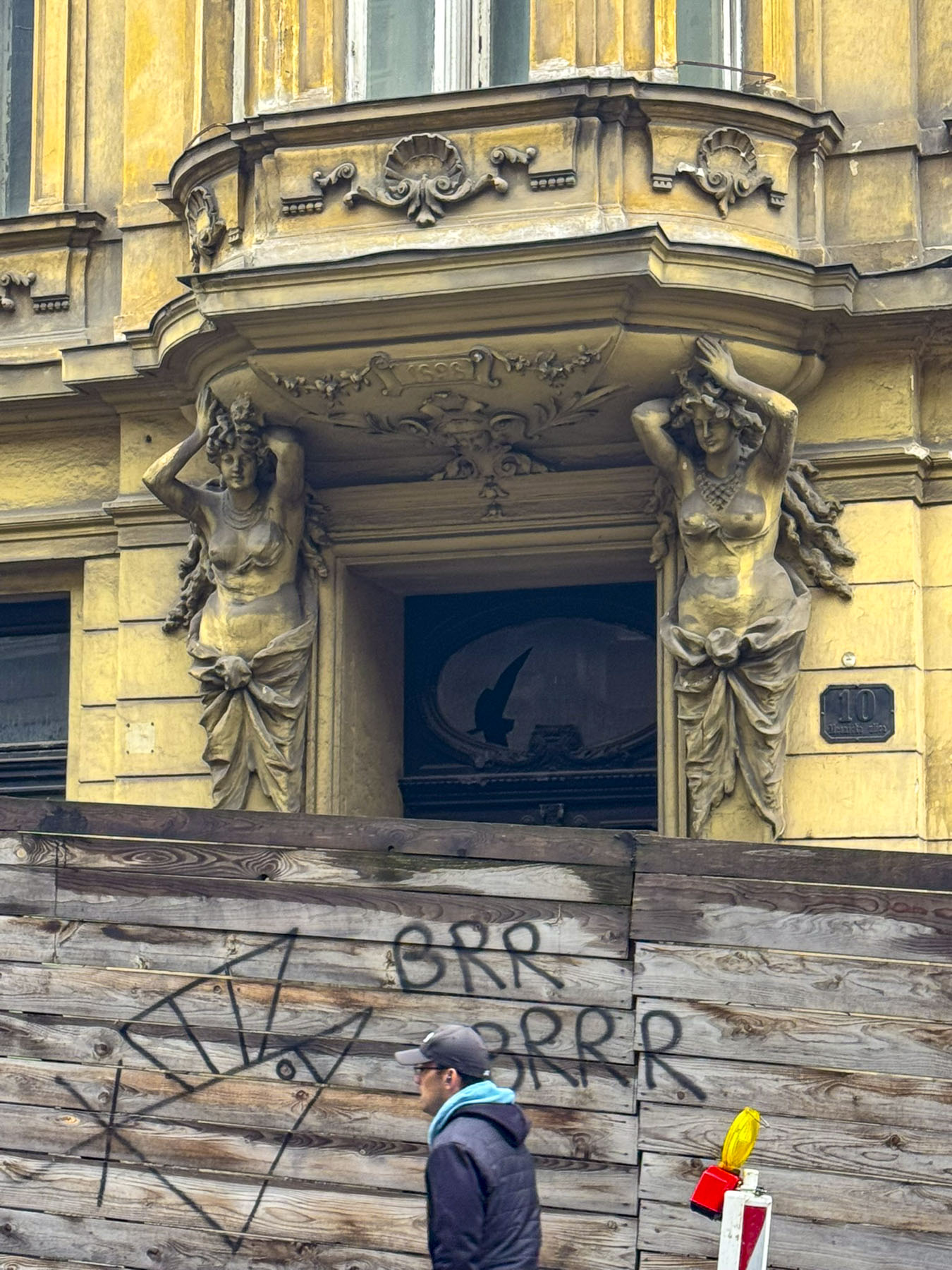
Walking back to the hotel we noticed numerous buildings with ornamentalist Art Nouveau facades featuring intricate details, natural forms and figures. The elaborate exterior decorations were popular during the late 1890s until the 1920s, when there was an effort to bring art into everyday life.

The streets between Mansson’s Bakery, a great spot for coffee and pastry, and Old Town Square are full of interesting buildings and atmospheric street scenes.

The next morning, we headed to the Municipal House, a 1905 concert hall, and the Powder Tower, an old Renaissance era gate to the city. The visual contrast between the two buildings was striking. Unfortunately, we missed visiting the Jubilee Synagogue, one of Prague’s finest examples of art nouveau design with a Moorish influence.

The architectural styles we encountered changed quickly from block to block and we were soon walking under an arcade which led to one of our best discoveries, Černá Madona, an amazing café where desserts and pastries are created as visually stunning pieces of art.

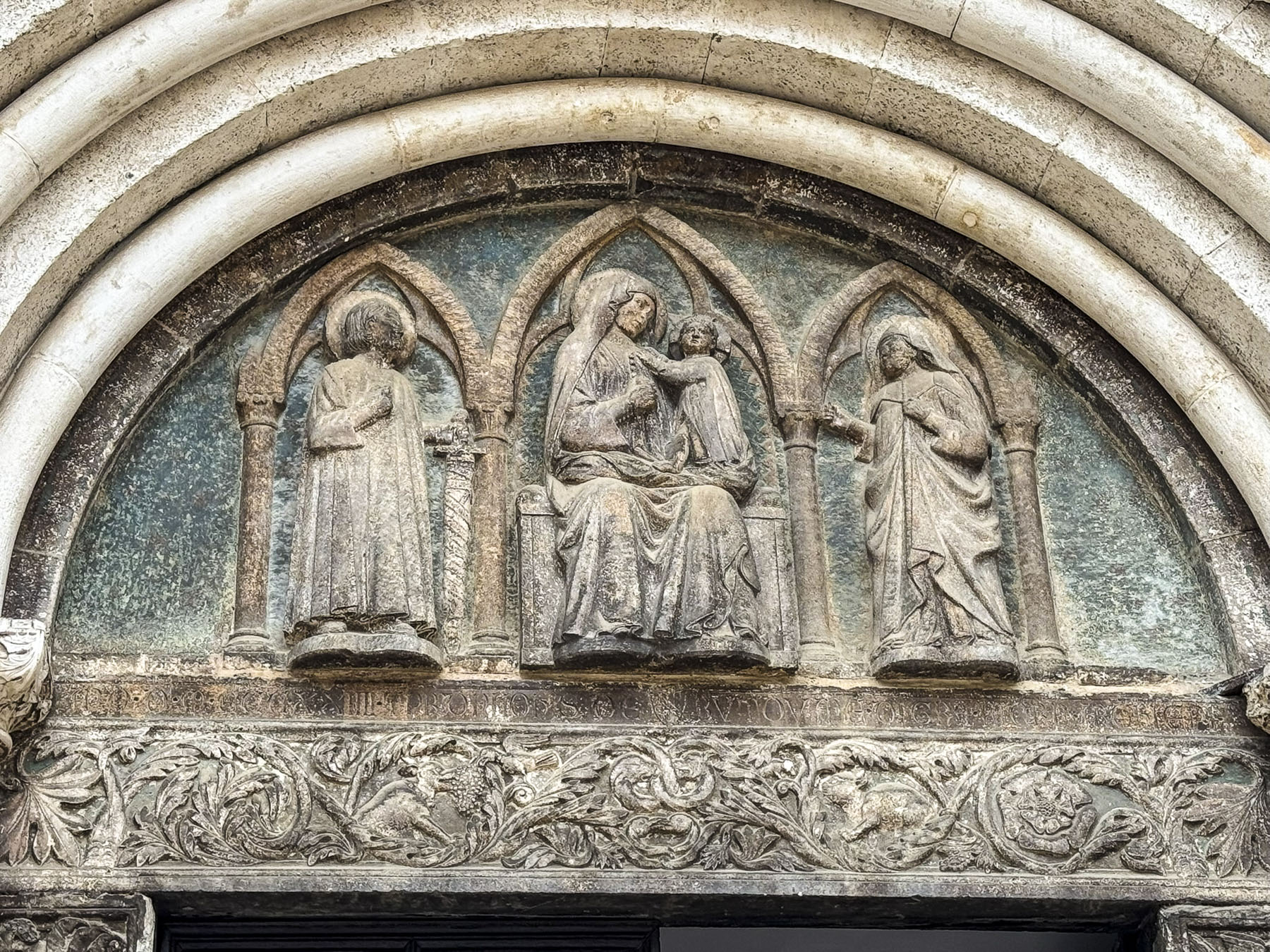
Nearby was the Basilica of St. James the Greater, that seemed inconspicuous at first, but when we rounded the corner to its entrance, we were captivated by a large stone relief sculpture above the door that depicted a fluid scene of saints, angels and cherubs ascending higher.  It drew us in and we were enthralled by the church’s lavish 18th century Baroque interior, which was so busy with murals and sculptures we were not sure where to look first.

We returned to our hotel through the quaint Týn courtyard, which originally started as a fortified merchant’s warehouse, with workshops, and lodges, like a caravanserai, in the 11th century when Prague was part of the Holy Roman Empire. It was predominantly used by German traders who were required to pay their ungelt, a customs tax there.

This growing and prosperous German trading community eventually funded the construction of Church of Our Lady before Týn in the 14thcentury. By the early 1900s the courtyard’s glory days had passed and the buildings were neglected until a 1990s renovation of the area reestablished it as a tourist destination. One of the best dinners we had in the city was just down the street from the courtyard at the vegetarian/vegan restaurant Maitrea, where we enjoyed an absolutely delightful evening.

Many folks choose to walk up Zámecké Schody, the castle stairs, which start near St. Nicholas Church in Malá Strana to visit Prague Castle. But our knees are not what they used to be, and we used a Bolt ride to drop us off above the castle at Loreta Praha, a beautiful pilgrimage site built around a replica of the Holy House of Nazareth, which is believed to be the house where the Virgin Mary lived and received the Annunciation.

It is a fascinating complex with cloisters, the 18th century Church of the Nativity of Our Lord with a marvelous Roccoco interior, and the Loreto Treasury that safekeeps the shrine’s ecclesiastical treasures; the centerpiece of its collection is the Prague Sun, an ornate 17th century monstrance with 6,222 diamonds, which was crafted in Vienna.

In 2011 a long forgotten 1600s crypt was rediscovered at Loreto. Opening it unexpectedly revealed a tomb covered in gruesome yet heavenly black and white frescoes, the artwork copies of works by Dutch artists that included Rembrandt, Govert Flinck, David Vinckboons, and Hendrick Goltzius. The artist who created them was assumed to be an unknown monk. A full-size recreation of the crypt is now on display in the Loreto museum.

It was a pleasant downhill walk from the shrine to Prague Castle, passing fascinating examples of period architecture along the way, particularly Schwarzenberský Palace, a Renaissance era building that is now a museum featuring a collection of historic Czech art and medieval weaponry.

A crowd was gathering in front of the Castle in expectation of the changing of the guard ceremony which occurs every hour at the ornamental gate in front of the palace’s first courtyard. The gate features a monumental sculpture called the Clash of the Titans-Standbeeld which towers over the zebra striped guardhouses.

The castle is a sprawling array of majestically scaled buildings, the most impressive of which was St. Vitus Cathedral, with its beautiful interior, and the elaborate silver crypt of St John of Nepomuk, which dominates a side aisle of the church.

Construction of the Gothic cathedral started in 1344, but wasn’t fully completed until 1929. The delay was caused by devasting plagues and centuries of wars. The scale of the grand banquet hall in the royal place was also impressive.

It should really be part of the overall ticket to the castle, but unfortunately there is a separate entrance fee to Zlatá ulička u Daliborky, the “Golden Lane,” a row of buildings first used as barracks for the castle guards, but later the home of numerous goldsmiths that setup shops along it. The street was somewhat interesting, but can surely be missed if you are budgeting.

They are a number of spots within the castle grounds that have scenic views of Prague, but the best was at the mirador at the top of Zámecké Schody, the castle stairs, that lead back down to the Lesser Town.

On our last day in Prague we set out on a long walk to see the Dancing House, built in 1992, a deconstructivist project by Croatian-Czech architect Vlado Milunić and Canadian-American architect Frank Gehry that emphasizes a fluid asymmetrical design in the New Town section of the city. The undulating shape of the building has earned it the nickname Fred and Ginger (after the famous dancers Fred Astaire and Ginger Rogers). It stands out strikingly from the 19th century buildings which surround it.

Afterwards we set out on a route that zigged and zagged across New Town to see several interesting sculptures, which unbeknownst to us at the time, were more works of Prague’s favorite hometown artist David Černý. We first came across his large aircraft shaped butterflies with moveable wings that hang on the façade of the Levels building, an ultra-modern gaming facility. “The butterflies symbolize peace, while the Spitfire aircraft represents war,” and are a tribute to the 359 Czechoslovak fighter pilots, who served in RAF squadrons during World War II.

We enjoyed wandering in part of the city we hadn’t previously explored. There seemed to be something that interested us down every lane.

Eventually we arrived at Černý’s Franz Kafka head, a 11m (36ft) tall stainless steel kinetic sculpture of the writer’s head that is composed of 42 layers that shift on a regular schedule to alter the head’s shape.  It draws quite a crowd that patiently waits for the subtle changes to happen.

Our next stop was the Lucerna Palace, an early 1900s Art Nouveau shopping and entertainment venue that was the precursor of the modern mall. From its ceiling hangs Černý’s Saint Wenceslas Riding a Dead Horse. The 1999 piece is said to represent the artist’s opinion on the “political situation in the Czech Republic at the time and his views on the state of society.”

Though there are 22 tram lines that criss-cross the city, the best way to absorb the ambiance of Prague it is to wander its cobbled lanes and soak in the amazing architecture and streetscapes of one of Europe’s most beautiful timeless cities.

We had originally planned to spend 5 nights in Prague, but the airline we used canceled their flight on the day of our original departure. If we had that extra day, we would have used the time to explore the area around the National Museum and the Jerusalem Synagogue, both of which are in the New Town section of Prague. 

We had a grand time in the city and hopefully will get the chance to return one day, and maybe find the other 20 sculptures of Černý that are installed around the city.

Till next time,

Craig & Donna

Along the Coast of Uruguay: Sand in Our Shoes – Faro de José Ignacio & Punta del Este & Beyond

After a three-day road trip through the colonial towns of Colonia del Sacramento and Carmelo, then the rural farmlands of Minas and ranchlands of Gorzon, the amount of activity around the traffic circle in Faro de José Ignacio took us by surprise. We had reached civilization again! Not that it was really busy, but literally more cars had passed us in the last five minutes than the last three days, as we pulled into the small collection of shops along Rt10, which leads up from Punta del Este. Some fruit and supplies were gathered for our four night stay at Casa Franca from the Devoto Market, a well-stocked, but typical beach town store that benefits from a captive market. A few doors down the Panadería José Ignacio, a popular bakery, has a very nice selection of bread, pastries and tasty delectables. They also have a pizza and sandwich counter along with tables for eating outside on their terrace. We returned every morning during our stay for fresh from the oven delights.

Folks parked along the road followed sandy paths across the dunes to the beach. The sails of kite surfers filled the sky as we passed the Laguana de José Ignacio, a freshwater lake separated from the South Atlantic Ocean by a sandbank, which it breaches when it rains too much.

Surf pounded against the Playa Balneario across from our host Daniel’s guesthouse in the tiny hamlet of Santa Mónica, only 5km (3mi) west of Faro de José Ignacio, but a sea change in tranquility, compared to our earlier shopping experience. His wife and children waved from their balcony as his friendly dog energetically greeted us. Daniel helped take our bags to our room, which was located through a private entrance to an extension on their home with three other guest rooms. While our chic petite studio didn’t face the ocean it did thankfully have a shaded porch, where we spent many hours.

After settling in we headed to the lighthouse in José Ignacio, located on thumb-like peninsula that juts into the South Atlantic. Its 32m (105ft) tall lighthouse has guided sailors off this treacherous reef coast since 1877.

While Punta del Este has been promoted as a beach resort for wealthy Argentinians and Uruguayans since the early 1900s, and is now known as the “Ibiza of Uruguay”. José Ignacio remained a quiet isolated fishing village without running water or electricity, as the coastal road from Punta ended at the Laguana de José Ignacio. All that changed in 1981 with the construction of a bridge across the lagoon. The infrastructure improvements that came at that time were appreciated, but the town’s small population rallied to prevent the coastal area from becoming a Miami-esque playground, and successfully petitioned the local government to enact ordinances to ensure its quiet, peaceful character remained intact by allowing only single-family homes, no taller than two-stories within the Maldonado region. Along with banning discothèques, pubs and nightclubs, as well as all motorized vehicles on the beaches, jet skis and speedboats are also prohibited in the lagoons. Today the town’s seven miles of pristine beaches attract folks from all over who just want to unwind along what many consider the best part of Uruguay’s 410-mile-long coastline.

We walked out onto the rocky point next to the lighthouse, then down a boardwalk over the dunes to the Playa Brava, a long gracefully curved stretch of sand, scoping out the best spots to return to the next morning for sunrise photos. We strolled along the wide beach between lifeguard chairs. Squealing kids ran into the surf from the beach speckled with blankets and sun umbrellas amidst impromptu volleyball and soccer games. We stopped at El Chiringo, an outdoor restaurant with tables in the sand and shared a pizza for an early dinner.

Heading back to Casa Francawe stopped along the lagoonto watch a beautiful sunset across its calm water. Kite Surfers unwilling to end their day skimmed along the water until it was nearly dark.

The next morning Donna slept in while I rose before dawn and drove back to the lighthouse to watch the sun cast its first rays of light across the rocky headland and lighthouse.

A few hardy fishermen had already made their first casts of the day from the rocks. On the other side of the lighthouse a group of fishermen were readying two large skiffs to push into the surf from the beach. Next to them the first surfer of the day paddled out, and a few joggers pounded along the cool sand in early morning solitude.

After a day of rest and relaxation we wanted to explore the beach towns farther east along the coast as it runs towards Brazil. The weather doesn’t always cooperate, but we were hopeful the sky would clear as we drove along Rt 9 near Rocha. There were a good number of produce stalls along the road hoping to entice travelers to the beaches to shop. We stopped at one with shelves stacked full with jars of local honey, jams, and Dulce de Leche, along with wheels of artisanal cheeses. We purchased a Dambo, similar to Edam or Gouda. It is a traditional local cheese made with the milk from grass fed cows which graze freely in the palm tree studded, pampas rangelands, that define the region. Farther up the road we stopped for our “drive a little then café,” break at a small shop attached to a gas station in the uniquely named town, 19 de Abril.  The town takes its name from an event related the revolutionaries called the Thirty-Three Orientals, who returned from their exile in Argentina on April 19, 1825, an event that eventually started the Cisplatine War, which led to Uruguay’s independence from Brazil.

Normally in the states we avoid like the plague any eateries attached to gas stations, as they are typically places that just offer junk food, but route 9 traversed a semi-rural region, and there were few options. We were pleasantly surprised as we parked to see a mural of a painting by Simon Silva on the side wall of the café. We bought a poster of this image twenty years ago and it still hangs in our home, and it was nice to know that someone else enjoys the image as much as we do. The café Parador 19 de Abril delighted us. It’s a quaint oasis in the wilderness. The cappuccinos and fresh pastries were quite good, and the folks who ran it were very nice.

Folks were slipping and sliding through streams of water that were gushing down the hardpacked sandy roads of Punta del Diablo, as a deluge had descended upon us since our coffee break. The rain was too heavy to wander about, but we contented ourselves with driving through the haphazard layout of the oldest part of the rustic fishing village, that now has brightly painted shops and restaurants but is reminiscent of a village being founded by survivors of a shipwreck, using whatever materials they could salvage from the sea. Taking a horse drawn cart across the dunes was the only way to reach the once isolated village, until a road connecting it to Rt 9 was built in 1968. Larger flat bottomed fishing boats were beached along the gentle curve of Playa del Rivero, awaiting their next awaiting their launch at the arrival of high tide. A fisherman under a rain tarp offered his morning catch. Often during the Uruguay’s winter, June to November, the deep ocean just offshore allows folks to spot humpback and southern right whales breaching from the town’s beaches as they migrate north to the warmer waters around Brazil.

By the time we reached Aguas Dulces the rain had stopped, though the sky was still threatening, and the streets were nearly deserted. The high tide was rough from the earlier storm and was inching its way towards the row of boulders placed along the shoreline to prevent further coastal erosion and homes being swept away.  Laidback and low keyed, Aguas Dulces is a budget-friendly destination for Uruguayan families who enjoy its lifeguard protected beaches when the weather cooperates.

On the way to La Paloma we stopped at Puente Valizas, a picturesque riverside fishing village along the Arroyo Valizas. The tributary flows 10km (6mi) from the Laguana Castillos to the Atlantic Ocean, near the beach resort of Barra de Valizas. The river was busy with fishermen speeding to the Laguana to catch pink shrimp, which thrive in the brackish waters of the lagoon, for the restaurants along the coast.

In La Paloma the afternoon sky was brightening as we walked along the Paseo Marítimo, a boardwalk through the dunes that lined the tranquil waters of Bahía Grande, a small clam shell shaped bay. La Paloma is the largest coastal town east of Punta del Este and is a popular resort area with 20km (12mi) of beaches that are suitable for surfers and families with young children to enjoy.  Eventually we reached El Faro del Cabo Santa Maria, the town’s historic 42m (138 ft) tall lighthouse. Built in 1874, the powerful navigational beacon atop the tower can be seen 37km (23mi) out to sea. When it is open, folks can climb 143 steps to the top for some spectacular views of the coast.

On the way back to Faro de José Ignacio we followed Rt10 across the Laguna Garzón Bridge, an experience that totally took us by surprise, as the 2015 bridge has a unique circular design that resembles a flat donut. It’s really quite unusual but was designed this way to naturally slow the speed of traffic.

Our host and his family the next morning departed for a day trip a few minutes ahead of us. Their dog which watched their leaving from the second-floor deck had somehow escaped and was running frantically around outside the gated area. Fortunately, Donna has mastered that universal dog-call kissing sound, and we were able to lock him securely behind the gate. We called Daniel to let him know.

A few blocks down we stopped to photograph two abandoned properties. They were both very interesting, and we always wonder what the backstory is that goes with these places.

Route 10 hugs the beautiful 33km (20mi) stretch of wild undeveloped coast that extends from Faro de José Ignacio to Punta del Esta.

Reaching the outskirts of Punta we got our first glimpse of the Puente de la barra, a whimsical wavy bridge, that our route followed across the Arroyo Maldonado. Designed in 1965 to force drivers to reduce their speed, it’s said the rollercoaster-like bridge can cause vertigo if you drive too fast across it. On the Punta side there is a traffic circle that made it too easy for us to cross the bridge multiple times, just for the fun of it.

We stopped at a mirador near the “La Ola Celeste,” a stylized sculpture of a wave that overlooks the fast rolling breakers that beat against the waters of the Arroyo Maldonado as the river empties into the sea, and separates Punta from the smaller resort town of La Barra, which has a vibrant nightlife that rivals Punta’s as the best place to party in Uruguay.

This was also a great spot to get an expansive view of the dramatic beaches along the coast and Punta’s modern skyline, which often prompts folks to refer to it as “the St. Tropez or Monaco of South America.” The vista reminded us of Miami Beach.

We stopped for lunch at the Aura Beach House, a small modern café with a light menu, set on the brilliant white sand of Playa La Brava. They also have several rows of lounge chairs under nicely thatched beach umbrellas for daily rent. It was a beautiful, relaxing spot and our food and coffees were excellent; we didn’t want to leave. We found in our travels across Uruguay that street parking was always free, even along the beaches, something that is very rare in the United States.

We weren’t sure what the weather was going to be like the next day, so we took advantage of the splendid afternoon and stopped at The Hand, Punta’s most iconic landmark since the Chilean artist Mario Irarrázabal installed it along the oceanfront in 1982. It was very crowded with a tour group, but we waited for their departure before taking any photos. As it turned out the sculpture was within walking distance of our hotel, and we returned to it several times during our stay in Punta.

We continued on our way to the Faro de Punta del Este lighthouse that stands on the highest point of the narrow peninsula that was Old Town Punta, a whaling port established in the early 1800s.  

Punta, like Montevideo, has a lot of public art on the streets we realized as we drove by the Monumento El Rapto de Europa. The large bronze sculpture references the myth of Europa, a Phoenician princess who was abducted by Zeus in the form of a bull and taken to the island of Crete.  Why it is on a street corner near the beach in Punta, we haven’t a clue. Across the street from the lighthouse were several architecturally interesting homes and the very blue Nuestra Señora de la Candelaria church which had a lovely tranquil interior.

At Punta’s modern marina, sleek motor yachts and sailboats now bob gently in the water where the whaling ships once anchored. The first tourists to Punta arrived in the early 1900s, but it wasn’t until the infrastructure improvements of the 1940’s supported the construction of modern hotels and the town’s first casino that Punta’s reputation as a luxurious destination in South America was cemented. We stayed in the Old Town at Hotel Romimar, a budget-friendly lodging with an excellent breakfast, off Av. Juan Gorlero, Punta’s main shopping street.

We love exploring a new city early in the morning as it wakes up. By 7:30 beach attendants were hard at work carrying lounge chairs and umbrellas from trailers parked along the street, down to the sand and assembling them into tidy rows for their expected sunbathers. It was the perfect time to re-visit The Hand, as the sun was just cresting over its fingertips, and sunlight was reflecting brightly off the row of high-rise condos that fronted the coastline.

Wandering about we spotted several cachilas, old cars that out of economic necessity were lovingly maintained and passed forward through hard times. Some are now totally restored and look as good as the day they rolled out of the showroom. One, an old Plymouth, was creatively covered in a mosaic pattern of old Uruguayan coins.

Families were also out early to claim their preferred batches of sand at Playa El Emir, a small beach on the edge of Old Town Punta with a wonderful view of the coastline, near the Ermita Virgen de la Candelaria. The shrine to the patron virgin of Punta del Este is located on a narrow sliver of land that juts into the South Atlantic Ocean, that is believed to be where the Spanish explorer Juan Díaz de Solís held a mass when he landed nearby in 1516. Our “walk a little the café,” breaks were satisfied that morning with excellent coffee and pastries at Donut City and Cresta Café. Both were only a short walk from the beach.

A day trip the next morning took us to towns west along the coast from Punta that also interested us. Our first stop was at the Escultura Cola de la Ballena Franca, an open wire metal sculpture of a whale tail that overlooks the ocean between the endless beaches of Playa Mansa and Playa Cantamar. It is a popular lookout spot for southern right whales during the peak of their winter migration between July and October.

Casapueblo  is a surreal Guadi structure that captures the essence of the whitewashed cliffside homes on the Mediterranean island of Santorini, Greece. It started as a small wooden shack in 1958, the studio of Páez Vilaró, a Uruguayan abstract artist. He expanded it himself along the oceanfront as his family grew, and friends like Picasso and Brigitte Bardot visited, until a whimsical 13-story structure with 72 rooms stacked upon each other covered the cliff face. Today it is a museum and hotel.

Afterwards we drove to the Laguana del Sauce and enjoyed a quiet lunch overlooking the lagoon from the Hotel Del Lago.

Away from the oceanside a rural landscape quickly unfolded as we drove through farmlands to the Capilla Nuestra Señora de la Asunción, a pretty church that reminded us of settings in the American Midwest.

The next morning, our last full day in Uruguay, we headed west toward the Canelones wine region near Montevideo, an area which produces nearly fifty percent of Uruguayan wines at vineyards which were started four to five generations ago by families which immigrated from Europe. Piriápolis is a small coastal city which grew from a private investment as the country’s first planned resort was along our route. El Balneario del Porvenir (the Resort of the Future) was the vision of Francisco Piria, a wealthy Uruguayan businessman, who in 1890 bought 2700 hectares (6672 acres) of undeveloped land along a beautiful beach, 99km (62mi) from Montevideo. He spent forty years commissioning hotels and a promenade along the oceanfront, which he likened to the French Riviera, before his death in 1933. In 1937 the population of the resort town was large enough to be declared a pueblo, and twenty-three years later it achieved the status of a city. From the landing of a small chapel atop Cerro San Antonio we had a perfect panoramic view of the city that still draws visitors to its beach where families can rent scooter cars for their children to wheel along the promenade. During the high season the Aerosillas Piriápolis chairlift whisks tourist from the marina to the top of the hill. The Castillo de Francisco Piria, the entrepreneur’s home, was on the outskirts of the city as we headed to a wine tasting and overnight stay at the Pizzorno Winery & Lodge.

We arrived at the winery as a tractor pulling a wagon full of just-harvested grapes was being unloaded into a destemmer-crusher, the first step in the long process to create wine.

Founded in 1910, the fourth generation of the Pizzorno family operates the wine estate. It has 21 hectares (52 acres) of vineyards planted with Tannat, Cabernet Sauvignon, Cabernet Franc, Petit Verdot, Merlot, Pinot Noir, Malbec, Arinarnoa, Marselan, Sauvignon Blanc, Chardonnay, and Muscat of Hamburg vines.

We were the only guests that afternoon during the last week of February and thoroughly enjoyed the interesting tour of the wine cellar led by Joaquin, the winery’s sommelier. He   explained their viticulture philosophy which endorses “traditionally harvesting grapes by hand, respect for the ecosystem, environmental conservation through a no fertilization and watering wisely policy, along with green pruning, leaf removal, and bunch thinning to obtain the best grapes, which is reflected in the quality of the wines we make using only our own grapes.”

Afterwards Joaquin’s experience continued to enhance our tasting of four wines as he shared his knowledge of the vineyard’s terroir, and the different grape varietals, along with their aromas, flavors, and recommended pairings with food.

It was our last night of our 15-day trip around Uruguay and we treated ourselves to a luxurious stay in the winery’s posada. It was for many years the family home until it was creatively restored into an attractive boutique inn with four guest rooms overlooking a pool and the vineyards.   

“You will have the posada all to yourselves tonight. Enjoy the pool, and feel free to walk through the vineyard. A nightwatchman will arrive later.”  The golden hour was upon the vineyard as we cooled off in the pool. 

This surely dates us, but it felt like we were in an episode of the TV show Lifestyles of the Rich and Famous hosted by Robin Leach, who used to sign-off with “Champagne wishes and caviar dreams.”

Till next time,

Craig & Donna

Driving Through the Baltics: Part 11 – Lake Peipus or Old Believers, Onions, and Honey

Gently undulating farmlands soon flanked the road as we departed Tartu for a day trip to the Old Believers villages that dot the southern shoreline of Lake Peipus, Estonia’s largest lake which creates part of the country’s border with Russia. The villages are also part of the Onion Route, a 30km (19mi) tourist drive that promotes the area’s culture and “Estonia’s most celebrated onions, the Peipsi sibul, a golden variety known for their long storage life and flavor,” which the Old Believers have cultivated in the sandy soil of the region for several centuries.

The group’s name stems from a schism with the Russian Orthodox Church in the 17th century, in which they did not abide with the reforms Orthodox clergy patriarchates were initiating, and wow, wow, wow regarded the reforms which curled the beards of its elders, “as a corruption of their faith which was heralding the End of Days, and as such the Russian church and state were servants of the Antichrist.” Their dissent wasn’t allowed, and during The Russian Orthodox Synod of 1666-1667 the church and Tsar Alexis sanctioned their persecution. The group’s oppression was so severe that some ardent followers self-immolated in the ultimate act of protest. Thousands of Old Believers chose to escape their persecution and fled across Lake Peipus for refuge, and established a series of farming and fishing communities, in then Swedish-controlled Estonia, in which they prided themselves on their self-sufficiency.

We passed more farm tractors than cars that morning, but it was still a surprise when a large John Deere tractor pulled up alongside us in the gas station to refuel. Varnja is the southernmost village and the gateway to outdoor activities in the Peipsiveere Nature Reserve, which protects the fish and wildlife of the Emajõgi delta.

It’s a beautiful area, and was nearly deserted mid-week at the beginning of October. Fishing was once a viable livelihood, but only a few boats go out nowadays. Instead, some folks have converted them into niche rentals, like the owners of Mesi Tare who have creatively repurposed several small boats into maritime bungalows, both floating and permanently beached.

There wasn’t a soul about in the village, only an idle tractor in front of a barn with bundles of onions hanging from its rafters, or a plume of smoke from a chimney, and the lone dog sunning obliviously in the middle of the lane. Winter preparations were underway with large free-standing globe shaped piles of freshly split wood stacked along the lane or piled in cords neatly along the sides of houses.

As we left the hamlet and headed north on Kesk Tn, the main road connecting all the settlements along the lake, we stopped at Varnja’s Old Believers Prayer House, a red brick structure built between 1928 and 1930, and the nearby Issanda Templisseviimise, the town’s youngest Old Believers chapel constructed in 2015.

As we headed farther north, long narrow inlets, like the fingers on our hands, stretched from the roadside into the lake. Baskets, bowls and buckets of apples were in front of homes with backyard orchards that had what is commonly called in Estonia, “the apple flood.” This abundance is shared with the community, and the apples are free. It’s a long-standing tradition that reflects a spirit of sharing and generosity within Estonian culture. Occasionally, an abandoned stork’s nest crowned a telephone pole along the road, their yearly winter migration to southern Africa had already started in August.

We turned off the main road at every sign that pointed to the way to a kirk, church. The Kasepää Old Believers Church and Cemetery were particularly interesting.  The current 1862 sanctuary sits atop the foundation of a building that is thought to be the site of one of the group’s earliest churches after their exodus from Russia. Graves in the cemetery were marked with the traditional three horizontal-bar Orthodox cross. The configuration dates from the 6th century in which the Top Bar represents the inscription ordered by Pontius Pilate, The Middle Bar, the main beam where Christ’s hands were nailed, and Bottom Slanted Bar symbolizes the footrest and its slant reflects the fate of the two thieves crucified alongside Jesus – upward towards the repentant thief (St. Dismas) and downward towards the unrepentant one.

In Kolkja, a village first mentioned in historical records of 1592, we climbed the Vaatetorn bird-watching tower for an expansive view across the marshes and 3,555km2 (1,373 sq mi) Lake Peipus. The 219km (136mi) long lake has an average width of 82km (51mi), and is surprisingly very shallow, with an average depth of 7m (23ft). At its northern end the lake feeds into the Narva River between the Estonian border city of Narva and the Russian city of Ivangorod into the Gulf of Finland. Ice fishing is a popular winter activity on the lake which typically stays frozen from November to March. Small ice flows remain on the northern part of the lake until early May. Though with the recent climate change folks living along Lake Peipus have noticed a shortening of the ice season.

Afterwards, we stopped at Suur-Kolkja Vanausuliste Palvemaja, an Old Believers house of worship that was constructed in 1883, and its cemetery which was down the lane.

As we left the village an enterprising older woman, with a babushka covering her head, was unloading bags of onions, loaves of bread, and jars of jam from the trunk of a taxi and arranging them on a foldable card table she had already set up along the road. We had assumed the area was nearly deserted, but maybe there was an end-of-day rush hour as people returned home from work.

Although several museums, cafes and restaurants were shown on Google Maps, they were only open on the weekends during shoulder season. Our search for coffee took us to the larger town of Alatskivi, where we were able to satisfy our “drive a little, then café,” philosophy with a good lunch at Kivi kõrts, a bright eclectically decorated tavern, including a restroom decorated in a quirky theme.

We drove farther to Kallaste, a still larger village on the shore of Lake Peipus, but were discouraged from investigating the town in depth by the number of roadwork closures that hindered our travel.

On our return route to Tartu we passed through Alatskivi again and purchased honey from an automated vending machine near beehives in front of a local beekeeper’s home. We enjoy the simplest of things and found this combination of ancient practice and modern technology delightful. The machine even accepted credit cards.

At the roundabout in town, we circled twice to figure out how to reach the town’s library, which had a large wooden sculpture of two hands, with fingers carved from tree trunks, protruding from the ground in front of the building.

Earlier, the server at the tavern suggested we visit Alatskivi Castle,an old Baltic German feudal estate with vast land holdings, that was first mentioned in the historical records of the early 1600s. In 1885 Baron Arved von Nolcken, a widely traveled aristocrat, purchased the estate and reconstructed the old manor house in a Scottish baronial style, that is said to closely resemble Balmoral Castle, which he had recently visited. The von Nolcken family lived in the manor house for twenty years before they left for Germany with all their possessions, including the manor’s silk wallpaper, at the beginning of the Estonian Peasant Revolution in 1905. During the Soviet occupation of Estonia the lands of the estate were a state-controlled collective farm, and the castle was used as school, cinema, and library. Today, after extensive renovations the manor features a fine-dining restaurantand 4 suites available for booking directly through the castle, along with offering  a ceramic studio and workshop in the cellar. There is also a wax museum featuring figures of the manor’s servants; a butler, lady’s maid, cook, baker, groomsman, stable hands, and laundry maid are just a few of the various trades depicted. The exterior of the castle is totally white, and during the winter, with snow on the ground, must shine brilliantly on a sunny day. Or vanish totally from view during an Estonian tuiskav lumi, a blizzard. We wondered – if the walls of the castle could speak, what tales would they tell?

We had a great time exploring the cultures and complex histories of Estonia, Latvia, and regrettably only a small part of Lithuania during our three week-long road trip through these fascinating Baltic countries.

Till next time,

Craig & Donna

Driving Through the Baltics: Part 10 – Tartu, Estonia or Wandering through a University Town

The street was alive with activity. Three buskers with drum, sax, and tuba were jazzily rendering Bruno Mars’ “Marry You” on the pedestrian mall full of folks strolling and bicyclists weaving amidst a food fair and participants readying their wacky go-cart entries for a Red Bull event later that afternoon.

There’s a long tradition in Estonia of student rock bands in the 70s and 80s transcribing western songs heard via Radio Free Europe broadcasts to countries behind the “Iron Curtain,” including Estonia. Soviet censors viewed any foreign influence, especially rock ’n roll as a threat to communist ideology, and these street musicians were upholding a long-standing musical tradition.

Tartu has been a university town since the 17th-century, and today 14,000 students give the city, Estonia’s second largest with only a population of 104,000, an energetic youthful vibe. They are an important part of the town’s character and are playfully acknowledged on the café-lined cobblestone plaza in front of Tartu’s City Hall with the ‘The Kissing Students’ sculpture and fountain.

The University of Tartu’s students also played a crucial role in Estonia’s expression of national identity and resistance to Soviet rule in the late 1980’s. Their support of the “Five Patriotic Songs” by Alo Mattiisen led to spontaneous mass singing demonstrations at the Tartu Pop Festival in May 1988. These musical protests spread to Tallin, then Latvia and Lithuania. These peaceful protests culminated in the The Baltic Way, a human chain of two million people which spanned from Tallinn, Estonia to Vilnius, Lithuania in August of 1989. The popularity of these peaceful movements strengthened the determination of Estonians to redeclare their independence from the Soviet Union in 1991. Latvia and Lithuania followed suit soon after.

The Kissing Students’ fountain is really the center of activity in Tartu, a splendidly walkable city. Its car-free center extends north along Küüni tn from the modern Kvartal shopping mall, with an array of nice shops, and an excellent Coop supermarket, past the central plaza all the way to the Botanical Garden of the University of Tartu. And there were numerous points of interest just off this route that we explored during our five-night stay at the Art Hotel Pallas, a boutique hotel nicely located across from the Kvartal mall, with views from our hotel room of the spires atop the town’s city hall and churches. It also had convenient free parking, and a scrumptious breakfast buffet. The pickled herring, yes for breakfast, was really good. It was the perfect spot to get some much-needed R&R after driving through Estonia, Latvia, and Lithuania for three weeks.

One of the nicest things we’ve encountered during our road trip through the Baltics is the extensive amount of public art that graces the region’s cities and small towns. Few are of a historical nature. The sculptures of Lenin and Stalin that the Soviet Union installed during their fifty years of occupation to erase the Estonia’s history were quickly removed from all public spaces, and sent to the scrap yard. The current sculptures now honor influential writers, poets, and folk heroes or are simply artistic inspirations without any political messaging.

Along Küüni there was a sculpture of Irish playwright Oscar Wilde and Estonian writer Eduard Vilde depicted in an imaginary encounter between the literary heavyweights. Though the two never met, Wilde did give a lecture at the university in 1892.

Nearby was the sculpture “Father and Son,” by the Tartu native Ülo Õun (1944-1988). The Visit Tartu website explains the work represents the sculptor with his 18-month-old son, and “is a symbol of the relationship between different generations, where children are increasingly growing apart from their parents.” A side note – the Visit Tartu website has an extensive calendar of events page. In a park they had a pop-up information tent, and detrimentally to our waistlines, it was across from the Kalev Chocolate Shop and cookie store. This Estonian brand makes, in our opinion, some of the best store-bought snacks. You can buy them in grocery stores across the Baltics, but they surprisingly cost less in their own stores.

A diagonal walk through the park took us to Tartu Turuhoone, the town’s old market hall where a large sculpture of “Siga Roosi,” a pig, advertises the building’s entrance and the products available inside. If you have visited Riga’s large market, this wanes in comparison, but the pig immortalized in bronze appears to be smiling.

From here a very pleasant walk along the riverfront promenade that follows the Emajõgi River leads to the Kaarsild, an arched footbridge that spans the river to Ülejõe Park and the neighborhoods east of the historic center.

The approach to the bridge was a perfect spot to admire the beautiful buildings surrounding the town’s plaza which represent an eclectic assortment of architectural styles from the 13th to 17th centuries, when the town was a prominent member of the Hanseatic Merchant League.

At the foot of the plaza the Tartu Kunstimuuseum, a museum of art, occupies a 1793 building that is often referred to as Tartu’s Tower of Pisa. The three-story building’s 5.8 degree of tilt is actually greater than the famous tower in Italy. The tilt was a result of one side of the building being constructed on the medieval footing of the ancient defensive wall that once encircled the town, and the other side was erected above loose soil. As the decades passed, the structure slowly sank into the ground. Polish engineers successfully stabilized the building during the communist era, and it was determined safe enough to house the museum since 1988.

In the other direction there was the reflection of the growing city’s modern skyline reflected on the rippling water of the river. These views were beautiful and equally enchanting in the early evening twilight as we watched the murmurations of European starlings swooping over the river, before they noisily roosted in the park.

Just behind Town Hall and across from a large street mural of the University of Tartu was café/restaurantWerner, an excellent establishment with a nice vibe, that’s popular with both students and professionals; we dined there several times during our stay in the city.

Afterwards we took the long uphill walk to the ruins of Tartu’s immense 13th century cathedral, now on the grounds of the University of Tartu. Construction of the Gothic style church started shortly after the Brothers of the Sword subjugated the pagan tribes around Tartu in the early 1200s and lasted nearly 400 years before it was destroyed during the Livonian Wars that ravished the region. It was never rebuilt.

We chose not to, but it’s possible to climb its towers to a viewing platform above the ruins for a panoramic view of the school’s campus and Tartu. The choir end of the cathedral has been restored and since 1981 houses The University of Tartu Museum.

Heading back to the old town we passed under the Angel Bridge, built in 1838 to ease students’ efforts getting across campus. The scenic spot has a bit of a lovers’ lane reputation, as well as having several legends associated with it. The most popular one being “when you cross the bridge for the first time you should make a wish, and if you can hold your breath until you reach the other side your wish will come true.”   

Just off the lane was the Gunpowder Cellar built into the side of a hill, it’s a rustic tavern set in a cavernous old 18th century munitions warehouse with an arched brick ceiling. It’s a popular beer hall and is known for its tasty Gunpowder Red beer, while also hosting frequent band appearances.

Later in the week after having lunch at the Café Werner a second time, we turned right and wandered down Ülikooli tn towards the neoclassic columned façade of the University of Tartu’s main building. It is Estonia’s oldest and largest university and the pride and joy of Tartu. The school was originally founded 1583 as a Jesuit institution during Poland’s brief rule of the country, but most of the credit is given to the Swedish King Gustave II Adolph when he upgraded the school to a university in 1632. It was forced to close several times over the centuries due to regional wars, but was later reopened by Russian Czar Alexander I in 1802 and was again reopened by the Soviet Union after World War II, where it became an important contact spot for Soviet academics to meet their western counterparts during the Cold War era.

Farther along some of the buildings near Tartu’s St. John’s Church had unique details. Archeological evidence suggests the church dates back to the late 1100s, and could be the first “Christian church building in Estonia before the 13th-century conquest and great Christianization of the country.”  The basic form of the current church dates from the beginning of the 13th century. Due to the region’s conflicts, the church has been reconstructed several times over the centuries. Unfortunately, the church was closed when we visited the area.

At the end of Ülikooli tn a short walk to the right led us to the Botanical Garden of the University of Tartu. Though in early October it was evident that Estonia has a short growing season and most of the plants were past their prime, but we still enjoyed exploring the various oases of greenery with a number of other couples and families, and imagined how beautiful the gardens must look in the Spring and Summer.

We followed Ruutli tanav, one of Tartu’s oldest streets, back towards the historic center of the town. During the Middle Ages when the winter snows melted during the spring thaw  – “mud season” or Estonia’s “fifth season” – traveling about the countryside was quite difficult. In the larger towns like Tartu the thoroughfares were lined with logs laid perpendicularly across the road to ease the life of the townsfolk and facilitate merchant trade with the Hanseatic League through the town’s riverside port on the Emajõgi. Evidence of these ancient timbered roads is still occasionally discovered whenever there is any infrastructure improvement required in the city. Cobblestones weren’t used for the lanes through town until the 15th century.

We made a short detour off our route to the Virgin Mary’s Dormition Cathedral, an Estonian Apostolic Orthodox Church. The beautiful Russian baroque style church was built in 1840 atop the foundations of an earlier wooden church that was burnt down during the 1775 Great Fire of Tartu, a devastating inferno which destroyed almost all the old wooden medieval era buildings in the central part of Tartu.

As we reached the central plaza it was evident that the weekend’s festivities were Tartu’s last big event for the summer high season. The weather was now noticeably colder with morning temperatures of 36F (2C) warming only to 54F (12C), and the outdoor café tables and chairs that lined the square were being taken down and sent into storage, until needed again next Spring. But the season is not over until the buskers stop playing and the trio of musicians from the other day were still entertaining folks around the Kissing Students fountain in the warm afternoon sun.

On our walks through the town, we came across some interesting and creative street murals. All were in well-chosen places that enhanced the wall, none were of the loud bubblegum type, though some were of a political nature. After all, our hotel was named for the Pallas Art School, which existed from 1919 to 1944 in Tartu, and was influential in establishing the aesthetic values of the newly independent country, but was closed during the communist occupation of the country.

Today the school’s artistic legacy continues at the  Pallas University of Applied Sciences which opened in 2000, and features ongoing exhibits in the Pallas Gallery.

The Gray House, now the KGB Cells museum, was uphill from the gallery, just three doors down from a busy intersection, on a street that leads to university housing. It was a non-descript door with buzzers for the three-story apartment building above it, and one for the museum. In the 1940s and 1950s the upper floors served as offices for the Soviet’s secret police. We buzzed and a voice released the door lock for us to enter the lobby, where an arrow pointed to a heavy metal door to the basement, and a set of intimidating stairs that descended to a flickering fluorescent lit hallway. It’s a small space with a dozen prison cells and several interrogation rooms in which the brutality of the Soviet years is documented. Notoriously, on July 8th & 9th, 1941, 173 men and 20 women were summarily executed and buried in the building’s courtyard. Mass deportations of 45,000 Estonians to the Soviet gulags in Siberia continued until 1953. For many it was a death sentence, and few ever returned to their homeland. Across the country the KGB is believed to have murdered nearly 60,000 political prisoners between 1940 -1991. It’s a reminder of the danger of authoritative regimes and sadly is still relevant today.

We discovered another street mural just around the corner from our hotel as we headed to dinner at Restoran Spargel. Over an enjoyable evening, we discussed plans to take advantage of the nice weather predicted for the next day by exploring the small fishing villages along the shoreline of Lake Peipus.

We thoroughly appreciated Tartu’s mix of history and youthful enthusiasm for the future. It’s a city but felt like a small town that we could see ourselves quite comfortably living in and enjoy experiencing all of its cultural events throughout the year.

Till next time,

Craig & Donna
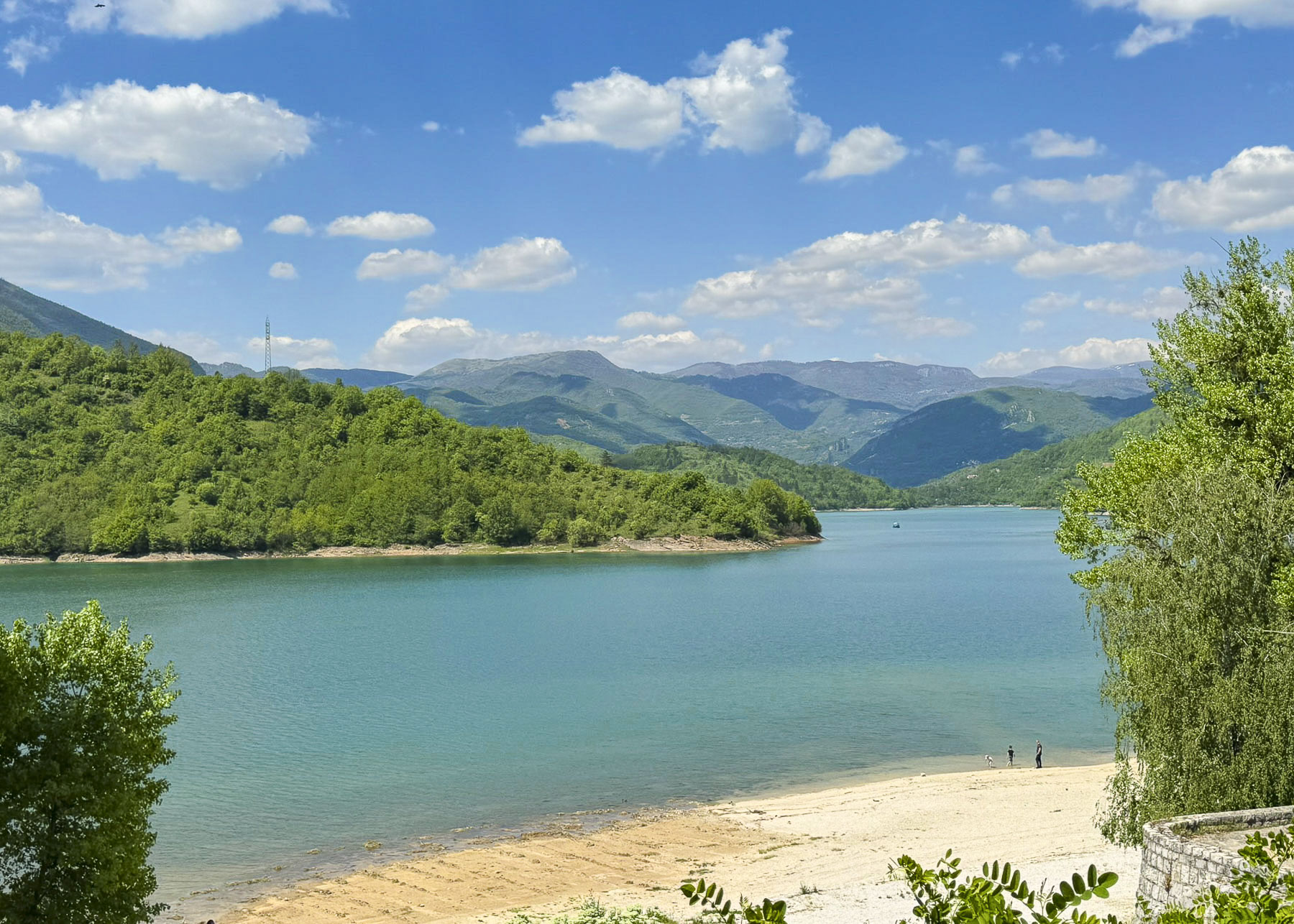
Driving Through the Baltics: Part 9 – Sigulda, Latvia to Tartu, Estonia or Spires, Onion Domes and a Neat Cafe

Mornings with overcast skies, which cleared by noon, had prevailed for the past two days. We hoped that this weather pattern would continue as we headed north from Sigulda to Tartu under a gunmetal gray sky. It would be less than a three-hour drive if we drove directly there, but that’s not our modus operandi. Over wine the night before we had scoured the map along our tentative route and highlighted some picturesque and fascinating stops for further exploration in the region.

After a short 20-minute drive from Sigulda we stopped at Lielstraupe Castle. It was originally constructed in the later part of the 13th century as a crusader fortress by Voldemar von Rosen, a Teutonic knight and vassal to the Archbishop of Riga, who had initiated a crusade into the region to forcibly convert the area’s pagan tribes to Christianity. The thriving medieval village of Straupe grew around the castle and was a merchant town within the Hanseatic League. It was totally destroyed during the Polish – Swedish wars in the early 1600s and never rebuilt. The castle, now a substantial manor home after being rebuilt from ruins after the wars of the 17th century, remained sporadically in the possession of the von Rosen family, through centuries of the region’s conflicts, until 1939. During the Soviet era the manor was used as the Lielstraupe Tractor Station, with its rooms and stables being used for classrooms, workshops, and dormitories. In the 1960s the estate was used as a psychiatric hospital. Since 2023 the castle has been owned by the Municipality of Cēsis, which has opened it to tourists as it undergoes renovations. Unfortunately, we were unable to tour the interior of the manor, since we stopped by before its opening time.

Our “drive a little then café” instincts took us to Valmiera, the largest town in the Vidzeme region with a population of about 51,000. Like Cēsis and Sigulda, its founding is tied to the Northern Crusade in the 13th century. Parking was conveniently located across from Valmiera’s St. Simon Church. Amazingly, the medieval building, which dates to 1283, is believed to have survived the centuries without any major alterations. Russian Czar Ivan the Terrible ruled during the Livonian War (1558-1583), a conflict which included the medieval superpowers Sweden, Denmark, and the Polish-Lithuanian Commonwealth fighting for control of Latvia. Several cannon balls fired by Russian troops into the church’s walls are on display in the church’s narthex as testimony to the strength of its construction. It was a Catholic church until Martin Luther’s Protestant Reformation was brought to Latvia with the signing of the Truce of Altmark in 1629, which ended the Polish-Swedish War (1600-1629).

A short walk from the church were the 13th century ruins of a Livonian Order Castle. As ruins go, these were not very impressive, with only a small L-shaped wall section still standing. However, there was a very interesting 3D relief map of old Valmiera in the courtyard in front of the Museum of Valmiera which showed that the town was ringed with defensive fortifications, which signified the town’s importance within the Hanseatic League, second only to the town of Cēsis in the Vidzeme region. The ramparts stood until they were destroyed in the Russian Empire’s shelling of the city during the Great Northern War in 1702. After the war the castle’s ruins were used as a quarry to rebuild the villagers’ homes destroyed during the conflict. The church was easily located on the map and was a good reference point for understanding how the old town was laid out.

From the castle grounds we then followed a pretty path downhill to the bank of the Gaujas River before succumbing to our call for coffee. We stumbled upon Café Kekss totally by accident. They have several unique small greenhouses, with tables and chairs for 4 people in each enclosure, outside their small cafe. It was a chilly and windy day when we visited, but sitting in one of the glass houses was perfect. The staff was very nice and the barista who took our order delivered everything to our table.

We really enjoyed our experience there, and the greenhouses are a great way to extend the season. Before returning to the car we spent a little bit of time strolling along the Dzirnavu ezeriņa promenade in the park downhill from the café.

It was the last Saturday in September, and unexpectedly we had the road to ourselves, only occasionally seeing another car whiz by. As hoped for, the sun brightened the sky later that morning as we continued our drive through a mostly semi-rural landscape, dotted with farms, towards the Latvia/Estonia border.

Only a short distance away from the border we paused to stretch our legs at Valka-Lugaži’s Evangelical Lutheran Church, our last stop in Latvia. The church’s name first appears in medieval documents of 1477. Prominent nobles were patrons of the church since much of the congregation were the poor serfs who farmed the land of their lords during the feudal era, which unfortunately lasted in Latvia and Estonia well into the late 19th century. Church history notes that the Baron von Wrangell family rebuilt the church many times over four calamitous centuries which saw the region engulfed in wars. The last descendant offered to repair the church in 1910 when a fire collapsed the belltower into the church. With the Lord’s good graces and the steady hand of a bomb disposal expert, an unexploded WW2 bomb, ignored by the communist regime for fifty years, was finally removed from the belltower after Latvia regained its independence in 1991. We crossed over the waters of the Pedeli River into Valga, Estonia. Interestingly Valka and Valga were one town until their separation at the end of World War I. With the collapse of Imperial Russia, Estonia and Latvia declared their independence and a new border was determined which split the town in half down the center of the river. A spirit of unity still remains between the two towns, as extended families now travel freely across the border since the countries joined the Schengen Area, and even share a professional basketball team, the BC Valga-Valka/Maks & Moorits, along with the slogan “One Town, Two Countries.”

A few minutes outside of Valga we turned and followed a secondary road to Sangaste Castle in rural Otepää Parish. More manor home than castle, the estate’s history began in 1866 when F. G. M. von Berg (1845–1938), the last Lord of Sangaste, inherited the property from his uncle Count von Berg, a decorated Russian Field Marshal, and dreaming big decided to build his family a 99-room English style mansion. Its size was only curtailed by an imperial rule that permitted no homes with over 100 rooms unless they were built for the Czar. Von Berg was a successful agriculturalist, having developed a new rye variety, along with establishing a prized dairy herd with milk “so good that it was sold in the markets of St Petersburg.”  Though located deep in the rural countryside, the manor had all the modern conveniences available at the beginning of the 20th century, with a telephone line installed in 1896 and electric lights in 1907.

With Estonia’s independence from Russia at the end of the First World War the new government started to seize the lands and manor houses of Baltic Germans. The government however acknowledged von Berg’s contributions to Estonian agriculture and allowed the aging Baron to stay in his home until his death in 1938. During the communist occupation of Estonia, the castle was used as a Young Pioneer Camp and its interior was altered to have 146 rooms. Somewhere along the line someone determined that the manor was composed of 1.45 million red bricks, or one brick for every Estonian.

In the crossroads village of Sangaste, in front of its church, a lone tree showed off its spectacular yellow leaves, signaling Autumn was finally here.

Four miles beyond Sangaste we glimpsed the onion shaped domes of (EAÕK) Ilmjärve Jumalailmumise, an Estonian Apostolic Orthodox Church, amidst a clearing. The red brick and stone facade of the 1873 church was brilliant in the afternoon sun. Unfortunately, the church was closed, though we were able to peek at the interior through an old-fashioned skeleton lock, and even take a picture. A placard in front of the building noted that the church’s two large bells were donated by the Russian Czar Alexander II. The church suffered during WW2, but its spirit was wounded the most when thieves in 1979 stole the church’s silver treasures used for communion.

We hadn’t expected restaurants in the area to be so scarce and far apart. Many were already closed for the season, though the weather, now cooler in late September, was still very comfortable. Our hope rose when we approached a restaurant across from the ski lift, that was now carrying mountain bike riders to the summit for a thrilling downhill ride, at the Munamägi Ski Center, outside of Otepää, the “winter capital of Estonia.”

But as we neared an employee flipped the sign hanging in the door to CLOSED! It was only mid-afternoon, had we missed the lunch hours? With our stomachs now rumbling we breezed quickly through the town and regretfully bypassed the opportunity to visit the ruins of Otepää’s ancient hill fort from the Viking era, and the remains of a Bishop’s castle where the oldest known firearm in Europe was discovered. We also missed Otepää kirik, the town’s historic church, which in modern times is historically connected to the country’s flag, when in 1884 the blue, black and white flag of the Estonian Student Union was consecrated there during “Estonia’s Awakening.” The Student Union’s design became the flag of Estonia in 1991.

We eventually had a very nice late lunch at Pangodi kalarestoran, a fish restaurant, before  our last excursion to Luke Mõis, an ancient feudal estate that dates from the 13th century. The manor house is an unassuming building that now hosts events and weddings. But the real interests here were the cascading ponds and the Gardener’s Cottage. The estate’s head horticulturalist must have been highly regarded judging by the beauty of his ornately trimmed petite home, in a lovely bucolic setting along one of the ponds. If we had planned better this would have been the perfect spot for an afternoon picnic. It’s a very pretty spot that’s worth detouring to if you are driving from Riga to Tartu.

Tartu was only 30 minutes from Luke Mõis and we arrived to find Estonia’s 2024 Capital of Culture alive with activity as we checked into the Art Hotel Pallas, a creatively decorated boutique hotel, ideally located on a pedestrian mall that led into the town’s historic center.

After dinner we enjoyed a leisurely stroll over the Kaarsild, an arched bridge that spans the Emajõgi River, an important trade route since the Viking era that connects Lake Võrtsjärv to Lake Peipus and is still navigable all the way to the Baltic Sea. We wondered if a Viking ever imagined the bright lights of the bridge and Tartu’s growing skyline reflecting upon the river’s water.  

Till next time,

Craig & Donna
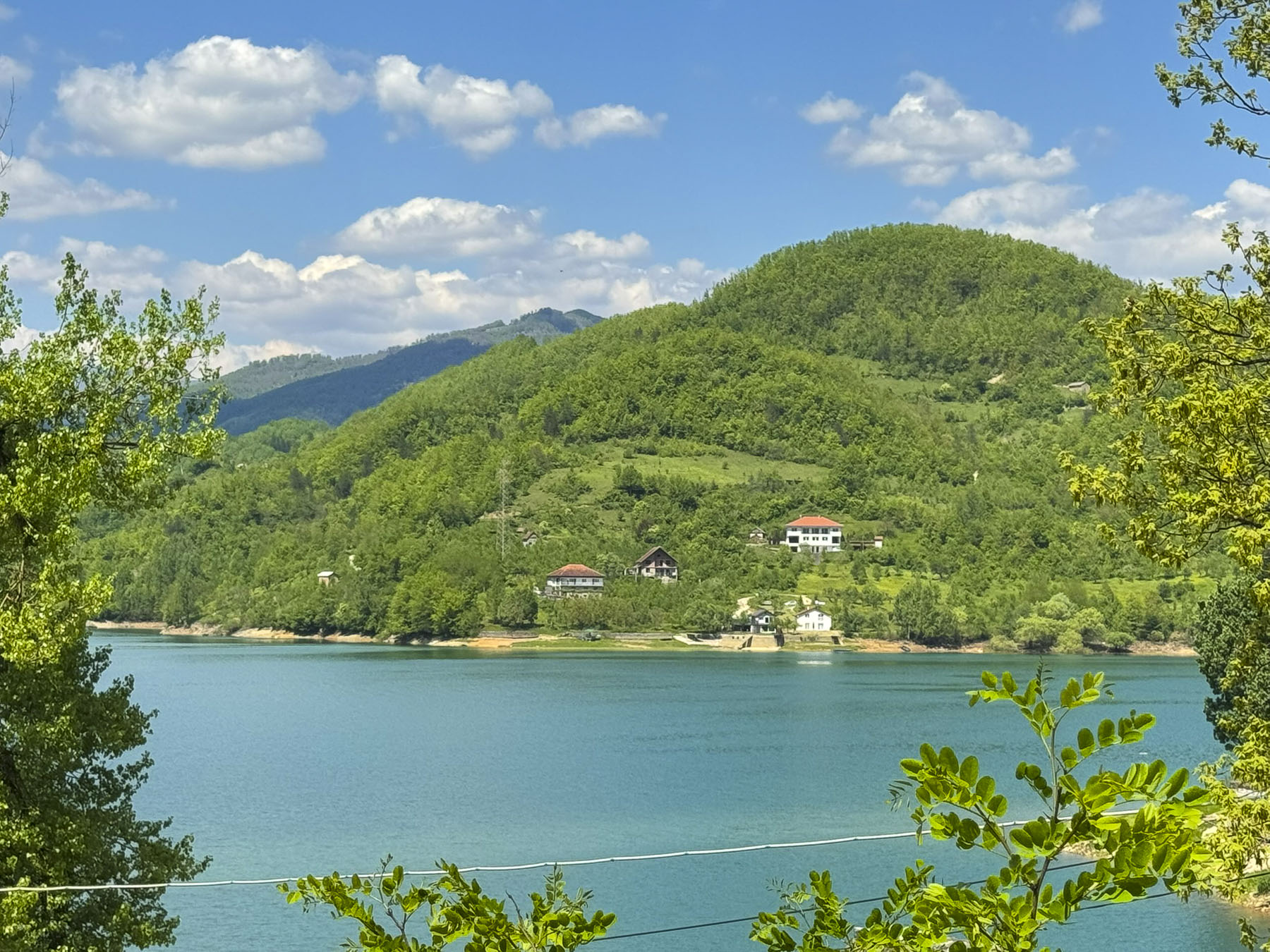
A Latvian Road Trip: Part 8 – Aristocrats, Soviet Propaganda & the Mountains of Vidzeme or on the Road to Sigulda

Šiauliai, the Hill of Crosses, and the rustic wooden Chapel of Jakiškiai were our only stops in Lithuania. All three were incredibly interesting, and an art filled Šiauliai was a fantastic discovery that we hadn’t expected but thoroughly enjoyed wandering through. The city of Vilnius, Latvia’s capital, required a time-consuming loop to the east that we chose to forgo, but hope to have a chance of visiting in the future.

It was a beautiful fall day as we recrossed the border into Latvia. Our route took us through the Zemgale Plain, Latvia’s agricultural heartland, an area flat to the horizon as far as our eyes could see. The country’s most fertile region, it’s often called the breadbasket of Latvia. Farmers ploughing their fields revealed dark rich soil ready for the planting of winter wheat.

We don’t do a lot of research before a trip, just enough to determine that we will probably enjoy where we are headed. We find spots along our intended route, to break up the drive, by examining Google maps the evening before the next morning’s departure. That’s how we discovered the Rundāle Palace, an exquisitely restored 18th-century baroque manor with ornamental gardens and museum highlighting the history of the Dukes of Courland, and their thoroughbred stud farms that were renown throughout the Baltics and Russia for the horses they supplied for the equestrian pursuits of various royal courts.

The interior of the palace was splendidly restored with period furniture and elaborate stucco decorations in every room. It was one of the nicest estate type homes we have visited in Europe, and was well worth the price of admission, something we can’t say for some of the other “palaces” we’ve toured.

Being gardeners, we enjoyed the extensive formal landscape plantings that have been described as the “Versailles of Latvia.”

Ten minutes down the road, Bauska Castle stood strategically on a small hill above the confluence of the Mūša and Mēmele rivers where they merge to form Lielupe River, a vital trade route in ancient times through southern Latvia. It was the highest point of land we had encountered in several days. Originally it was a hill fortress built with timber by the Semigallians, a pagan tribe noted for their strong resistance to the Livonian Order of Teutonic Knights during the Northern Crusades, before their subjugation in the last years of the of the 13th-century. In the early 1400s the knights constructed the first stone castle on the hill. It became one of the main residences of the Dukes of Courland, before the Rundāle Palace was built, when the castle was given to the Dukes after the Livonian Order collapsed in 1562.

A long path through dense woods led to a vast field dominated by five towering brutalist, as in the Soviet style, depictions of prisoners. The field was once Salaspils Camp (1941-1944) built by the Nazis as a “detention center,” for political prisoners and a “labor correction camp,” for Latvians who resisted the forced labor demanded of them by the occupying German army during World War 2. It was later used as a “transit and collection camp” for Jews before they were sent to concentration camps in Poland and Germany. One thousand Jews were brought from Austria, Czechoslovakia, and Germany, to build the camp, and died from exposure during the brutally cold winter of 1941/1942. Two walls of barbed wire and six towers with machine guns, search lights and sirens that wailed at any sign of escape surrounded the field.

It’s estimated that over the camp’s three years of operation, 23,000 people, half of them ordinary citizens captured during special campaigns against civilians in Belarus, Russia and Latgale, a region of eastern Latvia, were imprisoned behind its barbed wire. Trainloads were sent as forced laborers to Germany, and roughly two-thousand men were forcibly conscripted to fight for the German army.

In the museum a video displays historical footage of the camp when it was liberated by the Russian Red Army, including survivor testimonies as documentation of the brutality the Nazis inflicted upon the people of Latvia. Many in Latvia believe the Soviet Union built the Salaspils Camp Memorial in 1967 during the communist occupation of Latvia as propaganda to divert attention away from their policies of deporting Latvians to Siberia and Ukraine, while depicting themselves as great liberators who also suffered at the hands of the Nazis. The communist regime ignored the fact that the Soviet Union’s 1939 Molotov-Ribbentrop Pact, a non-aggression treaty with Nazi Germany, contained a secret amendment that allowed the USSR to forcibly annex Latvia, Estonia and Lithuania, while Germany invaded Poland, starting World War 2. The irony of our visit to this somber site on a sunny fall day was not lost on us. We can only hope for a better future.

The flat farmlands slowly changed to rolling hills then mountains as we drove into the Gauja National Park, Latvia’s largest nature preserve, which surrounds the small town of Sigulda, and straddles both sides of the picturesque Gauja River valley, as it flows through the Vidzeme region. An area filled with steep ravines and historic medieval castles, which is often referred to as the “Switzerland of Latvia.” It’s an outdoor enthusiast’s paradise with over 560km (350 miles) of hiking trails and 320km (200 miles) of cycling paths, all of which are popular with the cross-country skiers during the winter months.

There might be a little bit of wishful thinking along the lines of “one country’s mountains are another country’s hills,” as the highest point in the Gauja National Park is 160 meters (525ft) tall. Though that’s the equivalent of 52 story building and a significant height if you had to climb the stairs to the top, especially if you are from the lowlands around Riga. During the winter months the region is a snowy wonderland with several ski resorts and a bobsleigh, luge & skeleton track that twists down a Sigulda mountainside for 1.2 km and has 16 curves. It’s a challenging course successfully used by the Latvian National Team to train ten Winter Olympics medalists since Latvia’s independence in 1999. One team won a gold medal in the four-man bobsled event at the 2014 Sochi Olympics, in Russia.

The Emperor’s Chair was not far from the sports complex and offered a nice view of the Gauja River flowing through its valley, which was just beginning to show the first signs of autumn color in late September. Sigulda is a quaint town without a center as the buildings along its treelined streets are very far apart. Now late in the afternoon, we checked into the Hotel Sigulda, a beautiful older ivy-covered building. The front houses the restaurant, with rooms above which hide a modern wing that faces the parking area. The hotel would be our home for the next two nights while we explored the surrounding area.

The next morning was very overcast as we entered the grounds of Sigulda’s New Castle and Old Castle. Partially restored stone ruins are all that remain of an older fortress that was built in the 13th century by Order of the Sword Brothers over the spot where an 11th century log fortress built by the Livonians of Gauja advantageously overlooked the river and Turaida Castle across the valley to the north.

By the late 1700s the von der Borch family had acquired the ruined castle and its surrounding lands. A century later a von der Borch daughter, Olga, married Prince Dmitry Kropotkin of Russia and the estate was passed to him as part of her dowry.

Construction of the Sigulda New Palace, a neo-gothic style manor house, began in 1878 with masons reusing stones taken from the older ruins; the best local woodworkers were hired to craft the fine interior. Princess Kropotkin was instrumental in getting the new railway line from Riga to Pskov, which then branched to St Petersburg and Moscow, to run through the town, and promoted Sigulda area as a burgeoning resort area. Her son Prince Nikolai Kropotkin followed her civic mindedness and built the first bobsleigh and luge track in Latvia and the Baltics.

The interior of the manor style castle is full of highly polished wood and stained-glass windows. But we thought the best part was being able to climb the circular stairs of the building’s tower to the catwalk at the top.

Even on a rainy day it offered a spectacular panoramic view of the old castle and the refurbished outbuildings of the estate that now host workshops and craftspeople selling their wares.

It was from this lookout that we spotted the aerial tram that crosses the river valley from Sigulda to the Turaida Museum Reserve.

We drove there instead as we thought it was too windy for us to take the aerial lift, after a pleasant lunch at Kaķu Māja, the Cat House, which also operates as a bed & breakfast inn. It is a very pretty restaurant that has a nice vibe. The food is served cafeteria style and was surprisingly very delicious, while also being extremely budget friendly.

The Turaida reserve is a large 42 hectares (104 acres) park with a partially restored medieval castle, period buildings and Dainu Kalns, which translates as “I sing the mountain,” but is commonly referred to as Folk Song Park, a tremendous rolling field with over 25 large stone sculptures inspired from Latvian folktales by the artist Indulis Ranka.

Dainu Kalns was constructed in 1985 to celebrate the 150th anniversary of Krišjānis Barons, a Latvian folklorist who collected and transcribed over 30,000 of the country’s folk songs that had been passed down through the generations, and is recognized as being an important contributor to Latvia’s National Awakening in the mid-19th century. Folk Song Park also hosts various folk festivals throughout the summer months.

You have to admire the gumption of the city of Cēsis, a forty minute drive through a beautiful landscape from Sigulda, for declaring themselves the Latvian Capital of Culture 2025, the first in the country, after losing the title of European Capital of Culture 2027 to the Baltic port city of Liepāja . This was on top of an earlier disappointment in 2014, when  Riga won the honor. Not wanting to see all their efforts of planning fall by the wayside, city officials designed a year-long celebration with numerous historical and art exhibitions, dance performances, theatre, and concerts with the motto – “Culture in minds, castles, and yards.”

Cēsis is considerably larger than Sigulda and has a well-established old town with Rīgas iela, a pedestrian mall running for several blocks through its core. We arrived to the Cēsis Castle late in the afternoon, as the sun was painting the rough castle walls in its golden glow.  It shares a similar history with the castles of Sigulda. Construction of this castle started in 1209 and in 1279 Teutonic knights rode from the castle into battle carrying a red-white-red banner, first noted in the 13th-century Livonian Rhymed Chronicle.

Legend believes this banner was made from the bed of a knight fatally wounded in an earlier battle. The colors became the Latvian flag. By the mid-1400s the castle was the permanent base of the Livonian Order of Teutonic Knights, and the growing town’s location near the Gauja River made it a key trading hub, which led to its membership in the Hanseatic League in the early 1500s.

Crossing a creaky drawbridge over a dry moat, we entered the courtyard of the castle and were greeted by a Latvian maiden, a costumed reenactor, who offered us two glass lanterns holding lighted candles to illuminate our way through the dark passages of the fortress.  I was about to decline, but Donna convinced me otherwise with “come on, this will be fun,” and it was! We carried them up and down the narrow tower stairs and through various cavernous halls with only the ambient light from small windows providing a little bit of illumination.

The third floor of the tower hall hosted the immersive Multimedia Story of Cēsis Castle, that used surround sound and digital technologies to project an engaging animated film onto the castle’s  walls.It was very well produced and contributed greatly to our understanding of the history of the area and life in a medieval castle. It was really surprising how such a simple prop as a lantern could enhance our experience so much. We had a great time, and it was well worth the modest admission price.

On the way out of town we stopped in the park below the castle to photograph Cēsis’ pretty Byzantine style Enlightenment of Christ Orthodox Church, which dates from the mid-1800s.

On our way into Cēsis earlier an old cemetery caught our attention. We had time to stop and wander through it now as we drove out of the city. The cemetery was interesting but very neglected with overgrown bushes and roots covering toppled headstones. It’s named Vācu kapi, though it’s also referred to as the German Cemetery, as it contains 371 graves bearing the Iron Cross, identifying German soldiers killed in Latvia during WW2.

But there are also the graves of Ottoman Empire soldiers who died in Cesis as prisoners of war during the Russo-Turkish War of 1877-1878. The Turks weren’t really incarcerated – “First they lived in Cēsis under supervision, but afterwards, as they were so far away from their motherland, their regime became freer – they could traverse the city, go to the pub, the sauna. After a while some went back to their homes, while others struck root in Cēsis.” But it’s also believed the cemetery contains the graves of Latvian Germans, Russian atheist, and some Jewish citizens of Cēsis. Most of the vandalism to the cemetery is thought to have occurred during the communist occupation of Latvia. It’s an interesting side note to the history of a complex part of the world.

In hindsight, staying in the larger town of Cēsis might have been a better choice, as it has a compact historic center with cobbled streets and shops that would have been interesting to explore had we stayed there.

Till next time,

Craig & Donna
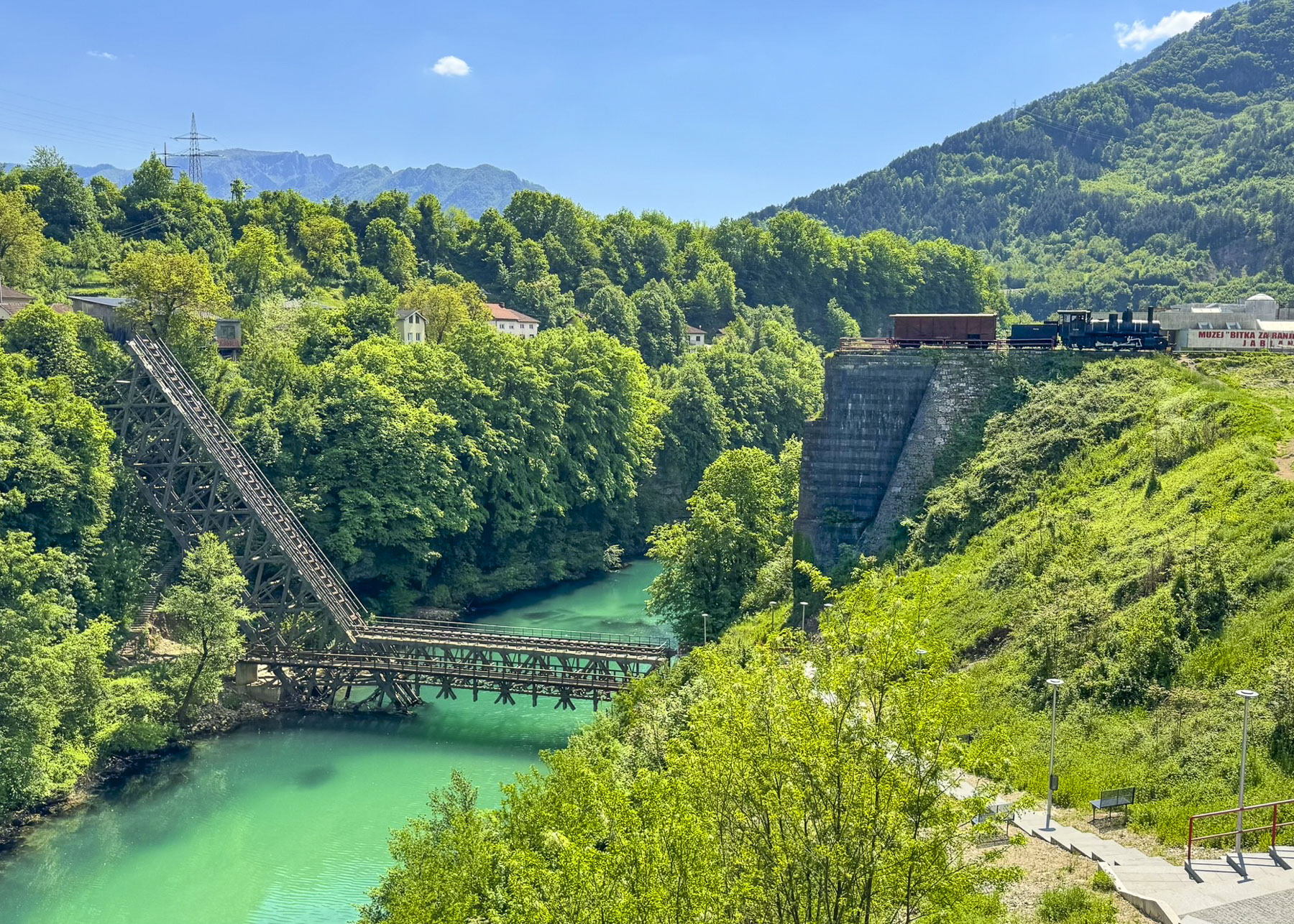
Road Tripping Through the Baltics: Part 7 – Riga to Šiauliai, Lithuania or Crosses, Churches and Towns Filled with Art
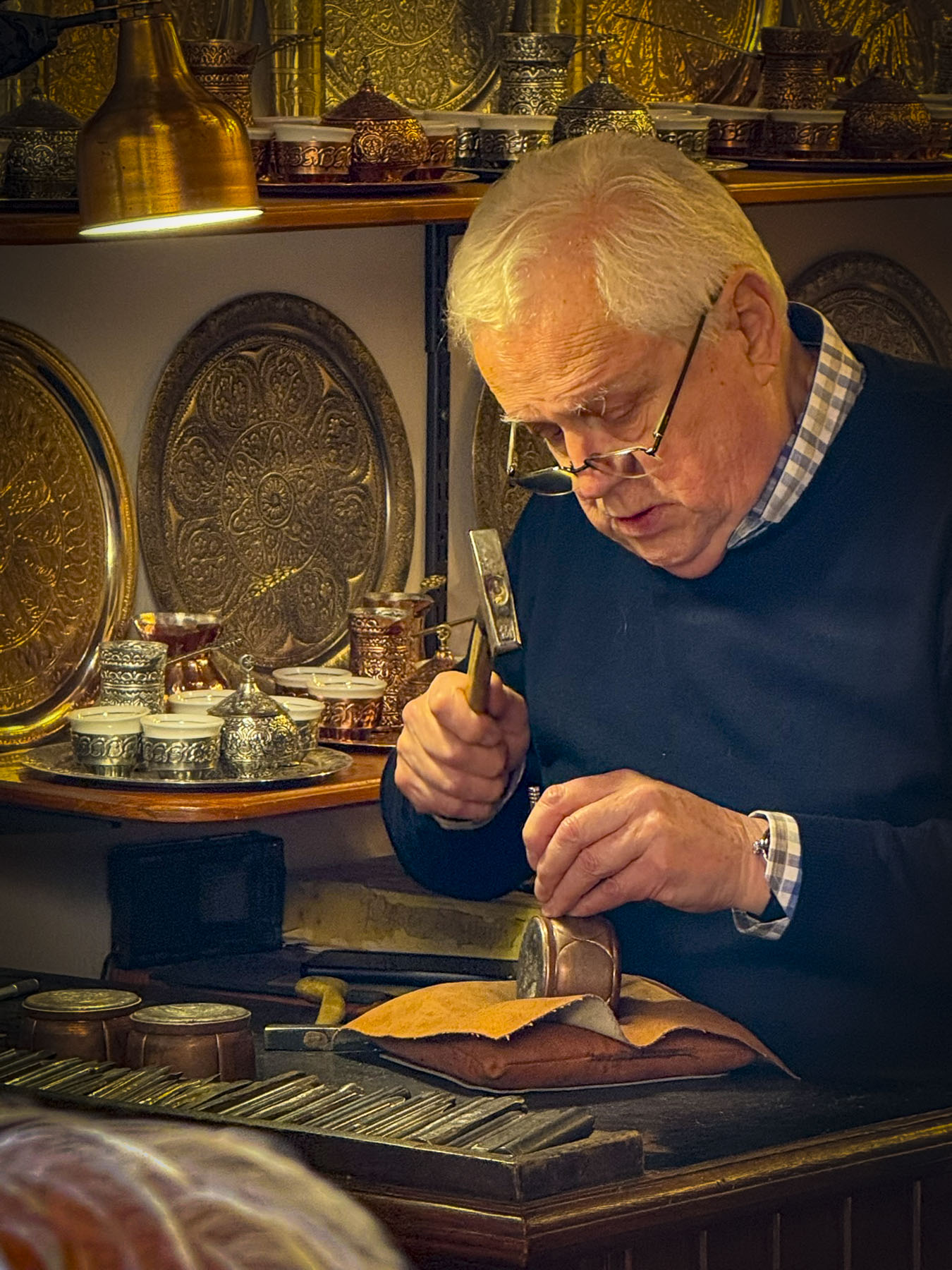
There are always several dilemmas with a road trip: how far to drive, do we drive straight through or look for interesting stops along our route? We tend to make stops, multiple stops to the point of my trusted co-pilot advising that, “we’ll never make it there at this rate,” but there’s a fear of possibly missing something. Fortunately, our “walk a little, then café,” philosophy easily converts to “drive a little, then café,” and in pursuit of those cups of coffee we’ve happened upon some laid back, interesting places.

The Hill of Crosses in northern Lithuania was our destination as we headed south on the A8/12 from Riga. Only two hours (78 miles/126 km) from Riga, many folks choose to do it as a day trip out of the Latvian capital. Which would have worked for us, but we have this quirky rule that we don’t put a pin in our wall map unless we’ve actually stayed overnight in the country. So, with that in mind, we booked two nights’ accommodation in Šiauliai, the town just beyond the Hill of Crosses.

Craving a cappuccino, we detoured into Jelgava for what we thought would be a short stop to satisfy our caffeine addiction. As we crossed over the Lielupe River we spotted the Jelgava Palace on a large island. It called for a stop. A wooden fortress was first erected here in the 13th century as part of the Livonian Order’s conquest of the pagan Zemgalian tribe that inhabited the region. Today’s beautiful 18th century Baroque style palace with 669 rooms is touted as being the largest in the Baltic states. It is actually a reconstruction of the palace which was burned down during WW2. During its apex it was the seat of the Duchy of Courland and Zemgale, and an important diplomatic post between Russia and Poland. Famously, the exiled French King Louis XVIII, to save his head from the guillotine, inhabited the palace from 1798 – 1807. Part of the palace houses a small museum with the Family Vault of the Dukes of Courland and Semigalla being the main attraction. The rest of the building is occupied by the Latvia University of Agriculture and Latvia’s University of Life Sciences and Technologies.

Across from the palace was Pasta Sala, a smaller island with an interesting art park that hosts the annual Jelgava International Sand Sculpture Festival every June and an International Ice Sculpture Festival every February. Unfortunately, traveling in the late September shoulder season we missed it. But we did enjoy wandering along a walking path through an installation of Chamotte fired-clay sculptures.

Between the palace and the park, we were now smitten with the impromptu stop and were enticed to follow a graceful modern footbridge, the Mītavas Gājēju, that tilts over the river into the town center, which was surprisingly quiet for a Tuesday in late September, considering that the university town is Latvia’s fourth largest city, with a population of roughly 60,000.

It’s unusual for only half a church to be left standing, but Jelgava’s Holy Trinity Church (1574) is a stark reminder of the devastation the city suffered during Soviet Union and Nazi Germany sieges and occupations of the city during WW2, which left ninety percent of Jelgava in ruins and all its Jewish citizens lost to the Holocaust. Its belltower above the town’s tourist information office was opened in 2010 as an observation deck after extensive reconstruction.

That promise of a morning coffee wasn’t forgotten as we walked along a pedestrian mall past a small daily street market to Konditoreja Silva, a bistro and patisserie where the coffees were very good and the selection of tasty pastries was mouthwatering.

Back on the road, we continued our drive south and crossed the border into Lithuania. We zoomed by a small roadside marker that pointed to the Jakiškiai Chapel, one of the last wooden churches from the 17th century remaining in Lithuania. We u-turned in order to find it. Passing through a small hamlet, we located the church situated on a low knoll, surrounded by fields and pasturelands.

It’s also known as the St Ignatius of Loyola Cemetery Chapel, named for the founder of the Jesuits, who were active in the region at the time. It’s a fine example of rustic folk sacral architecture.

The graveyard surrounding the chapel was full of interesting old headstones. Some were carved from logs and were well weathered and split from age and the elements, while the more recent graves were marked with stone or marble memorials with the deceased’s portrait etched into the surface. There was a caretaker working on the grounds who wouldn’t acknowledge our presence, so we contented ourselves with peering through the dusty windows into the sanctuary the best we could.

The Hill of Crosses was only 20 minutes farther south, just off the A12. The precise history of the hill is not known, but it is believed to have started as a way to commemorate Lithuanian rebels who never returned after uprisings against Imperial Russia’s rule in 1831 and 1836.  From a distance the hill is only speck on the horizon. It wasn’t until we were walking the long approach path that the hill slowly grew, and its monumental scale became apparent.

Not really in height, it’s a modest hill with stairs to its apex, but in girth and the sheer number of crosses, from tiny store-bought ones to large crosses handcrafted I imagine with sweat and tears. It’s estimated that there are now 200,000 crosses and crucifixes spread across the half hectare (1 acre) site. All are mingled together haphazardly and are treated equally in their importance, and they stand as testimony to the character and faith of the Lithuanian people who created this spectacular monument. The crosses were bulldozed and razed repeatedly during the Soviet era but were always rebuilt by the people. The hill stands as a sign of quiet resistance to the Soviet Union’s atheist communist occupation.

The fifty years of oppression which started with the Soviet Union’s annexation of Lithuania in 1940 ended in 1990 with the Act of the Re-Establishment of the State of Lithuania. A dream realized after the Baltic Way, a human chain of approximately two million peaceful protesters joining hands along a route that stretched from Vilnius, Lithuania through Riga, Latvia to Tallinn, Estonia in August 1989. Lithuanian was the first of fifteen Soviet republics to declare independence, which forced the collapse of the Soviet Union in 1991. Since Pope John Paul II’s visit to the Hill of Crosses in 1993 it has become a popular pilgrimage site.

During the 13th-century Christianity was not enthusiastically embraced by the pagan Lithuanian tribes of the region who rallied to decisively defeat the onslaught of the crusader Knights of the Livonian Brothers of the Sword in the1236 Battle of the Sun/Saulė, the victory from which Šiauliai takes its name and the year of its founding. It would be another two centuries before the first wooden church in the town was built on a small rise overlooking Lake Talkša.

The graceful Church of Saints Peter and Paul with its soaring belltower and brilliant white façade replaced the earlier 1445 church in 1617. It was our first stop. The church became Šiauliai Cathedral when Pope John Paul II elevated its status when the Diocese of Siauliai was created in 1997.

After checking into the hotel Turnė (free parking) for two nights, we walked a short distance into the center of Šiauliai to stroll along its nearly mile long pedestrian mall, Vilniaus g. One of the first things we noticed about the town was the amount of public art displayed along this street.

It’s an interesting variety of wall murals, and contemporary sculptures that enhance the walkway. As it was getting late we only walked the southern end of the mall to have dinner at Žemaitis Restoranas, located in the Hotel Šiauliai. The Lithuanian specialties – cepelini, homemade dumplings, Kedainiai potato pancakes, Karka with stewed cabbage – were so good and reasonably priced that we dined there twice.  

By the time we had finished dinner it was dark outside and upon leaving the restaurant we spotted the spectacularly lit dancing water fountain “Trys paukščiai,” Three Birds, designed by the Lithuanian artist Kestutis Kasparavicius. Its ballet of synchronized water jets and colored lights totally mesmerized us as we watched its performance several times. The quality of the installation was amazing and equal to the best fountains you’d find in NYC, Paris or Madrid.

The next morning, in pursuit of breakfast, we walked the northern part of Vilniaus Street, which we discovered was the first pedestrianized boulevard in Lithuania when it prohibited cars in 1975, and is the third oldest pedestrian street in Europe. A nice feather in the town’s cap for an off-the-radar-destination.

As we worked our way towards the Prezo Kepyklėlė café, the street was full of university students walking to morning classes in the buildings of Vilnius University and Šiauliai State University of Applied Sciences scattered across town.

Much of the contemporary public art at this end of the mall is sponsored by the Šiauliai Art Gallery with a mission statement to encourage within the community the free expression of art.

A narrow alley next to the gallery led to an almost hidden away St. Ignatius Loyola Church. It’s not very old as churches go, but its uniqueness stems from its roots as an ordinary home before the Jesuits bought it in 1930 and converted it to a church. At the end of WW2 communist authorities imprisoned two of its priests and sent a third to exile in Siberia. The sanctuary was closed and used as a warehouse, then a gym. In 1986 the local government deceptively requested funds from Soviet authorities to renovate the building into a concert hall but instead restored the church. After Lithuania declared its independence in March of 1990 the church was reconsecrated in December, just in time to celebrate Christmas Mass. A statue of Pope John Paul II in the church’s courtyard commemorates his stay in the small rectory when he visited the Hill of Crosses in 1993.

In the parking lot of an apartment building next to the church we noticed a defiant wall mural depicting a young woman in traditional dress lighting a Molotov cocktail held by a partisan resistance fighter. It testifies to the resilient character of Lithuanians. Lithuania did not submit easily to communist rule after WW2 and had an organized resistance movement into the early 1950s, with some individual partisans fighting on in the 1960s. Unfortunately, a car was parked too close to the wall for me to get a clear photo of the mural.

We found Šiauliai to be wonderfully walkable as we made our way across town to Lake Talkša, first stopping at Saulės Laikrodžio Aikštė, Sundial Square, where a brilliant golden archer stands atop an 18m (59ft) tall gnomon which casts its shadow across the numbers 1-2-3-6, the year of the town’s founding, in the plaza at its base.

Two paths from the sundial led to the lake. One was a direct shorter route, but we chose the longer way through the neighboring cemetery to the lakeshore. It was a perfect fall afternoon with puffy white clouds sailing across the bluest sky. On the far shore only a subtle hint of yellow suggested autumn colors would soon appear.

A path along the shore led to a children’s playground and outdoor fitness area before reaching a large stone labyrinth where a lone woman seemed to be deep in a meditative walk.

Beyond the labyrinth stood a large metal sculpture called Geležinė Lapė, the Iron Fox. In 2009 the local artist Vilius Puronas crafted 7 tons of steel into this whimsical monument that’s 15m (49ft) long and 6.6m (22ft) tall to celebrate the 1000th anniversary of the earliest mention of Lithuania as a country. In a 1009 chronicle called Annals of Quedlinburg, a writer described in Latin, “in confinio Rusciæ et Lituæ a paganis capite plexus,” which translates as, on the border of Rus’ and Lithuania, the pagans have their heads covered with plexuses. It’s not the most notable introduction to the world at large, but I will say during our short time in Lithuanian the country made a great first impression upon us! One day we hope to return and make it to Vilnius.

Till next time,

Craig & Donna