
Discussing our plans at breakfast, our host suggested we stop at the Alba Grups Rose Plantation, a rose oil distillery near Kazanluk. “It’s interesting and it’s on your way to that monstrosity on the mountain,” he said, referring to the Buzludzha Monument, the abandoned Soviet era conference center built to celebrate the achievements of communism. It was too early for roses to be in bloom, but we had visited the Alba Grups store in Sofia and the idea of everything roses was tempting, so we added it to our itinerary. At the end of the day we would spend the night in the historic village of Tryavna.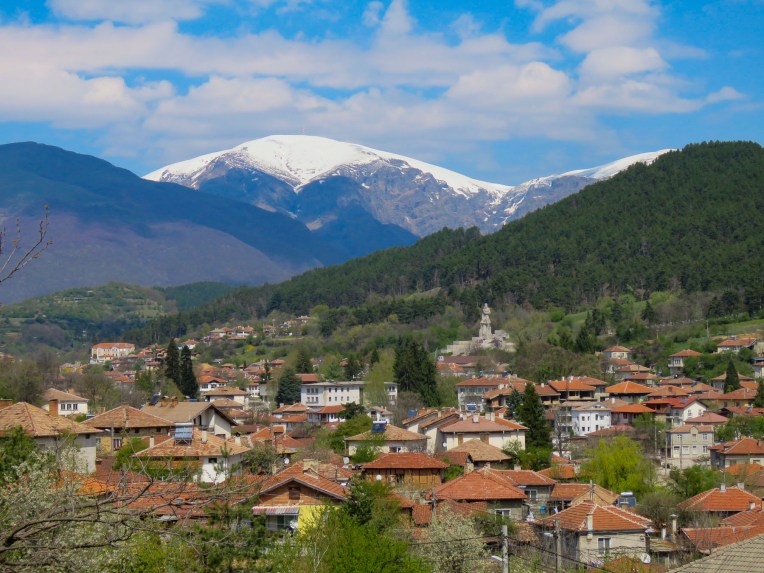 Heading north on Routes 64 and 6 we drove past fallow farmlands waiting for their Spring tilling, and forgotten industrial sites as we worked our way north towards Stara Planina, the Balkans Mountain range that runs east to west for 348 miles and divides Bulgarian into northern and southern regions.


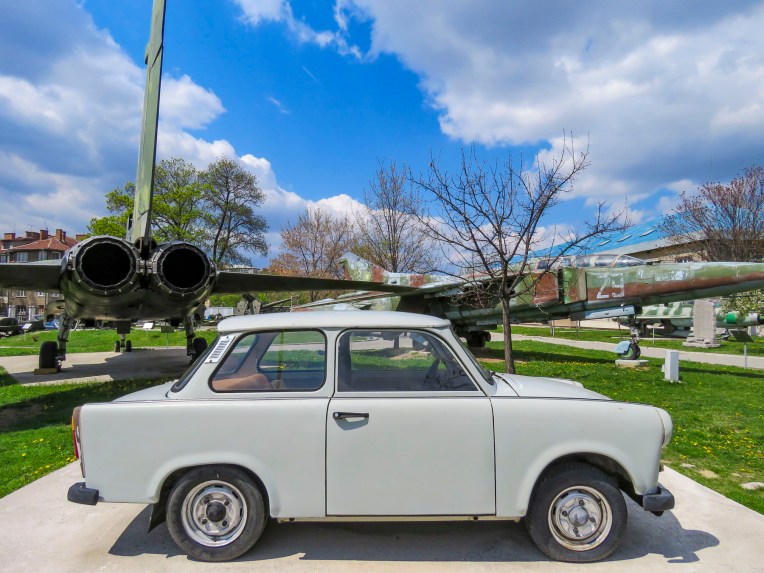
Soon the 7,795 ft summit of snowcapped Botev Peak was visible behind the quiet villages we passed. The region seemed to be sparsely populated. On an isolated backroad we stopped across from a rusted Mig jet set high on a plinth in front of what appeared to be an abandoned military site. I was only able to take one photo before a lone guard emerged from a derelict watch post and waved us away. Further on there were many larger than life sculptures championing the communal worker.


The area around Kazanluk, south of the Balkan Mountains, is considered Bulgaria’s rose valley and Rosa Damascena, chosen for the quality of oil and high yield, have been planted in Bulgaria for oil distillation since the 1400’s, when the Ottomans introduced the plant to the region from Syria. Today Bulgaria is the largest producer of rose oils in the world. Turning down the long driveway of the Alba plantation, we spotted the silhouette of what looked like the Statue of Liberty. This is great we thought, new entrepreneurs celebrating a free market economy, that was long denied them under communism. But first impressions can be deceiving; more detail was revealed the closer we got. We were dismayed to see that it was indeed Lady Liberty with a dragon tail, standing atop a sphere of the world covered with chains and pierced by arrows. We asked one of the guides the significance of this and he offered that it was the owner’s interpretation of the negative influences of Western/American culture on the rest of the world. Ironically, the young restaurant staff was loudly playing a soundtrack of American music from the 90’s. We smiled. World vision aside, they make wonderful products that are very reasonably priced.
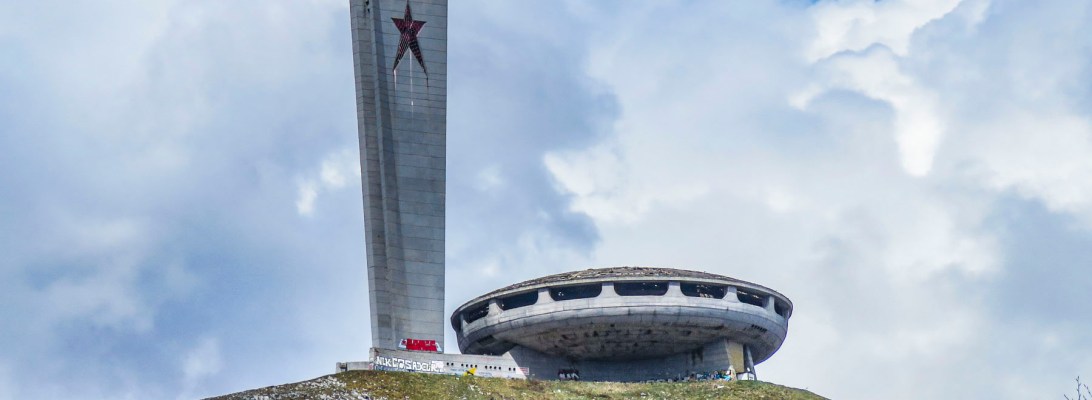
 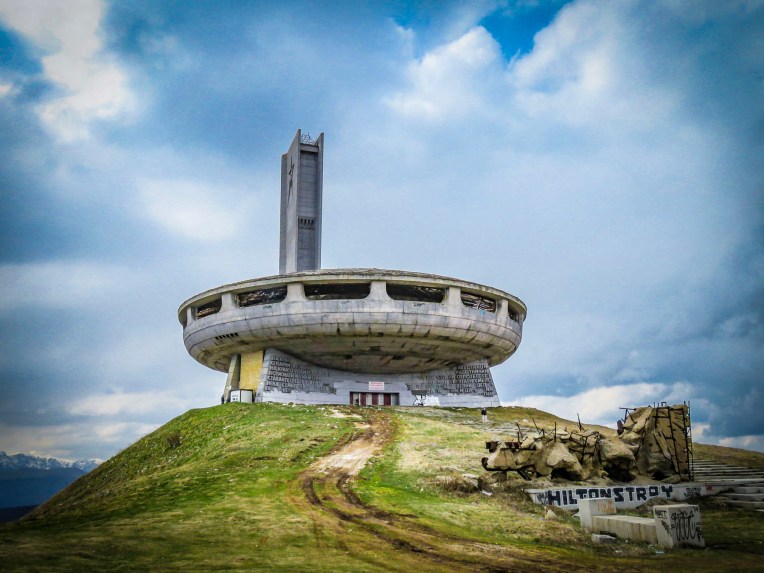 On a wintry, cloudy afternoon the silhouette of Buzludzha Monument loomed like an inter-stellar space craft wrecked on an inhospitable planet, as threatening clouds built behind it. Its deteriorating hulk was majestic in its isolation on the 4700 ft mountain ridge. We’ve known about Buzludzha Monument for years, having seen it mentioned in various media as a fascinating abandoned place, but never thought we would get to see it up close.


In 1891 a group of radicals met on the peak of Buzludzha Mountain, where the monument now stands, and formed the Bulgarian Social Democratic Workers Party. In 1971 the Bulgarian Communist Party wanted to pat itself on the back and celebrate the success of communism. Others who drank the Kool-Aid hoped it would be a “monument of the people.” Not wanting to put a financial strain on the country’s budget, Bulgarians were encouraged to “willingly donate” money and labor to the project. Georgi Stoilov, a young partisan in WWII, who received his degree from the Moscow Architectural Institute, was chosen to design a timeless memorial. He cites the Roman Pantheon, 1950’s science fiction movies and the works of western architects Gropius, Le Corbusier and Mies van der Rohe as inspiration for Buzludzha. It was completed in 1981 after seven years of construction by crews working around the clock in shifts, from May to September every year to avoid the sub-zero temperatures and fierce winter winds of the mountaintop. Inside the sphere, glass and stone mosaics lining the walls celebrated the communal worker and communist party leaders. The communist red stars in the 230-foot-tall tower were reported to be the largest in the world at 39 feet across and were visible from the Romanian border in the north and the border with Greece in the south. At the opening ceremony in 1981, tribute was paid to those who had gathered there ninety years earlier. “Let the work of sacred and pure love that was started by those before us never fall into disrepair.” Buzludzha was a huge success and a point of national pride for eight years, hosting communist party congresses and educational events. Schools and businesses booked tours for their students and employees. Foreign delegations were paraded through to witness socialism’s success. But then in 1989 the Berlin Wall fell and communism collapsed like a fighter jet breaking through the sound barrier. The monument to socialism was suddenly ironic, irrelevant and abandoned. In 1999 the security guards protecting it were removed and the building was left open to the public and it was looted. Anything of value quickly disappeared, and the rest was left to vandals and frustrated citizens who were known to take their anger out on the building with sledgehammers or spray paint. The red stars in the tower were shattered by gun shots. Soon the glass skylights broke and water damage from rain and the winter elements hastened its structural decline, and the building was eventually shut tight to protect folks from injury. The day we visited there was a lone security guard, suffering as he made his rounds in the bitter wind, protecting this crumbling modern ruin from a handful of visitors.


The Balkan Mountains, naturally dividing the country into northern and southern regions, have been pivotal throughout Bulgaria’s history. Not far from Buzludzha during the Russo-Turkish War (1877–1878) a combined Russian/Bulgarian force seized control of Shipka Pass from the Ottomans. This victory was a significant milestone towards liberating Bulgaria from Ottoman rule and monuments attesting to that triumph now mark the battlefield.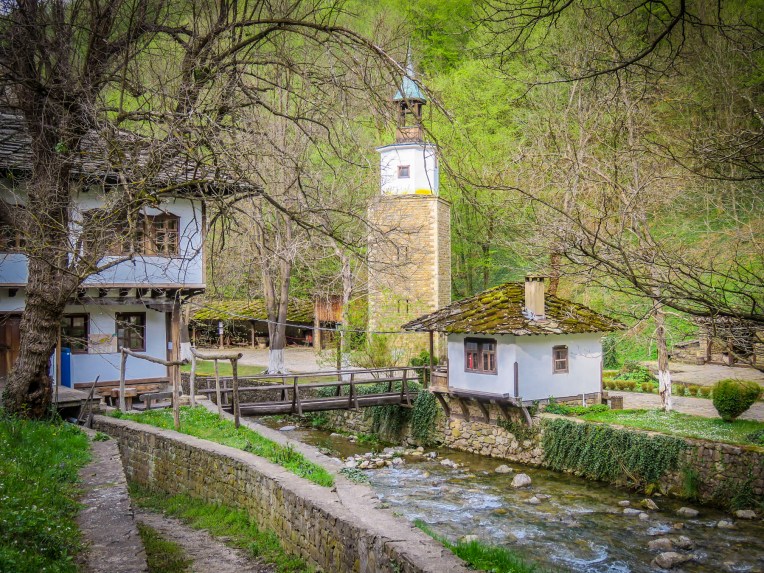 As we continued our journey north through the mountains on Route E85, the picturesque Etar Ethnographic Outdoor Museum and Sokolski Monastery called for brief detours. Set along the banks of the Yantra River, the ethnographic museum recreated a working mountain village from the mid-1800s with water-powered workshops and colorful timber and stone homes in the Bulgarian Revival style of the time.
 Woodcarvers, weavers and other craftspeople dressed in period outfits helped further to transport us to a simpler era at the beginning of the Bulgarian industrial revolution. We visited on a quiet day, but the museum has an extensive twelve-month calendar of events with many festivals listed that would have been nice to observe.
  Traveling along an isolated background road we worked our way towards Sokolski Monastery, known for its cliffside chapel overlooking the northern slope of the Balkan Mountain range. We weren’t disappointed; the church is stunning with its colorful exterior frescoes contrasting with the natural environment surrounding it.
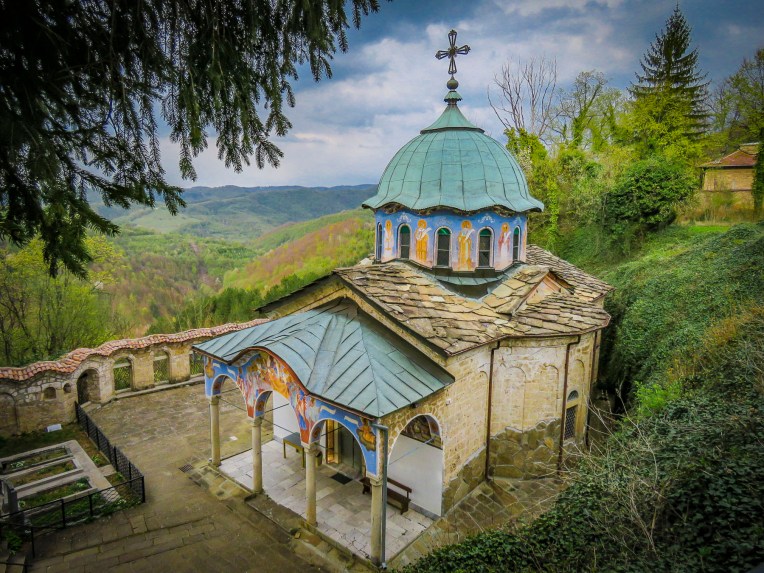 Built in 1833, the monastery has played an important role in Bulgarian history. During the April Uprising of 1876 eight freedom fighters took sanctuary there. Later captured by the Ottoman army, they were thrown to their deaths from the cliff behind the chapel. The short-lived April Rebellion was brutally repressed, but a year later Russia would help the Bulgarian rebels defeat the Turks at Shipka Pass and begin the march towards freedom. In the courtyard of the monastery an octagon-shaped water fountain was built with eight spouts to commemorate those fallen heroes. Legend states the fountain has never run dry and its cool water holds healing powers.
  We made it to Tryavna just in time to have dinner at the restaurant next to our hotel. Enjoying a hot meal after a long chilly day, we were entertained by the waitress trying to keep a determined stray cat from entering the restaurant every time the front door was opened.
 Generations of skilled woodworkers have lived in the Tryavna River Valley, turning trees harvested from the deciduous forests on the slopes of the Balkan Mountains into furniture and ornate wood carvings.


Abundant sheep farms provided wool to the water-powered textile mills along the banks of the river at the beginning of the industrial age. While other villages in rural Bulgaria have suffered a population exodus, Tryavna has embraced tourism, providing employment for the town. As one of Bulgaria’s prettiest villages, it is a picturesque escape from city life, with shops, museums and outdoor recreational opportunities nearby. History is literally underfoot in the area, since part of a trail leading to the mountain village of Bozhentsi follows the remnants of an old Roman road.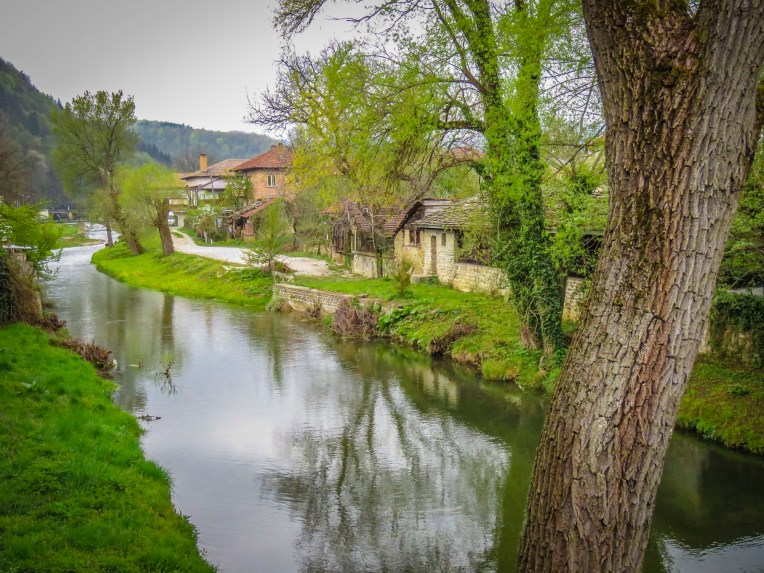 Crossing the footbridge over the Tryavna River at the clock-tower, the pleasant whiff of wood smoke came to us on a chilly Spring morning. Large woodpiles are essential in this region and we saw plenty of homes with the winter’s firewood neatly stacked, as we wandered around the village, with its parks filled with sculpture and tulips in bloom.


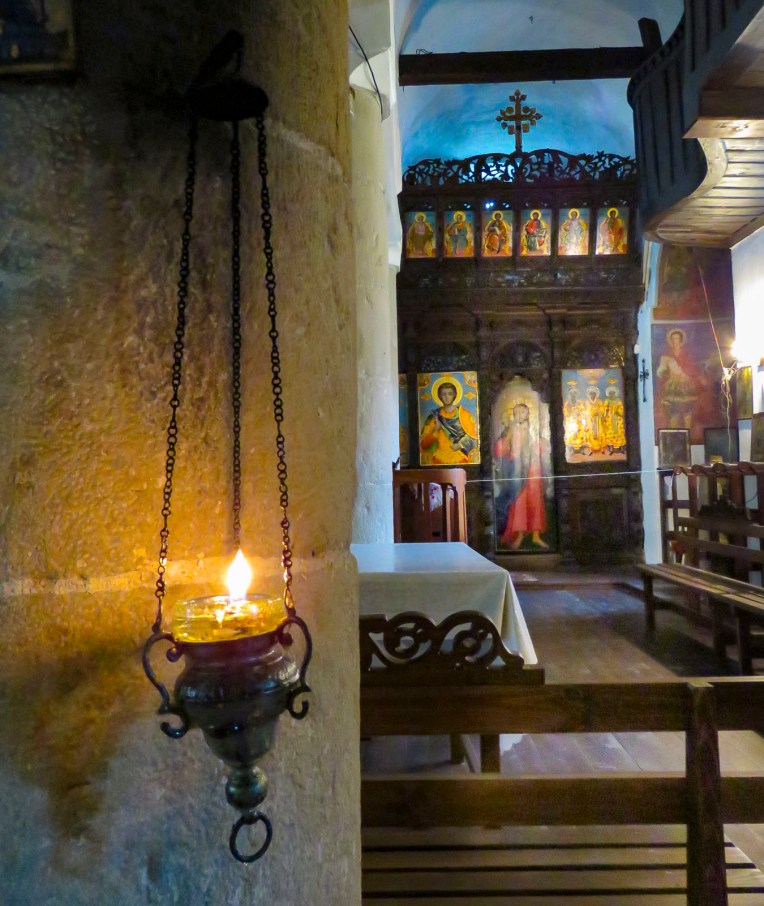
People have inhabited Tryavna since millennia past, but the first record of it dates to the 12th century when Saint Archangel Michael Church was built by in the village by Bulgarian Tzar Asen in tribute to his victory over Byzantine Emperor Isaac II at Tryavna pass. At the battle of Tryavna Pass, Bulgarian troops ambushed and routed the Byzantines, capturing Imperial treasure that included the golden helmet of the Byzantine Emperors, the crown and the Imperial Cross which was the most valuable possession of the Byzantine rulers – containing a piece of the Holy Cross.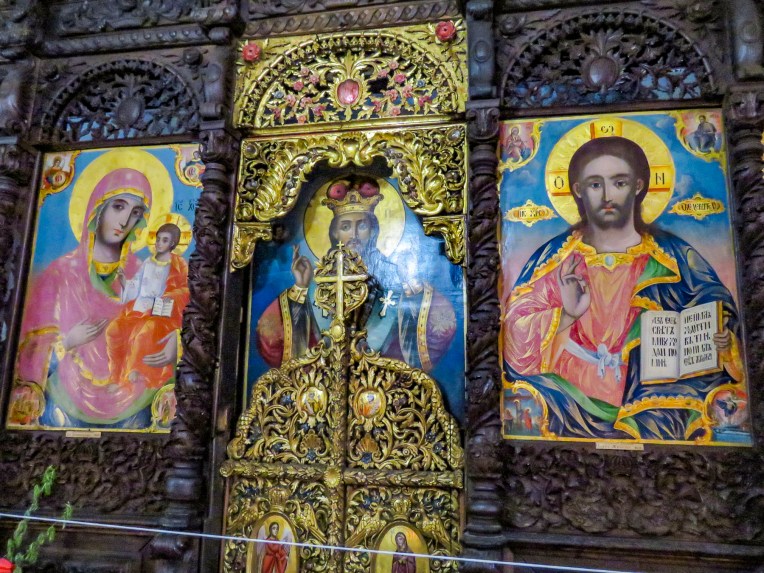 Over the centuries Saint Archangel Michael Church has been reconstructed several times. Its most recent incarnation dates from 1853 when the tall wooden belfry was added. Inside, the interior is richly ornamented with elaborate 19th century woodcarvings and iconography created by members of the Vitan family, famous throughout Bulgaria for generations of skilled artisans. The carved bishop’s throne is an exquisite masterpiece.
 The safest way to order your cup of java in parts of Bulgaria is to ask for a traditional coffee, not wanting to offend anyone by calling it Turkish. The fact is Greek, Albanian, Bosnian, Persian, Turkish andthe same, plus or minus cardamom or a local spice. But here in Tryavna at the Renaissance Café the coffee was brewed on a very traditional sand stove. A shallow pan filled with sand was heated over an open flame, and a long handled, brass cezve was filled with coffee and water, then partially buried in the hot sand to brew. With diligent attendance our coffee was brought to a frothy boil three times before being moved to the top of the sand where it stayed warm while the grounds settled. The ritual of the event definitely enhanced our enjoyment of the brew.
 We only just scratched the surface of this lovely country. There’s so much to see here, especially in its vast countryside. Hopefully one day we’ll get a chance to return.
Till next time, Craig & DonnaUF

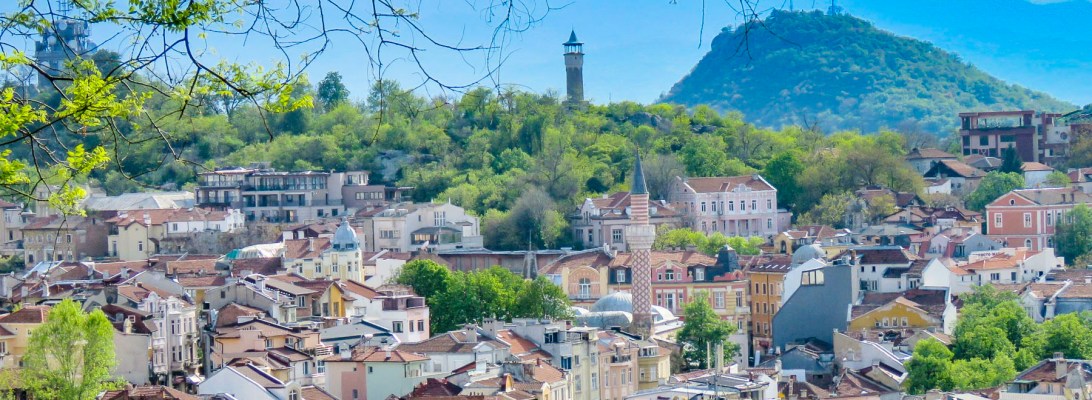
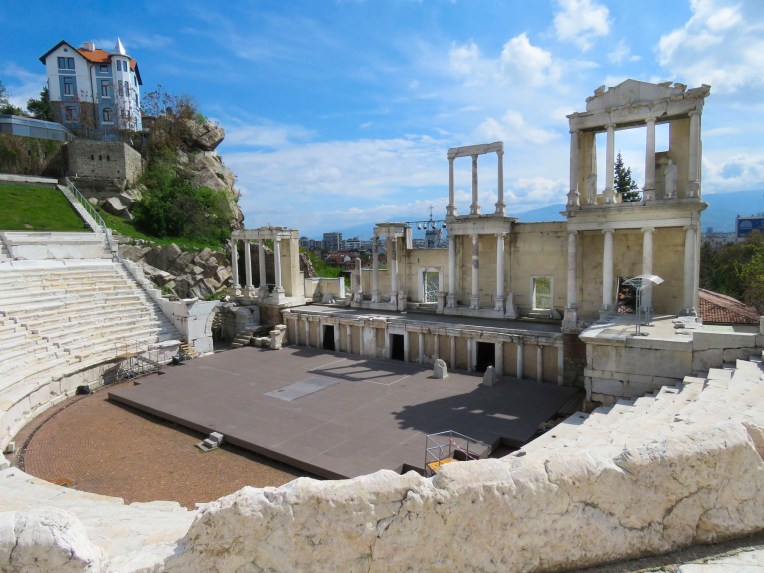 Just outside Old Town Plovdiv,


 At just over a mile long the pedestrian mall in the center of Plovdiv is the longest in Europe, running from the Stefan Stambolov Square along Knyaz Alexander I, and Rayko Daskalov Street before ending at the footbridge lined with shopping stalls that crosses the Maritza River.


 But the jewel of the mall area was the curved ruins of the Ancient Stadium of Philipopolis, with its fourteen tier seating area, unearthed in 1923. Situated below street level and surrounded by modern buildings at Dzhumaya Square, the ruins provided a dramatic juxtaposition of the ancient and contemporary, where you can actually see the layering of history and how the city was built over earlier civilizations. From this excavated section, archeologists have determined that the stadium was a huge 790 feet long and 165 feet wide and could seat nearly 30,000 spectators.
 Across the square the Dzhumaya Mosque is the main Friday Mosque for Muslims in Plovdiv. Constructed in 1421, it replaced an earlier mosque built in 1363 on the foundations of a Bulgarian Church destroyed during the Ottoman conquest. It is one of the oldest and largest Muslim religious buildings in the Balkans. At the café in front of it we enjoyed some sweet Turkish tea and pastries in the warm afternoon sun.


 After you crouch to enter through a low door and then look up in this intimate space, the WOW element of

 Our main destination was


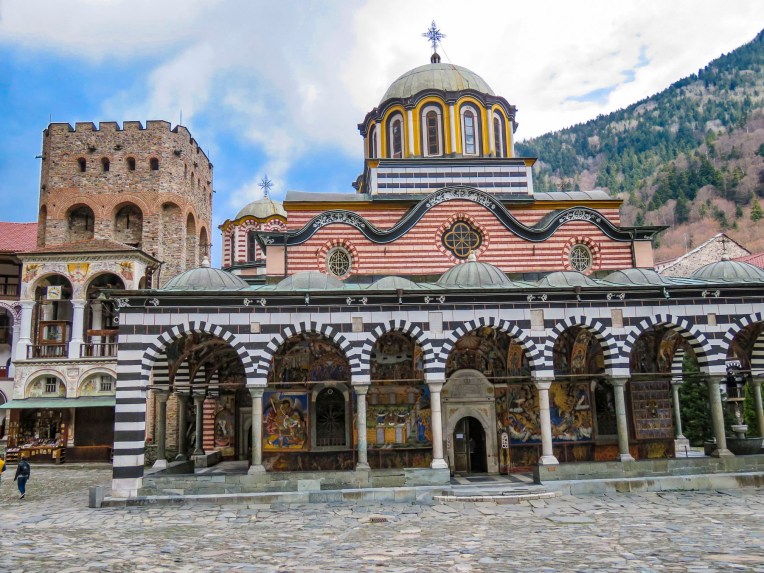 This is the only monastery to survive during the centuries of Ottoman domination over Bulgaria, when it was rebuilt in defiance of the Turks. The Bulgarian people have great affection for this monastery, as a symbol of their religion and culture during those turbulent centuries.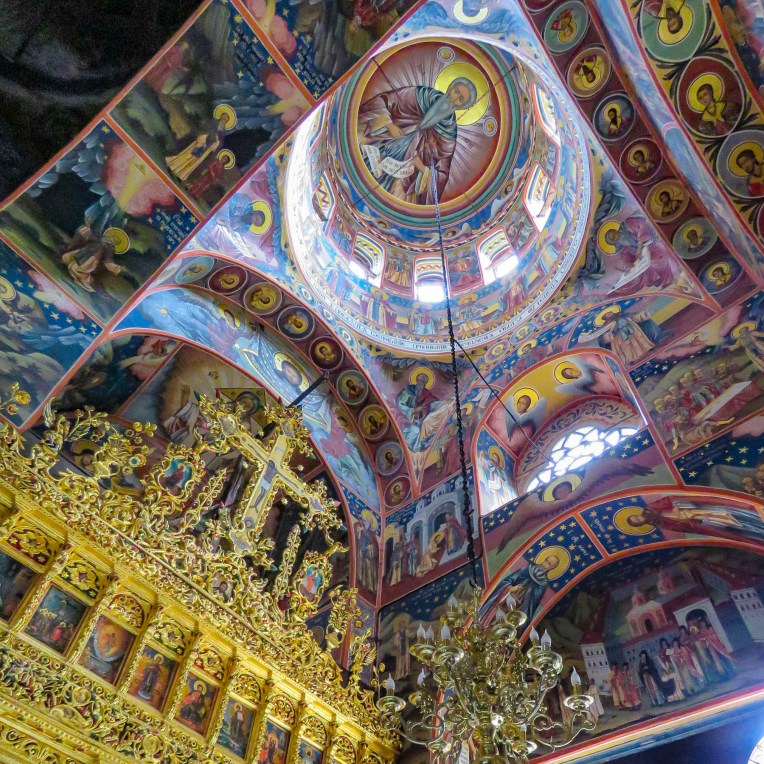


 Thirteen miles from the monastery, on a side street in the town of Rila, we spotted a church with three small cupolas, that called for a quick stop. The church “St. Nicholas the Wonderworker Mirikliyski” was a surprising find with its cracked bell tower and muraled covered entrance porch, complete with woodpile.
 The painter of these hell fire and brimstone murals might have gotten his inspiration from the tortured works of Dutch painter Hieronymus Bosch. Unfortunately, the church was closed and we haven’t been able to find any other information about this off-the beaten-path treasure.


 The Unofficial Junk Museum is a vast, rusty and dusty collection of whatever the owner deemed representative of Bulgarian culture under communism. Radios, tv’s, typewriters, farming equipment, cars, motorcycles, household items and busts of Stalin are stacked everywhere. It’s fascinating! And of all the places to buy a bottle of homemade


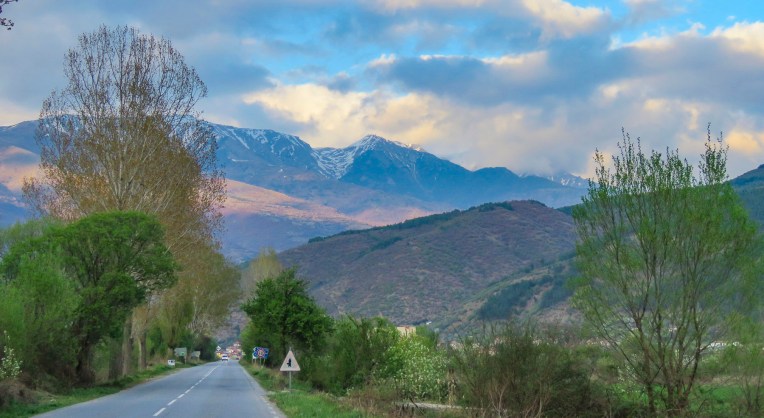
 In the morning we followed Rt. 1 south for a while as it hugged the Struma River, which would eventually reach the Aegean Sea, before we turned off and headed in to the Pirin Mountains.


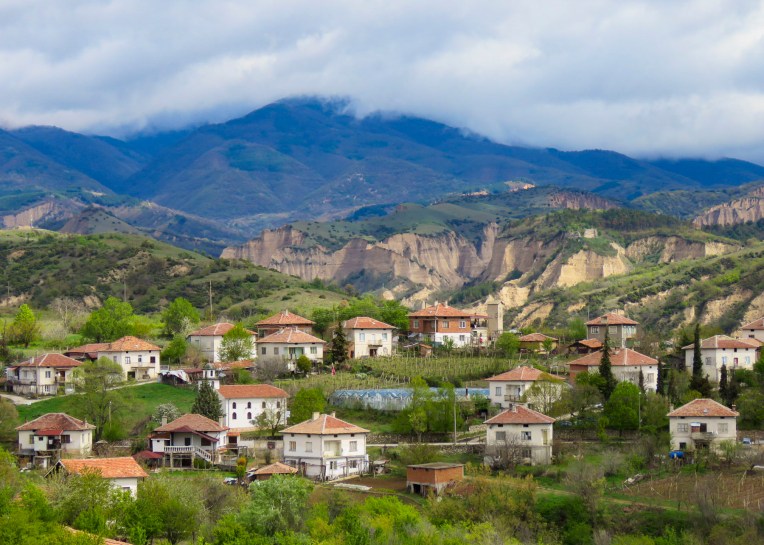
 Melnik is situated in a wide gorge under striking sandstone rock formations, called hoodoos, that tower hundreds of feet high, created from millennia of erosion. Locals refer to these geological phenomena as Melnik Earth Pyramids. The village has been renown for making strong wine since 1346 from a regional red grape varietal, Shiroka Melnishka, and wine cellars still line its main street.
 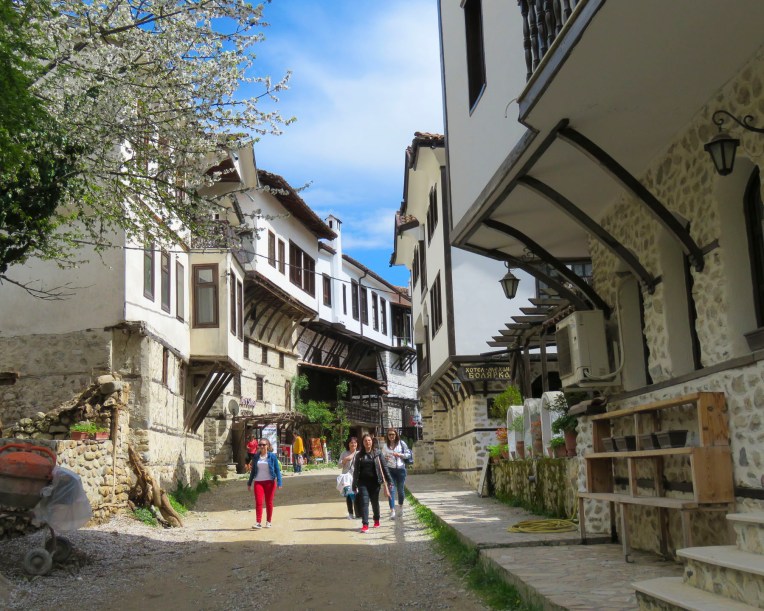 Once a thriving village with one thousand residents, today it is now home to fewer than three hundred. The village was a delight to explore with its cobbled streets meandering between the whitewashed stone and timber homes built in the Bulgarian Revival style. Ninety-six of the village’s houses are historically protected. Any new construction in town adhered to that aesthetic.
  From the ruins of Bolyarska kŭshta, high on a hill above the Church of St. Anthony, we spotted the dome of what looked like a hammam, a Turkish bath, nestled between the traditional homes below, and went to explore.
 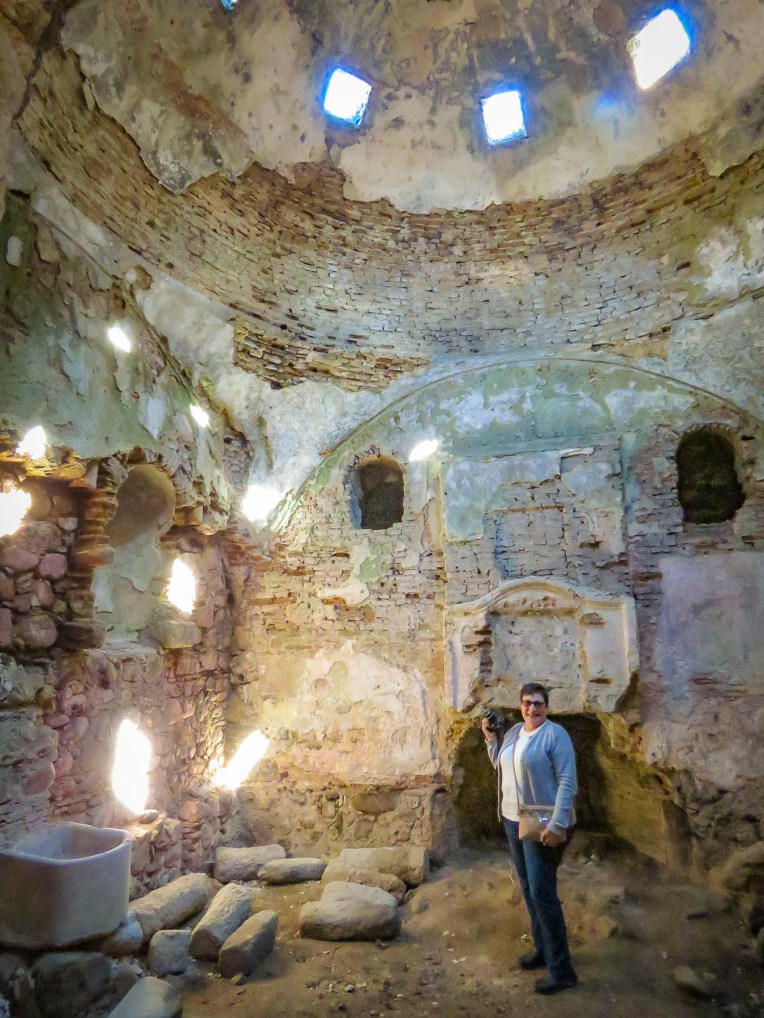 With the help of a kind woman, who somehow knew what we were looking for, we found the ruins of a small Roman era spa in a small side alley. Its dome was fully intact and the substructure of its once heated floor remained. There is also a single arched old roman bridge, near the parking lot, that you can still walk across. Before continuing to Kovachevitsa, we relaxed at one of the sunny cafes in the center of the village.
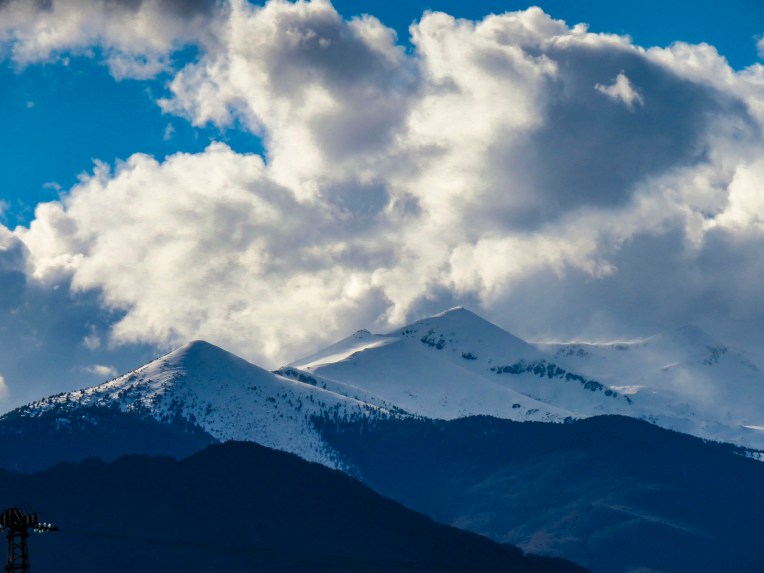 Kovachevitsa, an isolated, rustic stone village in the Rhodope mountains, was only 52 miles away near the border with Greece. However, it took us the bulk of the afternoon to reach because “someone stops every hundred yards to take a photo.” And stop we did as we were awed by the beauty of the border region as we drove through the mountains. So close were we to the border that our phones binged with a “Welcome to Greece” message from our cell phone carrier.
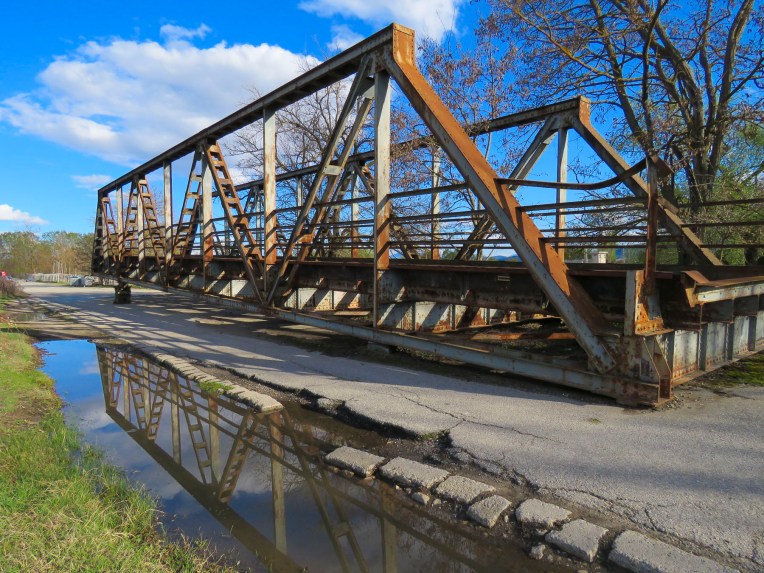 At one point we stopped to photograph a complete section of an iron truss bridge, just rusting away on the side of the road, only to have our car suddenly surrounded by a flock of bah-ing sheep.

 So, we knocked on the ancient door of the closest building only to be greeted by loud barking. Retreating back to the car we pondered what to do when a voice behind us said “hello.” That was the only word of English our host spoke until he said “goodbye” two days later. The barking dog turned out to be a gentle giant, who welcomed us to the inn. In fact, all the dogs of the village were St. Bernard-size, and they must all have been related, because they closely resembled one another. Fortunately, they were good-natured.


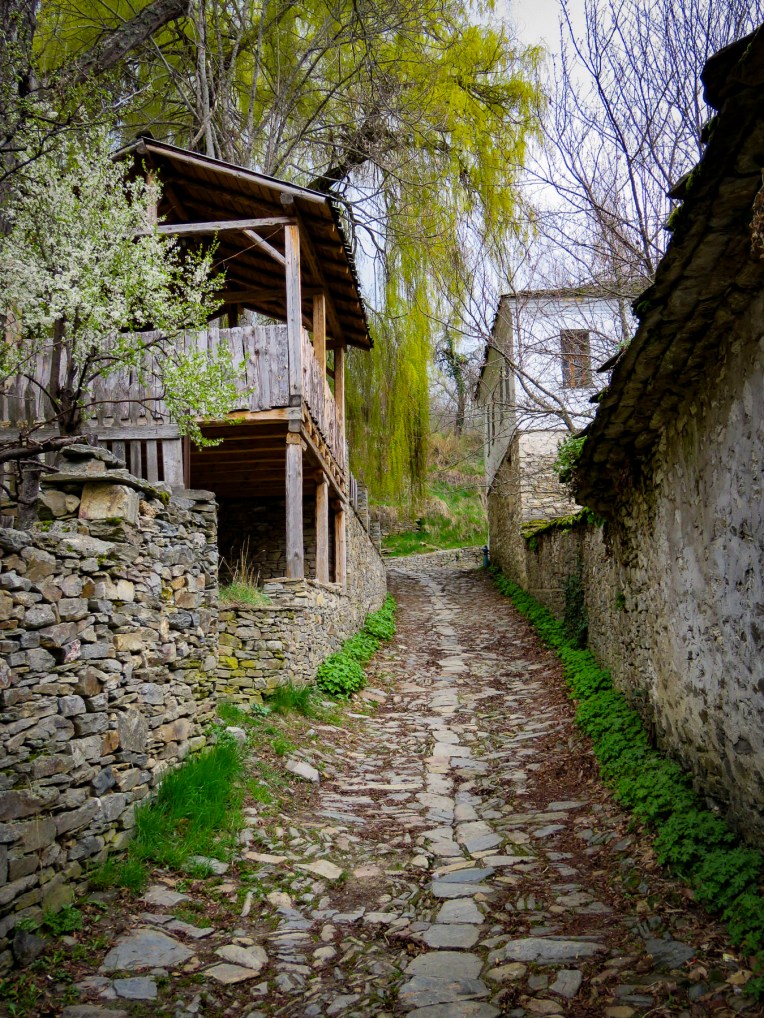
 Bulgarians fleeing religious persecution and the forced conversion policies of the Ottoman Empire sought refuge in the rugged Rhodope mountains and established Kovachevitsa in 1656. Agriculture and stockbreeding in the area thrived during the 1800s and the homes still standing in the village date from that time. The tall stone homes of Kovachevitsa are stunning and unique in an organic way.

 At breakfast the next morning Google Translate nicely bridged our communications barrier with the innkeeper’s wife. Loading the Cyrillic keyboard into the app for our hostess to use, Donna’s phone was passed back and forth repeatedly during a lively conversation about family, each other’s lives, the village and our travels. Our hosts’ children live with their grandparents in one of the larger towns off the mountain as there isn’t a school in the village anymore.
 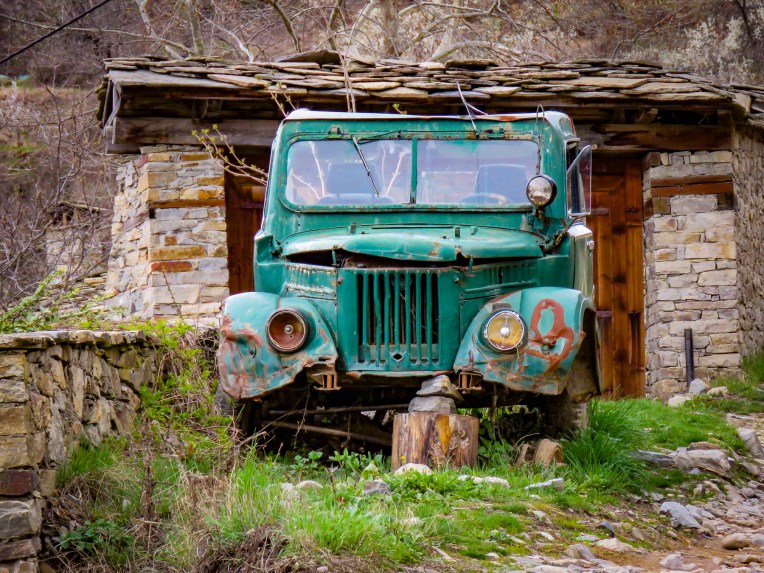 Most of the young families have moved away to find work, leaving only 28 year-round residents looking after the village till the tourist season starts. Strolling under blossoming elderberry trees, we had the narrow lanes to ourselves as we worked our way towards St. Nikolas Church.

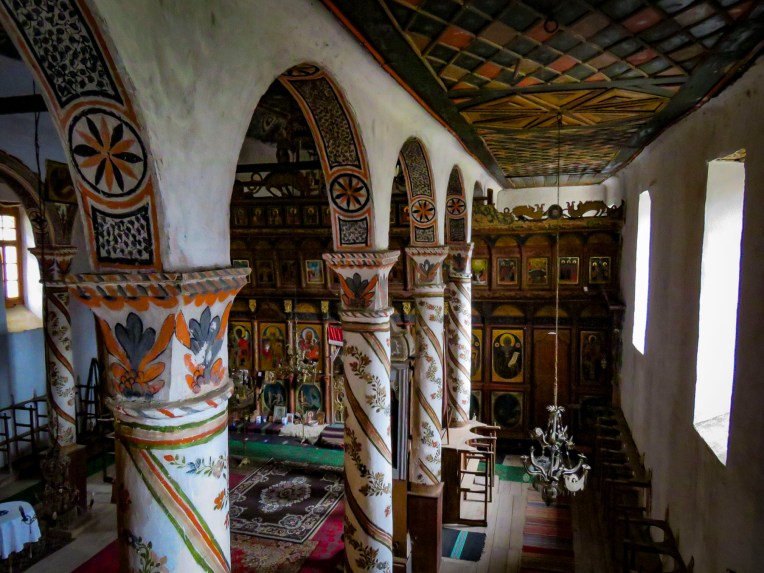 On the way back to our inn we stopped to admire the woolen creations knitted by a lone street vendor with a toothless smile who was bundled under layers of clothing to ward off the mountain chill. Her prospects for a profitable day seemed slim as the street was nearly deserted. When we expressed interest in only one pair of socks, she assertively pantomimed that we needed more. Looking up from readying our payment we could only smile and chuckle when we found she had filled our bag with two extra pairs of socks. They were well made and a bargain, so we caved to her sales pressure. I’m wearing a pair now as I write this, and my toes are happy we she insisted. I wouldn’t have been surprised if we were her only sale of the day.
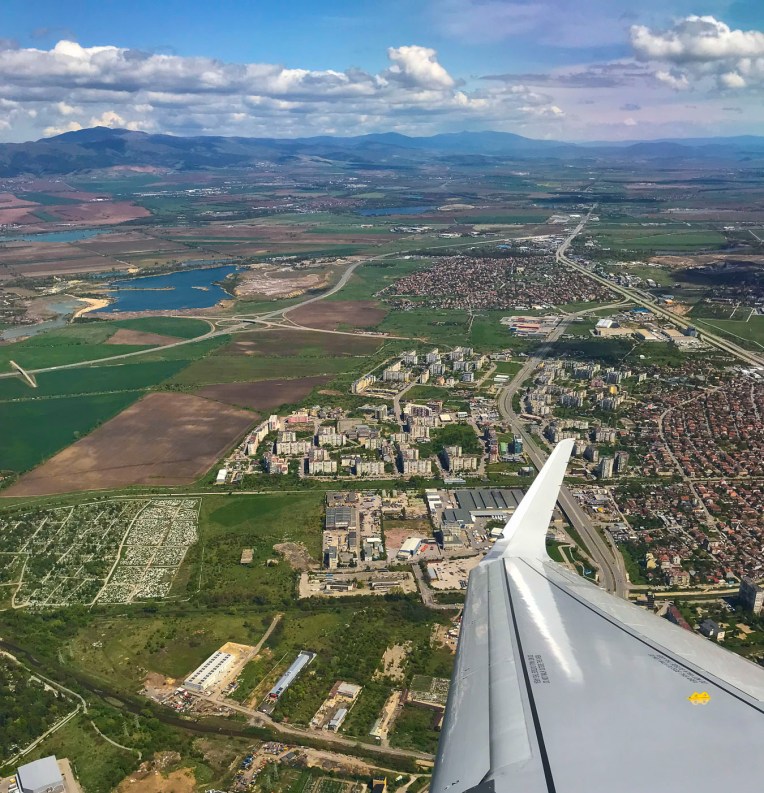 In the airport, at the tourist information kiosk, multiple large screen tv’s played flashy videos promoting Bulgaria’s culture, tourism, and natural beauty. We asked the woman staffing the desk for a map of Sofia and directions on how to transfer into the city. “Follow the line,” she snapped. Not fully understanding I asked again. “Follow the line!” she barked firmly a second time. She scowled in the direction of the arrows painted on the floor and turned away. Her previous career, I’m speculating, was a prison guard in the now closed gulags. She was obviously better suited commanding prisoners to “assume the position” than to being the first friendly face welcoming visitors to her country. I’m sure she was hiding handcuffs and would have used them if I asked another question. But that’s how it was, one day you’re communist and the next day you’re taking customer service courses and trying to embrace a free market economy. And for some the promise of a better life hasn’t been realized. Later, one of our hosts would express, “some folks prefer the old way, they’re still communists.” “Come and keep your comrade warm,” another refrain from the Beatles song, didn’t ring true. We weren’t feeling the love just yet. Aside from that rocky start, we had very enjoyable time in Bulgaria.
  The line led to a modern subway station adjacent to the airport terminal and for 1.60 BGN, about 90¢ USD, we rode the
 We emerged onto the pedestrian only Vitosha Boulevard filled with folks enjoying a warm Spring day and an incredible vista of Vitosha Mountain towering over the city. Inviting outdoor cafes lined the street and we quickly chose which one we’d return to after meeting our Airbnb host. We stayed on Knyaz Boris just two blocks parallel to Vitosha Boulevard and as majestic as the pedestrian mall was, the side streets, though tree lined and harboring small shops and restaurants, were slightly dismaying with wanton graffiti tags on every apartment building door and utility box. There was a lack of pride in ownership.
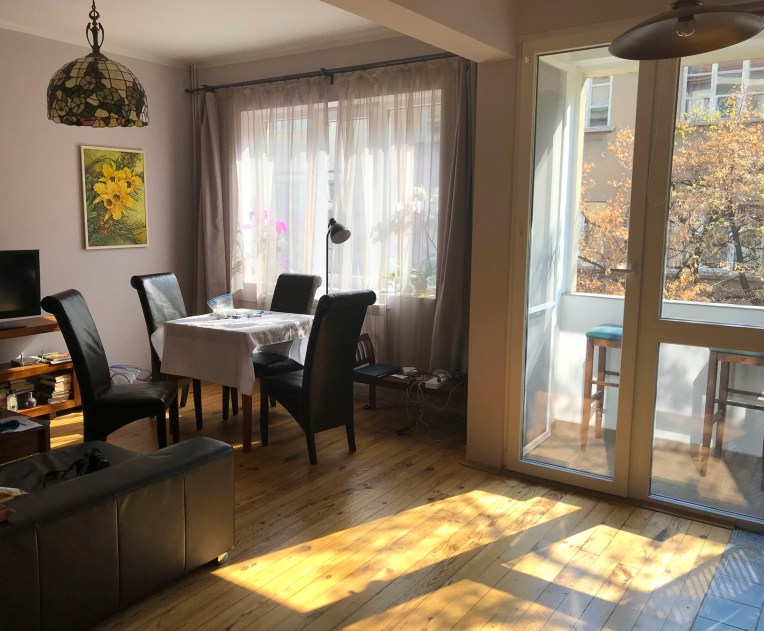
 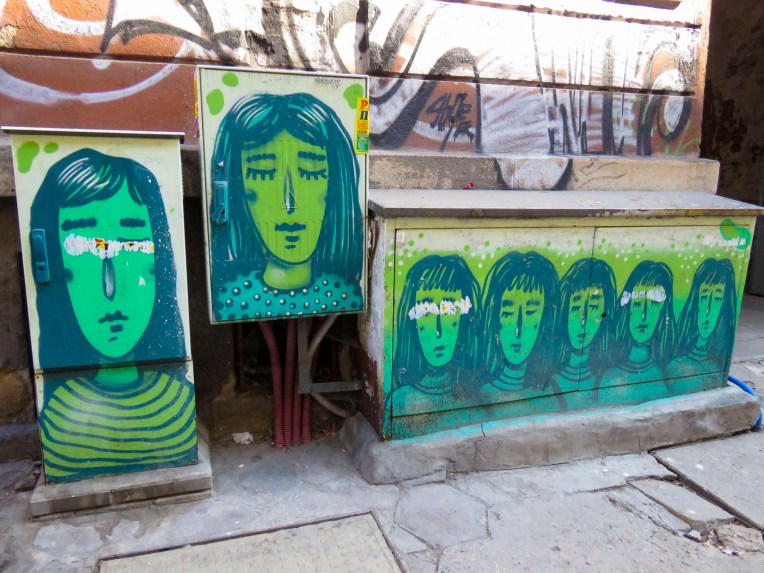 The idea that’s it’s not my responsibility is a leftover from the communist era, when the government owned and was responsible for everything. The front door to our building was no different, but our third-floor walkup apartment was an oasis with a sun-drenched living room and tiny balcony that we would call home for a month. And to our delight, but to our waistlines’ detriment, there was a baklava bakery across the street!
  Long at the crossroads of expanding empires, Bulgaria has had a contentious past with Thracian, Persian, Greek, Roman, Byzantine, Ottoman and communist influences. The First Bulgarian Empire, 681-1018, has been deemed the Golden Age of Bulgarian Culture, with the adoption of Christianity as the official religion in 865 and the creation of the Cyrillic alphabet. Independent for only short periods of time during the medieval age, the National Revival period between 1762-1878 brought Bulgaria to finally throw off the yoke of Ottoman domination that had lasted from 1396. Sadly, there were only six decades of self-government before the proud people of Bulgaria became a satellite regime of communist Russia at the end of WWII and fell behind the Iron Curtain.
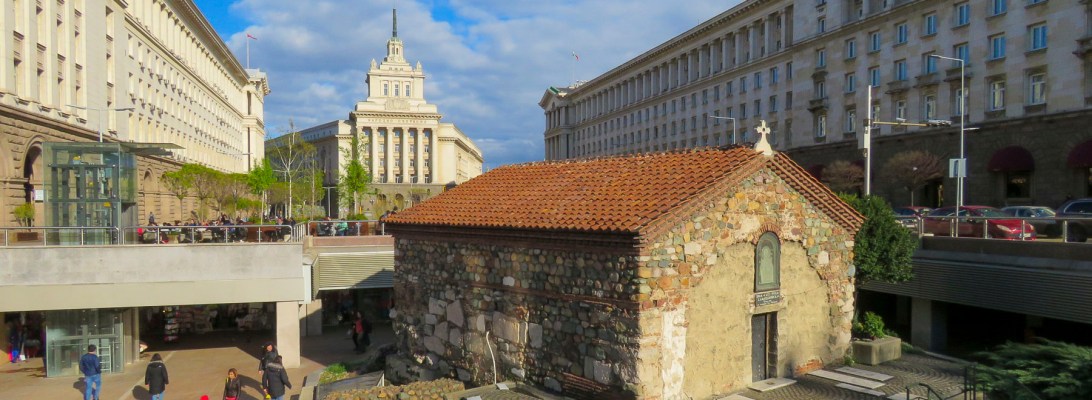
 Today Sofia is transforming itself into one of the most beautiful, cosmopolitan cites in Europe with its pedestrian malls, extensive park system and tram lines that weave throughout the city. But the past is always present and just around the corner in Sofia. Walking north along Vitosha past the end of the pedestrian mall there is a three block stretch that displays a vast stretch of that history on the way to the Central Market Hall, where we were headed to stock our pantry. We got sidetracked.
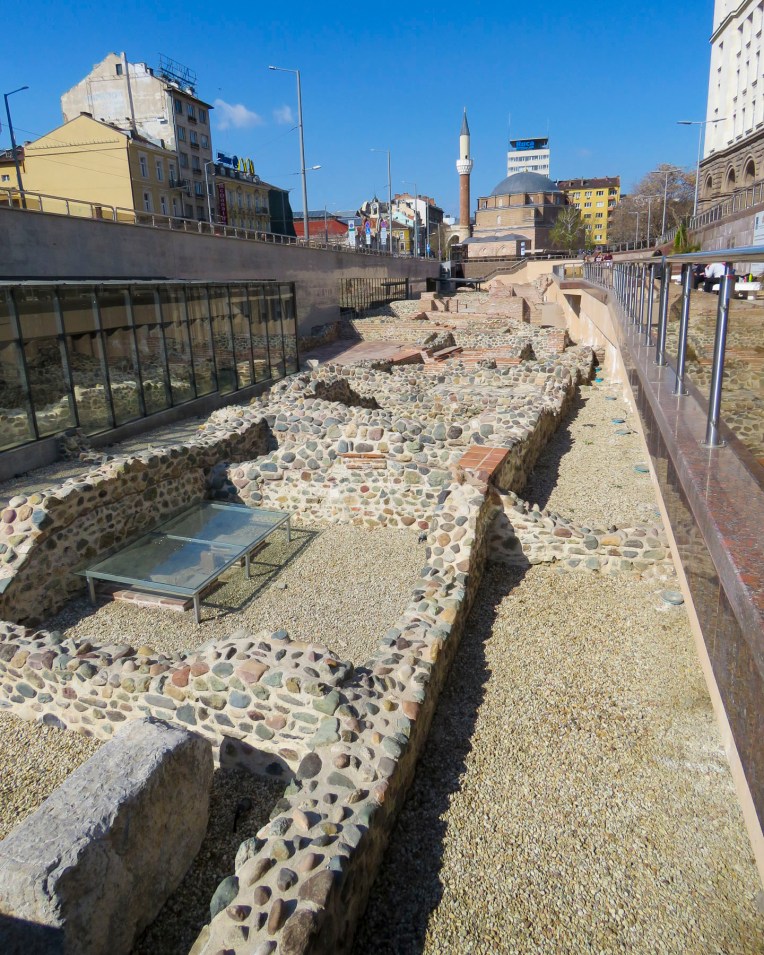 Seven millennia ago, put down the first foundations of what we now call Sofia. The construction of Sofia’s modern subway system in the 1990’s revealed multiple layers of antiquity and many of the amazing artifacts unearthed are displayed, in museum cases, on the subway platforms in the Serdika station and National Archeology Museum nearby.


 Tragically in a 1925 bombing, the Bulgarian Communist Party attempted to kill the King of Bulgaria and other members of the government who were attending a funeral at this church – one hundred-fifty people died, and the cathedral’s dome was razed. Excavations behind the church in 2015 uncovered early ruins and a treasure of 3,000 Roman silver coins from the 2nd century AD.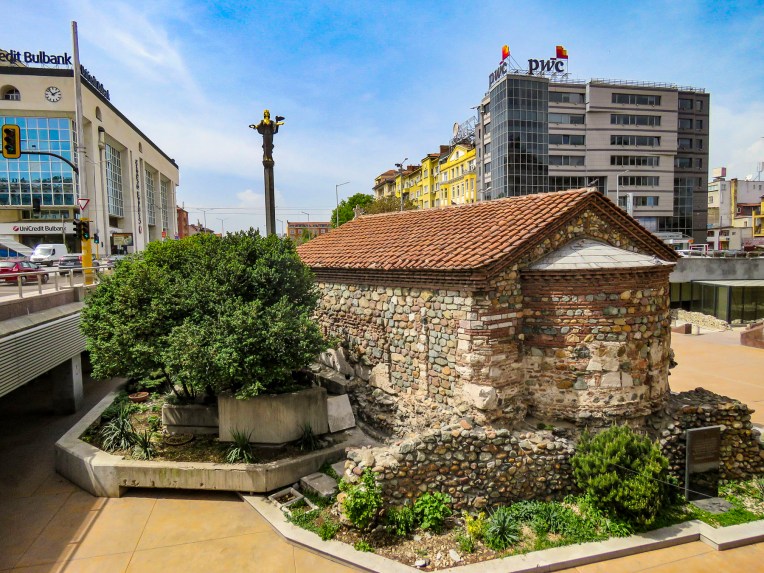


 It ends just short of Banya Bashi, an Ottoman mosque built in the 16th century. The towering statue of St. Sofia is also visible just beyond the subway station. Ancient walls found during the renovation of the Central Market Hall can also be seen in the lower level of that building.
 Nearby the oldest building in Sofia, the Church of Saint George, built by the Romans in the 4th century, has early Christian frescoes which were painted over by the Ottomans when it was used as a mosque, but they were rediscovered in the 1900s and restored. It stands surrounded by modern buildings in a courtyard behind the President of the Republic of Bulgaria building, within earshot of the Changing of the Guard.


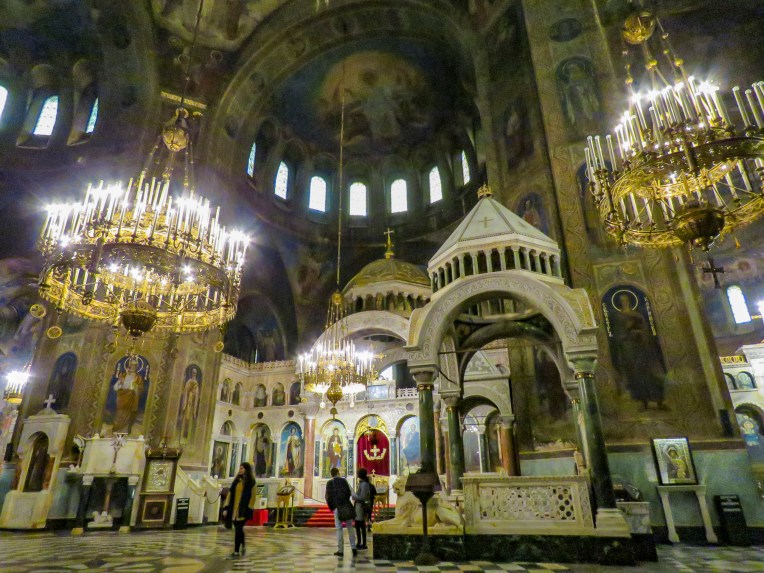 In the crypt of the cathedral a small, state of the art museum showcases the development of Bulgarian orthodox iconography over the centuries.
  Nearby, the five gilded spires of the Russian Church, officially known as the Church of St Nicholas the Miracle-Maker, can be seen from the steps of Cathedral Saint Aleksandar Nevski. Built in 1914 on the site of a mosque that was torn down after the liberation of Bulgaria, it served has the official church for the Russian Embassy and the Russian community in Sofia. The religious murals that cover the interior of the church were created by Vasily Perminov’s team of talented icon painters, who were also responsible for the iconography in Cathedral Saint Aleksandar Nevski. Darkened by decades of candle smoke, the fresco paintings in the dome were restored in 2014.


 In 2001 an early Christian mausoleum was unearthed near the American Embassy and it’s fantastic that things are still being discovered in 2019.


 2 Suitcases for 2 years