A Balkans Road Trip Part 9: Split, Croatia – Rocky Coasts, Sunny Skys and Relics

From Mostar our route along the M6.1 climbed above Stari Grad into karst mountains covered in a garrigue landscape freshly green with the colors of spring. Along the high road, sweeping views of farmlands, vineyards and orchards spread west to the horizon where the Biokovo Mountain range rose and separated Bosnia and Herzegovina from Croatia’s Dalmatian coast and the Adriatic Sea.
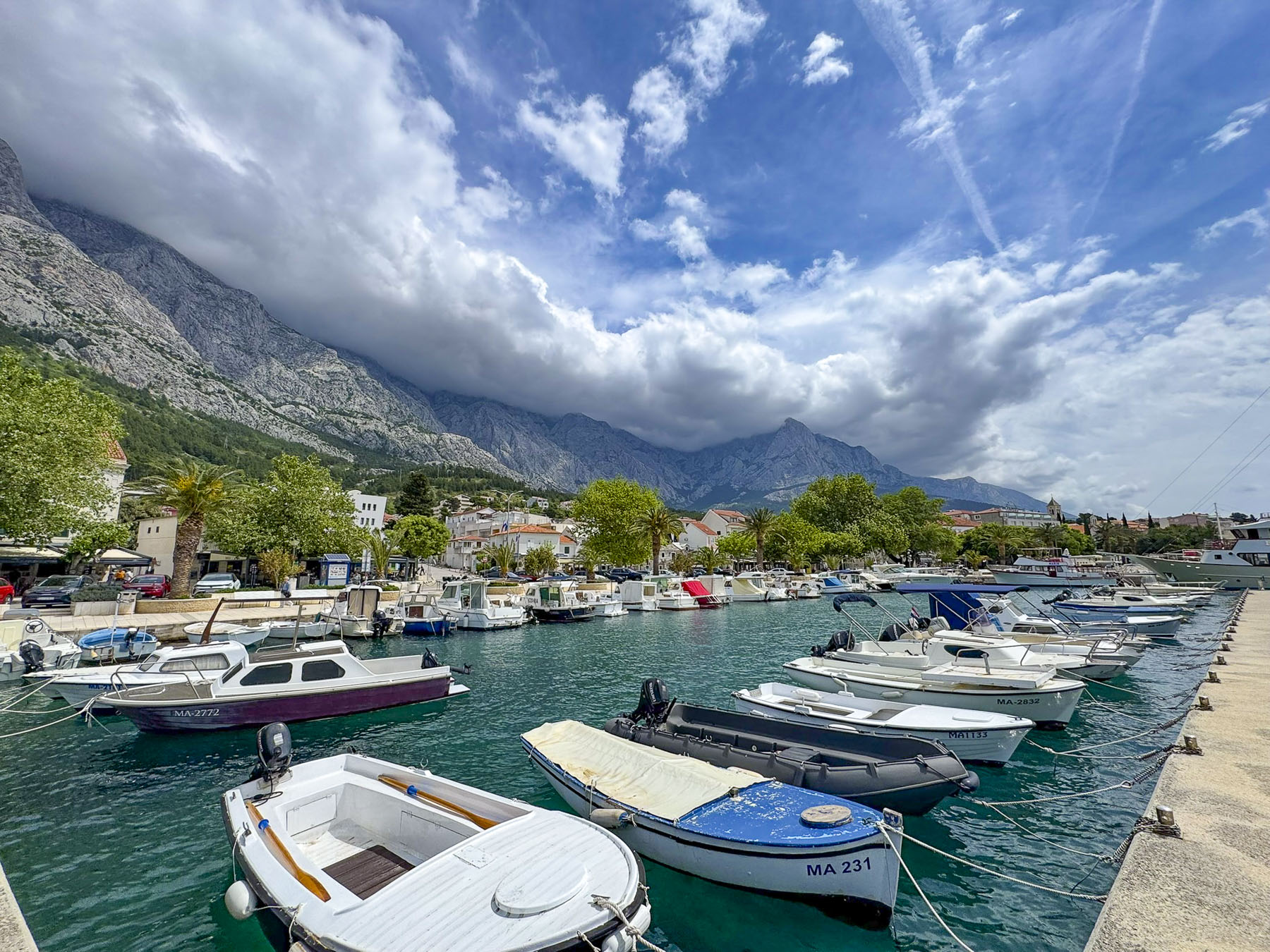
It wasn’t the fastest route to the ancient city of Split, but it avoided backtracking along roads that we had driven on during some day trips from Mostar, and allowed us to see a different part of the region. Getting our exit and entrance stamps at the Vinjani Gornji/ Osoje  Border Crossing went smoothly and we were soon driving through the Sveti Ilija tunnel to the Makarska Riviera and Baška Voda. The town is dramatically set at the foot of the western slope of the Biokovo Mountains which tower above it and provide a dramatic backdrop to the beaches and harbor along the town’s waterfront.  We parked and enjoyed lunch at a restaurant across from the harbor, one of the few eateries open midweek early in the May shoulder season.
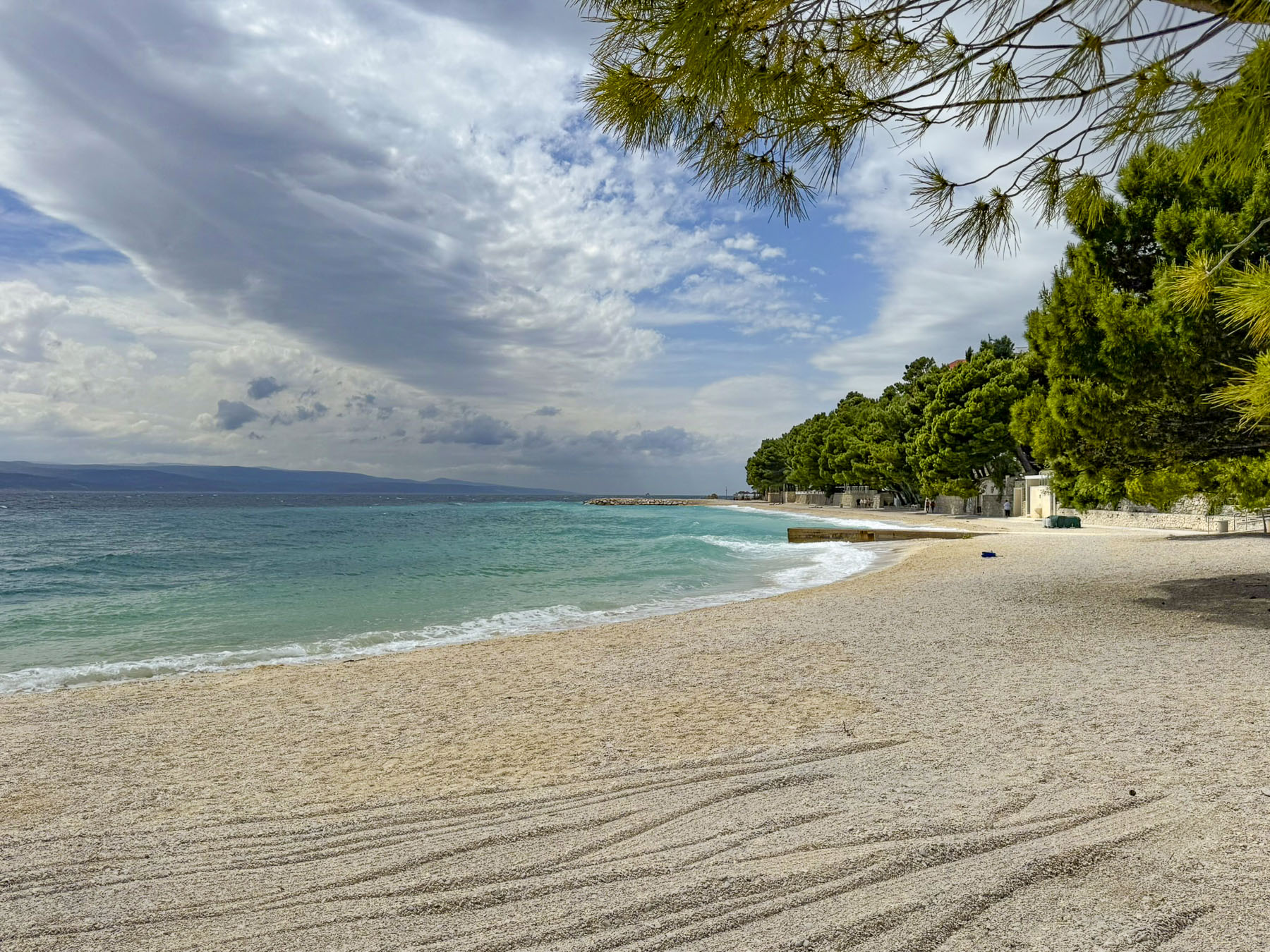
After lunch we strolled a little way along the Lungomare Promenade, a 60km (37mi) coastal walkway that starts north in Brela and runs south passing through pine forests, alongside pebble beaches, and  seaside villages to Makarska, before ending in Gradac. During the summer high season Baška Voda’s crystal-clear Nikolina Beach is a popular destination along the promenade. It’s been a Blue Flag beach since 2006 and is often listed as one of the nicest beaches in the Mediterranean.  The town is also a favorite spot to splurge on a boat hire to explore the nearby islands of Brač and Hvar.
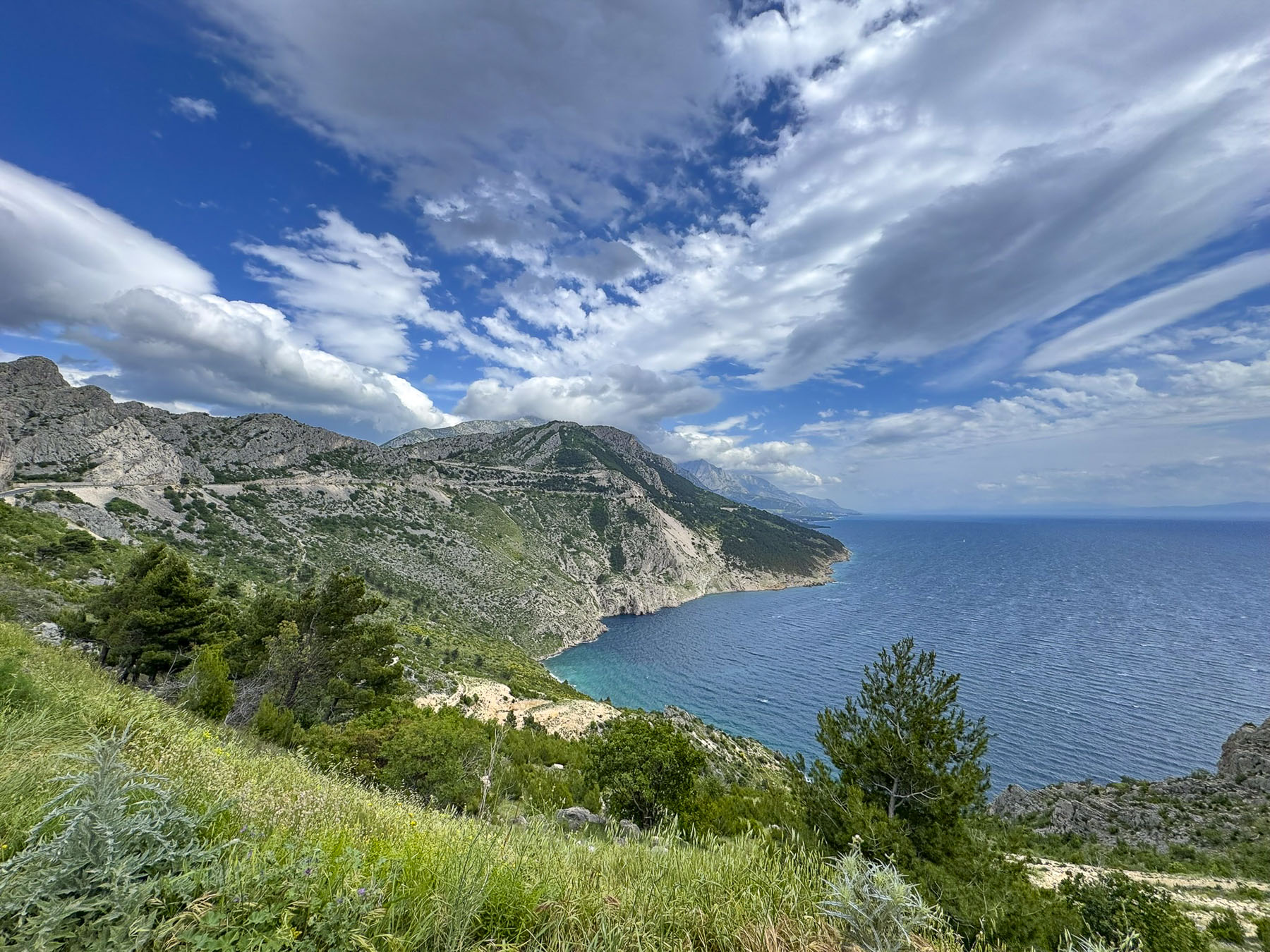
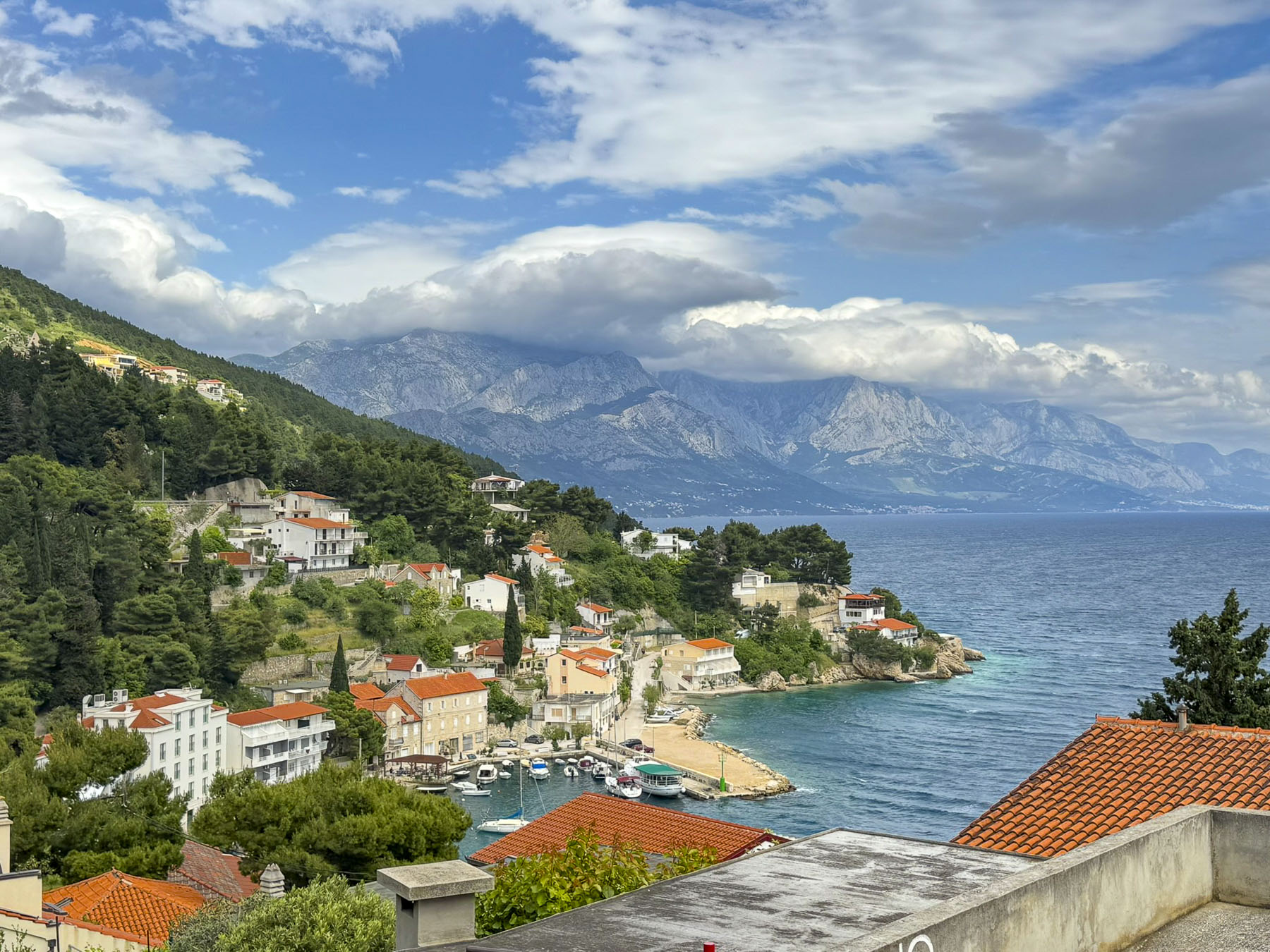
The ride north along coastal Rt8 was gorgeous, and we stopped at nearly every scenic overlook along the way. Outside of Dubci the Stella Maris lookout provided a fabulous vista to the south of the rugged Makarska Riviera.
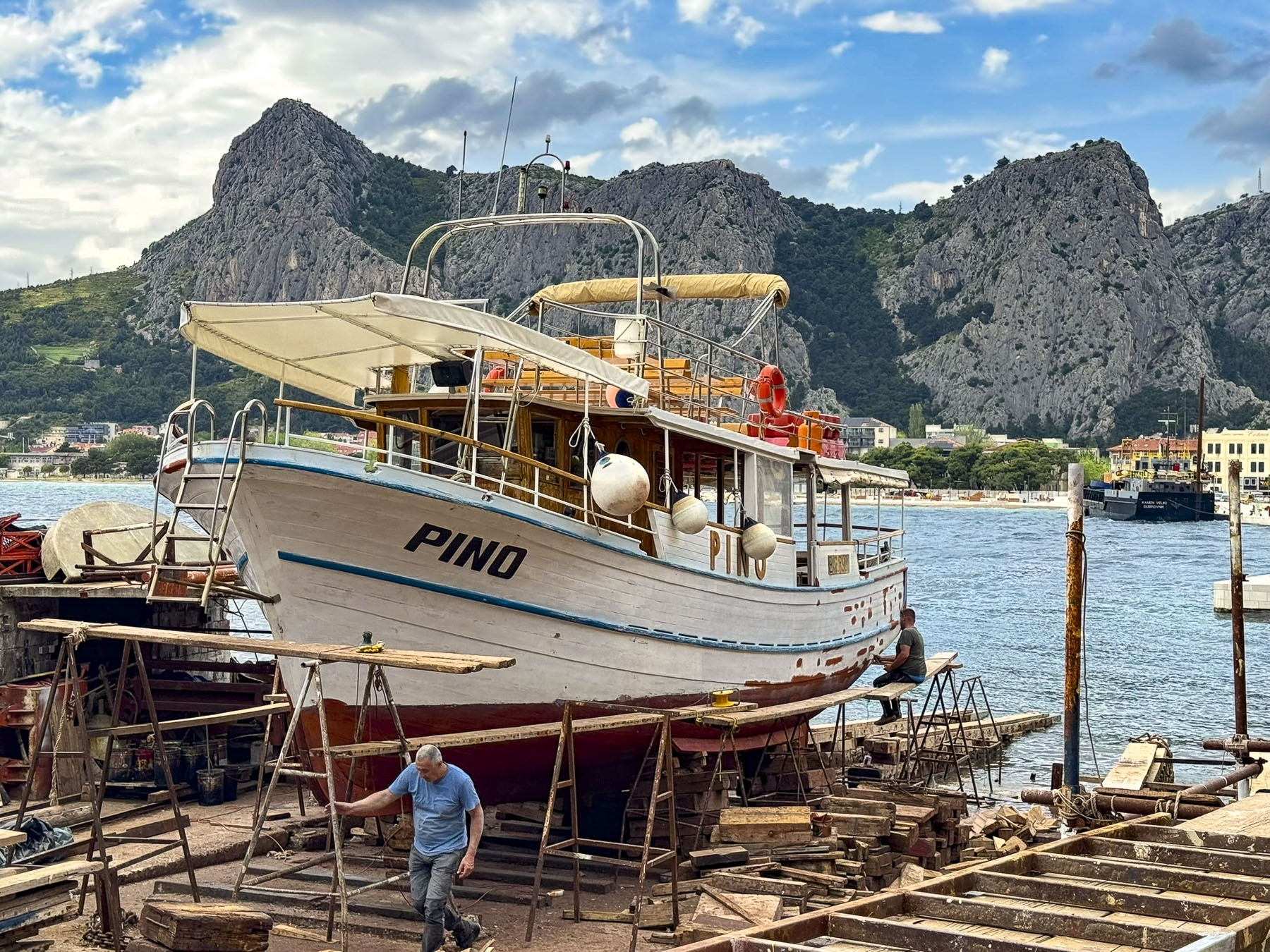
Some of the towns along the way hosted large marinas filled with massive superyachts and sailboats of every size, where boatyard workers were busy readying the vessels for the start of the warm weather boating season. Our favorite sight though was the shipwright, who was extending the life of one, old wooden tour boat for a few more years, in a small boatyard along the side road in Omiš.
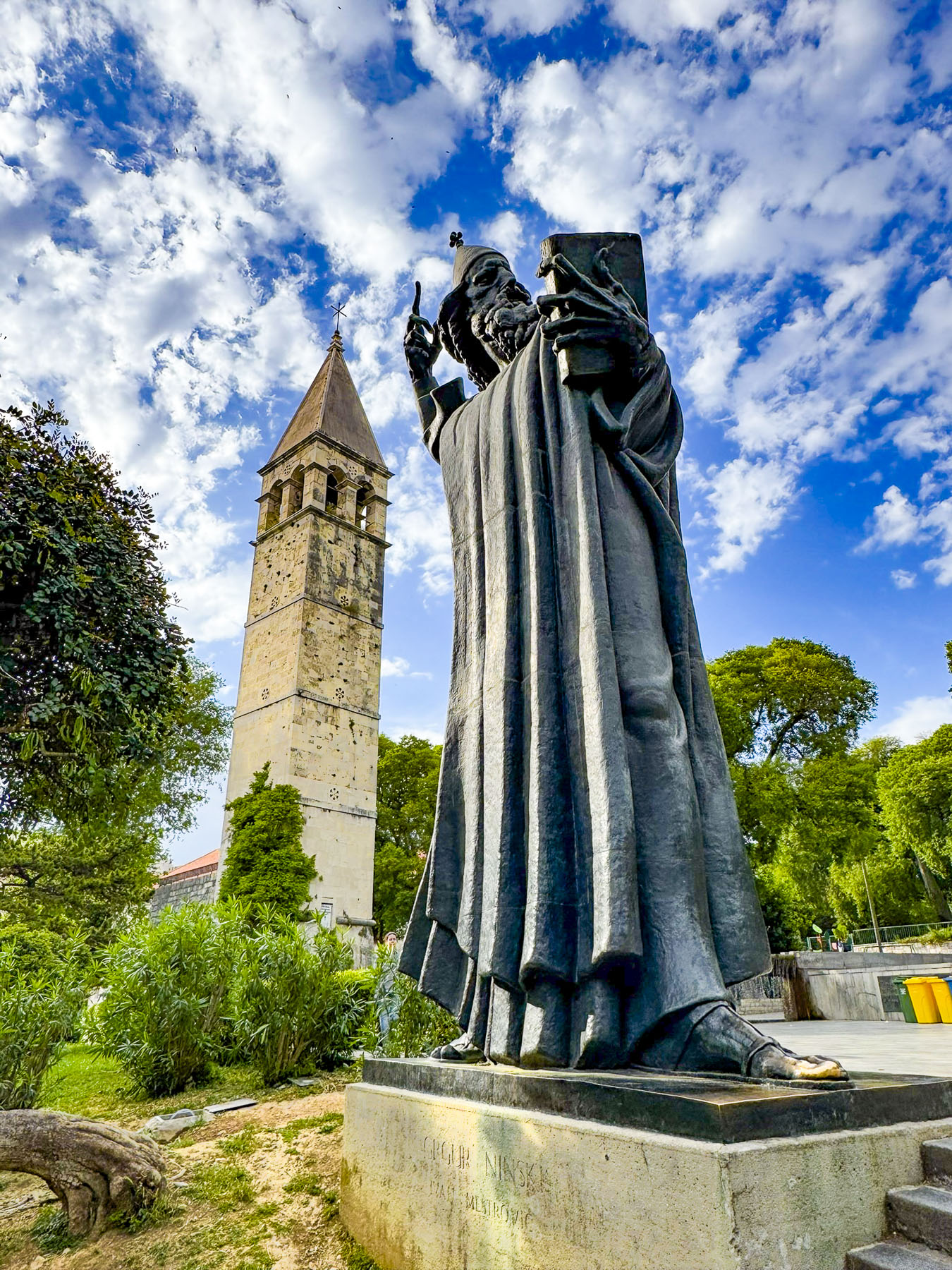
The narrow roads around Diocletian’s Palace in Split’s historic center are normally congested at any time, though even more so in the days preceding the annual May 7th Feast of Saint Domnius. Martyred in 304 AD by the Roman Emperor Diocletian, he is also the city’s patron saint. Fortunately, our hosts at Pellegrini Luxury Rooms recommended several parking areas and we were able to find a convenient lot within easy walking distance from the small boutique guest-house converted from a 200-year-old historic stone building, that was once the home of a wealthy merchant. The inn was just 60m (200ft) from the palace’s Zlatna Vrata, the golden gate, and the giant statue of Gregory of Nin, which we would pass many times during our in Split.
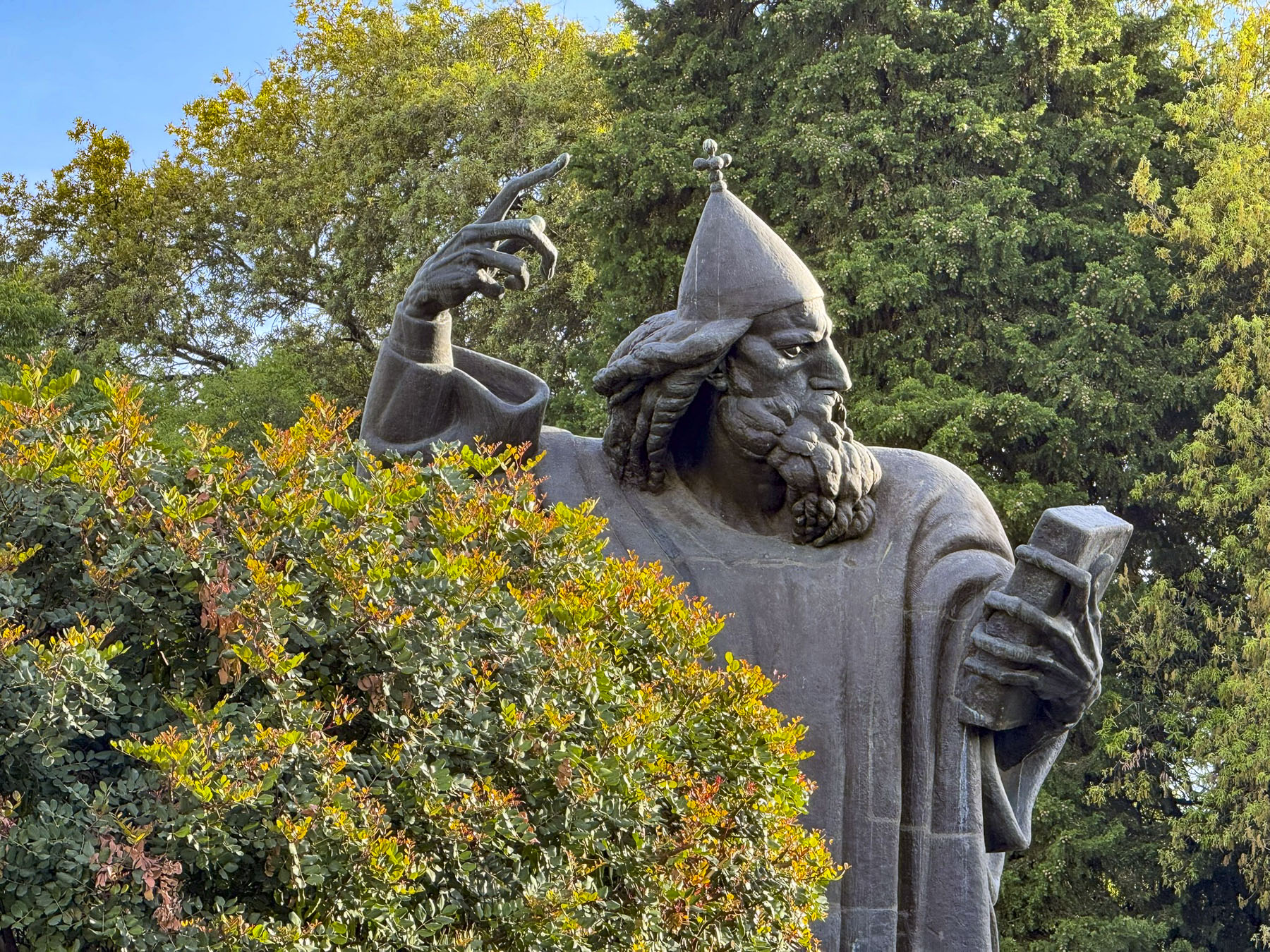
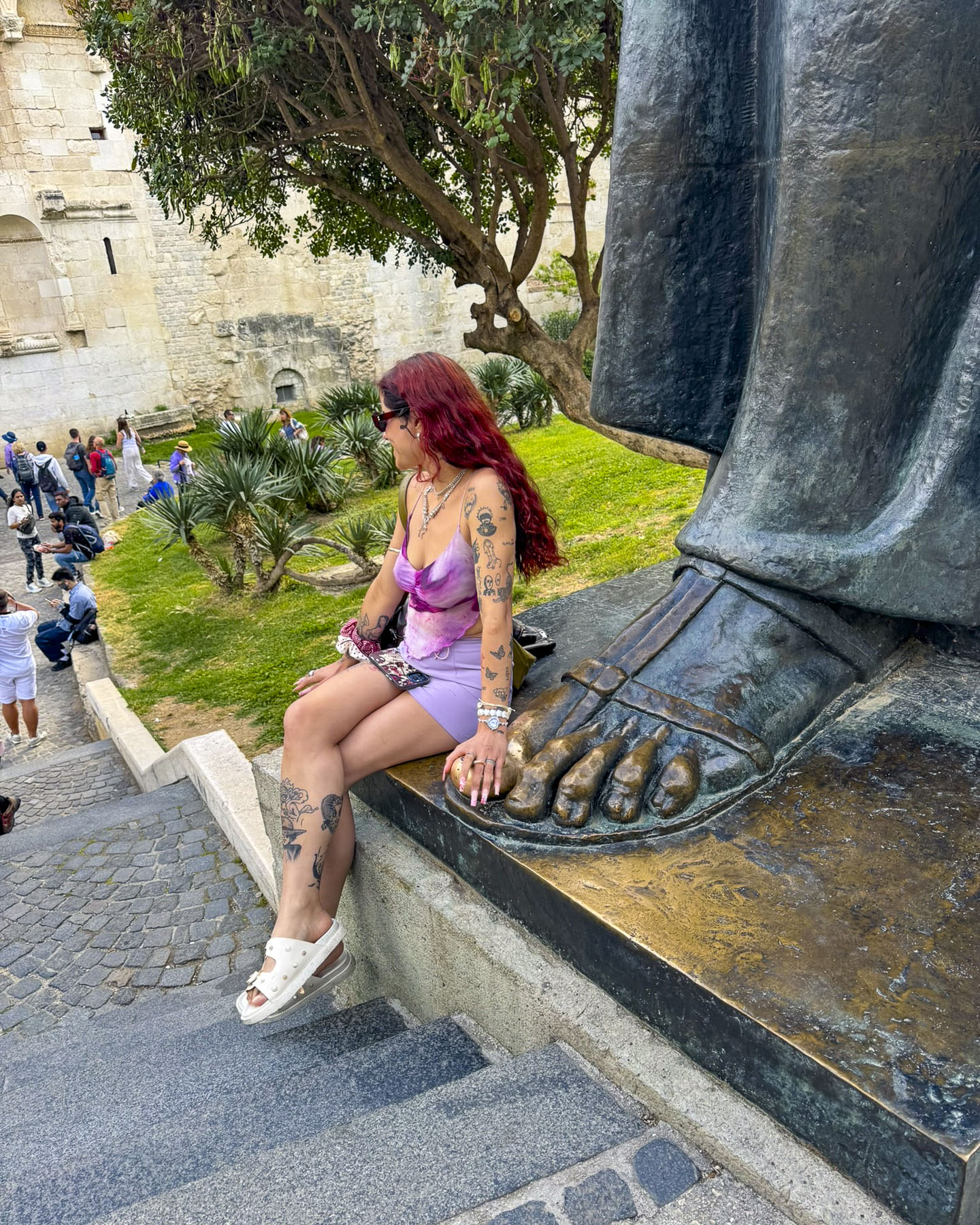
Nin was a bold medieval bishop in the 10th century who advocated strongly for the use of the Croatian language in religious services so that Croats could understand the liturgy, a move which Pope John X outlawed in 925. It’s common practice in Split to rub the golden big toe of Nin’s 8.5-meter (28 ft) tall statue, because legend believes it brings good fortune and the fulfillment of wishes.
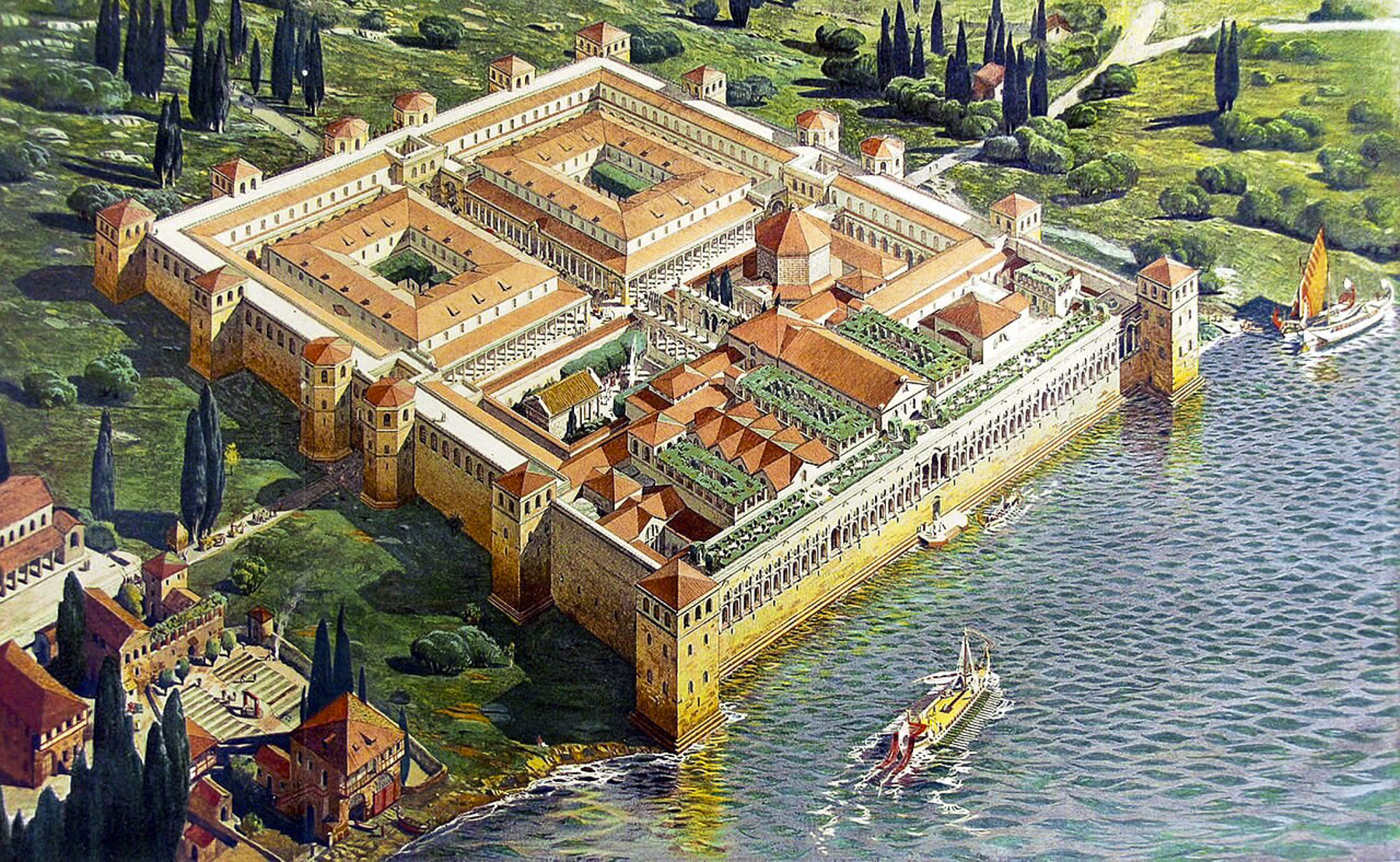
After settling into our room, we headed into Diocletian’s Palace, a huge fortified grand estate the size of a city block in Manhattan. It took ten years to build before the Roman Emperor voluntarily retired to it in 305AD to tend his gardens, where he was particularly fond of “growing cabbages,” preferring peace over the “storms of a never-satisfied greed.” Though his retirement city is a far cry from a pensioner’s cottage in the countryside.
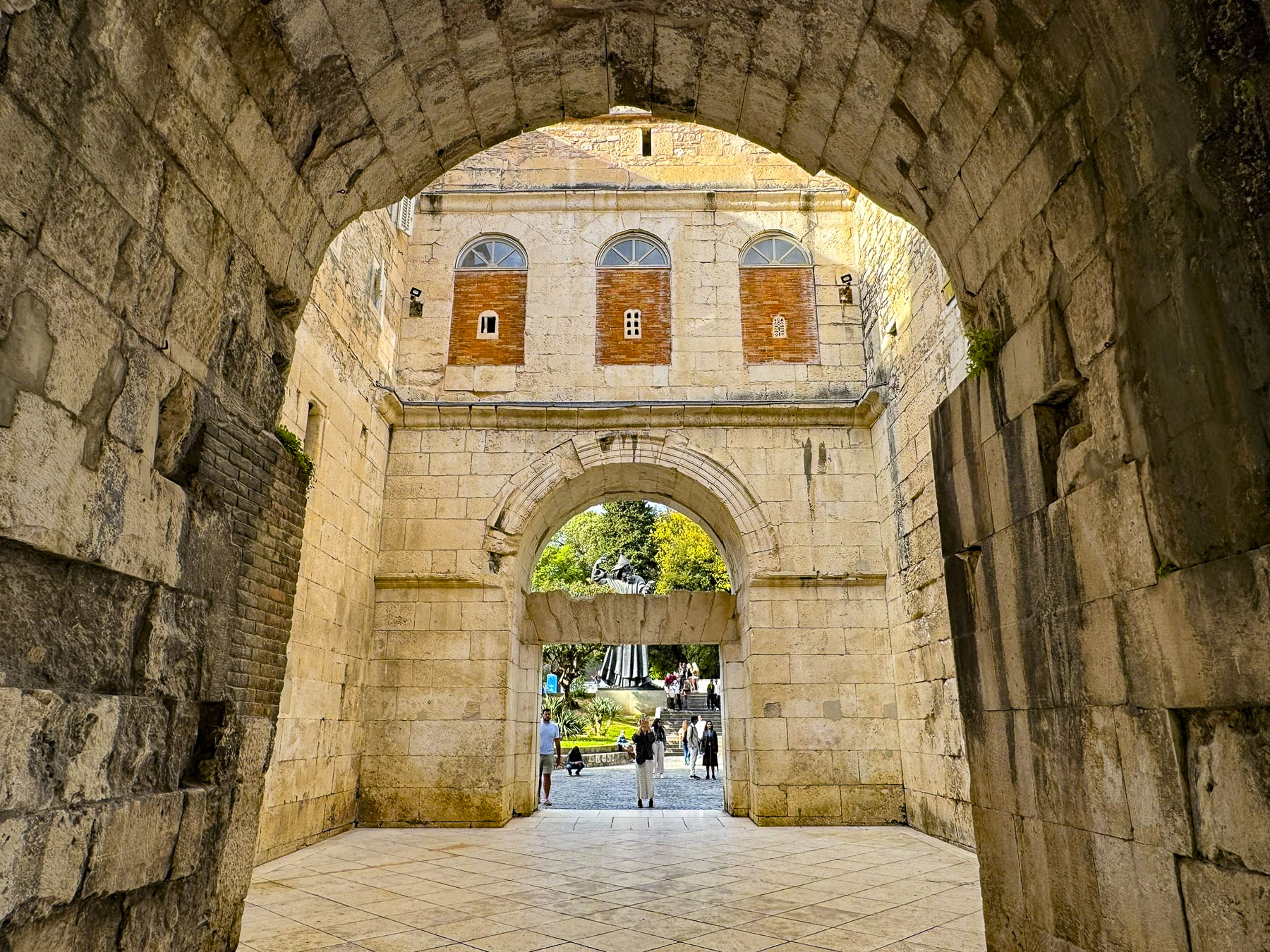
Diocletian was a hometown boy, born in Croatia around 244 AD, who rose through the Roman army’s ranks to become a prominent calvary commander during the rule of Emperor Carus. After Carus and his son Numerian died while returning from a successful  campaign in Persia, Diocletian, who was commander of Carus’s elite imperial bodyguard, was proclaimed emperor by the troops. This was contested by Caru’s surviving son, Carinus, whom Diocletian defeated in 285 AD at the Battle of the Margus in Serbia to retain the throne. His reign was known for stabilizing the frontiers of the Roman Empire and dividing the empire into Eastern and Western halves for administrative purposes, the precursor to what eventually became two separate empires. He also initiated the last, most severe and systematic persecution of Christians before the empire slowly began to adopt Christianity under Emperor Constantine in 312AD.
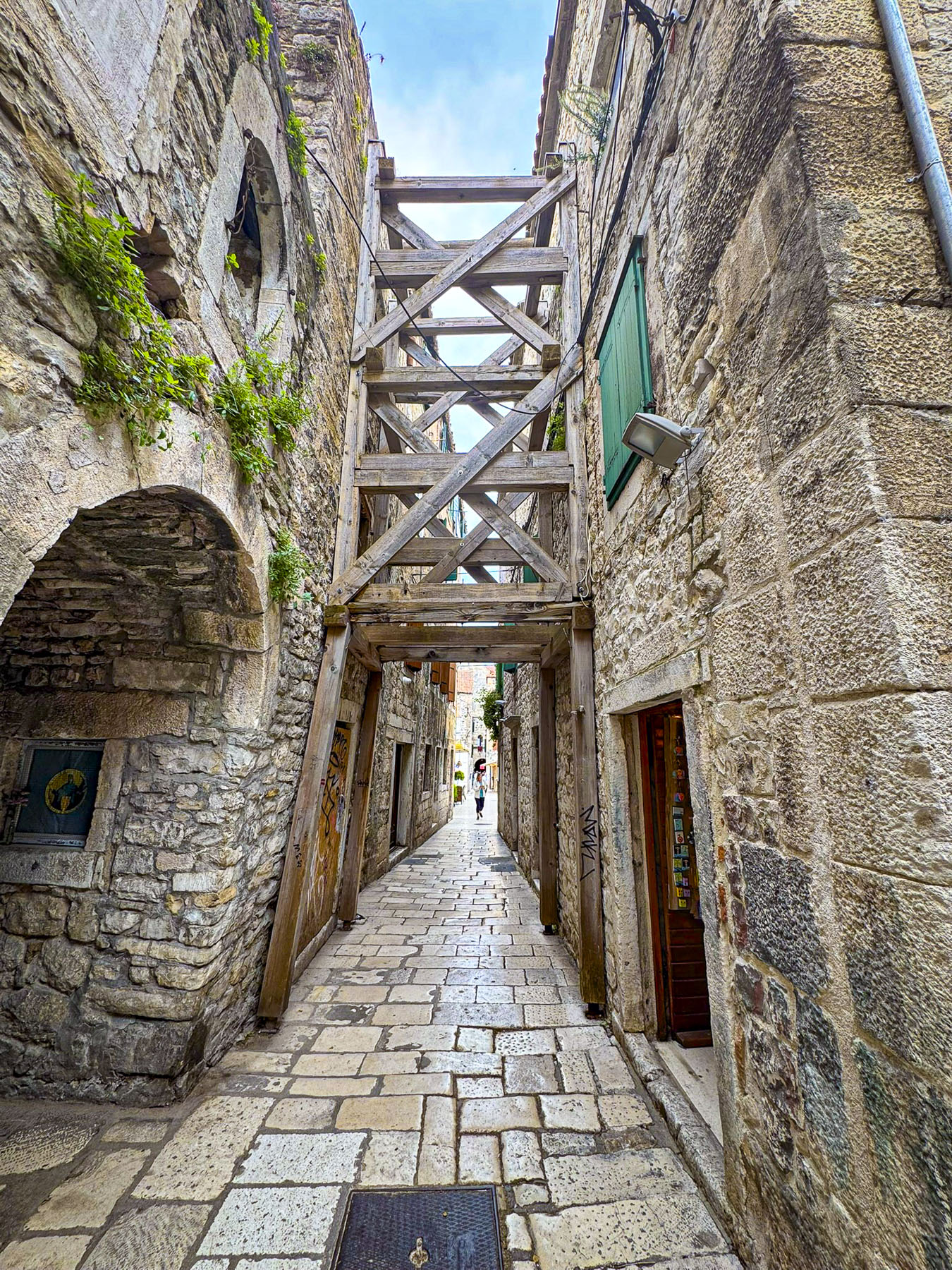
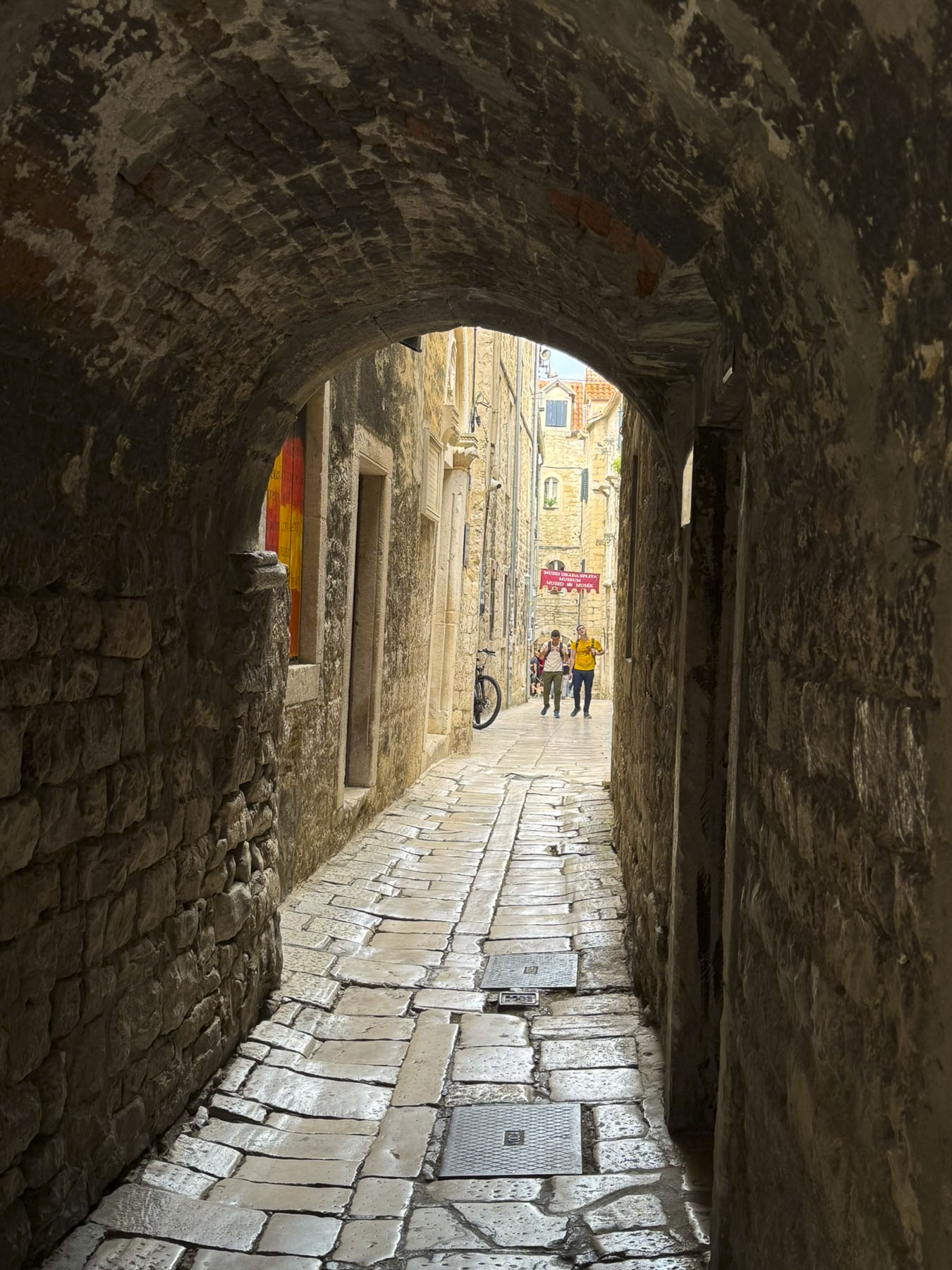
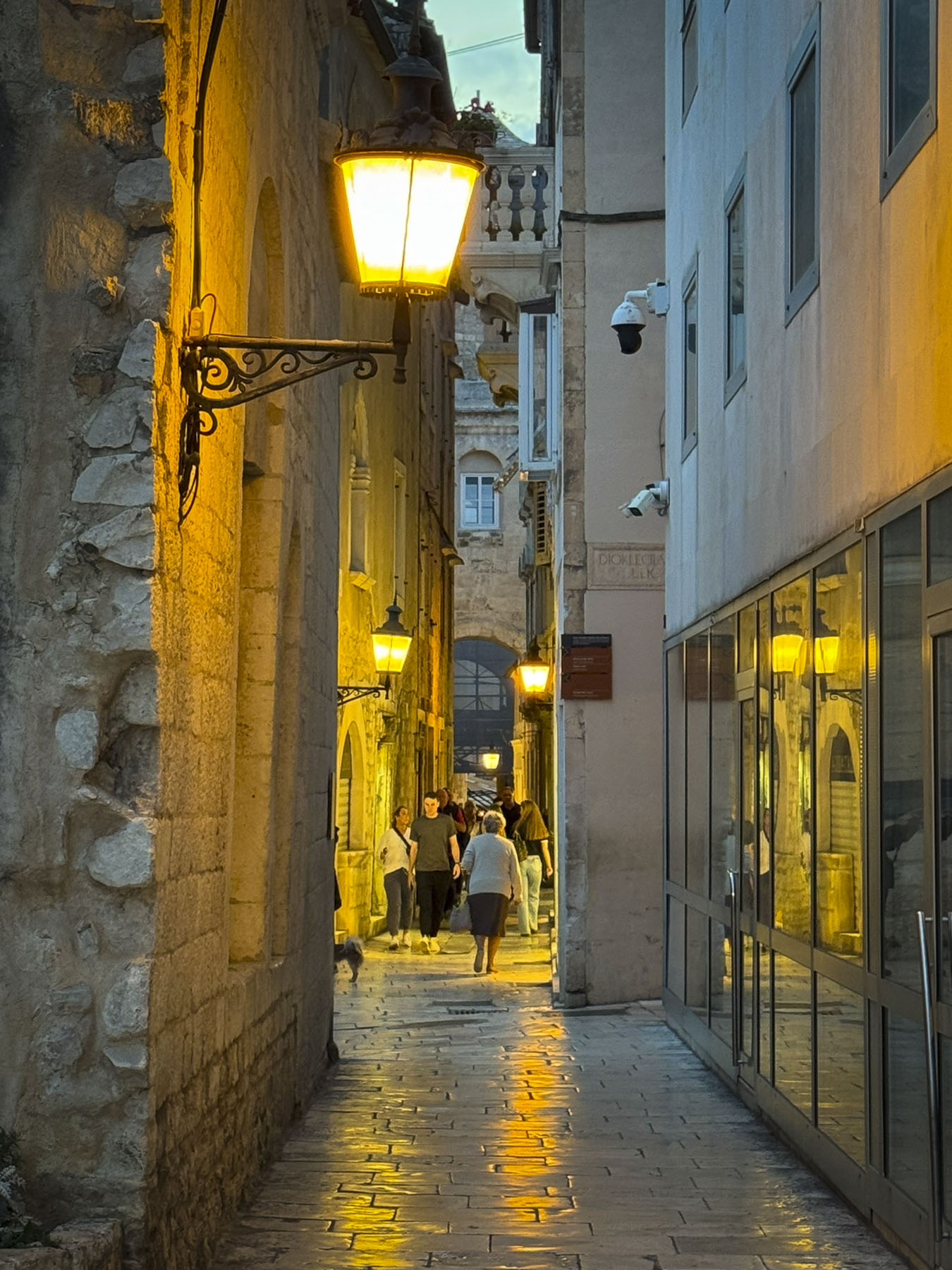
Following narrow alleys, some of which needed retaining braces across them to prevent the centuries’ old buildings from collapsing onto the cobblestones, we reached the Peristyle, the imperial plaza.
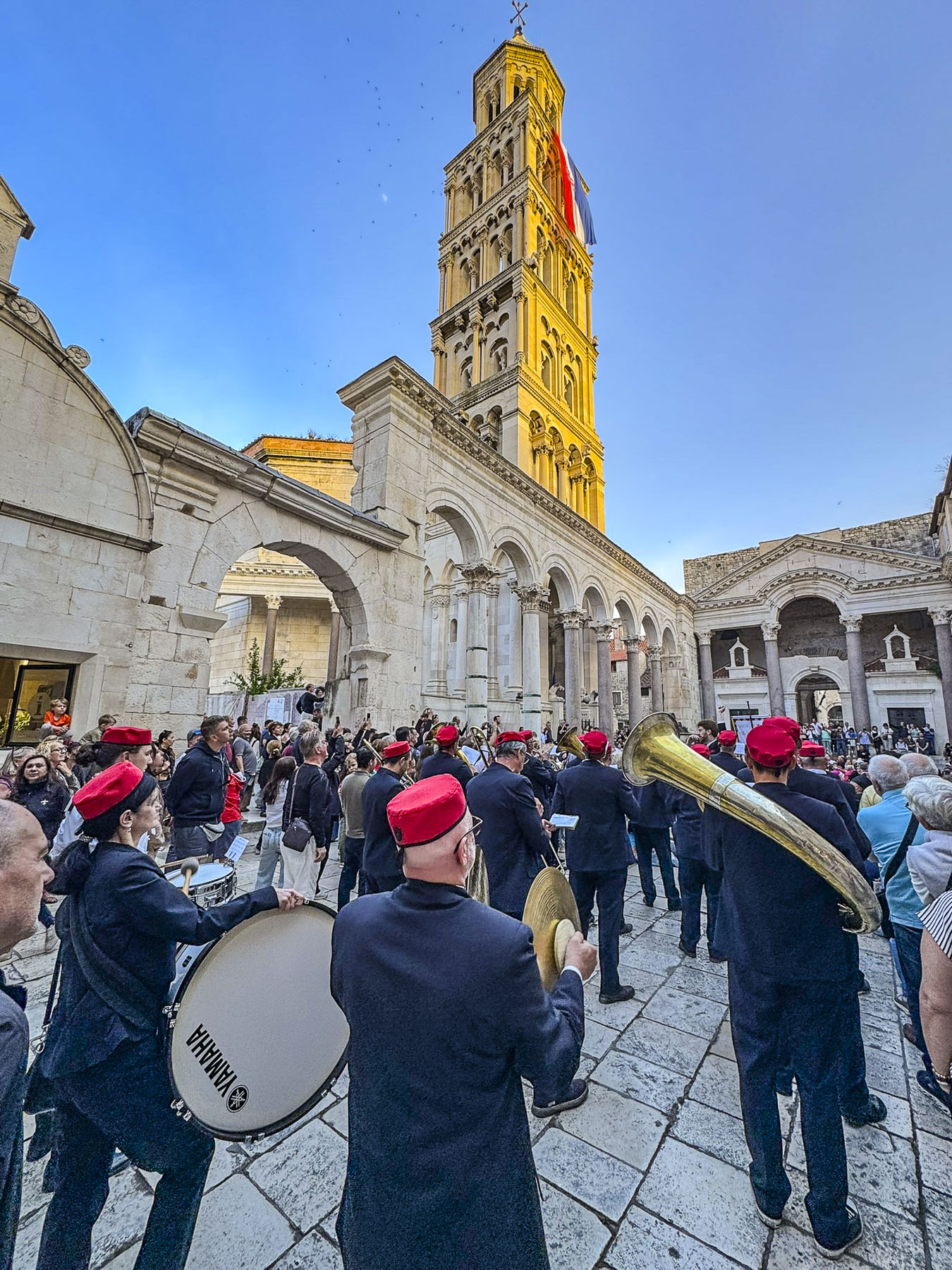
A marching band was playing as part of the prelude to the celebrations for the Feast of Saint Domnius. Fans of the Game of Thrones television series will recognize the Peristyle as the filming location for the city of Meereen, during seasons three to six.
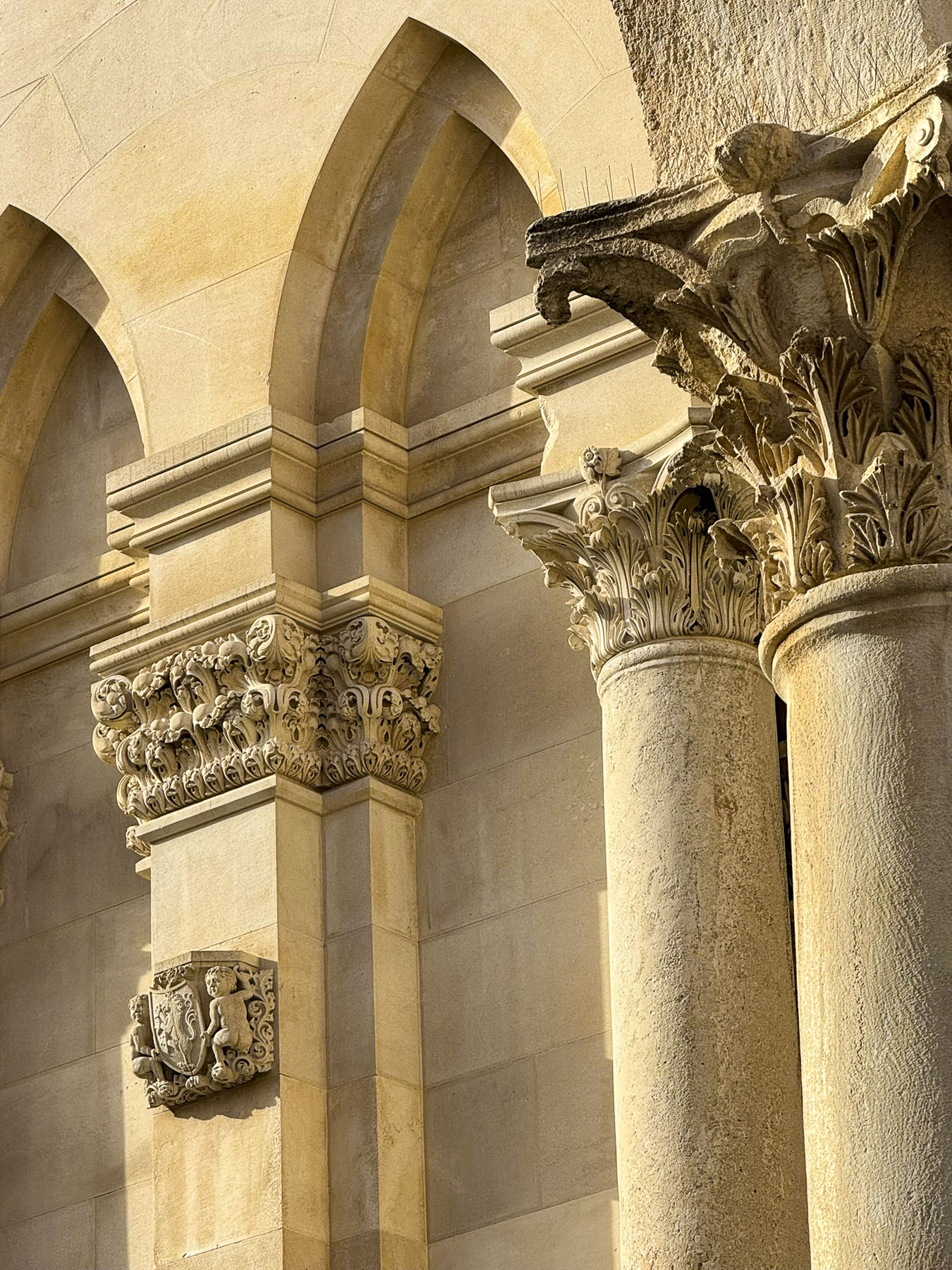
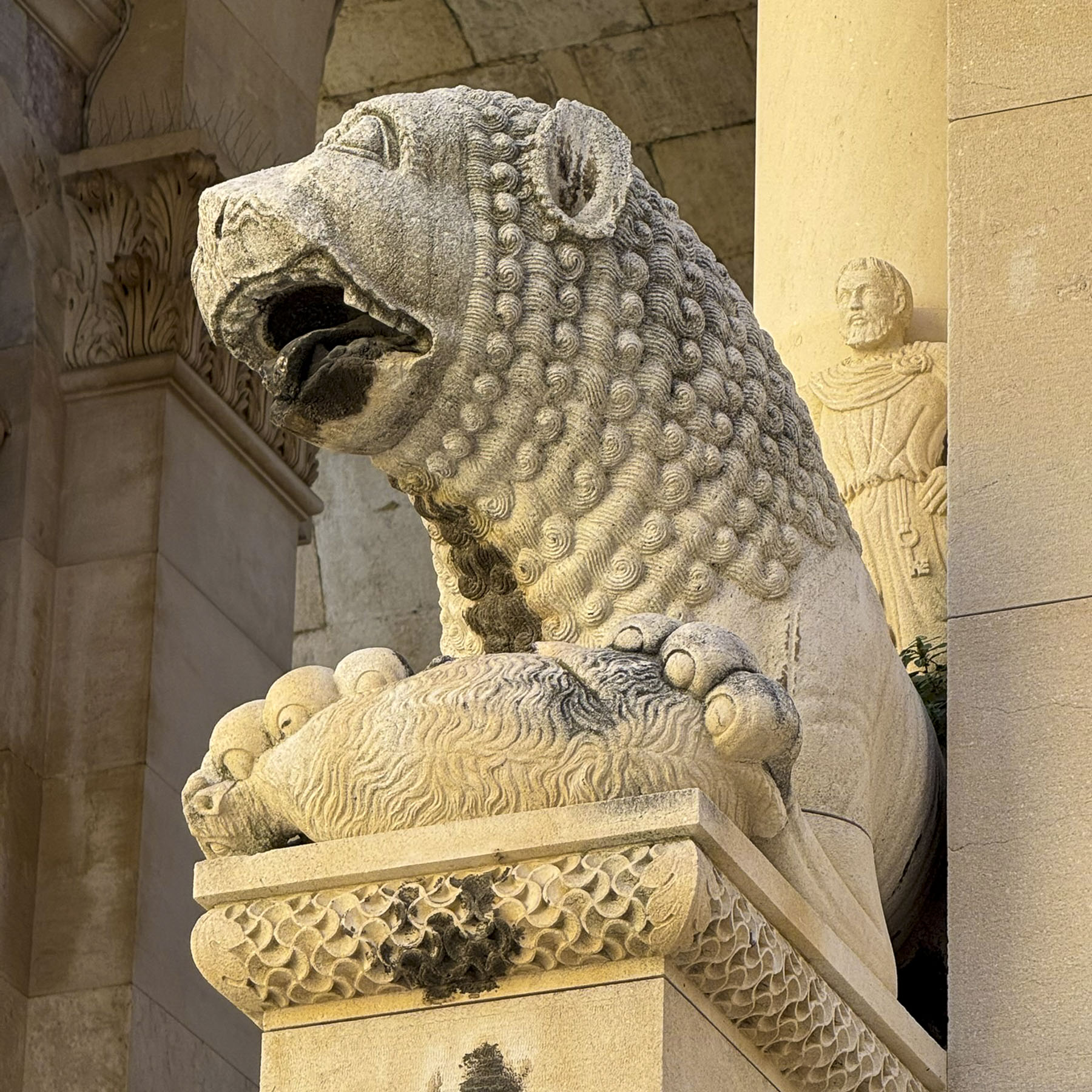
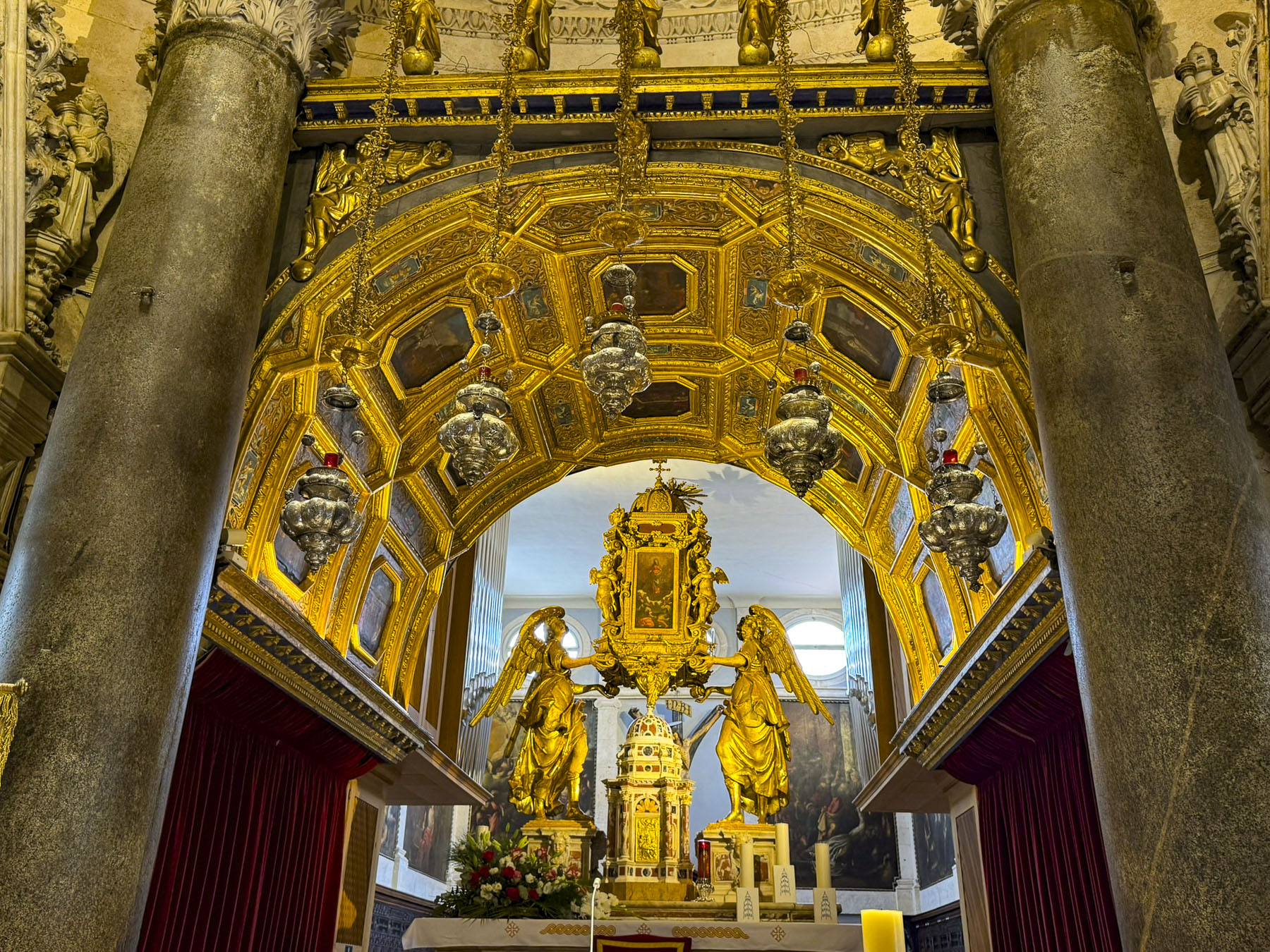
Surrounded by a colonnade of Corinthian columns, this was the ceremonial heart of the palace, with the Temple of Jupiter, as well as Diocletian’s mausoleum, now the Cathedral of St. Domnius. The cathedral’s belltower, which blends Romanesque and Gothic styles, is the tallest along the Dalmatian coast at 57m (187 ft) in height and took over 300 years to build from when its cornerstone was laid in the 13th century. If you have the stamina, the belltower is open for folks to climb 183 steps to the top, for a beautiful view over the city. 
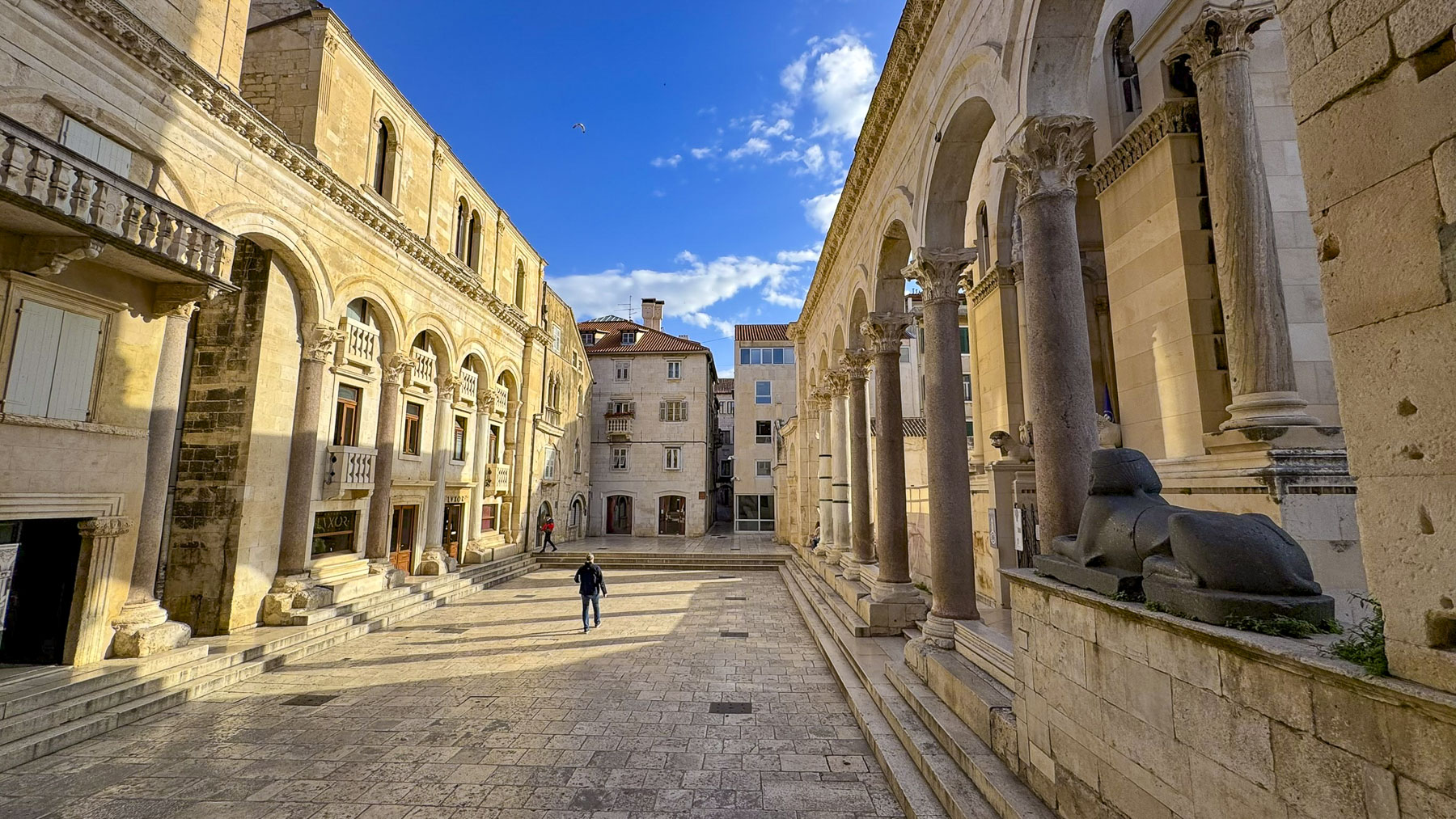
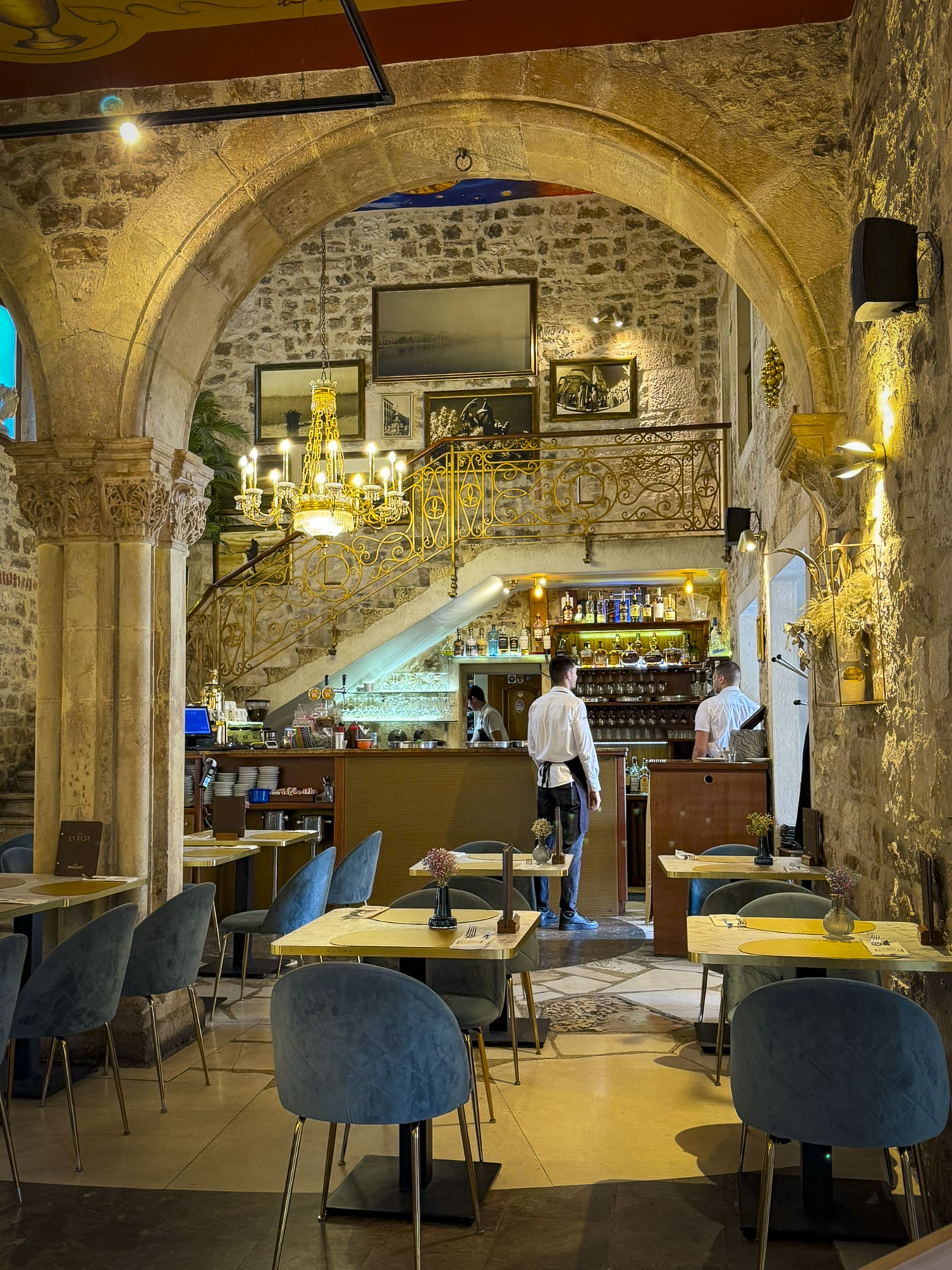
On the other side of the Peristyle a Roman Temple of Venus once stood, though only a circular marble medallion denoting the position of the temple remains on the floor of the Lvxor Café. The café’s site has gone through multiple reconstructions across the centuries before receiving its ornamented columned façade in the Middle Ages, when it was used as Split’s City Lodge, an administration center.  Later it was repurposed as an elaborate home for various Split noble families until 1941, when the Lvxor Café opened. It’s now a popular place for coffee and dinner, and to people-watch while sitting on the steps out front on cushions they provide.
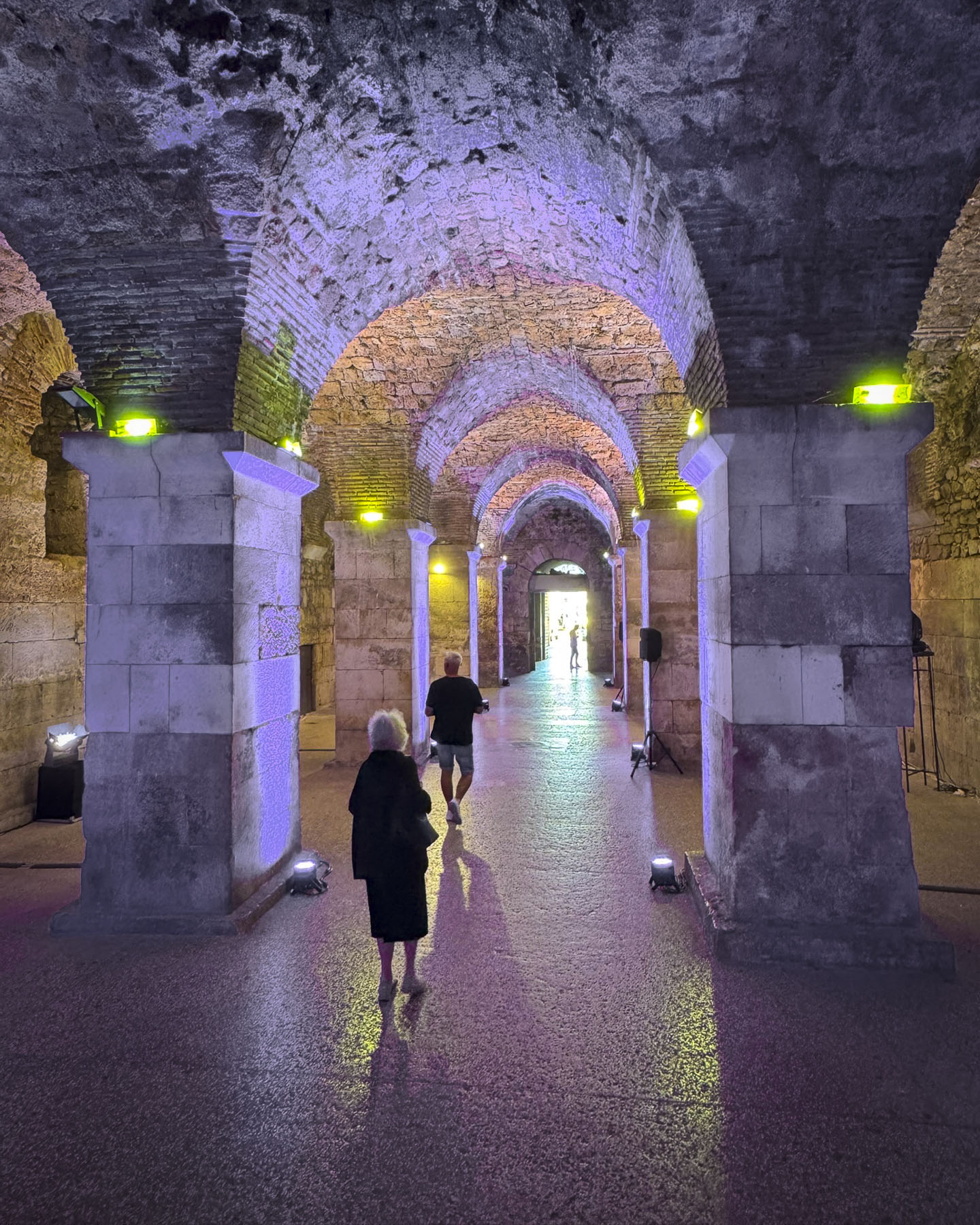
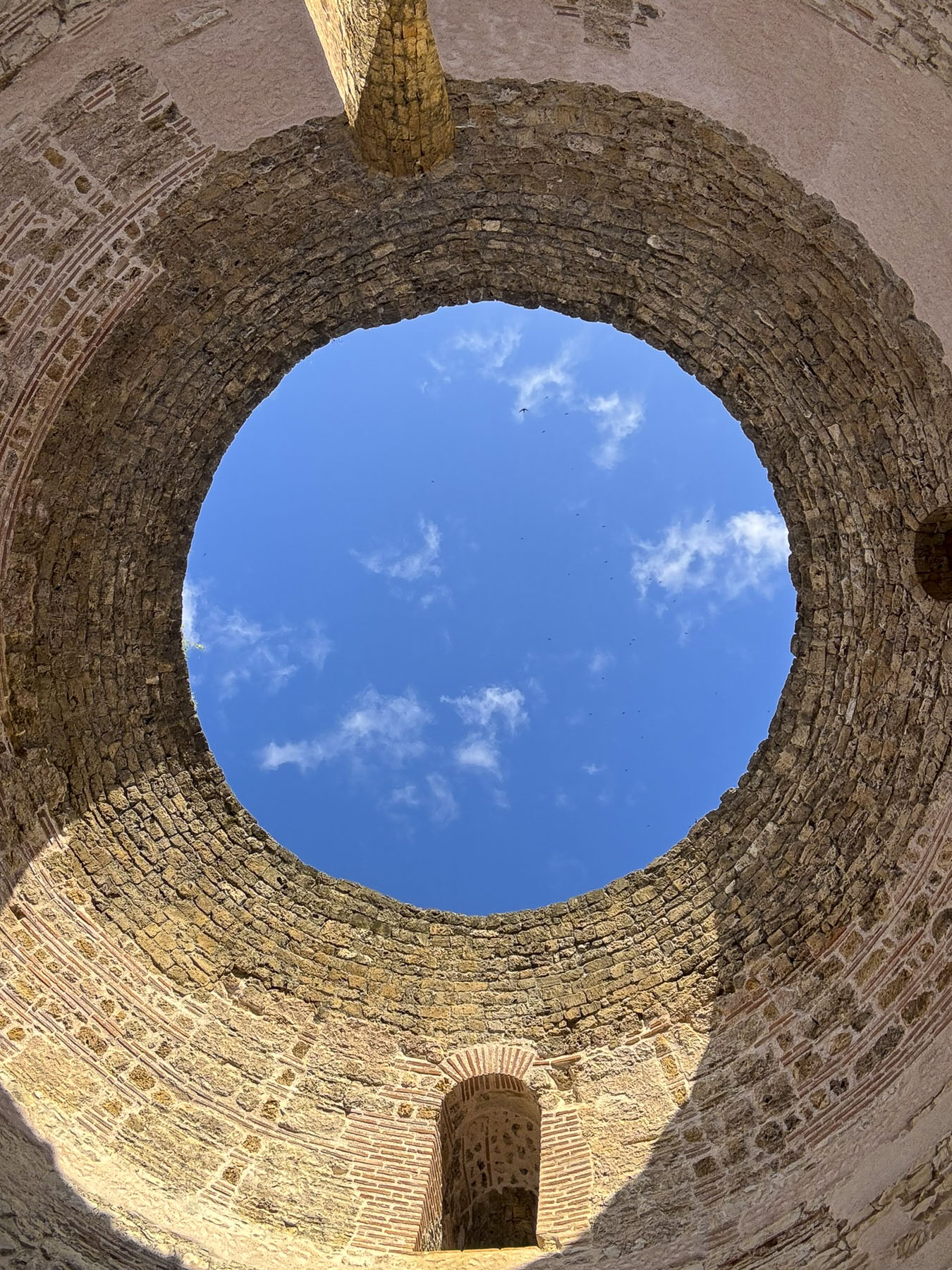
At the far end of the plaza were the stairs to Dioklecijanovi Podrumi, the palace cellars, which were also used as the location for a dragon’s dungeon in Game of Thrones. At the other end of the cellars was the Porta Maris, or Sea Gate, where imperial galleons rowed by slaves once docked along the palace’s seaward wall. Stairs going up also led to the Vestibul of the royal quarters. It’s a tall cylinder-shaped tower with a dramatic ocular opening at the top which illuminates the interior wall with a round beam of light on a sunny day. From here various passages, now walled off, led to different living areas within the palace.  
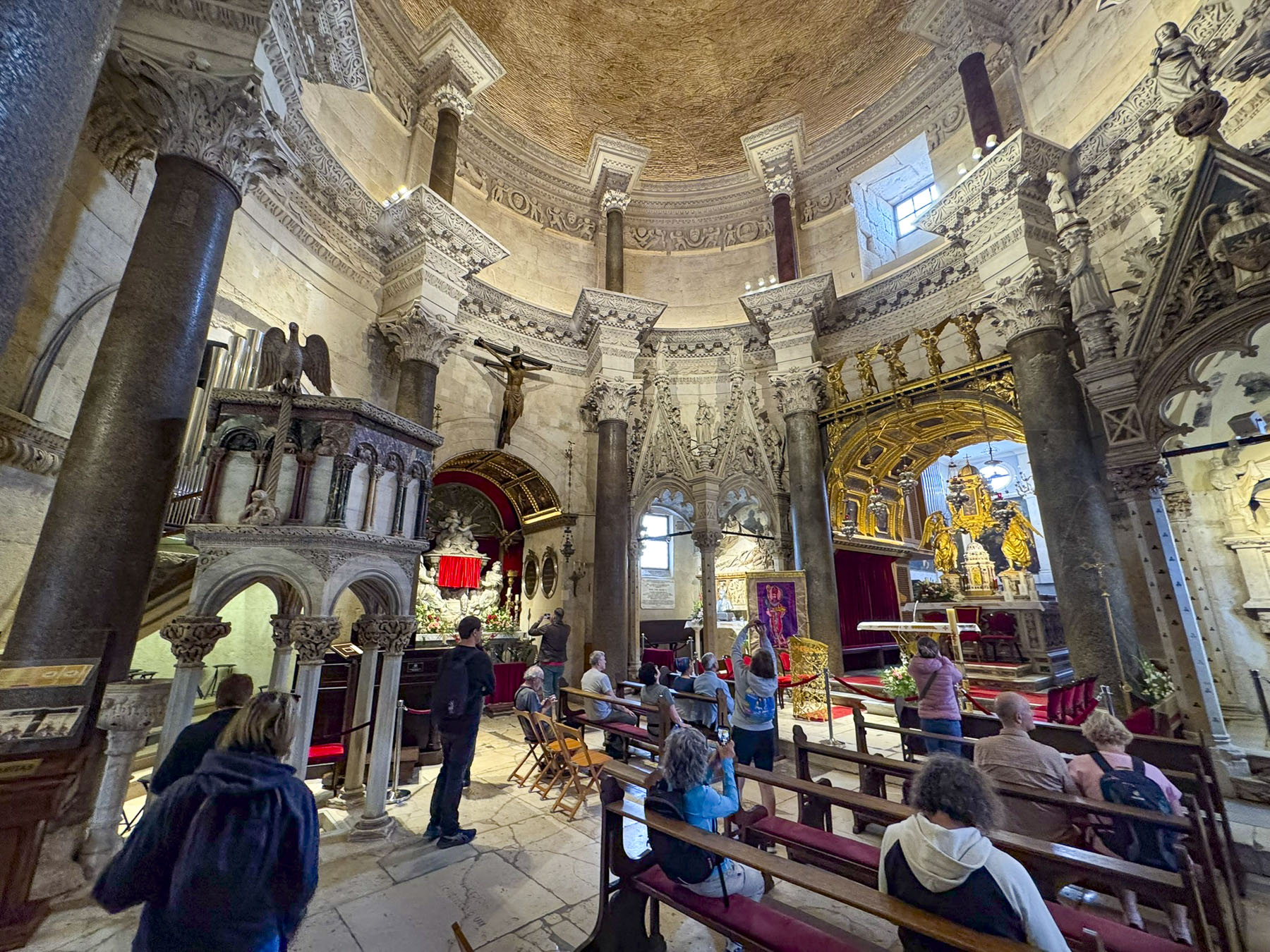
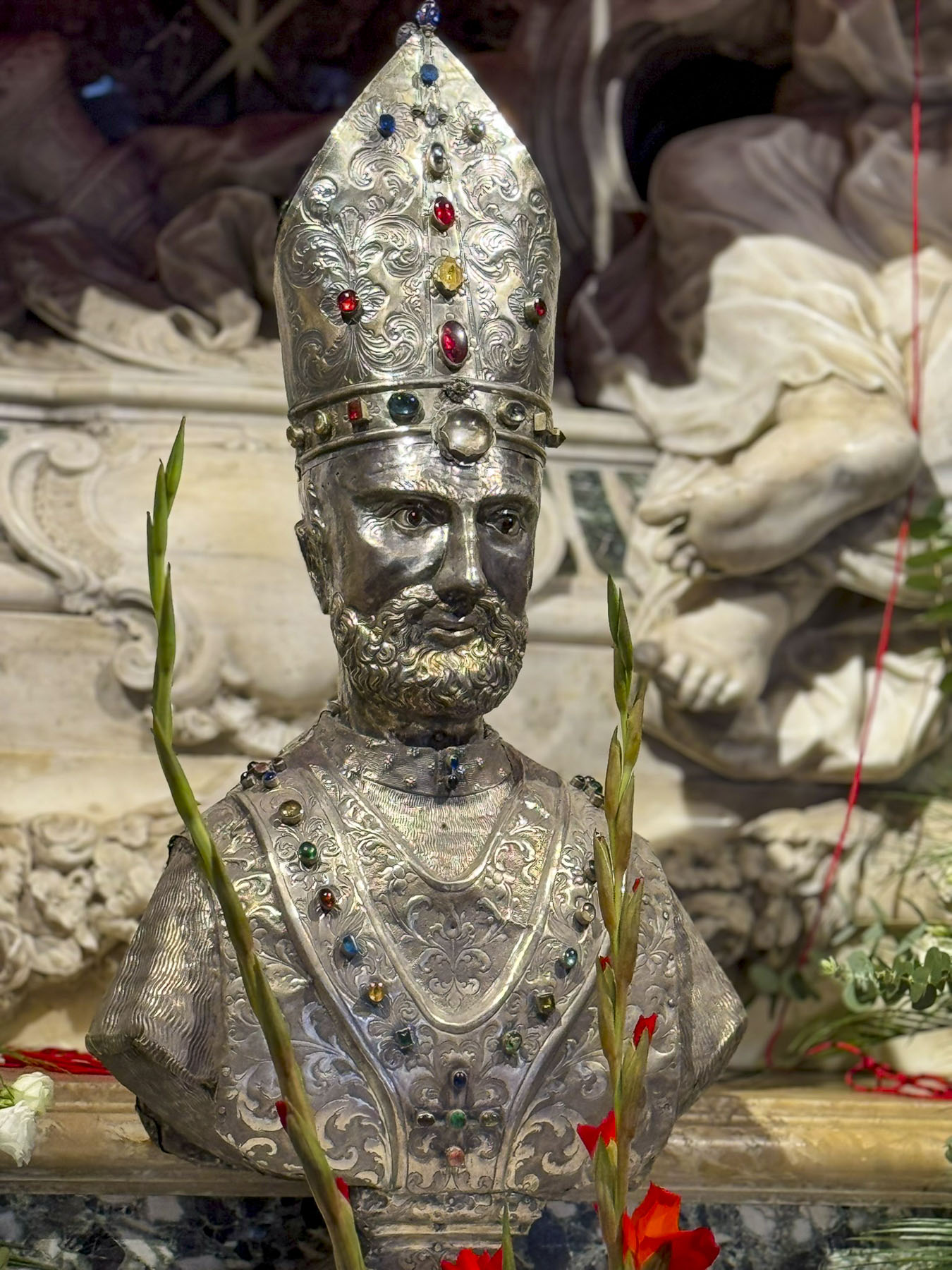
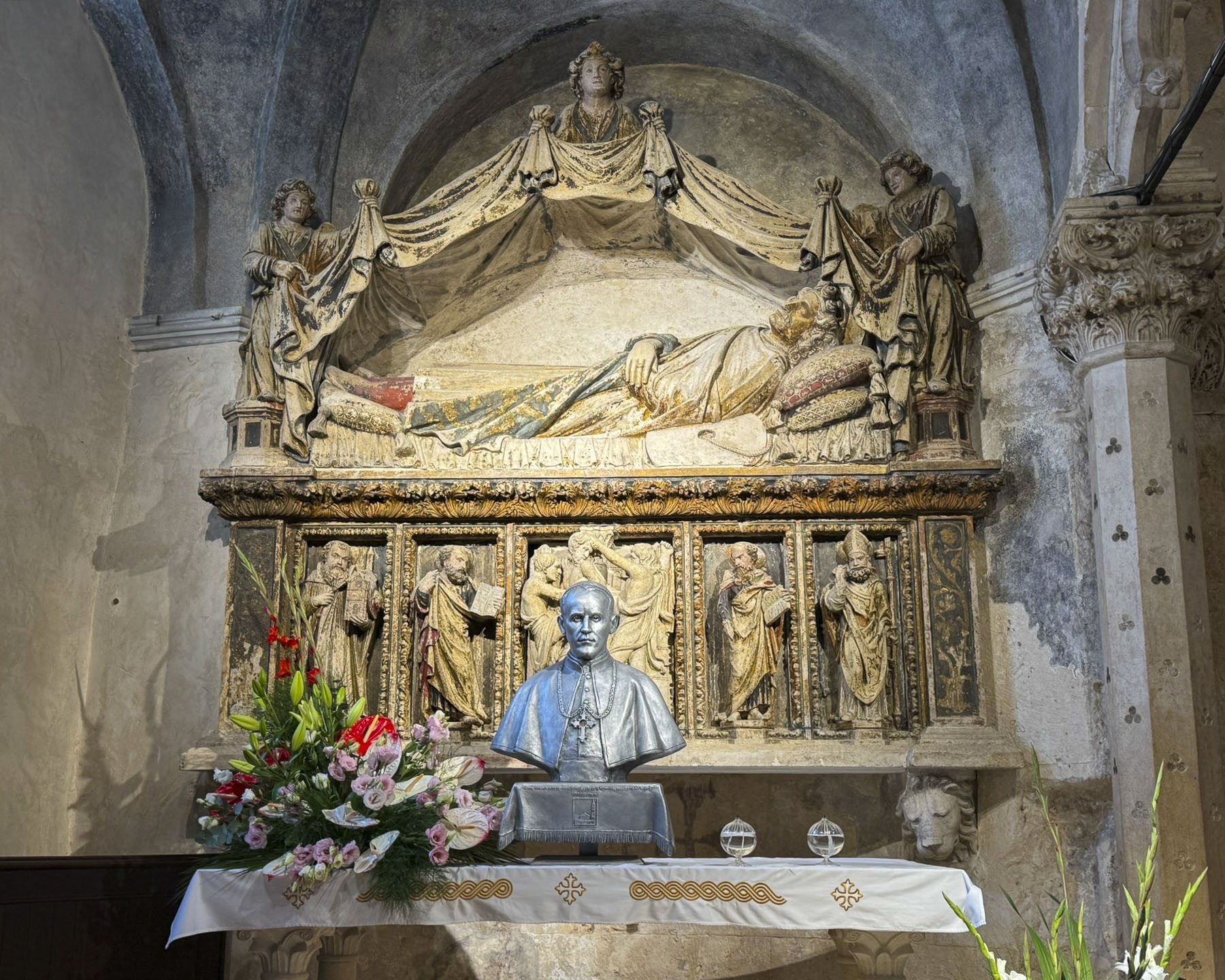
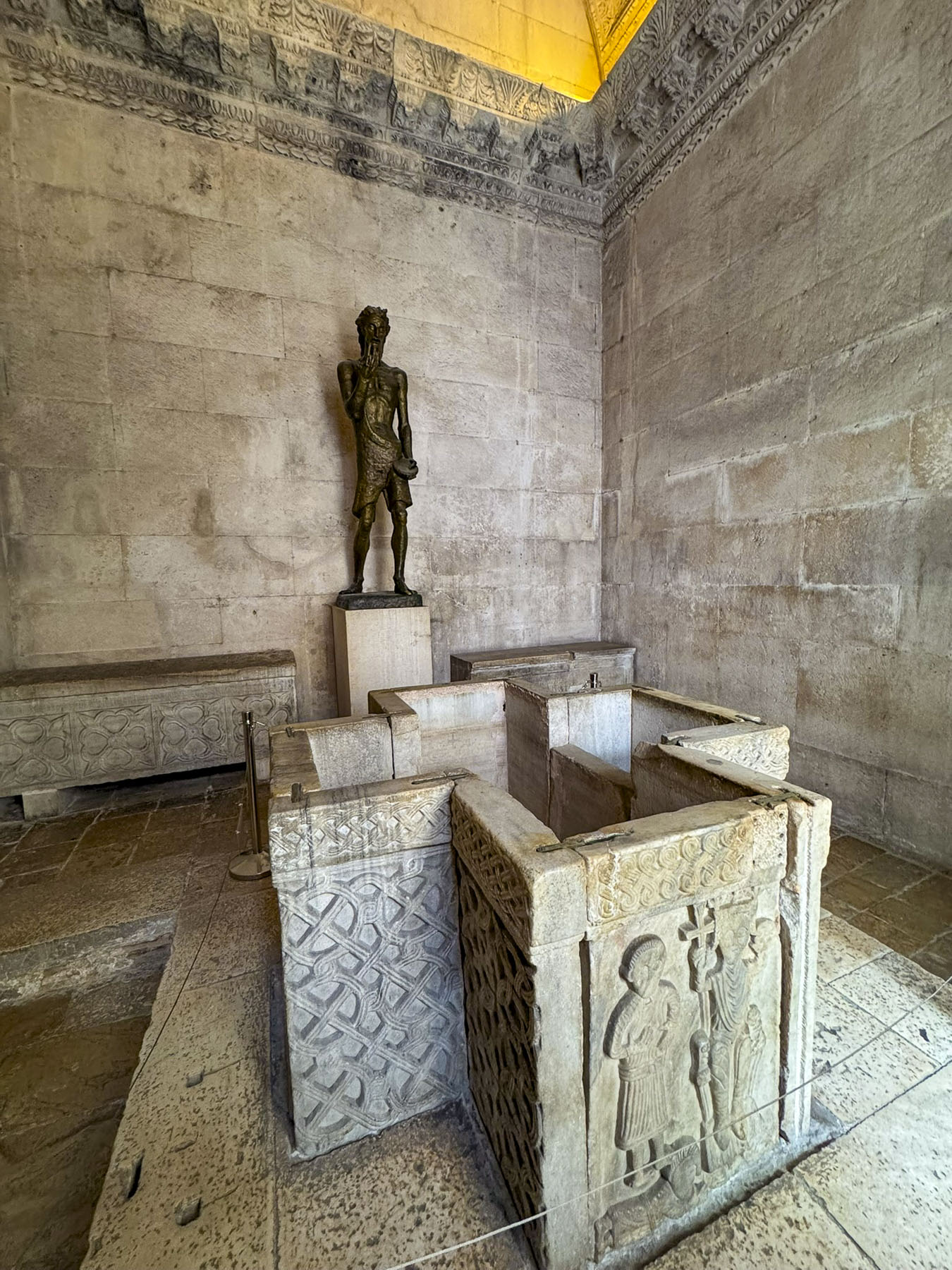
With the decline of the Western Roman Empire, Avar and Slavic tribes began attacking the region in the early 7th century, and large numbers of folks living in the area fled to safety behind the palace’s defenses. Over the centuries these refugees turned the palace into a small bustling medieval city where homes and trade shops were built within, around, and on top of the palace walls and halls. It was during this time that Diocletian’s mausoleum was converted into the Cathedral of St. Domnius, and the relics of the saint were encased in a silver bejeweled bust and displayed in a side chapel of the church, while the Temple of Jupiter was repurposed as the church’s baptistry.
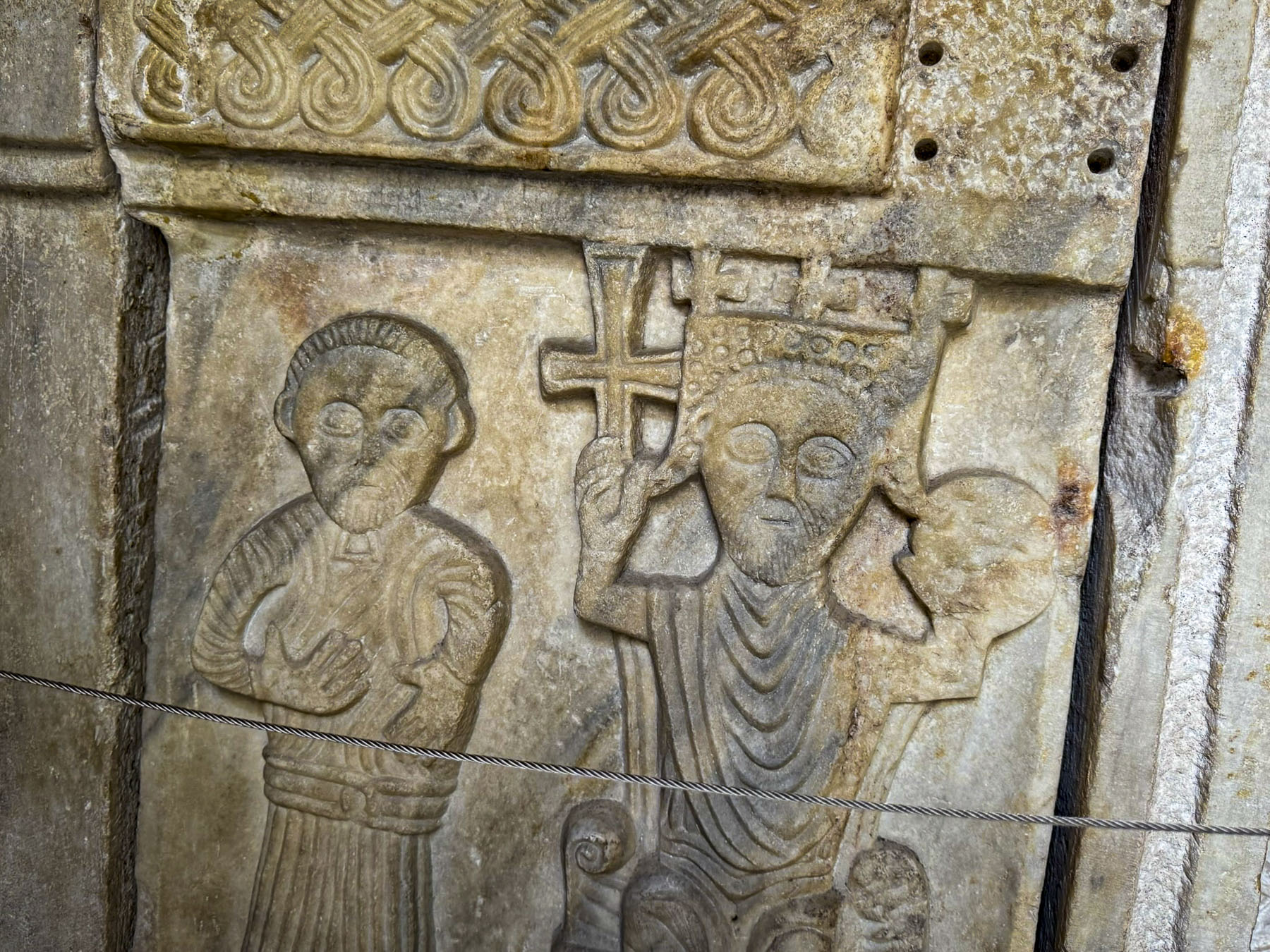
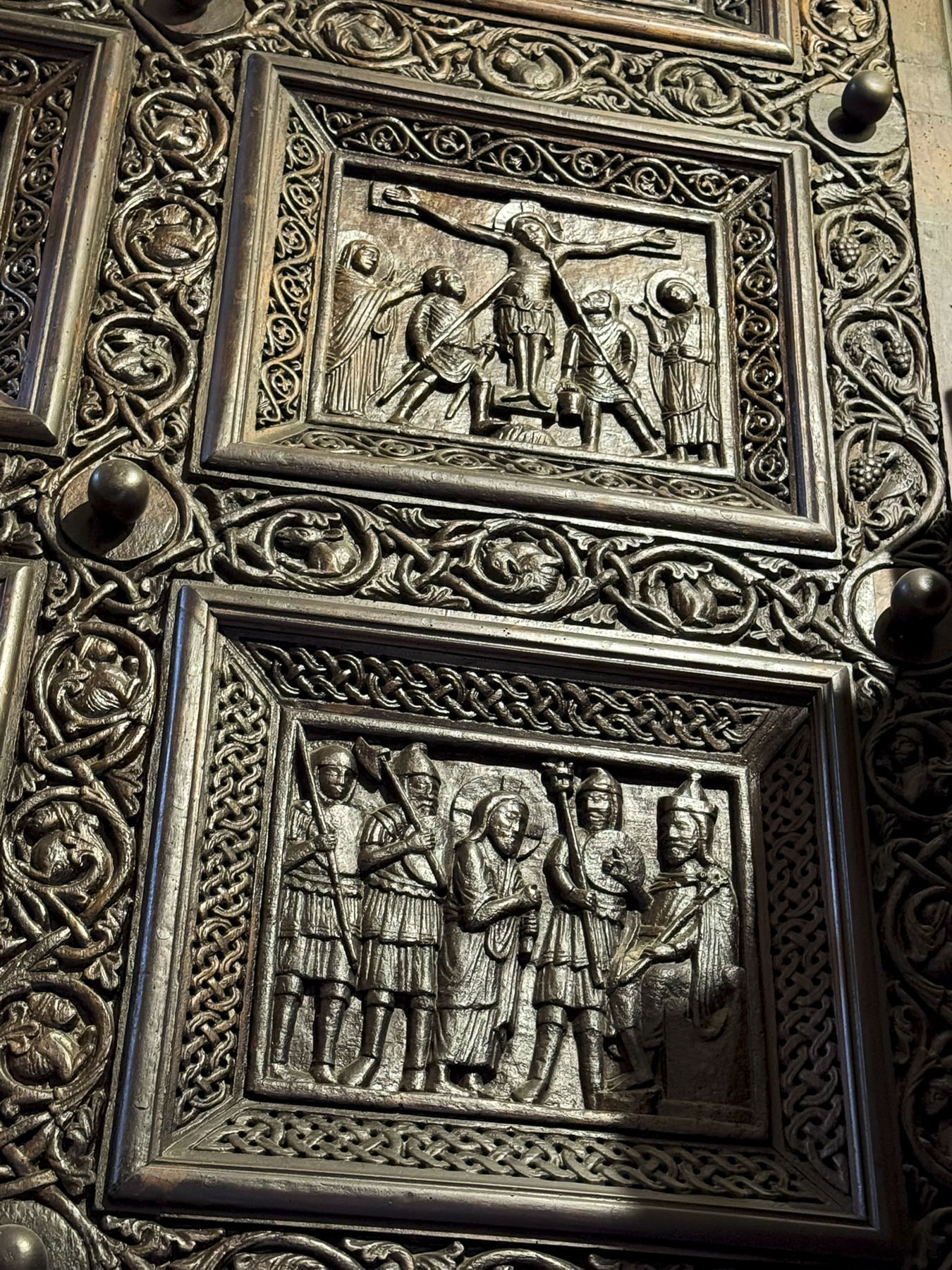
The city became an important Roman port after the region was reconquered by the Byzantine Empire, the former Eastern Roman Empire. Today, Diocletian’s Palace is a vibrant UNESCO World Heritage Site, and a living city with 3,000 residents that live behind its walls, blending history and daily life. Locals and tourists enjoy coffee in cobbled courtyards, and shops and restaurants invite visitors into buildings that have stood for nearly two millennia.
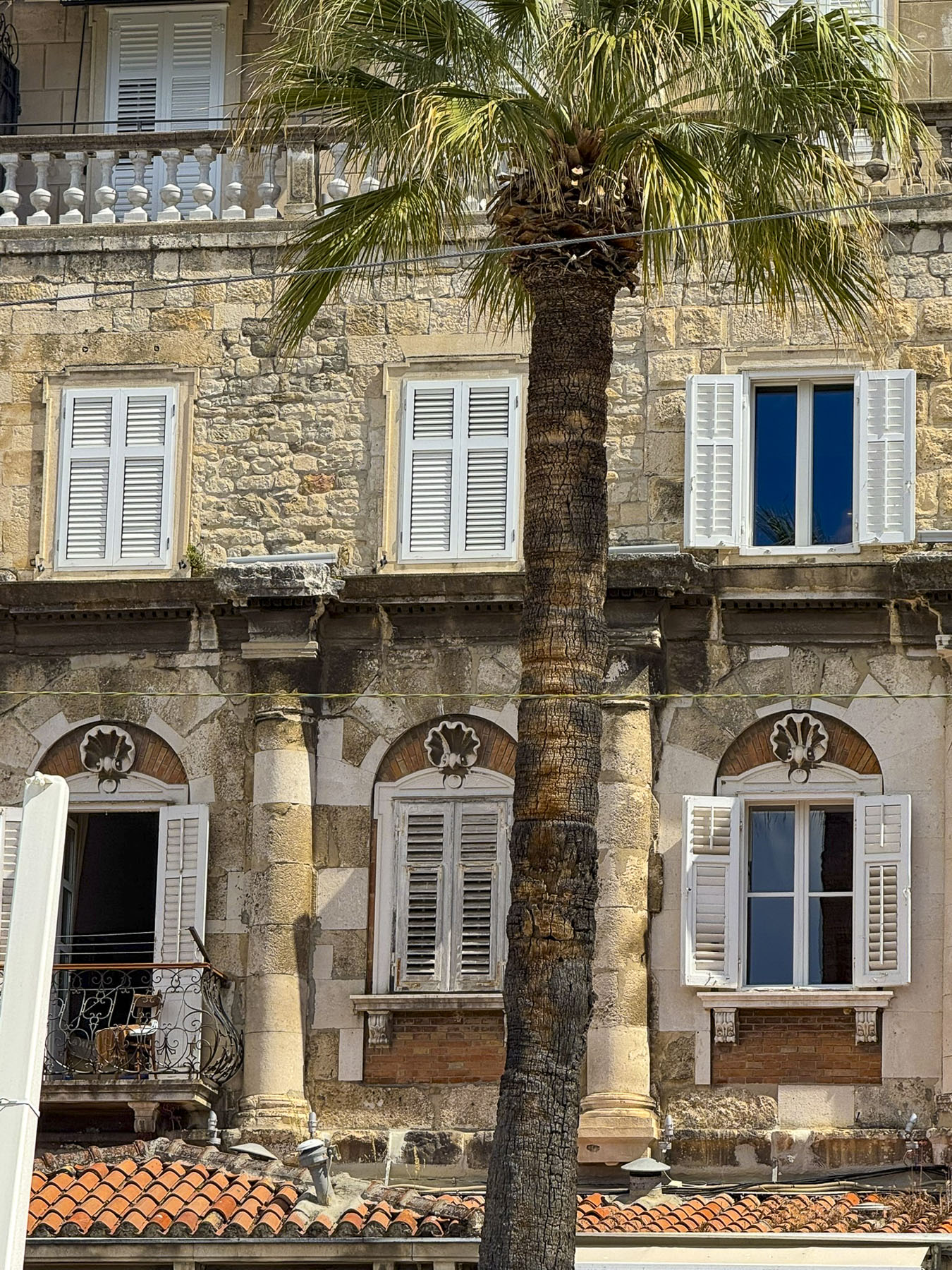
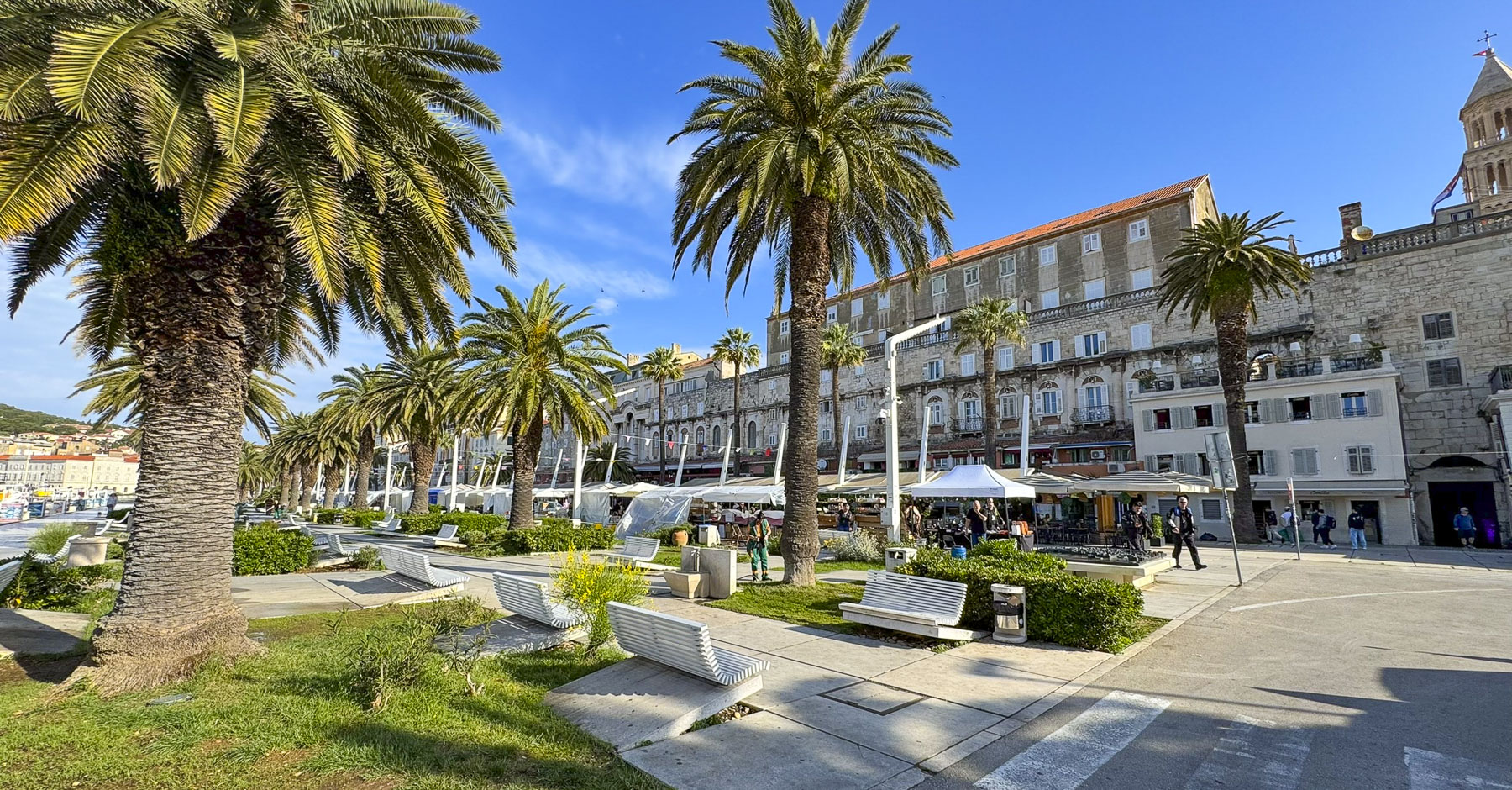
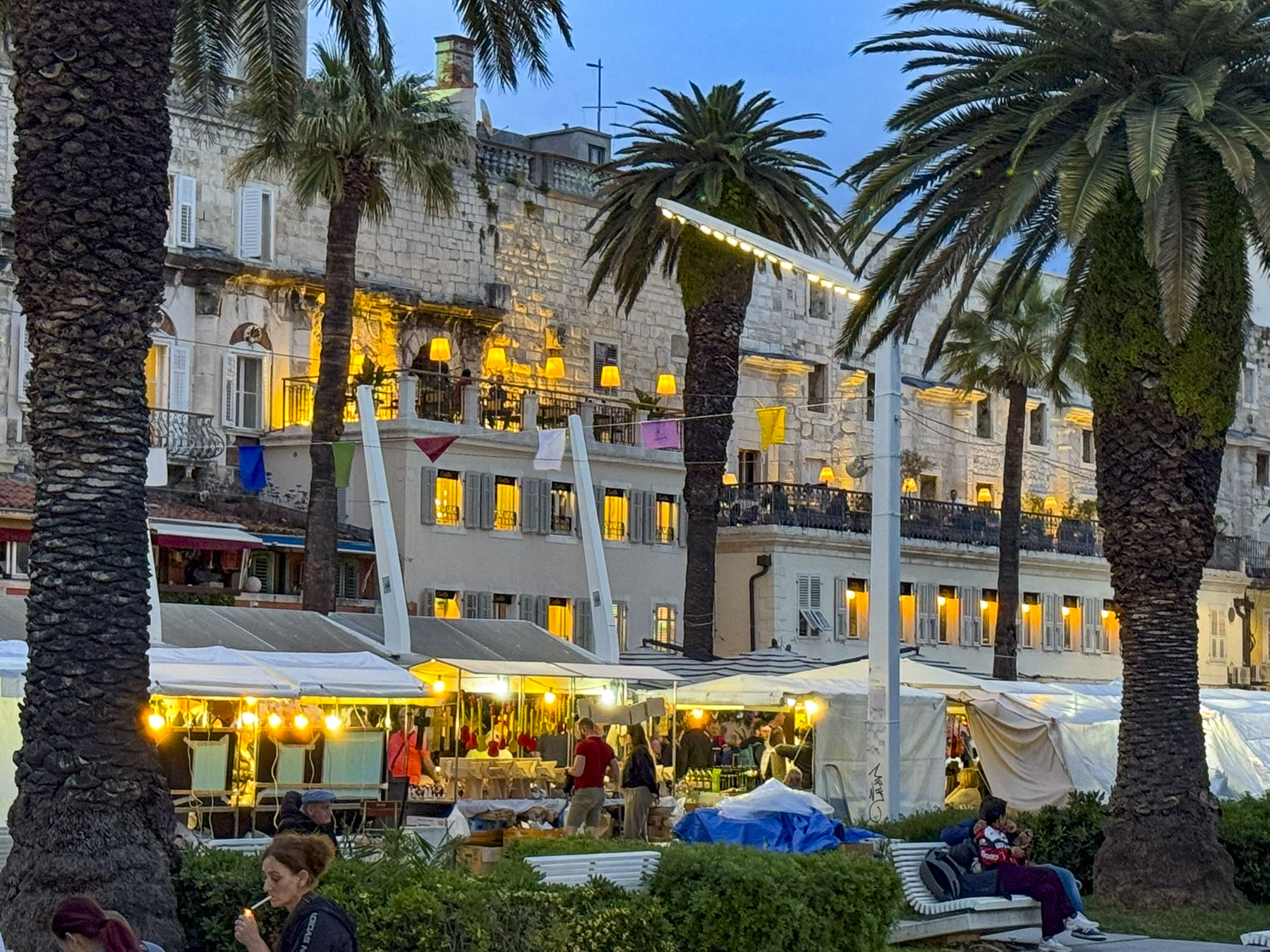
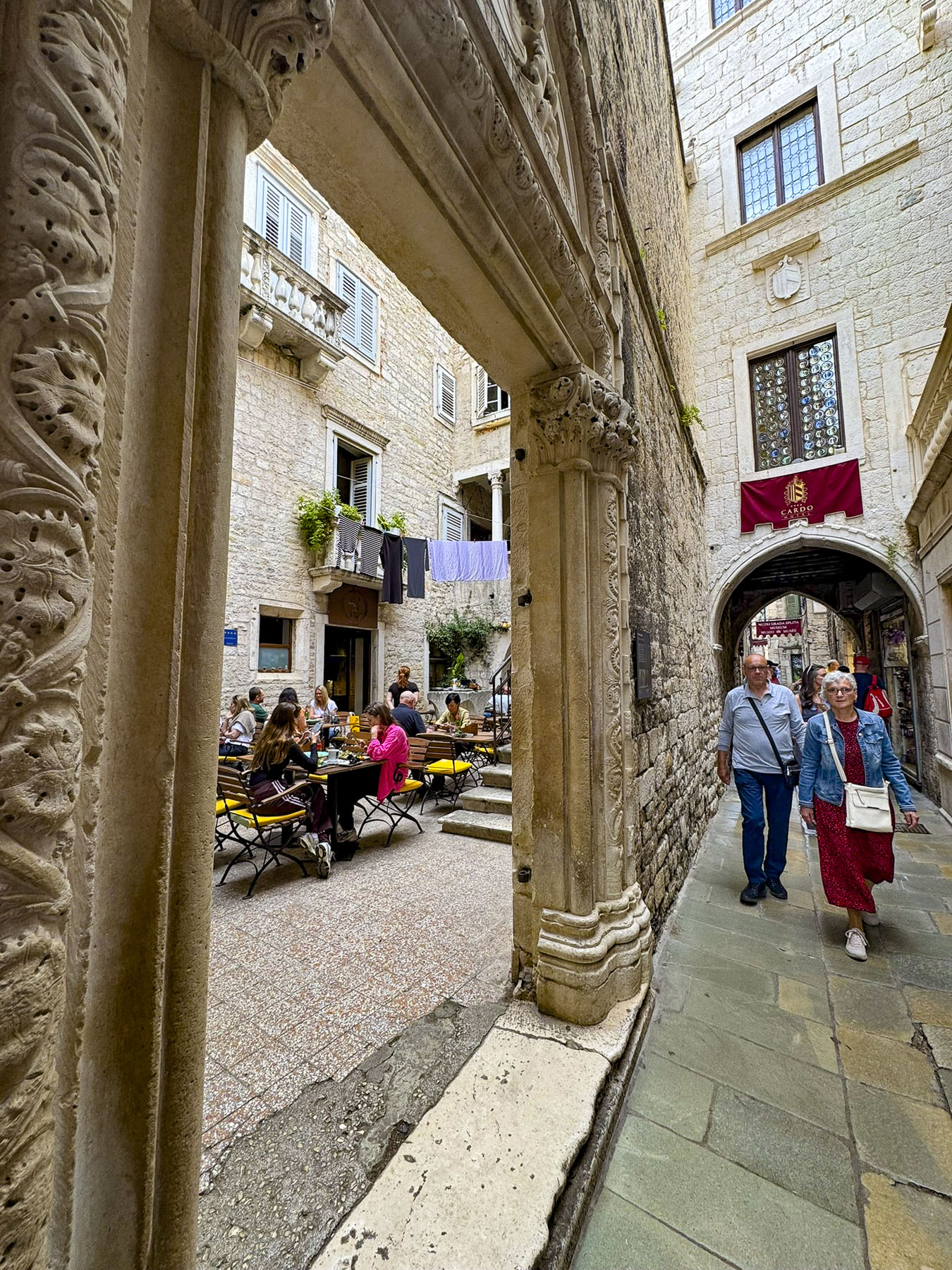
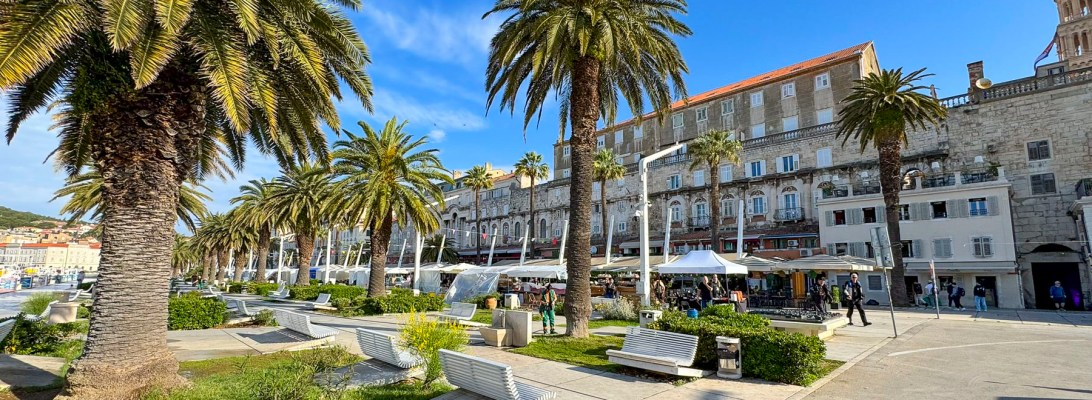
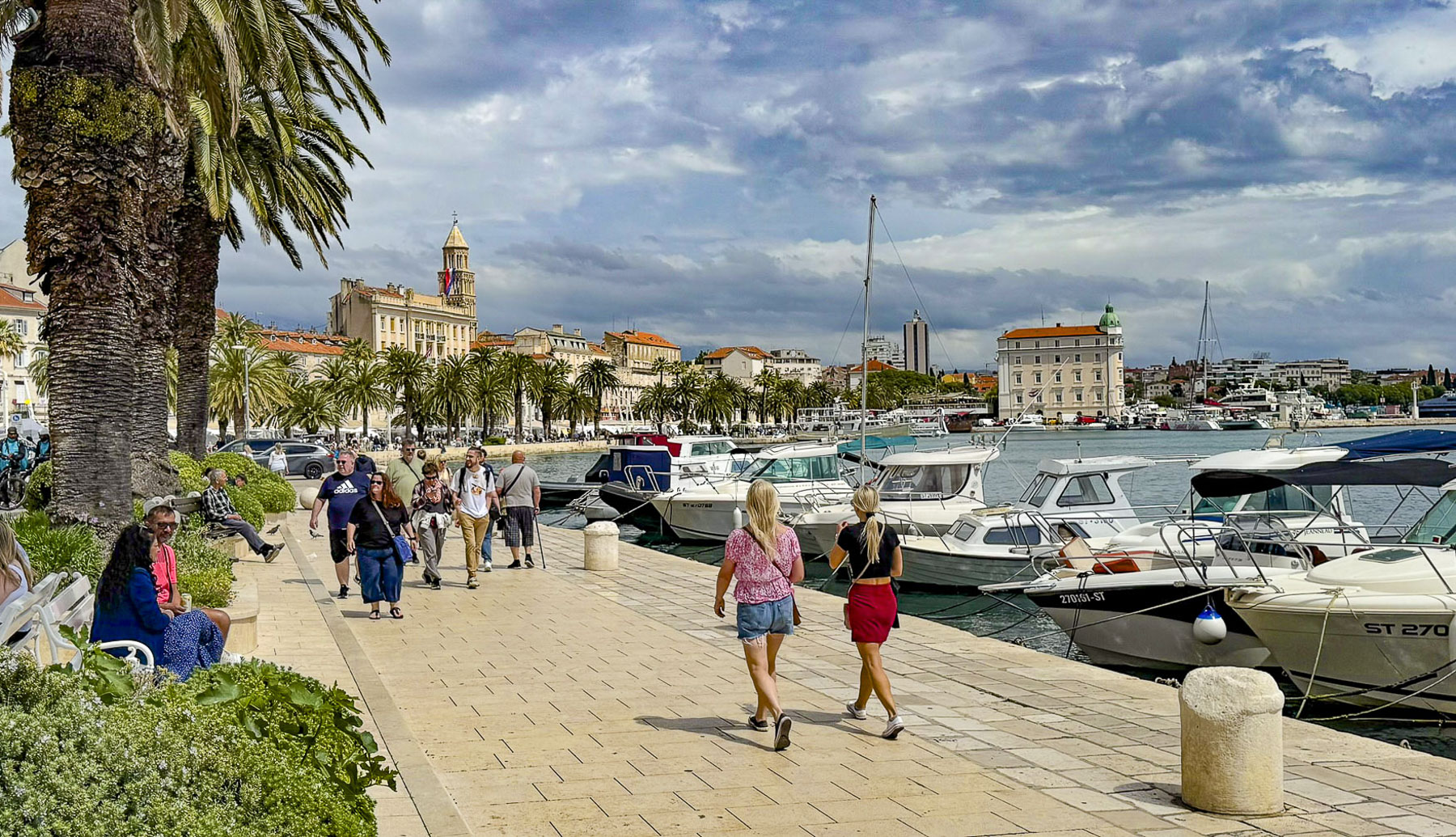
We exited the Sea Gate, now 60m (200ft) from the sea onto the Splitska Riva, a wide palm tree lined promenade along Split’s harbor. Looking back at the palace, we saw the last vestiges of Diocletian’s private cryptoporticus, a columned and arched balcony that extended along the entire waterfront façade of the palace. The columns and arches still stand, but the spaces between them were walled up with windows ages ago and turned into apartments, and boutique hotels like the Heritage Hotel CardoandPalace Suites Heritage Hotel. Lined with umbrellaed tables restaurants and bars, the Riva is a popular spot to dine outdoors and enjoy some Croation wines or the ubiquitous Aperol spritz.
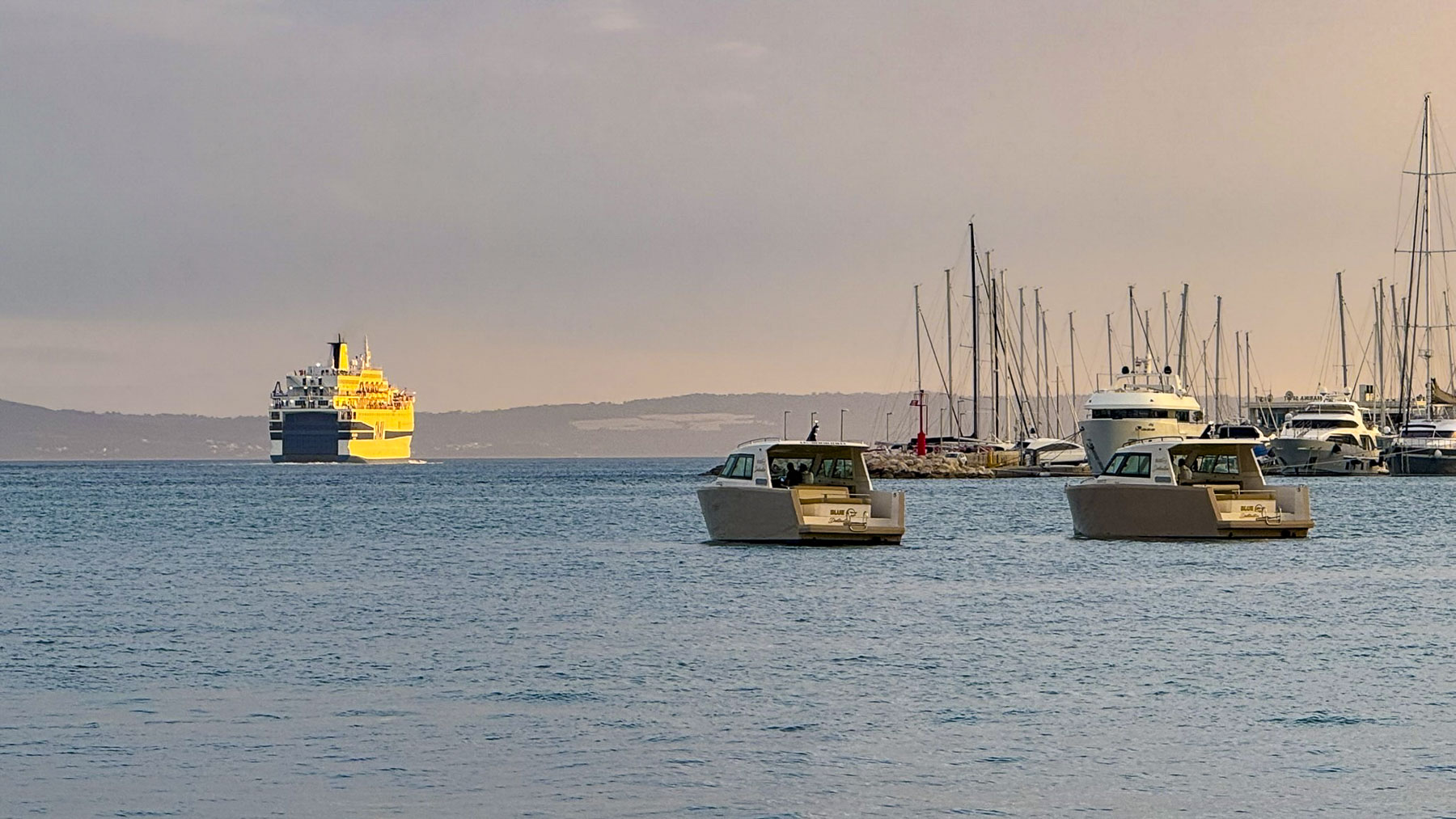
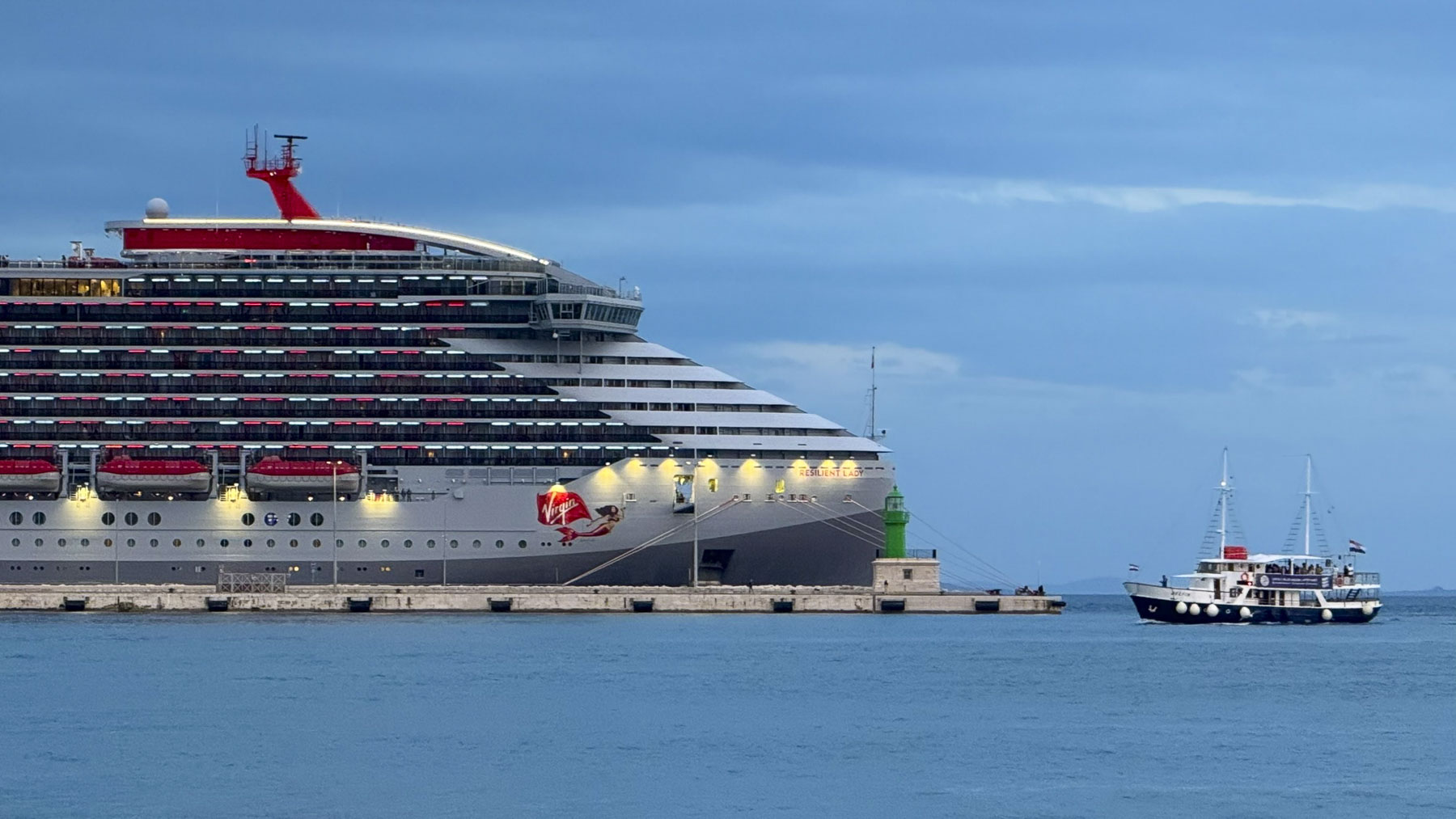
As the day’s shadows lengthened we strolled along the waterfront and watched various cruise ships arrive, and ferries depart for Hvar or other nearby islands. There is also a twice a week ferry service to Ancona, Italy. At the end of the Riva, workers were busy assembling a large stage for the May 7th festivities.
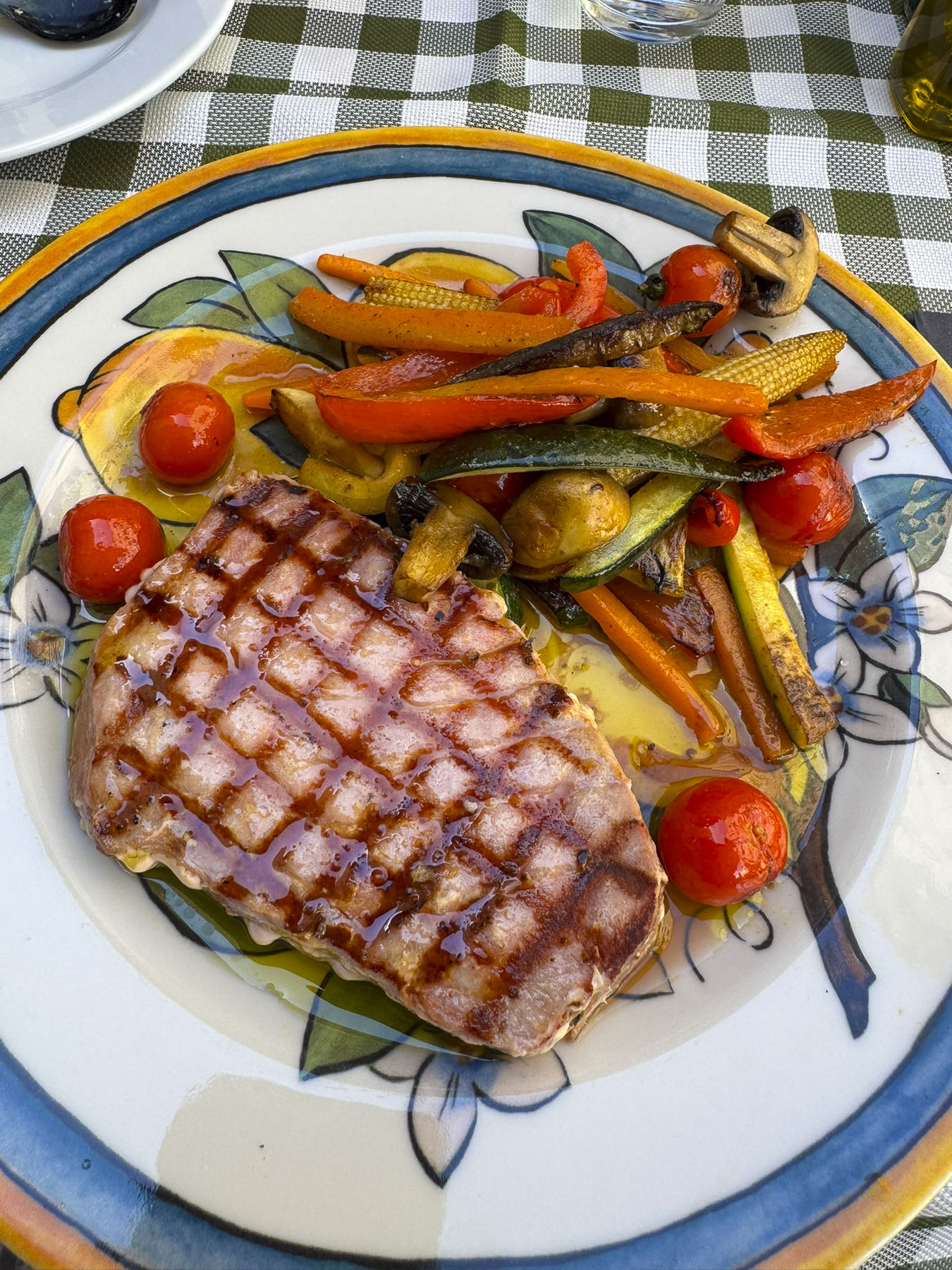
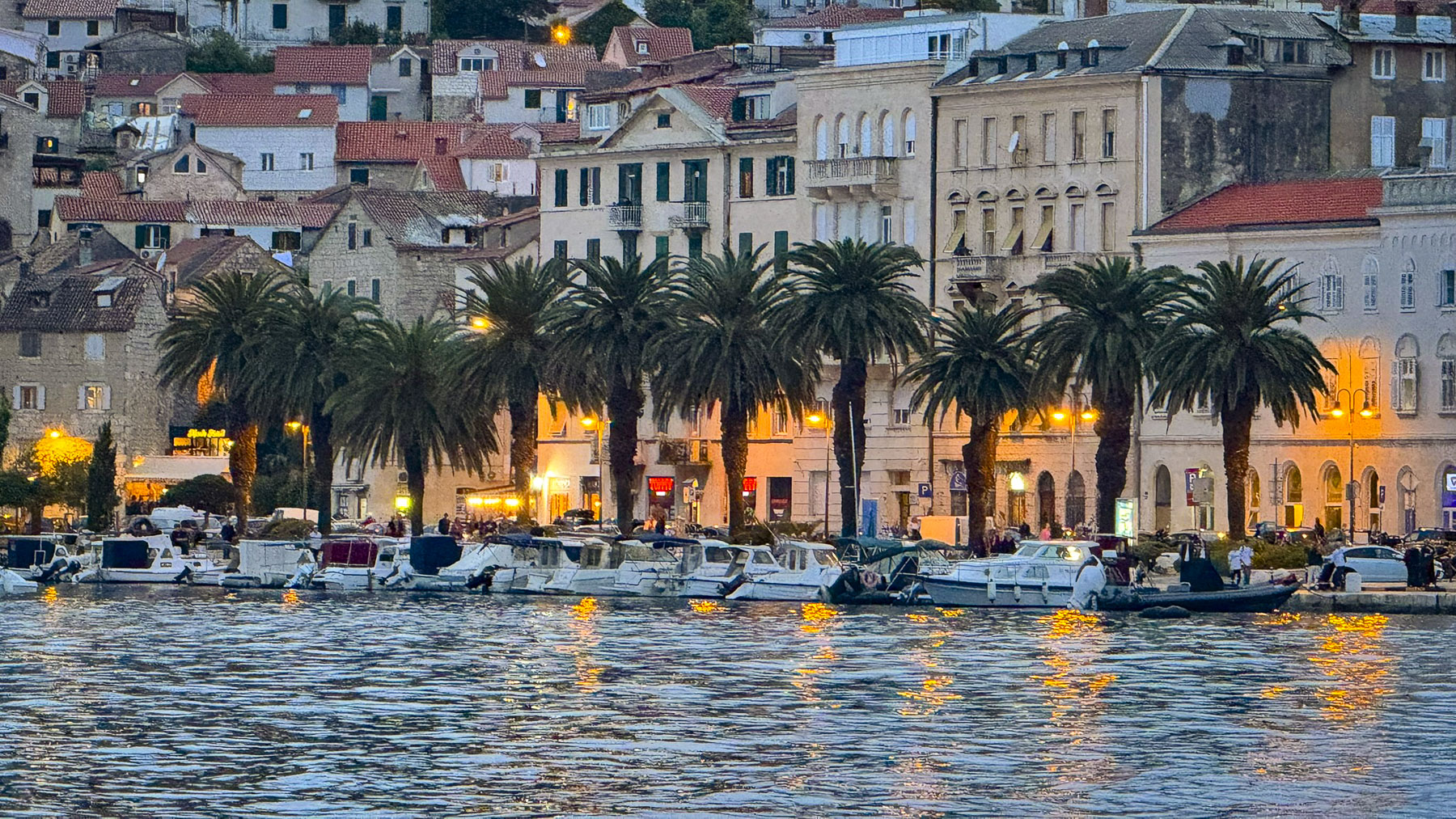
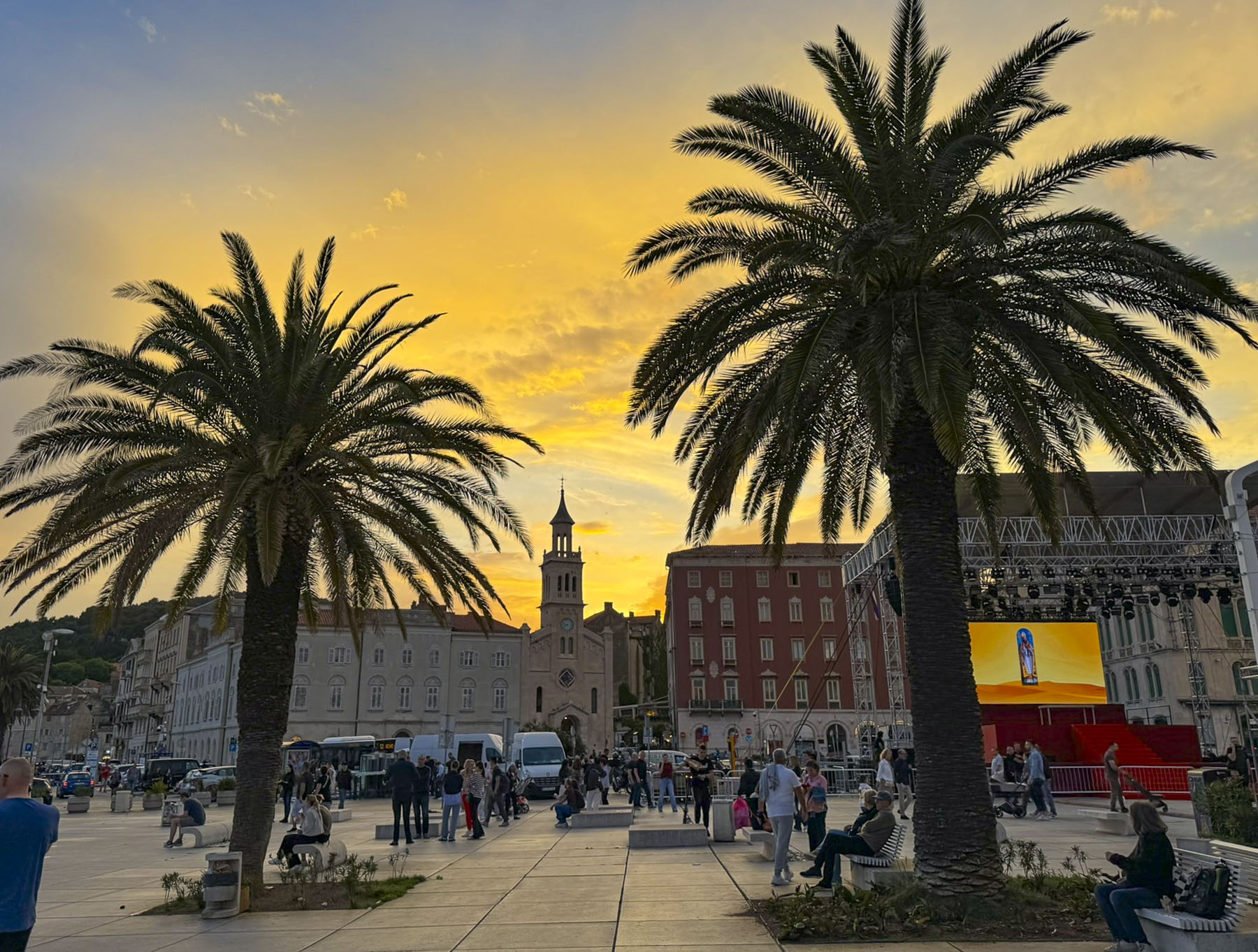
Past the Riva at the end of the quay, we enjoyed dinner seated outside on a terrace that overlooked the harbor at Konoba Fratelli. Their specialty, of course, was seafood. The quality of the seafood was splendid, and it was so fresh. Locally caught, the morning catch moved quickly from the fishing boats to restaurants the same day, and we couldn’t get enough of it. Afterwards the sunset silhouetted the palm trees along the Riva as we headed back to our hotel. The marble surface of the Peristyle’s plaza and the cobblestones of the old palace, polished smooth by centuries of foot traffic, warmly reflected the old town’s night lights.
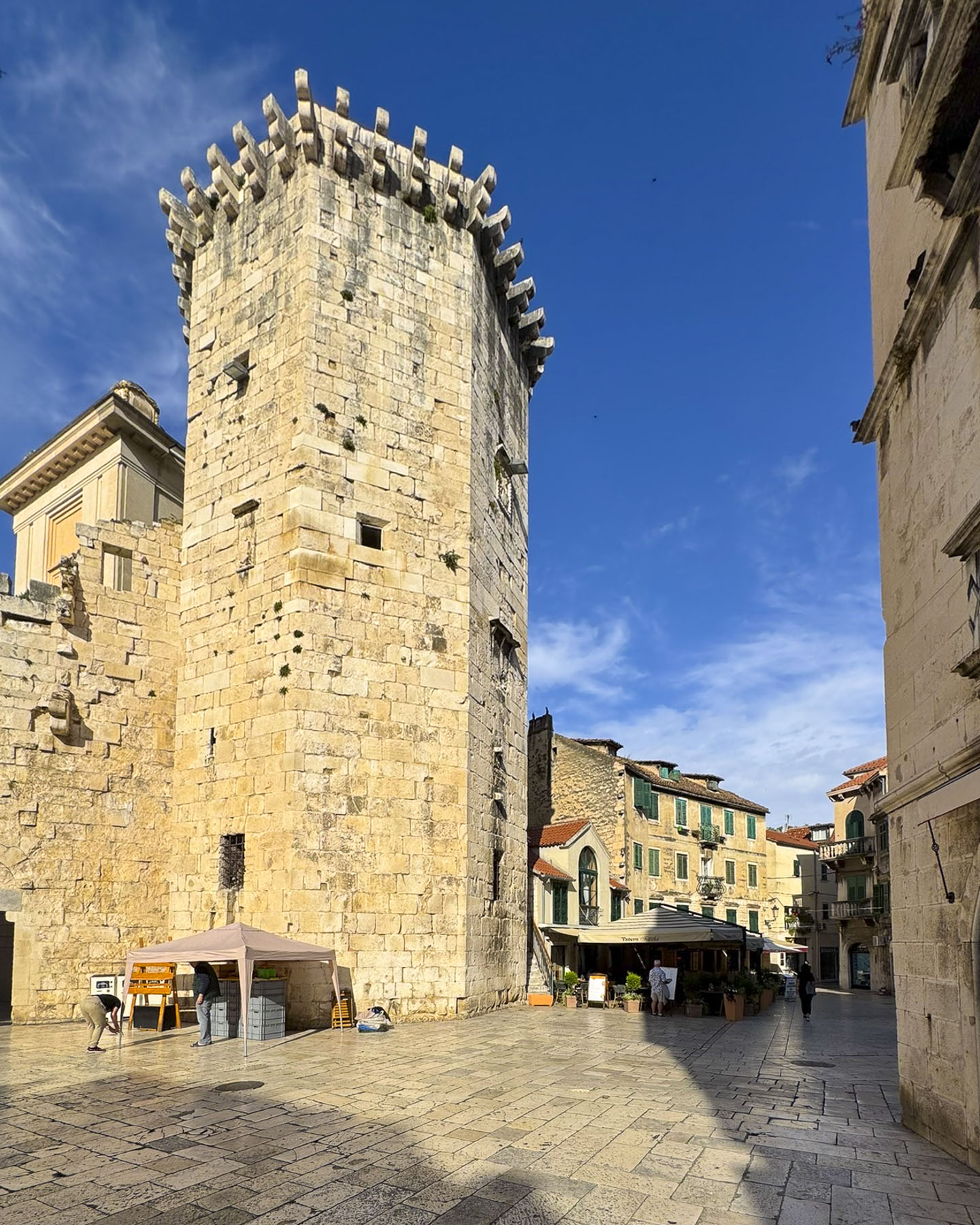
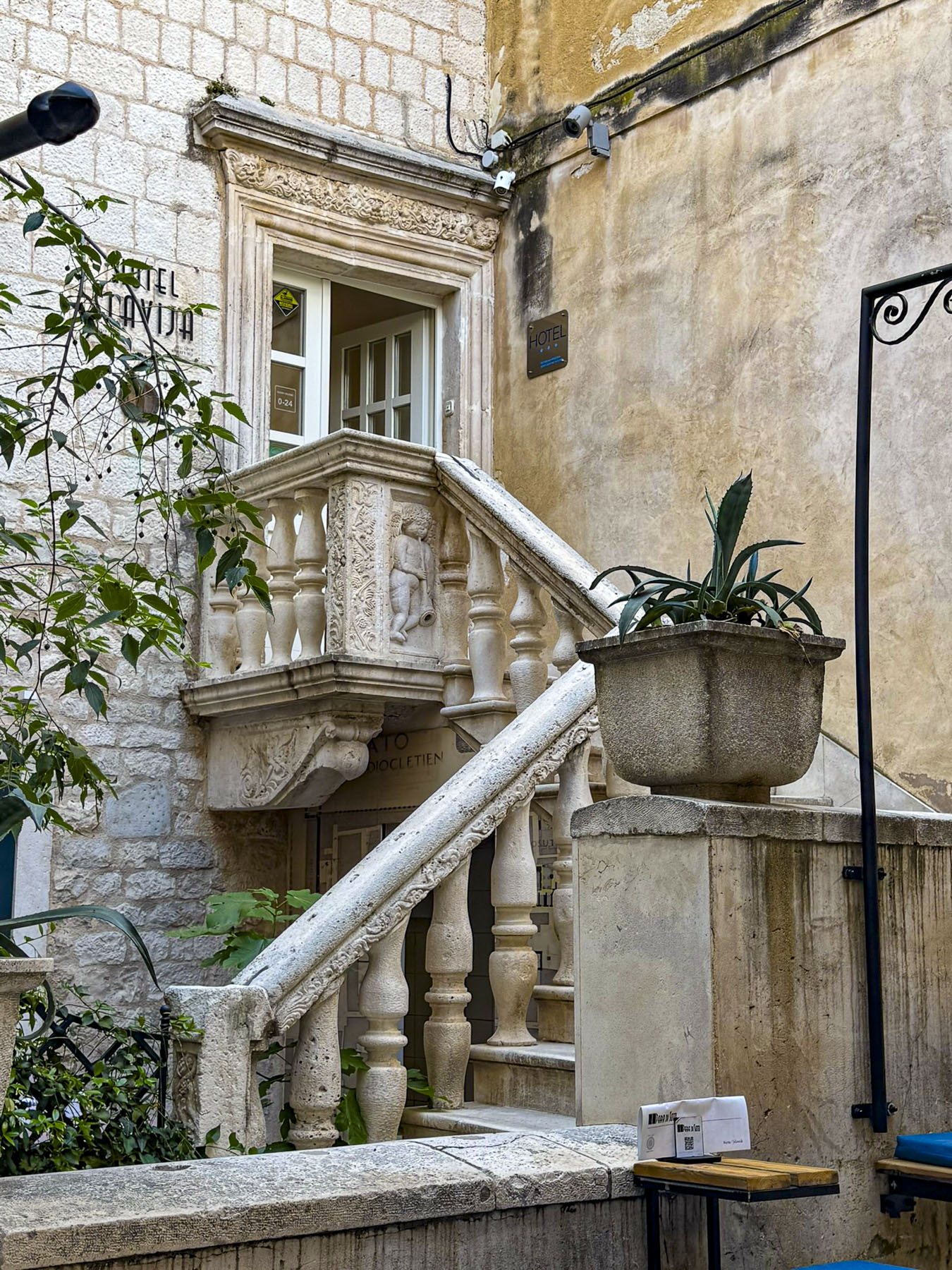
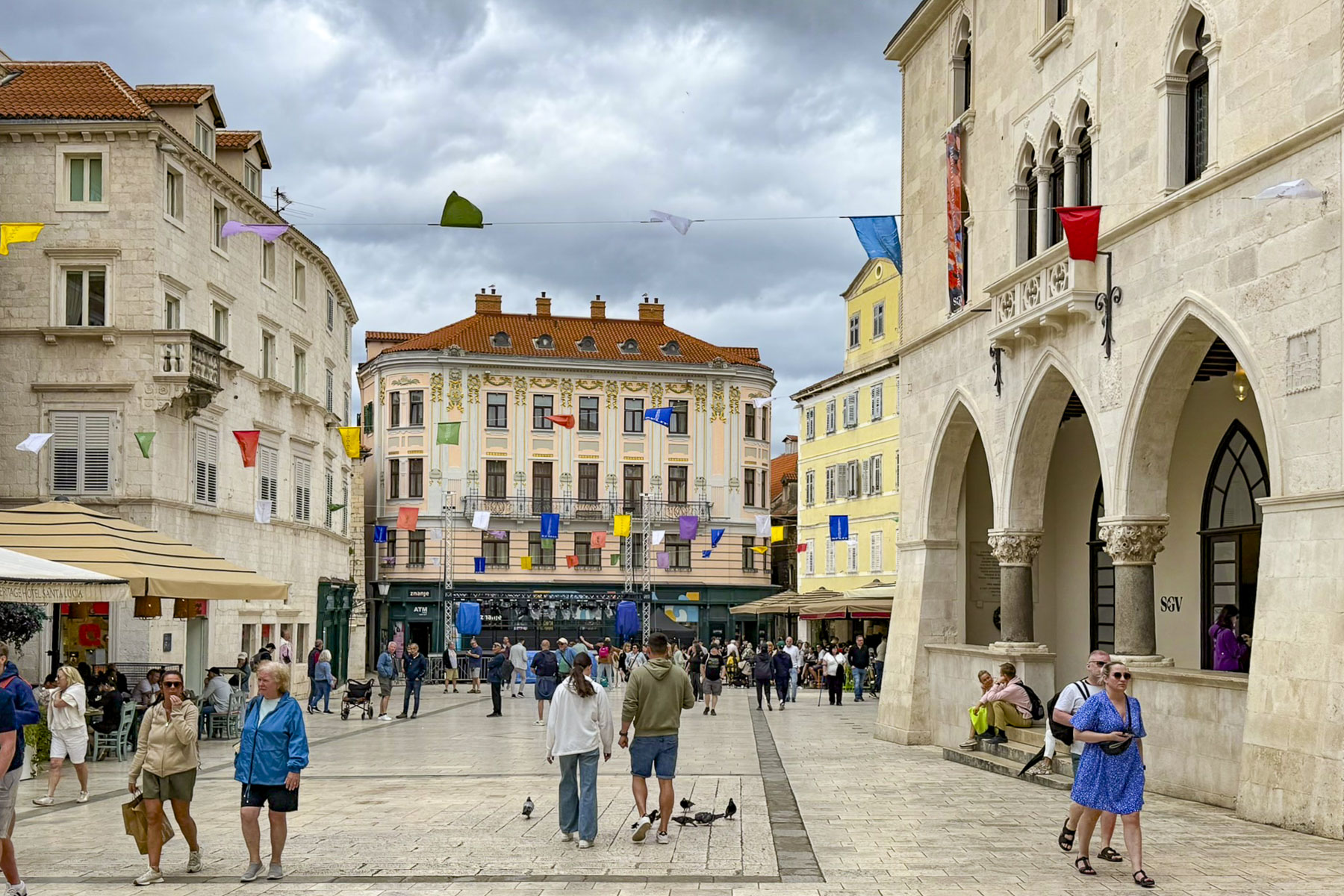
Split was delightful to explore, and we spent our days soaking in the ambiance of its weathered walls, interesting vignettes and small plazas with numerous places to stop for a leisurely café.
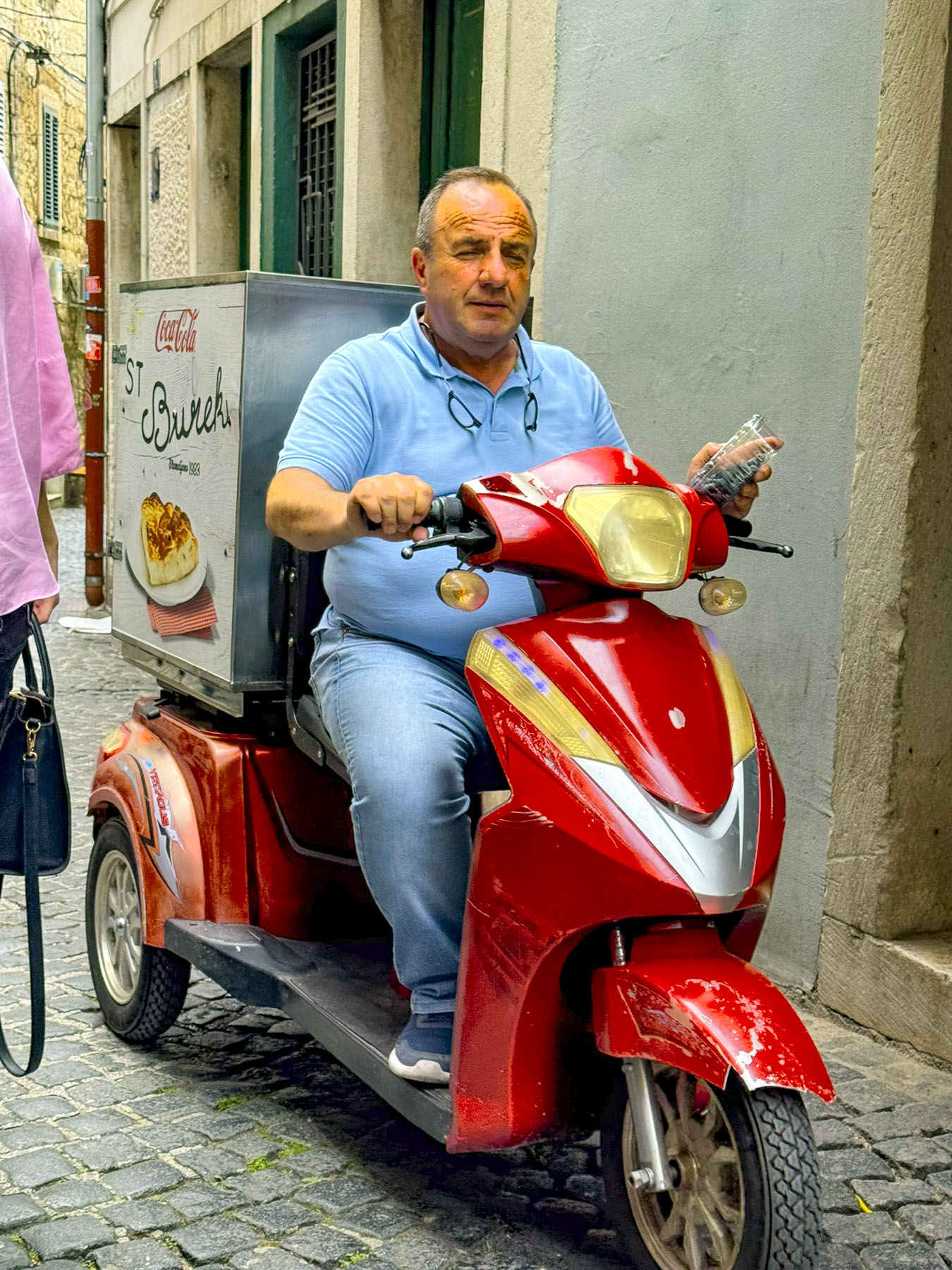
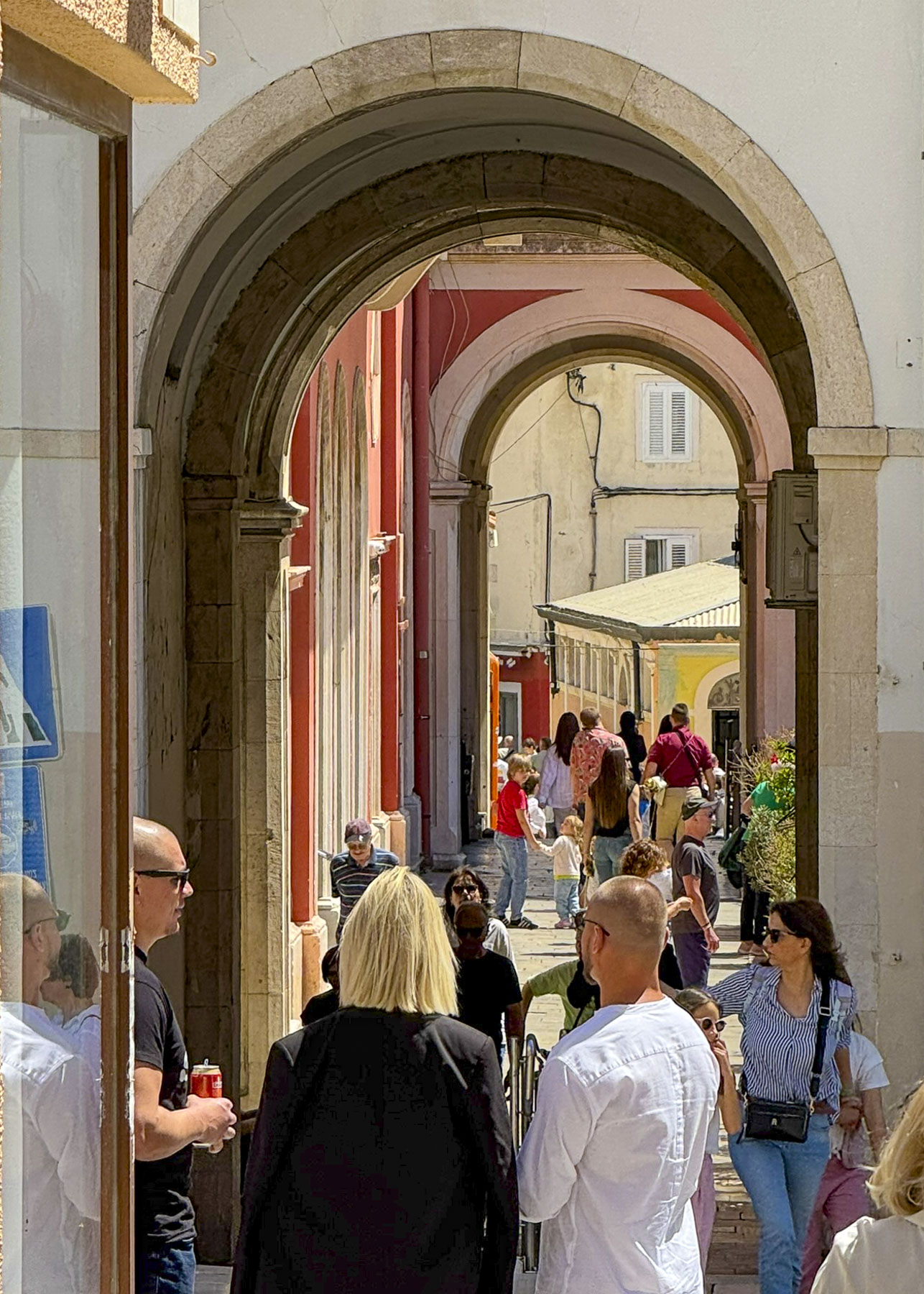
Outside the walls of Diocletian’s Palace, the surrounding streets and neighborhoods that grew up around the citadel were equally interesting with historic squares and sculptures. The stone lanes were wider, but only enough to allow an innovative burek deliveryman with his three-wheel scooter to scoot by when we pulled in our chairs on the lane at the Tinel Specialty Coffee Shop, a nice place for a variety of coffees and small bites.
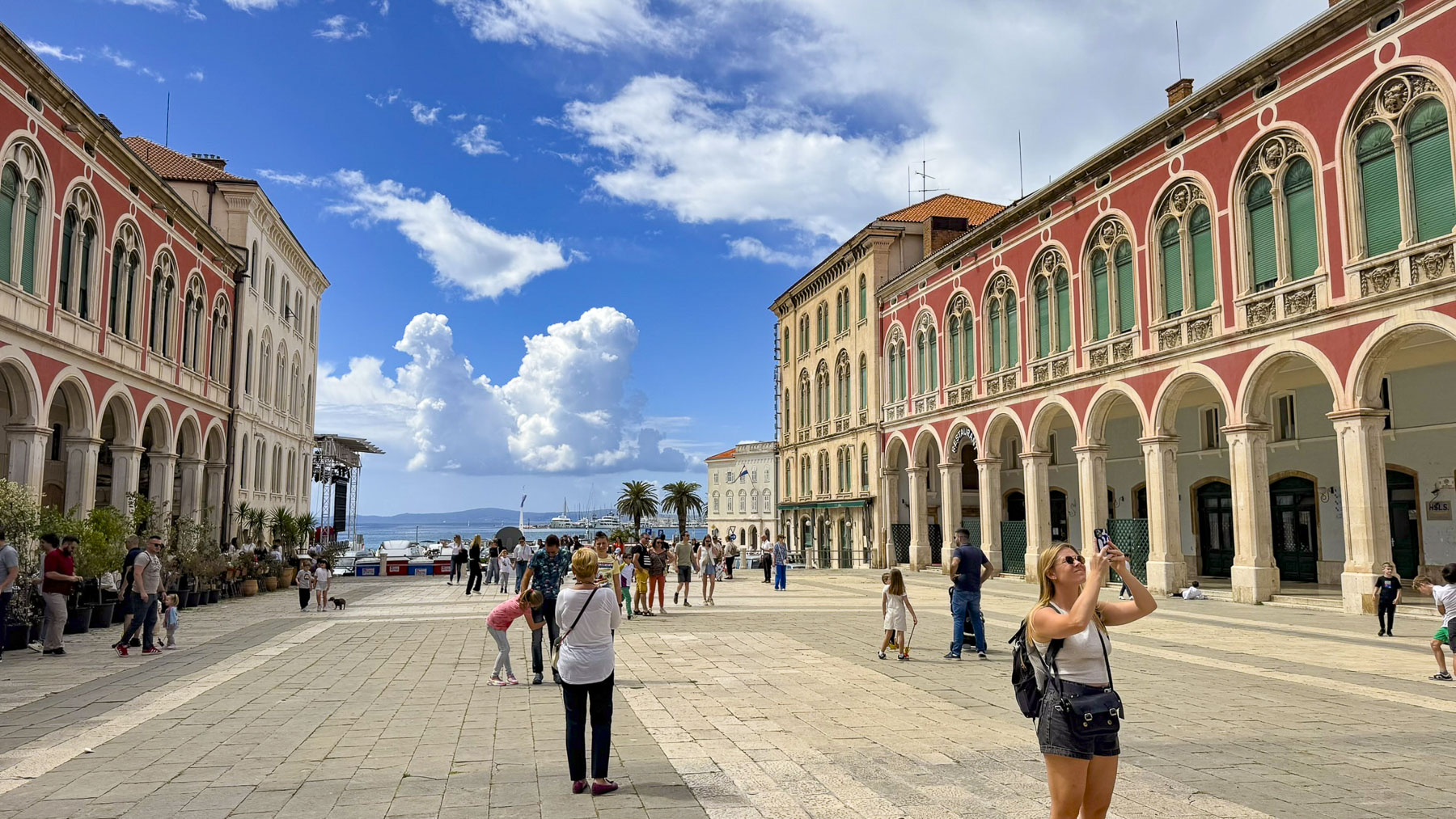
Down from Trg Republike, Republic Square, on Matošića ul, a long line had formed at Kantun Paulina, Paulina’s Corner, a small tavern that allegedly has been serving the best ćevapčići, in Split for close to fifty years. Cevapčići is a heavenly combination of grilled kababs served in a somun flatbread, similar to a pita, and garnished with diced red onion, creamy kajmak, and ajvar, a relish of red peppers and eggplant. At Paulina’s it’s a popular takeaway food.
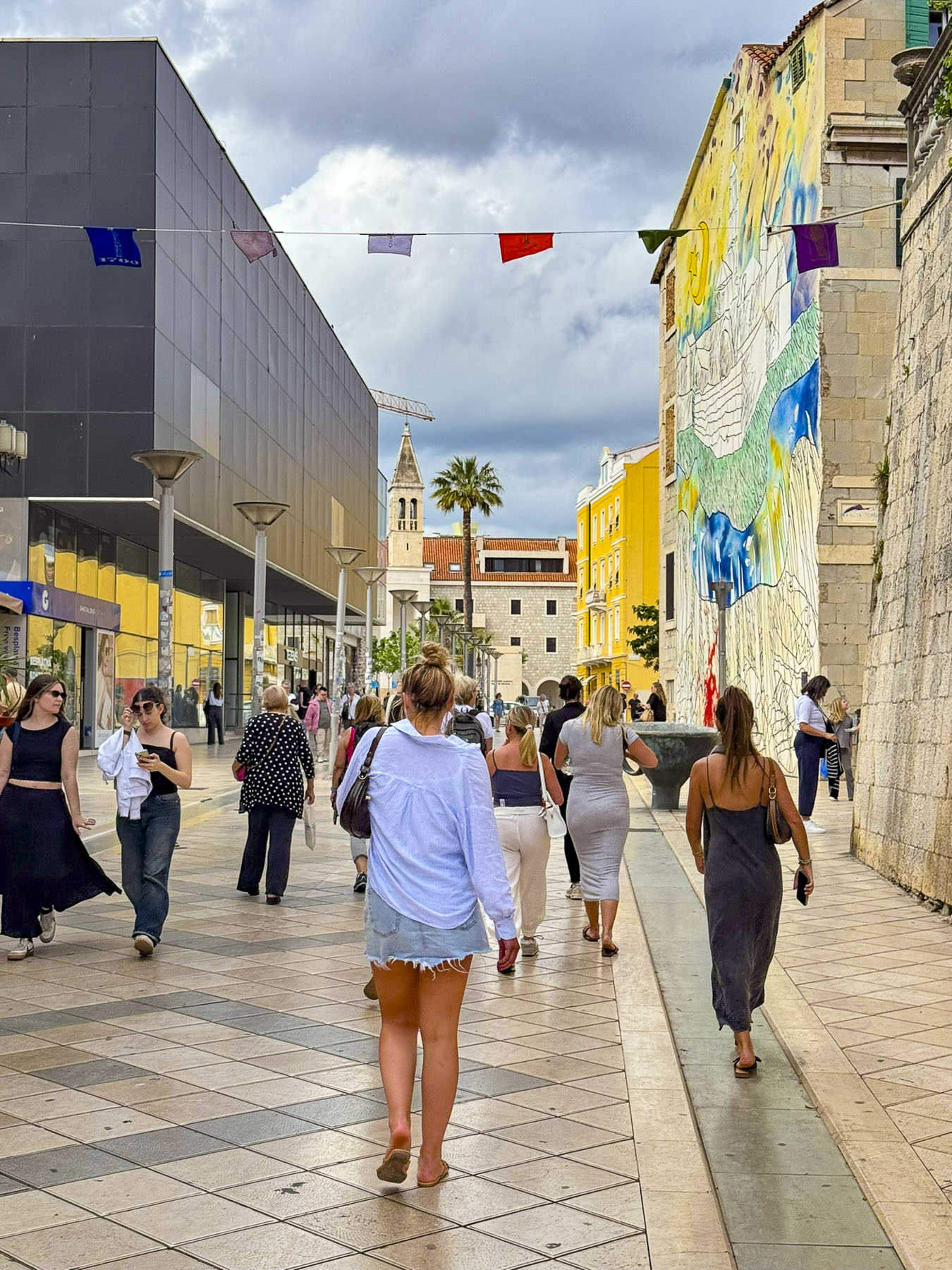
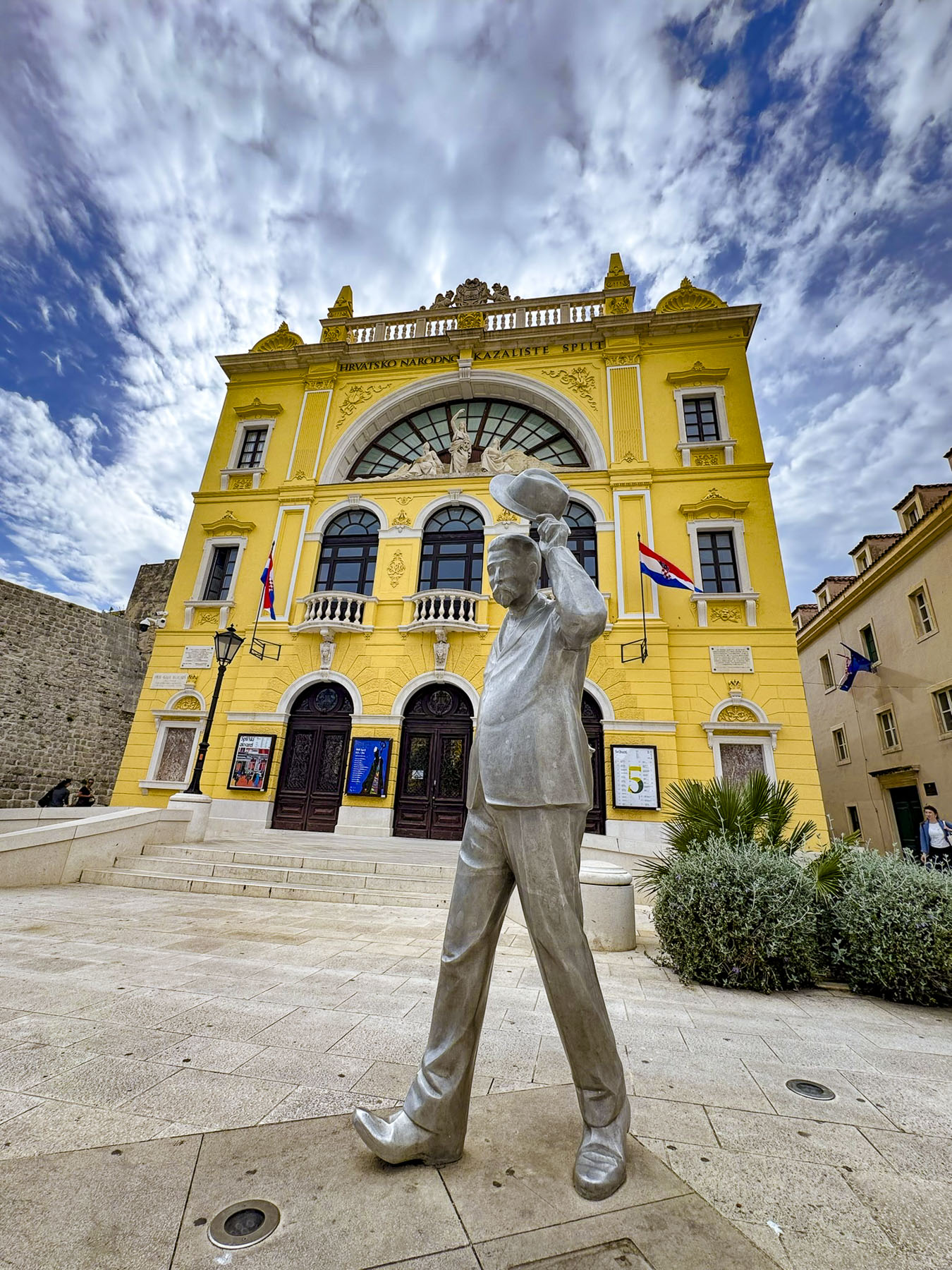
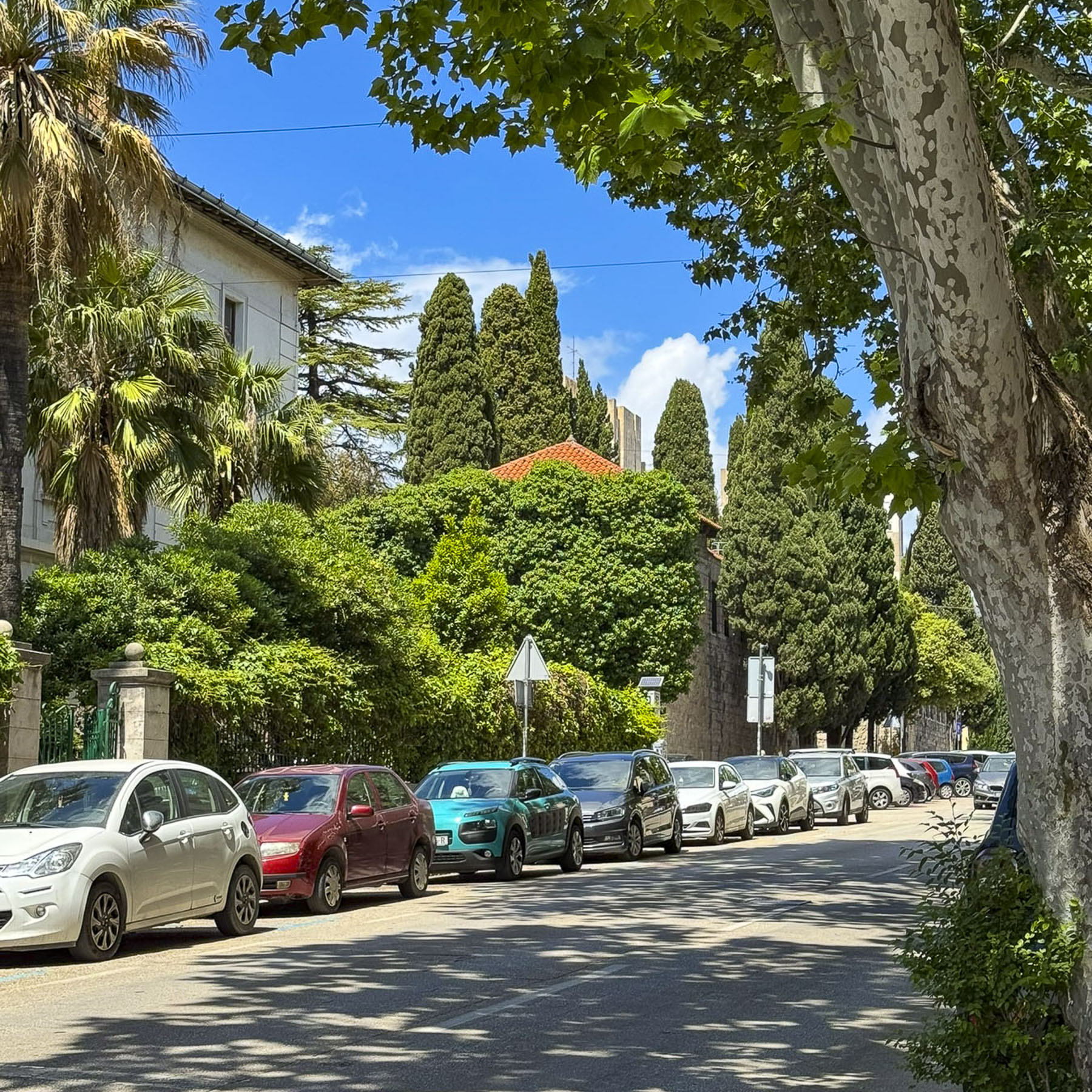
The old town gave way to newer high rise apartment blocks as we walked along Ul. Zrinsko Frankopanska, a tree-lined shady street, to the Split Archaeological Museum.
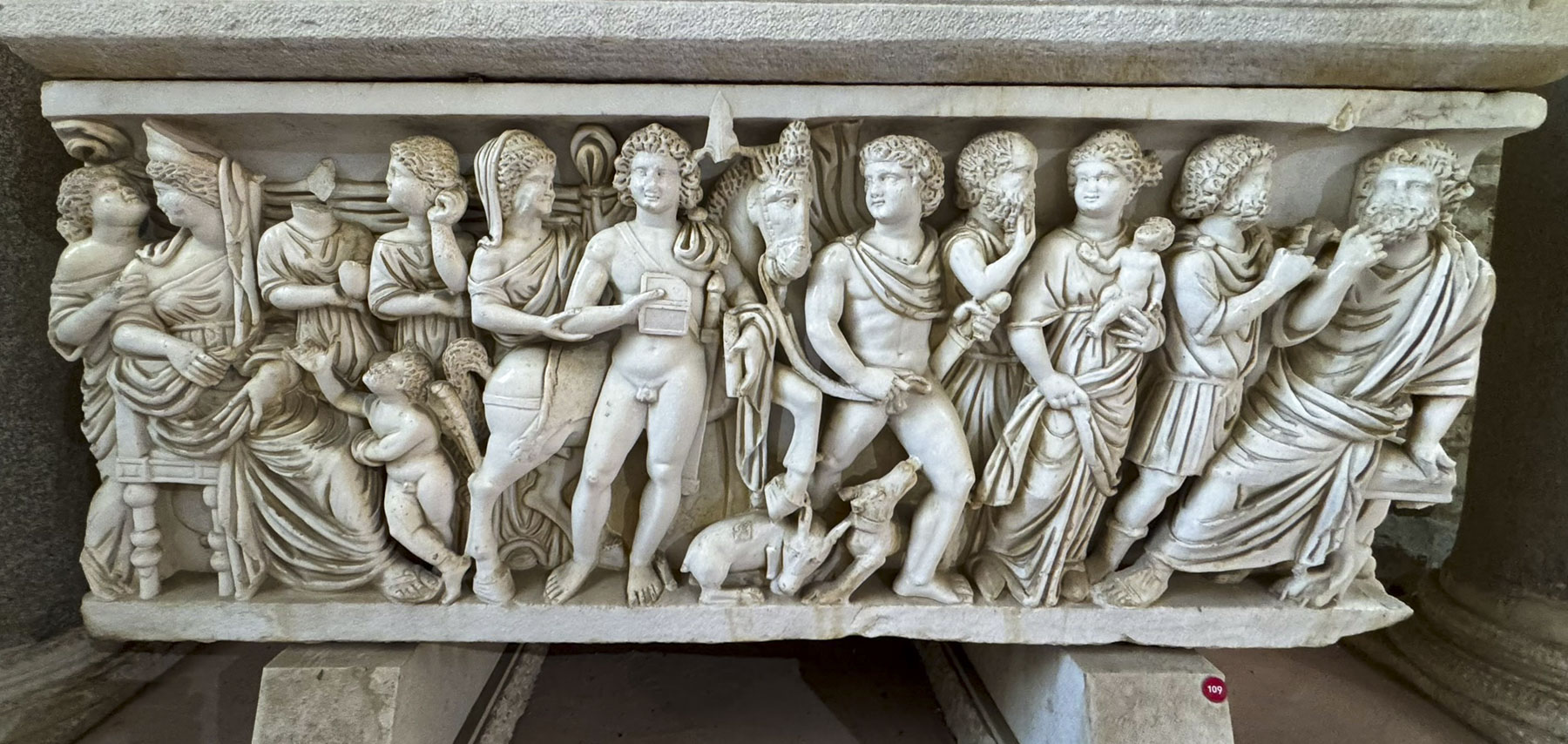
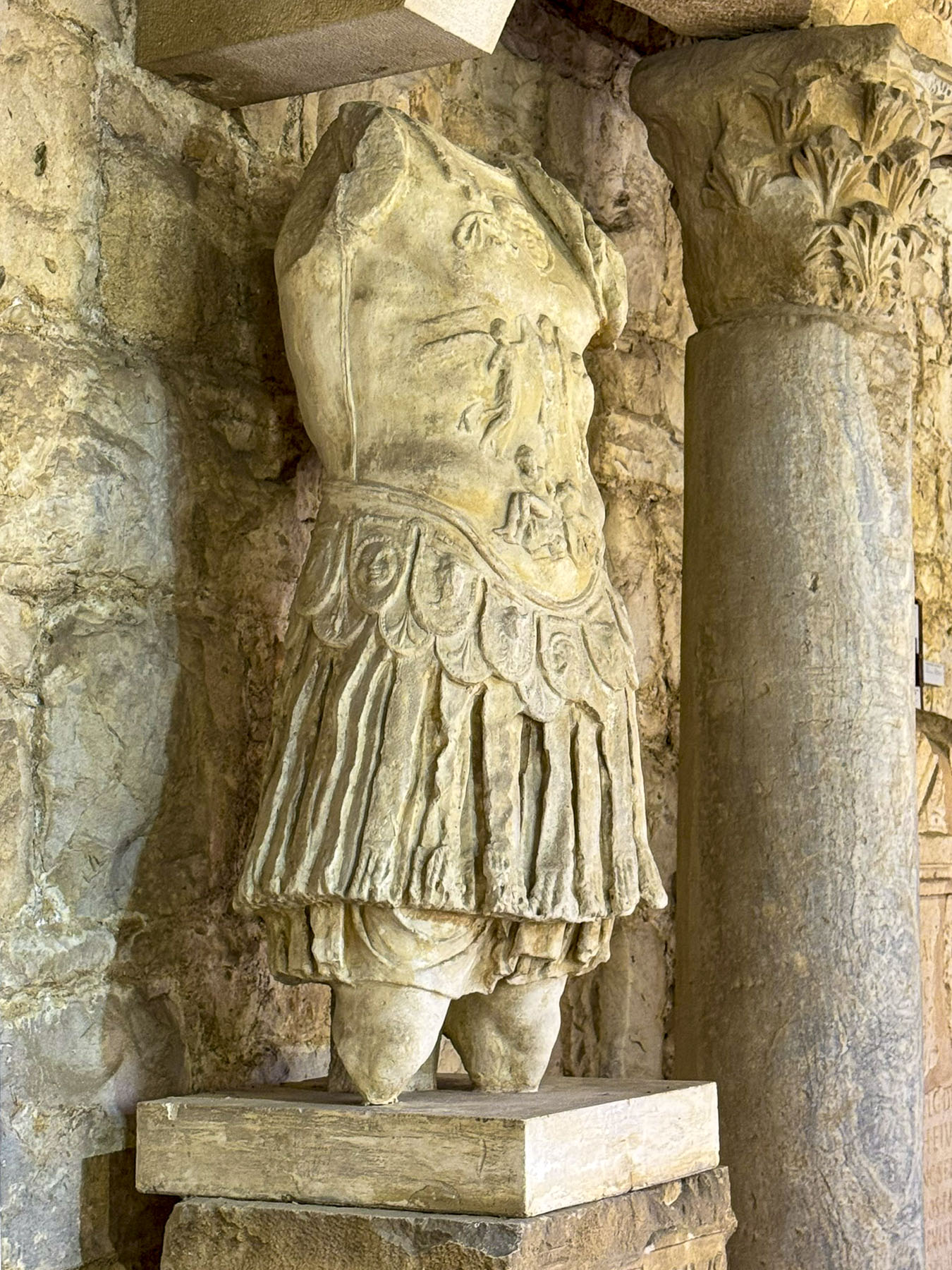
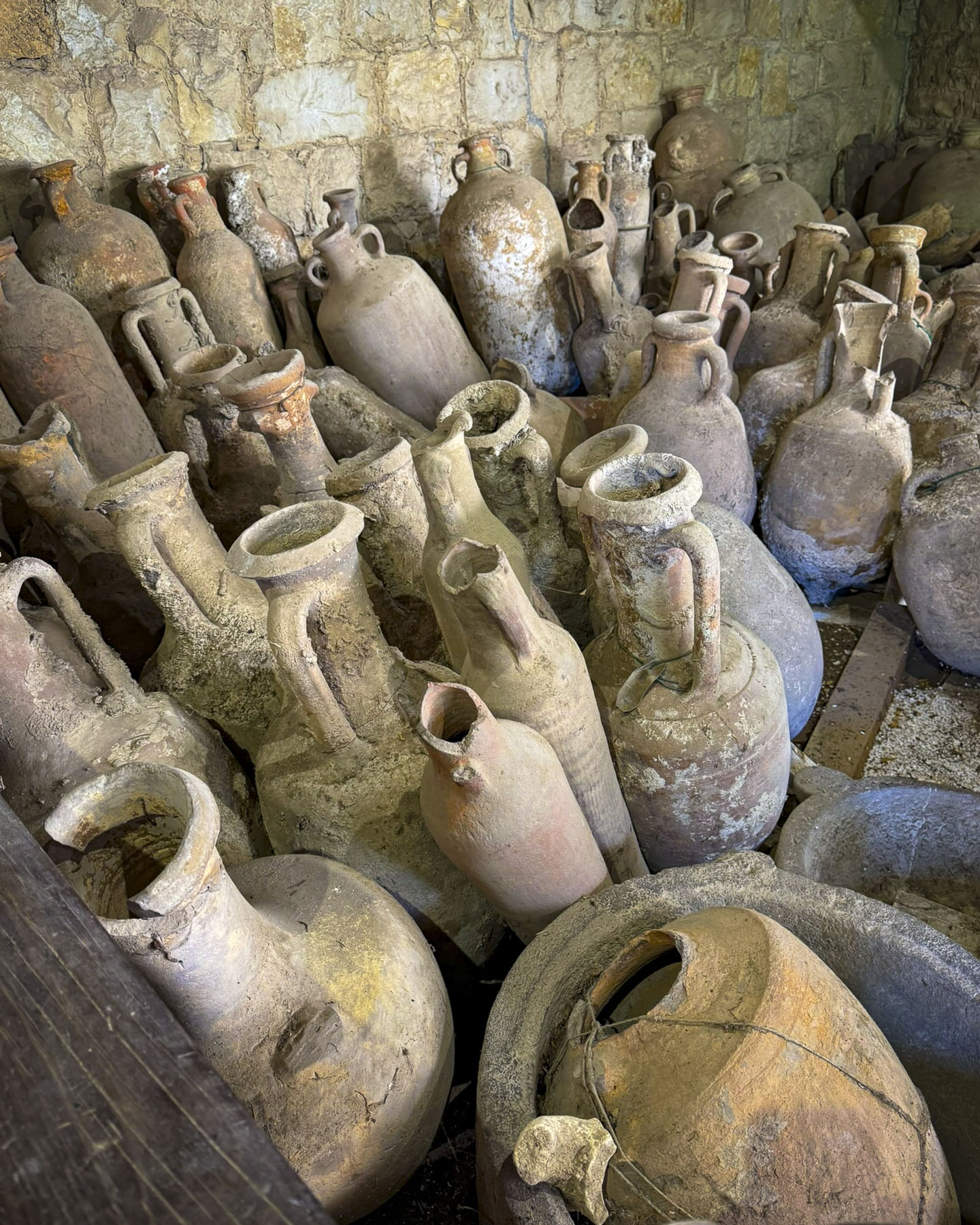
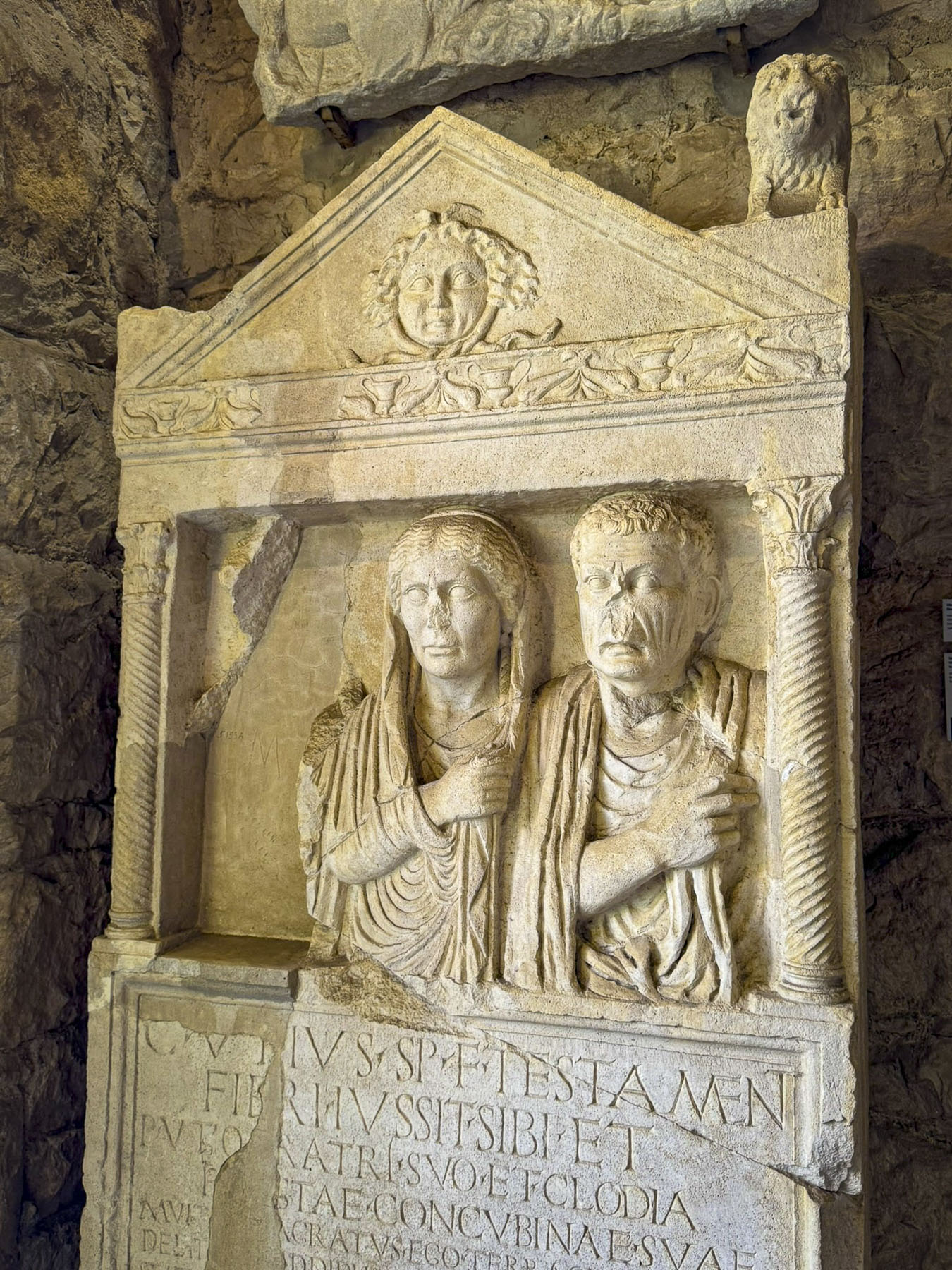
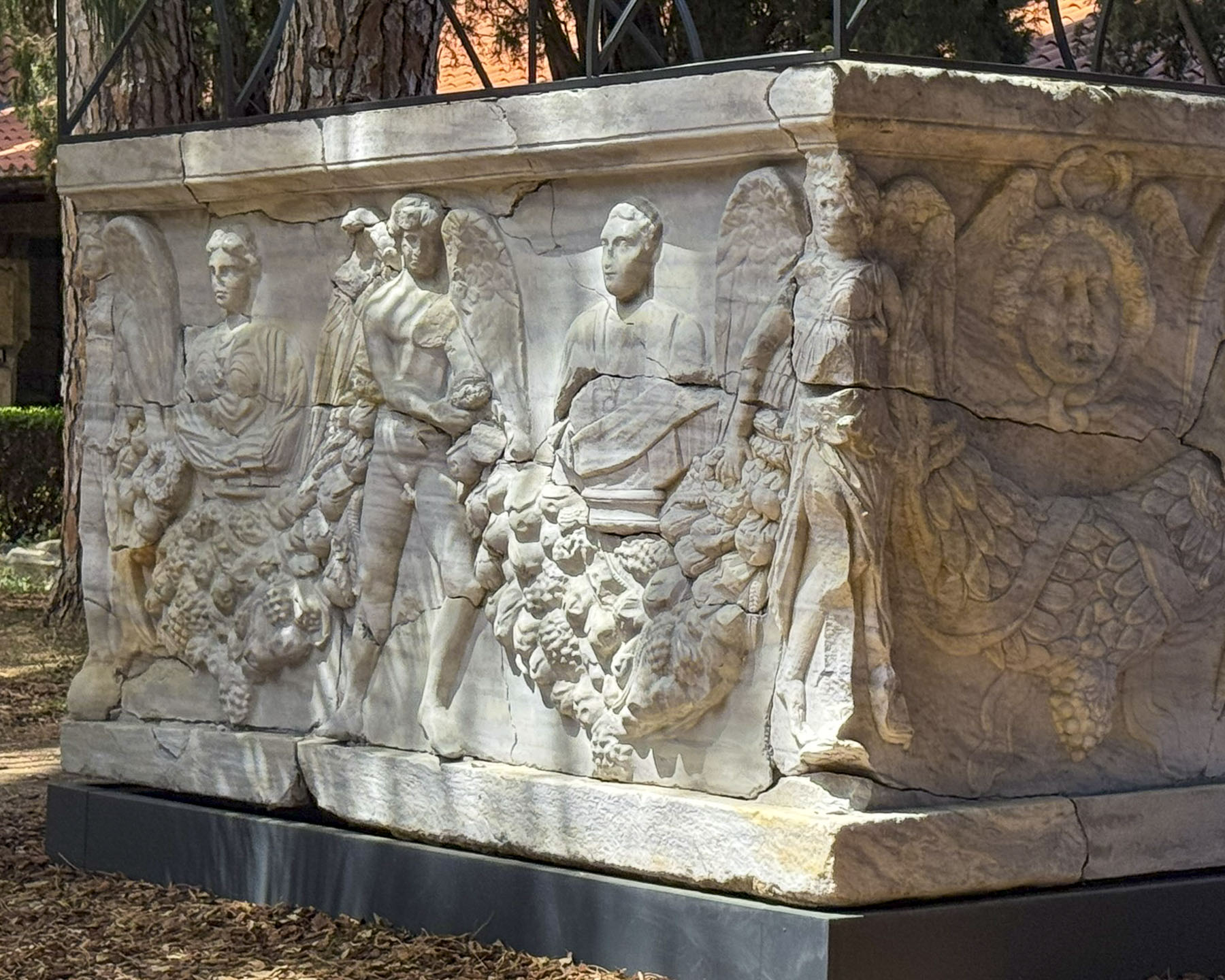
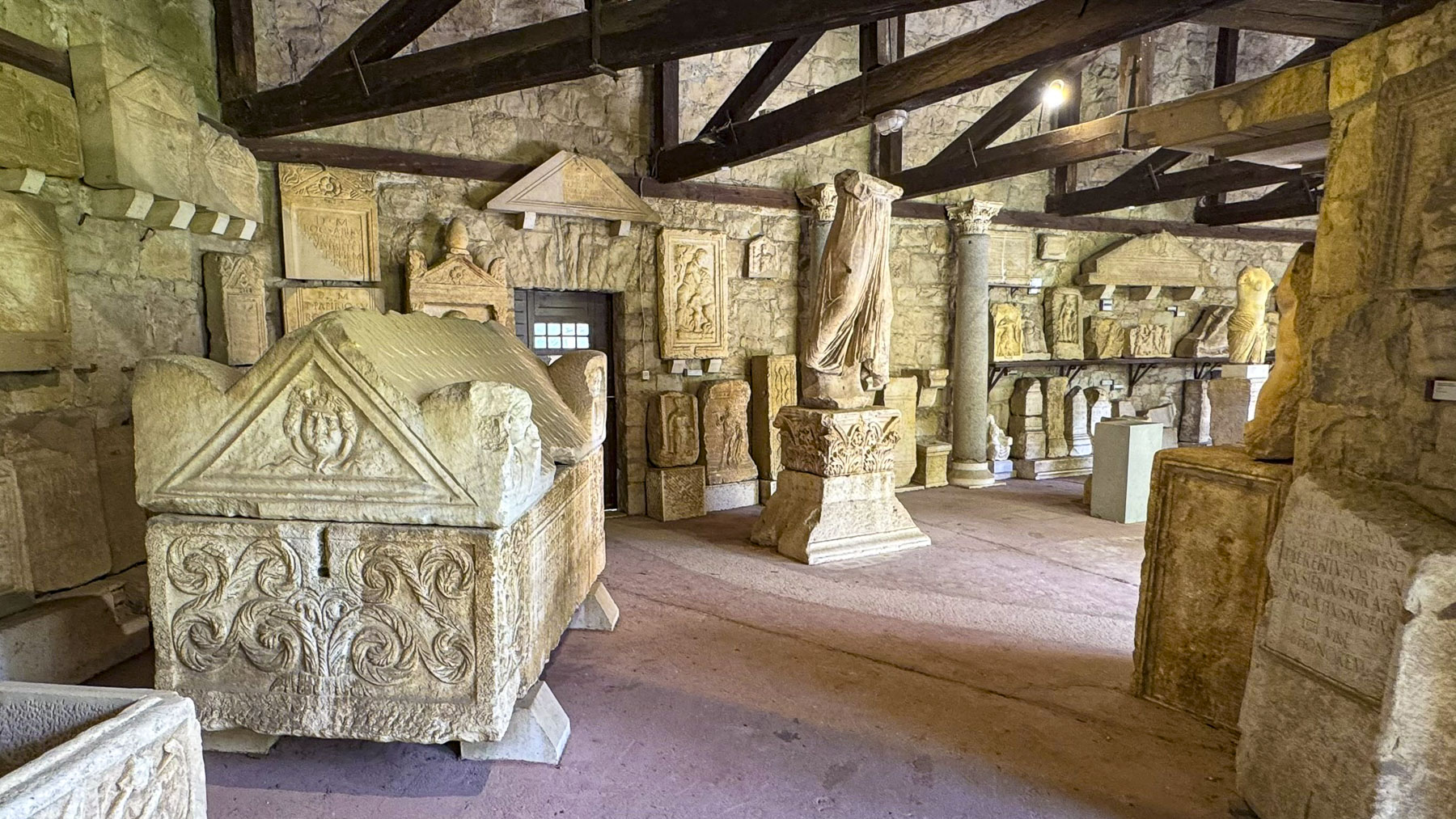
This was a fascinating museum with a large courtyard and surrounding portico which sheltered an extensive collection of Roman architectural elements, statues and exquisitely carved sarcophagi unearthed in Split and the surrounding region. Inside there are exhibits of coins and jewelry, as well as artefacts from earlier ages.
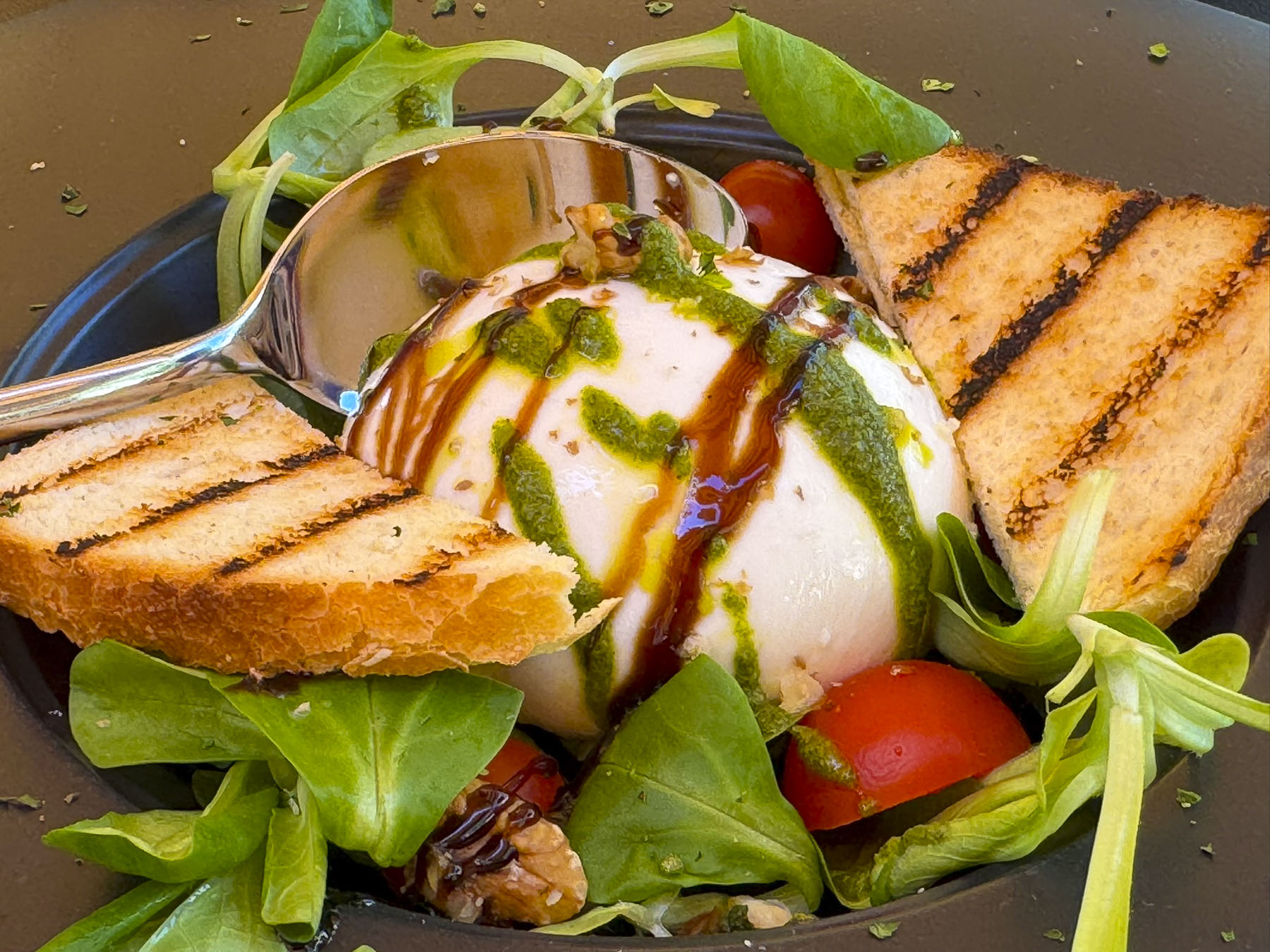
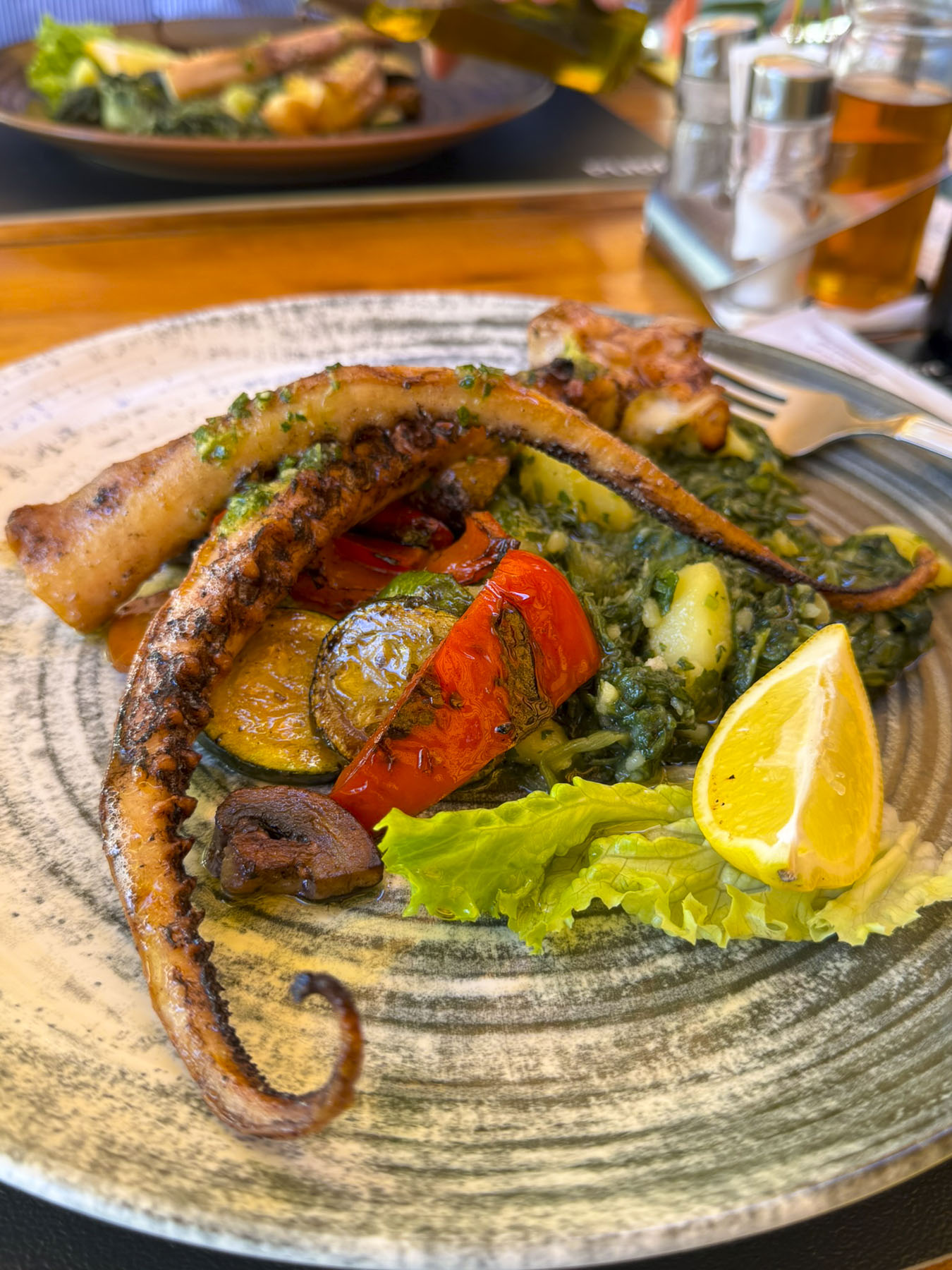
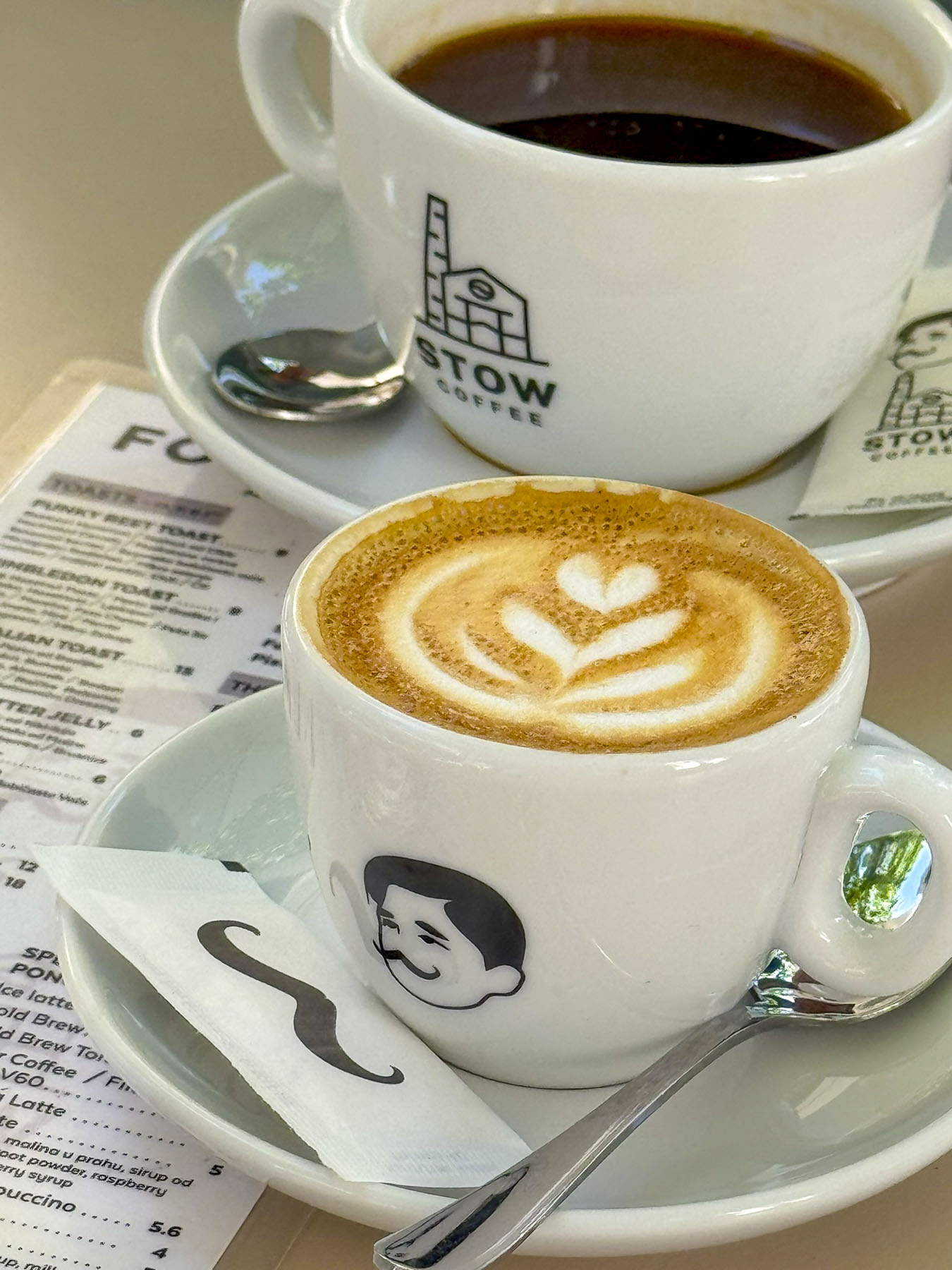
Backtracking we had dinner at the Downtown Grill Split where their freshly made burrata was delectably soft and creamy on the inside and the grilled octopus marvelously tender. Through our travels we’ve gotten into the habit of having our dessert and coffee in another establishment after dinner. We’ve found it to be a nice way to experience a greater variety of eateries in a limited amount of time. Split takes its coffee scene, an integral part of the social fabric of the city, very seriously. With that in mind we only had to walk a few feet across the small plaza to Stow Coffee Roasters Split, a local favorite and one of several new specialty coffee shops that include Kava2, D16 Coffee, and 4Coffee Soul Food that have opened across Split in the last couple of years.
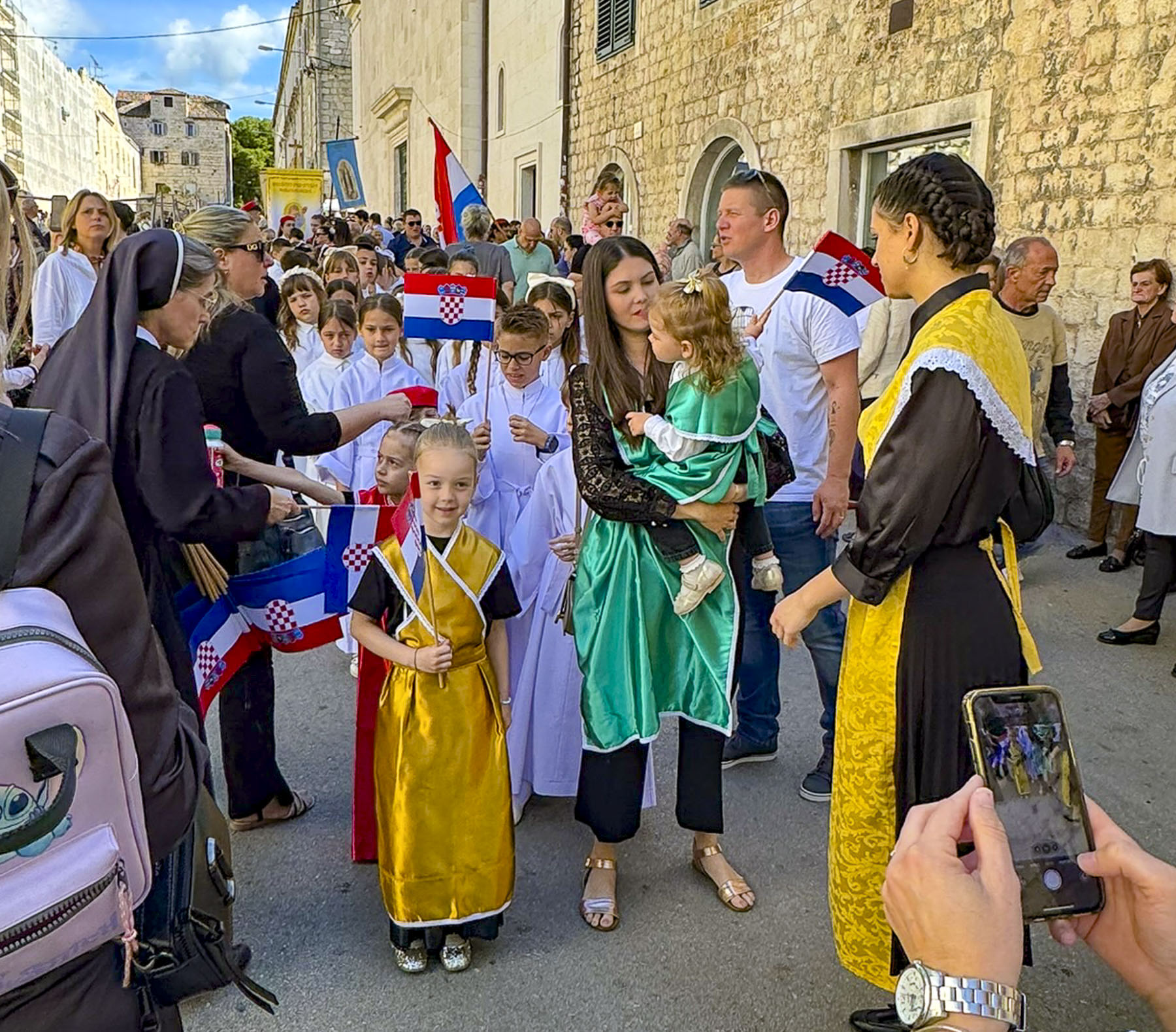
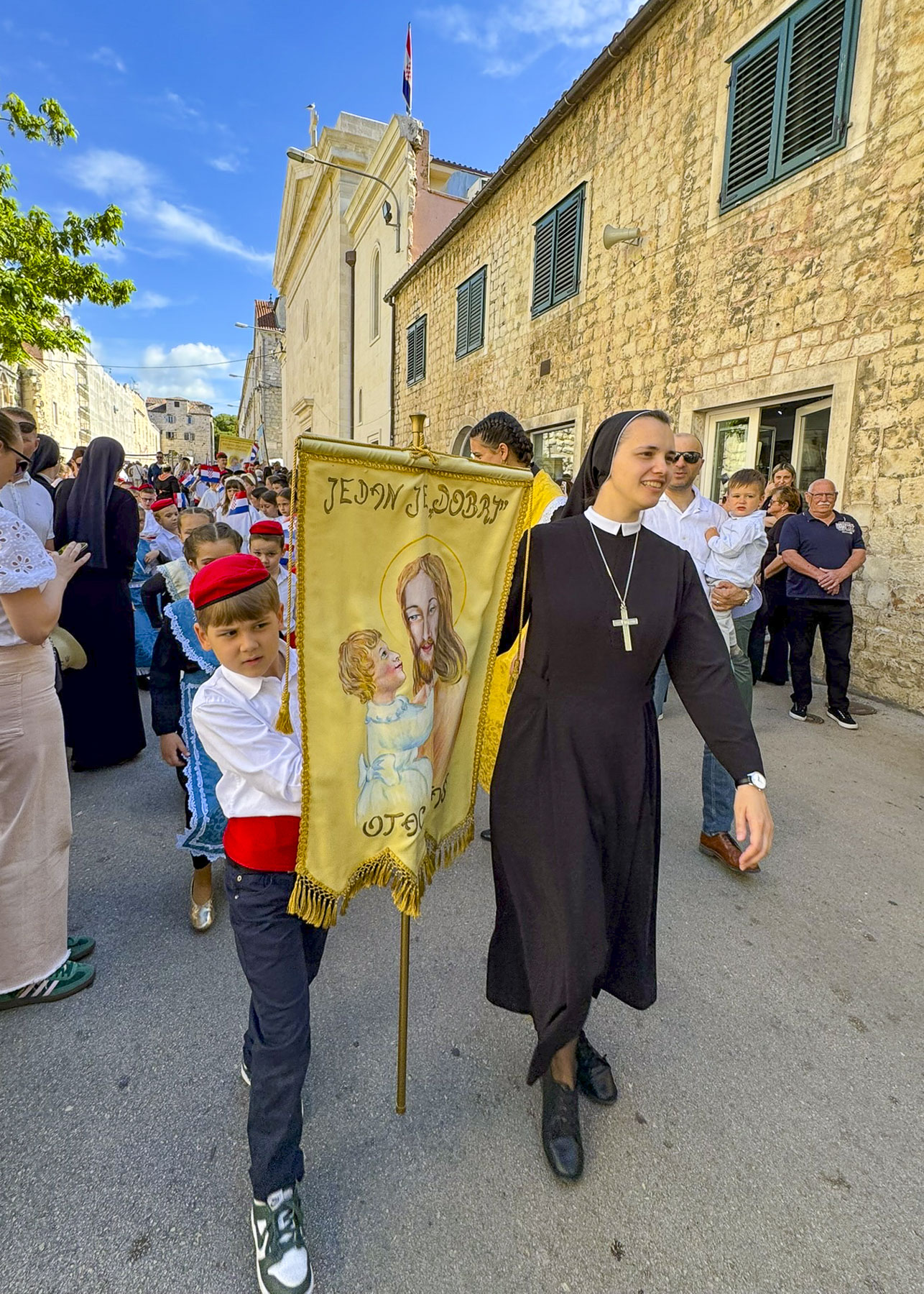
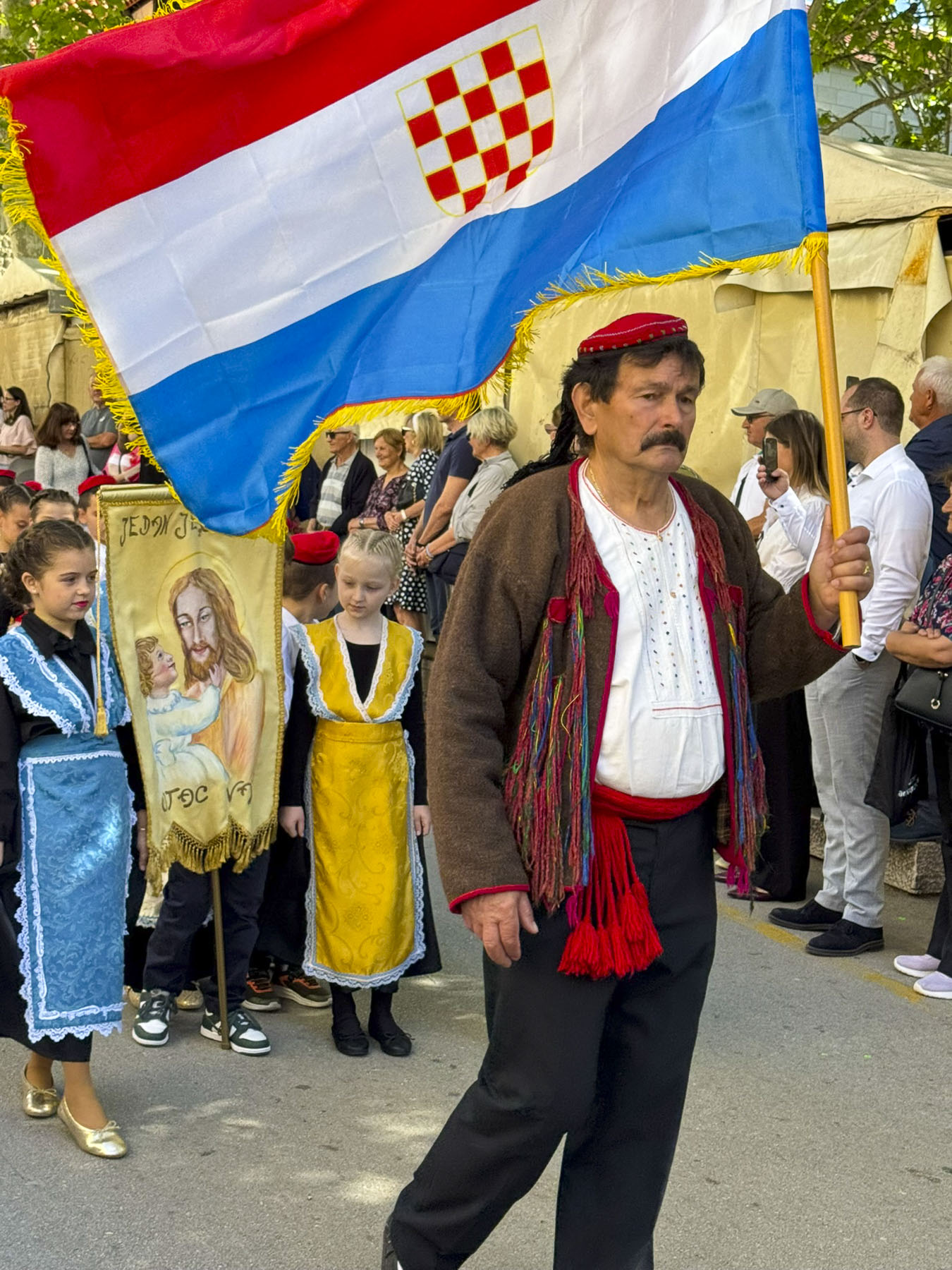
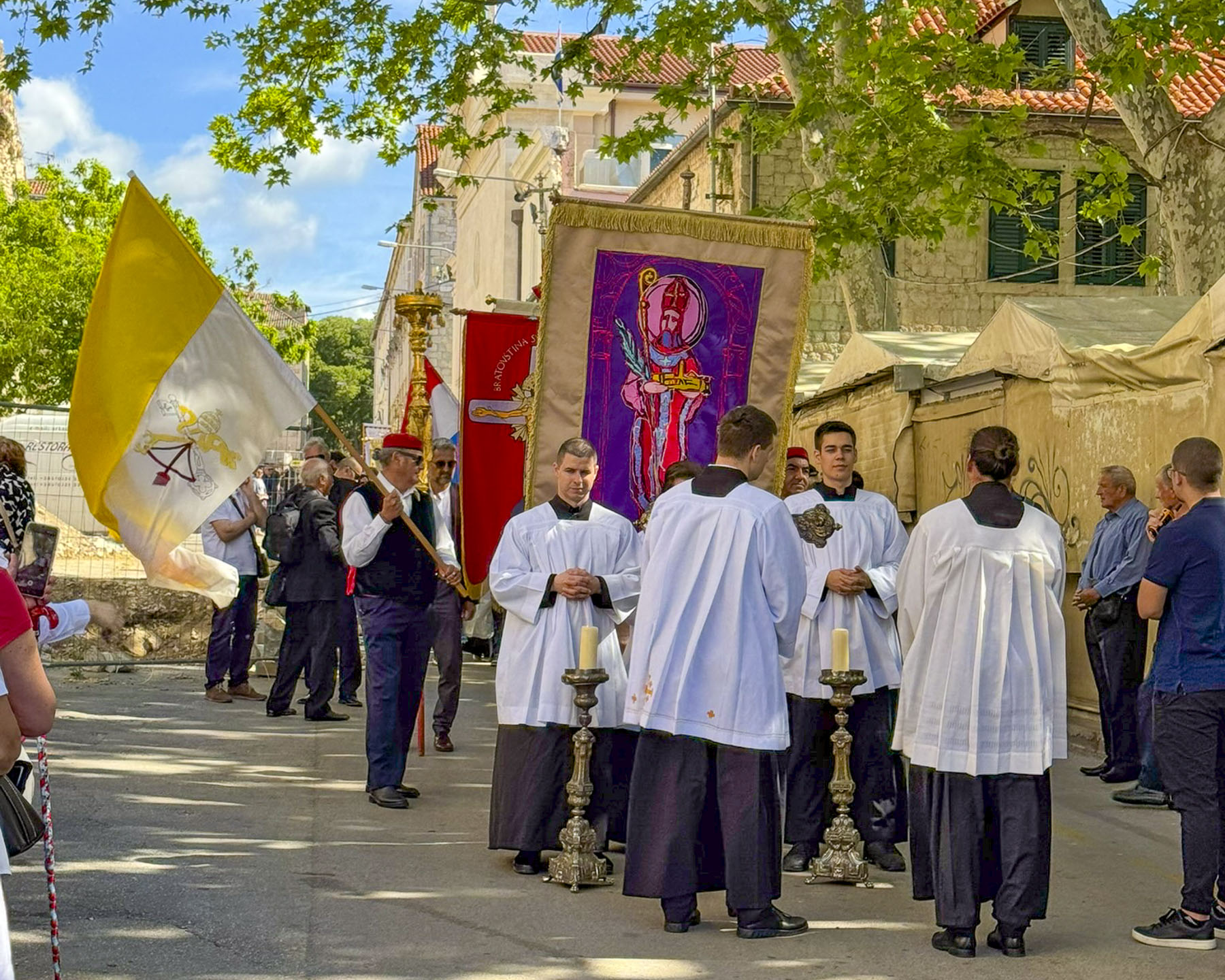
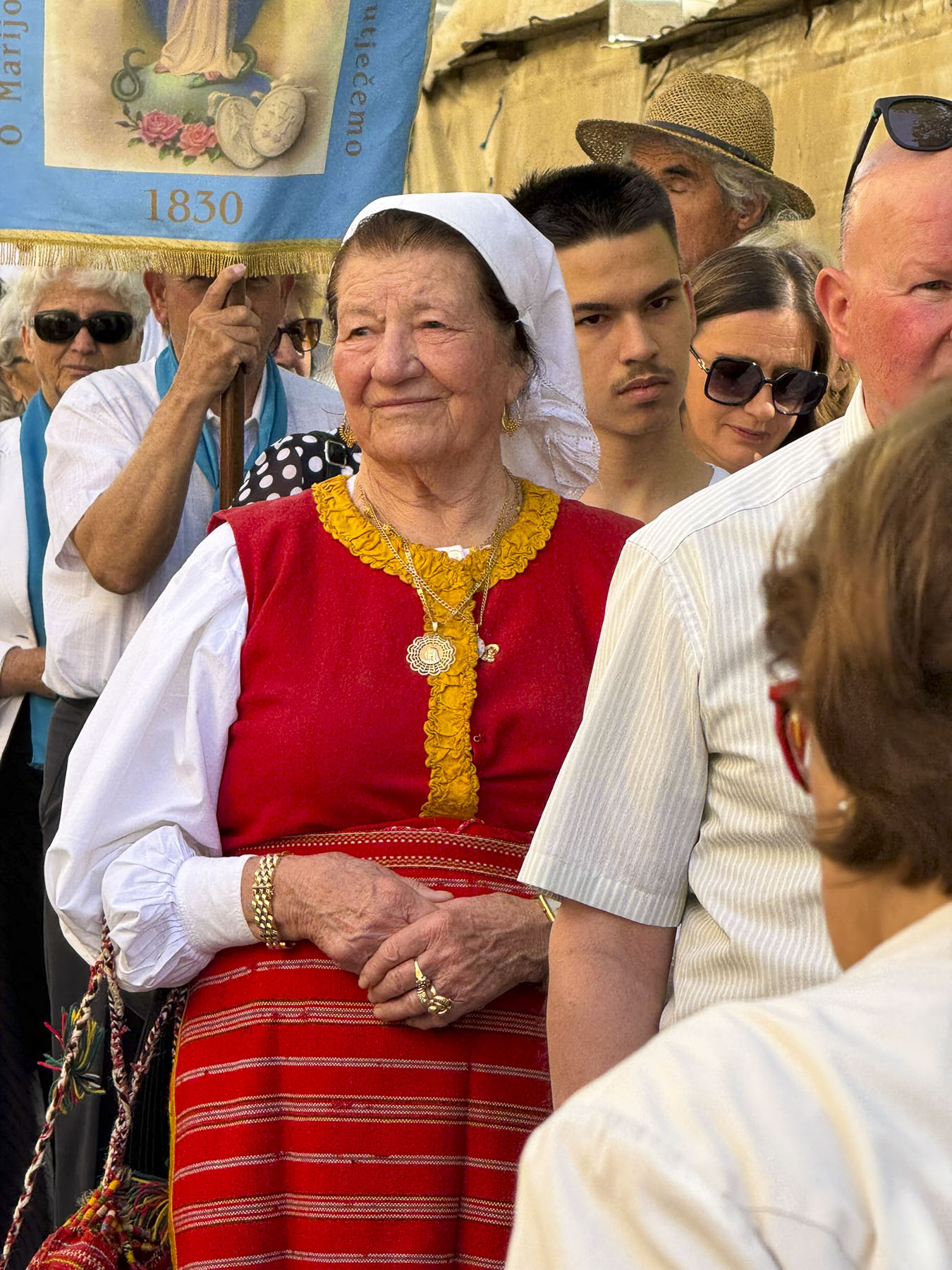
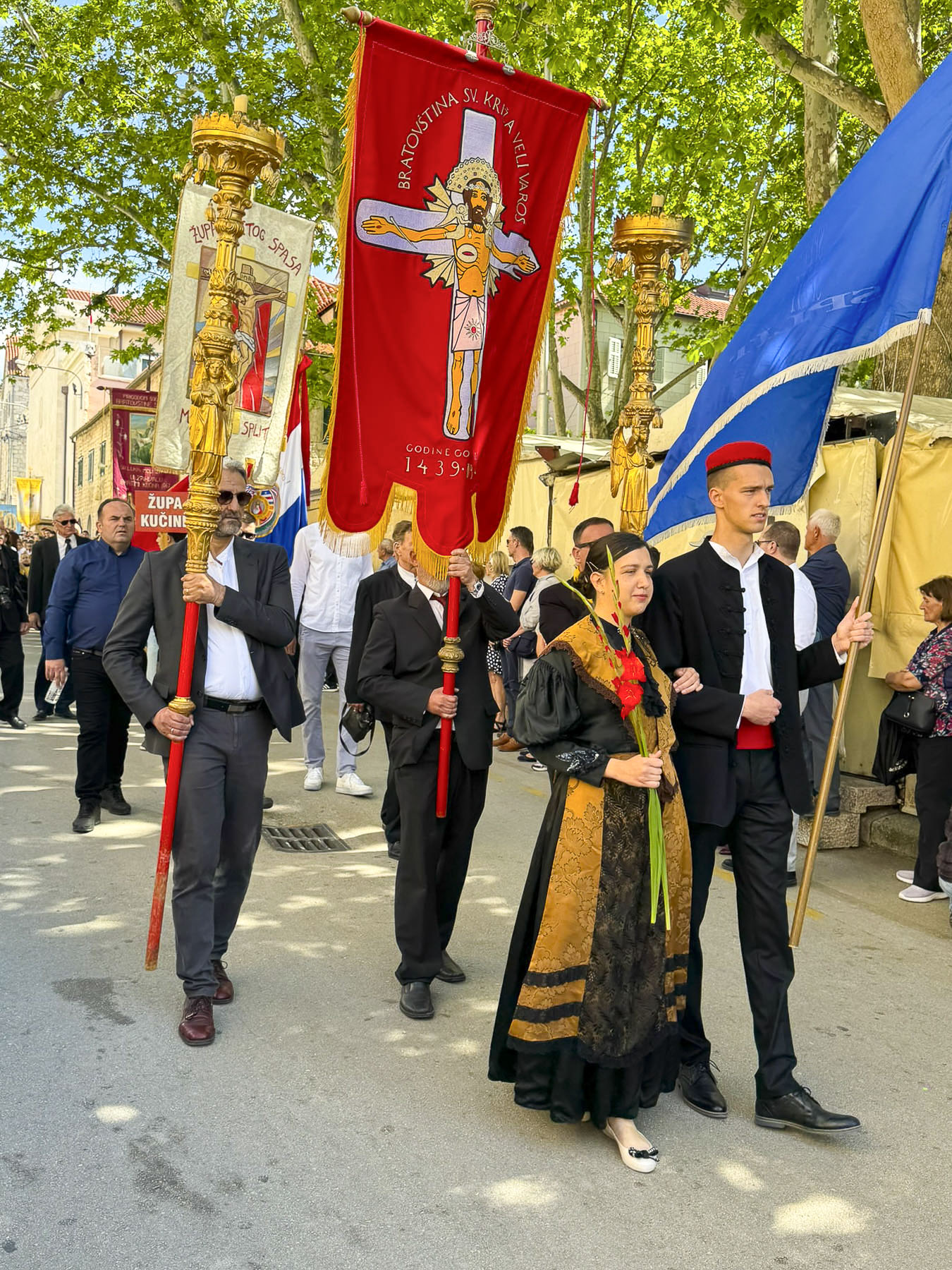
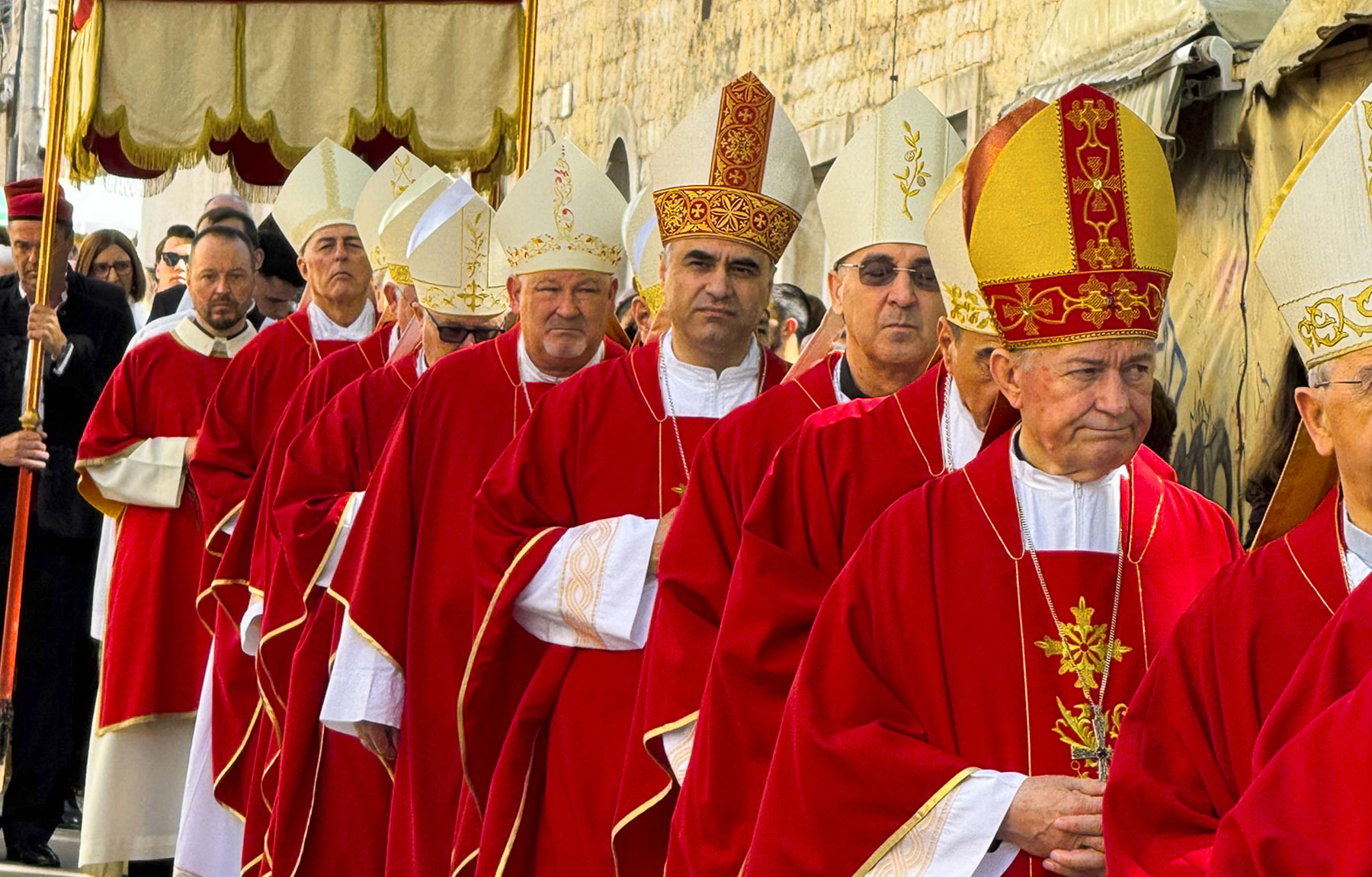
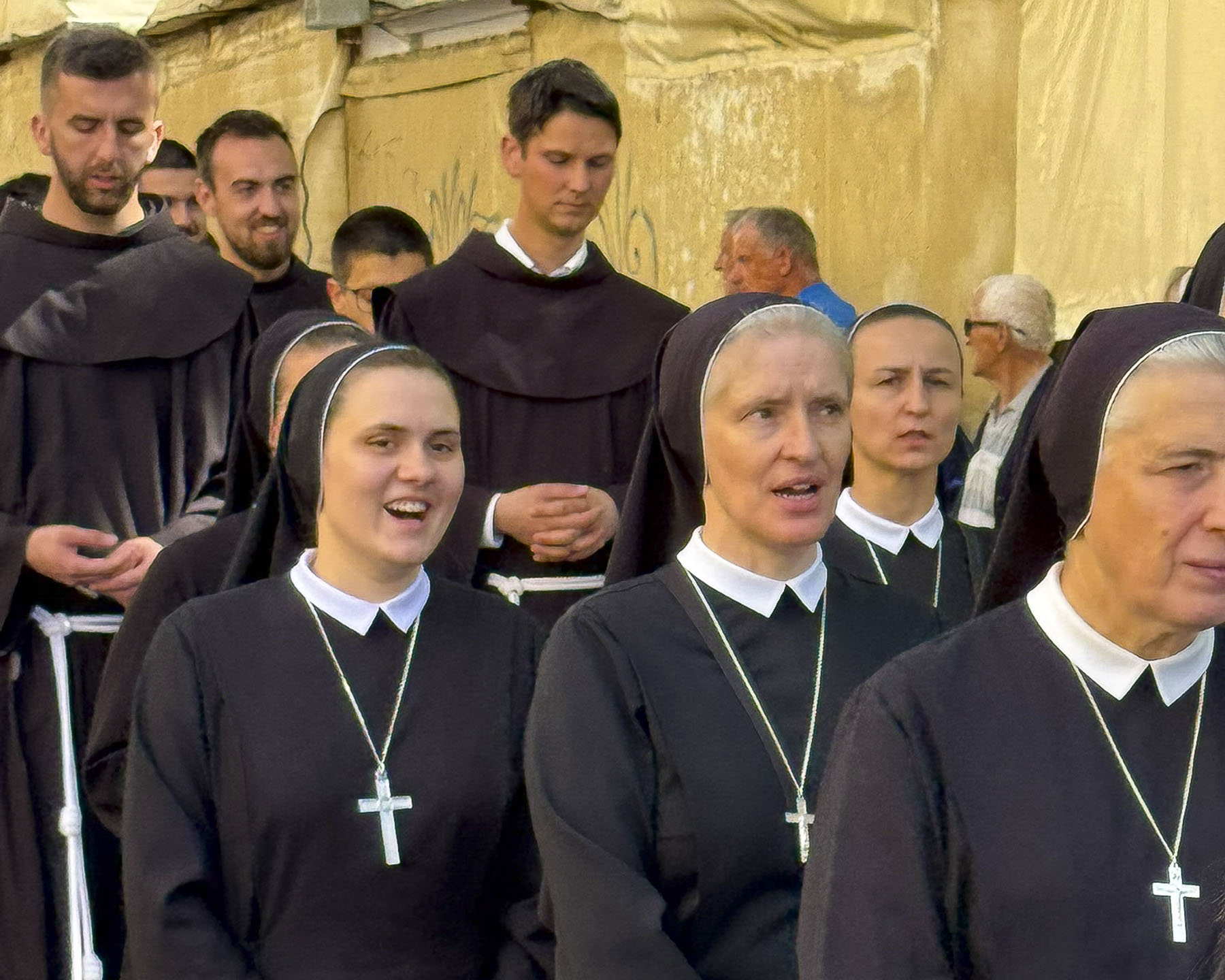
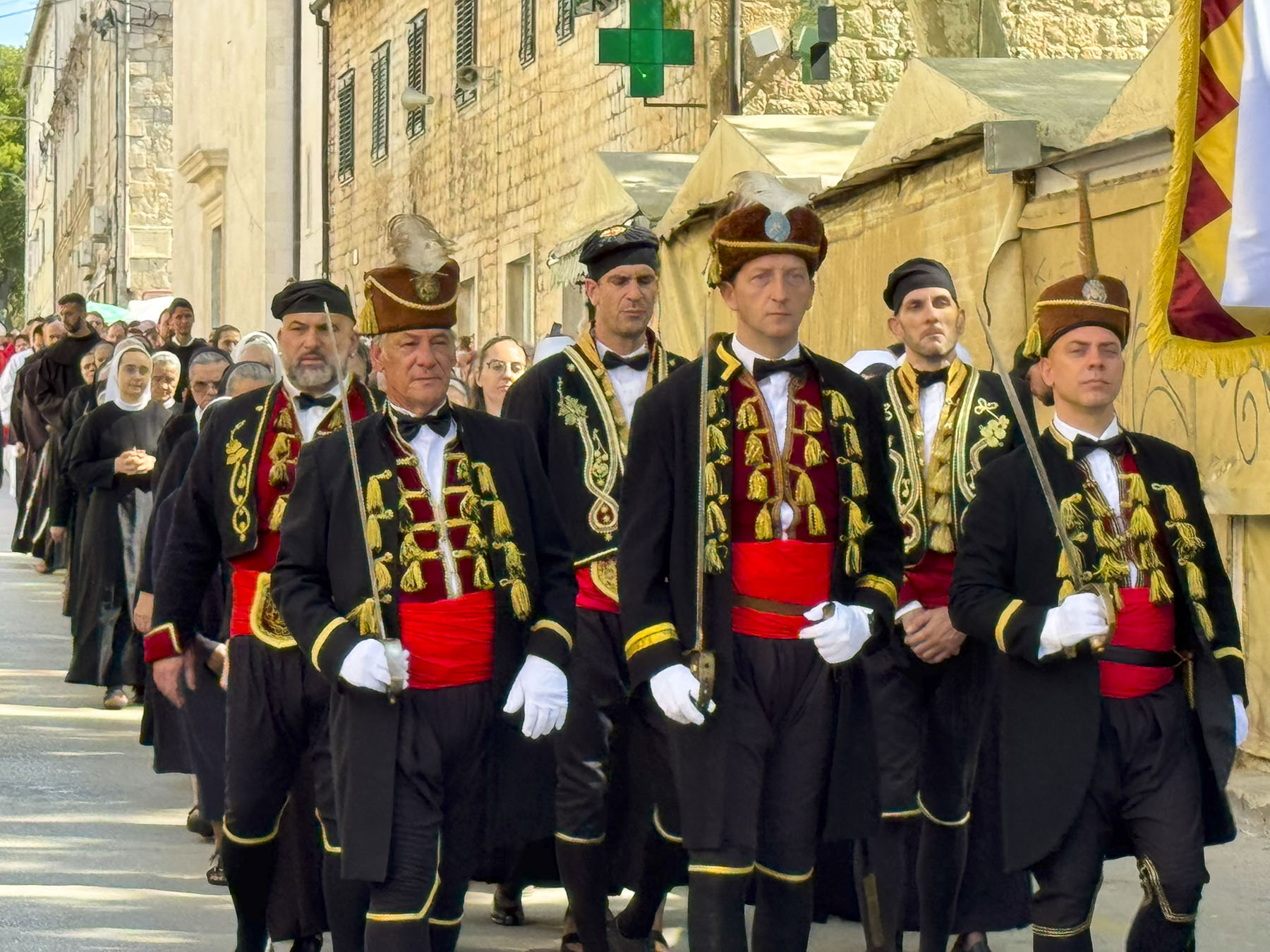
The next morning was May 7th, Saint Domnius’ feast day. Outside the palace’s East or Silver Gate, preparations were underway for a colorful religious banner-led procession with scores of people and school children dressed in traditional costumes. The participants were preparing to accompany the silver-encased relic of Saint Domnius, which had been brought from the cathedral for the occasion.
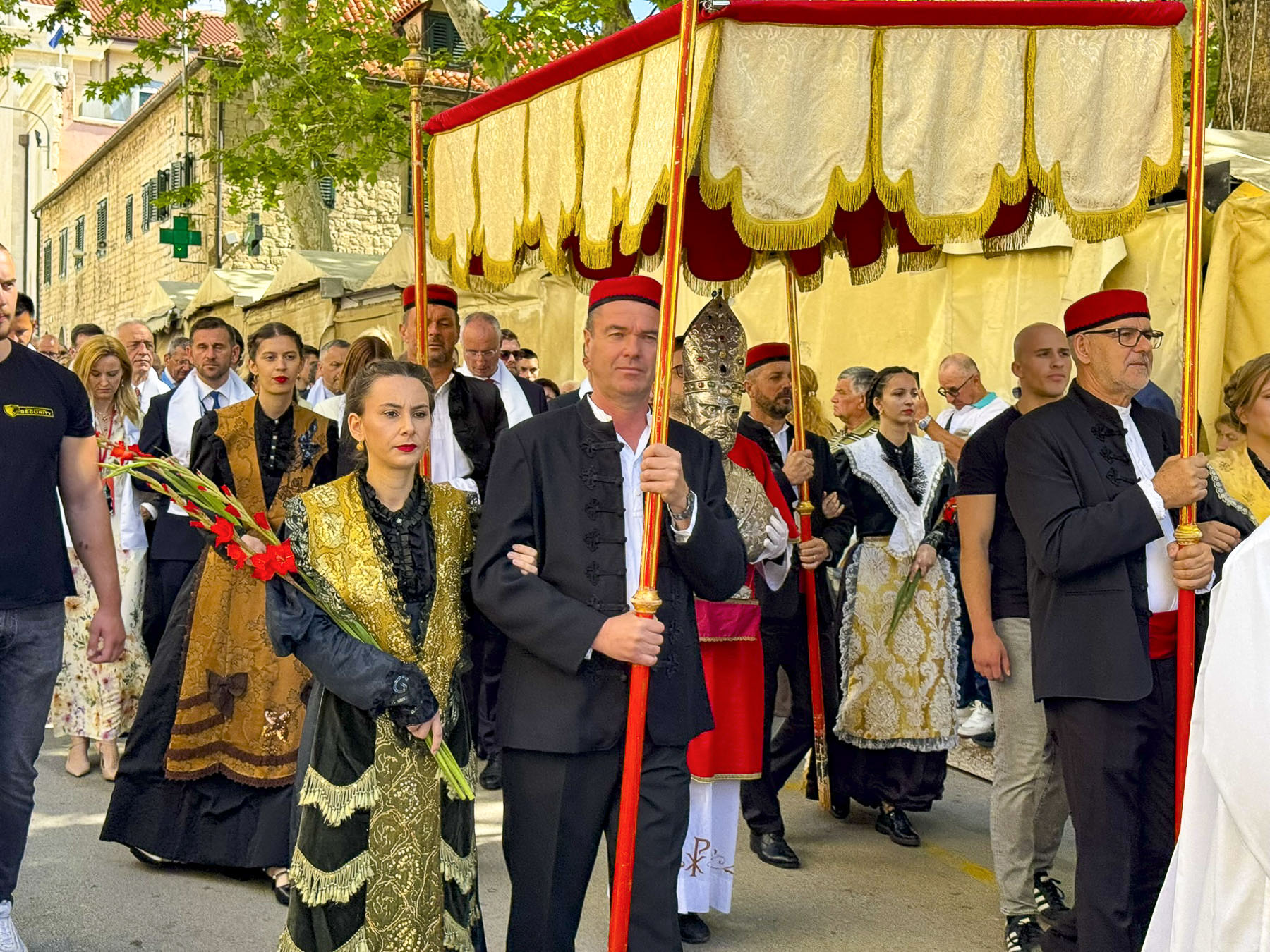
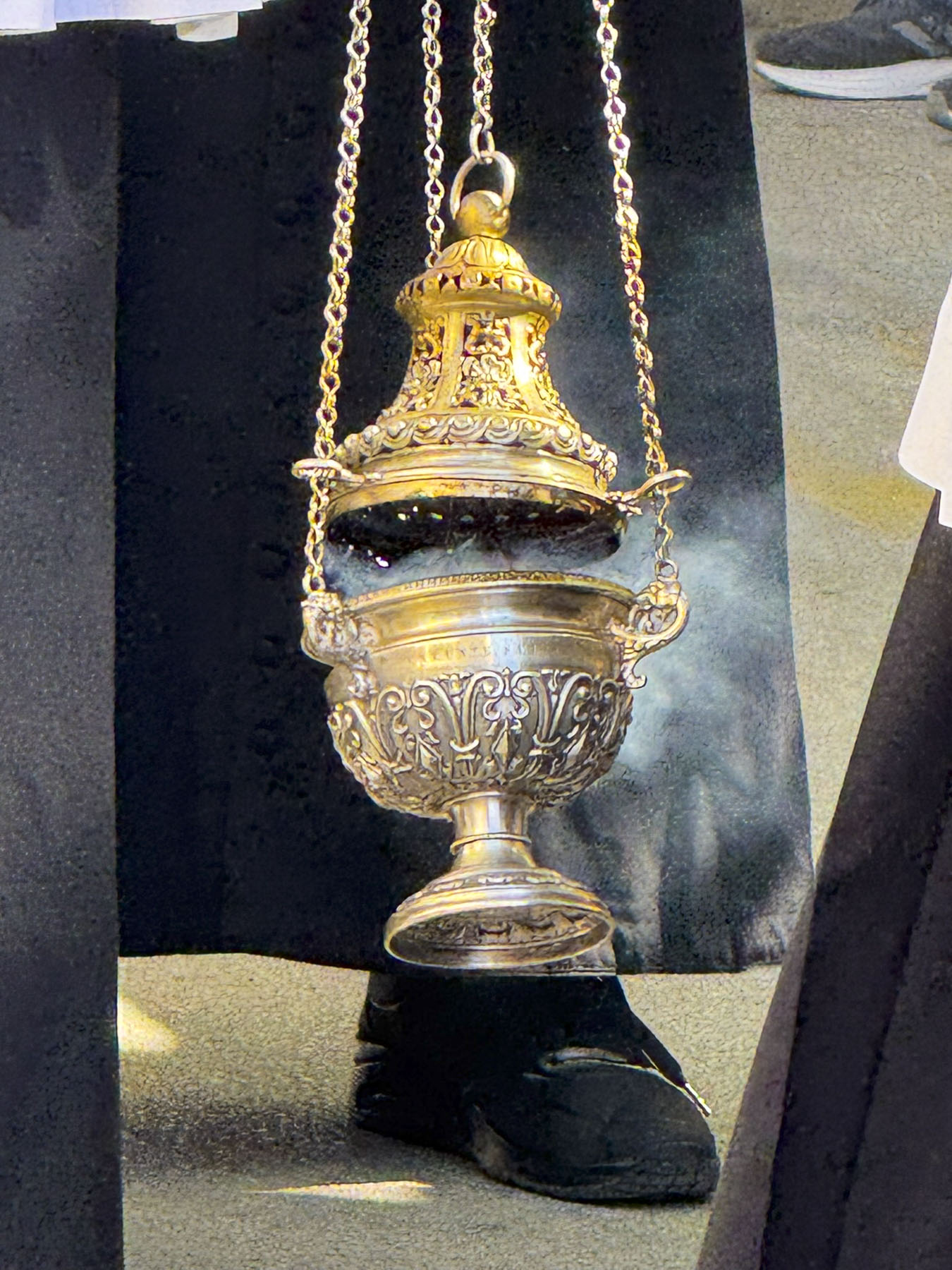
It was a well-attended pageant with thousands of spectators lined up along the route to watch the procession make its way down the Riva to the stage that had been constructed earlier in the week, where a mass was then held before returning the relic to the church. Later that day the festival ended with an evening concert featuring local musicians, but thunderstorms canceled plans for a fireworks display over the harbor.
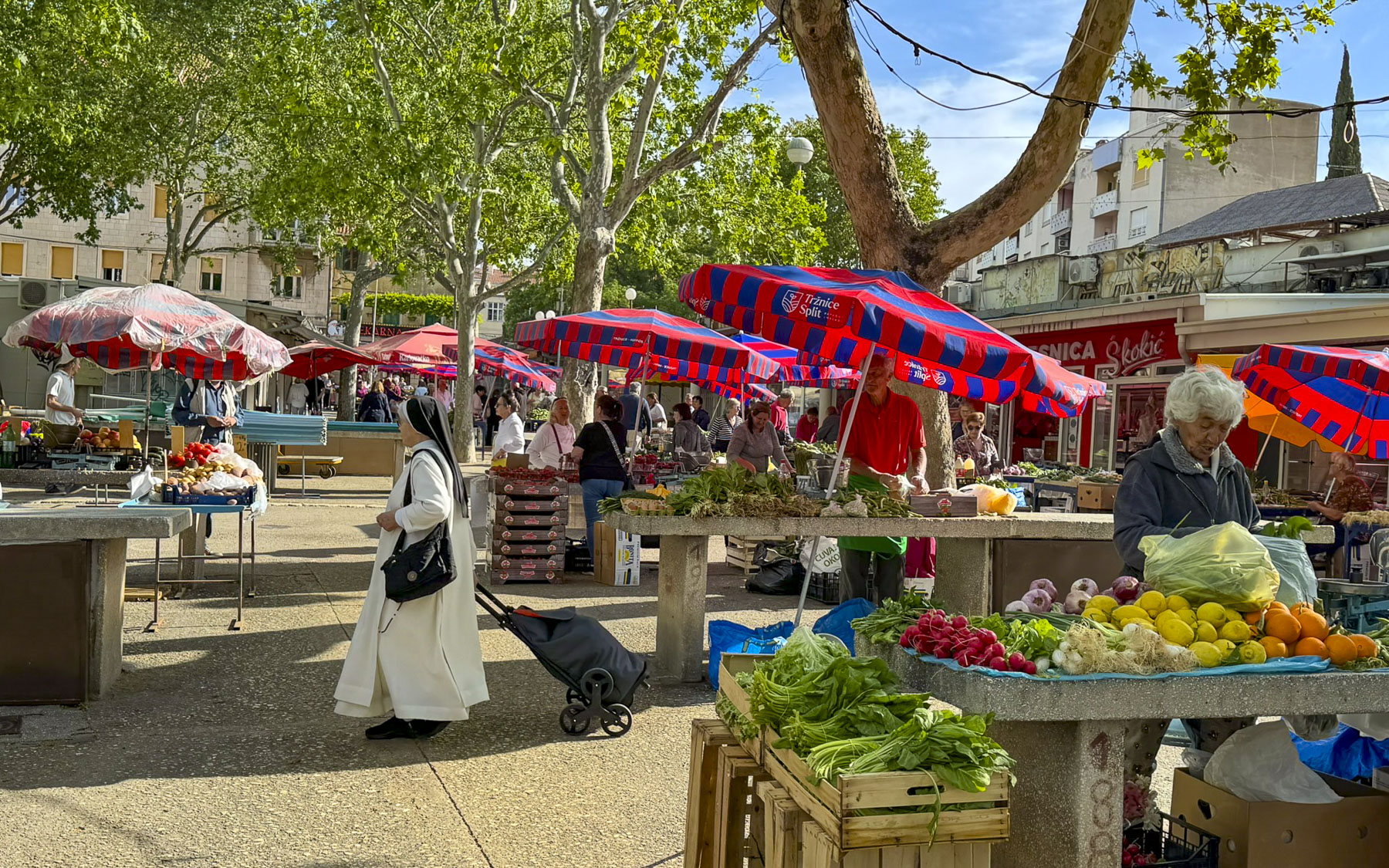
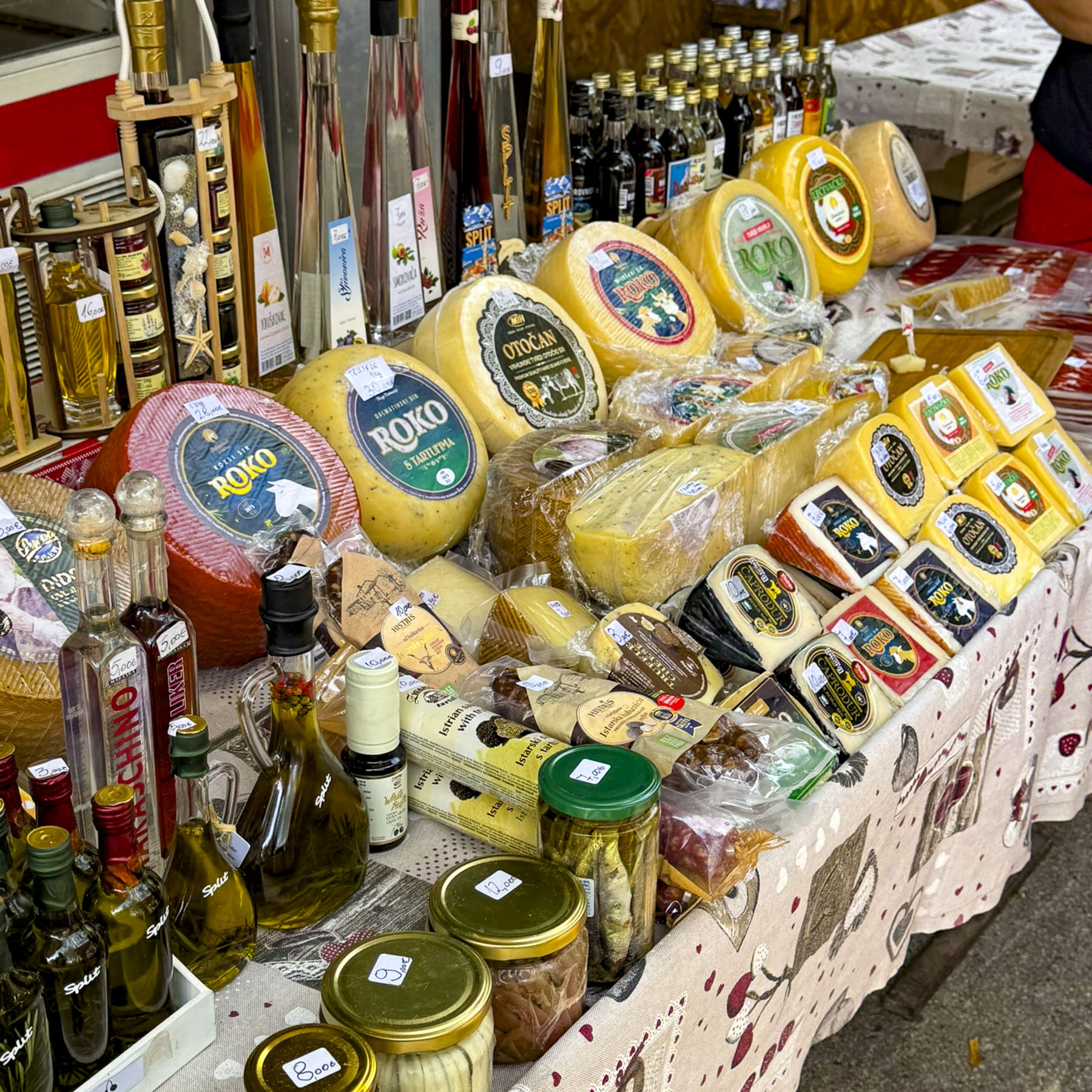
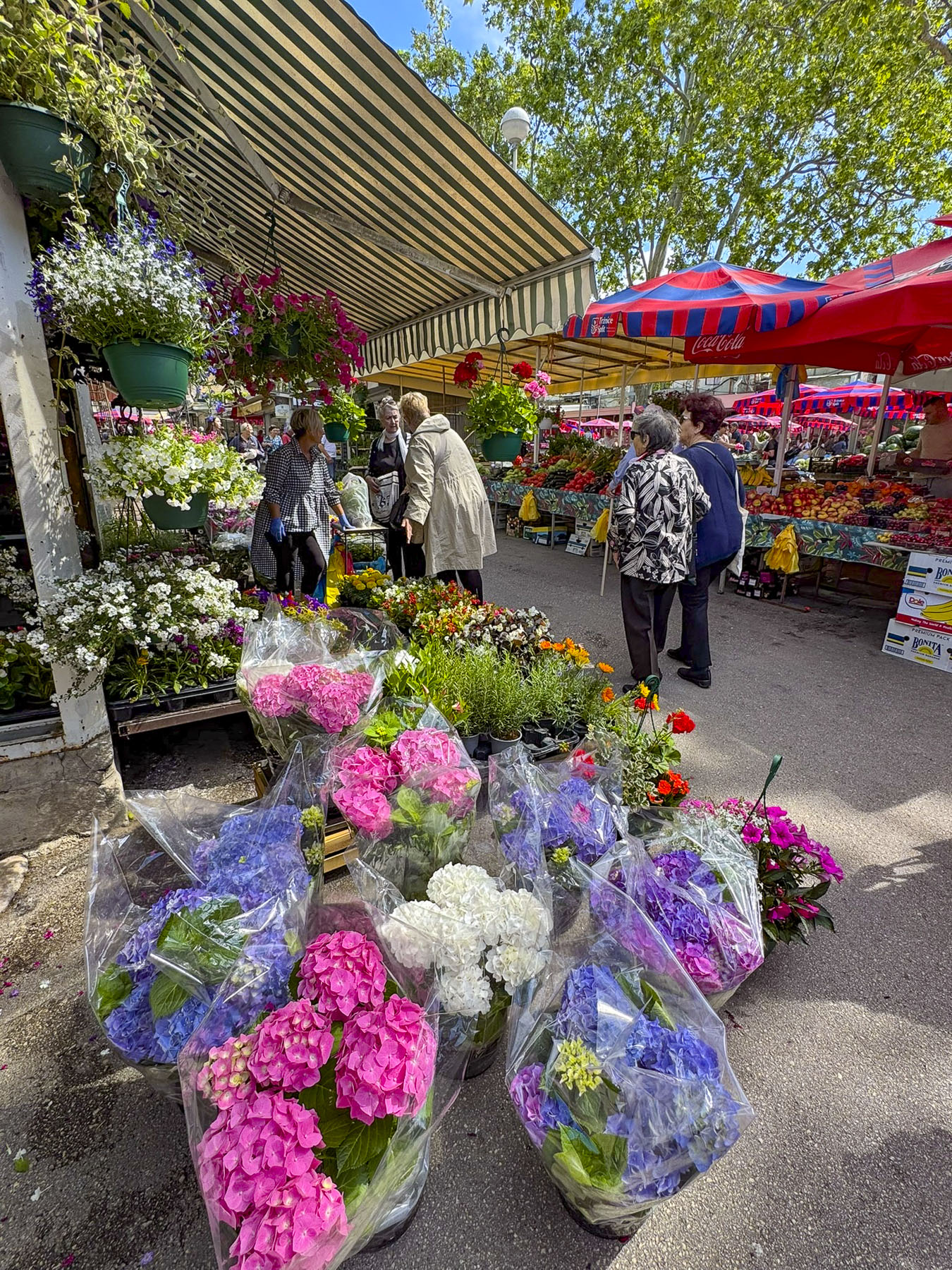
The morning and afternoon weather was perfect, and we spent the day investigating the Gradska Tržnica, Split’s daily outdoor morning market, that featured some early spring vegetables, cut flowers, tasty Croatian cheeses and wine, along with permanent small butcheries and fishmongers. We love cheese and purchased some vacuum packed goat cheese made by the award winning Gligora Dairy on the nearby island of Pag and a Dalmatian kozji sir roko goat cheese to savor when we returned to the states.
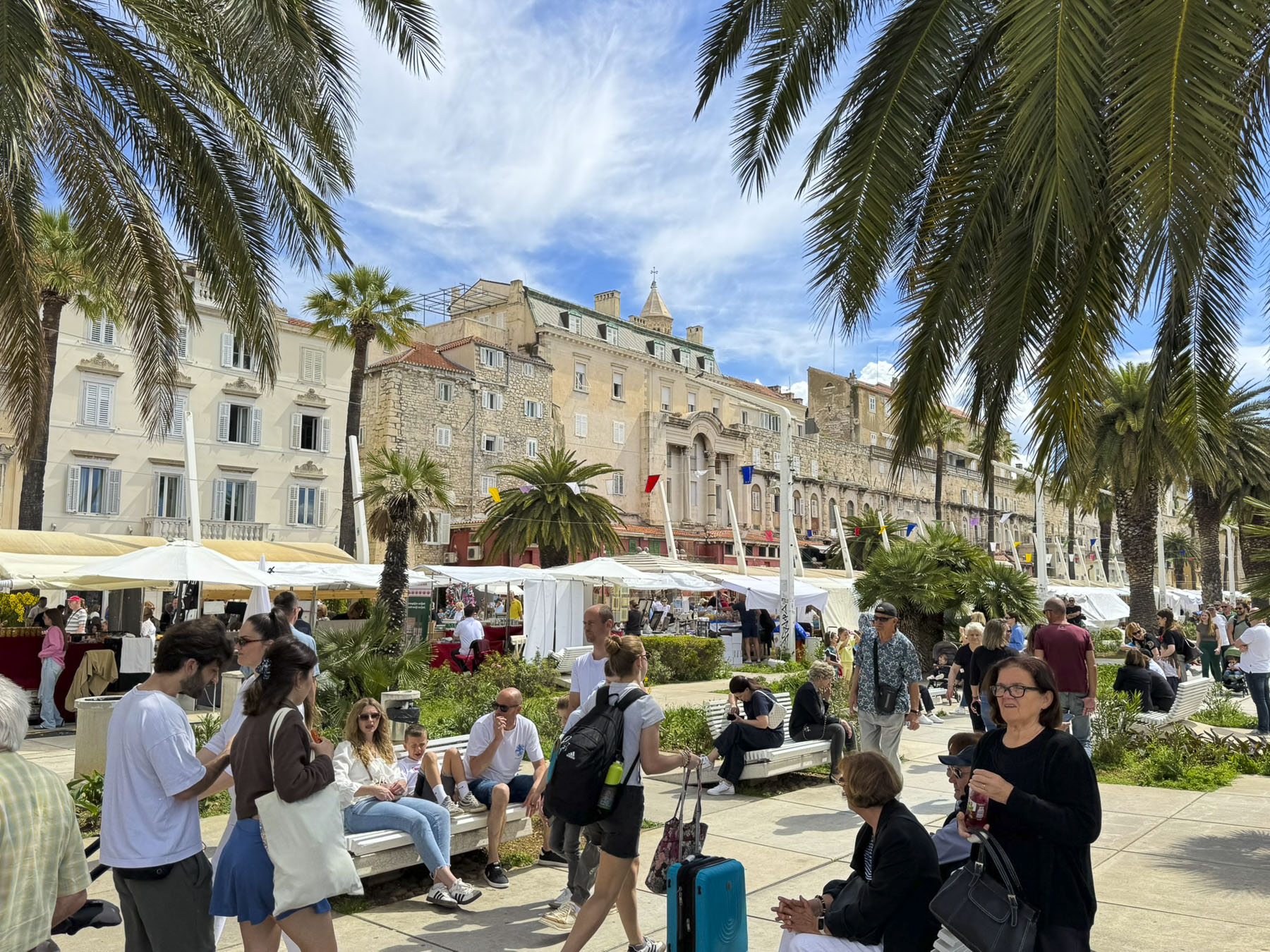
Afterwards we strolled along crafts booths on the Riva where it’s been a tradition to buy something wooden from the crafters of Solana, modern Solin, where Domnius was once bishop. The tradition is so old no one is sure exactly why or how it originated, but it has been in existence for centuries. One of our little traditions is to purchase a handmade wooden spoon from a local business, and we were hard put to choose just one from the immense selection. The craftsmen’s tents were also full of wooden spoons, cutting boards and klepetalo or ptice klepetuše. These are wooden toys with birds or butterflies at the end of a long stick with wheels. When pushed along the wings of the flying creatures flap and they clack as they go. Literally hundreds of kids were playing with them, and wooden spoons protruded from numerous shopping bags. It’s a very festive occasion.
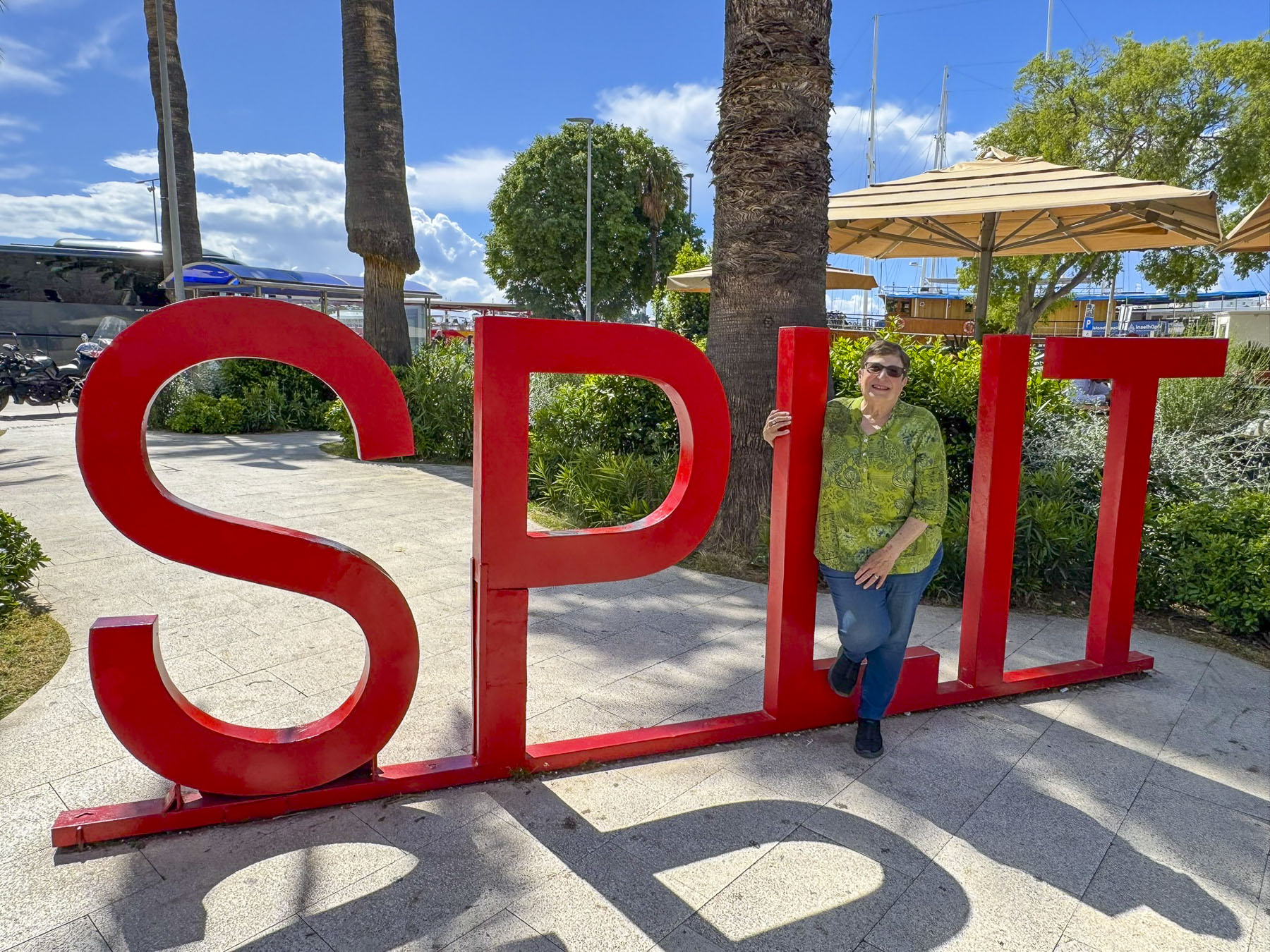
We had a grand time exploring Spilt. It was especially nice being there during the Feast of Saint Domnius, which gave the city a wholly different cultural dimension. It was the perfect place to end our travels through Slovenia, Bosnia & Herzegovina, and Croatia, a roundtrip journey that started and ended at the airport in Zadar.

Till next time,

Craig & Donna

A Balkans Road Trip Part 8: Bosnia and Herzegovina: Mostar, Počitelj and the Kravica Waterfall – Charming, Intriguing and Magnificent

We had been in the Balkans almost two weeks by now, and this was the first time we encountered heavy traffic. Without realizing it we had planned on driving from Sarajevo to Mostar on May 1st, Labor Day, a major two-day holiday in Bosnia, where it is traditionally spent picnicking and relaxing with family and friends in the countryside. It was a warm beautiful spring day, and did in fact feel as if every family in Sarajevo was heading to Mostar, in the southern Herzegovina region, turning what would normally be a two-hour drive into five.

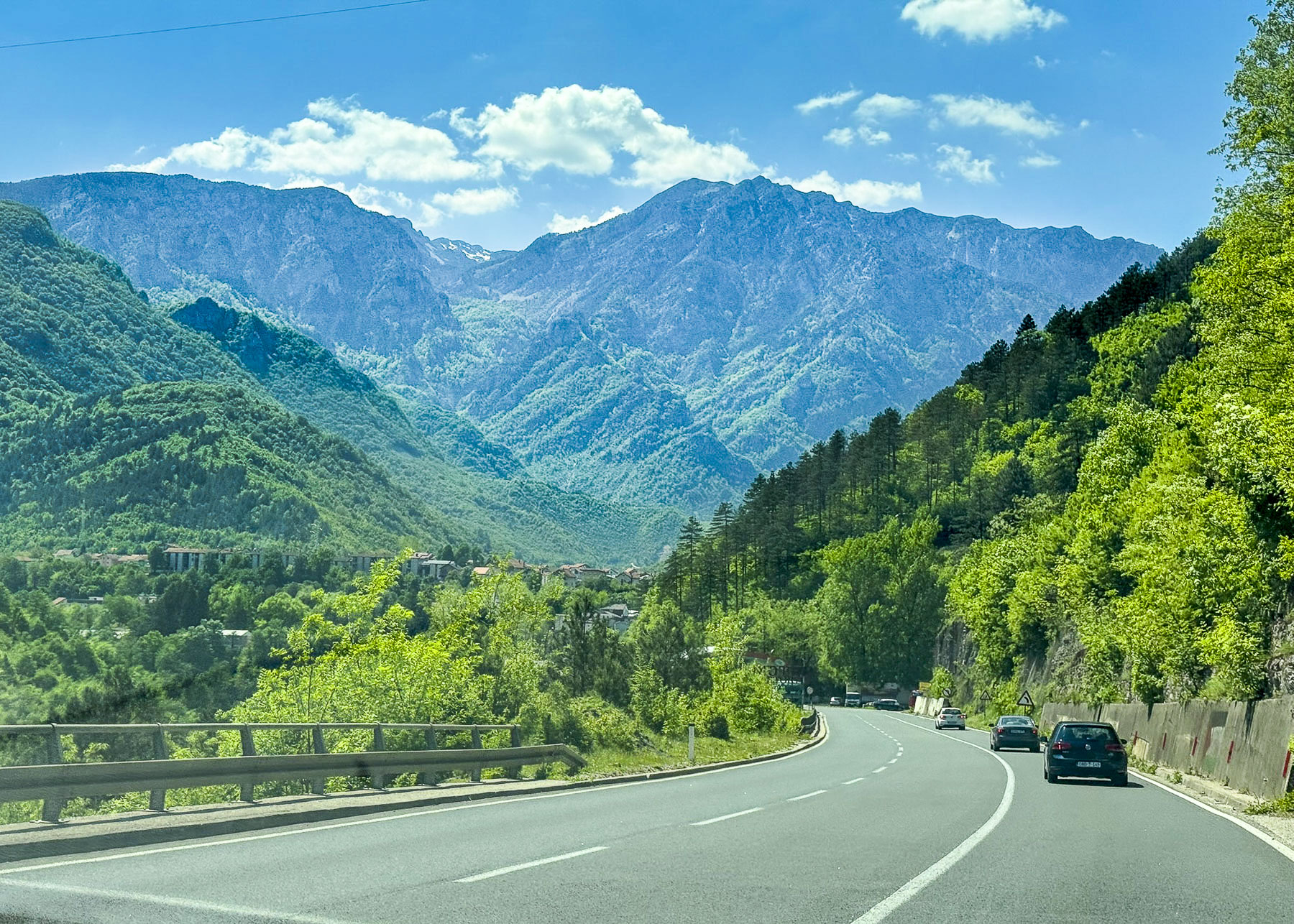
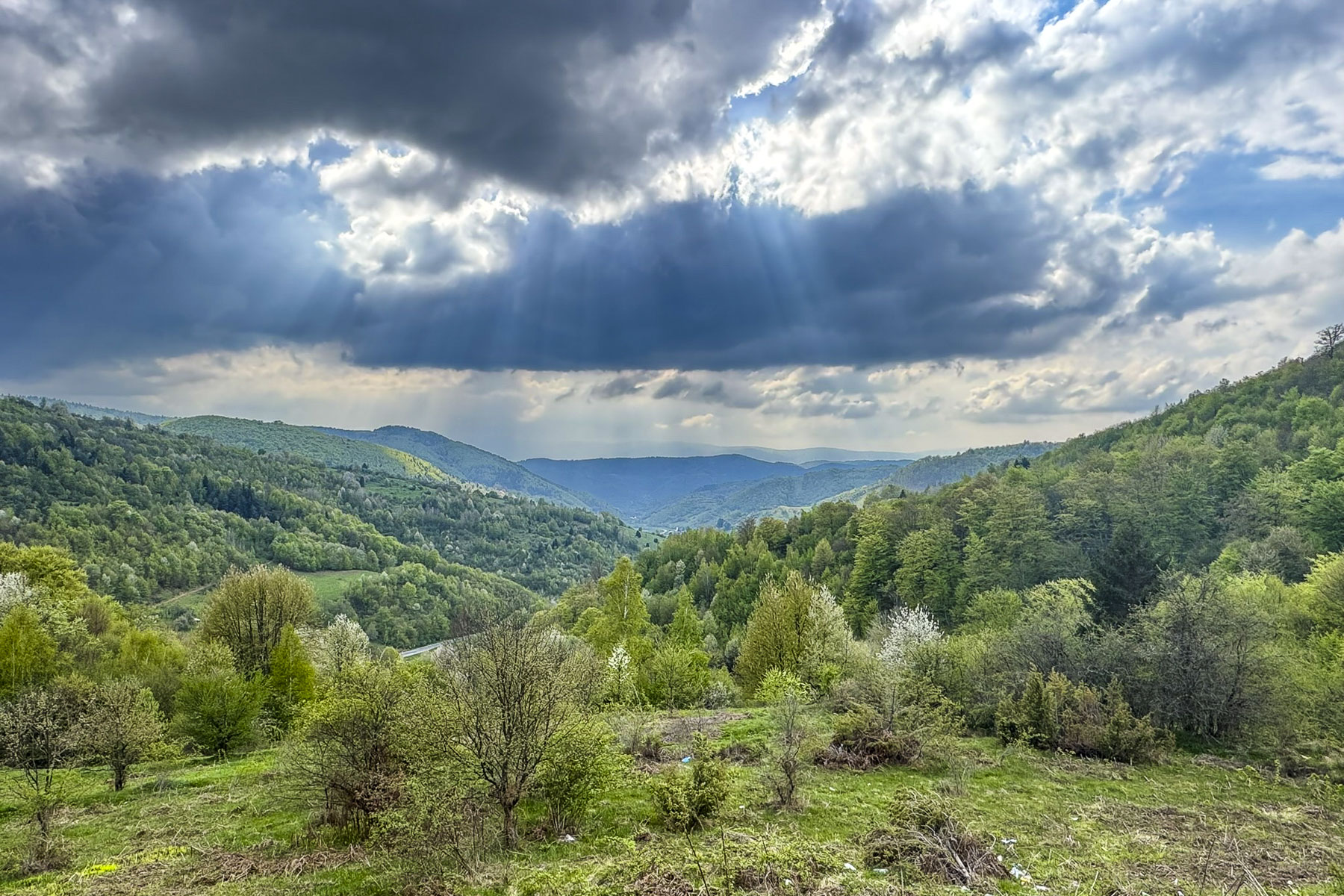
Our journey was off to a good start as we headed southwest on the A1, from Sarajevo through the rolling foothills of the Dinaric Mountain Range, a wide 644km (400mi) long stretch of peaks that runs southeast from Slovenia through Croatia, Bosnia, Montenegro, Serbia, Kosovo, Albania, and North Macedonia. But it soon slowed as this major four-lane wide infrastructure project, which will eventually reach the Adriatic coast, narrowed for construction projects. The countryside was lush with fresh spring greenery, though disappointedly there were not any scenic pullovers along the way, and we contented ourselves as best we could, by taking landscape photos through the window of our car as we drove.

Our “drive a little then café” yearning for caffeine was seriously overdue, so we detoured slightly to Restoran Vrata Hercegovine for coffee and lunch when the A1merged into the two-lane E73 at the traffic circle in Bradina. They had a large menu to select from and everything we ordered was very good; the pricing very budget friendly.

From here the E73 basically follows the Trešanica River, the headwaters of which flow from the slopes of Mt. Bitovnja 1,700m (5600ft) which wasn’t far from where we stopped for lunch, to Konjic where it merges with the Neretva River at Konjic before flowing into Lake Jablanica. We had originally planned to have lunch here and walk across the Stara Ćuprija, Konjic’s old Ottoman bridge, a six-arch stone span constructed in 1682. The bridge is 107km (66mi) downstream from the river’s source on the slope of the Zelengora mountains near Mt. Maglić 2,388m (7835), Bosnia’s highest peak on the border with Montenegro. Nearer to Konjic is Glavatičevo, a popular village for river rafting on the Neretva.

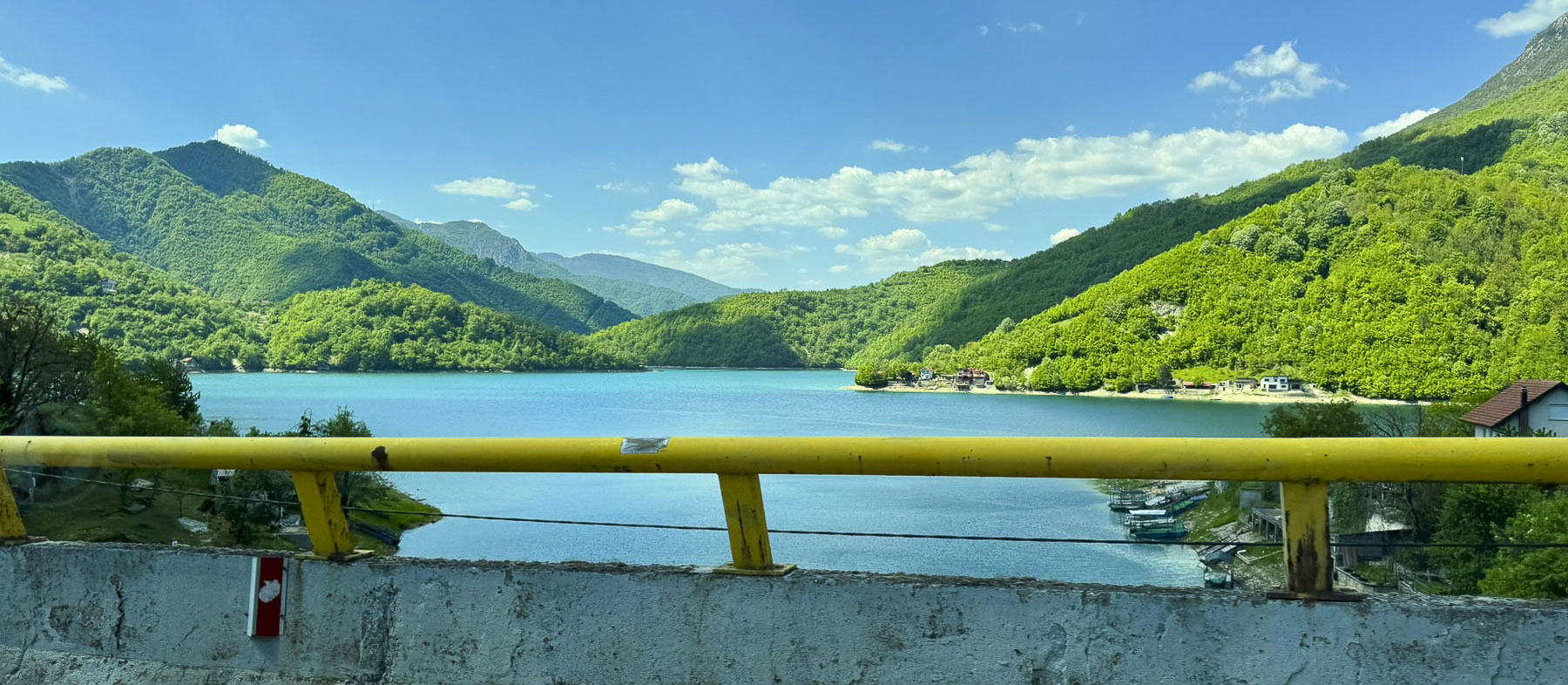
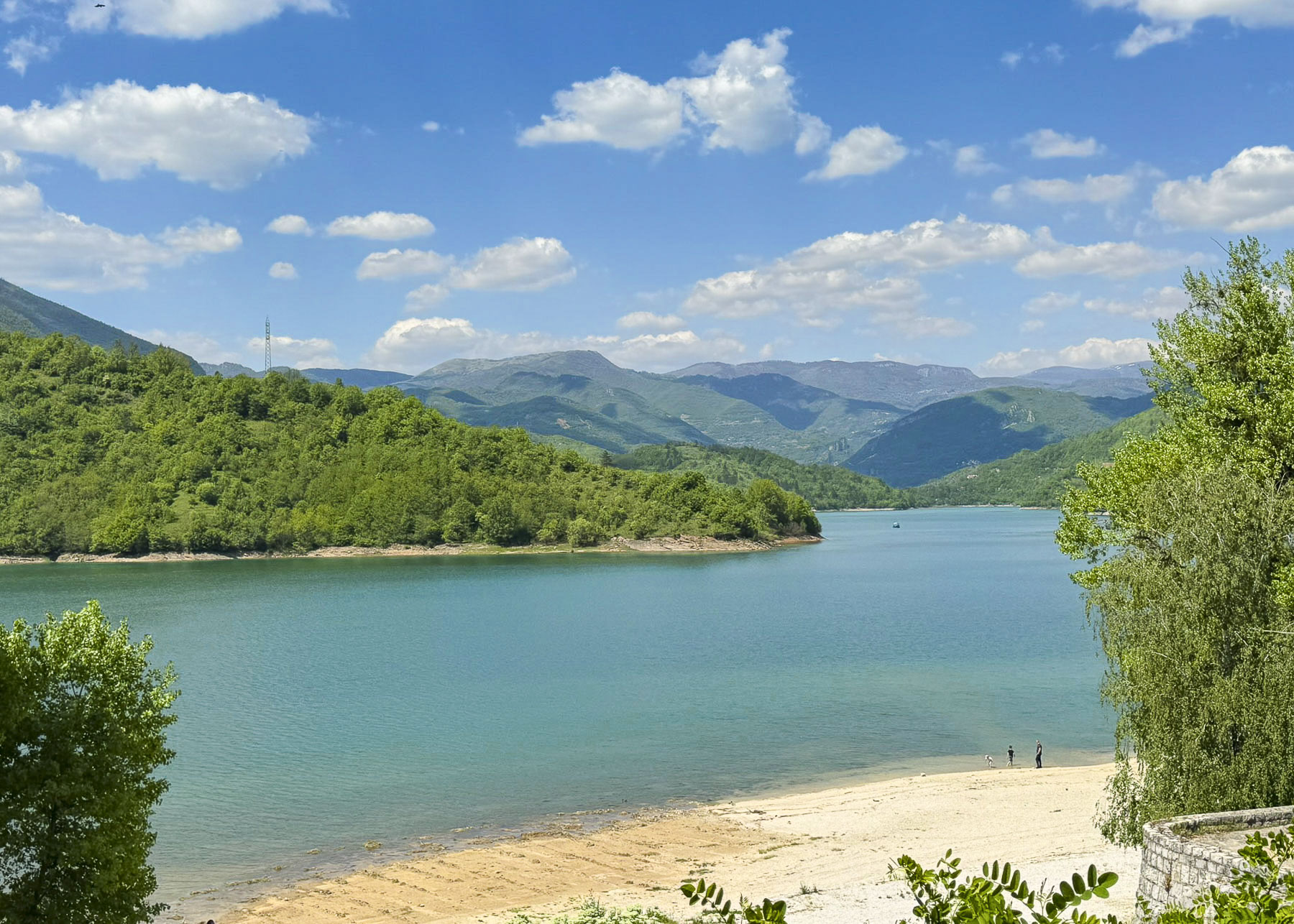
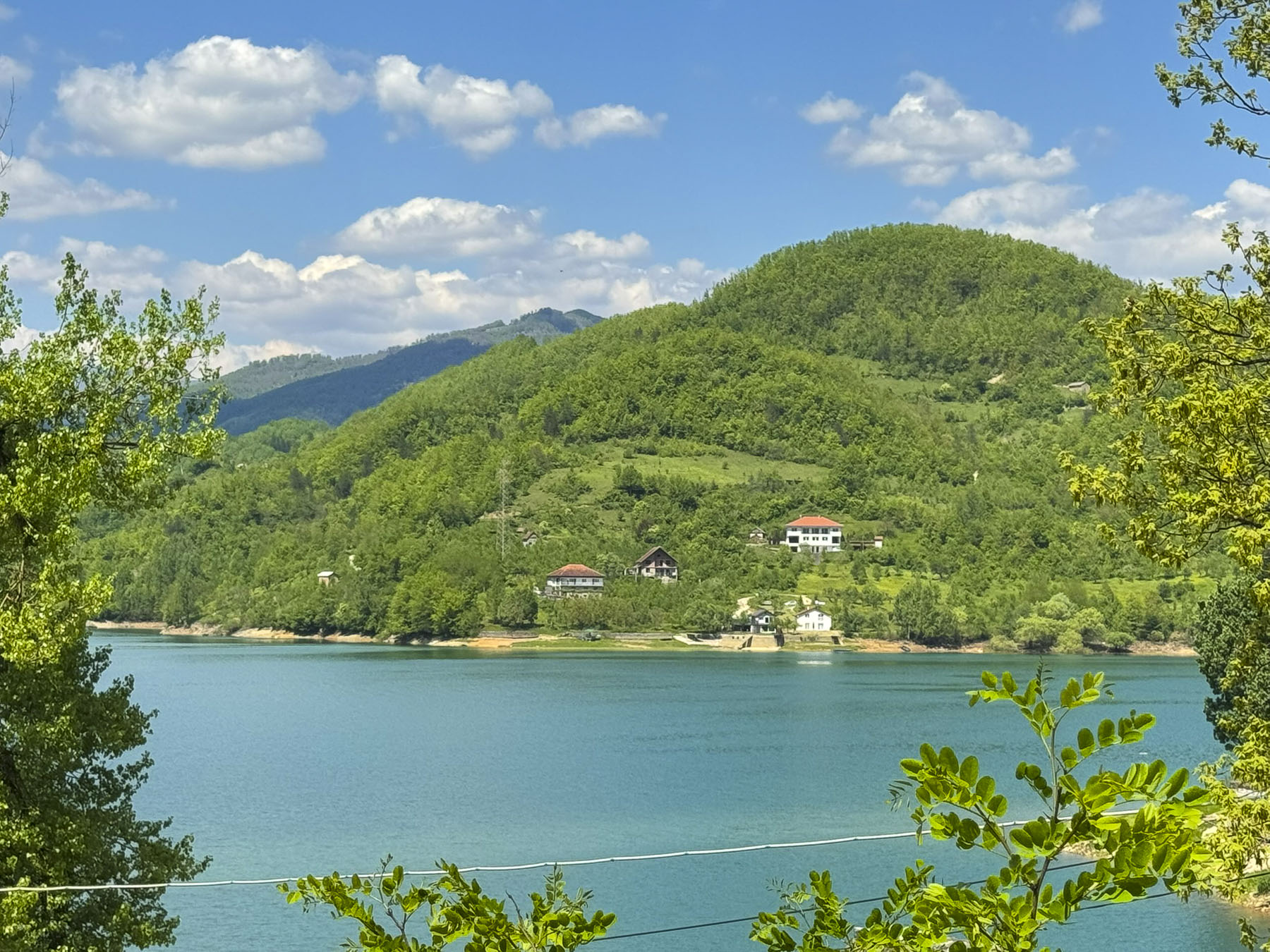
The road roughly traces Lake Jablanica’s picturesque shoreline. The large lake is actually a manmade reservoir that is 30km (19 mi) long and covers 67.5 square kilometres (26.1 sq mi). The damming of the upper portion of the Neretva River was created between 1947 and 1955 to supply hydroelectric power to the region. While this was the first dam built on the Neretva River there are now many environmentally controversial proposals to block the remainder of free-flowing waterway with 50 more dams across the river and its tributaries. In Ostrožac there was a nice beach where we stopped to take photos of the Lake.

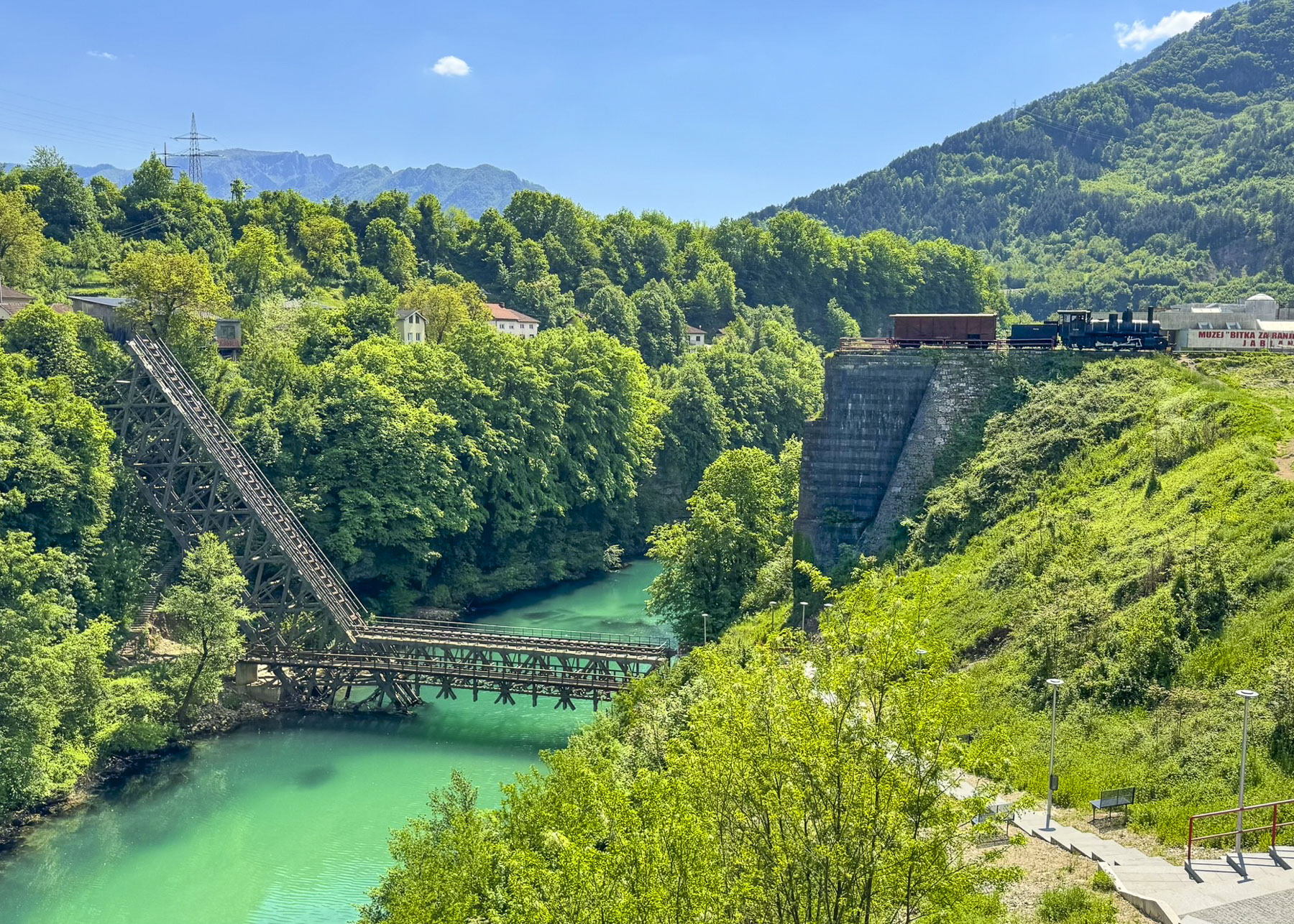
South of the lake we detoured to the Old Neretva Train Bridge in the town of Jablanica, an important site during the “Battle of the Wounded” during February–March 1943. Here Josip Tito led the escape of over 20,000 Yugoslav Partisans, plus roughly 4,000 wounded, east across the Neretva River to escape the pursuit an overwhelming Axis force assembled to destroy them after their unexpected victory at Prozor.

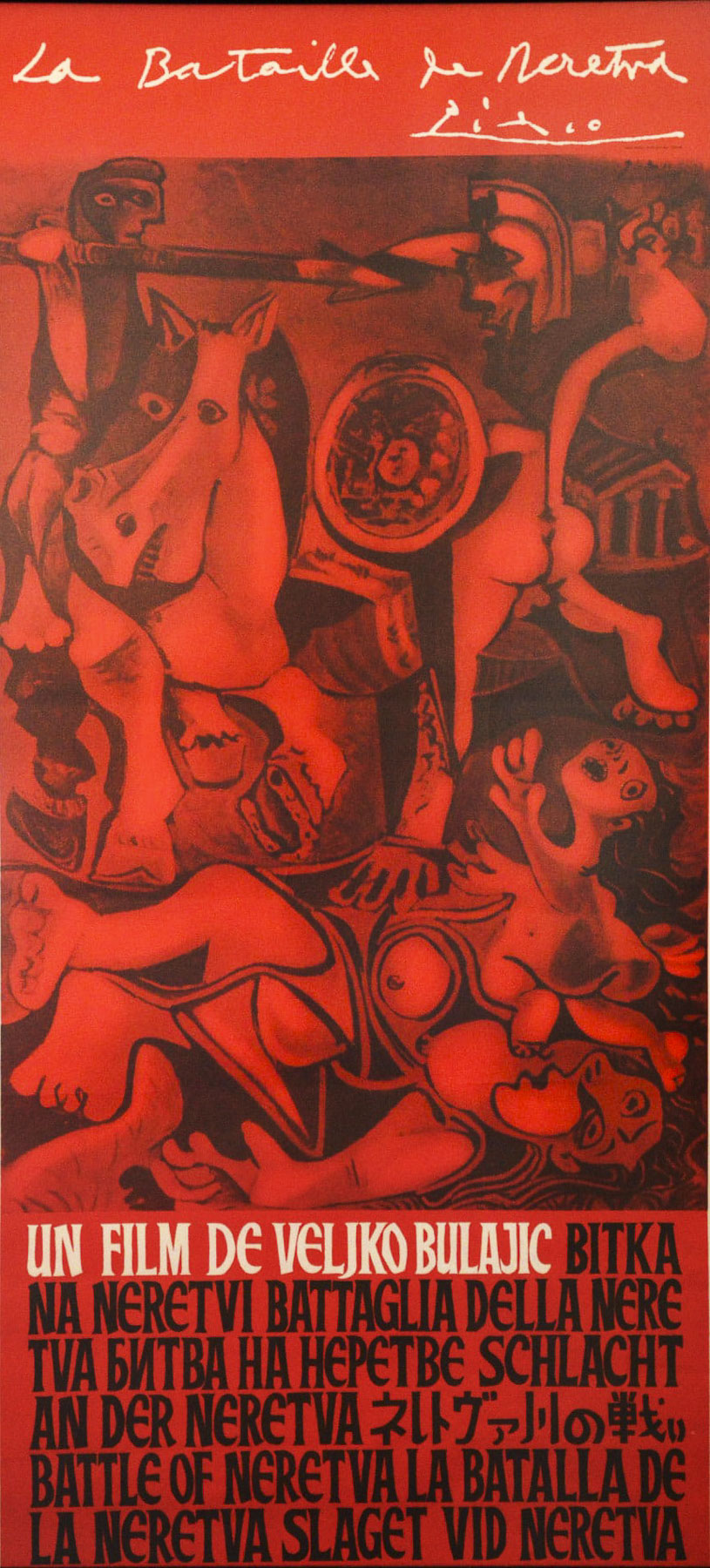
This successful strategic retreat relied on a deception which required the destruction of all the bridges across the Rama and Neretva rivers between March 1stand 4th. This action led the Axis forces to believe the partisans were headed towards northern Bosnia, while in fact Tito was leading his men to safety on March 7th and 8th across a temporary wooden bridge built across the Neretva, in just 18 hours, after the rail bridge was destroyed. A museum at the site commemorates this history. As does the 1969 movie “The Battle of Neretva” starring Orson Welles and Yul Brynner, among an international cast by directed Veljko Bulajić. The film was a contestant in the best foreign film category in the Academy Awards that year. The European film poster for the movie was famously designed by Pablo Picasso, in which he used motifs of his painting “The Rape of the Sabine Women” but “painted them red to symbolize the anti-fascist fight for freedom.” It’s one of the two movie posters that Picasso ever designed. The artist refused payment, instead requesting 12 bottles of Yugoslavia’s finest wines gathered from across the region.

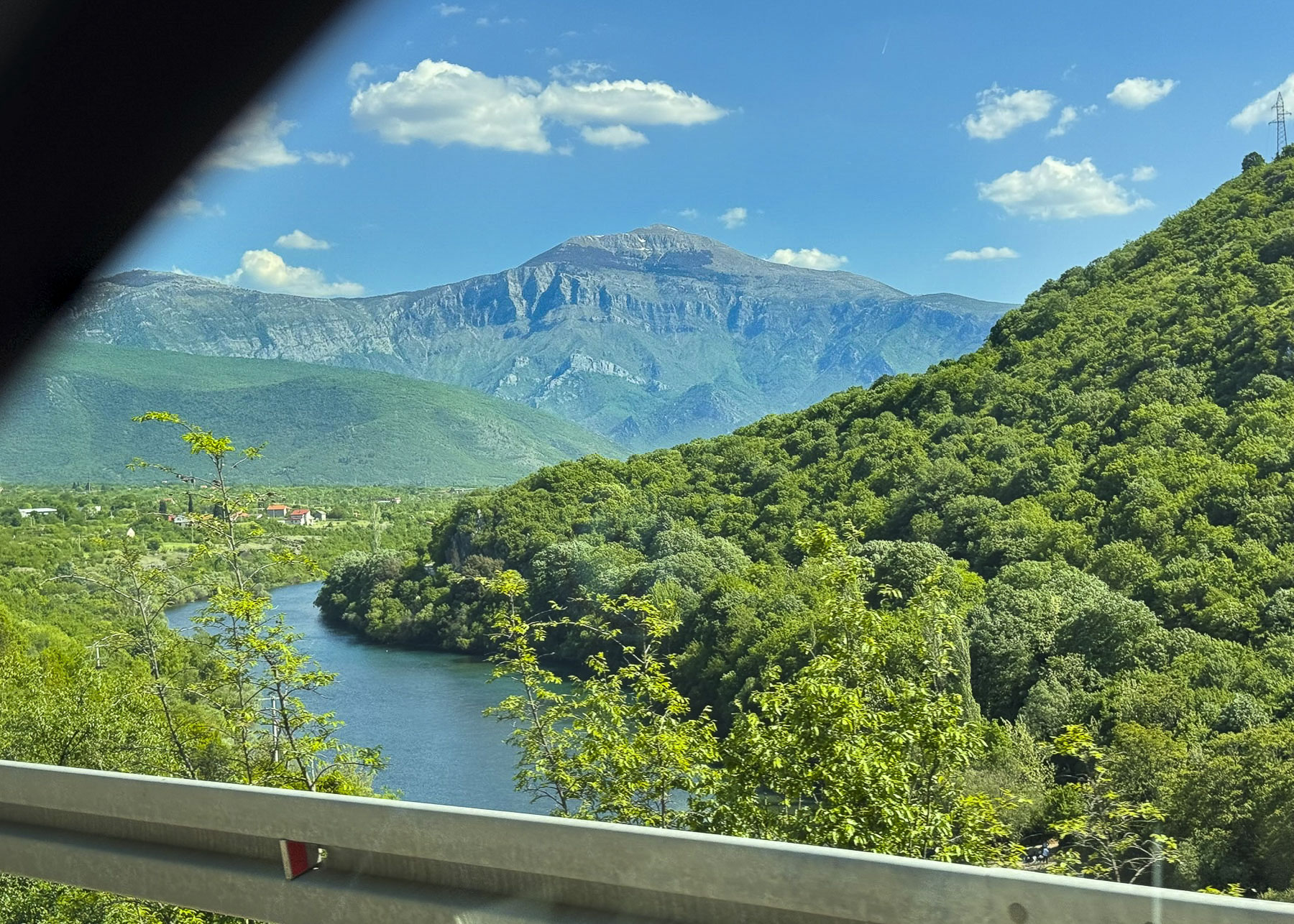
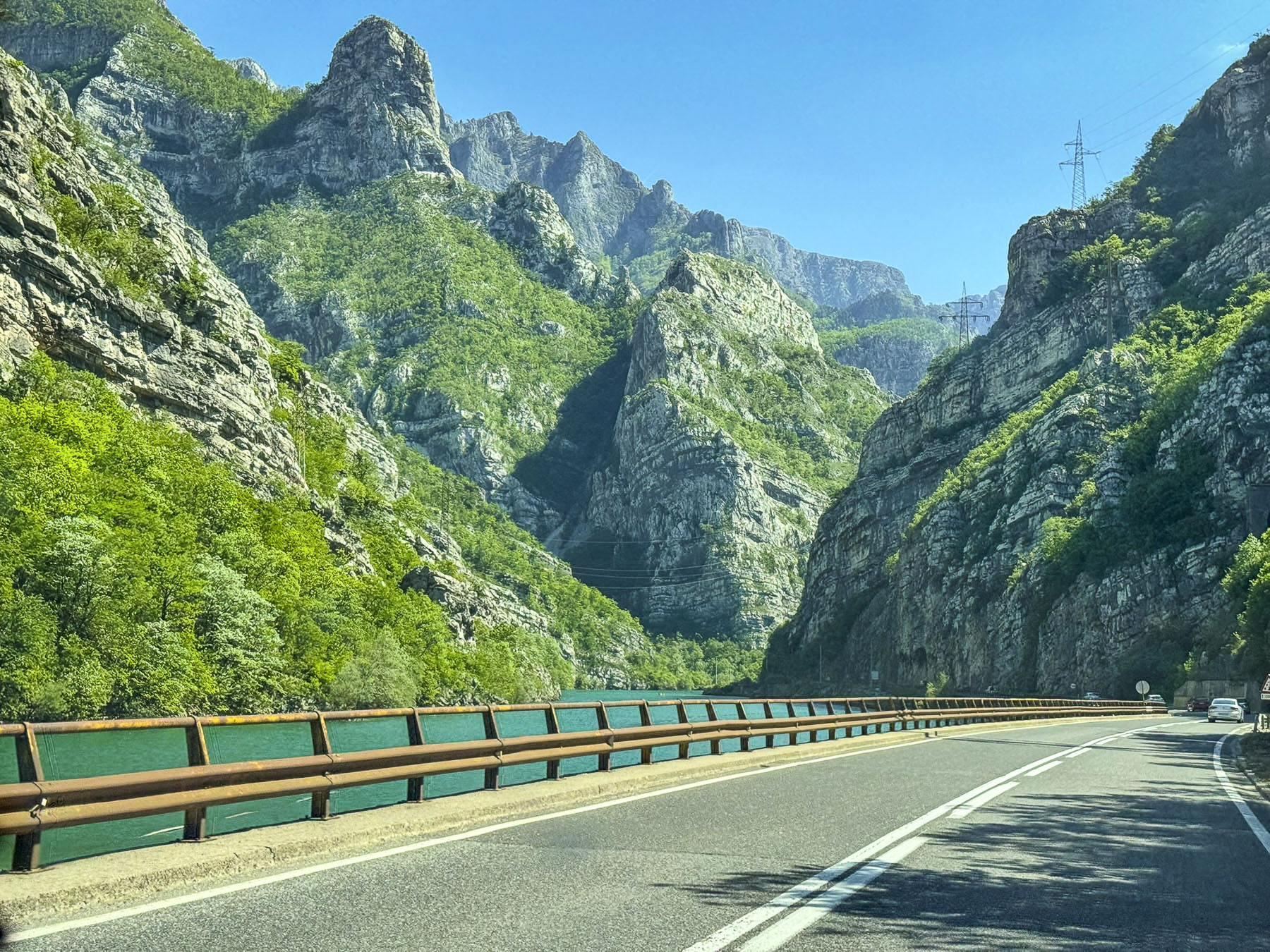
Our 55km (34mi) drive from Ostrožac on Lake Jablanica to Mostar paralleled the river as it coursed through rugged gorges on its way to the Adriatic Sea and was gorgeously scenic, pun intended.

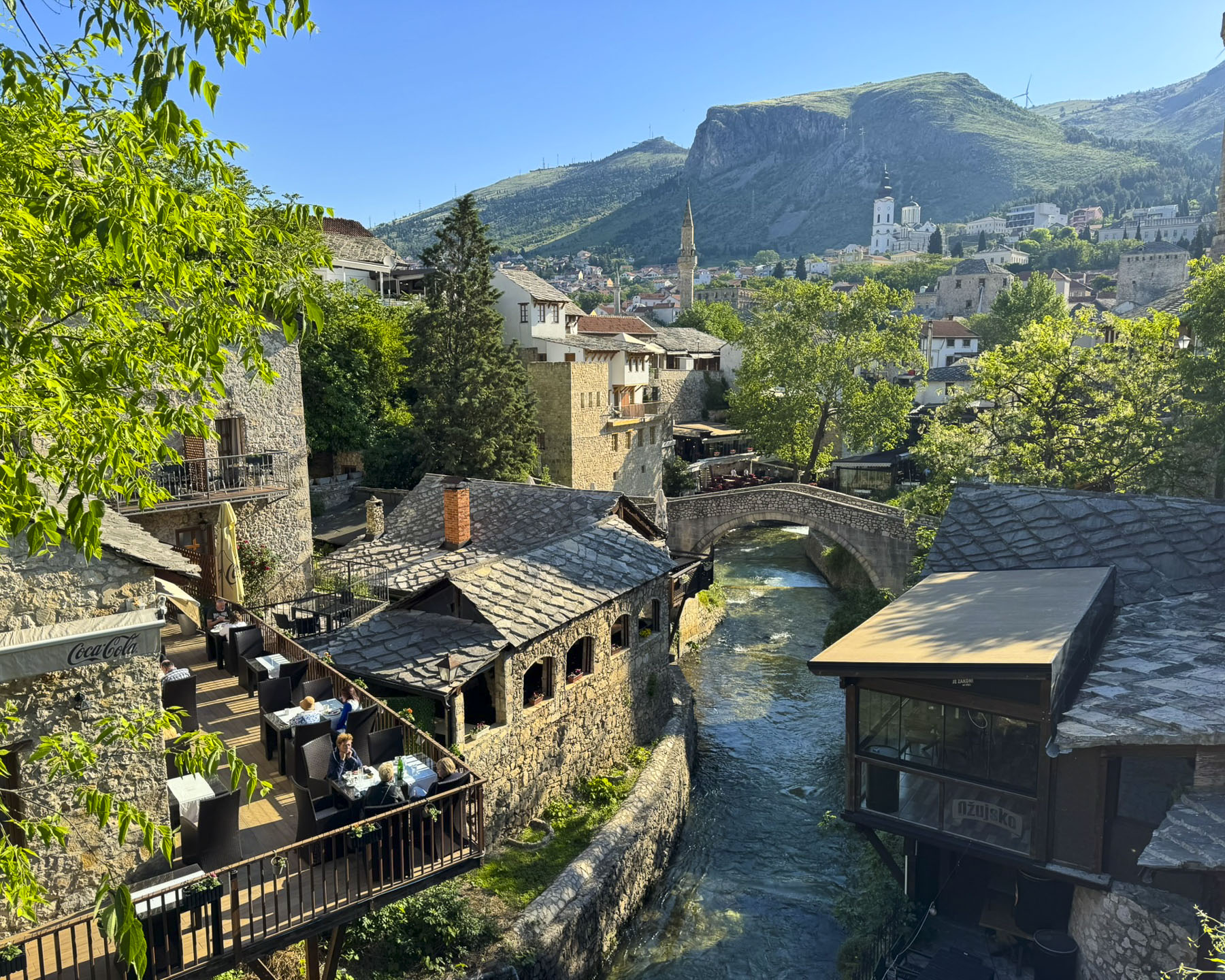
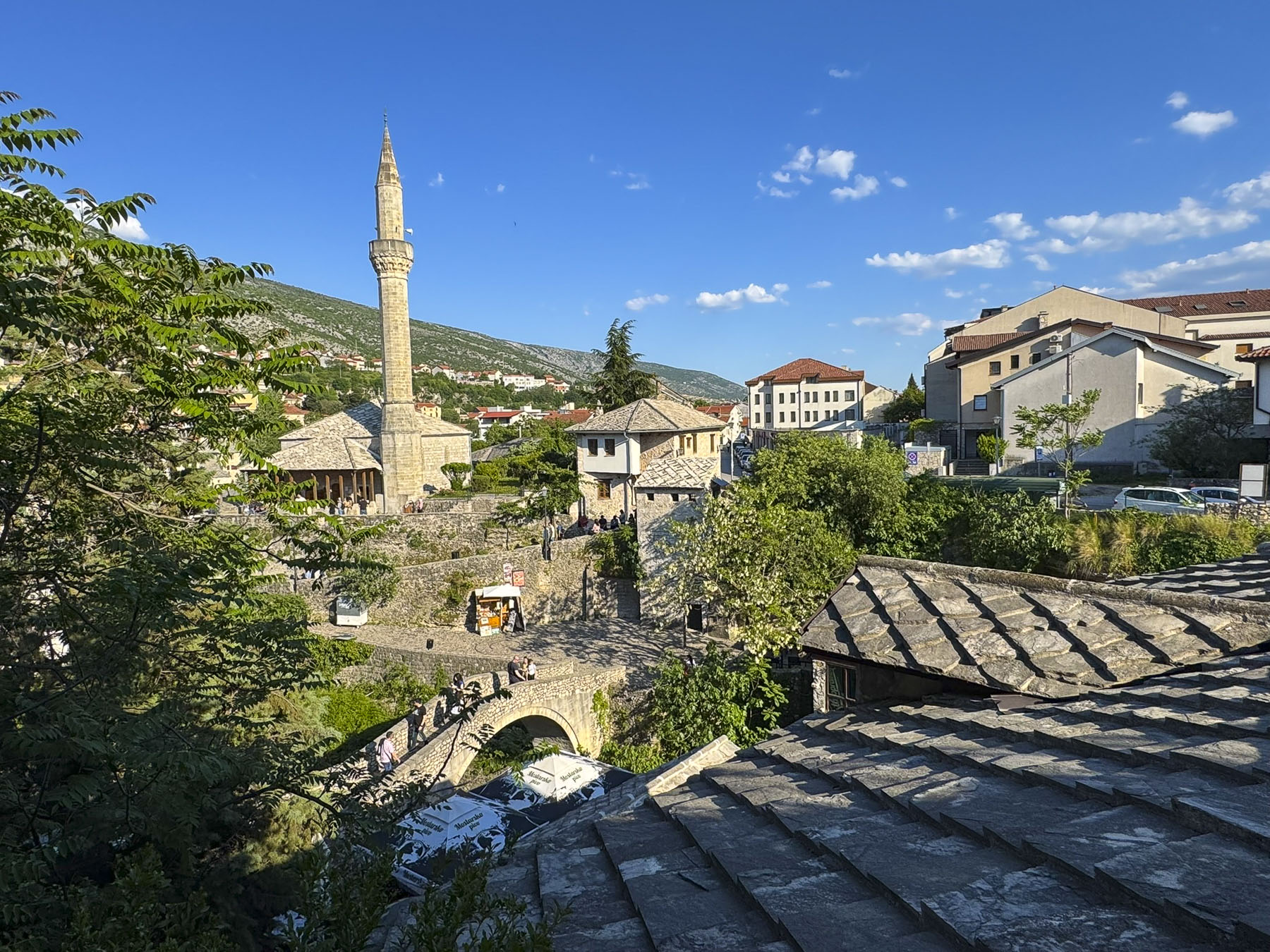
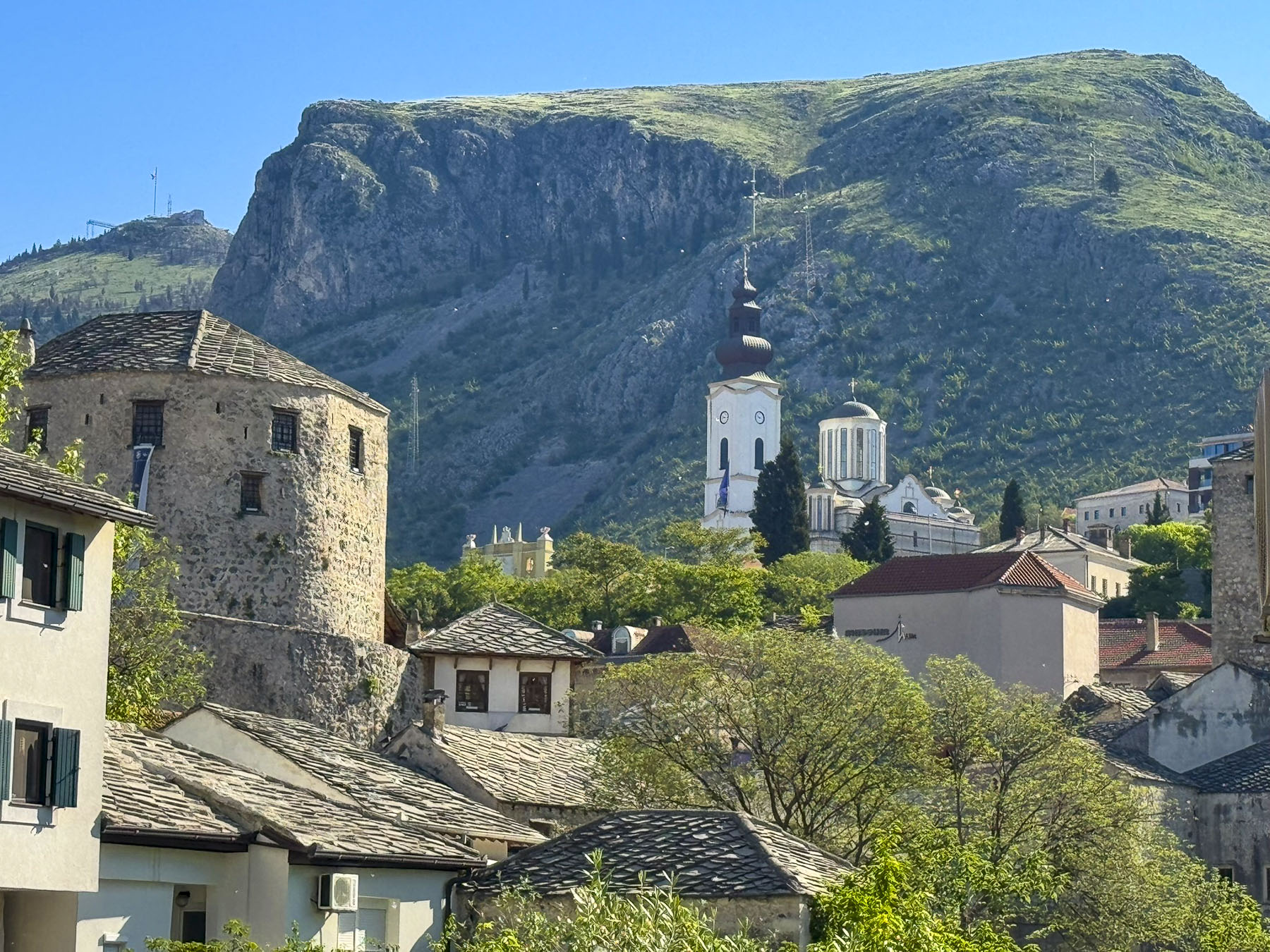
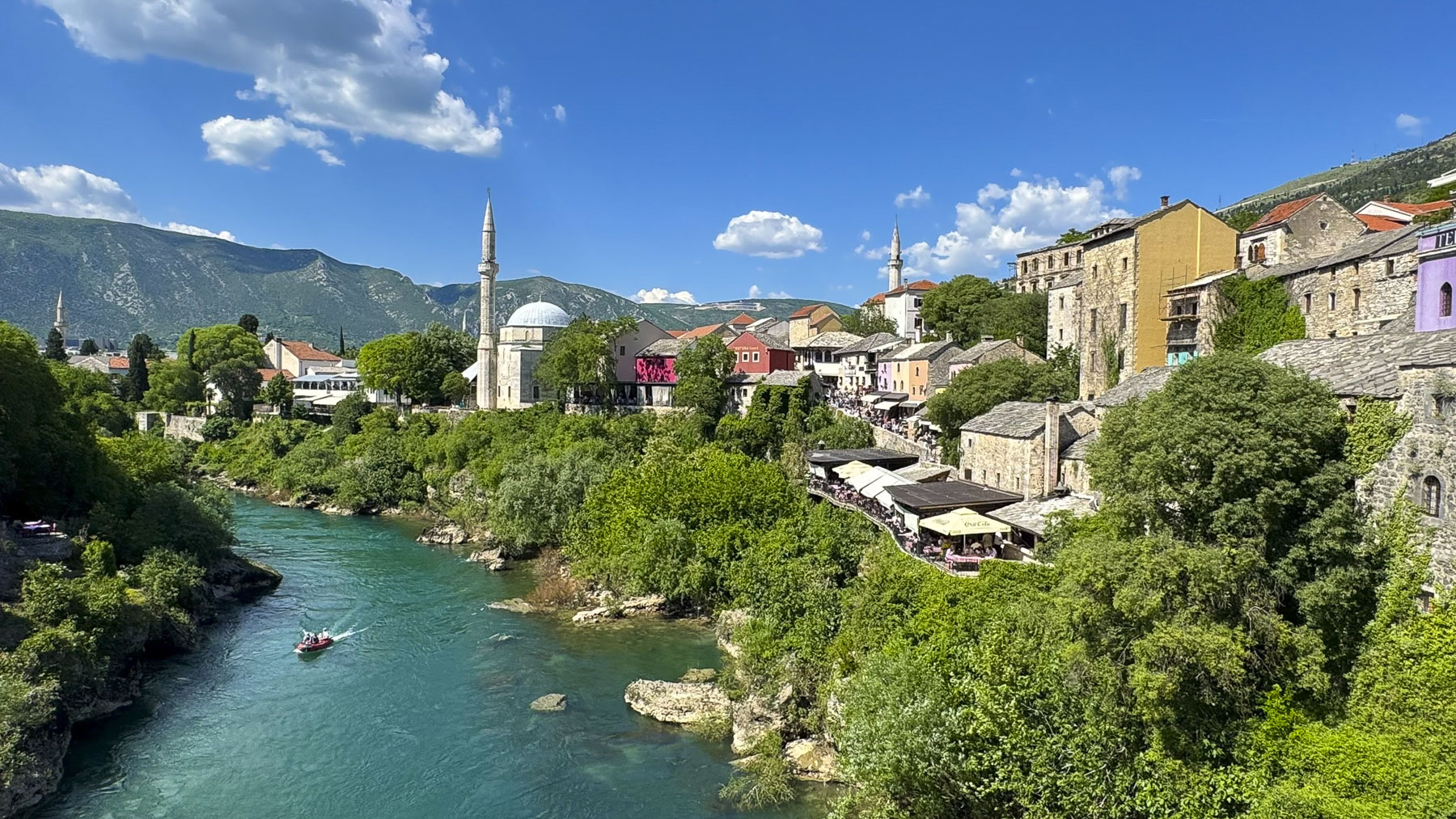
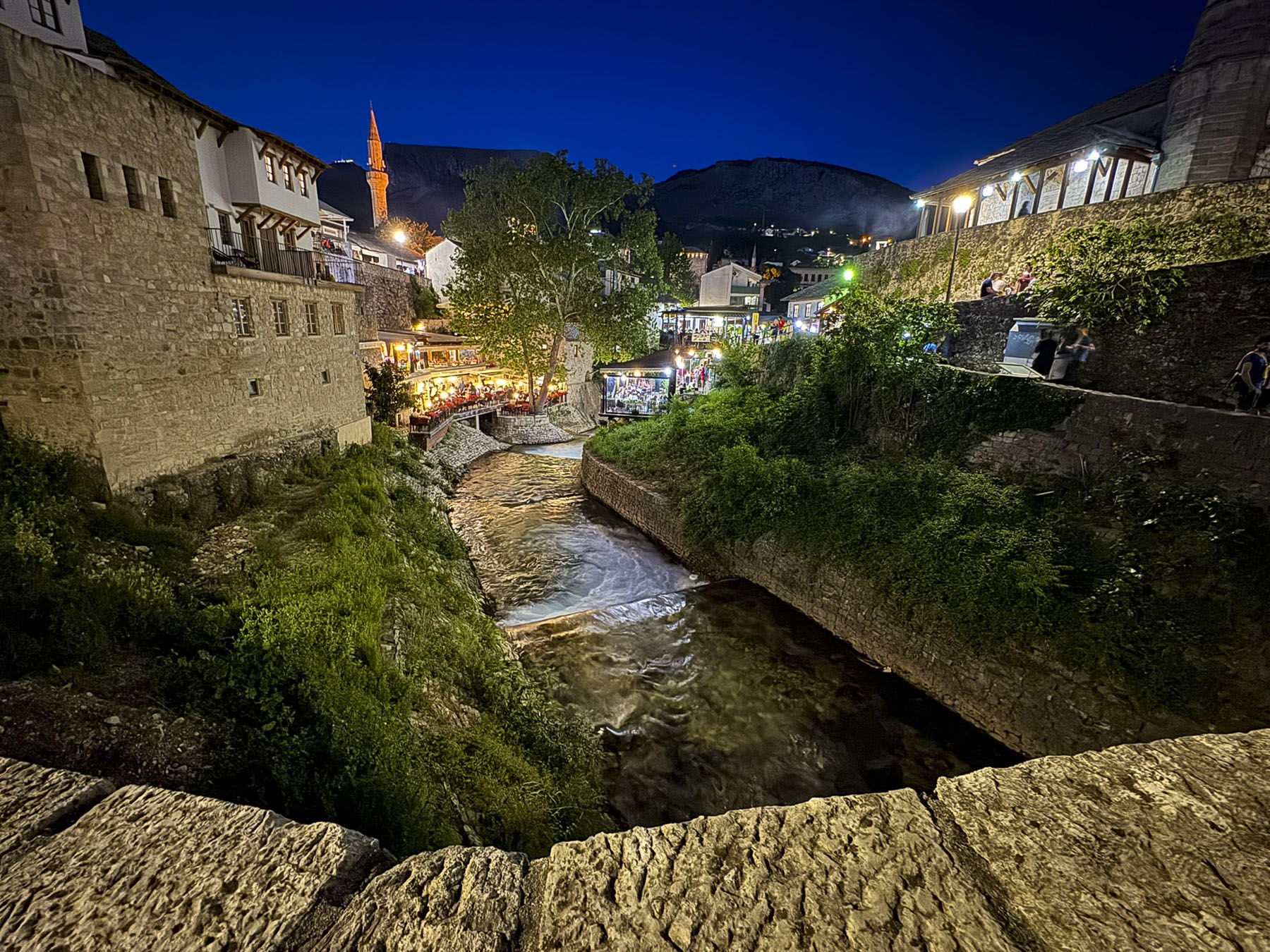
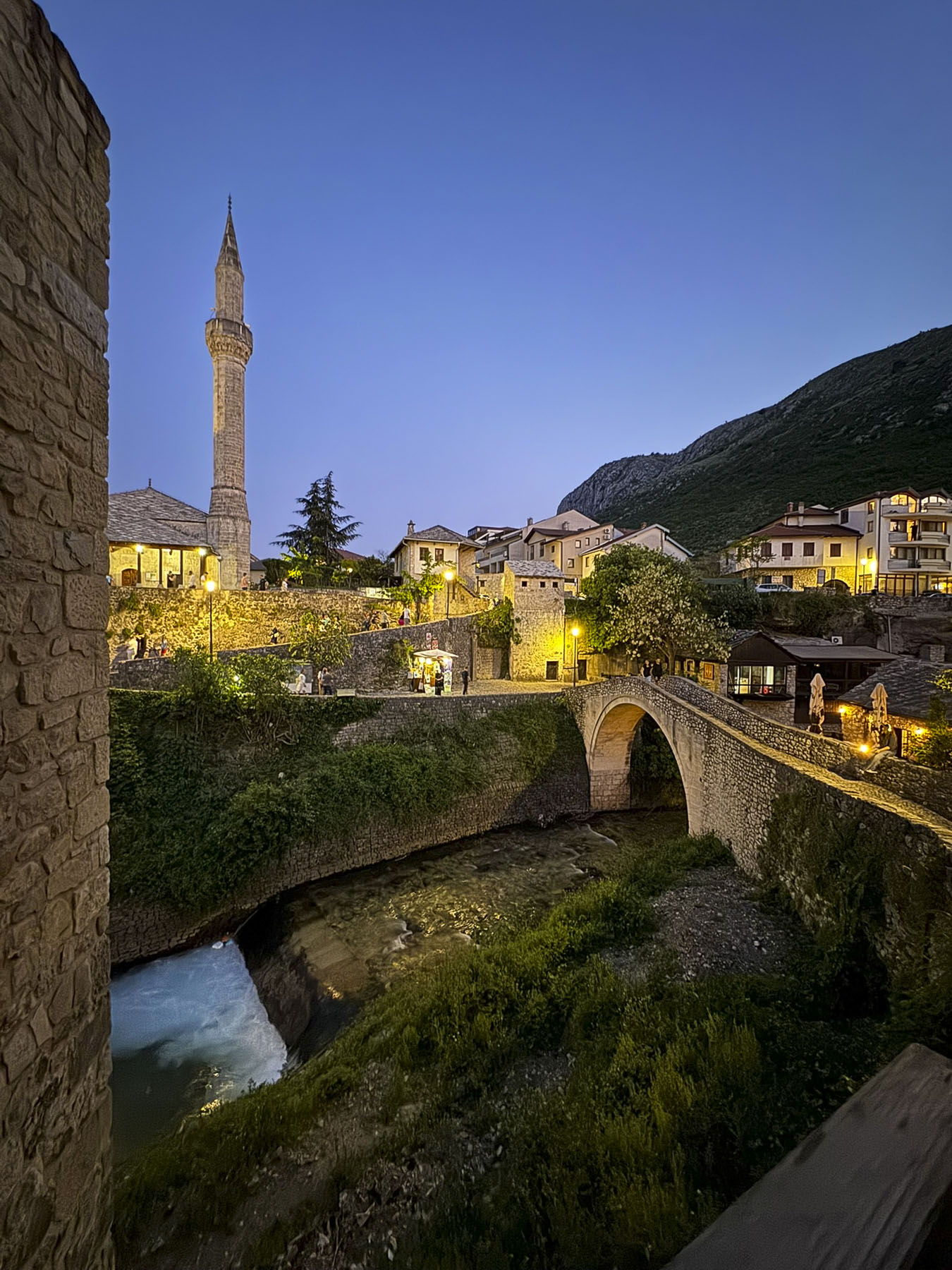
There is time-limited metered street parking in Mostar’s old town near the historic old bridge, Stari Most. Many folks decide to visit Mostar as part of a guided day trip from Sarajevo, Dubrovnik & Split, Croatia or even as far afield as Kotor, Montenegro. We chose to base ourselves in the Hotel Kriva Ćuprija for four nights to enjoy Stari Grad, the old town, and explore the region. We parked in a convenient monitored lot at the foot of Onešćukova that the hotel recommended. The view from our room looked out over slate roofs, a mosque, and an old stone bridge.

The 1990s war in Bosnia brought total devastation to Mostar, where an estimated ninety percent of the buildings were destroyed by forces bombarding the city from the surrounding hilltops. Mostar was once a tiny hamlet along the Neretva River, before the Ottomans seized it and transformed it into an important multicultural trading center and frontier garrison town during their 15th century conquest of Bosnia. The site where the hotel stands overlooking the Crooked Bridge, Kriva Ćuprija, from which it takes is name, was an ancient dwelling, and the hotel is a modern reconstruction of Stari Grad’s historic “Turkish houses” – residential buildings of stone and wood that defined the Old Bridge Area’s pre-war heritage. While the famous 15th century Stari Most bridge was destroyed in the 1990s war, the Crooked Bridge amazingly survived the conflict but succumbed to raging flooding in 2000 and was subsequently rebuilt.  

Reconstruction of Mostar began with funds from the European Union, the World Bank, and UNESCO shortly after a permanent ceasefire was established with the Washington Agreement on March 18, 1994, nineteen months before the cessation of the wider Bosnian conflict was resolved with the signing of the Dayton Peace Accords on November 1, 1995.

Old Town Mostar is beautifully atmospheric and while most of the buildings in the Stari Grad have been fully restored, several owners have chosen to leave the numerous bullet marks on the sides of their buildings as reminders of the wrath of war. Throughout the city there are still over 1,000 buildings in ruin or abandoned as a result of the conflict, with many of them concentrated across the river in east Mostar.

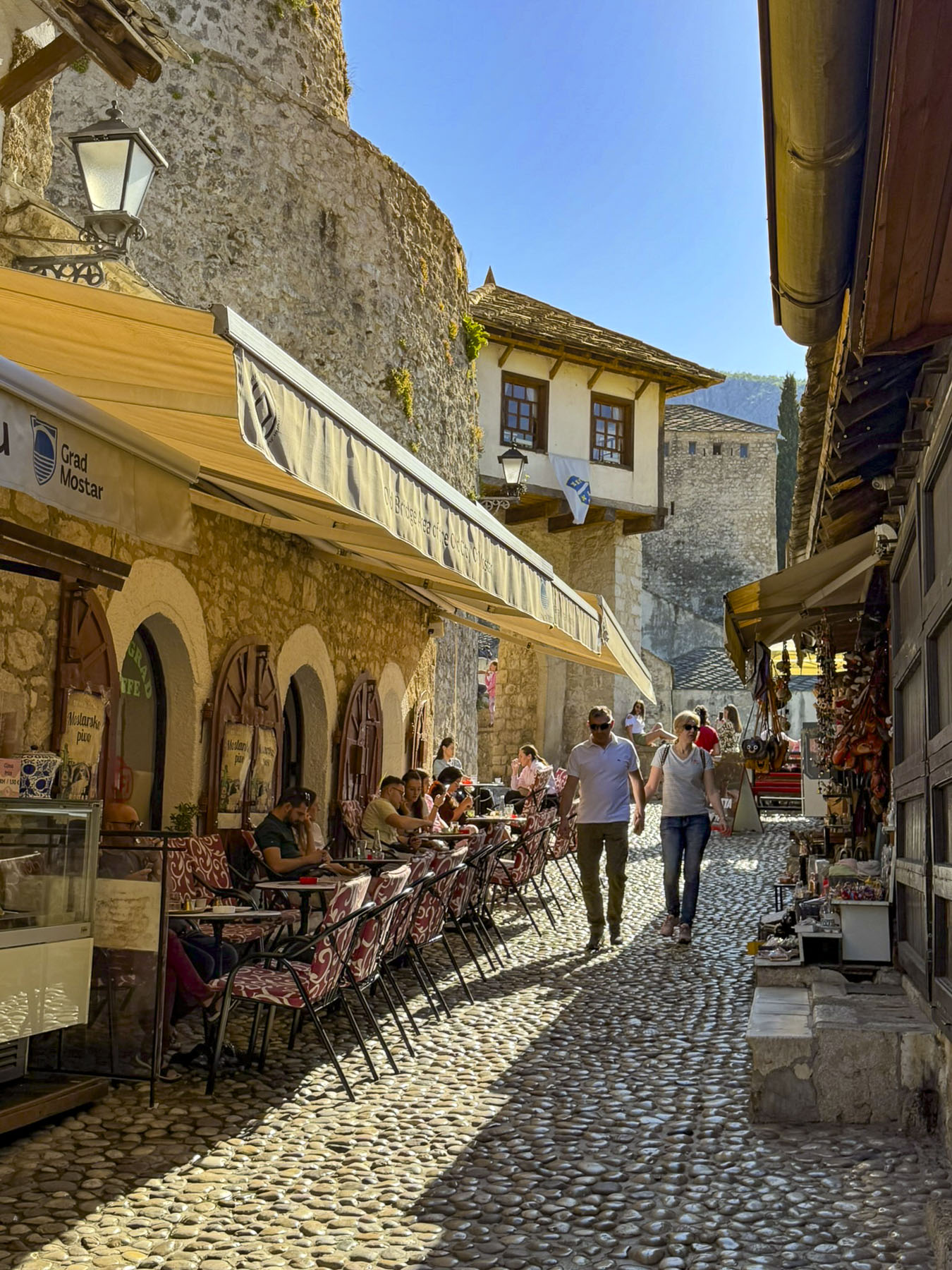
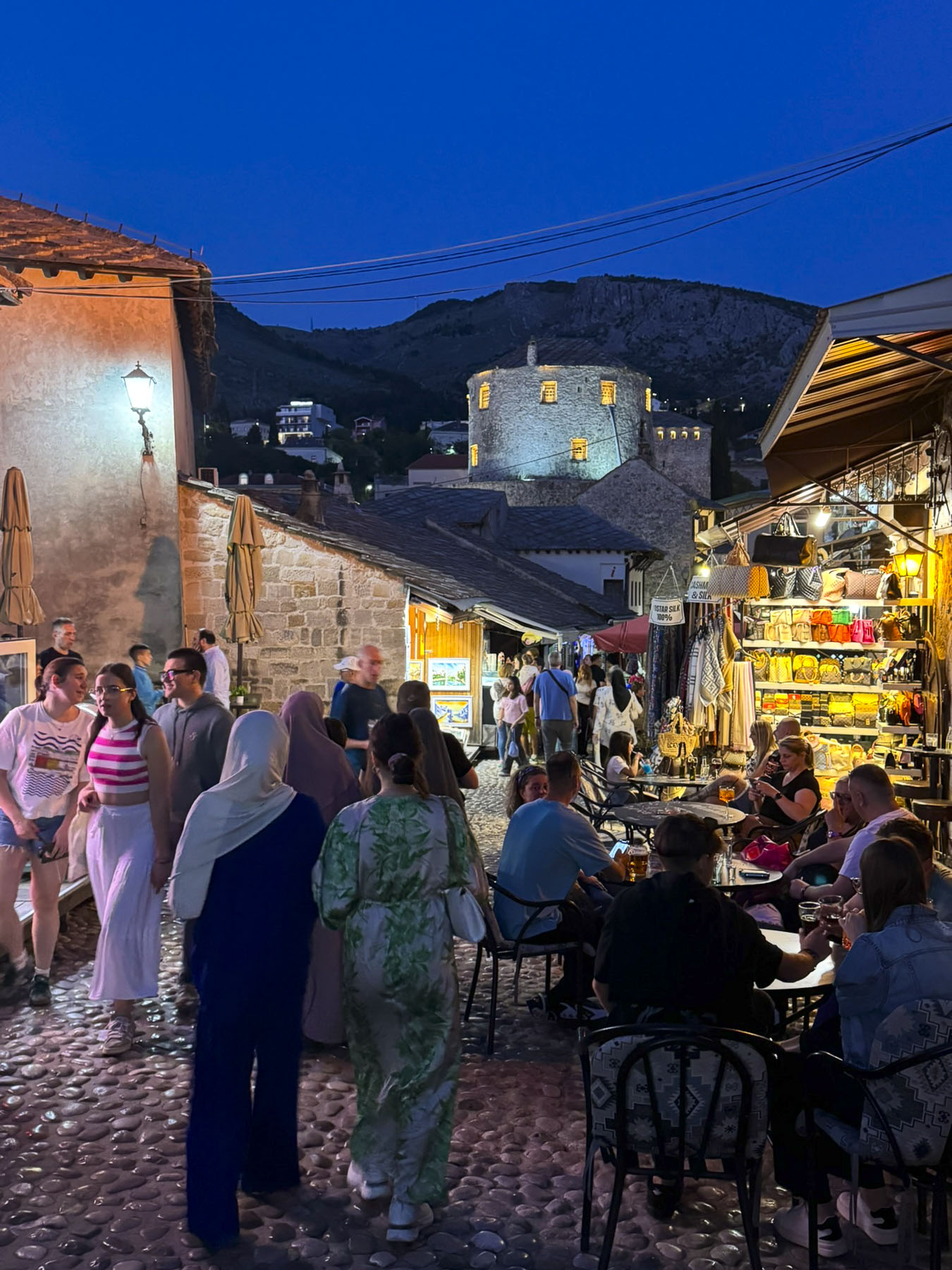
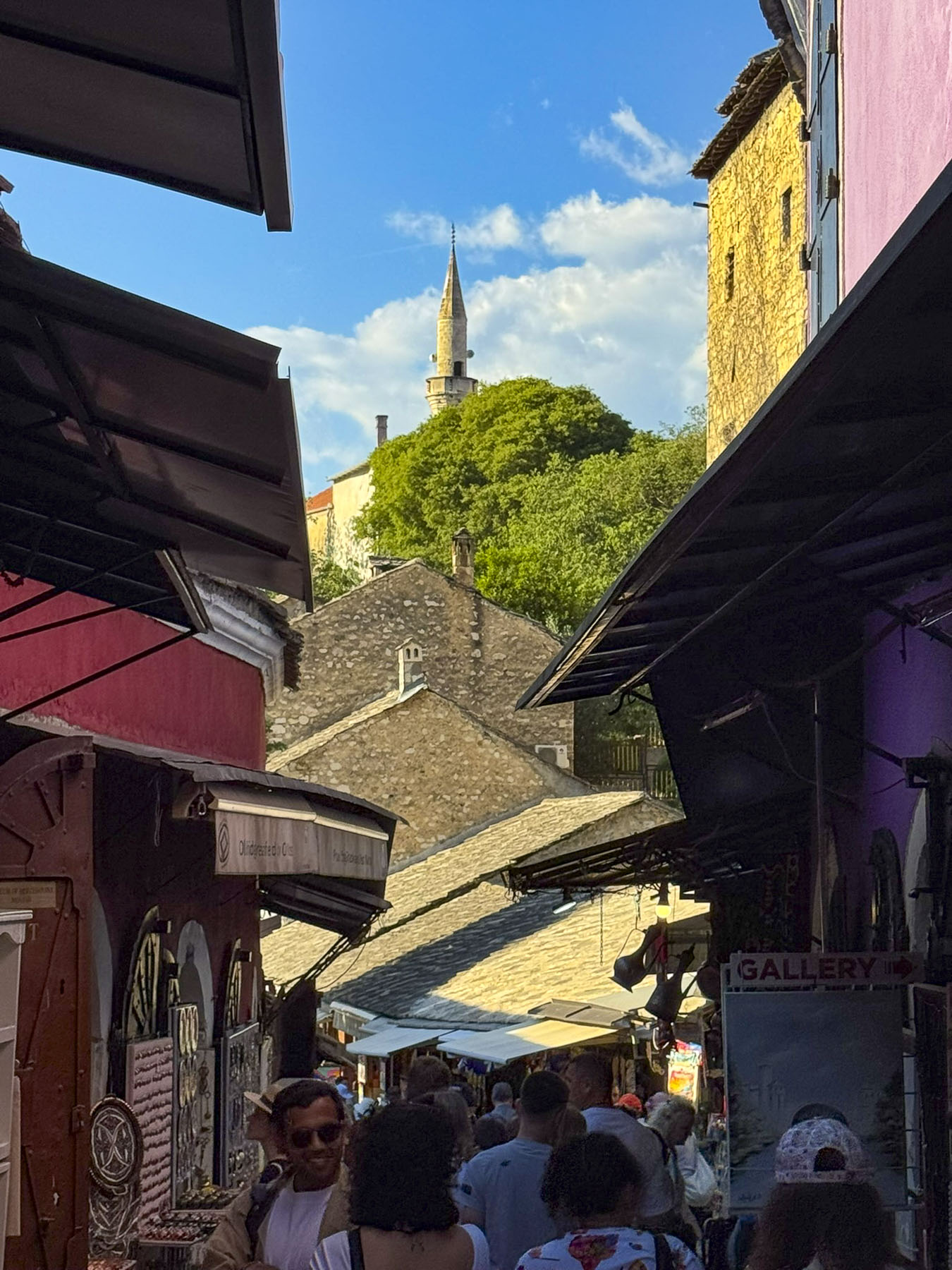
Cobblestone alleys twisted through Stari Grad and we followed them all to soak in the ambiance. Visiting the old town was a sensory experience: dazzling color, aromas of grilled meats, textures and the melancholic song of the call to prayer that the muezzin sings from the minarets dotted around the city.

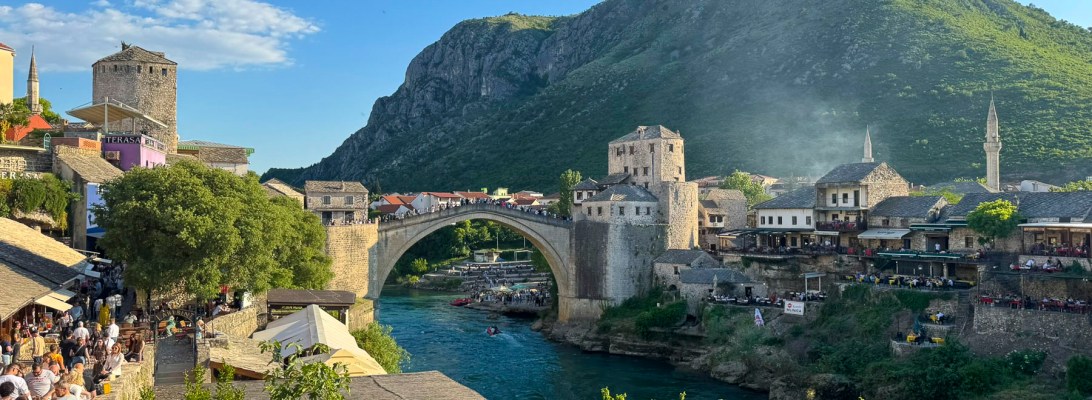
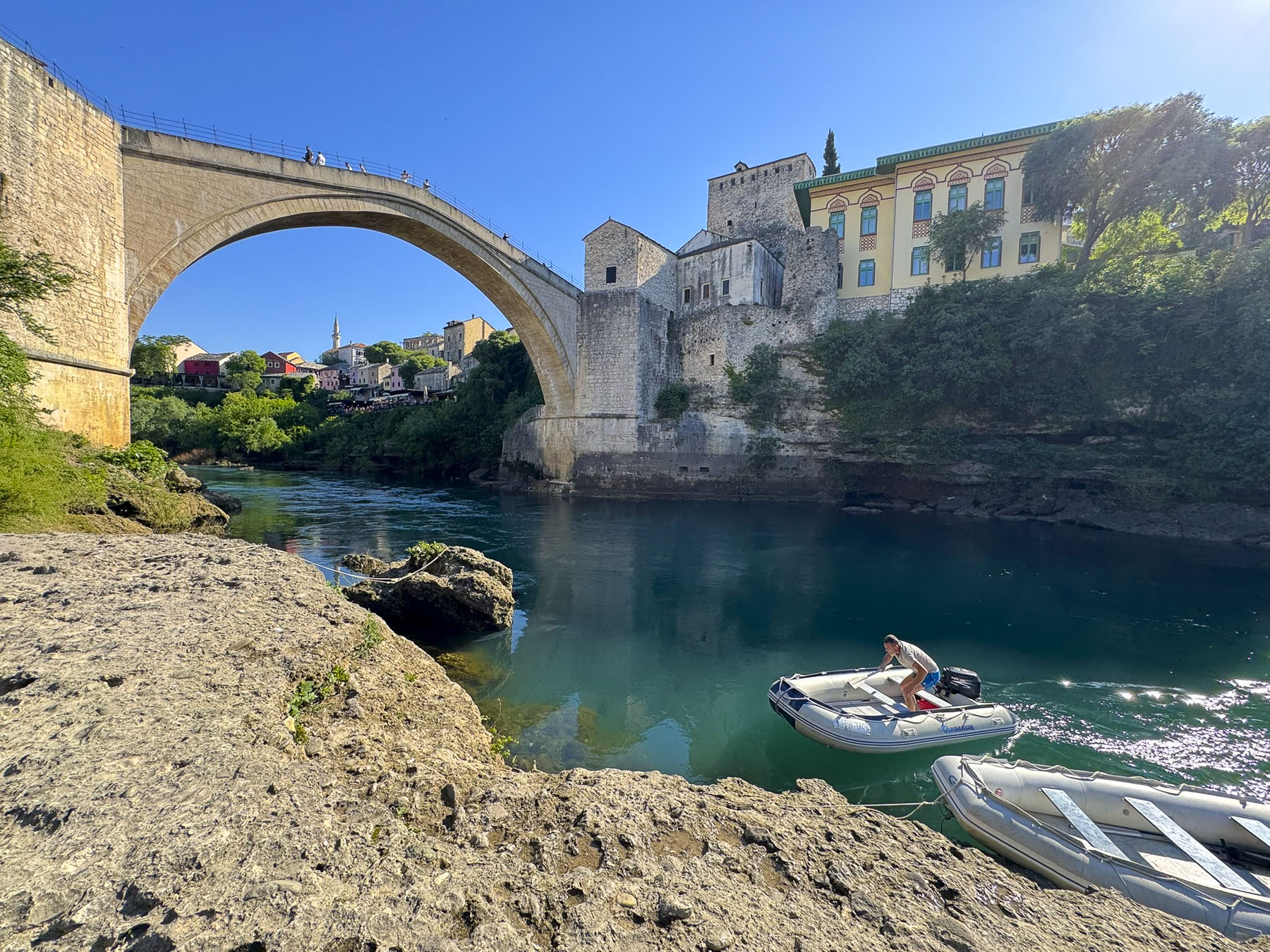
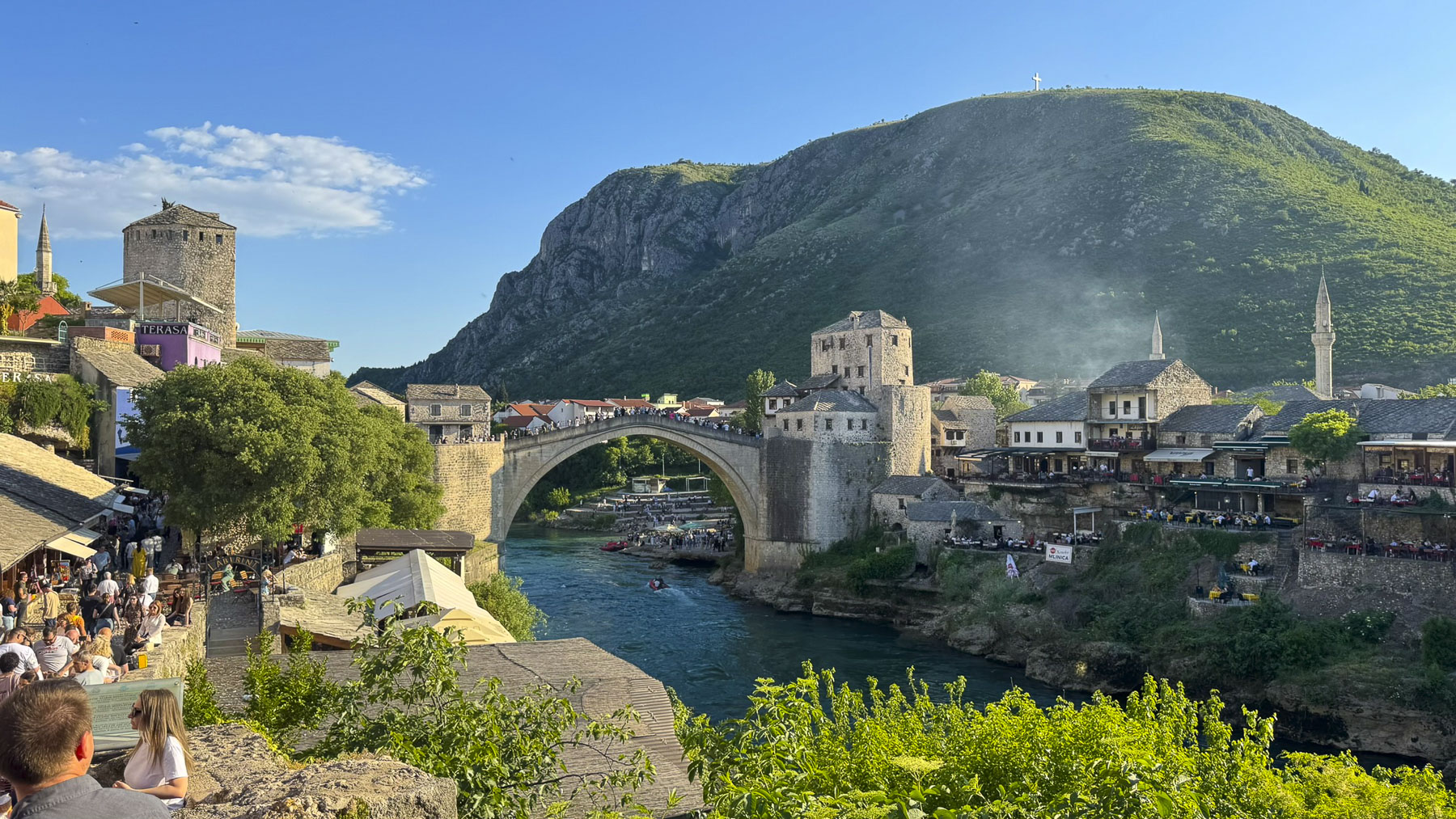
Our wanderings took us over the high arched, Ottoman built Stari Most. The iconic symbol of Mostar was a vital lifeline used by soldiers and civilians to transport food, medicine, and arms to besieged areas of the city on the west bank Neretva River during the 1190s war. It’s a popular area where folks gather to hopefully watch divers jump from the bridge 28m (92ft) into the cold water below, a decades old tradition that started in 1968. None of the divers were working the crowd for tips when we crossed. Diving from the bridge has also existed for 450 years as a traditional rite of passage for young men, and as an old legend says, “the way a boy becomes a man in Mostar.”

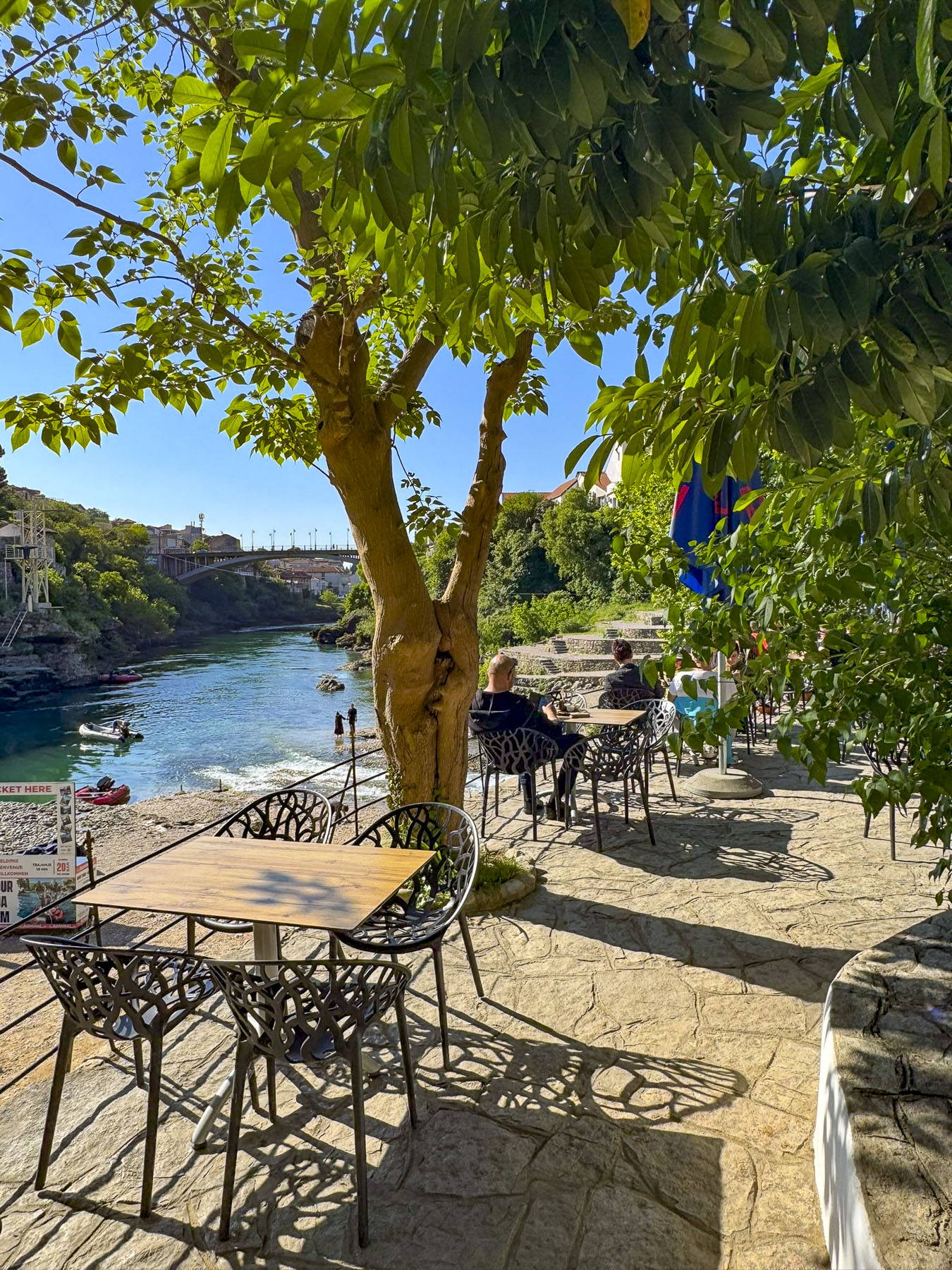
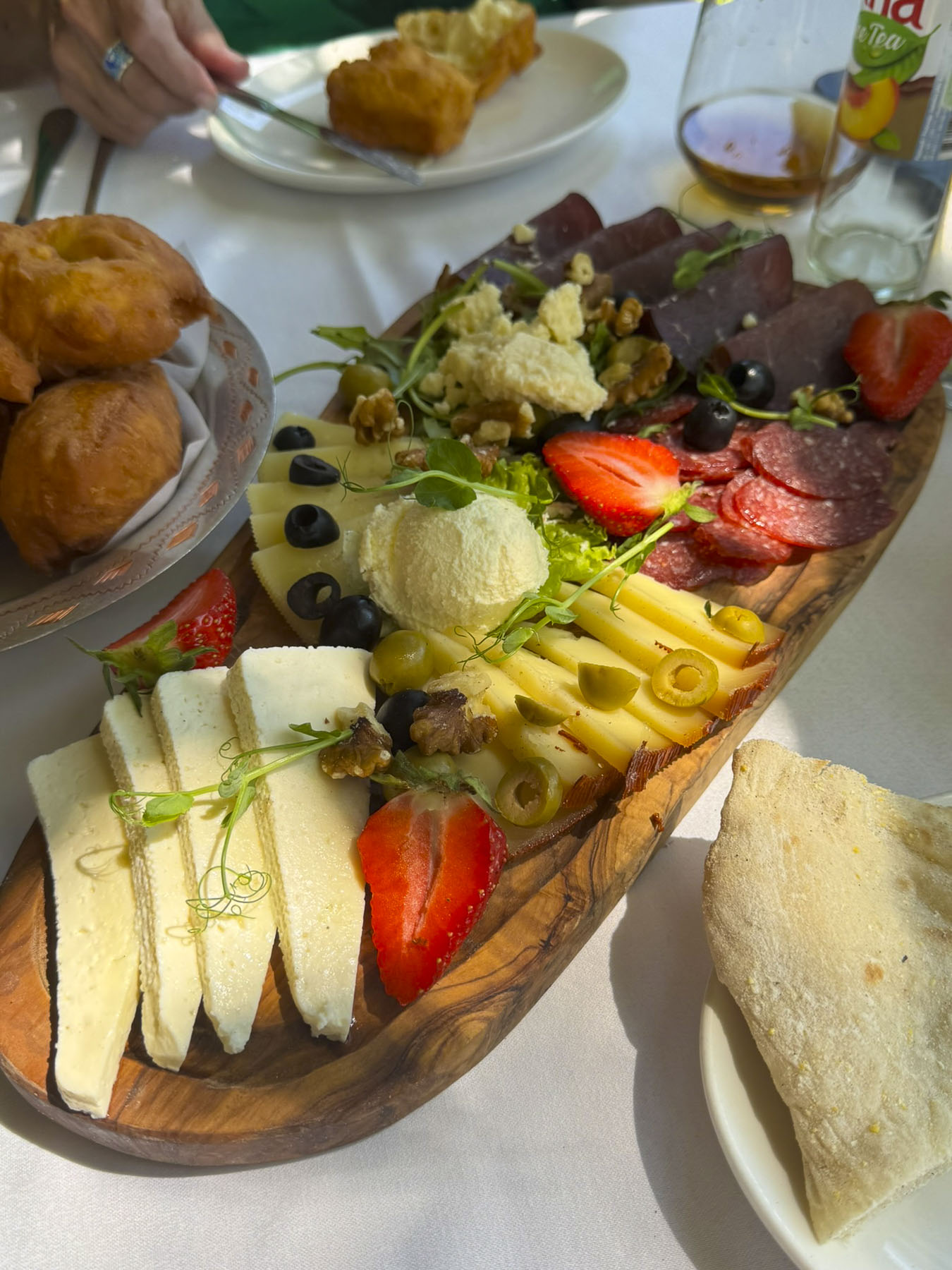
Across the bridge the lane narrowed through the Kujundžiluk alley. Known as the old goldsmiths’ quarter, it served as a crucial trading alley for merchant caravans before they paid customs duties to cross the bridge during the Ottoman era. Our “walk a little then café’” philosophy took us to the restaurant Urban Taste of Orient. Their beautiful terrace offered spectacular views of the river and Stari Most. We were enjoying a charcuterie board of Bosnian cheeses and cured meats when I looked at the bridge and noticed a lone man, seemingly much taller than the rest of the folks, who from our perspective appeared to be standing on the bridge’s far wall, until he vanished. I almost screamed to Donna, “look, a diver jumped,” as his silhouette splashed into the river. We had just witnessed the first dive of the tourist season on this Labor Day holiday.

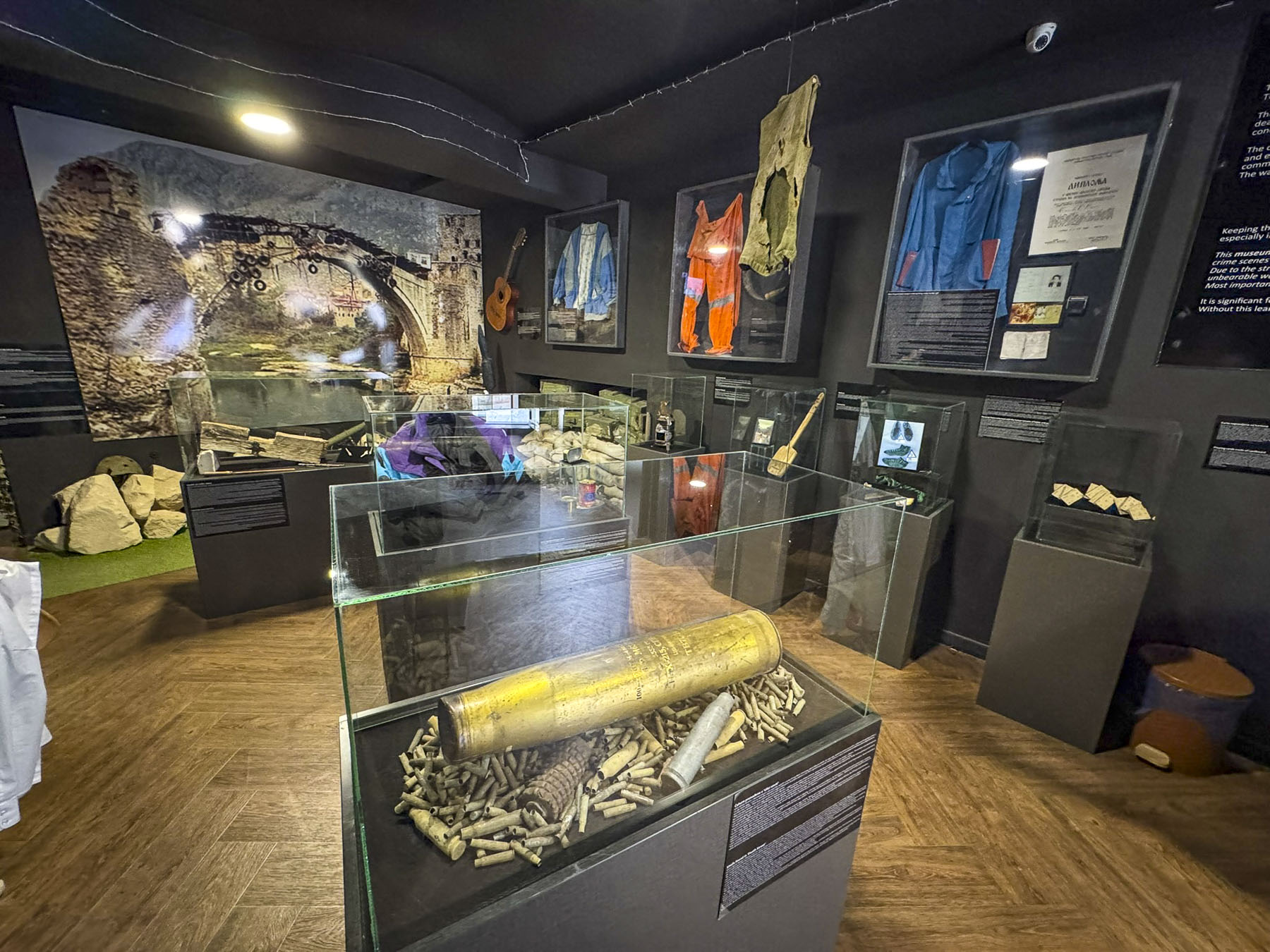
Afterwards we visited the early 17th century Koski Mehmed Pasha Mosque, where it’s possible to climb its 30m (98ft) tall minaret for panoramic views of Mostar and the river. We also viewed the wrenching exhibits at the Museum of War and Genocide Victims, the only such museum we visited while in Bosnia & Herzegovina. It gave us tragic eye-opening, first-person accounts of life in Mostar when it was under siege.

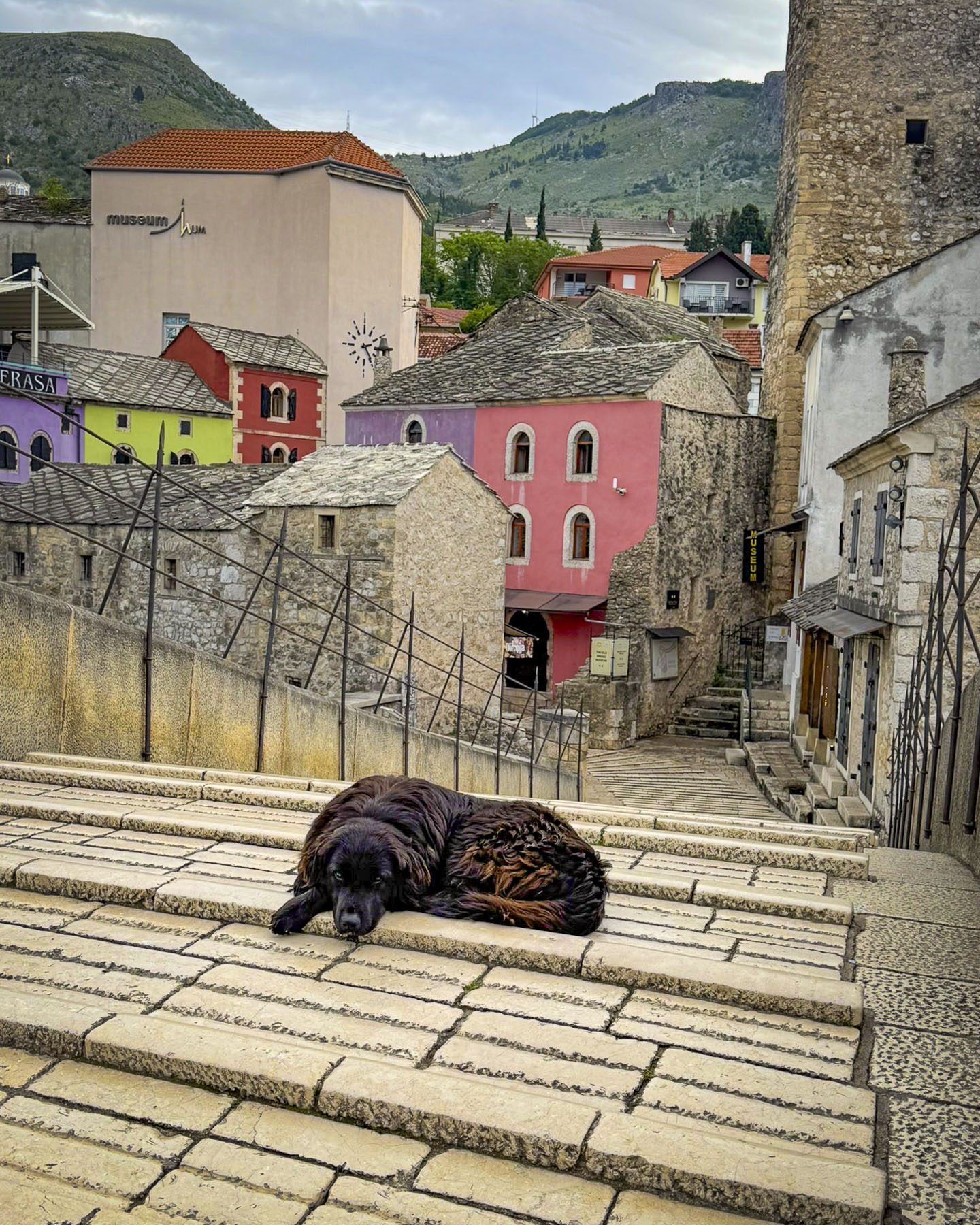
The next morning on an early morning walk before Mostar awakened, I came across one of the town’s tagged stray dogs, a large black sheep dog, semi-asleep on the bridge’s highest point. He struck me as the reincarnation of an ancient watchman guarding the entrance to Stari Grad. He opened his eyes, but did not move, having determined I was not a threat, and I passed quietly.

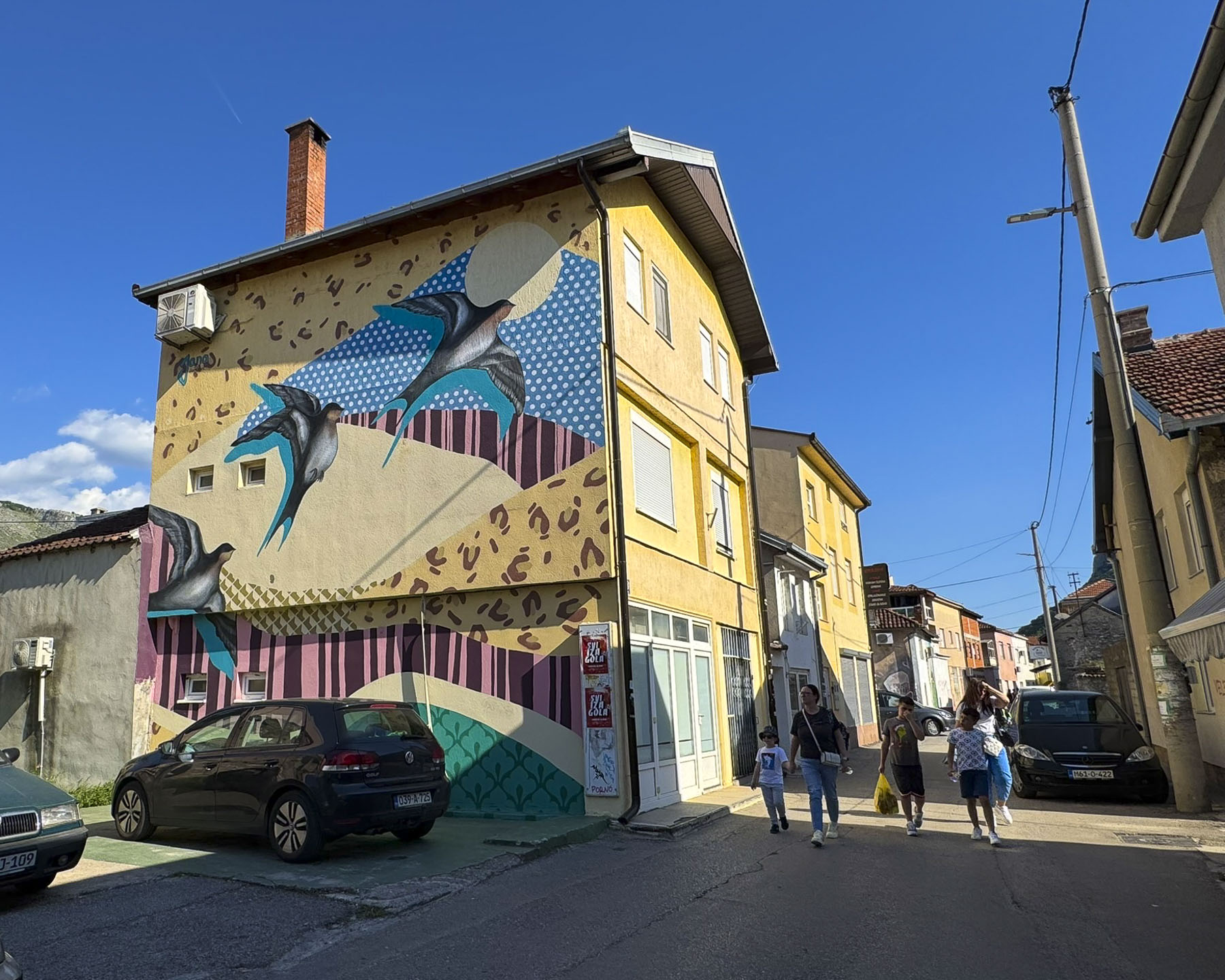
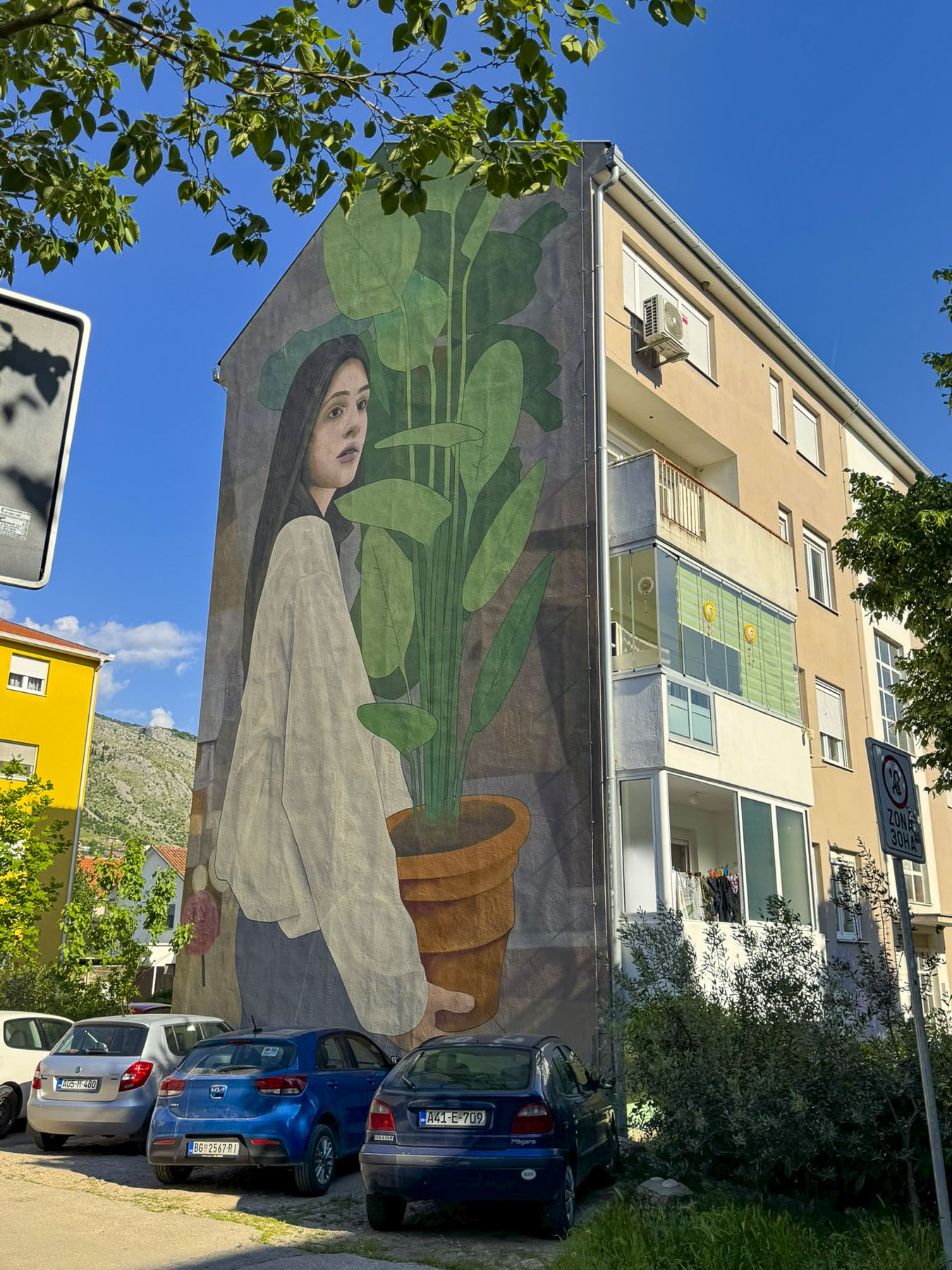
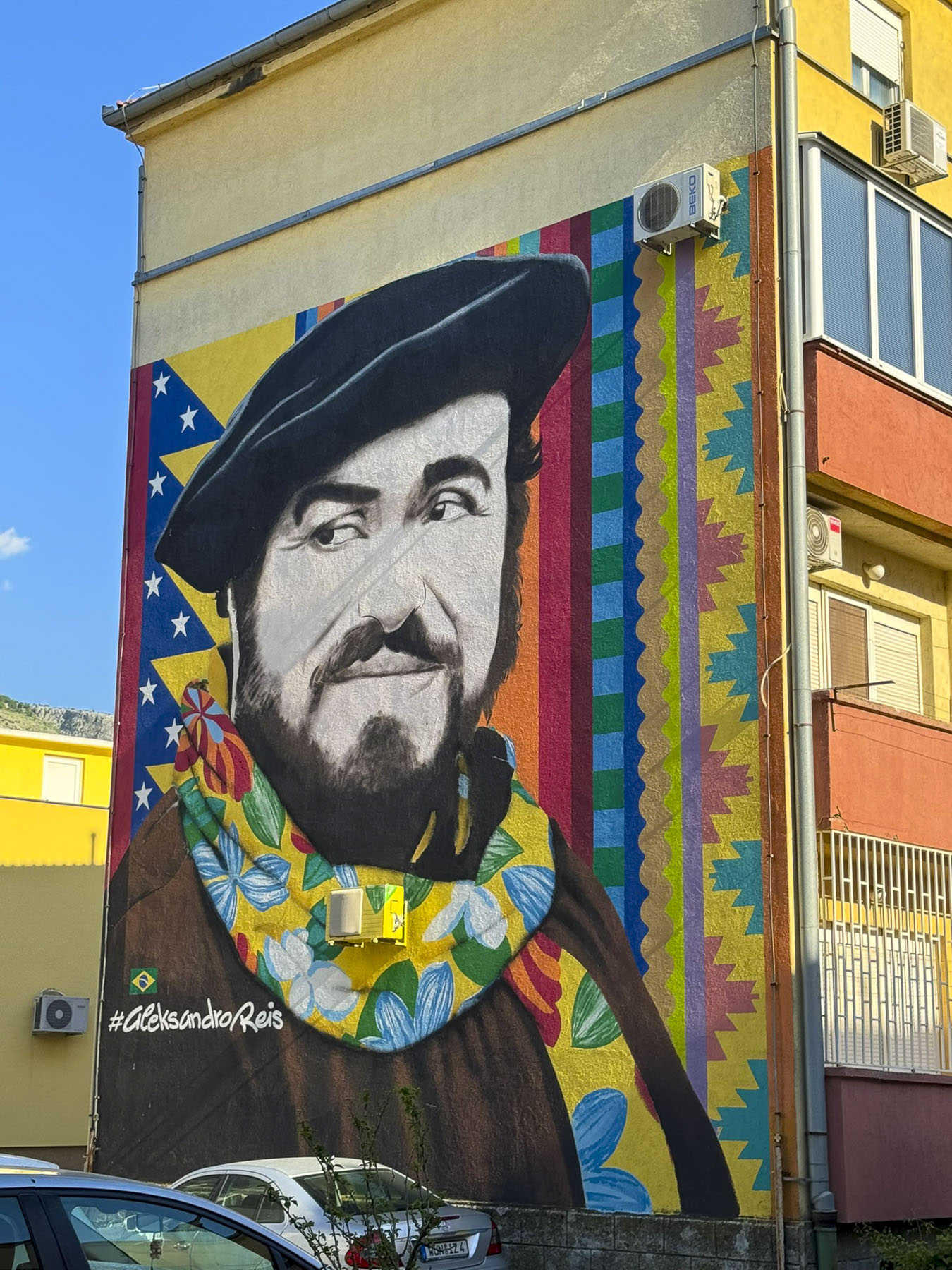
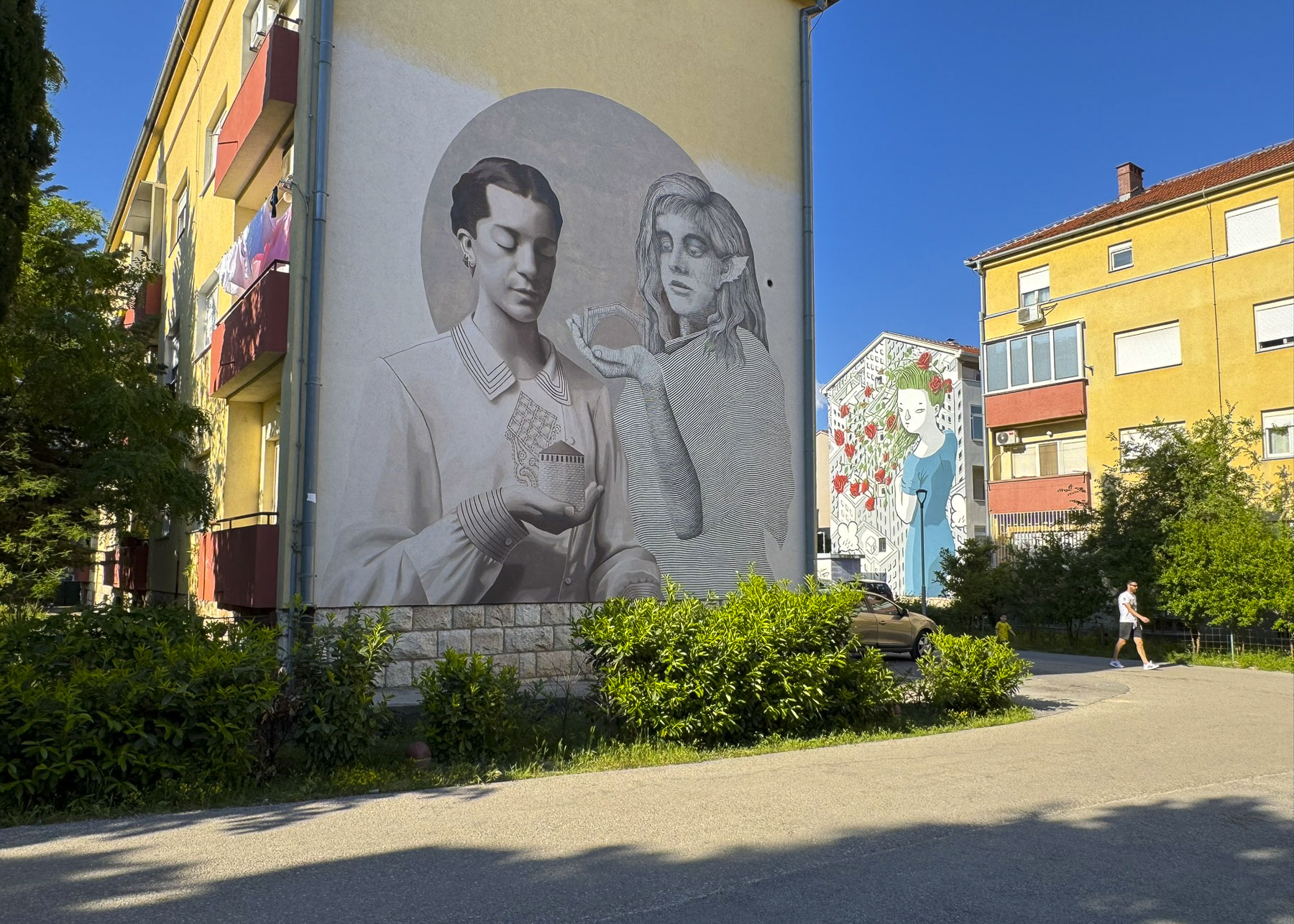
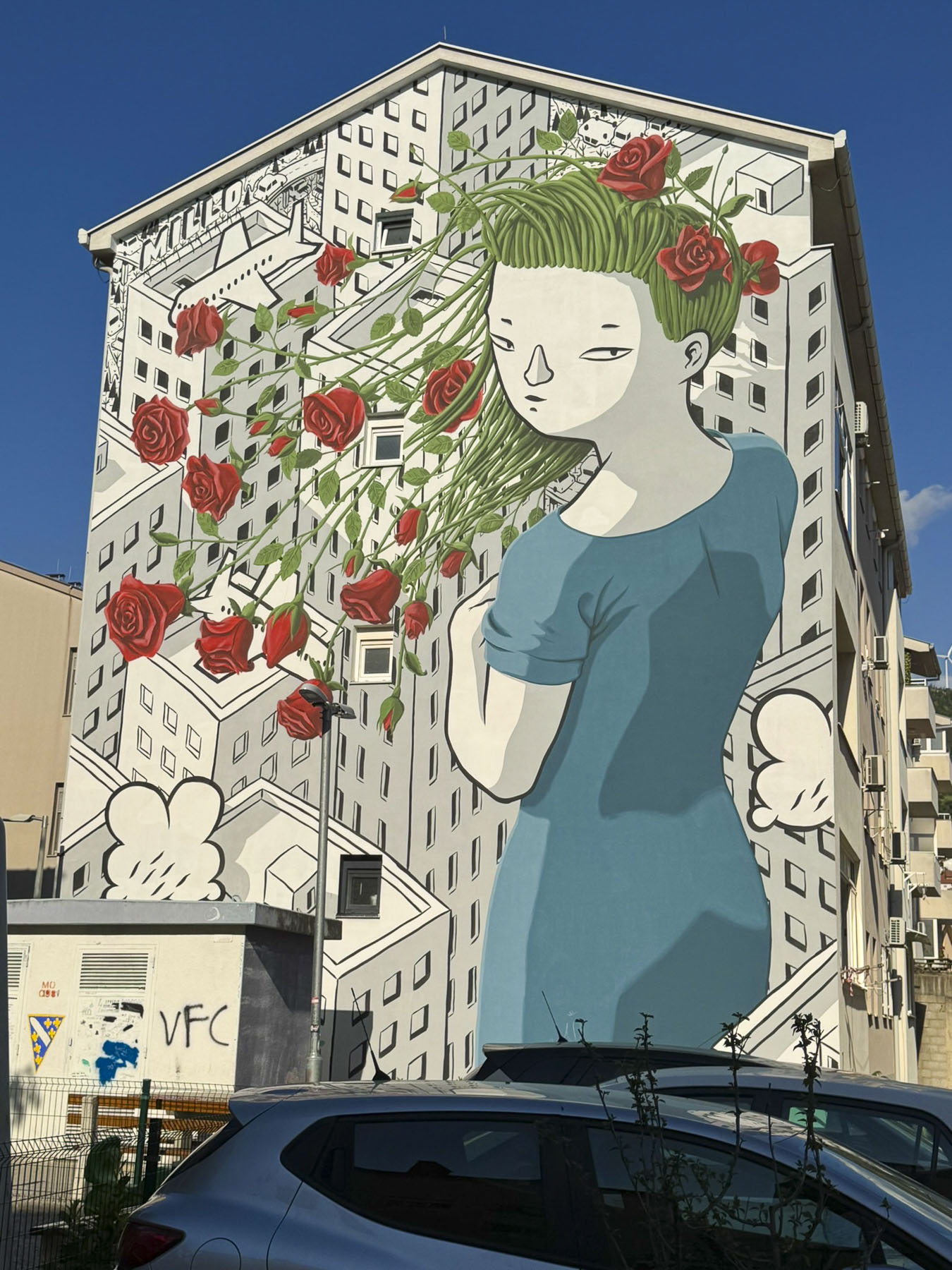
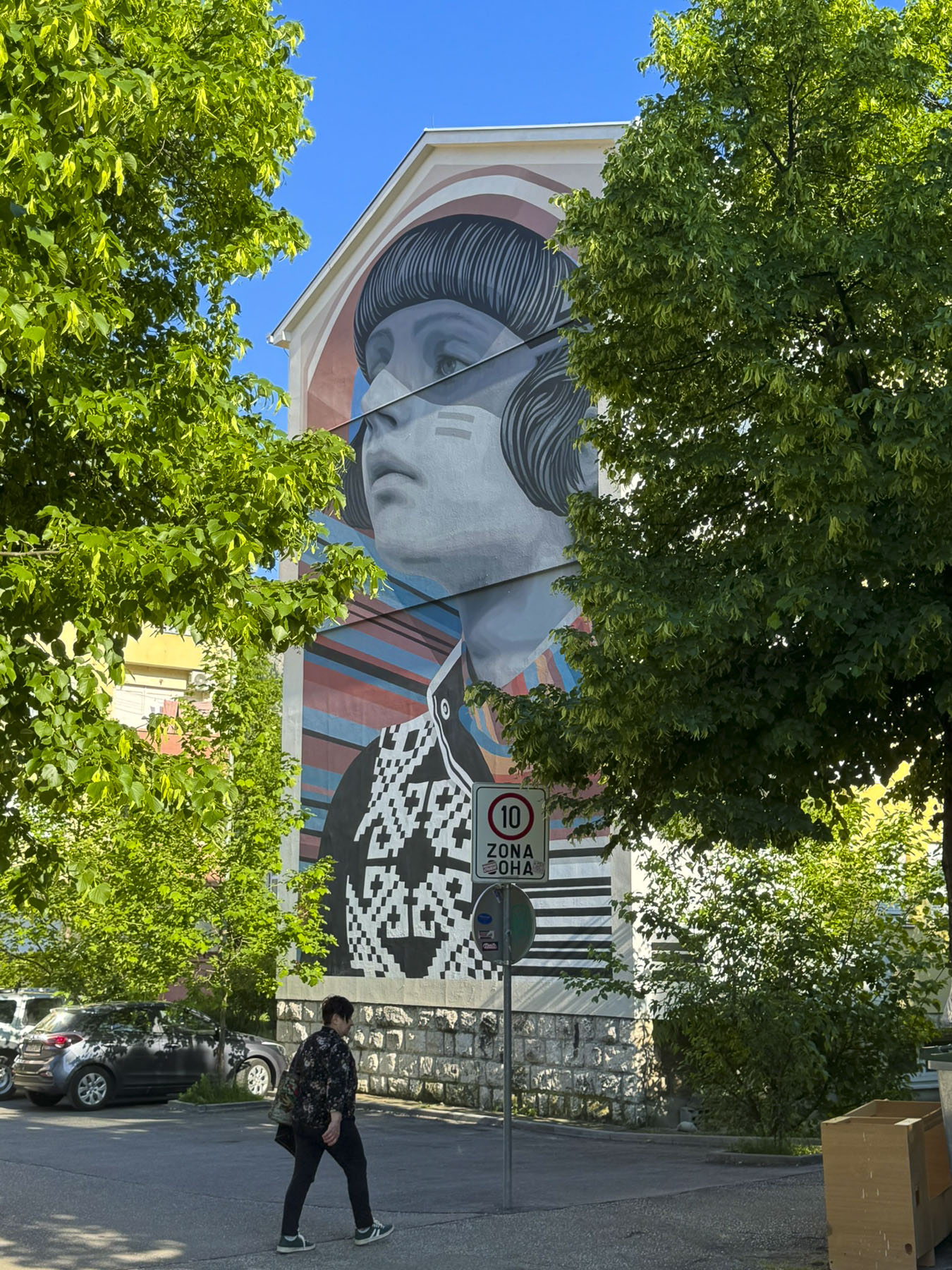
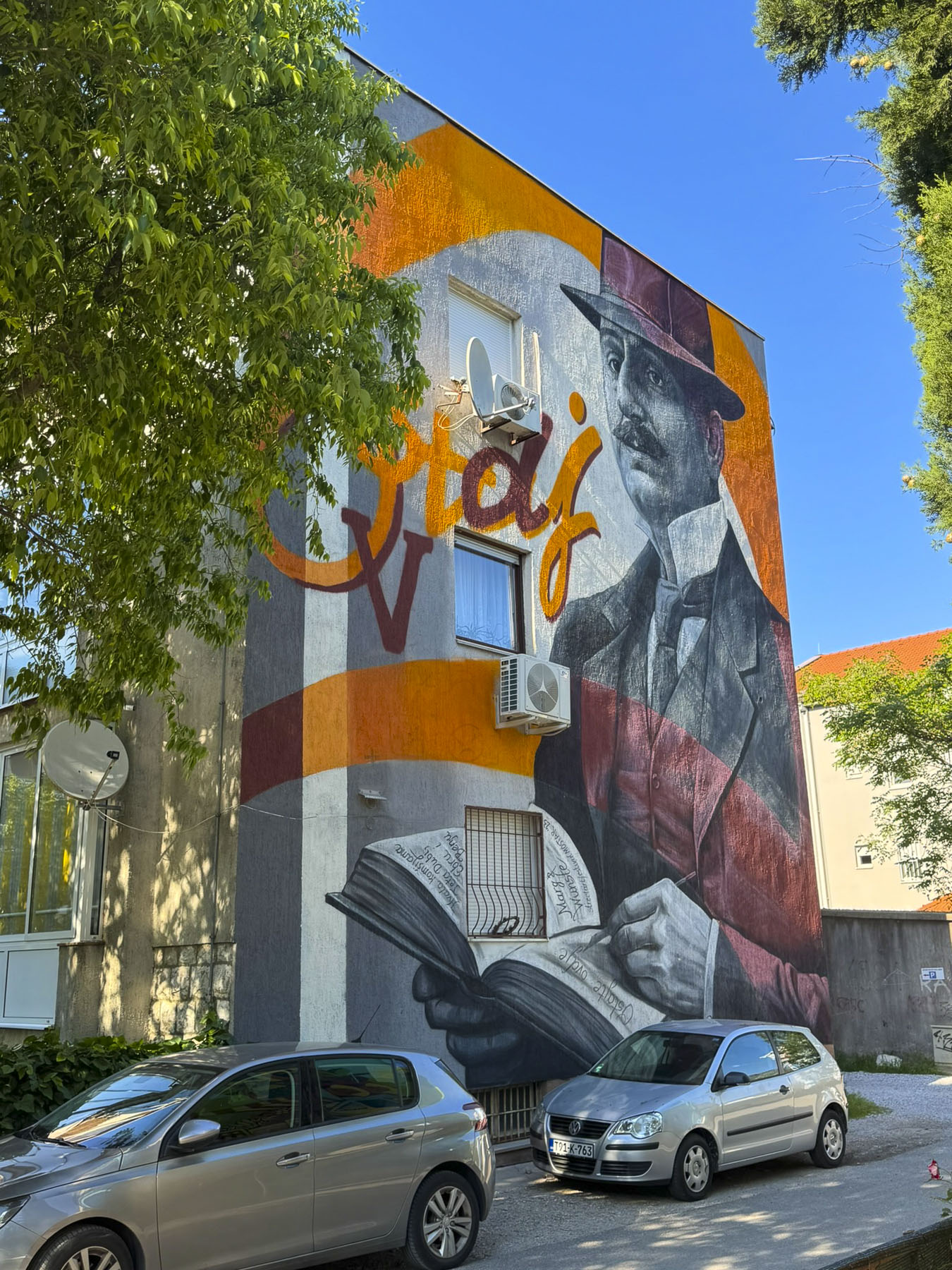
Beyond the old town we found Mostar to be a wonderful compact cosmopolitan city with cafes and large colorful street murals in some neighborhoods. The walk along Alekse Šantića Street, a former frontline in the war, to the Cernica neighborhood is full of mural paintings. It was an initiative in 2012 by Marina Mimoza, a prominent cultural activist and artist who sought to heal the wounds of war and promote reconciliation through art “transforming ruined, bullet-ridden buildings into a vibrant cultural hub, and open-air gallery.” Since its inception the event has grown into The Street Arts Festival Mostar which turns the city into a colorful canvas each summer for invited artists and performers, typically in June or July.

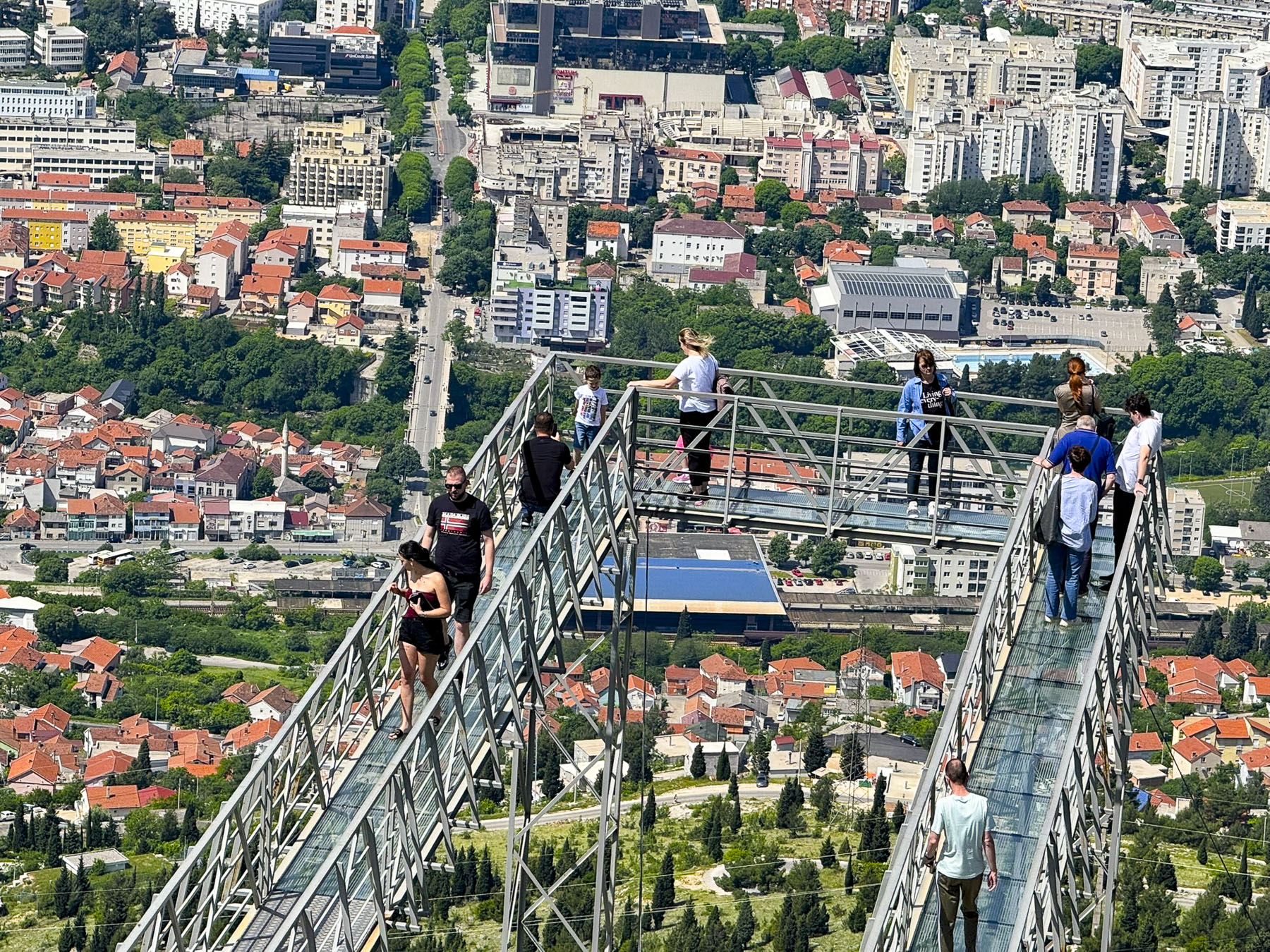
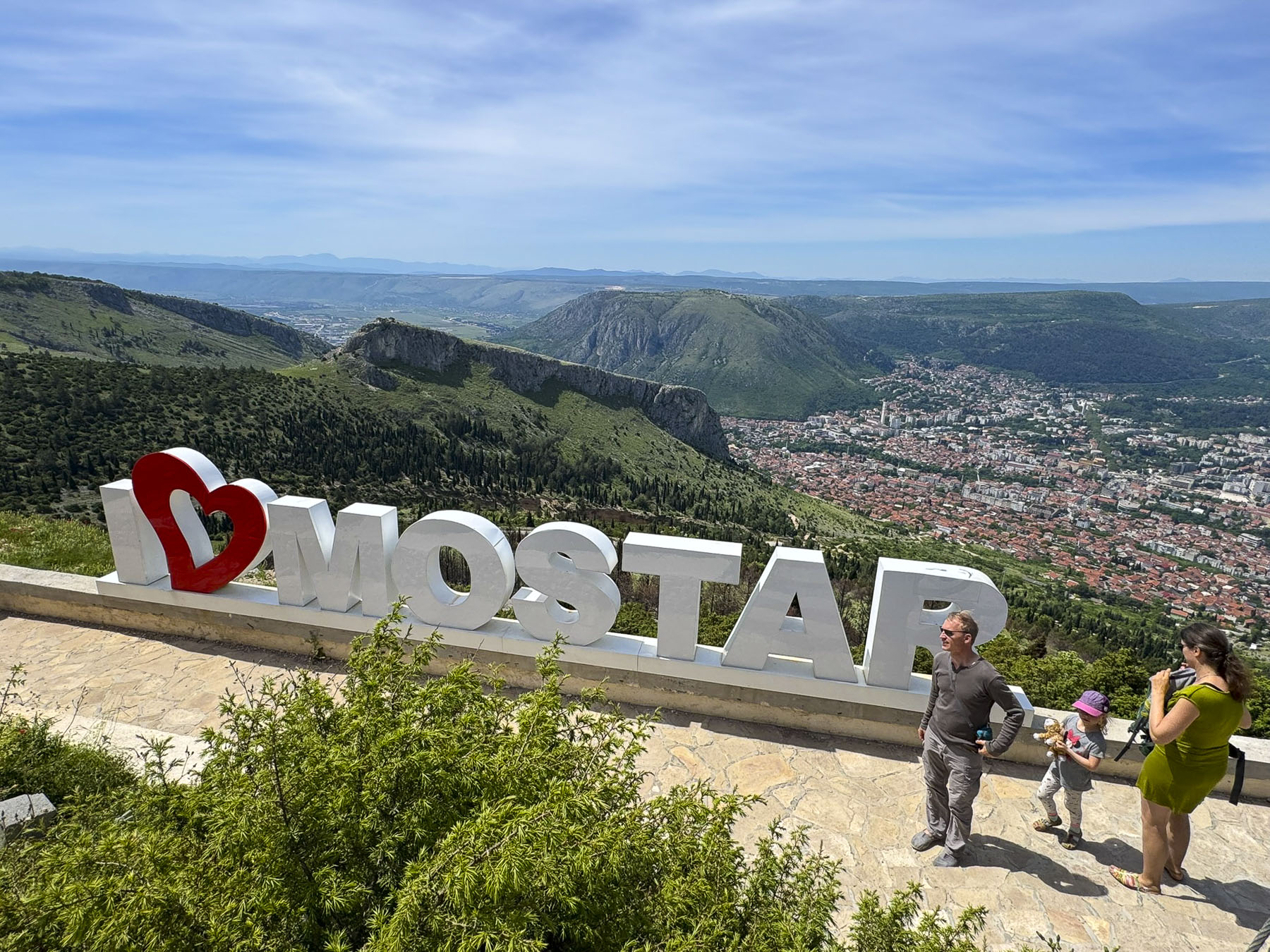
Several tourist attractions nearby beckoned to us. First Fortica Hill, on the east bank of the Neretva River where the Skywalk, a glass bridge, has been open since 2021. From its height there’s a commanding view of Mostar and an Instagram worthy “We Love Mostar” sculpture. Amazingly, there was no entrance fee for the Skywalk, and there’s a small restaurant with a great view from its terrace.

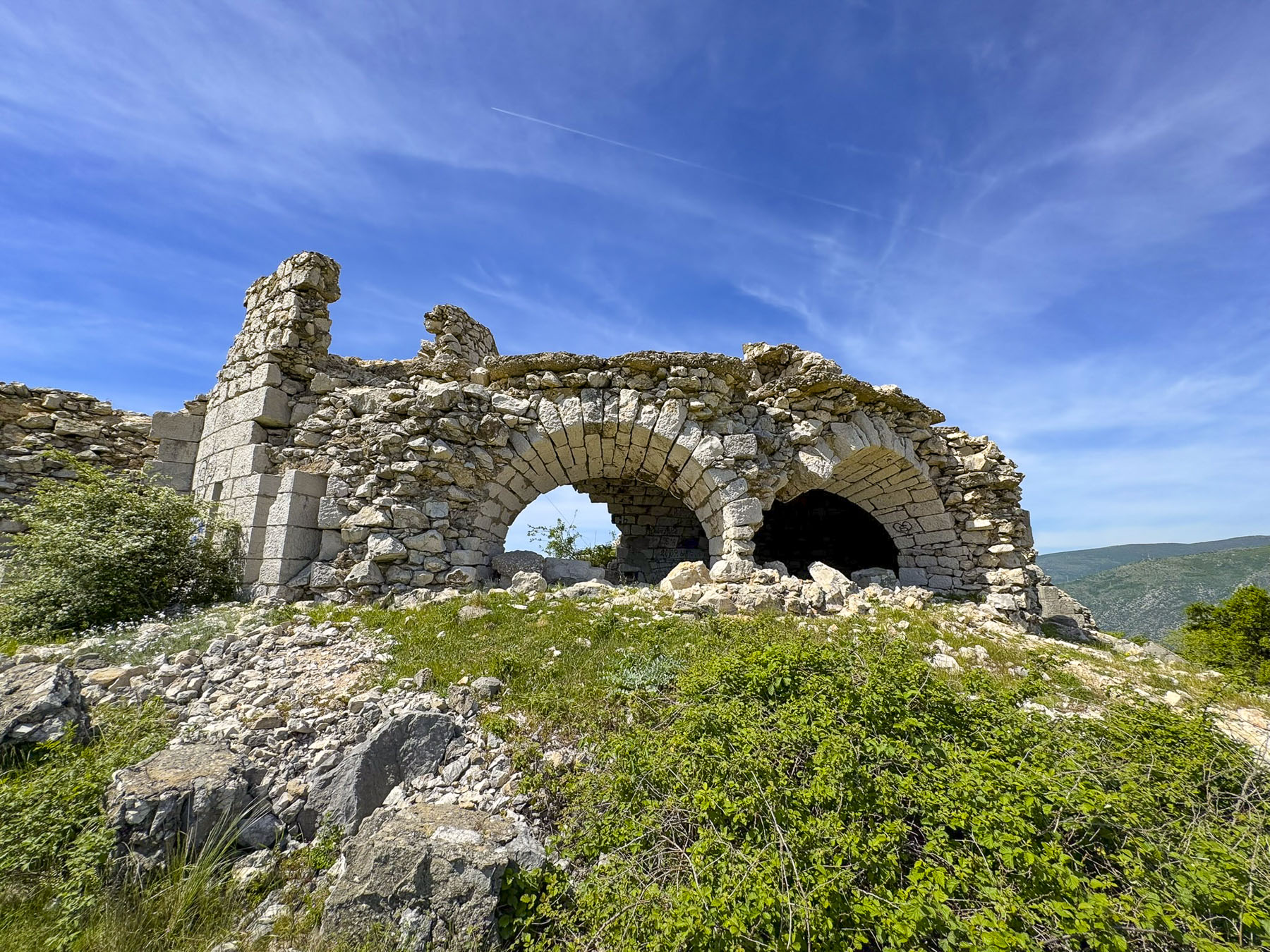
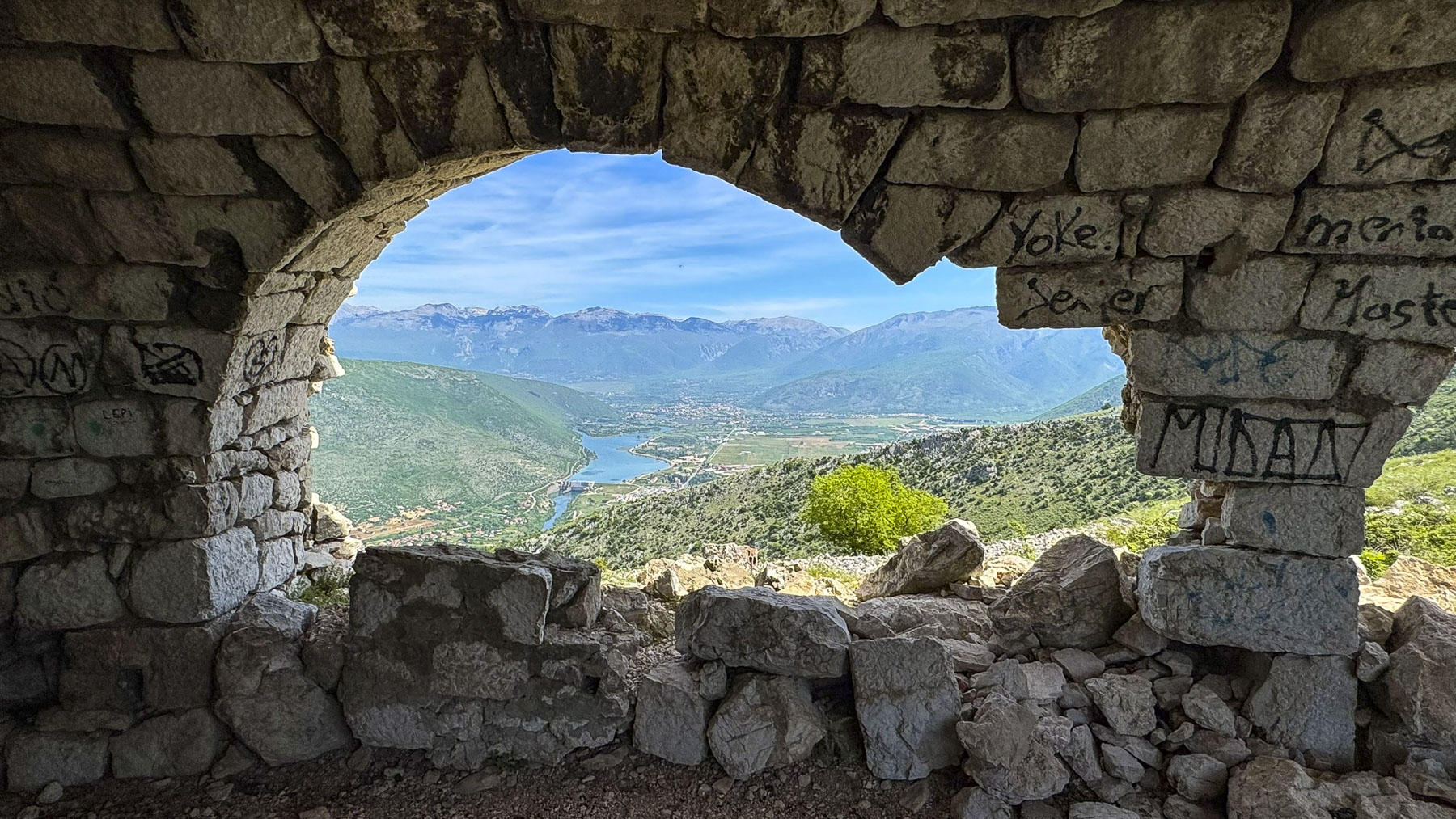
Within walking distance of the Skywalk were the late 19th century ruins of an Austro-Hungarian stone fortification that had sweeping views north to the mountains on both sides of the Neretva River Gorge.

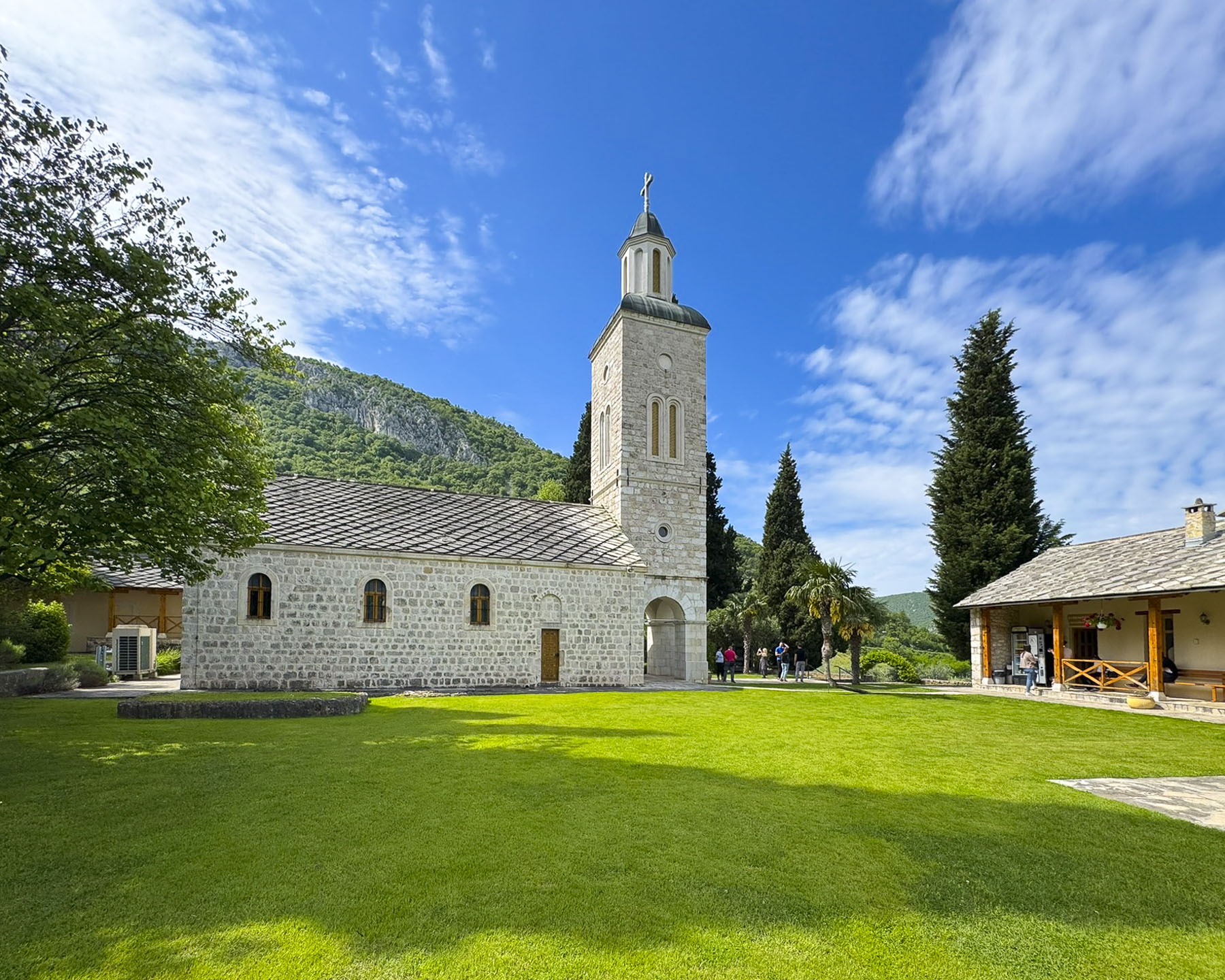
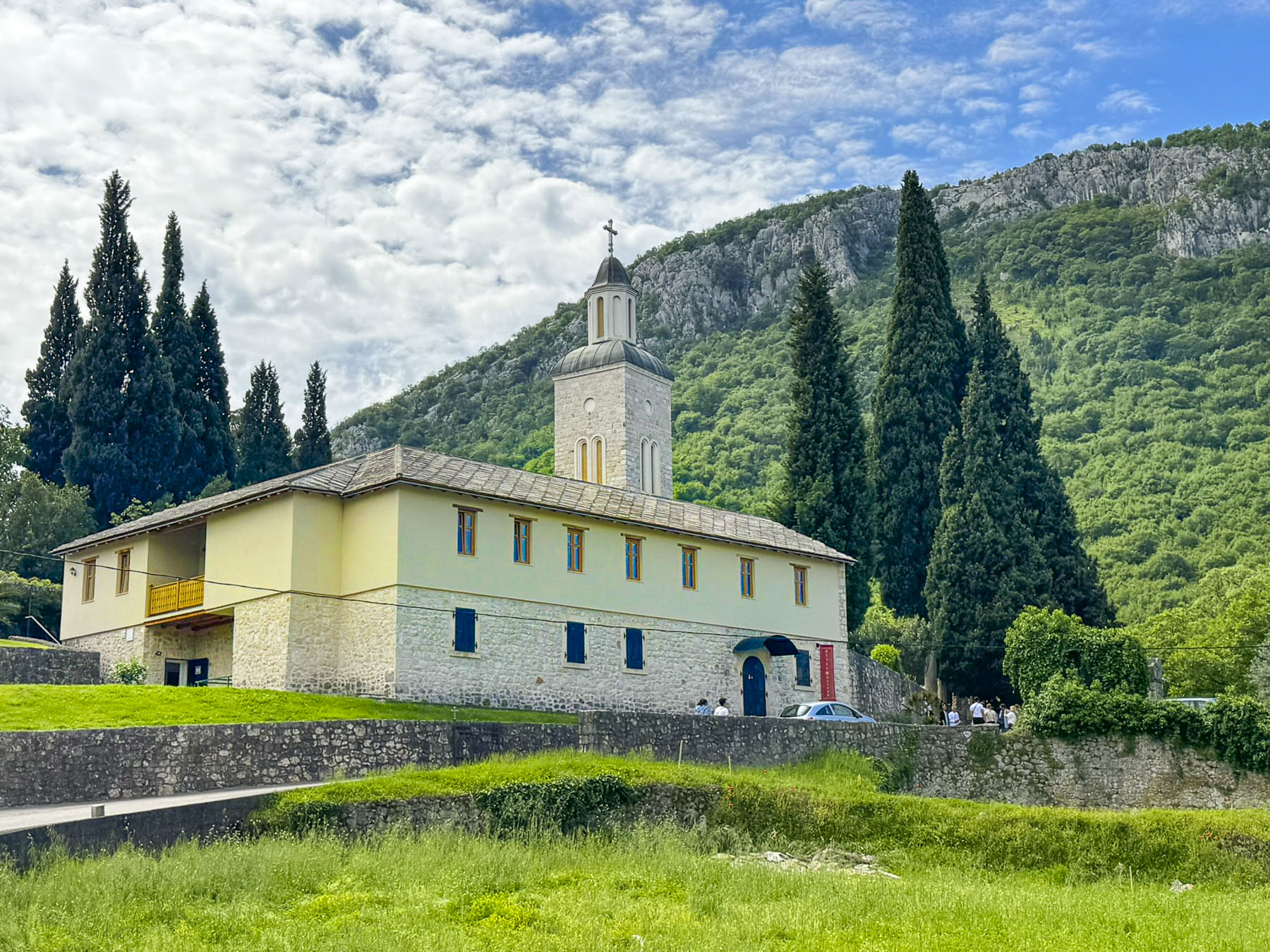
Later that afternoon we headed fifteen minutes south of Mostar to the orthodox Žitomislić Monastery, dedicated to the Annunciation of Mary. The church on the site was constructed upon the ruins of an earlier house of worship in 1566 with the surrounding monastery buildings taking another forty years to complete. It was a major spiritual center in the 16th and 17th centuries, hosting a large library, a scriptorium, and beautiful iconostasis. At the height of its existence the monastery was supported by large land holdings that included vineyards and orchards worked by the monks themselves. During World War II the entire brotherhood of the Žitomislić monastery were killed by local fascist troops allied to the Axis Alliance, and the complex was severely damaged and looted. Rebuilt after World War II, the monastery was again burned, but the church was savagely destroyed with explosives, reducing it to rubble during the 1990s Bosnia War.  The original stones of the church were reused during its reconstruction in 2002 to recreate its earlier appearance, and it was reconsecrated in 2005.

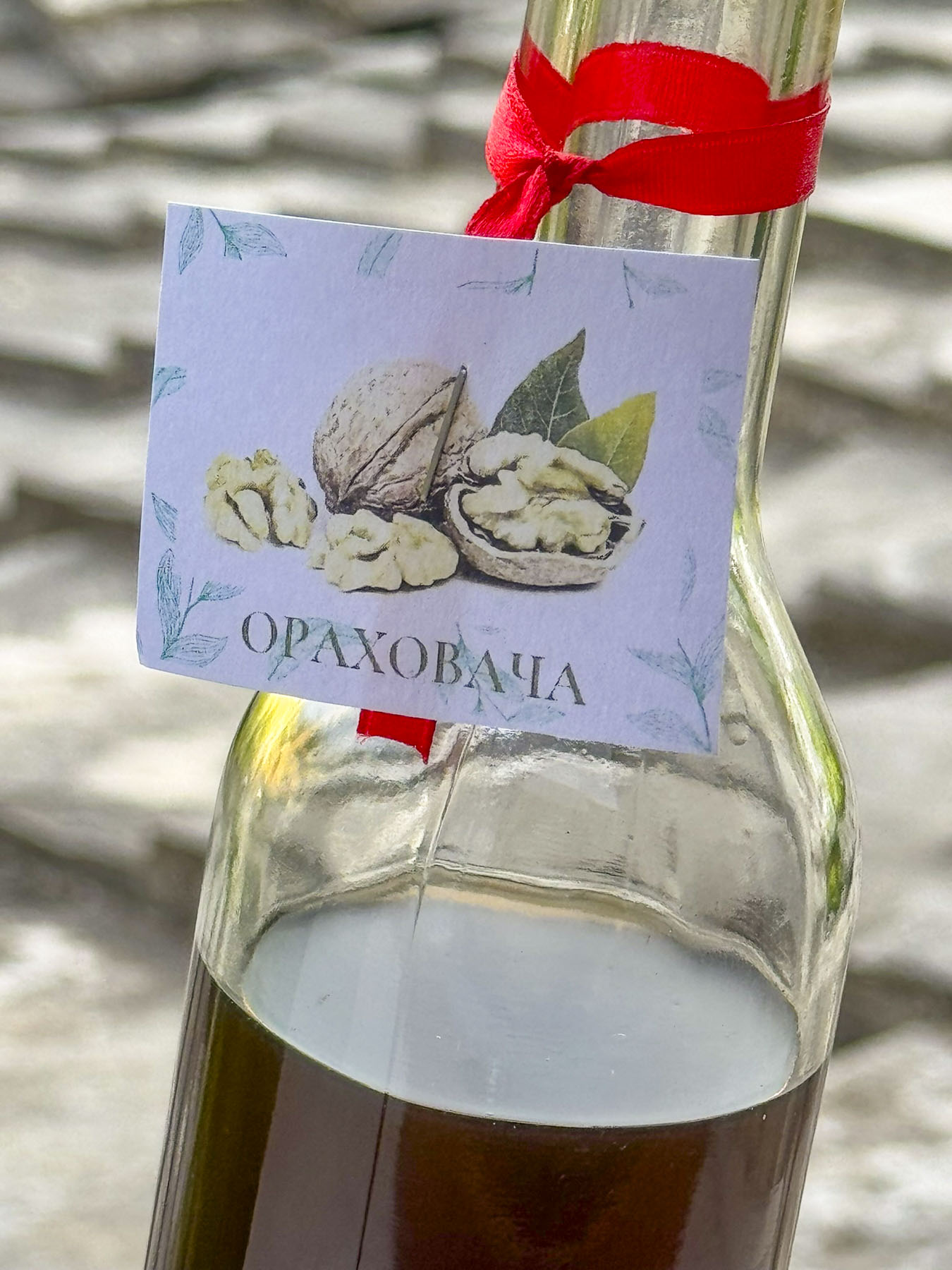
We arrived to the monastery just as a tour bus finished disgorging its passengers. We dislike crowded sites, so we decided to explore the new monastery’s museum first, which had a small collection of ancient manuscripts, books, and liturgical objects, as well as a collection of some of the region’s oldest surviving icons. The works transcend several artistic styles from traditional Byzantine, featuring austere lines and dark color, to more graceful interpretations as Venetian and Baroque influences reached the Balkans. During exploration of the museum’s gift shop we discovered that the resident monks still make a traditional walnut liqueur  called Orahovača. It’s made by soaking green, unripe walnuts in plum brandy with honey, citrus and spices like cloves and cinnamon. It is usually enjoyed chilled as a digestif  after meals, or to treat stomach ailments. It was very tasty and we enjoyed the small bottle we purchased throughout the trip.

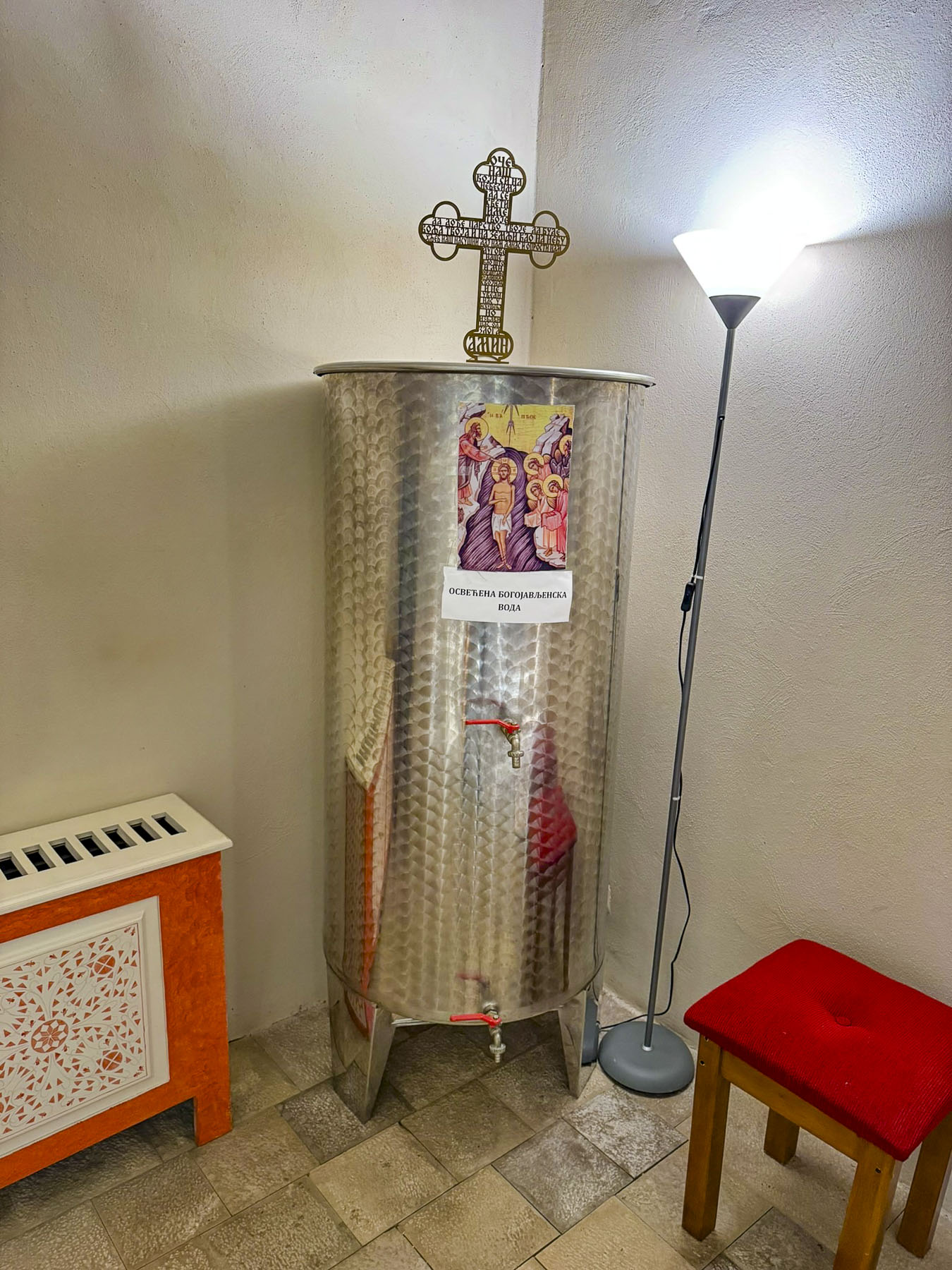
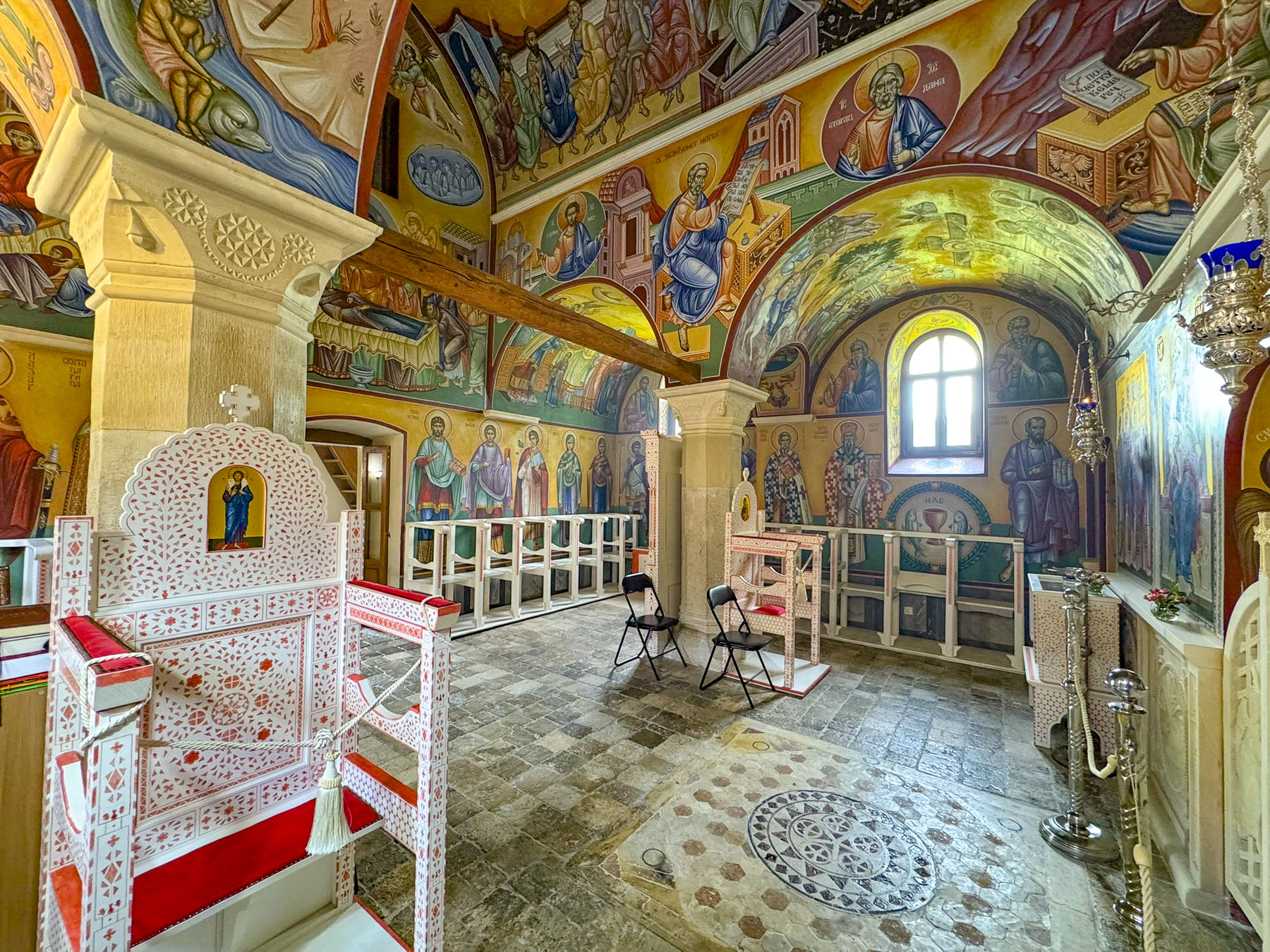
When the tour group departed, we entered the foyer of the church where a 200 liter, (50 gallon) stainless steel drum of what we assumed was holy water stood in the corner, available to fill your water bottles from. Entering the sanctuary revealed a stunningly beautiful space where every surface was covered in rich iconography.

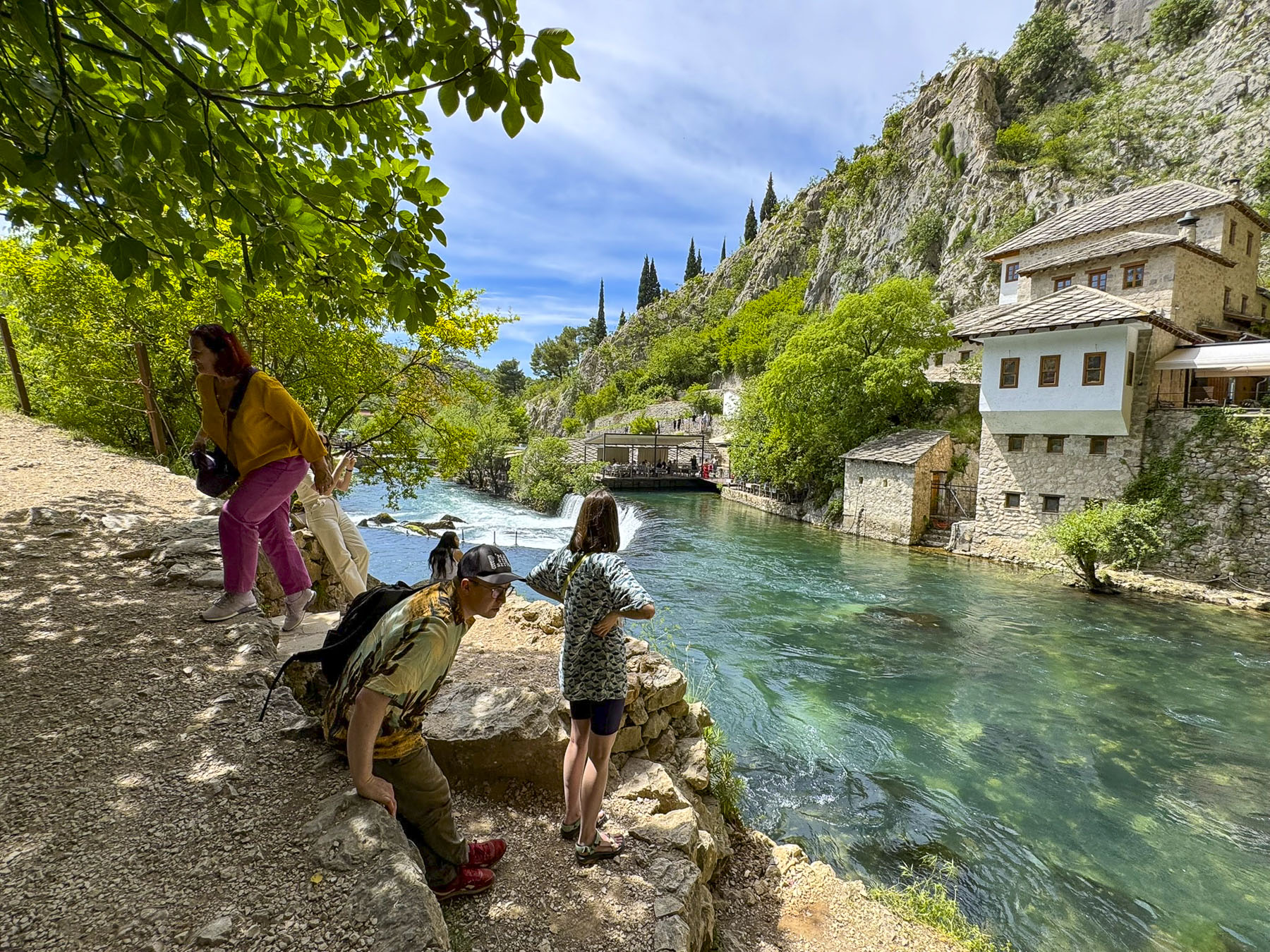
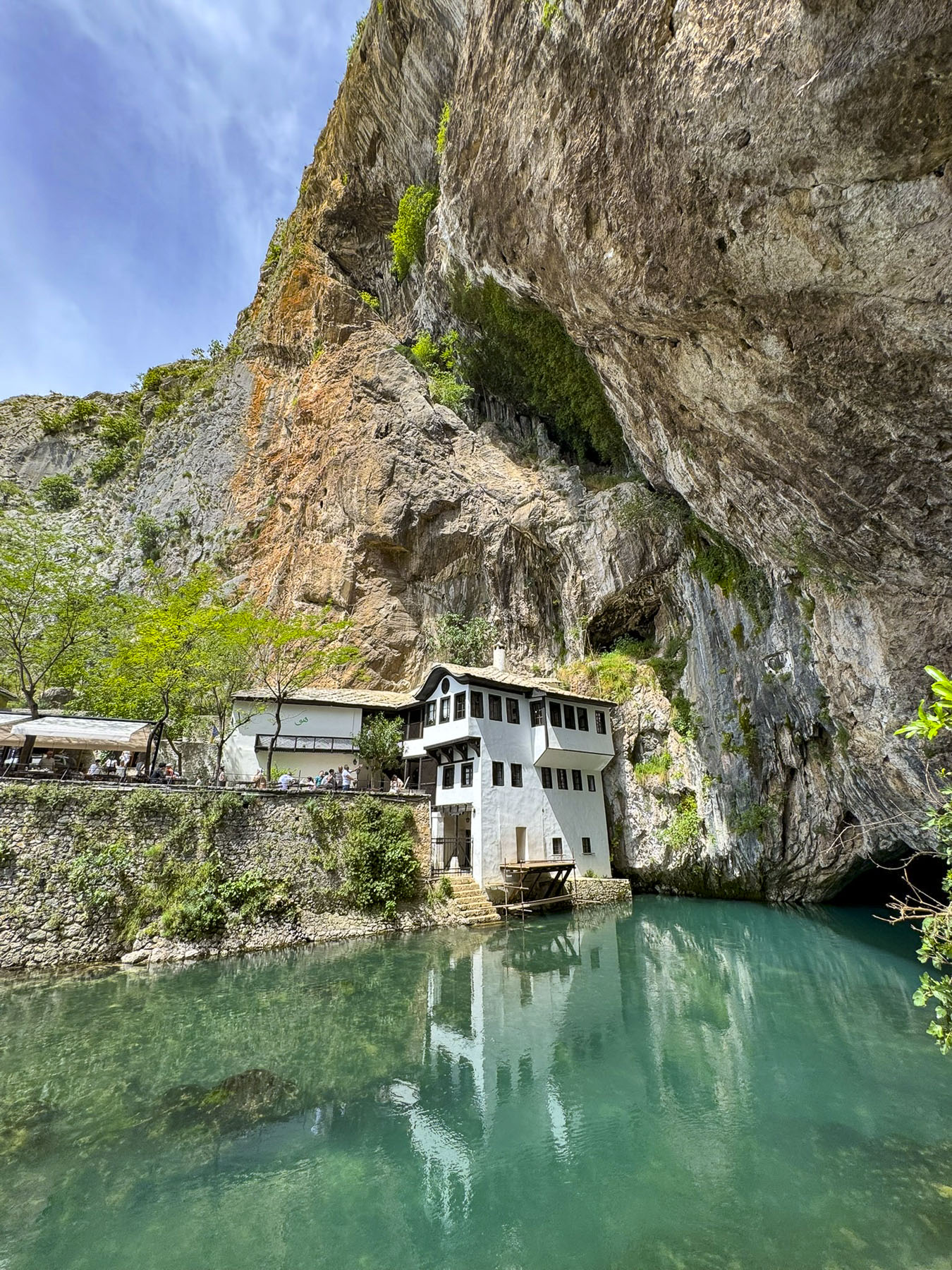
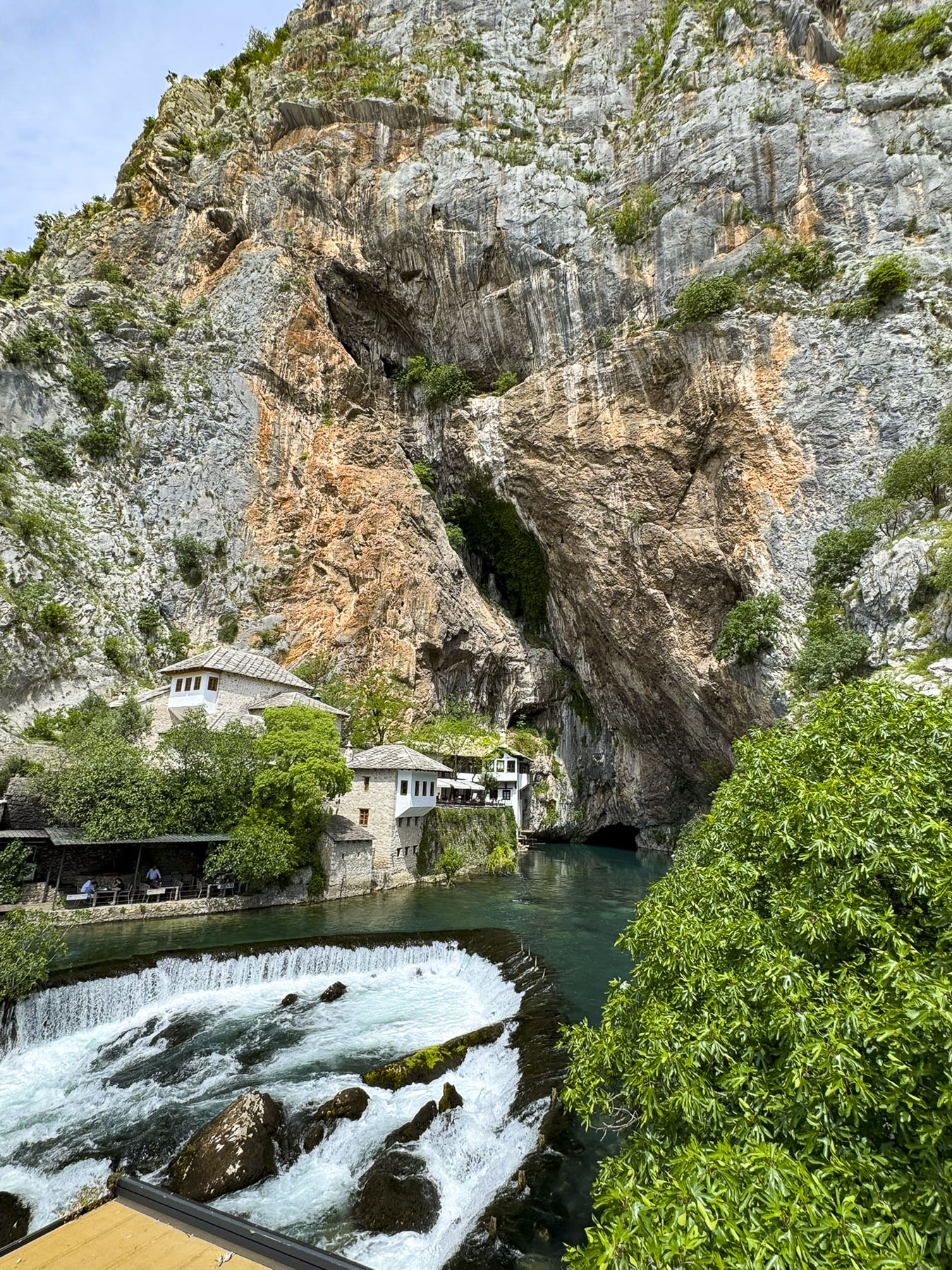
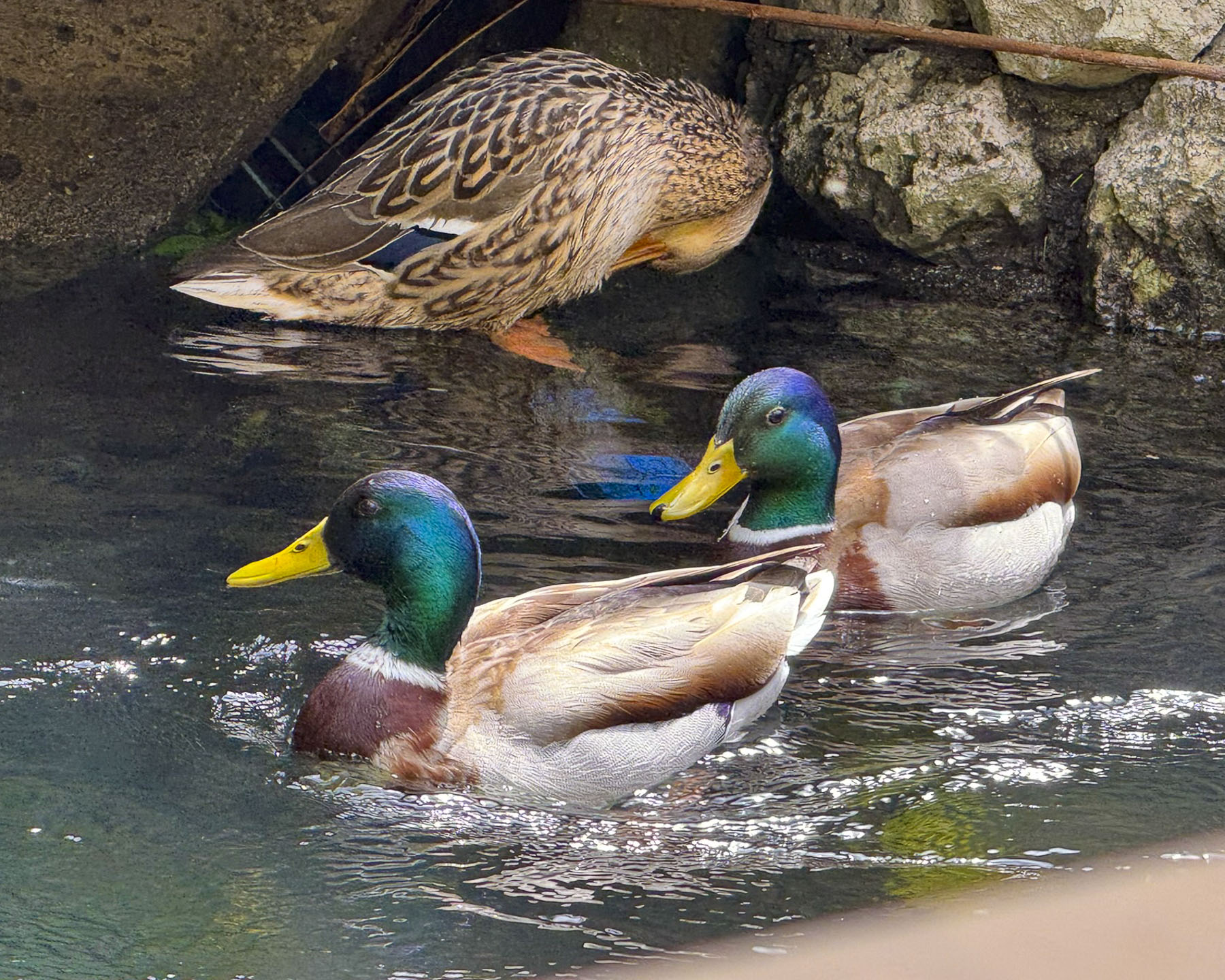
A short drive away, but a long walk from the parking area was Blagaj Tekija, a historic Sufi Dervish monastery constructed in the early 16th century at the foot of soaring 240m (787ft) sheer rockface next to a karst cave. The cavern shelters a spring called the Vrelo Bune which is the source Buna River. It’s a dramatic setting. From its banks we watched visitors take small boats rowed by local men a short way into the mouth of the cave to see its large cavern.  Professional divers have explored the dark cold water of the spring to a depth of 150m (492ft), but the total depth of the spring remains unknown. We enjoyed a late afternoon dinner at one of restaurants along the river’s edge. It was a very tranquil setting with ducks lazily paddling about on the softly gurgling water as it glistened in the bright sun.

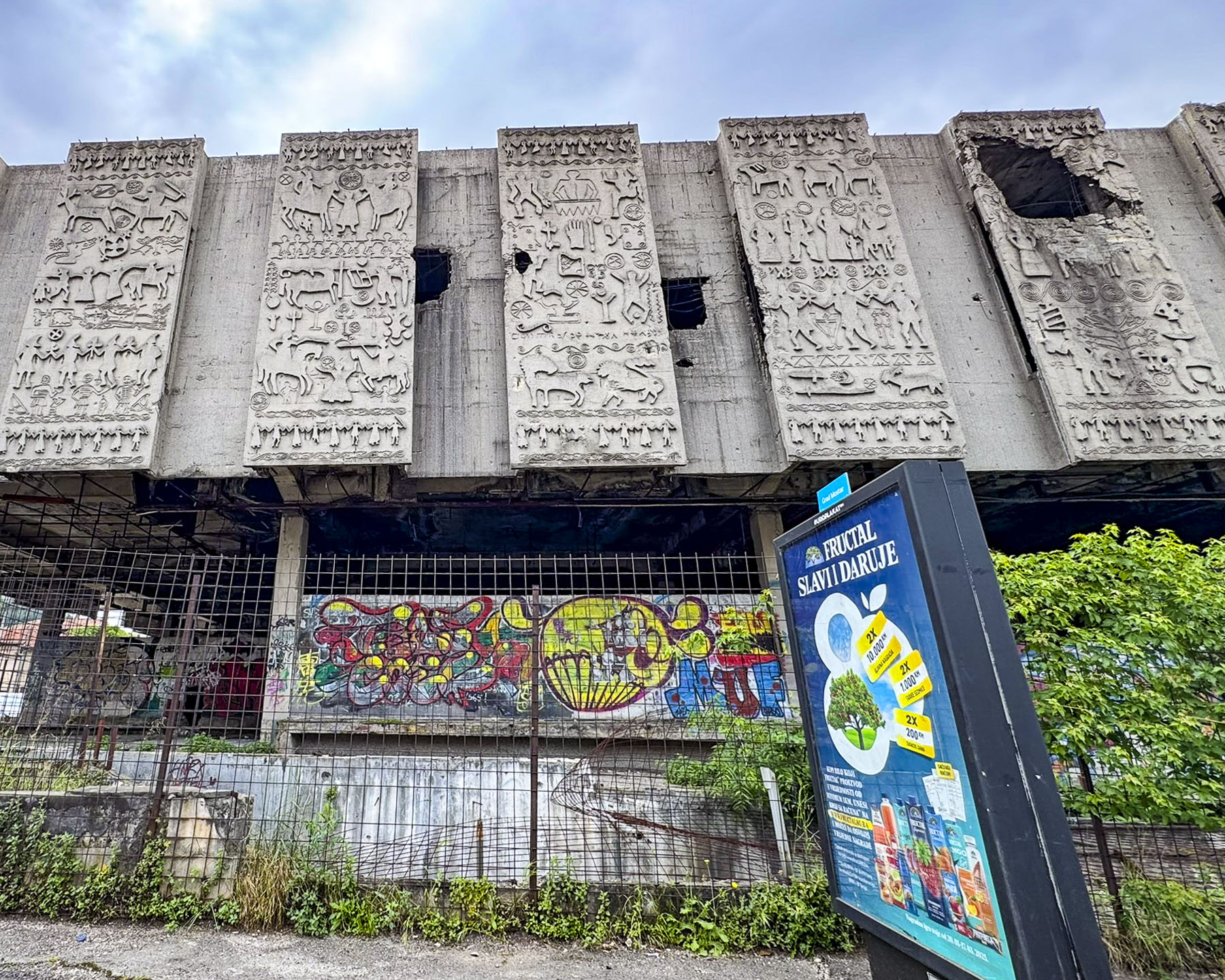
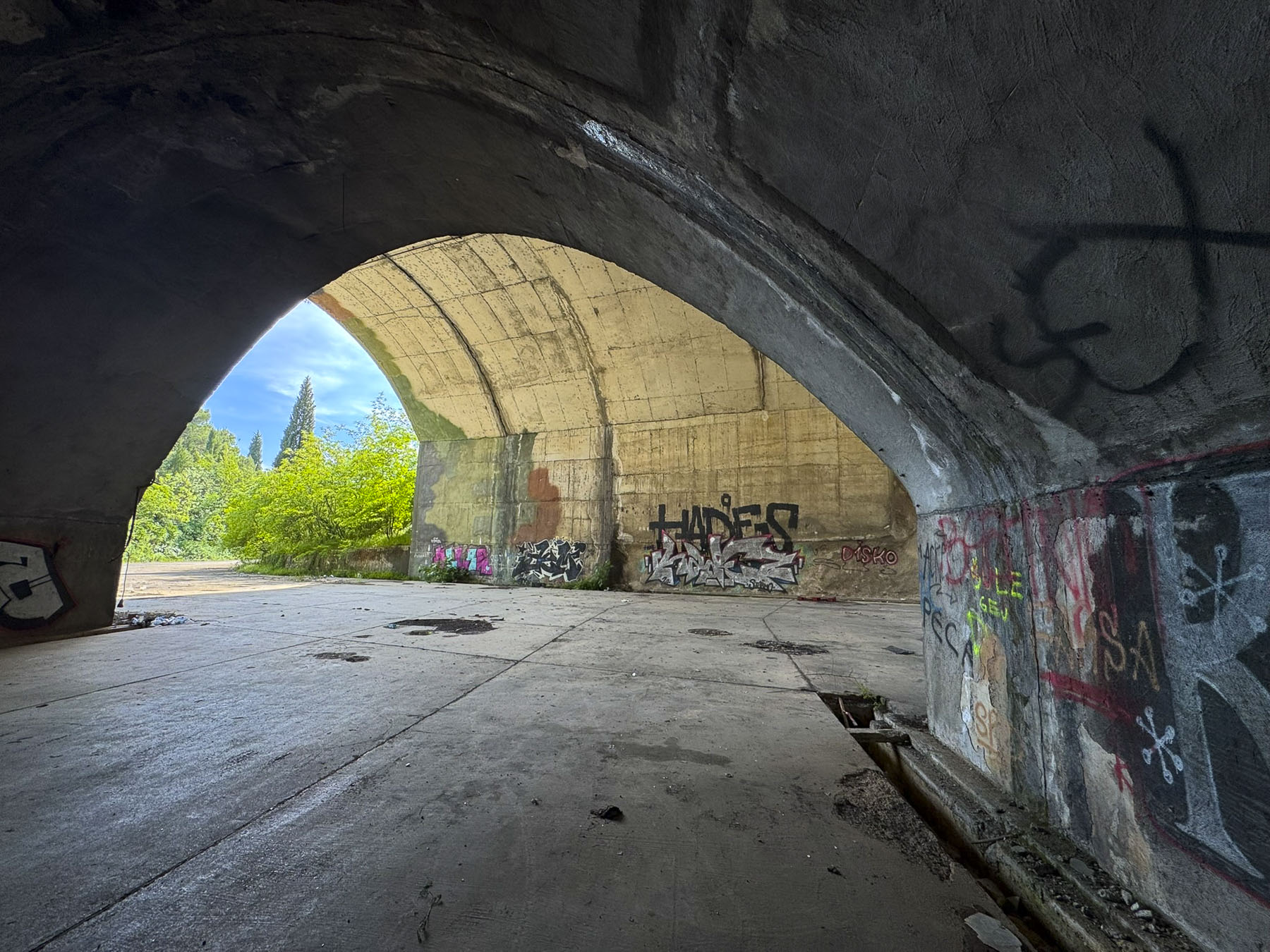
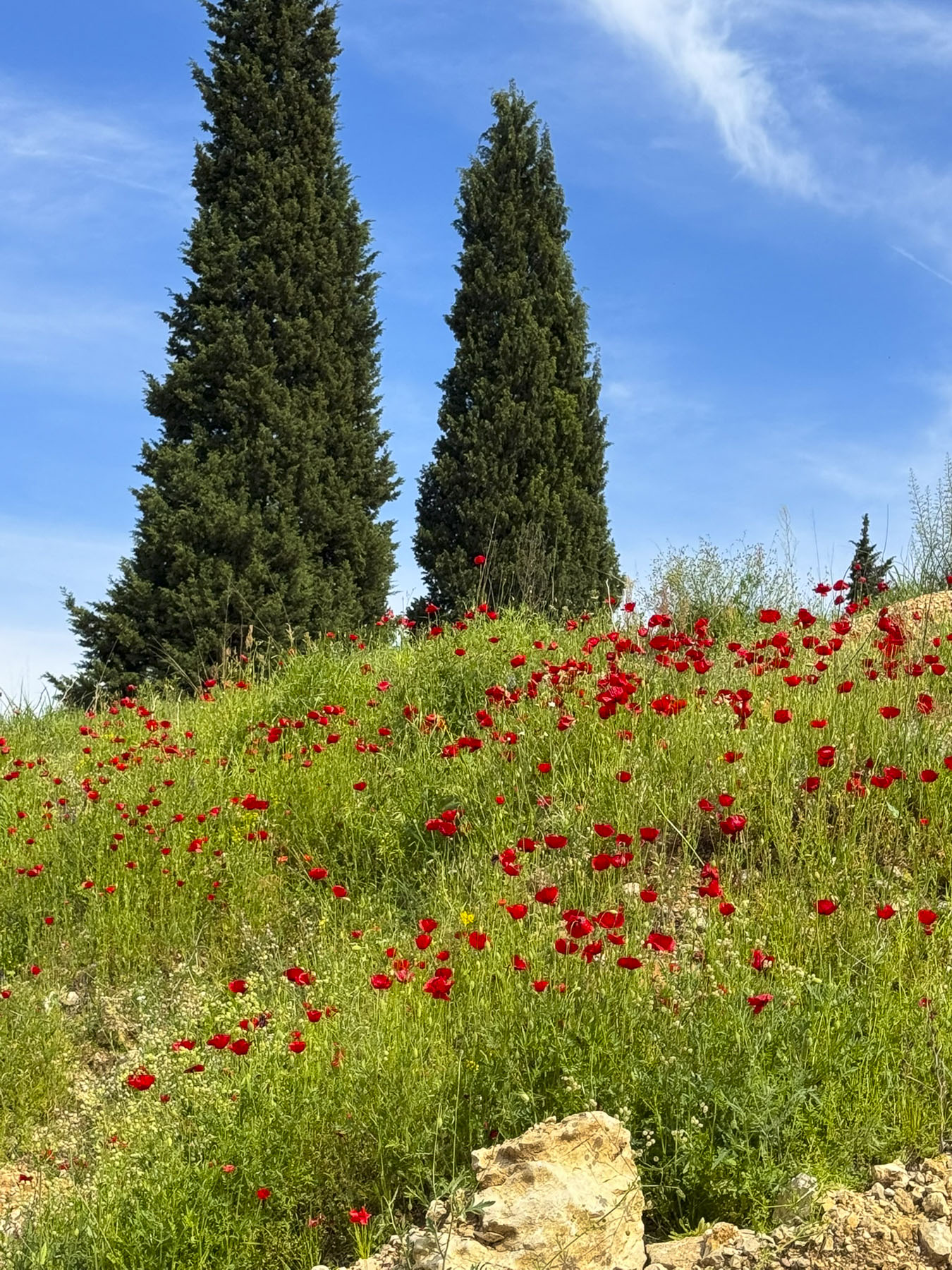
Heading back to Mostar we made one last stop at Objekt Buna in Gnojnice. It’s an unofficial tourist site where visitors are semi-discouraged by a decrepit incomplete fence to not enter this Cold War era secret aircraft bunker. Located across the main road from what is now the Mostar International Airport, the military bunker was constructed into the side of a small hill in 1969 to shelter up to twenty planes and helicopters from attack.  It was abandoned after the Bosnia War and is now a graffiti covered relic of the communism of Tito’s Yugoslavia. Outside the bunker the hillside was covered with wild poppies.

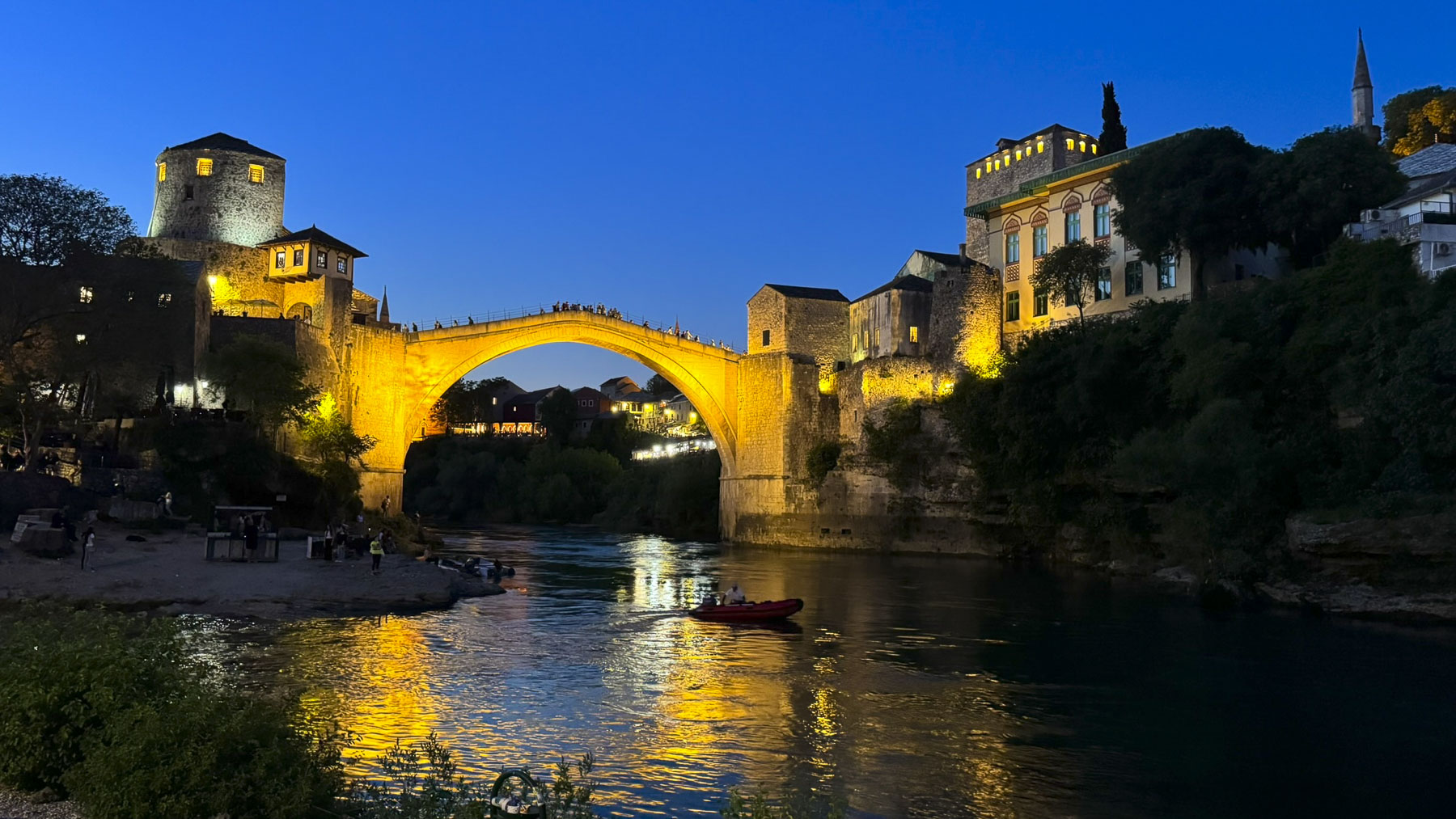
Mostar was especially enchanting in the evenings. Across from the small beach under the bridge where the boat rides launch from, we were surprised to see so many photographers lined up with their cameras mounted atop tripods placed, we hoped, firmly into the riverbed. Along with us, they were all intent on capturing the ultimate night picture of Stari Most as darkness fell. There were many previous attempts to build an arched stone bridge across the river, but all had failed, to the frustration of  Sultan Suleiman the Magnificent. In 1557 he commissioned Mimar Hayruddin, a former apprentice to Istanbul’s grand architect Mimar Sinan to build a single arch bridge, but legend says the Sultan threatened him with death if his design collapsed. Fearing the worst as completion of the bridge neared in 1566 the architect reportedly prepared his own funeral shroud, expecting to be killed when the scaffolding supporting the bridge was removed. But to everyone’s relief, the 29m (95 ft) span, the widest man-made stone arch bridge in the world at the time, held firm. A marvel of engineering, the original stone structure stood for over 450 years until it was destroyed during the 1990s Bosnia War.   

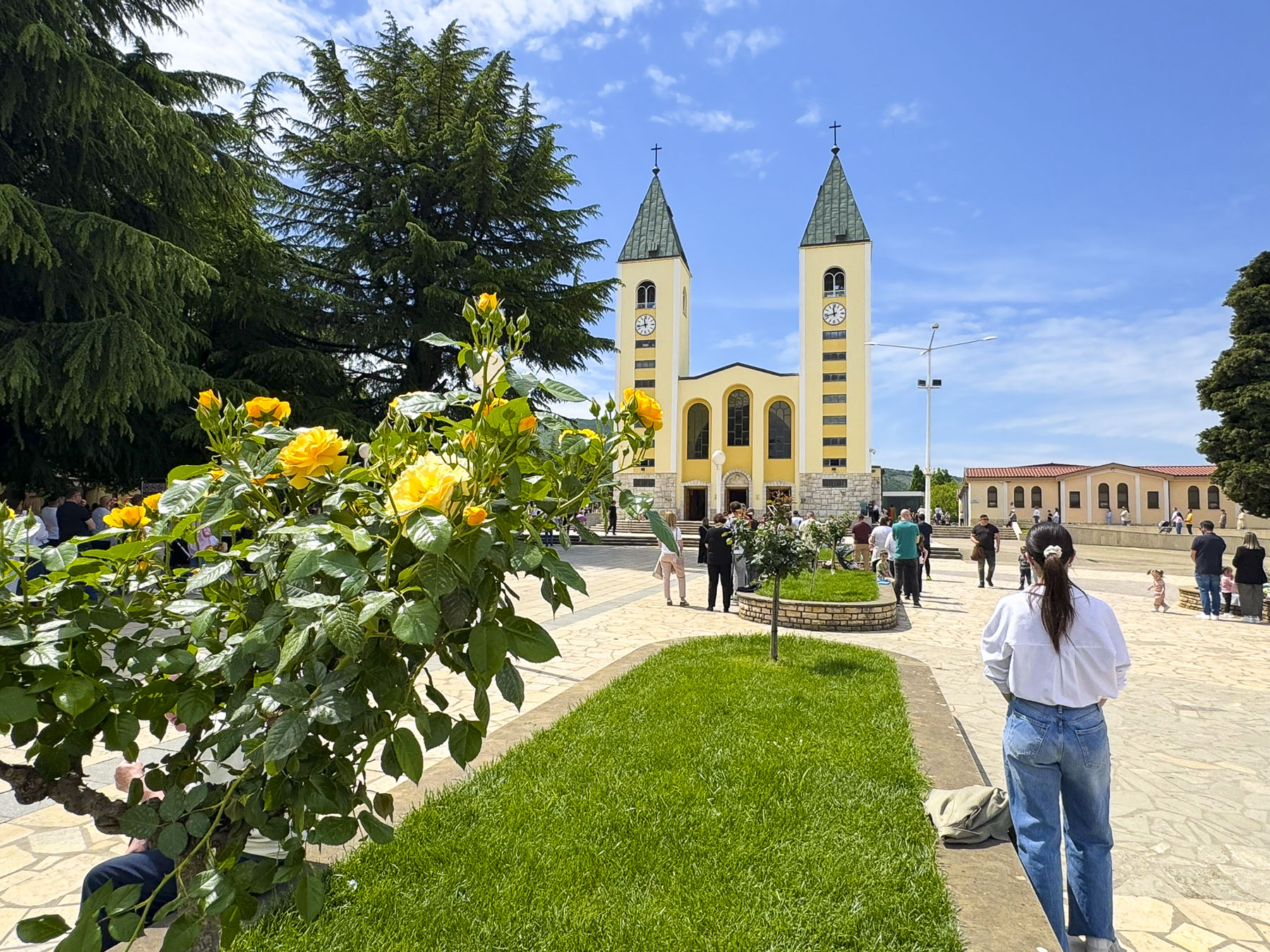
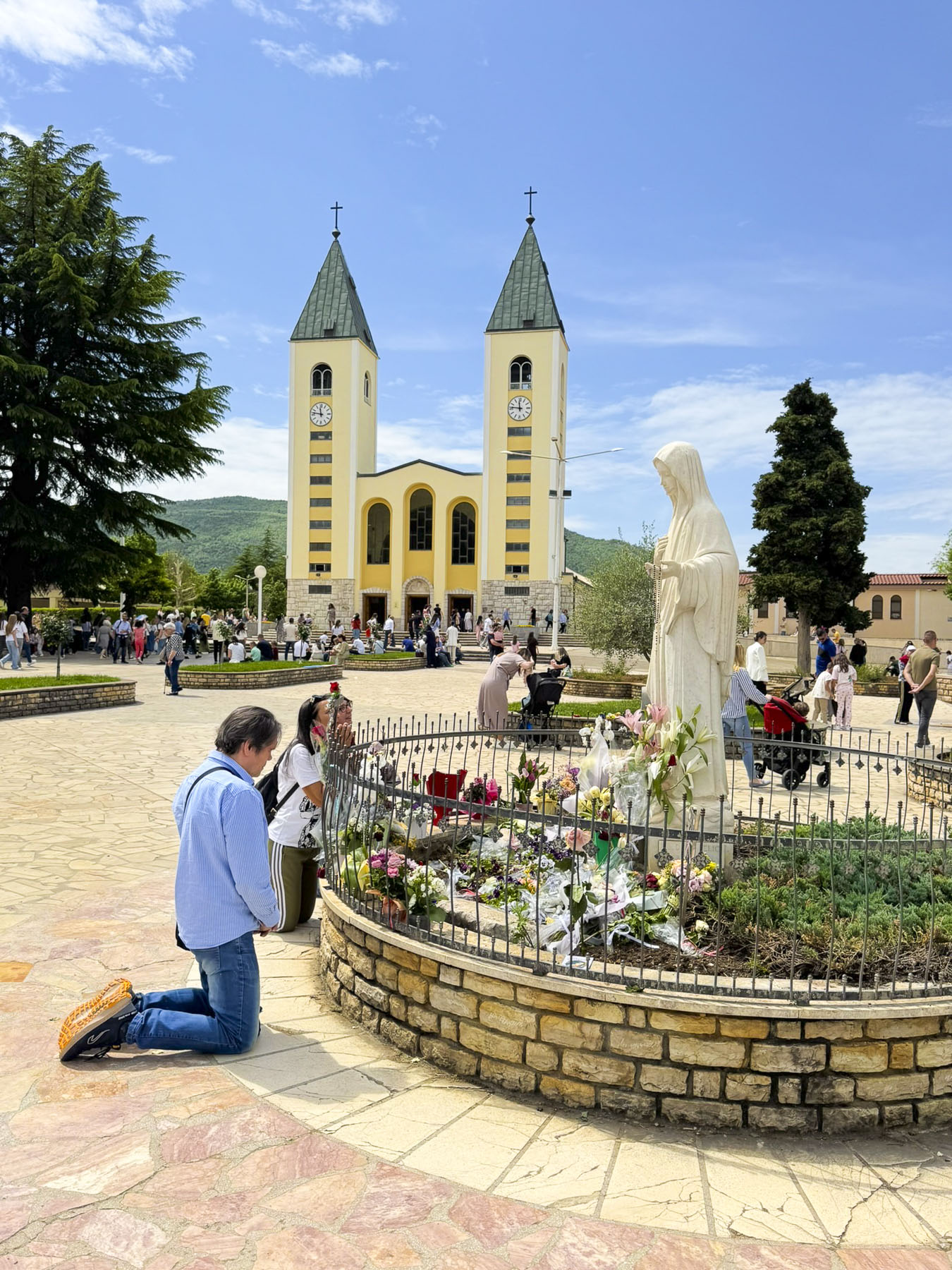
For our last day trip from Mostar we headed to Kravica Waterfall, but we rarely go directly to a destination, as there’s always other sites of interest along the roundabout routes we choose. Forty minutes south of Mostar we stopped at the Church of St. James in Medjugorje, a modest Bosnian town with about 4,000 people living in it. The catholic church was started in 1934, but its construction was interrupted by WW2, and religion was suppressed in Yugoslavia’s early communist years until authorities loosened their policies toward religious institution. The church was allowed to be completed and consecrated in 1969. But the quiet town suddenly rose to world-wide fame when six young people  claimed to have seen the Blessed Virgin Mary on June 24th, 1981 on Crnica hill. Subsequent apparitions appeared to the children in different locations around the small town, and eventually in the church. The Virgin Mary’s visitations, with her messages emphasize reconciling with God, reading scripture, and encouraging peace are said to have occurred daily since then. And Medjugorje has grown into the third most visited pilgrimage site in Europe, after Lourdes in France and Fatima in Portugal, receiving over 40 million pilgrims since 1981.

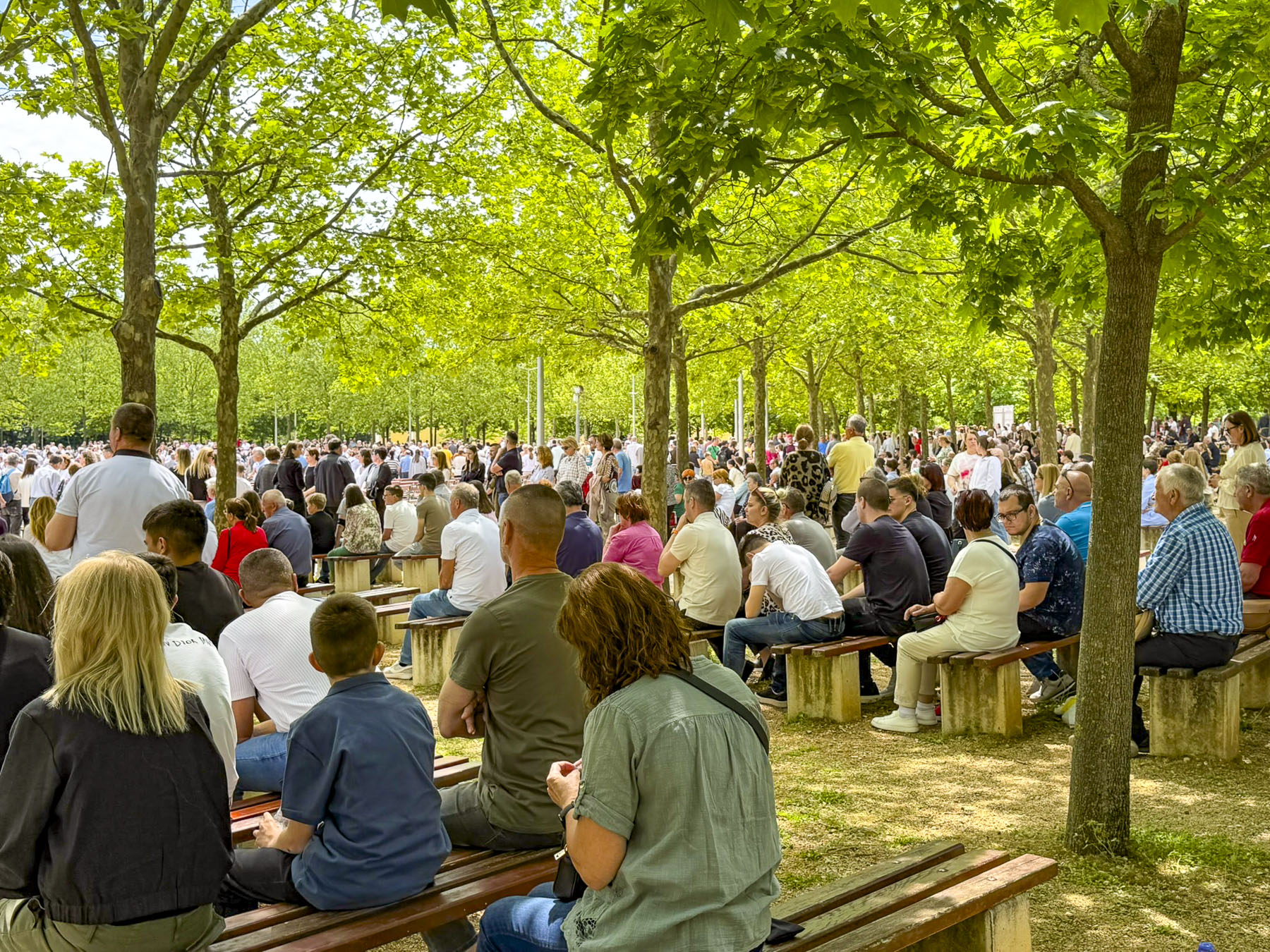
When we arrived an outdoor mass was in progress behind the church in a large park-like setting; thousands of pilgrims were seated along rows of permanent benches or stood nearby. Around the front of the church folks prayed before a statue of the Virgin, as another mass was underway in the sanctuary.

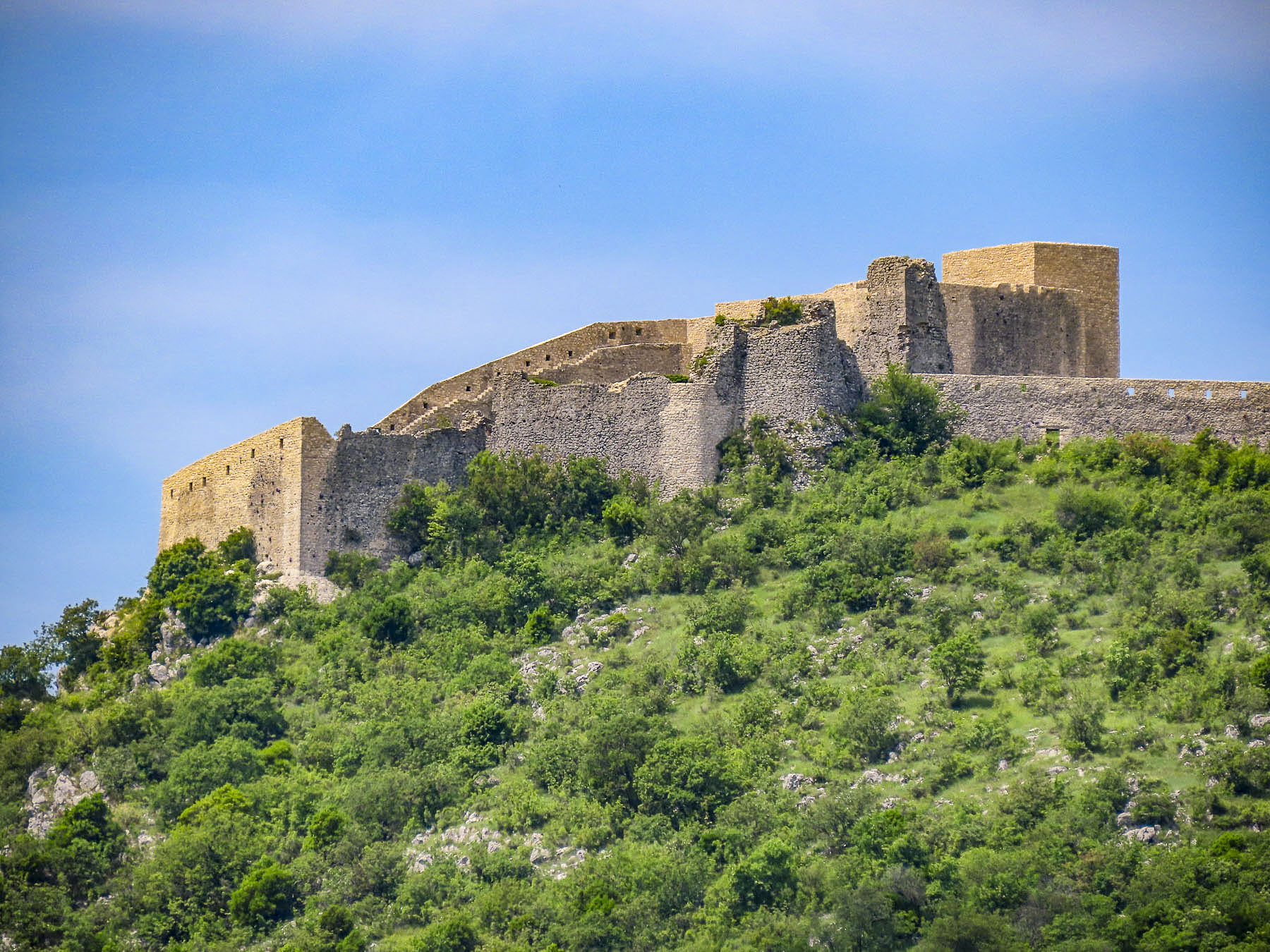
Continuing our journey we headed to the Fortress of Herzog Stjepan Vukčić Kosača. Set atop a towering hill, the medieval 15th century castle was an important stronghold of the Kingdom of Bosnia as the Ottoman Empire expanded across the region.  Kosača’s title “Herceg” (Duke), was also the name of his expansive domain which later became known as Herzegovina. Unfortunately, there was a large sporting event being held the day we visited, which would have required us to park at the bottom of the hill and walk to the summit. This would have taken too much time away from the rest of the day, so we contented ourselves with photos of the mighty stronghold from the foot of the hill.

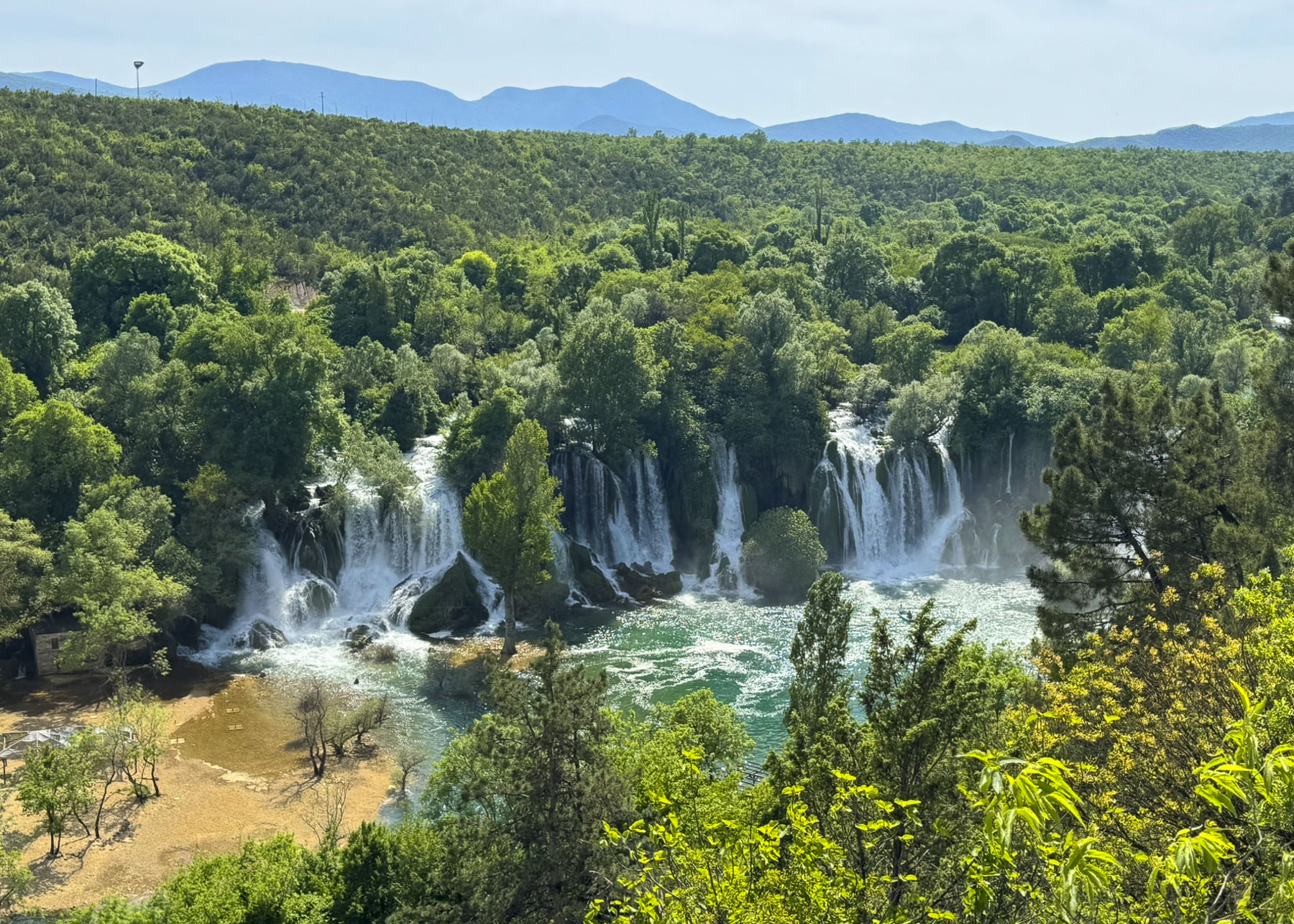
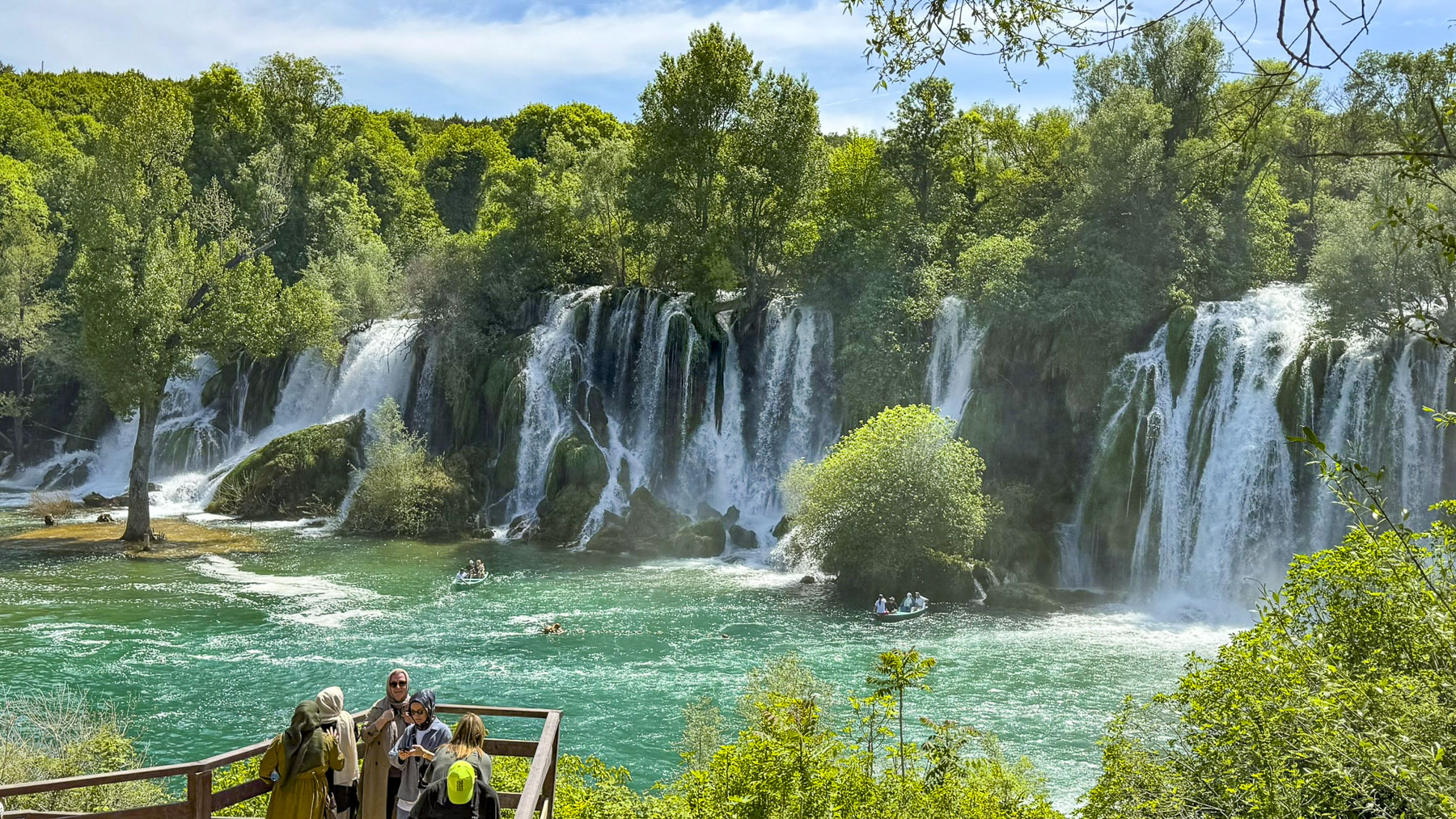
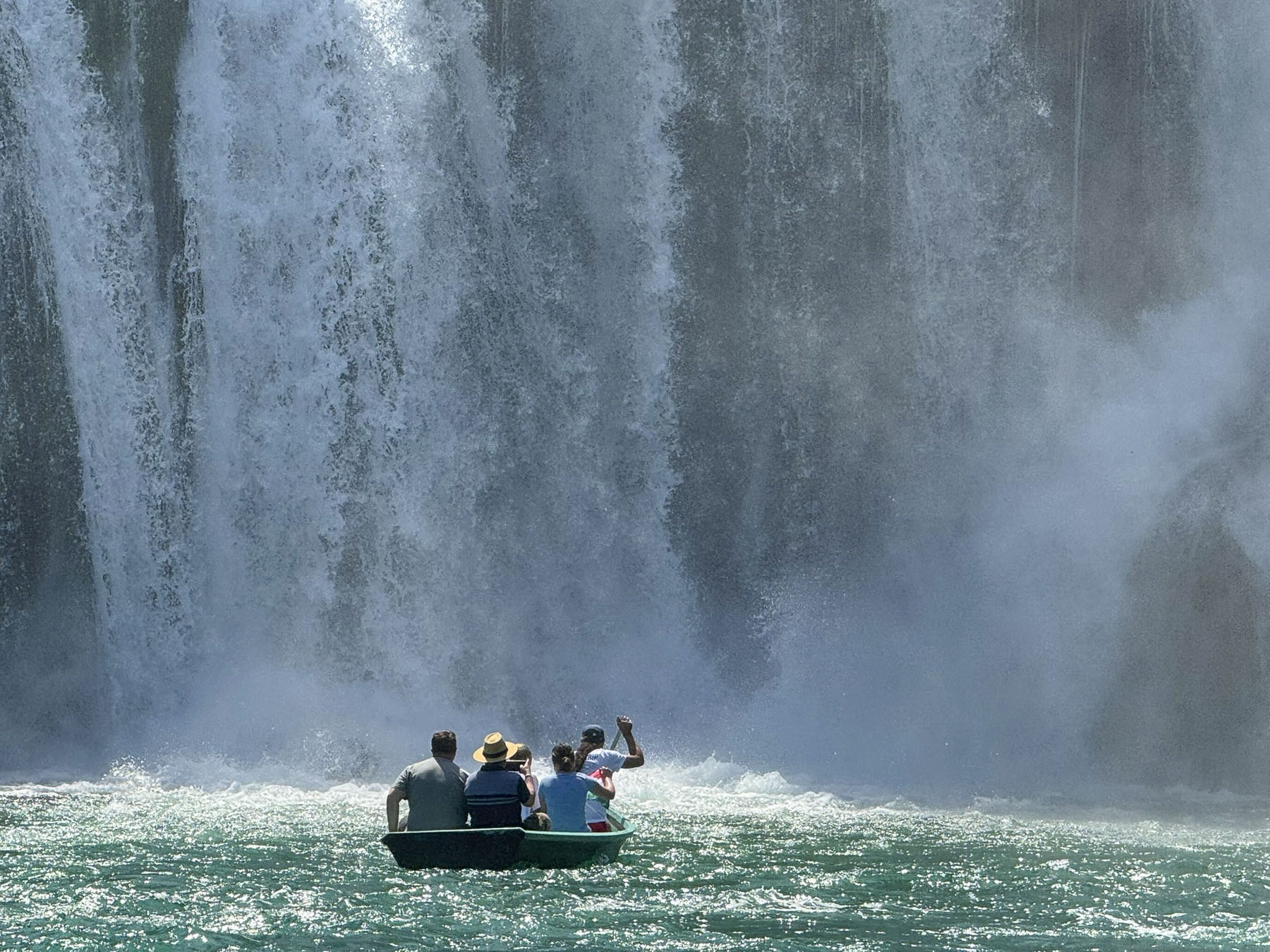
The Trebižat River was full from runoff from recent heavy spring rains across the region and the Kravica Waterfall was the beautiful beneficiary. The spectacular bridal veil fall is 120m (394ft) wide with a cascade that drops 25m (82ft) into a crystal-clear turquoise basin. Local boatmen can be hired to row folks closer to the falls to hear the thunder of the water and get soaked in mist. A few swimmers were daring enough to brave the cold water.

There was plenty of parking near the park entrance and we opted for the ticket with the tourist train. This is especially helpful for folks like us with bad knees; the other alternative is a walk down many steep stairs, but be prepared for a vigorous climb up. Along the water edge there are three outdoor restaurants that are seasonally open. If pursuing waterfalls is your thing, another smaller cascade, Koćuša Waterfall, is 30 minutes away to the northwest.

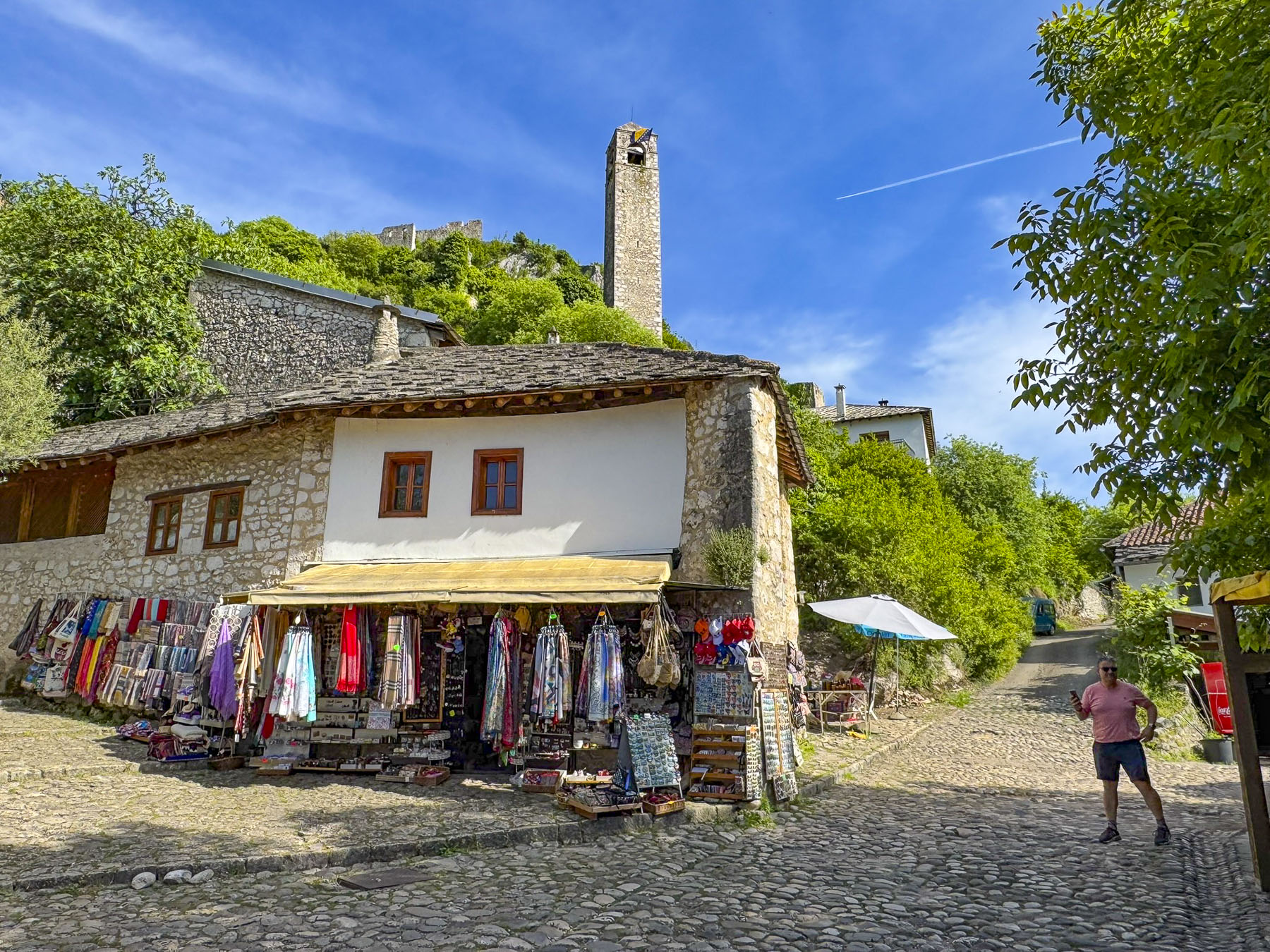
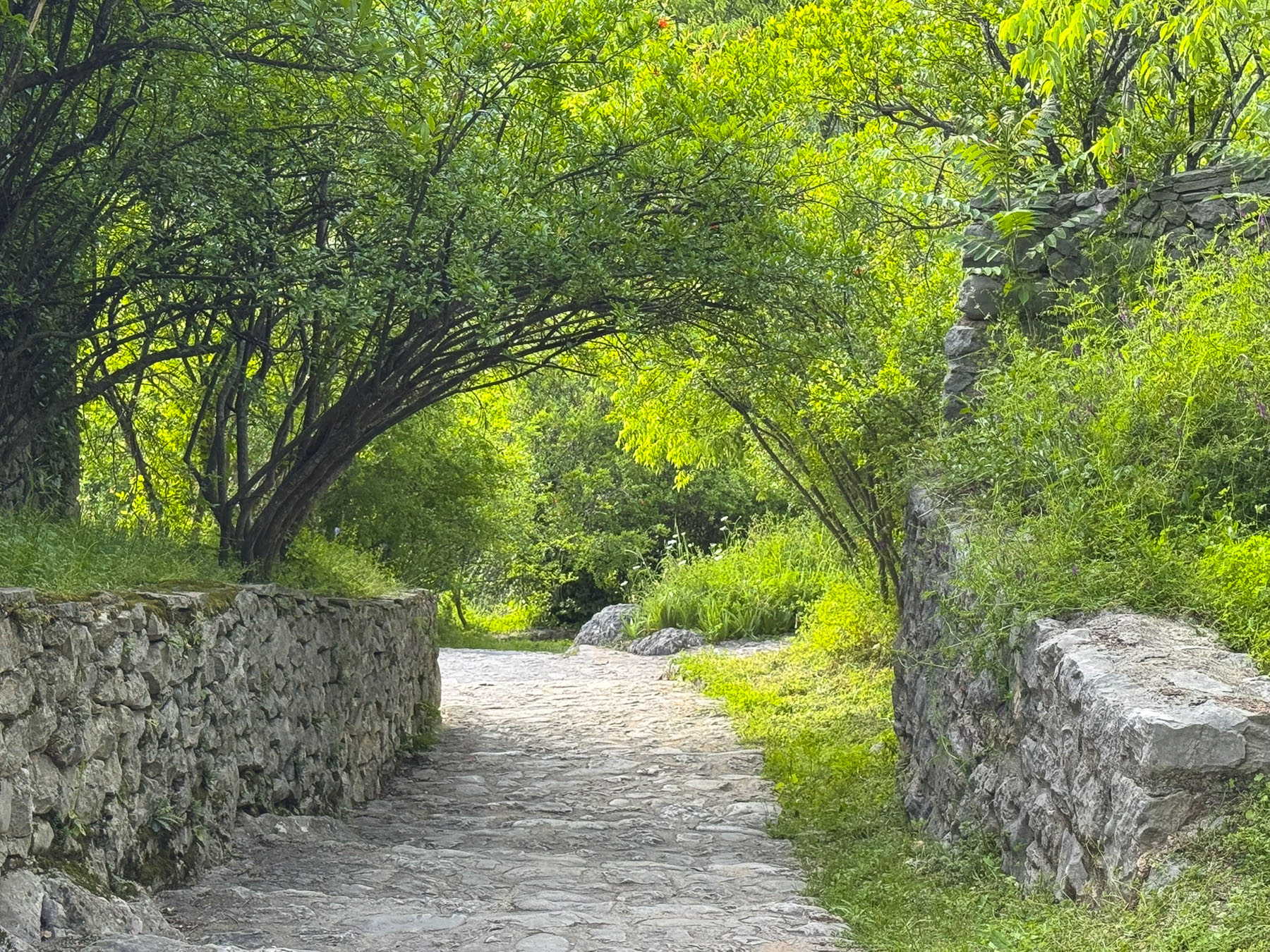
The last stop of the day on the way back to Mostar was the ancient fortified stone village of Počitelj along the east bank of the Neretva River, that’s a tentative UNSECO site. Our descent into the town was down a narrow single-track lane, with occasional pullover spots in case you encountered any oncoming cars. At its bottom was a small plaza with a few restaurants and a tourist shop, from which the village spread dramatically up a steep hill. Founded in 1383 by Bosnia’s King Tvrtko I, the village was also a strategic stronghold and administrative center of the Ottoman Empire for 400 hundred years after its conquest in 1471, having a large mosque, hammam, madrasa, and a clock tower to reflect its importance as a governmental seat.

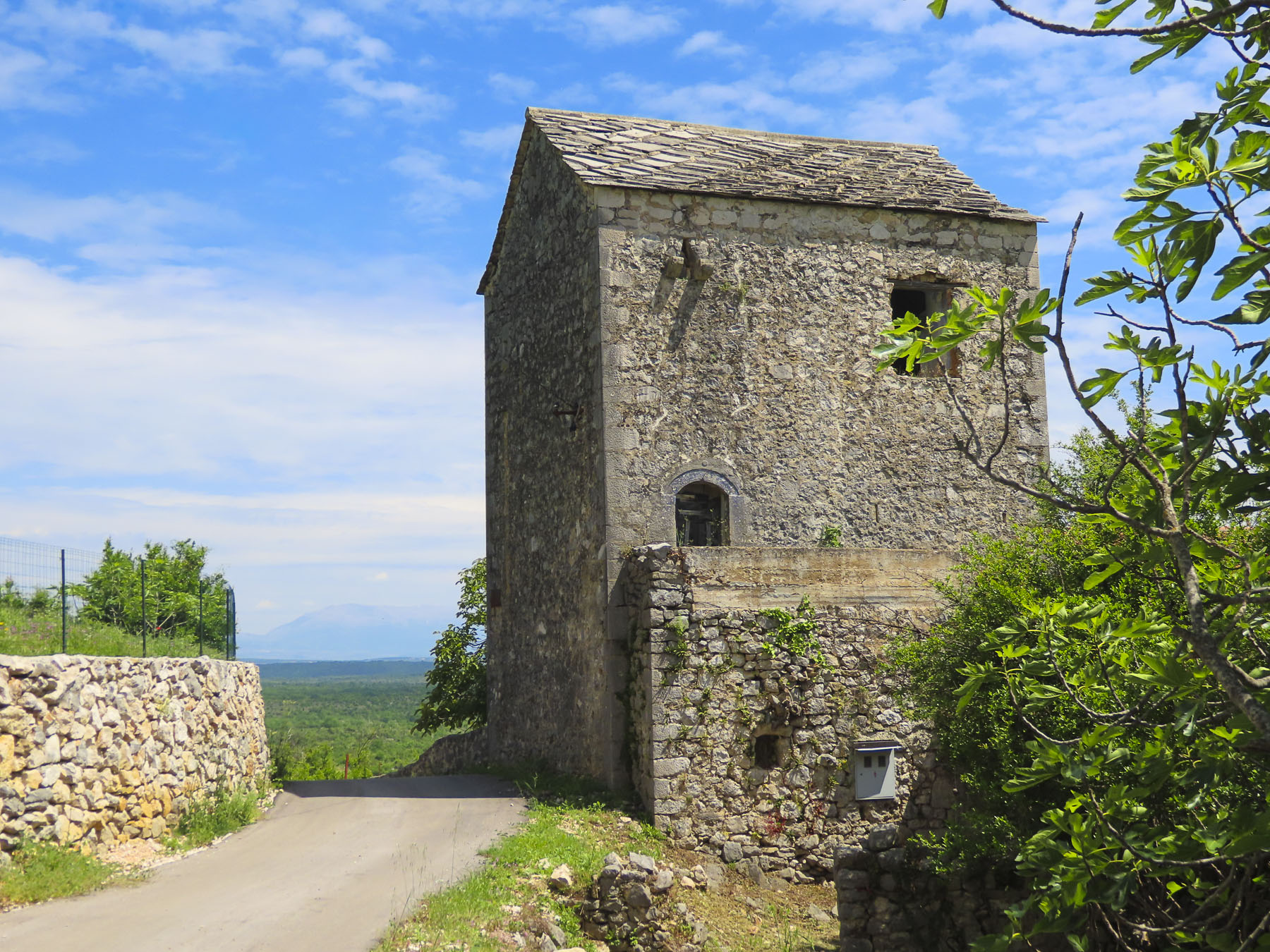
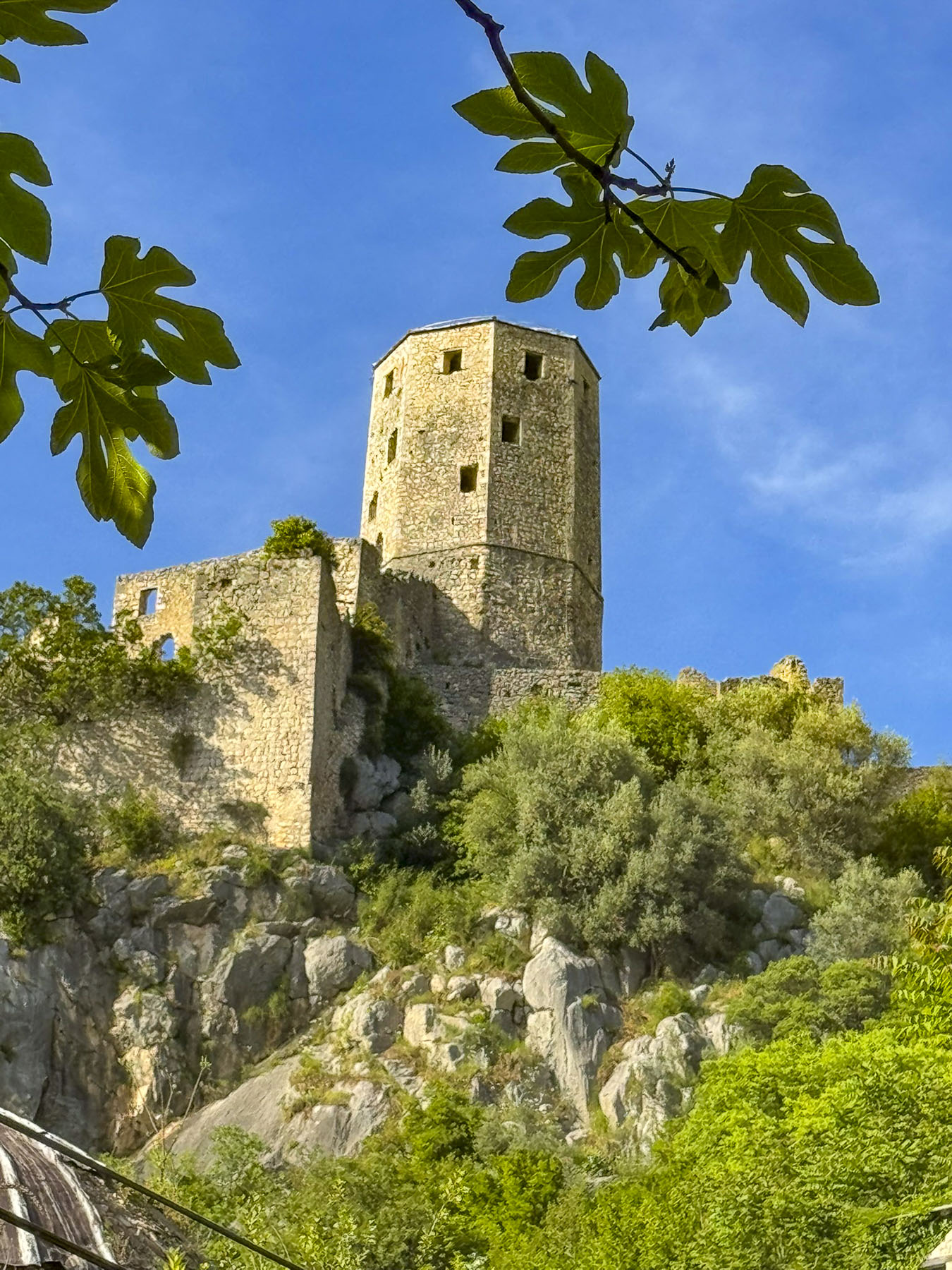
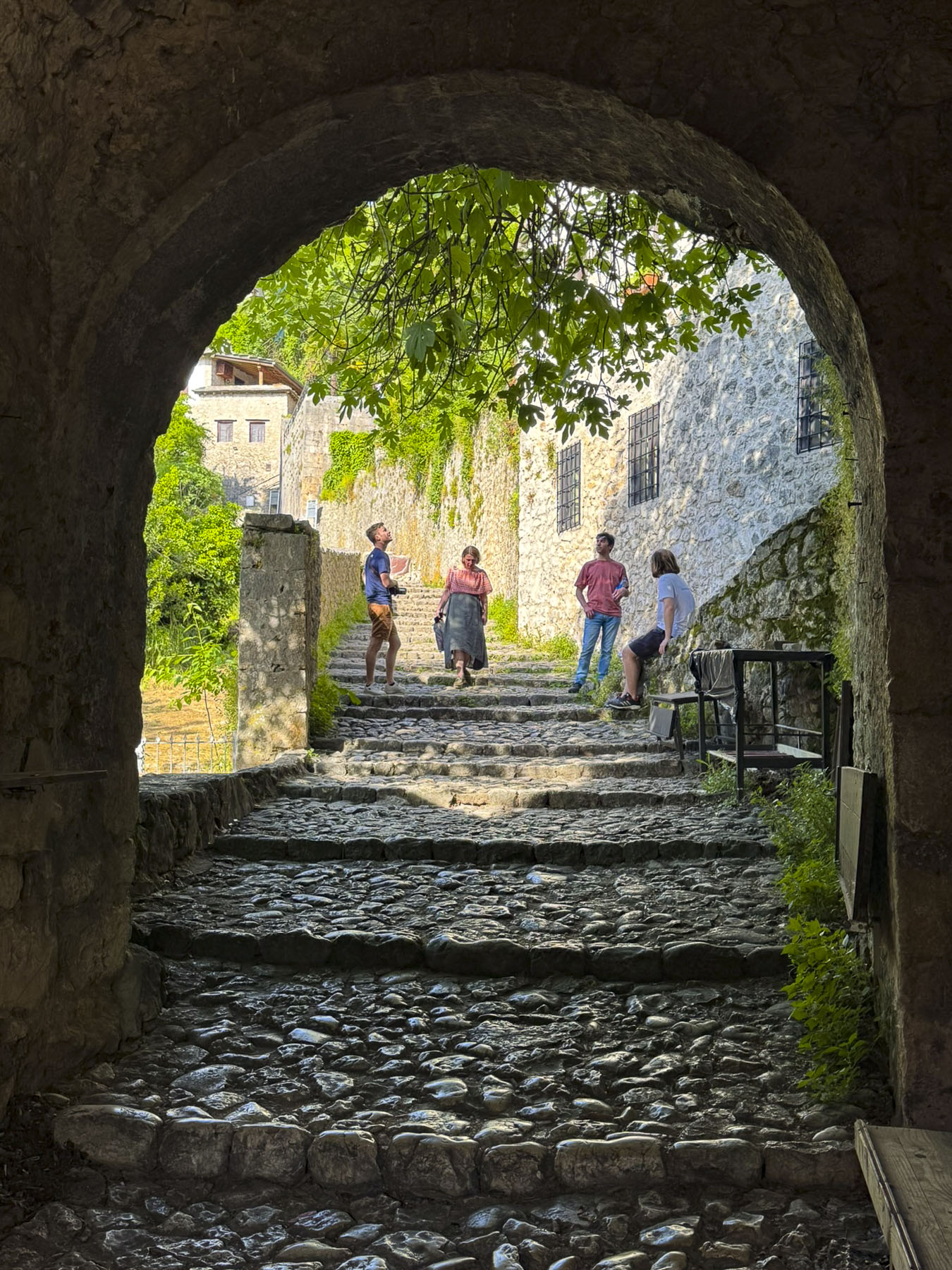
We entered the old town through an arched gateway. Under an ancient watch tower we spotted the largest fig tree we had ever seen, growing spectacularly from between stones of tower’s wall. If the tree ever fell, we were sure the tower would also collapse. Though there were several other tourists about, and signs that some of the old dwellings had been gentrified as vacation homes, the village felt as if it had been forgotten in time and abandoned; the aftermath of the 1990s Bosnia War.

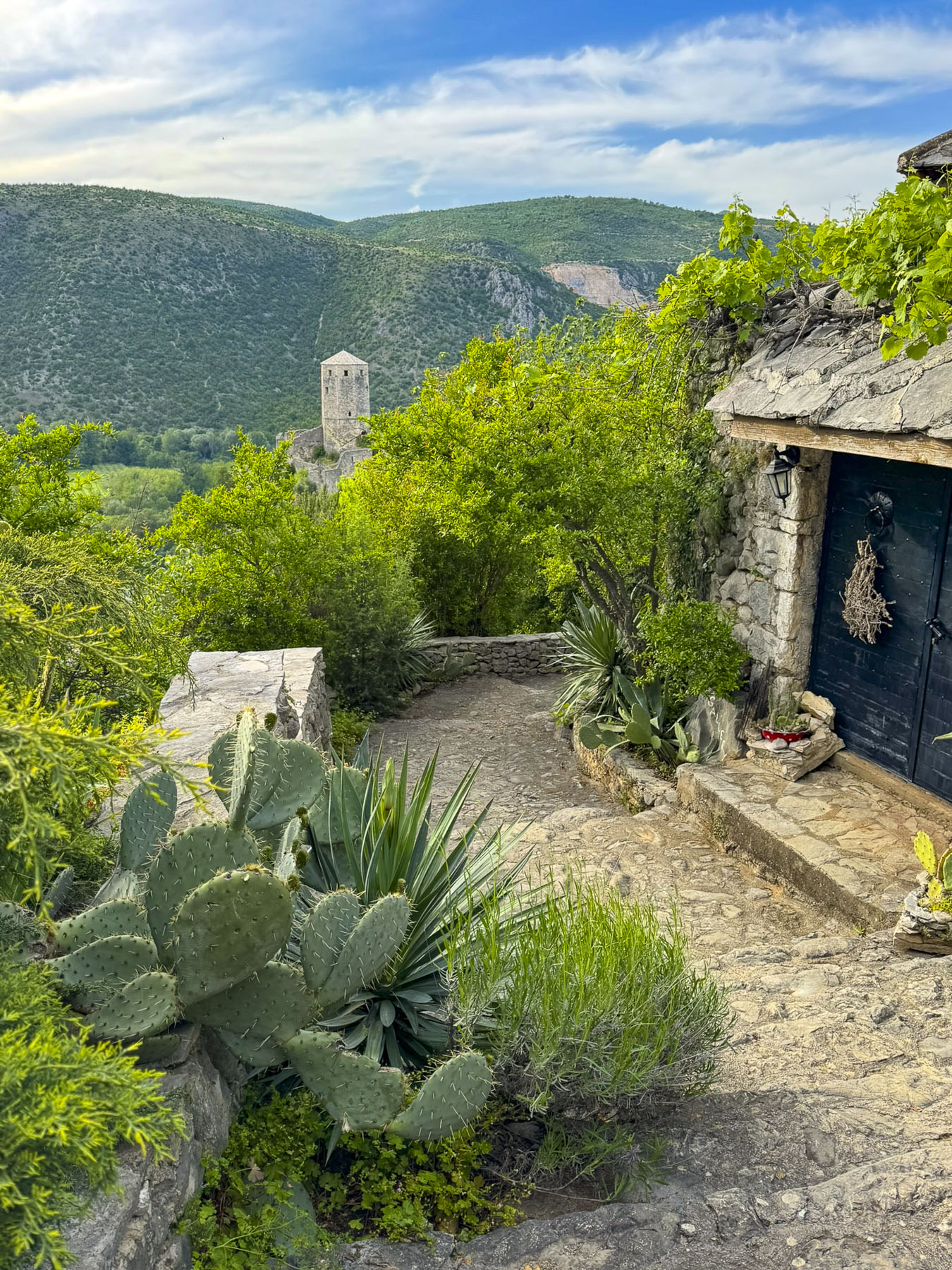
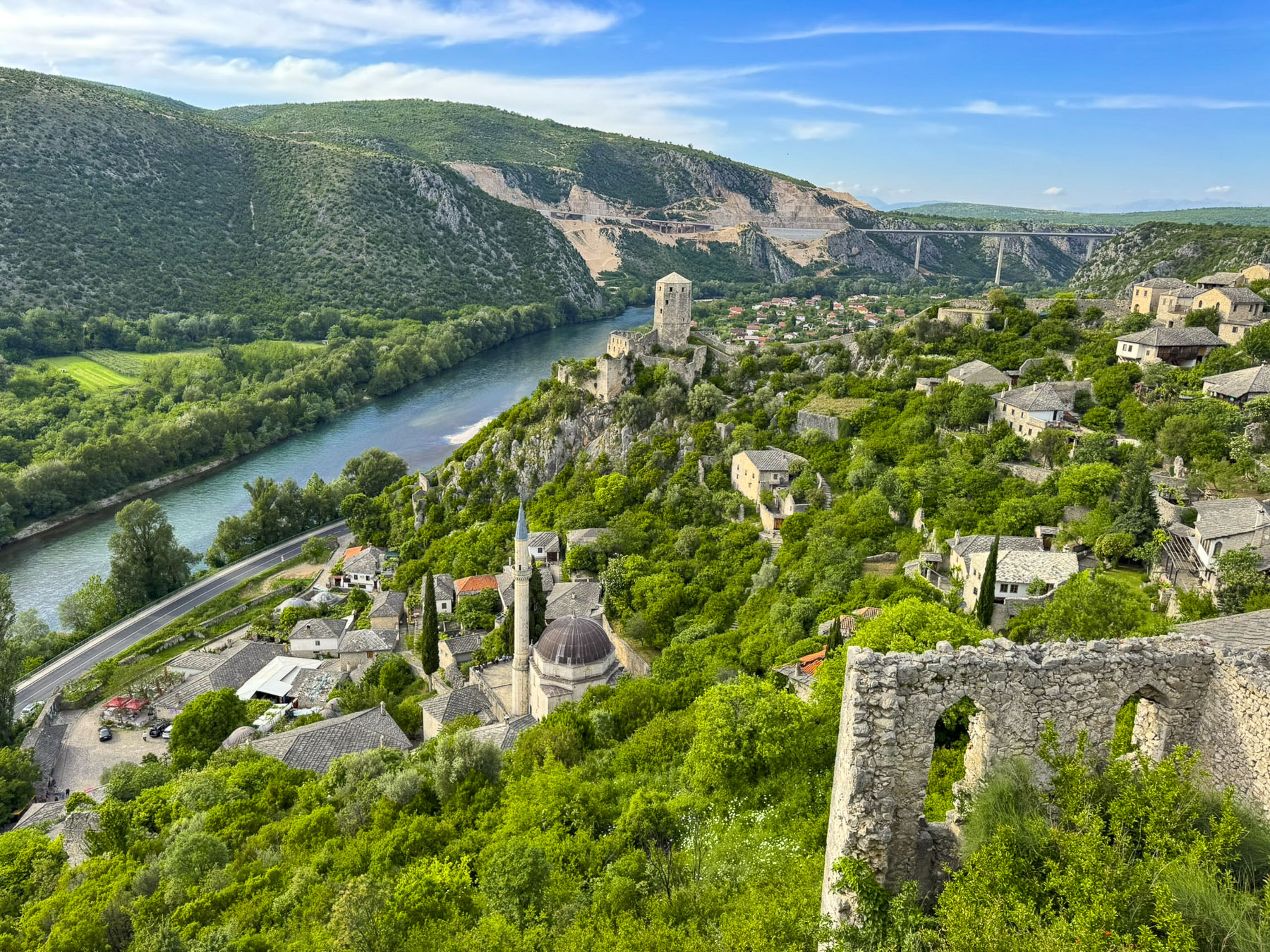
Reaching Pašina tabija, a restored tower along the upper defensive wall, we were rewarded with a fantastic panorama of the village and the Neretva. Renovation to the tower included a glass walkway along the ramparts and a large deck to be used as a venue to host summer sunset concerts. Our late afternoon visit to Počitelj was the perfect way to end our time in Bosnia & Herzegovina, a destination we founded to be very charming and intriguing.

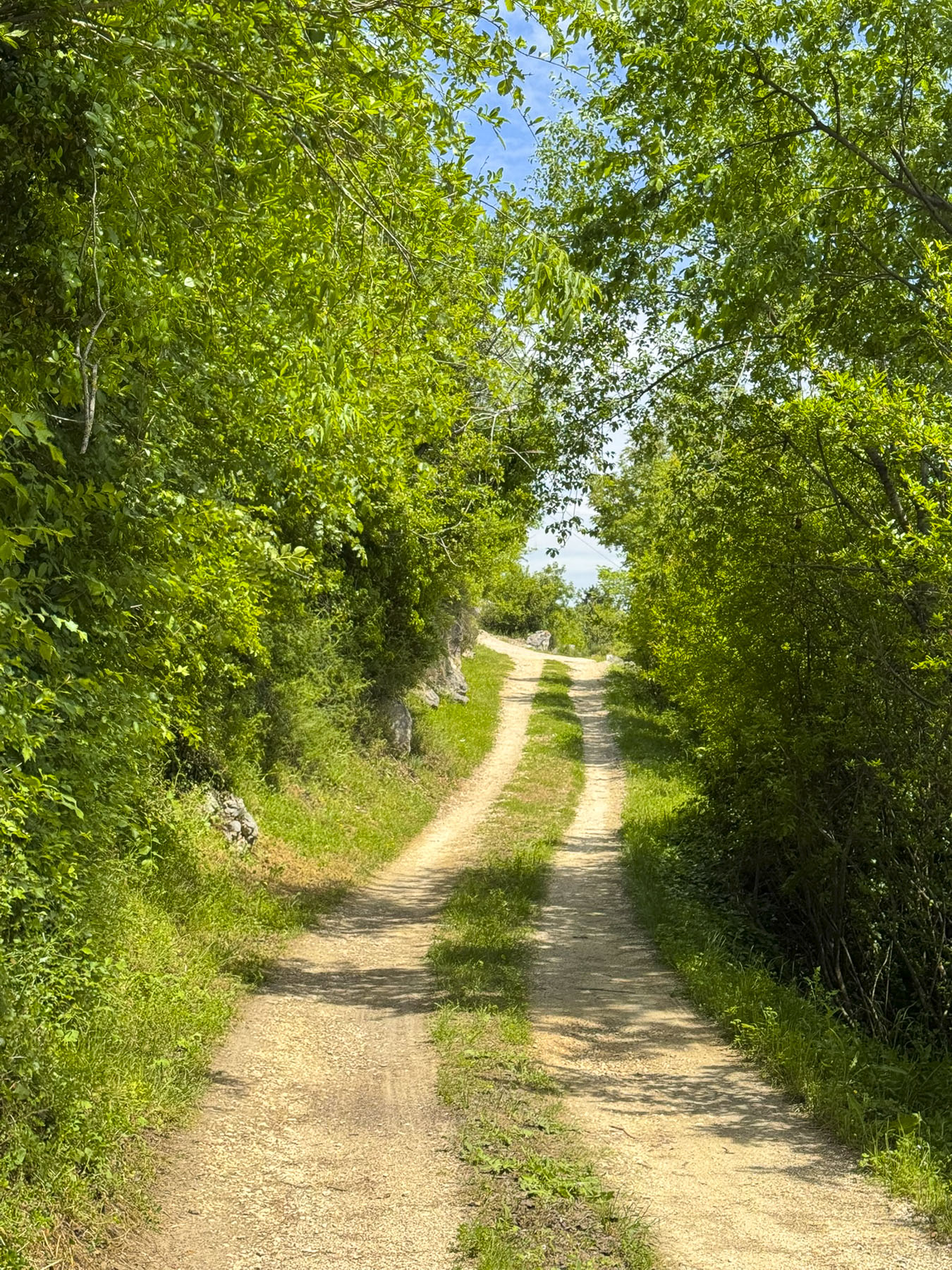
The next morning as we departed Mostar I promised that we would drive straight to Split, Croatia. “We’ll only stop for coffee, right?” “Yes, unless the steering wheel guides me like a Ouija board to some interesting locations.” I winked.

Till next time,

Craig & Donna
A Balkans Road Trip Part 7: Sarajevo, Bosnia and Herzegovina – Beautiful and Resilient

Traveling south from Zagreb on the E70 we headed to the Gradiška border crossing into Bosnia and Herzegovina. With the European Union’s open border policy there is a seamless transition driving from one country to the next, but until Bosnia & Herzegovina acquires full EU membership, which is expected to happen by 2030, the old fashioned ‘show your papers,’ is required. With two loud thumps our passports were marked with a Croatia Exit stamp and returned to us along with the vehicle registration, and the insurance “Green Card,” from the rental agency allowing us to take the car into a non-EU country. Crossing the Sara River, we repeated the formalities with the border guards and received our Bosnia and Herzegovina entry stamps. We are rather fond of passport stamps considering most countries now rely on electronic records and don’t stamp at all.

We had an extra early start from Zagreb that morning, as the drive on the toll road to Saravejo takes about six hours, but we wanted to take a longer route through the countryside first to see several sites. And still hoped to make it to the “City of Spirit and Hope” before nightfall.

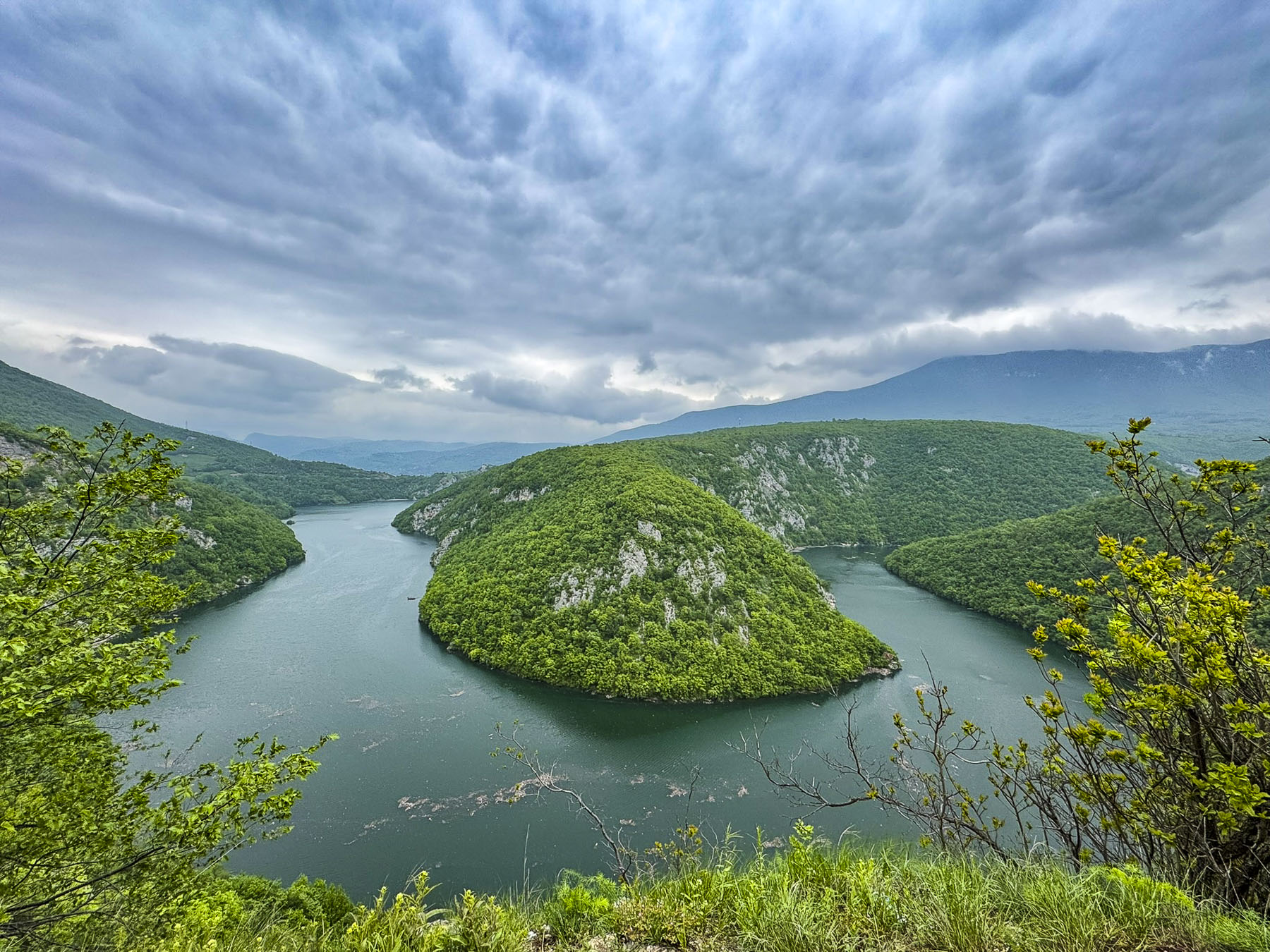
Small villages and farmland surrounded us quickly as we left the congestion of the border crossing behind. Our route the M16/E661 beyond Banja Luka hugged the narrow road beneath a steep cliff that paralleled the Vrbas River. Fields and rolling hills on the other side of the river were fresh with spring greenery. It wasn’t until we reached the Vrbas River Mountain View that the road widened enough to stop for a scenic overview. On the map this looks like an official overlook, but in reality, it’s a small, rough unpaved section of widened shoulder without a guardrail. You can’t actually see the river from the road at this point, but we drove past and did a U-turn so we could pull into it safely. Walking as close to the edge as we dared revealed a spectacular panorama of a horseshoe shape bend in the river.

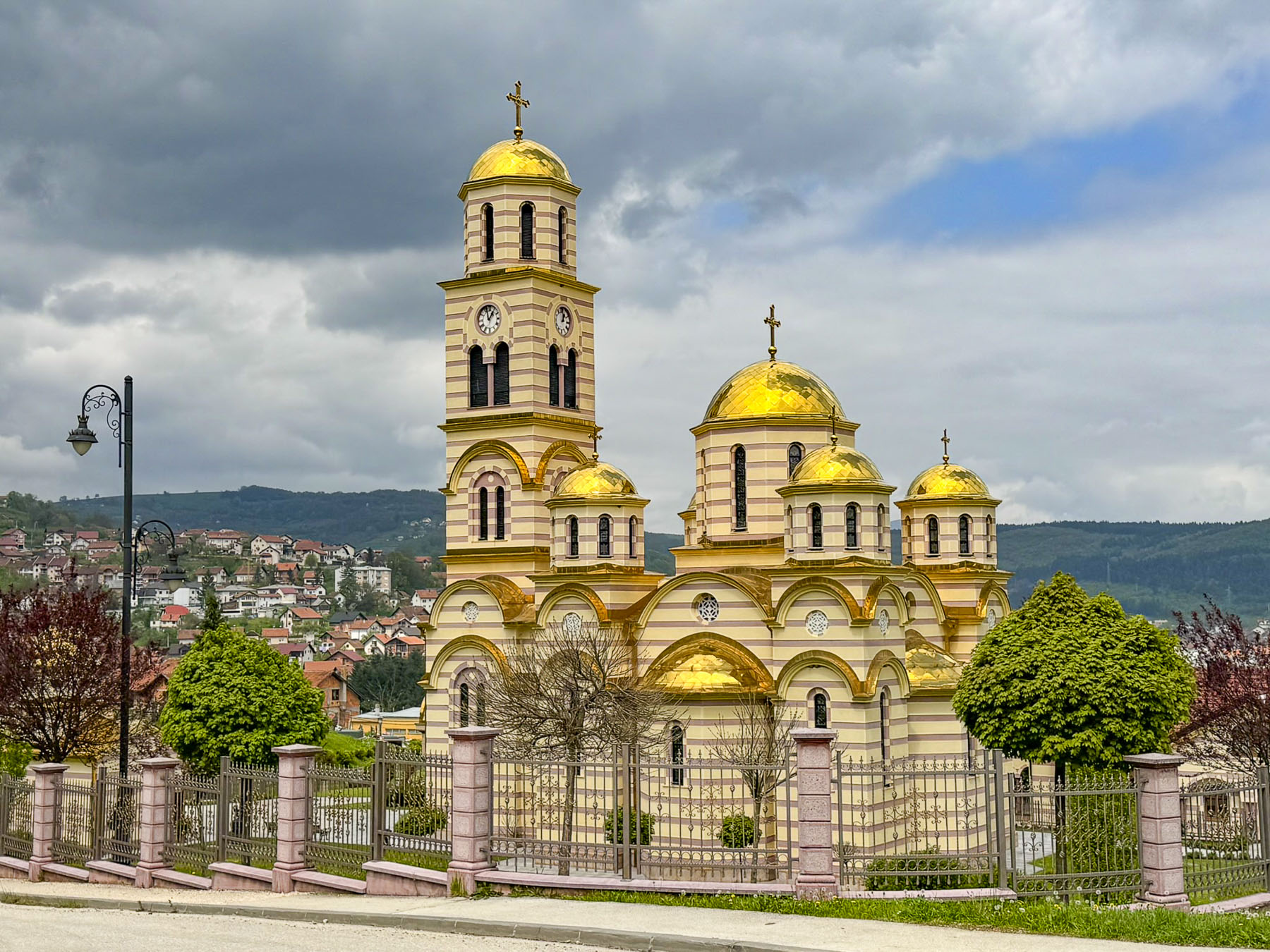
Turning, we rose into the mountains and reached Mrkonjić Grad, a fairly good size town in this semi-rural area, and stopped for a moment at Храм Светог Саве Мркоњић град, the orthodox Temple of Saint Sava. Construction of this stunning gold domed church started in the mid-1930s, but was interrupted by World War Two, communist rule, and the Balkans war in the 1990s. Post-war reconstruction efforts finished the church in the early 2000s.

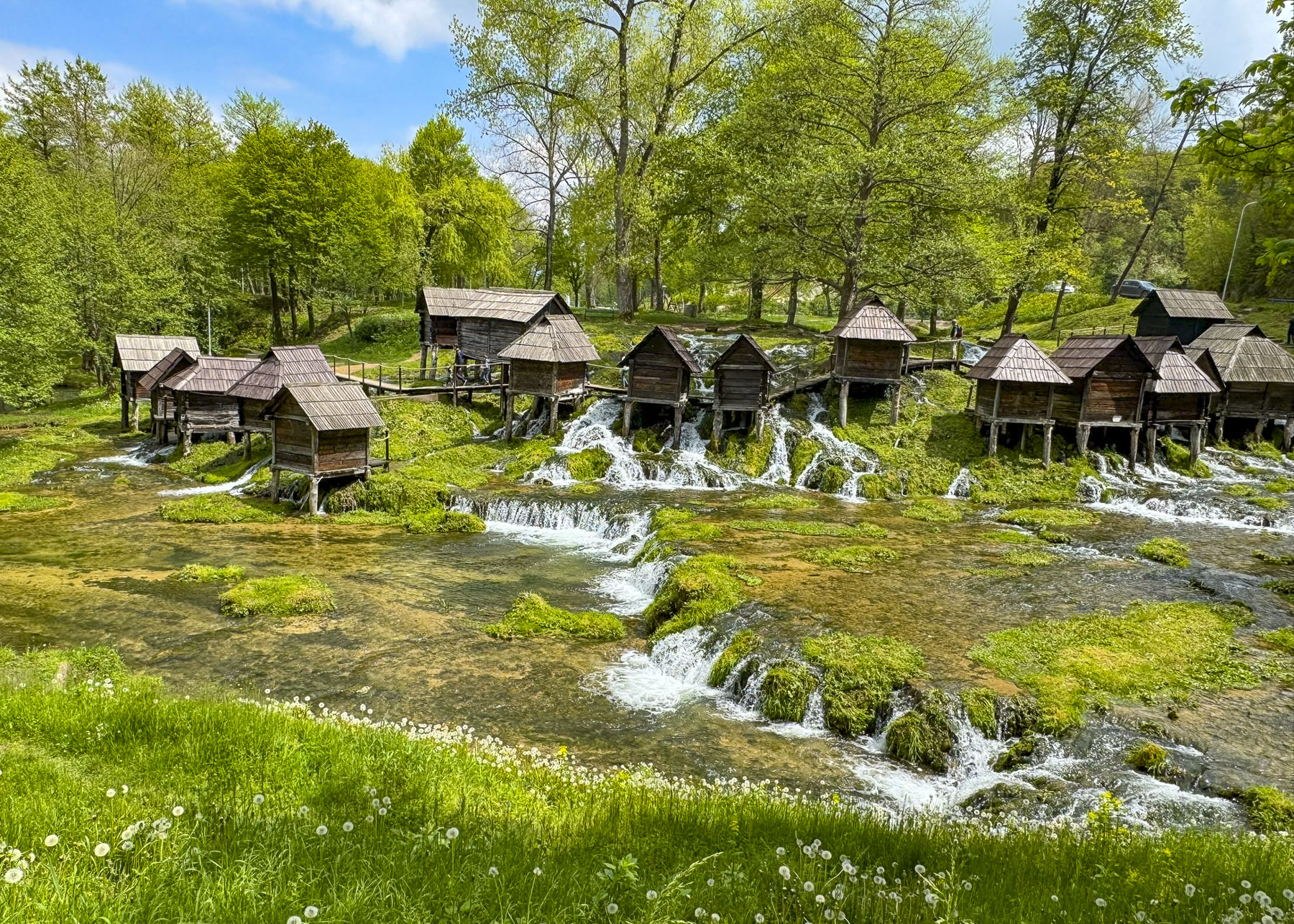
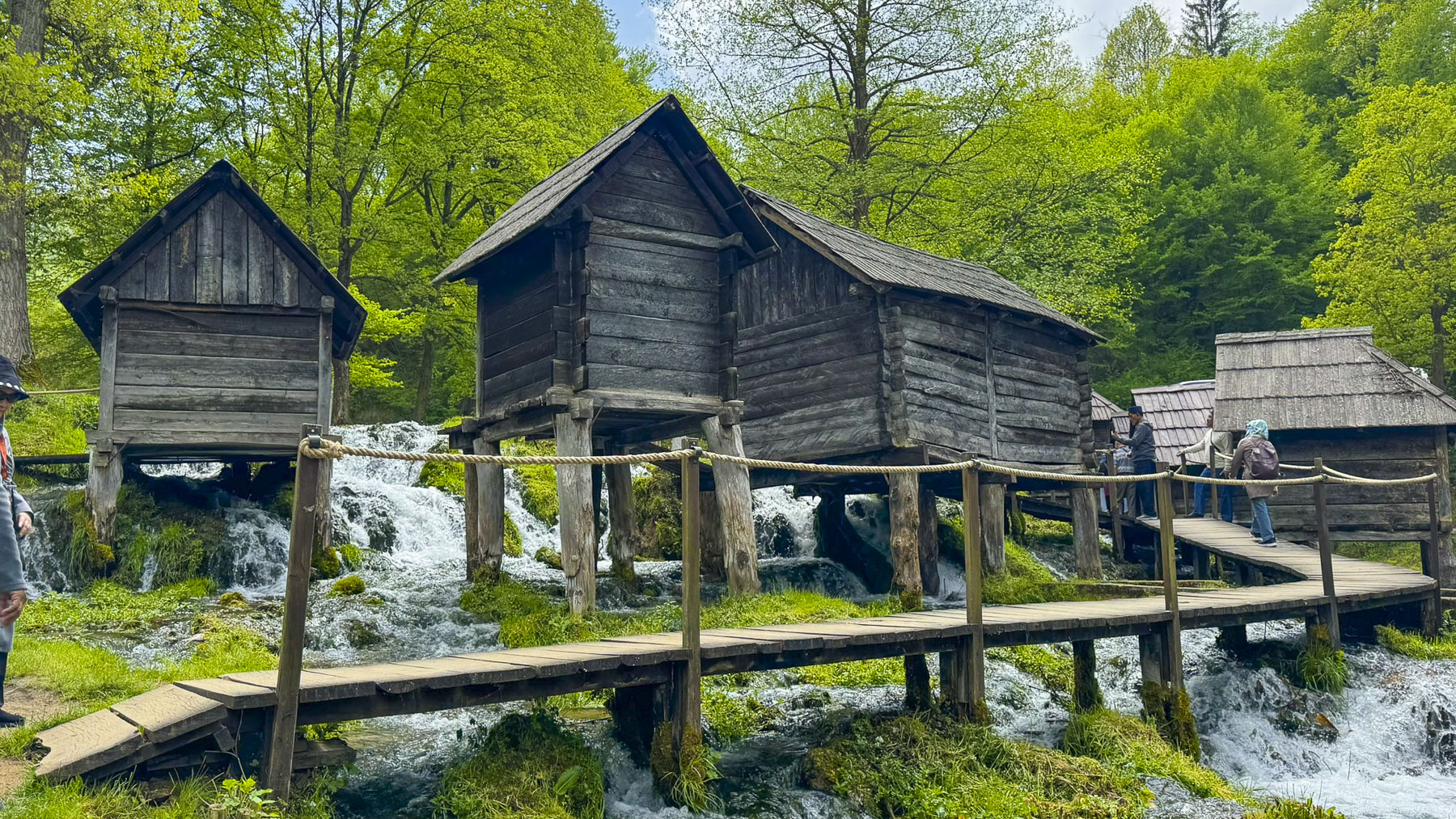
Luckily our timing was perfect as a large tour bus was just pulling away from Mlinčići, a collection of historic windowless wooden watermills, on the rapids below lake Plivsko Jezero. They date from the 16th century Ottoman Empire during which they were communally owned by extended family clans for their personal use, though they were occasionally rented out to other farmers for the payment of a ‘grain tax.’  With industrialization they fell into disuse and were abandoned, almost lost to history, until they were declared a national monument, and restored in 2009.

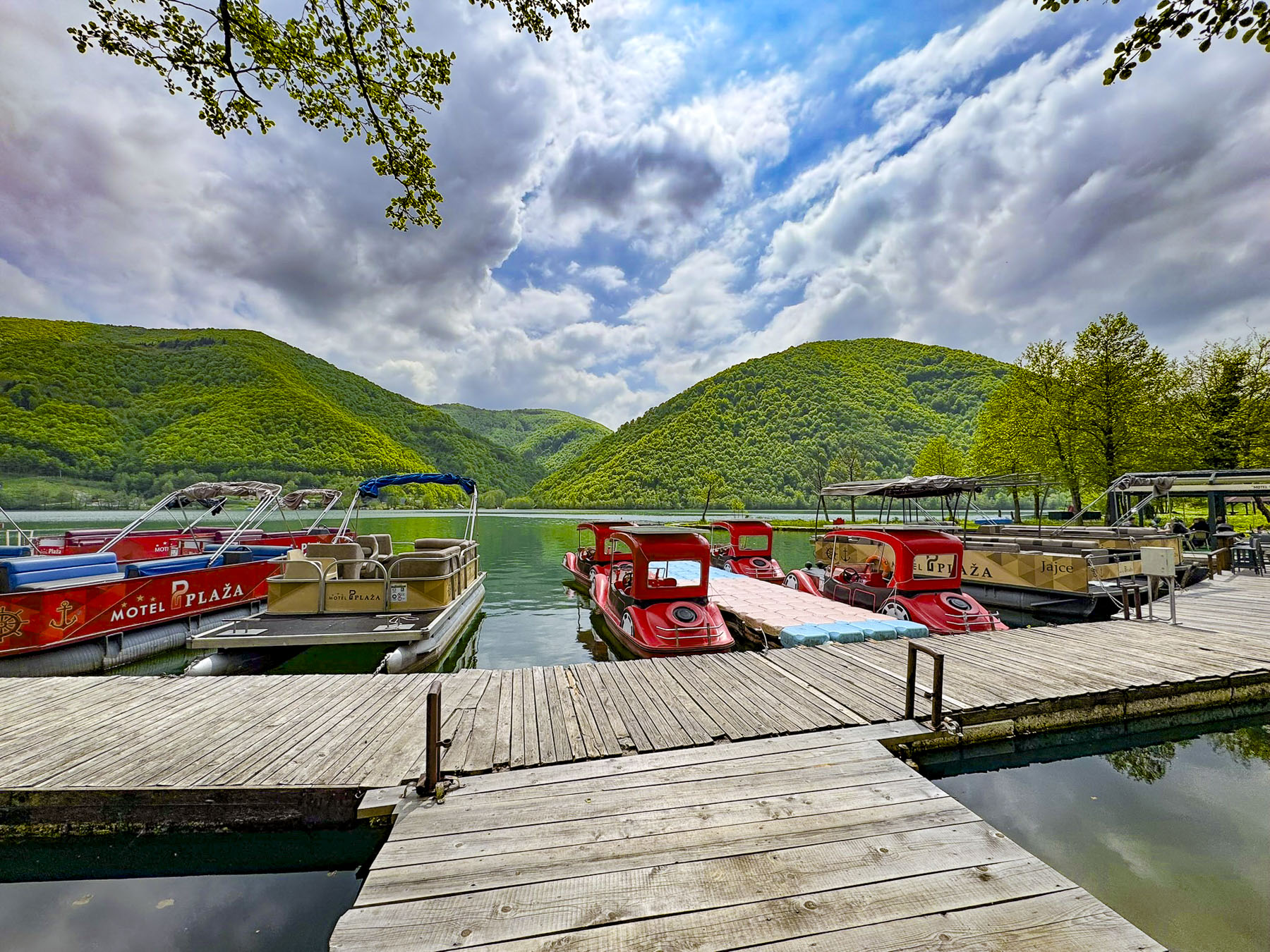
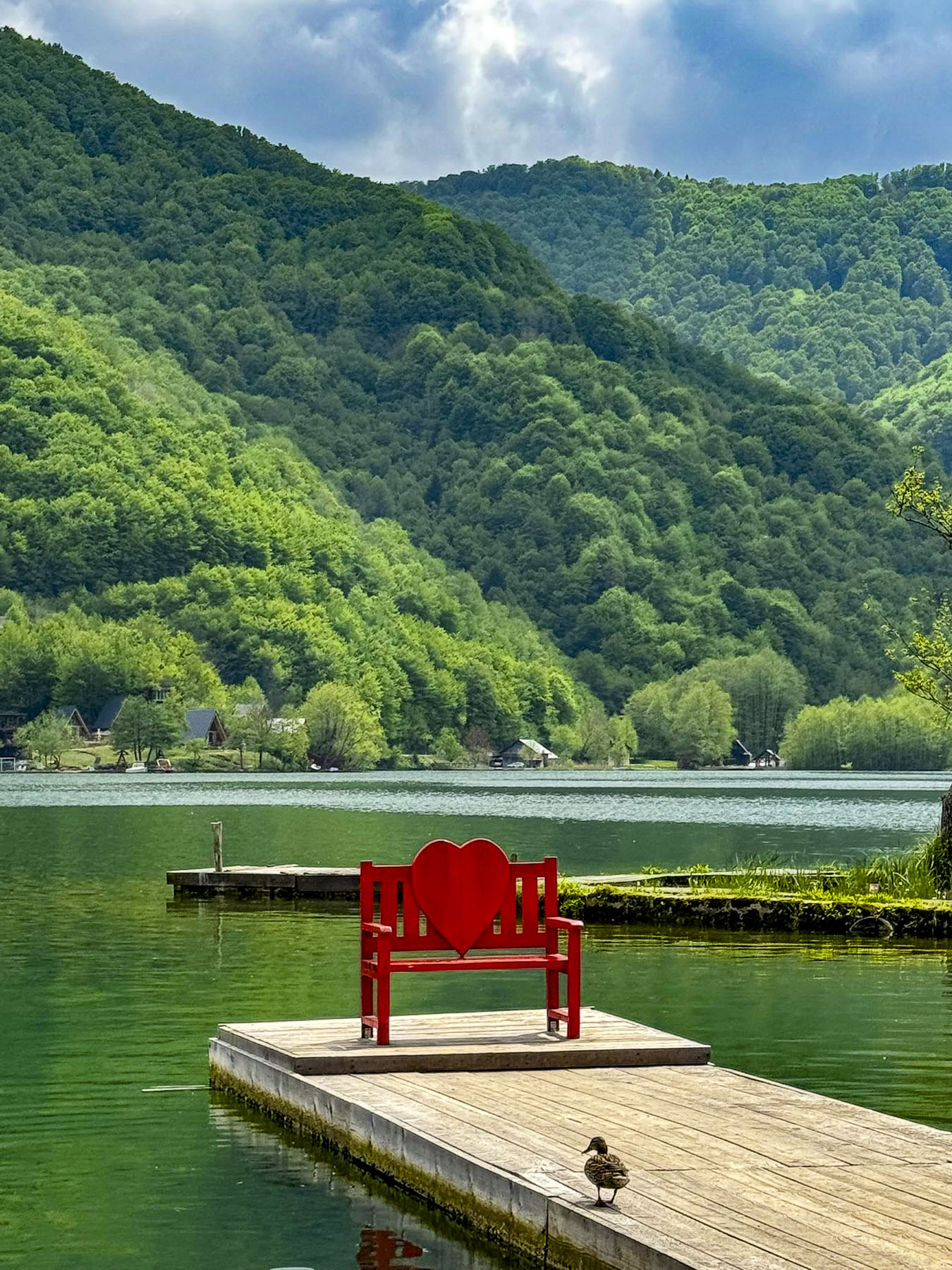
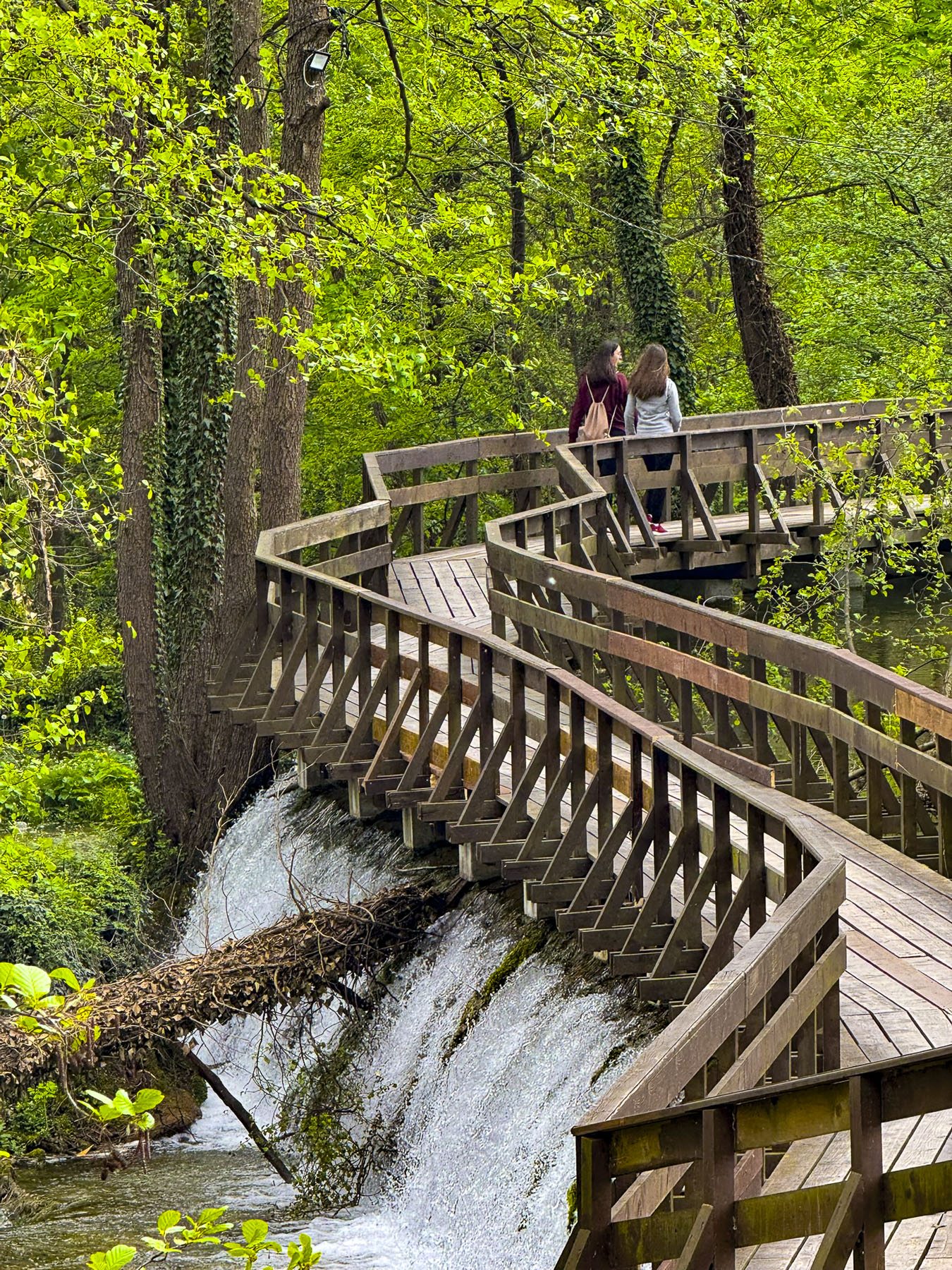
Earlier, as we drove to the Mlinčići we passed the lakefront restaurant Plaža, which looked like a perfect place for lunch. It was surprisingly busy for a Monday, but for many folks it was a vacation week between the Catholic and Orthodox celebrations of Easter. It was a pleasantly sunny day and warm enough to dine outside on the restaurant’s patio. Afterwards we strolled along the lake’s promenade where rental boats remained firmly tied to the dock, awaiting the tourist high season to begin later in the spring. Onward we stopped at Most Jubavi, the town of Jajce’s bridge of love, built across the top of a wide waterfall. It’s a beautiful setting with the boardwalk curving through a lush landscape of trees and rushing water.

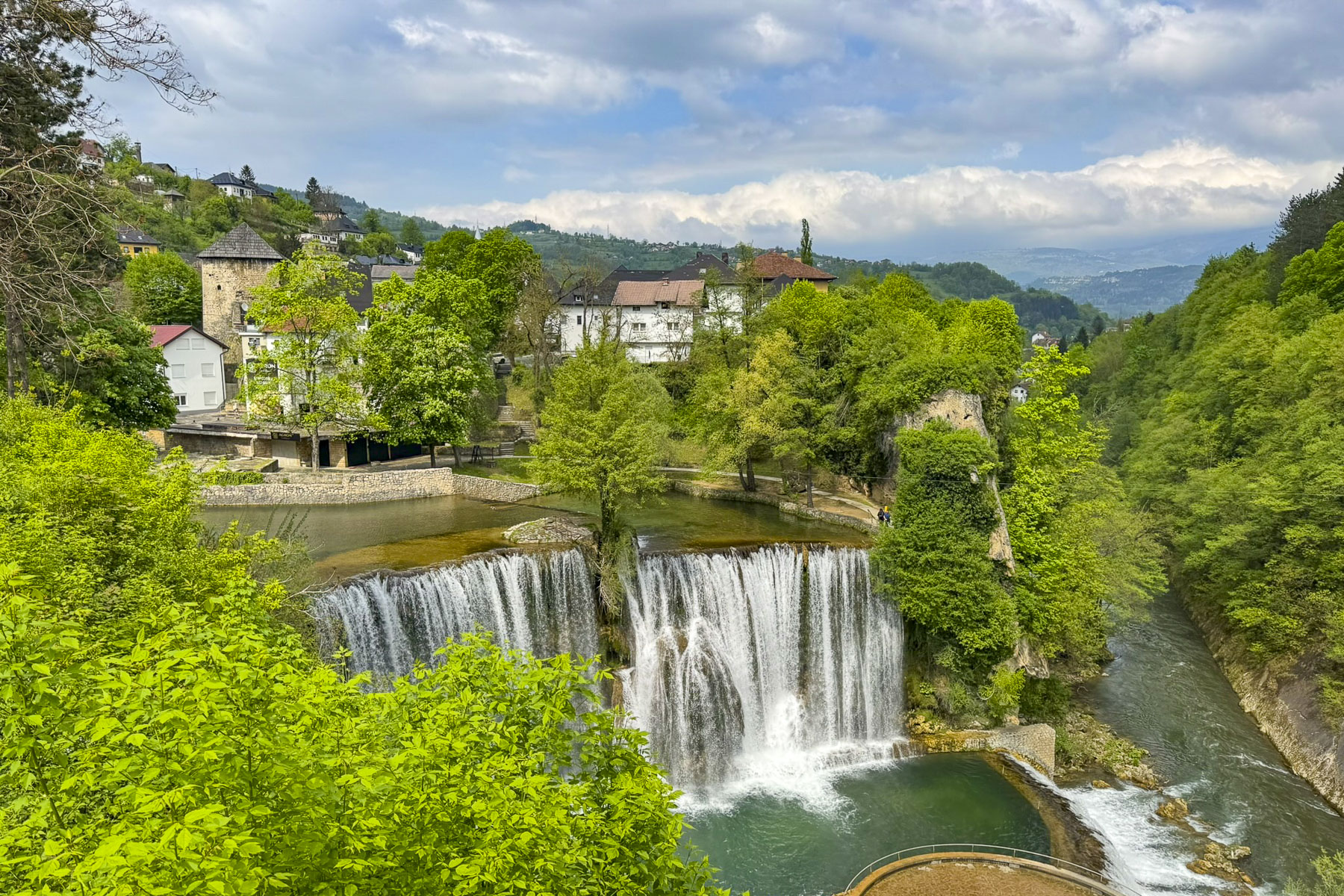
The water from Plivsko Jezero flows downstream to Jajce, where it cascades thunderously 22m (72ft) from the 50m (164ft) wide Plivski Waterfall, at the confluence of the Pliva and Vrbas rivers. On the hill above the falls was the town’s citadel. It was constructed in the 14th century when Jajce was the capital of the Bosnian Kingdom. The fortress fell to the Ottomans in 1463, but was retaken by Hungarian King Matthias Corvinus in the following year. Jajce famously resisted for another 63 years before becoming the last town in Bosnia to fall to the Ottoman Empire 1527. 

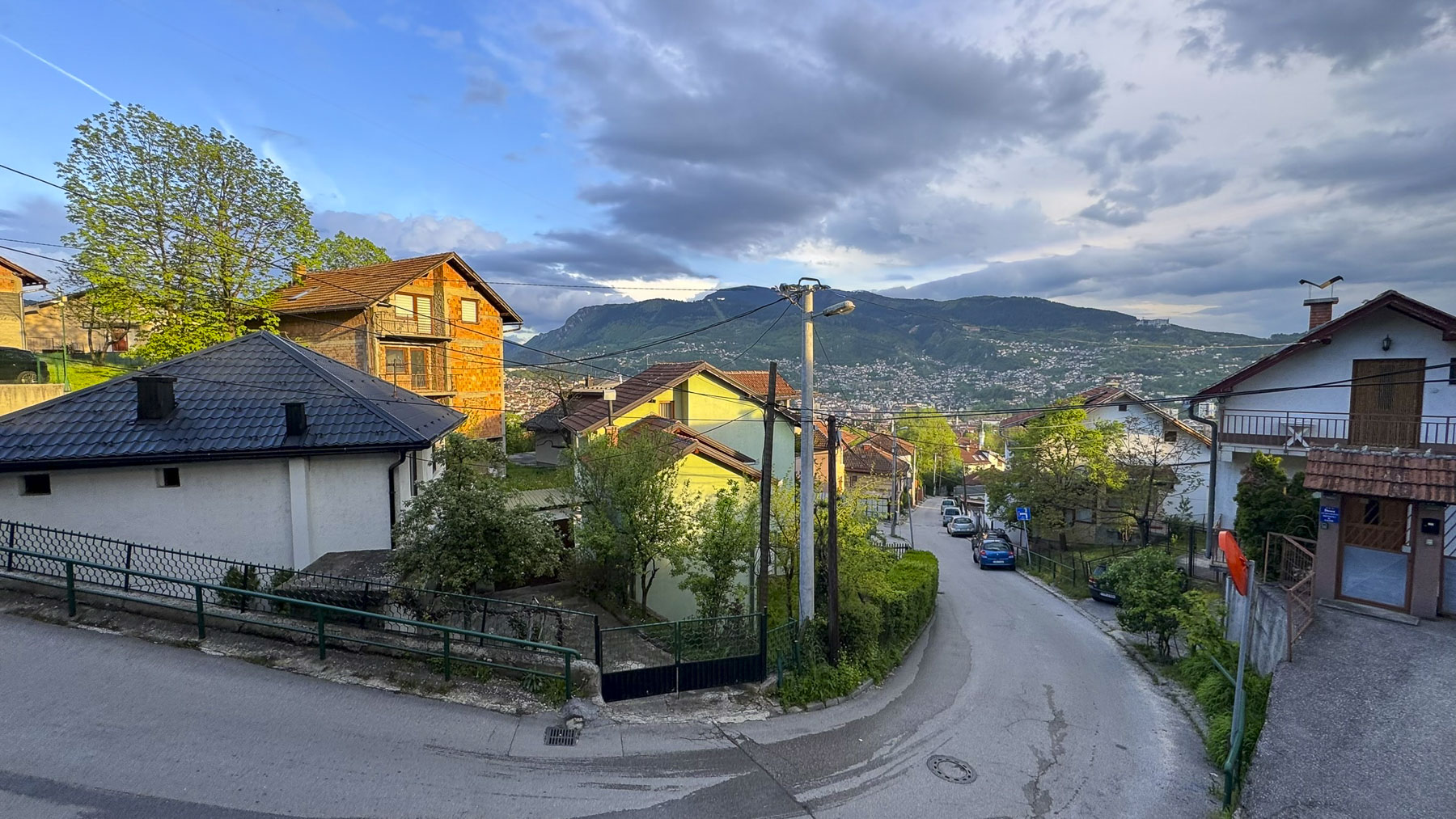
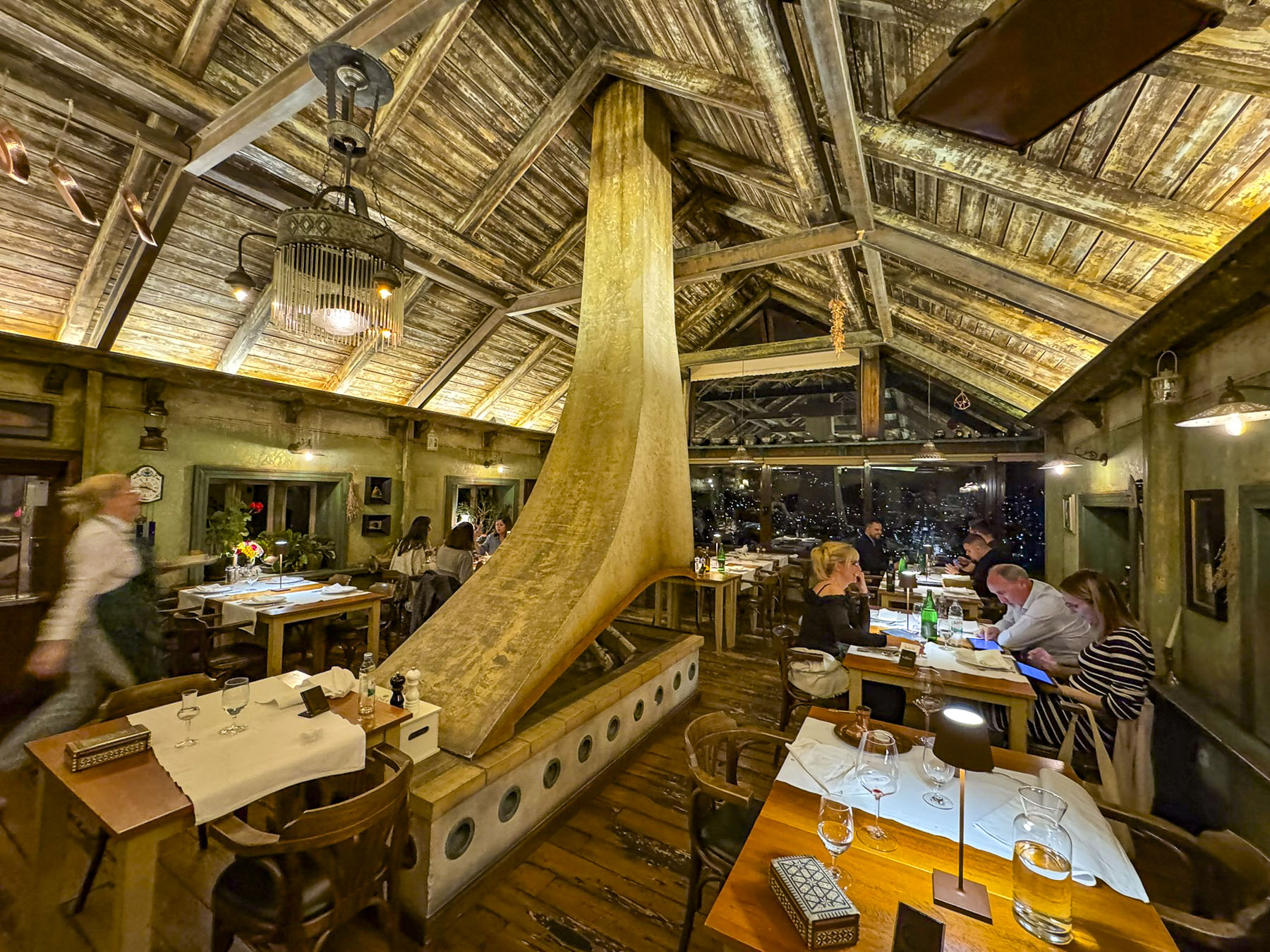
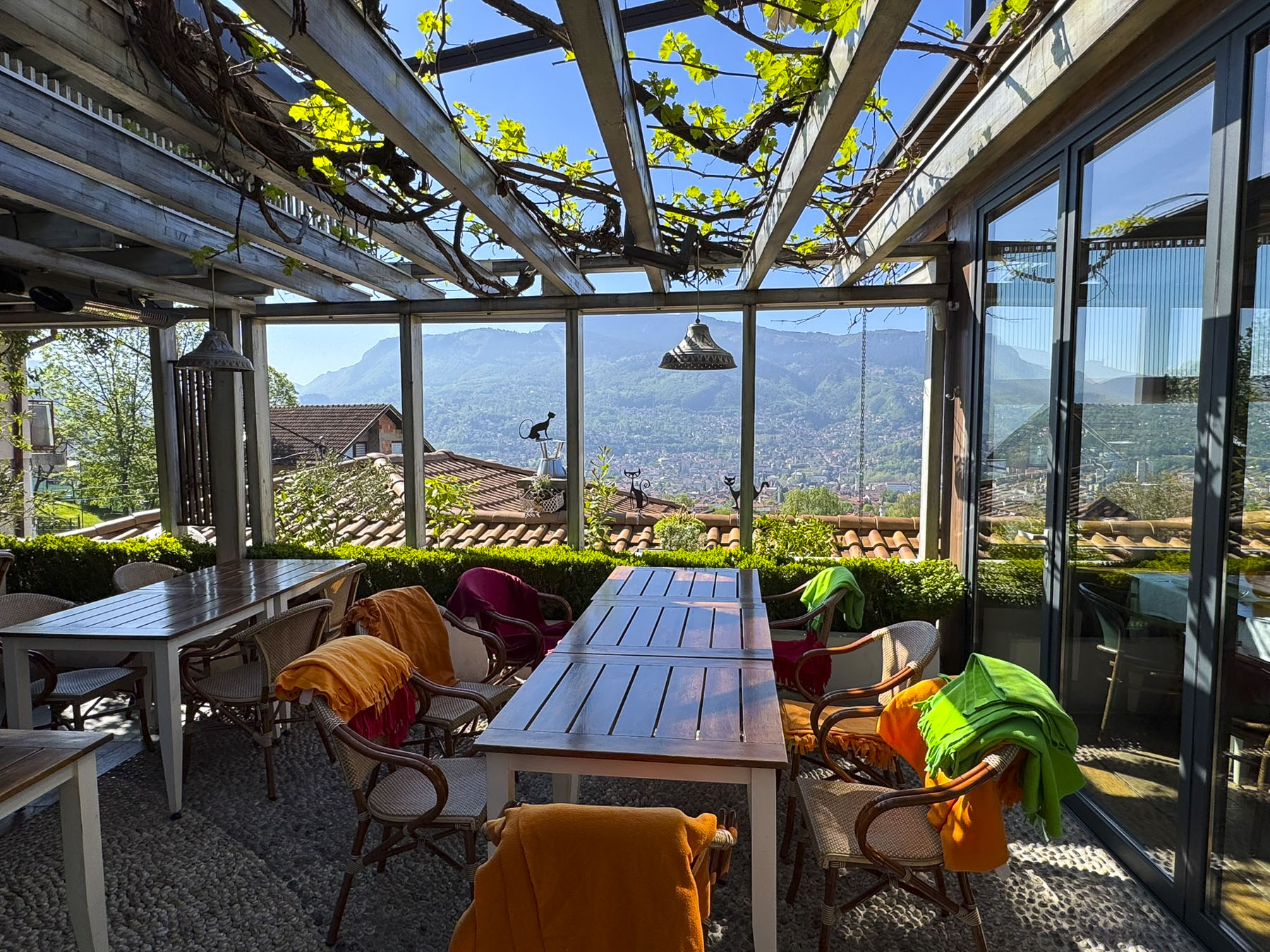
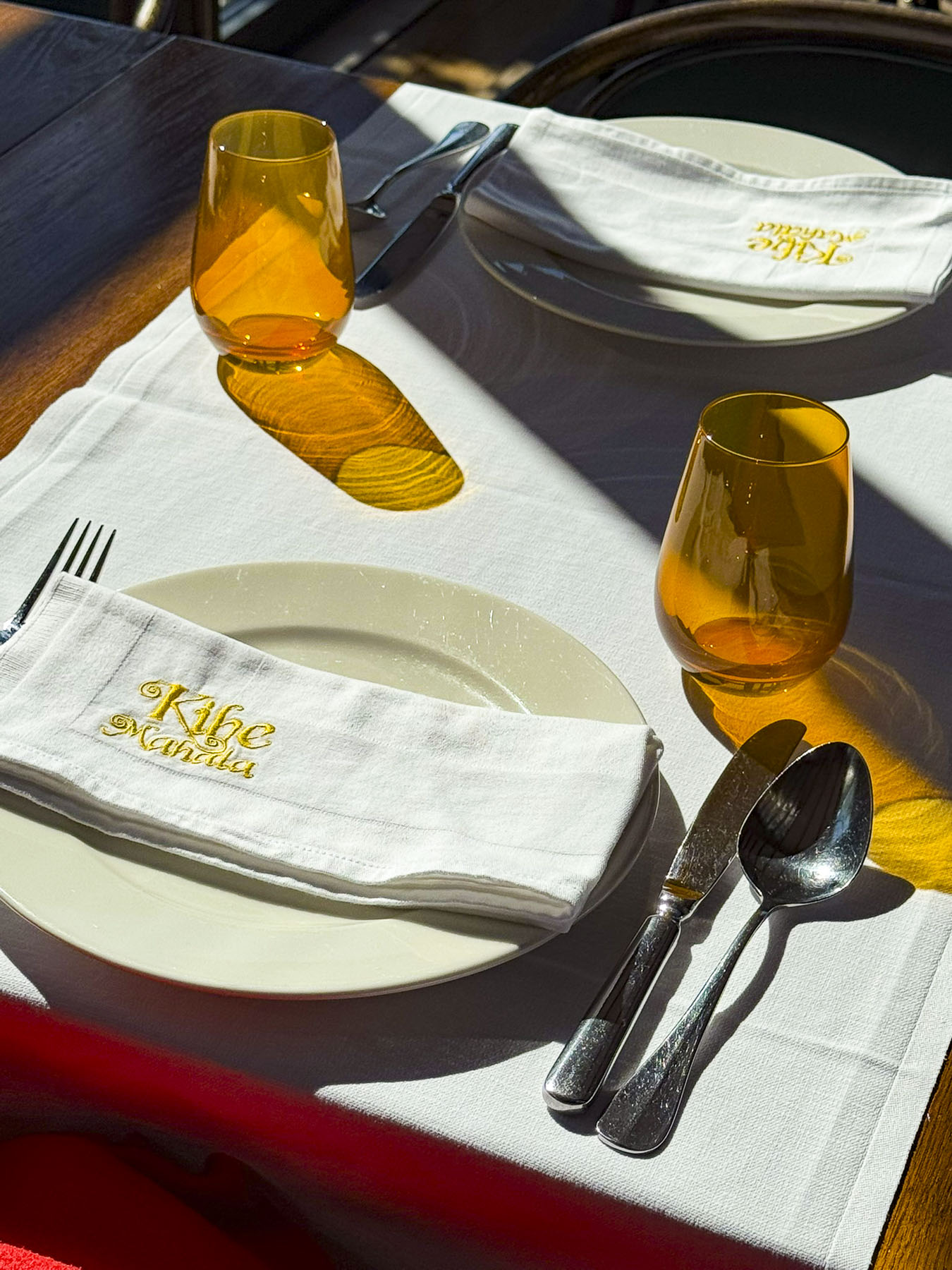
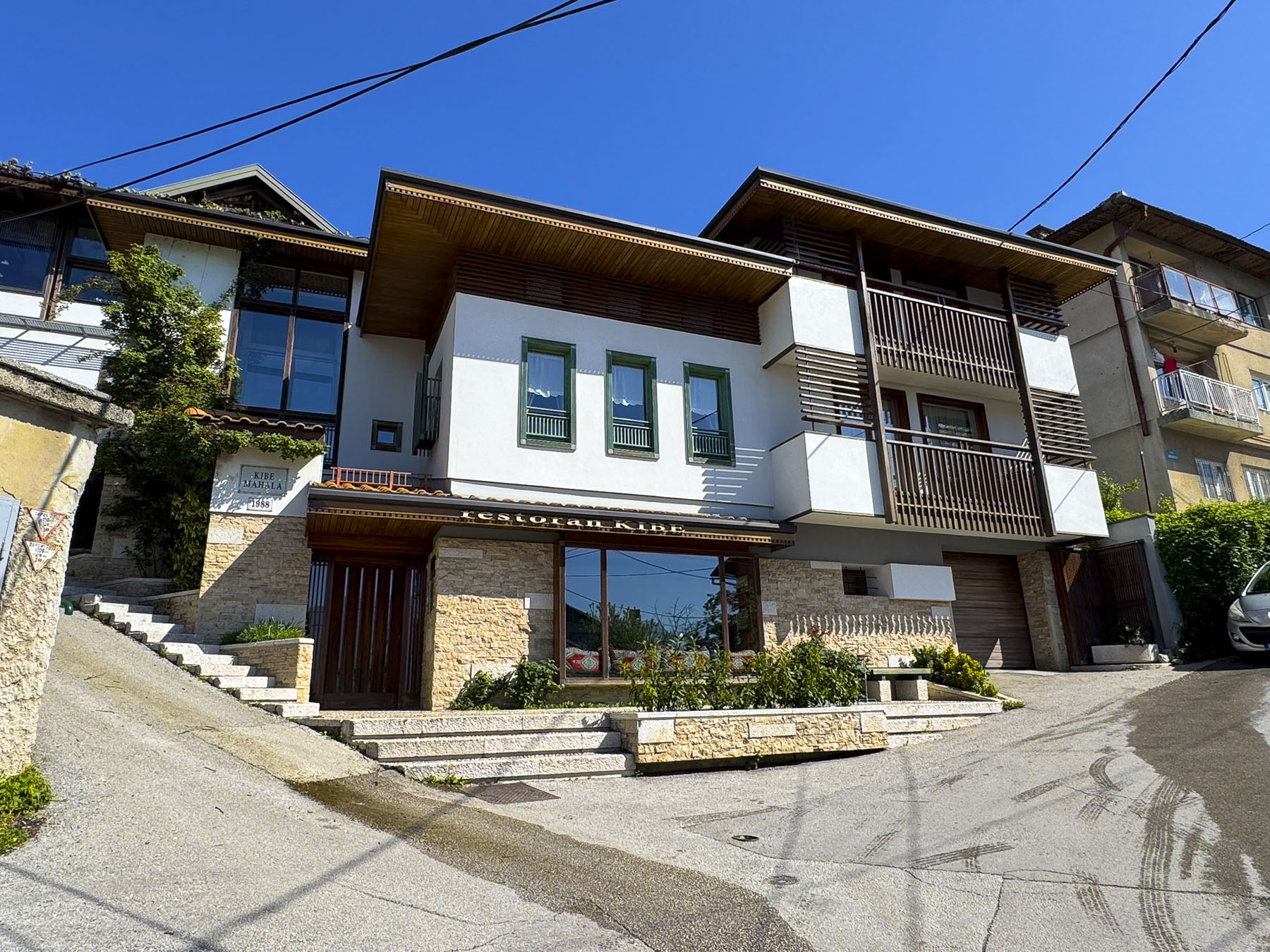
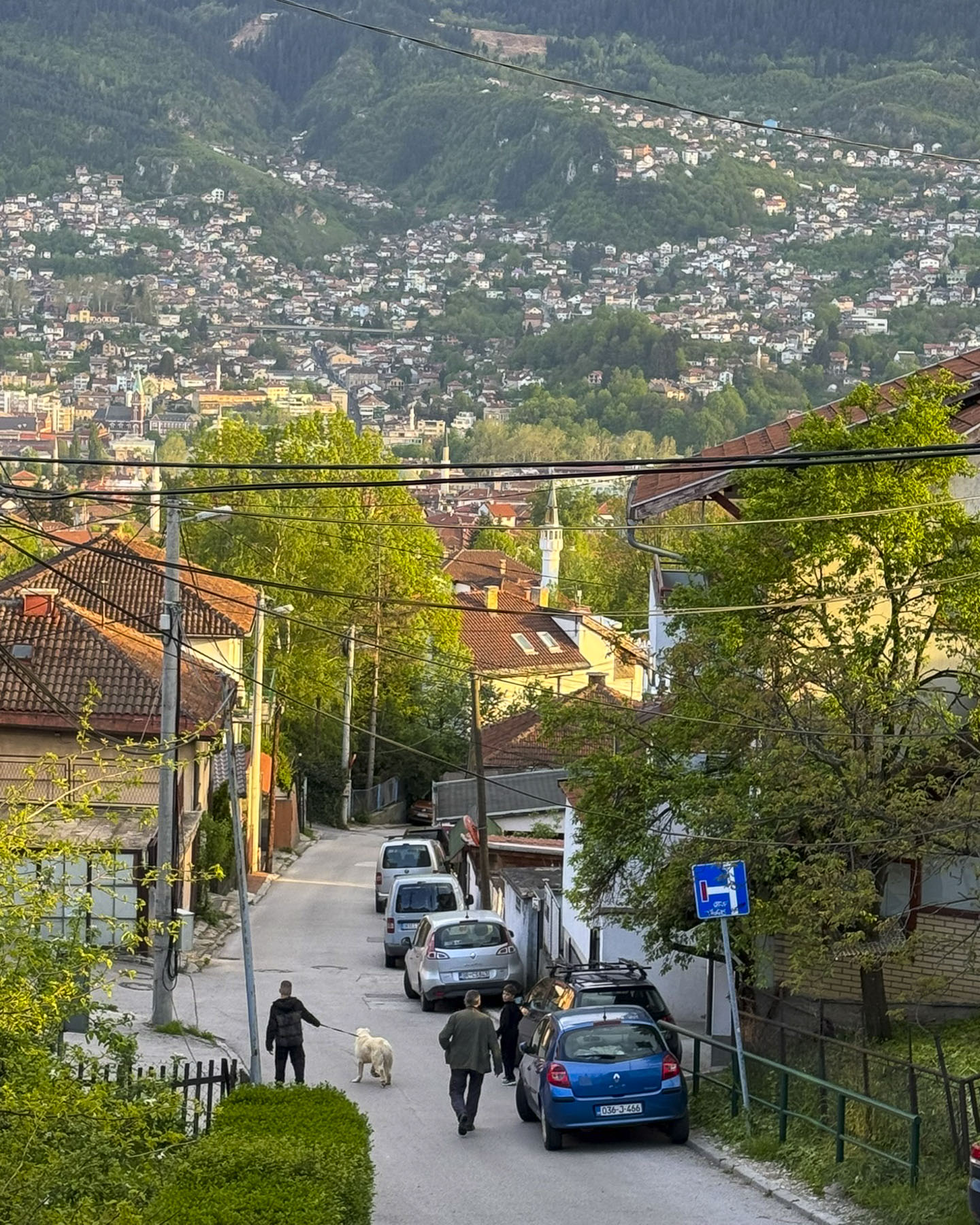
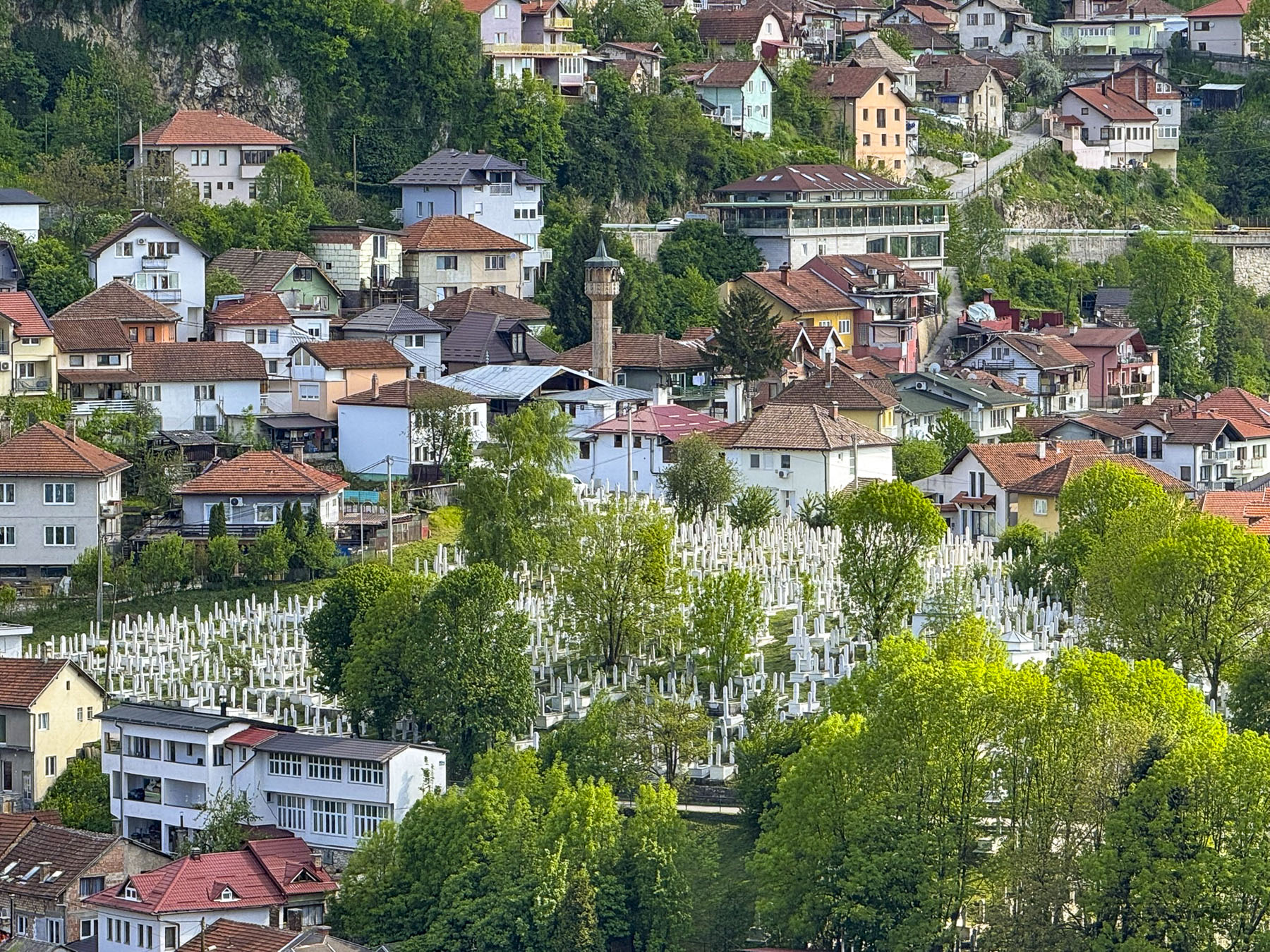
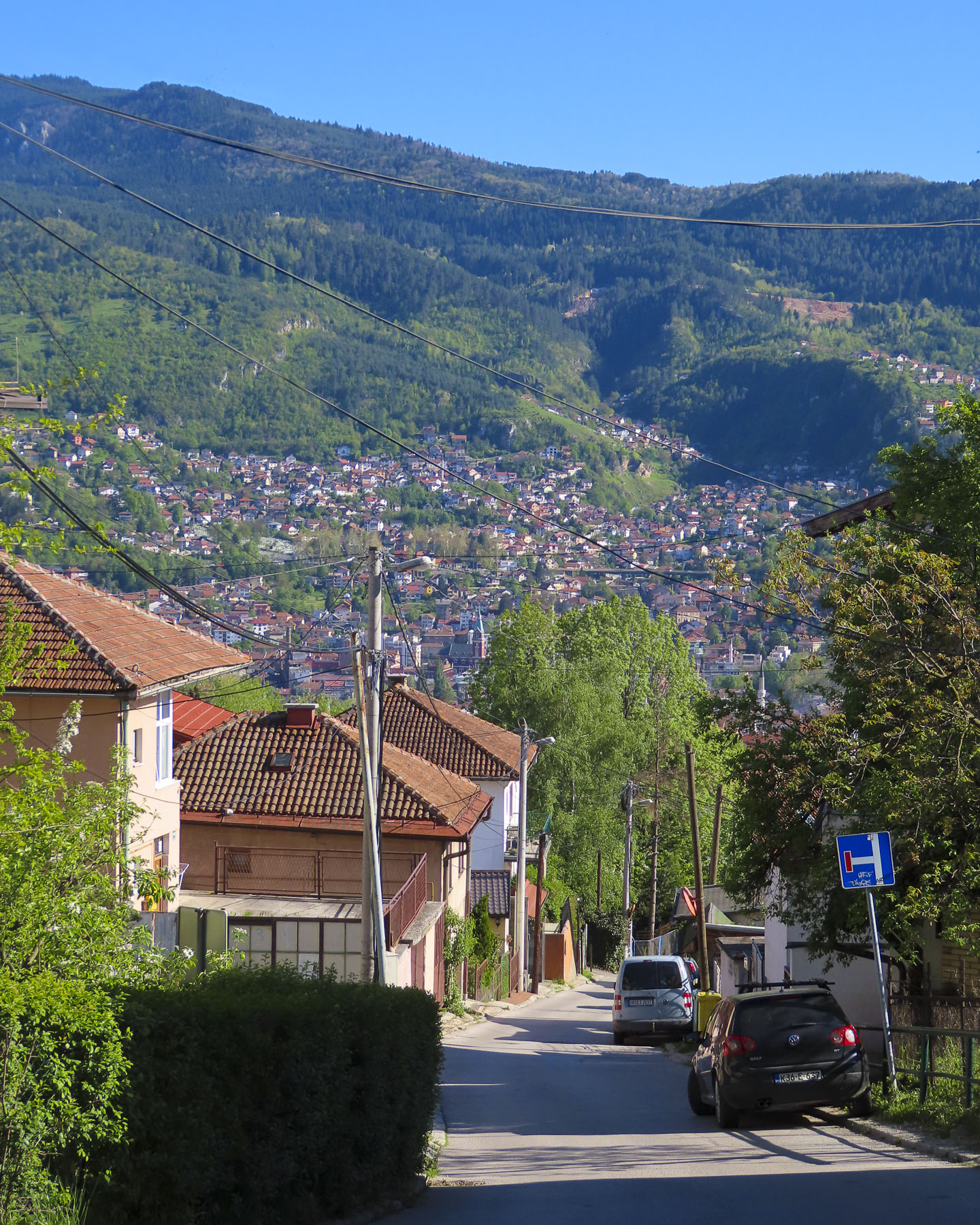
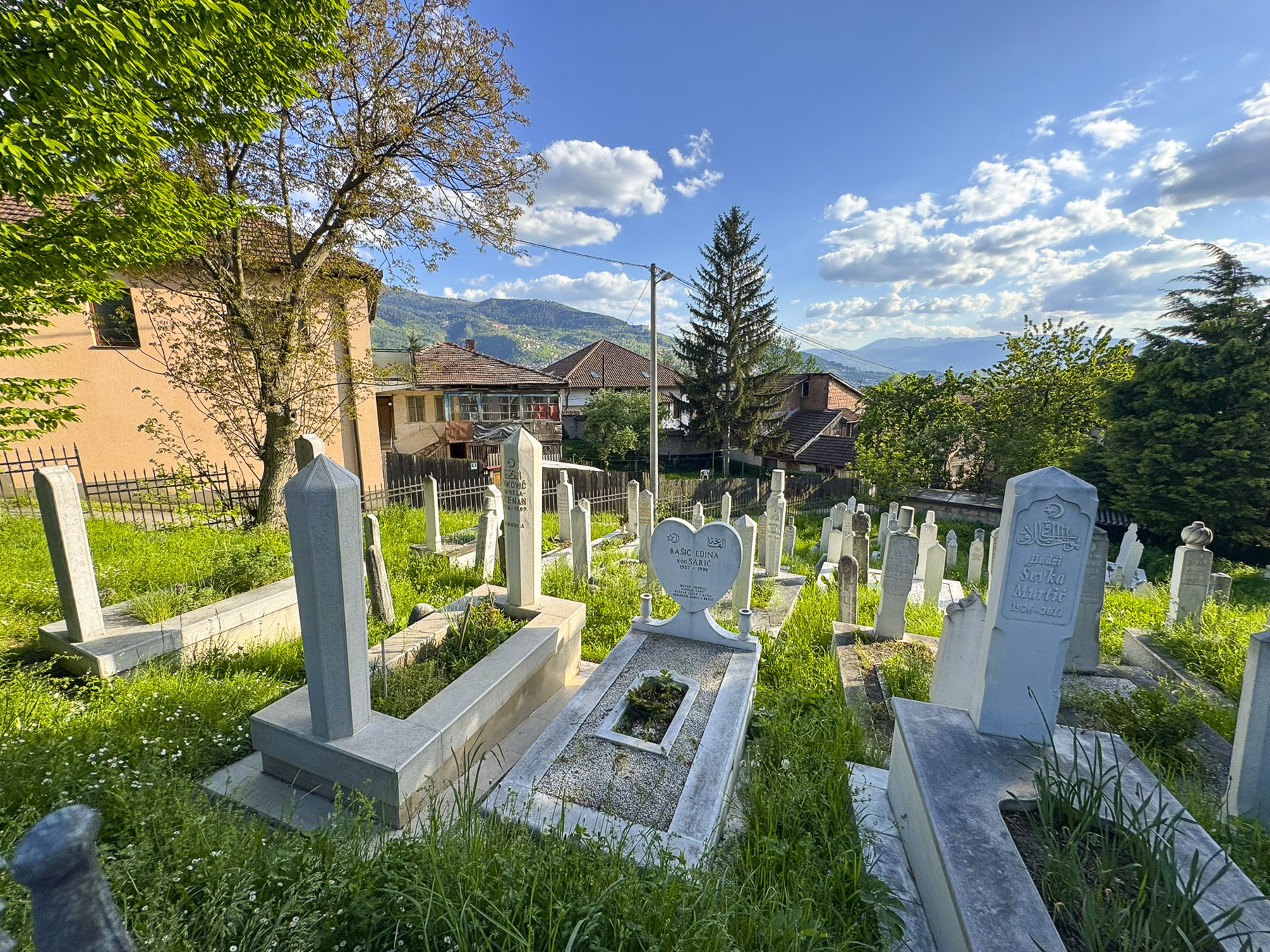
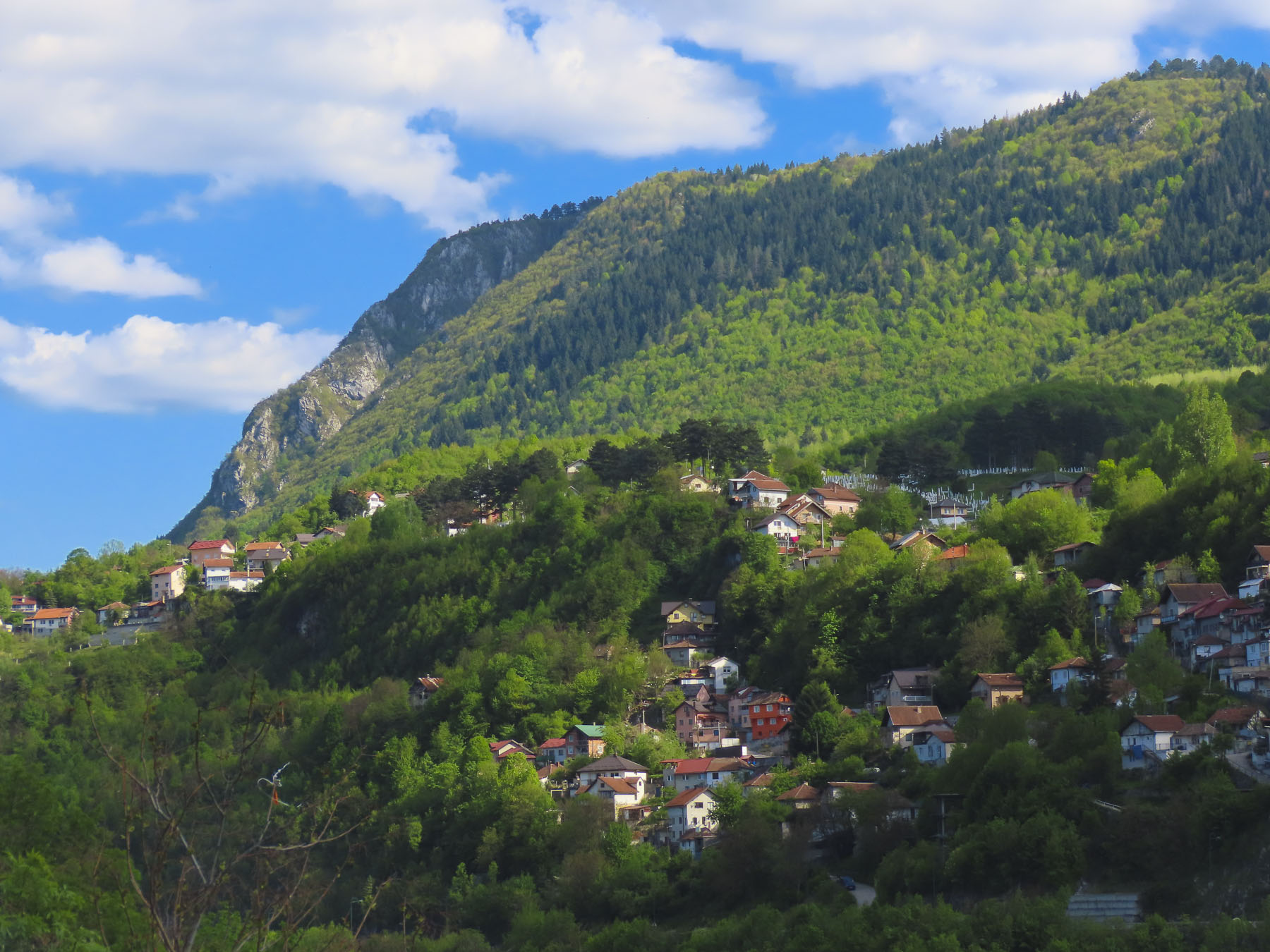
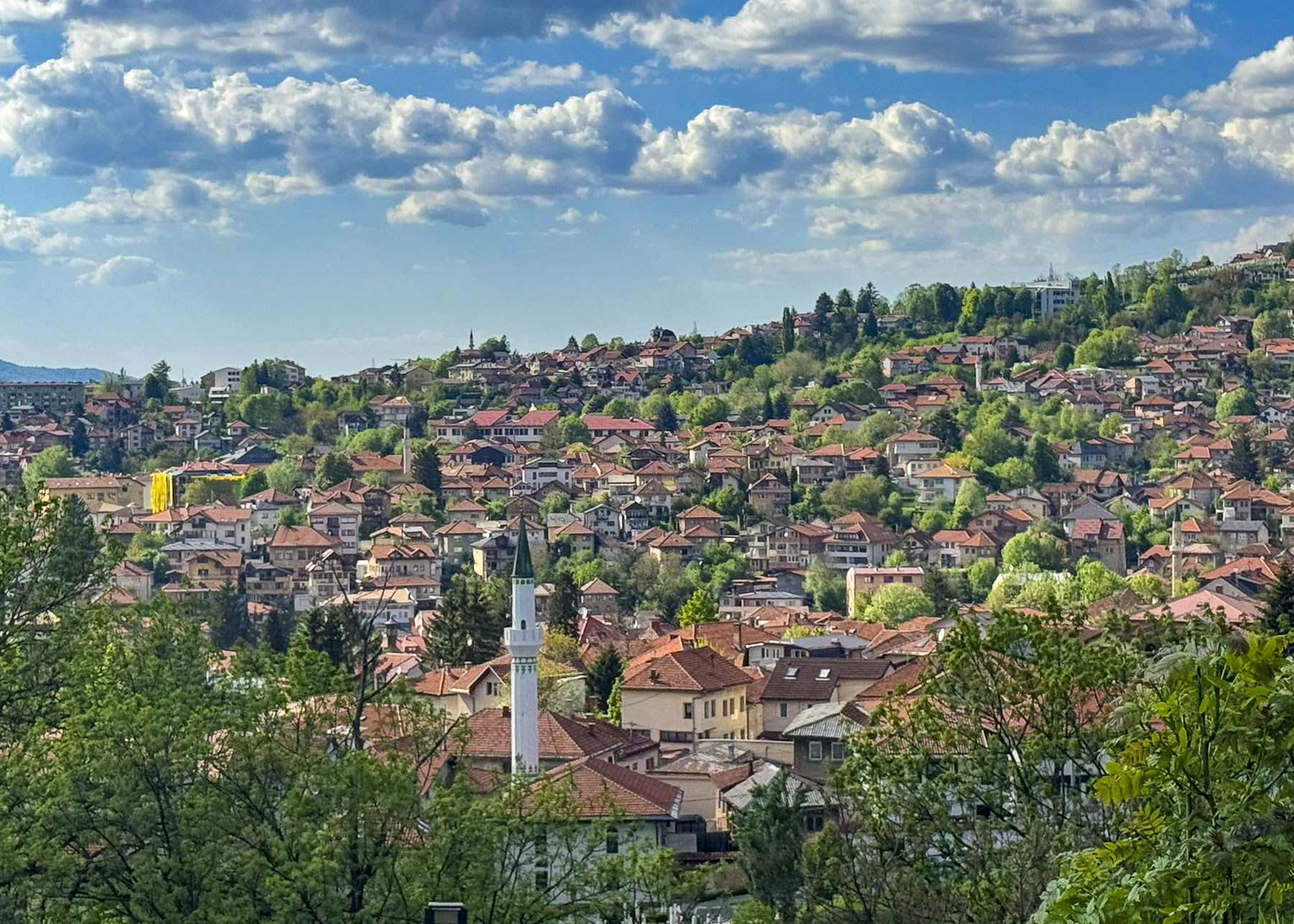
Golden light warmed the late afternoon view of Sarajevo from our room at Kibe Mahala as shadows lengthened with the setting sun. It is primarily known for its well-regarded restaurant that features a selection of Bosnian dishes and lamb roasted on a spit, but it is also a smartly designed three-room boutique hotel with a modern aesthetic appeal that reflects Sarajevo’s culture. Free parking was a tremendous bonus, but because the hillside roads above the city were so narrow we relied on the expertise of taxi drivers to slalom us downhill to Baščaršijski trg, the historic heart of old Sarajevo.

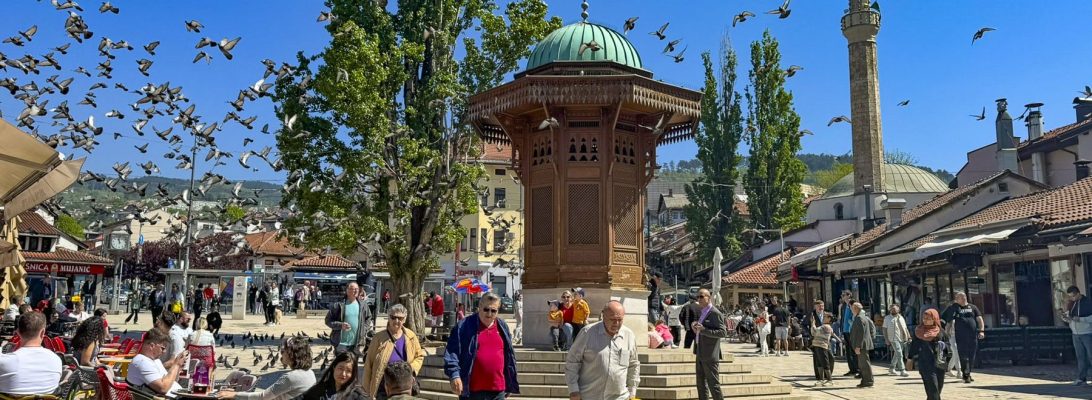
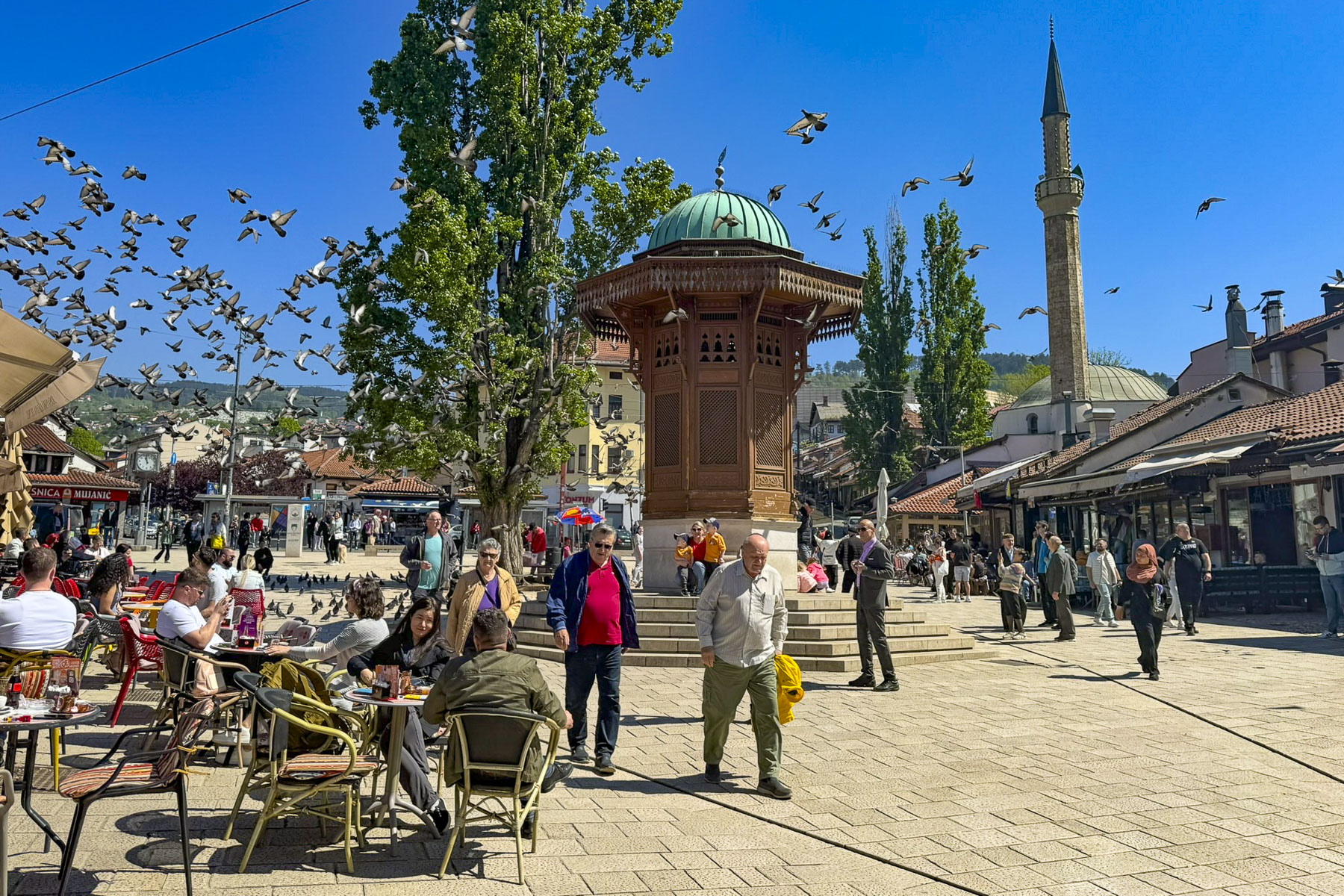
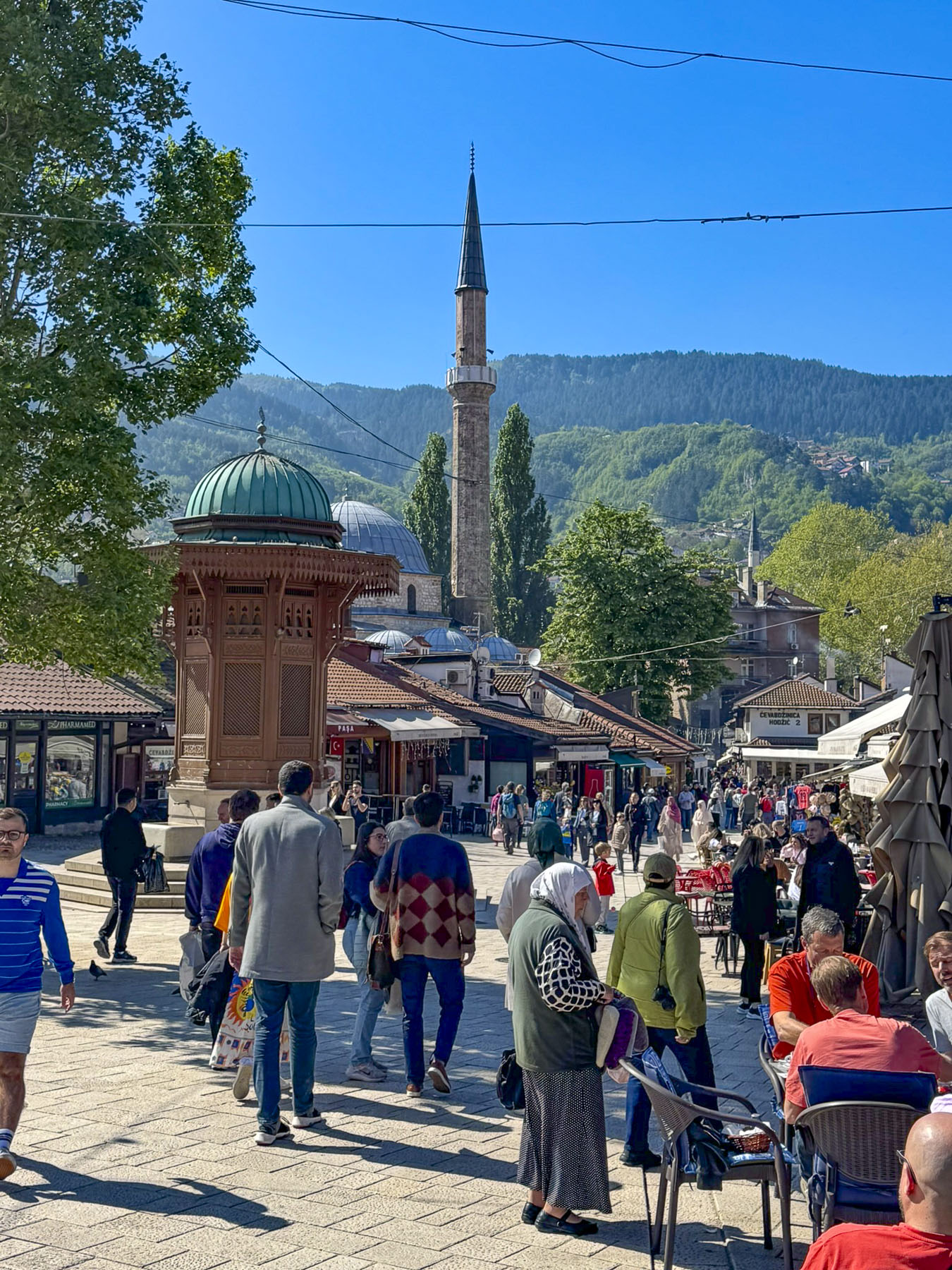
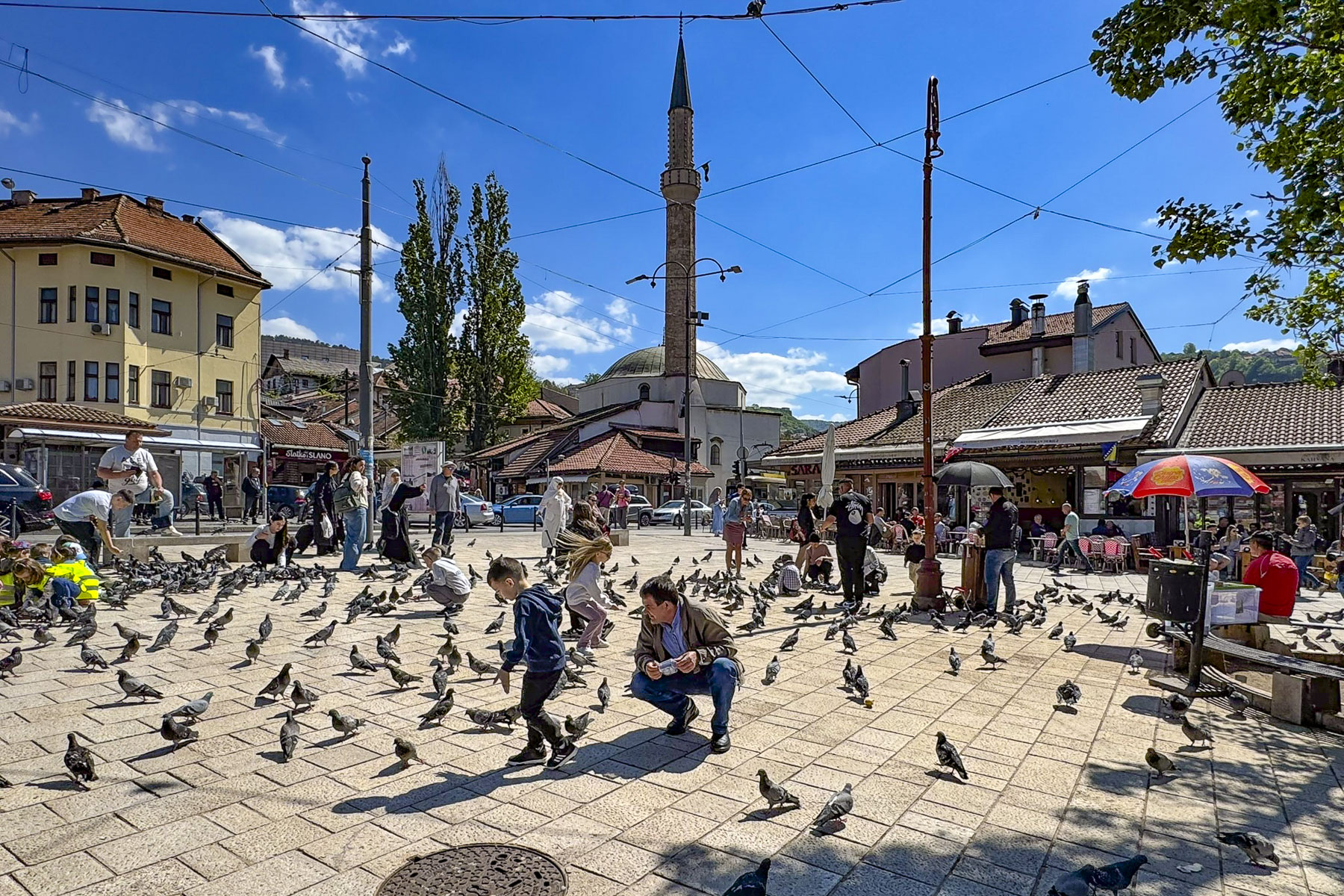
Baščaršijski trg is a long narrow V shaped plaza, once the old daily market. At its center was a Sebilj fountain, a wooden kiosk covered well, where during the country’s Ottoman era was manned by Sebiljdžija, workers who received wages from the Voivode, mayor, to dispense free water to thirsty passersby.

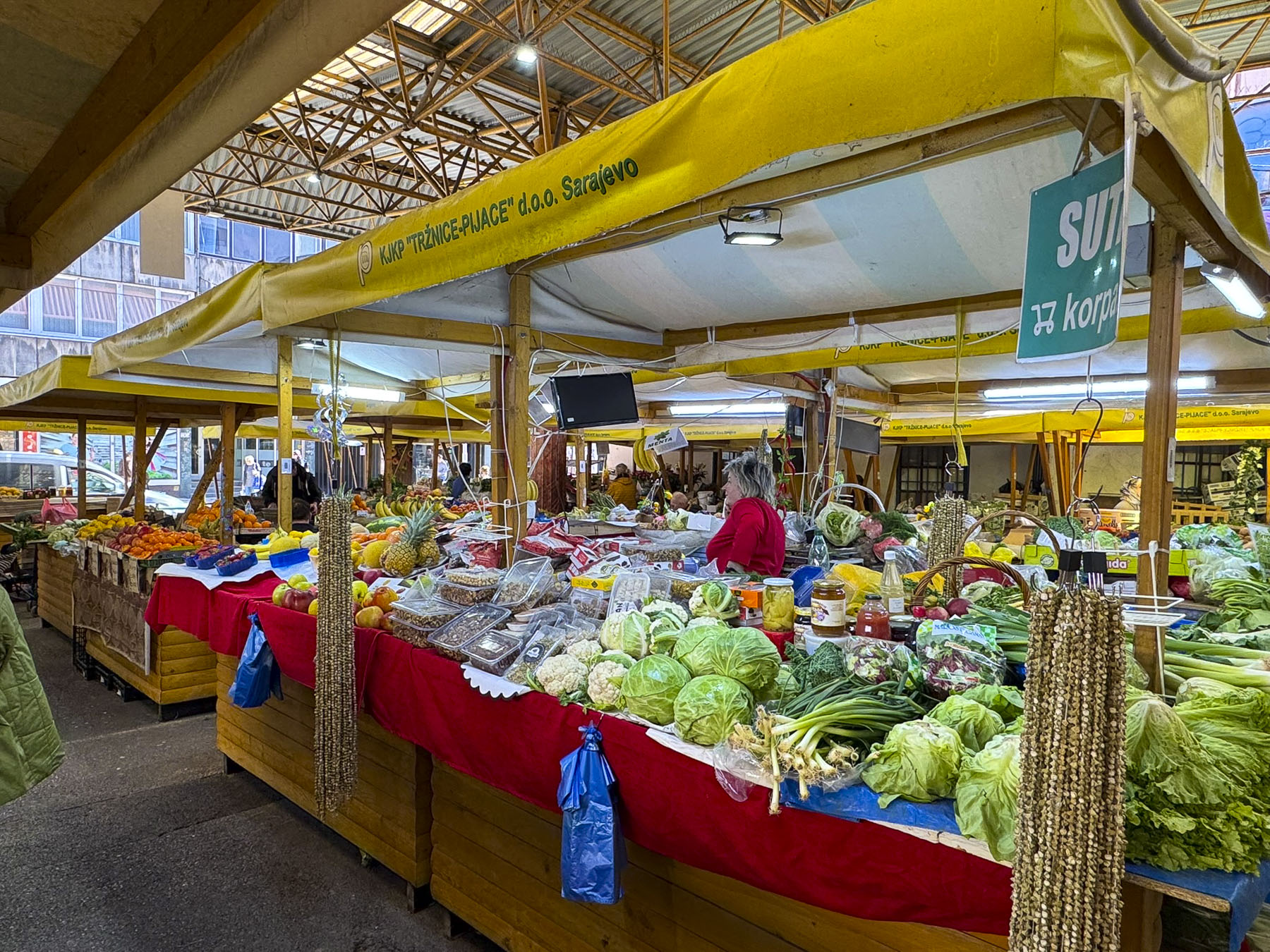
Today Baščaršijski trg is lined with cafés and tourist shops, but still retains an exotic aura of east meets west, the merging of cultures, like Istanbul. The square was quite busy when we arrived, and we sat outside at a café, only to learn they served nothing but coffee or tea. The owner pointed to the bakery across the street and told us it would be okay to bring our purchase back and enjoy it at their table. We both crossed to the Bakehouse Edin, as the responsibility of choosing tasty delights for the first time in a new country is too much to bear for one individual. Really, we both can’t resist bakeries, and take every opportunity we get to investigate one. Hence, “our walk a little then café” philosophy. The café owner was delighted to see us when we returned.

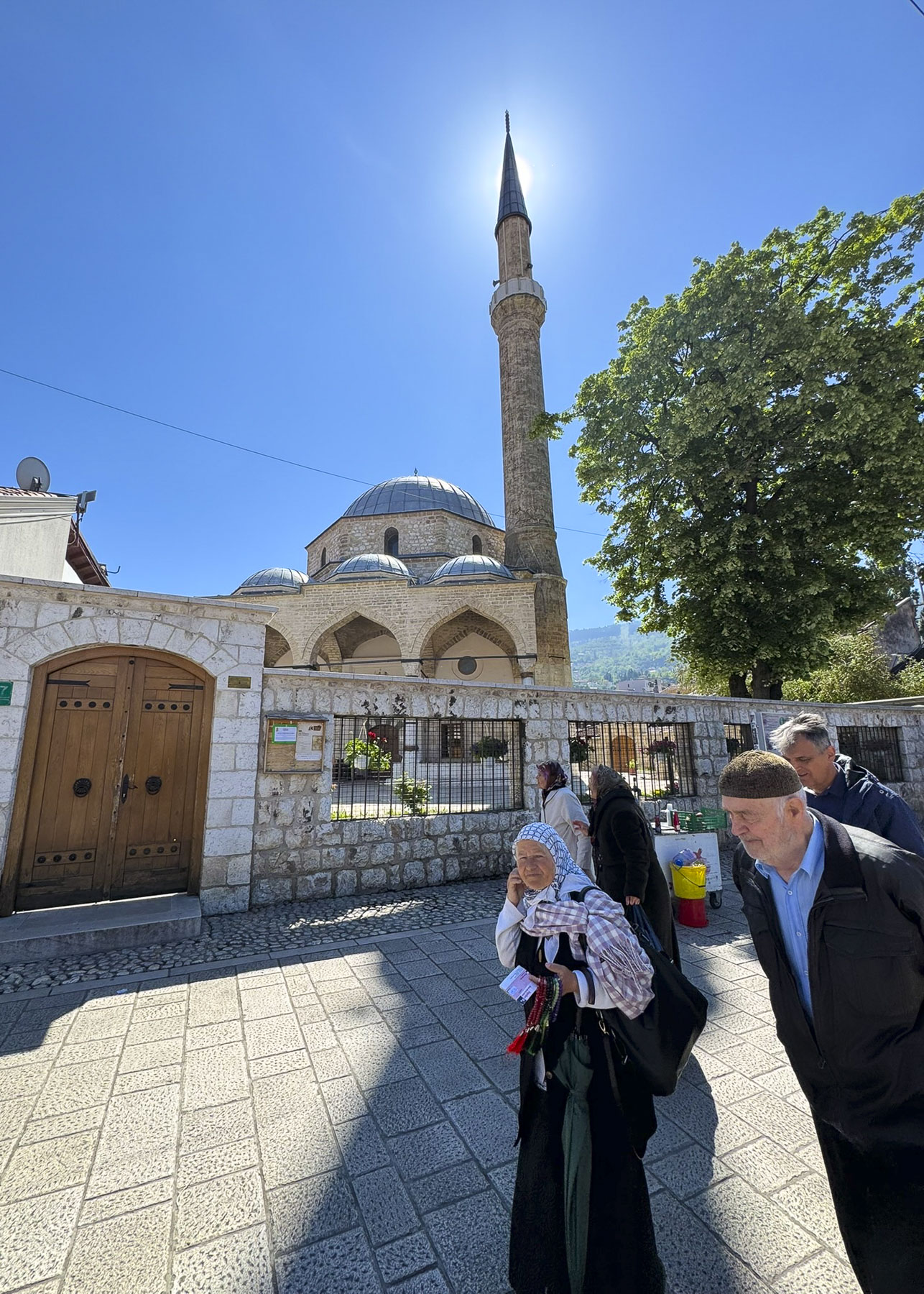
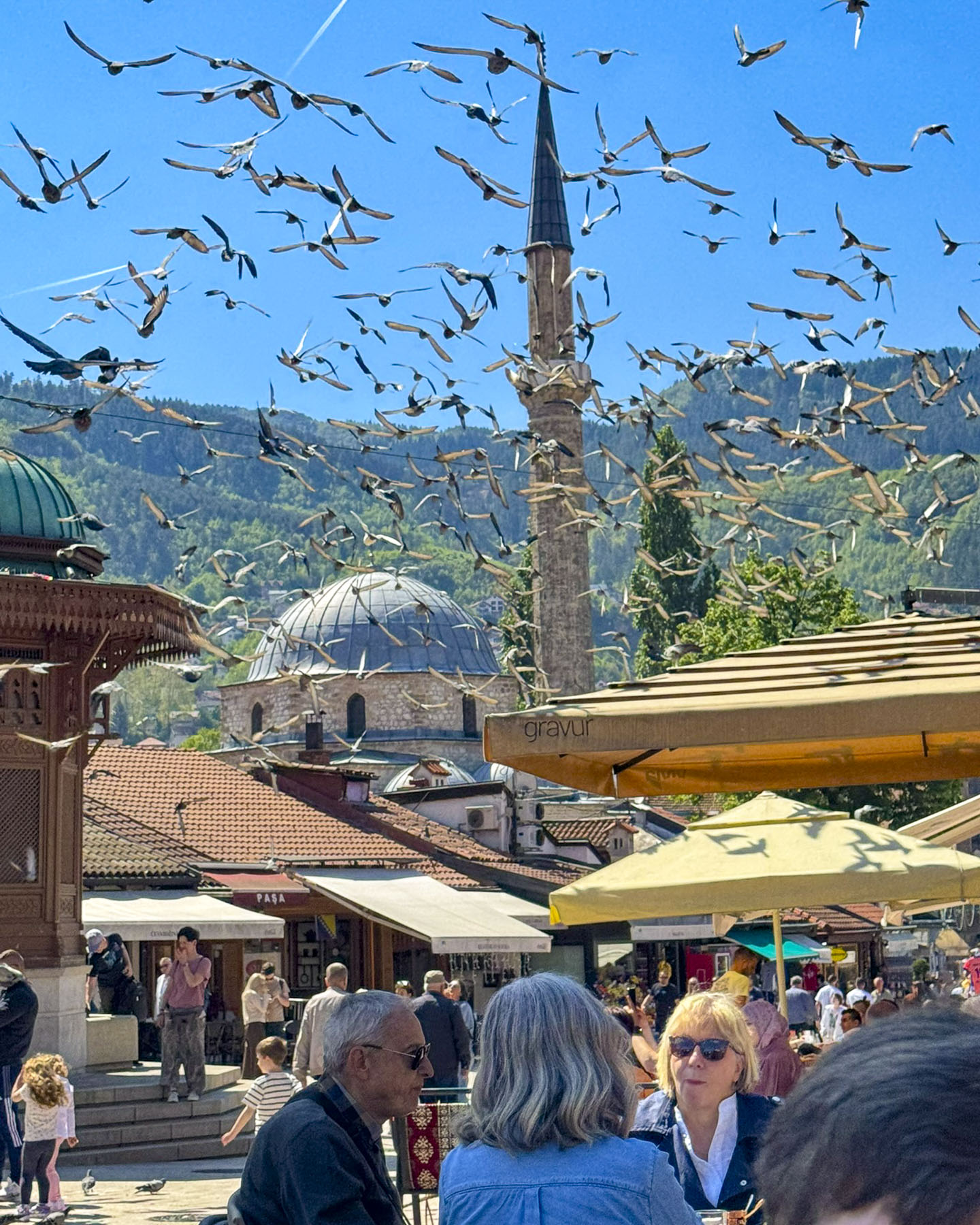
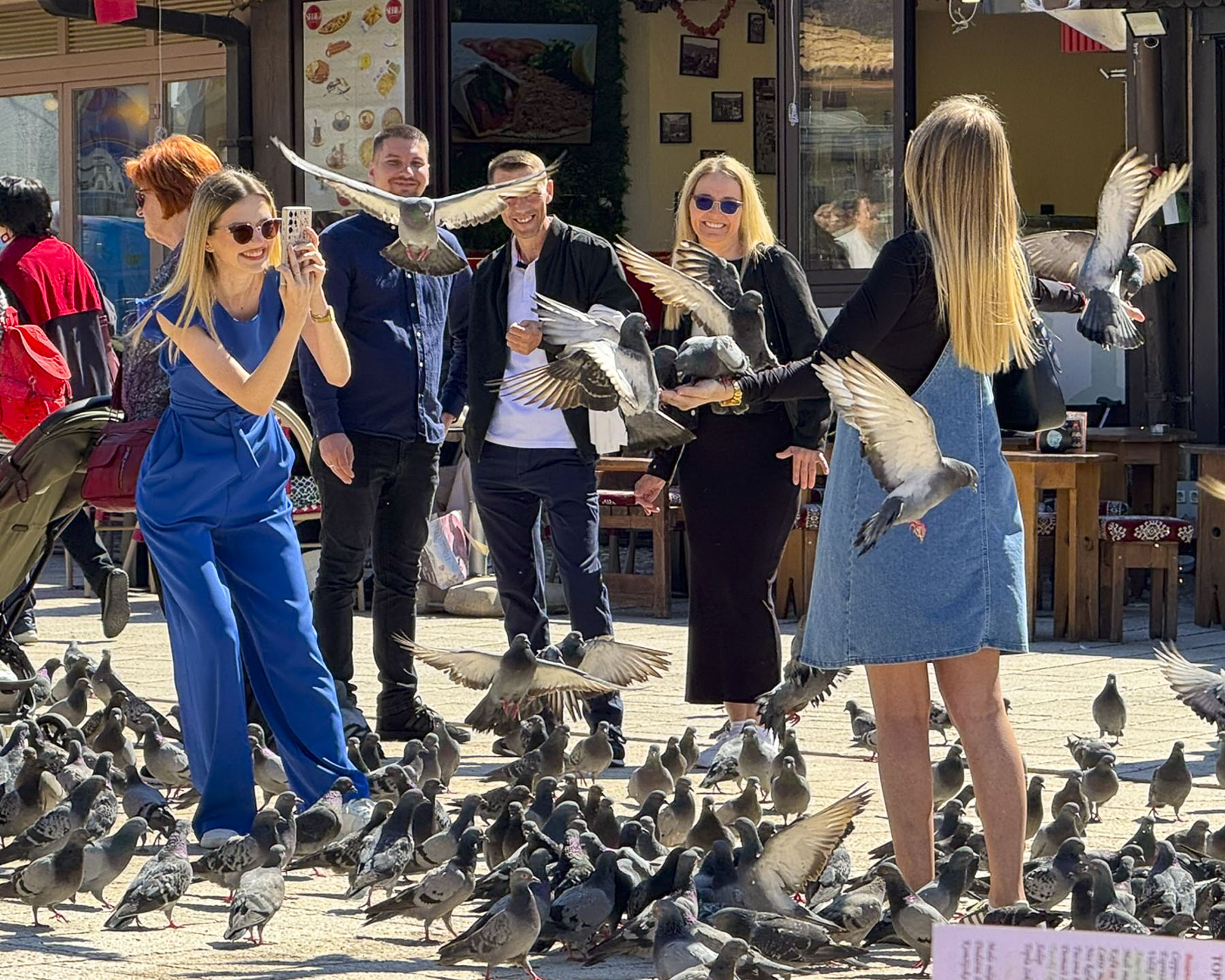
It was a leisurely morning, and we enjoyed watching life go by on the square. Across the way families fed a large flock of pigeons and posed enthusiastically with the birds fluttering to perch on their arms and heads. Occasionally, something would spook the flock, and they would rise in unison to circle above the minaret of Baščaršijska Mosque, prompting some folks to cover their heads in anticipation of a bird bombing, though we didn’t hear any screeching to indicate disaster had struck.

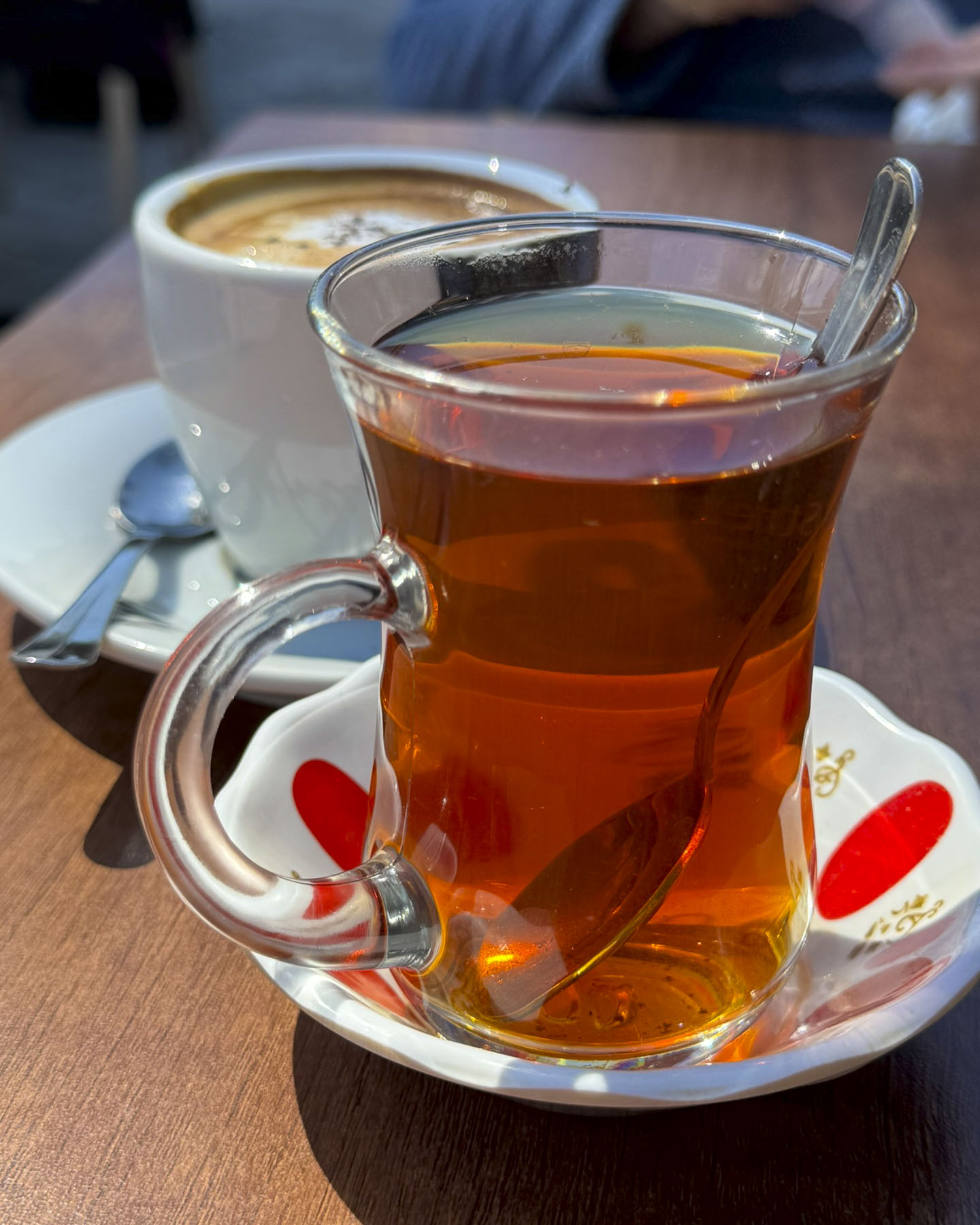
Romans, Goths and finally the Slavs with the establishment of the Kingdom of Bosnia in the 7th century have influenced the region, but it wasn’t until 1415 that Sarajevo is first mentioned in historical records as Vrhbosna. It was only later in that century after the Turks conquered the region that the town’s name was changed to Sarajevo and it grew into an important trading center on the caravan route from Istanbul to the Adriatic coast. The town hosted numerous caravanserais, inns where merchants slept and stabled their horses, but only the Morića han (1551) survives and now shelters shop, restaurants and Caffe Divan.  Here we enjoyed the Ottoman-style ambiance and the tradition of ćejf, the art of lingering over coffee to savor life with friends, and the Rahat Lokum, Turkish Delight, which is always eaten before sipping Bosnian coffee. We also tried Ziam’s coffee, a large coffee with milk that is sprinkled with Nesquik, which is a popular order.

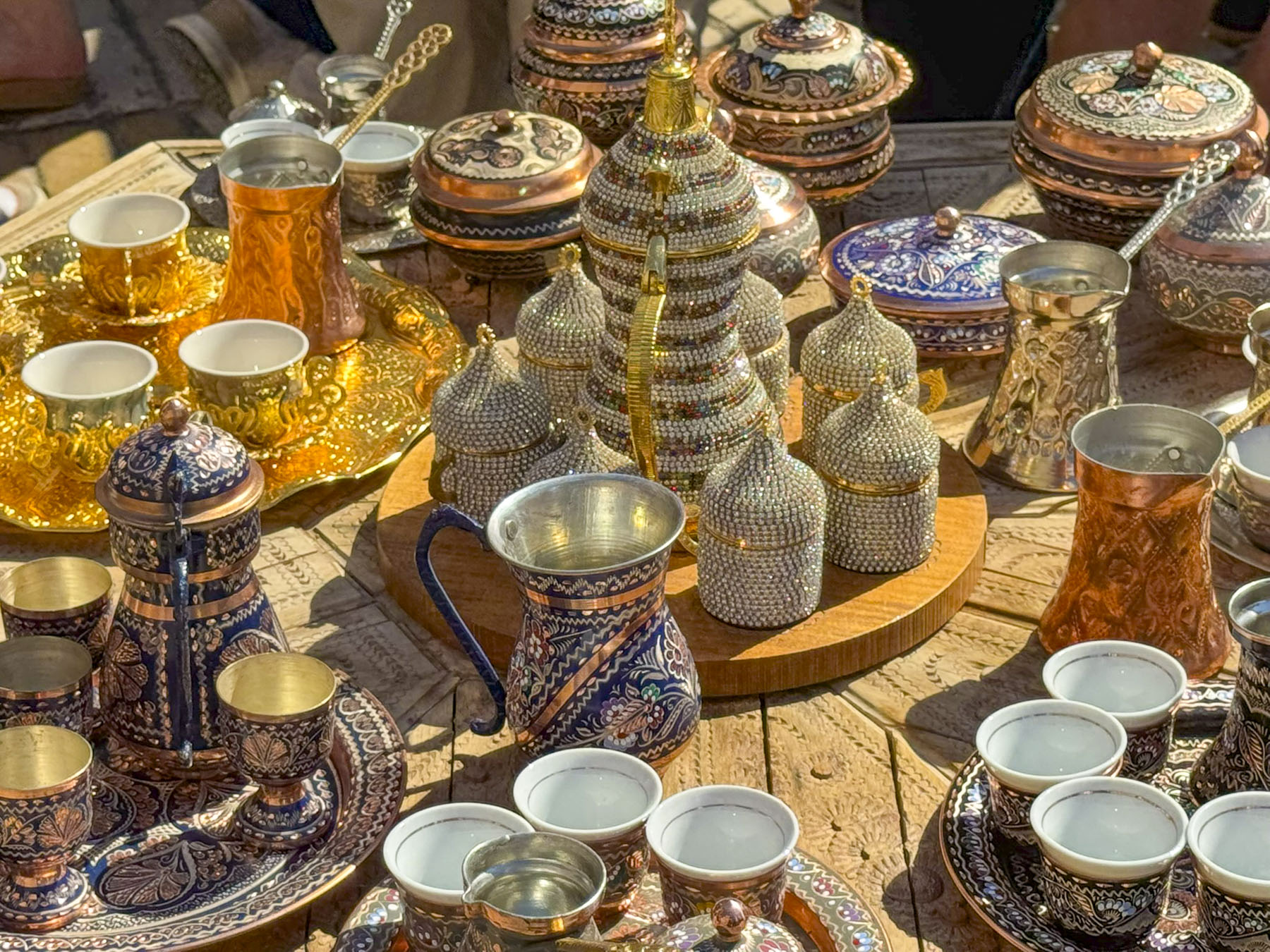
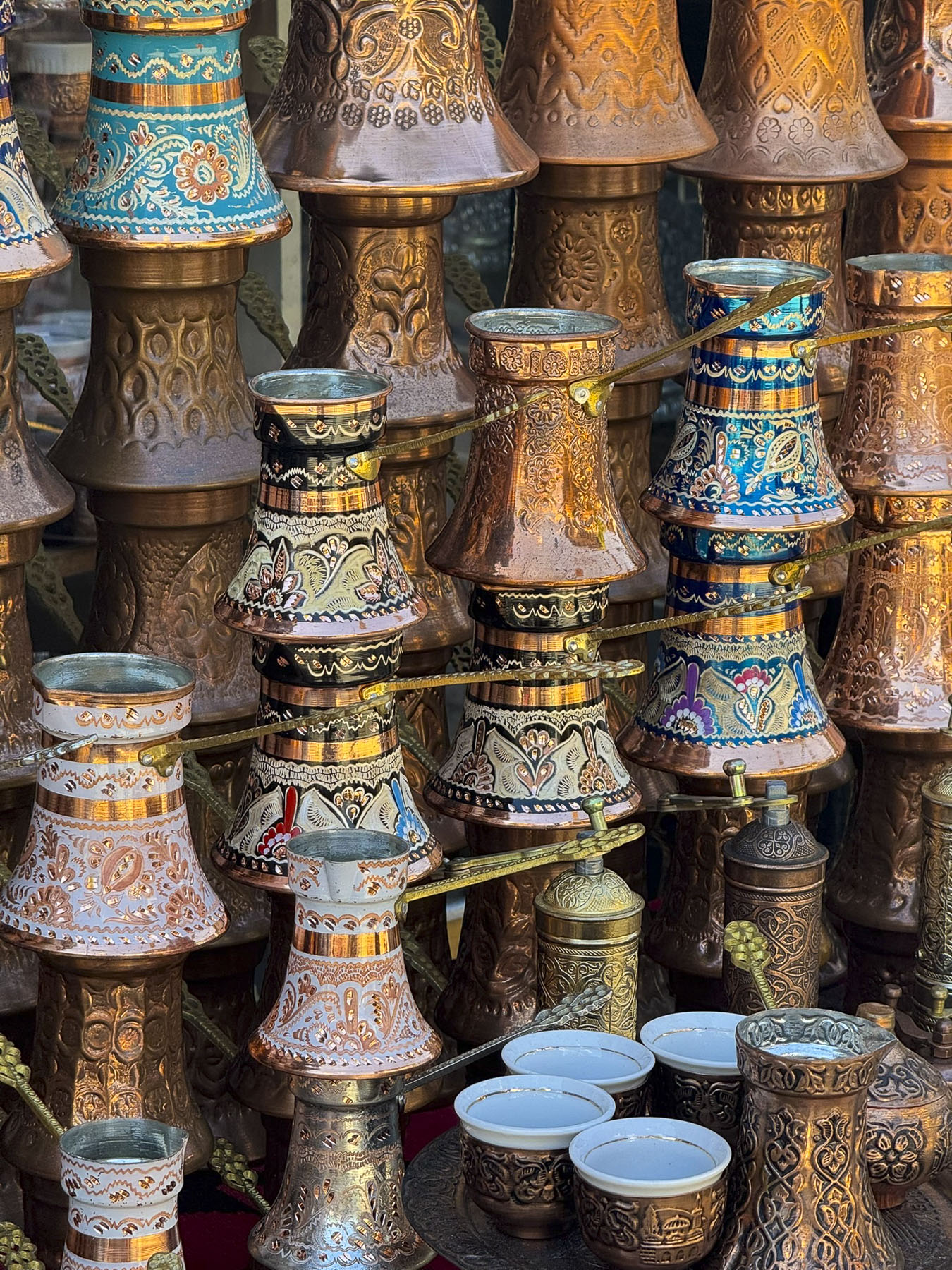
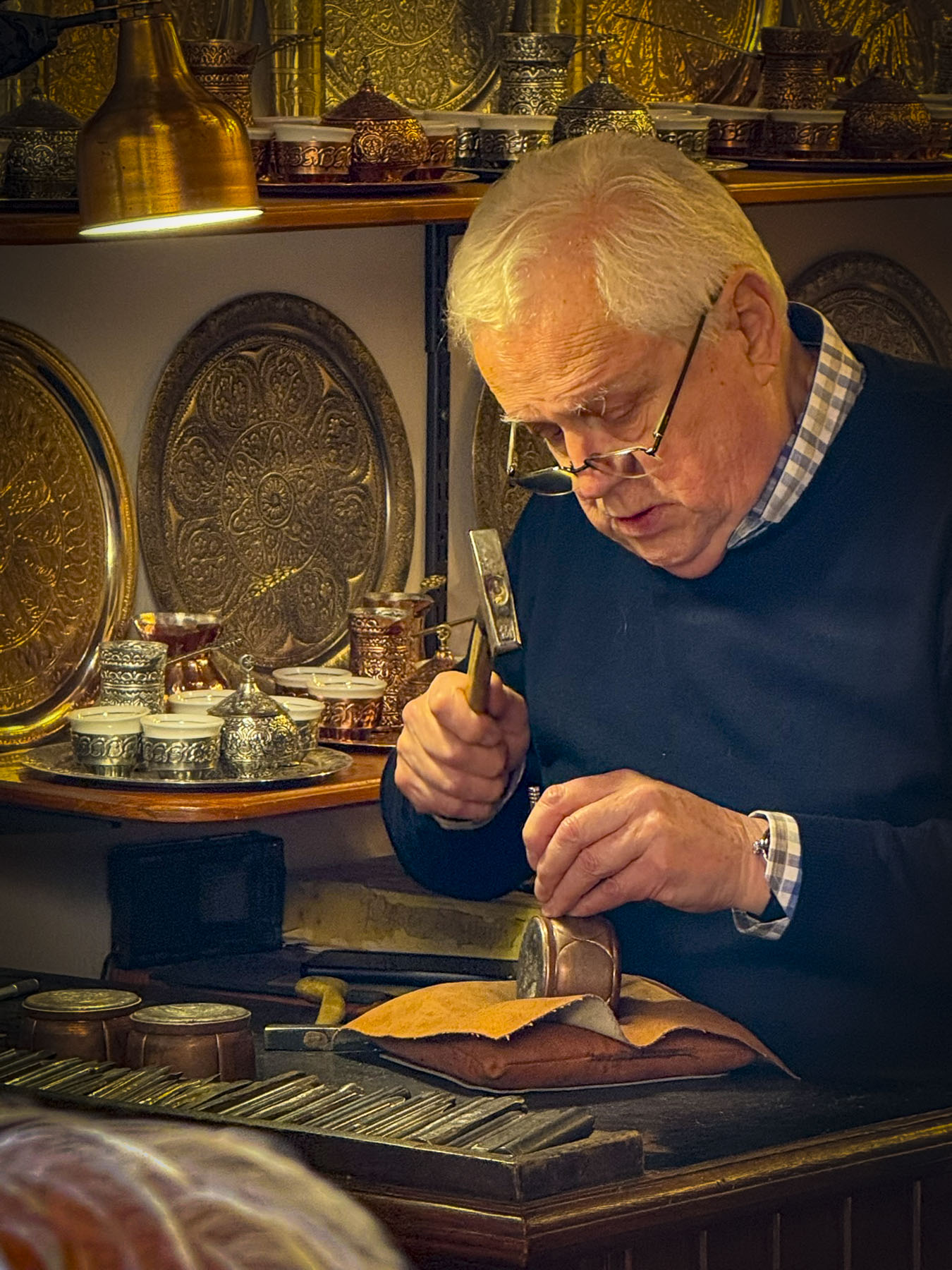
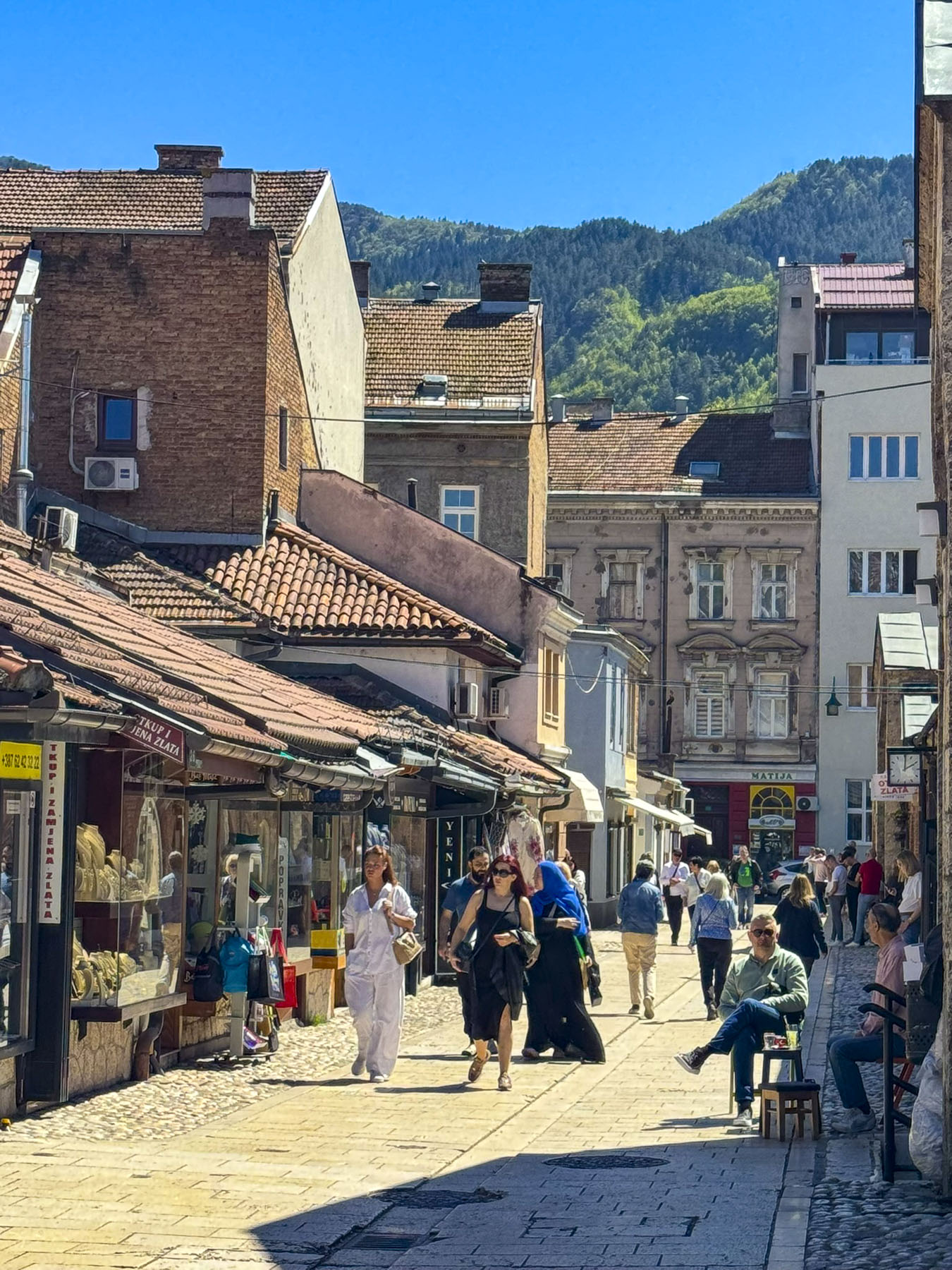
Many of the old lanes in the city are named for craftsmen who practiced their skills in workshops along the street. Just off Baščaršijski trg was Kazandžviluk, the old coppersmiths’ alley, where fine Bosnian džezva, traditional long handle coffee pots, cups and plates are still hammered with intricate designs.

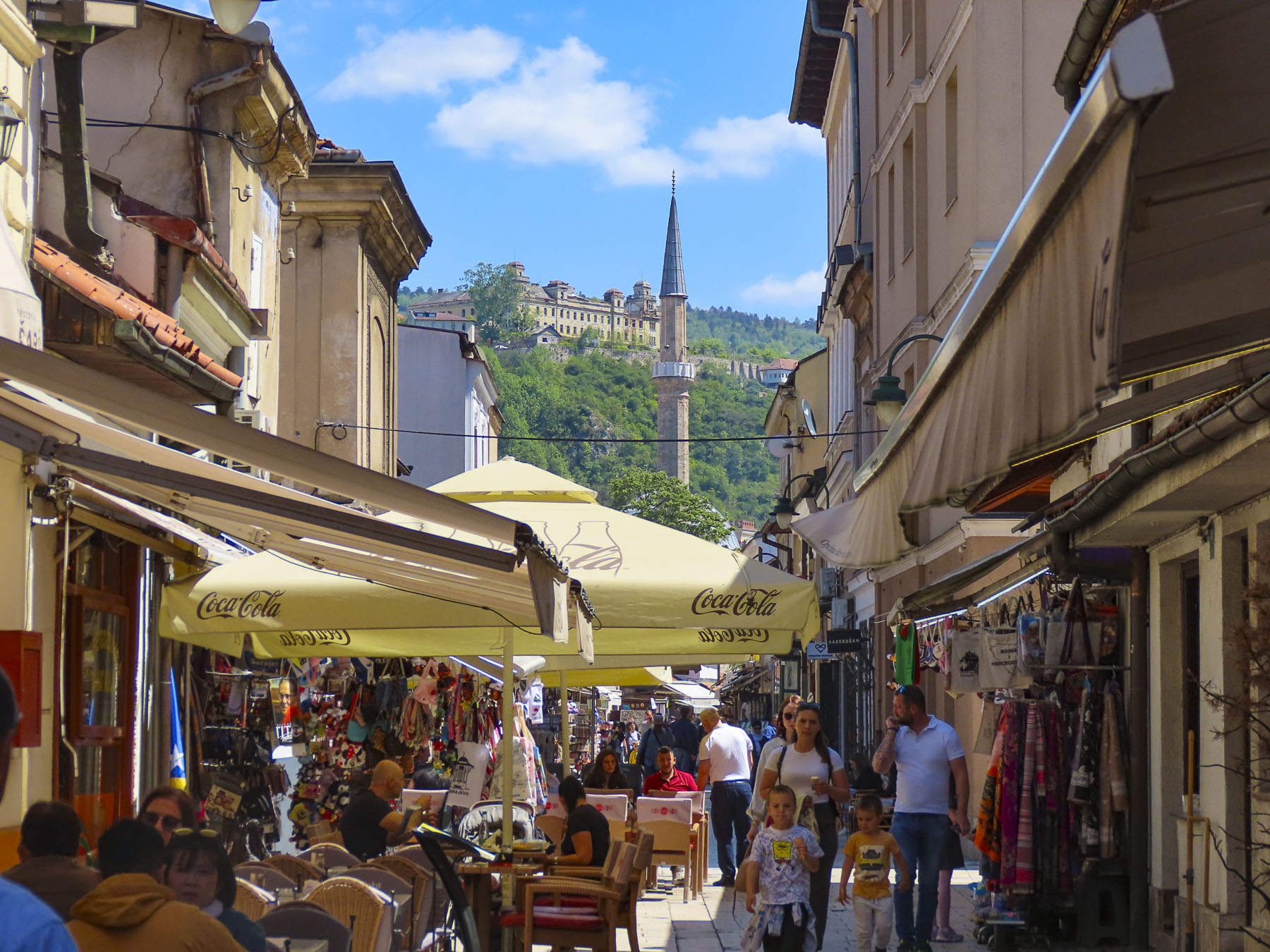
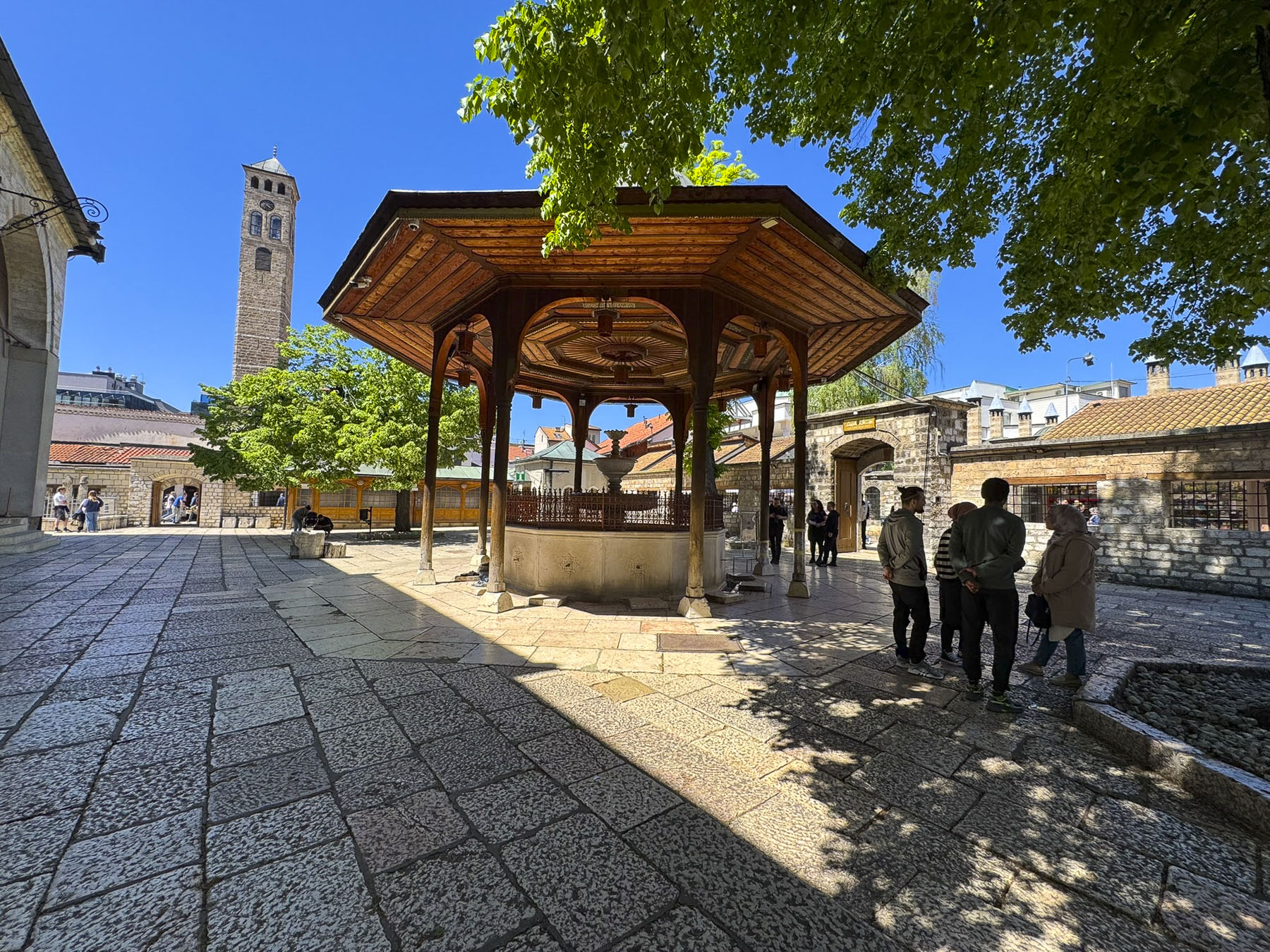
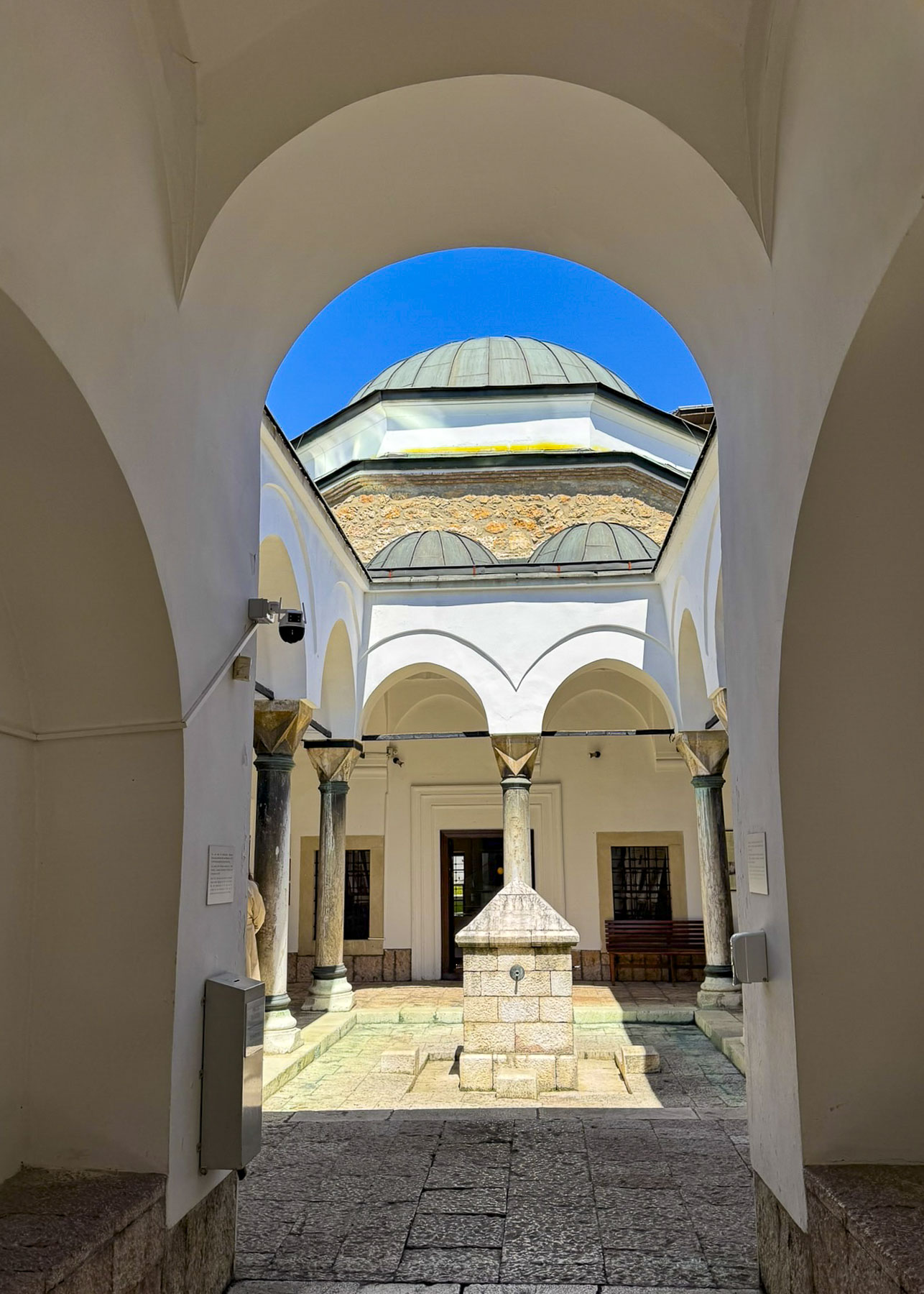
The pedestrian only historic old town is made for wandering, one intriguing lane opening to another. Sarači seemed to be Sarajevo’s main lane and we followed it along to the shady courtyard of Gazi Husrev-beg, a 16th century mosque. In the center of the courtyard was the Šadrvan, a marble washing fountain used by worshippers for ritual ablutions before prayer. It was covered with an elaborate wooden octagonal pergola. In the background beyond the mosque’s wall was Sarjevo’s 17th century clock tower. It features gilded clock faces, on all four sides, synchronized to lunar time, in which the hands indicate 12 o’clock at the moment of sunset, the time of the Muslim Maghrib prayer.

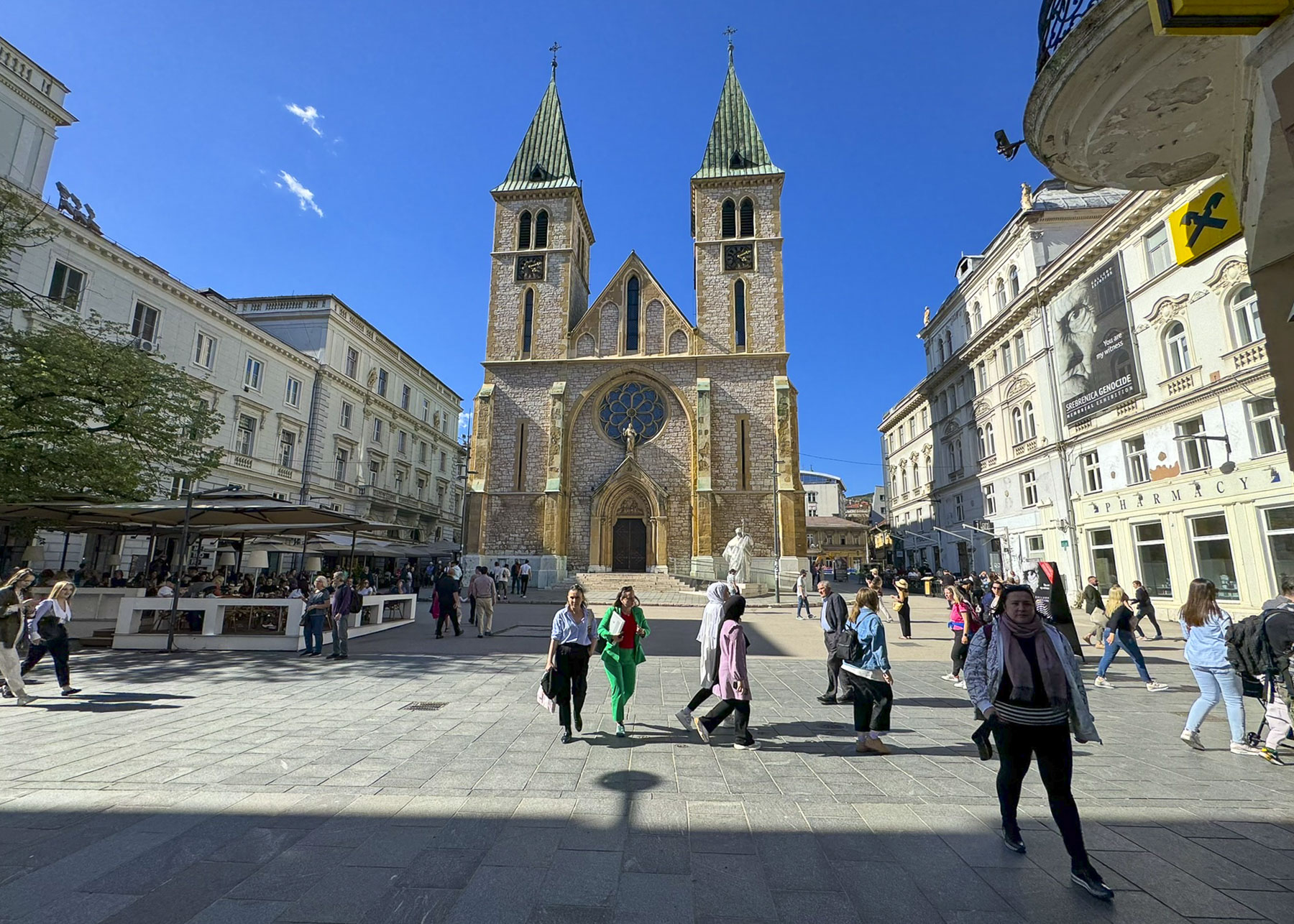
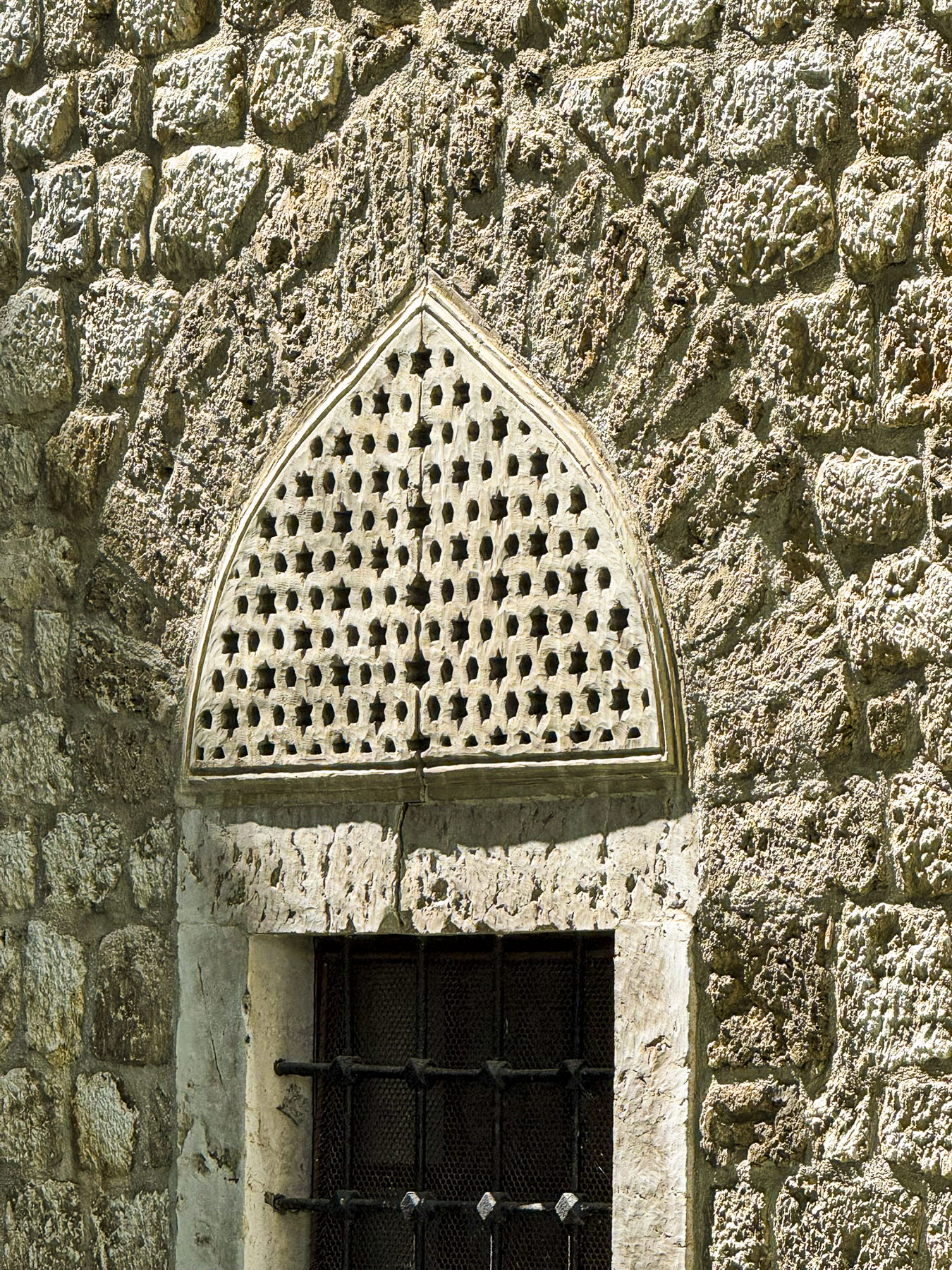
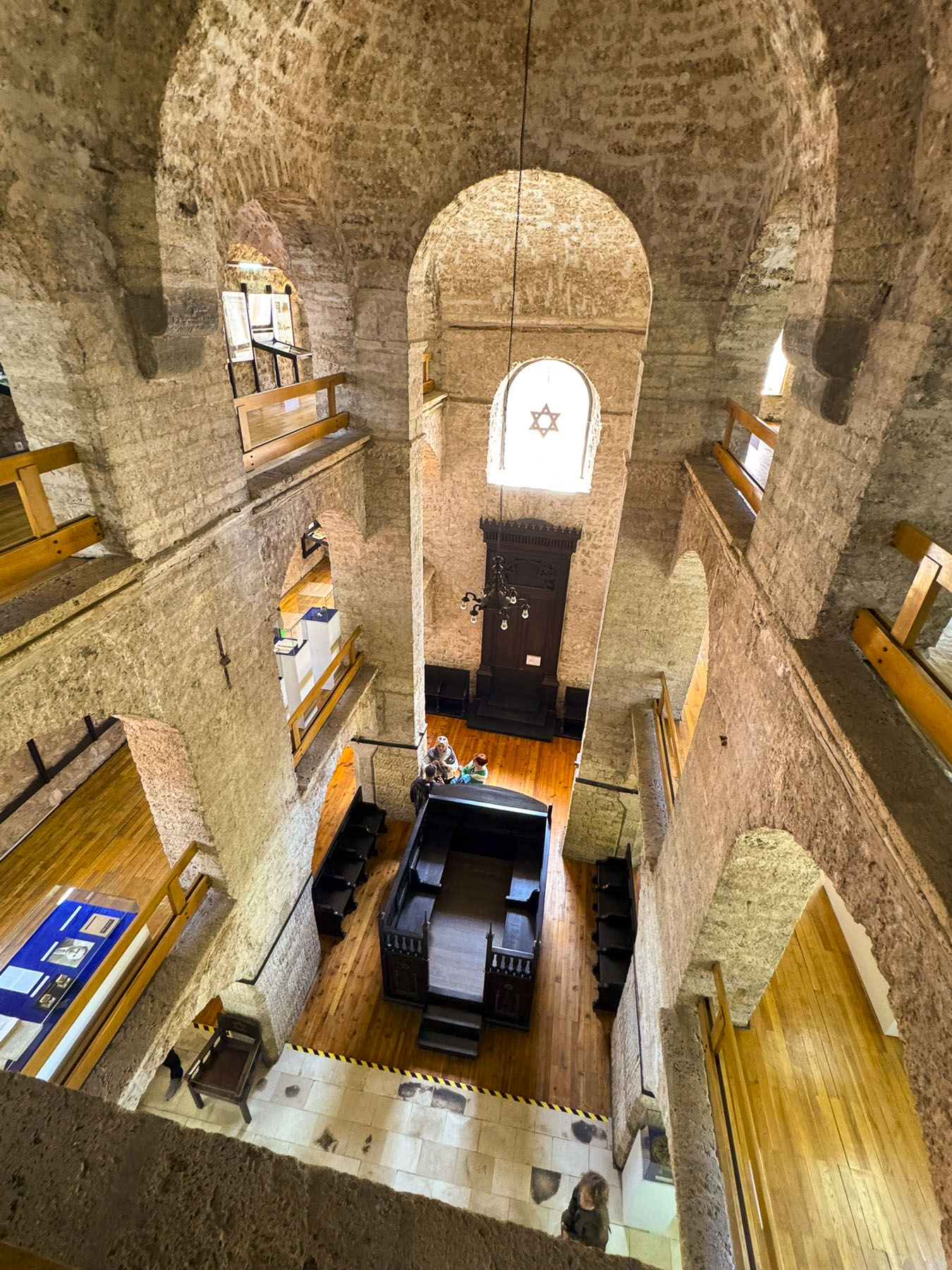
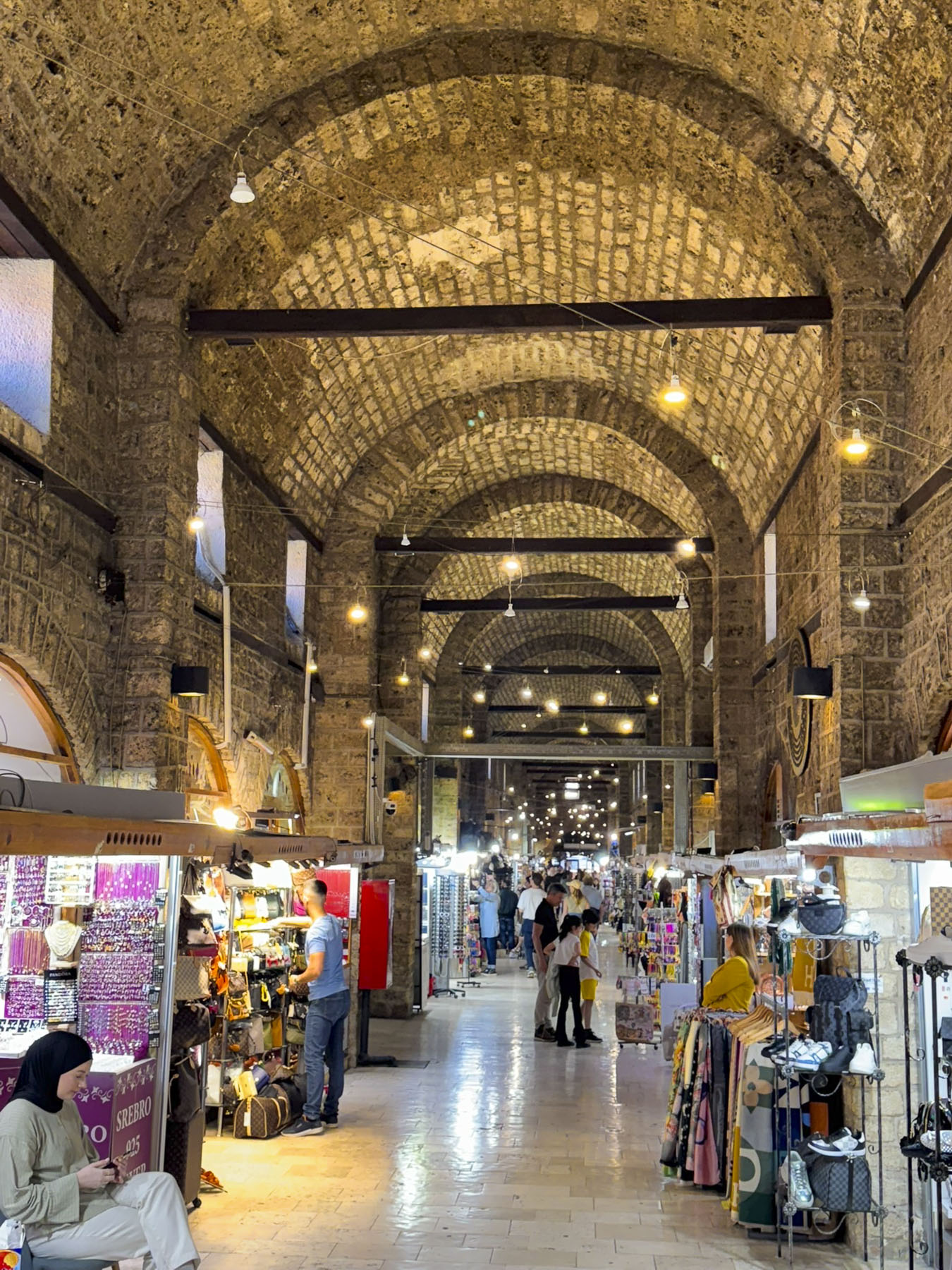
This was a very interesting part of the old town, with many significant historical sites close to each other which include; Gazi Husrev-Beg’s Library (1537), the 16th century barrel-vaulted grand bazaar, the ancient Mezarje u haremu džamije Ferhadija cemetery & mosque, the Morića han caravanserais, the 1860s Serbian Orthodox Church of the Nativity of the Theotokos, the Museum of the Jews of Bosnia and Herzegovina, the Srebrenica Genocide Memorial, and Katedrala Srca Isusova, the Sacred Heart Cathedral, a 19th-century Gothic-style church which Pope John Paul II visited in 1997, to promote reconciliation after the Bosnian War.

During the Ottoman rule of Bosnia, Sarajevo attracted a diverse community of Orthodox Christians, Catholics and Jews. They were, however, treated as second class citizens and faced social restrictions forbidding them from carrying weapons, riding horses in public, or building houses and churches taller than those of Muslims. Men were additional required to pay theJizyataxin lieu of military service. Only Christian families were subjected to the Devshirme, a “Blood Tax,” where children were taken from their families, forcibly converted to Islam, and trained to become elite Janissaries, soldiers, or high-ranking government officials. These additional burdens to families encouraged many to convert to Islam.

Passing through the old bazaar, we admired some of the work of the silversmiths. This trade  has been thriving since the Middle Ages in Bosnia when silver mines were a major source of income for Bosnian kings. A piece of fine filigree jewelry made the perfect souvenir.

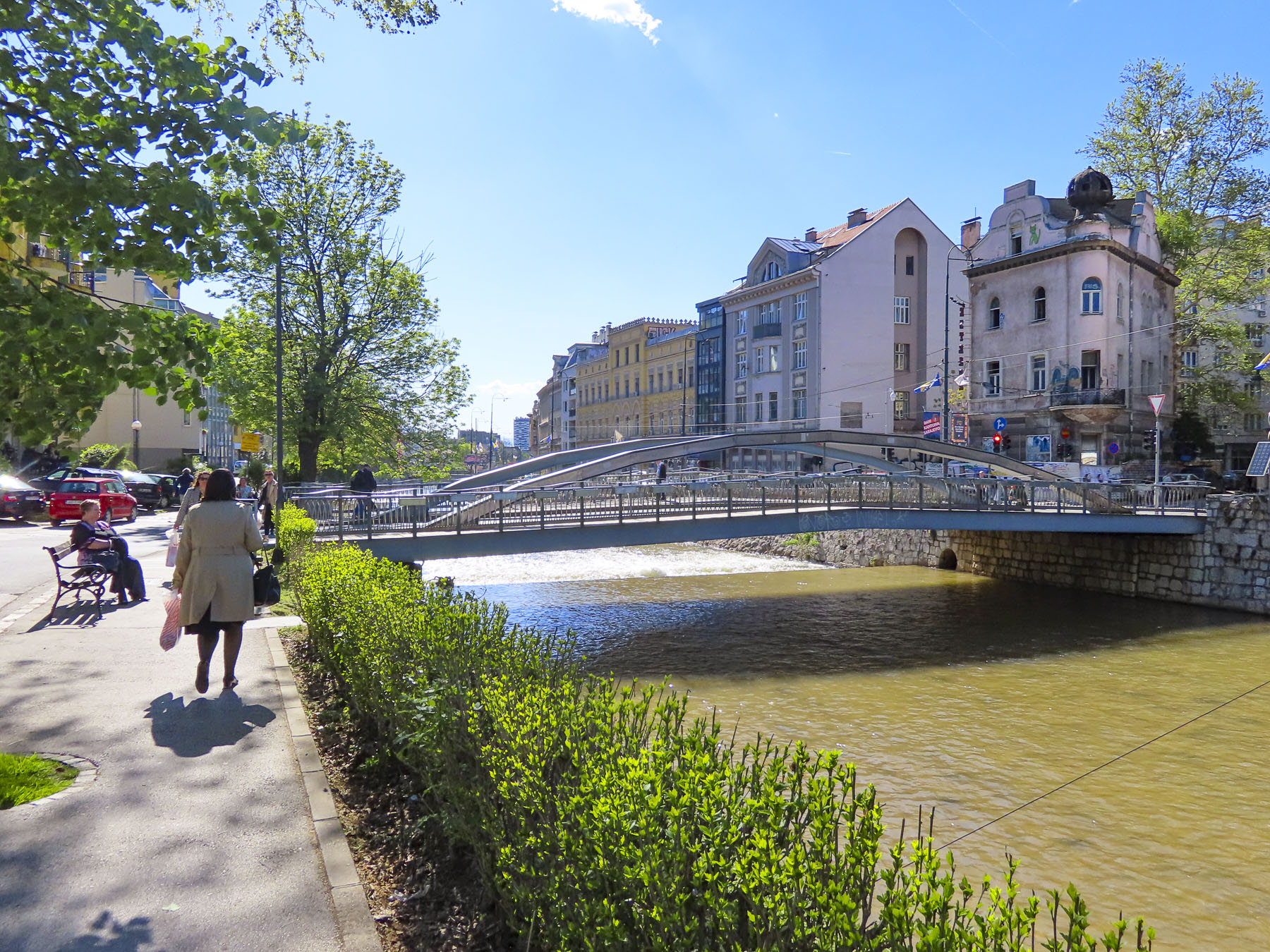
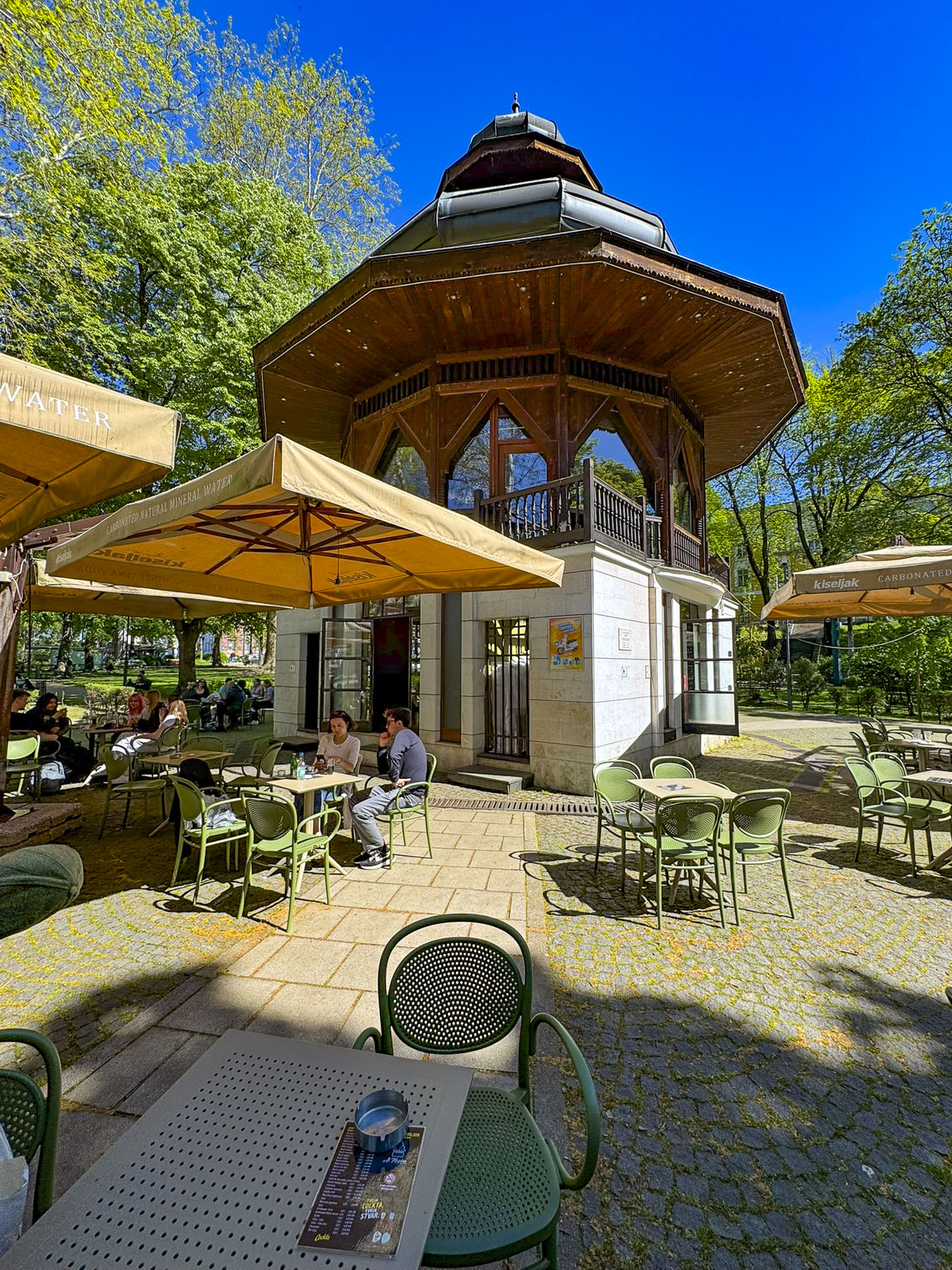
We crossed the Miljacka River and walked along the shaded riverside promenade to a café at the Music Pavilion in At Mejdan park, which dates from 1913. The park was a quiet oasis where families strolled with children, couples relaxed in each other’s arms and pensioners played chess at tables under the trees. Views back across the river showcased a blend of the city’s architecture that spanned the centuries from the Ottoman era to modern times, though the most predominant are the ones constructed in the 19thcentury European style during the Austro-Hungarian era.

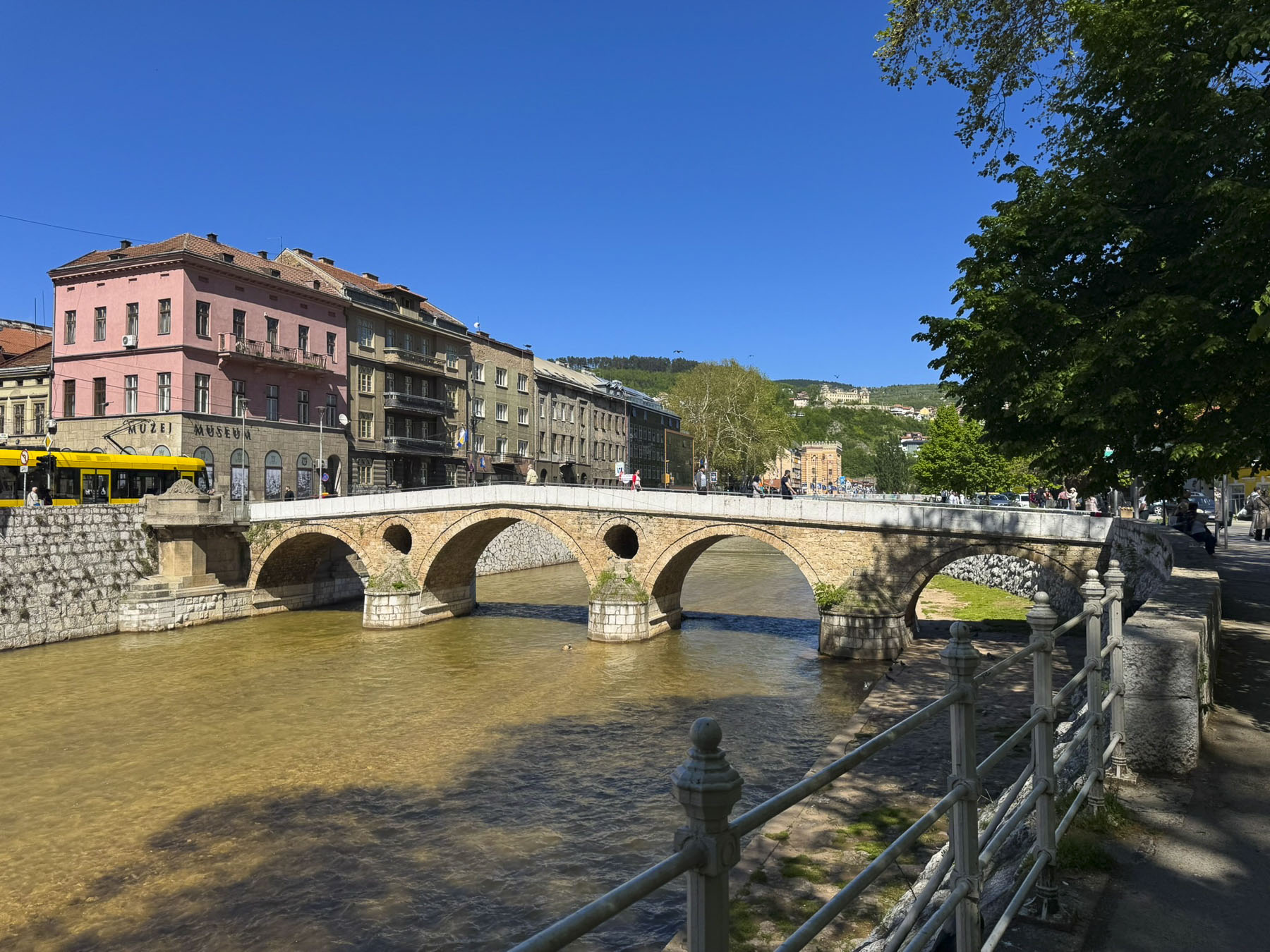
From the promenade we could also see the Latin Bridge, the site where Austro-Hungarian Archduke Franz Ferdinand was assassinated on June 28, 1914, by Gavrilo Princip, a member of the revolutionary group Young Bosnia, whose members were mostly Serbs, Croats, and Bosniak students who sought to end Austro-Hungarian rule and unite Bosnia with Serbia and Yugoslavia. The event triggered World War I, the dissolution of the Austro-Hungarian Empire, the creation of the Kingdom of Yugoslavia, which included Serbia, Bosnia, Croatia, Montenegro, Slovenia and North Macedonia. While Sarajevo was part of Yugoslavia, Gavrilo Princip was celebrated as a hero and the Latin Bridge was renamed in his honor. With Bosnia’s independence the bridge has regained its original name.

Subsequently, the origins of nearly a hundred years of almost continuous wars, occupations and suppression across Europe, can be traced back to this event. The region’s death and destruction finally ended after the Balkan Wars were resolved with the signing of the Dayton Accords in 1995, an agreement which established a complex government with equal representation for Bosniaks, Serbs, and Croats in Federation of Bosnia and Herzegovina.

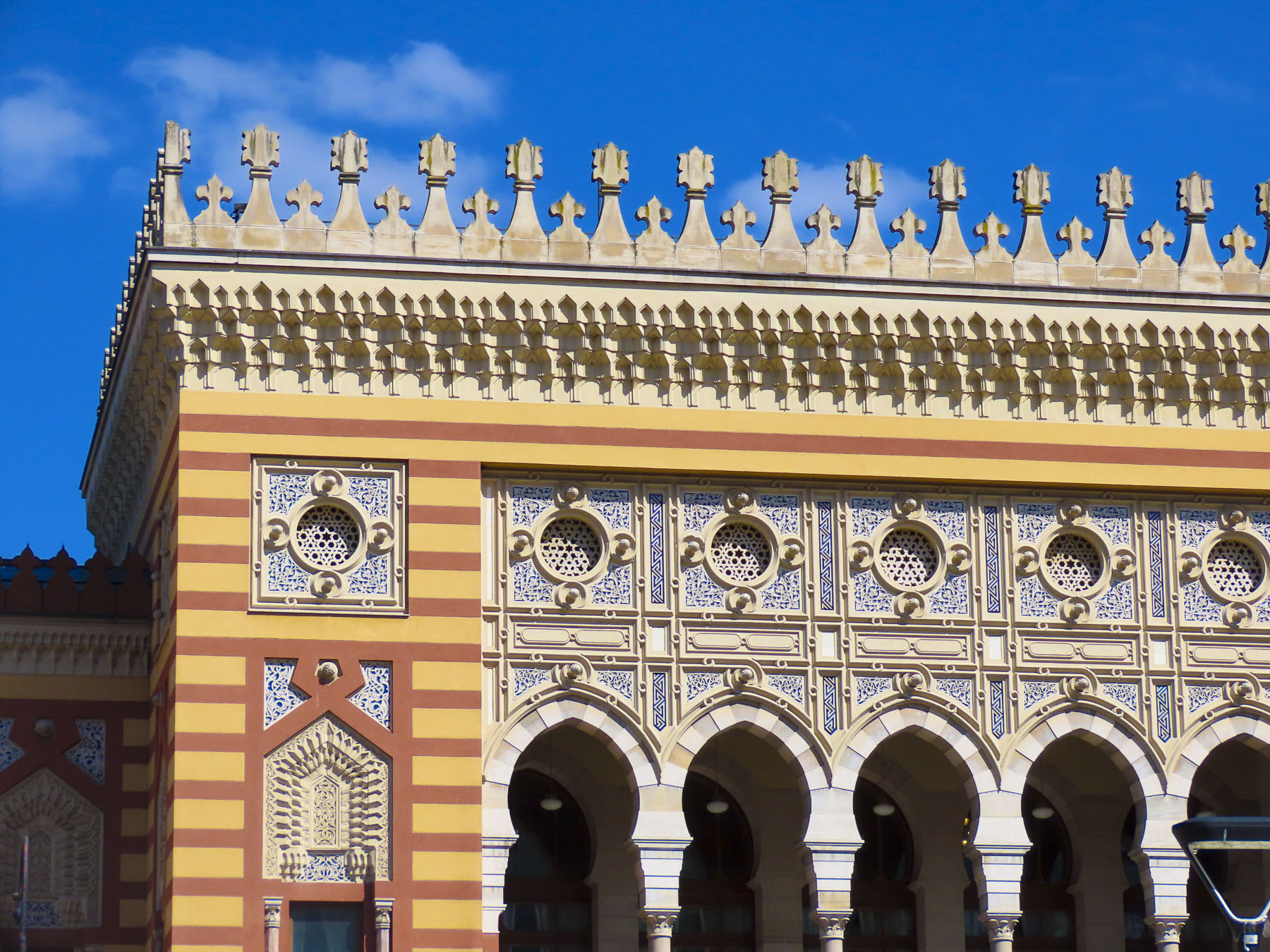
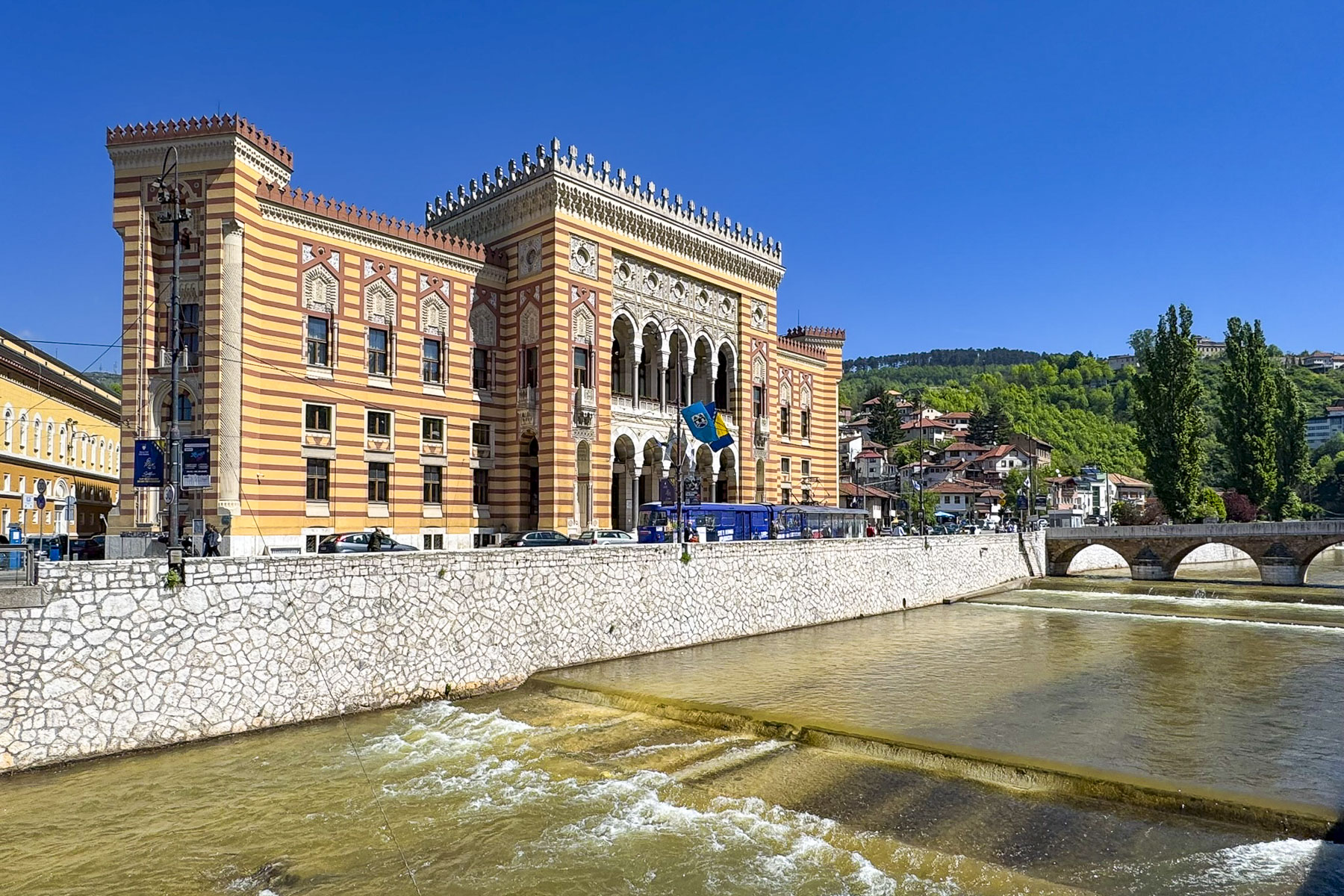
Farther along the riverside was Sarajevo’s City Hall, a late 19th century Moorish Revival style building with ornate geometric patterns and horseshoe arches. It was built during the Austro-Hungarian era to reflect Sarajevo’s importance as a cultural crossroads in the Balkans.

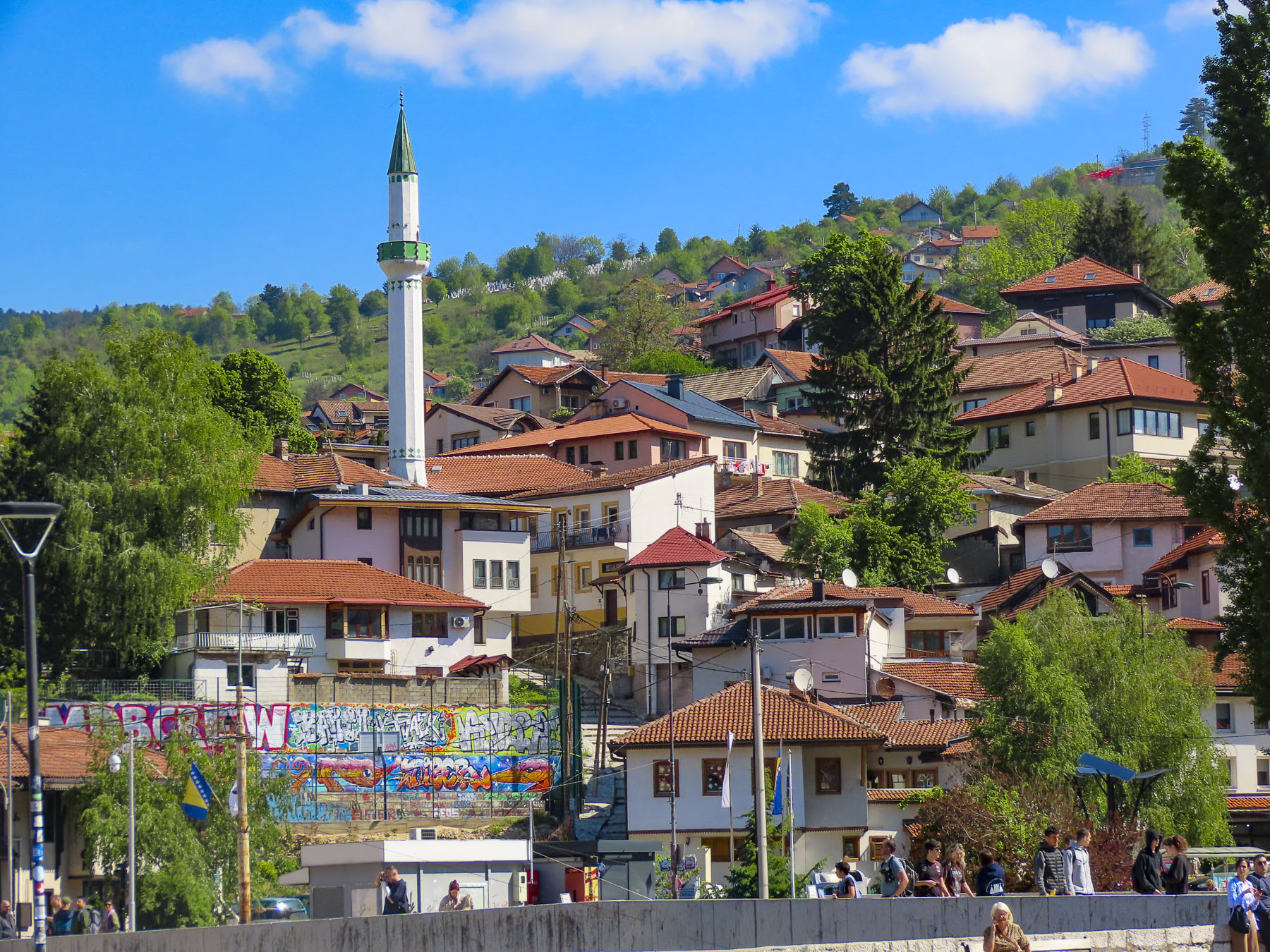
Later back in our hotel room we could hear the evening prayer, as the muezzin called from the city’s minarets, and it echoed across the valley. There is believed to be close to 100 mosques across Sarajevo, and from our hillside location we were amazed by the number of minarets we could see dotting the surrounding landscape.

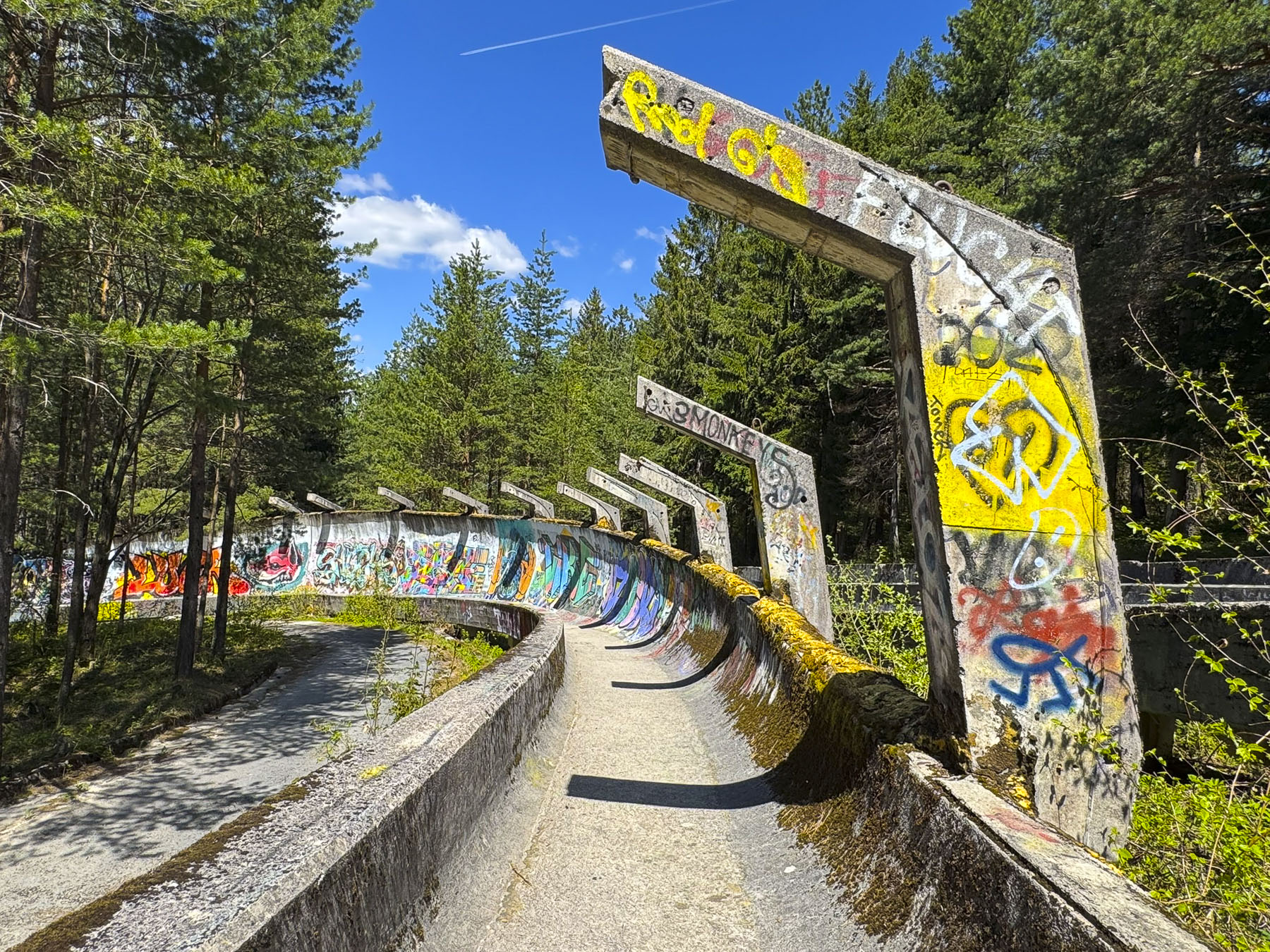
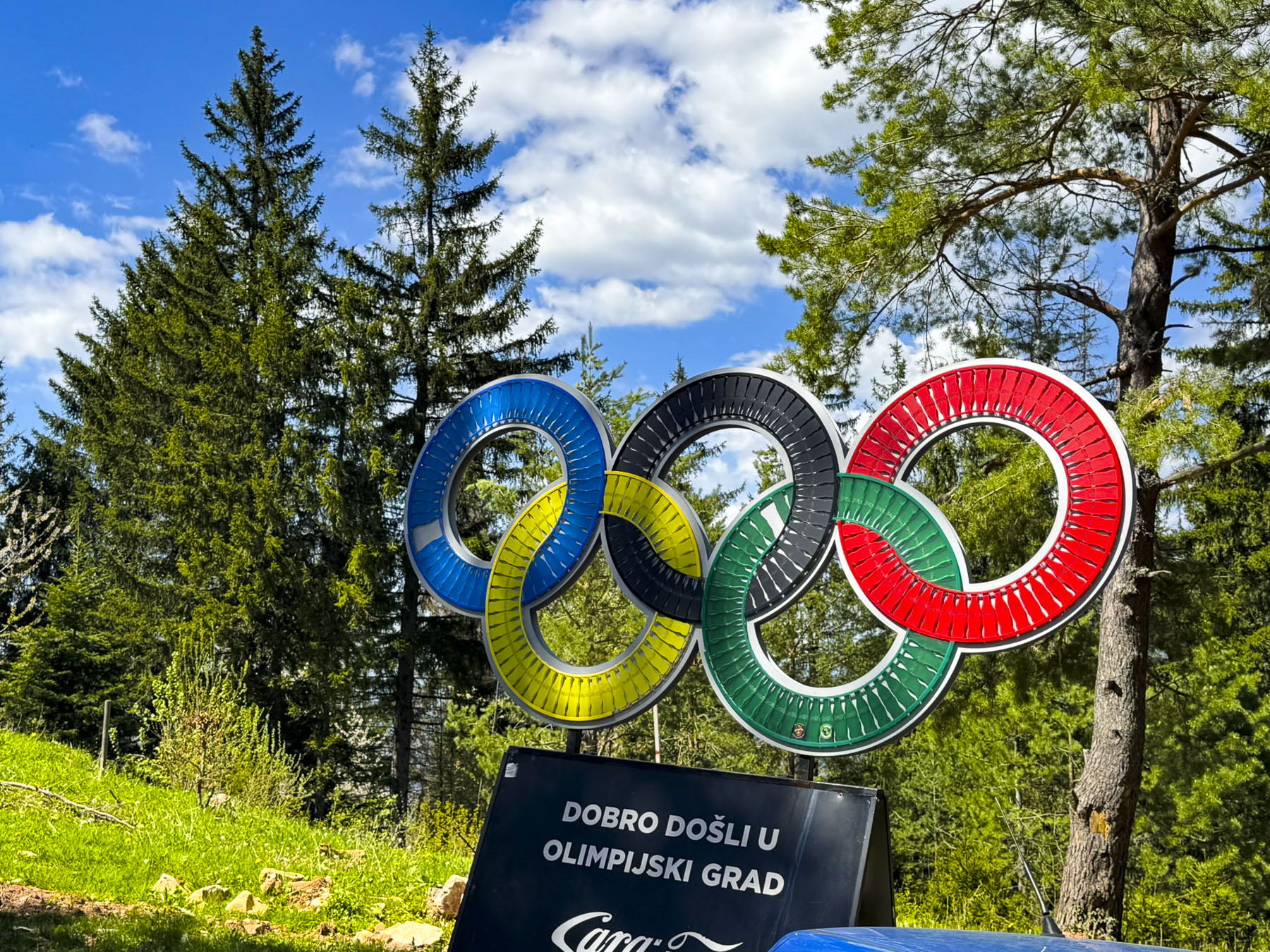
The next morning we decided to drive up Mt. Trebević, 1,629m (5,345ft) which we could see from our hotel room, to visit the site of 1984 Winter Olympic Game’s luge and bobsleigh competitions. It was an exciting event and the first time a Communist Bloc country hosted the Winter Olympics, which Donna and I remember watching on TV (that seriously dates us). Exciting not just for the tremendous speed of the sledders, but also for the background color commentary about a part of the world behind the “Iron Curtain,” that had mosques and minarets that we associated with deserts of Arabia, not snow-covered mountains. It was a part of the world unknown to us at the time, and it looked enthralling. Sadly, this location and the other mountaintop Olympic venues around Sarajevo were seized by Bosnian Serb forces during the 1990s war and used as artillery positions to bombard Sarajevo during the Serbs’ four-year siege of the city.

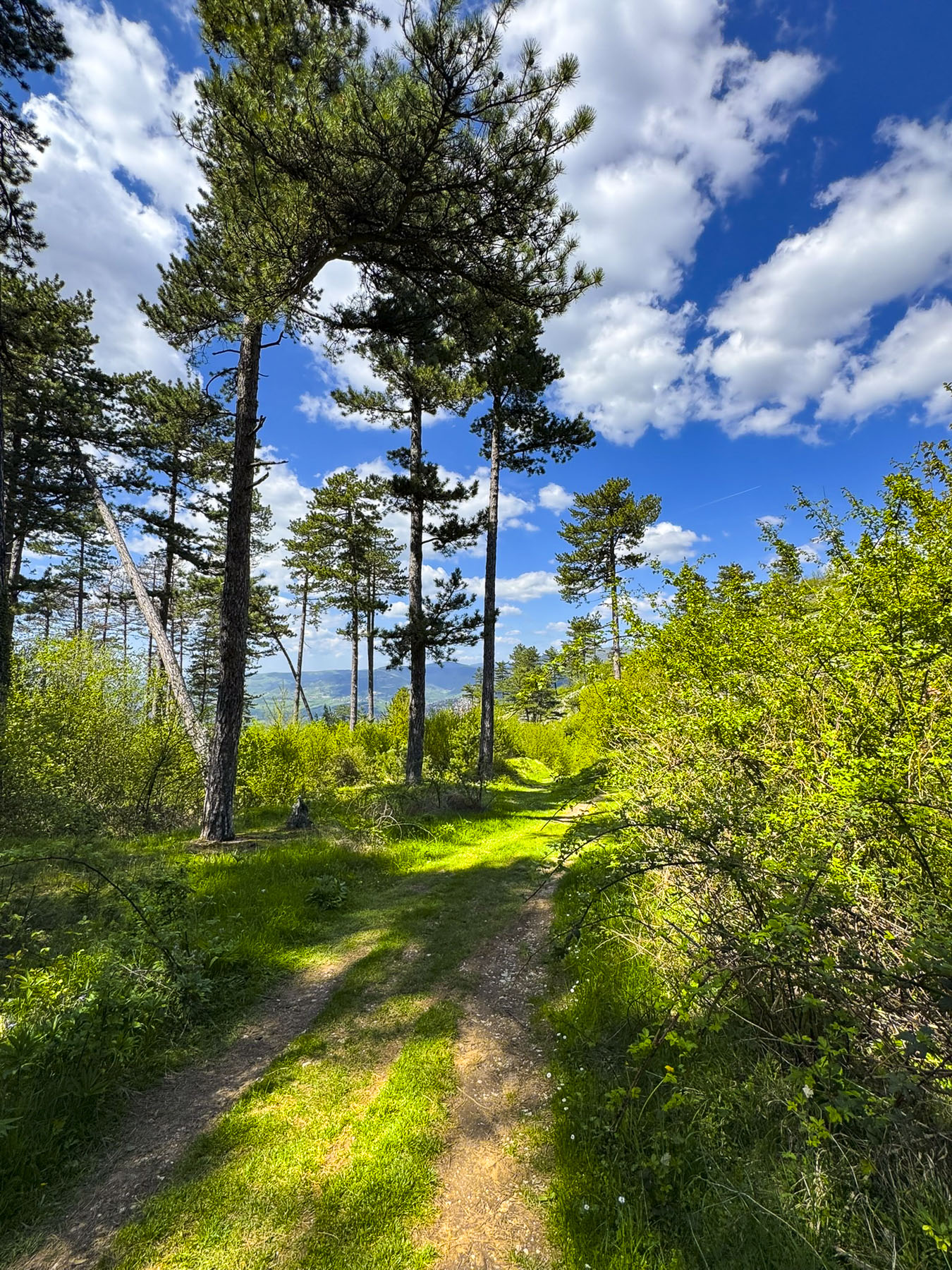
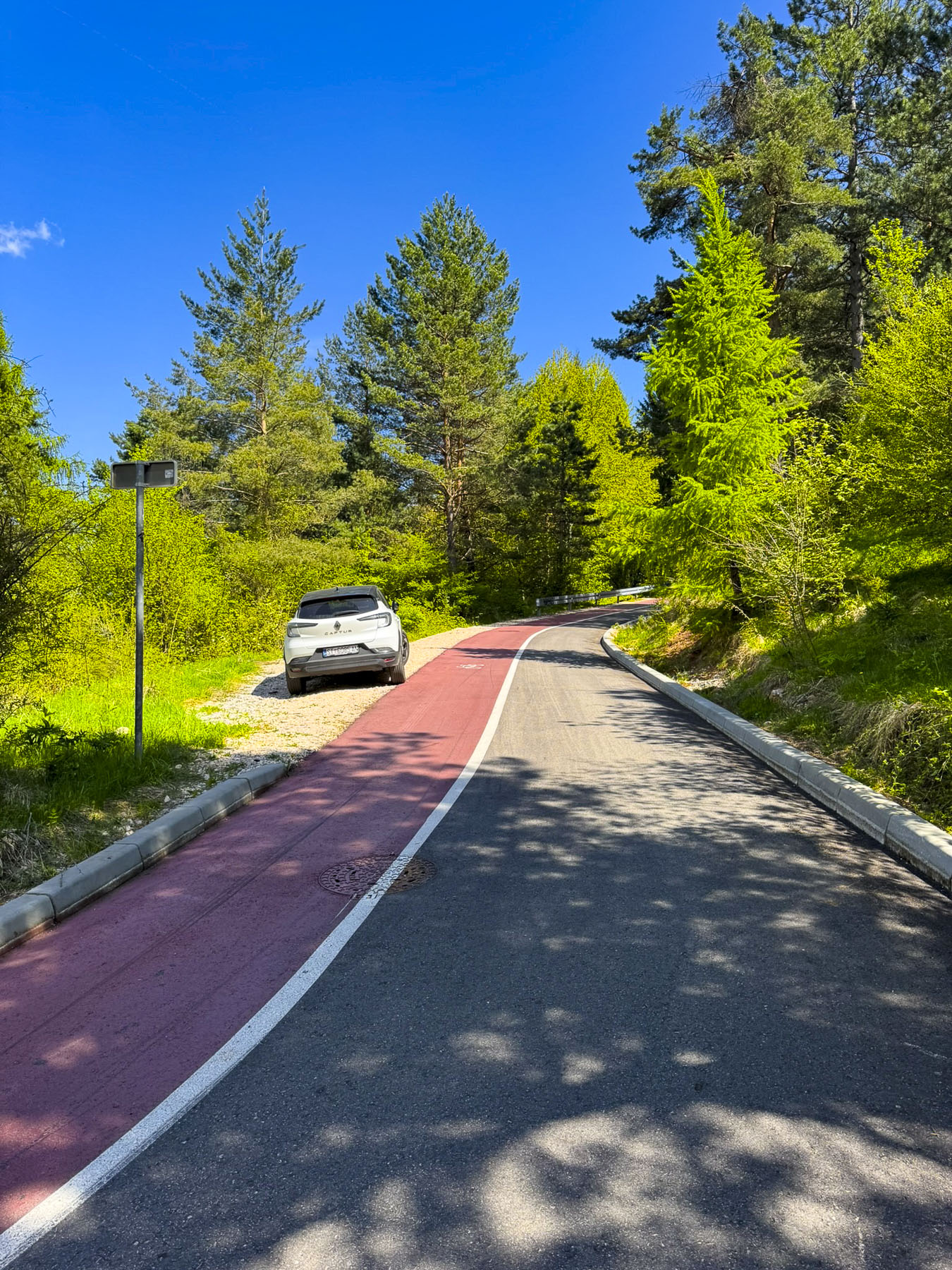
First, we had hoped to see an old 16th century Ottoman era high-arched stone span across the Miljacka River on the outskirts of the city, but the traffic in that direction came to a total standstill, and folks were turning around to find alternative routes. We decided to do the same and followed our Maps app’s directions up the steep mountainside along roads that twisted through small neighborhoods where round traffic mirrors were mounted on the side of homes to see oncoming cars around blind corners. The road continued to narrow and steepen to the point that we thought if we ever had to stop, we’d never get going uphill again, until the grade lessened and we passed the last house to drive through the forested hillside.

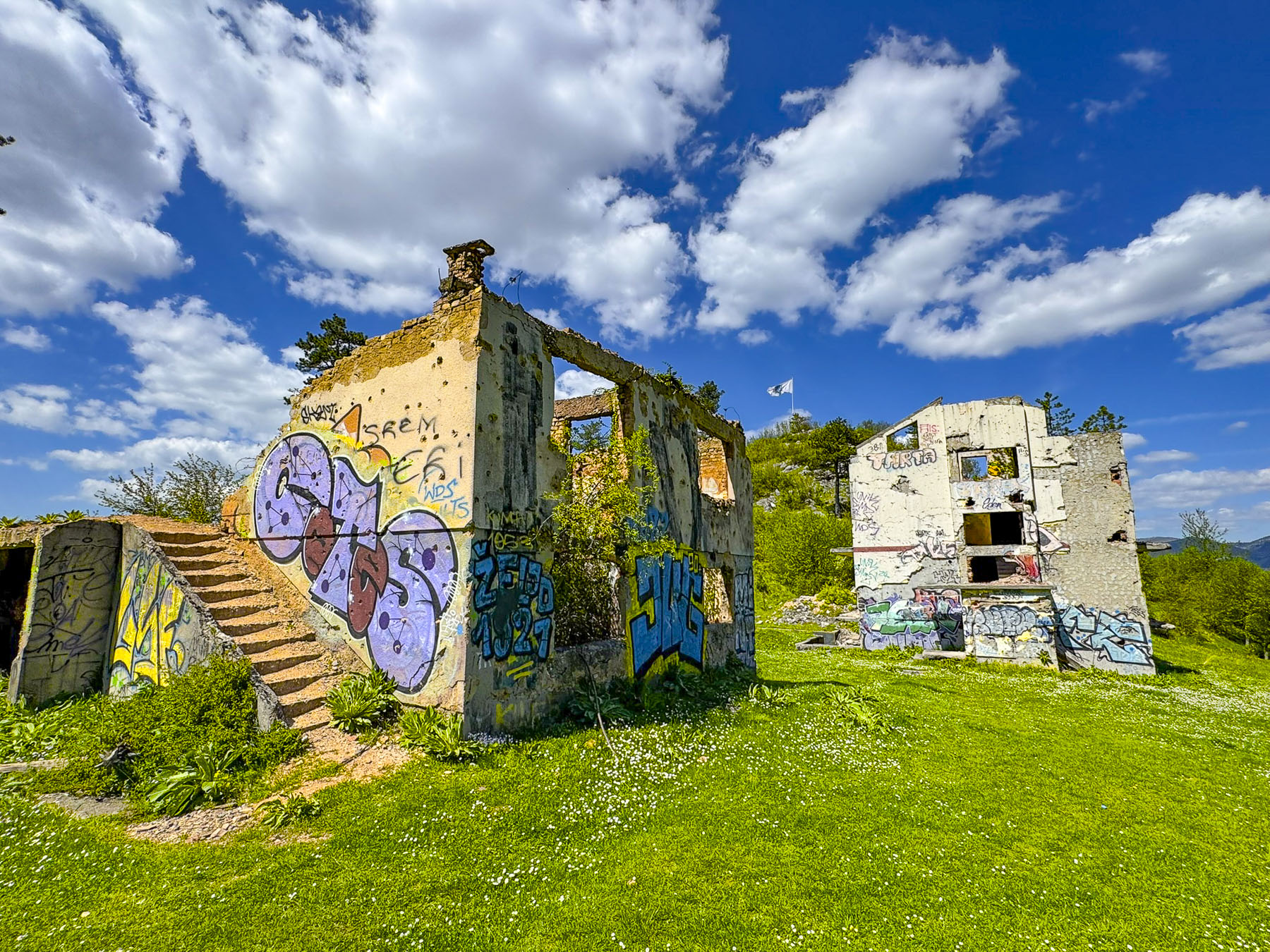
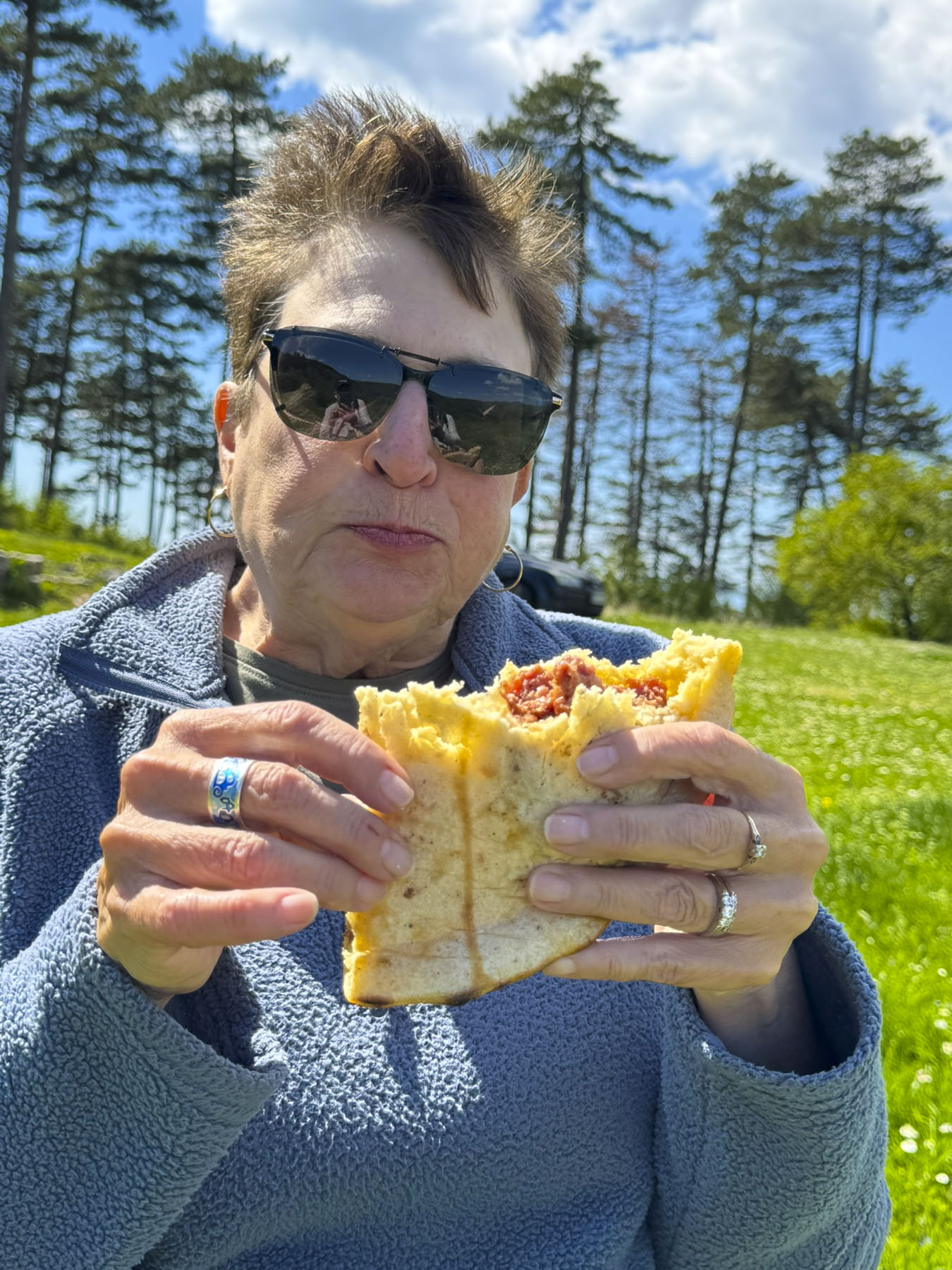
We stopped halfway up the mountainside to check out two battle-scarred buildings in a lush green meadow and happened upon a family of four having a picnic. The kids sprawled on the blanket, intent upon their electronic gamepads, while their mom set everything in order and their dad grilled in the shadow of one of the war-torn buildings. Everyone waved as we walked by. A few minutes later as we were walking in the lower part of the field the woman called to us as she crested the hillside, and she happily handed us a large Ćevapi, – small, skinless, charcoal grilled minced meat sausages, stuffed into a large Somun, a soft bread similar to pita, and garnished with finely chopped raw onions, ajvar (roasted red pepper sauce) or kajmak (a clotted cream spread). It’s the national dish of Bosnia and a specialty in Sarajevo. Though we didn’t share a common language multiple thank-yous were said and smiles shared all around. Her Ćevapi was so good! Coincidentally, only the day before we had promised ourselves we would have to taste one of those wonderful local dishes. The reason – the enticing aroma of grilled meats wafting from Ćevabdžinica Petica Ferhatović, considered to be the best Ćevabdžinica in Sarajevo, as we walked along Bravadžiluk.  It caused us to pause and check out what everyone was enjoying. If we hadn’t eaten a half hour earlier, we would have stopped, and we told ourselves we’d have to definitely try Ćevapi later.

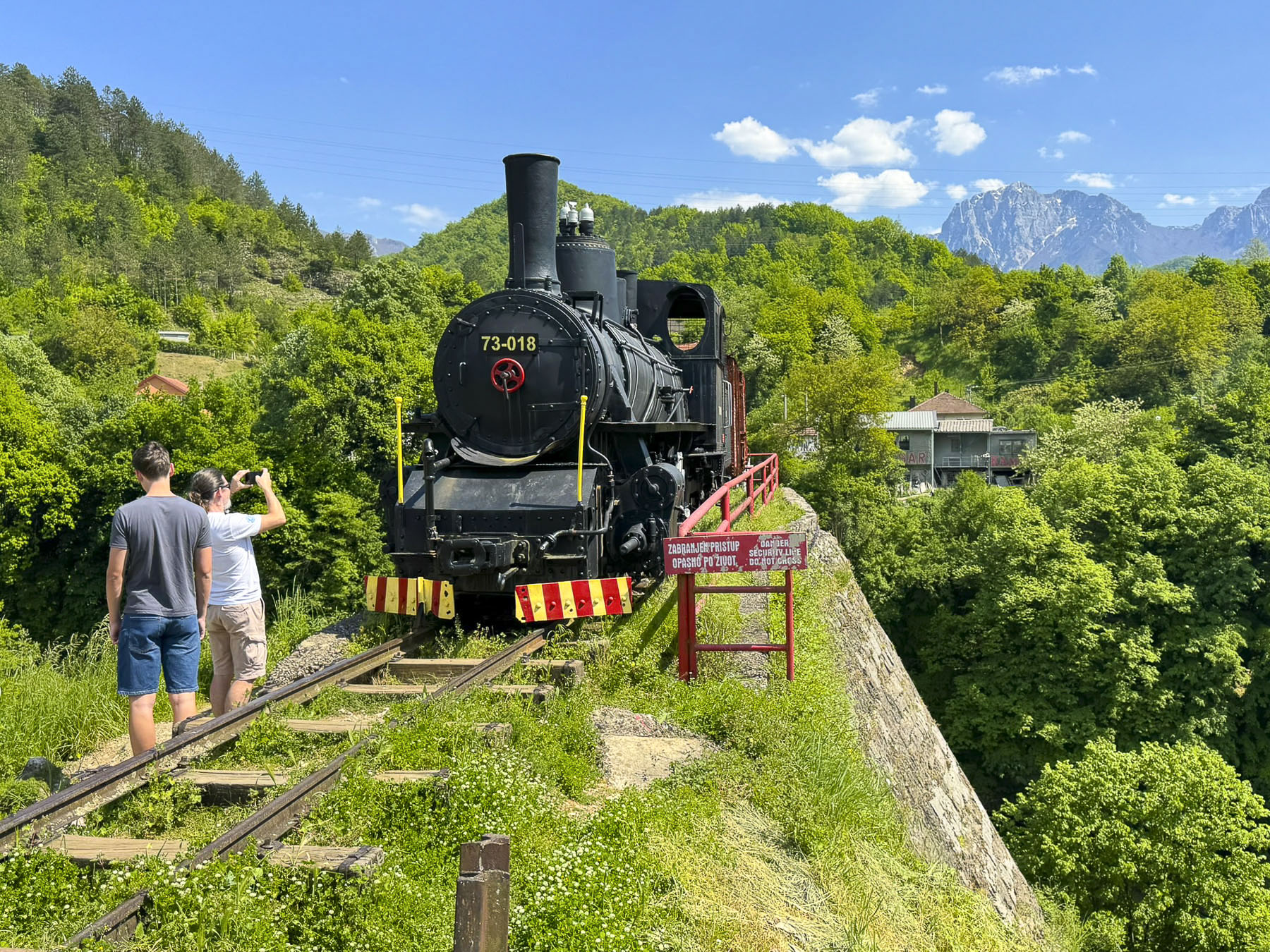
Covered with bullet holes and graffiti, the bobsleigh tracks, former symbols of international goodwill, are now grisly reminders of the brutal conflict that killed 11,000 people living in Sarajevo during the four-year siege of the city.

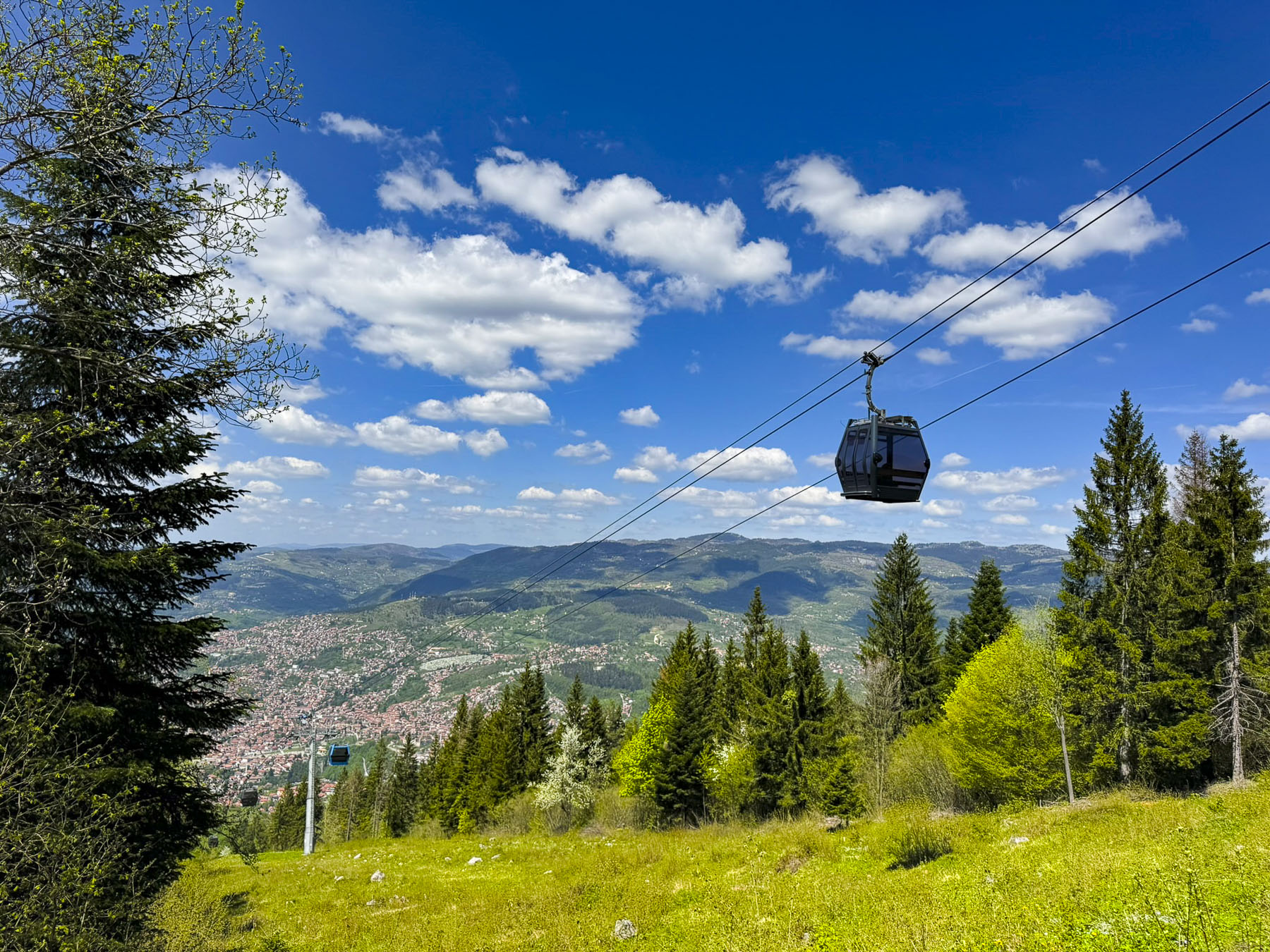
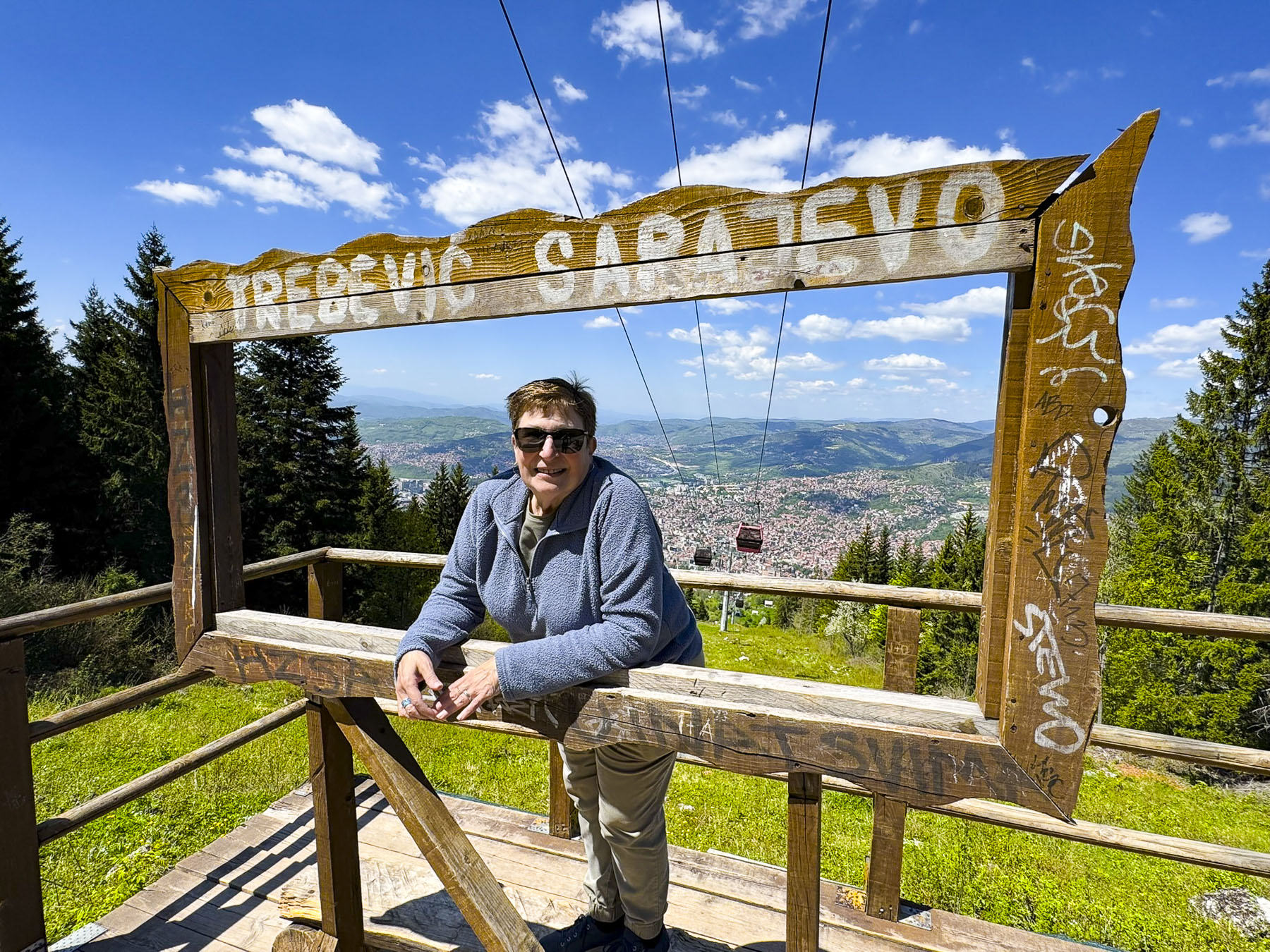
We continued on to the summit terminal of the Mt. Trebević ski lift where there were some spectacular views. The ski lift operates year-round and its lower terminal, Sarajevska žičara, is only a 9-minute walk from Sarajevo’s City Hall.

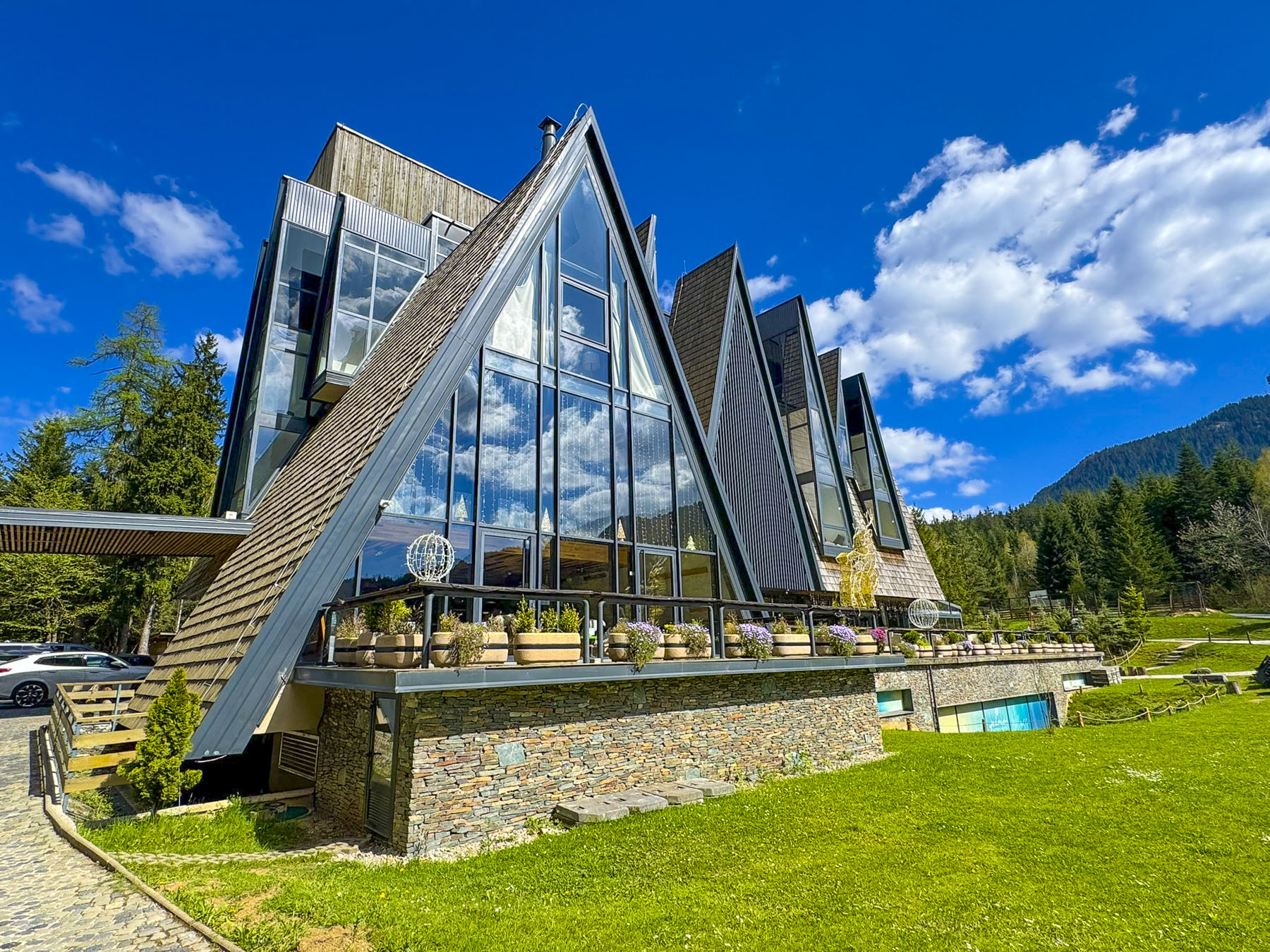
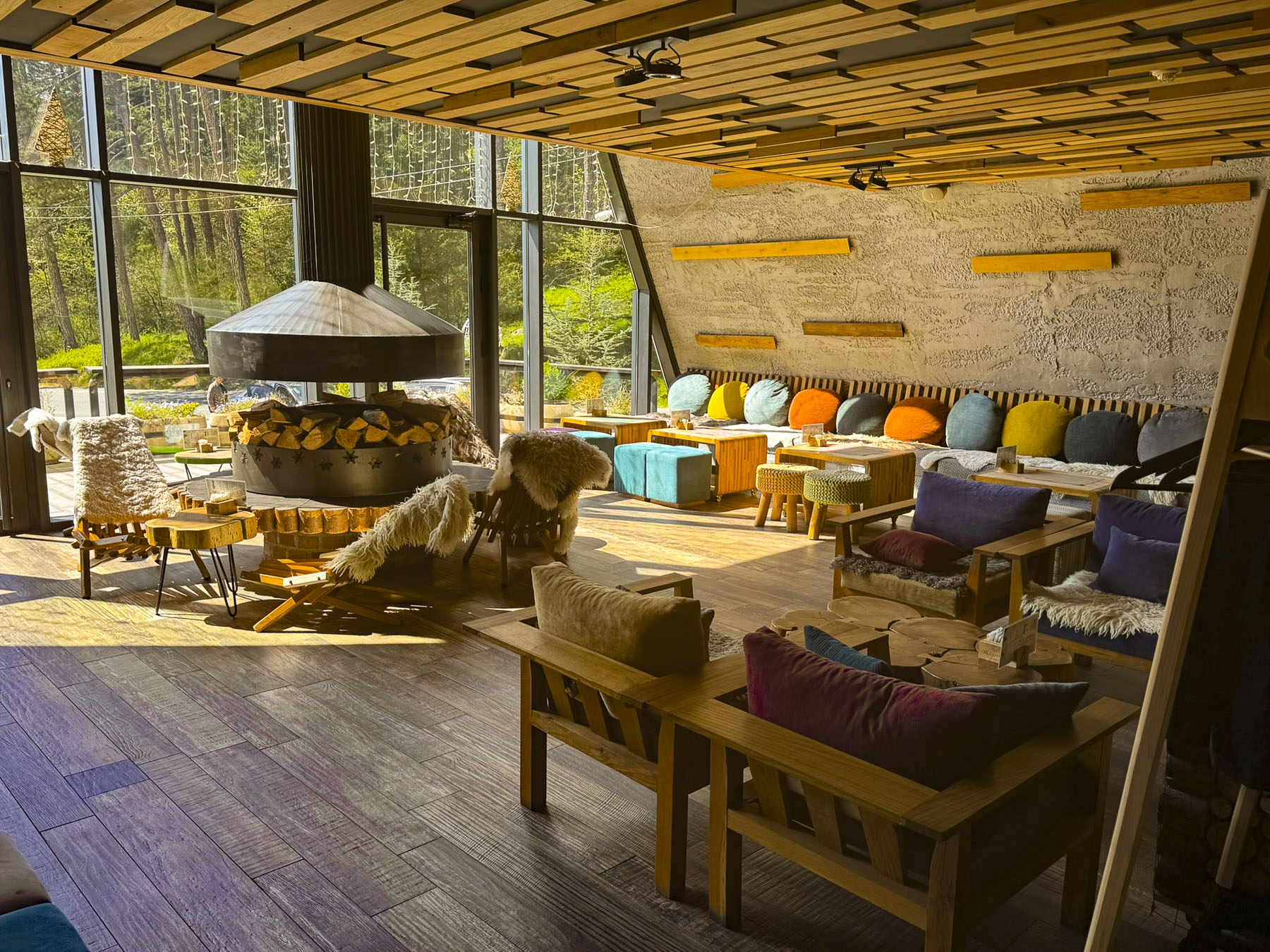
Later we had lunch atop the mountain at Hotel Pino, an attractive contemporarily designed 22 room lodging set in a forest clearing, before heading back down into Sarajevo to the Yellow Fortress, an Ottoman era cannon embattlement on Jekovac hill.

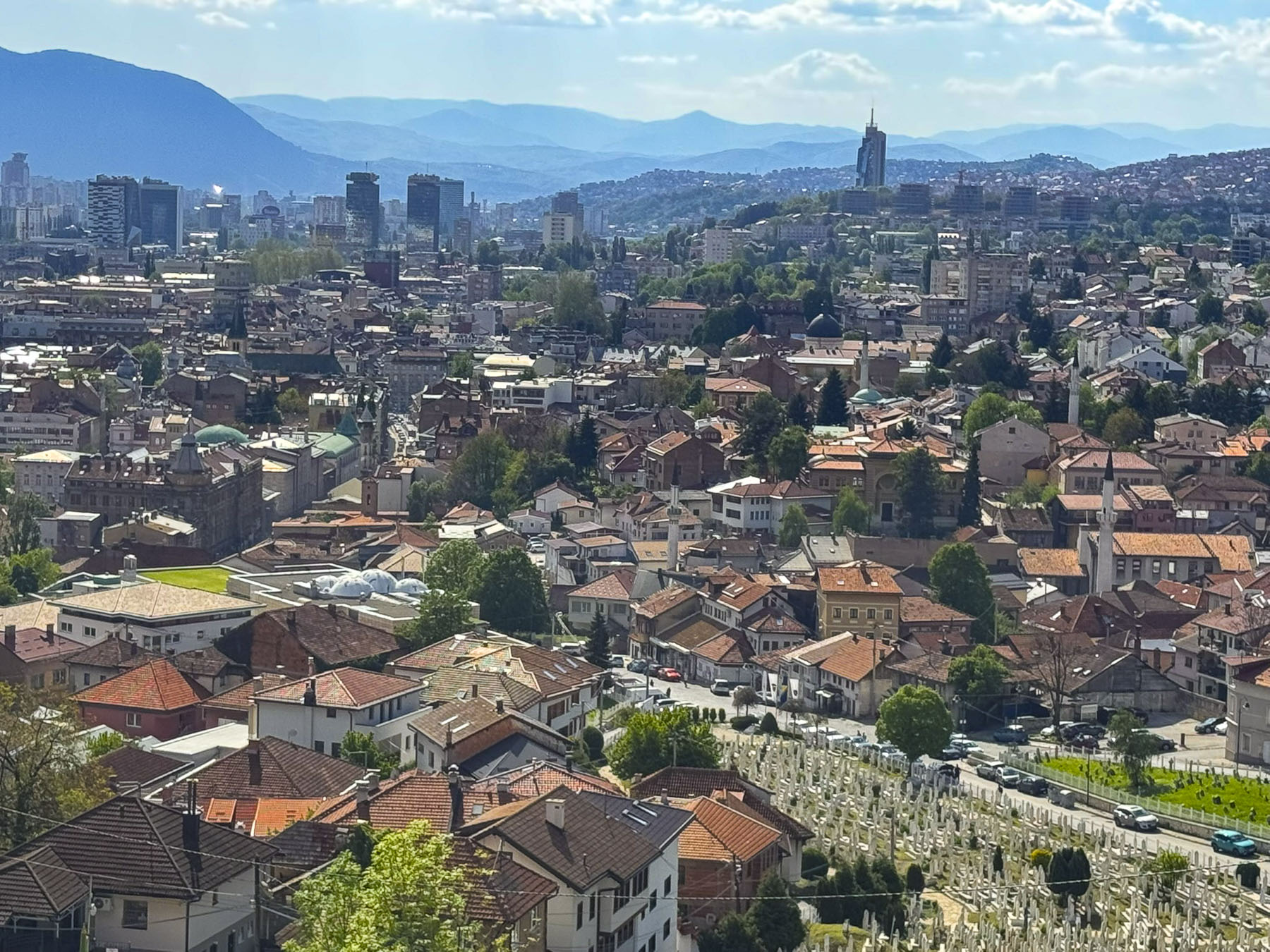
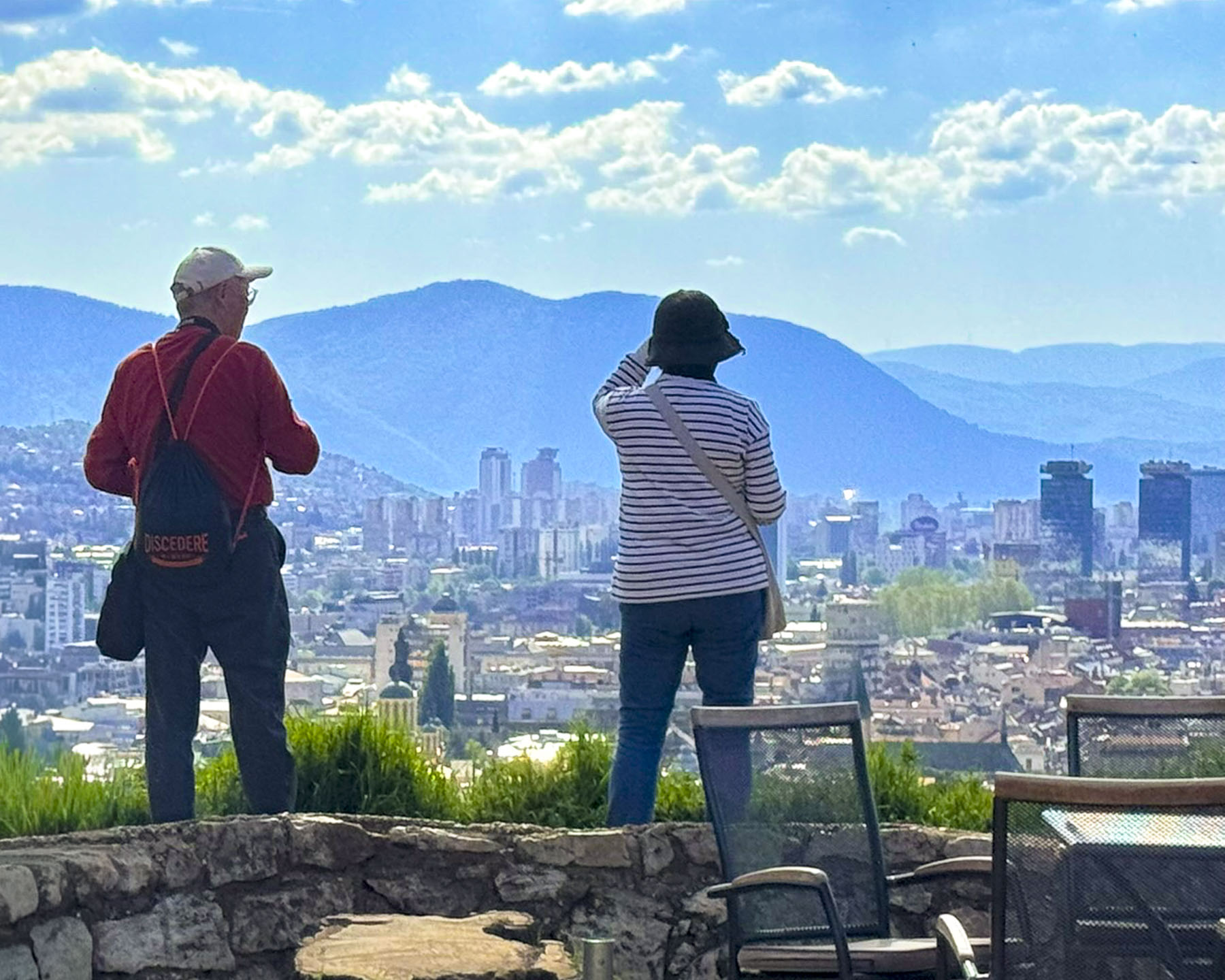
The panoramic views out over Sarajevo were beautiful in the late afternoon light and encompassed six centuries of the city’s history, from its earliest mosques on Baščaršija square to its modern skyline growing on the western horizon. A small café atop the roundel encouraged us to linger as we attempted to count the number of minarets scattered across the valley and hillsides and waited for the sun to set.

We thoroughly enjoyed visiting this resilient exotic city where everyone we encountered was so nice to us. We highly recommend visiting Sarajevo, as it is an engaging and very budget-friendly destination.

Till next time,

Craig & Donna
P.S. There are more than 20 museums in Sarajevo, with over 12 of them acknowledging the suffering which occurred during the Bosnia War. A few of them are: the Siege of Sarajevo Museum, Sarajevo Tunnel of Hope (Tunel Spasa), Museum of Crimes Against Humanity and Genocide, War Childhood Museum, and Galerija 11/07/95, a gallery-museum dedicated to the victims of the Srebrenica genocide.