An Albanian Road Trip: Theth – Majestic Isolation in the Accursed Mountains & A Castle in Kruje

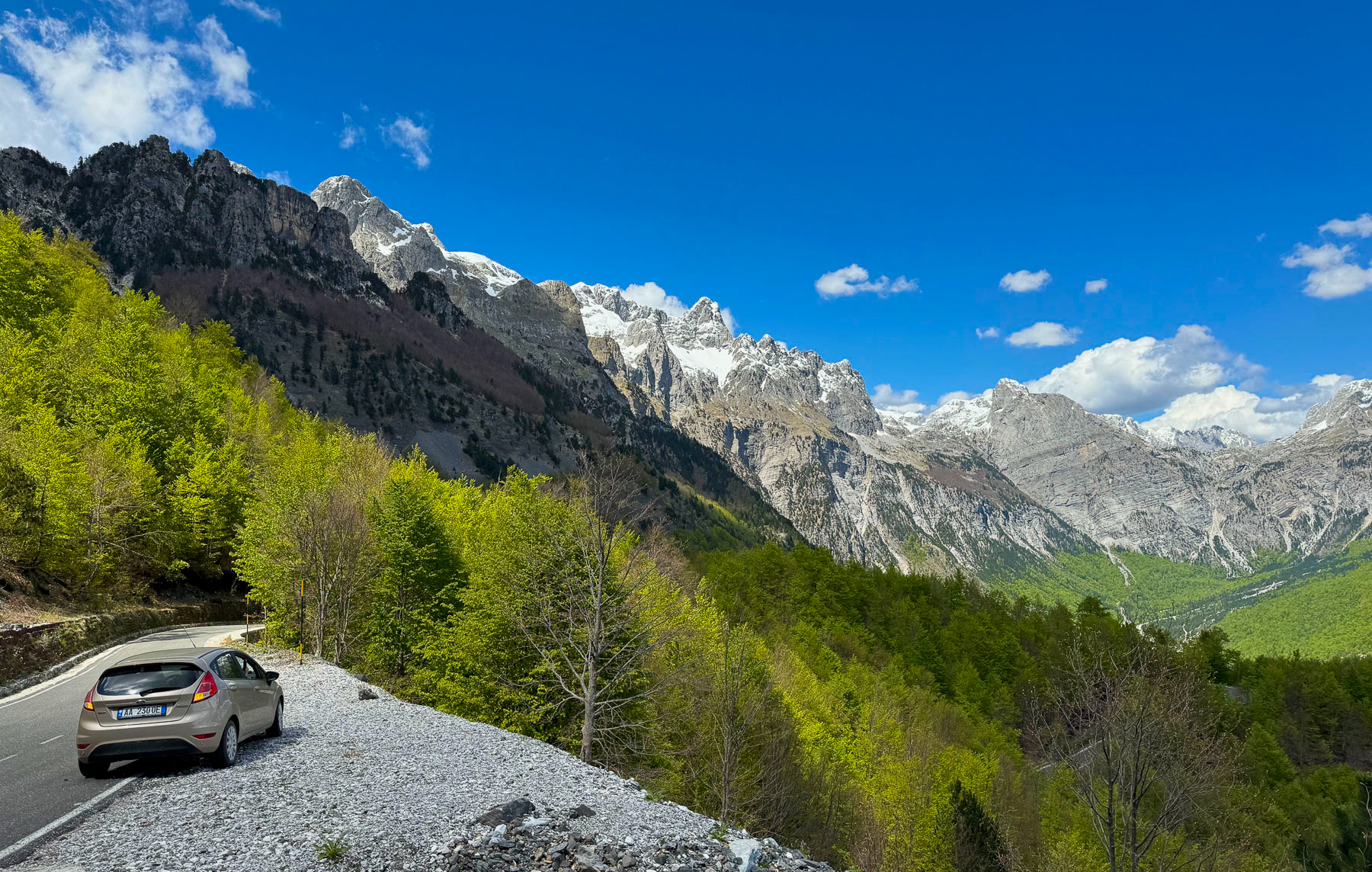
The day was crisp, the sky a clear blue, the mountains beautiful with their peaks still covered with late spring snow. We zigged and zagged our way along the infamous SH21, higher into the mountains, around many challenging blind corners and switchbacks. In spots the road narrowed to a single lane, but there were pullover areas to allow for oncoming cars to pass.  Fortunately, in late April we had the roads and the overlooks in this pristine region mostly to ourselves. The views were breathtaking. A half-hearted complaint if any, there just were not enough places to stop safely to enjoy the picturesque landscapes.
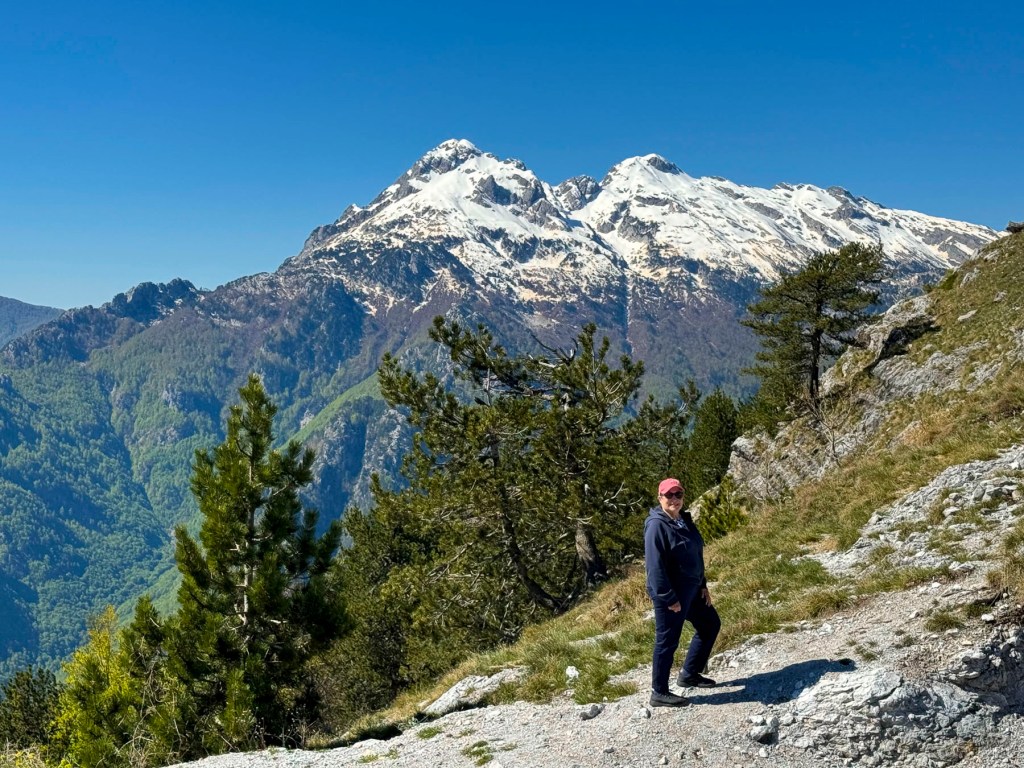
After cresting the Thore Mountain Pass, at 5,547ft the highest along the route, we stopped at the Monument commemorating Edith Durham, a British anthropologist who championed Albanian independence in the early 1900’s, and was lovingly called, “Queen of the Highlanders.” After that we could have coasted all the way into Theth, like Olympic bobsledders, but we were very judicious with braking.

Centuries ago, the inhospitable, saw-toothed mountains of northern Albania were a sanctuary for folks fleeing invaders. It’s a massive area at the southern end of the Dinaric Mountain Range, with nearly twenty mountain peaks having 9000 ft high summits, and it encompasses the border region where Albania, Montenegro, and Kosovo meet. The Dinaric Mountains are the spine of the Balkans, stretching from Slovenia through Croatia, Bosnia and Herzegovina, Serbia, Montenegro, and Kosovo before ending in Albania, where today they are called the Albanian Alps. A much friendlier name to encourage tourism than the Accursed Mountains, or “Bjeshkët e Namuna” as the original Albanian name goes.
There are three prevalent legends as to how the mountains got that original title, but hardship is at the core of each. One of the earliest legends credited the creation of the torturously steep mountains to the Devil when he escaped from Hell for a day. While there are streams and waterfalls throughout the mountains, they are not easily accessible and are often dry during the summer months. These dry conditions explained the tale of a mother fleeing her burning village. Her husband was killed in the fighting with Ottoman invaders, and she took her children into the mountains to save them from being forcibly converted to Islam. The days were hot, the terrain steep and unforgiving; her children were thirsty after three days without any water. Distraught, she cursed the mountains for causing their suffering. It’s also believed that soldiers struggling to cross the treacherous mountain terrain cursed the steep slopes, and most likely used many foul adjectives to make their point.

Footpaths and donkey trails were the only way into Theth for a millennium. The village didn’t have a school until 1917. The American Red Cross arrived in Theth in 1921 to help expand the educational opportunities in the Shala Valley. The American journalist Rose Wilder Lane tells of this school building mission in her 1922 book Peaks of Shala. Communication with the modern world didn’t expand until the first dirt track, a single lane, serpentine road that crested numerous mountain passes, was carved into the side of the masiffs that isolated the remote valley in 1936. It took another thirty years before the village received electricity in 1966.  
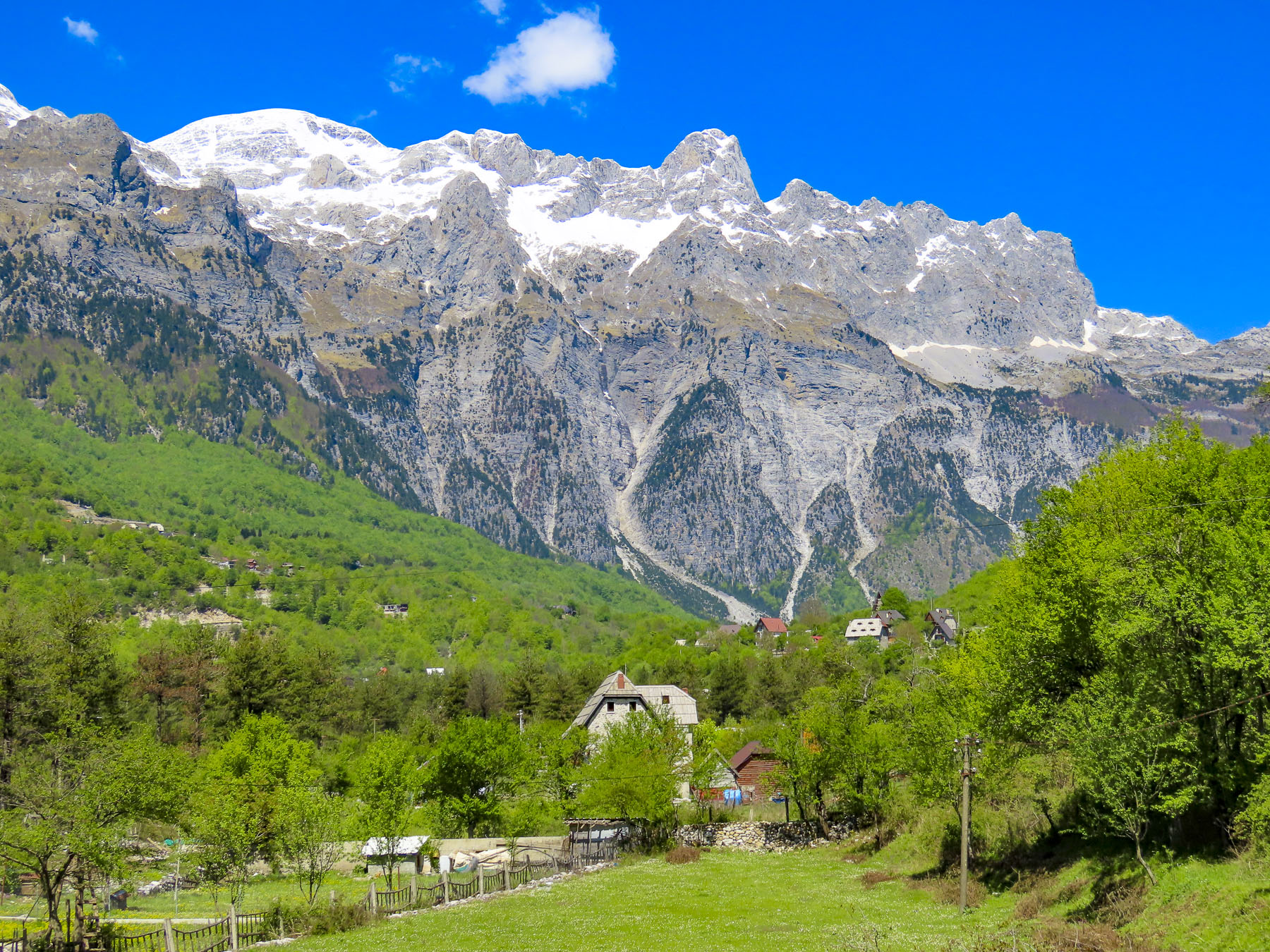
It is difficult to find accurate figures on the ancient population of Theth, which in some instances includes the entire Shala valley and its nine hamlets, and at other times just the village of Theth itself. But it’s thought that at the end of Albania’s Communist regime in 1991 the remote area had a population of roughly 3000 folks in 700 households, though it is much less today. Interestingly, most of these villagers claim Zog Diti as a common ancestor of the Shala tribe or clan. Oral tradition relates that the name Shala is derived from shalë, a saddle, a gift he was given by his brothers, when led his family into the northernmost reaches of the Shala Valley. They fled from the region of Pashtrik, during the Ottoman invasion of Albania in the early decades of the 15th century to preserve their Catholic faith.
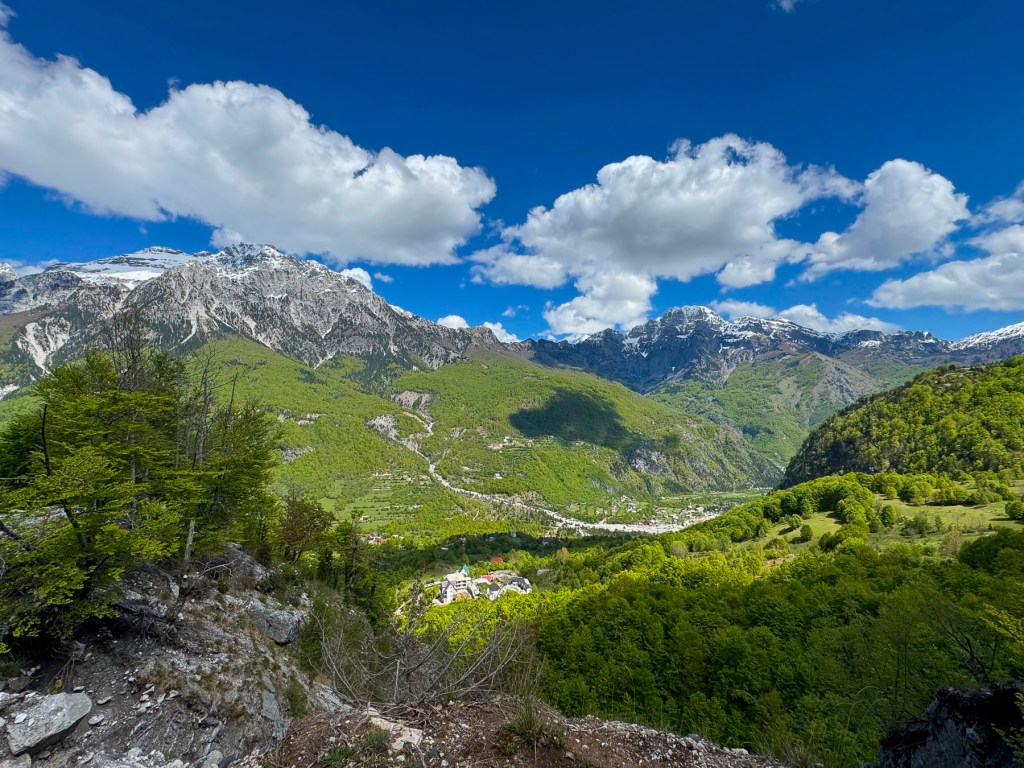
A road changes everything. While it brought progress in its early years, it eventually was the route of exodus for families seeking non-agrarian jobs for themselves and better educational opportunities for their children. It was extremely difficult to recruit teachers to live in the “wilderness.” Currently Theth has about 370 summer residents that return to support the tourist season, but only a hearty, resourceful handful of residents winter over in the often snowbound valley.

Today the village, with its modest tourist infrastructure, is the jumping off spot to pursue outdoor activities in the northern Albanian park system that includes Nikaj-Mertur Regional Nature Park, Valbona Valley National Park, and Theth National Park. This vast area encompasses many diverse ecosystems that include oak and beech forests at lower elevations that transition to pine trees and scree-covered slopes the higher up the mountains you go. The region is home to over 50 bird species, including kestrels and eagles. And if you are lucky enough you can spot gray wolves, wild goats, brown bears, and roe deer.

We arrived at the Royal Land Hotel & Restaurant as the shadows were lengthening and the sun skimmed the snowy ridge across the valley from the hotel. Just a week earlier the hotel had reopened for the season, and we, along with several other couples, were some of the hotel’s first guests of the year. After checking in, we sat at picnic tables on the terrace outside, sipping glasses of their homemade red wine, and watching the inn keeper’s son rototill the fertile dark soil of a garden plot. The sky stayed light for several more hours, but the sun had disappeared behind the mountains behind us. The lodge is very rustic with fourteen cedar-planked rooms, and a glass enclosed dining area, where each table has fantastic views of the surrounding mountains. The Inn’s restaurant is open to the public, as are most of the hotel restaurants in the valley. The family that owns the hotel was very friendly and helpful. Their breakfast buffet and home cooked dinners were delicious, with many of the items on the menu homemade or locally sourced. The sky was clear that evening and the stars brilliant across the night sky. Early the next morning, moonlight filled our room.

Hiking is the main activity in the Shala Valley, and we eagerly headed down into the village to explore the valley. Many folks choose to trek the popular Theth to Valbona trail, a nine-hour hike one way, covering 11 miles that takes you through a pristine high alpine wilderness. Being the city folks we are, we stayed in the relatively flat flood plain of the Lumi i Shalës which tumults from its source in the mountains north of the village. Near the bridge that crossed the river we spotted an understated monument that upon closer inspection commemorated the schools built by the American Red Cross in the Shala Valley.

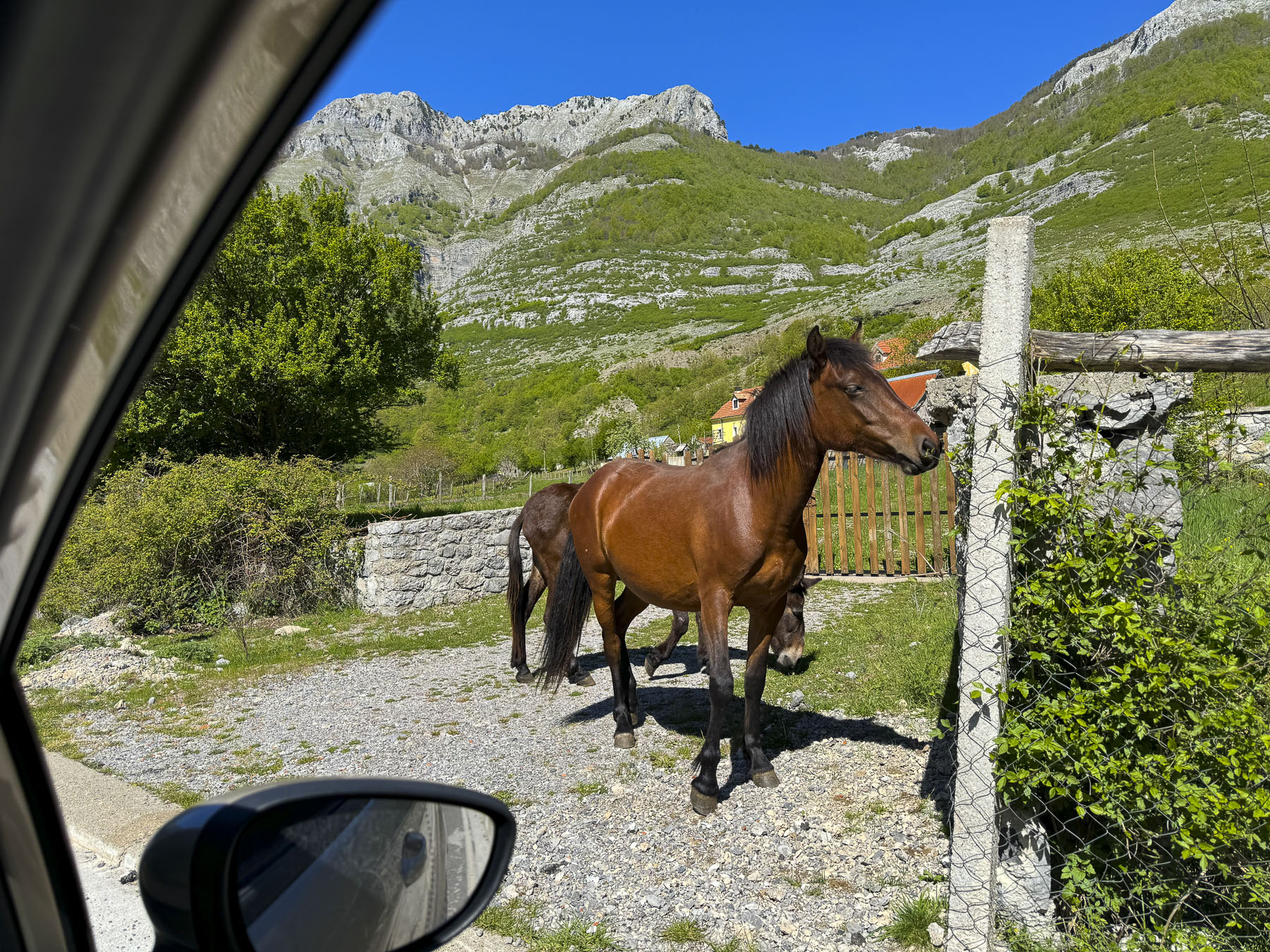
Farther along we reached Kisha e Thethit, Theth’s iconic church, and could hear music softly emanating from the Sunday service being held inside. Built in 1892, the church is a strong stone building with a steeply pitched roof, and a belltower, that looks like a small medieval castle, ready to withstand a siege. Though, during Albania’s communist era, the building was used as a health center. Nearby a sign pointed the way to the trailhead for the Theth – Valbonë hike. Sheep contentedly grazed as their shepherd checked his cell phone. Untethered horses sauntered nearby.

From the church we could see Kulla e Pajtimit, the Reconciliation Tower, or “Lock-in Tower,” and headed there. The formidable two-story stronghold, with three small windows, was built four centuries ago, and served a dual purpose; to provide shelter for the villagers in times of trouble, and to serve as the reconciliation tower, a neutral ground where disputes within the village were resolved by a council of elders. In more serious cases that involved a murder or threat of murder for revenge, the accused party would be locked in the tower for fifteen days as a cooling off period, while the elders tried to reconcile all parties affected by the crime.

This millennia old tribal custom was widespread throughout Albania and was part of the “Code of the Mountains,” that was passed down through an oral history tradition from generation to generation until it was codified in the 15th century by Lekë Dukagjini, an Albanian nobleman and contemporary of Skanderbeg, an Albanian hero. Since then, the tribal laws have been known as the Kanun of Lekë Dukagjini. The kanun has an extensive set of 1263 rules that cover everything from beekeeping to marriage and honor. It is most famously known for obligating families to partake in gjakmarrja, (blood feuds), that permitted koka për kokë (a head for a head), and hakmarrja, (vendettas), to maintain honor by seeking revenge. The heavy hand of Albania’s communist government had some success in outlawing this practice, but unfortunately, it’s still an issue for law enforcement today.

Later we stopped for lunch at the Thethi Paradise restaurant and enjoyed fresh trout, grilled lamb, and a few Korça beers, at an umbrella covered table on the patio.Surrounded by mountains from end to end, the Theth Valley was absolutely stunning and serenely tranquil in its “majestic isolation,” borrowing a phrase from Edith Durham.
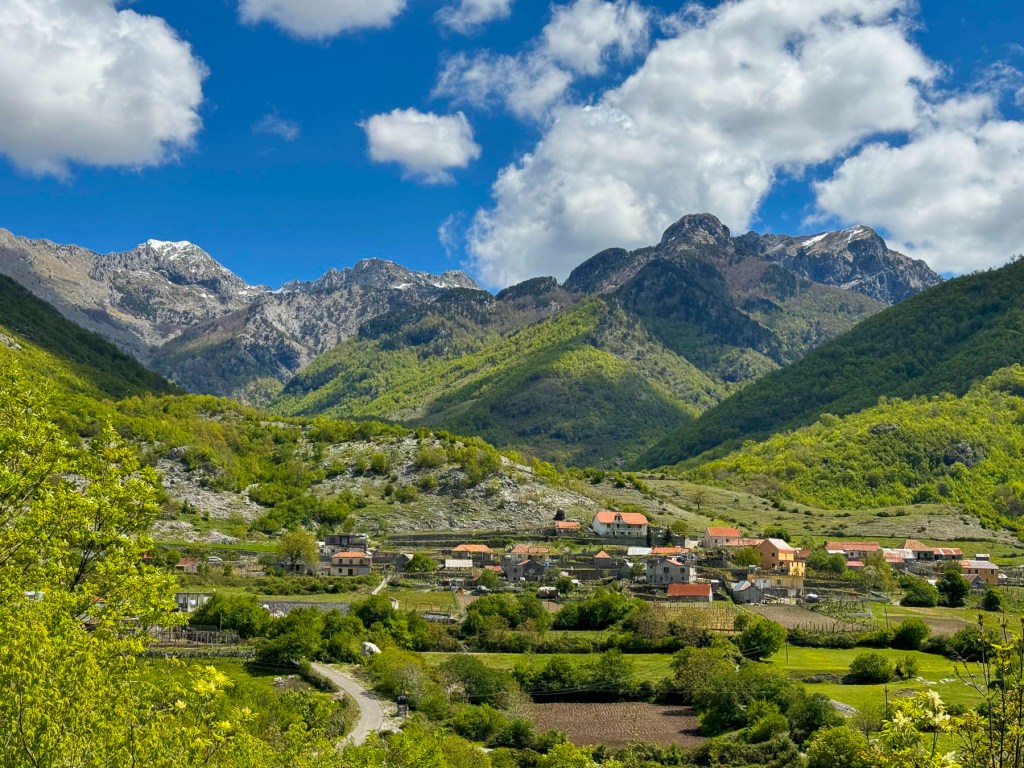
The next morning, we retraced our drive across the mountains to Shkodër before continuing south to the Lezhë Castle and Kruje, where we spent the night. The drive out of the valley was just as beautiful as the drive in.

Our only companions on this quiet stretch were a flock of sheep being herded down the road, and a sow followed by her piglets crossing behind her. The drive was uneventful until the bridge over the river ahead of us was closed for road repairs, and we were directed to follow a deeply rutted farm track through the countryside for several miles. The road surface was so unforgiving that the car bottomed out several times regardless of how slowly we were going. At this point we didn’t have a cell signal, and there were no other detour signs, so we had to dead reckon our way back to the highway. The rental car company had cautioned us that they prohibited driving on dirt roads, and that we would be fined if their satellite tracking recorded us doing so. We kept our fingers crossed.

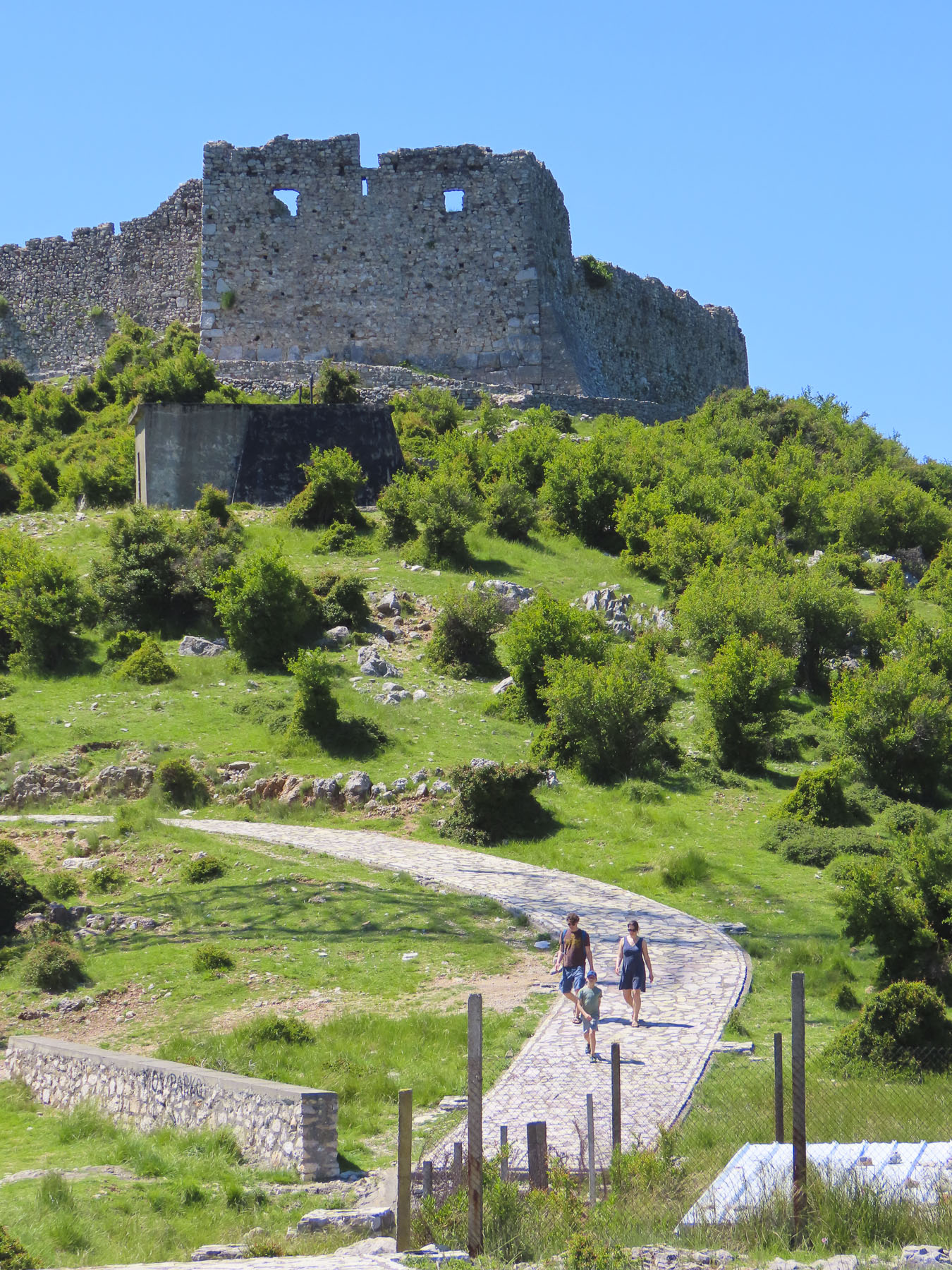
It was easy to spot Lezhë Castle, perched high on a hill, from miles away. Though getting there was a little more challenging and involved driving on some of the steepest roads we ever encountered. Think hills of San Francisco steep, but worse.

The castle had a commanding view of the surrounding terrain, though especially important was its western vista, where ships on the Adriatic Sea could be spied before they reached Albania’s shore. It was in this castle in 1444 that Skanderbeg, Albania’s national hero, rallied his countrymen to resist the occupation of the country by the Ottoman Empire. The best view of the castle was from the parking area. The area behind the walls is left in a rather rustic state with tumbled ruins and cisterns to explore. Overlooking the sea, we enjoyed a picnic lunch in the shade of the ramparts. 
The hillside town of Kruje, set high above the Tirana Valley, was our last destination in Albania. On our way to the Hotel Panorama we passed a large statue of Skanderbeg astride his steed, which commanded an overlook in a city park.

Albania’s national identify, a spirit of perseverance and resistance, is intimately linked to Skanderbeg and Kruje, his hometown. Born into the noble Kastrioti family during the early 1400’s, his parents were forced to give him to the Ottoman Empire as part of Sultan’s devşirme system. This “child tax” was to ensure a family’s loyalty to the sultan. Only one son could be taken. These children were then taught the Koran, given an education, and raised as Muslims, before being sent to serve in the Ottoman Empire’s Janissary corps, a highly trained infantry. Skanderbeg excelled as a skilled Ottoman soldier and rose through the ranks. But after a 1443 battle in Serbia he renounced Islam and escaped back to his homeland and reclaimed his title. A year later he led a league of Albanian Princes in revolt against the Ottoman occupiers. For over twenty years he rallied his fellow Albanians to repel 13 invasions, and was considered a hero throughout a Europe that feared the expansion of Islam across the continent. The citadel in Kruje was his headquarters during this time and endured three intensive sieges. Ten years after Skanderbeg’s death the castle fell and the Albanians relinquished their independence to the Ottomans for 400 years.

Its name said it all, and the Hotel Panorama’s guest rooms and rooftop terrace were the perfect spot for views out over the town’s ancient caravan market and Kruje castle. An arched stairway descended under the hotel from the main street and led to the historic bazaar, which is over 400 years old. A 16th century minaret towered above us.
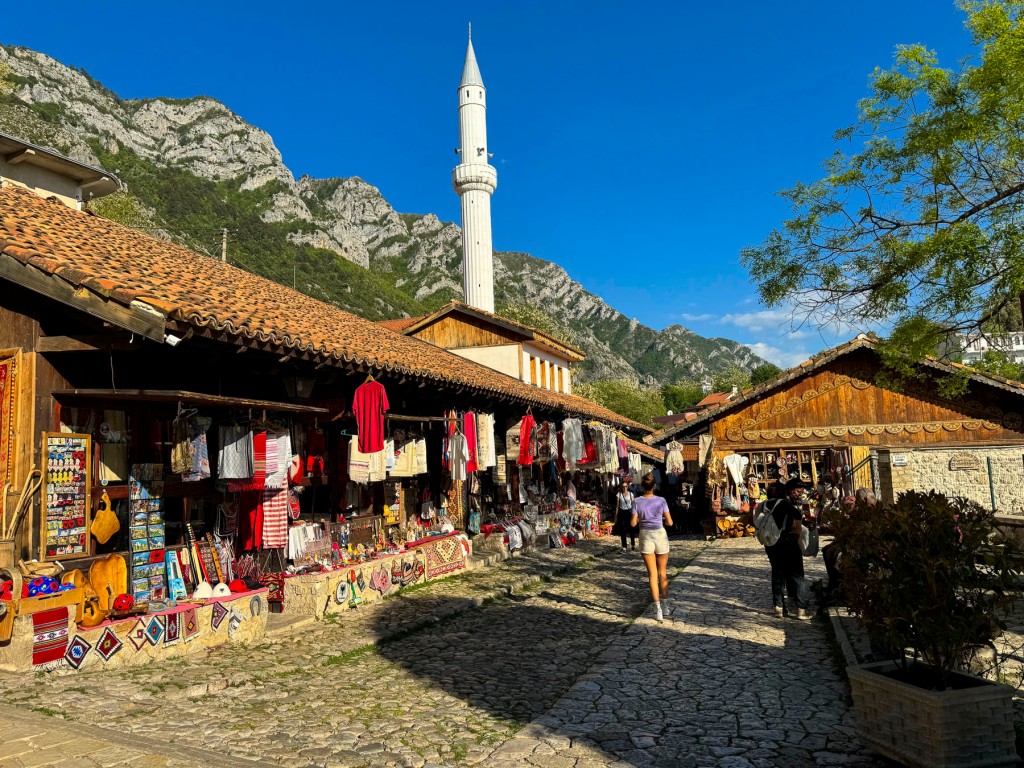
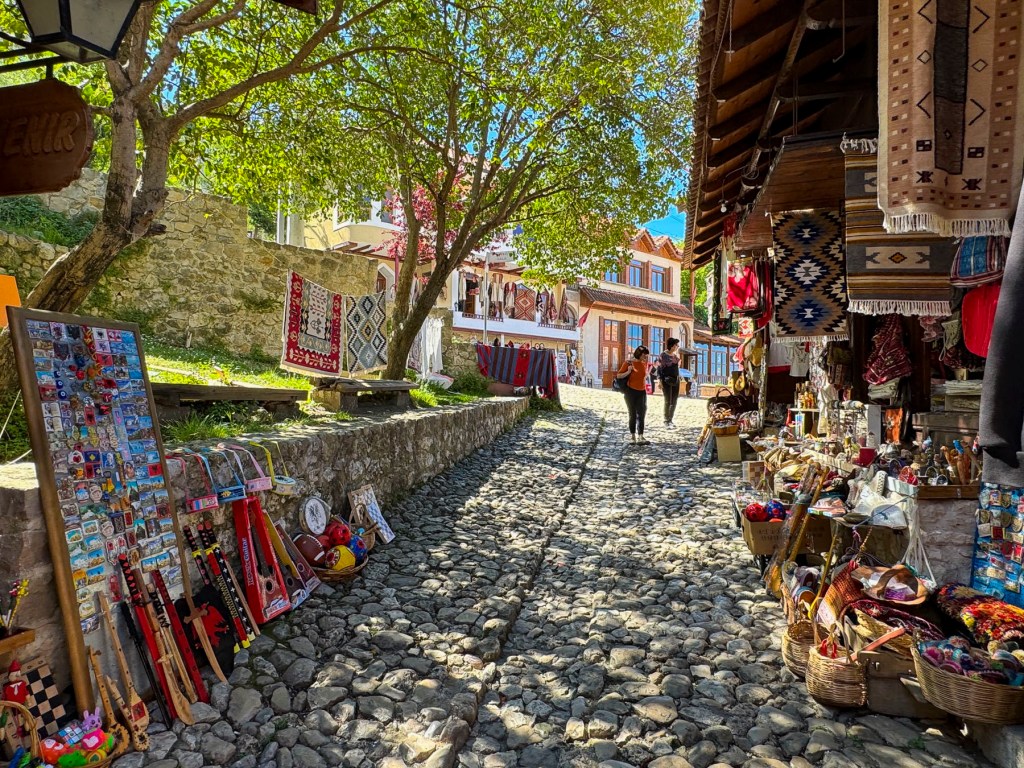
It’s believed to be the most historically accurate representation of an ancient marketplace in Albania, with its cobbled street centered with a drainage divert and canvas awnings hung from the shops, to protect shoppers from the midday sun.

In centuries past it would have had a full array of merchants offering a wide assortment of ancient everyday items, and luxuries crafted in faraway lands. Today, it’s a gauntlet of tourist themed merchandise, but we found one hidden gem, the Berhami Silver shop. The proprietor and sole craftsman, specializes in unique, intricately woven filigree jewelry.
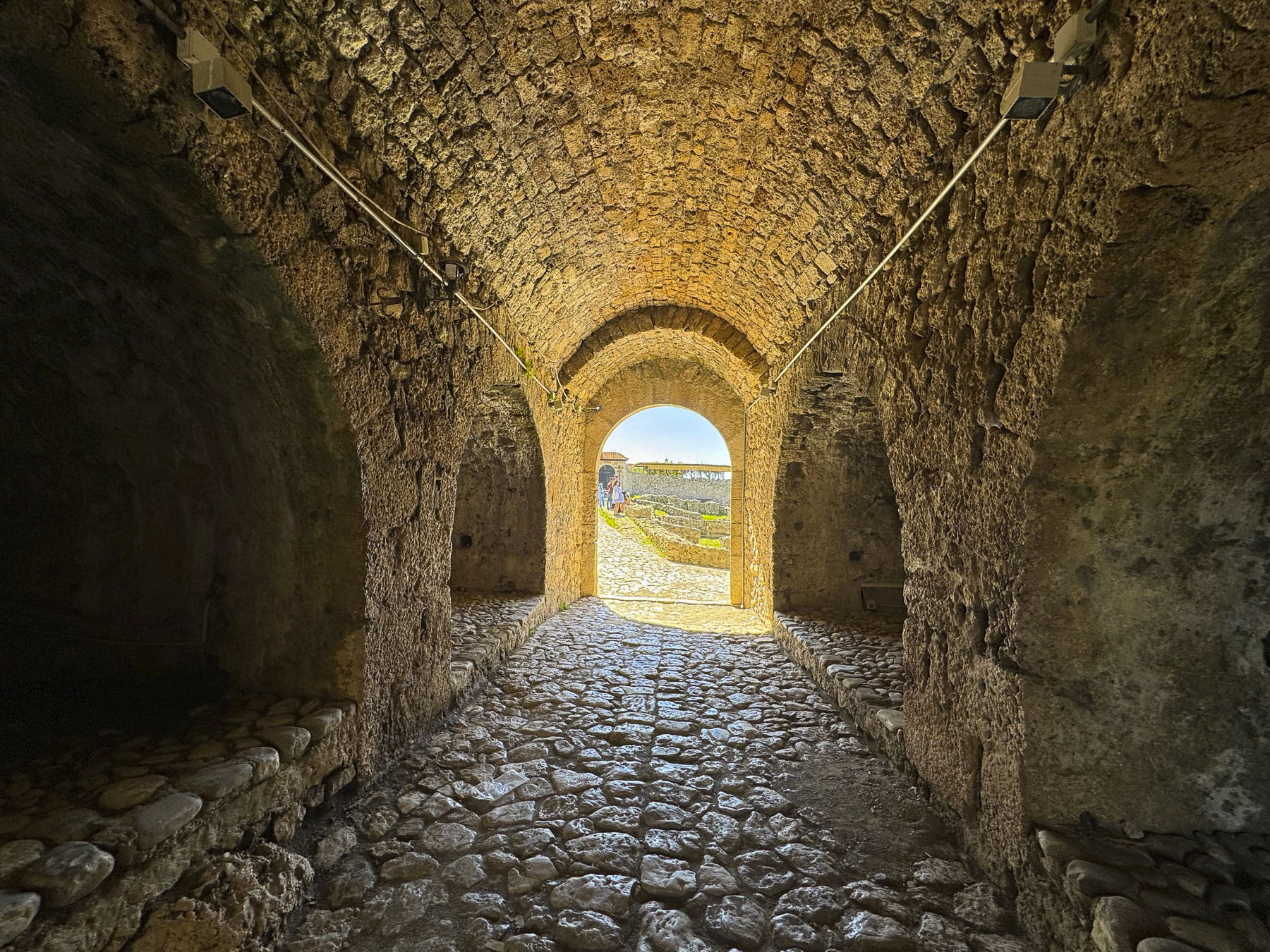
We shielded our eyes from the bright sun as we left the long, arched tunnel through the ramparts, and looked up at the Skanderbeg National Museum. Built in a historical style to reflect its surroundings, it was a majestic sight, its sandstone blocks glowing in the afternoon sun, and the red and black Albanian flag full out in the breeze.
Its exhibits feature artifacts from Skanderbeg’s era and Albania history. One of the most intriguing displays was a replica of the hero’s signature goat head-topped helmet. Albania’s flag evolved from the two headed eagle on the Byzantine Empire’s flag which flew over Albania from the 4th to 14th centuries.
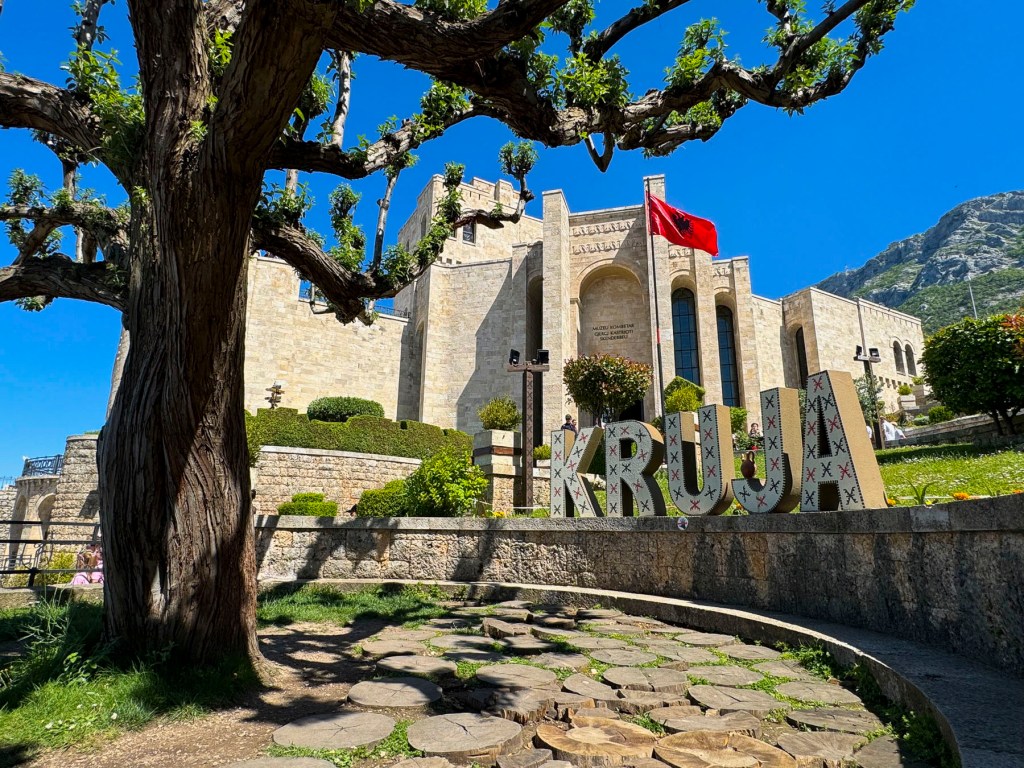
The double eagle heads symbolized the unity between the Orthodox Church and the Byzantine Empire. The black eagles above the Kastrioti family coat of arms on a crimson background became the flag of rebellion when Skanderbeg raised it above Kruje in 1443. Its colors black and red represent the strength, bravery and heroism of the Albanian people.
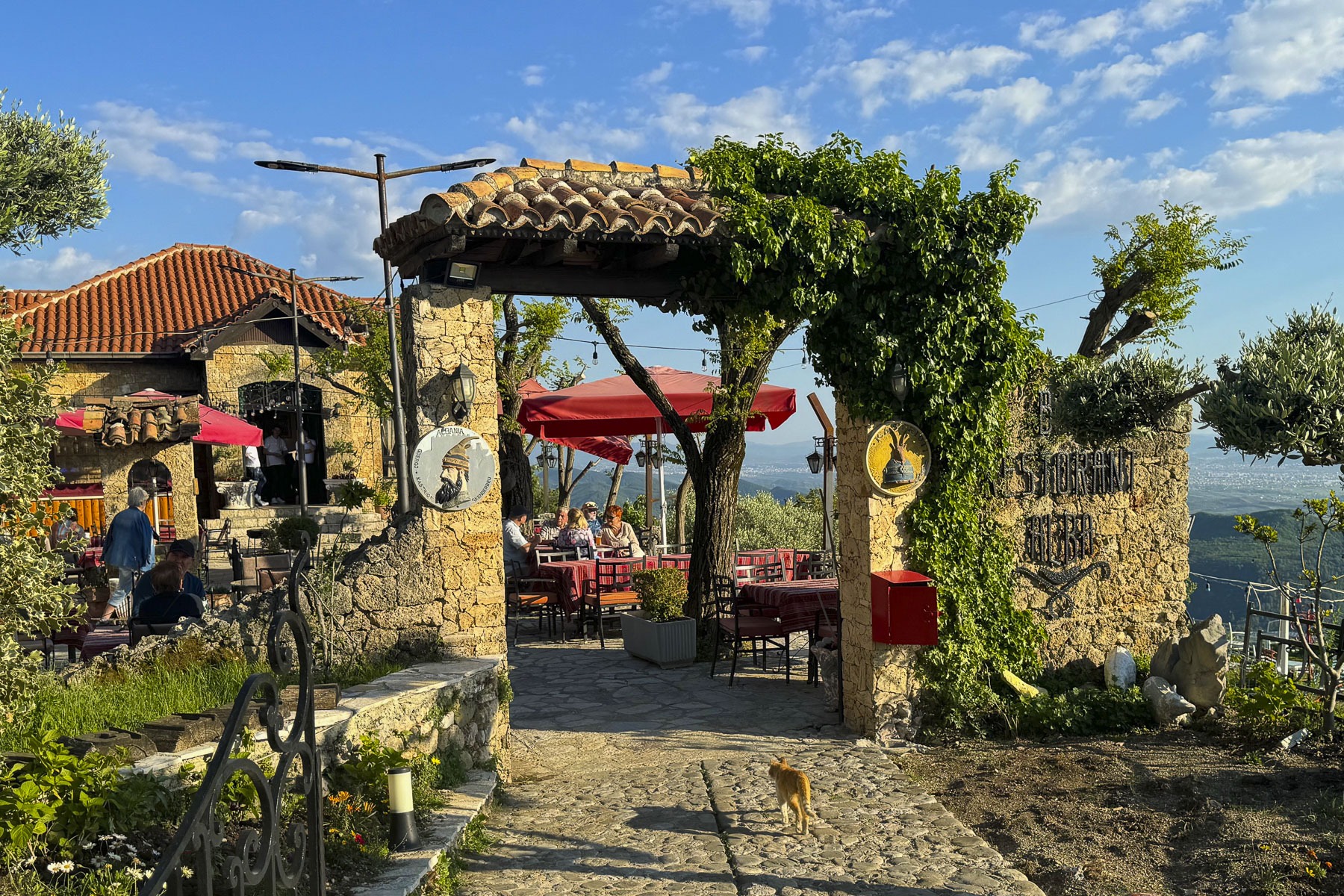
Above the castle we rested outside at a small café with an expansive panoramic view. Unaware of castle’s closing time we headed down the slope to the Tekke of Dollma, a small Bektashi Sufi shrine that contains the tomb of the mystic leader, Baba Shemimi. We reached the gate of the tekke’s courtyard just as the caretaker was about to lock the door for the day.
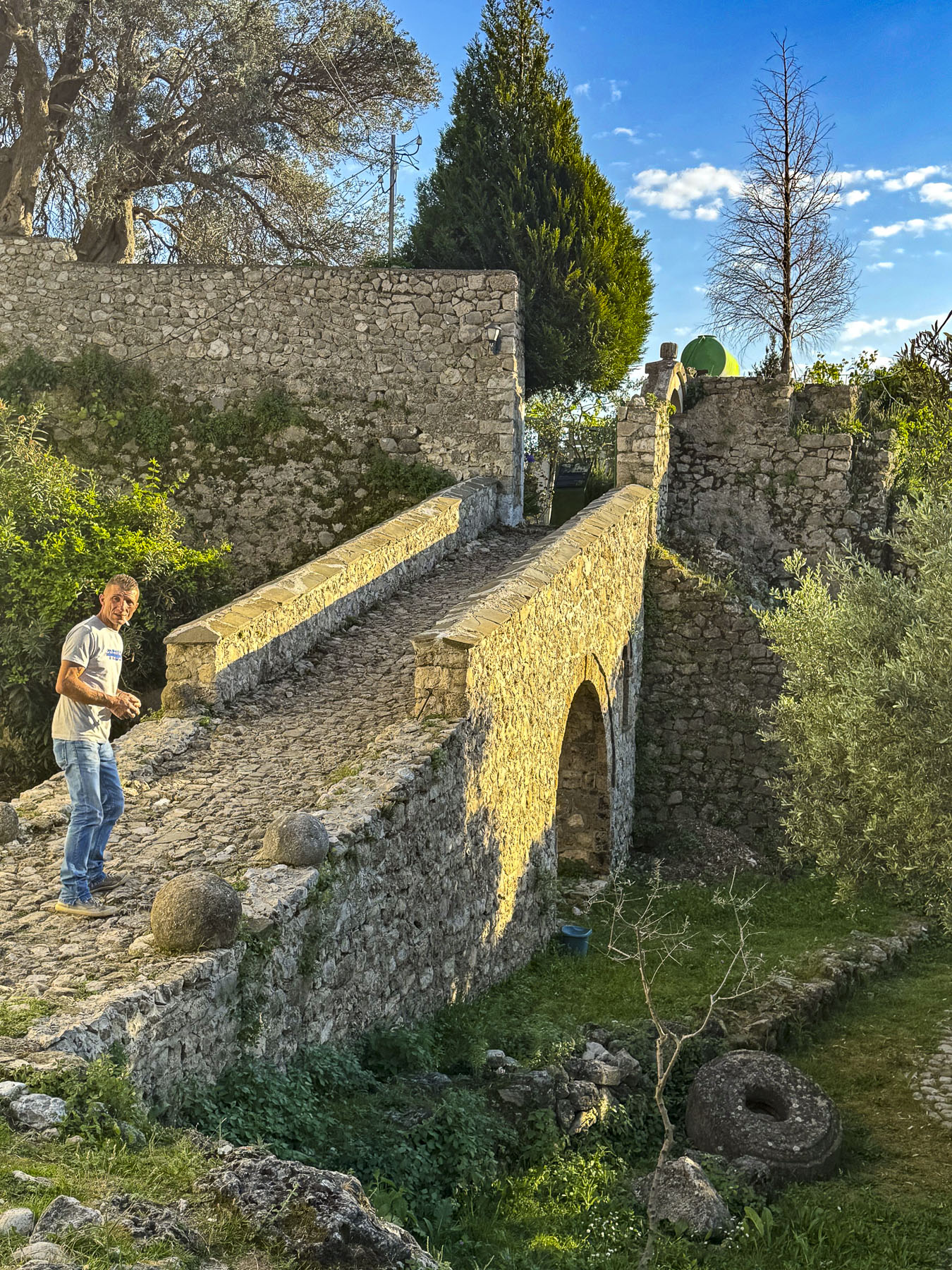
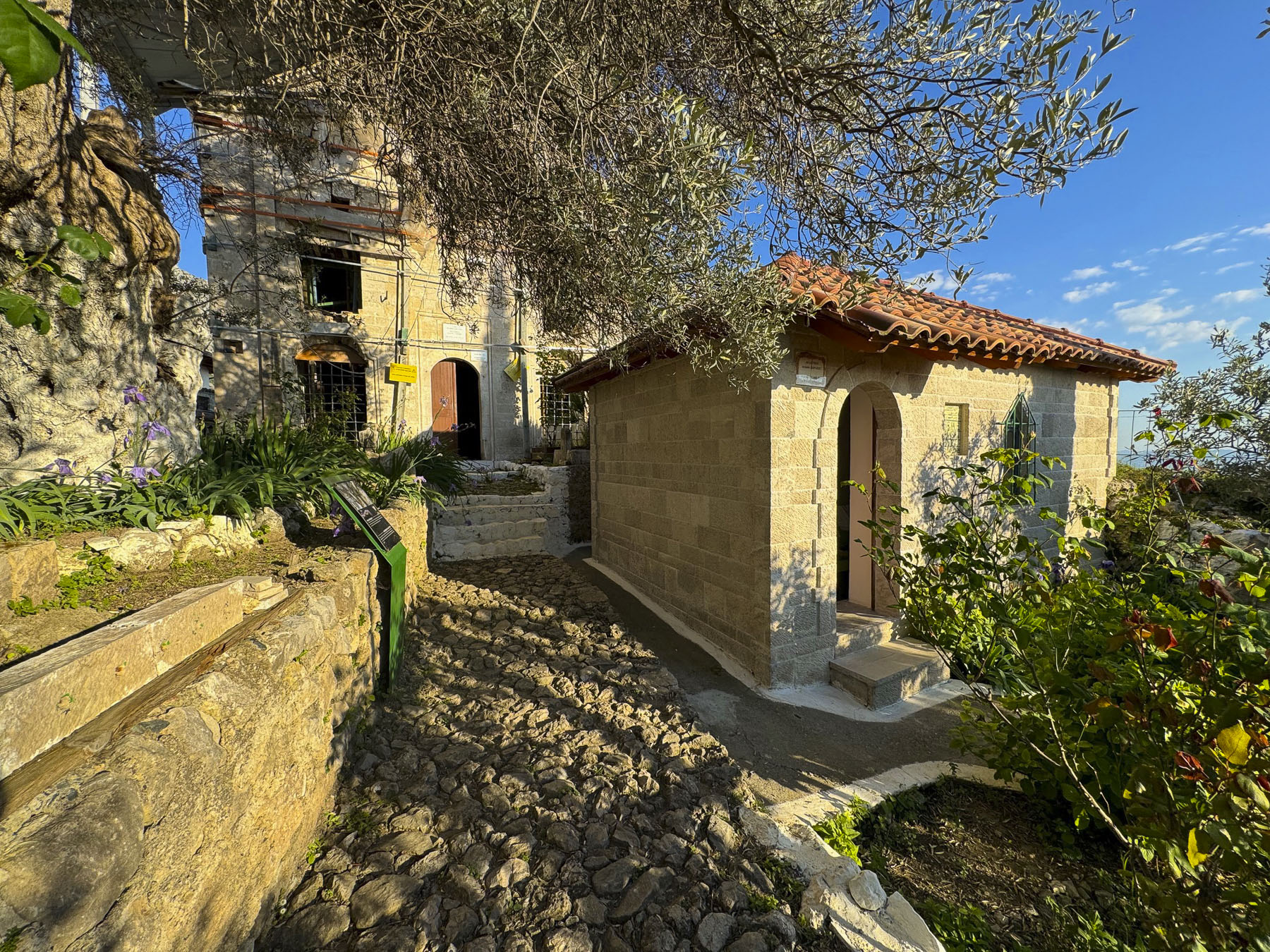
Graciously, he let us stay for a few minutes. The building was still under repair from the 2019 earthquake, but still very interesting. Legend believes the ancient olive tree in the courtyard was planted by Skanderbeg. The castle was a wonderful site to explore, and if we had had more time, we would have visited its ethnographic museum.
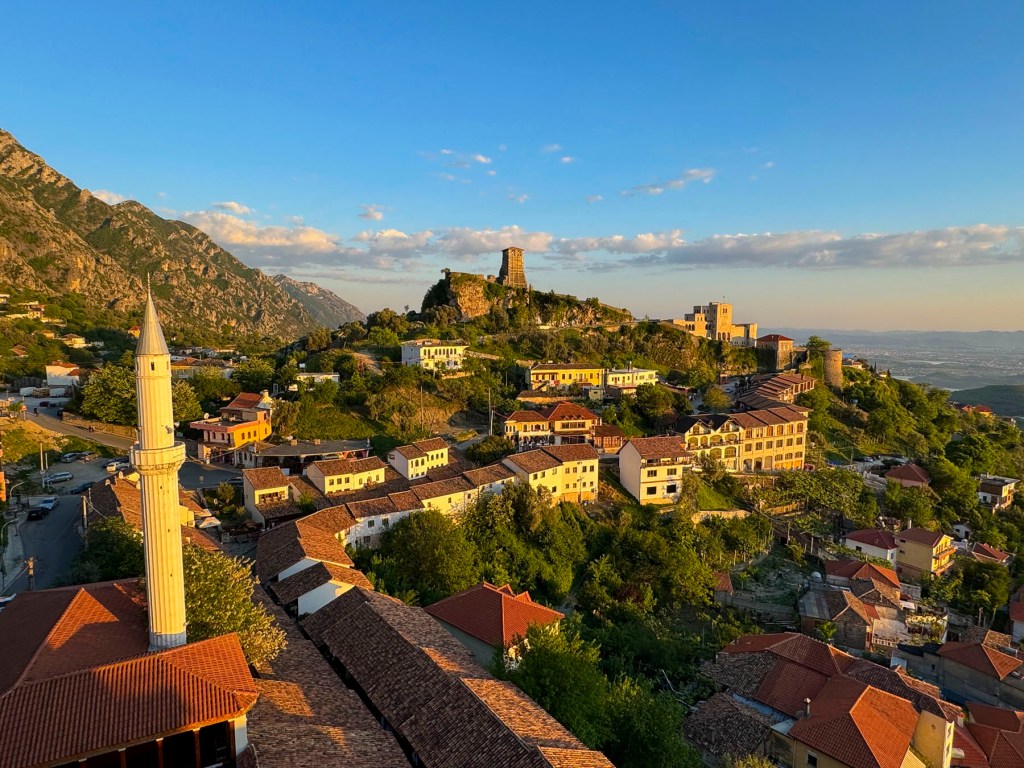
The sun was casting a golden glow across the hillside by the time we reached the rooftop terrace of our hotel. We clinked glasses and reflected back upon a fabulous vacation exploring Albania.

Till next time, Craig & Donna

An Albania Road Trip: On the road to Shkodër or Olives, Castles, and Lamb

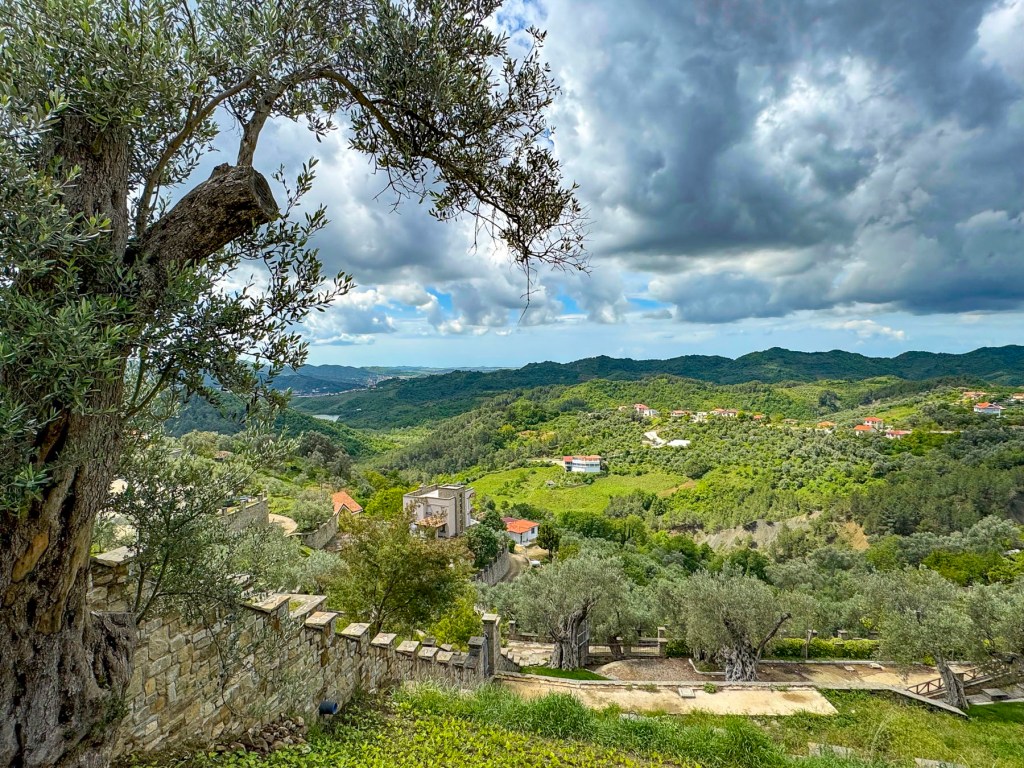
Ancient, gnarled olive trees covered the sharp slopes on either side of the road, along a narrow razorback ridge. Their silver-gray olive leaves undulated with light from a morning breeze. Some of the older trees are 3000 years old, and the fruit from the trees is believed to make the best olive oil in Albania, and is sought after by connoisseurs and chefs. An elderly man herded a small flock of sheep across the road, a common occurrence in rural Albania where it seems there is more four-legged traffic than cars.

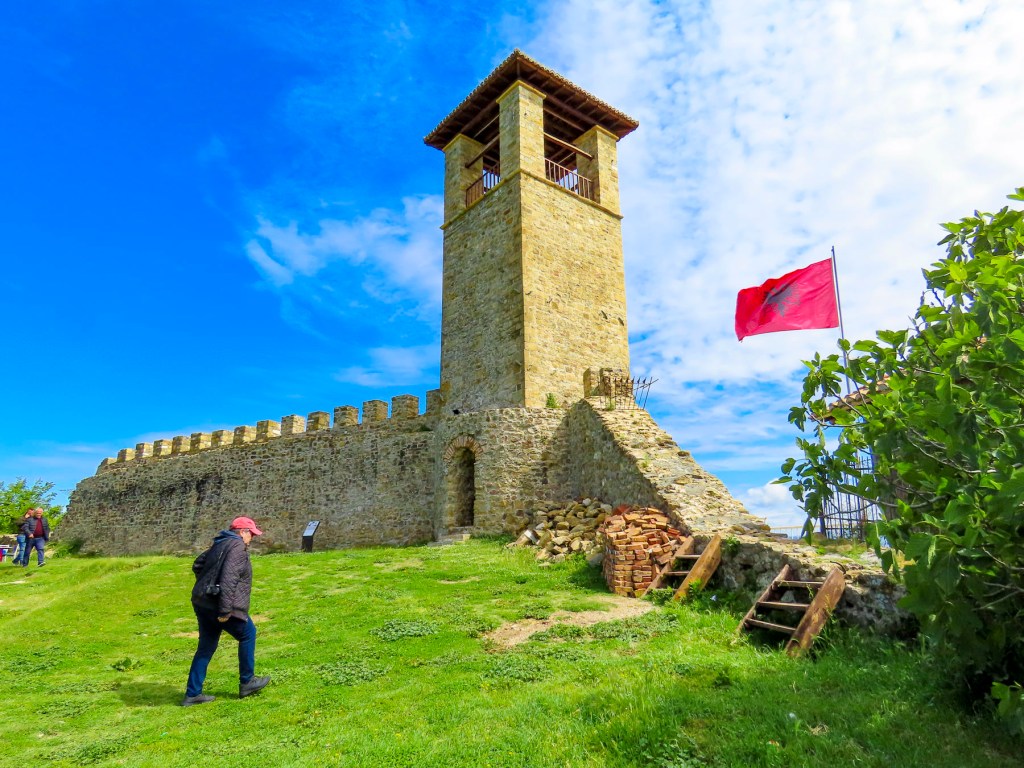
We parked and walked up a short steep lane, past a school where a coed basketball game was enthusiastically underway, to the ridge’s 1300ft summit and the Preza Fortress. The stronghold was built in the mid 1400’s and played an important role in the Albanian resistance to Ottoman rule.

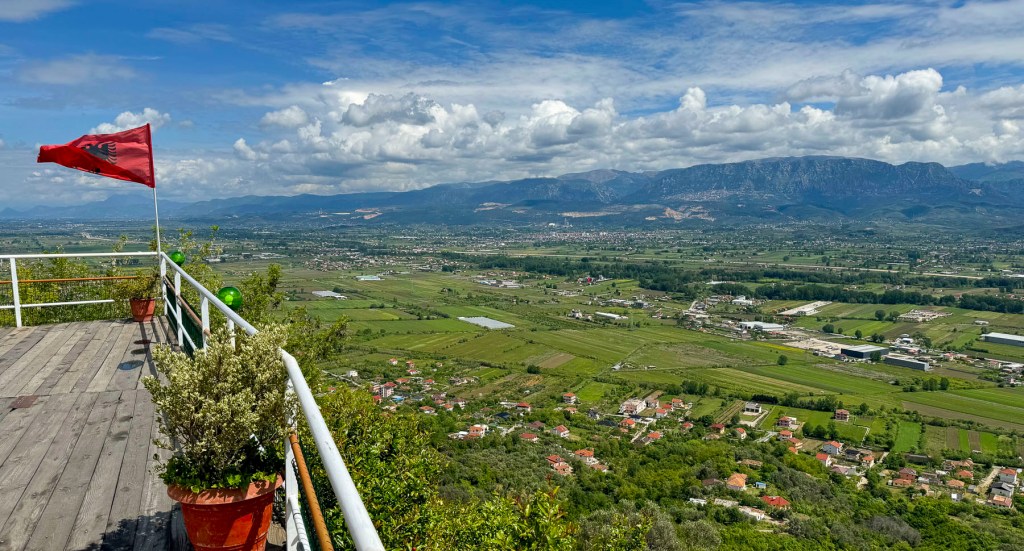
It was once a massive compound with commanding views of the broad plane of the Tirana Valley to the east. This valley was the favored north-south route for invaders, and was the fertile breadbasket of Albania since the Iron Age. Mid-week in late April we had the site to ourselves except for a group of older men, seemingly an old boys’ club, enjoying each other’s company, tucked away in a small outbuilding with a large glass window through which we could see them playing cards, drinking coffee, and reading the newspaper. Unfortunately, only one tall watch tower remains of the compound, but the panoramic view was fantastic.

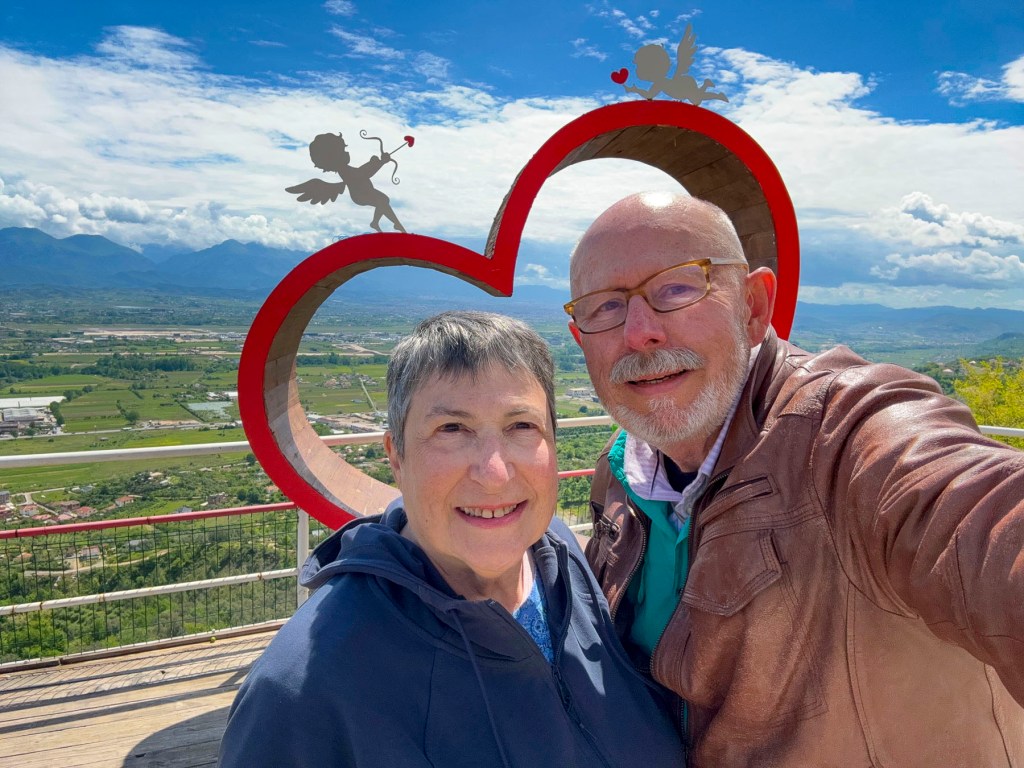
Bar Kalaja e Prezës is the restaurant at the site and was a great place to relax with a coffee and absorb the serenity of the landscape from their terraces. There was also a very large lover’s heart perched on the overlook that was the perfect spot for an Instagram photo.

We had left Durrës earlier that morning, headed toward the northern city of Shkodër, and followed the A1 north. We had been in southern Albanian for the prior two weeks and were surprised now by the amount of traffic congestion along this main artery. It was mostly due to the construction project widening the two-lane road, and the economic activities of businesses, with parking lots right next to the road which creaed all sorts of mayhem – cars were pulling off and onto the highway. There were few traffic lights. One section of the road was lined with folks selling parrots and chickens right from the curbside, while at another point men on either side of the road carried puppies up and down the traffic, offering them for sale. Fruit and vegetable stands were a common occurrence. As we’ve mentioned in our earlier blogs, we found Albanians to be very friendly. But put them behind the wheel of a car, and there is an aggressive personality shift, where they throw the driving rules out the window. I know this is a sweeping statement, but when you experience the roads firsthand, you’ll understand, and any Albanian citizen will agree with me. Driving in Albania was a blood sport – the automotive version of rugby.

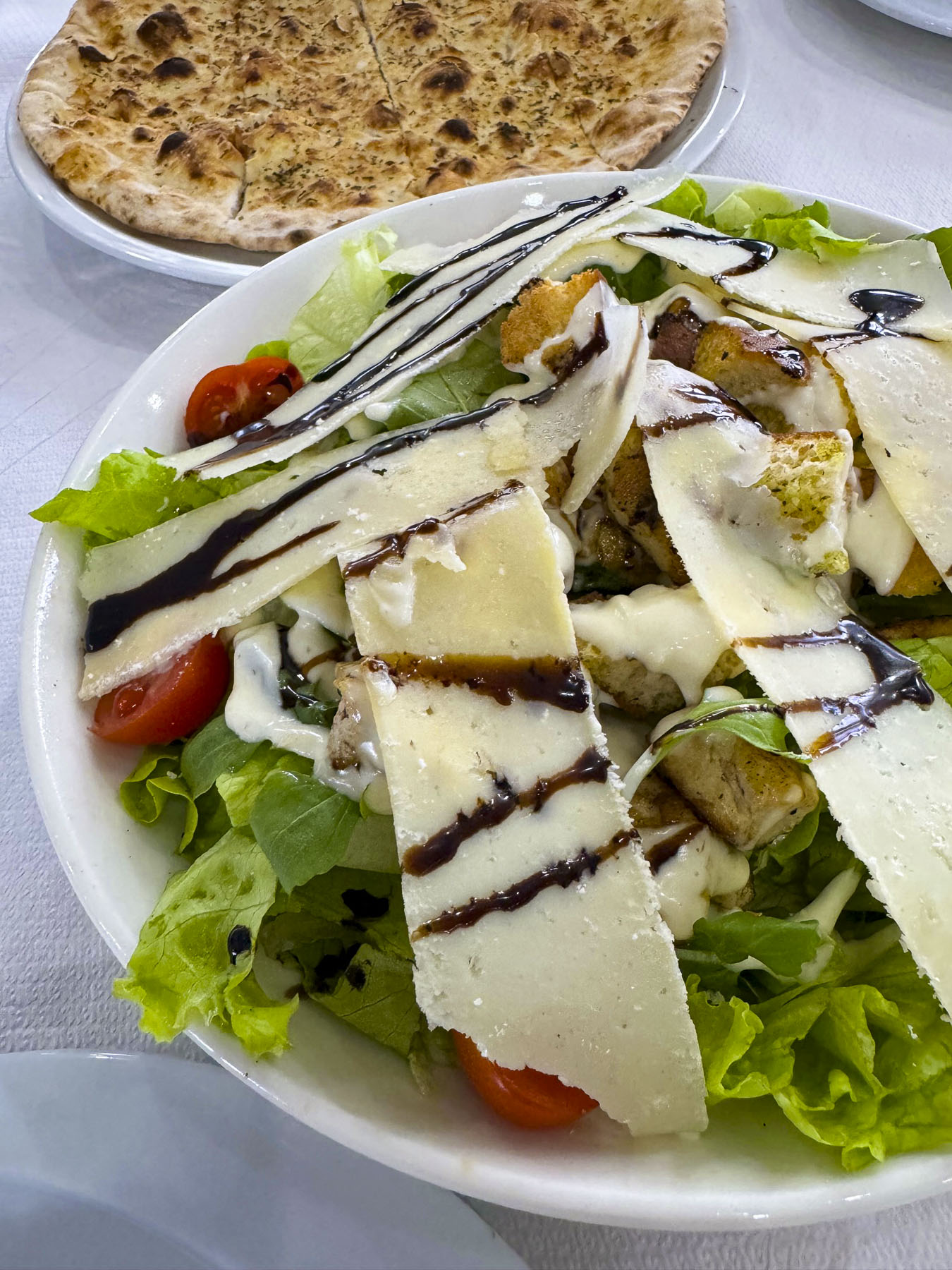
The one big plus of driving along Albania’s main roads was the superb quality of restaurants attached to gas stations. In the states these are often fast-food chains or “greasy spoons,” that serve caloric, processed foods. Albanians take their cuisine quite seriously, and we found it nearly impossible to have a bad meal in the country. The key though to these roadside restaurants is to pick one where the parking lot is almost full. It’s always a good sign that the place is busy with satisfied customers. The restaurant Autogrill Emanuel, along the SH1, in Balldren was a wonderful find, and a great place for lunch. The façade was ho-hum, it is after all located at a gas station, but the inside was pleasant, and the tables were covered with linen tablecloths.

Near closing time we arrived at Rozafa Castle, parked and started to walk around a small hill that obstructed our view of the fortress. It quickly became apparent that it was too long of a trek uphill, and it would diminish our time exploring the site. Several cars passed us coming downhill and we realized we just might get lucky finding a place to park nearer the entrance. Fortunately, that was the case, but even so it was still a strenuous walk to the center of the citadel.

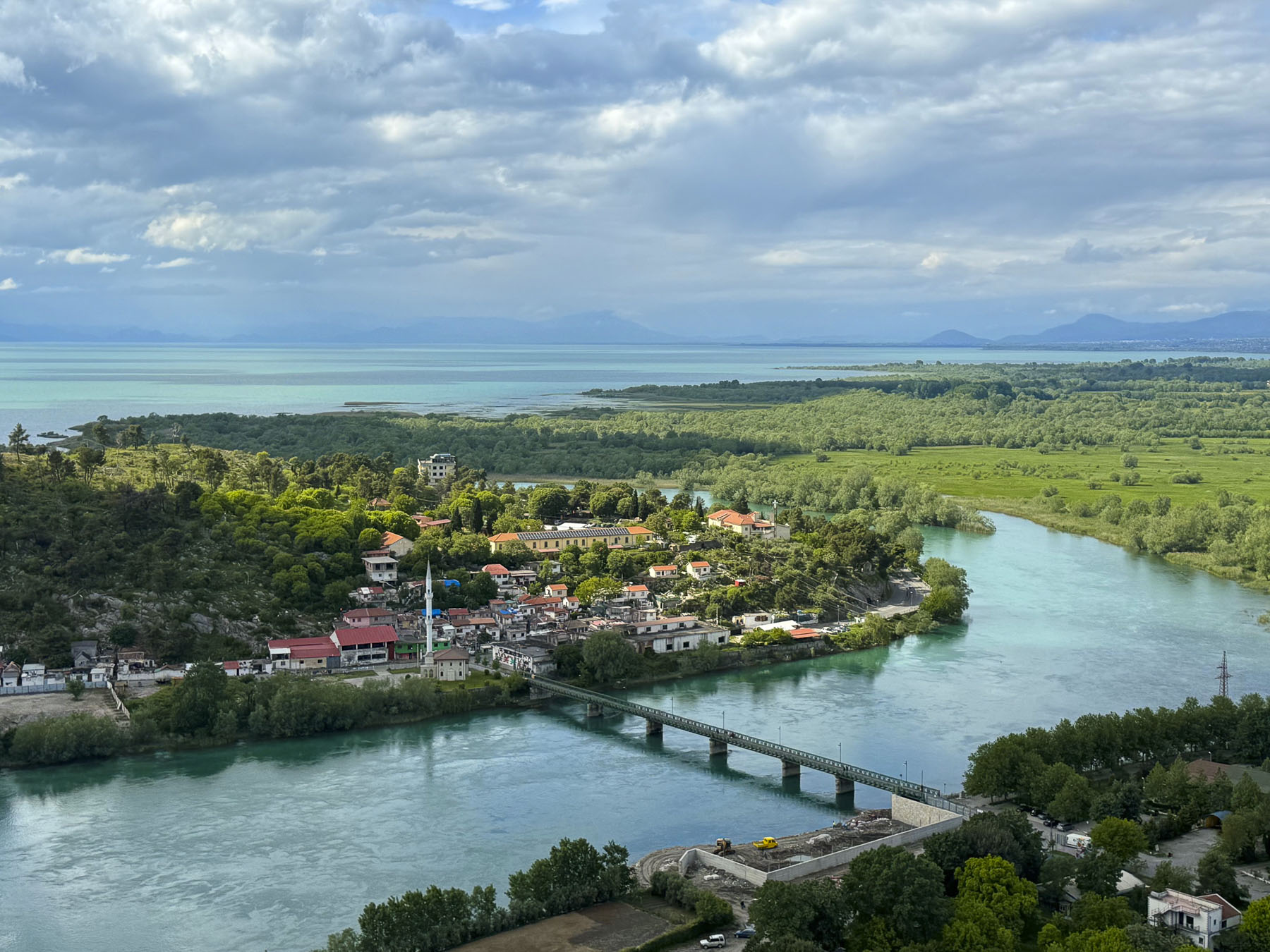
The views were fantastic. We could see for miles around, especially out over Shkodra Lake where the mountains of Montenegro rose on the northern horizon. To the east the small metropolis of Shkoder spread imposingly across the flatland beneath the foothills of Albanian’s beloved Accursed Mountains. While the panorama to the south encompassed the meandering Drin River.

The first fortifications on the hill date to the Illyrian kingdom during the 4th century BC, though archeological discoveries confirm the hilltop had inhabitants since the Bronze Age. Albania folklore is full of tales of stoic women sacrificing for their country. Though the legend of how Rozafa Castle received its name is one of the more tragic and involves human sacrifice. The tale goes that construction of the castle was beset with difficulties, walls collapsed, workers died. An oracle was consulted and advised that a woman be entombed in the castle’s wall to appease the Gods. Rozafa, a young mother, was chosen, and as the legend goes, willingly participated as long as her chest was left exposed for her infant to breastfeed. For ages afterward it was believed that the liquid dripping from the limestone stalactites on the ceiling of the ancient Illyrian gateway to the fortress was the entombed mother’s milk, and that the castle was alive with her spirit.

The Roman Empire defeated the Illyrians, and over the following centuries the fortress was controlled by an ever-evolving list of rulers that included the Byzantine Empire, Kingdom of Serbia, Lordship of Zeta, Principality of Zaharia, the Venetian Empire, the Ottoman Empire, the Pashalik of Scutari, and the Kingdom of Montenegro.  T

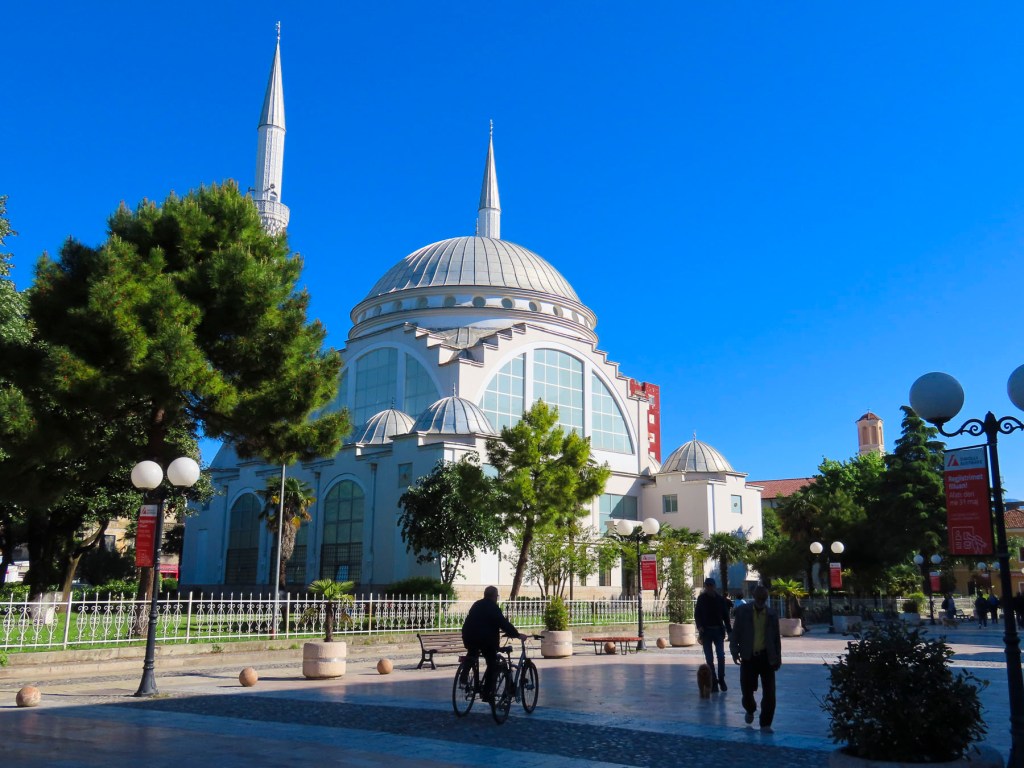
We were taken by the beauty of the old town at the Migjeni roundabout, where an intriguing cityscape included Ebu Beker Moosque’s minarets, and Kisha Katolike Frencekane’s belltower; crenellates and fountains revealed themselves. Shkodër today is Albania’s fifth largest city with a population of 102,000. Though thriving today, the city has had a tumultuous history. Most poignantly in 1967, the Communist dictator Enver Hoxha declared Albania an atheist state and banned the practice of all religions. Churches and mosques were seized and converted to other uses or destroyed. Religious leaders were executed or imprisoned for decades in brutal labor camps and prisons to break their faith. The communist regime viewed anyone who believed in religion as an enemy of the state. Family members of the accused were victimized as well, with the denial of educational opportunities, and decent jobs. Consequently, the citizens of Shkodër who cherished their religious harmony and embraced each other’s Muslim and Christian traditions, in a city where it was not uncommon for members of the same family to practice different religions or intermarry, suffered greatly under communism.

The most poignant insult was the creation of the National Museum of Atheism, an anti-religious propaganda center, in the city. While the borders of Albania were closed to the outside world, even the cities within the country were isolated from each other, and Shkodër sat alone and inaccessible in the northern part of the country. Any news it received of events in southern Albania was heavily censored. Even folks that were “free” likened it to living in a penal colony, as the town had 23 prisons, and nearly every family had someone in jail. The Sigurimi, the communist secret police, had a heavy presence in the city, and encouraged informants to denounce anyone, even for simply wearing a religious cross. Similar to Bunk’Art 2 in Tirana, the site of the Witness and Memory Museum in Shkodër documents the atrocities the communists committed against the townsfolk, in a confiscated Catholic school that was operated as an interrogation center.

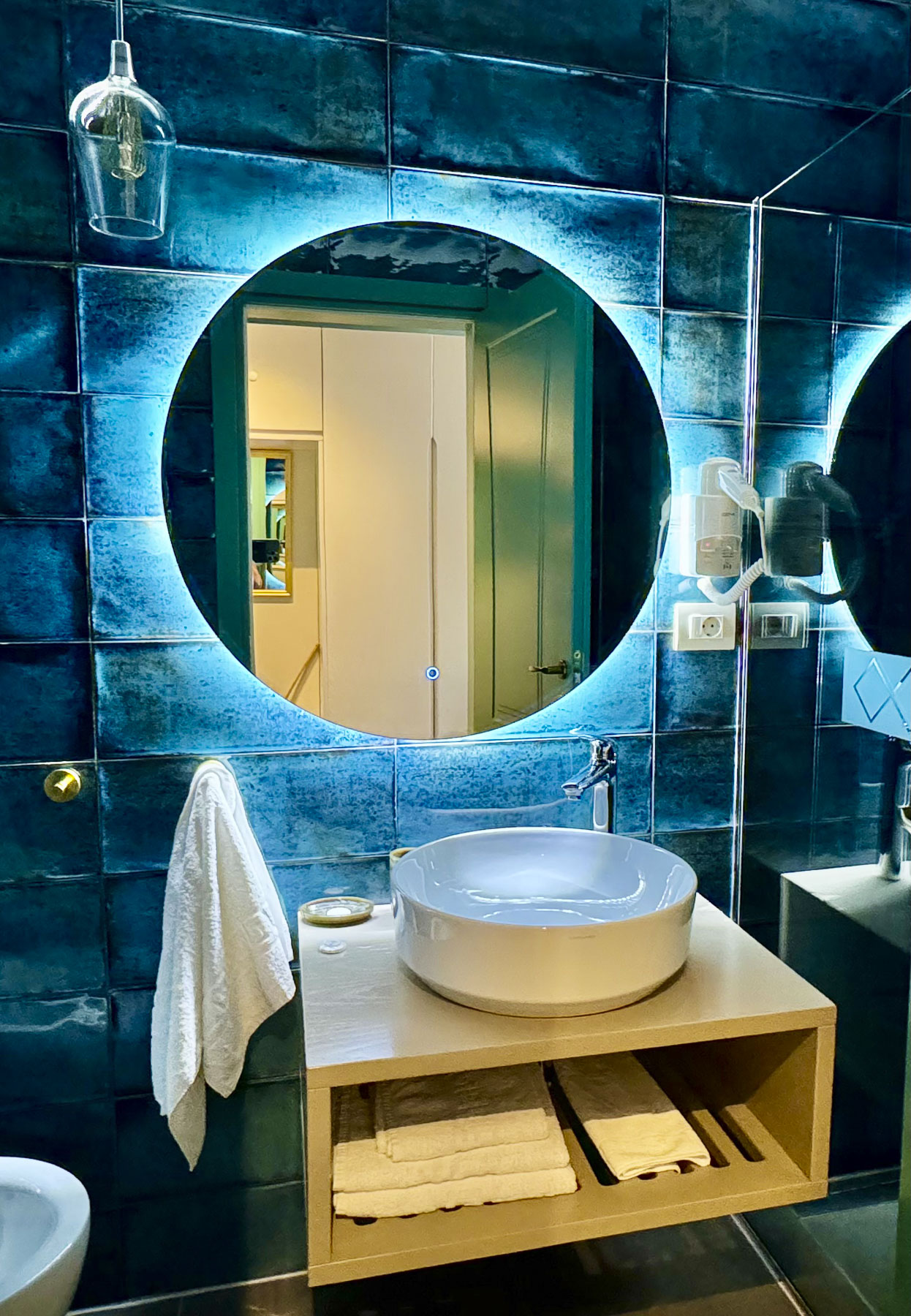
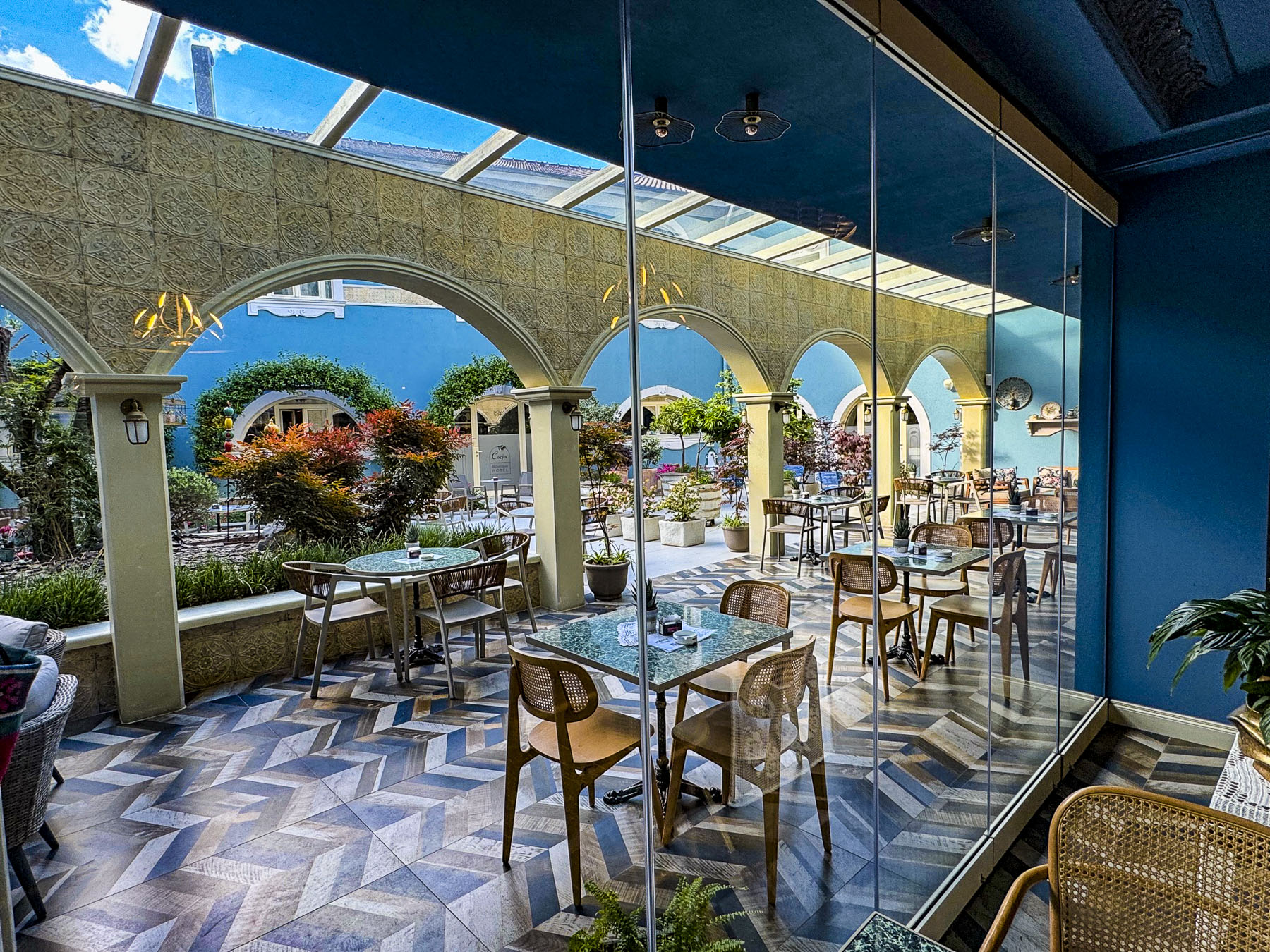
The Çoçja Boutique Hotel was only a few minutes from the roundabout, had underground parking, and most importantly was a short walk away from the pedestrian only streets Rruga Kolë Idromeno, and Rruga 28 Nëntori. We are not sure why this small 17-room hotel is only rated three-stars, but it was one of the nicest hotels we have ever stayed in. It’s a newer building that’s exquisitely well decorated, and our bathroom was a modern wonder. The staff was also very nice.

Ten thousand undergraduates attend the University of Shkodër, and the cosmopolitan city’s streets are full of students pedaling across the town’s flat roads. Their presence contributed greatly to Shkodër’s youthful contemporary vibe, that’s much different from the rest of the country. In the evenings the restaurants and cafés along the pedestrian mall were filled with their energetic enthusiasm.

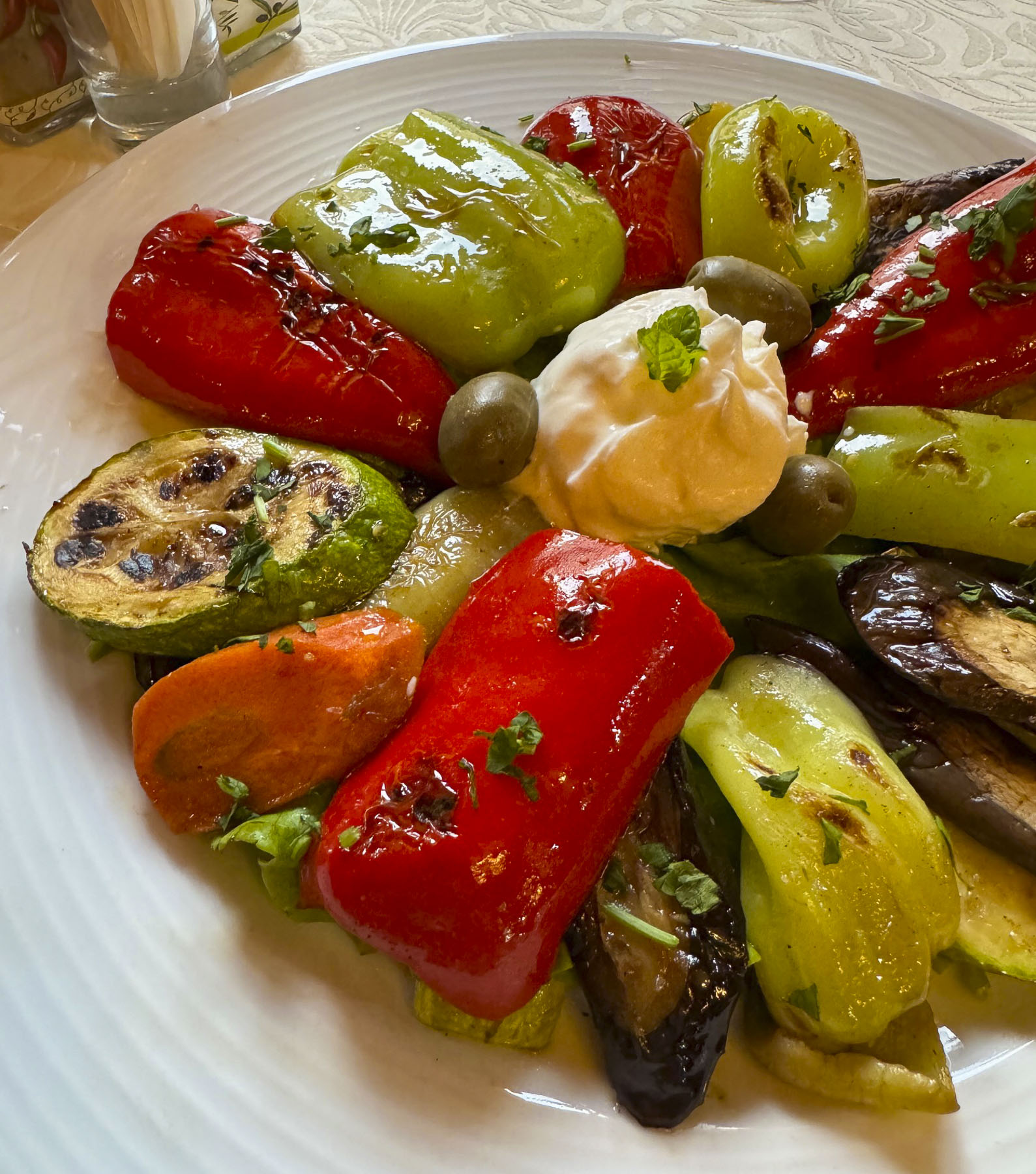
We took advantage of a warm night and enjoyed eating outside on the second-floor balcony, which overlooked the mall, at Bar Restaurant San Francisco, on Rruga Kolë Idromeno. I tried the traditional Shkodër specialty, Tavë kosi, made with lamb, yogurt, eggs, garlic, and oregano, while Donna ordered baked lamb with rice. Roasted vegetables and the house wine accompanied our dinner. All were quite good. We ordered lamb frequently while traveling around Albania, as in the states it is not offered in many restaurants, and when it is it’s very expensive.  

The next morning, we strolled in the opposite direction down the shaded Rruga 28 Nëntori, where preparations were underway for the 11th annual Hemingway Jazz Fest & Swing Marathon, that’s held at the end of April. Unfortunately, we were not in Shkodër for it, but it would have been really nice to watch folks cutting loose. Towards the end of our walk, we reached Shatërvani Park, where there were several sculptures.

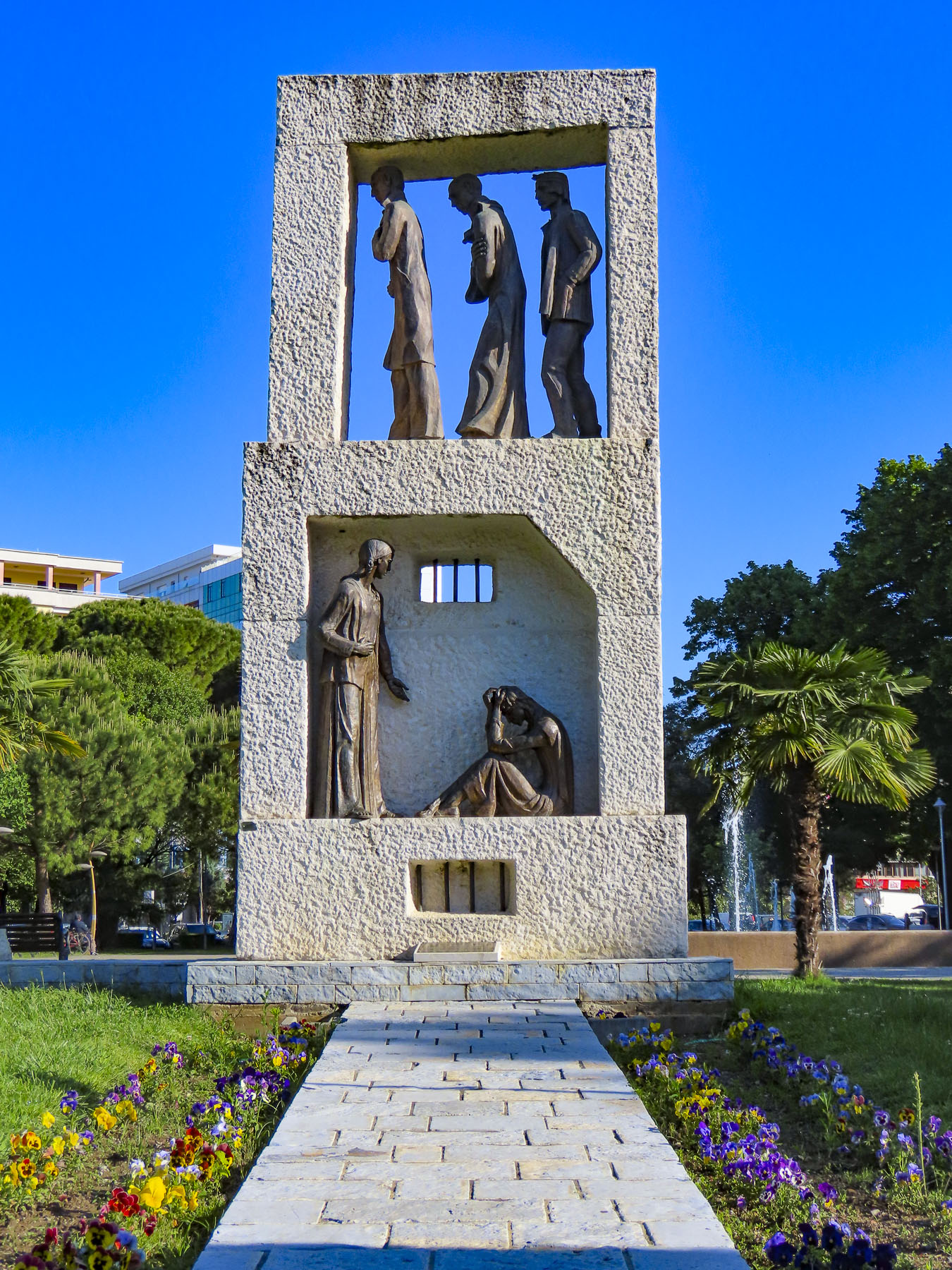
One was a whimsical and retro collection of towering, stylized dandelions, which I haven’t been able to find any information about. Nearby, across from the City Hall, stood the Monument Dedicated to the Victims of Communist Persecution.

A plaque near the sculpture states it’s dedicated to the sacrifices, and resistance the people of Shkodër made during the communist dictatorship. This is the first memorial of its kind in Albania and considered long overdue. Many think it is an important first step towards reconciling the atrocities of Albania’s communist past with survivors of the nightmare.

In hindsight two nights in Shkodër wasn’t enough time to adequately explore the city. An extra day would have allowed time to visit some of the museums in the city.

Till next time, Craig & Donna
Albania Road Trip: ​​​Beaches, Icons & Ruins or Saranda, Ksamil & the Albanian Riviera

With his eyes still focused on the newspaper spread across the steering wheel of his Mercedes, the caretaker acknowledged our presence, and his ambivalence to our disturbing his quiet routine, with a slight nod. His left index finger barely raised off the steering wheel confirmed the direction through the gate. He sipped from his thermos before turning to the next page of the Gazeta Panorama.

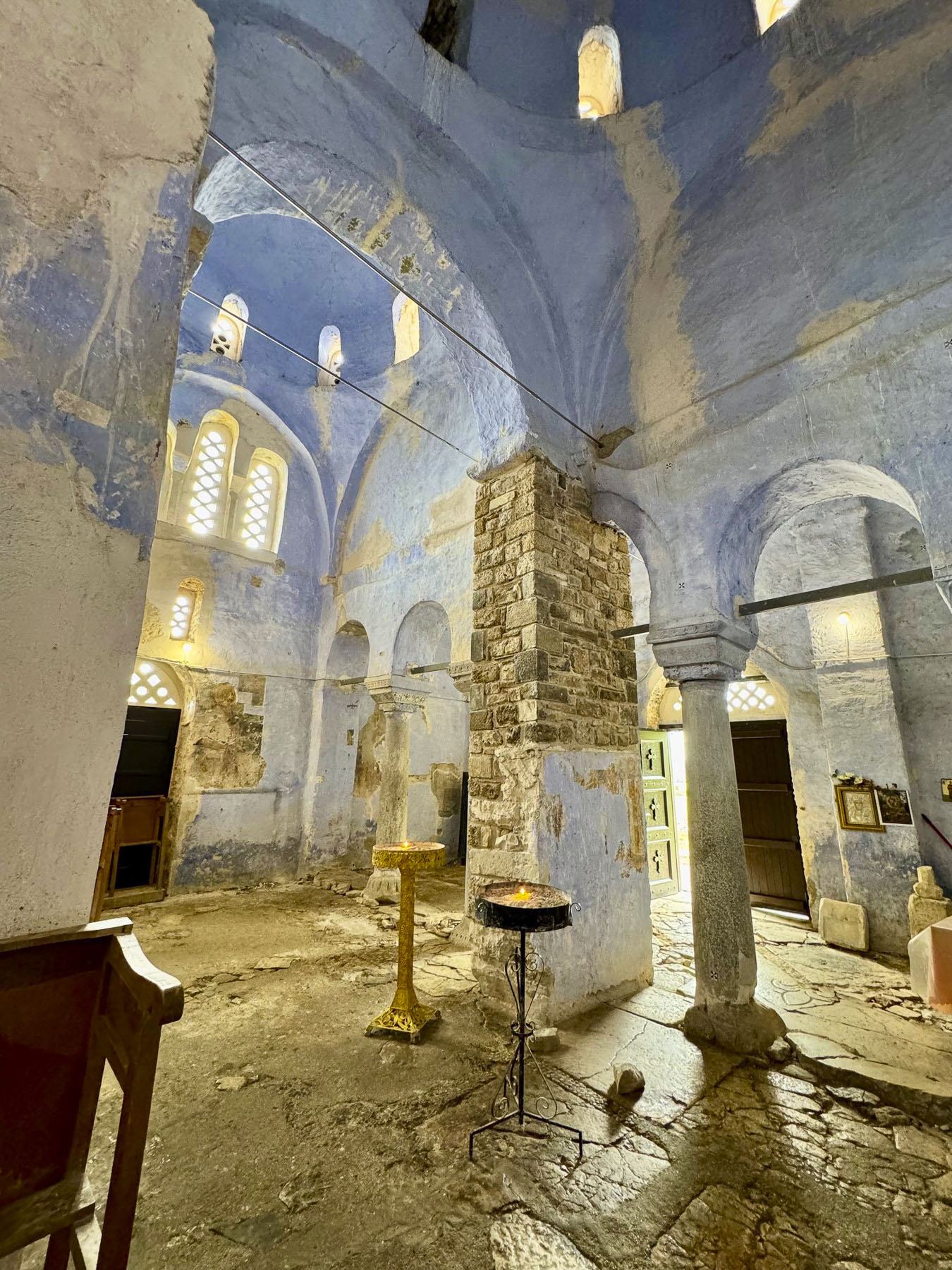
From Upper Qeparo we had made good time driving south along the Albanian coast, only stopping occasionally, as it was a grey day, to admire the dramatic, refreshingly undeveloped coastline. And by the time we walked around the exterior of the church at Manastiri i Shën Nikollës, Monastery of Saint Nicholas, in Mesopotamia, the caretaker was unlocking the ancient door to the sanctuary.

Built in 1224, above a 3rd century BC Greek temple, the church incorporated some of the ancient structure’s still-standing walls in a unique twin apse design, that accommodated Orthodox and Catholic religious services. Light cascading through pigeonhole venting high up on the exterior walls illuminated the interior and gave the wall’s ancient blue paint an ethereal patina. Sadly, the blue paint was applied over original frescoes during the Ottoman era when the church was converted to a mosque and human figures were no longer allowed in religious sites.

After 800 years the church is showing its age with cracks in the walls. A newer cinderblock column stood amid its arches to support the sagging roof. Gold and silver rimmed the icons hung on the carved wooden screen that separated the nave from a remarkable surviving frescoed altar.

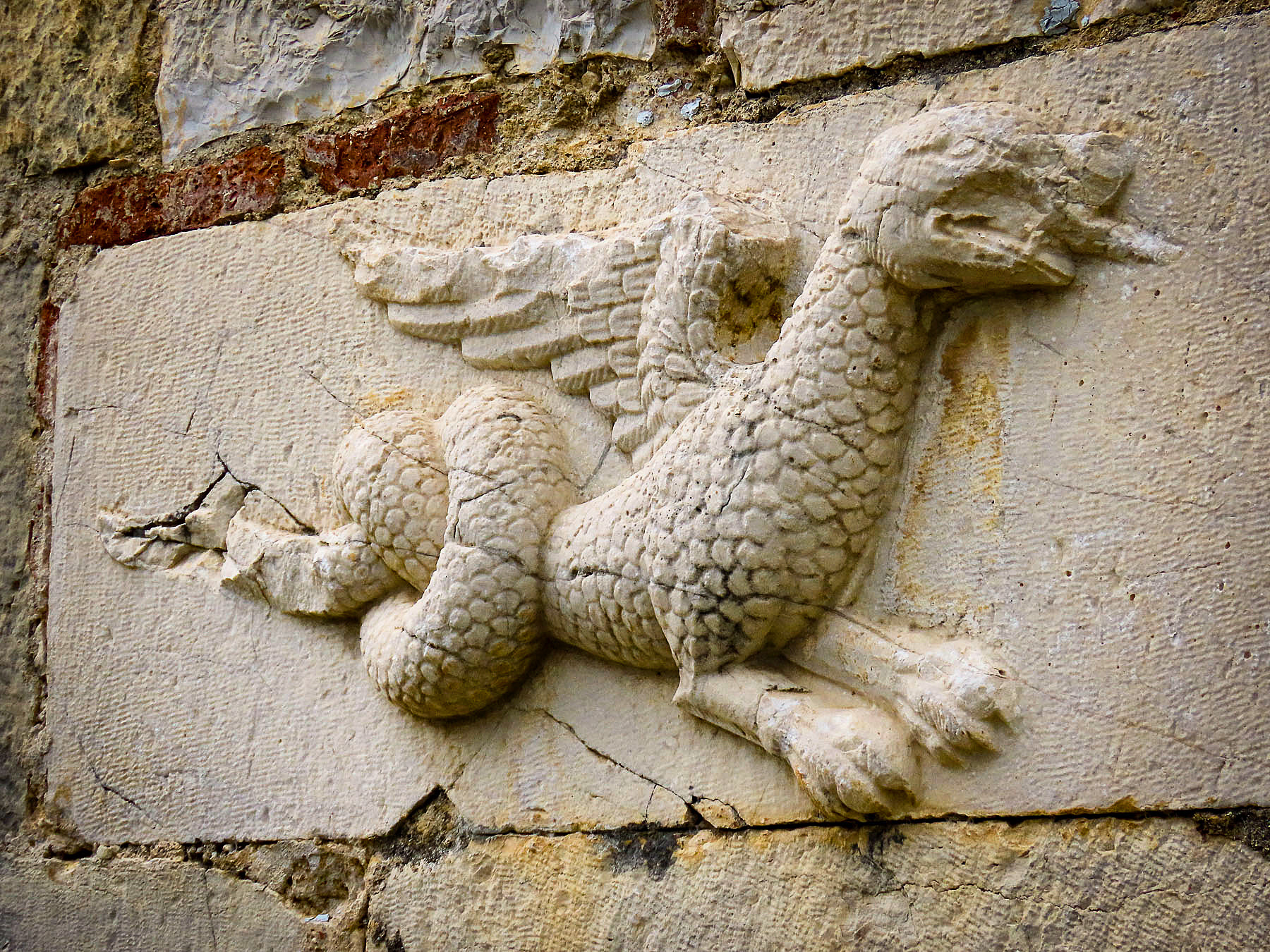
Carved stone relief sculptures on outside walls of serpent dragons with their twisting tails tied in knots, as well as a lion, are attributed to the church’s ancient Greek builders.

The church and nearby foundation ruins of the monks’ living quarters are all that remain from what was once a large monastery, surrounded by a defensive wall with seven towers. Its stones were carted away long ago to Mesopotamia, and other nearby villages. We had planned to visit the Blue Eye, a crystal clear natural spring, only 30 minutes down the road, but a darkening grey sky deterred us.

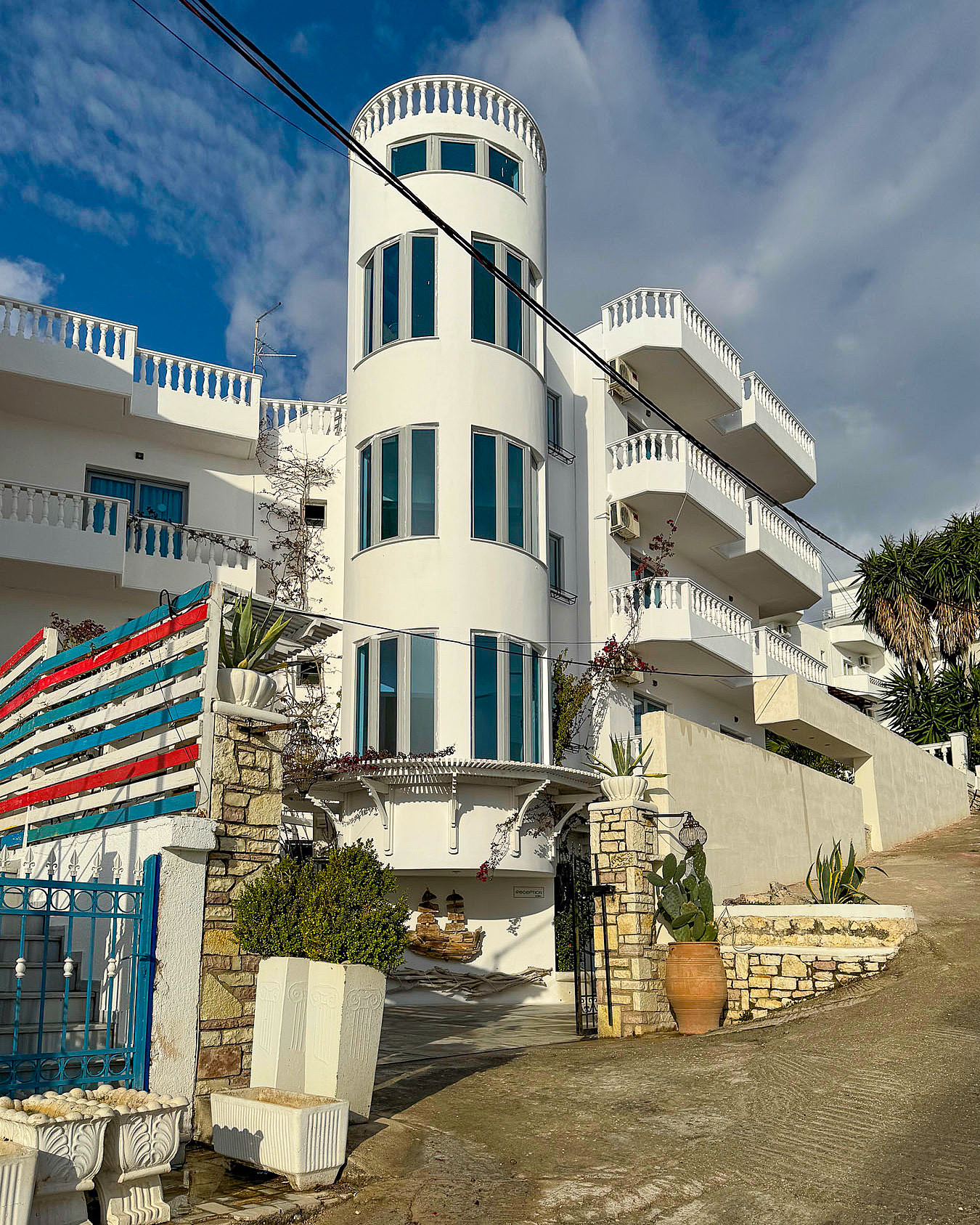
Clearing skies greeted our late afternoon arrival at the Harmony Hotel in Saranda. While the freedom a rental car offers during the day is fantastic, the rental often becomes an expensive ball and chain when considering overnight parking options.Fortunately, during the mid-April shoulder season, the Harmony Hotel had plenty of parking right out front on a street that was as steep as those in San Francisco. Concerned that if the parking brake ever failed the car would roll downhill into the Adriatic, I curbed the wheels, a concern the receptionist thought was unwarranted. The local folks never curb their wheels, and no cars have rolled away to a watery grave. Still. The hotel is run by a wonderfully enthusiastic and friendly extended family that exudes hospitality. The sister-in-law guided us upstairs and down a freshly painted hallway, touching the walls every so often to make sure the paint had dried, to a crisp, all white room, with a balcony and a distant view of Corfu, Greece, on the horizon. It was the perfect romantic spot for two nights. 

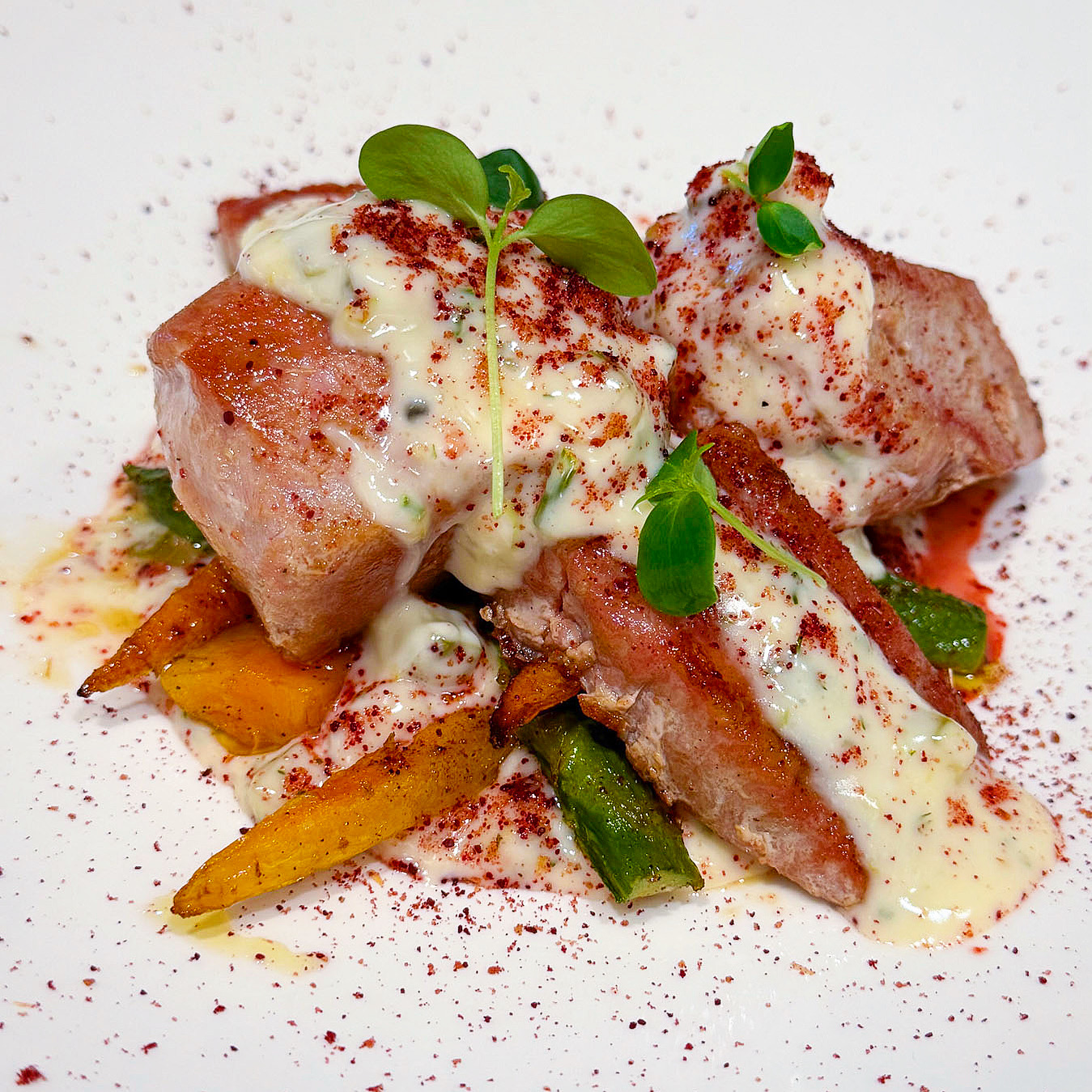
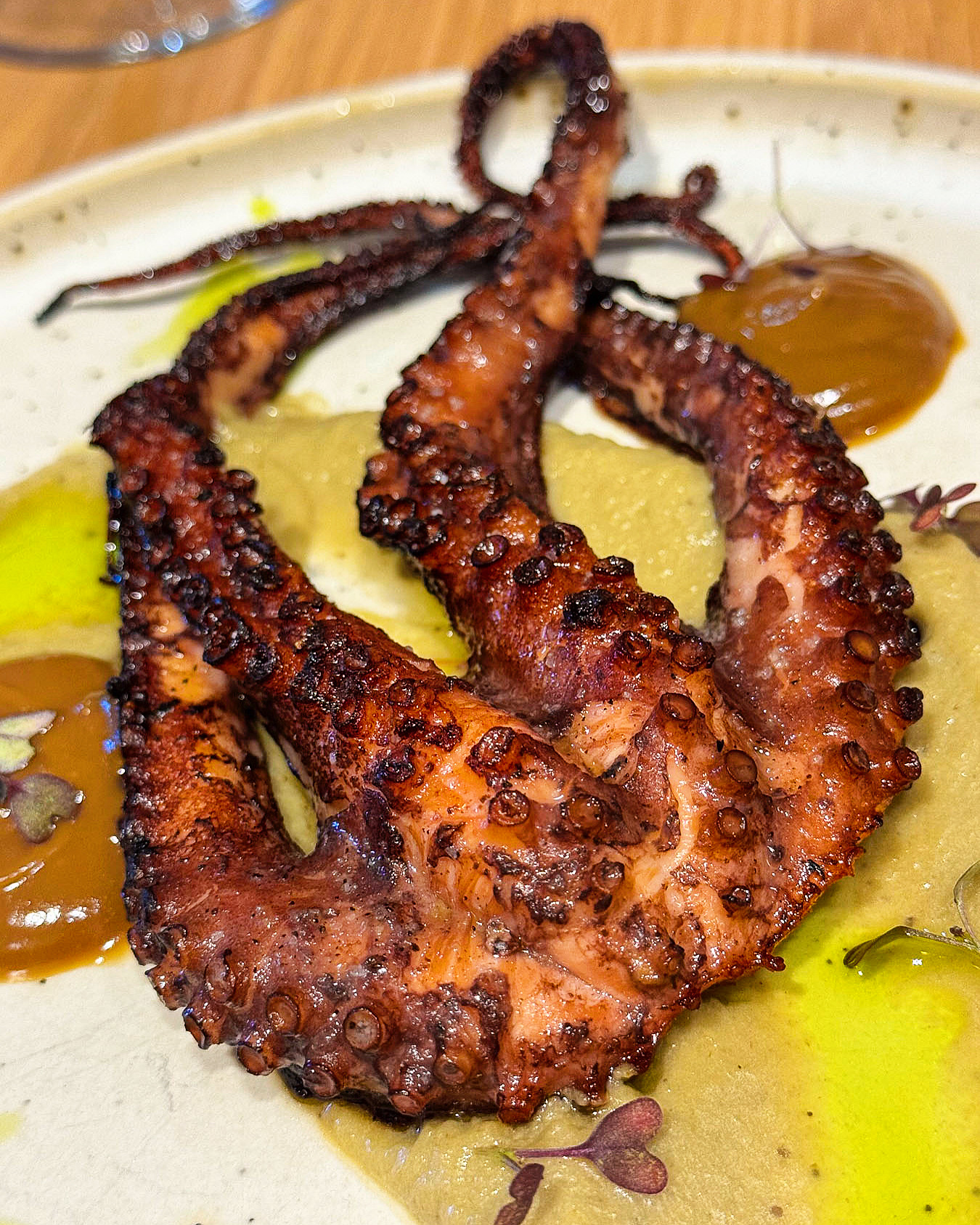
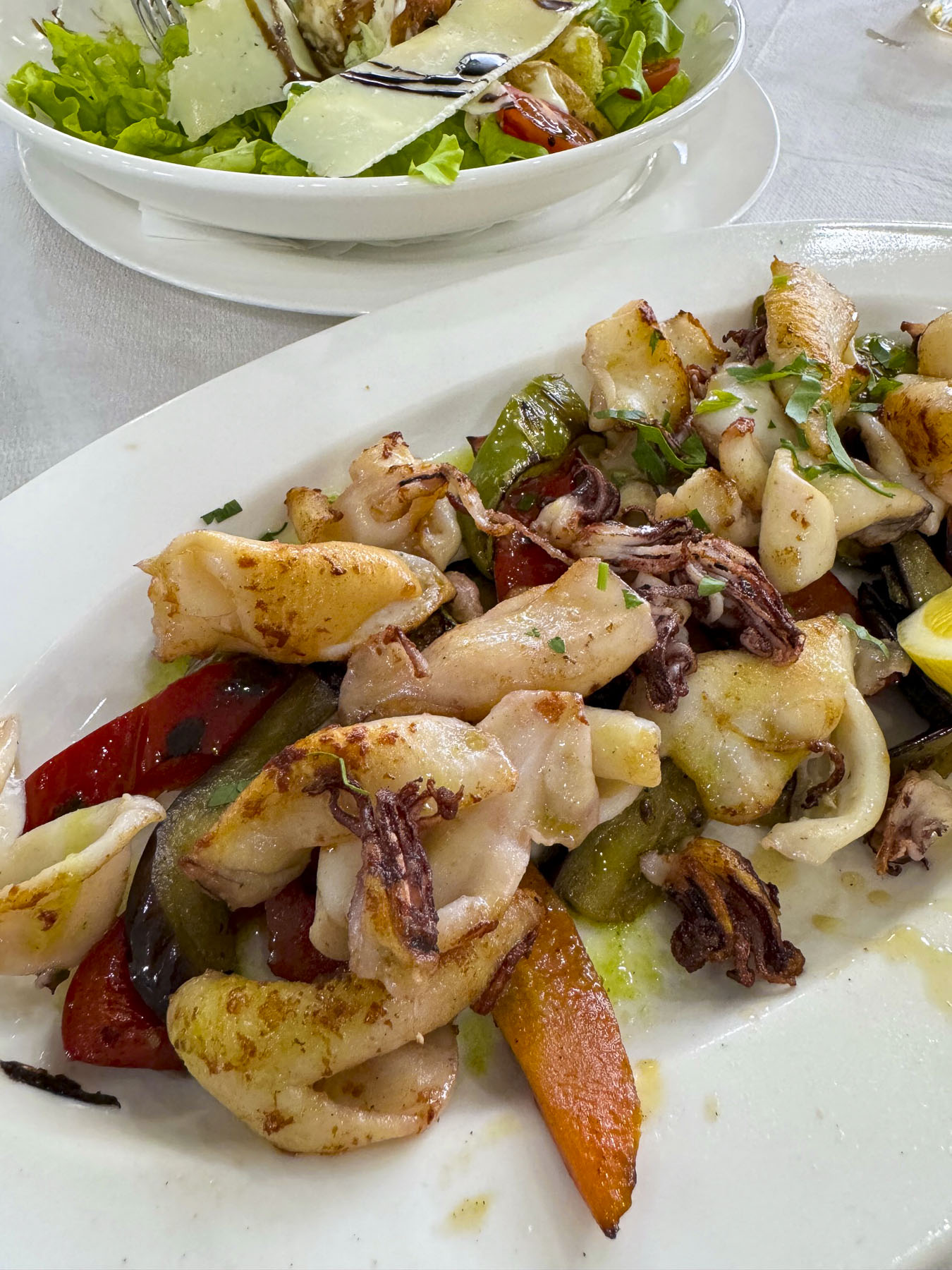
While we prefer touring in the shoulder season to avoid the crowds and heat of the summer months, one of the compromises we often encounter is the closure of many restaurants that would otherwise be open. Fortunately, the hotel’s restaurant was open, and surprisingly it was an unexpected fine dining experience that became one of the highlights of our vacation! We dined there both nights of our stay because the locally sourced seafood and vegetables were extremely flavorful, excellently prepared, totally delicious; Grilled octopus accompanied with a puree of eggplant and pistachio, Albanian Tuna with carrots and asparagus, and local Butrint mussels with fennel were beautifully presented. The restaurant deserves to be a destination in itself. We still remember these dinners as some of the best meals we’ve ever had. If you are staying in Sarande, head to the Harmony Restaurant – you won’t be disappointed! 
After dinner our gregarious host joined us.  And as we sipped raki, or rakija, together he explained this is powerful stuff with an alcohol content of 45-50%, or as high as 80%, especially if its homemade. Since it’s a traditional Albanian drink, many households pride themselves on their home distilled raki. He went on to explain that many countries have a strong distilled spirit: Mexico with its tequila, Italy has grappa, Greece ouzo, and Russia Vodka. But Albania’s raki is legendary and went on to illustrate it with a story. Three groups of friendly mice hailed from different countries. The mice from Mexico drank tequila and happily partied till morning singing Mariachi songs and dancing. The group of Russian mice, imbibing vodka all evening, became sullen, and eventually fell asleep with their heads on the table. But the Albanian mice, deep into their glasses of raki, become feisty and boisterous, and yell, BRING US THE CAT!! They proceed to chase the unlucky feline around the bar all night. There was also some speculation that Albanian raki might have fueled the first Russian space flight.

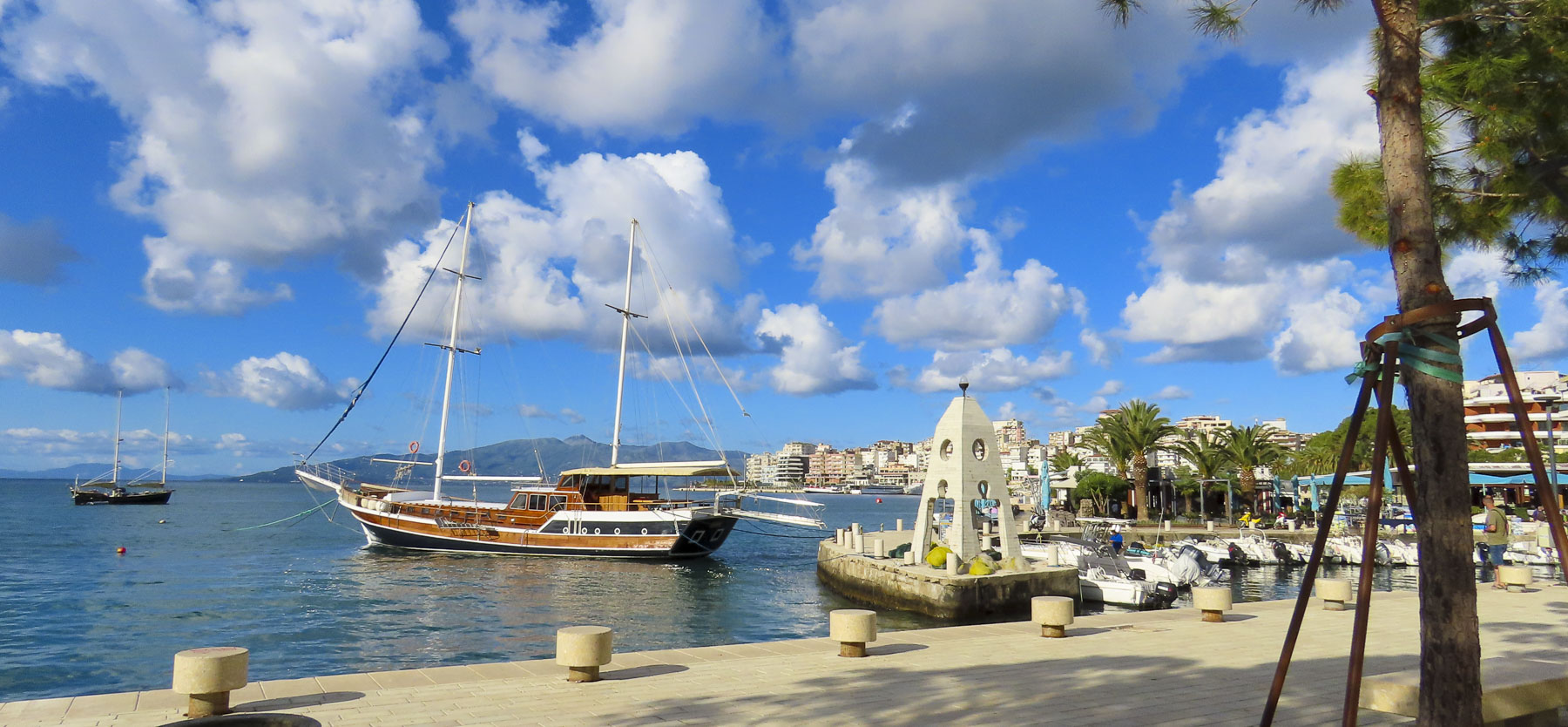
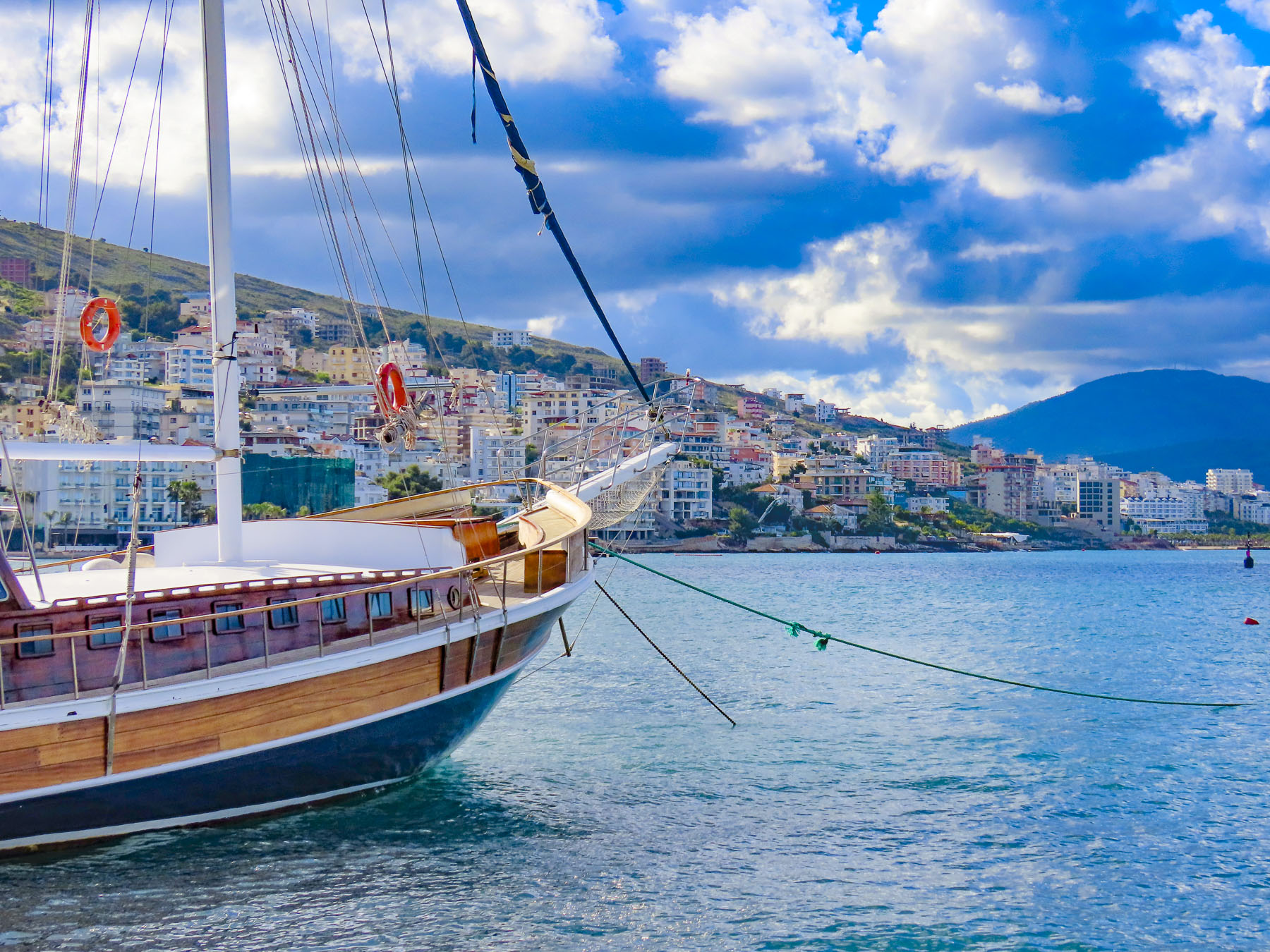
The next morning, we watched from our balcony, as the fast ferry from Corfu sped across the water as it headed to dock along the Saranda promenade. We followed it there after breakfast. The Saranda promenade is along a lovely part of the Albanian Riviera, where the coast bends like the crook of your elbow. The views of the beach, water, mountains and city were spectacular, with the sky speckled with cumulus clouds.

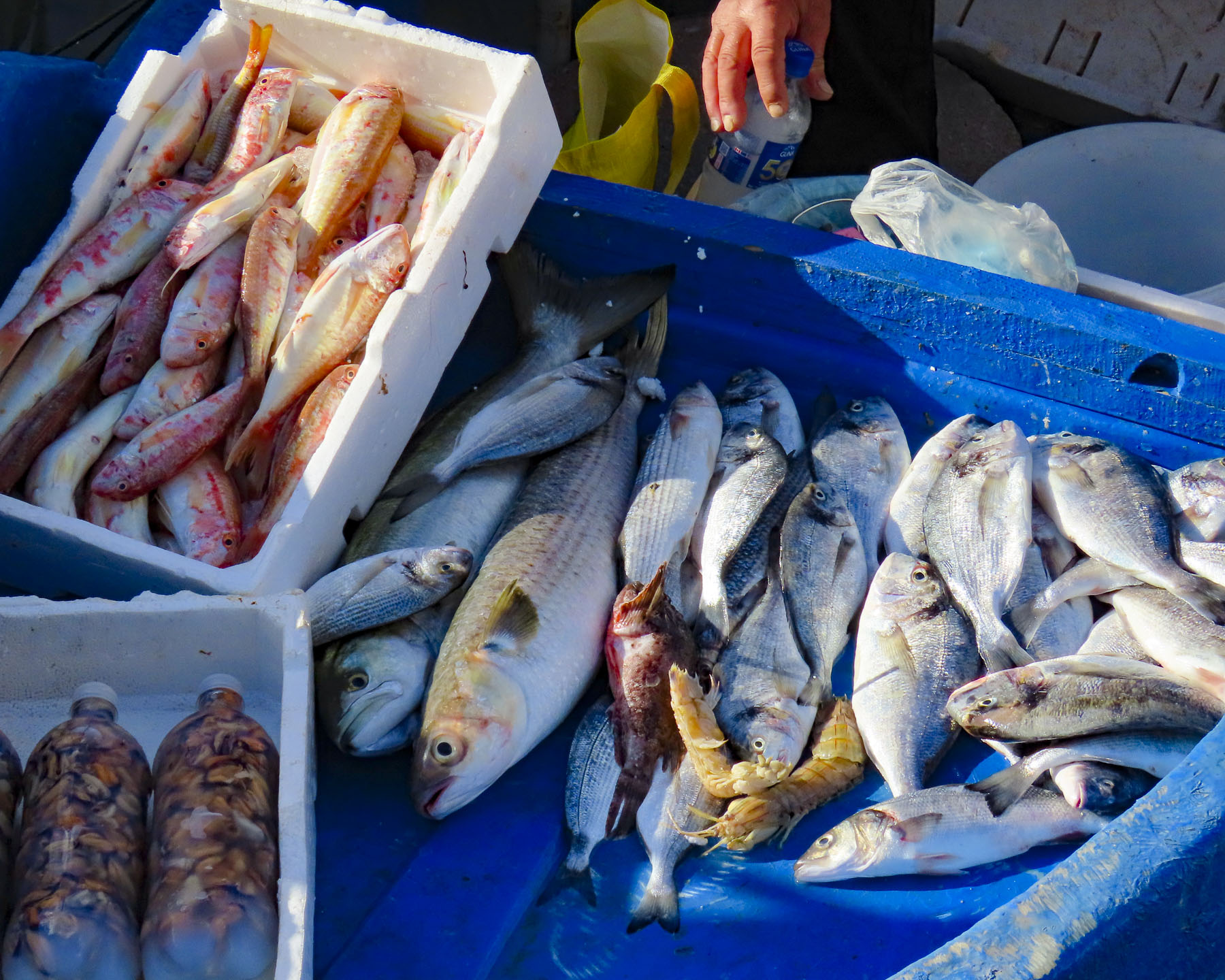
Fishermen sold their morning catch from the bows of their boats tied to the quay. A super-yacht cruised into the harbor and dropped anchor, not far offshore. Our “walk a little, then café,” philosophy brought us to the outdoor tables at Bar Restaurant Limani, on the waterfront.

Later that morning we headed south towards Greece and stopped in the beach town of Ksamil, on the Ionian Sea, to specifically visit that iconic swing set in the ocean, that’s symbolic of the area’s laid-back vibe and tranquility – at least during the day anyway. It’s set in the surf directly across from the Poda Beach Bar if you need a landmark.

The horseshoe shaped beach was a brilliant white, with gentle waves caressing the sand. The water was an inviting aquamarine that faded to shades of cobalt blue as the water deepened. Dipping our toes in the still cold Ionian Sea was as far as we got. In the background the Ksamil Islands separated us from nearby Corfu.  

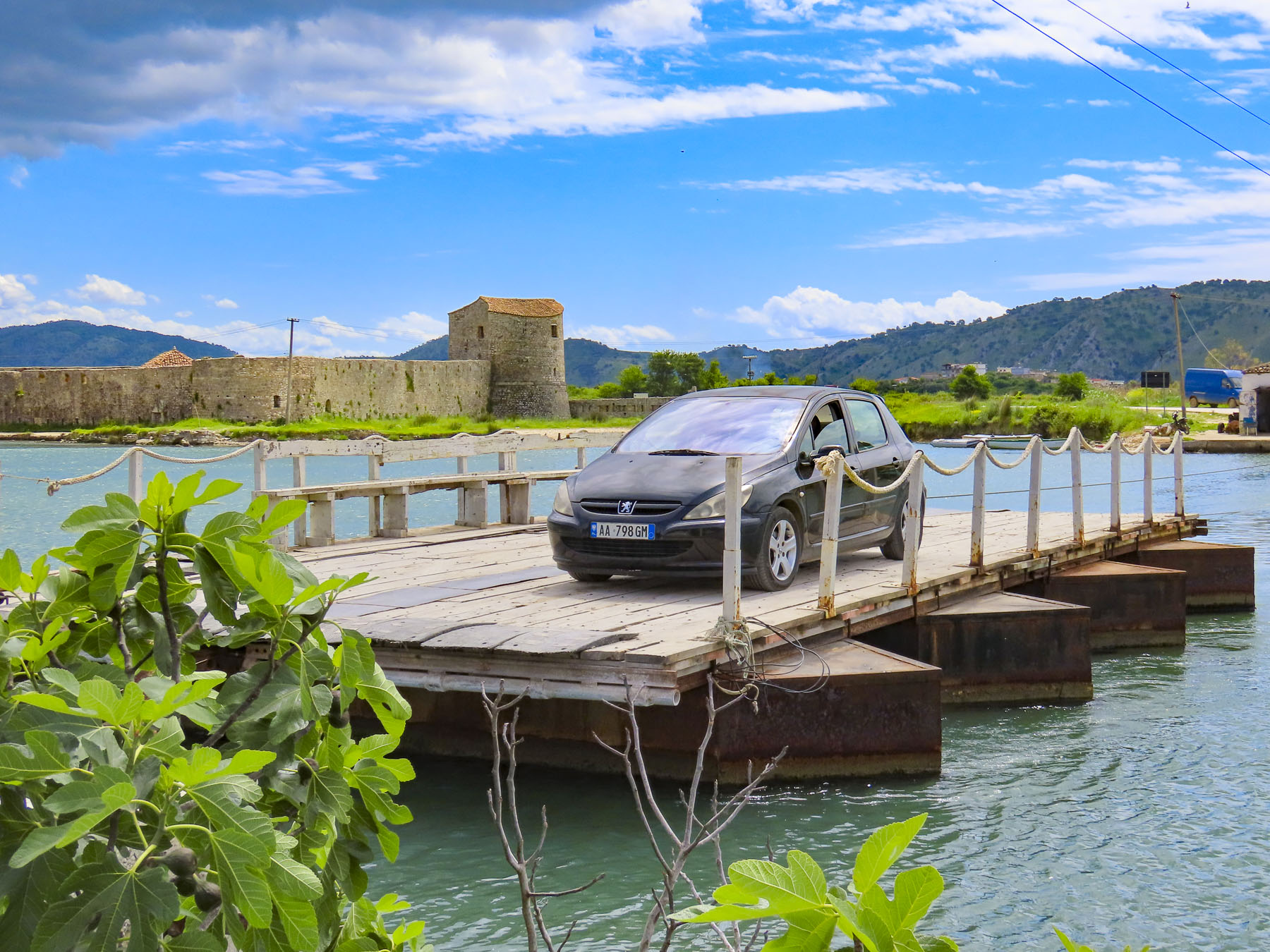
An easy 15 minute drive from Ksamil, we arrived mid-afternoon to the Butrint National Archaeological Park, a UNESCO site since 1992. Parking was easily found near the entrance, by the small car ferry.

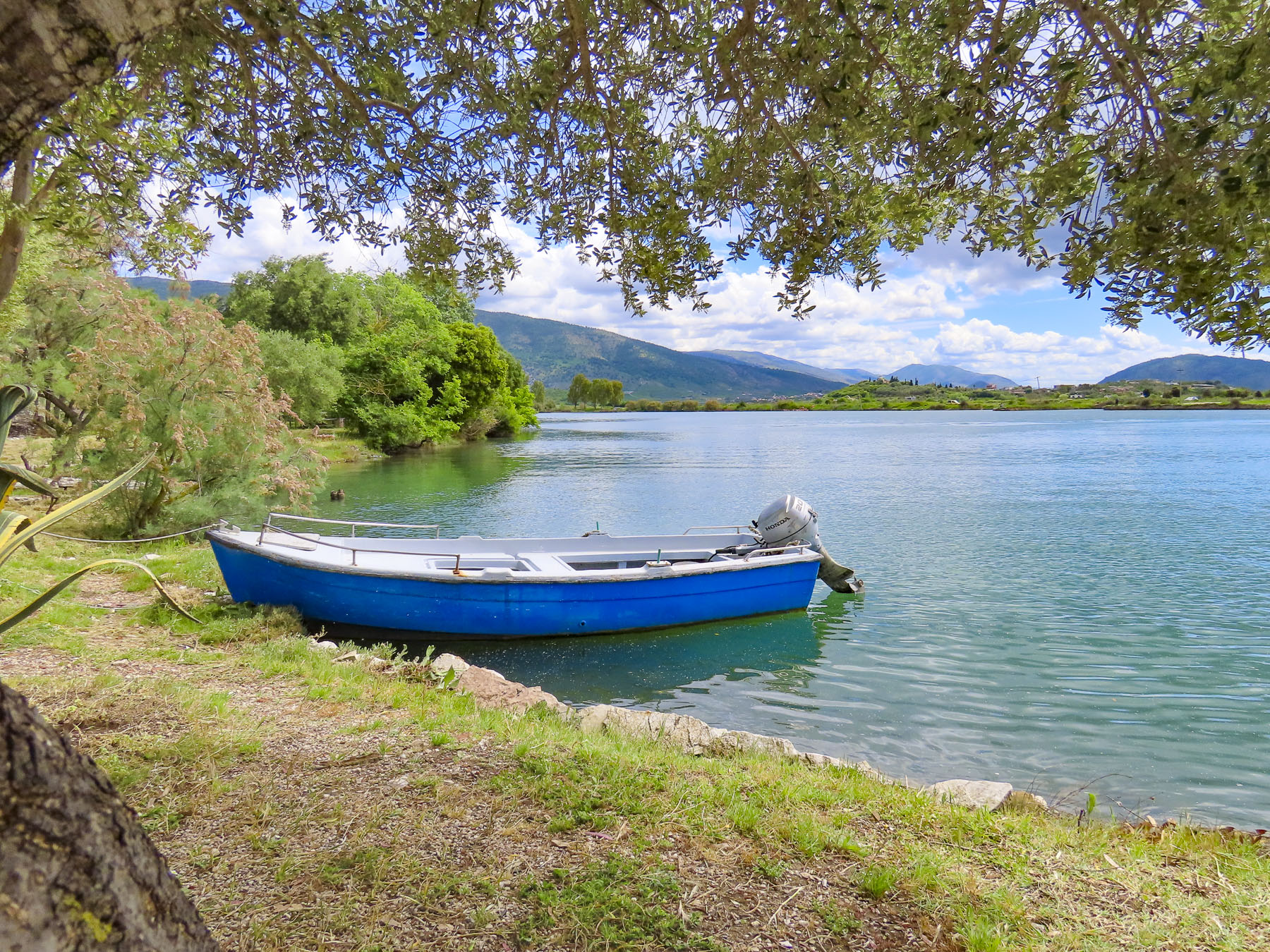
Folks who want to see the old Venetian Castle across the waterway, and those traveling farther south to Greece, need to use the ferry to cross the Vivari Channel, which feeds water to Lake Butrint, really a salt water lagoon. For several millennium it was a vital artery, protected by fortresses on both sides of the waterway, for ancient shipping fleets that sought a safe anchorage in Lake Butrint. 

The lake is surrounded by Butrint National Park which was established in the 1990’s to protect the wetland area that is internationally recognized as a supreme habitat for many different bird and fish species. Today the Vivari Channel’s nutrient rich waters continue to support many mussel farms that raise the unique Blue Butrint mollusks. Favored for their high nutrient content, mussels were an important food stock during the lean communist years. A great place to try them is nearby at the Mussel House, run by entrepreneurial Husein Mane and his family. Proudly it’s recognized as the 19th free enterprise business registered in Albania after the fall of communism.

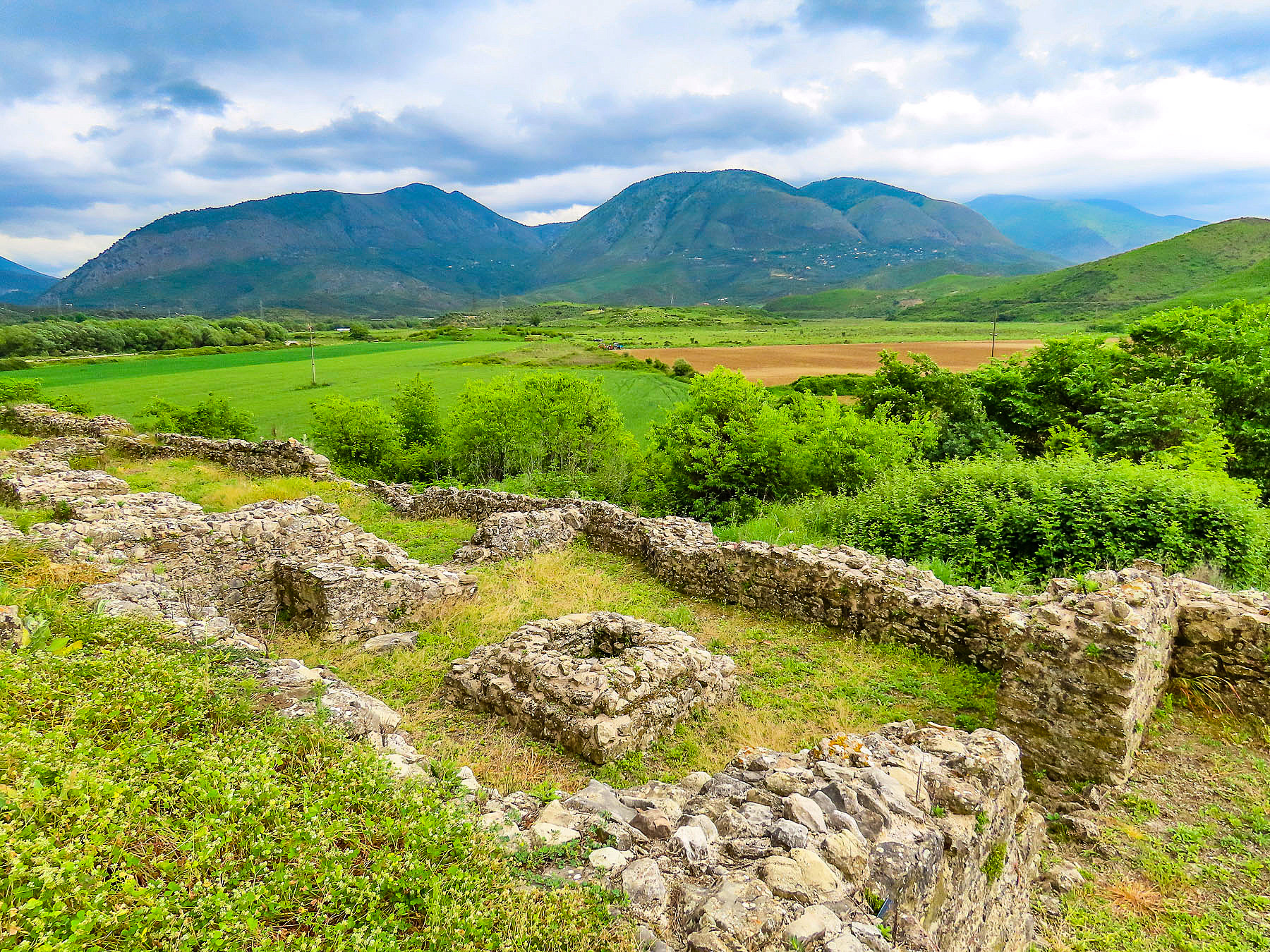
Located on a bulbous peninsula, almost completely surrounded by water, this small defensive hill has been trodden upon since the bronze and iron ages. Later an Illyrian tribe left their detritus. it’s believed the first substantial improvements were made when Greek traders from nearby Corfu established a colony on the hill and built an acropolis in the 8th BC and called it Buthrotum.

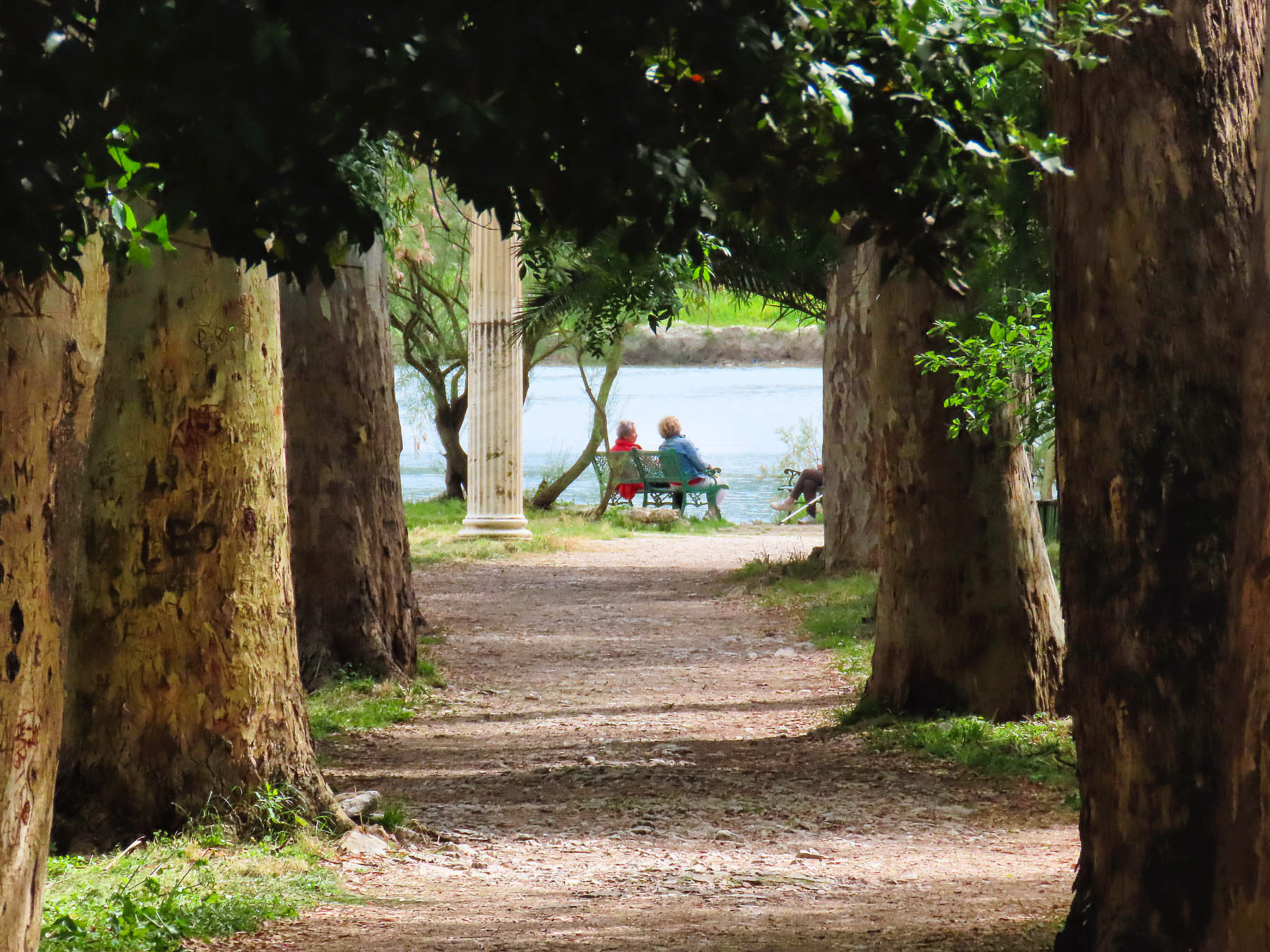
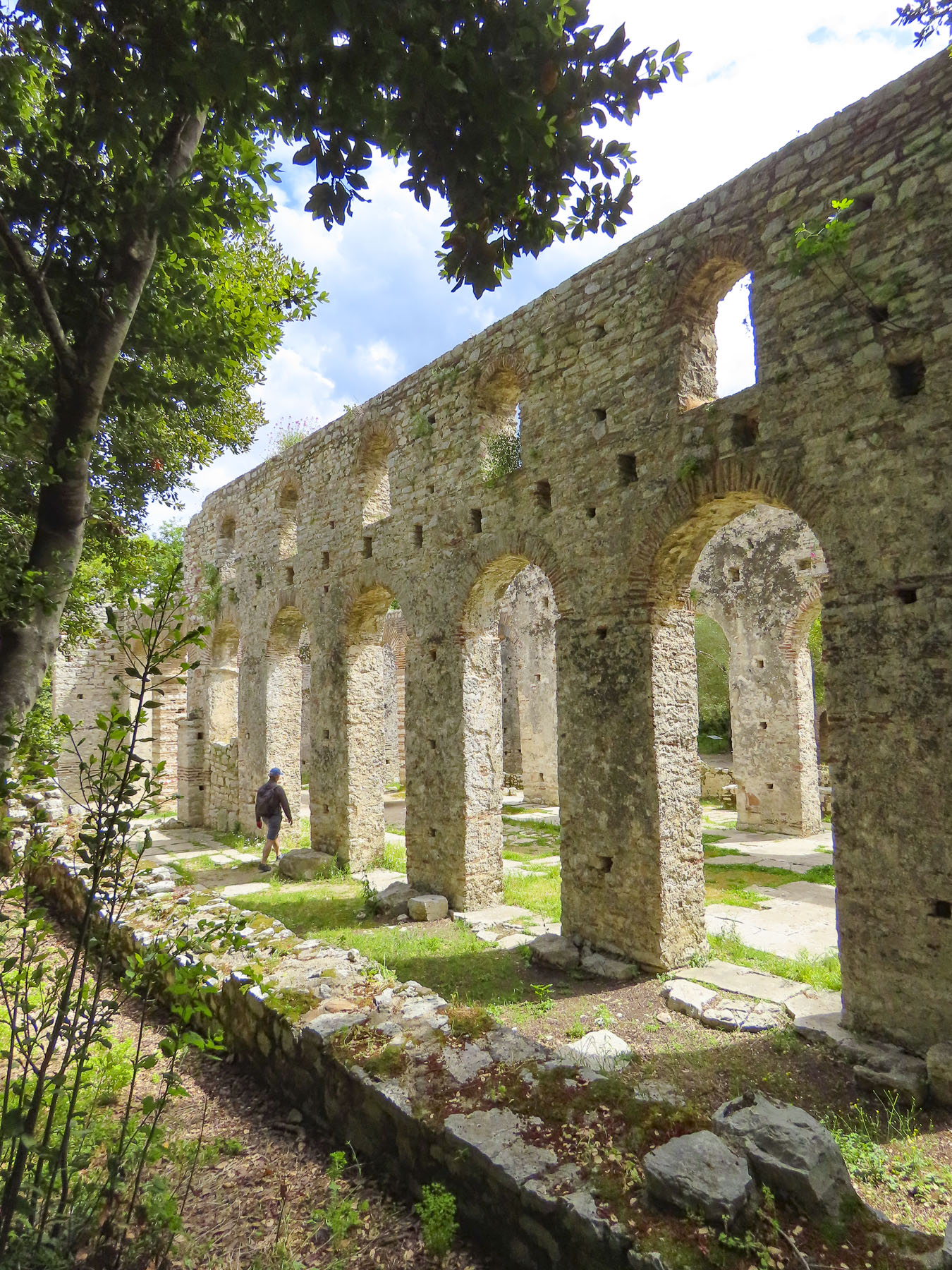
The ancient ruins are spread across a beautiful park-like setting, with dirt paths following the riverfront, and winding between the monuments, under tall shade trees. It’s the perfect locale to release your latent Indiana Jones or Laura Croft. It’s obvious from the wonderful aesthetics of the landscape why a succession of civilizations have settled the land, and why the UNESCO literature describes the site “as a microcosm of Mediterranean history.”

After the Greeks, the Julius Caesar arrived in 48 BC and called the city Bouthrotos. I can imagine Caesar atop the hill standing next to Pliny the Architect and asking, “Pliny, what can you do with all of this Greek rubble?” Emperor Augustus renamed the city Colonia Augusta Buthrotumhe. The city thrived under several centuries of Roman rule, its coffers full from trade with the Western Roman and Byzantine Empires. It was during this period of prosperity that a bridge and aqueduct across the Vivari Channel were built. The aqueduct, a testament to Roman engineering, spanned the waterway and continued to a fresh water, mountain spring four miles to the east. Many substantial buildings include a Forum, Roman Baths with heated water, Capitolium, a Gymnasium complex, and a circular Baptistery with a splendid mosaic floor. The floor is covered with sand to preserve it, but it is occasionally revealed for several days each year. Temples dedicated to mythological gods were eventually replaced with a Christian Basilica. Villas of the wealthy dotted the lake shore.

Charles I of Anjou of the Angevin dynasty, aka the King of Sicily, who later named himself King of Albania too, wrestled control of Bouthrotos away from the Byzantines in 1292. The Angevin dynasty ruled the city for nearly 100 years before the Republic of Venice said, “let’s make a deal,” and purchased the city in 1386. This strategic decision gave the Venetians nearly total control of the Adriatic Sea. They reinforced their intent with the construction of a Castle, now the archeological museum, atop the ancient Greek acropolis, at the highest point of the hill.  Defensive walls and towers along the shoreline, and a fort across the Vivari waterway were built to help protect their new possession, Butrinto, and harbor.  Three hundred years of near continuous conflict followed with the Ottoman empire as it fought to spread its reach across eastern Europe, Greece and the Balkans. The city finally fell to the notorious Ottoman Albanian warlord Ali Pasha Tepelena in 1799, but was soon abandoned as the marshes around the peninsula were infested with malaria carrying mosquitos. Shepherds and their flocks wandered amid the ruins until the first archeological excavations began in 1928. The dig was funded by Italy’s Fascist government headed by Benito Mussolini, with the aim to extend Italy’s historic ties to the region, and support a case for Italy’s bid to annex Albania. 

We enjoyed a wonderful afternoon exploring the ruins, and after also visiting the Apollonia Archaeological Park, we must say Butrint is a larger, and far more interesting site, w hich two thousand years ago the Roman writer Virgil described as being as beautiful as the ancient city of Troy, in his poem, Aeneid.

Back in Saranda, we watched the sunset as the ferry from Italy sailed across waters once rowed by the Greek, Roman, and Venetian galleys. We packed. The next morning, we headed to Gjirokaster.

Till next time, Craig & Donna