Portugal Road Trip – Part 5: Braga, Vila do Conde & Santa Maria de Feira

My wife and I occasionally discuss the destinations we’ve enjoyed the most and which we’d enthusiastically like to return to. We can truly say we’ve enjoyed every place we’ve chosen so far, but aside from Italy, the land of Donna’s people, being a must, Portugal and Guatemala top the list. They are both wonderfully interesting destinations with fascinating locations and cultural events to experience. With budgeting an important consideration for our travels, both Portugal and Guatemala are pocket friendly destinations. But, with the Euro currently at a favorable exchange rate, Portugal is a tremendous bargain. Throw in the fact that the weather, cities, beaches, and countryside are beautiful, along with a welcoming environment, great food and wine, well we should really emigrate there.  Alas, we’ve never really wanted to be fulltime expats. We’ve opted instead for a return visit to this splendidly diverse country when an airfare deal appeared on our travel alerts.

The city of Braga first popped onto our radar while we chatted with a PSP officer at a Tourism Police Station in Lisbon several years ago as we filed a stolen a passport and wallet report. Conversing as he speedily typed away, asking how we were enjoying Portugal. “What are your plans after Lisbon?” “Drive north to Porto for several days,” we responded. “Ah! Nobody goes above Porto. It’s as if the country stops there. The Minho region of northern Portugal is beautiful with mountains and trees, very different than south of the country and the food is better,” he joked and smiled. “You should visit Braga.” The idea stuck. Later suggestions gleaned from the blog Beyond Lisbon, written by Cátia, who espouses the lesser-known destinations, traditions and delightful quirkiness of her country, helped inspire our route through northern Portugal. Armarante, Guimaraes, Braga then farther north to Lindoso, a stone’s throw from the border with Spain, before returning to the coast above Porto. Two days later our friendly policeman emailed to notified us that the passport and wallet had been recovered. Minus the cash, of course, but we were relieved.

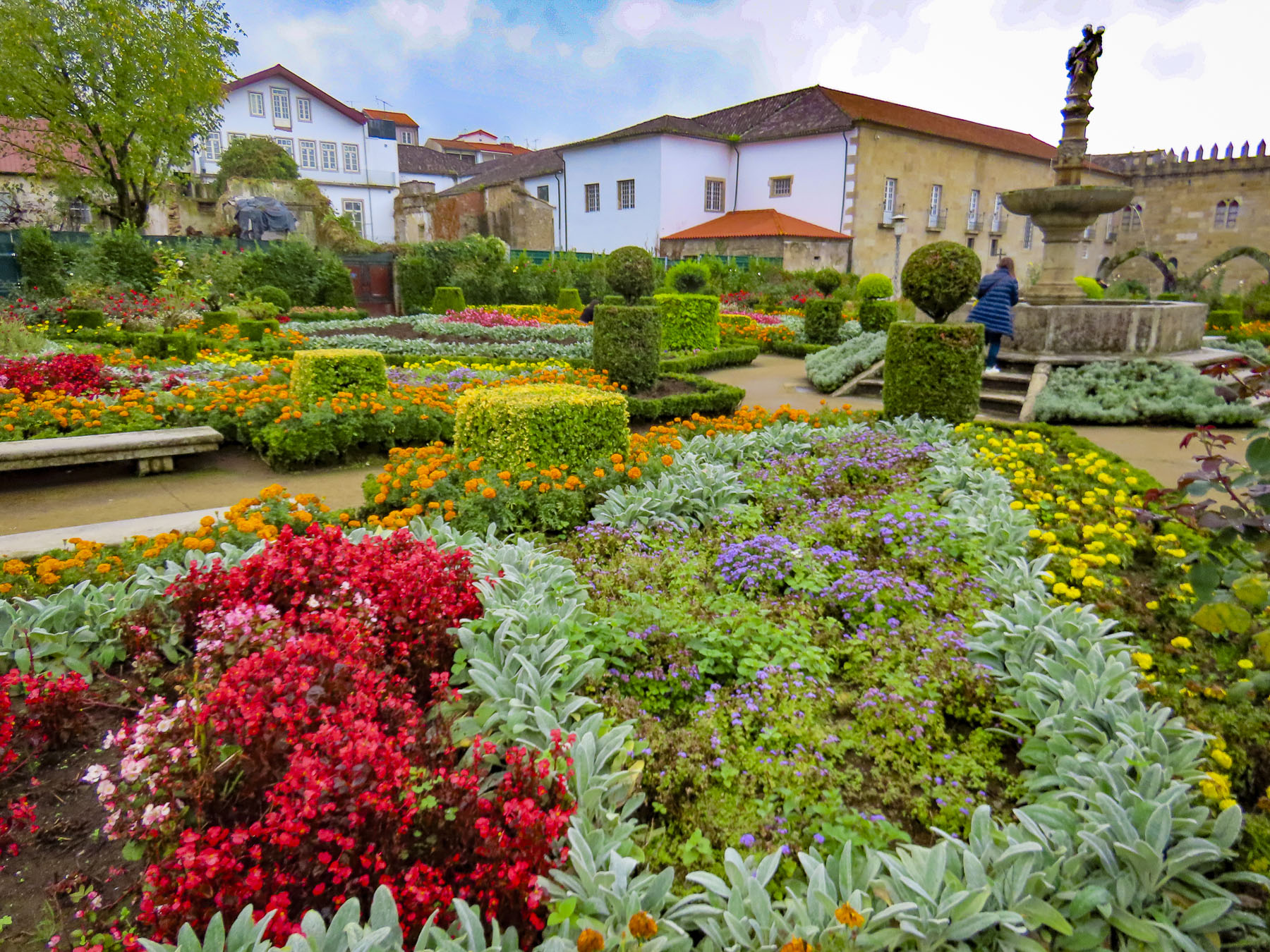
The rain had finally stopped, and the sun was beginning to break through by the time we reached Braga, encouraging us to make a short foray into the centro histórico before ending the day at Bom Jesus do Monte. Braga’s main garden, the Jardim de Santa Bárbara, was surprisingly only added to historic city’s landscape in the 1950’s. A relatively modern intervention, it benefits from its location adjacent to the crenellated walls of Archiepiscopal Palace of Braga, that dates from the 14th century.  Four stone arches are the only reminders of a larger structure with a library containing many historical documents that was lost in an 1866 fire.

Important since its founding in 16 BC, as Bracara Augusta, where five Roman roads converged, Braga today is Portugal’s fourth largest city and a vital metropolis for commerce and education. The city has had a complex relationship with country since 1112 when Count D. Henrique and Countess D. Teresa donated the city to the Catholic Church, creating an ecclesiastical fiefdom that lasted until the 1700s. 

In 1128 the city/church was given the privilege to mint its own coinage as reward for supporting D. Afonso Henriques’ revolution against his mother, the Countess D. Teresa, for Portugal’s independence from Spain. Local wars occasionally erupted between Dukes and various Archbishops over the following centuries.

Count D. Henrique’s and Countess D. Teresa’s tombs are in the Braga Cathedral. The first cathedral built in Portugal, it was consecrated in 1089, inspiring the Portuguese expression “older than the Sé de Braga.” A courtyard scattered with centuries old architectural remnants funneled us into the Cloister of Santo Amaro, which now serves as a museum that displays the church’s vast treasury. The church’s Romanesque and Baroque styles coexist seamlessly after centuries of renovation. The interior is very transfixing with Baroque gilding and mirrored twin organs that seem to float above the central nave. 

It was approaching sunset when we arrived at Bom Jesus do Monte. The neoclassical church with its famous baroque staircase has become an iconic symbol of Braca, since its completion in 1811. Some pilgrims call it the sacred way, others the stairway to heaven. The devout will climb its 573 stairs to the sanctuary at the top on their knees. Each landing features a fountain and allegorical sculptures.

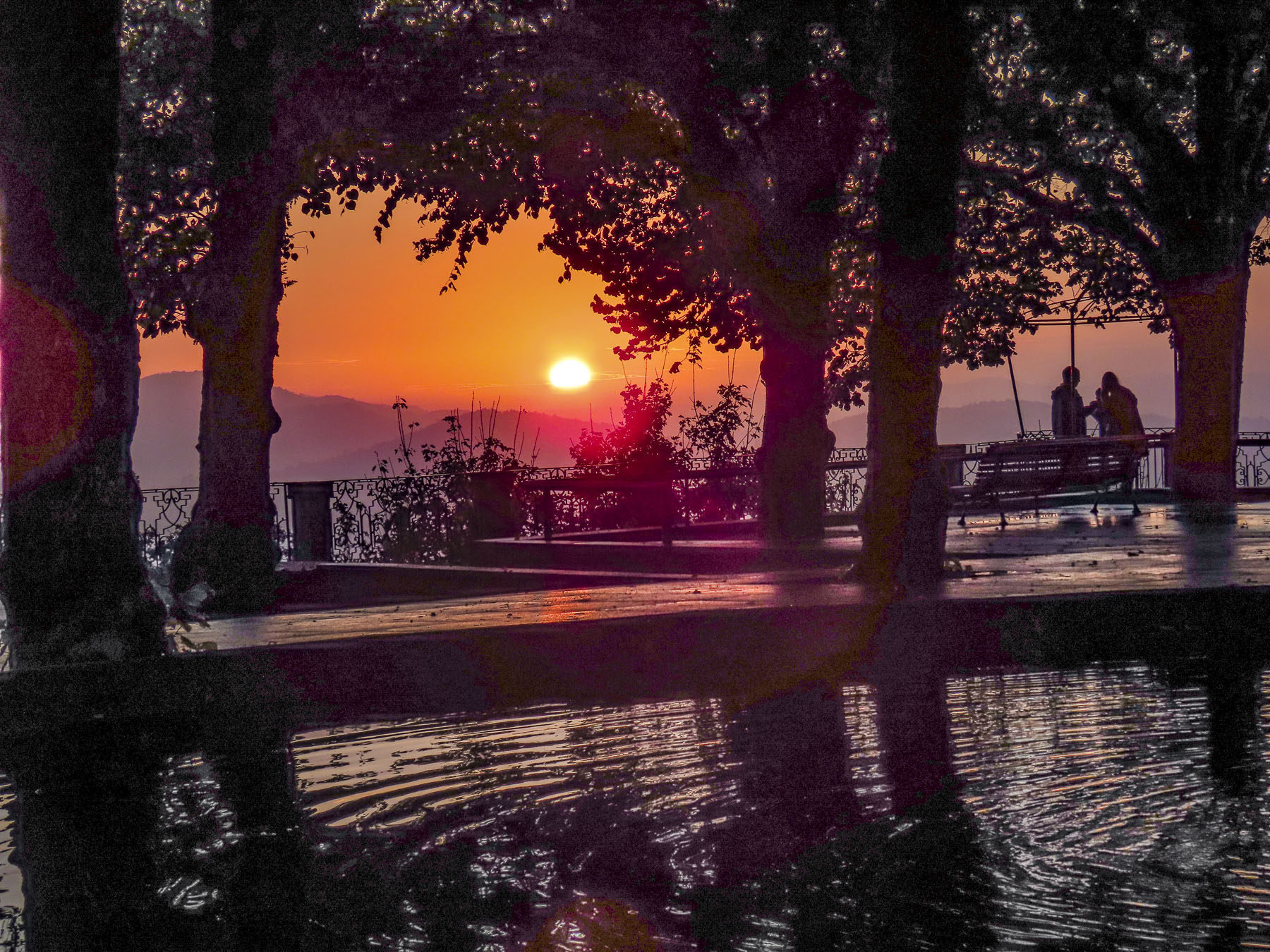
Our timing was perfect. Parking was easily available at the summit, the bus tours all gone for the day. Only a handful of folks remained, enjoying the beauty and tranquility as the sun set.

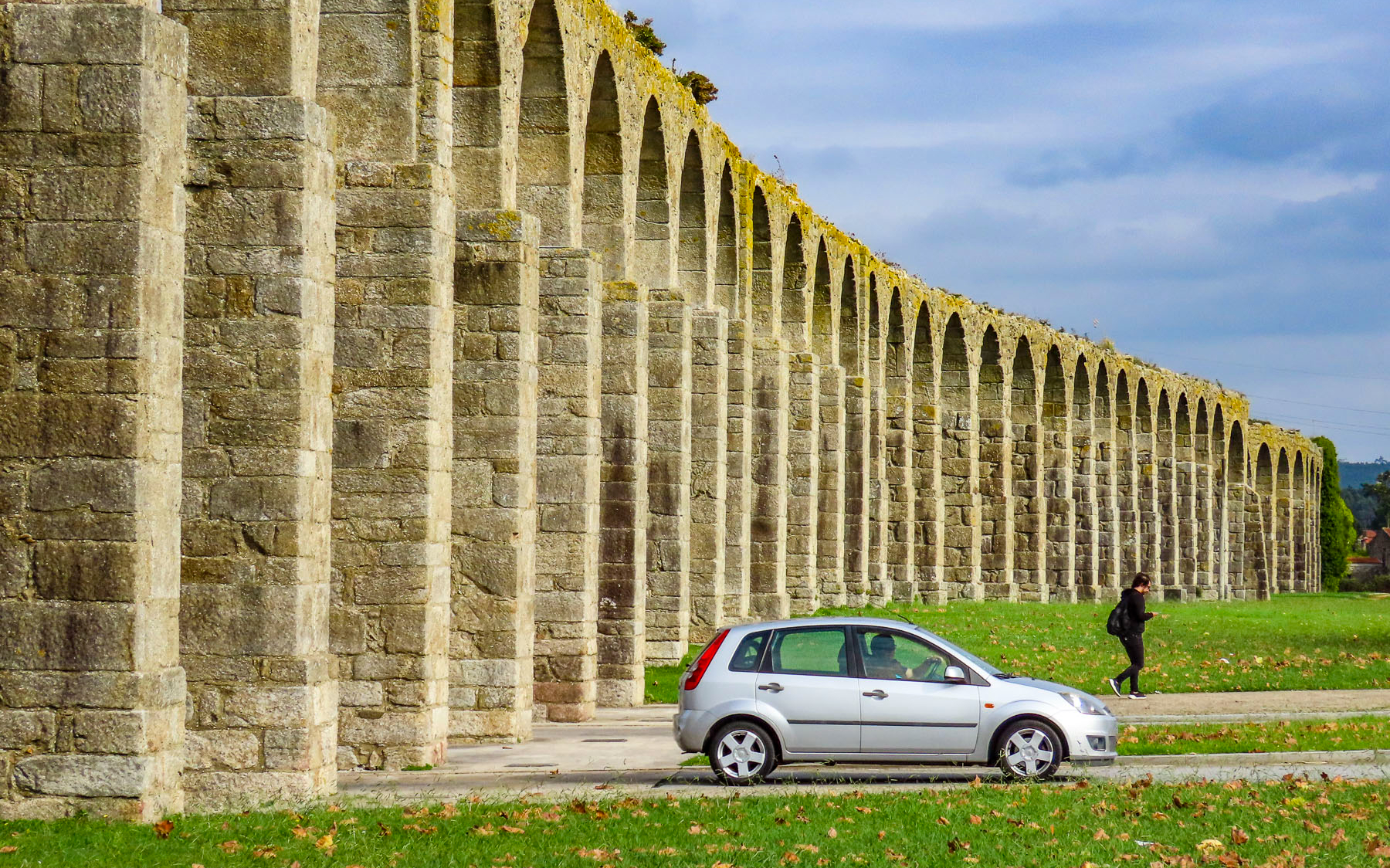
A north south transition day for us, we set off early to our first stop, the coastal town of Vila do Conde, on the Atlantic Ocean, just above Porto. As if by magic a tall stone aqueduct suddenly appeared before us, and it paralleled our route for quite a distance into Vila do Conde. We mistakenly assumed it was of Roman construction. We learned later that the 999 arches were built in the 16th and early 17th centuries to supply water to the Santa Clara monastery from a hilltop spring in Terroso, three miles away. Though the aqueduct could have benefitted from some Roman engineering after the first section was abandoned because the water flowed the wrong way. Later 46 arches collapsed during a storm.

One of the largest and wealthiest convents in Portugal, the Santa Clara monastery housed 100 nuns. It was founded in 1318 by Afonso Sanches, son of King Dinis and brother to King Afonso IV the Brave. The convent still commands a prominent hill above the city and is undergoing extensive restoration to become a Lince Hotel & Spa.

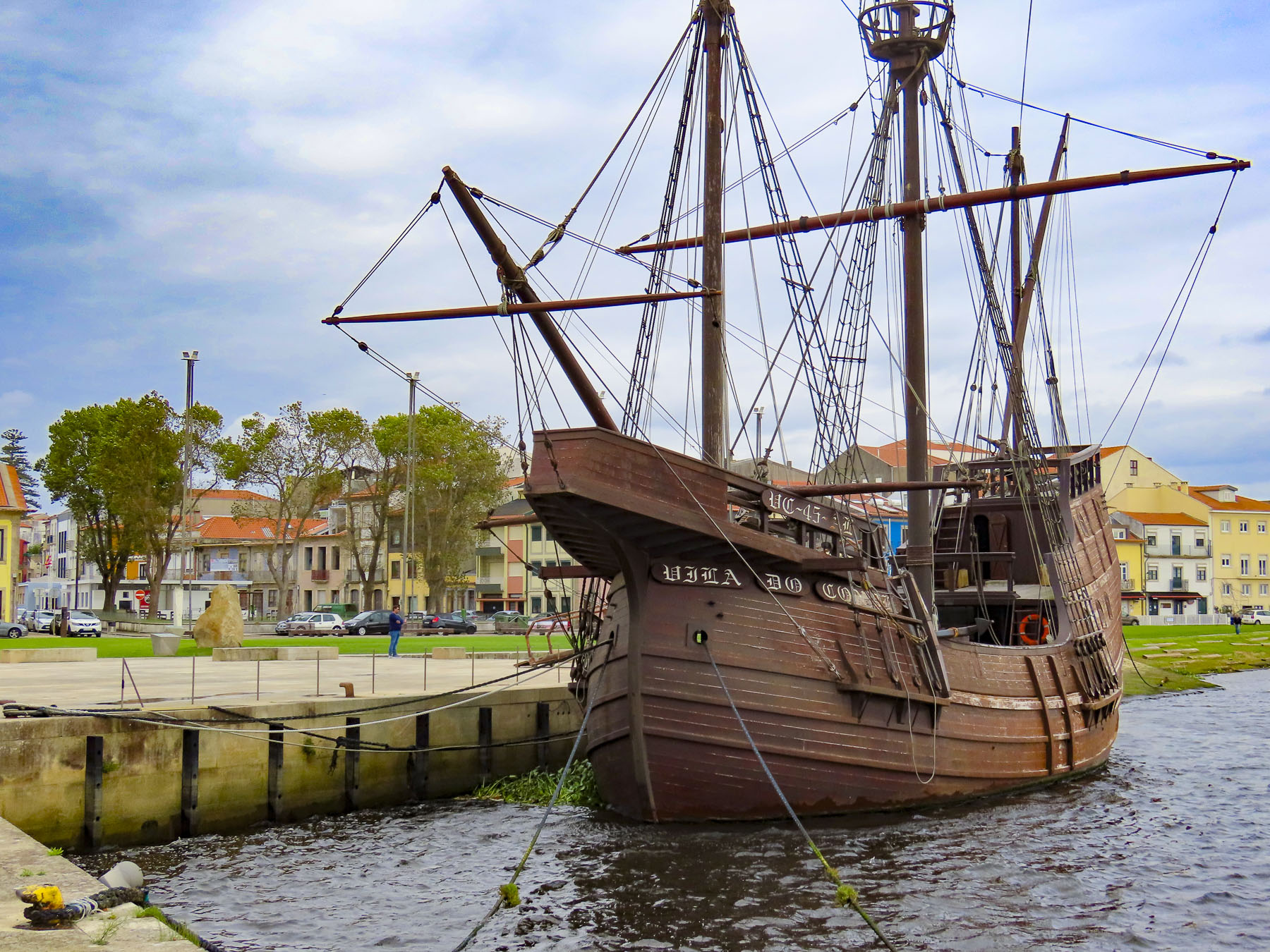
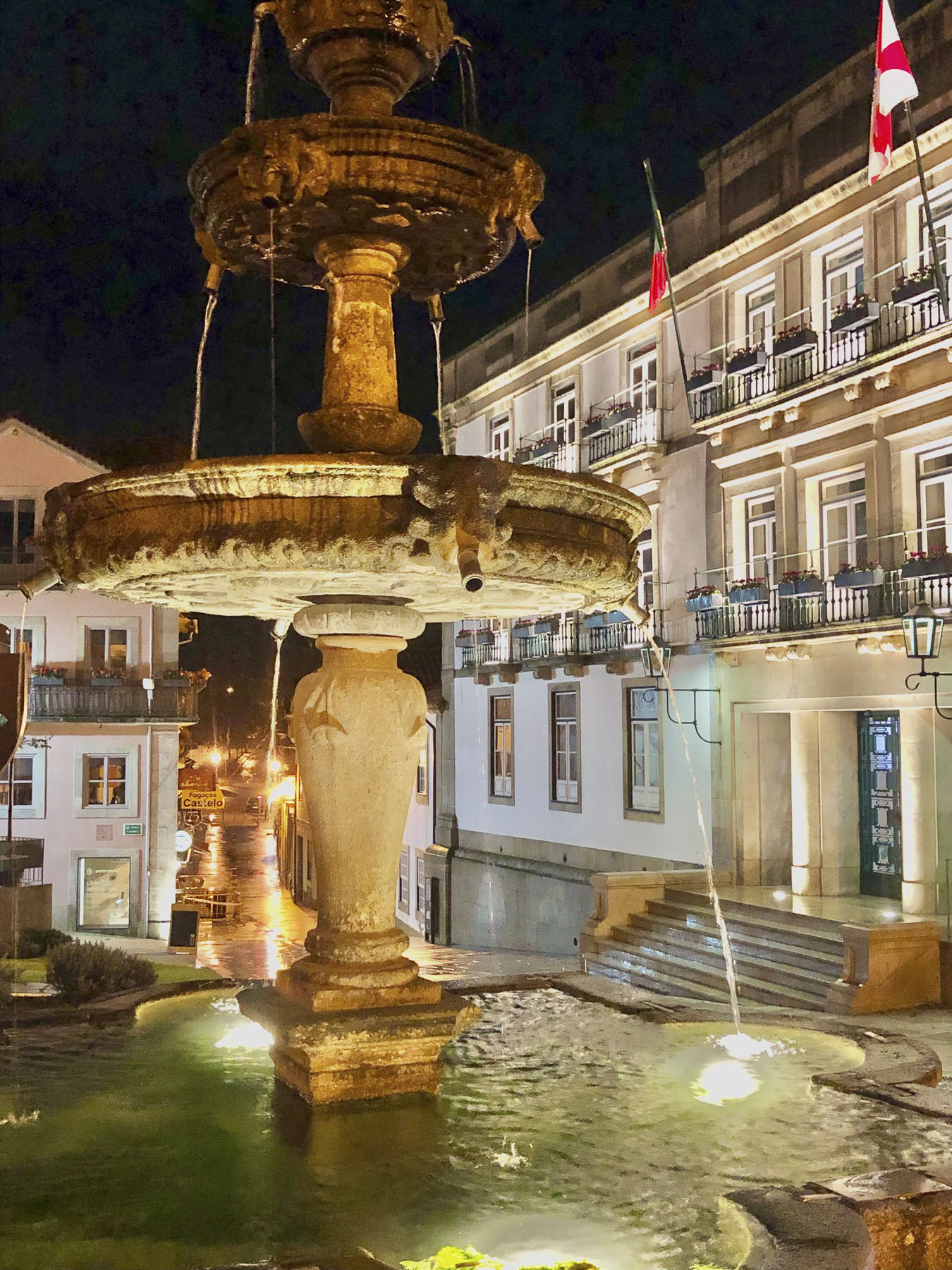
We were delighted to see the ocean again. Portugal’s lovely and easily accessible coastline is one of the reasons we enjoy the country so much. The town is graced with two beaches, Praia Azul and Praia da Senhora da Guia. Both are only a twenty-minute walk from the center of the town. But it was too cold and windy to enjoy the beach, so we walked along a riverfront park towards the old town. An ocean port city, Vila do Conde’s prosperity came from its shipbuilding industries during the Age of Discoveries.

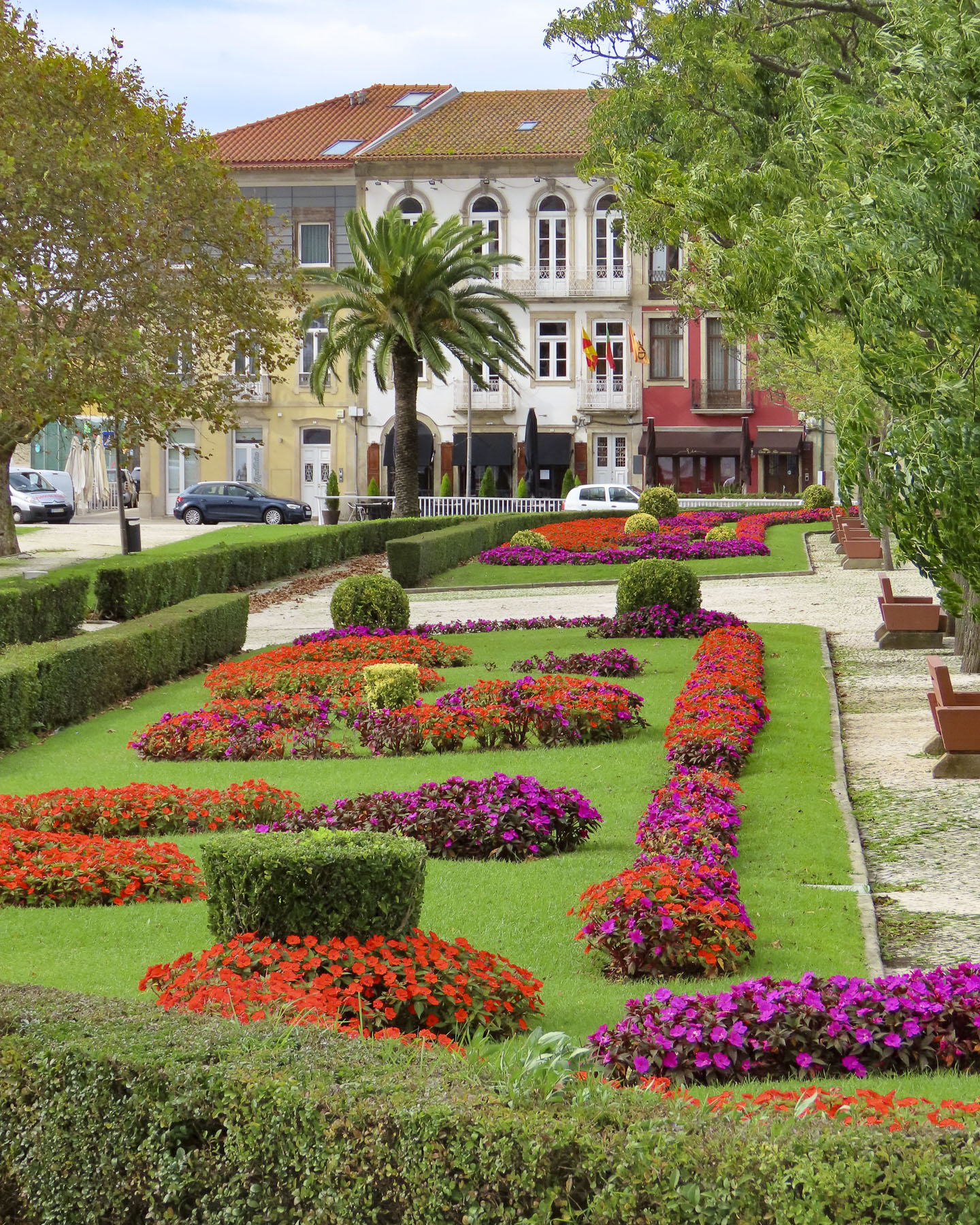
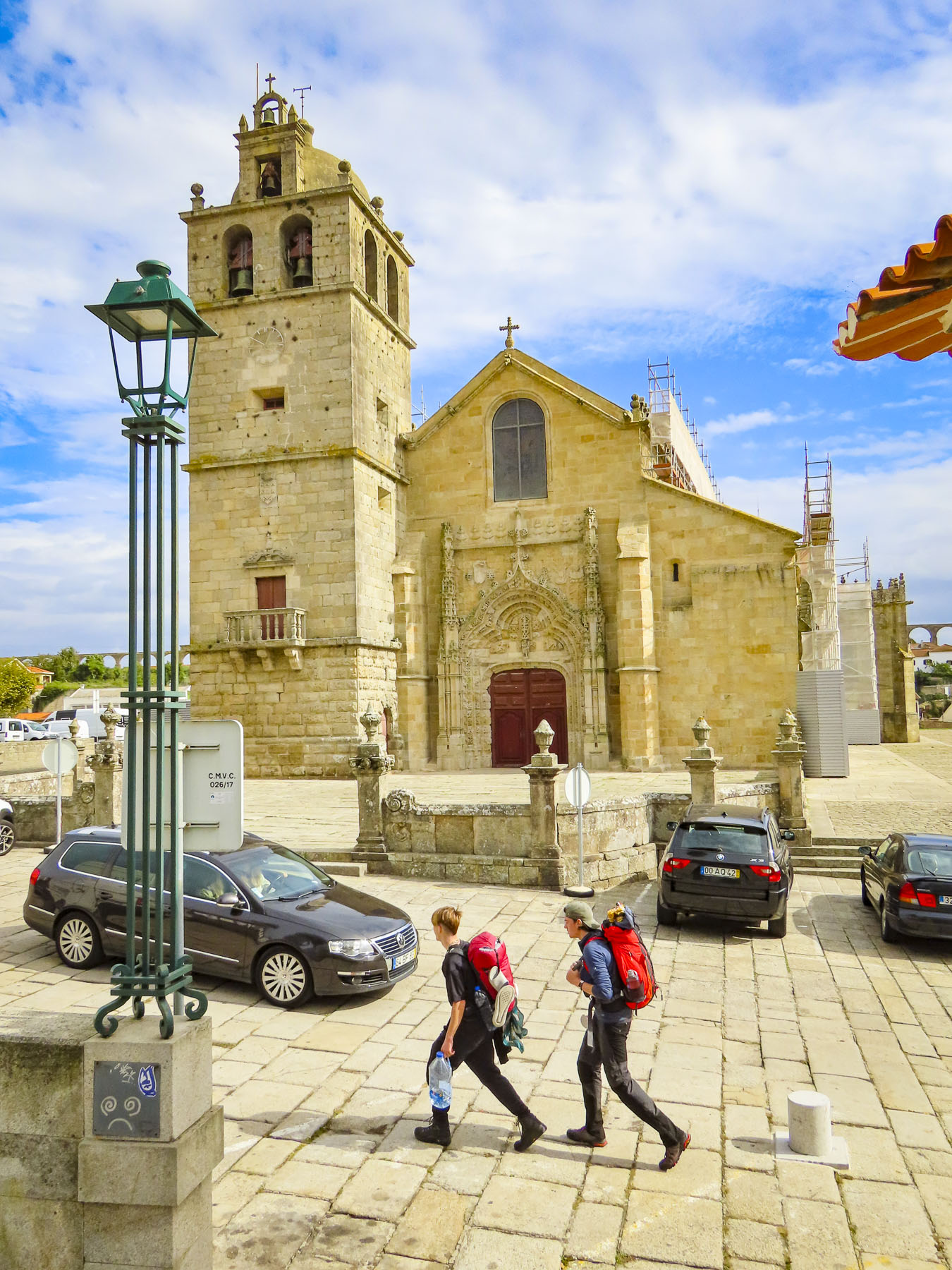
Farther along we rested at a café across from the Praça da Republica, a beautiful park with brilliant flowers still blooming in October. Following the streets inland we explored the narrow lanes around the Igreja Matriz de São João Baptista which centers a plaza atop a small knoll in the middle of the historic district.

It’s a popular resting spot for pilgrims trekking the coastal camino route from Porto or Lisbon to Santiago de Compostela, Spain. From here we spotted the final length of aqueduct that terminated at the convent. We decided to investigate. 

The aqueduct towers over homes in this neighborhood located on the slope before the convent. Beyond them the crenelated walls of the convent’s Gothic church reflect the time it was built in the 1300s when Viking raids were a recent memory and Spanish invasion was a constant threat. The view of the red roofed city and riverfront from the miradouro next to the convent was spectacular.

Years ago we used to keep magazine and newspaper articles filed away as research for future travels. That slowly evolved to email folders with links to stories and computer bookmarks for favorite travel websites. Now Google Maps and Instagram feeds spark interest for places to visit.  That’s how the Igreja Matriz de Santa Maria de Válega with its colorful tiled exterior wall came to our attention. The church’s unique beauty earning it the nickname “the Sistine Chapel of Portugal.” A half-hour south of Porto, the church is located at the crossroads of Válega, a small rural farming community.

The church was not always this stately. Its history starts in 1150, when a wealthy family built a small private chapel above the ruins of an earlier temple. From 1288 to 1583 it was part of the Monastery of São Pedro de Ferreira.  In 1756, the Diocese of Porto started renovations and building expansions that would last over 100 years. Surprisingly, the tile façade and interior were relatively modern alterations that were installed in 1959, along with a ceiling crafted from exotic Brazilian woods. The exquisite larger-than-life tiles depict stories from the life of the Virgin Mary and other biblical scenes. They were crafted by the Aleluia Cerâmicas of Aveiro, a local company that still creates unique tiles for customers around the world. 

Although it’s an off the beaten path destination, it’s worth the effort to see this truly unique church. If it helps to influence your decision, Flor De Valega is a mouthwatering pastry shop a short walk away. You won’t be disappointed!

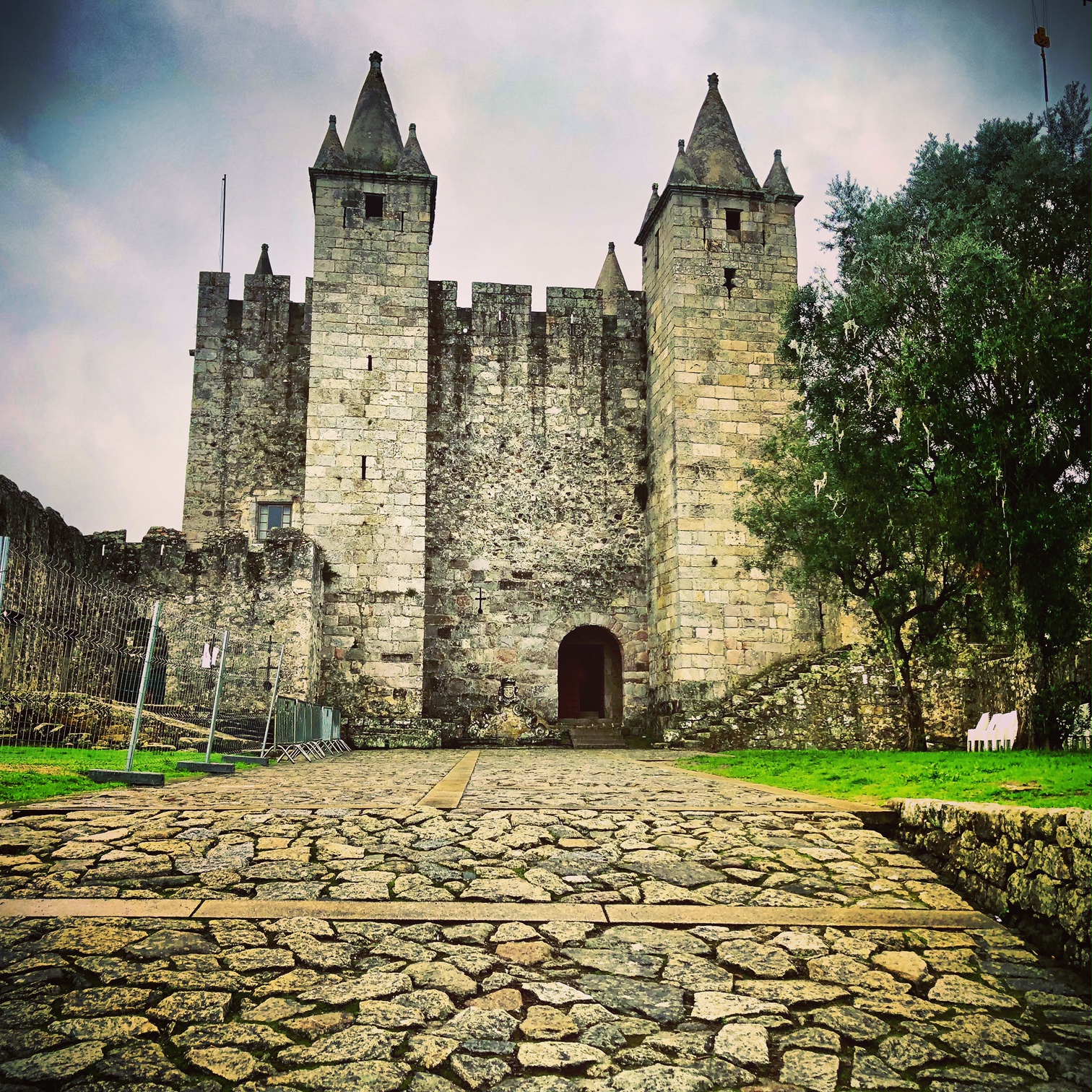
Our last stop of the day would be the Castle of Santa Maria de Feira, only twenty minutes away, before spending the night in the town below it. We arrived forty-five minutes before closing. How disappointing, because the castle looked intriguing and it was beginning to rain harder. A shortened visit would have to do. The line at the ticket counter wasn’t advancing as the lone ticket agent was busy selling souvenirs to a tour group that was just finishing a visit. Kindly, a security guard waved us along and we agreed to return in a certain amount of time and pay on the way out. The castle was fascinating.

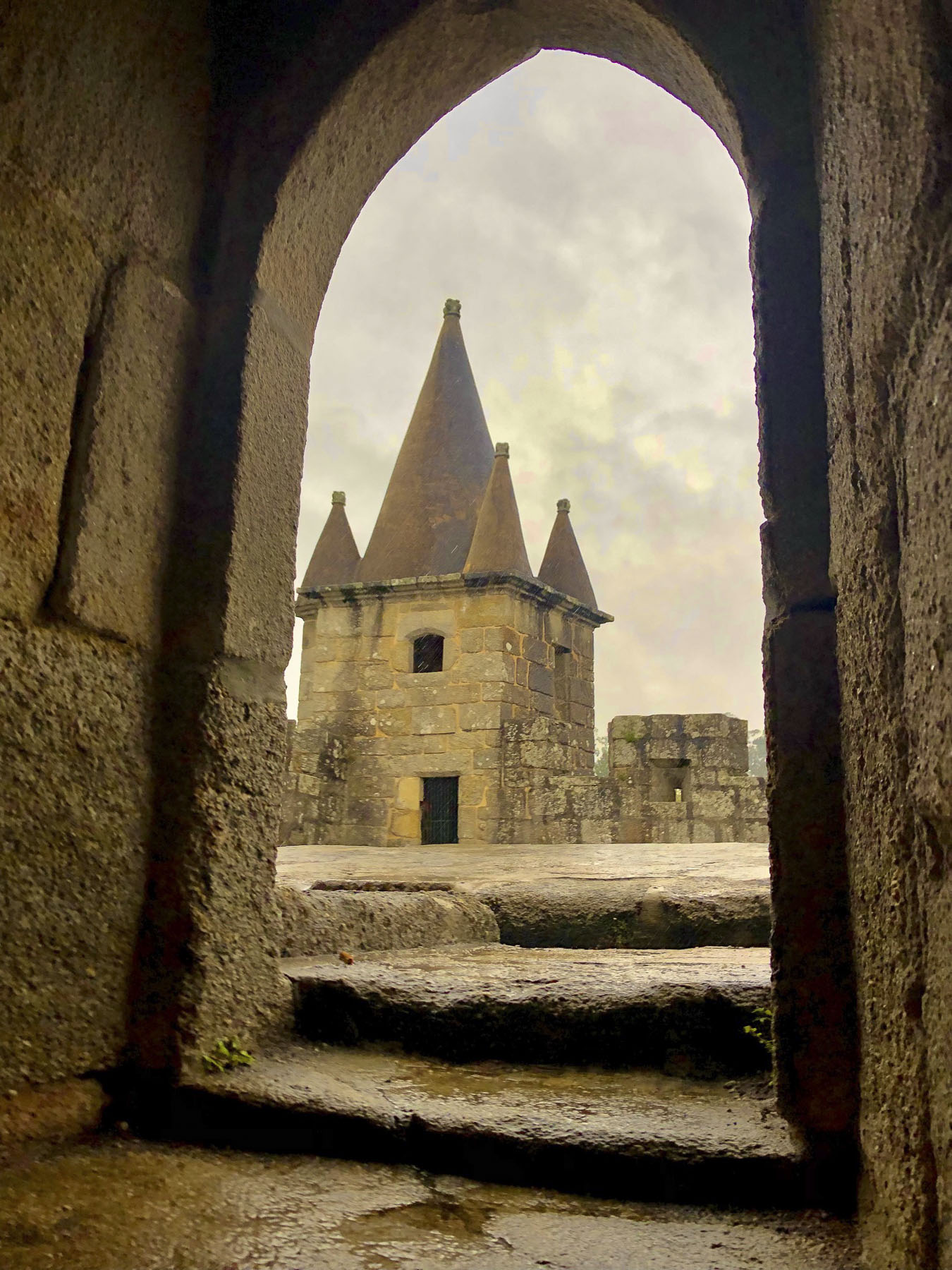
The castle sits on the apex of a now wooded hill, in a beautiful park, though back in the Middle Ages the hillside was devoid of trees, giving the soldiers in the fort a better view of any approaching enemy.  This was the frontier, a war zone between Christian Spain, later Christian Portugal and the Moors. Twice in 1100 the castle was sacked by the Moors and then liberated by Portuguese forces. This borderland saw continual conflict until the Arabs were driven decisively from Coimbra, only sixty miles away, in 1139.  Large medieval trade fairs held next to the castle earned the village the distinction of being named Santa Maria de Feira. In 1448, King D. Afonso V gave the battle-worn castle to Fernão Pereira on condition that he repair the fortifications. “Hey Fernão, do I have a deal for you.” His modifications of thickened walls, a barbican, spired towers and a large keep with fireplaces and terrace still stand, and are what visitors to the castle see today. After a fire in 1722 the castle was abandoned and left to ruin. In 1839 it was bought by a private citizen at public auction. Serious rebuilding began in the early 1900s and it was reopened to the public in 1950.

To our surprise, the gate of the barbican was locked with a heavy chain when we tried to leave. Our hearts skipped for a moment when we thought we’d be sleeping overnight on the cold stone floor of the castle’s keep. The anxiety was relieved a few moments later when the guard returned from making his final inspection to ensure nobody gets locked in. Reminding him we still had to pay he smiled and waved us away, happy to end his day a little early and get out of the rain. Every August the town and castle host a ten-day Renaissance festival called Viagem Medieval that is regarded as one of the best reenactment events in Europe.

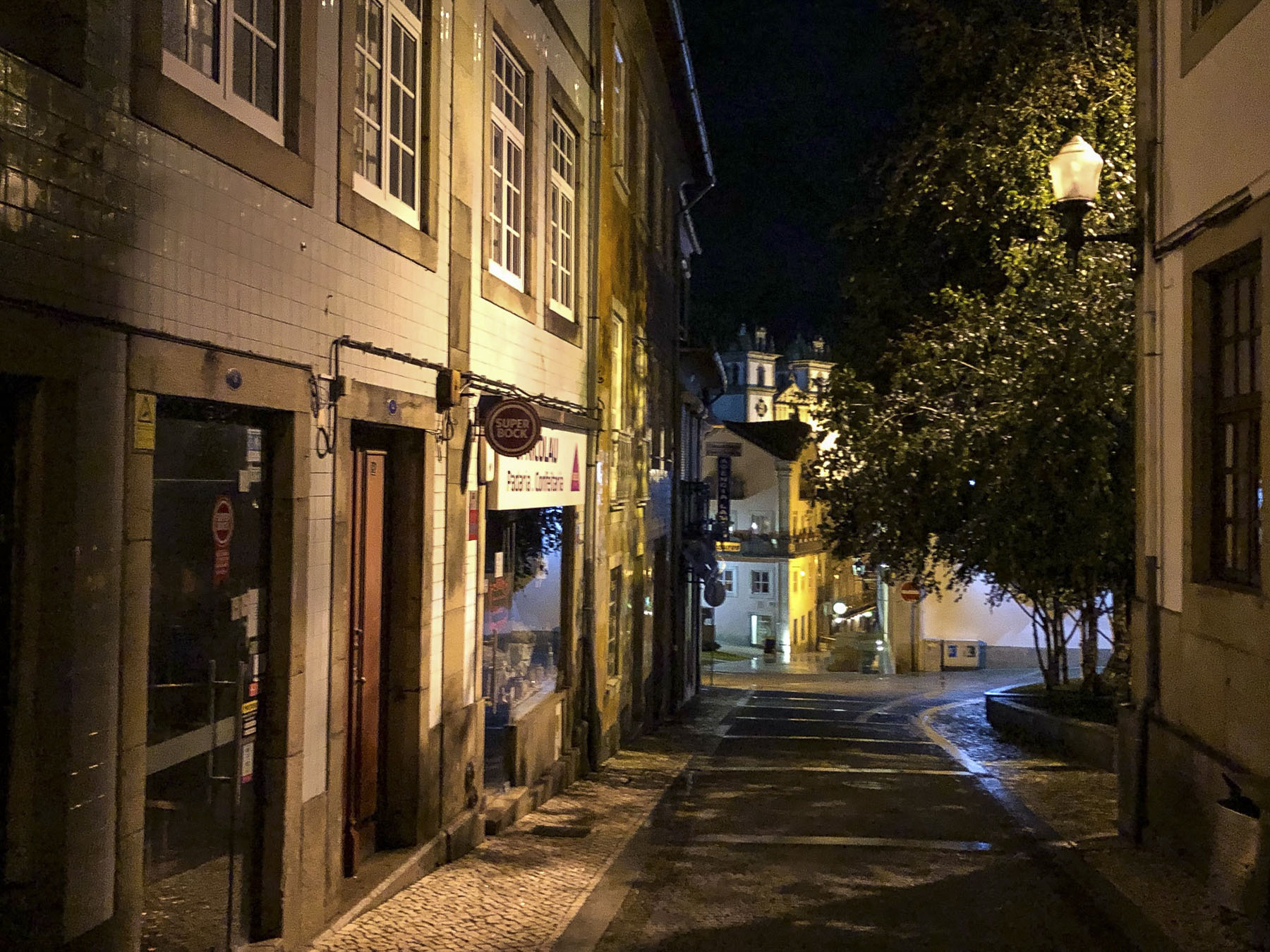
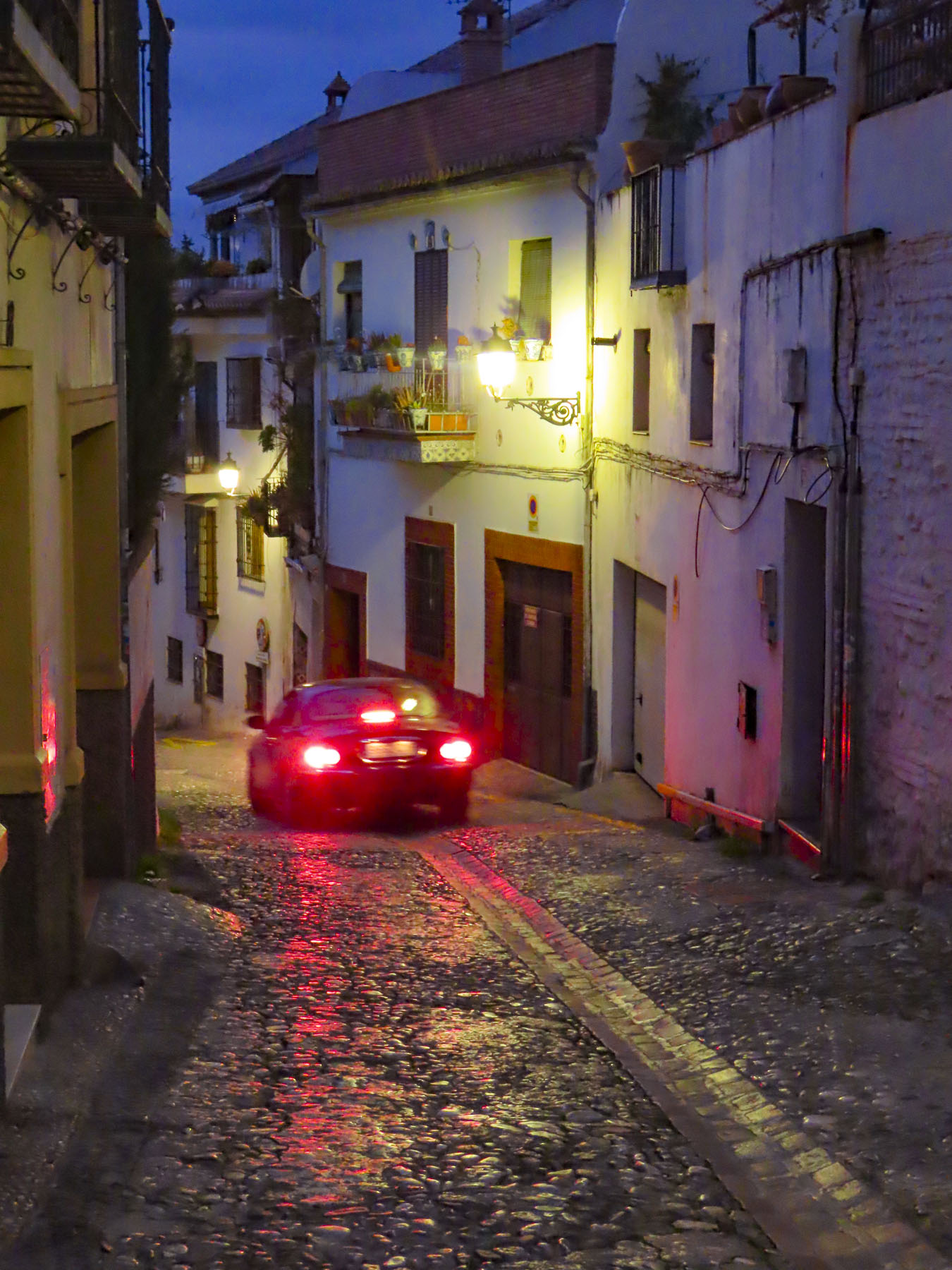
We hadn’t stayed in a hostel in years, but our private and modern room with ensuite bath at the boutique Hostel da Praça, in the historic center, was a bargain at €50. Parking was free at the municipal lot a short walk away.  As we walked across town to dinner that rainy night, the reflections from the old streetlights onto the cobblestones was evocative of the Middle Ages when the town’s nightwatchman lit torches hanging from sconces along the street.

Till next time, Craig & Donna

Havana, Cuba: Beautiful in neglect

The amber glow of sunrise warmed the waterfront as our ship docked.  Its upper deck provided us a view of the port as if we were seagulls soaring above the first commuter ferries of the day crossing the harbor.  Along the water, buildings wore a tired facade of montage color and aged textures. Beautiful in neglect. These were our first impressions of Havana. The few buildings under renovation were easy to spot with their fresh coats of paint. The domes of the Russian Catedral Ortodoxa Nuestra Señora de Kazán, built to celebrate Soviet – Cuban friendship glistened in the sunrise, its onion shaped domes an odd juxtaposition, accented the balmy Caribbean skyline.  We’d be spending two full days in Havana.

By the time Nevada legalized gaming in 1931, Havana, once nicknamed “the Paris of the Caribbean” was already a well-established tropical get-away for gambling, especially if you lived in the wintry northern parts of the United States.  Havana’s balmy weather and swaying palms contrasted nicely against Las Vegas’ dusty strip in the desert where tumbleweeds blew across the sidewalks. In the 1950s, fifty dollars could purchase a three-day package tour to a Havana casino that included airfare, entertainment, food and hotel. Cruises to Havana from Miami were also possible aboard ships like the 725 passenger S.S. Florida for $46.00. For an additional $35.00 you could take your car along if you wanted to explore the “700 miles of Cuban highways,” a travel brochure from the time advertised. Cruise ships arriving at night were occasionally treated to displays of fireworks over the centuries old Castillo De Los Tres Reyes Del Morro and the highrise apartments along the Malecon as they entered the harbor. It was city of Jazz clubs, high rollers, zoot suits, large finned Cadillacs and mobsters. Headliners like Frank Sinatra, Dizzy Gillespie, Eartha Kitt, and Nat King Cole drew folks to the casinos controlled by New York, Chicago, and Miami crime syndicates.

Mafia payoffs to the rampantly corrupt regime of Cuban dictator Fulgencio Batista and his associates allowed their casinos, brothels and drug running operations to flourish unimpeded. As flashy as the casinos were, the sugar industry dominated ninety percent of the rural Cuban economy for decades and was the largest employer in the countryside until sugar prices collapsed.  That along with government policies that ignored its impoverished citizenry bred increased discontent as the disparity of wealth between the rural poor and the Havana elite grew intolerable. The jungled mountains of the islands’ interior sheltered Fidel Castro and his armed revolutionaries. 1959 was their year. Batista and his cronies fled to the Dominican Republic. Afterwards all homes, properties, businesses, and cars were nationalized.  An exodus of the Cuban middle class followed with approximately 1.4 million people heading to the United States to reestablish their lives.

While Europeans and Canadians have long traveled to Cuban government-run tourists’ resorts along the coast, we were visiting the island on a cruise during that first window of opportunity which opened to Americans between 2016 – 2019, before access was unfortunately tightened again.  Recently the travel restrictions to Cuba have once again been loosened.

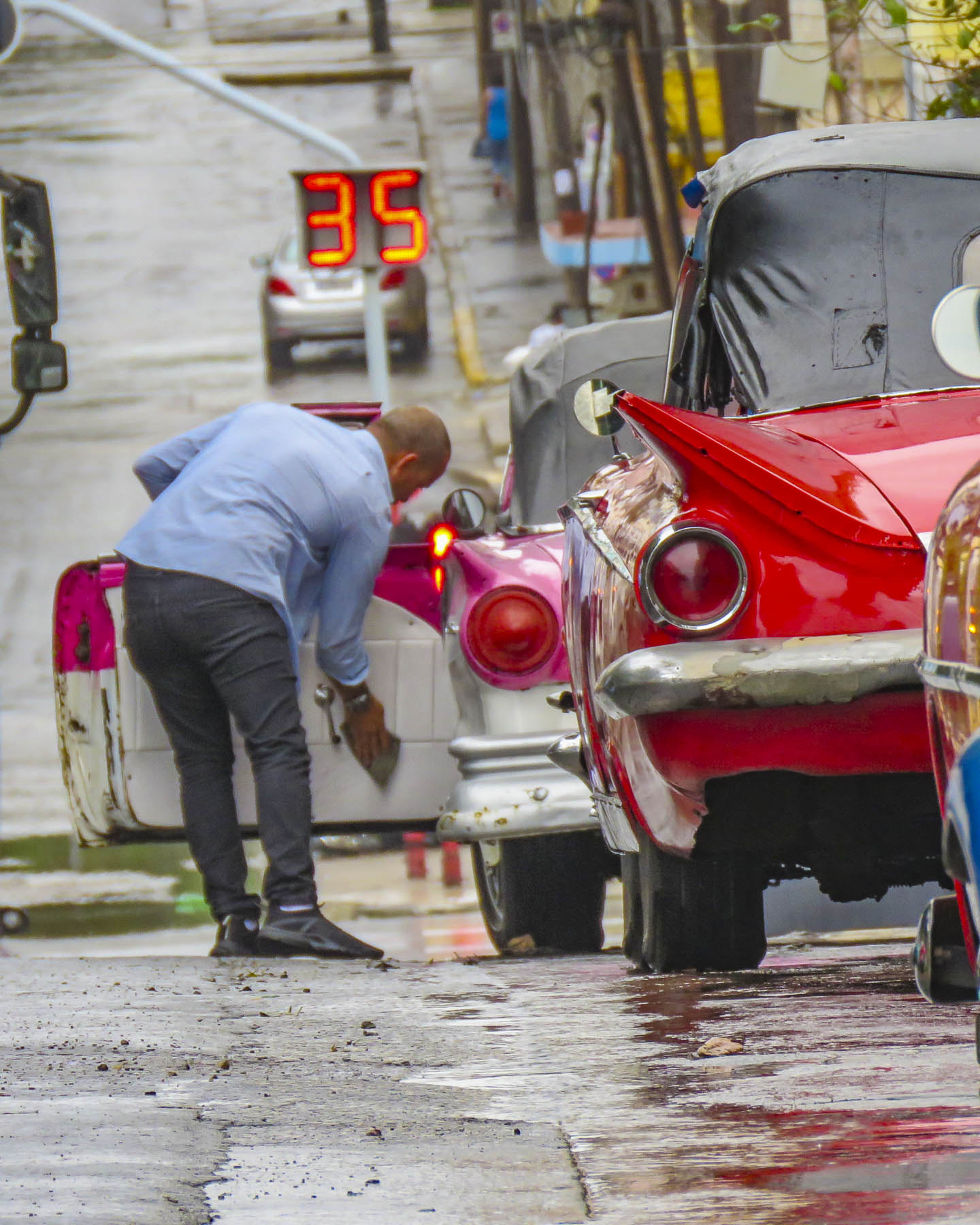
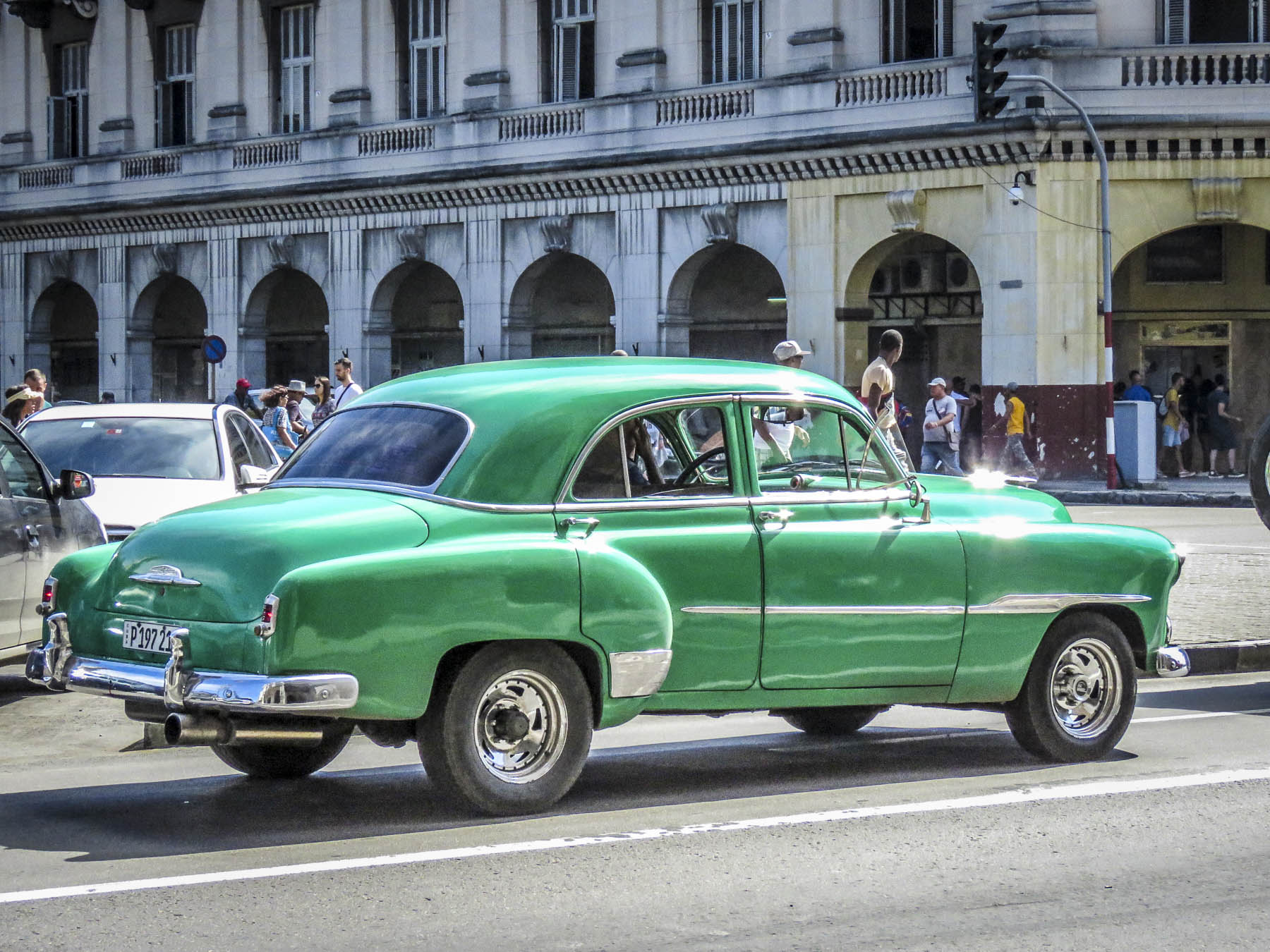
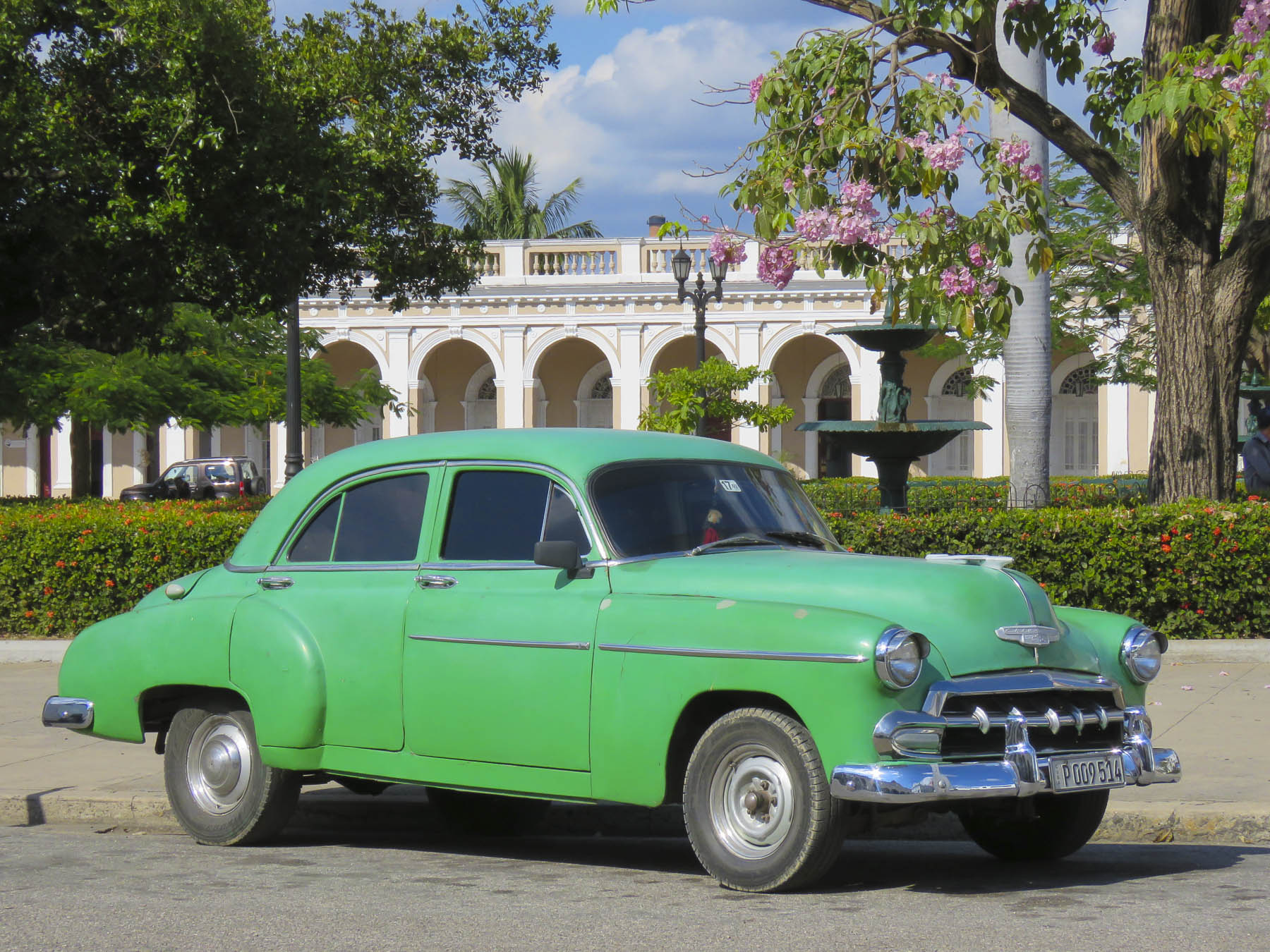
Rush hour in Havana happens whenever the cruise ships disgorge their passengers onto the waterfront to walk into the city center, catch their bus tours or to snag a ride in one of those classic cars from the late 1950s. There are literally thousands of antique cars still on the roads in Cuba, jury-rigged to keep running and often repainted with house paint that reflects the bright ambience of the Caribbean. 

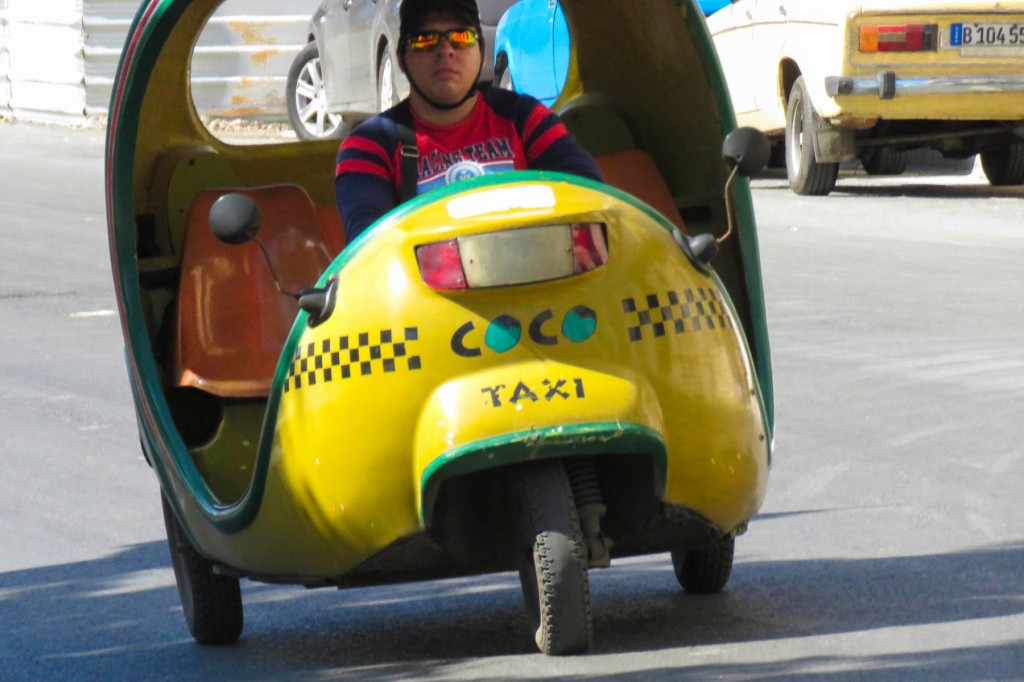
Depending on where you are in the disembarking queue these beautiful classics, especially the convertibles, might already be tooting around Havana with other tourists and you might have to opt for a coco taxi.  These entertaining rickshaw type taxis are covered in a bright yellow, fiberglass shell and have seating for three across the rear axle. When it rains, you are going to get soaked as we did when we got caught in a downpour. The return ride was definitely more comfortable after several Cuba Libre cocktails. 

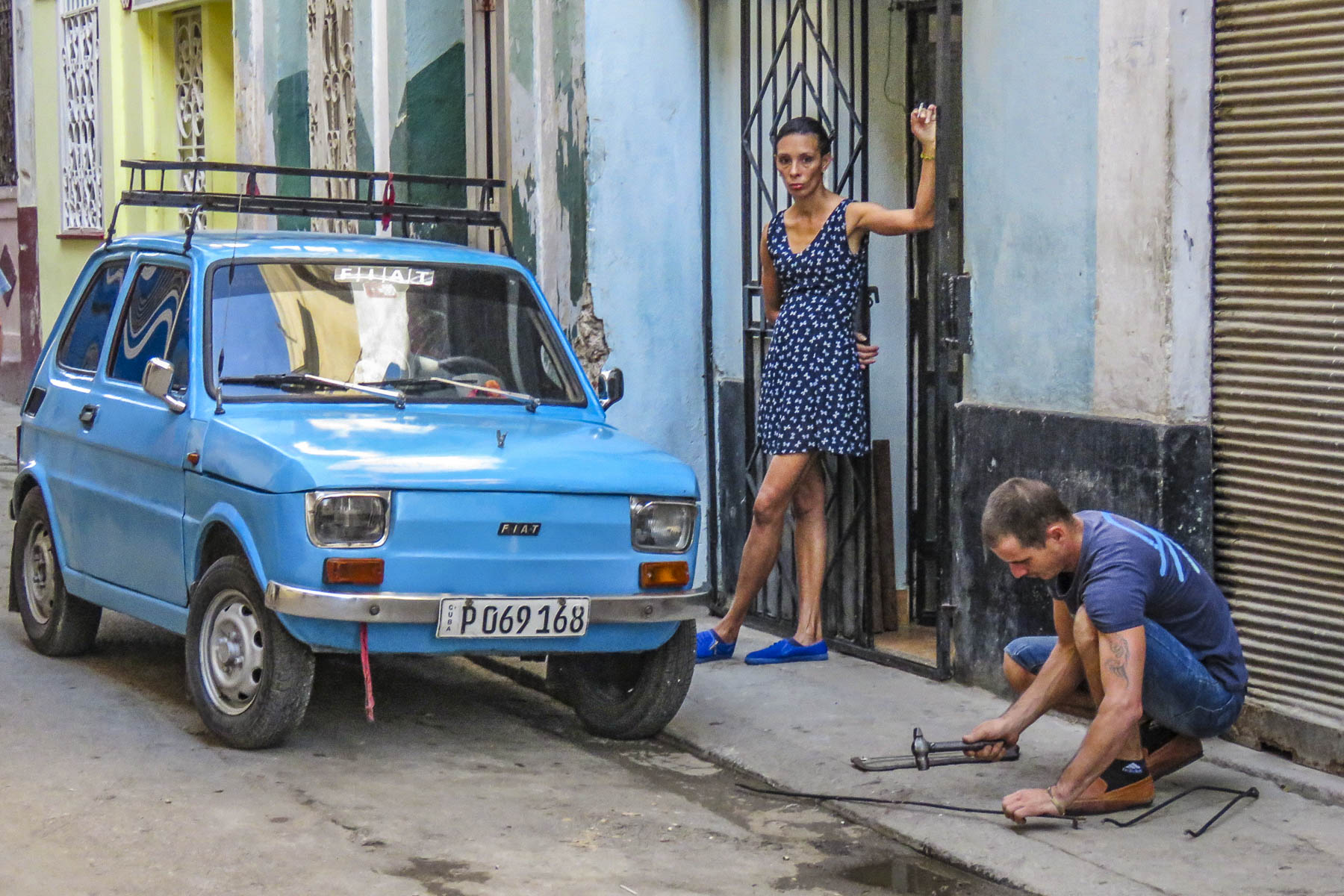
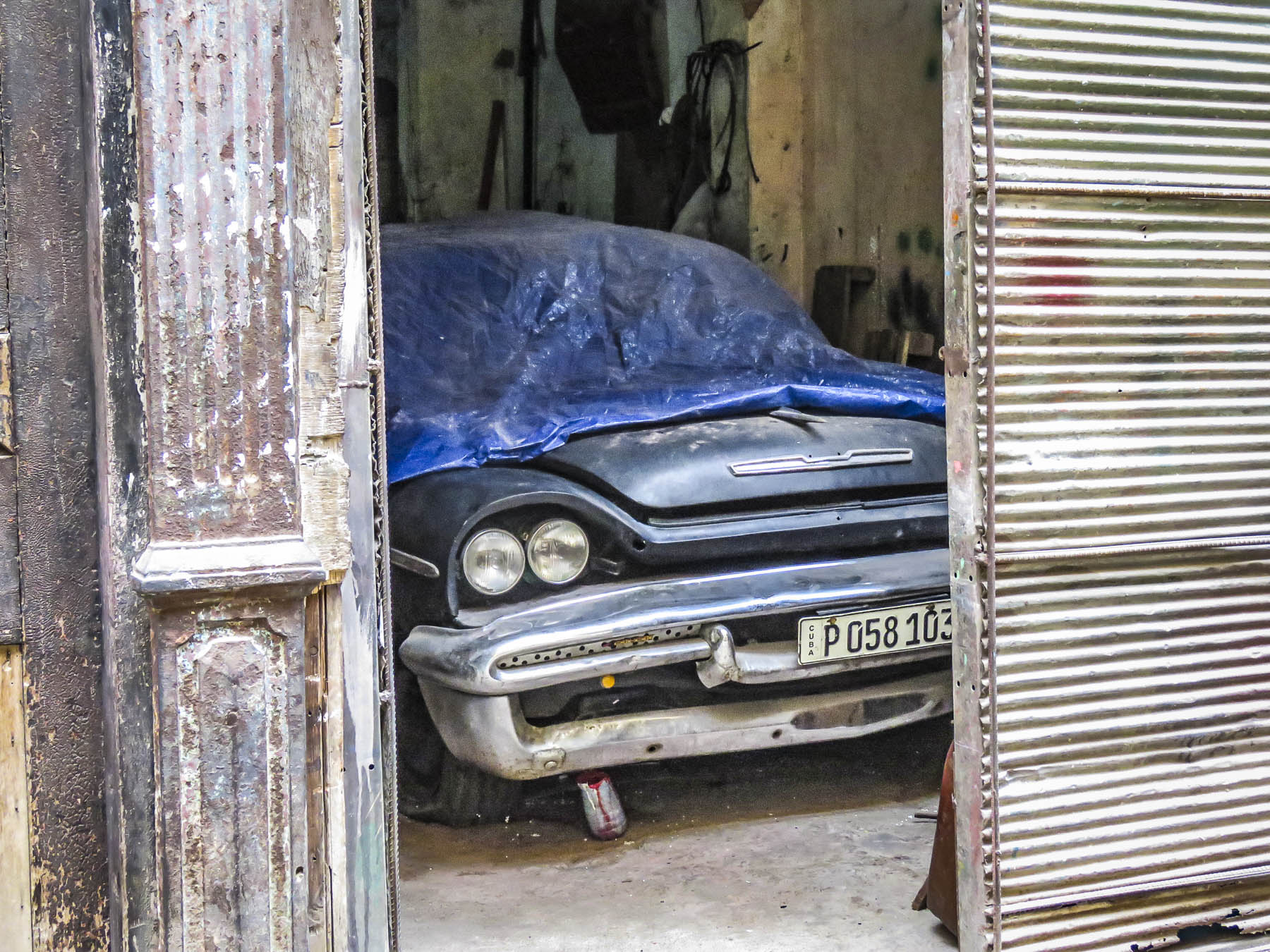
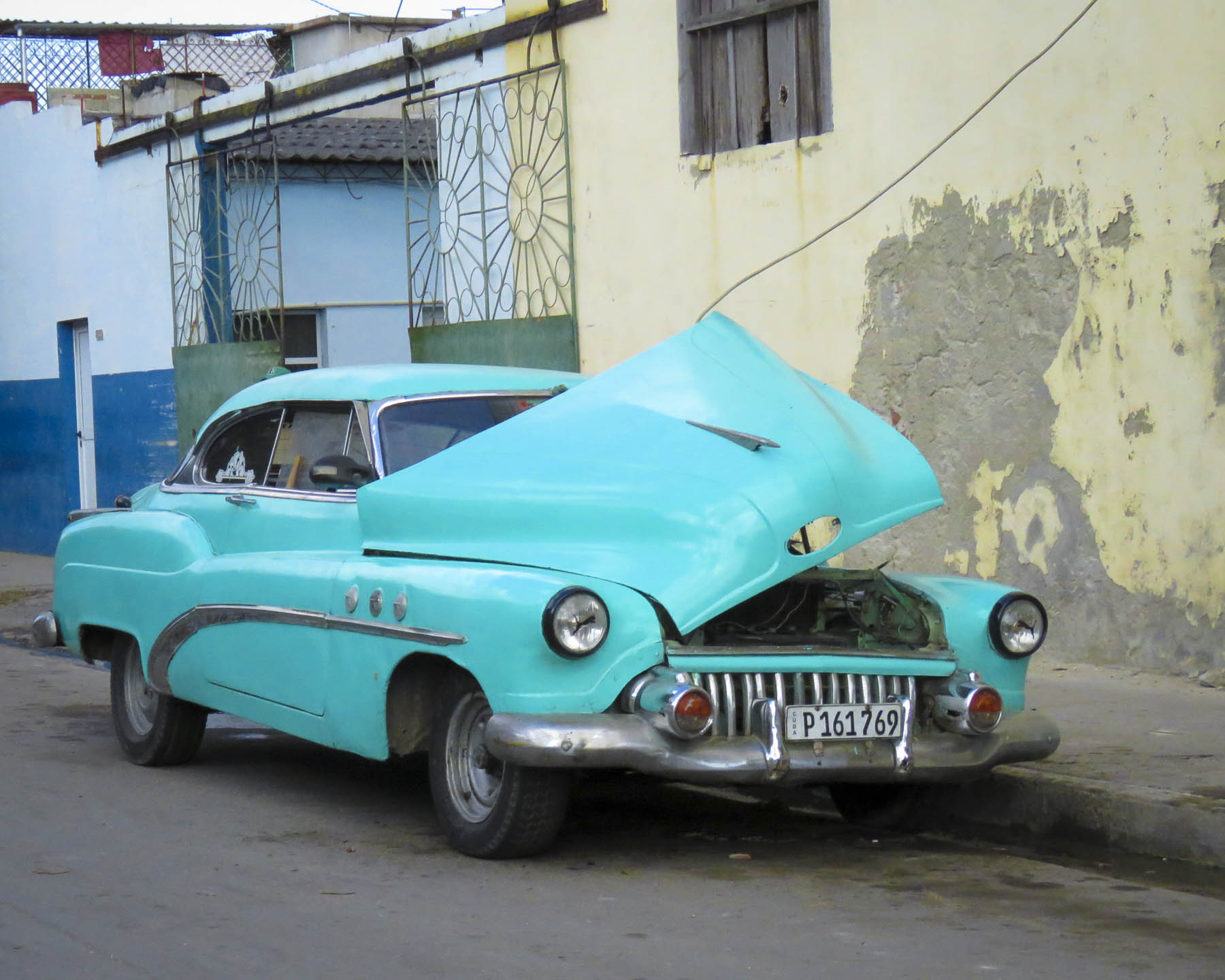
Down the side streets of the city, it wasn’t unusual to see these vintage cars raised on cinderblocks, their hoods open as amateur mechanics tinkered away to keep their classic beauties running. There are about 60,000 old American cars still on the road in Cuba. Most date from the 1950s, but there are still Packards, Cadillacs, Dodges, Chevys, Studebakers and Fords from the 1940s and 30s that are still road worthy.  This is an amazing testament to the talent of Cuban mechanics that have been “MacGyvering” the repairs with makeshift parts since the revolution ended in 1959, when the U.S. trade embargo began and Cuba banned the import of American products. While some cars look to be in mint condition, often the interiors are taped together, door handles are missing, and the windows don’t roll up. Engines don’t last forever and it’s not uncommon to swap engines between the American makes and models. Sometimes even the motors from Russian Volgas and Ladas work their way under the hood of Fords and Chevys. Fiats and Peugeots were imported after the revolution but proved to be not as durable as the American models. 

With the nationalization of property in 1959 the nicer cars of the wealthy who fled were assigned to government officials, doctors, renown celebrities and famous athletes. Regulations prohibiting the ownership of cars were eventually changed to allow Cubans to freely purchase older cars brought to the island before the revolution. Often cars are family heirlooms that have been handed down from generation to generation, with fathers teaching sons the intricacies of keeping the cars running. It’s extremely rare to find new automobiles in Cuba as the government imposes very high taxes on car imports, rendering them highly unaffordable for the vast majority of Cubans.

The ingenuity of Cuban mechanics can surely teach us a thing or two about sustainability. Wonderfully many of these resourceful home mechanics have kept these automotive treasures alive and have created an income for their family by offering rides in their classic cars to tourists. “There are no junkyards in Cuba; everything is still driven.”

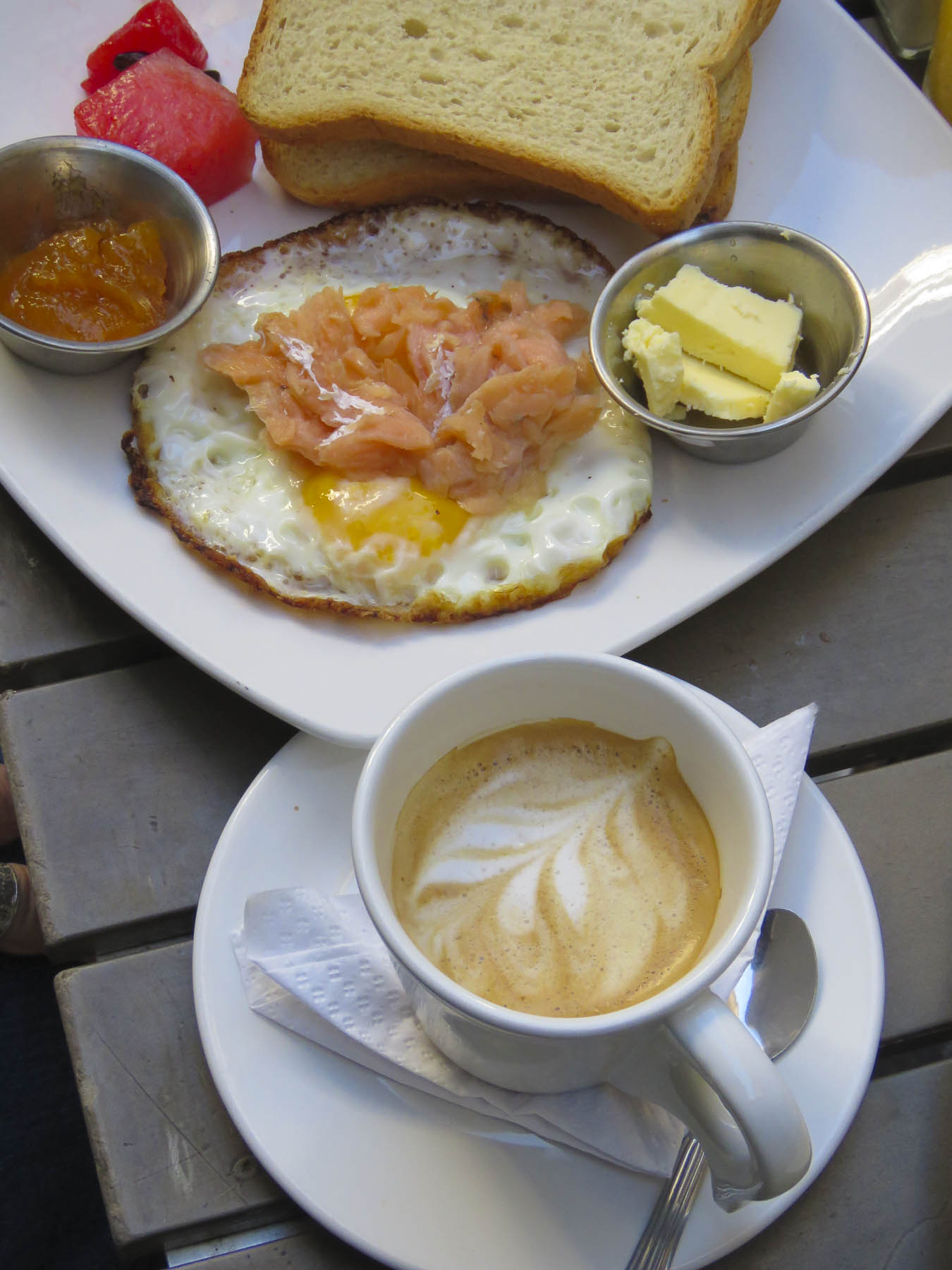
Flagging down a Cadillac convertible, we took a ride along the Malecon seafront before breakfast at a paladare recommended on TripAdvisor.  Paladares are small privately run restaurants, usually operated out of the chef’s home, that have been allowed to open as Cuba relaxes its ban on private enterprise in the country.  Typically, their menus change daily depending on what is available at the markets.

After breakfast, our original plan was to walk to Havana’s Central Park to join a tour of the city with a Guruwalk guide. Unfortunately, we arrived late and missed the group. Unfazed, we decided to wander on our own around the city.

Parque Central is the nucleus of a daily classic car show with the old cars neatly lined up for tourists to choose which nostalgic Ford or Chevy they want to cruise around the city in.  Length of the trip and price can be bargained for with each driver.

Across from the park, sparkling from the completion of a recent renovation, the ornate baroque façade of the Gran Teatro de La Havana drew our attention. Built in 1838, it’s a cavernous structure that can seat 1,500 people and is home to the Cuban National Ballet Company.  President Obama addressed the Cuban people from its stage in 2016 and the biennial International Ballet Festival of Havana is hosted here.

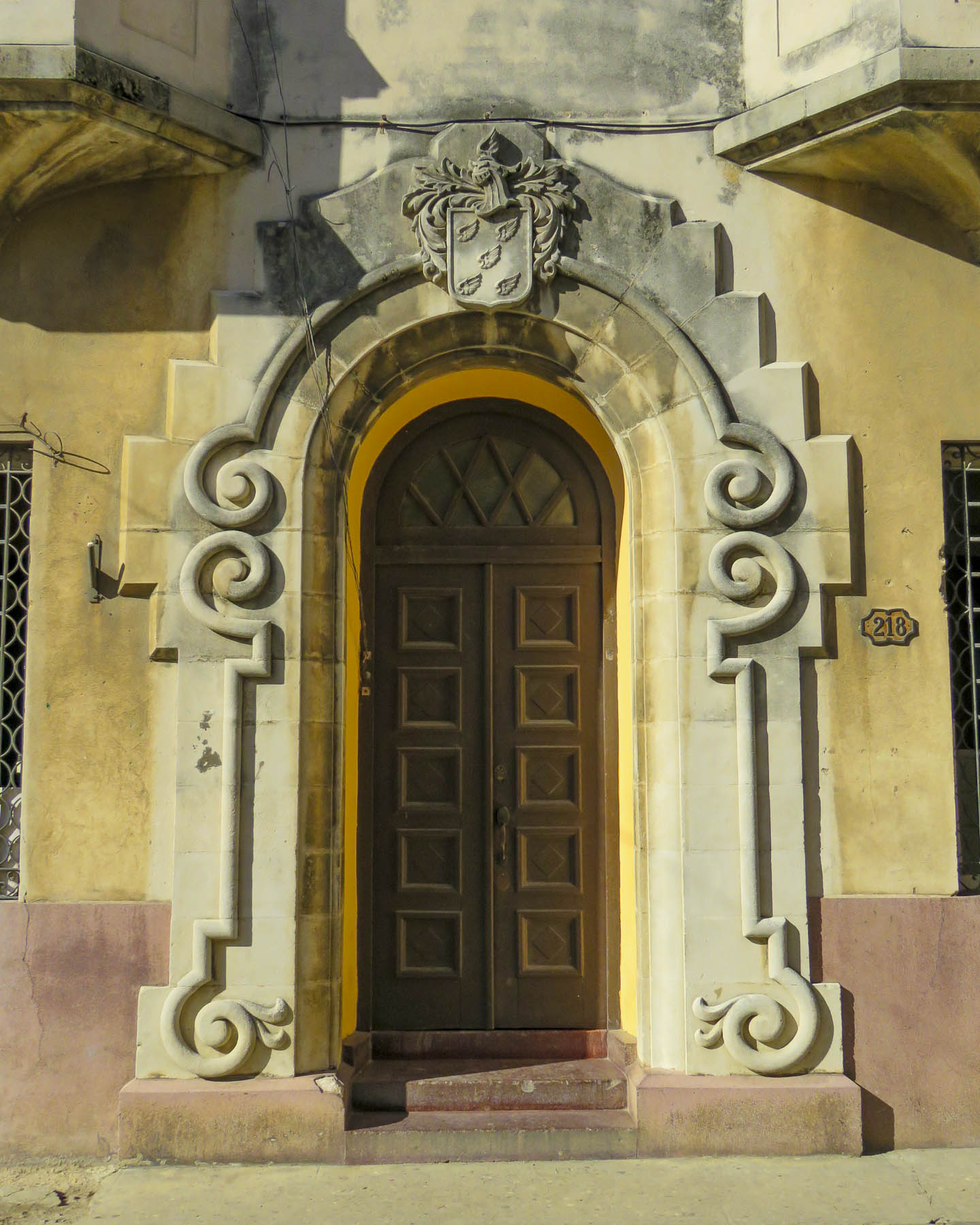
While many hotels and historic public buildings immediately surrounding Havana’s Central Park have been pristinely renovated, you need only to walk a half block down any side street and it’s obvious that the maintenance of the city has been neglected for decades. With many of the buildings in central Havana dating from the 1800’s, most are severely showing their age. Signs of structural neglect were endemic.

This quote I found sums up concisely the housing situation. “In Cuba, everything belongs to everyone and no-one at the same time and if a building is ‘collectively-owned’, it’s understood that the State is the one responsible, but the government doesn’t have the resources for maintenance.”

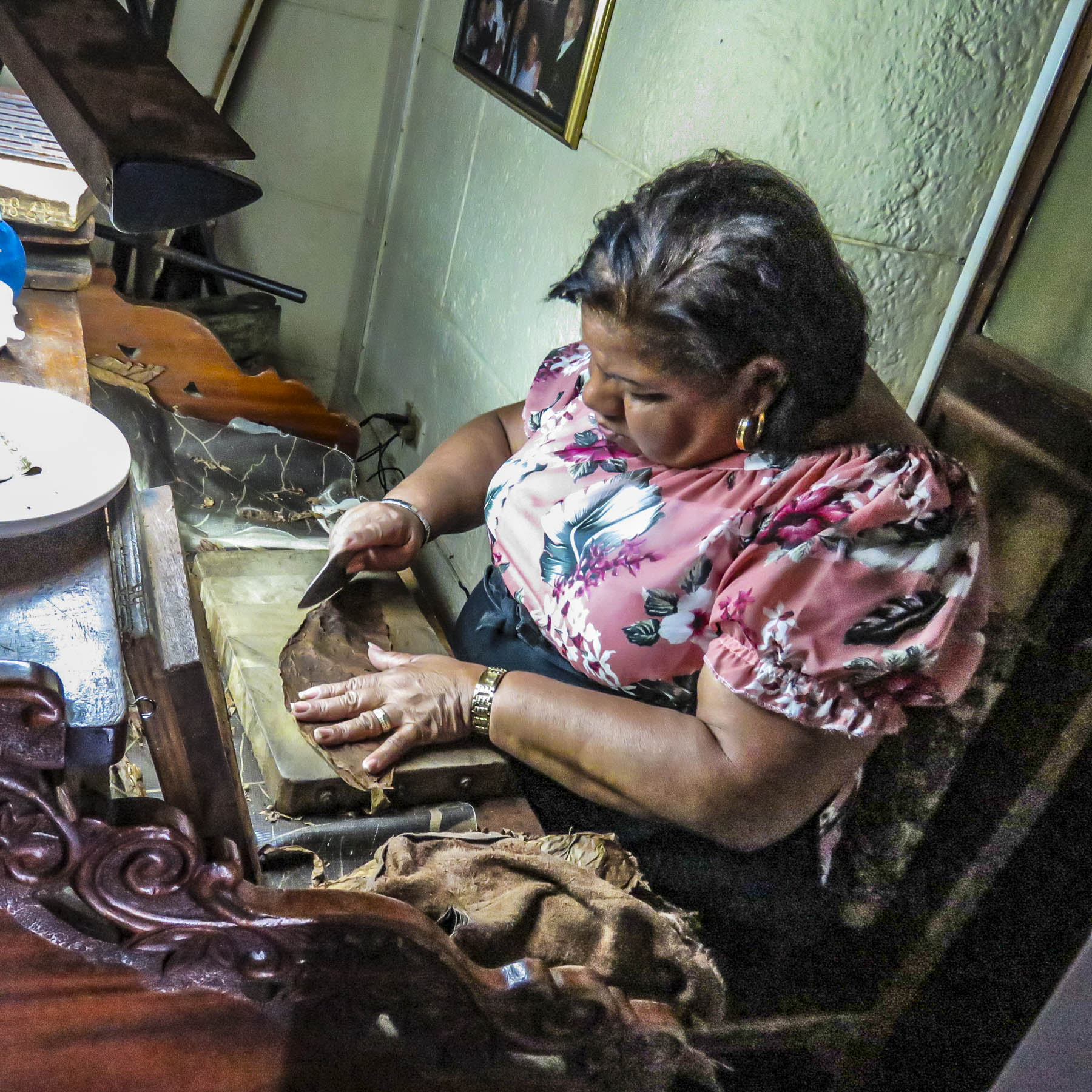
We worked our way towards Real Fábrica de Tabaco Partagas, a historic cigar shop and factory dating to 1845, located behind the Capitolio Nacional de Cuba, a near replica of the United States’ capital building, only larger and with a higher dome. A tour of the cigar factory, where 500 people sort, grade and roll tobacco leaves into world famous habanos, cigars, was not available the day we visited, but we were able to watch a cigar rolling demonstration.

Asking for a recommendation for a place to eat enroute back to the harbor the salesman at the cigar shop suggested Tablao de Pancho, Grupo El Guajirito. Along the way a pleasant young woman, sensing we might be lost, spoke to us in excellent English and offered to guide us to the restaurant. She declined a tip for her assistance, so we asked her to join us for lunch instead. She quietly saved half her meal to take home to her child, because her ration card did not provide for enough food.

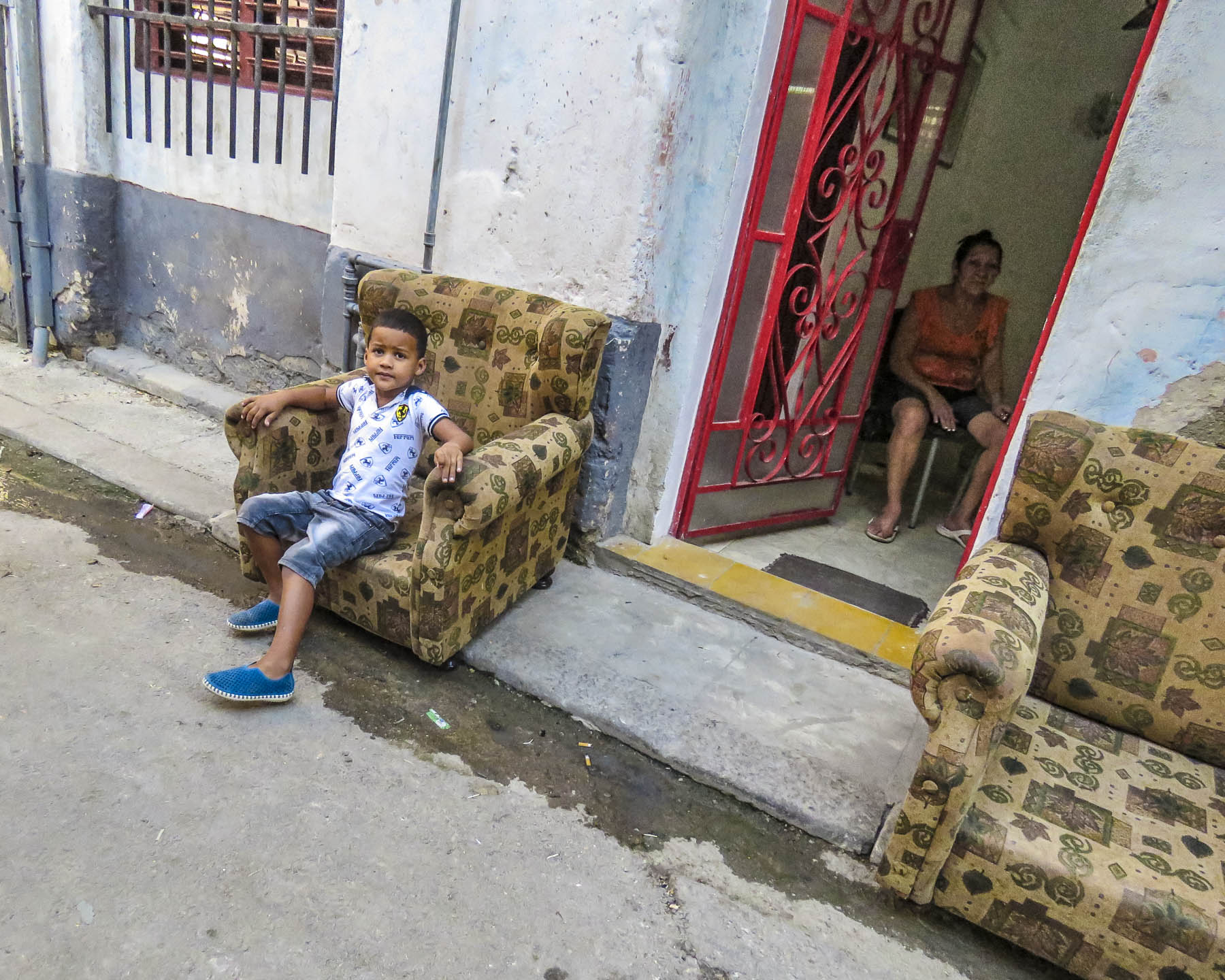
Life and business are conducted on the streets of the neighborhood with most doorways and shallow balconies harboring tenants trying to stay cool. A mattress maker refurbished rusted bedsprings on the sidewalk. Vegetable cart vendors pushed their wagons around the blocks. The scarcity of some the smallest luxuries and basic necessities is visible and there was a sense of waiting, but what for was difficult to determine. The hardships of life that the residents of the city endure under a failed socialist revolution are still very much in evidence in the forgotten, gritty side streets of the capital.

The cigar chomping aficionado in our group was determined to purchase the legal limit of Cuban habanas that were permissible to bring back to the states at the time, so three of us crammed into a coco taxi, a not particularly macho ride to cruise in along the Malecon.

Our destination was the Hotel Nacional de Cuba for a smoke and a glass of rum. A historic 1930s hotel and casino, before the revolution it attracted American celebrities like Erroll Flynn, Gary Cooper, Rita Hayworth, Fred Astaire, Ava Gardner, Marlon Brando, and Walt Disney. Now the hotel annually hosts the Festival de Cine Nuevo Iberoamericano and claims Michael Keaton, Francis Ford Coppola, Leonardo DiCaprio, and Steven Spielberg as past attendees.

Later that afternoon, behind the 1500s era Castillo de la Real Fuerza, a star shaped fortress that protected the colonial harbor, we wandered through the Old Havana district, still lively since the days when treasure laden Spanish galleons from the New World stopped in Havana before voyaging back to Spain.

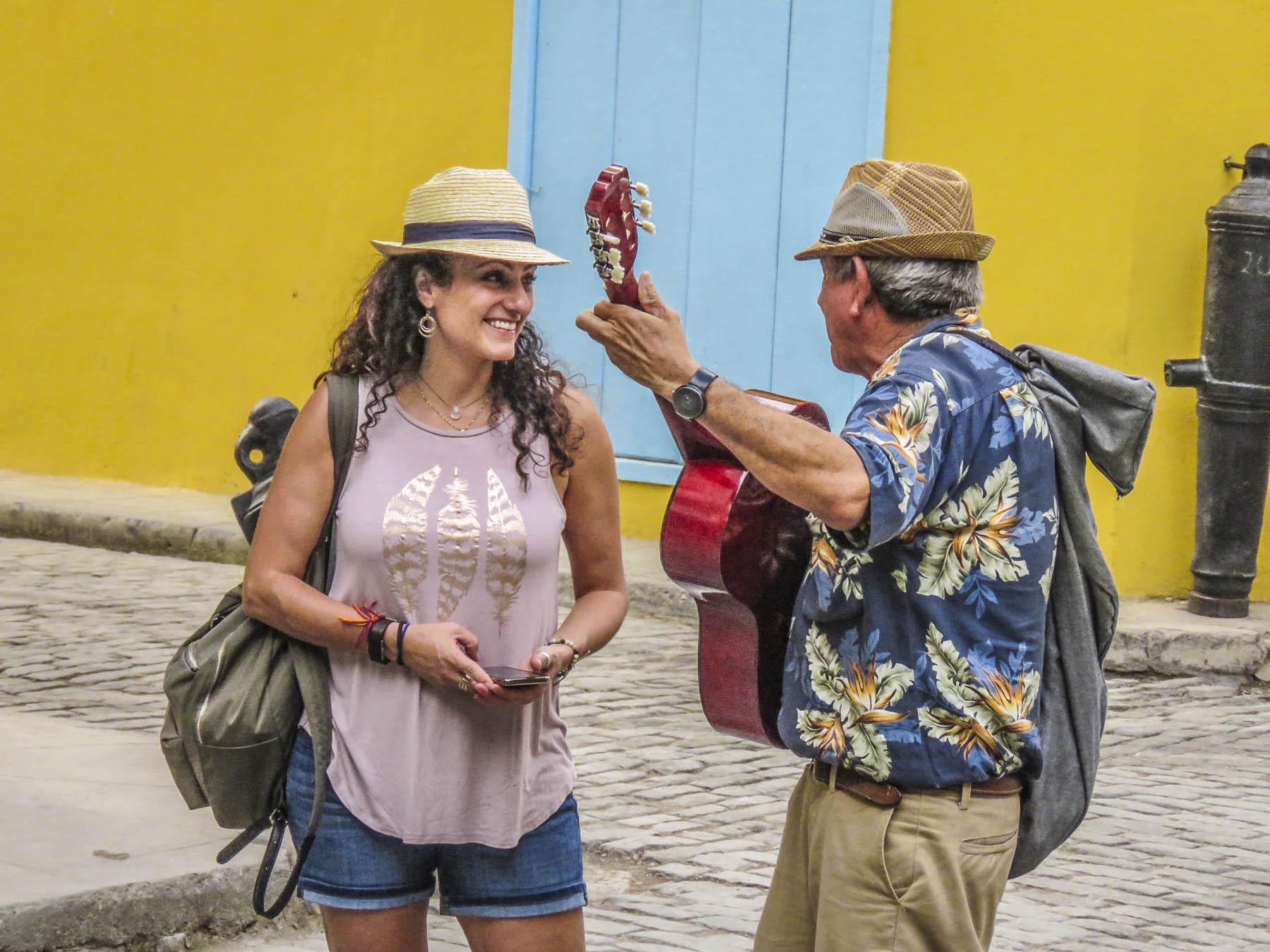
Latin music filled Obispo Street and Calle O’Reilly, the two main boulevards, the later named to honor Alejandro O’Reilly, an Irish born soldier who fought for Spain during the British siege of Havana in 1762. This neighborhood is alive with street buskers and has an entrepreneurial spirit that’s visible in many the restaurants, galleries and shops that line the sidewalks here.

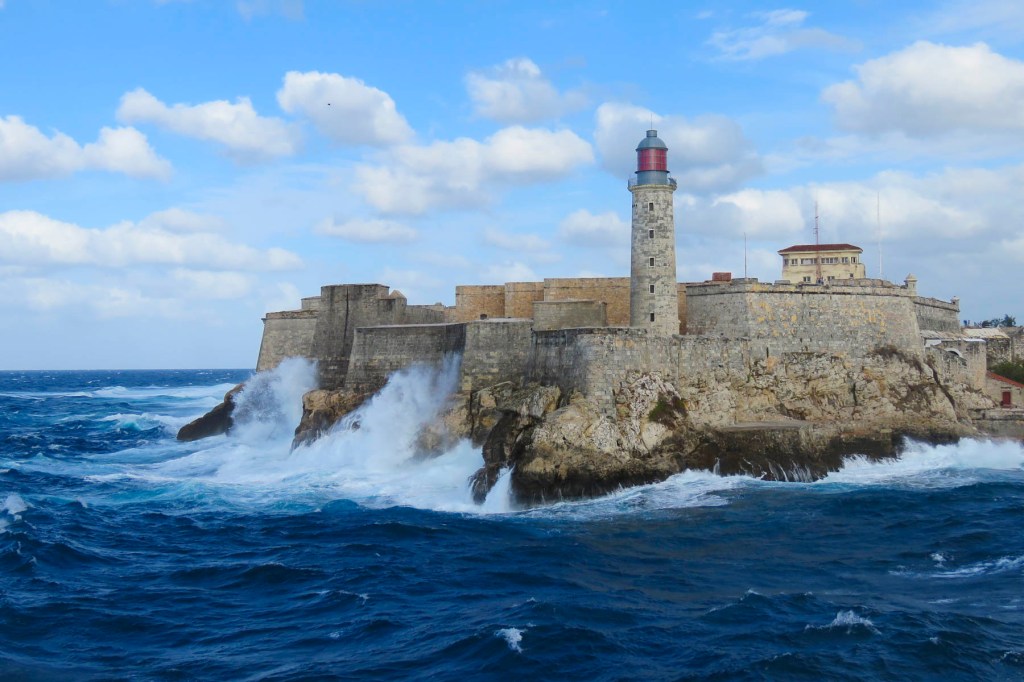
Our ship listed heavily as gale force winds churned the sea as we left the shelter of the harbor and passed the solid stone walls of the Castillo De Los Tres Reyes Del Morro.

Across the water large waves crashed against the seawall that protects the Malecon from collapsing into the sea.

It’s all too easy to romanticize poverty in an exotic destination that’s veiled by swaying palm trees and a pristine Caribbean sky.  The people of Cuba deserve better from their government. Watching the skyline of Havana fade in the twilight we wondered if Cuba’s sea change was coming.

Till next time,

Craig & Donna

Cienfuegos, Cuba – A Caribbean Time Capsule 

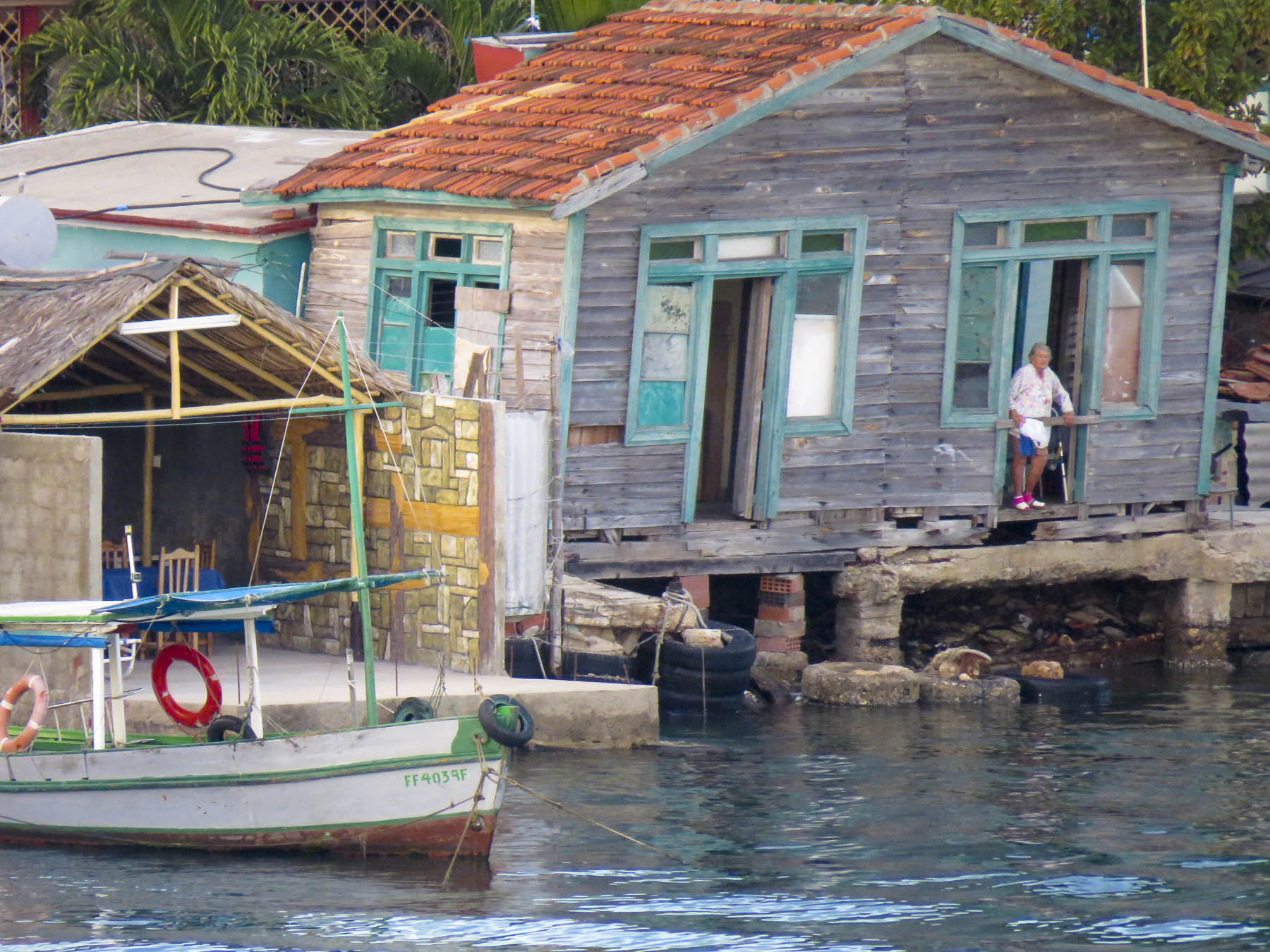
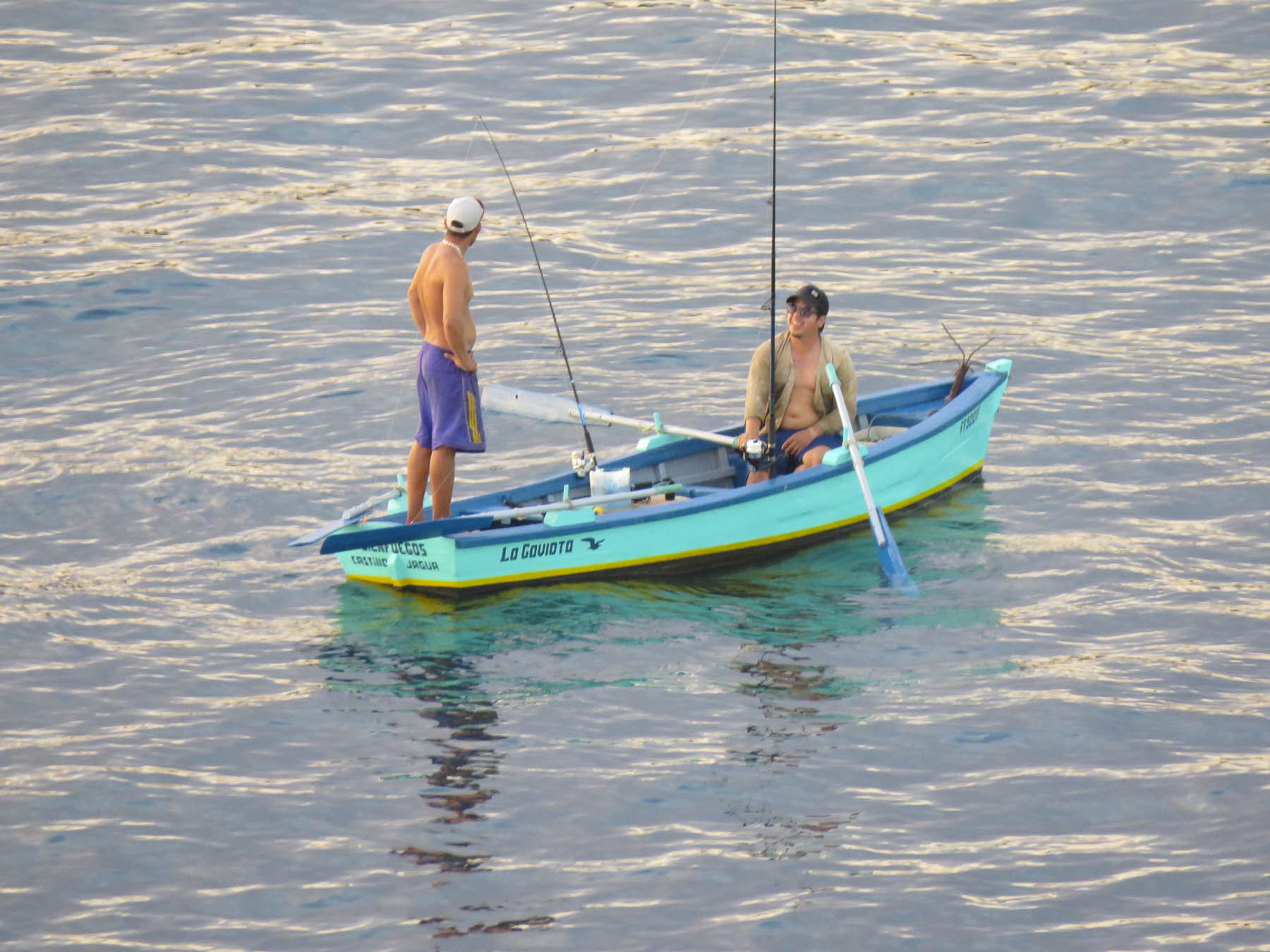
The sun was still below the horizon as men rowed small wooden fishing boats, laden with nets and poles, against the waves as we entered the narrow channel that would eventually widen into the Bahia de Cienfuegos, Cienfuegos Bay. Not much appears to have changed since the old man battled his Marlin in Hemingway’s 1951 novella. Farther along, listing boats were tied to beaten docks in front of weathered homes, their pastel colors muted in the predawn. They faced the inlet under the battlements of Castillo de Jagua, a stone fortress that has guarded this stretch of water leading to the bay since 1745.

The bay was encountered by Christopher Columbus while on his second voyage to the new world in 1494 and noted as a spectacular natural harbor, located at the end of a long narrow inlet, a perfect sheltered anchorage to weather the gales and hurricanes that blow across the Caribbean. However, closer to the gold of the new world, Havanna, on Cuba’s north coast, became the island’s dominant harbor and city. Mostly, Cienfuegos Bay was a forgotten backwater, without a permanent settlement, on the south coast of Cuba, a perfect location for the notorious British pirates Francis Drake and Henry Morgan to launch their raids on the Spanish Main and plunder the treasure fleets that voyaged from Havanna back to Seville, until the fortress ruined a good pirating gig.

The area grew slowly until the early 1800’s when an influx of French migrants fleeing the slave revolt in Haiti founded the city in 1819. Flattened during an 1825 hurricane, the city was rebuilt with a modern cosmopolitan grid pattern. The fertile region surrounding Cienfuegos supported prosperous tobacco, coffee and sugar plantations and continued to attract French immigrants from Louisiana, Bordeaux and Quebec. By the mid-1800s, a railway funneled goods from across the region to the port for export, and a steamship line connected Cienfuegos to Charleston and New York City. The city’s prosperity was reflected in its stately mansions, elegant civic architecture, wide boulevards and parks reminiscent of New Orleans and Paris, earning it the nickname “La Perla del Sur,” the Pearl of the South.

The Cuba of the 2020s still looks very much like it did during Hemingway’s life, as if it was stuck in time, a perpetual movie set. This is a result of the political decisions made during the 50-year reign of the country’s communist dictator, Fidel Castro, who ruled from the revolution in 1959 until 2008, and other communist leaders since then.  Consequently, the United States imposed and still maintains a trade embargo against the Cuban government that visually appears to have frozen the country in the 1960s.

Europeans and Canadians have long traveled to the government-run tourist resorts along the pristine coast. Previously, an inland tourism infrastructure didn’t exist, but with the introduction of the internet to the country and encouraging private enterprise reforms things are slowly beginning to change. We were visiting Cuba on a cruise during that first window of opportunity that was open to Americans between 2016 – 2019, before access was unfortunately tightened again.  Recently the travel restrictions to Cuba have been loosened again.

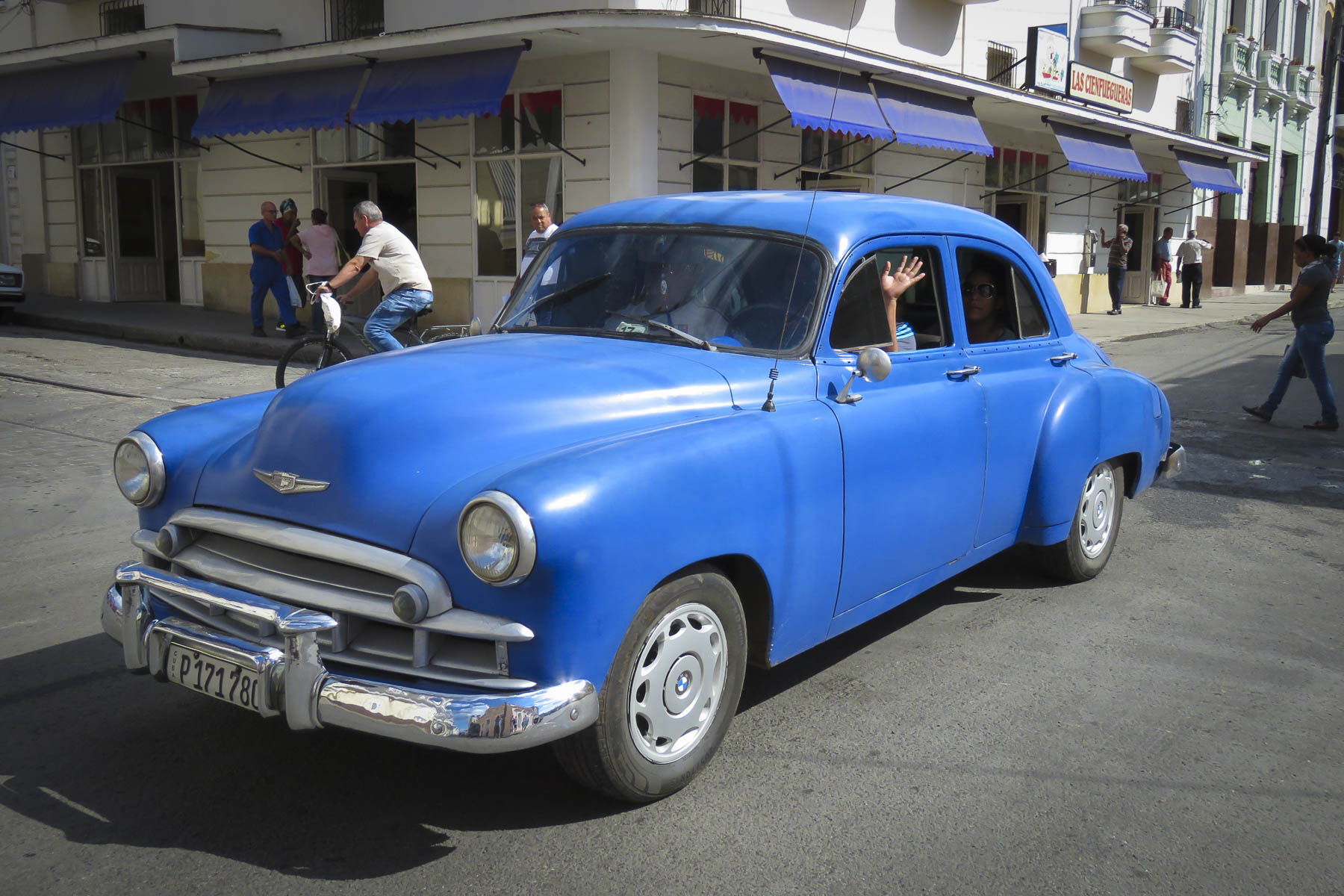
Across from the pier a horse drawn cart with several wooden benches, car tires for wheels and a sun bleached canopy stood idle. It wasn’t meant for the tourist trade, but instead was the cheapest mode of transportation for local folks to use to move about town. And it was our introduction to how self-reliant Cubans are and how slowly change happens in Cuba. Then we noticed the cars.

Earlier an email confirmed our rendezvous, “Ten is good. Meet at the statue of Benny Moré, a beloved Cuban singer, songwriter and band leader, at the intersection of Paseo El Prado and the pedestrian only San Fernando. Ciao.”

We had decided to skip any ship organized tours of Cienfuegos and instead opted for a tour of the city with a Guruwalk guide we found online.

With introductions made, our small group of four followed our guide through Cienfuegos as they pointed out various sites and their significance. Other stops included the government shoe store where the limited styles were only available in black, and a government bodega.

Here food is acquired with the use of La Libreta, a government issued ration book used to tally your monthly allocation. allowance or allotment Typically the monthly allowance per person is 5 eggs, 1 liter of cooking oil, 1 pound of spaghetti, 3 pounds of refined or white sugar, 3 pounds of unrefined or dark sugar, 6 pounds of white rice, 20 ounces of black beans, 2 packets of “mixed coffee”, daily bread (dinner rolls). Fresh produce not available at the government bodegas is sold at state sponsored farmers markets.

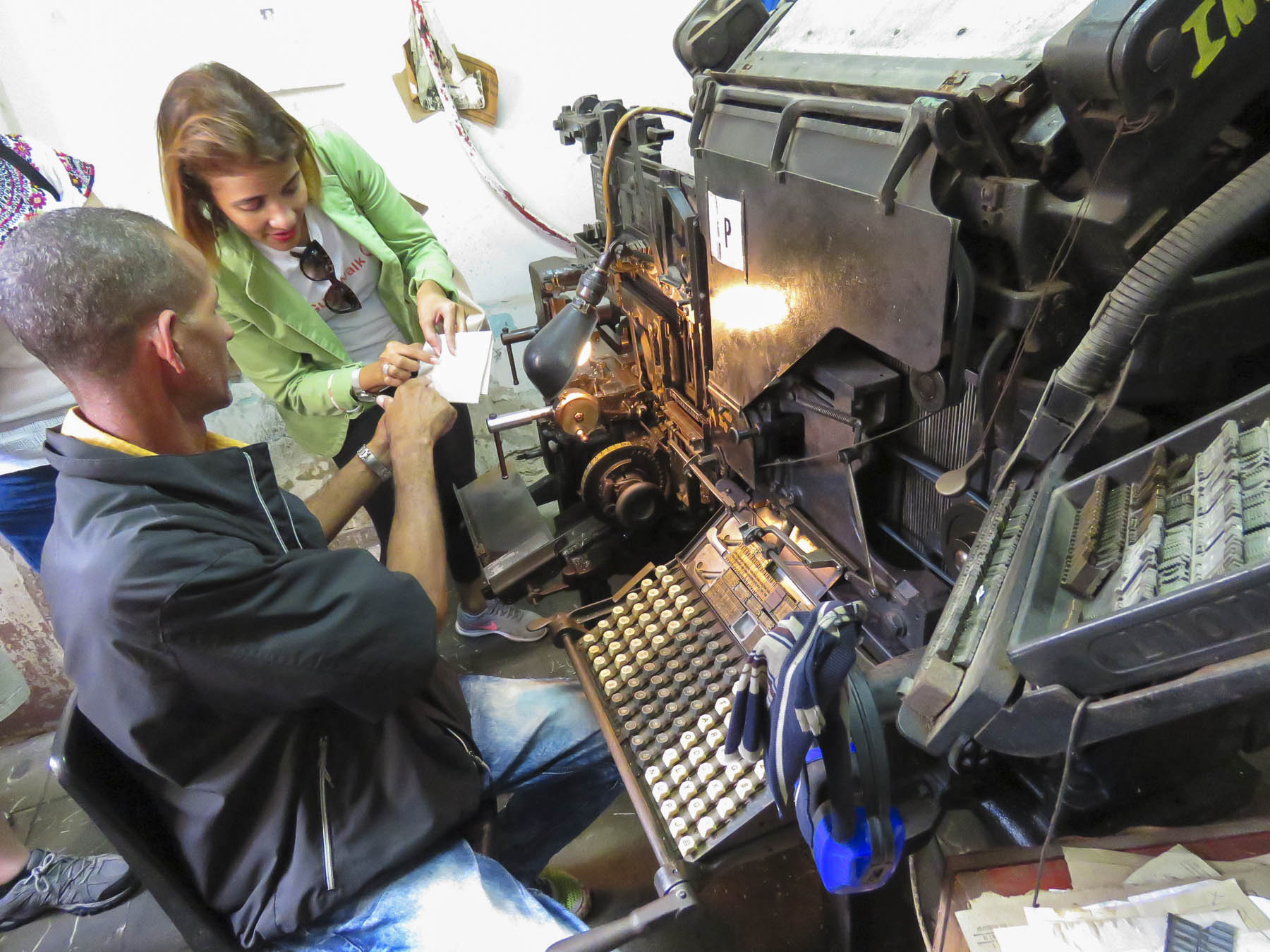
Stopping at a large print shop, we watched the printer set lead type by hand as he assembled each word and sentence for the document he was preparing from a large tray of metal vowels, consonants and punctuation marks. There were not any computers, laser printers or copy machines in sight, only the shop’s heavy German Heidelberg printing presses, which have been meticulously maintained since 1959.

From the top of Hotel La Union, the highest point in the city’s center, we surveyed Cienfuegos, today a sprawling city of 150,000. 

“So, you’ve noticed the old cars on the street?” Our guide turned the talk at lunch away from any political questions we were eager to ask about life in a communist country.

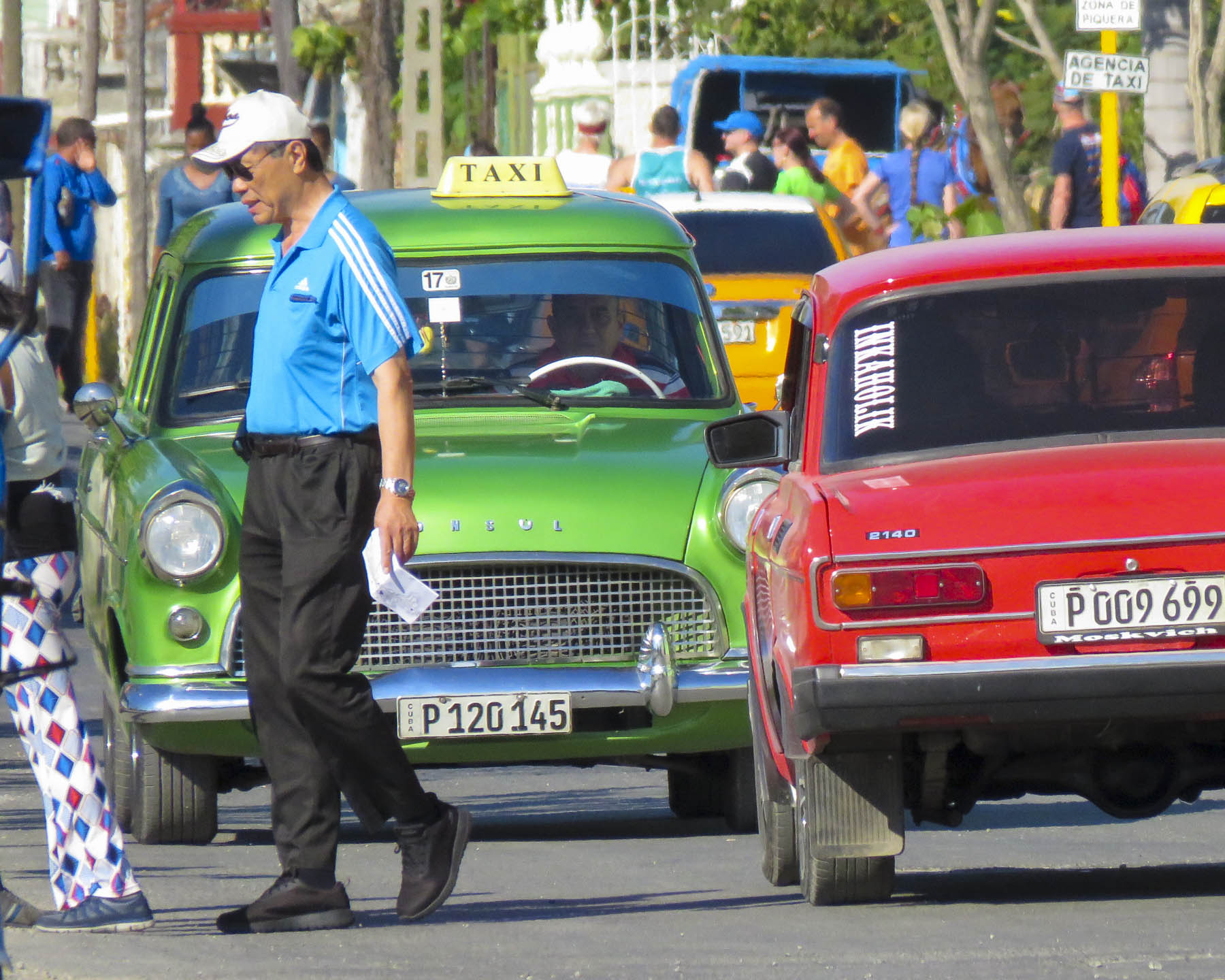
There are about 60,000 old American cars still on the road in Cuba. Most date from the 1950s, but there are still Consuls, Packards, Cadillacs, Dodges, Chevys, Studebakers and Fords from the 1940s and 30s that are still road worthy.  This is an amazing testament to the talent of Cuban mechanics that have been “MacGyvering” the repairs with makeshift parts since the revolution ended in 1959, when the U.S. trade embargo began, and Cuba banned the import of American products. While some cars look to be in mint condition, often the interiors are taped together, door handles are missing, and the windows don’t roll up.

Engines don’t last forever and its not uncommon to swap engines between the American makes and models. Sometimes even the motors from Russian Volgas and Ladas work their way under the hood of Fords and Chevys. Fiats and Peugeots were imported after the revolution but proved to be not as durable as the American models.  With the nationalization of property in 1959 the nicer cars of the wealthy who fled were assigned to government officials, doctors, renown celebrities and famous athletes. Regulations prohibiting the ownership of cars was eventually changed to allow Cubans to freely purchase older cars brought to the island before the revolution. Since then, often cars are family heirlooms that have been handed down from generation to generation. Fathers teaching sons the intricacies of keeping the cars running. It’s extremely rare to find late model cars on the roads as the government imposes very high taxes on new car imports, making them highly unaffordable for the majority of Cubans.

“There are no junkyards in Cuba, everything is still driven.” The ingenuity of Cuban mechanics can surely teach us a thing or two about sustainability. Wonderfully many of these resourceful home mechanics have kept these automotive treasures alive and have created an income for their family by offering rides in their classic cars to tourists.

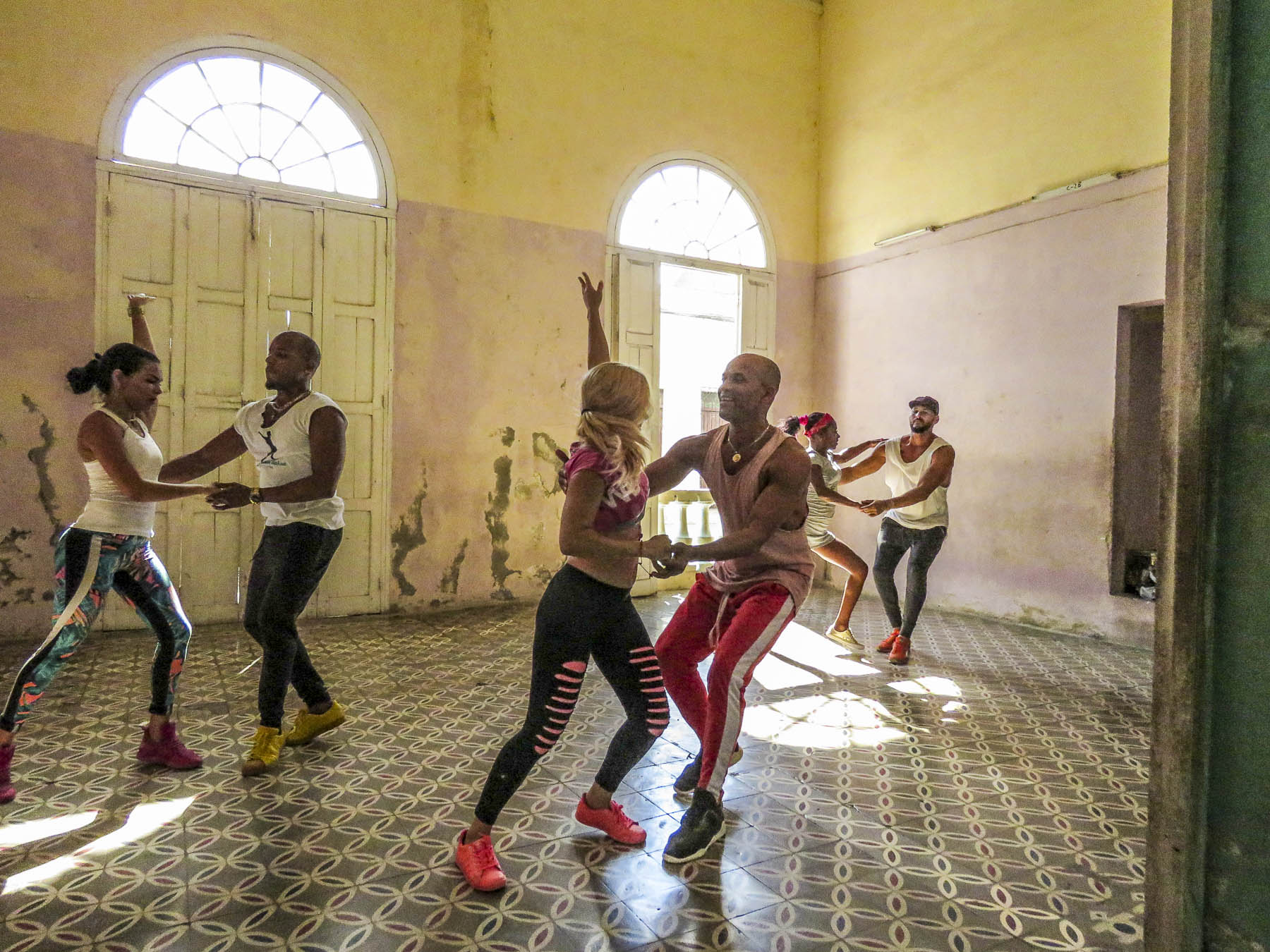
After lunch we watched dancers rehearse in an old colonial building now used as a community center, and we stopped in several art galleries along the park that featured many talented Cuban artists.  With the government tightly controlling the economy along with the print and electronic media in the country, creative self-expression through art, dance and music are treasured venues as long as the views expressed don’t “run counter to the objectives of the socialist society.”

While the center of the city is well maintained, and many of the old mansions and civic edifices recently renovated. The homes and buildings along the side streets show decades of neglect from a failed socialist system.

Pride in ownership is a difficult concept in Cuba, and since wages are so very low, buying paint is the last thing anyone is thinking about. Low wages necessitate most families to spend any extra funds at the free markets to buy the goods that aren’t covered with the La Libreta rations card.

This quote I found sums up concisely the housing situation. “In Cuba, everything belongs to everyone and no-one at the same time and if a building is “collectively-owned”, it’s understood that the State is the one responsible, but the goverment can’t afford the maintenance.”

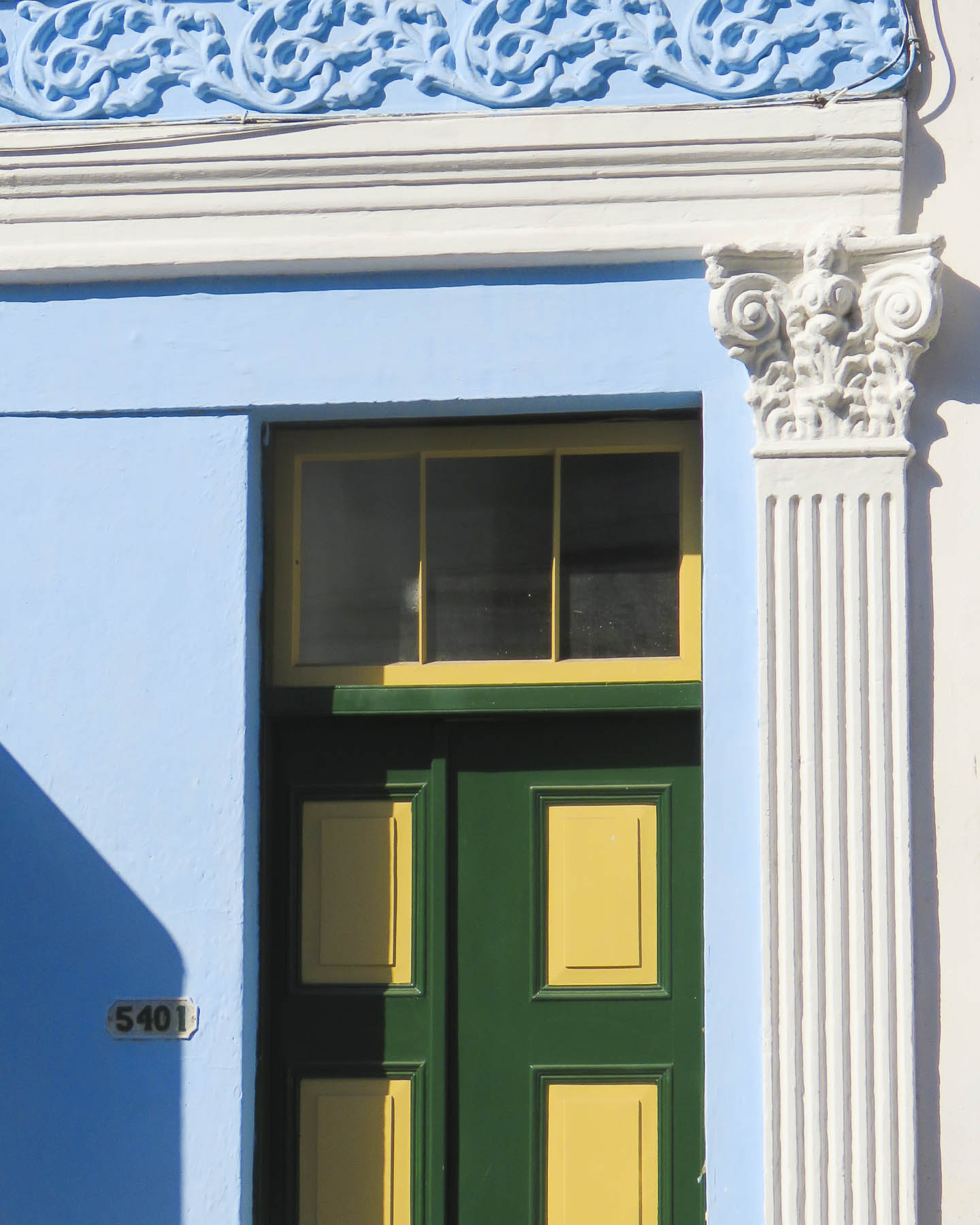
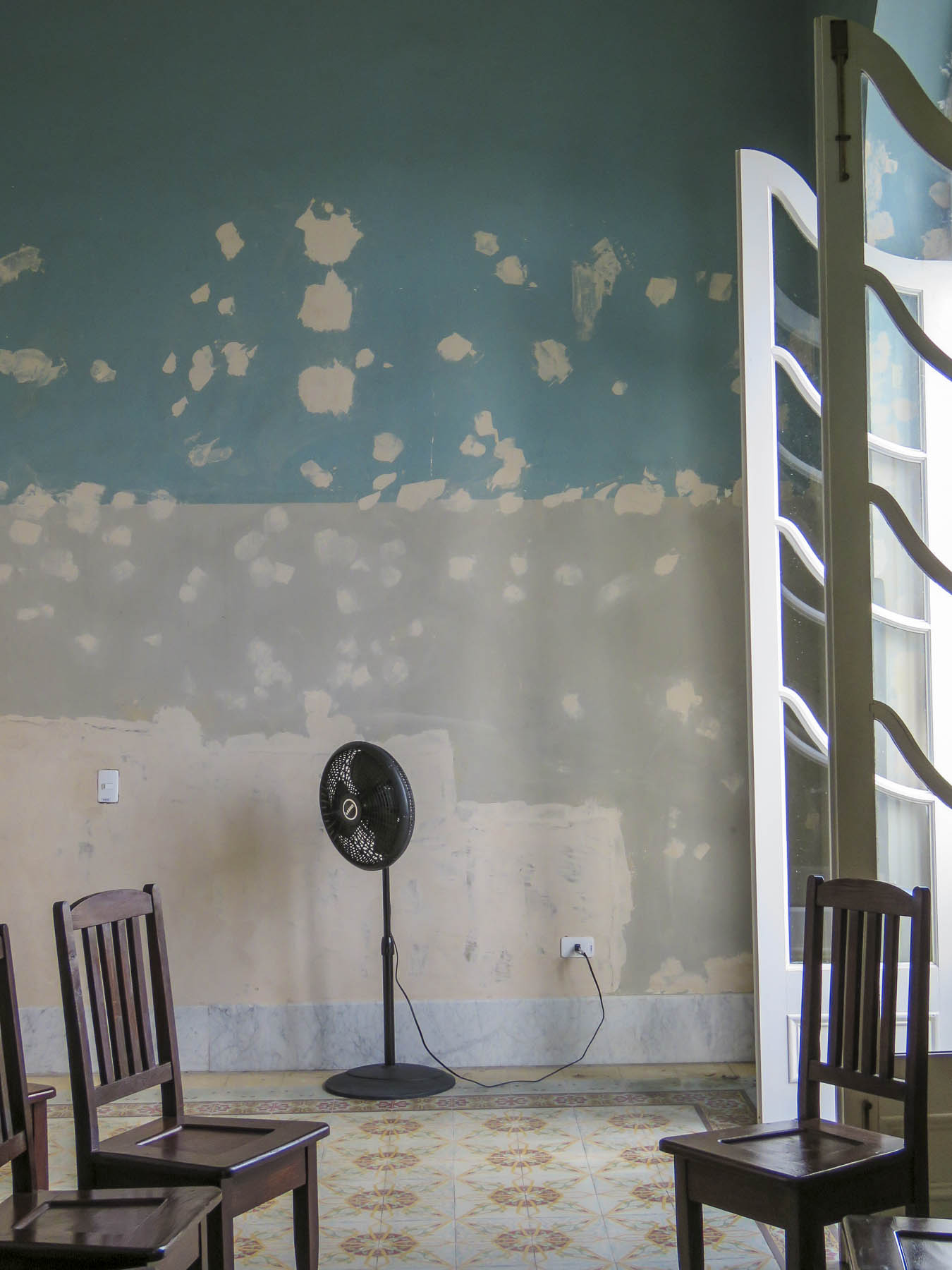
Down the side streets, past glories are now sadly intriguing in their neglect, the homes and buildings wearing a texture carved from storms and hot unrelenting sunshine, revealing ancient layers of paint that gives the neighborhoods a weathered patina, a faded elegance.

Till next time,

Craig & Donna

Cordoba & Granada – Location, Location, Location

The view from the train window was a blur of greenery, a vast landscape of undulating hills dotted sporadically with small villages and the remnants of ancient fortresses crowning the hilltops, set amidst a sea of olive trees, that seemed to spread from the wake of the speeding train to the horizon. Seventy million olive trees, 24 different varieties, covering over three million acres in Andalusia produce 900,000 tons of olive oil and 380,000 tons of table olives annually. No wonder we’ve been enjoying Spain so much – the olives are so good!

We were nearing the end of our stay in Seville, but there were still destinations outside the city we wanted to explore before we departed Spain. Being so close to the ancient Moorish cities of Cordoba and Granada, how could we not visit? Plans were made to catch an early train from Seville and spend the day exploring the major sites in Cordoba, before continuing to an Airbnb rental in Granada for three days. There were always debates about budgeting, wanting to do it all and affording it are issues we continually faced during our two-year journey, fortunately the highly discounted rate we received for booking an apartment in Seville during the shoulder season made this side trip financially reasonable.

It was 152 BC when Pliny the Realtor, standing on the bank of the Guadalquivir River, toga blowing in the wind, turned to General Claudio Marcelo, the founder of Roman Cordoba, and with the swoop of his arm across the grand vista before them proclaimed future realtors’ favorite adage, “location, location, location!”

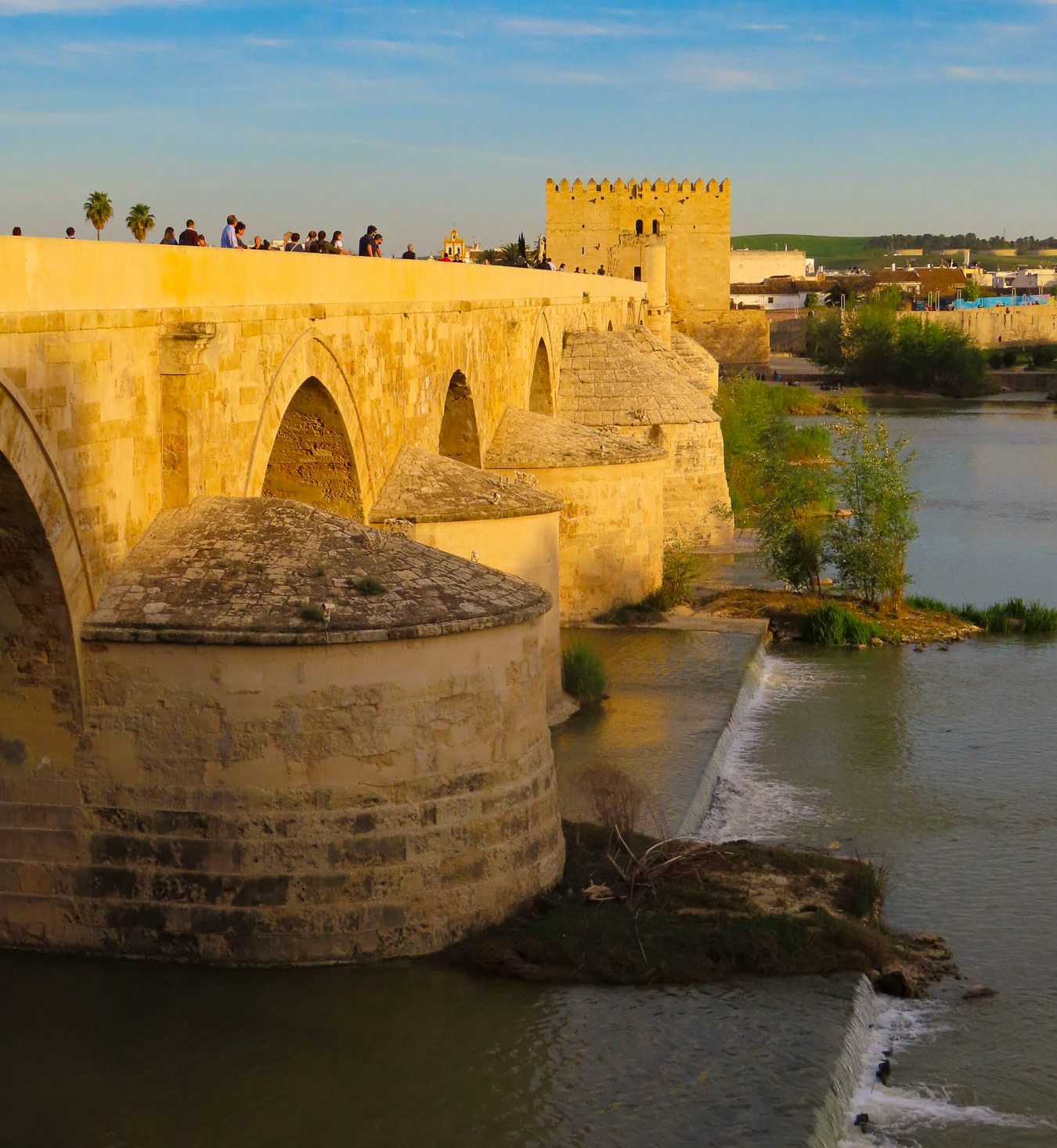
Situated along the last navigable section of the river, Granada prospered as a river port, exporting grain, wine and olives down the river to the Atlantic Ocean, where the goods were then sailed around the Rock of Gibralta into the Mediterranean Sea, eventually reaching ancient Rome. In the 1st century BC Roman engineers built a graceful, sixteen arch stone bridge that spanned 820ft across the Guadalquivir River and has been in continual use, with renovations of course, for two-thousand years.

The city continued to flourish for centuries under Visigoth rule and later Muslim conquest. In the year 1000 the city was estimated to have an enlightened and tolerant population of 450,000 Muslims, Christians and Jews, surpassing Constantinople, making it the largest city in Europe. The intellectuals of the city were renown throughout Europe for their contributions to the advancement of astronomy, medicine, philosophy, and mathematics.

Cordoba slowly lost its significance as a riverport trading center after the reconquest when the waterway eventually silted up and navigation to the city became impossible. By the 1700s its prosperity had diminished, and its population reduced to only 20,000.

Our first stop was Córdoba’s Alcazar de los Reyes Cristianos, Castle of the Christian Kings, a royal residence and fortress built in the Mudéjar-style on the site of a former Muslim Fortress. While the castle is interesting, the exquisite formal gardens were a splendid oasis, wonderfully colorful even in early March. Here Christopher Columbus initiated his negotiations with Isabella I of Castile and Ferdinand II of Aragon to finance his voyage of discovery in 1492.

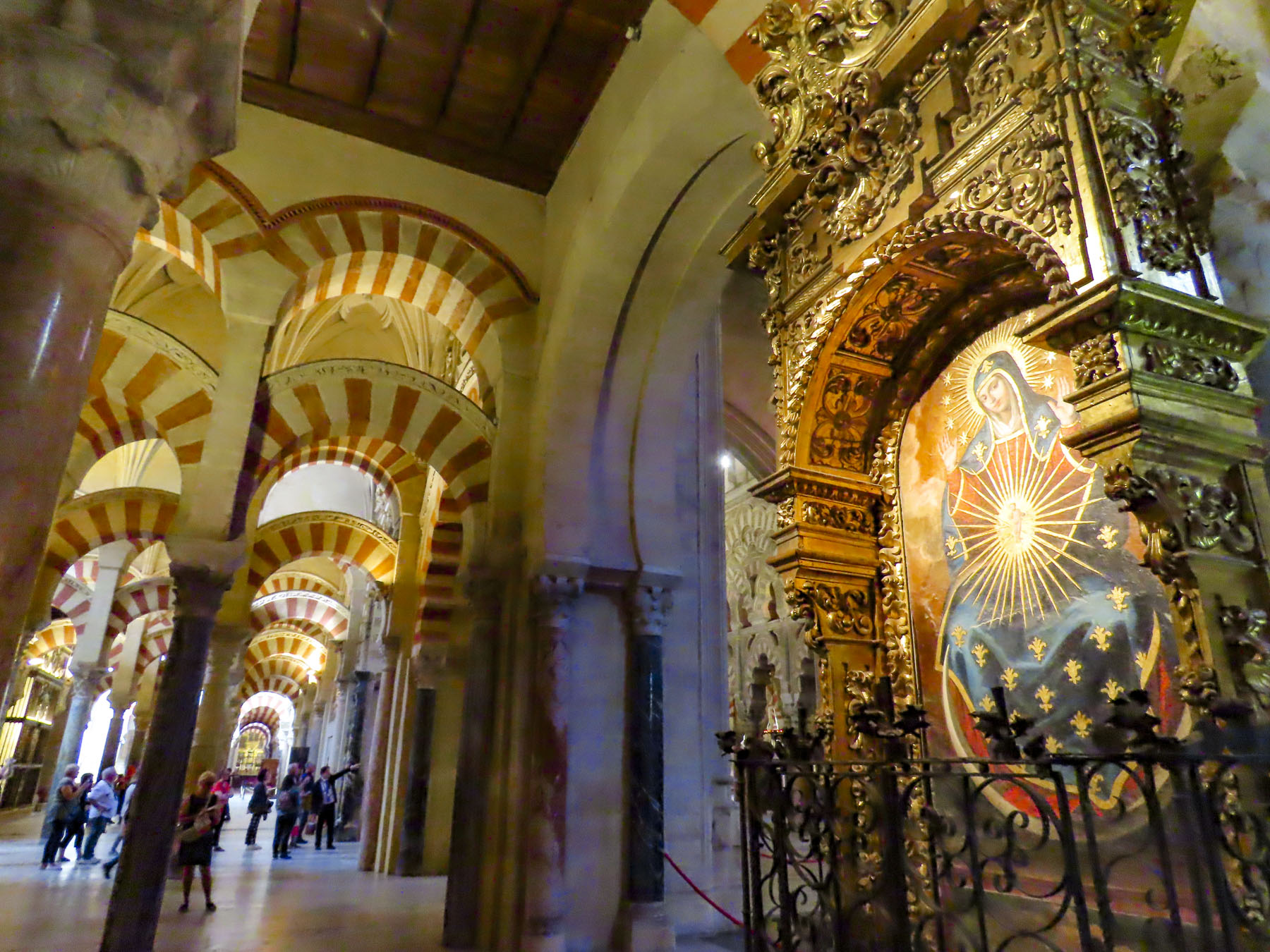
The city’s most famous landmark, the Mosque-Cathedral of Córdoba, was a short walk from the Alcazar. It’s an enormous structure occupying the equivalent of a New York City office block, part of which features an enclosed courtyard with a central fountain surrounded by an orange grove. The worn exterior was fascinating with its elaborate brickwork, and Moorish arches around the windows. The ancient doors into the space are offset by horseshoe shaped arches, a design influence copied from Visigoth architecture. Construction of the Great Mosque of Cordoba started in 786 AD and lasted for three-centuries as it was continually expanded.

Using 850 recycled Roman columns, topped with two tiers of arches, the Great Mosque of Cordoba’s prayer hall is a dazzling space with rows and isles of geometrically precise columns that seem to recede to infinity, in every direction. It was one of the largest mosques in the Muslim world when it was built.

Fortunately, in 1236 when Ferdinand III, king of Castile and León, captured the city, he was enamored with the mosque’s magnificent architecture, and he chose to leave it totally intact including the mihrab, an elaborate prayer niche in a wall that faces Mecca.

For a time, Muslims and Christians were allowed to pray in the same space. This lasted to 1499 when Muslims were expelled or forced to convert if they wished to stay in Spain. The original mosque remained unchanged until the mid-1500s when a towering high altar and choir loft were built in the center and numerous side altars were added along the exterior walls. The old minaret was finally incased within a magnificent, squared belltower.

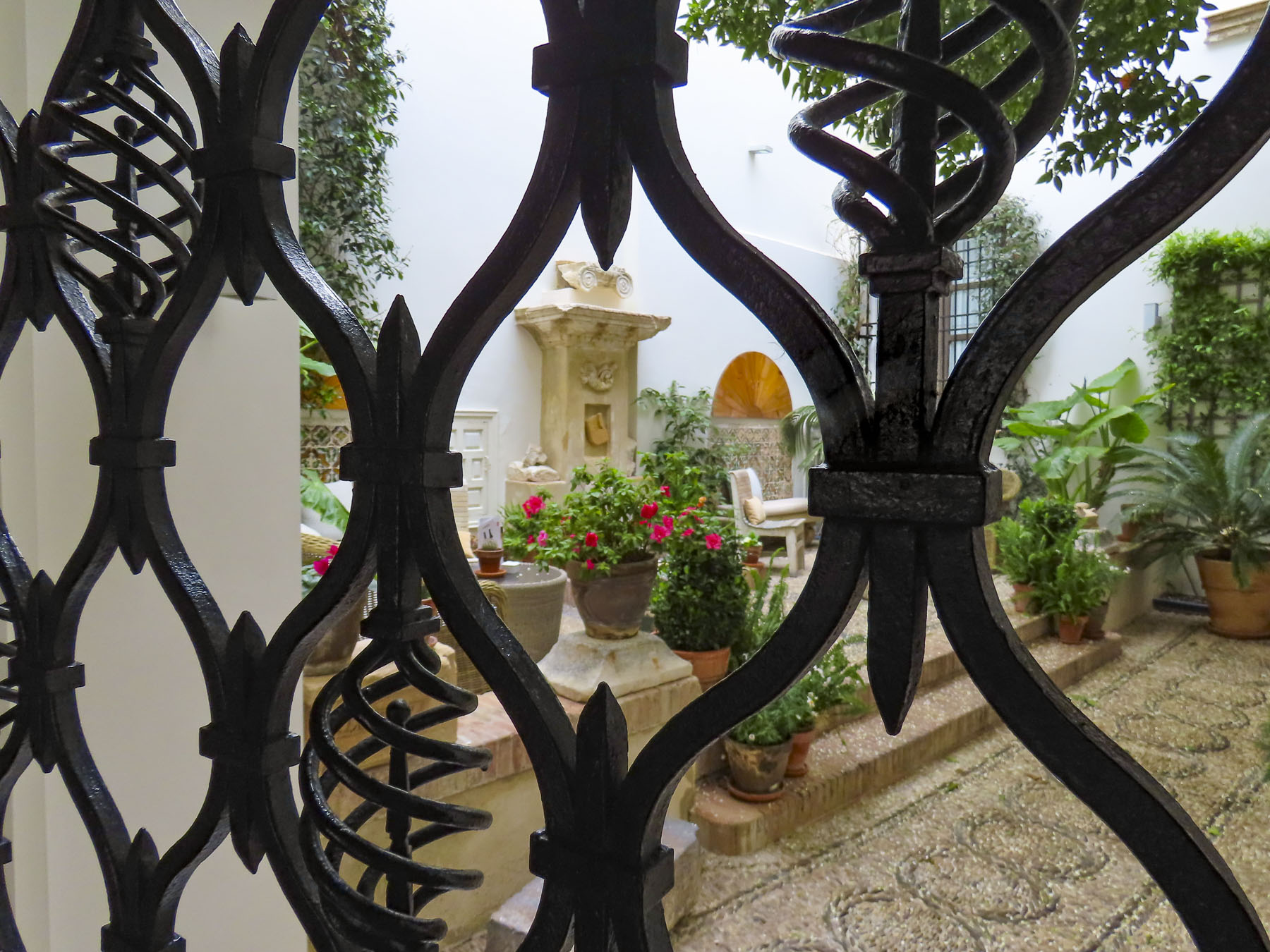
Afterwards we wandered through the narrow alleys adjacent to the cathedral, peeking into verdant courtyards that looked so lovely we were tempted to invite ourselves in, but did not.  The only thing missing were flowers in bloom. The sun was not yet high enough in the March sky to warm the cold stones and prompt the first blossoms of spring.

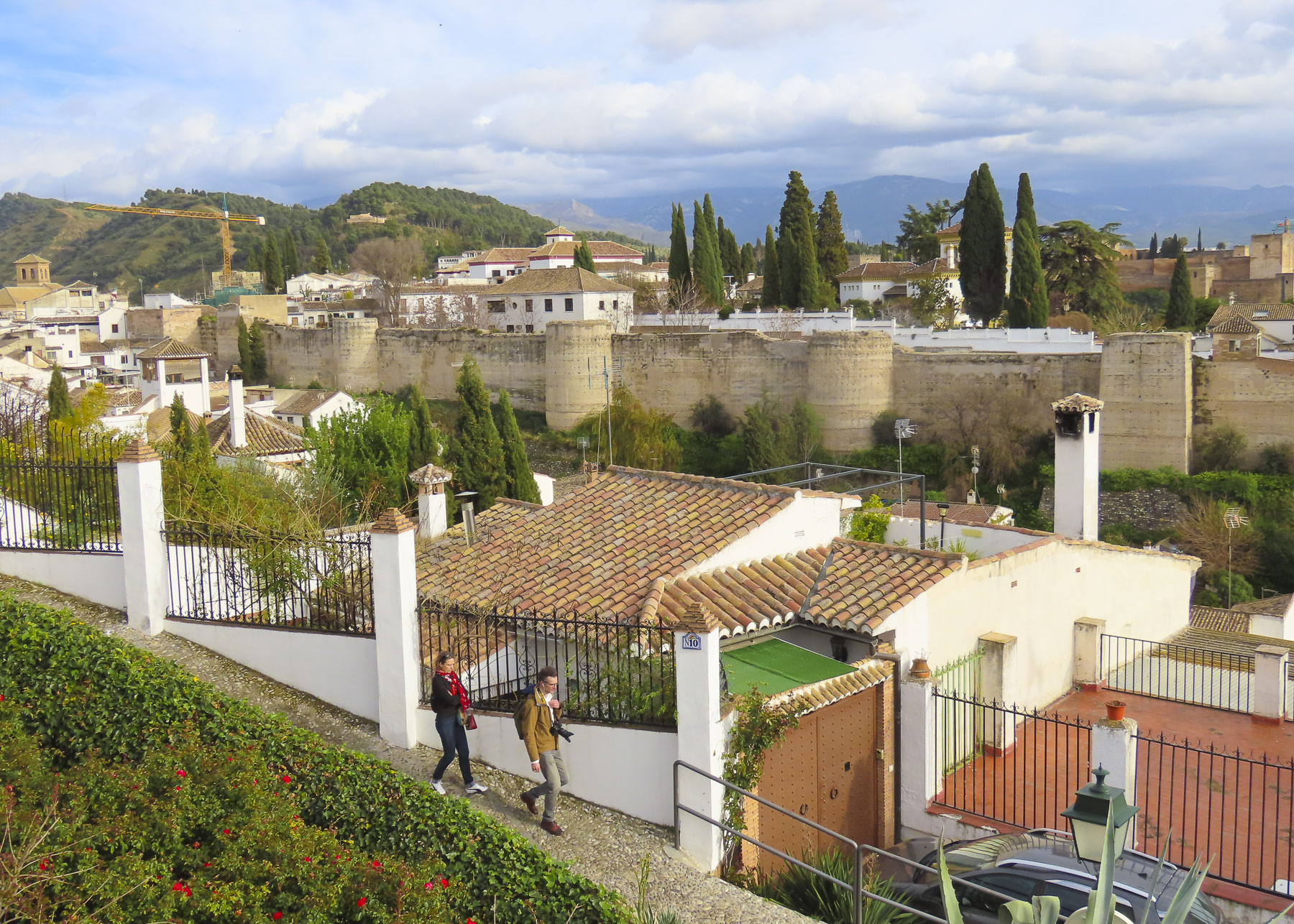
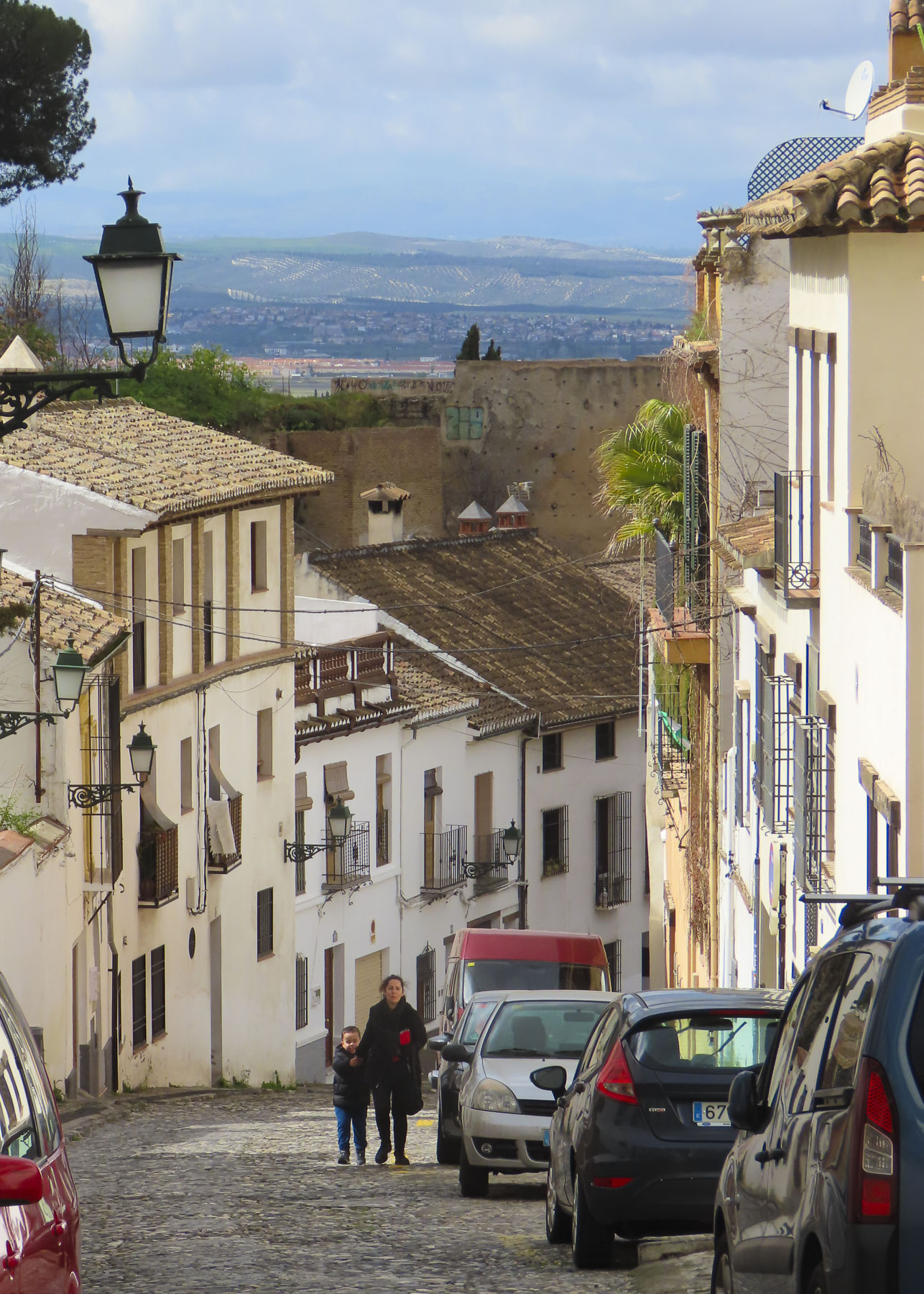
Later that evening upon our arrival in Granada we took an Uber from the train station to our rental in the Albaicín district, on Cta. de Alhacaba, a steep cobbled lane just down from Plaza Larga. It was an attractively gentrified apartment in an older traditional Spanish home, with a center courtyard, that had been divided into several units. Looking out from our window the next morning, we could see on a ridge above us the ruins of an extensive fortress wall, built during the 11th century Zirid kingdom.

Getting our day underway, we walked uphill to Plaza Larga and ventured into the traditional colmados, a small grocery store where you tell the shop clerk everything you need and they pull it from the shelf behind the counter for you. Our Spanish was minimally up to the task.

A few steps from the shop a limited section of the citadel wall containing the Arco de las Pesas has been renovated. Known as the Arch of Weights, this was an important entrance into the city where merchants had their goods weighed and taxed. Its distinctive zigzag tunnel was designed to slow and throw off balance any attacking enemy who had breached its door. The passageway’s vaulted ceiling now provides perfect acoustics for buskers. Crossing through we headed toward the Mirador de San Nicolás.

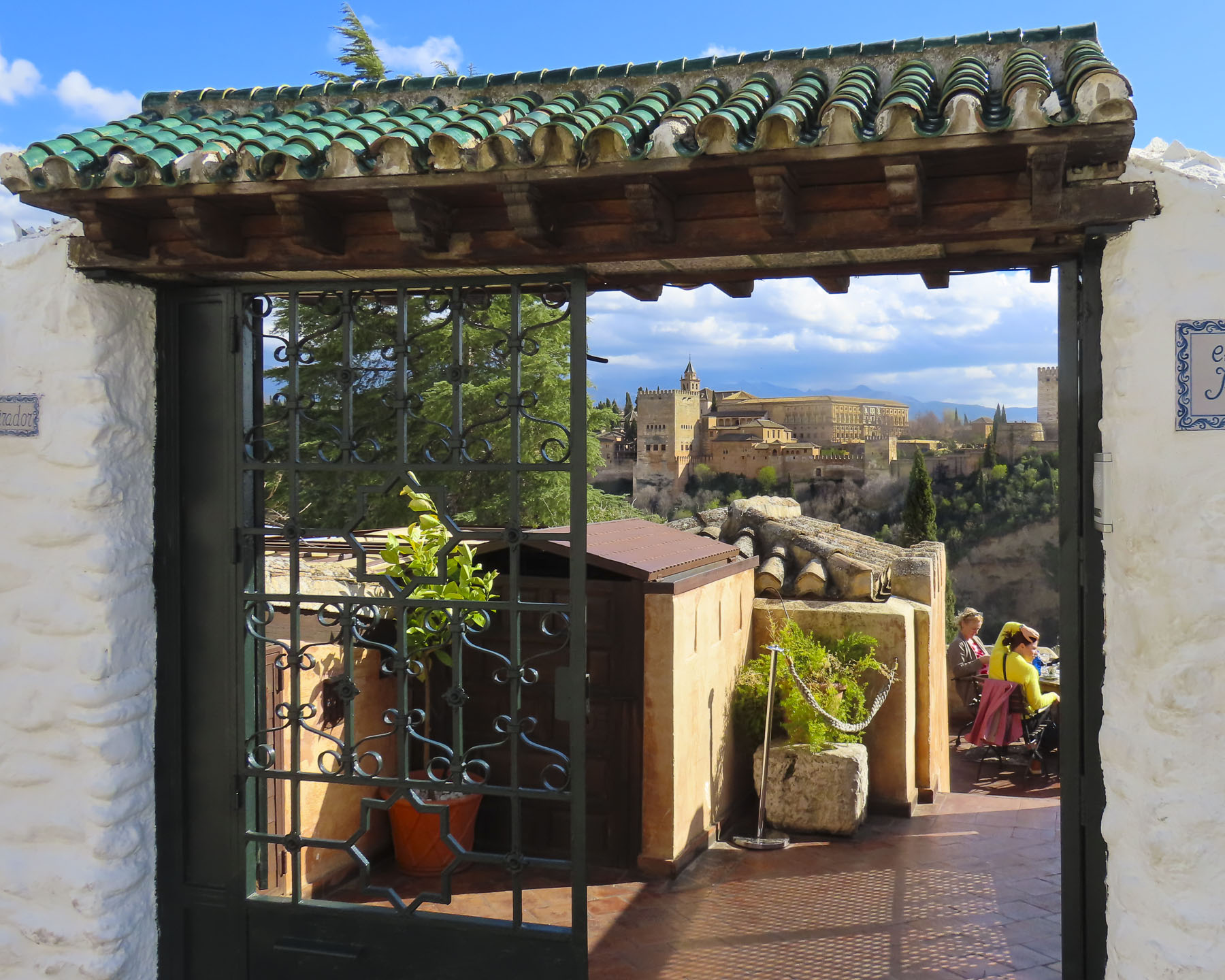
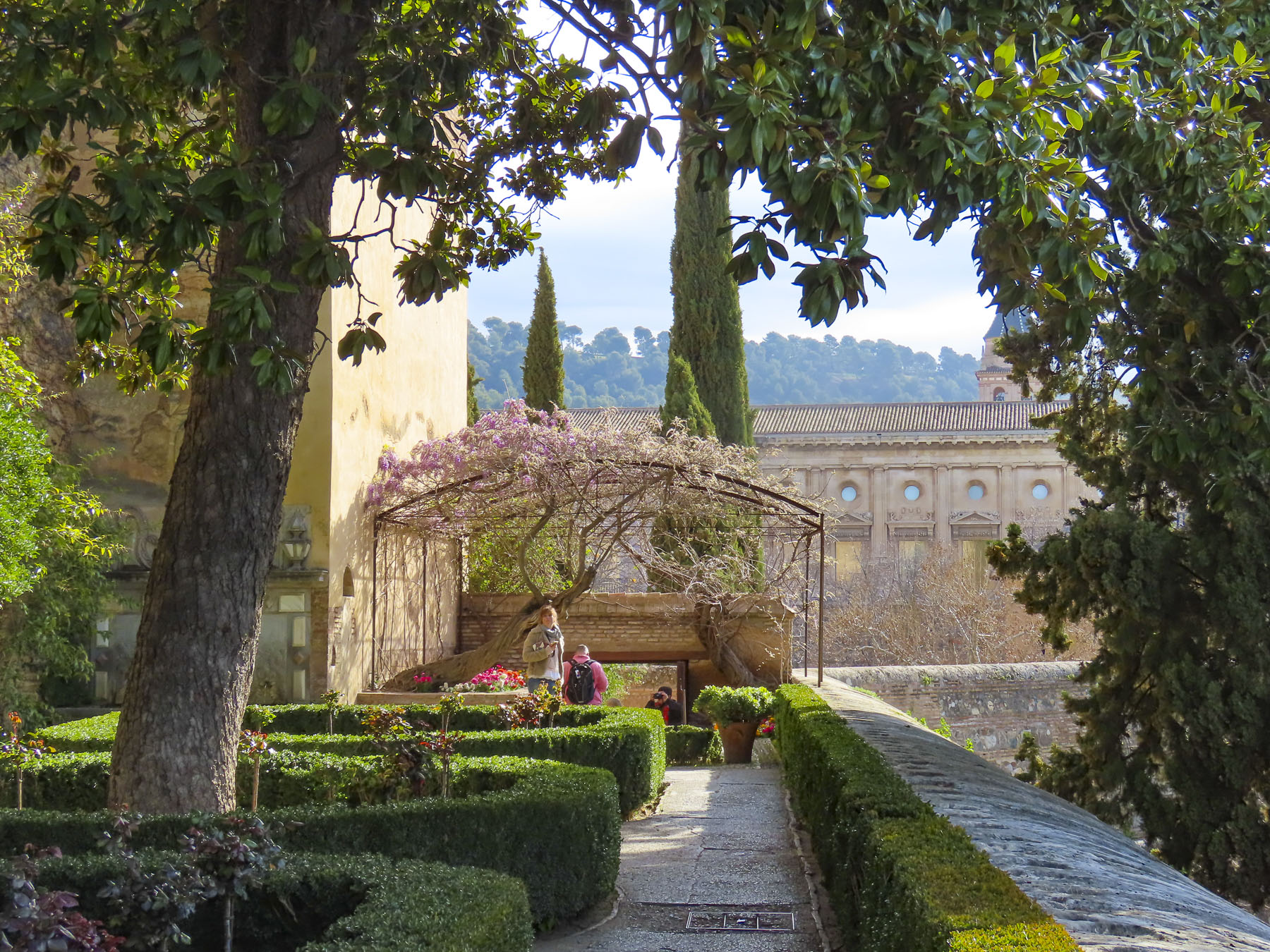
There are several overlooks on Albaicín hill, but the view of the Alhambra from San Nicolás Plaza was sublime. We stopped here several times as we explored this hilltop across the valley from the Alhambra. We enjoyed lunch and sangria on the terrace at El Huerto de Juan Ranas or dangled our legs over the edge of the mirador as the sun arced across the sky.

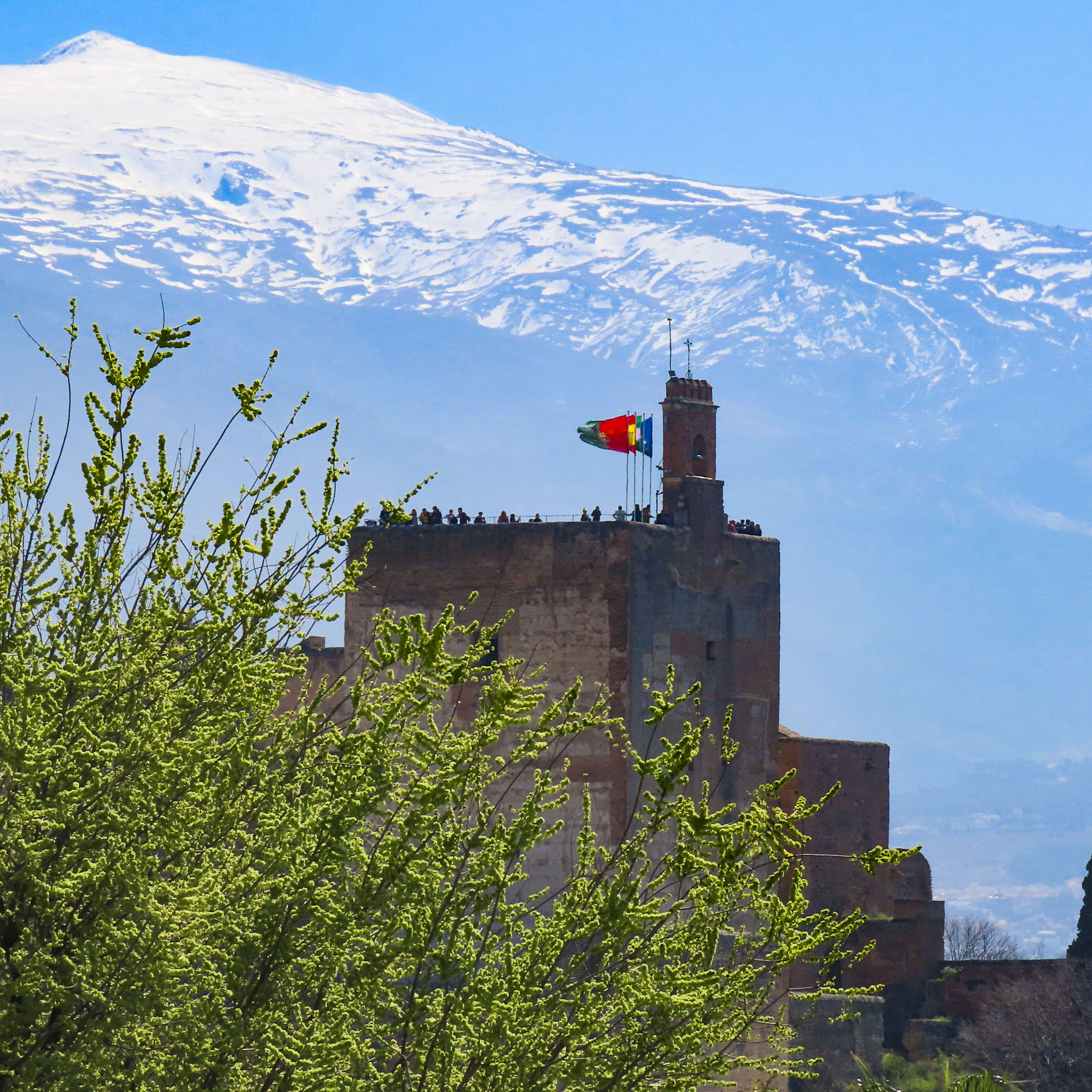
We watched the play of light change the shadows and the intensity of the red walls from which al-qal’a al-hamra, in Arabic the red fortress, takes its name.  The palace is dramatically situated on a hill, with the snow-covered Sierra Nevada Mountain Range and Mt. Mulhacén, the Iberian peninsula’s highest peak in the background.

For centuries since the Muslim time, continuing into the 1950s, muleteers ran mule trains laden with fresh produce, fish, and merchandise from the coast up over the Sierra Mountains along a vast network of trails to Granada.  Much of this 8-12 hour journey was done at night to take advantage of the cooler evening temperatures to ensure the quick arrival of perishable food.  The mountains also provided sanctuary to the maquis, resistance fighters, in the 1940s and 50s who opposed the dictatorship of General Franco after the Spanish Civil War.

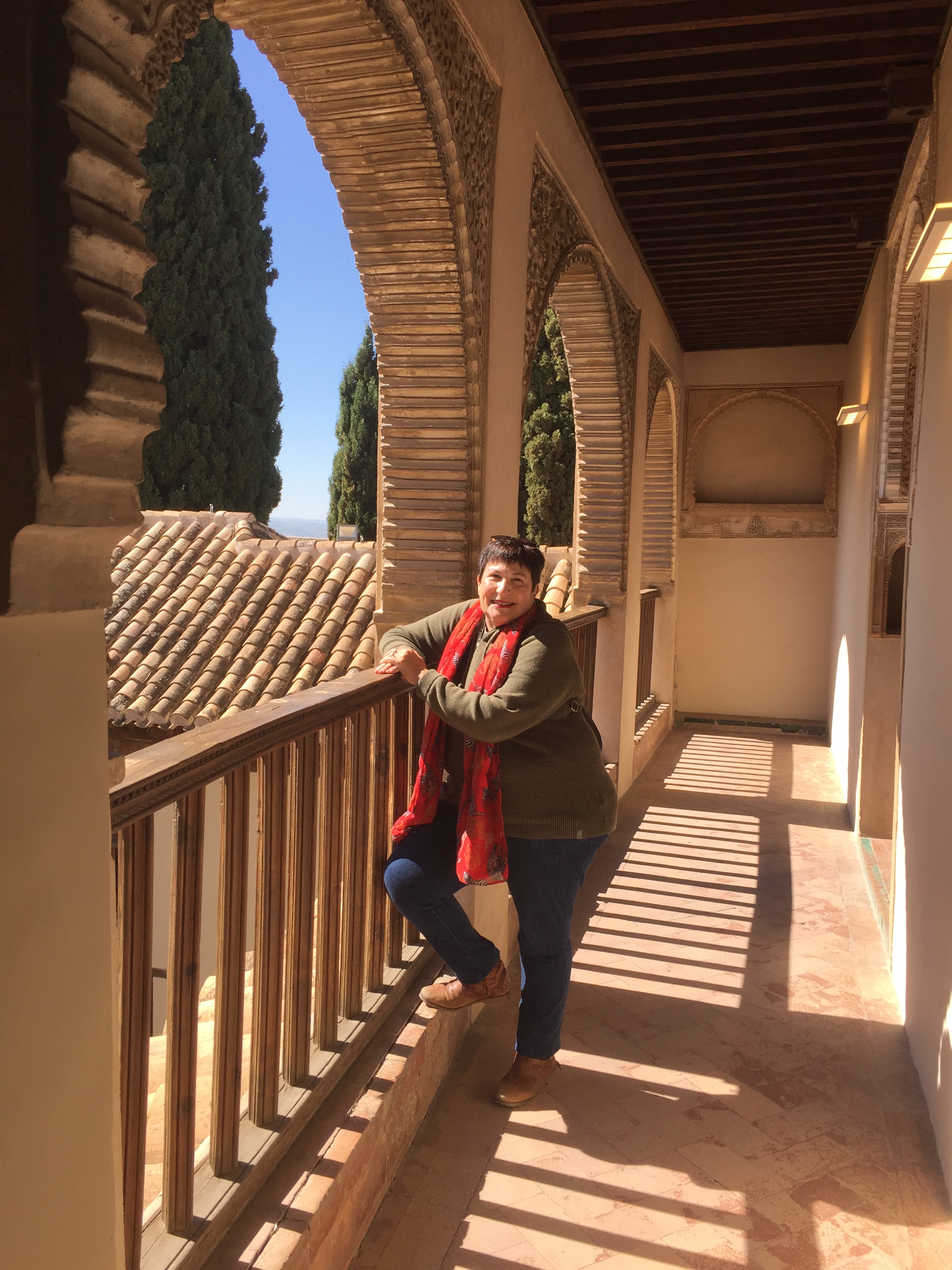
The historic Albaicín district is extremely hilly, think San Francisco hilly, a severe contrast compared to the flatness of Seville and Cordoba, but the labyrinth of narrow alleys that twist up and down the ancient hillside was intriguing. The Palacio de Dar al-Horra, “Home of the Honest Lady”- the mother of the last Emir of Granada, was an interesting example of 14th century Moorish domestic architecture, with its intricate Alfarje, carved wood ceilings, verandas, and courtyard.

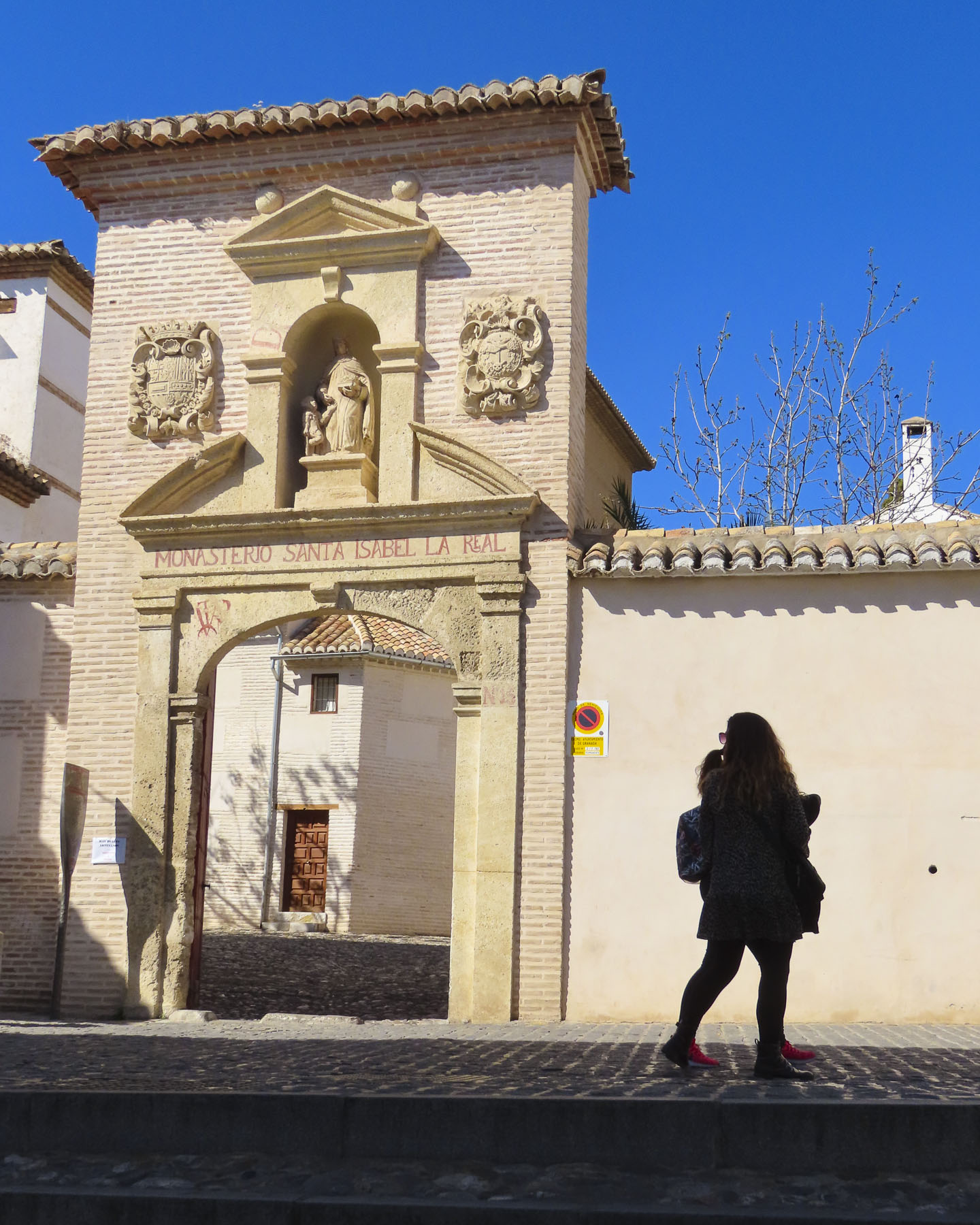
Nearby we accidentally stumbled upon the 16th century Royal Convent of Saint Isabel and entered the courtyard in hope that its church was open. Unfortunately it wasn’t, but as we wandered we discovered the “cookie door.”  Actually, it is a cabinet built into the wall of the convent with a door on each side that separates the cloistered nuns from the public. Ring the bell above the door, speak your order when someone answers and place your money in the cabinet and close the door.  You will hear the other door open and then close when your dulces have been placed inside.  It’s a sweet centuries old tradition which helps the nuns support their convent. 

We were enjoying our stroll through the whitewashed alleys as we headed down the hillside toward Plaza Nueva, when “Splat Splat!” Honestly it felt like we had been shat upon by a flock of tourist hating birds. Something akin to the Spanish version of the Hitchcock movie classic. And the smell was awful! We don’t remember exactly what was said, but quickly a well-dressed middle-aged couple guided us into an empty plaza and pulled a huge roll of paper towels out of their bag and proceeded to “help,” clean the mess off our jackets as they patted us down and attempted to pickpocket us. I wish I had been quick witted enough to yell, I KNOW KARATE!, with an intimidating scowl. At least my wife would have burst into laughter and perhaps that would have broken their concentration. It was over in a flash and they vanished.  Fortunately, we keep all our valuables under our clothing, not in any exterior pockets.  Rattled, we continued on. A beautiful city, good tapas and sangria helped our mood rebound.  Later that evening when I was reviewing the photos taken during the day, I spotted them in the lower corner of a picture taken moments before that encounter.

Bar los Diamantes and La Gran Taberna, located next to each other on Plaza Nueva, were excellent places to dine, and we tried them on separate days. At home in the states now we are making tapas inspired from dishes we tasted at both places.

Afterwards we walked along the thin ribbon of road that follows the Darro River through this section of the old town. It’s lined with numerous historical sites and bridges that cross the river; the ambience was wonderful.

After a long day we couldn’t muster the strength to walk the steep uphill back to our apartment and opted to use the local bus. The routes in the historic section use micro-buses to navigate the ancient parts of Granada and took us pretty close to where we needed to go.

Only a limited number of people are allowed to visit the Alhambra each day, so we made reservations for a group tour early the next morning. 

As we were leaving our rental the next morning, we couldn’t extract the key from the interior lock on the front door. We can’t recall how many doors we’ve unlocked during our travels, but this was a first! Apartment doors in Europe are intriguing, especially if they are in newly renovated buildings.  The trend seems to be to install a very sturdy door with numerous deadbolts that insert into the door frame with the turn of single key.  They appear to be designed to thwart any home invasions or resist the battering ram of a S.W.A.T team. The rental agent asked us to stay at the apartment until a locksmith arrived, without offering a time.  That was unacceptable and we asked them to have the door repaired by the end of the day.  We took the key to the courtyard with us and hoped for the best. 

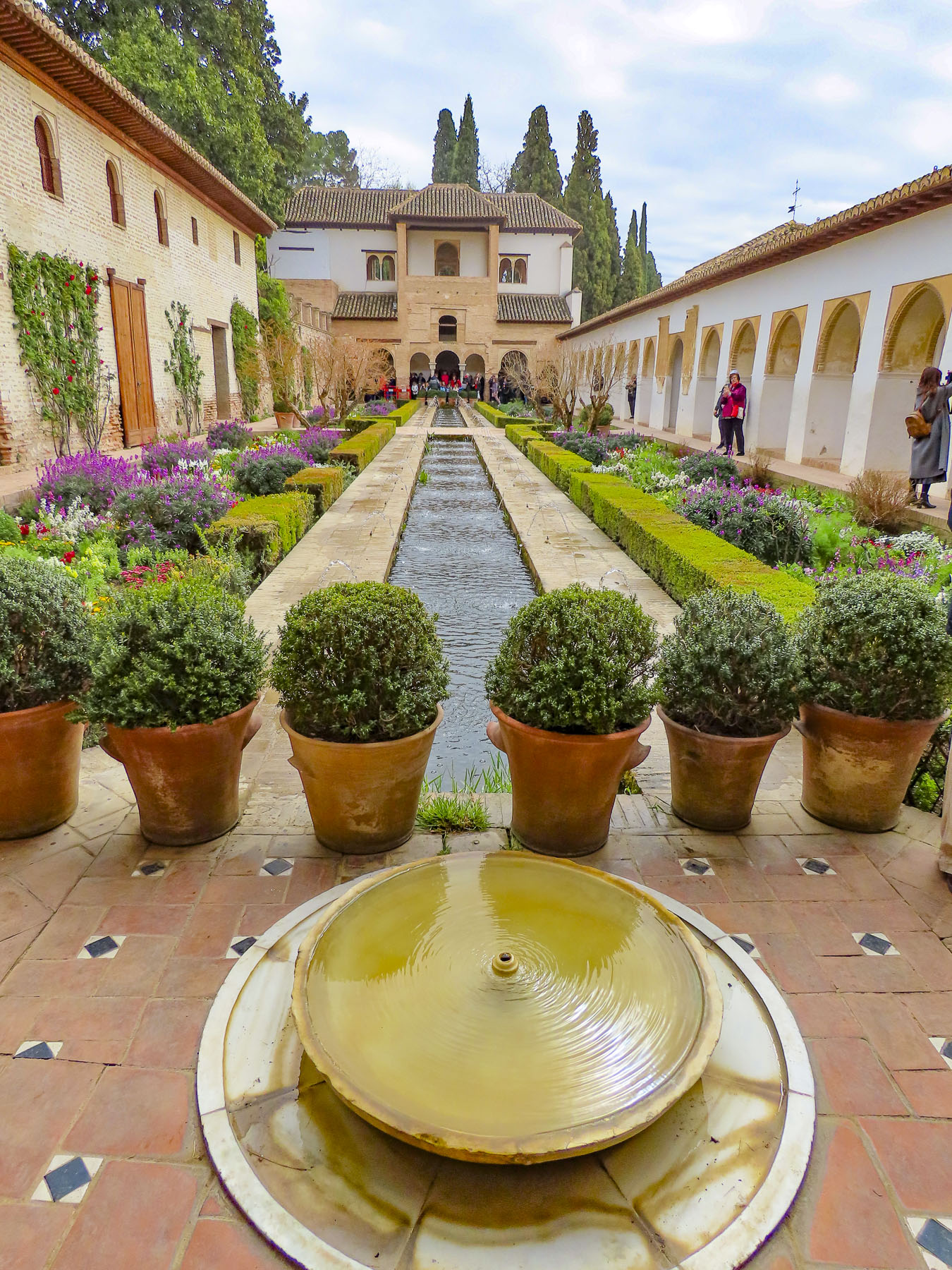
The Alhambra is massive and originally served as a fortress for many centuries before Mohammed ben Al-Hamar, the first king of the Nasrid dynasty arrived in the 13th century and established it as his royal residence. Each subsequent Muslim ruler continued to add and beautifully renovate every interior surface lavishly adorned yesería, intricately carved or cast stucco featuring arabesque, geometric and calligraphic designs.  Later the Christian monarchs would introduce mudejar tiles and Romanesque, Gothic and Baroque techniques to various building sprees. 

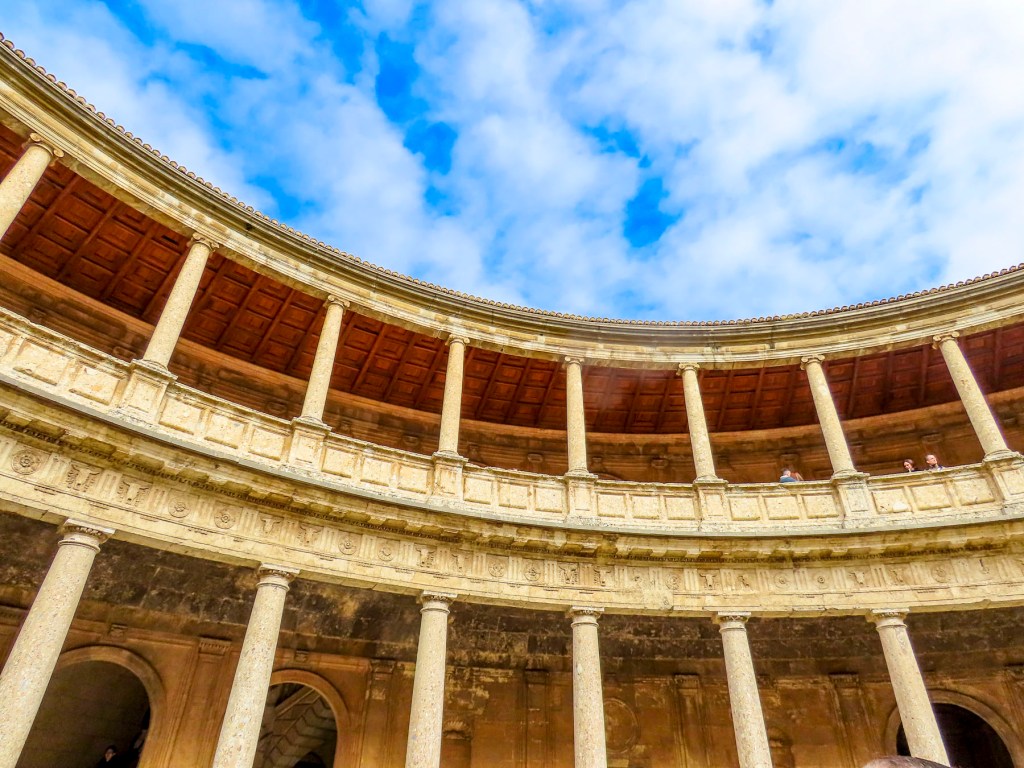
The most significant Spanish contribution to the Alhambra was the Palace of Charles the V. It is an immense renaissance style building with a two tiered colonnaded balcony surrounding a circular courtyard at its center.

Construction started in 1527 and was continually interrupted over the next 430 years and was eventually abandoned until the government dedicated funds to finish it by 1957. Somehow this amazing amalgamation of diverse architectural styles at the Alhambra creates a unique and satisfying visual harmony.

We spent the rest of the afternoon exploring the Catedral de Granada Royal and next to it the Capilla Real de Granada. Both were built over the ruins of the Granada’s Grand Mosque in the old medina after the reconquest.  The cathedral features a towering white and gold interior and a stained-glass cupola above the high altar.

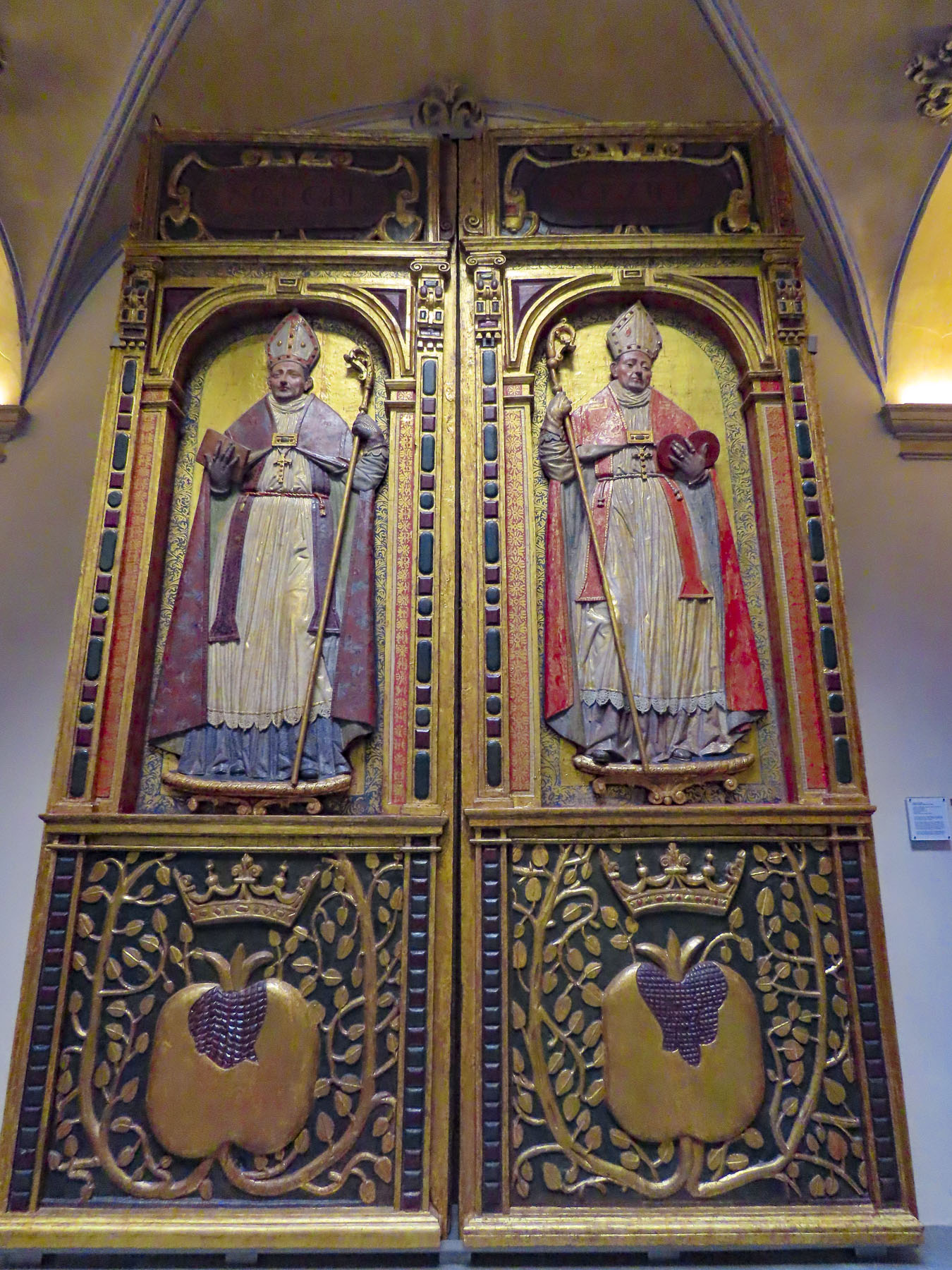
The Capilla Real de Granada is a burial chamber for the Catholic Monarchs Queen Isabella I and King Ferdinand and features their ornately carved marble tomb. Joanna of Castile, Queen of Castile and Aragon, and her husband Philip I “the Handsome” of Castile, are entombed next to them in an equally elaborate sarcophagus.  The Sacristy-Museum here also displays gilded church panels, along with renaissance paintings from Flemish, Italian and Spanish artist. The monarchs’ crowns and scepter are also on display. 

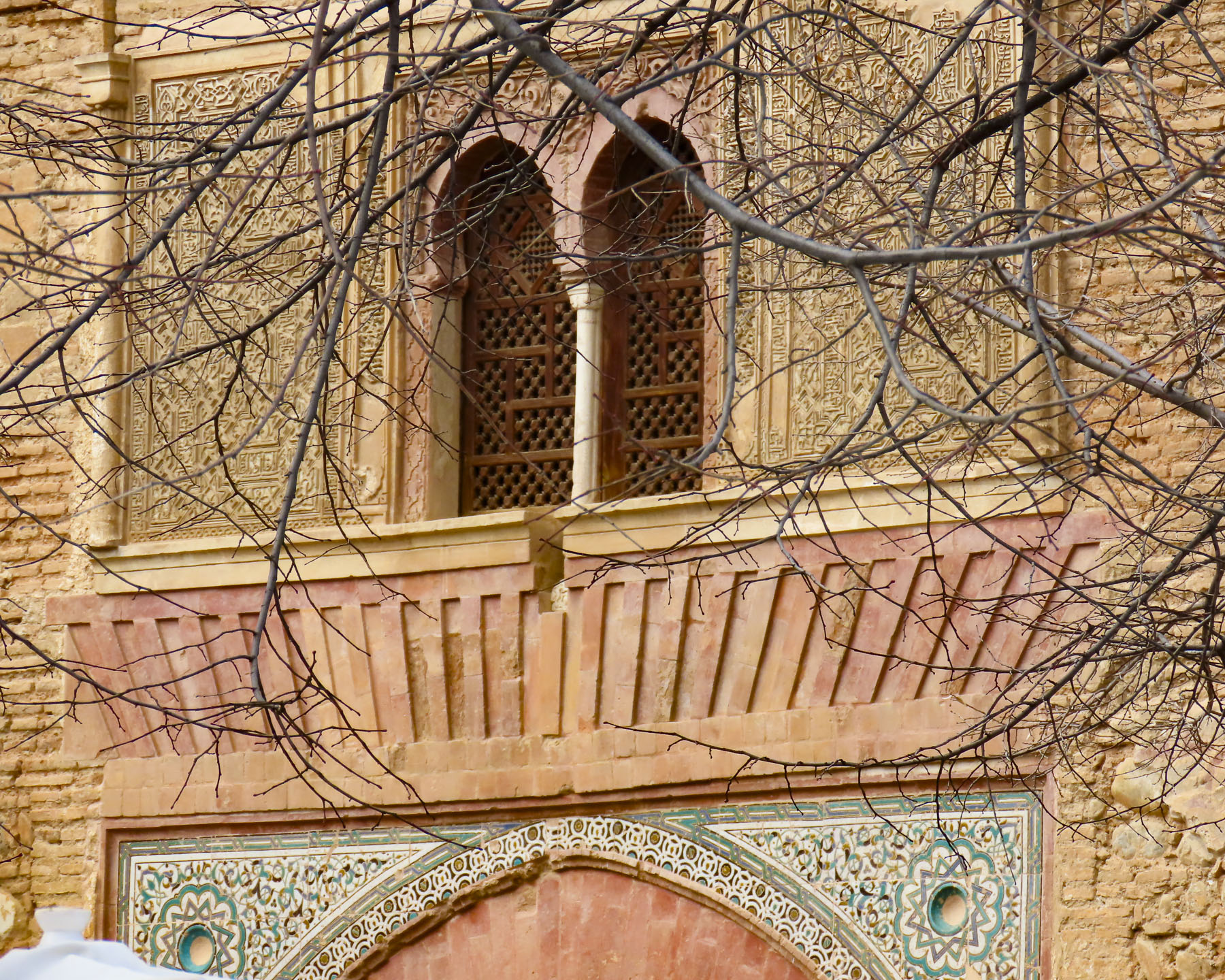
Across the lane the wonderful Moorish architecture of Palacio de la Madraza, a former Islamic school dating from the 1300s, has been well preserved.

To our relief the door lock was fixed when we returned to the apartment that evening. Though to our dismay the landlord left a bill for the locksmith’s services of 150€! Attached to the invoice was a note that said the locksmith could not find any fault with the door, that it was in perfect working, and we were responsible for the bill.  We did not agree that this was our “operating error” and questioned it.  Thinking it was a maintenance issue and ultimately the apartment owners’ responsibility. There was an exchange of text messages, with the rental agent demanding payment. We refused to pay. Things deteriorated – ancient ancestors and future generations to come were flavorfully cursed.  We left early the next morning to avoid any confrontation.

With a half day to fill before our train departed, we dragged our suitcase clickity clacking over the cobblestones of the historic center as we made our way to the Basilica de San Juan de Dios. Built in the 1700s, when a seemingly unending supply of gold and silver flowed back to Spain from their colonies in the Americas, the church is a temple not only to Christ, but a shrine to all things Baroque, with every surface ornately detailed, much of it gilded. The sacristy and the other rooms behind the altar hold a museum-like collection of artwork, precious religious objects, and gold adorned reliquary.

Across the street at Candelas Bocadilleria we sat at a table in the sun and enjoyed the best churrerias of our time in Spain.

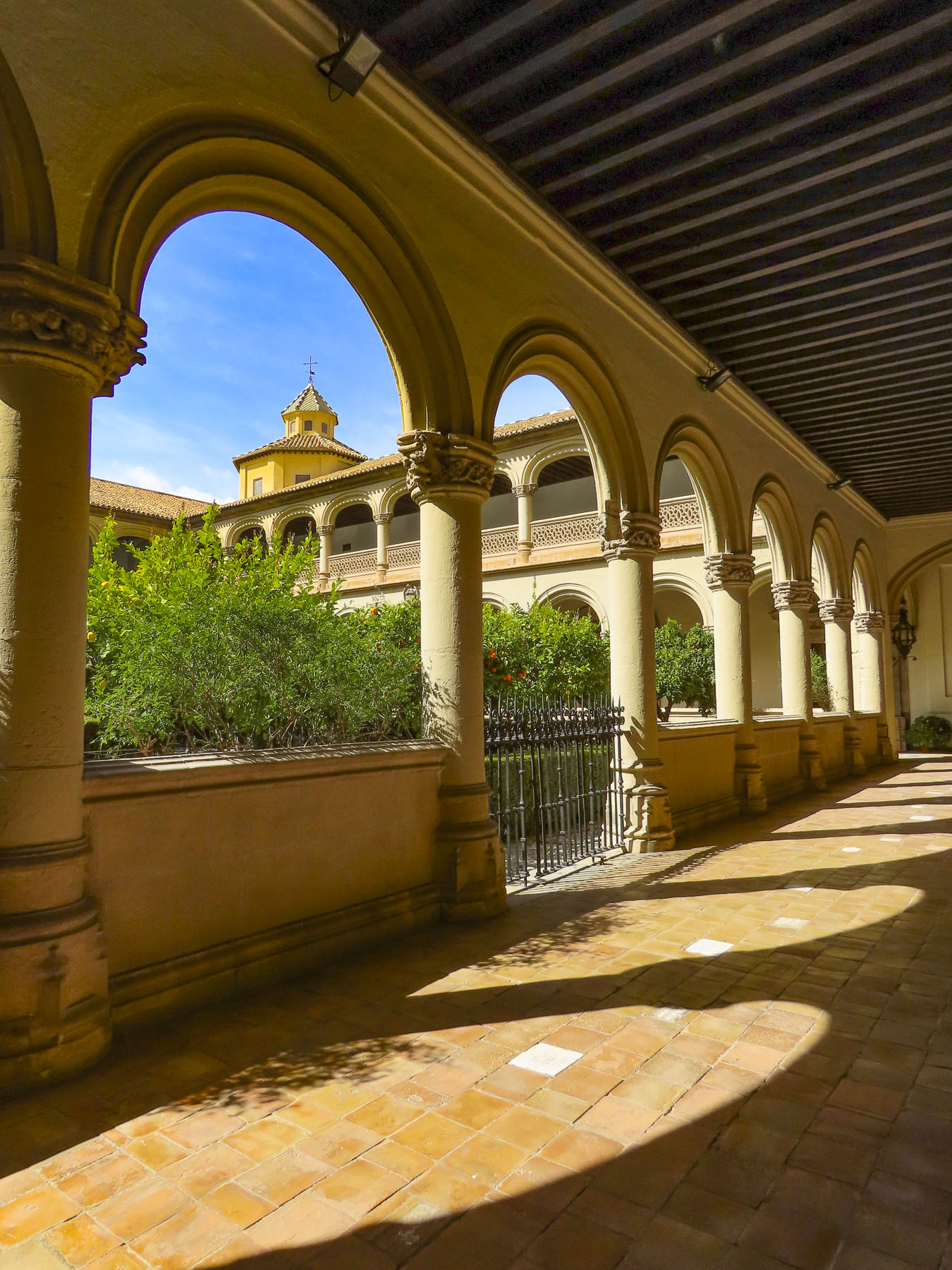
Two blocks away and two centuries older, the Monasterio de San Jeronimo (1504) stands as the first great Renaissance style achievement of Spanish architect Diego de Siloe, who was trained in Italy. He followed this with the Grand Cathedral of Granada (1528.) This royal monastery was the first in Granada commissioned by Queen Isabella I and King Ferdinand after the conquest of the city. It’s a massive structure with a two-tiered cloister surrounding a large courtyard fully planted with orange trees. 

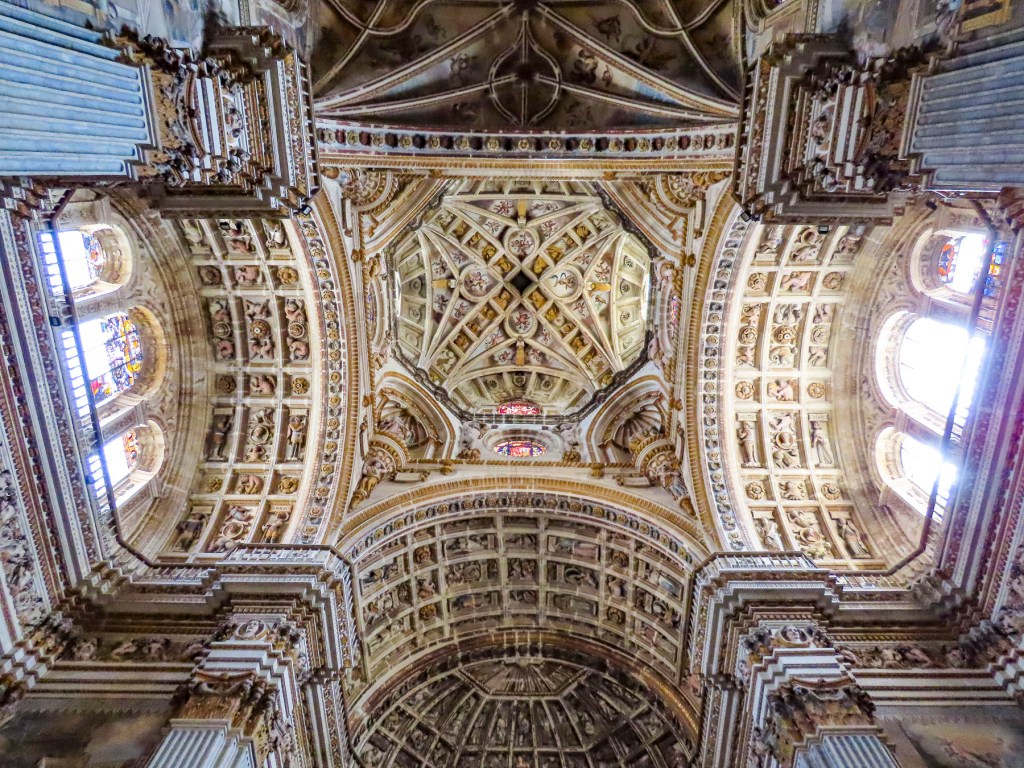
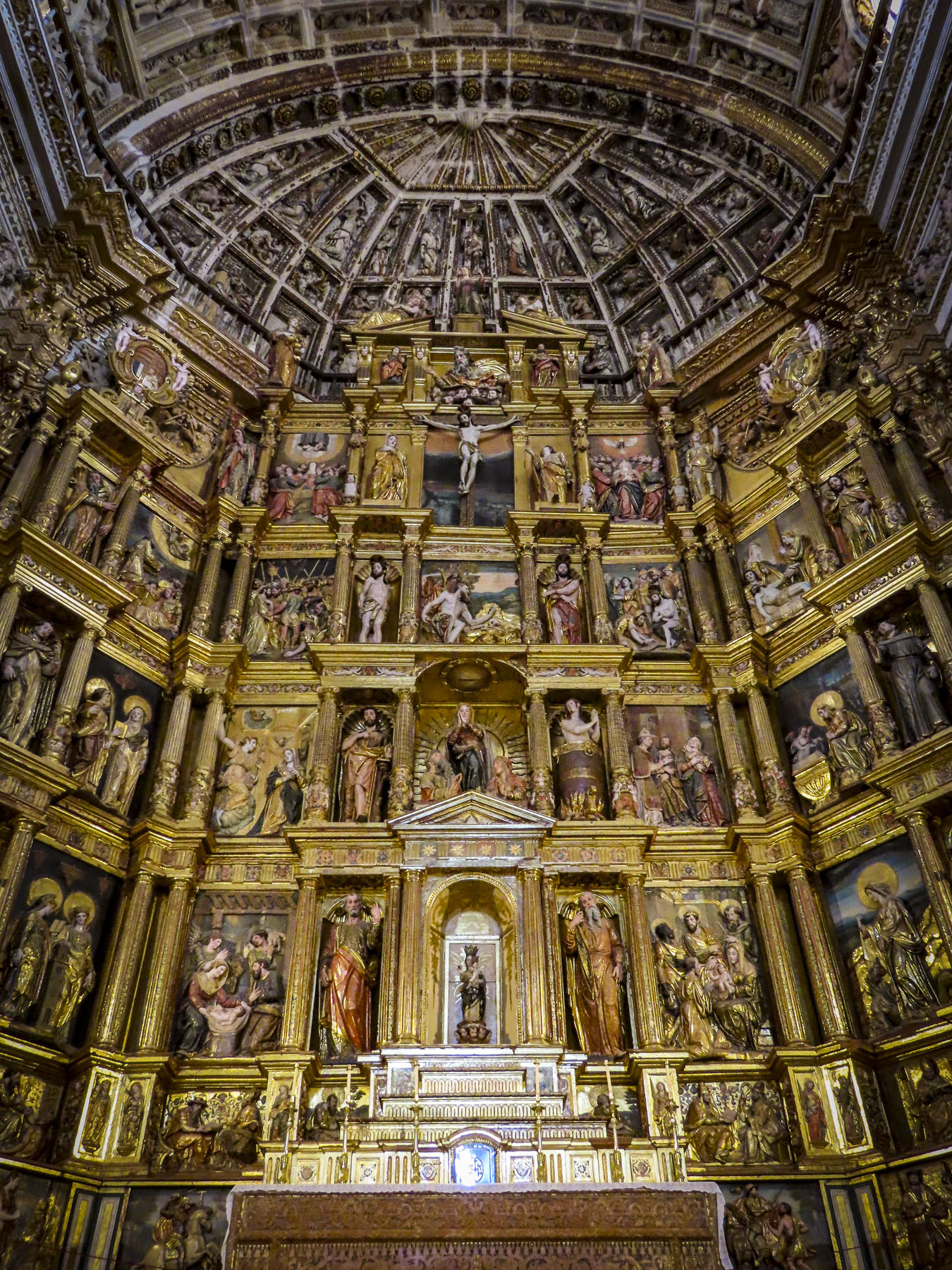
The monastery’s main chapel is cavernous with a barrel-vaulted ceiling that leads your eye to a towering gilded high altar, minutely detailed with religious iconography. The tomb of El Gran Capitan, Fernandez de Cordoba, lies in the chapel. A hero, he is credited with several reconquests across Andalucía, and after a ten-year campaign, the surrender of Granada from Boabil, Muhammad XII of Granada, the 22nd and last Moorish Sultan in Spain.

We barely scratched the surface of all the places to see in Granada. It’s a good excuse to plan a return, our own Reconquista, of this beautiful and fascinating region in the future.

Till next time, Craig & Donna

Seville Part 3 – Walk a Little then Café

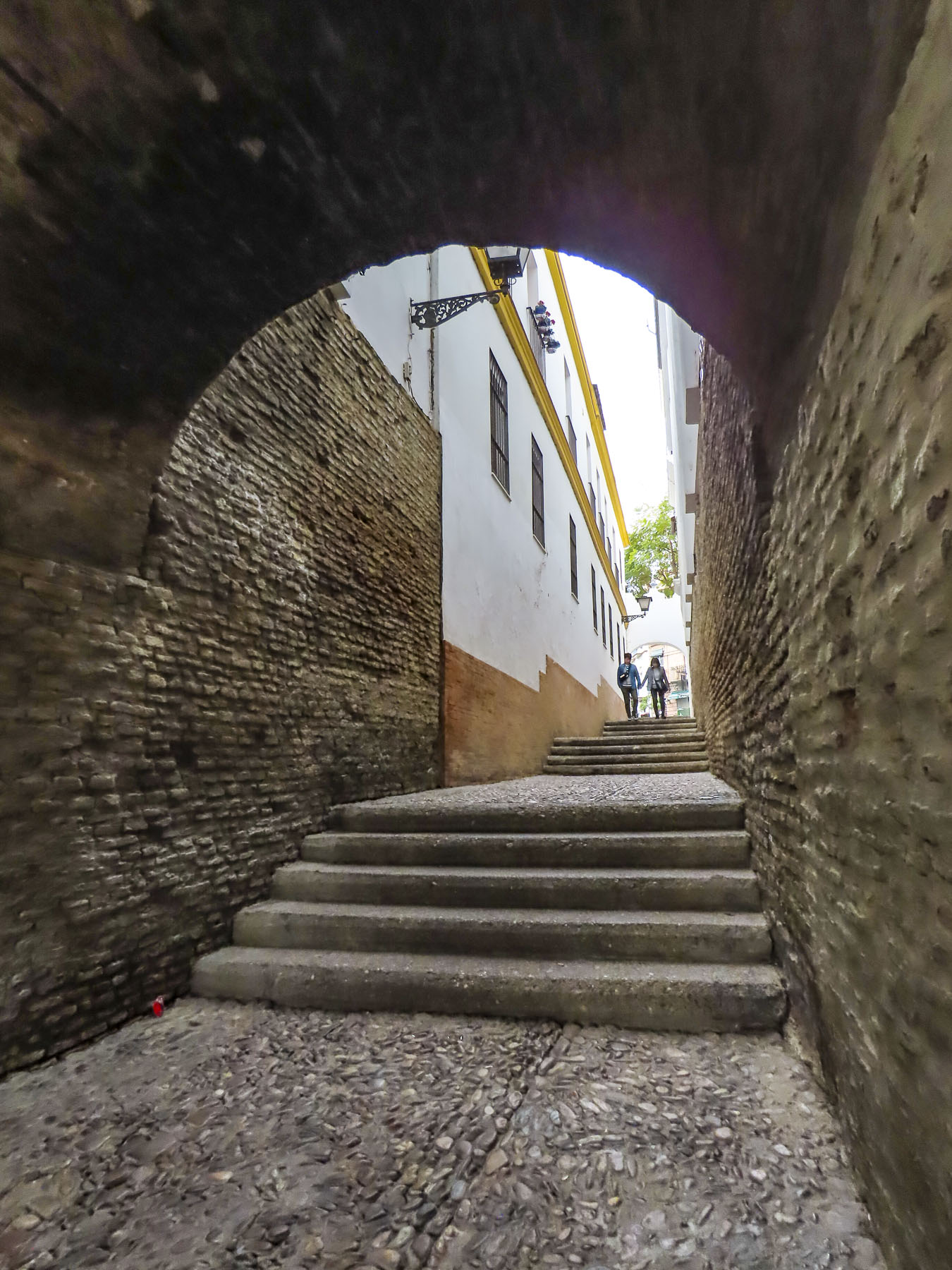
Parts of this ancient city with its labyrinth of cobbled lanes feel more akin to a small village with an earth toned, sun drenched patina. Vibrant traditions and a youthful vitality along with numerous historic sites scattered across the city all contribute to make Seville a walker’s delight. There’s no correct way to explore the city. How you do it depends on the amount of time you have to indulge yourself in the history and atmosphere of this beautiful city. Strolling through the city is the finest way to discover its character. Immersing ourselves into the city for six weeks, we walked the familiar cobbled lanes multiple times with many variations and sporadic detours that we hope you find interesting.  Seville never ceased to charm us. 

The routes we favored most webbed out from behind the Cathedral of Seville’s Patio de los Naranjos on Calle de Placentines, around the corner from the Palacio Arzobispal on Plaza Virgen de los Reyes, and wandered through the Alfalfa, Centro and La Macarena districts.

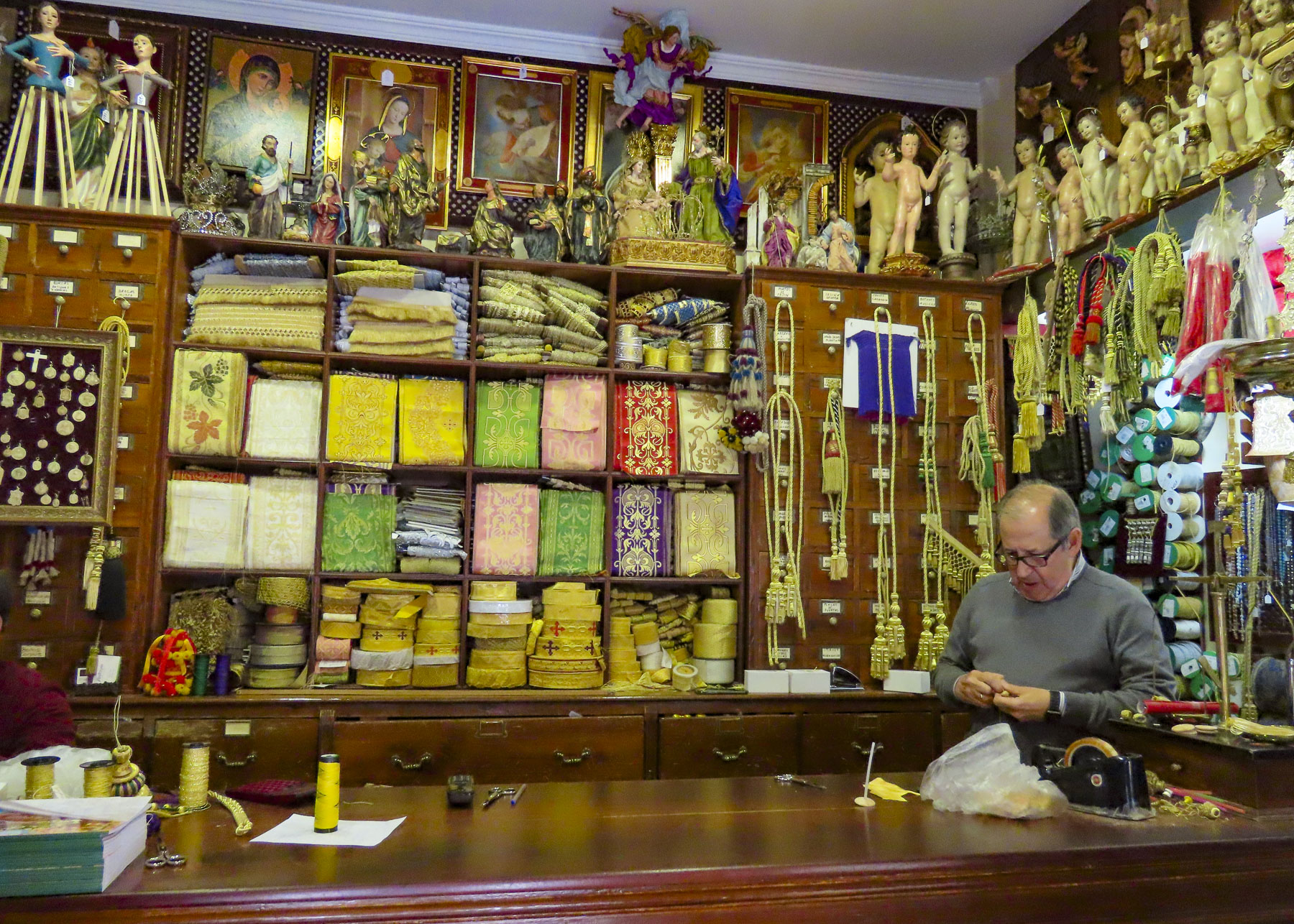
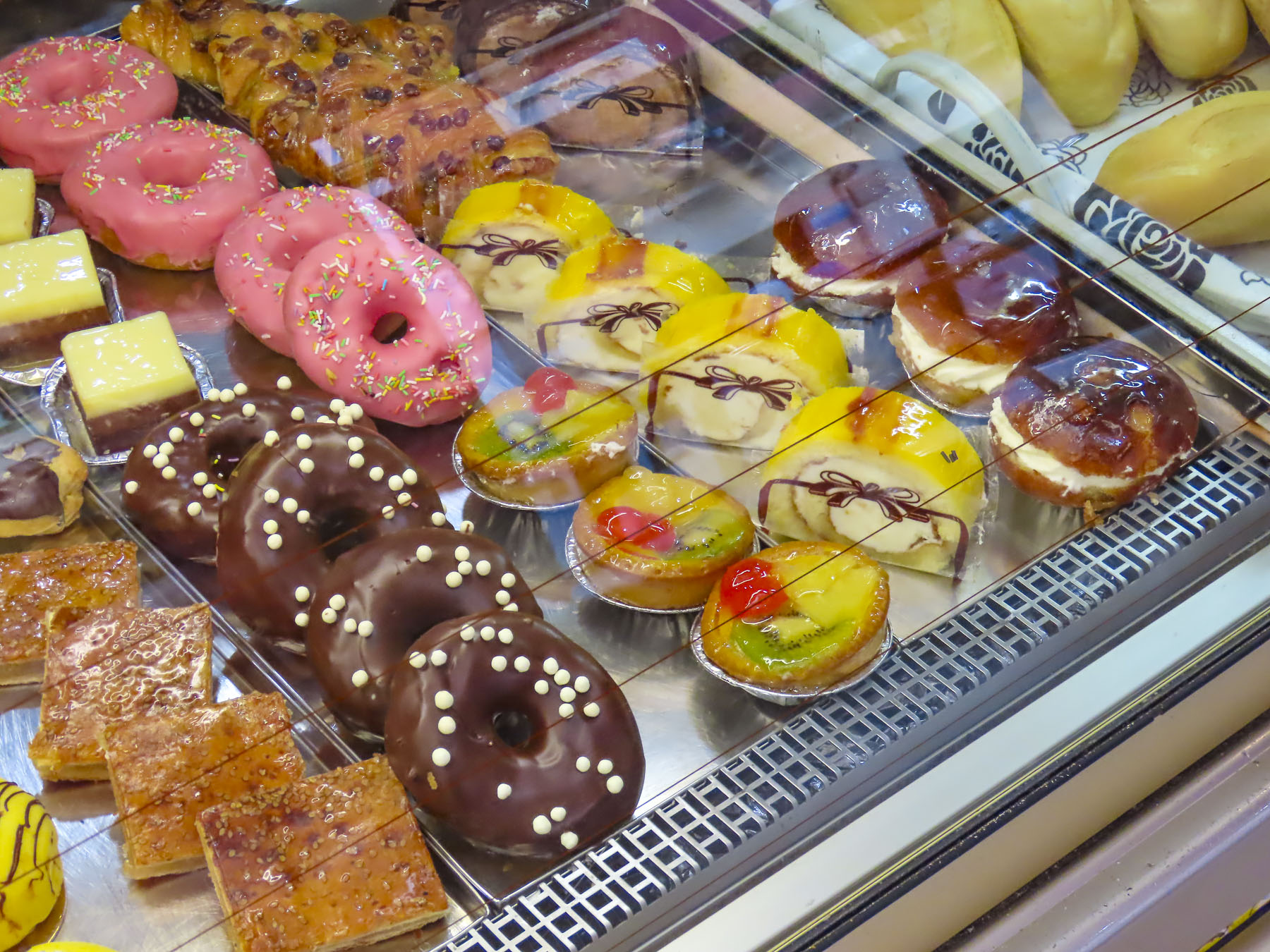
An old-world fabric store bedecked with selections of gold embroidered trim, ribbons, and tassels hanging from worn wooden cabinets enticed us inside.  Further on the display window of a religious goods store fascinated us with its selection of all things sacred. Before crossing into the Plaza Jesus de la Pasion, the savory window display at Confiteria La Despensa De Palacio stopped us dead in our tracks. Lovingly run by generations of the Santaella family, the shop has been Seville’s premiere chocolatier and pastelería for over 250 years. The pastries were sumptuous!

Across the street the Plaza Jesus de la Pasion widens to reveal a wonderful example of 19th century Andalusian architecture. The far end of the square features a façade of red brick framing Azulejos tiles and Moroccan influenced, pointed arched windows.  The plaza also seems to be a favored place for a protest or political rally as we came across several, over the weeks we spent there.

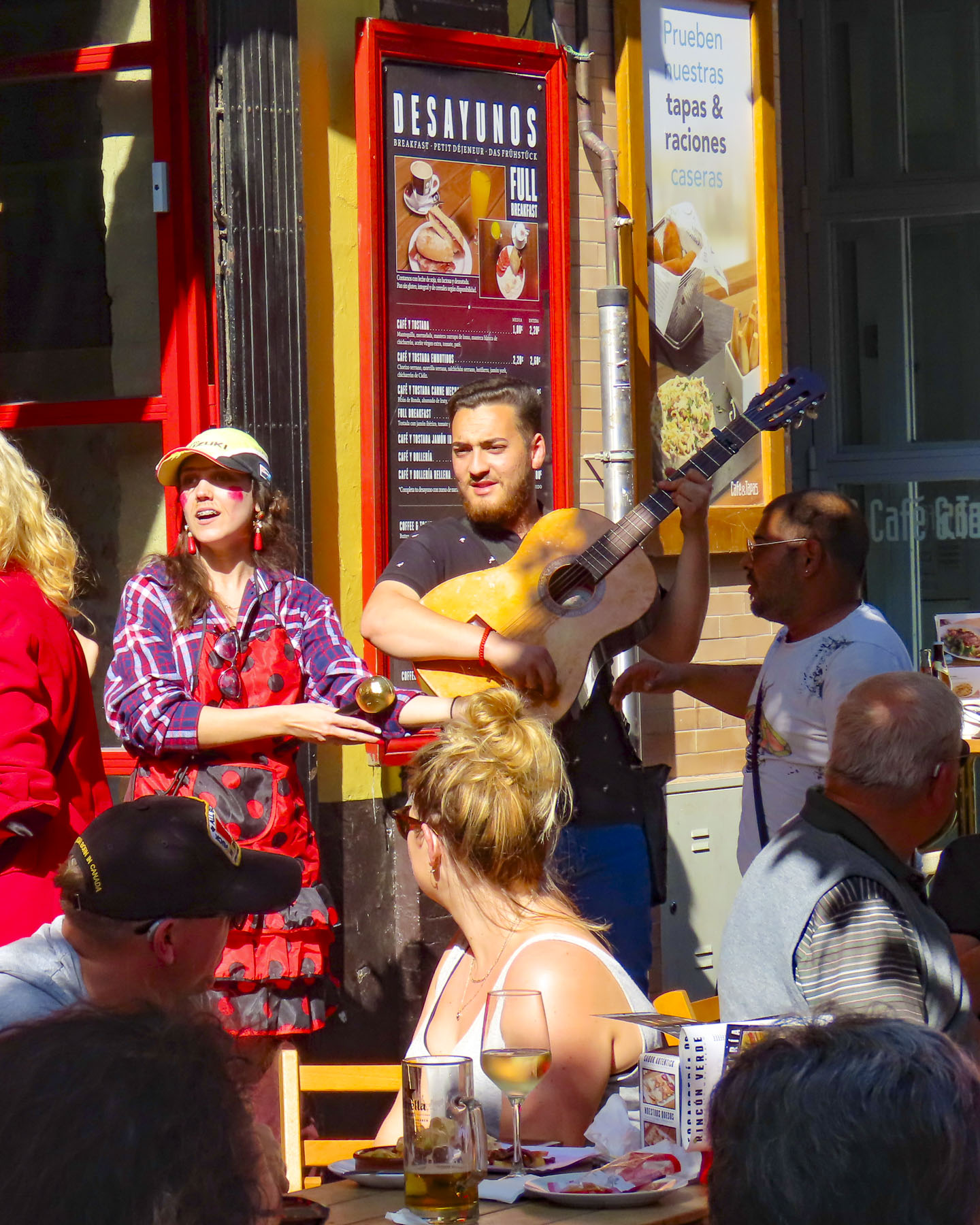
At this point it’s possible to head one block over to visit the Iglesia Colegial del Divino Salvador, on the plaza of the same name. This is a very popular square with many restaurants and outdoor tables along with buskers providing entertainment.

The Iglesia Colegial del Divino Salvador is the second most important church in Seville after the main cathedral and features a monumental and intricately carved 18th century Baroque altar. The beautiful piece was created by the Andulasian altarpiece architect and sculptor Cayetano de Acosta, who contributed works to numerous churches across southern Spain.

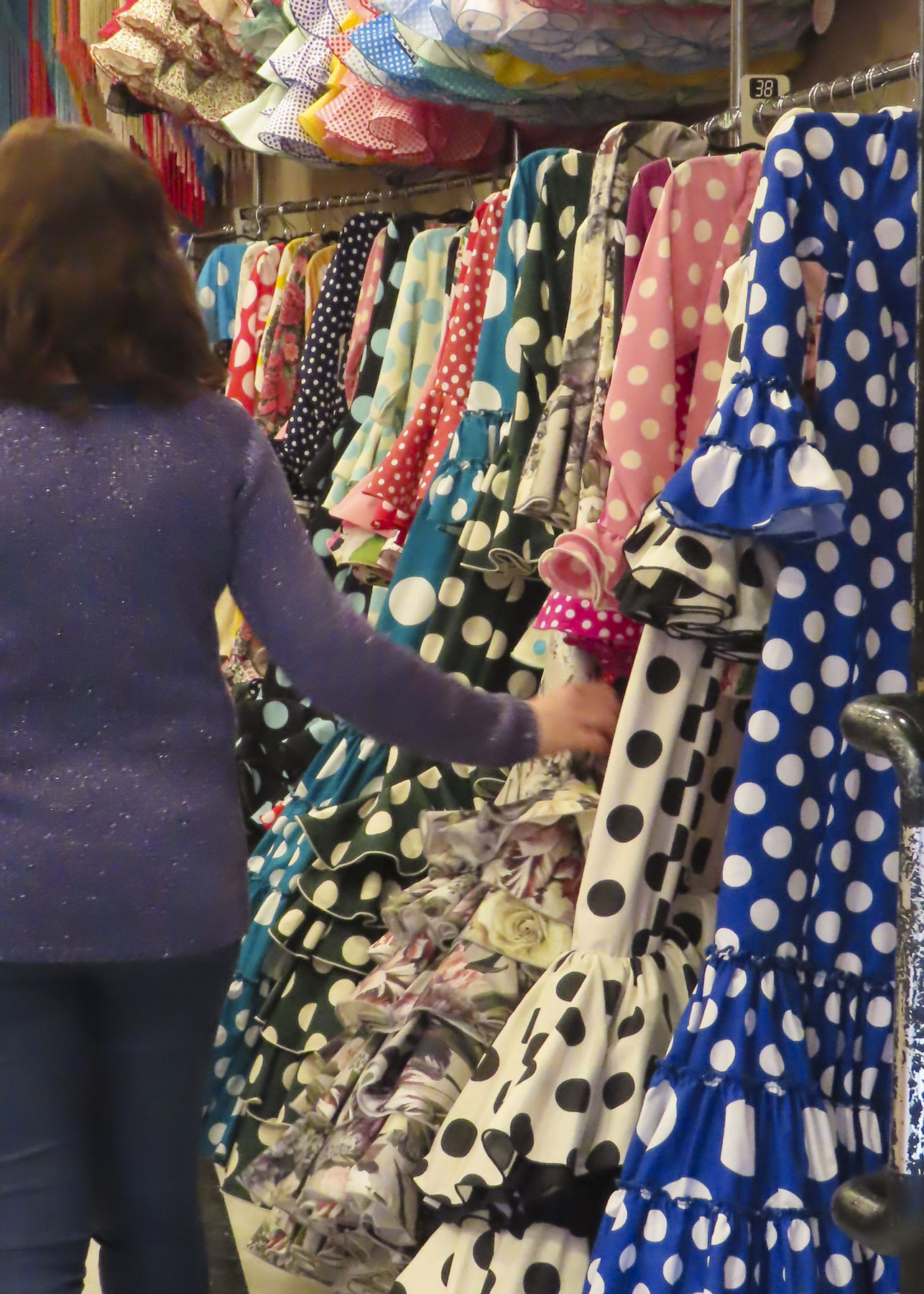
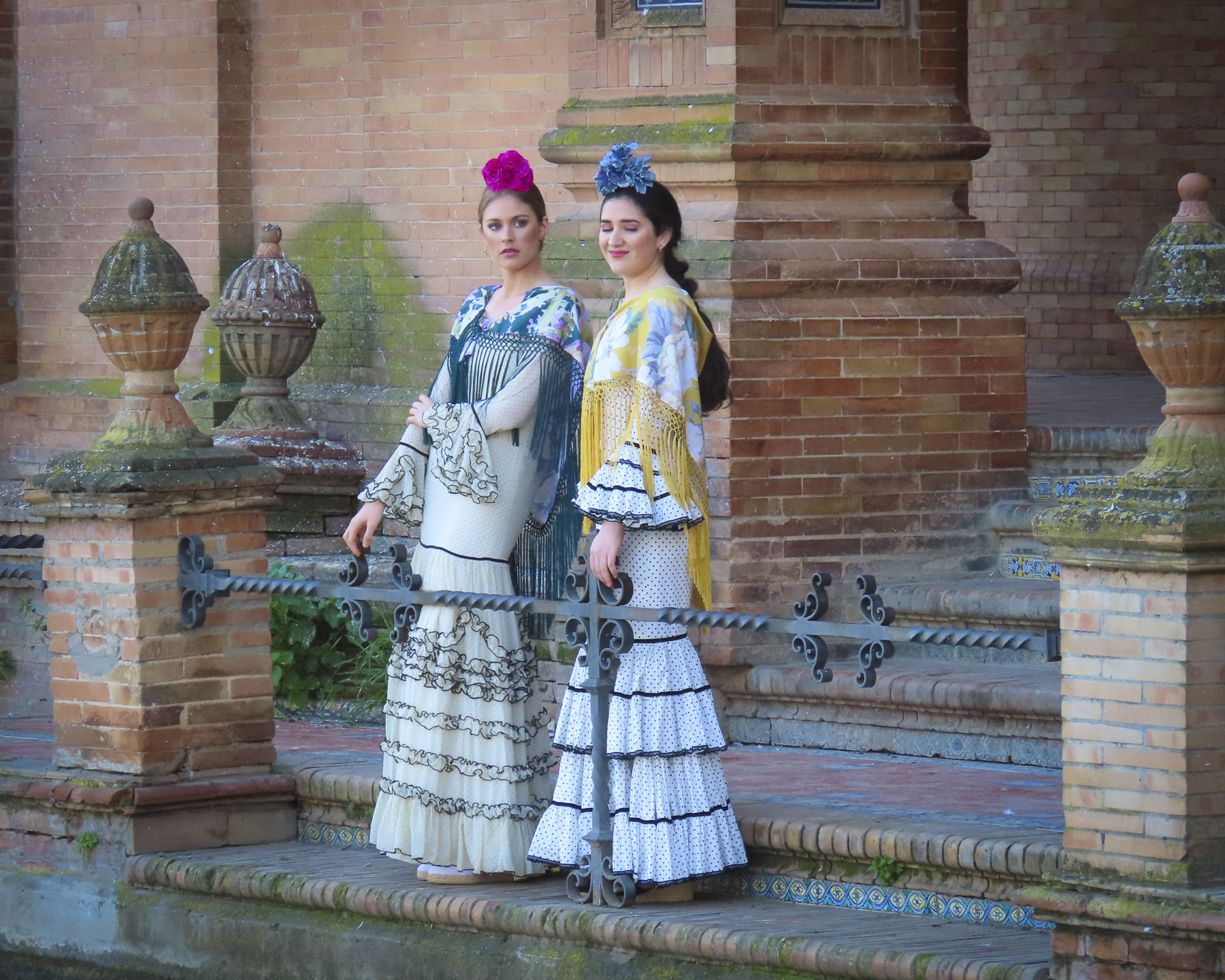
Returning to Plaza Jesus de la Pasion, the far end of the square funnels into the very cosmopolitan C. Puente y Pellon. Lined with a wide variety of shops, we found the most interesting to be the Zapaterias, shoe cobblers, and the dress shops, their windows filled with colorfully clad mannequins displaying tight fitting and frilly dresses called traje de flamenco or traje de gitana, for the upcoming Seville Fair (La Feria De Abril).

Here we found what we regard as the best bread bakery in Seville, Crustum Panem Bridge and Pellón, https://www.crustum.es/ sandwiched between window displays featuring towering pyramids of tasty Bocadillo de jamón, the ultimate hoagie lunch para llevar, to carry away, for an inexpensive picnic. The bakery offered a wide assortment of breads and empanadas. Our favorite though was a very dense bread made with nuts, seeds, and dried fruit which they sold by the slice and weight.  We returned often.

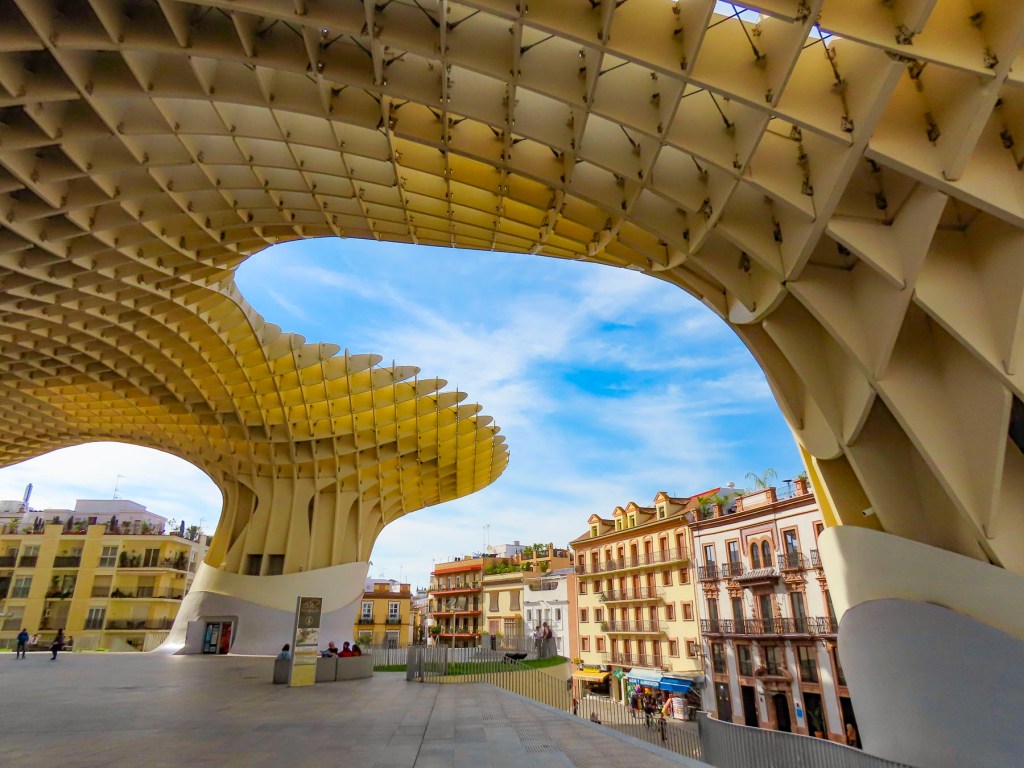
A little further on the Setas de Sevilla loomed over us as we left the alley.  The Setas is a massive, multi-story, Lego-like freeform sculpture with a viewing deck atop it. Constructed entirely of wood, it nearly covers a full city block. It’s an iconic symbol of modern Seville that the locals lovingly call The Mushroom because of its shape. 

For over 150 years this plaza was the true center of the city for Sevillianos when 400 market stalls of the Mercado de la Encarnación occupied the land above the ruins of the medieval Convento de la Encarnación, from which the plaza took its name.  The market operated until 1973 when the building was demolished for structural reasons and the remaining ninety vendors were housed in temporary facilities for what was hoped to be three years.  Inaction by the city left the site closed for 31 years and the area around the plaza became blighted, until the local government sponsored an international design competition in 2004 for ideas to revitalize the plaza and return it to its former prominence. 

Jürgen Mayer, a German architect, won with a concept called Metropol Parasol, constructed with sustainable wood. At 490 feet long by 230 feet wide and just under 100 feet tall, it is the largest wooden structure in the world made with laminated Finnish pine. Its unique design features 3500 sections attached together with 16 million nuts and bolts. The interior of the Setas now hosts a daily market with 38 vendors offering fruits and vegetables, fish, meat, poultry, and cheese. The base of the monument and plaza is ringed with restaurants that have excellent outdoor seating in the shade of the mammoth structure. Inside by the market stalls are several traditional luncheonettes that offer inexpensive daily specials.

A detour to the Guadalquivir River and Triana can be easily made here by following Calle Imagen west. This walk took us past many older buildings with interesting architectural details, and the 14th century Iglesia de San Antonio Abad which hosts the Brotherhood of Silence, the oldest brotherhood in Seville.

A block away the aroma of freshly roasted coffee beans drew us into Elhombre Pez, where you can only purchase bags of whole or ground coffee beans. Their coffee beans are definitely worth the purchase if you have an apartment stay in the city.

The Seville Museum of Fine Arts, set in a former 17th century palace, is also in this direction and is an intriguing detour with its extensive collection of Spanish masterpieces.

Several blocks farther the Real Parroquia de Santa María Magdalena was an interesting discovery. Built in 1691, this Baroque church has a fascinating interior.  The small bar on the corner, Casa Murillo, was a reliable spot for café and lunch. Across the street Churreria San Pablo always seemed to have a line waiting for its sweet treats.

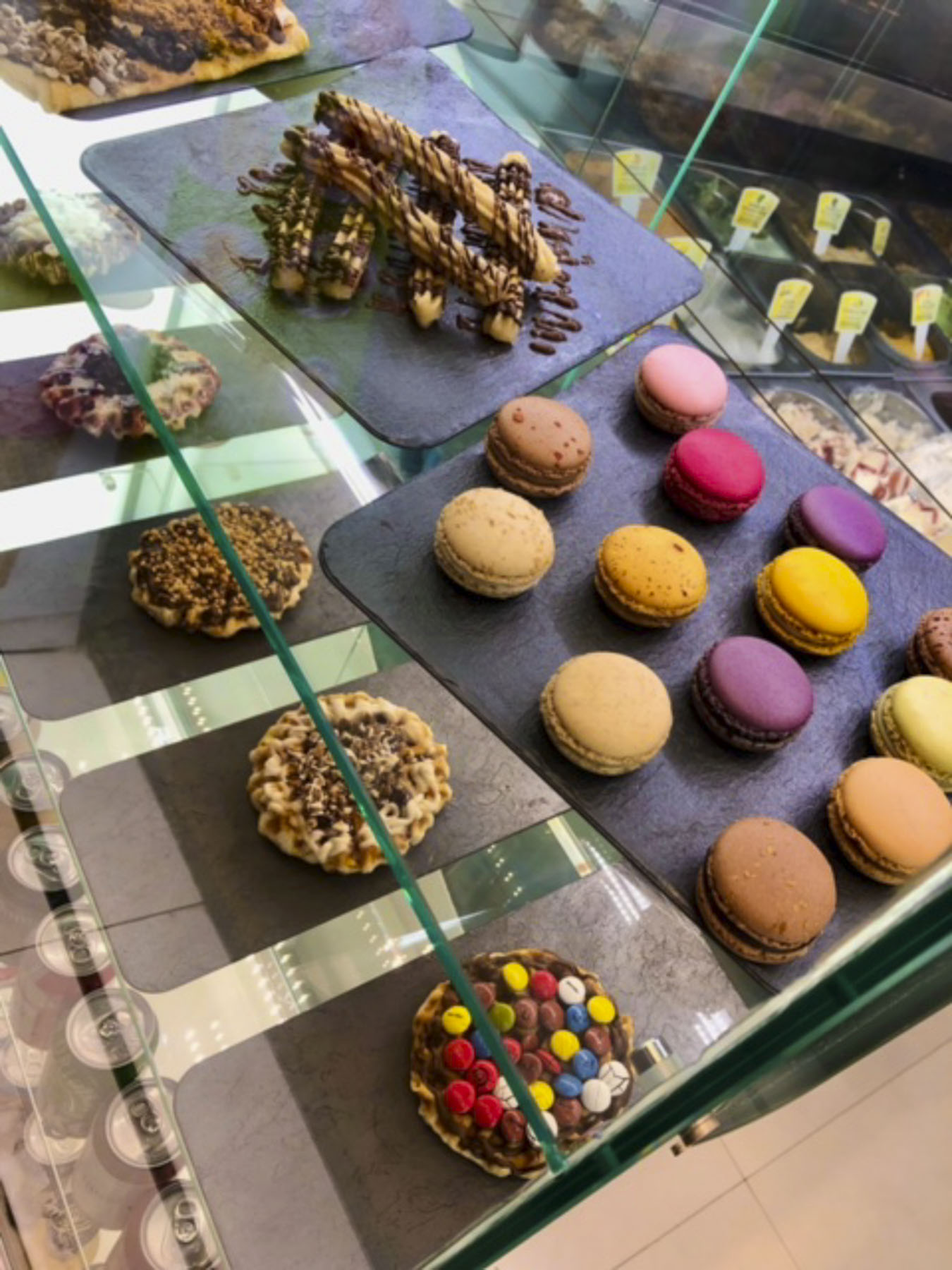
Calle Regina directly behind the Setas de Sevilla begins to funnel folks away from the bustling historic district and into a more residential area, though it’s still lined with a variety of shops and eateries. And if you share our belief that the food is always better and more affordable two blocks away from a popular tourist attraction, you will like this neighborhood. On this stretch Mr. Cake Sevilla with its artfully prepared and tasty offerings is a nice place to rest.

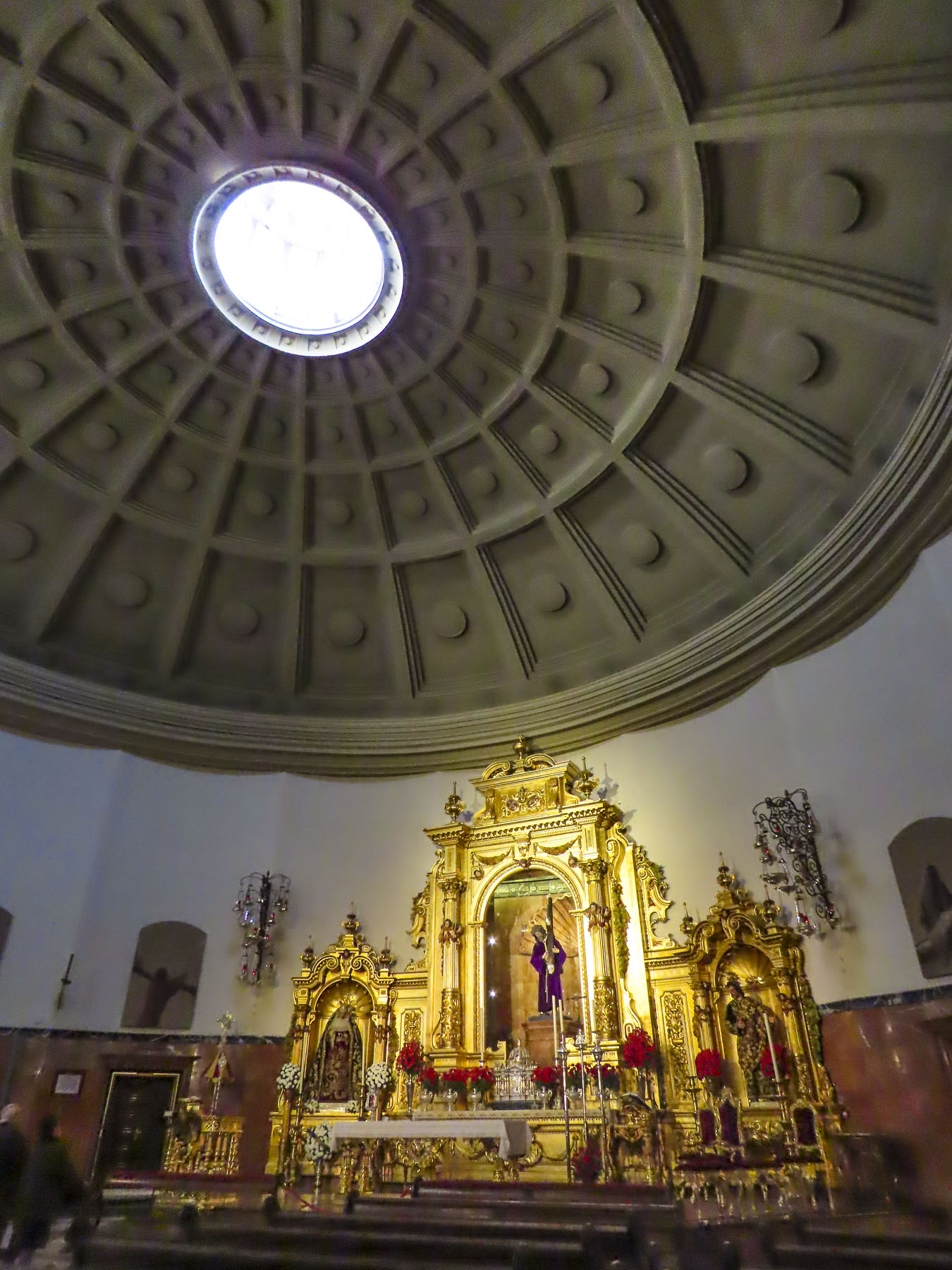
The Iglesia de San Juan de la Palma stands at the crossroad to our favorite tapas bar in Seville, the Bodega La Plazoleta. The gothic portal of the church is one of its few remaining original features. Compared to other churches in Seville its relatively small, but it features three interesting side chapels devoted to the Brotherhoods of Bitterness, the Virgin of the Head, and Our Lady of Montemayor.

The restaurant is on a small square, to the right of the church, that was far enough off the main path that it didn’t attract many tourists. Over our six-week stay in Seville this was our go to bodega for its excellent food, relaxing atmosphere and chocolate cake! The restored 15th century Palacio de las Dueñas is nearby, but let’s face it, it’s impossible to do everything and we needed to save some ideas for future visits to this wonderful city.

If you make a left at this crossroad, it’s a simple detour to the Alameda de Hércules. The origins of this large park date to 1574 and it is believed to be the oldest public garden with tree lined promenades in Europe.  The park takes its name from a statue of Hercules, the mythical founder of Seville, excavated from the ruins of a nearby ancient Roman wall.  This part of the city now has a younger hipster atmosphere and is known for its nightlife and club scene as well as its array of restaurants offering a variety of international cuisine. In this barrio the Basílica de Jesús del Gran Poder is an unusual church with its circular sanctuary which is surprisingly hidden within the church’s traditional façade.

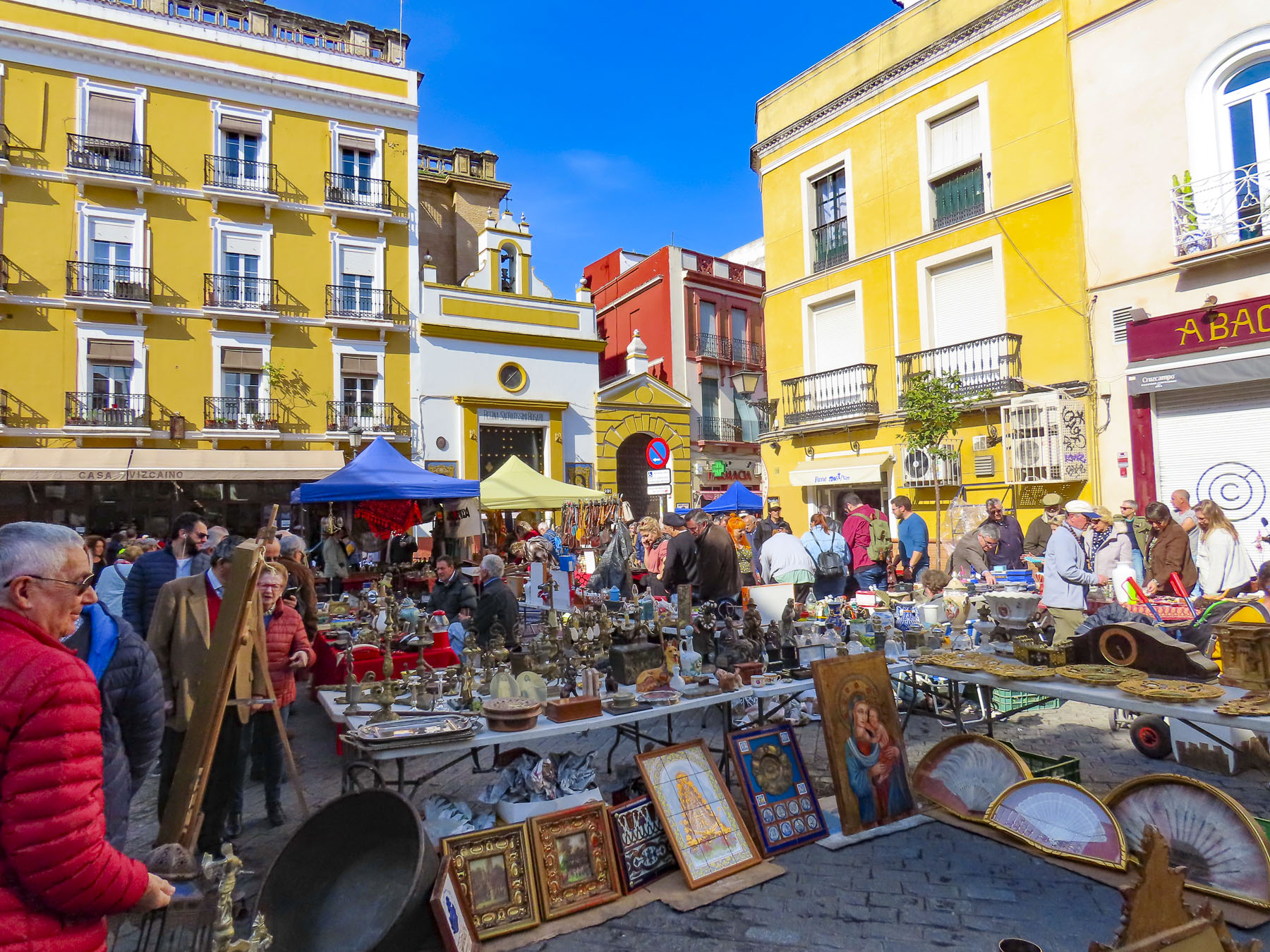
Back at the crossroads: Thursdays are, as the name Mercadillo Histórico del Jueves suggests, the best day for this final leg of the walk. Legend says that this street market has been a feature of the city since the Moors ruled Seville.  Every Thursday several blocks of Calle Feria are closed to traffic, and it becomes a pedestrian mall lined with vendors now selling antiques and flea-market type items.  The market is a popular destination, and occasionally we felt like we were in a conga-line weaving through a sardine can.  We did find a small, folkloric style painting of Seville’s La Feria de Abril that just fit into our suitcase.

It was quite a walk from our apartment on Plaza de Doña Elvira, but our favorite local food market in Seville was the Mercado de la Feria, several blocks past the mercadillo histórico.  The market had a very authentic feel to it, being in a neighborhood that is far away from the tourist center of the city. It had a wonderful fish monger, cheese shop and fresh pasta maker. Accustomed to their neighborhood clientele, the vendors seemed surprised with our purchases which indicated that we actually cook for ourselves.  This is also a great destination for lunch as there are a number of small restaurants that ring the market.

Next to the market – It’s not always open, but if the door under the 13th century pointed Gothic arch of the Real Parroquia de Omnium Sanctorum is ajar, it’s worth stopping to investigate – is one of the oldest churches in Seville. It has gone through many incarnations over the centuries, most notably after a 1355 earthquake, and arson attack in 1936 during the Spanish Civil War.

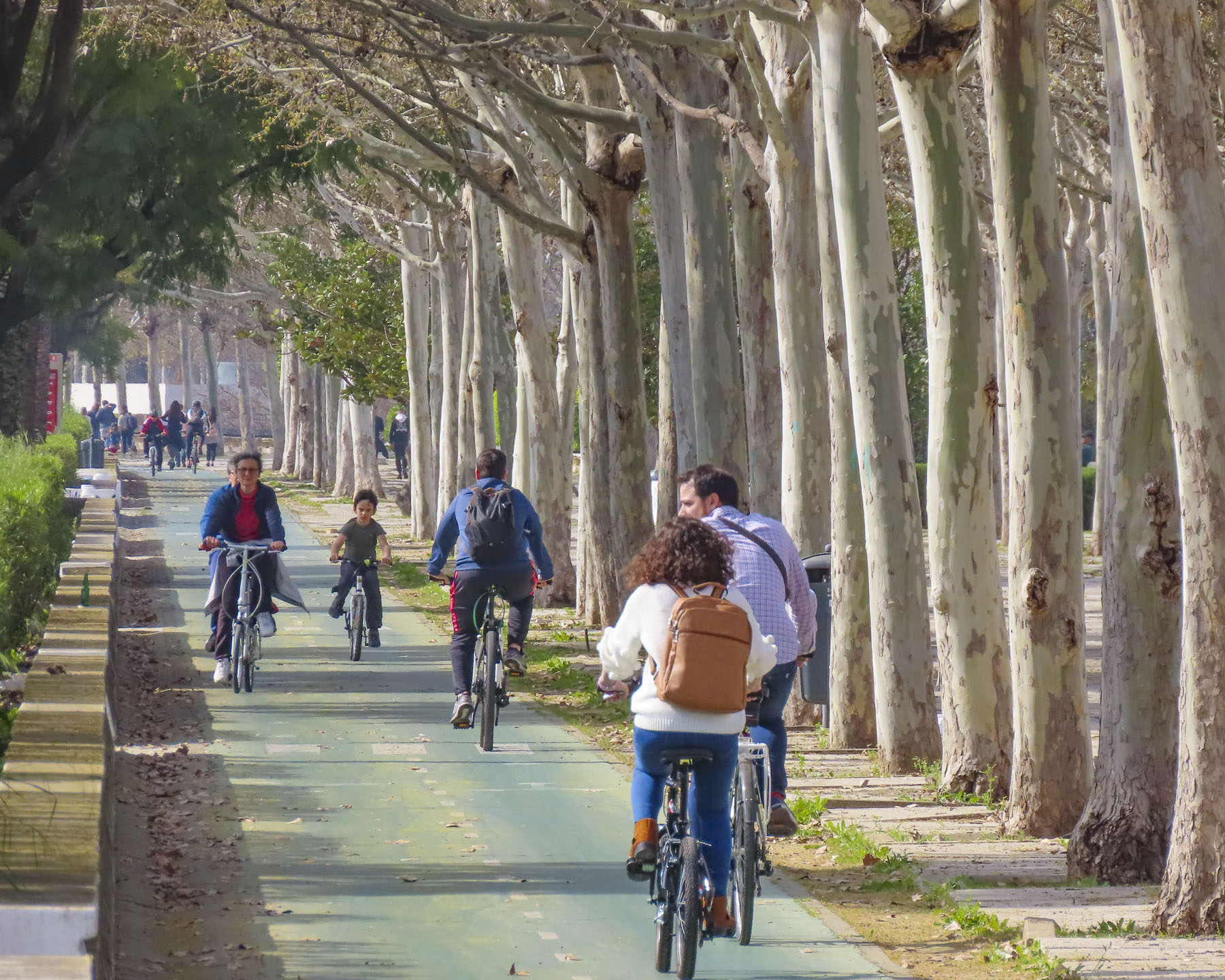
At this point in the walk, you can choose to head back towards the Alameda de Hércules or continue on towards the towers of the Puente del Alamillo bridge, which you’ve probably already spotted, that spans the northern part of the Guadalquivir River. Head to the river. There is a wonderful pedestrian foot/bike path that follows the course of the river. This stretch of the river is also popular with anglers using traditional long poles and line gear to catch fish from its bank.

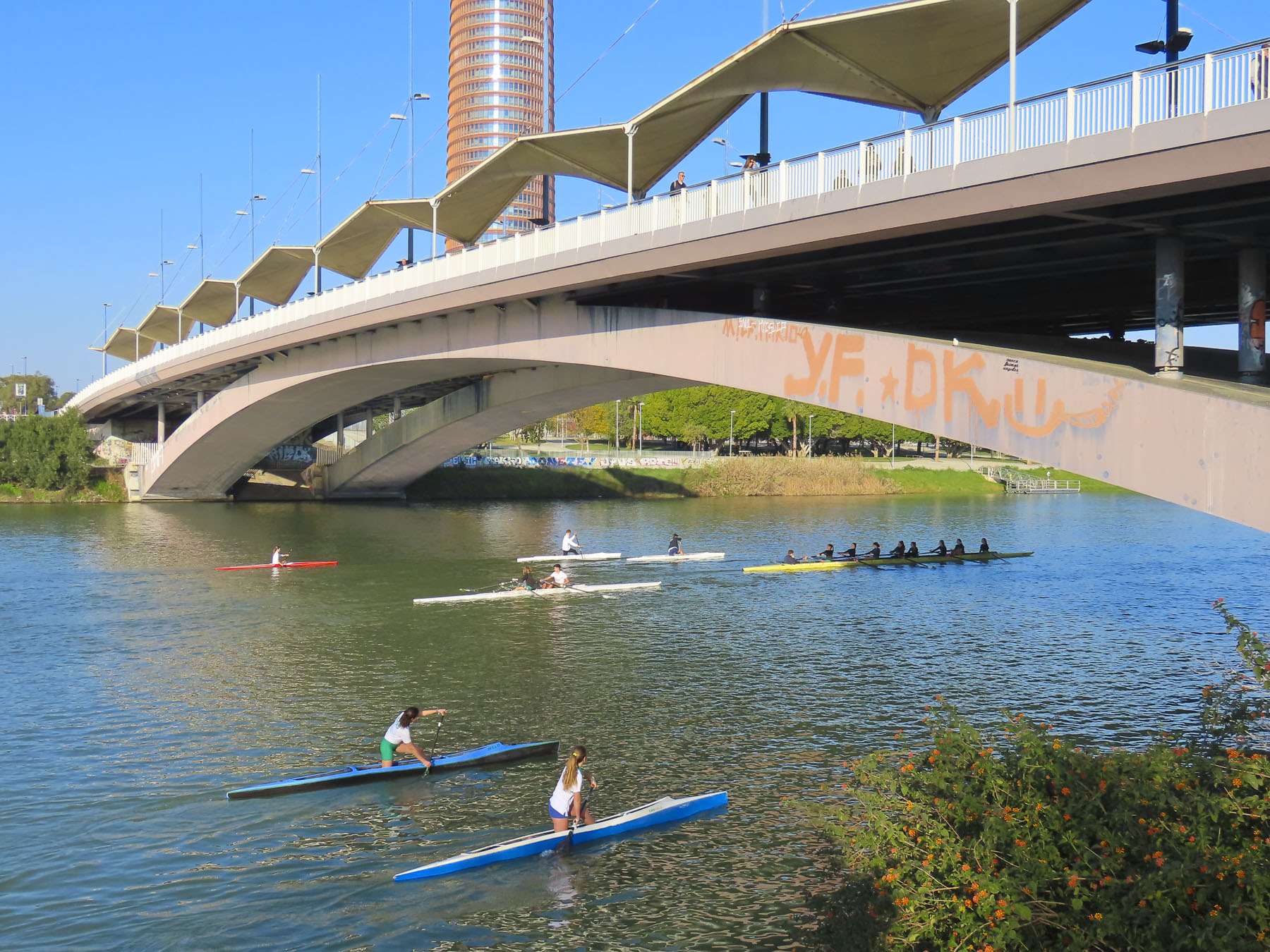
It is a long but pleasant walk south along the river back towards the bustle of Seville.  Mid span on the Puente del Cachorro is a great vantage point for photos of the historic Triana waterfront with kayakers and scullers enjoying the river.

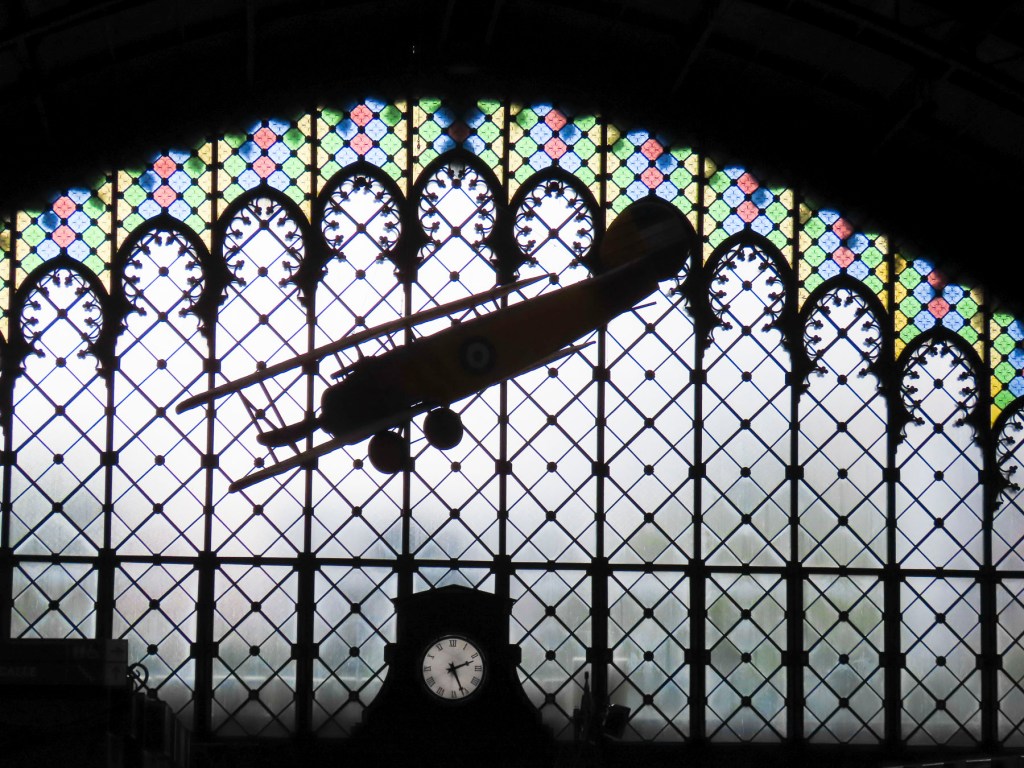
If its late in the day and you want to catch a movie, the Centro Comercial Plaza de Armas is only two blocks inland from here, in the restored 19th century Old Cordoba Train Station.

Till next time, Craig & Donna

Seville Part 2 – Walking Through History Under the Orange Trees

One of the tenets of slow travel is the ability to revisit a place many times to savor the changes in its ambience. The Plaza de España in Parque de María Luisa was one such lively spot that we enjoyed and returned to several times. 

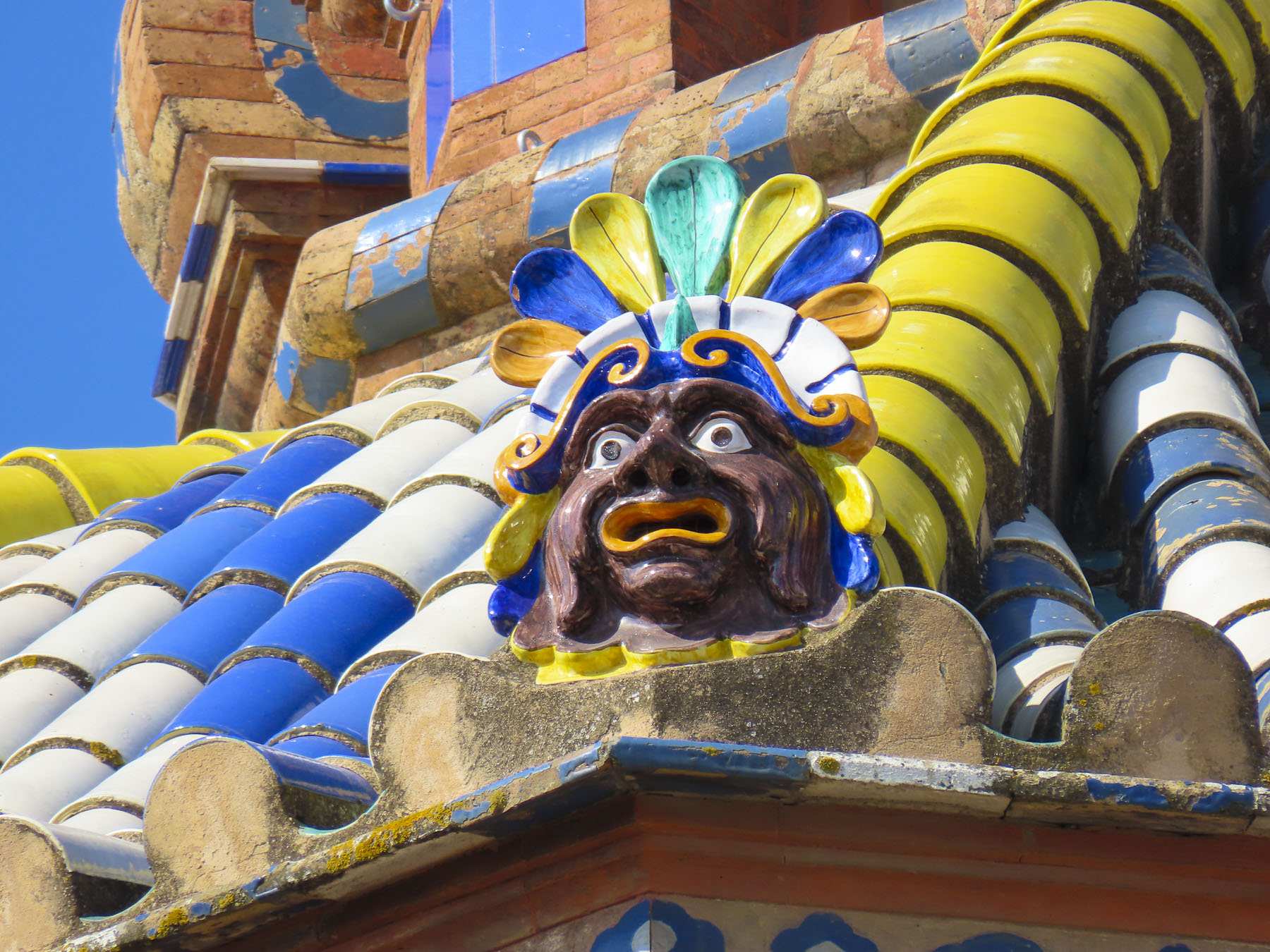
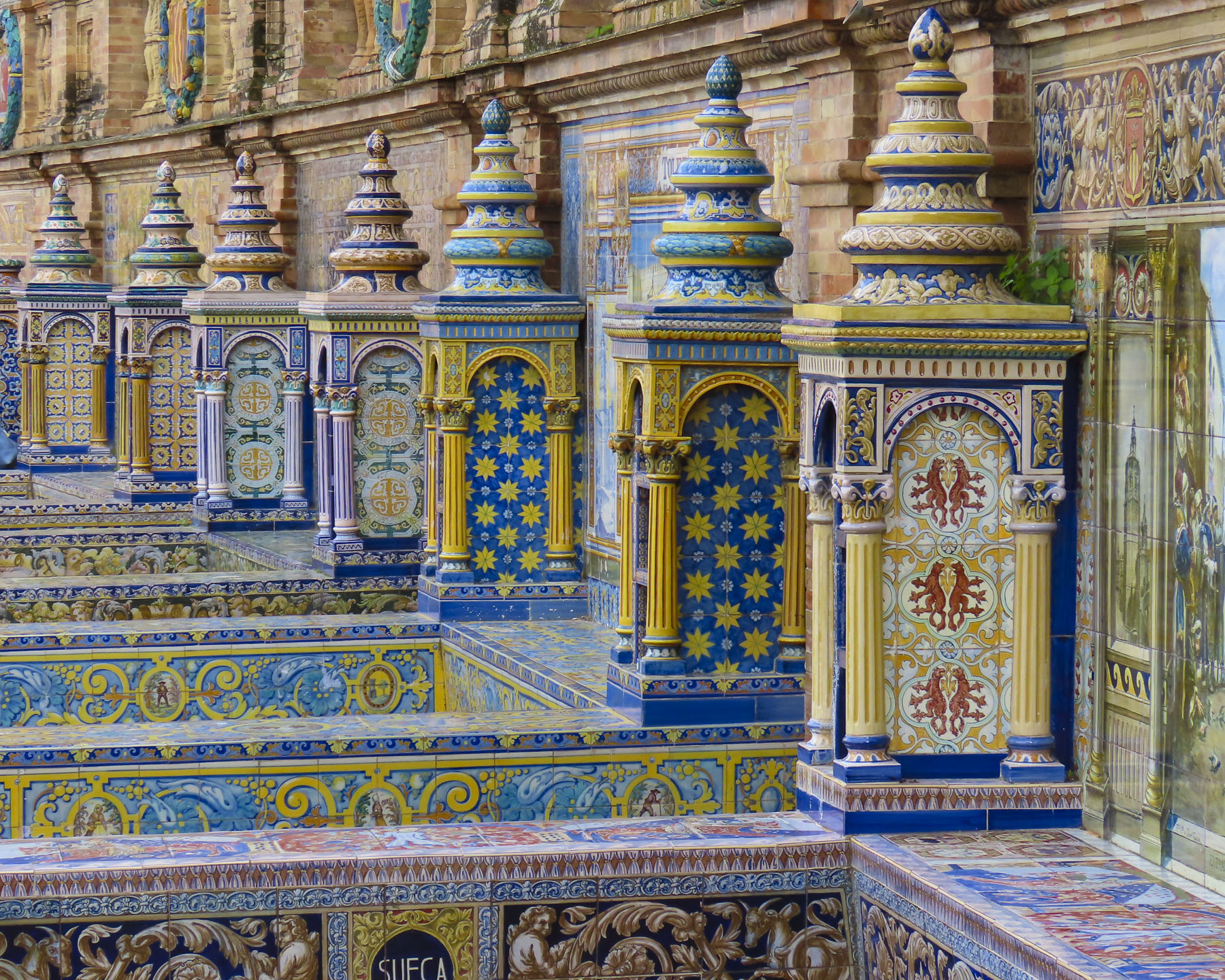
It is an iconic landmark for Seville with its eclectic mix of Baroque, Renaissance and Moorish architectural styles embellished with hand painted Mudéjar tiles created across the Guadalquivir River, in the Triana barrio.

Along with an expansive plaza, signature horseshoe colonnade, and boating moat, it has been a popular destination since it was constructed for the Ibero-American Exposition of 1929.  It, along with the Museum of Popular Arts and Traditions, and the Archeological Museum of Seville in Parque de María Luisa, are hubs of activity on the weekends when they fill with friends and families looking for more elbow room.

Several other architecturally interesting buildings were constructed in the park and along Paseo de la Delicias at this time to host exhibitions from countries that were formerly part of the Spanish Empire and which would later be used as consulate building. 

On the way to the park one morning, we stopped for café along the edge of Jardines de Murillo and unsuccessfully tried to order cappuccinos from a brusque waiter who replied, “No,” just no and without any further explanation turned and walked away. Confounded, we left.  This happened again several days later when we were early for a dermatologist appointment, for an overdue skin cancer screening at Hospital Fátima, a private hospital in Seville that facilitates multi-lingual medical tourism services for travelers. We used TripMedic to arrange our appointments.

We found the small café, Bar Puerto Chico, on the block behind the hospital. It was full of folks on the way to work, having the traditional Andalusian breakfast that consists of tostada, soft Mollette bread, perfectly toasted to a golden brown and drizzled with olive oil, a smear of crushed tomatoes and maybe a slice of jamon, along with coffee and zumo natural, fresh squeezed Spanish oranges.  “Dos capuchinos por favor.” The barman smiled this time when he responded with a “No,” but seemed to be delighted that two foreigners had found his establishment, when he explained that they only serve espresso or café con leche. In some local bars cappuccinos just aren’t done. Mystery solved.

Heading back into the city center, the sidewalk along Paseo de la Delicias eventually dips down, near the Escuela de Mareantes (School of Navigation) and widens to a scenic esplanade for bicyclists and walkers, that parallels the Guadalquivir River through Seville for several miles.

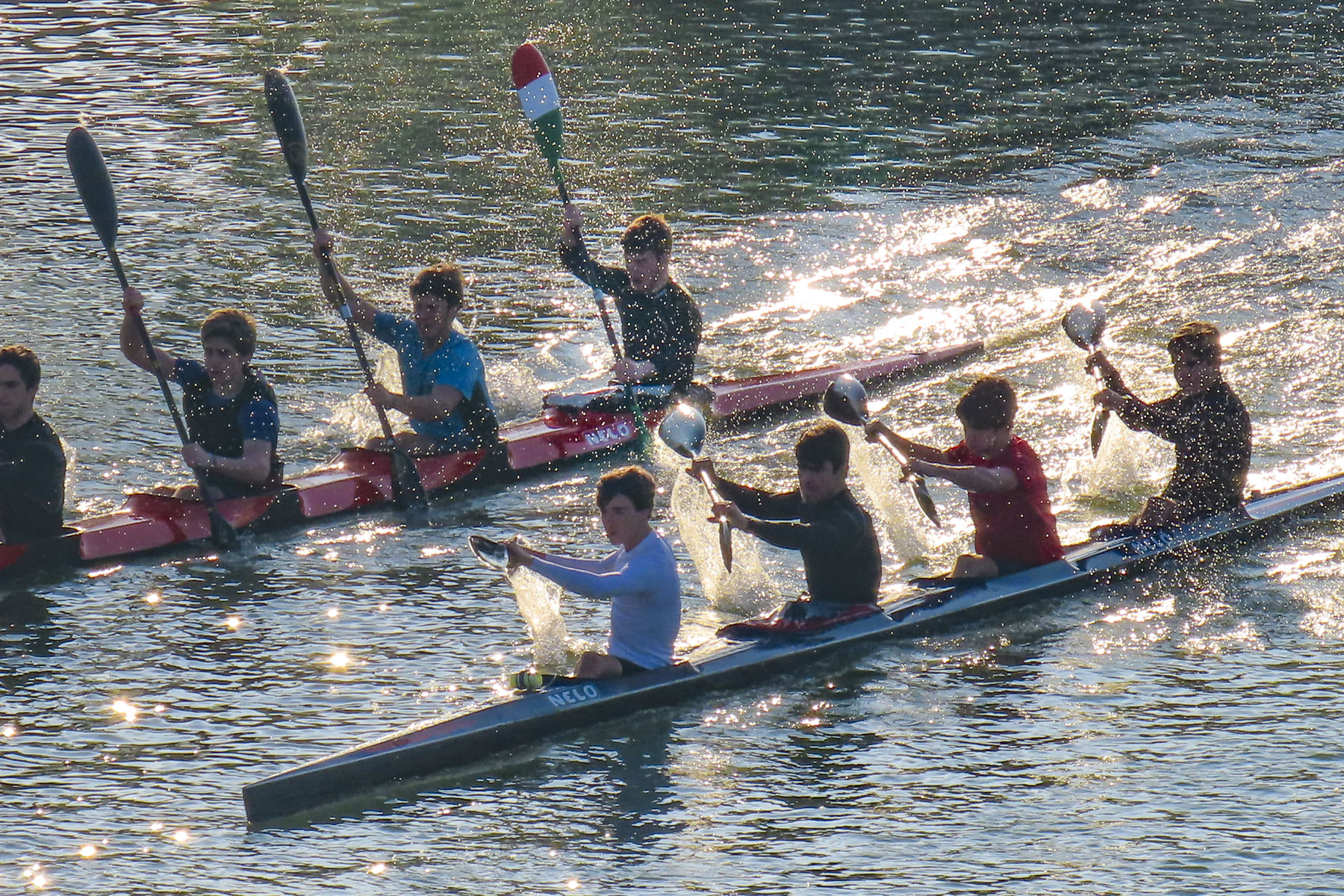
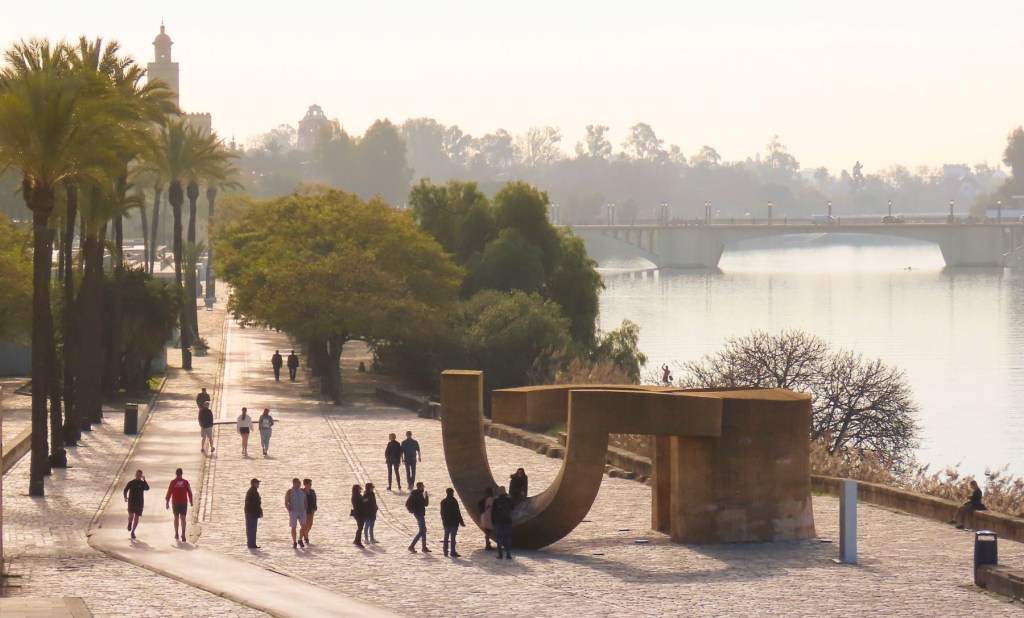
Speckled with buskers, sculptures, and benches, there are plenty of excuses to saunter slowly and savour the view. The river is popular with numerous kayaking and sculling clubs that launch miles upstream and then race down the river. 

The waterway on the weekends was always bustling, but even during the week there were a good number of paddlers and rowers on the water, from sunrise to sunset.

It’s also an historic stretch of river that was the Port of Seville, where galleons returning from the Spanish colonies in the Americas during the 16th and 17th centuries unloaded cargo and registered their treasure of gold and silver bullion at the Torre del Oro, tower of gold bullion.  The 118 ft tall tower dates from the 1100s and was part of the Moorish defensive wall that once encircled the entirety of ancient Seville and was the anchor point for a heavy chain that was stretched across to the Triana side of the river to control shipping.

Ferdinand Magellan launched the first circumnavigation of the world from this quay in 1519. For the 500th anniversary of this tremendous feat the city commissioned a full-size replica of his ship, the Nao Victoria, to be moored on the river.  A small vessel by today’s standards, it made us wonder how they ever succeeded in sailing around the world. 

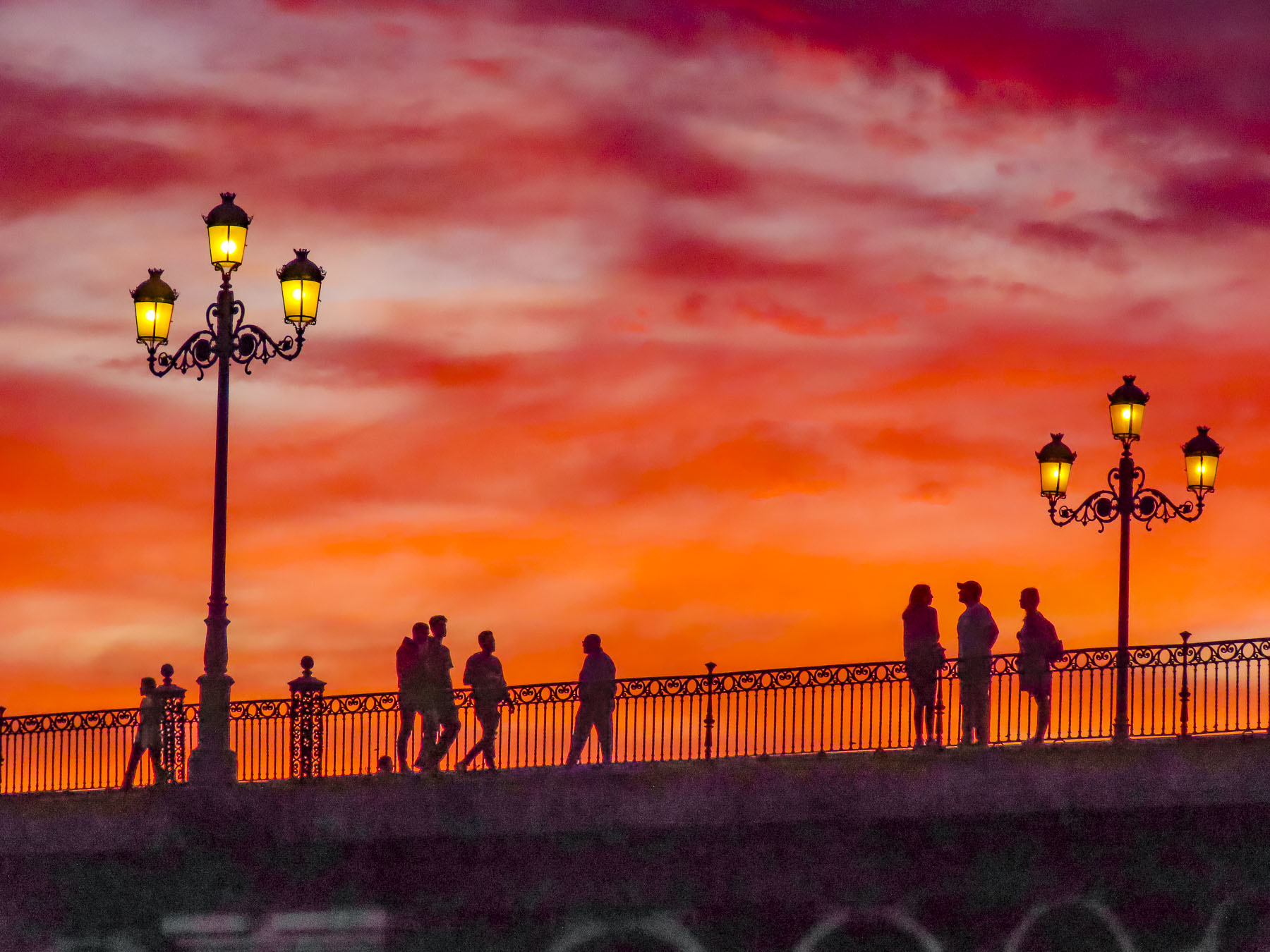
Nearing sundown, the quay along the river fills with folks waiting to watch the sky erupt with color as the sun sets behind the bridge and Triana.

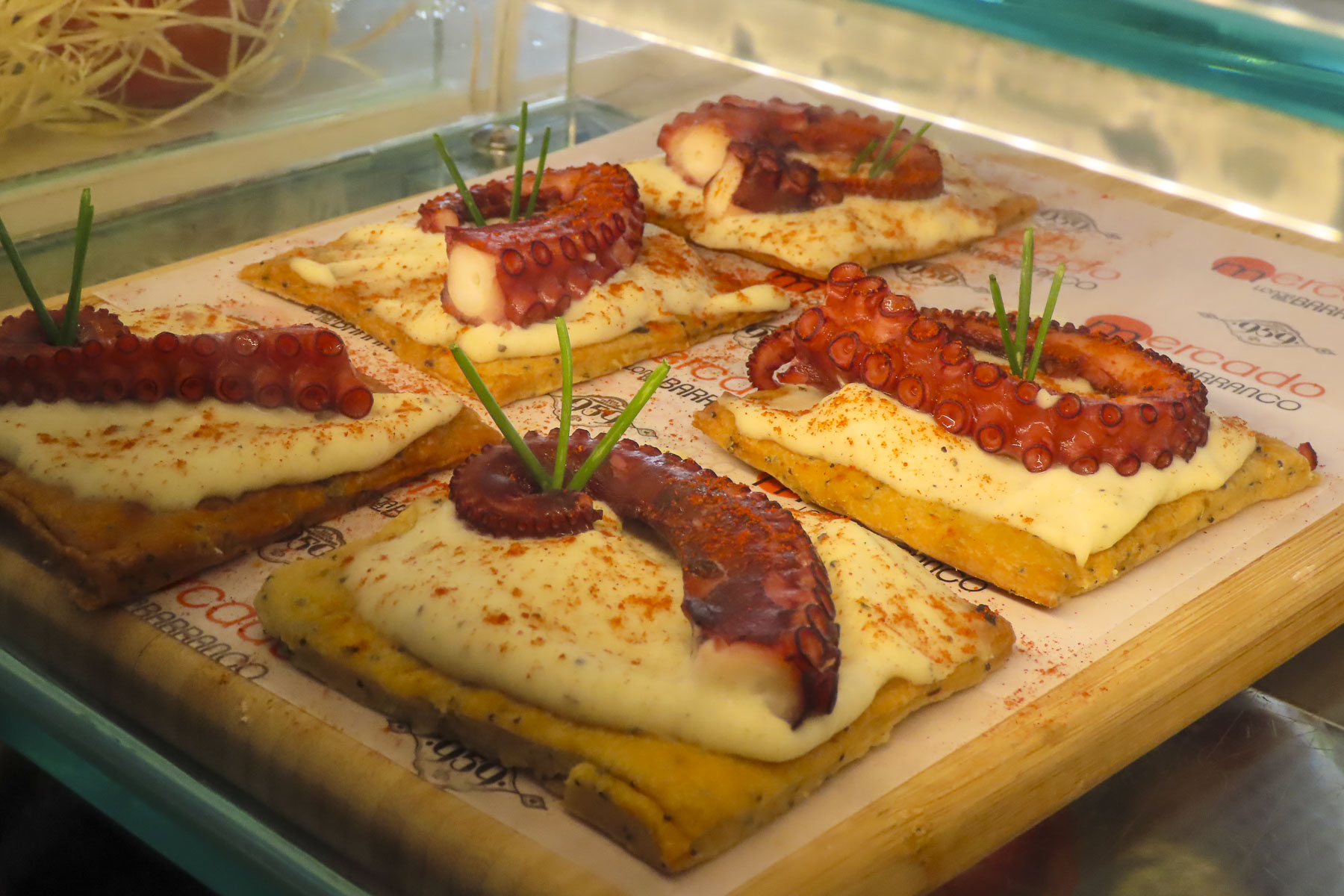
At the base of the bridge stands the lofty, wrought-iron and glass Mercado Lonja del Barranco, designed by Gustave Eiffel in 1883. It functioned as the city’s fish market for several decades before it was re-envisioned in 2014 as an upscale food hall with a contemporary, architecturally beautiful interior.  It’s definitely a fun foodie destination; it is a savory gauntlet of display cases offering the full spectrum of Spanish cuisine prepared by twenty different restautrants.  There is something delicous for everyone available here.

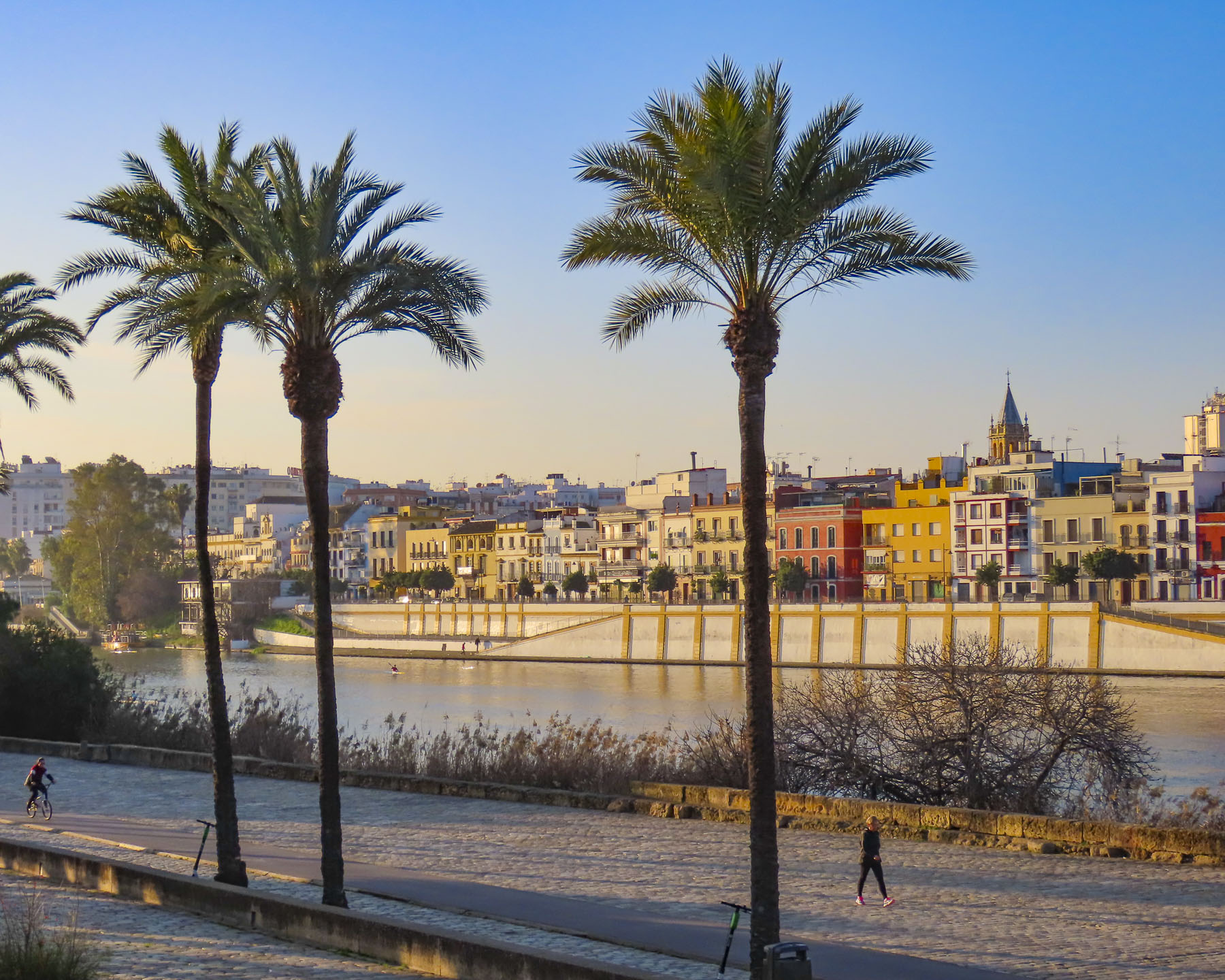
Aside from the completion of the Puente de Triana bridge in 1852, which replaced a well maintained 700 hundred year old Arab-designed pontoon bridge, it’s alleged that the Triana riverfront looks unchanged since Columbus recruited his sailors from the barrio.

While it still retains its authentic character, some wonderful alterations have been implemented, starting with the pedestrian only Calle San Jacinto that starts at the foot of the bridge on the Triana side. It is a lively stretch of outdoor cafes that offer an array of different cuisines.

The ruined dungeons of Castillo de San Jorge castle, located under the Mercado de Triana, are now a museum and Interpretation Center for the 300 year terror known as the Spanish Inquisition.  Nearby a short alley leading up from the river, the “Paseo de la Inquisición,” was the last walk of freedom for many before the prison door slammed behind them.

The mercado is a thriving, lively spot that draws locals for the seafood, meat, cheese and vegetable vendors, along with a slew of always busy restaurants.  We caught a lesson in buying fresh fish while waiting in line at a fish monger’s stand. “Always look at the inside color of the gills, they should be very bright,” is what we gathered as he showed several large whole fish to the customer in front of us as we waited to purchase a filet of tuna to cook back at our apartment.

One stall, which we dubbed the olive porn store, only sold decadent large olives garnished with all sorts of delicious extras.  Another booth offered artfully decorated puff pastries, which were as tasty as they were visually stunning. The mercado was a long walk from our apartment, but one of our favorite traditional markets to shop at, which we returned to several times during our six-week immersion in Seville.

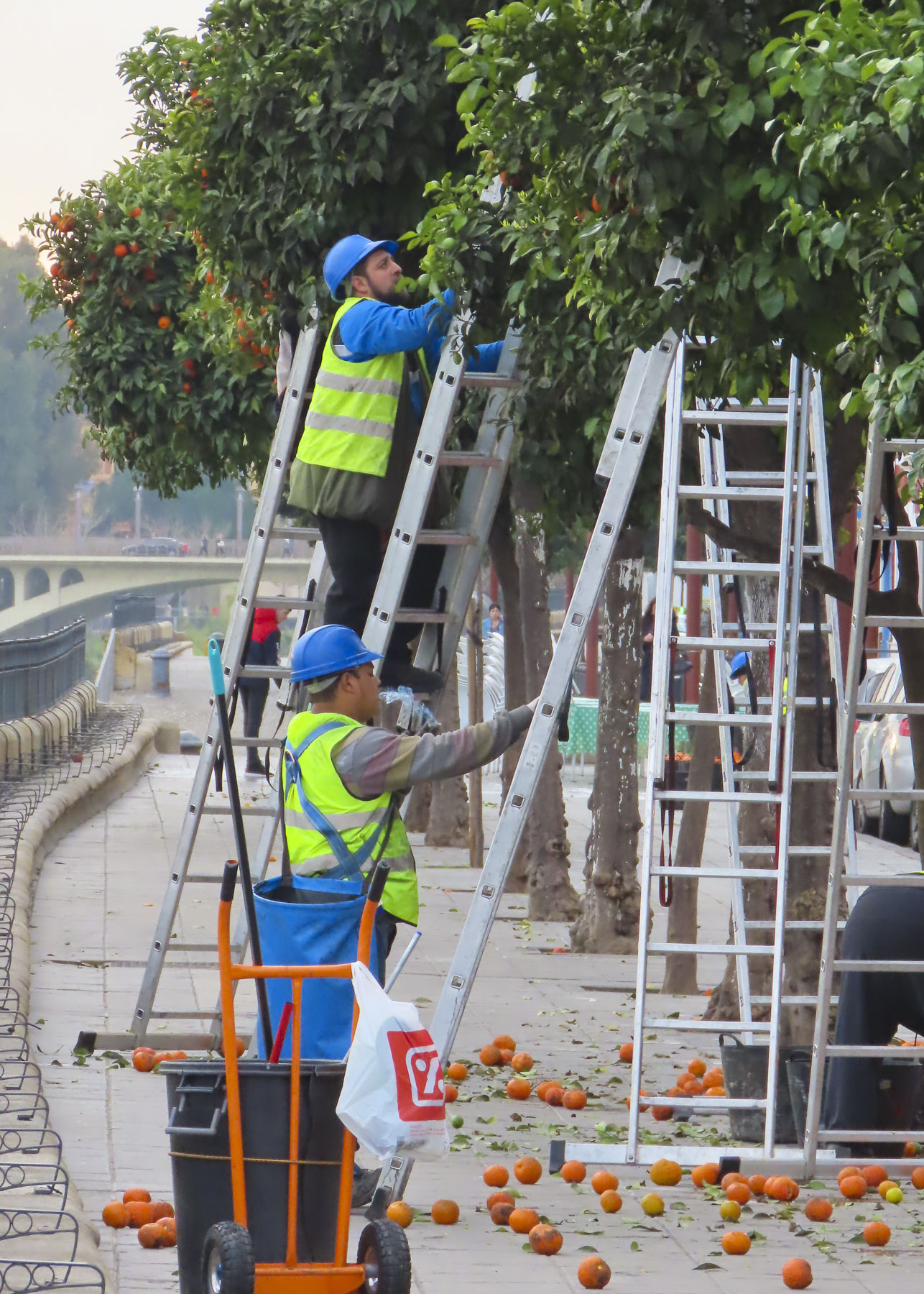
We were on the Triana side of the river one late February morning and came across a crew of city workers with ladders and buckets harvesting all the softball size Seville oranges from the trees that were lining the street. The fruit was brought to the city by the Arabs in the 9th century and Seville now, unbelievably, has 46,000 bitter orange trees that produce close to six million tons of fruit annually. Most of it is sold to be used to make marmalade, but it is also an ingredient in Cointreau, Curacao, Grand Marnier and Triple Sec liquors. Oil from the bitter orange skin is used for cosmetics, pharmaceuticals, and soaps. Recently the city started using the unsold oranges in an innovative Biogas program, where the methane gas created by the decomposing oranges is used to make “clean electricity” to run a water purification plant.

Before continuing our day, we stopped for coffee at one of the cafes that line the riverfront on Calle Betis. From our previous experiences we believed it was impossible to get a bad cup of coffee in Europe. All of it is usually made to order on one of those fancy deluxe espresso machines that you see behind the bars. My wife is more the coffee connoisseur than me as I’ve been known to make a mug of coffee last all day. But that day we both had the worst cup of coffee ever and couldn’t drink it beyond our first sips. It must have been the last pot of drip coffee from the day before that was left on the burner overnight. It’s amazing how waiters can vanish; perhaps ours did from embarrassment, but this could explain the beginning of the inquisition. Bad coffee leading to misplaced aggression, we all know what happens without that caffeine.  Sympathetically the second waiter understood when we explained the situation and he didn’t request payment.

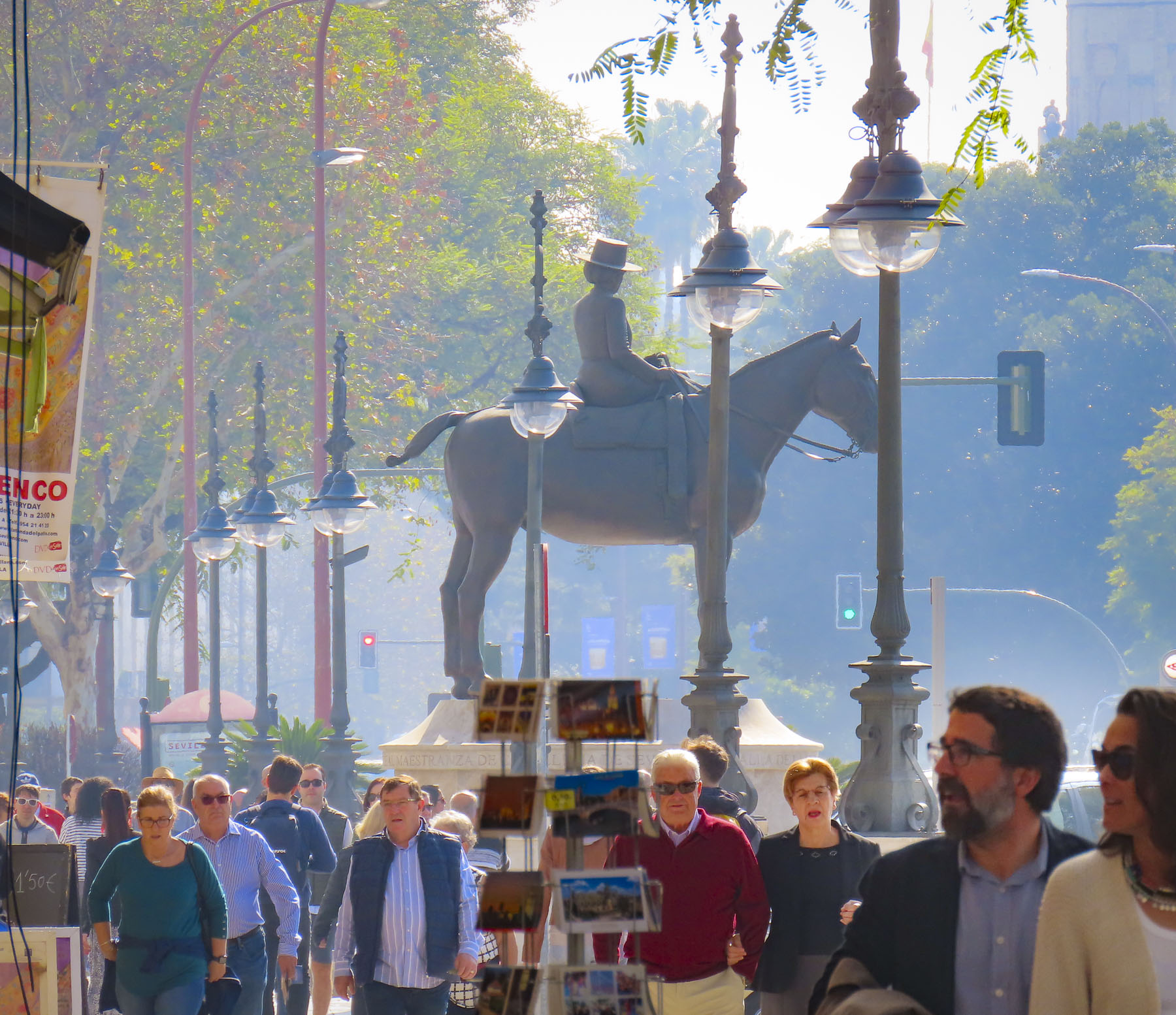
Triana was also famous for the ceramic workshops that painted and then fired in massive kilns the Azulejo and colorful Mudéjar style tiles that adorn many of the historic buildings in Seville.  Along with sailors, Triana has cultivated many famous flamenco dancers, guitarists and bullfighters. The most admired matador was Juan Belmonte who stood famously close to the bulls and was gored several times over a career that spanned 109 bullfights. His statue stands in the plaza across from the Triana Mercado and if you follow his gaze you’ll see Seville’s beloved bullring, Plaza de toros de la Real Maestranza de Caballería de Sevilla, often simply called the Maestranza, across the river. It has been holding corridas in the same ring since 1761. 

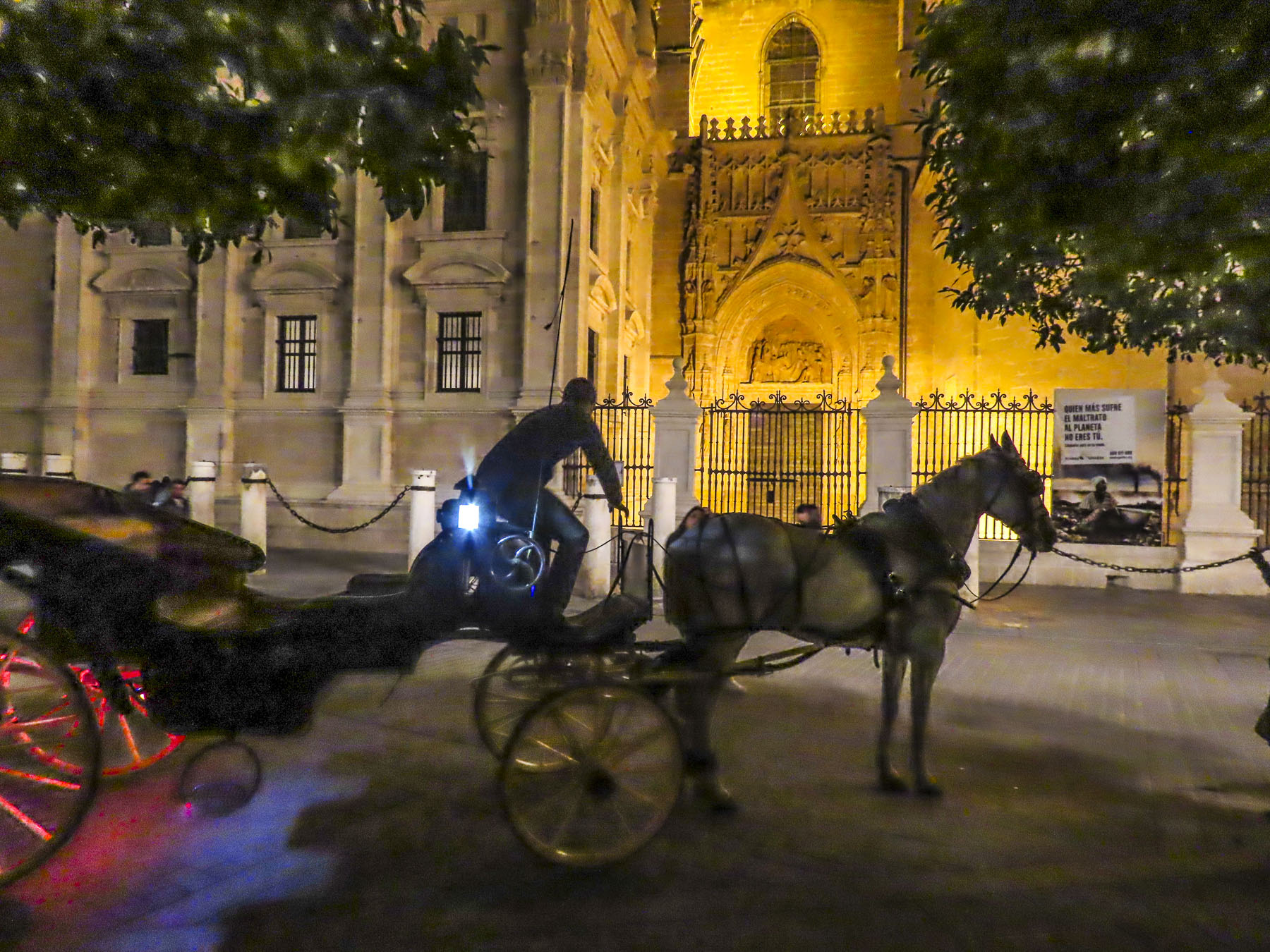
Many of the taverns surrounding the bullring are full of corrida memorabilia. Our favorite was Bar Baratillo on Calle Adriano which is also full of shops catering to the Andalusian equestrian tradition.  La Feria de Abril is a colorful weeklong festival that celebrates this Andalusian equestrian tradition with the women wearing traditional traje de gitana or faralaes (flamenco style dress), while the men wear a cordobes hat along with a fitted short jacket, riding trousers and riding boots, refered to as traje corto. Every midday during the festival a parade of carriages and riders, called the paseo de caballos, heads to the bullring to watch the best matadores on Seville’s bullfighting calendar perform. Bullfighting season in Seville starts at the end of Semana Santa, Holy Week, on Easter Day.

Farther behind the bullring the Hospital de la Caridad, founded by the Holy Charity brotherhood in the 1600s, still follows its mission to help the poor and infirm. Its beautiful baroque chapel is now a museum filled with art.

Also, in this neighborhood in Casa Morales, we found one of Seville’s oldest abacerías, a small grocery store with a small tavern in the back, on the corner of Garcia de Vinuesa and Castillejo that is still run by the same family since its opening in 1850. The bodeguita retains its original atmosphere with antique cabinetry in the store and tall, large earthen wine vats lining tavern’s walls. It’s definitely worth a stop here to try their traditional tapas or montaditos, small sandwiches.

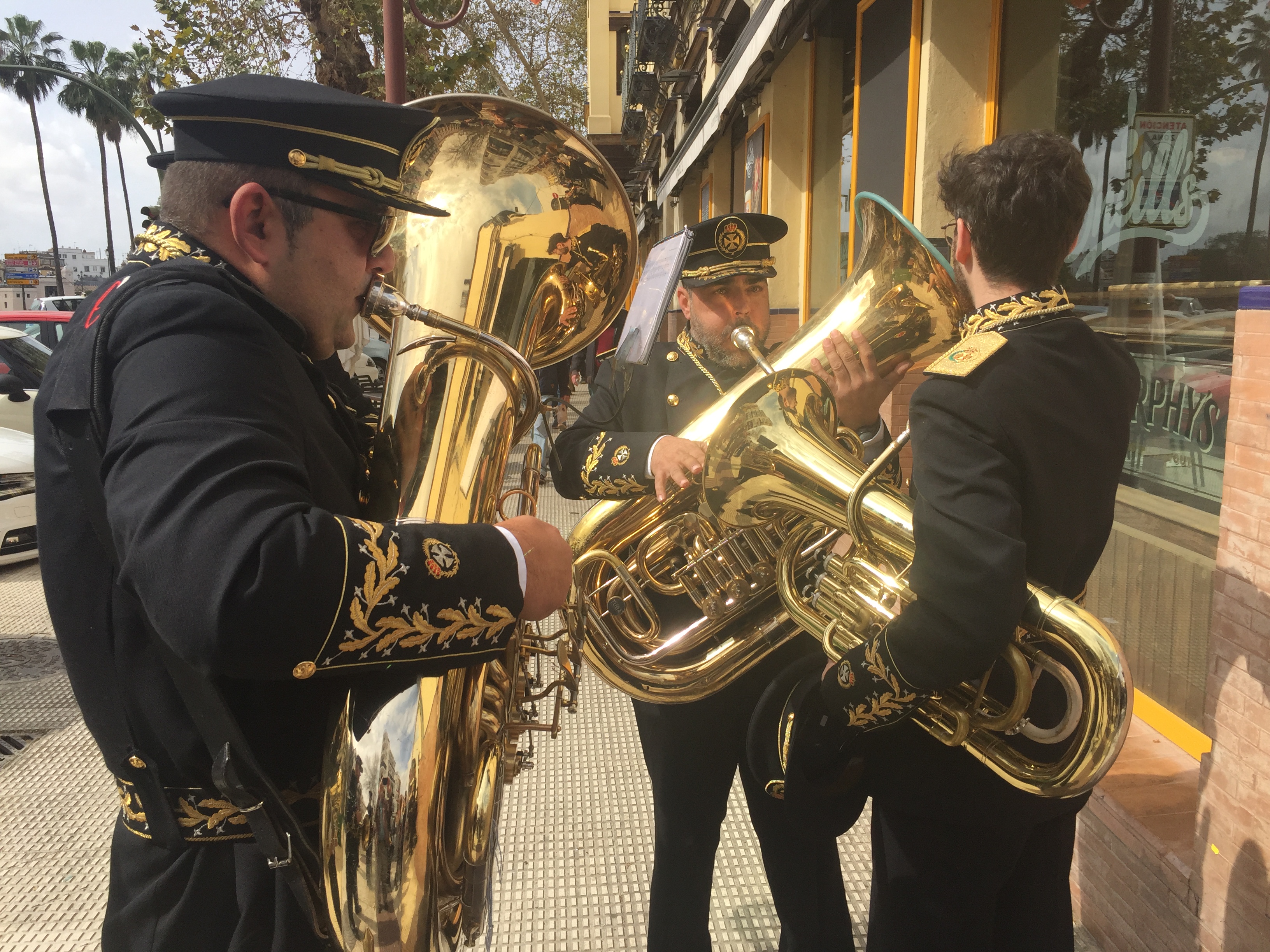
Just off Calle Adriano one Saturday in the weeks prior to Semana Santa we came upon a Christian brotherhood training to carry their float for the holy week processional. With military marching precision, the muscular team turned the weighted float around a tight corner and continued down the block in synchronized step. 

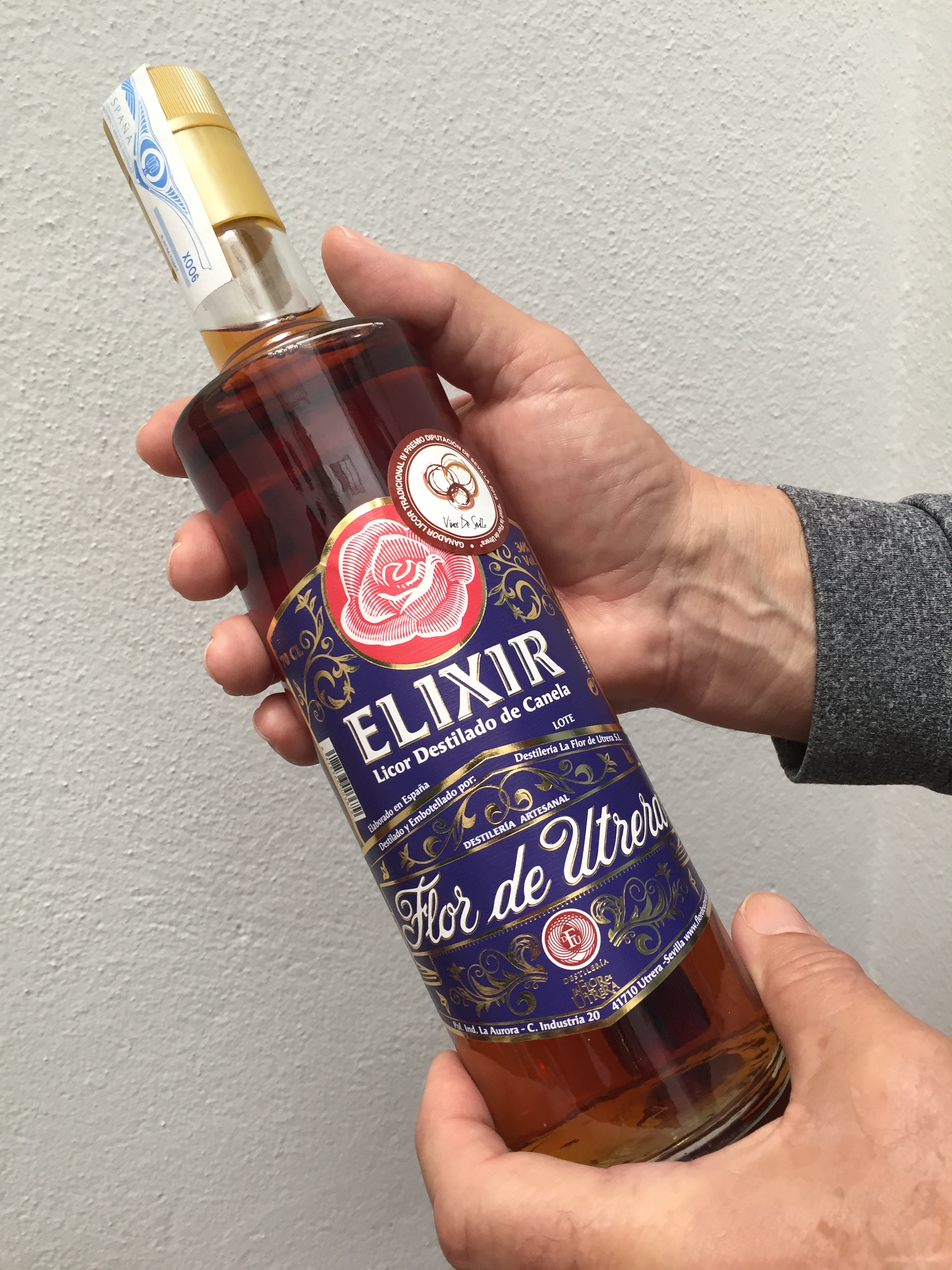
We followed the marching band that accompanied them to a fundraiser for the brotherhood.  Very much like a church bake sale, the only difference was they surprisingly sold bottles of various liquors.

We smiled, bought one and saluted Seville’s spirit later that evening.

Salud! – Till next, Craig & Donna 

Christmas in Milan – A Monumental Cathedral, Cemetery and Horse

Snow started falling as we brewed the morning’s first cups of coffee on the stove using a traditional Italian Moka coffee pot.  Invented by Alfonso Bialetti in 1933, Italians readily accepted it as an easy way to make espresso at home, and it quickly became symbolic of “la dolce vita,” the sweet life and for us a pleasant morning ritual. The day before had been warmer, and bundled up we were able to take our coffee outside on the balcony of our fourth-floor Airbnb rental and enjoy a great sunset view.  This morning though, the tracks of the tram line melted through the thin blanket of freshly fallen snow and left two parallel lines, as if someone had drawn them on this new white canvas with a pencil.

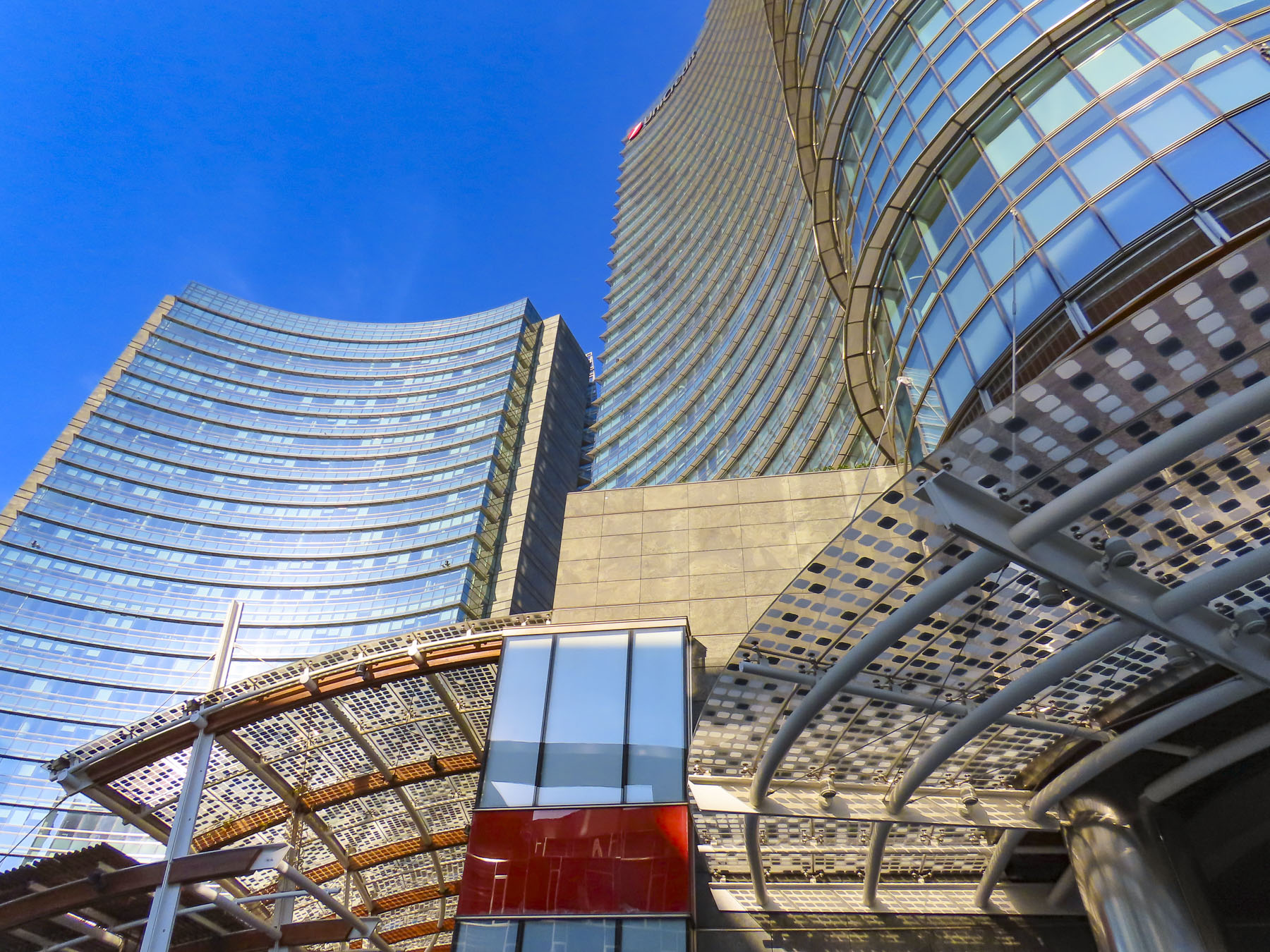
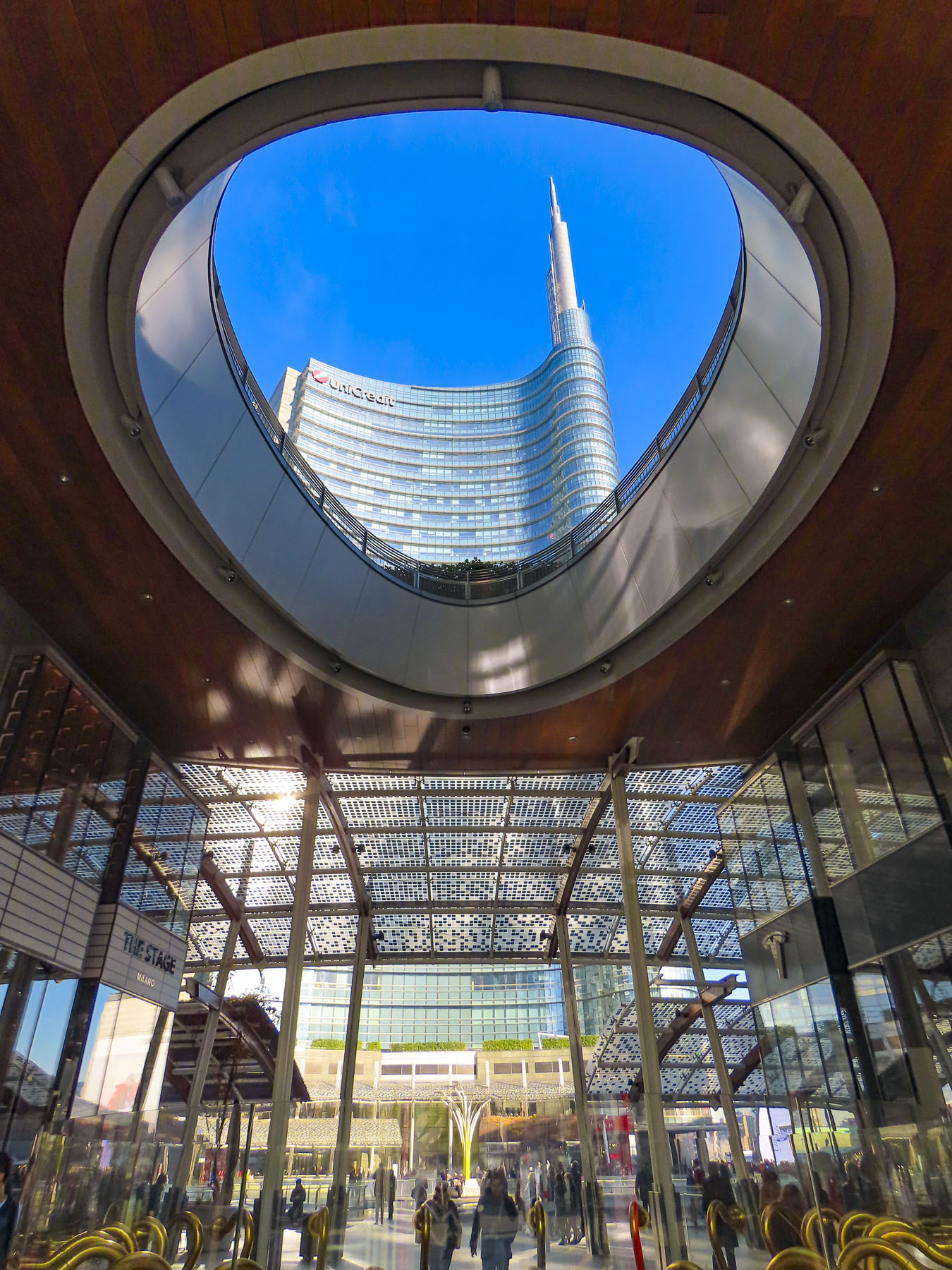
Continuing with our philosophy of slow, immersive travel, we had opted for an apartment in the Isola neighborhood.  Though far away from Milan’s city center, it was situated near the Porta Garibaldi train station and the recently built modern skyscraper complex that surrounds Piazza Gae Aulenti. The illy Caffè here was a frequent stop for comsmopolitan people-watching and excellent coffee.

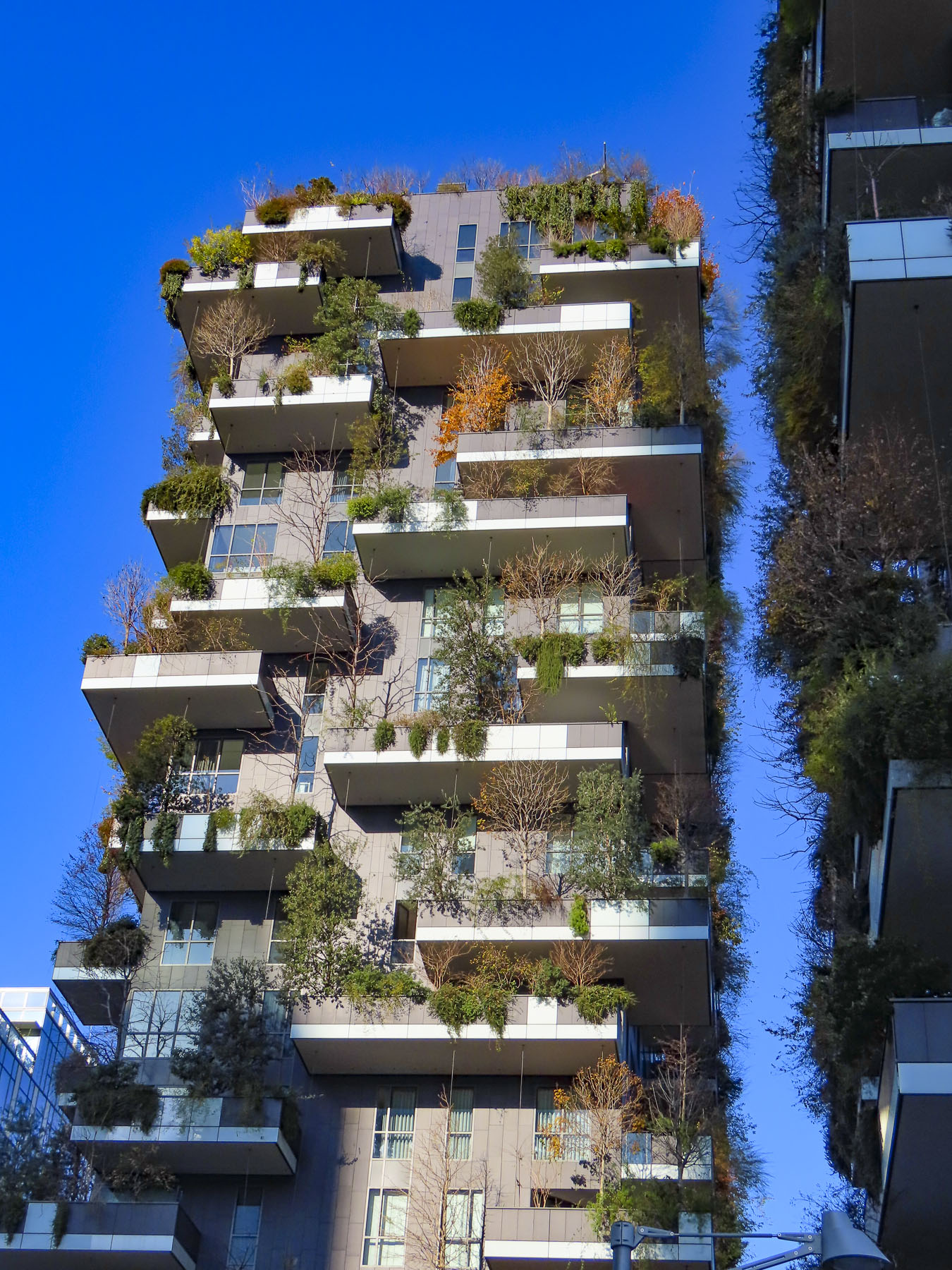
Nearby were the twin apartment towers of Boeri’s Bosco Verticale, Vertical Forest, famous for their lush foliage-covered balconies, and the Isola and Zara subway stations. The latter was only seven quick stops from the Milan Duomo.

The neighborhood also had numerous tram lines traversing it, but it was impossible to find a hardcopy map of this very extensive system while we were in Milan, though we were able to find this online map of the Milan Tram System while writing this. Ultimately, we relied on our phone’s mapping App to view our tram trips in real time and determine where to change lines to continue our journeys across the city.

Two blocks away, the bi-weekly outdoor food market closed the streets around Piazza Tito Minniti for the bulk of the day while families shopped the stalls for fresh vegetables, cheese, meat and seafood along with socks, pants, dresses and blouses. We enjoyed this aspect of Italian life after learning its subtle nuances – for example, only the vendor touches the fruits and vegetables. There is also a protocol of queueing. Sometimes though our schedule required us to shop around the corner at La Pastaia for fresh pasta or the Penny Market grocery store, where we signed up again for another shopper club card.  We’ve done this in every city where we have stayed long term – Cuenca, Antigua, Lisbon, Cape Town and Kotor. It seems silly, but those small savings do add up and jokingly it helps us feel more like a local.

Emerging from the darkness of the subway station onto the Piazza del Duomo, we were momentarily blinded by the bright sun reflecting off the monumental cathedral that towered before us. Breathtaking in its size and capable of holding 40,000 worshippers, the cathedral is the second largest in Europe, following Saint Peter’s Basilica in Vatican City, and the third largest in the world.  Designed in 1386, the ornate and dramatic Gothic façade of the cathedral is covered with 3,400 statues and spires, which required the recruitment of hundreds of stone masons and artisans from across Europe. 

The opulent exterior belies the cathedral’s spartan interior.  While massive in scale, the interior’s gray stone walls and towering columns are cold and austere even with the soft, filtered light of beautiful stained-glass windows illuminating the space. Most moving was a ghastly sculpture by 16th century Italian sculptor Marco d’Agrate of Saint Bartholomew holding his flayed skin, depicting how he was punished for converting an Armenian King to Christianity in the first century AD.

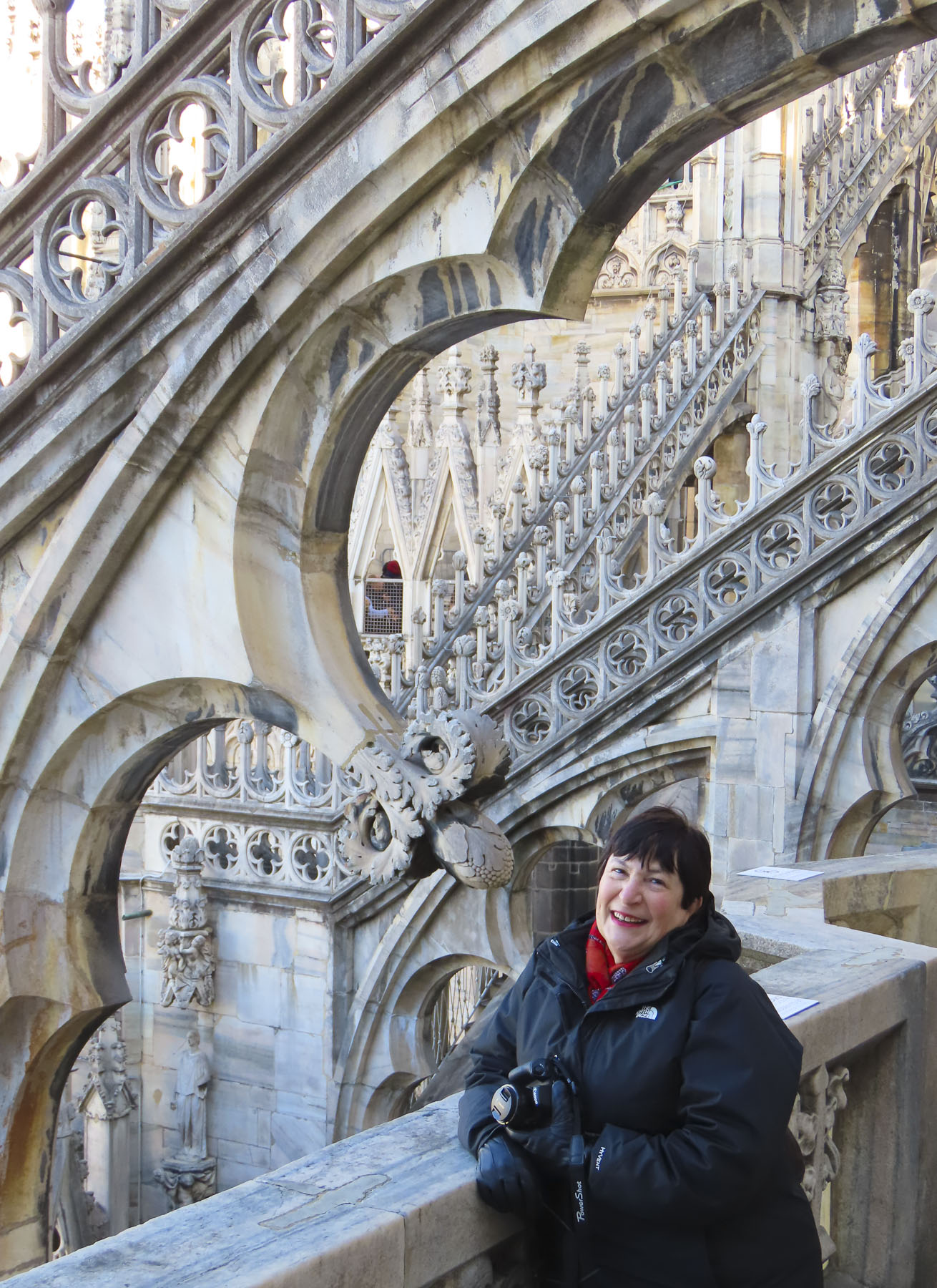
Wandering around the flying buttresses and sculpted spires on the roof of the church was the highlight of our visit to the Duomo. The day was crystal clear, and the panoramic view stretched from the Milanese skyline to the snowcapped Italian Alps. It was spectactular.

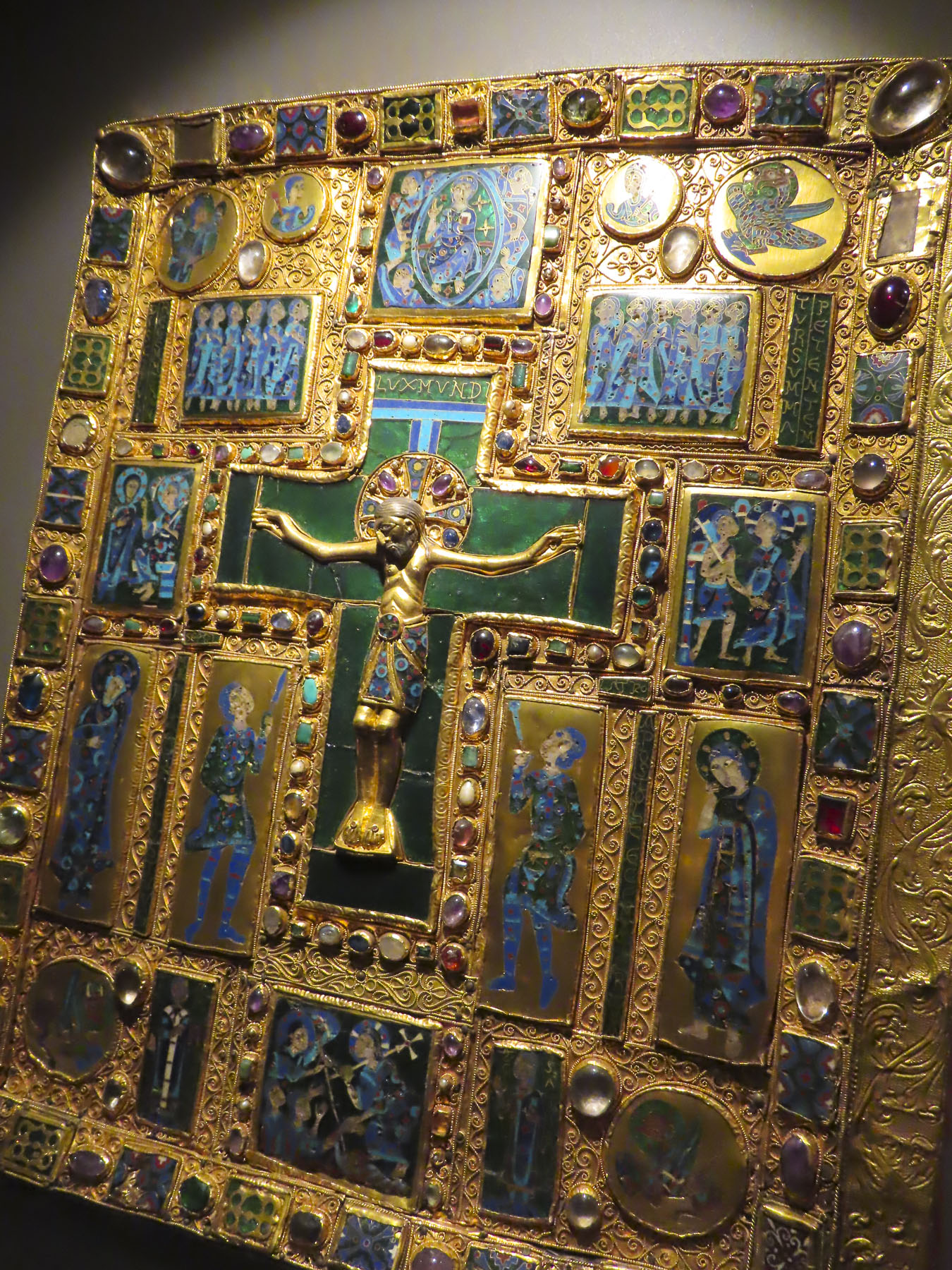
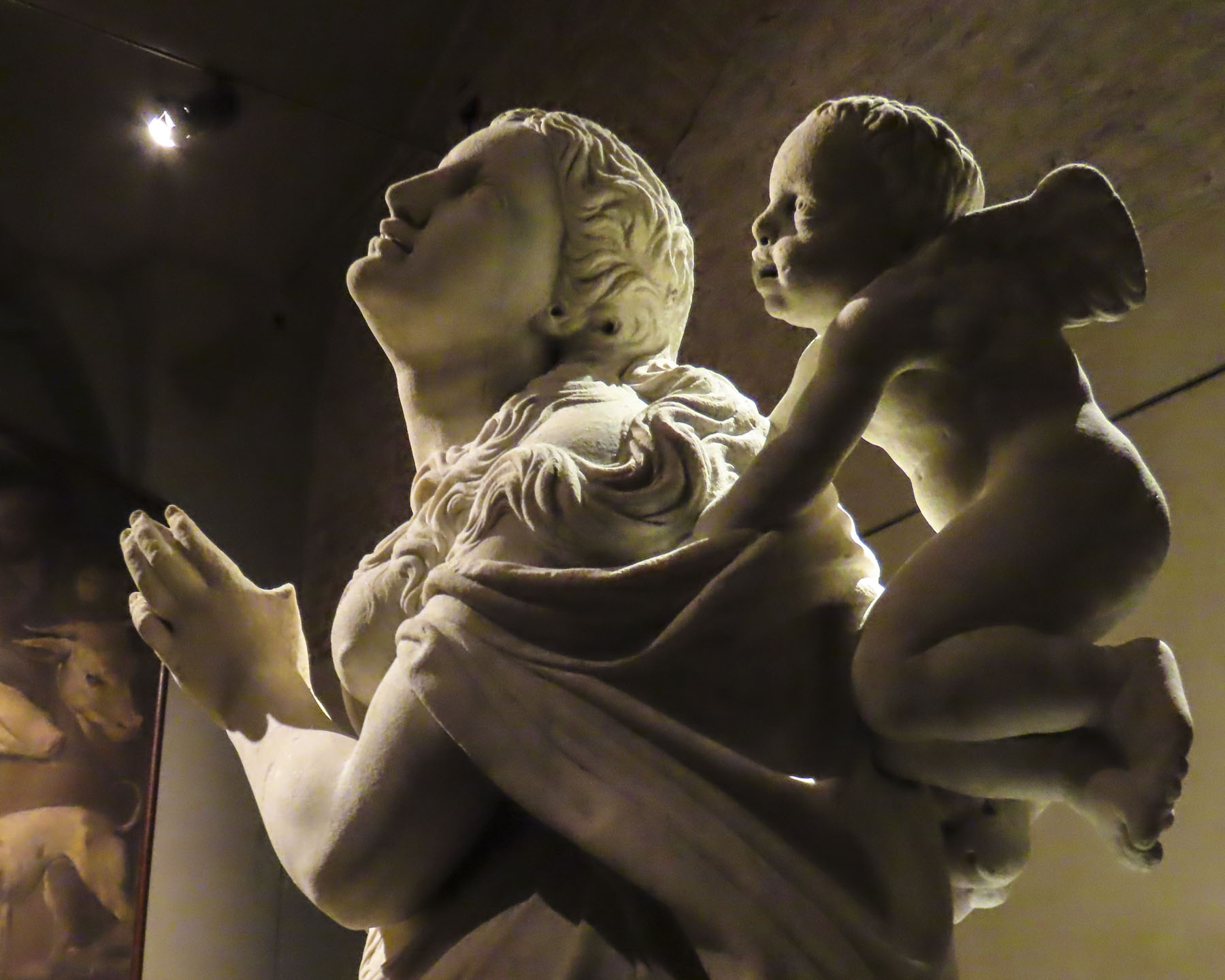
Across the plaza the Museum of the Milan Cathedral has an extensive and interesting collection of art and sculpture that at one time or another was part of the Duomo.

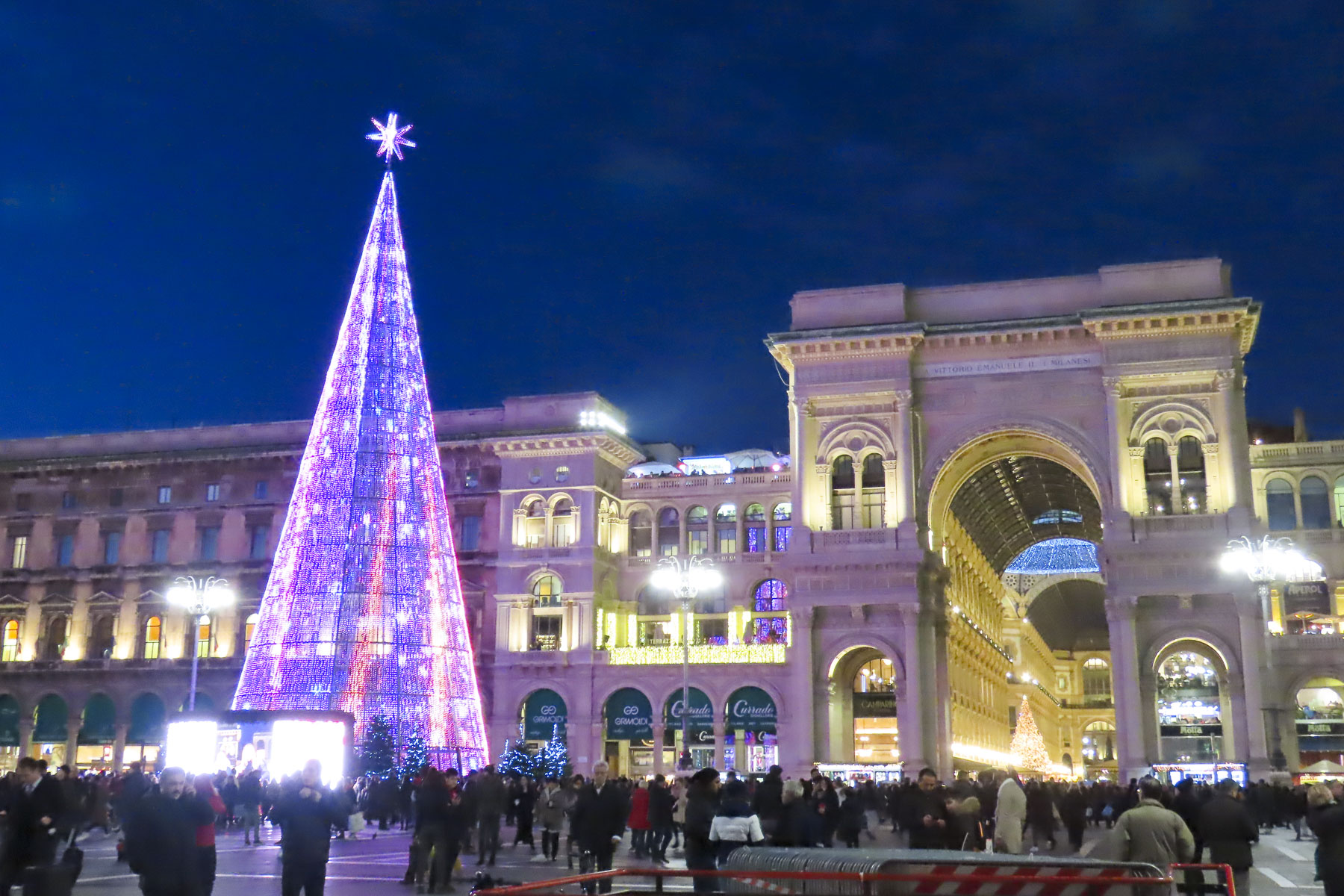
On the other side of the plaza stood Milan’s official Christmas tree, a modern conically shaped metal structure covered with thousands of multi-colored changing lights. Beyond the tree was the famous Galleria Vittorio Emanuele II, where four-story tall buildings and the promenade between them are covered with a spectacular vaulted glass ceiling.  It is considered the world’s first indoor shopping mall, built shortly after the unification of the Italian peninsular into the Kingdom of Italy in the 1860s when Vittorio Emanuele II was named king.  Lovingly nicknamed “il Salotto di Milano,” or “the living room of Milan” by the Milanese, the phrase acknowledges it’s the place to meet friends and be seen.

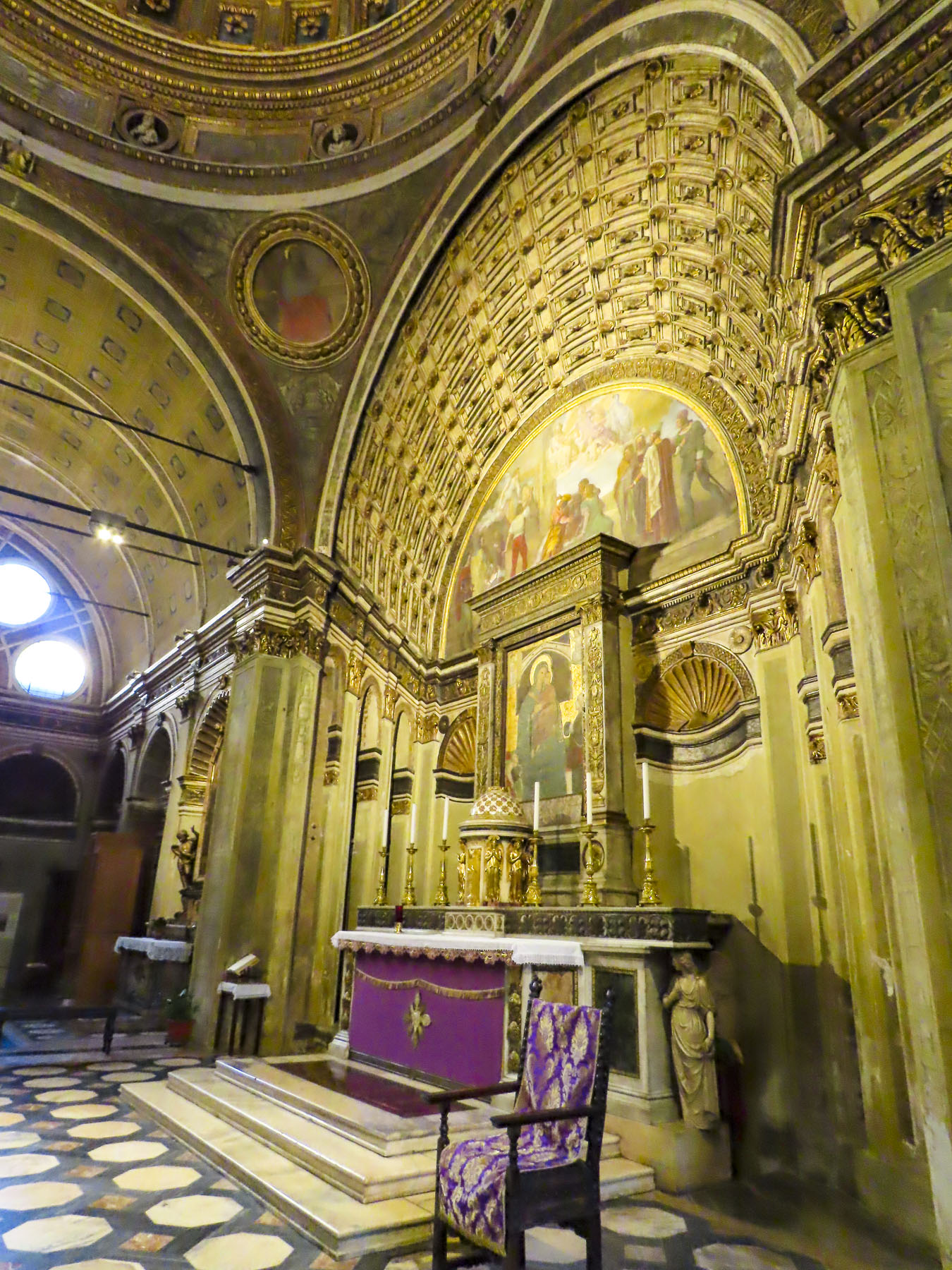
Wanting to stay in the city center till night fell, so that we could fully appreciated the Christmas lights on the tree in front of the Duomo, we wandered farther afield until we found the Chiesa di Santa Maria presso San Satiro. First built in the 9th century, the present church dates to the Italian Renaissance and  features a gilded interior and a rare example of Trompe-l’œil in a church. This painter’s effect utilizes a forced perspective to create an illusion of depth behind the altar.

After dark the plaza in front of the Duomo continued to fill with people eager to enjoy the festive mood of the Christmas season.  The Christmas tree was stunning, and its modernity nicely complimented the historic buildings surrounding the piazza.

From our balcony we could see the silhouette of Tomba di Manzoni, the grand entranceway and “Hall of Fame” mausoleum for the noteworthy, though not as wealthy, Milanese who are interned at the Cimitero Monumentale. 

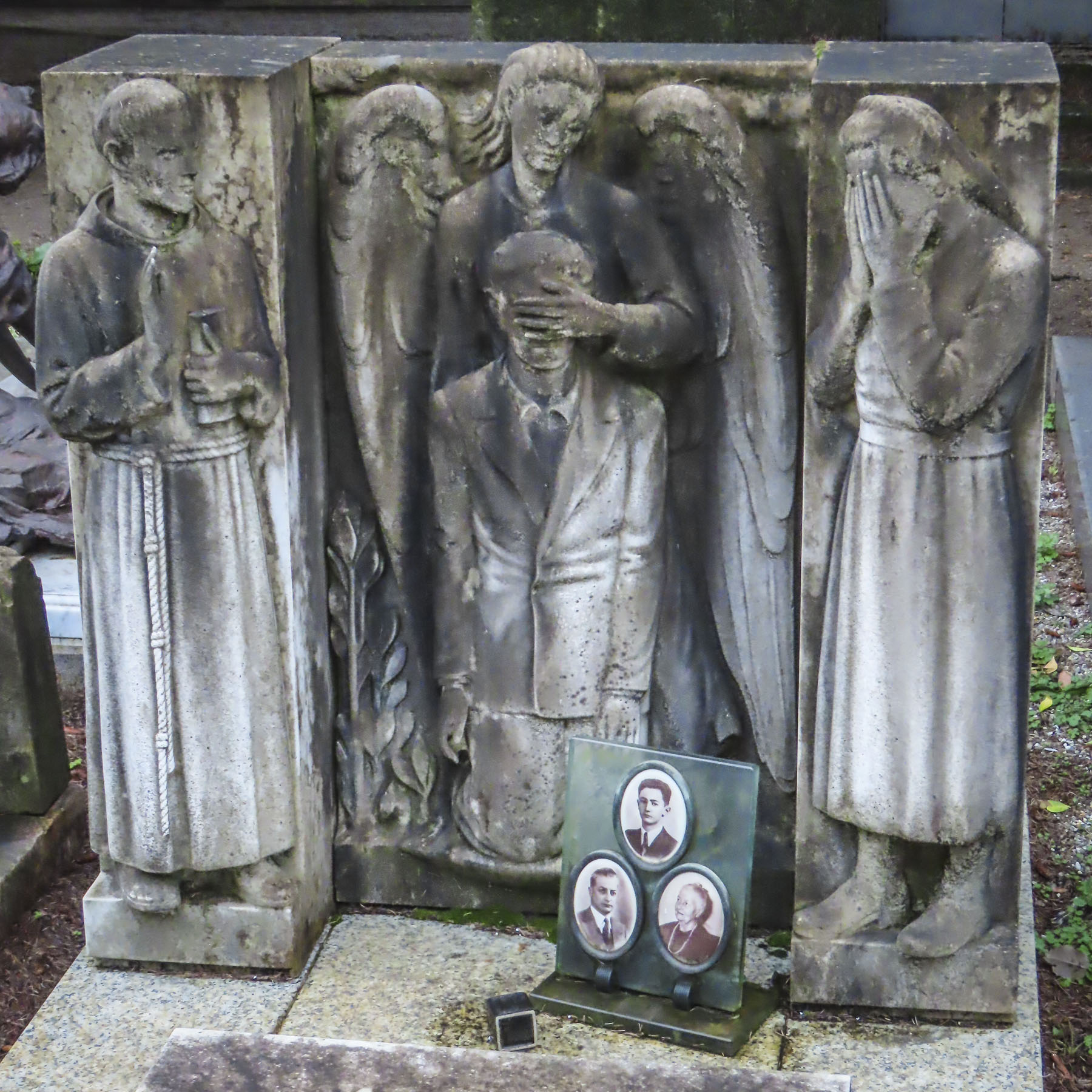
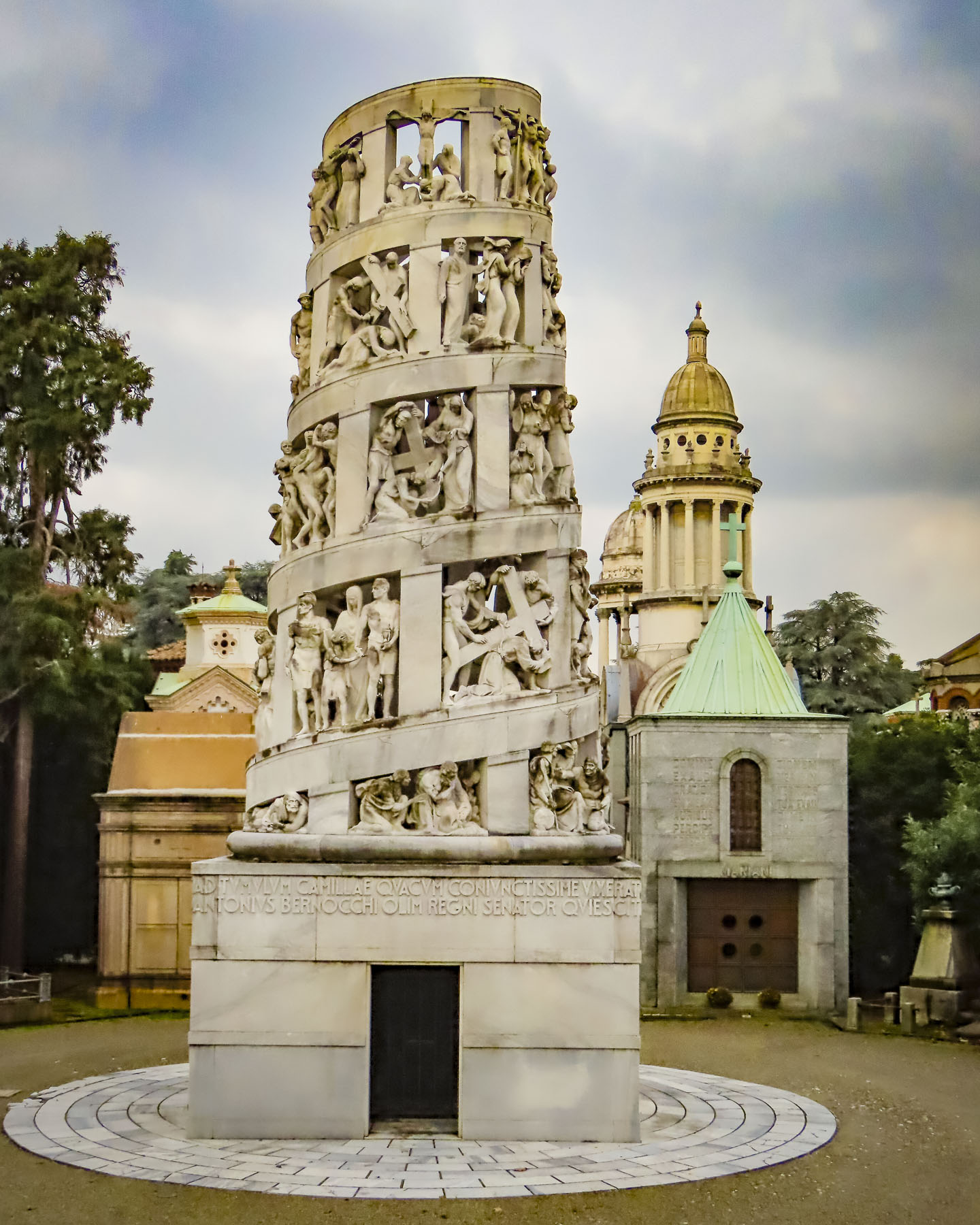
As we wandered farther into the cemetery, we realized that monumental might be an understatement. It was difficult not to confuse this extraordinarily extravagant place of entombment for an outdoor sculpture garden with memorials created by a who’s who list of famous 19th and 20th century Italian artists and architects for prominent Milanese families. 

The family names on the mausoleums also adorn roads, parks, tram and subway stations across the city. There seemed to be an afterlife version of one upmanship in play here with each monument more grandiose than the last.  As if competition or success in life was not enough and had to continue till your final committal.  It was a fascinating place to explore. Plan on spending most of the day.

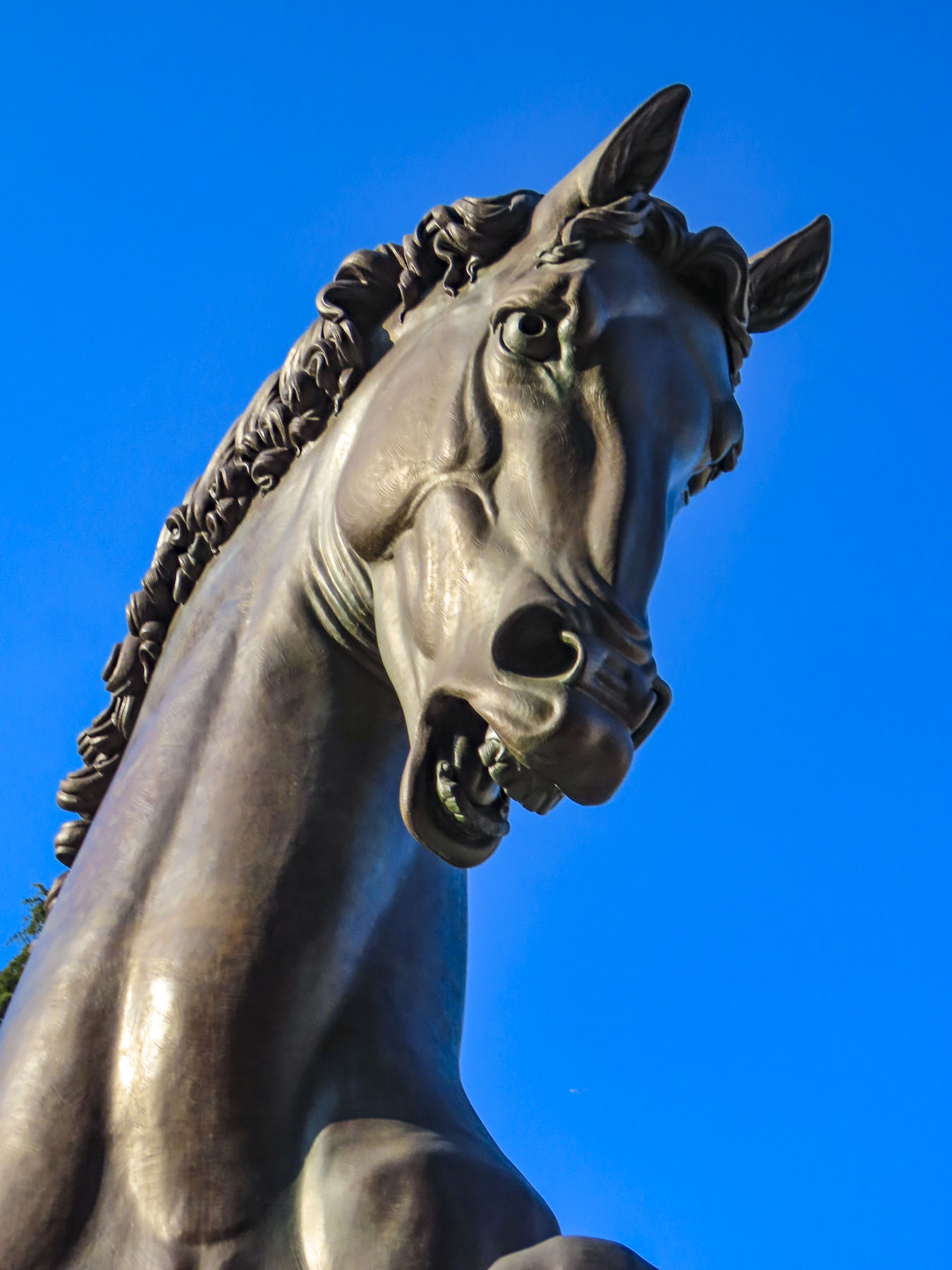
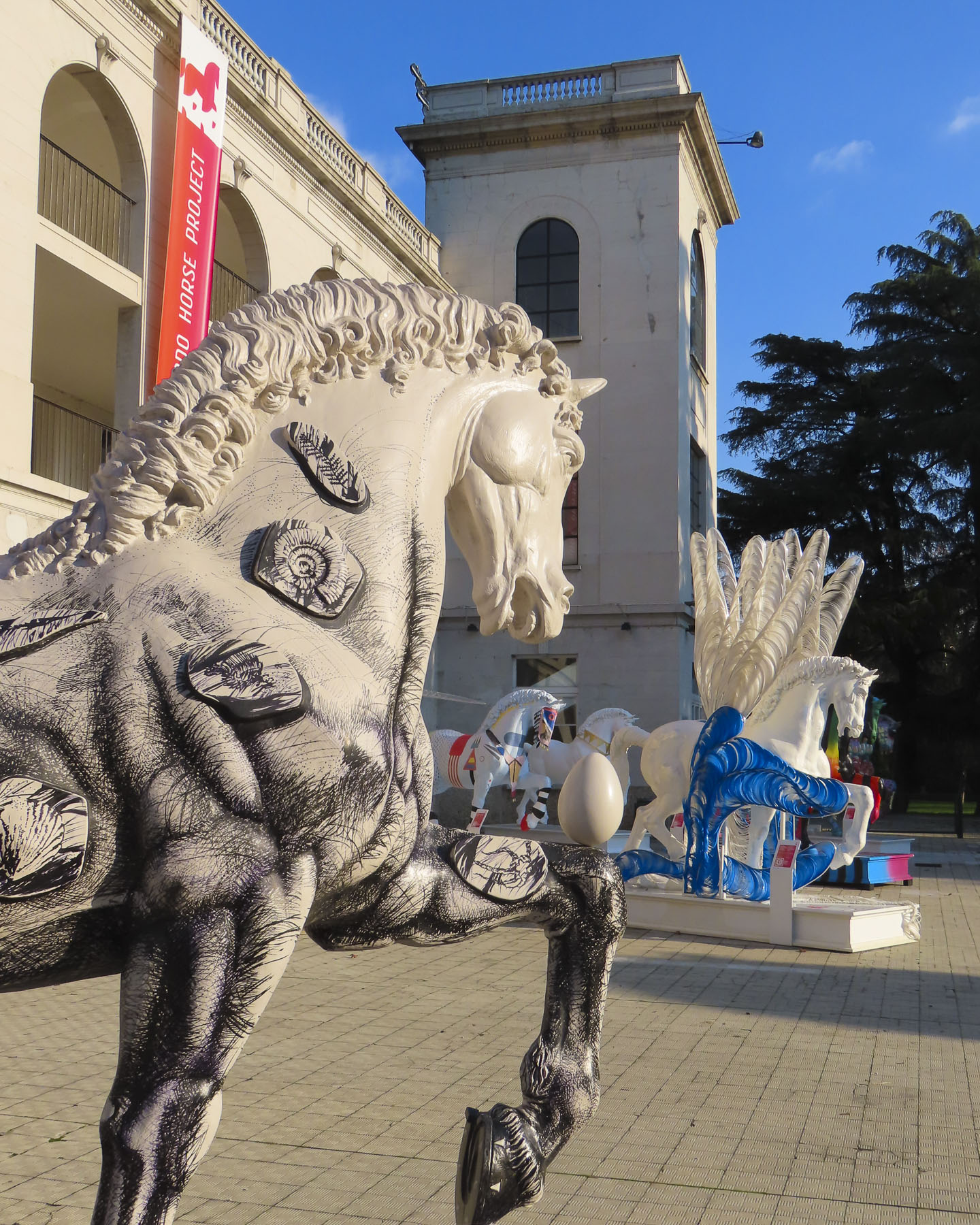
Donna’s mom had passed away the year before and one of our reasons for staying in Milan was to revisit a project her mother was instrumental in as a member of the United State’s Italian American Heritage Foundation and Leonardo da Vinci’s Horse Foundation. She helped for fifteen years in the 1980s and 90s to raise 2.5 million dollars to the see Leonardo da Vinci’s 24ft tall Il Cavallo recreated. The sculpture was finally realized by American sculptor Nina Akamu

Da Vinci was commissioned by the Duke of Milan in 1482 to create, at the time, what was the largest equestrian statue in the world, as tribute to his late father, Francesco Sforza.  The full-size clay sculpture was completed in 1491 and was waiting for its terracotta mold to be made and enough bronze amassed for its casting when the French invaded in 1499. Subsequentially, the clay model was totally destroyed by French crossbowmen who used it for target practice.

On its 500th anniversary, da Vinci’s Il Cavallo was unveiled outside the Ippodromo Snai San Siro, Milan’s famous horse racing track. Smaller artistic interpretations of Il Cavallo stand in the plaza behind it. This being modern Italy though a horse just can’t be a horse, and many were psychedelically painted and wore tutus or unicorn horns. Wonderfully whimsical, they definitely made us smile. 

One rainy afternoon we took the tram to the 15th century Sforzesco Castle, seat of power for the Sforza dynasty that lasted only 100 years. But in that time the fortress/palace was expanded to be one of the largest citadels in Europe and filled with works of art by numerous Italian Renaissance artists.  Leonardo da Vinci, Michelangelo, Bramante, Correggio, Bernardino Zenale and Bernardino Butinone were commissioned to adorn the walls and ceilings and sculpt pieces to fill the vast space. Today the castle houses several of the city’s museums and art collections where the artists’ contributions to the palace can still be seen. A heavy fog had blanketed the citadel by closing time and was evocative of the moods cast in the historical fiction novels set in Renaissance Italy by Sarah Dunant. Later that evening we attended an Anglican Lessons and Carols service as a prelude to Christmas, then headed back to our apartment humming Christmas tunes as we window shopped.

Signs for Artigiano in Fiera, the Fair, dotted our route into Milan when we first arrived from Bergamo and piqued our interest.  We hadn’t heard of it before, but with a quick internet search realized it was the shopping event of the Christmas season in Milan. While in line to enter the center we noticed many people pulling large suitcases. Toward the end of our shopping spree, laden with purchases, we realized the bags on wheels were pure genius, and allowed the seasoned pros to carry their holiday shopping with ease. The Fiera is a tremendously popular annual, nine-day event that draws over one million visitors to the Fiera Milano, Europe’s largest exhibition center, located in Rho, just outside Milan. Folks shop for home furnishings, fashion, jewelry, arts and crafts, along with artisanal foods, wines and liquor. The sites’ nine cavernous exhibition halls were filled with vendors from 100 countries, though displays from the twenty regions of Italy occupied ninety percent of the space. Plan on spending the whole day if you hope to see everything. It was all very interesting and entertaining and truly a marathon event. From Milan it’s an easy trip on the M1 subway, which stops right at the venue.

Wanting to make our last night in Milan special, we made dinner reservations at a highly reviewed restaurant, only to be turned away into a rainy night because we arrived early as the staff was enjoying their pre-work communal meal together. (The later you dine out in Italy the more you’ll feel like a local. Though this does take some getting used to and we haven’t mastered this yet.) “Okay, we will have a drink at the corner bar and return,” we agreed.

To our delight, our aperitives were accompanied by small sandwiches with chips and olives.  We had every intention of heading back to the restaurant, but our waiter was engaging, and the Aperol spritzes were very good. We spent the time watching folks fight the wind with their umbrellas through the bar’s rain-pelted window. The specular highlights from the streetlights added magic to the scene. Occasionally some groups popped inside seeking a warm reprieve from the downpour outside, shook out their umbrellas and found a seat.  Recapping our adventures, tentatively planning the next six months, and talking about Christmas with our kids back in the states, the evening flew by until the waiter said they were closing. Umbrellas up! We headed home.

Till next time, Craig & Donna

PS – The Artigiano was canceled in 2020 due to the Corona virus lock down in Italy. Hopefully, it will be allowed 2021.

Lake Como – Natural Beauty, Swiss Olives and Pliny the Elder

We had only been settled into our Milan rental for a few days when, upon checking the long-term weather forecast, we decided to take the train to Lake Como the next day.  The days were solidly cold now in northern Italy, but still very pleasant if the sun was shining. By the end of the week, it was expected to rain for a while. What we didn’t expect was a dusting of fresh snow along the route.  In the distance the snowcapped Italian Alps were a blur as the train sped along, delivering us to the town of Como in an hour, the last stop in Italy before Chiasso, Switzerland.  Unsure of where we were heading, we followed the flow of day trippers into the town center past a blend of Gothic, Renaissance and 18th century architecture.

The famous inverted “Y” shaped lake was created by receding glaciers, 10,000 years ago, during the last Ice Age. Since the 1st century, Roman naturalist Pliny the Elder wrote about it as an “A list” destination for poets and writers. Today artists and celebrities continue to be mesmerized by its natural beauty. The Goths, Ostrogoths, French, Spanish and Austrians have all contributed to its convoluted history until the region was united into the Kingdom of Italy by Giuseppe Garibaldi’s troops in 1859.  Even Mussolini visited one last time as he tried to flee Italy in April 1945 and cross the border into neutral Switzerland, but he was captured by Italian partisans in Dongo, a small village on Lake Como. He was executed the next day.

It was an especially sunny day and the town’s Christmas market on Piazza Cavour across from the lakefront was thriving with folks enjoying the weather and shopping amidst all the stalls for the quickly approaching holiday. At the restaurants lining the piazza, outdoor dining was still in full swing, but was only bearable if you found a table in the sun and used the provided lap blankets to help ward off the winter chill.

Aside from the usual cheese, jam, sausage and porchetta sandwich stalls, there was an olive vendor with an incredible variety of olives for purchase.  One of his most surprising offerings was Lugano olives which originate from the Italian speaking part of Switzerland! – south of the Alps, on the shores of Lake Lugano, just over the hills from Como.

The Passeggiata Amici di Como, a lakefront promenade, was busy with tourist watching swans bob about on the water and folks queuing for the various ferry boats still offering tours.  We followed the walkway as it spurred onto a long pier that extended almost two thirds of the way across the lake and culminated at a large, futuristic monument called Life Electric. Designed by internationally acclaimed architect Daniel Libeskind in 2015, the highly polished chrome sculpture brilliantly reflects the sun, sky and water surrounding it and changes continually with the light, evoking continuous motion. It is dedicated to hometown physicist Alessandro Volta who is credited with the invention of the electric battery in 1800.

From here we also watched and listened to a continuous flow of seaplanes roar across the water from the Aero Club where one can book an aerial tour of Lake Como and surrounding mountains.  It’s been a popular activity since it was first offered in 1913.

Back in the historic center we headed to the Cattedrale di Santa Maria Assunta-Duomo di Como. The façade is an exquisite example of Gothic architecture and includes sculptures of hometown stars Pliny the Elder and his nephew, Pliny the Younger, which flank either side of the church’s rose window. 

The interior is decorated with antique tapestries made in Antwerp, Florence and Ferarra during the 16th and 17th centuries. The church’s construction was started in 1396, but wasn’t completed until almost 400 years later in the later part of the 18th century, due to legendary Italian bureaucracy, civil unrest and a stone cutters strikes. (I’m just speculating here, but in 1629 the bubonic plague halved the population of Northern Italy and brought economic hardship to the area that lasted for decades afterward.)

Farther along, the Basilica di San Fedele commanded the other side of the street.  Substantially altered in the 12th century, it incorporated some architectural elements from a 5th century church that originally occupied the site. Entering the church, we were confronted with a terrifying hand-carved wooden sculpture of hundreds of sinners, painted red, being consumed by flames – it’s reminiscent of Hieronymus Bosch’s Vision of Hell. We imagine it was a highly effective teaching tool in the middle-ages.  By late afternoon only a dim light was filtering through the church’s ancient windows as an organist dutifully labored to get the right pitch from the ancient pipes.

Darkness fell early as we walked back through town. Many of the buildings were colorfully illuminated with Christmas holiday projections. It was magical.

Till next time, Craig & Donna

Bergamo – Cathedrals, a Flat Tire and a Bell Tower

Somewhere along our route on the A4 motorway to Bergamo the tire blew. It wasn’t an obvious blowout, the car still handled well, but the car felt different.  Our dilemma was, if we stop on the shoulder of the highway to call for assistance how do we explain our location in our non-existent Italian, or do we keep driving to the next exit. We kept going. In the time it took to stop and pay the toll the tire totally deflated, and we limped off the highway on three wheels. Luck was with us we when we rolled into the gas station at the top of the exit ramp.  They didn’t offer any repair services, but did have a small café, and it being Italy, they served excellent cappuccino and pistacchio pasticcino.  With the barista’s help our exact location was given to the roadside assistance agent, and we settled in for what we thought would be a very long wait. Surprisingly, we were back on the road again in less than one hour.

Bergamo was a well-established ancient village before it became a Roman town in 49 BC and today is a hub of industrialization in the Lombardy region.  The newer portion of the city, Citta Bassa, or lower city, is a smart looking collection of contemporary buildings along tree-lined boulevards and pedestrian malls worthy of exploration. Though we were here to wander around the narrow lanes and ancient churches within the 16th century Venetian defensive walls of the Città Alta, the high city. The historic upper center of Bergamo was strategically located on a rock promontory with commanding views of the surrounding region.

Completely pedestrian only, the old town is connected to the new town by a funicular  that runs up the side of a steep hill through an ivy-covered channel. We knew the old town would be full of history, but soon realized it was an unexpected foodie’s delight when we were faced with a gauntlet of gourmet food stores that started as soon as we got off the funicular.

With each shop window more tempting than the previous, it was a challenging task walking along Via Gombito to Piazza Vecchia, the historic center of Bergamo.  It was the last week of November now and even though the days were sunny there was a definite chill to the air. Fortunately, the cafes on the piazza were still in full swing with outdoor dining and had heavy lap blankets available to ward off the chill.  The ambiance of the old town is wonderful and there’s plenty to absorb just by wandering around, but if you are short on time concentrating on the historic buildings that line Piazza Vecchia is rewarding.

Dominating the piazza is the Campanone, the town’s clock and bell tower. When it was built in the 12th century it was the private residence of the wealthy and influential Suardi family.  With admission there is an elevator that will take you most of the way to the top.  Interestingly at ten o’clock every evening the town keeps an ancient Venetian tradition alive by chiming the bells of the clock tower 100 times to signal the closing of the city gates. It was cloudy after lunch so we decided to delay our tower visit till later, hoping that the weather would change, and the sun would come out. Next to the tower stands the Palazzo del Podestà e Museo del Cinquecento a wonderful, high-tech, multimedia and interactive museum housed in a Renaissance era palazzo that highlights Bergamo’s history.

The Cattedrale (duomo) di Sant’Alessandro, the Bergamo Cathedral, is almost hidden away behind the arched portico that separates the Piazza Vecchia from the Piazza Duomo.  Majestic in scale, the duomo dates from the 1400s and has undergone many alterations over the centuries that has evolved the church into a treasured, religious art-filled sanctuary that is the Bishop of Bergamo’s seat.  An important center for Christianity since the religion was accepted by the Roman Empire in the third century, Bergamo has had a bishop since the fourth century. Underneath the Presbytery the Bishops’ Crypt of The Cathedral Of Bergamo holds, in a semi-circle, twelve tombs of bishops who guided the See in the 19th, 20th and 21st centuries.  Strikingly, the façade of the crypt, in my opinion, could pass as the entrance to a retro café; it just had that feel.

The highlight for us on Piazza Duomo was the Romanesque Basilica di Santa Maria Maggiore with its intricately designed marble façade and ornate gilded interior, and the Cappella Colleoni, a separate 15th century funerary chapel with a frescoed ceiling that seamlessly stands next to it. Founded in 1137, like so many other churches in Italy, it was built over the ruins of an earlier 8th century church and an older Roman temple. 

To our delight the church organist was practicing during our visit, and we stayed for twenty minutes and enjoyed this impromptu concert.

Just wandering around, we eventually arrived at the Torre della Campanella, the bell tower and arched gate entrance to Piazza Mascheroni and the Visconti Citadel which guarded the western entrance of the city from invasion, and protected the Visconti family from civil rebellion. The citadel is now home to the Civic Archaeological Museum and the Bergamo Science Museum. 

Remarkably, the buildings adjacent to the gateway still have faded remnants of renaissance era frescoes adorning their exterior walls.

Outside the city walls, the landscape opened to vistas of rolling hills, still holding the fading colors of fall.

Back at Piazza Vecchia the afternoon sun was beginning to break through the clouds when we decided to head to the top of the Campanone. 

The elevator stopped short of the top and we had to navigate a narrow passage to reach the highest level.

Each corner of the tower offered an amazing bird’s eye perspective of the ancient city, from soaring above the cathedrals on Piazza Duomo, to cityscapes of red tiled rooftops with smoke wafting from their chimneys, to distant still green hills.

The city is full of potential, and you won’t be disappointed if you spend two nights here to fully explore the Città Alta. But Old Town Bergamo is the perfect size to entertain you for four or five hours, on your way to or from Milan or Verona, either by train or car, without feeling you might have missed something.

Till next time, Craig & Donna