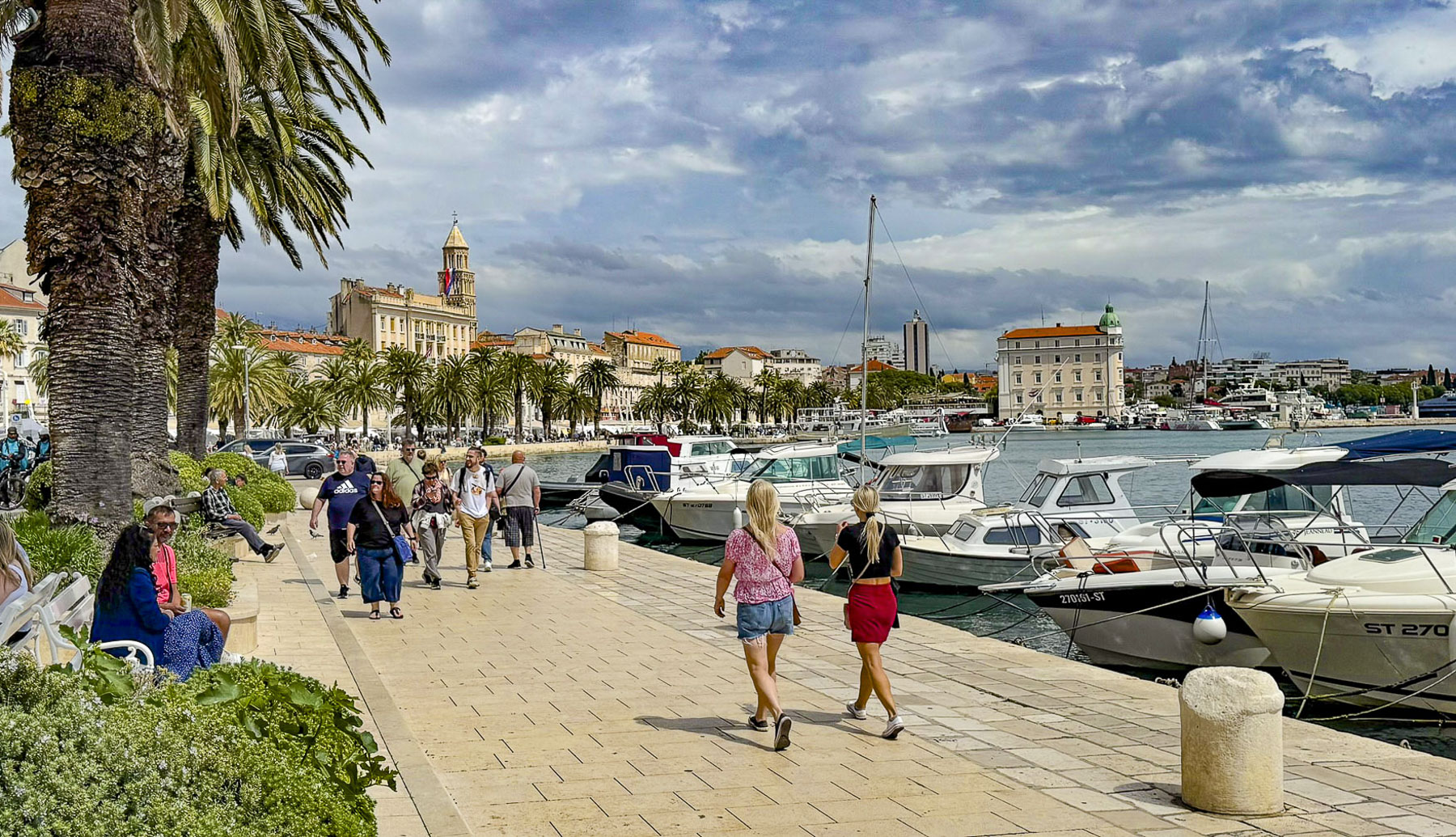
Argentina – Buenos Aires: Empanadas, Tombs & Tango

The ferry vibrated gently as the engines were switched into reverse as we approached the Buquebus ferry terminal in Buenos Aires. We had departed earlier from Montevideo, Uruguay, and hoped to view the Argentinian coastline from the Río de la Plata estuary, as the first Spanish explorers did in the early years of the 16th century. But we hadn’t expected the ferry not to have an open observation deck, and instead had to contend with the view, or lack of view, through hazy saltwater-etched windows.

Seasoned travelers on this route between Montevideo and Buenos Aires had already called for the ride share services of Cabify, inDriver, Didi, Easy Taxi or BA Taxi and waited curbside in front of the terminal. By the time the ferry docked there were no available drivers for 45 minutes. We were among the last to leave the port that morning.

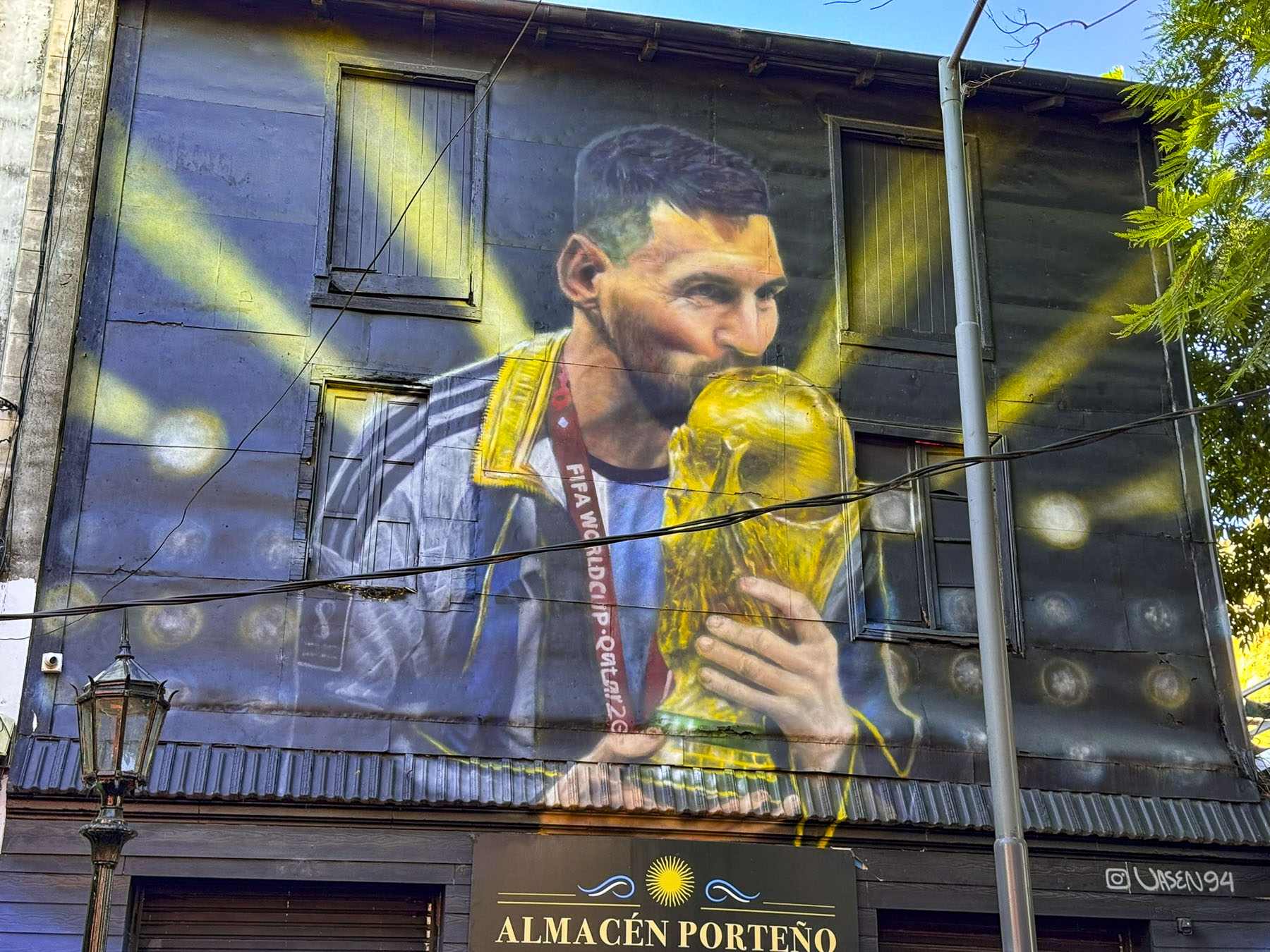
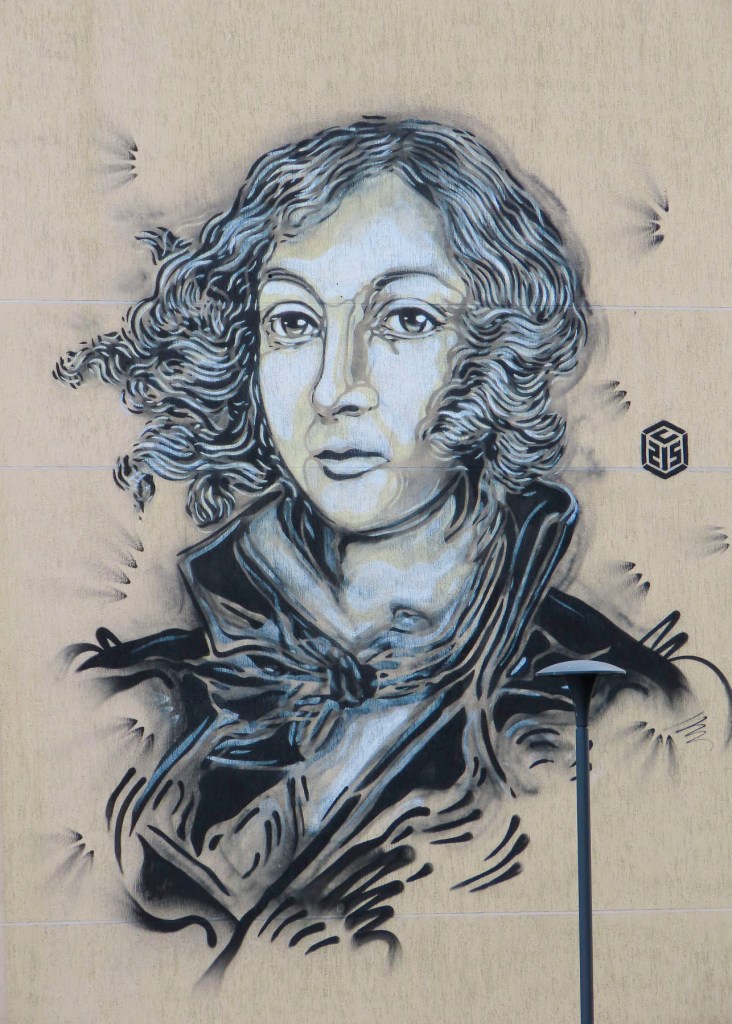
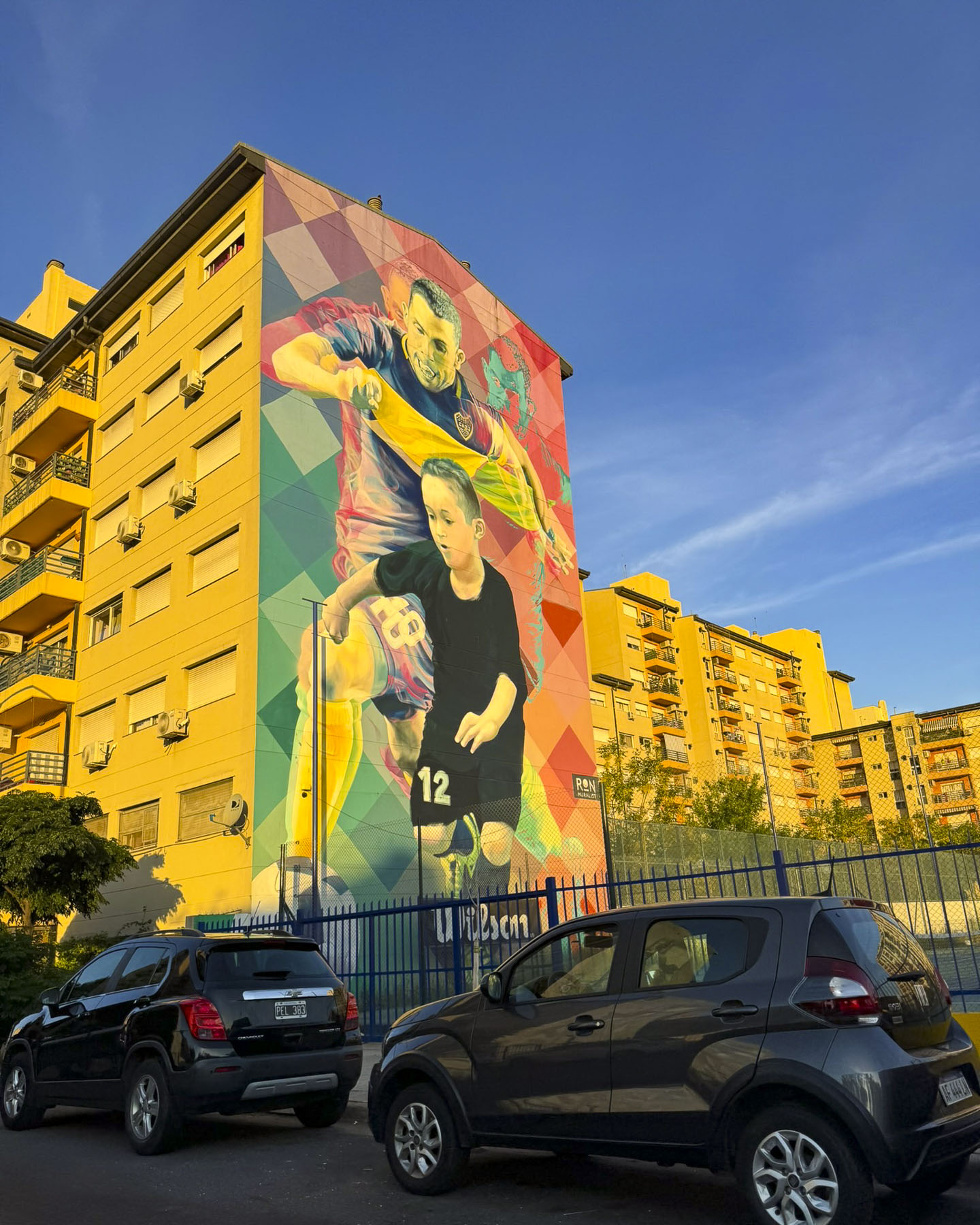
Our first impressions of this wonderfully cosmopolitan city were formed along the 16-lane wide – yes, 16 lanes – Av. 9 de Julio. Despite its width it is a pleasant tree-and park-lined esplanade, that extends for 27 blocks through the city and reminded us of the area around Central Park in Manhattan. Older buildings from the 18th and 19th century shared the skyline with more modern buildings than we expected, as well as the first of many street murals dedicated to the football player Lionel Messi #10 for Argentina national football team, and the country’s superstar at the moment. The sidewalks were bustling with activity. We wondered how we would ever cross 16 lanes of traffic on foot.

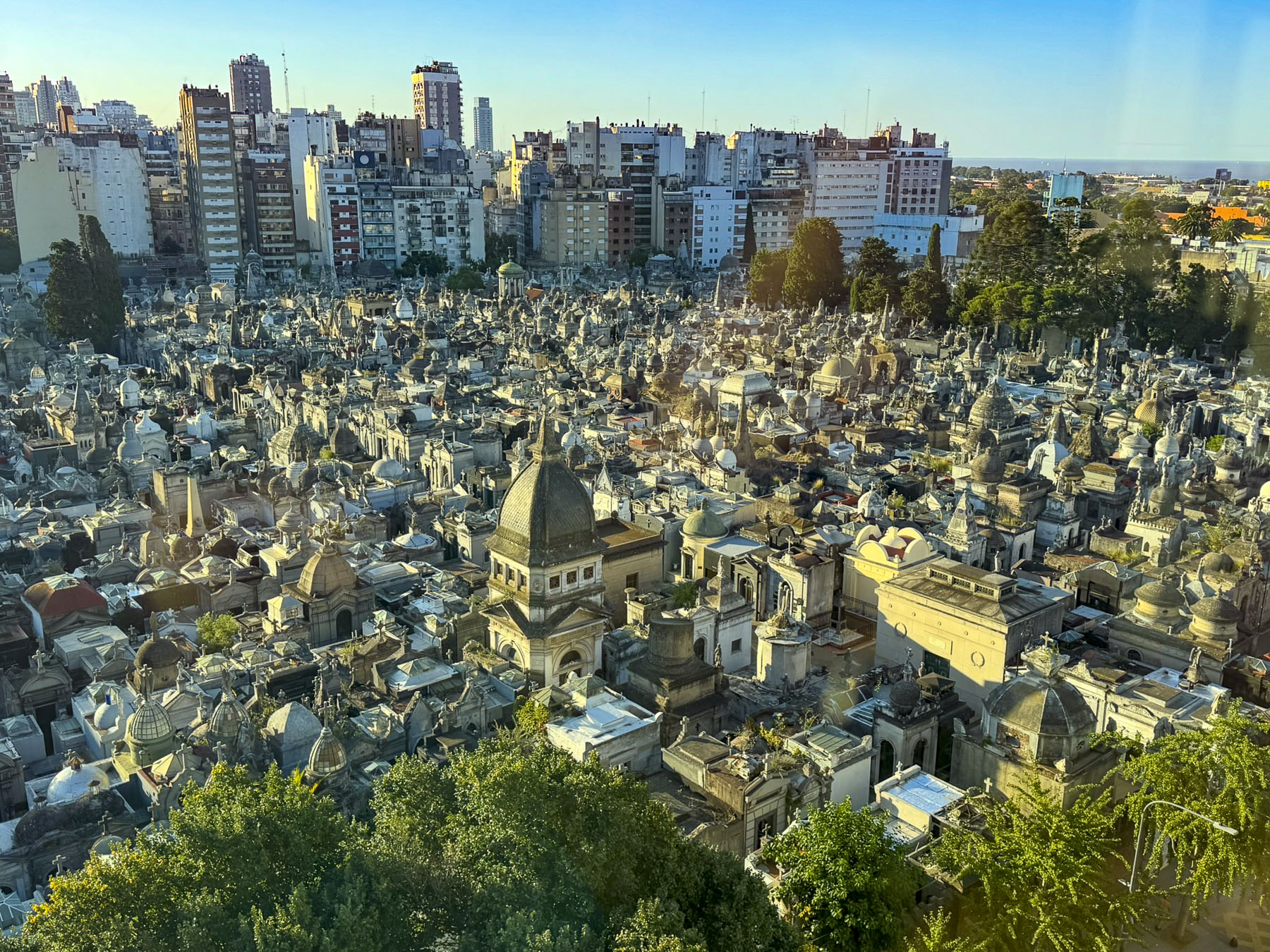
Our hotel for the next six nights, Urban Suites Recoleta, was across the street from Buenos Aire’s historic Cementerio de la Recoleta. We soon learned that most landmarks and hotels in the neighborhood ended with Recoleta in their name. The cemetery from our balcony looked like an ancient lost city.

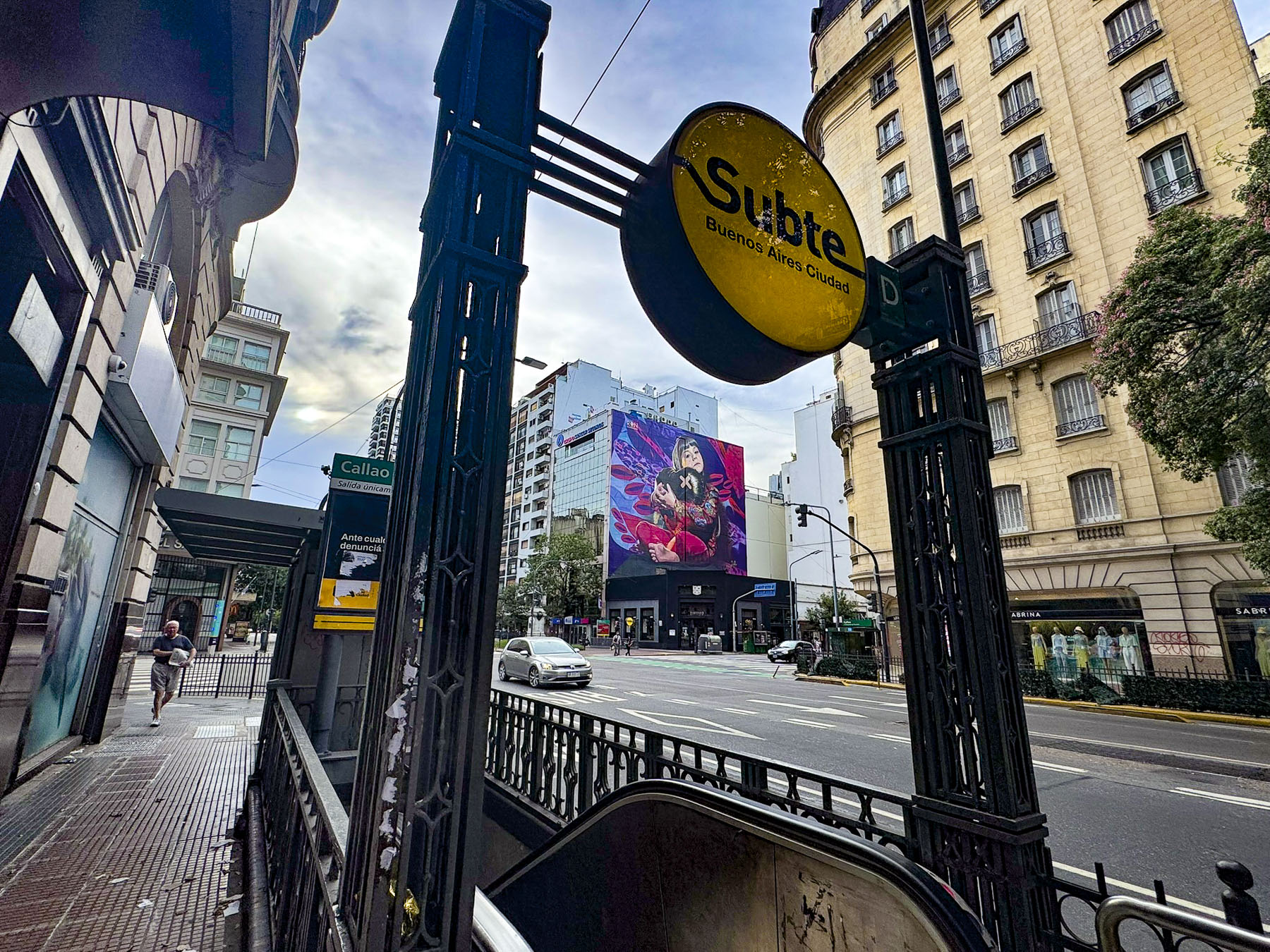
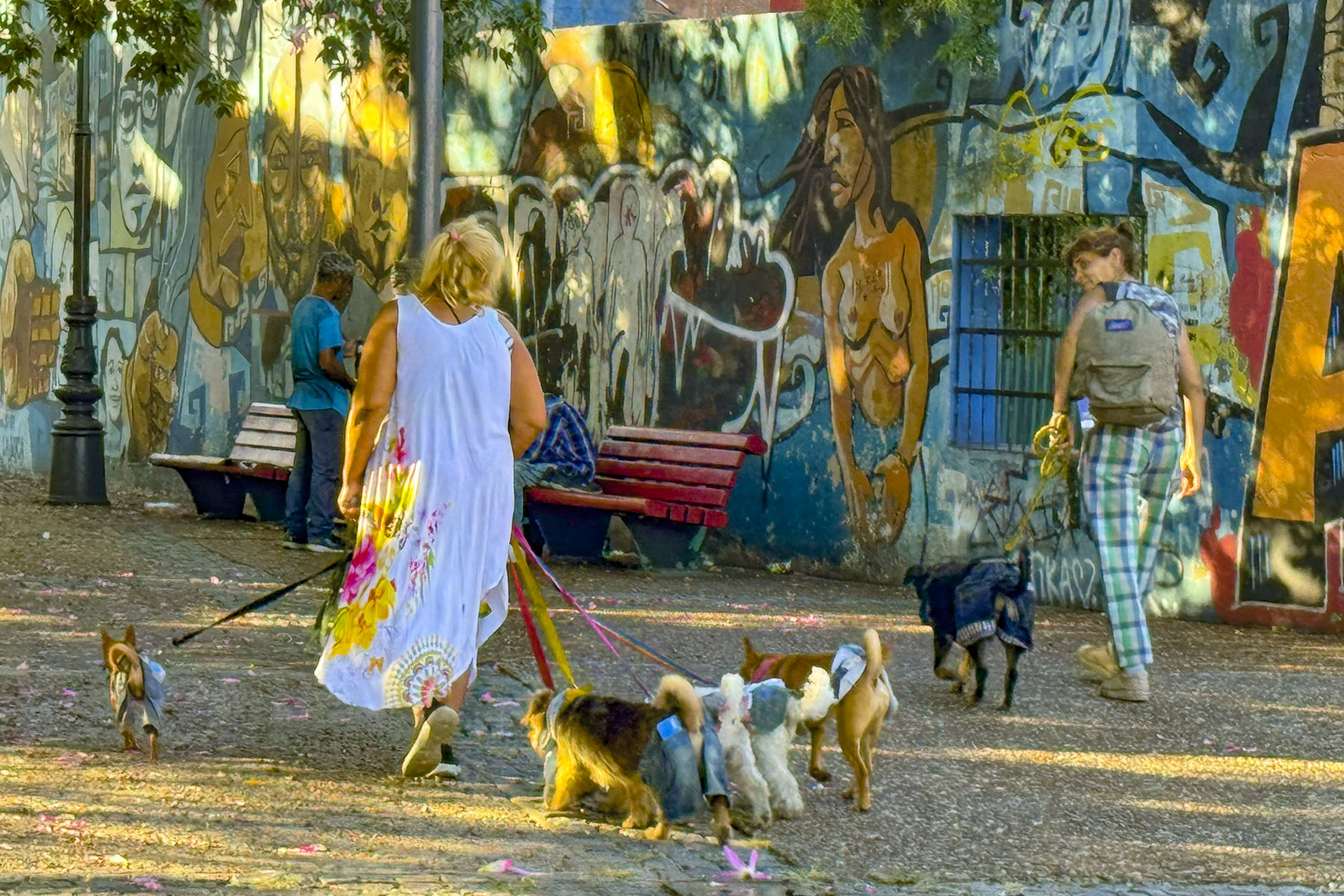
The next morning, we explored the immediate neighborhood around the hotel that was full of activity with delivery trucks off-loading produce and dog walkers leading their packs of small dogs to the parks. We eventually crossed the Puente Peatonal Dr. Alfredo Roque Vítolo, a brightly painted footbridge across the roadway that connects the parks around the Museo Nacional de Bellas Artes to the Universidad de Buenos Aires. The Facultad de Derecho subway station is located at the foot of the bridge. It is a terminus on the H-Line, one of Subte’s (from Subterráneo de Buenos Aires) six lines, that can get you nearly anywhere in this sprawling metropolis. Opened in 1913, Buenos Aires had the first subway in South America.

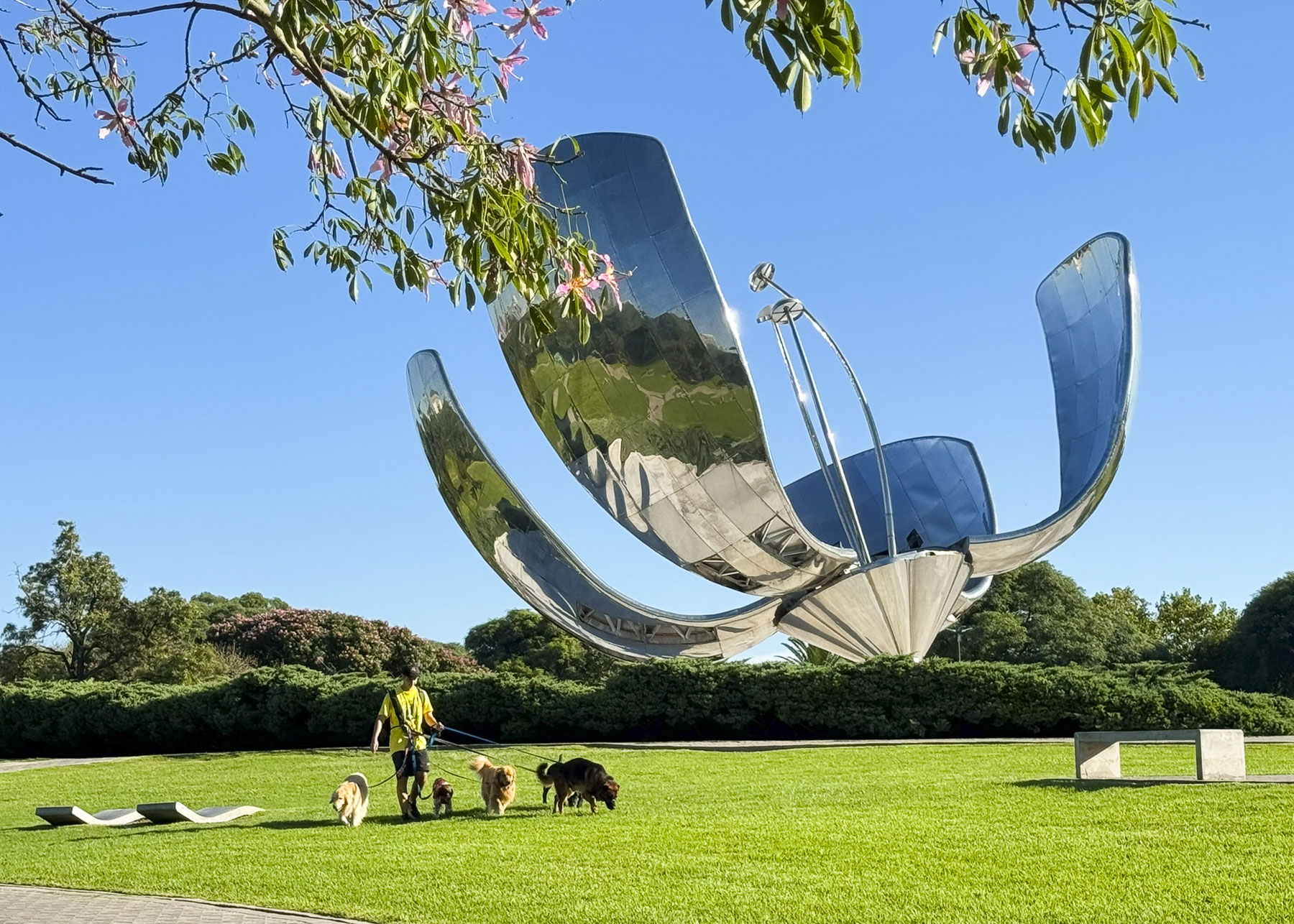
The Floralis Generica, a unique abstract aluminum sculpture, an iconic symbol of the city, centered the Plaza de las Naciones Unidas next to the school. The 23m (75ft) tall mechanical flower with six petals which opens in the morning and closes at night was a gift to the city by the Argentine architect Eduardo Catalano in 2002. Walking paths circled the sculpture and offered different viewing perspectives of the flower that the sculptor visualized to “represent all the flowers in the world.”

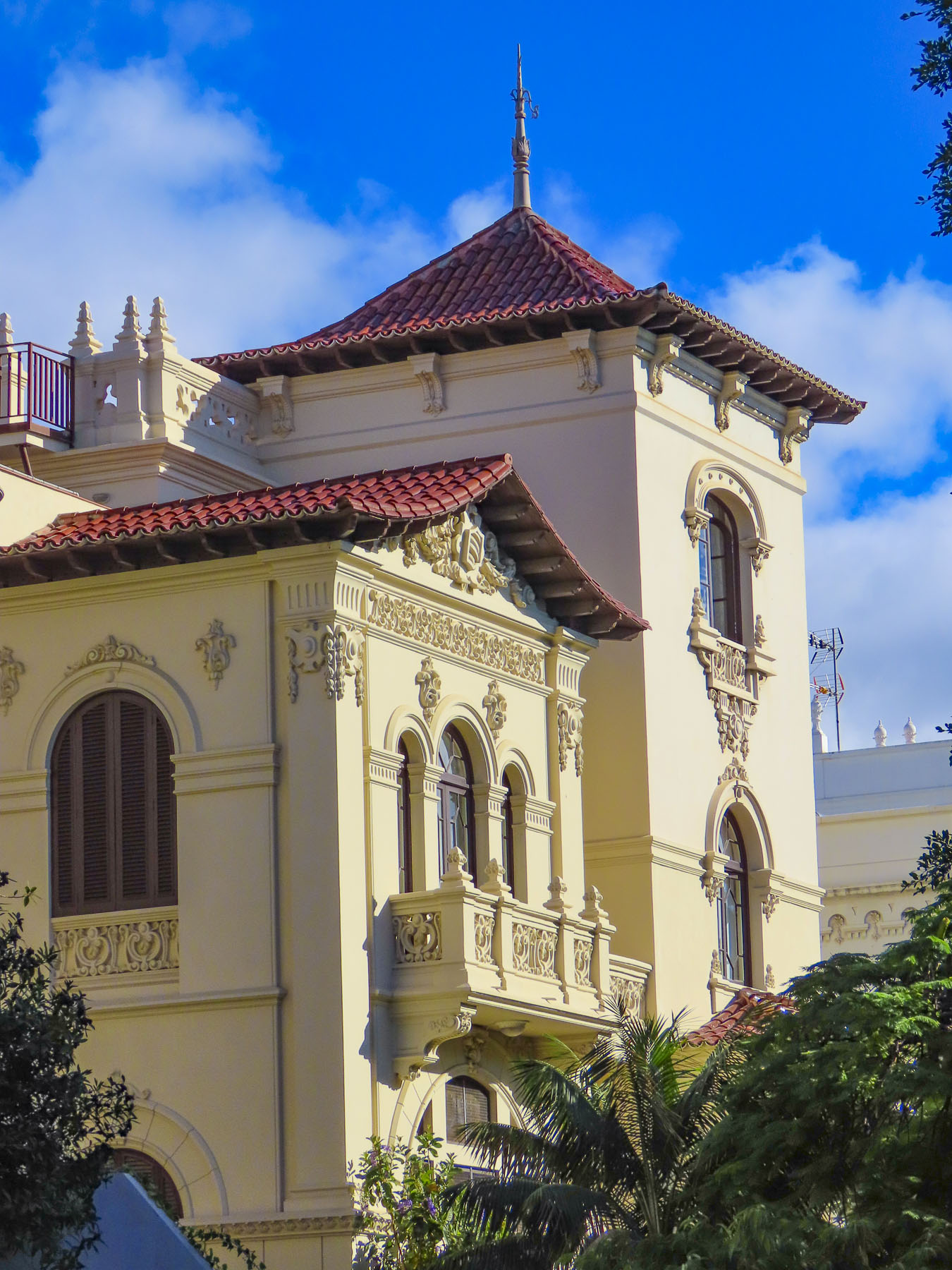
Walking back towards our hotel we veered down Avenida Alvear, seven blocks that were once Buenos Aire’s Park Ave or Champs-Élysées at the turn of the 20th century.  It is known for the art nouveau-influenced Belle Époque architecture of the old mansions along the street that have now been converted into hotels and embassies. Unfortunately, many of the building facades were hidden by the trees that line the street.

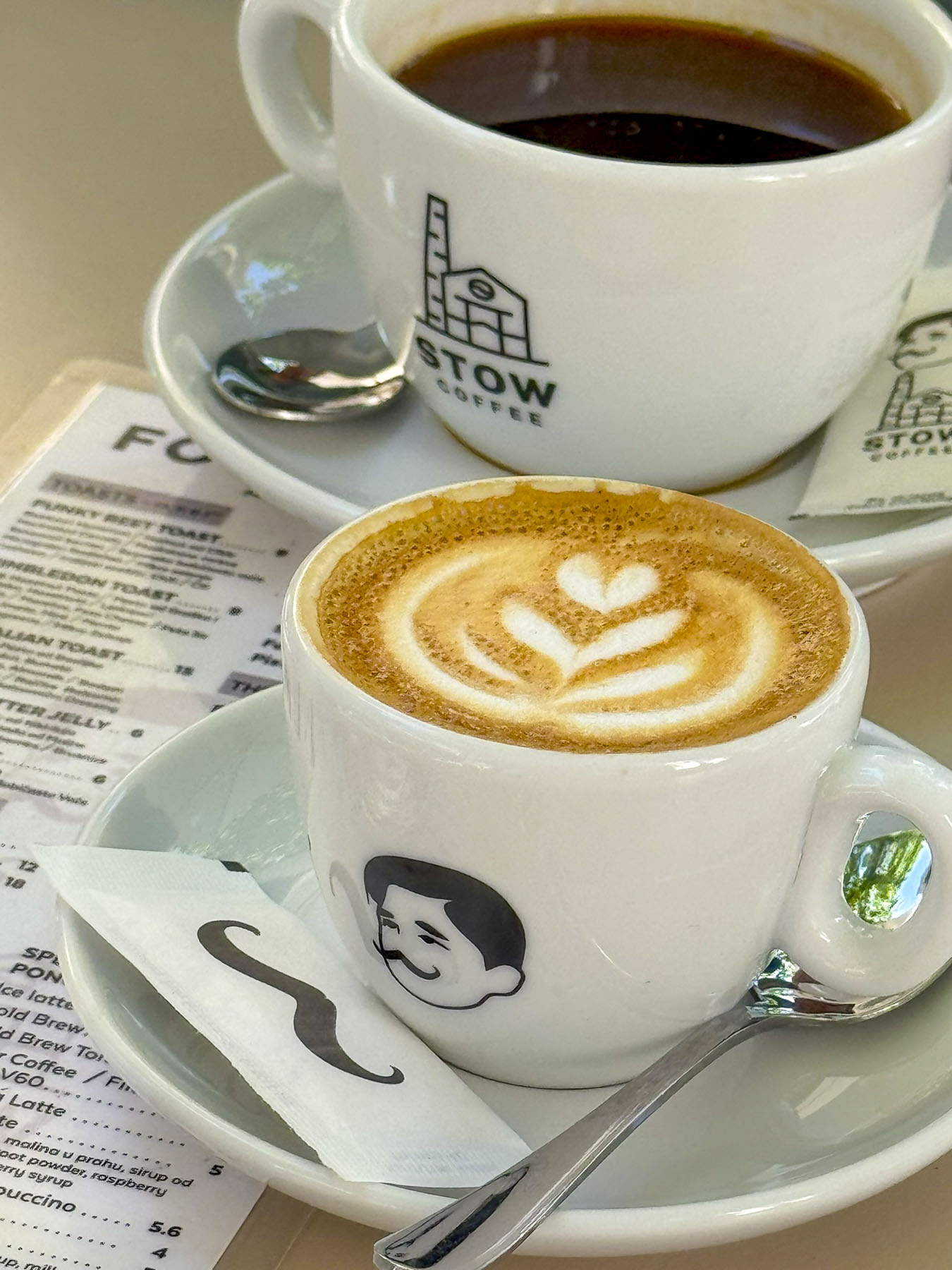
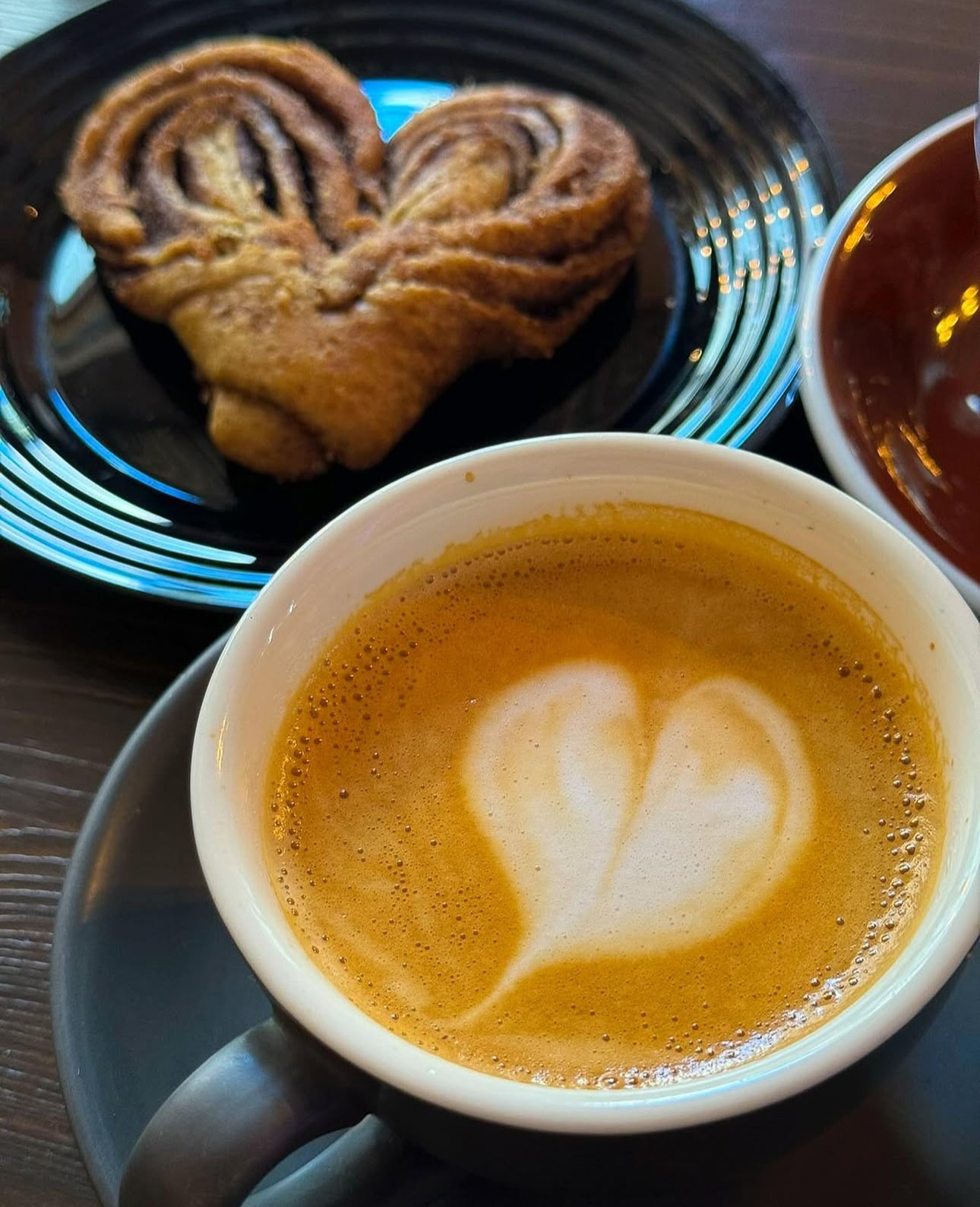
Long before Starbucks was a thing, the Porteños, “people of the port,” as the citizens of Buenos Aires are called, developed a strong coffee culture that coincided with the arrival of several waves of Italian immigrants that began in the mid-1800s. The result is a city where it’s nearly impossible to get a bad cup of coffee. One block over from Avenida Alvear on Av. Pres. Manuel Quintana our “walk a little then café” philosophy was easily satisfied at La Fleur de Sartí, Confiserié Monet, and Cafe Quintana 460, where espresso-based coffee drinks rule.

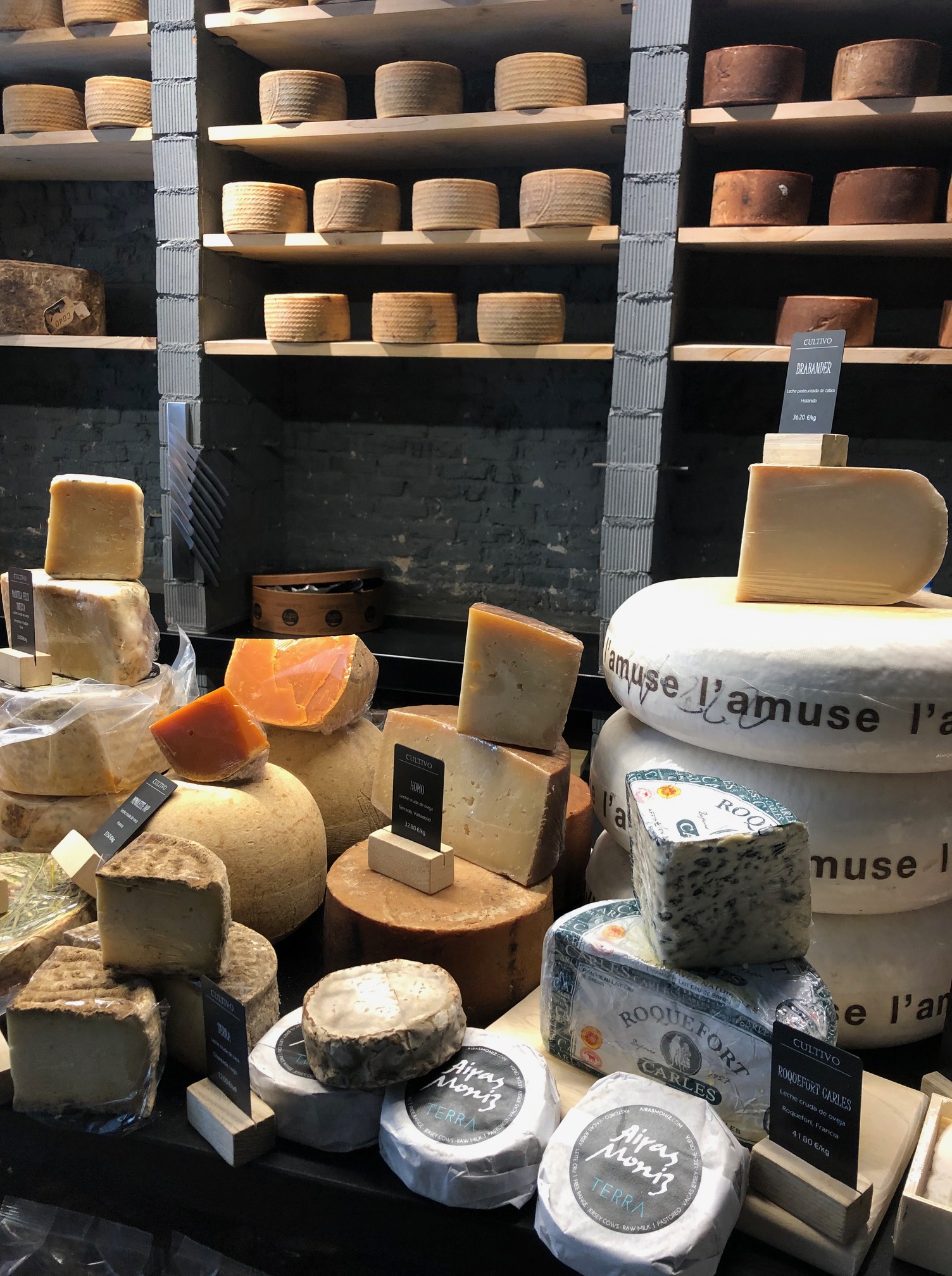
When we travel, our mid-afternoon lunch tends to be our big meal of the day, so we end up looking for supermarkets to buy crackers, cheese and fruit to snack on later. Near our hotel there was a large Carrefour Market on Av. Vicente López. Around the corner from the supermarket was a block of traditional shops with two butcheries, a fish monger, fruit stands, and a cheese store. Though our best find in the neighborhood was Möoi Recoleta, which had a pleasing interior and excellent food. To our surprise it’s part of a small local restaurant chain.

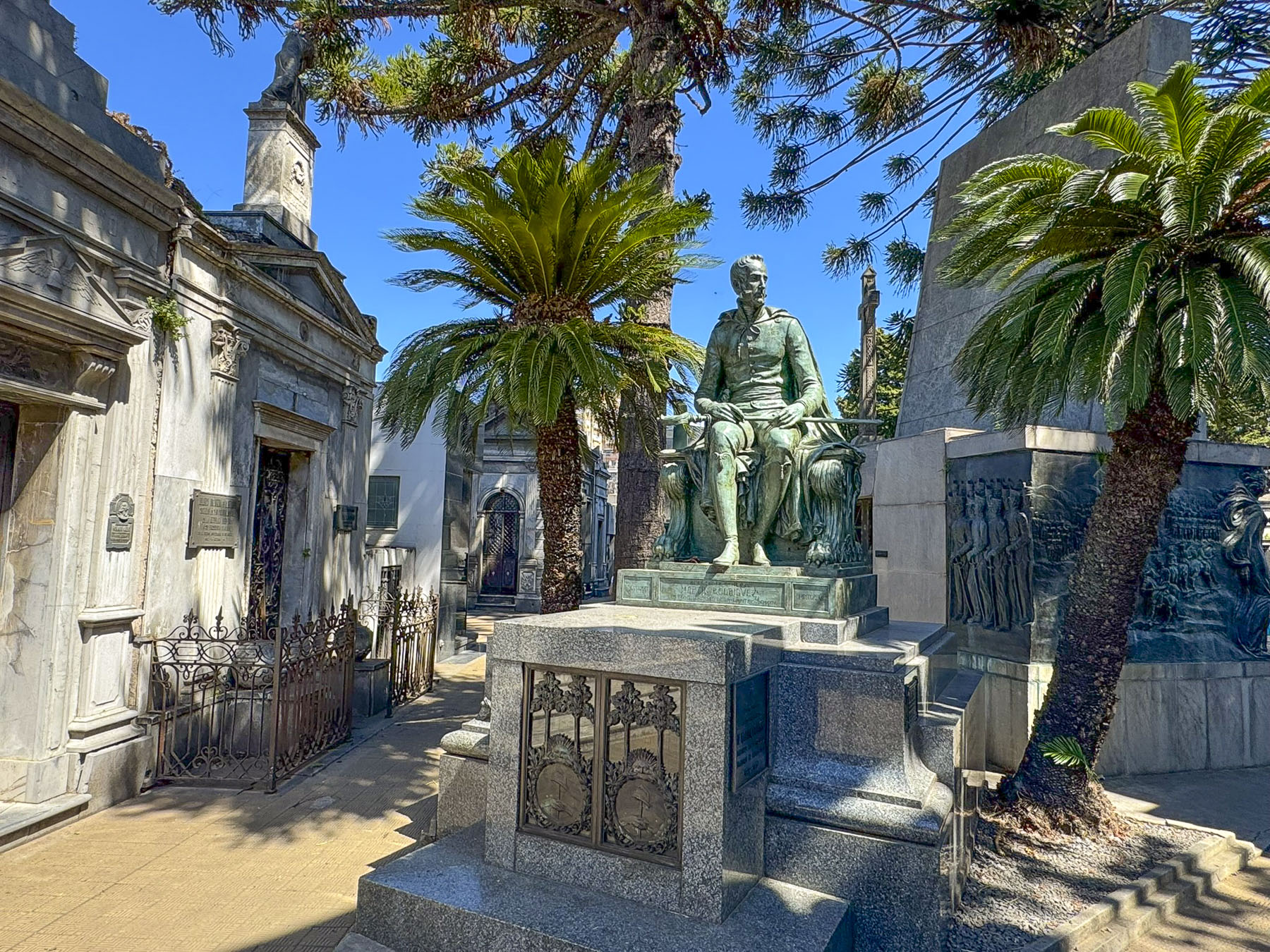
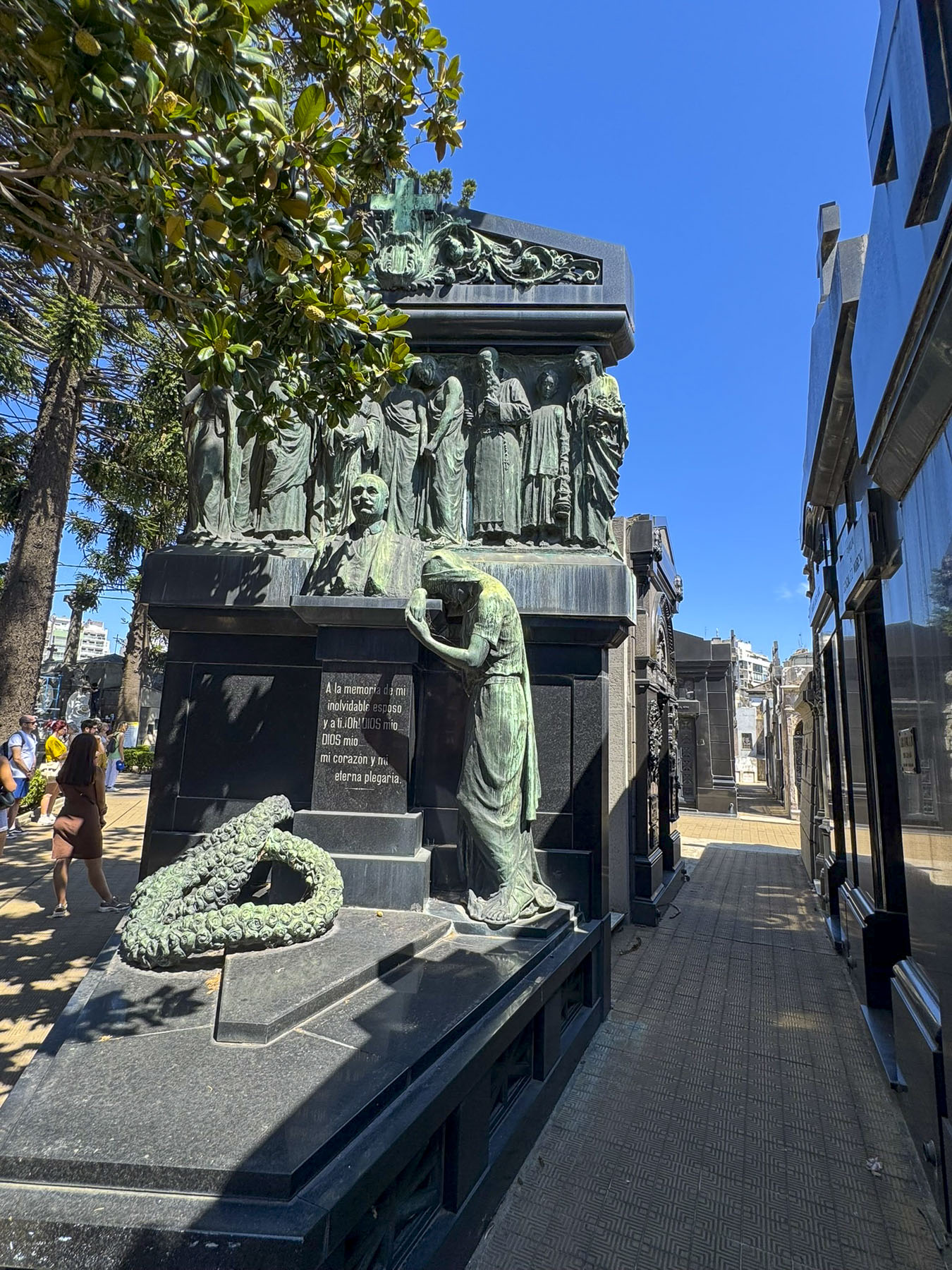
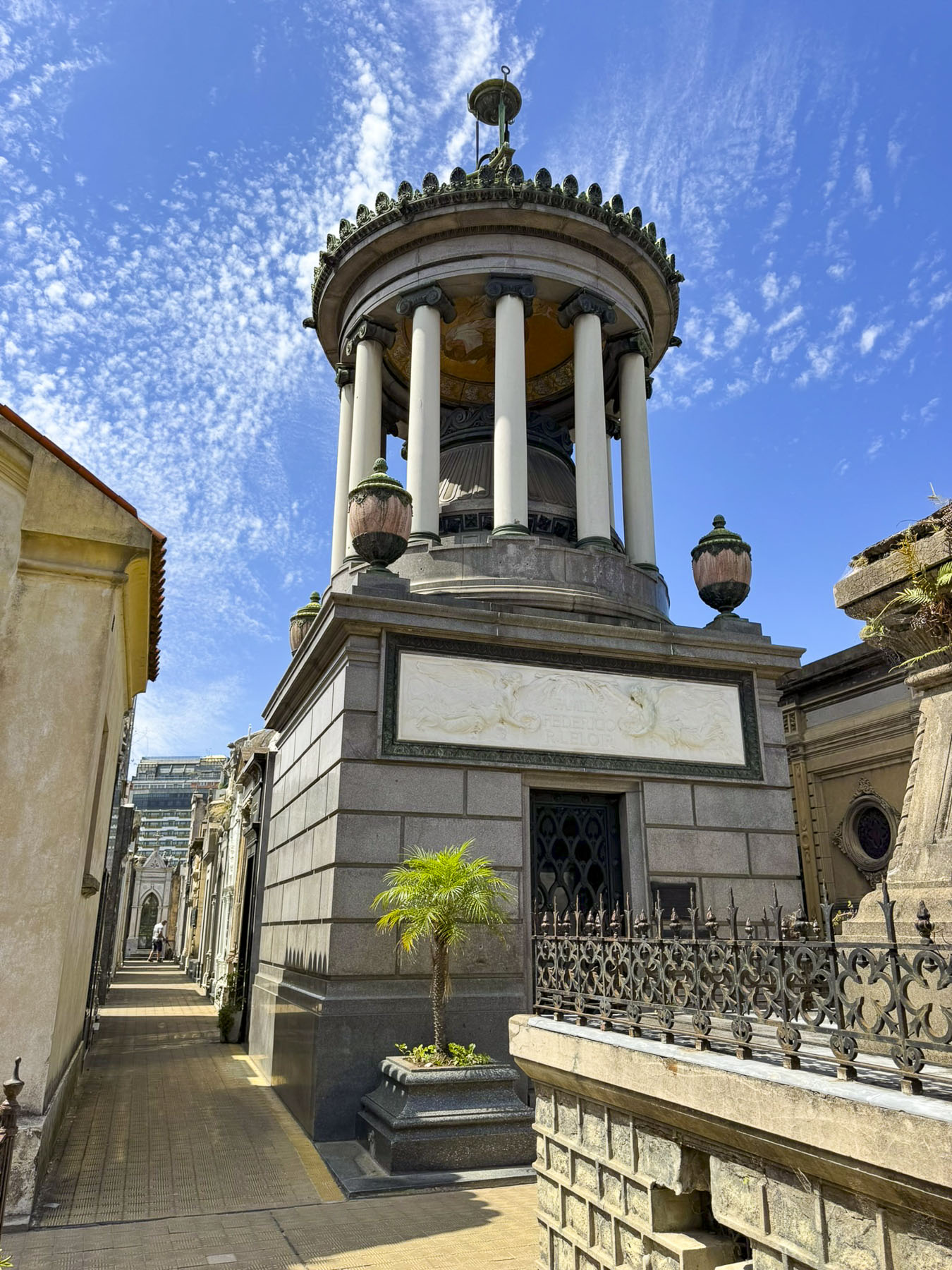
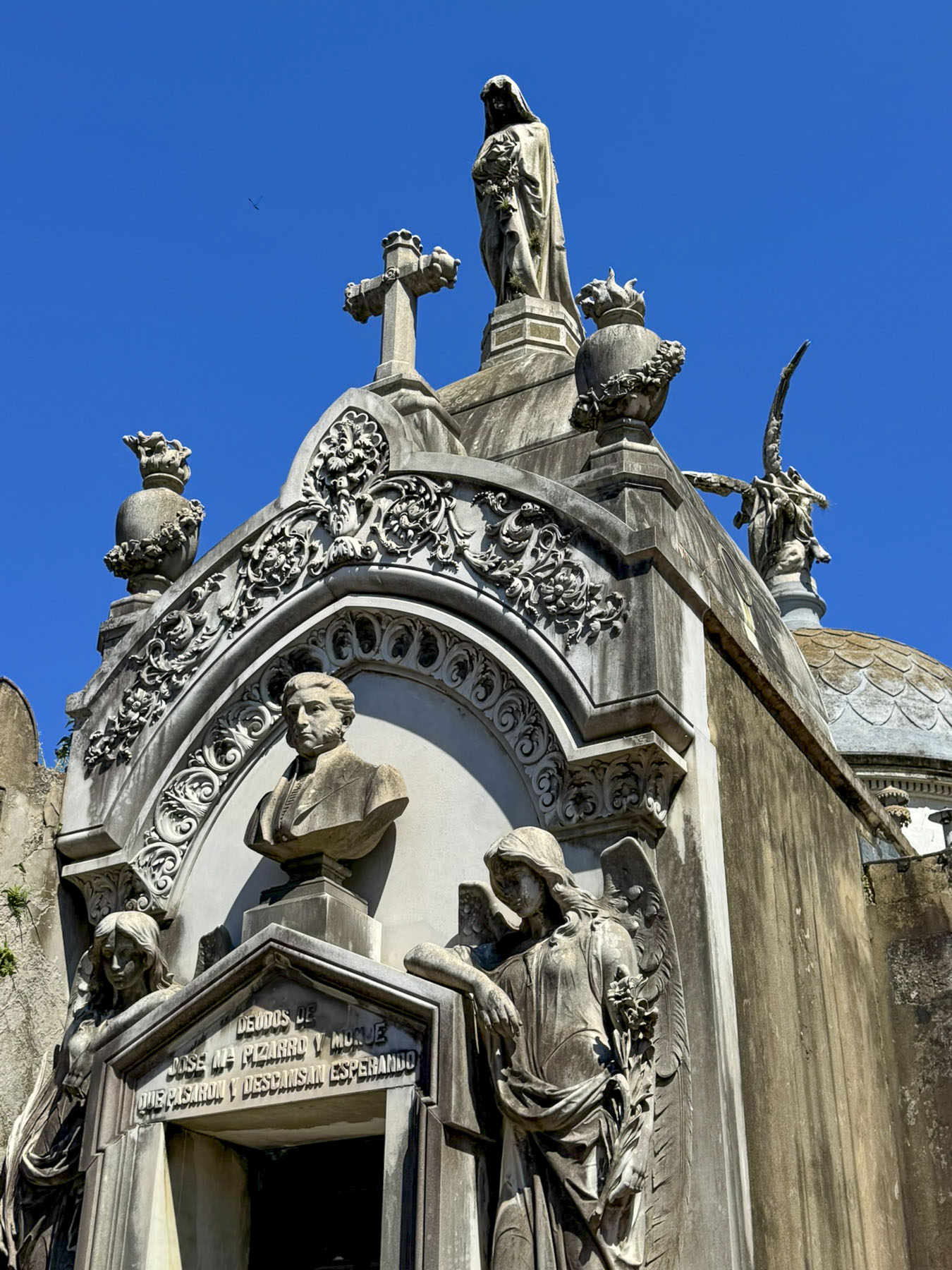
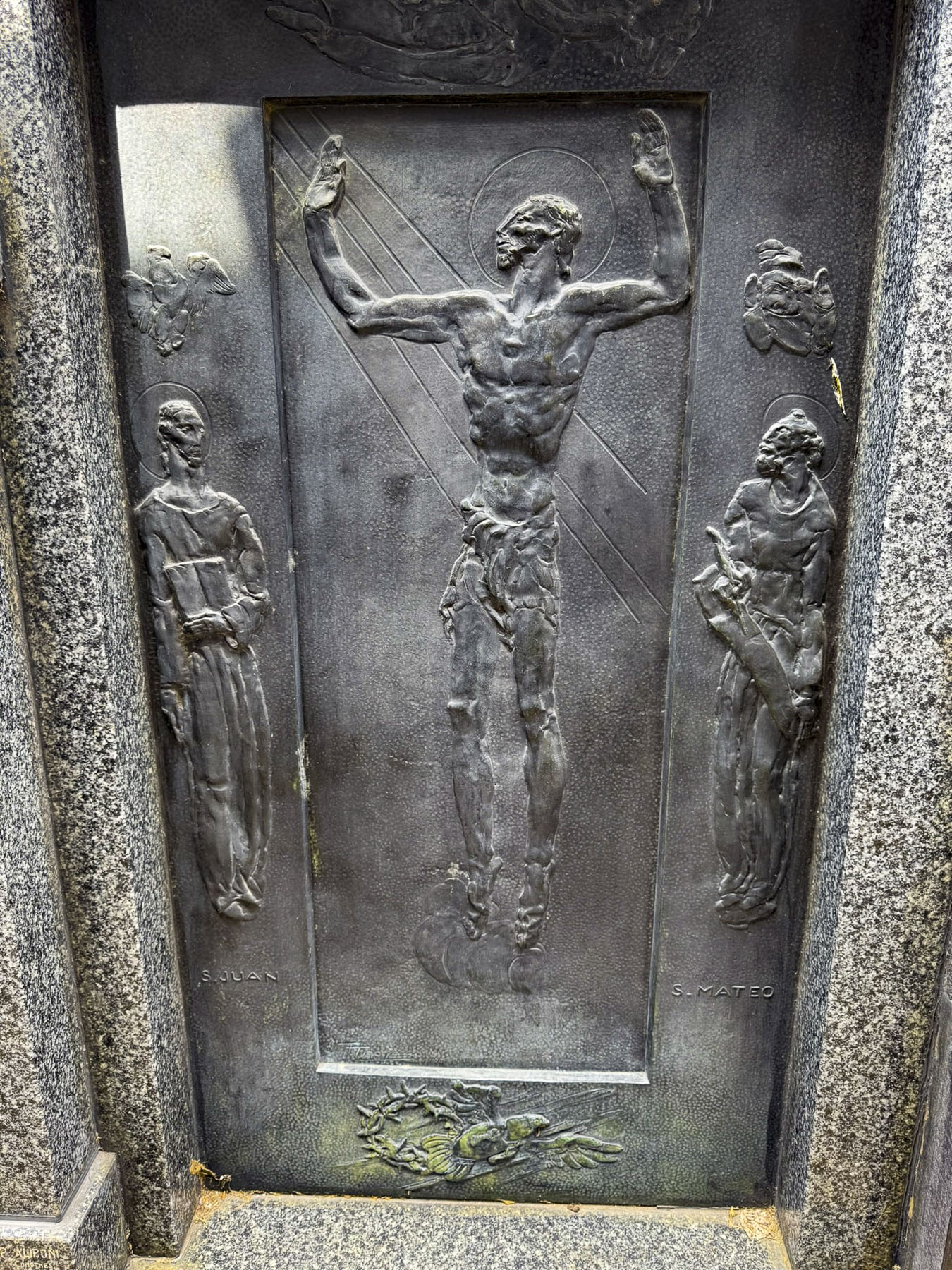
That afternoon we timed our visit to the Cementerio de la Recoleta after the surge of the morning’s tour buses had departed. It’s a huge cemetery with a labyrinth of narrow passages through the grand mausoleums of Buenos Aires’ who’s who of notable citizens and wealthy families.

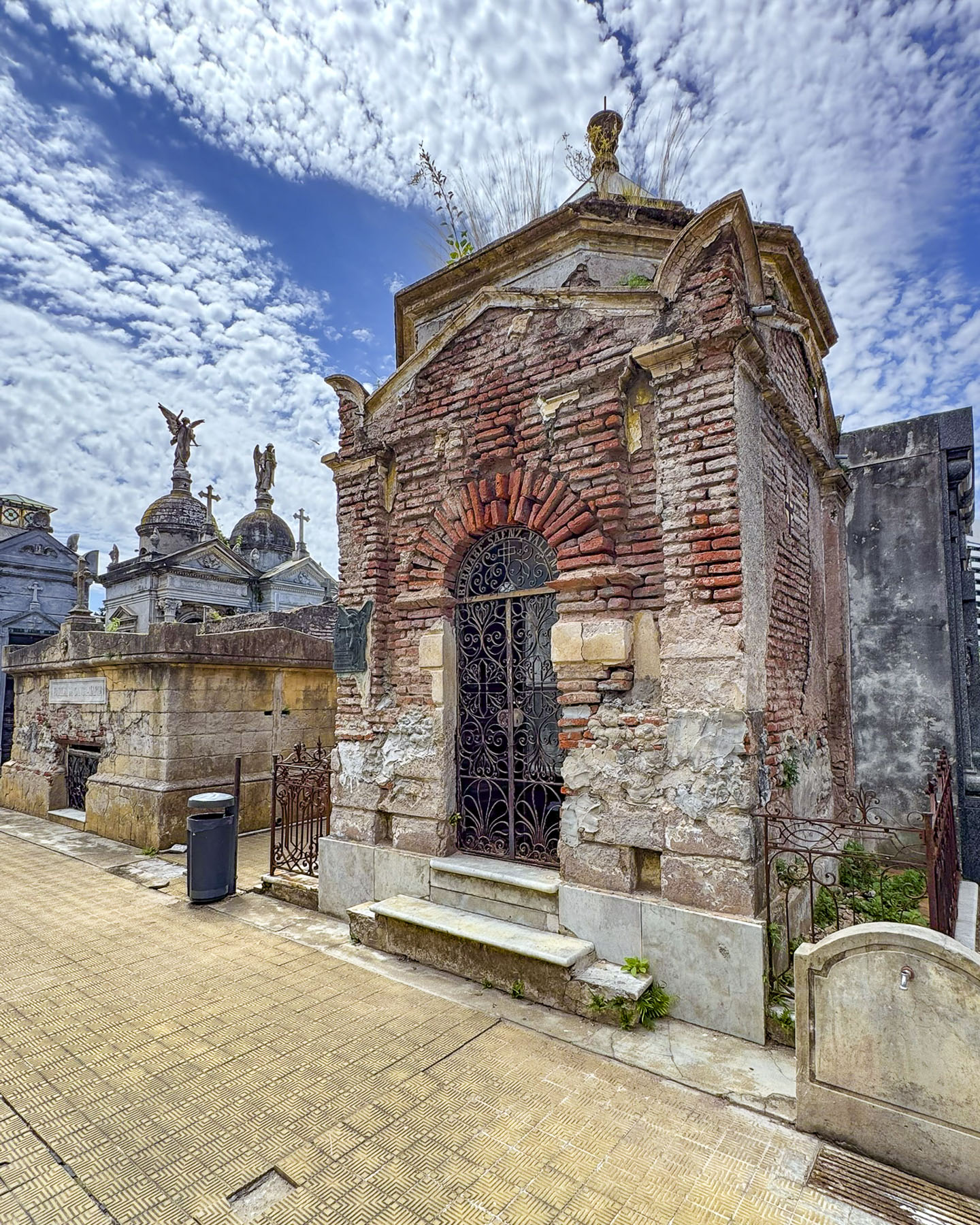
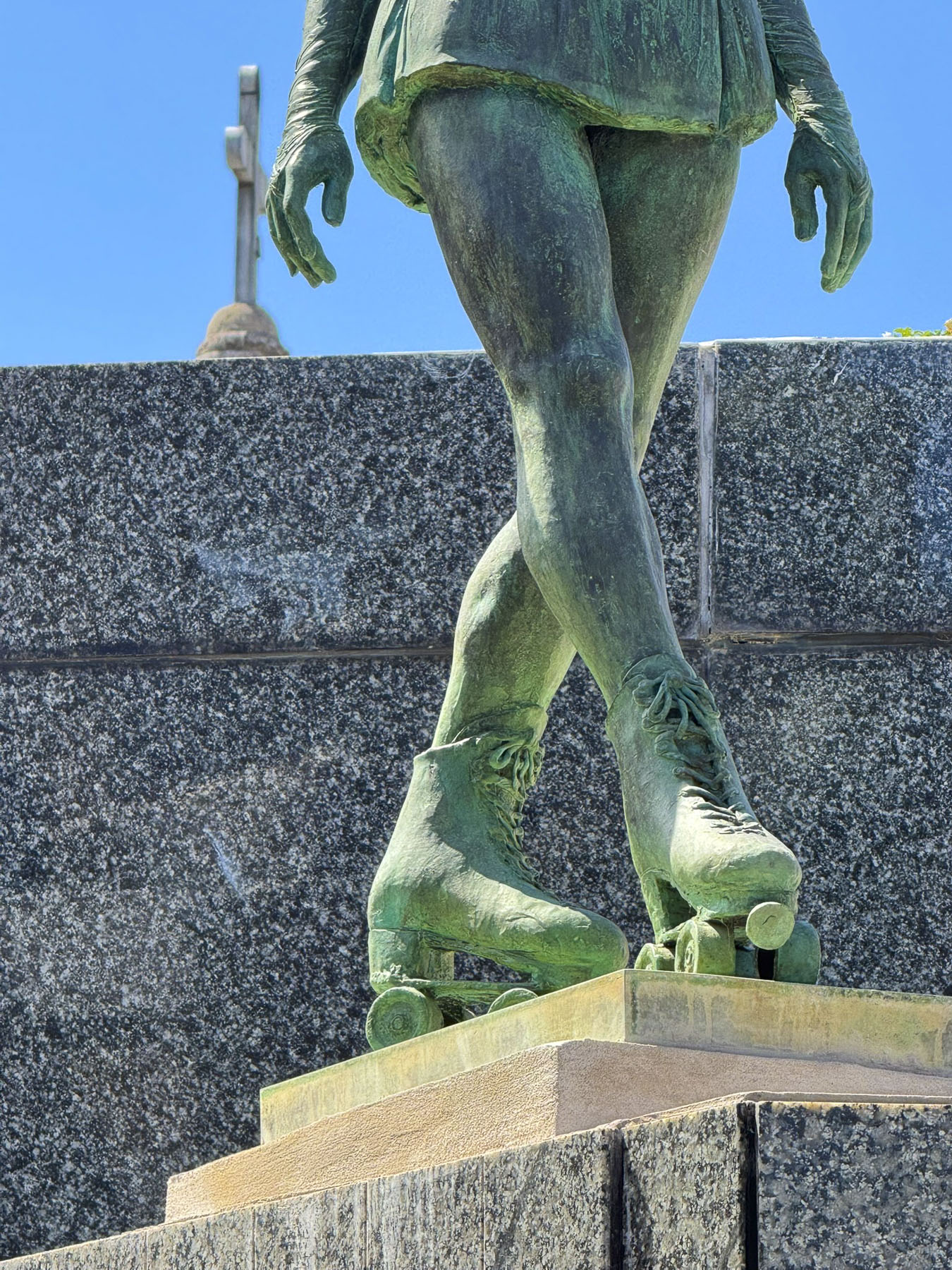
Some were very well kept, while others were under renovation, and a number appeared forgotten, with their doors broken and façades crumbling, as if the family line had ended or a once great fortune had been lost. One was highlighted by a whimsical statue of a woman roller skating atop her own tomb.

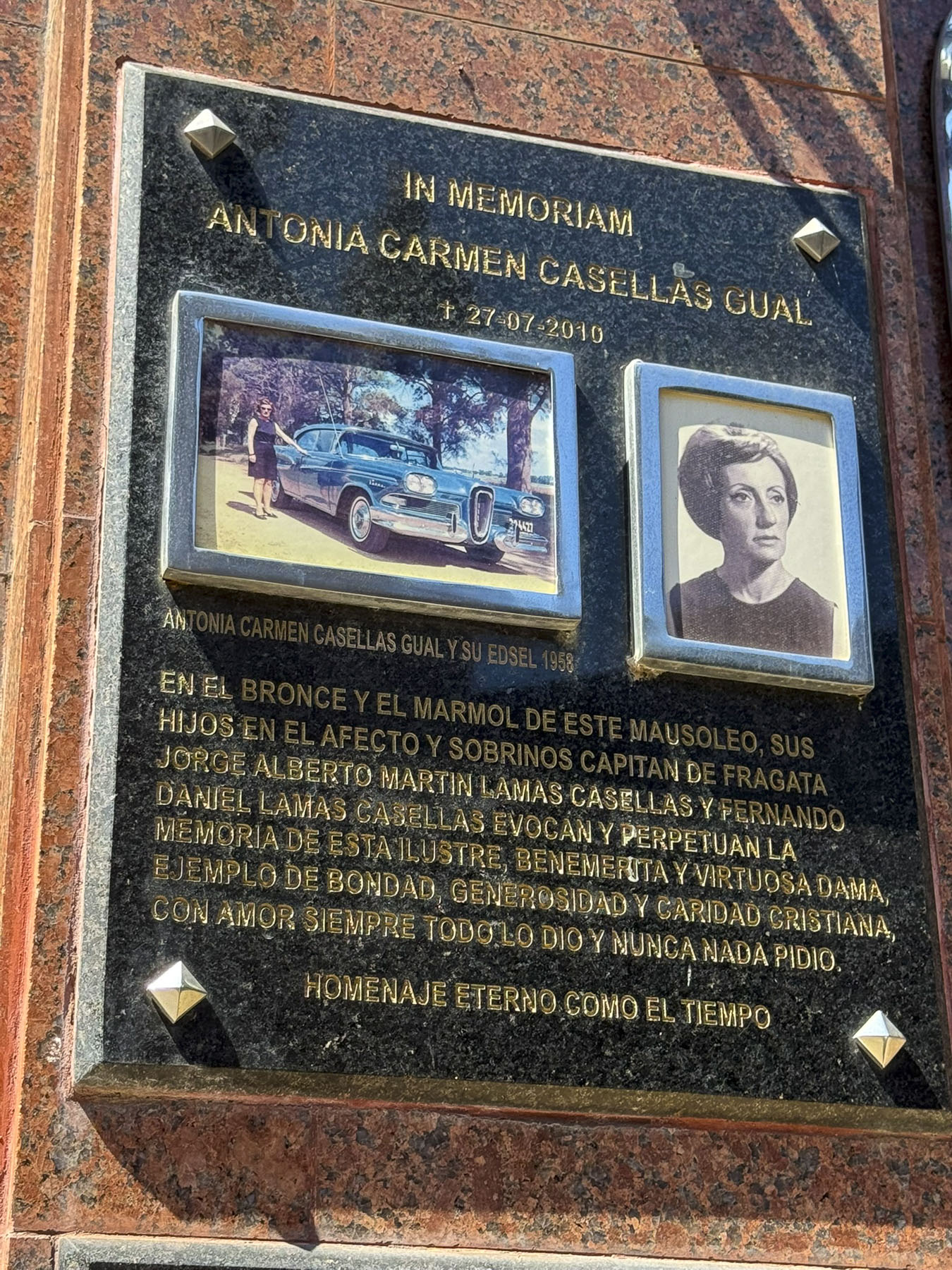
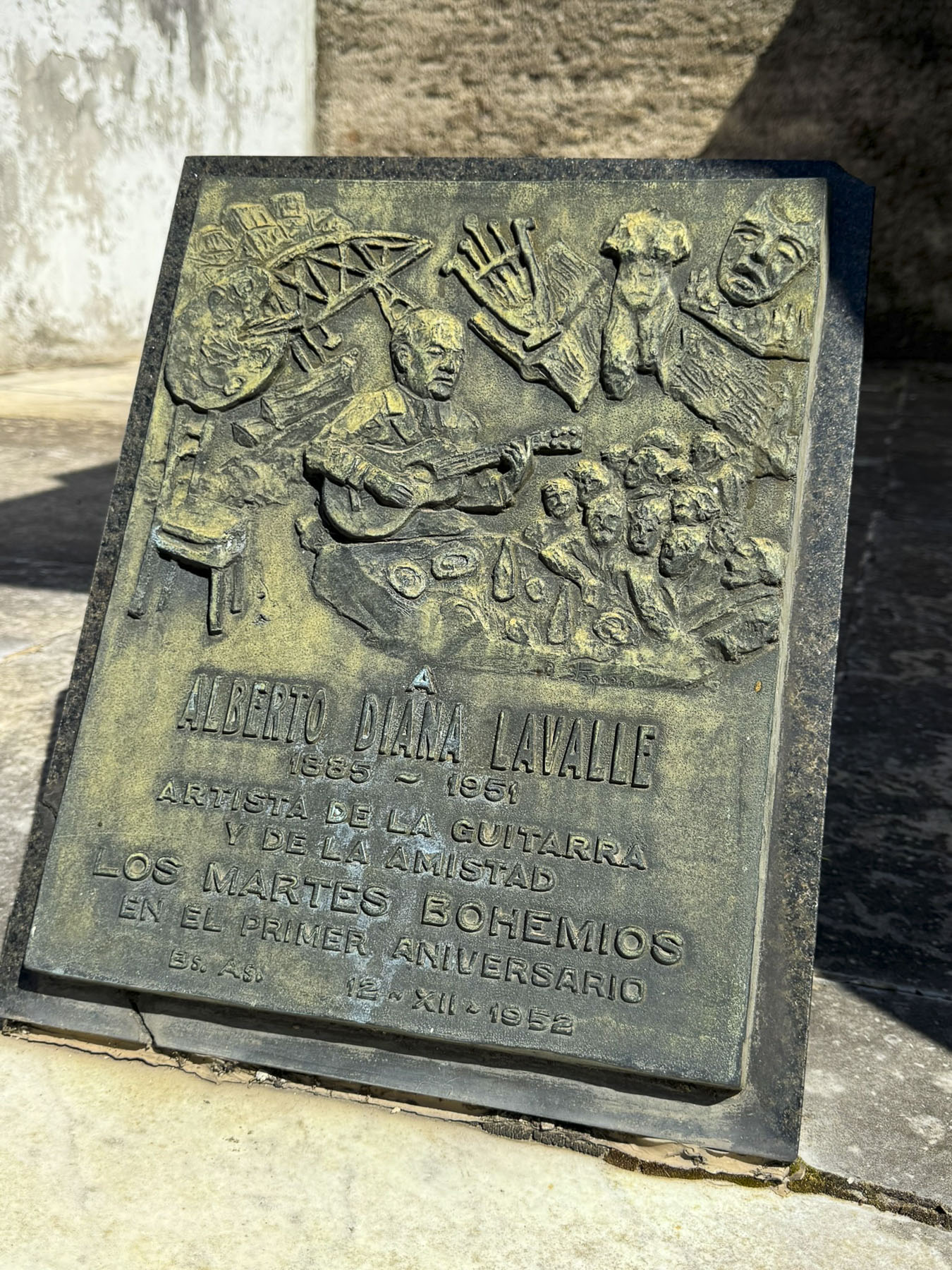
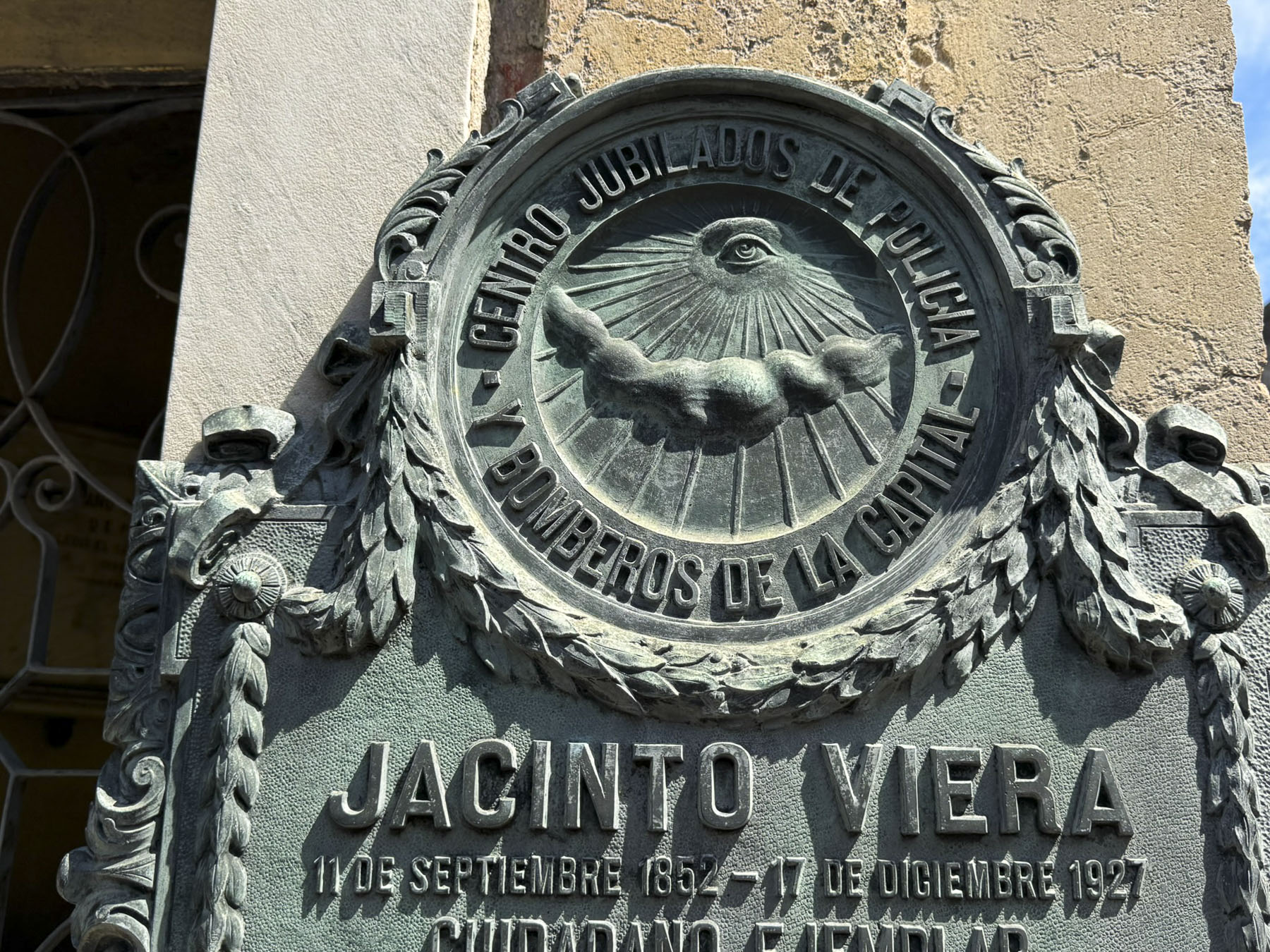
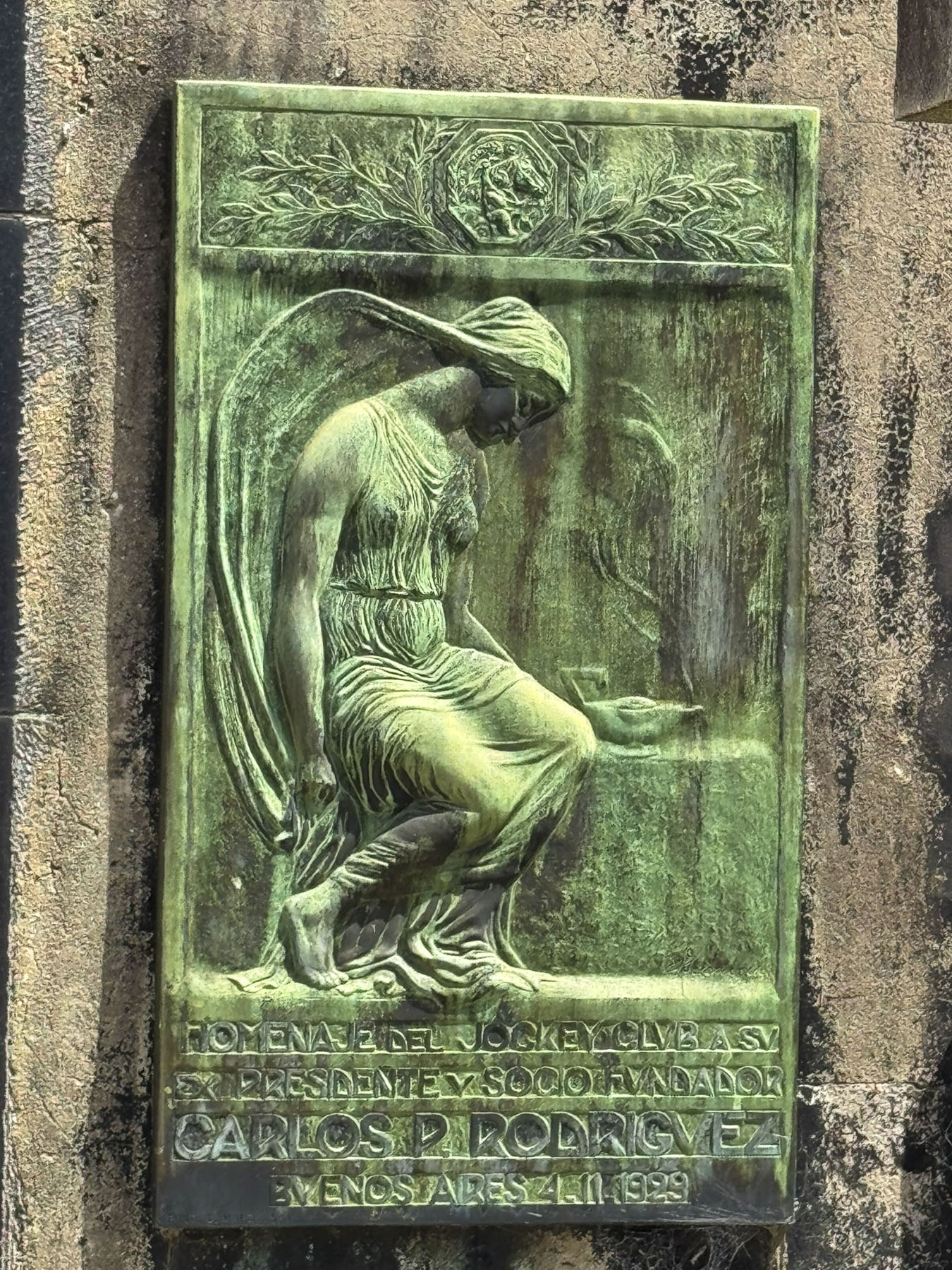
Many had small bronze plaques attached to the side of their tomb, hinting at the deceased’s illustrious career. Several had death masks protruding from the side of their mausoleums. The first one we happened across suddenly as we rounded a corner, and the very life-like stone face protruding from the side of a tomb, literally scared the wits out of me.

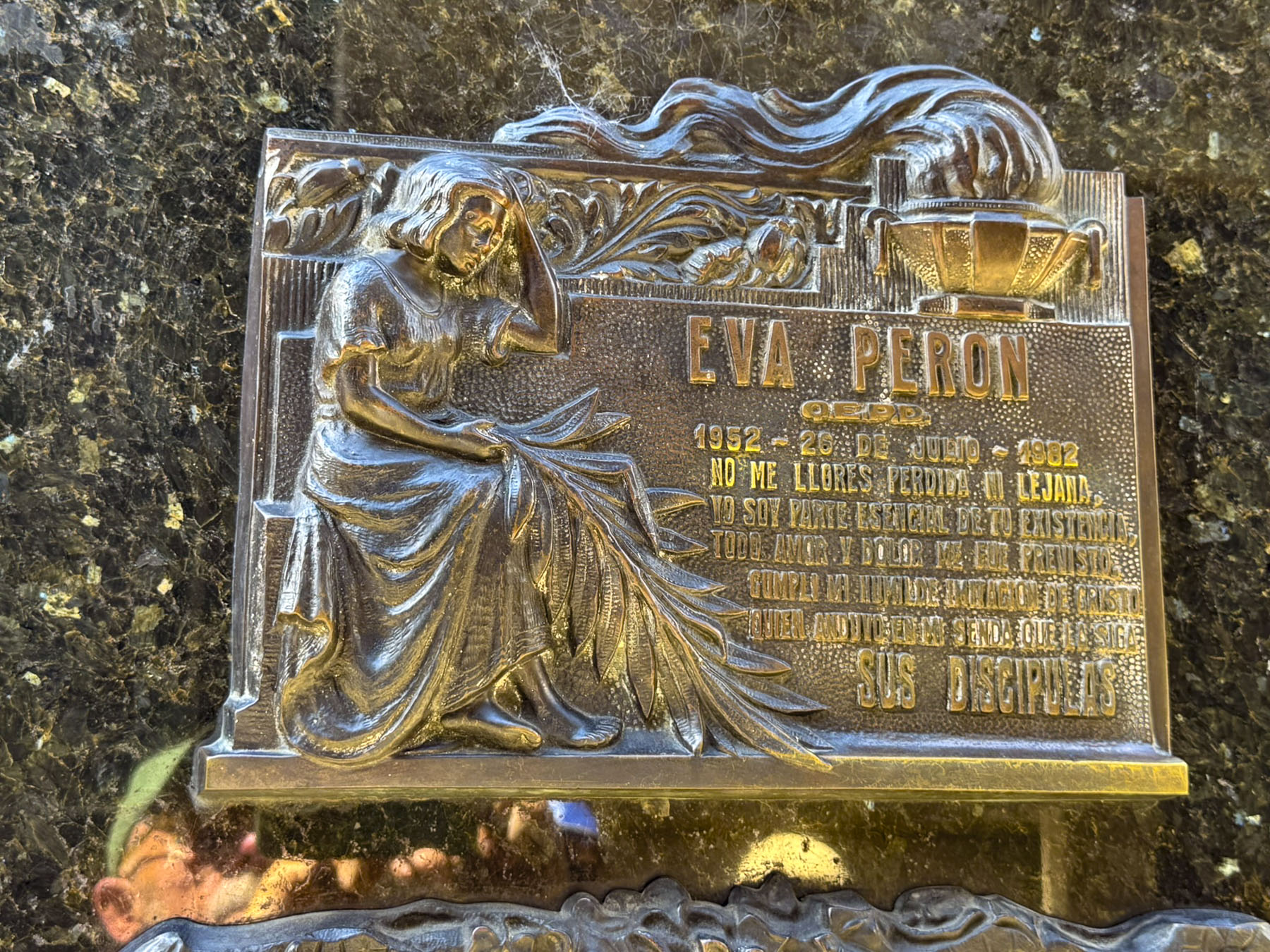
Surprisingly, Evita Peron’s tomb was one of the simplest structures. Immortalized since the Broadway musical “Evita,” by Andrew Lloyd Webber and Tim Rice opened its curtain in 1976, and the following 1996 movie starring Madonna, folks have been intrigued by the controversial legacy of Eva Duarte. It is the rags to riches story of a poor country girl, the illegitimate daughter of a wealthy rancher, who moved at the age of 15 to Buenos Aires and found fame as a radio and film actress, which resonated in the barrios of the “Paris of South America.” She found love at the age of 26, marrying 48-year-old Colonel Juan Perón, in 1945, two years before he was elected President of Argentina.

Passionate and combative, as Argentina’s First Lady she used her influence to champion social justice and worker’s labor rights, and was endeared to the less fortunate who saw her as the voice of the people. Her early death at the age of 33 from cancer saddened the nation and calls were made for her canonization. Flags across the country flew at half-mast for ten days. Blocks around the Presidential Palace were filled with mourners, and an estimated 3 million people watched the horsedrawn caisson carry her coffin through the streets of the city during her state funeral. Her embalmed body in its glass coffin was displayed for two years in her office in the Ministry of Labor building, as plans for a memorial that was taller than the Statue of Liberty were made.

After a 1955 military coup Juan Perón fled to exile in Spain, and the new military dictatorship secretly disappeared Evita’s corpse for 16 years. First it was secreted away in various locations across Buenos Aires until one “officer mistakenly shot his pregnant wife while guarding the corpse in his attic.”  The military dictatorship then enlisted the “covert help of the Vatican” to hide her body away in a crypt in Milan, Italy’s famous Cimitero Monumentale, for 16 years under a false name. In protest “Where is the body of Eva Perón?” was spray painted on walls all across Argentina.

In 1971, Evita’s body was exhumed and flown to Spain where Juan Perón and his third wife allegedly kept the “coffin on display in their dining room.” In 1973 Peron returned to the Presidency of Argentina, with his third wife as Vice President, but died a year later. The saga continued to get weirder when an anti-dictator revolutionary group, the Montoneros, “stole the corpse of General Pedro Eugenio Aramburu, whom they had also previously kidnapped and assassinated,” to use as a bargaining chip to get the third Mrs. Peron to return Evita’s body to her beloved country. Subsequent governments have gone to great lengths to secure Evita’s hopefully final resting place, in a subterranean tomb with trap doors and false caskets to deter grave robbers, within her father’s Duarte family mausoleum in Cemeterio de la Ricoleto.

Across the street was the Gomero de la Recoleta – Árbol Histórico, a majestic 225-year-old rubber tree planted in 1800. Over the decades its huge buttress trunk has grown to support a 50m (164ft) wide canopy, with tree limbs so long that wooden poles and sculptures are needed to support their weight.

Behind it, we found a reprieve from the hot February afternoon, and an early dinner at Bartola, which served an excellent lemonade, and has pleasant décor along with a rooftop terrace.

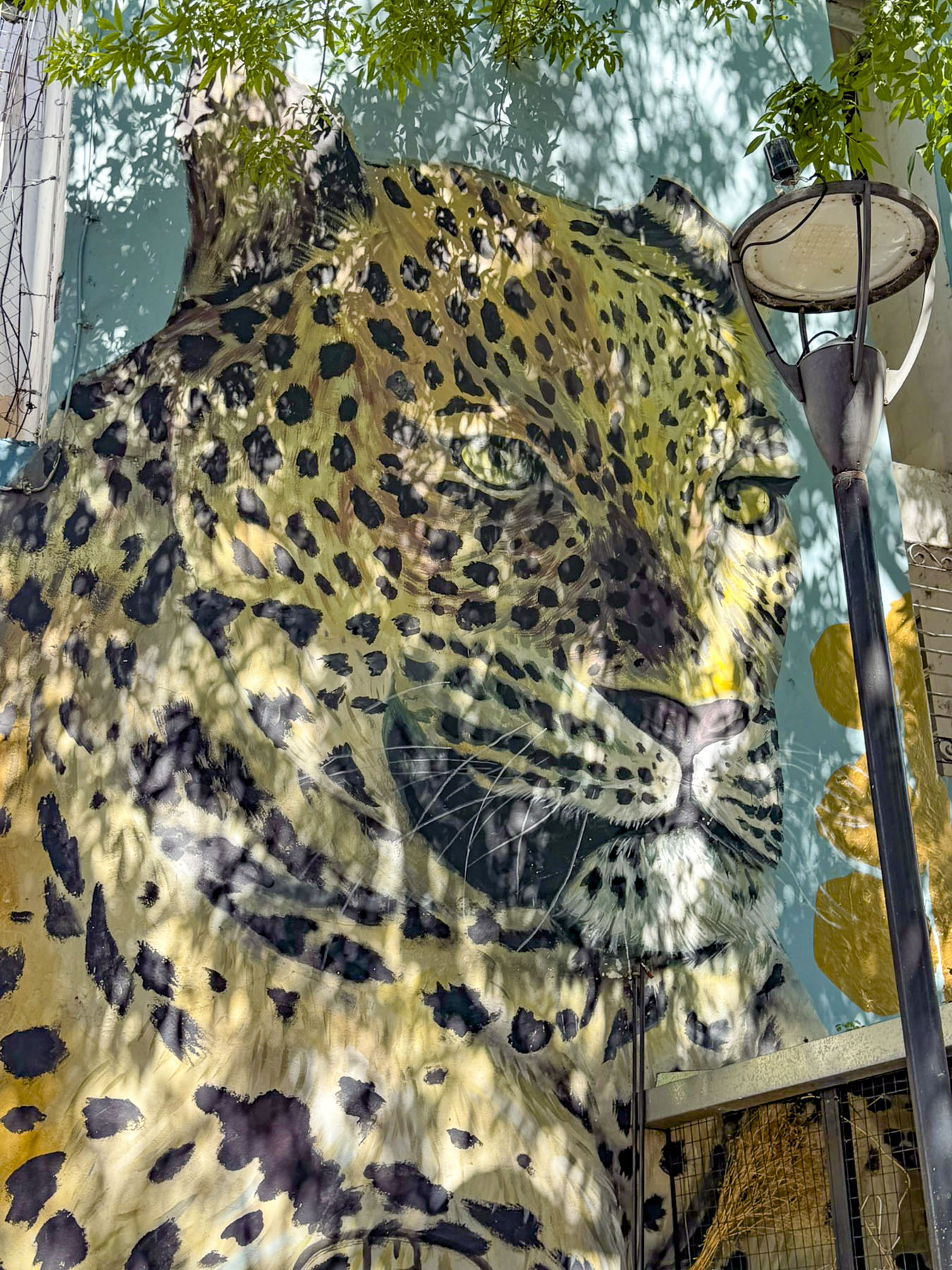
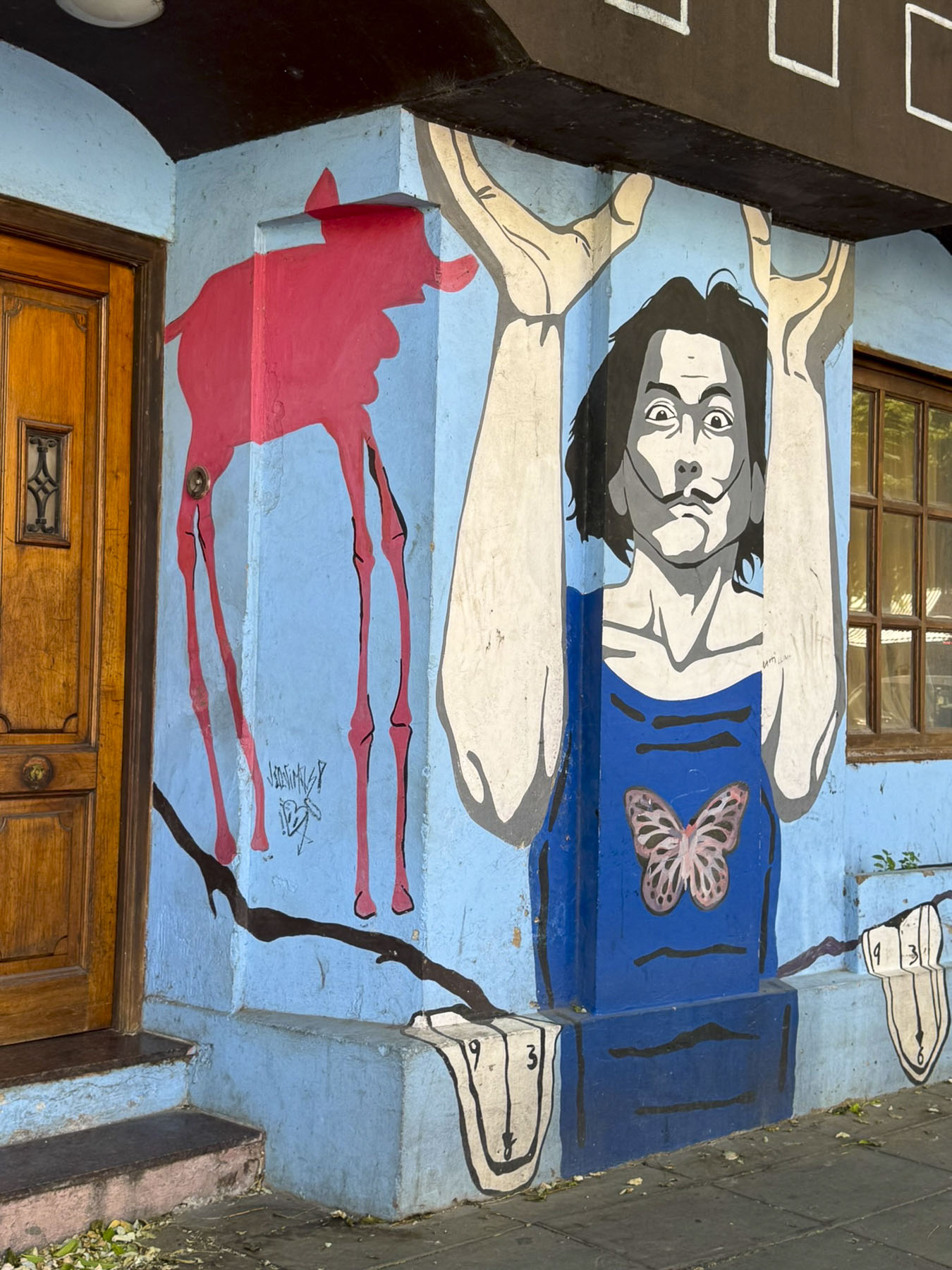
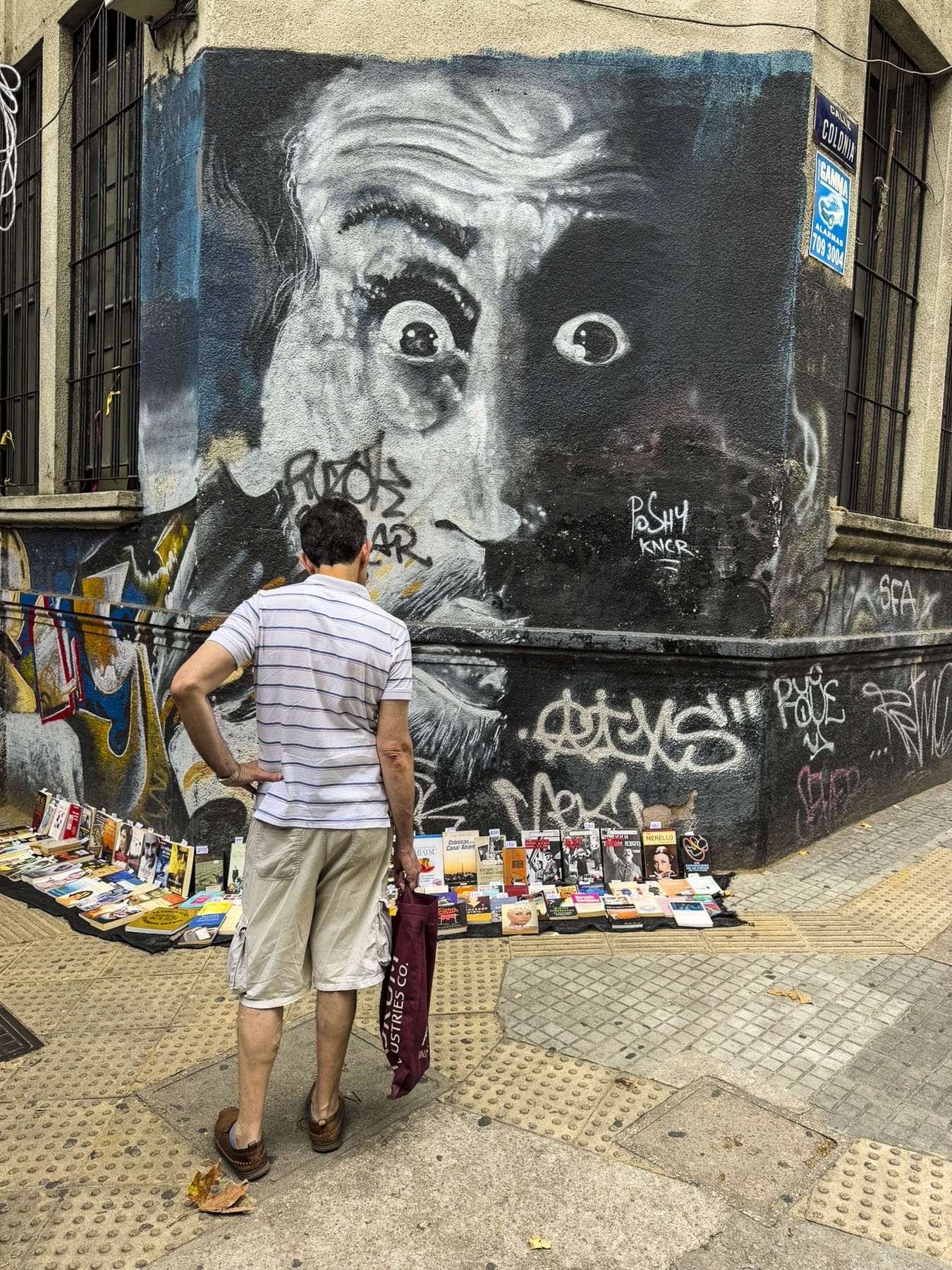
Buenos Aires is full of interesting street murals, and we spent the next morning wandering about searching for them.

That afternoon, after exploring farther afield from our hotel, we took a rideshare across the city to La Boca, a colorful neighborhood that is also the location of La Bombonera stadium, home of the world-famous Boca Juniors football club, the team on which some of Argentina’s legendary football players first played. Our route eventually took us below the elevated portion of Rt1 amidst a forest of concrete pilings painted with a vast array of creative street murals in an area named Silos Areneros. We found the area intriguing, but a tad sketchy, so we kept going.

La Boca was originally Buenos Aires’ first port at the mouth of the Riachuelo River, as it flows into the Río de la Plata. It has always been a bustling working-class neighborhood, “filled with all kinds of people, dockworkers, fishermen, musicians, prostitutes, thieves, socialists, anarchists, and artists.” But it grew substantially with the arrival of new immigrants in the 1800s and early 1900s.  Hastily constructed tenements called conventillos were built with galvanized metal walls and roofs and brightly painted with whatever left over colors were available from the shipyards, in an effort to cheer up the area.

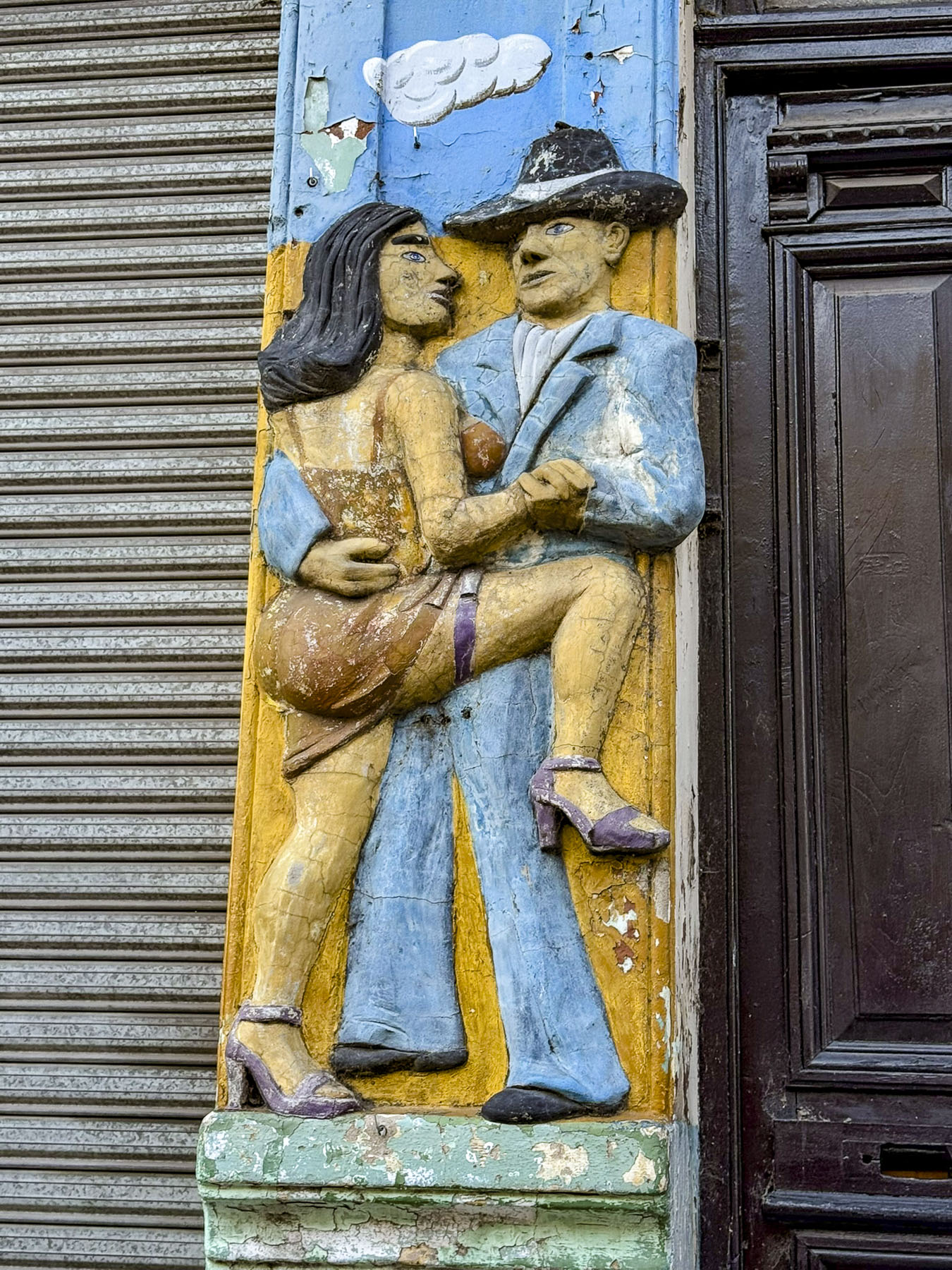
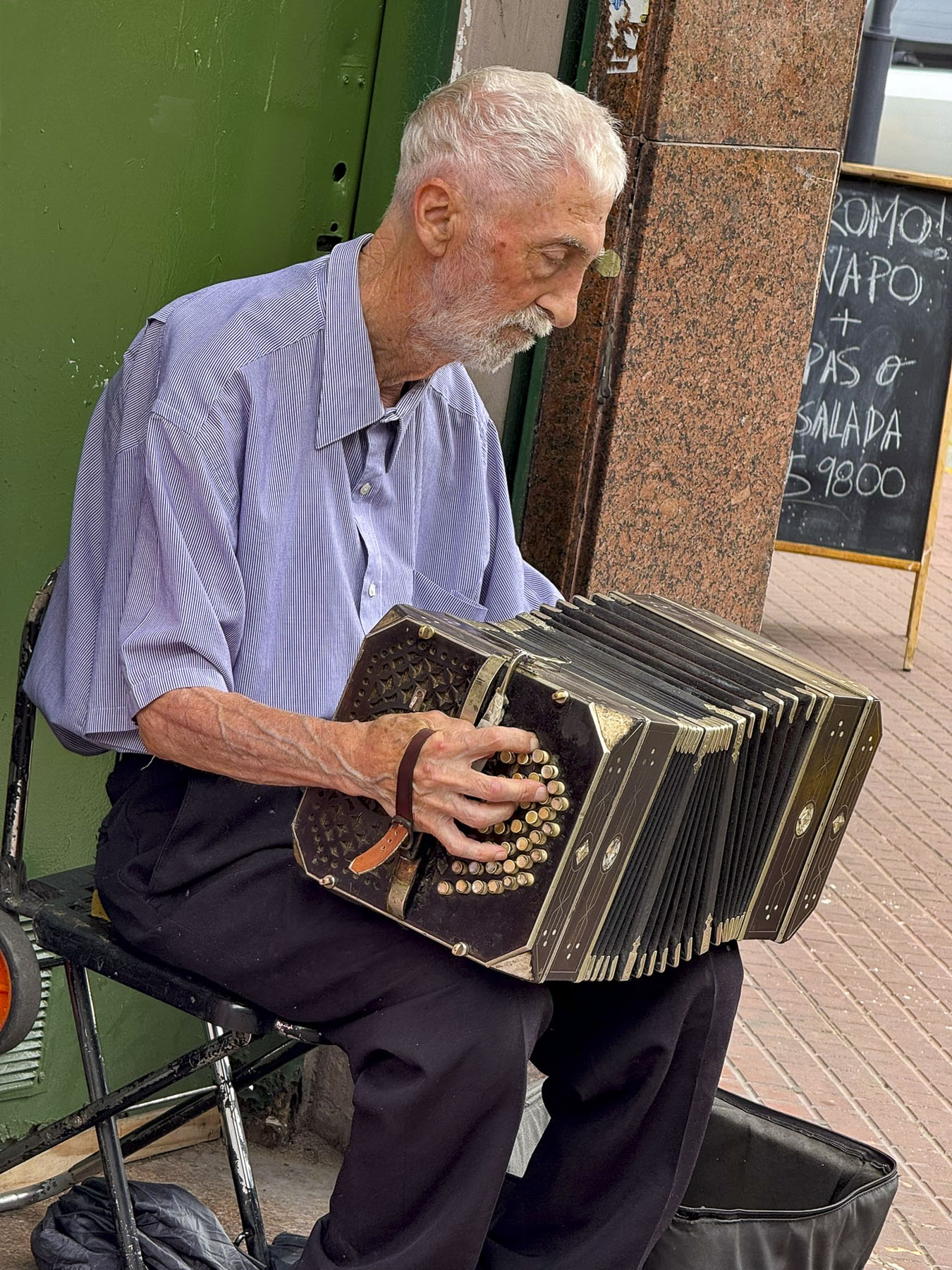
La Boca is one of the city’s vibrant neighborhoods where tango originated on its streets during the hot summer months and was perfected in the bars along Caminito and Magallanes during winters of the late 1800s.

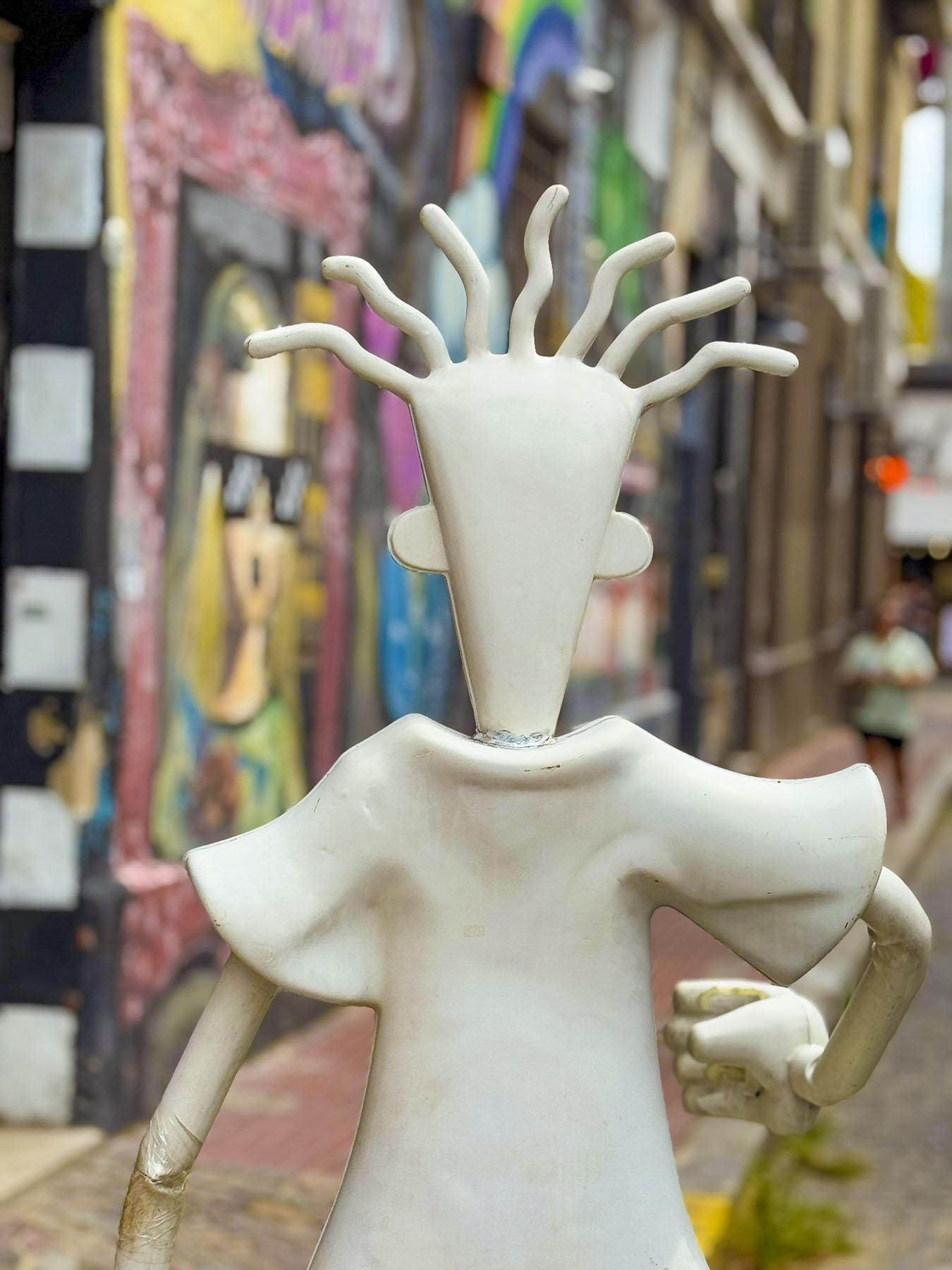
Today, satirical figures adorn many of the balconies along Caminito and the adjacent streets, and poke fun at politicians, rival football teams or celebrities. Though we think you need to be Argentinian to fully appreciated the humor behind them.

A mural at the end of Caminito commemorates the Bomberos Voluntarios de La Boca (La Boca Volunteer Firefighters), Buenos Aires’ first fire brigade, formed in 1884.

Sadly, we found the wonderfully colorful area was oversaturated with cheap tourists’ shops heavily devoted to everything football, especially Lionel Messi’s #10 blue and white football shirt, which was available everywhere.

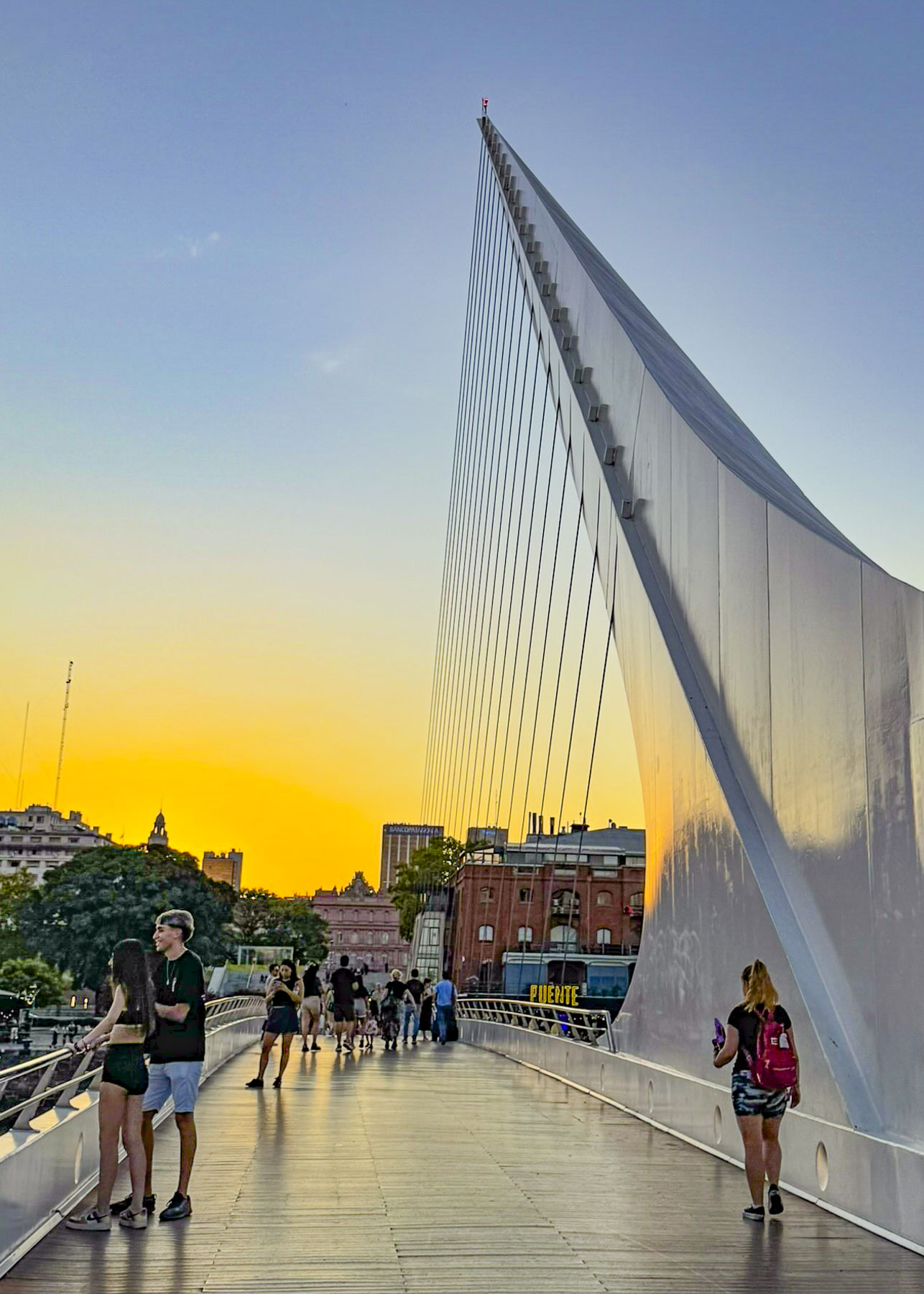
Afterwards we headed to the dockside area of Puerto Madero. Built in the late 18th century the port helped support Argentina’s economic growth during WWI and WWII as the country’s beef and food stocks were sent to a war-torn Europe. But the viability of the port declined as the size of merchant ships became larger and containerization took hold, until eventually the port was abandoned for many decades. A masterplan for the port’s redevelopment was realized in 1989 with plans to renovate some of the old warehouses along one side of the quay into restaurants and shops, while land on the other side would be developed into a mixed-use area of offices and residential towers, with the two sides connected by pedestrian-only bridge.

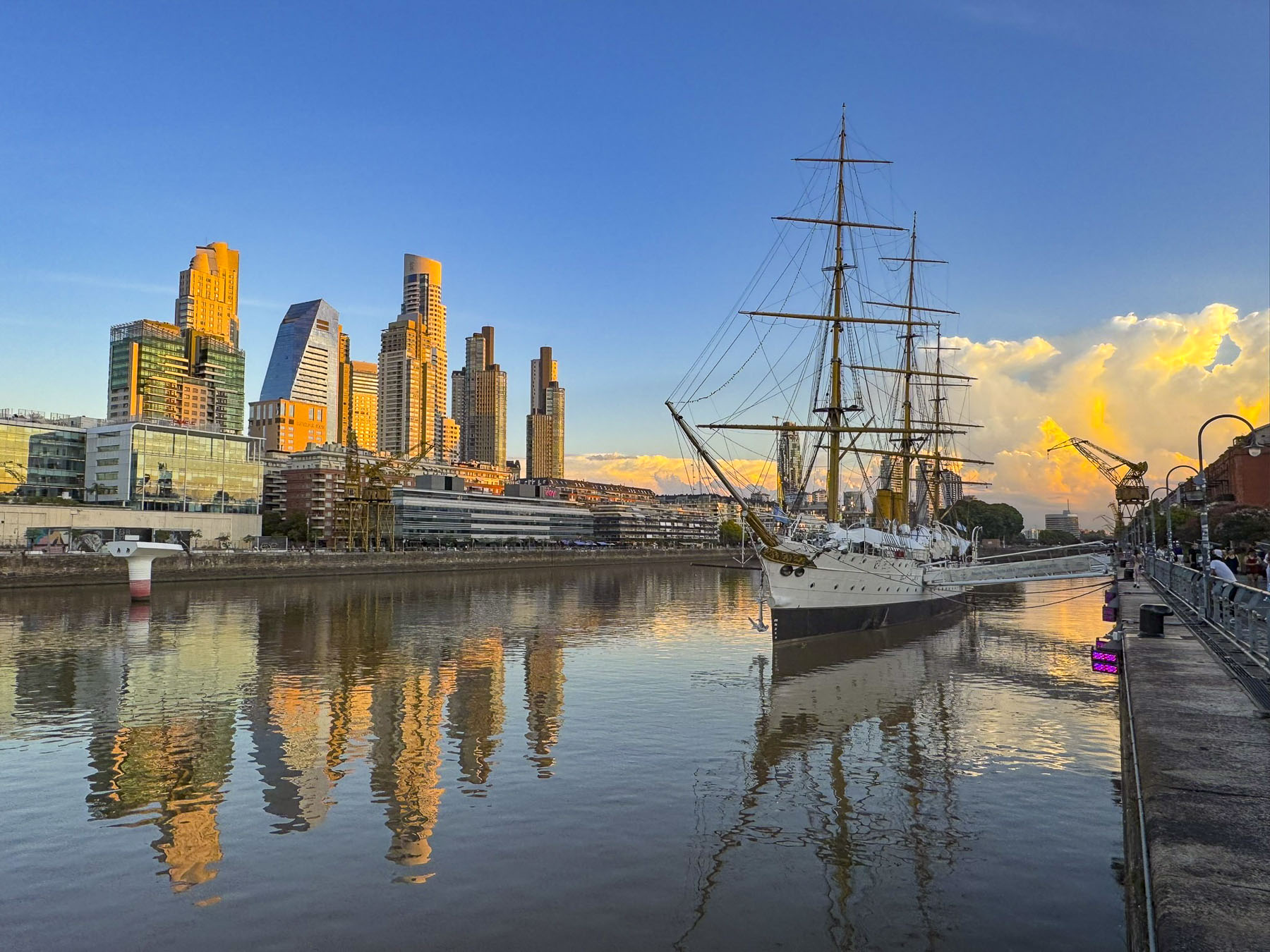
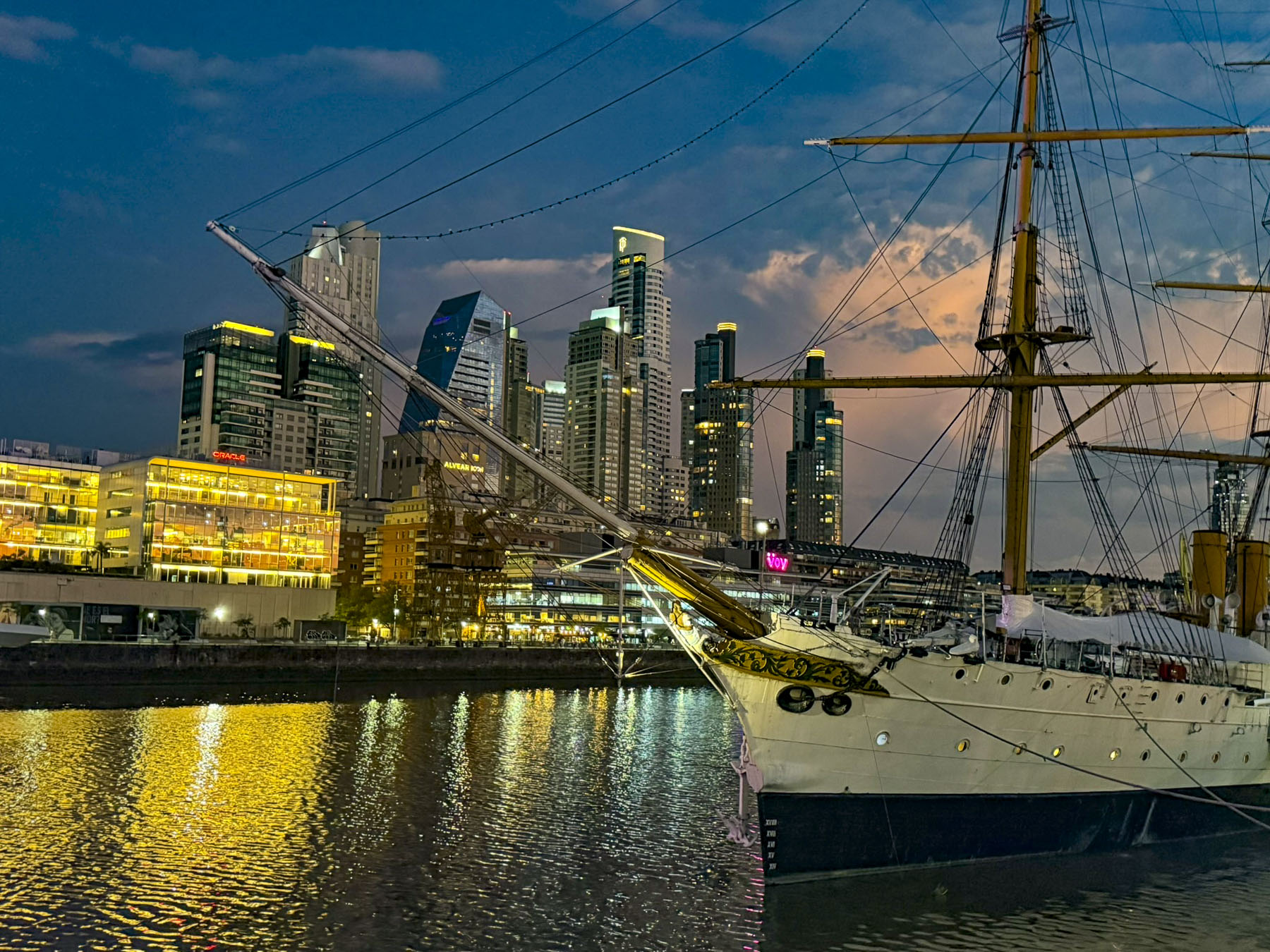
The redevelopment along the Puerto Madero waterfront was a great success and created a strikingly beautiful, new waterfront neighborhood. Its reflective skyline and restaurants along the old docks continue to be destinations for both locals and tourists. Us included! It was a great place to people watch as folks strolled along the quay and over the footbridge. Towering cumulonimbus clouds glowed with golden light, as the sunset silhouetted the “Presidente Sarmiento,” an old three-masted sailing ship that is now a nautical museum.

We both grew up in the suburbs of New Jersey and worked in New York City for a while, but living in Manhattan never appealed to us. It wasn’t until we started traveling and experienced living in some foreign cities through short-term rentals that we grew to appreciate the vitality that city life offers.

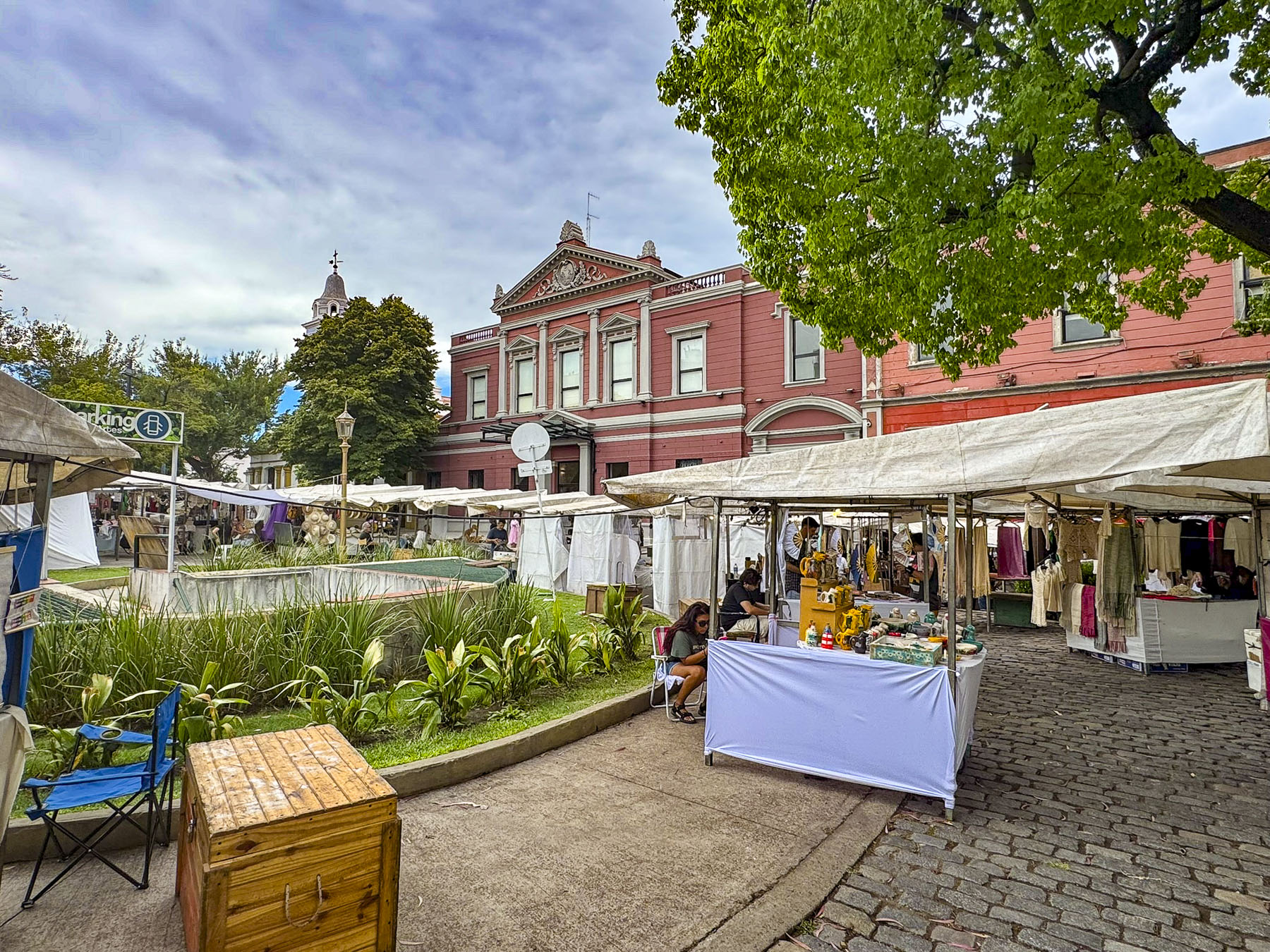
Mysteriously, overnight the Parque Intendente Torcuato de Alvear in front of the historic Centro Cultural Recoleta building was transformed into a sprawling art and crafts festival, that to our surprise happens every Saturday and Sunday. Artisans’ tents and tables lined nearly every path through the sprawling park that was filled with folks shopping and buskers playing to the crowd. This was probably the best crafts market we’ve been to, as the quality and variety of items offered were very impressive. If our suitcases had been bigger we would have made lots more purchases.

For many years the Cultural Center was repainted frequently with colorful murals, which added a nice flair to its otherwise stoic facade. Sadly, this policy was discontinued in 2024, and the building is now covered in a monochromatic “Pompeyan Red.” The decision has received a mixed public reaction, but hopefully the verdict will be reversed in the future. The historic 1732 building was originally the convent of the Recoleto monks, for whom the Recoleta neighborhood is named, as well as part of Our Lady of Pilar Basilica, the second oldest church in Buenos Aires. Over the decades as the influence of the church waned after Argentina’s 1810 May Revolution the building was used as a hospital, military barracks, asylum, and an art school before being renovated into an exhibits and events space in the 1980s.  

That afternoon the tree lined blocks around Plaza Serrano and Plaza Armenia in the charming Palmero Soho neighborhood were so different from the high-rise towers of Recoleta, and reminded us of Barcelona & Madrid, with the wonderful mix of sidewalk cafés, along with trendy shops. Colorful street murals brightened many of the narrow alleys.

Across from Plaza Armenia we passed the Las Petunias restaurant which was full of lively diners at lunchtime.  But we continued our wanderings and returned around 15:00 when the restaurant was quieter, though there were still enough other people dining to make it a nice experience. We shared Los Tablones de Carnes for two. The grilled meats were excellent, and it was the best parrillada we had during our stay in Buenos Aires.

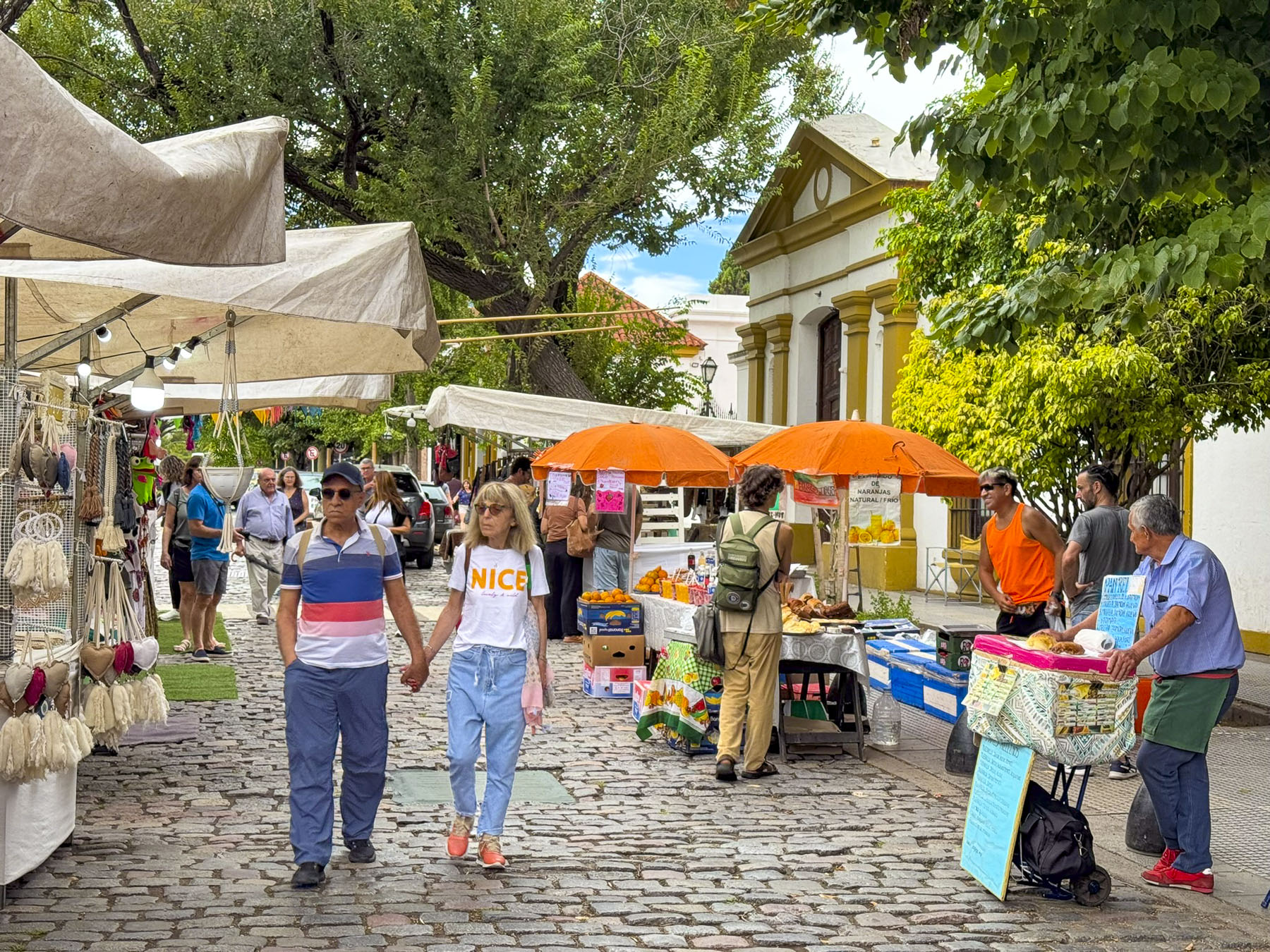
Sunday, we headed to the Feria de San Telmo, a weekly street fair that spans eleven blocks of Av. Defensa, a street known for its antique stores and art galleries. San Telmo is one of the oldest neighborhoods in Buenos Aires and has striven to retain its 19th and early 20th century character with well-preserved buildings.

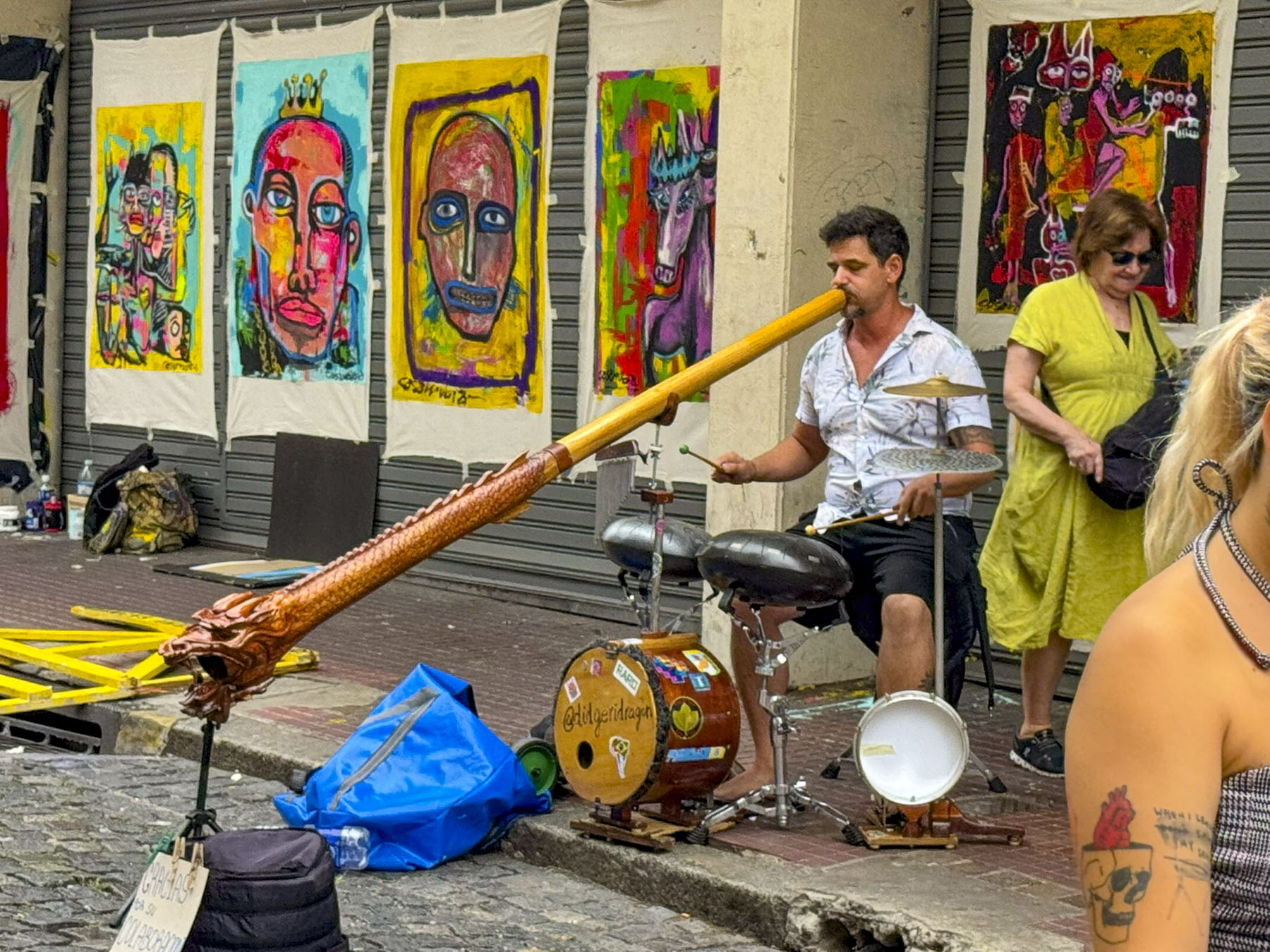
The street was full of activity, but the feira was really more like a flea market featuring clothing and everyday items with only a handful of artists’ and craftsperson’s tables mixed in between. Buskers worked the street corners, and a puppeteer dazzled a young audience. Occasionally a street mural graced a side street.

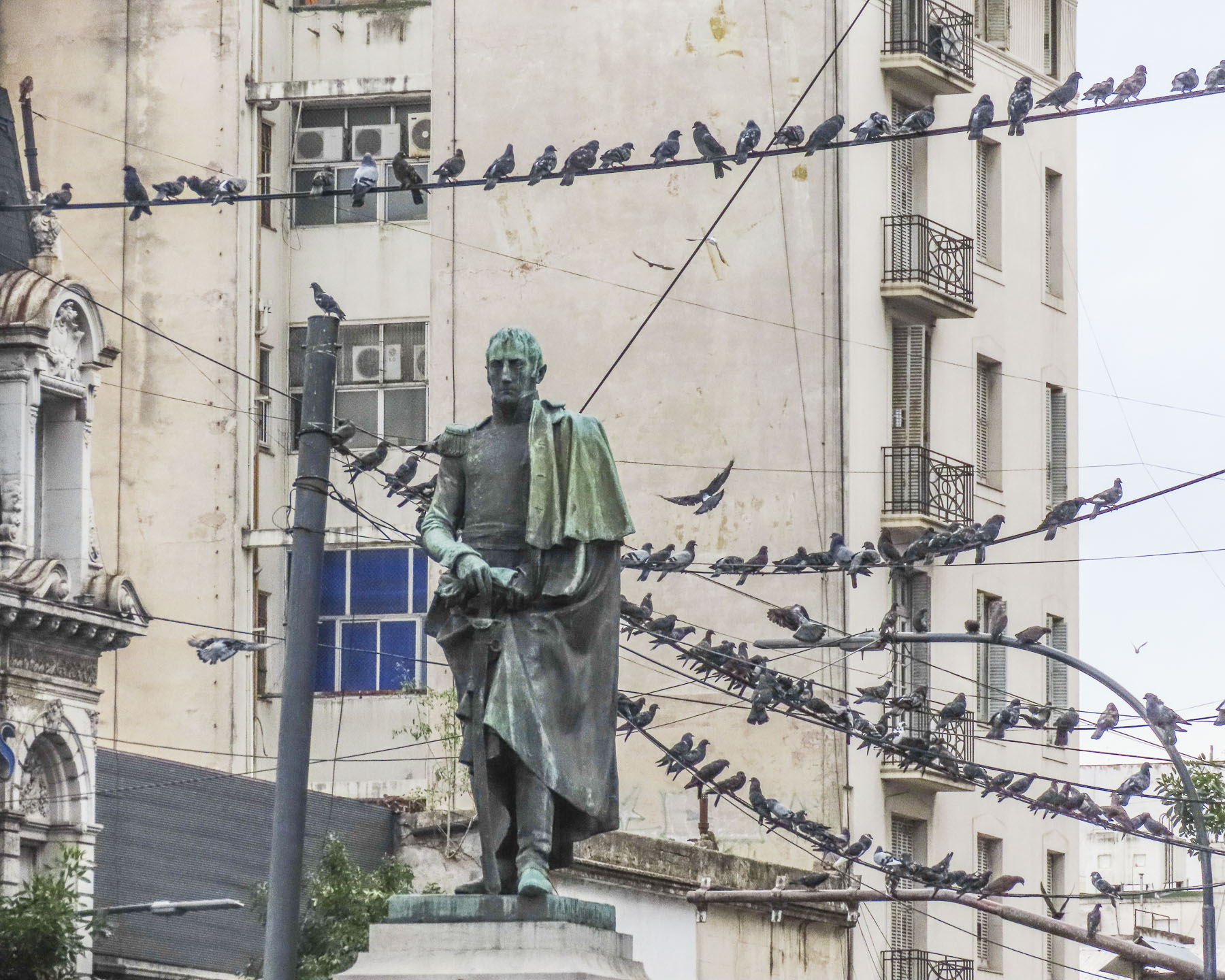
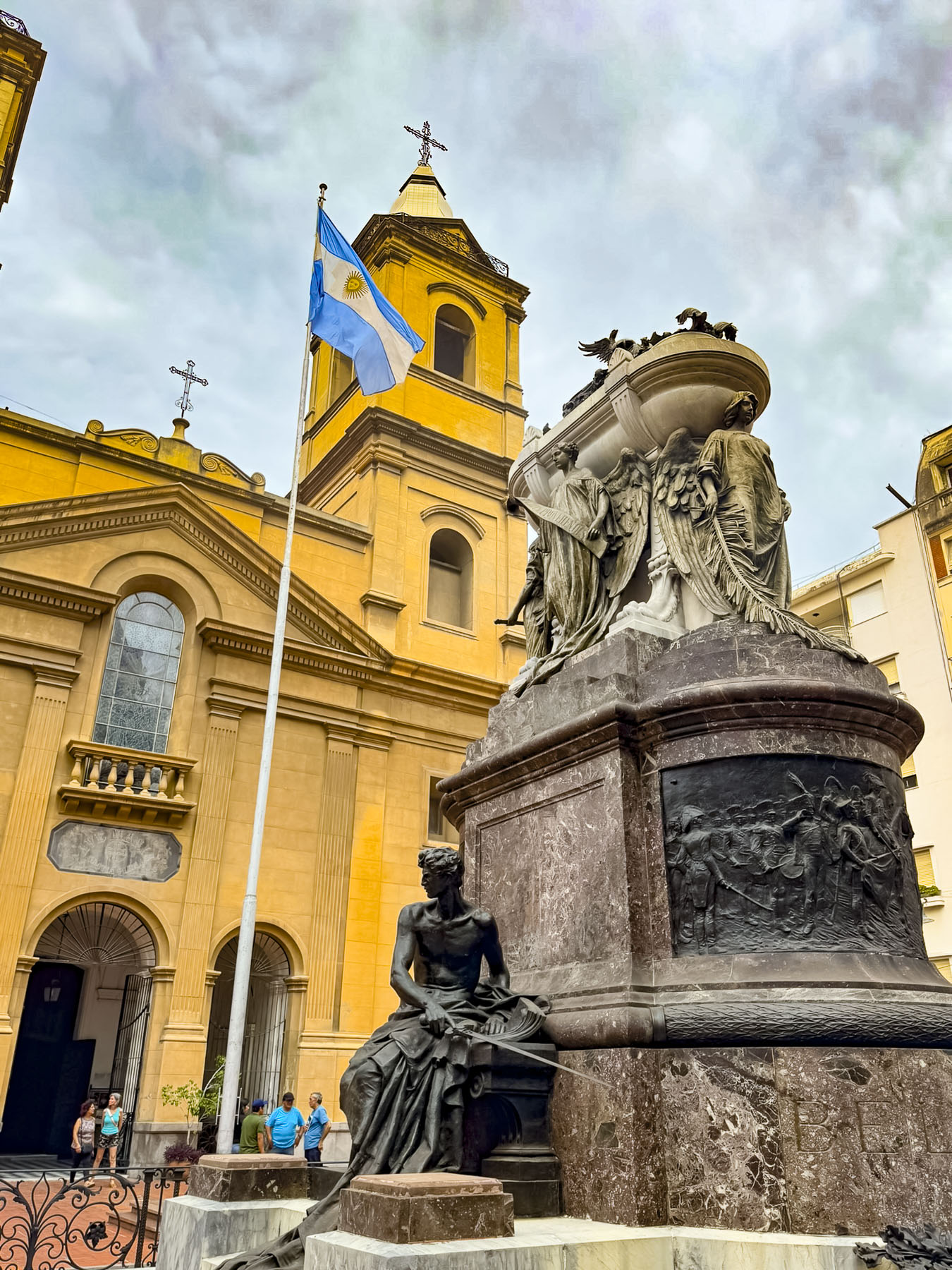
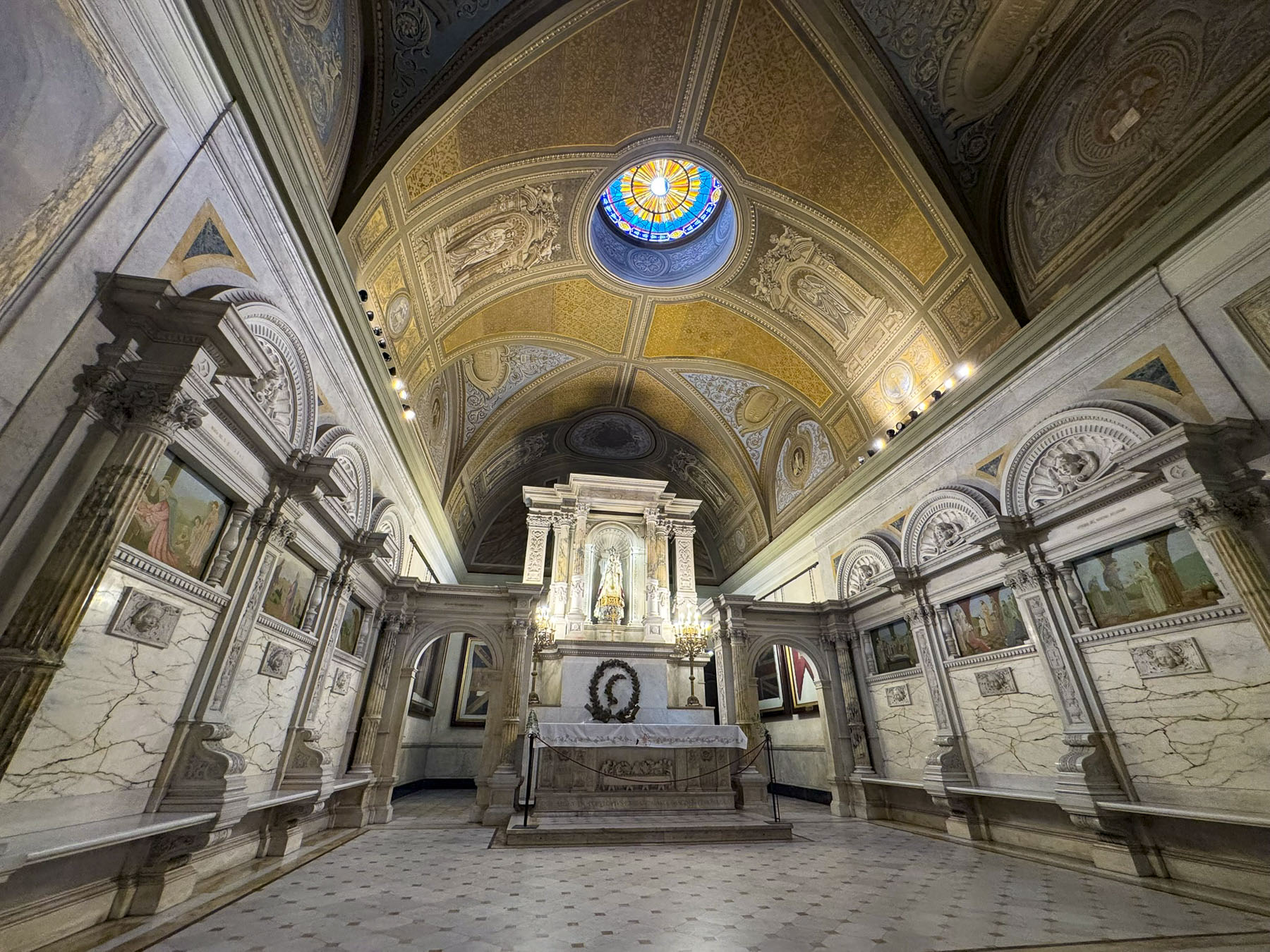
Along the way the ornate mausoleum of General Manuel Belgrano stood beneath the towers of Basílica Nuestra Señora del Rosario. The church was constructed in 1753 and British soldiers sought sanctuary here after a failed invasion of the city in 1807. General Belgrano was one of the founding fathers on Argentina’s independence and is also credited with designing the country’s flag.

The Mercado San Telmo was our destination for lunch. It is a cavernous hall set in an 1897 building that resembles a Victorian era train station with an ornate iron superstructure supporting a glass roof.  The hall’s traditional produce stands, butchers and bakers, now share the space with takeaway restaurants, and antique stalls. But it was crazy with activity on a Sunday afternoon, and we vowed to return if we had the chance. Instead, we ate at Havanna, a small café chain across Buenos Aires, that we had eaten at the day before in Palmero Soho, and enjoyed.

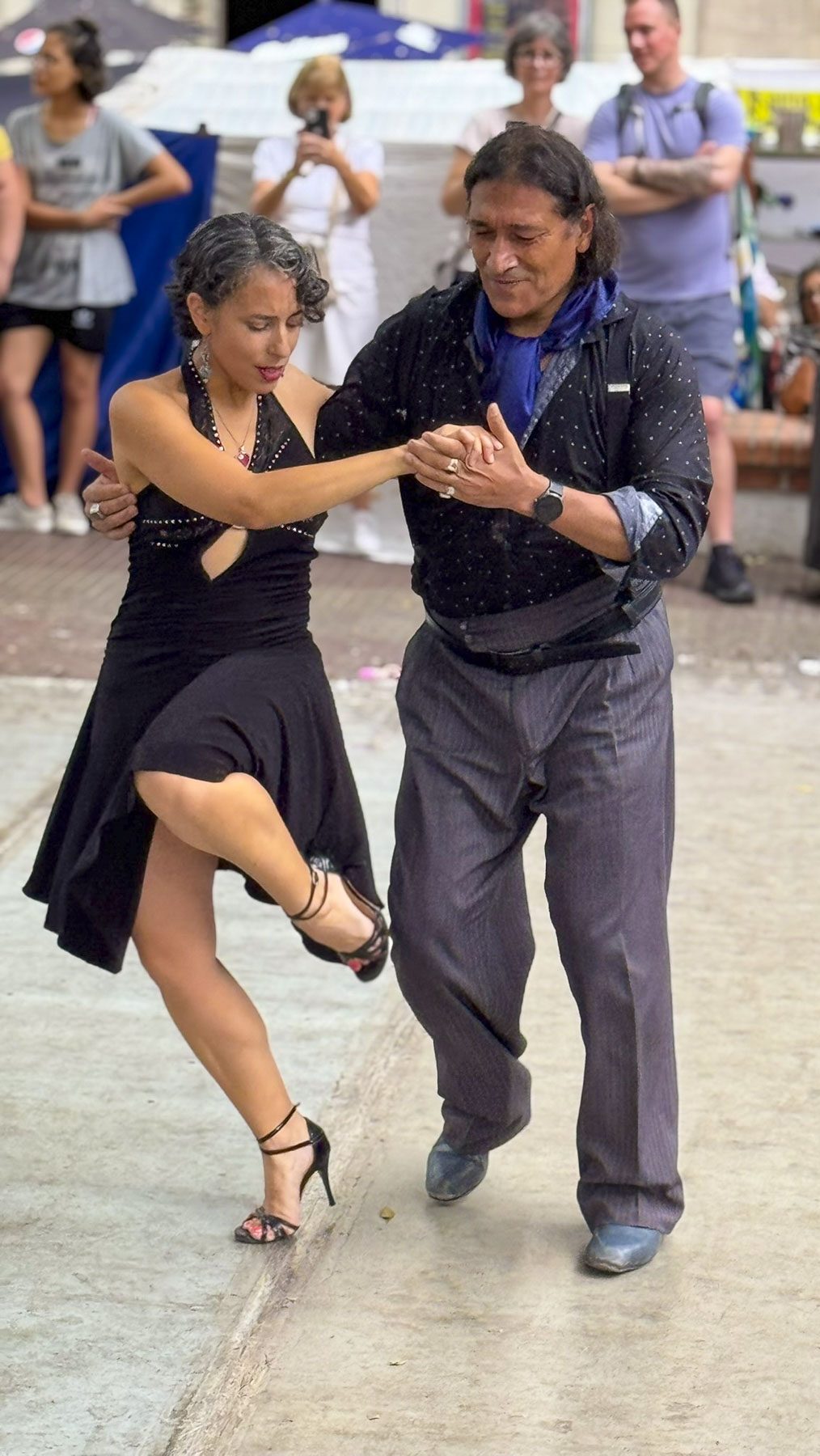
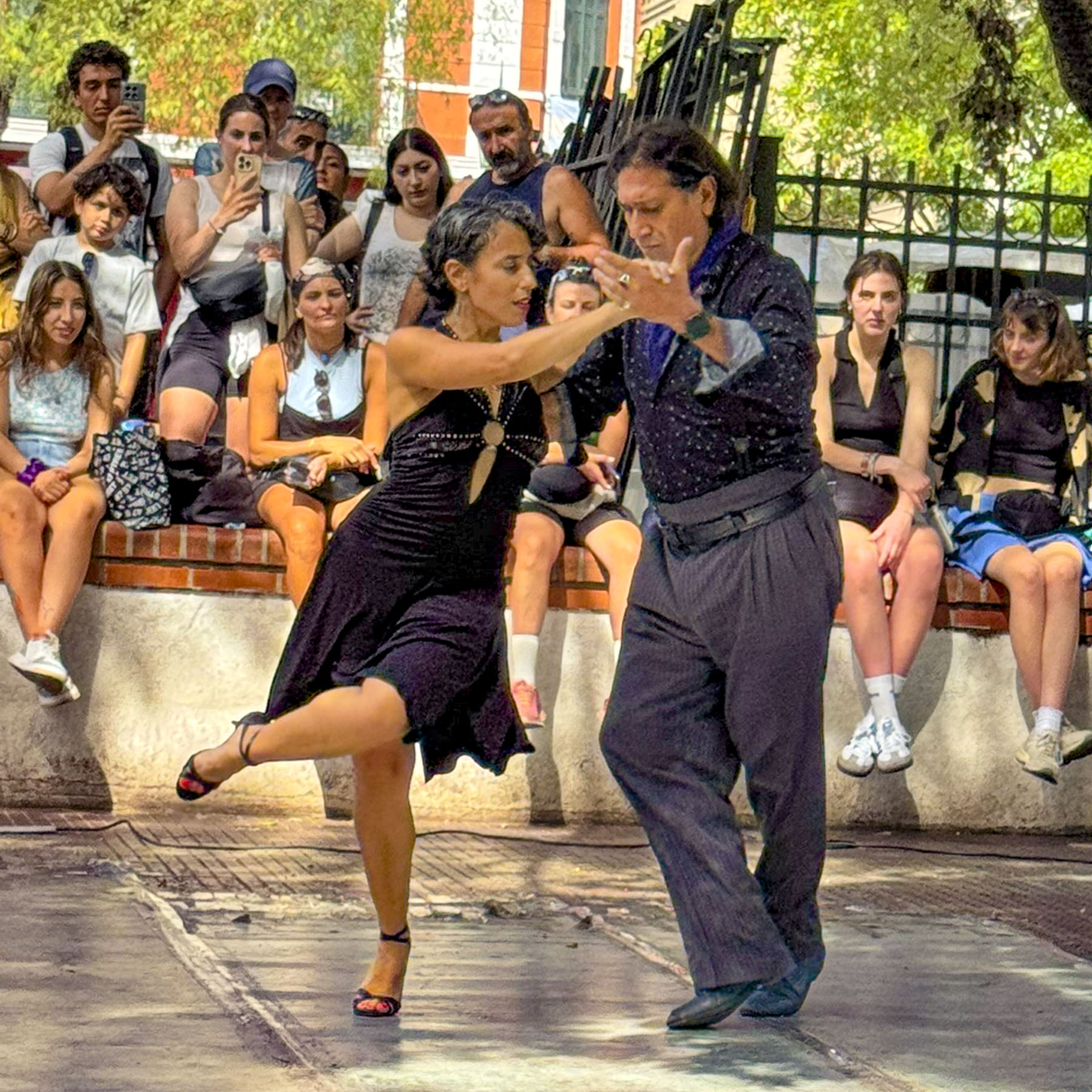
Tango dancers were mesmerizing a crowd with their graceful twists, turns, dips, and kicks at the Plaza Dorrego. Resting between dances, they encouraged folks to come forward and dance too. It was a thoroughly enjoyable afternoon, with a vibe totally different from the craft market in Retiro, and the shaded lanes of Palmero. Every August the city hosts the Buenos Aires Tango Festival & World Cup, a two weeklong dance-off, with concerts and shows where over 400 couples from around the world compete for the top spots in different categories.

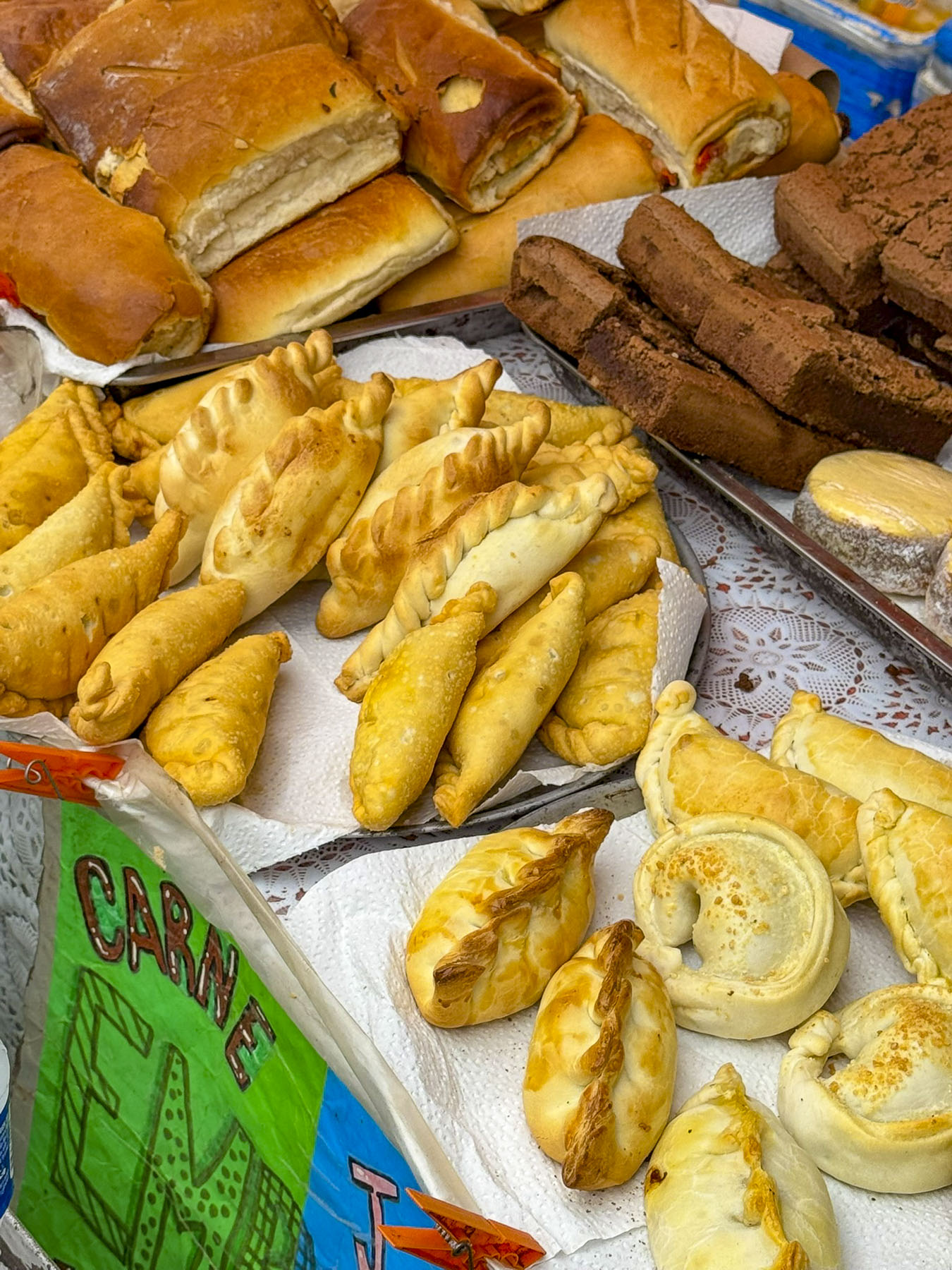
The next day a rainy morning finally cleared as we were on our way to a three hour cooking class to learn how to make those savory pastry meat-filled turnovers called empanadas, and alfajores, a melt in your mouth layered shortbread-like cookie filled with dulce de leche.

Our hosts Tomas and Lala graciously welcomed nine of us into their home; we were from France, Norway, Switzerland, and the United States. The other participants, like us, we learned after introductions all around, were snowbirds escaping a cold northern winter.

Tango music played softly in the background as Tomas divided us into three groups of 4, 2 and 3, the odd man out joining Donna and me. It was very well organized, and Tomas led us through the mixing of ingredients and made sure we added just the right amount of water so the dough was kneadable, but not sticky. Everyone cut their balls of dough and rolled them out into taco size discs, not too thin or too thick. Lala provided a meat filling. The hardest part was crimping the edges of the dough together to seal in the filling. The gal next to us was very good at it and created bakery worthy pockets. The three of us had various aesthetic results, that would improve with practice. Brushed with an egg white, trays of empanadas were put into the oven to bake. The cookie batter was also quite easy to make. We sipped some mate (a traditional herbal drink with lots of caffeine) and got to know our tablemates as we waited for the empanadas. We can see why people like mate (pronounced mah-tay) but I think for us it would be an acquired taste. The empanadas were tender and tasty, though it was obvious which ones my fingers had molded, as they oozed from some thin spots in the crust. This was the first cooking class we’ve ever taken during our travels and found the whole experience, along with the shared camaraderie, very enjoyable.

The next morning, we pulled our luggage behind us as we strolled down Calle Florida, a 10 block long pedestrian walkway in the center of Buenos Aire’s shopping district that runs from the Plaza General San Martín to Plaza de Mayo. It was a very pleasant lane centered with rows of young shade trees, and intermittent sidewalk cafes along the edges. The Galerías Pacífico, an upscale glass domed shopping complex, was our destination.

With architectural inspiration taken from the Vittorio Emmanuelle II galleries in Milan, the 1889 building was designed to be a shopping experience akin to the Bon Marche stores in Paris. But a long economic recession in Argentina during the 1890s and early 1900s nixed its realization and the gallery area was used as part of the National Museum of Fine Arts, while the Ferrocarril Buenos Aires al Pacífico acquired part of the building for offices. The company’s presence eventually led it to being called the “Edificio Pacífico,” (Pacífico Building).

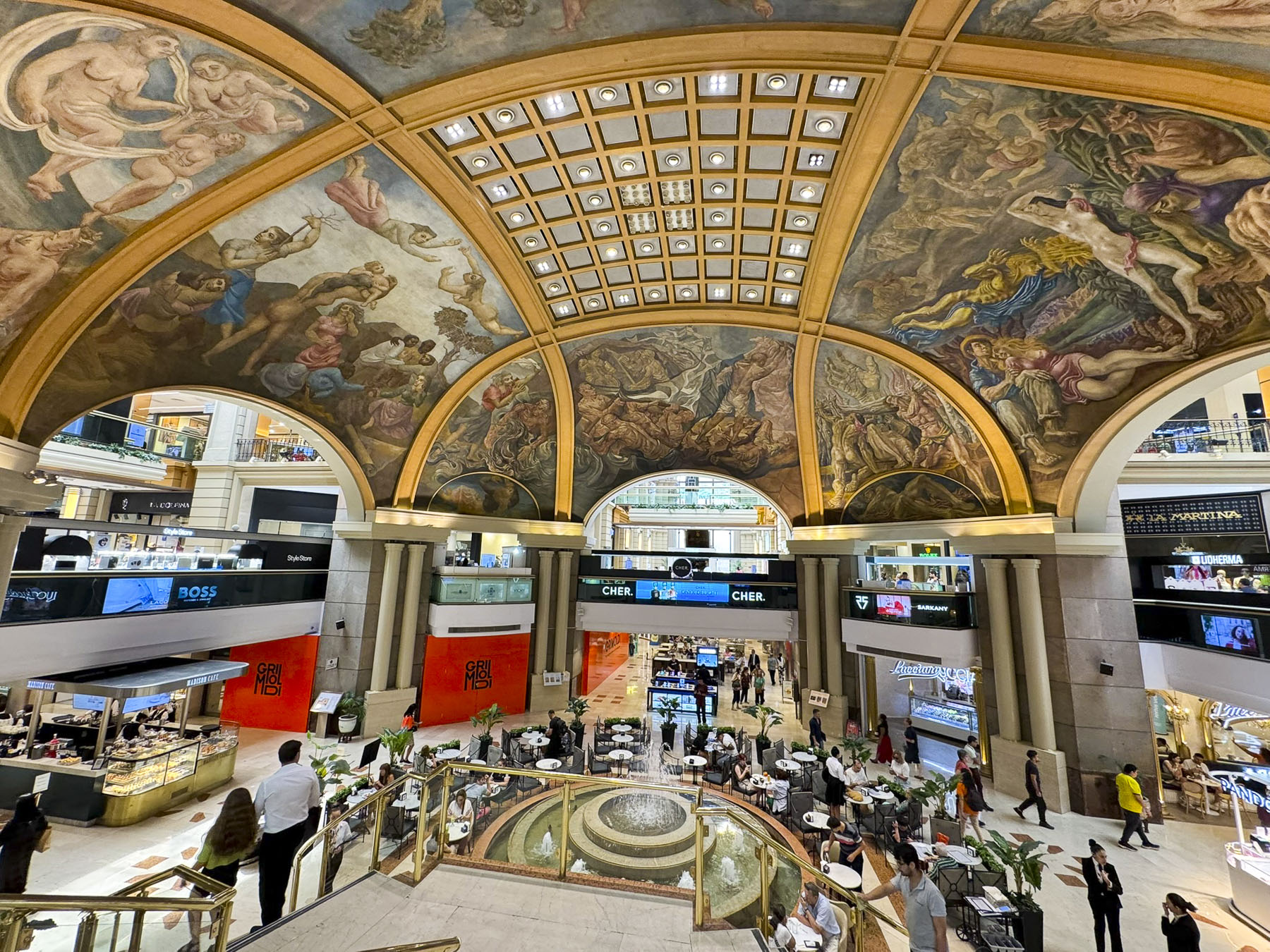
The famous domed lower level over what is now the food court was constructed during renovations in the 1940s and embellished with twelve spectacular murals by the artists Lino Eneas Spilimbergo, Antonio Berni, Juan Carlos Castagnino, Manuel Colmeiro, and Demetrio Urruchúa.

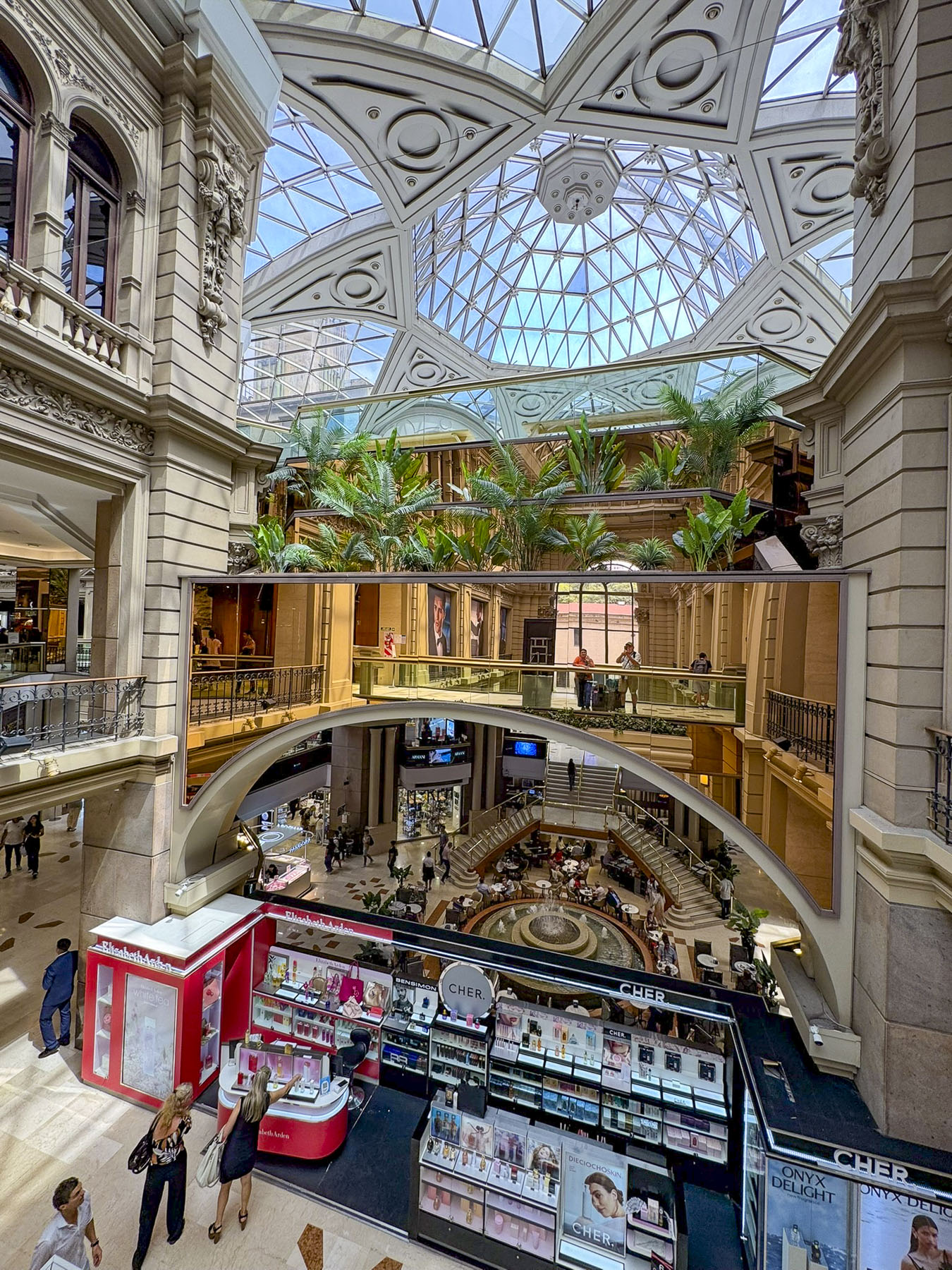
A hundred years later a 1990s renovation finally covered the galleries with a glass ceiling and the “Galerías Pacífico,” became the flagship of Buenos Aires’ shopping district. We really are not into mall shopping, but this is very nice, and an architecturally and culturally interesting spot that attracts a diversity of folks. It was the perfect spot for our “walk a little then café,” break before having an ice cream bar decorated with Lionel Messi’s blue and white uniform.  The Buquebus ferry terminal was only a short walk away for our crossing back to Uruguay and our flight home.

Buenos Aires is a sprawling city with 48 different neighborhoods and three million people. It is a great destination, and we only scratched the surface of the multitude of places to visit, and things to do within this vibrant city. In hindsight, we could have stayed several more days to explore the museums and government buildings, based ourselves in the Palermo neighborhood, and used the subway to get around.

Till next time,

Craig & Donna

Montevideo: Feria, Murals & Carnaval – The Antidote for our North America “Winter Blues.”

A clearing storm covered Uruguay’s Atlantic Coast as we landed at Carrasco International Airport on the outskirts of Montevideo. We were ten minutes into our forty-minute Uber ride into Ciudad Vieja, the old town section of Montevideo, when the masts of several catamarans poked above the tree line that obscured our view of the oceanfront. Our driver proudly boasted that the country has nearly 660km (410mi) of pristine beach-covered coastline along the Río de la Plata and the South Atlantic Ocean. But the real pride and joy of Montevideanos is La Rambla of Montevideo, a wide coastal esplanade that runs for 22km (14mi) along the city’s waterfront, “one of the longest continuous sidewalks in the world.”

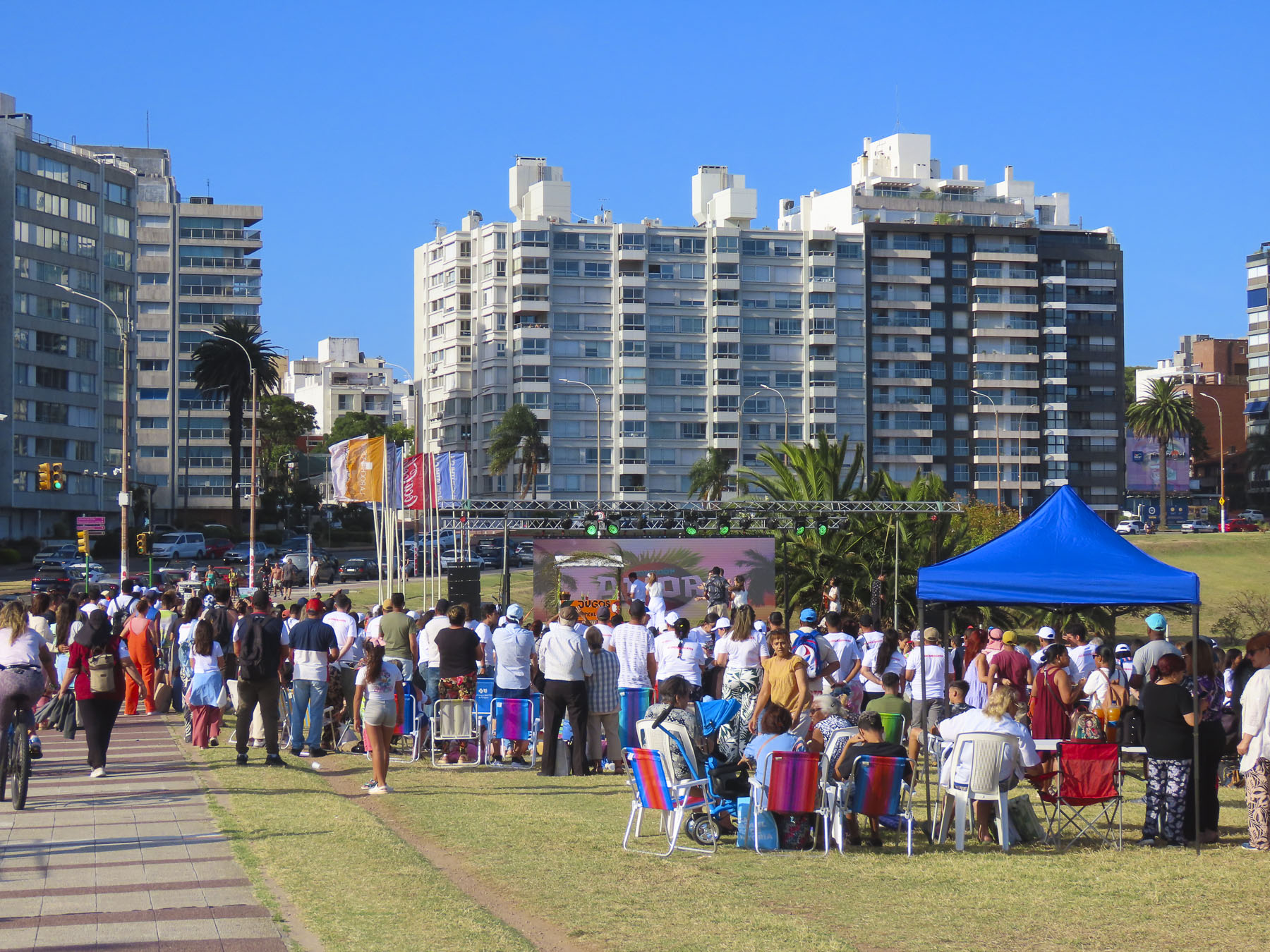
Our ride into the city soon started to follow La Rambla’s serpentine route along the coast, past folks, at the end of the workday, flocking to its breezy shoreline to enjoy all sorts of activities from rollerblading to kite surfing. Several beach areas also had bandstands where musicians were drawing good size audiences. Lovers snuggled on the seawalls, amidst swimmers emerging from the ocean, games of soccer, joggers, aerobic classes, personal trainers, cyclists, sun worshippers, and walkers carrying their ubiquitous Mate carryalls. Enjoying socializing with friends on La Rambla is an important part of life in Uruguay’s capital, where the city’s 1.4 million residents, nearly 40% of the country’s population, have an open invitation to “The Outdoor Living Room of Montevideo.” Come sunset there seemed to be collective quieting as folks stopped to watch the sun sink below the horizon. We could already tell that this could be the antidote for our North America “winter blues.”

The next morning, we were up before sunrise to stroll along the oceanfront, hoping to catch the first rays of sunlight cast across the city. From our room at Hotel NH Montevideo Columbia, we could see seven freighters making their way to port, and the remnants of an old defensive tower. It was part of the quickly built ramparts that once encircled the citadel soon after the Spanish founded the city in 1726, to thwart Portuguese expansion southward along the coast from Brazil.

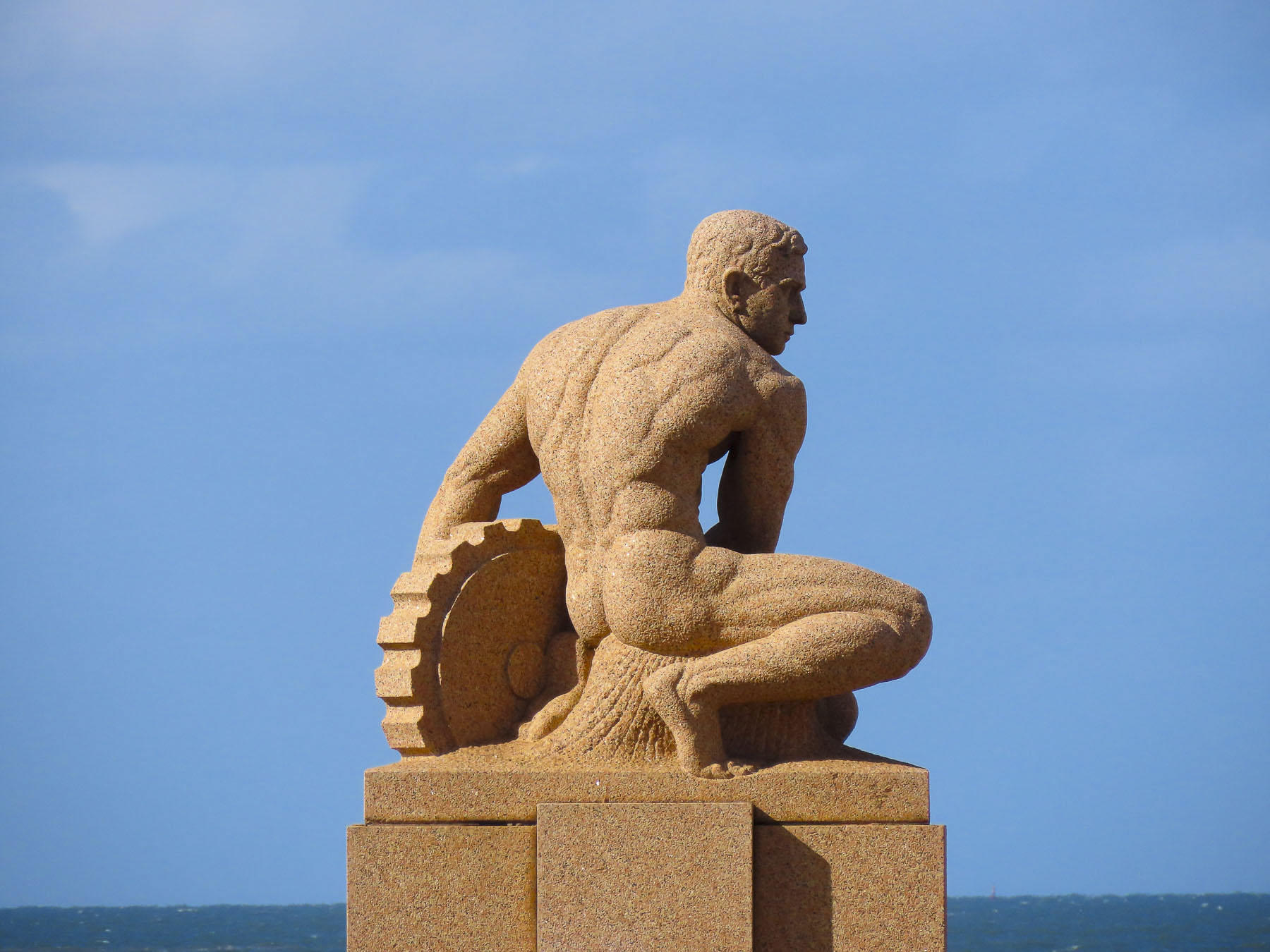
Street art and sculptures that were a blur yesterday as we sped by were now full of detail. In some places along the esplanade there were images of dinosaurs on relief plaques implanted into the sidewalk that suggested the region’s fauna 85 million years ago.

We reached Playa Ramirez, a large crescent-shaped beach as the sun was breaching the trees and shining upon the city’s modest skyline. A large group of cyclists preparing for the upcoming Vuelta Ciclista del Uruguay sped by. Two women stood in the water and let the gentle morning waves lap around their ankles as they chatted.

Across from the beach was Parque Jose Enrique Rodó. A large sculpture in the center of the park is dedicated to the Montevideo-born philosopher and essayist, who wrote about Latin America pursuing its own cultural identity and spiritual renewal, and the dangers of unbridled materialism.

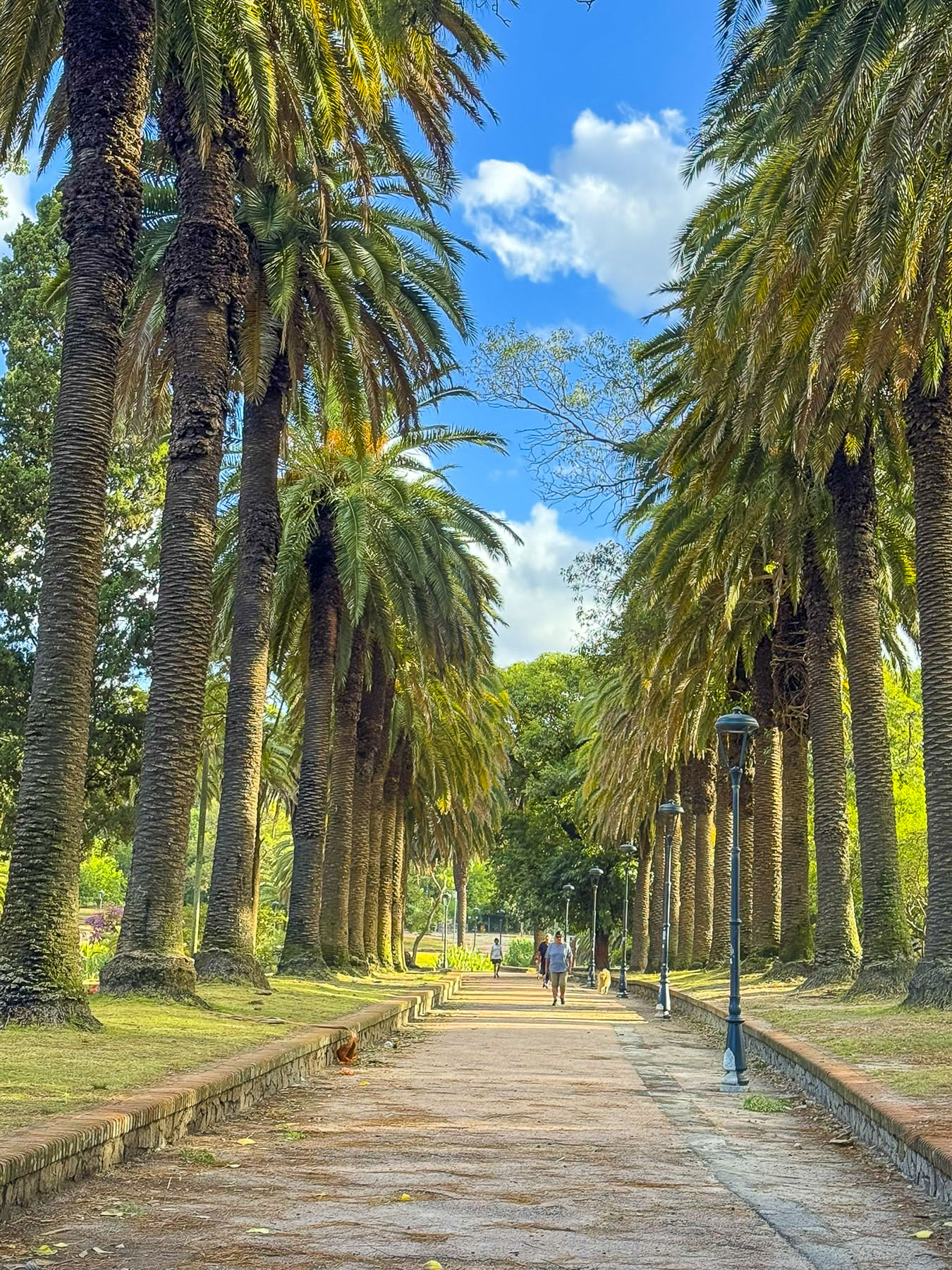
We started our loop back towards the Ciudad Vieja down one of the park’s palm-lined paths and zig zagged our way through barrios full of colorful street murals, and older 1900’s era buildings with interesting architectural details.

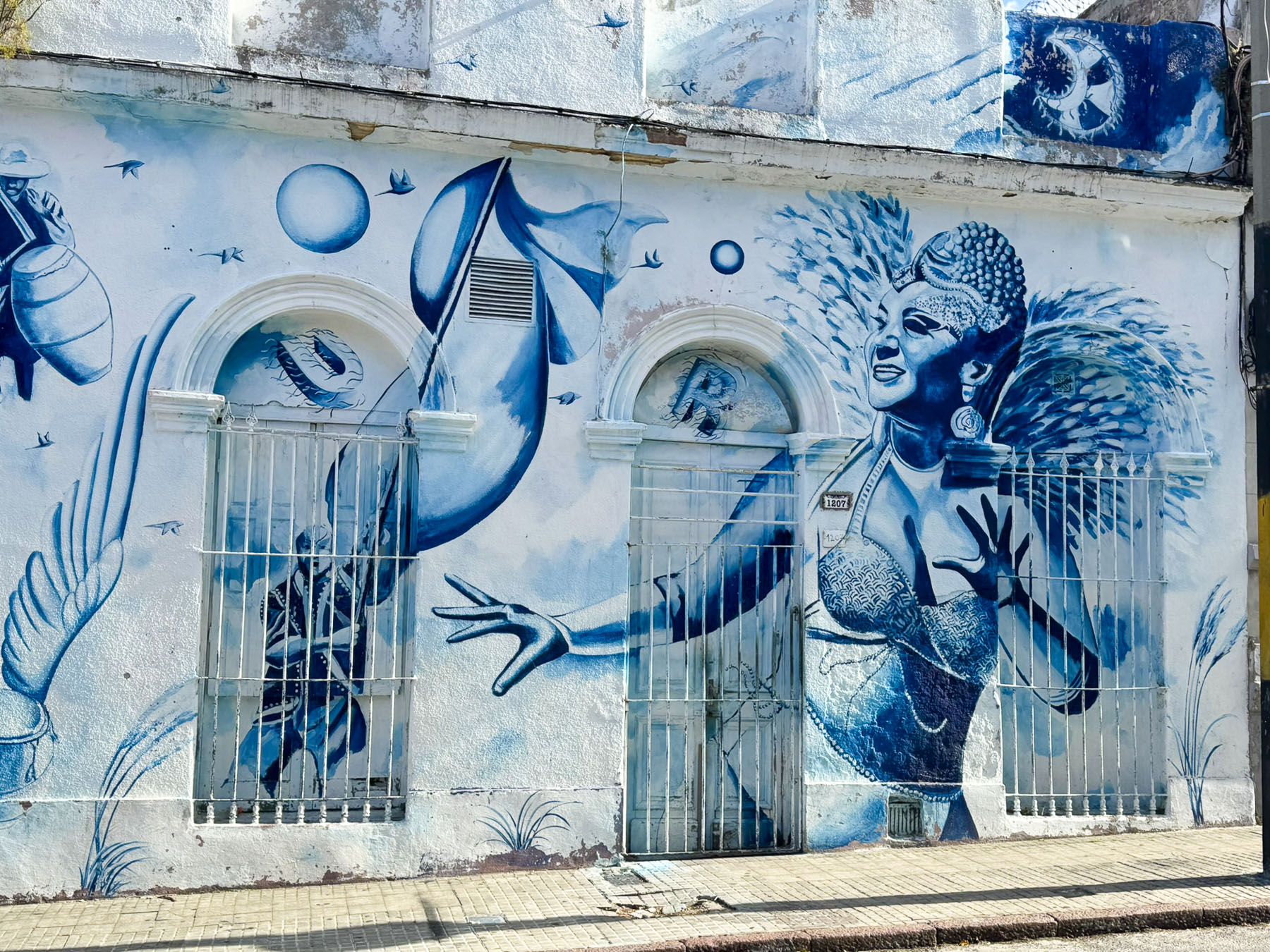
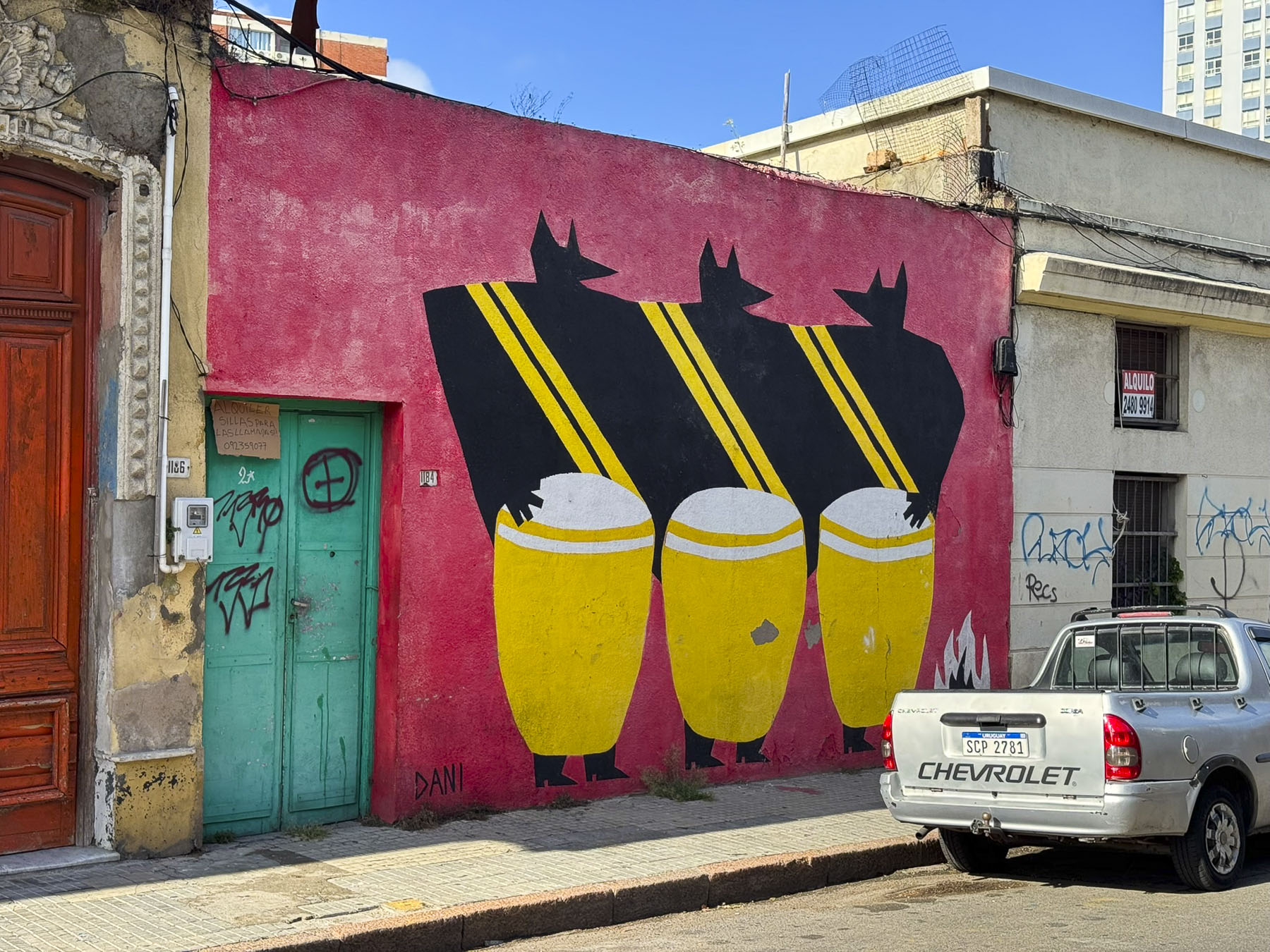
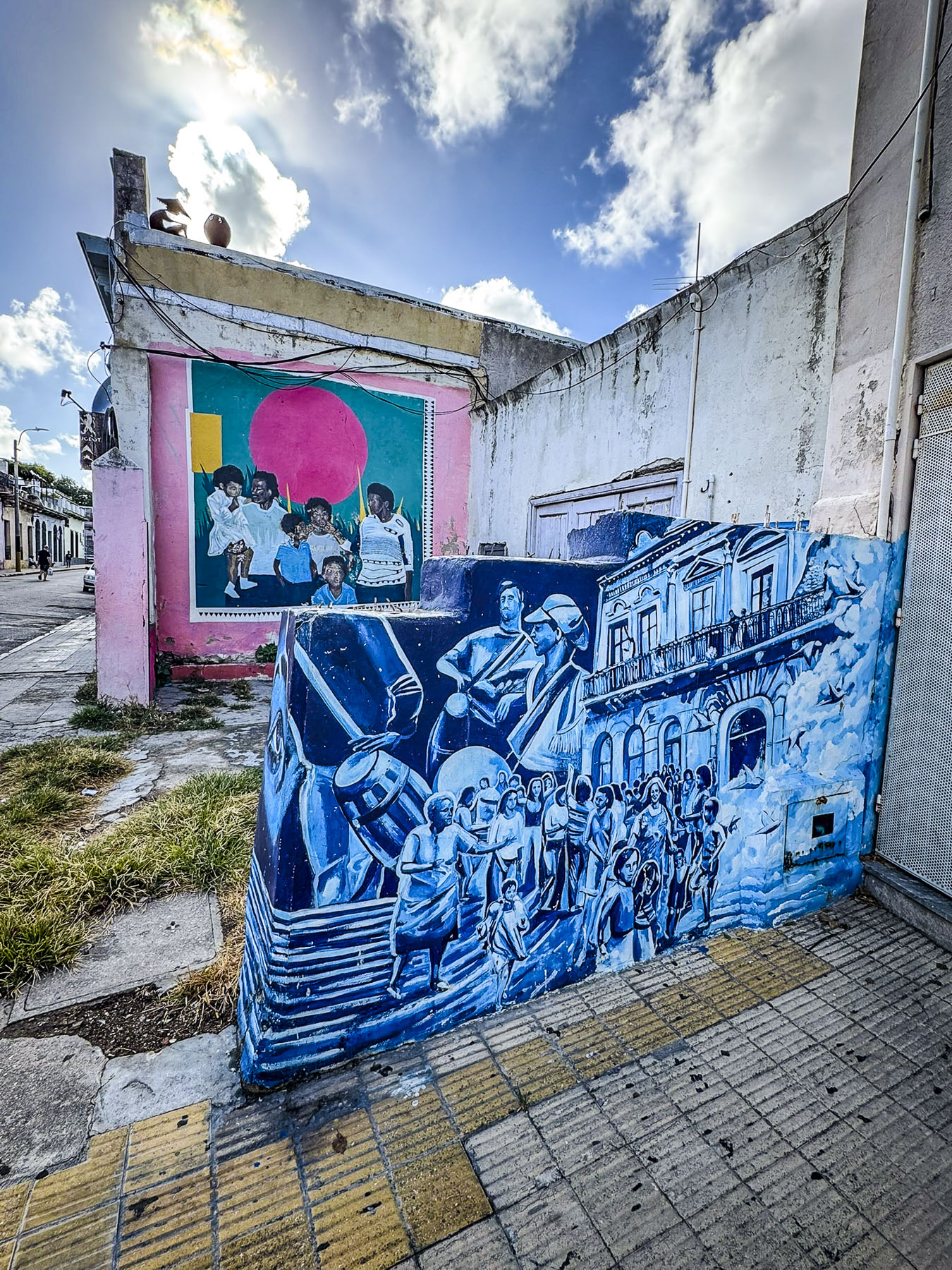
Walking through Barrio Sur along Isla de Flores, bleachers were being set up at the intersections in preparation for one of the last parades of Carnaval. The street was lined with murals dedicated to the local comparsas, large groups of 50-100 candombe drum performers and dancers, who participate in the yearly festival. We spent some time determining a good vantage point for watching the parade later in the week.

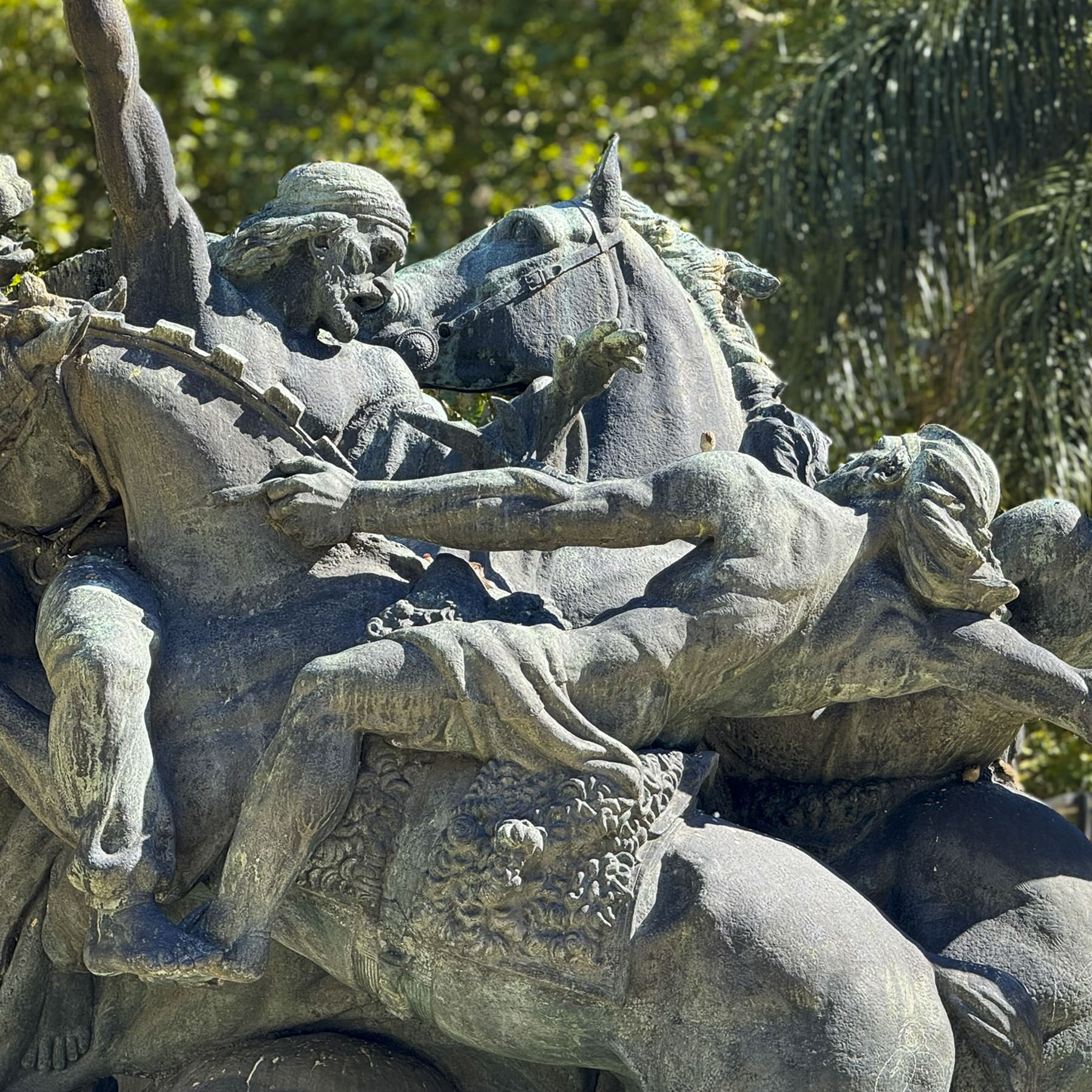
The grand Plaza Independencia was a huge contrast to modest barrios we had walked through earlier that morning. In the park’s center a large equestrian statue stands atop the Masoleum of José Gervasio Artigas, a gaucho, military leader, and revolutionary who inspired Uruguayans to fight against Spanish and Portuguese rule. He is considered the father of Uruguay’s liberation movement, though he did not live long enough to see the country’s independence in 1828.

A vast array of different architectural styles can be seen on the buildings around the plaza, but the most intriguing is the chaotic styling of the 27-story tall Palacio Salvo, which eclectically blends elements of Art Nouveau, Art Deco, Gothic, and Renaissance architecture into its design. The iconic mixed-use building has shops, offices, apartments and the Museo del Tango. It was for a short period of time after its completion in 1928 the tallest building in South America.

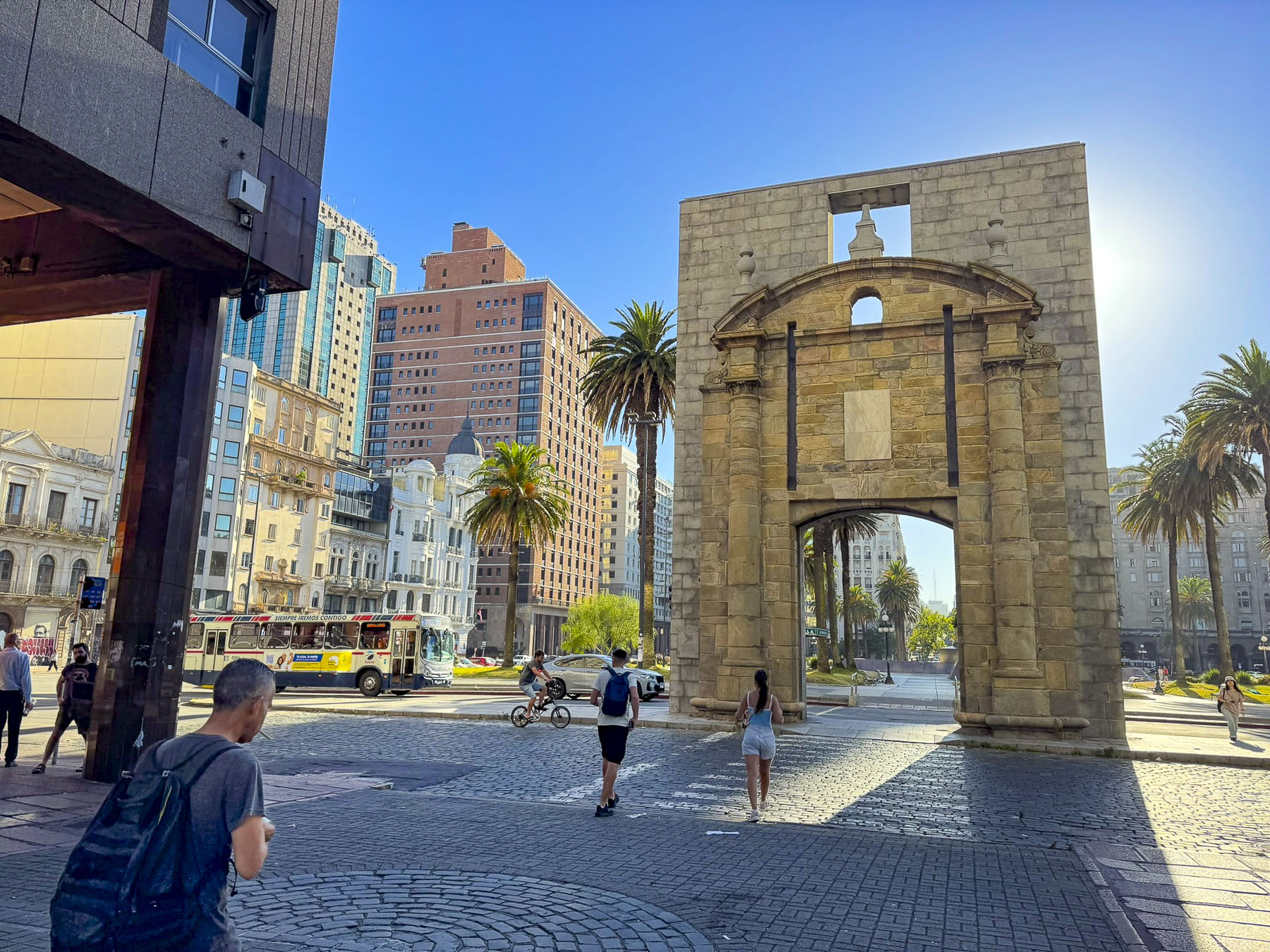
At the opposite end of the plaza the Puerta de la Ciudadela, one of the old gateways into the colonial citadel, is all that remains of a tall stone defensive wall that was 6 meters (20ft) thick, and totally encircled the small peninsula where Spain established its first colony in Uruguay. After Uruguay gained its independence the demolition of the citadel’s ramparts started in 1829, less than 100 years after their construction, to make room for the growing port city’s expansion.

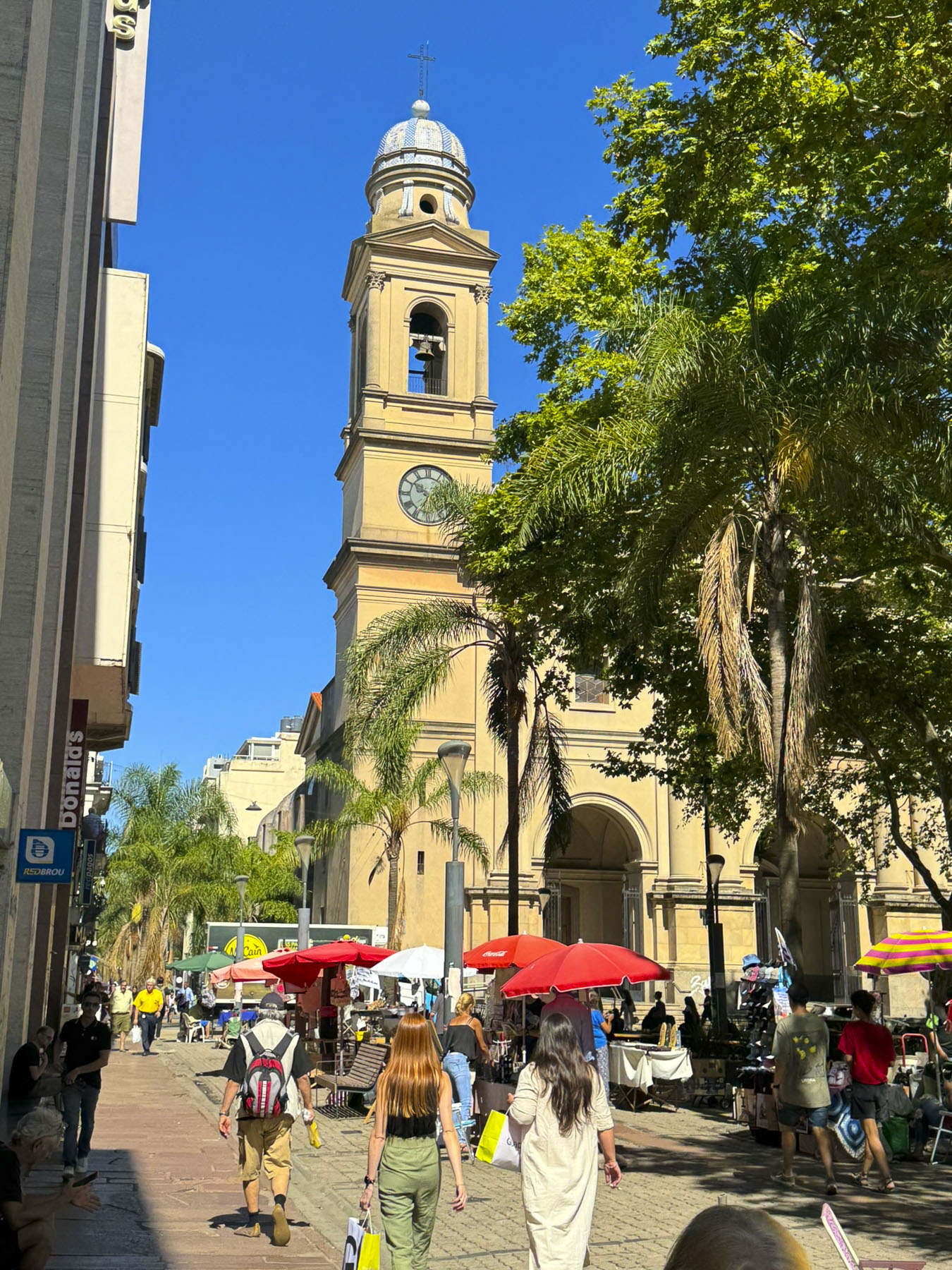
The old gateway opened to Sarandí, the main pedestrian lane that runs from one end of Ciudad Vieja to the other. At the beginning of the lane was Montevideo’s Walk of Fame, where stars of famous visitors to the city, like Nelson Mandela, the Rolling Stones, Enrique Iglesias, and Olga Delgrossi, Uruguay’s beloved singer and tango dancer, were imbedded in the pavement with sun bursts above their names.  Now mid-afternoon, the day had warmed, and the street was full of vendors under colorful umbrellas, selling all sorts of items geared for tourists.

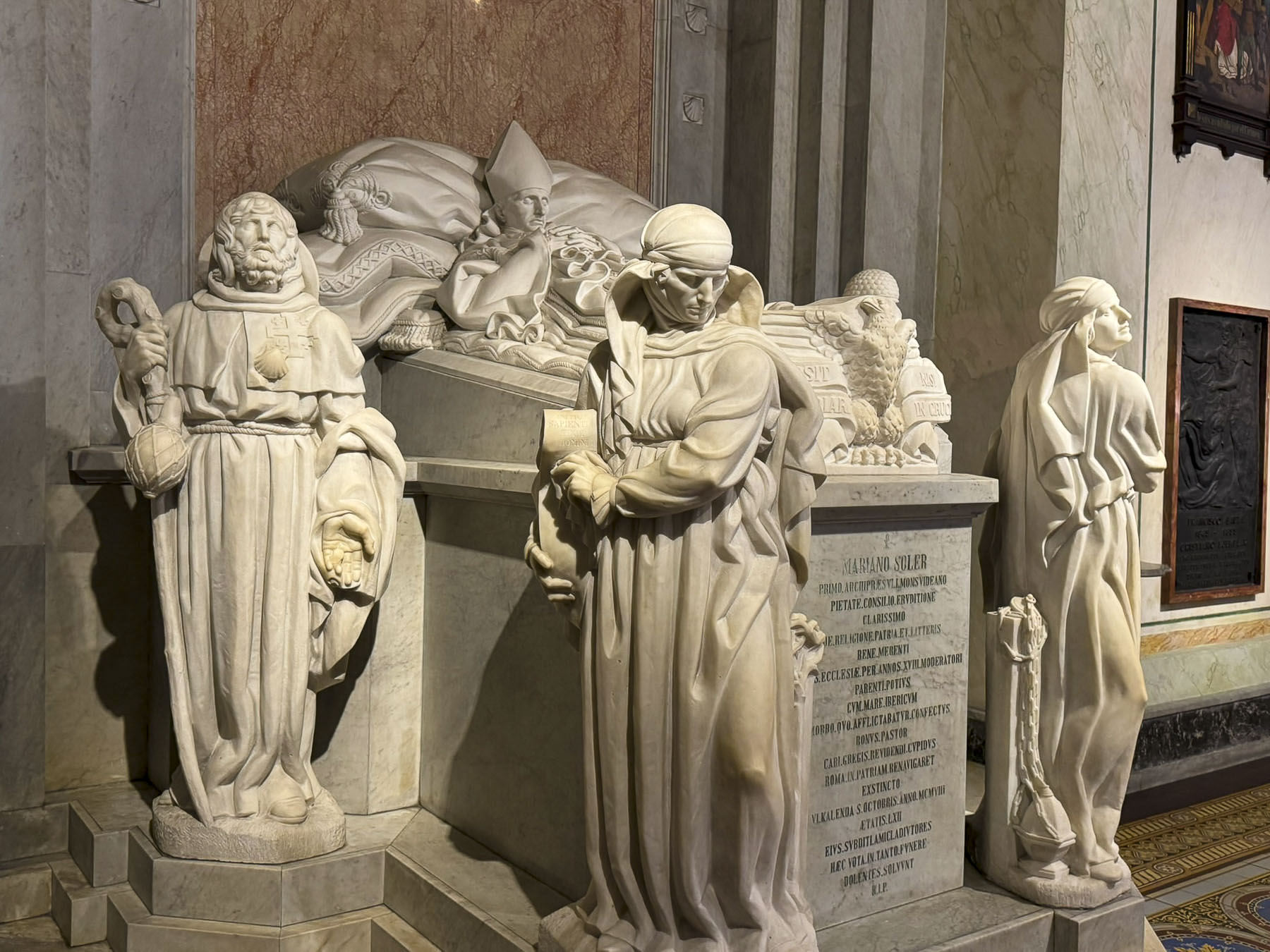
We wrapped up our day’s wandering about at the Montevideo Metropolitan Cathedral, or as it is formally called the Catedral Metropolitana de la Inmaculada Concepción y San Felipe y Santiago.  In 1790 the construction of the cathedral was started to accommodate a growing congregation in the prosperous city, which had outgrown its first smaller brick church, which was built on the same site in 1740. Inside were some very nice pieces of religious art.

The next morning we continued exploring the old town and watched a wedding party throw rice upon a newly married couple at the Registry Office. We only noticed a sculpture of Montevideo’s version of Romeo and Juliet when a crowd in front of us was pointing up to a balcony. “Our walk a little then café,” routine was satisfied with breakfast at Federación, an artesanal panaderia and café, with tables on the sidewalk and in a small courtyard. It was on the way to several museums we planned to visit, before having a late lunch at one of the steakhouses in the Mercado del Puerto.

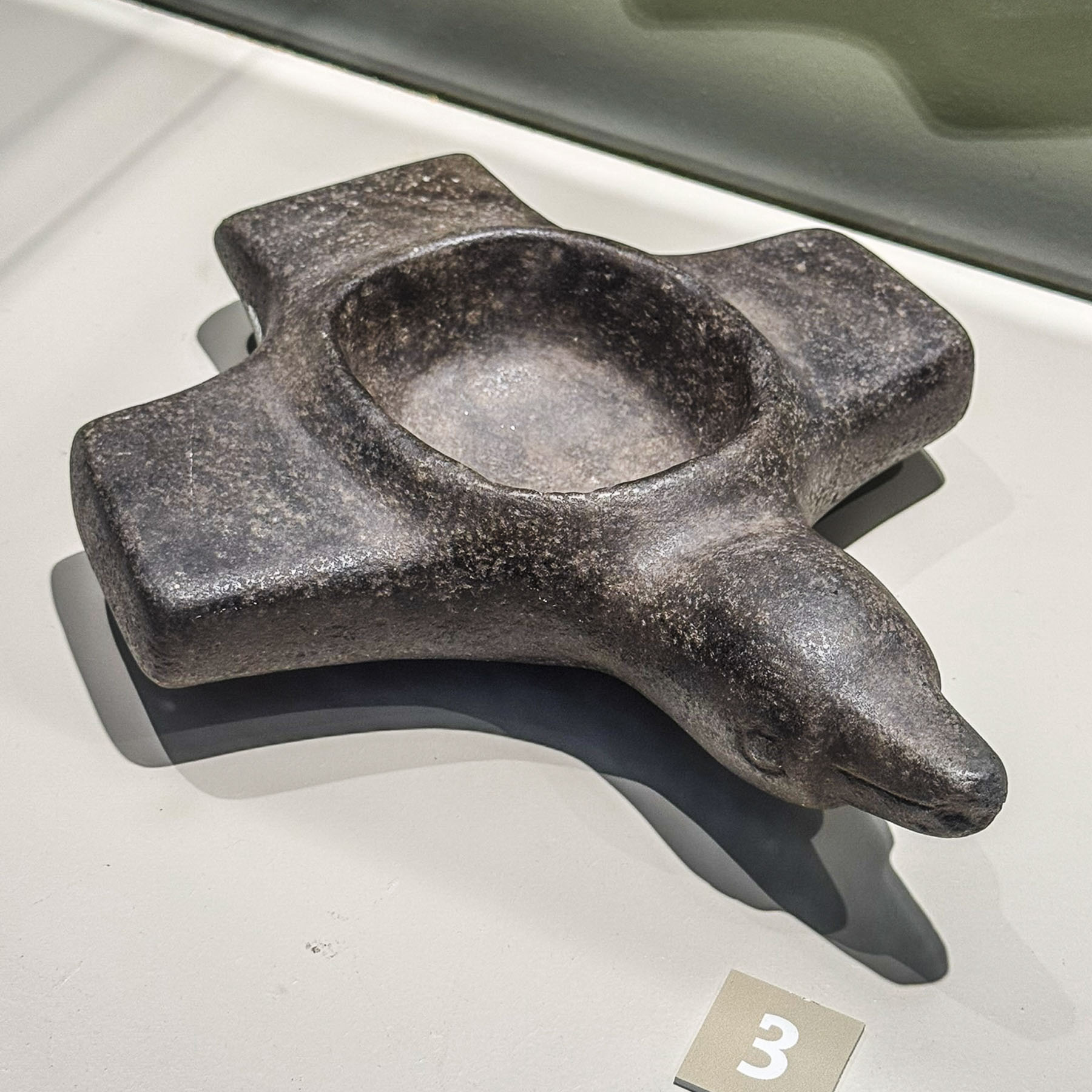
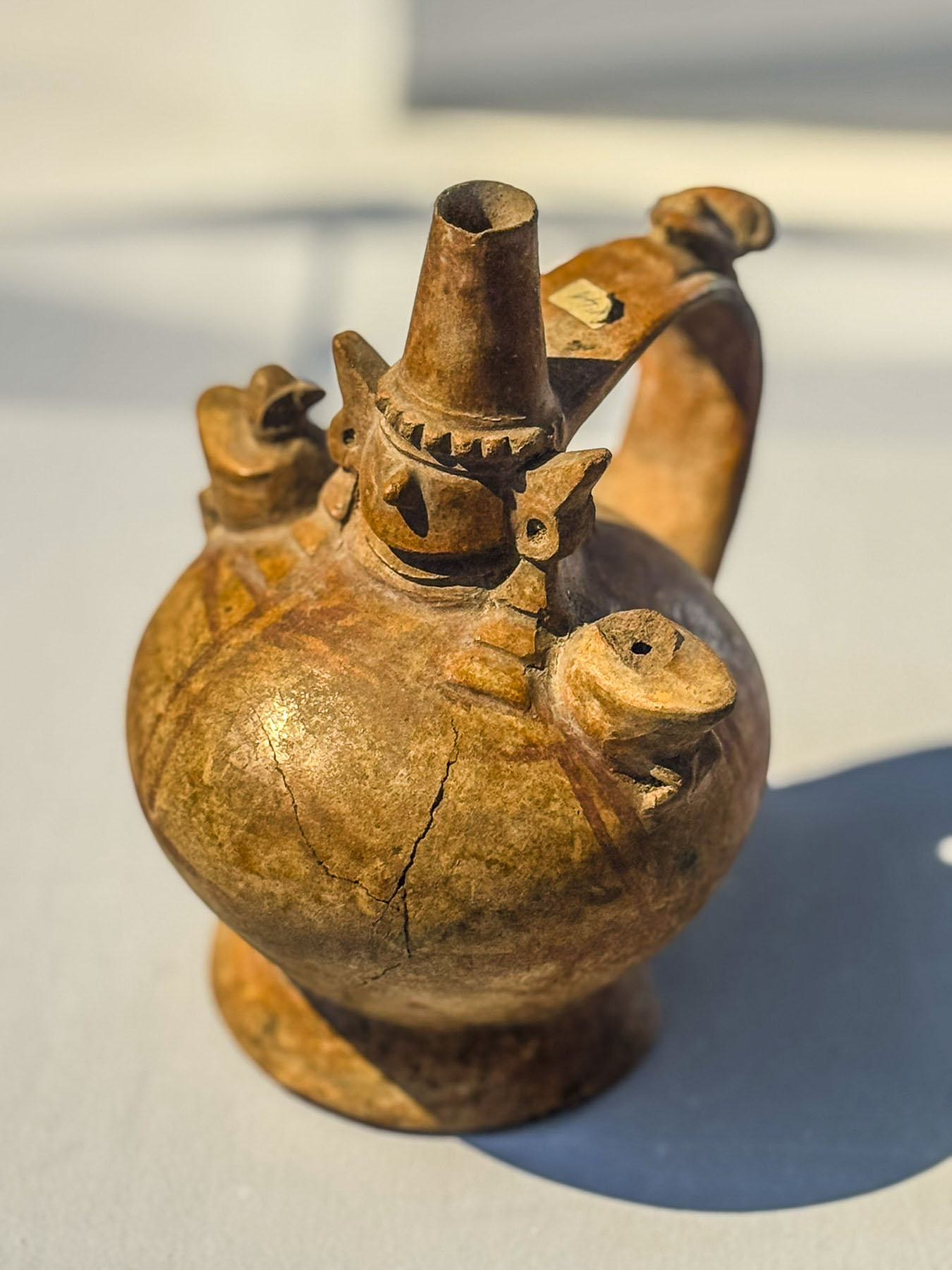
Montevideo has over twenty museums that span the spectrum from art and science to tango and carnaval. Around the corner from the café, in a 19th century building, was the Pre-Columbian and Indigenous Art Museum. It is a relatively small museum, but it has an interesting collection of archeological artifacts and an extensive collection of Carnaval masks from across Latin America.

Everything about the South American cowboy can be viewed at the Museo del Gaucho and Currency. It occupies a stately old bank building which in itself is worth poking your head into, but the immense scale of the building overpowers the exhibits of small objects used in the South American cowboy’s everyday life. Many of the fine silver items on display were from the estates of wealthy ranch owners.

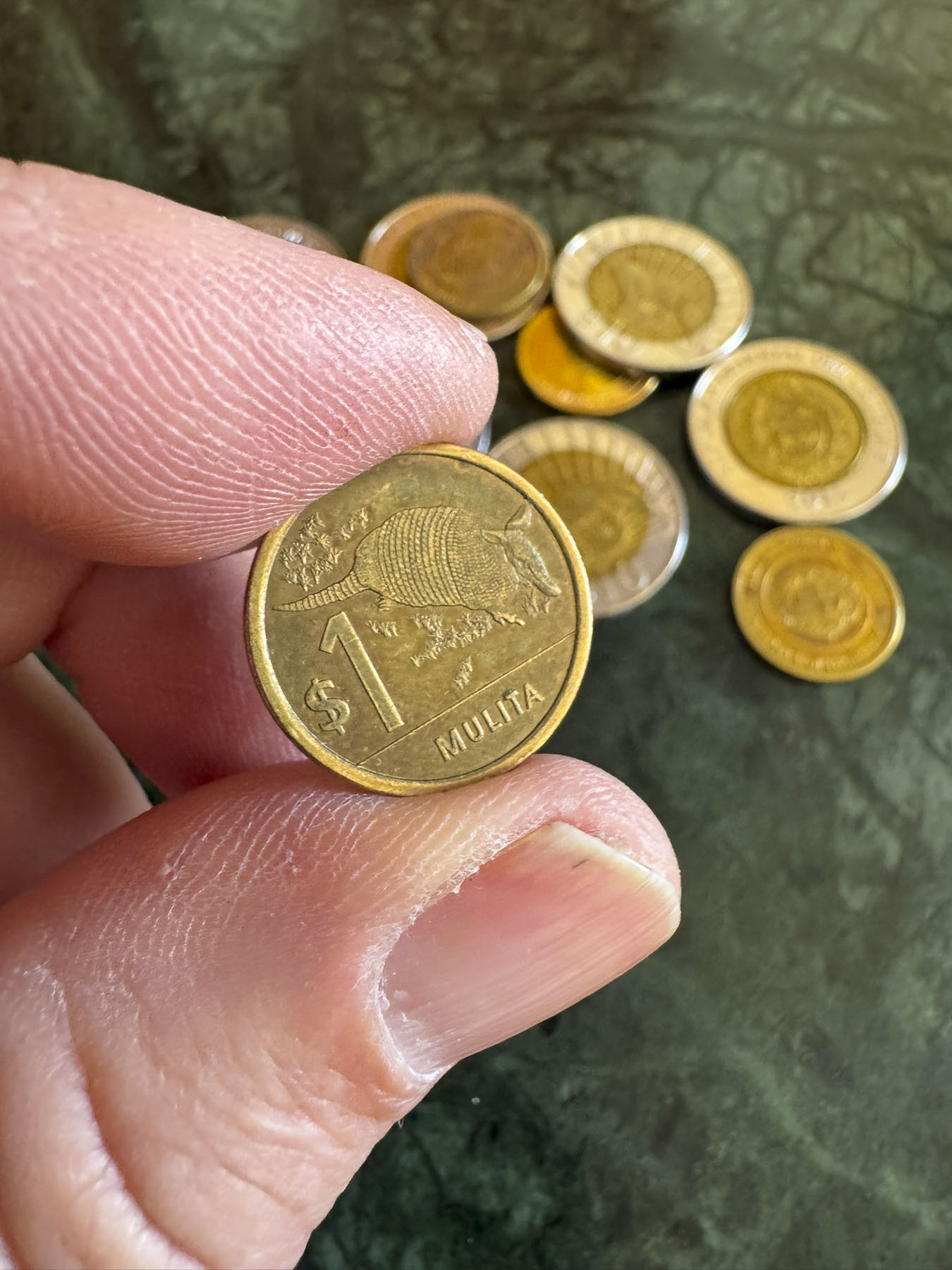
The currency exhibit was okay, but we think you really have to admire a country that puts an armadillo on one of their coins. There was also a collection of coins recovered from the wreck of the Spanish galleon El Preciado, which was sunk in Río de la Plata by pirates in 1792, as it sailed for Spain carrying gold and silver to pay the taxes levied against the South America colonies.

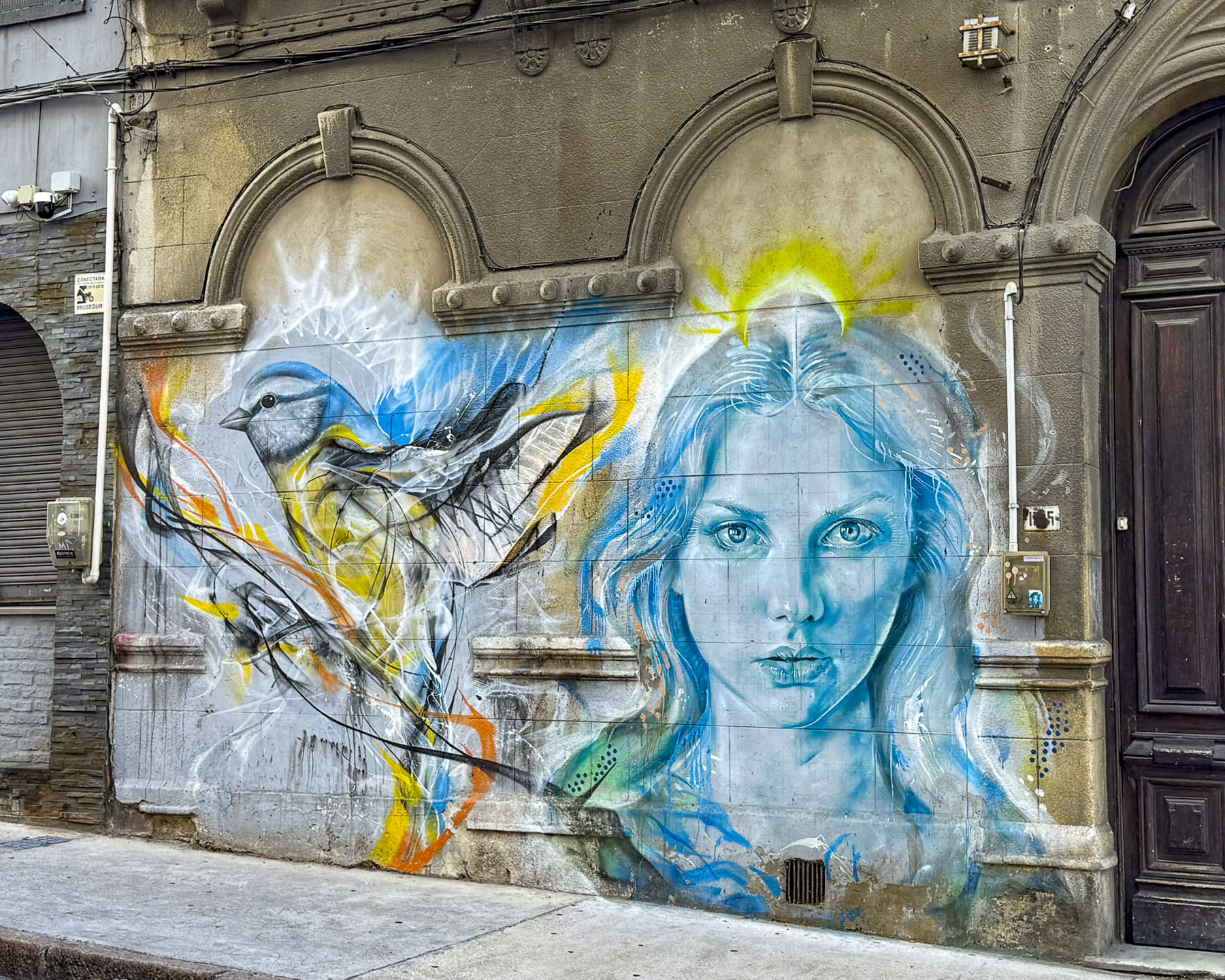
Artistic street murals can be found all across Montevideo and we passed several interesting ones on the way to the Museo de las Migraciones. We really enjoyed this museum as it celebrates the country’s diverse population of its immigrants who contributed to making Uruguay the wonderful place that it is. The exhibits confirm the belief that most folks have more in common than what separates us.

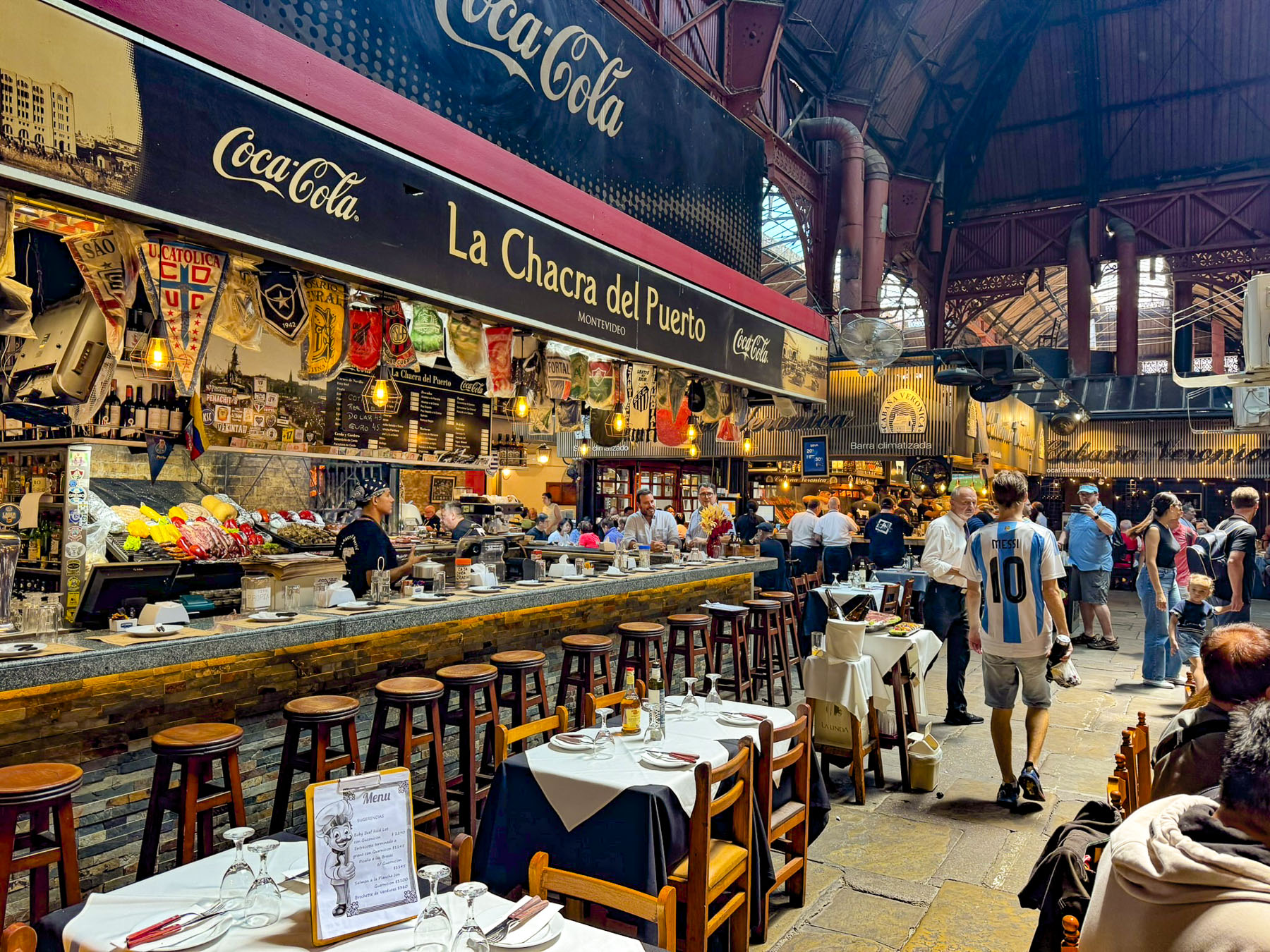
It was a long walk back towards the Mercado del Puerto. The cast-iron and glass roofed structure was imported from Liverpool, England, and feels a little like a Victorian era train station; it opened for its first customers in 1868. The old port market used to be the central place to buy supplies, fruits, produce, meats, and fish, but has now been gentrified into an atmospheric food hall, where steakhouses reign supreme, and charge a hefty price for being convenient for the cruise ships passengers which disembark at the port. That being said, we enjoyed the ambience of open wood-fired parrillas, and wafting aromas rising from the various kitchens. It was a challenge to choose a restaurant, as all the dishes that waiters whisked by us looked delicious and tempting.

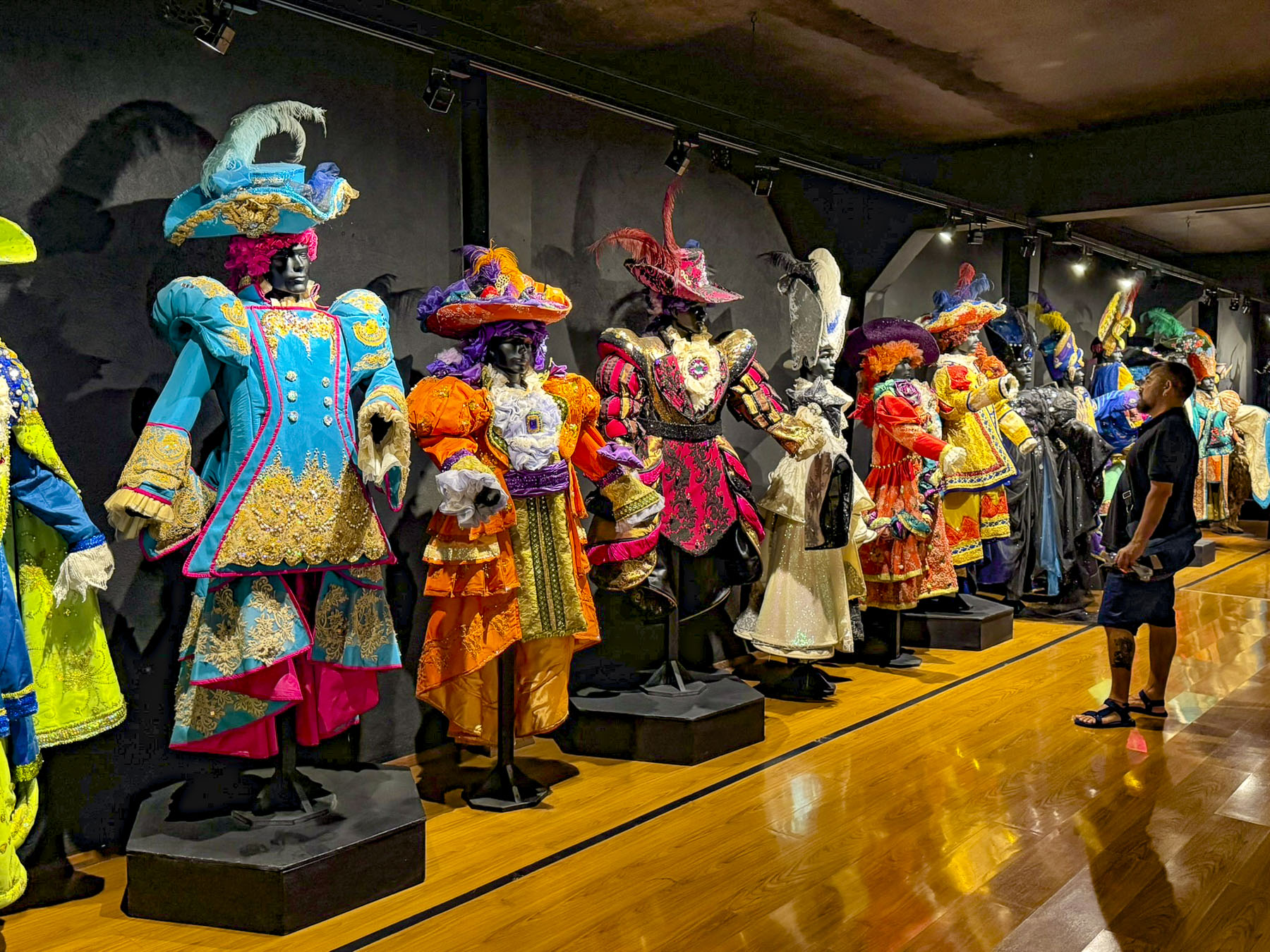
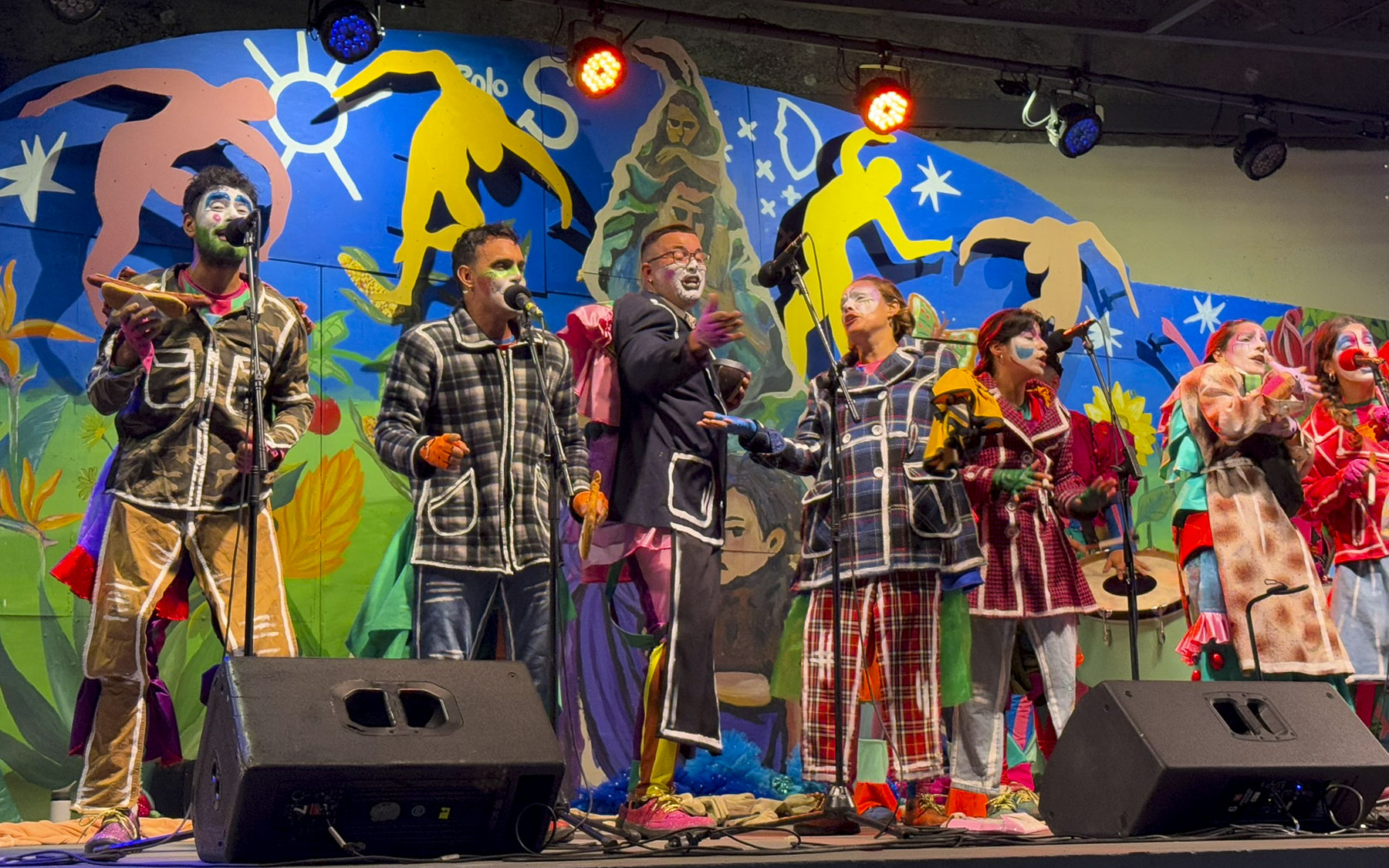
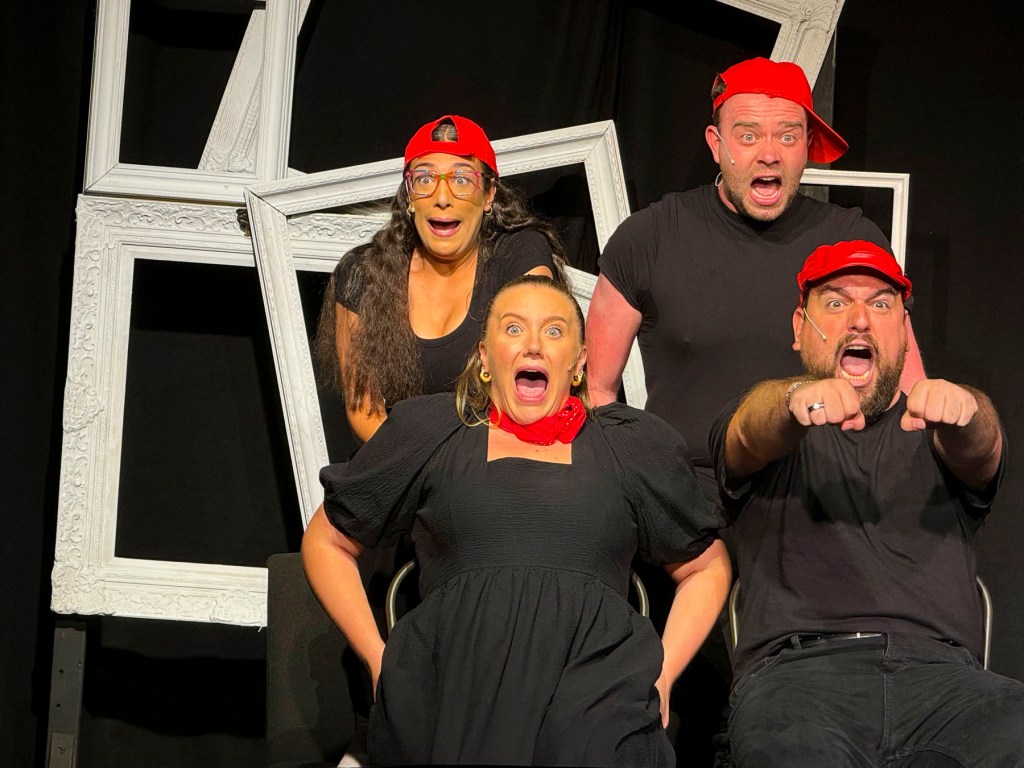
Later in the week we returned to the area to attend a tablado at the Museo del Carnaval, which also had a great collection of imaginative costumes from past carnavals. As the actors readied themselves for the performance, an announcer stepped forward. There were lots of Spanish words, followed by “Donna DiMeo Hammell” and more Spanish. I speculated that we had won the Uruguayan Lottery.  Or “maybe I’ve been chosen to participate, but I don’t speak Spanish!” Donna’s first thought was, wow, they pronounced my name correctly! The mystery was solved when Donna approached the offstage area, and a smiling theater employee handed her the credit card she had unknowingly dropped earlier.

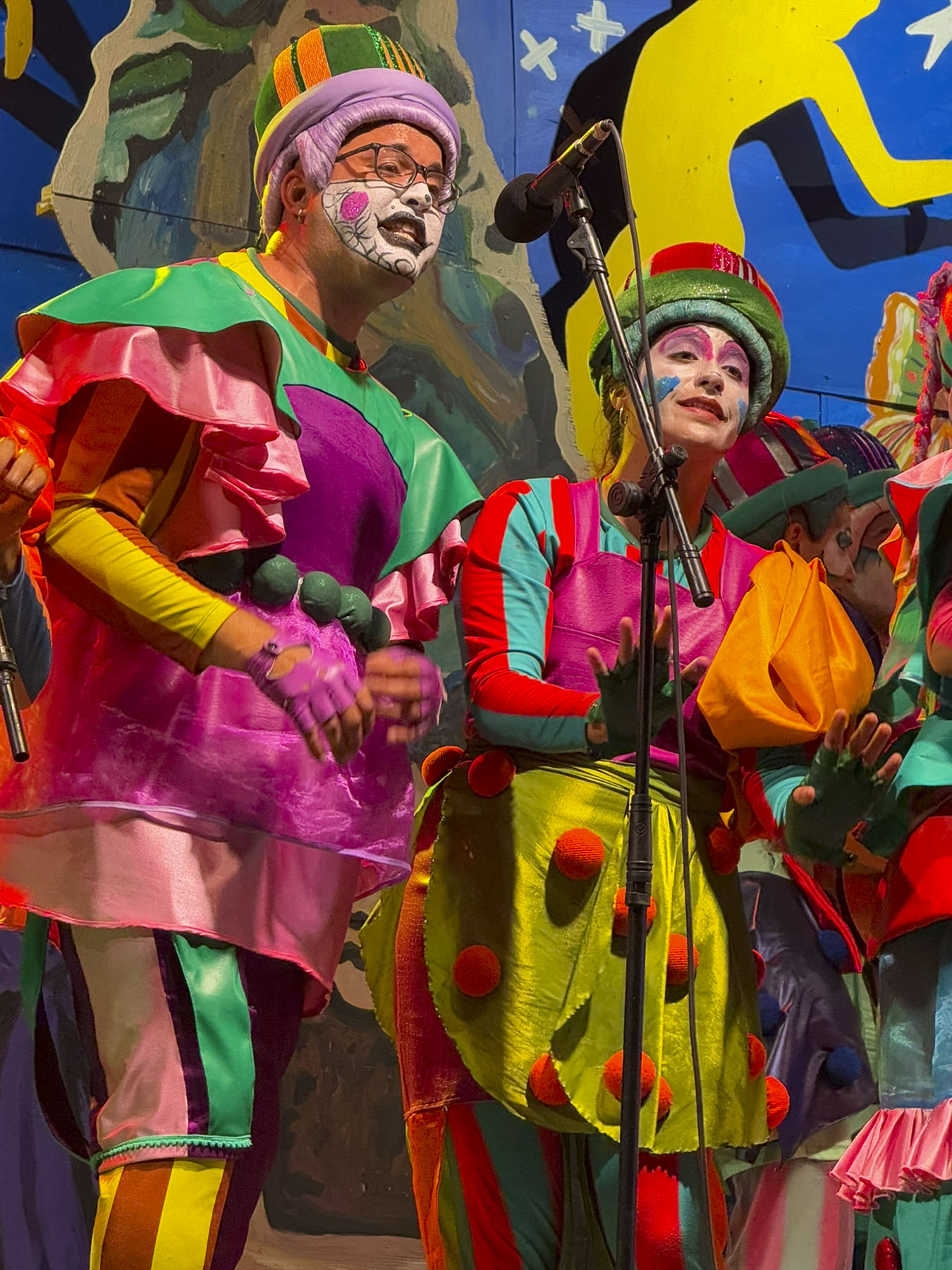
Tablados are temporary neighborhood stages set up across Montevideo where colorful theatrical and musical performances are put on by groups of actors called Murgas, known for their satirical and humorous songs, who are joined by groups of Parodistas who are recognized for their entertaining parodies of well-known stories or events.

Tablados performances only happen during the carnaval season in Uruguay, which runs for forty days between mid-January and mid-March in Uruguay. The performance we attended lasted two hours and had eight different skits. If you cannot attend one of the carnaval parades in Montevideo the tablados are extremely funny and entertaining and you don’t need to understand Spanish to thoroughly enjoy them. They are also very inexpensive.

Walking back through the newer part of Montevideo the next morning we strolled along

Av. 18 de Julio. The street is named for the day in 1830 when the Uruguayan Constitution was ratified, and is the city’s busiest street with numerous stores, restaurants and bars along its length. At the intersection of Av. Carlos Quijano was the Fuente de los Candados,

the Fountain of the Padlocks. It seems every city has one of these landmarks where couples announce their love by hanging a lock on the metalwork; many of these were engraved with names, dates, or sentiments. What’s unique about this one is that it surrounds a fountain where folks also throw coins to make a wish.

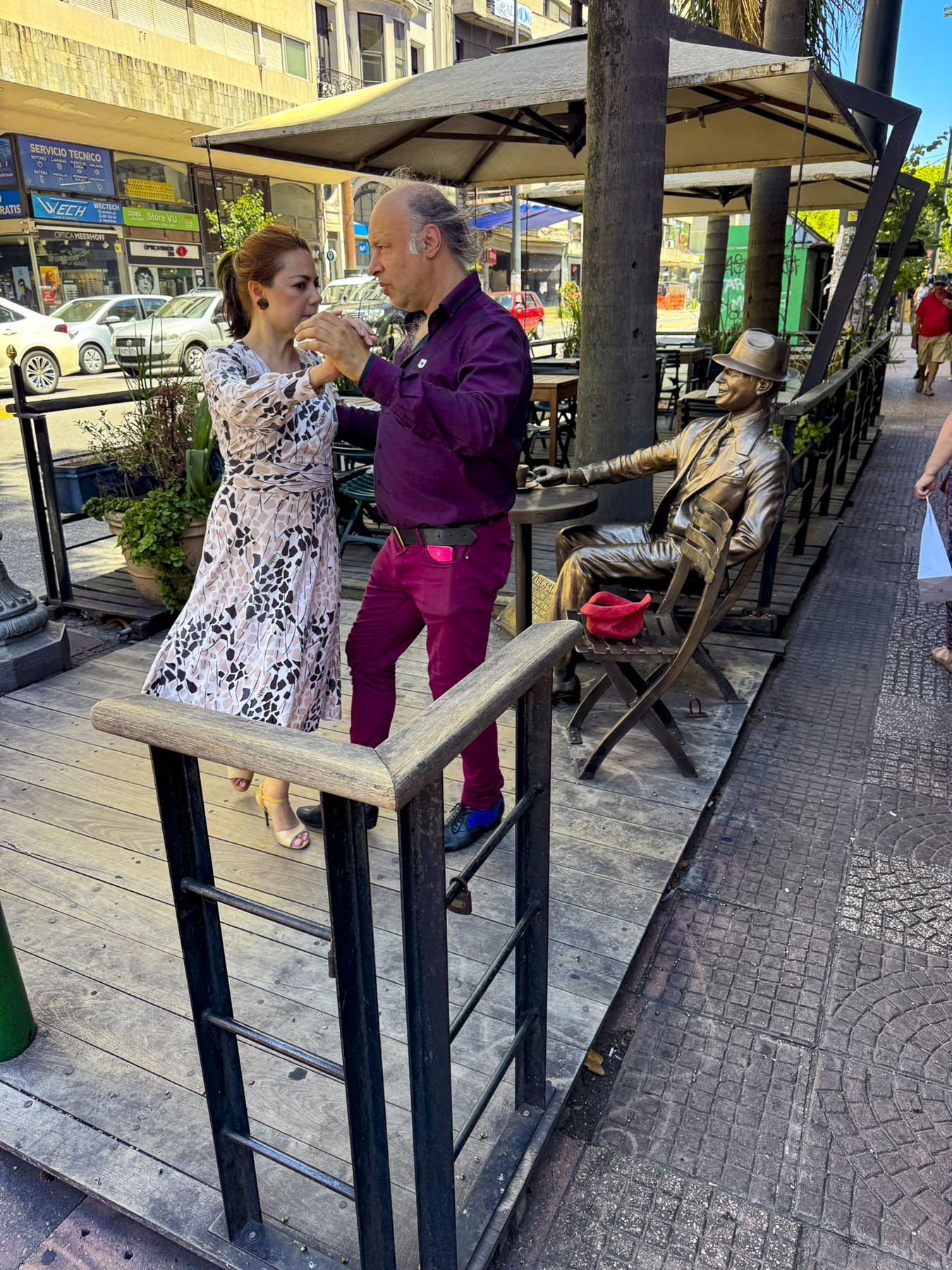
Next to the fountain was a couple busking for tips as they tango danced in front of a café. This was the only time we saw tango dancing in Montevideo, even though the city shares credit with Buenos Aires as the birthplace of the dance. The scarcity of dancers might have been because we were there during carnaval season, and so many other events were happening then.  

Nearby was the Mirador Panorámico de la Intendencia de Montevideo. It’s an open-air viewing platform on the 22nd floor of the headquarters building of the Municipality of Montevideo. Montevideo does not have a very interesting skyline, but the view was expansive, and you can see the port and how La Rambla follows the twists and turns of the coast. There is a small café inside at the mirador. We didn’t find it to be a “must do,” destination, and would suggest trying to time your visit to the mirador around sunset, if possible, to make it more spectacular.

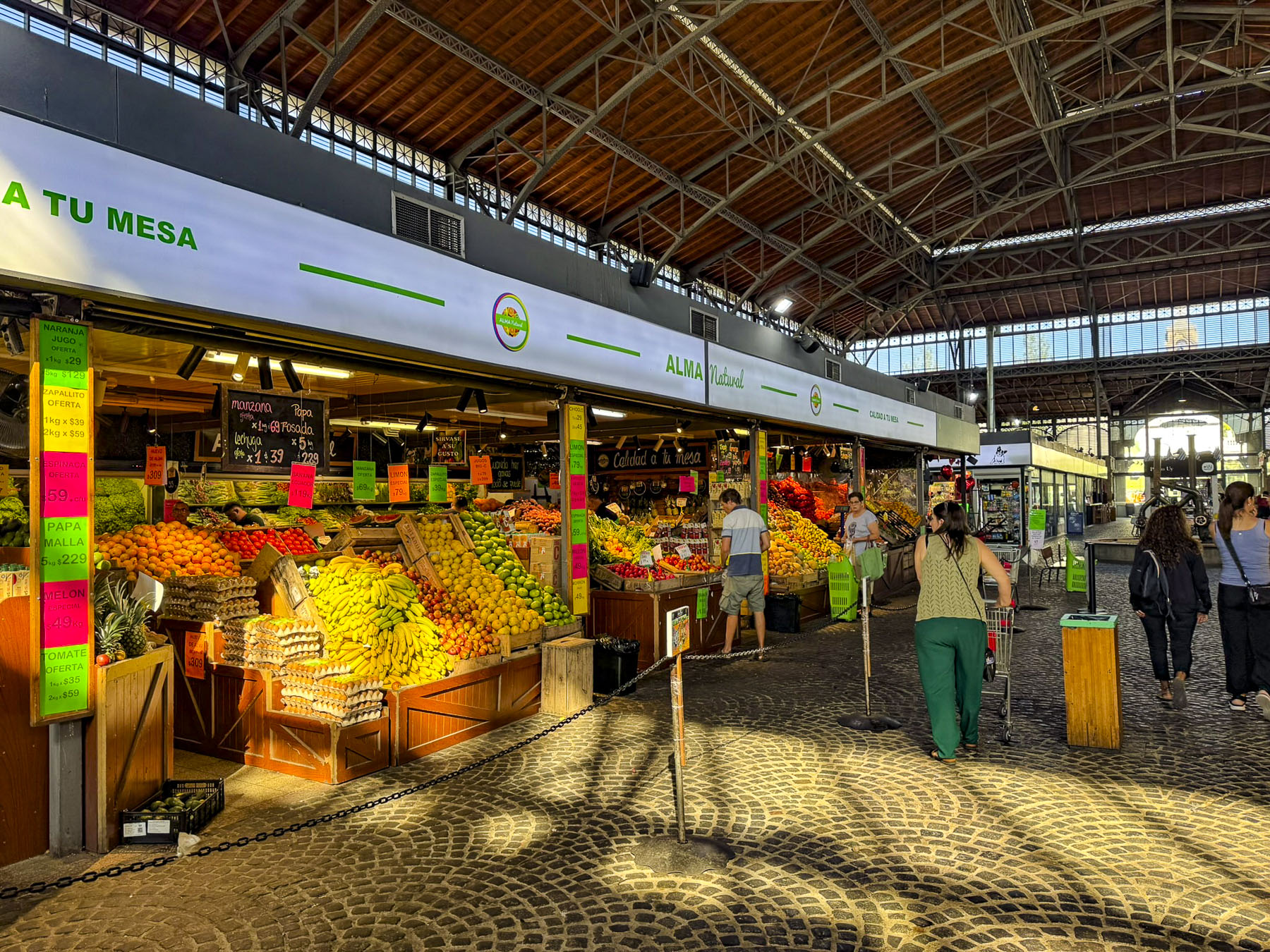
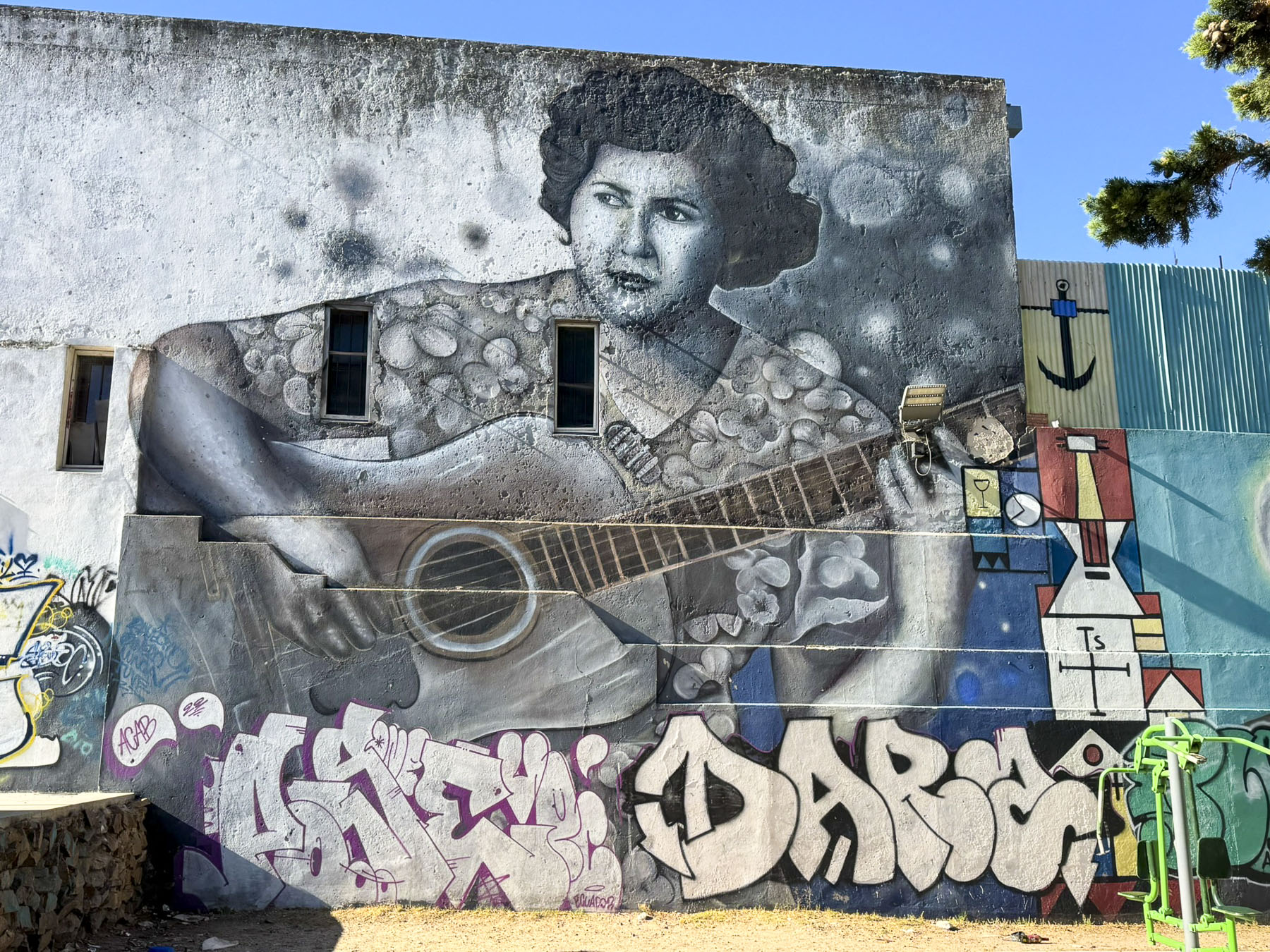
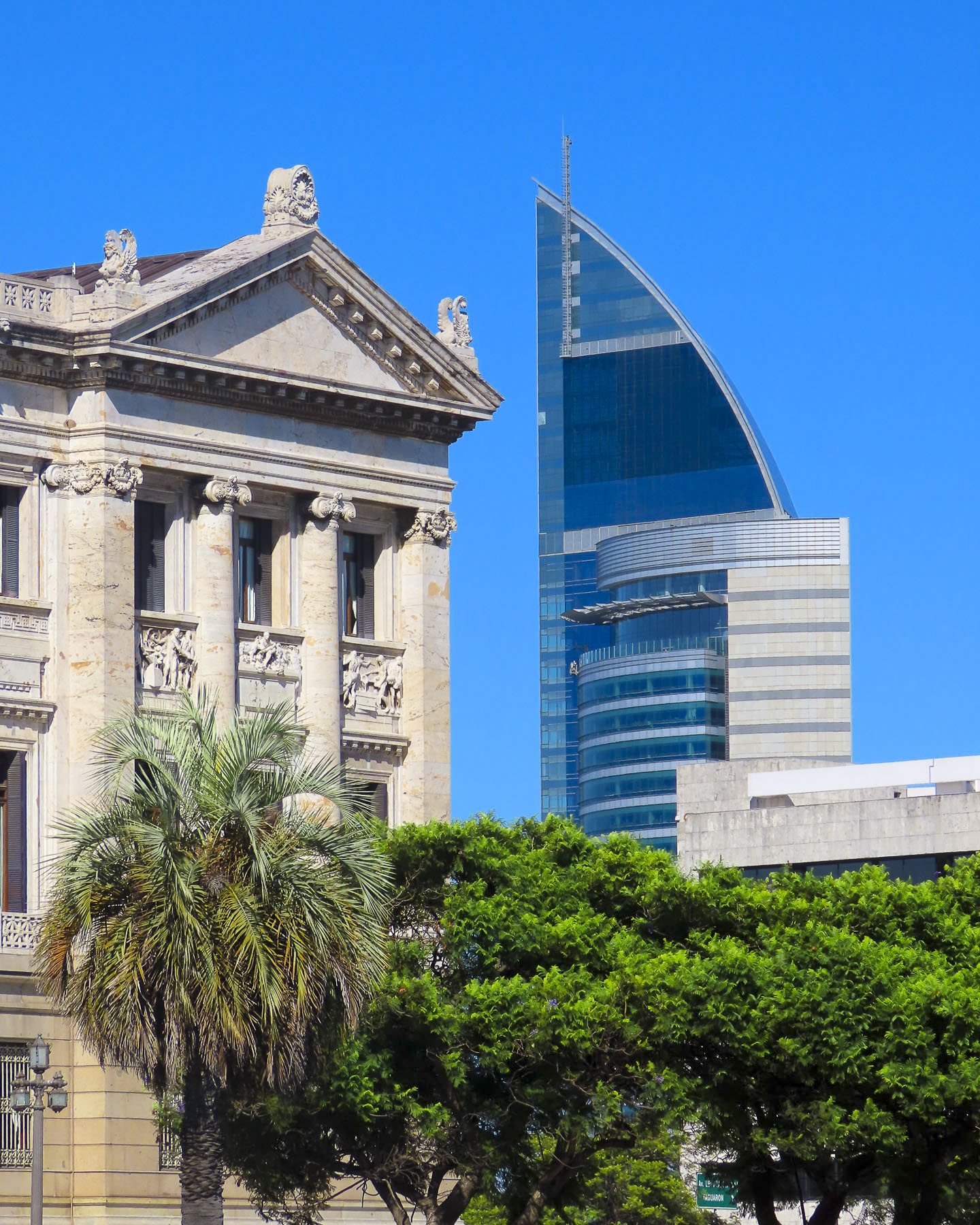
Afterwards we decided to expand our wanderings around the city, and we walked many blocks to the Mercado Agrícola de Montevideo, a historic city market that dates from 1913. We bought some fruit and empanadas for lunch. The most interesting part of our walk was around the Palacio Legislativo, a neoclassical building that is the seat of the Uruguayan parliament. The building’s iconic architecture stands in stark contrast to the large heart felt murals portraying local Montevideans, and the writer Kurt Vonnegut.

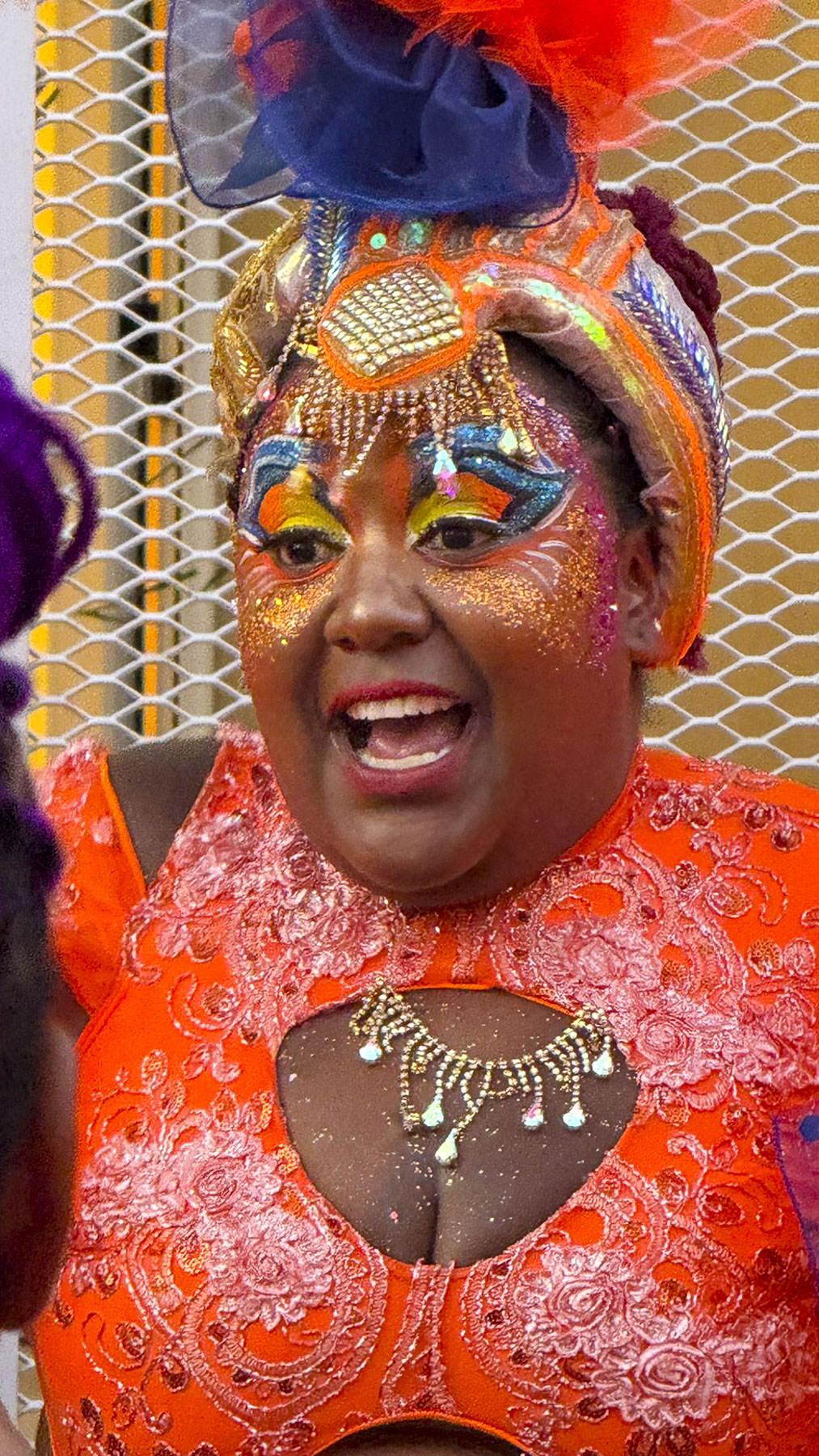
Over the weekend the Llamadas parade, one of the largest during carnaval, was taking place Friday and Saturday night in Barrio Sur. The parade celebrates the Afro-Uruguayan culture in the country with numerous comparsas, large groups of 50-100 festively dressed drummers who play traditional candombe rhythms for their dancers who perform along the street ahead of them.

Our Uber driver dropped us as close as possible to the viewing spot we had scoped out earlier in the week. But the streets were full of activity, with roads blocked for charter buses carrying various comparsas and staging areas where the dancers and drummers readied their groups.

We didn’t know advance ticket purchase was required, so we were totally surprised when the intersections were cordoned off and only tickets holders were allowed onto the sidewalks along Isla de Flores street. Fortunately, the area we had chosen had one small section that was open, and we jammed in, shoulder to shoulder, along with several hundred other folks with the same idea, to watch the parade. Folks next to us cautioned us about losing our phones to grab and run thieves, but we never felt uncomfortable in the crowd.

Carnaval in Montevideo is not as elaborate spectacle as in Rio de Janeiro where huge floats dominate the night. We didn’t last until the end of the parade, but it was a hugely fun, very authentic grassroots event that we thoroughly enjoyed. A few blocks off the parade route at Restaurante Palermo Viejo we shared our first chivito. These are huge, layered sandwiches that contain churrasco steak, ham, bacon, mozzarella cheese, lettuce, tomato, and a fried egg on top. The tasty creation was very filling, and it is often referred to as Uruguay’s national dish.

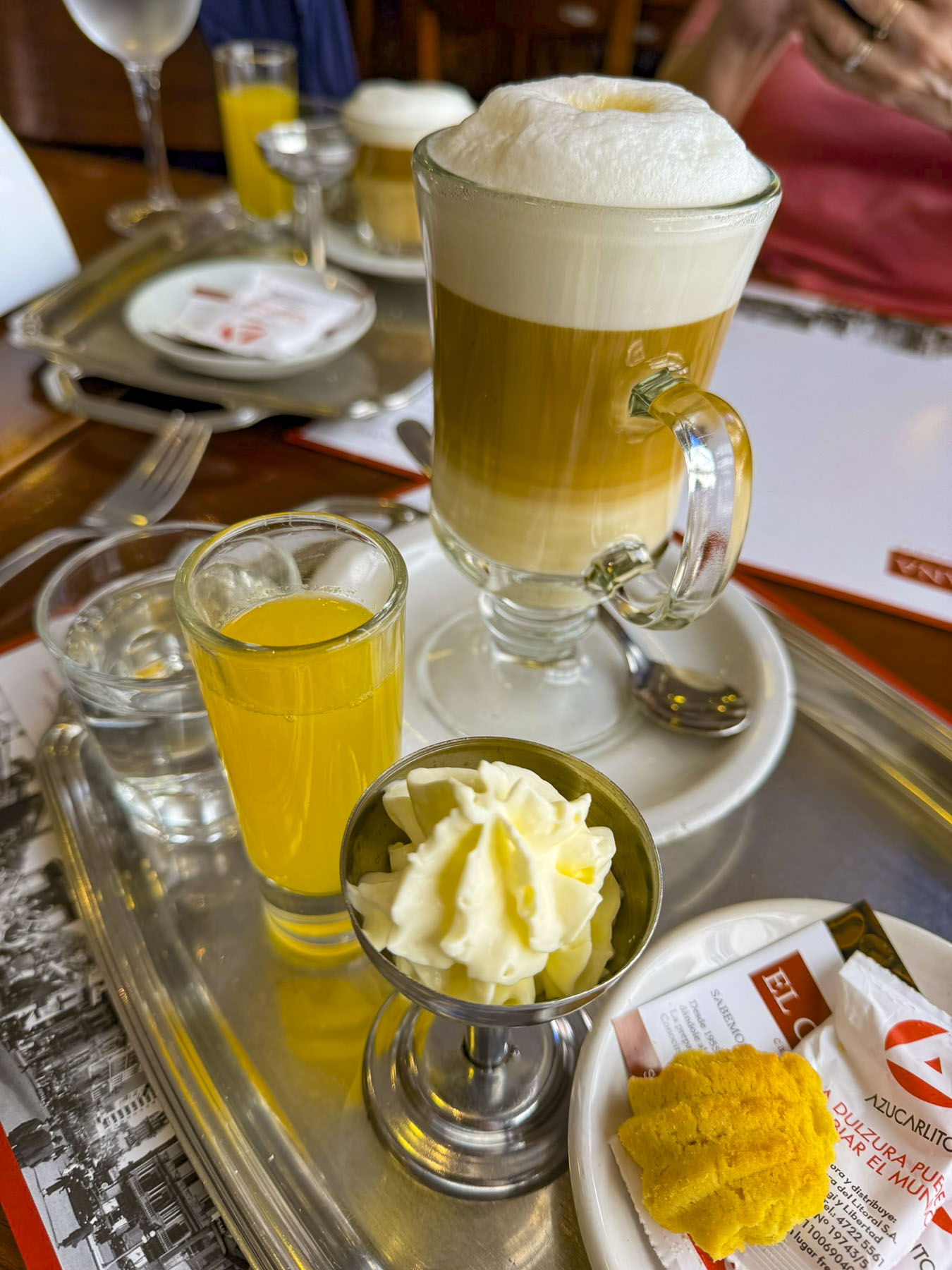
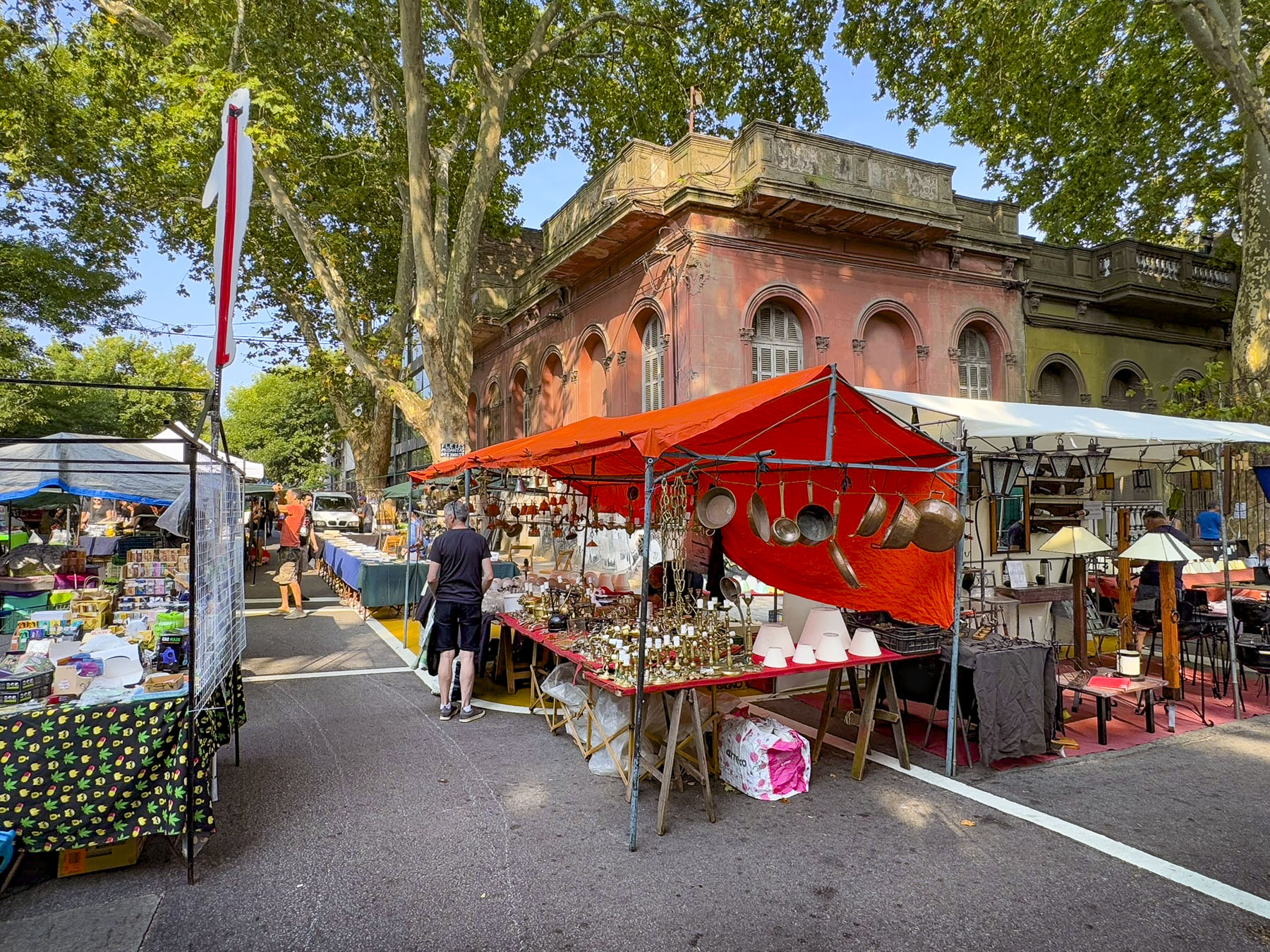
The next morning after a luscious breakfast at El Copacabana, in the old town, we took an Uber over to the Feria de Tristan Narvaja, a Sunday street market that stretches for seven long blocks through the Cordon neighborhood. It features a multitude of vendors selling everything imaginable, along with secondhand clothing, used books, fresh produce, and artist’s handcrafted creations.

Following our “walk a little then café” philosophy we took a break at El Imperio, an eclectically decorated bar, where the barista between serving inside customers ran trays of espressos out to the vendors on the street. We thought the feria was one of the more interesting ones we’ve experienced during our travels and think it’s a must-do activity when visiting Montevideo, if you like this sort of event.

Later that morning we headed to the airport and picked up a rental car we had reserved at Localiza Aquiler de Autos, a very good local agency with reasonable rates, for our 12 day road trip, which we were starting the next day. But first we had one more thing to do locally, and we drove an hour north into the countryside outside of Montevideo. Nearly forty percent of Uruguay’s population lives in Montevideo, but the city’s urban sprawl quickly transformed into gently rolling farmlands and vineyards as we drove through the Canelones region to the Cabaña La Mansedumbre, a rustic, under-the-radar destination restaurant. We eventually turned down a sandy dirt road. A small weather-worn sign hung from the cattle gate across the twin tracks that led to Fredy and Silvana’s ranch. When making our reservation, he had reminded us to close the gate securely so his goats wouldn’t escape.

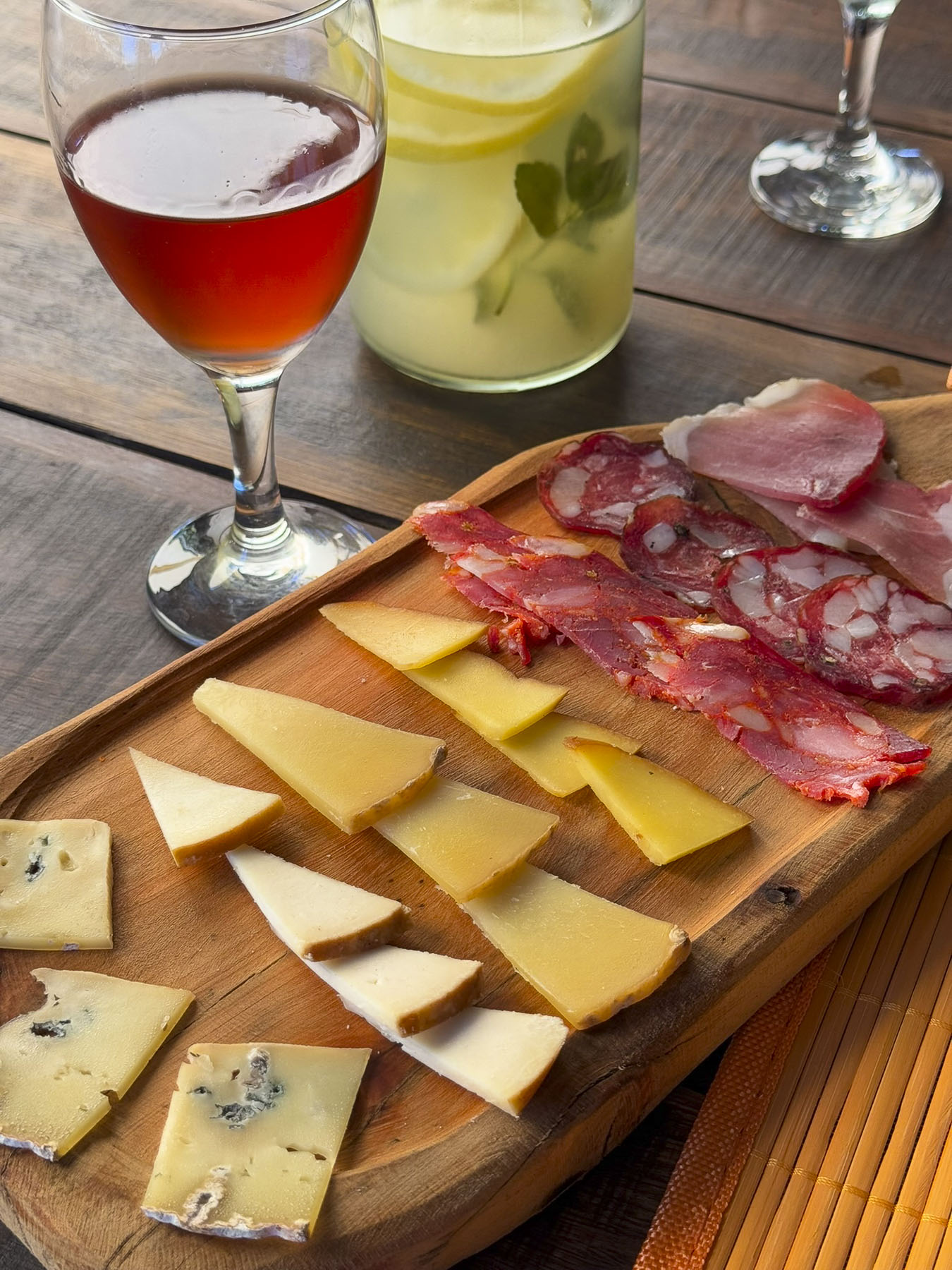
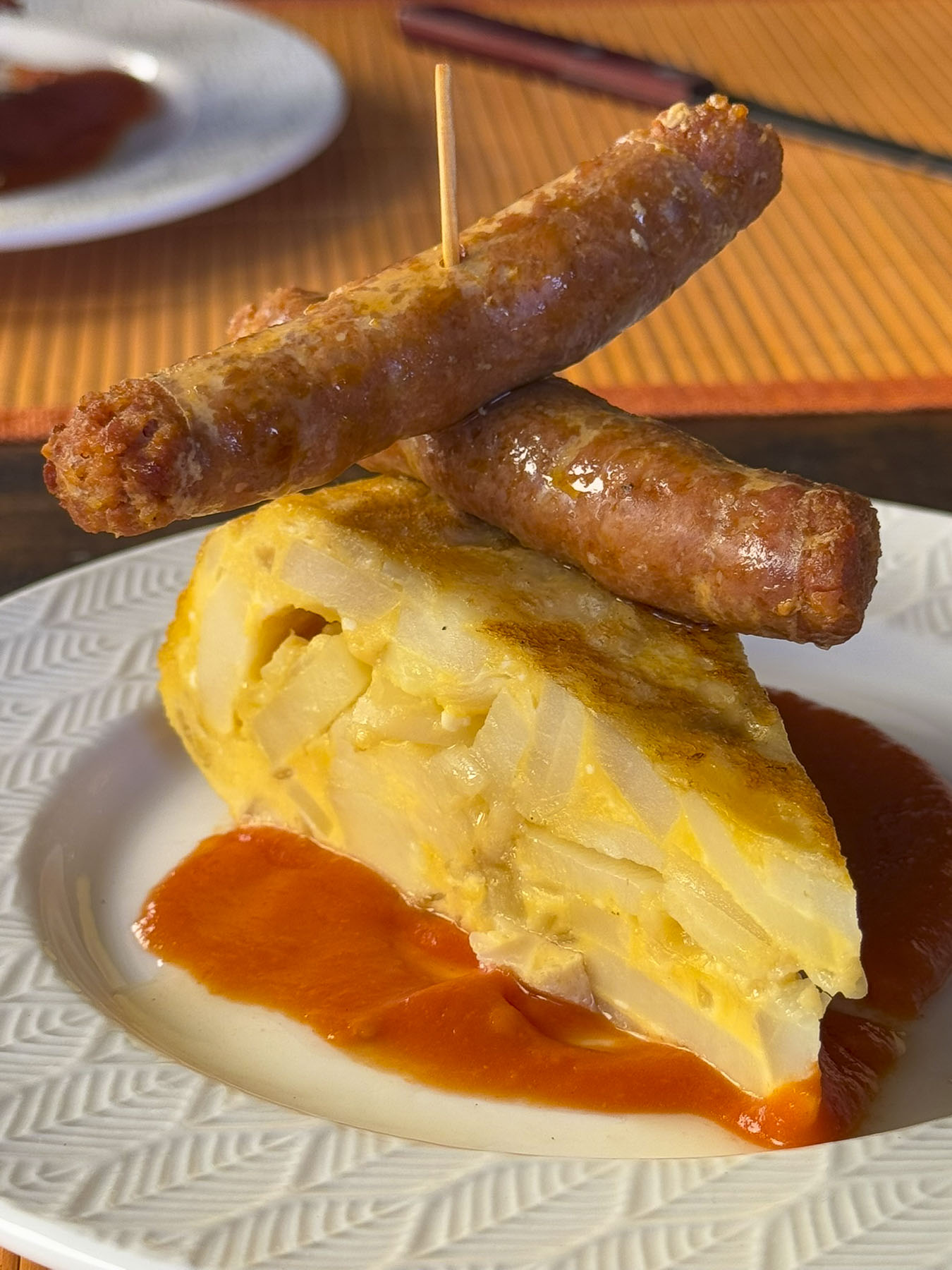
We were the first guests to arrive that afternoon and were warmly welcomed into the courtyard of the couple’s rural farm stead. A tour of the open-air kitchen followed where we met Fredy’s son Juan, as he was preparing charcuterie boards under an array of sausages and cheeses hanging from the rafters. Heat emanated from a brick oven in the corner. Two large golden tortilla de papas cooled on a countertop under shelves laden with jars or homemade sauces, jams, and jellies. Baskets of fresh bread and rolls which Silvana had baked that morning tempted us with their wonderful aroma. 

Very enthusiastically Fredy explained that everything they use to prepare their dinners is sourced within a 5-mile radius of their farm. Though many items, like the goat cheeses, were made by his neighbor using the goat milk from Fredy’s herd, while the tanat wine we were offered, as we waited for the other guests to arrive, came from a friend’s vineyard at the other end of the road. Bottles of grappa that Fredy had infused with herbs lined a shelf above wine casks which flowed freely all afternoon.

Neither has trained as a chef, but they both share a passion for food and travel which has inspired them to refine their skills over the years, and now share their enthusiasm for great food at their home on the weekends. Seeing their farming community’s potential they have encouraged their purveyors to provide new and different sausages, cheeses, and produce than what was traditionally available in the past.

With everyone’s arrival we were seated at tables under their tinned roof porch. We were hoping to experience a traditional Uruguayan asado, but grilling meats on the parrilla was not part of the gourmet eight course feast that the couple had planned.

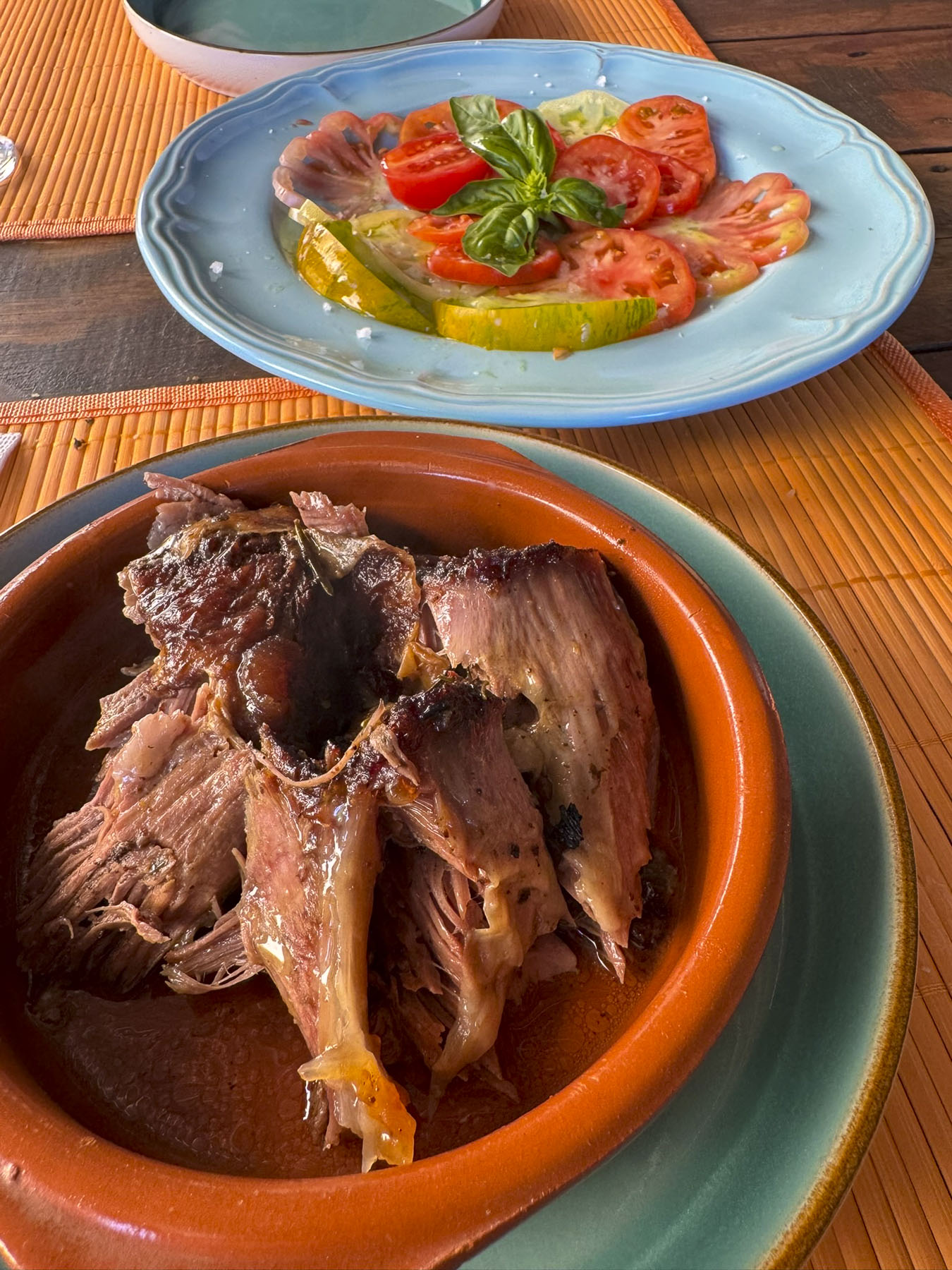
Our initial disappointment faded quickly as amazingly delicious dishes emerged from that simple country kitchen for nearly three hours that afternoon. Every dish was uniquely flavored, excellently prepared and presented. Coffee, dessert and grappa crowned the dinner. We wish we had taken notes, but photos of some of the dishes will have to suffice. 

The dinner was nicely paced, with plenty of time to talk with the other guests and enjoy the wine between courses. It was a memorable afternoon, and an excellent farm to table dining experience, along with being the best meal we had while visiting Uruguay.

For reservations Fredy and Silvana can be contacted through phone & WhatsApp +598 99 390 054.

Montevideo consistently ranks as the top city in Central and South America for quality of life. We thought it was a great destination, especially during Carnaval and it exceeded our expectations.

Till next time,

Craig & Donna

P.S. Our 12 day road trip through Uruguay started the next day.

During our stay, Donna had horrible hacking cough, that was so concerning one night we called the reception desk at NH Montevideo Columbia to ask for advice. The hotel, to our relief, had a physician on-call who made a late-night visit to our room. After an initial exam the doctor wrote a prescription for a chest x-ray in the emergency room at The British Hospital, a private hospital in downtown Montevideo. Fortunately, it was a quiet night at the hospital, and we were attended to quickly after checking in. We had a good experience there, the x-rays were negative for lung infection, and the hospital visit was totally covered by our travel insurance.

Street parking everywhere in Uruguay is free!

Driving Through the Baltics: Part 10 – Tartu, Estonia or Wandering through a University Town

The street was alive with activity. Three buskers with drum, sax, and tuba were jazzily rendering Bruno Mars’ “Marry You” on the pedestrian mall full of folks strolling and bicyclists weaving amidst a food fair and participants readying their wacky go-cart entries for a Red Bull event later that afternoon.

There’s a long tradition in Estonia of student rock bands in the 70s and 80s transcribing western songs heard via Radio Free Europe broadcasts to countries behind the “Iron Curtain,” including Estonia. Soviet censors viewed any foreign influence, especially rock ’n roll as a threat to communist ideology, and these street musicians were upholding a long-standing musical tradition.

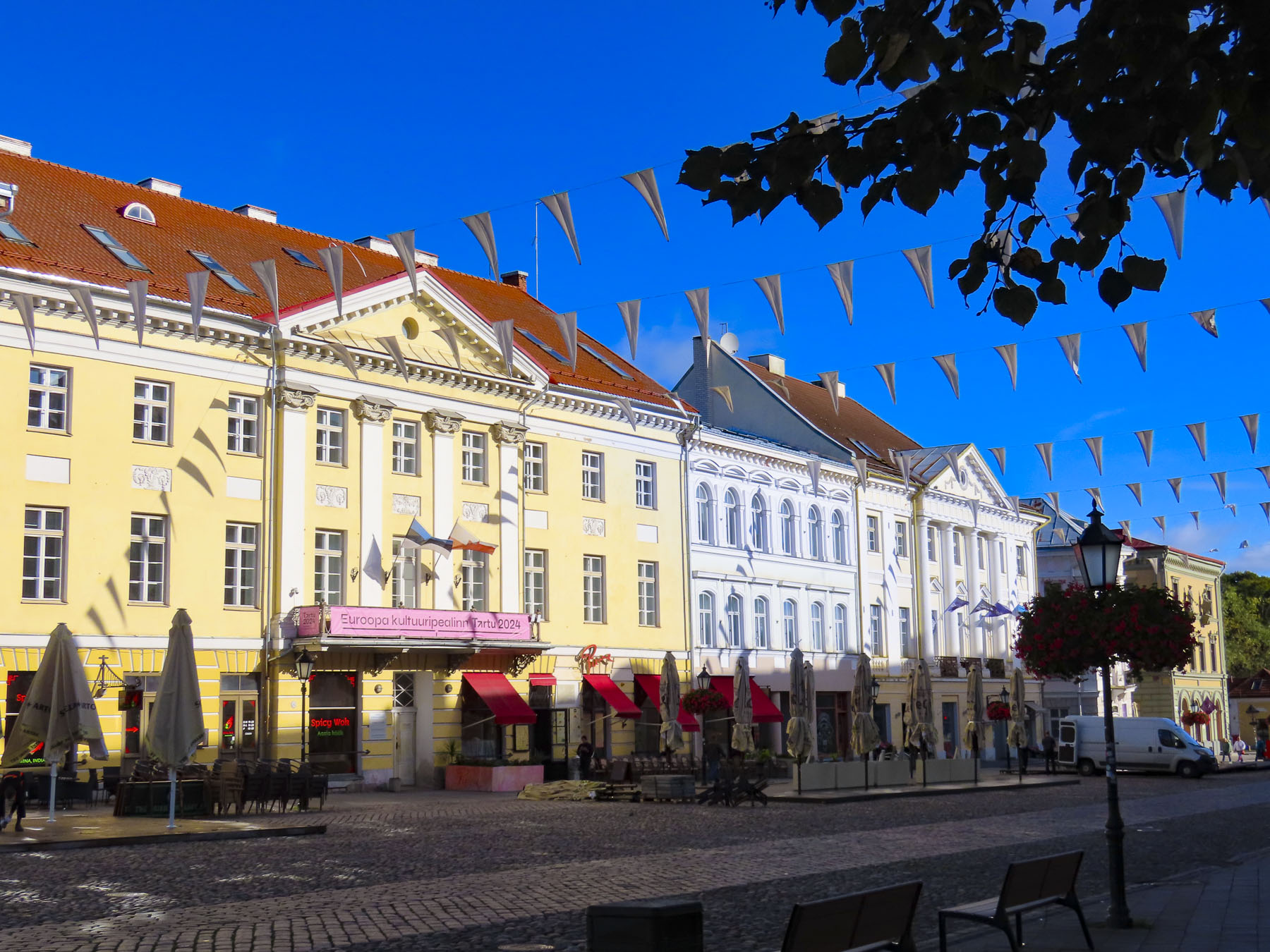
Tartu has been a university town since the 17th-century, and today 14,000 students give the city, Estonia’s second largest with only a population of 104,000, an energetic youthful vibe. They are an important part of the town’s character and are playfully acknowledged on the café-lined cobblestone plaza in front of Tartu’s City Hall with the ‘The Kissing Students’ sculpture and fountain.

The University of Tartu’s students also played a crucial role in Estonia’s expression of national identity and resistance to Soviet rule in the late 1980’s. Their support of the “Five Patriotic Songs” by Alo Mattiisen led to spontaneous mass singing demonstrations at the Tartu Pop Festival in May 1988. These musical protests spread to Tallin, then Latvia and Lithuania. These peaceful protests culminated in the The Baltic Way, a human chain of two million people which spanned from Tallinn, Estonia to Vilnius, Lithuania in August of 1989. The popularity of these peaceful movements strengthened the determination of Estonians to redeclare their independence from the Soviet Union in 1991. Latvia and Lithuania followed suit soon after.

The Kissing Students’ fountain is really the center of activity in Tartu, a splendidly walkable city. Its car-free center extends north along Küüni tn from the modern Kvartal shopping mall, with an array of nice shops, and an excellent Coop supermarket, past the central plaza all the way to the Botanical Garden of the University of Tartu. And there were numerous points of interest just off this route that we explored during our five-night stay at the Art Hotel Pallas, a boutique hotel nicely located across from the Kvartal mall, with views from our hotel room of the spires atop the town’s city hall and churches. It also had convenient free parking, and a scrumptious breakfast buffet. The pickled herring, yes for breakfast, was really good. It was the perfect spot to get some much-needed R&R after driving through Estonia, Latvia, and Lithuania for three weeks.

One of the nicest things we’ve encountered during our road trip through the Baltics is the extensive amount of public art that graces the region’s cities and small towns. Few are of a historical nature. The sculptures of Lenin and Stalin that the Soviet Union installed during their fifty years of occupation to erase the Estonia’s history were quickly removed from all public spaces, and sent to the scrap yard. The current sculptures now honor influential writers, poets, and folk heroes or are simply artistic inspirations without any political messaging.

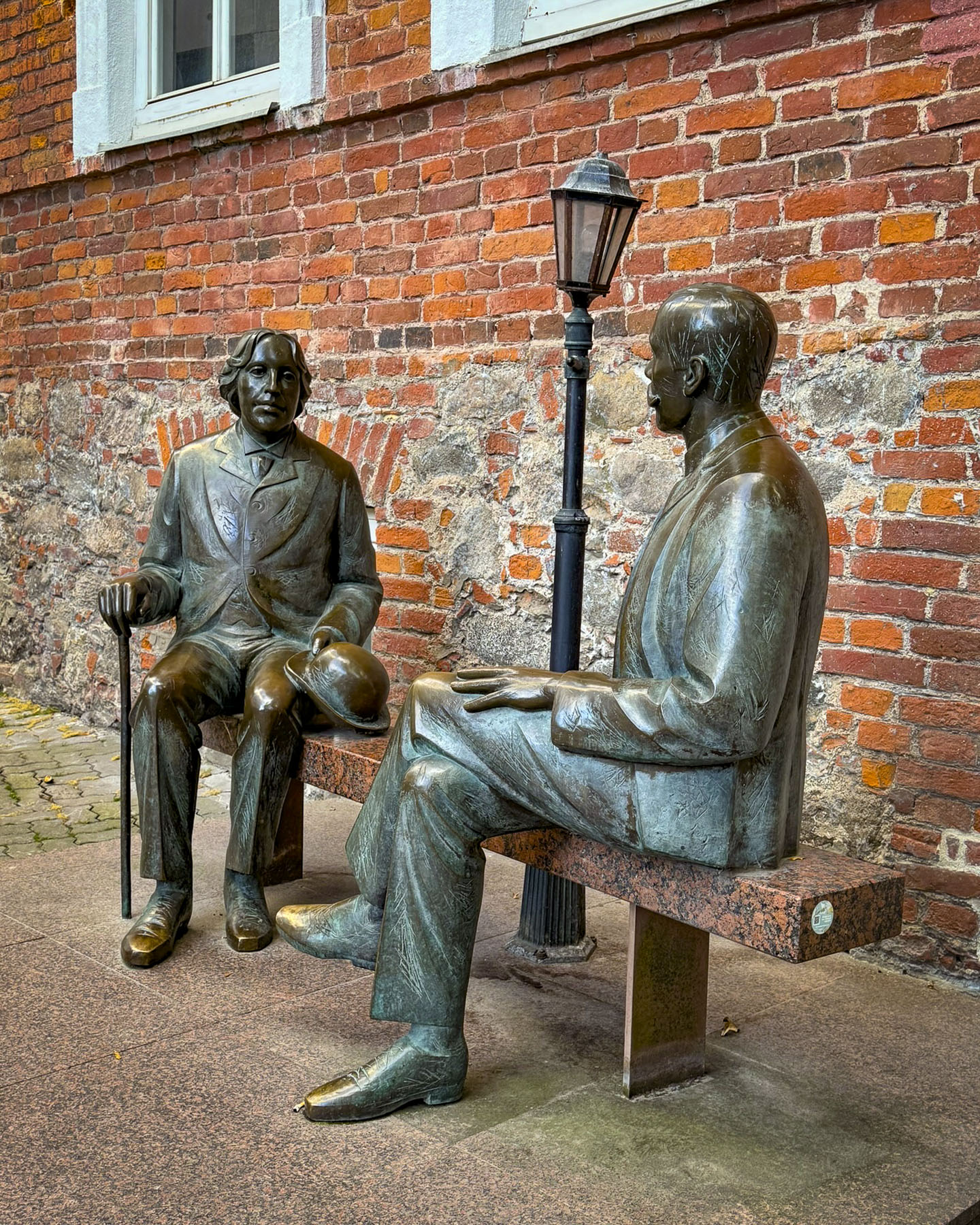
Along Küüni there was a sculpture of Irish playwright Oscar Wilde and Estonian writer Eduard Vilde depicted in an imaginary encounter between the literary heavyweights. Though the two never met, Wilde did give a lecture at the university in 1892.

Nearby was the sculpture “Father and Son,” by the Tartu native Ülo Õun (1944-1988). The Visit Tartu website explains the work represents the sculptor with his 18-month-old son, and “is a symbol of the relationship between different generations, where children are increasingly growing apart from their parents.” A side note – the Visit Tartu website has an extensive calendar of events page. In a park they had a pop-up information tent, and detrimentally to our waistlines, it was across from the Kalev Chocolate Shop and cookie store. This Estonian brand makes, in our opinion, some of the best store-bought snacks. You can buy them in grocery stores across the Baltics, but they surprisingly cost less in their own stores.

A diagonal walk through the park took us to Tartu Turuhoone, the town’s old market hall where a large sculpture of “Siga Roosi,” a pig, advertises the building’s entrance and the products available inside. If you have visited Riga’s large market, this wanes in comparison, but the pig immortalized in bronze appears to be smiling.

From here a very pleasant walk along the riverfront promenade that follows the Emajõgi River leads to the Kaarsild, an arched footbridge that spans the river to Ülejõe Park and the neighborhoods east of the historic center.

The approach to the bridge was a perfect spot to admire the beautiful buildings surrounding the town’s plaza which represent an eclectic assortment of architectural styles from the 13th to 17th centuries, when the town was a prominent member of the Hanseatic Merchant League.

At the foot of the plaza the Tartu Kunstimuuseum, a museum of art, occupies a 1793 building that is often referred to as Tartu’s Tower of Pisa. The three-story building’s 5.8 degree of tilt is actually greater than the famous tower in Italy. The tilt was a result of one side of the building being constructed on the medieval footing of the ancient defensive wall that once encircled the town, and the other side was erected above loose soil. As the decades passed, the structure slowly sank into the ground. Polish engineers successfully stabilized the building during the communist era, and it was determined safe enough to house the museum since 1988.

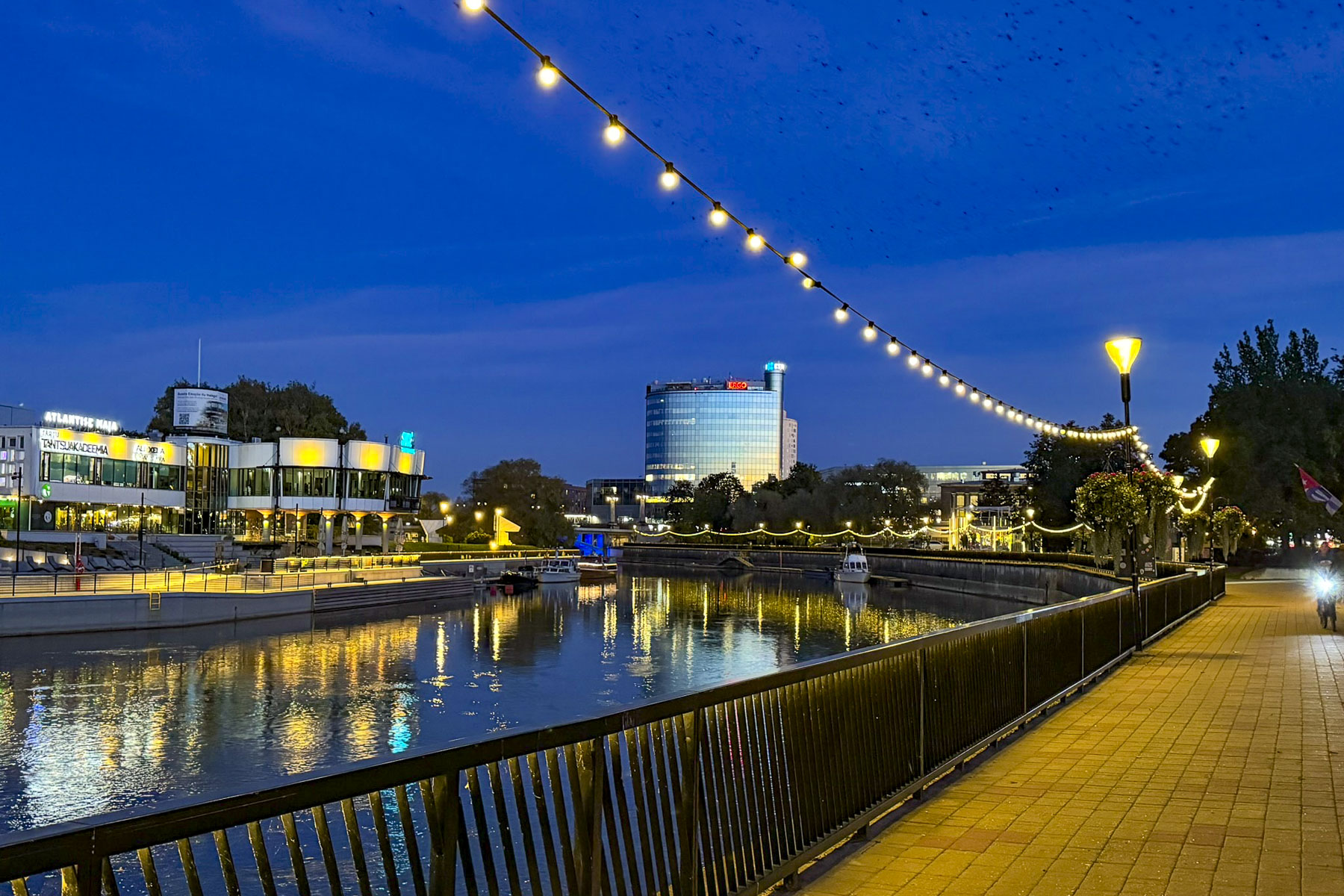
In the other direction there was the reflection of the growing city’s modern skyline reflected on the rippling water of the river. These views were beautiful and equally enchanting in the early evening twilight as we watched the murmurations of European starlings swooping over the river, before they noisily roosted in the park.

Just behind Town Hall and across from a large street mural of the University of Tartu was café/restaurantWerner, an excellent establishment with a nice vibe, that’s popular with both students and professionals; we dined there several times during our stay in the city.

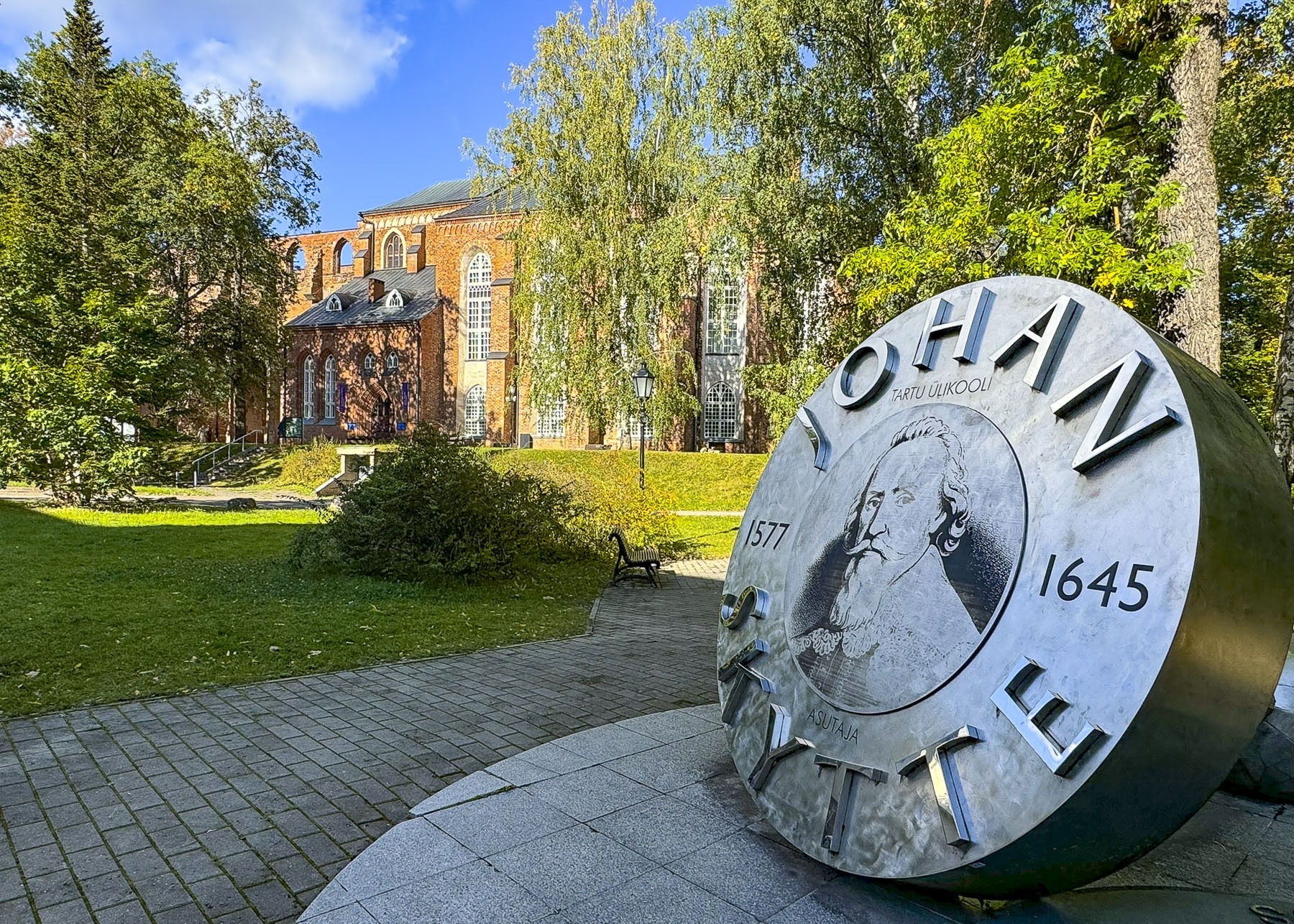
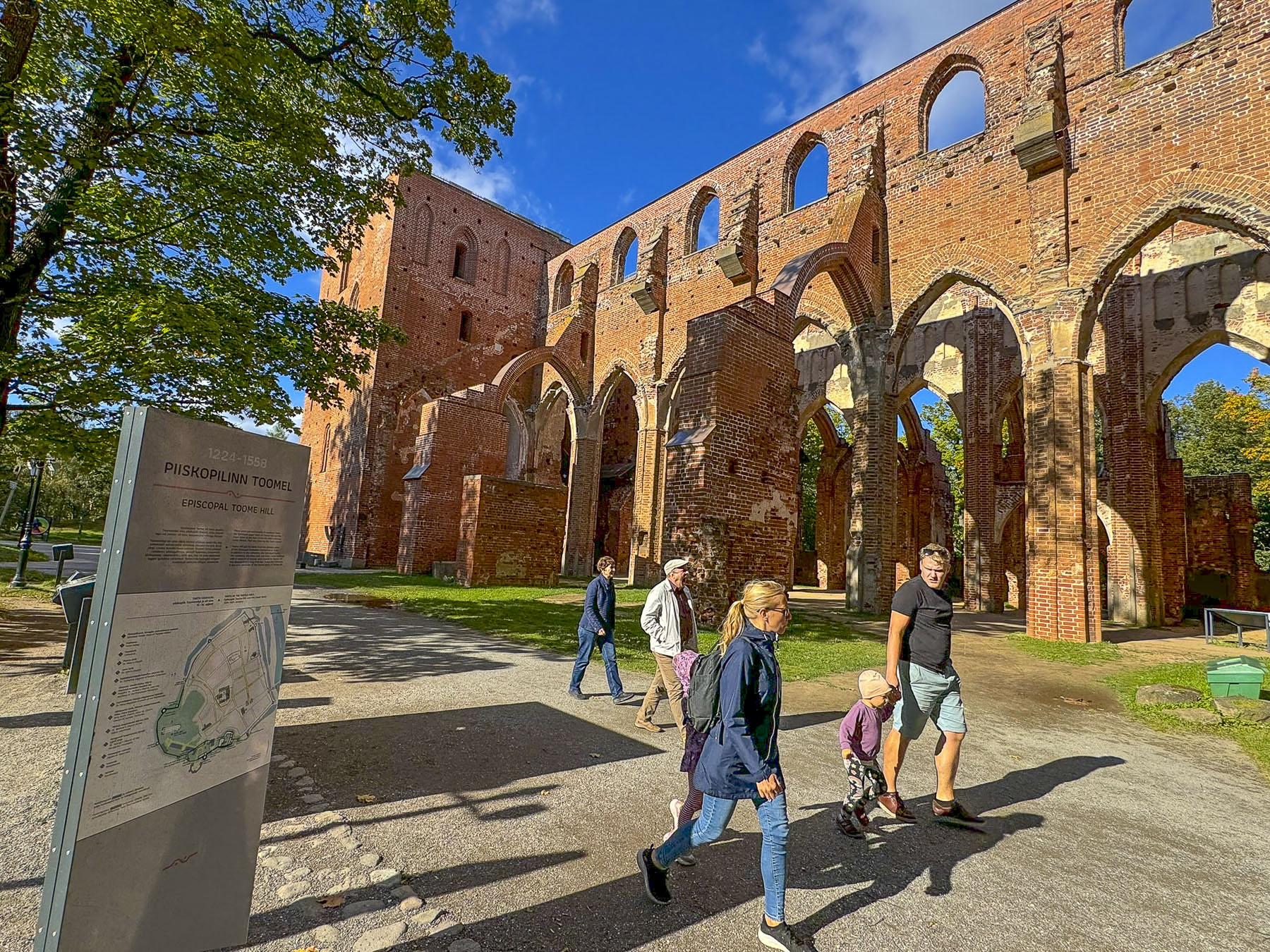
Afterwards we took the long uphill walk to the ruins of Tartu’s immense 13th century cathedral, now on the grounds of the University of Tartu. Construction of the Gothic style church started shortly after the Brothers of the Sword subjugated the pagan tribes around Tartu in the early 1200s and lasted nearly 400 years before it was destroyed during the Livonian Wars that ravished the region. It was never rebuilt.

We chose not to, but it’s possible to climb its towers to a viewing platform above the ruins for a panoramic view of the school’s campus and Tartu. The choir end of the cathedral has been restored and since 1981 houses The University of Tartu Museum.

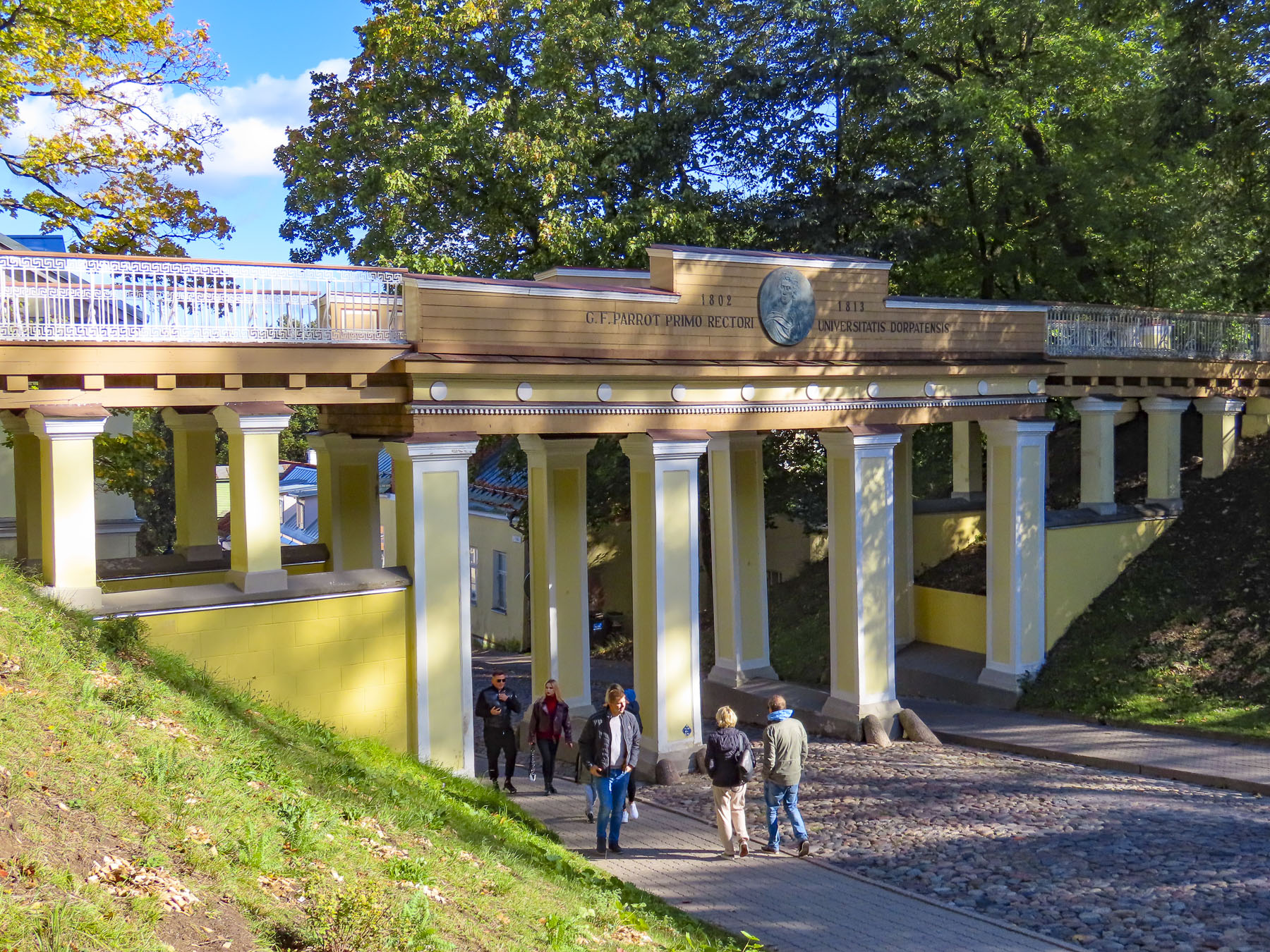
Heading back to the old town we passed under the Angel Bridge, built in 1838 to ease students’ efforts getting across campus. The scenic spot has a bit of a lovers’ lane reputation, as well as having several legends associated with it. The most popular one being “when you cross the bridge for the first time you should make a wish, and if you can hold your breath until you reach the other side your wish will come true.”   

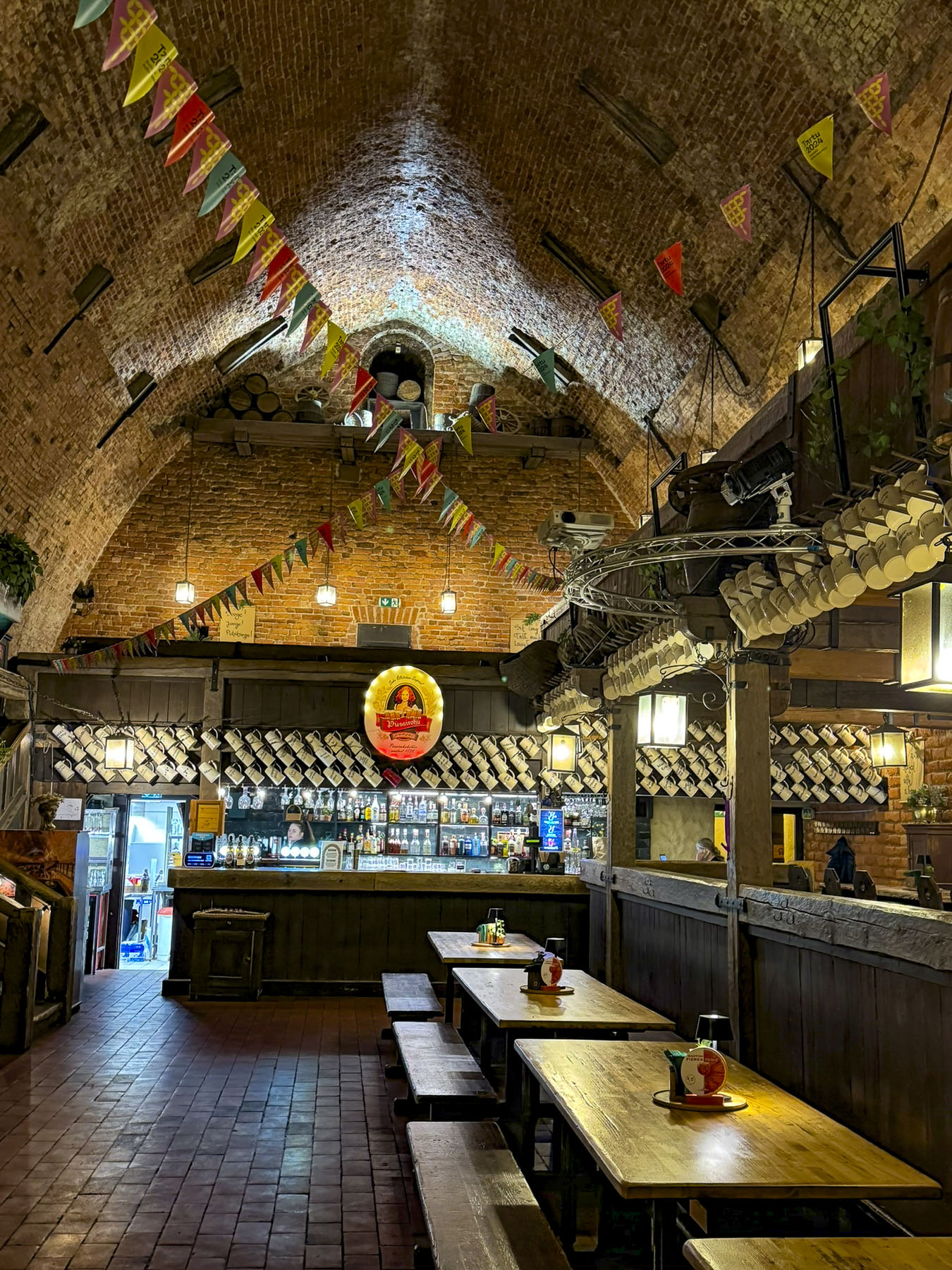
Just off the lane was the Gunpowder Cellar built into the side of a hill, it’s a rustic tavern set in a cavernous old 18th century munitions warehouse with an arched brick ceiling. It’s a popular beer hall and is known for its tasty Gunpowder Red beer, while also hosting frequent band appearances.

Later in the week after having lunch at the Café Werner a second time, we turned right and wandered down Ülikooli tn towards the neoclassic columned façade of the University of Tartu’s main building. It is Estonia’s oldest and largest university and the pride and joy of Tartu. The school was originally founded 1583 as a Jesuit institution during Poland’s brief rule of the country, but most of the credit is given to the Swedish King Gustave II Adolph when he upgraded the school to a university in 1632. It was forced to close several times over the centuries due to regional wars, but was later reopened by Russian Czar Alexander I in 1802 and was again reopened by the Soviet Union after World War II, where it became an important contact spot for Soviet academics to meet their western counterparts during the Cold War era.

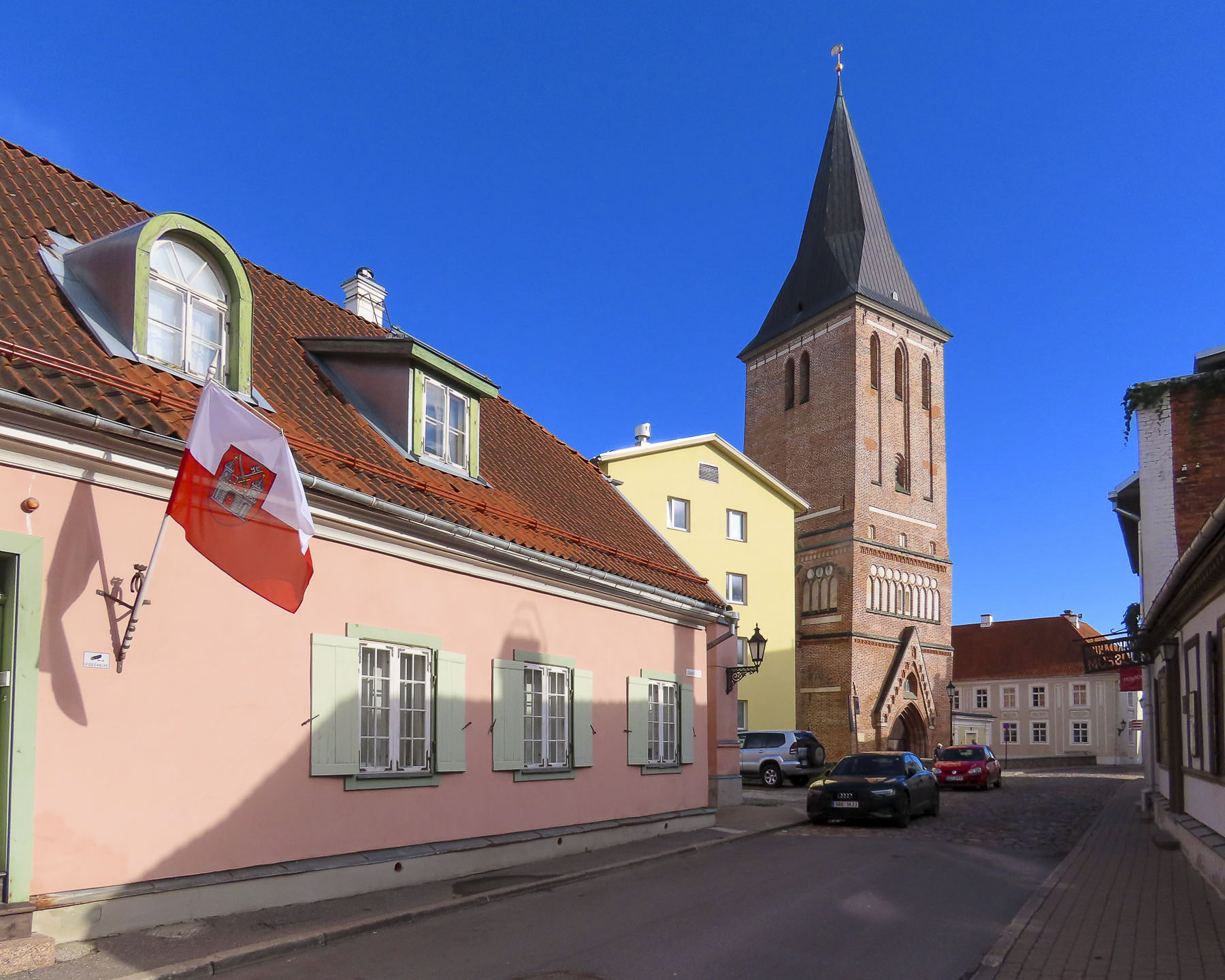
Farther along some of the buildings near Tartu’s St. John’s Church had unique details. Archeological evidence suggests the church dates back to the late 1100s, and could be the first “Christian church building in Estonia before the 13th-century conquest and great Christianization of the country.”  The basic form of the current church dates from the beginning of the 13th century. Due to the region’s conflicts, the church has been reconstructed several times over the centuries. Unfortunately, the church was closed when we visited the area.

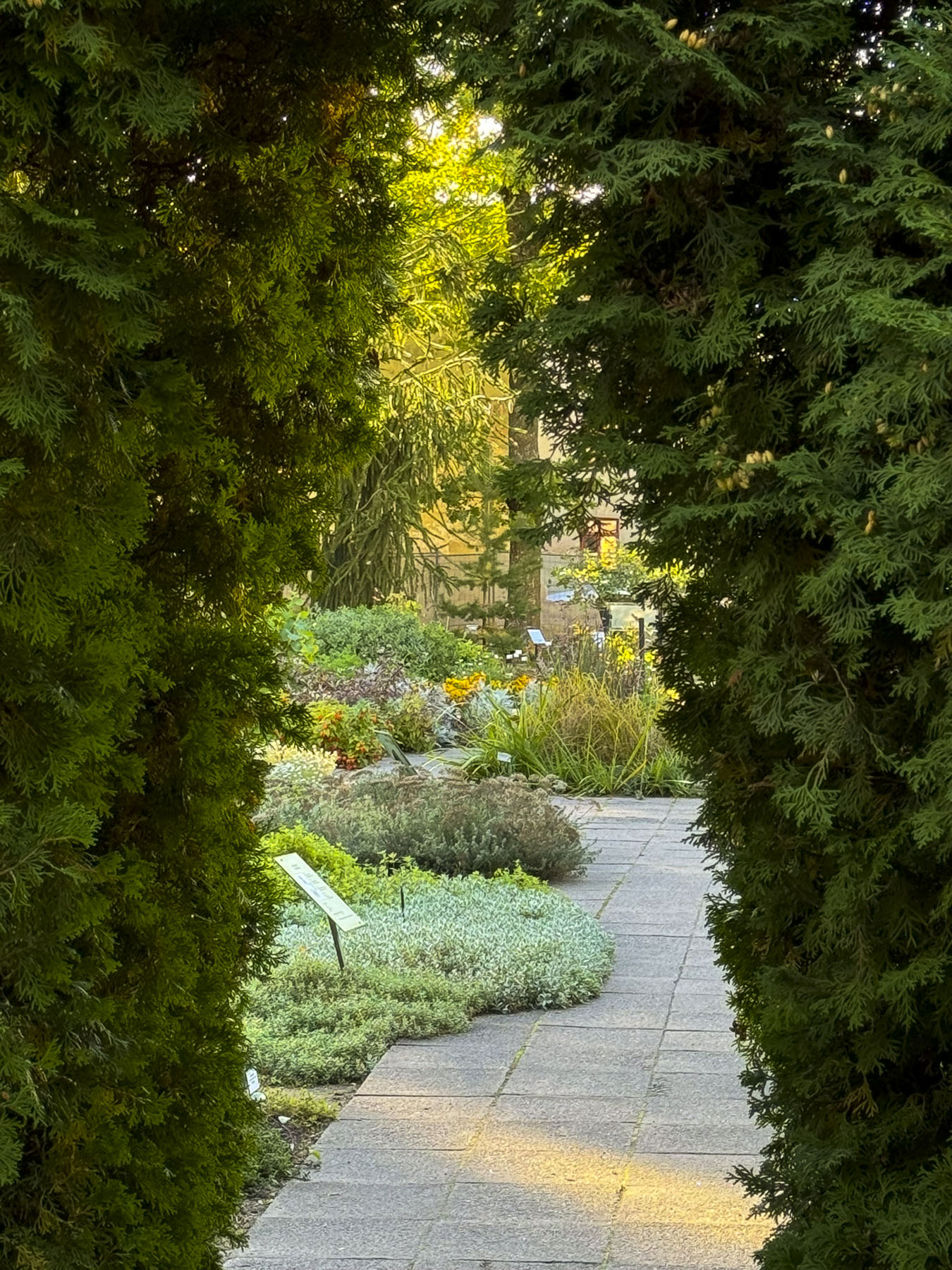
At the end of Ülikooli tn a short walk to the right led us to the Botanical Garden of the University of Tartu. Though in early October it was evident that Estonia has a short growing season and most of the plants were past their prime, but we still enjoyed exploring the various oases of greenery with a number of other couples and families, and imagined how beautiful the gardens must look in the Spring and Summer.

We followed Ruutli tanav, one of Tartu’s oldest streets, back towards the historic center of the town. During the Middle Ages when the winter snows melted during the spring thaw  – “mud season” or Estonia’s “fifth season” – traveling about the countryside was quite difficult. In the larger towns like Tartu the thoroughfares were lined with logs laid perpendicularly across the road to ease the life of the townsfolk and facilitate merchant trade with the Hanseatic League through the town’s riverside port on the Emajõgi. Evidence of these ancient timbered roads is still occasionally discovered whenever there is any infrastructure improvement required in the city. Cobblestones weren’t used for the lanes through town until the 15th century.

We made a short detour off our route to the Virgin Mary’s Dormition Cathedral, an Estonian Apostolic Orthodox Church. The beautiful Russian baroque style church was built in 1840 atop the foundations of an earlier wooden church that was burnt down during the 1775 Great Fire of Tartu, a devastating inferno which destroyed almost all the old wooden medieval era buildings in the central part of Tartu.

As we reached the central plaza it was evident that the weekend’s festivities were Tartu’s last big event for the summer high season. The weather was now noticeably colder with morning temperatures of 36F (2C) warming only to 54F (12C), and the outdoor café tables and chairs that lined the square were being taken down and sent into storage, until needed again next Spring. But the season is not over until the buskers stop playing and the trio of musicians from the other day were still entertaining folks around the Kissing Students fountain in the warm afternoon sun.

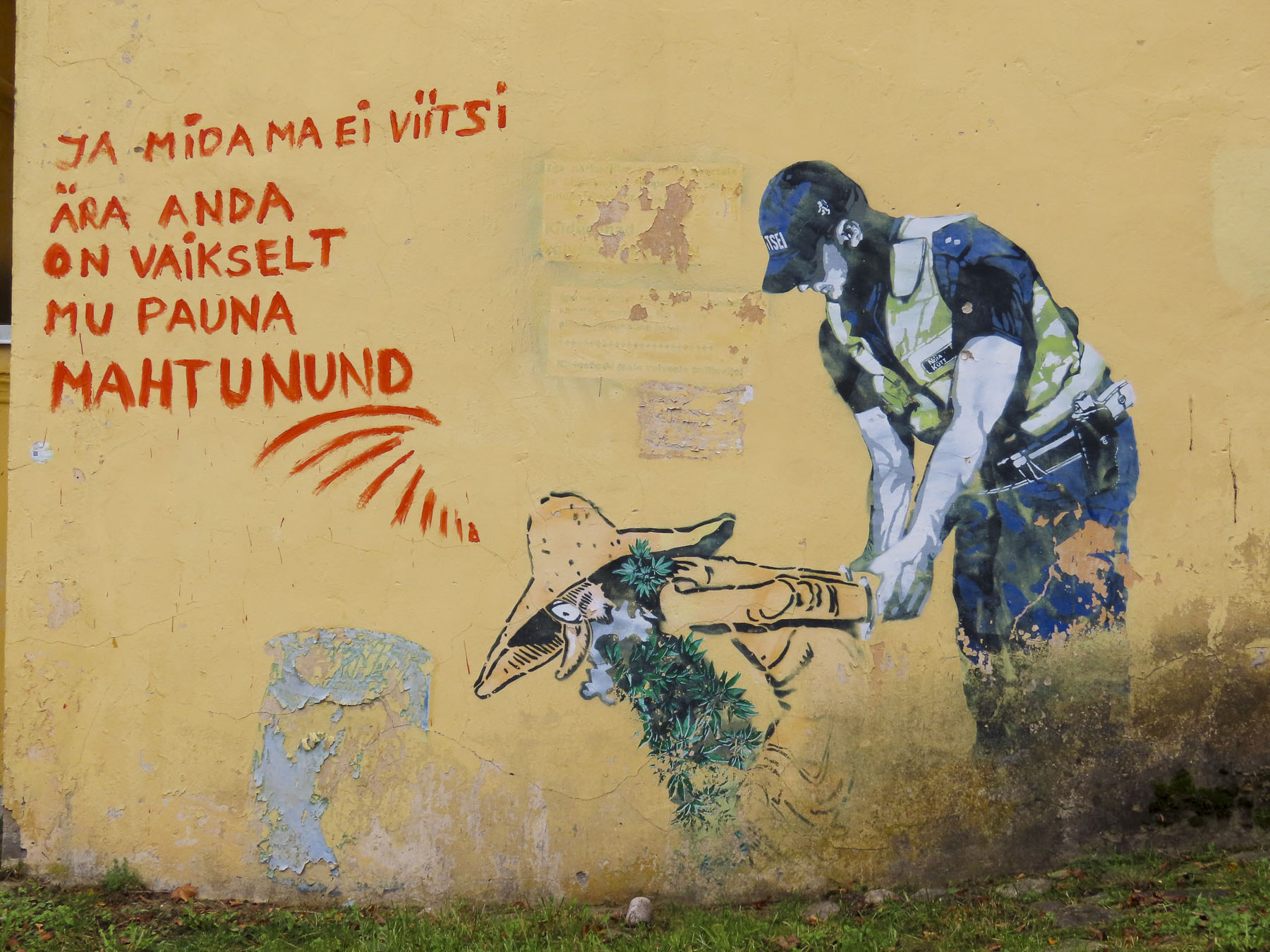
On our walks through the town, we came across some interesting and creative street murals. All were in well-chosen places that enhanced the wall, none were of the loud bubblegum type, though some were of a political nature. After all, our hotel was named for the Pallas Art School, which existed from 1919 to 1944 in Tartu, and was influential in establishing the aesthetic values of the newly independent country, but was closed during the communist occupation of the country.

Today the school’s artistic legacy continues at the  Pallas University of Applied Sciences which opened in 2000, and features ongoing exhibits in the Pallas Gallery.

The Gray House, now the KGB Cells museum, was uphill from the gallery, just three doors down from a busy intersection, on a street that leads to university housing. It was a non-descript door with buzzers for the three-story apartment building above it, and one for the museum. In the 1940s and 1950s the upper floors served as offices for the Soviet’s secret police. We buzzed and a voice released the door lock for us to enter the lobby, where an arrow pointed to a heavy metal door to the basement, and a set of intimidating stairs that descended to a flickering fluorescent lit hallway. It’s a small space with a dozen prison cells and several interrogation rooms in which the brutality of the Soviet years is documented. Notoriously, on July 8th & 9th, 1941, 173 men and 20 women were summarily executed and buried in the building’s courtyard. Mass deportations of 45,000 Estonians to the Soviet gulags in Siberia continued until 1953. For many it was a death sentence, and few ever returned to their homeland. Across the country the KGB is believed to have murdered nearly 60,000 political prisoners between 1940 -1991. It’s a reminder of the danger of authoritative regimes and sadly is still relevant today.

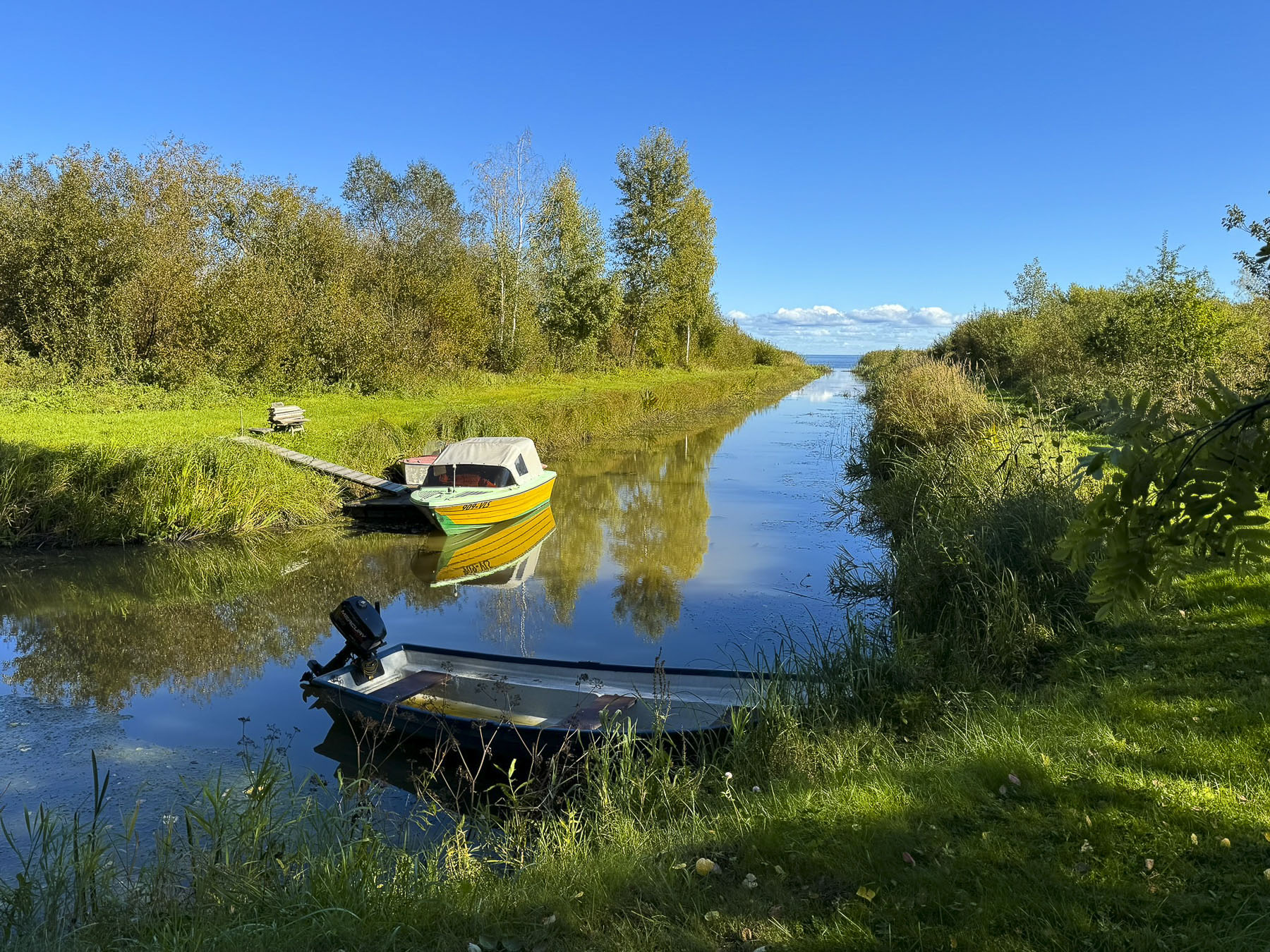
We discovered another street mural just around the corner from our hotel as we headed to dinner at Restoran Spargel. Over an enjoyable evening, we discussed plans to take advantage of the nice weather predicted for the next day by exploring the small fishing villages along the shoreline of Lake Peipus.

We thoroughly appreciated Tartu’s mix of history and youthful enthusiasm for the future. It’s a city but felt like a small town that we could see ourselves quite comfortably living in and enjoy experiencing all of its cultural events throughout the year.

Till next time,

Craig & Donna
Road Tripping Through the Baltics: Part 7 – Riga to Šiauliai, Lithuania or Crosses, Churches and Towns Filled with Art

There are always several dilemmas with a road trip: how far to drive, do we drive straight through or look for interesting stops along our route? We tend to make stops, multiple stops to the point of my trusted co-pilot advising that, “we’ll never make it there at this rate,” but there’s a fear of possibly missing something. Fortunately, our “walk a little, then café,” philosophy easily converts to “drive a little, then café,” and in pursuit of those cups of coffee we’ve happened upon some laid back, interesting places.

The Hill of Crosses in northern Lithuania was our destination as we headed south on the A8/12 from Riga. Only two hours (78 miles/126 km) from Riga, many folks choose to do it as a day trip out of the Latvian capital. Which would have worked for us, but we have this quirky rule that we don’t put a pin in our wall map unless we’ve actually stayed overnight in the country. So, with that in mind, we booked two nights’ accommodation in Šiauliai, the town just beyond the Hill of Crosses.

Craving a cappuccino, we detoured into Jelgava for what we thought would be a short stop to satisfy our caffeine addiction. As we crossed over the Lielupe River we spotted the Jelgava Palace on a large island. It called for a stop. A wooden fortress was first erected here in the 13th century as part of the Livonian Order’s conquest of the pagan Zemgalian tribe that inhabited the region. Today’s beautiful 18th century Baroque style palace with 669 rooms is touted as being the largest in the Baltic states. It is actually a reconstruction of the palace which was burned down during WW2. During its apex it was the seat of the Duchy of Courland and Zemgale, and an important diplomatic post between Russia and Poland. Famously, the exiled French King Louis XVIII, to save his head from the guillotine, inhabited the palace from 1798 – 1807. Part of the palace houses a small museum with the Family Vault of the Dukes of Courland and Semigalla being the main attraction. The rest of the building is occupied by the Latvia University of Agriculture and Latvia’s University of Life Sciences and Technologies.

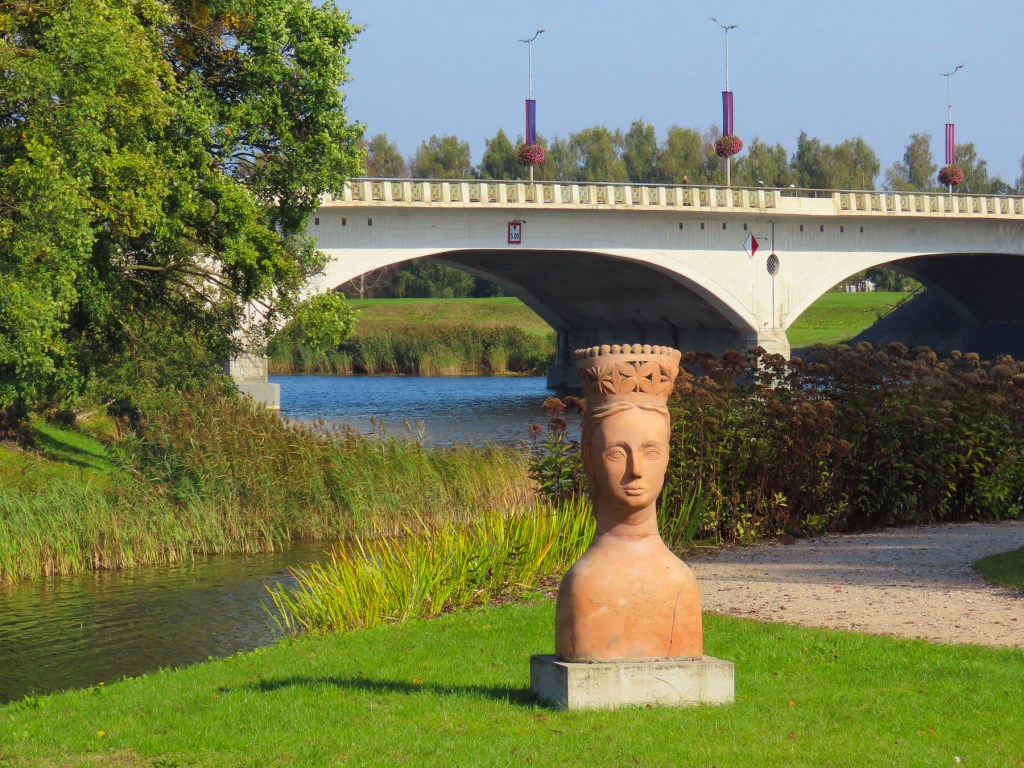
Across from the palace was Pasta Sala, a smaller island with an interesting art park that hosts the annual Jelgava International Sand Sculpture Festival every June and an International Ice Sculpture Festival every February. Unfortunately, traveling in the late September shoulder season we missed it. But we did enjoy wandering along a walking path through an installation of Chamotte fired-clay sculptures.

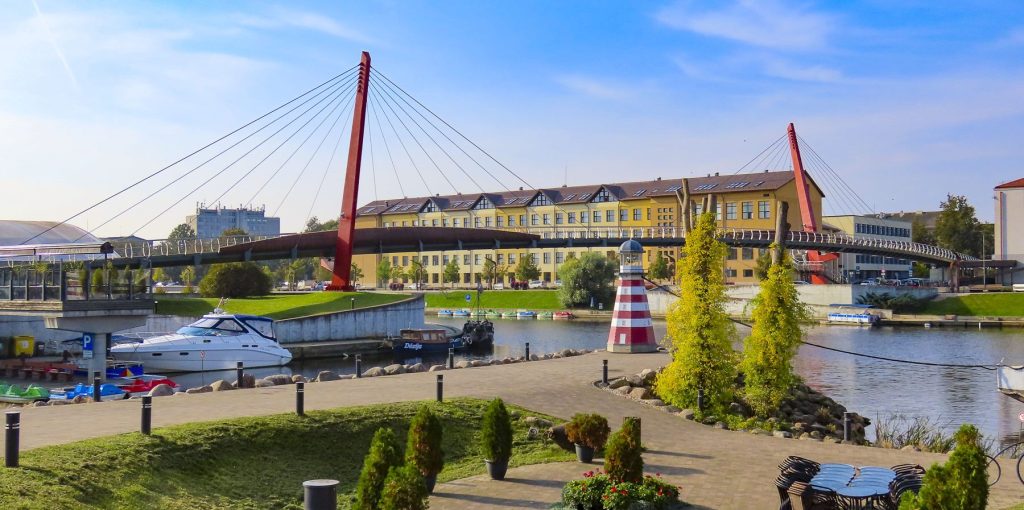
Between the palace and the park, we were now smitten with the impromptu stop and were enticed to follow a graceful modern footbridge, the Mītavas Gājēju, that tilts over the river into the town center, which was surprisingly quiet for a Tuesday in late September, considering that the university town is Latvia’s fourth largest city, with a population of roughly 60,000.

It’s unusual for only half a church to be left standing, but Jelgava’s Holy Trinity Church (1574) is a stark reminder of the devastation the city suffered during Soviet Union and Nazi Germany sieges and occupations of the city during WW2, which left ninety percent of Jelgava in ruins and all its Jewish citizens lost to the Holocaust. Its belltower above the town’s tourist information office was opened in 2010 as an observation deck after extensive reconstruction.

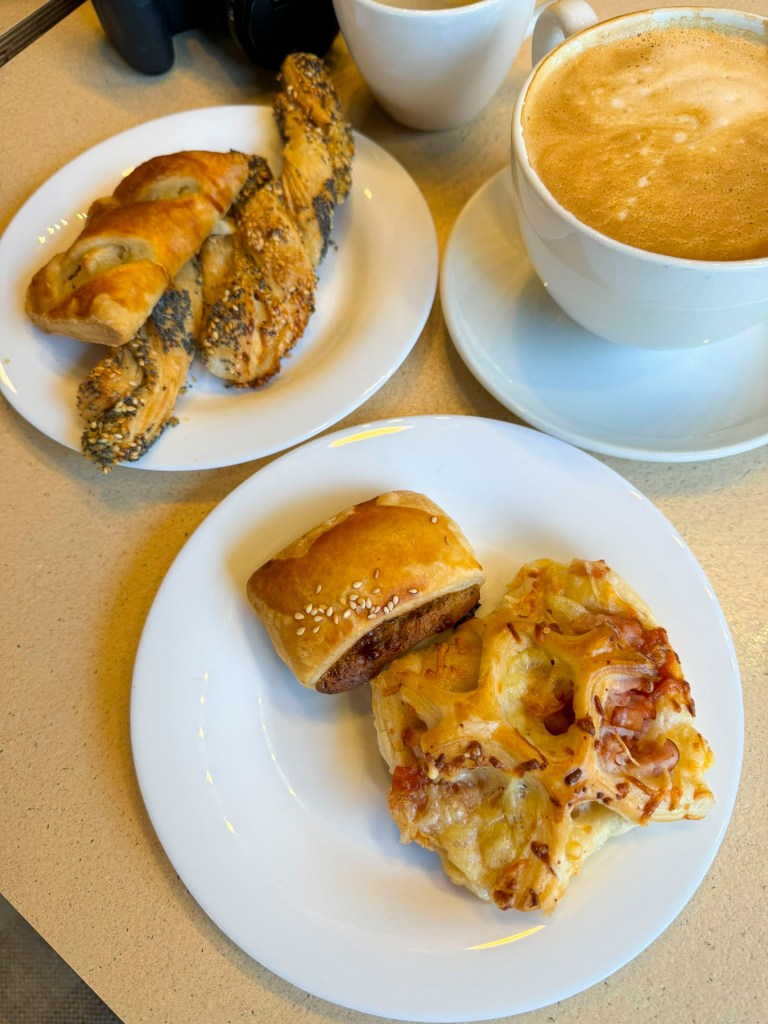
That promise of a morning coffee wasn’t forgotten as we walked along a pedestrian mall past a small daily street market to Konditoreja Silva, a bistro and patisserie where the coffees were very good and the selection of tasty pastries was mouthwatering.

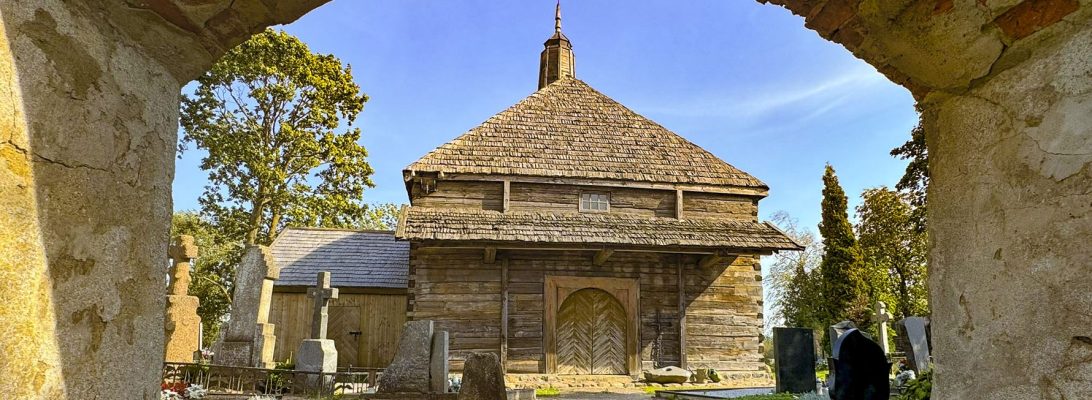
Back on the road, we continued our drive south and crossed the border into Lithuania. We zoomed by a small roadside marker that pointed to the Jakiškiai Chapel, one of the last wooden churches from the 17th century remaining in Lithuania. We u-turned in order to find it. Passing through a small hamlet, we located the church situated on a low knoll, surrounded by fields and pasturelands.

It’s also known as the St Ignatius of Loyola Cemetery Chapel, named for the founder of the Jesuits, who were active in the region at the time. It’s a fine example of rustic folk sacral architecture.

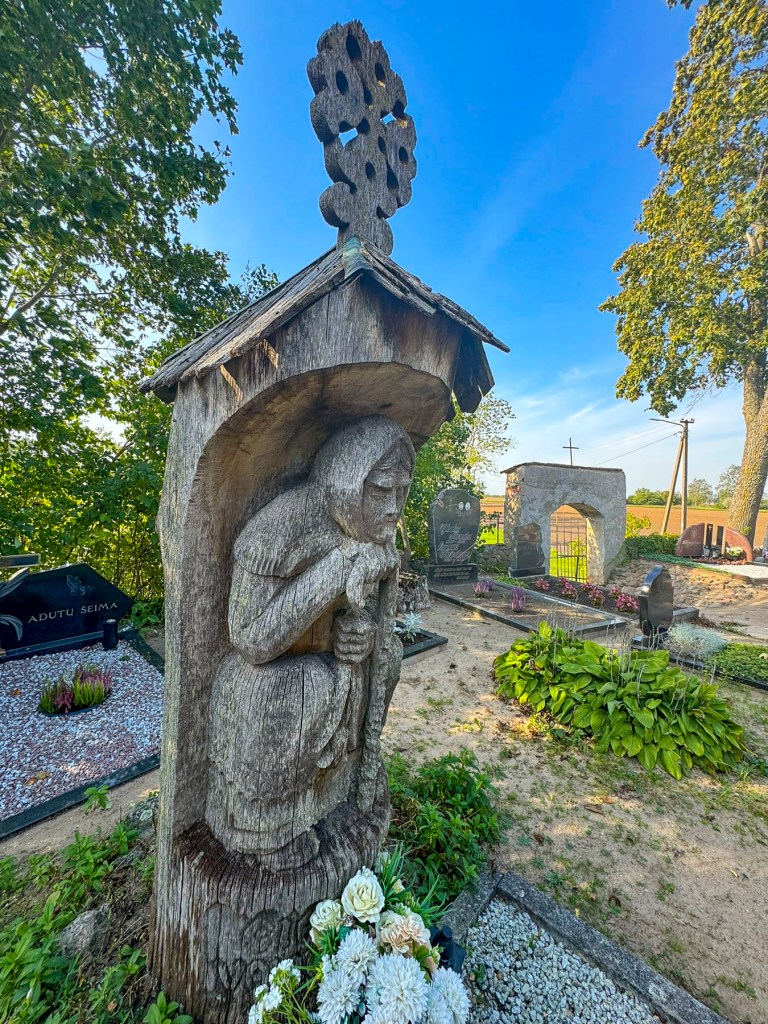
The graveyard surrounding the chapel was full of interesting old headstones. Some were carved from logs and were well weathered and split from age and the elements, while the more recent graves were marked with stone or marble memorials with the deceased’s portrait etched into the surface. There was a caretaker working on the grounds who wouldn’t acknowledge our presence, so we contented ourselves with peering through the dusty windows into the sanctuary the best we could.

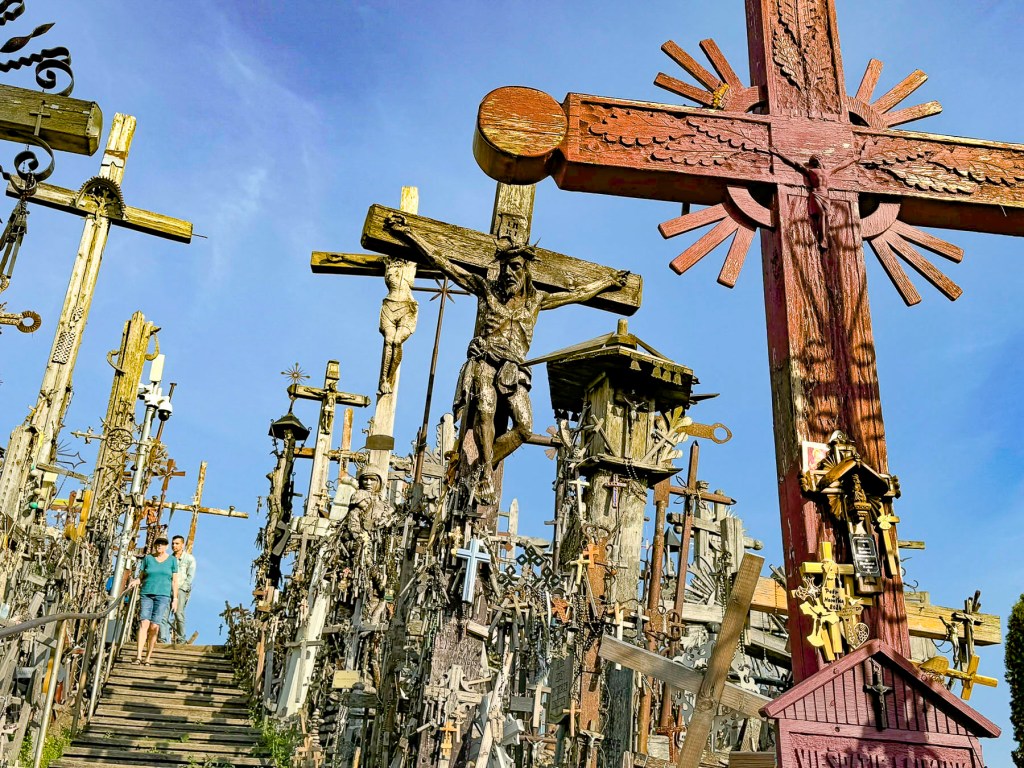
The Hill of Crosses was only 20 minutes farther south, just off the A12. The precise history of the hill is not known, but it is believed to have started as a way to commemorate Lithuanian rebels who never returned after uprisings against Imperial Russia’s rule in 1831 and 1836.  From a distance the hill is only speck on the horizon. It wasn’t until we were walking the long approach path that the hill slowly grew, and its monumental scale became apparent.

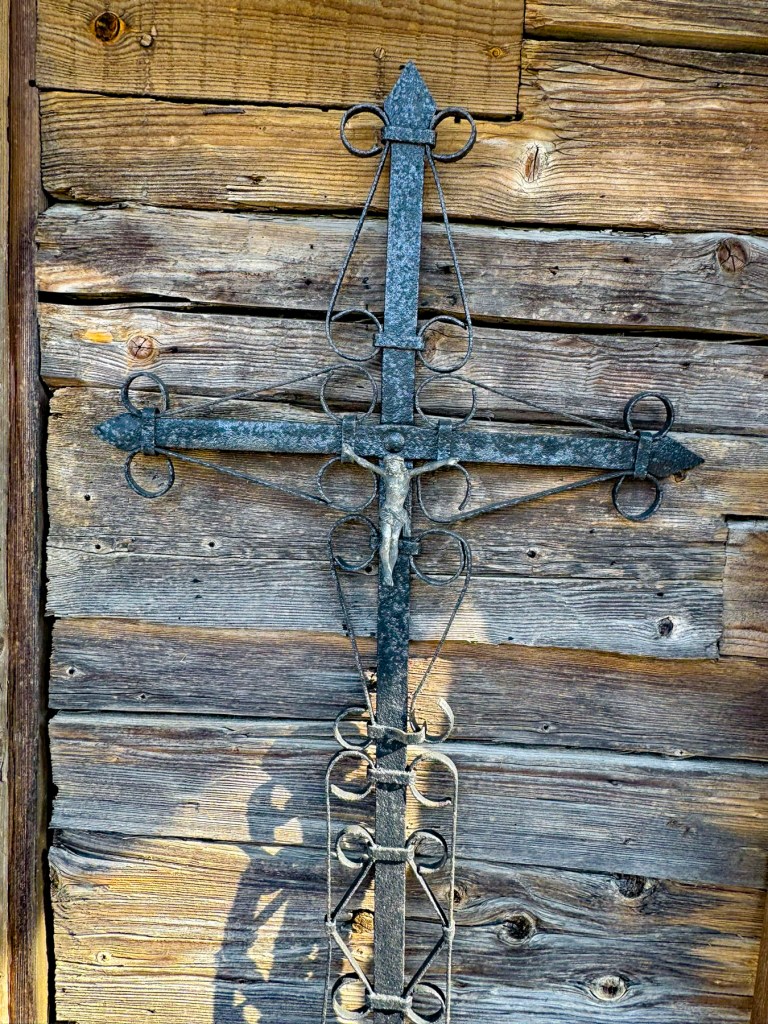
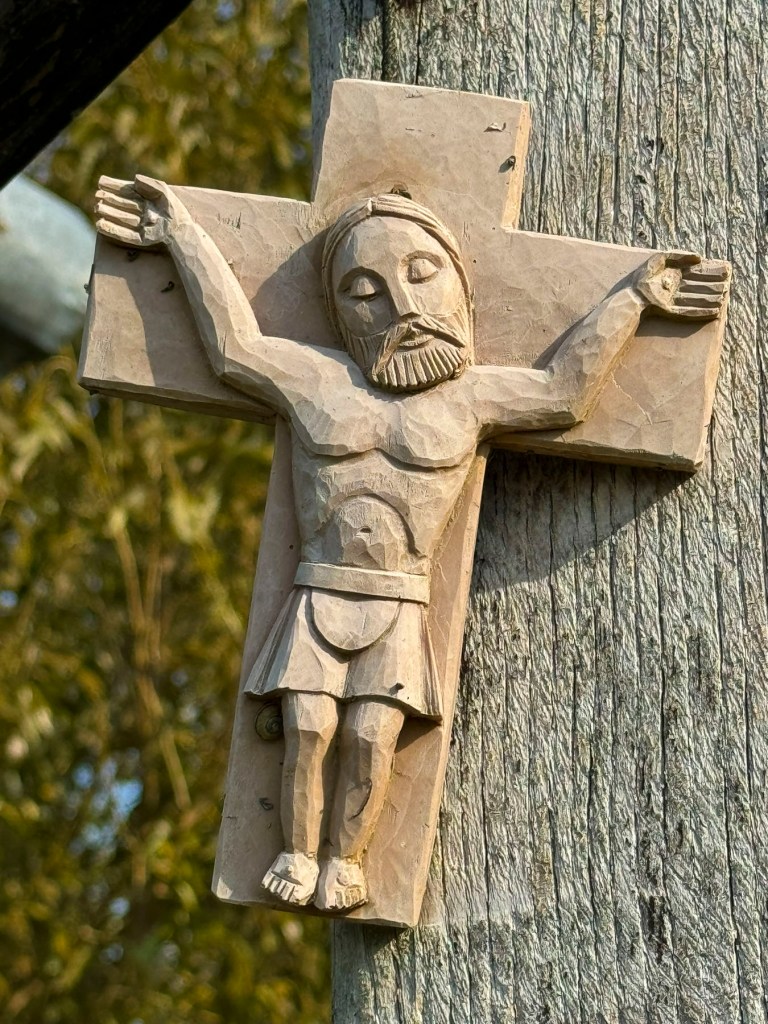
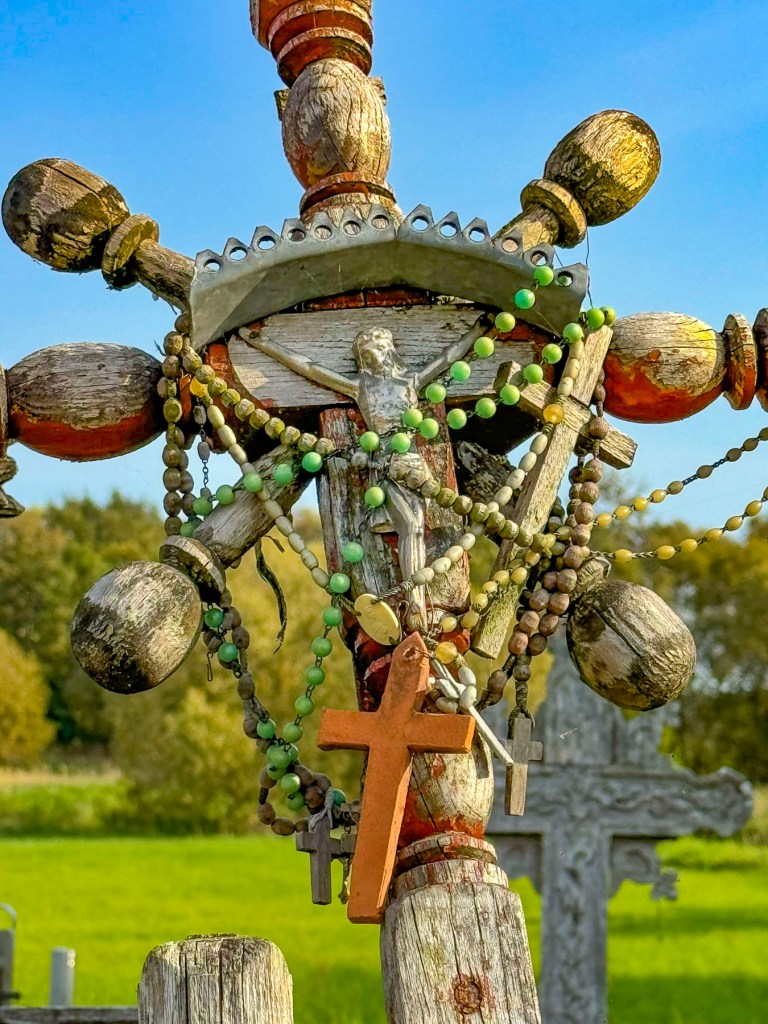
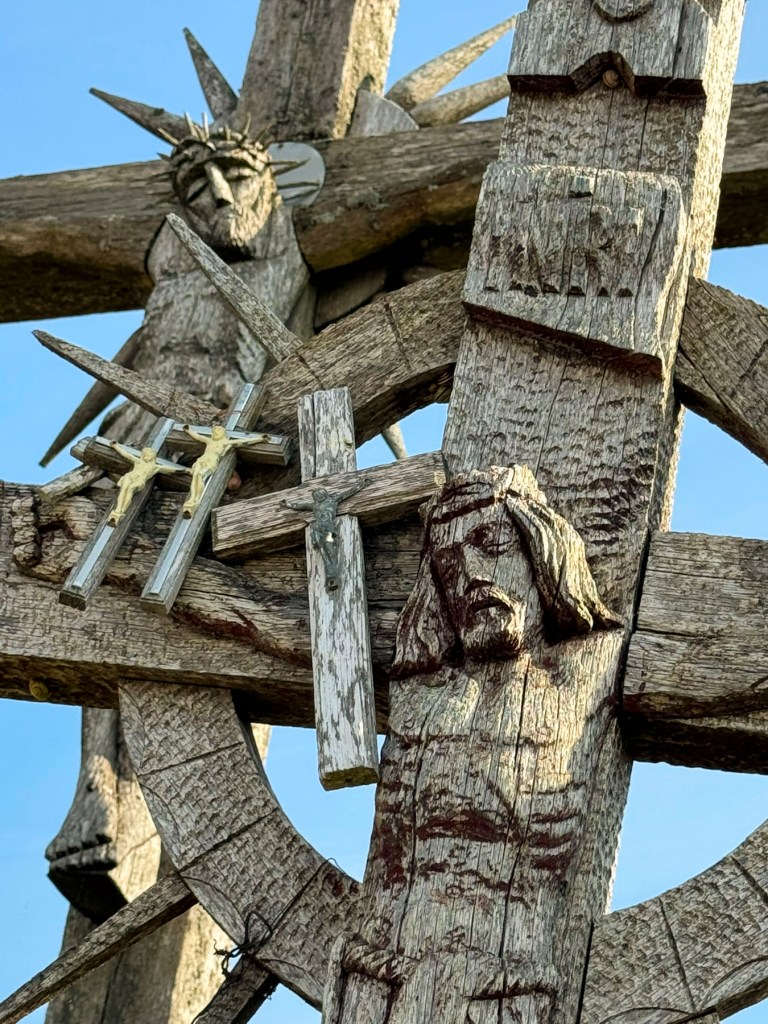
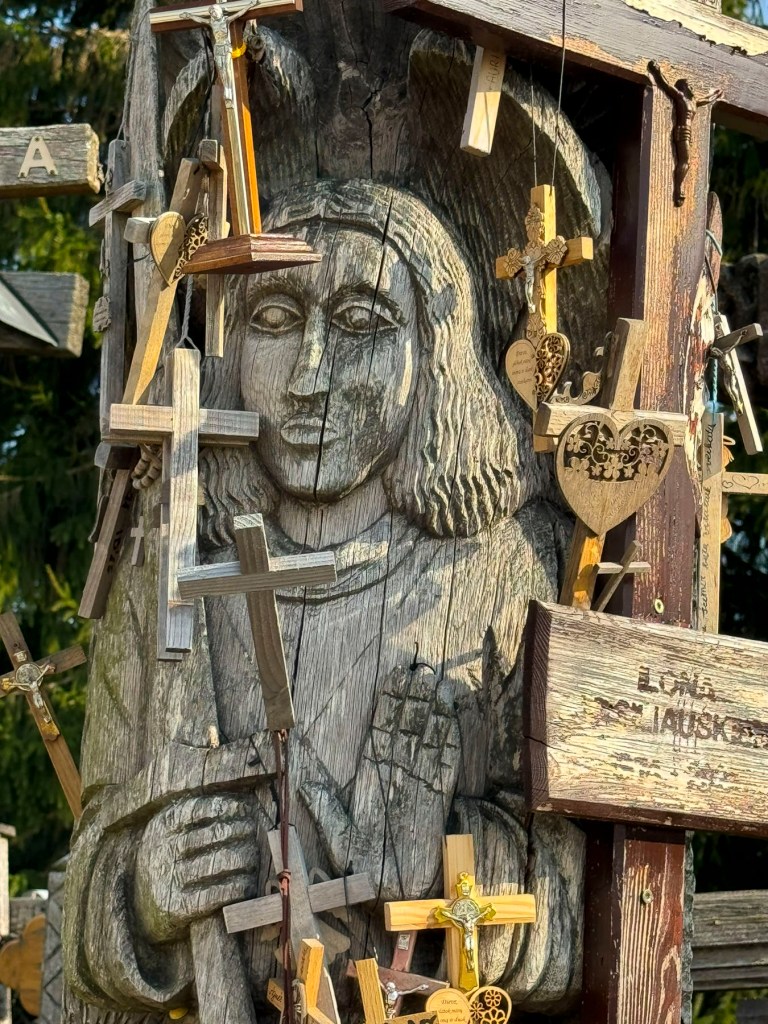
Not really in height, it’s a modest hill with stairs to its apex, but in girth and the sheer number of crosses, from tiny store-bought ones to large crosses handcrafted I imagine with sweat and tears. It’s estimated that there are now 200,000 crosses and crucifixes spread across the half hectare (1 acre) site. All are mingled together haphazardly and are treated equally in their importance, and they stand as testimony to the character and faith of the Lithuanian people who created this spectacular monument. The crosses were bulldozed and razed repeatedly during the Soviet era but were always rebuilt by the people. The hill stands as a sign of quiet resistance to the Soviet Union’s atheist communist occupation.

The fifty years of oppression which started with the Soviet Union’s annexation of Lithuania in 1940 ended in 1990 with the Act of the Re-Establishment of the State of Lithuania. A dream realized after the Baltic Way, a human chain of approximately two million peaceful protesters joining hands along a route that stretched from Vilnius, Lithuania through Riga, Latvia to Tallinn, Estonia in August 1989. Lithuanian was the first of fifteen Soviet republics to declare independence, which forced the collapse of the Soviet Union in 1991. Since Pope John Paul II’s visit to the Hill of Crosses in 1993 it has become a popular pilgrimage site.

During the 13th-century Christianity was not enthusiastically embraced by the pagan Lithuanian tribes of the region who rallied to decisively defeat the onslaught of the crusader Knights of the Livonian Brothers of the Sword in the1236 Battle of the Sun/Saulė, the victory from which Šiauliai takes its name and the year of its founding. It would be another two centuries before the first wooden church in the town was built on a small rise overlooking Lake Talkša.

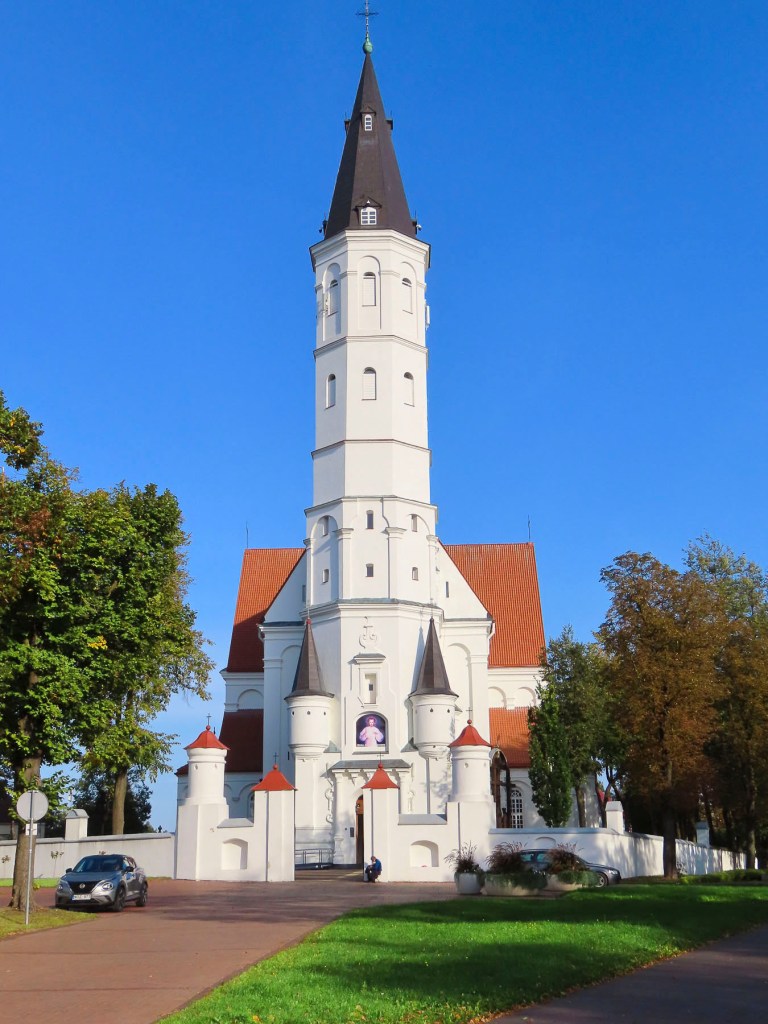
The graceful Church of Saints Peter and Paul with its soaring belltower and brilliant white façade replaced the earlier 1445 church in 1617. It was our first stop. The church became Šiauliai Cathedral when Pope John Paul II elevated its status when the Diocese of Siauliai was created in 1997.

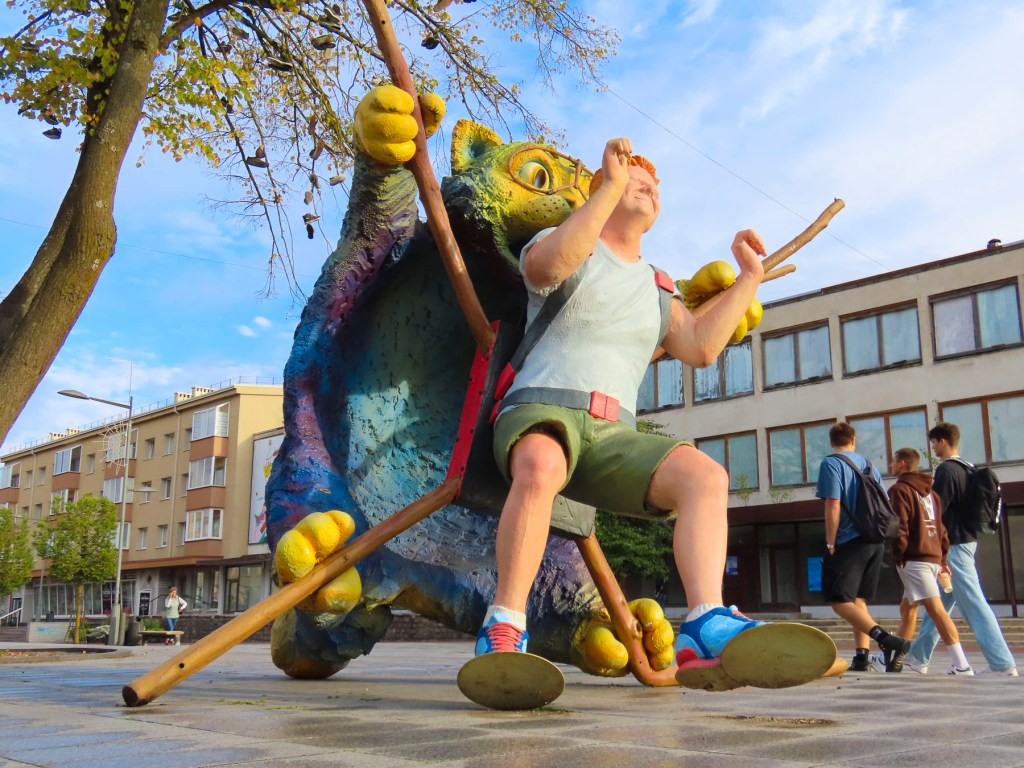
After checking into the hotel Turnė (free parking) for two nights, we walked a short distance into the center of Šiauliai to stroll along its nearly mile long pedestrian mall, Vilniaus g. One of the first things we noticed about the town was the amount of public art displayed along this street.

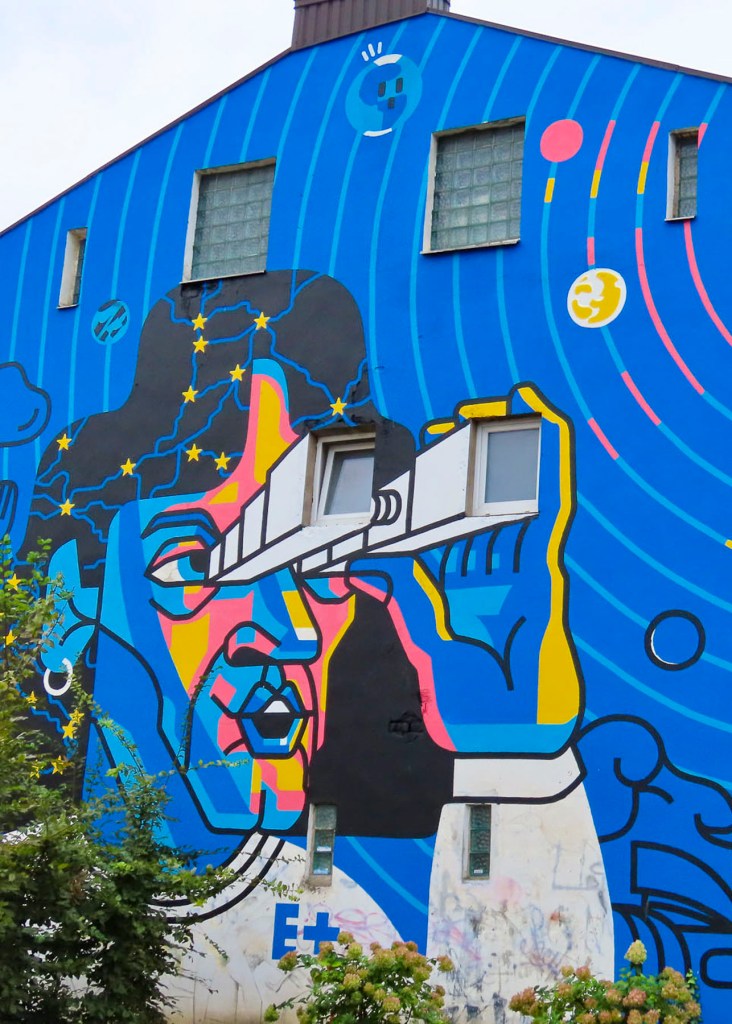
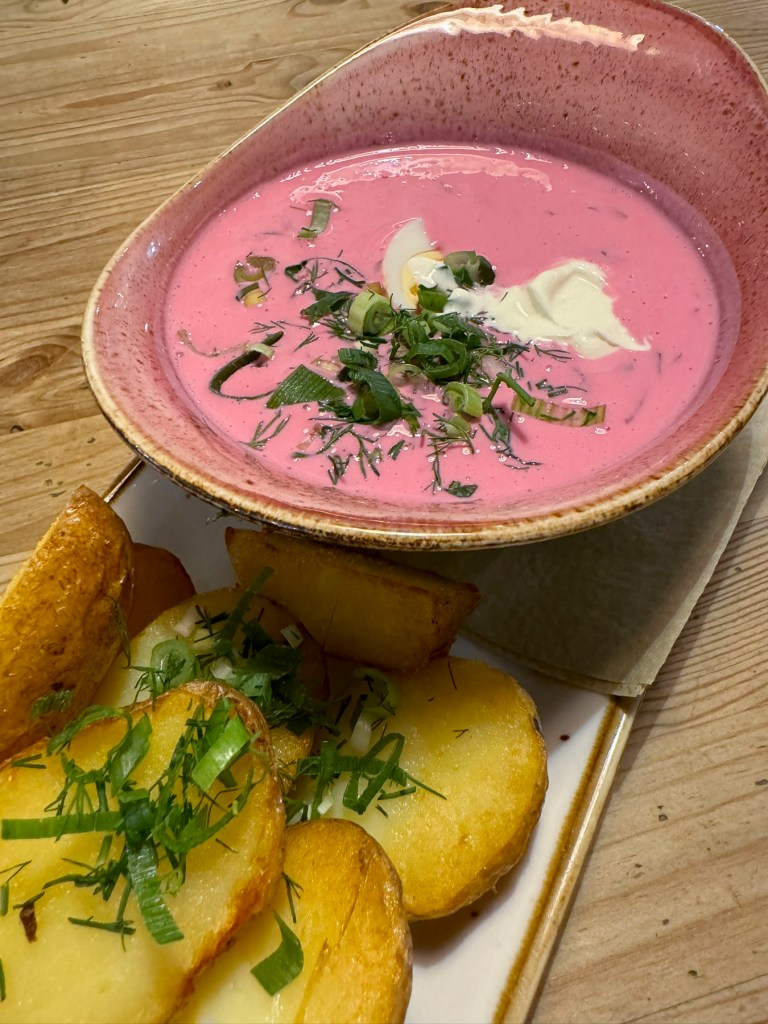
It’s an interesting variety of wall murals, and contemporary sculptures that enhance the walkway. As it was getting late we only walked the southern end of the mall to have dinner at Žemaitis Restoranas, located in the Hotel Šiauliai. The Lithuanian specialties – cepelini, homemade dumplings, Kedainiai potato pancakes, Karka with stewed cabbage – were so good and reasonably priced that we dined there twice.  

By the time we had finished dinner it was dark outside and upon leaving the restaurant we spotted the spectacularly lit dancing water fountain “Trys paukščiai,” Three Birds, designed by the Lithuanian artist Kestutis Kasparavicius. Its ballet of synchronized water jets and colored lights totally mesmerized us as we watched its performance several times. The quality of the installation was amazing and equal to the best fountains you’d find in NYC, Paris or Madrid.

The next morning, in pursuit of breakfast, we walked the northern part of Vilniaus Street, which we discovered was the first pedestrianized boulevard in Lithuania when it prohibited cars in 1975, and is the third oldest pedestrian street in Europe. A nice feather in the town’s cap for an off-the-radar-destination.

As we worked our way towards the Prezo Kepyklėlė café, the street was full of university students walking to morning classes in the buildings of Vilnius University and Šiauliai State University of Applied Sciences scattered across town.

Much of the contemporary public art at this end of the mall is sponsored by the Šiauliai Art Gallery with a mission statement to encourage within the community the free expression of art.

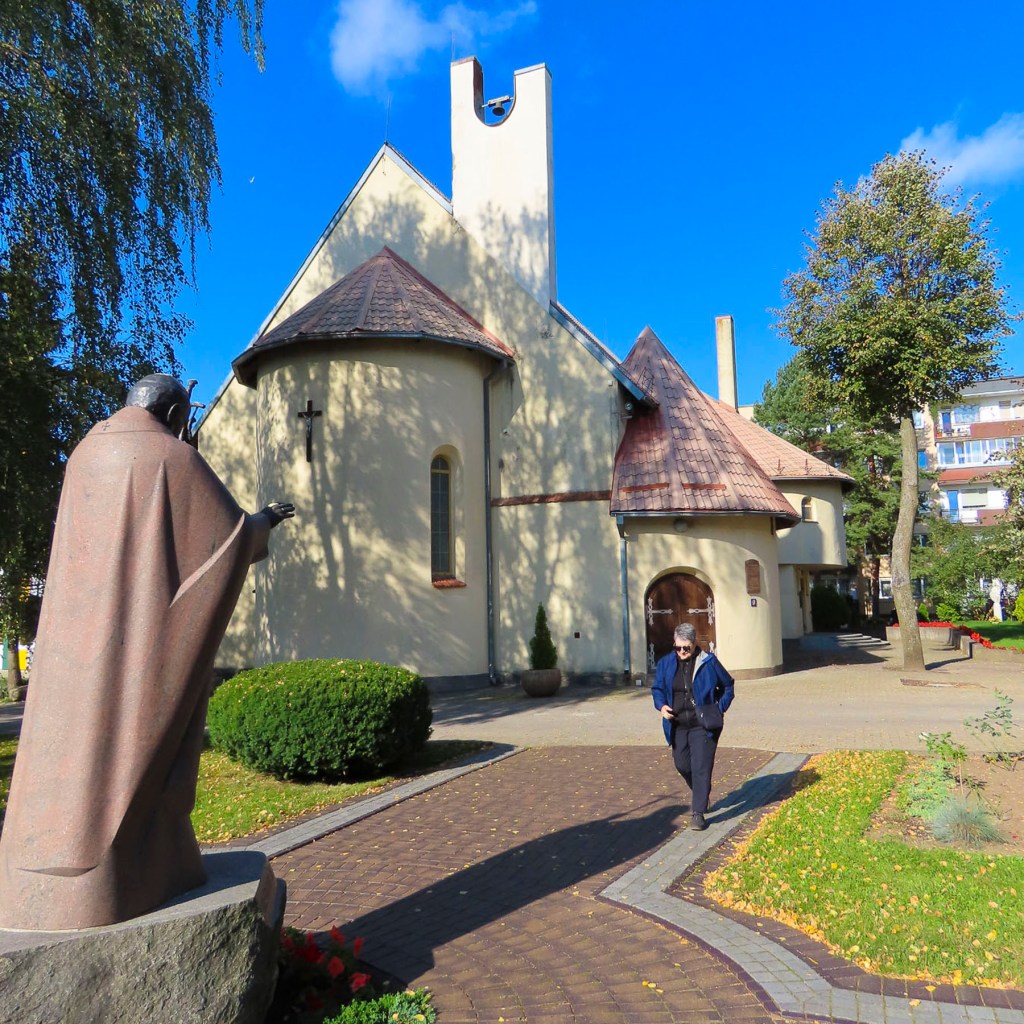
A narrow alley next to the gallery led to an almost hidden away St. Ignatius Loyola Church. It’s not very old as churches go, but its uniqueness stems from its roots as an ordinary home before the Jesuits bought it in 1930 and converted it to a church. At the end of WW2 communist authorities imprisoned two of its priests and sent a third to exile in Siberia. The sanctuary was closed and used as a warehouse, then a gym. In 1986 the local government deceptively requested funds from Soviet authorities to renovate the building into a concert hall but instead restored the church. After Lithuania declared its independence in March of 1990 the church was reconsecrated in December, just in time to celebrate Christmas Mass. A statue of Pope John Paul II in the church’s courtyard commemorates his stay in the small rectory when he visited the Hill of Crosses in 1993.

In the parking lot of an apartment building next to the church we noticed a defiant wall mural depicting a young woman in traditional dress lighting a Molotov cocktail held by a partisan resistance fighter. It testifies to the resilient character of Lithuanians. Lithuania did not submit easily to communist rule after WW2 and had an organized resistance movement into the early 1950s, with some individual partisans fighting on in the 1960s. Unfortunately, a car was parked too close to the wall for me to get a clear photo of the mural.

We found Šiauliai to be wonderfully walkable as we made our way across town to Lake Talkša, first stopping at Saulės Laikrodžio Aikštė, Sundial Square, where a brilliant golden archer stands atop an 18m (59ft) tall gnomon which casts its shadow across the numbers 1-2-3-6, the year of the town’s founding, in the plaza at its base.

Two paths from the sundial led to the lake. One was a direct shorter route, but we chose the longer way through the neighboring cemetery to the lakeshore. It was a perfect fall afternoon with puffy white clouds sailing across the bluest sky. On the far shore only a subtle hint of yellow suggested autumn colors would soon appear.

A path along the shore led to a children’s playground and outdoor fitness area before reaching a large stone labyrinth where a lone woman seemed to be deep in a meditative walk.

Beyond the labyrinth stood a large metal sculpture called Geležinė Lapė, the Iron Fox. In 2009 the local artist Vilius Puronas crafted 7 tons of steel into this whimsical monument that’s 15m (49ft) long and 6.6m (22ft) tall to celebrate the 1000th anniversary of the earliest mention of Lithuania as a country. In a 1009 chronicle called Annals of Quedlinburg, a writer described in Latin, “in confinio Rusciæ et Lituæ a paganis capite plexus,” which translates as, on the border of Rus’ and Lithuania, the pagans have their heads covered with plexuses. It’s not the most notable introduction to the world at large, but I will say during our short time in Lithuanian the country made a great first impression upon us! One day we hope to return and make it to Vilnius.

Till next time,

Craig & Donna
Estonia Part 1: Tallinn – Captivating, Charming & Caffeinated

Why Estonia? We are sure folks can relate, our pockets aren’t as deep as we’d like, but that doesn’t keep us home. A low budget, off-season destination is more attuned to our lifestyle anyway. So, when an under $400, September fare from New York City to Tallinn, Estonia popped up in our email we jumped at it after some research confirmed we could find some very nice hotels from $50 to $100 per night, often with breakfast included. Exploring the lesser visited Baltic countries of Estonia, Latvia, and Lithuania also fulfilled our desire to extend our travels beyond western Europe, which previously had been very Mediterranean-centric. Living in the very hot and humid southern United States is also affecting our decisions concerning vacation destinations, as we are now seeking alternative destinations as a result of climate change. The heat of a southern summer often continues into September and October, with temperatures at home in Georgia often in the high nineties. Estonia offered a wonderful reprieve from the sweltering summer heat with a daily high average of 14°C (57°F).

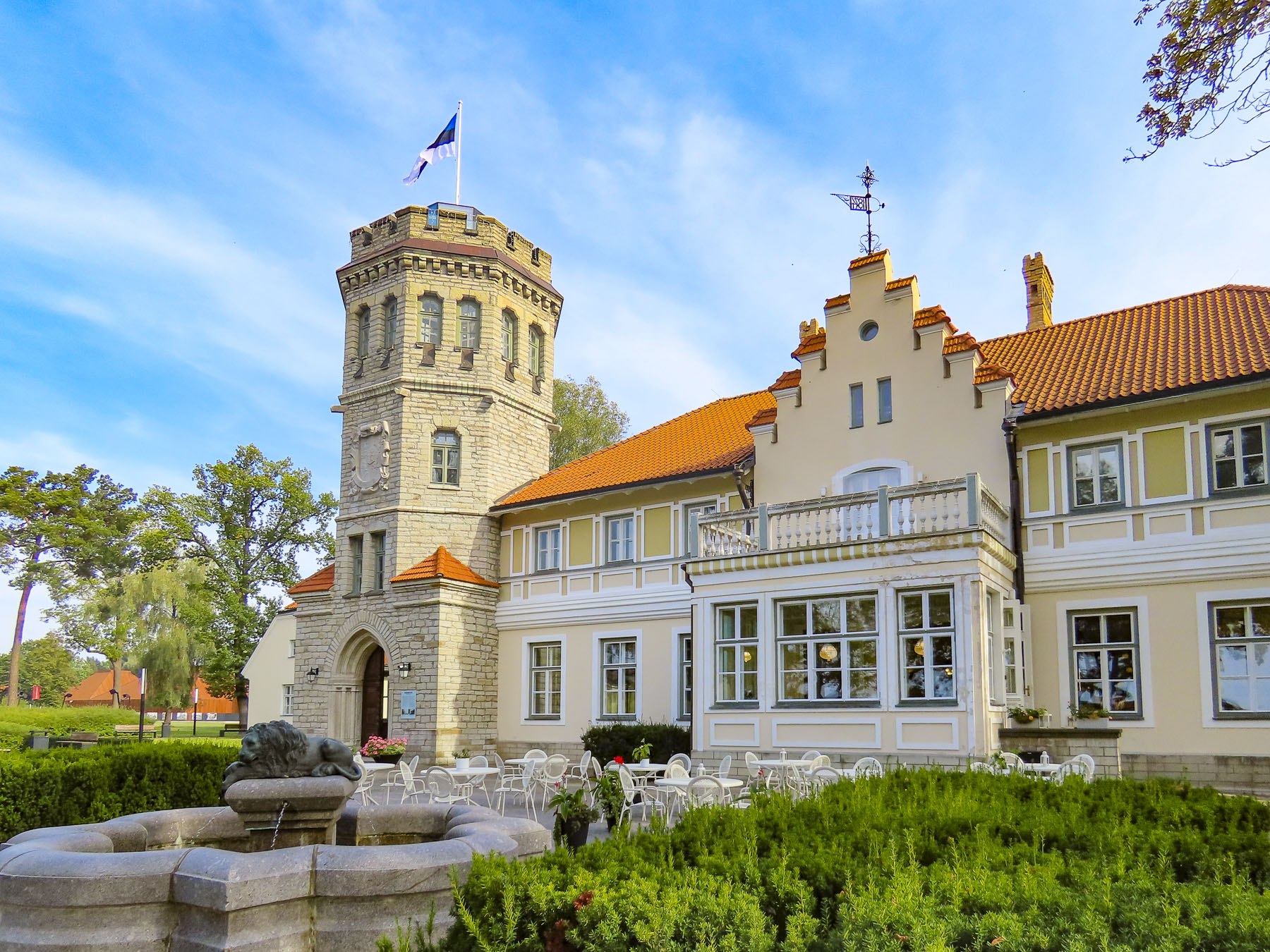
The history museum at Maarjamäe Castle was an unusual first stop for us after picking up our rental car at the airport. But it was the closest we’d be to it during our three-week road trip through Estonia, Latvia, and Lithuania. The museum is in a renovated 17th-century chateau, which was left to ruin for decades during the communist Russia occupation of Estonia. It is beautifully set on a bluff across from Tallinn Bay, and was built by the Brotherhood of Black Heads, a professional association of unmarried ship owners, merchants and foreigners dating from the 14th century, as a summer retreat.

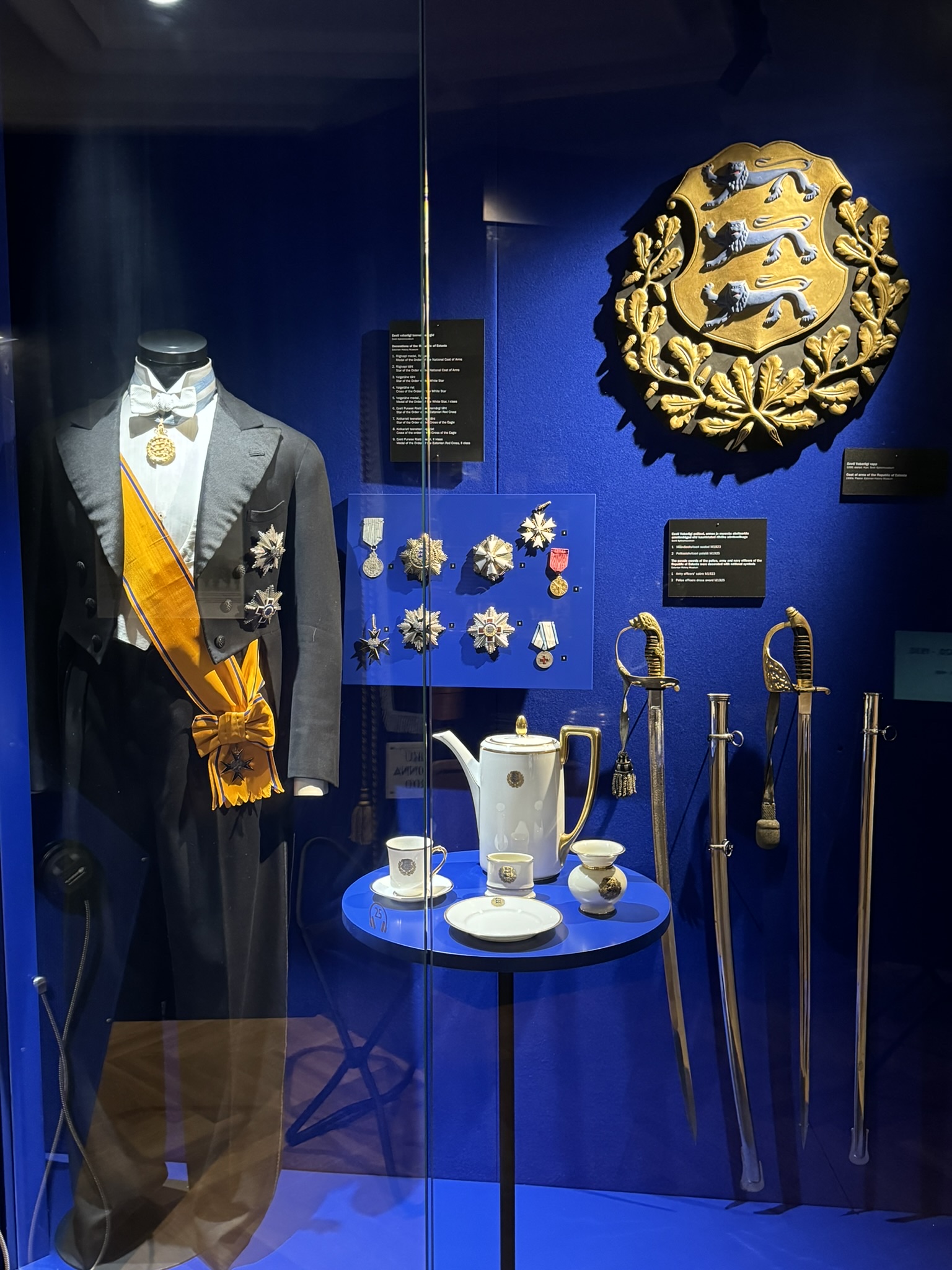
Today the museum’s permanent exhibit, My Free Country, explores 100 years of modern Estonia’s history, from its 1918 declaration of independence from Russia, and the following War of Liberation, through twenty years as a sovereign nation before being invaded by Nazi Germany and communist Russia during the Second World War. The fifty years of brutal Russian occupation after World War II and communist propaganda are also covered, up to Estonia’s 1991 second declaration of independence from Russia, which was overwhelmingly supported by 78 percent of Estonians. It’s a difficult mission to reconcile the terror of the communist years into a bright, hopeful future, but historical research, as well as oral histories, document forced resettlements to Siberia and imprisonment in labor camps during the Soviet reign of terror, when Estonians were prisoners within their own country and shot if they tried to escape. The exhibit highlights a proud history of an unrelenting desire for freedom, which prevailed under the worst conditions. A history that, it is hoped, the younger generation of Estonians, who have not experienced communism, never forgets. As one quote on an exhibit referring to Russia said, “Nothing good ever comes from the east.”

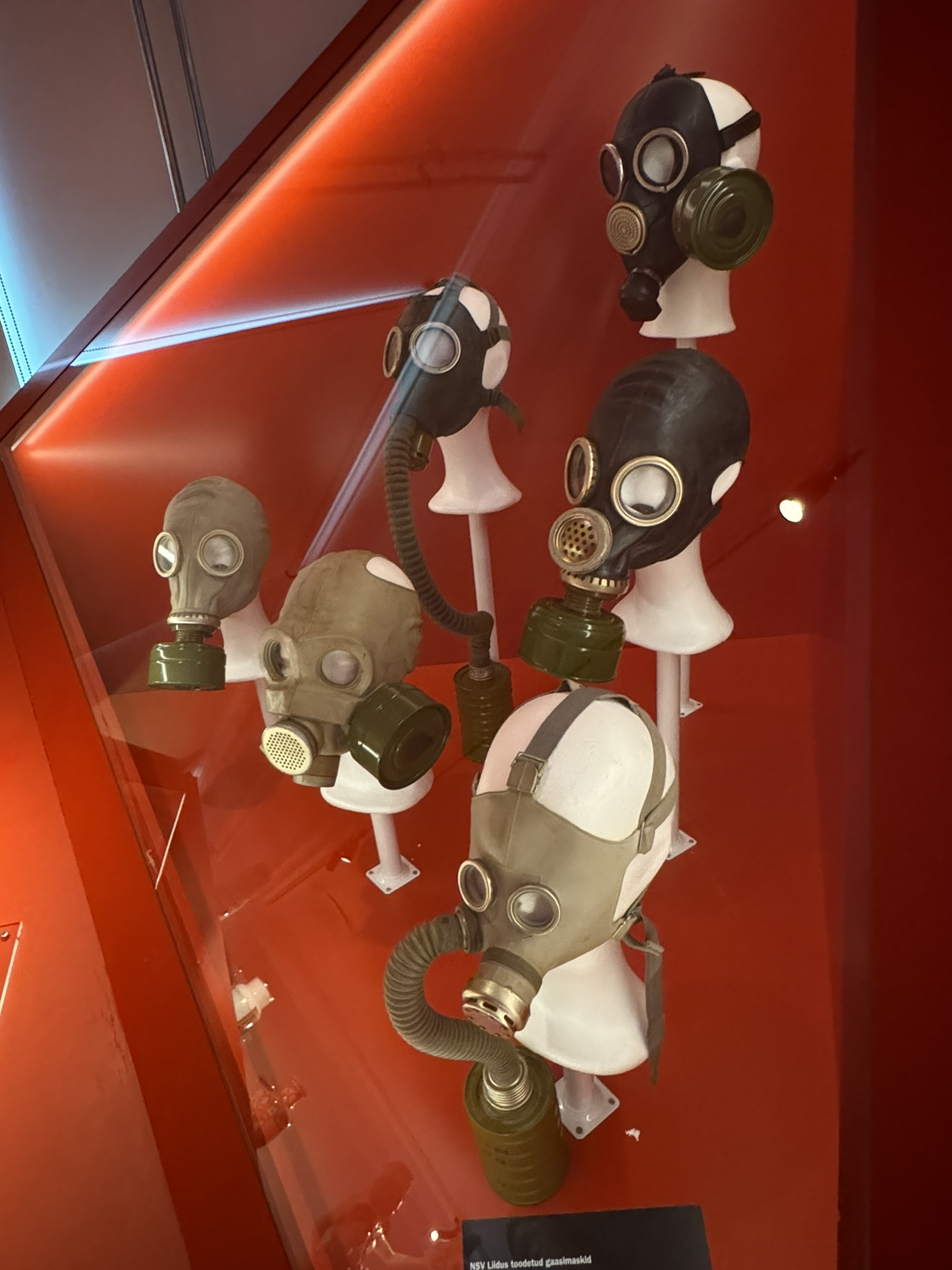
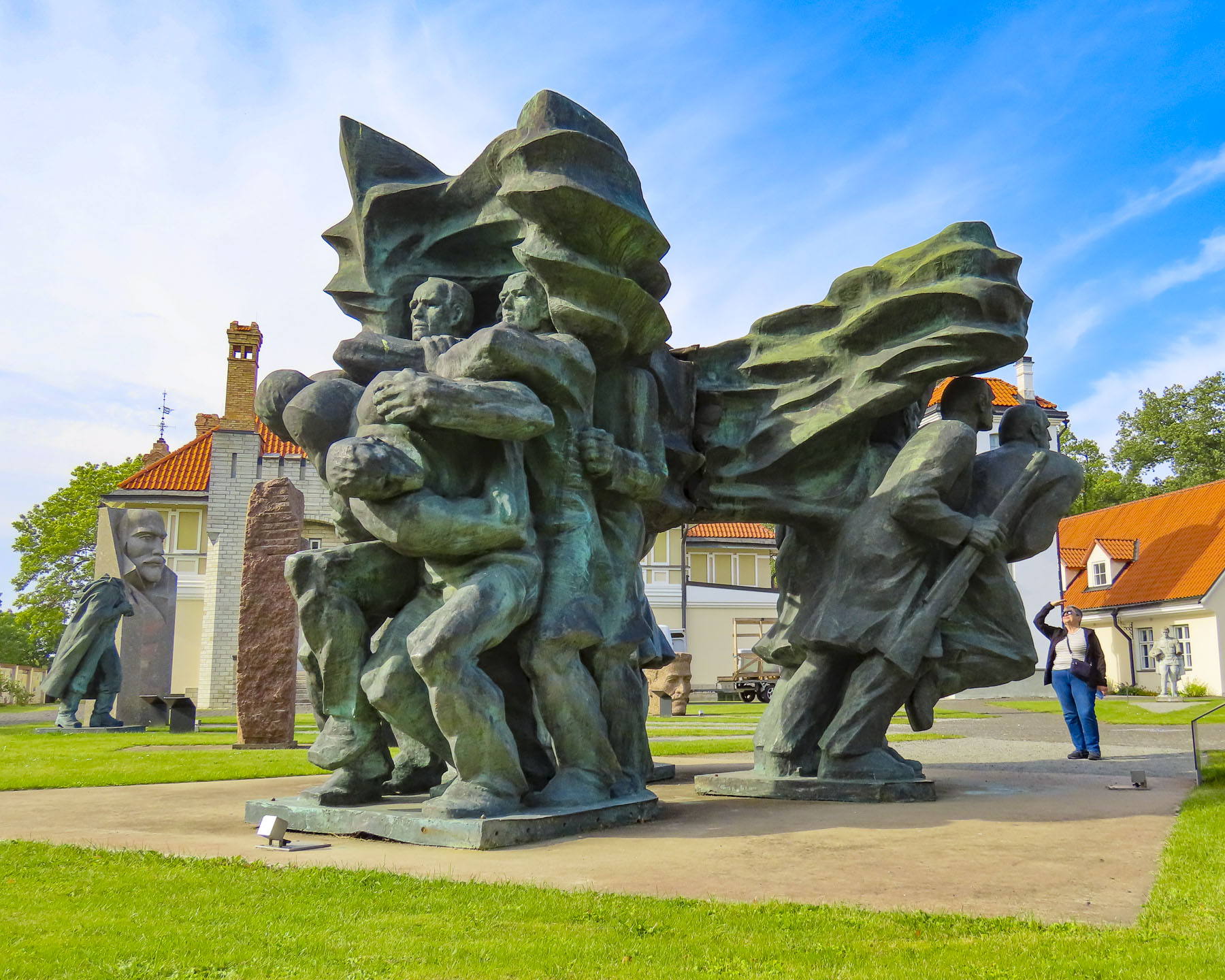
After the 1991 independence, colossal, large-scale Russian propaganda sculptures, which once dominated prominent public spaces across the country, were removed from view but not destroyed, as they are part of Estonia’s history. However, they were erected behind the museum in a space fittingly called, with Estonian humor, “the Soviet Statue Graveyard.”

Our first lunch in Estonia was at the museum’s café, Maarjamäe Resto, an unexpected culinary delight, which could be considered a destination in and of itself.

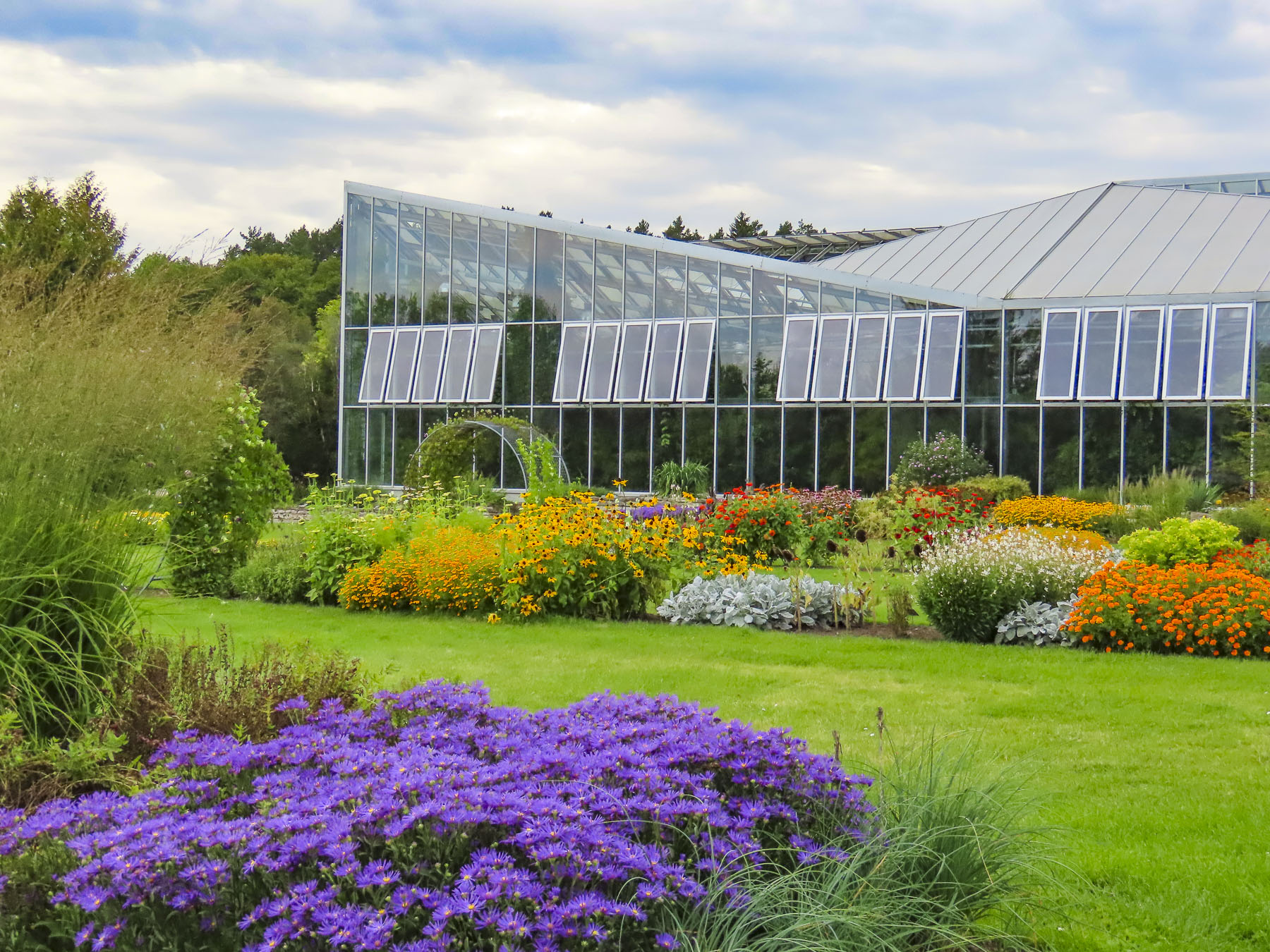
It was still too early to check in to our hotel in Tallinn, so we headed nearby to the Tallinn Botanic Garden, a large park with an extensive greehouse. The grounds were quite pleasing with their plantings, and the greenhouse with its various collections of tropical plants was very interesting. Though in the section filled with cactuses from around the world, Donna, ouch!, accidently brushed one with her hand and imbedded some spines into her skin. Not a huge issue when you are home and have the proper tools to pluck the pesty spines from your skin and relieve the discomfort, but when you are traveling, it’s another issue entirely.

Fortunately, the barista operating the café in the greenhouse had dealt with this before, and he ran out to his car to fetch a roll of good old-fashioned duct tape to grasp those microscopic thorns. He was very nice, a 30ish Italian man who during conversation jokingly related that being a part time medic was not part of his job description when he was hired, and visitors getting pricked with cactus thorns happens more often than you would think.  We were curious how a warm-blooded southerner ended up in the northern Baltics. “You know there is always a woman to blame, and I followed my love back to her Estonian homeland.” We asked if he missed the warm Mediterranean weather and la dolce vita. Yes, the weather is nicer, so we visit my family, but life is better here in Estonia as there are more opportunities for those willing to work and get ahead. Estonia is leaps and bounds ahead of the other European countries in embracing digital technologies. So much so that the government considers internet access a fundamental right and ensures that everyone across the country, even on the smallest islands, has reliable internet, and offers digital literacy programs for the technology challenged. The government also endorses working from home remotely, and offers an Estonian Digital Nomad Visa. “Estonia is very big in cybersecurity, and this enables every person, business, and government institution to be connected. We are one of the most digitally advanced countries, and we can even vote securely online in Estonia.” This digital future contrasted with as well as complemented the vibrant centuries-old walled city of Tallinn.

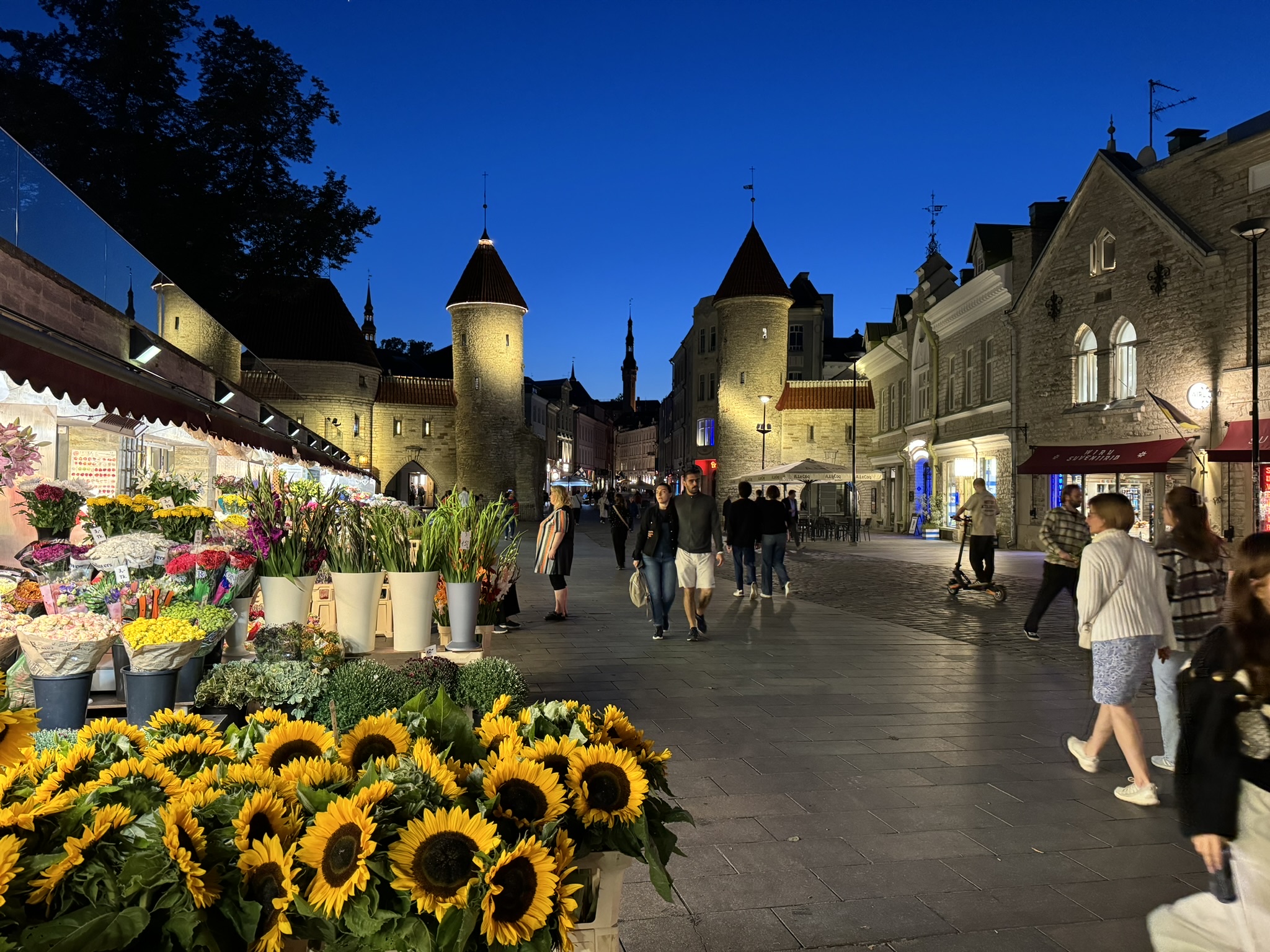
Despite not having particular plans for Tallinn, we knew we would enjoy exploring the city as soon as we saw the ancient architecture along the way to our hotel. Having a rental car and finding a hotel with free parking is difficult in any city, but we scored big withTaanilinna Hotell. The hotel was in an excellent location, just on the opposite side of the old town’s historic ramparts, and a short walk from the 14th-century stone towers of the Viru Gate’s flower market.

Google Maps got us close, but the hotel was a little difficult to find, and we mistakenly drove through a pedestrian only area; fortunately, there were few people about. In order to find the hotel, we parked and walked down the street, when we spotted the hotel’s sign, which was set back from the lane. It’s a modest hotel, and the staff was very nice. We enjoyed a quiet 4-night stay.

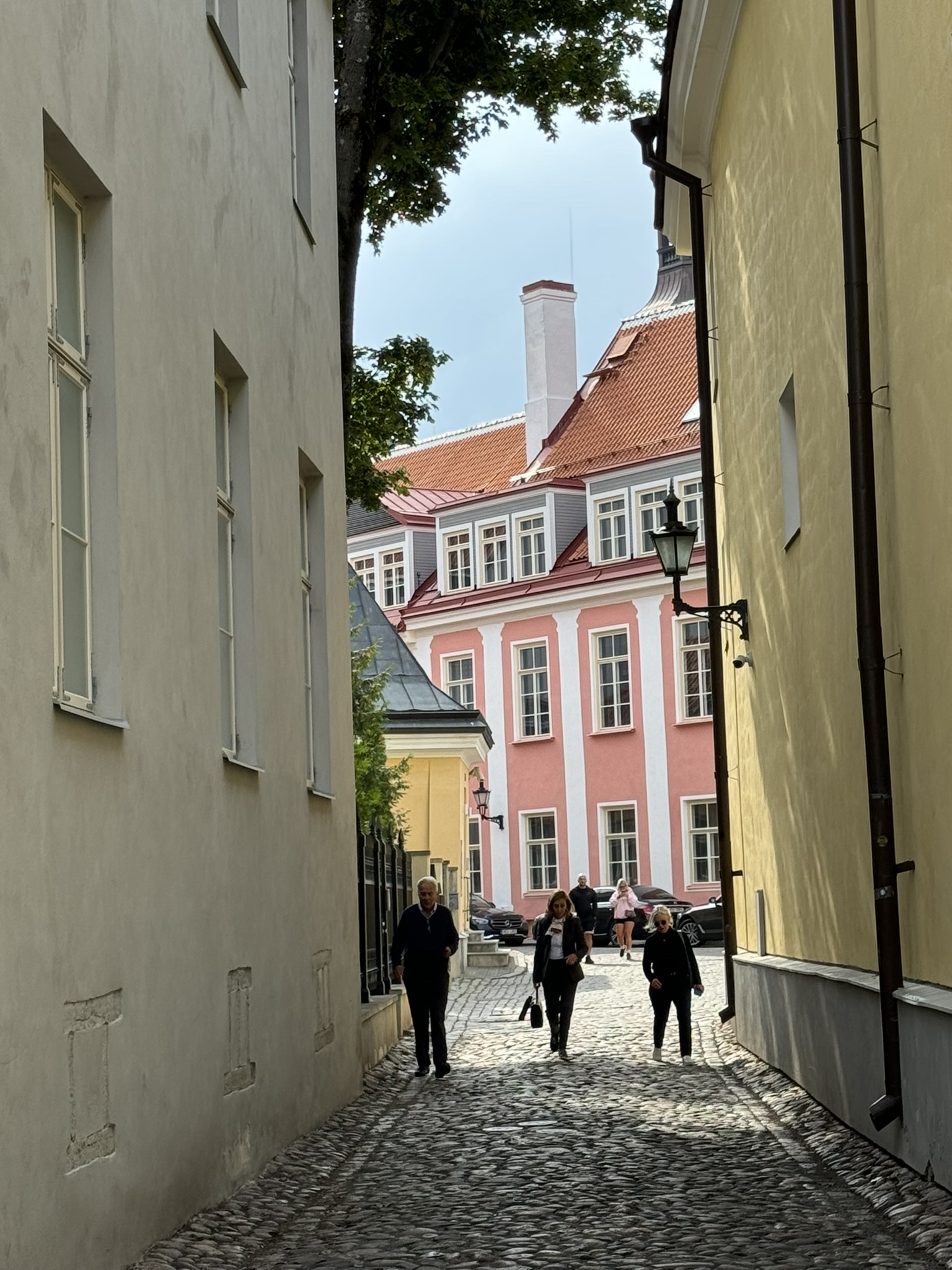
With Tallinn’s old defensive wall only a stone’s throw away, history surrounded around us, and we quickly set out to explore and to find a place for dinner as twilight descended on the old town. Our wandering took us down various lanes, past distinctive centuries-old 4 to 5 story tall buildings that served, as was the medieval custom of the time, as the multifunctional home/warehouse/offices of wealthy merchants.

Lights twinkled on and illuminated the cobblestones in a golden glow. I know it’s cliché, but our first impressions of Raekoja Plats, the Town Hall Square, anchored with its soaring 64M (300FT) tall 13th-century watch tower, were beautiful, charming and magical. We were disappointed to learn that the tower is only open from the beginning of June to the end of August. We love a good tower climb!

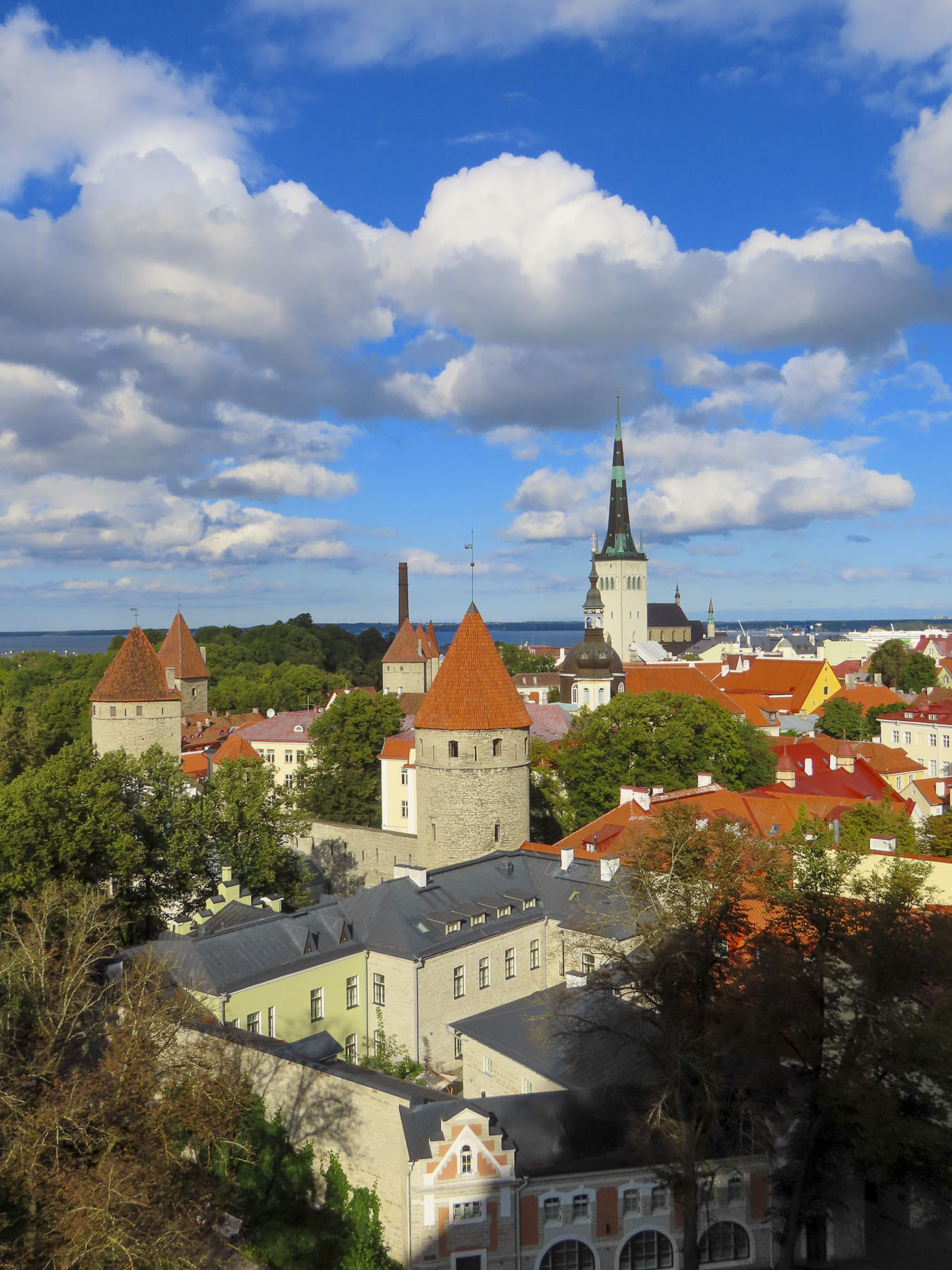
Still retaining its original footprint, Tallinn is one of Europe’s best preserved medieval cities, with 26 watchtowers along its ancient ramparts and city gates, topped with distinctive cone-shaped red roofs.  The walled city still encircles a vibrant and active community, which supports a lively arts scene, along with a robust nightlife.

Its preservation seems surprising for a city that has stood at the crossroads of conflict since it was founded by a Danish King in the early 1200s. In addition to the Danes, Tallinn has been ruled by the Brotherhood of the Sword, the Teutonic Order, the Holy Roman Empire, the Swedish Empire, Czarist Russia, Nazi Germany, and the Soviet Union. The city’s prosperity and resilience throughout the centuries is testimony to the strong spirit of the Estonian people. 

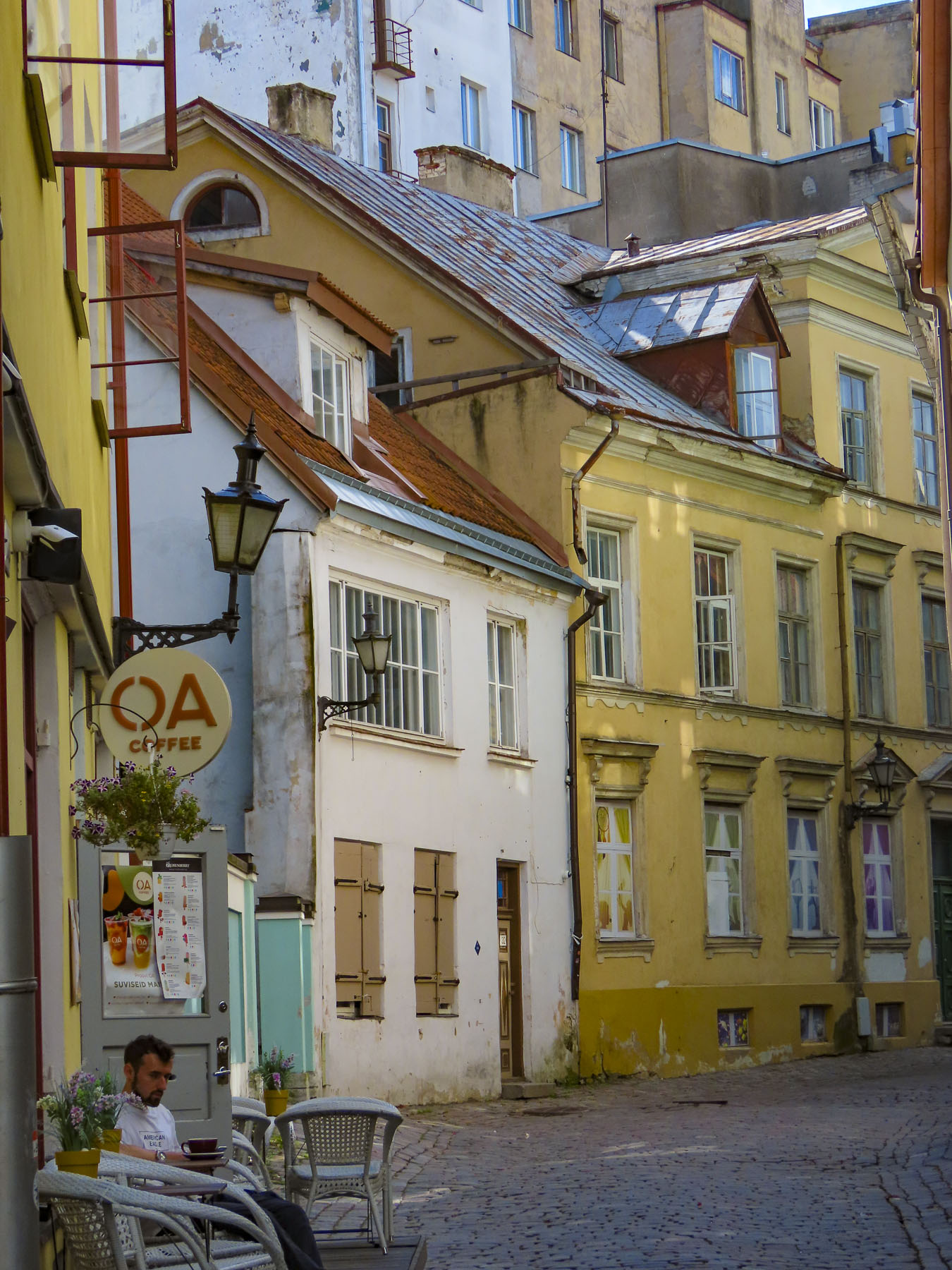
One of the nice things we enjoy about staying in one place for several days is the opportunity to experience the locale as it quietly awakens with the sun. Whether it is cloudless blue skies or a place cloaked under clouds with folks huddled under umbrellas to ward off the rain, a place breathes and its mood changes by the hour, from day to day. The destinations on our walks were always different, but we often crossed the same lanes and stopped to photograph something different that caught our eye, which we hadn’t noticed before.

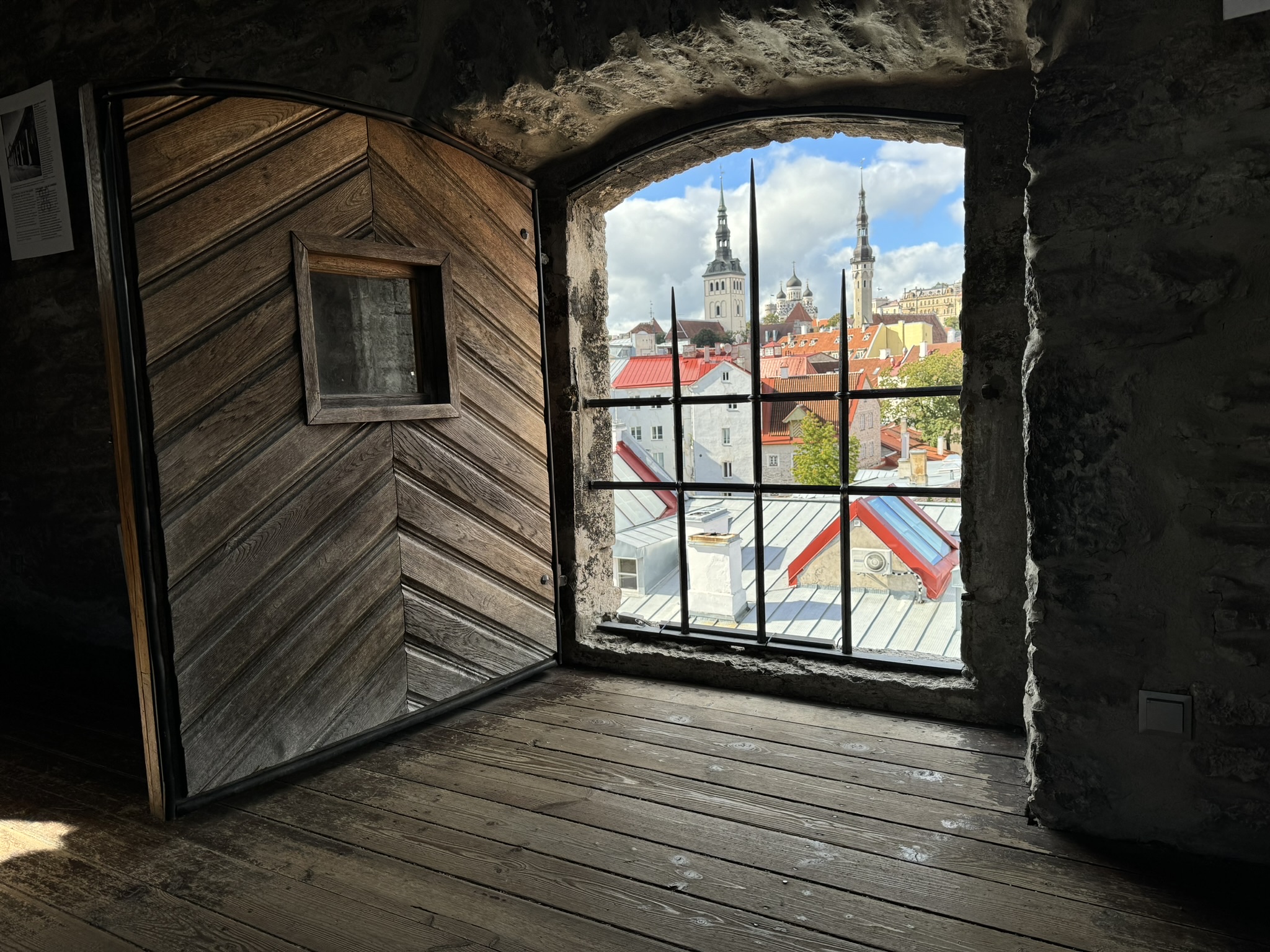
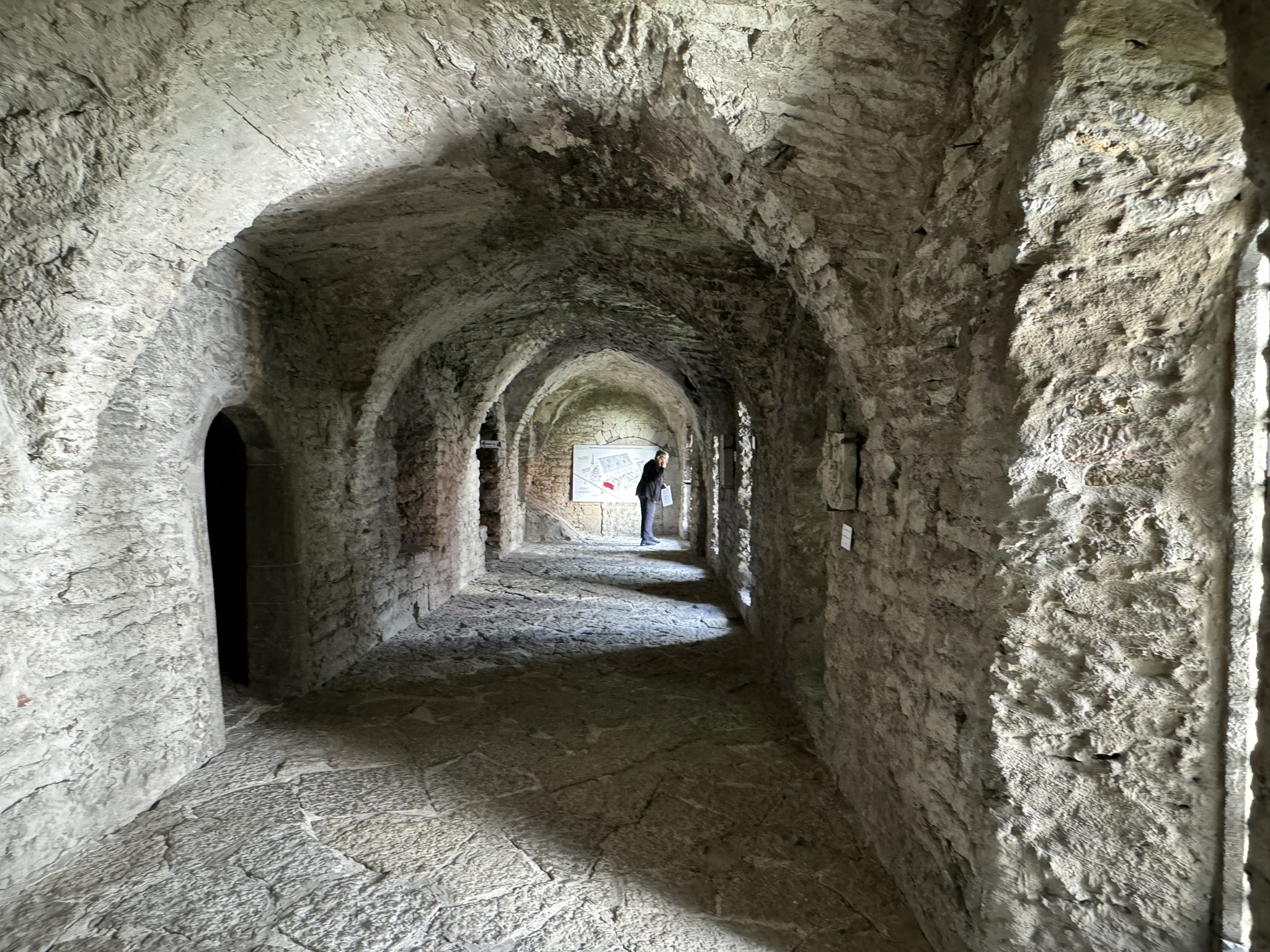
Old town Tallinn is mostly flat and is a wonderfully walkable city. There is a short uphill stretch to Toompea Hill (the upper city), where we visited the Kiek in de Kök Museum, the Bastion Tunnels, and Neitsitorn, the Maiden’s Tower. During the 1700s when the towers lost their military significance they were often repurposed as private apartments, with a craftperson’s workplace on the lower level, and rooms above. During both world wars the tunnels were used as air raid shelters. While the towers were lived in continually, most famously by the Estonian painters and twin brothers, Kristjan and Paul Raud, until the 1960s, when the city deemed them unsafe for habitation.  Abandoned, the towers became a destination for homeless squatters and Estonia’s emerging counterculture. The extensive tunnels were an area the police refused to go. A popular, unlicensed bar opened in the tower on New Year’s Eve in 1980. Unfortunately, it didn’t survive the economic turmoil of the era as the Soviet Union began its descent into a failed state.

After an extensive multiyear renovation, the Kiek in de Kök Museum opened in 2005. The Maiden’s Tower now hosts a new Neitsitorn café, which has a nice view out over the Danish King’s Garden, and the ghostly blackened bronze statues of three monks named Ambrosius, Bartholomeus, and Claudius. Legend holds that they occasionally appear spectrally in the garden, though the only thing that appeared the morning we visited was a sleek red Ferrari 296 GTB that was the center of a photo shoot. The tower also has the re-created art studio of the twins, Kristjan and Paul Raud. The tunnels under the ramparts have been creatively reenvisioned and now house a variety of interactive digital multimedia and historical exhibits.

A walkway along the ramparts between the towers at the museum led to an exhibit about Tallinn’s café culture. Though the first coffee house opened in the town of Narva in 1697, Tallinn didn’t get its first café until 1702 when one opened on Town Hall Square. The oldest still-operating café dates from 1864, when the renown marzipan bakery, Maiasmokk, decided to offer coffee to go along with their tasty, sweet treats. After 160 years the Maiasmokk Café, even surviving nationalization during the Soviet occupation, is still open and a beloved cultural institution in Tallinn. Most of the exhibits address Tallinn’s café culture during the repressive communist era, when going to a café to share a coffee was one of the few recreational activities people could afford. With our “walk a little then café” philosophy for exploring a city, we felt we had found kindred spirits in Tallinn.

Decades later Estonian’s infatuation with coffee continues. This cultural obsession was fully on display when Estonian singer Tommy Cash performed “Espresso Macchiato,” during the finals for Estonia’s 2025 Eurovision contest and came in third place! Though in Italy some humorless Italians didn’t like the caffeinated cliches and called for the song’s banning.

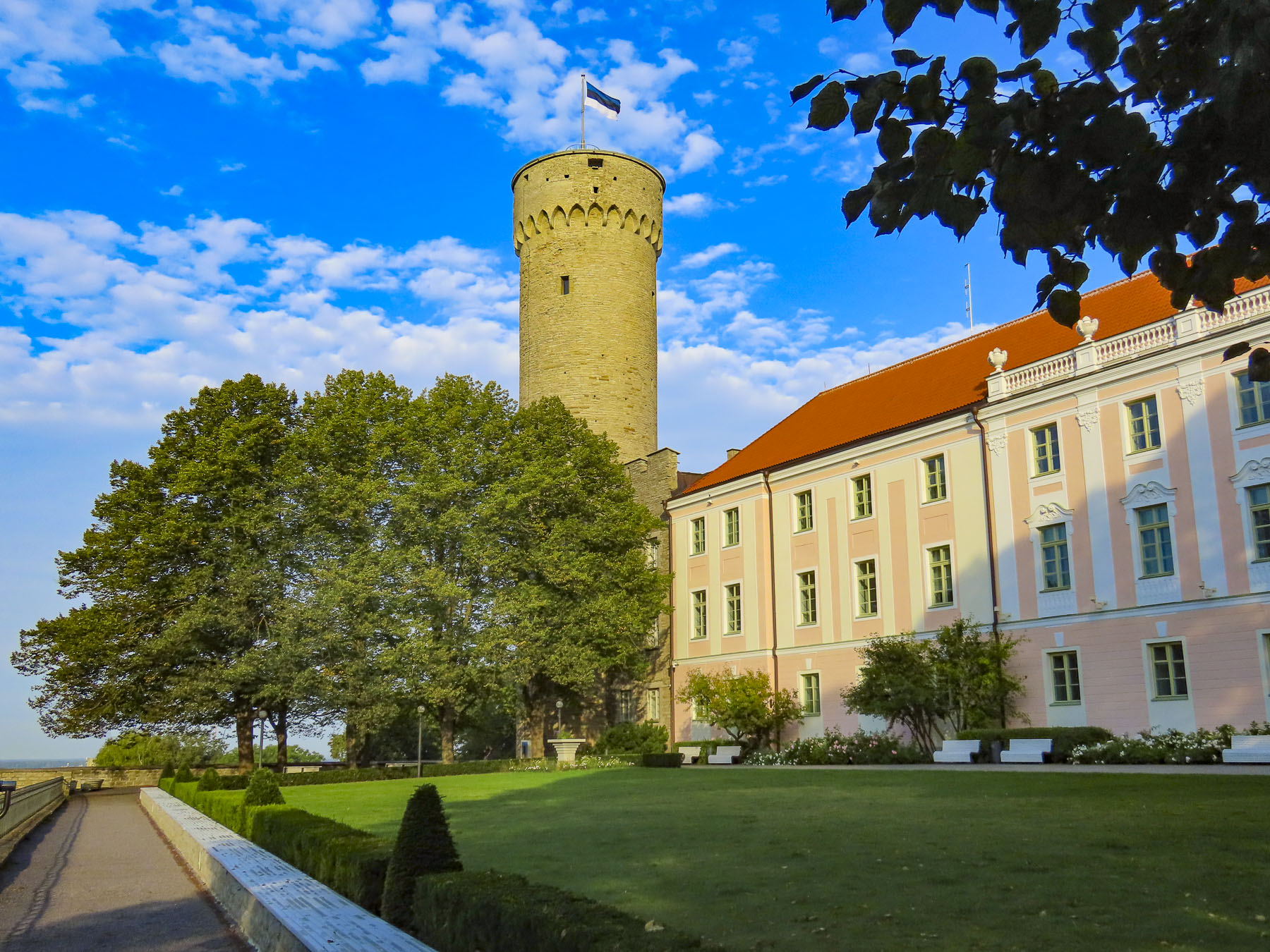
Other points of interest on the hill included the onion-shaped spires of the Russian Orthodox Alexander Nevsky Cathedral. It’s across the street from the pink building that houses the Estonian Parliament. (A very good eye-level view of the cathedral can be seen, on the uphill walk, from the restored bell tower of the mid-1400s St. Nicholas’ Church.

He was the patron saint of merchants and seafarers. It was formerly one of the wealthiest churches in Tallinn until it was severely damaged by WWII bombing. Fortunately, many of its fine ecclesiastical art works, acquired from the art capitals of Europe during the Hanseatic era, had been removed from the church for safekeeping at the start of World War II.  Now restored after a 30-year long renovation, the church serves as the Niguliste Muuseum, and exhibits the works that survived that cataclysmic war. Fortunately, the 105 meters, 345 ft, tall spire has an elevator that whisked us to the viewing deck.)

Farther along in one of Tallinn’s oldest churches, the 13th century St Mary’s Cathedral, there is a unique private worship box, totally enclosed with shaded windows, built directly across from and on the same level as the pulpit. Jokingly, we speculated it was designed for a wealthy patron so he could fall asleep and snore, without embarrassment, as the priest orated endlessly.

The hill also has the best vantage point for cityscapes of Tallinn’s historic skyline, the Patkuli Viewing Platform, and a mysterious red gorilla, that seems incongruously out of place. But we will leave him for you to find.

Stairs from the viewing platform ascended back toward the lower town, and we were close to Balti Jaama Turg, the Baltic Station Market. It was Tallinn’s first train station constructed in the 1860s, and became a market hall in 1993. A major renovation in 2017 totally revamped the three-level market, which has become a magnet for residents and tourists seeking a lively venue filled with diverse international eateries, antiques vendors, clothing shops, and food stores.

The next day, closer to our hotel, we wandered about, climbed more towers, walked along arched and tunneled alleyways, and descended into a cellar or two. Our walk along Müürivahe Street to the Hellemann Tower and Town Wall Walkway was quite interesting. The real prize was the view from the tower window towards Town Hall Square – it was a panorama filled with red tiled roofs and steeples.

Across from it was the Dominican Convent built in 1246. It was the oldest monastery in Tallinn and supported the adjacent St. Catherine’s Church which was completed in the early 1300’s. The convent couldn’t exist solely on the alms it collected, but the friars were an industrious group who supported themselves as farmers, and traders of fish, while also operating a brewery that sold four different kinds of beer, while they spread the gospel. “The monastery also drew profit from the veneration of relics,” and at one time, records suggest, they had “twelve silver reliquaries containing the heads of saints, with each head reputed to cure a different set of diseases.”

But everything came to an abrupt end during the Protestant Reformation in 1524 when a Lutheran mob ransacked the church and monastery, and the friars were expelled from Tallinn. A partial restoration was undertaken in 1954, and it’s now a museum, which also hosts art exhibits. Its rough stone chambers and some fine carved stone works were intriguing. We didn’t notice any fireplaces, which left us wondering how difficult living within these spartan walls must have been.

Next to the monastery is Katariina käik, St. Catherine’s Passage, an old medieval lane that separates the church from the surrounding buildings. Today it’s lined with restaurants offering Estonian cuisine, and artisanal crafts shops, featuring the talented women of the Katariina Gild who craft jewelry, weavings, ceramics, blown glass, and leatherwork. At the far end of the lane, under the arched entrance off Vene Street we found the Restaurant Munga Kelder to be a nice place to dine.

Within earshot of a town crier’s call was the Masters’ Courtyard. It similarly has unique craft vendors, but also has a restaurant that fills the courtyard with rustic tables covered with colorful tablecloths, which gives the courtyard a joyful, boisterous look.

Marzipan lovers, we had to stop one afternoon at the Maiasmokk Café. The ambiance in the front room was very old school with an ornate ceiling, and mirrored walls with polished wood trim and newspaper hooks! When’s the last time you’ve actually seen a newspaper? Their colorful back room is a temple to marzipan with display cases showcasing the sweet crafted into figurines and other shapes.  The variety was just mind boggling. And if your timing is right you might be able to see them being made.

With our sugar cravings satiated, we checked out Tallinn’s Great Guild Hall, directly across from the café. It featured several floors of interesting exhibits dedicated to the city’s history and trade guilds.

Across from the guild hall and the café is the Church of the Holy Spirit. During the medieval era it was the main church for everyday folk in Tallinn, and the first chapel to offer masses in Estonian, not German or Latin as was the tradition of the other churches in Tallinn at the time. With its stark white interior and original dark wood ornamentation, it is one of Tallinn’s least altered churches.

There were several other interesting facades down the street from the Great Guild Hall.

Tallinn has a rich nautical heritage that started during the early Viking era in the 6th-century when the area that would become Tallinn was a stop on the Baltic trade route that connected Sweden to Constantinople.  The area of Tallinn traded furs and bog iron for wine, spices, glass, and jewelry. Shortly after the Danes established rule over northern Estonia in the early 1200s, Tallinn now a larger port city, joined the Hanseatic League, a confederation of medieval trading cities located along the Baltic and North Sea coasts. The Dutch, German and Swedish merchants of this association brought several centuries of prosperity to the city that’s still reflected in the fine examples of merchants’ houses and guildhalls that line Pikk Street. The league’s maritime trading also supported ship building which remained a vital industry through the Soviet Era which saw the shipyards build warships and submarines for the Russian navy.

The importance of Tallinn’s maritime history is well told with two museums in the city.  One is housed in a squat, round, 16th-century cannon tower called Fat Margaret, which once guarded the port, but now is a modern, state of the art museum, with ship models, interactive displays, and the hull of an excavated wooden shipwreck to view.   

Its sister museum is on Tallinn’s waterfront at the Lennusadam Sea Plane Harbor. It was raining heavily the day we visited, so we didn’t see the historic ships docked outside, but we did enjoy the full-size boats on display inside the old seaplane hangar. Especially the submarine Lembit, built in Tallinn and launched in 1936, which was the pride of the Estonian Navy.

The large concrete hangars themselves are noteworthy, as the three connected shells were the largest reinforced concrete domes in the world, without any central support columns when their construction started in 1912. They were ordered built by Russian Tsar Nicholas II to shelter the seaplane squadron that was part of Peter the Great’s naval forces. It’s a cavernous space with a seaplane hanging from the ceiling, and where you can actually walk under a submarine. The museum also had a nice café which overlooked the exhibits.

When the weather was inclement or the walking distance too great, we used Uber to get around. The service worked very well for us in Tallinn. Getting to Telliskivi Loomelinnak, the Telliskivi Creative City, from the Lennusadam Sea Plane Harbor was one of those occassions and it worked perfectly.

It’s an old, street-mural covered industrial site that’s been revamped into a hip entertainment and nightlife destination with theaters, galleries, restaurants, and bars. It was a fun place to explore, but I think we skewed the demographics a little bit.

 Till next time, Craig & Donna

P.S. We purchased Tallinn Cards to use during our stay in the city and found it to be quite beneficial and cost effective. The card offered access to over 50 museums and attractions, free travel on public transportation, and discounts on sightseeing tours.

Three days in Edinburgh or Jugglers, Sandstone, Whisky & Thistle  

Good hosts, Shopkeepers, and restauranteurs constantly apologized for the unusually cold and fickle August weather that Scotland was experiencing. In the Outer Hebrides, on the Isle of Lewis and Harris, strong winds and high tides led to road flooding in the center of Stornoway, a destination on our itinerary. “Normally the weather is perfect this time of year,” was a frequent refrain. “Lively thunderstorms,” such a nice phrase, had delayed our flight from London to Inverness, several days earlier. Later in the month heavy rain and strong winds led to the naming of the 12th storm of the 2024 season, Storm Lilian.

We had donned our Gore-tex rain gear for two days straight, and were thankful we made the investment in some reliable waterproof jackets. But yesterday afternoon as we visited The Kelpies while driving to Edinburgh, it was 65°F and the sun was shining. The weather was brilliant. Rain then clearing storms was the weather pattern that would repeat itself for the next three weeks, which provided many opportunities for some dramatic landscape photography.

With the weather predicted to be nice for the next several days, we planned to head to the Dugald Stewart Monument on Calton Hill for that iconic view of Edinburgh at sunrise. It didn’t go exactly as planned, as we didn’t get up early enough, underestimated the length of time our tram journey from the Holiday Inn Express Edinburgh – Leith Waterfront would take, and we overshot our stop.

Nevertheless, we enjoyed a quiet early morning in the Princes Street Gardens, catching Edinburgh castle in early morning light from the Ross Fountain. Before walking back to Calton Hill, as the city’s streets slowly awakened, and sculptures atop buildings glowed in the morning sun.

Along our route were solid examples of buildings constructed with Craigleith sandstone. The locally quarried stone was the building material of choice for James Craig, the 18th century Scottish architect tasked with replacing the ancient city’s medieval Old Town’s unsanitary tenements and warren of alleys, with a grid of avenues, squares, and gardens. The results, James Craig’s New Town, are today treasured as  a prime example of Georgian era town planning.

An obscure alley-like entrance across the road from the stairs to Calton Hill caught our attention and we followed a forgotten walkway into the Old Calton Cemetery. Long neglected tombs and teetering headstones dotted the graveyard. In the middle was a stately monument depicting a freed slave looking skyward to a statuesque Abraham Lincoln.  

The Scottish-American Soldiers Monument, as it is called, commemorates the six Scotsmen who volunteered to fight against slavery during the American Civil War. Donations for its construction were solicited across the Scottish dispora in the United States with the American business magnates; Andrew Carnegie and John D. Rockefeller becoming major contributors. The memorial monument was erected in 1893, was the first statue of Abraham Lincoln outside of the United Sates, and continues to be the only American Civil War monument in Europe.

Even though our heart rates were up, after the walk from the center of Edinburgh, the long climb of stairs to the top of Calton hill was a challenge, though it was well worth the effort for that iconic view across The Athens of the North. The 19th century nickname references the Grecian architectural influences incorporated into some of the city’s most notable neoclassical buildings.

Atop the hill the style is most evident in the Dugald Stewart Monument, a memorial to the Scottish philosopher and mathematician; the old City Observatory; and the National Monument of Scotland, a Napoleonic Wars memorial built in remembrance of the soldiers and sailors who fought in those wars. Afterwards we walked down the opposite side of the hill towards the Omni building, a theater and entertainment center, across from the tram stop at Picardy Place. A tall statue of Scotland’s favorite detective, Sherlock Holmes, commands the plaza located a short distance away from the birthplace of the writer Sir Arthur Conan Doyle. 

Our goal now was to walk towards the Port of Leith along the Leith Way to delve into some of Donna’s family history. Here’s Donna to explain:

Before I was Donna Hammell, I was Donna Leith. My mother-in-law was a sweet Italian woman who married a Scottish fellow named John Leith. In the 1970s, they traveled to Scotland to explore the family heritage. They knew that generations back, one of the Leith men had been a sailmaker with a shop along Water Street; another had been a ship builder. Mom and Dad wandered around Leith, trying to find the shop. They were about to give up the search, when they decided to ask at a pharmacy. Turns out that was the very building the sailmaker had occupied, and the people who ran the shop were cousins, once or twice removed. The two women corresponded for decades and exchanged recipes. I just baked a batch of Eyemouth Tarts – deliciously addictive little squares of candied fruit atop a buttery crust. My children are named Sandra Leith and Ian Leith, and I was determined to bring them a souvenir with the Leith name on it. Although for obvious reasons there is some antipathy between my former and current husbands, nevertheless Craig kindly indulged me on this search for my kids’ ancestry. I think he was as pleased as I was when we hit the jackpot at a lovely little store. I cleaned her out on all things Leith.

Leith Way, is one of Edinburgh’s oldest streets, that followed the line of a now long- gone earthen rampart built to defend Edinburgh from Oliver Cromwell’s army in 1650. On either side of the road, it seemed as if every storefront we passed incorporated Leith into the name of their business: Leith Shwarma, The Dog House Leith, Leith Artisan Coffee, Leith Walk Denture Studio, Leith Barber, and Tribe Leith, a yoga studio. Nearing sensory overload, we stopped for a pint of beer at the Boundary Bar. It’s an unpretentious neighborhood pub famously known for its line painted along the floor that marked the border between Leith and Edinburgh, and most importantly allowed customers who crossed to the Leith side of the bar to party an hour longer, when the pubs in Edinburgh closed at 9 PM. Leith’s advantage ended when the two cities merged in1920. Across the street we enjoyed an inexpensive lunch at the Kukina Turkish Bakery, just down from The Wee Leith Shop, which was only twice as wide as its door. Farther along we found a very nice shop, Destined for Home, with all things Leith souvenirs. Donna was thrilled!

Leith’s history was tied to the rise of Edinburgh as the seat of the Scottish crown. Archeological discoveries along the port’s waterfront suggest an extensive wharf area that dates to the 12th century. The port thrived for centuries upon shipbuilding, whaling, fishing, and glass making, along with warehouses storing whisky and wines imported from Europe. Leith was so prosperous that it had gas street lighting in 1822, and electrified its tram network in 1905, years before the town merged with Edinburgh in 1920. Severely hard times fell on Leith after WWII when ship building declined, and the advent of mega container ships required larger, modern port facilities. Notoriously, the city was unceremoniously depicted in the 1993 novel, Trainspotting. It was a much different perspective than that of the Proclaimer’s1988 hit song, Sunshine on Leith, which the BBC hailed as a “love song to the city and Scotland.” The song became an anthem of endurance for a city once down on its luck. But since then, the dock area has undergone a transformation with new office buildings and residential towers being built along the old canals and dock area of the port, reinvigorating the area and earning the designation as the “Venice of the North.”

Later that afternoon we returned to the center of Edinburgh via the tram and walked across town to theSpace @ Surgeons’ Hall, a performing arts theater, to see a play hosted by the Fringe Festival. I Love You, You’re Perfect, Now Change was written by award-winning playwright Joe DiPietro, who happens to be the little brother of Donna’s girlfriend from grade school. The four-person performance, the second longest-running off-Broadway play, was performed in a small intimate space with seating on three sides of the stage. The play was fantastic, and the tickets were extremely inexpensive. 

At this point we need to confess that we didn’t know anything about the Edinburgh Fringe Festival, a large three-week entertainment event held every August in Edinburgh, for over 75 years. It was only after purchasing our airfare, when we tried to book a hotel, six months out, that room availability was severely limited, and we delved deeper as to why. The Fringe Festival started as an act of rebellion against the status quo in 1947 when eight theater companies, not invited to the Edinburgh International Festival, performed on the streets in Edinburgh. The event has mushroomed over the years and in 2024 “sold more than 2.6 million tickets and featured more than 51,446 scheduled performances of 3,746 different shows across 262 venues from 60 different countries.” The Edinburgh Fringe Festival website and catalog of shows was very helpful in planning what to see. Everything we read said Edinburgh would be insanely packed with tourists. But our barometer was a New York city rush hour, and Edinburgh’s streets were an oasis of calm in comparison. Not being able to find any reasonably priced hotels near the center of the city, the Holiday Inn Express Edinburgh – Leith Waterfront, located on the tram line, was the perfect alternative.

For the next morning Donna secured us tickets for the opening time at Edinburgh Castle, and we arrived to join the small queue already forming. The top of this massive rock has been a safe haven since the Iron Age when folks first sought refuge there. It was the seat of the Scottish crown for several centuries after Malcolm III Canmore, the first King of Scotland, set foot upon the Castle Rock in the 11th century, though the principal royal residence, since its construction in the 16th century has been Holyrood Palace.

I imagine the wind carries the stories of Mary Queen of Scots, James VI, Oliver Cromwell, and soldiers barracked, and prisoners of wars in its dungeons, that walked upon the rock. Noteworthy historical oddities include: the first fireworks lit the sky above the castle in 1507 to celebrate a lavish jousting tournament hosted by James IV. In 1838, the 78th Highlanders, stationed at the castle, returned from serving in Sri Lanka with an elephant in tow. The parade ground before the castle entrance hosts a spectacular event every August evening called The Royal Edinburgh Military Tattoo.

Afterwards we wandered the streets and alleys of Edinburgh’s ancient Old Town below the castle. The cheerfully painted storefronts along the bow of Victoria Street certainly brightened the day after a gloomy morning. The streets were busy with crowds gathered around entertainers performing in the squares. Eventually, we found our way to the Greyfriars Kirkyard Cemetery.

The land for the graveyard was granted to the city by Mary Queen of Scots in the mid-16th century. Soon the city started to use the graveyard for the mass burials of thousands that died during the multiple plagues that struck the city over a seventy-five year period. Though there are only several hundred headstones in the cemetery, it is thought nearly 100,000 people were buried there over a three-hundred-year period, and tour guides will have you believing it’s the most haunted cemetery in the world.

After the establishment of Edinburgh’s Medical College in the 1700s, graverobbers often exhumed the recently deceased and sold the cadavers to the school for use in their anatomy classes. The cemetery is also known for the story of Bobby, the beloved pet of John Grey. The Skye Terrier is remembered for dedicatedly guarding his owner’s grave for 14 years before his own death at age 16, in 1872. More recently, the success of JK Rowling’s Harry Potter books have drawn fans of the novels to the cemetery where the author borrowed the names of Robert Potter, Thomas Riddle (aka Lord Voldemort), William McGonagall (a famously bad poet), Elizabeth Moodie, and Margaret Louisa Scrymgeour Wedderburn off the gravestones for some of her important characters.

After lunch at the Greyfriars Bobby’s, a pub at the entrance to the cemetery, we walked across town. At the National Galleries of Scotland we stopped to watch a juggler tossing flaming torches from atop a tall teetering platform, held aloft by members of the audience.

At the Princes Street Gardens the skirl of bagpipes filled the air near the sculpture of Wojtek, an orphaned Syrian brown bear cub that Polish soldiers found in Iran, and adopted while they were serving with the British army in WWII. After the war Wojtek lived out his life in the Edinburgh Zoo.

Our destination was Dean Village, an old, though now gentrified, milling community, that once had eleven mills along the Water of Leith. It’s a tranquil bucolic area with a foot and bike path that can be followed to the Port of Leith, four miles away. Saint Bernard’s Well is along the walkway, and during the Middle Ages the water from the natural spring was believed to have curative powers.

For dinner that evening we headed back into the new town and stopped at The Black Cat pub, which was recommended as having a great selection of whisky, friendly knowledgeable bartenders, and good fairly priced food. We tried a flight of three single malt coastal whiskies. Two were from islands off Scotland’s west coast; an Arran 10 year from the Isle of Arran, and a Ledaig 10 from the Isle of Mull. The third was a Glenglassaugh 12 year distilled near Sandend Bay in northern Scotland. The young barkeep was also a well versed whisky sommelier, and guided us through the subtle influences the Atlantic and North Sea air have on the aging process.  Poetically using a cask full of adjectives to describe the Nose – floral seaside aromas, with gentle smokey palate – a malty creaminess, and finish – sublimely spicy, a kick of cloves, or an exquisite lingering saltiness, to variously describe the warm amber liquors we were enjoying. All were very nice to sip slowly, though the Ledaig 10 was a little too peaty for our taste, and we likened it to inhaling too deeply with your first cigar – it took some getting used to.

The following morning, we set off for the Palace of Holyroodhouse. It has been an official royal residence since James IV constructed the palace in1501, adjacent to the Holyrood Abbey’s cathedral that was completed in 1230. The original palace was destroyed in the 1650s when a fire consumed much of the building while it was being used as a barracks by Oliver Cromwell’s troops. Though there have been many interior alterations over the centuries, the façade of the palace today closely resembles its 1679 construction.

The Renaissance fountain in the forecourt was installed in 1850 to spiff the place up for a visit by Queen Victoria. Sadly, that seems to be the last attempt to improve the place, and our tour of the inside felt like we were walking through spartanly furnished, shabby aristocratic public housing. The Abbey’s cathedral is an ancient ruin, and the gardens surrounding the palace get much better PR than they deserve. For the exorbitant admission price, they didn’t deliver the expected enthralling experience. If you are watching your budget, we suggest skipping Holyroodhouse and visiting Stirling Castle or Dunrobin Castle with its spectacular interior and garden instead.

For our last afternoon in the city, we visited the Royal Botanic Garden, seventy acres of beautiful, manicured rolling woodland with formal gardens. We followed the signs through the park, passing under a 23ft tall hedge over 100 years old, to the Queen Mother’s Memorial Garden, that’s noted for its perennial flowers and collection of indigenous plants.

The gardens were thriving in the moist moderate weather of Scotland, and bursting with color. At the very end of the garden is a small building called The Memorial Pavilion. It’s very unique, with every square inch of the interior walls and ceiling covered with shells collected by school children all across Scotland.

Planted outside was a bed of thistle, Scotland’s national flower. Scottish folklore credits the thistle with saving an ancient village from a Viking raid, when the barefooted invaders stepped on the spiky plant. Their cries of agony alerted the sleeping warriors of the village who then defeated their enemy. It has since become an important symbol of Scottish heraldry, and being invested into the ancient chivalric order of the Most Ancient and Most Noble Order of the Thistle, is one of Scotland’s and England’s highest awards. The prickly flower was even celebrated in a 1926 poem, A Drunk Man Looks at the Thistle, by the famous Scottish poet by Hugh MacDiarmid. The epic, “stream-of-consciousness” poem touches on everything from the state of the nation and the mysteries of the universe to the joy of whisky.

Edinburgh was a fantastic destination, that requires multiple visits to fully explore.

Till next time, Craig & Donna

P.S. The Scotland Explores Pass helped with the price of admission to many sites across the country.

Tenerife Part 1: Santa Cruz de Tenerife & San Cristóbal de La Laguna: Old & New, Rugged Mountains & Seascapes

Bright sunlight filled the jet’s cabin as our pilot dipped the plane’s wing into a descending curve that revealed an arid rugged coast, bound by surf and azure waters. Tenerife! The walk to the car park under gently swaying palm trees was refreshingly balmy, a good omen for our visit.

Heading north on TF-1 in our rental car, views of picturesque small villages along the coast awakened our expectations for the days ahead. Our 14 days on Tenerife were divided evenly between stays in Santa Cruz de Tenerife, Icod de los Vinos and La Orotova, with multiple day trips planned from each town to explore the island in depth. Traveling during the September shoulder season, we were able to find some very good pricing for stays at the Iberostar Heritage Grand Mencey, Hotel Emblemático San Marcos, and the Hotel Alhambra.

Three hotels with distinctive character. Santa Cruz de Tenerife was our first destination, the island’s capital; it is a surprisingly large yet intimate, historic and cosmopolitan port city that offers ferry service to several of the other Canary Islands.

The volcanic seven island archipelago is closer to the coast of Morocco than the Iberian Peninsula. Discovered and populated by folks of Berber origin known as the Guanches around the 5th century B.C., It’s thought their indigenous Canary culture developed in isolation over the next 2000 years until Spain’s Age of Discovery sent fleets of ships south along the African coast in the early 1400s. In 1492, after sailing south from Spain, Christopher Columbus’s fleet of three ships and his intrepid explorers stopped in the Canary Islands to resupply their fresh water and food before catching the favorable, westward-blowing trade winds that carried them across a vast ocean to the discovery of the New World. Tenerife was the last island to succumb to Spanish rule in 1496 after the Guanches were forcefully defeated. For the next 400 years the islands played a crucial role in the colonization of the Americas, sending settlers to help establish Caracas, Buenos Aires, Montevideo, and San Antonio, Texas, along with exporting the first banana plants and sugarcane seeds to the islands in the West Indies. Potatoes and maize, new foods from the Americas, arrived first in the Canaries along with treasure ships laden with silver and gold destined for Spain. The importance of the islands to the Spanish crown was noted by the English privateer and favorite royal bad boy Sir Francis Drake, who found the weather so much more agreeable than England and attacked them in 1586 and 1595. Dutch privateers along with Barbary and French pirates also attacked the islands frequently.

Situated along the tree lined Rambla de Santa Cruz, with its wide pedestrian walkway that runs down the center entire length of the boulevard, the Iberostar Heritage Grand Mencey blended effortlessly into the beautiful 19th architecture that surrounds it. While parking on the street in Santa Cruz de Tenerife is free, there is tremendous competition in finding a space, so we opted to use the hotel’s garage during our stay. Fortunately, our lodging was only a fifteen-minute walk from the city center. It was an ideal location to explore the city from.

Adjacent to the hotel, the Parque García Sanabrias provided a tranquil sanctuary under a canopy of old growth trees. It’s a huge city park with different gardens, monumental sculptures, and several eateries, and is popular with folks seeking a place to exercise or relax. It’s here that we were first introduced to café leche y leches, a visually attractive layered coffee that was originally created in Santa Cruz de Tenerife early in the 1900s. Surely it was an act of divine inspiration that led to its creation at the Bar Imperial for a loyal customer who always requested the same special coffee. Made with whole milk, condensed milk, espresso, and cinnamon, its popularity quickly spread across the Canaries. Made with an additional shot of Liquor 43, it’s called a “Barraquito,” in honor of the customer who inspired the drink’s creation.

Walking through the city on the way to the harbor and the Palmetum one day revealed a vibrant combination of old and new. Beautiful historic buildings and grand sculptures dotted our route. We were surprised to find that the city also has a modern tramline, the Tranvia de Tenerife, that connects its outer neighborhoods and La Laguna to the city center and port area.

Reaching the Plaza de Espana, we paused to contemplate a tall obelisk, the Monument to the Fallen. A controversial piece today, it was erected in 1947 during the dictatorship of General Franco, and sadly dedicated to the victors in the Spanish Civil War. In 2019 a local government commission determined that the forced labor of political prisoners was used to construct it. And the “monument violates the Law of Historical Memory, and it needs to undergo a resignification process.” Nearby stands a contemporary sculpture called “Lo llevo bien,” or “I’m doing well,” by Julio Nieto, a Basque artist based in Tenerife. It’s a 16-foot-tall stainless-steel sculpture shaped like a humanized tree. A re-interpretation of Atlas carrying the world on his shoulders, Nieto’s piece symbolizes “the optimism of the human being, who, despite all his thoughts, carries it well.”

Looking back at the city from the park’s edge, the rectangular modern shapes of the city contrasted sharply with the jagged silhouette of the rugged Tenerife mountains behind them.

We walked along the waterfront to the Auditorio de Tenerife Adán Martín, Santa Cruz’s iconic landmark, an auditorium and arts center, designed by the Spanish architect Santiago Calatrava. Its ultramodern design reflects Tenerife’s prosperity and optimism for the future.

From there it seemed as if we were walking back through time as we passed the Castillo de San Juan Bautista, a short circular fortress constructed in 1640s to defend Santa Cruz from pirate and British attacks, and the Ermita de Nuestra Señora de Regla, a small church that dates from this era.

Reaching the Mirador Caribe at the Palmetum, we were rewarded with an expansive view of the city with Auditorio de Tenerife, and Parque Maritimo iCesar Manrique. A botanical garden, the Palmetum was started in 1995 atop 30 acres of reclaimed land that was once a landfill. Now it’s filled with nearly a thousand palm trees gathered from around the world and other plantings. It’s a spectacular place.

Heading back through the city, we stopped at the old-town market Nuestra Señora de Africa; it’s a sensory experience with colorful fruit displays, aromas of fresh baked goods and the clattering of commerce. Originally an open-air market, it was reconfigured in the 1940s. Built in a neo-colonial style, its arcaded shops and plazas attract locals and tourists. Outside the main entrance two statues reminded us of the old way of life on Tenerife when men still rowed heavy wooden boats through the surf to fish and women called Lechere would walk from village to village with baskets balanced on their heads, carrying jugs of milk to sell.

We finished our walk to the hotel down the wide pedestrian walkway in the center of Rbla. de Sta. Cruz, so we could get a better look at some of the interesting architecture that we passed when we first drove through town.

The weather on Tenerife can be fickle, sunny, foggy, rainy, and cloudy all within the same hour, as it was when we headed northeast early the next morning to the small village of San Andrés for breakfast, before visiting Playa de Las Teresitas, a wide manmade beach of imported yellow sand built behind a series of protective breakwaters. Across from the small café where we had breakfast under a threatening sky stood the ruins of Castillo de San Andrés, a small round fortress built to deter pirates from landing and ransacking the village and Santa Cruz. As British troops attempted to land in 1797 and seize Spanish treasure from the Americas, it’s believed a canon shot from this fortress wounded the famous Admiral Horacio Nelson, causing the amputation of one arm. This cannon is oddly on exhibit in the museum at the Castillo de San Cristobal in Santa Cruz. During the 18th and 19th centuries flooding from the stream next to the castle undermined its foundation causing it to split into almost even pieces, like a cake sliced in half.

Above the beach the Mirador Playa de las Teresitas offers tremendous views south of the coast. Turn around and walk a few yards back along the road for a spectacular view of the black sand beaches Playa de Las Gaviotas and Playa Cueva del Agua.

Any resemblance to a straight road disappeared as we turned onto TF-12 to work our way across the island to Playa del Roque de las Bodegas, the Mirador de Playa Benijo and continue onto the El Draguillo mirador in an isolated hamlet in the Anaga Rural Park.

Distance between sites on Tenerife are relatively short as the crow flies, but the roads are narrow and serpentine, so the driving is slow, even though not many cars are on the roads. Rising into the mountains, the terrain changed from arid browns to verdant greens. The views along the way of isolated villages hugging the steep slopes were awesome.

Our intent was to drive all the way to the El Draguillo Mirador, as our GPS map led us to believe was doable, but the road ended at a very small gate in a muddy car park with a sign that said only residents of the village were allowed to drive past this point. Evidently this is the starting point for the El Draguillo trail, a 6 hour hike. The parking lot was jammed full and it took a serious multipoint K turn to get us out. We recovered nicely though by having a great lunch nearby at La Venta de Marrero, a cliffside restaurant with a fabulous view.

Scenes obscured by fog and low clouds as we drove across the mountainous interior that morning were now brilliant in the afternoon sunlight as we headed toward the Túnel de las Hadas. It’s a mesmerizing channel covered with moss, that was cut through the surrounding laurel forest. It is located in the Parque Rural de Anaga, which is recognized as a biosphere reserve with the largest number of endemic plants in Europe. The fog rolled in again and it was enchanting.

Our last day trip from Santa Cruz was to San Cristobal de La Laguna, an old colonial city that on its founding in 1497, after the defeat of the indigenous Guanche kingdoms, became Tenerife’s and the Canary Archipelago’s first capital. The village at first grew haphazardly around the Iglesia de la Concepción.

These first dwellings, built mostly of reeds, were ordered to be replaced in 1502, as their building material threatened to destroy the growing town if it ever caught fire. By this time La Laguna was the largest city in the Canaries with 6000 thriving inhabitants, two large churches and several monasteries. The city leaders adapted a plan Leonardo Da Vinci created for the city of Imola, Italy, as a blueprint for their city. Local son and Jesuit missionary José de Anchieta is credited with the inspiration to use this design of La Laguna when he founded the cities of Sao Paulo and Rio de Janeiro, Brazil, in the mid-1500s. The priest is highly revered on Tenerife and a venerated wooden sculpture of him from the Cathedral of La Laguna is carried in procession through the streets every June 9th.

On the flip side of good there is always bad, and San Cristóbal de La Laguna also recognizes another historical figure from their city, Amaro Pargo, a famous corsair, from, as the Spanish like to call it the “Golden Age of Piracy,” who savaged ships flying the British and Dutch flags sailing to their colonies in the West Indies. With a reputation as notorious as Sir Francis Drake’s, he was also recognized for his services by the Spanish crown and was declared a Caballero hidalgo, a knighthood, in 1725. He was also a merchant with many business interests and during his time the richest man in the Canary Islands, who was also highly regarded for frequent and large religious donations. He had an interesting relationship with a nun from the Catedral de San Cristóbal de La Laguna, Mary of Jesus de León y Delgado, who he credited with saving his life during a fight in Cuba by her ability to bilocate. Sister Mary is an interesting individual in her own right, credited with miracles, acts of healing, clairvoyance, levitation, psychokinesis, and stigmata. Sister Mary’s incorrupt body is preserved in the Monastery of St. Catherine, where she lived for 63 years, without ever leaving. Every 15 February her ornate glass-covered coffin, gifted by Amaro Pargo, is placed on display in the convent. With 1,251 miracles attributed to her, she has been nominated for canonization.

Though La Laguna is over 500 years old, it hosts a 300-year-old university with nearly 25,000 students that keeps it young at heart. Vibrantly colored buildings are interlaced between traditional examples of Canary architecture that feature wooden balconies that face the street and have deep courtyards to provide a shady sanctuary from the midday sun. The city’s major buildings incorporate a variety of styles that have been trendy across the centuries.

Older Gothic, Baroque, and Renaissance style buildings dot the historic center, while Neoclassical elements are present in the newer 18th century buildings that were built around the city’s core. In other words, there’s a delightful hodgepodge of architectural styles to enjoy.

Some of the older buildings have now been re-envisioned as exhibition spaces, as was the deconsecrated Ermita de San Miguel, which hosted a show of 3D printed sculptures when we visited. Others are now hotels or restaurants. The historic core of the city is pedestrian only and as we like to say “walk a little then café” is the best way to explore it.

Returning to Santa Cruz, we detoured into the mountains above the city to Parque de Las Mesas for an expansive view of the city below us. Brilliant in the afternoon sun.

Till next time,

Craig & Donna


Madrid: An Ambience That Ages Well

First Impression: Madrid is monumental! The minute we exited the Puerta de Atocha train station onto the sidewalk, we were struck by the beauty of the wide boulevards lined with stately trees and grand architecture, and the top of buildings graced with colossal sculptures of mythic gods.

If the Paseo del Prado, the route to our hotel, could speak, it would surely boast of its famous destinations along its length: Madrid’s Museum Triangle, which includes the Reina Sofia Museum where Picasso’s Guernica hangs; the Prado Museum, which highlights the works of Diego Velázquez and Goya; as well as the Thyssen-Bornemisza Museum, which displays 13th-20th-century European masterpieces. But its bragging rights continue with the Real Jardín Botánico, the Museo Naval with its fascinating exhibits devoted to Spanish maritime history, The Glory and Pegasus sculptures atop the Ministry of Agriculture, and the famous fountain depicting the goddess Cybele’s chariot being pulled by two lions. This relatively short distance is packed with so many highlights it should be called Madrid’s marvelous mile.

Our hotel the Apart-Hotel Serrano Recoletos was just a few blocks from the iconic Cibeles Fountain, which is centered in a traffic circle you usually have to observe from a distance, but overnight the Paseo del Prado was transformed into the festive final leg of the Movistar Half Marathon, with the finish line down the street from our hotel.

With the majestic boulevard closed to traffic, folks were free to wander up to the fountain for a close view, an accessibility that rarely happens. Yesterday we hadn’t realized the median strip that runs the length of Paseo del Prado was lavishly planted with gardens and as luck would have it, the tulips and flowering trees were in bloom. Heading towards the historic center of Madrid, we observed a large group of healthcare professionals marching peacefully down the Gran Via protesting government policies. It was a busy Spring Sunday in Madrid.

Plaza Mayor, ground zero for the historic center of Madrid, was our destination. Once the ancient city’s market area, the area was transformed by architect Juan Gómez de Mora during Philip III’s reign in 1617, and of course the King is dutifully recognized, gallantly astride an equestrian statue in the plaza’s center.

The vision of three successive architects contributed to the plaza as seen today, the result of three devasting fires in 1631, 1670 and 1790. Over the centuries it has hosted bullfights, executions during the Inquisition, Royal wedding celebrations, soccer games and Christmas markets. As an exclusive address in Madrid, many of the apartments are passed down within the same families from generation to generation.

Plaza Mayor gets hectic, but tucked away under the arcaded sidewalk, there are some hidden gems worth finding. Our favorite was La Torre del Oro. It’s an old atmospheric bar dedicated to celebrating Spain’s bullfighting traditions.

There are so many interesting destinations centered around this plaza that we often started our days here as a way to get oriented in old Madrid’s labyrinth of alleys. Treating the nine ancient gateways into the plaza as compass points, we would follow their direction into the surrounding barrios.

Our wanderings to soak up the ambience of this ancient quarter were frequently determined by a list of restaurants and cafes, along with historic sites and churches, we hoped to find. The choices were overwhelming. Since this was our first time in Madrid, we hit many of the tried-and-true spots, like Chocolatería San Ginés, famous for serving Madrileños the best hot chocolate with churros for over 125 years. There was a fast-moving queue when we arrived before 11, which suddenly evaporated and freed sidewalk tables, but it was much more interesting before the lull in activity. And El Riojano, a renowned 19th-century Pastelería with a tantalizing spinning tower of sweet temptations in its storefront window, is sure to break the will of any dieter. When you first enter, it looks like there are not any tables to sit at, but next to one of their display cases there is an opening into a large, popular back room for café. We are after all tourists.

One late afternoon by the El Oso y el Madroño sculpture, a band of buskers filled the Puerta del Sol with music. The Bear and the Strawberry Tree is a medieval heraldic emblem that has been associated with Madrid since 1222, when King Alfonso VIII used the image on a stamp to seal a royal decree.

We continued past the Plaza Mayor towards the Plaza de la Armería, where the Catedral de la Almudena, (1883), and the Royal Palace of Madrid (1738), face each other. Turning onto Calle del Factor, we walked a short distance uphill to the Jardín de Larra and joined a small group of folks waiting to enjoy the sunset.

Afterwards at the bottom of the street we entered the Iglesia Catedral de las Fuerzas Armadas. It’s a small 17th century church dedicated to the Spanish armed forces. The church’s simple façade conceals a lavish marble interior with several interesting altars depicting paternalistic colonial themes.

The streets of Madrid seem even busier at night with folks bustling about after work. On the way back to our hotel, we stopped at the Mercado de San Miguel, one of Madrid’s old, covered food markets, which dates from 1916. Today it’s a gentrified, popular gastronomic destination, with tapas, tapas, and more tapas to satisfy everyone’s tastes.

Madrid’s iconic Tio Pepe neon sign blazed brightly above the Puerta del Sol, and shops along the plaza brilliantly displayed their merchandise in dramatically lighted storefront windows. While Madrid exudes ambience during the day, the city becomes magical in the evenings.

Dinner was at La Casa del Abuelo CRUZ, a traditional tapas bar that has been run by the same family since 1906. Their specialty, gambas al ajillo (sizzling garlic prawns), while very delicous, was a terrible value for the portion size. Their vino de casa, an excellent strong red wine, was memorable and eased the pain of the excessive bill.

Spain’s empire building and wealth followed Columbus’ discovery of the Americas in 1492. A daring nautical leap of faith at the time, it set in motion an era of exploration by sea, that would expand the Spanish Empire around the globe. With that in mind, and an interest in boats, we headed to the Museo Naval on Paseo del Prado, near the Prado Museum. It’s a wonderful museum with exhibits in chronological order, which highlight exquisite ship models, nautical instruments, maps, weaponry, and paintings depicting important naval battles. The exhibits include models of the Niña, Pinta, and Santa Maria which composed Columbus’ small fleet on his epic first voyage.

Afterwards we headed into the centro historico for lunch at Casa Toni, an intimate, no-frills bar, that serves tasty seafood and offal tapas. A short line had formed for tables by the time we arrived, but it moved quickly, especially if you opted for a table upstairs, though downstairs is where all the action is with other folks, jammed into a small space, standing at the bar, and seated at some very tiny tables. It’s a friendly boisterous spot. Pig ears and fried lamb lungs might not be for everyone, but they were surprisingly very tasty. 

Gold and silver from the Americas fueled church building across Spain in the 16th – 18th centuries.While it’s possible to enjoy Madrid without visiting any churches, we’ve developed a policy of going inside if the door was open. It nicely slowed down our day and transported us back to a time when amazing buildings were constructed only using hand tools to carve stone and shape wood. And the religious paintings and iconography, while they might not be of interest to everyone, display a level of craftsmanship and imagination that’s worthy of appreciation. Unfortunately, the churches were also vast repositories of riches, donated by the wealthy and poor alike, to secure a place in heaven.

Near the San Miguel market, down from the Plaza de la Villa, on Calle de Puñonrostro, we happened upon the inconspicuous entrance to the small chapel at the Monastery of Corpus Christi las Carboneras, that dates from the early 1600s. It’s a tall, narrow, petite sanctuary. When we were turning to leave, I noticed on the second level the privacy screen across the prayer area for the sequestered nuns. It didn’t actually offer much privacy since a I spotted a seated nun watching the tourists in the chapel. I waved gently, she smiled and waved discreetly back.

A door further along the calle leading to the convent’s dulces turno was just being locked; I could hear the click, a few minutes shy of their posted hours. The dulce turnos are a centuries-old tradition that has remarkably survived in convents across modern Spain, as a means for nuns to support themselves. The turno is essentially a lazy-susan style cabinet with doors on both sides of the wall that lets the customers purchase cookies and other baked cooked from the sequestered nuns while still maintaining the nuns’ privacy. Cookie orders are spoken through the wall. If your Spanish is insufficient, it’s handy to write out what you’d like. There is usually a list of what’s available taped to the door of the cabinets. You place your money on the shelf, the wheel turns, and cookies appear as if by magic. It’s delightful! At the bottom of the street, in front of a public library, stands a bronze statue of a man. It’s named El Lector, the reader, a tribute to Carlos Cambronero, a writer devoted to Madrid’s history. Across the street the unusual convex, baroque facade of the Basílica Pontificia de San Miguel (1739) intrigued us, and we explored more inside.

The calles go every which way in La Latina, one of Madrid’s oldest areas, where the narrow streets and plazas follow the original 9th century footprint of the Arab citadel that originally stood there. Though its buildings might be old, the area now attracts a vibrant young crowd that enjoys an immense collection of tapas bars and restaurants along Cava Baja and Cava Alta. The two nearly parallel streets have been popular since medieval times, when traveling merchants stayed at inns and taverns along the calles, and used tunnels or access holes dug at the end of the streets to enter the walled city at night when the gates were closed.

At the end of Cava Baja and Cava Alta, the colorful Mercado de la Cebada, with its distinctive wavy roof, is a modern architectural dichotomy in its surroundings. The shopping in this mercado is an authentic Madrileño experience that is not touristy at all.

From the entrance to the market, we noticed the tall silhouette of the Royal Basilica of Saint Francis the Great’s large dome, several blocks away, dominating the neighborhood, and decided to check it out.

This is a mammoth, mid-18th century cathedral designed in the Neoclassic style, the size of which we did not fully realize until we were standing under its 108-foot-wide and 190-foot-high dome. Legend believes that St. Francis chose this site himself when he visited Madrid in 1214 during his pilgrimage to Santiago de Compostela. The dome is the largest in Spain and the fourth largest in Europe. It was breathtaking in scale and equally fascinating with celestial frescos by Casto Plasencia Mayor decorating the cupola, and paintings behind the altar by Manuel Dominquez and Alejandero Ferrant, illuminating biblical stories.

Six smaller but equally opulent chapels in several different architectural styles, from Baroque to Byzantine, and Renaissance to Rococo, ring the main altar, each mini museum displaying a wealth of religious art created by the Spanish masters Francisco José de Goya, Alonso Cano, Francisco Zurbarán, Antonio González Velazquez, José Moreno Carbonero, and others. This church is one of the most beautiful we’ve visited in Spain and should be on everyone’s “must do in Madrid,” lists.

Afterwards, on Carrera de San Francisco, 14, as we started our return leg to our hotel, we happened upon two very good gastronomic discoveries. The artisanal bakery, Obrador San Francisco, was full of the wonderful aroma from fresh baked bread that was just being put out for purchase. And of course, to go along with good bread, you need good cheese. This was accomplished easily enough, right next door, at Quesería Cultivo, a cheese shop, with an amazing array of Iberian cheeses. It’s worth stopping here just for the earthy aroma that greets you when you enter the store, an experience that will have you picturing idyllic Spanish mountain pastures, full of grass-grazing and milk-producing livestock.

Being the cheese aficionados that we are, we had one more stop in mind, at Casa González.  They have been selling cheese in Madrid since 1931 and have slowly expanded to become a petite gourmet shop and small bar with a handful of tables, where they are happy to advise you on which wines to pair with each cheese.  

On our last full day in Madrid, we wandered the exhibition galleries at the Prado, viewing the museum’s vast collection of classical European art, which spans from the sixth century BC until the late 19th century. We especially enjoyed the works of Goya, Velázquez, and El Greco. Goya created over 700 paintings during his lifetime and embraced many different themes from royal portraiture, to Romanticism, to religious art, and later his dark paintings, toward the end of his life.

Around the corner from the museum, we lunched at Plenti, which served delicious and inexpensive food. We spent the rest of the afternoon exploring Real Jardín Botánico, where many of its plantings were just beginning to flower.

In El Retiro Park we did the classic tourist stuff, visiting the Palacio de Cristal, originally built as an exposition greenhouse, but now hosting art exhibits, and the Monument to Alfonso XII on the El Retiro boating pond. Interestingly, the park was originally created in 1630 as an exclusive sanctuary for Spanish Kings and members of the royal court, and famous naval battles were re-enacted on the boating pond for the monarchy’s entertainment.

The large 350-acre treed park, with manicured gardens, fountains and monuments was perfect for royal courtships and discreet liaisons. It was gifted by the monarchy to Madrid and permanently opened to the public in 1868, a much-needed addition to the city’s greenspace at the time.

The sun was warm for late March and folks were out and about, enjoying life. It was a perfect day.

Till next time,

Craig & Donna
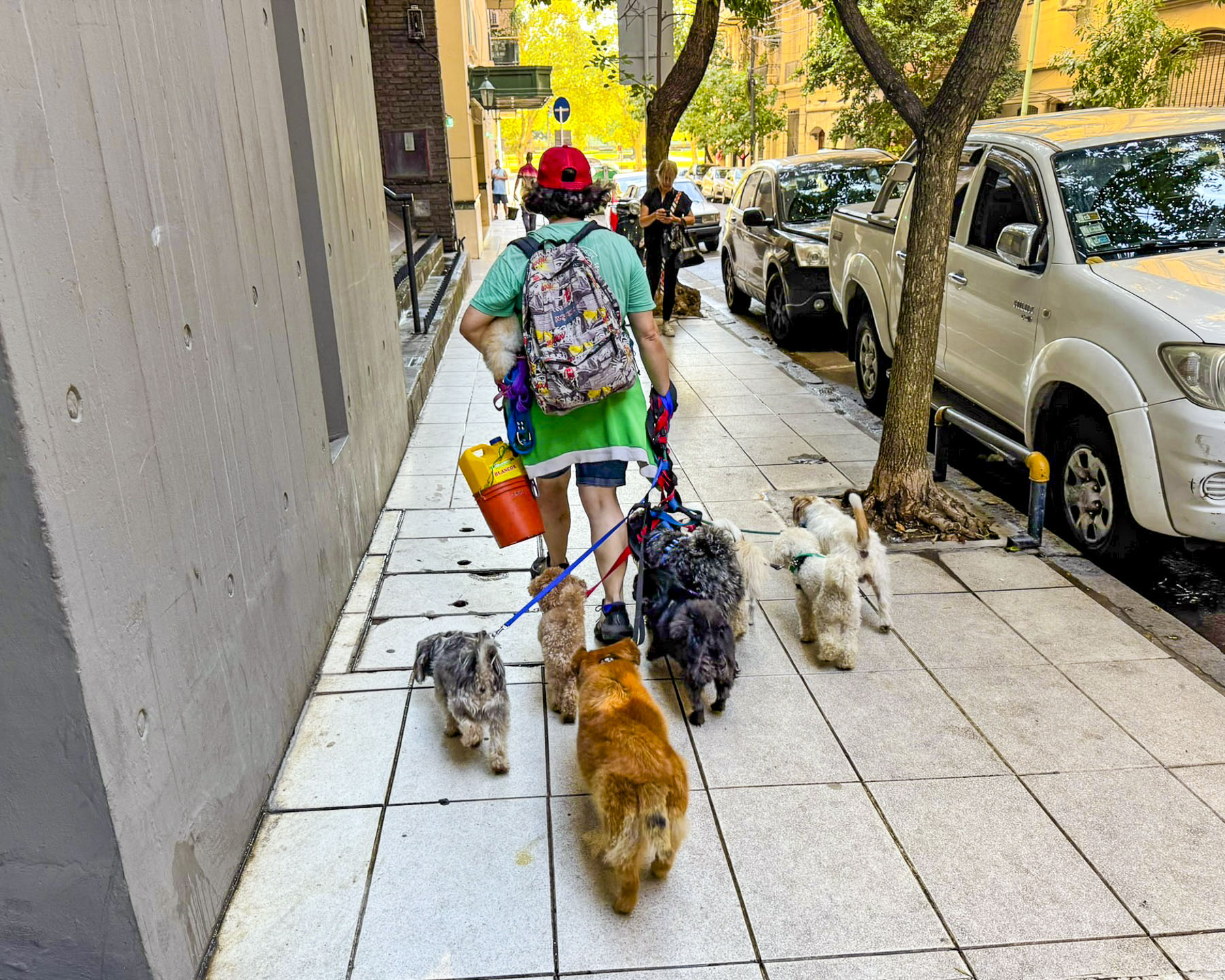
Barcelona: An ancient yet modern metropolis

Usually, we shy away from large cities. I am not sure exactly why, though it’s probably anxiety about how hectic a new city might be and imaginary stress of navigating public transit, or predatory taxi drivers. But we’ve only ever heard how wonderful Barcelona was from our friends and decided to take the plunge ourselves. Boy were our pre-conceived notions way off! Starting with a trouble-free taxi ride (it’s as if the Barcelona City Council told the taxi union to treat the tourists well or we’ll allow Uber and Lyft to operate in the city) from the airport to our hotel, One Shot Aragó 257 in Barcelona’s Eixample district.
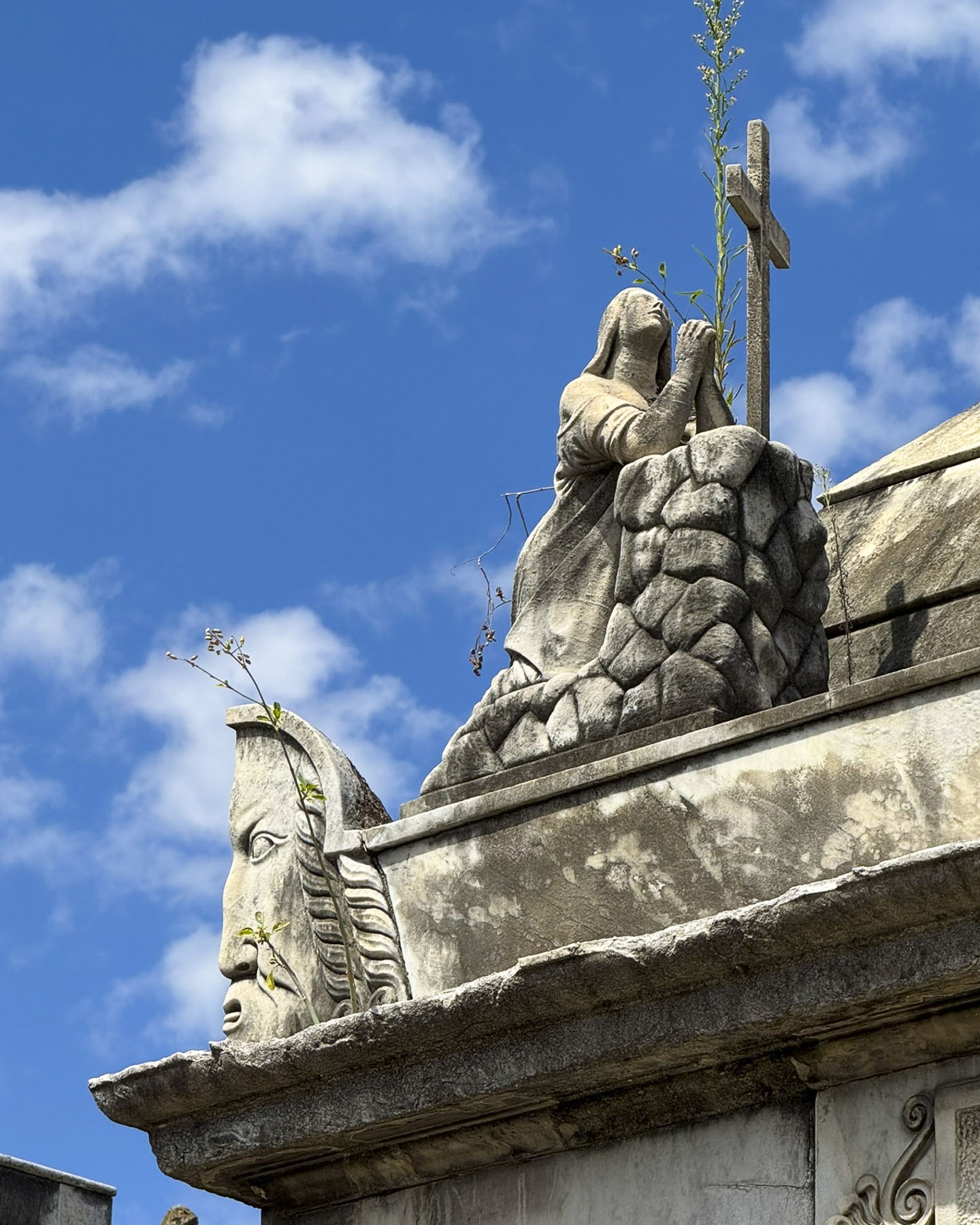
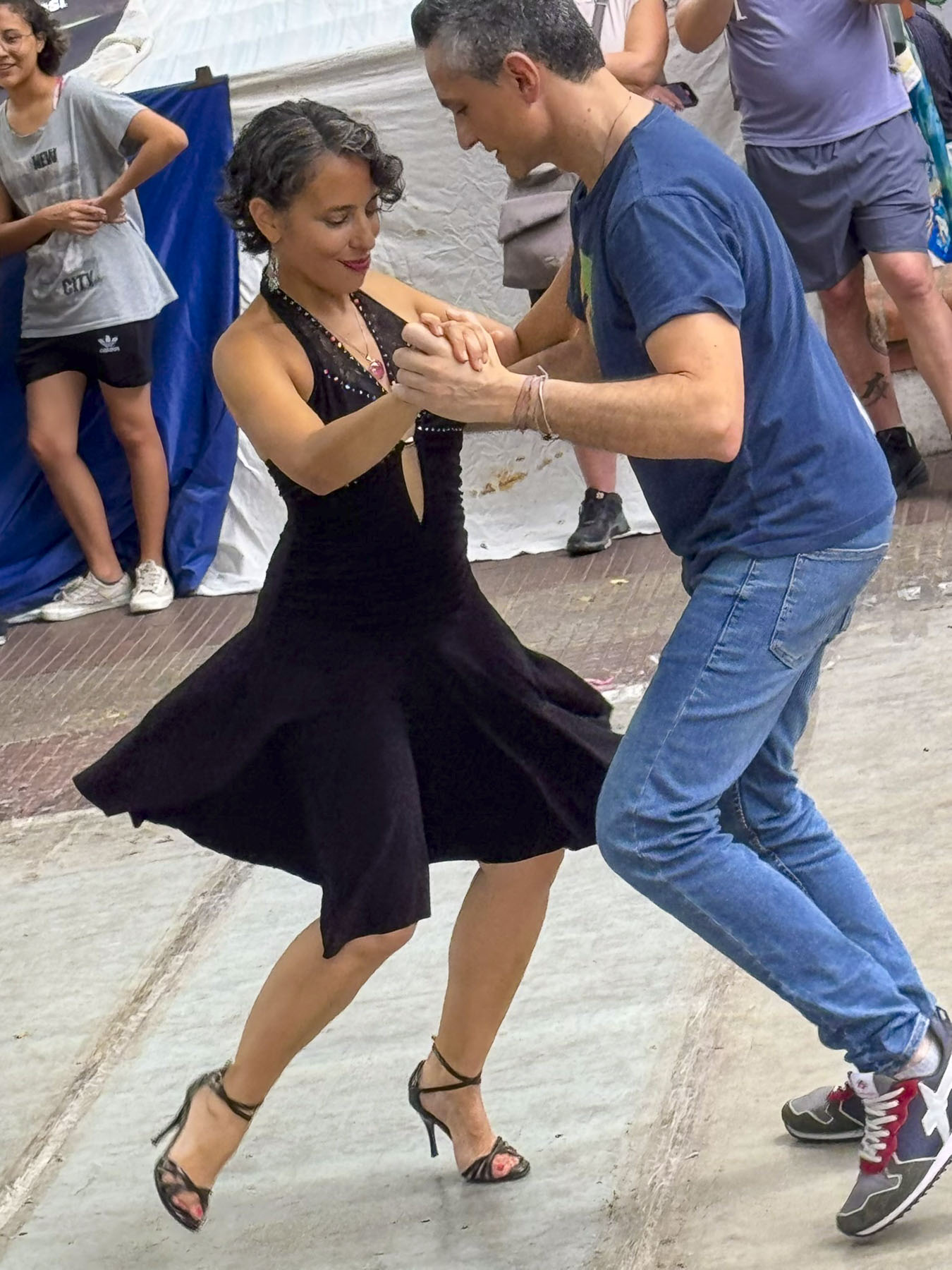
The district dates from the city’s expansion in 1855 when the Spanish Crown finally relented and permitted the demolition of the ancient defensive walls around the historic core of Barcelona. This allowed the city to expand beyond its ancient footprint to accommodate a growing population, that was literally bursting the city’s walls. A visionary plan by Ildefons Cerdà to urbanize the farmlands surrounding the old walled city was chosen.

An enlightened architect and civil engineer, he envisioned Eixample to be a model of urban living, where every citizen had enough sunlight, clean air, water and green space for a healthy lifestyle. Cerdà designed the Eixample district with short blocks to encourage “walking, mixing, and vibrant street life,” and oriented the streets to run northwest to southeast to receive maximum sunlight. The buildings on each block were no higher than seven floors and built around a central treed courtyard.

Comprised of six neighborhoods, Dreta de l’Eixample, Antiga Esquerra, Sagrada Familia, Fort Pienc, Sant Antoni, and Nova Esquerra, we can attest that Cerdà’s Eixample district and his vision for Barcelona’s future has withstood the test of time and the city continues to be a wonderful, people-friendly place to explore by foot. Today Barcelona is a sprawling city of millions; still, with most of its 19th century buildings only 7 stories tall, it never felt congested and always felt as if we were strolling through intimate neighborhoods. Of course, there were exceptions on La Rambla and the promenade along the Platja de la Barceloneta oceanfront, which were busy even in off-season March.

Today, continuing improvements to the city’s urban landscape, fostered by the concerns of climate change, are being implemented to the city’s 19th century footprint with the pioneering of Superblocks. These are 3 square block areas that will become pedestrian only with trees planted where the roadway was removed in order to expand the city’s green spaces and enhance urban living.

Just exploring the blocks immediately surrounding our hotel was rewarding with discoveries of cafés, tapas bars and interesting shops. Our favorite for morning coffee was the Catalan pastry shop, Casa Vives, located too easily, on the corner down the street from our hotel. The contemporary tapas at Vinitus couldn’t be beaten, and a formidable line awaited if we didn’t arrive early enough.

Contemporary interior design has always intrigued us, and fine examples can be found all across the city. But in our neighborhood the bookstore Llibreria Finestres and Lucciano’s Barcelona, an ice cream shop, stood out, along with Bolibar Bronzes with its vast array of fascinating architectural door hardware. We can’t imagine how much our suitcases would have weighed if we had indulged ourselves by shopping there.

Eixample also claims several buildings designed by the innovative modernista architect Antoni Gaudi. Near our hotel, on Passeig de Graçia, was the Casa Batlló, a private residence that Gaudi redesigned in 1904 with his signature use of flowing organic forms, whimsical decorative elements, and texture. Also, on Passeig de Graçia is Gaudi’s La Pedrera-Casa Milà, 1906, a private residence for his client on the lower floor and apartments above. The building is known for the undulating lines of its facade and sculptural chimneys. Sadly, we sufficed with just viewing the exteriors of these landmarks, as we felt the entrance fees were exorbitant at €30 per person at each site.

We put these savings towards the tickets for the Basílica i Temple Expiatori de la Sagrada Família, or simply the Sagrada Familia, Antoni Gaudi’s masterpiece. Like the Eiffel Tower in Paris, Big Ben in London, and Rome’s Coliseum, Gaudi’s soaring towers at the Sagrada Familia serve as Barcelona’s iconic landmark.

The cornerstone of the Sagrada Familia was laid in 1882, but Gaudi was not the first architect. He replaced a colleague who designed a more traditional church with a gothic façade, flying buttresses and a pointed bell tower. Gaudi transformed it into the enlightened, visionary structure that now graces Barcelona with eighteen spires.

Twelve of the spires are dedicated to the Apostles, while the remaining six are dedicated to the four Evangelists, the Virgin Mary and Jesus Christ. Realizing the project would outlive him, Gaudi left detailed plans and models that are still being followed, nearly 100 years after his untimely death in 1926 (he was struck by a tram and died from his injuries a few days later.) Construction of the cathedral relies on ticket sales and private donations, consequently during the pandemic, work nearly came to a stop. Currently the church’s final completion date is set for 2026, one-hundred-forty-four years after that cornerstone was laid and 100 years after its architect’s death. Talk about a lasting vision!

The Cathedral is an awe-inspiring temple that is visually uplifting and celebrates life, with its unique use of organic forms and stunning play of light from its stained-glass windows. We highly recommend purchasing your tickets and scheduling a time to visit online, well ahead of your visit to avoid the queue at this celebrated monument.

Walking between landmarks is one of the best ways to experience Barcelona and with that in mind we headed to Mercat de l’Abaceria, a traditional neighborhood mercado with multiple vendors on Pg. de St. Joan. Though much smaller than the famed Mercado de La Boqueria on La Rambla, which has sadly become gentrified and overly touristy, this mercado is a genuine neighborhood experience, where we enjoyed lunch and purchased olives, cheese, and sausages for snacking later.

Any first visit to Barcelona can’t be complete without a stroll down La Rambla, taking its name from the Arab word “ramla,” for sandy riverbed, which is how the path from the old walled city to the Mediterranean Sea started eons ago. La Rambla became a street leading to one of city’s ancient gates in the 1400s when a riverbed was filled in and folks trekked to an open-air market in an area known as Pla de la Boquería. It eventually became the main thoroughfare to the port and was lined with several convents.

The market wasn’t officially recognized as La Boqueria until the 1840s and didn’t exist in a covered structure until 1914 and now famously hosts 200 food stalls and millions of visitors every year. Flowers have always been a tradition along La Rambla and it started with La Boqueria’s market stall owners, centuries ago, giving flowers to their customers as a token of appreciation for their shopping. In 1702, 280 trees were planted along La Rambla. Streetlamps were installed along its length in 1860 and its newspaper stands remained open all night. Since then, it has been Barcelona’s most historic boulevard, the place to stroll, to be seen, to people watch.

Now three quarters of a mile long, the tree lined boulevard runs from the Columbus Monument at the harbor past the historic Gothic Quarter to Plaça de Catalunya, Barcelona’s central plaza where the old medieval city ends and the newer Eixample district begins.

Wandering through the historic old town section, we visited the Cathedral of Barcelona, a massive Gothic structure that dates from 1298, when it was built upon the ruins of an old Roman temple.

It was the city’s most important church for 600 years until the construction of the Sagrada Familia was started. The difference between the two is night and day. The cathedral is somber, while the Sagrada Familia lifts your spirit.

Afterwards on our way to the Palau de la Música Catalana, we stumbled upon Raima, a fantastic stationery and art supply store that is so out of place in the medieval old town, it’s wonderful. If you enjoy artful things, Raima has four floors full of visually stimulating displays and a hidden gem, a quiet rooftop café.

The walk through the narrow alleys of Barcelona’s ancient city center is filled with interesting architectural details fronting centuries-old buildings. Each successive generation decorated their city with sculptures and monuments, small visually intriguing vignettes, but which sadly have lost their historical significance over time. Now in many of the city’s plazas, modern art stands wonderfully juxtaposed against the ancient buildings.

The Palau de la Música Catalana is Barcelona’s most beautiful concert hall and is often referred to as the city’s, “magical music box.” It was constructed in 1905 by a contemporary of Gaudi’s, modernist architect Lluís Domènech i Montaner, in a style that is referred to as Catalan Art Nouveau, which incorporates the decorative arts of stained glass, ironwork, mosaic, painting, and sculpture together in a project. It’s a captivating space that highlights the great craftsmanship of the era. 

The Barcelona beaches were not tempting us, but someone during our travels suggested that we must go to the seaside district of Barceloneta and find Bar Electricitat. “Because, they have the best bombas in Barcelona.” Try saying that tongue twister three times fast! We haven’t done a lot of comparative taste testing regarding this, however the bombas, fried mashed potato balls stuffed with sauteed ground pork and beef, were delicious. And the bar itself is a friendly, delightful no-frills place with a gregarious waiter, who seemed to know everyone, and a good house wine. We cut our walk along the beach short when the wind started to kick up sand.

Unfortunately, by the time we reached Parc de la Ciutadella, our cloudless morning was becoming overcast, though that did not deter folks from relaxing on the parks expansive lawns and enjoying a warm Spring Day in mid-March. Designed in the late 19th century for the Universal Exposition of 1888, the park has an assortment of monuments dedicated to Spain’s glories, a boating lake, and life-size concrete sculpture of a woolly mammoth named Júlia. She’s been popular with generations of Barcelonian families since she was installed in the park over 100 years ago.

The next morning, we took a cab to Park Guell, another Antoni Gaudí creation set in the hills above Barcelona. In 1900, Eusebi Güell, a wealthy industrialist, envisioned the wooded hillside as an exclusive gated community with sixty homes and common areas designed by Gaudí.

By 1907, the whimsical entrance pavilions, viaducts, hypostyle market area, and the grand esplanade with its stairway were completed.

But the project failed to attract buyers and the hillside became Güell’s private retreat. Upon his death his heirs offered to sell the park to the city. Barcelona agreed and opened the park to the public in 1926. The park has been a UNESCO World Heritage Site since 1984 and annually attracts nine million visitors. Get your tickets online ahead of time and arrive at the park as early as possible. Even by 11AM, in March, there was a hefty crowd of folks visiting the park.

Something old, something new, there are plenty of interesting things to do and see in this dynamic, ancient yet modern metropolis. We had a great 5 days exploring Barcelona. And one of the surprising things we discovered about ourselves during our years of travel is that after having purposedly avoided living and working in cities in the United States, we actually enjoy European city life!

“Just close your eyes and let’s pretend we’re dancing in the street in Barcelona”- Ed Sheeran

Till next time, Craig & Donna