Argentina – Buenos Aires: Empanadas, Tombs & Tango

The ferry vibrated gently as the engines were switched into reverse as we approached the Buquebus ferry terminal in Buenos Aires. We had departed earlier from Montevideo, Uruguay, and hoped to view the Argentinian coastline from the Río de la Plata estuary, as the first Spanish explorers did in the early years of the 16th century. But we hadn’t expected the ferry not to have an open observation deck, and instead had to contend with the view, or lack of view, through hazy saltwater-etched windows.

Seasoned travelers on this route between Montevideo and Buenos Aires had already called for the ride share services of Cabify, inDriver, Didi, Easy Taxi or BA Taxi and waited curbside in front of the terminal. By the time the ferry docked there were no available drivers for 45 minutes. We were among the last to leave the port that morning.

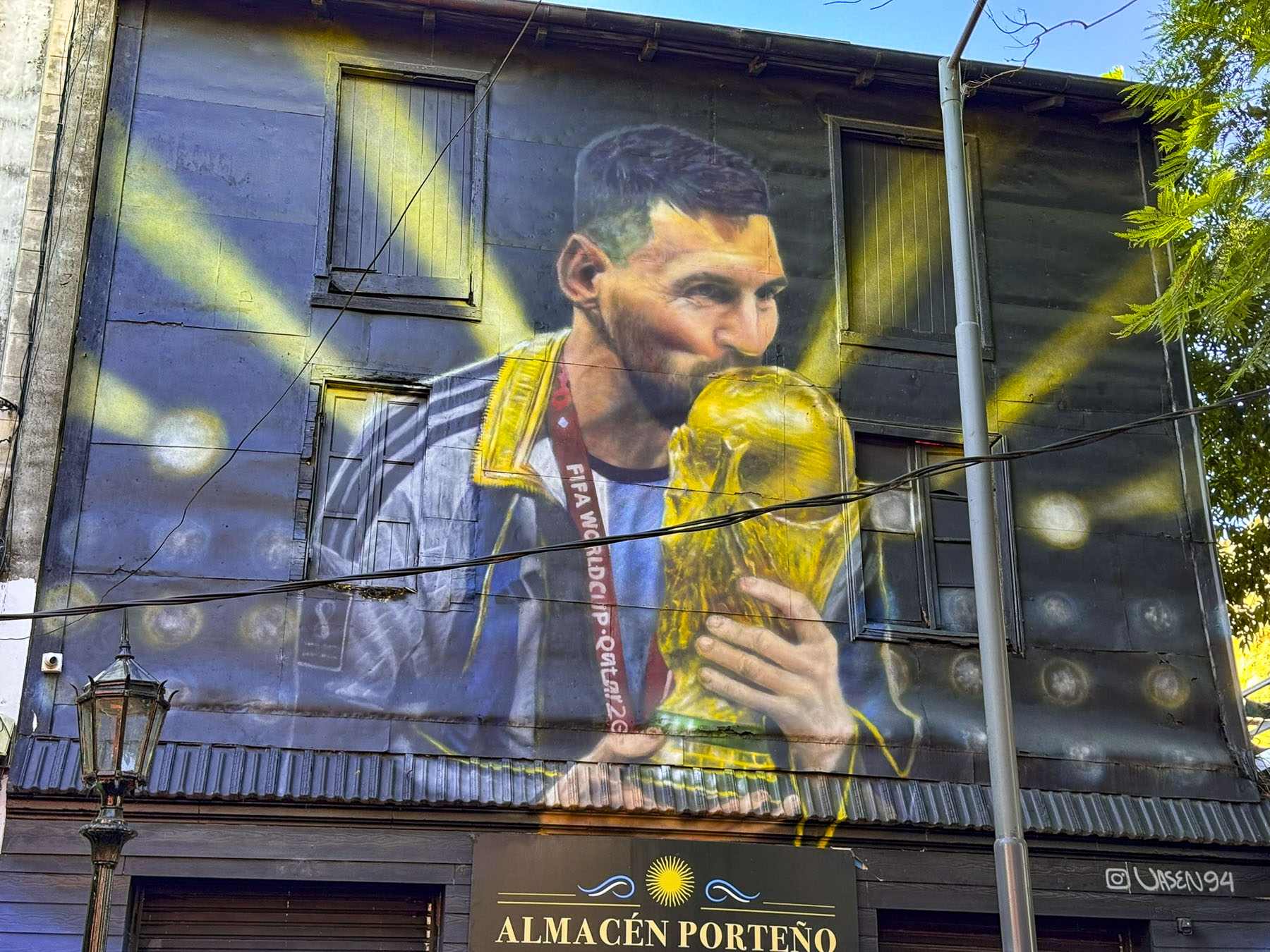
Our first impressions of this wonderfully cosmopolitan city were formed along the 16-lane wide – yes, 16 lanes – Av. 9 de Julio. Despite its width it is a pleasant tree-and park-lined esplanade, that extends for 27 blocks through the city and reminded us of the area around Central Park in Manhattan. Older buildings from the 18th and 19th century shared the skyline with more modern buildings than we expected, as well as the first of many street murals dedicated to the football player Lionel Messi #10 for Argentina national football team, and the country’s superstar at the moment. The sidewalks were bustling with activity. We wondered how we would ever cross 16 lanes of traffic on foot.

Our hotel for the next six nights, Urban Suites Recoleta, was across the street from Buenos Aire’s historic Cementerio de la Recoleta. We soon learned that most landmarks and hotels in the neighborhood ended with Recoleta in their name. The cemetery from our balcony looked like an ancient lost city.

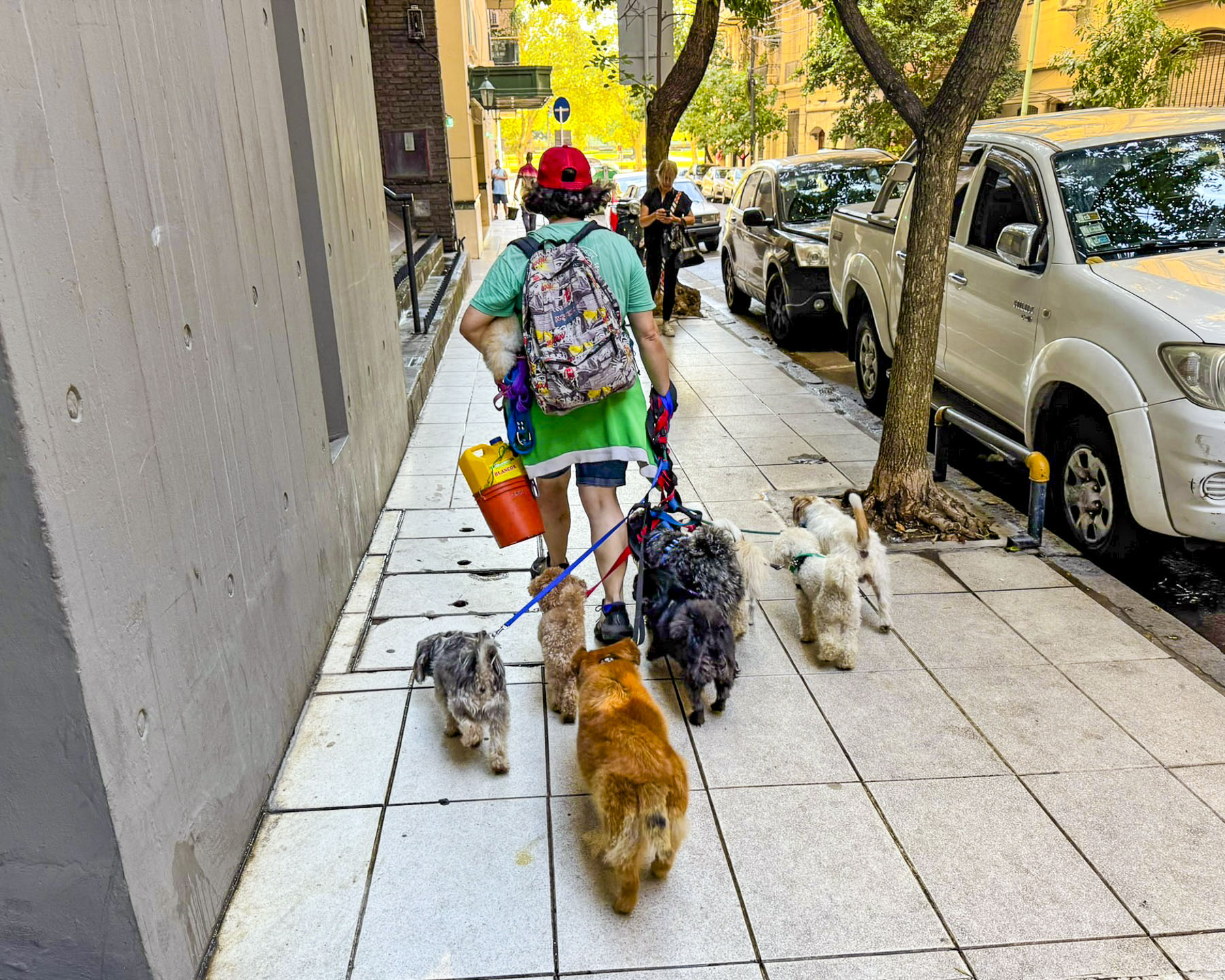
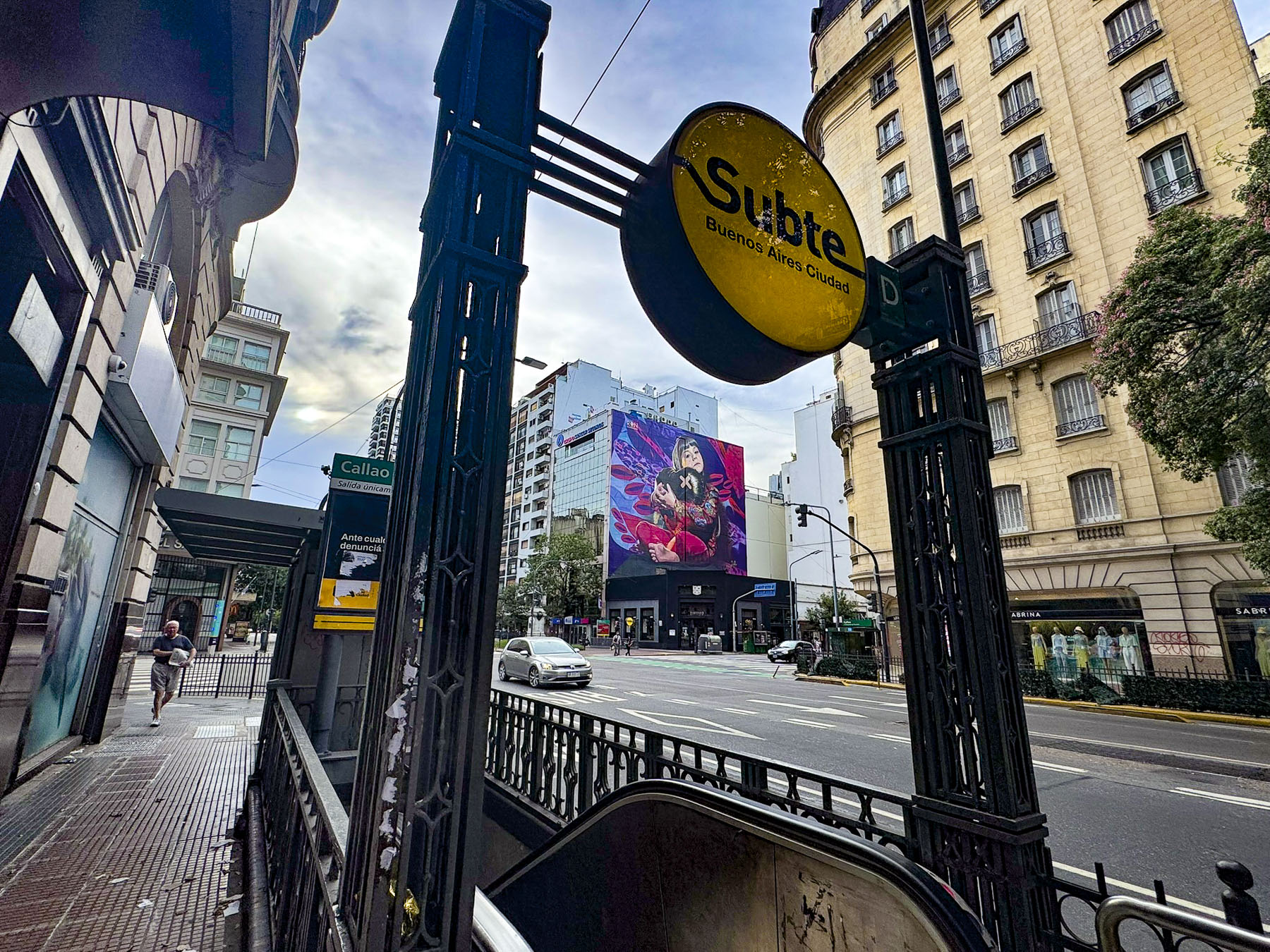
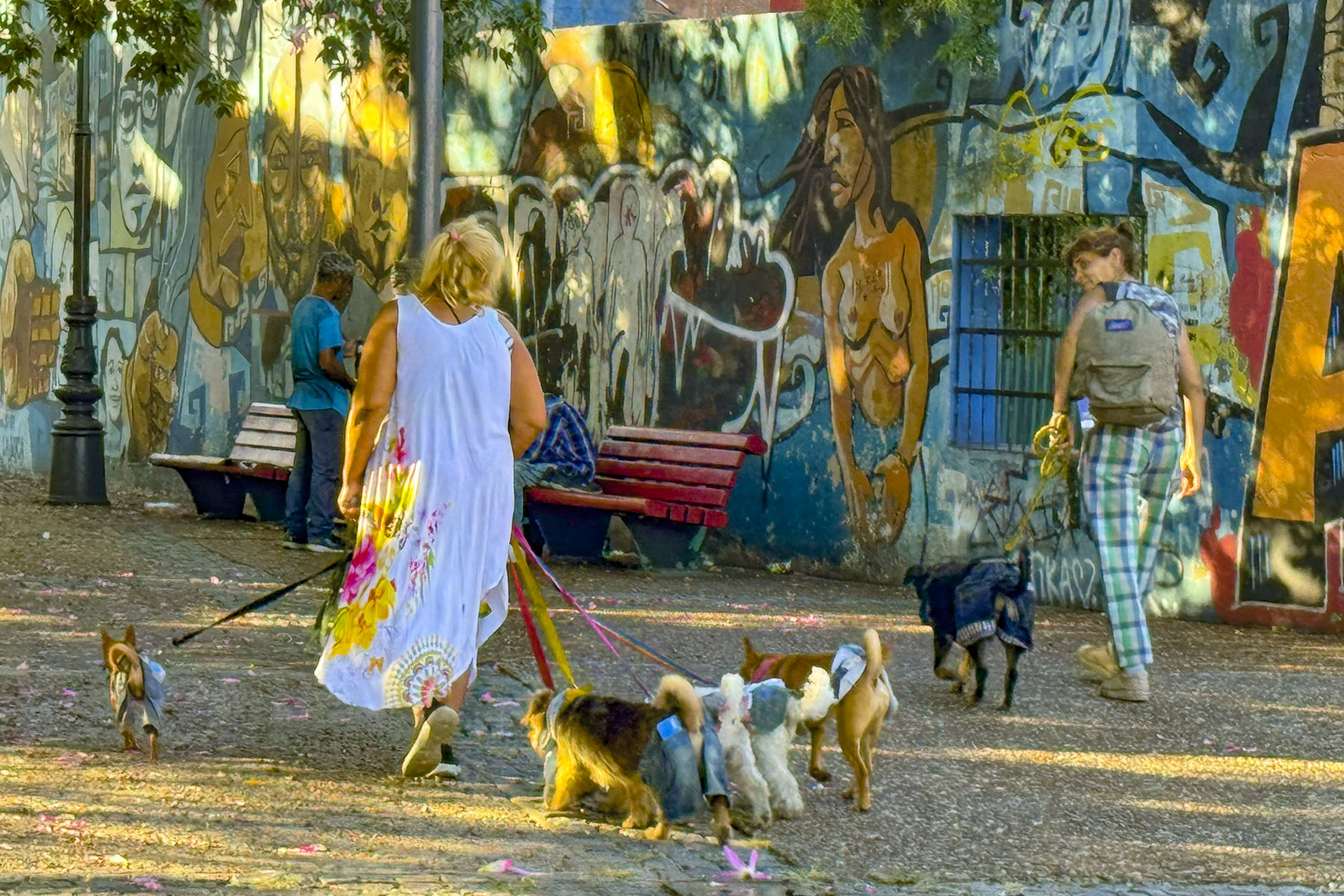
The next morning, we explored the immediate neighborhood around the hotel that was full of activity with delivery trucks off-loading produce and dog walkers leading their packs of small dogs to the parks. We eventually crossed the Puente Peatonal Dr. Alfredo Roque Vítolo, a brightly painted footbridge across the roadway that connects the parks around the Museo Nacional de Bellas Artes to the Universidad de Buenos Aires. The Facultad de Derecho subway station is located at the foot of the bridge. It is a terminus on the H-Line, one of Subte’s (from Subterráneo de Buenos Aires) six lines, that can get you nearly anywhere in this sprawling metropolis. Opened in 1913, Buenos Aires had the first subway in South America.

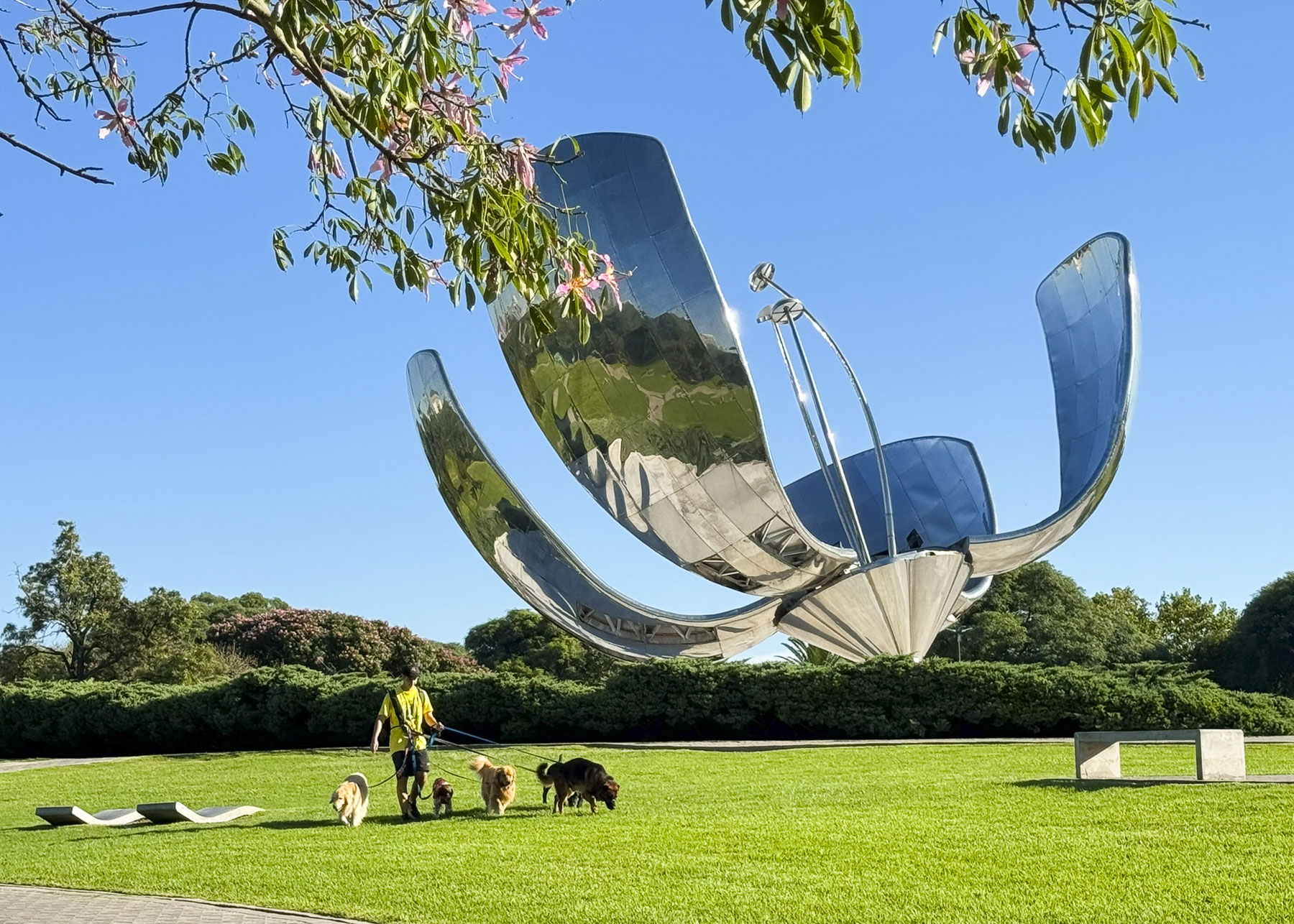
The Floralis Generica, a unique abstract aluminum sculpture, an iconic symbol of the city, centered the Plaza de las Naciones Unidas next to the school. The 23m (75ft) tall mechanical flower with six petals which opens in the morning and closes at night was a gift to the city by the Argentine architect Eduardo Catalano in 2002. Walking paths circled the sculpture and offered different viewing perspectives of the flower that the sculptor visualized to “represent all the flowers in the world.”

Walking back towards our hotel we veered down Avenida Alvear, seven blocks that were once Buenos Aire’s Park Ave or Champs-Élysées at the turn of the 20th century.  It is known for the art nouveau-influenced Belle Époque architecture of the old mansions along the street that have now been converted into hotels and embassies. Unfortunately, many of the building facades were hidden by the trees that line the street.

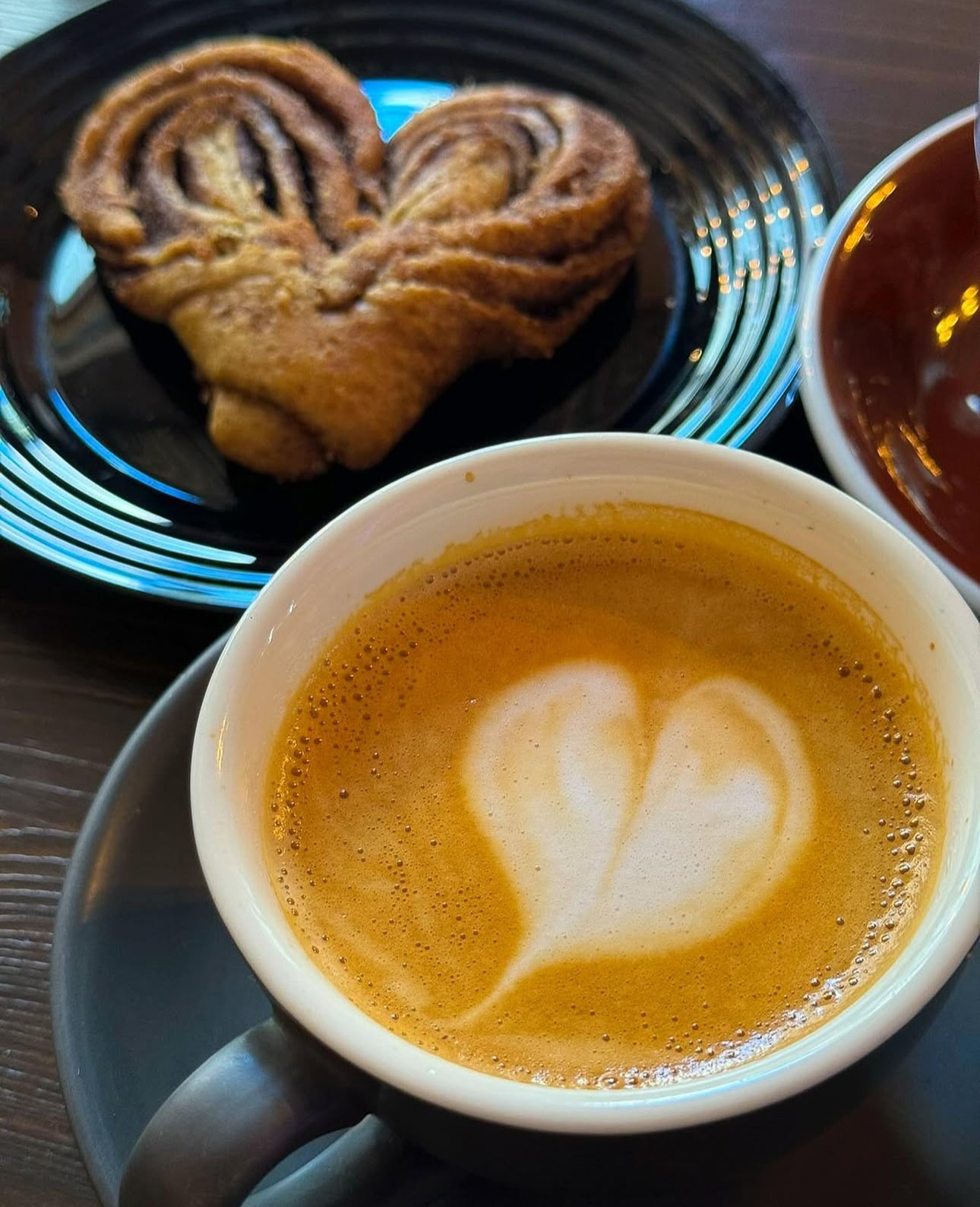
Long before Starbucks was a thing, the Porteños, “people of the port,” as the citizens of Buenos Aires are called, developed a strong coffee culture that coincided with the arrival of several waves of Italian immigrants that began in the mid-1800s. The result is a city where it’s nearly impossible to get a bad cup of coffee. One block over from Avenida Alvear on Av. Pres. Manuel Quintana our “walk a little then café” philosophy was easily satisfied at La Fleur de Sartí, Confiserié Monet, and Cafe Quintana 460, where espresso-based coffee drinks rule.

When we travel, our mid-afternoon lunch tends to be our big meal of the day, so we end up looking for supermarkets to buy crackers, cheese and fruit to snack on later. Near our hotel there was a large Carrefour Market on Av. Vicente López. Around the corner from the supermarket was a block of traditional shops with two butcheries, a fish monger, fruit stands, and a cheese store. Though our best find in the neighborhood was Möoi Recoleta, which had a pleasing interior and excellent food. To our surprise it’s part of a small local restaurant chain.

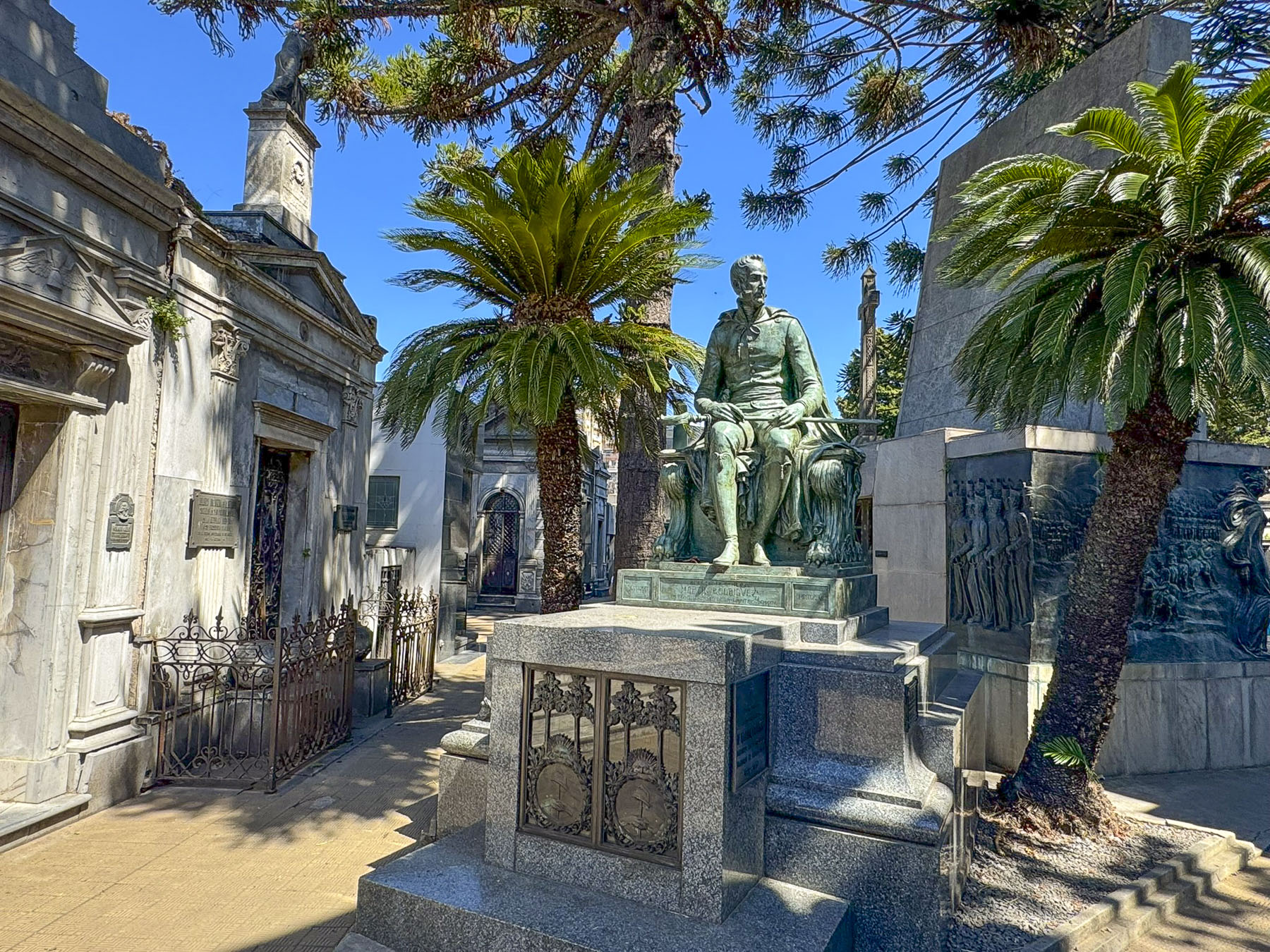
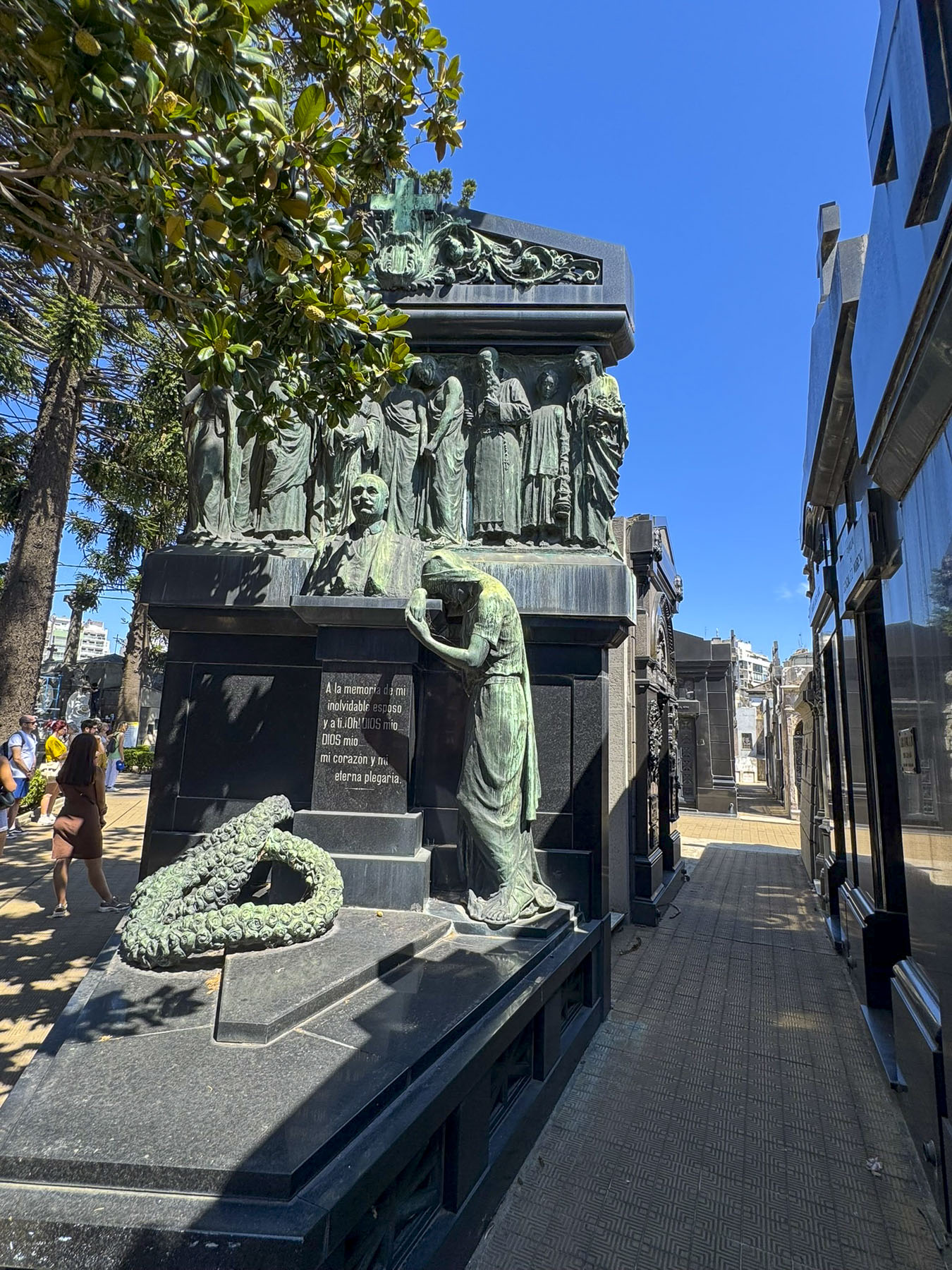
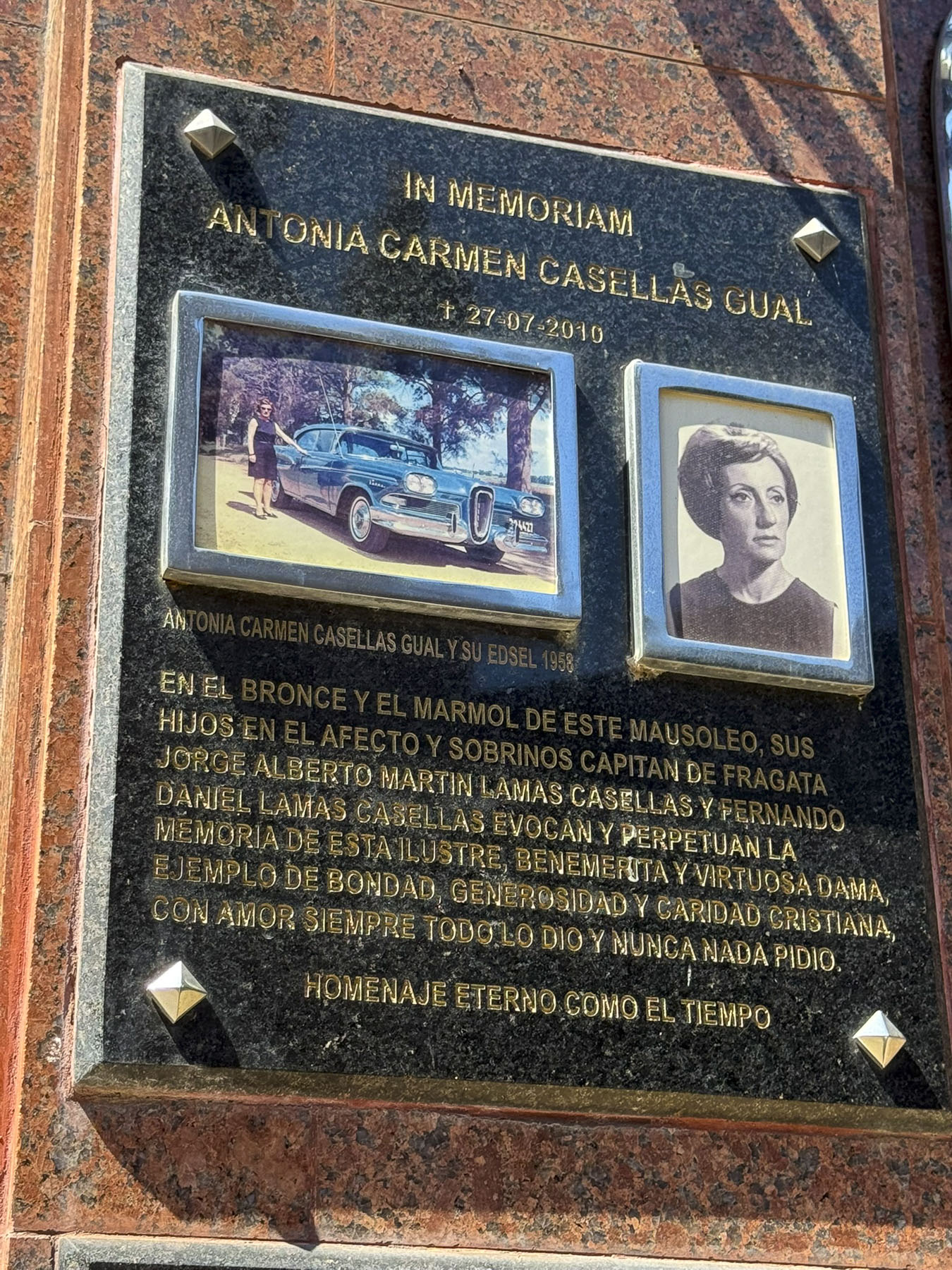
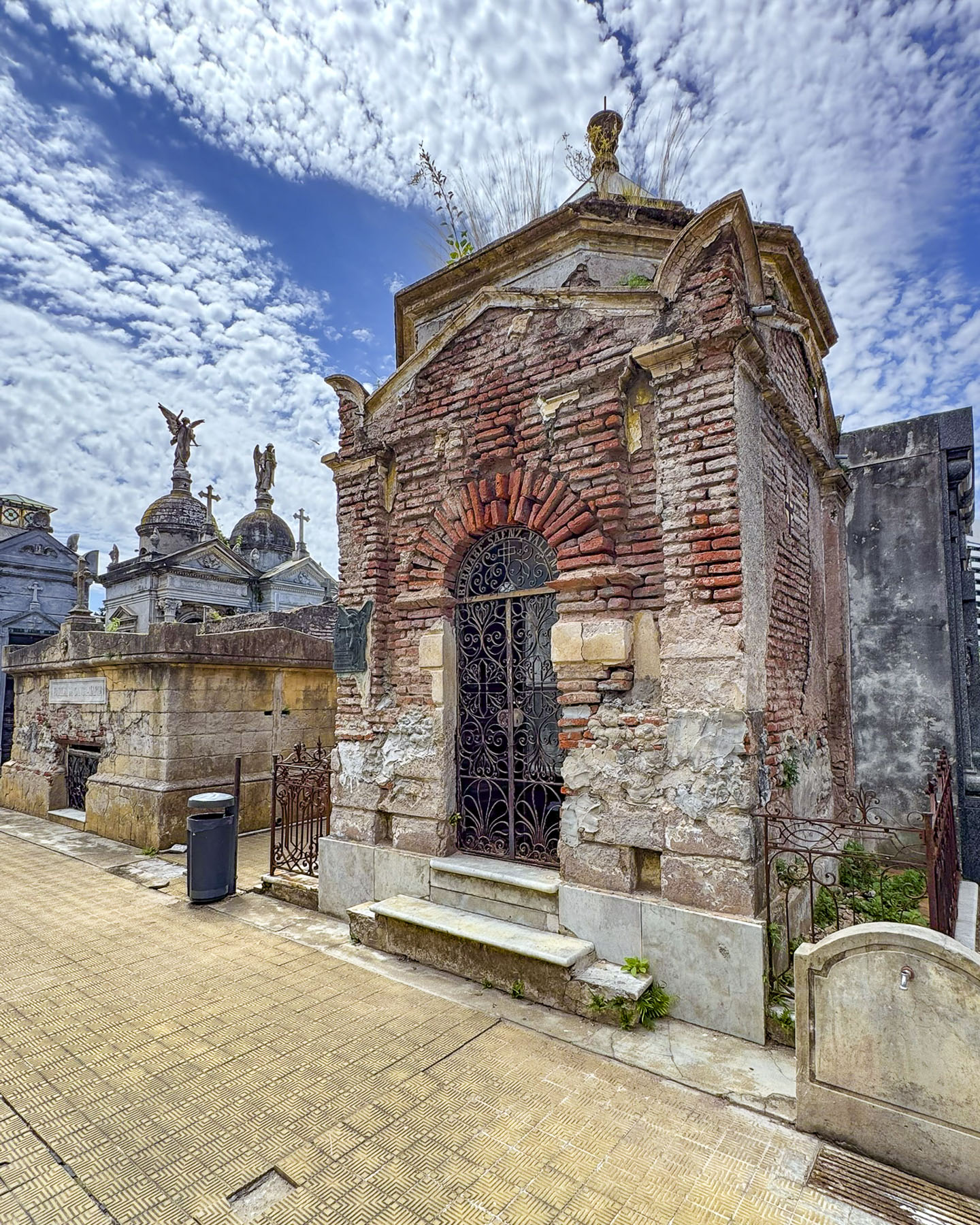
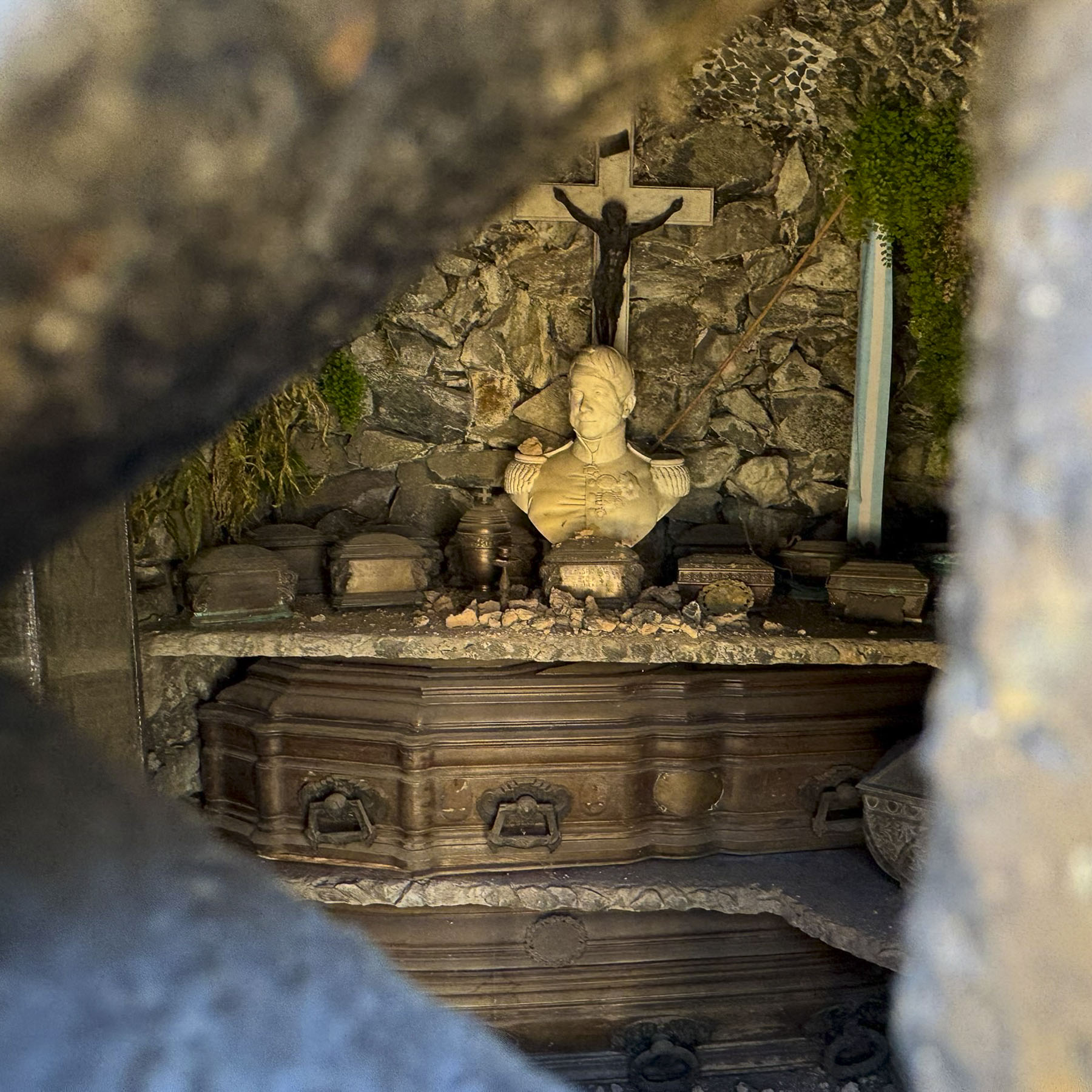
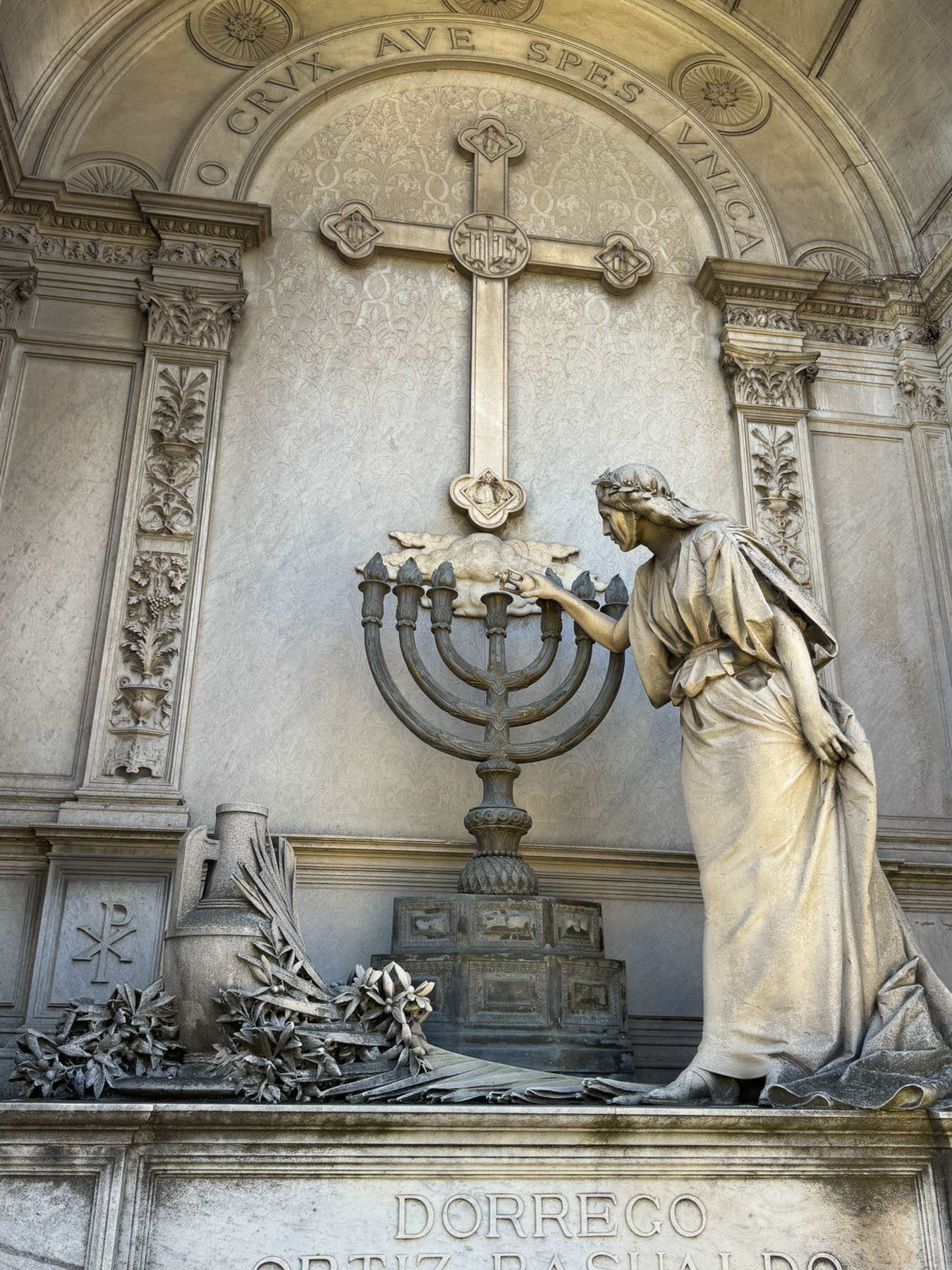
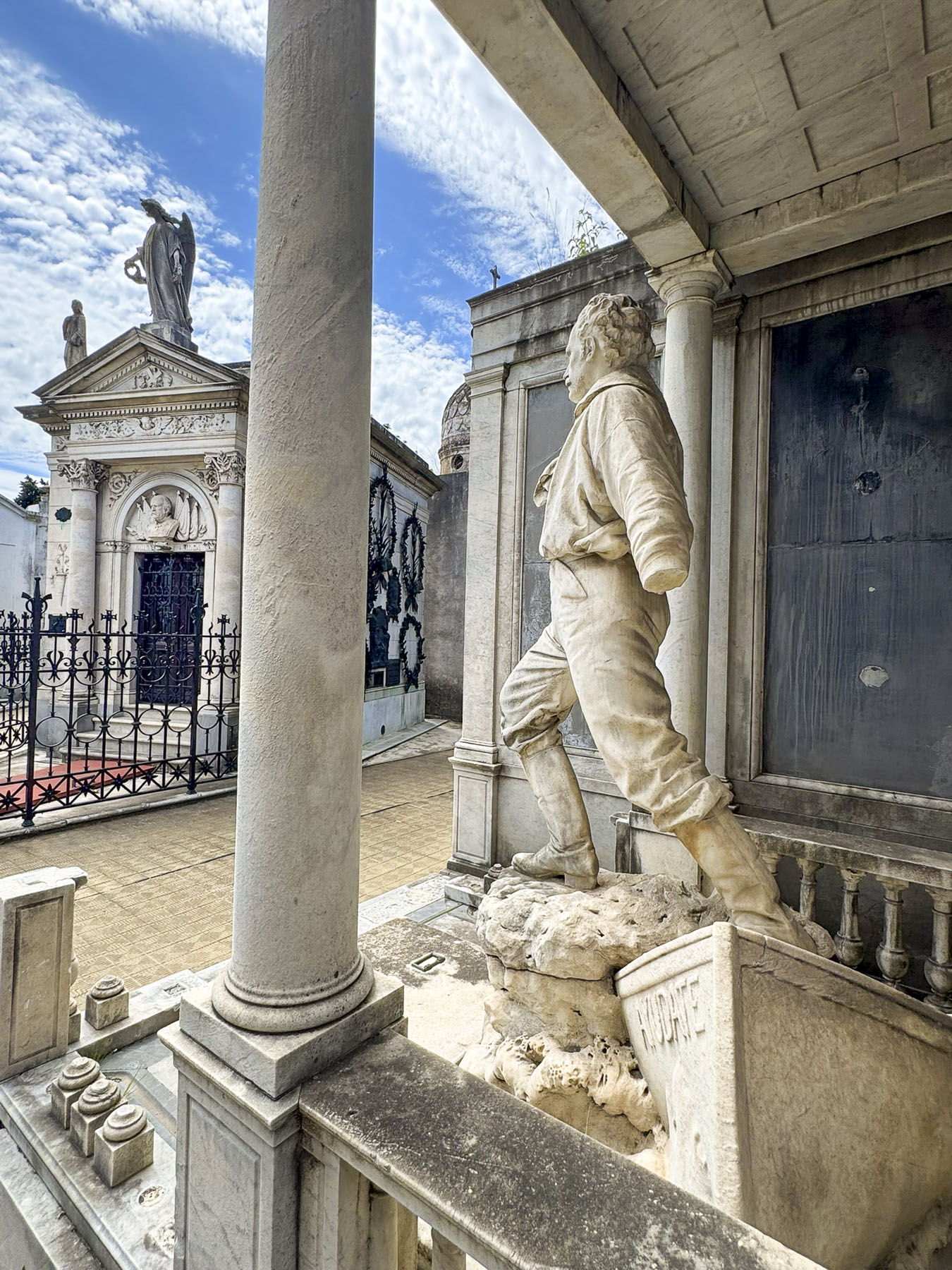
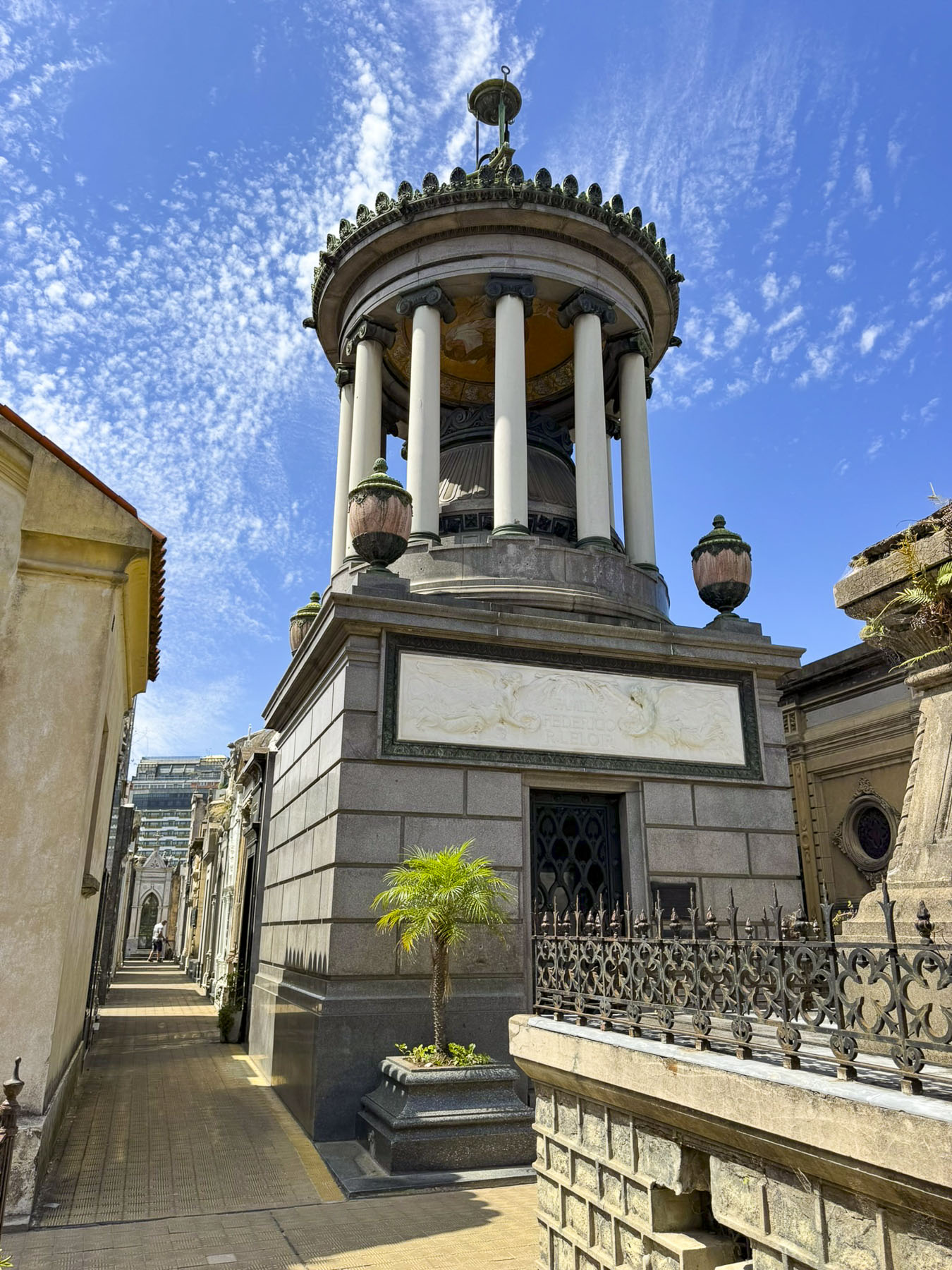
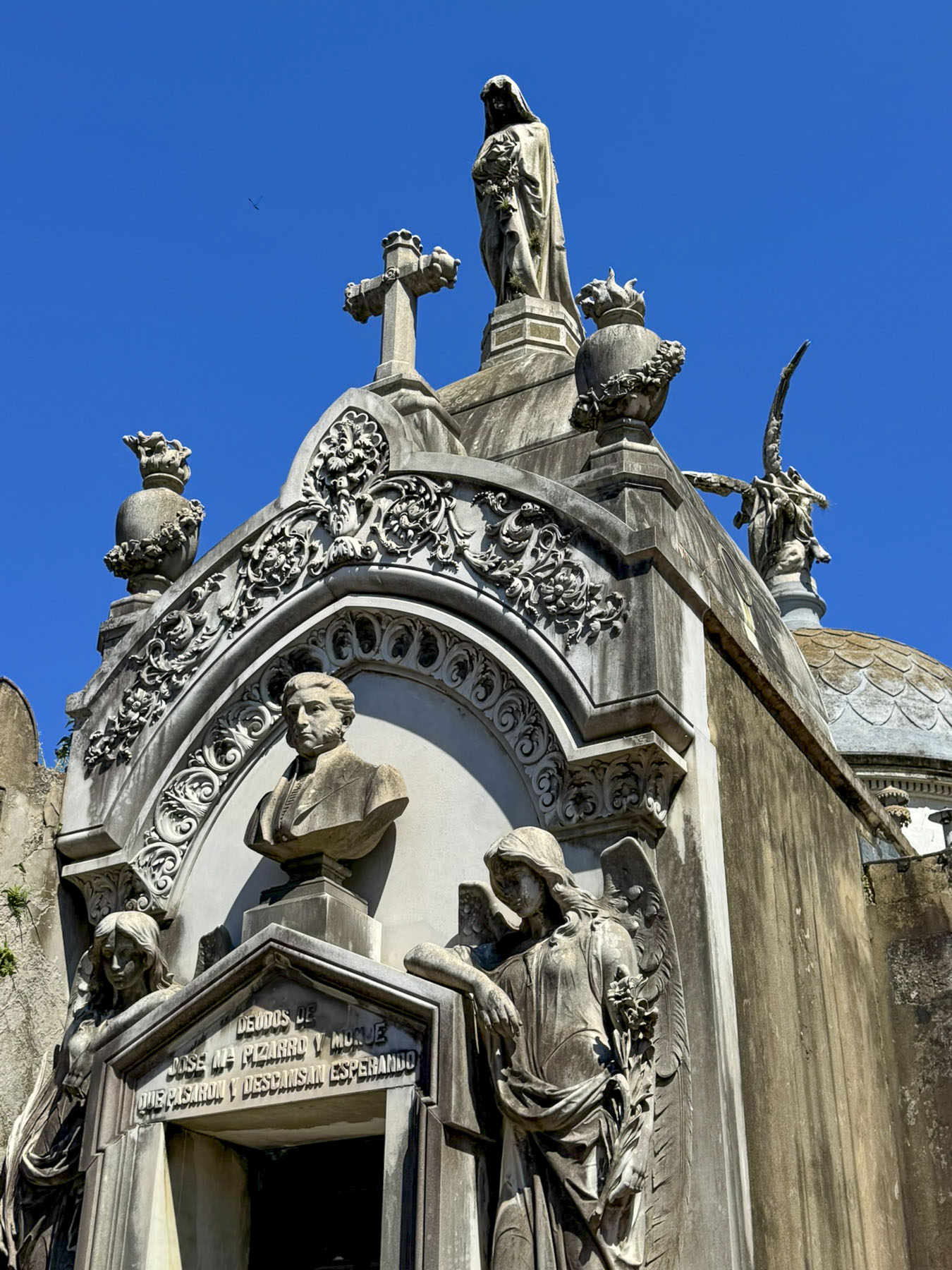
That afternoon we timed our visit to the Cementerio de la Recoleta after the surge of the morning’s tour buses had departed. It’s a huge cemetery with a labyrinth of narrow passages through the grand mausoleums of Buenos Aires’ who’s who of notable citizens and wealthy families.

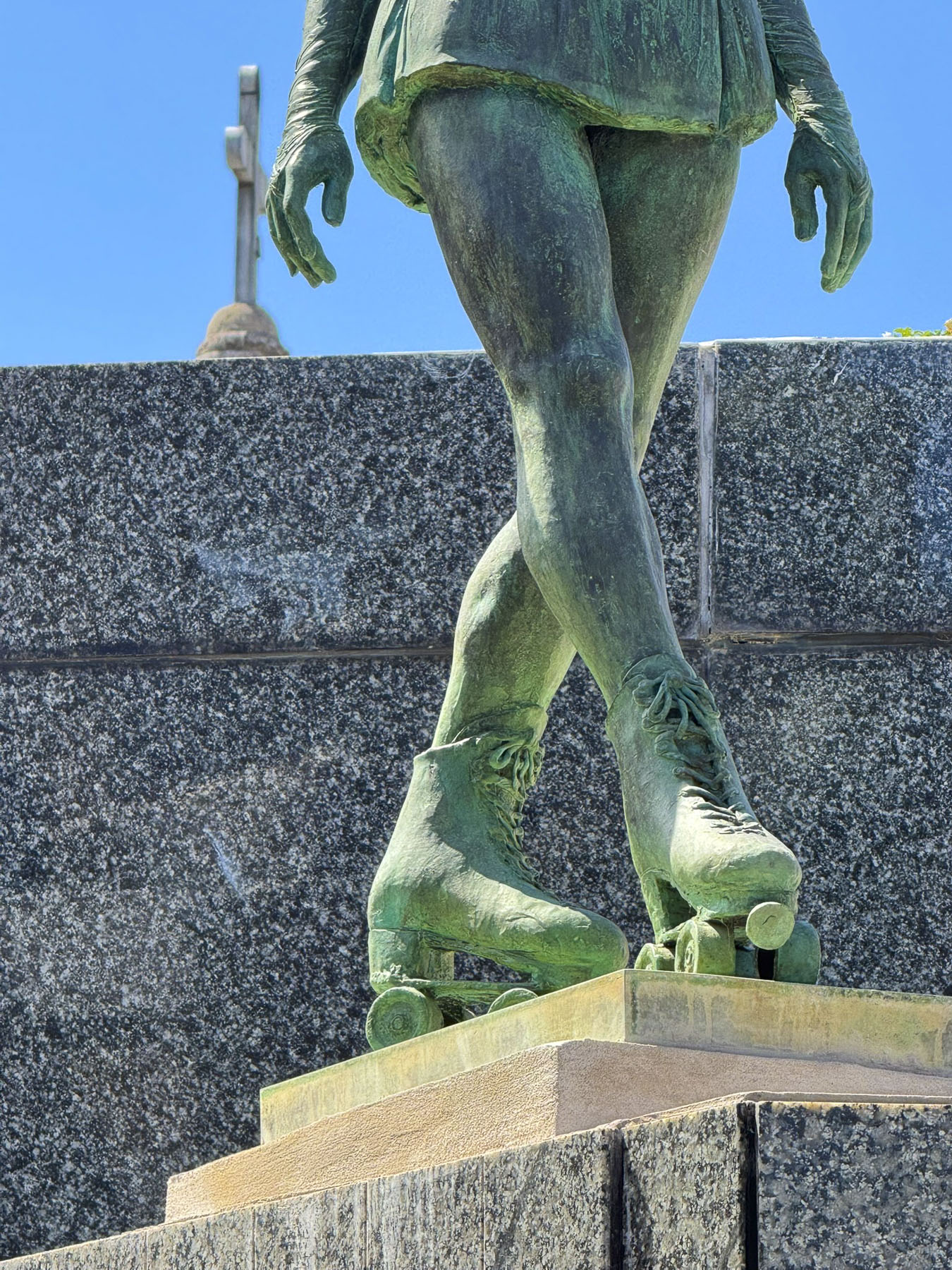
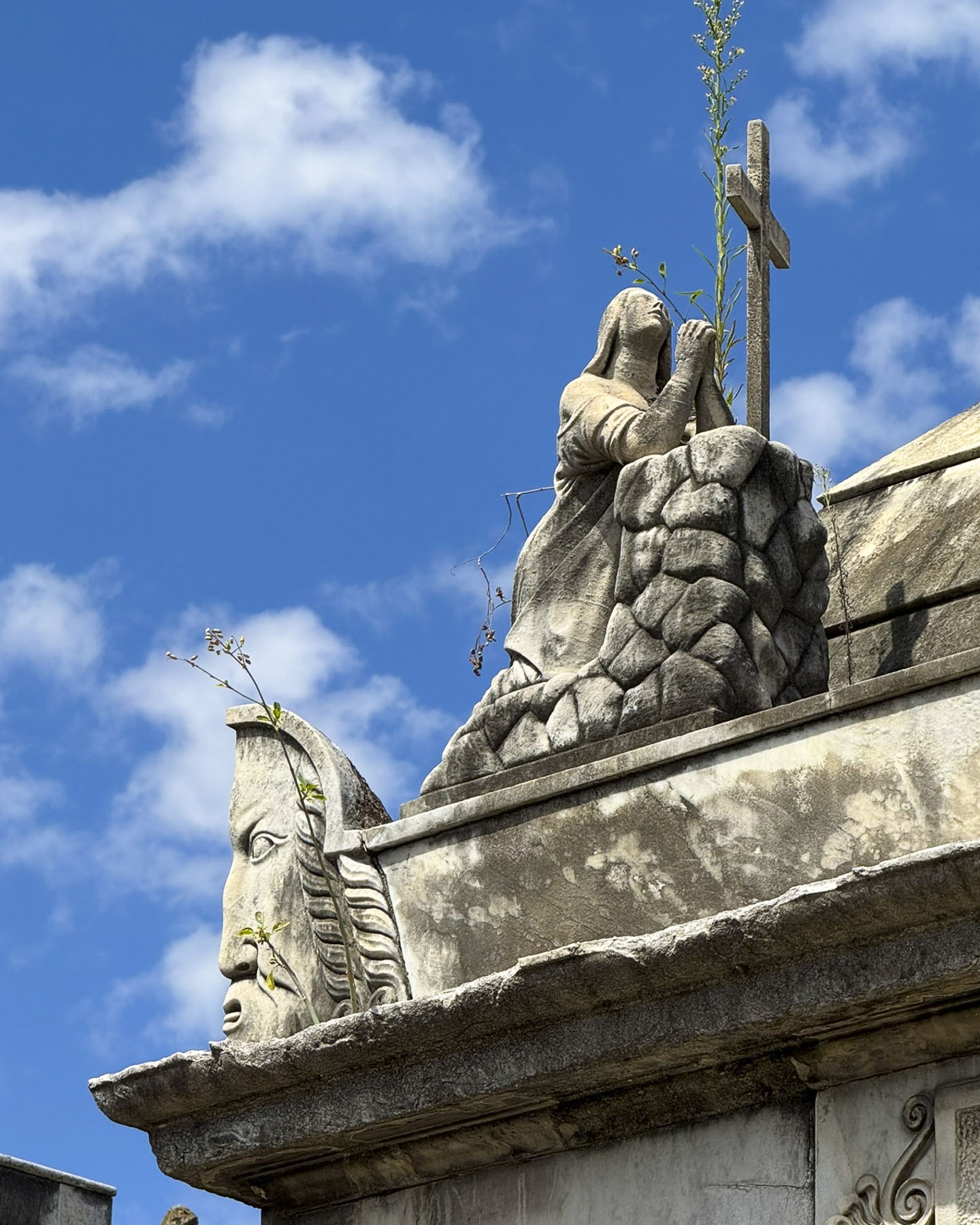
Some were very well kept, while others were under renovation, and a number appeared forgotten, with their doors broken and façades crumbling, as if the family line had ended or a once great fortune had been lost. One was highlighted by a whimsical statue of a woman roller skating atop her own tomb.

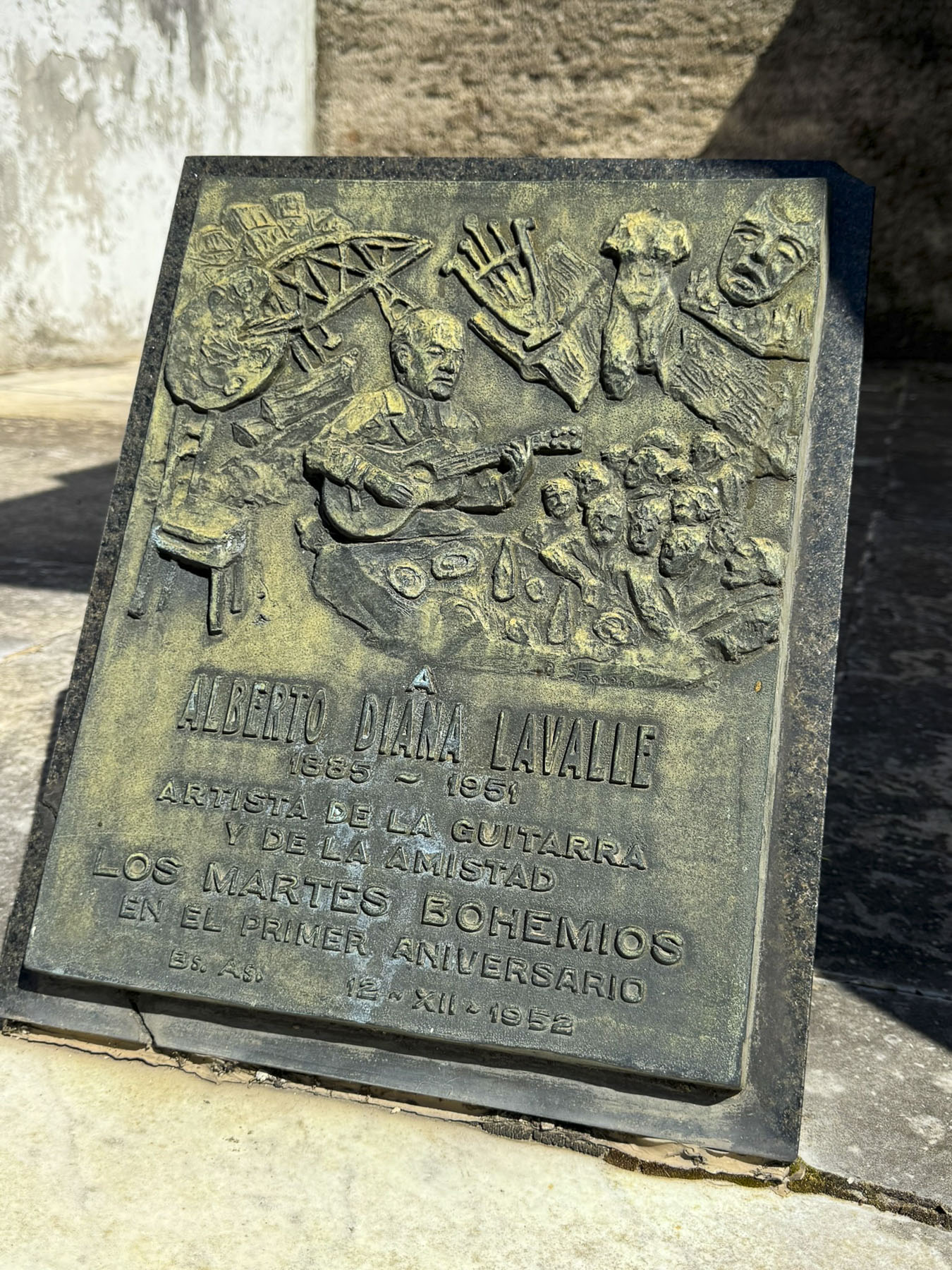
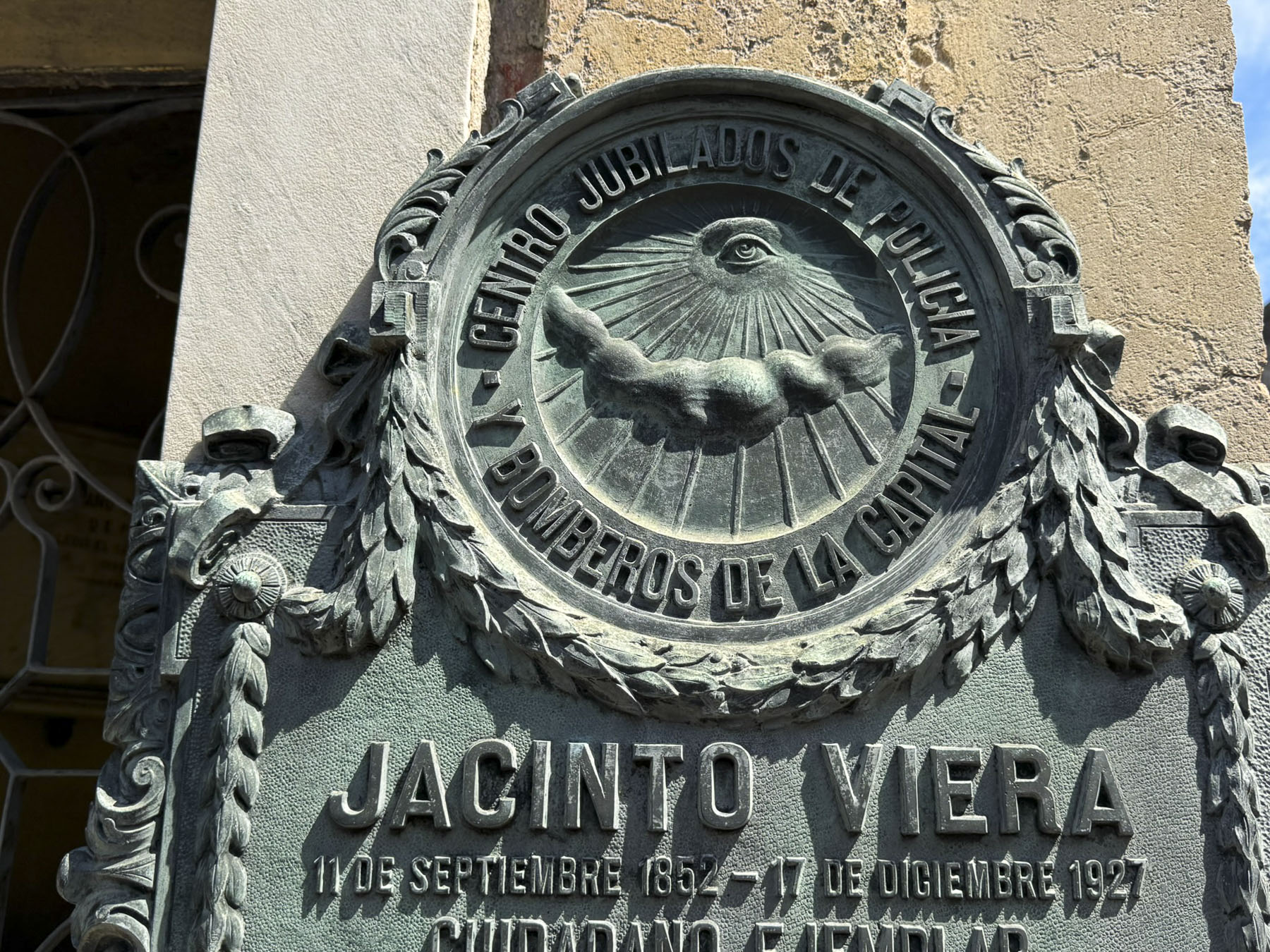
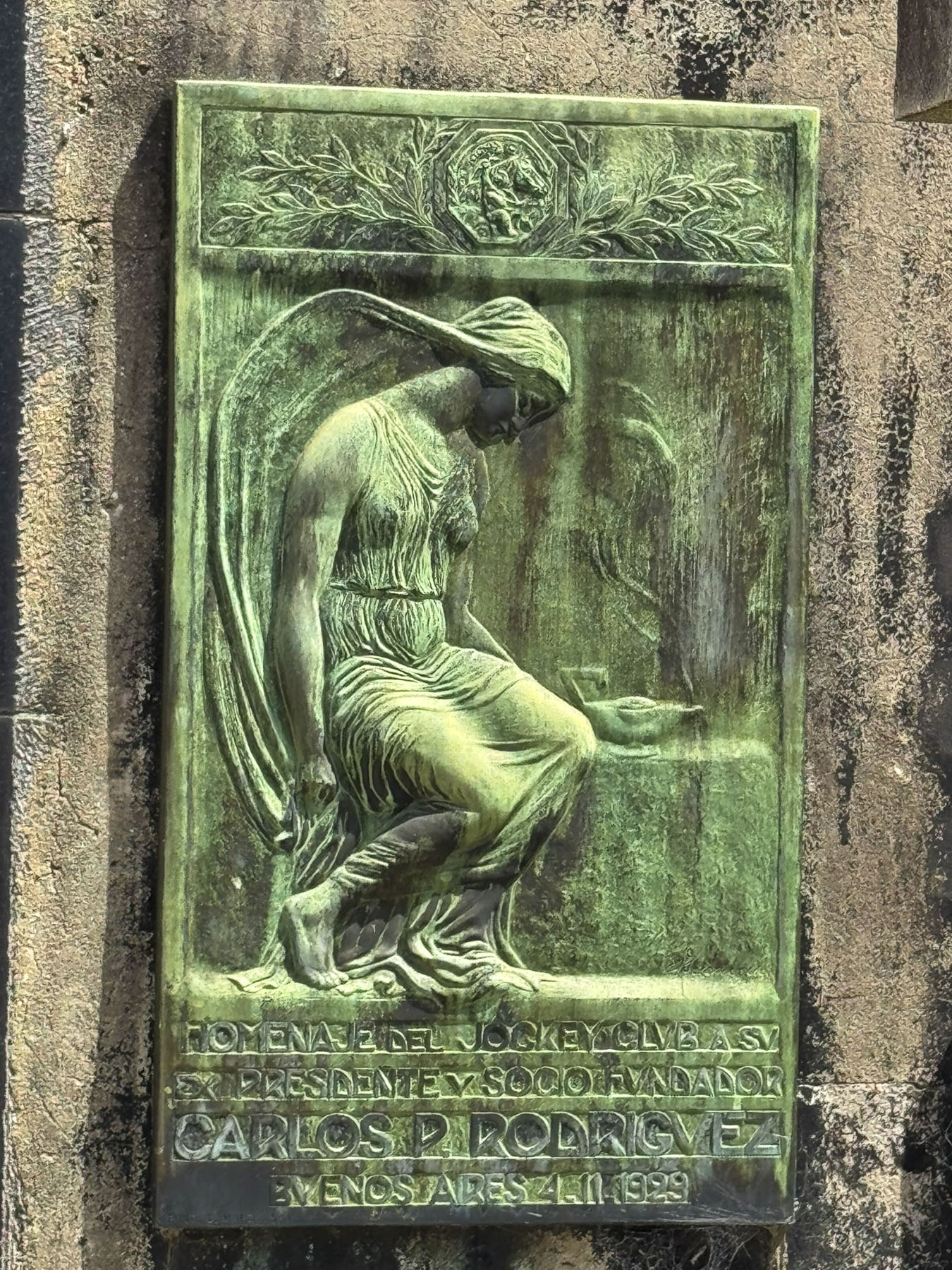
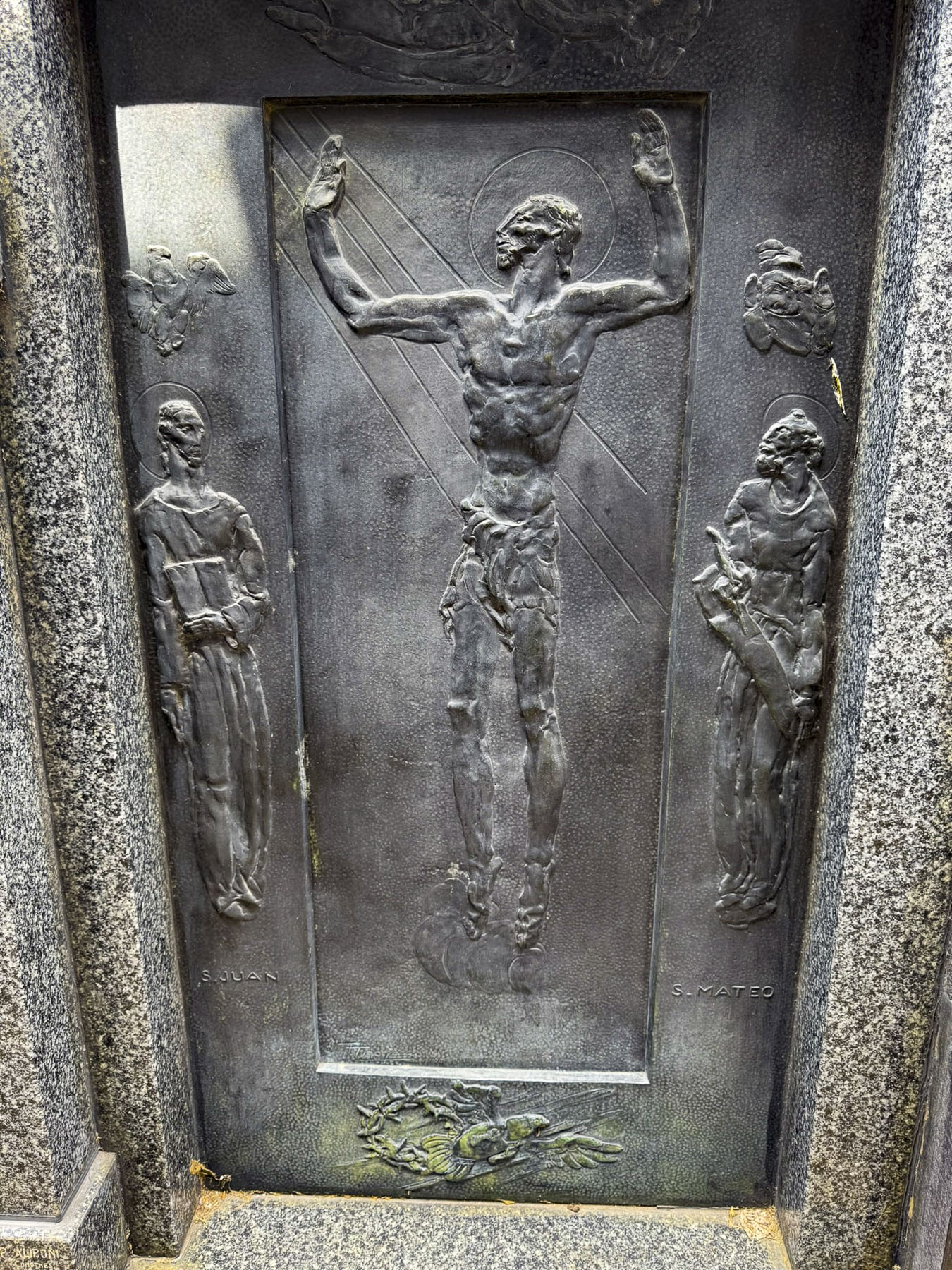
Many had small bronze plaques attached to the side of their tomb, hinting at the deceased’s illustrious career. Several had death masks protruding from the side of their mausoleums. The first one we happened across suddenly as we rounded a corner, and the very life-like stone face protruding from the side of a tomb, literally scared the wits out of me.

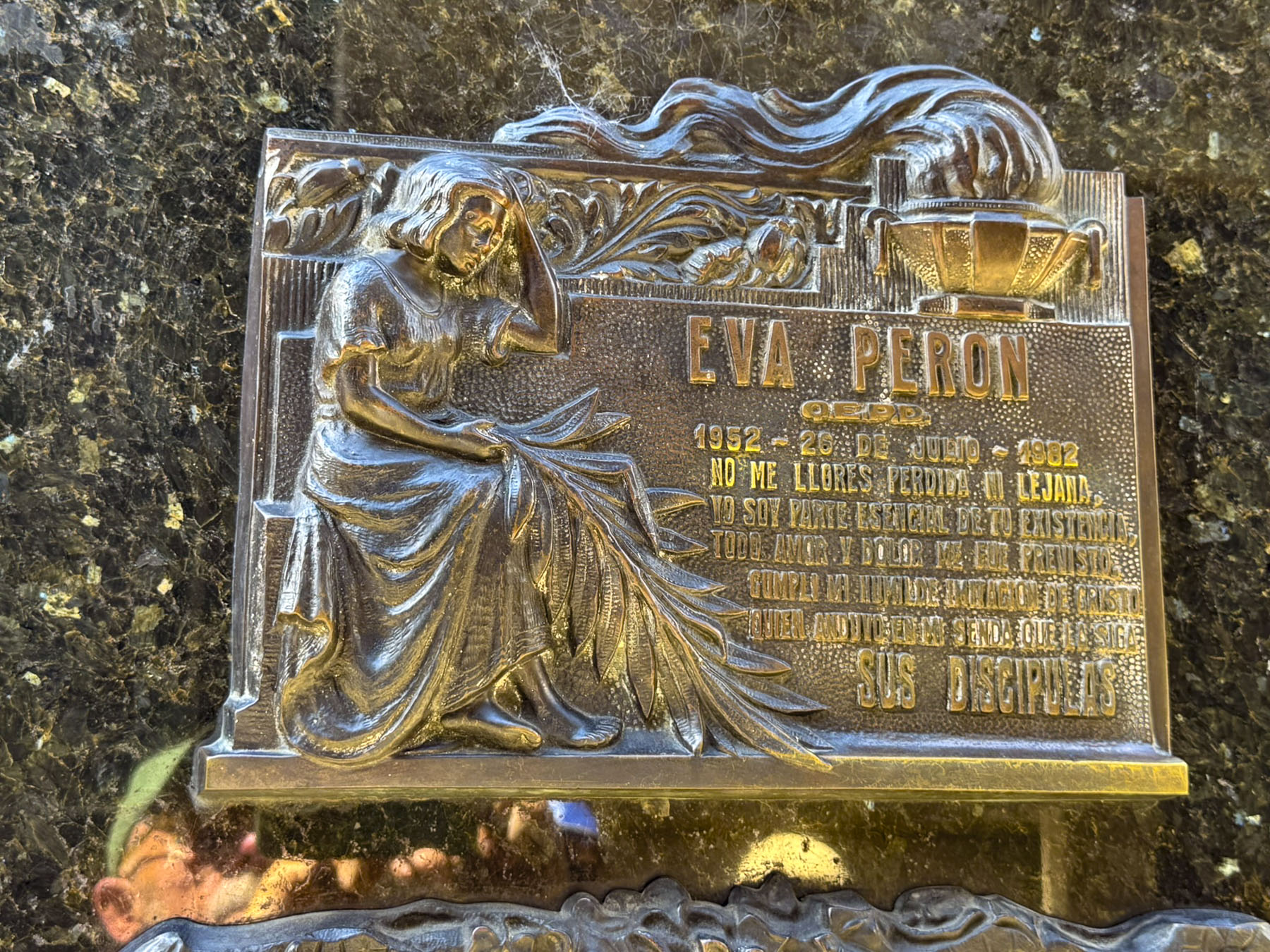
Surprisingly, Evita Peron’s tomb was one of the simplest structures. Immortalized since the Broadway musical “Evita,” by Andrew Lloyd Webber and Tim Rice opened its curtain in 1976, and the following 1996 movie starring Madonna, folks have been intrigued by the controversial legacy of Eva Duarte. It is the rags to riches story of a poor country girl, the illegitimate daughter of a wealthy rancher, who moved at the age of 15 to Buenos Aires and found fame as a radio and film actress, which resonated in the barrios of the “Paris of South America.” She found love at the age of 26, marrying 48-year-old Colonel Juan Perón, in 1945, two years before he was elected President of Argentina.

Passionate and combative, as Argentina’s First Lady she used her influence to champion social justice and worker’s labor rights, and was endeared to the less fortunate who saw her as the voice of the people. Her early death at the age of 33 from cancer saddened the nation and calls were made for her canonization. Flags across the country flew at half-mast for ten days. Blocks around the Presidential Palace were filled with mourners, and an estimated 3 million people watched the horsedrawn caisson carry her coffin through the streets of the city during her state funeral. Her embalmed body in its glass coffin was displayed for two years in her office in the Ministry of Labor building, as plans for a memorial that was taller than the Statue of Liberty were made.

After a 1955 military coup Juan Perón fled to exile in Spain, and the new military dictatorship secretly disappeared Evita’s corpse for 16 years. First it was secreted away in various locations across Buenos Aires until one “officer mistakenly shot his pregnant wife while guarding the corpse in his attic.”  The military dictatorship then enlisted the “covert help of the Vatican” to hide her body away in a crypt in Milan, Italy’s famous Cimitero Monumentale, for 16 years under a false name. In protest “Where is the body of Eva Perón?” was spray painted on walls all across Argentina.

In 1971, Evita’s body was exhumed and flown to Spain where Juan Perón and his third wife allegedly kept the “coffin on display in their dining room.” In 1973 Peron returned to the Presidency of Argentina, with his third wife as Vice President, but died a year later. The saga continued to get weirder when an anti-dictator revolutionary group, the Montoneros, “stole the corpse of General Pedro Eugenio Aramburu, whom they had also previously kidnapped and assassinated,” to use as a bargaining chip to get the third Mrs. Peron to return Evita’s body to her beloved country. Subsequent governments have gone to great lengths to secure Evita’s hopefully final resting place, in a subterranean tomb with trap doors and false caskets to deter grave robbers, within her father’s Duarte family mausoleum in Cemeterio de la Ricoleto.

Across the street was the Gomero de la Recoleta – Árbol Histórico, a majestic 225-year-old rubber tree planted in 1800. Over the decades its huge buttress trunk has grown to support a 50m (164ft) wide canopy, with tree limbs so long that wooden poles and sculptures are needed to support their weight.

Behind it, we found a reprieve from the hot February afternoon, and an early dinner at Bartola, which served an excellent lemonade, and has pleasant décor along with a rooftop terrace.

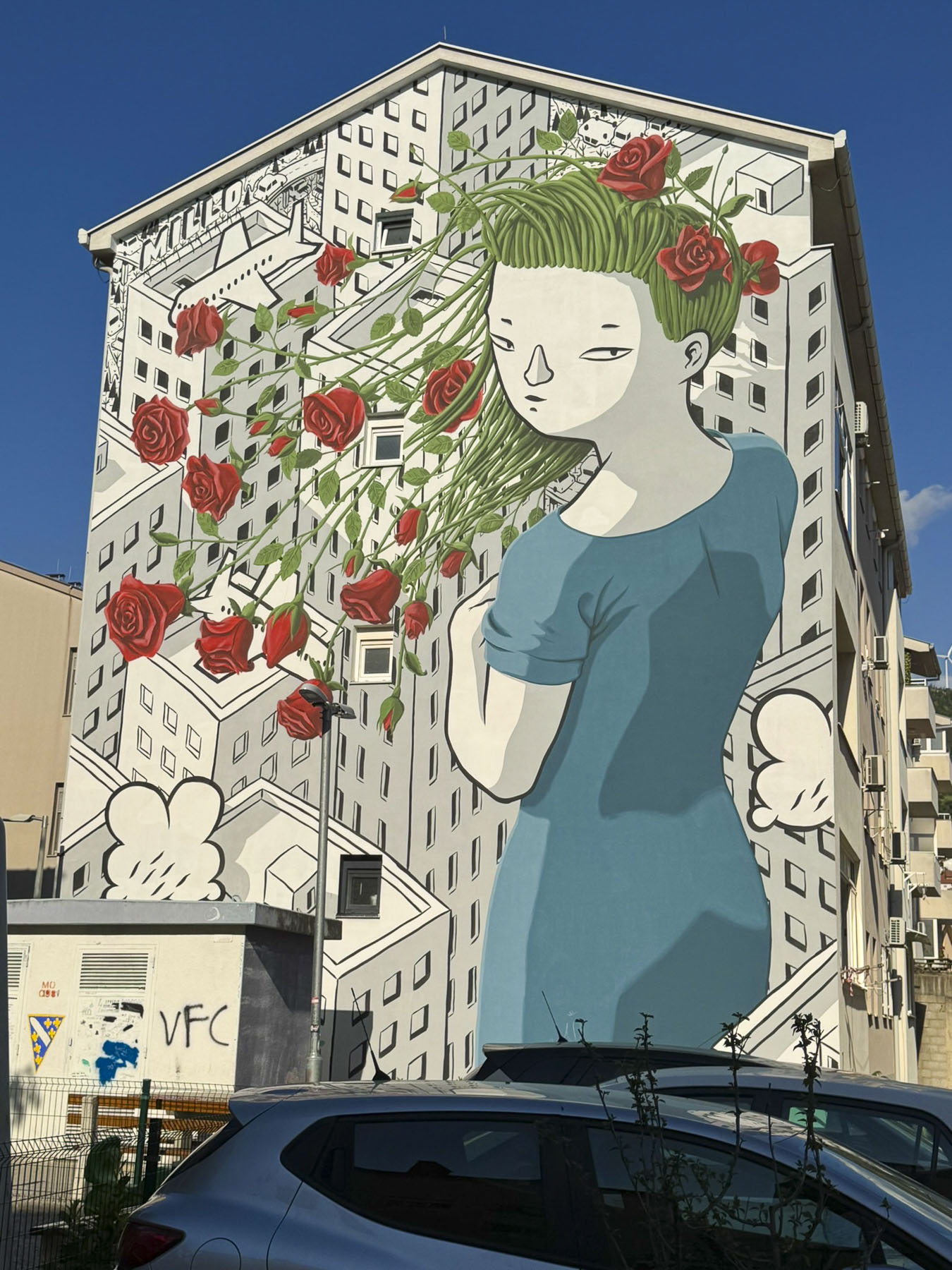
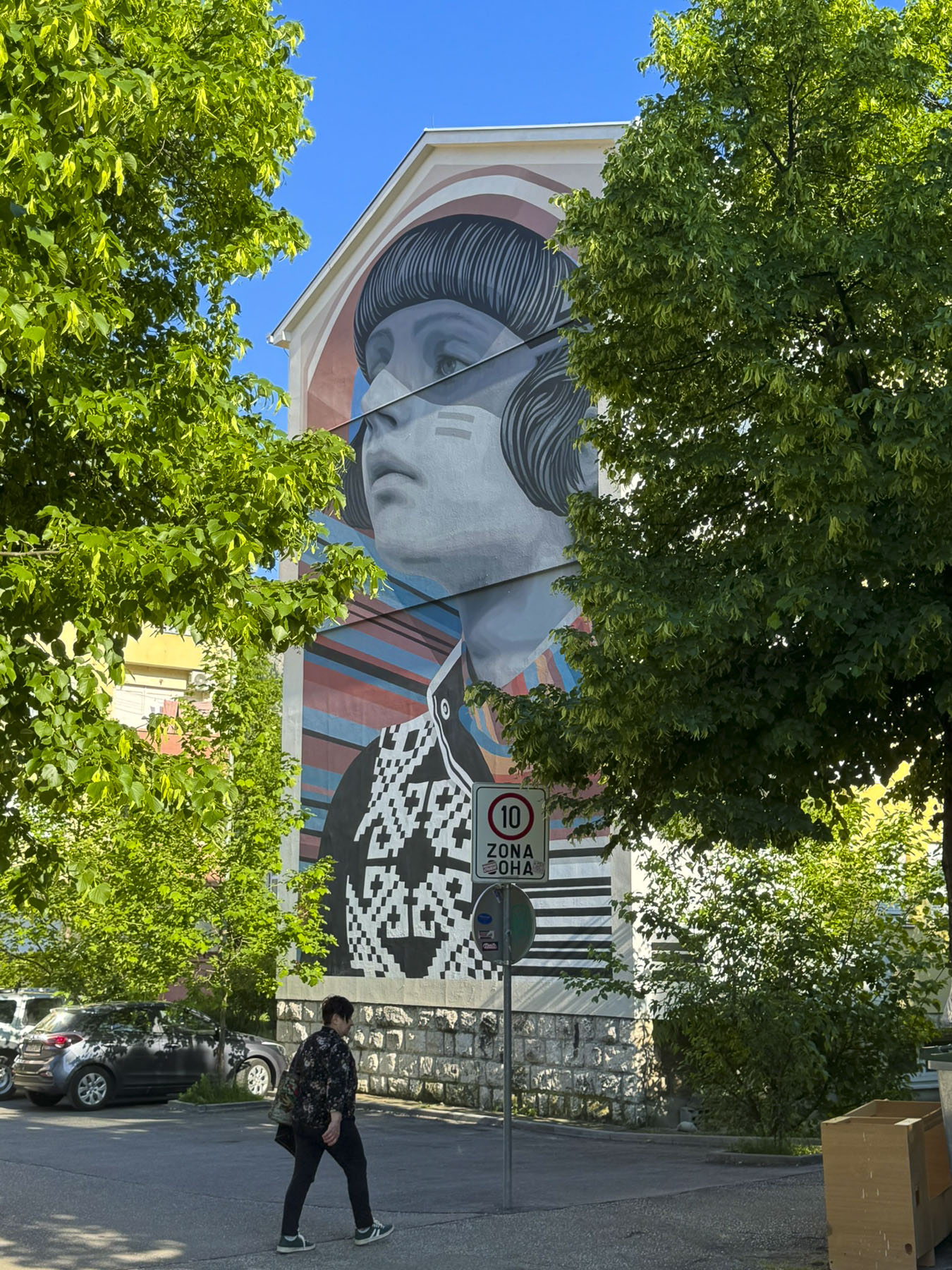
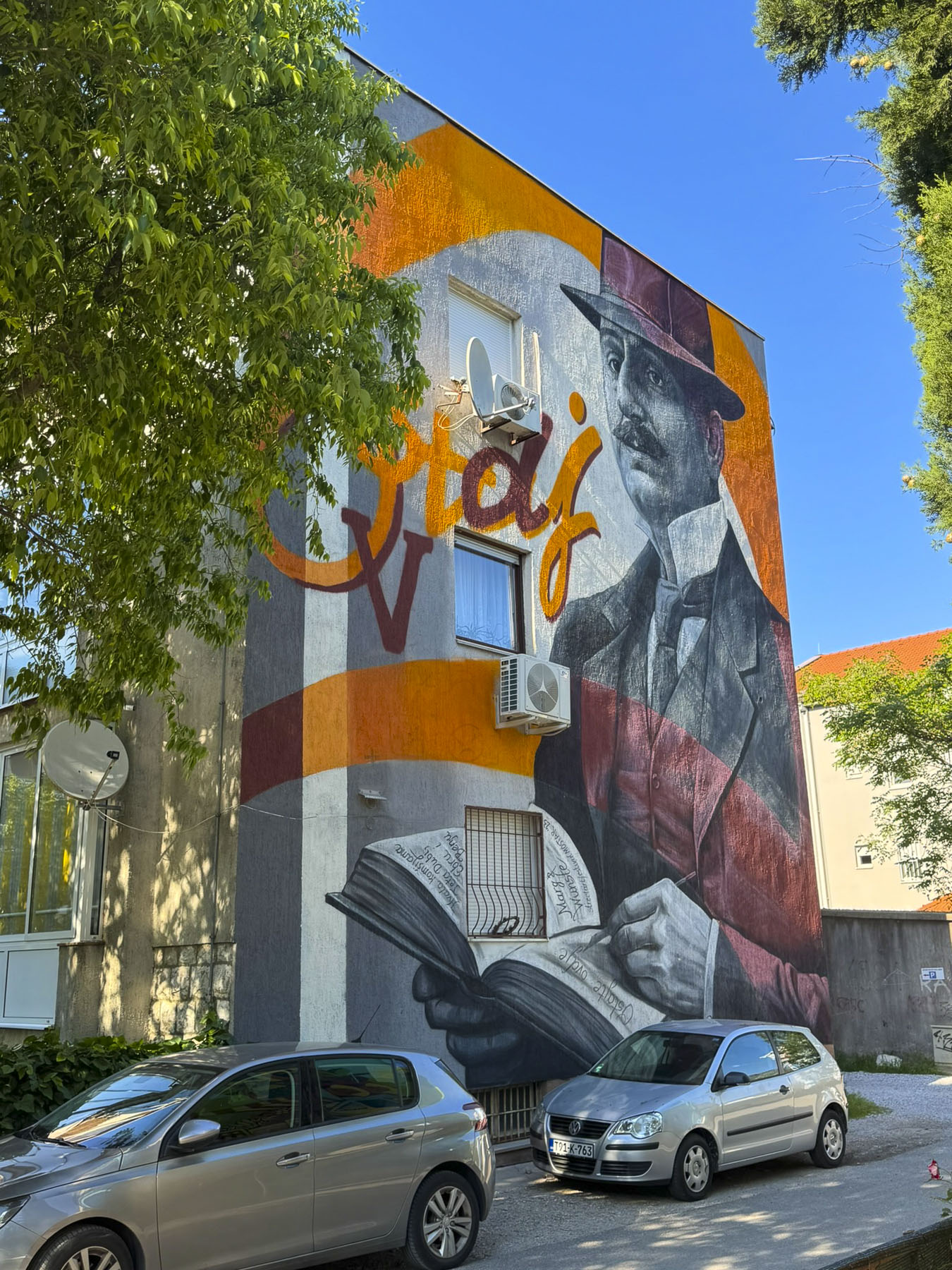
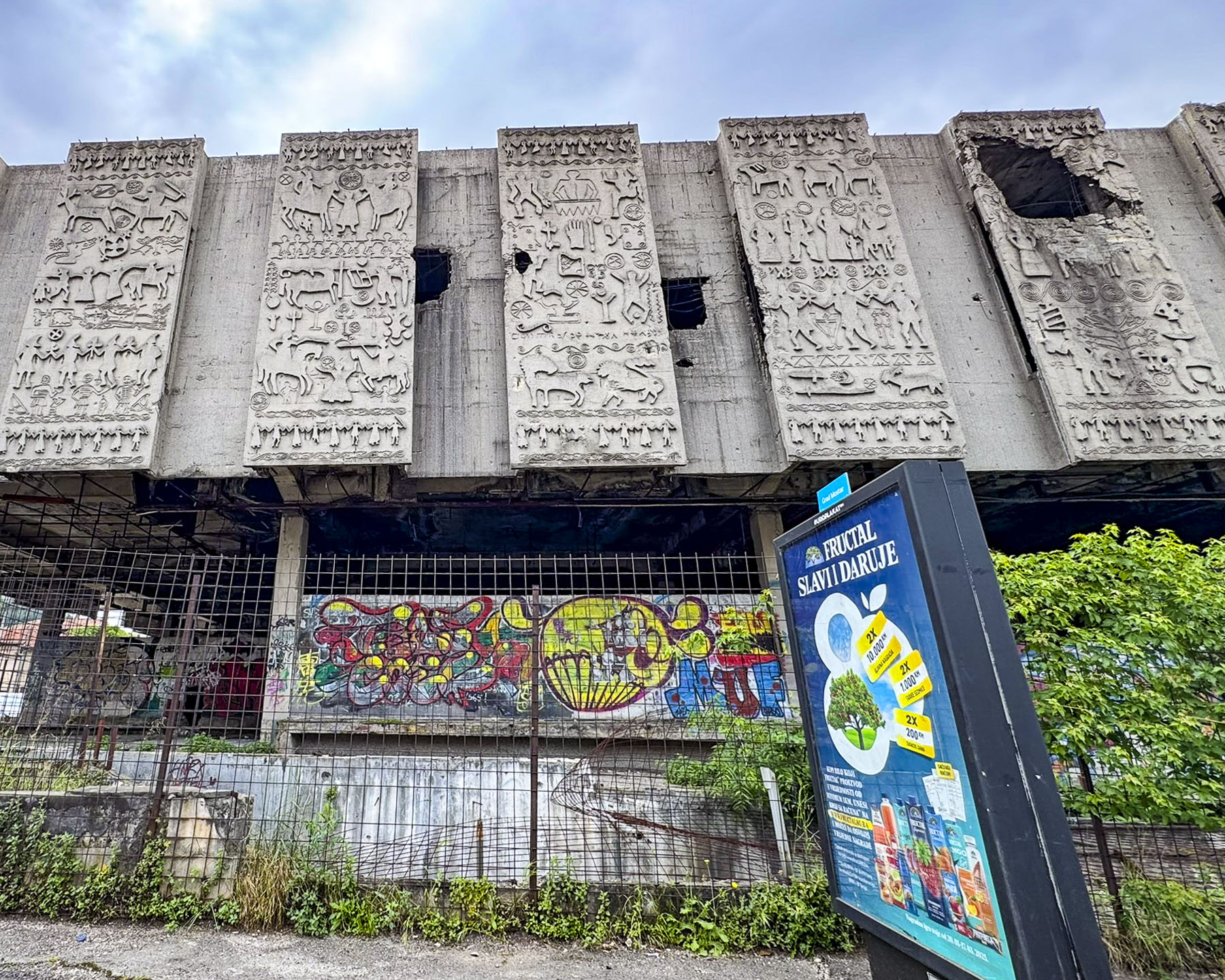
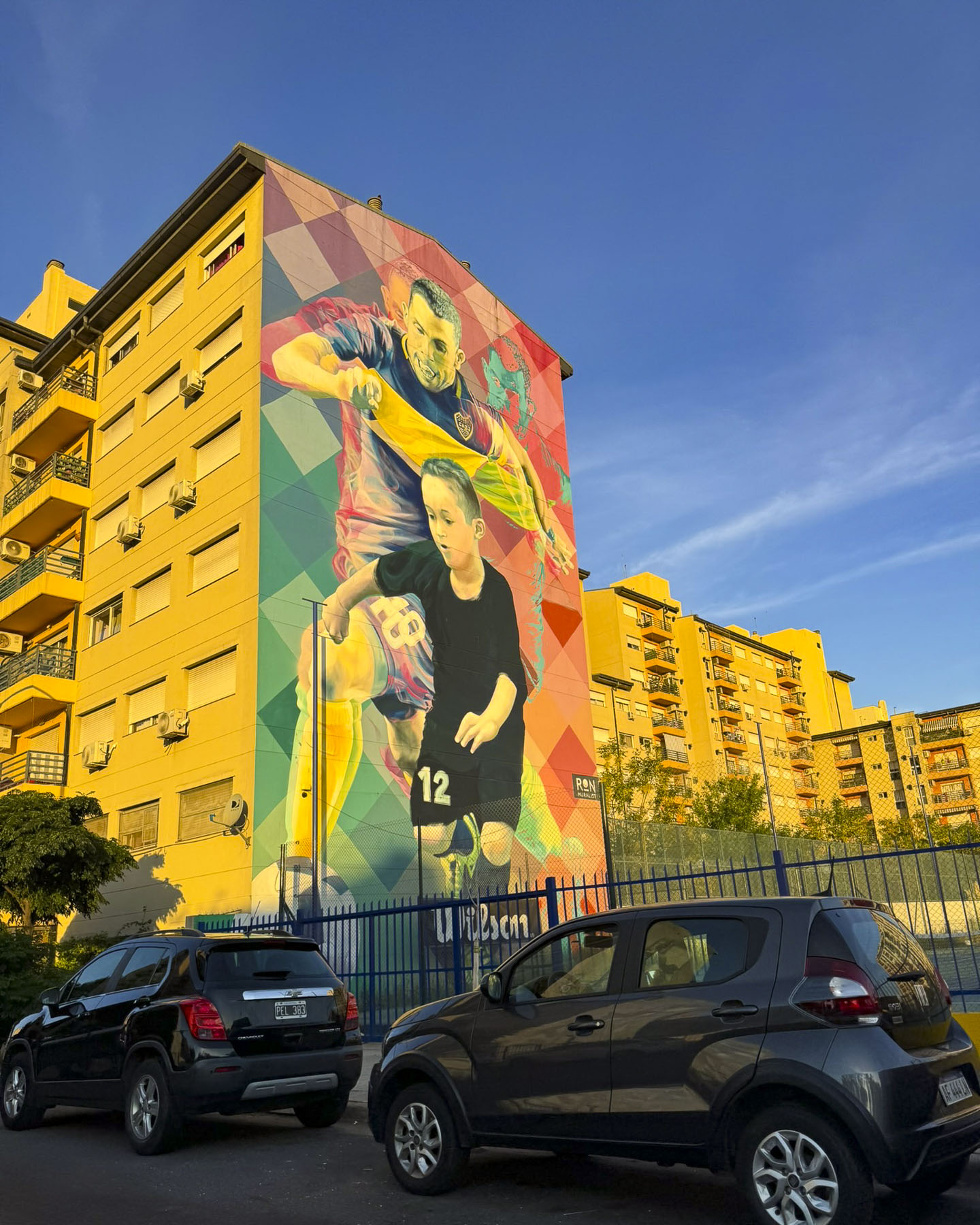
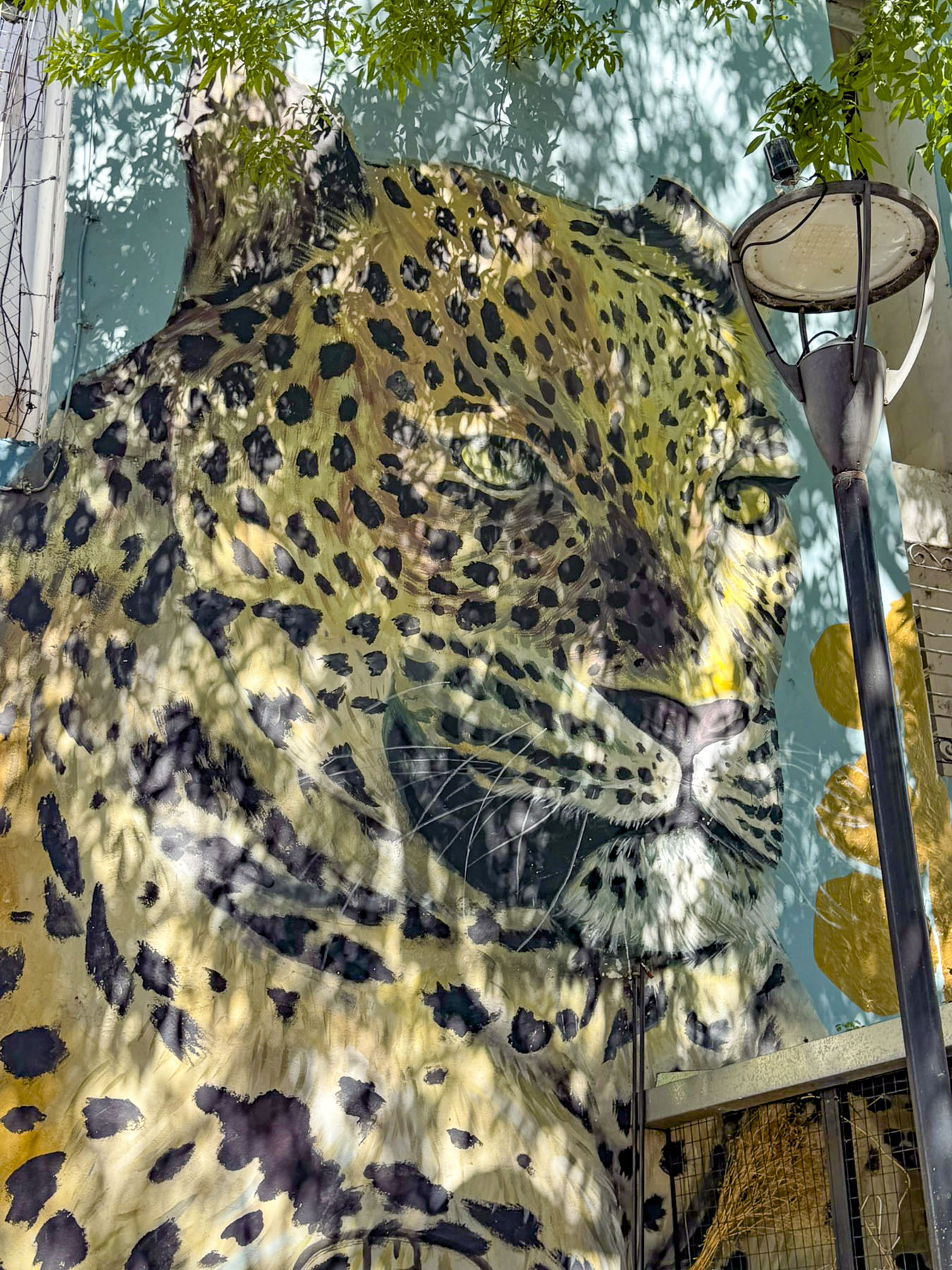
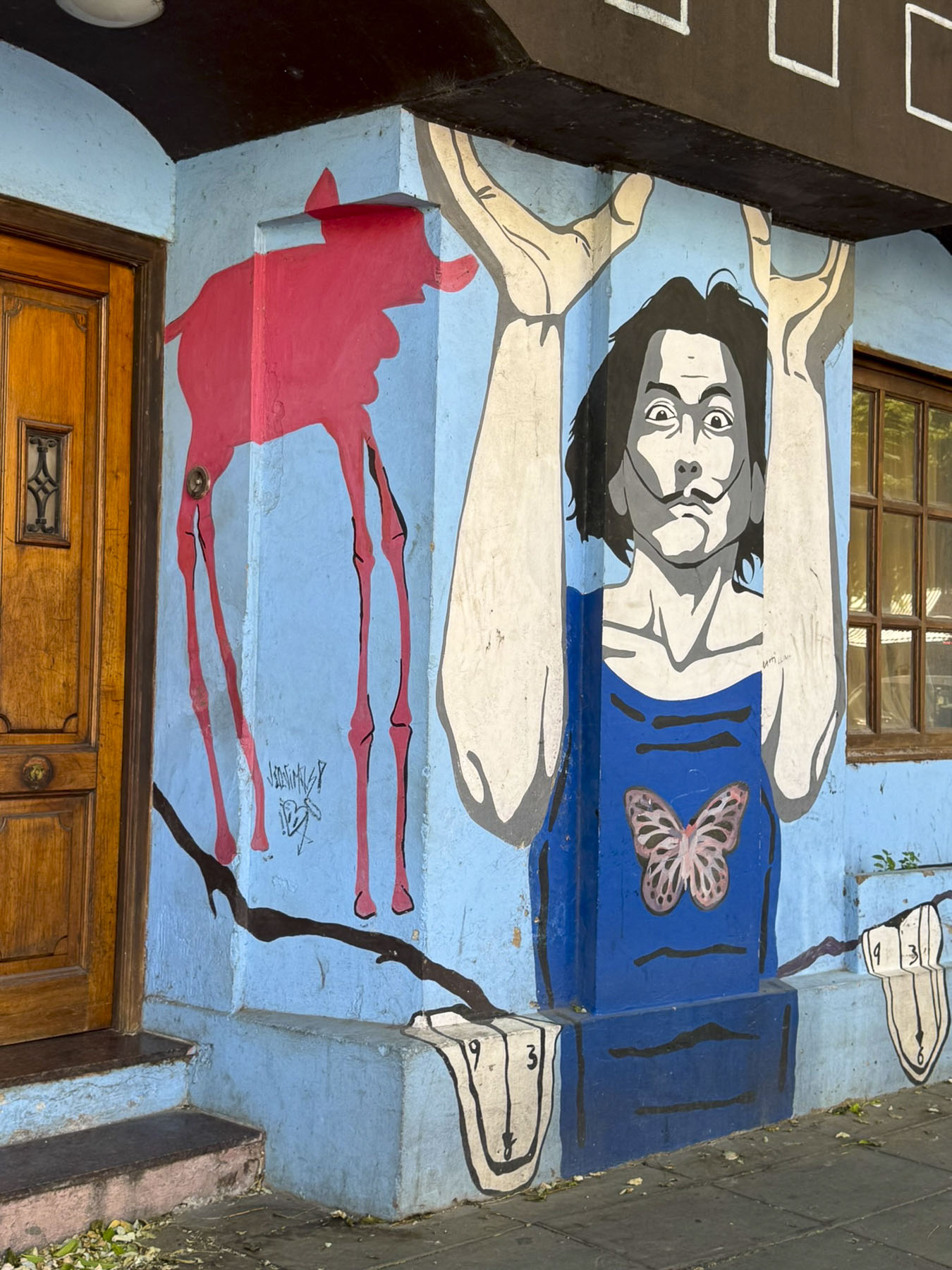
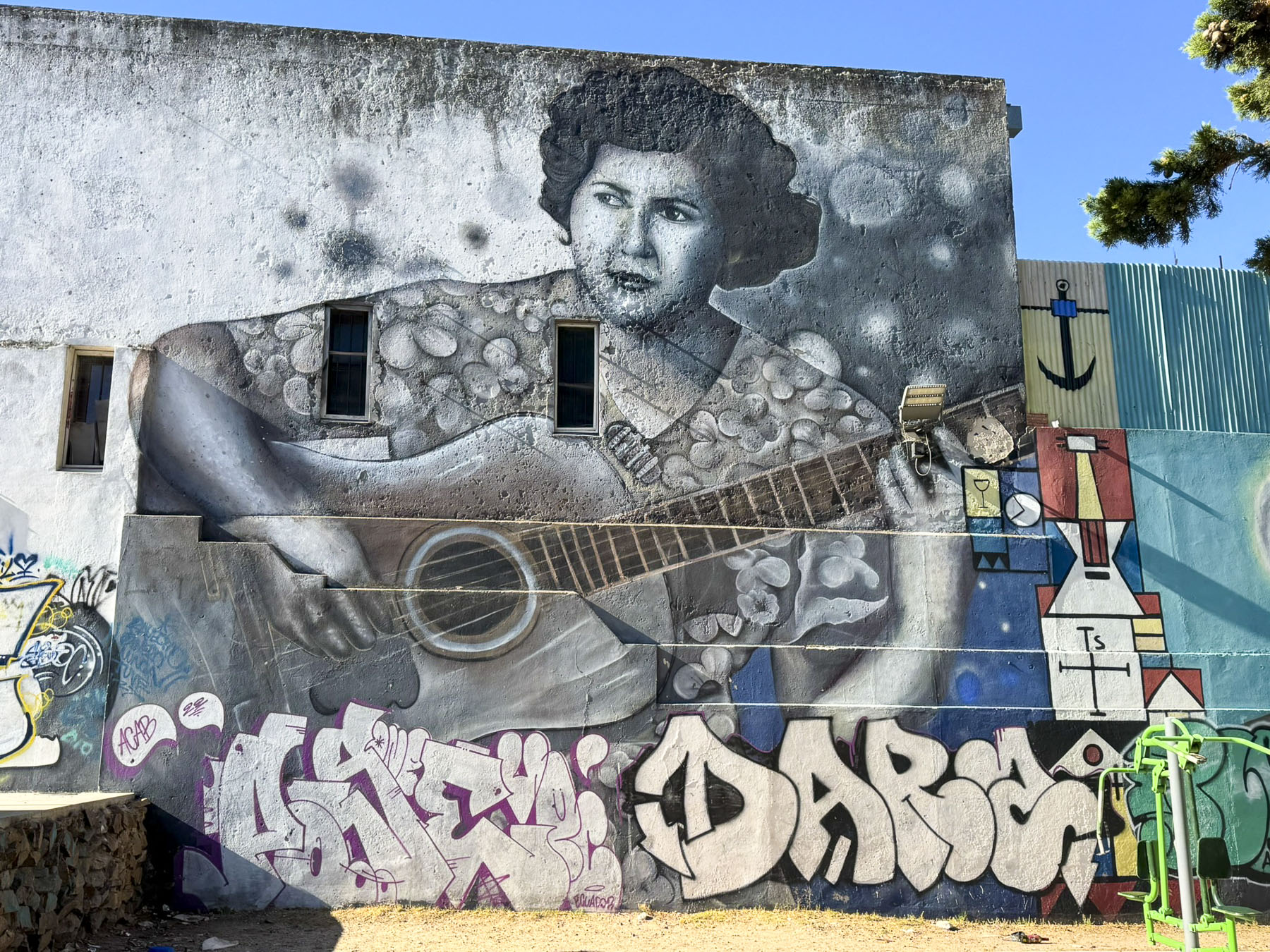
Buenos Aires is full of interesting street murals, and we spent the next morning wandering about searching for them.

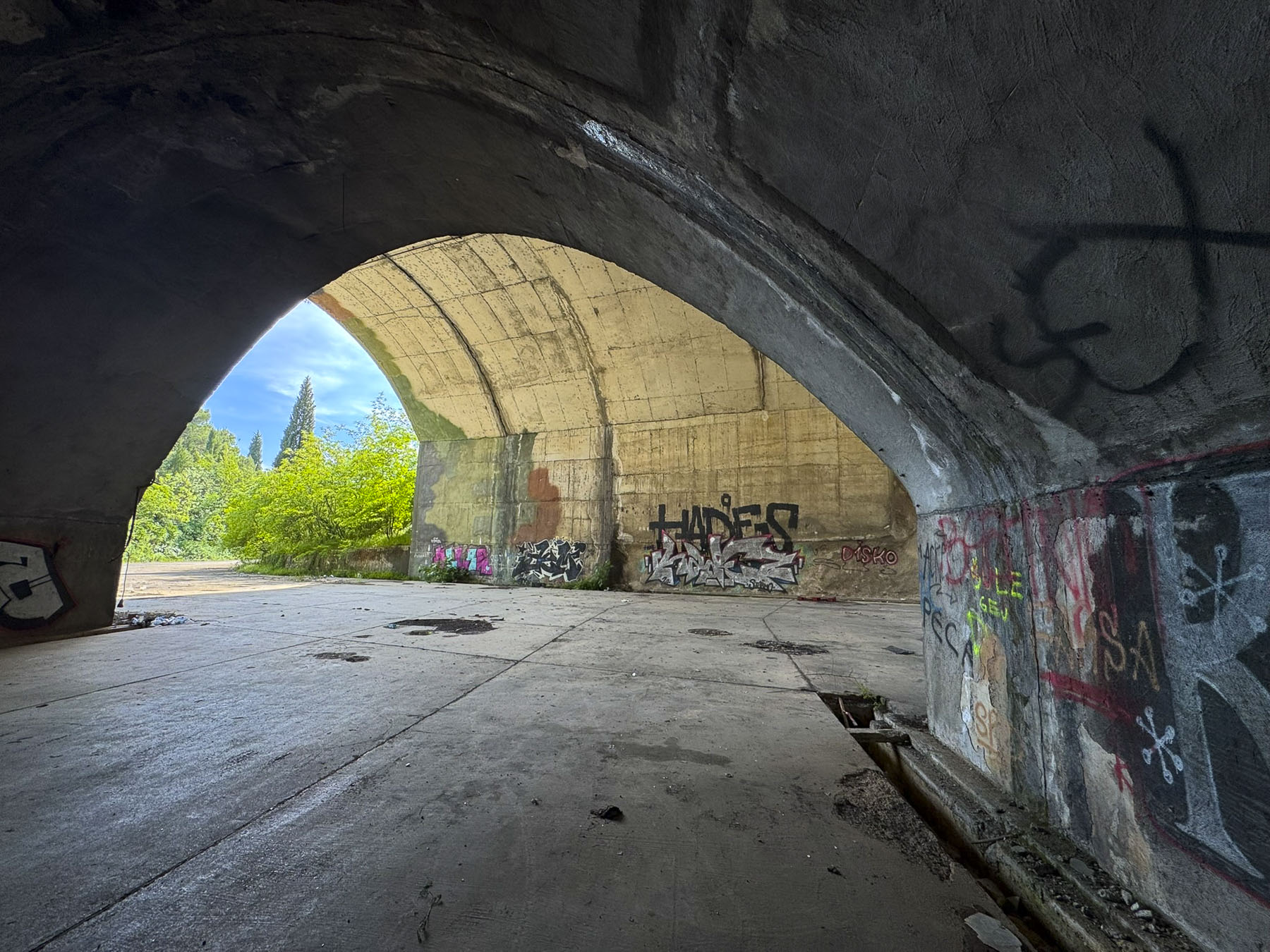
That afternoon, after exploring farther afield from our hotel, we took a rideshare across the city to La Boca, a colorful neighborhood that is also the location of La Bombonera stadium, home of the world-famous Boca Juniors football club, the team on which some of Argentina’s legendary football players first played. Our route eventually took us below the elevated portion of Rt1 amidst a forest of concrete pilings painted with a vast array of creative street murals in an area named Silos Areneros. We found the area intriguing, but a tad sketchy, so we kept going.

La Boca was originally Buenos Aires’ first port at the mouth of the Riachuelo River, as it flows into the Río de la Plata. It has always been a bustling working-class neighborhood, “filled with all kinds of people, dockworkers, fishermen, musicians, prostitutes, thieves, socialists, anarchists, and artists.” But it grew substantially with the arrival of new immigrants in the 1800s and early 1900s.  Hastily constructed tenements called conventillos were built with galvanized metal walls and roofs and brightly painted with whatever left over colors were available from the shipyards, in an effort to cheer up the area.

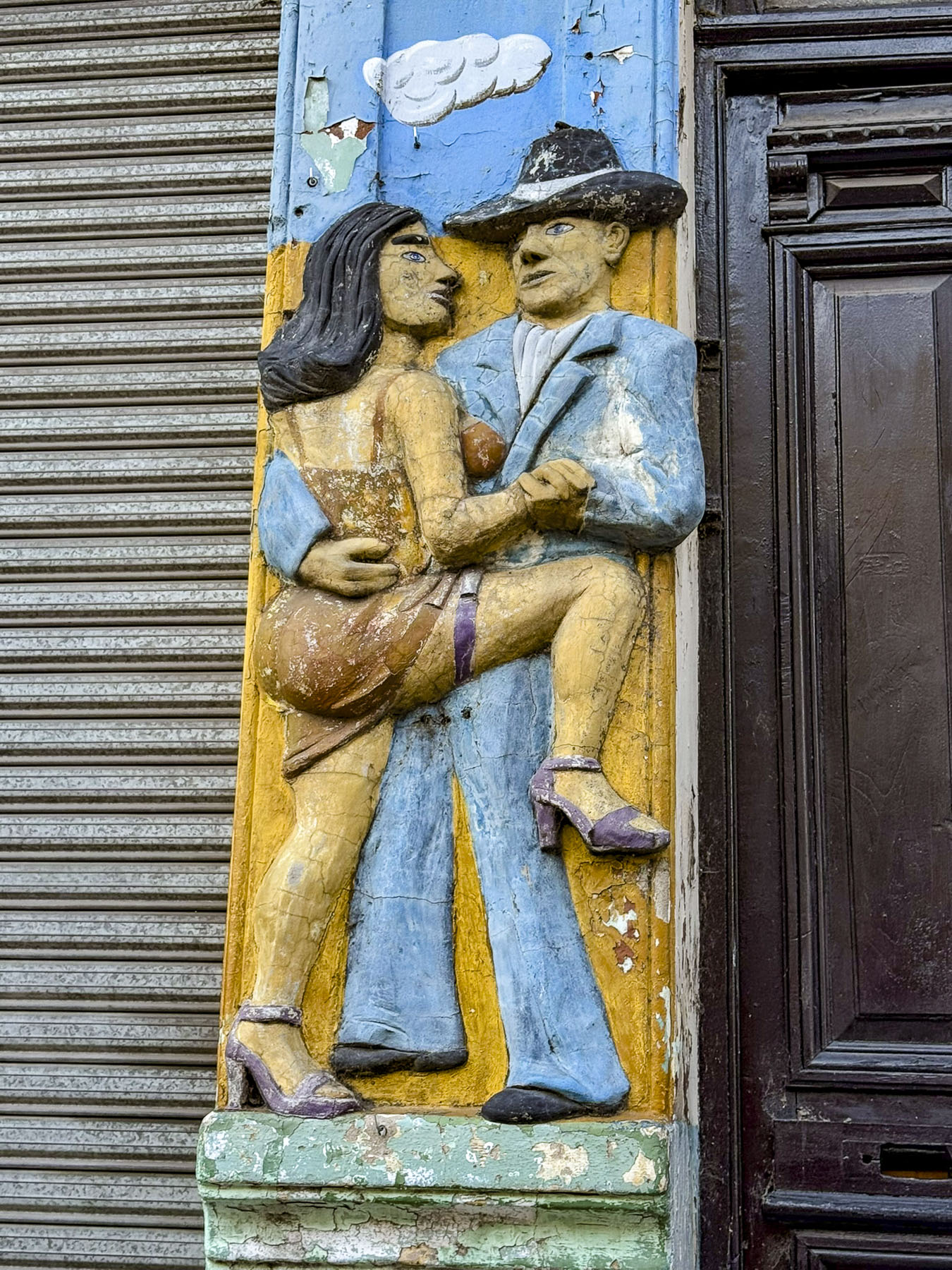
La Boca is one of the city’s vibrant neighborhoods where tango originated on its streets during the hot summer months and was perfected in the bars along Caminito and Magallanes during winters of the late 1800s.

Today, satirical figures adorn many of the balconies along Caminito and the adjacent streets, and poke fun at politicians, rival football teams or celebrities. Though we think you need to be Argentinian to fully appreciated the humor behind them.

A mural at the end of Caminito commemorates the Bomberos Voluntarios de La Boca (La Boca Volunteer Firefighters), Buenos Aires’ first fire brigade, formed in 1884.

Sadly, we found the wonderfully colorful area was oversaturated with cheap tourists’ shops heavily devoted to everything football, especially Lionel Messi’s #10 blue and white football shirt, which was available everywhere.

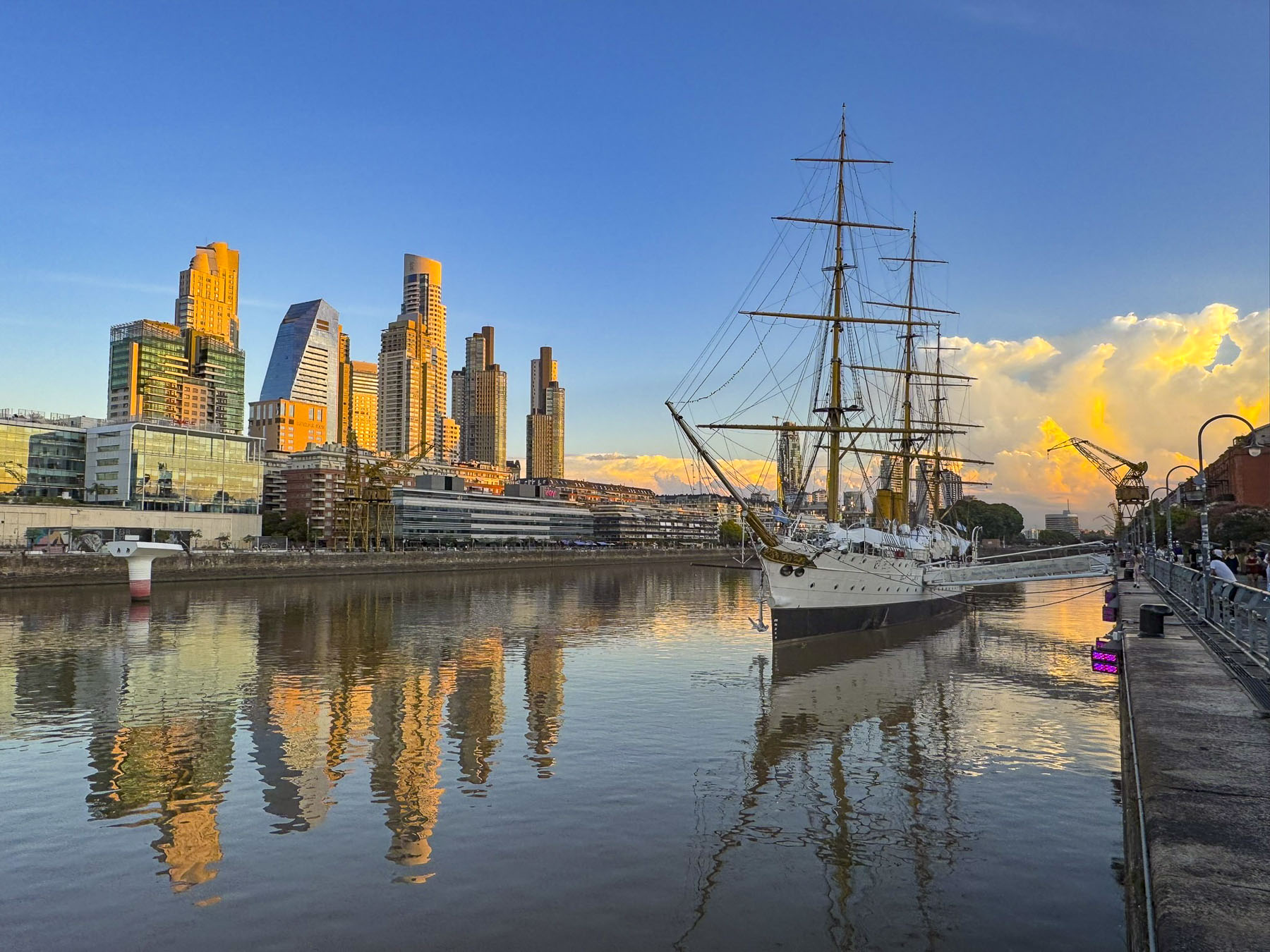
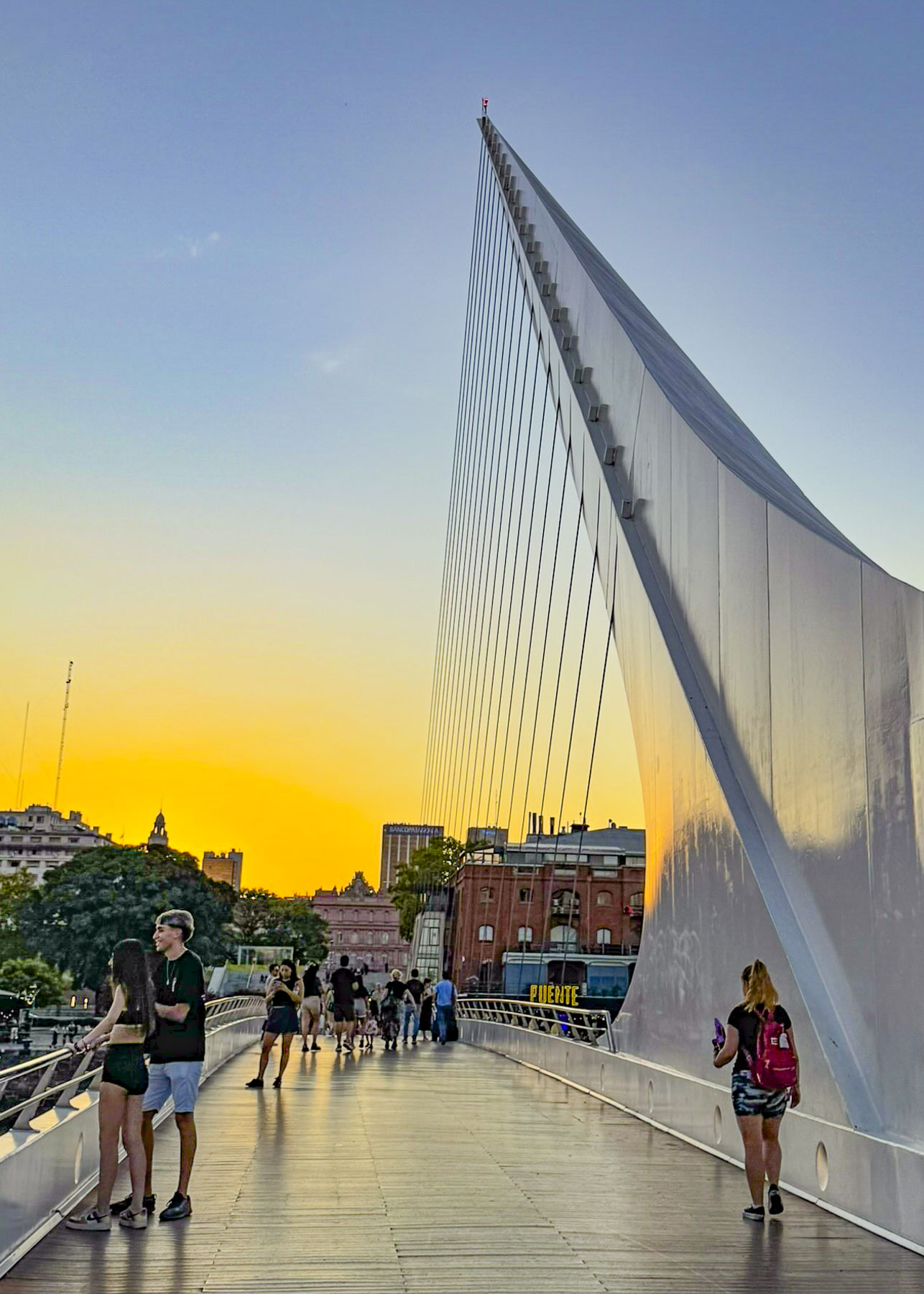
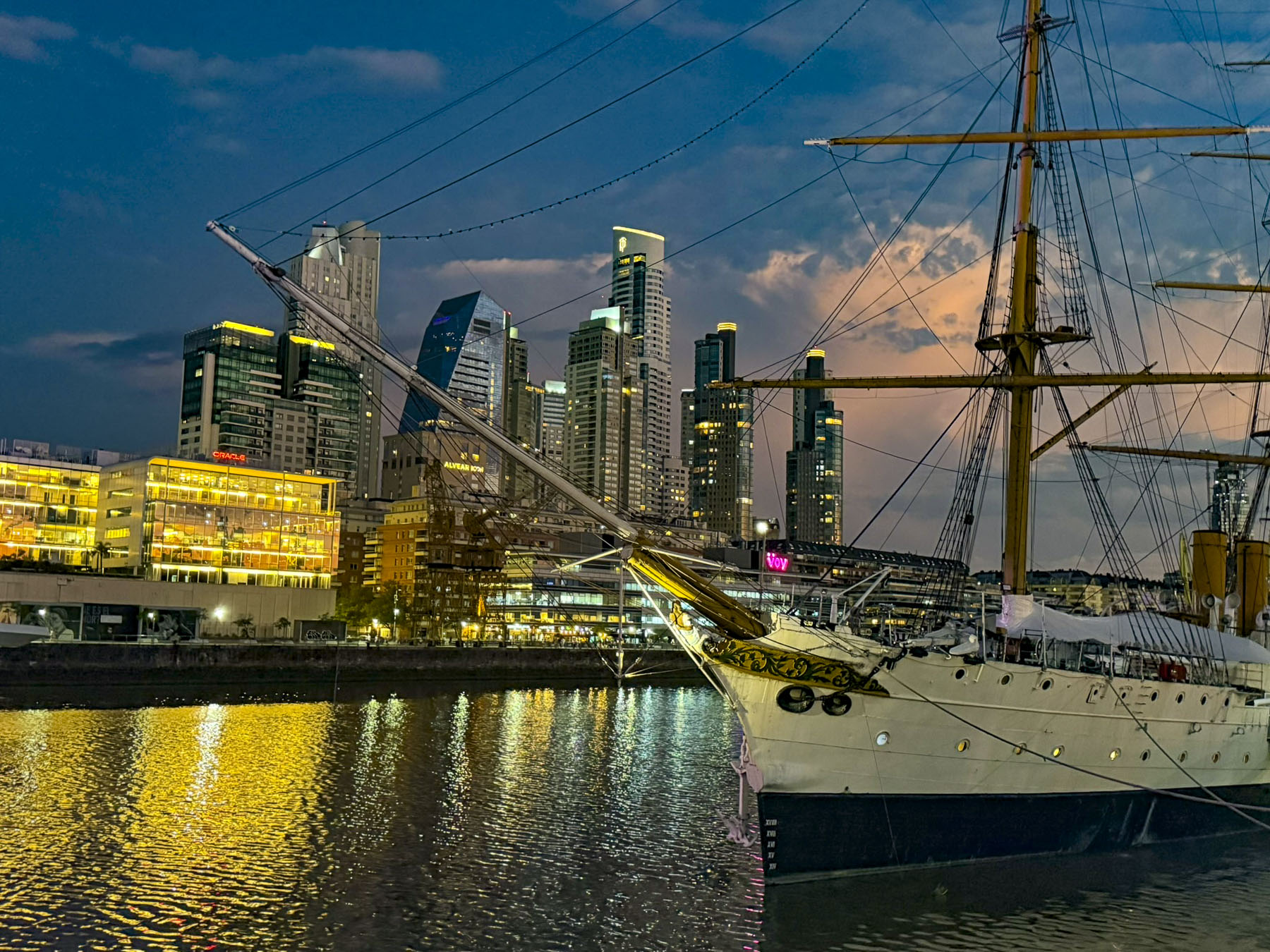
Afterwards we headed to the dockside area of Puerto Madero. Built in the late 18th century the port helped support Argentina’s economic growth during WWI and WWII as the country’s beef and food stocks were sent to a war-torn Europe. But the viability of the port declined as the size of merchant ships became larger and containerization took hold, until eventually the port was abandoned for many decades. A masterplan for the port’s redevelopment was realized in 1989 with plans to renovate some of the old warehouses along one side of the quay into restaurants and shops, while land on the other side would be developed into a mixed-use area of offices and residential towers, with the two sides connected by pedestrian-only bridge.

The redevelopment along the Puerto Madero waterfront was a great success and created a strikingly beautiful, new waterfront neighborhood. Its reflective skyline and restaurants along the old docks continue to be destinations for both locals and tourists. Us included! It was a great place to people watch as folks strolled along the quay and over the footbridge. Towering cumulonimbus clouds glowed with golden light, as the sunset silhouetted the “Presidente Sarmiento,” an old three-masted sailing ship that is now a nautical museum.

We both grew up in the suburbs of New Jersey and worked in New York City for a while, but living in Manhattan never appealed to us. It wasn’t until we started traveling and experienced living in some foreign cities through short-term rentals that we grew to appreciate the vitality that city life offers.

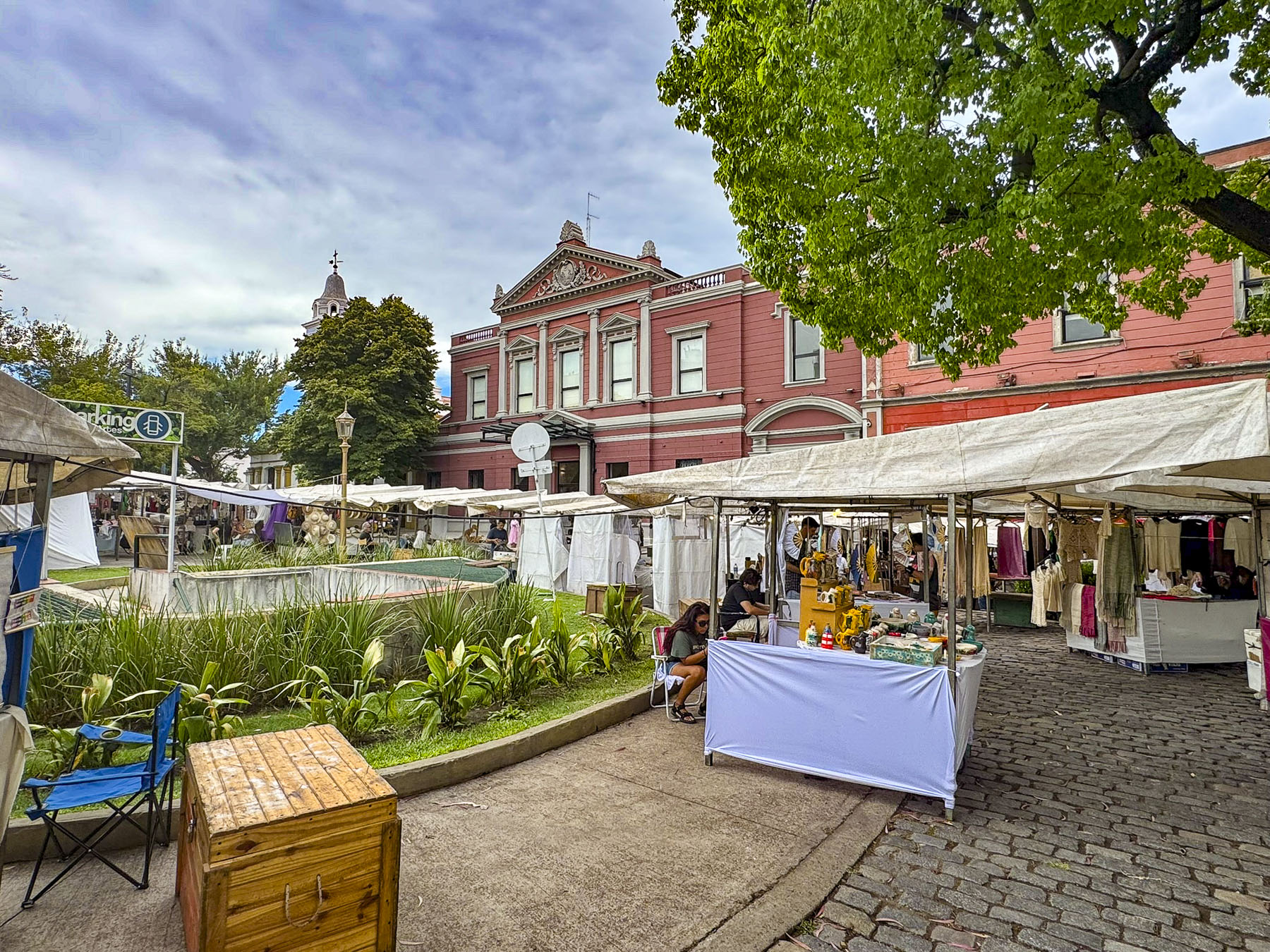
Mysteriously, overnight the Parque Intendente Torcuato de Alvear in front of the historic Centro Cultural Recoleta building was transformed into a sprawling art and crafts festival, that to our surprise happens every Saturday and Sunday. Artisans’ tents and tables lined nearly every path through the sprawling park that was filled with folks shopping and buskers playing to the crowd. This was probably the best crafts market we’ve been to, as the quality and variety of items offered were very impressive. If our suitcases had been bigger we would have made lots more purchases.

For many years the Cultural Center was repainted frequently with colorful murals, which added a nice flair to its otherwise stoic facade. Sadly, this policy was discontinued in 2024, and the building is now covered in a monochromatic “Pompeyan Red.” The decision has received a mixed public reaction, but hopefully the verdict will be reversed in the future. The historic 1732 building was originally the convent of the Recoleto monks, for whom the Recoleta neighborhood is named, as well as part of Our Lady of Pilar Basilica, the second oldest church in Buenos Aires. Over the decades as the influence of the church waned after Argentina’s 1810 May Revolution the building was used as a hospital, military barracks, asylum, and an art school before being renovated into an exhibits and events space in the 1980s.  

That afternoon the tree lined blocks around Plaza Serrano and Plaza Armenia in the charming Palmero Soho neighborhood were so different from the high-rise towers of Recoleta, and reminded us of Barcelona & Madrid, with the wonderful mix of sidewalk cafés, along with trendy shops. Colorful street murals brightened many of the narrow alleys.

Across from Plaza Armenia we passed the Las Petunias restaurant which was full of lively diners at lunchtime.  But we continued our wanderings and returned around 15:00 when the restaurant was quieter, though there were still enough other people dining to make it a nice experience. We shared Los Tablones de Carnes for two. The grilled meats were excellent, and it was the best parrillada we had during our stay in Buenos Aires.

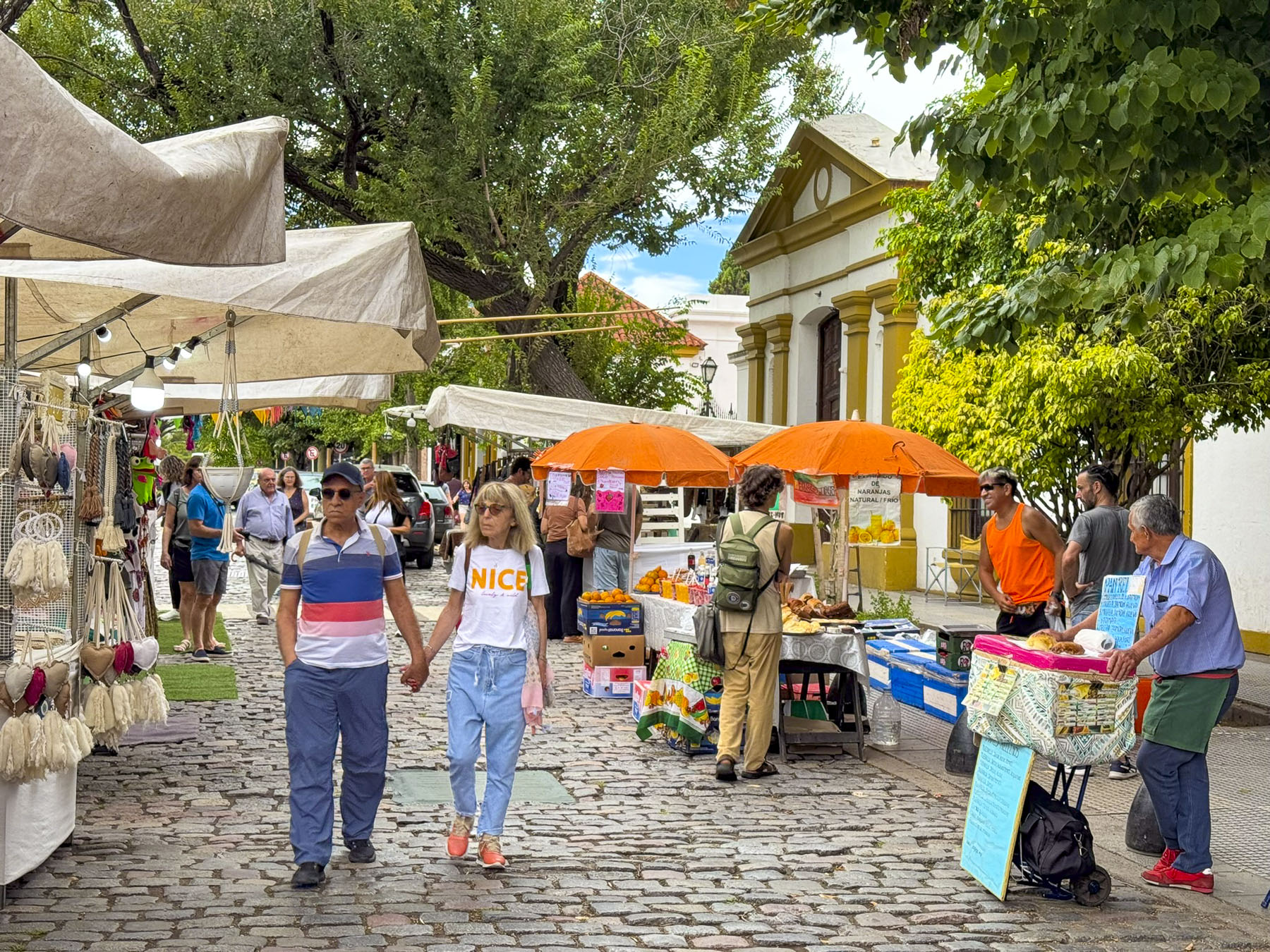
Sunday, we headed to the Feria de San Telmo, a weekly street fair that spans eleven blocks of Av. Defensa, a street known for its antique stores and art galleries. San Telmo is one of the oldest neighborhoods in Buenos Aires and has striven to retain its 19th and early 20th century character with well-preserved buildings.

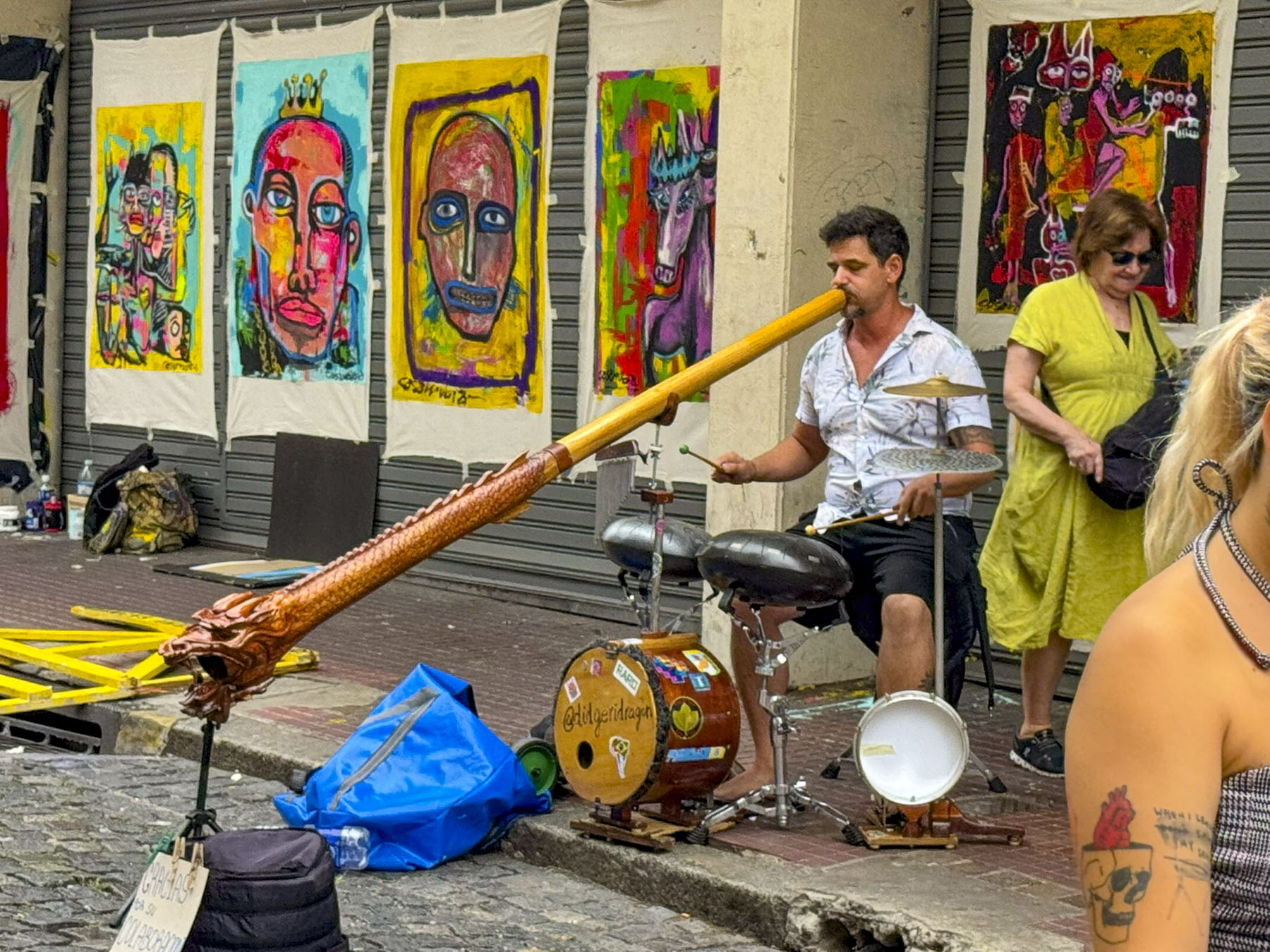
The street was full of activity, but the feira was really more like a flea market featuring clothing and everyday items with only a handful of artists’ and craftsperson’s tables mixed in between. Buskers worked the street corners, and a puppeteer dazzled a young audience. Occasionally a street mural graced a side street.

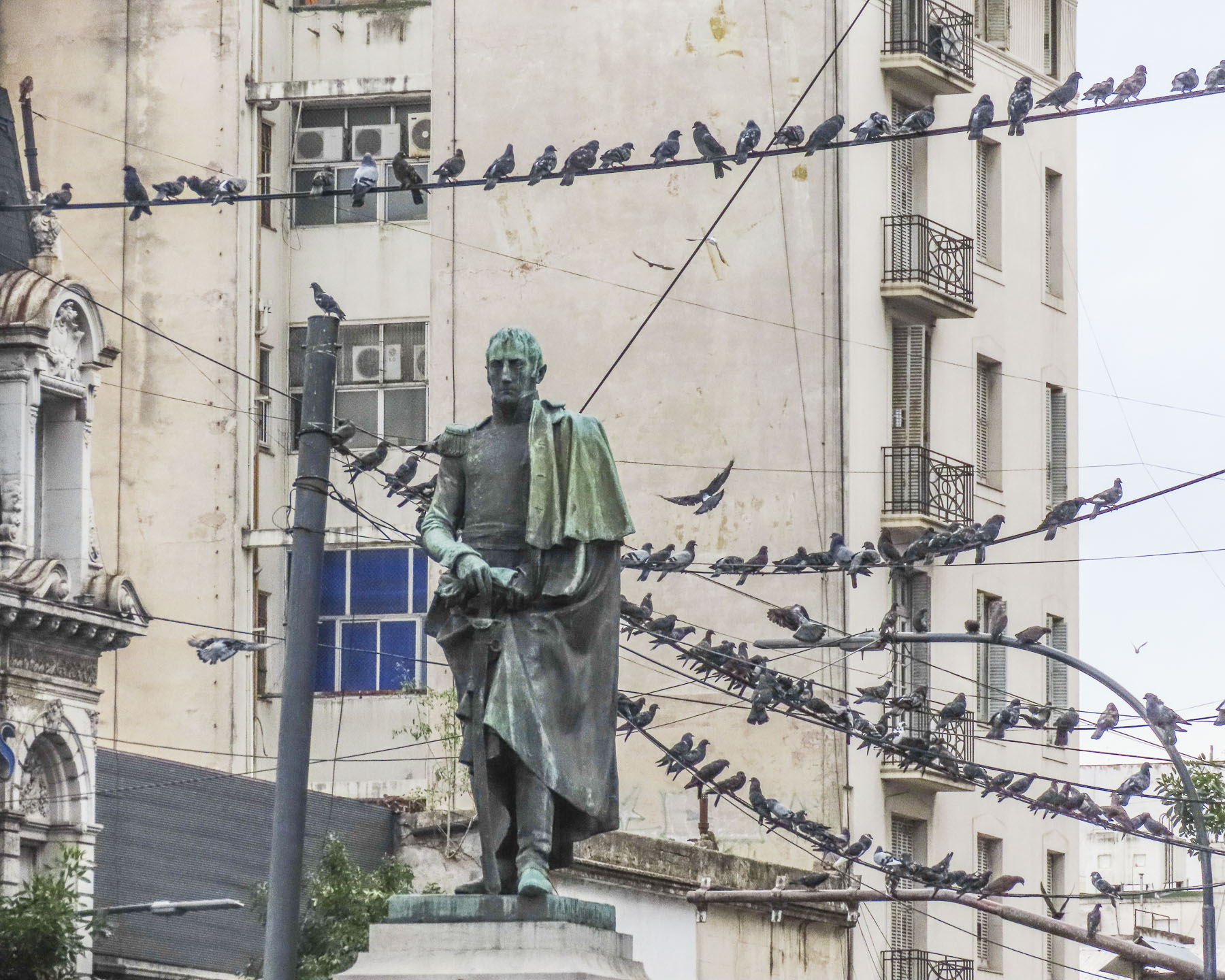
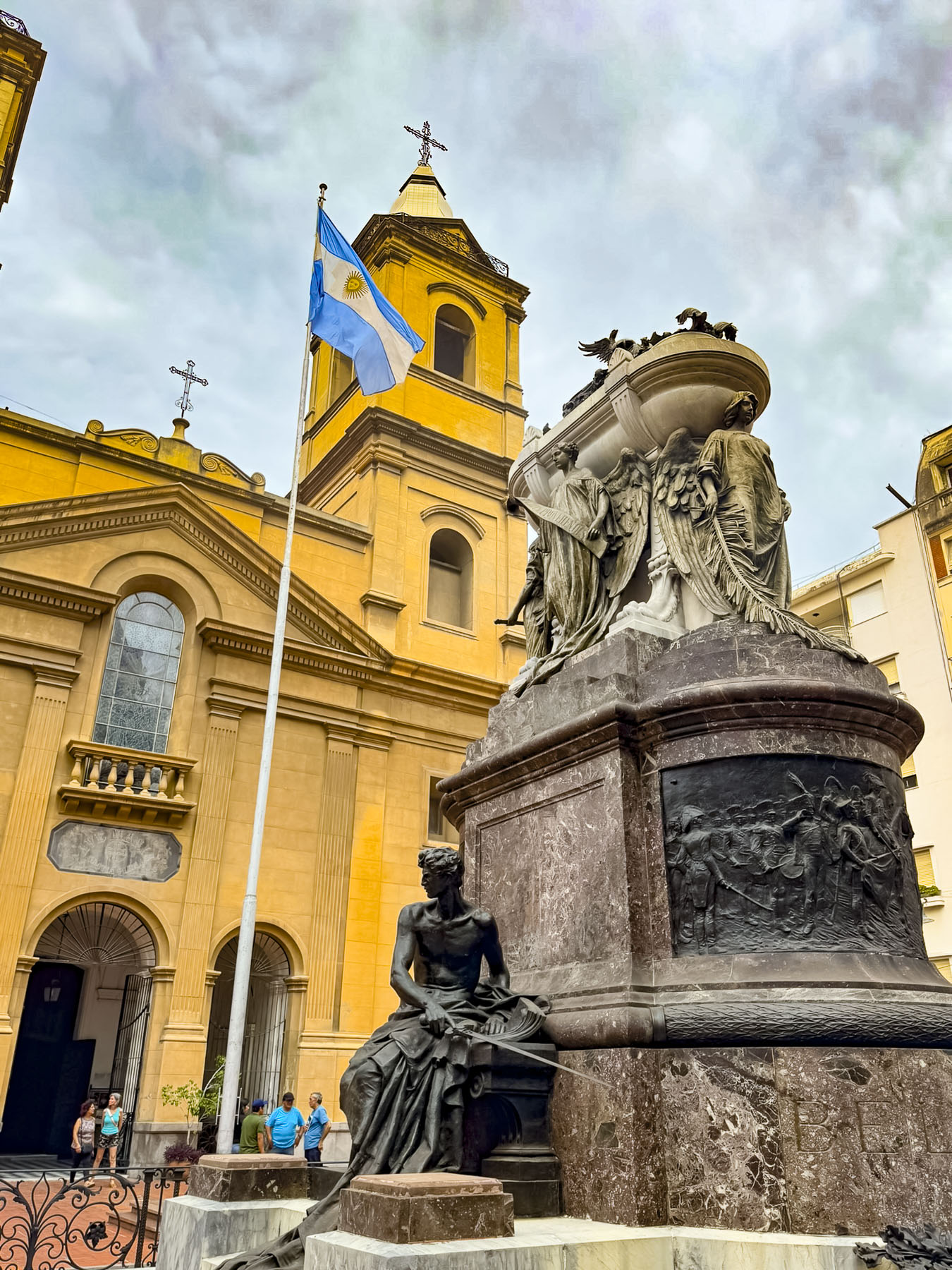
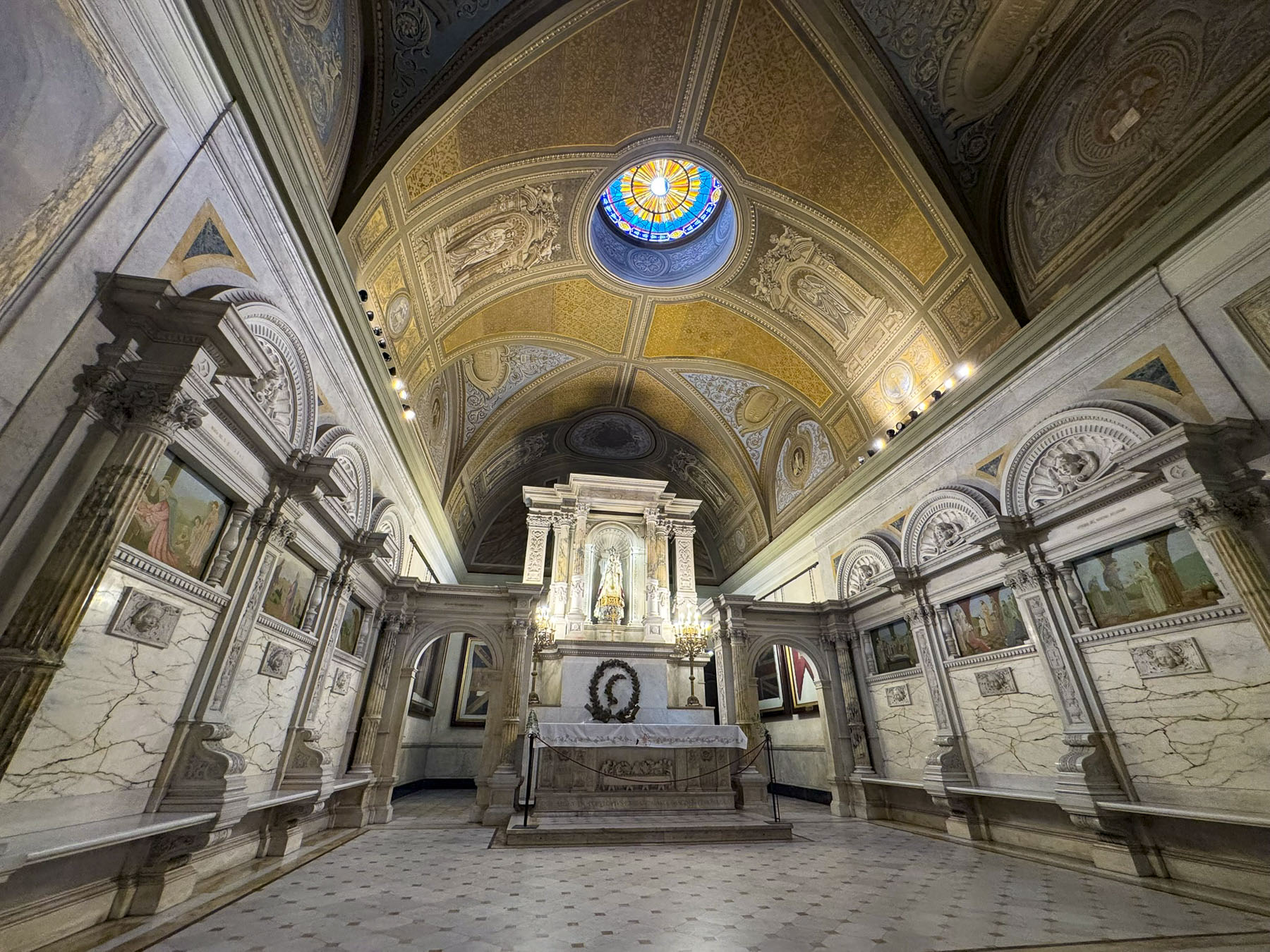
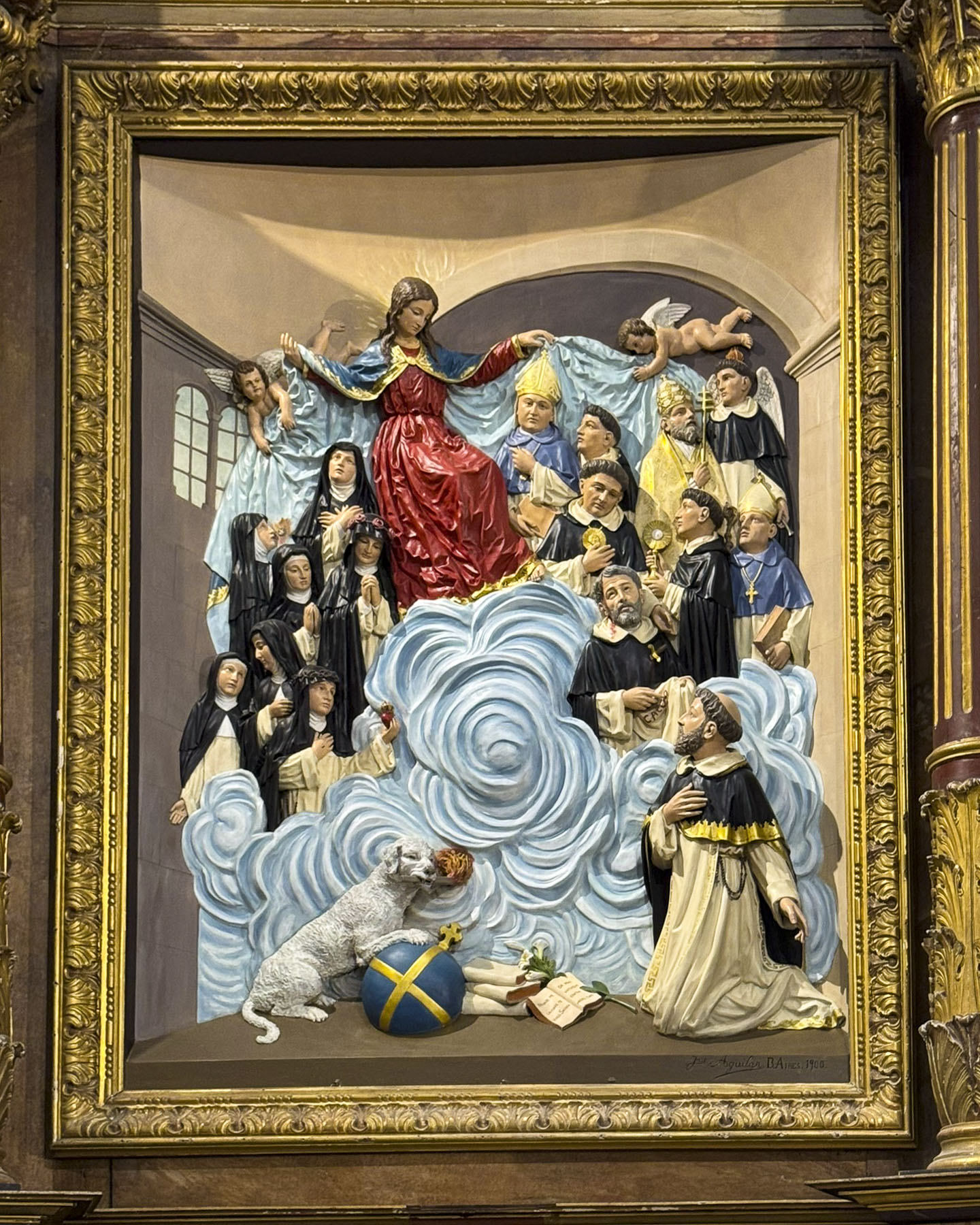
Along the way the ornate mausoleum of General Manuel Belgrano stood beneath the towers of Basílica Nuestra Señora del Rosario. The church was constructed in 1753 and British soldiers sought sanctuary here after a failed invasion of the city in 1807. General Belgrano was one of the founding fathers on Argentina’s independence and is also credited with designing the country’s flag.

The Mercado San Telmo was our destination for lunch. It is a cavernous hall set in an 1897 building that resembles a Victorian era train station with an ornate iron superstructure supporting a glass roof.  The hall’s traditional produce stands, butchers and bakers, now share the space with takeaway restaurants, and antique stalls. But it was crazy with activity on a Sunday afternoon, and we vowed to return if we had the chance. Instead, we ate at Havanna, a small café chain across Buenos Aires, that we had eaten at the day before in Palmero Soho, and enjoyed.

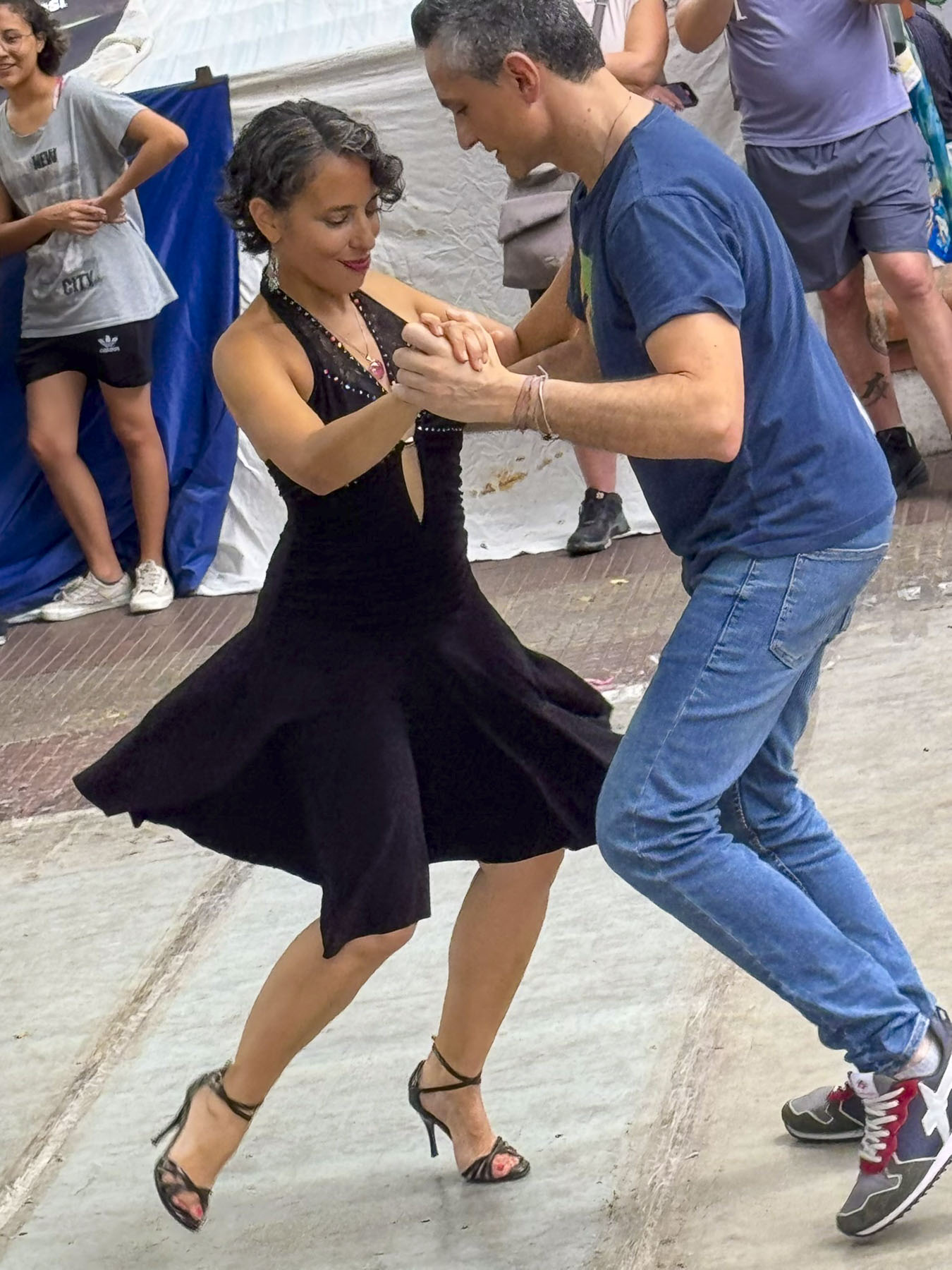
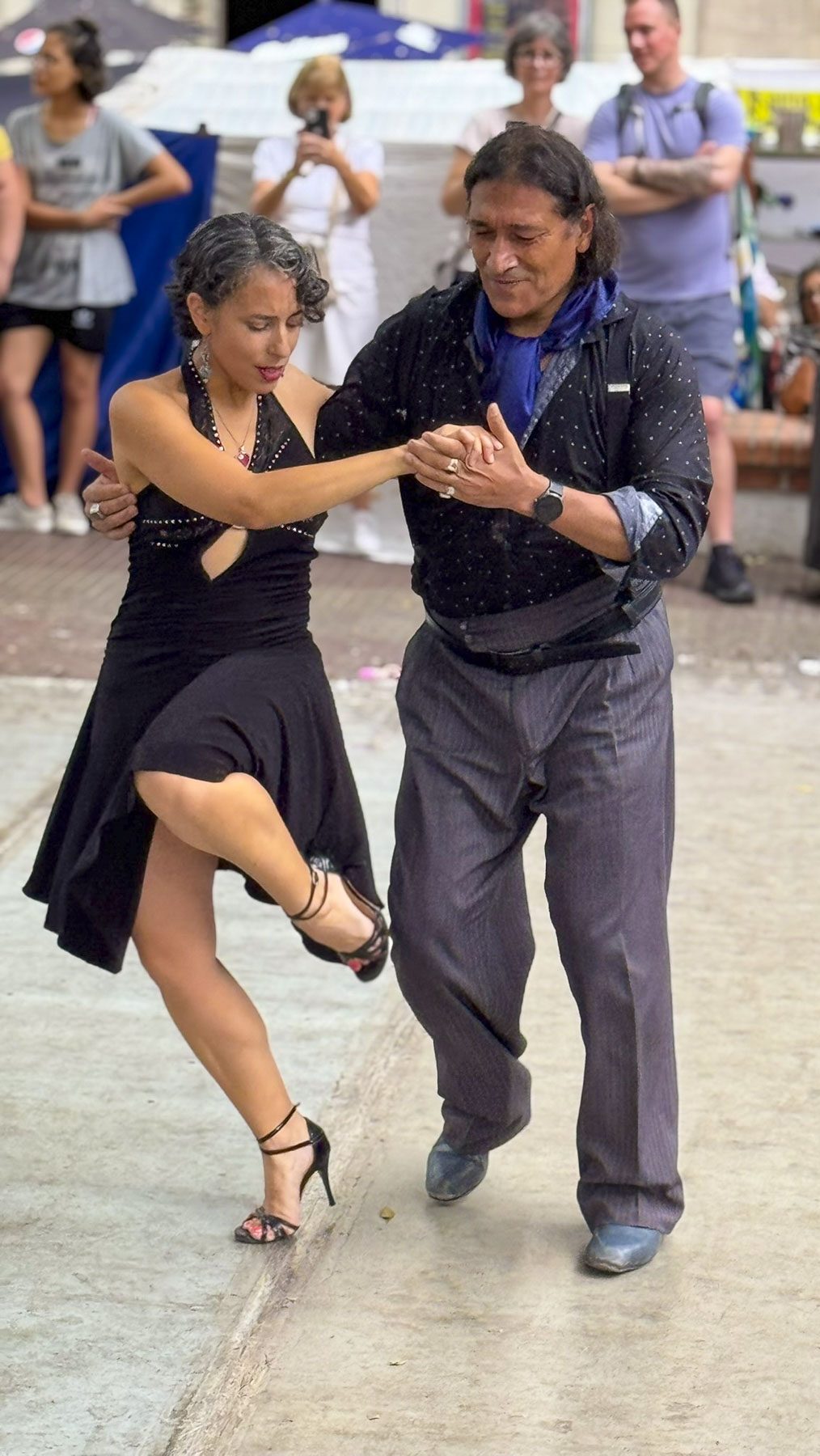
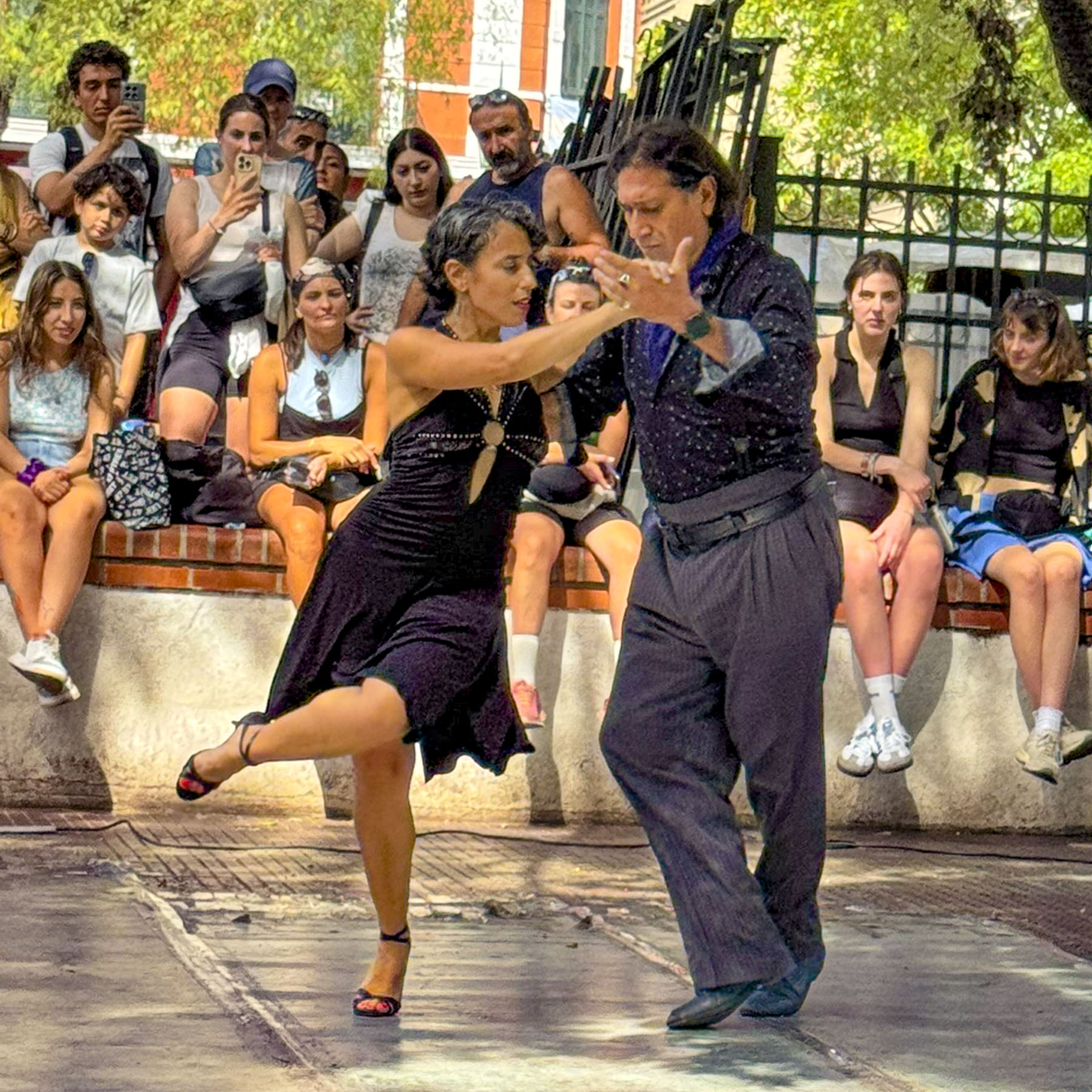
Tango dancers were mesmerizing a crowd with their graceful twists, turns, dips, and kicks at the Plaza Dorrego. Resting between dances, they encouraged folks to come forward and dance too. It was a thoroughly enjoyable afternoon, with a vibe totally different from the craft market in Retiro, and the shaded lanes of Palmero. Every August the city hosts the Buenos Aires Tango Festival & World Cup, a two weeklong dance-off, with concerts and shows where over 400 couples from around the world compete for the top spots in different categories.

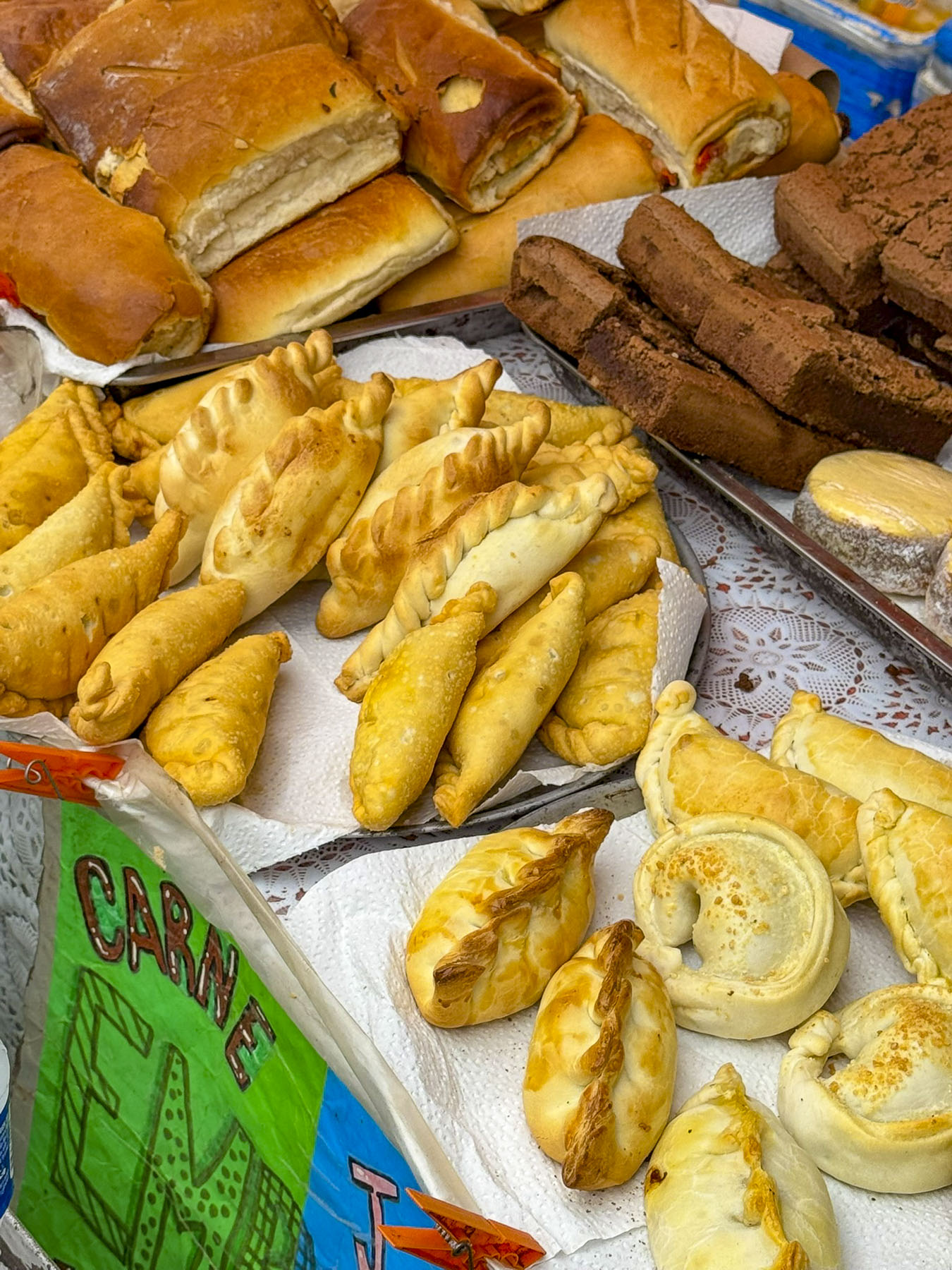
The next day a rainy morning finally cleared as we were on our way to a three hour cooking class to learn how to make those savory pastry meat-filled turnovers called empanadas, and alfajores, a melt in your mouth layered shortbread-like cookie filled with dulce de leche.

Our hosts Tomas and Lala graciously welcomed nine of us into their home; we were from France, Norway, Switzerland, and the United States. The other participants, like us, we learned after introductions all around, were snowbirds escaping a cold northern winter.

Tango music played softly in the background as Tomas divided us into three groups of 4, 2 and 3, the odd man out joining Donna and me. It was very well organized, and Tomas led us through the mixing of ingredients and made sure we added just the right amount of water so the dough was kneadable, but not sticky. Everyone cut their balls of dough and rolled them out into taco size discs, not too thin or too thick. Lala provided a meat filling. The hardest part was crimping the edges of the dough together to seal in the filling. The gal next to us was very good at it and created bakery worthy pockets. The three of us had various aesthetic results, that would improve with practice. Brushed with an egg white, trays of empanadas were put into the oven to bake. The cookie batter was also quite easy to make. We sipped some mate (a traditional herbal drink with lots of caffeine) and got to know our tablemates as we waited for the empanadas. We can see why people like mate (pronounced mah-tay) but I think for us it would be an acquired taste. The empanadas were tender and tasty, though it was obvious which ones my fingers had molded, as they oozed from some thin spots in the crust. This was the first cooking class we’ve ever taken during our travels and found the whole experience, along with the shared camaraderie, very enjoyable.

The next morning, we pulled our luggage behind us as we strolled down Calle Florida, a 10 block long pedestrian walkway in the center of Buenos Aire’s shopping district that runs from the Plaza General San Martín to Plaza de Mayo. It was a very pleasant lane centered with rows of young shade trees, and intermittent sidewalk cafes along the edges. The Galerías Pacífico, an upscale glass domed shopping complex, was our destination.

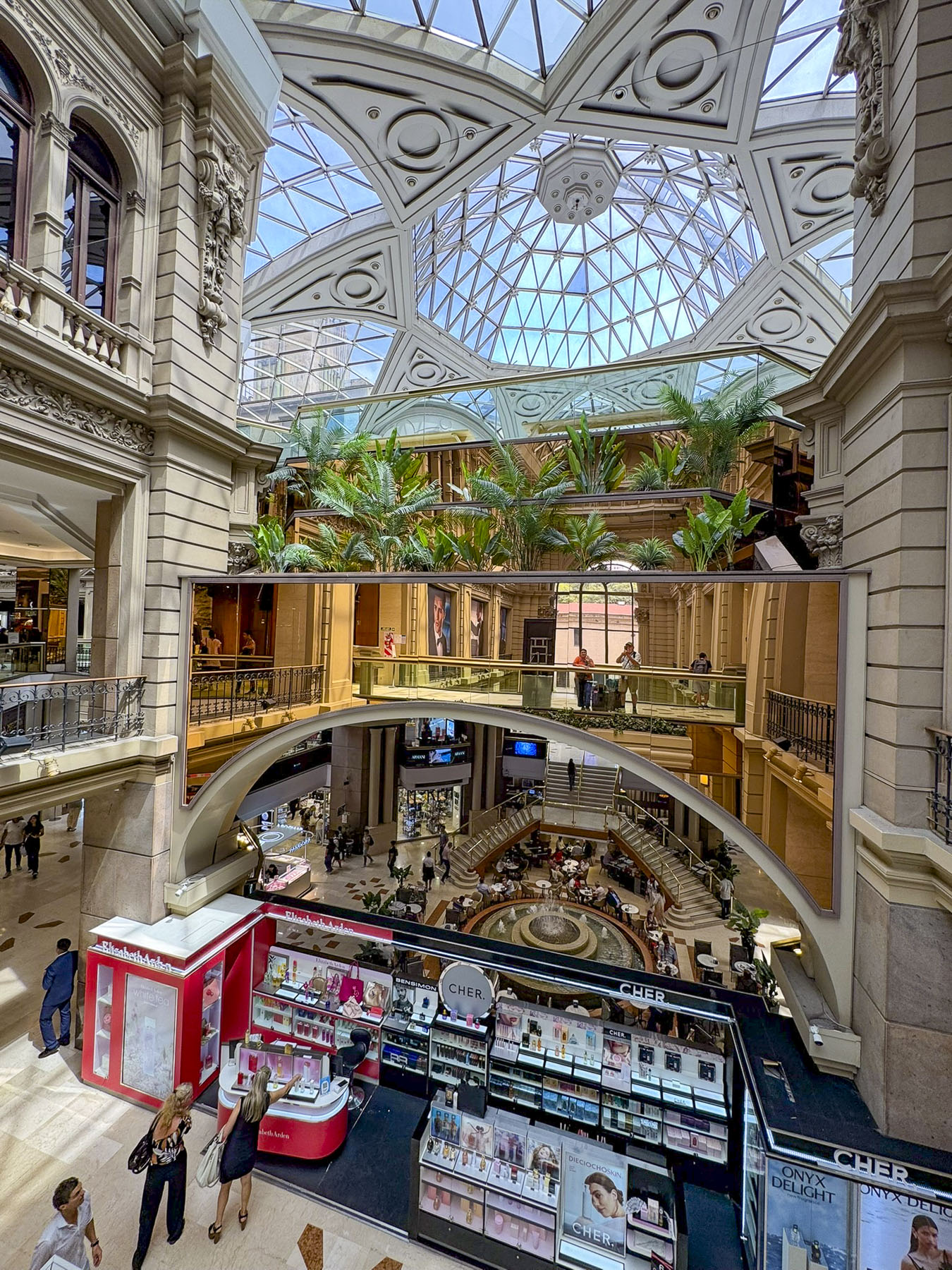
With architectural inspiration taken from the Vittorio Emmanuelle II galleries in Milan, the 1889 building was designed to be a shopping experience akin to the Bon Marche stores in Paris. But a long economic recession in Argentina during the 1890s and early 1900s nixed its realization and the gallery area was used as part of the National Museum of Fine Arts, while the Ferrocarril Buenos Aires al Pacífico acquired part of the building for offices. The company’s presence eventually led it to being called the “Edificio Pacífico,” (Pacífico Building).

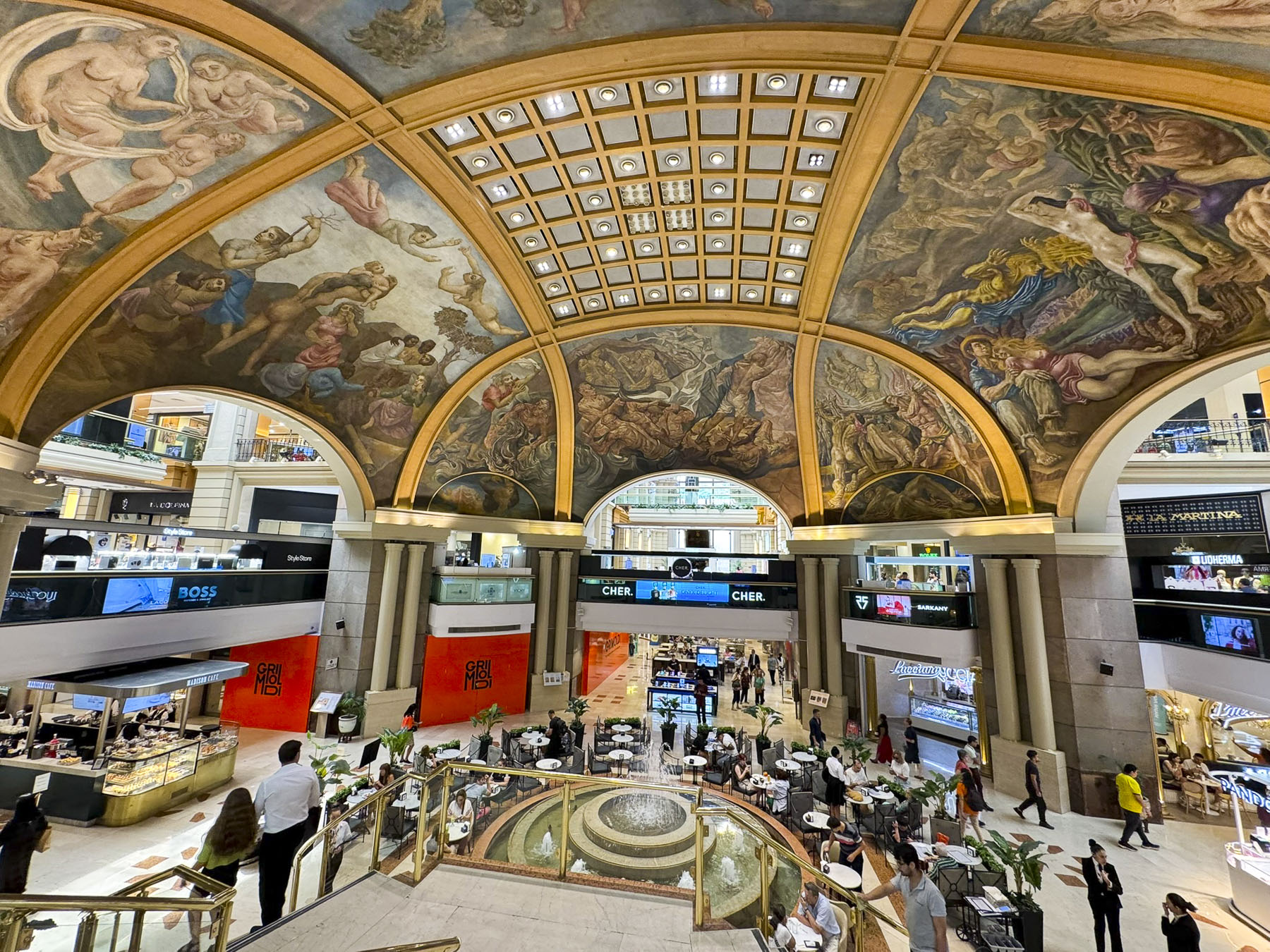
The famous domed lower level over what is now the food court was constructed during renovations in the 1940s and embellished with twelve spectacular murals by the artists Lino Eneas Spilimbergo, Antonio Berni, Juan Carlos Castagnino, Manuel Colmeiro, and Demetrio Urruchúa.

A hundred years later a 1990s renovation finally covered the galleries with a glass ceiling and the “Galerías Pacífico,” became the flagship of Buenos Aires’ shopping district. We really are not into mall shopping, but this is very nice, and an architecturally and culturally interesting spot that attracts a diversity of folks. It was the perfect spot for our “walk a little then café,” break before having an ice cream bar decorated with Lionel Messi’s blue and white uniform.  The Buquebus ferry terminal was only a short walk away for our crossing back to Uruguay and our flight home.

Buenos Aires is a sprawling city with 48 different neighborhoods and three million people. It is a great destination, and we only scratched the surface of the multitude of places to visit, and things to do within this vibrant city. In hindsight, we could have stayed several more days to explore the museums and government buildings, based ourselves in the Palermo neighborhood, and used the subway to get around.

Till next time,

Craig & Donna

Montevideo: Feria, Murals & Carnaval – The Antidote for our North America “Winter Blues.”

A clearing storm covered Uruguay’s Atlantic Coast as we landed at Carrasco International Airport on the outskirts of Montevideo. We were ten minutes into our forty-minute Uber ride into Ciudad Vieja, the old town section of Montevideo, when the masts of several catamarans poked above the tree line that obscured our view of the oceanfront. Our driver proudly boasted that the country has nearly 660km (410mi) of pristine beach-covered coastline along the Río de la Plata and the South Atlantic Ocean. But the real pride and joy of Montevideanos is La Rambla of Montevideo, a wide coastal esplanade that runs for 22km (14mi) along the city’s waterfront, “one of the longest continuous sidewalks in the world.”

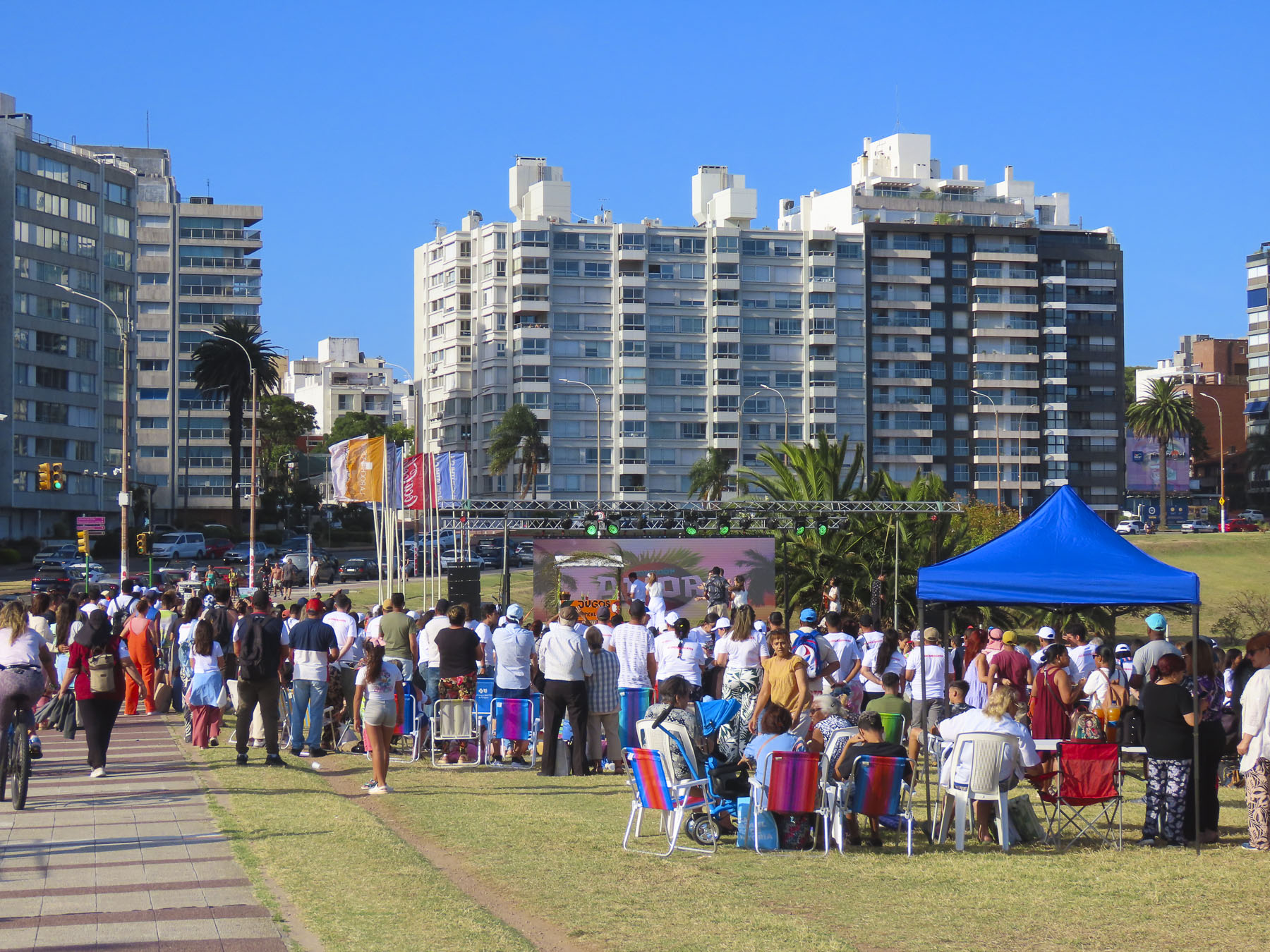
Our ride into the city soon started to follow La Rambla’s serpentine route along the coast, past folks, at the end of the workday, flocking to its breezy shoreline to enjoy all sorts of activities from rollerblading to kite surfing. Several beach areas also had bandstands where musicians were drawing good size audiences. Lovers snuggled on the seawalls, amidst swimmers emerging from the ocean, games of soccer, joggers, aerobic classes, personal trainers, cyclists, sun worshippers, and walkers carrying their ubiquitous Mate carryalls. Enjoying socializing with friends on La Rambla is an important part of life in Uruguay’s capital, where the city’s 1.4 million residents, nearly 40% of the country’s population, have an open invitation to “The Outdoor Living Room of Montevideo.” Come sunset there seemed to be collective quieting as folks stopped to watch the sun sink below the horizon. We could already tell that this could be the antidote for our North America “winter blues.”

The next morning, we were up before sunrise to stroll along the oceanfront, hoping to catch the first rays of sunlight cast across the city. From our room at Hotel NH Montevideo Columbia, we could see seven freighters making their way to port, and the remnants of an old defensive tower. It was part of the quickly built ramparts that once encircled the citadel soon after the Spanish founded the city in 1726, to thwart Portuguese expansion southward along the coast from Brazil.

Street art and sculptures that were a blur yesterday as we sped by were now full of detail. In some places along the esplanade there were images of dinosaurs on relief plaques implanted into the sidewalk that suggested the region’s fauna 85 million years ago.

We reached Playa Ramirez, a large crescent-shaped beach as the sun was breaching the trees and shining upon the city’s modest skyline. A large group of cyclists preparing for the upcoming Vuelta Ciclista del Uruguay sped by. Two women stood in the water and let the gentle morning waves lap around their ankles as they chatted.

Across from the beach was Parque Jose Enrique Rodó. A large sculpture in the center of the park is dedicated to the Montevideo-born philosopher and essayist, who wrote about Latin America pursuing its own cultural identity and spiritual renewal, and the dangers of unbridled materialism.

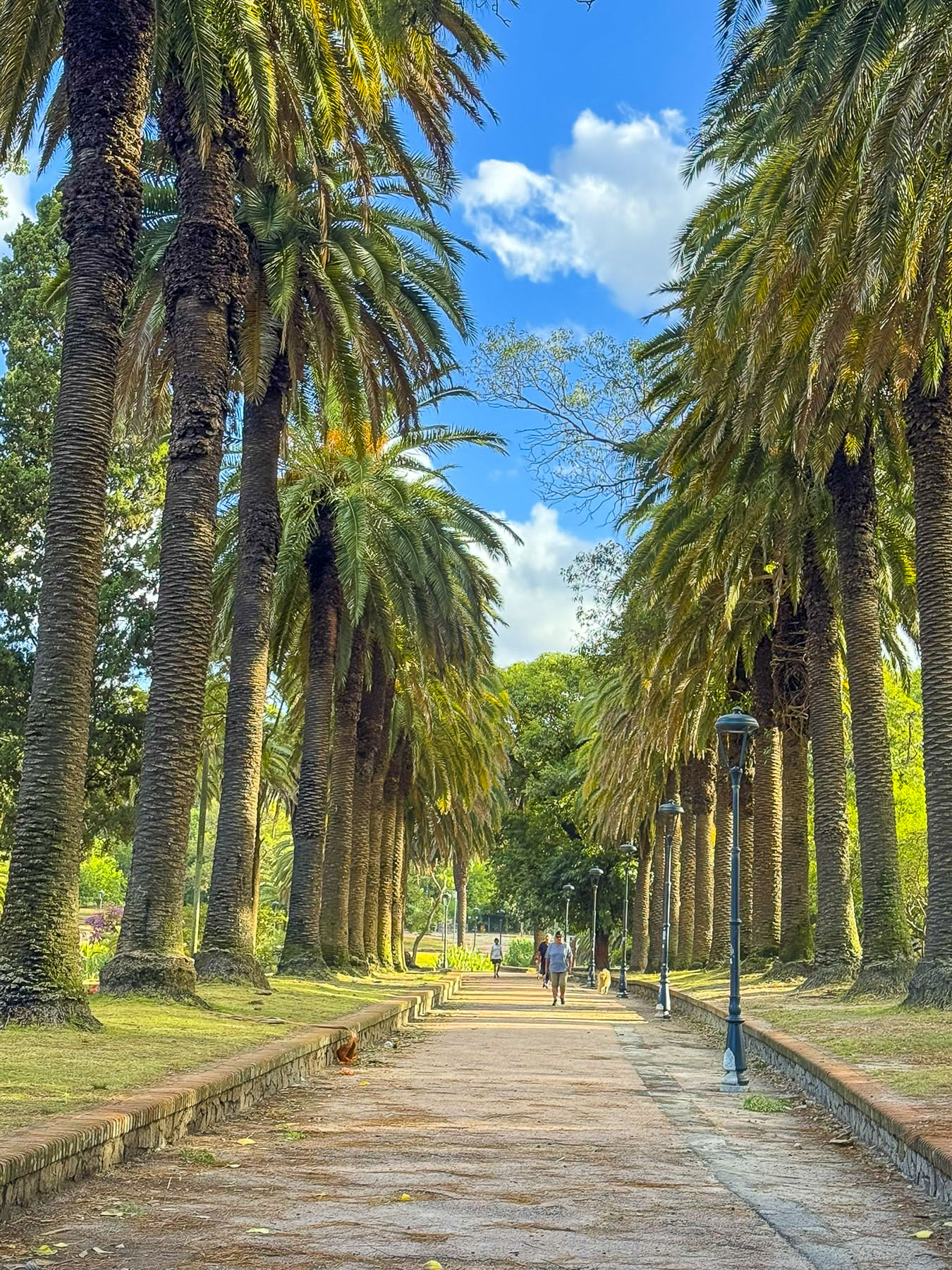
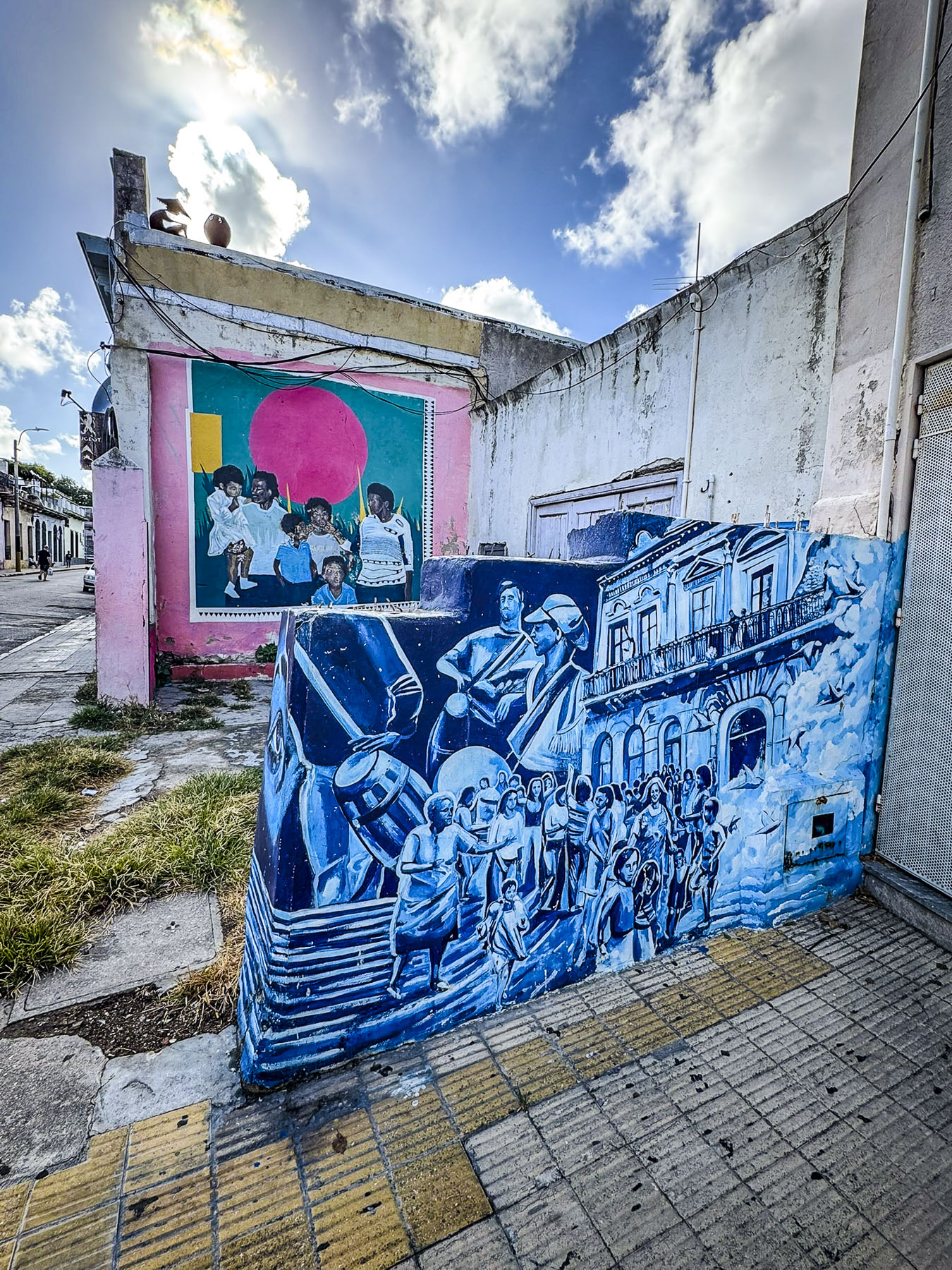
We started our loop back towards the Ciudad Vieja down one of the park’s palm-lined paths and zig zagged our way through barrios full of colorful street murals, and older 1900’s era buildings with interesting architectural details.

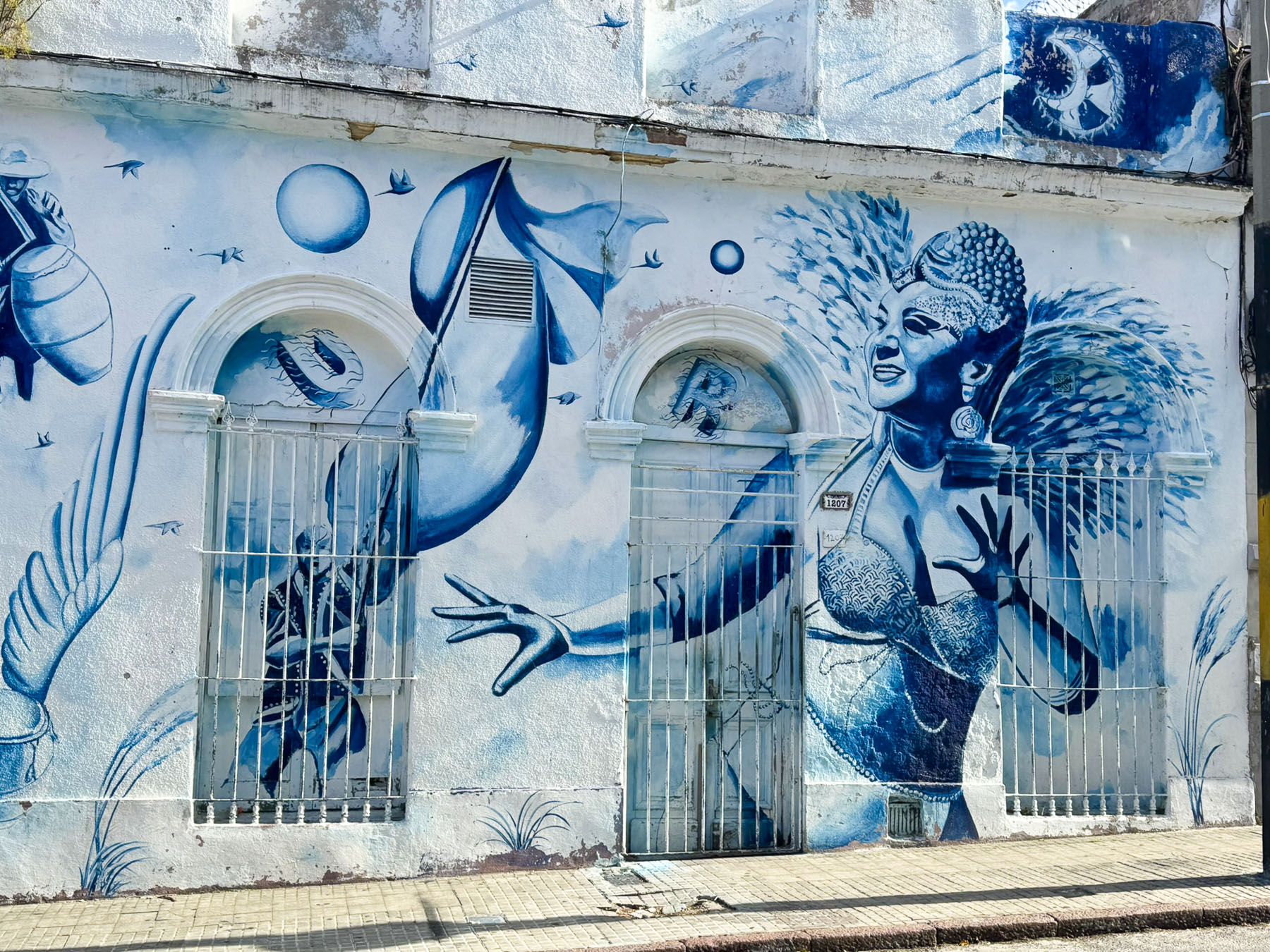
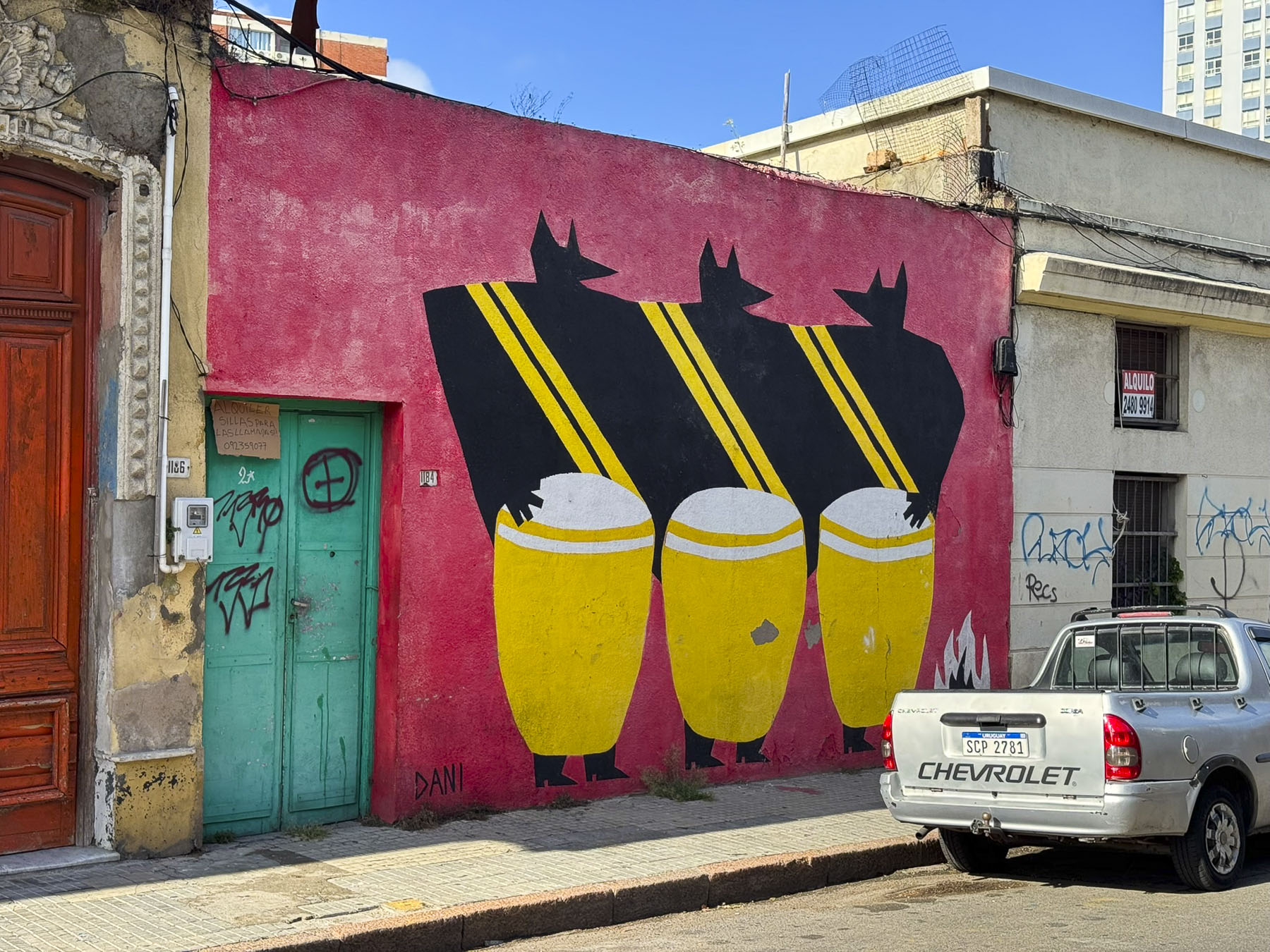
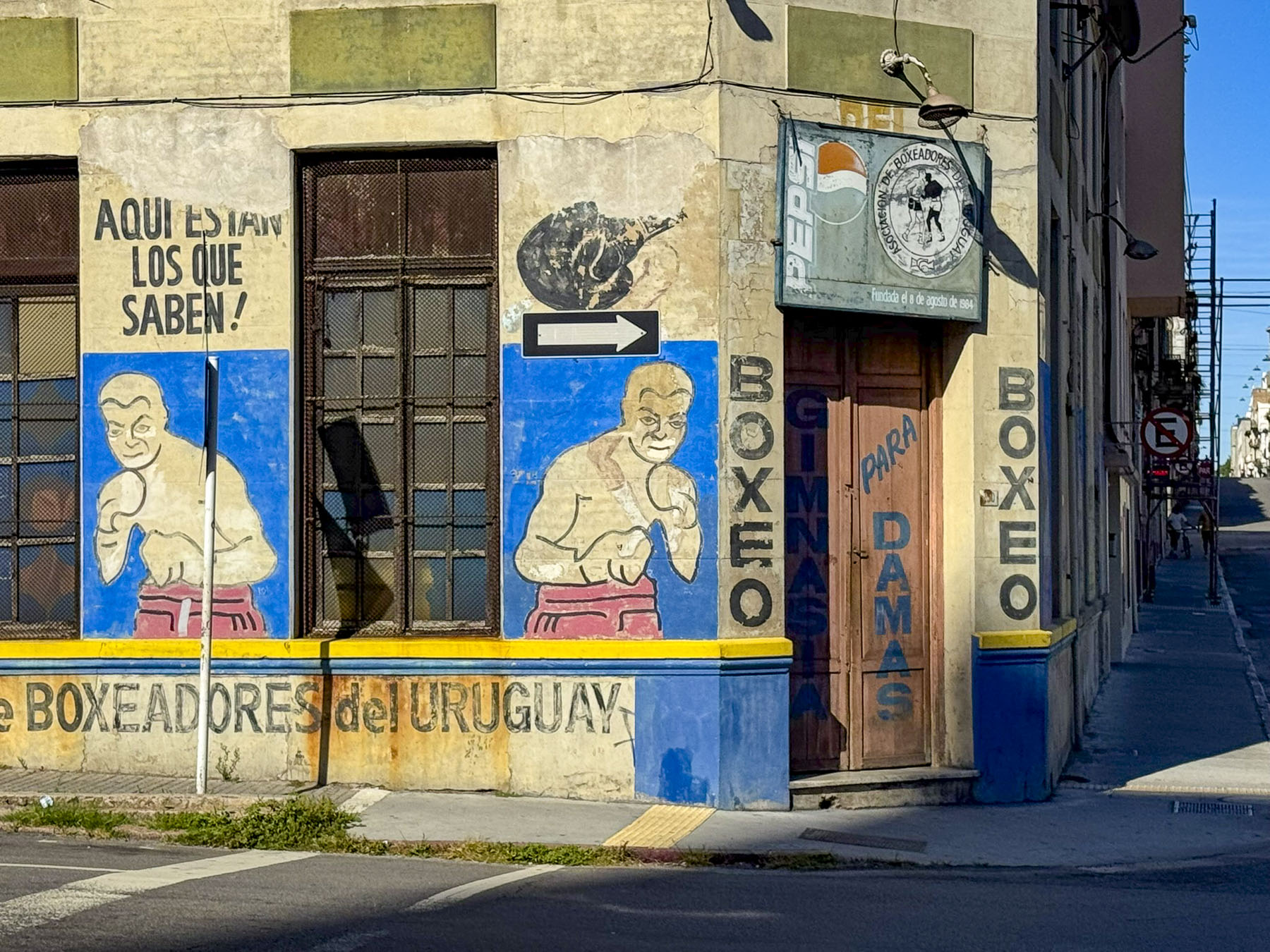
Walking through Barrio Sur along Isla de Flores, bleachers were being set up at the intersections in preparation for one of the last parades of Carnaval. The street was lined with murals dedicated to the local comparsas, large groups of 50-100 candombe drum performers and dancers, who participate in the yearly festival. We spent some time determining a good vantage point for watching the parade later in the week.

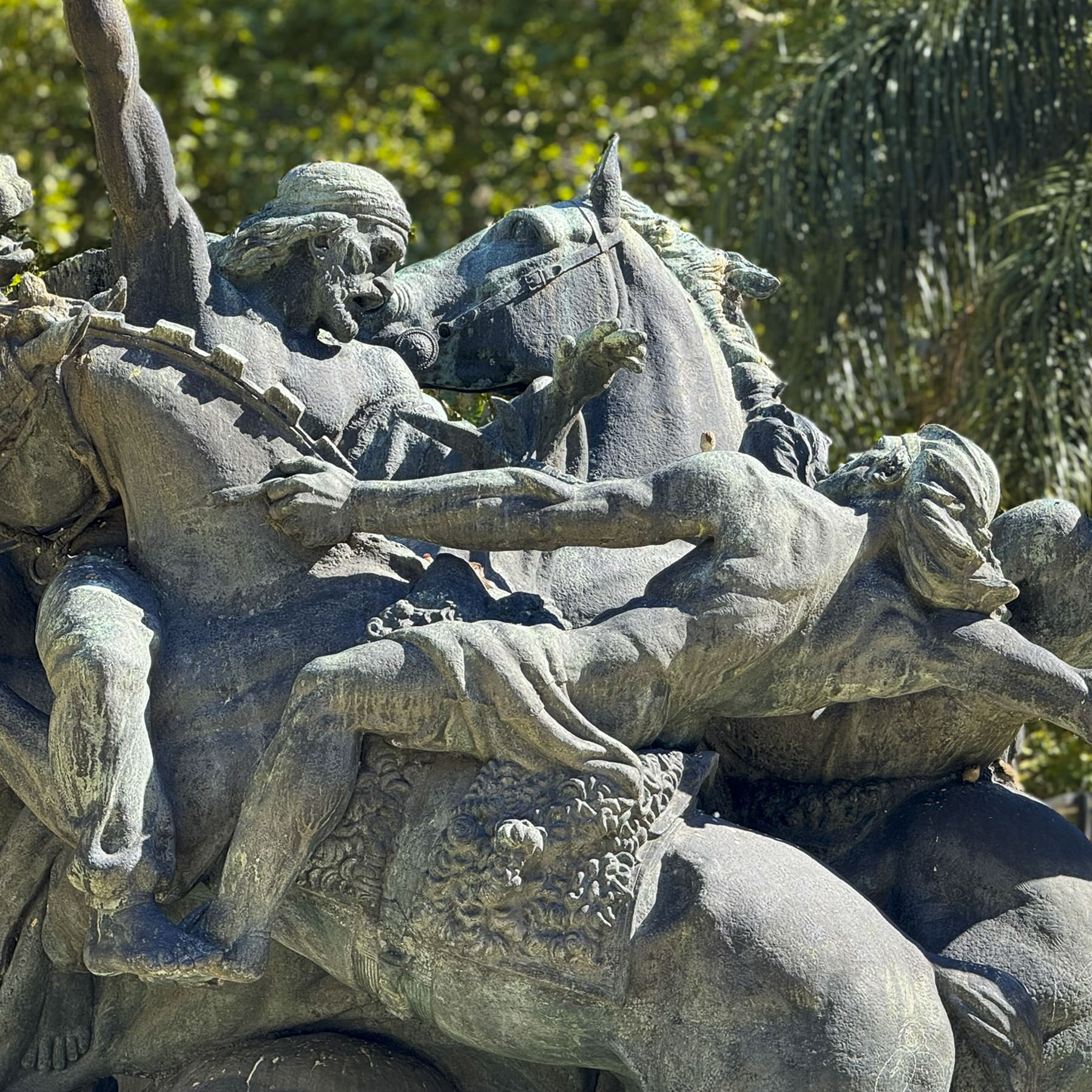
The grand Plaza Independencia was a huge contrast to modest barrios we had walked through earlier that morning. In the park’s center a large equestrian statue stands atop the Masoleum of José Gervasio Artigas, a gaucho, military leader, and revolutionary who inspired Uruguayans to fight against Spanish and Portuguese rule. He is considered the father of Uruguay’s liberation movement, though he did not live long enough to see the country’s independence in 1828.

A vast array of different architectural styles can be seen on the buildings around the plaza, but the most intriguing is the chaotic styling of the 27-story tall Palacio Salvo, which eclectically blends elements of Art Nouveau, Art Deco, Gothic, and Renaissance architecture into its design. The iconic mixed-use building has shops, offices, apartments and the Museo del Tango. It was for a short period of time after its completion in 1928 the tallest building in South America.

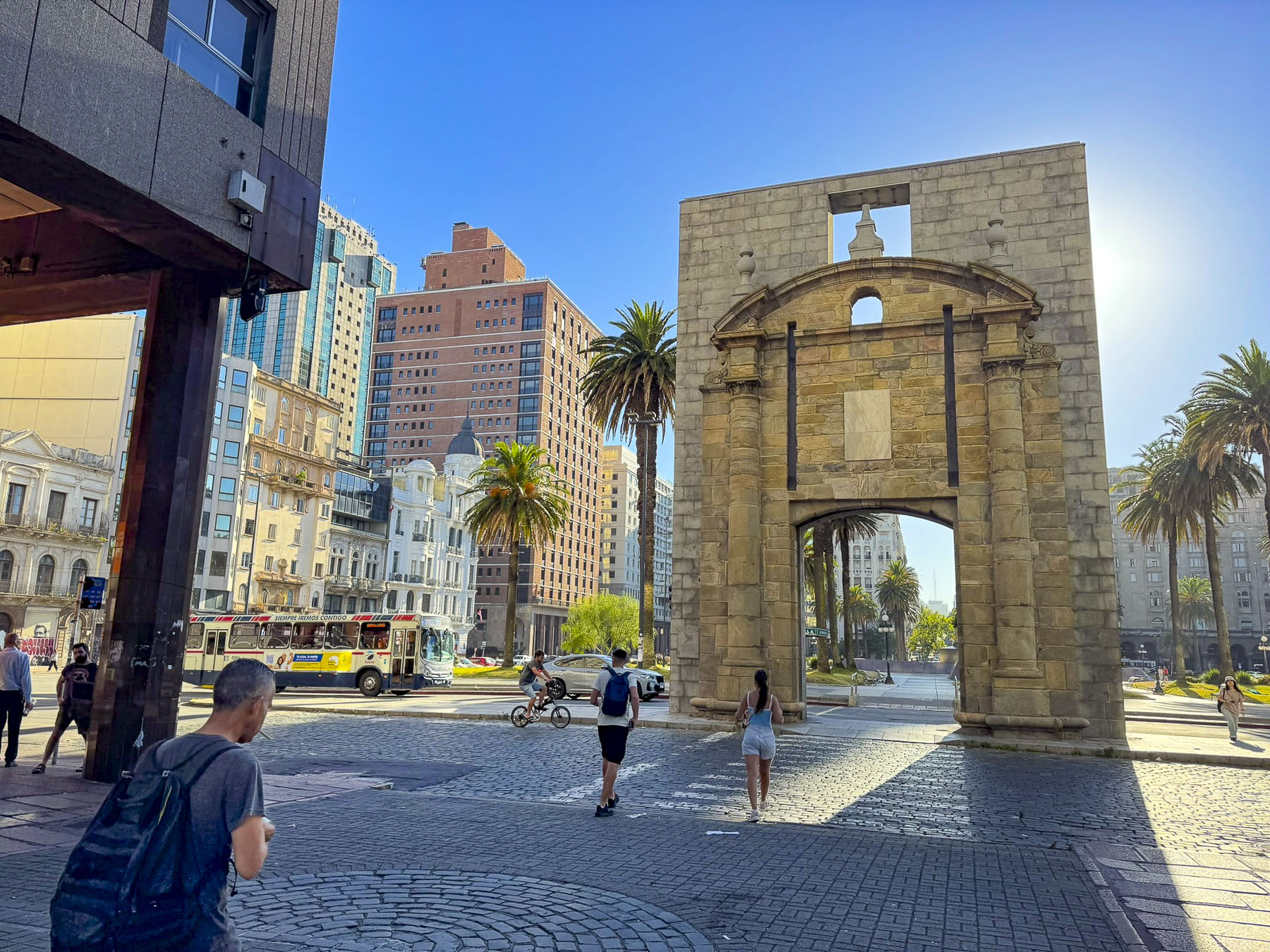
At the opposite end of the plaza the Puerta de la Ciudadela, one of the old gateways into the colonial citadel, is all that remains of a tall stone defensive wall that was 6 meters (20ft) thick, and totally encircled the small peninsula where Spain established its first colony in Uruguay. After Uruguay gained its independence the demolition of the citadel’s ramparts started in 1829, less than 100 years after their construction, to make room for the growing port city’s expansion.

The old gateway opened to Sarandí, the main pedestrian lane that runs from one end of Ciudad Vieja to the other. At the beginning of the lane was Montevideo’s Walk of Fame, where stars of famous visitors to the city, like Nelson Mandela, the Rolling Stones, Enrique Iglesias, and Olga Delgrossi, Uruguay’s beloved singer and tango dancer, were imbedded in the pavement with sun bursts above their names.  Now mid-afternoon, the day had warmed, and the street was full of vendors under colorful umbrellas, selling all sorts of items geared for tourists.

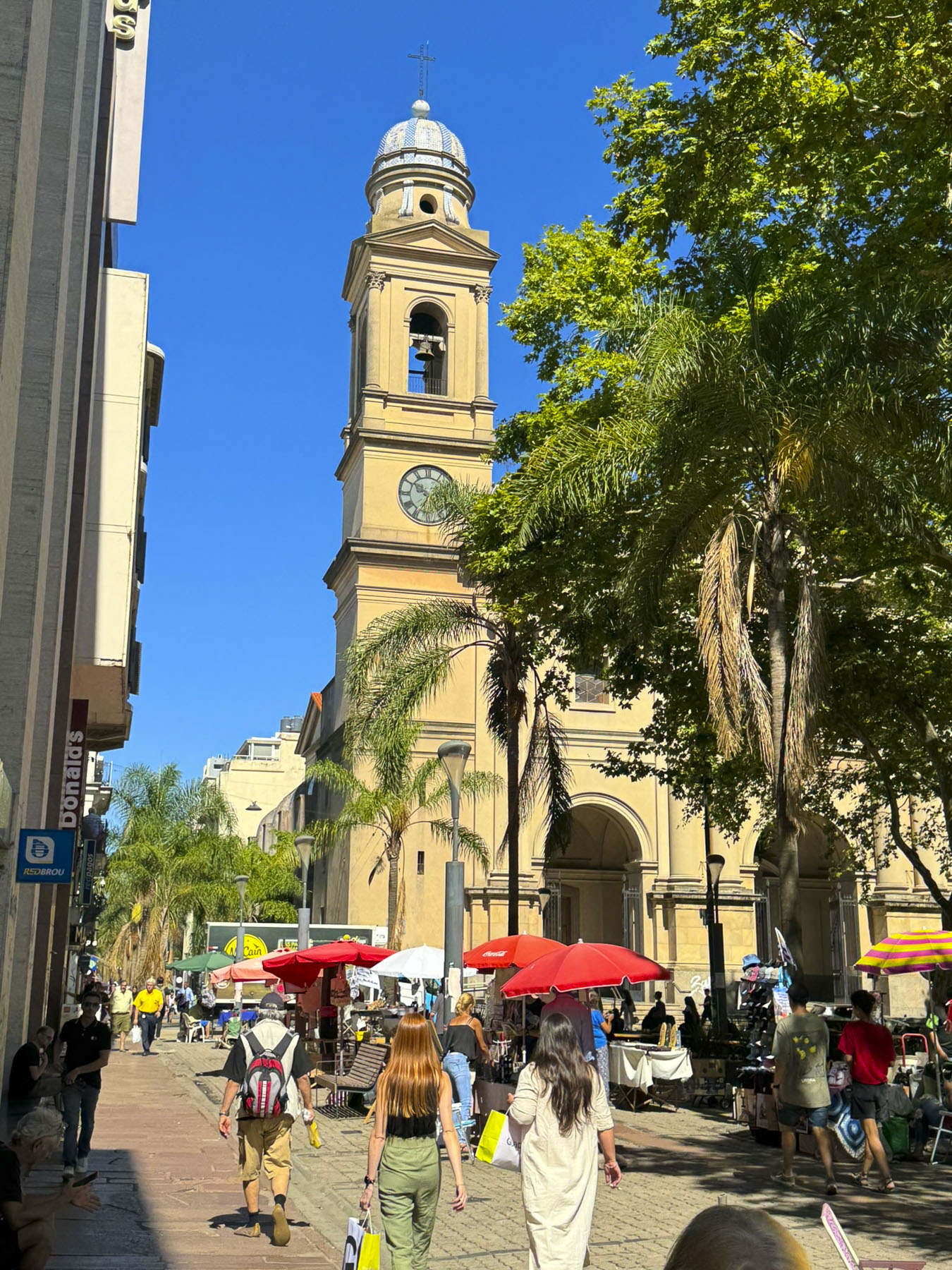
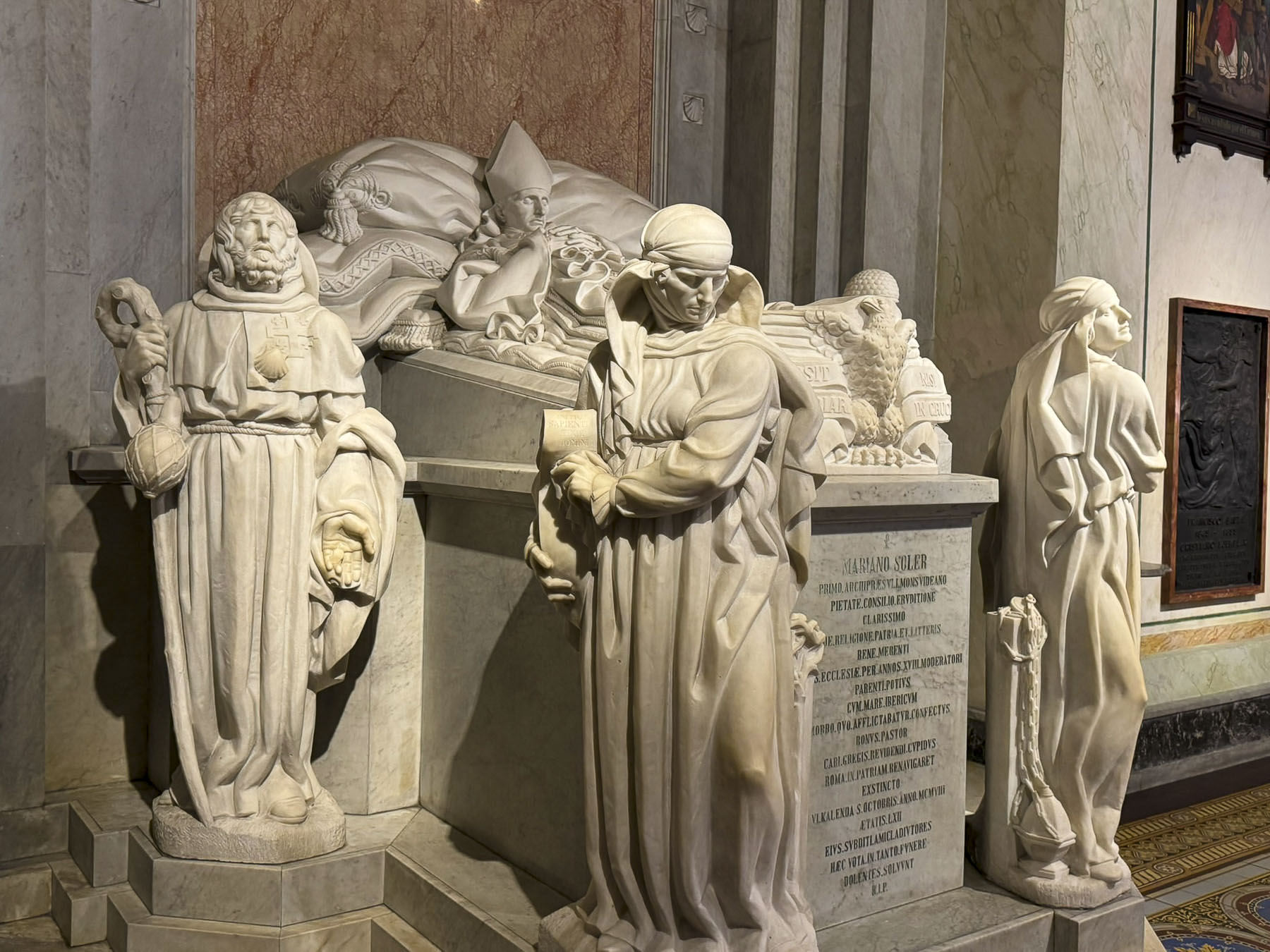
We wrapped up our day’s wandering about at the Montevideo Metropolitan Cathedral, or as it is formally called the Catedral Metropolitana de la Inmaculada Concepción y San Felipe y Santiago.  In 1790 the construction of the cathedral was started to accommodate a growing congregation in the prosperous city, which had outgrown its first smaller brick church, which was built on the same site in 1740. Inside were some very nice pieces of religious art.

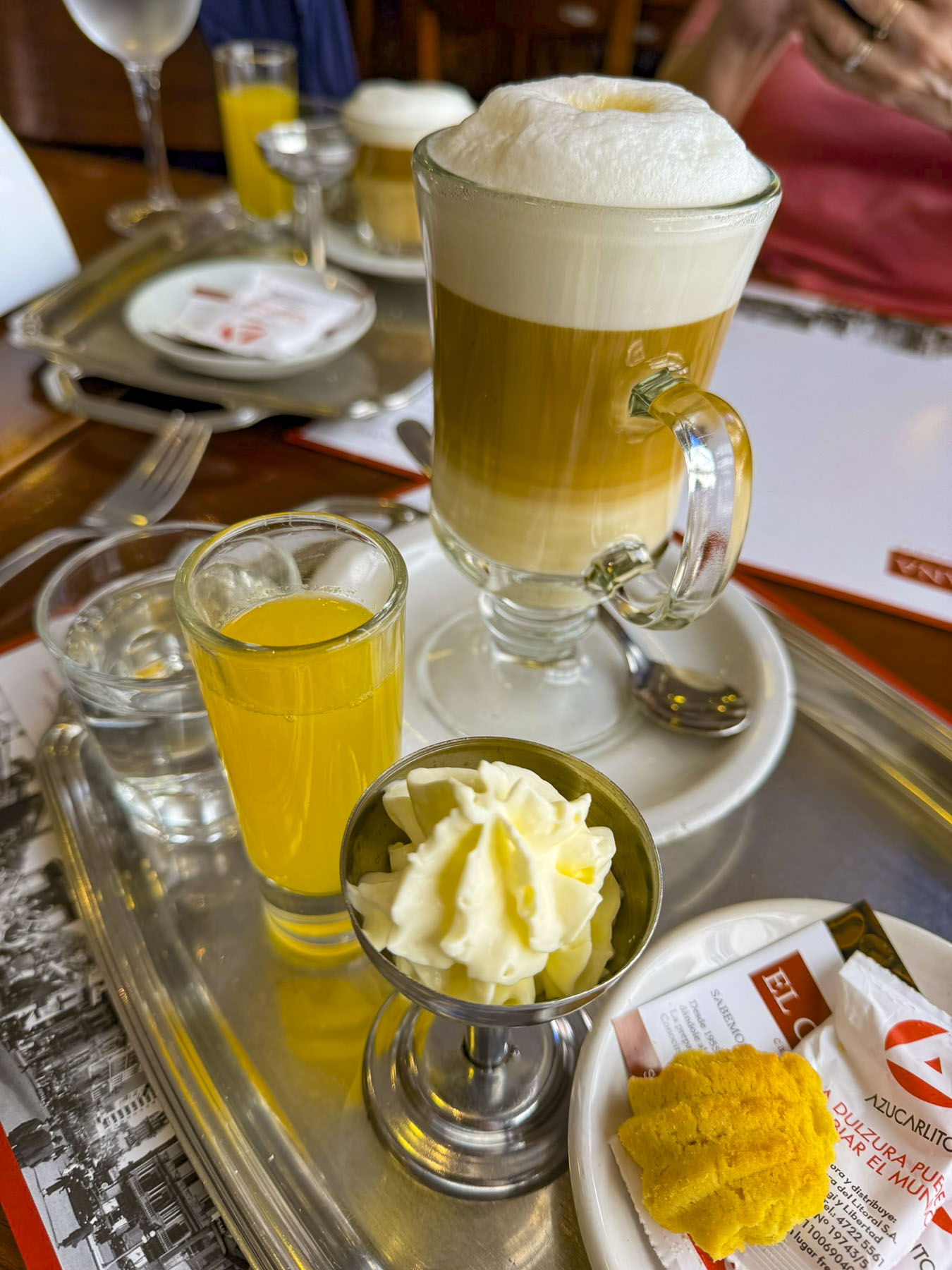
The next morning we continued exploring the old town and watched a wedding party throw rice upon a newly married couple at the Registry Office. We only noticed a sculpture of Montevideo’s version of Romeo and Juliet when a crowd in front of us was pointing up to a balcony. “Our walk a little then café,” routine was satisfied with breakfast at Federación, an artesanal panaderia and café, with tables on the sidewalk and in a small courtyard. It was on the way to several museums we planned to visit, before having a late lunch at one of the steakhouses in the Mercado del Puerto.

Montevideo has over twenty museums that span the spectrum from art and science to tango and carnaval. Around the corner from the café, in a 19th century building, was the Pre-Columbian and Indigenous Art Museum. It is a relatively small museum, but it has an interesting collection of archeological artifacts and an extensive collection of Carnaval masks from across Latin America.

Everything about the South American cowboy can be viewed at the Museo del Gaucho and Currency. It occupies a stately old bank building which in itself is worth poking your head into, but the immense scale of the building overpowers the exhibits of small objects used in the South American cowboy’s everyday life. Many of the fine silver items on display were from the estates of wealthy ranch owners.

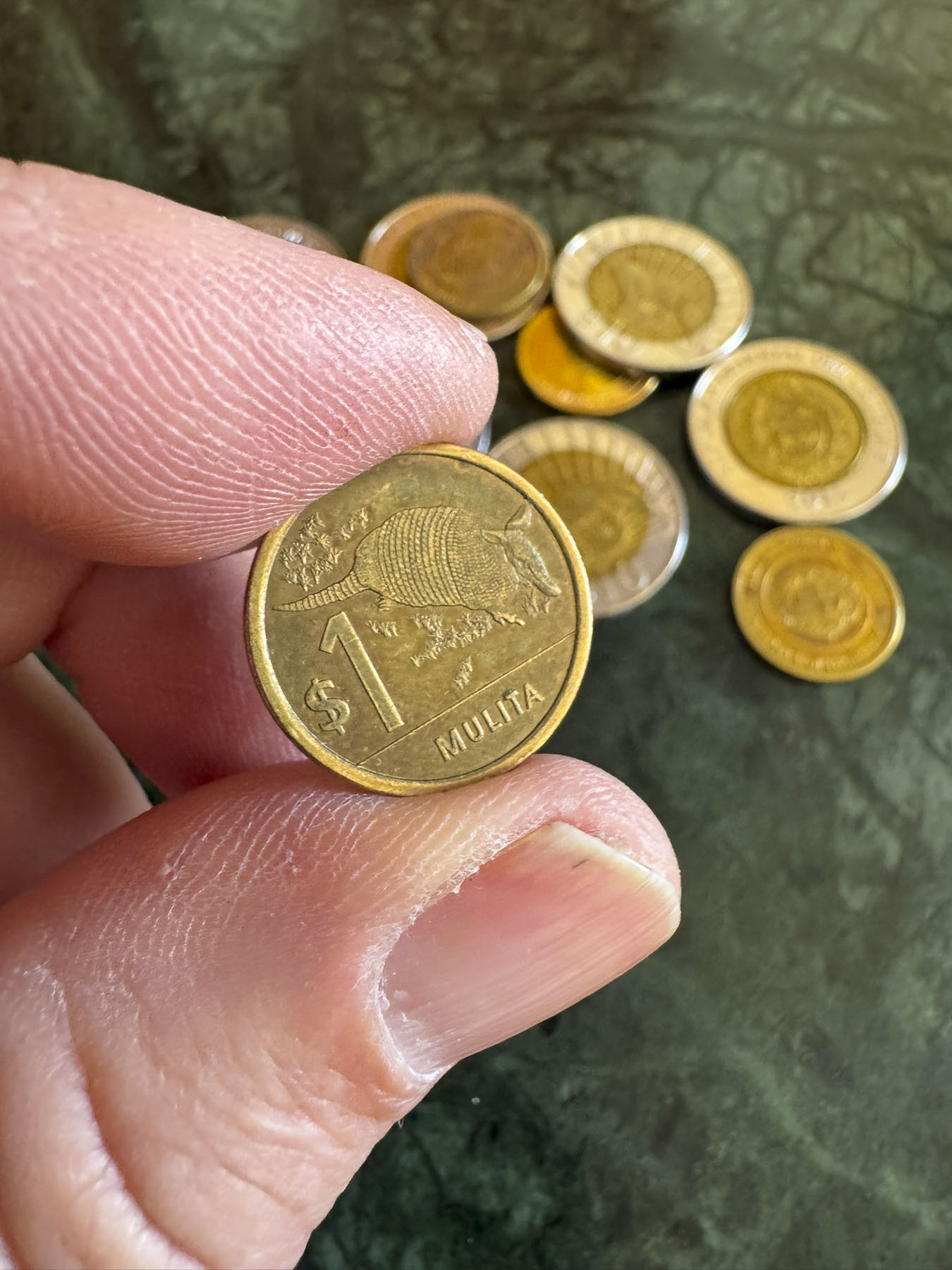
The currency exhibit was okay, but we think you really have to admire a country that puts an armadillo on one of their coins. There was also a collection of coins recovered from the wreck of the Spanish galleon El Preciado, which was sunk in Río de la Plata by pirates in 1792, as it sailed for Spain carrying gold and silver to pay the taxes levied against the South America colonies.

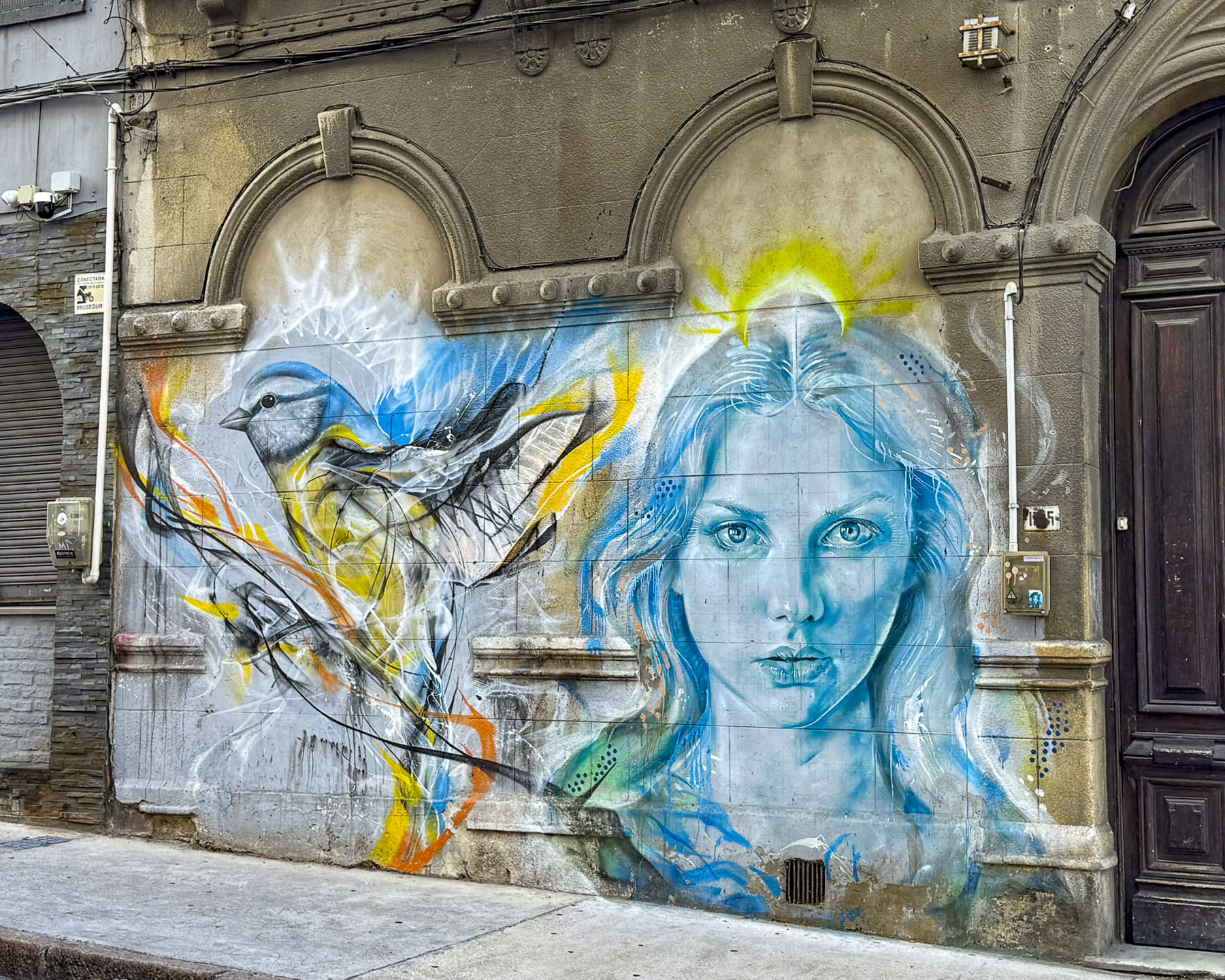
Artistic street murals can be found all across Montevideo and we passed several interesting ones on the way to the Museo de las Migraciones. We really enjoyed this museum as it celebrates the country’s diverse population of its immigrants who contributed to making Uruguay the wonderful place that it is. The exhibits confirm the belief that most folks have more in common than what separates us.

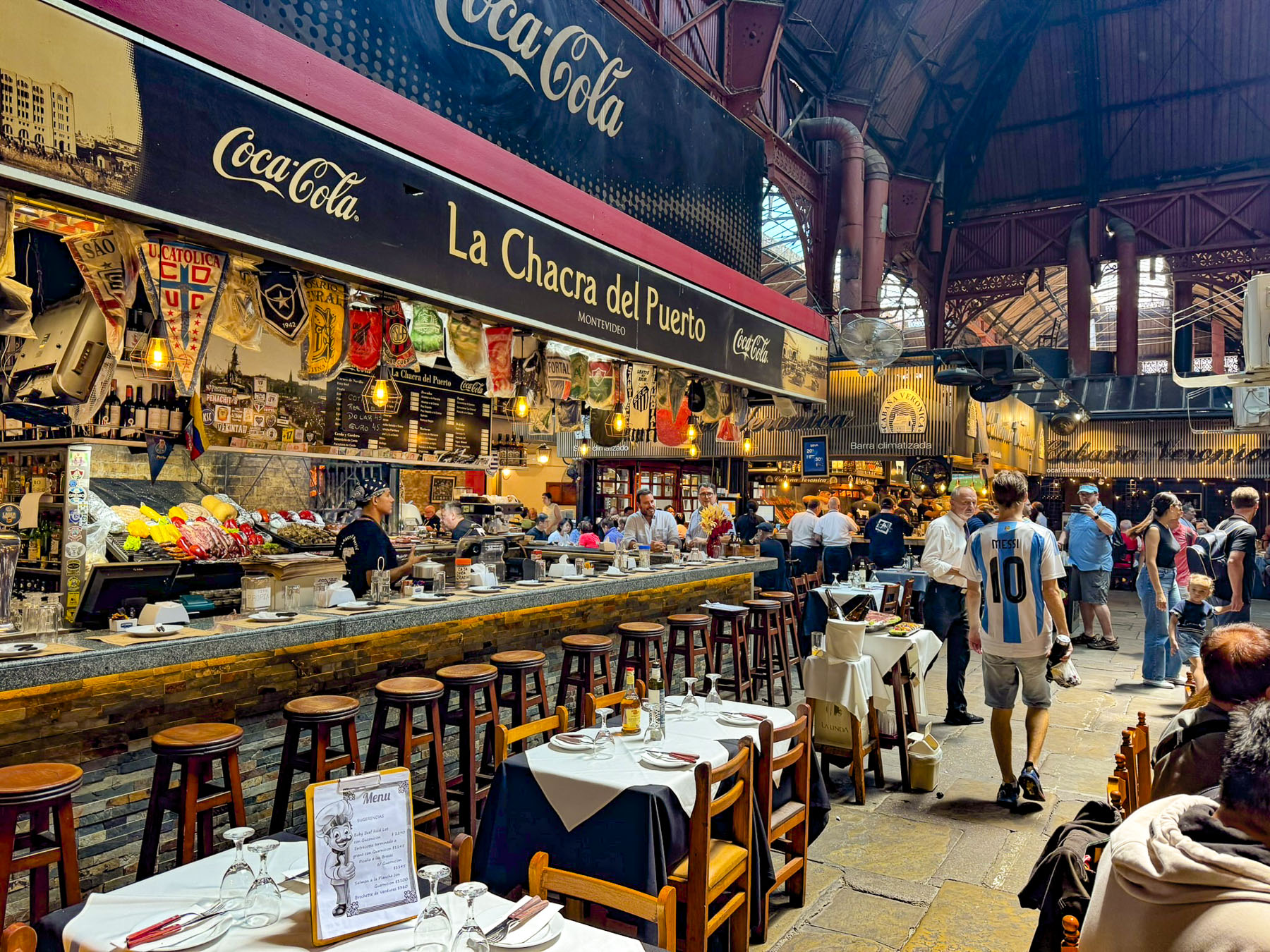
It was a long walk back towards the Mercado del Puerto. The cast-iron and glass roofed structure was imported from Liverpool, England, and feels a little like a Victorian era train station; it opened for its first customers in 1868. The old port market used to be the central place to buy supplies, fruits, produce, meats, and fish, but has now been gentrified into an atmospheric food hall, where steakhouses reign supreme, and charge a hefty price for being convenient for the cruise ships passengers which disembark at the port. That being said, we enjoyed the ambience of open wood-fired parrillas, and wafting aromas rising from the various kitchens. It was a challenge to choose a restaurant, as all the dishes that waiters whisked by us looked delicious and tempting.

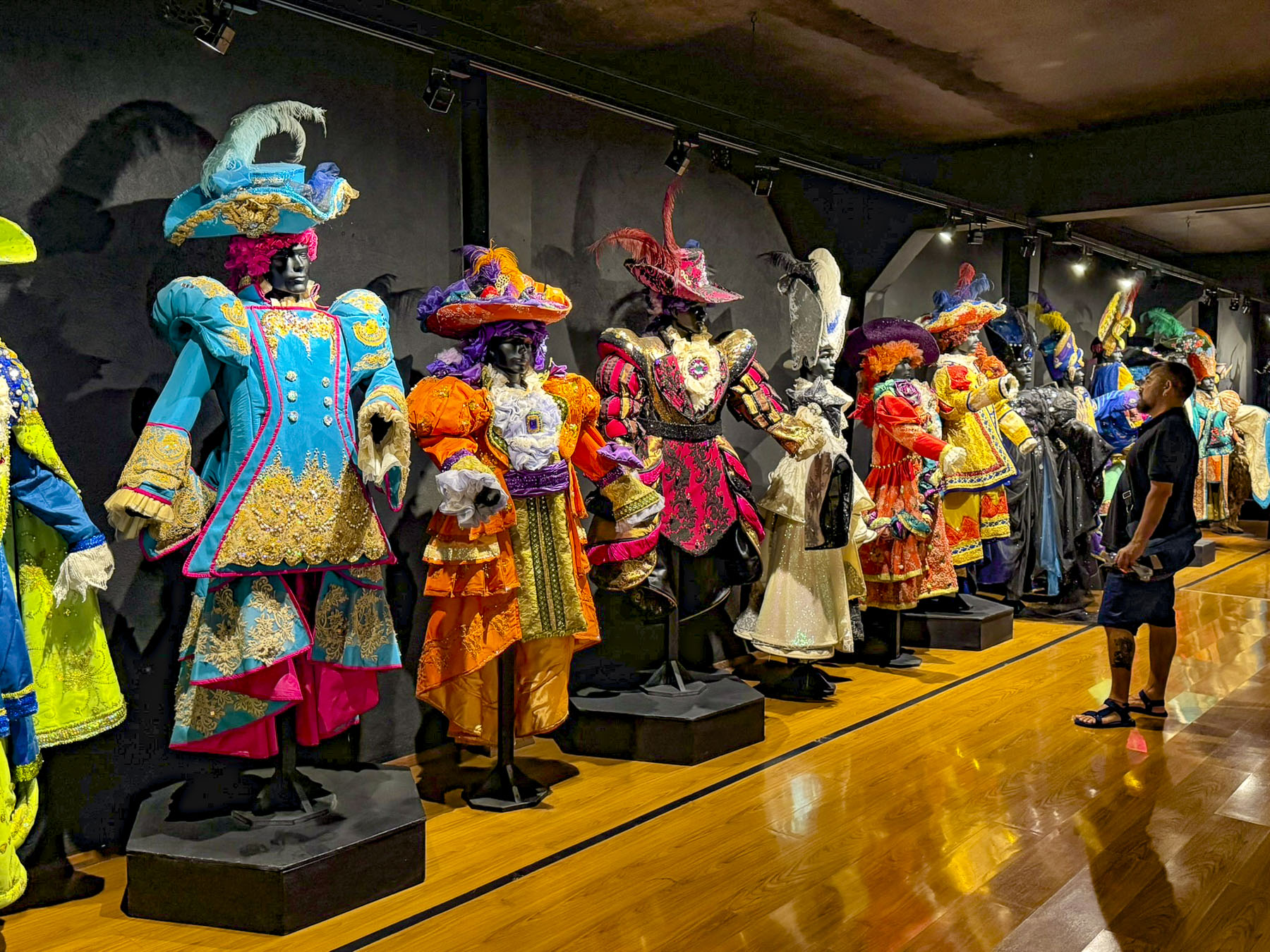
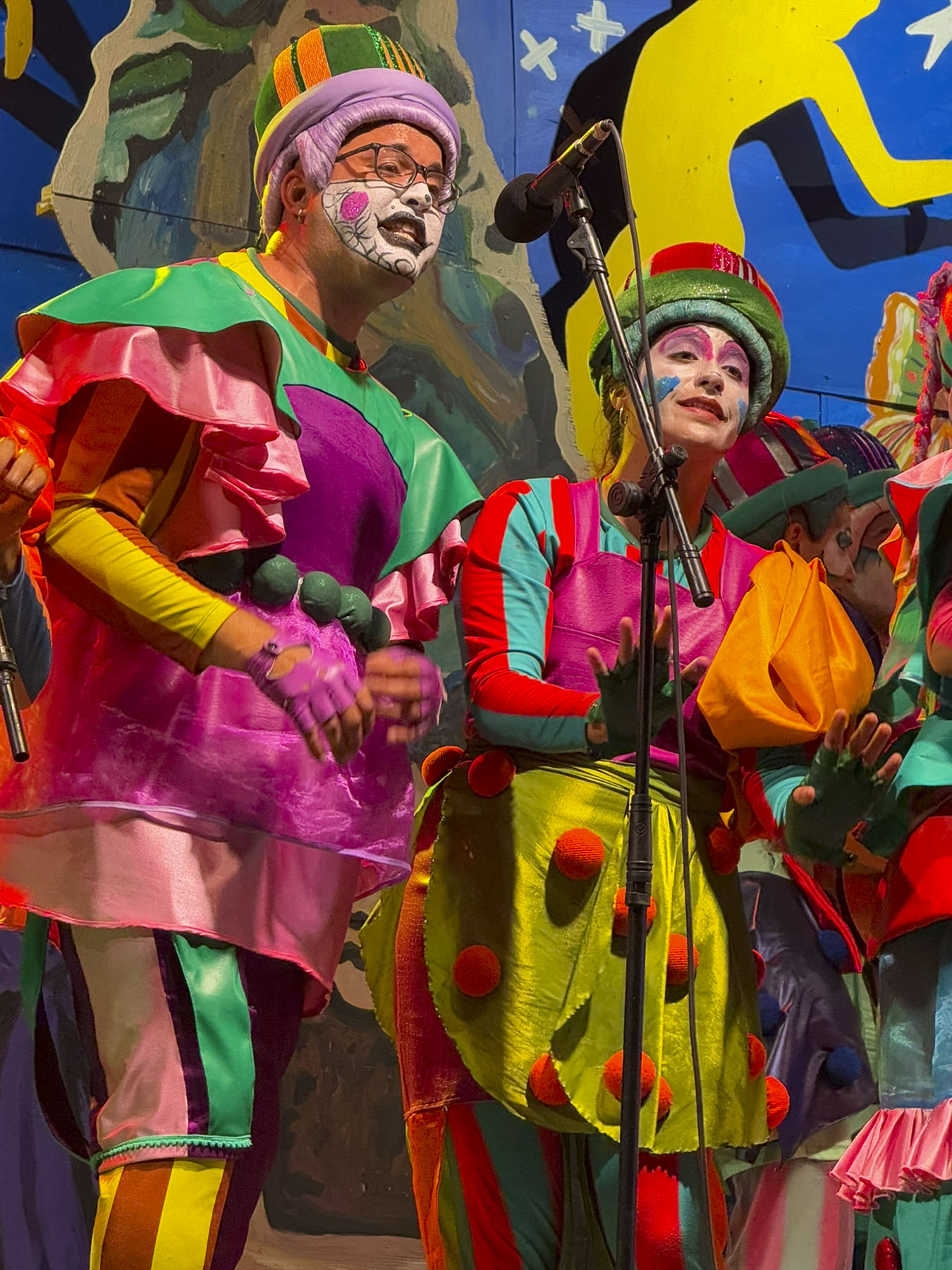
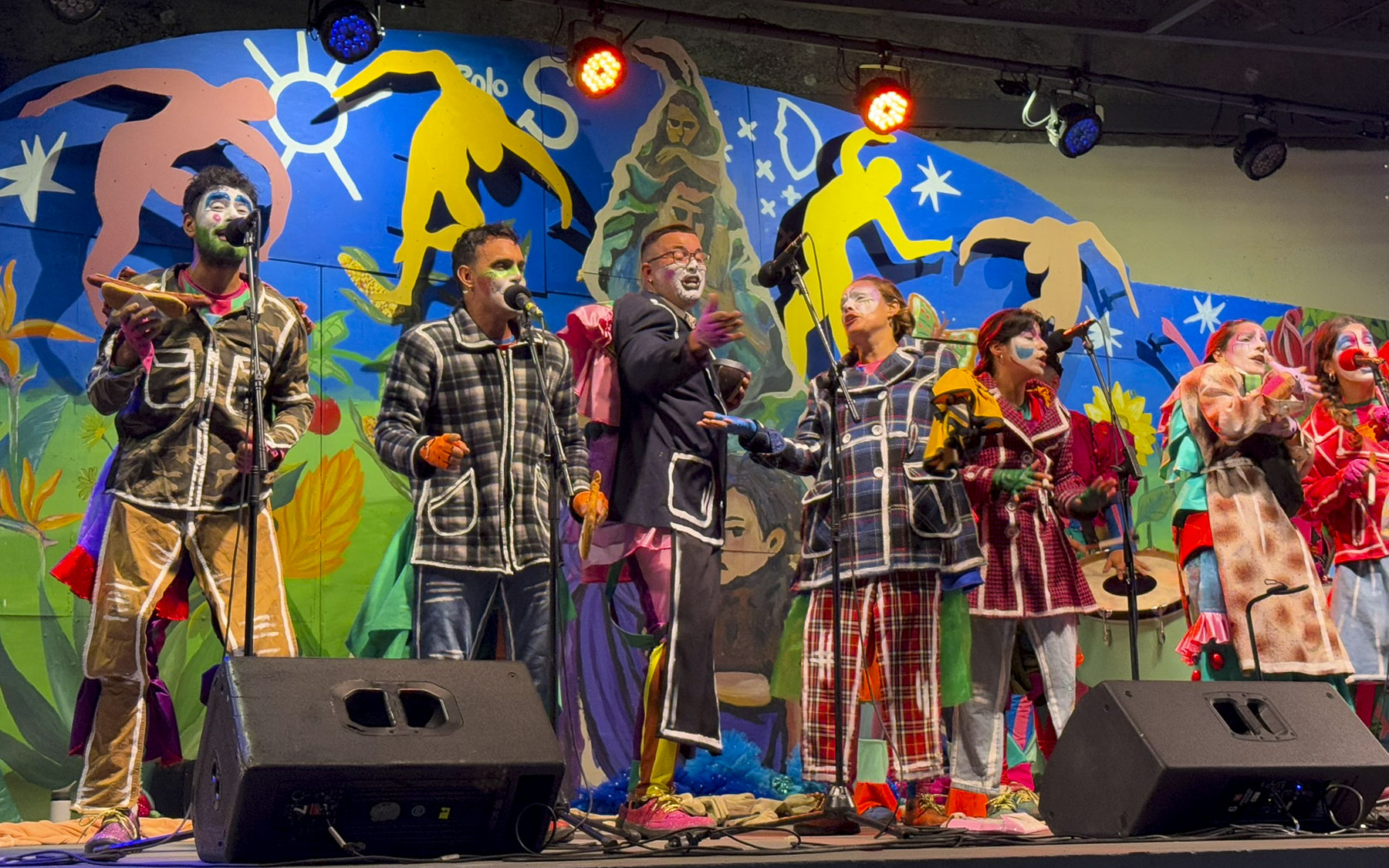
Later in the week we returned to the area to attend a tablado at the Museo del Carnaval, which also had a great collection of imaginative costumes from past carnavals. As the actors readied themselves for the performance, an announcer stepped forward. There were lots of Spanish words, followed by “Donna DiMeo Hammell” and more Spanish. I speculated that we had won the Uruguayan Lottery.  Or “maybe I’ve been chosen to participate, but I don’t speak Spanish!” Donna’s first thought was, wow, they pronounced my name correctly! The mystery was solved when Donna approached the offstage area, and a smiling theater employee handed her the credit card she had unknowingly dropped earlier.

Tablados are temporary neighborhood stages set up across Montevideo where colorful theatrical and musical performances are put on by groups of actors called Murgas, known for their satirical and humorous songs, who are joined by groups of Parodistas who are recognized for their entertaining parodies of well-known stories or events.

Tablados performances only happen during the carnaval season in Uruguay, which runs for forty days between mid-January and mid-March in Uruguay. The performance we attended lasted two hours and had eight different skits. If you cannot attend one of the carnaval parades in Montevideo the tablados are extremely funny and entertaining and you don’t need to understand Spanish to thoroughly enjoy them. They are also very inexpensive.

Walking back through the newer part of Montevideo the next morning we strolled along

Av. 18 de Julio. The street is named for the day in 1830 when the Uruguayan Constitution was ratified, and is the city’s busiest street with numerous stores, restaurants and bars along its length. At the intersection of Av. Carlos Quijano was the Fuente de los Candados,

the Fountain of the Padlocks. It seems every city has one of these landmarks where couples announce their love by hanging a lock on the metalwork; many of these were engraved with names, dates, or sentiments. What’s unique about this one is that it surrounds a fountain where folks also throw coins to make a wish.

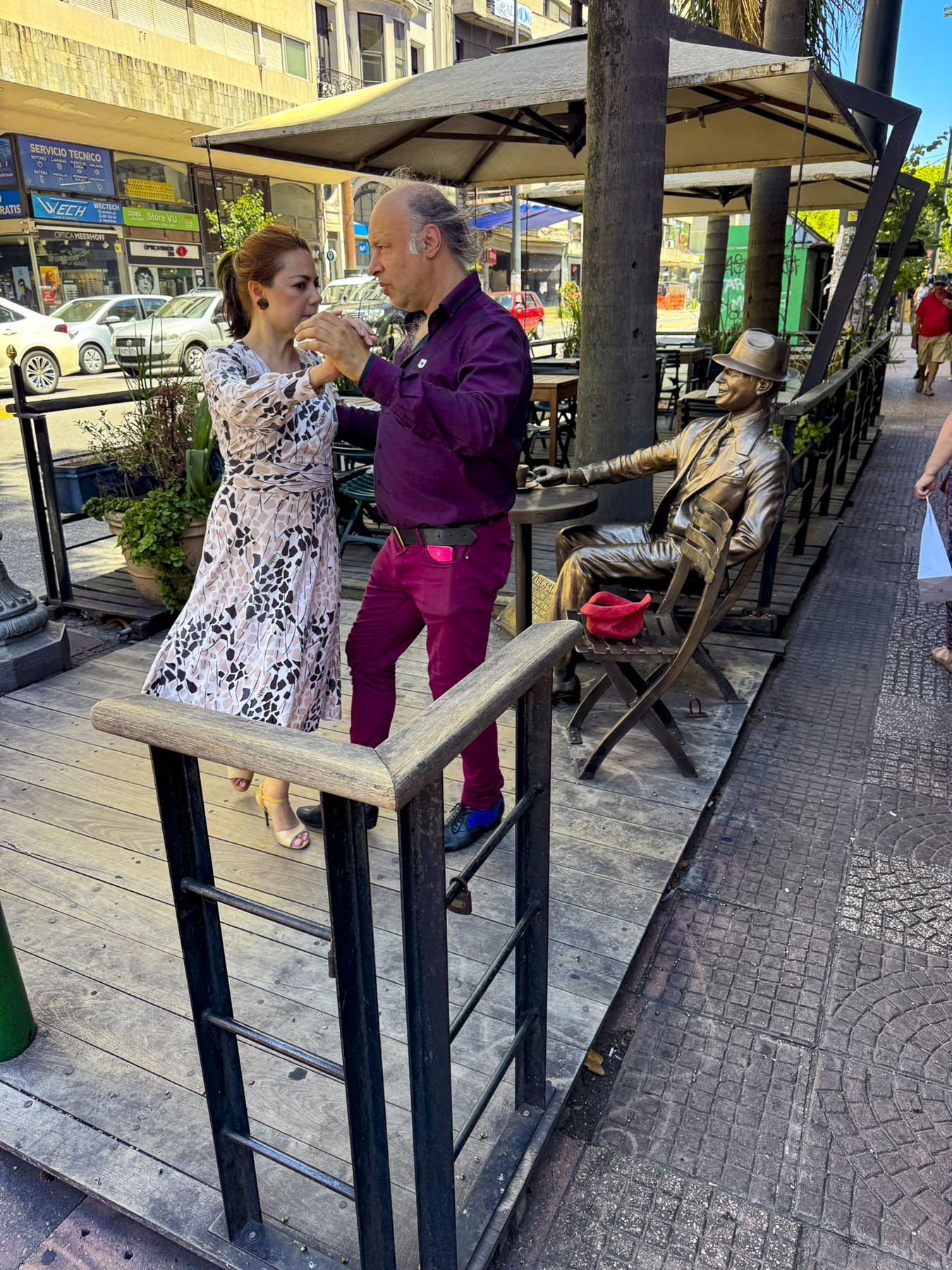
Next to the fountain was a couple busking for tips as they tango danced in front of a café. This was the only time we saw tango dancing in Montevideo, even though the city shares credit with Buenos Aires as the birthplace of the dance. The scarcity of dancers might have been because we were there during carnaval season, and so many other events were happening then.  

Nearby was the Mirador Panorámico de la Intendencia de Montevideo. It’s an open-air viewing platform on the 22nd floor of the headquarters building of the Municipality of Montevideo. Montevideo does not have a very interesting skyline, but the view was expansive, and you can see the port and how La Rambla follows the twists and turns of the coast. There is a small café inside at the mirador. We didn’t find it to be a “must do,” destination, and would suggest trying to time your visit to the mirador around sunset, if possible, to make it more spectacular.

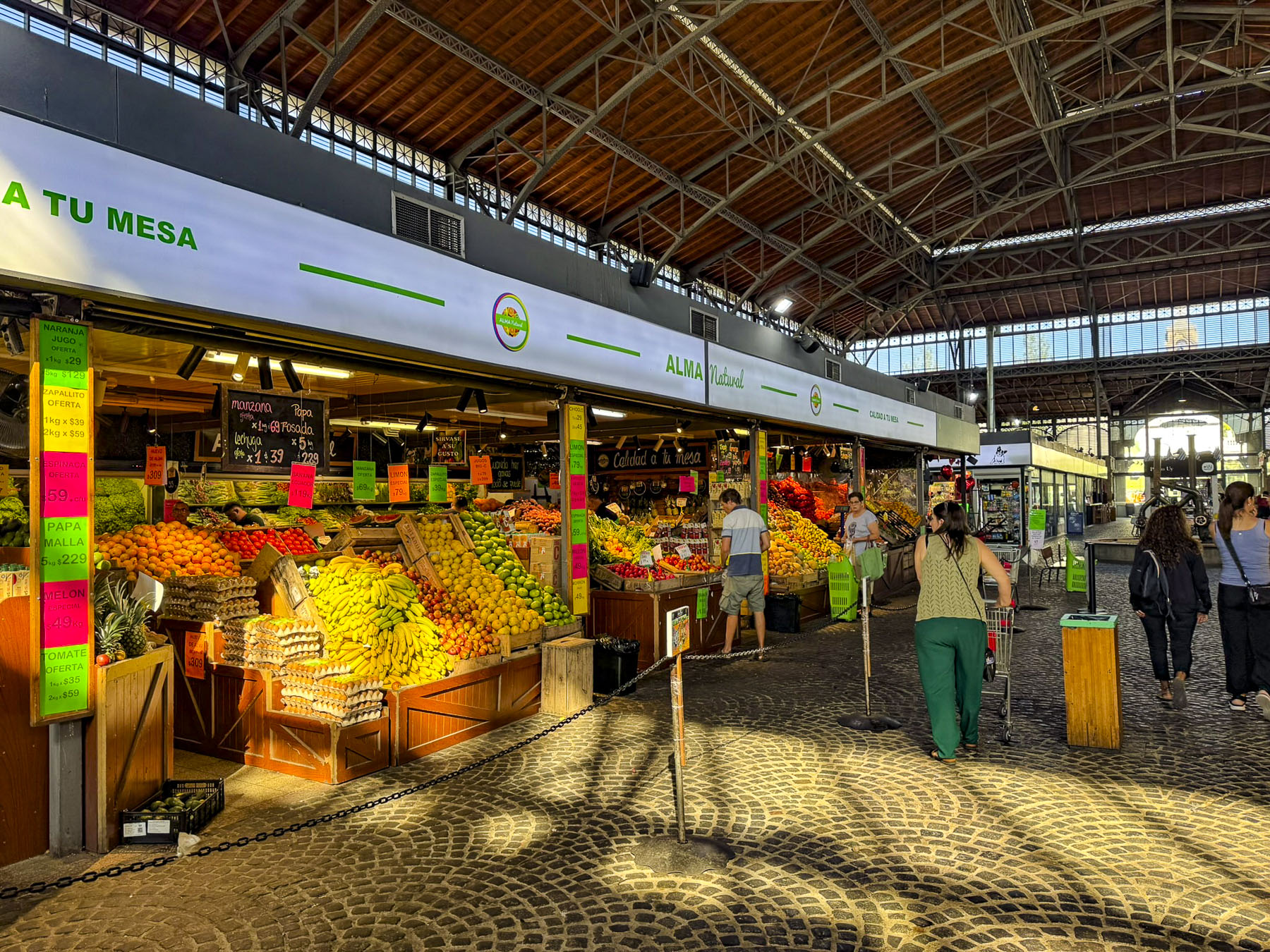
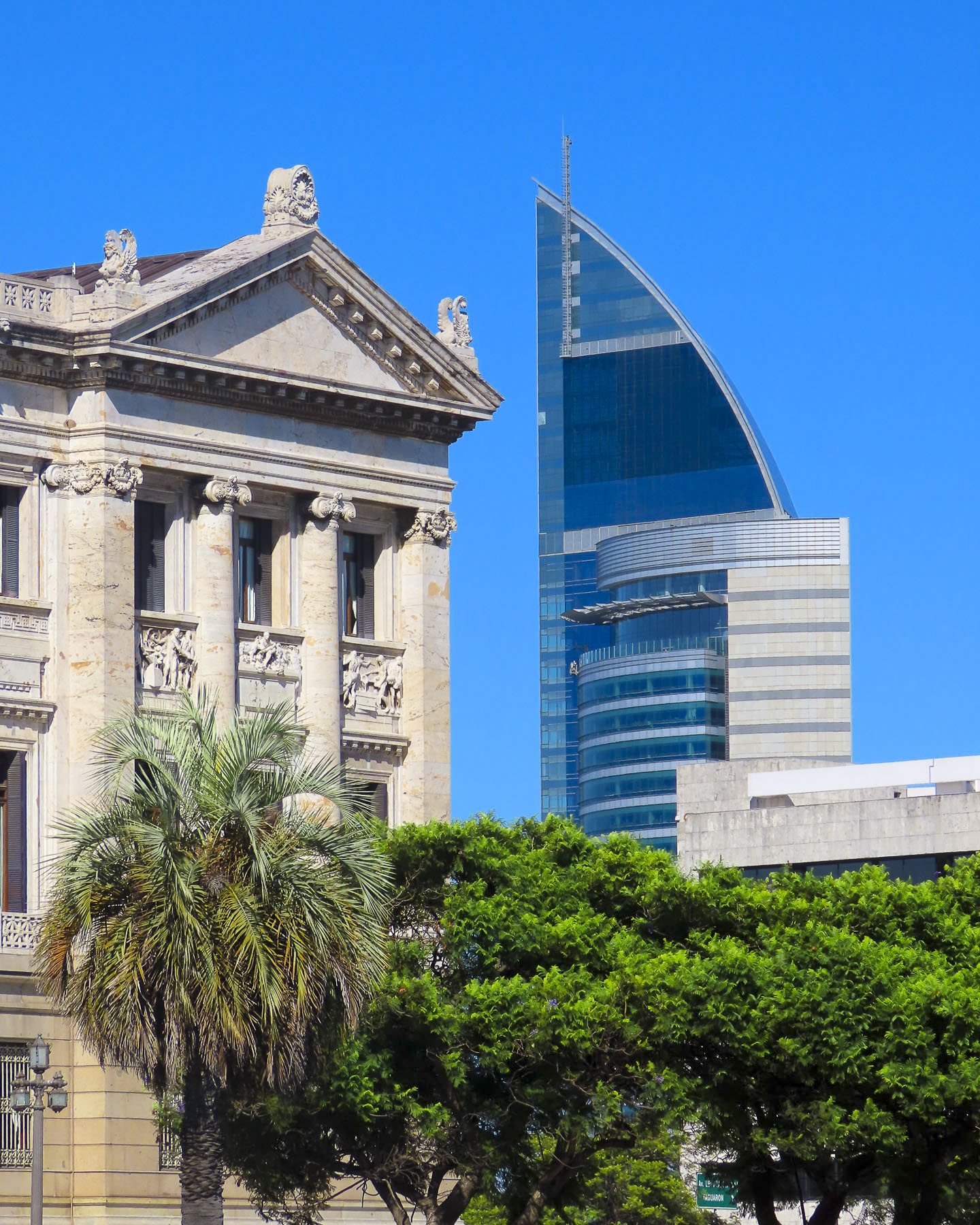
Afterwards we decided to expand our wanderings around the city, and we walked many blocks to the Mercado Agrícola de Montevideo, a historic city market that dates from 1913. We bought some fruit and empanadas for lunch. The most interesting part of our walk was around the Palacio Legislativo, a neoclassical building that is the seat of the Uruguayan parliament. The building’s iconic architecture stands in stark contrast to the large heart felt murals portraying local Montevideans, and the writer Kurt Vonnegut.

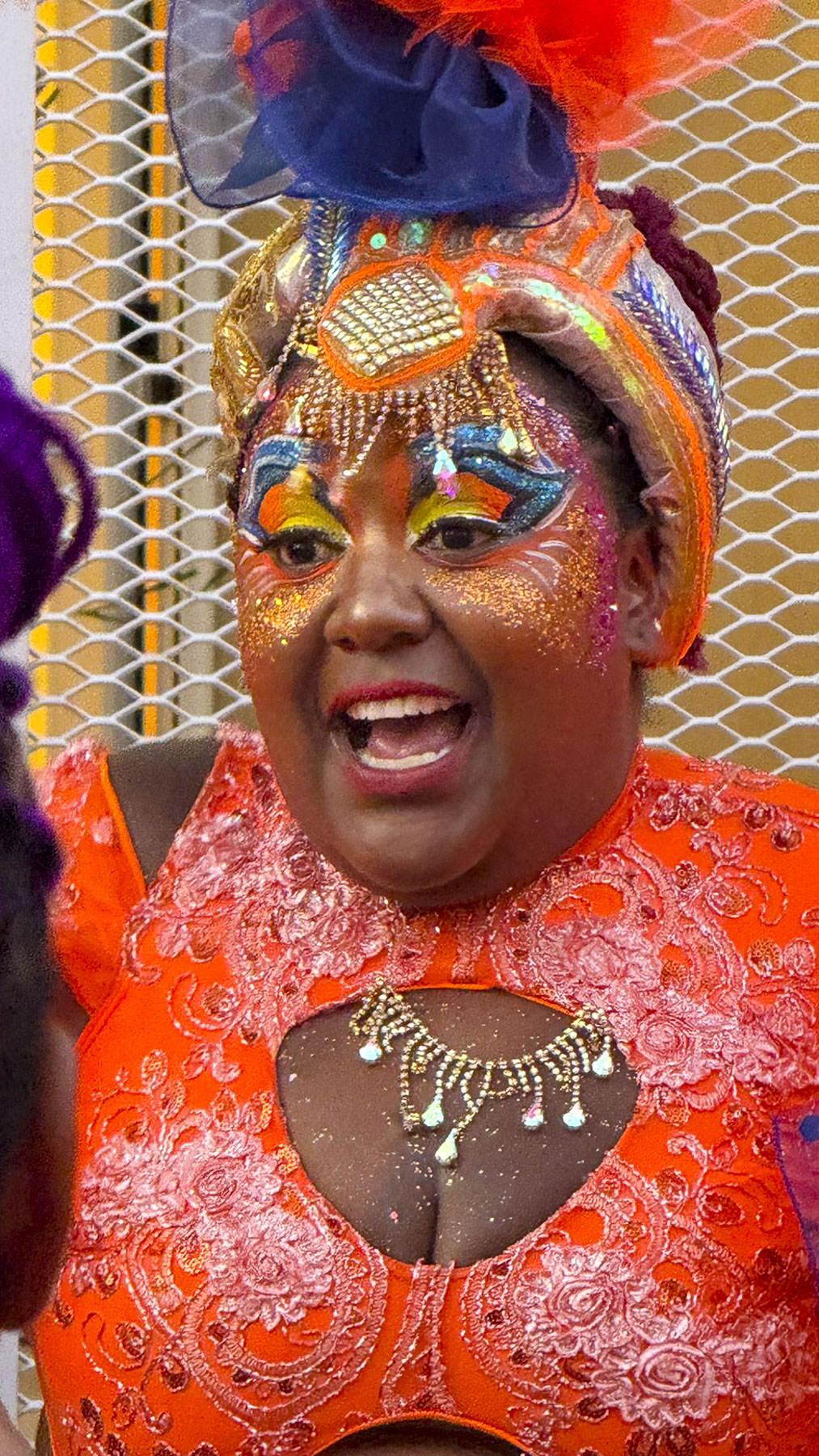
Over the weekend the Llamadas parade, one of the largest during carnaval, was taking place Friday and Saturday night in Barrio Sur. The parade celebrates the Afro-Uruguayan culture in the country with numerous comparsas, large groups of 50-100 festively dressed drummers who play traditional candombe rhythms for their dancers who perform along the street ahead of them.

Our Uber driver dropped us as close as possible to the viewing spot we had scoped out earlier in the week. But the streets were full of activity, with roads blocked for charter buses carrying various comparsas and staging areas where the dancers and drummers readied their groups.

We didn’t know advance ticket purchase was required, so we were totally surprised when the intersections were cordoned off and only tickets holders were allowed onto the sidewalks along Isla de Flores street. Fortunately, the area we had chosen had one small section that was open, and we jammed in, shoulder to shoulder, along with several hundred other folks with the same idea, to watch the parade. Folks next to us cautioned us about losing our phones to grab and run thieves, but we never felt uncomfortable in the crowd.

Carnaval in Montevideo is not as elaborate spectacle as in Rio de Janeiro where huge floats dominate the night. We didn’t last until the end of the parade, but it was a hugely fun, very authentic grassroots event that we thoroughly enjoyed. A few blocks off the parade route at Restaurante Palermo Viejo we shared our first chivito. These are huge, layered sandwiches that contain churrasco steak, ham, bacon, mozzarella cheese, lettuce, tomato, and a fried egg on top. The tasty creation was very filling, and it is often referred to as Uruguay’s national dish.

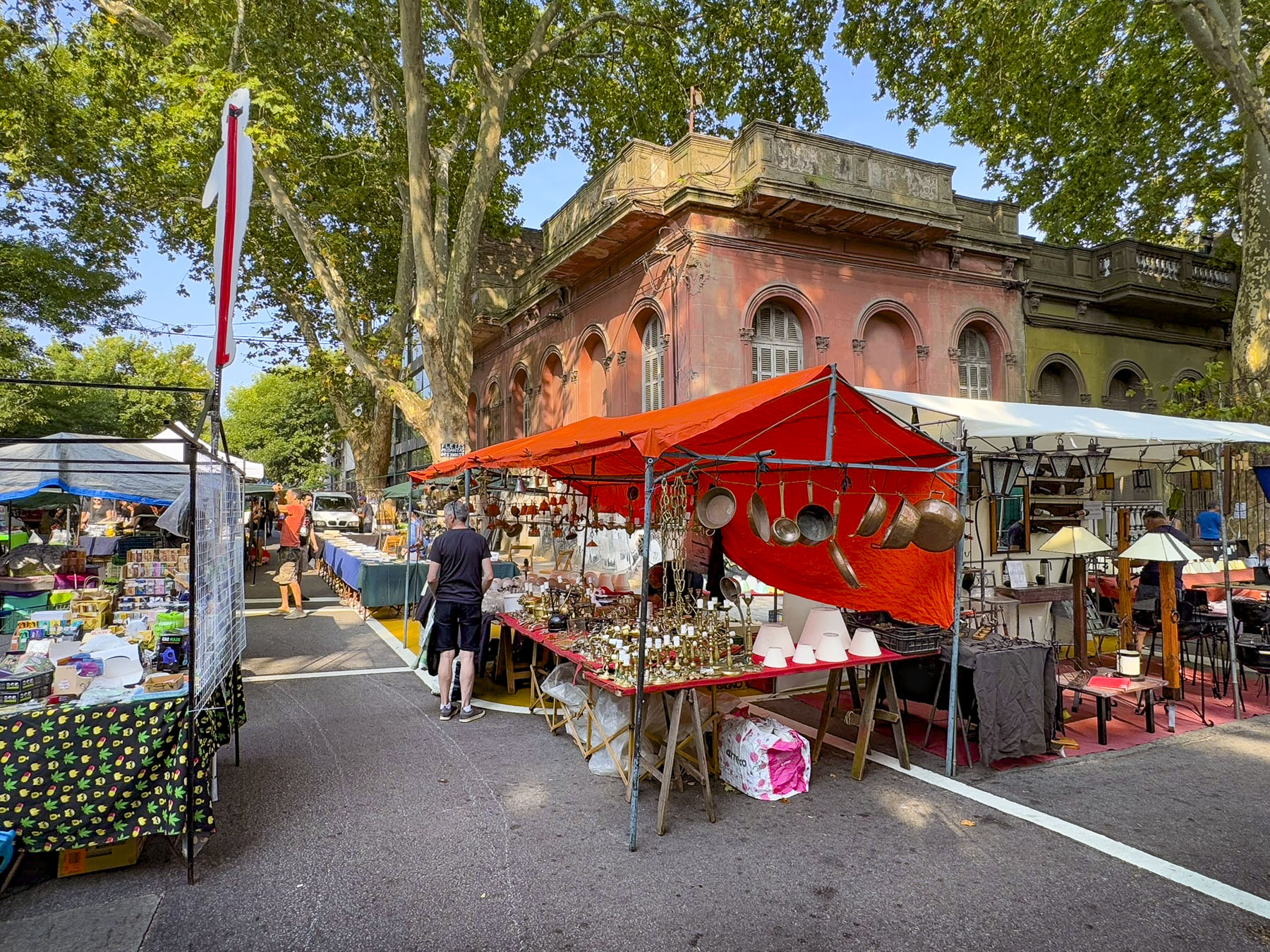
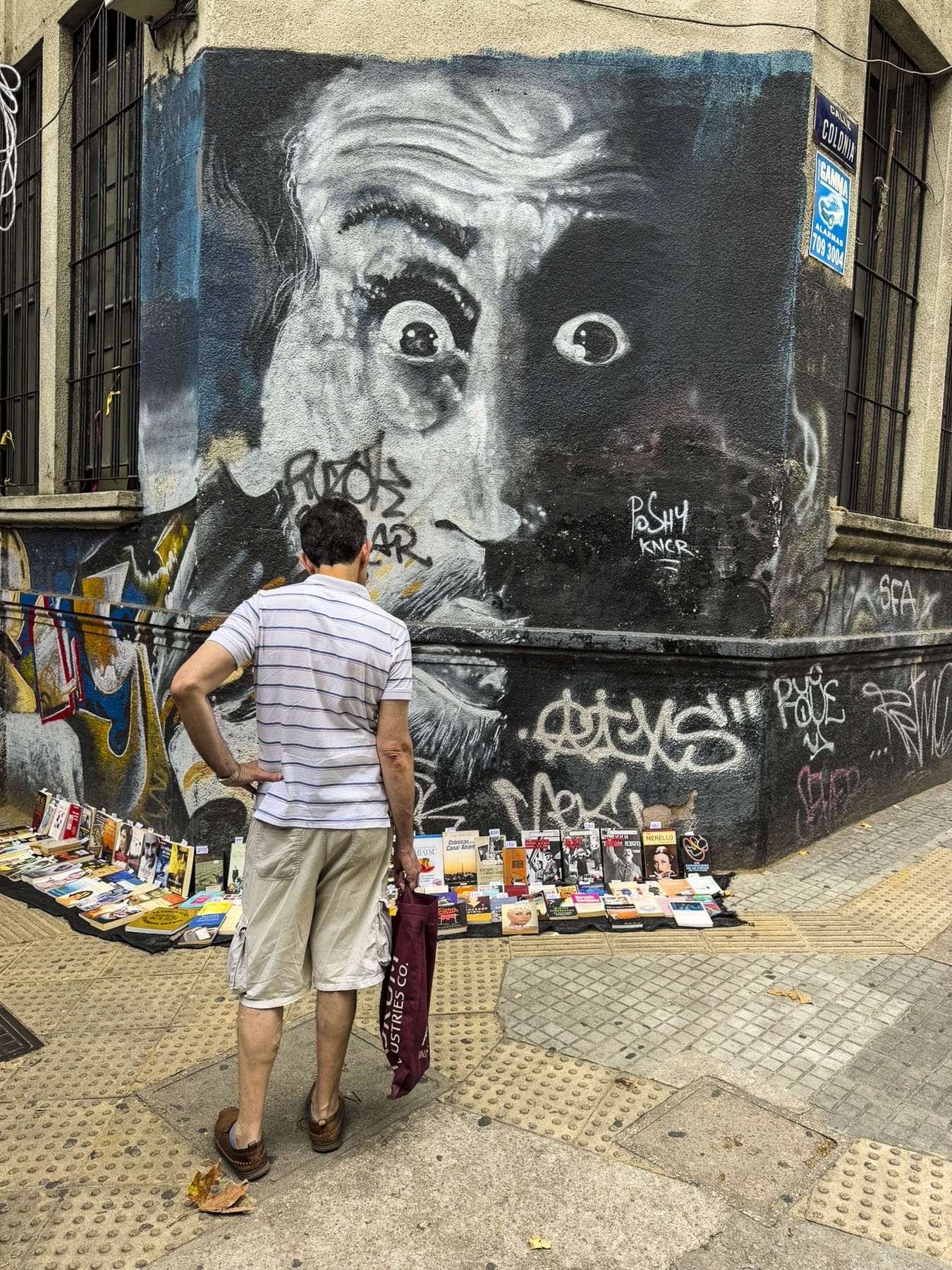
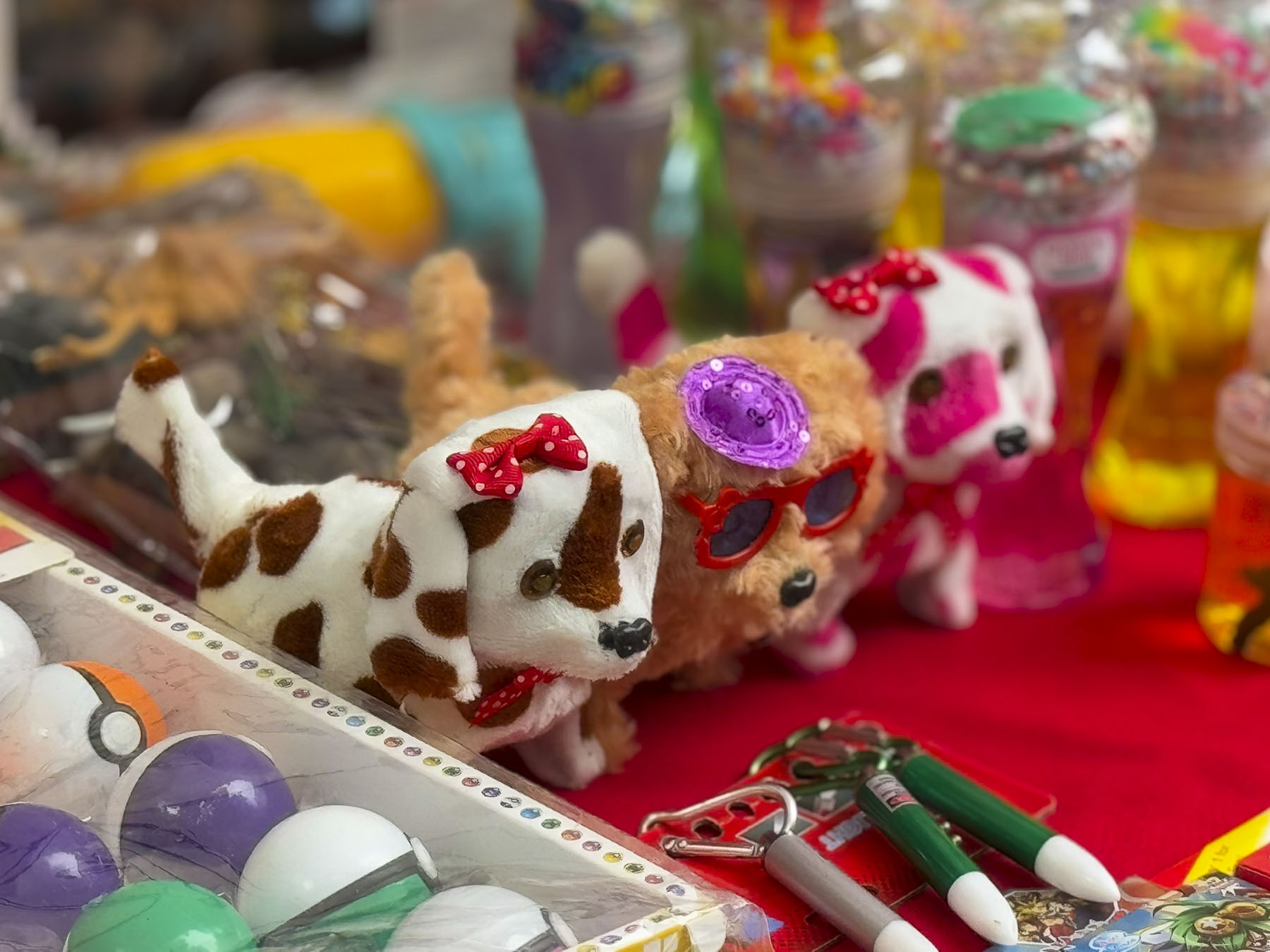
The next morning after a luscious breakfast at El Copacabana, in the old town, we took an Uber over to the Feria de Tristan Narvaja, a Sunday street market that stretches for seven long blocks through the Cordon neighborhood. It features a multitude of vendors selling everything imaginable, along with secondhand clothing, used books, fresh produce, and artist’s handcrafted creations.

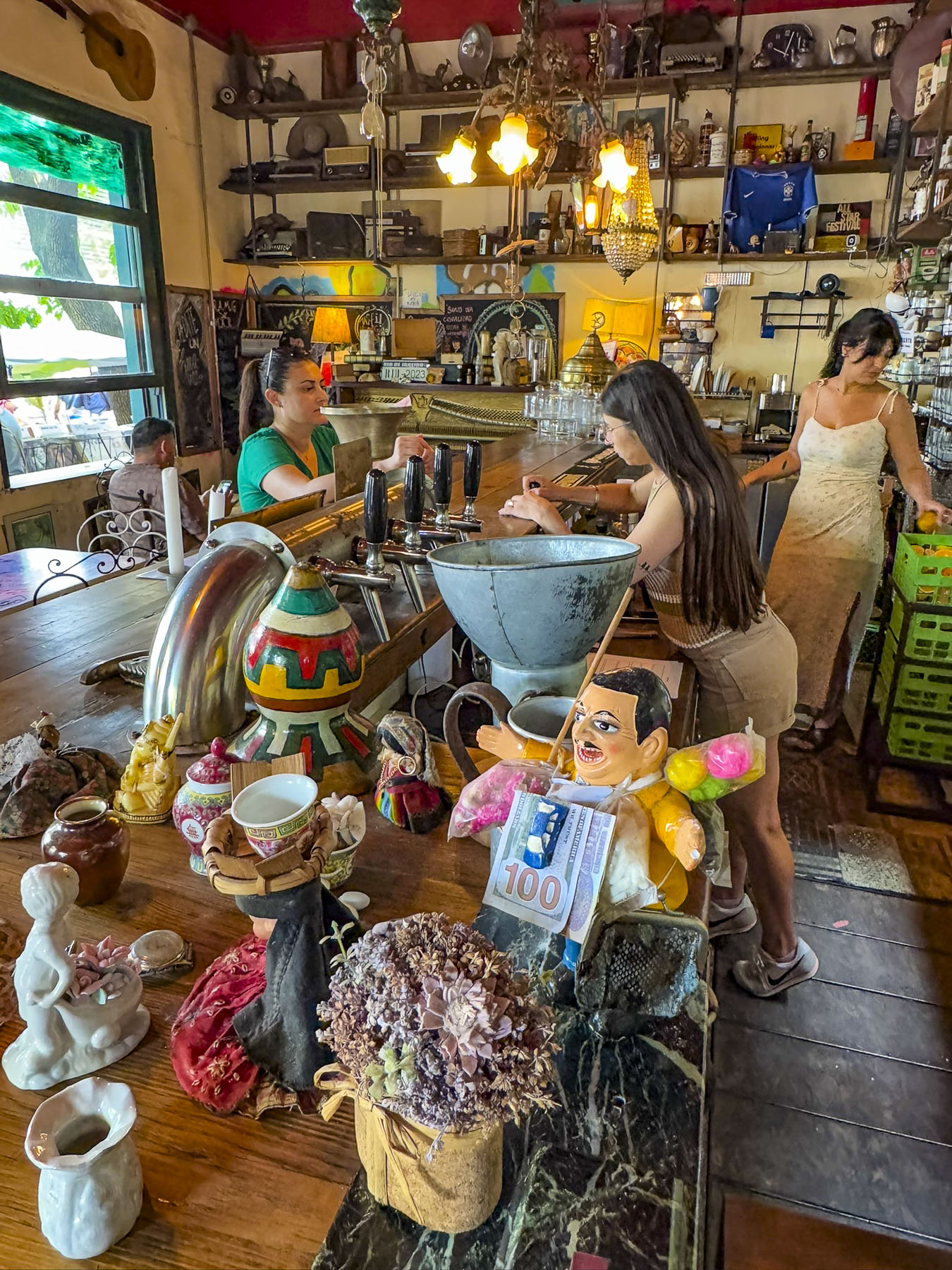
Following our “walk a little then café” philosophy we took a break at El Imperio, an eclectically decorated bar, where the barista between serving inside customers ran trays of espressos out to the vendors on the street. We thought the feria was one of the more interesting ones we’ve experienced during our travels and think it’s a must-do activity when visiting Montevideo, if you like this sort of event.

Later that morning we headed to the airport and picked up a rental car we had reserved at Localiza Aquiler de Autos, a very good local agency with reasonable rates, for our 12 day road trip, which we were starting the next day. But first we had one more thing to do locally, and we drove an hour north into the countryside outside of Montevideo. Nearly forty percent of Uruguay’s population lives in Montevideo, but the city’s urban sprawl quickly transformed into gently rolling farmlands and vineyards as we drove through the Canelones region to the Cabaña La Mansedumbre, a rustic, under-the-radar destination restaurant. We eventually turned down a sandy dirt road. A small weather-worn sign hung from the cattle gate across the twin tracks that led to Fredy and Silvana’s ranch. When making our reservation, he had reminded us to close the gate securely so his goats wouldn’t escape.

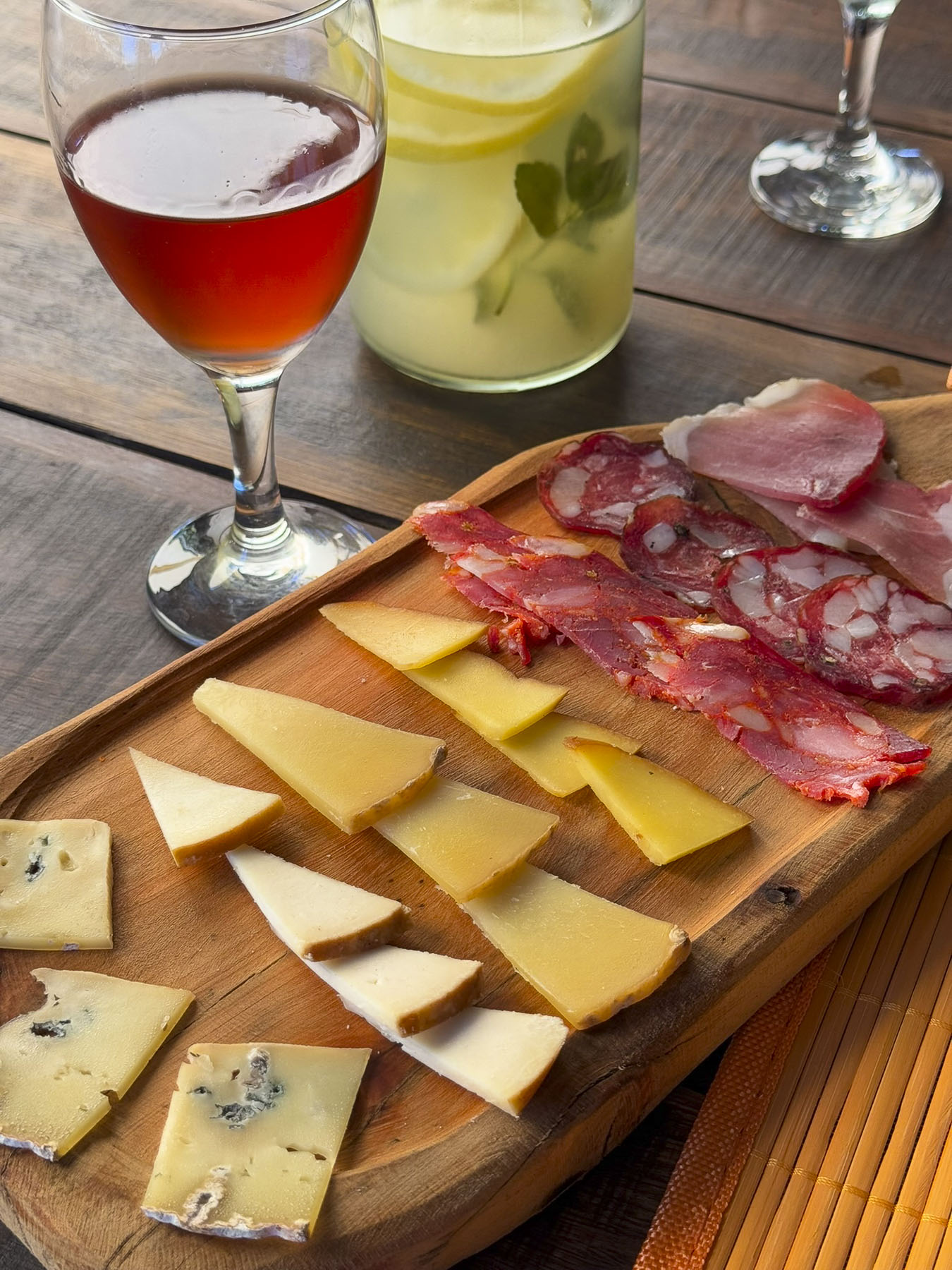
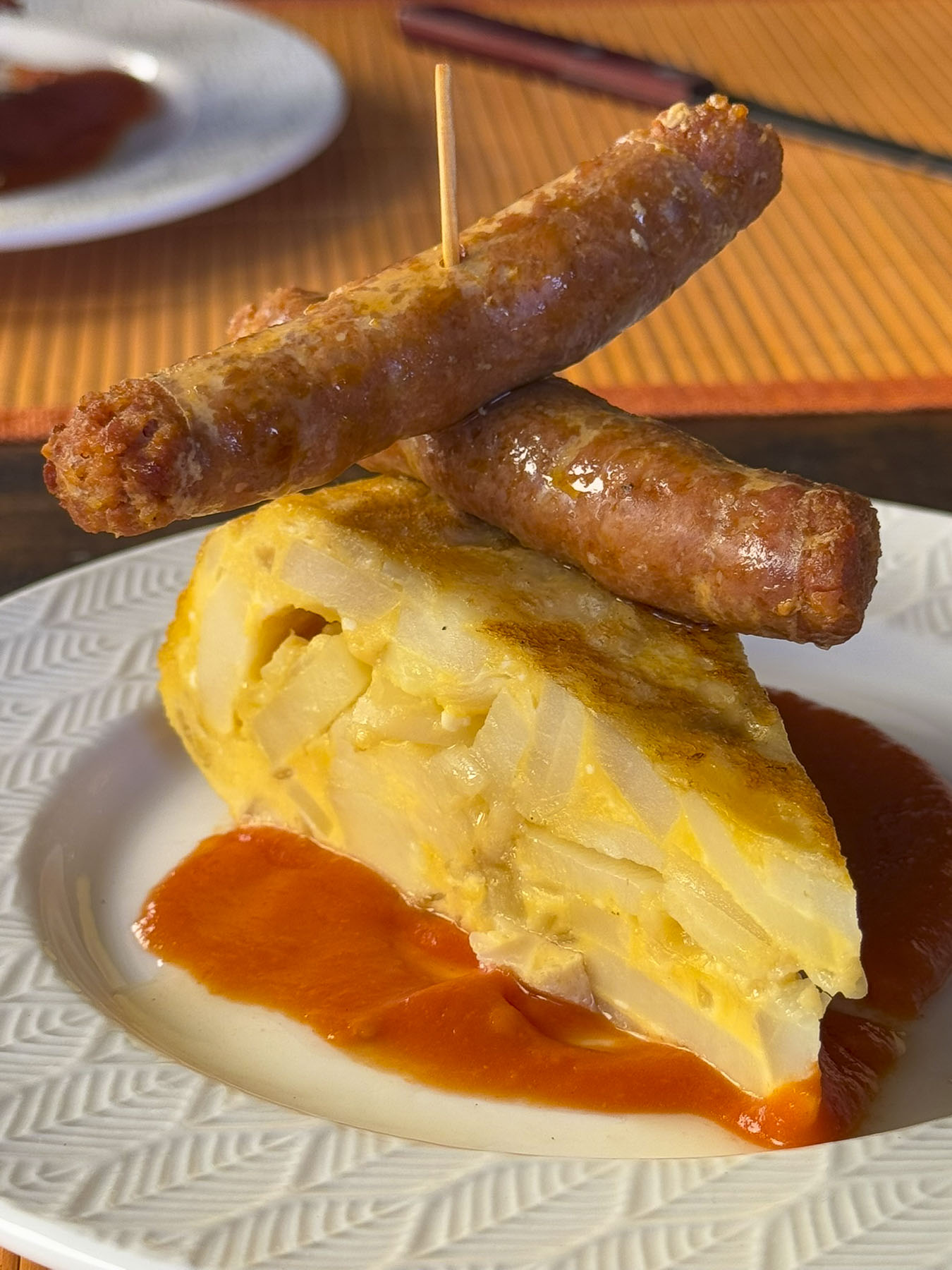
We were the first guests to arrive that afternoon and were warmly welcomed into the courtyard of the couple’s rural farm stead. A tour of the open-air kitchen followed where we met Fredy’s son Juan, as he was preparing charcuterie boards under an array of sausages and cheeses hanging from the rafters. Heat emanated from a brick oven in the corner. Two large golden tortilla de papas cooled on a countertop under shelves laden with jars or homemade sauces, jams, and jellies. Baskets of fresh bread and rolls which Silvana had baked that morning tempted us with their wonderful aroma. 

Very enthusiastically Fredy explained that everything they use to prepare their dinners is sourced within a 5-mile radius of their farm. Though many items, like the goat cheeses, were made by his neighbor using the goat milk from Fredy’s herd, while the tanat wine we were offered, as we waited for the other guests to arrive, came from a friend’s vineyard at the other end of the road. Bottles of grappa that Fredy had infused with herbs lined a shelf above wine casks which flowed freely all afternoon.

Neither has trained as a chef, but they both share a passion for food and travel which has inspired them to refine their skills over the years, and now share their enthusiasm for great food at their home on the weekends. Seeing their farming community’s potential they have encouraged their purveyors to provide new and different sausages, cheeses, and produce than what was traditionally available in the past.

With everyone’s arrival we were seated at tables under their tinned roof porch. We were hoping to experience a traditional Uruguayan asado, but grilling meats on the parrilla was not part of the gourmet eight course feast that the couple had planned.

Our initial disappointment faded quickly as amazingly delicious dishes emerged from that simple country kitchen for nearly three hours that afternoon. Every dish was uniquely flavored, excellently prepared and presented. Coffee, dessert and grappa crowned the dinner. We wish we had taken notes, but photos of some of the dishes will have to suffice. 

The dinner was nicely paced, with plenty of time to talk with the other guests and enjoy the wine between courses. It was a memorable afternoon, and an excellent farm to table dining experience, along with being the best meal we had while visiting Uruguay.

For reservations Fredy and Silvana can be contacted through phone & WhatsApp +598 99 390 054.

Montevideo consistently ranks as the top city in Central and South America for quality of life. We thought it was a great destination, especially during Carnaval and it exceeded our expectations.

Till next time,

Craig & Donna
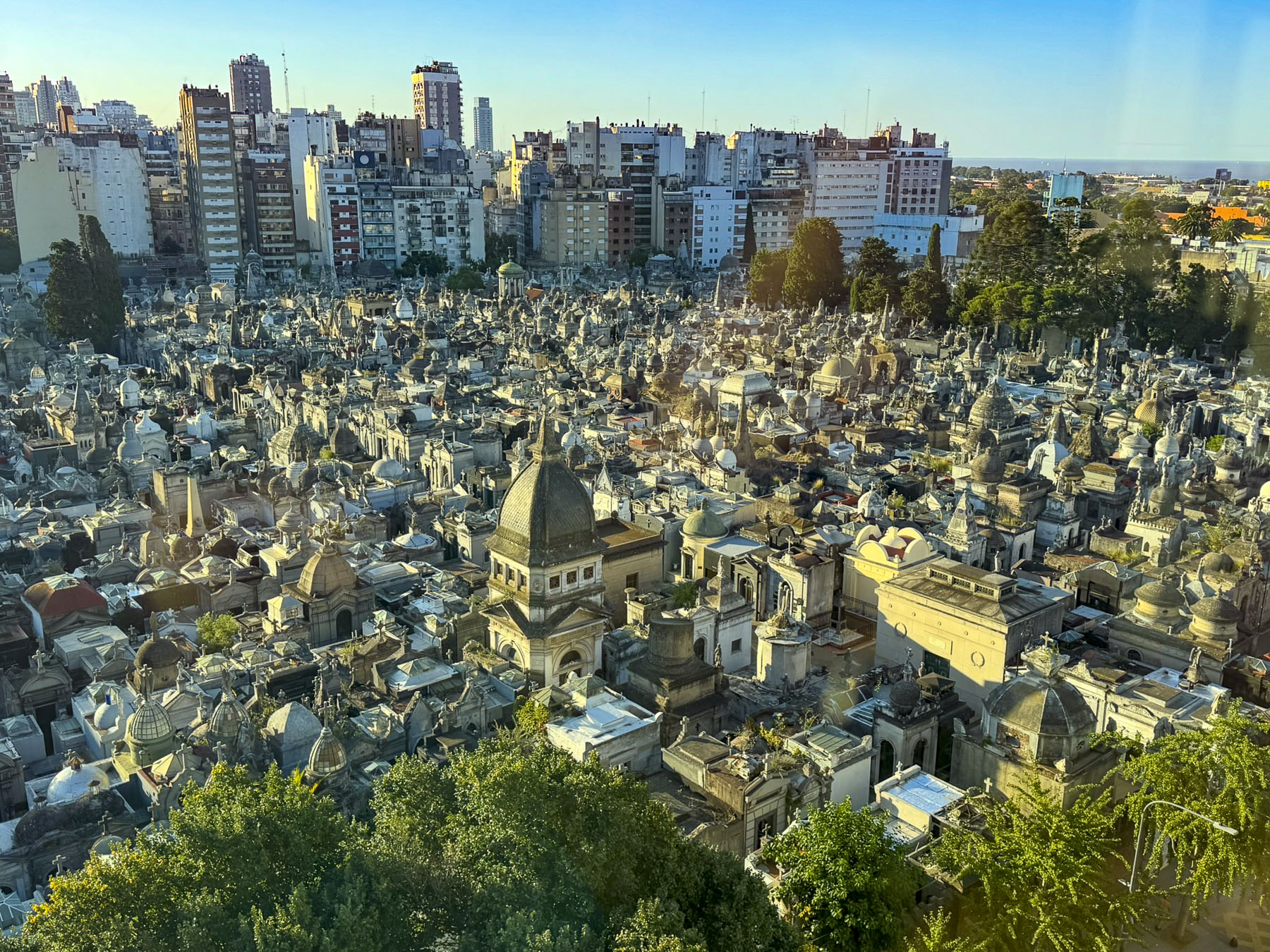
P.S. Our 12 day road trip through Uruguay started the next day.

During our stay, Donna had horrible hacking cough, that was so concerning one night we called the reception desk at NH Montevideo Columbia to ask for advice. The hotel, to our relief, had a physician on-call who made a late-night visit to our room. After an initial exam the doctor wrote a prescription for a chest x-ray in the emergency room at The British Hospital, a private hospital in downtown Montevideo. Fortunately, it was a quiet night at the hospital, and we were attended to quickly after checking in. We had a good experience there, the x-rays were negative for lung infection, and the hospital visit was totally covered by our travel insurance.

Street parking everywhere in Uruguay is free!

Driving Through the Baltics: Part 10 – Tartu, Estonia or Wandering through a University Town

The street was alive with activity. Three buskers with drum, sax, and tuba were jazzily rendering Bruno Mars’ “Marry You” on the pedestrian mall full of folks strolling and bicyclists weaving amidst a food fair and participants readying their wacky go-cart entries for a Red Bull event later that afternoon.

There’s a long tradition in Estonia of student rock bands in the 70s and 80s transcribing western songs heard via Radio Free Europe broadcasts to countries behind the “Iron Curtain,” including Estonia. Soviet censors viewed any foreign influence, especially rock ’n roll as a threat to communist ideology, and these street musicians were upholding a long-standing musical tradition.

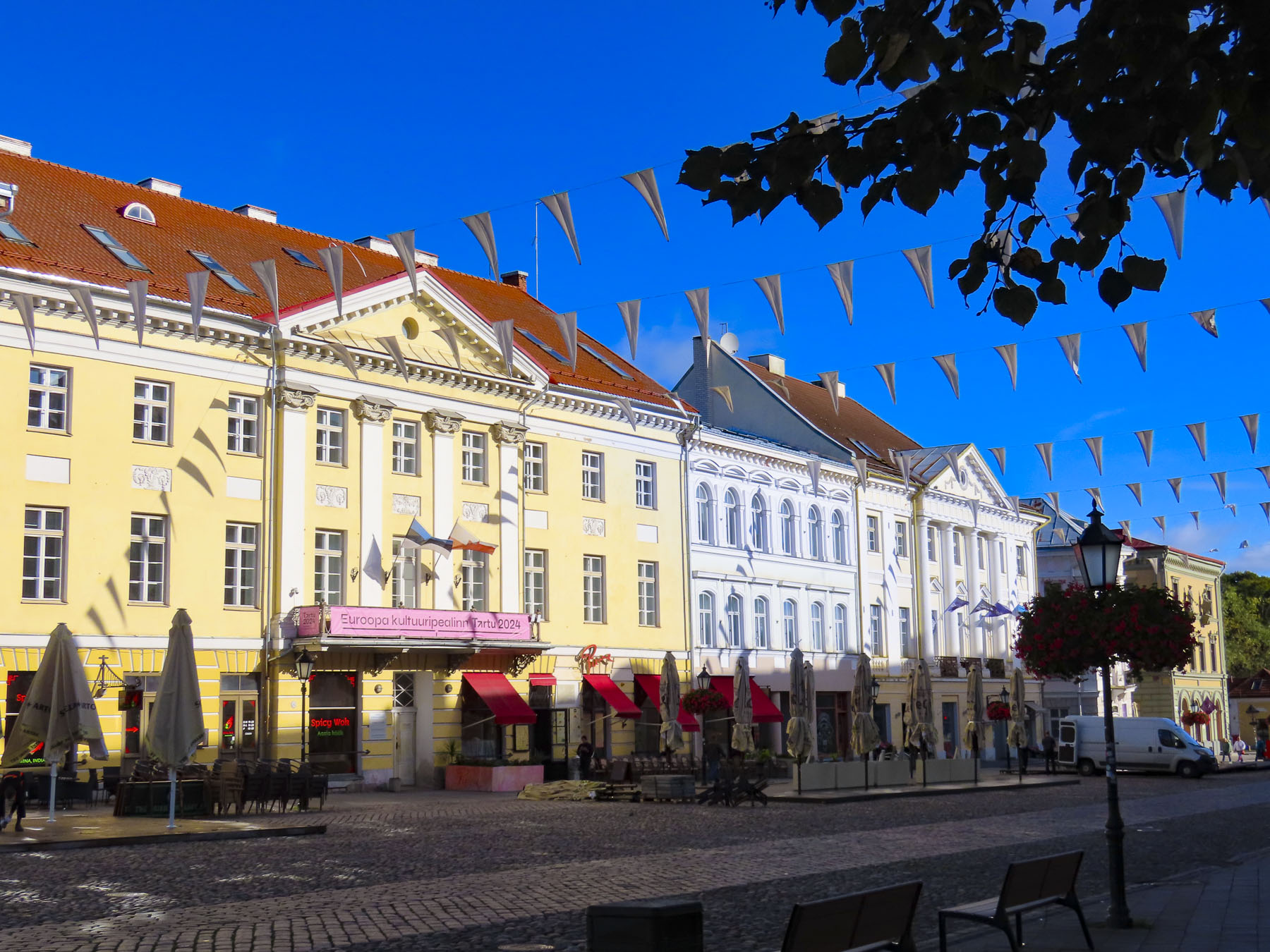
Tartu has been a university town since the 17th-century, and today 14,000 students give the city, Estonia’s second largest with only a population of 104,000, an energetic youthful vibe. They are an important part of the town’s character and are playfully acknowledged on the café-lined cobblestone plaza in front of Tartu’s City Hall with the ‘The Kissing Students’ sculpture and fountain.

The University of Tartu’s students also played a crucial role in Estonia’s expression of national identity and resistance to Soviet rule in the late 1980’s. Their support of the “Five Patriotic Songs” by Alo Mattiisen led to spontaneous mass singing demonstrations at the Tartu Pop Festival in May 1988. These musical protests spread to Tallin, then Latvia and Lithuania. These peaceful protests culminated in the The Baltic Way, a human chain of two million people which spanned from Tallinn, Estonia to Vilnius, Lithuania in August of 1989. The popularity of these peaceful movements strengthened the determination of Estonians to redeclare their independence from the Soviet Union in 1991. Latvia and Lithuania followed suit soon after.

The Kissing Students’ fountain is really the center of activity in Tartu, a splendidly walkable city. Its car-free center extends north along Küüni tn from the modern Kvartal shopping mall, with an array of nice shops, and an excellent Coop supermarket, past the central plaza all the way to the Botanical Garden of the University of Tartu. And there were numerous points of interest just off this route that we explored during our five-night stay at the Art Hotel Pallas, a boutique hotel nicely located across from the Kvartal mall, with views from our hotel room of the spires atop the town’s city hall and churches. It also had convenient free parking, and a scrumptious breakfast buffet. The pickled herring, yes for breakfast, was really good. It was the perfect spot to get some much-needed R&R after driving through Estonia, Latvia, and Lithuania for three weeks.

One of the nicest things we’ve encountered during our road trip through the Baltics is the extensive amount of public art that graces the region’s cities and small towns. Few are of a historical nature. The sculptures of Lenin and Stalin that the Soviet Union installed during their fifty years of occupation to erase the Estonia’s history were quickly removed from all public spaces, and sent to the scrap yard. The current sculptures now honor influential writers, poets, and folk heroes or are simply artistic inspirations without any political messaging.

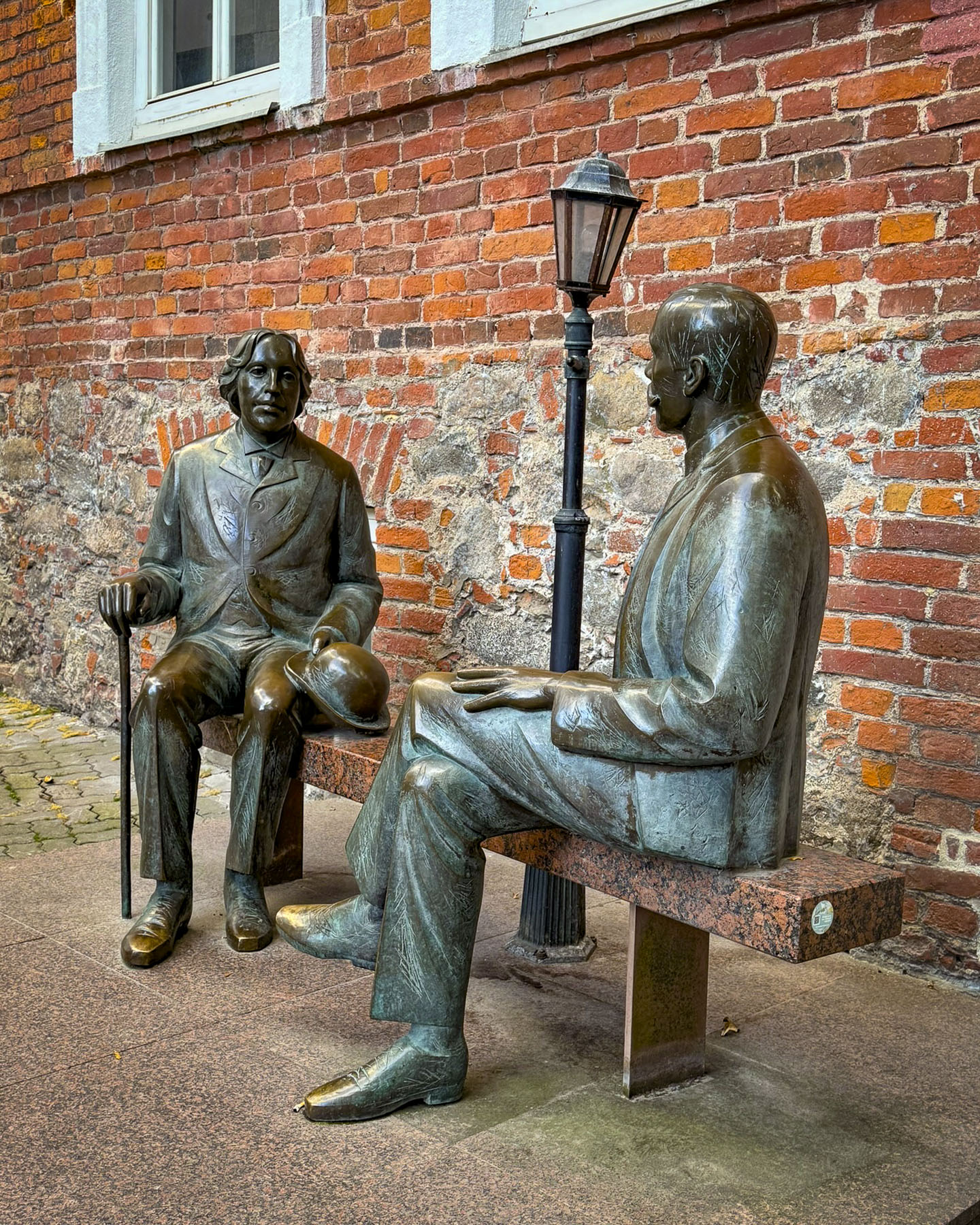
Along Küüni there was a sculpture of Irish playwright Oscar Wilde and Estonian writer Eduard Vilde depicted in an imaginary encounter between the literary heavyweights. Though the two never met, Wilde did give a lecture at the university in 1892.

Nearby was the sculpture “Father and Son,” by the Tartu native Ülo Õun (1944-1988). The Visit Tartu website explains the work represents the sculptor with his 18-month-old son, and “is a symbol of the relationship between different generations, where children are increasingly growing apart from their parents.” A side note – the Visit Tartu website has an extensive calendar of events page. In a park they had a pop-up information tent, and detrimentally to our waistlines, it was across from the Kalev Chocolate Shop and cookie store. This Estonian brand makes, in our opinion, some of the best store-bought snacks. You can buy them in grocery stores across the Baltics, but they surprisingly cost less in their own stores.

A diagonal walk through the park took us to Tartu Turuhoone, the town’s old market hall where a large sculpture of “Siga Roosi,” a pig, advertises the building’s entrance and the products available inside. If you have visited Riga’s large market, this wanes in comparison, but the pig immortalized in bronze appears to be smiling.

From here a very pleasant walk along the riverfront promenade that follows the Emajõgi River leads to the Kaarsild, an arched footbridge that spans the river to Ülejõe Park and the neighborhoods east of the historic center.

The approach to the bridge was a perfect spot to admire the beautiful buildings surrounding the town’s plaza which represent an eclectic assortment of architectural styles from the 13th to 17th centuries, when the town was a prominent member of the Hanseatic Merchant League.

At the foot of the plaza the Tartu Kunstimuuseum, a museum of art, occupies a 1793 building that is often referred to as Tartu’s Tower of Pisa. The three-story building’s 5.8 degree of tilt is actually greater than the famous tower in Italy. The tilt was a result of one side of the building being constructed on the medieval footing of the ancient defensive wall that once encircled the town, and the other side was erected above loose soil. As the decades passed, the structure slowly sank into the ground. Polish engineers successfully stabilized the building during the communist era, and it was determined safe enough to house the museum since 1988.

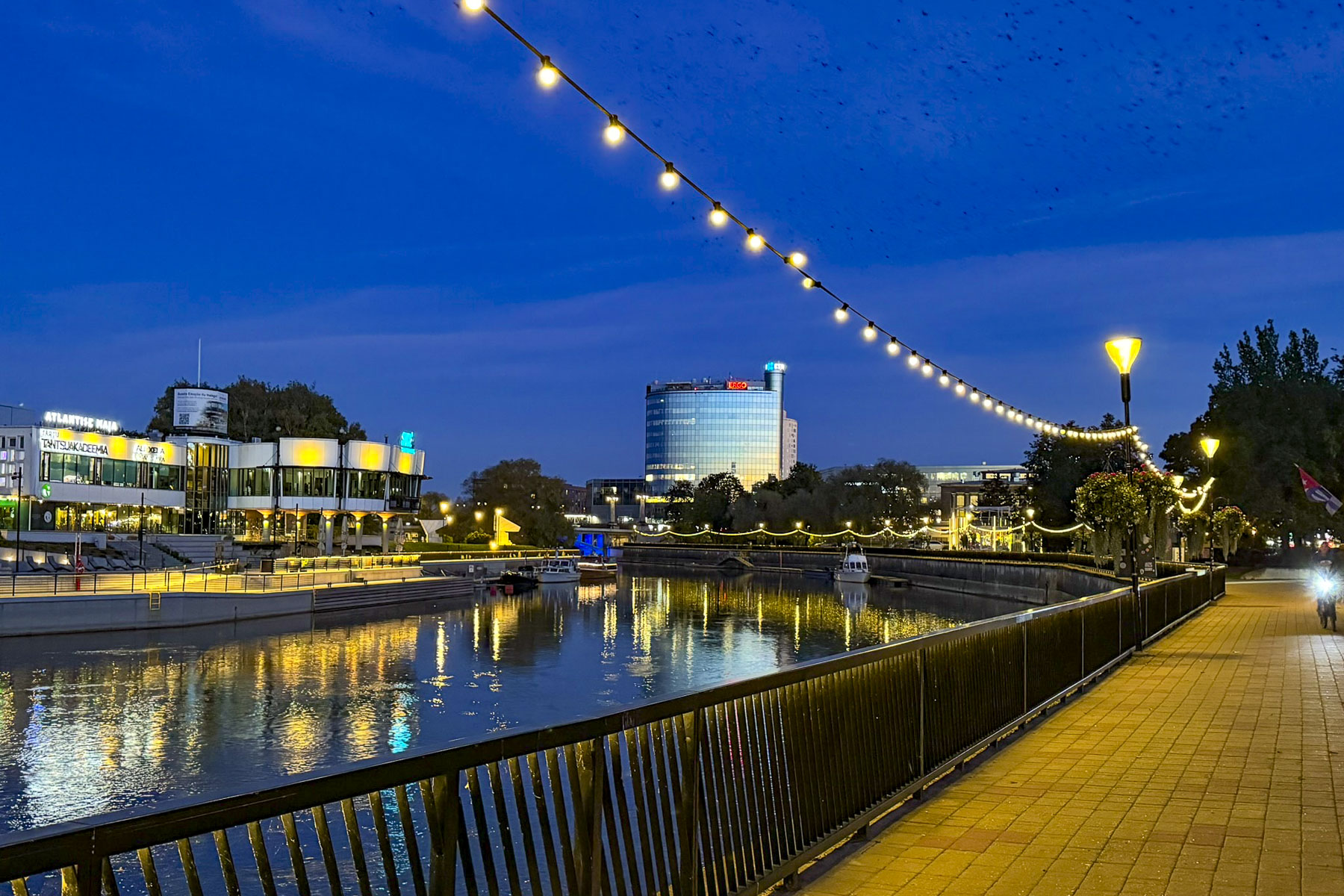
In the other direction there was the reflection of the growing city’s modern skyline reflected on the rippling water of the river. These views were beautiful and equally enchanting in the early evening twilight as we watched the murmurations of European starlings swooping over the river, before they noisily roosted in the park.

Just behind Town Hall and across from a large street mural of the University of Tartu was café/restaurantWerner, an excellent establishment with a nice vibe, that’s popular with both students and professionals; we dined there several times during our stay in the city.

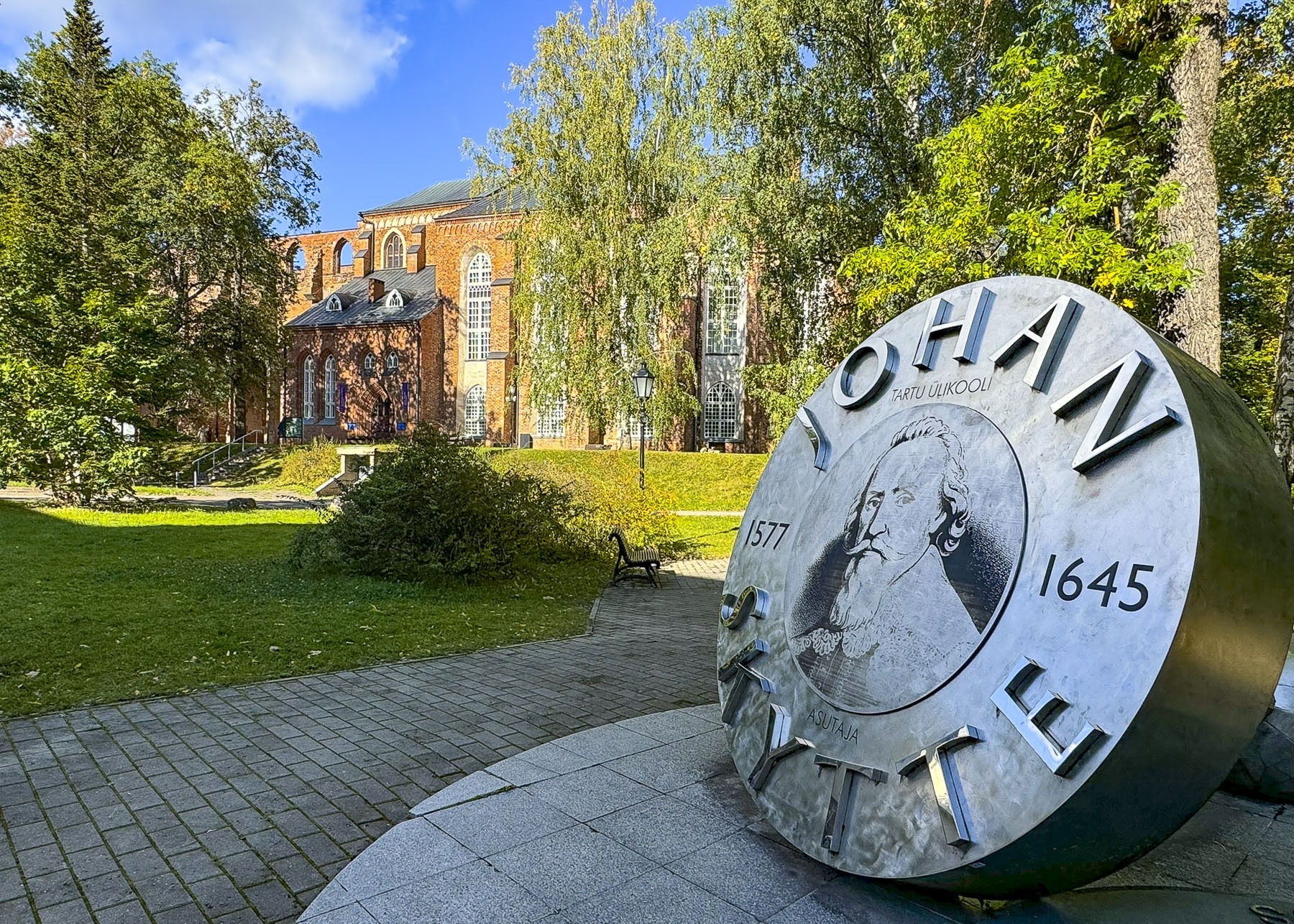
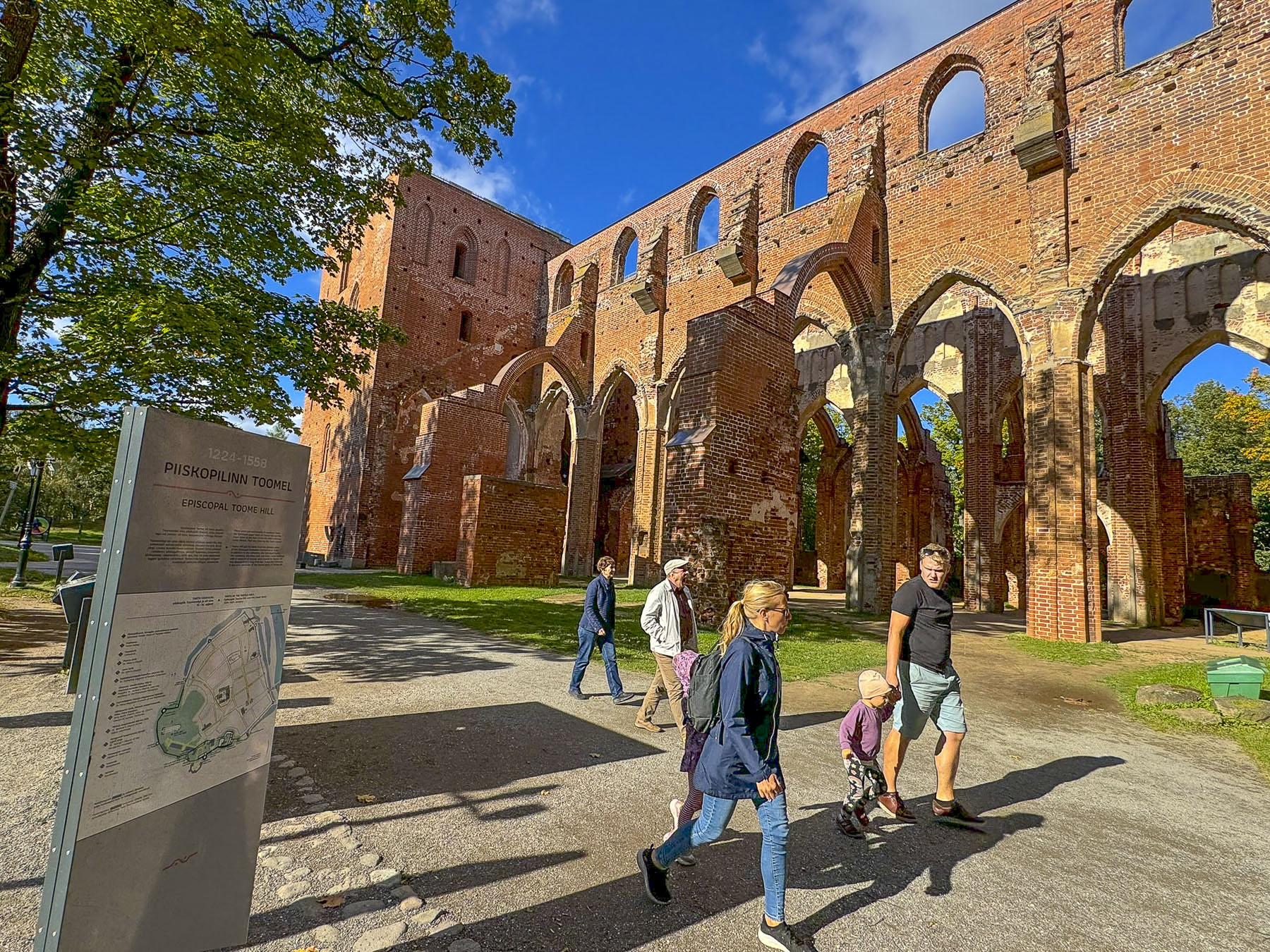
Afterwards we took the long uphill walk to the ruins of Tartu’s immense 13th century cathedral, now on the grounds of the University of Tartu. Construction of the Gothic style church started shortly after the Brothers of the Sword subjugated the pagan tribes around Tartu in the early 1200s and lasted nearly 400 years before it was destroyed during the Livonian Wars that ravished the region. It was never rebuilt.

We chose not to, but it’s possible to climb its towers to a viewing platform above the ruins for a panoramic view of the school’s campus and Tartu. The choir end of the cathedral has been restored and since 1981 houses The University of Tartu Museum.

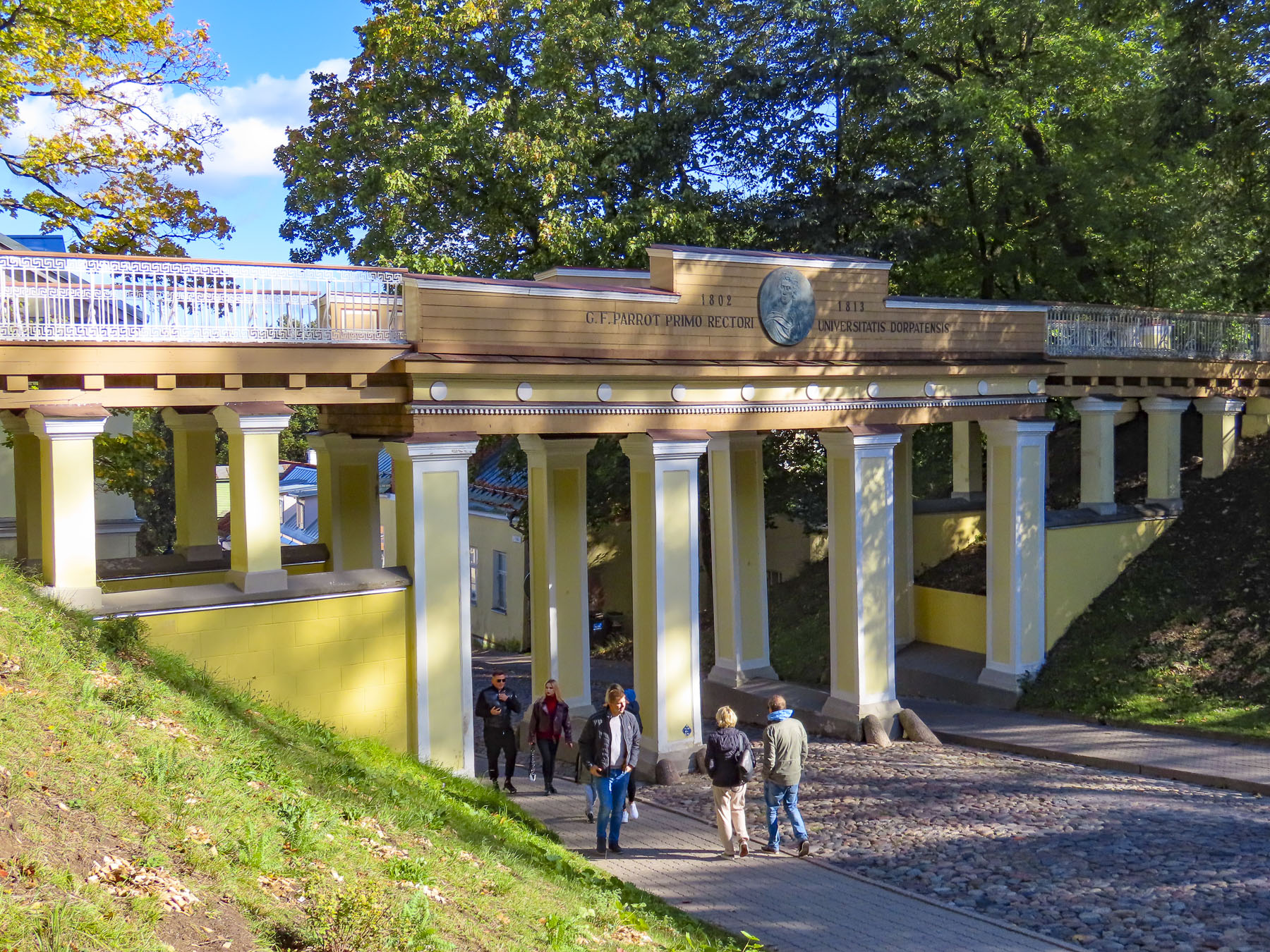
Heading back to the old town we passed under the Angel Bridge, built in 1838 to ease students’ efforts getting across campus. The scenic spot has a bit of a lovers’ lane reputation, as well as having several legends associated with it. The most popular one being “when you cross the bridge for the first time you should make a wish, and if you can hold your breath until you reach the other side your wish will come true.”   

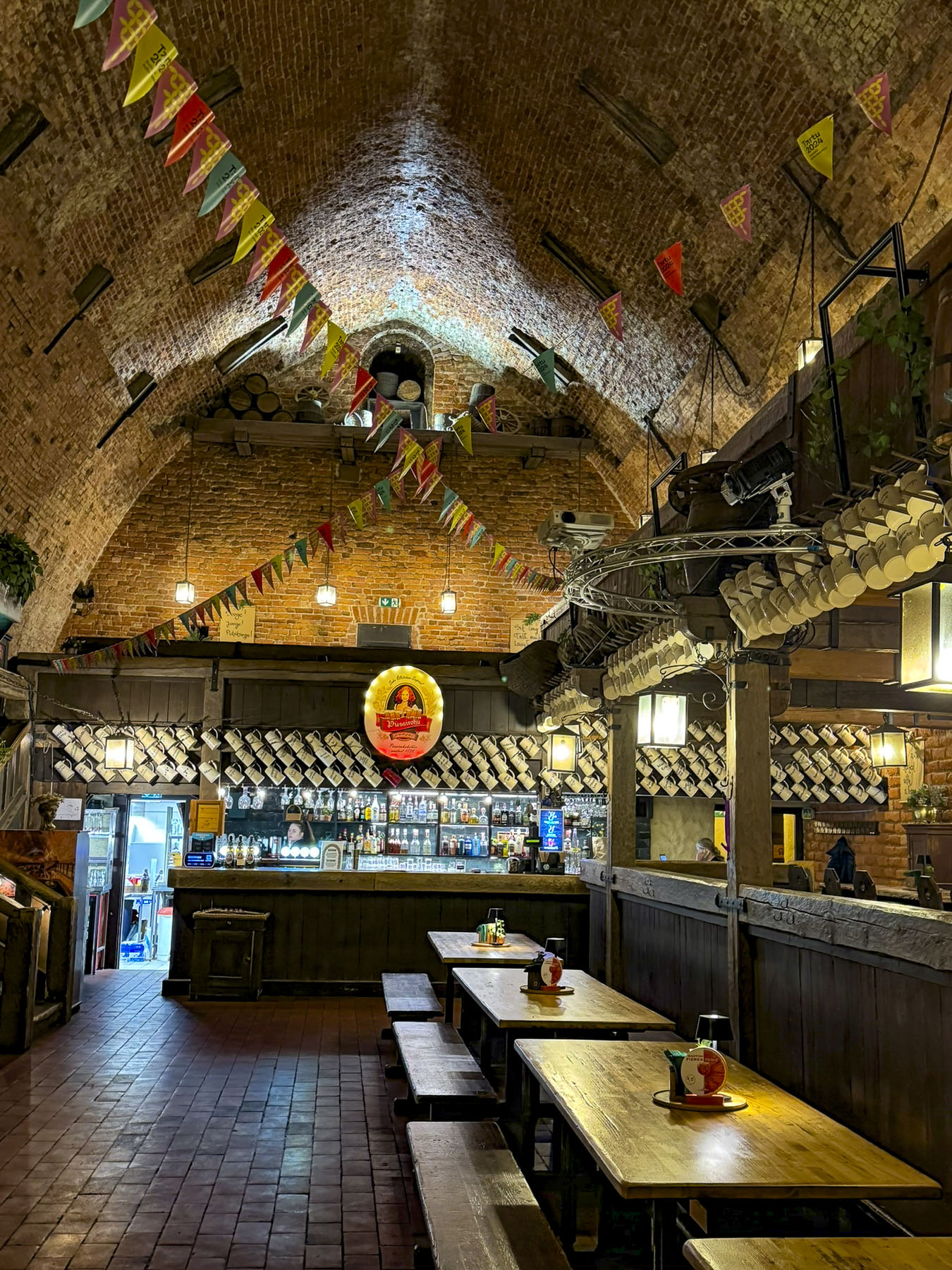
Just off the lane was the Gunpowder Cellar built into the side of a hill, it’s a rustic tavern set in a cavernous old 18th century munitions warehouse with an arched brick ceiling. It’s a popular beer hall and is known for its tasty Gunpowder Red beer, while also hosting frequent band appearances.

Later in the week after having lunch at the Café Werner a second time, we turned right and wandered down Ülikooli tn towards the neoclassic columned façade of the University of Tartu’s main building. It is Estonia’s oldest and largest university and the pride and joy of Tartu. The school was originally founded 1583 as a Jesuit institution during Poland’s brief rule of the country, but most of the credit is given to the Swedish King Gustave II Adolph when he upgraded the school to a university in 1632. It was forced to close several times over the centuries due to regional wars, but was later reopened by Russian Czar Alexander I in 1802 and was again reopened by the Soviet Union after World War II, where it became an important contact spot for Soviet academics to meet their western counterparts during the Cold War era.

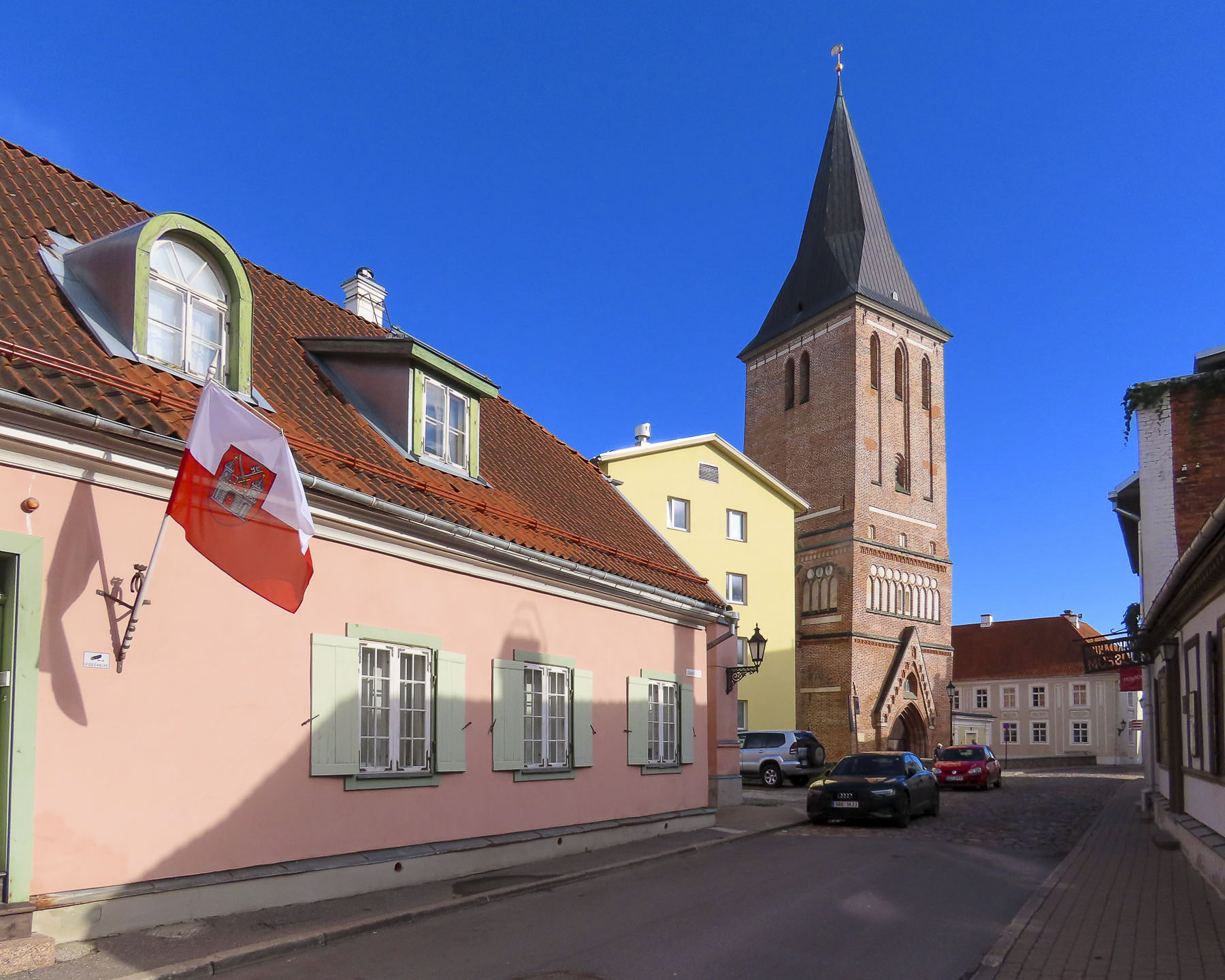
Farther along some of the buildings near Tartu’s St. John’s Church had unique details. Archeological evidence suggests the church dates back to the late 1100s, and could be the first “Christian church building in Estonia before the 13th-century conquest and great Christianization of the country.”  The basic form of the current church dates from the beginning of the 13th century. Due to the region’s conflicts, the church has been reconstructed several times over the centuries. Unfortunately, the church was closed when we visited the area.

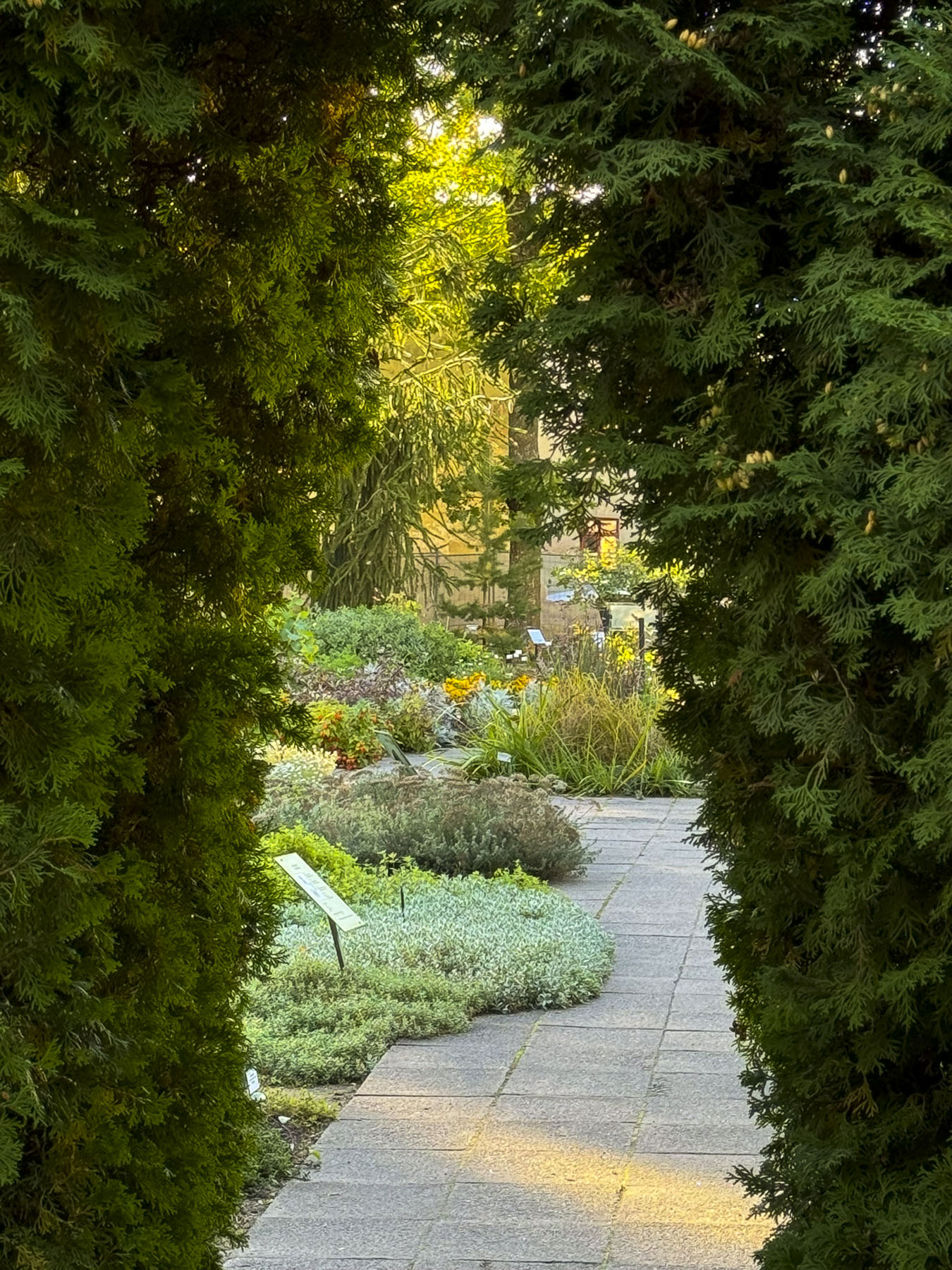
At the end of Ülikooli tn a short walk to the right led us to the Botanical Garden of the University of Tartu. Though in early October it was evident that Estonia has a short growing season and most of the plants were past their prime, but we still enjoyed exploring the various oases of greenery with a number of other couples and families, and imagined how beautiful the gardens must look in the Spring and Summer.

We followed Ruutli tanav, one of Tartu’s oldest streets, back towards the historic center of the town. During the Middle Ages when the winter snows melted during the spring thaw  – “mud season” or Estonia’s “fifth season” – traveling about the countryside was quite difficult. In the larger towns like Tartu the thoroughfares were lined with logs laid perpendicularly across the road to ease the life of the townsfolk and facilitate merchant trade with the Hanseatic League through the town’s riverside port on the Emajõgi. Evidence of these ancient timbered roads is still occasionally discovered whenever there is any infrastructure improvement required in the city. Cobblestones weren’t used for the lanes through town until the 15th century.

We made a short detour off our route to the Virgin Mary’s Dormition Cathedral, an Estonian Apostolic Orthodox Church. The beautiful Russian baroque style church was built in 1840 atop the foundations of an earlier wooden church that was burnt down during the 1775 Great Fire of Tartu, a devastating inferno which destroyed almost all the old wooden medieval era buildings in the central part of Tartu.

As we reached the central plaza it was evident that the weekend’s festivities were Tartu’s last big event for the summer high season. The weather was now noticeably colder with morning temperatures of 36F (2C) warming only to 54F (12C), and the outdoor café tables and chairs that lined the square were being taken down and sent into storage, until needed again next Spring. But the season is not over until the buskers stop playing and the trio of musicians from the other day were still entertaining folks around the Kissing Students fountain in the warm afternoon sun.

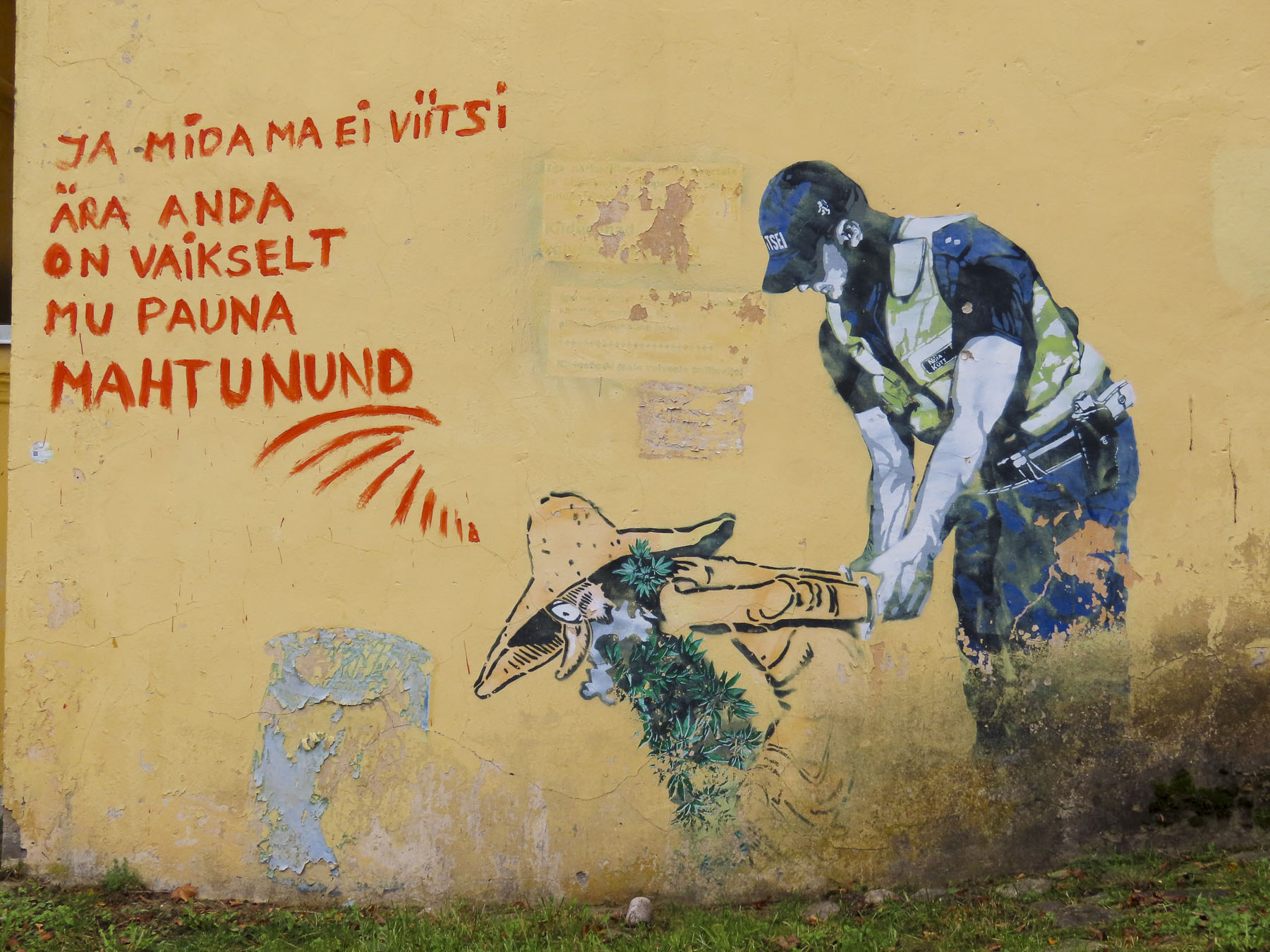
On our walks through the town, we came across some interesting and creative street murals. All were in well-chosen places that enhanced the wall, none were of the loud bubblegum type, though some were of a political nature. After all, our hotel was named for the Pallas Art School, which existed from 1919 to 1944 in Tartu, and was influential in establishing the aesthetic values of the newly independent country, but was closed during the communist occupation of the country.

Today the school’s artistic legacy continues at the  Pallas University of Applied Sciences which opened in 2000, and features ongoing exhibits in the Pallas Gallery.

The Gray House, now the KGB Cells museum, was uphill from the gallery, just three doors down from a busy intersection, on a street that leads to university housing. It was a non-descript door with buzzers for the three-story apartment building above it, and one for the museum. In the 1940s and 1950s the upper floors served as offices for the Soviet’s secret police. We buzzed and a voice released the door lock for us to enter the lobby, where an arrow pointed to a heavy metal door to the basement, and a set of intimidating stairs that descended to a flickering fluorescent lit hallway. It’s a small space with a dozen prison cells and several interrogation rooms in which the brutality of the Soviet years is documented. Notoriously, on July 8th & 9th, 1941, 173 men and 20 women were summarily executed and buried in the building’s courtyard. Mass deportations of 45,000 Estonians to the Soviet gulags in Siberia continued until 1953. For many it was a death sentence, and few ever returned to their homeland. Across the country the KGB is believed to have murdered nearly 60,000 political prisoners between 1940 -1991. It’s a reminder of the danger of authoritative regimes and sadly is still relevant today.

We discovered another street mural just around the corner from our hotel as we headed to dinner at Restoran Spargel. Over an enjoyable evening, we discussed plans to take advantage of the nice weather predicted for the next day by exploring the small fishing villages along the shoreline of Lake Peipus.

We thoroughly appreciated Tartu’s mix of history and youthful enthusiasm for the future. It’s a city but felt like a small town that we could see ourselves quite comfortably living in and enjoy experiencing all of its cultural events throughout the year.

Till next time,

Craig & Donna

Road Trip Tahiti: Black Sand, Waterfalls and Sunsets or Enjoying a Week in Paradise

“What do you think about Tahiti?” Donna asked.  “I haven’t, honestly – it’s not on my radar.” “There’s this very good airline points sale to Papeete. I think we should go!” And so, we made it happen.  It’s one of our great pleasures in retirement, the ability to indulge our desire to see the world. Though the statement that Tahiti was not on my radar might not be exactly true.  James Michener’s Tales of the South Pacific might have been the first book I freely chose to read as a teenager, fifty-plus years ago; the catalyst was my dad’s dream of building a sailboat to sail around the world. Frustratingly, our sailing never extended beyond Long Island Sound, but the lifelong desire to explore had been instilled in me.

It was a long sixteen-hour flight from the east coast of the United States to San Francisco with a final connection to Papeete on Tahiti in French Polynesia. Arriving just before 9:00pm, we opted to taxi to our three-night apartment rental, Little Home Tahiti, a small studio apartment chosen for price, onsite parking, and short walking distance to the car rental agent – Tahiti Rent.

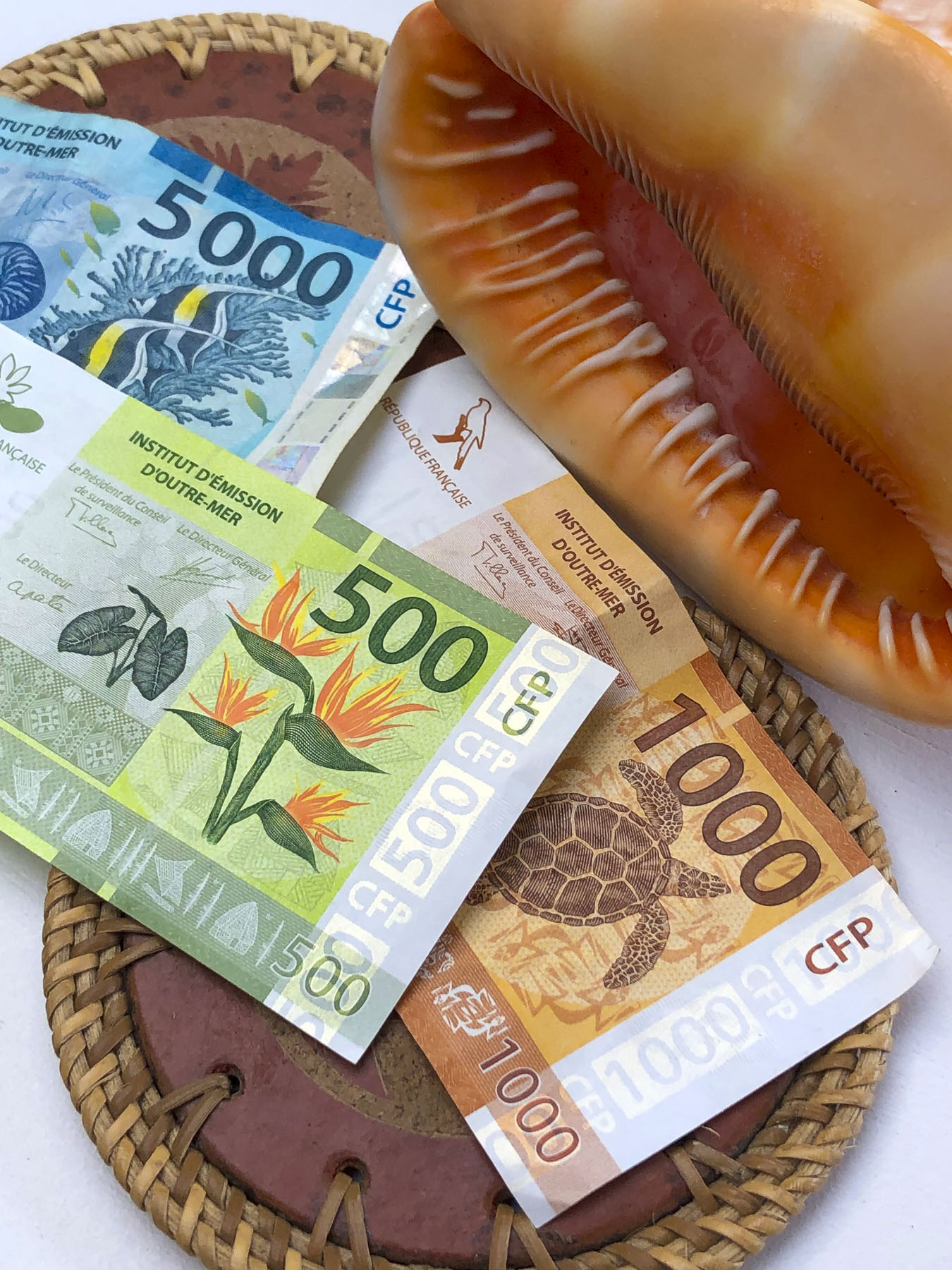
Checking into Little Home Tahiti was a bit unusual: instructions to access the key to the apartment building and garage door fob from a key box were hanging from a traffic signpost in front of the building (our payment, Tahiti has the prettiest currency, was to be placed there too.) The next morning, after excellent coffees at Kaūa’a Tahiti, just around the corner (they roast the coffee beans in the café), we walked a few short blocks to the Marché de Papeete, the town’s old central market.

The 2-story building still has several fruit and vegetable vendors, fish mongers and exotic flower stalls. Most of the space is now, though, is filled with folks selling handicrafts, souvenirs, and Tahitian black pearls, for the tourist trade. Afterwards we picked up our rental car – an easy procedure, with the caveat that we would need to vacuum out the beach sand, before returning the car. We thought this was an unusual request, as most car rental companies that we’ve used have provided this service. Not being local, I asked where I would accomplish this and was informed most gas stations have vacuums available. Easy enough in theory, but nine days later after stopping at five different gas stations, I was not able to find a vacuum pump. Upon returning the car the rental agent was ready to charge us an additional fee for a small amount of sand, difficult to avoid on Tahiti, on the car’s front floor, until I pointed out that we interrupted him from vacuuming a car when we pulled into the lot.

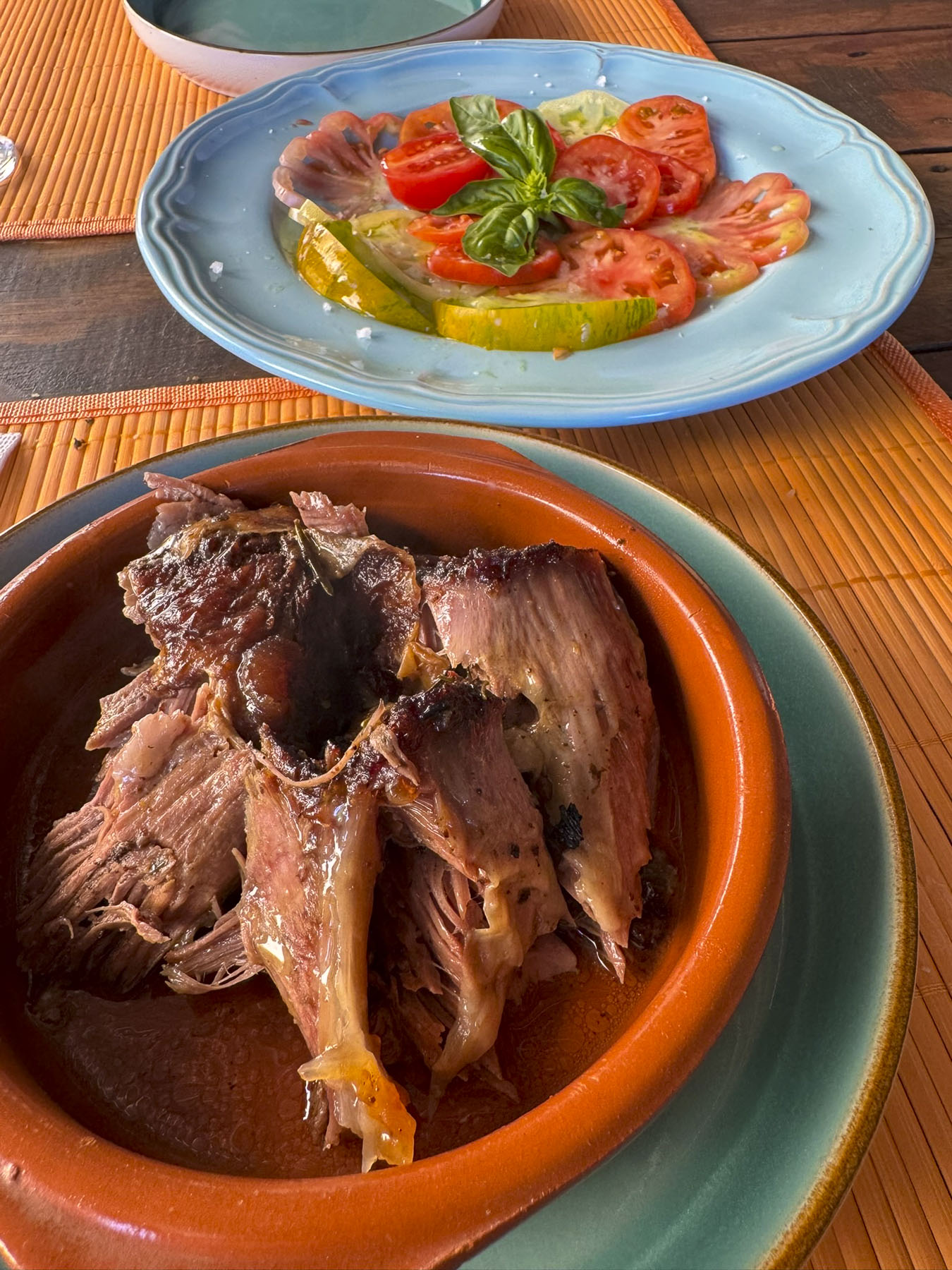
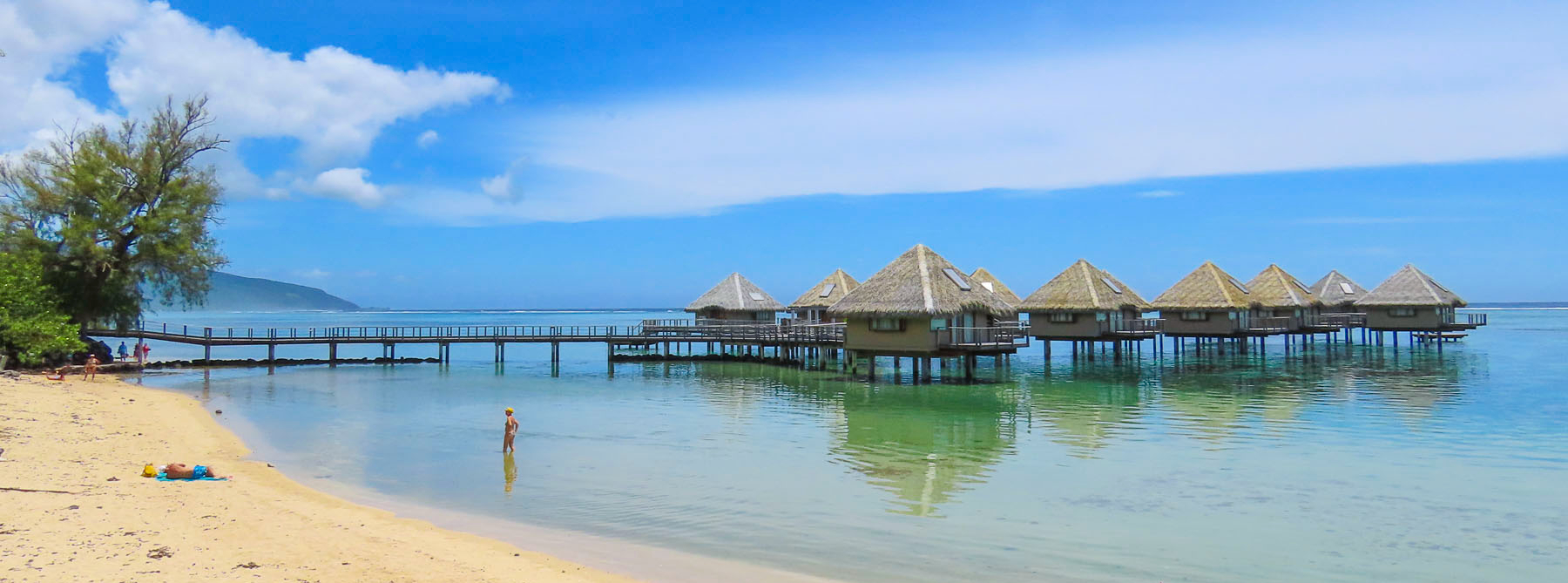
While the airfare to Tahiti, the largest island in French Polynesia, was relatively low, restaurants and hotels in this isolated paradise in the middle of the Pacific Ocean are expensive. This is the direct result of having to import nearly everything from France, China, the United States, Australia and New Zealand. So, to keep within a reasonable budget for nine nights, we chose to stay in three different self-catering apartments across the island. We’ve always enjoyed checking out the local grocery stores and markets during our travels, and enjoy cooking in. Food trucks were mentioned as a budget friendly alternative to restaurants; although good, we found these to be not nearly as inexpensive as you would think. Surprisingly, freshly caught tuna and mahi-mahi were reasonably affordable in restaurants and stores. We enjoyed preparing it several times during our stay.

Papeete, the capital of French Polynesia, is a small city with a population of roughly 27,000. Its popularity as a booming destination was never envisioned and the traffic in paradise is just as bad as NYC’s at rush hour, since most of the island seems to drive to work here. To help alleviate the morning and evening congestion they use a road zipper, moveable barrier systems, to reconfigure the incoming and outgoing lanes of traffic at rush-hour. The city’s antiquated footprint was inherited from the days when the town was viewed as only ever being colonial backwater.  Fortunately, the town is thoroughly walkable.

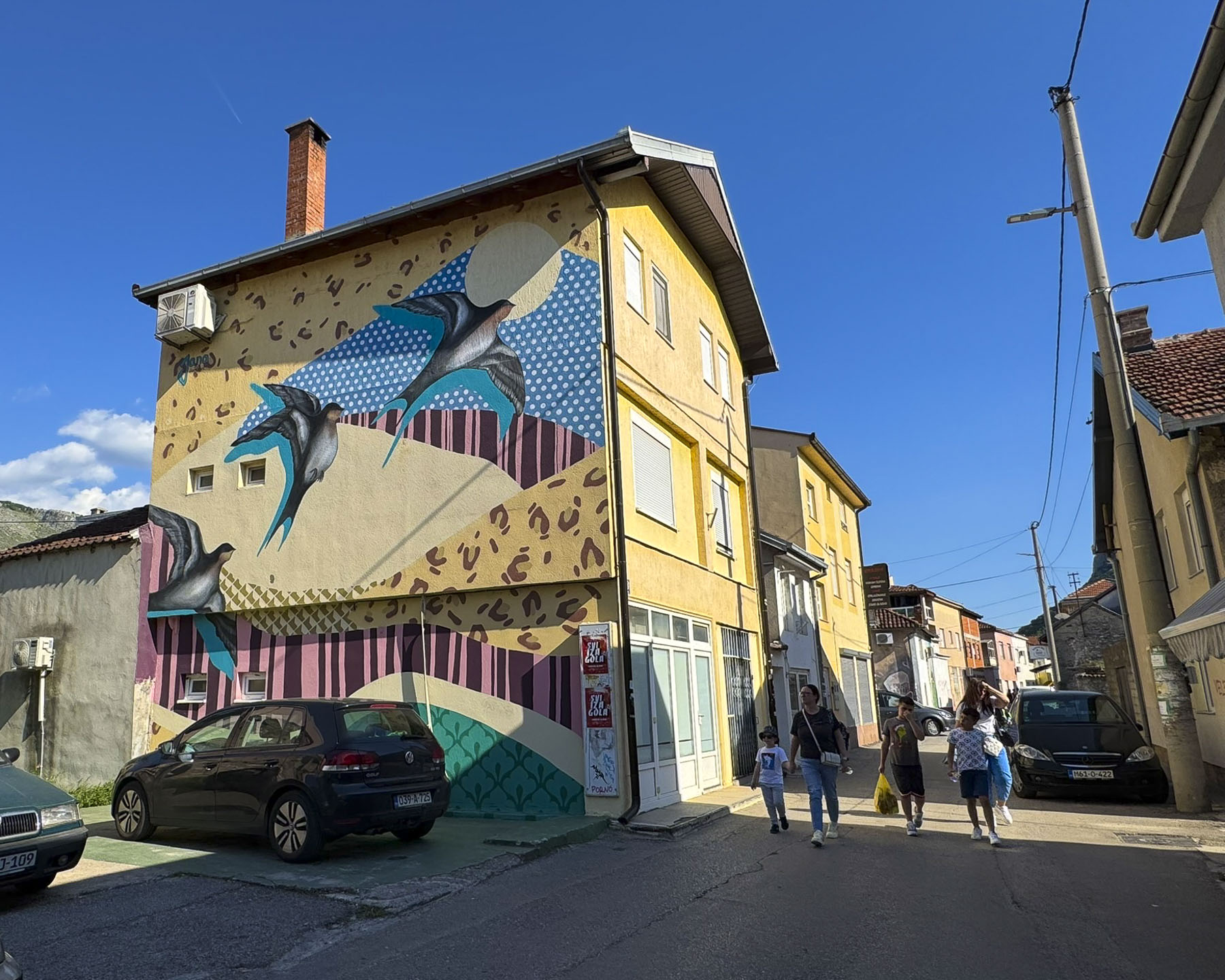
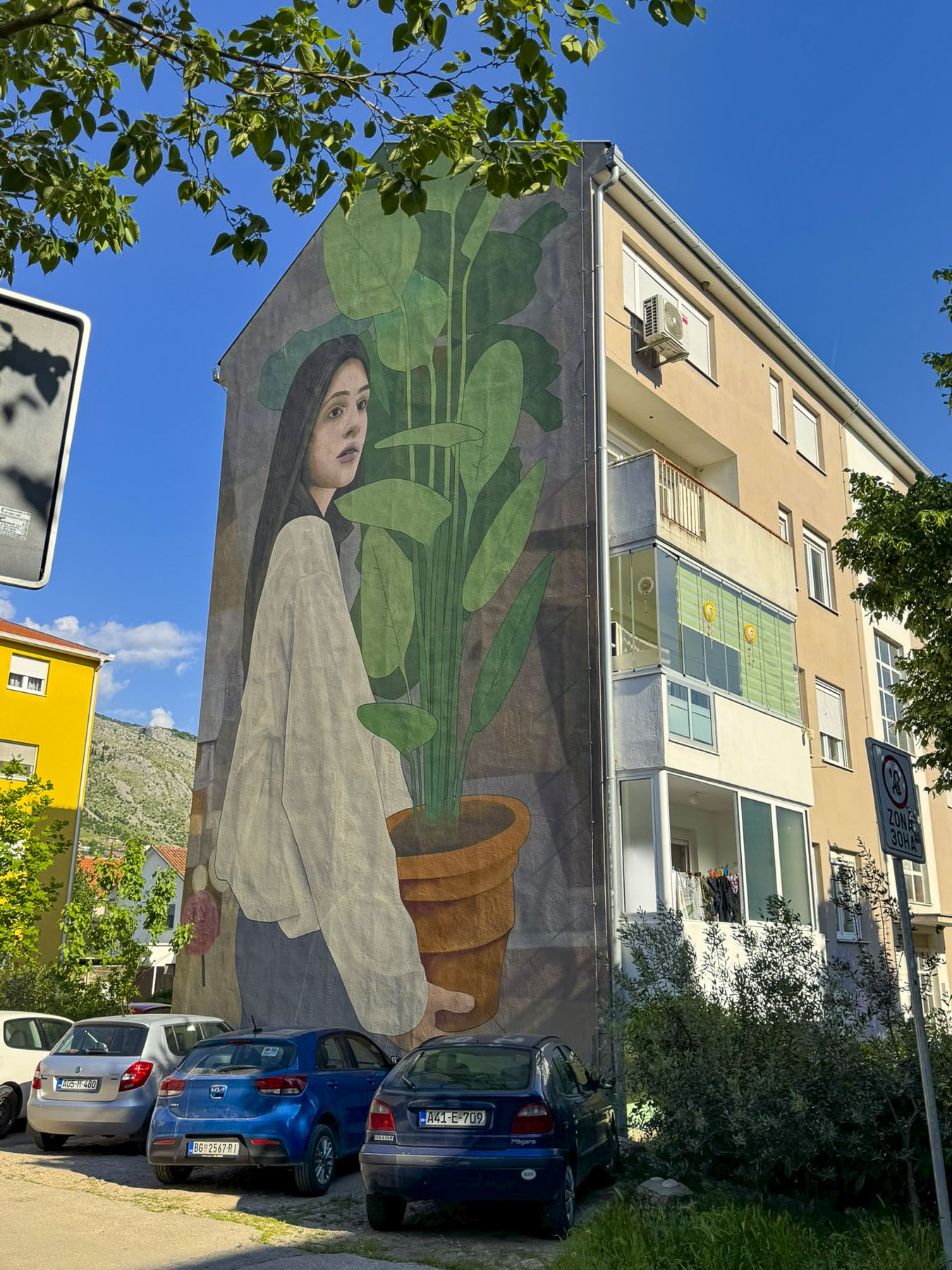
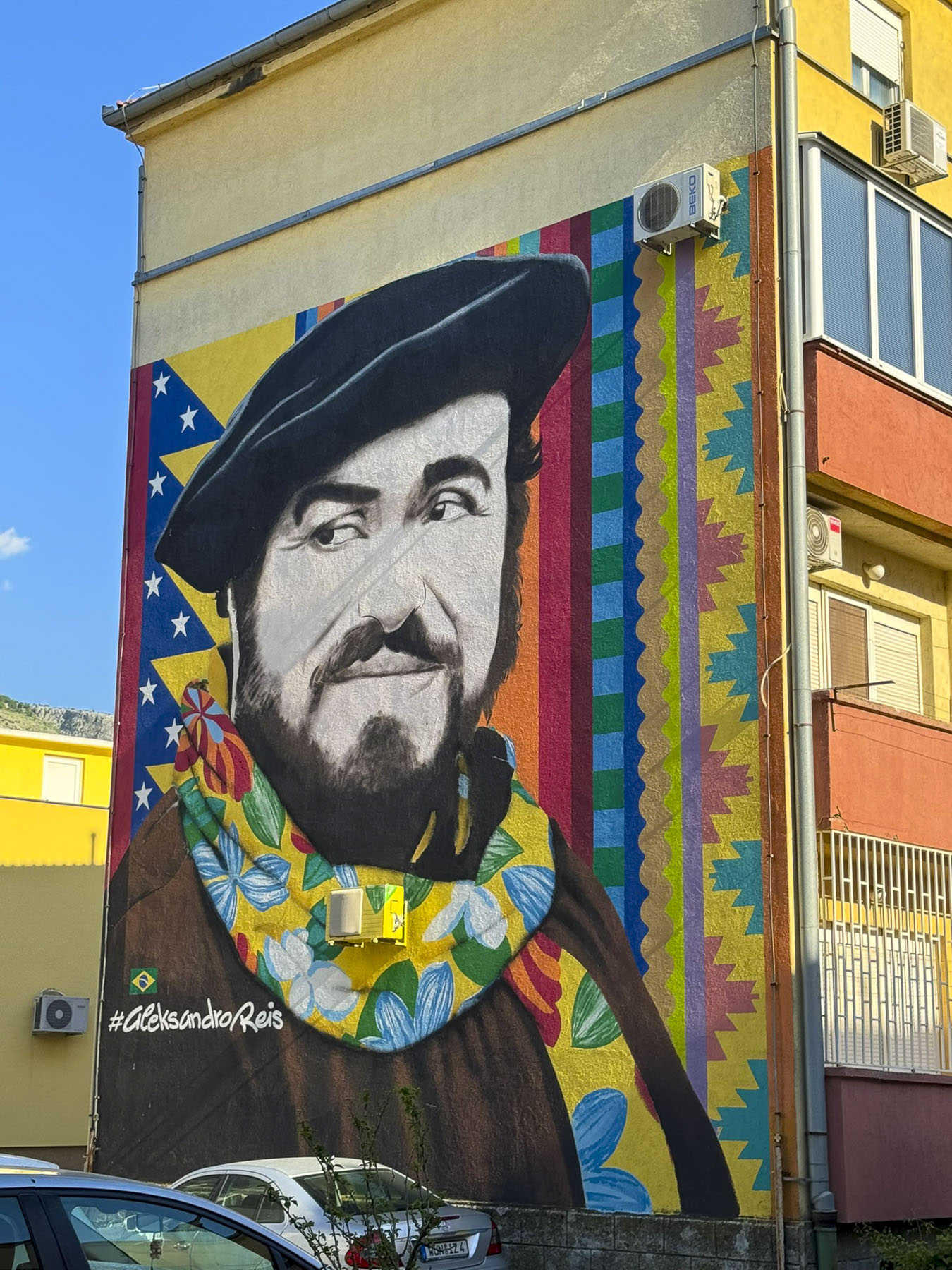
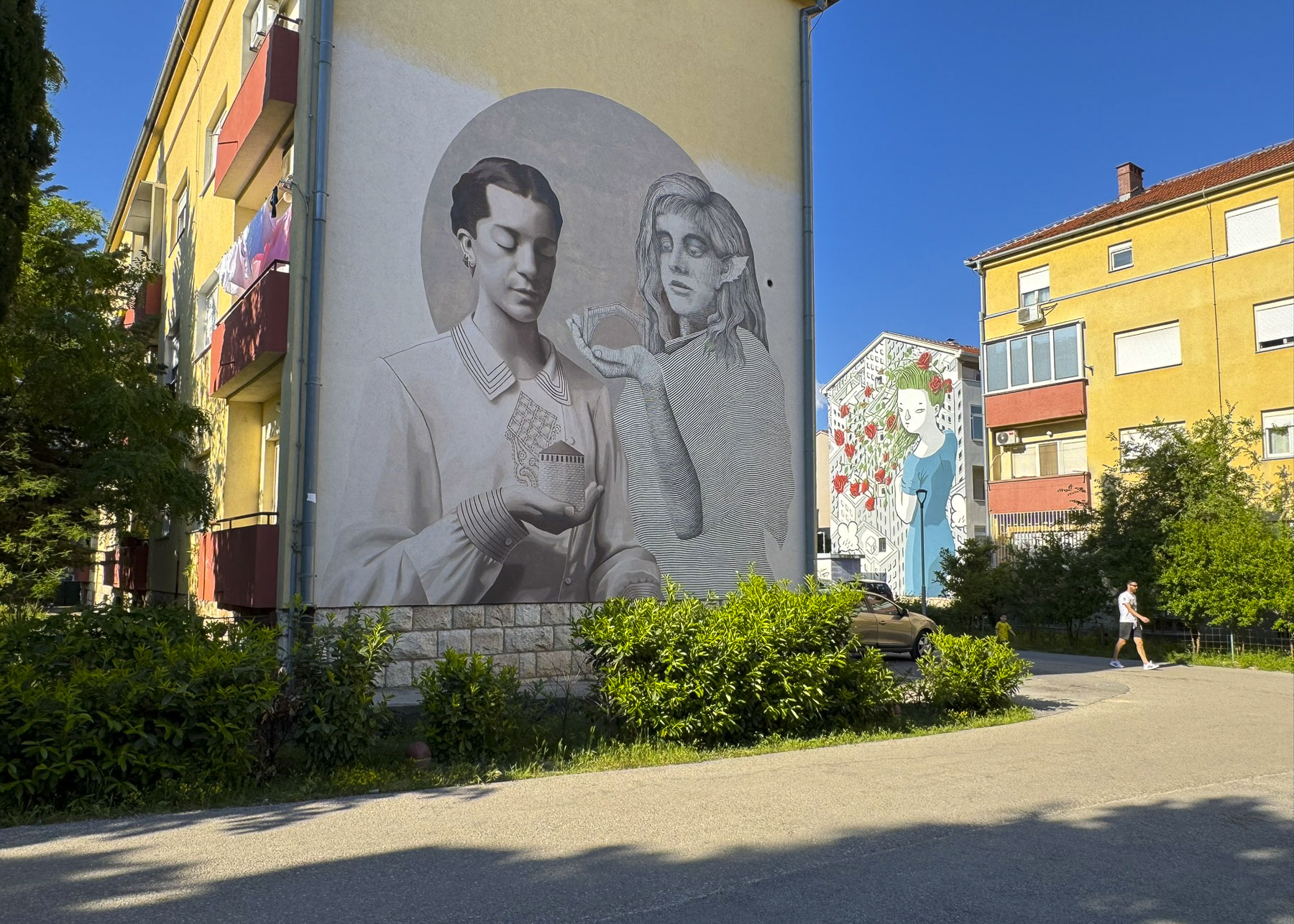
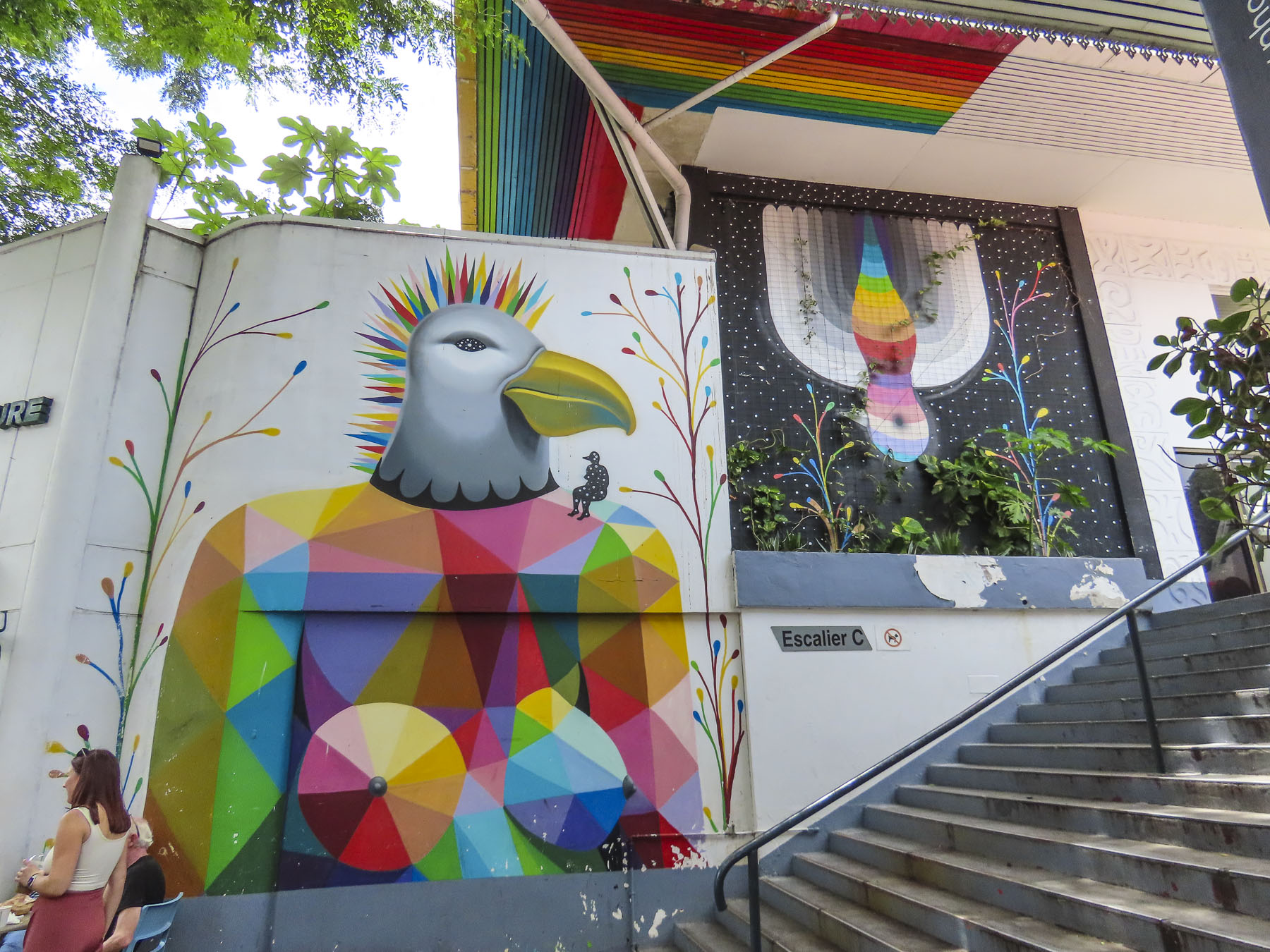
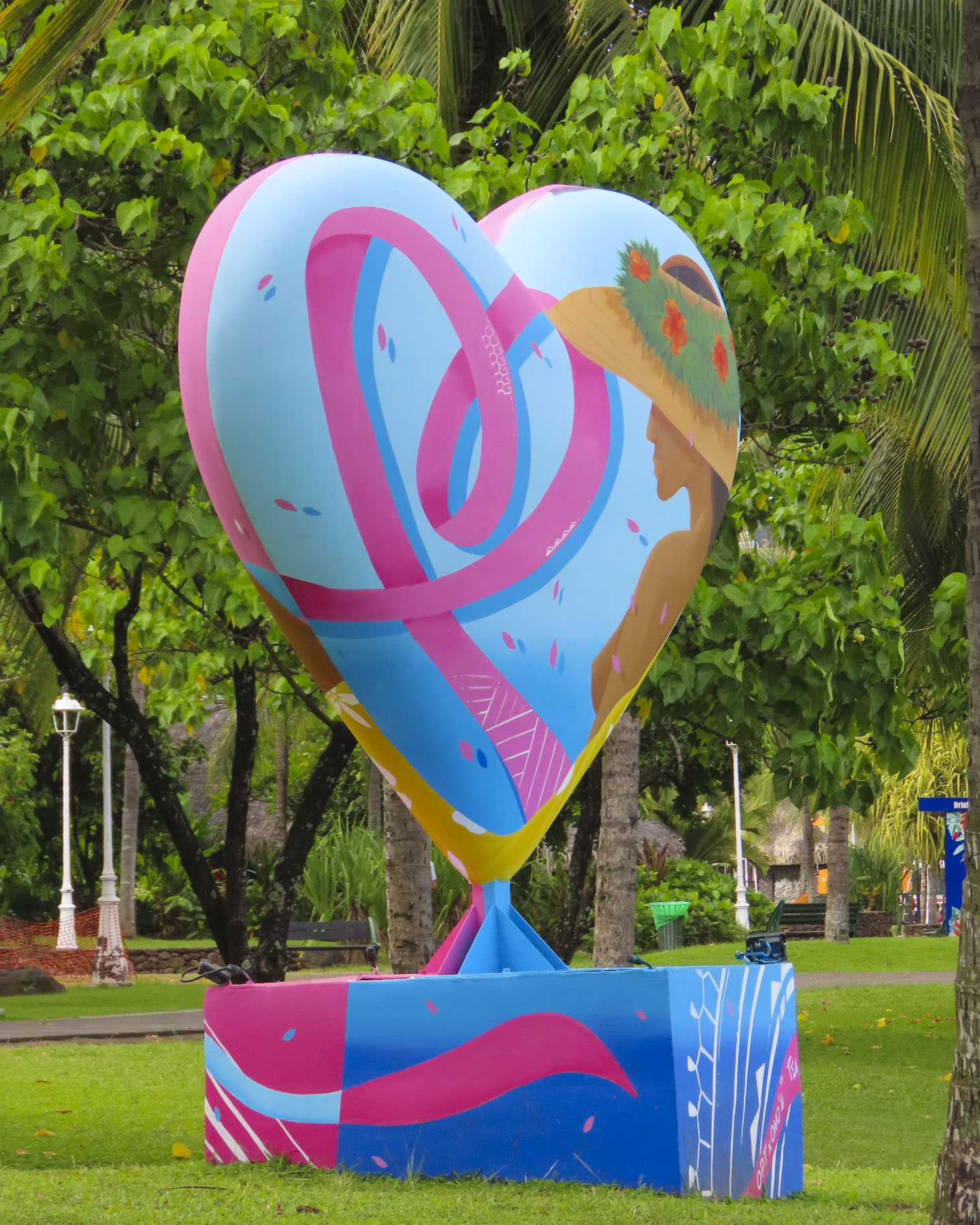
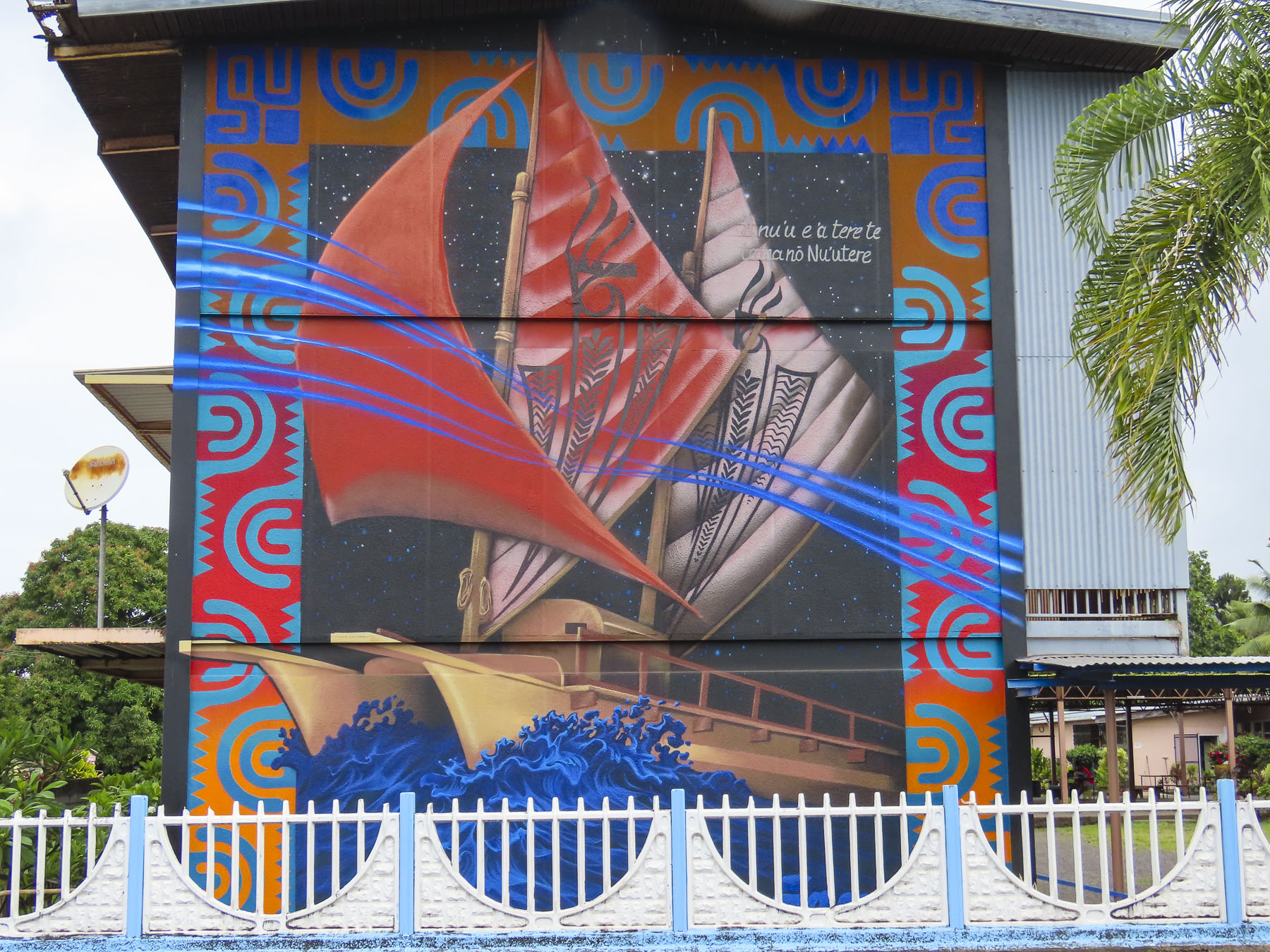
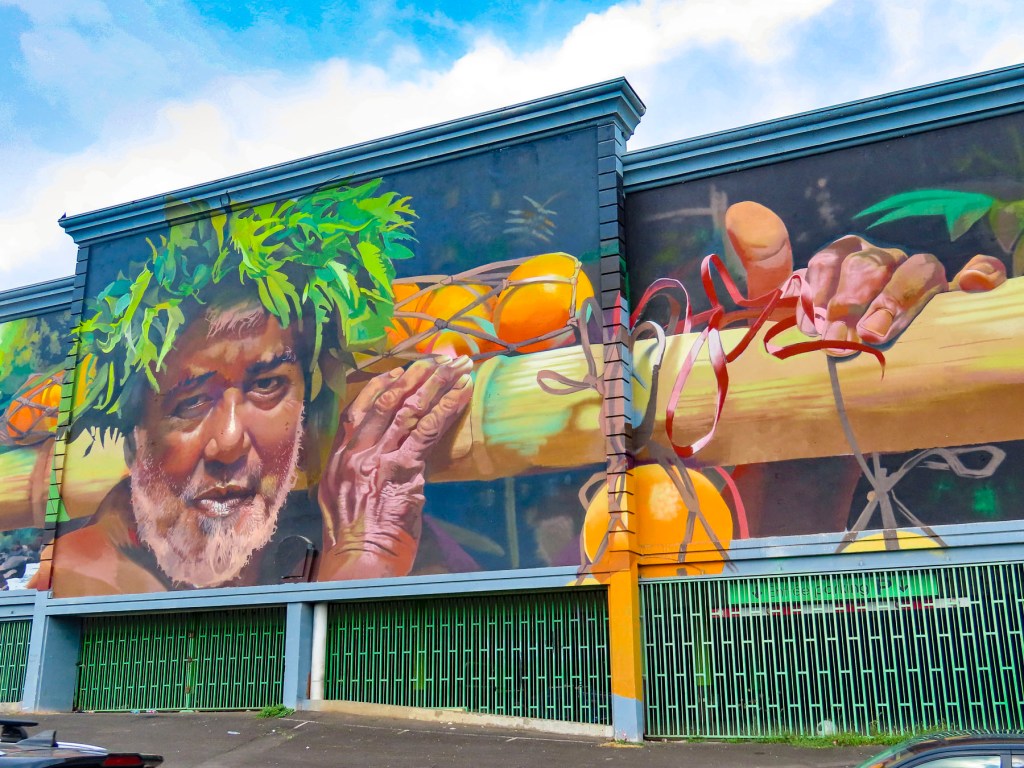
Surprisingly wonderful street murals grace the side of many otherwise dull city walls. Many of these beautiful pieces of art were sponsored by the Ono’u Festival, a street art event that has been held in Papeete since 2014. We used this street art map to help plot our walks around the different areas of the city. There are murals spread all across the city, but several of our favorites were located along the Rue Mgr Tepano Jaussen near the Cathédrale Notre-Dame de Papeete, a French colonial era church from 1875.

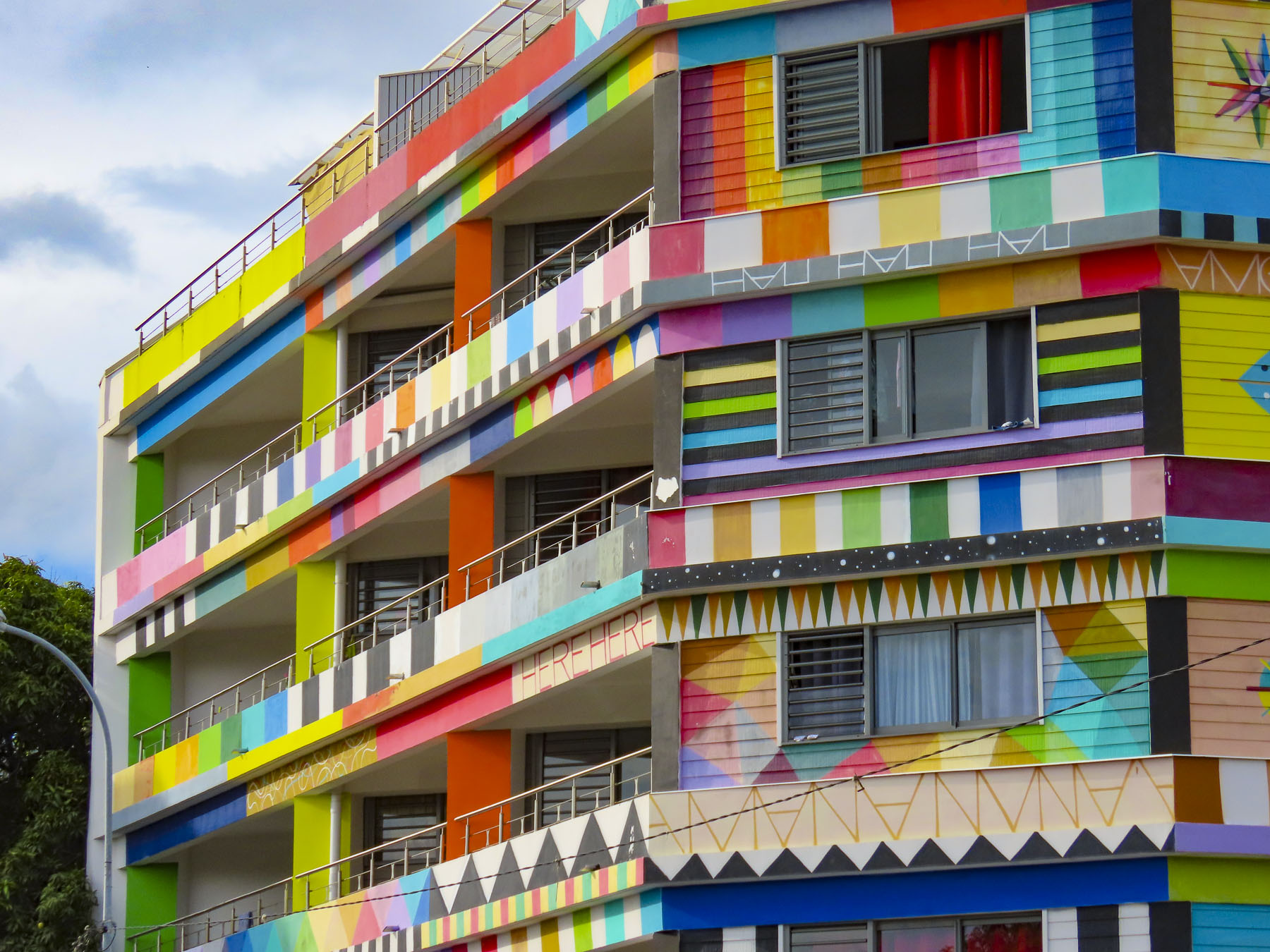
Closer to our temporary home, the Résidence Paraita, an apartment building, was totally immersed in an abstract design by the Spanish street artist Okuda, which we could see from the balcony of our apartment.

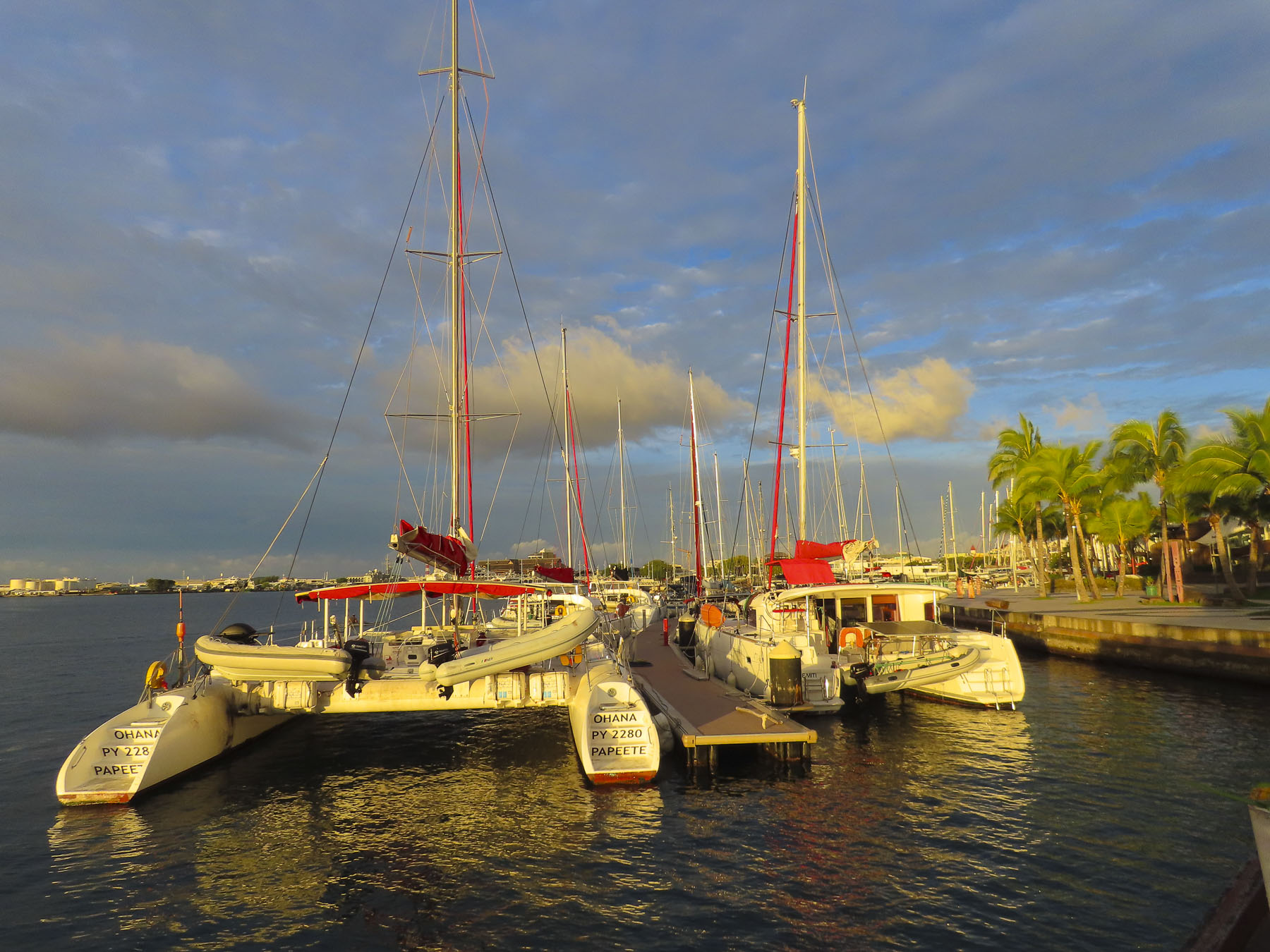
We also enjoyed the walk along the waterfront promenade to Pā’ōfa’i Gardens and the Papeete Marina, where it was interesting to see the different home ports painted on the stern of wandering sailors’ boats. San Francisco, Sydney, Barcelona, Paris, Rio. The boat crews enjoying a safe anchorage before continuing their journey.

Further along we had drinks at the over-water tiki bar of the Restaurant Le Moana and watched with amazement as the bay in front of us filled with just off from work Tahitians who took to the water in Polynesian outrigger canoes, called “va’a,“ and larger longboats, practicing in preparation for a number of races around the islands that take place each year.

The longest and largest, with over 100 teams participating, is the Hawaiki Nui Va’a Race, in which six-person crews paddle across 79 miles of ocean in three days. Starting in Huahine they visit Raiatea, and Tahaa before beaching their canoes on Bora Bora.

This is one of many races around Tahiti keeping alive the nautical heritage of their Mā’ohi, ancient ancestors’ incredible ocean-going feats in search of new horizons. Folks stayed on the water until sunset, one of the most colorful we experienced while on the island. The last of the day’s inter-island ferries sailed toward the sunset.

Also on the waterfront in Place Jacques Chirac is a full-size replica of an ancient Polynesian wa’a kaulua, a double-hulled, long distance, sailing canoe. Just looking at it made us realize what an amazing accomplishment it was for the early Polynesians to cross vast stretches of unforgiving ocean.

Walking back through town we stopped at Vini Vini Fish N’Chill for dinner. It’s a small casual place, with inside and outside tables, that grew as an off-shoot from the families long-line fishing fleet and serves poke bowls, tartines – a French open face sandwich with various toppings, sushi and of course burgers. Occasionally they’ll host a ukulele band outside on the sidewalk.

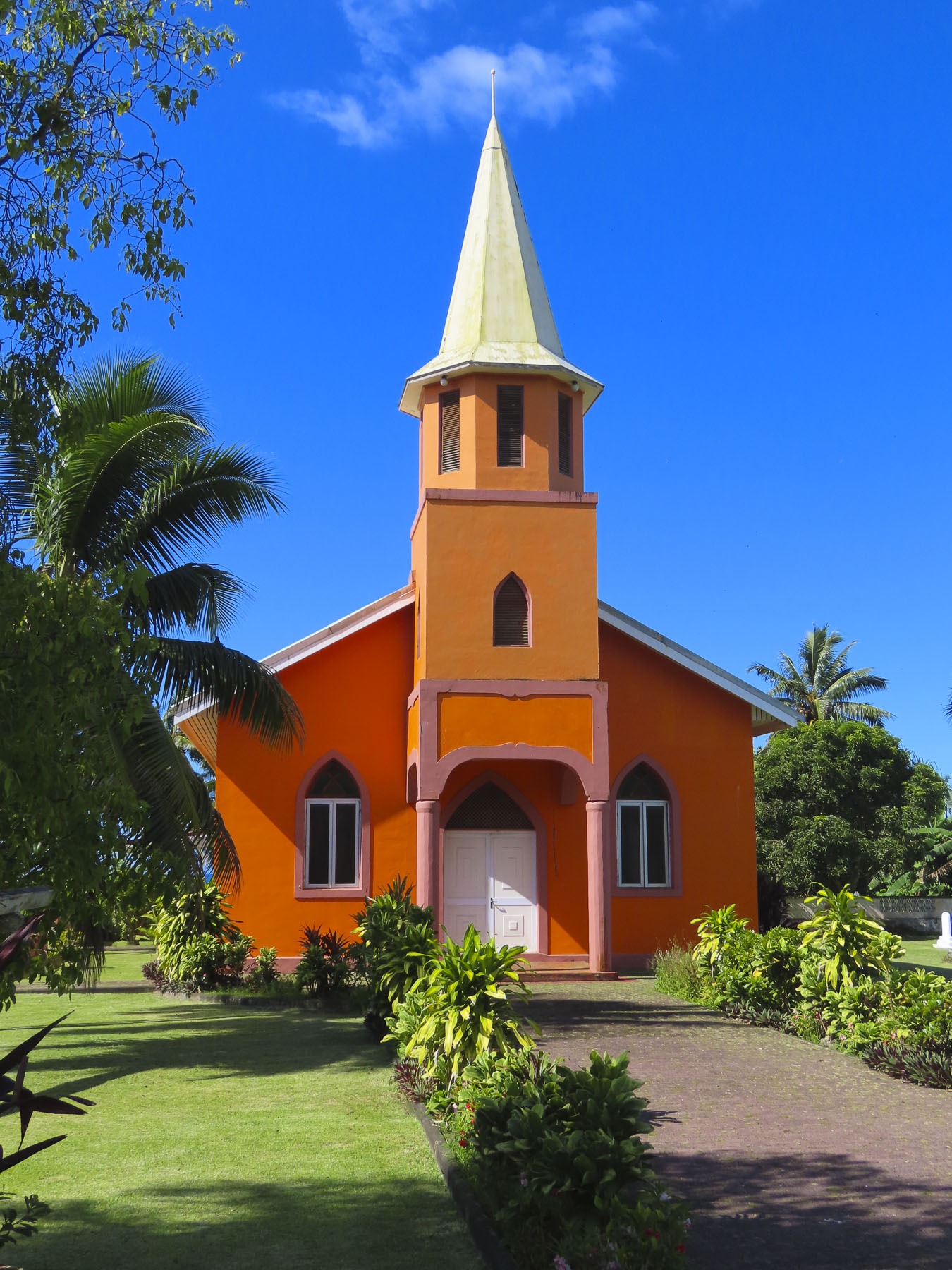
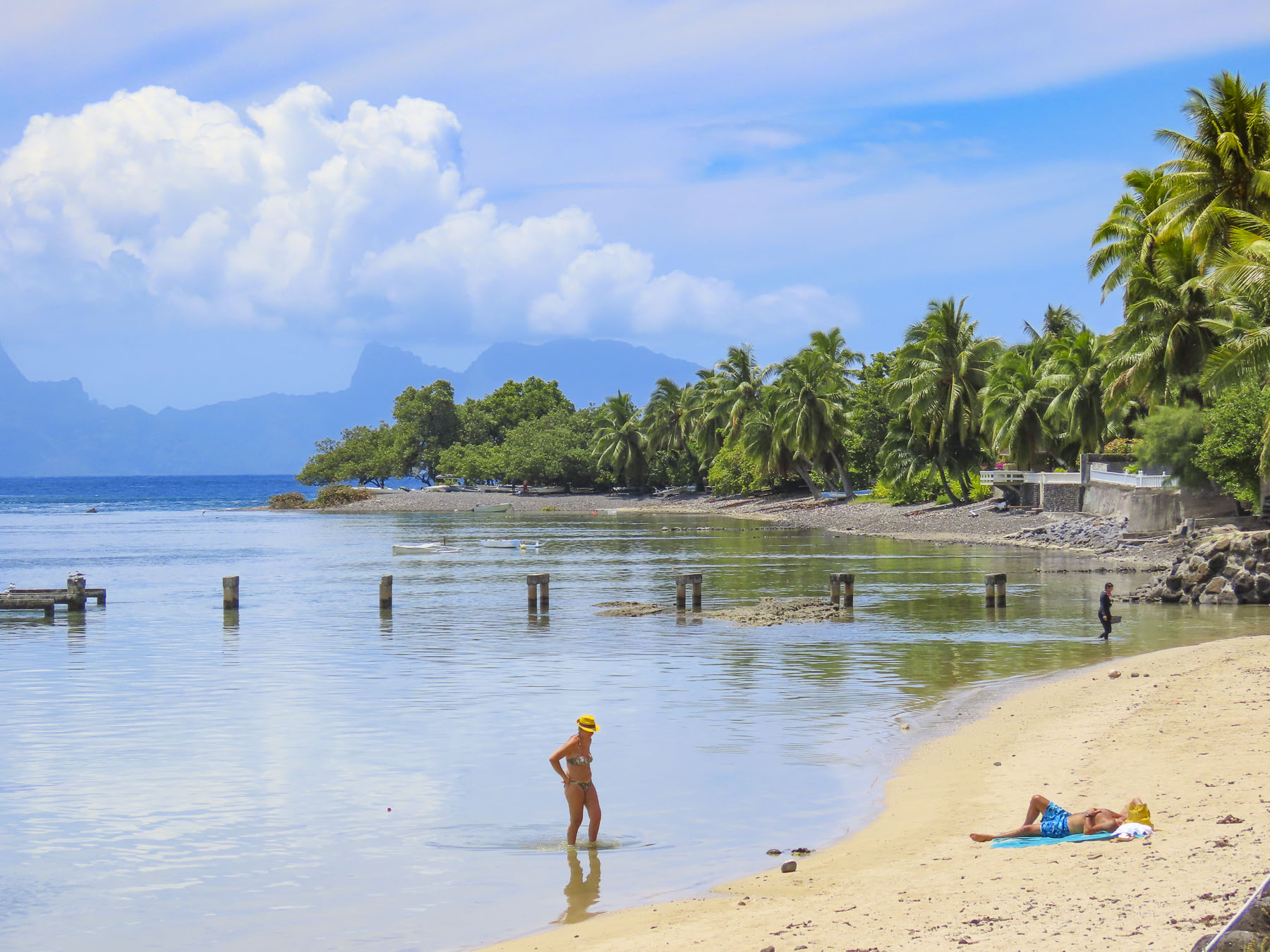
Outside Papeete the traffic eases tremendously and we took several short day-trips out into the surrounding area, traveling along the north coast to the Pointe Vénus lighthouse in Māhina. Built in 1867, on a black sand peninsular that juts into Matavai Bay, it was the first lighthouse built in the South Pacific and equipped with a powerful beam that could be seen by ships 215 miles out to sea. It takes its name from an event on Captain James Cook’s first voyage around the world, when on June 3rd, 1769, Cook and his accompanying astronomer Charles Green set up equipment to observe the transit of Venus, a small black dot, travelling across the Sun. From the shore here looking north the blues of the sea gradated seamlessly into the sky, a vast endless emptiness that Polynesians explored and found Hawaii, 2600 miles away, 1200 years ago. The brightly painted Église Getesemane de Mahina along the road to the lighthouse was definitely a worthy photo stop that epitomized the Tahitian celebration of color.

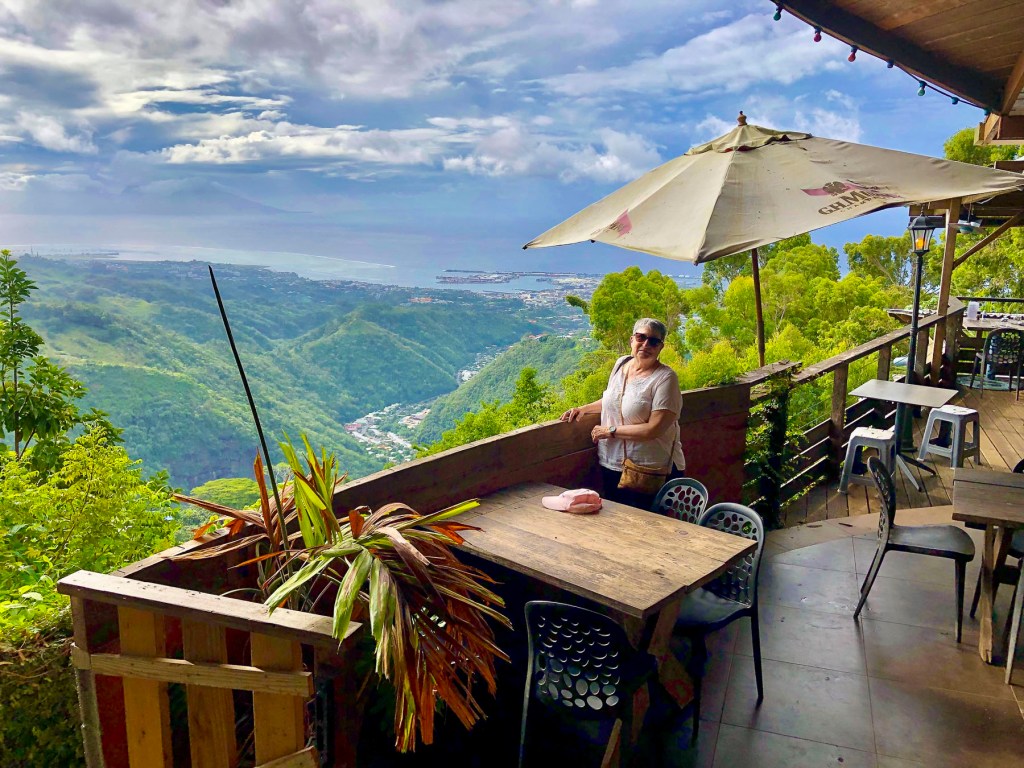
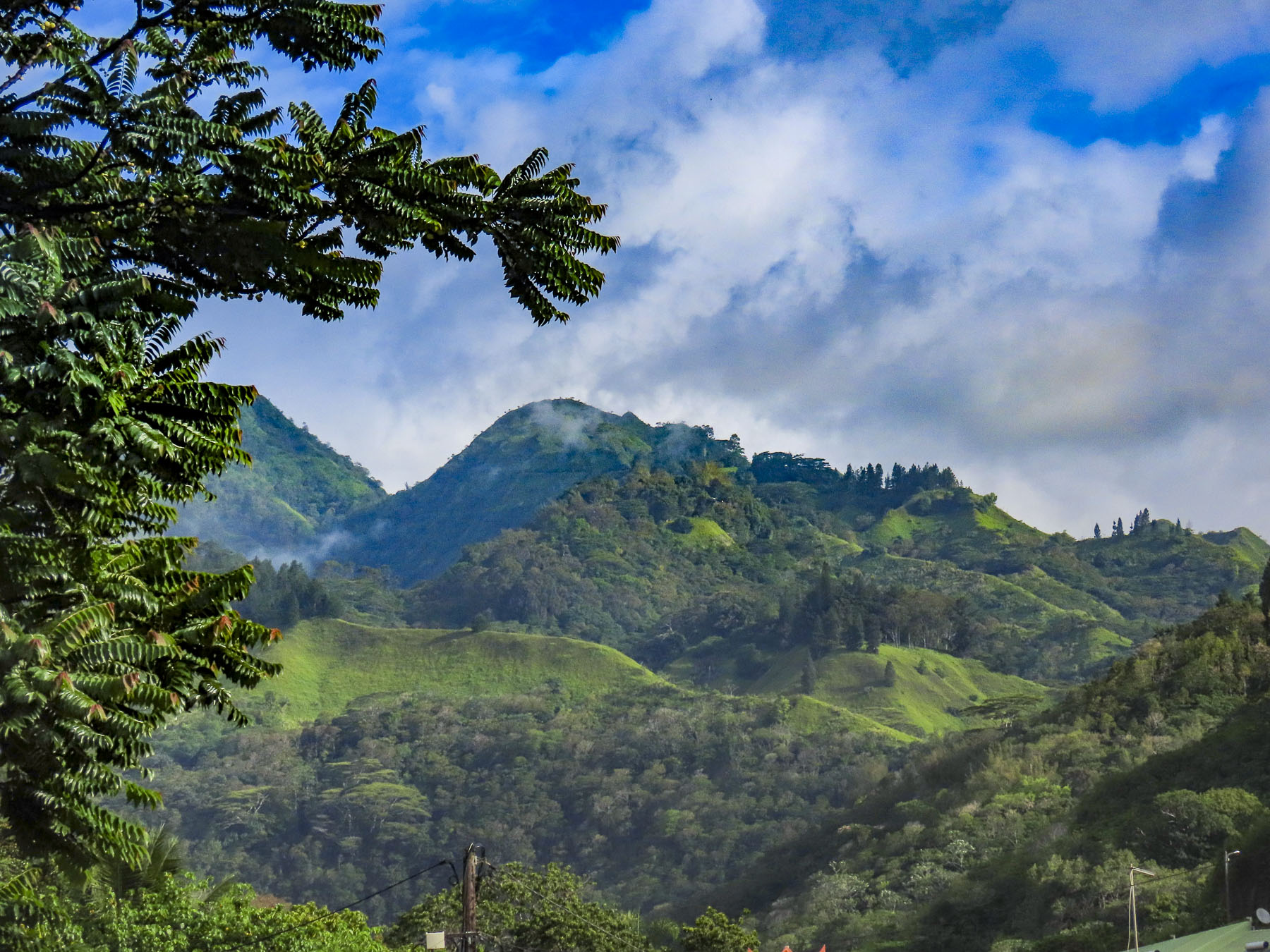
Later we headed to the O Belvédère, a remote French restaurant, located in the foothills of 7,352 ft Mount ‘Orohena, the island’s tallest peak and the highest mountain in French Polynesia. The restaurant is only open for lunch and dinner Friday – Sunday. Unfortunately, we visited earlier in the week, but the staff kindly let us take in the breathtaking views, over the rugged foothills which extend to the coast, from its balconies.

It’s definitely a destination restaurant and part of its allure is the harrowing 3.5 mile drive, not for the faint of heart, up a single-track, heavily potholed road through dense jungle-like forest that dead ends at the restaurant. There was barely room for the rare oncoming car to pass. It’s not a drive we would undertake in the dark. Guided hikes to Mount ‘Orohena and 4×4 safaris into the mountains can be arranged through local tour operators, as there are not any roads that cross Tahiti’s mountainous interior. One the way back to Papeete we passed and then circled back to photograph the Mairie de Pirae, the local town hall, a beautiful example of French colonial architecture that seemed out of place on the tropical island.

The morning of our checkout from Little Home Tahiti, just as we had finished our coffee and zippered the suitcases, the power to our building went out. Not usually a big deal, but we were staying on the 5th floor and the car was in the underground parking. The heat and humidity builds quickly in the tropics without A/C. We called our host for a situation update, only to be informed that it was an island wide power outage, something that, it turns out, happens rather frequently. The big question for us, was the electric gate to the underground garage functioning? We were reluctant to walk down seven flights with only the emergency stairwell lights and the weak flashlights on our cell phones. After an hour of indecisiveness, I slowly carried our suitcases downstairs to the car and was very relieved to find the gate wide open. I parked the car on the street, called Donna and relayed, “We’re free – let’s go!”

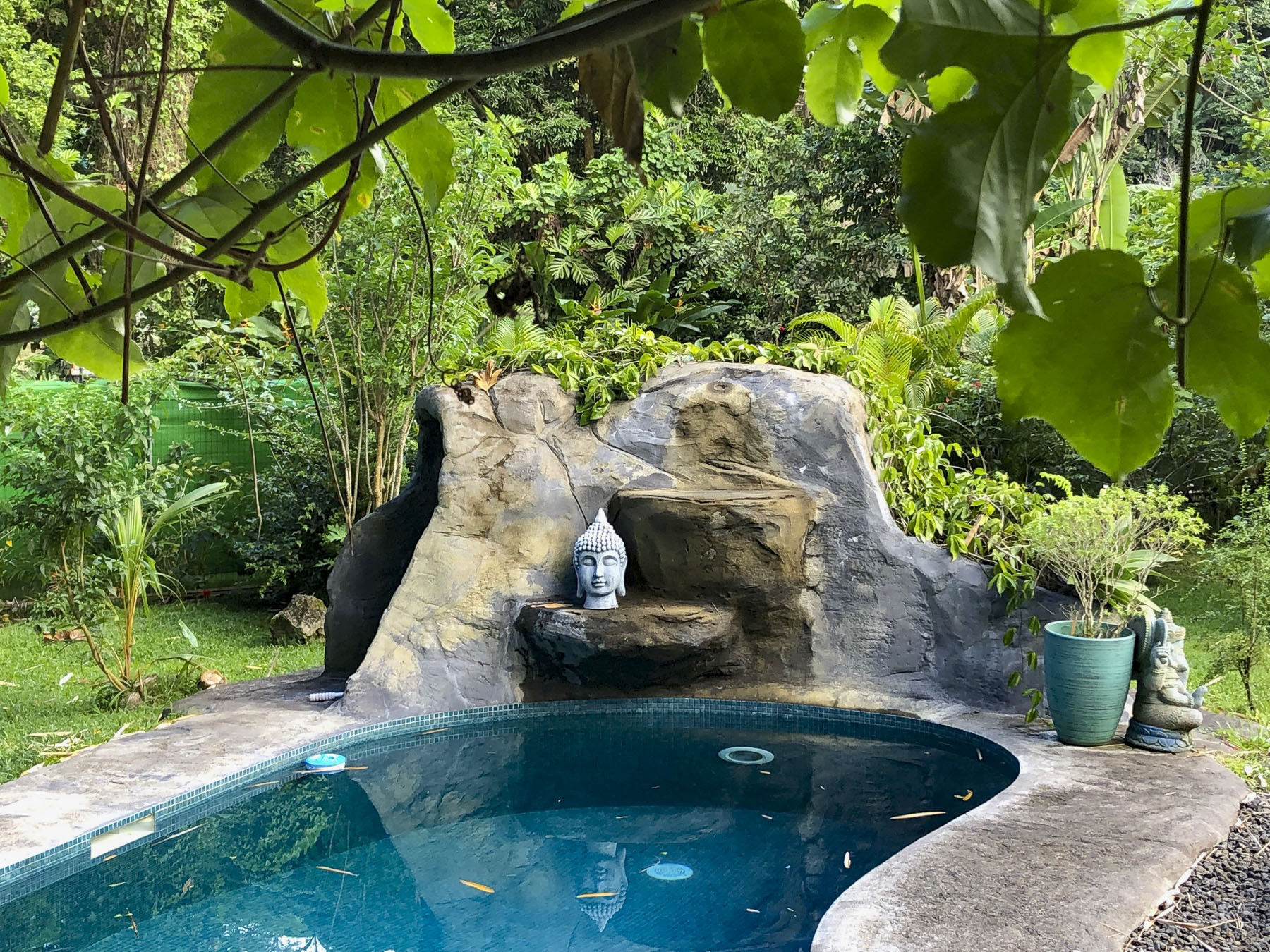
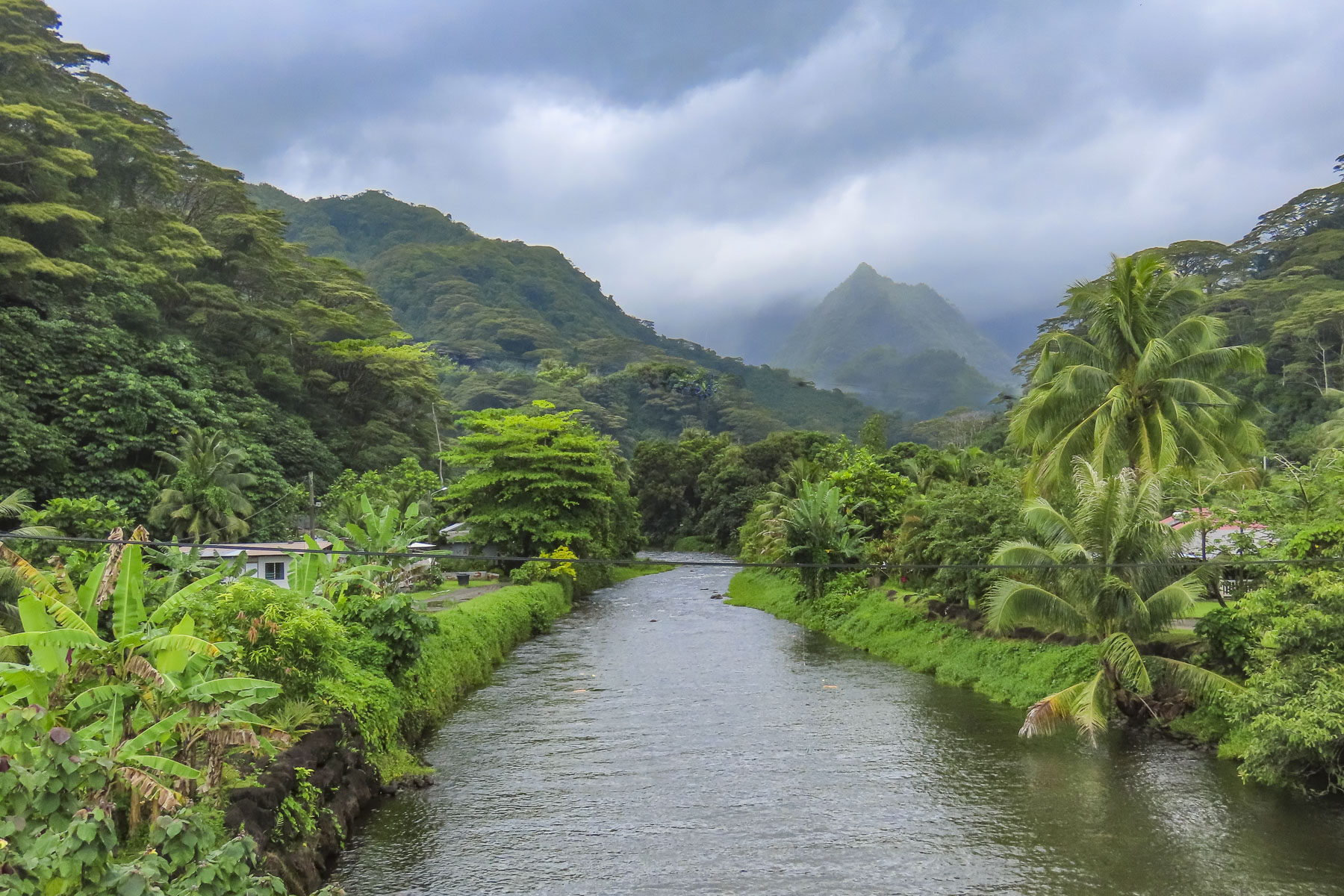
The intersections required caution as the traffic lights were also down, but once we followed Route 1 away from Papeete the prevalence of traffic circles was a blessing. From the air, the island of Tahiti is shaped like a flounder or beaver with a larger upper body and smaller tail. Similar to the way Tahiti Nui, the larger main island, connects to the smaller Tahiti Iti, at the narrow Taravao isthmus. It’s difficult to get lost on Tahiti considering the ring road, Route 1, is only 72 miles long and transverses a narrow coastal plain that encircles the island and separates the ocean from the abruptly steep mountainous interior. The road starts and ends in Papeete, with short spurs down the east and west coasts of Tahiti Iti. It’s a modest distance that we gave ourselves seven days to cover, split between exploration of the island and R&R. Our target at the end of the day, after multiple stops, Soul Rise in Nutae on Tahiti Iti, a rustic attached bungalow, with a private cabana and shared pool, for three nights.

Following the ring road east we stopped at the Arahoho Blowhole. It’s a geological curiosity, as it’s not the usual type of blowhole that exists right at the ocean’s edge and water is pushed up through a crack in the rock. Here water is vented quite a distance inland from the sea as a fine mist after being pushed back forcefully by the waves through an ancient, long and narrow lava tube. The park here has picnic tables and a black sand beach that surrounds a small cove that’s popular with surfers.

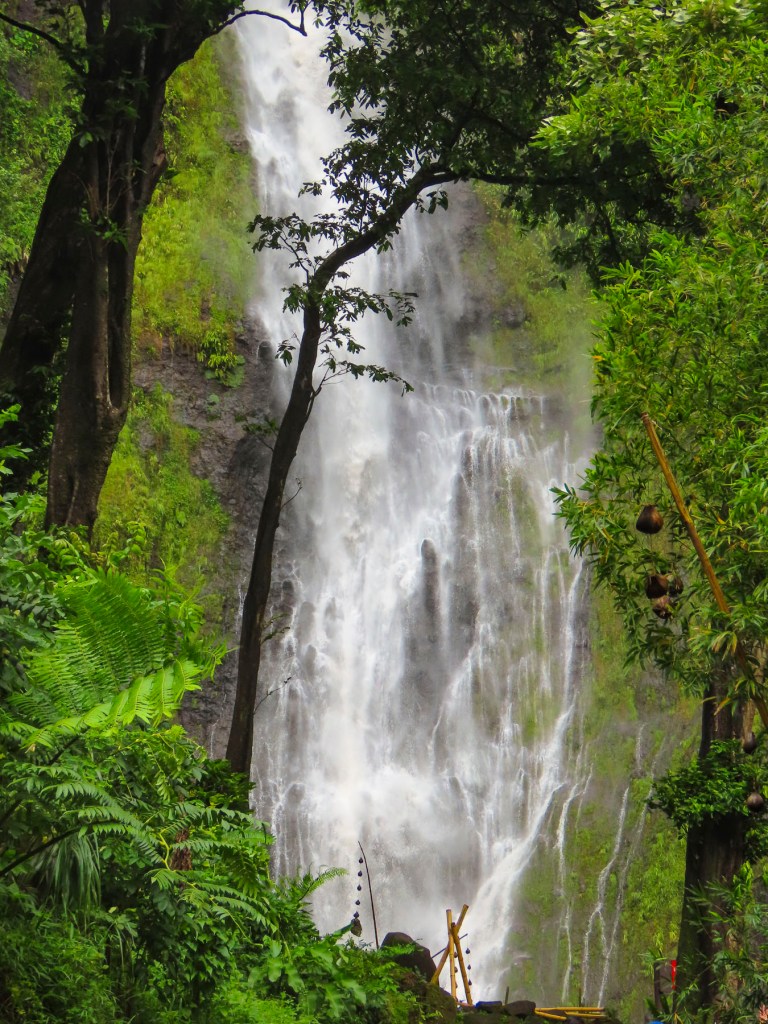
Located at the end of the road, almost directly across the street from the blowhole, the Fa’aruma’i Waterfalls were beautiful. This first was an easy walk from the parking area, but the second two are reached by an eroded and rocky trail that took some effort for us to negotiate before crossing a rickety suspension bridge and climbing farther into the hills. There were numerous photo stops along this drive, especially at the bridges over the rivers, that give a glimpse into Tahiti’s rugged, verdant interior.

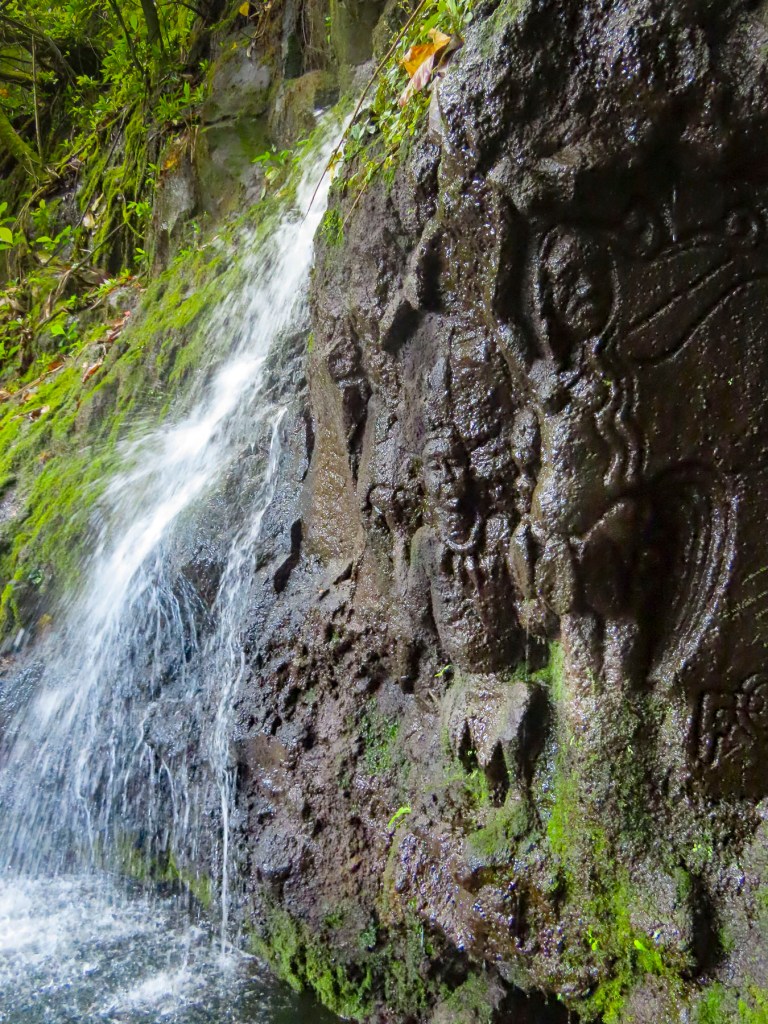
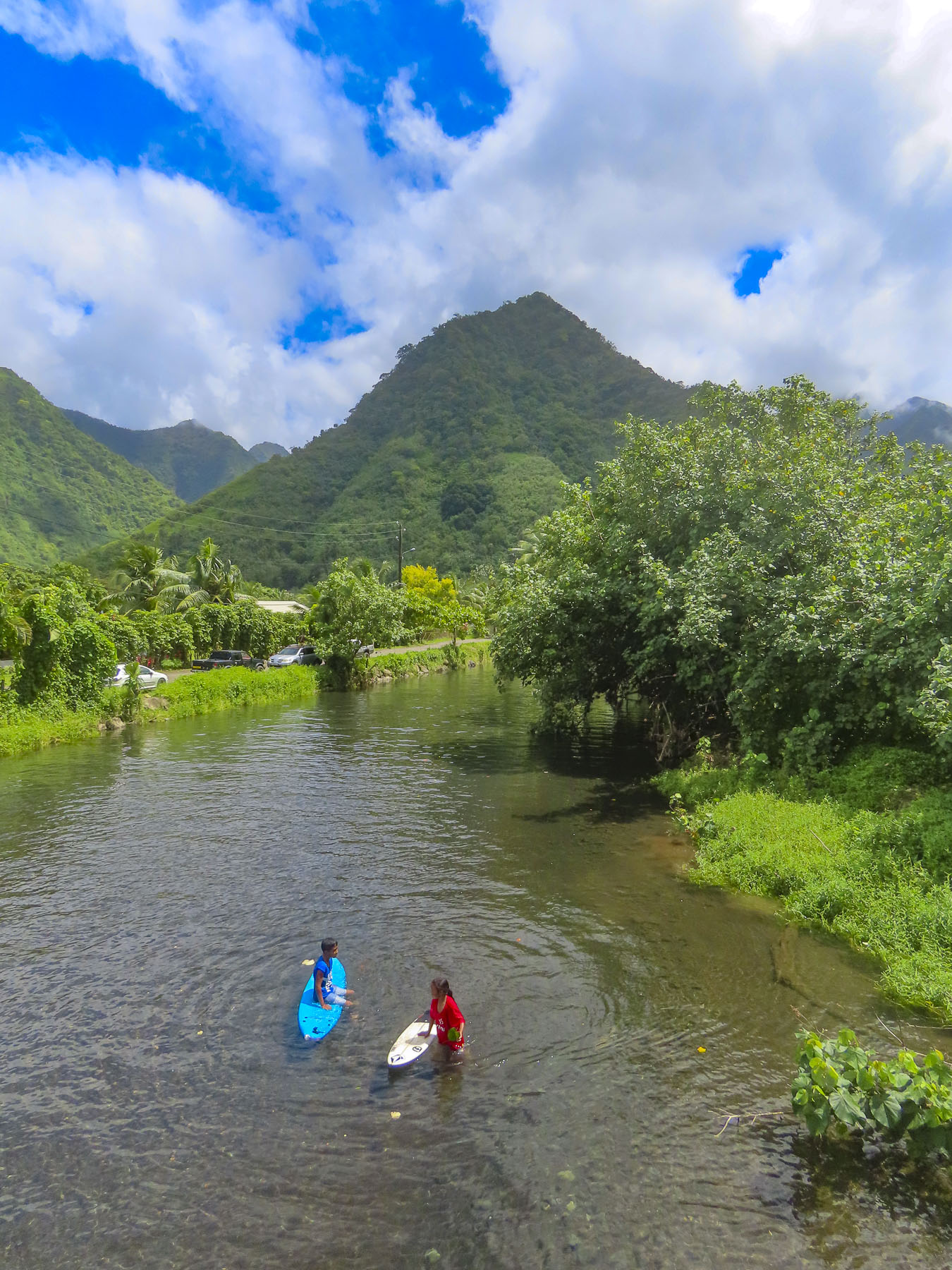
Closer to Tahiti Iti, La Cascade de Pape’ana’ana was a hidden gem barely visible from the road. It’s a mysterious site with figures of a tribal chief and a woman carved into the stone face of a small waterfall. No one knows when or who created it. There were numerous waterfalls and beaches along the east coast of Tahiti Nui just waiting to be explored.

We reached Taravao late in the afternoon, at the time when most restaurants are closed until dinner. We opted to eat at the local McDonalds, something we rarely do, especially when traveling abroad. But we were pleasantly surprised with tasty McWraps, and the coffee was good. But one of the memorable things about this stop was the appearance of a young father and his daughter dressed in matching pinks tutus, enjoying each other’s company and lunch together. It’s not something every dad would do, and I would have loved to know the backstory, but I admired him for his self-confidence, and that he didn’t perceive this playfulness as eroding his masculinity, just a desire to please his little girl. Something I can relate to.

Afterwards we stopped at the local Carrefour, which was as fully stocked as any supermarket in France, though the prices were through the roof, as high as if we were living in Paris. We purchased tuna, mahi-mahi, some vegetables, salad, and a fresh baguette for dinner. Croissants and French style pâtisseries were gathered for breakfast. A bottle of French rose’ and a 6 pack of locally brewed Hinano beer rounded out our purchases. Curiously, the beer’s distinctive and elegant “vahine” logo of a Tahitian woman wearing a red pareo was painted by a fellow from Sweden in 1953.

With the groceries put away and the beer in the fridge, we cooled off in the pool. Tahiti was one of our warmest vacations with daily temperature in the mid-80Fs, with high humidity. Usually we target locales with spring-like weather. Fortunately, along the coast there was always a cooling breeze blowing in from the ocean.

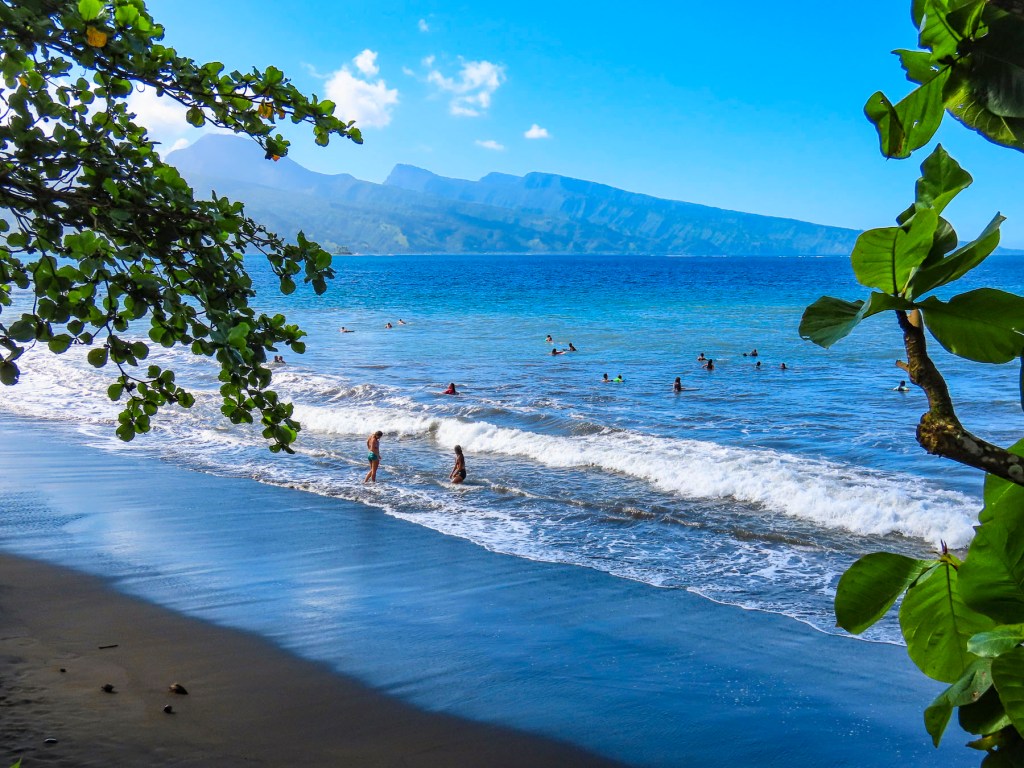
The next morning, we walked a short distance and crossed the road to a black sand beach, created eons ago from volcanic eruptions. Following the local folks’ example lead we rinsed off after our swim under a pipe, driven into the hillside like a spout into a barrel, gushing spring fed water from the highlands.

Later we headed to Tautira for lunch at Le Bout du Monde, which sounds so elegant in French, but translates as “The End of the World,” and aptly describes the locale, with the coast of South America nearly 5,000 miles east. The road literally stops here, as there is not a coastal plain around the southern tip of Tahiti Iti that is suitable for a road. The mountains descend into the sea here. Folks live along this isolated eastern coast but need to use boats to get to their homes. Rustic simplicity best describes Le Bout du Monde, with its walk-up ordering window, and wallboard menu. There were several dishes listed, but I think they only serve the catch-of-the-day. Picnic tables were around the back under shade trees at the edge of the ocean. Only us and another couple were there. The fish was delicious!

Afterwards we took our time walking along Tautira’s beautiful black sand beach set against the mountains. On the way home we noticed people standing by the roadside in front of their homes. Some were holding umbrellas to shield themselves from the intense sun. Soon a van stopped and handed the people waiting a paper bag, with tan colored oblong shapes protruding from the top. Aha! We realized folks had been waiting for their rural baguette delivery, fresh from the bakery. It’s so wonderfully French.

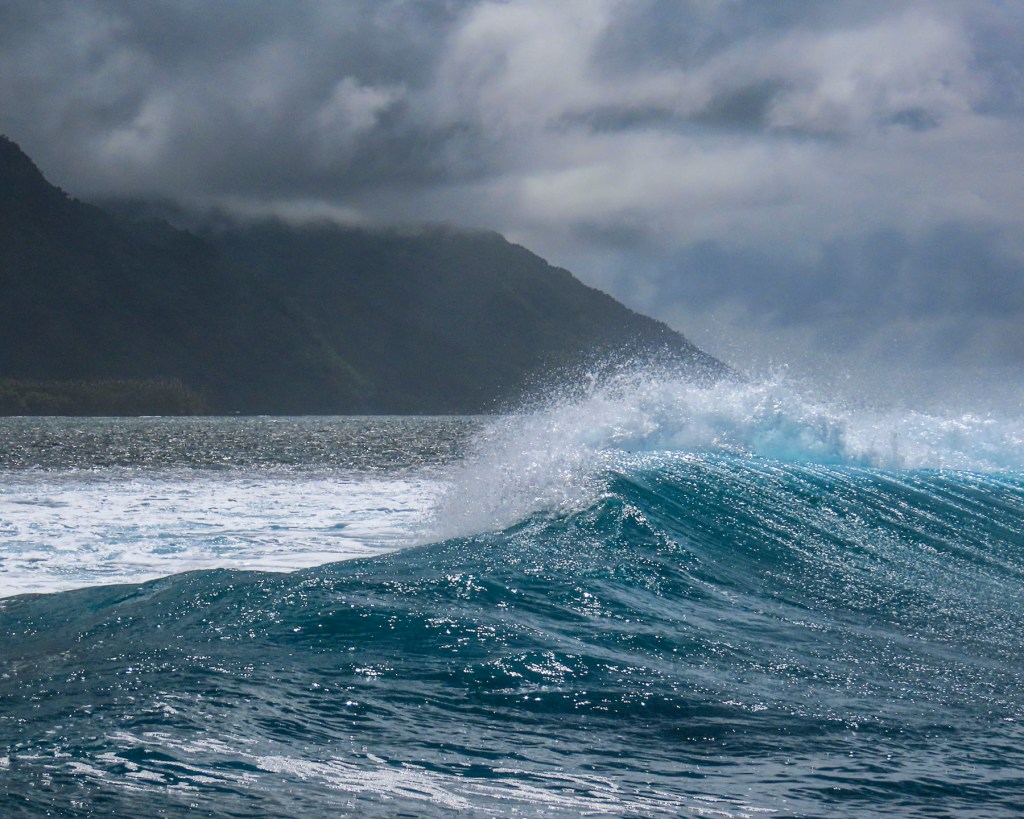
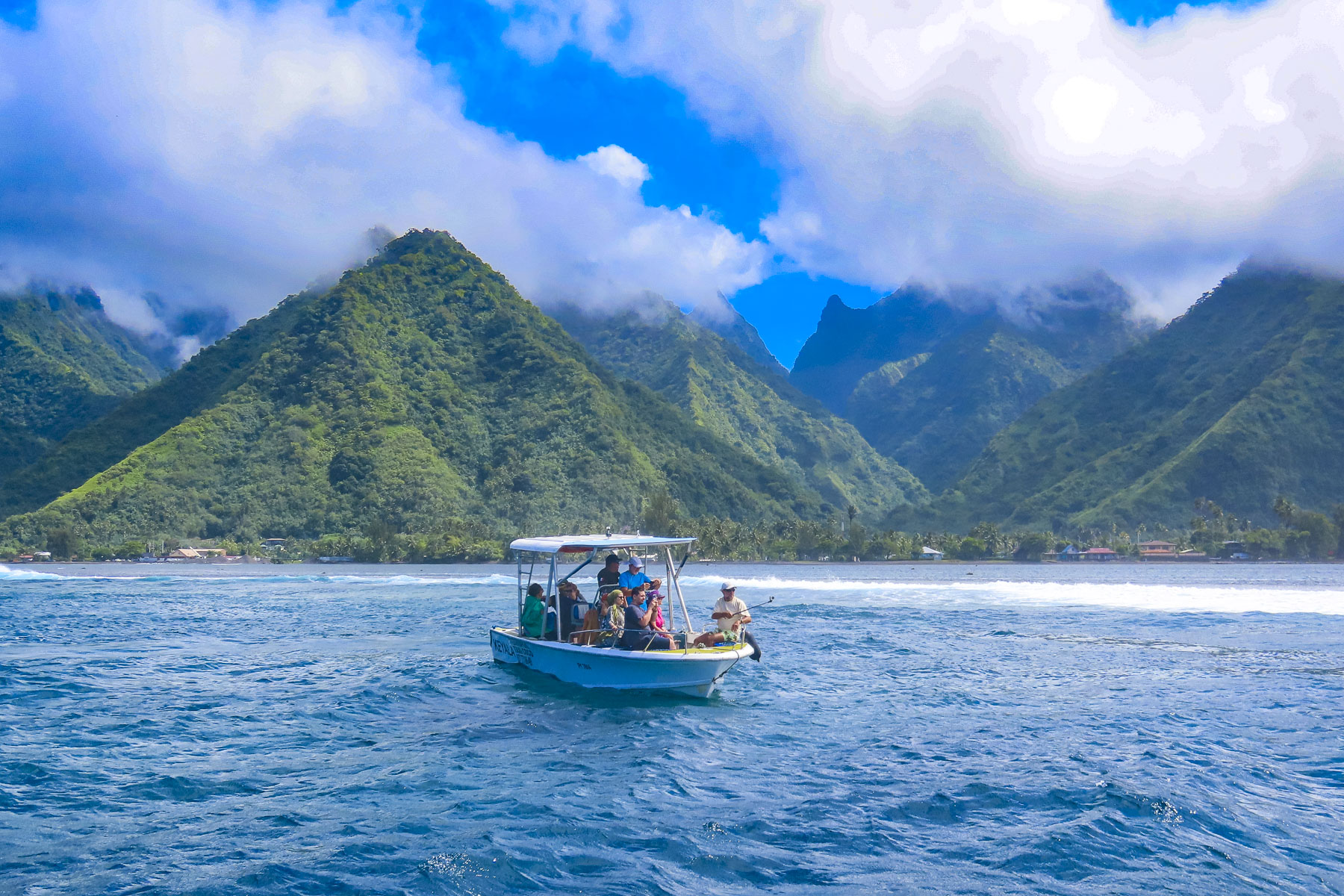
We have never surfed, though we were intrigued by the spectacular photos captured of the surfers riding the famous Teahupo’o Barrel Wave, located off the west coast of Tahiti Iti. The next morning, we drove to the village of Teahupo’o on the opposite side of Iti, where there are a number of boat operators, and booked a tour with Michael, the owner of Teahupoo Excursion Taxi Boat.

Though the conditions were not right to form the famous curl that day, we still enjoyed our time on the water and the dramatic perspective it provided looking back at the mountainous coastline. The 2024 Summer Olympic Surfing event will be held at Teahupo’o.

Afterwards we enjoyed a scenic drive to the Belvédère de Taravao in Iti’s highlands. The inaccessible Mount Ronui, standing at 4370 feet, is the highest point on Tahiti Iti. The Belvédère de Taravao, at 1800 feet, offers an expansive view of the Taravao isthmus that includes the east and west coasts of Tahiti Nui.

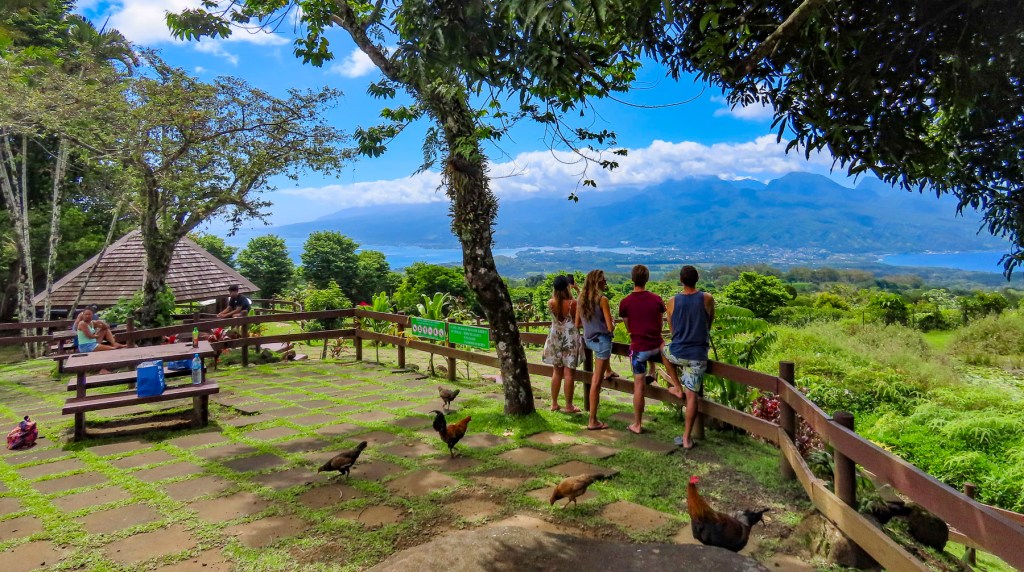
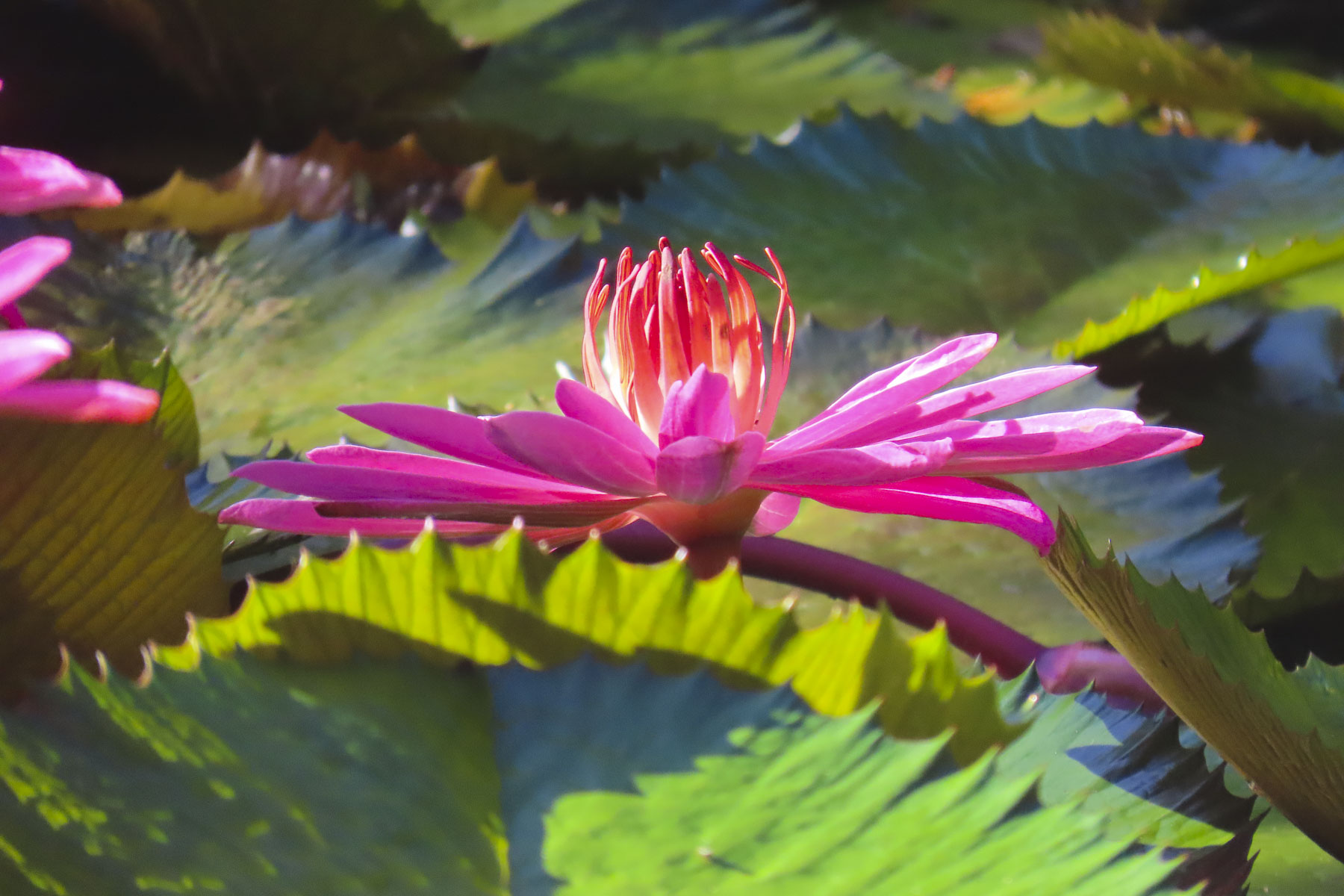
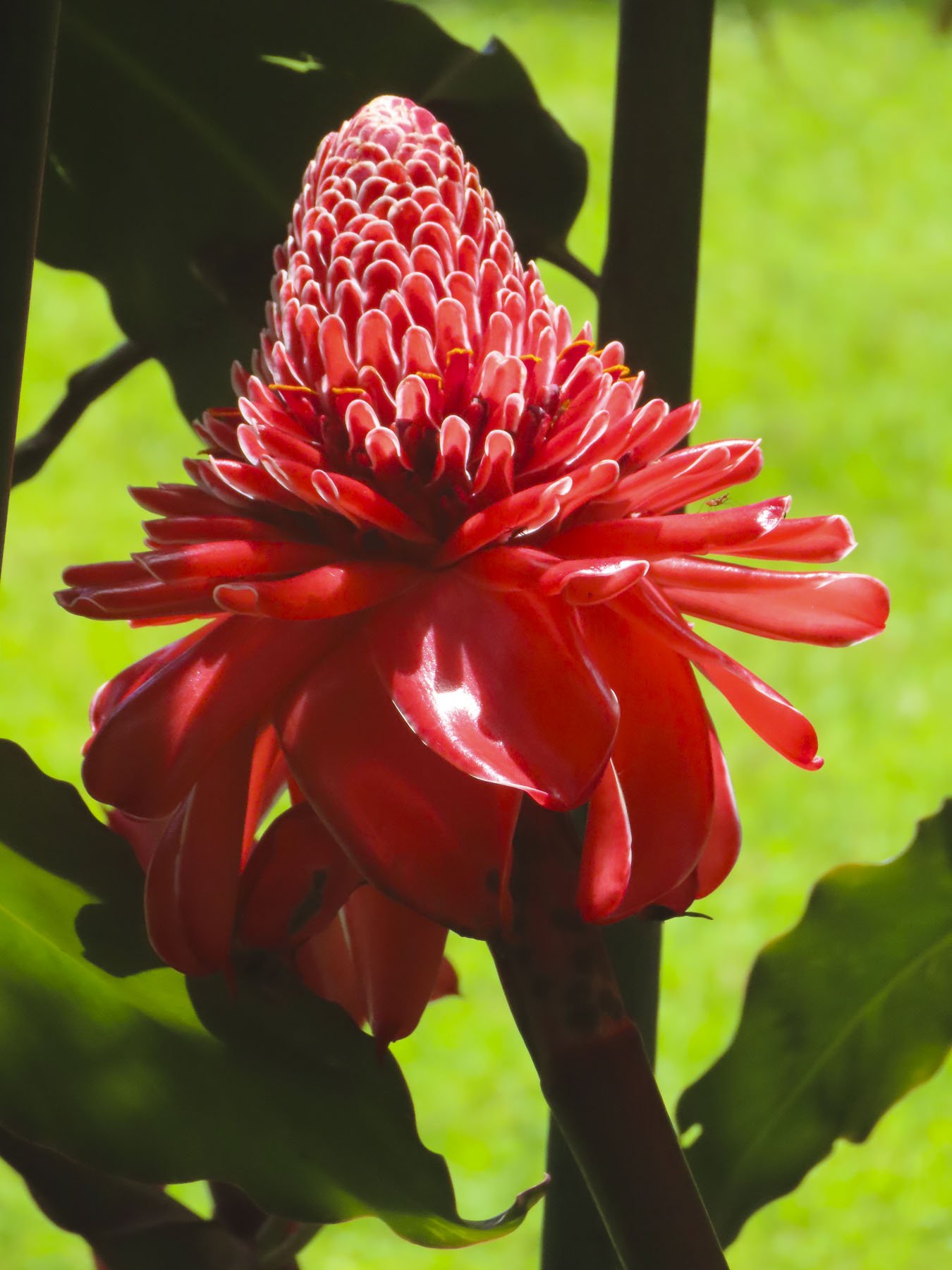
For the last four days we headed back to Tahiti Nui and drove along the west coast towards Papeete, stopping to take pictures numerous times. Gardneners ourselves, we especially enjoyed the Water Gardens Vaipahi and the Grottes De Mara’a, where we followed the paths through colorful specimen plantings and noticed, not for the first time, the ubiquitous free range roosters, hens, and chicks that seem to roam everywhere in Tahiti.

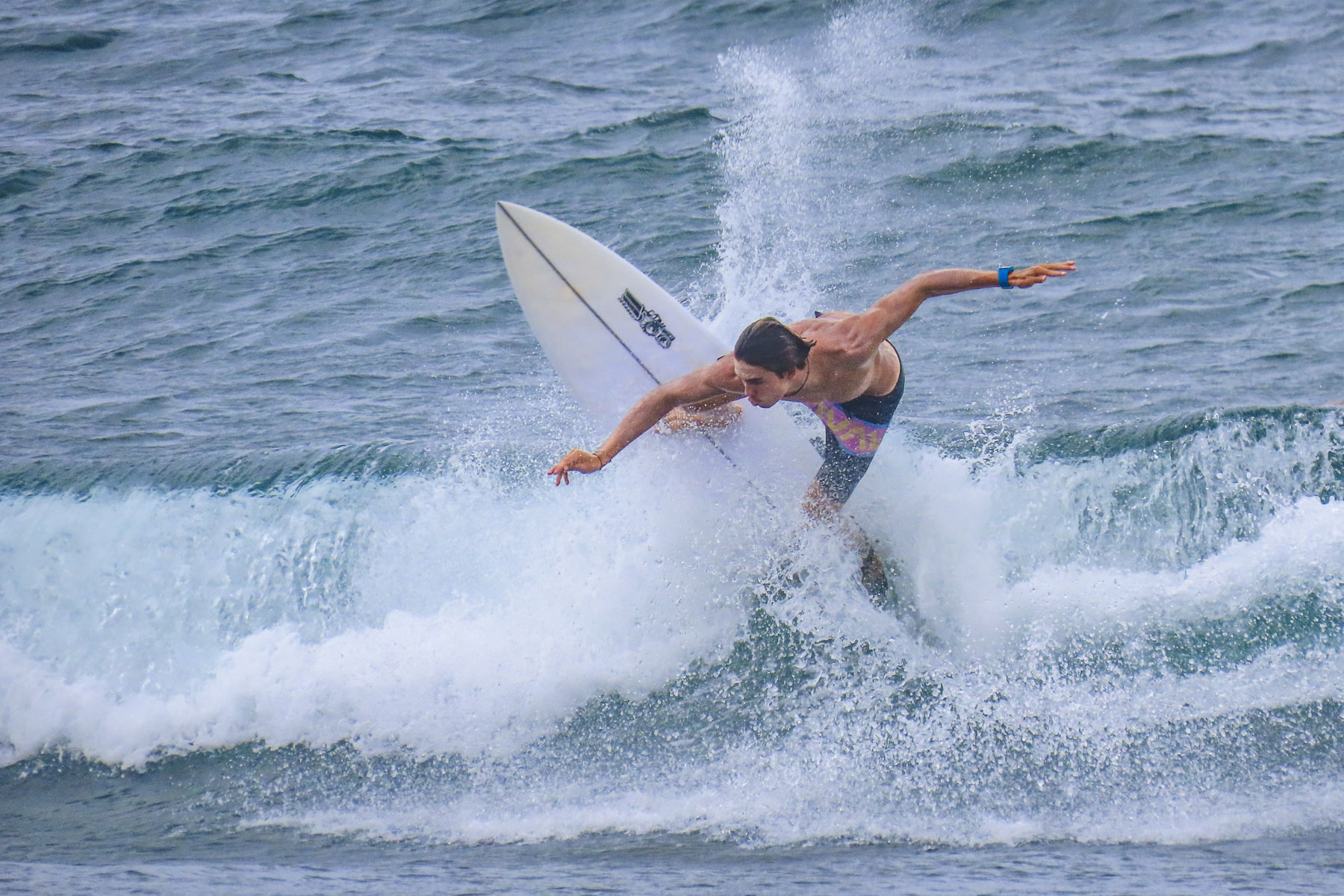
At Taharuu Beach we practiced our sports photography skills, capturing surfers riding the waves, an activity we could spend hours engrossed in, but the weather just wouldn’t cooperate fully.

Later that afternoon we arrived at Bungalow Poerava in Punaauia and were blown away by its dramatic location. It’s a small apartment next to the owner’s home that’s cantilevered out over a steep hillside.

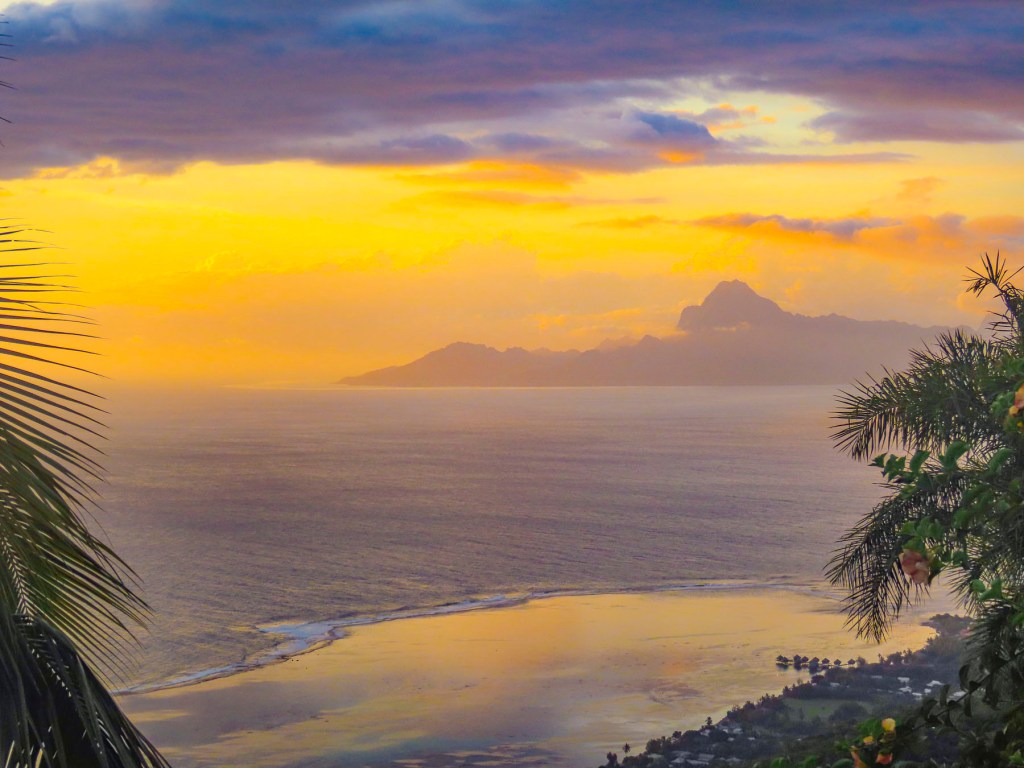
This construction gave it a splendid Robin Crusoe treehouse feel. It had a fully equipped outdoor kitchen, and porch and seating area boasted a view of Moorea in the distance. It was one of the nicest apartments we’ve every stayed in during our years of travel. Oh, and it had an avocado tree laden with fruit hanging over the entry stairs. We didn’t want to leave!

Normally we never just stay still and chill while traveling, but the setting here was perfect for kicking back, reading and enjoying a glass of wine on the shaded deck. We explored the surrounding area in the mornings but made sure we were back to enjoy the sunset.

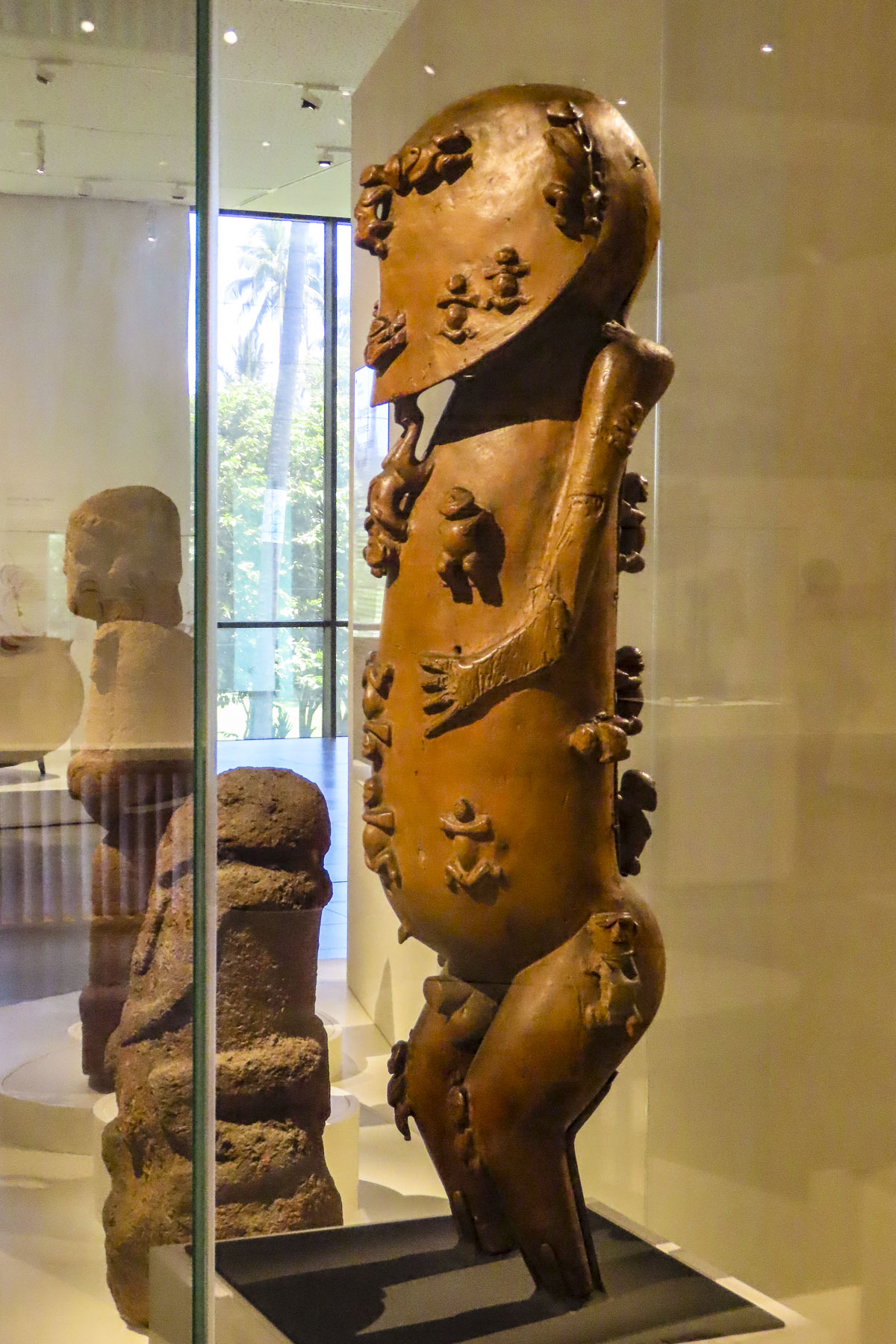
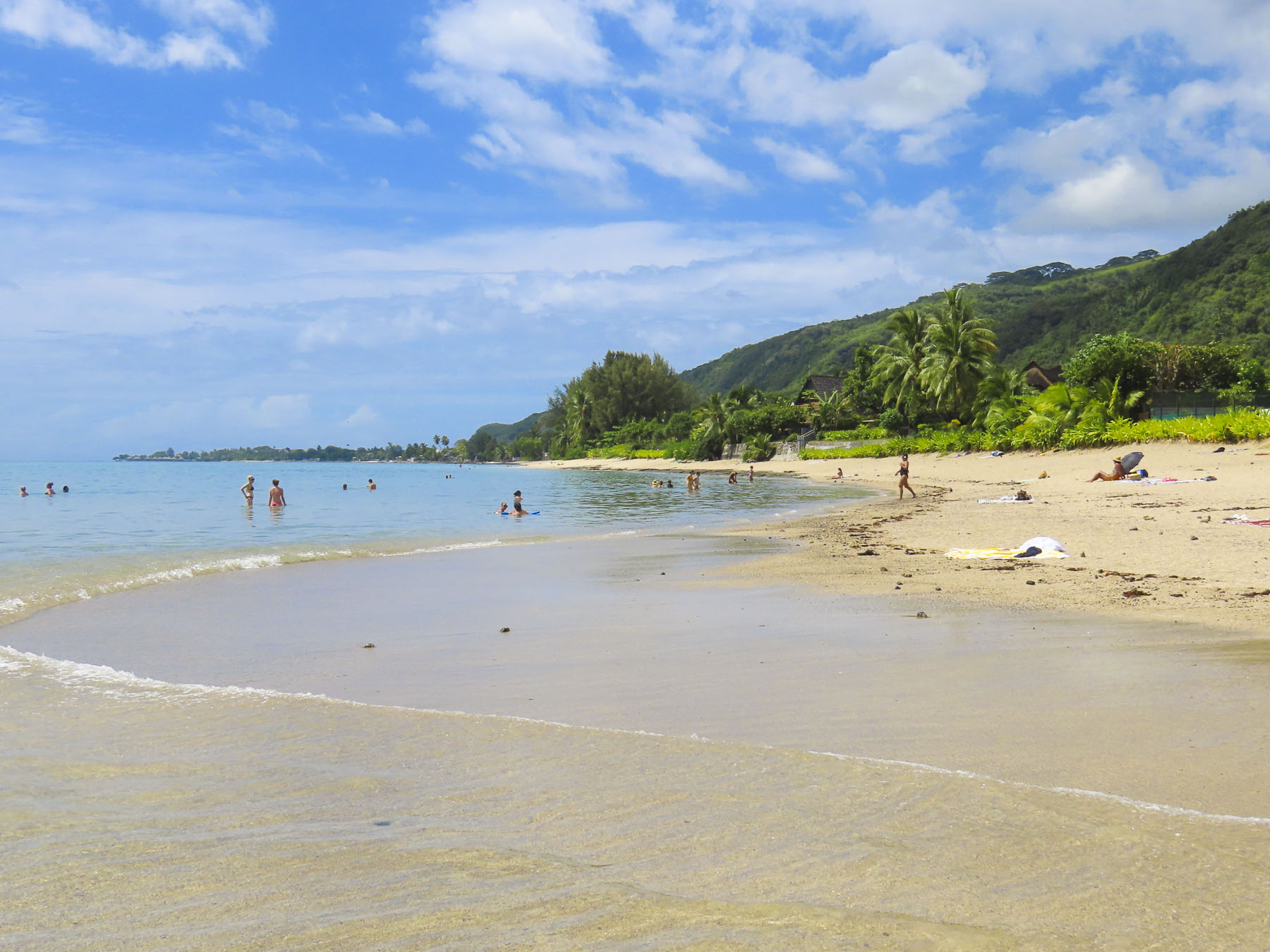
We divided our mornings between exploring cultural sites and swimming at beaches sheltered by the island’s surrounding reefs before returning for the day. The Museum of Tahiti and The Islands is a Polynesian ethnographic museum and has a fascinating collection of ancient artifacts collected from across the Tahitian islands. Later we enjoyed the food trucks at Parc Vaipoopoo, before enjoying the soothing bath-like waters of the Plage publique de Toaroto’s white sand beach.

The next day at ‘Ārahurahu Marae, an ancient Polynesian place of worship, a striking stone moai guarded the entrance to the religious site. Though smaller than its famous cousins on Easter Island, there was a definite resemblance. A large marae, an ancient ceremonial altar, constructed from lava stones and coral was at the rear of the site, where human sacrifices were once held centuries ago.

Afterwards we savored our last swim on Tahiti in the gentle waves of Plage Vaiava. Tomorrow we would head to the Port of Papeete to board Variety Cruises’ Panorama II for a sailing adventure to Bora Bora.

Till next time, Craig & Donna

Cape Town Street Murals: Unexpected Treasures

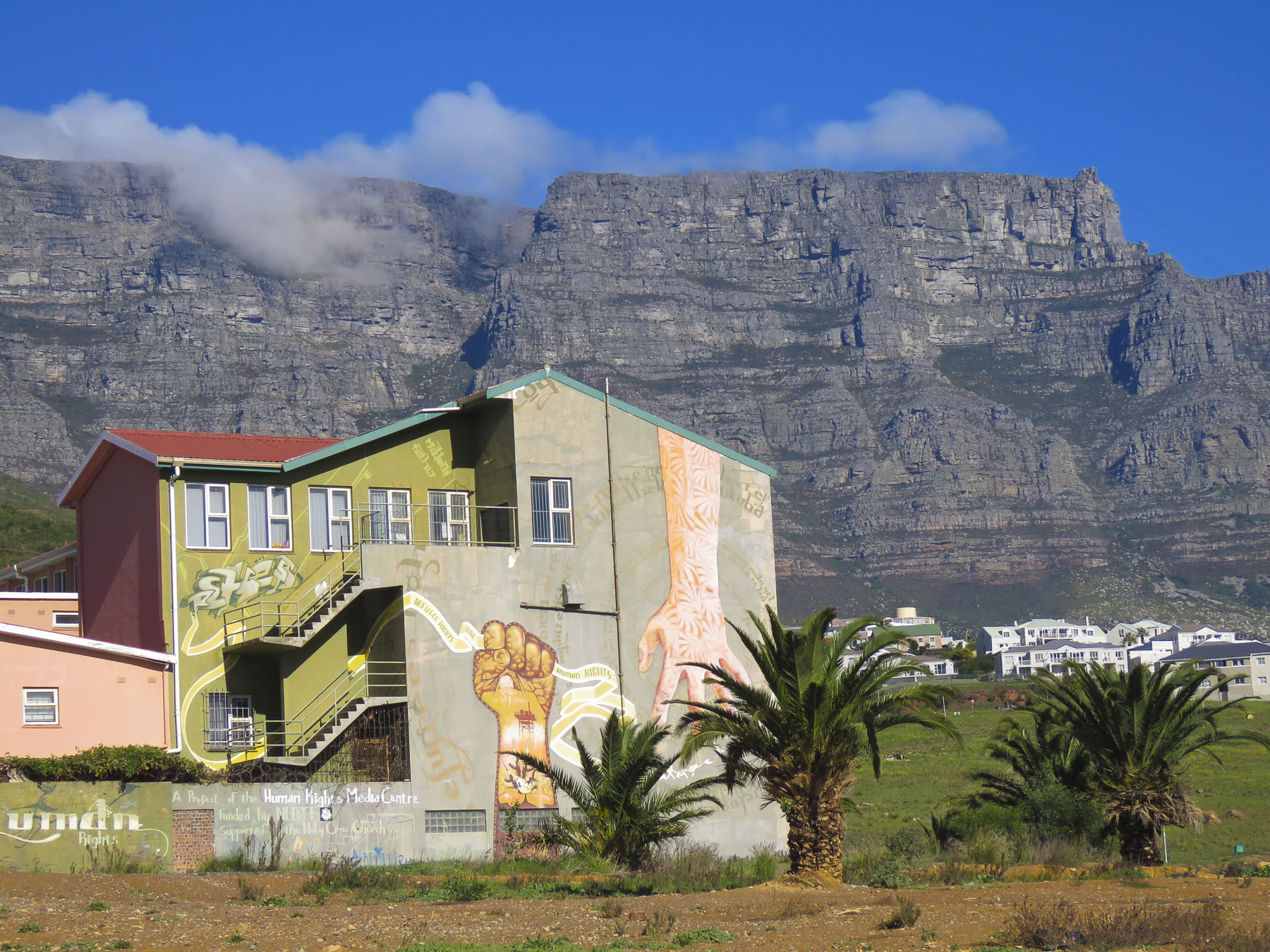
It was the iconic images of Table Mountain and Lions Head Mountain that drew us to Cape Town, along with the chance to enjoy its incredible coast and game parks.  But the reality of life around Cape Town is more complex and was evident immediately as we drove into the city along the N2 from the airport. Past informal settlements, previously referred to as shanty towns, constructed of mismatched, corrugated tin panels under a tangle of telephone poles strung with powerlines that looked like a forest of Christmas trees.  This cataclysmic landscape improved to newer and featureless concrete block housing developments the closer we got to the city.  But then the palette changed.IMG_7124It’s here that we first noticed the really interesting street murals that could be seen on some of the homes.  Not gratuitous bubble-scripted graffiti, but pictorial or political works of art relating to freedom, equality and hope by talented artists that enhanced their surroundings.

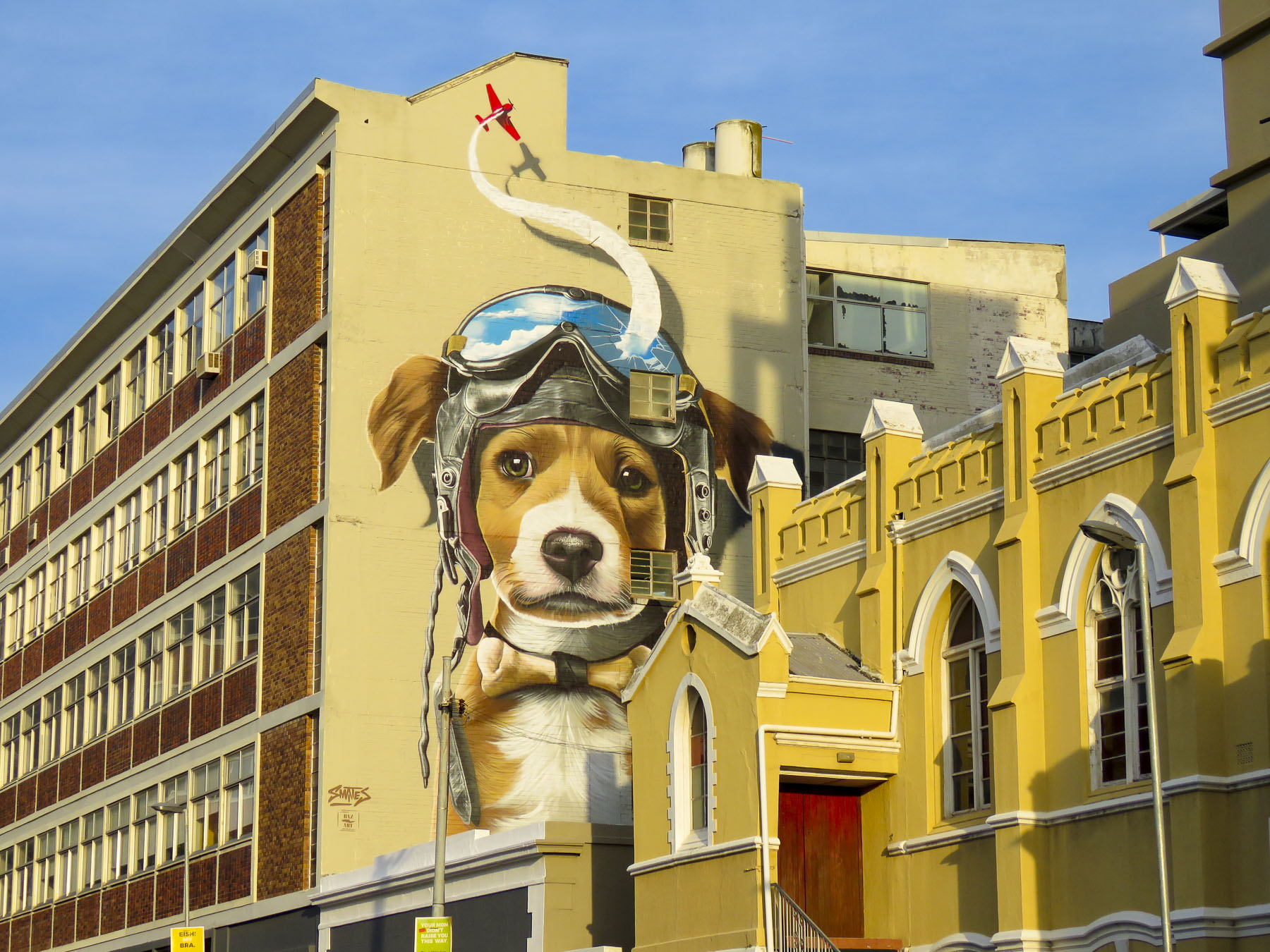
Originally they were just interesting side notes as we discovered Cape Town.  Every city and town seem to have street art nowadays.  But as we encountered more of it around the town, it was evident that the street murals here were of a higher caliber,  and that the communities were willing to provide large walls to local and international artists as blank canvases for creative expression. IMG_4658In our exploration of Cape Town, we accidentally and to our delight, came across many wonderful murals while walking or driving about.  Behind our apartment on Harrington Street a wonderfully, whimsical mural of a dog dreaming about flying, by Belgian artist Smates, always made us smile when we walked by.  IMG_4663Farther down the street in District 6, across from Charlie’s Bakery, a colorful mural graced the back of a small building in a parking lot, while its front wall featured an understated portrait of Nelson Mandela by Mak1one. IMG_4435And at the bus station, under the highway, across from the Gardens Shopping Center the dismal gray walls sprang to life with imagery.
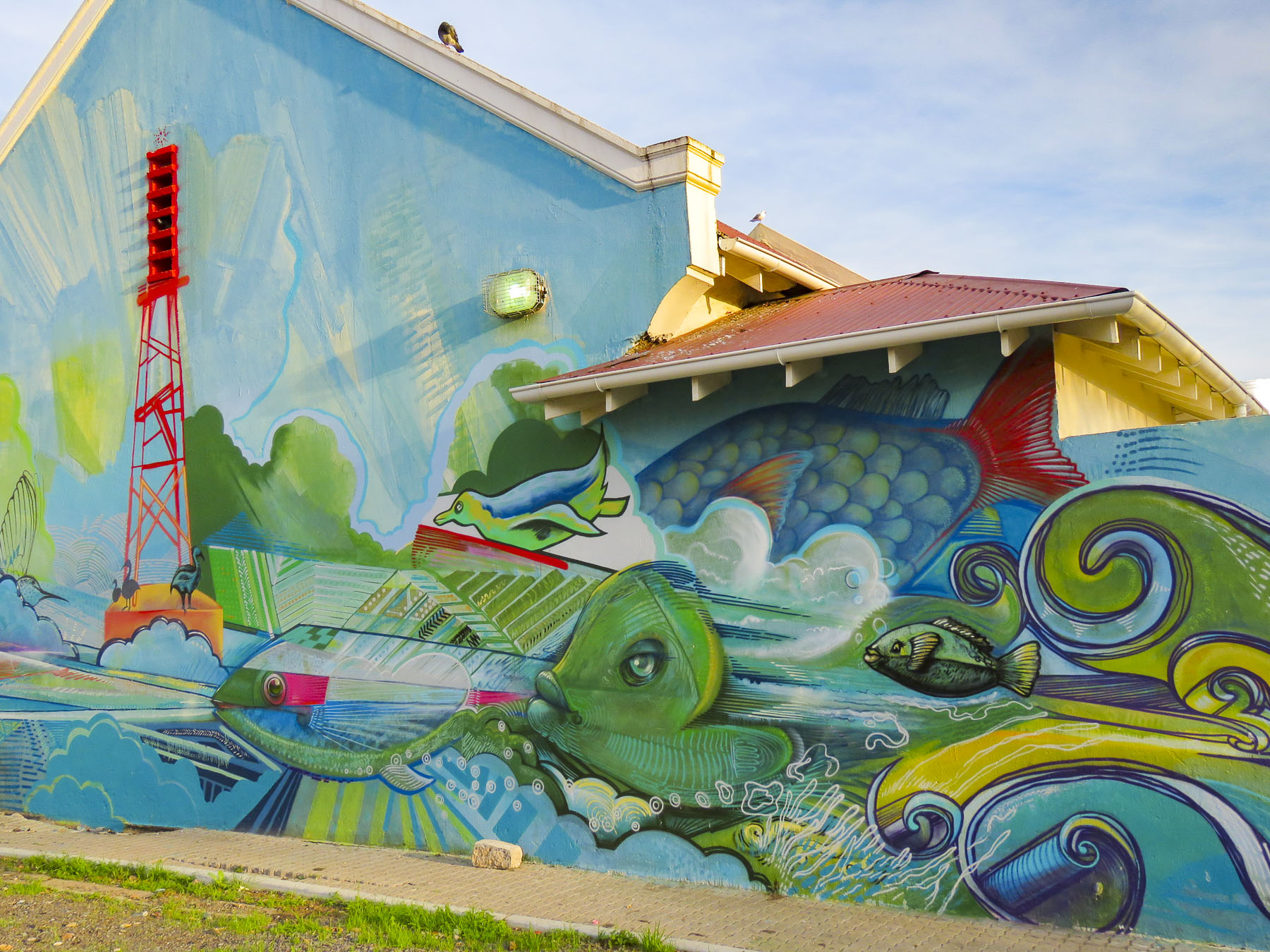
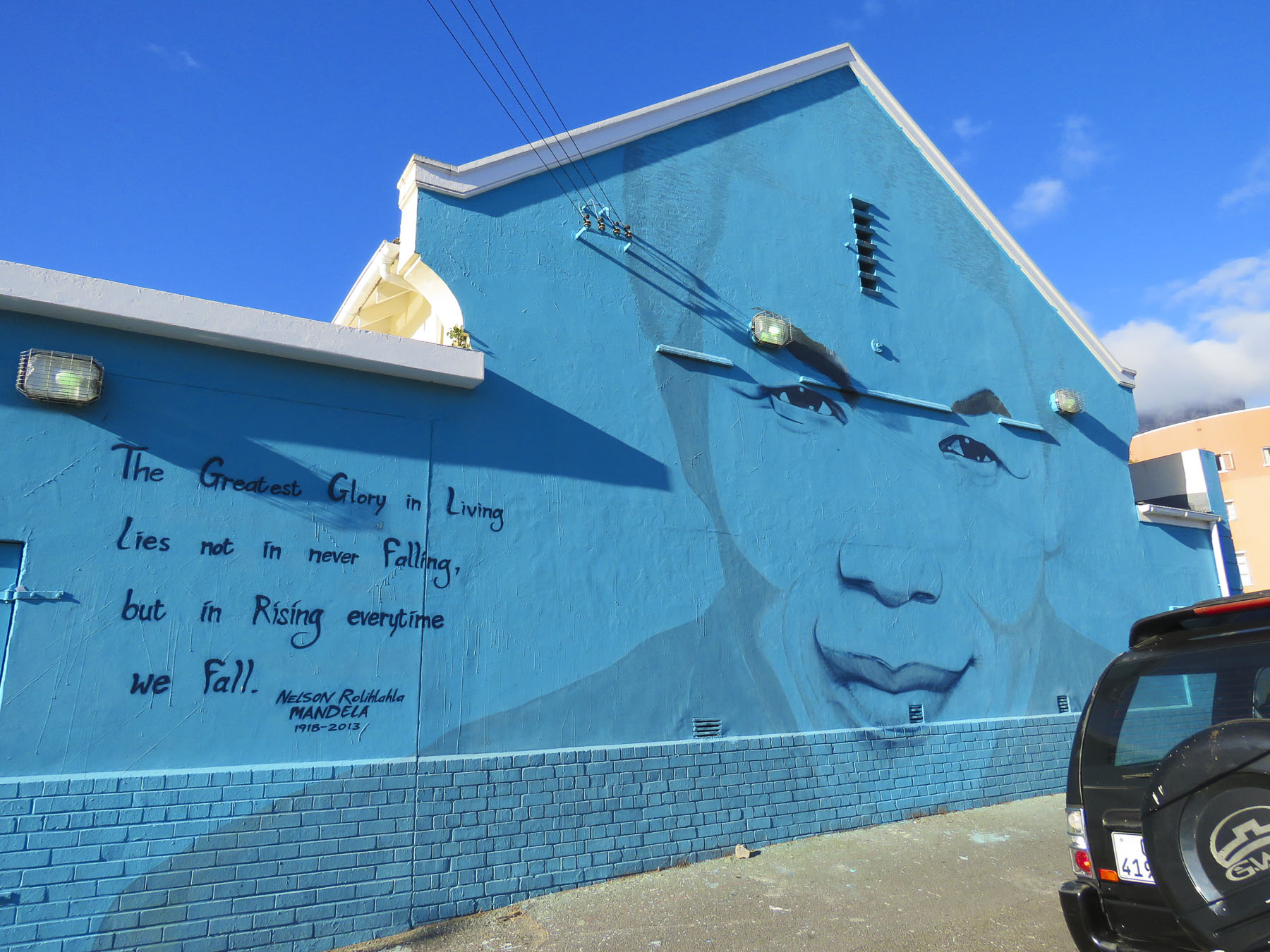
Some of the murals are political, commemorating the leaders of the anti-apartheid movement.  On the corner of Longmarket and Adderly Streets, in central Cape Town, side-by-side portraits of Desmond Tutu, Winnie Mandela and Nelson Mandela have been painted by three different artists.

Even walking through already colorful Bo-Kaap revealed tucked away artistic works scattered across this hilly community under Signal Hill.IMG_4037

Many times while driving through the city we would catch a glimpse of color – something that looked interesting down a side street – and circle around to check it out.  This is exactly what happened one day as we headed to lunch at the Ocean Jewels Fresh Fish shop in the old Woodstock Exchange building on Albert Street.IMG_7328 Turns out the Woodstock and Salt River neighborhoods are ground zero for freedom of expression based on the number of street murals we discovered just by driving around.  One seemed to lead to another around the corner.  IMG_7140When we stopped to photograph the mural of the swimming elephant, one of the unofficial parking guards introduced himself as the “curator of street art” and offered to guide us.

We declined and further along discovered the portrait of an endangered mountain gorilla painted by Louis Masai, a London artist who dedicates his work to wildlife conservation awareness.IMG_7213

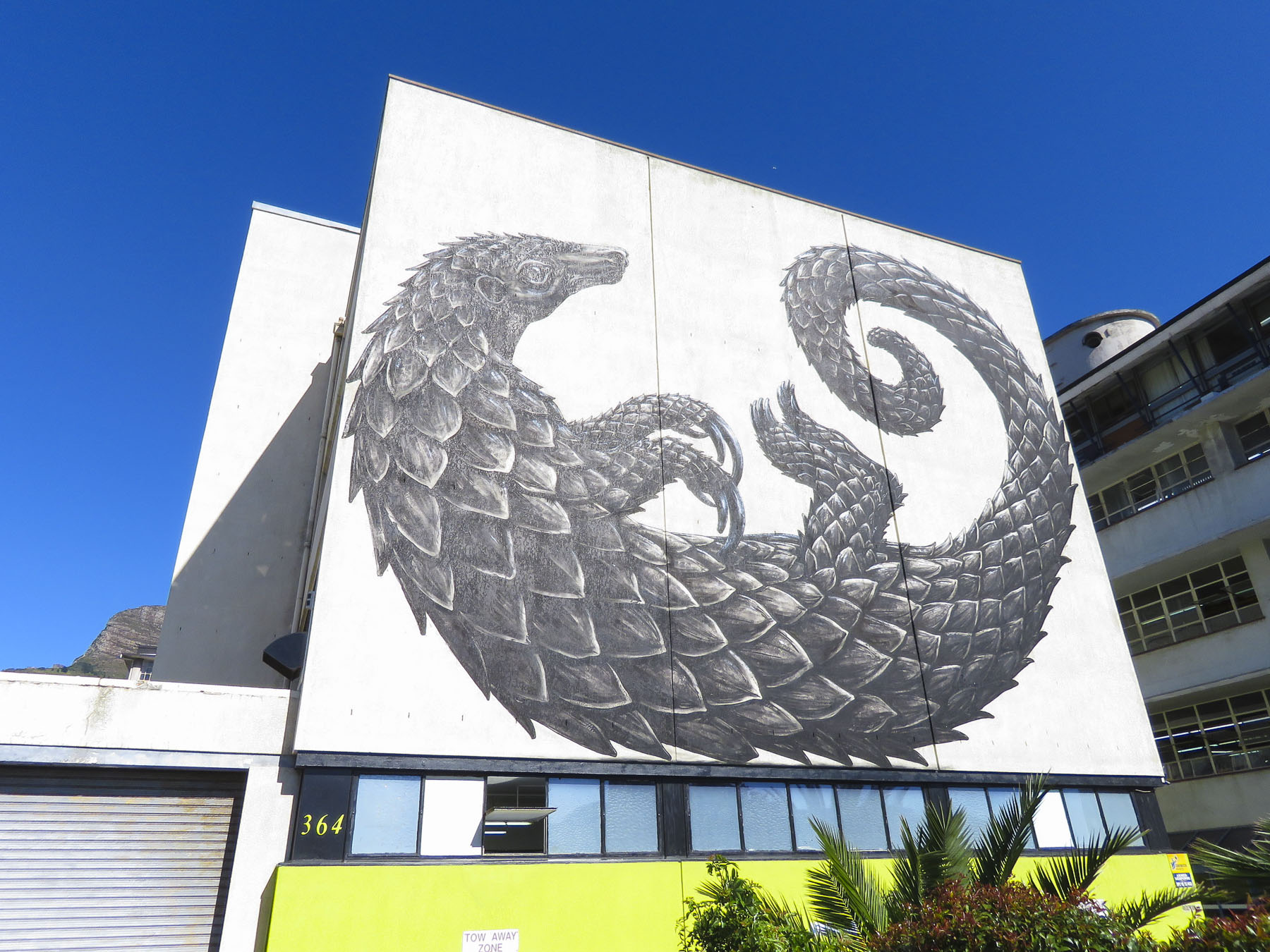
The streets surrounding the renovated Old Biscuit Mill where the Saturday only Neighbourgoods Market is held were ripe with interesting street murals. Many are of a monumental scale and are within easy walking distance of the mill.IMG_3359Traveling along Victoria Road in the Salt River district, the large mural of a pangolin, painted by Belgian street artist ROA, covers the wall of a factory.  It was painted one year during Cape Town’s International Public Art Festival (IPAF) when local and international artists are invited to wash the district with color for 5 days in February.  IMG_3368The festival is sponsored by BAZ-ART, an NGO that “is dedicated to harnessing the power of art for the benefit of the public – to engage – empower – uplift.”  In the four years that the festival has been running over 100 murals have been created in the Salt River district.  They have a very good website with a map showing the location of all the murals they have sponsored throughout the community.

Muizenberg has its fair share of street art scattered across its small downtown area and near the Blue Bird Garage Food and Goods Market.  But one of its most iconic murals of an elephant was painted by Capetonian and District Six artist Falko One on the side of a bath house located on a desolate stretch of Sonwabi Beach on the outskirts of the town.IMG_8435 His style is very distinctive, and we recognized many of his works as we traveled around the Cape.  Back in town the exterior wall of Surfstore Africa is playfully illustrated with a giraffe wearing sunglasses.IMG_3393Our most unexpected discovery happened at the indoor parking garage of the Pick N Pay grocery store in Sea Point.  Here several beautiful portraits were painted on the walls of the driving ramp leading from one level to the next. IMG_8888

Hidden away from public view, their discovery was like finding a Renoir in your grandparents’ attic.  Just stunning.  Hopefully, these talented artists have found larger and more visible walls to grace with their talents.

Till next time,

Craig & Donna