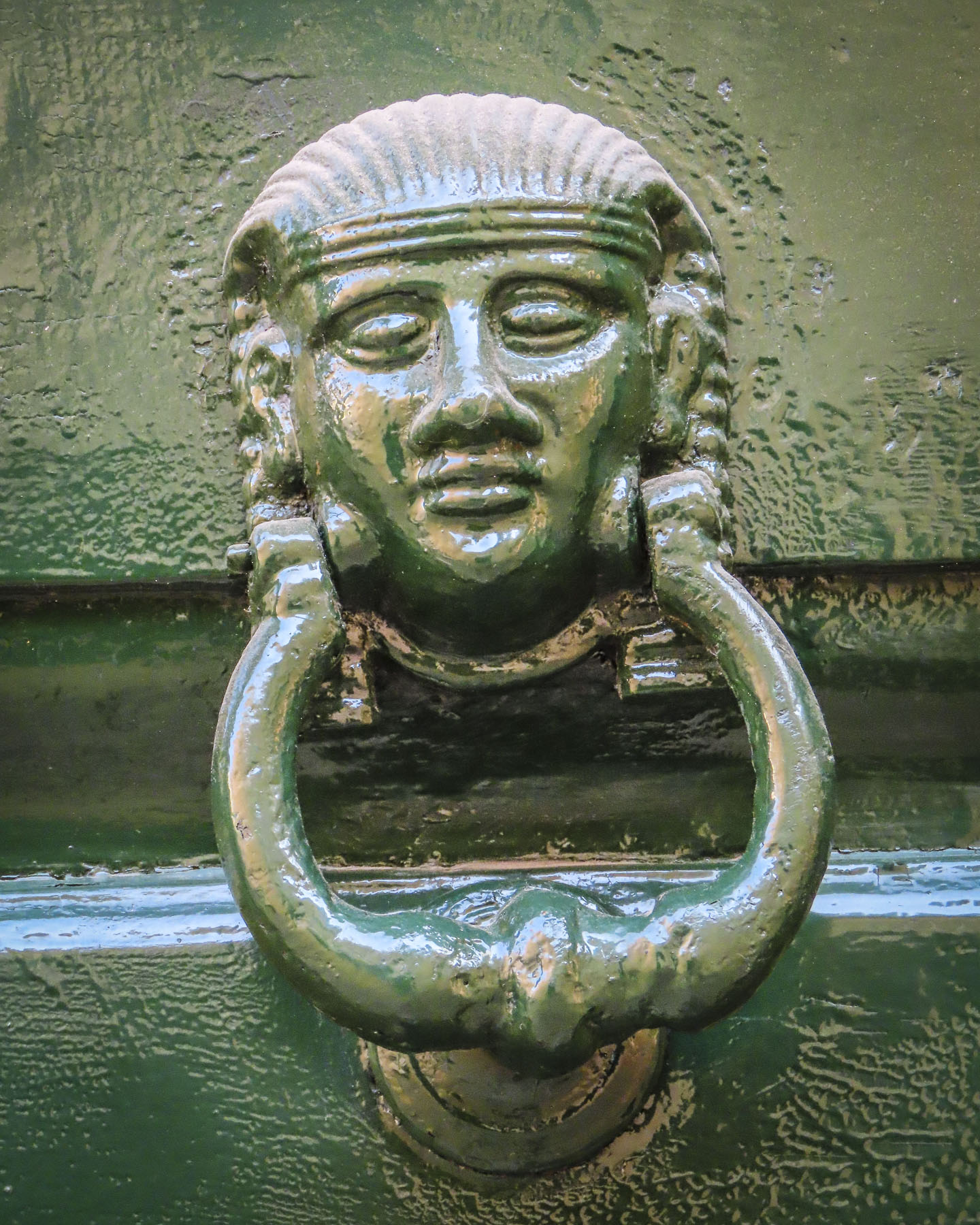
Sicily Part 2: To Cefalu and Palermo – Wandering Through the Centuries

The weather in mid-November was still nice; most of the days were sunny, but cooler.  Sometimes a damp dreary, grey day snuck in and reminded us that winter did come this far south as was the occasion when we started our drive to Cefalu. It was honestly just plain yucky! On the wet roadtrip south, we passed two men selling roasted chestnuts and plastic, one-liter bottles of Vino Novello, young wine, or the Italian version of Beaujolais Nouveau, made from an accelerated fermentation process that eliminates the aging normally associated with vinting wines. With a quick u-turn and purchase our spirits were immediately lifted, as the aroma of the freshly roasted chestnuts filled the car. They took the chill off the day.  The bottles of wine would wait until Palermo.  This continues a tradition started years ago, stopping at roadside stands for any type of food, craft or wine purchase.  Some days we made very slow progress indeed.

Heading inland from the coast road we followed the A19 west across the desolate, mountainous interior of Sicily past sporadically placed hilltop villages of various size.  Calascibetta was particularly impressive from the road; its recorded history dates to its Arabic settlement in 851 AD. An area of 300 rock-cut tombs, Necropoli di Realmese, and a warren of cave dug dwellings at the Byzantine Village of Vallone Canalotto called for further exploration. “Next time,” we agreed as we raced to spend the afternoon in Cefalu.

On the Sicilian list of most beautiful villages, it is also thought to be one of the inspirations for the coastal village “Vigata” where our favorite fictional detective, Salvo Montalbano, created by Andrea Camilleri, enjoys quietly eating his beloved Sicilian dishes on his patio overlooking the beach. A step above the typical crime novel, Andrea Camilleri’s inspector Montalbano critically confronts Italy’s difficult political and social issues.

A graceful, curved beach, with ancient stone homes built to the Tyrrhenian Sea’s edge, under a bold headland defines Cefalu’s beauty. Offshore lie the Aeolian Islands, a volcanic archipelago.

The town’s first settlement was atop the nearly inaccessible 1200ft tall promontory that dominates this spur of land that protrudes into the ocean like a bent knuckle. A new town was established on the coast under the cliff face when the Normans captured it from the Arabs in 1063 and proceeded to anchor the new village with a cathedral that was built to fulfill a promise to the Holy Savior by Roger II, the King of Sicily, upon his survival of a vicious storm at sea that cast him ashore at Cefalu.  Started in 1131, the fortress-like church, with Arab influenced architectural elements, took over 100 years to construct and was finished in 1240.

A handful of tourists sheltered under the tent of a café on the plaza in front of the Cefalù Cathedral, trying to ward of the November chill with coffee or wine.  Unfortunately, the church was closed and we were unable to view its Byzantine mosaics. A trailhead on Via Pitre leads to the top of the massive promontory that towers over the town.  Paths connect the ruins of a Greek temple dedicated to Diana that dates to the 9th century BC, as well as a Saracenic castle.  The panoramic views of the Cefalu and the Sicilian coast are phenomenal.

A plastic curtain at the restaurant shielded us from a sudden downpour as we sat enjoying pizza, just above the gentle lapping waves.  By the end of lunch, the rain had lessened to a misty drizzle and we ventured forth, with our umbrellas at the ready, down slick cobbled lanes to a wide, curved stone staircase.

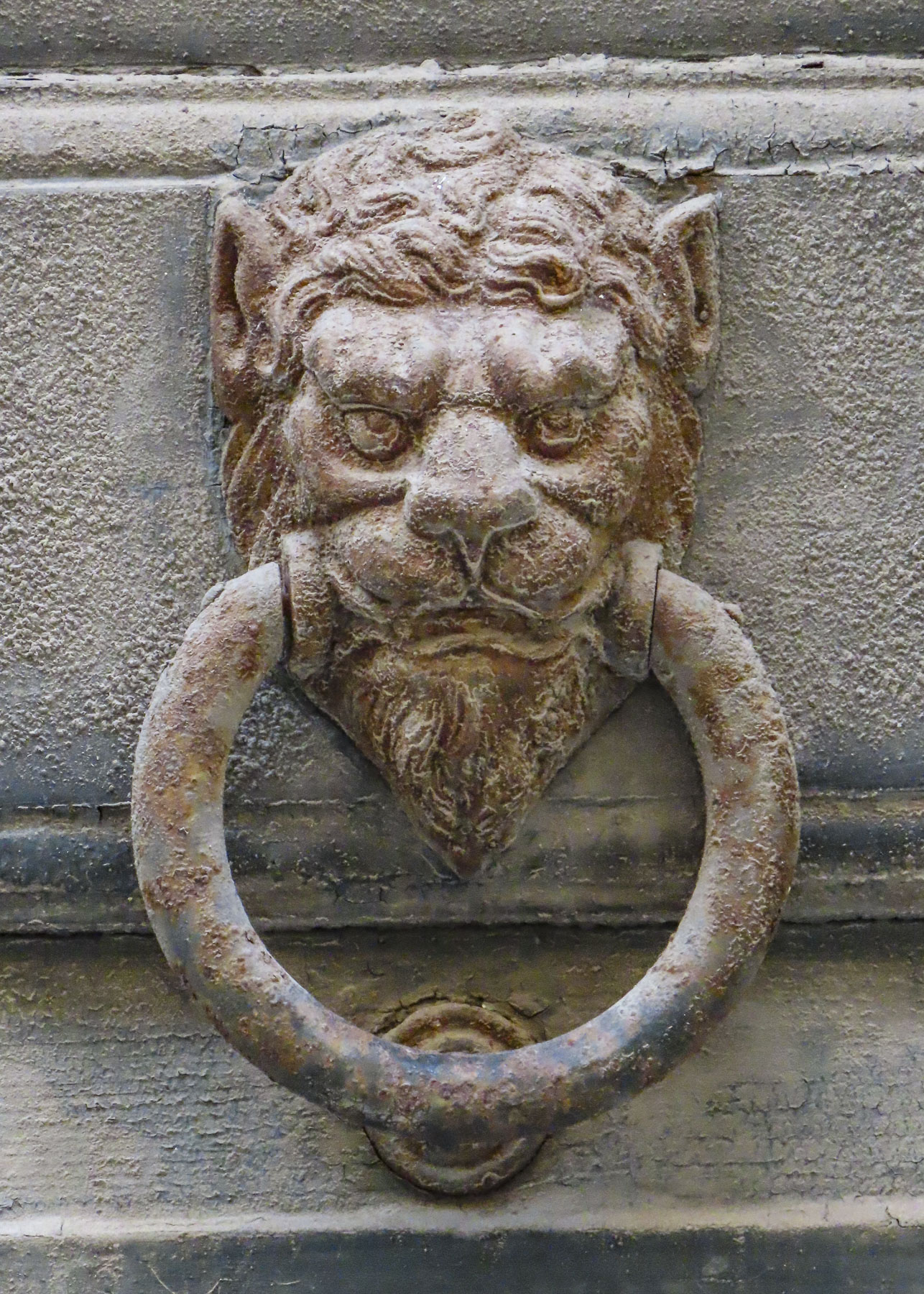
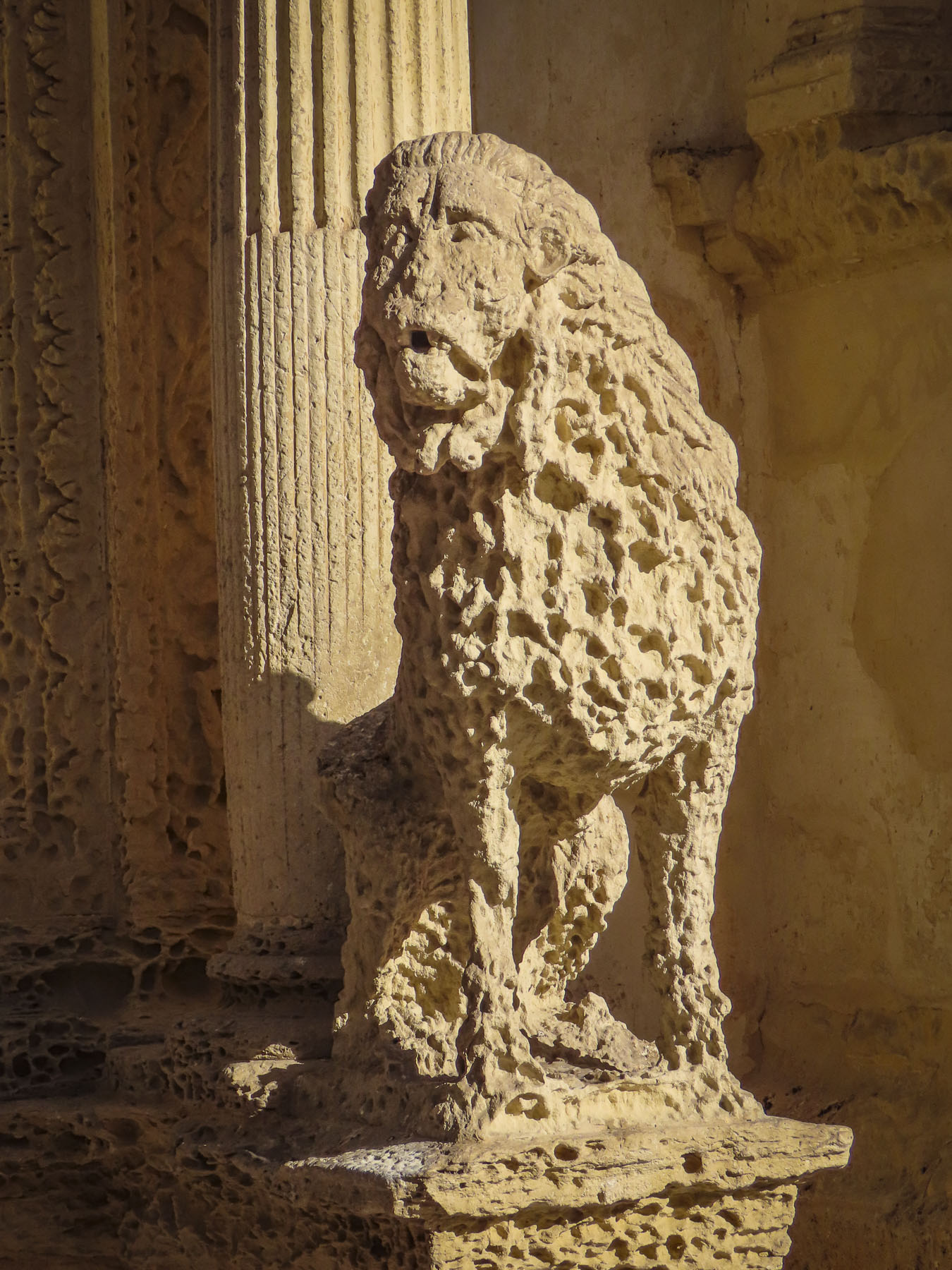
Legend says the waters of the Cefalino River that feed the The Lavatoio Medievale, a medieval washhouse, were created from the tears of a nymph mourning the loss of her lover.  The waters originate six miles away in the Madonie Mountains near the village of Gratteri and flow under the streets of Cefalu before reaching the sea. Lion-headed spouts filled a series of stone basins that the town’s women used from their construction in 1665 until the last traditionalist scrubbed clothes there in the 1990s. An ancient stone plaque at the top of the stairs is inscribed with the saying “Here flows Cefalino, healthier than any other river, purer than silver, colder than snow.”

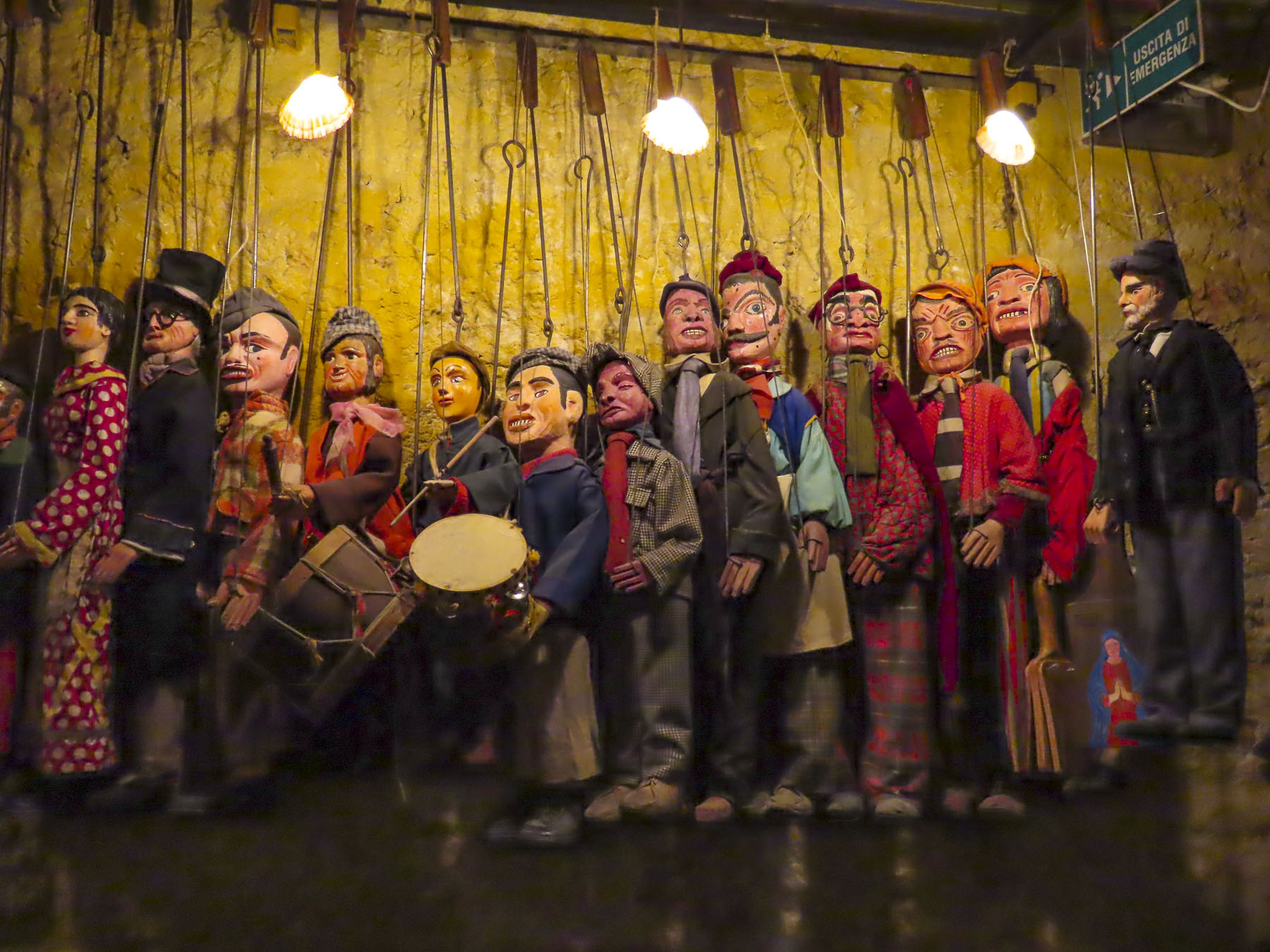
Our stay on Via Bara All’Olivella, a street known for its Opera dei Pupi, puppet theatres, was on the edge of Palermo’s historic district and near the classical Massimo Theater. Craftspeople carve and dress the puppets with fine cloth and metal armor, and their workshops can still be visited along the lane. The shows, which can last two hours and have three acts, re-tell the legends of medieval Christians kings, chivalric knights, damsels in distress, and Saracen nobles, with a supporting cast of sorcerers, witches, dragons, giants, and various other evil doers. Sicilian puppetry is a dying art and has been recognized by UNESCO an “Intangible Cultural Heritage.”

Sicily and Palermo have a long, convoluted history with the city as the capital of the Kingdom of Sicily when the Normans ruled.  Later it was a sister city to Naples when it was part of the Kingdom of Naples. Eventually the distinct regions finally agreed to be called Kingdom of the Two Sicilies in 1816, until the unification of Italy in 1870.  The prestige of both cities is seen in the wealth and the number of their churches.  And there really are a lot of them.

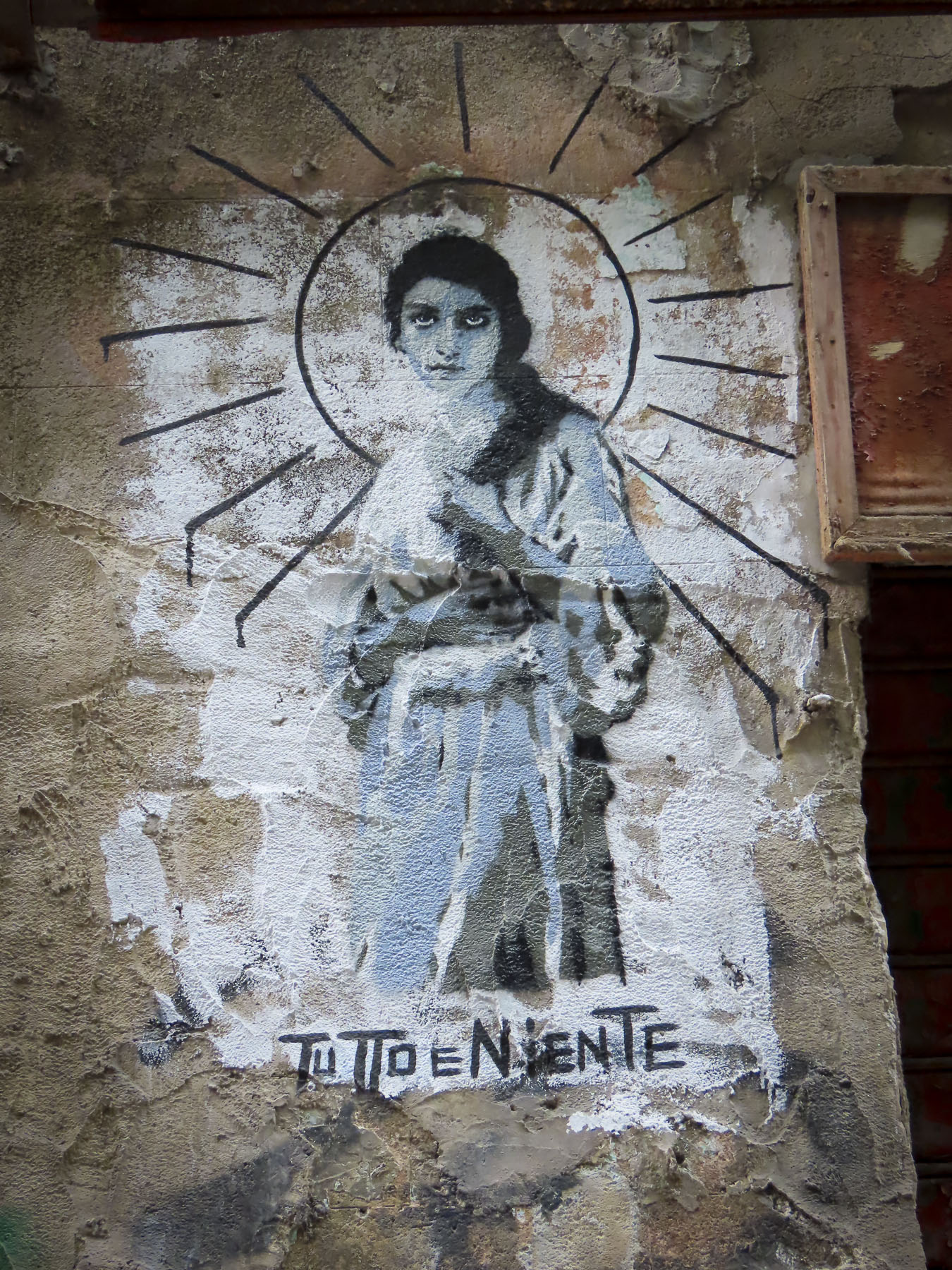
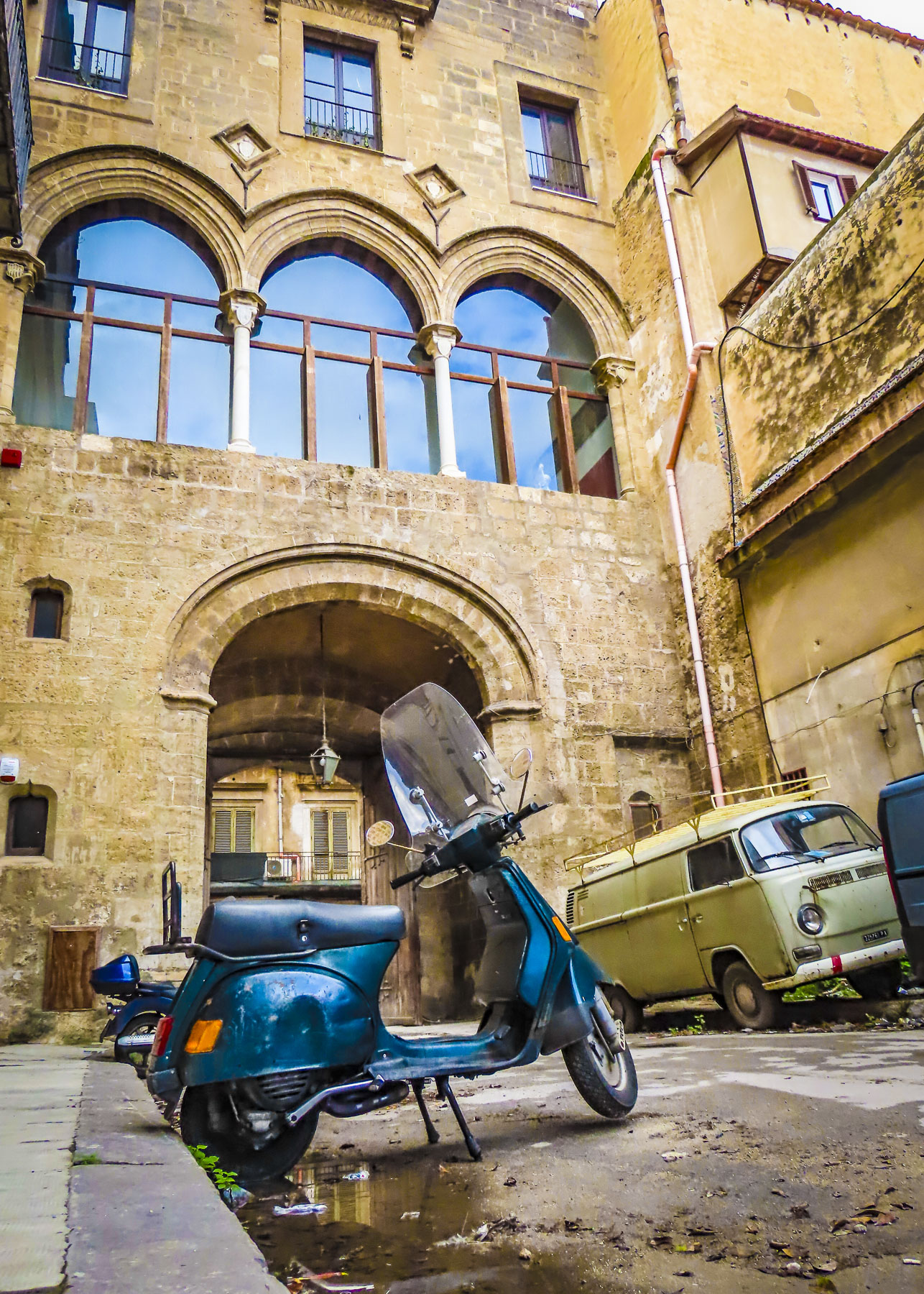
Like Naples, this large urban center has fallen on hard times in recent decades.  In the historic center the landmarks have been maintained, but the remaining residential areas have been allowed to deteriorate to the point where the crumbling buildings seem to cry out for restoration.  With oases of beauty scattered about between gritty and raw neighborhoods, Palermo stands in stark contrast to the experience of Cefalu and Taormina.  This doesn’t mean that it wasn’t enjoyable and interesting. On the contrary, along with being fascinating and different, it was a very urban experience!  Plotting our routes between churches exposed us to high culture and art along with the rough-and-tumble ambience of the city, sprinkled with graffiti, as we wandered the streets.
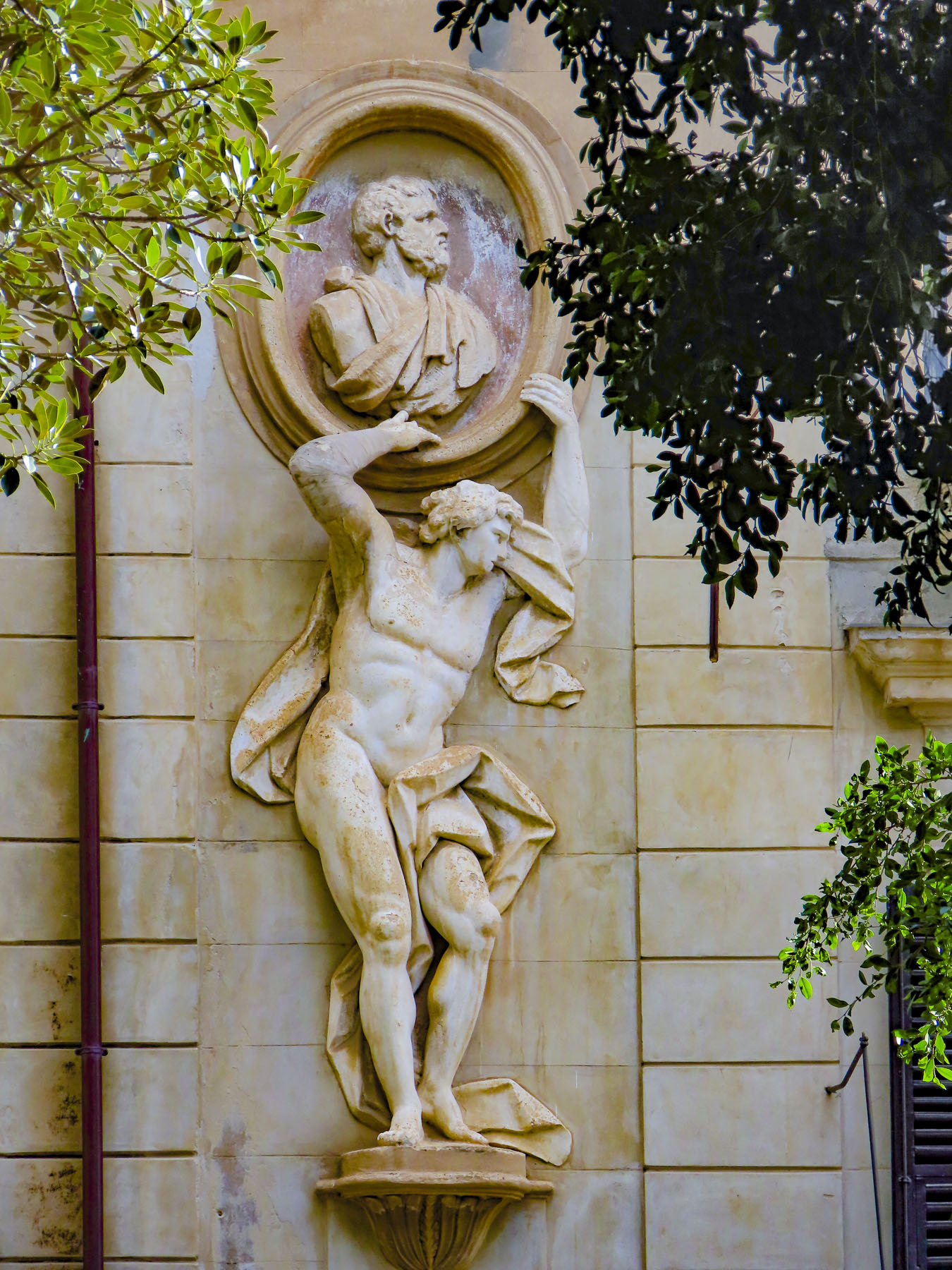
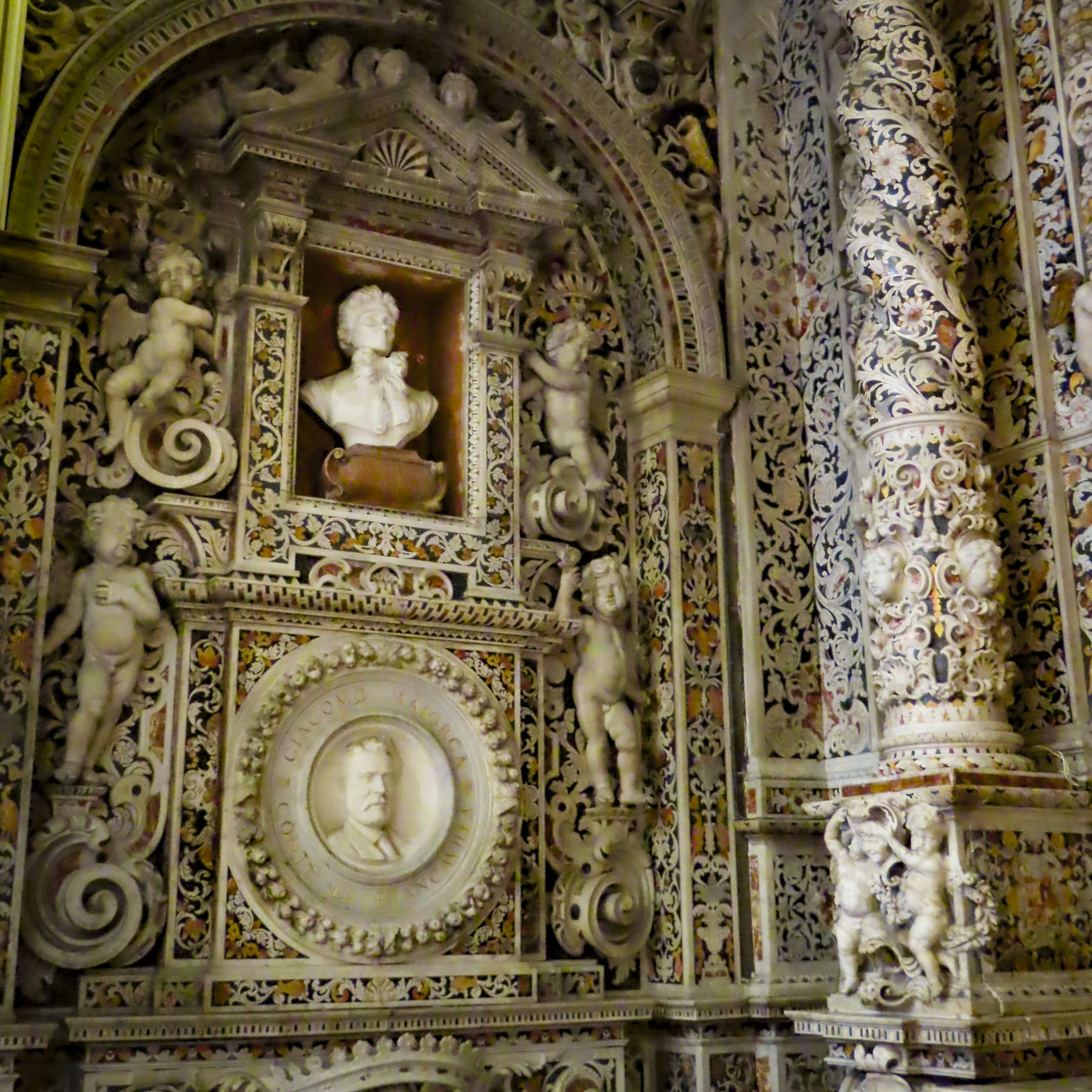
Only a few blocks away from our lodging, we started our morning at Chiesa di San Domenico. It has under undergone many incarnations since the Dominicans commissioned the first church in 1280. The Baroque façade and interior are the result of an expansion in the 1700s. With the burial of many notable Sicilian artists and politicians within its wall, it is recognized as the “pantheon of illustrious Sicilians,” and continues this tradition with modern heroes, most notably the tomb of anti-mafia prosecutor Giovanni Falcone, who was assassinated by organized crime in 1992, and which still receives tributes.

Somehow, we ended up on the top floor of the department store next to the church. Surprisingly, it had a nice café and patio with a view of the Colonna dell’Immacolata on the piazza and the gateway to the La Loggia quarter, one of the original Palermo neighborhoods.

The colorful Vucciria Market on Piazza Caracciolo and the decaying remnants of past glories on the surrounding streets led to the fountain on Piazza Garraffello.  Built in 1591, its beauty was overshadowed by the street art on the grim encircling buildings and haphazardly parked cars that nearly obscured it from view. The area was very quiet when we strolled through but is known for its raucous nightlife that lasts until morning. 

Across from the port a heavenly aroma emerged from a small storefront that was doing an active business. The place got its name from its specialty, Pani câ Meusa – Porta Carbone, a street food sandwich famous in Palermo that is made with boiled and then fried cow spleen and cow lung, grated caciocavallo cheese and lemon, served on a sesame roll.  We thought its strong and rich flavor was a taste that might take a lifetime to acquire.
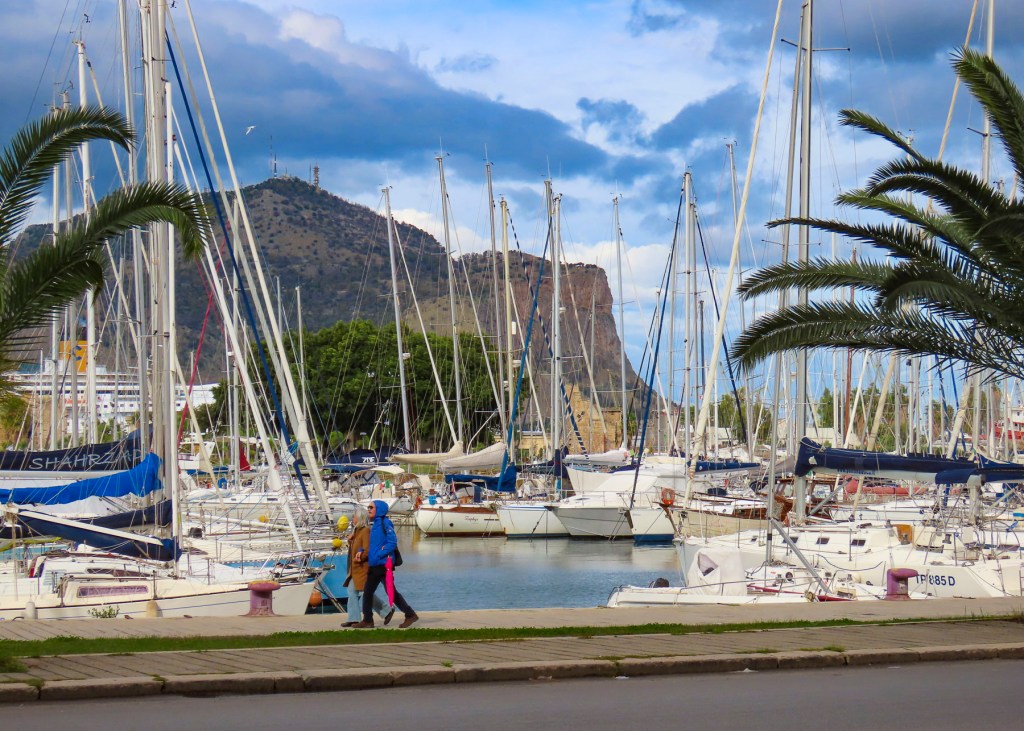
Two blocks away, the Giardino Garibaldi’s stately centuries-old specimen trees anchored a neighborhood of fine palazzo now functioning as museums and university buildings. 

Around the corner a large, tall-wheeled float shaped like boat, called a Carro Trionfale, was on display in front of the municipal office. On top was a statue of Santa Rosalia, a 12th century hermit who is credited with saving the city from the plague when a relic of the saint was paraded three times around the city in 1624.  The highlight of her weeklong festival, held every July, is the procession when the carro is pulled through the streets by teams of men from the Cathedral of Palermo to the waterfront.  Every year a different district gets the honor of hosting the carro until the next festival.

Farther afield, our wanderings took us down blocks that seemed to retreat further back in time with every step. We saw contemporary street art on urban housing projects within steps of a ghostly unfinished renaissance cathedral, the Santa Maria Dello Spasimo. Started in 1506, it was never completed and now is used as an open-air theater and concert venue.  The juxtapositions of the treasured and the forgotten in Palermo are stunning.
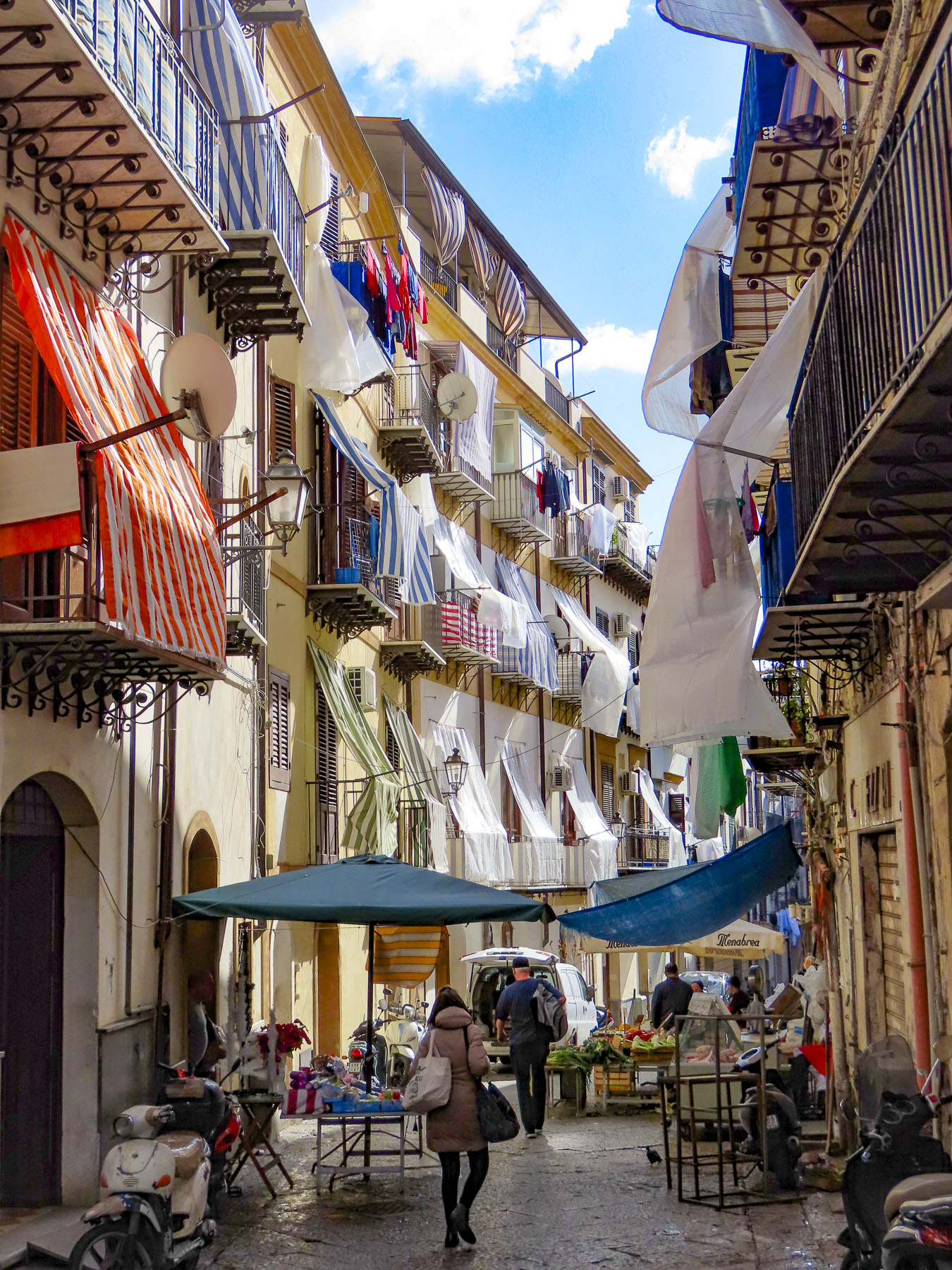
The warren of narrow lanes off the Il Capo district between the Massimo Theater and the Cattedrale di Palermo were ripe for exploration.  Off Via Volturno, two stone columns with decorative capitals, Porta Carini, grace the entrance to the Mercato del Capo, one of the oldest outdoor markets in the city.  Built before 1310, the columns symbolize the neighborhood’s grand past that’s difficult to visualize amidst the colorful canvas awnings of the raucous street vendors.

Nearby is the site of the brutal assassination of Carabinieri General Dalla Chiesa, an anti-mafia investigator, his wife and a police escort. They were murdered by AK47 wielding gunmen on motorcycles one night in 1982. This vicious event epitomizes the Mafia war or Mattanza, the Slaughter, that gripped Palermo and the whole of Sicily from the 1970s to the 90s with thousands of homicides of rival mafioso foot soldiers, journalists, politicians and judges.  Fortunately, things are vastly different now.

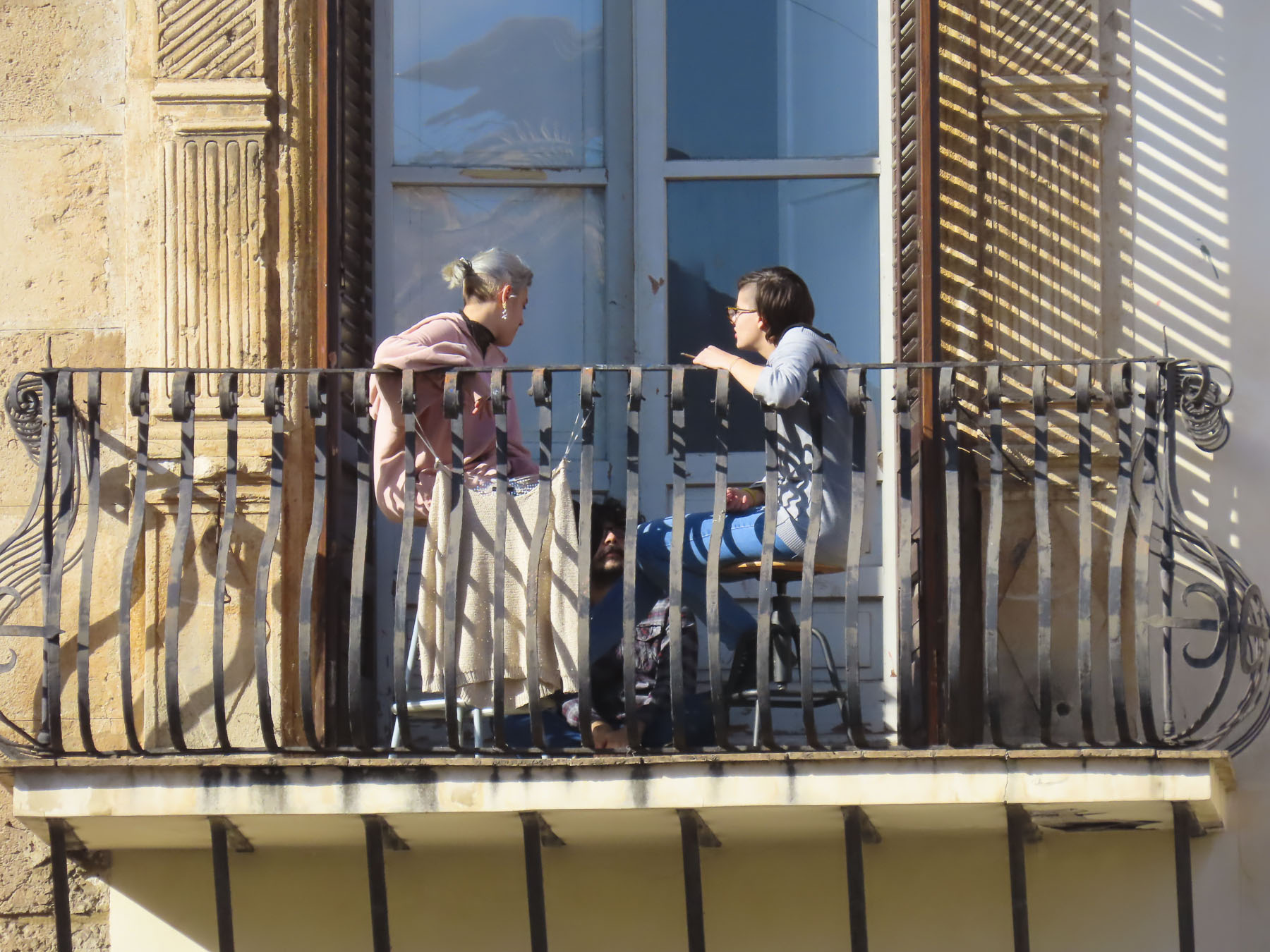
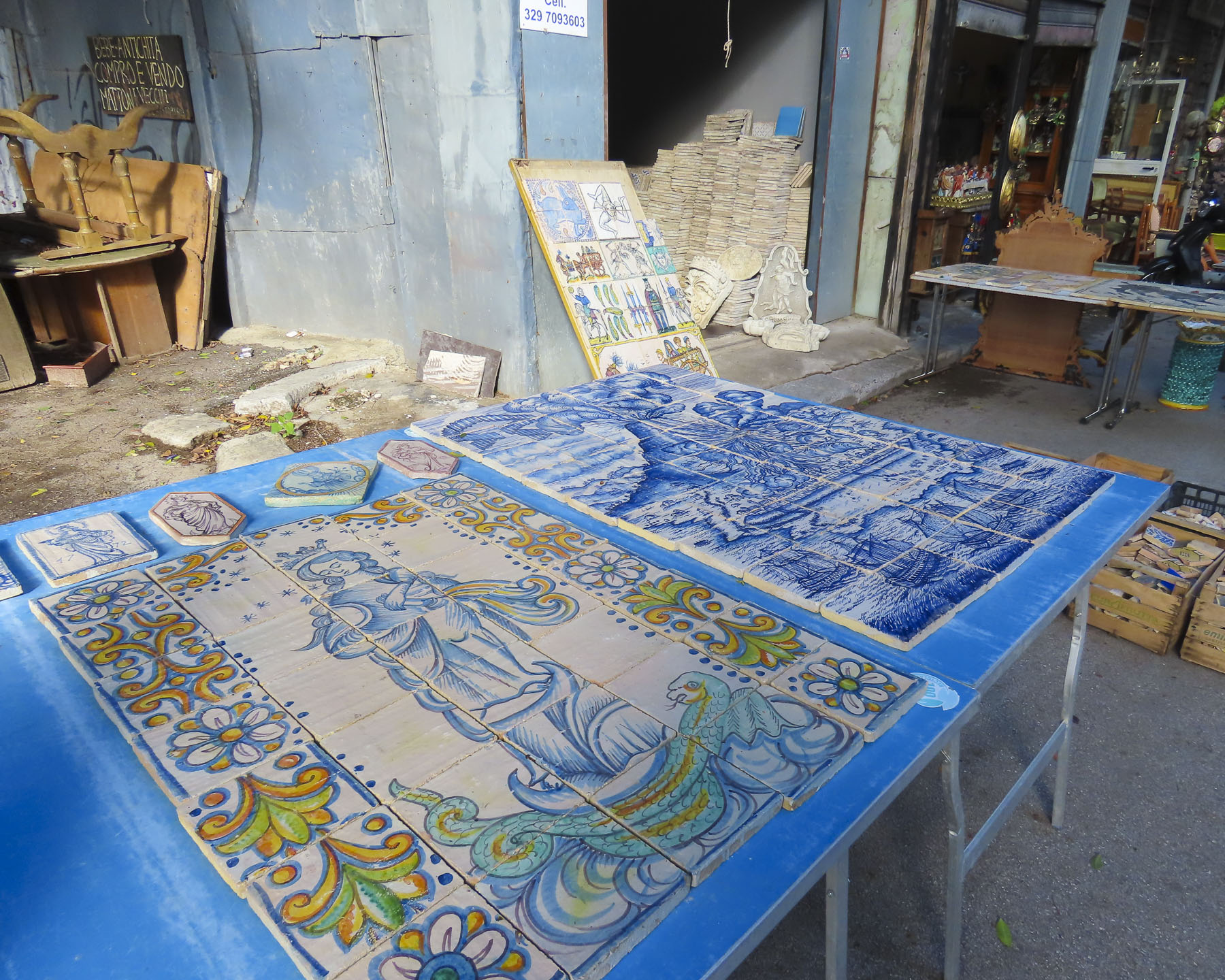
Farther along, the street narrows enough that from their balconies, neighbors can easily talk to one other across the lane. At Piazza Domenico Peranni haphazard stalls, some with trees growing through the roofs, house a permanent flea market filled with dusty curiosities.
Every seat of power in antiquity had a triumphal arch to signify its greatness, and Palermo’s is certainly unusual with its columns depicting turbaned Arab slaves. The Porta Nuova gateway was reconstructed in 1570 to celebrate the 1535 triumph of Charles V, Holy Roman Emperor, over Ottoman forces in Tunis. Landing in Palermo after his victory, the monarch paraded 14,000 Arab slaves through the city. Standing next to Palermo’s Royal Palace, the Palazzo dei Normanni, the 140ft tall monument was part of the defensive wall that once surrounded the city.

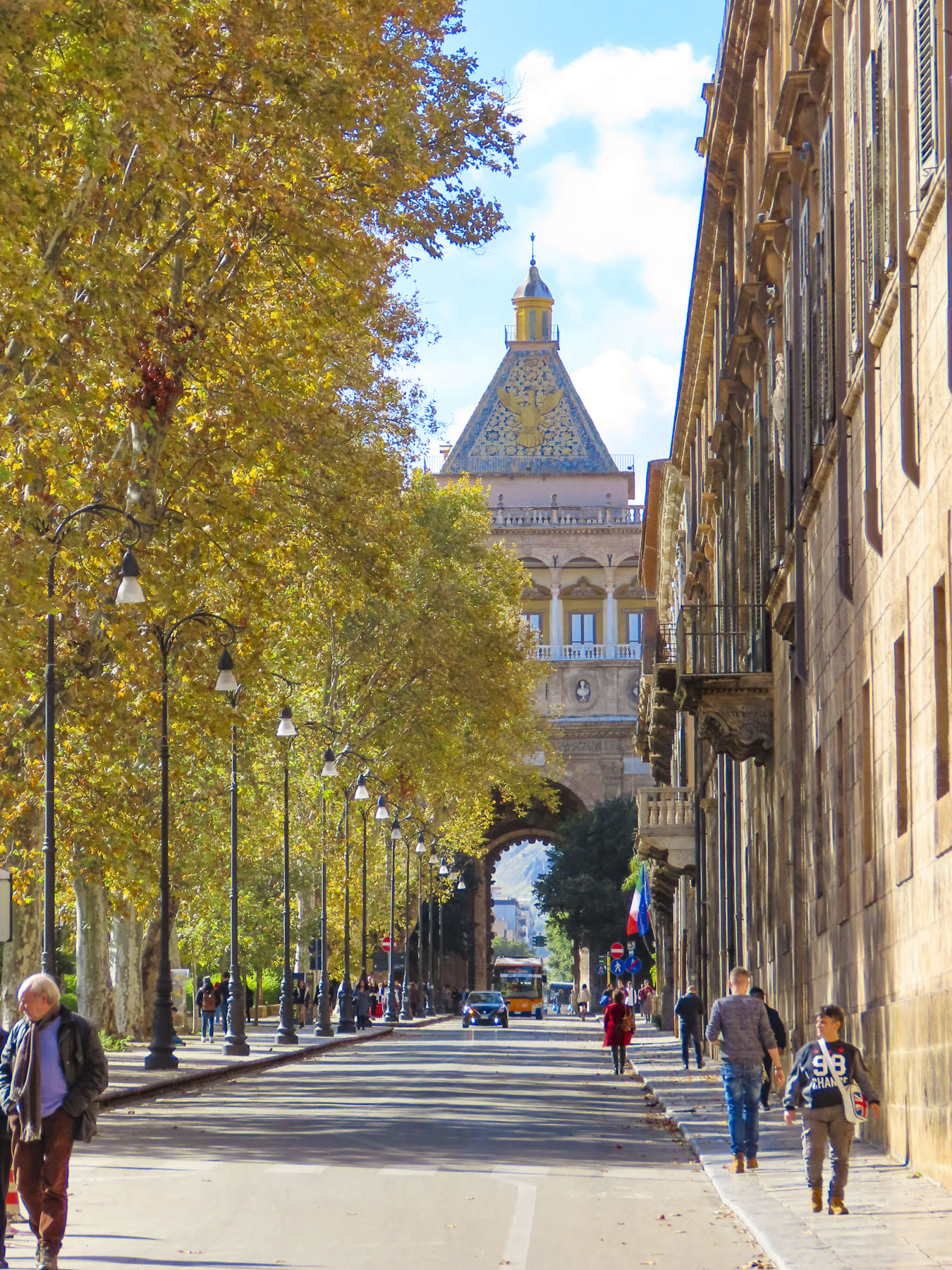
When the Normans won Palermo in 1072, it is believed they found 300 mosques in the ancient city and proceeded to change them all to churches, many sponsored by baronial families. Grand, lesser and forgotten, it was nearly impossible to avoid the churches as we walked through the historic district. Many were closed, but the larger ones still open to tourists were all different and magnificent.

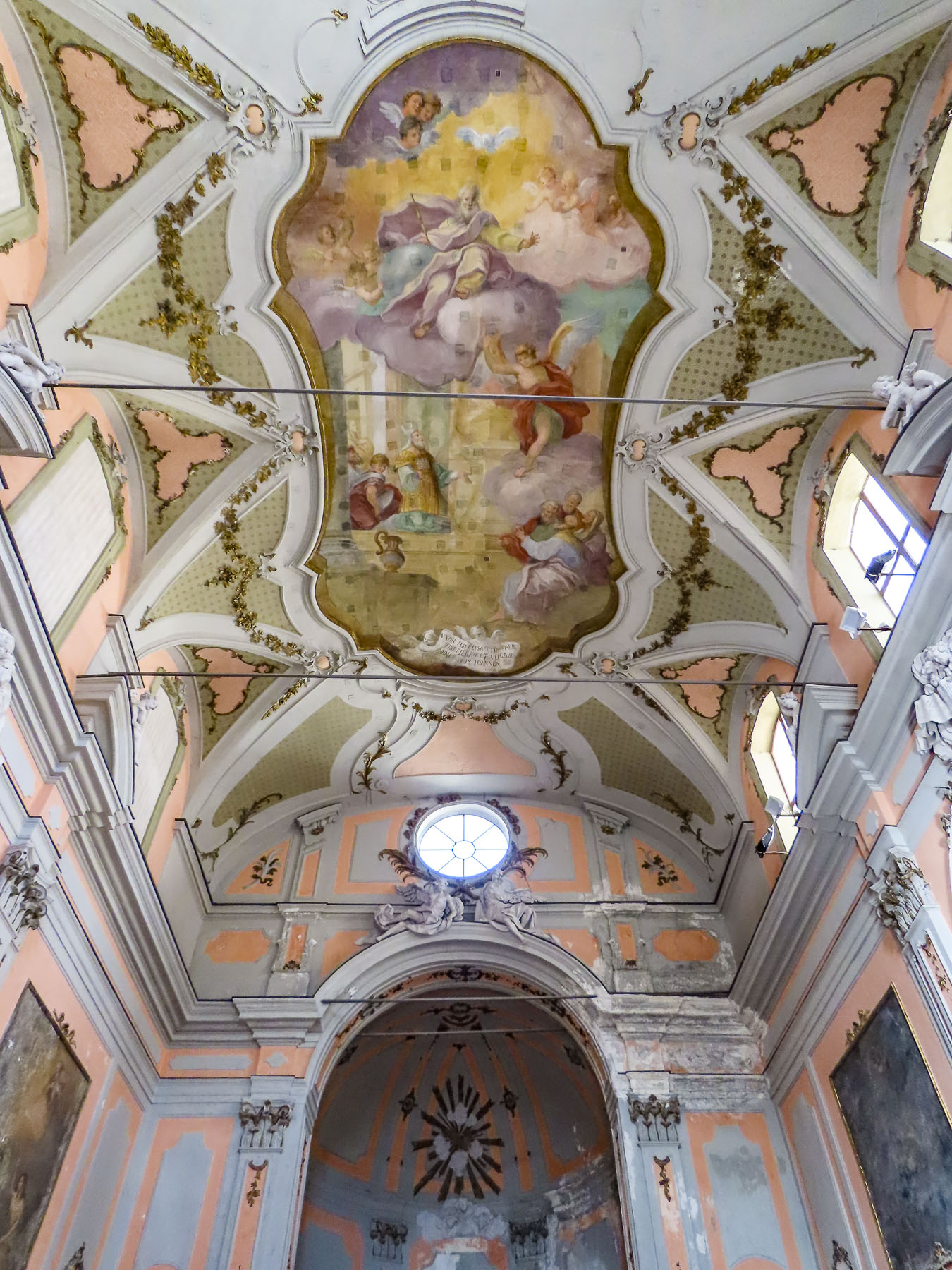
The Cathedral of Palermo is definitely one not to miss. It was constructed by the Normans in 1184 over a mosque that was built atop the ruins of an earlier Christian church.  It’s undergone many architectural alterations over the centuries, embracing Arabic, Gothic and Renaissance influences which have combined to create a visual compelling architectural façade with numerous interesting details. 

The cavernous inside is rather plain in comparison to some of the richly decorated interiors of other Palermo churches. The piazza in front of the church is perfectly scaled for viewers to appreciate the grandeur of the church behind it.  The roof, tombs and treasury of the cathedral are all accessible for a fee, while entrance to the church is free.

If you are short of time head to the Quattro Canti (Four Corners) intersection of Corso Vittorio Emanuele and Via Maqueda. It is the heart of Palermo’s historic district.  A short walk took to us to the fanciful Fontana Pretoria, a tiered fountain from the 1500s, which is bedecked with mythological figures.

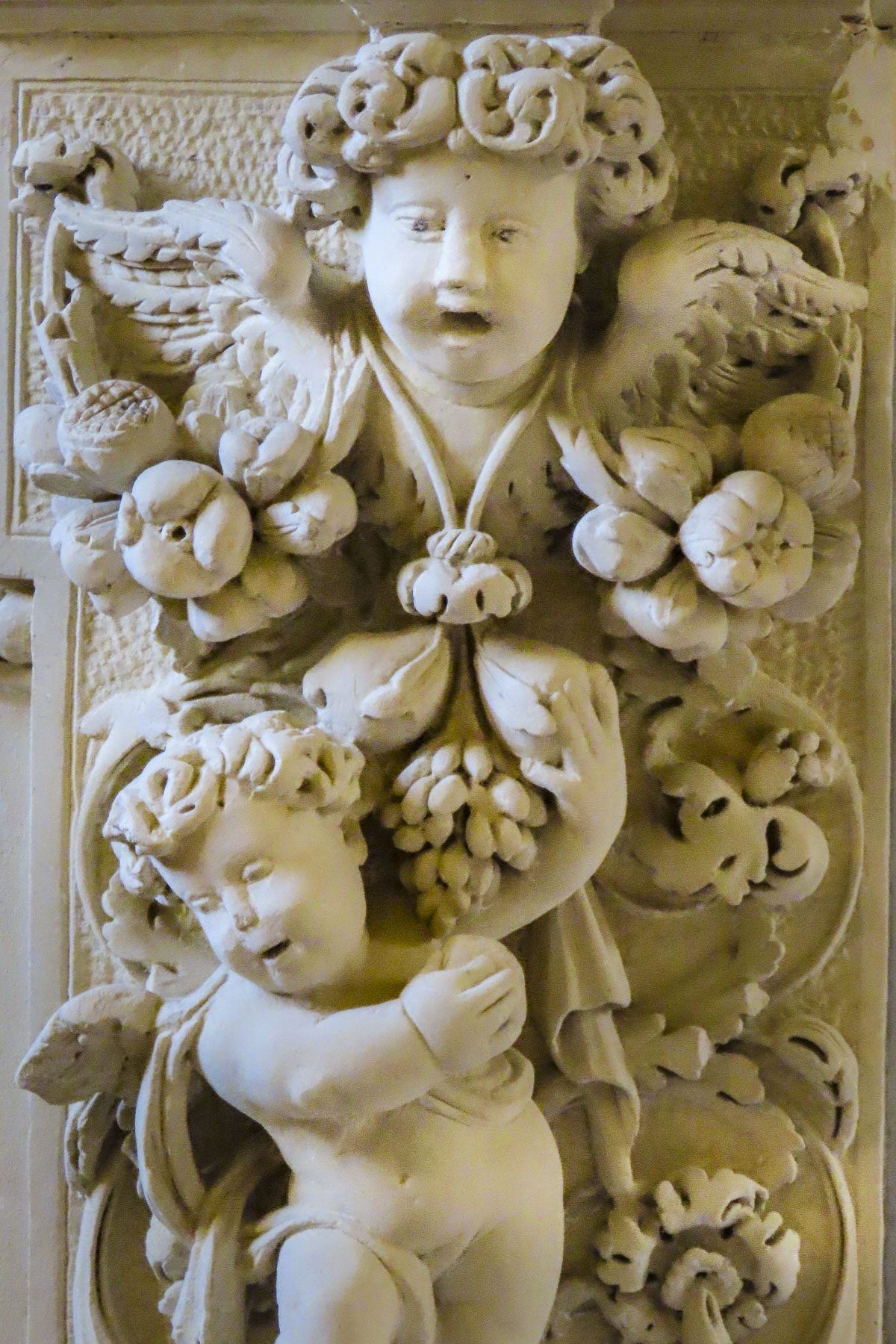
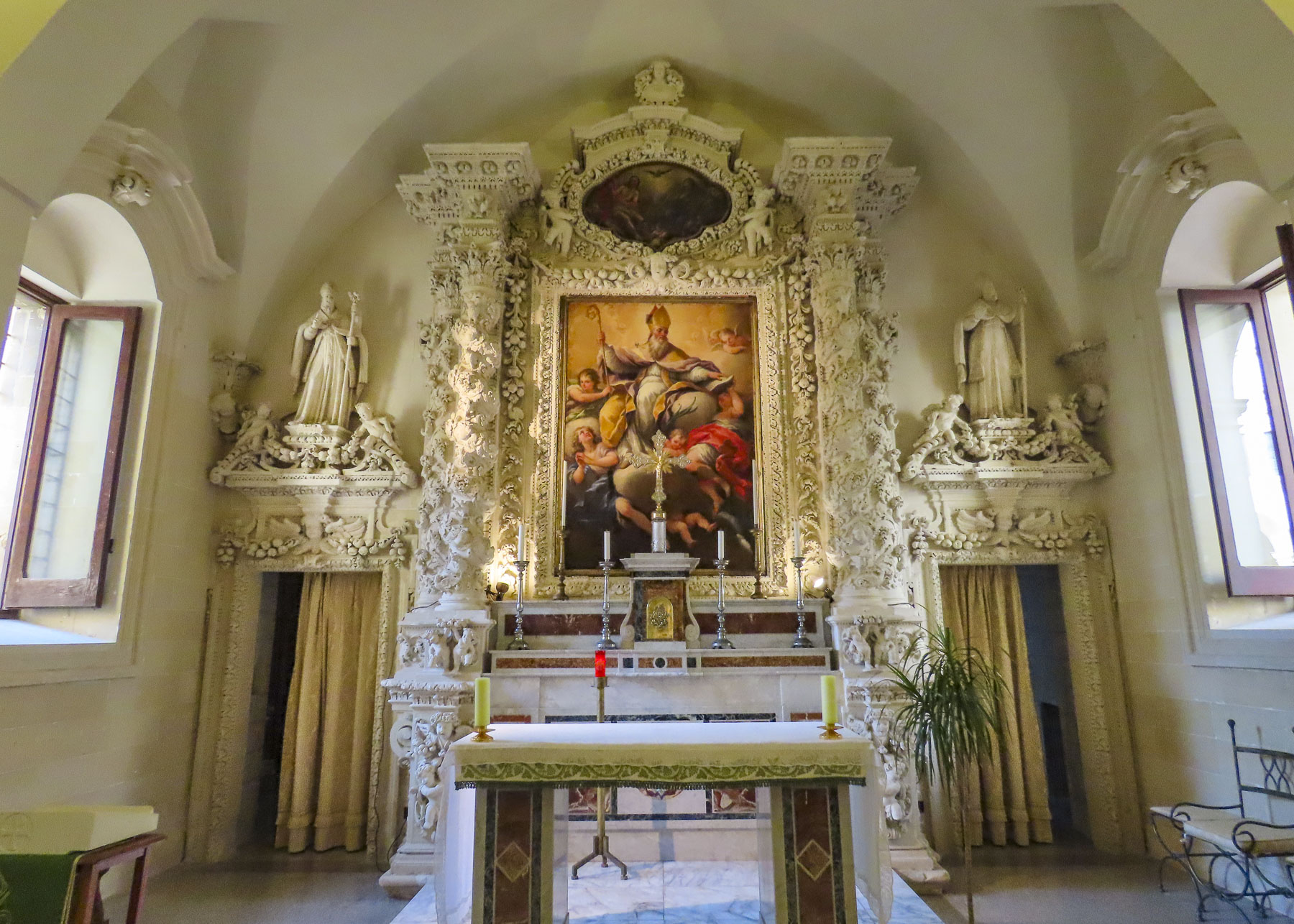
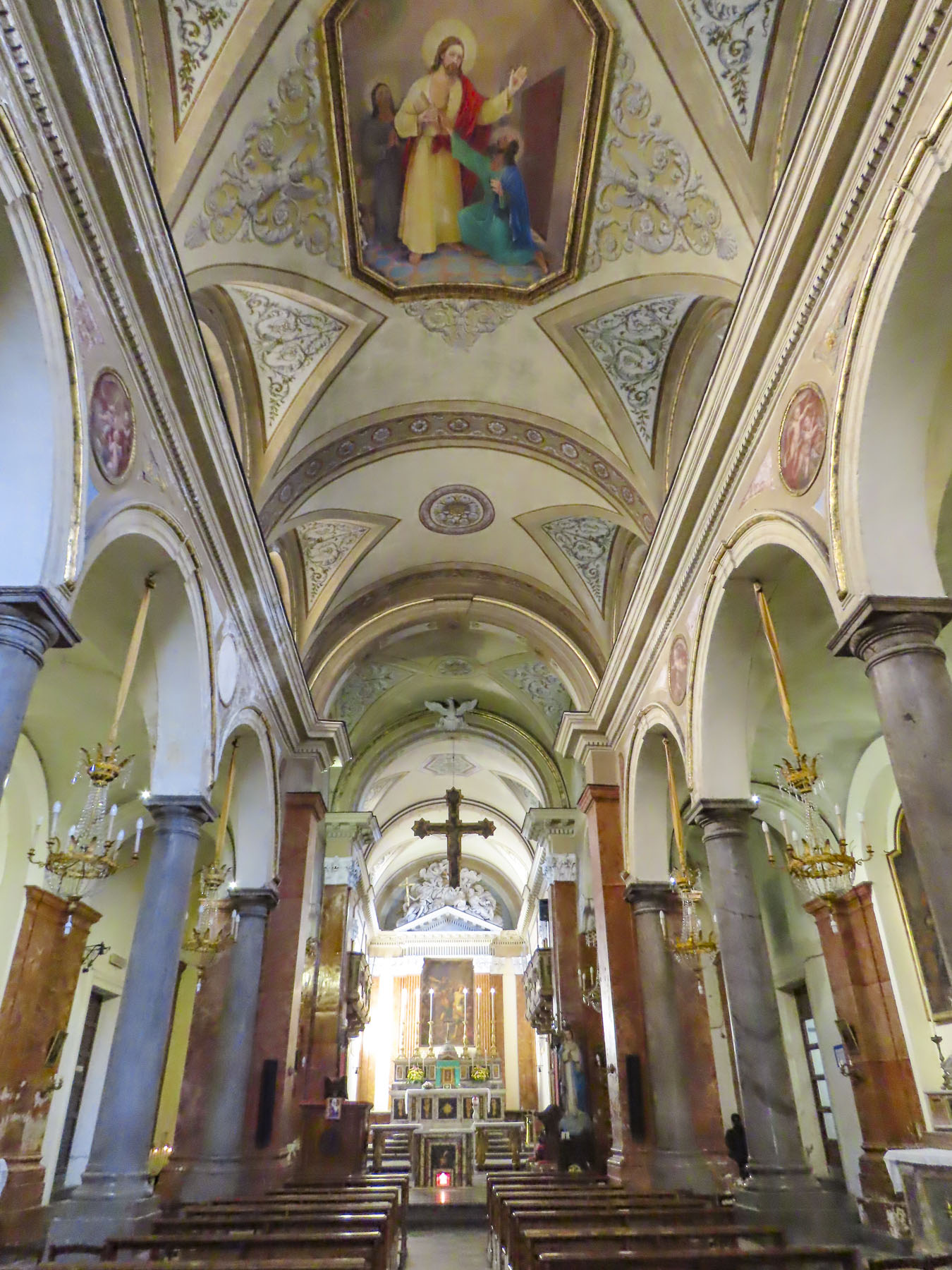
Beyond it three ancient churches ring Piazza Bellini, and back-to-back visits of all three then required Bellini cocktails to loosen our stiff neck muscles afterward to reground us after this celestial bliss.  The Church and Convent of Santa Caterina d’Alessandria was originally built as a hospice in the 1300s.  Its caverneous, highly decorated Baroque interior, with every surface sculpted or painted with cherubs, angels, saints and martyrs celebrating the heavenly kingdom, was built for the cloistered Domenican nuns from wealthy and noble families who arrived a century later, only to close the hospital and open a bakeshop, “i Segreti del Chiostro – the secrets of the cloister,” instead. Hey, everyone enjoys a good cookie, and the nuns are still turning out traditional Sicilian baked marzipan sweets like frutta di Martorana today, from the convent’s original recipes. Near the entrance to the convent its original ruota, a small wheel-like door, is still in use. Through it the cloistered nuns can pass baked goods while remaining unseen, and poor mothers could anonymously leave babies for adoption. The last nuns left the monastery in 2014 and it was opened to the public in 2017.
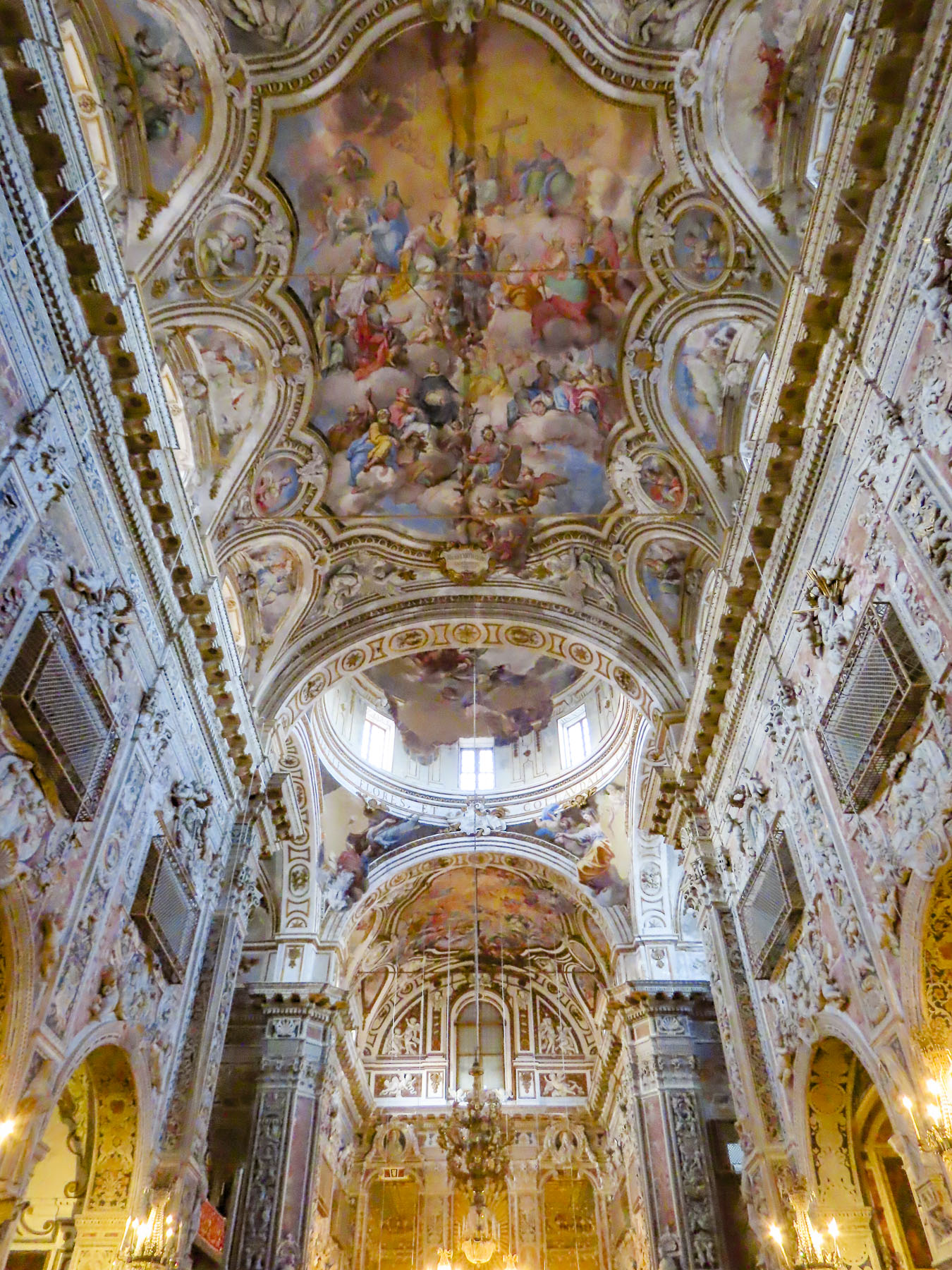
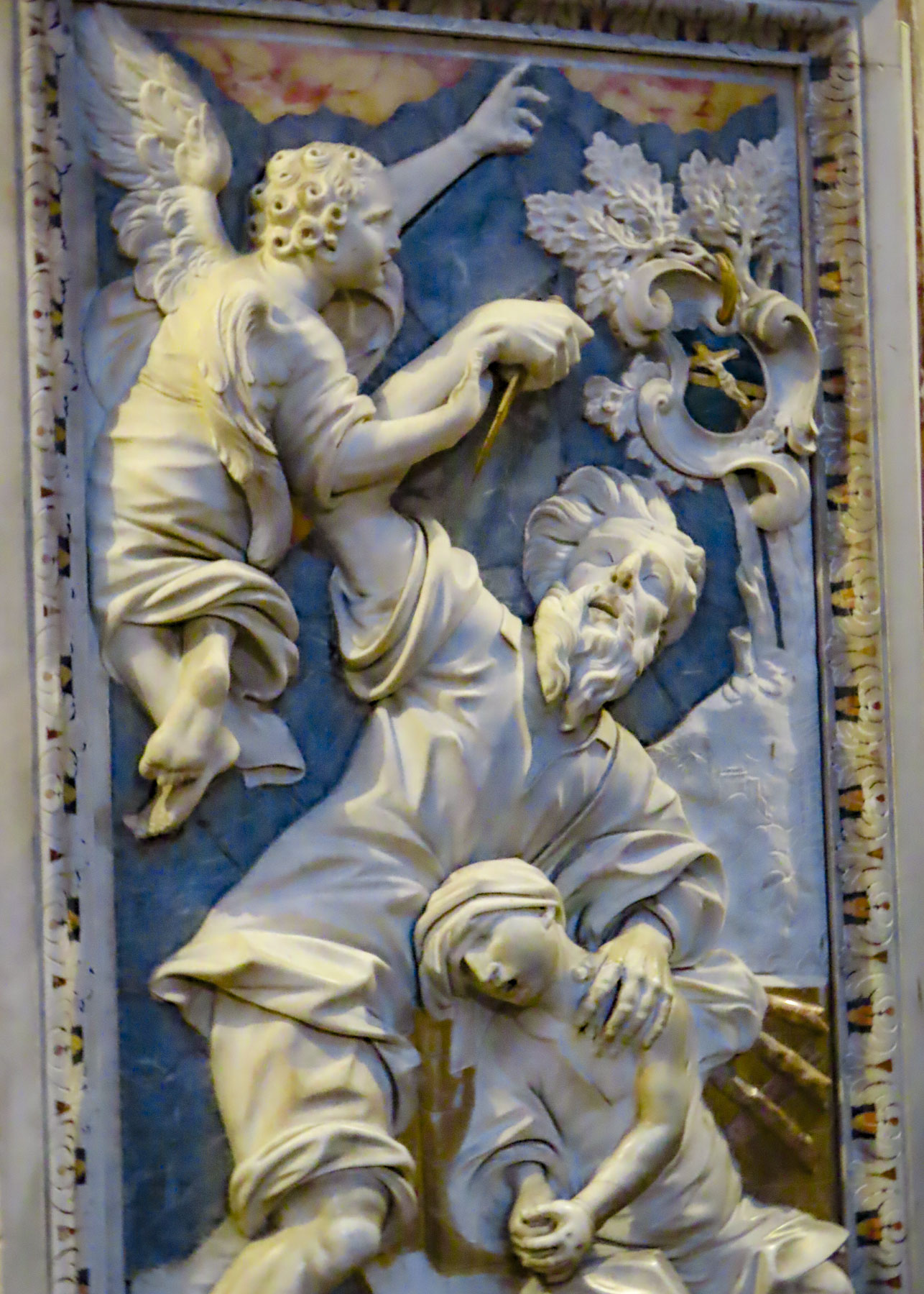
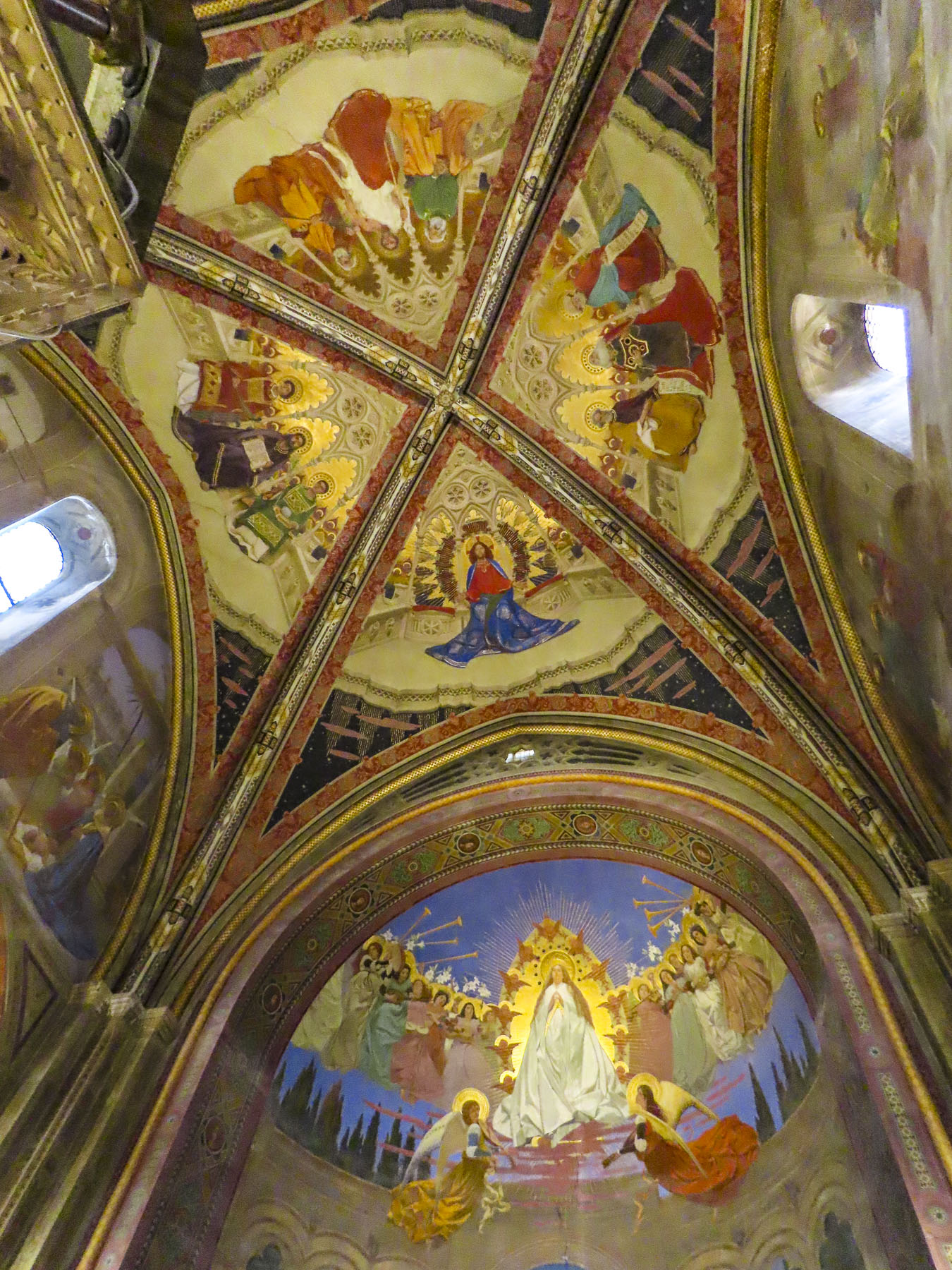
Across the piazza stands Santa Maria dell’Ammiraglion, named after the Norman admiral, who commissioned it in 1143.  Its exterior is a hybrid of Baroque and Romanesque styles with Arab influences. Inside, golden Byzantine mosaics cover the walls, arches, and domes.

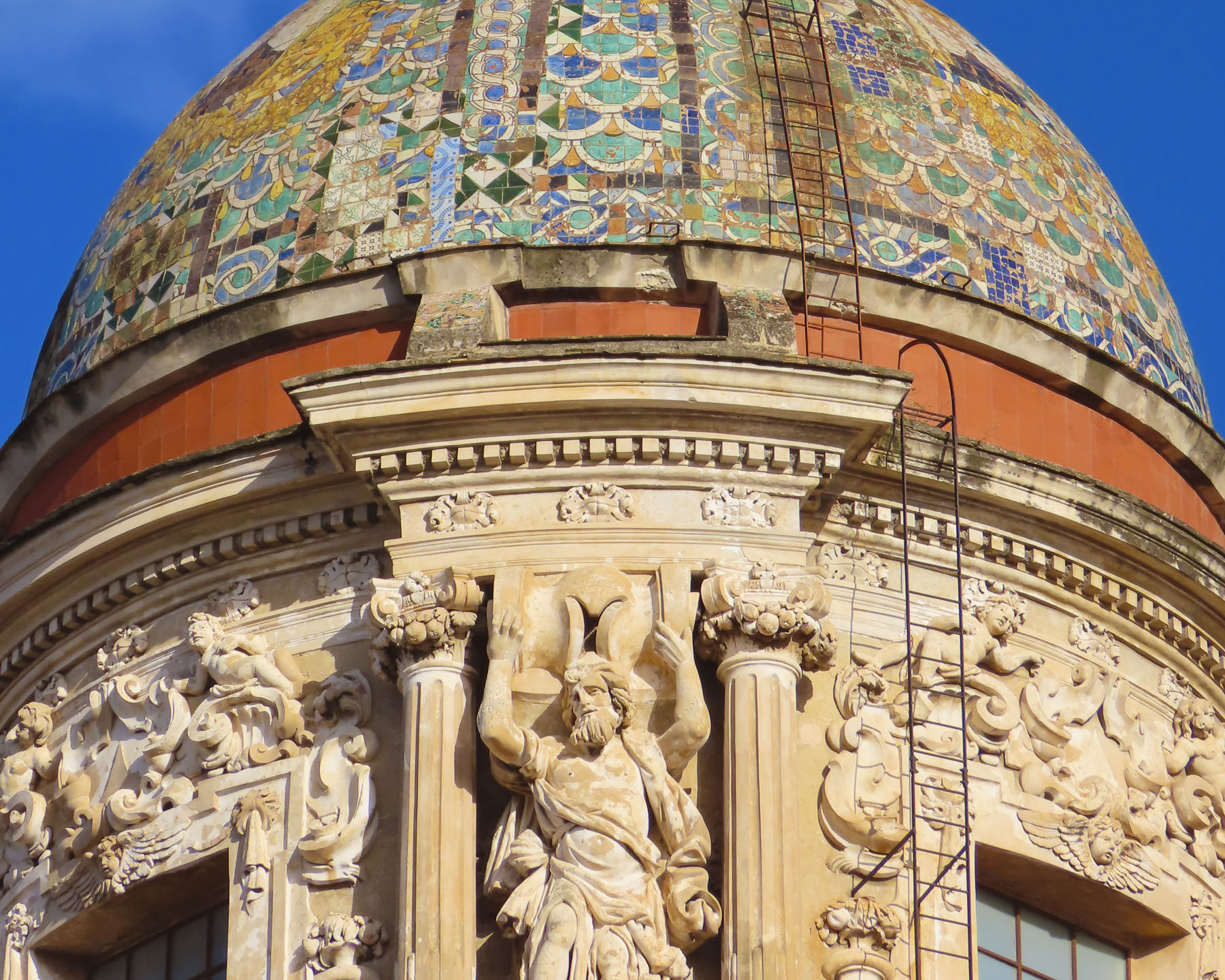
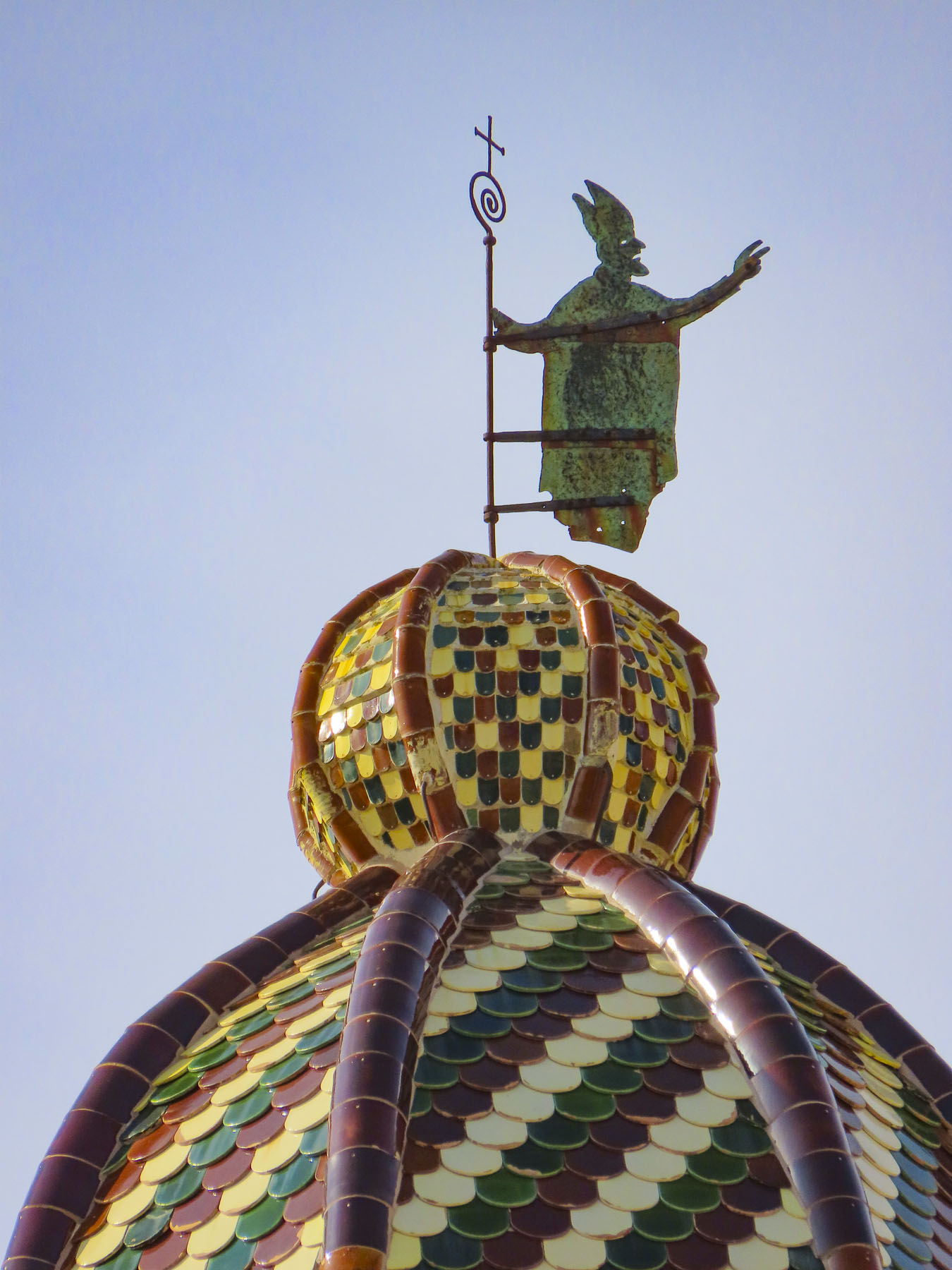
The Arab-Norman architecture continues next door with the fortress-like Church of San Cataldo. The smallest church on the square, its austere block shape has three red bulging domes of Arabic style on the roof.  During the 18th century it was unceremoniously used as a post office until its façade was restored in the 19th century and the building annexed to Santa Maria dell’Ammiraglion.  Without clues to its original interior decoration the inside has been left unadorned, just bare stone.
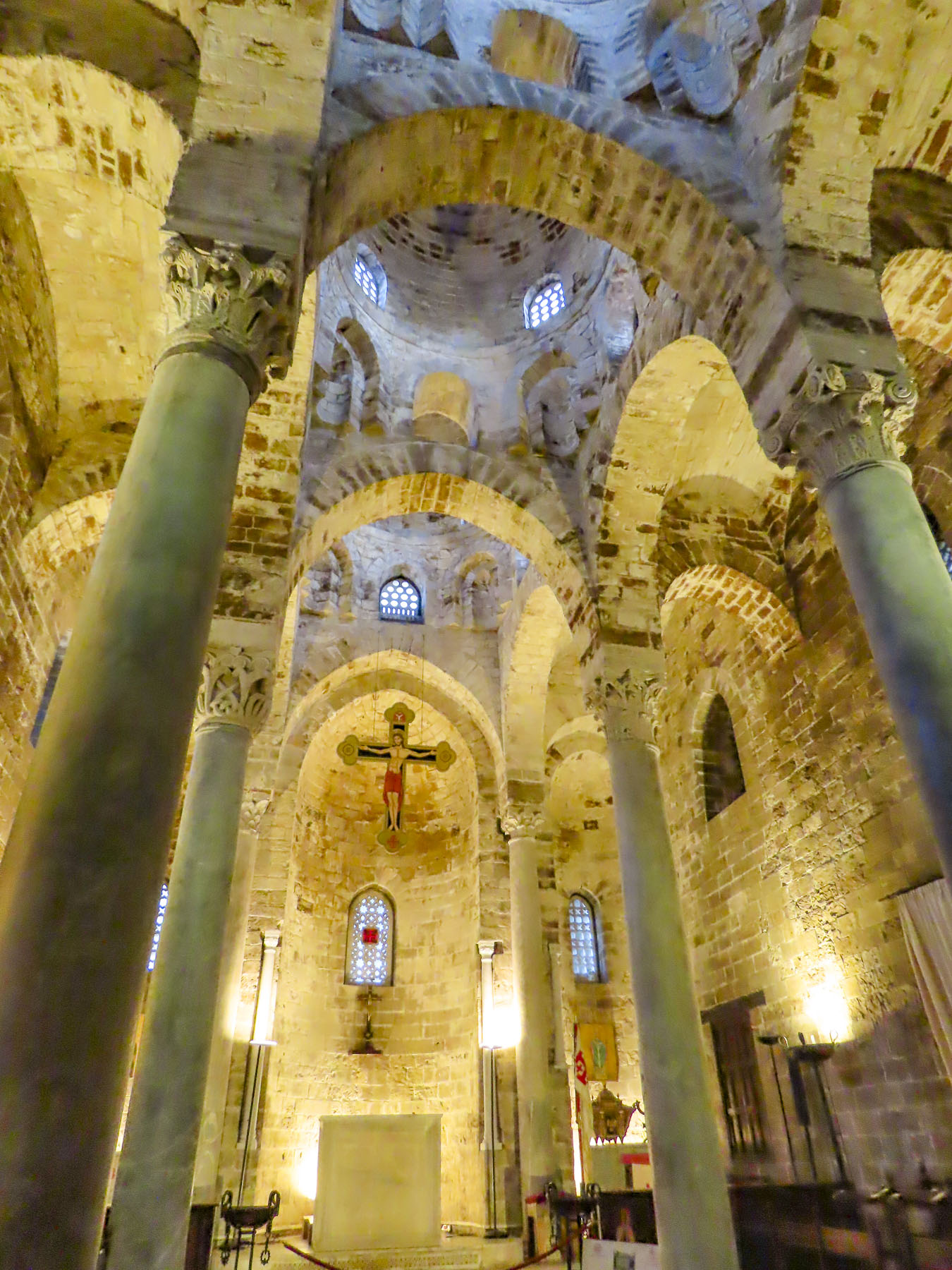
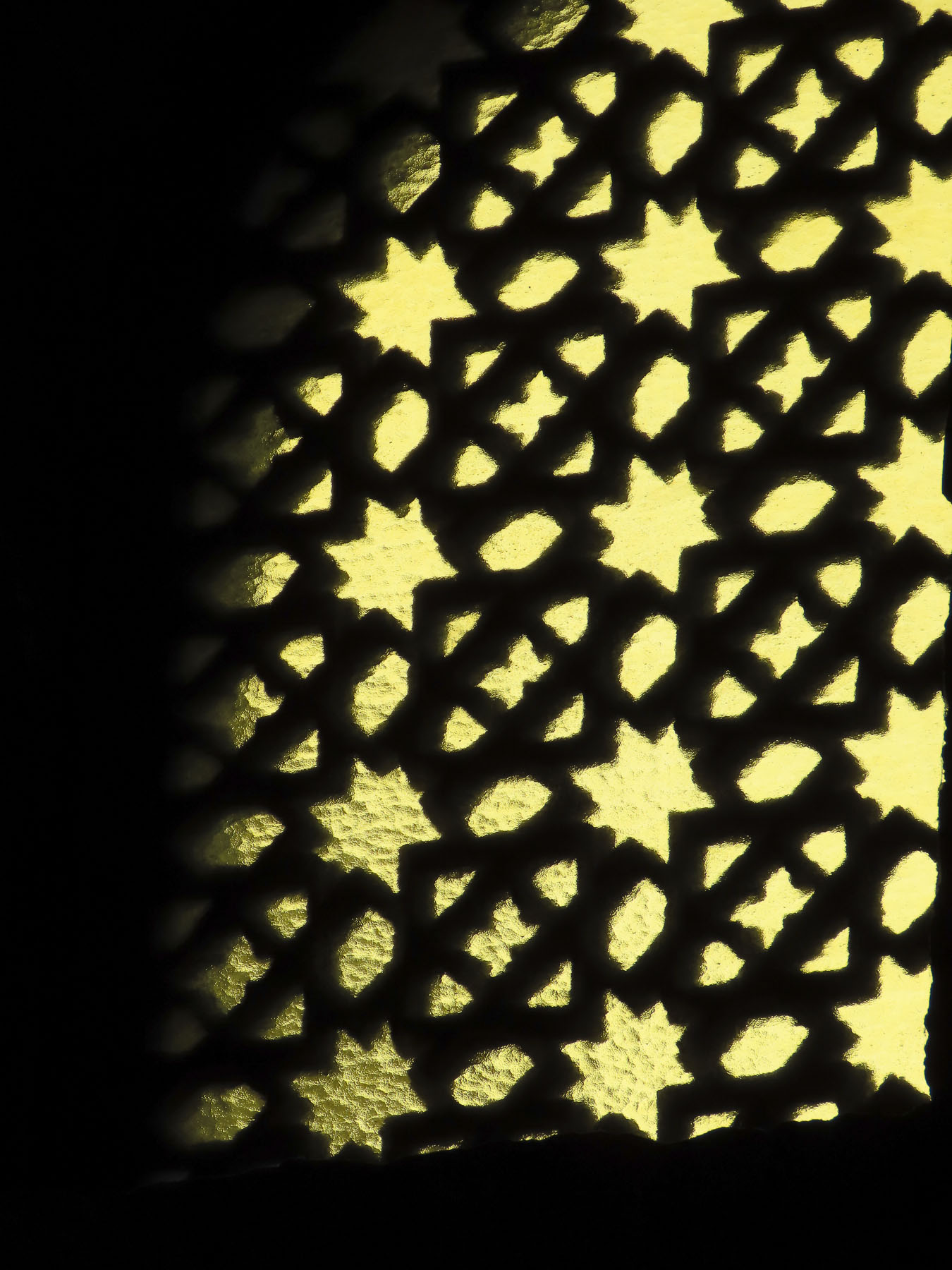
We only scratched the surface of places to explore on an island that we found enchanting and fascinating.  It could take a lifetime to experience all it has to offer – an interesting idea. We hope to return one day. 

The wing of the plane dipped one last time to reveal the turquoise waters along the Sicilian coast as we headed for Northern Italy.

Till next time, Craig & Donna

Sicily Part One: Taorima and Castiglione di Sicilia – Sunny Ancient Lands

The clickity clack of our suitcase wheels reverberated through the Porta Catania, the ancient gate through a defensive wall that once encircled the town, as we pulled them past the 14th century Duomo of Taormina, over cobblestones polished smooth by centuries of use and time.  Adorned with crenelations, the church looks more like a fortress than sanctuary and seems at odds with the playful Baroque fountain in the plaza across from it.

Lined with colorful shops Corso Umberto, barely wide enough for a horse cart, connects the two old entrances to the city and is pedestrian only. The adjoining steep, staired alleys were sized just right for the width of a donkey.

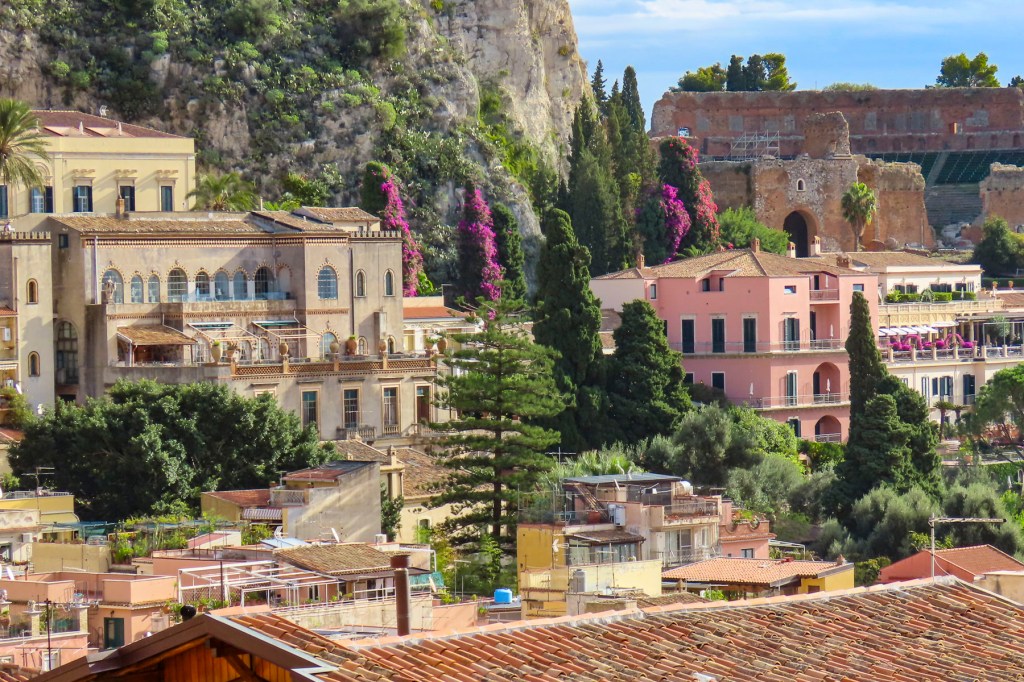
Meeting us at the corner, our young host graciously carried our bags up the passageway and to the third-floor room we had rented in a newly renovated guest house.  It was a compact space, but it would work if we sucked in our stomachs. Effortlessly, he trotted up two more flights to the rooftop where he showed us the kitchen, as well as distant views of the Teatro Antico di Taormina, the castle above town, and Mount Etna, all bathed in the last of the sun’s rays. 

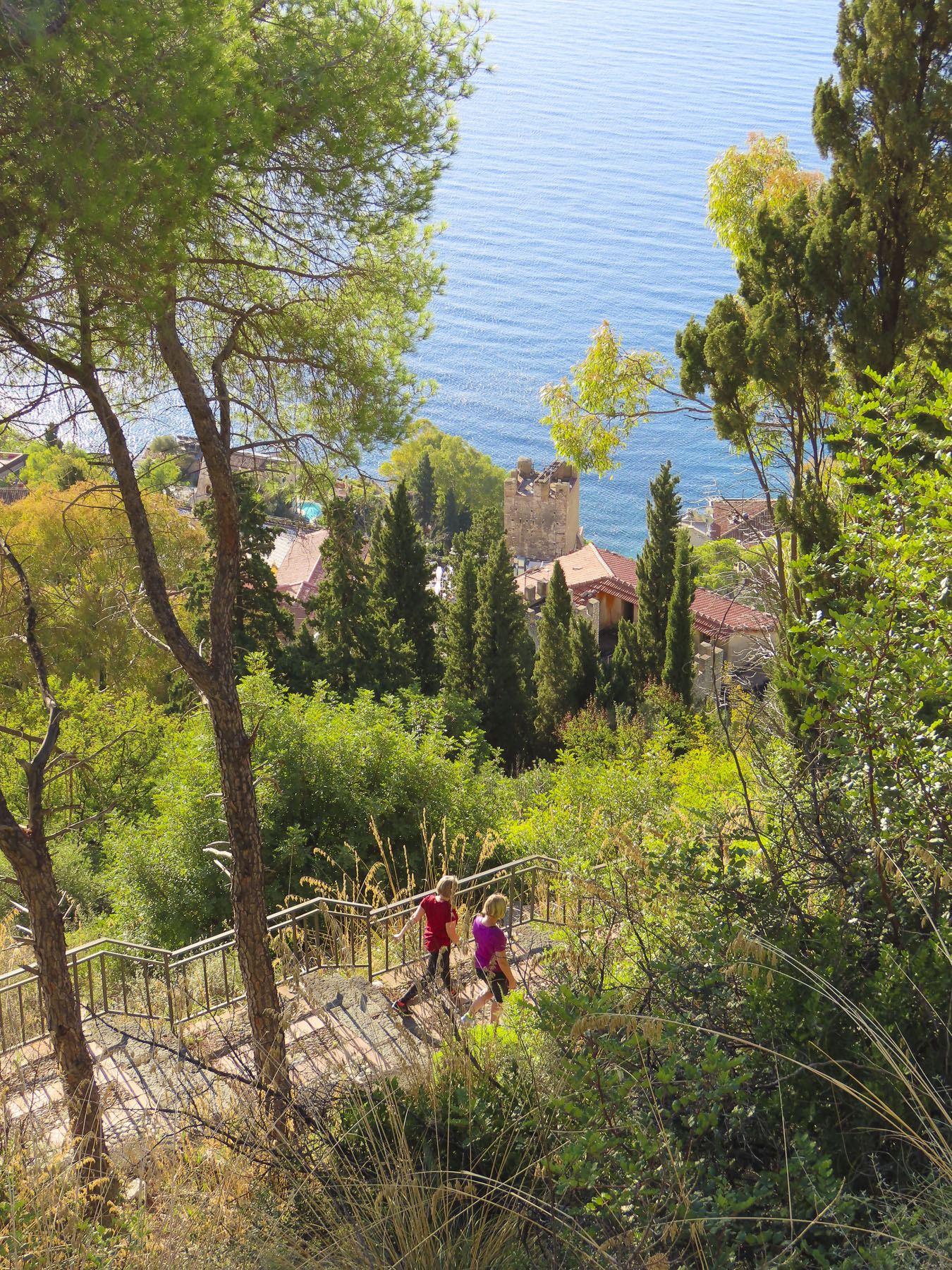
The next morning, before the day became too hot, we followed a steep switch-backed trail up the side of Mount Tauro to the Chiesa Madonna della Rocca and the Saracen Castle.  The Arab fortress is believed to be built over an ancient Greek acropolis. Unfortunately, it was closed due to disrepair, but the panoramic view of Naxos on the coast with Mt Etna in the background was phenomenal.

Sicily’s history follows Mount Etna’s turbulent eruptions – quiet for long periods then thrown into turmoil by foreign invasions.  Hanging off the toe of Italy, its large land mass pinches the Mediterranean Sea to the point that the island is only 372 miles from North Africa’s Tunisian coast. For ancient mariners sailing East to West or South to North it was unavoidable, and they collided with it.  Its easy location at the crossroads of the Mediterranean brought Phoenicians, Greeks, Romans, Vandals, Ostrogoths, Byzantines, Arabs, Normans, French, Germans, British, and Spanish for varying lengths of conquest and cultural influence. It’s an interesting gene pool for sure. 

Appreciating a good beach when they found one, the Greeks rowed ashore and established their first colony, Naxos, on the island in 734 BC.  Later siding with the city state Athens in a war against Syracuse, upon defeat the city was completely destroyed in retaliation. The survivors fled to the high ground and founded Taormina.  Visitors continue to be dazzled by their vision to dramatically construct an amphitheater on the edge of a cliff towering over the sea with Mt. Etna, an active volcano, in the background.  

Finally, Piedmontese volunteers, the red shirts of Northern Italy, invaded to unite Italy. Commanded by Giuseppe Garibaldi, the army defeated the Kingdom of Sicily whose territory extended across the boot of Italy and North to Naples.

But before that Taormina with its multiculturalism was a required stop on the “Grand Tours” of the 18th and early 19th centuries once it was mentioned by Johann Wolfgang von Goethe in his Journey to Italy. Paris, Venice, Florence, Rome, Naples and Pompeii, Athens, Istanbul, Cairo and Seville were also treasured destinations.  Remember, this was the time when all land travel was by horse-drawn carriage and water crossings by sailing ships. Think of it as an extended gap year, when young aristocrats were sent abroad for two to four years to sharpen their sensibilities and further their knowledge of the arts, antiquities and the classics.  Taormina’s big draw though, over those other sophisticated cities, was its clifftop location high above the Mediterranean that caught the cool breezes blowing in from the sea during the summer.

The Nordic invasion continued with landscape painter Otto Geleng. Exhibitions of his paintings in Paris and Berlin left critics saying such landscapes couldn’t exist and that he had an “over-active imagination.” He encouraged all his doubters to see Sicily for themselves, then returned to Taormina and opened the town’s first hotel, Timeo, in a renovated palace. His vision inspired a wave of artists, writers, and actors to visit.  In the 1920s D.H. Lawrence lived there. The books In Cold Blood and Breakfast at Tiffany’s were written by Truman Capote during his stay on the island.

The town can really name drop some famous visitors: Salvador Dali, Orson Welles, Cecil Beaton, Jean Cocteau, Rita Hayworth, Greta Garbo, Elizabeth Taylor, John Steinbeck, Cary Grant and Tennessee Williams have all worked on their tans in the golden rays of the Mediterranean sun here. 

The Taormina Film Festival, now in its 67th year, still premieres movies every June on a large outdoor screen set up in the 2300-year-old Greek amphitheater.  It attracts a new generation of sunscreen-wearing A listers: George Clooney, Catherine Zeta-Jones, Nicole Kidman, Russell Crow, Leonardo DiCaprio and Salma Hayek. Imagine watching Spiderman: Far from Home there, as Mt. Etna sputters trails of lava into the night sky in the background. Aside from the film festival, the amphitheater hosts a vast number of concerts and stage productions throughout the year.

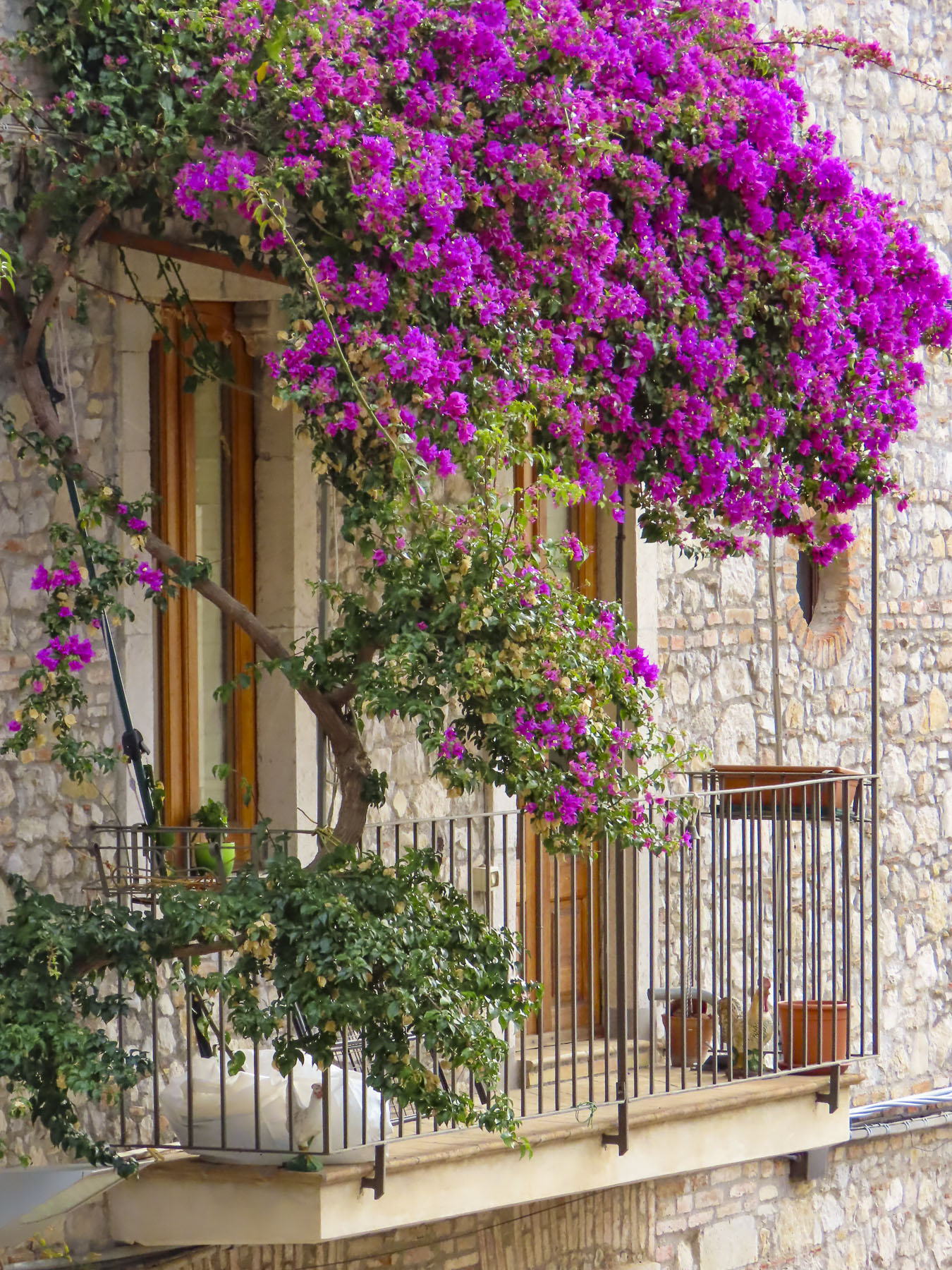
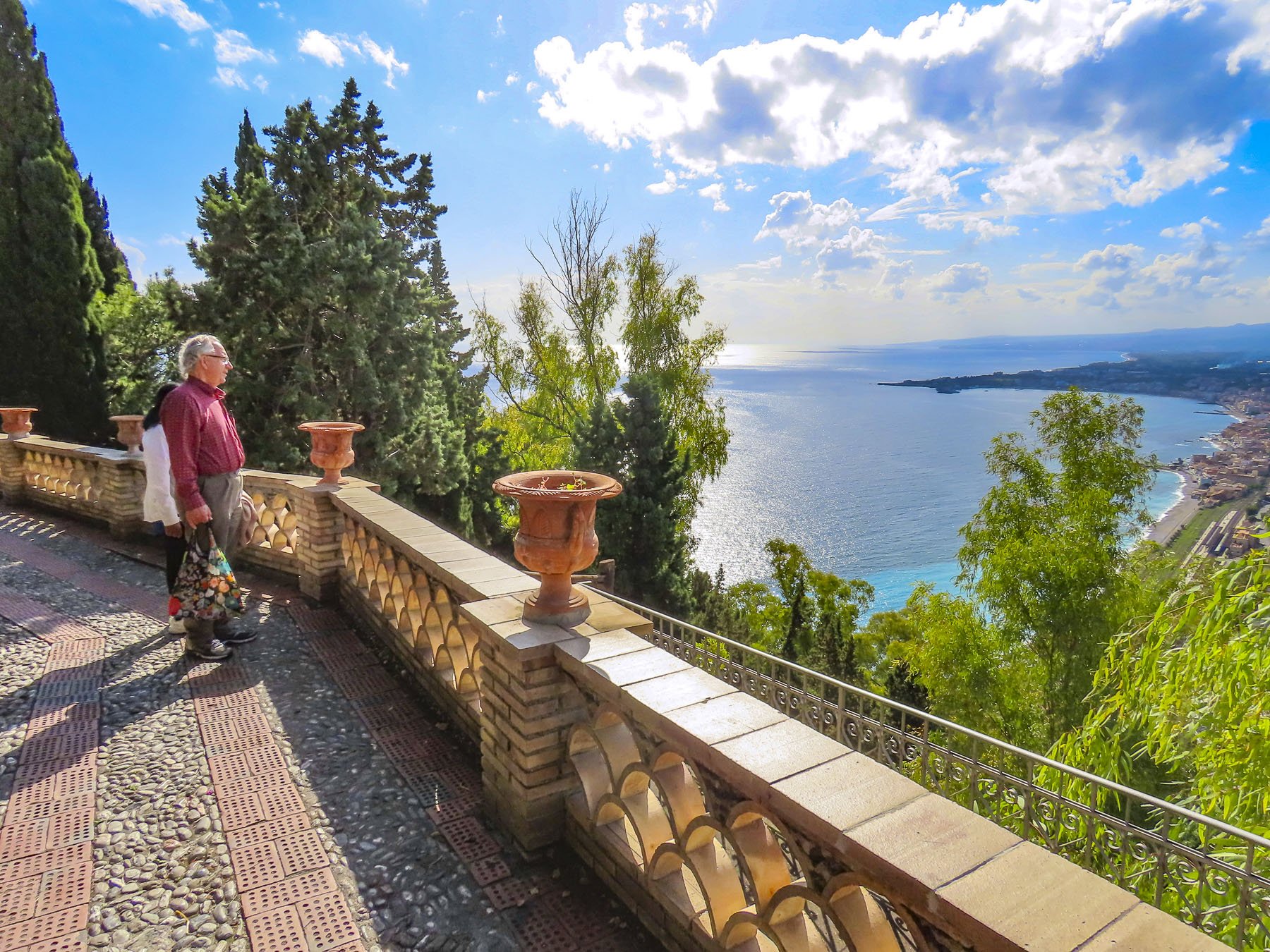
Not being on any lists, including Interpol’s or the FBI’s most wanted, we enjoyed a still warm early November day as we wandered through the Giardino Storico Ex Villa Trevelyan, now the town’s public formal garden, but once the grounds of a villa owned by a Scottish noblewoman. Lady Florence Trevelyan fled rumors of an affair with King Edward VIII, settled in Taormina and eventually married the mayor.  During our visit, intricately stoned paths along the cliff edge, with views of the sea, were still lush with blooming bougainvillea and hibiscus. Eventually they led to fanciful, ornamental architectural constructions called Victorian follies.

Rambling on, we passed an antique Rolls Royce being readied at the Grand Hotel Timeo to whisk the bride and groom away after their destination wedding. 

From the top row of seats at Teatro Antico di Taormina, the views continued to be enthralling; Mt. Etna was perfectly framed by the ancient columns of the stage. 

In the other direction, the coast toward Spisone dazzled in the afternoon sun.  Inland, the homes of Castelmola were precariously balanced to avoid sliding off their treacherous slope. 

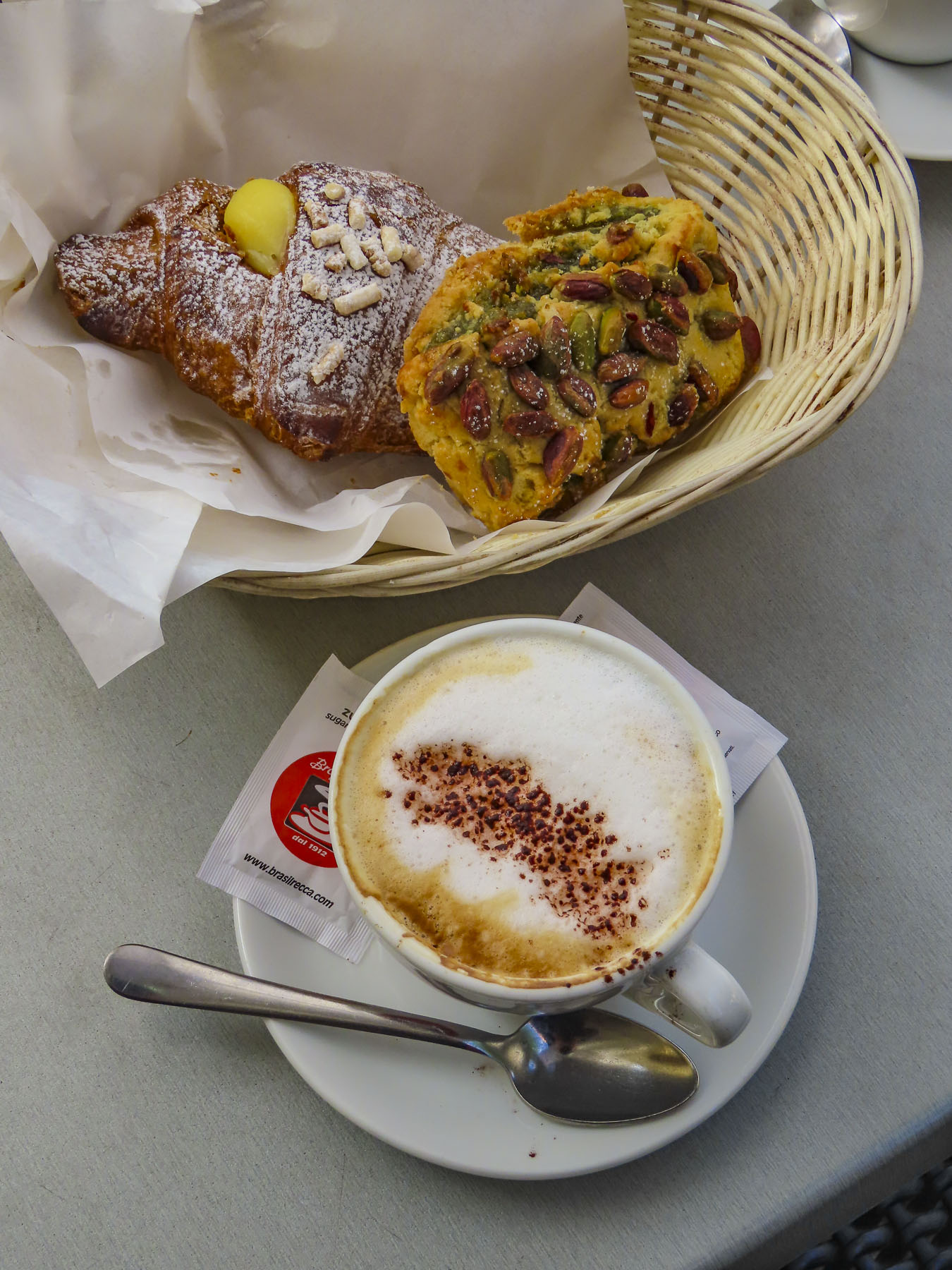
A stay isn’t complete in Taormina without multiple strolls along Corso Umberto in the mornings for café and pistachio pastries, and later in the day for pistachio Aranchino or gelato.

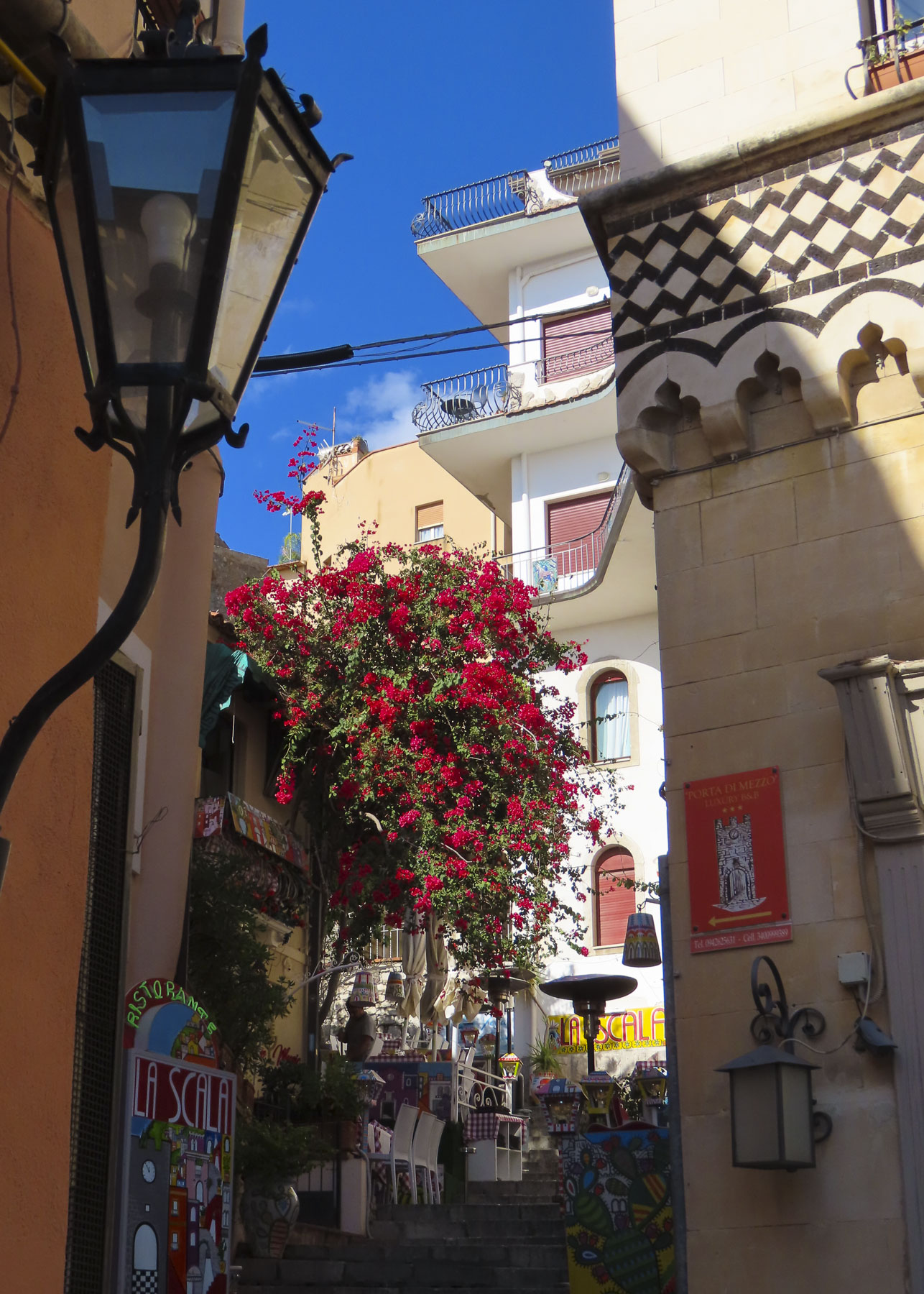
The broad expanse of Piazza IX Aprile, adjacent to the Porta di Mezzo clock tower and the elegant Baroque Church of San Giuseppe draws a large crowd at sunset to admire the view, and is the perfect spot to enjoy a classic Aperol spritz. 

Located in the foothills surrounding Mt. Etna, Castiglione di Sicilia is on the list of most beautiful villages in Sicily. Less than an hour from Taormina, it beckoned us to visit. The scenic drive along SS185 through the Alcantara Valley was uneventful.  The fields were dormant now and farm tractors were parked to await the spring planting season. The multiple arches of Ponte San Cataldo, a historical railway bridge, graced one curve of the road.  It was now a bridge to nowhere, the train tracks at both ends long ago removed for scrap. Villages we passed showed barely any signs of life beyond a barking dog or two. 

Numerous signs for campgrounds and agrotourism farms along the route promised outdoor enthusiasts escape from city life.  Turning onto SP7i we eventually passed the rustic 12th century Norman Chiesa Di San Nicola, then crossed a small bridge over the Alcantara River, within sight of Castiglione di Sicilia.  Fed by snow melt from Mt. Etna and Nebrodi Mountains, the Alcantara River is one of the few rivers in Sicily that flows all year-round.  Over the millennia the cool waters of the river have carved a dramatic gorge through lava fields left from Mt. Etna’s volcanic eruptions.  Hiking trails above the gorge and swimming in its cool natural pools are popular summer activities in the region.

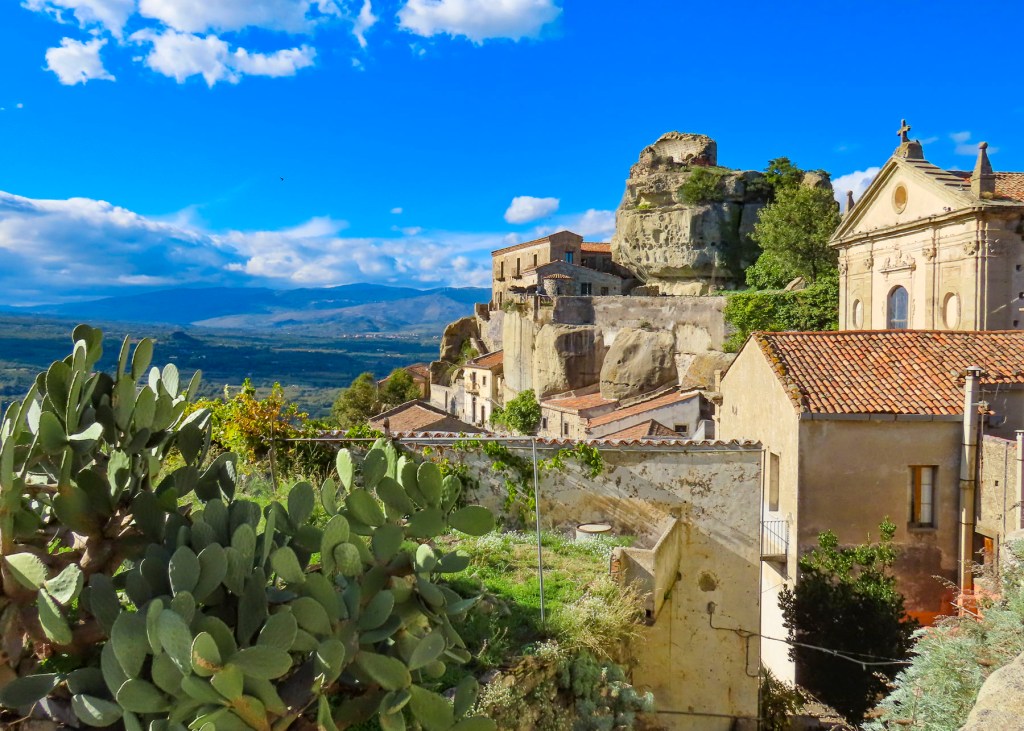
Commanding the high ground helped increase your chance of survival in the days when pillaging and plunder ruled the land.  Defenders hoped that attackers would tire and move on to an easier target. From the road in the valley, Castiglione di Sicilia looked formidable, with Castello di Lauria commanding the promontory like the rock of Gibraltar. 

Driving into the center of the village, mid-week in the off-season, we nearly had the whole village to ourselves. It felt deserted, almost as if the village had been sacked and the residents had been taken captive. We followed a warren of narrow alleys and stairways around the upper village until we reached Castelluccio, the ruins a of Byzantine tower, in a small park with an overview of the village. 

From here we spotted the belltowers of six ancient churches and monasteries that dot the hilltop. The oldest, Chiesa San Pietro, dates to 1105. Castelluccio, slightly lower than Castello di Lauria, would be our highest point in the village, since the castle was closed in the off-season. That’s the one disappointment we experience when traveling in the off-season – many points of interest are closed due to a lack of tourists.  It’s the old double-edged sword, less crowding versus less accessibility.  For the most part we are okay with this and enjoy wandering to soak up the ambiance of a locale.

A looping around the huge monolithic rock, Via Edoardo Pantano brought us to the foot of Castello di Lauria, the 12th century Norman fortress built upon earlier Greek and Roman battlements. The views of the Alcantara Valley were beautiful from this vantage point. Farther on the Basilica of Maria Santissima della Catena stood atop a wide staircase at the end of a quiet plaza. The patron saint of the town, she is believed to have saved Castiglione di Sicilia from the wrath of Mount Etna on many occasions.  Her feast day is celebrated every May with a procession through the village. 

It was mid-afternoon by the time we were ready for lunch, and our options had dwindled dramatically since arriving.  Only La Dispensa dell’Etna was still open with all the inside tables taken by a large party.  Interestingly, part of the floor of the restaurant has glass tiles that allow you to look down onto artifacts discovered during a renovation. It was a little chilly for outside dining, but we enjoyed, with the guidance of our waiter, several specialties of the Alcantara Valley. The addition of wonderful home-made house wines from the regional grapes, Nerello Mascalese and Carricante, native to the slopes of Mt. Etna, combined with the delicious food made this one of our most pleasurable meals in Sicily.  Following the Etna Wine Path might be the catalyst for future visits to Sicily. 

Till next time, Craig & Donna

Puglia – Alberobello Part 2: Lecce and Nardo – The Florence of the South

“Signor, mio gattino si è nascosto sotto la yuan automobile ed è salito nel motore.” Roughly translated it means – Sir, my kitten ran under your car and is hiding in the engine! My racing imagination added, I will paint a pagan symbol on your car and you will be cursed for the rest of your life if she is hurt.  I exaggerate a little in jest just so you understand this was a crisis!

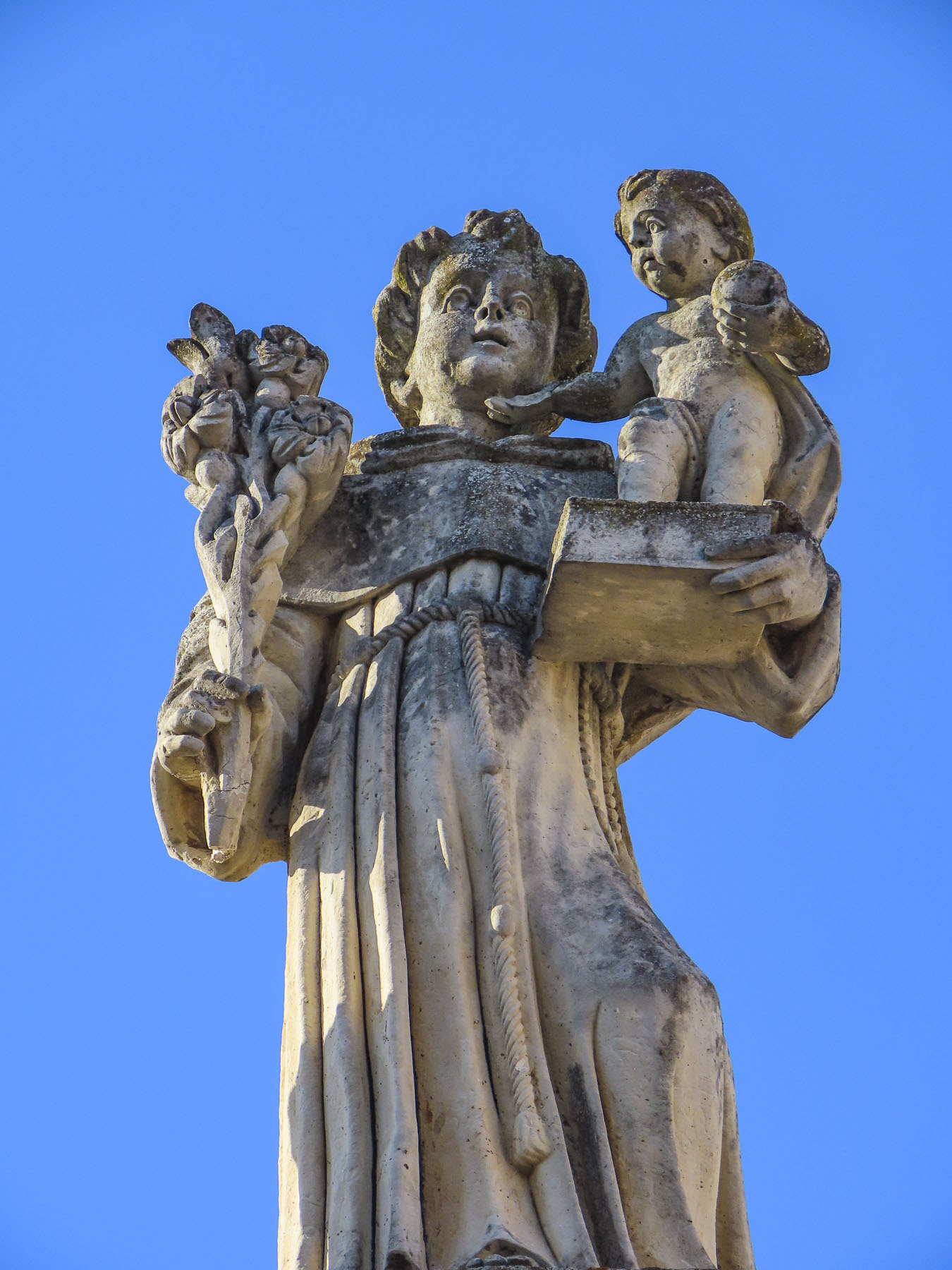
The night before we had agreed on an early start to Lecce to rendezvous with our friend Giulia for a day exploring her adopted city.  To help move the day along I offered to retrieve our rental car, which was parked a good distance away, uphill, across from the trullo-shaped Church of Saint Anthony of Padua which crowned the hill.

Donna is the designated linguist of the family. I on the other hand have been lovingly accused of slaughtering a fine romance language with just the utterance of a single word, on more than one occasion.
So, when I heard, “Signor, mio gattino si è nascosto sotto la yuan automobile ed è salito nel motore,” I smiled, as I really didn’t understand a word.  But two very worried young girls and their grandfather were standing next to the car and pointing at the engine.  They had placed a saucer of milk and some cat food near the front tire. I understood and joined the older girl who was on ground, looking under the car and meowing for her kitten, quite convincingly I might add. With no sign of a tail dangling from the undercarriage, I popped the engine hood expecting to find the kitten. Nothing.  I slammed the engine hood hoping the loud sound would jolt her from her hidden perch. Still nothing!  The way the car was parked close to an ivy-covered wall I wasn’t convinced that the kitten hadn’t scampered away unseen earlier.  They were signs of growing concern written on the girls’ faces and a growing crowd of onlookers.  Miming turning the ignition key, I conveyed that I needed to start the car and move it around the corner to jump the curb in order to get better access to the engine from below.  Hesitantly, I turned the starter and was deeply relieved when there weren’t any shrieks of horror from the girls or any fur flying. 

With my entourage trailing along, I drove the car around the corner and put two wheels up over the curb to give me just enough room to shimmy underneath for a closer look.  Fortunately, by this time Donna and Gary were rounding the corner in search of me. Much skinnier and a cat lover, Gary was enlisted to wiggle on his back underneath the car. “I don’t see anything. She’s not here.” I frowned, the girls frowned. “Keep looking.” Time passed. “I see her! she’s tucked up very high – let me have some food.” A few moments later, “I have her!” Beaming with joy, the girls and grandad took the kitten to the quiet sidewalk across the street and set her down on the ground.  Almost immediately, to everyone’s horror, the kitten dashed back across the road. The girls screamed and, oblivious to the traffic, dashed into the street in hot pursuit. The terrified kitten once again raced into her hiding place in the engine!  Mercifully, the second rescue was much faster, and with the kitten firmly in the hands of a local woman who assisted, we jumped into the car and sped away to Lecce.

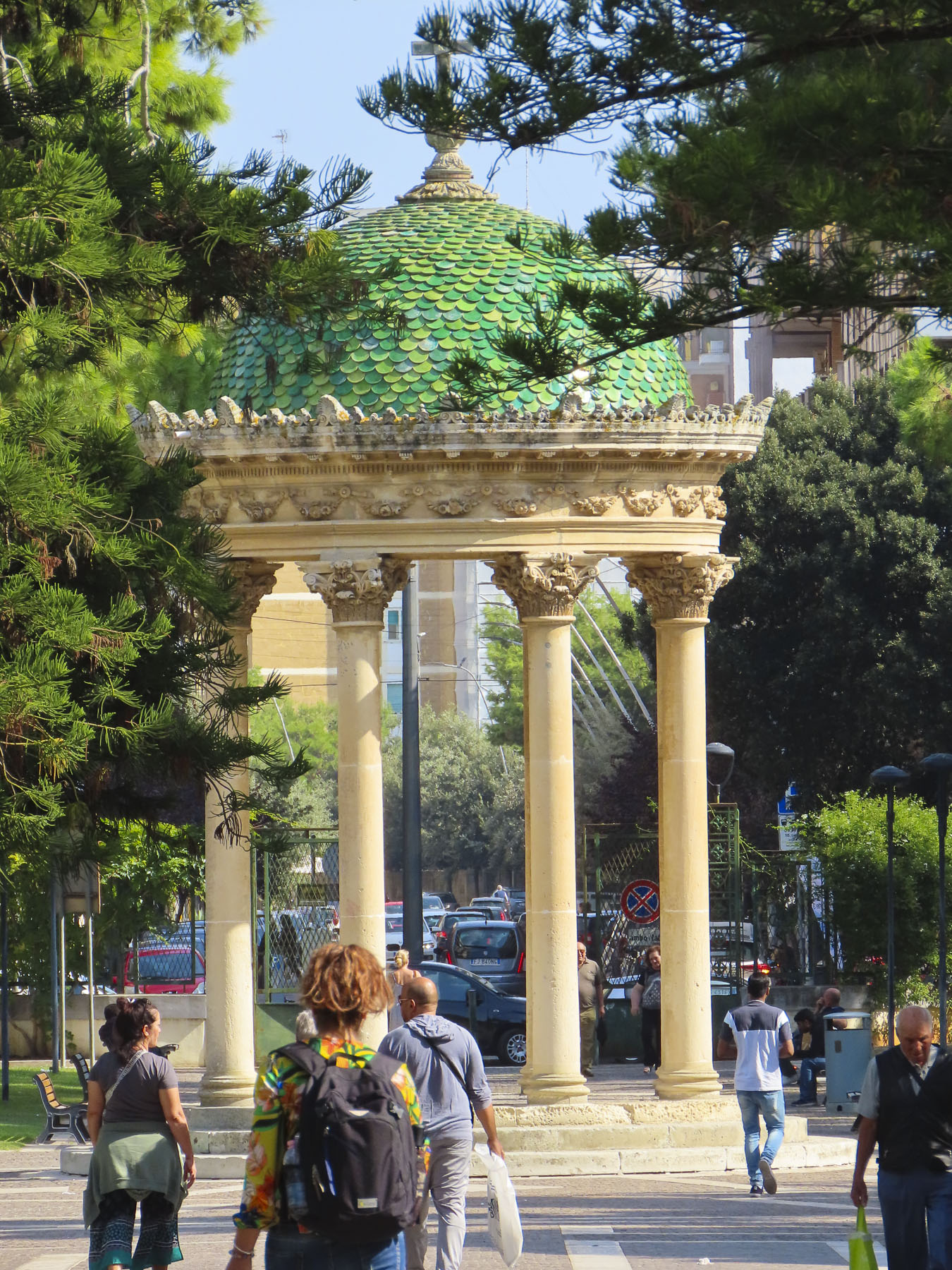
After circling the port city of Brindisi, the highway (SS613) was a straight shot, past the Mura Urbiche architectural complex that highlights remnants of a once formidable city wall that encircled Lecce, to Giardini Pubblici Giuseppe Garibaldi pretty much in the center of the city.

Even though Lecce is located in the middle of the Salento Peninsular, that is often called the “heel of Italy,” the city has had a long bond with the sea.  Legend has it that the King of Crete, Idomene, was blown off course and shipwrecked here while returning home from the Trojan War.  He married the local Salento King’s daughter, Euippa, and named their newborn girl Lecce, after his Lycia homeland in the eight century BC.

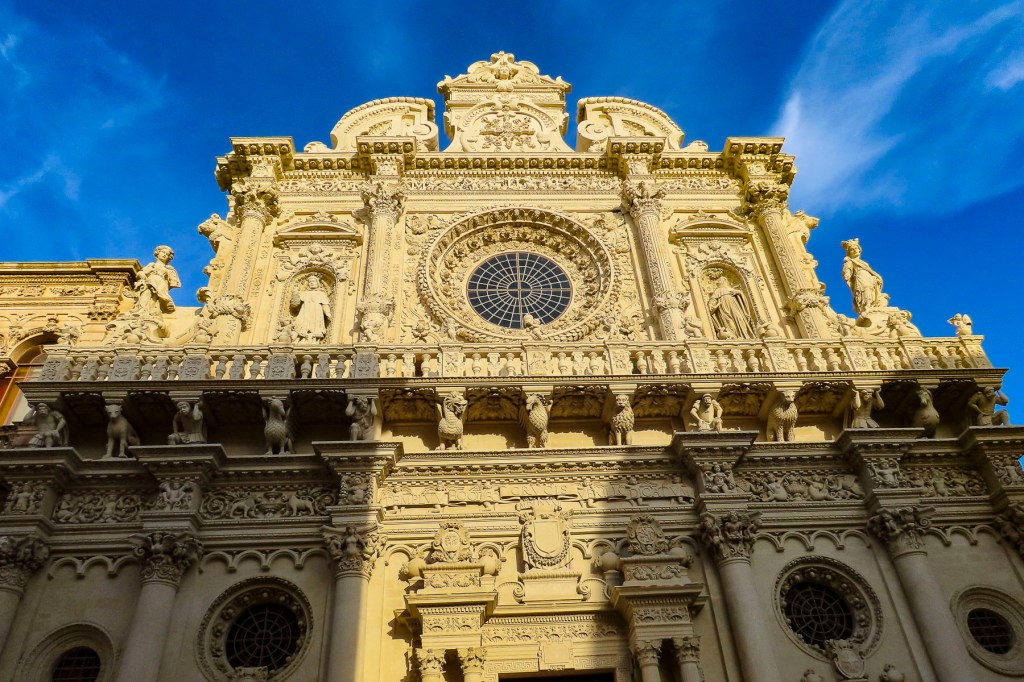
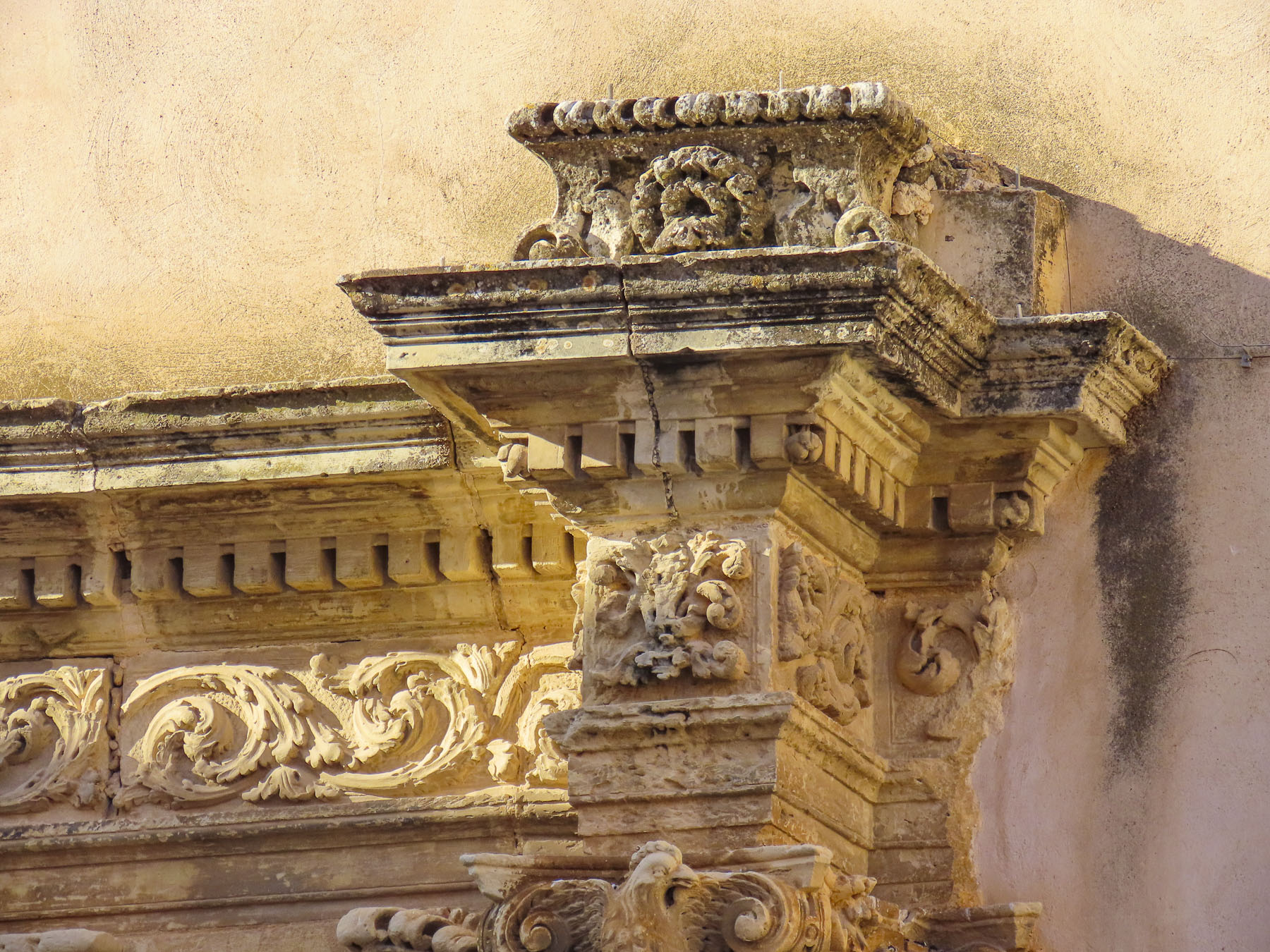
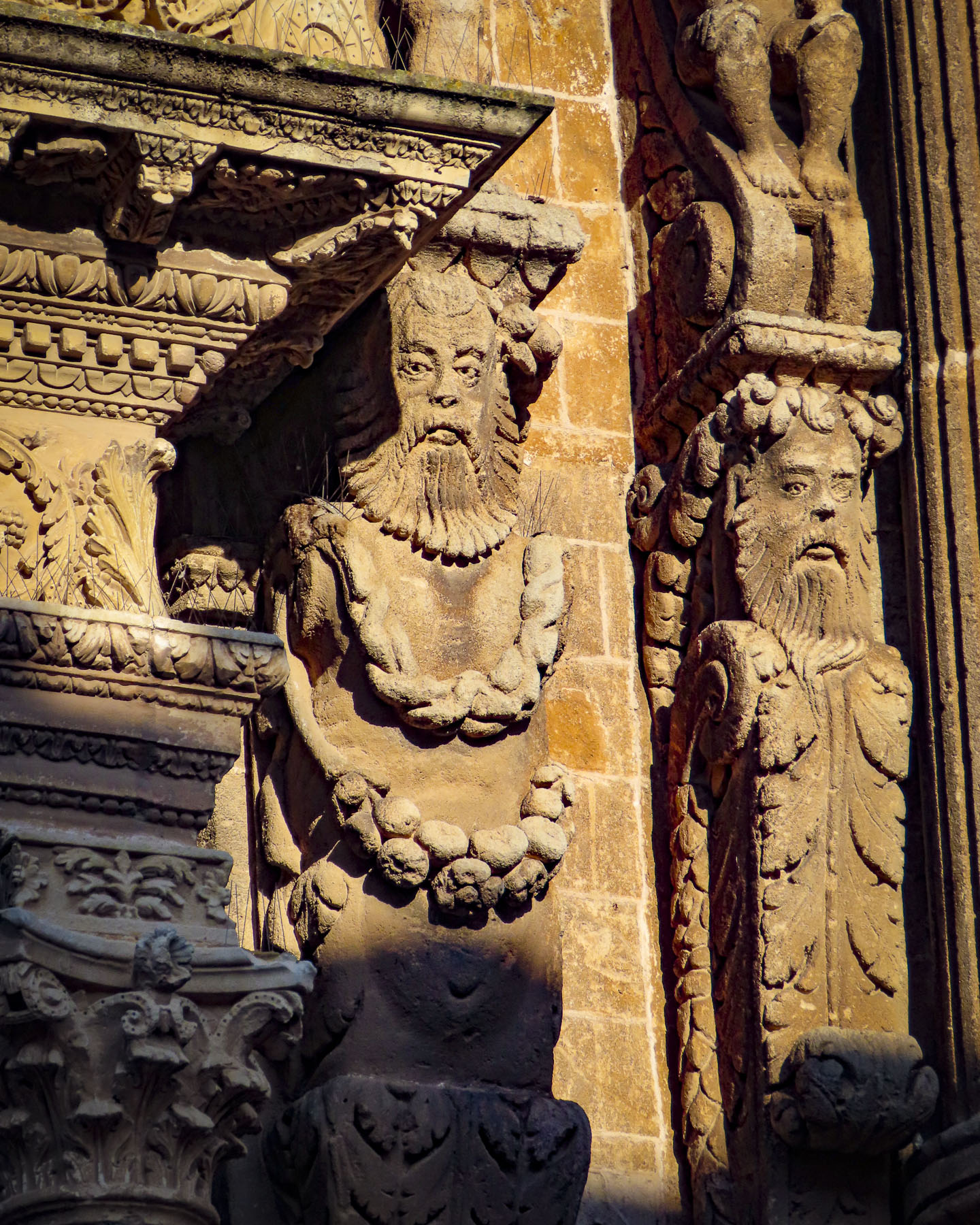
Meter parking was available near the Garibaldi Garden, but we opted to find a 24-hour garage so that we wouldn’t have to worry about time.  Lecce has a population of approximately 96,000 folks, 16,000 of which are students. Their presence was evident with in the jovial sidewalk café life we passed as we headed to meet Giula at the tourist information office on Piazza Sant’Oronzo.  We entered the pedestrian-only historic center through an arched gate that led through the 17th century Palazzo dei Celestini’s impressive, cloistered courtyard. Once the private retreat of nuns, it now seats the regional government. Next door stands the Basilica di Santa Croce with its elaborate façade of carved demons, ogres, gargoyles, and beasts.  It’s enough to send any parishioner questioning his faith inside to seek sanctuary.  Fortunately, our timing to visit Lecce was perfect, as just the month before the façade of the basilica was still under wrap from a multi-year renovation project to freshen the sculptures after centuries of erosion.  Its architect Giuseppe Zimbalo took full advantage of the abundant local rock, called Lecce Stone, with its warm color and malleable characteristics.  His opulent Baroque style along with the lavish designs of his contemporaries is credited with earning Lecce the distinction of being “The Florence of the South” during the 17th century.  The talents of the city’s stone carvers rivaled those in Firenze. 

We had a few minutes to view ruins of the 2nd century Roman Amphitheatre that was undiscovered until construction in 1900 unearthed it. Its full size wasn’t realized until further excavation in 1938 determined it could seat 24,000 spectators.  We think it’s wonderful that ancient archeological discoveries are still happening in cities that have been continuously lived in for over two thousand years.

After joyfully greeting Giulia and making introductions all around, we sat at an outdoor café on the edge of the piazza and relished hearing each other’s adventures over the past year.  “The best way to experience the ambience of historic Lecce is to just wander slowly, discover the small details, touch the walls, enjoy the brilliant light and the warmth of the buildings,” Giulia offered as she stood to lead us through the past glory of Lecce. We followed her along shaded lanes, nearly empty of tourists in late October, past Baroque churches and shops shuttered for the afternoon siesta, still a time-honored tradition in southern Italy. “It’s quiet now, but in the evenings the historic district is transformed into a spirited hot spot. The passegiata brings families into the streets, and later the university students keep it lively with their barhopping.”

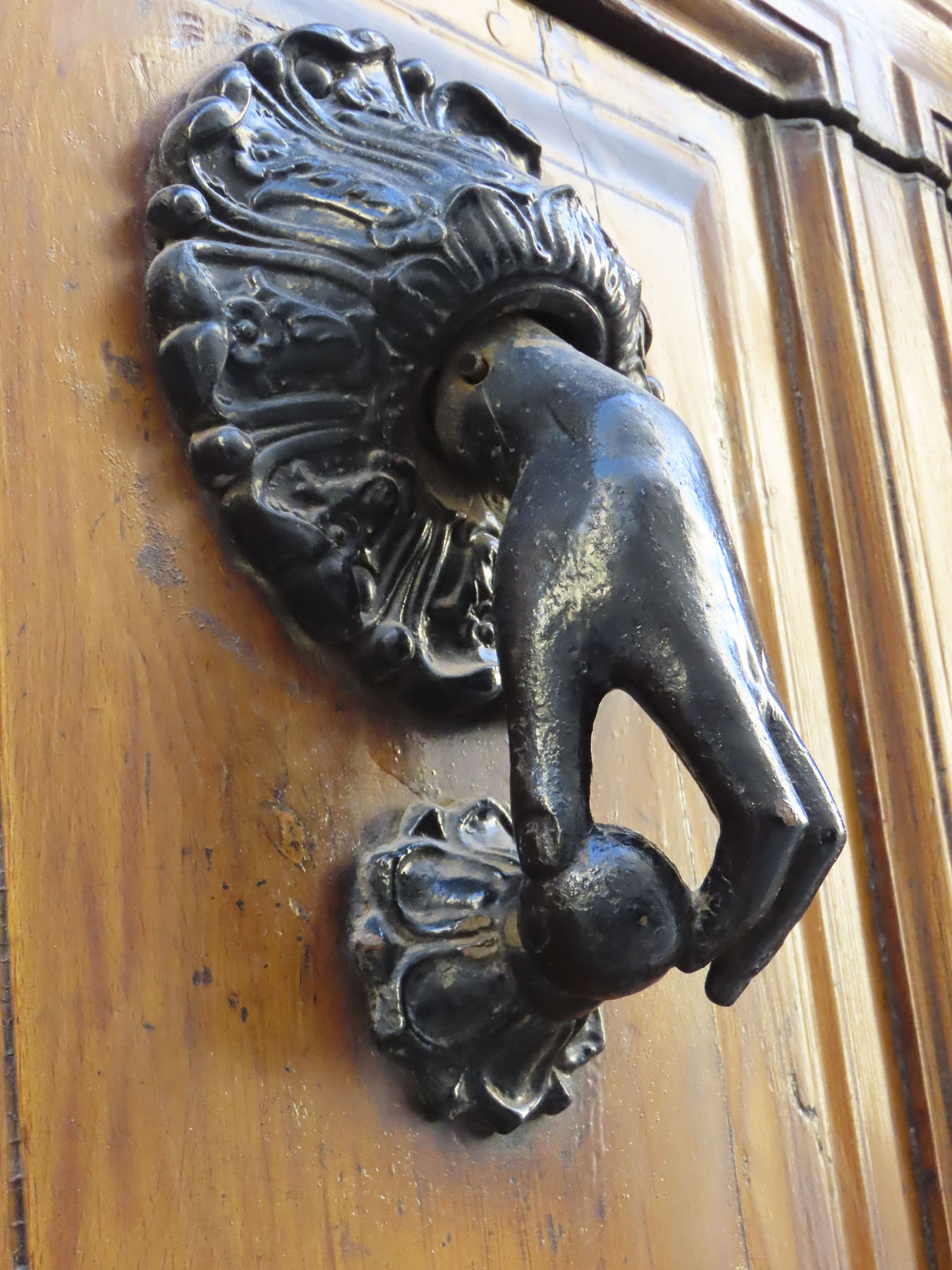
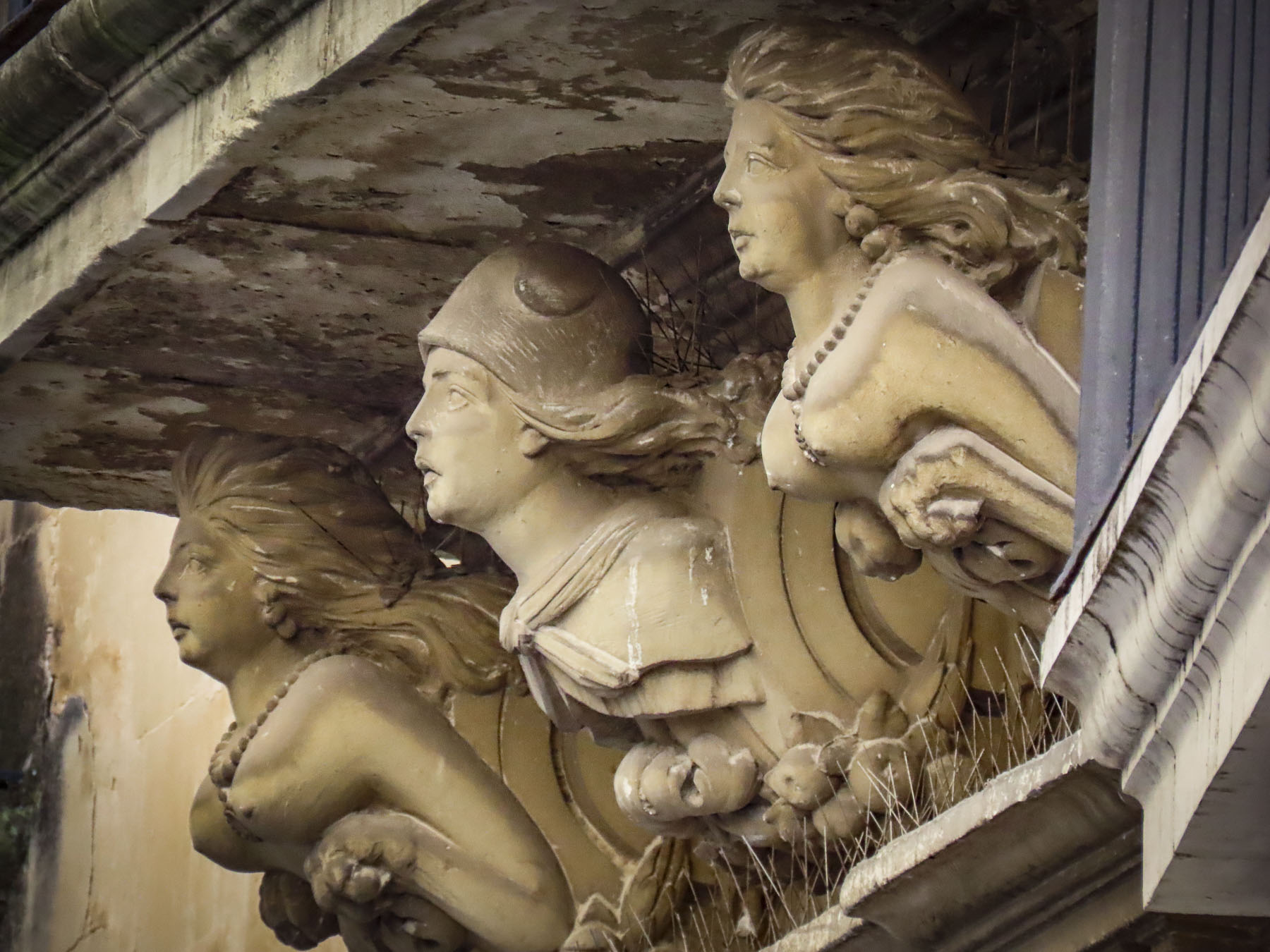
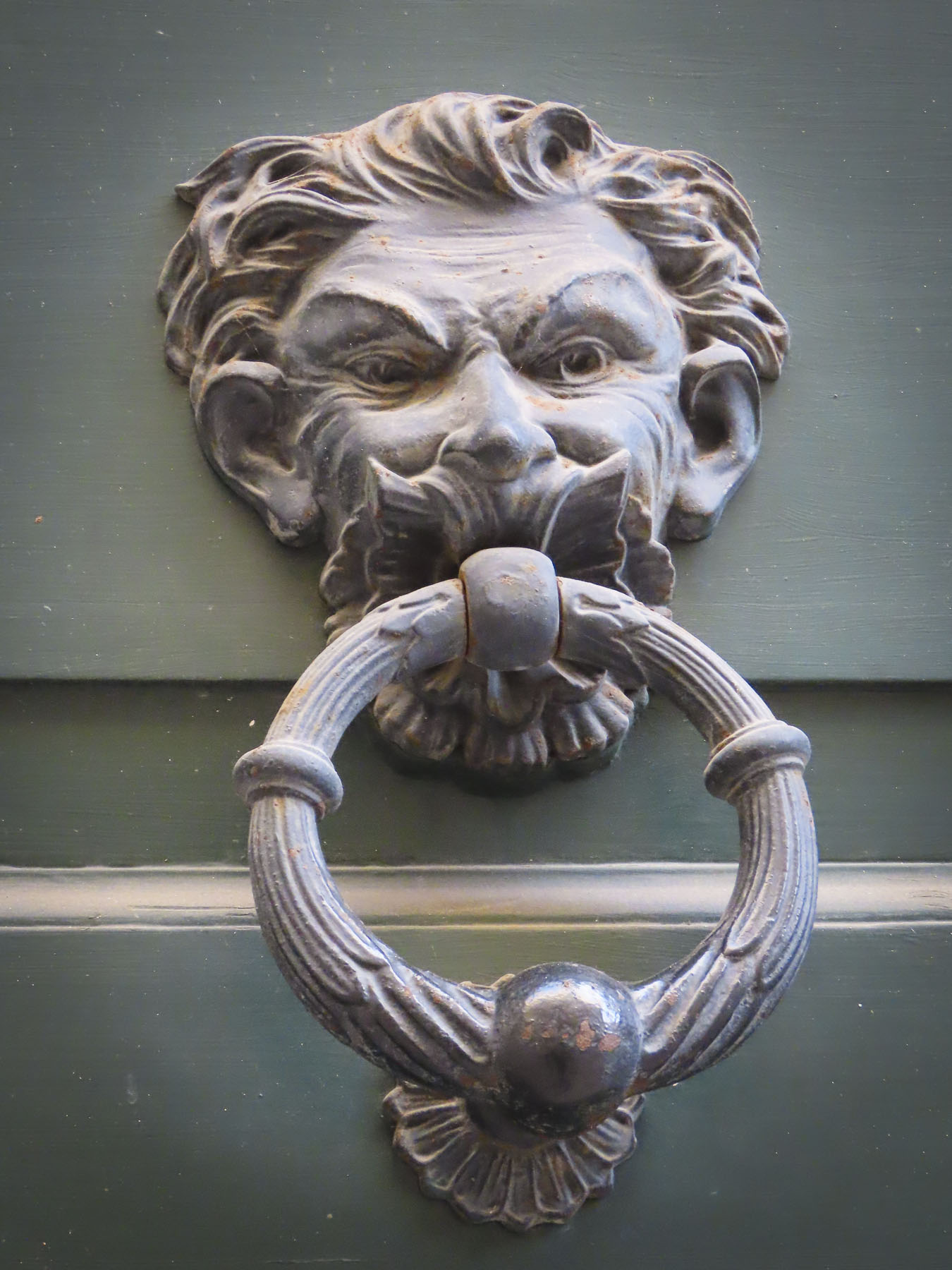
Large palazzo, with their arched entrances wide enough for a horse drawn carriage, lined the larger streets. Above, stone buttresses carved with gargoyles and animals supported balconies over the street. Interesting antique door knockers beckoned passers-by to rap on ancient doors, some so covered with cobwebs we wondered how many decades ago they we last used. We resisted the temptation.

As we turned a corner, the large Piazza del Duomo spread out before us.  Unlike other piazza in Italy where there are multiple entrances and shops, this piazza only has one way in and out.  The Lecce stone facades of the Museo di Arte Sacra (once a seminary,) Palazzo Arcivescovile (formerly the Bishops’s residence,) and Cathedral of Maria Santissima Assunta with its belltower enclose the plaza on three sides, giving it the ambience of a tranquil cloister.  The first church on this site was built in 1144 and repaired several times over the next 500 years until 1659 when hometown master architect Giuseppe Zimbalo was commissioned to rebuild the cathedral and design the freestanding 230ft tall belltower in the “Baroque of Lecce” style he helped popularize.  His burial under the altar of the cathedral reflected the honor accorded him.

Sitting on the steps of the museum, we admired the warm glow of the late afternoon light as it lit the walls across the piazza. “I would love to live there,” Giulia said, as she pointed to a small, corner terrace brilliant in the sun on an old building at the entrance to the piazza. I think there was a collective “ah, yes;” we understood.

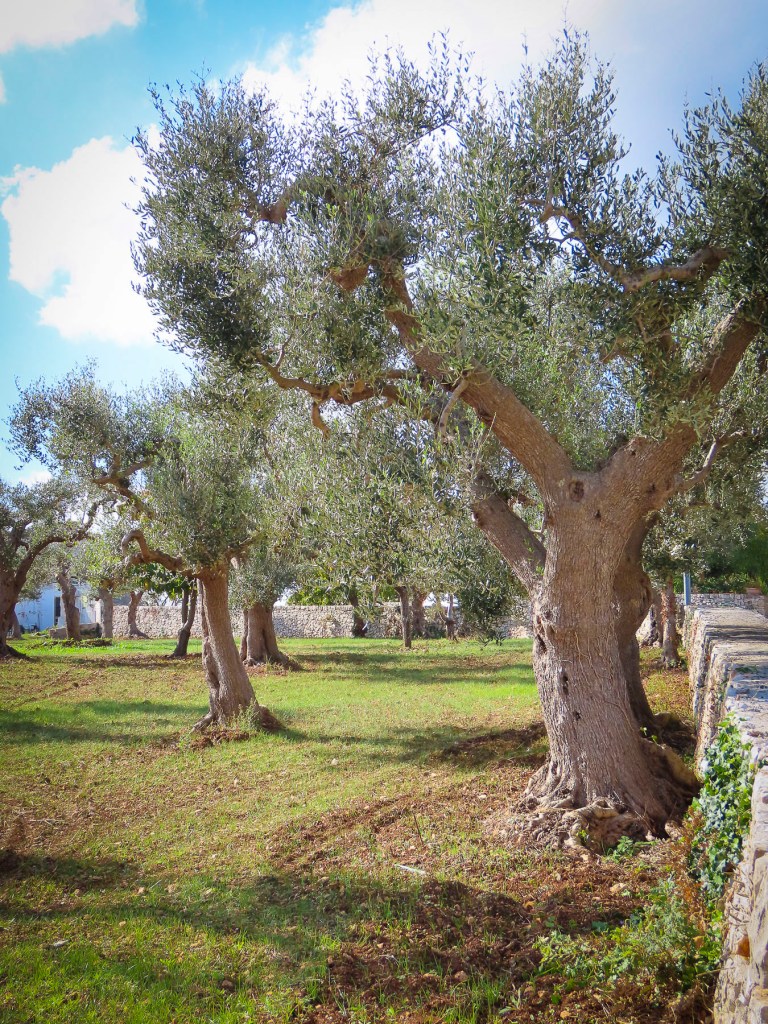
Later in the week Giulia invited us all to visit her in Nardo, her family’s hometown.  It would be our farthest point south on the “heel of Italy.” The GPS directions from Alberobello suggested the fastest route to Nardo through Lecce, but we chose an alternative route that gave us our first glimpse of the Ionian Sea. Following backroads, we drove through vineyards and olive orchards.  Many of the orchards, though, were suffering from a deadly olive tree disease caused by a bacteria, xylella fastidiosa, that is ravishing southern Puglia and its important olive oil industry.  To curb the bacterium’s further spread drastic measures have been implemented. Infected trees and those within 150ft of it are culled from the orchard. Unfortunately, it has radically changing the landscape and farmers’ lives.

We met Giulia and her family at their winery on Via A. Volta, located just outside the historic district. Giulia’s grandfather started Cantine Bonsegna in 1964. Today her father and uncle continue vinting wines in a 1930’s era industrial building on one of the main thoroughfares of Nardo.  Wines from their vineyards in the countryside are brought into town, then pressed and fermented at the rear of the building, where they cork about 150,000 bottles of wine a year, while the front serves as a retail store.  On the second floor a wine bar is open in the evenings and specializes in small plate fare.  Their Danze della Contessa, Dances of the Countess, label was inspired by Giulia’s love of ballet. We might be slightly prejudiced, but we thought their wines were very enjoyable and definitely worth a visit to taste some fine regional wines and buy a case or two, maybe three. We purchased several bottles to enjoy during our trip, and were disappointed to learn that the Bonsegna label was unavailable in the US.

Heading into the historic district we were treated to a festive lunch at the Hostaria Corte Santa Lucia, a local favorite that specializes in “the forgotten recipes of the Salento region.” Plate after plate of mouthwatering local specialties were placed before us; our young men did justice to the platters, but were soon groaning for mercy as more and more food appeared. Mr. Bonsegna wouldn’t hear of us paying the bill, and afterward our boys marveled at the warmth and hospitality our host showed to us. “It is the Italian way,” Donna explained. “This is how I grew up – family and friends are lovingly embraced, and everyone is fed!”

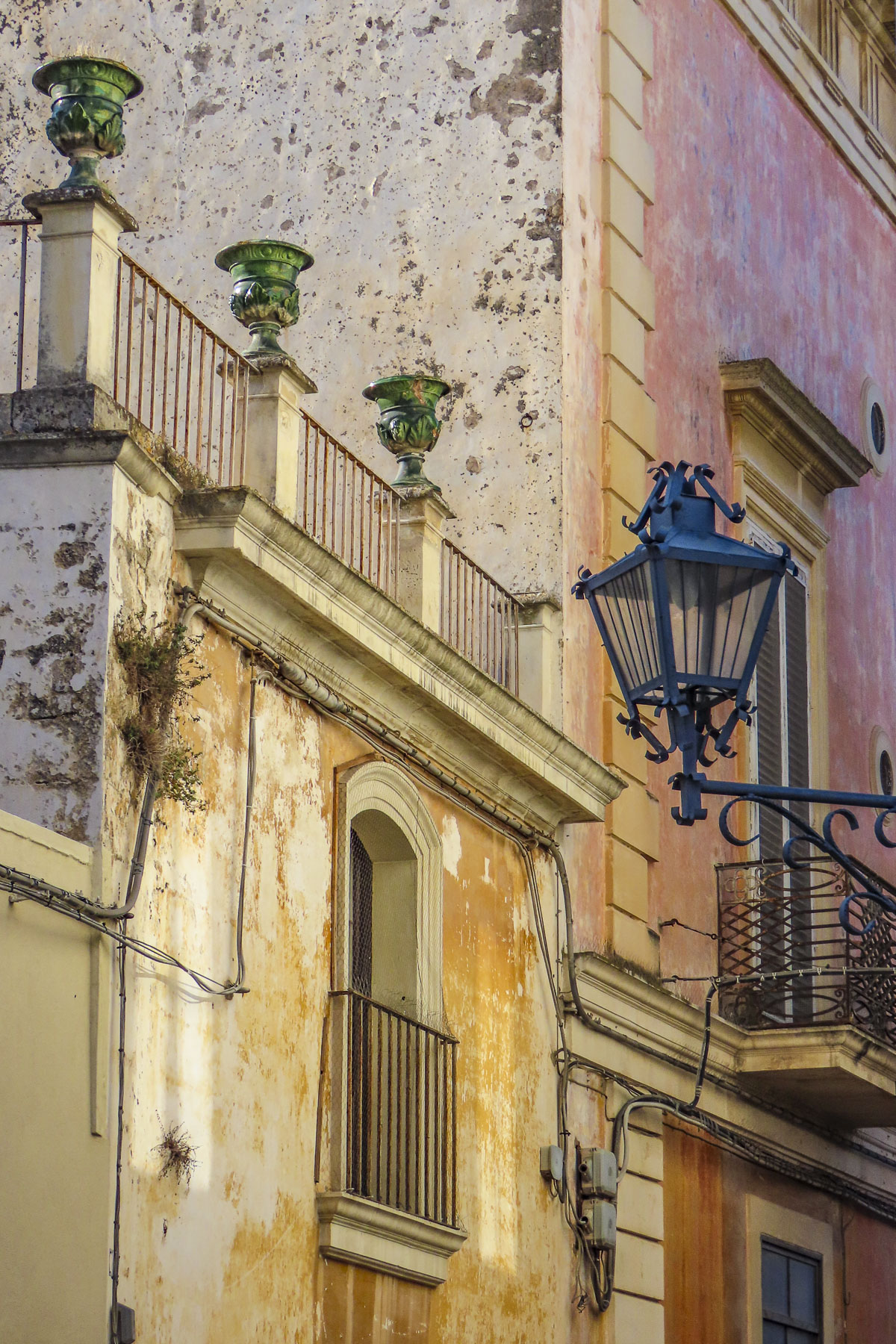
We followed Giulia’s father into the old town, hugging the shade to avoid the intense sun still strong in late October.  The colors of the buildings were softer here, pastel colors chosen to reflect the nearby sea and surrounding farmlands.  Being close to Lecce, Nardo shared a similar history and the Baroque style adorns many of the town’s ancient churches.  The façade of the Church of Saint Dominic is the best example of that opulent exterior decoration, and was the only wall to remain standing after a 1746 earthquake.  

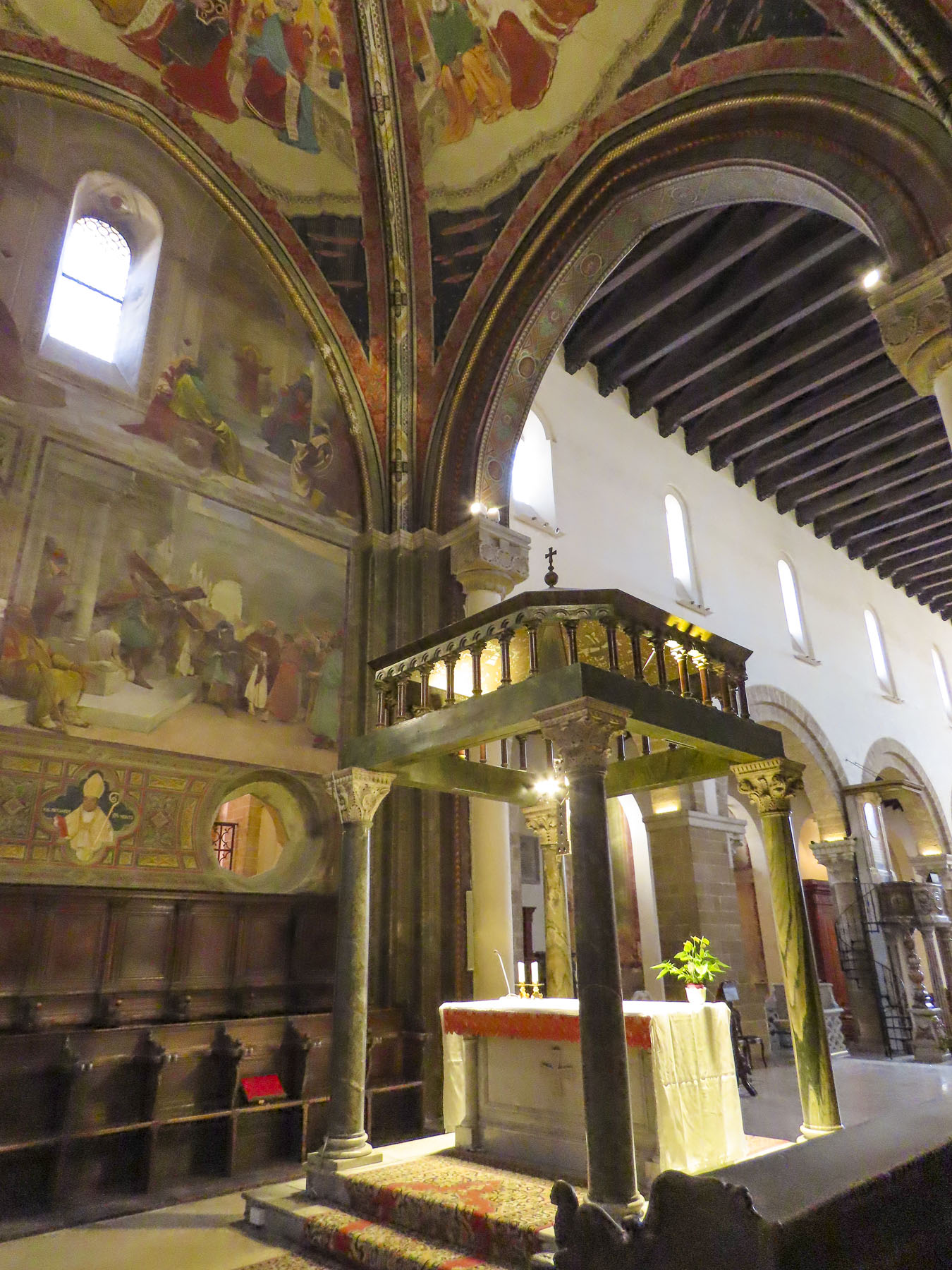
The Cattedrale di Nardo was our destination.  Partially damaged in the upheaval that shook the region, half of the 11th century church needed to be rebuilt.  Interestingly the effects of this could be seen as we looked down the center nave of the church.  The arches on either side reflected different styles.  The surviving arches were slightly pointed at their apex, while the newer ones are completely curved, a fine detail that Mr. Bonsegna enthusiastically revealed.  Farther inside, original medieval frescoes survived, untouched from the catastrophe, while along the outer wall 19th century murals replaced ones lost to the earthquake. 

Nearby the Guglia dell’Immacolata, a 100ft tall ornately carved baroque spire dedicated to the Virgin Mary, centers Piazza Antonio Salandra. “The piazza is jammed with people every December 8th to watch a fireman climb to the top and place a wreath of flowers on Mary’s head, to honor the Immaculate Conception,” Giulia shared as we crossed the piazza to a still-flowing, ancient public water fountain decorated with a relief carving of a bull. 

Legend says the fountain marks the spot where 3000 years ago settlers watched a large wild bull scuff the earth and uncover a natural spring.  Behind us stood the small Church of San Trifone, built in the 1700’s to honor the martyr who saved Nardo from an infestation of caterpillars. We were disappointed that an explanation of this odd plague was not provided.  Most likely it was an infestation of oak processionary caterpillars. Contact with their toxic hairs can trigger an asthma attack, but most often results in a severe, blistering rash that lasts for weeks. “We have it all here and yet we are still far off the tourist track,” Giula happily joked. “We get very few foreign visitors, and rarely, if ever, Americans.”

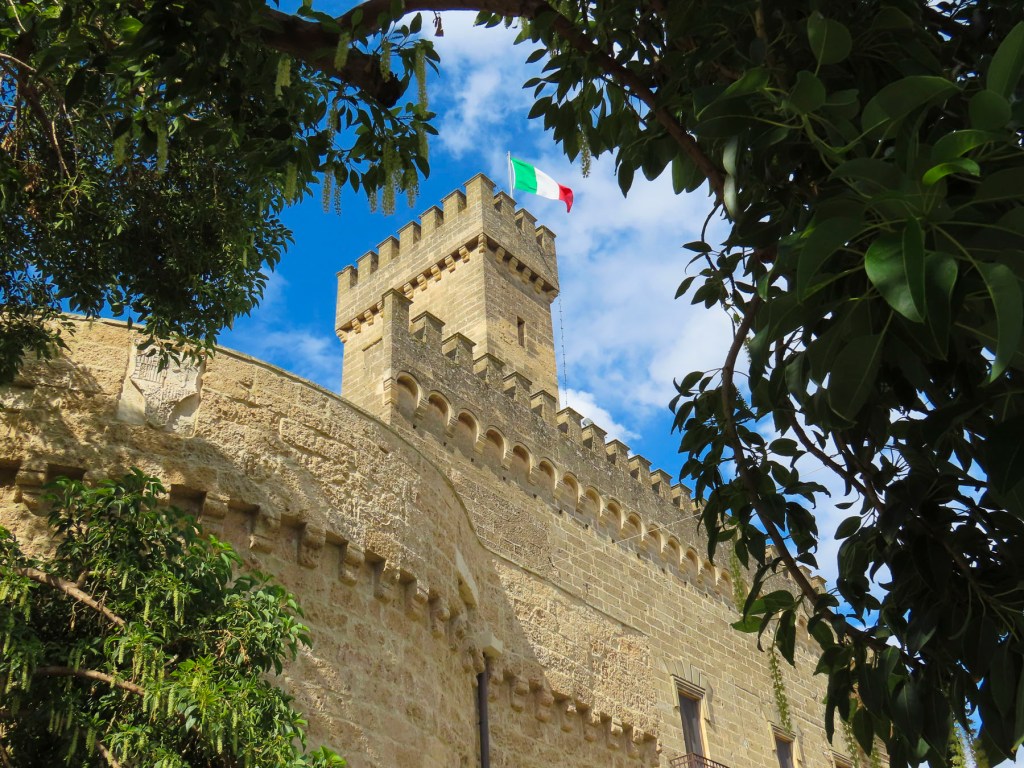
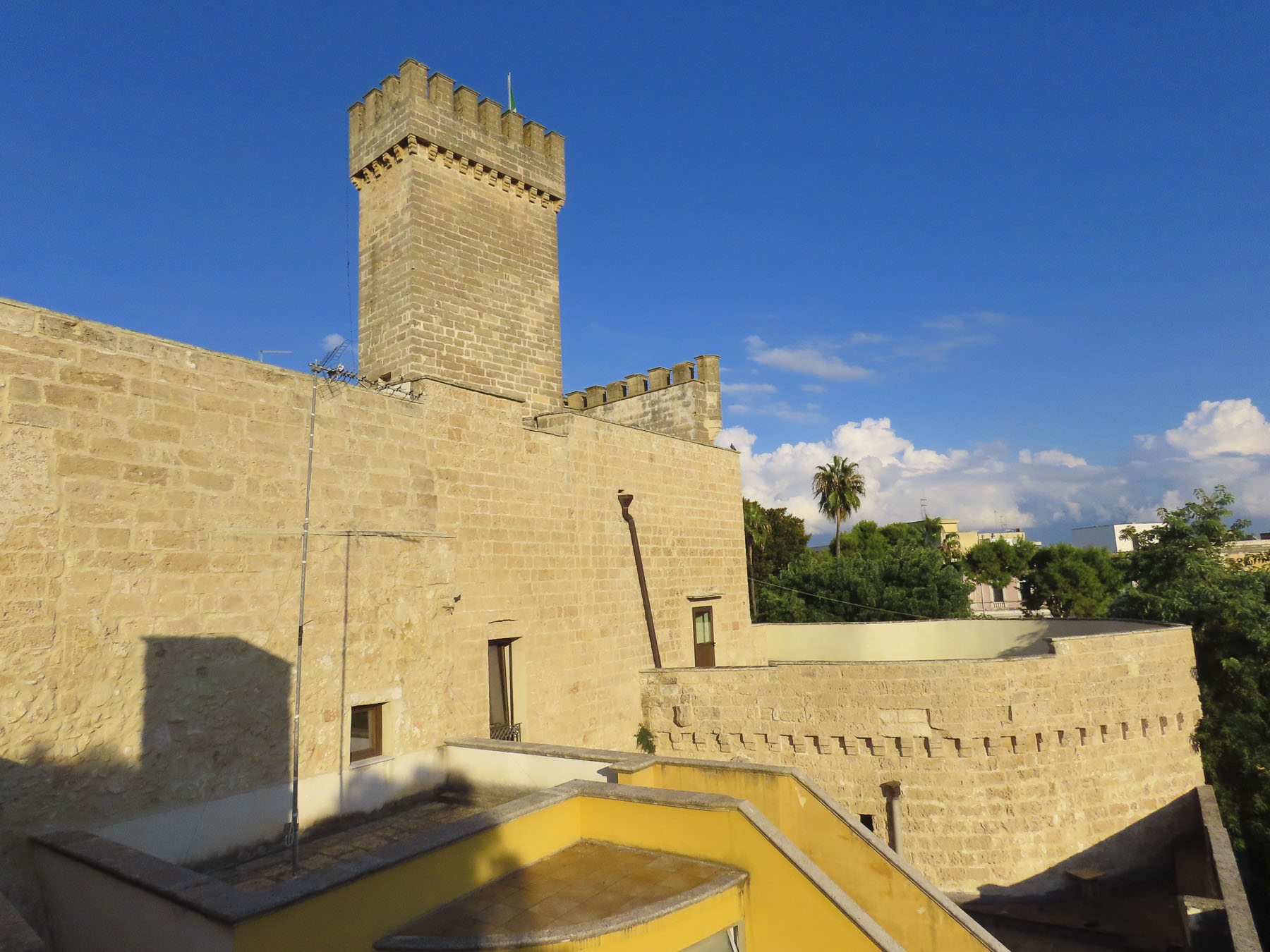
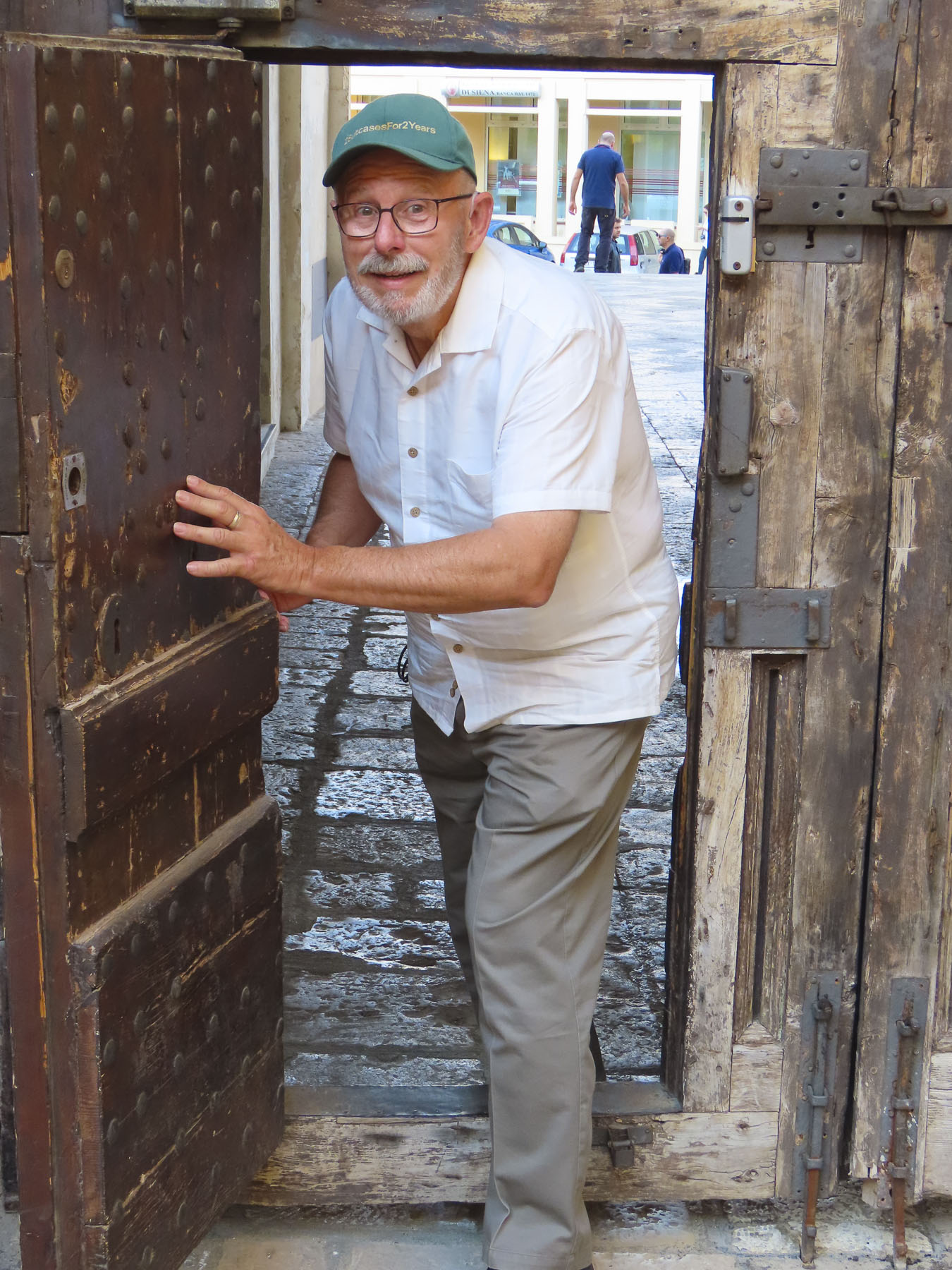
Heading back to the car we stepped through the heavy wooden door of the Aragonese Castle of Nardo. Formerly the private residence of the 15th century Acquaviva family, rulers of the fief of Nardò, a reward from King Ferdinand II of Naples.  Today the once moated fortification serves as the city’s town hall.

A very enjoyable day was celebrated and “till next time” was said over coffee before we said our farewells and drove to the seashore to find one of the numerous watch towers that were built along the Ionian coast to warn the country of imminent invasion. 

The sun was setting as we came to a stop behind a car about to turn onto the coast road. A car on the opposite side of the road turned the corner and stopped to wave at the person in front of us. Quickly both parties were out of their cars, hugging and chatting away, oblivious to us. I rolled down my window and photographed the dark silhouette of a square “Nardo tower” against an orange sky. No impatient honking, just enjoying life in Nardo.

Fino alla prossima volta – till next time,

Craig & Donna