The Rouen Lean: It’s not a Dance

We had narrowly escaped Paris’s evening rush hour as we sped away from Orly through the French countryside. Our destination is Rouen, an ancient port town on the river Seine with a pivotal role in France’s history since the Romans first settled along the graceful bend of the river there. It would be a restart to a trip cut short by covid in 2020.

The last light of the darkening sky reflected off the Seine, like a brush stroke of silver paint across a dark canvas, as we turned away from the river and entered Rouen. We are not fans of night driving, especially in a new locale, and our maps app had difficulty with the narrow one-way streets in the historic center of the city. Frustrated, we decided to park at the first opportunity. Miraculously the planets were aligned in our favor as we entered the Q-Park Palais de Justice Musée des Beaux-Arts, a massive unground parking garage that encompasses several subterranean blocks beneath a park in Rouen’s historic district. Not sure exactly where to park, something urged us to continue through the cavernous space until we found a garage attendant moments before he locked his booth for the night. Friendly and extremely helpful, he explained how their multiday ticket would be the best value for us. Yes, we were so lucky he spoke English. Our good fortune continued at street level when we realized we were only two blocks from our hotel. But we had arrived later than planned and the gate to Le Vieux Carré was locked. Fortunately, another guest was returning to the hotel at that time and let us in. “I saw several keys on the reception desk when I went out, and figured you were one of the late arrivals.” Indeed, a room key with our name on it was there waiting for us.

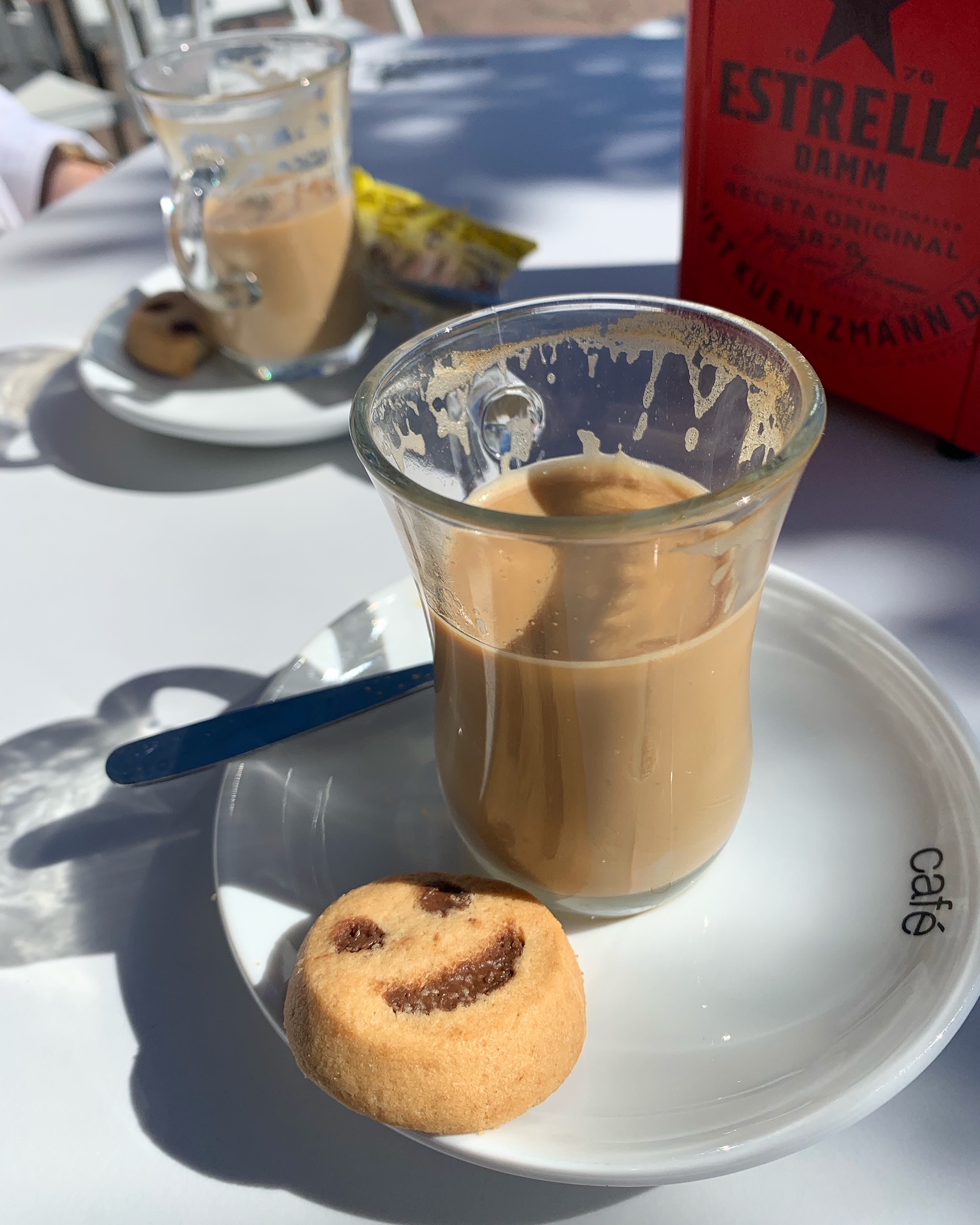
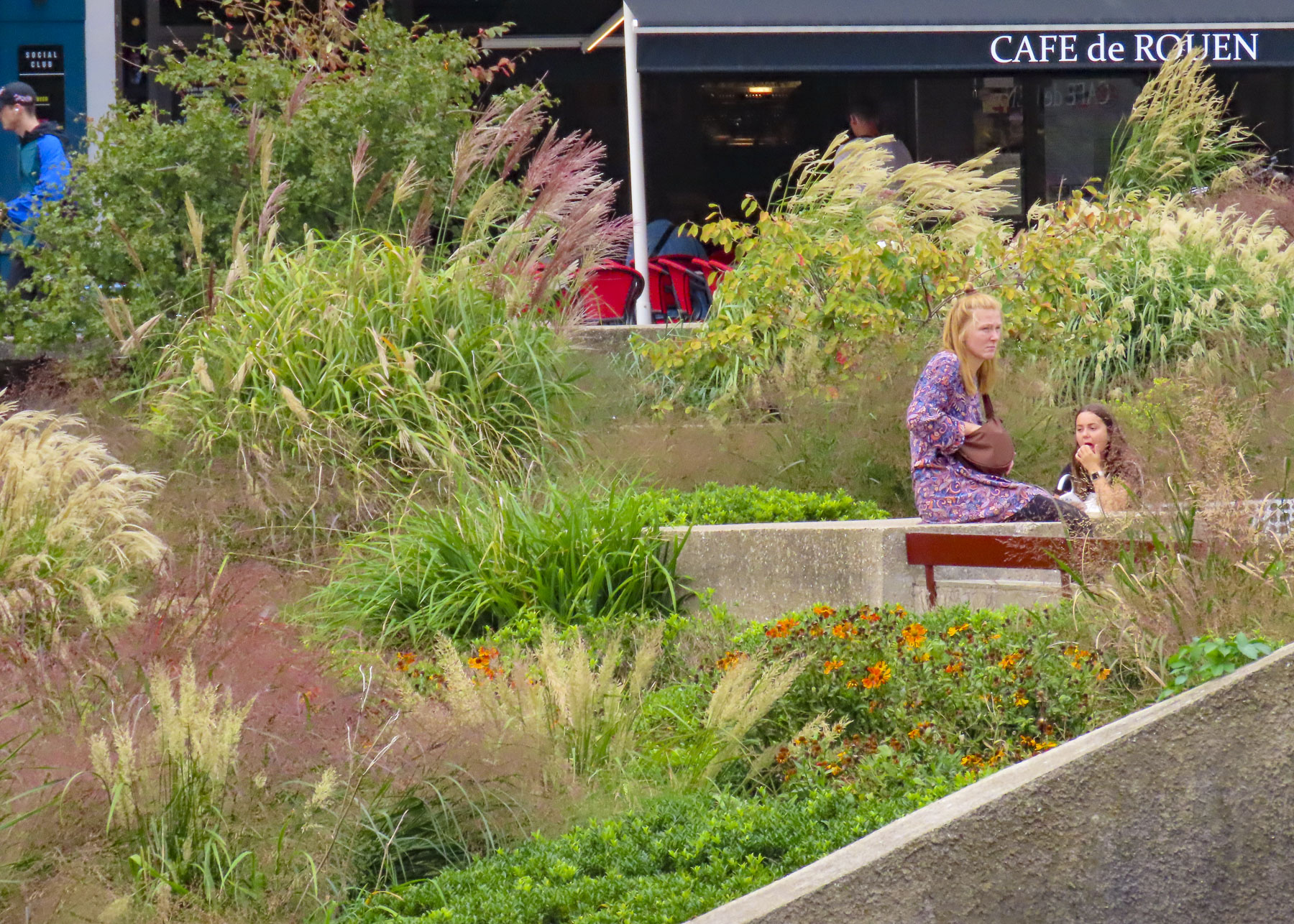
Early the next morning the unusual, but pleasant aroma of caramelized onions drifted in through our open window. With our tastebuds awakened and appetites whetted we headed out. “Walk a little, then café,” is how we like to describe our wanderings. Our first stop – coffee and pastries. It is France, after all! But where to stop? There’s an abundance of eateries in Rouen, thanks to the city hosting two universities and thousands of students. There were so many places that looked inviting, but the criteria for us first thing of a morning was a café with a table in the sun, a must in mid-October to help alleviate the day’s early chill. Once sufficiently caffeinated, we set out.

Flat as a crepe, Rouen was a walker’s delight and savory with explorations that pulled us in every direction. During the 9th century, Vikings pillaged and then stayed to become the first Normans, and the prosperous town of became the capital of Normandy in the 10th century. During the Middle Ages, conflicts in the region were nearly continuous, but the city somehow evolved into one of France’s gems, with its distinctive medieval half-timbered buildings and three towering, majestic churches which still grace the city’s skyline. 

A who’s who of historical figures have crisscrossed Rouen’s cobbled lanes for centuries. The Anglo-French kings, William the Conqueror, a succession of King Henrys, Eleanor of Aquitaine and Richard the Lionheart viewed the city as their home away from home. In 1431, after inspiring her countrymen to rally against English expansionism, Joan of Arc was captured, tried, and burnt at the stake in Rouen’s Old Market Square. It wasn’t until the Siege of Rouen in 1449 when forces commanded by King Charles of France finally defeated the English. Later the French impressionist painter Claude Monet found inspiration in the city, featuring the Rouen Cathedral over thirty times as he put paint to canvas to catch its essence perfectly. With conflicts never seeming to end in Europe, somehow, this beautiful renaissance city, though deeply wounded, miraculously survived World War II. Most importantly perhaps, in March 1948, Julia Child had her first taste of French cuisine at Restaurant La Couronne, on Rouen’s central square, the Place du Vieux-Marché.  

Open since 1345, La Couronne is France’s oldest inn. Savoring her Sole Meuniere, a lightly breaded fish dish flavored with fresh butter, lemon, parsley and capers, it was an experience she described “as the most exciting meal of my life.” Local oysters and a bottle of Pouilly-Fumé were also enjoyed. She was hooked and a Francophile was born!

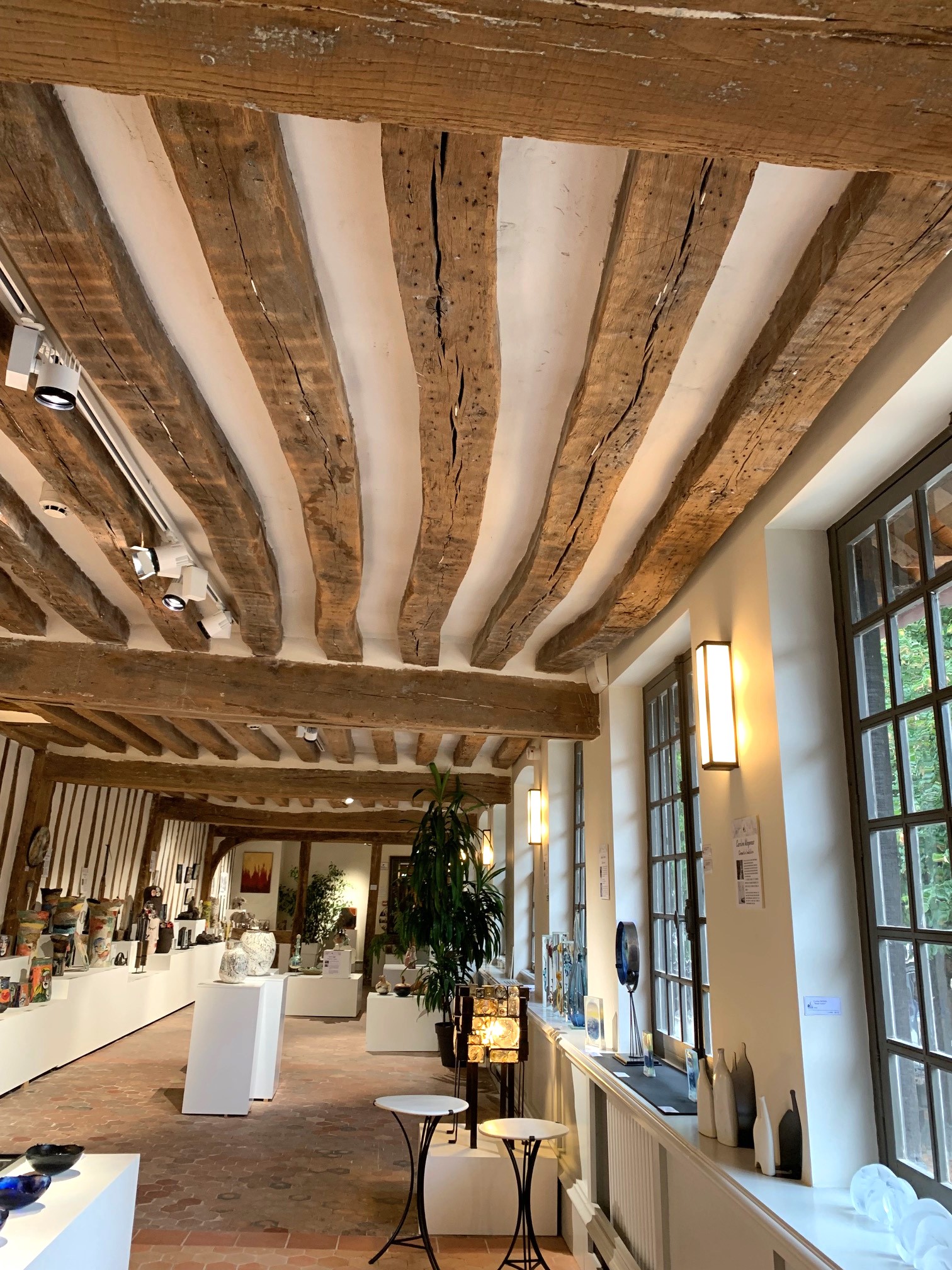
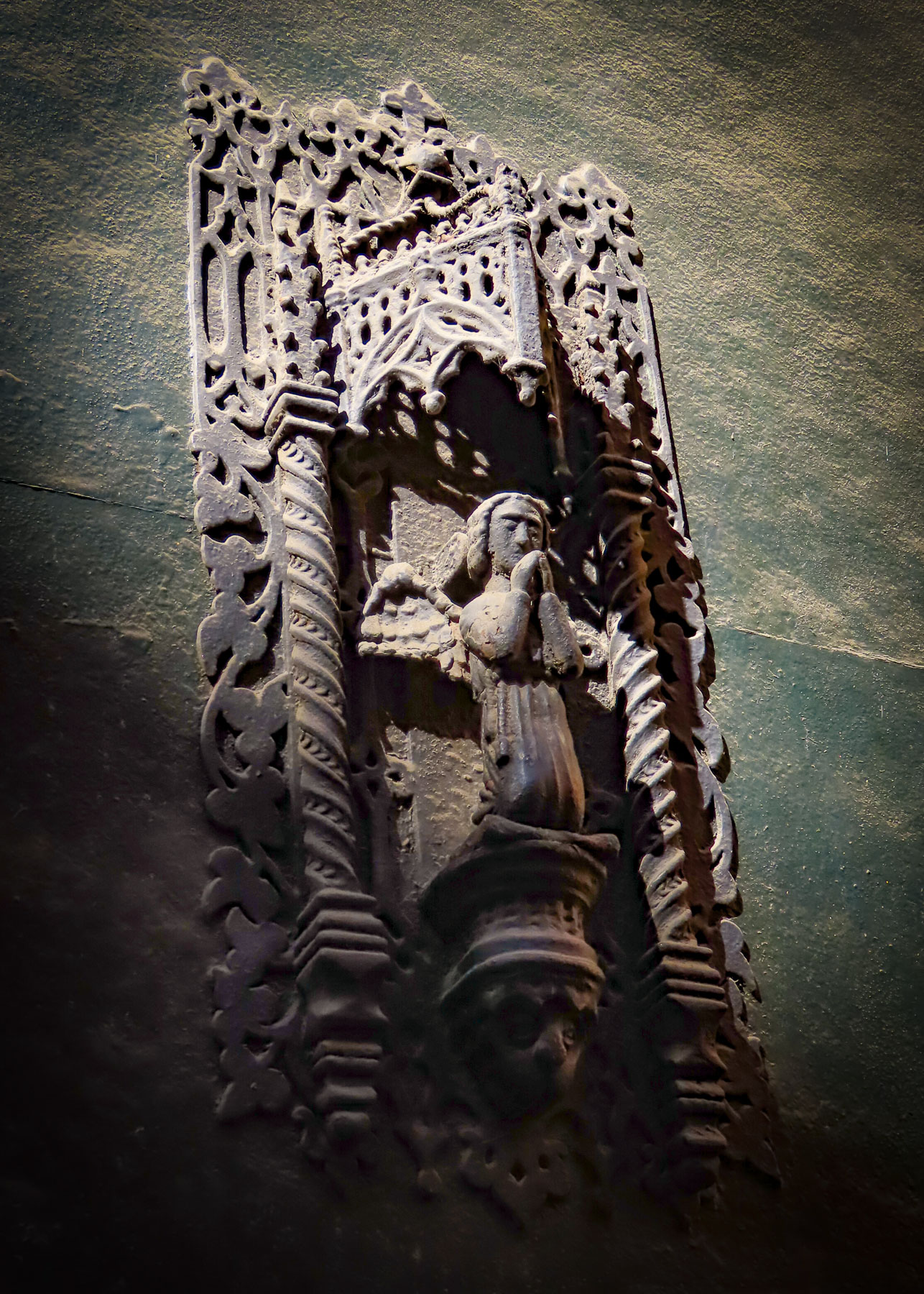
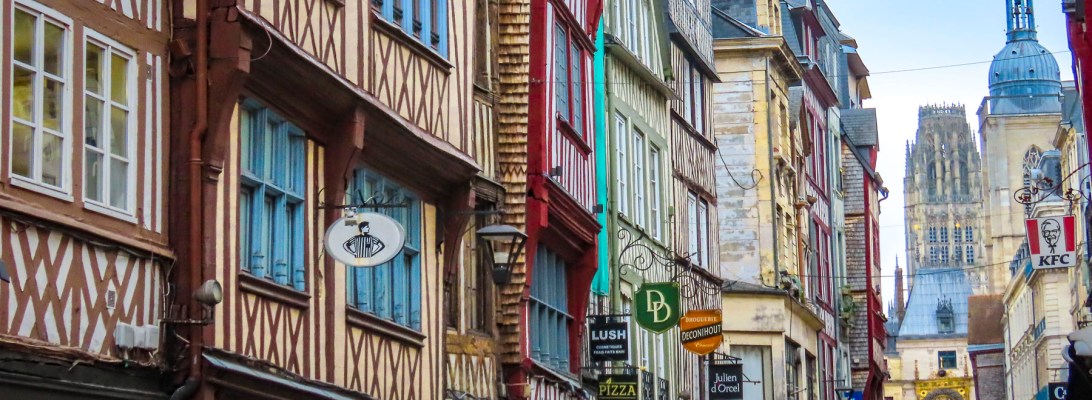
The Rouen Lean is not a dance, nor the result of drinking too much wine, but the very obvious tilt exhibited by many of the city’s ancient half-timbered buildings constructed during the Middle Ages. Our hotel was a prime example of this with scarcely a wall or floor that was square, plumb, and level. But that was the charming character and ambiance we were looking for. The half-timbered building’s superstructures were constructed with huge square oak timbers held together only with mortises, tenons, and wooden pegs, while the nonstructural area between the supporting timbers was filled with bricks or stones and covered with plaster. Over the centuries it has proven to be an aesthetically pleasing and durable construction method used to build five to six story houses. Many of the buildings still retain a centuries old, carved wooden sculpture on the front of the building that represented a service or craft that was once conducted there.

Approximately two thousand half-timbered structures from the Middle Ages still stand in Rouen. The abundance of wooden buildings surprised us as most of our travels have been through the countries of Southern Europe, Portugal, Spain, and Italy, where stone was historically used to construct everything. In Rouen, scarce stone was saved for the churches and castles.

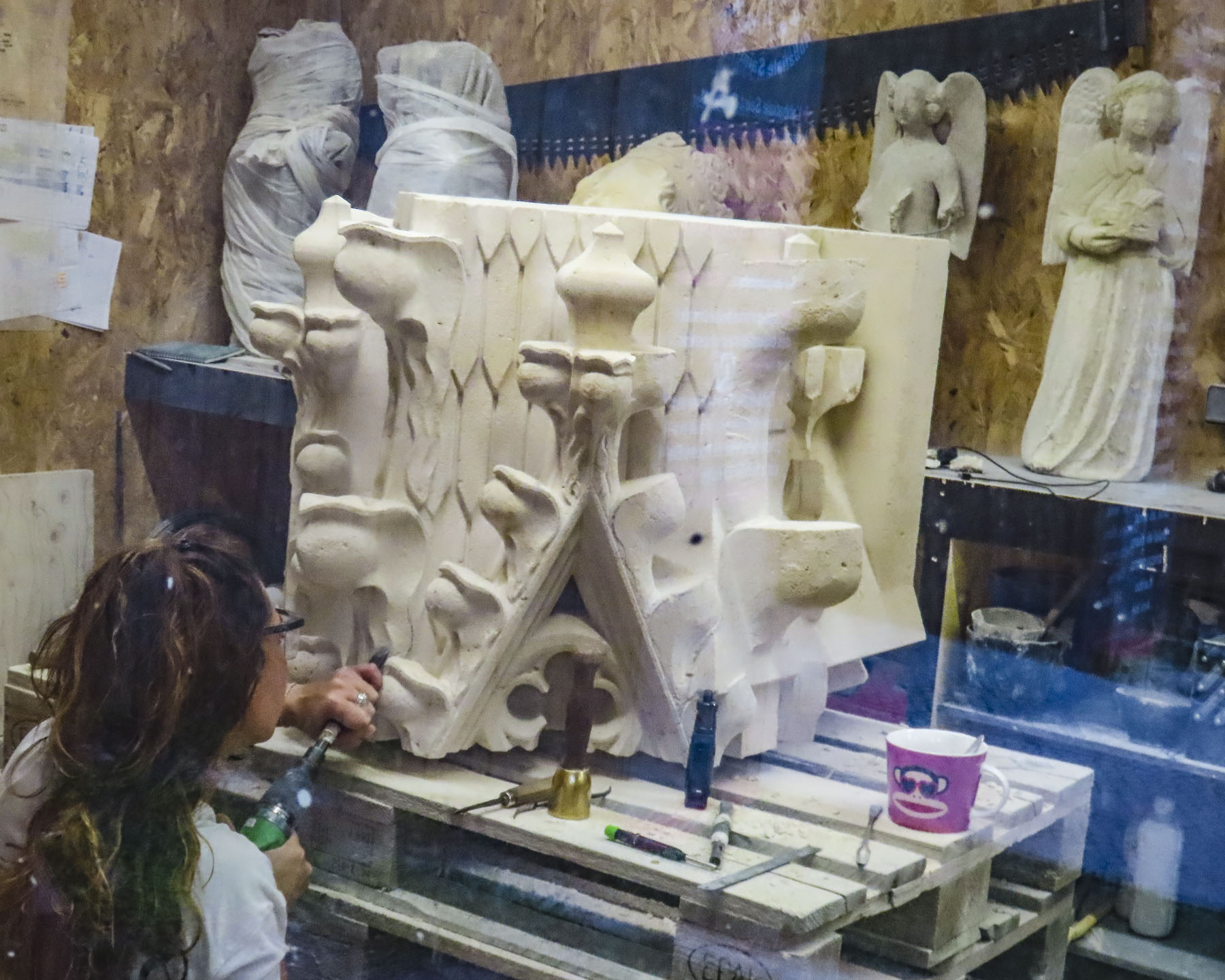
Even stone erodes over time and occasionally old churches need a facelift every few centuries, as was evident by all the scaffolding surrounding the15th century, Gothic style, Saint-Ouen Abbey Church, though with a selective camera angle I was able to eliminate most of the temporary platforms from our photo. But the difference between the areas covered by grime and the newly cleaned sections was phenomenal. The multiyear project is scheduled to be completed later in 2024. Though the interior of the church was closed the day we visited, we were able to watch a stone carver as she worked to create a new gargoyle to replace one beyond repair.
Rouen’s three main churches, Saint-Ouen Abbey Church, Église Catholique Saint-Maclou, and the Cathédrale Notre-Dame de Rouen are all located a short distance from each other on the eastern edge of the historic district, but the journey through the narrow lanes connecting them and exploring many other splendid points of interest along the way made for a wonderful day.
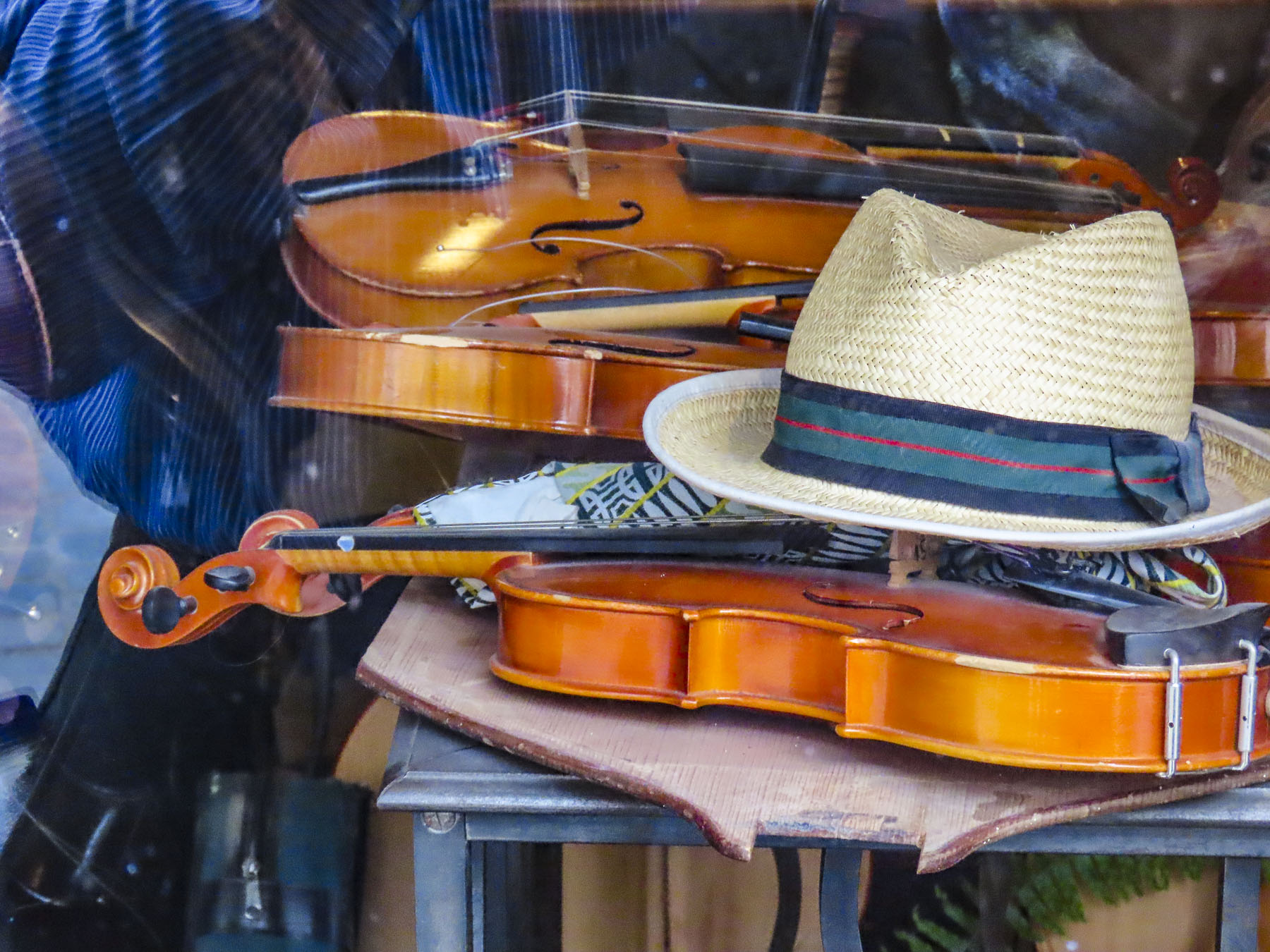
After the abbey we window-shopped down Rue Damiette, admiring the handcrafted violins created by master luthier Sarhan Jean-Marc. Farther on, interesting antique stores lined the narrow lane. Behind us the abbey’s belltower rose over the street. A view that hasn’t changed significantly in centuries. One of the best examples of the “Rouen Lean” is at the end of the street across from Saint-Maclou and caused us to stop for a double take. How, we wondered, can these buildings still be standing?

There was a shortage of cemetery space in Rouen during the Middle Ages when the plague revisited the city repeatedly and 75% of its citizens died. At the time it was the custom to bury the dead only until their bodies decomposed.

Then the bones were exhumed and reinterned above ground in the ossuary Aitre Saint Maclou and the grave reused for the newly departed. Hidden away down a discreet side alley, the ossuary complex was expanded several times and functioned as a secondary cemetery until the early 1700s when the remains were removed, and the buildings were repurposed as a school for poor boys. Today the space houses a fine arts academy and exhibition space. Though it’s still a macabre place with skull and crossbones carved into its exterior timbers.

We rested with coffees at a café on Place Barthélémy in front of Saint Maclou. While a lovely spot, the coffees were overpriced to the point that we could have purchased lunch for two if we’d chosen a less touristy spot. Just a reminder, a block or two off the usual tourist routes and prices drop dramatically.

Rouen’s Cathédrale Notre-Dame has been the center of focus since the first early Christian converts built a temple in 395 AD, on the spot where the current church now stands. And, like the city, the church has a turbulent history. Charlemagne visited in 769, but those pesky Vikings couldn’t decide if they hated or loved the place, sacking it repeatedly in the 9th century, only to later claim the Duchy of Normandy as theirs and embrace Christianity after the Viking leader Rollo was baptized in the church and later buried there as well. Nearby, Richard the Lionheart’s tomb only contains his heart.

Romanesque architecture was the rage during the 11th century and William the Conqueror attended the consecration for the first of many expansions and renovations that would follow over the centuries.

More chiseling and hammering continued during the 12th century when successive Archbishops embraced the new Gothic style. In 1204, Philip II of France celebrated Normandy’s merging with his kingdom amidst the new Gothic renovations.
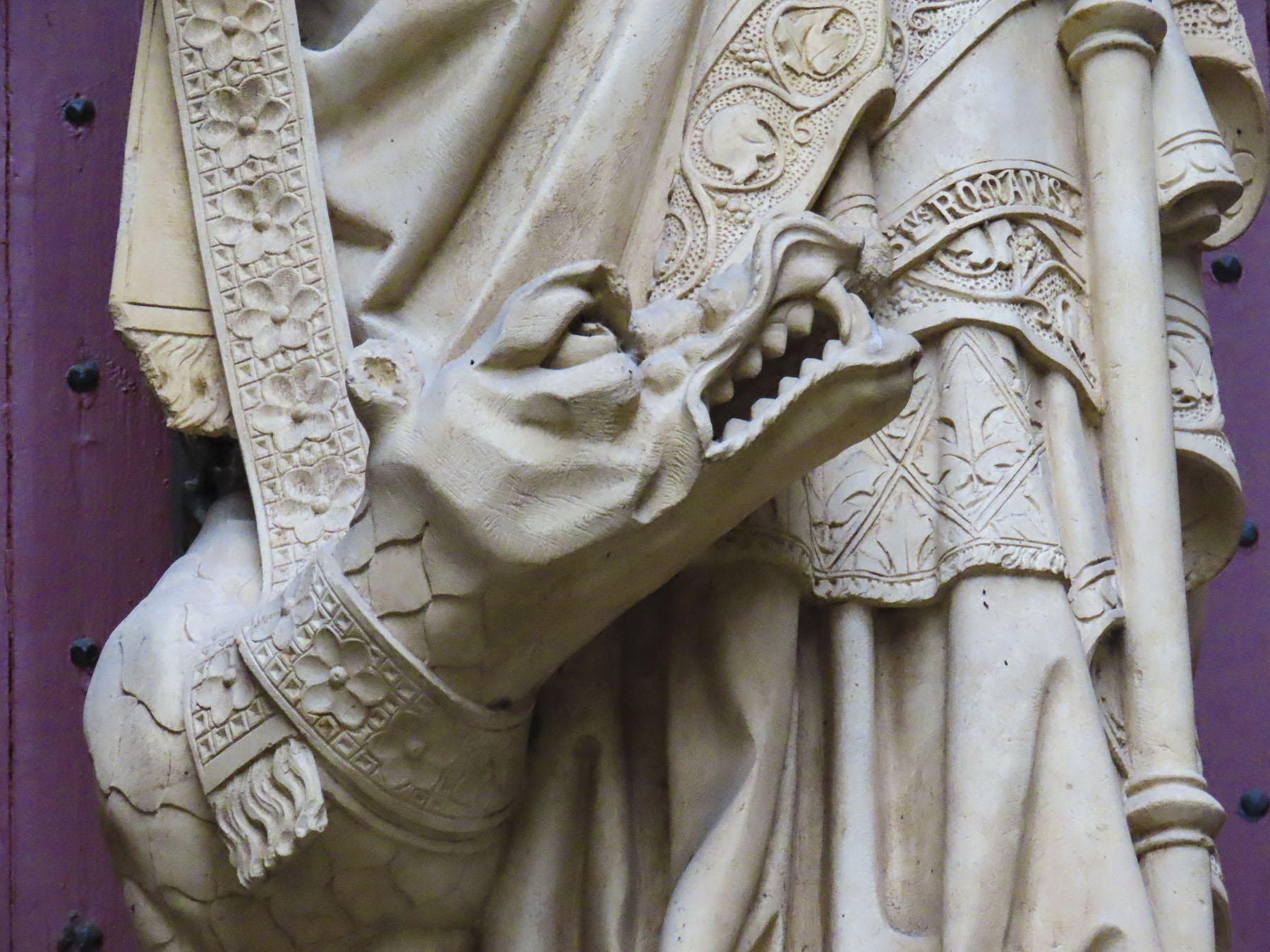
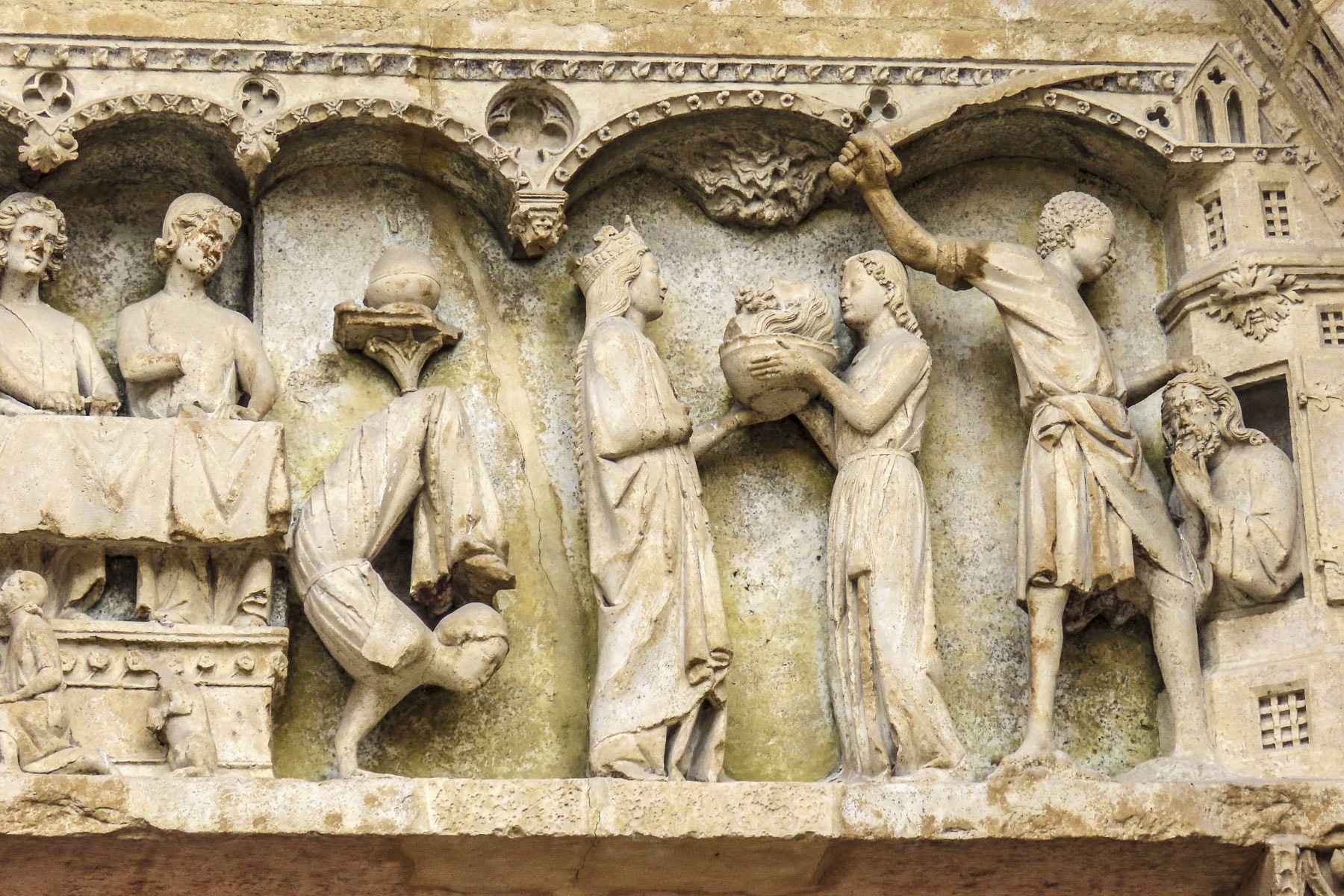
During the 16th century, a second tower in the Renaissance style was built and ornate stonework and hundreds of statues were added to the front of the church, creating the visage that remains today.
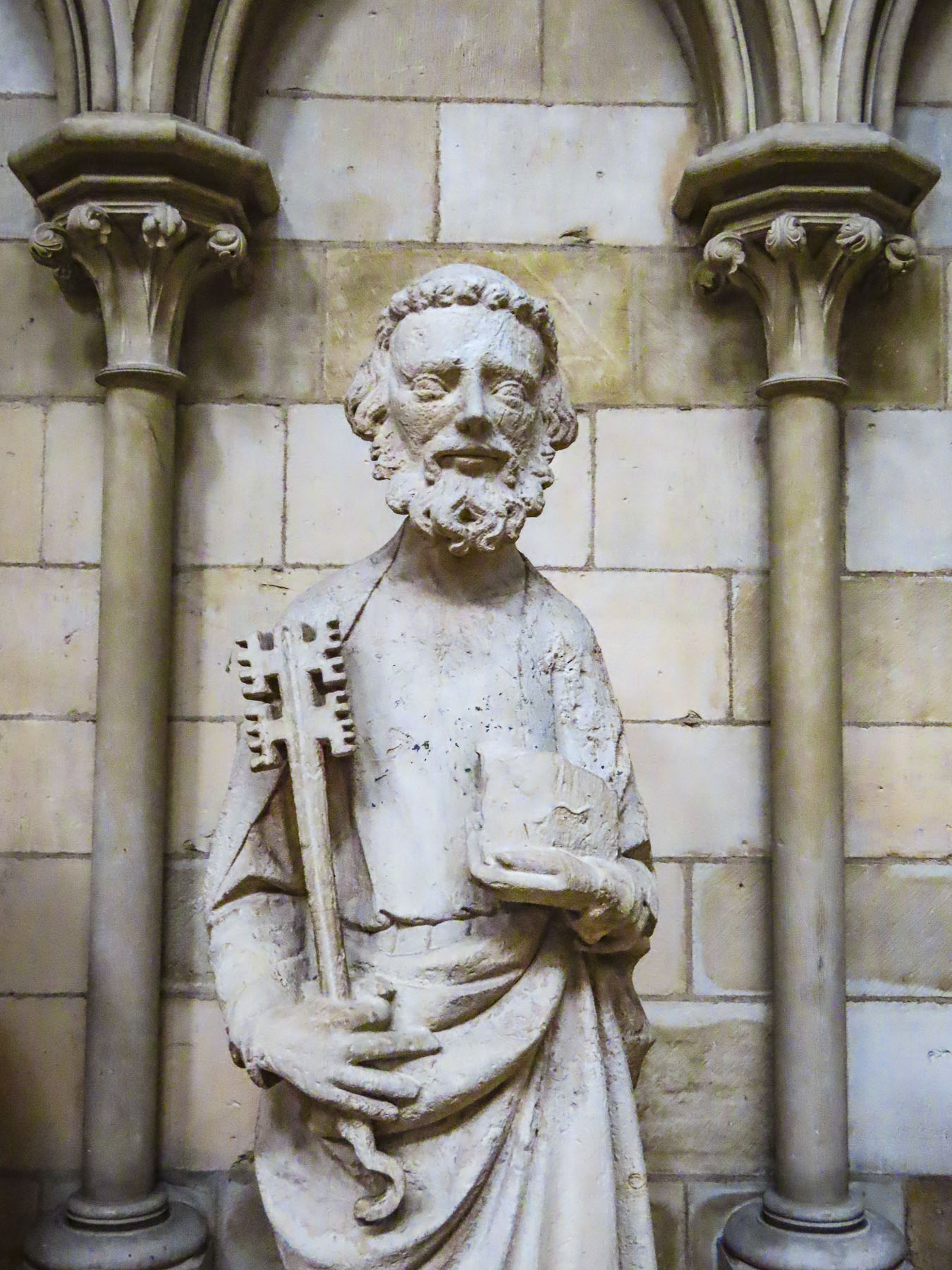
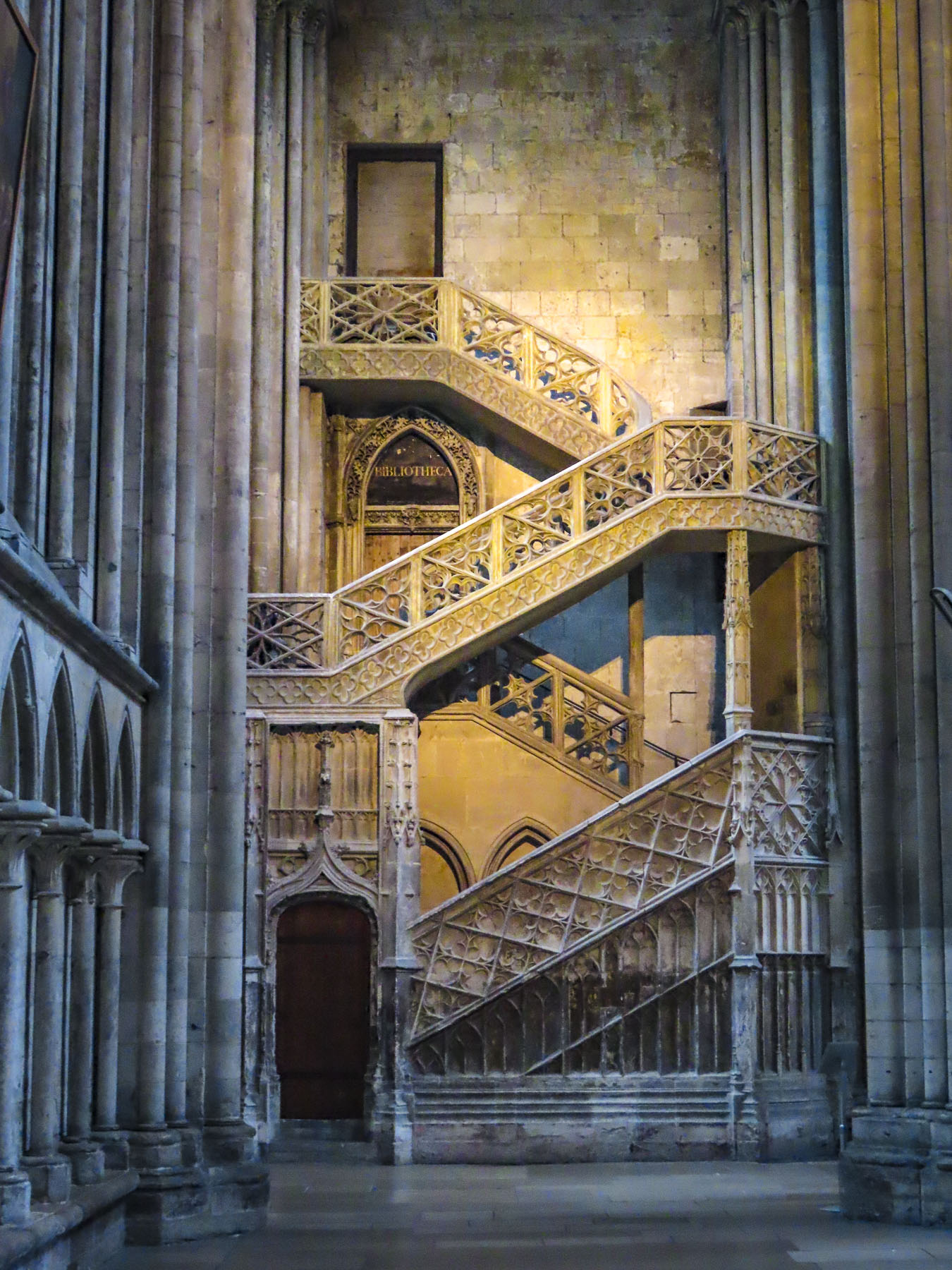
Later lightning strikes, hurricanes and Calvinists would wreak havoc on the church. During the French Revolution any metal objects, not hidden away, were seized and melted down to create cannon balls. During WWII the cathedral was heavily damaged by Allied bombs. The damage was so extensive that final restoration wasn’t completed until 2016, when all the scaffolding was finally removed. Built and rebuilt, inside and out, for over eight hundred years, the cathedral is a fascinating place to explore.

The next morning we headed down Rue de Gros-Horloge, Rouen’s main pedestrian-only thorough fare that runs east to west from the cathedral to the Place du Vieux-Marche, a historic market square. This is the street where the city’s famous 14th century astronomical clock, Le Gros-Horloge, seems to transport you backwards through time to the Renaissance. Early in the morning is the best time to experience this landmark without crowds, as later in the day the narrow lane is as busy as Paris’ Champs-Élysées. During our short time in Rouen, we passed under its gilded façade many times and always, like Monet and his multiple paintings of the cathedral, tried to capture this beautiful clock just right in our photographs.

Indulging our wanderlust, we veered left and right off the lane to satisfy our curiosity. We found ancient gargoyles on the Tribunal Judiciaire de Rouen, and whimsical unicorns, a porcupine, and a reference to L’Ordre de l’Hermine, the Order of the Ermine, a medieval chivalric order on the exterior walls of the Hotel de Bourgtheroulde, a former 1500s mansion, built in what is kindly referred to as the Flamboyant Gothic style popular at the time.

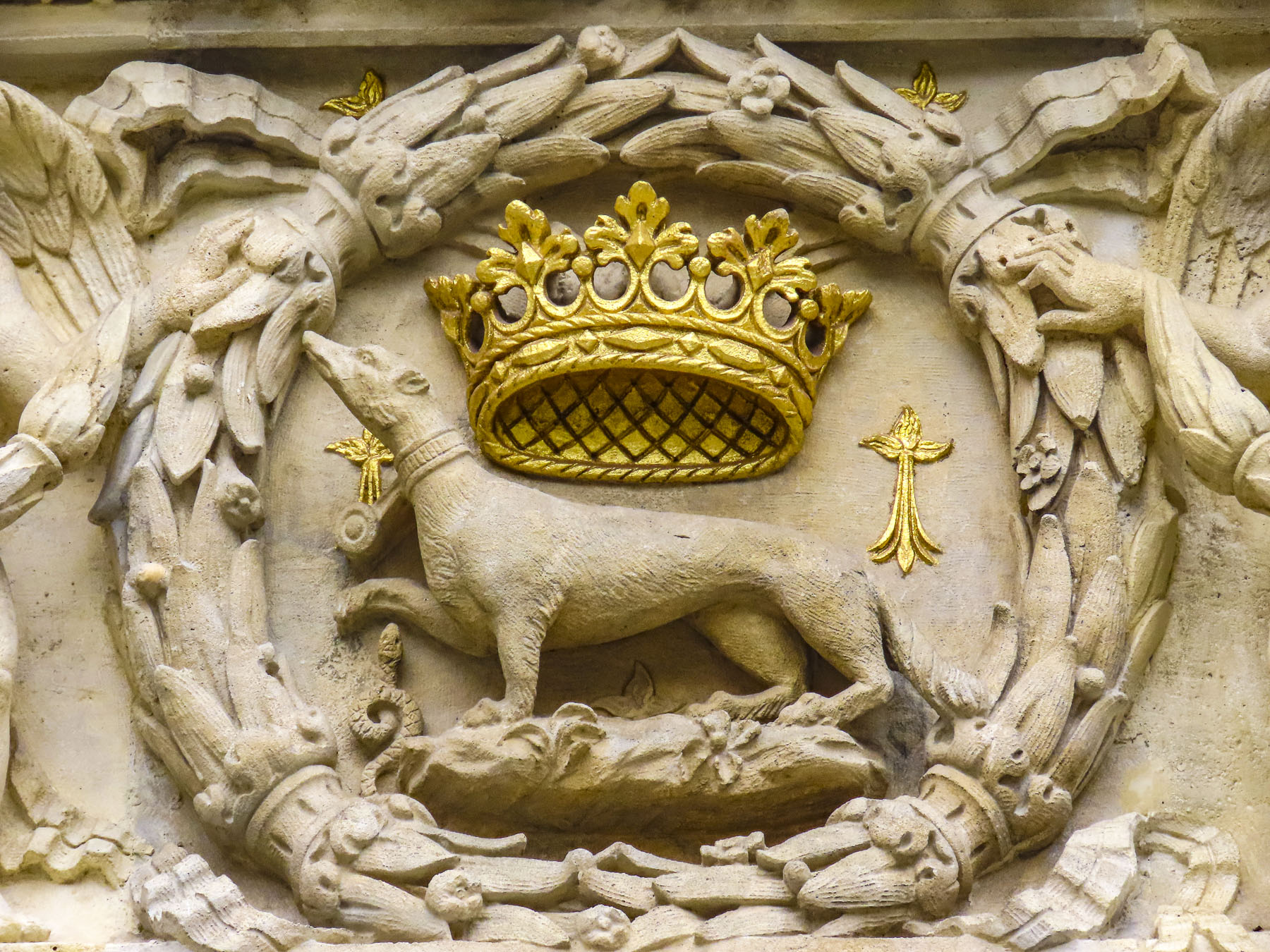
Seriously – the Order of the Ermine is not from a Monty Python skit. A small but ferocious animal, during the Middle Ages the ermine was believed to to fight to its death if attacked rather than “sully the purity of its white fur,” and was used by many medieval chivalric orders to symbolize their uncompromising integrity and honor.

There was also the Ordre du Porc-Épic, porcupine, for prickly knights, and the Order of the Golden Fleece, for royal embezzlers. These were actual chivalric orders, though I am taking liberty with their membership.

Today the Place du Vieux-Marché is surrounded with restaurants and cafes with outside tables, which were very lively at Happy Hour when students and folks just off work congregated on the square. Quite a different scene now as opposed to the day in 1431 when Joan of Arc was burned alive at the stake, in the center of the square, though her heart remained untouched by the flames. A beautiful, modern wooden church built in 1979, the Église Sainte-Jeanne-d’Arc now memorializes the spot where her pyre stood. A plaque nearby reads “Oh Joan, you who knew that the tomb of heroes is in the hearts of the living.”
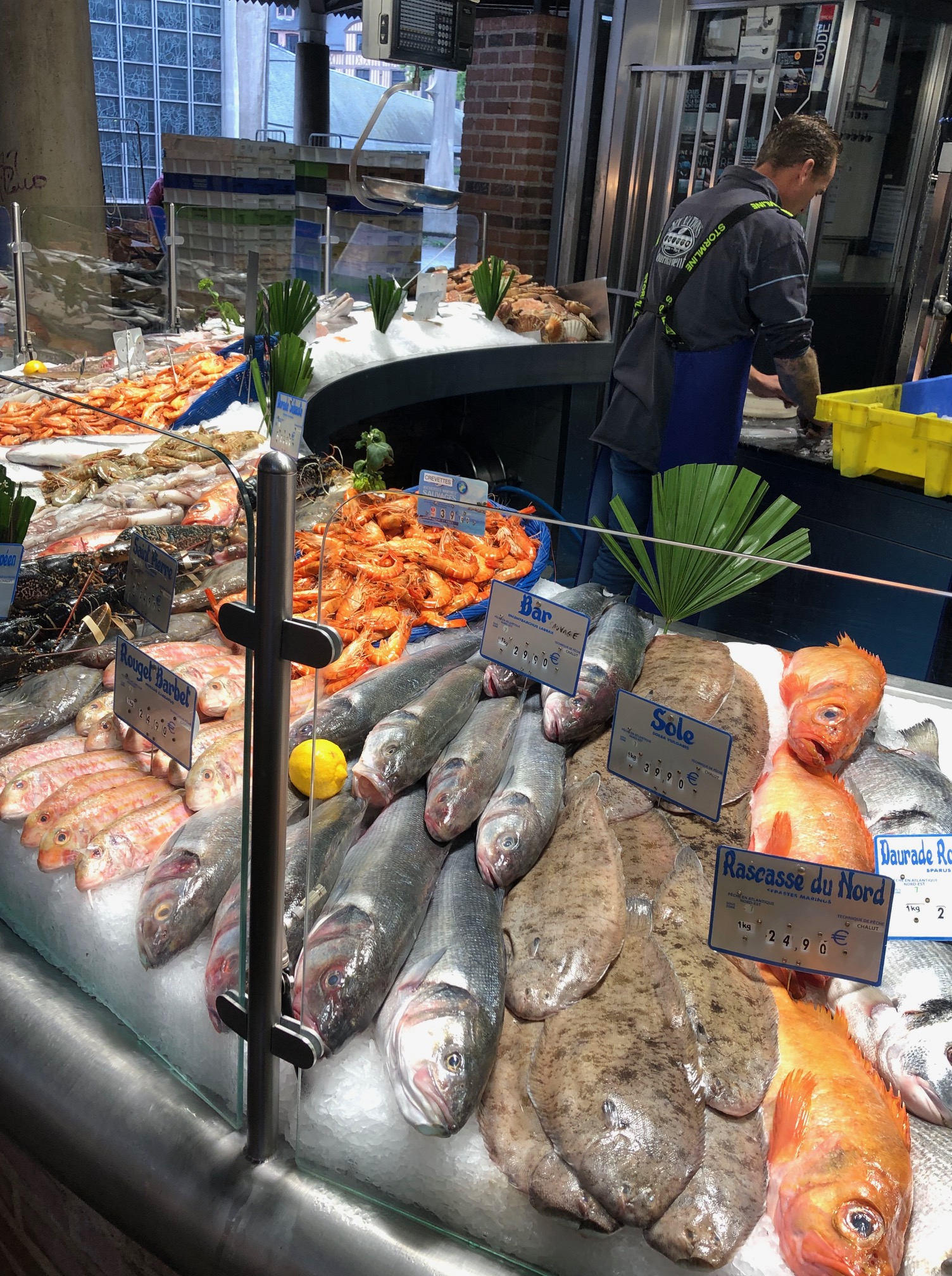
Inside the food market we savored our first fresh oysters from the Brittany coast and purchased some fruit, and of course cheese! A difficult process considering the tremendous variety we could choose from.
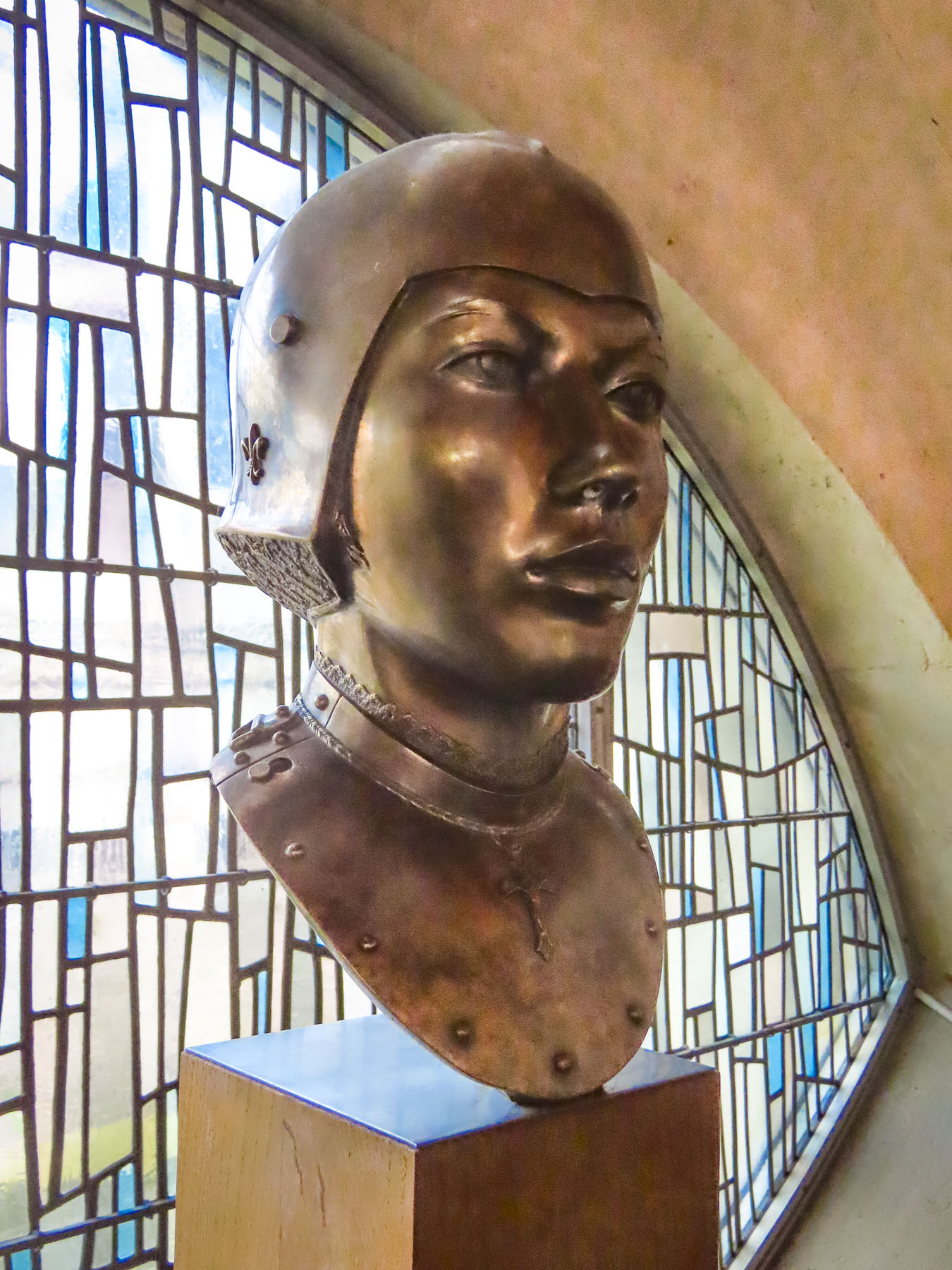
Intrigued by Joan of Arc’s story, the next day we headed to the Historial Jeanne d’Arc, which is housed in a wing of the ancient Archbishop’s Palace where part of her trial was held. We were skeptical at first while buying our tickets, thinking we’d just be watching a movie. But we both ended up being enthralled with the interactive digital technologies used to project Joan’s saga onto the old stone walls, floors, and domed arches.

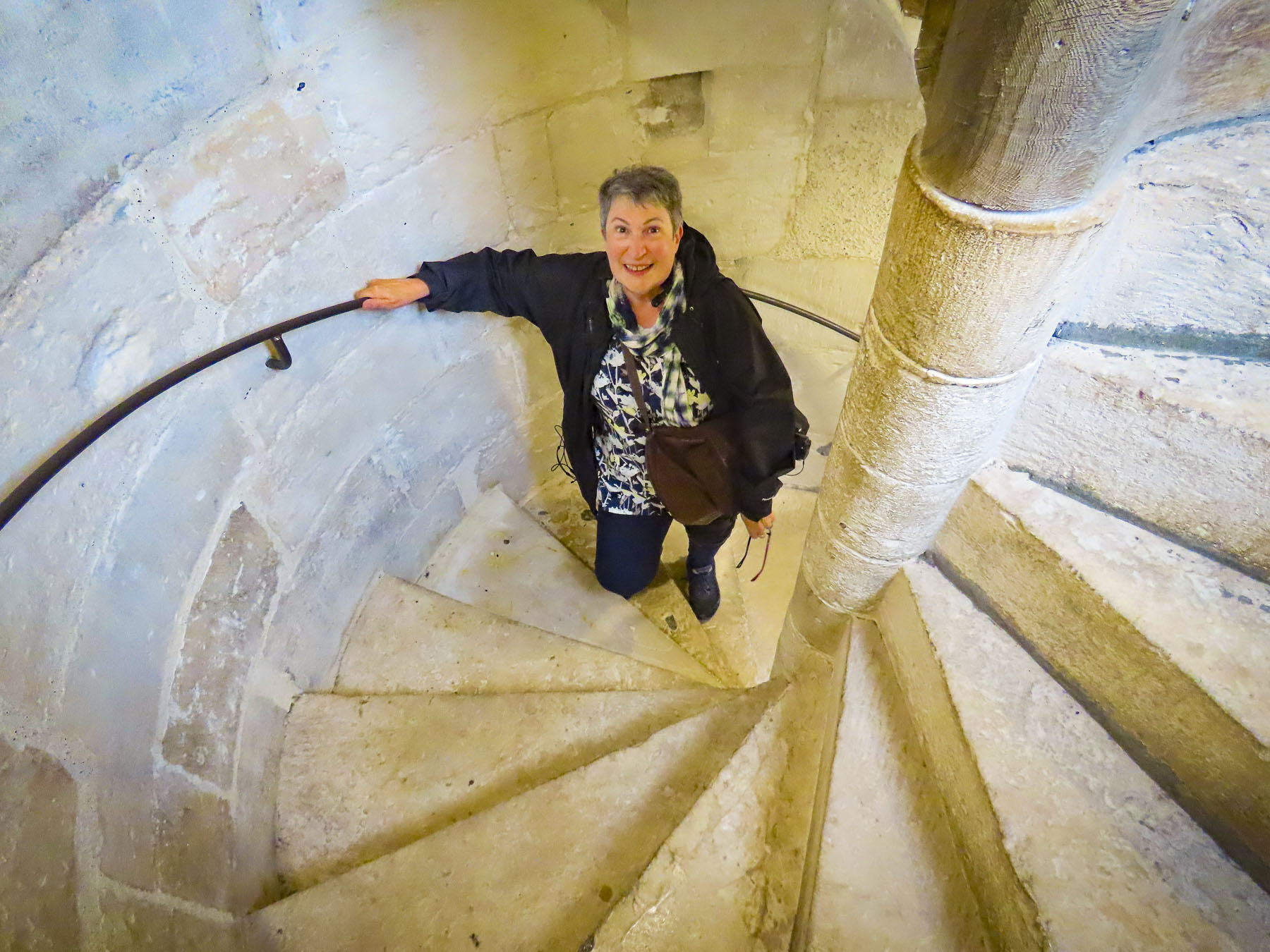
Her history was exceptionally well portrayed and presented as chapters, with each chapter presented in a different room of the architecturally interesting space. We climbed one of the palace’s towers and were rewarded with a timeless view down Rue Saint Romain to the church of St. Maclou; a view that would look familiar to Joan of Arc were she to stand in this spot today, so little changed from her time.

A symbol of defiance, heroine for the French, and a successful military adversary against the English, she claimed God supported Frances’s freedom, but this was a position the Rouen church could not support as they were allied to England and claimed God was on their side. She was tried and convicted for her heresy. Her male jury also had difficulty with her dressing in men’s clothing for battle. As if because she was a woman, she should have worn a skirt and sat side saddle as she rallied the French to fight. But this practicality was viewed as cross dressing and as such was held to be against God’s law. (Though the robes of the clergy were not considered feminine.) The French finally defeated the English and succeeded in uniting Normandy and Rouen with France. Twenty-five years after her execution, Joan’s family petitioned for the trial records to be reviewed. The court determined she had been tried “under false articles of accusation,” and posthumously declared her innocent and annulled her sentence in 1456.

Our time in Rouen was a beautiful look back into Medieval France.

Till next time, Craig & Donna

Tenerife Part 4: Pico del Teide, La Orotava, Puerto de la Cruz & Beyond

The silhouette of the ancient volcano mesmerized us. Even in the dark blues and blacks of the night the volcano’s majestic silhouette loomed large above Icod de Vinos. Later the moon rose and contributed a magical otherworldliness to our vista. During the winter when its 12,000 ft summit is snow covered and there is a full moon, it’s said to shine like the beacon of a lighthouse that can be seen from the coast of Morocco. The aboriginal Guanches believed Pico del Teide held up the sky and placed offerings on the volcano’s slopes to appease Guayota, an evil deity they believed responsible for its volcanic eruptions. We made our own photographic pilgrimage to Teide as we drove to the Hotel Alhambra in La Orotava, our base for the remainder of our vacation. Though not the most direct route from Icod de los Vino to La Orotava via Pico del Teide it was, I can assure you, the most interesting.

Teide is still considered an active volcano and while its cone hasn’t erupted in the last 850 years, side vents on its slopes have spewed destructive massive lava flows across its slopes in 1492, which Columbus noted in his logbook as he sailed on his maiden voyage of discovery, 1704,1705, 1706, 1798 and 1909. Our route on TF-5 cut across the lava field left from the 1909 El Chinyero vent eruption. Now over one-hundred years later new growth pines are just beginning to emerge from this carnage. Their verdant green needles, a refreshing sign of life in an otherwise barren landscape. Crossing the ridge of the mountains we descended into Santiago del Teide. The main road was lined with several inviting spots to stop for café! (We didn’t realize at the time, but this was also our last chance for lunch, as many places normally open in high season are closed or only open on the weekends in the shoulder seasons.)

After coffee we visited the town’s church, Parroquia de San Fernando Rey. It’s a small, whitewashed structure constructed in the late 1600s and has an interesting collection of religious art. Across the street stands a life-size statue called “the brave Guanche,” dedicated to Alonso Diaz, a goatherd, who in 1509 stood up for his rights and successfully petitioned Spain’s King Fernando the Catholic for justice, after 200 goats were stolen from him by a Spanish conquistador. By royal decree the goats were returned.

Venturing into the foothills, our drive continued along TF-38 and traversed an ever-changing, diverse bio-system as we left the arid shrub-covered lowlands behind and climbed into hillsides covered with pine forests. It was a well paved but narrow serpentine road, without any shoulder, that required constant vigilance. The mouths of ancient lava tunnels were visible from the road, but there was no room to pull over and stop for photos until we reached the Mirador de los Poleos. Here the raw beauty in these charcoal-colored landscapes flourished beneath the Chinyero Volcano, and we had a chance to walk across the lunar-like terrain, part of the immense lava field from its 1909 eruption. Dotted with huge boulders, it was difficult to comprehend the ferocious forces required to expel these massive rocks from their subterranean origin.

Continuing on, we had encountered what we thought was fog until, to our surprise, we emerged above the clouds at Mirador de Samara.

This area is also very popular for hiking, with many very obvious trails crisscrossing through a young forest emerging from the volcanic soil left from Pico Viejo’s last, 92 days long, eruption in 1798.

Approaching noon, we turned toward Vilaflor, the highest village, at 4600ft, on Pico del Teide’s southern slope and surrounded by vineyards. The surrounding wineries produce some of Tenerife’s best wines from Listán Negro, Malvasia, Negramoll, and Listán Blanco grapes. And are embodied with a distinctive terroir from the warm climate and fertile volcanic soil. The weather had suddenly turned gray and dreary. More frustrating though, the wineries we had planned to visit were closed mid-week during the shoulder season. Fortunately, we happened upon Mar de Nubes, a craft store and café run by a friendly young married couple from Tenerife and the States. The shop features only handicrafts made by Canarians and local wines and artisanal beers. Of course, we shopped.

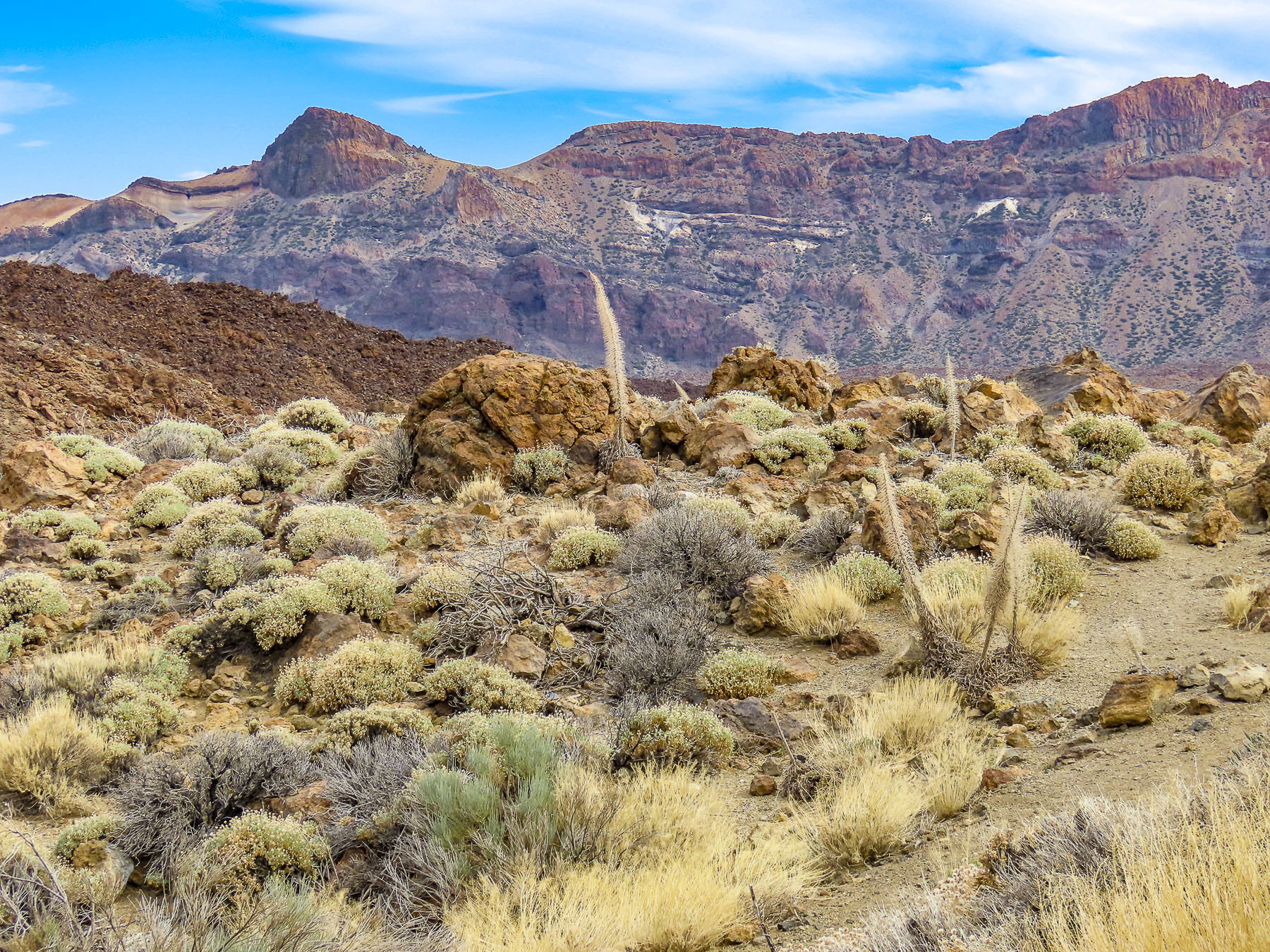
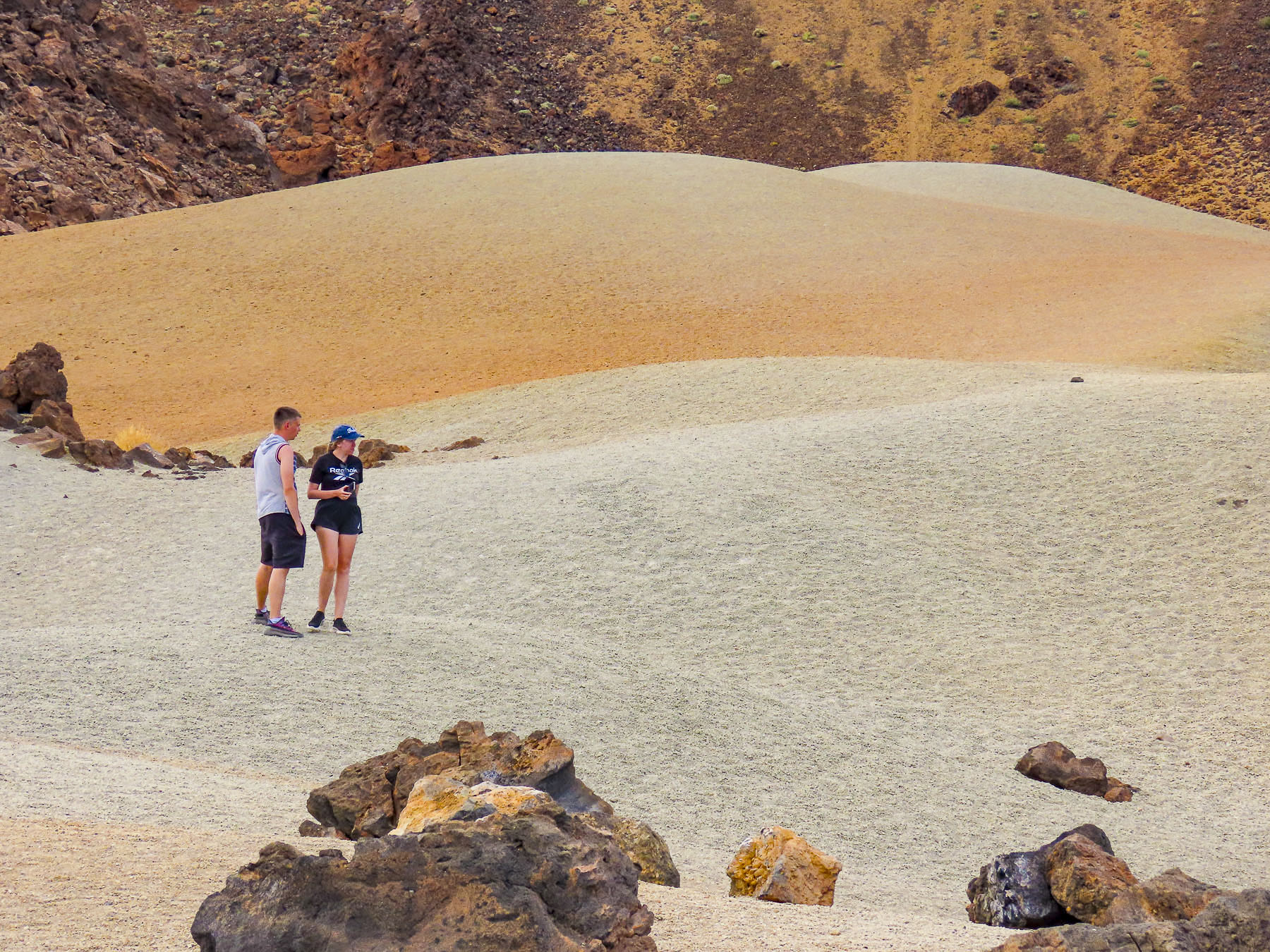
Beautiful, inhospitable, Death Valley-esque, lunar or Martian, however you choose to describe the varied topography that surrounds Pico del Teide’s, it’s enthralling and fascinating. So much so that filmmakers have used the location for scenes in several block buster films: One Million Years B.C. – 1966, Planet of the Apes – 1968, Clash of the Titans – 2010 and its 2012 sequel Wrath of the Titans, and in 2023 the Last Triala, a Star Wars fan film.  TV episodes of Doctor Who, The Dark Along the Ways and season 2 of The Lord of the Rings: The Rings of Power have incorporated Tiede’s environs into their productions.

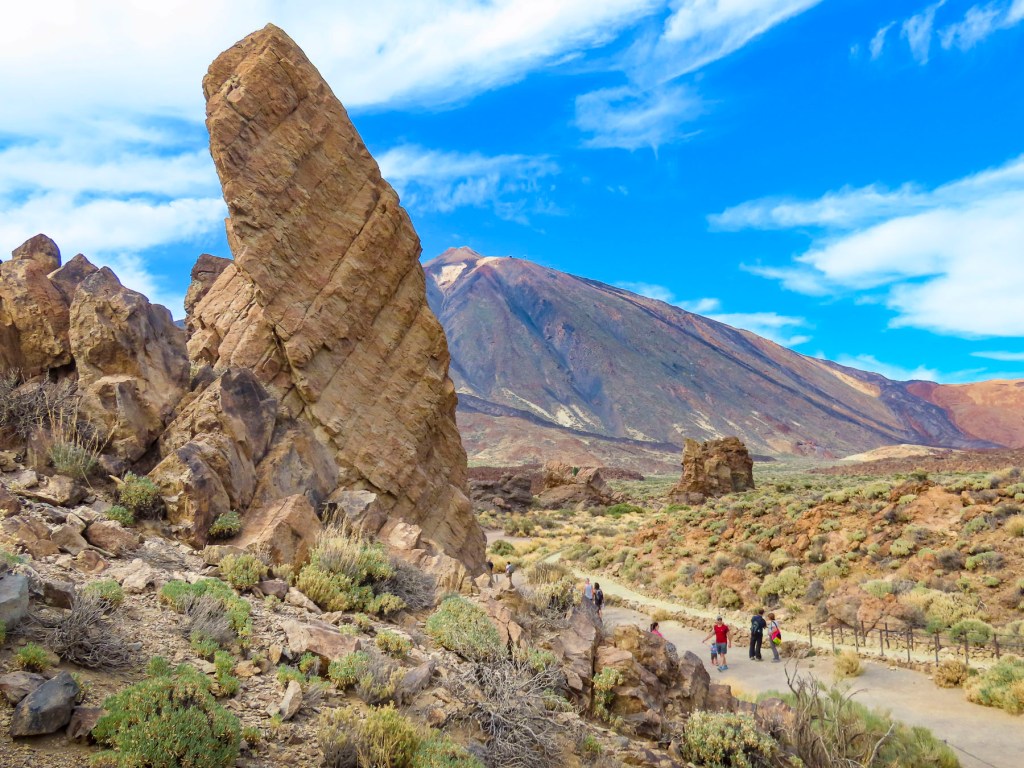
Driving back up the mountain we continued on to view the large sculptural outcroppings at the Mirador de La Ruleta and the desert-like dunes of the Siete Cañadas hiking area, before following the long downward grade of the road to La Orotava. We speculated that if you dropped a soccer ball at the top of the slope, it would bounce downhill continually until it splashed into the ocean at Puerto de la Cruz, roughly 23 miles away. Our route along TF-21 cut through forests ravaged by the wildfires of 2023. The blackened trees were the only scars in the otherwise pristine wilderness of the Tiede’s northern slope in Parque Natural Corona Forestal.

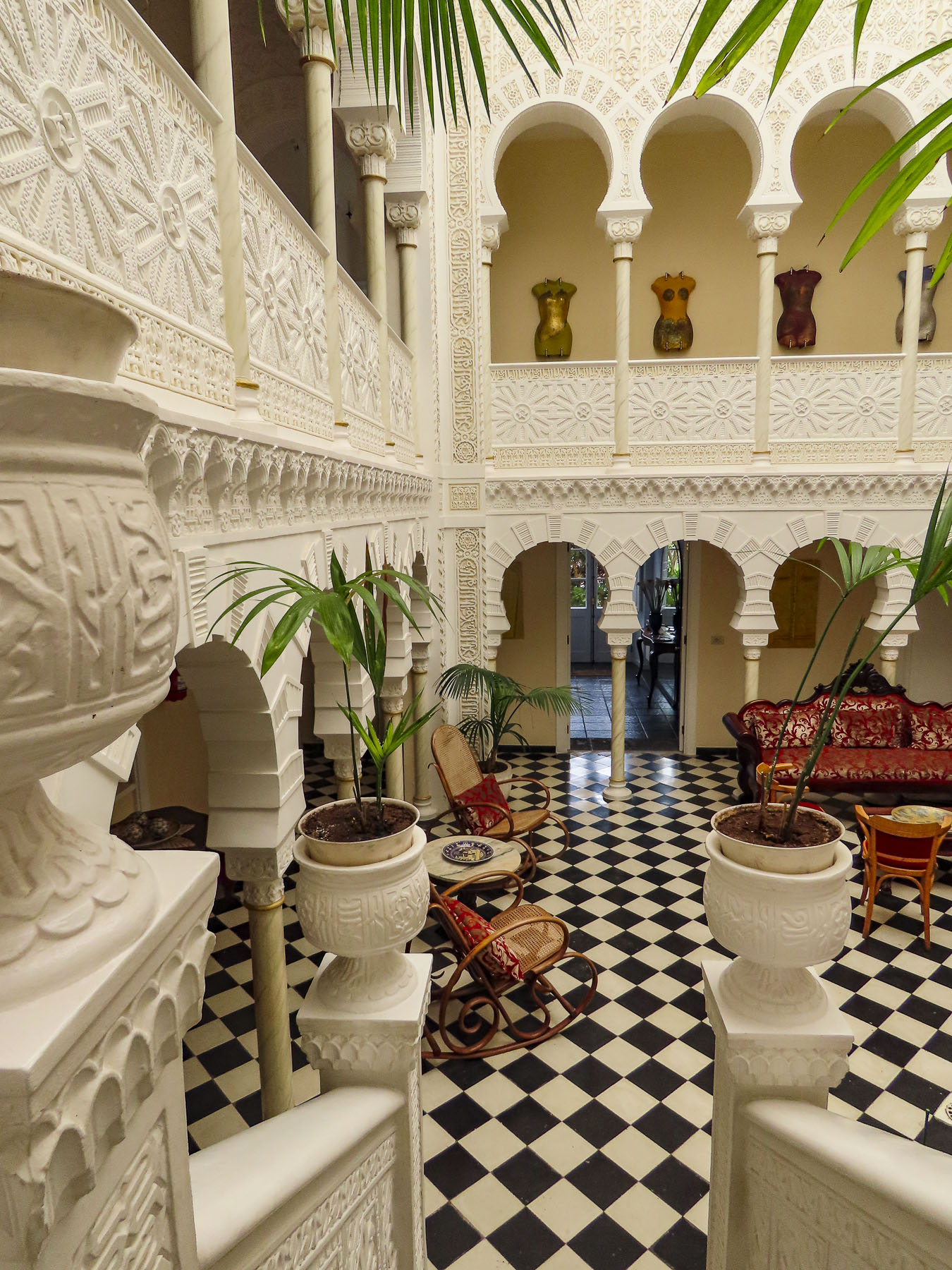
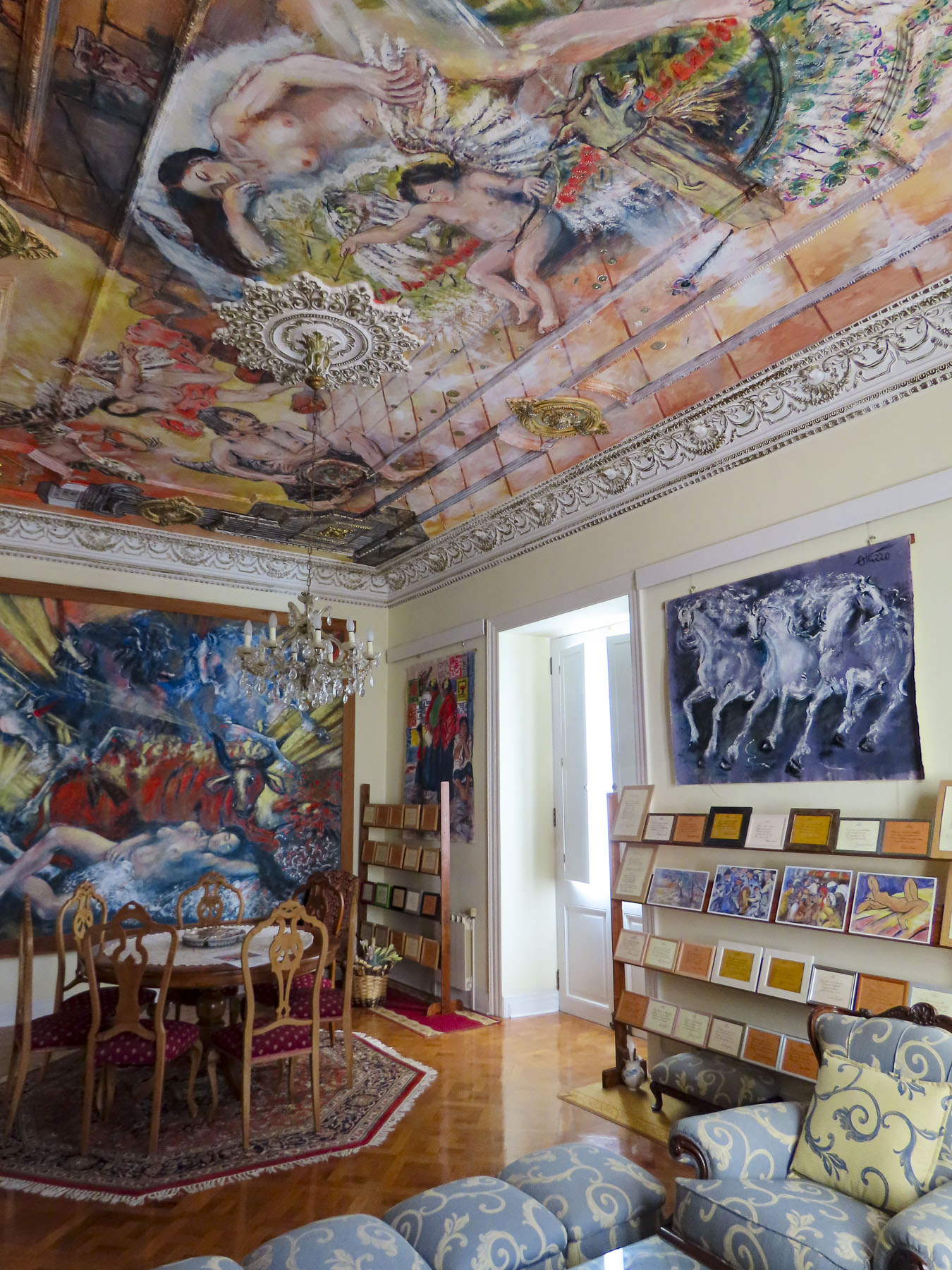
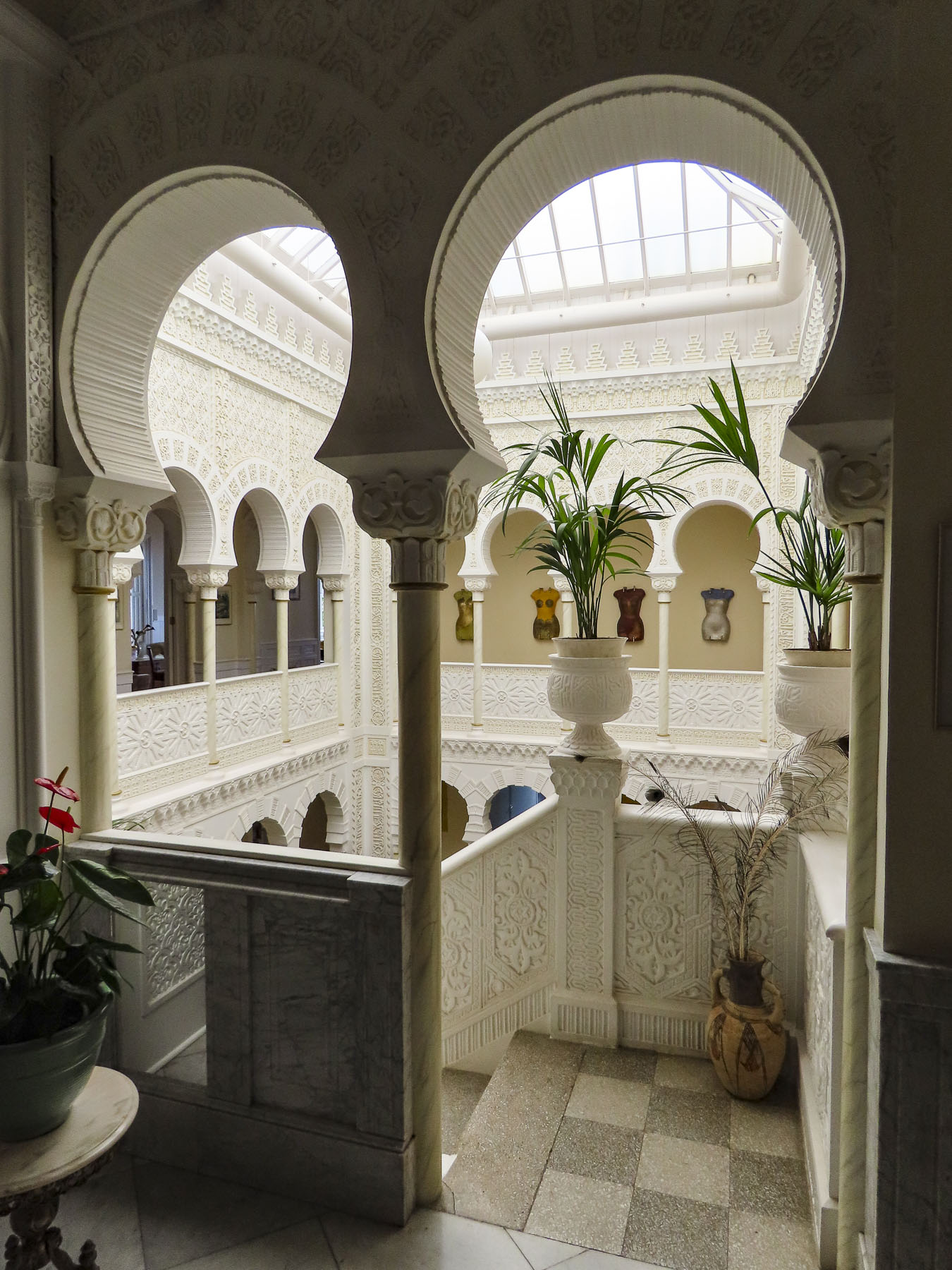
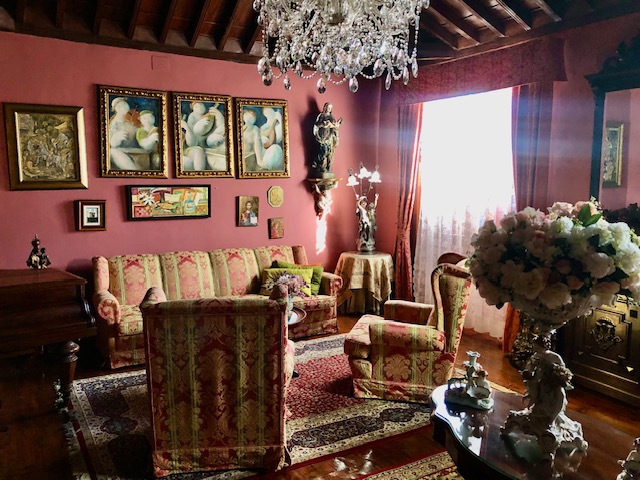
Late in the day we coasted into our parking space in front of Hotel Alhambra. Parking on the streets in La Orotava is free, but it’s a competitive sport. We chose to stay at this hotel for its distinctive architecture and location in the historic center. While the exterior of the 500-year-old dwelling is quietly classical, the interior walls of its Canarian-style courtyard were beautifully transformed in 1925 with intricate floral and geometric Nasrid art designs, created with gebs plasterwork and enclosed under a high glass roof. An eclectic decorating theme is highlighted with frescos by Maestro Antonio Otazzo, a local self-described painter, sculptor, musician, philosopher, and poet. As if being followed by a friendly giant, Pico del Teide was in our line of sight when we opened the shutters on our room’s window.

La Orotava was rather easy to walk around if we were walking across the slope, but after several days our hamstrings and calves were sore, though our butts were firmer. “Walk a little then café,” as we say was the perfect approach to exploring this wonderful town.

Along with San Cristóbal de La Laguna, it’s considered to be one of the prettiest towns on Tenerife.

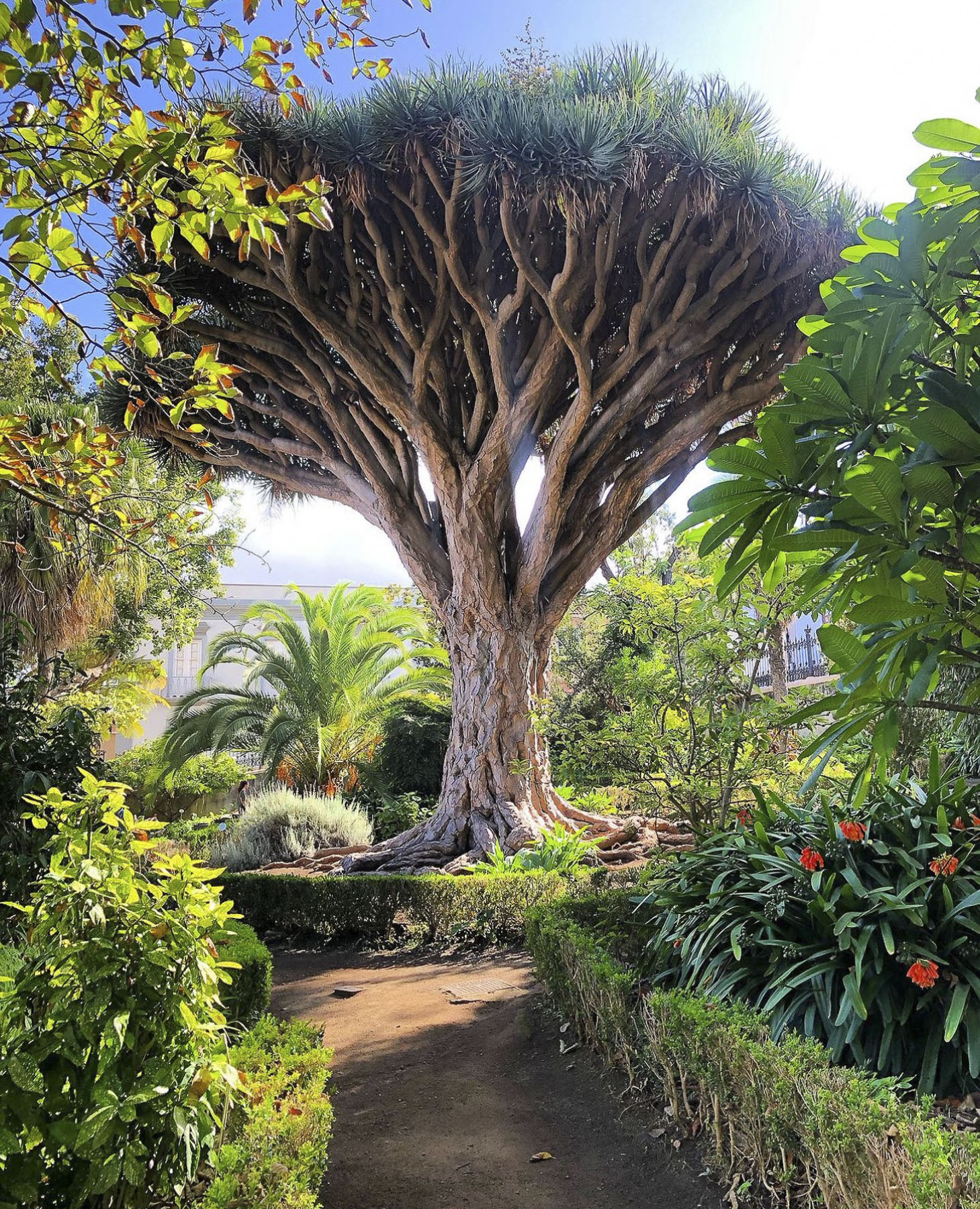
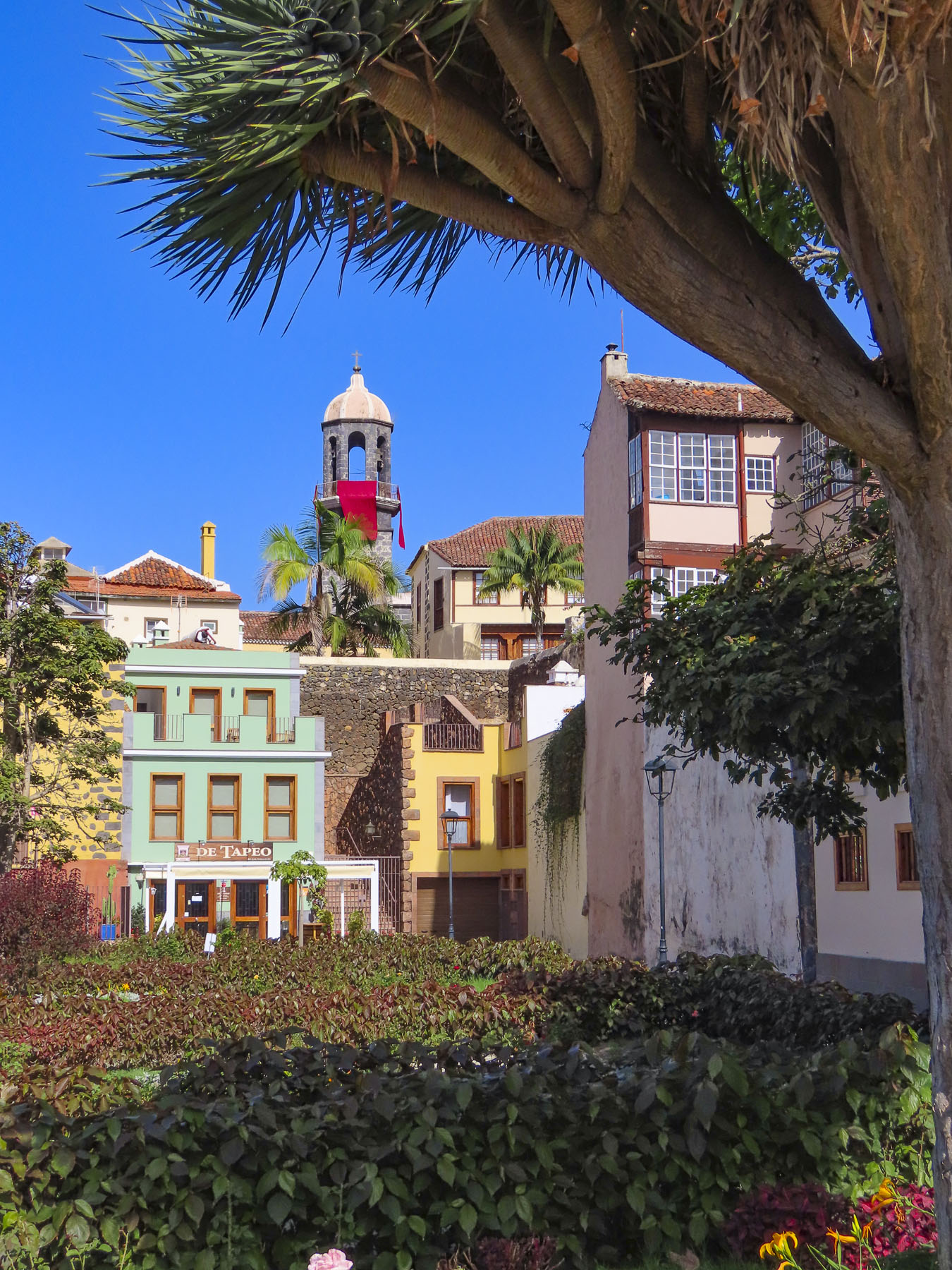
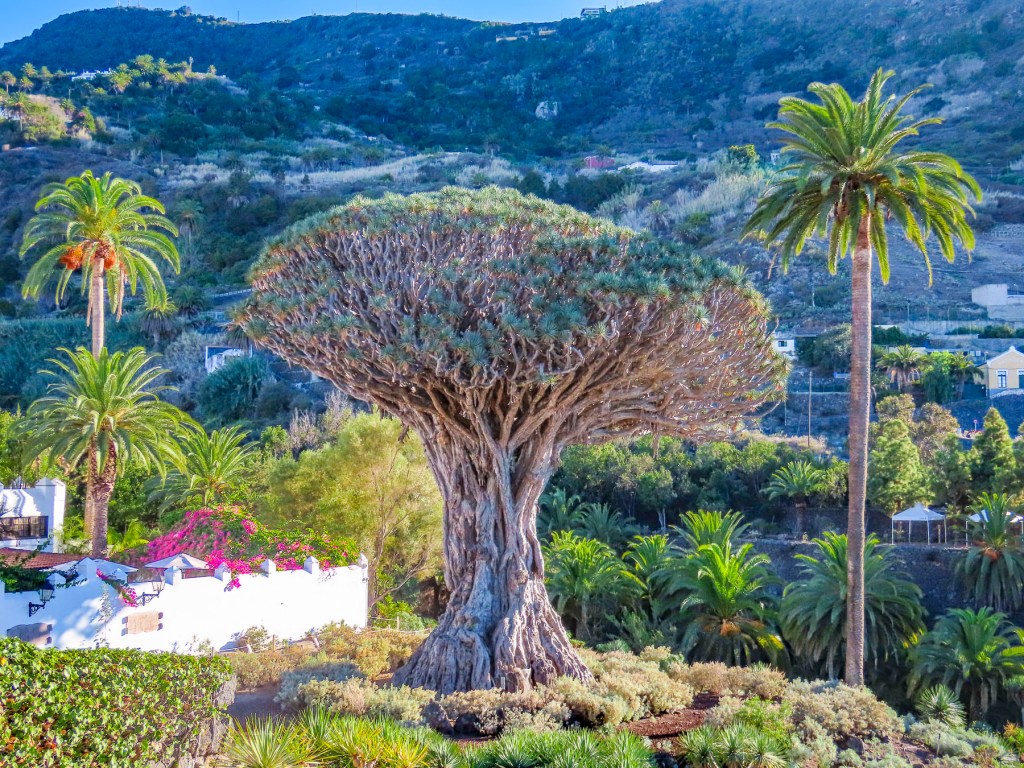
Getting to the higher points in town we asked the hotel to call for a cab, for a quick ride to the Jardines del Marquesado de la Quinta Roja. Once part of an estate, it’s named after the noble interred in the park’s marble mausoleum; as a member of the Masonic Temple his family was not allowed to bury him in the town’s catholic cemetery. Constructed in 1883, the garden is a beautiful French-style, terraced, formal garden with a view over the town and the distant sea. A smaller but older (1788) sister park next to it, the Hijuela del Botánico, features a towering dragon tree and other plantings of specimen trees collected from Spain’s former colonies.  And if you are in awe of dragon trees, as we are, the Villa de La Orotava Dragon Tree Tour might be for you.

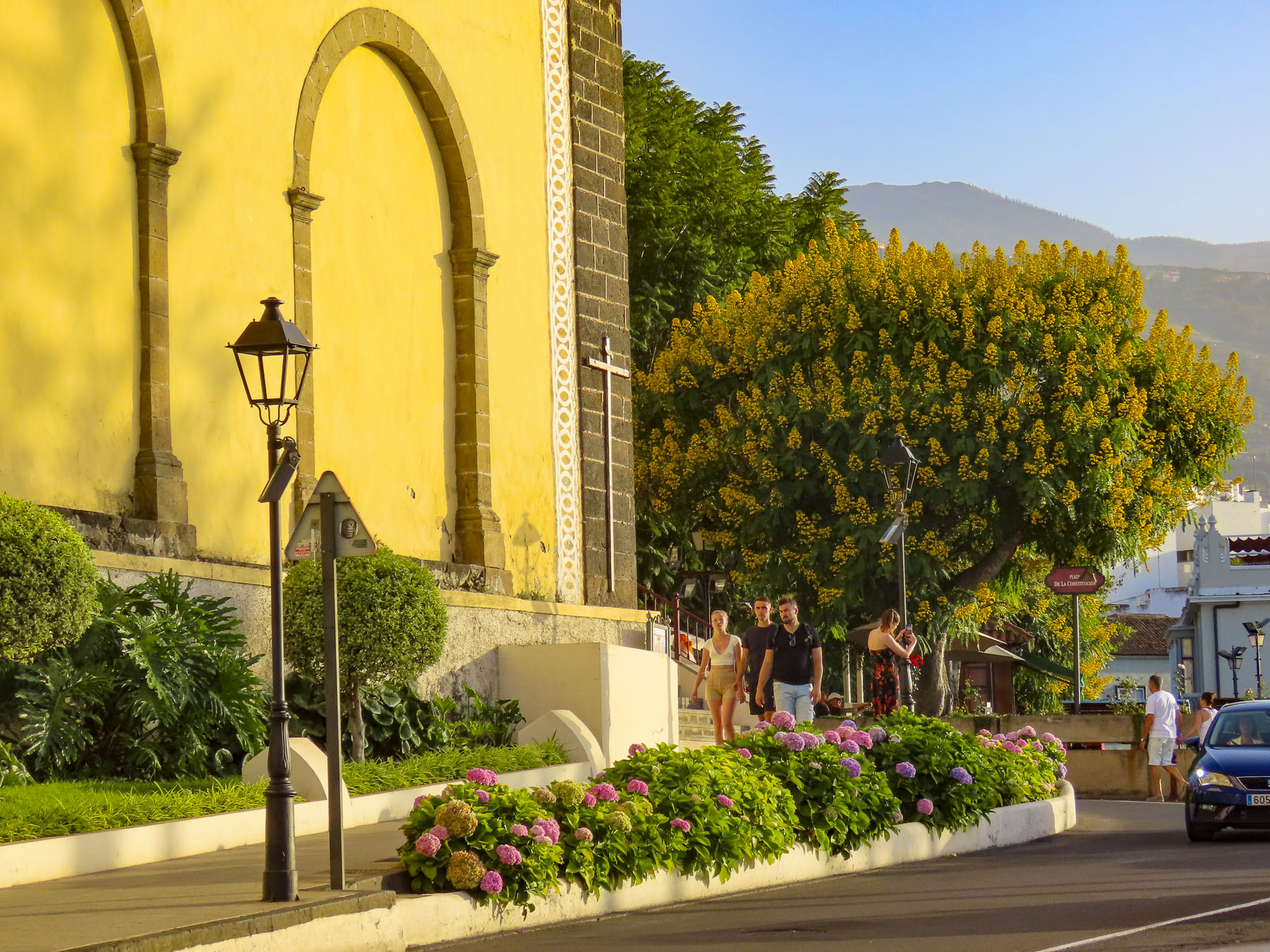
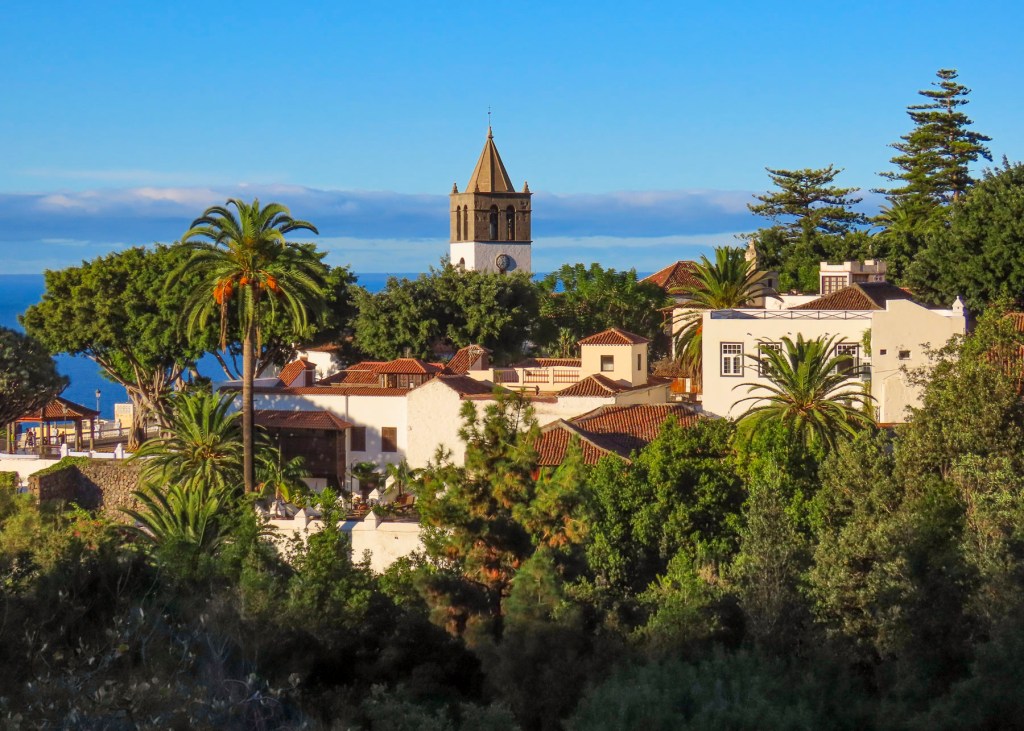
From the gardens we wandered downhill along cobbled lanes, past wonderful examples of colorful Canarian architecture, into the historic old town, which is centered around the Nuestra Señora de la Concepción. Started in 1516, it is the town’s oldest and largest church, with its colorful dome giving the town its iconic skyline.

But La Orotava’s history starts early in 1496 with the final defeat of Tenerife’s aboriginal Guanches at the battle of Aguere, after which their leader committed suicide by jumping off a cliff in nearby Tigaiga. “To the victor go the spoils,” and the fertile lands of the Guanche kingdom of Taoro were awarded to the nobles, conquistadors and financiers who participated in the Spanish victory.

The rich soil of the hillside was perfect for the cultivation of sugarcane and the steep streams from the mountain were soon harnessed to run sugar and lumber mills. Prosperity followed. Ice from Mt. Tiede chilled the drinks of the town’s wealthy.

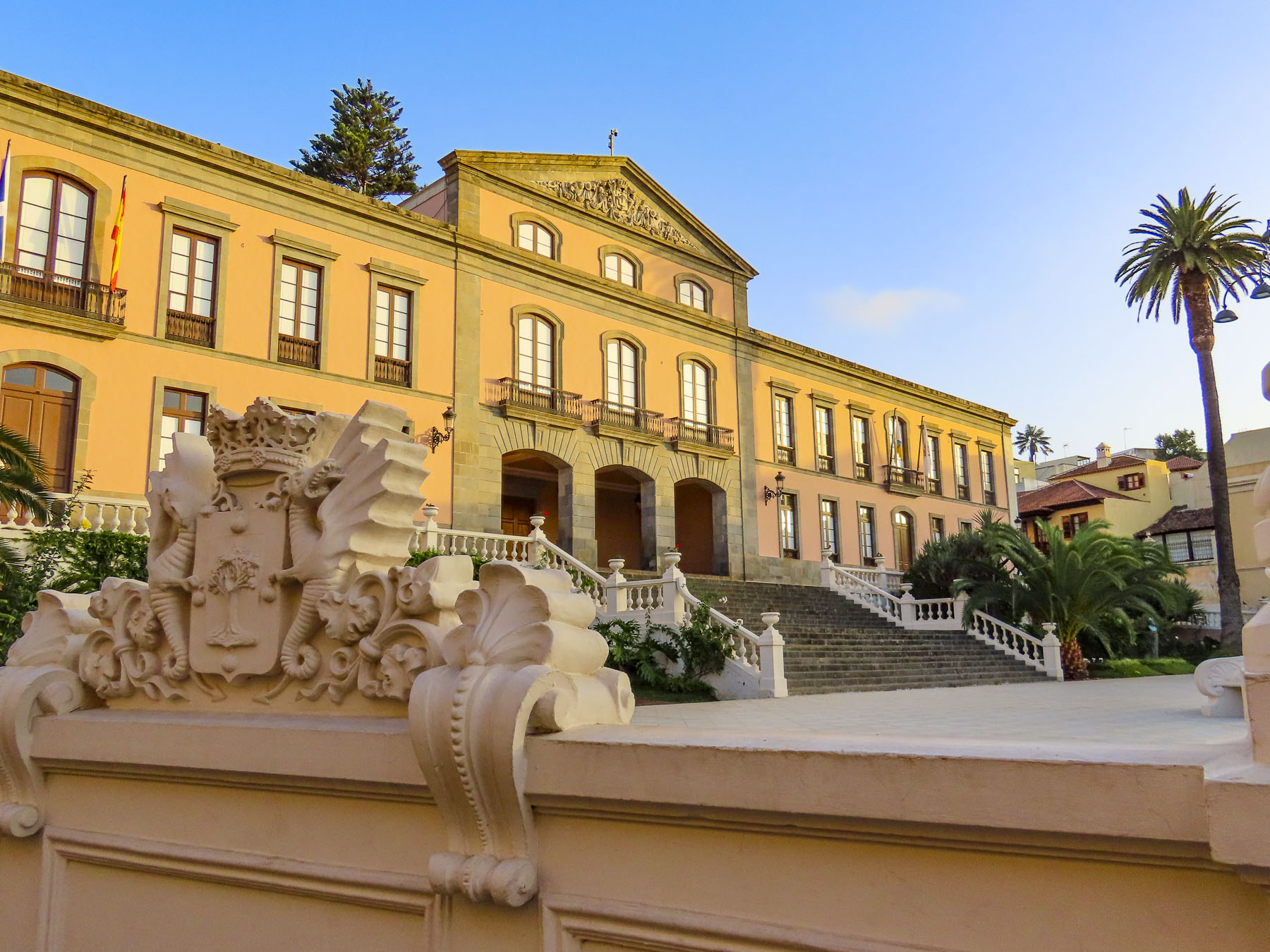
Landowners and merchants built large family mansions in a style which would become known as Canarian, which feature interior courtyards and distinctive facades with decorative wooden balconies and the family’s Coat of Arms prominently facing the street. Convents housed the daughters from families that didn’t want to diminish their wealth by paying the dowry for the girls’ wedding, as was the custom of the time. 

Vines and wine replaced sugar cane and ruled the town’s economy in the 17th century. In the mid-1800s, the textile mills of Europe were searching for different dyes, and mealybugs or cochineal were bred in cactus around La Orotava and harvested to obtain a crimson dye, produced from an acid that the bug makes to fight off predators. Since the late 1800s, vast banana plantations thriving on Tenerife’s mineral-rich volcanic soil continue to bring prosperity to the island and La Orotava, enabling the community to restore its historic buildings.

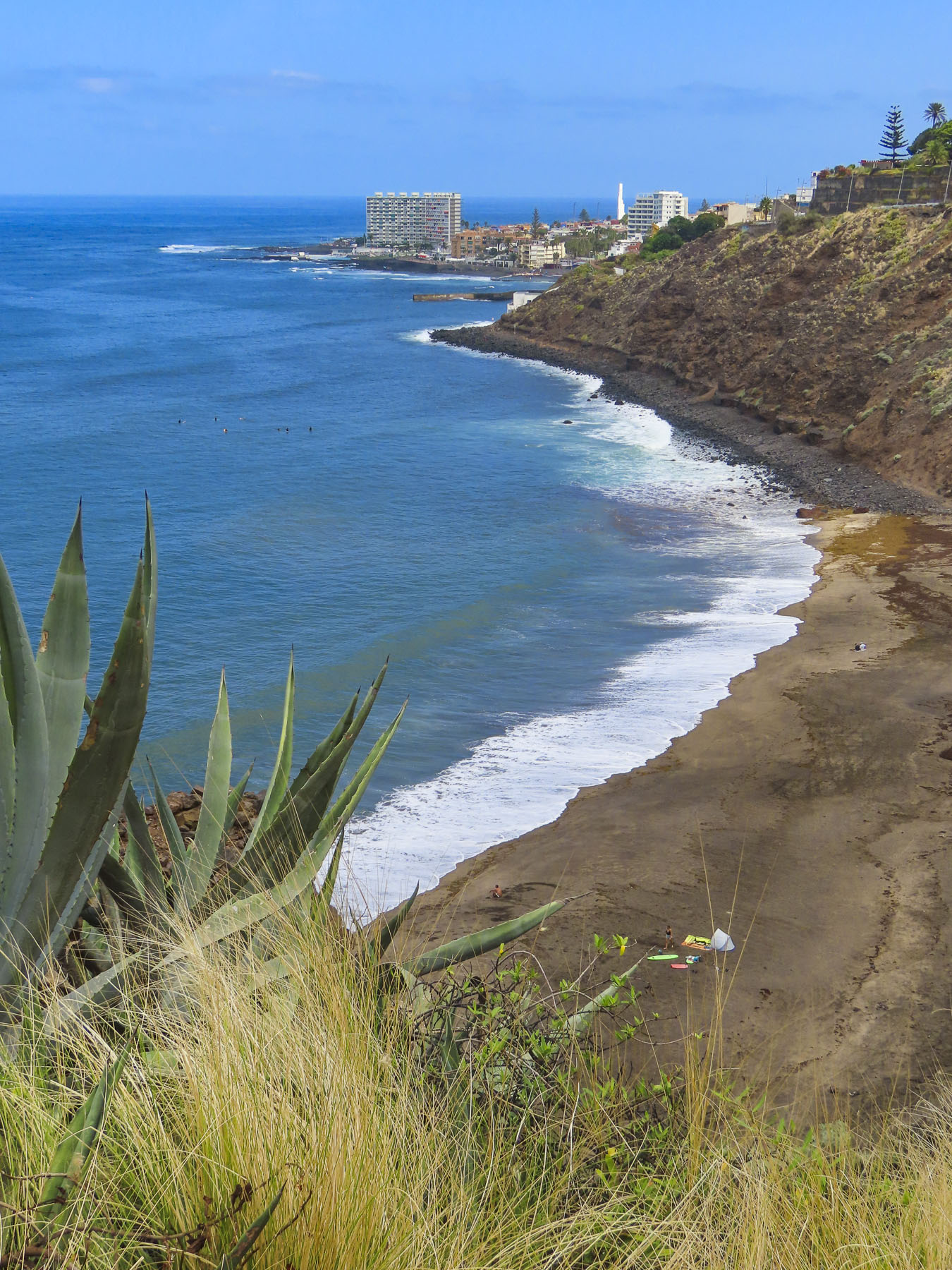
Not wanting to miss anything on Tenerife, we planned day trips from La Orotava around visiting coastal miradors and following any whims along the way. The Mirador Punta Del Hidalgo was not our favorite photographic destination, but we did enjoy stopping at the crescent shaped, black sand beach at Playa del Arenal in Bajamar, and a farmer’s market, Mercadillo del Agricultor in Tacoronte. Here we purchased some pastries for a snack and some Tuno Indio juice made from the purple fruit of the Canarian Red Prickly Pear. The cactus was brought to the Canary Islands from the Americas centuries ago and has been used in Canarian folk medicine to lower blood sugar and treat other ailments. It also has antiviral, anti-inflammatory, antioxidant, and anti-ulcerogenic properties. It tastes pretty good.

Afterwards we headed to the Mirador La Garañona in El Sauzal. Set dramatically atop a 1000ft sheer cliff, there’s a tremendous view of the coast below. And the park’s shaded paths led to a delightful small café perched at the cliff edge. We lingered and soaked in the view.

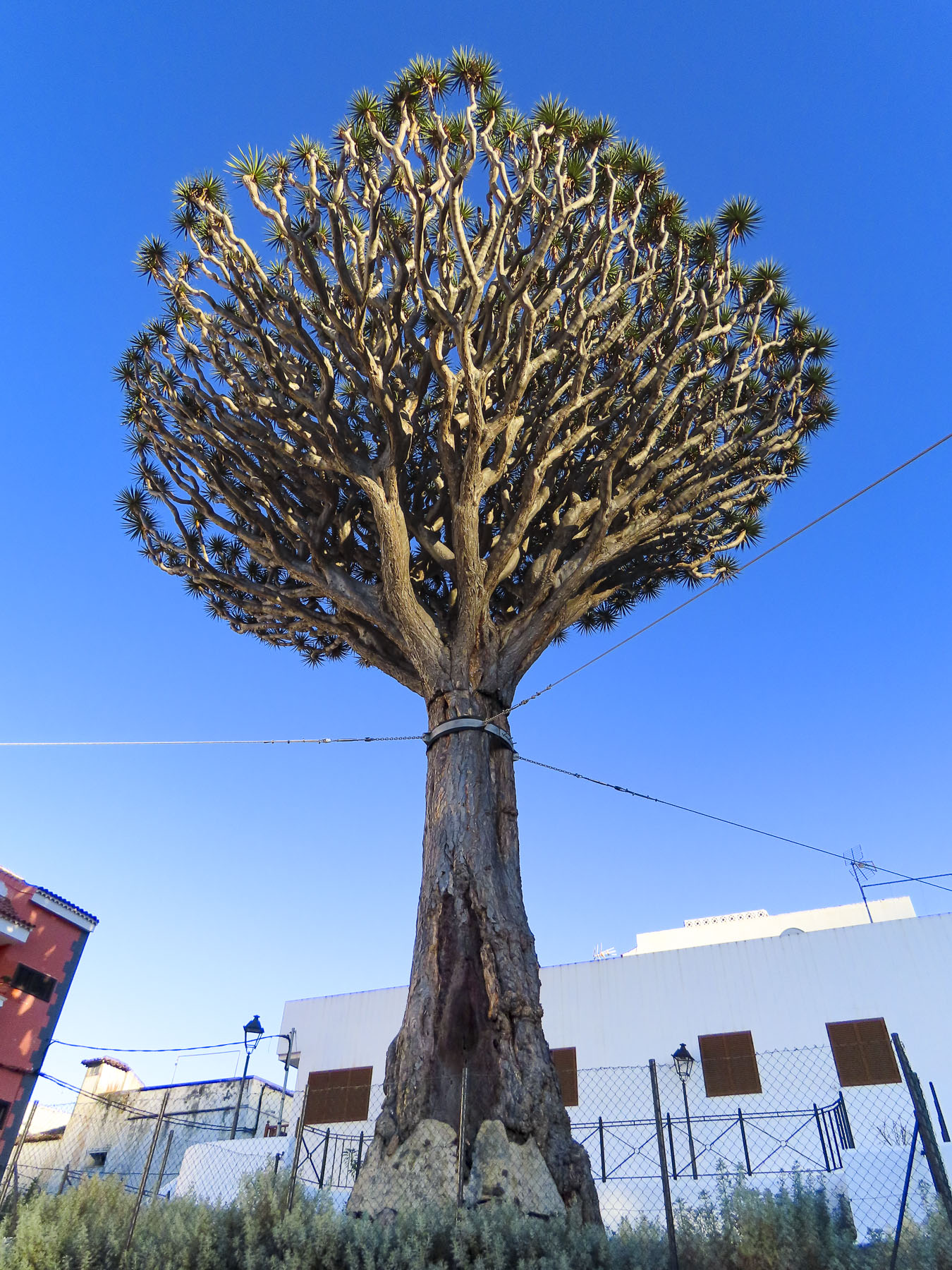
On the way to the mirador, we whizzed passed a small neighborhood restaurant set by itself on a corner, and decided to try it on our return trip. But first we had one last stop to make on the way at the Iglesia de Santa Catalina. It’s a classic, white-washed church from the early 1500s and picture perfect with its magnificent dragon tree in front.

Lunch at Restaurante el Calvario was delightful, with excellent house wine and menu featuring traditional Canarian dishes. A young friendly staff, tolerant of our poor Spanish, contributed to a very enjoyable afternoon.

Puerto de la Cruz, just down the hill from La Orotava, was the destination for our last day trip. Originally a small fishing village, the town grew in importance after the main harbor on the north coast of Tenerife in Garachico was filled with lava from a 1706 volcanic eruption. Close to La Orotava, it also benefited from that town’s thriving economy, with the export of sugar, wine and bananas from its port. It has been a popular vacation spot since the Victorian era. Now it attracts visitors and expats from across Europe, drawn to its cosmopolitan vibe, wide beaches, quaint historic center, numerous parks, and vast array of restaurants.

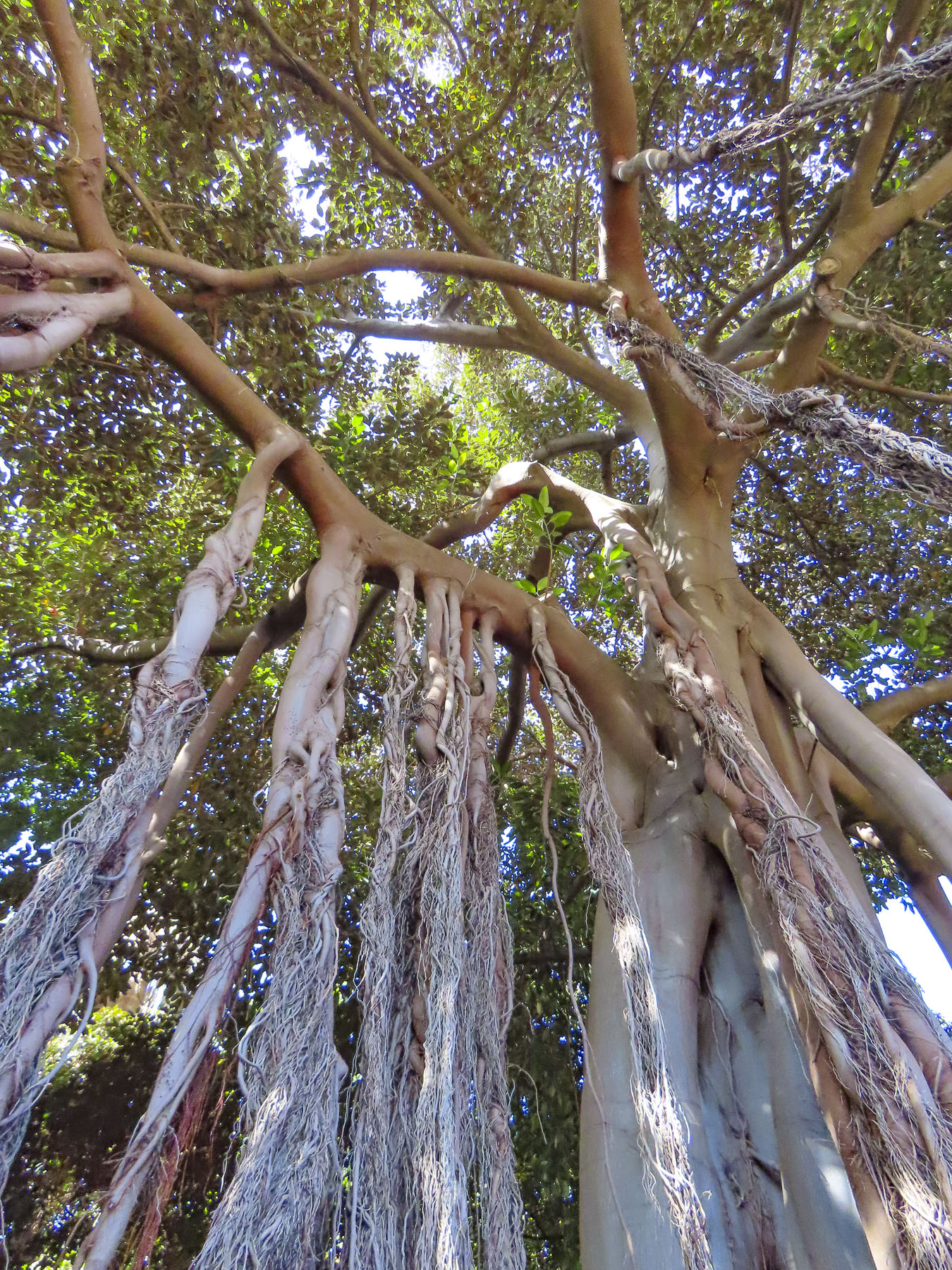
Giant three-hundred-year-old fig trees, planted when the park first opened in the 18th century, are king here. Shaded pathways thread through a cornucopia of verdant jungle, flowers, and water garden. We enviously wished that we could grow everything in our garden at home.

In the historic center we had coffee across from the majestic Iglesia de Nuestra Señora de la Peña de Francia and afterwards were able to catch a glimpse of a bride and groom taking their vows. Their antique wedding car waiting under gently swaying palm trees on the plaza in front of the church.

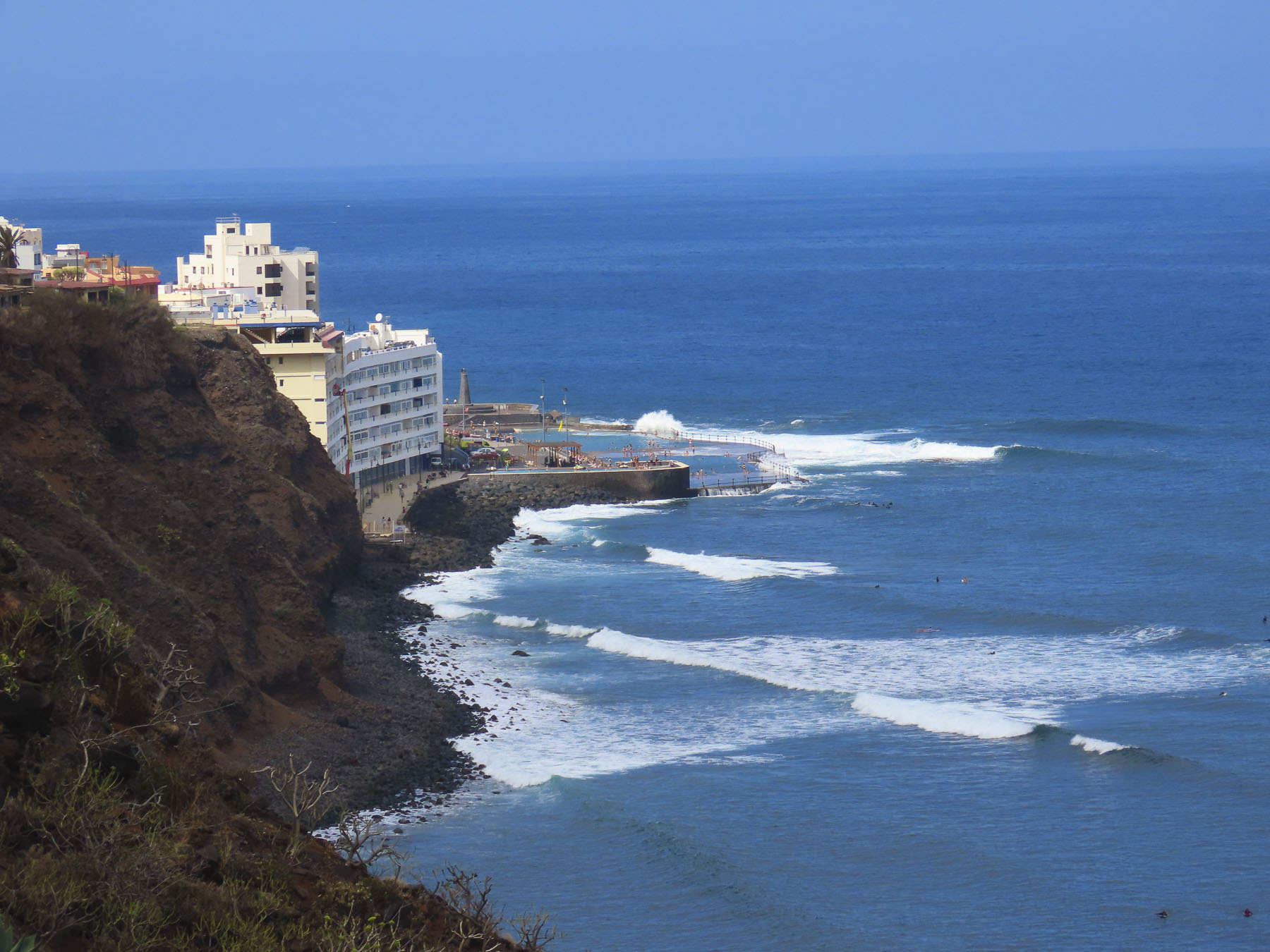
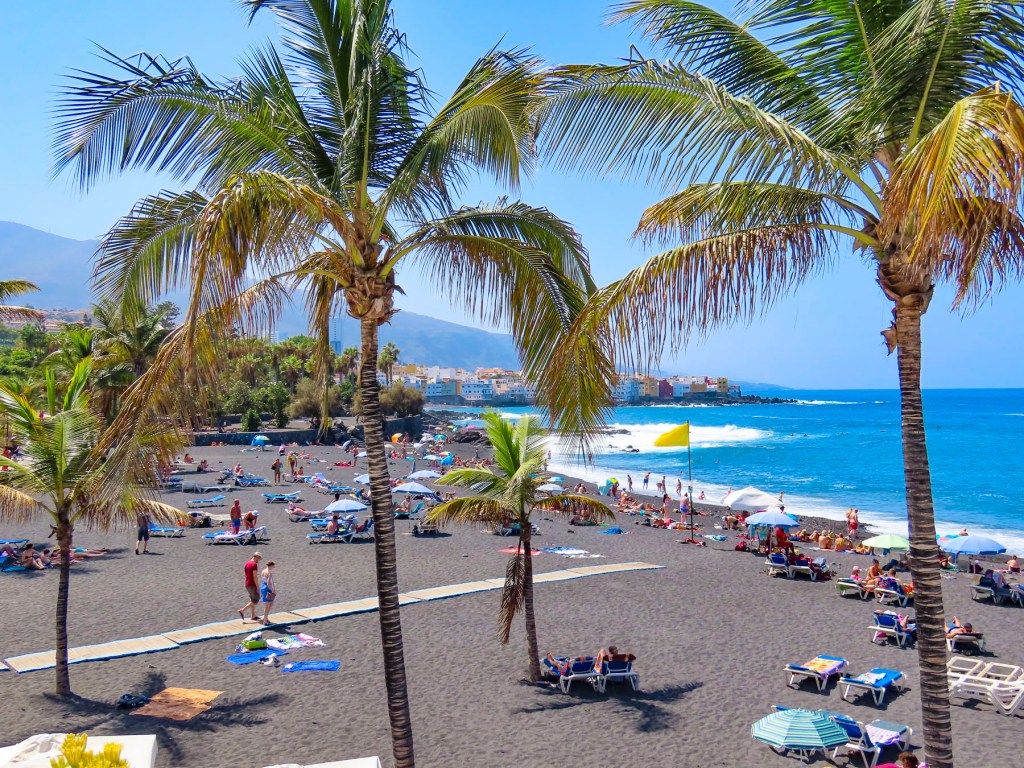
The waterfront in Puerto de la Cruz is beautiful and there are numerous beaches and tidal pools along the coast where you can swim. We strolled along the promenade above the black sand beaches at Playa Maria Jiménez, and Playa Chica to El Castillo San Felipe, a small block fortress built in the 1600s to prevent pirates or the British from landing on the beach here. We lunched along the boardwalk under umbrellas just yards from the surf.

Stopping at the Mirador Roger Piedra Gorda and Mirador Roque Grande rounded out the afternoon. Though parking was a challenge at both spots, we think the effort was worth it for the dramatic seacapes we viewed.

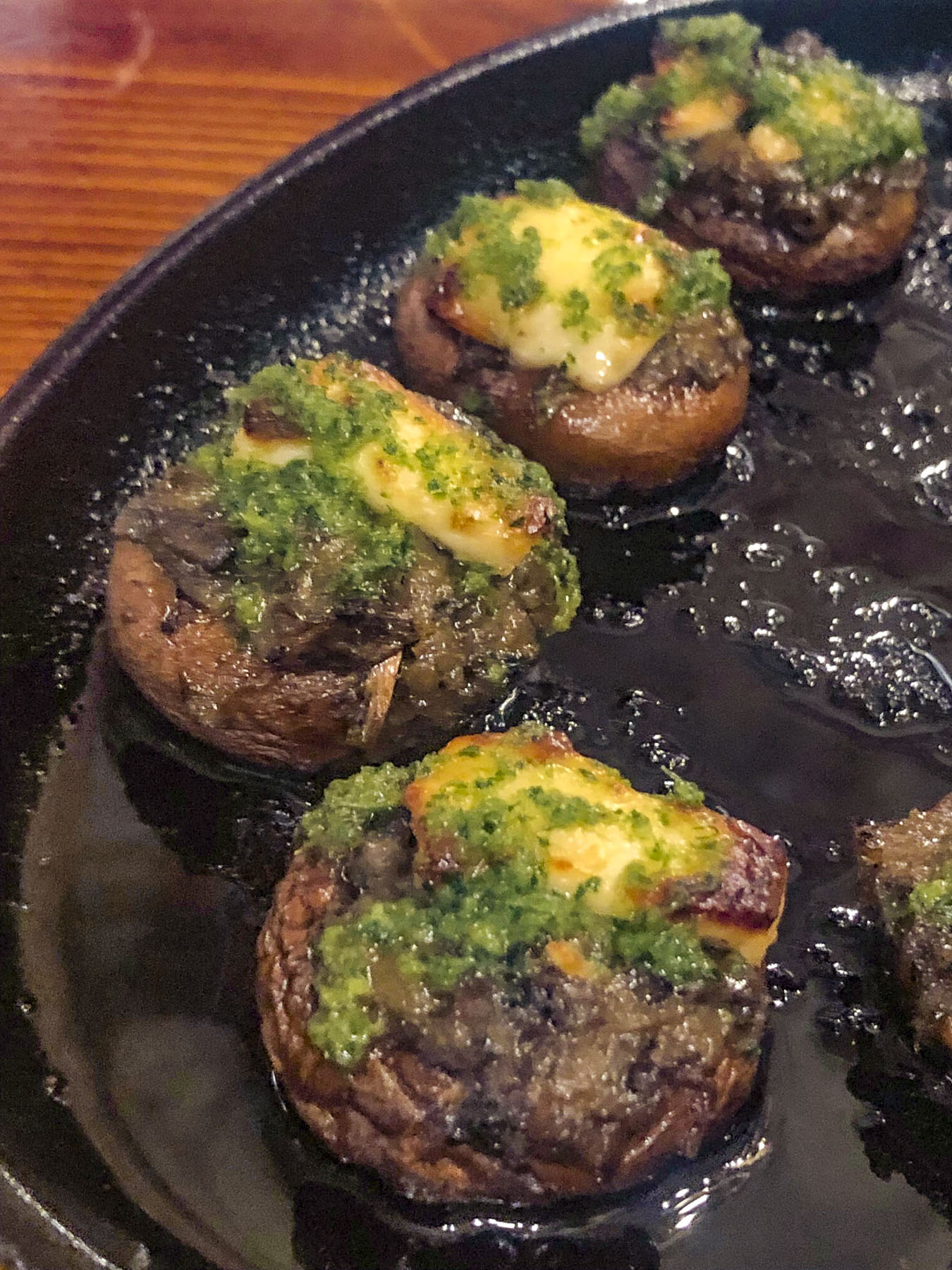
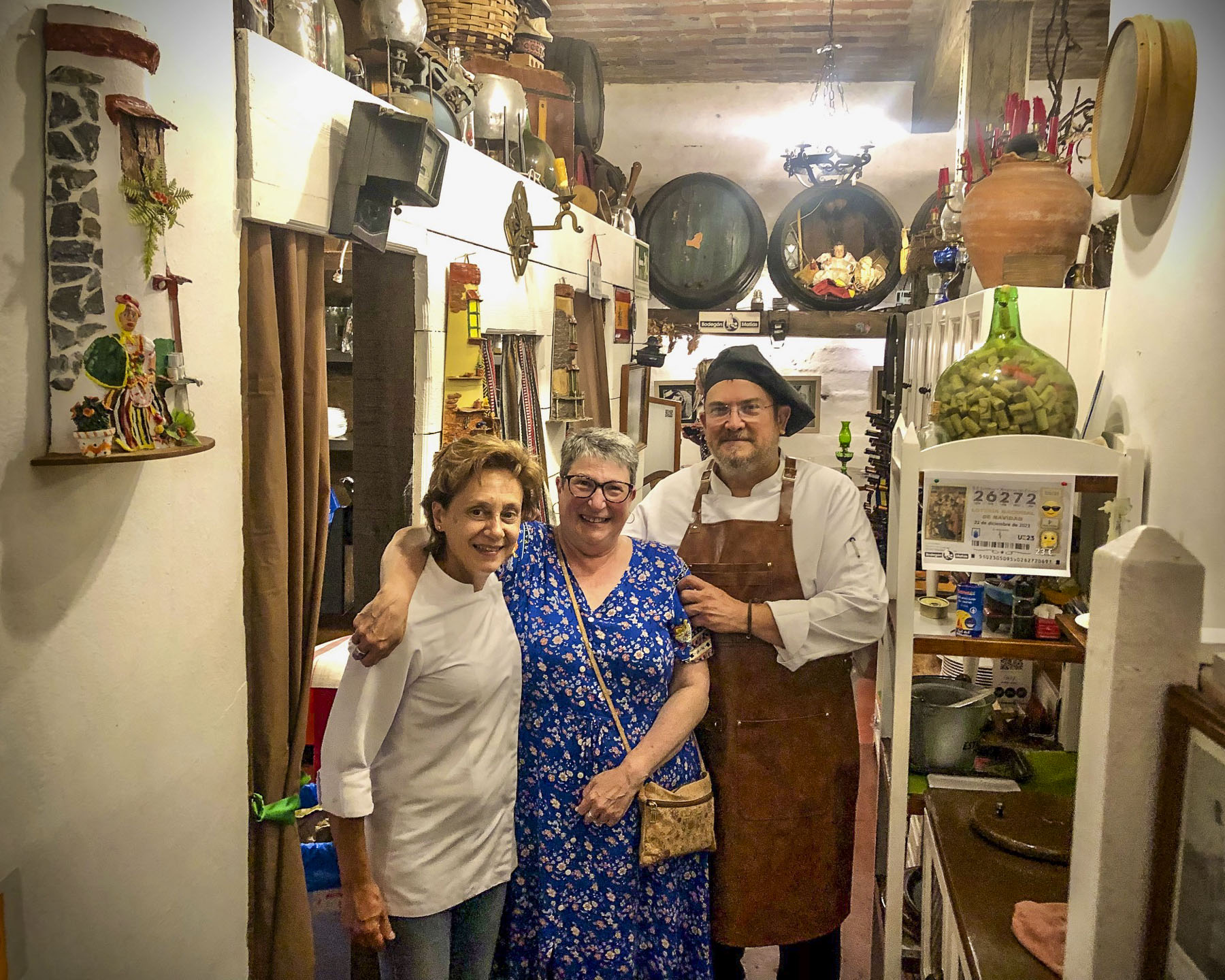
That evening we drove up into the hills above La Orotava and enjoyed a great meal at Bodegón Casa Matías. It’s a rustic establishment, decorated with wine barrels and antique farming tools to acknowledge the history of the region. The chefs and owners, a vivacious husband and wife team, are part of Tenerife’s farm to table movement, sourcing only local meats, including rabbit and goat, fish, cheeses, and seasonal vegetables for their traditional Canarian recipes.

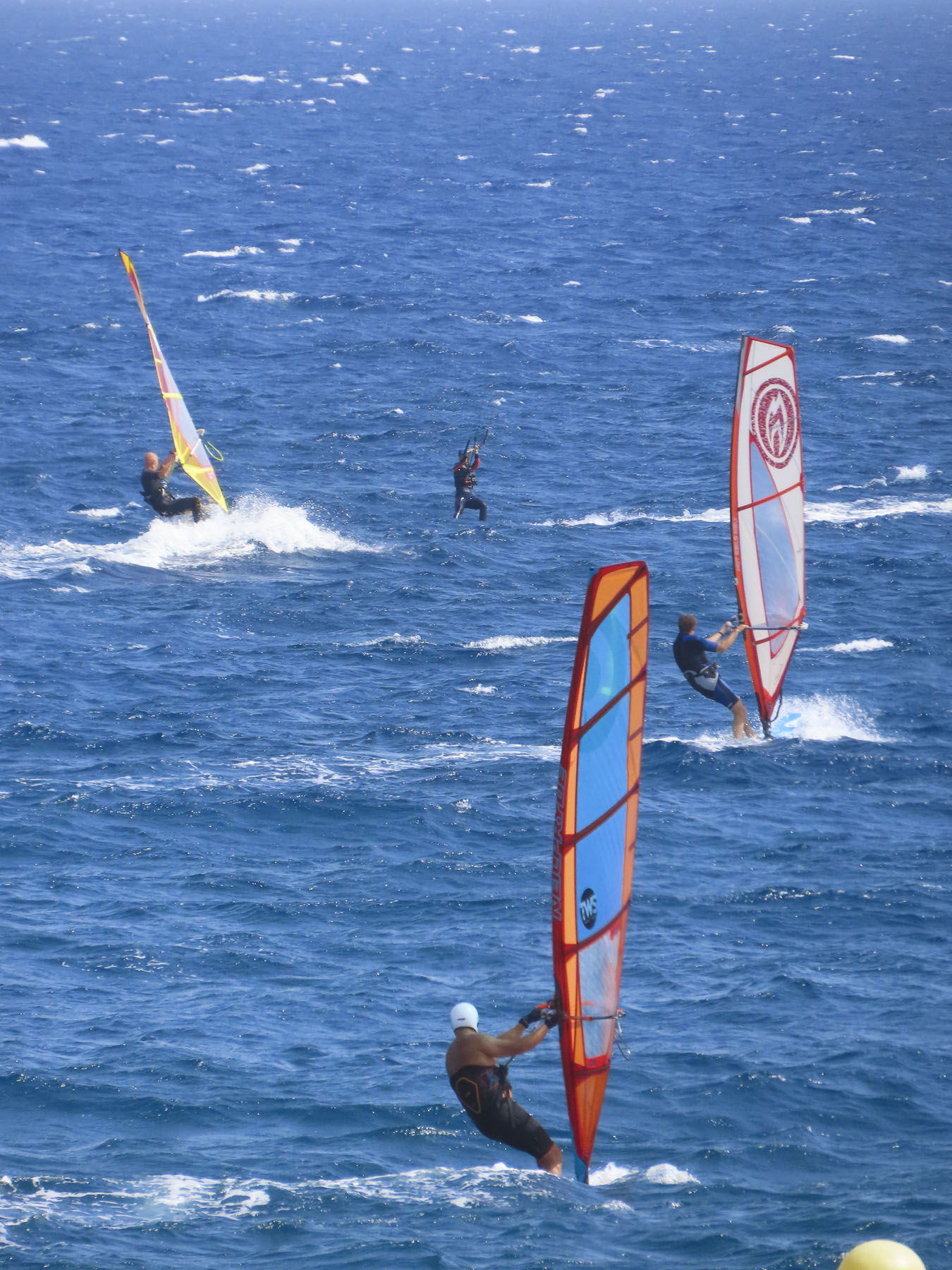
For our last full day on Tenerife, we headed to El Médano to be nearer the airport for a flight the following morning. Arriving late in the afternoon to Playa del Médano we entertained ourselves watching wind and kite surfers speed across the whitecaps. The more experienced kiters crested the waves and performed aerobatics before splashing back into the sea.

Closer to town, families favored the gentler waves, wider beach, and a view of Montaña Roja volcano on the horizon. Tables at eateries along the boardwalk were quickly filling as the golden hour approached.

A crescent beach, gentle waves, good wine and delicious seafood – is there a better way to end the day? We’ll miss Tenerife.

Till next time, Craig & Donna

Tenerife Part 2: Icod de los Vinos or Colonial Charm, Dragon Trees, and Miradors

Departing Santa Crux de Tenerife, we drove along the TF-5 towards Icod de los Vinos, our base for the next several days as we explored the lower part of the north side of the island. A compass orientation doesn’t accurately describe how Tenerife is split into north and south regions, but Pico del Teide and its rugged highlands roughly divide the island into the dryer South, which faces Africa and catches the westerly blowing Sharqī, a hot wind from the Sahara, while the North of the island is shielded by Pico del Teide from the hot winds blowing west from Morocco, is wetter from Atlantic Ocean storms.

We are not really resort and beach people; there’s that getting sandy issue that deters us. We do enjoy a close proximity to the ocean and beautiful seascapes, both of which were easily attainable on the north side of Tenerife. We figured that the best way to do this was to chase miradors. And there wasn’t any shortage of them on the island. We figured enroute to them we’d pass other wonderful discoveries that would spur us to detour and investigate, rounding out what we saw of the island.

Set on a steep hill, the restaurant La Barada, just a short distance off the highway, was our first stop. Though technically it’s not a mirador, it is a popular place due to its glass pier that is cantilevered dramatically out over the countryside from the restaurant. It offers an amazing bird’s eye view of the coast with Pico del Teide in the distance. The food was also very good and the terrace was alive with boisterous activity the afternoon we stopped. 

We arrived late in the afternoon to our lodging at Hotel Emblemático San Marcos in iIcod de los Vinos. Located on a steep narrow street, it was a challenge to park close to the buildings on the driver’s side and still have enough room to get out of the car, but the parking was free and right in front of our hotel. Built in the early 1700s as a private mansion, it exemplified typical Canarian architecture of the period with its courtyard and meticulously crafted interior, rich with polished wood. The view from our room over the red tiled roofs of Icod extended to the sea.

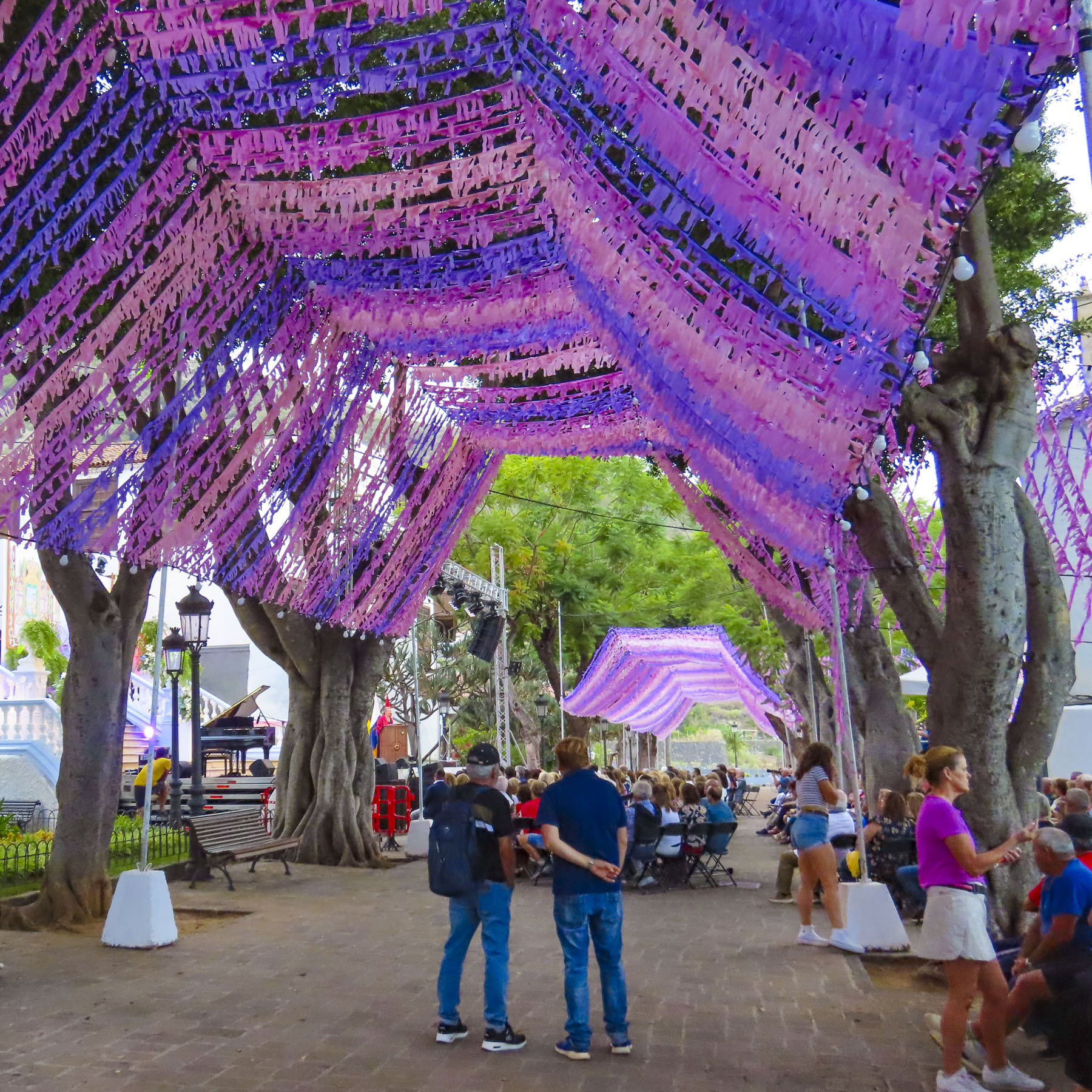
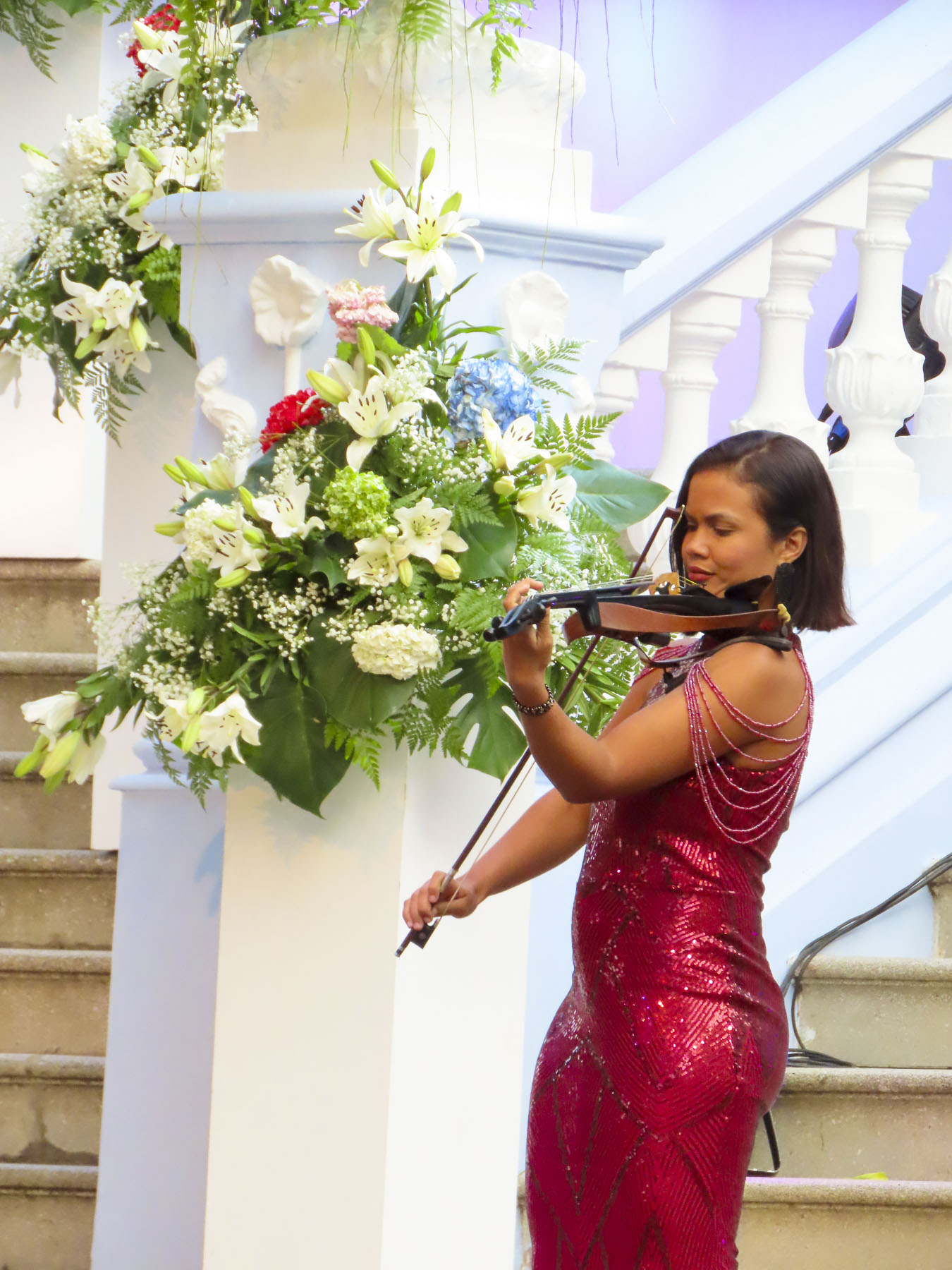
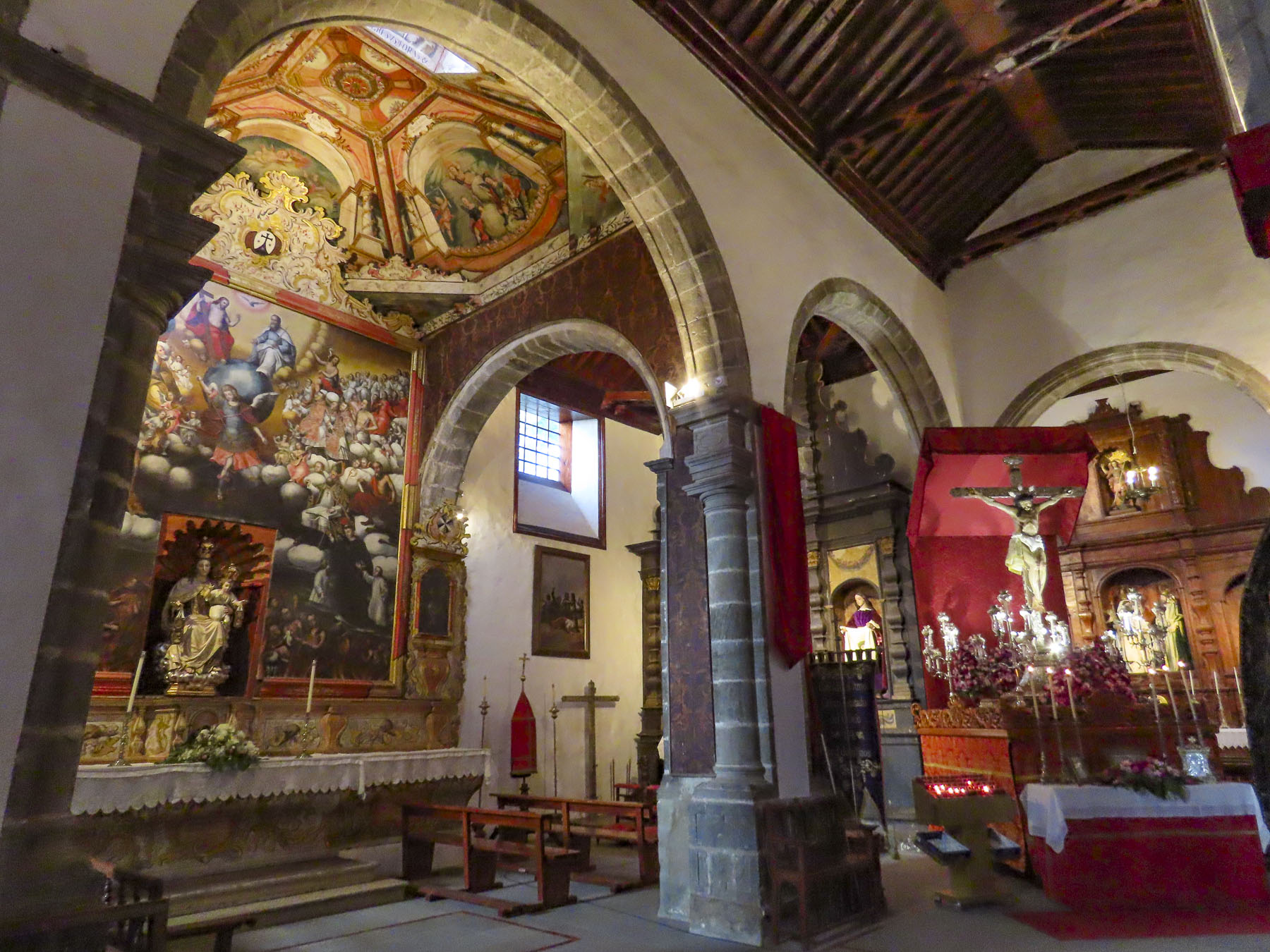
Still early in the evening, we headed uphill to explore the historic center of the town and to our delight happened across an outdoor concert in the festively decorated plaza next to the Iglesia Mayor de San Marcos. The performances were part of the town’s September’s month-long Christ of Calvary celebrations. Legend says that when the conquistadors first landed on the beach here in the late 1400s they discovered a statue of San Marcos awaiting them. A fortuitous omen that promptly required a church be built. A century later the church was beautifully expanded to what it is today.

As the evening was darkening, we caught our first glimpse of El Drago Milenario. Believed to be 1000-years-old, it is the largest dragon tree on Tenerife. With over 300 branches, and a circumference of 66 feet, it’s a lofty 70 feet tall.

Beloved by the folks of Icod de los Vinos, the tree’s image is included on the town’s coat-of-arms along with Mount Tiede which also towers over municipality.

In centuries past trees harvested from the mountain’s slopes were sledded down the steep ancient roads of the old town, all the way to the harbor, where prosperous shipbuilders used them in the construction of naval vessels that participated in the ill-fated Spanish Armada of 1588. This unique sledding tradition is still kept alive every November with the La Fiesta de las Tablas, when younger folks speed down Plano Street on tablas, polished planks of wood, that often become airborne with their riders when they hit bumps in the road. Unfortunately, we did not witness this fiesta, but the video clips on YouTube are amazing. The cleared slopes around the town now host orchards, vineyards and banana plantations.

That evening we watched the climax of the festival – a spectacular fireworks display – from the balcony of our room. Throughout the night church bells continued to ring out loudly at odd times with seemingly random numbers of chimes. A curious oddity at the end of a wonderful day.

The weather was brilliant and the next morning we set out to visit the Mariposario del Drago, a large glassed enclosed tropical greenhouse that has a butterfly breeding program. Being gardens we find butterflies very entertaining. The experience here was delightful, and elicited smiles from everyone when a butterfly landed on them.

Across the street from the Mariposario, the El Drago Milenario stands behind a high walled and gated fence. The small admission fee to the park is well worth it to support the town’s effort in keeping this goliath of a tree alive. But, if you’d rather skip the expense and put it towards coffee or lunch, there’s an enticing café named Casa del Drago, with a good view, right next door. Farther uphill along Calle San Antonio there is Drago junior, a magnificent younger dragon tree that, according to legend, the town seized from its owner when he tried to cut it down in a fit of rage.

Fortunately, this part of the historic town center is relatively flat and the walking was easy as we headed back to admire the plaza around the Iglesia Mayor de San Marcos in the daylight and the church’s 16th, 17th, and 18th  century religious art.

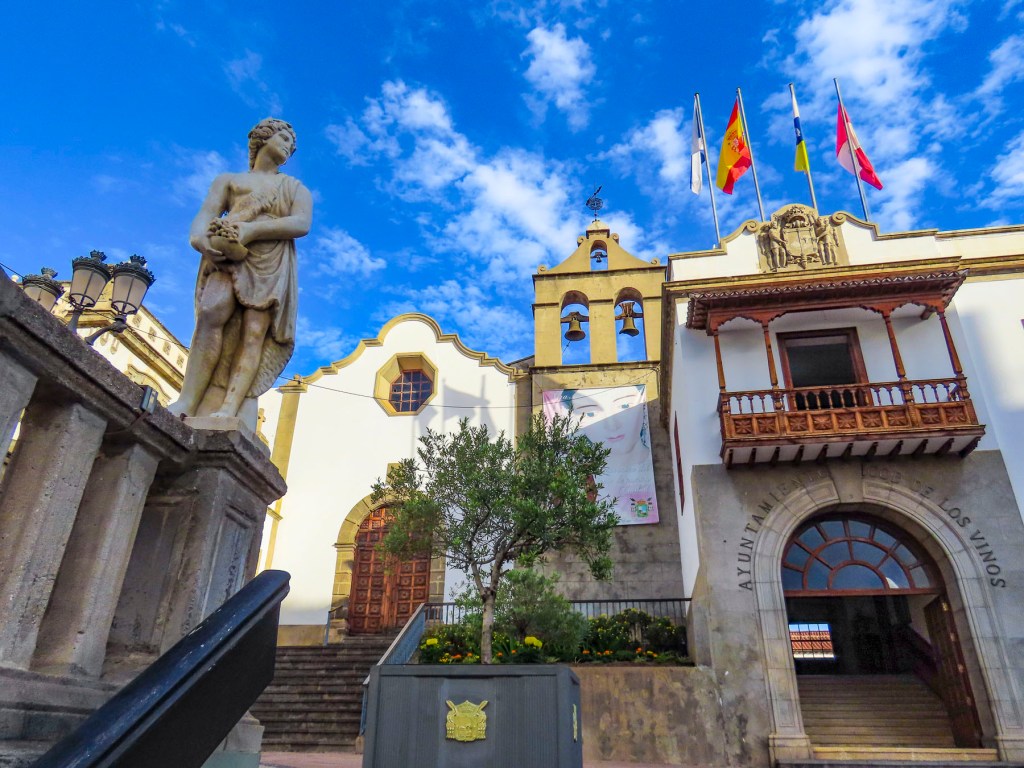
Afterwards we strolled along the town’s old lanes until we reached city hall and the Iglesia de San Agustin, both of which are dramatically set on a small plaza at the top of a set of ancient stairs. The church dates from the late 1500s and was originally part of the first convent built in the town by the order of Los Augustinos.

The road to Playa de San Marcos in the harbor of Icod is spectacular with views of the coast. It was here, in this sheltered bay, one the few natural harbors on Tenerife’s north coast, that the Saint’s venerated statue was discovered in a cave along the cove.

We found it best to just find a place to park and then walk to the vantage point that interested us. During the September shoulder season when we visited, tourists were scarce and finding parking was relatively easy.

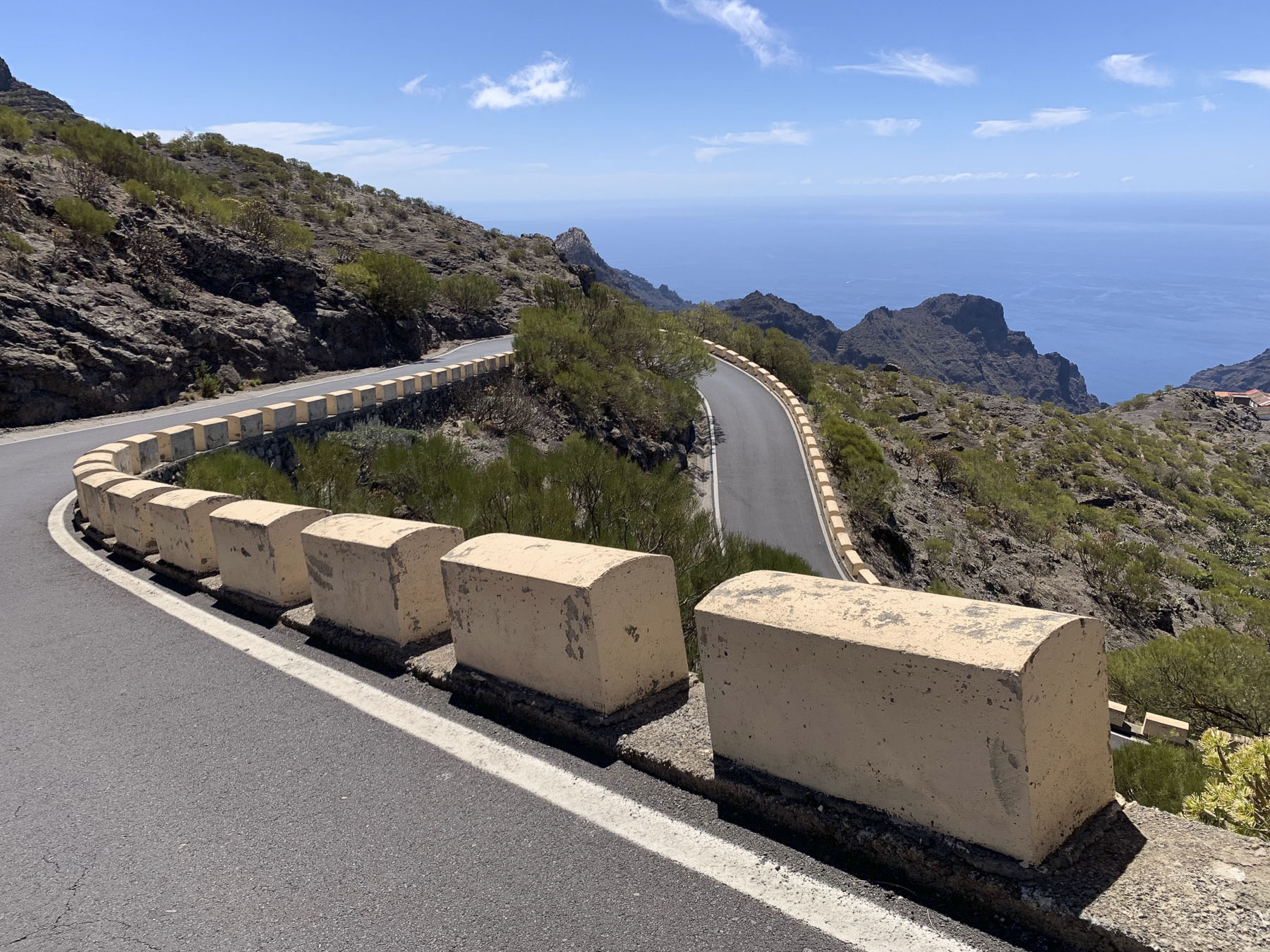
Early the next morning we headed towards Puerto de Santiago on a route that took us to the mountain ridge above Icod. The final destination of the day would be the isolated village of Masca. A serpentine drive from Icod led to a hairpin turn that fed us into Vieja a la Vega, a very narrow steep lane, but really more like an alley lined with homes. This was one of the steepest roads we’ve ever encountered, requiring us to downshift to second gear for the long and seemingly endless ascent to the main road at the top. Fortunately, we didn’t encounter any cars coming downhill, as there was literally no room to pass. At the top we intersected the TF-5 and followed it through an old growth forest covered with stately pine trees. Continuing on, the road traversed a Martian like landscape. A huge lava field that was the result of Volcano Chinyero‘s last eruption in 1909. The terrain became noticeable drier as we crossed the mountain and descended into Santiago del Teide.

The roads to Pico del Tiede, Masca, and Puerto de Santiago converge here, making it the perfect spot for a café break before continuing down to the Mirador Archipenque to view Los Gigantes, a stretch of tall cliff face that dramatically rises straight up from the sea.

From here you can also see two of the other Canary Islands, La Gomera, and La Palma on the horizon.  For centuries Santiago was a quaint fishing village, but it has embraced tourism and now draws folks enchanted by its natural beauty and striking location along the coast. Its harbor from November to February is also a popular hub for whale watching excursions to depart from.

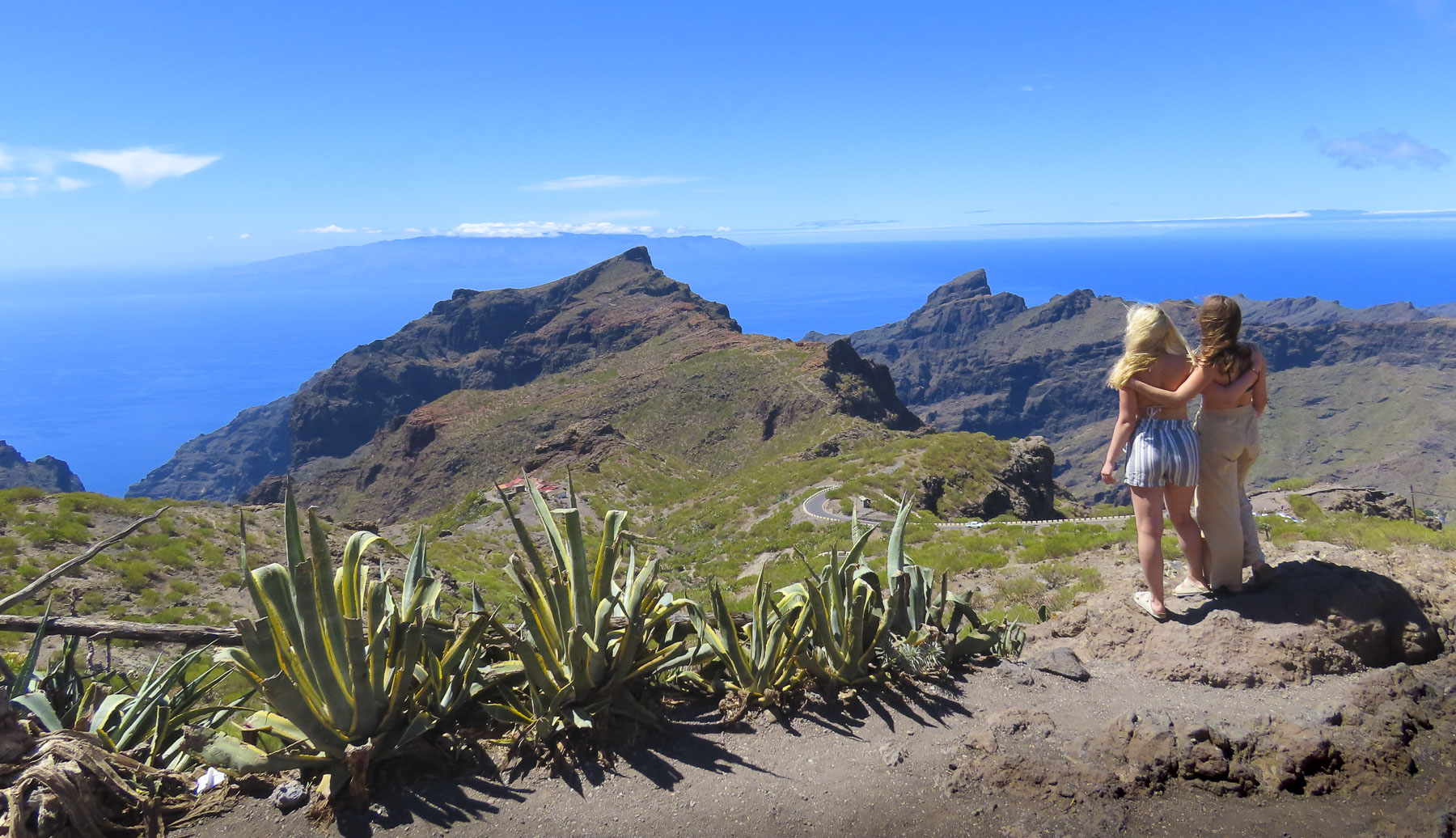
Backtracking through Santiago del Teide we turned into the mountains and followed a long stretch of twisting and turning road to the Mirador de Cherfe. Sitting atop a mountain pass, it has expansive views to the sea. It was also one of the busiest miradors, with vendors selling lava trinkets, and many tourists stopping on the way to or from Masca, like us. Oh, the thrills of driving in the mountains of Tenerife were just beginning!

The isolated hamlet of Masca seems to be a mecca for folks wanting to get into the more remote parts of Tenerife. With limited parking options, we had to wait for a space to become available only to realize after we walked into the hamlet that all the restaurants were closed on Monday. Yikes!

With growling stomachs, we continued on. Starvation was thwarted in El Palmar at the Restaurante El Rincón La Abu, a wonderful establishment where we were the only customers late in the afternoon. The house wine and our meals, pork cheeks in sauce and chicken breast stuffed with serrano ham and spinach, were excellent. We appreciated that we never felt rushed to finish, but we did notice when we were getting into our car that they were locking up for the afternoon. When home our routine finds us having lunch late in the afternoon, but this wasn’t always possible on Tenerife where many of the restaurants close at 2 or 3pm and then reopen later.

It took us awhile to adjust to this earlier lunch schedule. Continuing on we stopped to observe the Montaña Zahorra, an ancient lava dome from which its fertile soil was quarried in the 1960s, 70s and 80s. The distinctive pie shapes of the excavations represented the individual owners’ mineral rights.  

Exuberant like rally drivers, we felt victorious from a day well spent and headed back to Icod de los Vinos to enjoy a glass of local wine on the balcony of our room and watch the moon rise over the foothills above the town.

Till next time, 

Craig & Donna

Madrid: An Ambience That Ages Well

First Impression: Madrid is monumental! The minute we exited the Puerta de Atocha train station onto the sidewalk, we were struck by the beauty of the wide boulevards lined with stately trees and grand architecture, and the top of buildings graced with colossal sculptures of mythic gods.

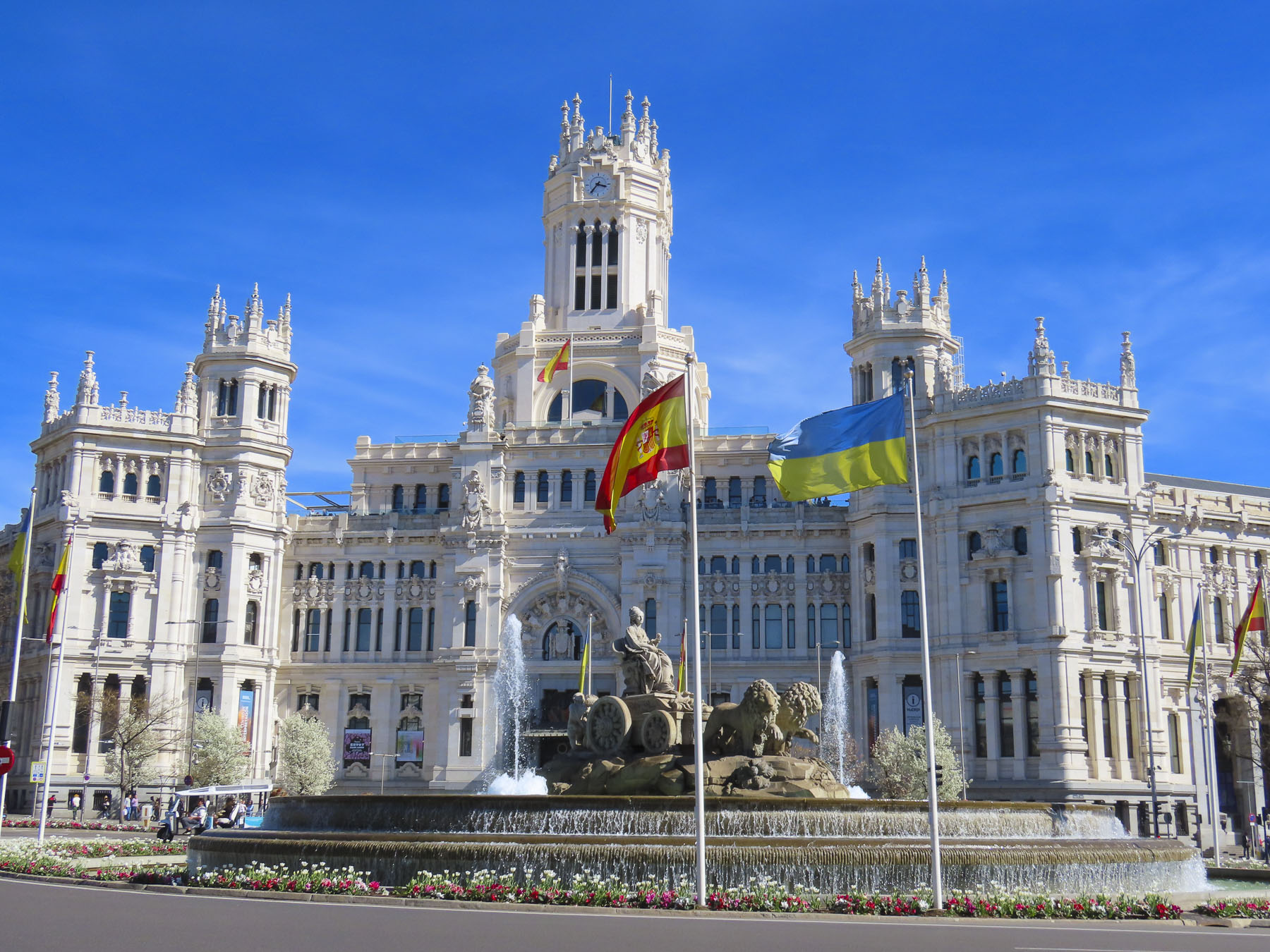
If the Paseo del Prado, the route to our hotel, could speak, it would surely boast of its famous destinations along its length: Madrid’s Museum Triangle, which includes the Reina Sofia Museum where Picasso’s Guernica hangs; the Prado Museum, which highlights the works of Diego Velázquez and Goya; as well as the Thyssen-Bornemisza Museum, which displays 13th-20th-century European masterpieces. But its bragging rights continue with the Real Jardín Botánico, the Museo Naval with its fascinating exhibits devoted to Spanish maritime history, The Glory and Pegasus sculptures atop the Ministry of Agriculture, and the famous fountain depicting the goddess Cybele’s chariot being pulled by two lions. This relatively short distance is packed with so many highlights it should be called Madrid’s marvelous mile.

Our hotel the Apart-Hotel Serrano Recoletos was just a few blocks from the iconic Cibeles Fountain, which is centered in a traffic circle you usually have to observe from a distance, but overnight the Paseo del Prado was transformed into the festive final leg of the Movistar Half Marathon, with the finish line down the street from our hotel.

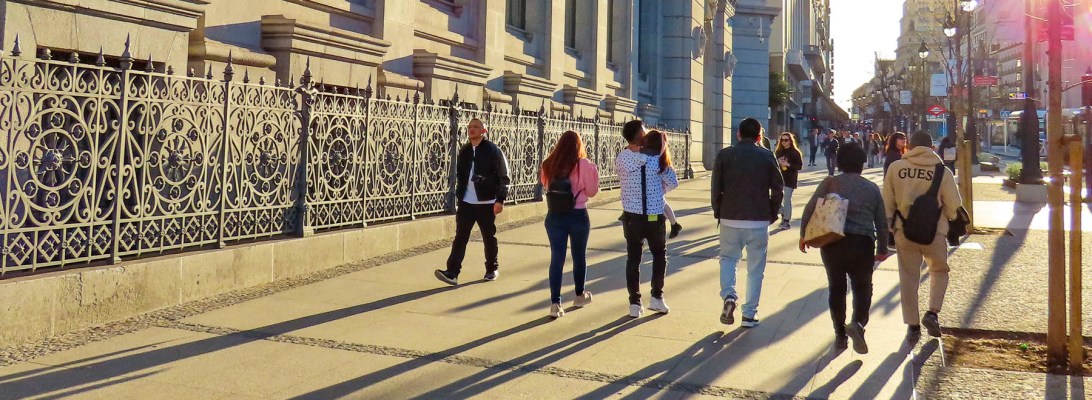
With the majestic boulevard closed to traffic, folks were free to wander up to the fountain for a close view, an accessibility that rarely happens. Yesterday we hadn’t realized the median strip that runs the length of Paseo del Prado was lavishly planted with gardens and as luck would have it, the tulips and flowering trees were in bloom. Heading towards the historic center of Madrid, we observed a large group of healthcare professionals marching peacefully down the Gran Via protesting government policies. It was a busy Spring Sunday in Madrid.

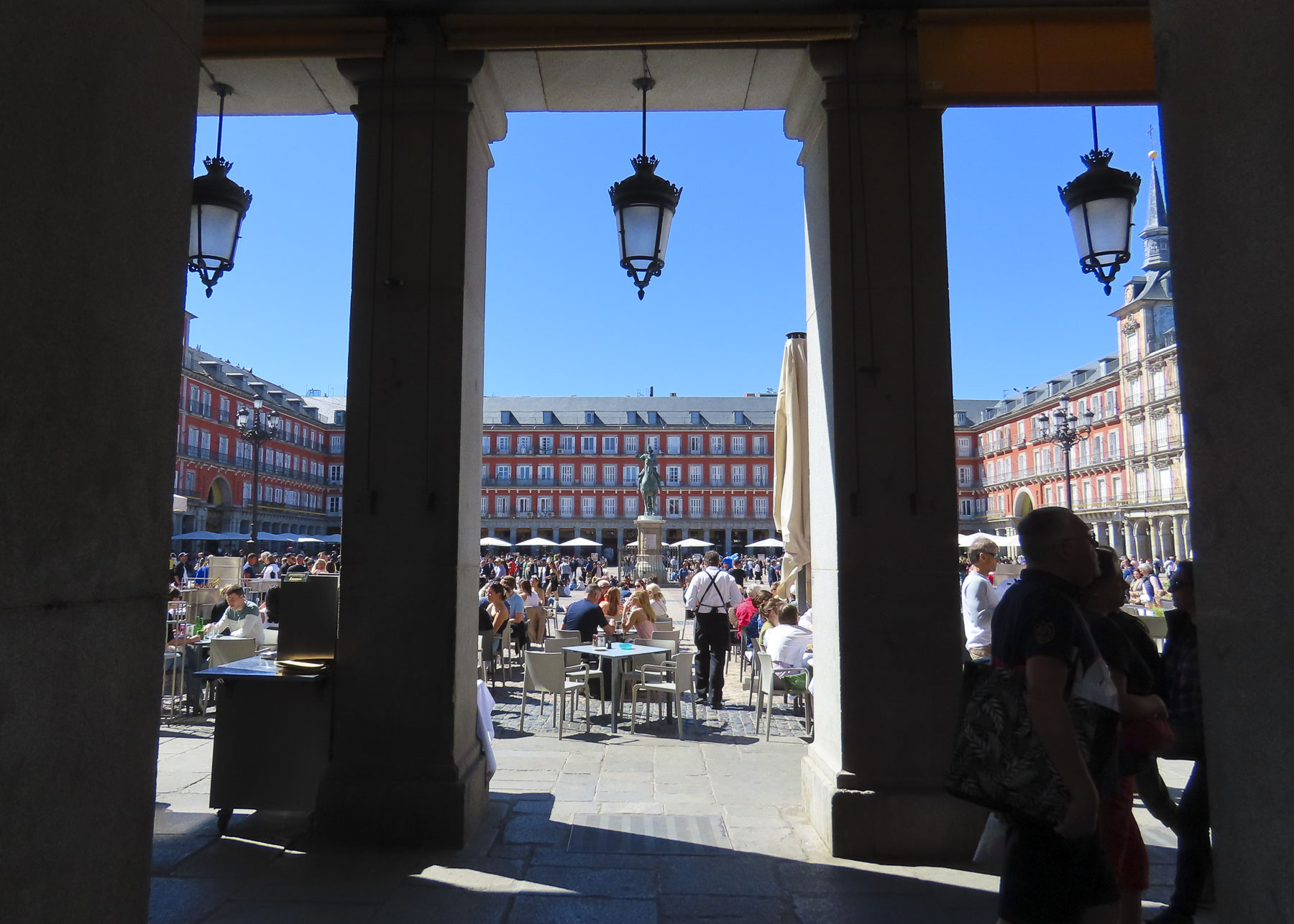
Plaza Mayor, ground zero for the historic center of Madrid, was our destination. Once the ancient city’s market area, the area was transformed by architect Juan Gómez de Mora during Philip III’s reign in 1617, and of course the King is dutifully recognized, gallantly astride an equestrian statue in the plaza’s center.

The vision of three successive architects contributed to the plaza as seen today, the result of three devasting fires in 1631, 1670 and 1790. Over the centuries it has hosted bullfights, executions during the Inquisition, Royal wedding celebrations, soccer games and Christmas markets. As an exclusive address in Madrid, many of the apartments are passed down within the same families from generation to generation.

Plaza Mayor gets hectic, but tucked away under the arcaded sidewalk, there are some hidden gems worth finding. Our favorite was La Torre del Oro. It’s an old atmospheric bar dedicated to celebrating Spain’s bullfighting traditions.

There are so many interesting destinations centered around this plaza that we often started our days here as a way to get oriented in old Madrid’s labyrinth of alleys. Treating the nine ancient gateways into the plaza as compass points, we would follow their direction into the surrounding barrios.

Our wanderings to soak up the ambience of this ancient quarter were frequently determined by a list of restaurants and cafes, along with historic sites and churches, we hoped to find. The choices were overwhelming. Since this was our first time in Madrid, we hit many of the tried-and-true spots, like Chocolatería San Ginés, famous for serving Madrileños the best hot chocolate with churros for over 125 years. There was a fast-moving queue when we arrived before 11, which suddenly evaporated and freed sidewalk tables, but it was much more interesting before the lull in activity. And El Riojano, a renowned 19th-century Pastelería with a tantalizing spinning tower of sweet temptations in its storefront window, is sure to break the will of any dieter. When you first enter, it looks like there are not any tables to sit at, but next to one of their display cases there is an opening into a large, popular back room for café. We are after all tourists.

One late afternoon by the El Oso y el Madroño sculpture, a band of buskers filled the Puerta del Sol with music. The Bear and the Strawberry Tree is a medieval heraldic emblem that has been associated with Madrid since 1222, when King Alfonso VIII used the image on a stamp to seal a royal decree.

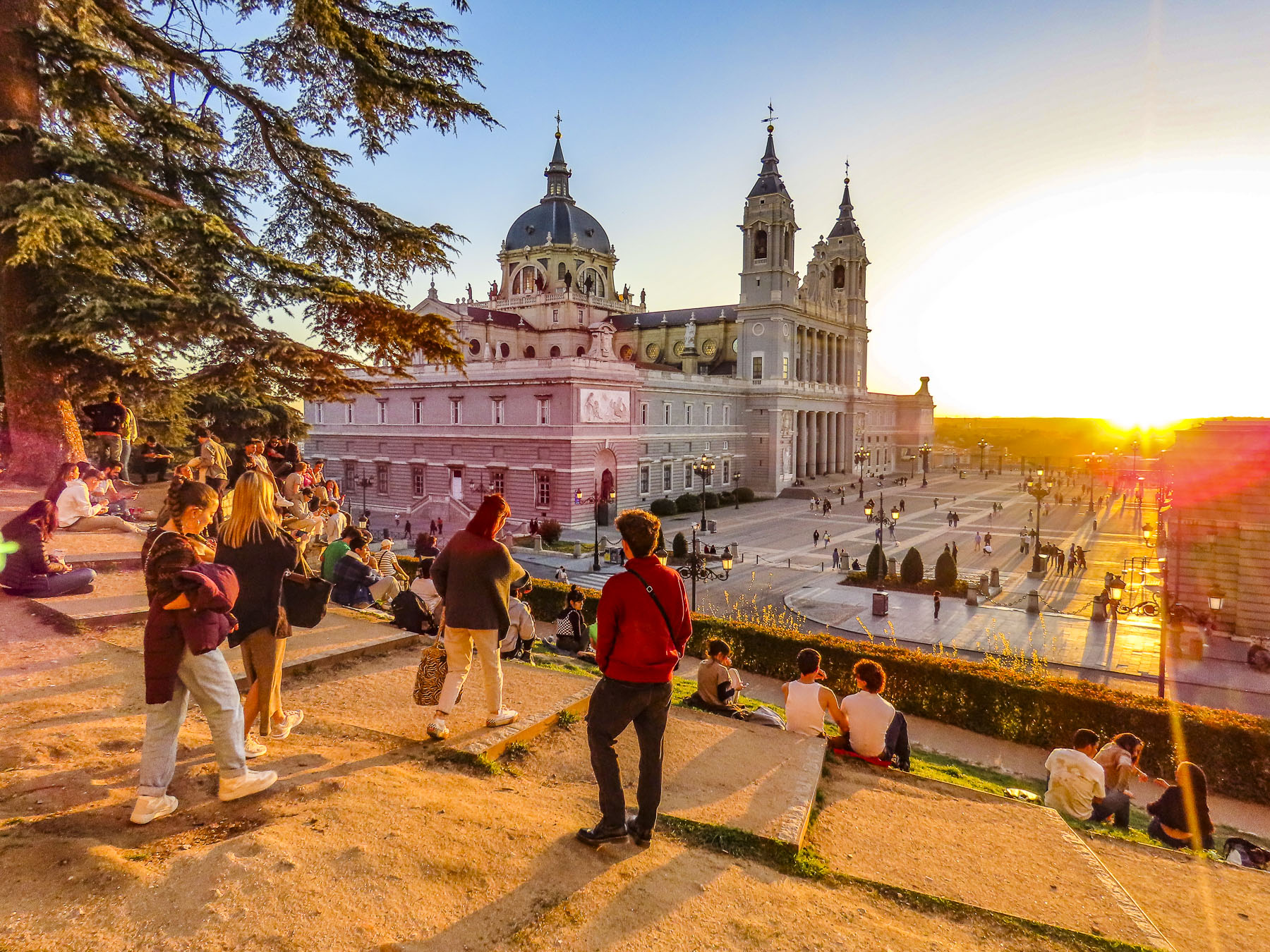
We continued past the Plaza Mayor towards the Plaza de la Armería, where the Catedral de la Almudena, (1883), and the Royal Palace of Madrid (1738), face each other. Turning onto Calle del Factor, we walked a short distance uphill to the Jardín de Larra and joined a small group of folks waiting to enjoy the sunset.

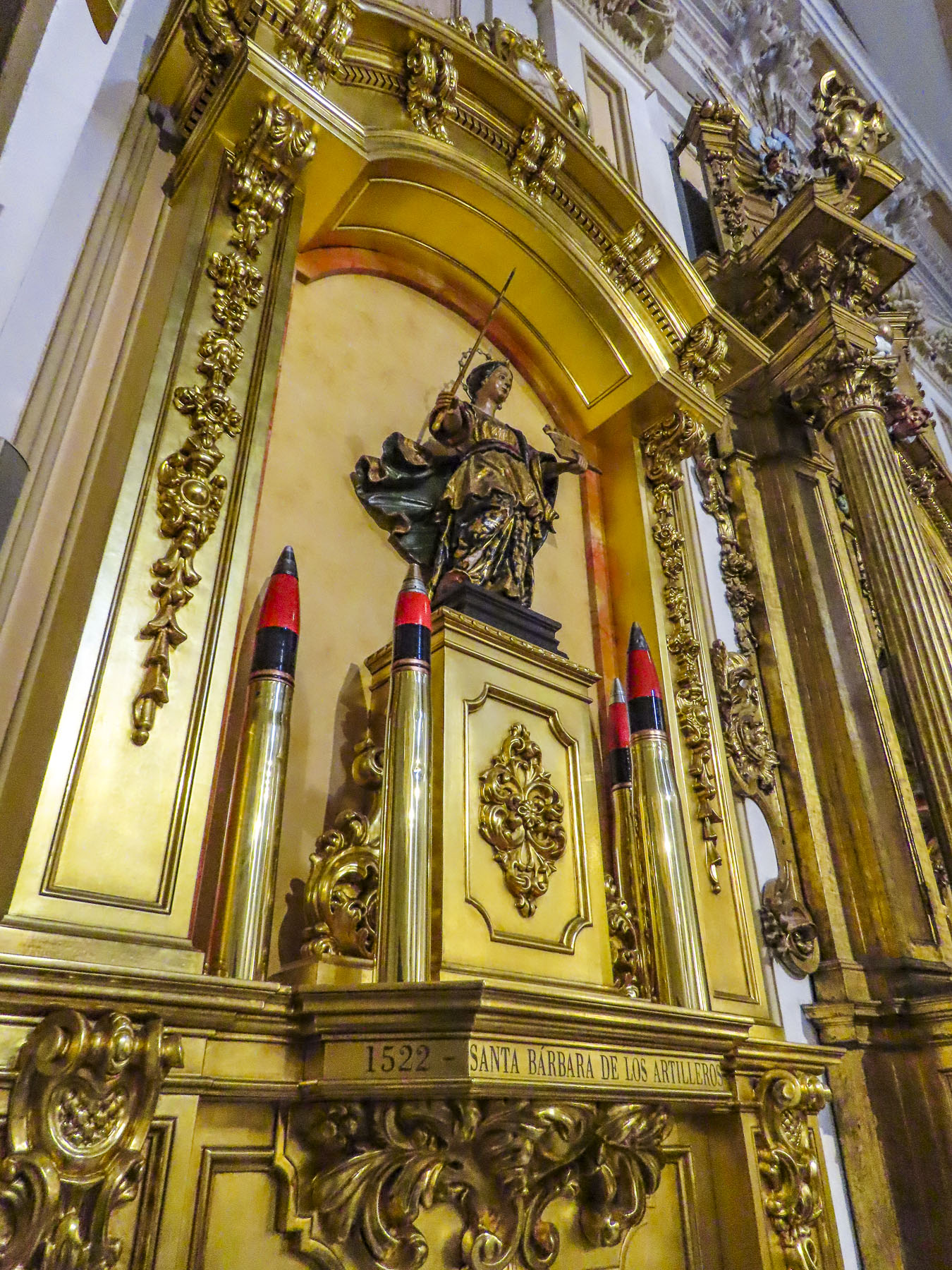
Afterwards at the bottom of the street we entered the Iglesia Catedral de las Fuerzas Armadas. It’s a small 17th century church dedicated to the Spanish armed forces. The church’s simple façade conceals a lavish marble interior with several interesting altars depicting paternalistic colonial themes.

The streets of Madrid seem even busier at night with folks bustling about after work. On the way back to our hotel, we stopped at the Mercado de San Miguel, one of Madrid’s old, covered food markets, which dates from 1916. Today it’s a gentrified, popular gastronomic destination, with tapas, tapas, and more tapas to satisfy everyone’s tastes.

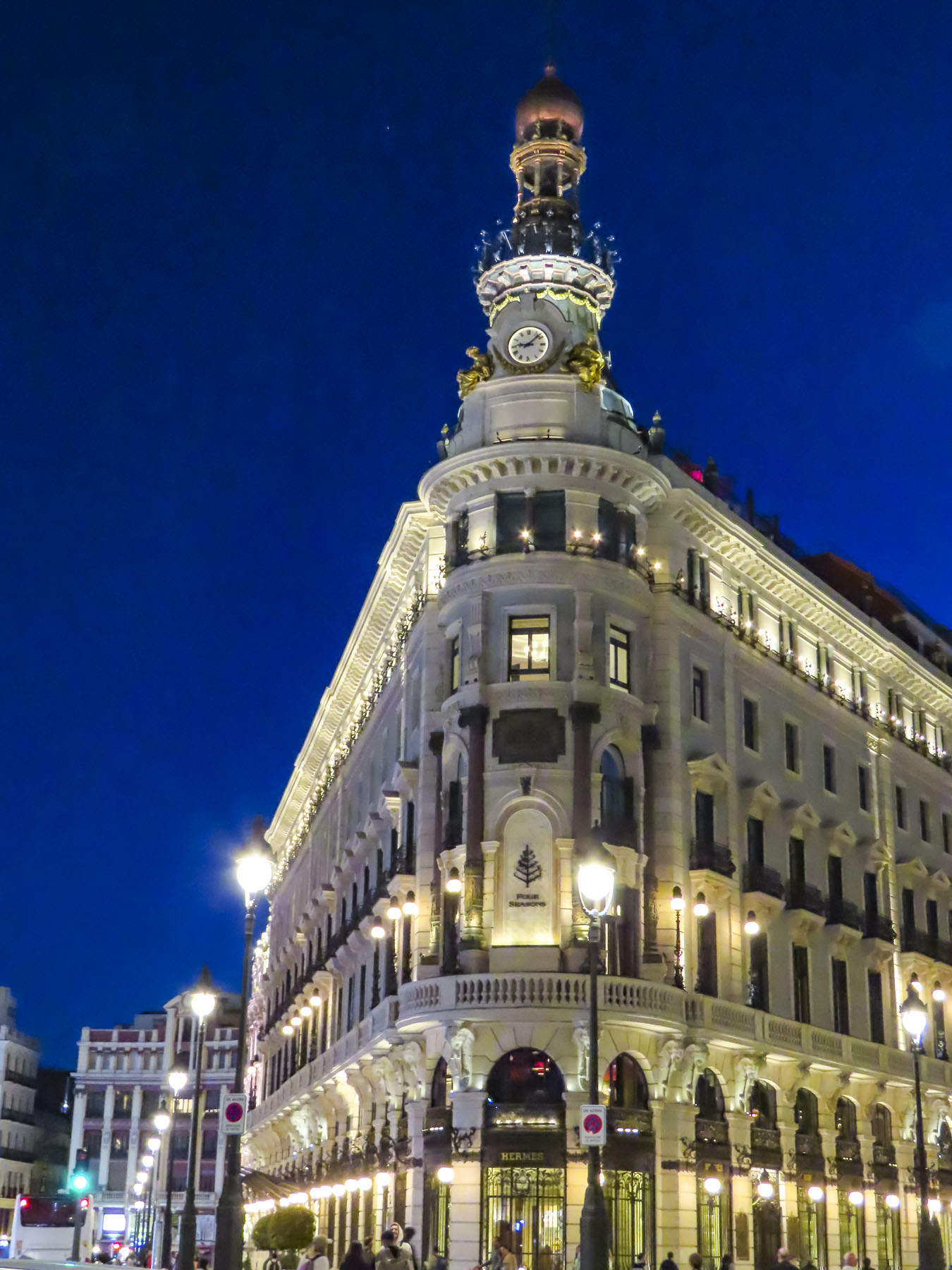
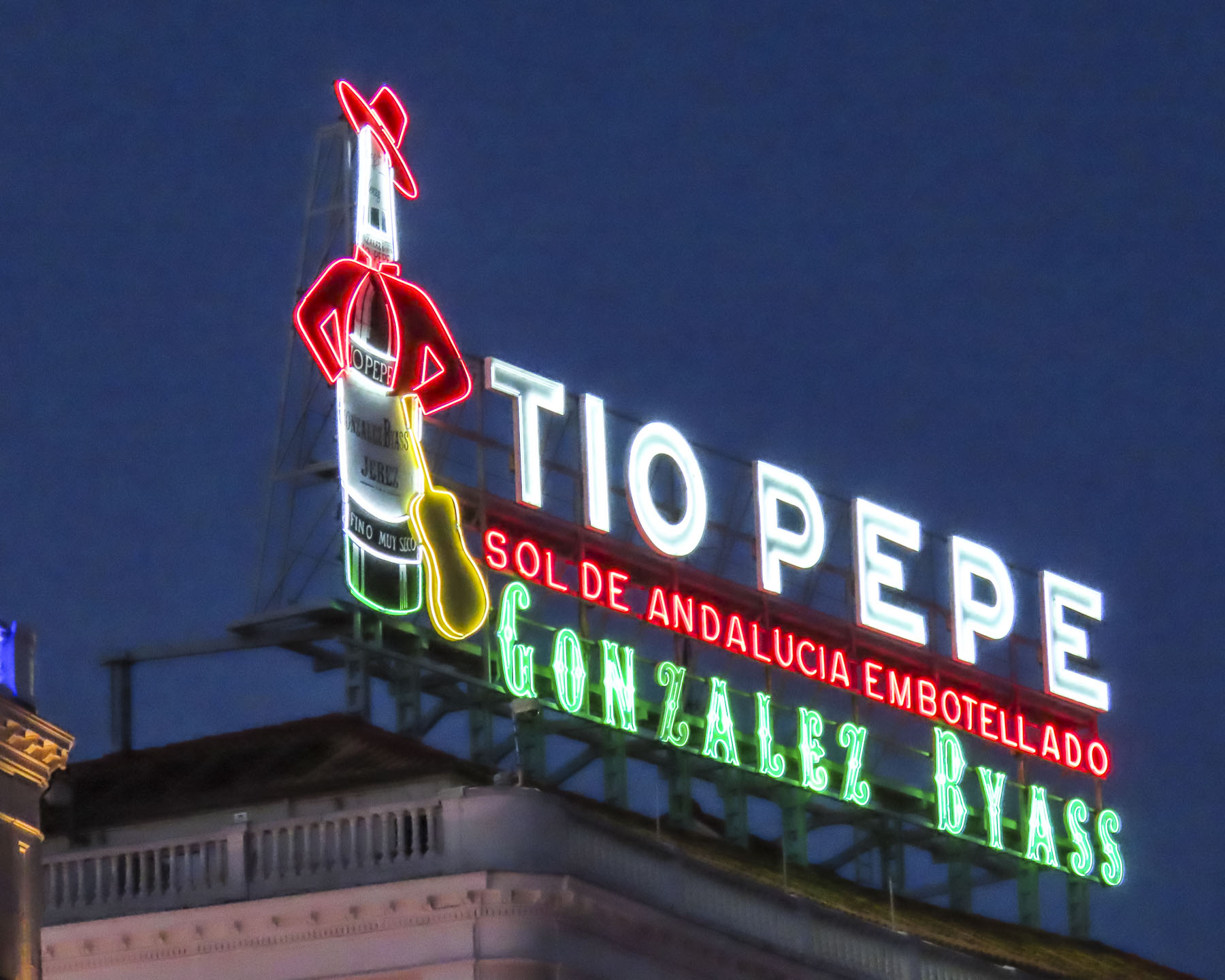
Madrid’s iconic Tio Pepe neon sign blazed brightly above the Puerta del Sol, and shops along the plaza brilliantly displayed their merchandise in dramatically lighted storefront windows. While Madrid exudes ambience during the day, the city becomes magical in the evenings.

Dinner was at La Casa del Abuelo CRUZ, a traditional tapas bar that has been run by the same family since 1906. Their specialty, gambas al ajillo (sizzling garlic prawns), while very delicous, was a terrible value for the portion size. Their vino de casa, an excellent strong red wine, was memorable and eased the pain of the excessive bill.

Spain’s empire building and wealth followed Columbus’ discovery of the Americas in 1492. A daring nautical leap of faith at the time, it set in motion an era of exploration by sea, that would expand the Spanish Empire around the globe. With that in mind, and an interest in boats, we headed to the Museo Naval on Paseo del Prado, near the Prado Museum. It’s a wonderful museum with exhibits in chronological order, which highlight exquisite ship models, nautical instruments, maps, weaponry, and paintings depicting important naval battles. The exhibits include models of the Niña, Pinta, and Santa Maria which composed Columbus’ small fleet on his epic first voyage.

Afterwards we headed into the centro historico for lunch at Casa Toni, an intimate, no-frills bar, that serves tasty seafood and offal tapas. A short line had formed for tables by the time we arrived, but it moved quickly, especially if you opted for a table upstairs, though downstairs is where all the action is with other folks, jammed into a small space, standing at the bar, and seated at some very tiny tables. It’s a friendly boisterous spot. Pig ears and fried lamb lungs might not be for everyone, but they were surprisingly very tasty. 

Gold and silver from the Americas fueled church building across Spain in the 16th – 18th centuries.While it’s possible to enjoy Madrid without visiting any churches, we’ve developed a policy of going inside if the door was open. It nicely slowed down our day and transported us back to a time when amazing buildings were constructed only using hand tools to carve stone and shape wood. And the religious paintings and iconography, while they might not be of interest to everyone, display a level of craftsmanship and imagination that’s worthy of appreciation. Unfortunately, the churches were also vast repositories of riches, donated by the wealthy and poor alike, to secure a place in heaven.

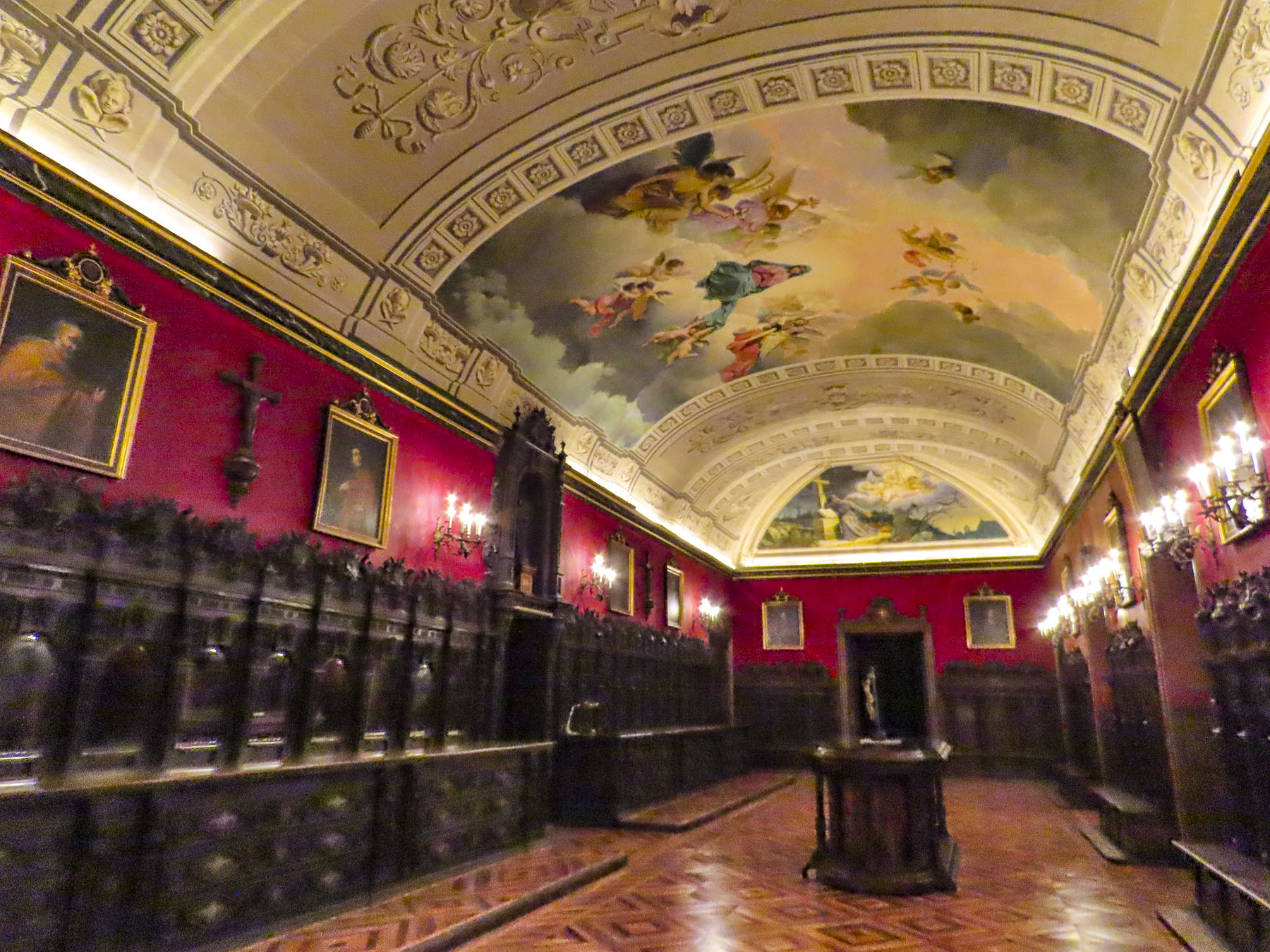
Near the San Miguel market, down from the Plaza de la Villa, on Calle de Puñonrostro, we happened upon the inconspicuous entrance to the small chapel at the Monastery of Corpus Christi las Carboneras, that dates from the early 1600s. It’s a tall, narrow, petite sanctuary. When we were turning to leave, I noticed on the second level the privacy screen across the prayer area for the sequestered nuns. It didn’t actually offer much privacy since a I spotted a seated nun watching the tourists in the chapel. I waved gently, she smiled and waved discreetly back.

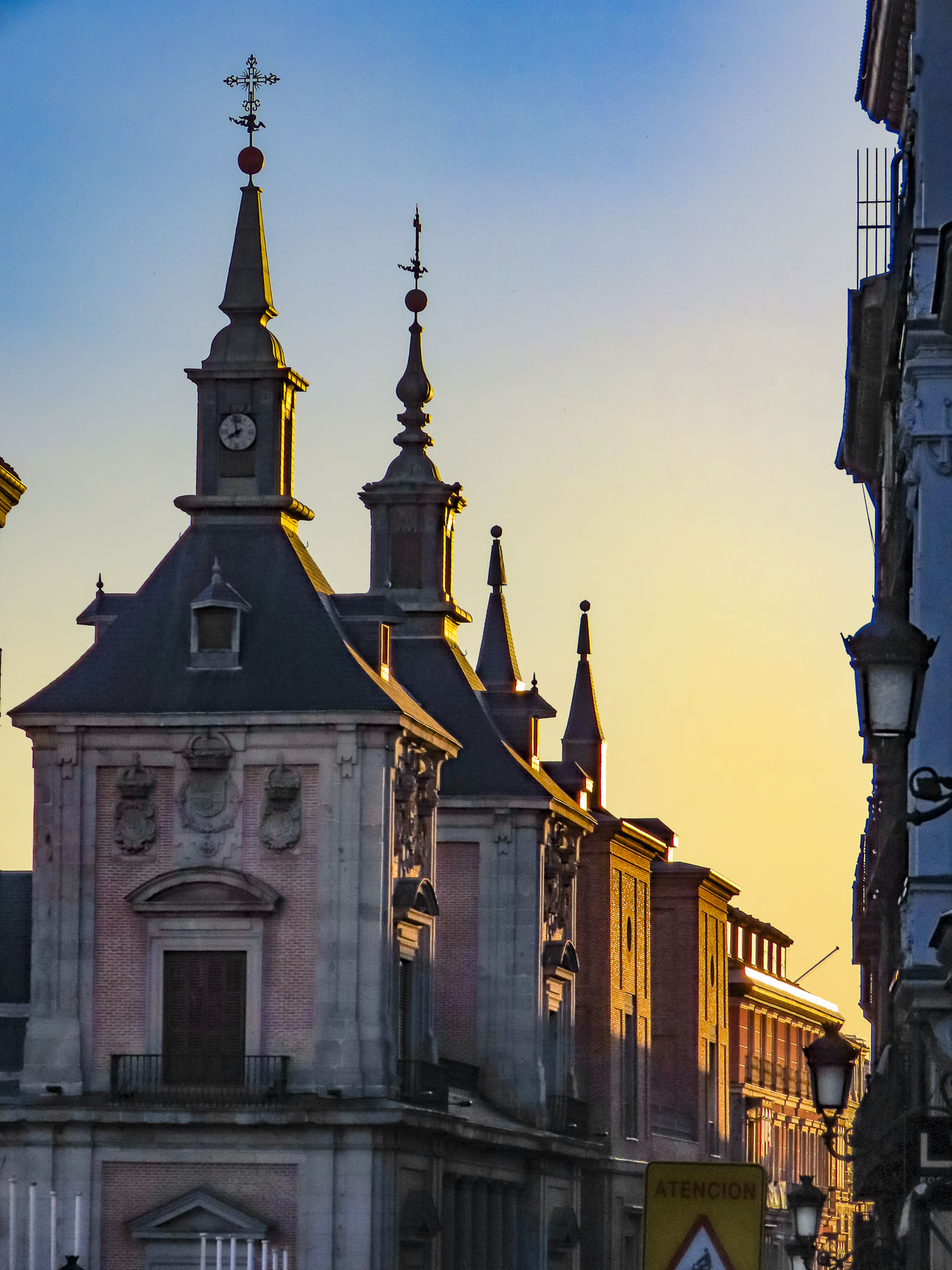
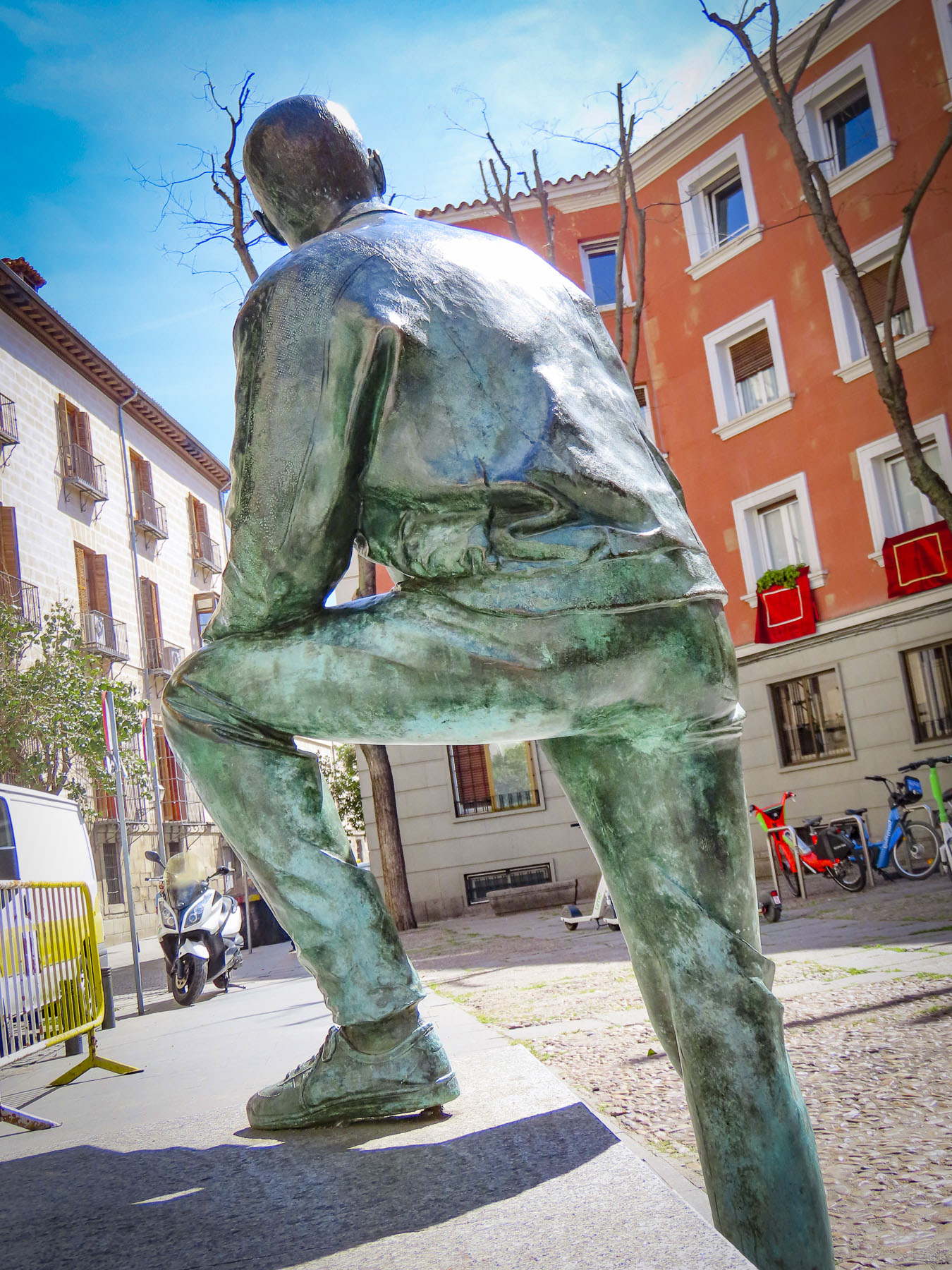
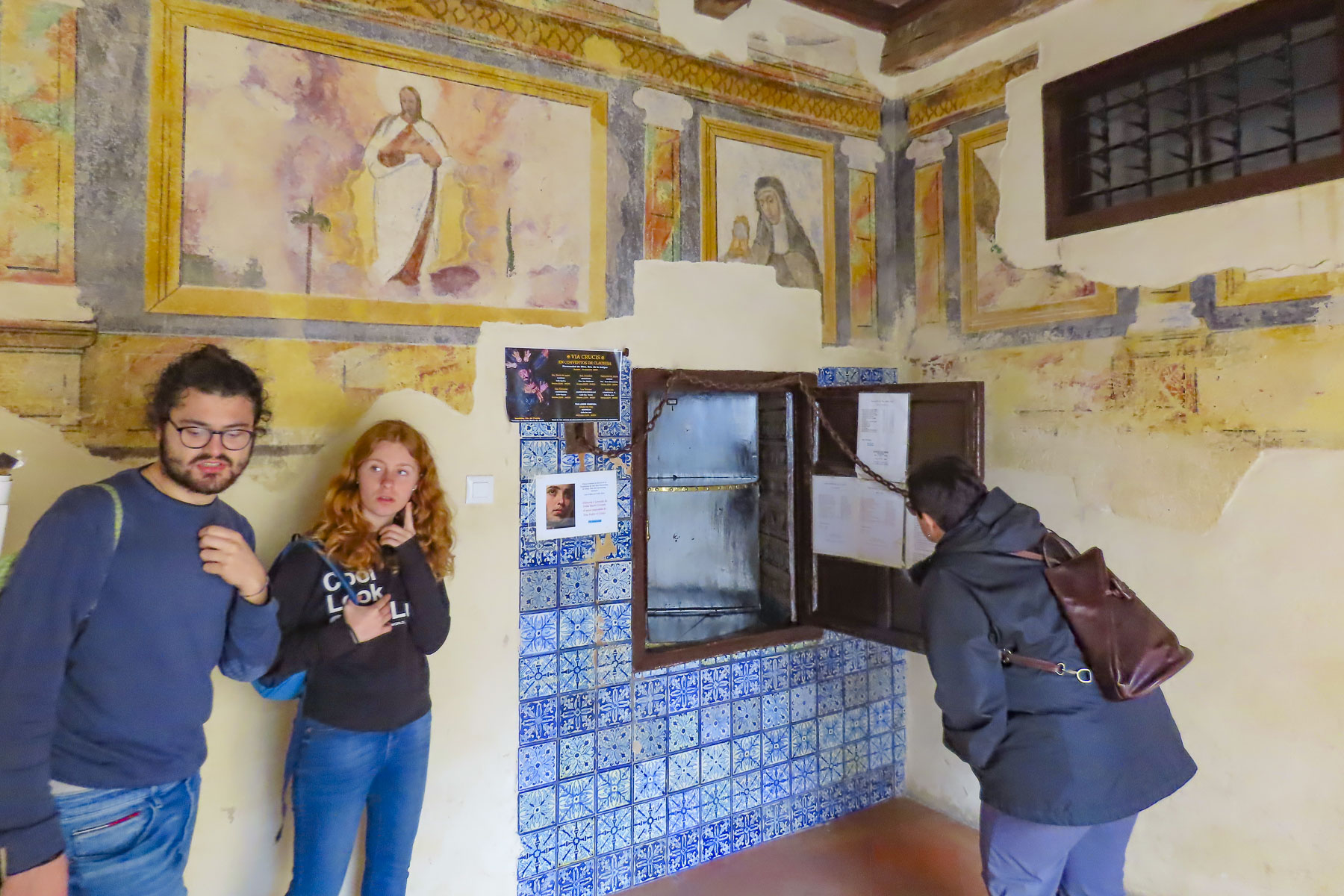
A door further along the calle leading to the convent’s dulces turno was just being locked; I could hear the click, a few minutes shy of their posted hours. The dulce turnos are a centuries-old tradition that has remarkably survived in convents across modern Spain, as a means for nuns to support themselves. The turno is essentially a lazy-susan style cabinet with doors on both sides of the wall that lets the customers purchase cookies and other baked cooked from the sequestered nuns while still maintaining the nuns’ privacy. Cookie orders are spoken through the wall. If your Spanish is insufficient, it’s handy to write out what you’d like. There is usually a list of what’s available taped to the door of the cabinets. You place your money on the shelf, the wheel turns, and cookies appear as if by magic. It’s delightful! At the bottom of the street, in front of a public library, stands a bronze statue of a man. It’s named El Lector, the reader, a tribute to Carlos Cambronero, a writer devoted to Madrid’s history. Across the street the unusual convex, baroque facade of the Basílica Pontificia de San Miguel (1739) intrigued us, and we explored more inside.

The calles go every which way in La Latina, one of Madrid’s oldest areas, where the narrow streets and plazas follow the original 9th century footprint of the Arab citadel that originally stood there. Though its buildings might be old, the area now attracts a vibrant young crowd that enjoys an immense collection of tapas bars and restaurants along Cava Baja and Cava Alta. The two nearly parallel streets have been popular since medieval times, when traveling merchants stayed at inns and taverns along the calles, and used tunnels or access holes dug at the end of the streets to enter the walled city at night when the gates were closed.

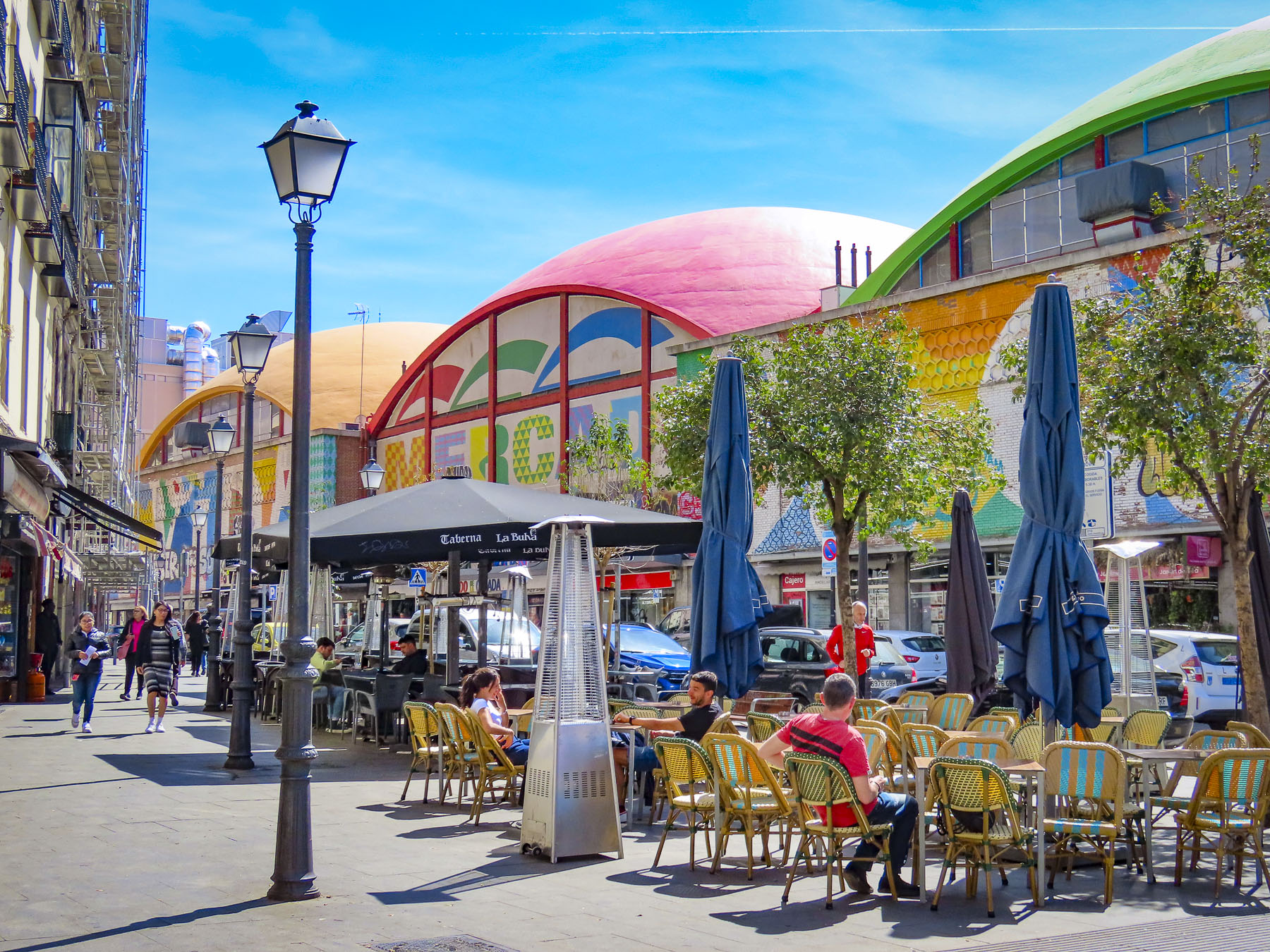
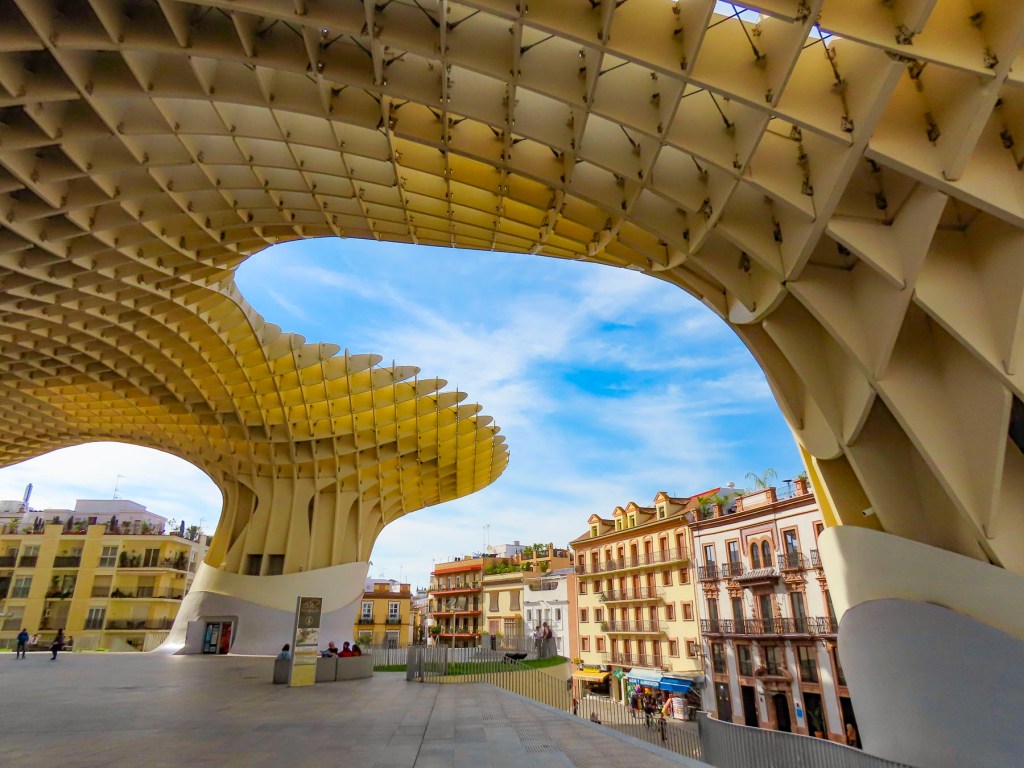
At the end of Cava Baja and Cava Alta, the colorful Mercado de la Cebada, with its distinctive wavy roof, is a modern architectural dichotomy in its surroundings. The shopping in this mercado is an authentic Madrileño experience that is not touristy at all.

From the entrance to the market, we noticed the tall silhouette of the Royal Basilica of Saint Francis the Great’s large dome, several blocks away, dominating the neighborhood, and decided to check it out.

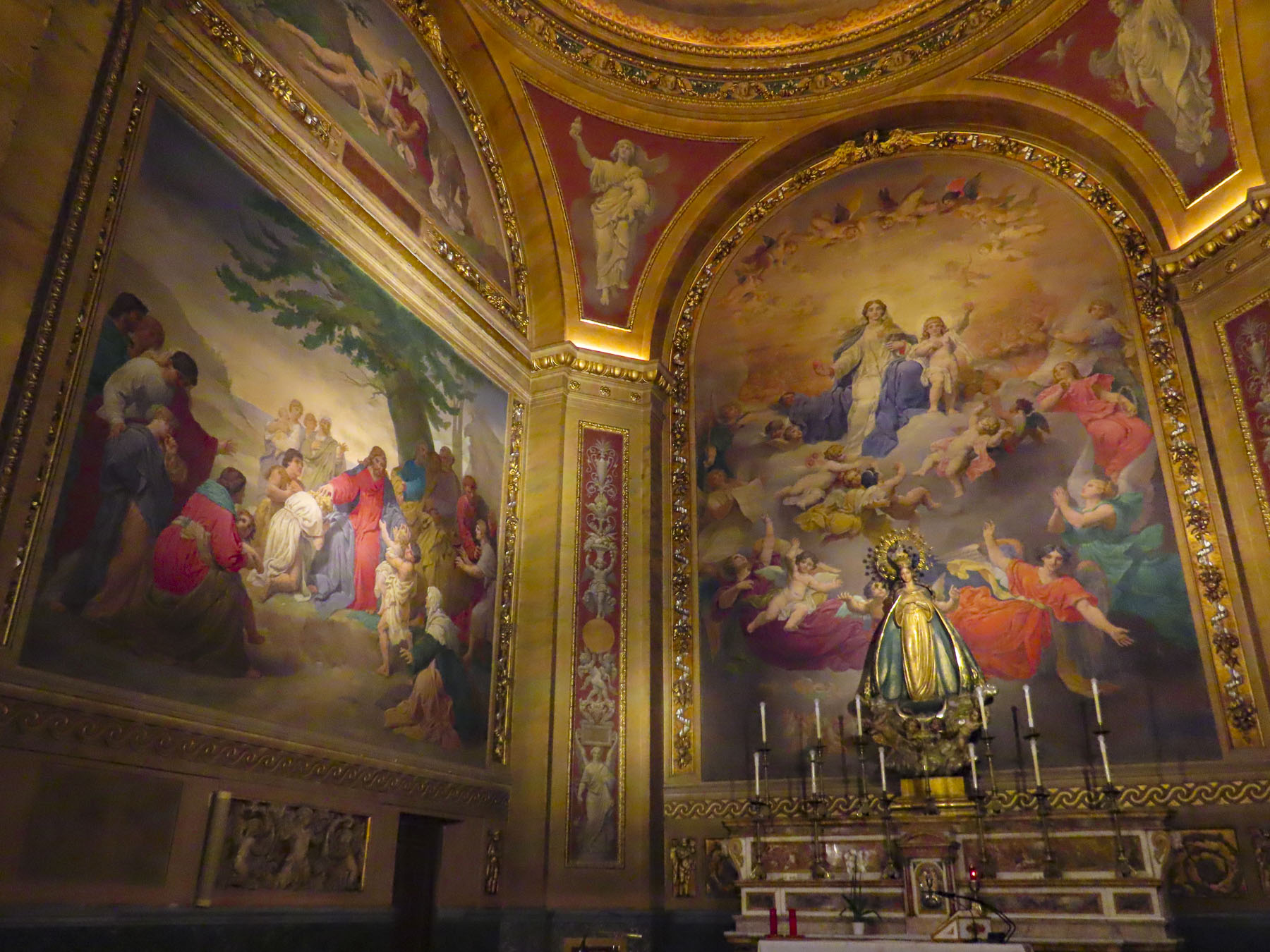
This is a mammoth, mid-18th century cathedral designed in the Neoclassic style, the size of which we did not fully realize until we were standing under its 108-foot-wide and 190-foot-high dome. Legend believes that St. Francis chose this site himself when he visited Madrid in 1214 during his pilgrimage to Santiago de Compostela. The dome is the largest in Spain and the fourth largest in Europe. It was breathtaking in scale and equally fascinating with celestial frescos by Casto Plasencia Mayor decorating the cupola, and paintings behind the altar by Manuel Dominquez and Alejandero Ferrant, illuminating biblical stories.

Six smaller but equally opulent chapels in several different architectural styles, from Baroque to Byzantine, and Renaissance to Rococo, ring the main altar, each mini museum displaying a wealth of religious art created by the Spanish masters Francisco José de Goya, Alonso Cano, Francisco Zurbarán, Antonio González Velazquez, José Moreno Carbonero, and others. This church is one of the most beautiful we’ve visited in Spain and should be on everyone’s “must do in Madrid,” lists.

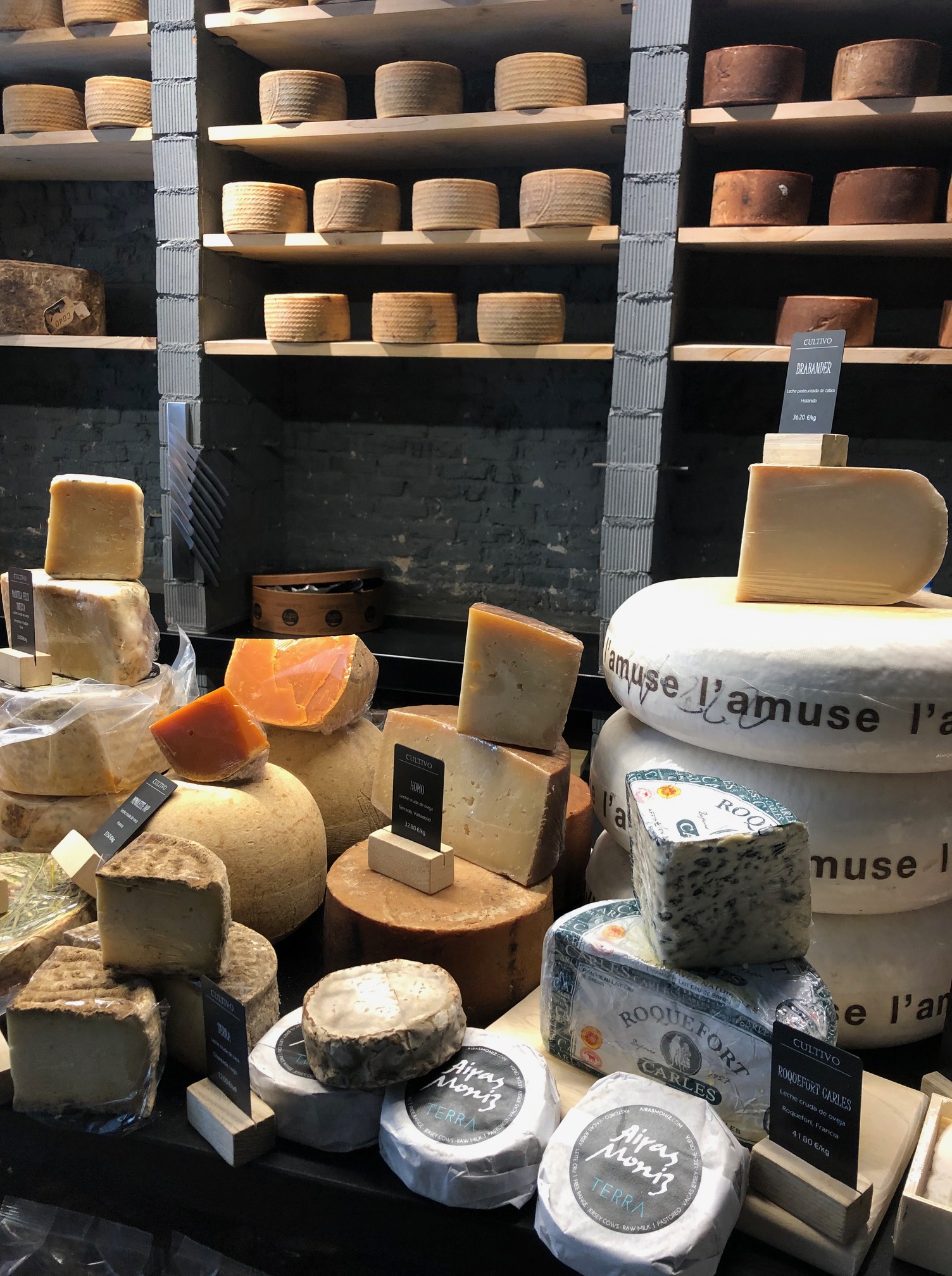
Afterwards, on Carrera de San Francisco, 14, as we started our return leg to our hotel, we happened upon two very good gastronomic discoveries. The artisanal bakery, Obrador San Francisco, was full of the wonderful aroma from fresh baked bread that was just being put out for purchase. And of course, to go along with good bread, you need good cheese. This was accomplished easily enough, right next door, at Quesería Cultivo, a cheese shop, with an amazing array of Iberian cheeses. It’s worth stopping here just for the earthy aroma that greets you when you enter the store, an experience that will have you picturing idyllic Spanish mountain pastures, full of grass-grazing and milk-producing livestock.

Being the cheese aficionados that we are, we had one more stop in mind, at Casa González.  They have been selling cheese in Madrid since 1931 and have slowly expanded to become a petite gourmet shop and small bar with a handful of tables, where they are happy to advise you on which wines to pair with each cheese.  

On our last full day in Madrid, we wandered the exhibition galleries at the Prado, viewing the museum’s vast collection of classical European art, which spans from the sixth century BC until the late 19th century. We especially enjoyed the works of Goya, Velázquez, and El Greco. Goya created over 700 paintings during his lifetime and embraced many different themes from royal portraiture, to Romanticism, to religious art, and later his dark paintings, toward the end of his life.

Around the corner from the museum, we lunched at Plenti, which served delicious and inexpensive food. We spent the rest of the afternoon exploring Real Jardín Botánico, where many of its plantings were just beginning to flower.

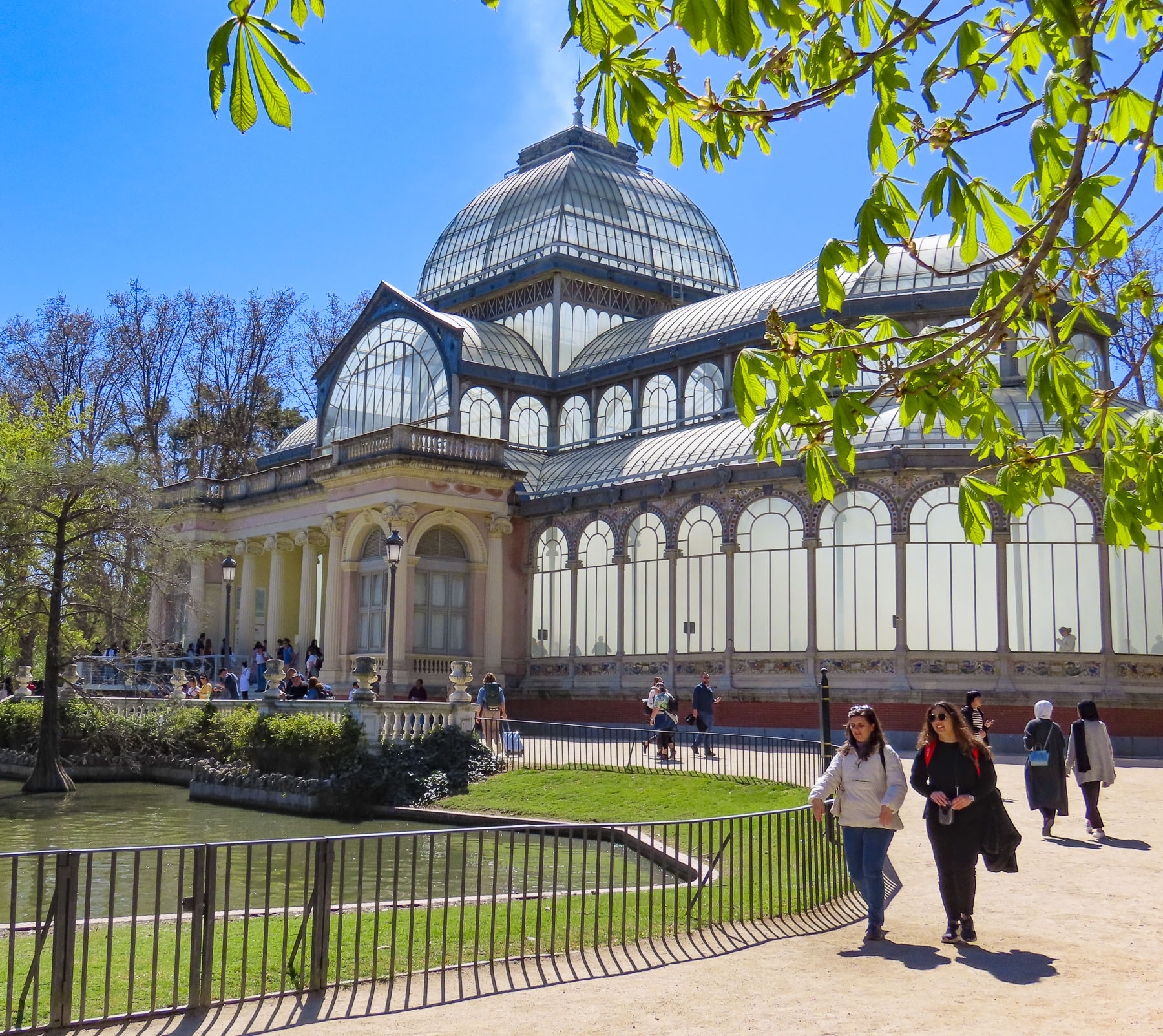
In El Retiro Park we did the classic tourist stuff, visiting the Palacio de Cristal, originally built as an exposition greenhouse, but now hosting art exhibits, and the Monument to Alfonso XII on the El Retiro boating pond. Interestingly, the park was originally created in 1630 as an exclusive sanctuary for Spanish Kings and members of the royal court, and famous naval battles were re-enacted on the boating pond for the monarchy’s entertainment.

The large 350-acre treed park, with manicured gardens, fountains and monuments was perfect for royal courtships and discreet liaisons. It was gifted by the monarchy to Madrid and permanently opened to the public in 1868, a much-needed addition to the city’s greenspace at the time.

The sun was warm for late March and folks were out and about, enjoying life. It was a perfect day.

Till next time,

Craig & Donna

Portugal Road Trip – Part 3: Everywhere a Miradouro – Into the Douro River Valley

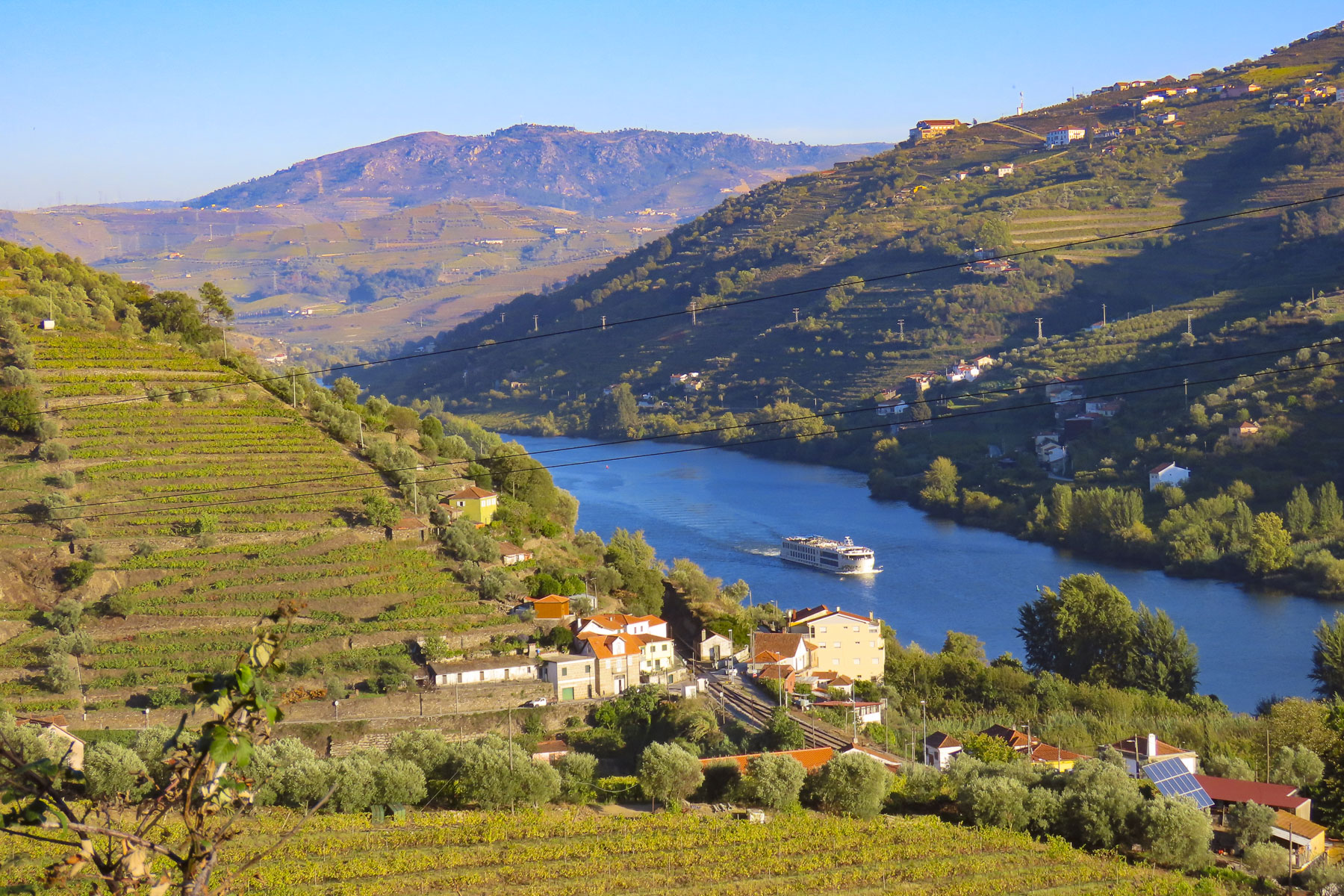
Portugal is blessed with wonderfully diverse landscapes, making it a challenge for photographers like us to actually make any forward progress in a timely manner toward our ultimate destination. As we were constantly tempted to divert and explore a photo opportunity.  Fortunately, after a time the backroads from Ucanha narrowed. Only teasing us with vistas quickly glimpsed, as if shuffling a deck of cards, between houses hugging the road that snaked down into the Douro River Valley.  Whetting our enthusiasm for the days ahead. To our surprise we occasionally passed snowflake signs warning of wintry conditions that sometimes encompass the region. Something we had difficulty reconciling with our sunny view of Portugal, especially since we were experiencing a splendidly warm stretch of fine October weather.

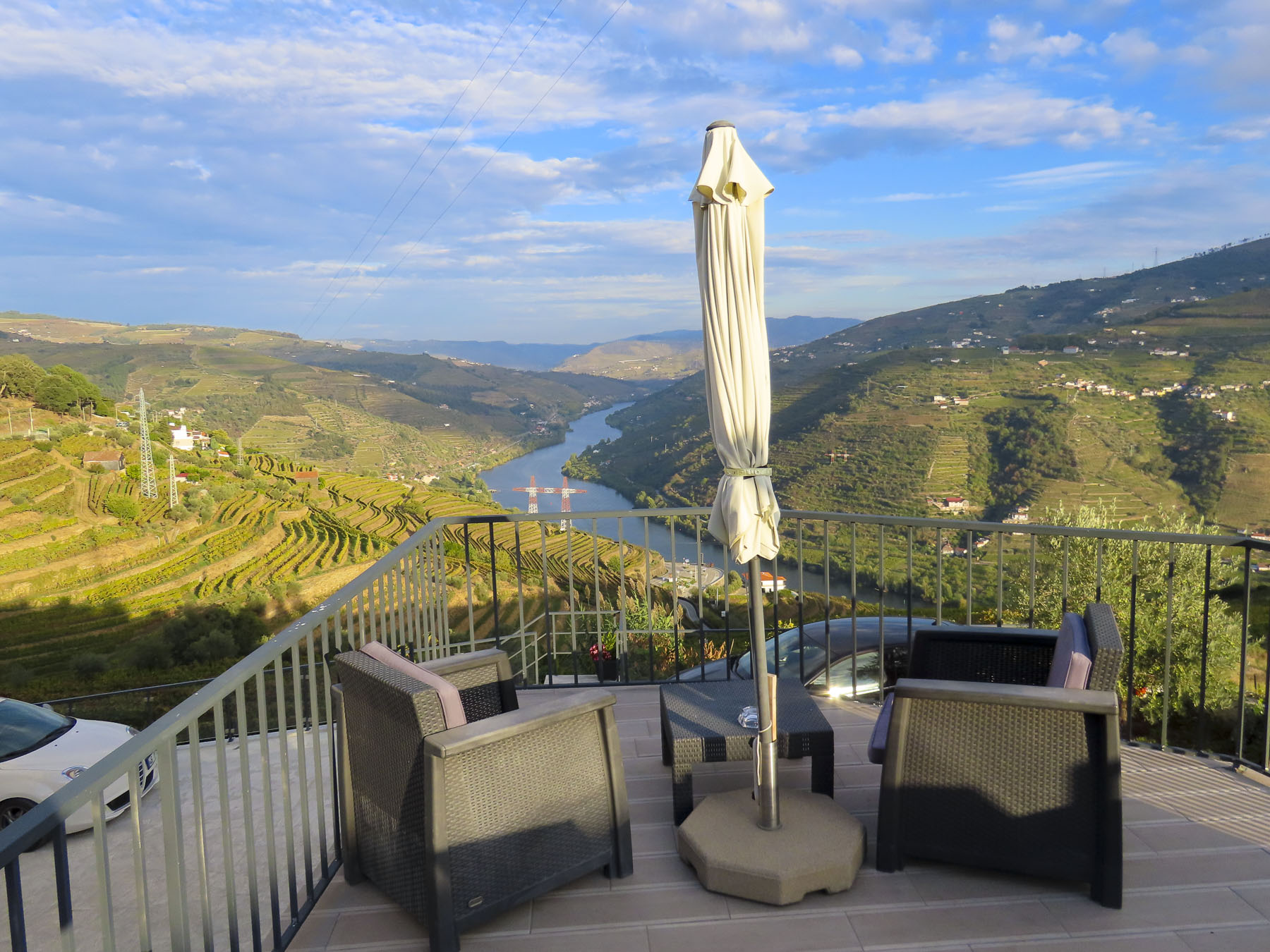
The gate to Casa Vale do Douro slowly swung open to reveal a steep long driveway, which abruptly ended atop the edge of a high retaining wall. It could have been used by Portugal’s Ski Jumping team for practice, if they had one. The view was glorious. Maneul, the charming owner, helped us with the bags to our room. Within minutes we were ensconced in chairs on our balcony. Savoring our glasses of wine and the view. One of the things we appreciate about vacationing in Portugal, during the shoulder seasons, is that it’s still possible to find marvelous accommodations for under €100 a night, that include breakfast. We’d be calling Casa Vale do Douro home for the next three nights.

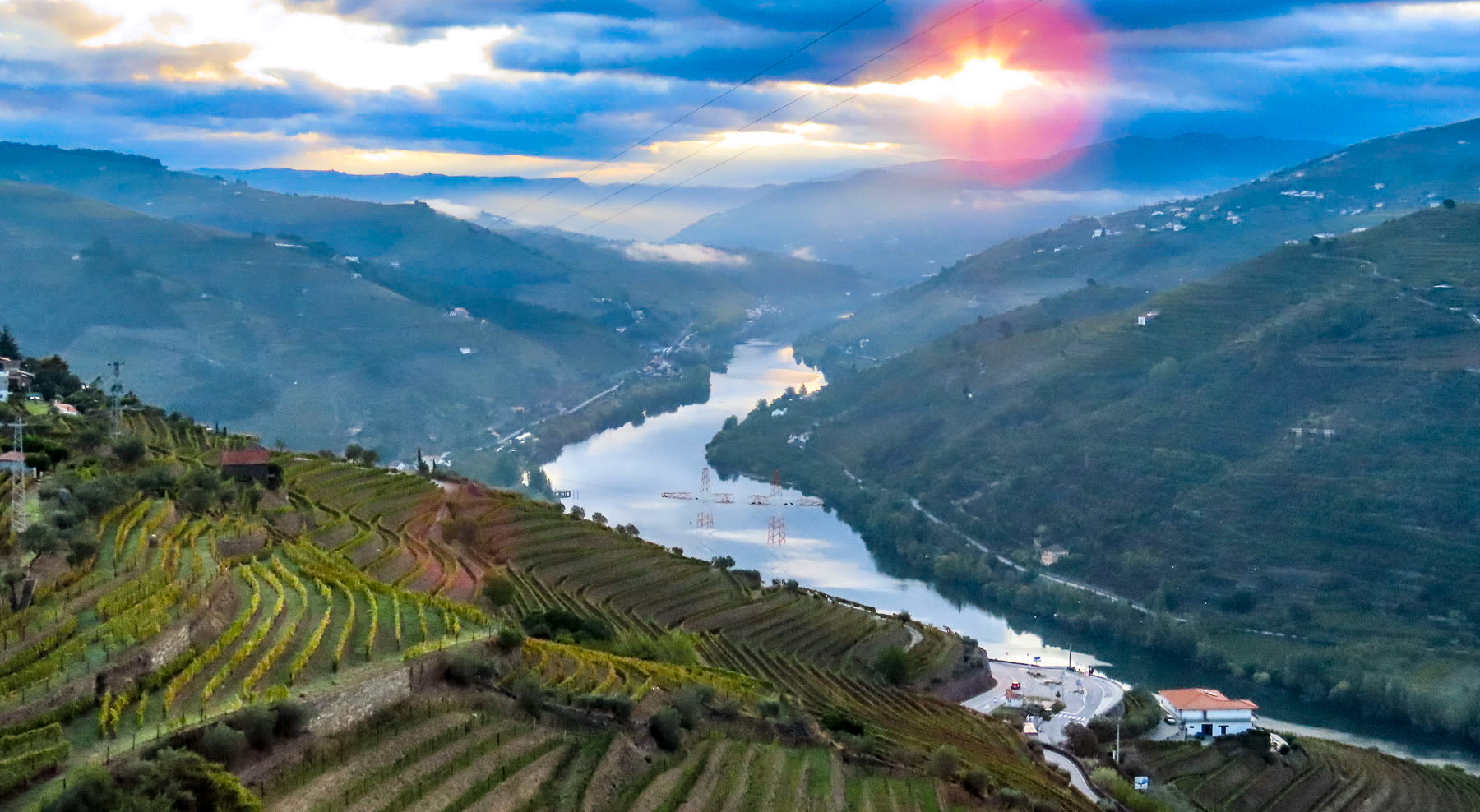
Incredible scenery attracted us to the Douro region, and we were not dissappointed, especially with the views from our room which faced due east. Brilliant sunrises transitioned to the river valley slowly being filled with fog.

Each morning we watched mesmerized as this ghostly blanket slowly engulfed buildings, vineyards and eventually us as we stood on the balcony. By ten o’clock it had usually burnt off.

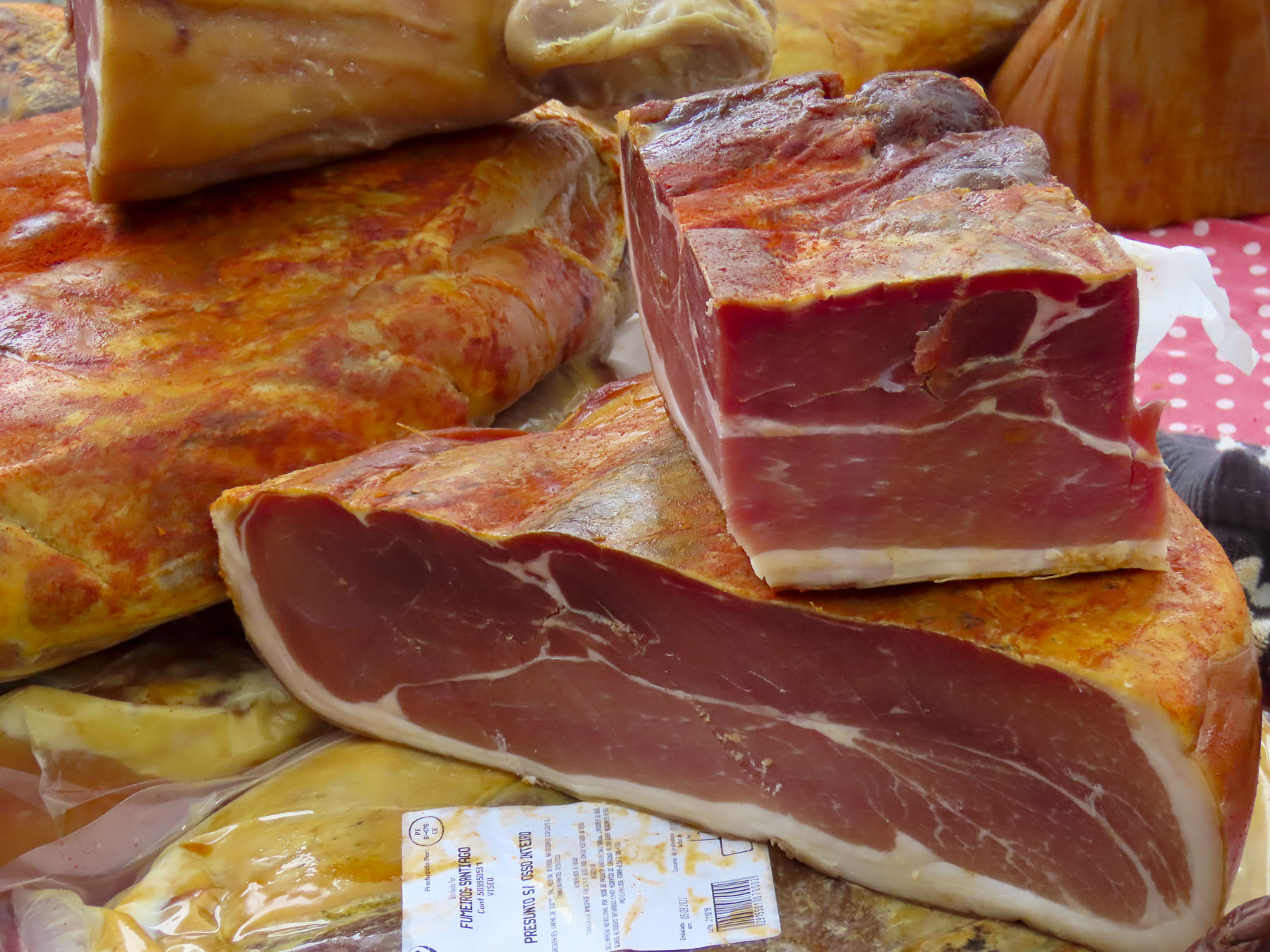
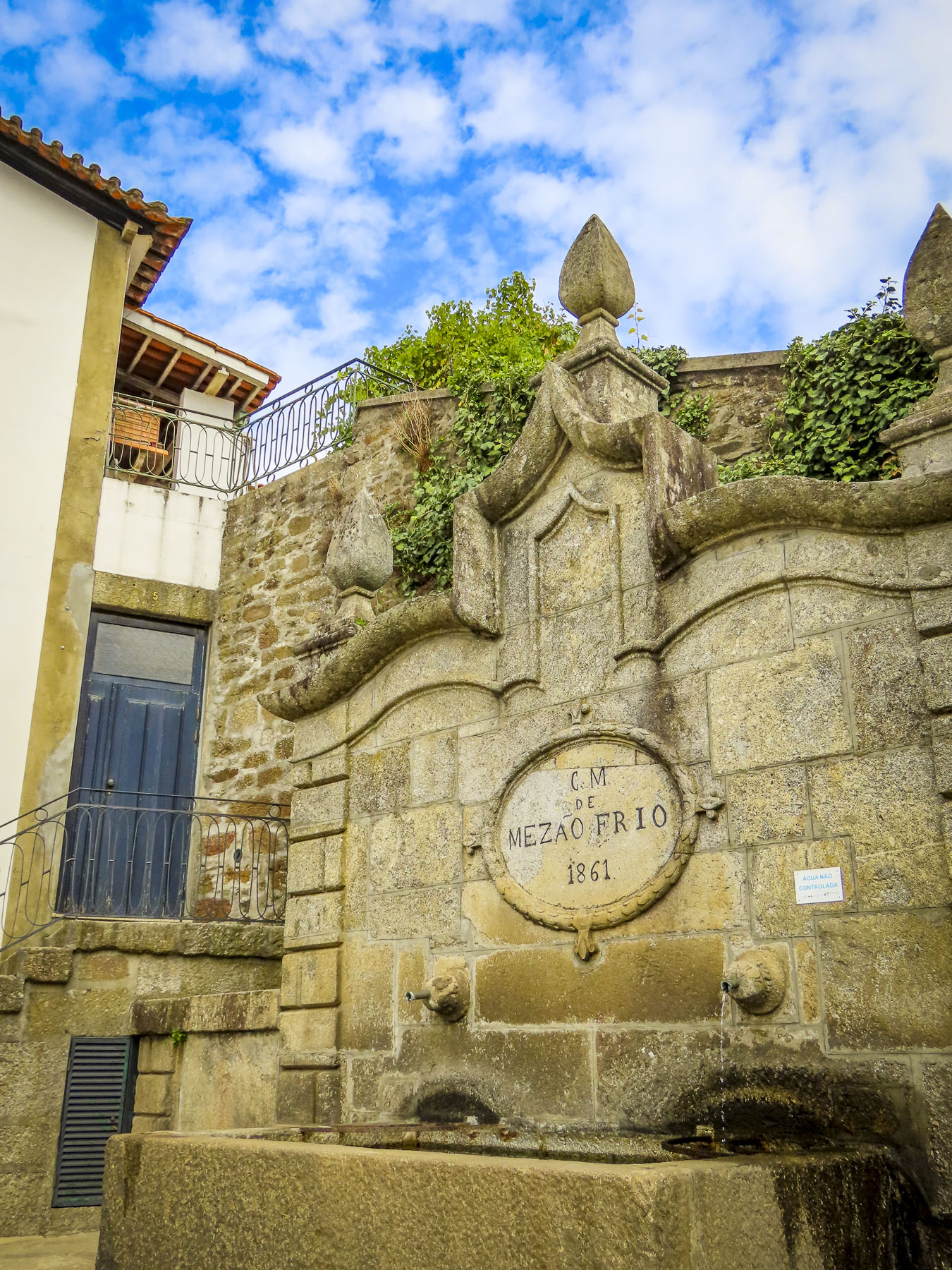
The small village of Mesão Frio was a short walk from our guesthouse and as luck would have it, market day. Being mid-October, it was a smaller affair than what we imagined takes place during the high season, but it was still interesting enough, with cheese, meat and vegetable purveyors, along with hardware tents and garden suppliers selling seedlings for fall planting. With a round of Portuguese cheese and jamon secured for a picnic lunch later it was time to enjoy our, “walk a little then café,” break. Afterwards we wandered from one end of the village to the other, along the village’s main lane bordered on one side with a wide plaza and lined with shade trees. At the far end stood the Church of São Nicolau.

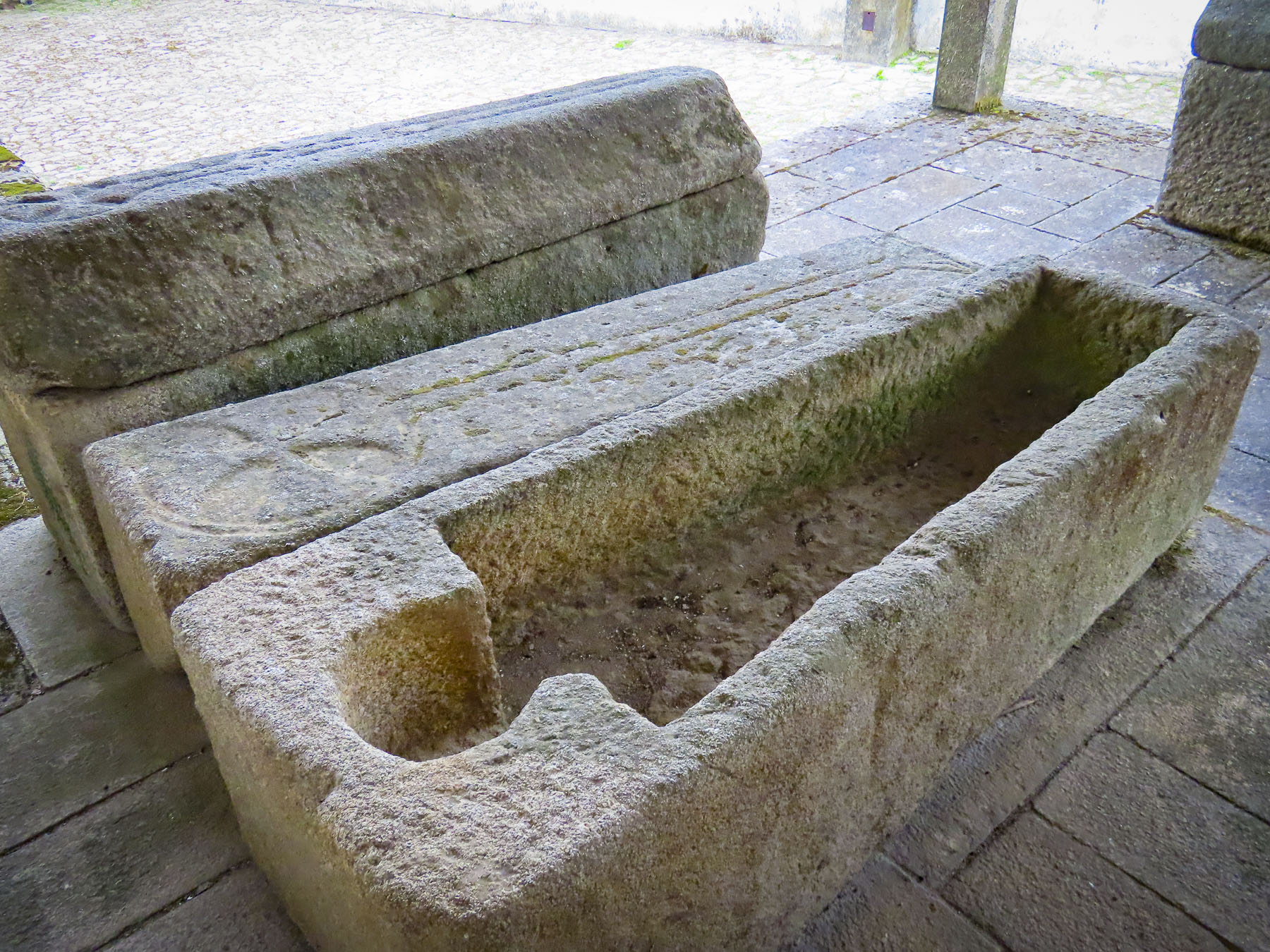
Tradition believes that the church was ordered built by Queen d. Mafalda, wife of d. Afonso Henriques in the 12th century, but the thickness of the church’s walls hint that it was constructed in the 14th century. Eighteenth century remodeling left the Baroque and Rococo character that’s visible today.  Several ancient stone sarcophagi, trapezoidal in shape, dating from the Medieval era stood under a side portico.

Heading back through the village we entered the Igreja de Santa Cristina, its interior now modestly decorated after it was looted and destroyed by Napoleon’s army during the Peninsula War of the early 1800s. Leaving only one bell tower that still stands today. It’s attached cloister, dating from 1724, was originally dedicated to Franciscan friars until 1834 when all male religious orders were banned from Portugal and their properties confiscated by the state.

Leaving many original stone details in place the building has been wonderfully repurposed as municipal offices. The most interesting detail a “janelas de vinho” or wine window from which wine used to be sold. The Regional Tourism Board located in the cloister has produced a very comprehensive 54-page Douro Tourism Guide that is a great resource and available to download for free. Listing an astonishing 120 major viewpoints, along with wineries, festivals, lodging, restaurants, and activities throughout the valley. There’s enough wonderful information in guide to encourage multiple vacations into the area.

After coffee, we drove leisurely along the north side of the river, stopping frequently to take photos. Driving through Peso da Régua to Covelinhas, where we followed the sinuous road high up into the mountains.

Occasionally passing olive groves and fruit orchards, their novelty highlighted by being oddities in a sea of grapes, until we reached the Miradouro São Leonardo de Galafura. At an elevation of 2100 feet it’s one of the highest viewpoints overlooking the valley.

Hawks circled on the thermal updrafts below us. As far as we could see, waves of undulating vineyards covered the hillsides, their pattern like a stone thrown into a pond. The unbroken views from the miradouro seemed if we were flying.  

Highly recommended by our host we dined each evening in Mesão Frio alternately at Tasca do Zéquinha an intimate rustic eatery with a silhouette of a wine cask hanging above the front door. Inside was a small bar packed with regulars. With a smile one pointed us upstairs when he saw our dismay that it was standing room only on the street level. Upstairs we were pleasantly greeted in a small dining room of eight tables. We enjoyed lamb chops, a rare and outrageously expensive menu item in the states, but well priced here and delicious. Fully sated, we were pleasantly pleased with how inexpensive appetizers, a house wine, dinner, dessert, and coffee were. In the Douro Valley the wine choices are infinite, or fathomless and as much as we enjoy wine, we are not knowledgeable oenophiles and are content with most restaurant’s house wines. Which in our experiences have found to be very good. 

The next night we ate at Convívio. Honestly, I can’t remember what we ordered, but we thoroughly relished the meal and the house wine. Here the house wine was a bottle of Serro d Asno, which featured a humorous illustration of a donkey’s ass. I’m not sure if the waiter was secretly a radical protesting the invasion of tourists into the Douro Valley or expressing his discontent with something I did not say, ha ha, my mind wanders. The wine was very good. Unfortunately, we haven’t been able to find it here in the states. For a change of pace we had dessert and coffee at Café Avenida, which features a tantalizing display case full of their divine homemade pastries. Staying open to 12AM, this quiet place is the ultimate experience for nightlife in Mesão Frio.

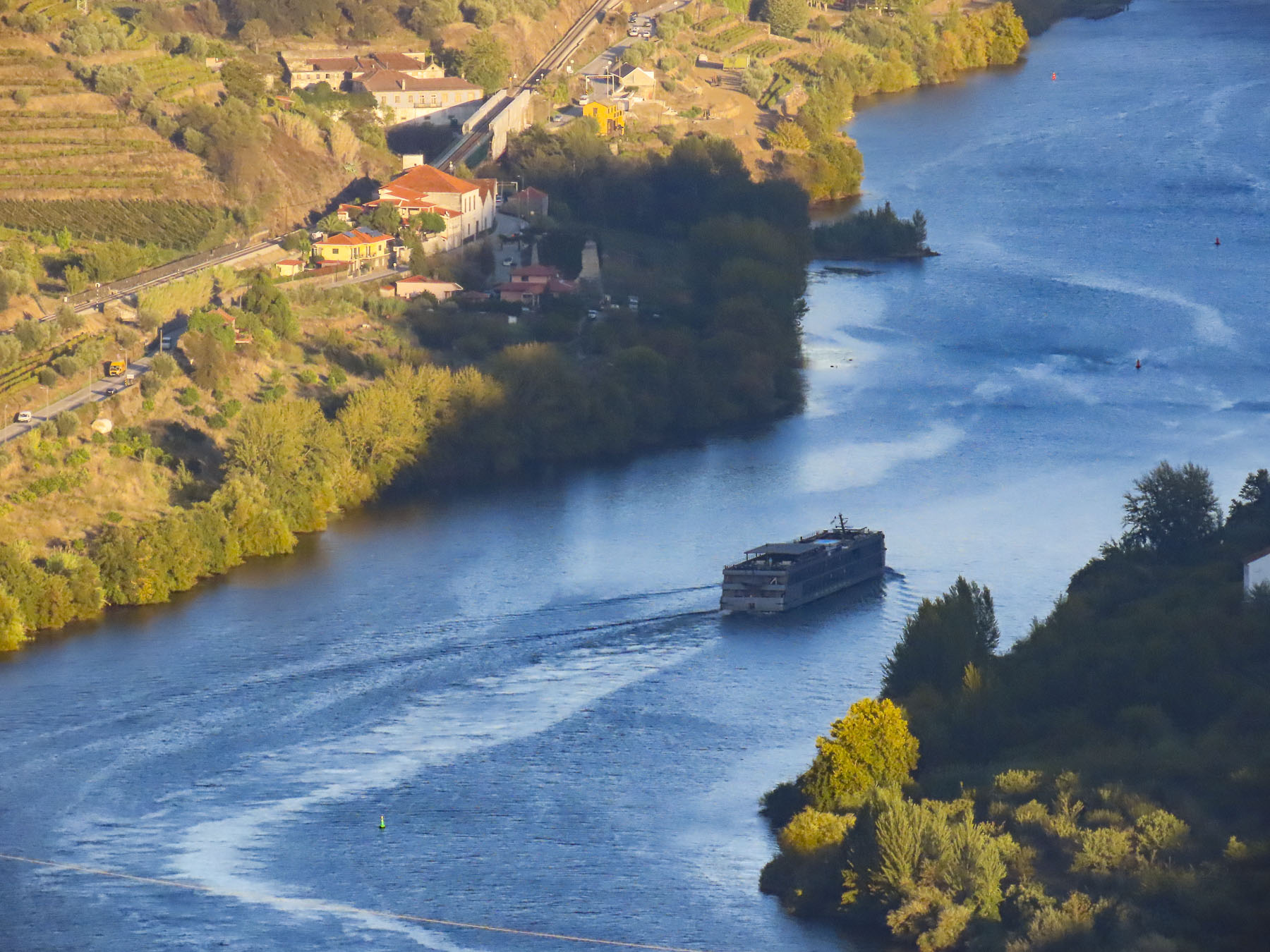
The waters of the Douro River rise in the mountains of central Spain, north of Madrid and flow of west for 557 miles before meeting the pounding waves of the Atlantic Ocean on the Portuguese coast at Porto. The famous region known for its production of Port, a fortified wine, encompasses 615,000 acres along 75 miles of river valley from the Spanish border to Mesão Frio.  

In September 1756 a Portuguese royal charter acknowledged the Douro River Valley as the exclusive region for the production of Port wine. Becoming the world’s first wine region to have a formal demarcation or DOC (Denominação de Origem Controlada).

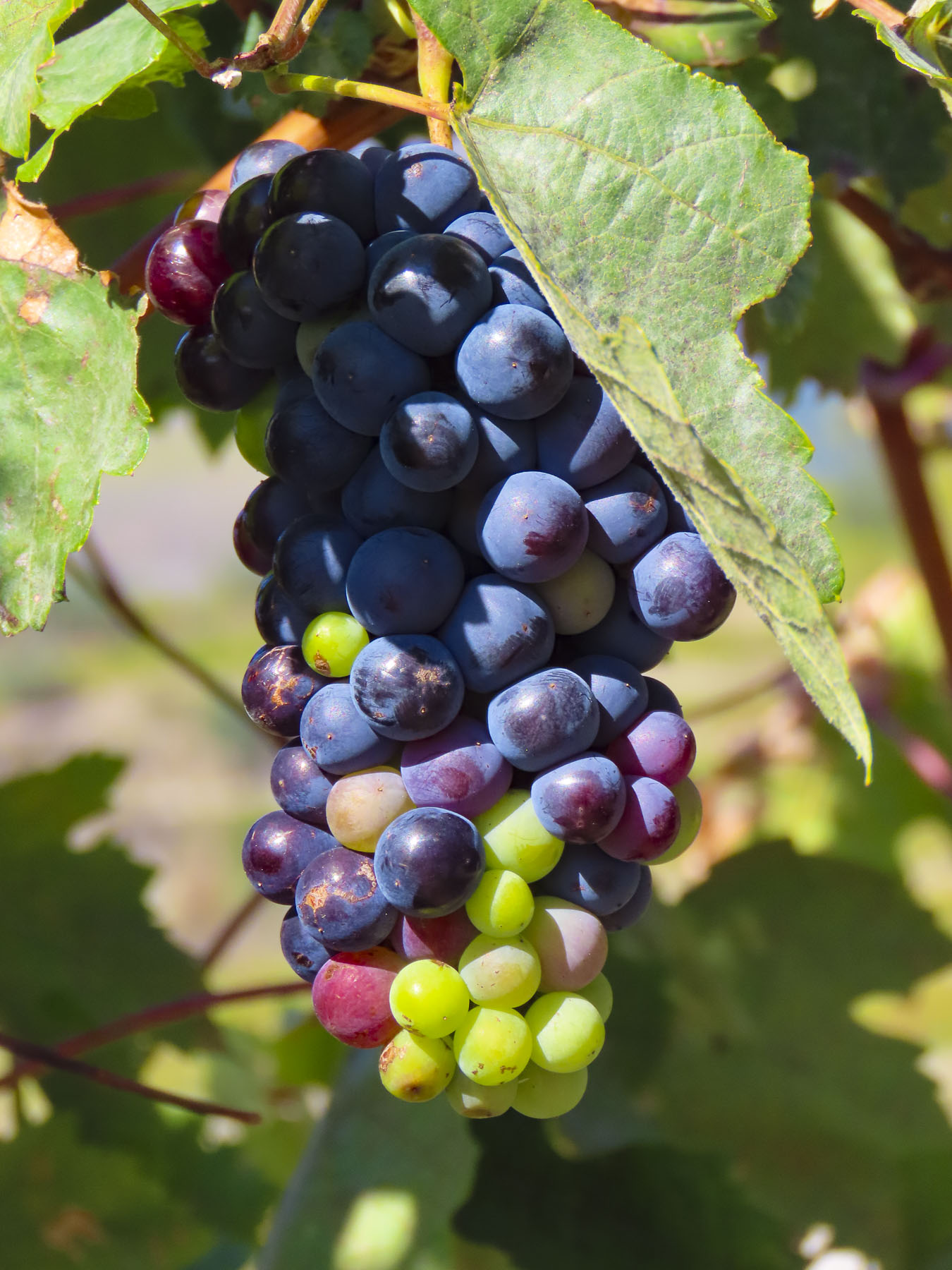
Though renowned for its Port wines, today production is evenly divided with Douro table wines, which are gaining international recognition. Eighty different grape varietals, many native to Portugal, are cultivated in the region, but by far the most popular red grape varieties are Touriga Franca, Tinta Roriz, Tinta Barroca, Touriga Nacio, nal, Tinta Cao, and Tinta Amarela. While Rabigato, Viosinho, Malvasia Fina, Donzelinho, Gouveio, and Codega are the favored white varieties. Used alone to make full-bodied reds or delicate white wines they are also blended to create the beloved Port wines of the region.  Interestingly grapes growns for Port wine are planted on rocky schist areas while grapes grown for table wines favor a looser soil. The steep terrain of the narrow-terraced hills along the valley are no match for modern harvesting equipment, dictating that every September into early October the grapes are harvested by hand.

Small hamlets with parish churches of all different sizes are speckled across the landscape of the Douro Region. Picking one out on the map we headed to Cidadelhe for the Igreja de São Vicente. Built in the 1700s the stately baroque-style church is showing its age, with its textured graceful patina along with faded and peeling wood.

The backroads through the Douro Valley offered endless vistas of rolling hills and vineyards beginning to display their fall colors around every bend of the road. Fortunately, in October there were few cars or caravans on the roads and we able to stop often. With 119 official viewpoints in the region there’s and infinite number of photography worthy panoramas available just by pulling over onto the shoulder. The landscapes were endless. The fog intriguing.

We really didn’t have any solid plans for our time in the region. No must to this or that. Instead we chose, often remote miradouros on the map for our morning and afternoon destinations. The journey to reach them an integral part of the adventure.

We just brushed the surface of this alluring Douro Valley region. Hopefully, one day we’ll get a chance to return.

Till next time, Craig & Donna

.

Havana, Cuba: Beautiful in neglect

The amber glow of sunrise warmed the waterfront as our ship docked.  Its upper deck provided us a view of the port as if we were seagulls soaring above the first commuter ferries of the day crossing the harbor.  Along the water, buildings wore a tired facade of montage color and aged textures. Beautiful in neglect. These were our first impressions of Havana. The few buildings under renovation were easy to spot with their fresh coats of paint. The domes of the Russian Catedral Ortodoxa Nuestra Señora de Kazán, built to celebrate Soviet – Cuban friendship glistened in the sunrise, its onion shaped domes an odd juxtaposition, accented the balmy Caribbean skyline.  We’d be spending two full days in Havana.

By the time Nevada legalized gaming in 1931, Havana, once nicknamed “the Paris of the Caribbean” was already a well-established tropical get-away for gambling, especially if you lived in the wintry northern parts of the United States.  Havana’s balmy weather and swaying palms contrasted nicely against Las Vegas’ dusty strip in the desert where tumbleweeds blew across the sidewalks. In the 1950s, fifty dollars could purchase a three-day package tour to a Havana casino that included airfare, entertainment, food and hotel. Cruises to Havana from Miami were also possible aboard ships like the 725 passenger S.S. Florida for $46.00. For an additional $35.00 you could take your car along if you wanted to explore the “700 miles of Cuban highways,” a travel brochure from the time advertised. Cruise ships arriving at night were occasionally treated to displays of fireworks over the centuries old Castillo De Los Tres Reyes Del Morro and the highrise apartments along the Malecon as they entered the harbor. It was city of Jazz clubs, high rollers, zoot suits, large finned Cadillacs and mobsters. Headliners like Frank Sinatra, Dizzy Gillespie, Eartha Kitt, and Nat King Cole drew folks to the casinos controlled by New York, Chicago, and Miami crime syndicates.

Mafia payoffs to the rampantly corrupt regime of Cuban dictator Fulgencio Batista and his associates allowed their casinos, brothels and drug running operations to flourish unimpeded. As flashy as the casinos were, the sugar industry dominated ninety percent of the rural Cuban economy for decades and was the largest employer in the countryside until sugar prices collapsed.  That along with government policies that ignored its impoverished citizenry bred increased discontent as the disparity of wealth between the rural poor and the Havana elite grew intolerable. The jungled mountains of the islands’ interior sheltered Fidel Castro and his armed revolutionaries. 1959 was their year. Batista and his cronies fled to the Dominican Republic. Afterwards all homes, properties, businesses, and cars were nationalized.  An exodus of the Cuban middle class followed with approximately 1.4 million people heading to the United States to reestablish their lives.

While Europeans and Canadians have long traveled to Cuban government-run tourists’ resorts along the coast, we were visiting the island on a cruise during that first window of opportunity which opened to Americans between 2016 – 2019, before access was unfortunately tightened again.  Recently the travel restrictions to Cuba have once again been loosened.

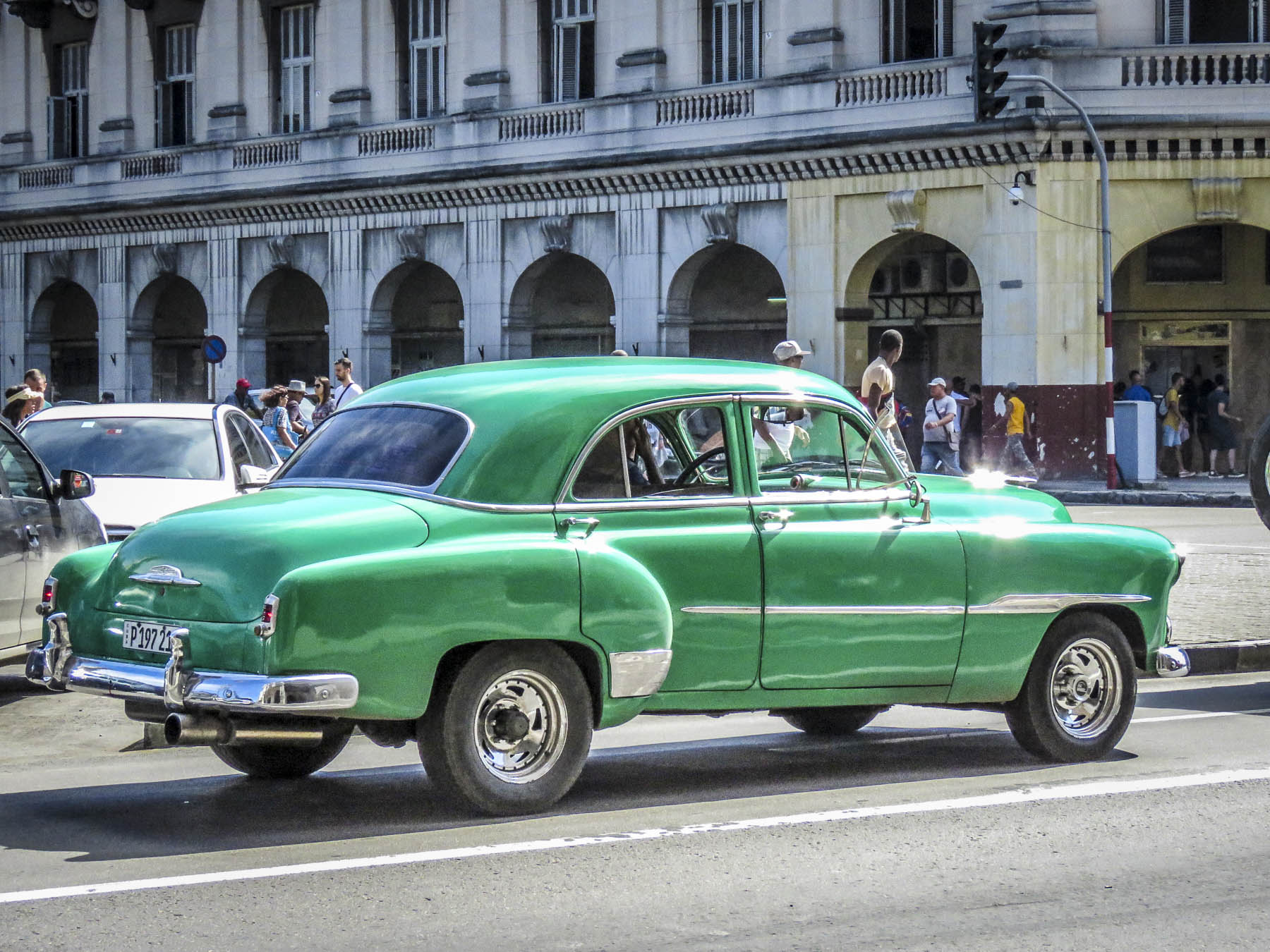
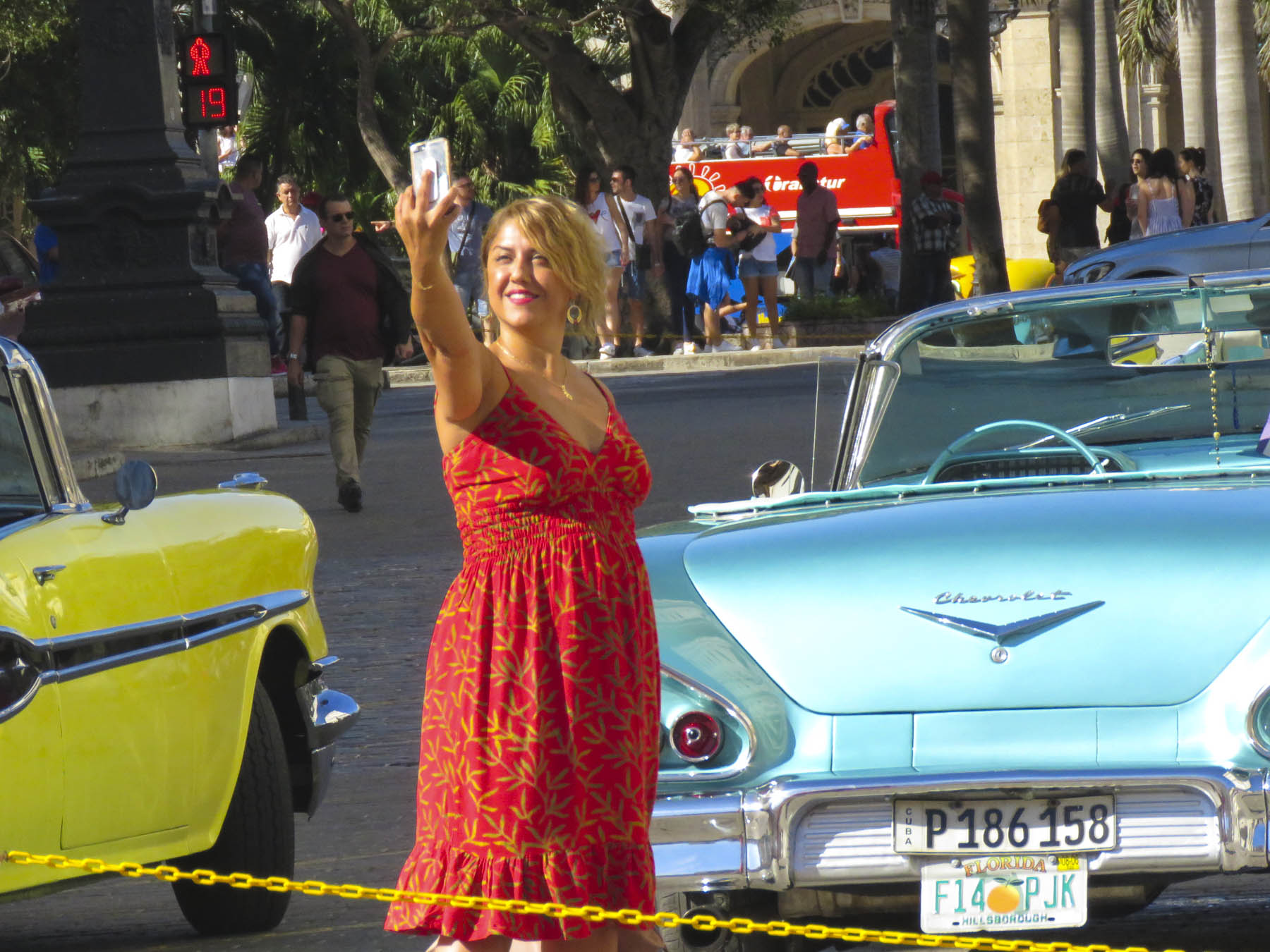
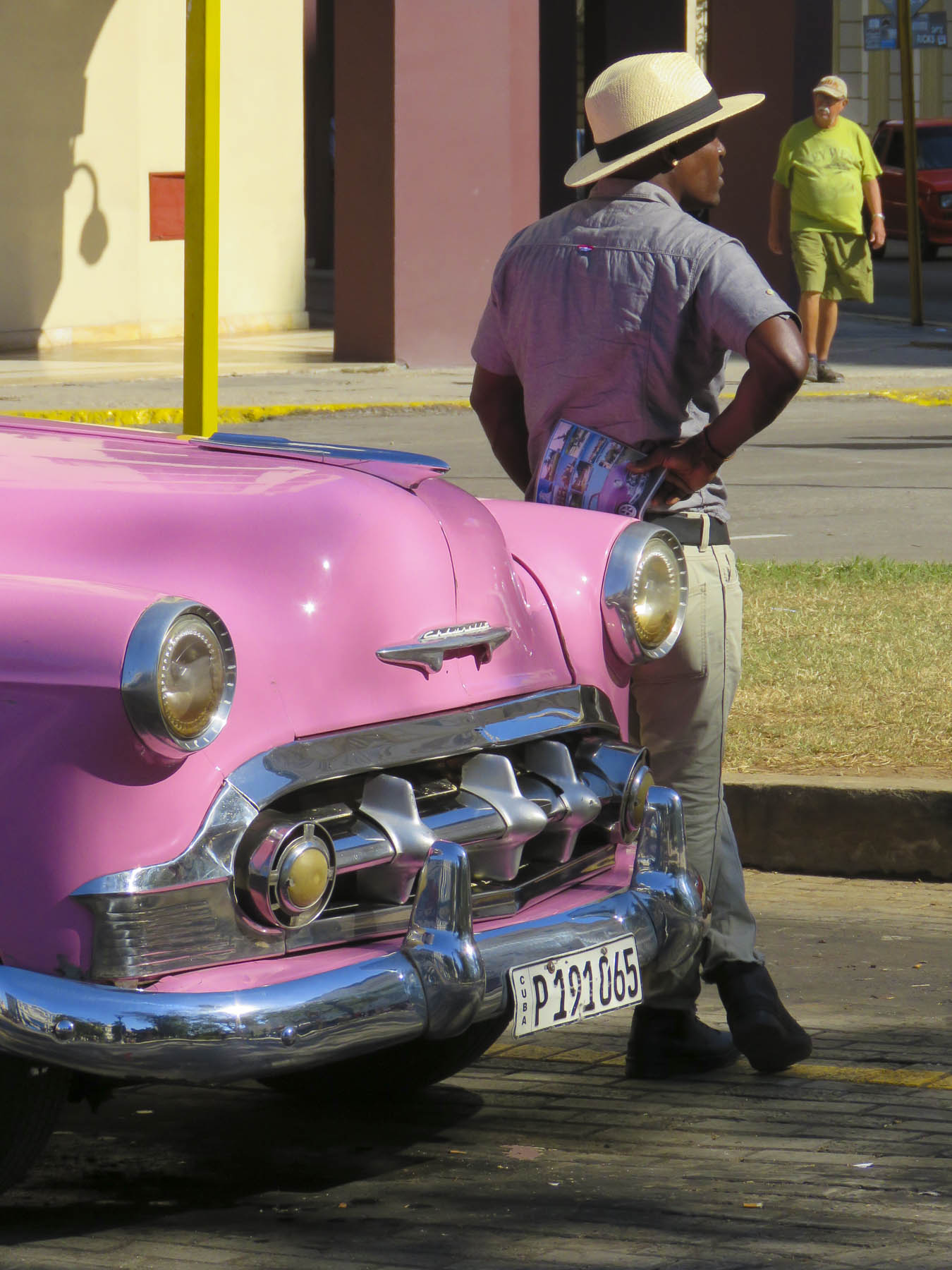
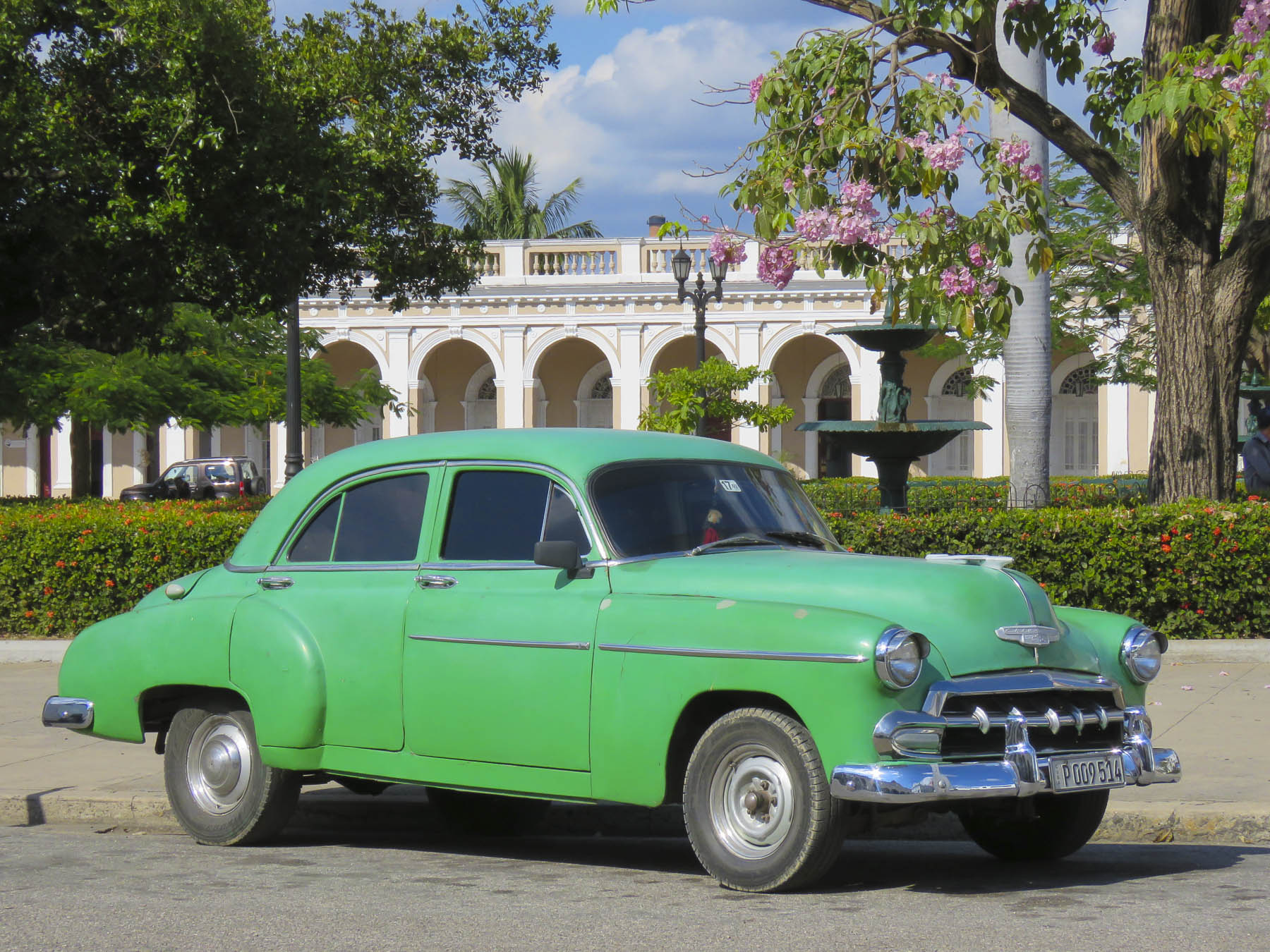
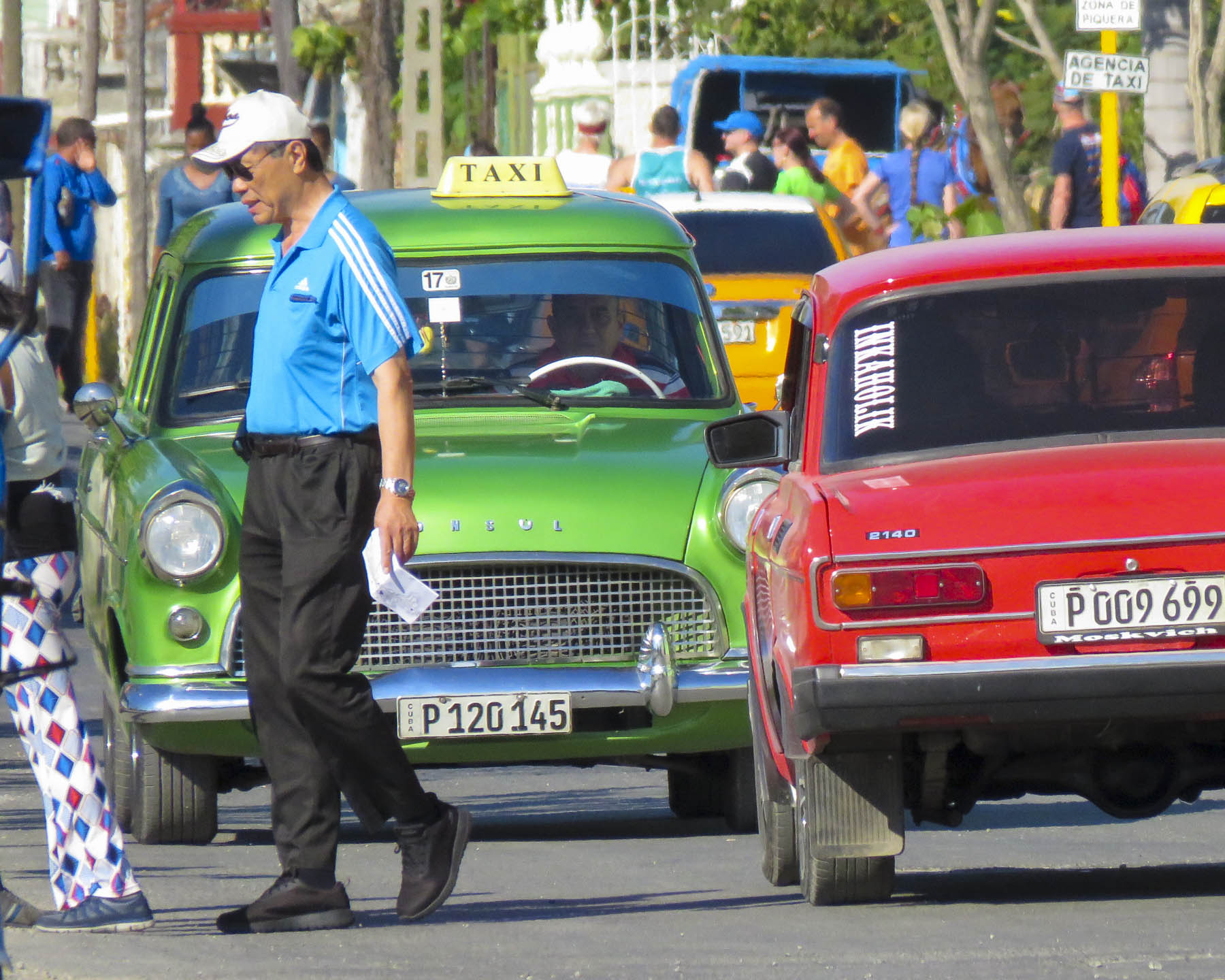
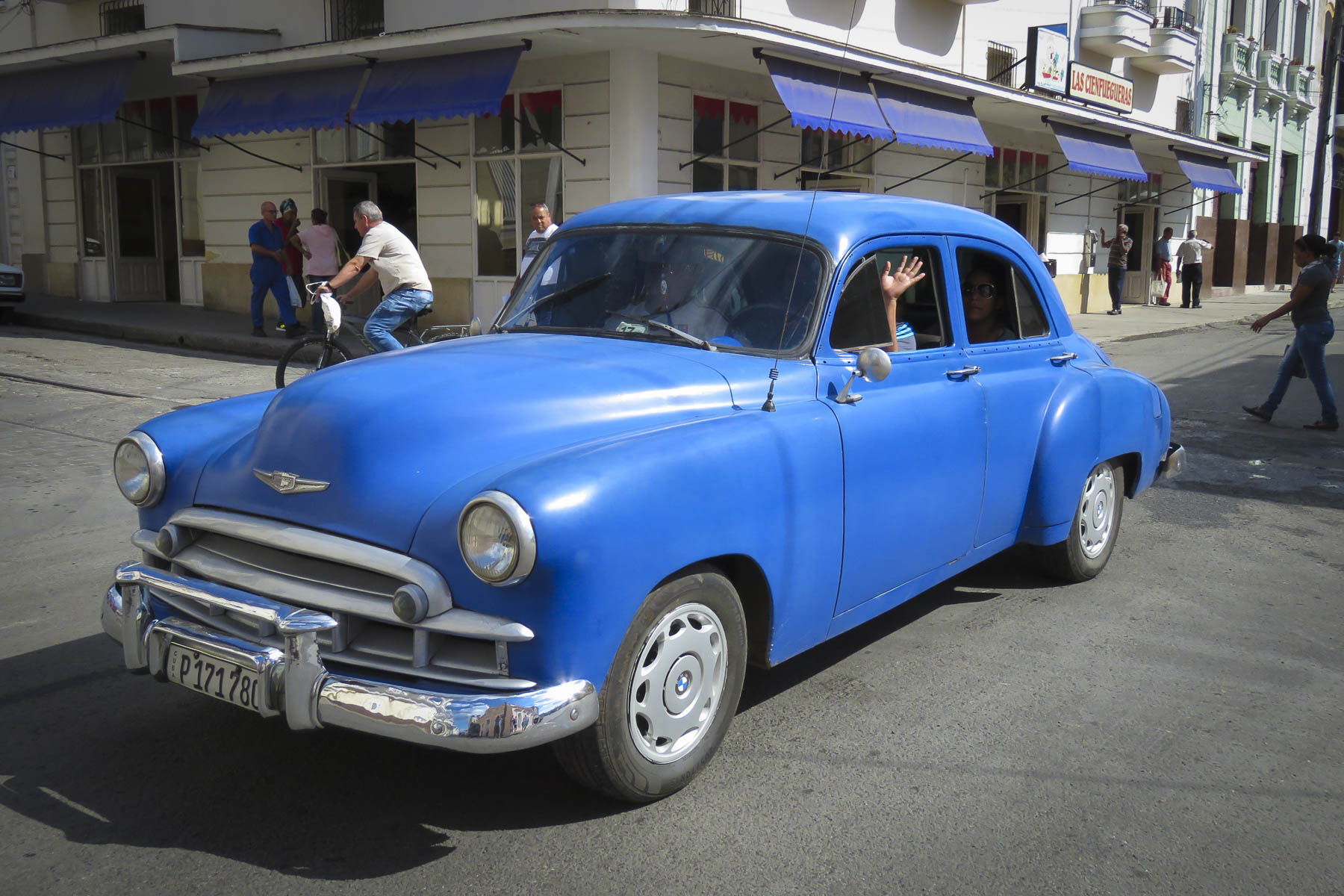
Rush hour in Havana happens whenever the cruise ships disgorge their passengers onto the waterfront to walk into the city center, catch their bus tours or to snag a ride in one of those classic cars from the late 1950s. There are literally thousands of antique cars still on the roads in Cuba, jury-rigged to keep running and often repainted with house paint that reflects the bright ambience of the Caribbean. 

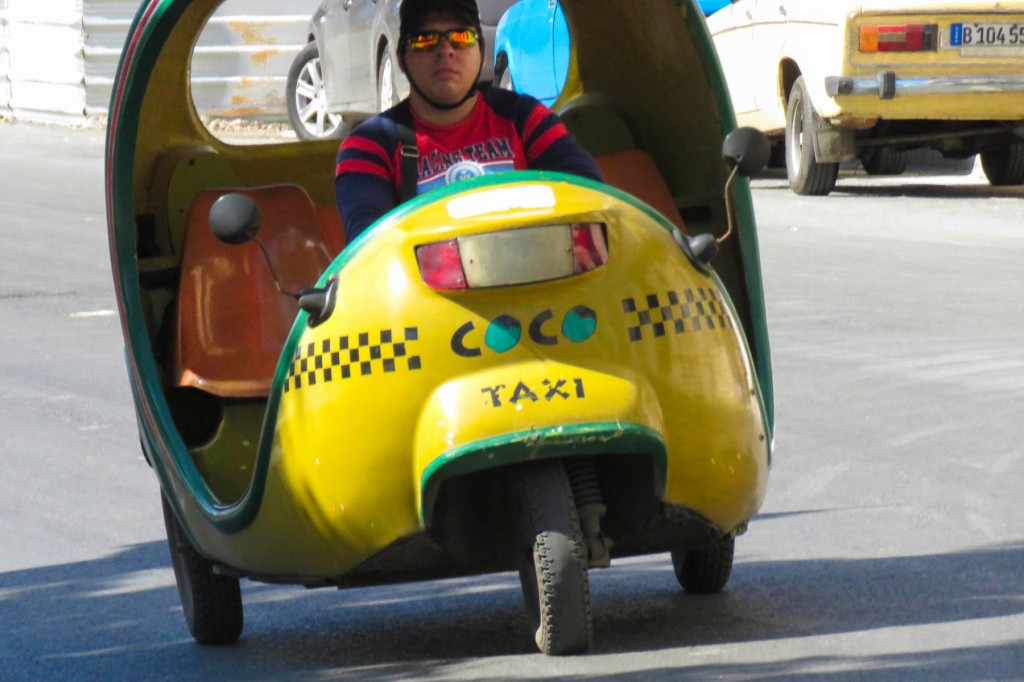
Depending on where you are in the disembarking queue these beautiful classics, especially the convertibles, might already be tooting around Havana with other tourists and you might have to opt for a coco taxi.  These entertaining rickshaw type taxis are covered in a bright yellow, fiberglass shell and have seating for three across the rear axle. When it rains, you are going to get soaked as we did when we got caught in a downpour. The return ride was definitely more comfortable after several Cuba Libre cocktails. 

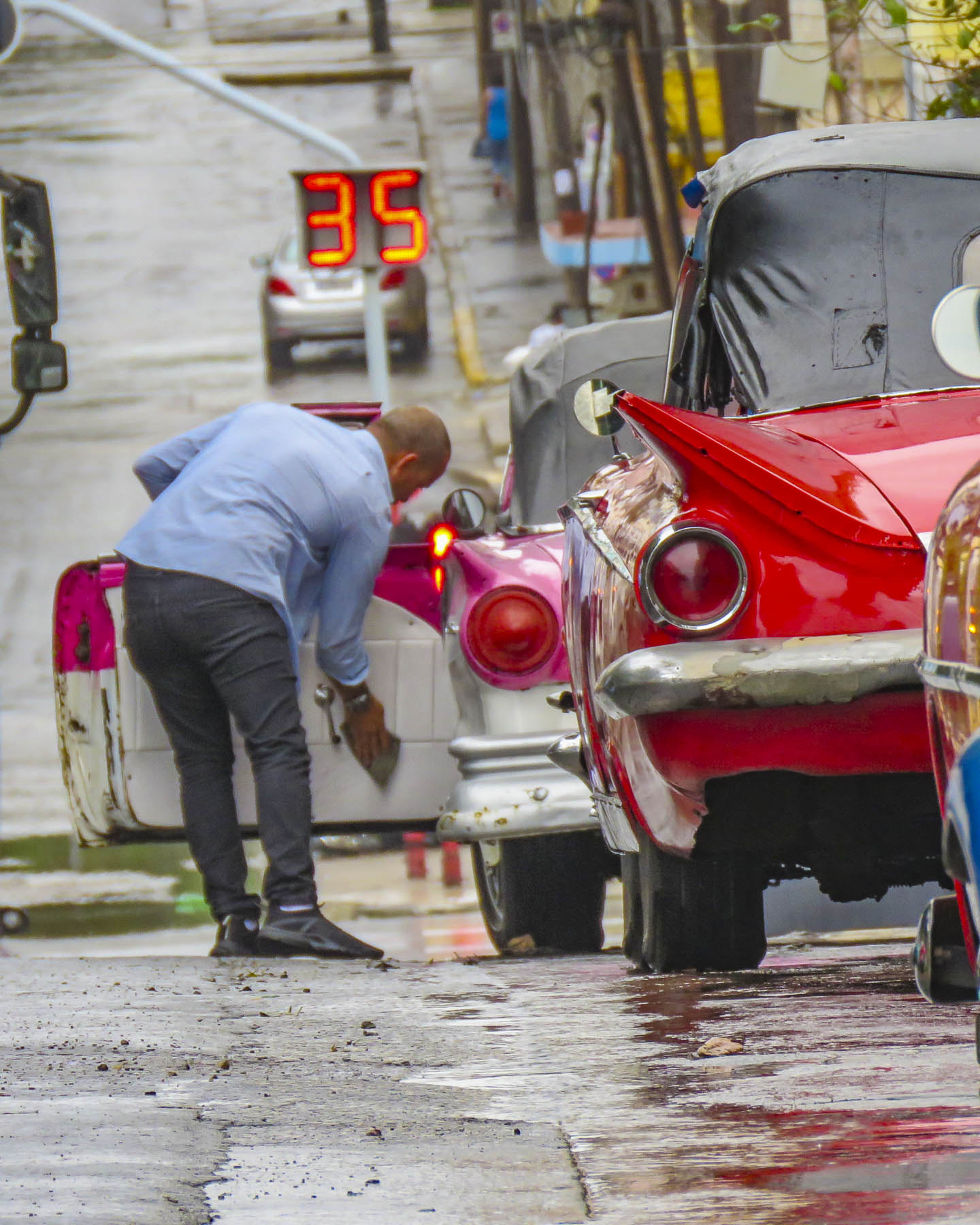
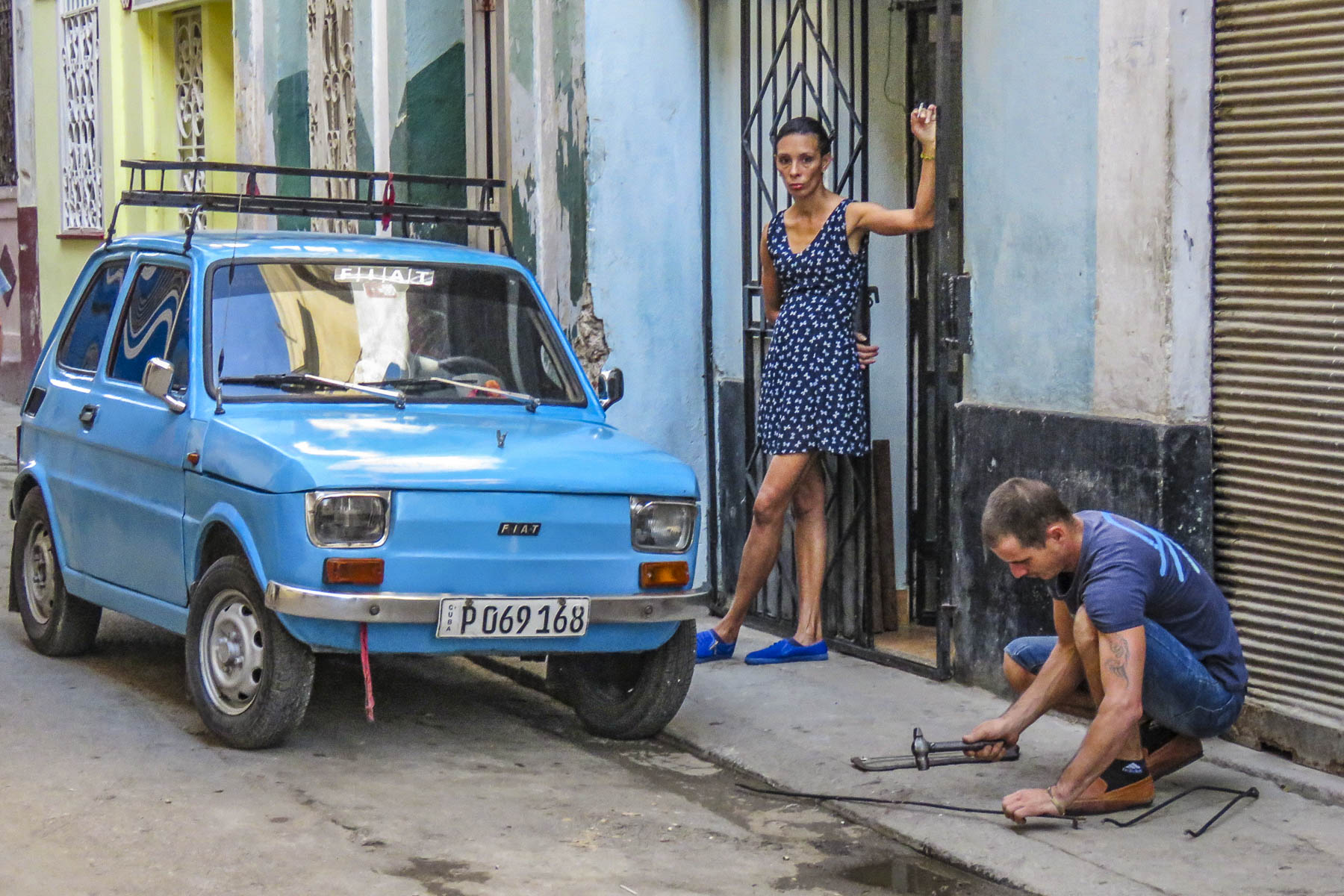
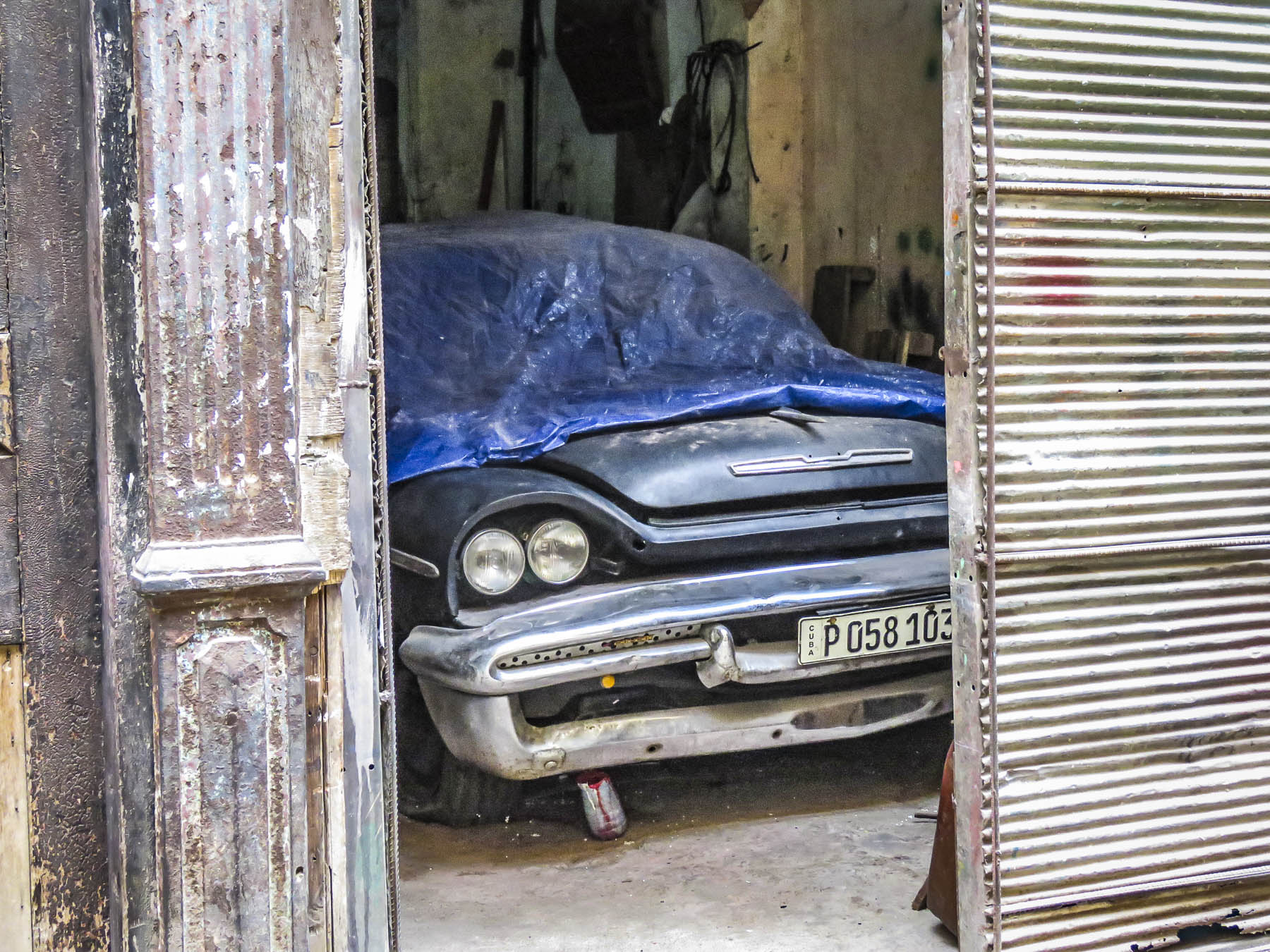
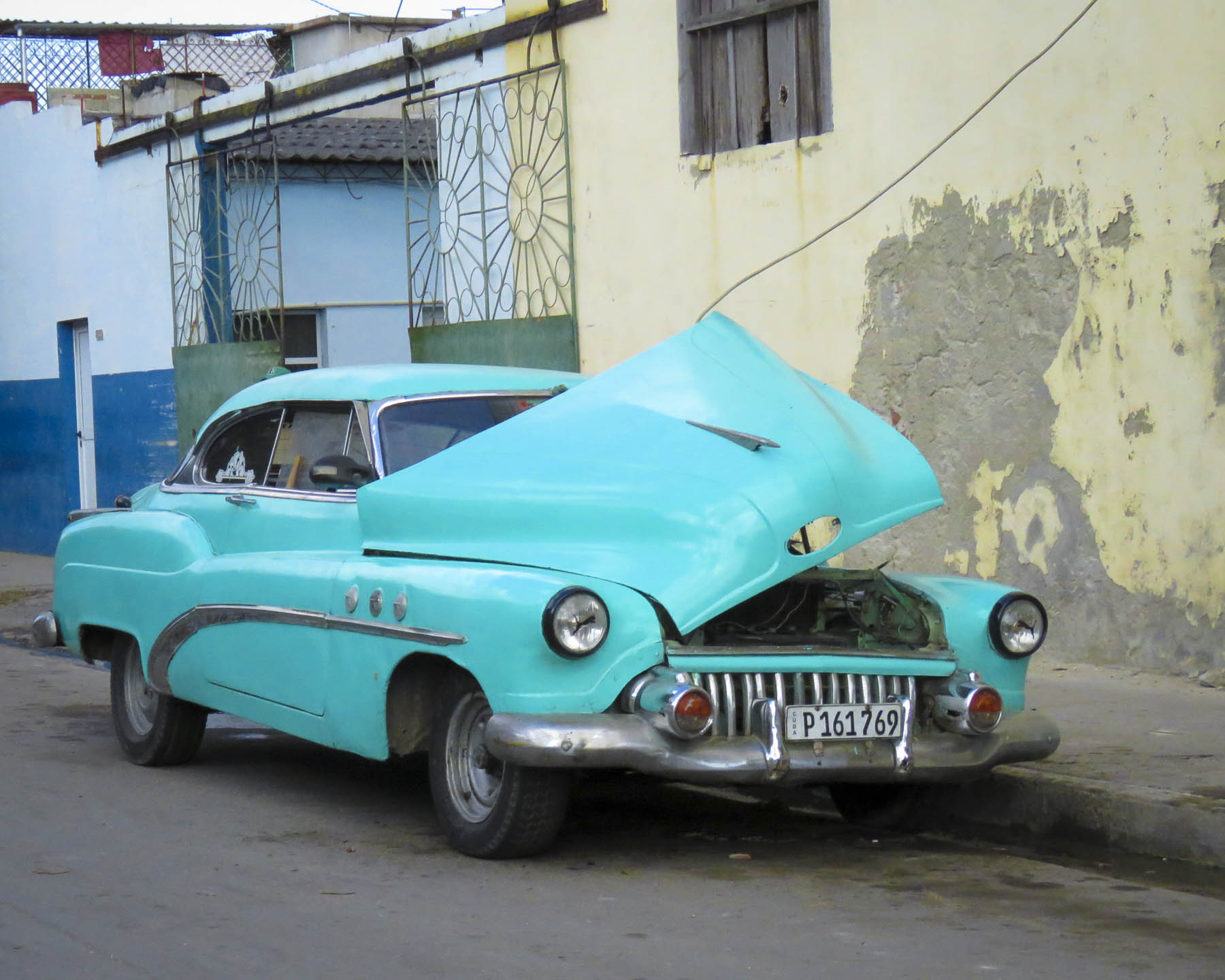
Down the side streets of the city, it wasn’t unusual to see these vintage cars raised on cinderblocks, their hoods open as amateur mechanics tinkered away to keep their classic beauties running. There are about 60,000 old American cars still on the road in Cuba. Most date from the 1950s, but there are still Packards, Cadillacs, Dodges, Chevys, Studebakers and Fords from the 1940s and 30s that are still road worthy.  This is an amazing testament to the talent of Cuban mechanics that have been “MacGyvering” the repairs with makeshift parts since the revolution ended in 1959, when the U.S. trade embargo began and Cuba banned the import of American products. While some cars look to be in mint condition, often the interiors are taped together, door handles are missing, and the windows don’t roll up. Engines don’t last forever and it’s not uncommon to swap engines between the American makes and models. Sometimes even the motors from Russian Volgas and Ladas work their way under the hood of Fords and Chevys. Fiats and Peugeots were imported after the revolution but proved to be not as durable as the American models. 

With the nationalization of property in 1959 the nicer cars of the wealthy who fled were assigned to government officials, doctors, renown celebrities and famous athletes. Regulations prohibiting the ownership of cars were eventually changed to allow Cubans to freely purchase older cars brought to the island before the revolution. Often cars are family heirlooms that have been handed down from generation to generation, with fathers teaching sons the intricacies of keeping the cars running. It’s extremely rare to find new automobiles in Cuba as the government imposes very high taxes on car imports, rendering them highly unaffordable for the vast majority of Cubans.

The ingenuity of Cuban mechanics can surely teach us a thing or two about sustainability. Wonderfully many of these resourceful home mechanics have kept these automotive treasures alive and have created an income for their family by offering rides in their classic cars to tourists. “There are no junkyards in Cuba; everything is still driven.”

Flagging down a Cadillac convertible, we took a ride along the Malecon seafront before breakfast at a paladare recommended on TripAdvisor.  Paladares are small privately run restaurants, usually operated out of the chef’s home, that have been allowed to open as Cuba relaxes its ban on private enterprise in the country.  Typically, their menus change daily depending on what is available at the markets.

After breakfast, our original plan was to walk to Havana’s Central Park to join a tour of the city with a Guruwalk guide. Unfortunately, we arrived late and missed the group. Unfazed, we decided to wander on our own around the city.

Parque Central is the nucleus of a daily classic car show with the old cars neatly lined up for tourists to choose which nostalgic Ford or Chevy they want to cruise around the city in.  Length of the trip and price can be bargained for with each driver.

Across from the park, sparkling from the completion of a recent renovation, the ornate baroque façade of the Gran Teatro de La Havana drew our attention. Built in 1838, it’s a cavernous structure that can seat 1,500 people and is home to the Cuban National Ballet Company.  President Obama addressed the Cuban people from its stage in 2016 and the biennial International Ballet Festival of Havana is hosted here.

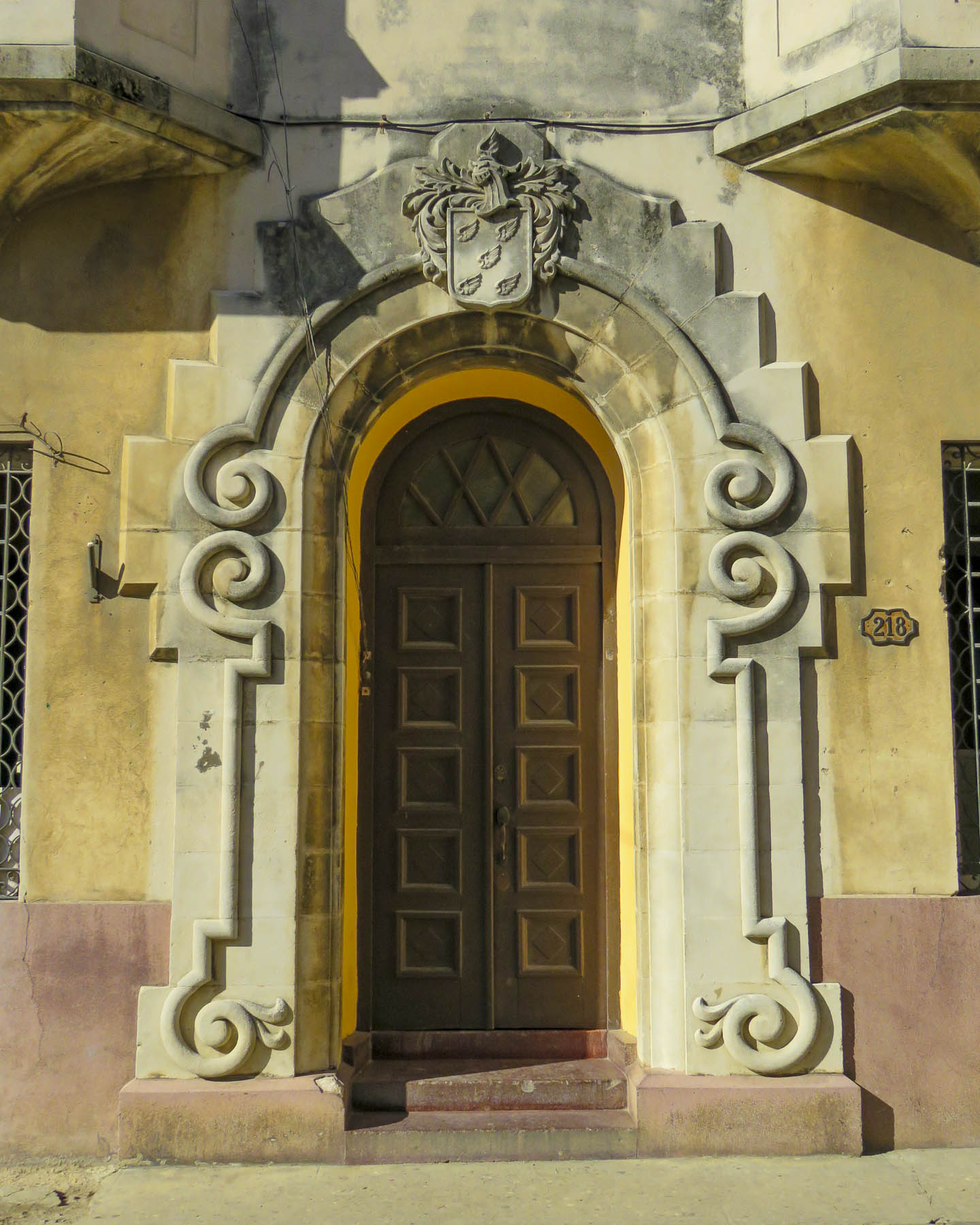
While many hotels and historic public buildings immediately surrounding Havana’s Central Park have been pristinely renovated, you need only to walk a half block down any side street and it’s obvious that the maintenance of the city has been neglected for decades. With many of the buildings in central Havana dating from the 1800’s, most are severely showing their age. Signs of structural neglect were endemic.

This quote I found sums up concisely the housing situation. “In Cuba, everything belongs to everyone and no-one at the same time and if a building is ‘collectively-owned’, it’s understood that the State is the one responsible, but the government doesn’t have the resources for maintenance.”

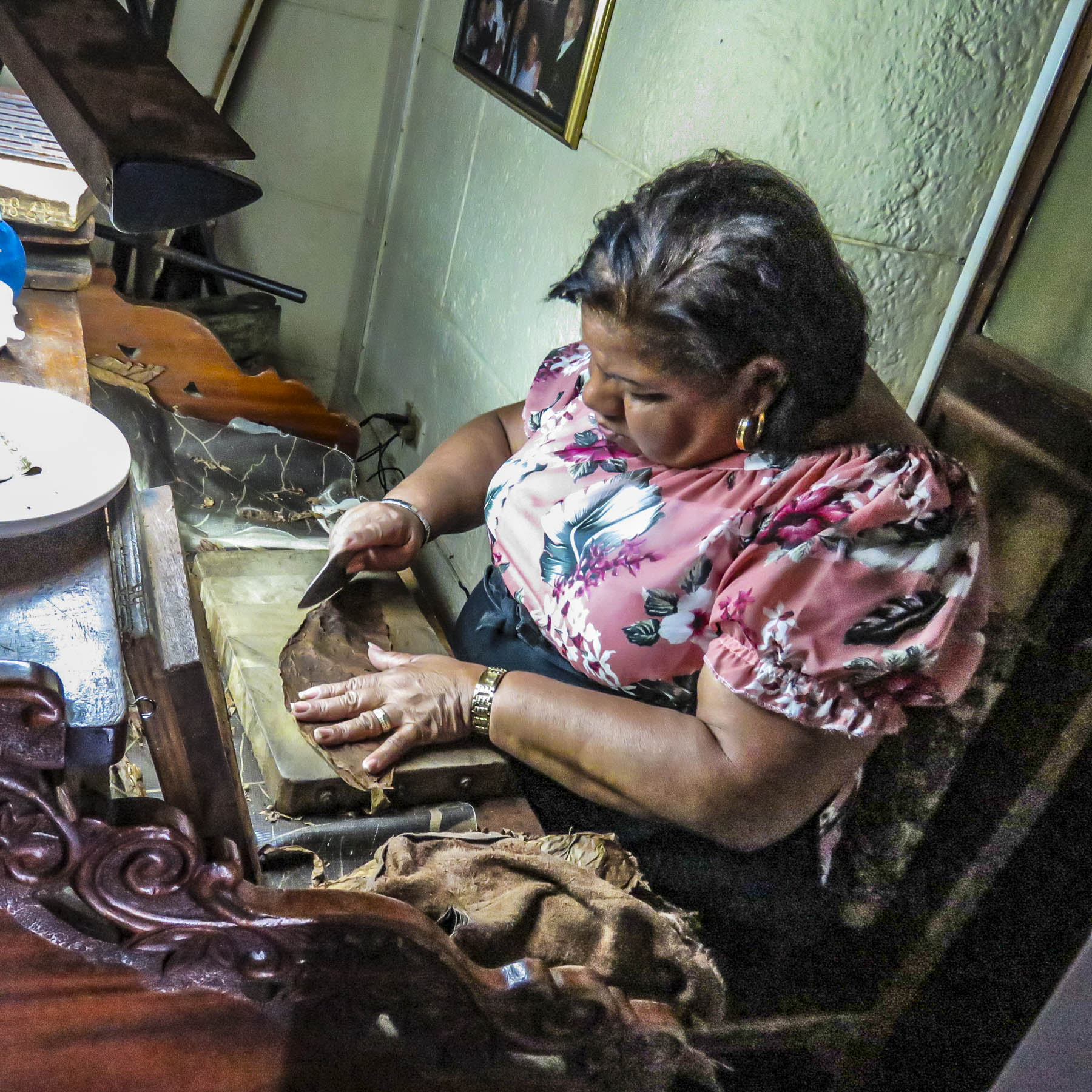
We worked our way towards Real Fábrica de Tabaco Partagas, a historic cigar shop and factory dating to 1845, located behind the Capitolio Nacional de Cuba, a near replica of the United States’ capital building, only larger and with a higher dome. A tour of the cigar factory, where 500 people sort, grade and roll tobacco leaves into world famous habanos, cigars, was not available the day we visited, but we were able to watch a cigar rolling demonstration.

Asking for a recommendation for a place to eat enroute back to the harbor the salesman at the cigar shop suggested Tablao de Pancho, Grupo El Guajirito. Along the way a pleasant young woman, sensing we might be lost, spoke to us in excellent English and offered to guide us to the restaurant. She declined a tip for her assistance, so we asked her to join us for lunch instead. She quietly saved half her meal to take home to her child, because her ration card did not provide for enough food.

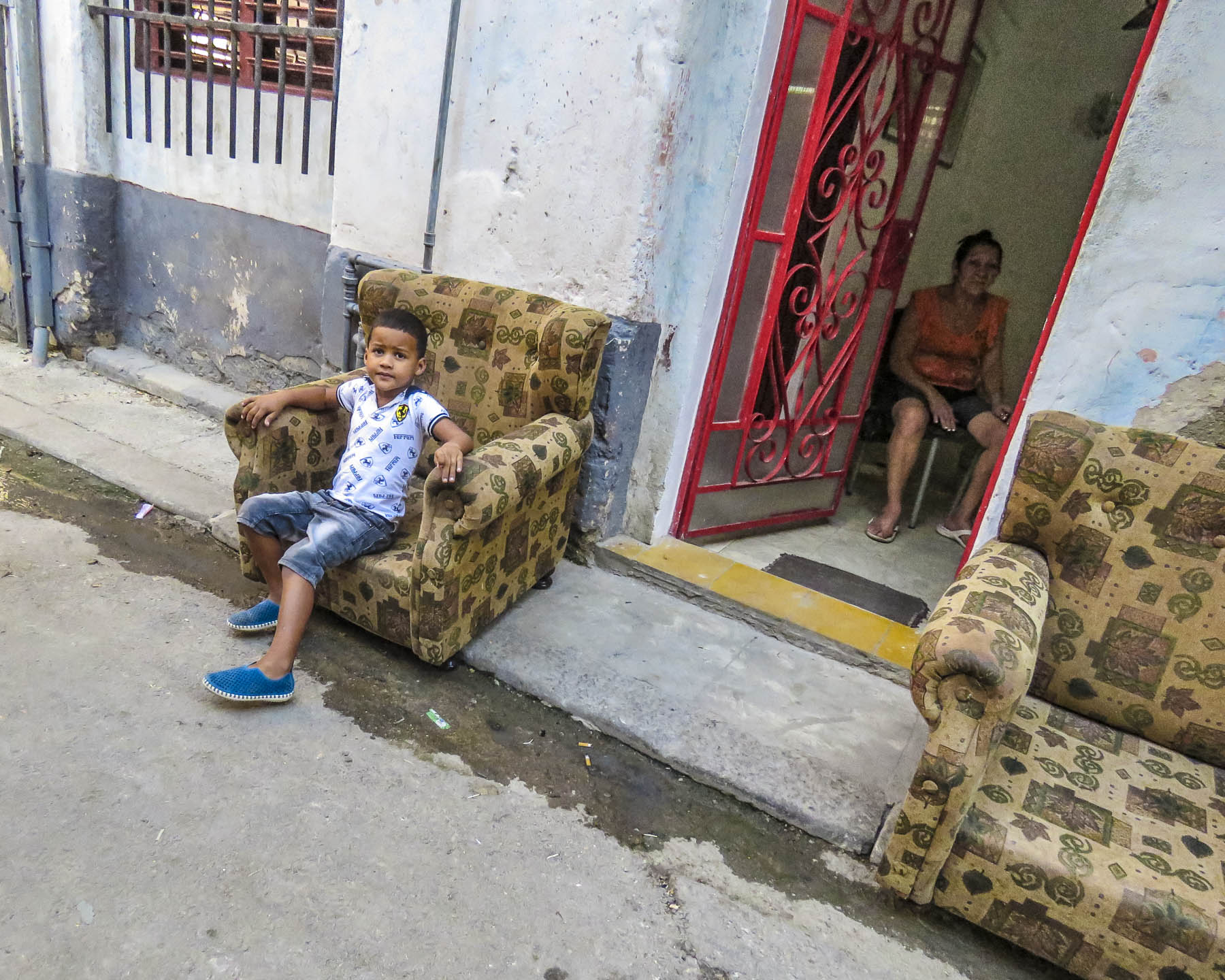
Life and business are conducted on the streets of the neighborhood with most doorways and shallow balconies harboring tenants trying to stay cool. A mattress maker refurbished rusted bedsprings on the sidewalk. Vegetable cart vendors pushed their wagons around the blocks. The scarcity of some the smallest luxuries and basic necessities is visible and there was a sense of waiting, but what for was difficult to determine. The hardships of life that the residents of the city endure under a failed socialist revolution are still very much in evidence in the forgotten, gritty side streets of the capital.

The cigar chomping aficionado in our group was determined to purchase the legal limit of Cuban habanas that were permissible to bring back to the states at the time, so three of us crammed into a coco taxi, a not particularly macho ride to cruise in along the Malecon.

Our destination was the Hotel Nacional de Cuba for a smoke and a glass of rum. A historic 1930s hotel and casino, before the revolution it attracted American celebrities like Erroll Flynn, Gary Cooper, Rita Hayworth, Fred Astaire, Ava Gardner, Marlon Brando, and Walt Disney. Now the hotel annually hosts the Festival de Cine Nuevo Iberoamericano and claims Michael Keaton, Francis Ford Coppola, Leonardo DiCaprio, and Steven Spielberg as past attendees.

Later that afternoon, behind the 1500s era Castillo de la Real Fuerza, a star shaped fortress that protected the colonial harbor, we wandered through the Old Havana district, still lively since the days when treasure laden Spanish galleons from the New World stopped in Havana before voyaging back to Spain.

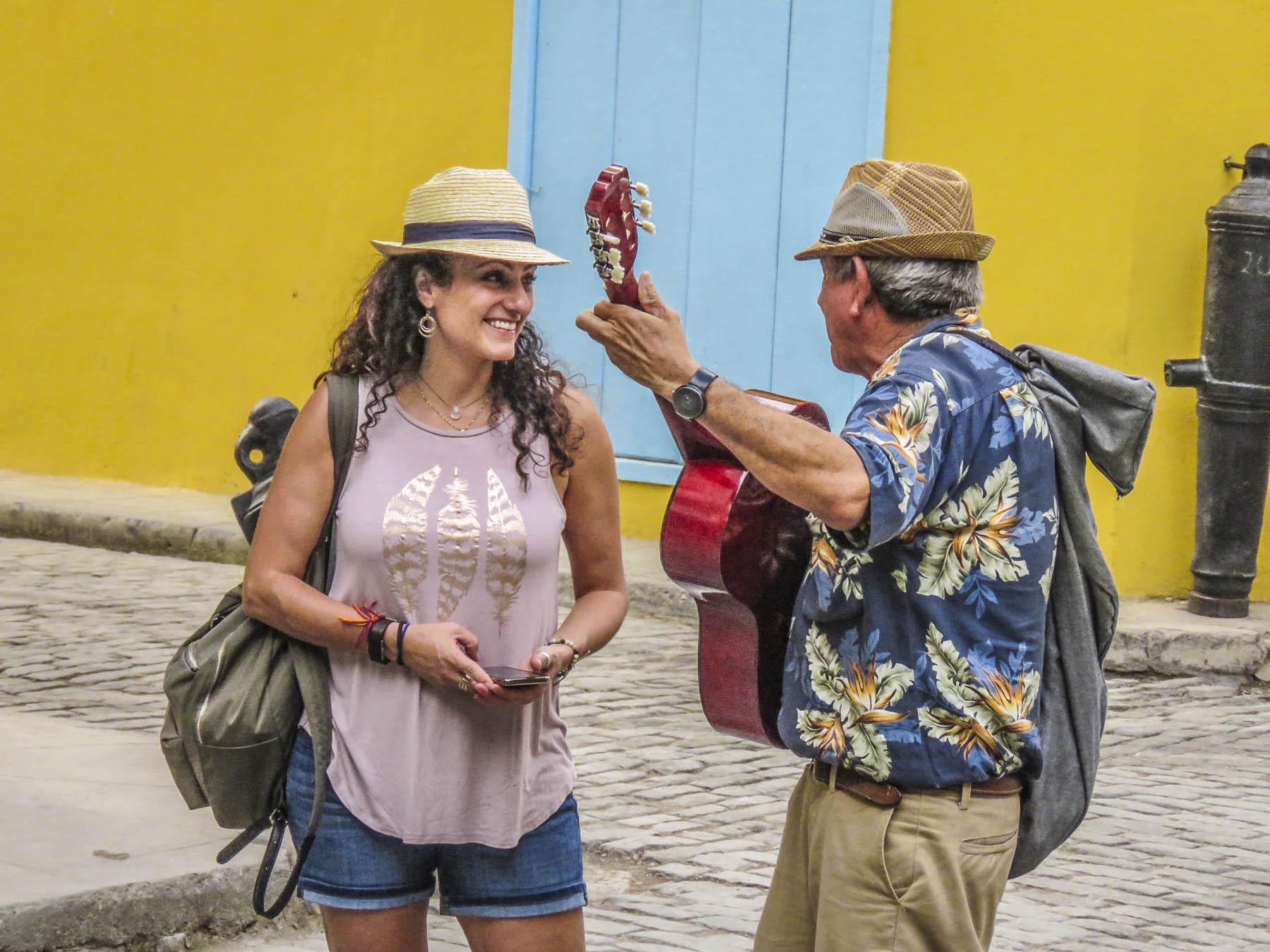
Latin music filled Obispo Street and Calle O’Reilly, the two main boulevards, the later named to honor Alejandro O’Reilly, an Irish born soldier who fought for Spain during the British siege of Havana in 1762. This neighborhood is alive with street buskers and has an entrepreneurial spirit that’s visible in many the restaurants, galleries and shops that line the sidewalks here.

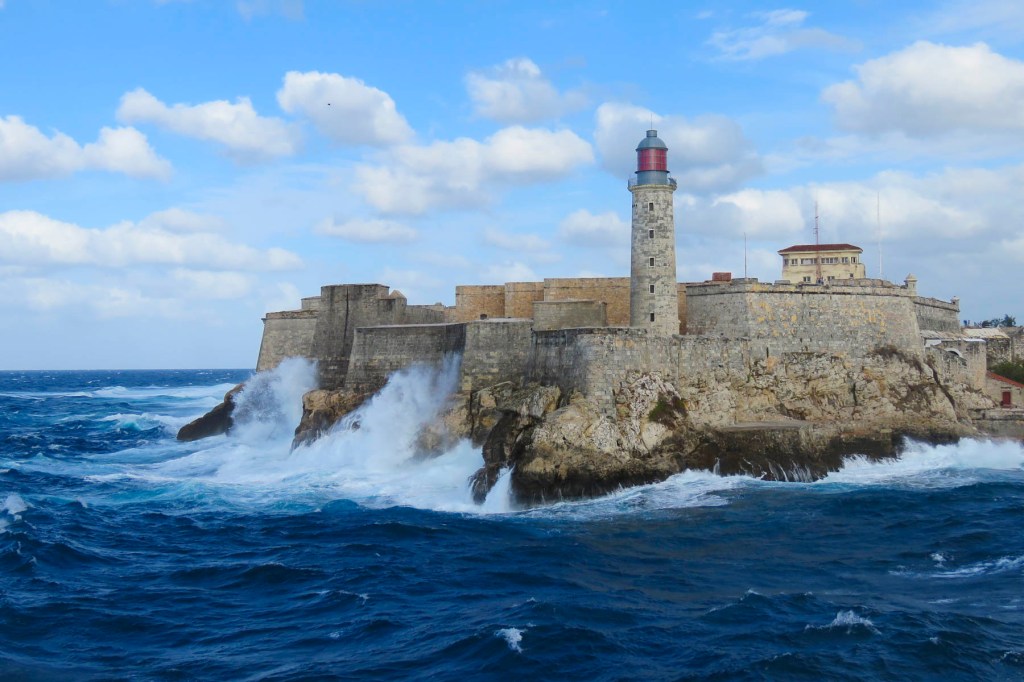
Our ship listed heavily as gale force winds churned the sea as we left the shelter of the harbor and passed the solid stone walls of the Castillo De Los Tres Reyes Del Morro.

Across the water large waves crashed against the seawall that protects the Malecon from collapsing into the sea.

It’s all too easy to romanticize poverty in an exotic destination that’s veiled by swaying palm trees and a pristine Caribbean sky.  The people of Cuba deserve better from their government. Watching the skyline of Havana fade in the twilight we wondered if Cuba’s sea change was coming.

Till next time,

Craig & Donna

Cienfuegos, Cuba – A Caribbean Time Capsule 

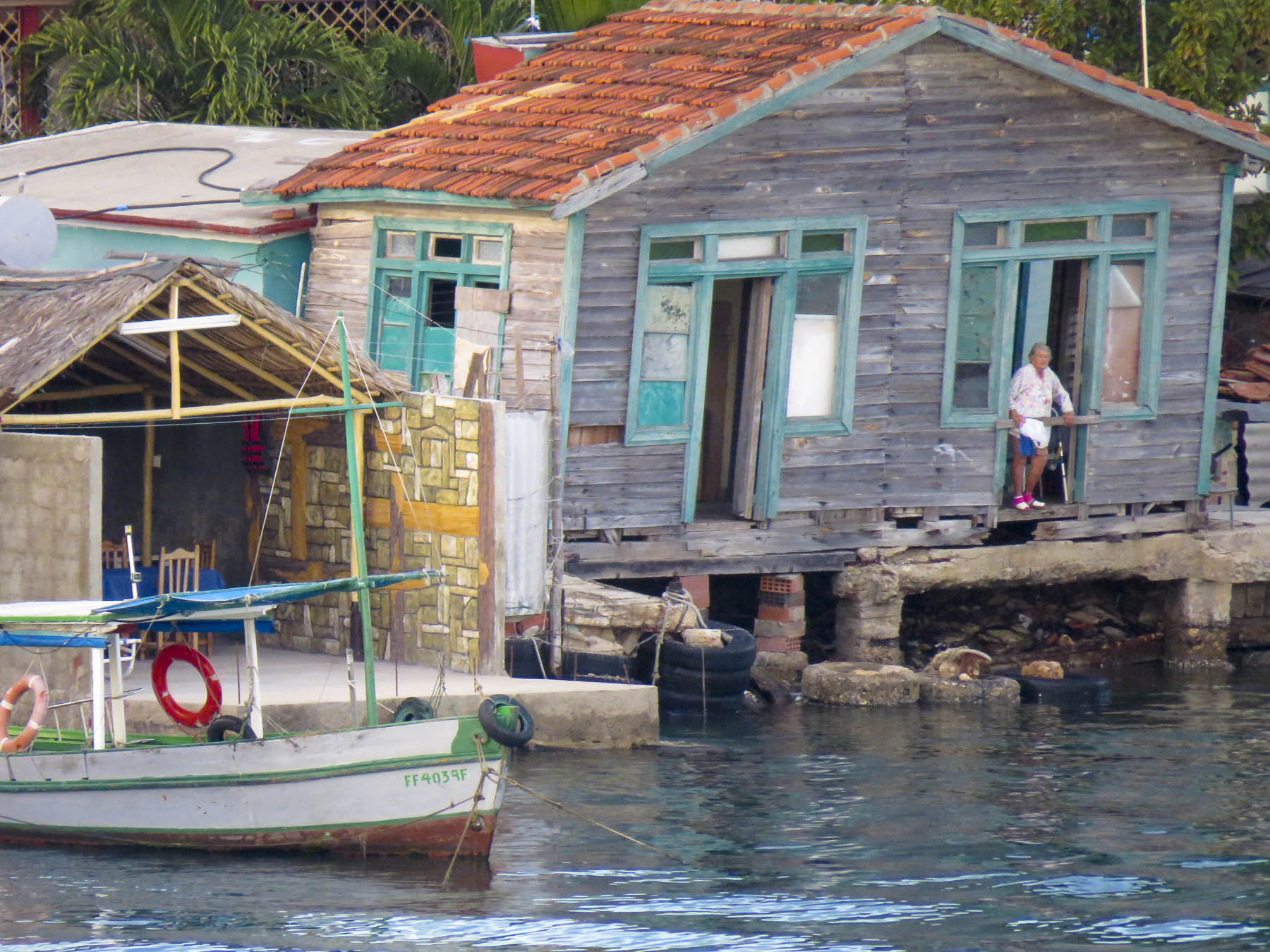
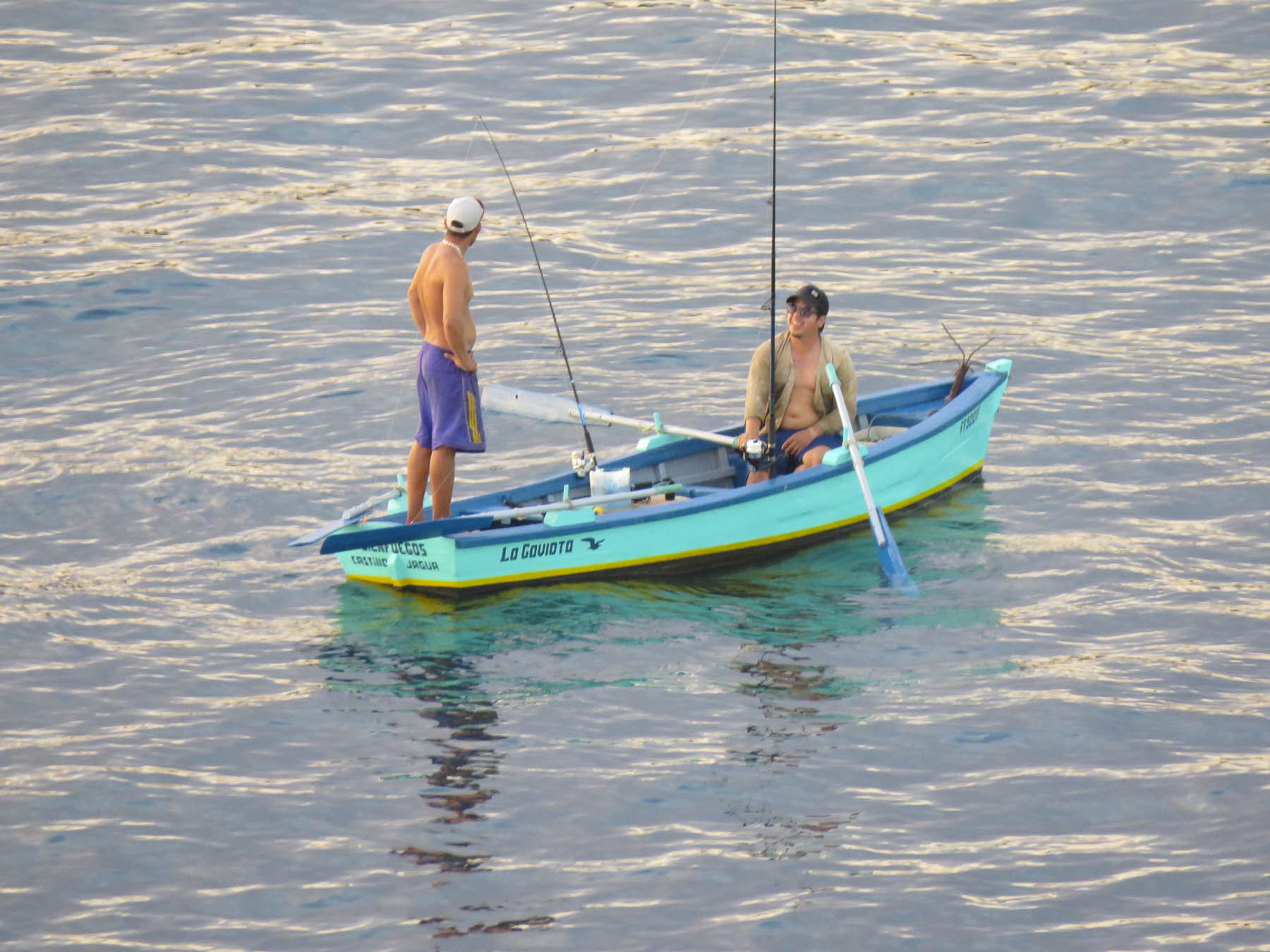
The sun was still below the horizon as men rowed small wooden fishing boats, laden with nets and poles, against the waves as we entered the narrow channel that would eventually widen into the Bahia de Cienfuegos, Cienfuegos Bay. Not much appears to have changed since the old man battled his Marlin in Hemingway’s 1951 novella. Farther along, listing boats were tied to beaten docks in front of weathered homes, their pastel colors muted in the predawn. They faced the inlet under the battlements of Castillo de Jagua, a stone fortress that has guarded this stretch of water leading to the bay since 1745.

The bay was encountered by Christopher Columbus while on his second voyage to the new world in 1494 and noted as a spectacular natural harbor, located at the end of a long narrow inlet, a perfect sheltered anchorage to weather the gales and hurricanes that blow across the Caribbean. However, closer to the gold of the new world, Havanna, on Cuba’s north coast, became the island’s dominant harbor and city. Mostly, Cienfuegos Bay was a forgotten backwater, without a permanent settlement, on the south coast of Cuba, a perfect location for the notorious British pirates Francis Drake and Henry Morgan to launch their raids on the Spanish Main and plunder the treasure fleets that voyaged from Havanna back to Seville, until the fortress ruined a good pirating gig.

The area grew slowly until the early 1800’s when an influx of French migrants fleeing the slave revolt in Haiti founded the city in 1819. Flattened during an 1825 hurricane, the city was rebuilt with a modern cosmopolitan grid pattern. The fertile region surrounding Cienfuegos supported prosperous tobacco, coffee and sugar plantations and continued to attract French immigrants from Louisiana, Bordeaux and Quebec. By the mid-1800s, a railway funneled goods from across the region to the port for export, and a steamship line connected Cienfuegos to Charleston and New York City. The city’s prosperity was reflected in its stately mansions, elegant civic architecture, wide boulevards and parks reminiscent of New Orleans and Paris, earning it the nickname “La Perla del Sur,” the Pearl of the South.

The Cuba of the 2020s still looks very much like it did during Hemingway’s life, as if it was stuck in time, a perpetual movie set. This is a result of the political decisions made during the 50-year reign of the country’s communist dictator, Fidel Castro, who ruled from the revolution in 1959 until 2008, and other communist leaders since then.  Consequently, the United States imposed and still maintains a trade embargo against the Cuban government that visually appears to have frozen the country in the 1960s.

Europeans and Canadians have long traveled to the government-run tourist resorts along the pristine coast. Previously, an inland tourism infrastructure didn’t exist, but with the introduction of the internet to the country and encouraging private enterprise reforms things are slowly beginning to change. We were visiting Cuba on a cruise during that first window of opportunity that was open to Americans between 2016 – 2019, before access was unfortunately tightened again.  Recently the travel restrictions to Cuba have been loosened again.

Across from the pier a horse drawn cart with several wooden benches, car tires for wheels and a sun bleached canopy stood idle. It wasn’t meant for the tourist trade, but instead was the cheapest mode of transportation for local folks to use to move about town. And it was our introduction to how self-reliant Cubans are and how slowly change happens in Cuba. Then we noticed the cars.

Earlier an email confirmed our rendezvous, “Ten is good. Meet at the statue of Benny Moré, a beloved Cuban singer, songwriter and band leader, at the intersection of Paseo El Prado and the pedestrian only San Fernando. Ciao.”

We had decided to skip any ship organized tours of Cienfuegos and instead opted for a tour of the city with a Guruwalk guide we found online.

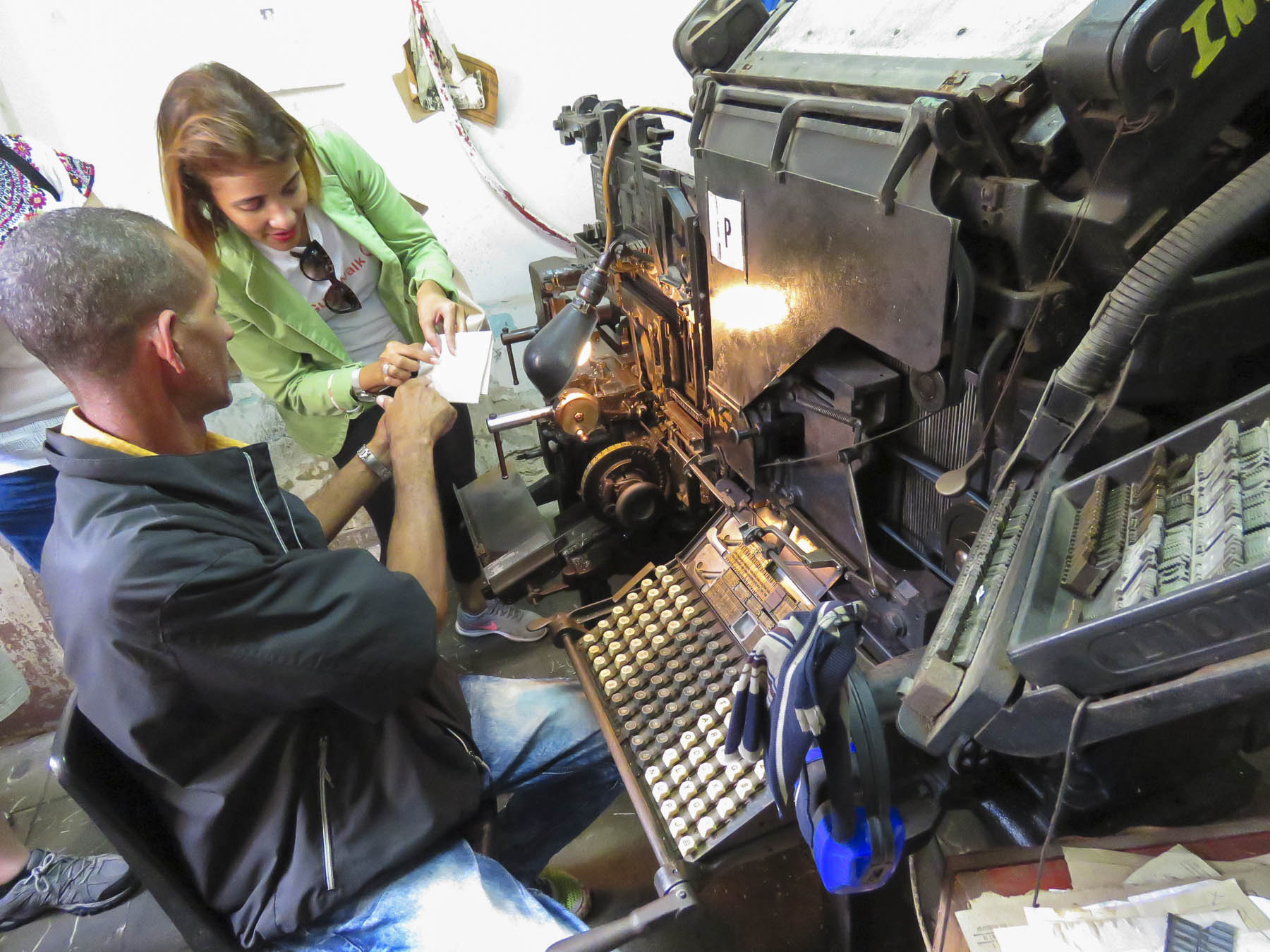
With introductions made, our small group of four followed our guide through Cienfuegos as they pointed out various sites and their significance. Other stops included the government shoe store where the limited styles were only available in black, and a government bodega.

Here food is acquired with the use of La Libreta, a government issued ration book used to tally your monthly allocation. allowance or allotment Typically the monthly allowance per person is 5 eggs, 1 liter of cooking oil, 1 pound of spaghetti, 3 pounds of refined or white sugar, 3 pounds of unrefined or dark sugar, 6 pounds of white rice, 20 ounces of black beans, 2 packets of “mixed coffee”, daily bread (dinner rolls). Fresh produce not available at the government bodegas is sold at state sponsored farmers markets.

Stopping at a large print shop, we watched the printer set lead type by hand as he assembled each word and sentence for the document he was preparing from a large tray of metal vowels, consonants and punctuation marks. There were not any computers, laser printers or copy machines in sight, only the shop’s heavy German Heidelberg printing presses, which have been meticulously maintained since 1959.

From the top of Hotel La Union, the highest point in the city’s center, we surveyed Cienfuegos, today a sprawling city of 150,000. 

“So, you’ve noticed the old cars on the street?” Our guide turned the talk at lunch away from any political questions we were eager to ask about life in a communist country.

There are about 60,000 old American cars still on the road in Cuba. Most date from the 1950s, but there are still Consuls, Packards, Cadillacs, Dodges, Chevys, Studebakers and Fords from the 1940s and 30s that are still road worthy.  This is an amazing testament to the talent of Cuban mechanics that have been “MacGyvering” the repairs with makeshift parts since the revolution ended in 1959, when the U.S. trade embargo began, and Cuba banned the import of American products. While some cars look to be in mint condition, often the interiors are taped together, door handles are missing, and the windows don’t roll up.

Engines don’t last forever and its not uncommon to swap engines between the American makes and models. Sometimes even the motors from Russian Volgas and Ladas work their way under the hood of Fords and Chevys. Fiats and Peugeots were imported after the revolution but proved to be not as durable as the American models.  With the nationalization of property in 1959 the nicer cars of the wealthy who fled were assigned to government officials, doctors, renown celebrities and famous athletes. Regulations prohibiting the ownership of cars was eventually changed to allow Cubans to freely purchase older cars brought to the island before the revolution. Since then, often cars are family heirlooms that have been handed down from generation to generation. Fathers teaching sons the intricacies of keeping the cars running. It’s extremely rare to find late model cars on the roads as the government imposes very high taxes on new car imports, making them highly unaffordable for the majority of Cubans.

“There are no junkyards in Cuba, everything is still driven.” The ingenuity of Cuban mechanics can surely teach us a thing or two about sustainability. Wonderfully many of these resourceful home mechanics have kept these automotive treasures alive and have created an income for their family by offering rides in their classic cars to tourists.

After lunch we watched dancers rehearse in an old colonial building now used as a community center, and we stopped in several art galleries along the park that featured many talented Cuban artists.  With the government tightly controlling the economy along with the print and electronic media in the country, creative self-expression through art, dance and music are treasured venues as long as the views expressed don’t “run counter to the objectives of the socialist society.”

While the center of the city is well maintained, and many of the old mansions and civic edifices recently renovated. The homes and buildings along the side streets show decades of neglect from a failed socialist system.

Pride in ownership is a difficult concept in Cuba, and since wages are so very low, buying paint is the last thing anyone is thinking about. Low wages necessitate most families to spend any extra funds at the free markets to buy the goods that aren’t covered with the La Libreta rations card.

This quote I found sums up concisely the housing situation. “In Cuba, everything belongs to everyone and no-one at the same time and if a building is “collectively-owned”, it’s understood that the State is the one responsible, but the goverment can’t afford the maintenance.”

Down the side streets, past glories are now sadly intriguing in their neglect, the homes and buildings wearing a texture carved from storms and hot unrelenting sunshine, revealing ancient layers of paint that gives the neighborhoods a weathered patina, a faded elegance.

Till next time,

Craig & Donna

Seville Part 4 – Convents, Cookies, and la Macarena

Seville was a delight to explore by wandering, its cityscape a web of ancient alleys that with every twist and turn slowly revealed the heart of this very old city to us. While the historic center of the city is a relatively condensed area that orbits around the Cathedral of Seville, the Royal Alcázar and the bullring, every bario in the ancient metropolois was fascinating to wander through. Spanish maps of the city from the 16th century hint at what’s to be found. In the 12th century, expanding upon an older Roman defensive wall from the first century AD, Seville’s Moorish rulers totally enclosed the growing town with a new and larger fortified wall.

It started at the Torre del Oro and ran north along the Guadalquivir River until it turned and headed inland in a huge arc that reconnected back at the tower. The old city walls originally had fifteen gates allowing entry into the city and were named for their function. Coal was brought into the city through Puerta del Carbon, while olive oil merchants used Postigo del Aceite to bring their product to town.  Puerta de Jerez and Puerta de Cordoba were the gateways through which travelers from those towns entered Seville.  Puerta Real was built for the exclusive use of the Spanish royals. 

The walls stood until a modernization of the city in 1868 required all the gates except for three be demolished. Today only the Puerta de la Macarena, Puerta de Cordoba, and the Postigo del Aceite remain.  Several small sections of the crenellated wall still stand along the ring road, Ronda de Capuchinos, that now follows the ancient edge of the city. Other parts turn up randomly across the city, where they were incorporated into the walls of newer 19th century buildings.

Roughly following the ring road, we would zig and zag our way through the old neighborhoods of the city that were once shielded behind its ancient wall.  Starting in the old Jewish quarter, now Santa Cruz, we followed the wall topped with an aqueduct along Calle Aqua and peered through locked gates, spying the lush shaded courtyards of the traditional homes. Buildings along this calle that back to the Jardines de Murillo use the old defensive wall as part of their structure. Veering into the center of the old Juderia we found some of the narrowest lanes in Seville. The thinnest being Calle Reinoso which leads off Plaza Venerables and is affectionately nicknamed “Calle de los Besos,” the Street of Kisses to visualize how intimate the passageway potentially can be.

After the Moors were defeated in 1248 every mosque in Seville was converted to a church. A similar policy ensued in 1492 when King Ferdinand II of Aragon and Queen Isabella I of Castille issued the Alhambra Decree, expelling all of Spain’s Jewish population. But a century before the Spanish Inquisition began a rioting mob in 1391 was incited by the hateful rhetoric of a Christian Archdeacon, Ferdinand Martinez, blocked the exits from the Seville ghetto and set the Juderia ablaze. It was once a thriving community that hosted three large synagogues and twenty lesser ones.  Four thousand people died that March 15th. Survivors fled the city, or were forced to convert to Catholicism. The abandoned properties were redistributed by King Henry lll to Christian nobles. The Iglesia de Santa María la Blanca is a notable conversion of a synagogue built in the 13th century. Its stunningly ornate plaster work ceiling veils its tragic history.  A block away where Puerta de la Carne once stood, the street is now lined with umbrellaed tables in front of a mouthwatering assortment of eateries.

Blindfolded or throwing darts at the map, any direction you randomly choose in Seville reveals fascinating layers of history. We never passed the chance to explore a church if its doors were open. Admittedly that’s a huge number in Seville. And some visits are more rewarding than others, we learned upon entering the chapel of the Convento Santa María de Jesús.  The gilded 16th century baroque interior was beautiful. What we found just as intriguing (you get a little numb by the huge amount of gold-leaf in Seville,) though, was that the nuns, of the non-sequestered order of the Poor Clares, bake “Las Dulces,” cookies and pastries, in order to financially support themselves. They sell the tasty creations derived from centuries old, secret recipes from behind an iron barred window.

A half block away the Casa de Pilatos was a marvelous example of a 16th century Andalusian Palace that rivaled the workmanship of Real Alcazar.

It displays a unique juxtaposition of Mudéjar, Gothic, Renaissance and Romantic architectural styles that seamlessly blend into a kaleidoscope of color, shape and texture. 

There are also Roman and Greek antiquities on display that were collected by an early patriarch of the family when he served as Viceroy of Naples in the mid-1500s.  It has amazingly stayed in the same aristocratic family for 500 years and today the 20thDuchess of Medinacelli still has a private residence there.  Admission is free on Mondays after 3pm, but there can be a long queue.

Continuing down the street toward the main boulevard we found Sevilla Vinos a small shop that specializes in local Andalusian wines and sherries. You can purchase wine here by the bottle or you can bring your empty bottles back to be refilled from large casks like the local folks do.

Farther along, the Almazen café was the closest we could find to an internet café in Seville aside from Starbucks. But what’s the fun of that when you can find a neighborhood gem instead. Mostly, taking your laptop computer to work in a public space just isn’t done in Europe from our experience. It seems to break the cherished protocol of separating work from pleasure, a refreshing practice here.

Out on Calle Maria Auxilidora we walked along the ring road to the Jardines del Valle where a long stretch of fortress wall separates the park from the barrio behind it.  That Sunday a crowd had gathered on the sidewalk in front of the park to cheer on the runners in the annual Seville Marathon. 

Farther down the avenue the arched door of the Moorish influenced tower-gate Puerta de Cordoba stands attached to the Church of San Hermenegildo. A legend from the 6th century tells us Hermenegildo was a young Visgoth Prince, son of King Leovigildo who followed a branch of Christianity, Arianism, that did not believe in the holy trinity. Upon marrying a Frankish Catholic Princess, Hermenegildo converted to Catholicism against his father’s wishes. He was eventually imprisoned in the Cordoba tower-gate and beheaded there on Easter Day in 585AD when he refused holy communion from an Arian bishop.  The relic of his severed head was passed for centuries between numerous monasteries and convents on the Iberian Peninsula before finding its final resting spot at the Royal Monastery of San Lorenzo de El Escorial, near Madrid. He was canonized on the thousandth anniversary of his death. During the renaissance on the saint’s feast day, April 13th, the Brotherhood of San Hermenegildo would host jousts in front of the defensive wall that still stands next to the church. 

This is the longest stretch of ancient city wall still standing. It runs parallel to the ring road for seven blocks between the Church of San Hermenegildo and the monumental Arco de la Macarena, which stands next to the church of the same name. The last vestiges of a moat added in the 18th century are still visible here.  During the Spanish Civil War firing squads executed people against this arch. It’s believed this entrance was built by the Moors over one of the three original gates to the city constructed by Julius Caesar when he governed Andalusia in the first century AD.  The origin of the gate’s name is disputed with some historians speculating that it was named after a wealthy Roman property owner. Others think it bears the name of a Moor princess who lived next to the wall when the Arabs controlled the city. Popular belief is it was named in tribute to Macaria, daughter of Hercules, who is the mythological founder of Seville.

We stopped to see the Virgin of Hope, a venerated wooden statue draped in a gold embroidered robe covered with precious stones at Hermandad de la Macarena, and found her fascinating.  Entering the basilica is free, but there is a small fee to view, up close, the exquisite craftsmanship of the robe of the Virgen de la Esperanza de Macarena de Sevilla, (say that ten times fast!) from behind the altar.  The Virgin of Hope is the patroness of bullfighters and was famously re-dressed only once in a black robe to mourn the death, in 1920, of the famous Sevillano bullfighter, José Gómez Ortega, who was loved across Spain. 

To prevent looting of the icons during the Spanish Civil War, a caretaker secretly took the statue home and pretended he was caring for a bedridden sister. Later he pretended to be a stone mason and secreted the statue in the city cemetery within the ornate tomb of the bullfighter Ortega for several months to protect it.

Heading back into the city through the arch we eventually came to the ornately figured baroque façade of Iglesia San Luis de los Franceses.  This was a refreshing change from other baroque churches in Seville that hid their opulent interiors behind plain, almost barren exteriors that benefit from the phrase – “Don’t judge a church by its exterior.” This was clearly not the case with the Iglesia San Luis de los Franceses; it broadcast “notice me!” as if the exquisite stone figures were the 18th century mason’s version of a neon sign.  The church was built at the beginning of the 1700s for the Jesuits to use as a novitiate, but they were only able to use this elegant building for thirty years before the order was expelled from Spain and the rest of the Spanish empire.  Later it was used as a Franciscan seminary and convent, then factory, theatre, hospital for venerated priests and hospice. Eventually it was deconsecrated before being shuttered for many decades. After a ten-year renovation sponsored by the Provincial Council of Seville the still deconsecrated church is now a museum and local government office. Its four gilded baroque altars with their sixteen spiraling, solomonic columns that support the dome above are spectacular and in our opinion it’s one of the finest church interiors in the city.

Associating convents with cookies led to a little misadventure one afternoon. We entered the side door of the Convent of Santa Isabel, located next to the Iglesia de San Marcos, and met a nun talking with a parishioner.  Looks of confusion crossed everyone’s face and heads shook, no, when I asked in very poor Spanish “Los dulces por favor.”  A few moments after leaving empty handed, the gentleman the sister was conversing with called to us and to our surprise presented two simple sandwiches.  We suddenly realized we had approached the convent’s food bank and they thought we were asking for something to eat. We thanked him and made a donation which brought a huge smile to his face and ours.

In this part of the city there seemed to be a church or convent on every block, and we had surely far exceeded the number of visitations to religious institutions to keep thunder and lightning at bay. Just wandering through the neighborhoods without a particular destination in mind was very enjoyable and let us follow any whim spontaneously, whether it was a flash of light from the journeyman knife sharpener as he held the blade to his grinding stone attached to the back of his scooter, or music emanating from an alley as a marching band rehearsed, or the cacophony created by the brotherhoods practicing with their weighted floats prior to Holy Week.

The farther we were away from the historic center of Seville the fewer tourists we encountered and prices in the barrio eateries dropped considerably. Los Coloniales was one such tavern located on a corner across from Plaza Cristo de Burgos. At the beginning of March the days were sunny and warm in the afternoon so dining outside was delightful, though sometimes it required a wait.  Leaving our name with the hostess we waited in the shaded park across the street until she loudly bellowed, “Craig & Donna!” We felt like locals as we hurried over.  The tapas and the ambiance of the setting were very enjoyable.

One afternoon as we walked back to the apartment from a late lunch, luckily I noticed a single black and white flyer tacked high on a tall double-wide door, while Donna had stopped way down the block to take a photo.  Hundreds of years old, the door had a smaller single door built into which was open. I don’t recall seeing a placard on the wall identifying the building, but the flyer had a picture of a tray of cookies! By the time I turned around and got Donna’s attention the door had quietly been shut and locked to our disappointment. Finding it on a map we established that it was the Convento de Santa Inés. Allegedly they baked bolletos, little round cookie balls with sesame and honey-glazed pestiños – dough flavored with orange zest, aniseed, olive oil, and wine, then fried. Determined, we returned earlier several days later and stepped over the ancient threshold into a spartan courtyard with no sign of activity or arrows to follow. But in the far back corner under a small portico there was a plain wooden cabinet built into the wall surrounded by a fading spiritual fresco and Azulejo tiles.  Taped to its door was the price sheet for the available, “Las Dulces.” The cabinet is called a torno and when you open the door there is a lazy Susan style turntable that allows the cloistered nuns to receive your payment and provide your cookies while remaining unseen. Over the centuries, convent tornos were also sadly used to anonymously drop-off unwanted infants in hopes the child would have a better life. Three decades ago, there were forty cloistered convents in Seville, today only a dozen remains, hosting an ever dwindling number of nuns.  Not all of them bake “Las Dulces,” but knowing now we wish we had searched for the others that still do.

Dessert was celebrated, back on our apartment’s rooftop, with a glass of sherry and the cookies from the Convento de Santa Inés, as we sat with our backs to the laundry billowing gently on a warm Spring breeze and waited for the sun to set. This was unfortunately one of our last adventures in Seville before the city entered its first lockdown of the pandemic in March 2020 and all tourists were ordered to leave Spain. We were sitting on the steps of the pillar at Plaza del Triunfo late one afternoon, amazed by the emptiness of the square. There weren’t any horse-drawn carriages or lines of tourists waiting for entry into the cathedral or the Alcázar. Two policemen approached. “The city is closed, you must go home.” It was a shocking eviction notice.

We thoroughly enjoyed our immersion into the nuances of living in Seville and would definitely recommend the city for anyone considering a long-term stay. The city simultaneously manages to be intriguingly historic and contemporary. There were many different ways to enjoy the city and aside from the moderately high price of museum admissions, the cost of living in Seville and dining out was very reasonable.  We walked mostly, but on occasion used the rideshare Uber which operated very well across the city. The weather was splendid in February and March, with cool mornings warming into delightful sunny afternoons.

Make plans, enjoy your travels!

¡Hasta luego!

Till next time, Craig & Donna

Seville Part 3 – Walk a Little then Café

Parts of this ancient city with its labyrinth of cobbled lanes feel more akin to a small village with an earth toned, sun drenched patina. Vibrant traditions and a youthful vitality along with numerous historic sites scattered across the city all contribute to make Seville a walker’s delight. There’s no correct way to explore the city. How you do it depends on the amount of time you have to indulge yourself in the history and atmosphere of this beautiful city. Strolling through the city is the finest way to discover its character. Immersing ourselves into the city for six weeks, we walked the familiar cobbled lanes multiple times with many variations and sporadic detours that we hope you find interesting.  Seville never ceased to charm us. 

The routes we favored most webbed out from behind the Cathedral of Seville’s Patio de los Naranjos on Calle de Placentines, around the corner from the Palacio Arzobispal on Plaza Virgen de los Reyes, and wandered through the Alfalfa, Centro and La Macarena districts.
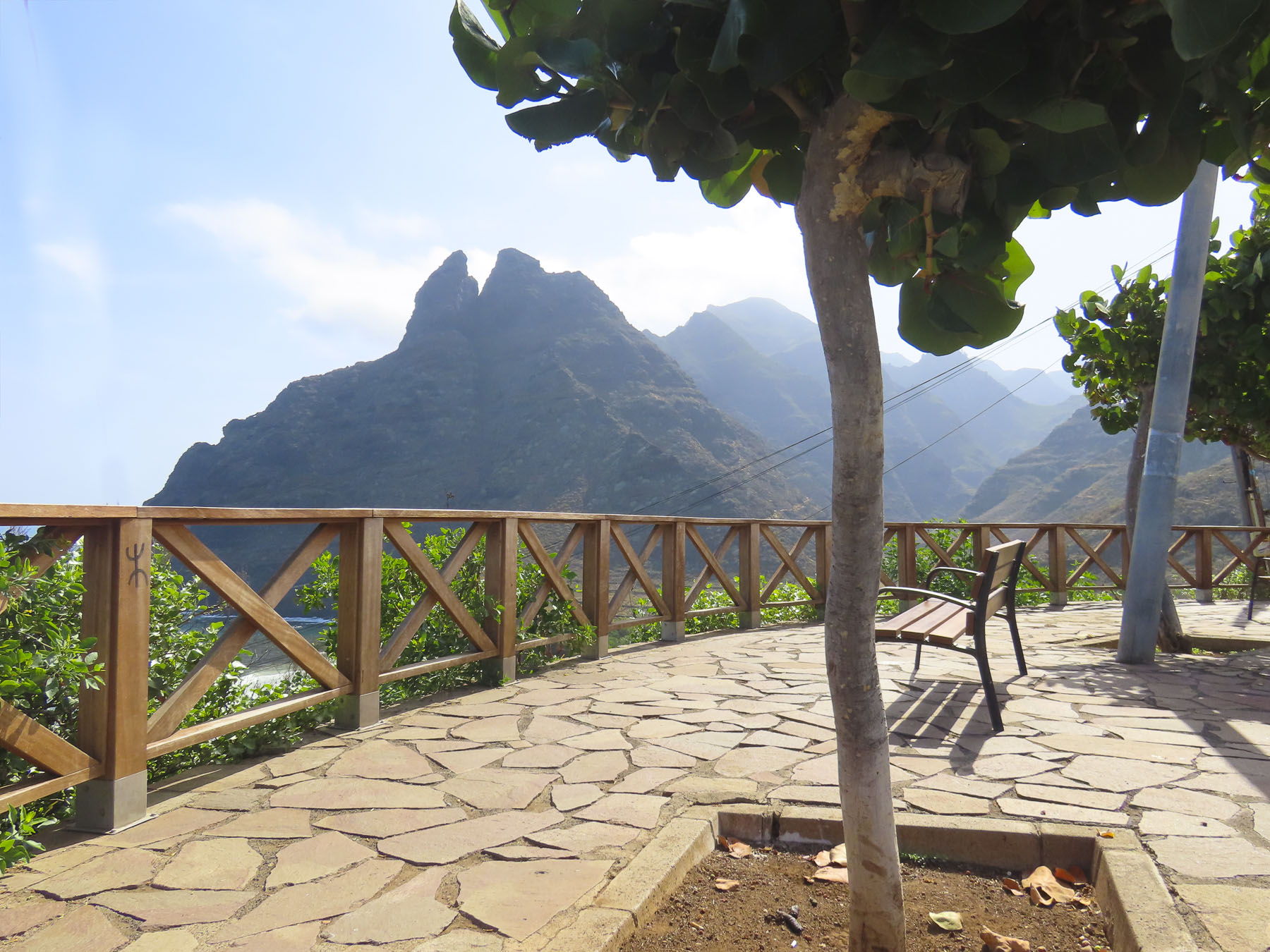
An old-world fabric store bedecked with selections of gold embroidered trim, ribbons, and tassels hanging from worn wooden cabinets enticed us inside.  Further on the display window of a religious goods store fascinated us with its selection of all things sacred. Before crossing into the Plaza Jesus de la Pasion, the savory window display at Confiteria La Despensa De Palacio stopped us dead in our tracks. Lovingly run by generations of the Santaella family, the shop has been Seville’s premiere chocolatier and pastelería for over 250 years. The pastries were sumptuous!

Across the street the Plaza Jesus de la Pasion widens to reveal a wonderful example of 19th century Andalusian architecture. The far end of the square features a façade of red brick framing Azulejos tiles and Moroccan influenced, pointed arched windows.  The plaza also seems to be a favored place for a protest or political rally as we came across several, over the weeks we spent there.

At this point it’s possible to head one block over to visit the Iglesia Colegial del Divino Salvador, on the plaza of the same name. This is a very popular square with many restaurants and outdoor tables along with buskers providing entertainment.

The Iglesia Colegial del Divino Salvador is the second most important church in Seville after the main cathedral and features a monumental and intricately carved 18th century Baroque altar. The beautiful piece was created by the Andulasian altarpiece architect and sculptor Cayetano de Acosta, who contributed works to numerous churches across southern Spain.

Returning to Plaza Jesus de la Pasion, the far end of the square funnels into the very cosmopolitan C. Puente y Pellon. Lined with a wide variety of shops, we found the most interesting to be the Zapaterias, shoe cobblers, and the dress shops, their windows filled with colorfully clad mannequins displaying tight fitting and frilly dresses called traje de flamenco or traje de gitana, for the upcoming Seville Fair (La Feria De Abril).

Here we found what we regard as the best bread bakery in Seville, Crustum Panem Bridge and Pellón, https://www.crustum.es/ sandwiched between window displays featuring towering pyramids of tasty Bocadillo de jamón, the ultimate hoagie lunch para llevar, to carry away, for an inexpensive picnic. The bakery offered a wide assortment of breads and empanadas. Our favorite though was a very dense bread made with nuts, seeds, and dried fruit which they sold by the slice and weight.  We returned often.

A little further on the Setas de Sevilla loomed over us as we left the alley.  The Setas is a massive, multi-story, Lego-like freeform sculpture with a viewing deck atop it. Constructed entirely of wood, it nearly covers a full city block. It’s an iconic symbol of modern Seville that the locals lovingly call The Mushroom because of its shape. 

For over 150 years this plaza was the true center of the city for Sevillianos when 400 market stalls of the Mercado de la Encarnación occupied the land above the ruins of the medieval Convento de la Encarnación, from which the plaza took its name.  The market operated until 1973 when the building was demolished for structural reasons and the remaining ninety vendors were housed in temporary facilities for what was hoped to be three years.  Inaction by the city left the site closed for 31 years and the area around the plaza became blighted, until the local government sponsored an international design competition in 2004 for ideas to revitalize the plaza and return it to its former prominence. 

Jürgen Mayer, a German architect, won with a concept called Metropol Parasol, constructed with sustainable wood. At 490 feet long by 230 feet wide and just under 100 feet tall, it is the largest wooden structure in the world made with laminated Finnish pine. Its unique design features 3500 sections attached together with 16 million nuts and bolts. The interior of the Setas now hosts a daily market with 38 vendors offering fruits and vegetables, fish, meat, poultry, and cheese. The base of the monument and plaza is ringed with restaurants that have excellent outdoor seating in the shade of the mammoth structure. Inside by the market stalls are several traditional luncheonettes that offer inexpensive daily specials.

A detour to the Guadalquivir River and Triana can be easily made here by following Calle Imagen west. This walk took us past many older buildings with interesting architectural details, and the 14th century Iglesia de San Antonio Abad which hosts the Brotherhood of Silence, the oldest brotherhood in Seville.

A block away the aroma of freshly roasted coffee beans drew us into Elhombre Pez, where you can only purchase bags of whole or ground coffee beans. Their coffee beans are definitely worth the purchase if you have an apartment stay in the city.

The Seville Museum of Fine Arts, set in a former 17th century palace, is also in this direction and is an intriguing detour with its extensive collection of Spanish masterpieces.

Several blocks farther the Real Parroquia de Santa María Magdalena was an interesting discovery. Built in 1691, this Baroque church has a fascinating interior.  The small bar on the corner, Casa Murillo, was a reliable spot for café and lunch. Across the street Churreria San Pablo always seemed to have a line waiting for its sweet treats.

Calle Regina directly behind the Setas de Sevilla begins to funnel folks away from the bustling historic district and into a more residential area, though it’s still lined with a variety of shops and eateries. And if you share our belief that the food is always better and more affordable two blocks away from a popular tourist attraction, you will like this neighborhood. On this stretch Mr. Cake Sevilla with its artfully prepared and tasty offerings is a nice place to rest.

The Iglesia de San Juan de la Palma stands at the crossroad to our favorite tapas bar in Seville, the Bodega La Plazoleta. The gothic portal of the church is one of its few remaining original features. Compared to other churches in Seville its relatively small, but it features three interesting side chapels devoted to the Brotherhoods of Bitterness, the Virgin of the Head, and Our Lady of Montemayor.

The restaurant is on a small square, to the right of the church, that was far enough off the main path that it didn’t attract many tourists. Over our six-week stay in Seville this was our go to bodega for its excellent food, relaxing atmosphere and chocolate cake! The restored 15th century Palacio de las Dueñas is nearby, but let’s face it, it’s impossible to do everything and we needed to save some ideas for future visits to this wonderful city.

If you make a left at this crossroad, it’s a simple detour to the Alameda de Hércules. The origins of this large park date to 1574 and it is believed to be the oldest public garden with tree lined promenades in Europe.  The park takes its name from a statue of Hercules, the mythical founder of Seville, excavated from the ruins of a nearby ancient Roman wall.  This part of the city now has a younger hipster atmosphere and is known for its nightlife and club scene as well as its array of restaurants offering a variety of international cuisine. In this barrio the Basílica de Jesús del Gran Poder is an unusual church with its circular sanctuary which is surprisingly hidden within the church’s traditional façade.

Back at the crossroads: Thursdays are, as the name Mercadillo Histórico del Jueves suggests, the best day for this final leg of the walk. Legend says that this street market has been a feature of the city since the Moors ruled Seville.  Every Thursday several blocks of Calle Feria are closed to traffic, and it becomes a pedestrian mall lined with vendors now selling antiques and flea-market type items.  The market is a popular destination, and occasionally we felt like we were in a conga-line weaving through a sardine can.  We did find a small, folkloric style painting of Seville’s La Feria de Abril that just fit into our suitcase.

It was quite a walk from our apartment on Plaza de Doña Elvira, but our favorite local food market in Seville was the Mercado de la Feria, several blocks past the mercadillo histórico.  The market had a very authentic feel to it, being in a neighborhood that is far away from the tourist center of the city. It had a wonderful fish monger, cheese shop and fresh pasta maker. Accustomed to their neighborhood clientele, the vendors seemed surprised with our purchases which indicated that we actually cook for ourselves.  This is also a great destination for lunch as there are a number of small restaurants that ring the market.

Next to the market – It’s not always open, but if the door under the 13th century pointed Gothic arch of the Real Parroquia de Omnium Sanctorum is ajar, it’s worth stopping to investigate – is one of the oldest churches in Seville. It has gone through many incarnations over the centuries, most notably after a 1355 earthquake, and arson attack in 1936 during the Spanish Civil War.

At this point in the walk, you can choose to head back towards the Alameda de Hércules or continue on towards the towers of the Puente del Alamillo bridge, which you’ve probably already spotted, that spans the northern part of the Guadalquivir River. Head to the river. There is a wonderful pedestrian foot/bike path that follows the course of the river. This stretch of the river is also popular with anglers using traditional long poles and line gear to catch fish from its bank.

It is a long but pleasant walk south along the river back towards the bustle of Seville.  Mid span on the Puente del Cachorro is a great vantage point for photos of the historic Triana waterfront with kayakers and scullers enjoying the river.

If its late in the day and you want to catch a movie, the Centro Comercial Plaza de Armas is only two blocks inland from here, in the restored 19th century Old Cordoba Train Station.

Till next time, Craig & Donna