You’ve landed, rented a car, checked into your hotel. Then what? Where to? It seems the more we’ve traveled and the older we’ve become, the less we plan. Throw a dart at the map? Often, how blue the sky is is the determining factor. That can be tricky in Tenerife where the weather changes quickly multiple times a day. But when in doubt, choose a mirador, any mirador. We figured enroute to them we’d pass other wonderful discoveries that would spur us to detour and investigate, rounding out what we saw of the island. Let your adventure around Tenerife begin. Here’s twelve of the miradors and viewpoints we enjoyed.
Mirador Punta del Fraile
Located on the outskirts of Buenavista del Norte, a manned roadblock across the pavement required us to park. It was about a thirty minute, moderately strenuous uphill walk, and the views along the way were awesome. It was well worth our effort. Reaching the mirador, gale force winds whipped through a cut in the rock which the road followed down to the lighthouse at Punta de Teno, three miles away. Behind us a large cliff face blocked most of the view of the Teno headland.
Nearby Buenavista del Norte is delightful old village with a historic church and memorial to a locust plague in 1659.
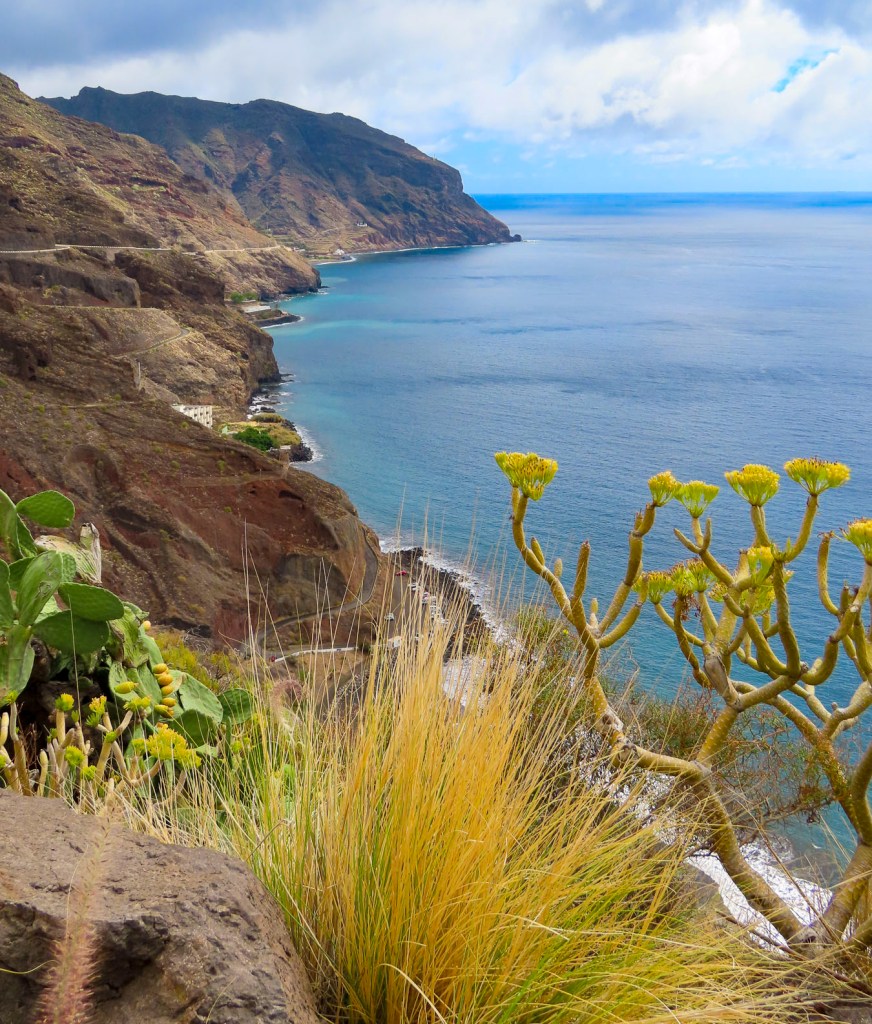
Playa del Roque de las Bodegas & Mirador de Playa Benijo
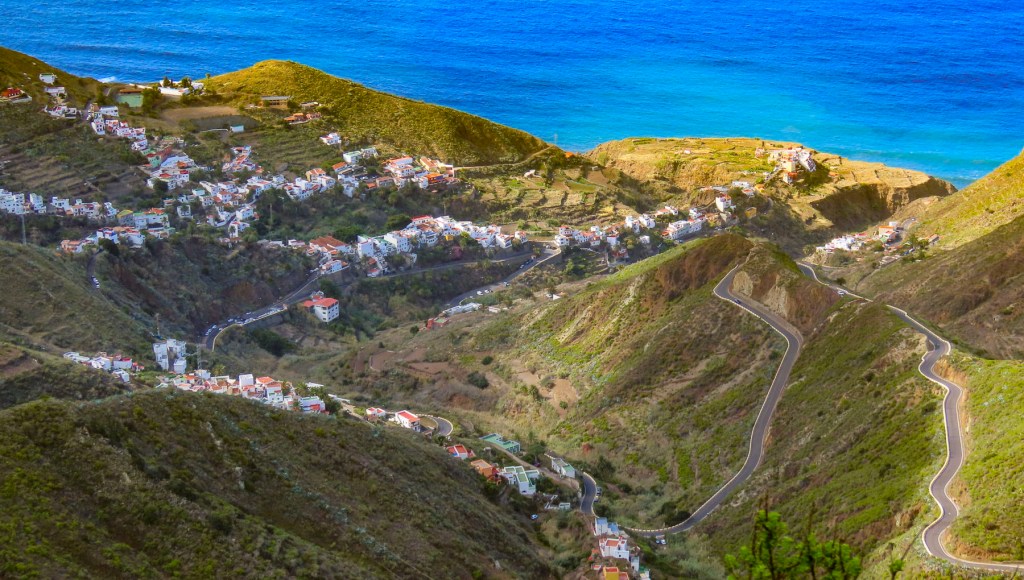
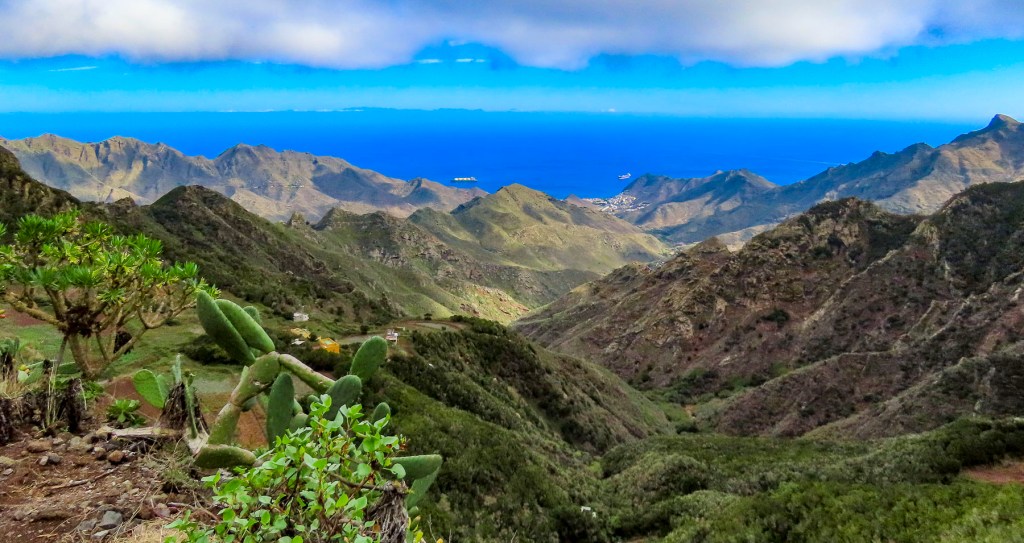
Any resemblance to a straight road disappeared as we turned onto TF-12 to work our way across the island to Playa del Roque de las Bodegas and the Mirador de Playa Benijo. The distances between sites on Tenerife are relatively short as the crow flies, but the roads are narrow and serpentine, so the driving is slow, even though not many cars are on the roads. Rising into the mountains, the terrain changed from arid brown to verdant green. The views along the way of isolated villages hugging the steep slopes were tremendous and there are multiple places you’ll want to stop for photos.
Our intent was to drive all the way to the El Draguillo Mirador, as our GPS map led us to believe it was feasible, but the road ended at a very small gate in a muddy car park with a sign that said only residents of the village were allowed to drive past this point. Evidently this is the starting point for El Draguillo trail, a 6-hour hike.
The parking lot was jammed full, and it took a serious multipoint K turn to get us out. We recovered nicely though by having a great lunch nearby at La Venta de Marrero, a cliffside restaurant with a fabulous view of Playa de Benijo, below.
Mirador Playa de las Teresitas
Only twenty minutes from Santa Cruz de Tenerife, the island’s largest city and capital, the Mirador Playa de las Teresitas seems a world away with tremendous views south of the coast.
Turn around and walk a few yards back along the road for a spectacular view of the black sand beaches Playa de Las Gaviotas and Playa Cueva del Agua.
La Barada
Set on a steep hill, the restaurant La Barada, just a short distance off TF-5, is technically not a mirador, but it is a very popular place due to its glass pier that is cantilevered dramatically out over the countryside from the restaurant. It offers an amazing bird’s eye view of the coast with Pico del Teide in the distance. The food was also very good and the terrace was alive with boisterous activity the afternoon we stopped.
Mirador de Cherfe
Sitting atop a mountain pass, this mirador has expansive views of the sea. It was also one of the busiest miradors, with vendors selling lava trinkets, and many tourists stopping on the way to or from Masca, like us.
Oh, the thrills of driving in the mountains of Tenerife were just beginning!
Pico del Teide: Mirador de los Poleos, Mirador de Samara & Mirador de La Ruleta
Venturing into the foothills, our drive continued along TF-38 and traversed ever-changing, diverse bio-systems as we left the arid shrub-covered lowlands behind and climbed into hillsides covered with pine forests. It was a well paved but narrow serpentine road, without any shoulder, that required constant vigilance. The mouths of ancient lava tunnels were visible from the road, but there was no room to pull over and stop for photos until we reached the Mirador de los Poleos.
Beautiful, inhospitable, Death Valley-esque, lunar or Martian, however you choose to describe the varied topography that surrounds Pico del Teide, it’s enthralling and fascinating. So much so that filmmakers have used the location for scenes in several block buster films: One Million Years B.C. – 1966, Planet of the Apes – 1968, Clash of the Titans – 2010 and its 2012 sequel Wrath of the Titans and in 2023 the Last Triala, a Star Wars fan film.
TV episodes of Doctor Who, The Dark Along the Ways and season 2 of The Lord of the Rings: The Rings of Power have incorporated Tiede’s environs into their productions.
Jardines del Marquesado de la Quinta Roja
Any visits to La Orotava should start at the Jardines del Marquesado de la Quinta Roja. Constructed in 1883, it’s a beautiful French-style, terraced, formal garden with a view over the town and the distant sea. A smaller but older (1788) sister park next to it, the Hijuela del Botánico, features a towering dragon tree and other plantings of specimen trees collected from Spain’s former colonies. After coffee at the garden’s café, it’s an easy walk downhill in La Orotava’s historic center.
Mirador La Garañona
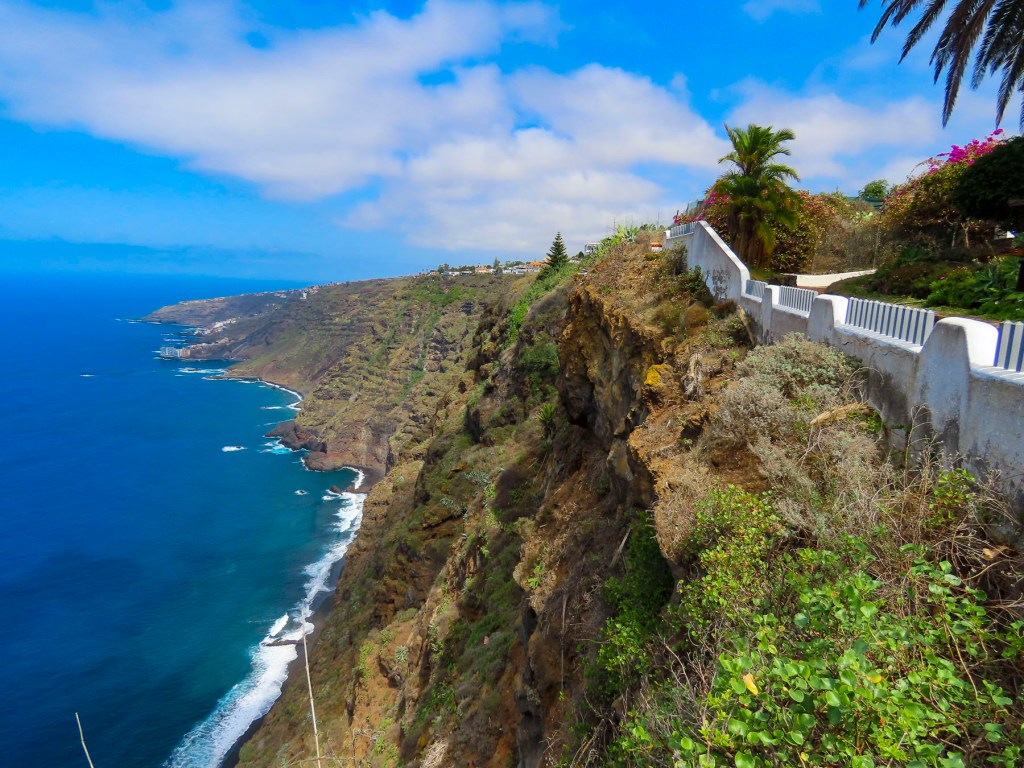
Is set dramatically atop a 1000ft sheer cliff, in El Sauzal, with a tremendous view of the coast below. The park’s shaded paths lead to a delightful small café perched at the cliff edge. We lingered and soaked in the view.
The Iglesia de Santa Catalina is nearby. It’s a classic, white-washed church from the early 1500s and picture perfect with its magnificent dragon tree in front. Nearby the Restaurante el Calvario is a great place to stop for a delightful meal.
Mirador Roque Grande
The waterfront in Puerto de la Cruz is beautiful and there are numerous miradors, beaches and tidal pools along the coast where you can swim. We strolled along the promenade above the black sand beaches at Playa Maria Jiménez, and Playa Chica to El Castillo San Felipe, a small block fortress built in the 1600s to prevent pirates or the British from landing on the beach there.
We lunched at a restaurant on the boardwalk under umbrellas just yards from the surf. Stopping at the Mirador Roger Piedra Gorda and Mirador Roque Grande rounded out the afternoon. Though parking was a challenge at both spots, we think the effort was worth it for the dramatic seascapes we viewed.
Mirador del Emigrante
The views driving into Garachico are impressive, and we stopped several times before entering the old town. As prosperous as the Canary Islands are today, we were reminded by the statue at the Mirador del Emigrante that life here was not always easy.
This poetic description by Fernando García Ramos, the sculptor, explains for the viewer the meaning behind his statue of a walking man – with a hole in his chest, as if in his heart – holding a suitcase. “The figure is scanning the horizon, in a daring position, as if pretending to jump over the sea, with a suitcase in hand, and many more suitcases in a series as a chain behind him; these suitcases behind him surely mean the memories, the sadnesses, the nostalgia, the girlfriend, the mother, the sisters, the families that are left behind by an emigrant who takes a new life, who jumps over the infinite sea, in search of a new life in strange and distant lands.”
Mirador Caribe at the Palmetum
Reaching the Mirador Caribe at the Palmetum, we were rewarded with an expansive view of the city and Auditorio de Tenerife. A botanical garden, the Palmetum was started in 1995 atop 30 acres of reclaimed land that was once a landfill. Now it’s filled with nearly a thousand palm trees gathered from around the world. It’s a spectacular place.
Playa del Médano
For our last full day on Tenerife we headed to El Médano to be nearer the airport for our flight the following morning. Arriving late in the afternoon to Playa del Medano, we entertained ourselves watching wind and kite surfers speed across the whitecaps. The more experienced kiters crested the waves and performed aerobatics before splashing back into the sea. Closer to town, families favored the gentler waves, wider beach, and a view of Montaña Roja volcano on the horizon. Tables at eateries along the boardwalk were quickly filling as the golden hour approached. A crescent beach, gentle waves, good wine and delicious seafood – is there a better way to end the day? We’ll miss Tenerife.
We hope you found the photos inspirational for planning a trip to Tenerife.
Just below the northern horizon, a white brushstroke highlighted the verdant canvas before us as we savored the view from the top of the castillo in Castellar de Frontera one last time. That swath of white slowly changed into Jimena de la Frontera as we drove closer. One of Andalucia’s famed Pueblos Blancos, the village is set on the hillside below the ruins of its ancient castle which once protected it.
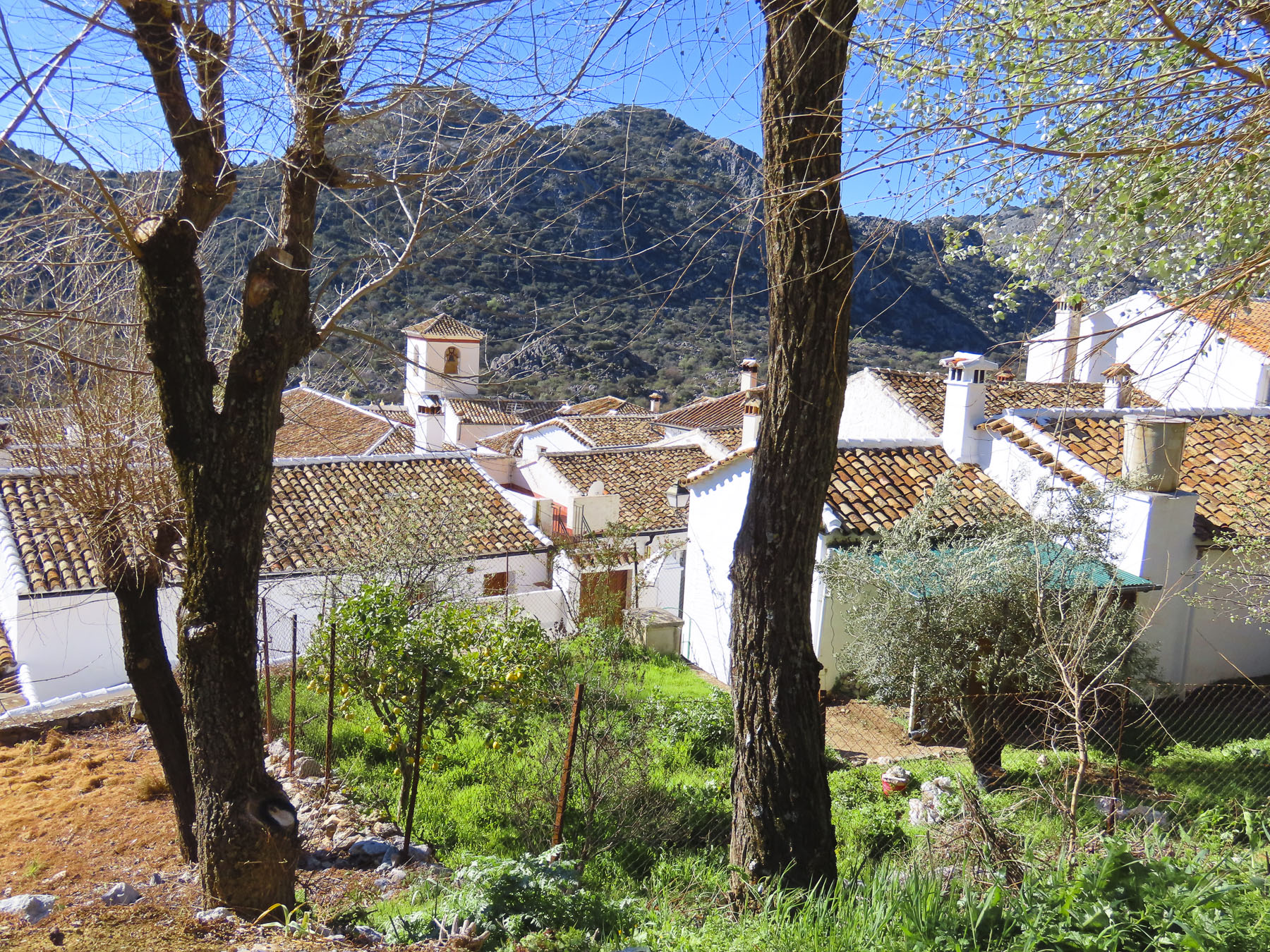
In ancient times the homes in villages featured roughhewn stone masonry. Lime paint was a luxury, until its use was greatly expanded during the mid-1300’s when a bubonic plague pandemic swept through the Mediterranean countries. Residents of villages were required yearly to cover the outside and the interiors of their homes and churches with a limewash, known for its natural anti-bacterial and insecticidal properties, in an effort to reduce the spread of disease. Community inspections were done, and folks were fined for noncompliance. This mandated conformity was eventually appreciated as an aesthetically pleasing look and a symbol of meticulous tidiness. Fortunately, the custom stayed and has become an iconic signature of southern Andalusia.
Villaluenga del Rosario was our ultimate destination for the day, but before that we would be driving through the expansive forests of Parque Natural Sierra de Grazalema and stopping along the way in Ubrique, and Benaocaz. All pueblos blancos, though all different in size, setting and atmosphere. According to our maps app the trip would take 2 hours. But it was a glorious 58-mile sinuous route through the mountains, and with several stops it took us most of the day.
The vast 130,000-acre Parque Natural Sierra de Grazalema, with peaks reaching 5400 feet, is one of the wettest areas in Spain, receiving almost 80 inches of rain a year. This is surprising, considering that many areas in Andalucia are often used to replicate the American southwest for European filmmakers. These wet conditions over many millennia have created a dramatic karstic landscape of shear mountains, lush valleys and caves, especially Pileta Cave with its 30,000 year old prehistoric paintings. The park’s lower elevations feature forests of cork oak, carob, hawthorn, and mastic. Higher slopes transition to a landscape of gall oaks and Spanish fir, a tree species that survived the last Ice Age. This ecosystem supports a diverse fauna that contains 136 species of birds, most notably a large population of griffon vultures, and 42 mammal species, that include foxes, badgers, roe deer, otters, and Spanish ibex. And in ancient times it was the refuge of wild, now extinct, aurochs, the ancestor of the famous Spanish Fighting Bulls, toro bravo. The park has been a UNESCO Biosphere Reserve since 1977.
Farmers still harvest cork and olives amidst the rocky terrain and graze cattle, sheep, and goats within the park. This practice made for an interesting encounter when we rounded a curve and faced a VERY LARGE BULL standing in the middle of the road, adjacent to some pasture. We stopped, looked around for his farmer, but there was no one in sight. It was obvious he was the king of this domain, with no intention of moving aside until he felt like it. Slowly we inched forward and watched him eye us until he decided to saunter across the road and let us pass.
Ubrique is a large thriving town with 17,000 inhabitants set in a valley surrounded by tall peaks and steep scree slopes, its homes built above and around boulders too large to move. The town’s prosperity comes from its fine leather workshops, which account for 60% of the townspeople being employed directly or indirectly in the creation of leather products. It started simply enough with leather cases and pouches to carry tobacco and the Precise, a heavy-duty strap that allowed workers to safely carry silex stones and iron bricks.
By the mid-1700s their fine leather products and artisanal craftsmanship was recognized across Europe which fueled an export industry. The good fortunes of the town continued to grow until the mid-2000 when clients seeking higher profit margins moved their leather goods production to China and other Asian countries. Fortunately, their exodus did not last long, and they returned to Ubrique when they realized that the excellent craftsmanship in this small Andalucian town could not be rivaled by cheap labor. Today Ubrique is considered the “artisanal leather capital, “ for high-end fashion brands like Chloe, Gucci, Hermes and Louis Vuitton. “So many stores, so little time.” Of course, we shopped! The decision-making process was painful, but Donna managed to select one single beautiful purse to take home.
In March the twisting roads, higher into the mountains, were nearly void of traffic. Occasionally a campervan passed. Reaching Benaocaz, we parked and strolled through a nearly empty town square in search of coffee. It was a quiet weekend afternoon in the shoulder season, and few people were about, but luckily, we happened to come across Restaurante Nazari, a rustic restaurant with outside tables that had a view of the valley below the town.
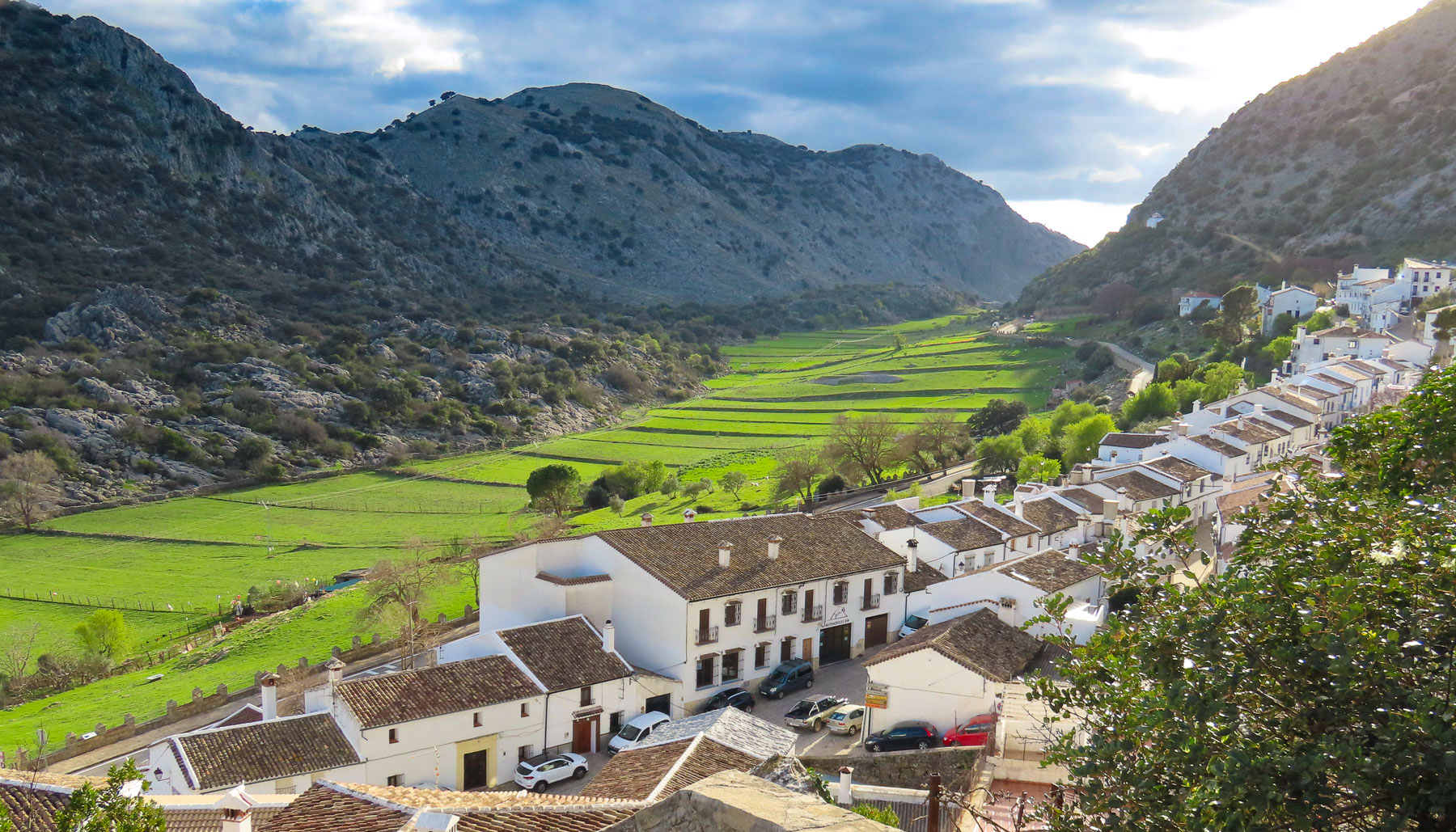
Villaluenga del Rosario was only a little farther, and higher into the mountains. The village is dramatically set along one side of a narrow green valley at the base of a sheer mountain massif. The lane to our inn, the Tugasa La Posada, looked too narrow to drive down, and I was concerned about getting to a point that required backing up. A difficult task in an alley barely wider than our rental car, and there was plenty of parking above the village. La Posada wonderfully reflects the typical inn of centuries past, with a large tavern, featuring regional recipes, on the ground level and a handful of rooms above.
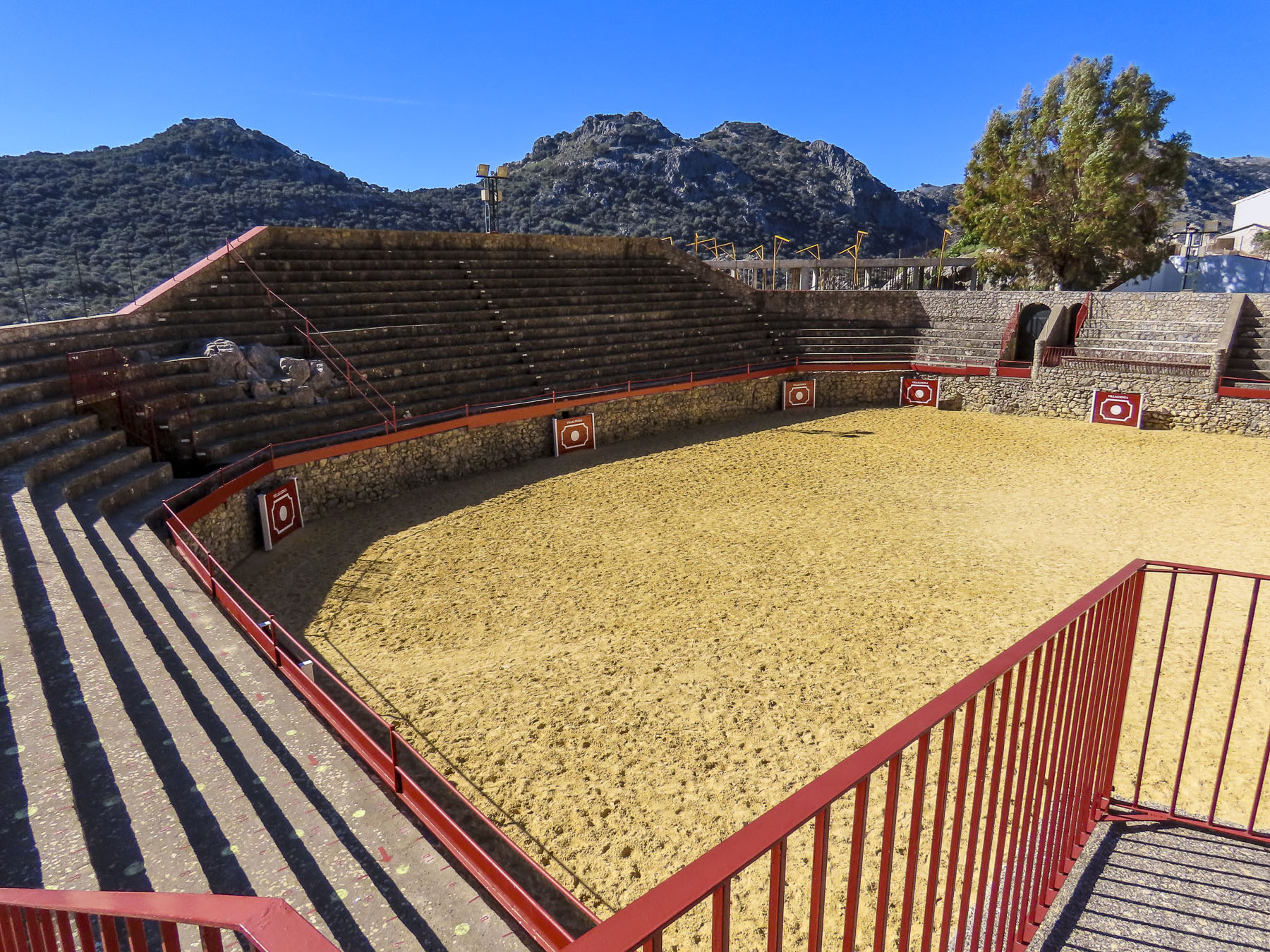
Several things are unique to this pueblo: Snowy winters are common in the Sierra de Grazalema Natural Park’s highest village, situated at an elevation of 2800ft. It is also the smallest village in the Province of Cadiz, with only 438 residents. And the village has a unique octagon shaped bullring, built around a natural rock formation, that is the oldest in Cadiz Province, dating from the mid-1700s. The exact year of construction for the bullring isn’t known, as the town’s archives were lost in a 1936 fire. Located on an important cattle trading route through the mountains, the bullring was also used as a corral during livestock festivals.
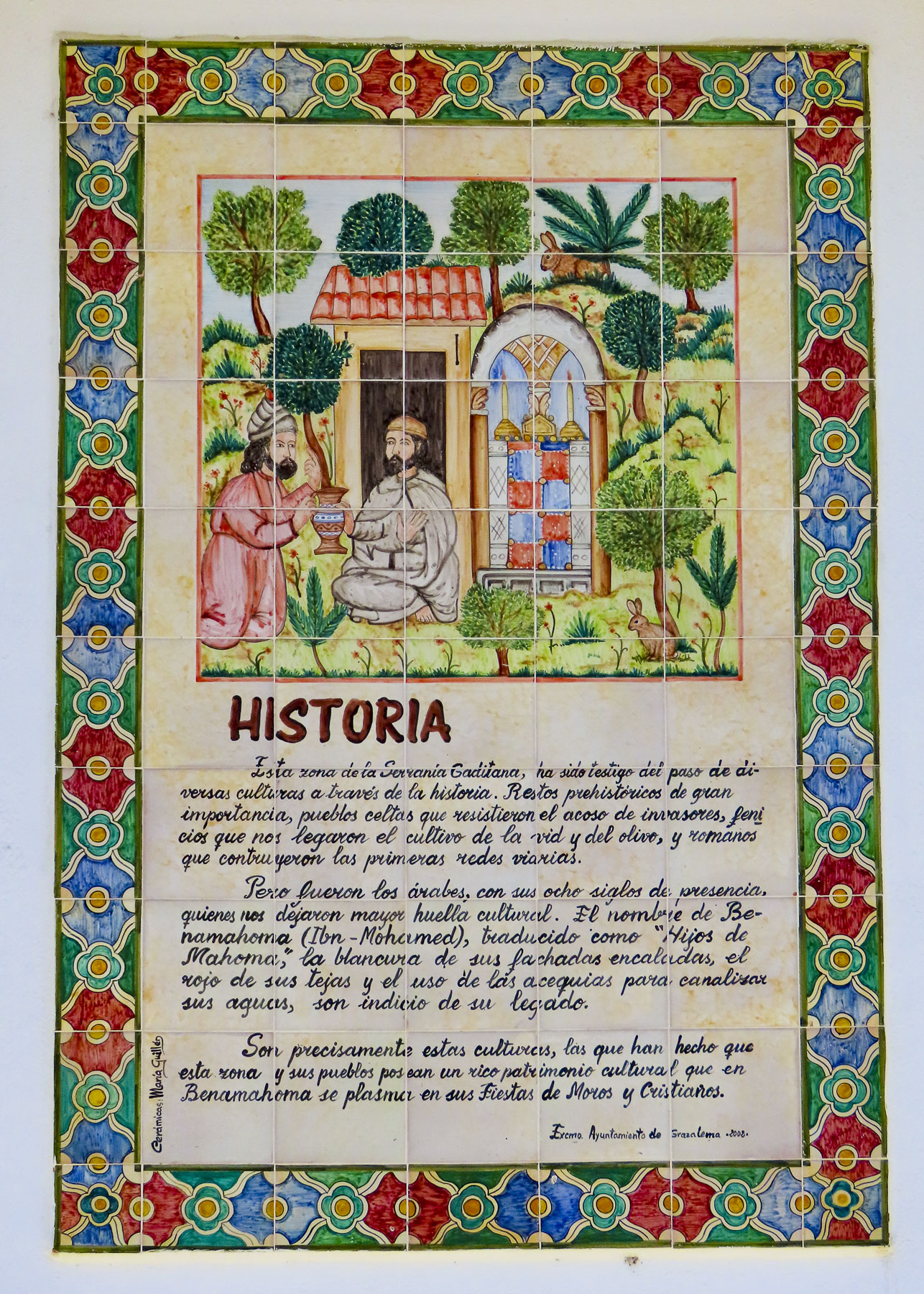
But before domestic cattle were raised in the area, prehistoric people used to pursue auroch, a wild bull that lived in the Sierra de Grazalema until it was hunted to extinction in the Middle Ages. Nearby in Cueva de la Pileta, primitive cave paintings of bulls have been dated to the Paleolithic era 27,000 years ago. The famous fighting bulls of Spain, Toro Bravo, descend from this primal auroch lineage that once roamed wild. Ancient pagan festivals often conducted a running of the wild bulls, tethered to a group of men by a long rope, through their villages before a ritual sacrifice. “Toro de Cuerda'”(Bull on Rope) festivals, are thought to be the foundation of the modern Spanish Bull Fight, and are still held in Villaluenga del Rosario, Grazalema, and Benamahoma. With the advent of Christianity some of these pagan elements were incorporated into church celebrations of a pueblo’s patron Saint. In Grazalema the early church Christianized the practice and includes the Feast of the Bull in celebrations to the Virgen del Carmen every July. Benamahoma’s “Toro de Cuerda” is held in August during their festival to honor the town’s patron saint, Anthony of Padua.
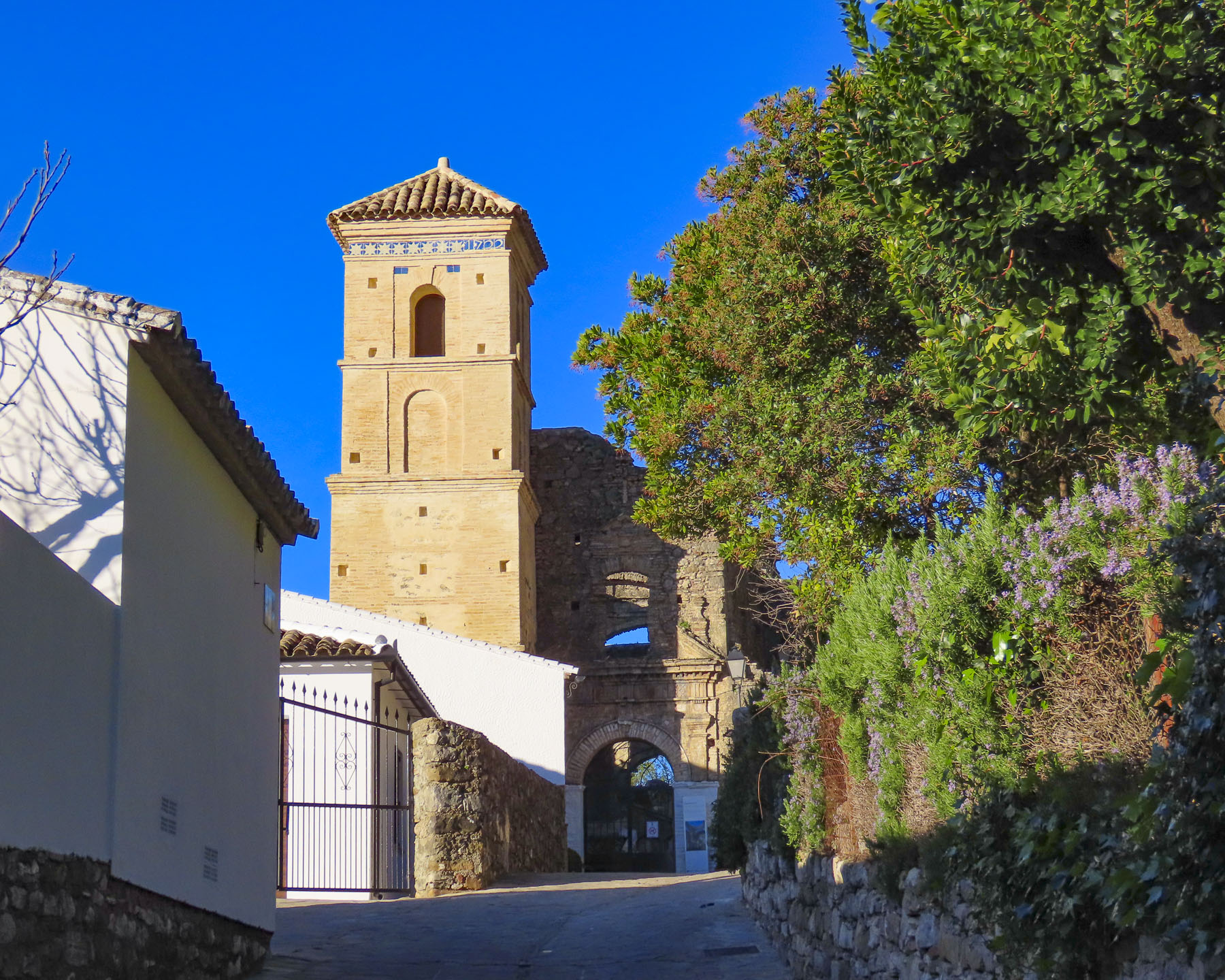
This tranquil village has gone through some turbulent times in its past. Villaluenga del Rosario, known for its woolen textiles in the 17th century, did not escape Napoleon’s destruction as his troops retreated across the mountains after they abandoned their siege of Cadiz in 1812. French troops sacked the village and torched the old Church of El Salvador. Now only the walls and roof arches remain, open to the sky. The sanctuary is now used as a cemetery. The economy declined throughout the region in the 1800s and early 1900s, and the mountains were beset with bandits. Notoriously, José María El Tempranillo and Pasos Largos, the most infamous of the Sierra’s outlaws, would frequent the village and hideout in the surrounding caves. They are celebrated as Robin Hood bandoleros, robbing the wealthy and redistributing their stolen goods to help the poverty-stricken locals – Andalucia’s mountain justice. These same caves in the 1930s would shelter Republican resistance fighters escaping Fascist troops during the Spanish Civil War. A hiking trail, Los Llanos del Republicano, from the village to caves is named after them.
The rural population continued to emigrate, contributing to further economic deterioration until the villages’ employment prospects improved with the opening of a cheese factory, Queso Payoyo, in 1997. The Payoyo goat is an ancient breed from the Sierra de Grazalema and considered endangered. Since Queso Payoyo opened 25 years ago, its goat and sheep cheeses have received 175 national and international awards. Thirty-five farms now supply Payoyo goat and Merina grazalemeña sheep milk to the cheesemaker. Their shop just across the road from the village seems to be a Mecca for cheese aficionados. Open seven days a week, we were surprised to find it packed with customers early on a Sunday morning, when we stopped to buy some cheese before we headed to Benamahoma.
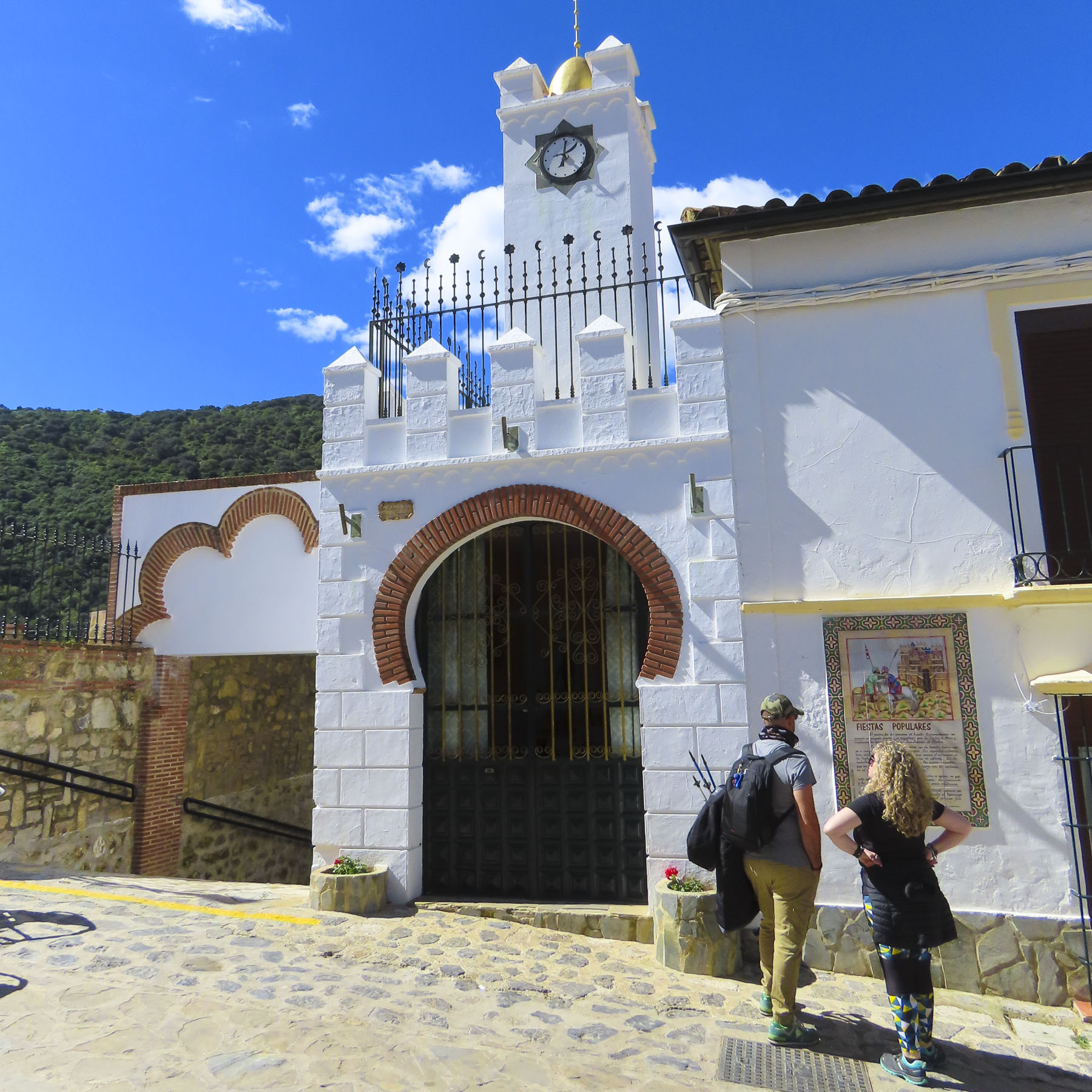
It was a beautiful crisp spring day, and we enjoyed a slow walk uphill into the village. Next to the Plaza de las Huertas the façade of the Ermita/mezquita de San Antonio, a church/mosque, visually represents Benamahoma’s complex cultural identity, with Moorish horseshoe-shaped arches and three golden spheres topped by with a gold crescent, typically seen on minarets, atop its tower.
This region in Spain has a very complicated history, beginning with Alfonso X’s Reconquista which started in the mid-1200s, paused, then continued for the next 400 years with his successors. Benamahoma was the last Moorish village in the mountains to have its inhabitants expelled from the region in 1609, eighteen years after Grazalema’s Muslim villagers were forced out, though the hamlets are only nine miles apart. Their reprieve was caused by the fact that although Alfonso X and later Kings achieved military victories, they did not have enough troops to garrison each village, nor sufficient numbers of willing Christian settlers from Northern Spain to repopulate the conquered towns. Consequently, to keep the economy of the area going and subjects to collect taxes from, Moors were allowed to stay as long as their local Princes swore allegiance to a Christian King and declared themselves loyal vassals. This did not always go smoothly and there were rebellions. Most famously the Mudéjar Revolt in 1264, when the towns of Jerez, Lebrija, Arcos, and Medina-Sidonia were recaptured and occupied by Moors for several years before Christian armies secured the towns once again.
Benamahoma’s historic, pragmatic tolerance is celebrated the first weekend every August with a Moros y Cristianos Festival. Carrying swords, shields and blunderbusses, historical reenactors dressed in period clothing parade through the village to the bullring, where they then engage in mock hand-to-hand combat. The battles are won with the capture of an image of San Antonio de Padua by the Moors on Saturday and then won by Christians on Sunday with the rescue of his image. Many of the positions in the opposing armies are hereditary, the tradition being passed down from father to son, through the generations. Benamahoma is the only village in western Andalucia which celebrates this festival.
This village’s remoteness in the Sierra de Grazalema did not protect it from the atrocities committed during the Spanish Civil War. Near the bullring, in the Parque de Memoria Historica, silhouettes stand where villagers once stood against a wall before they were massacred by Fascists. Sadly, this memorial is also near the village’s second church, the Iglesia de San Antonio de Padua.
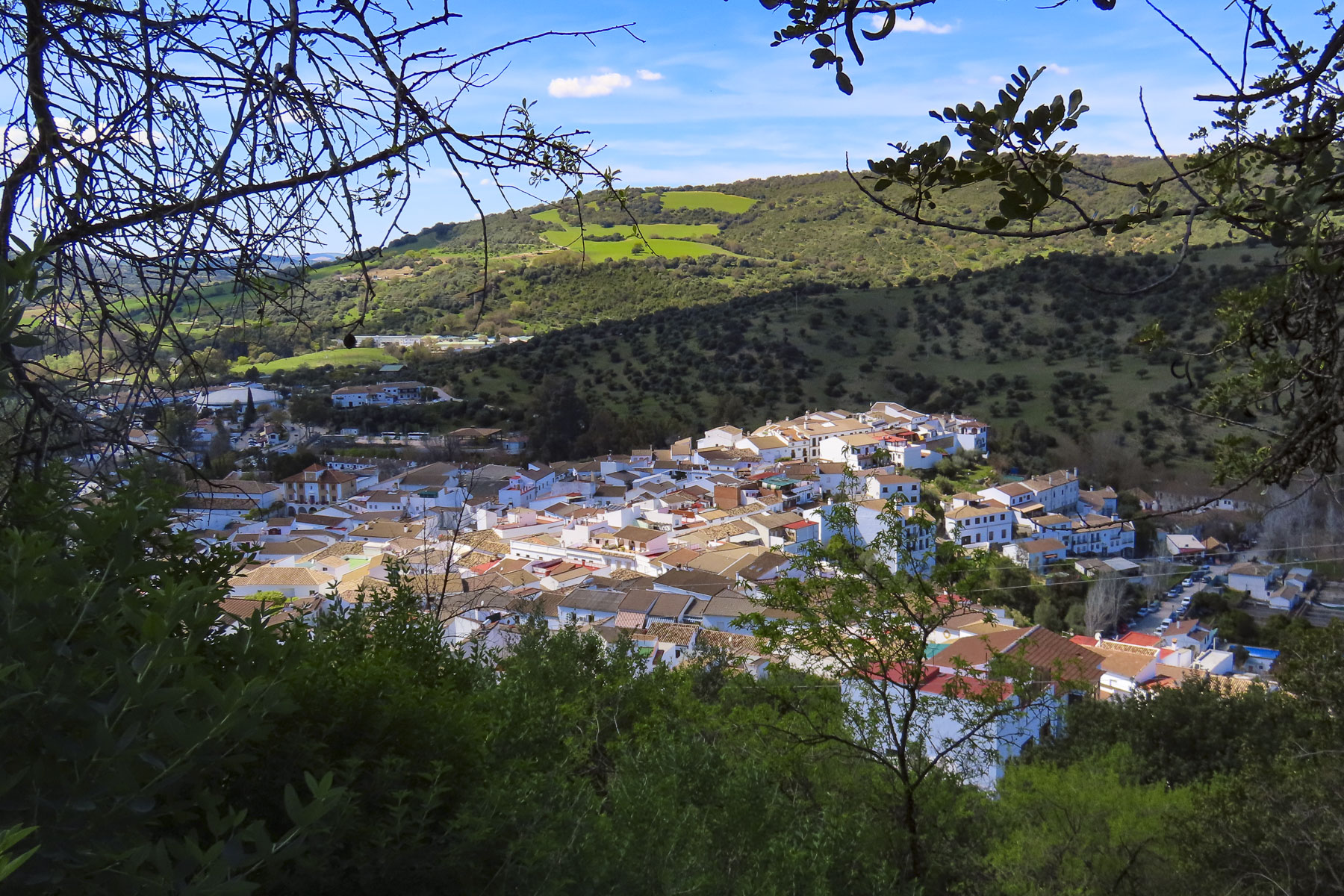
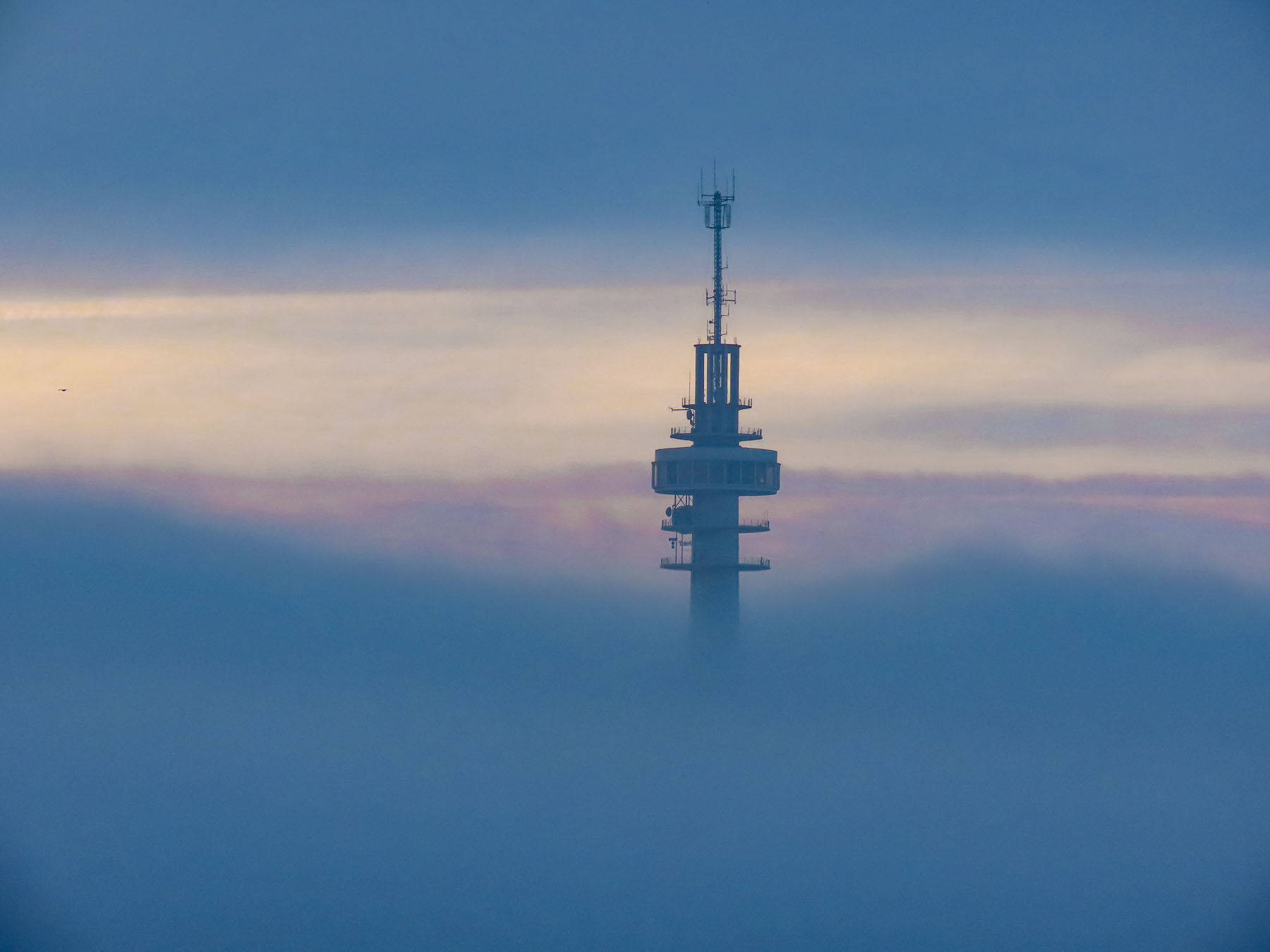
Backtracking as we headed to Arcos de la Frontera, we stopped at a radio station above El Bosque. A trail behind its tall antenna offered the perfect vantage point to capture a photo of the village below. We did not stop in El Bosque, but after catching glimpses of the village as we drove through, in hindsight we wished we had. But there was a time constraint, we wanted to spend the afternoon exploring Arcos de la Frontera, before flying on to Barcelona the next morning.
The A-372 between El Bosque and Arcos de la Frontera has to be one of the prettiest stretches of highway anywhere. With the reflection of the Sierra de Grazalema in our rearview mirrors, we wished we could have lingered longer.
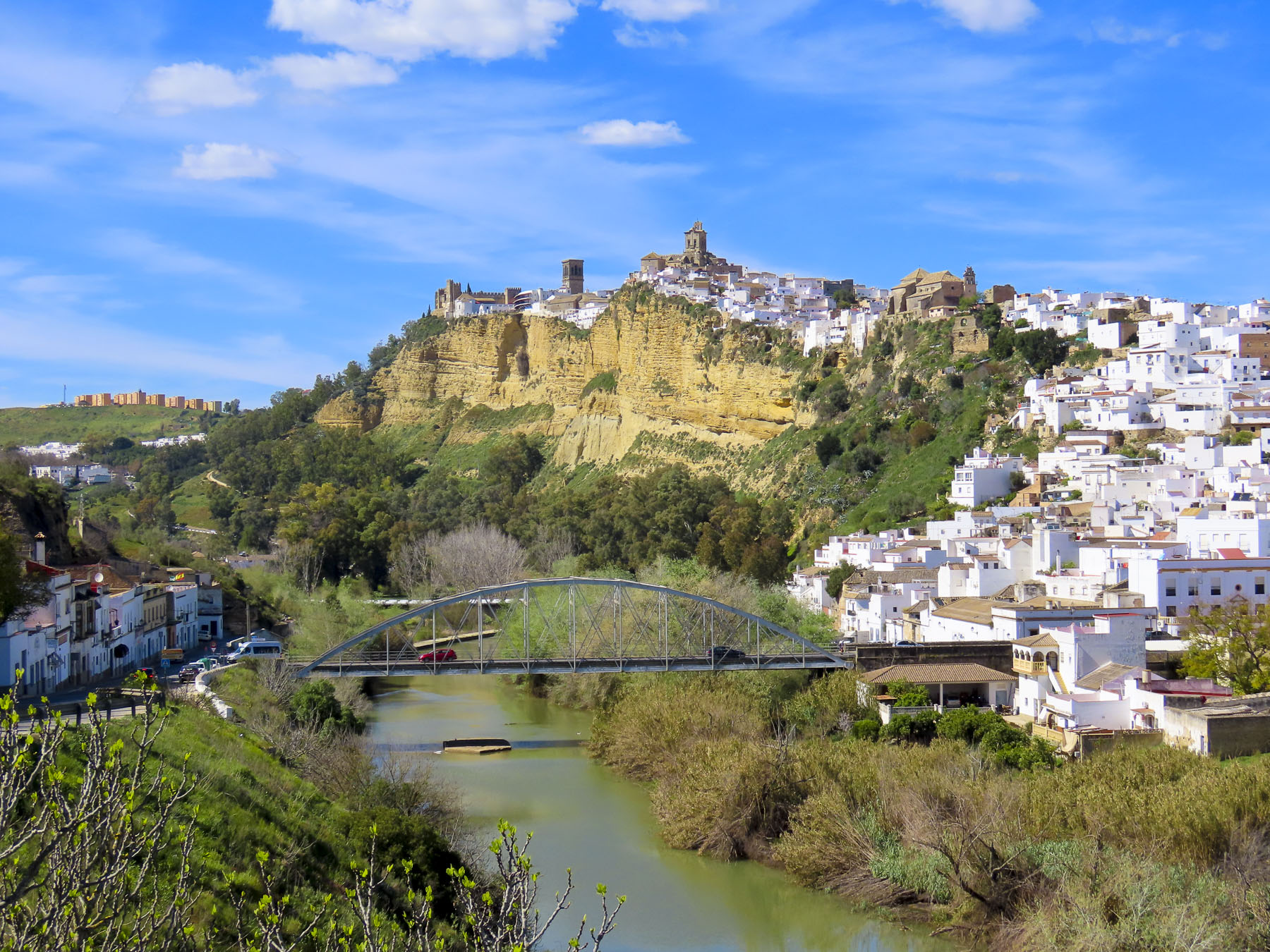
I’ve always loved maps for researching routes, finding obscure sites, and figuring out the best vantage point to capture a landscape from. This brought us to our first two stops at the Molino de Angorrill, an old mill, and the Mirador Los Cabezuelos, before we entered the hilltop citadel. Both places along Guadalete River had wonderful views of the ancient city.
After this our map app failed us when it suggested we head the wrong way down a one-way calle into the village. We eventually found an underground parking garage at Parque El Paseo and towed our suitcases uphill to the Parador de Arcos de la Frontera.
It was LONG walk, but of course we stopped frequently to take photos. Located next to the 500-foot-high Mirador Plaza del Cabildo and adjacent to the Basílica de Santa María de la Asunción and the Castillo de los Duques de Arcos, the hotel was a perfect base for a one-night stay. Formerly the Casa del Corregidov was an Andulcian palace before it was acquired by the government and renovated to be a paradorin 1966.
Arcos has always been a favored spot, appreciated for its access to abundant water sources and its easily defensible position atop a cliff face. It has hosted settlements since the Neolithic period, Bronze Age, Tartessians, Phoenicians and Romans periods.
The village continued to grow under the Moors and while the facades and interior of buildings in this ancient town have changed over the centuries the original Arab footprint of the village, with its exceedingly narrow lanes has remained the same.
The view from the mirador and the hotel’s patio were phenomenal during the golden hour. As the sun was setting, a large flock of storks appeared over the bell tower of the Basilica and circled for about fifteen minutes before flying away. It was a magical experience that nicely capped our short time in Arcos.
The next morning, we watched the sun rise over the Sierra de Grazalema and the village’s church steeples from our hotel room, before wandering through the village’s ancient lanes one last time.
With a leisurely departure from Jerez de la Frontera, we headed towards Cadiz for four nights before continuing our road-trip through the southwest corner of Andalucia. Our friend Giulia had shared her fond memories of Cadiz with us several years ago and we were finally on our way to experience the charms of this coastal city ourselves. Situated on a narrow peninsula that juts into the Atlantic Ocean, the city’s small size appealed to us. “You won’t need a map!” Donna teased, referring to my inclination to track our every route. While the city does have several beach areas, only one, La Caleta is in the Casco Antiguo, old town district.
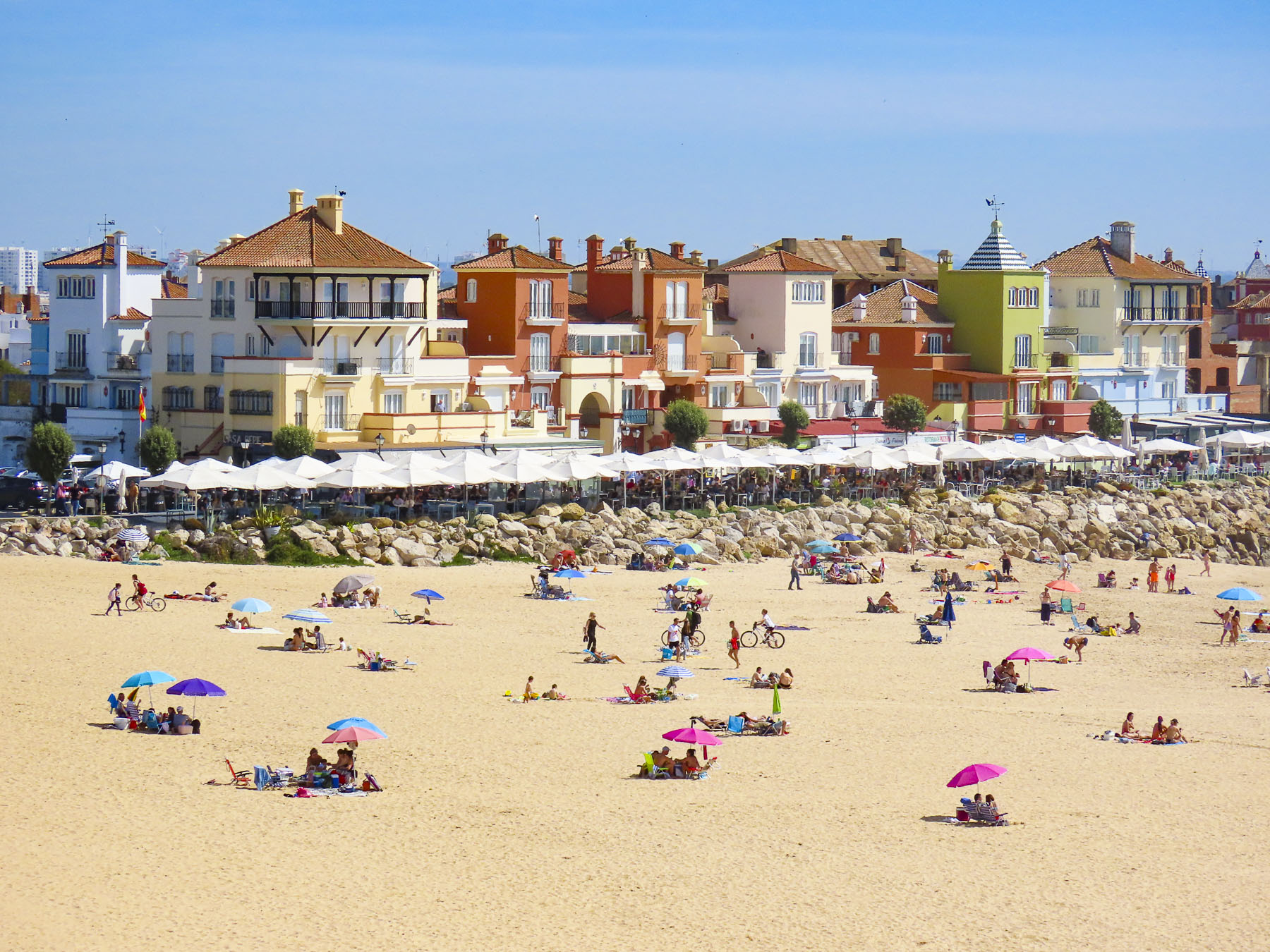
We decided to have lunch along Andalucia’s Atlantic coast before we reached Cadiz and followed the signs to Vistahermosa, an upscale neighborhood in El Puerto de Santa María that has a crescent shaped beach. It’s a wide stretch of golden sand, with the ruins of an old fortress at one end and a marina at the other.
The Sunday afternoon in March when we visited, folks were sunbathing and swimming. Offshore boaters, kite surfers, and a sailing class were enjoying the gentle waves of Cadiz Bay. We parked at the marina and strolled along the restaurants and homes that lined the breakwater until we decided on Sotavento Puerto Sherry, which offered some shade from the intense afternoon sun.
Afterwards we headed to the lighthouse that marks the entrance to the marina. If you ask locals where the best beaches in Spain or Europe are, they’ll spread their arms wide to encompass the north and south vistas along the coast and say, “aquí mismo,” right here, proud of the fact that their beaches are consistently awarded numerous Blue Flags, a European Union award for water purity and beach cleanliness, in the Mediterranean region. Though it shares the same climate as the Costa del Sol on Spain’s Mediterranean coast, with 300 days of sunshine annually, the Atlantic coast beaches have stayed relatively undiscovered by mass tourism. This is attributed to the provinces’ wilder, windswept coastline, with many nature preserves and few large tourists resorts.
When you look at a map of old town Cadiz the streets appear to be laid out in a slightly modified grid pattern. In actuality they are a confusing array of one-way streets that inhibit easily circling around the block. Fortunately, there is very little auto traffic through the historic district, as there are no sidewalks and folks treat the calles as pedestrian only thoroughfares, stepping into doorways for the occasional delivery vehicle to pass. There are expensive parking garages scattered about the city; however, if you are willing to walk a little farther, the least expensive parking areas are near Parque Genovés.
We were delighted when the elevator doors opened onto a rooftop terrace and we realized that our room was on the hotel’s top floor, which we shared with one other guest room and an outdoor bar that was closed until the high season started later in the Spring. For under $100 a night our room, with sitting area, large bath, and private patio at Hotel Las Cortes De Cádiz was an incredible value in mid-March.
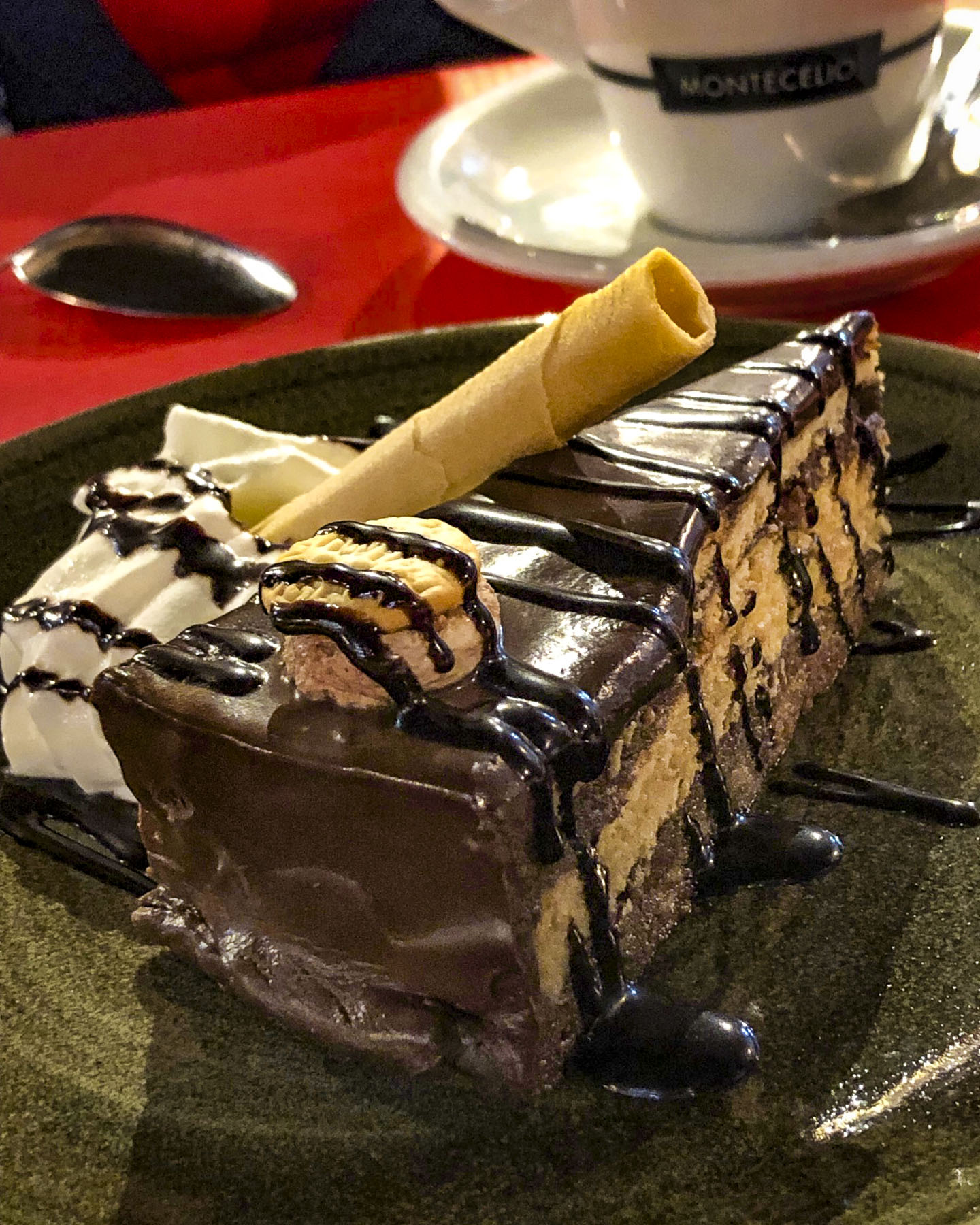
Breakfast was not included, but we had a coffee maker and I always enjoy photographing sunrise, then wandering about in the early morning hours looking for a neighborhood pastelería. Our sweet tooth was not dissappointed in Cadiz.
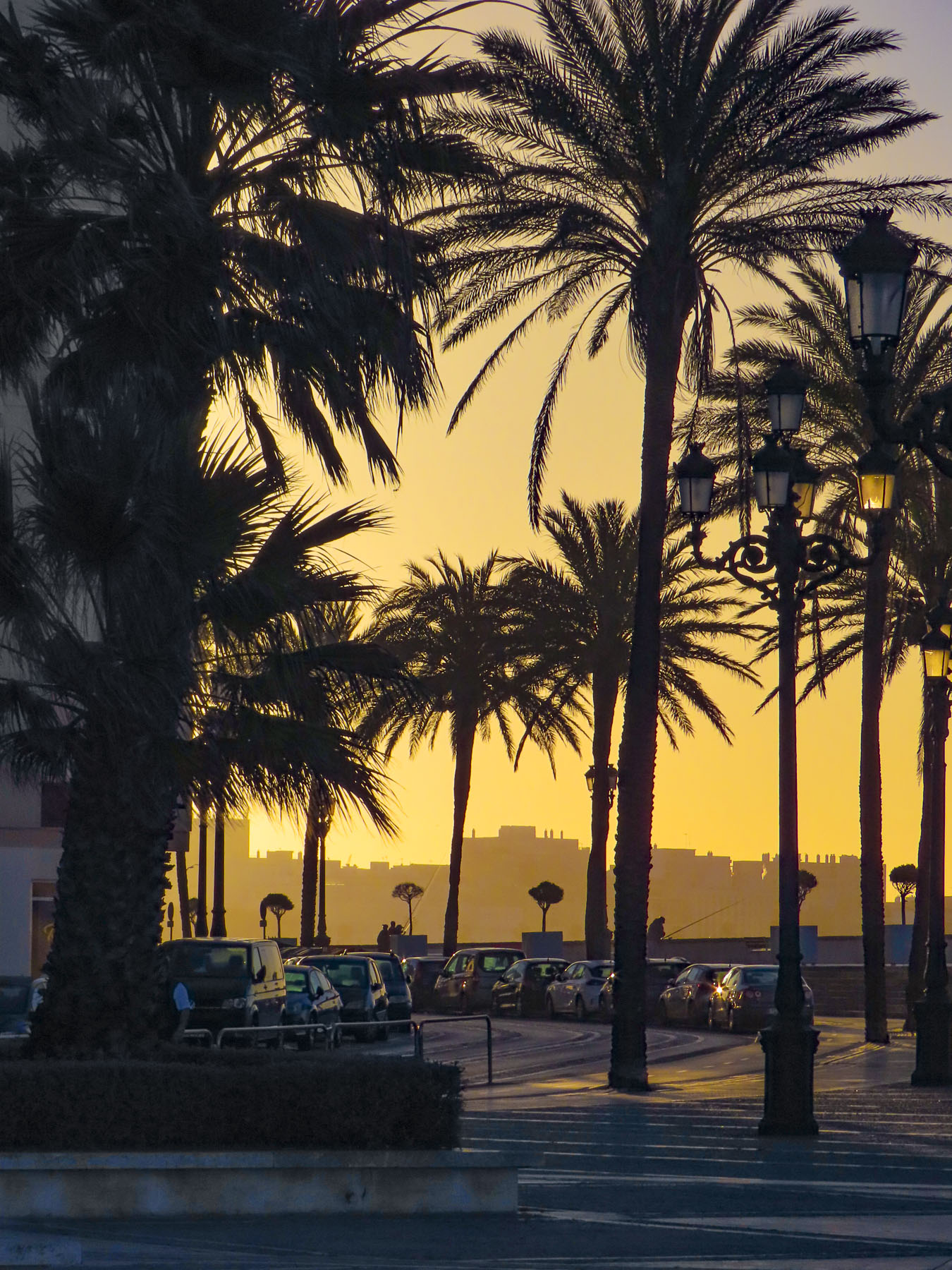
While many of the calles in Cadiz are strictly utilitarian aside from their fascinating architecture, the plazas, parks, and some strictly pedestrian only lanes are lined with palm trees, and a variety of other specimen trees collected from Spain’s far-flung empire, which lasted from the 16th to 18th century.
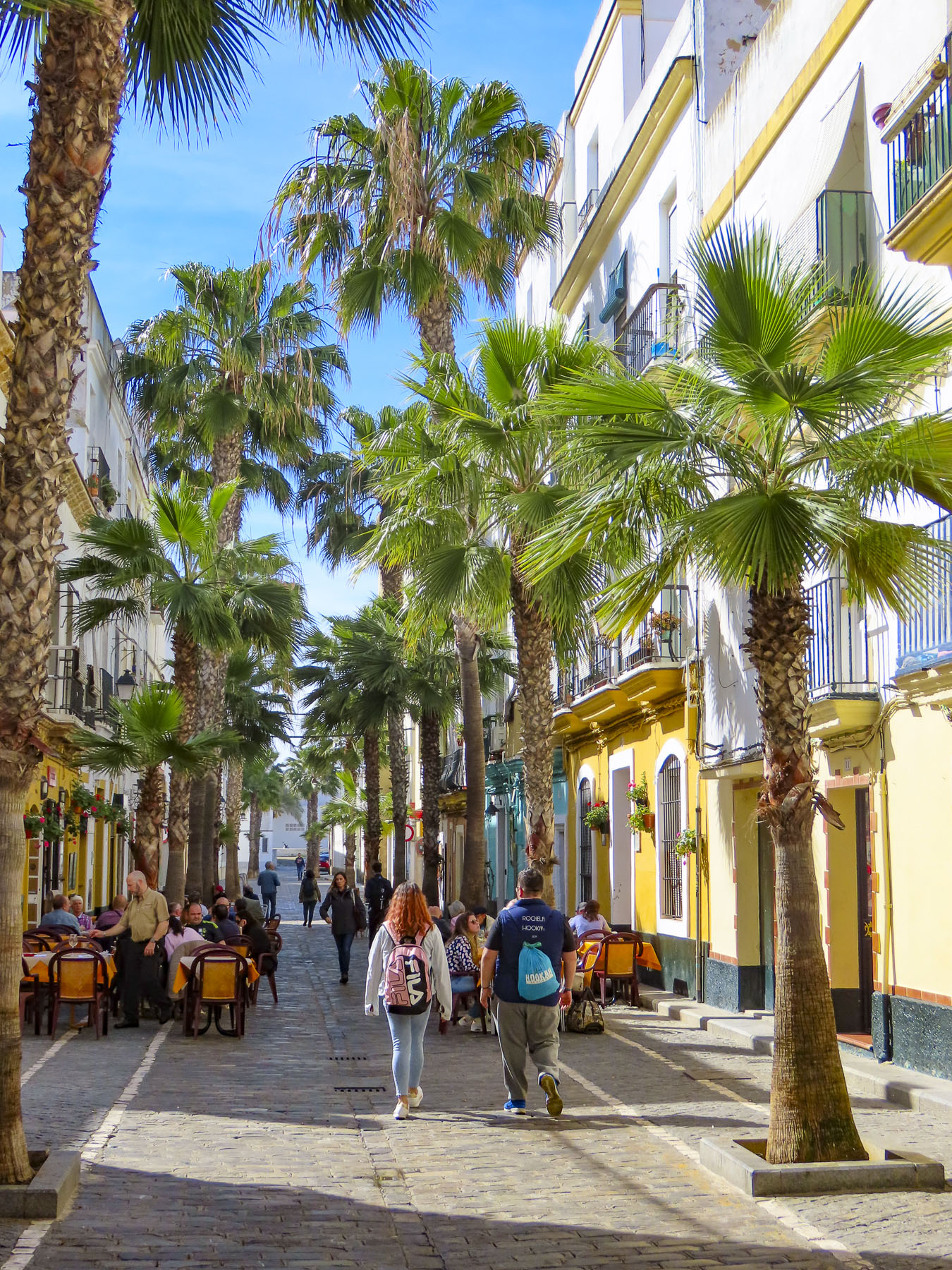
Calle Virgen De La Palma is particularly attractive with its tall palms lending a Caribbean vibe to this quiet barrio that has two of Cadiz’s best tapas bars and restaurants, Taberna Casa Manteca and Restaurante La Isleta de la Viña.
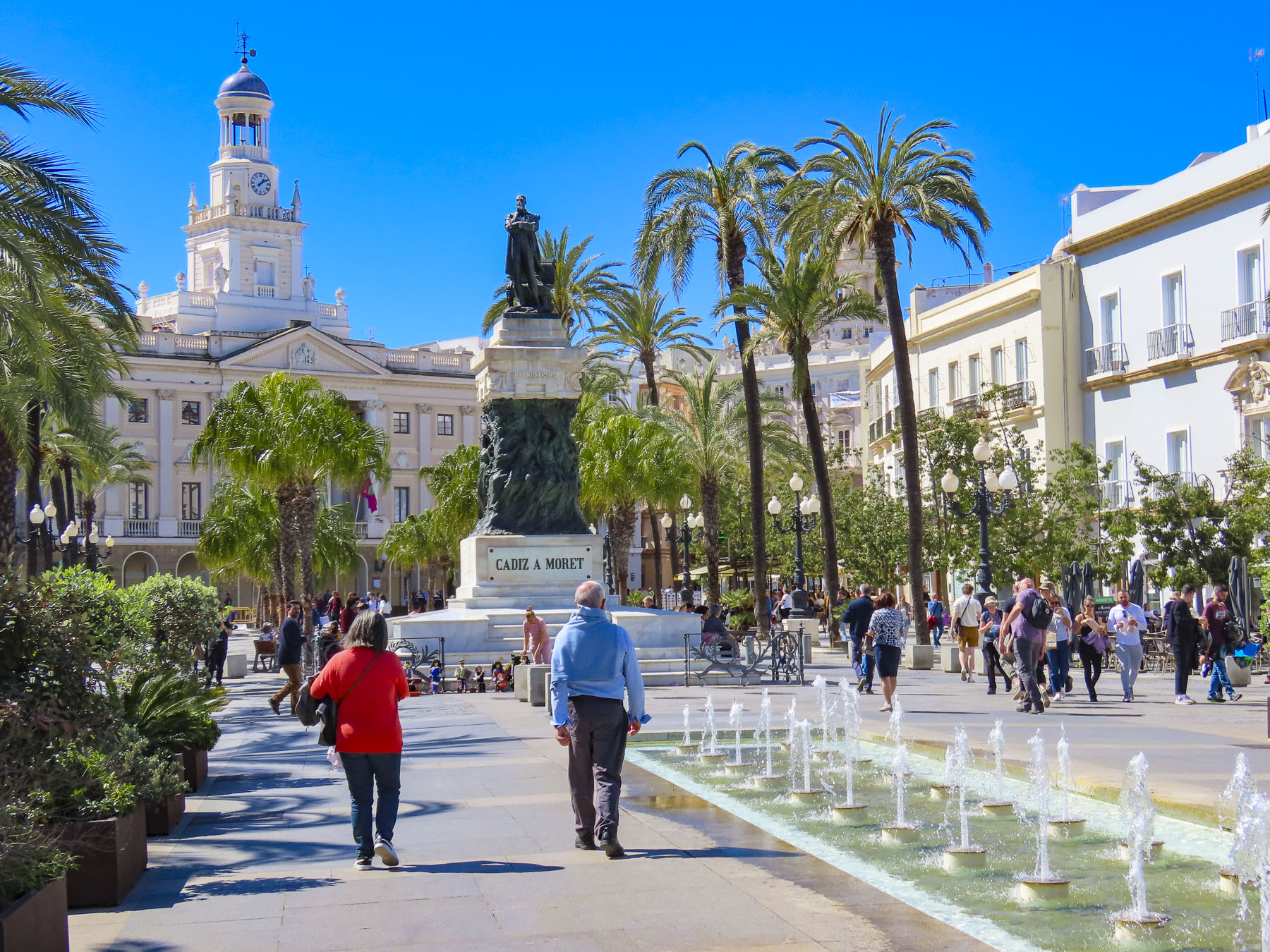
Plaza de Mina, Plaza de San Juan de Dios, and Plaza de la Catedral are especially beautiful, with the latter two also providing an Island flare to the stately stone buildings surrounding them. The Caribbean ambiance is so intense that the barrios of Cadiz are often used by the movie industry as a location stand-in for Cuba. Parts of 007: Die Another Day (2002,) were filmed at Cadiz’s La Caleta beach and Malecon.
There were two islands, separated by a natural narrow channel near La Caleta beach that extended to what is now the cruise ship harbor, when the Phoenicians landed 3000 years ago, making this the oldest continually inhabited city in western Europe. Over time the detritus of ancient Phoenician, Greek, Carthaginian, Roman, Visgoth, and Moor civilizations filled the canal and connected the two pieces of land.
Some interesting notes from the history of Cadiz:
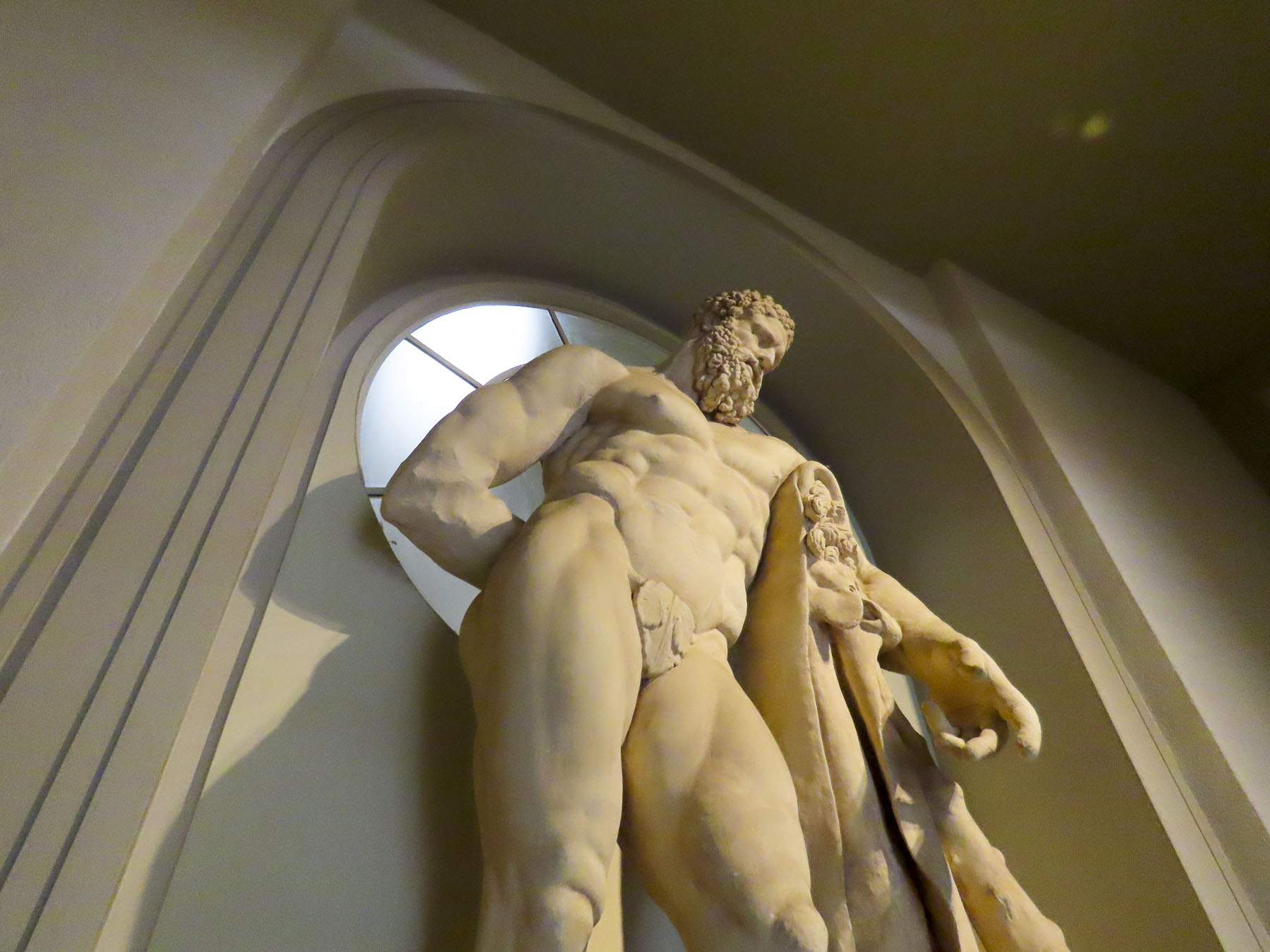
In Greek mythology Hercules needs to travel to an island called Erytheia, beyond the Pillars of Hercules, to slay the three-bodied, winged monster, Geryon. The Pillars of Hercules were thought to be the Rock of Gibraltar in Spain and Jebel Musa in Morocco at the mouth of the Mediterranean Ocean, and represented the end of the known world at the time. Cadiz is believed to be Erytheia.
Hannibal famously departed Cadiz in 218 BC with his calvary of elephants to trek across the Iberian Peninsula, the Pyrenees Mountains, and the Italian Alps to battle the Roman Empire.
During Spain’s Age of Discovery, Christopher Columbus set sail to the New World from Cadiz on his second and fourth voyages. As Spain’s closest deepwater port to its new colonies in the Americas, it subsequently became the home port of the Spanish treasure fleet and the city prospered for several centuries.
England’s favorite bad boy, Sir Francis Drake, attacked Cádiz in 1587 and pirated away 3,000 kegs of sherry, starting Britain’s long obsession with the Andalucian wine. This event prompted the city to build better fortifications.
1596 was a bad year for Cadiz. An Anglo-Dutch fleet of 150 ships with 15,000 men captured Cádiz, burning 685 homes and the old Parroquia de Santa Cruz Cathedral before they left. But the Spanish treasure ships they were after were purposely sunk by the Spaniards in the Bay of Cadiz, where the gold and silver was later recovered.
In 1805 smoke from the Battle of Trafalgar, a decisive naval engagement between a British Fleet, commanded by Admiral Lord Nelson, and a combined French and Spanish Fleet, could be seen on the horizon from Cadiz.
During the Napoleonic Wars, Cadiz successfully resisted French invasion and served as the capital of Spain for a short time.
In 1887 two large 5th century BC Phoenician stone sarcophagi were discovered at the Cadiz shipyards.
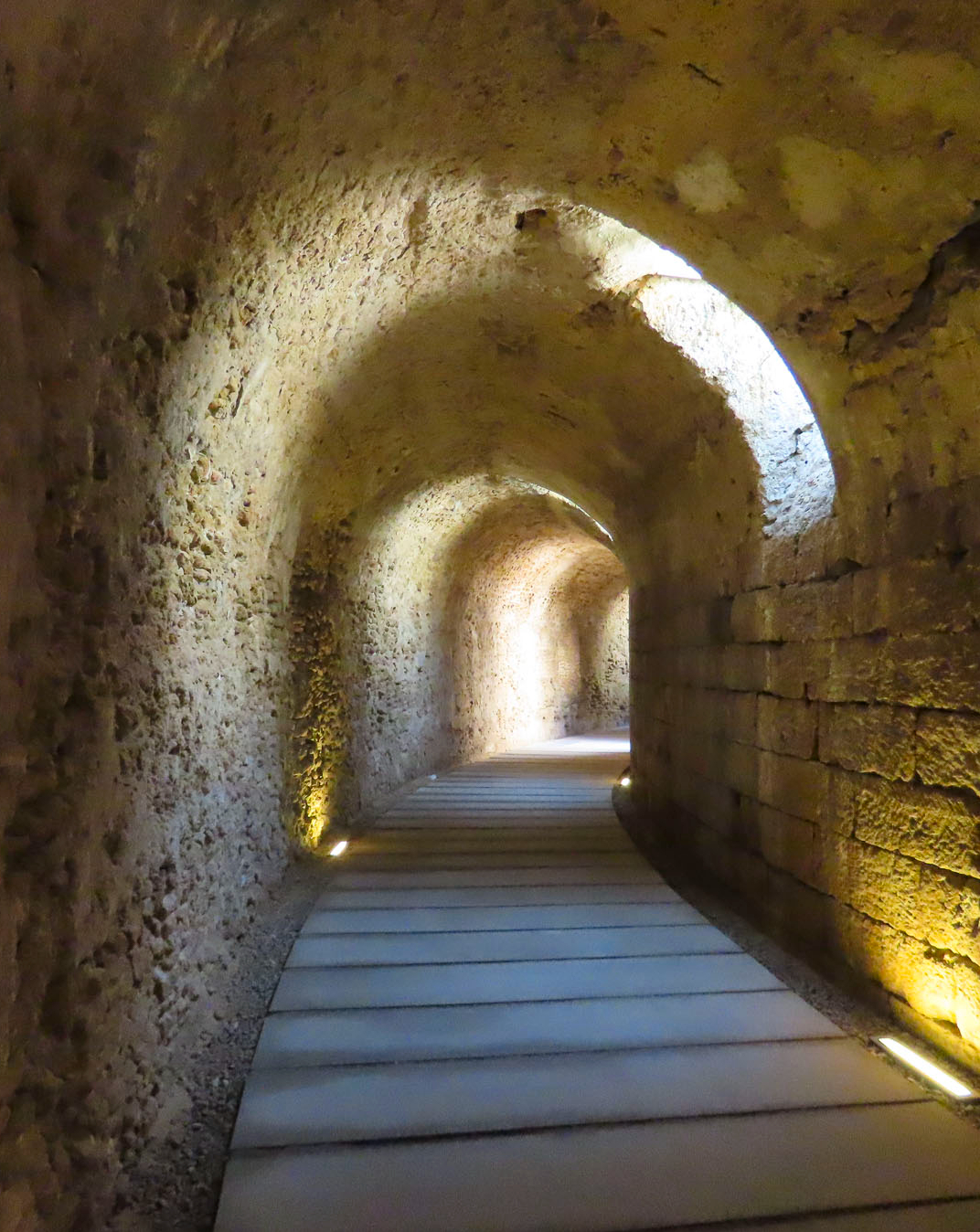
Construction crews in 1980 unearthed the ruins of a 1st century BC Roman amphitheater. Estimated to seat 10,000 spectators, the theater was one of the largest ever built in the Roman Empire.
I find these recent archeological findings fascinating, in the sense that there are still discoveries about the extent and complexity of ancient civilizations to be made, even though we’ve been living atop them for centuries.
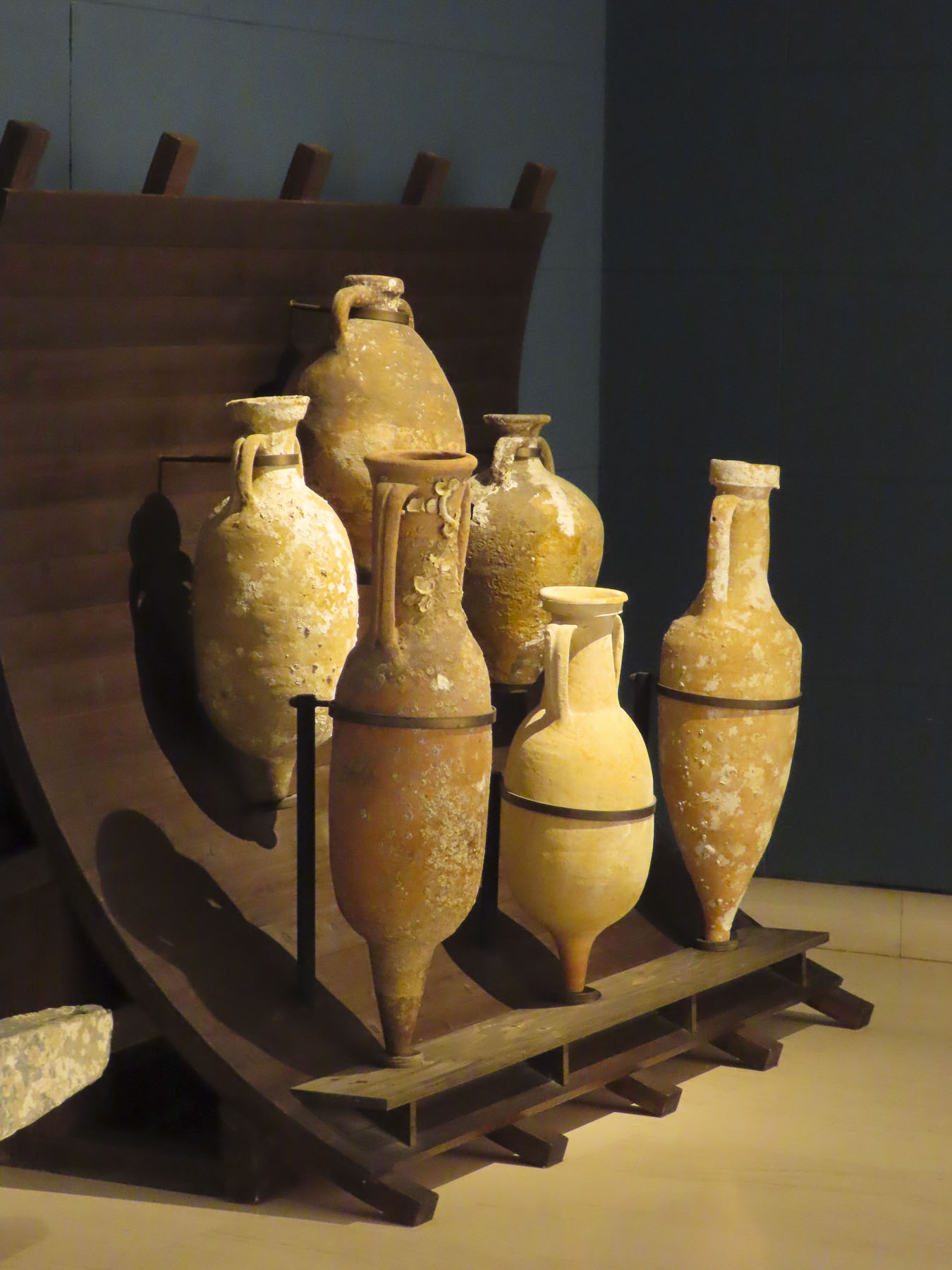
The Cadiz Museum is a great destination and has a very interesting collection of ancient Cadiz artifacts on display. Its location on the verdant Plaza de Mina surrounded by several cafés and the excellent restaurant Mesón Cumbres Mayores was a huge bonus. At the restaurant we shared a delightful experience with a young Spanish/American couple from Oregon who were back in the woman’s hometown visiting family. “You must try the Chicharrones.” We never could have imagined that pure fat is a gourmet delight! Pork belly cooked with spices and garlic, then pressed and chilled, before being sliced paper thin, and served with a squeeze of lemon and a dash of salt. Pared with a nice Andalucian wine, it was Heaven! Obviously, this artery clogger is a tapas to share in moderation.
The urban footprint of Cadiz that we see today is a result of the reconstruction of the city after its 1596 sacking. Resilient, Cadiz was like a phoenix that continued to rise from the ashes and thrive through 200 years of pirate raids and war. Such was the power of the Spanish throne’s, “Casa de Contratación,” a contract with a city that allowed it to impose a tax of 20% on all goods, including gold and silver entering Spain from the New World colonies.
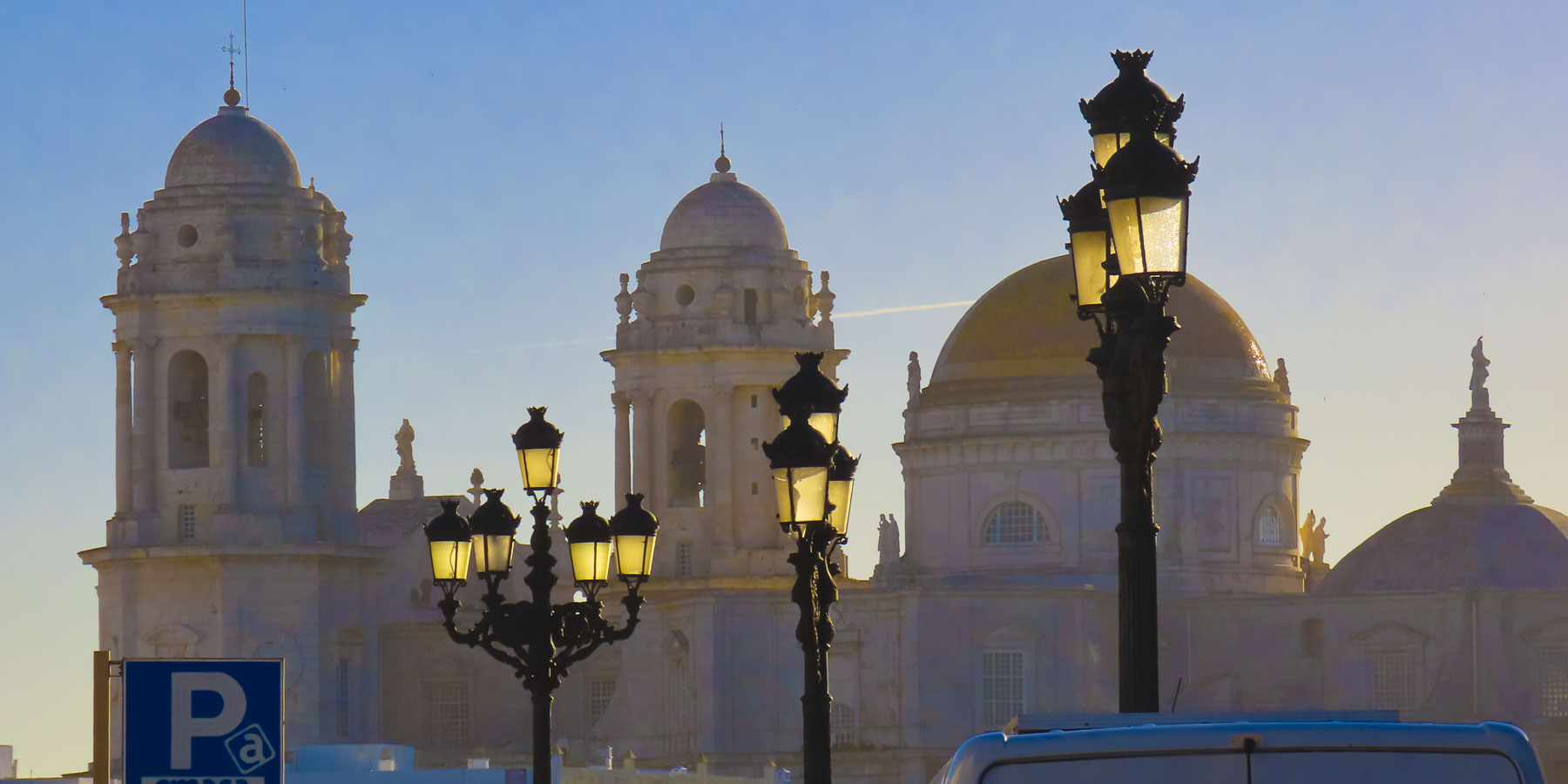
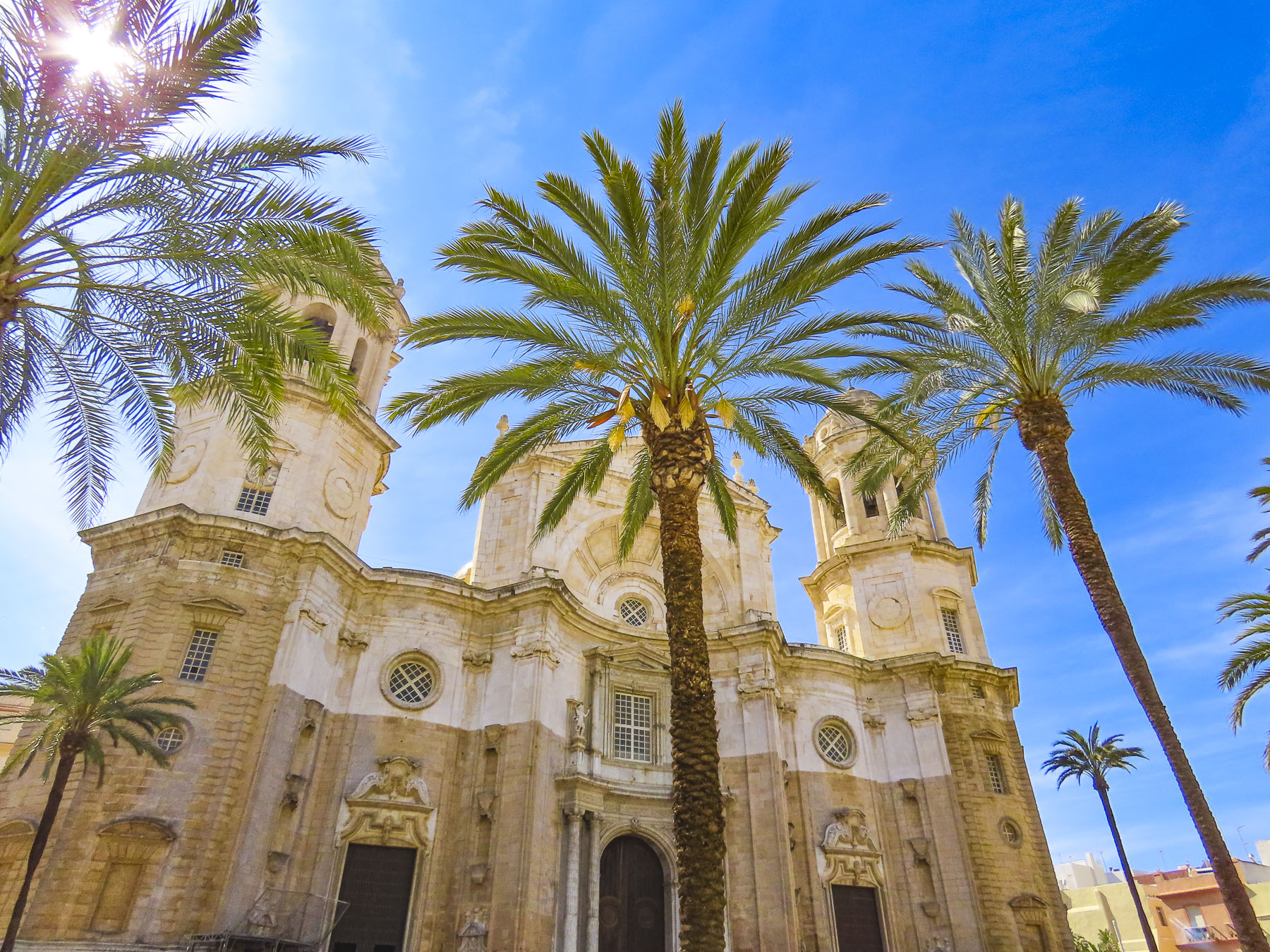
Seville previously held this coveted right before it was granted to Cadiz in 1717. With this new wealth the construction of the Cathedral of Cadiz or, as it was often called, “The Cathedral of The Americas,” was started in 1722.
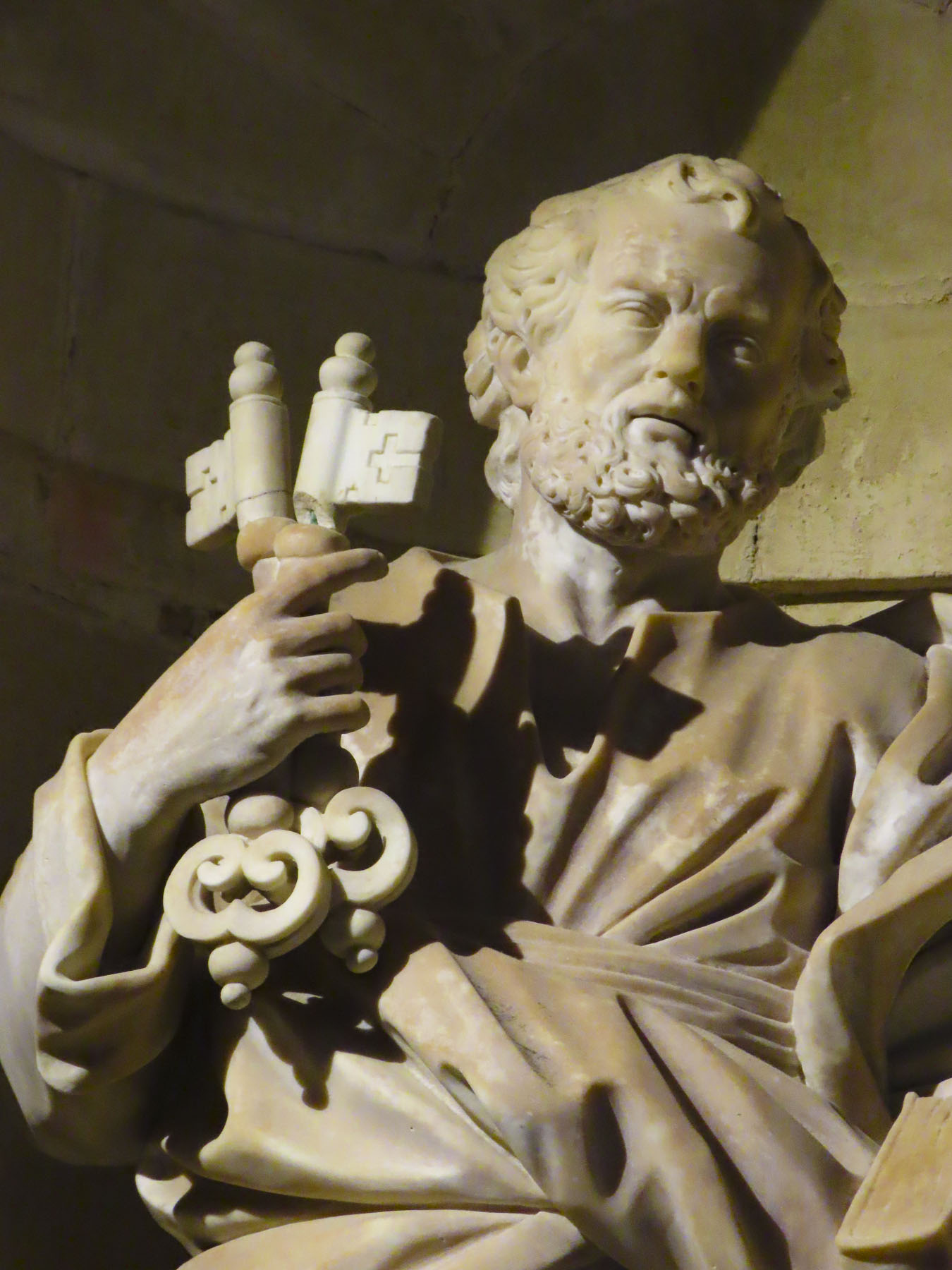
The church is a huge, cavernous space in need of some maintenance as evidenced by the construction netting suspended below the arched ceiling, which still allowed smaller pieces of plaster to fall through and splinter on the marble floor. The ornately carved choir stalls are a masterpiece of wood sculpture.
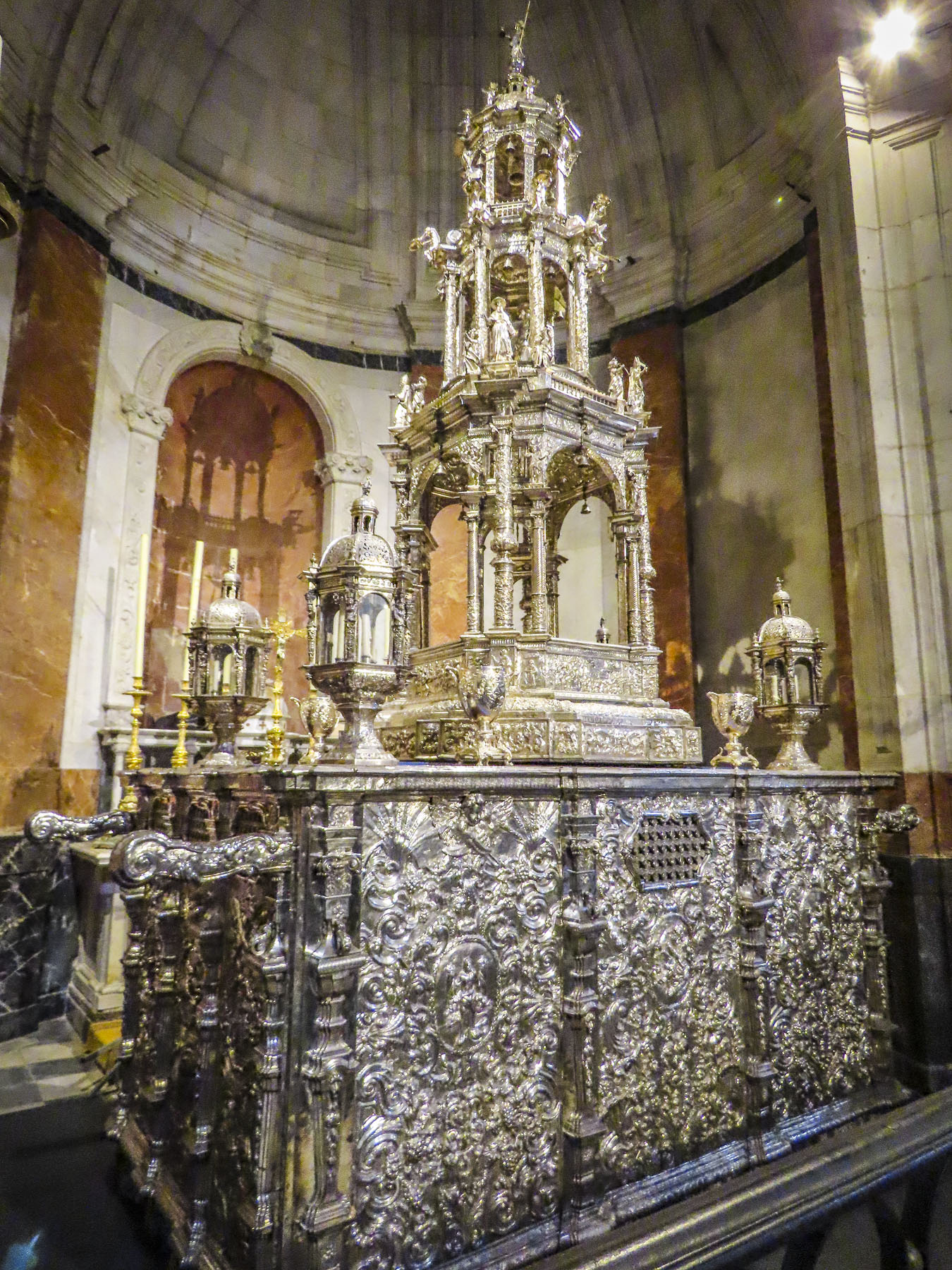
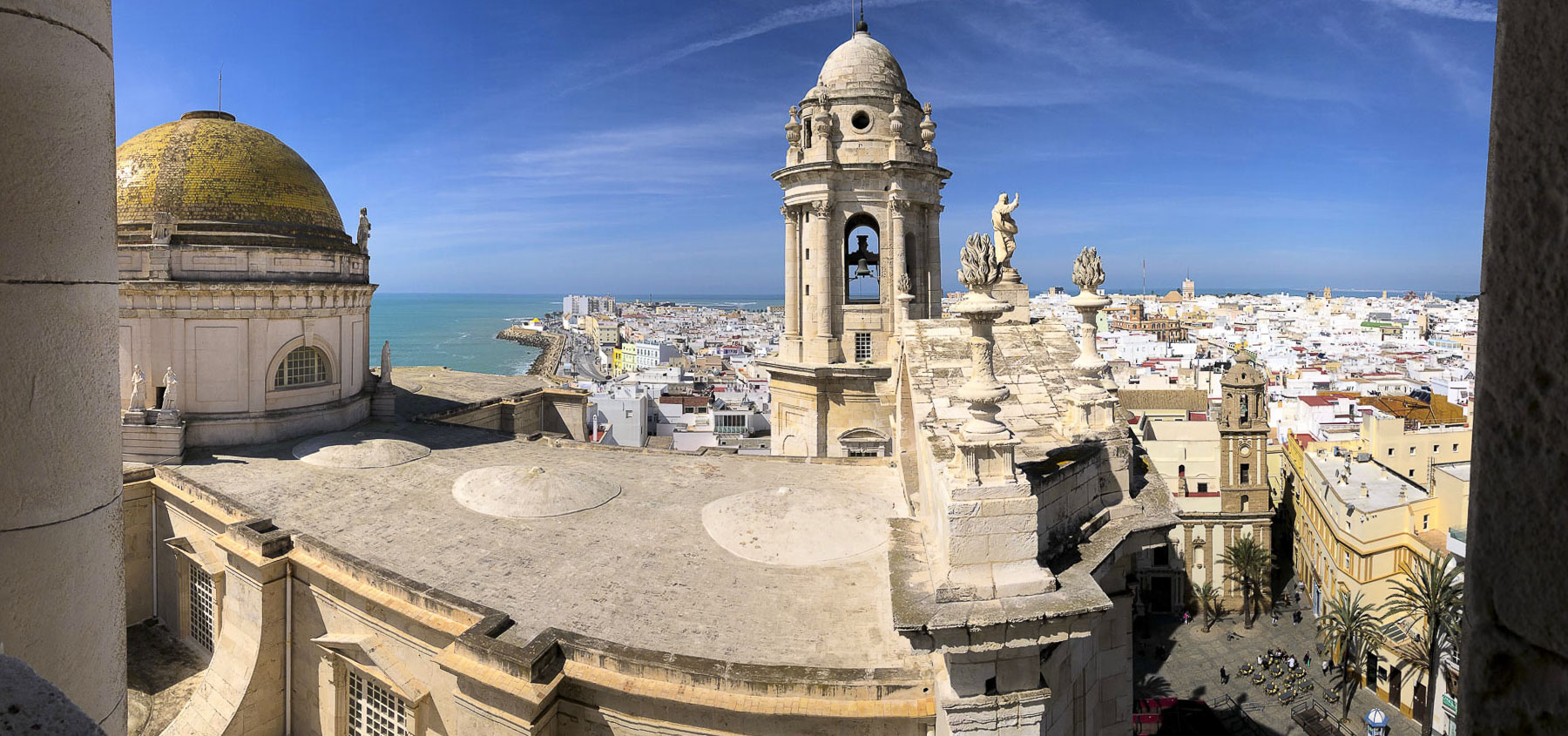
In one side chapel there is a huge ceremonial monstrance crafted with an estimated 800lbs of silver from the New World. There are also many other notable works of religious art scattered throughout this chamber. It’s definitely worth the effort to walk to the top of the church’s Levante Tower for the best panoramas of Cadiz from the highest point in the Casco Antiguo.
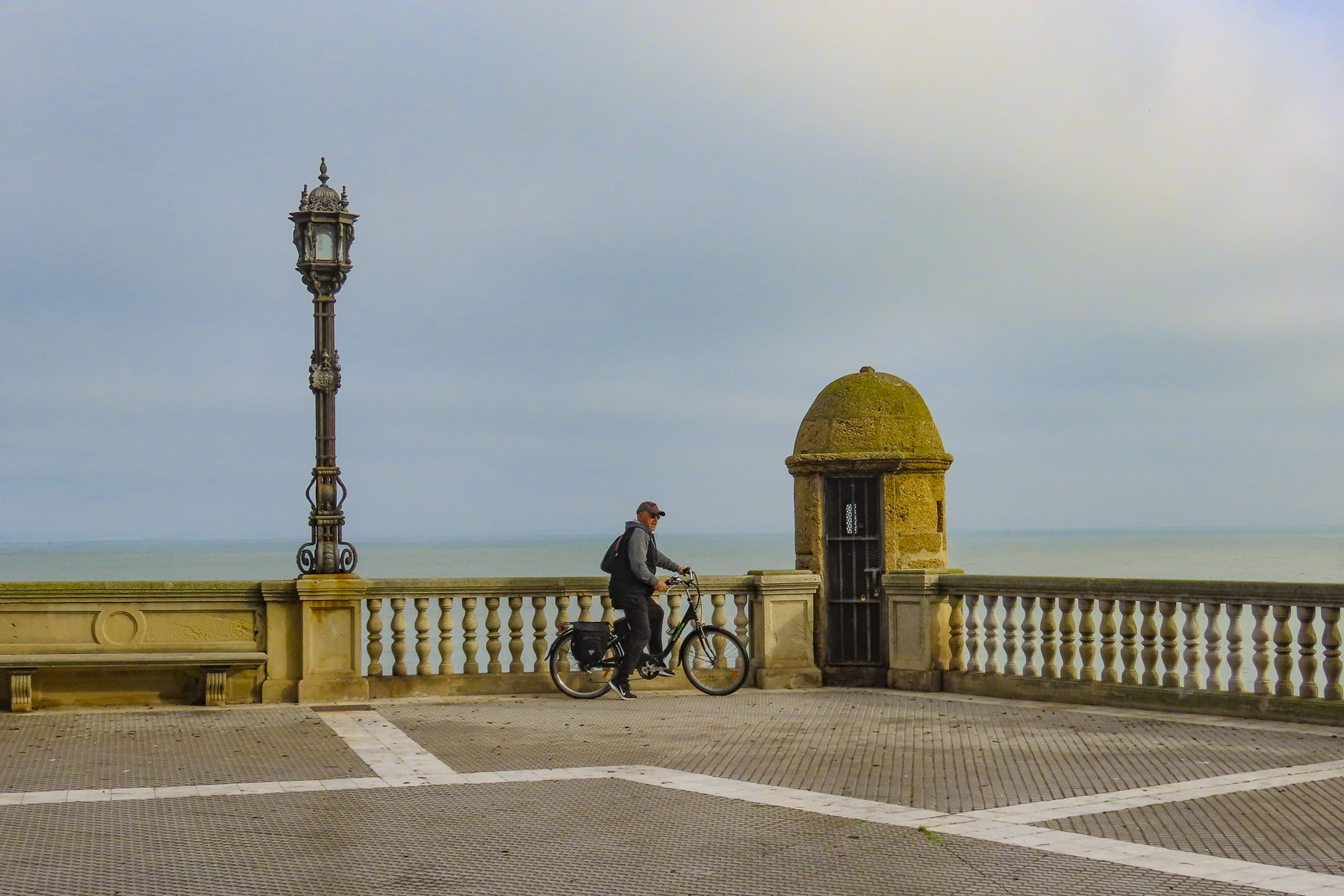
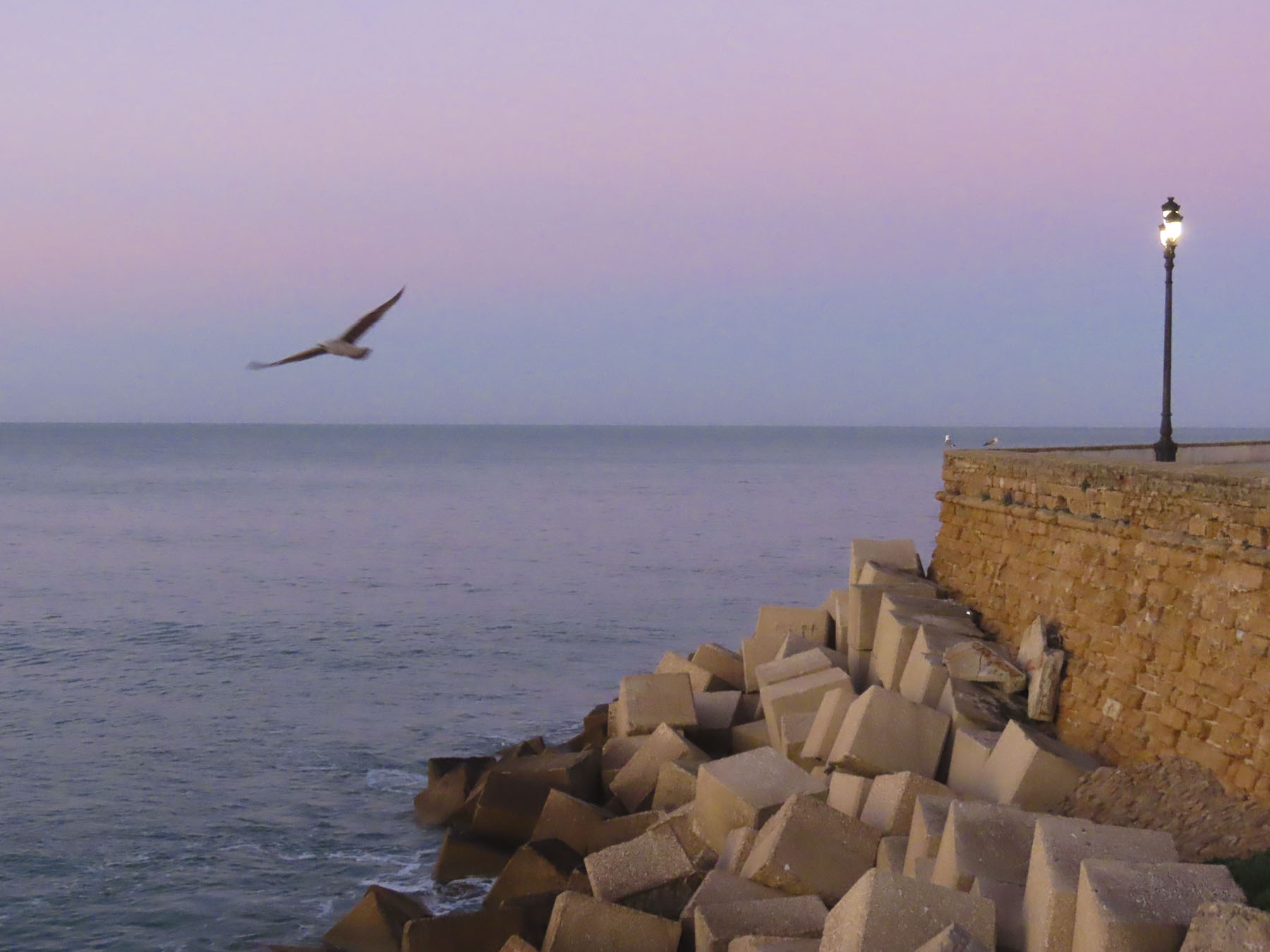
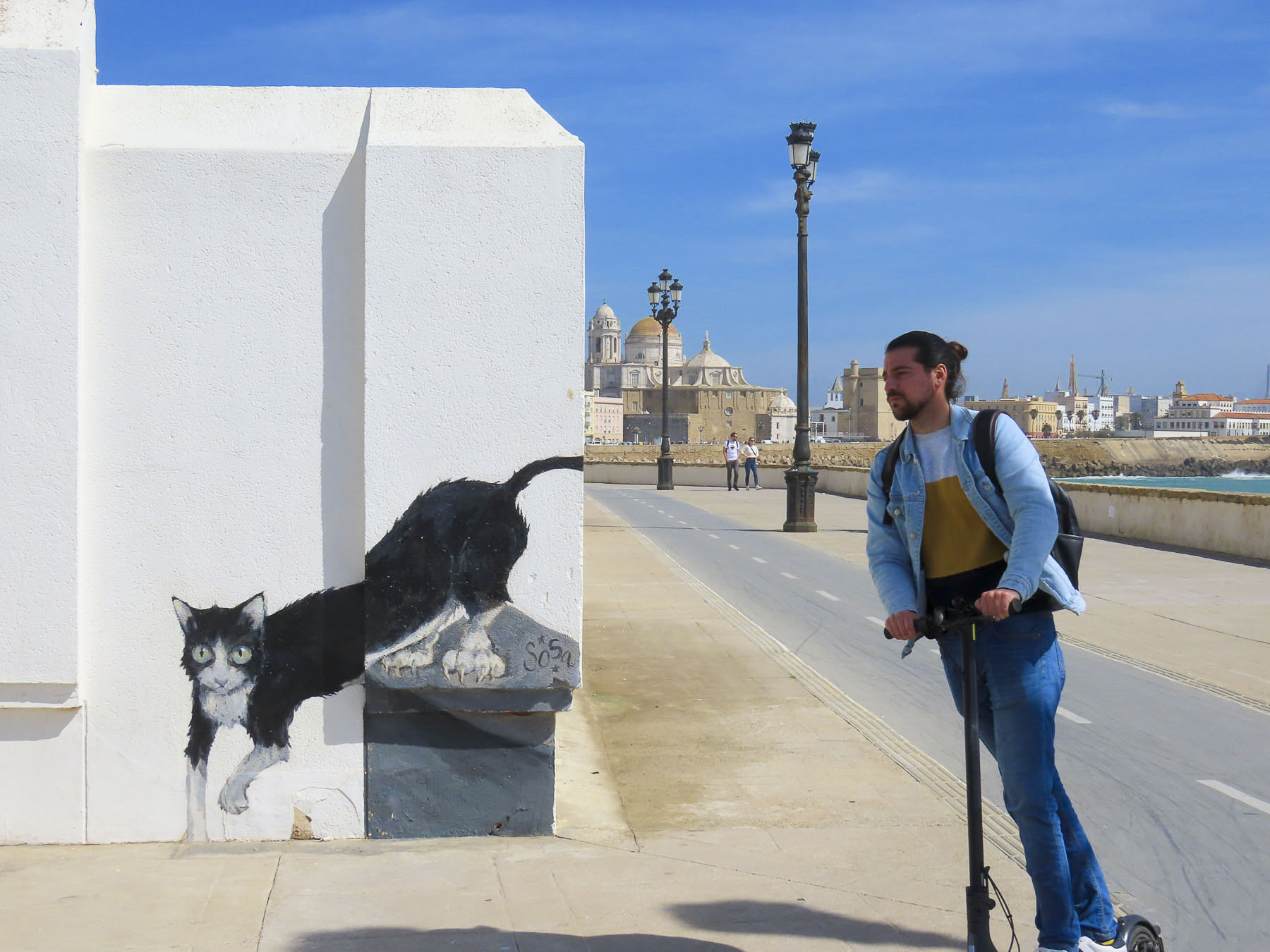
One of the nicest ways we experienced Cadiz was to walk along its seafront Malecón, a wide sidewalk that runs almost completely around the peninsula. The speedy can do it in a day. But why? Walk a little then café is our mantra.
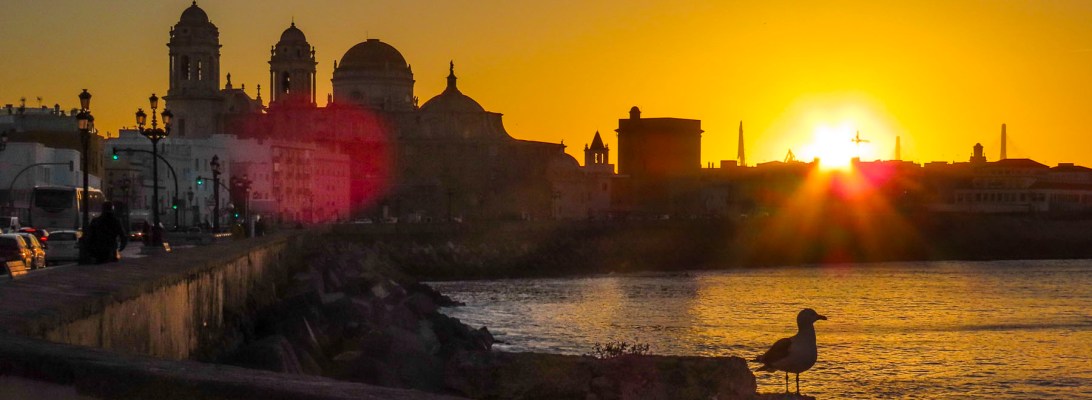
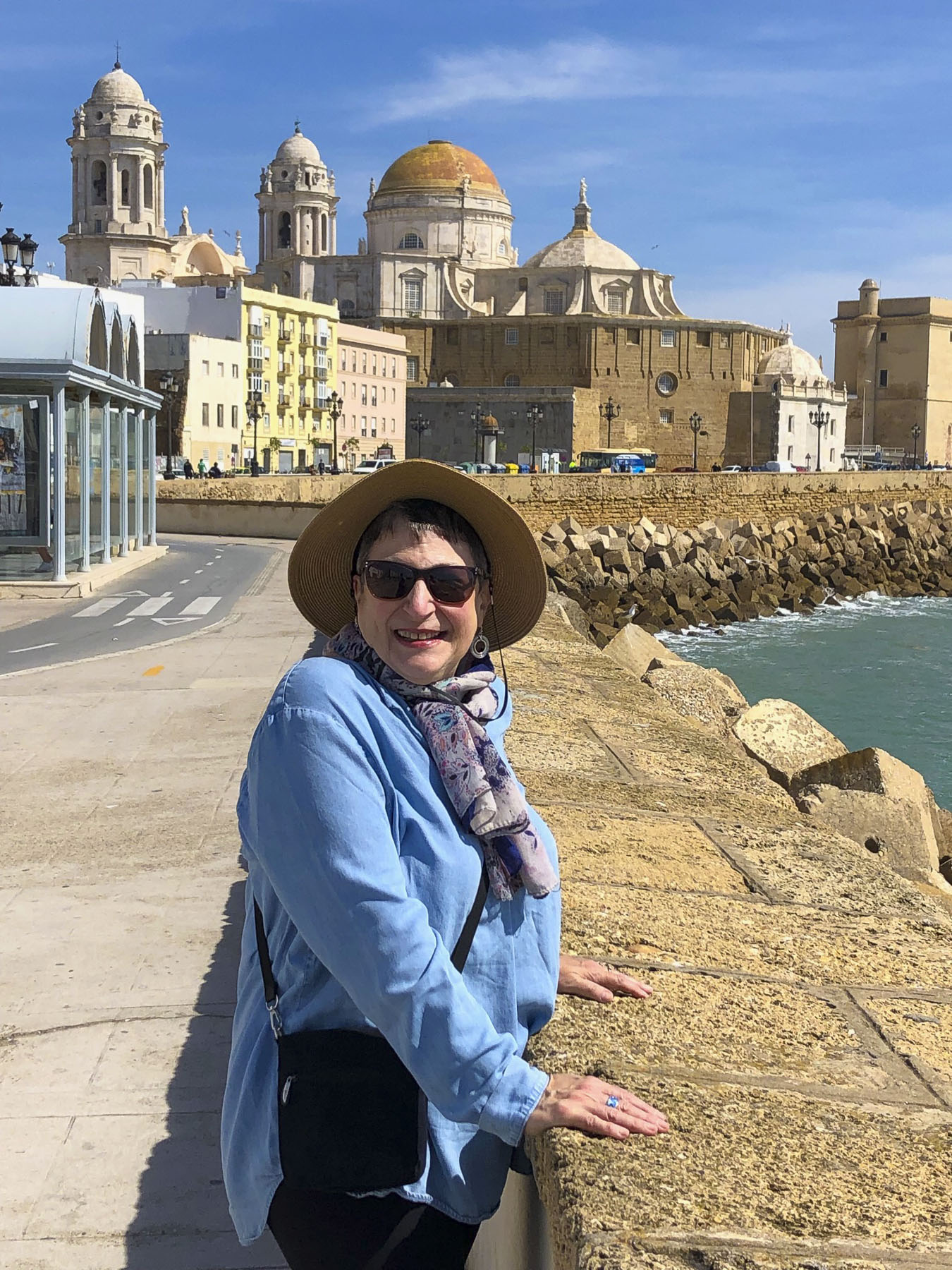
We enjoyed the brisk salt air and occasionally detoured when something caught our interest. Here we enjoyed the iconic view of the Malecón being caressed by waves as the Cathedral dominated the skyline behind it.
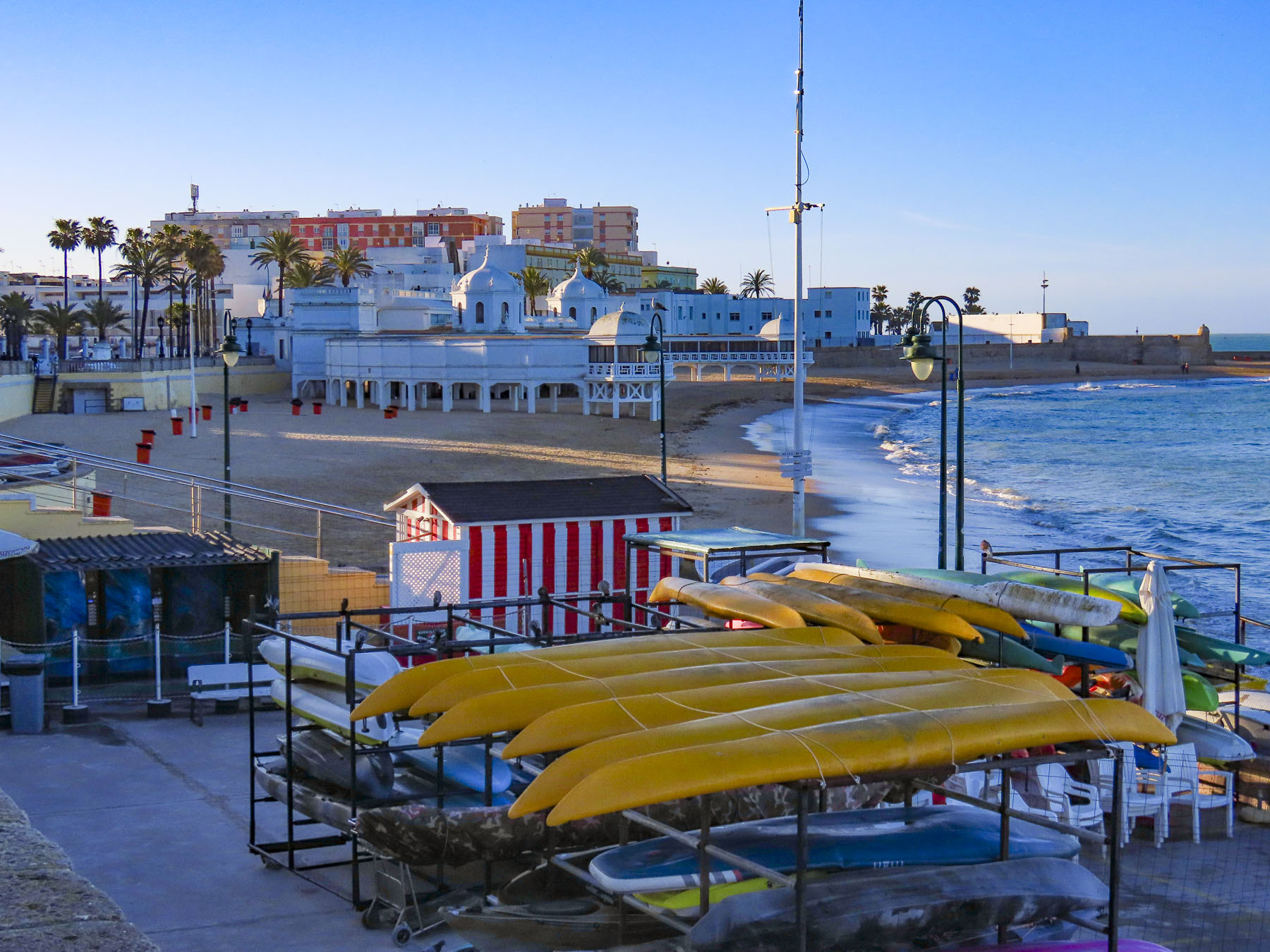
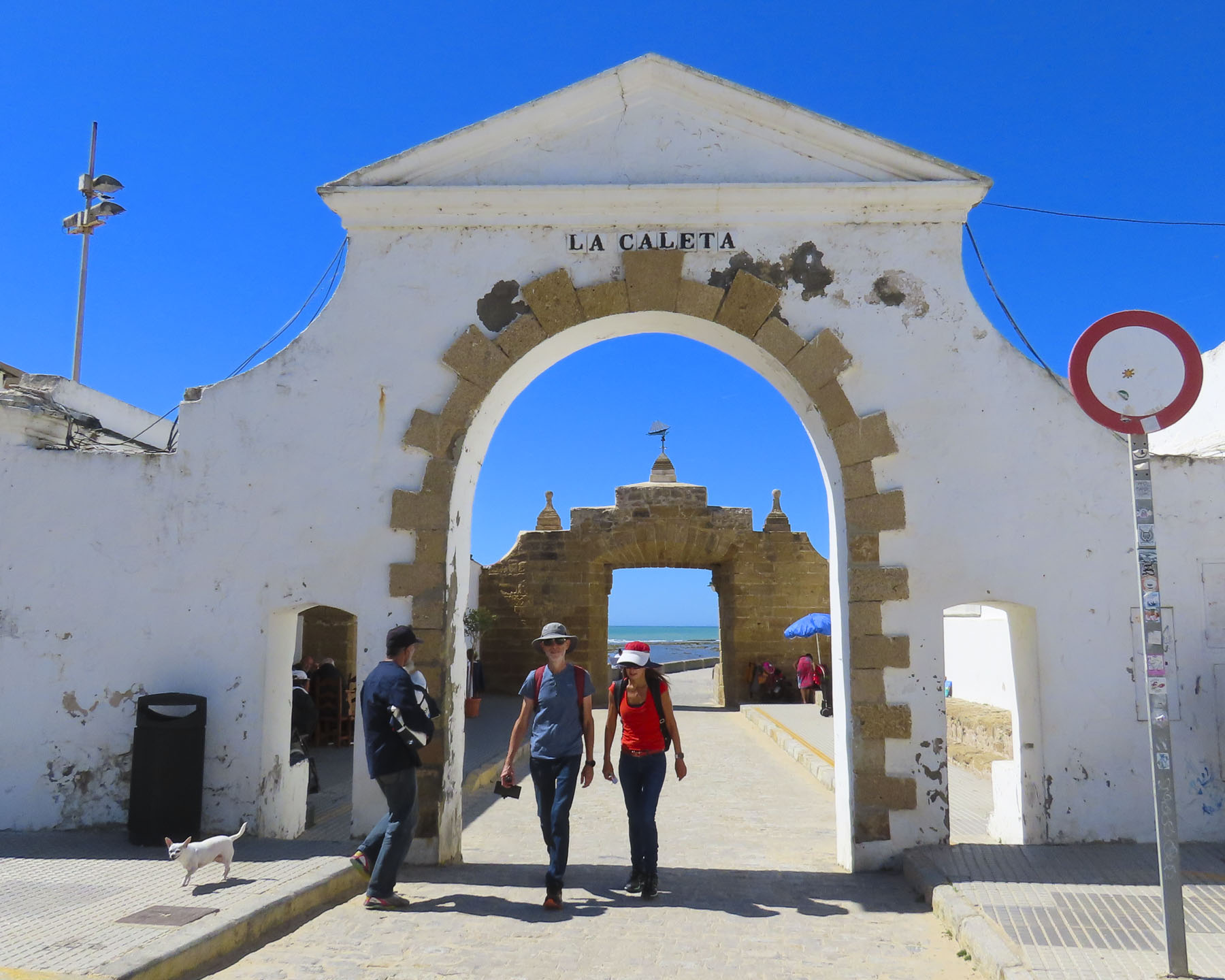
At La Caleta beach there are many chiringuitos, typical Spanish beach bars, for food, beer or a spritz. It’s okay to linger and people watch; we never were encouraged to move along. The beach is guarded by two ancient fortresses. The Castillo de San Sebastian is far offshore but can be reached on foot via a long causeway across the shallows that gets pounded with surf. Onshore the Castillo de Santa Catalina commands the beach and has been recommissioned as an exhibit space for modern art and concerts. On the sunny afternoon in March when we visited, the beach had a good number of sunbathers enjoying a nice spring day.
Farther along, the Parque Genovés is noteworthy for a grotto, waterfall and a stately promenade of topiary evergreens that could rival Versailles.
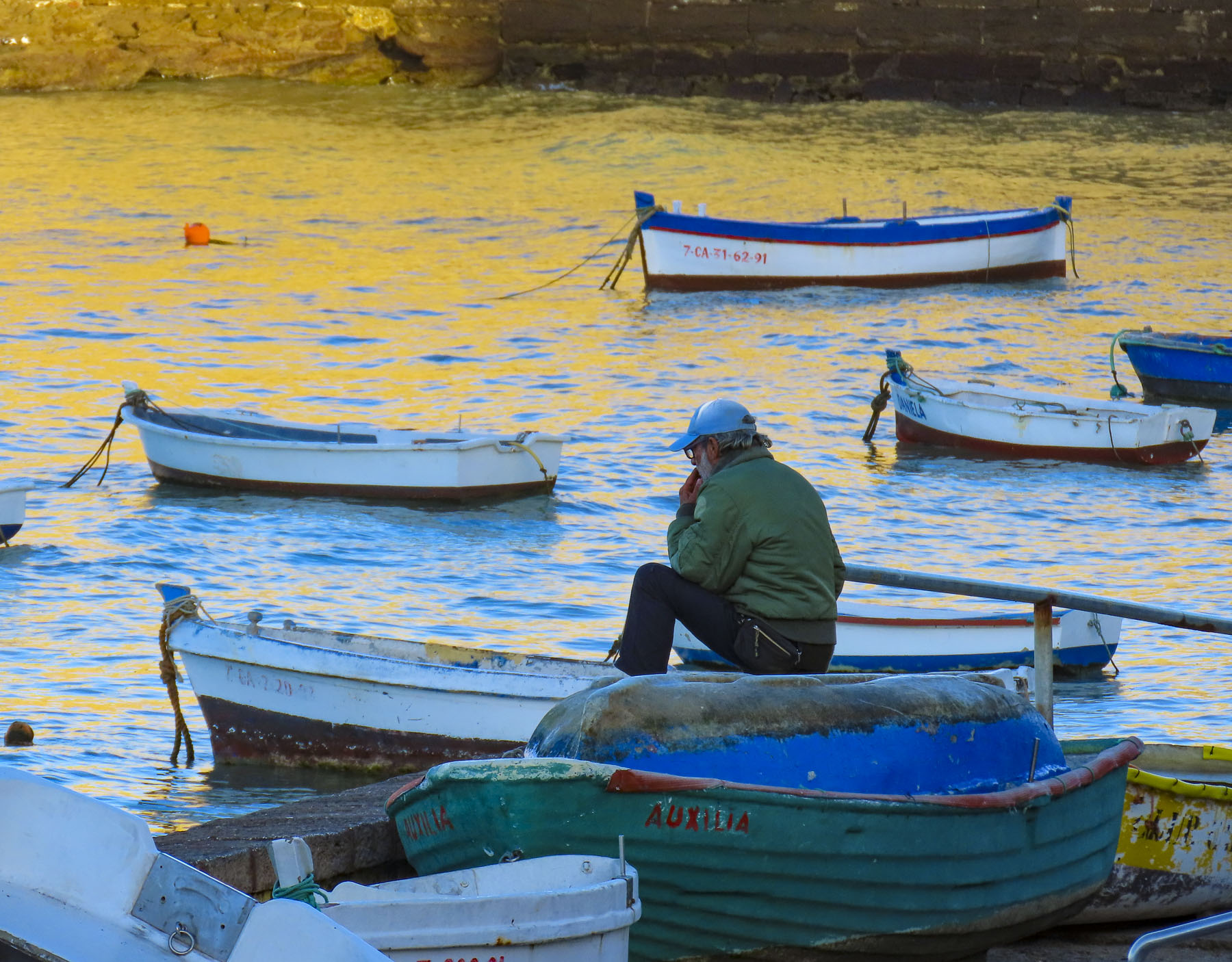
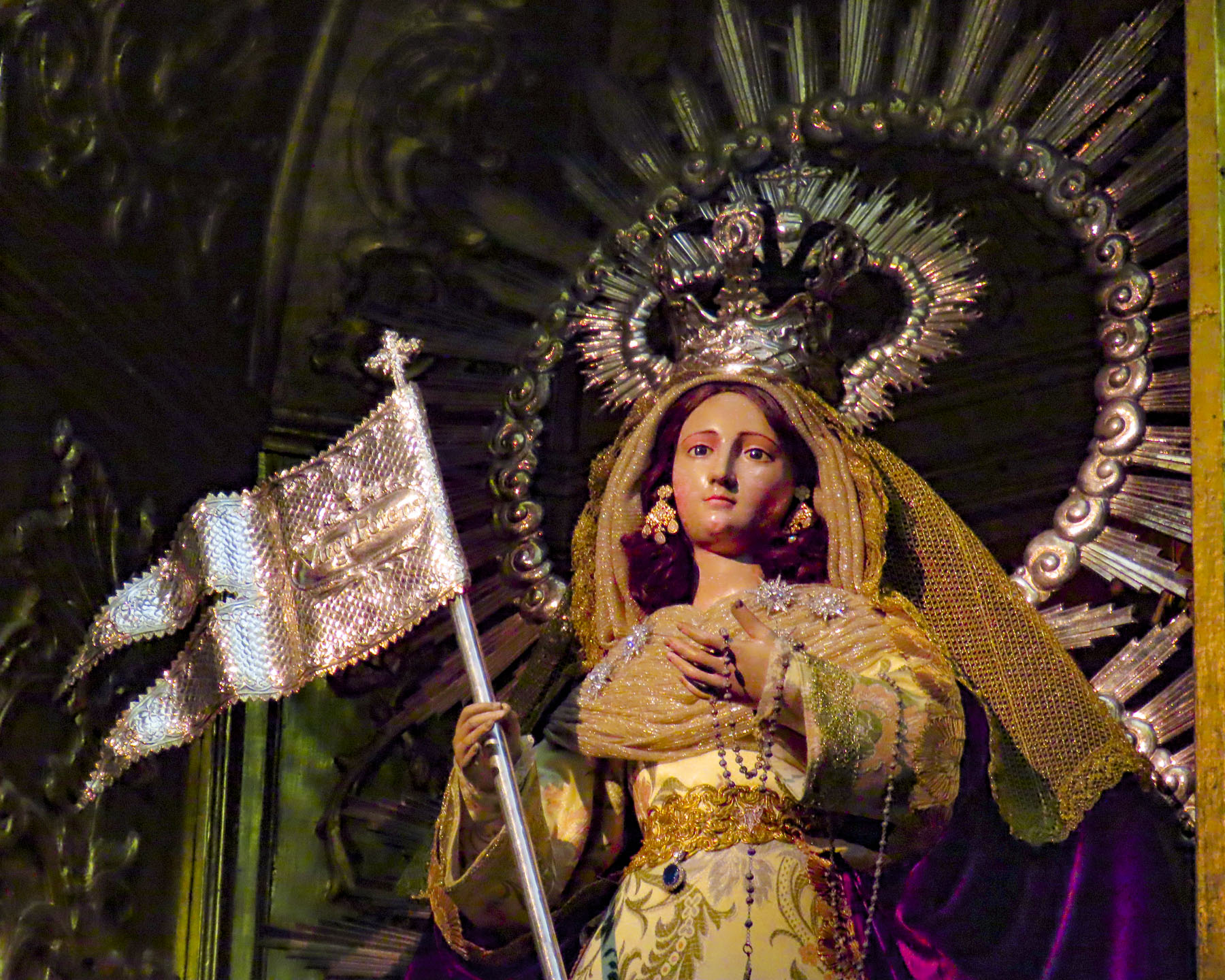
Cadiz’s love of botanical gardens continues in the elegant Jardines de Alameda Apodaca which features formal walkways with monuments and statues, as well as fountains and pergolas. Along the waterfront, pensioners jangled fishing rods into the ocean in hopes of enticing fish to bite. There are also several grand centenarian ficus trees, with enormous branches that provide abundant shade, in this tranquil seaside park. Across from the park the pastel façade of the Iglesia del Carmén is noteworthy. While Cadiz has many churches, it is difficult to enter them, since most are open only for morning and evening mass.
Monuments celebrating the 1812 Constitution of Cádiz, Spain’s first short-lived constitution, stand in Plaza de Espana. For Europe it was a liberal document that established equality between Spanish-born Spaniards and citizens from their foreign colonies, ended feudalism, abolished the Spanish Inquisition and limited the power of the monarchy. When King Ferdinand VII returned to the throne in 1814, after the defeat of Napolean, he abolished the constitution and reinstated an absolute monarchy.
If you were a wealthy 17th century merchant in Cadiz it was popular to have a mirador tower atop your home, from which you could scan the harbor with a spyglass looking for ships that were important to your trade. Often the tops of the towers were festooned with the flags of various nations, colonies or family’s coat of arms, for a sea captain to identify and head to when he finally came ashore with news of his cargo. There were originally 160 of them in Cadiz. Several of the remaining ones can be seen from Plaza de Espana.
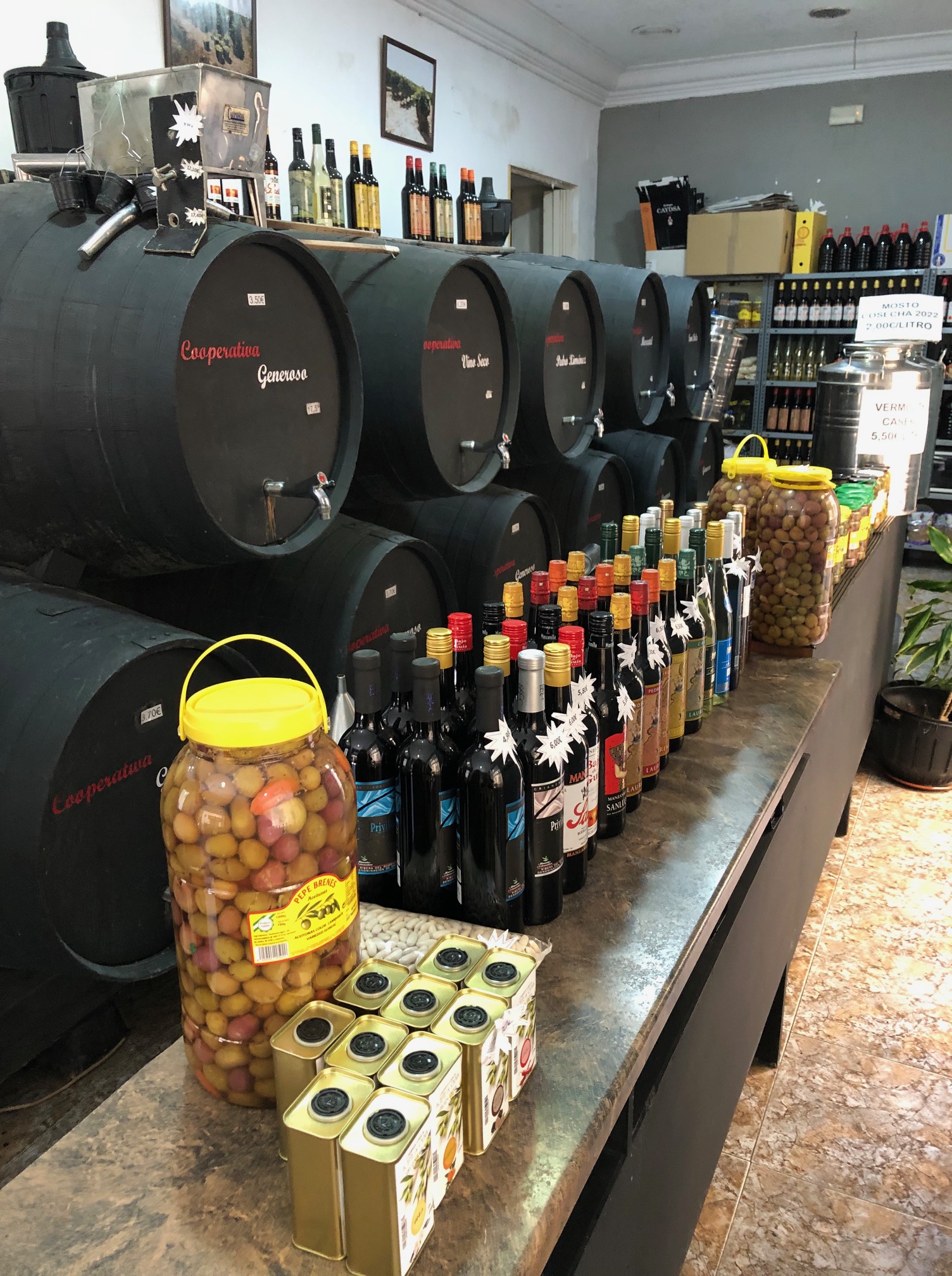
Walking back to our hotel later, we discovered a fantastic small wine shop, the Despacho de Vino Virgen de la Caridad, that specializes in Andalucian sherry, vermut and wine. Here they will fill your empty water bottles directly from the casks of wine behind the counter.
Cadiz with its touch of the Caribbean was the perfect sunny, friendly, seaside Andalucian town for us.
For a moment I thought I was hallucinating, when the truck in front of us pulled away at the traffic circle and revealed a towering paranormal monster. A scene and song from GhostBusters! played through my mind. To say the least, this puffy creation was an odd introduction to a new destination, but Bibendum, or Bib, aka the “Michelin Man,” made us laugh.
After a long day of travel, our stomachs were now growling from hunger and Donna quickly located a small neighborhood restaurant, Rincón de Castro. It was only a few blocks away from Bib, down a side street, on the outskirts of Jerez de la Frontera. Shouldering our day packs, we entered the taverna and were obviously tourists – from the puzzled looks we received it was clear they didn’t get many foreign visitors through their doors. It turned out to be a delightful meal. We apologized for our minimal Spanish, and as the waitress seated us she asked Javier, who spoke very good English, to help us through the menu. He suggested the sherry, our first glasses in Spain, an appetizer, and a main. All the dishes were very good and we were enjoying the sherry. “And with your cafe, have you tried Tocino de Cielo? It’s a traditional Jerez dessert.” The name of the dessert roughly translates to ‘heaven’s bacon’, which reflects the dessert’s color only and is a total misnomer for this wonderful flan-like creation. The nuns of Convento del Espíritu Santo have been credited with the divine inspiration for this sweet treat, first baked 600 years ago. They created a recipe to use the huge quantity of leftover egg yolks donated to the convent from the sherry producers of Jerez, who only used the egg whites to clarify their wines. The oldest convent in the city, it dates from 1430, and still stands near the Cathedral of Jerez de la Frontera, between the Bodega Tio Pepe and Bodegas Fundador. Thus began our vacation. We were off to a good start.
We hadn’t heard any buzz about Jerez de la Frontera when we started planning our March Andalucia road-trip. This was a decision sparked by a great deal on airfare. Ultimately, we were headed to Cadiz, a destination highly recommended by our Italian friend Giulia several years ago. While planning the trip, we learned that Malaga, Seville, and Jerez de la Frontera all had good regional airports. We’d lived in Seville for a month several years ago and totally enjoyed immersing ourselves in the city’s life. But this would be a short two-week adventure and we didn’t want to repeat anything. Malaga, on the Mediterranean, seemed too far and we decided we would save that city for another time. And then there was Jerez de la Frontera, which looked surprisingly fascinating, when I started clicking around Google maps. We say surprisingly, because really it gets very little notice, even though it anchors the Sherry Triangle, an area that extends from Jerez northwest to Sanlúcar de Barrameda on the Atlantic coast, and south to El Puerto de Santa Maria, near Cadiz. It’s a quiet off-the-beaten-path destination, especially in the shoulder season. Larger than Cadiz, smaller than Seville, the city was the perfect size for a three-night, two-day stay, after arriving XRY. We don’t like to admit aging, but twenty hours of airports and flights takes a toll on us. So now that first afternoon after we land is spent recovering: airport, rental car, food, hotel in short order.
We emerged from the underground parking at the Plaza del Arenal, onto a large square centered with a bubbling equestrian statue, surrounded by empty tables. We would learn that come 8:00 every evening this would all change when folks filled the restaurants, tapas bars and side streets around the plaza with activity.
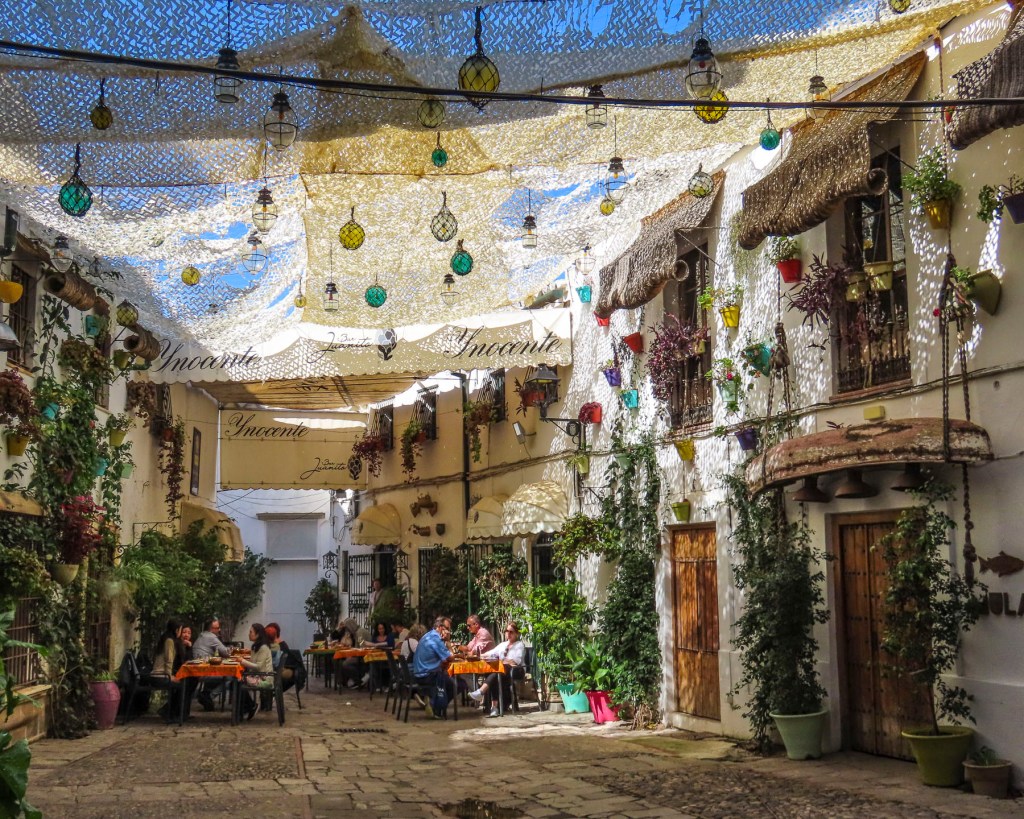
Following our host’s directions, we crossed the plaza and entered an arched alley that opened to the sky when it reached a small courtyard between the buildings. Shade netting strung across the alley created a picturesque play of light on the diners outside Bar Juanito.
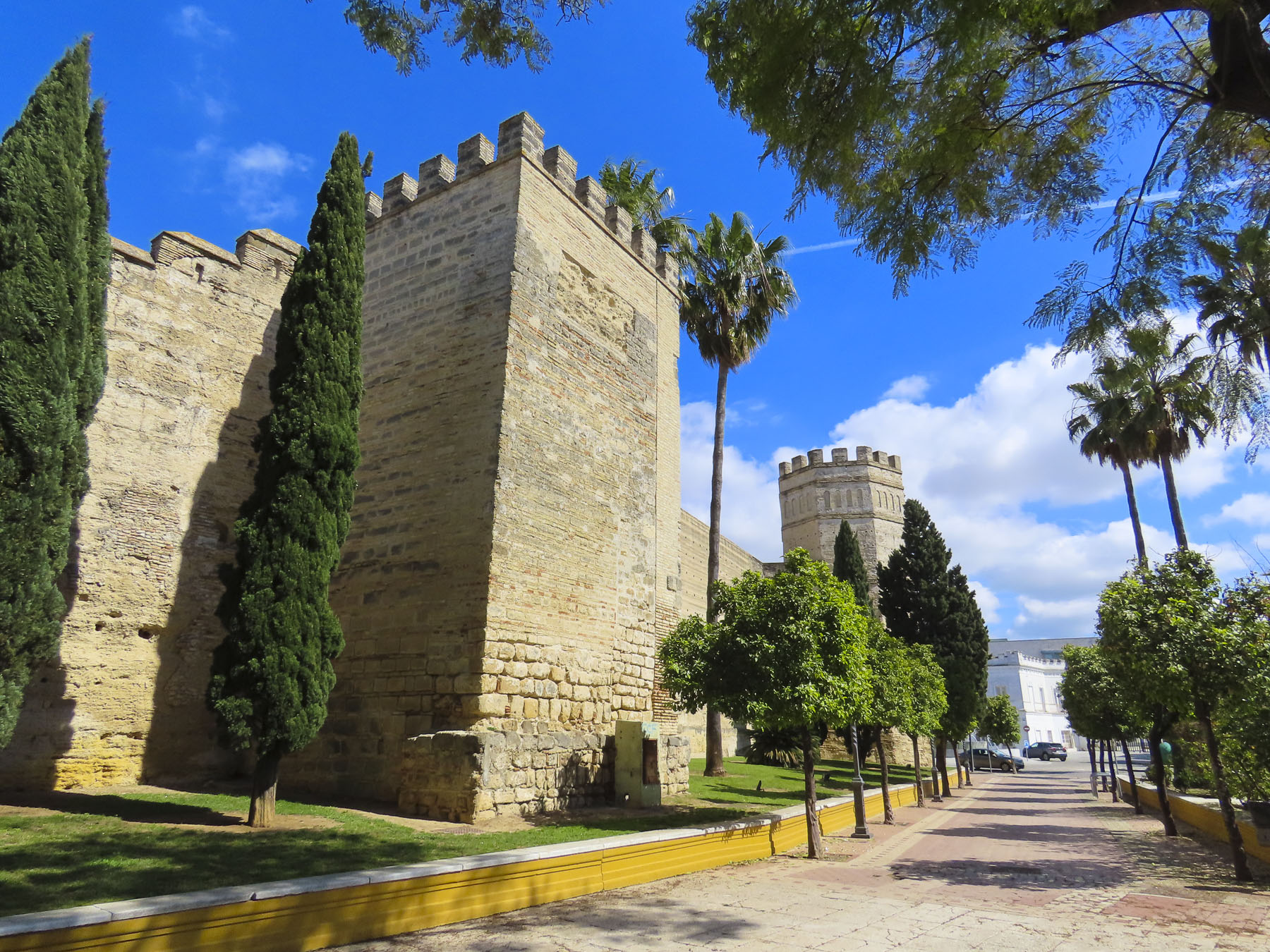
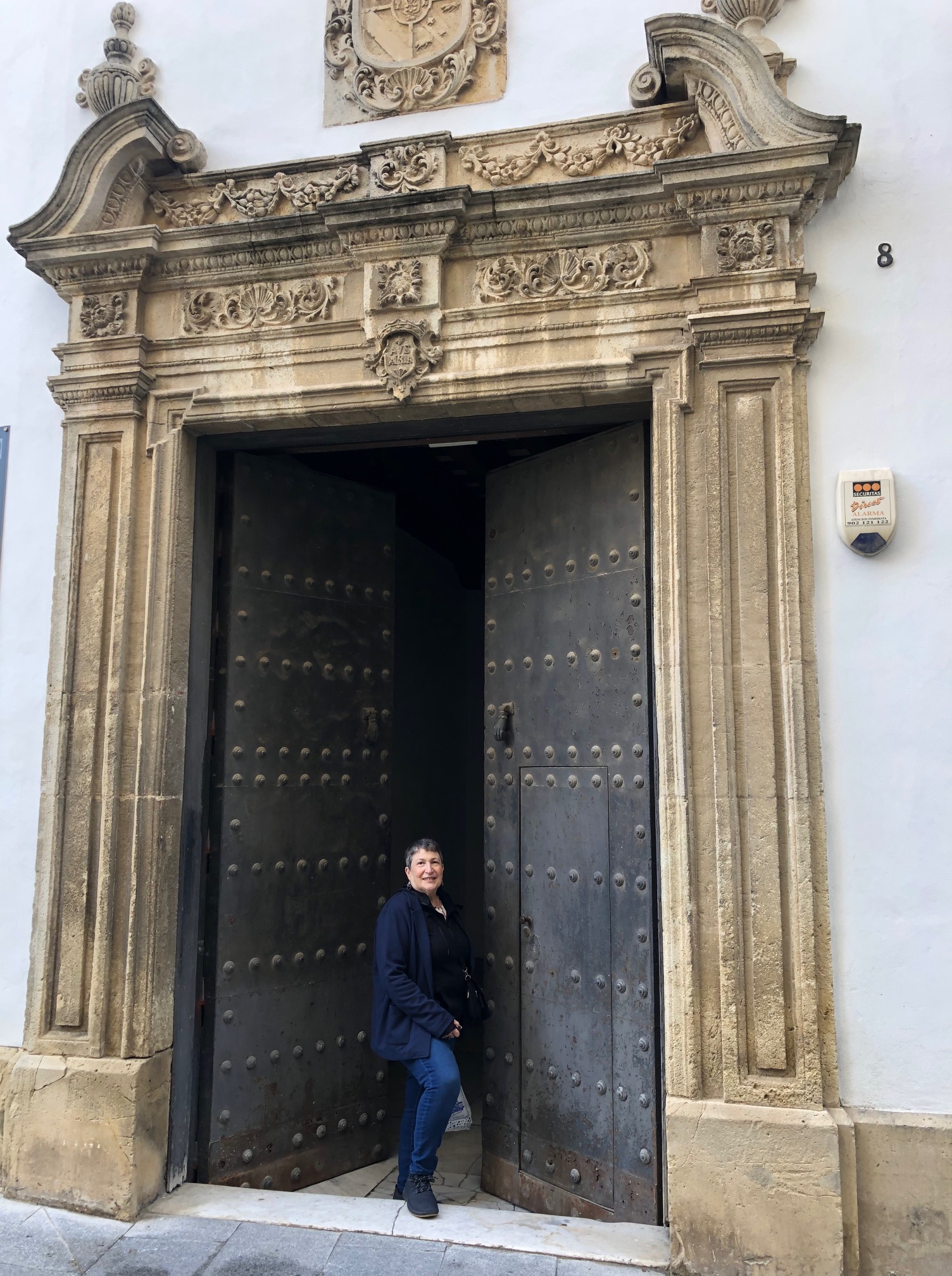
The restaurant was just around the corner from our lodging at the Palacio del Virrey Laserna, a 13th century palace that has remained in the same family for several centuries. While the name is quite impressive, being a palace and all, and it does have some nice antiques along with some interesting décor in the guest wing, it feels a little tired. Perhaps this is an unfair criticism for an ancient family home. A tour of the private part of the palace was included in our room rate. Sadly, they restrict photos in this part of the palace, which is filled with fascinating ancient memorabilia and furniture collected from Spain’s various colonies at the apex of its empire. Interestingly, in 1264, it was one of forty Moorish properties given as a reward to the knights that valiantly served King Alfonso X during the Reconquista of Jerez. Located only a short distance from the Alcazar, the old Moorish fortress, its proximity and size indicated it was once the home of an important Moor.
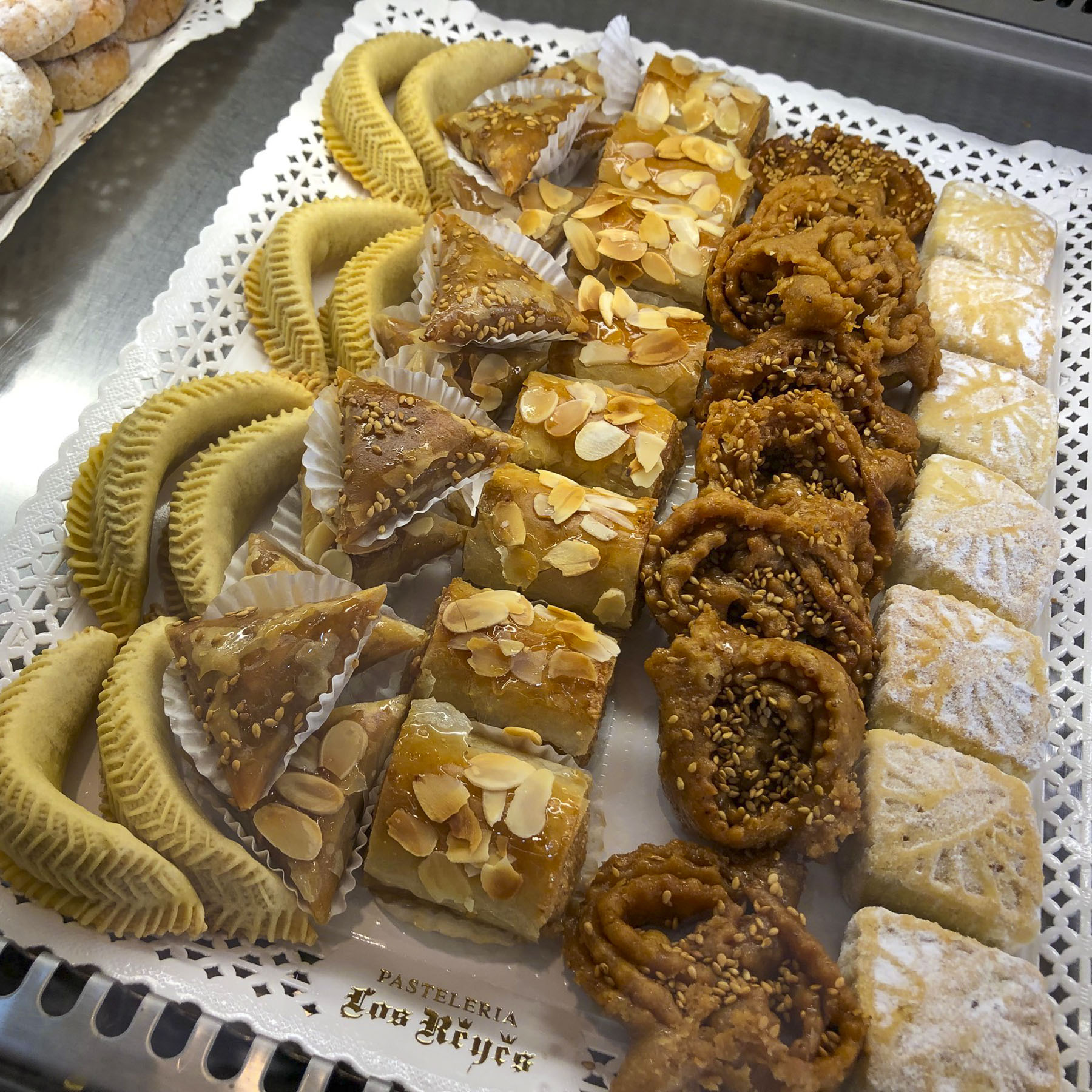
As nice as the ambience was on the Plaza the del Arenal, prices were rather steep, so the next morning we walked down a side street off the square to Los Reyes Pastelería. One of everything would have been our first choice. Yum!
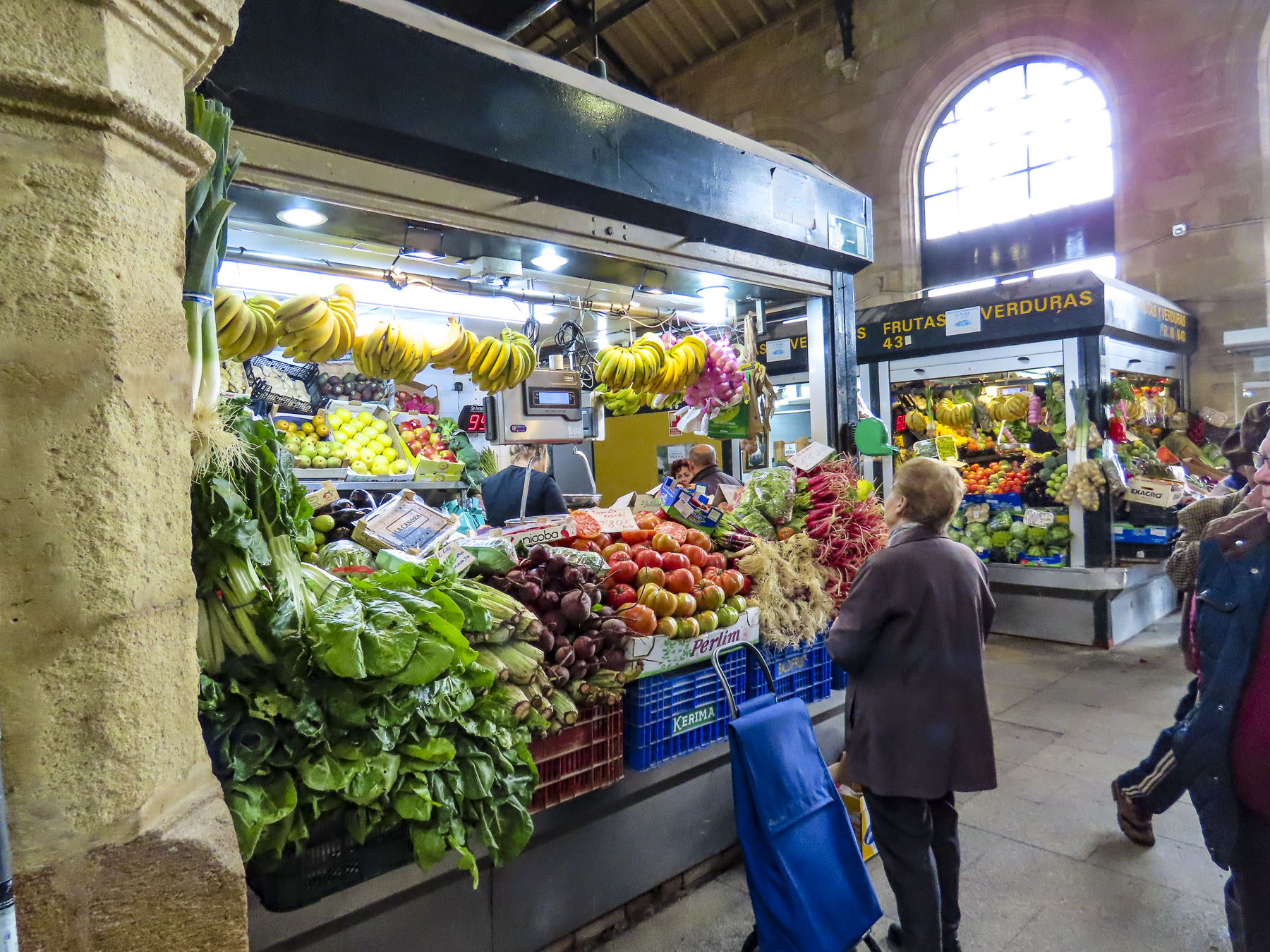
Later that morning we worked our way to the Mercado Central de Abastos, one of the oldest covered markets in Spain dating back to 1837. It has become part of our travel ritual to explore the central markets in the cities and towns we visit. The ones in Spanish cities close to the ocean are especially rewarding, as vendors display fresh seafood, shellfish, prawns and sea urchins. The Andalucia bounty doesn’t stop there. Olives, sausages, cheeses, and vegetables galore. And of course, jamon! The finest being named Pata Negra, in reference to their black hoofs. This jamon comes mostly from three villages, Jabugo, Cortegana, and Cumbres Mayores in the Sierra de Arecena mountains, two hours north of Jerez. Here the free-range pigs are raised on an organic diet of only acorns which imparts a unique flavor to the jamon. We made some purchases for a snack later.
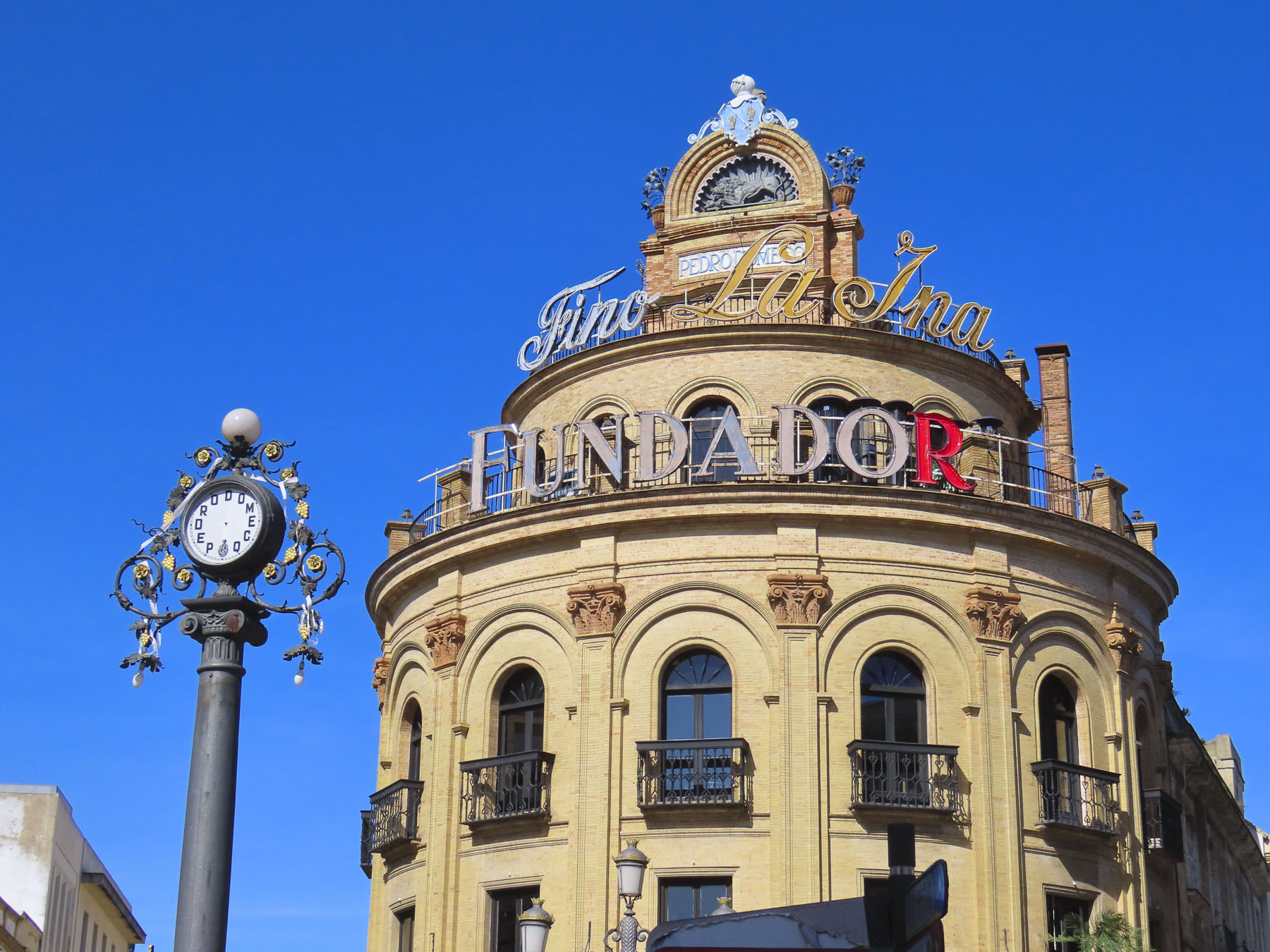
Around the corner from the market the iconic Fundador sign sits atop a historic building which is home to an equally famous 100-year-old bar named the Gallo Azul, or Blue Rooster. Known for its 6th floor semi-circular bar, interesting interior, and view of Jerez from its windows, it was unfortunately under renovation when we were in the city but is now open.
Walk a little then café was our philosophy as we wandered our way across Jerez towards Plaza de la Yerba and Plaza de la Asunción. There seems to be an infinite number of eateries across the city to the point that it feels like are more restaurants than retail shops. The dilemma is that they all look so inviting.
We were in Jerez several weeks before Easter and signs of Holy Week preparations were evident at the Plaza de la Asunción, where reviewing stands surrounded the plaza in front of the ancient City Hall and Real Iglesia De San Dionisio Areopagita. Built in 1575, during the reign of Felipe II, the façade of the old town hall is covered in ornate relief carvings depicting popular Renaissance motifs and is considered one of the finest examples of Andalusian Renaissance architecture. Though now, its weathered stonework is in need of some tender-loving care.
The church across the plaza stands in austere beauty by comparison, its simple 15th-century Gothic-Mudejar architecture the perfect backdrop for the monument to la Virgen de la Asunción, centered in the plaza before it. Interestingly, the monument was a relatively new addition to the plaza in 1952. It was created by the legendary religious sculptor Juan Luis Vassallo, from Cadiz, whose many monumental pieces can be seen atop buildings and in public spaces across Spain.
The church’s belltower was originally a civilian construction in 1447 to serve as a watchtower to spot attackers or fires. Several years later the town’s first public clock was installed on it. The inside of the church features an 18th-century baroque interior. In preparation for Semana Santa, the statue of the Virgin stood in one corner dressed in her ceremonial attire. Maybe it’s just me, but I think there was a Barbie as Scarlett O’Hara, from Gone with the Wind, theme happening?
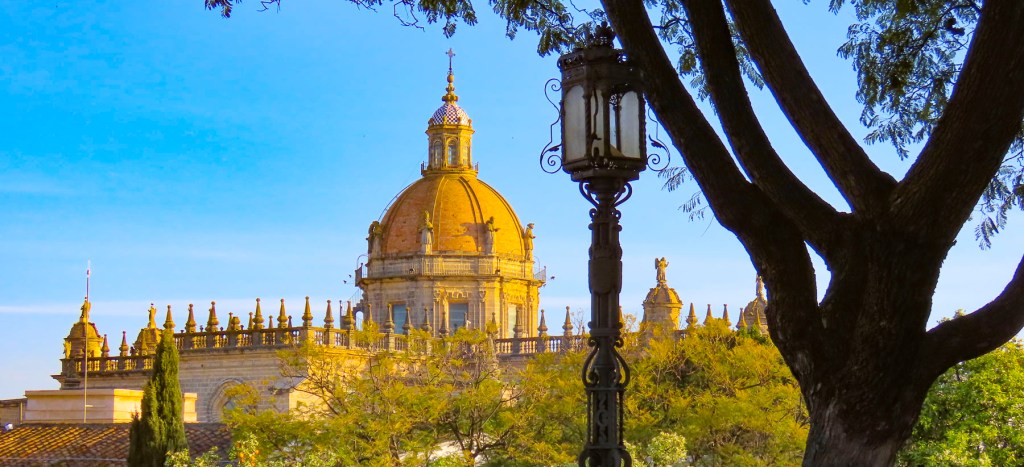
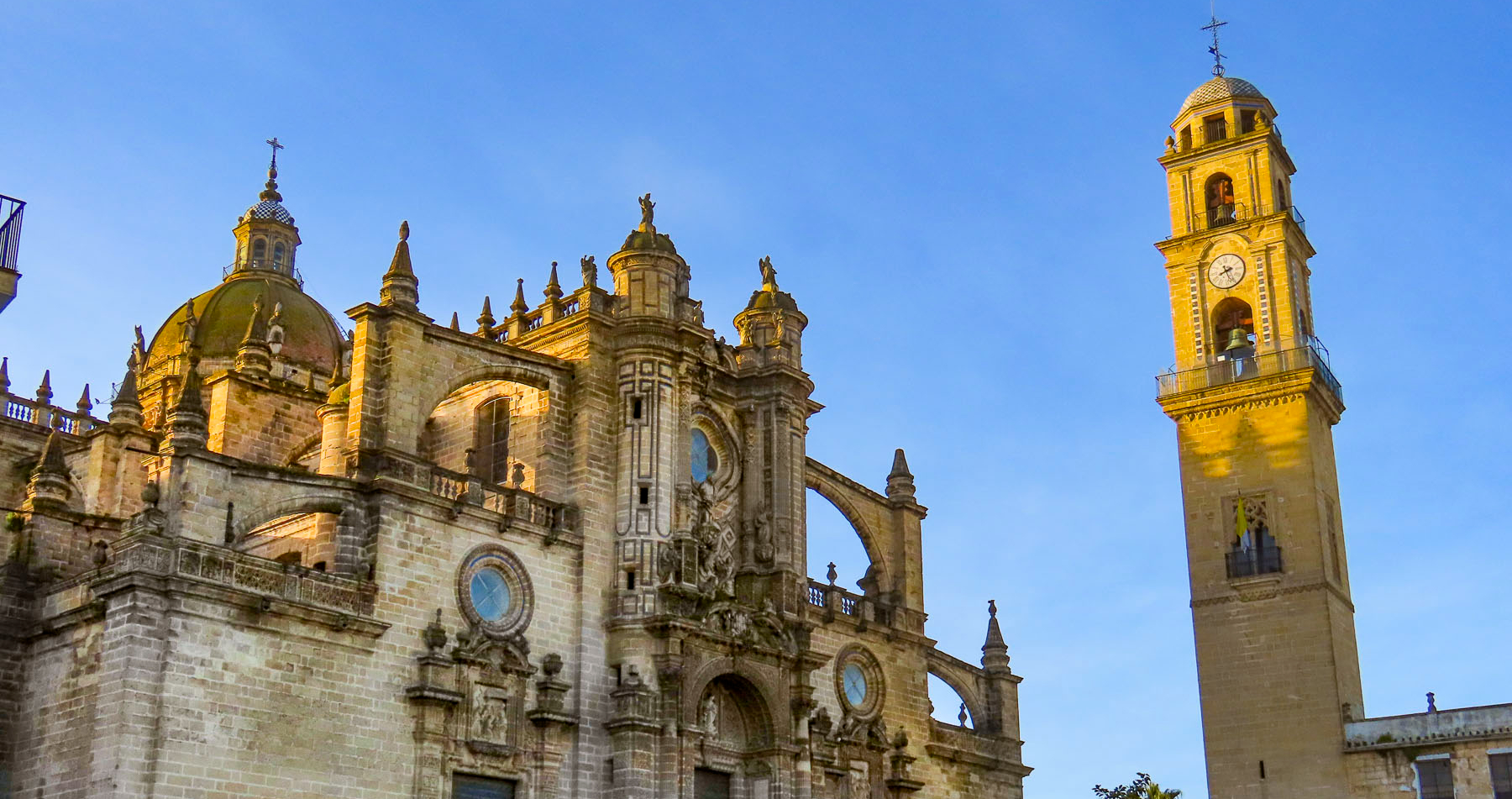
A huge church needs a significant name to match it and the Cathedral of Jerez de la Frontera / Colegiata de Nuestro Señor San Salvador successfully fills this obligation. It’s a massive structure supported with flying buttresses that we were able to get an aerial view of from the belltower across the way. It’s thought the belltower was reconfigured around a minaret that was part of the Great Mosque of Jerez before the reconquest.
With a special tax on sherry wine approved by the crown, construction of the cathedral was started in 1695. The first worship service was held sixty years later, but it would take another twenty years before the church was completed.
Inside the church is very austere, but voluminous. The soaring ceilings of the cavernous space is supported by monumental Corinthian columns, the width and height of giant sequoia trees. The huge doors on the ends of the naves dwarfed us. It was an enormous engineering feat.
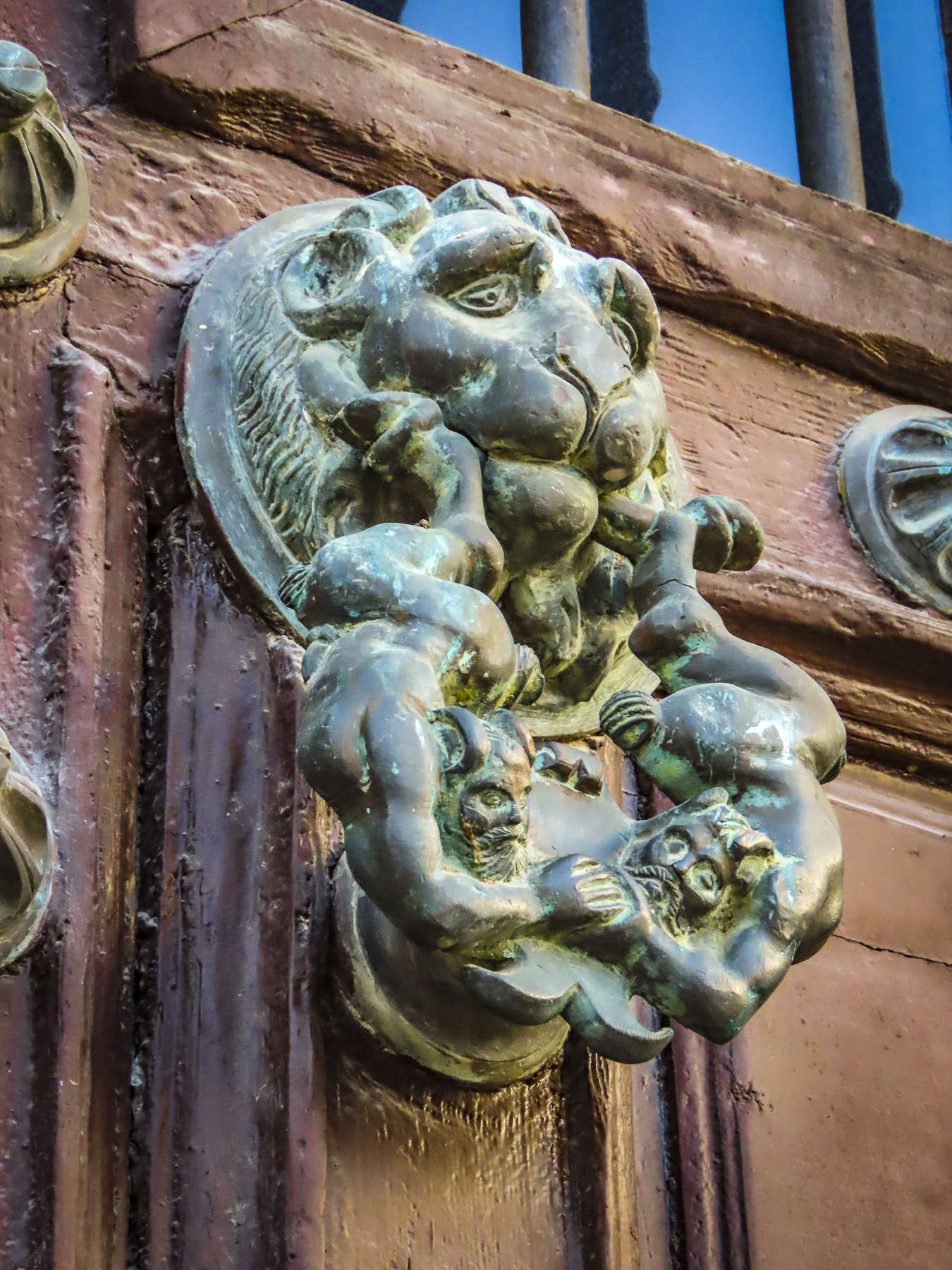
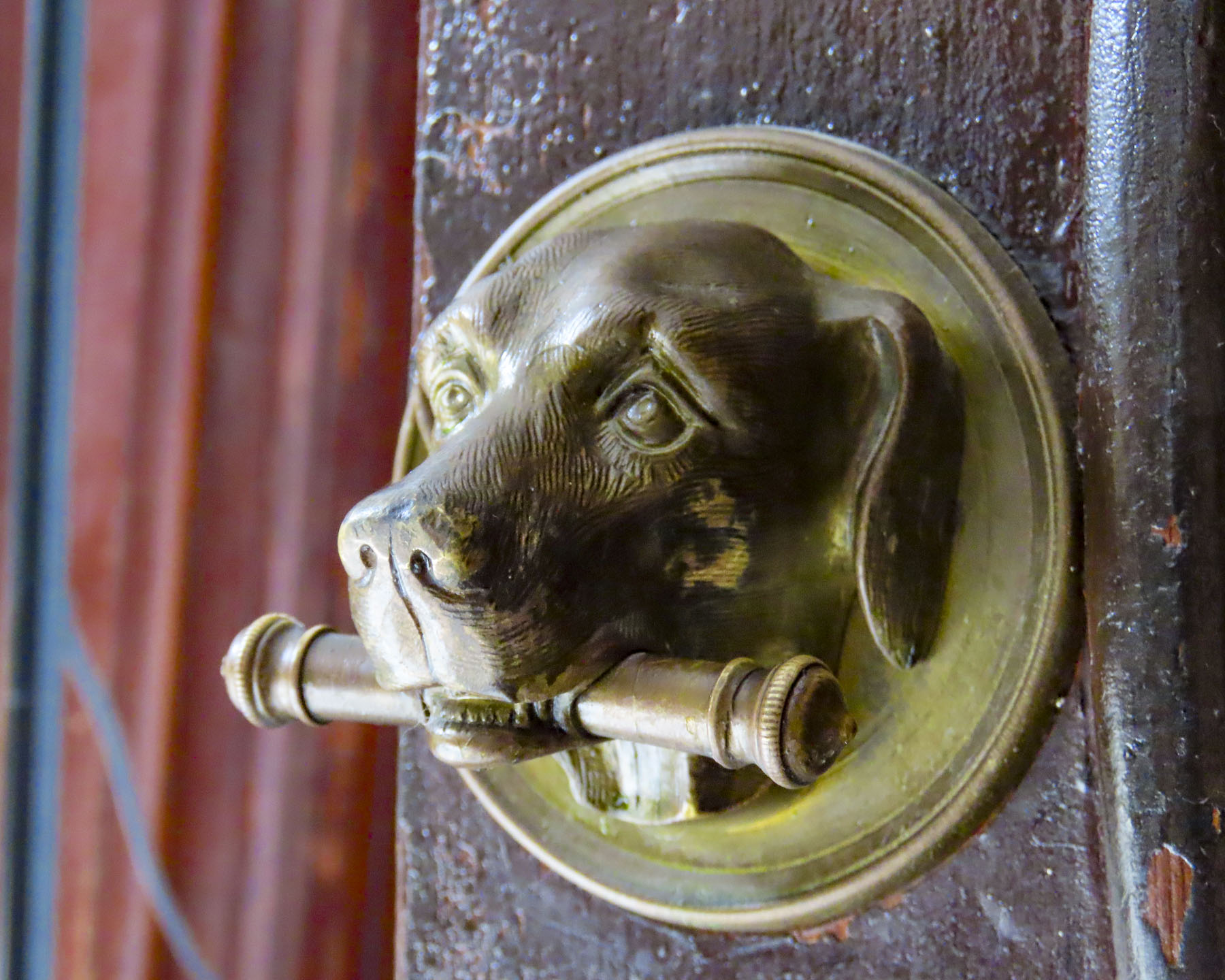
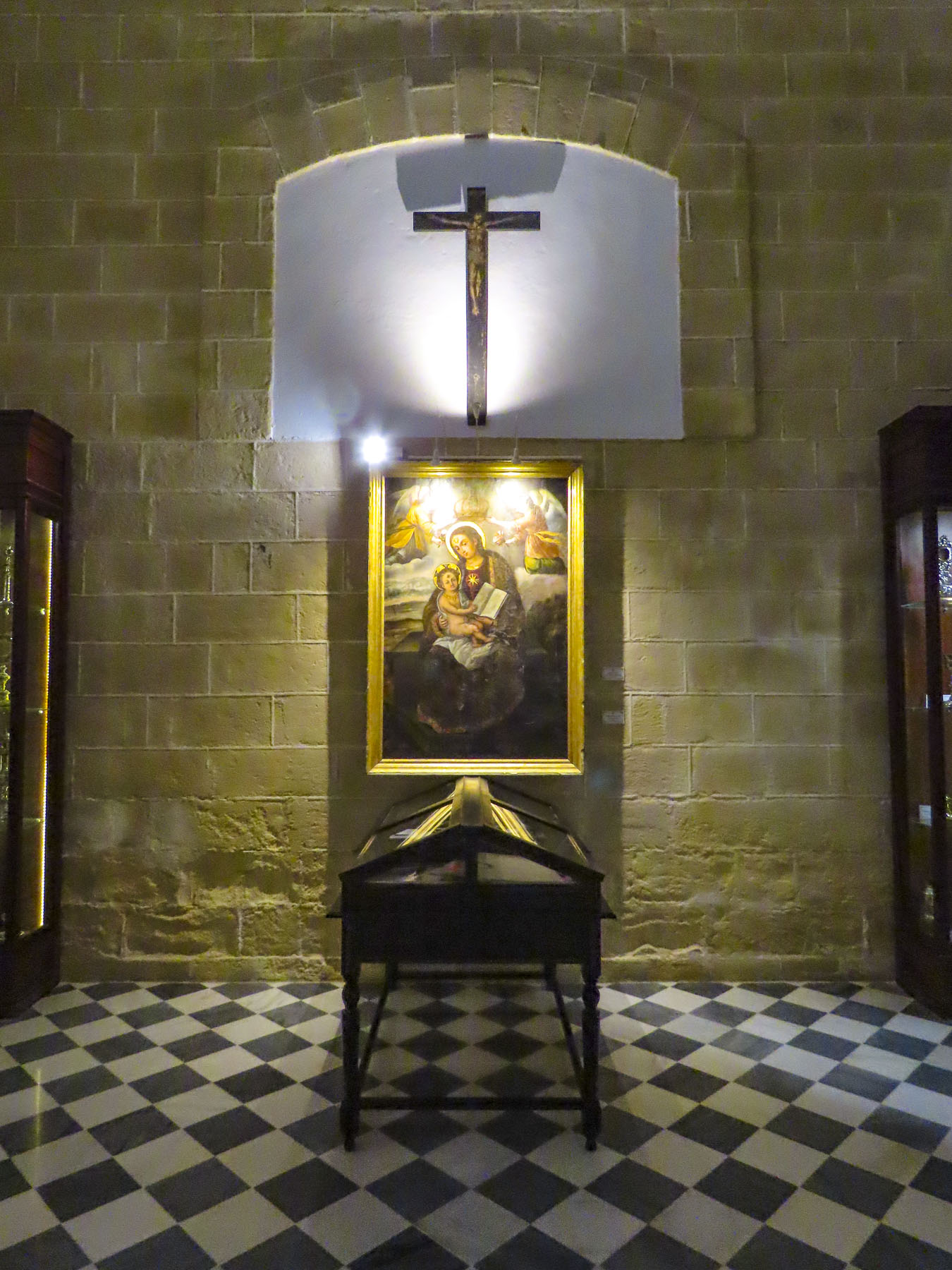
The sacristy was interesting with a display of the church’s treasure. The old-world craftsmanship in the archaic religious objects was amazing. An odd detail was two doorknobs sculpted as dog heads. We asked the attendants if they knew the story behind them, but no. They were a playful insight into the mind of God’s representative in Jerez. In one corner a small alcove revealed a nautilus staircase that spiraled aloft. Disappointingly, it was roped off and Donna was unwilling to create a diversion for me to explore further.
Walking by along the bodegas of Gonzalez Byass, famous for its sherry aging warehouses, we made our way through a lovely, shaded park to Taberna La Sureña, a small tavern across from the Alcazar. “No se permite hablar de política, religión o deportes,” roughly translated as no talk of politics, religion or sports allowed, was wisely written in chalk above the bar. It’s a small space with only three tables inside and three on the sidewalk. We snacked on two local cheeses with sausage, crunchily addictive picos (a mini dry bread stick,) and our first taste of vermut, or vermouth, that wasn’t part of a martini. It was a wonderful, flavorful revelation. Though sherry and vermouth are considered fortified wines because brandy is added after fermentation, vermut additionally gets infused with spices and aromatic herbs. Flavorful and complex, the local vermut became our wine of choice during our trip through Andalucia.
Across the way the Alcazar of Jerez beckoned for exploration. The history of all the towns in Andalucia is complex, with loosely associated tribes, Phoenicians, Romans, Vandals and Visgoths. It wasn’t until the Moorish rule of the region between the 8th and 13th centuries that Jerez underwent a period of great urban development. It was during this time that the city was ringed with a defensive wall and the Alcazar was expanded to become a fortified palace and city-within-a-city, with its own separate economy, supported by a granary, warehouses and olive presses. With the Christian Reconquista in 1264 the Alcazar became the seat of the first Christian mayors of the city and the palace was used by royal visitors. The addition de la frontera (“of the frontier”) to cities’ name reflects that this was a hotly contested region, with an expanding and contracting border for many decades.
The discovery of the Americas in 1492 brought prosperity with the export of wine to Spain’s colonies in the New World. Interestingly a conquistador from Jerez, lvar Núñez Cabeza de Vaca, survived an ill-fated expedition which explored from the gulf coast of Florida to Texas. Surviving capture and enslavement by Indians, he and three compatriots trekked across the wilderness for eight years before being reunited with fellow Spaniards along the Gulf of Baja on the Pacific coast of Mexico. In his book La relacion y comentarios del gouernador Aluar Nuñez Cabeca de Vaca, the documenting of the native American tribes he encountered is so unique that he is regarded as the first ethnologist of the American southwest.
The ancient olive oil press at the Alcazar is huge. Touring the supporting production rooms with smaller presses and underground ceramic storage vats reinforced the importance of olive oil to the local economy centuries ago. A path through the gardens led to the old hammam. Centuries ago, it must have been quite an impressive structure with cool and hot baths, surely a luxury back then. The scale of the hammam is best seen from atop the fortress walls, some of which were constructed using a rammed earth technique.
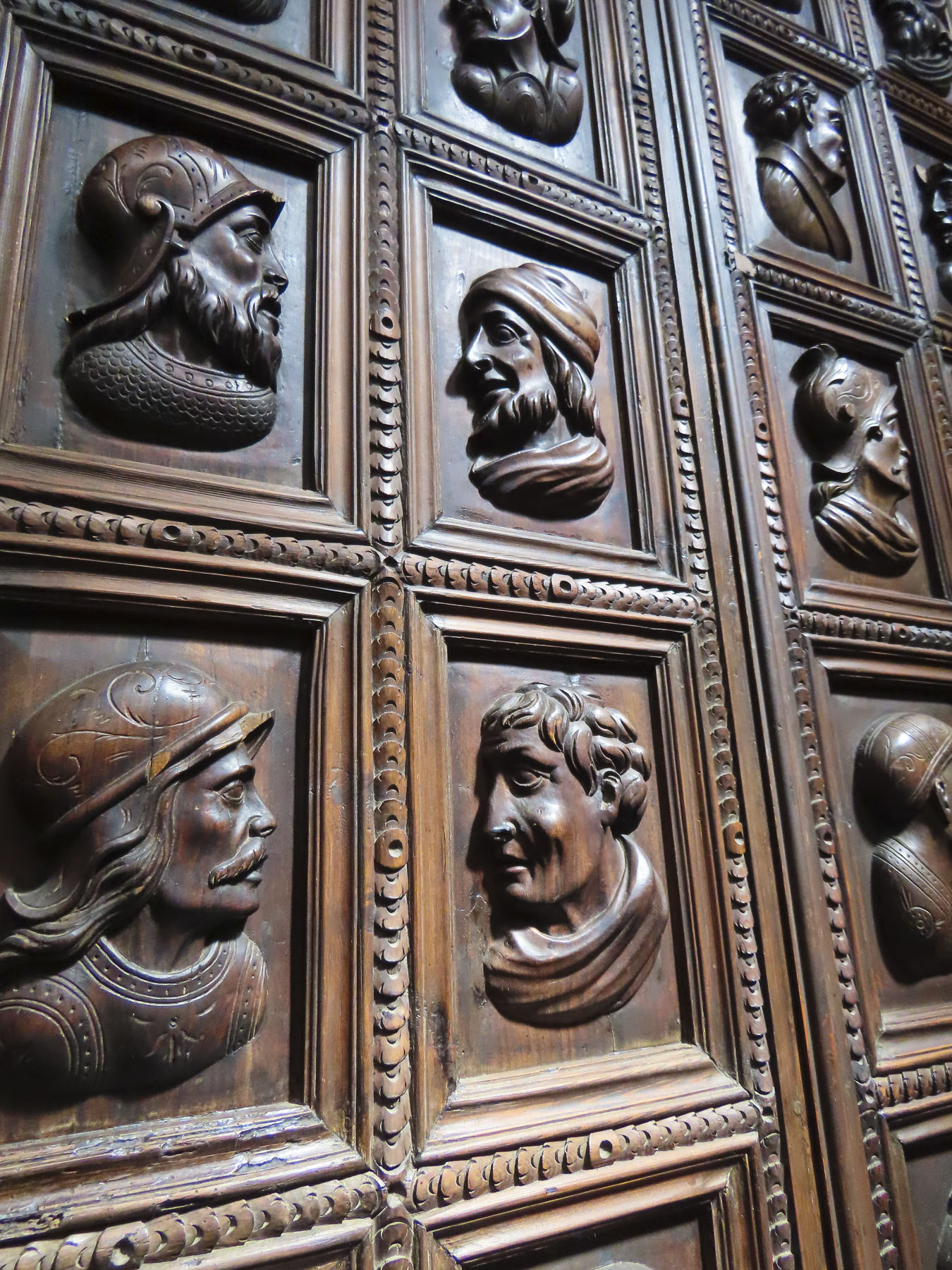
We found the palace, renovated to a utilitarian boredom, the least interesting part of the grounds. Though it did have an intriguing set of wood doors carved with the profiles of famous citizens. And on the highest level there is a nice view of the Cathedral of Jerez across the park.
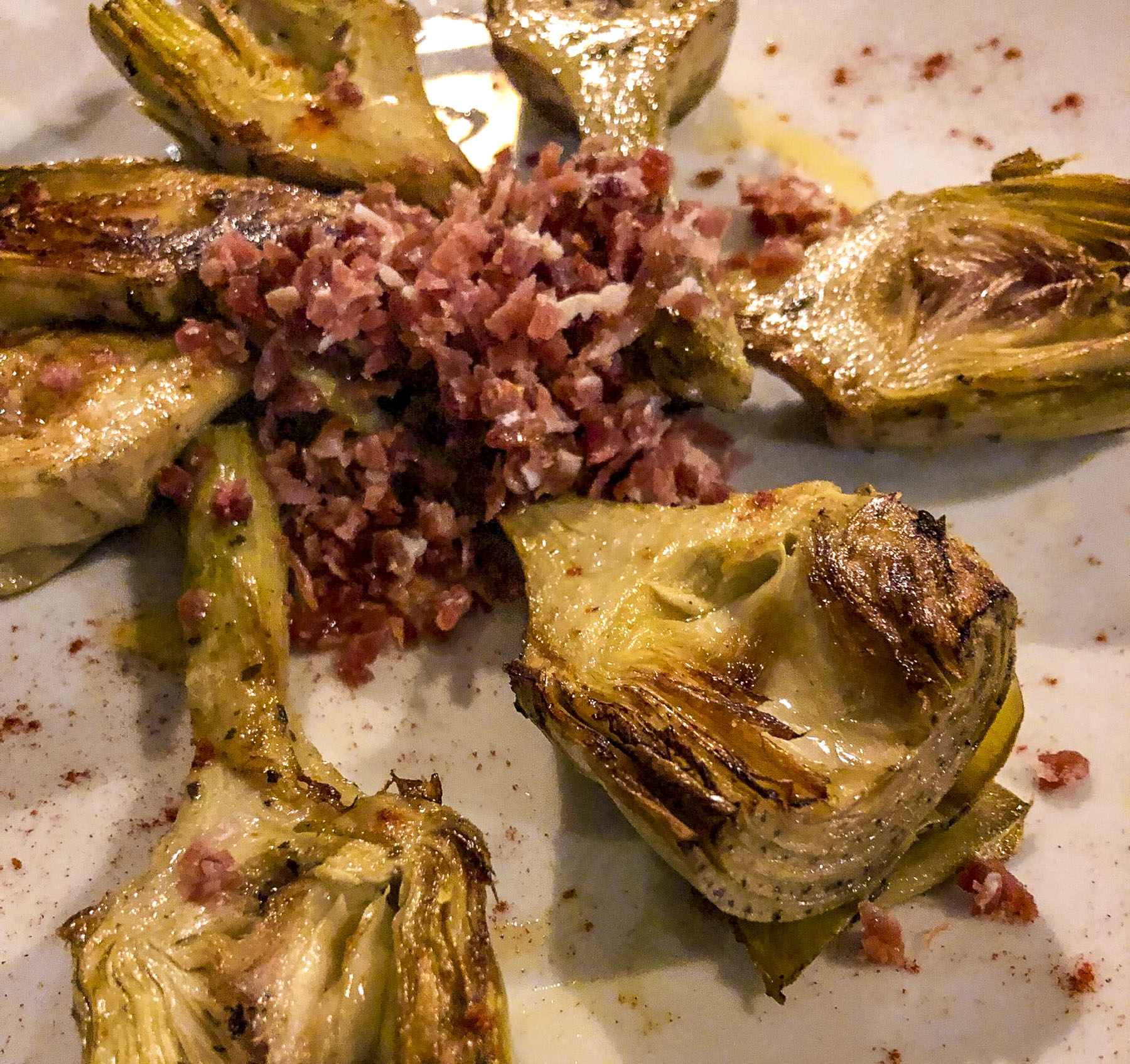
Later that evening as we strolled across town in search of elusive Alcauciles Fritos (Fried Baby Artichokes) we happened upon one of the cities’ brotherhoods practicing marching with a weighted platform before the big events of Holy Week. With military precision they followed their captain’s instructions and performed a switchback maneuver through restaurant tables that nearly blocked their route.
Down a side street near the central market, we found Tabanco La Reja, a small tapas bar far removed from the center of the city, that’s known for its local fare. The young seasonal artichokes are sprinkled with lemon juice and sea salt, then pan fried in oil over high heat until the stalks and hearts are tender, and the juices caramelized to set the flavor. They were sublime. Flamenco music from a tabanco across the calle drifted in, the vermut was good, the evening was perfect.
Strolling back to our hotel, concert music filled the street as we passed the Iglesia Conventual de San Francisco, drawing us inside. A Brotherhood band was playing to a full church. Another pre Semena Santa event that charmed us.
Churches, churches, churches. Spain, Italy, Portugal. Everywhere a church They share that history of religious influence that so dominated the emergence of European kingdoms during the Middle Ages and Renaissance. Princes and paupers donated for that access to the stairway to heaven, enriching the church with grand architecture, priceless art, and jeweled encrusted religious iconography. Which is exactly why we visit so many of them. “Follow the money, it’s where the art is,” is how I like to phrase it.
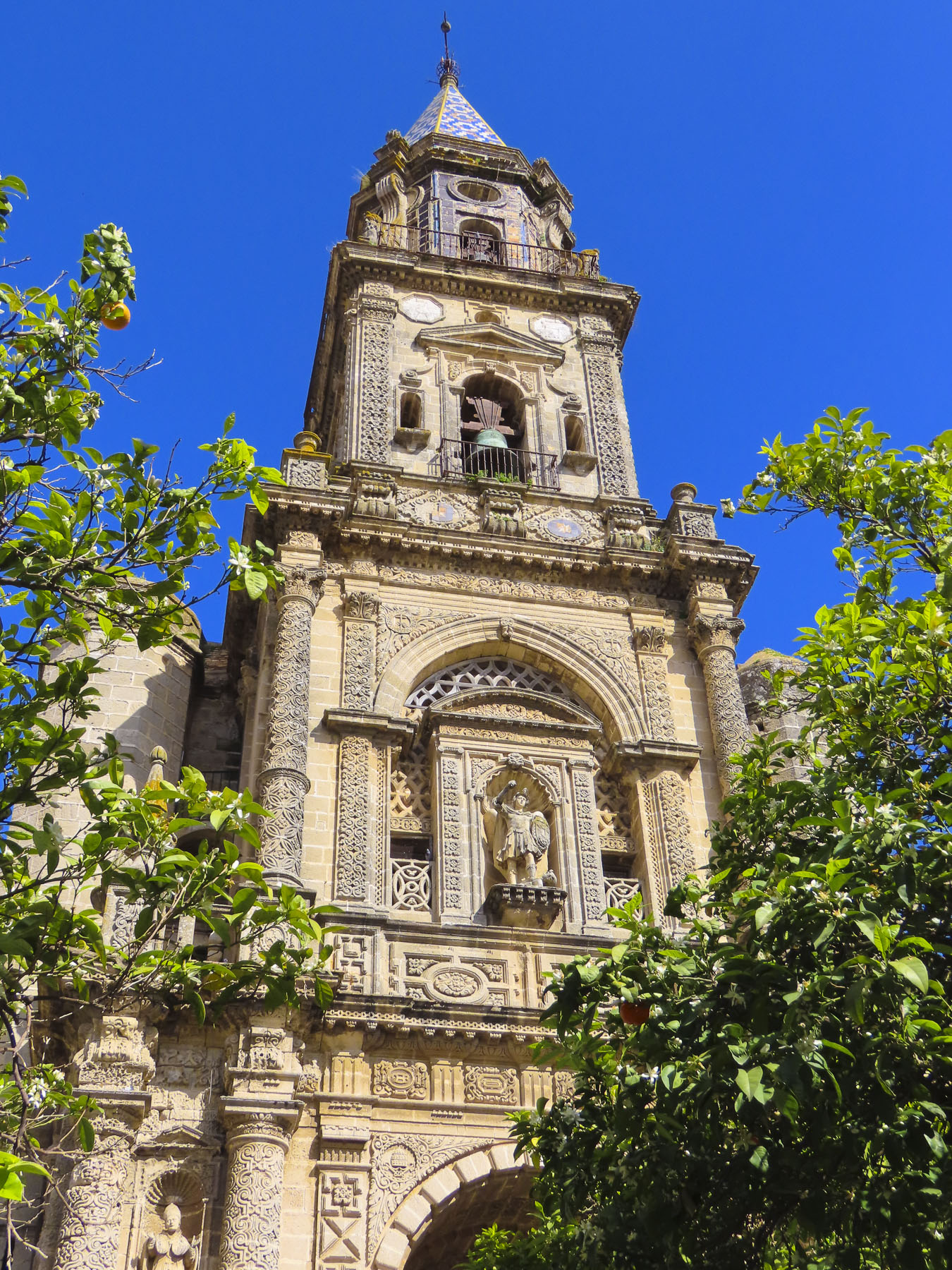
Covered in highly detailed baroque relief carvings, the Iglesia de San Miguel stood magnificently before us. Though much smaller than the Jerez Cathedral, the façade of this church and belltower are stunningly beautiful.
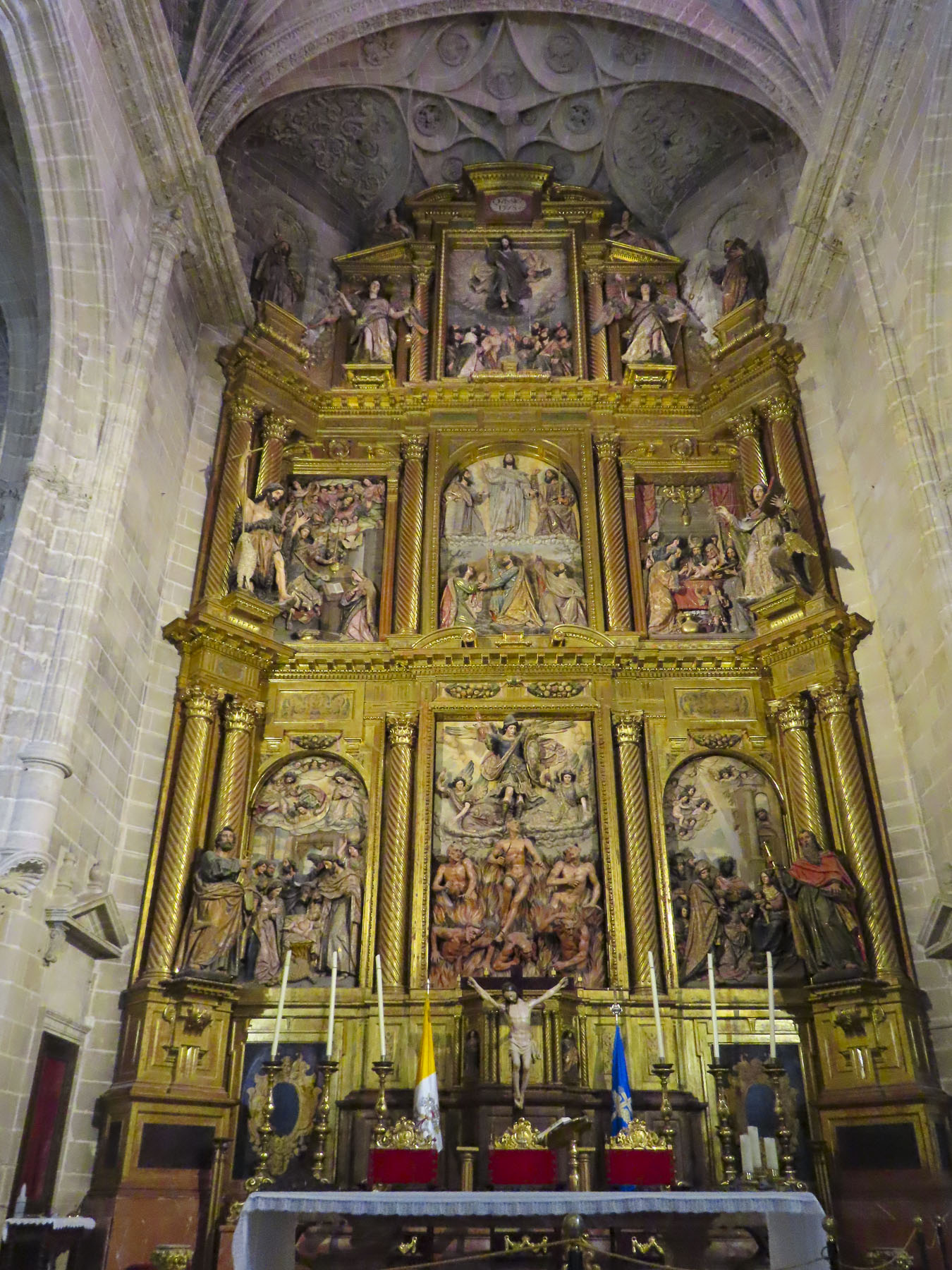
And the inside feels more intimate with a modest gilded altar. But we could only speculate on the hell fire and brimstone sermons that might have been delivered here based on a fiery retablo which dominates the church. Created by master sculptors Martínez Montañés and José de Arce, in the 17th Century, it depicts the Archangel Michael fighting very realistic devils.
Across from the church the sequestered nuns of the Convento San José Franciscanas Descalzas still operate a dulces turno, a lazy susan type cabinet, in the wall of the convent from which they sell pastries and cookies made from ancient church recipes to support themselves. It’s handy to have paper and pen to write down what you want from a list that hangs on the wall, or to use the translator app on your phone. It’s a wonderful centuries-old tradition that continues in many convents across Spain.
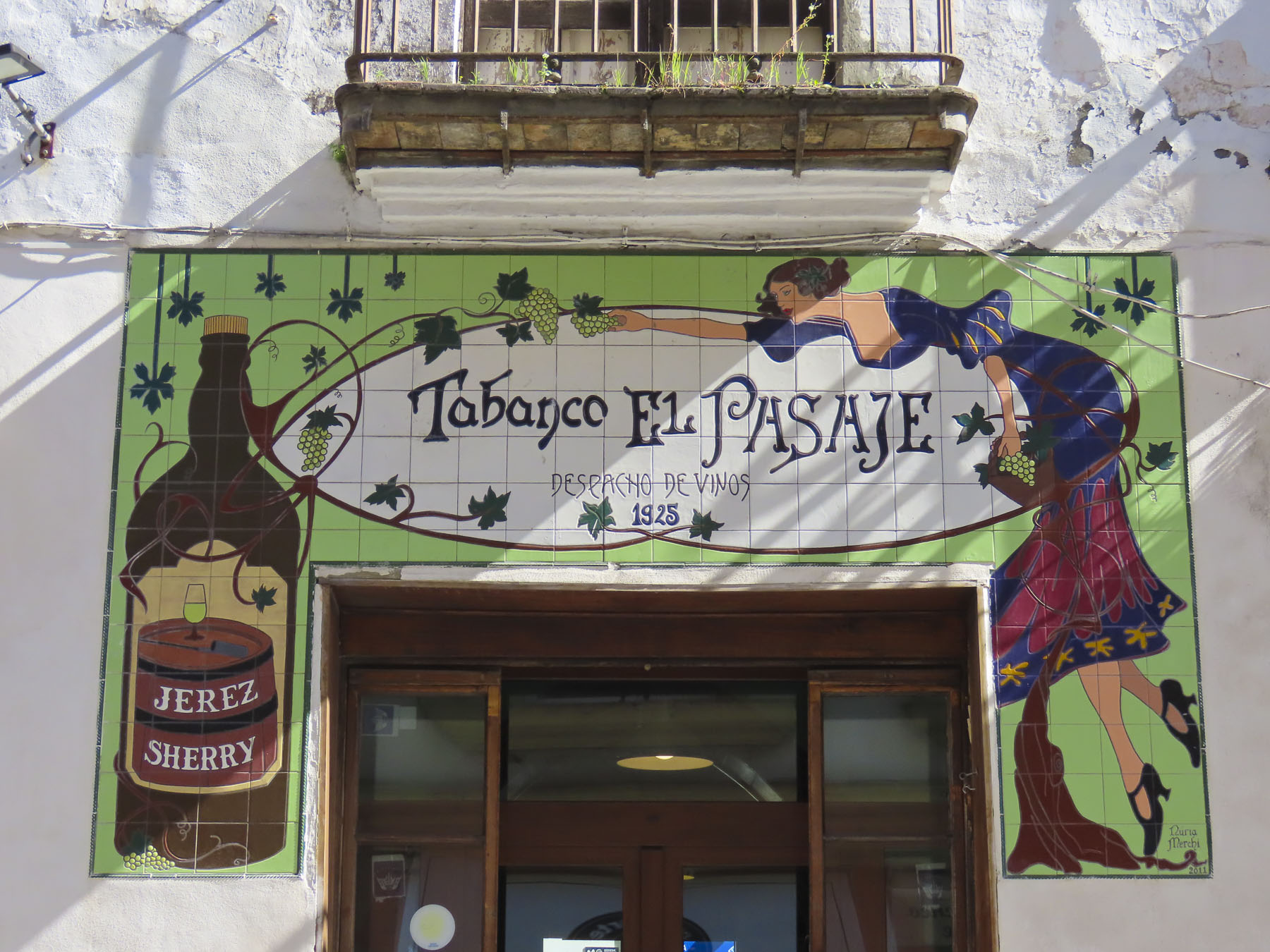
Scattered across Jerez are colorful ceramic advertising murals that usually highlight various sherries. They are all very artistic and seem to be unique to Jerez.
Touring a sherry bodega, a wine cellar, is a must in Jerez and there are several vintners in the city that offer tours, then tastings at their facilities. We chose Bodega Tio Pepe at Gonzalez Byass, basically for its convenience to other historic sites nearby. And we do admire their iconic Tio Pepe logo and advertising.
The bodega was started in 1835 by a young 23-year-old businessman, Manuel María González Ángel, who had no experience creating wine, but he enlisted the help of his beloved Uncle Pepe to show him the ropes. Their first sherry was well received, especially in England. In appreciation for his uncle’s expertise González named their sherry Tio Pepe, “Uncle Pepe.” The iconic logo was created in 1935 , and shows a bottle dressed with a wide-brimmed hat, Andalusian jacket, and Spanish guitar to celebrate the company’s 100th anniversary. It soon became one of the world’s most recognizable advertising logos. The sherry is exported to 115 countries around the world.
The tour through the old bodegas was very interesting, as the guide explained that tiered casks never get completely emptied. The ready-to-drink aged sherry is siphoned from the bottom barrel until it is one-third-full. It is then refilled with less aged sherry from the cask above. The procedure is repeated until new wine is added to the partially emptied top cask. From start to finish the aging of sherry takes four years. In keeping with the times, the tour ended in a very hip tasting area that features various configurations of the Tio Pepe logo.
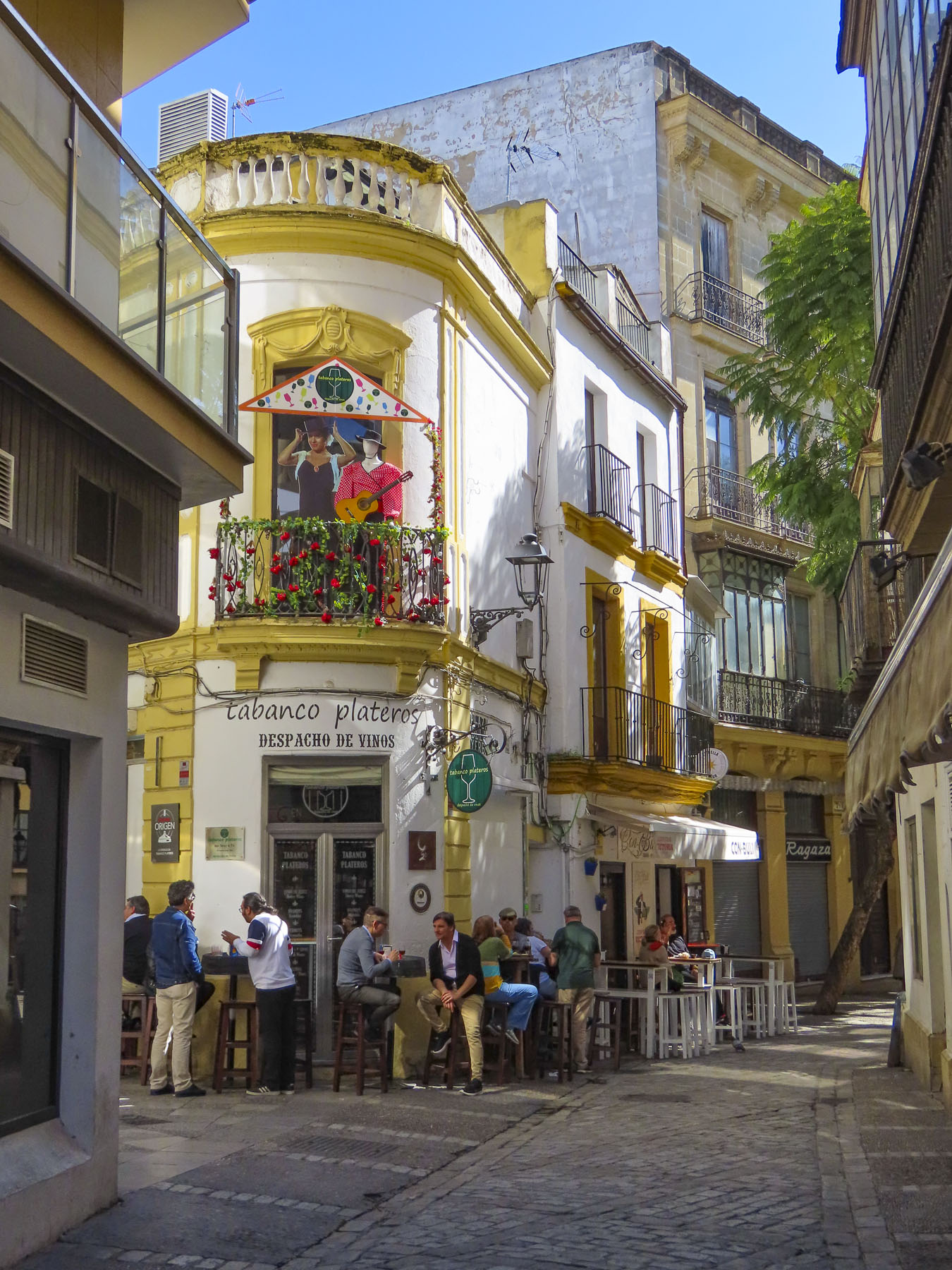
Most worthy restaurants in Jerez don’t open until 8:00PM and then seem to instantly fill up, with patrons spilling onto the street. If you have a particular spot in mind, our suggestion is to arrive when it first opens, as many do not take reservations, or try dining there for lunch. The good news is Jerez takes its cuisine very seriously and there are few places geared toward tourists. The most popular street we found was Calle San Pablo, a narrow alley filled with lively tapas bars. It’s located between the Iglesia de San Miguel and Plaza del Arenal. A walk along Calle Consistorio which starts at the plaza will also lead you past many places that will whet your appetite.
Jerez de la Frontera has a wonderful tranquil ambience. Historic with a cosmopolitan flare, the city is often overlooked by folks visiting Andalucia. This is a blessing for those that enjoy its charms.
“If God had not made Jerez, how imperfect would his work be!” – Benito Perez Galdos.





























































 2 Suitcases for 2 years