Omo Valley Part 6 – The Arbore, Grasslands & Flamingos

Leaving the Buska Lodge, we turned east to cross the rugged Humu Range. Our eventual destination in three days’ time was Addis Ababa, but today we had one last tribe to visit: the Arbore tribe, whose ancestral homeland extends to the Weito River and Lake Chew Bahir.
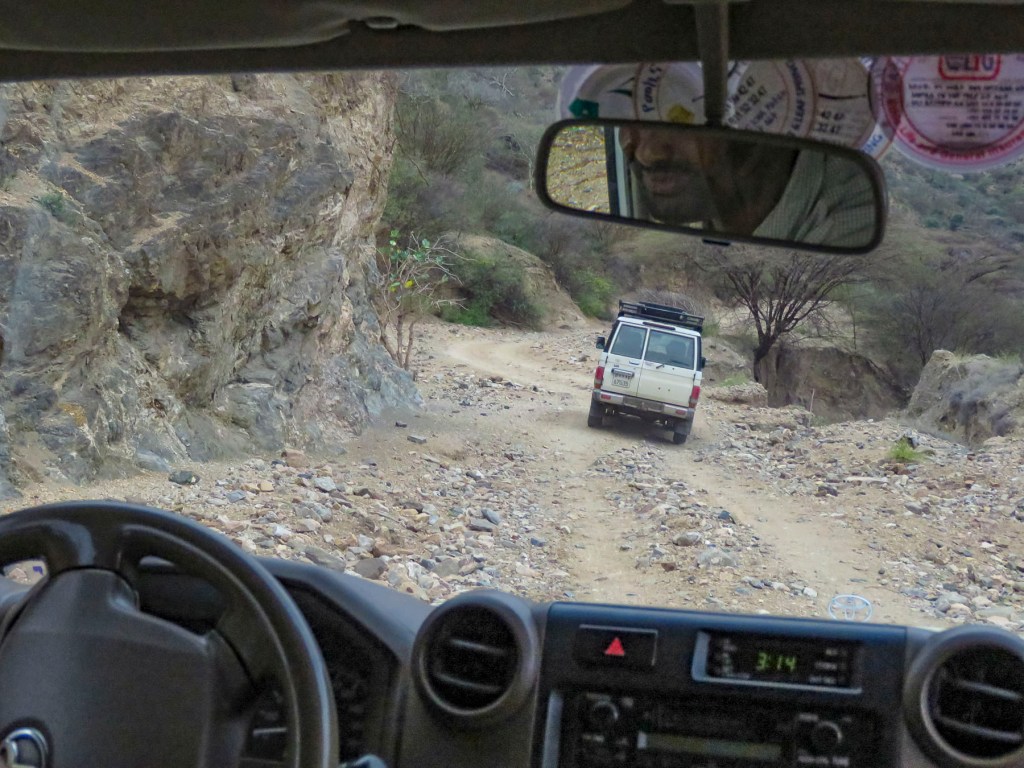
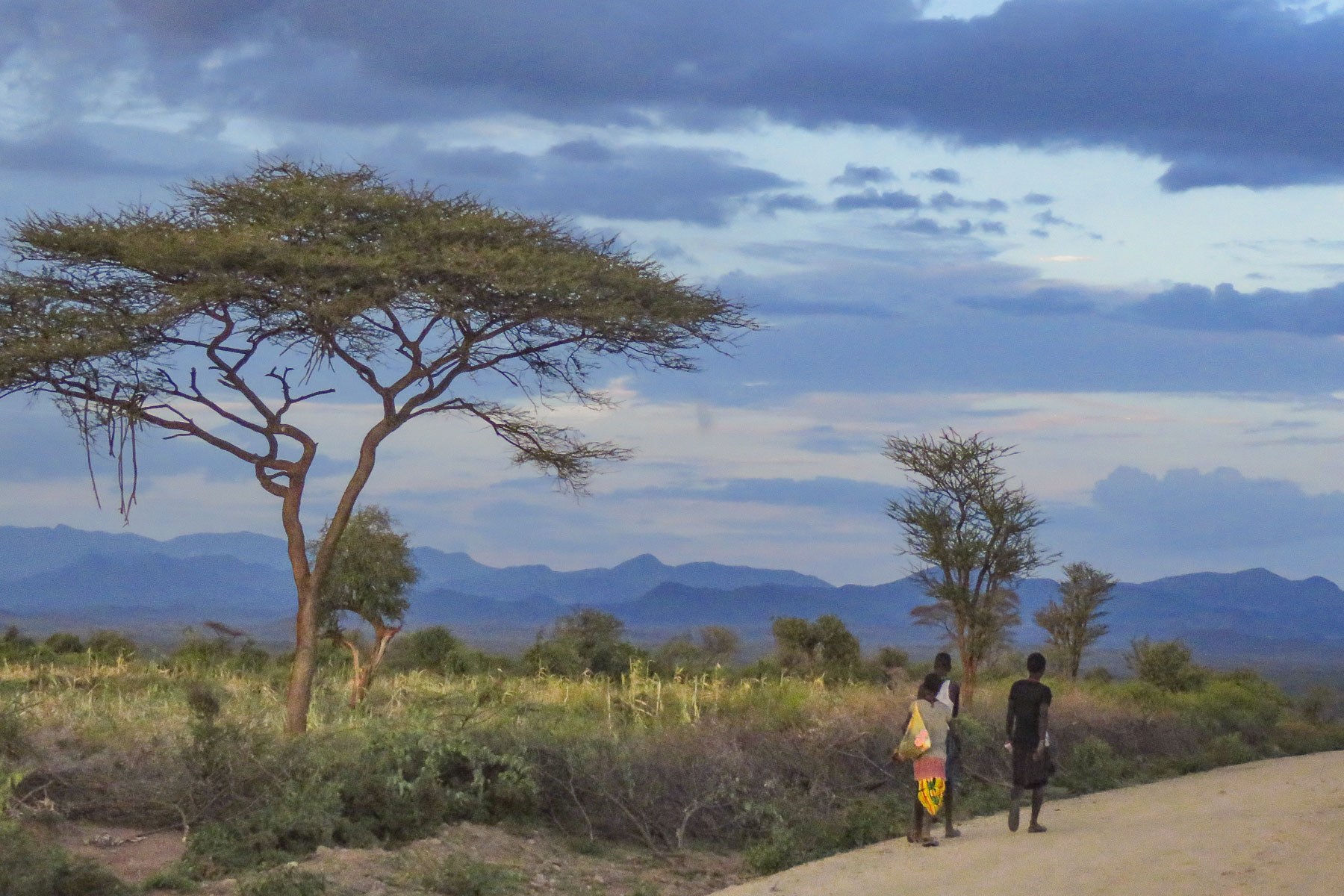
Not far from the lodge, the compacted dirt road deteriorated into a rock-strewn obstacle course, the result of a recent rockslide caused by torrential rains earlier in August.  We coined the phrase “rattled tourist syndrome” here – after a couple of hours on this road, we felt like we had suffered brain damage!  Rounding a bend, we got our first glimpse of Lake Chew in the distance, before the road descended to a dry riverbed which we followed out of a canyon to the flood plain along the western shore of the lake.

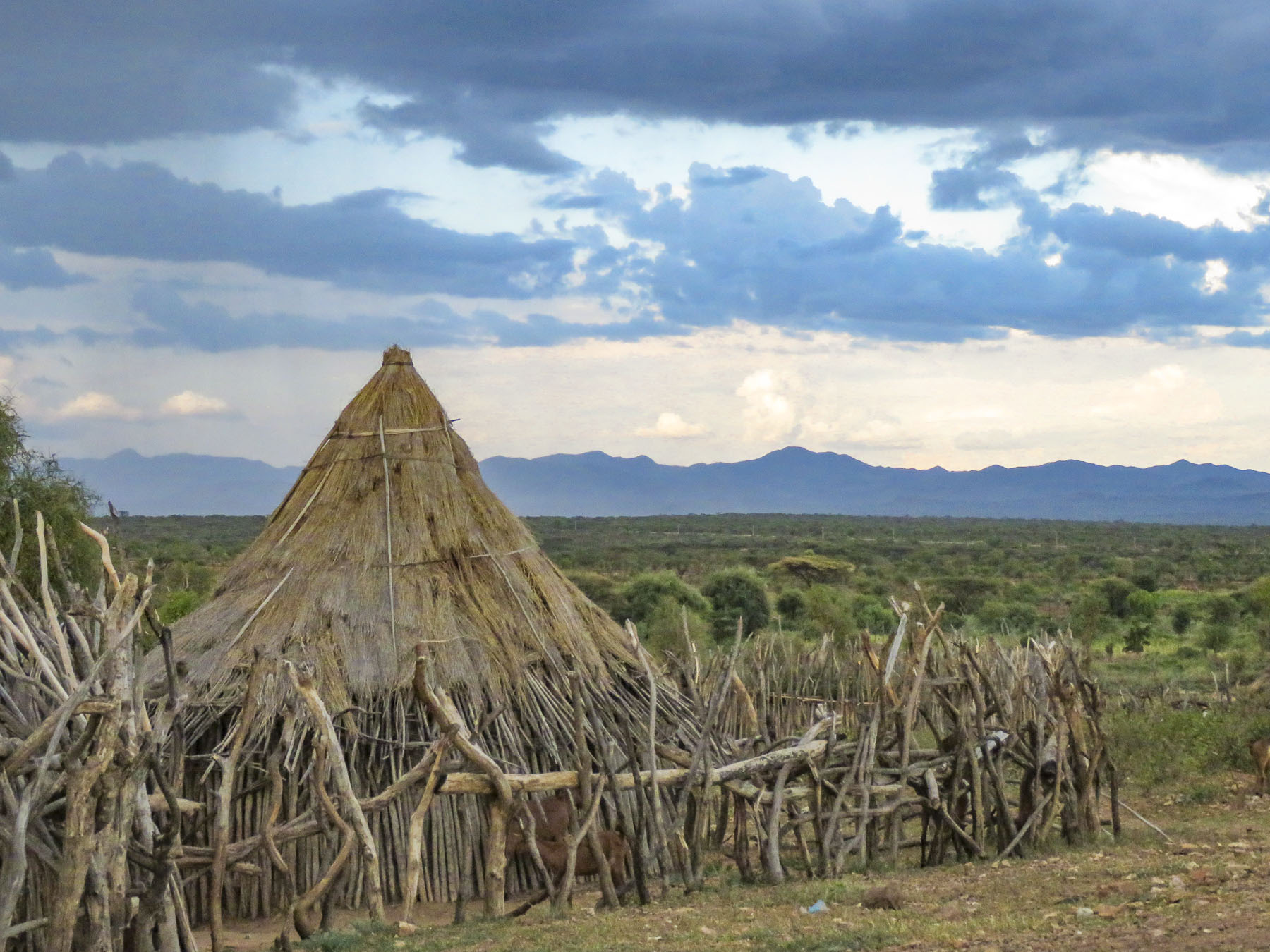
When the shallow lake is full, its water covers an area 40 miles long by 15 miles wide and extends into northern Kenya.  It’s been drying up slowly for more than a century, and today it is mostly a papyrus-filled marshland. Its fertile shoreland is now farmed, and the papyrus reeds are cut from it by the Arbore to construct their huts.  Plots of land along the lake are redistributed yearly by the elders of the tribe, so no one family always has the best parcel.  

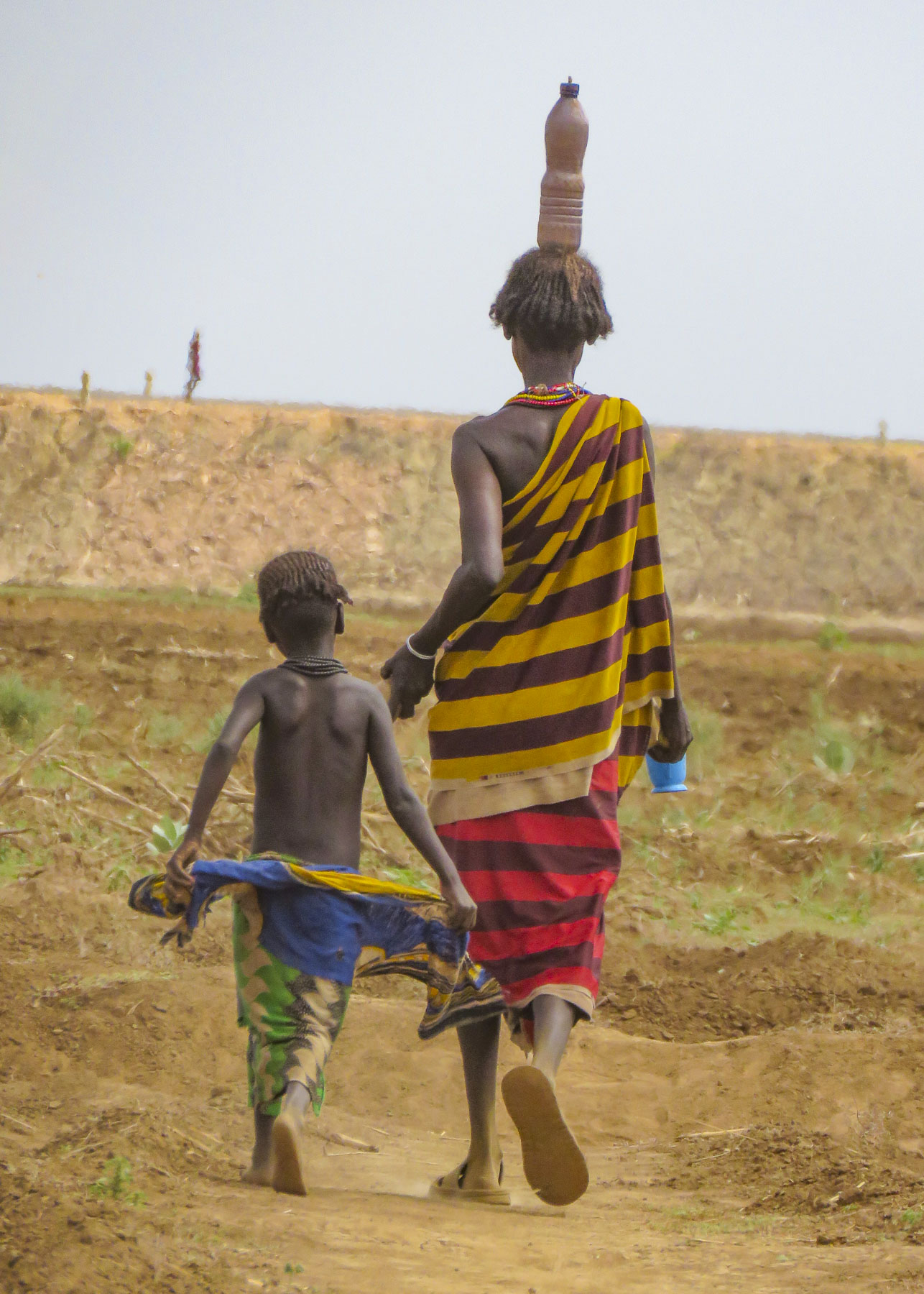
A short while later, under a threatening gray sky, we entered a small village. Here and there, women were involved in daily chores. Off to the side some children were tasked with rounding up a few young goats scampering about, while the married women of the village were attending to various chores in front of their huts.
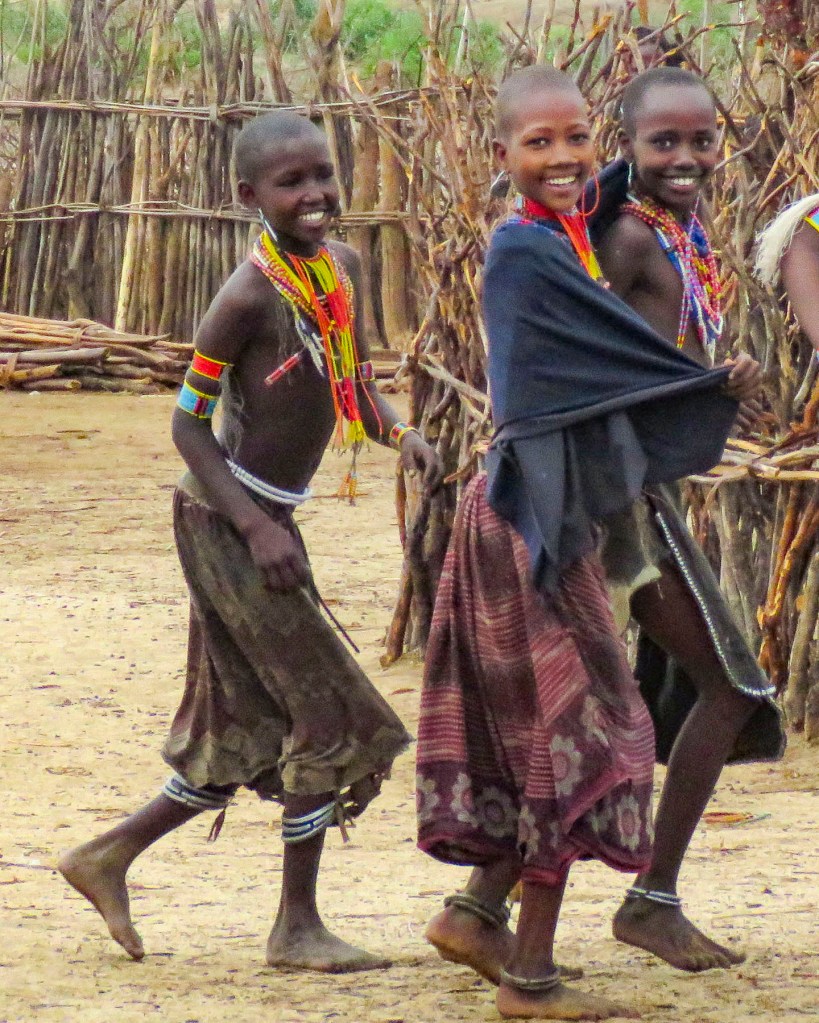
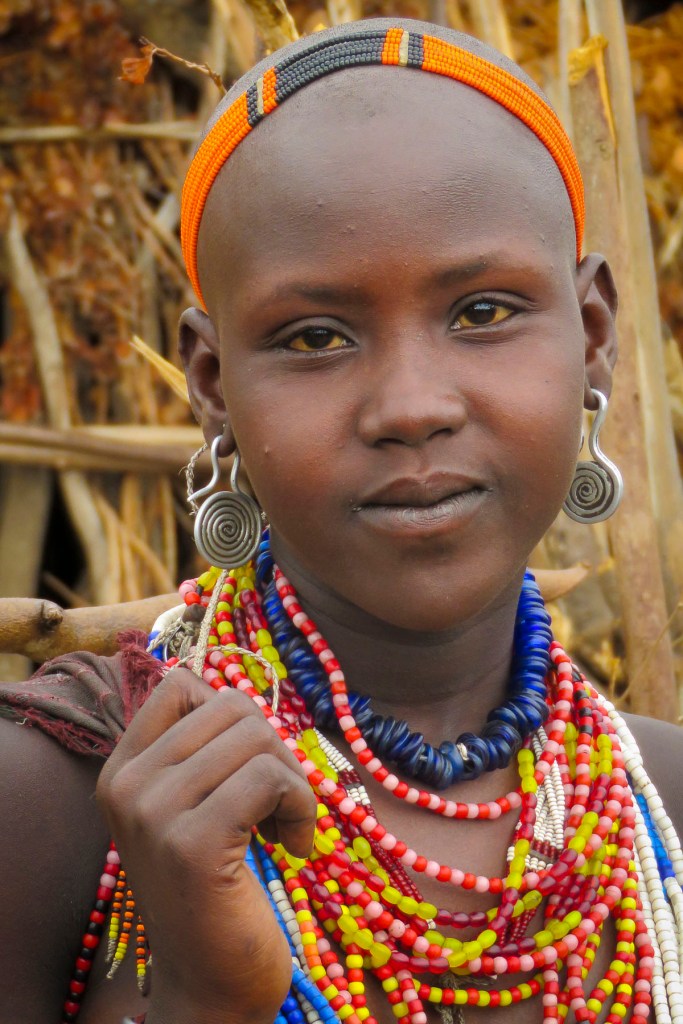
The young, unmarried women of the clan were recognizable by the black cloth, a symbol of virginity, they draped over their shaven heads to protect themselves from the sun. Cattle-centric like most of the Omo Valley tribes the Arbore, which means land of the bulls, add a new dimension to it with the men joining the names of their favorite cows to their wives’ names. 

The Arbore are well respected by the surrounding tribes, the result of an ancient enduring legend in which the tribe defeated the devil in a battle.  Consequently, they have a centuries’ old “don’t mess with us” reputation that ensures a peaceful coexistence with their neighbors and fosters inter-tribal marriages and sharing of grazing lands when there are droughts.  

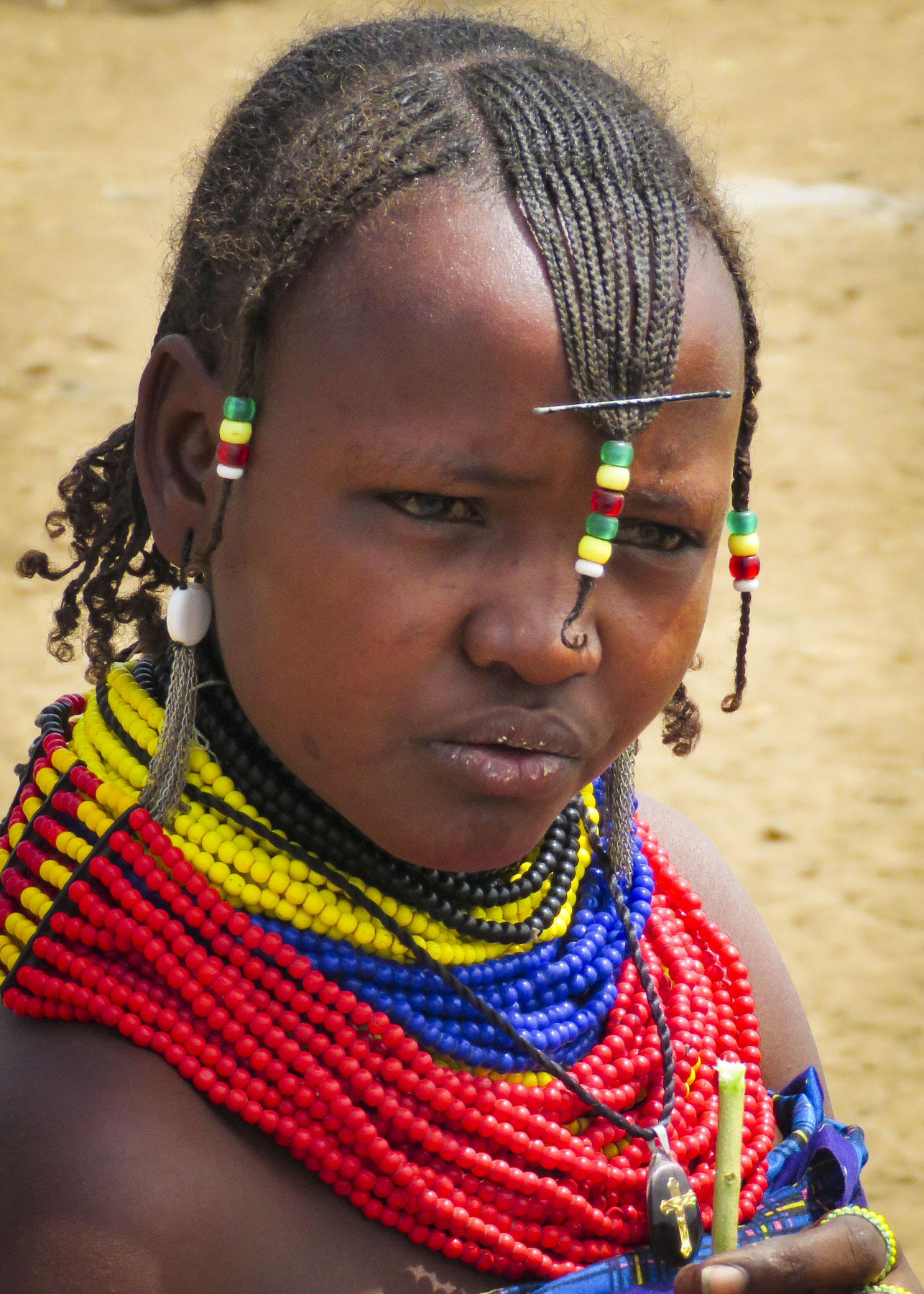
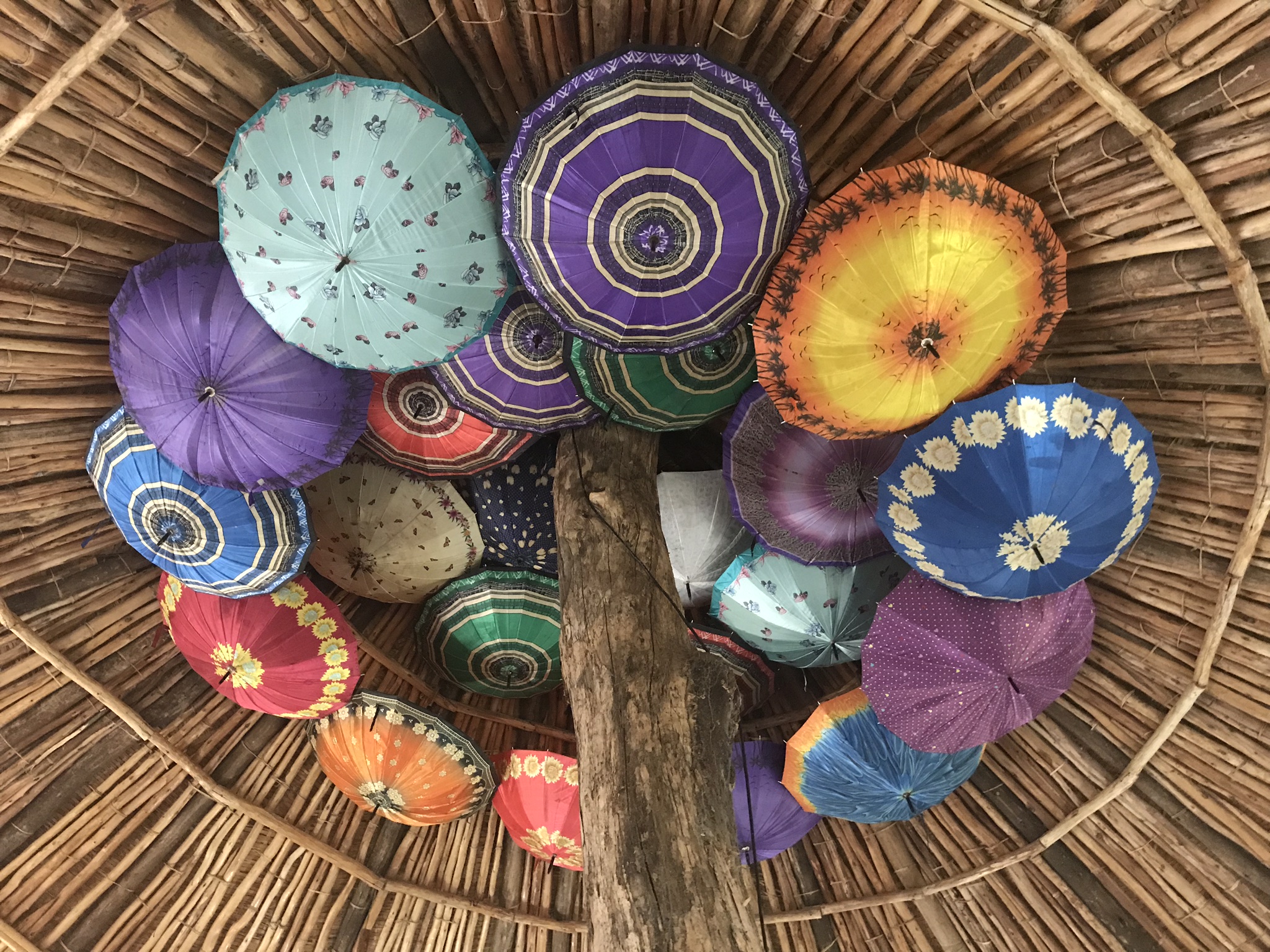
With the onslaught of the expected rain we were invited into a tribeswoman’s hut.  It was larger than some made by other tribes, with a second room where two small children were asleep on goat skins.  The front was roomy enough to shelter three of us and five villagers, sitting and standing, from the downpour outside.  It was a dark but dry enclosure. The colorful beads the women wore were illuminated by the only light source, the short entryway to the hut.

There are not any convenient alternate routes between points in the Omo Valley which meant we backtracked on roads previously driven as we worked our way towards Konso and Arba Minch.  We arrived late in the day to the Paradise Lodge, and the view from their terrace was spectacular as the sunny sky brightened the verdant jungle that separated Lake Abaya from Lake Chamo in the distance.

“The next time you come, we will go to the Bridge of God. It’s on the peak of that mountain that separates the two lakes.  There is a wonderful track through the jungle that takes you there,” our guide promised.
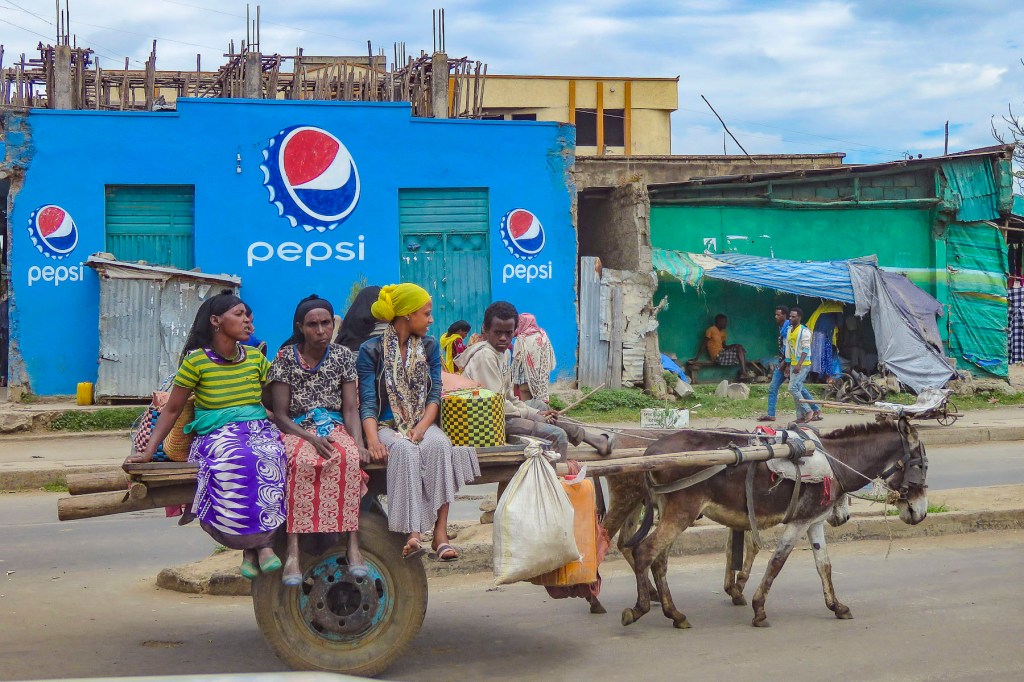
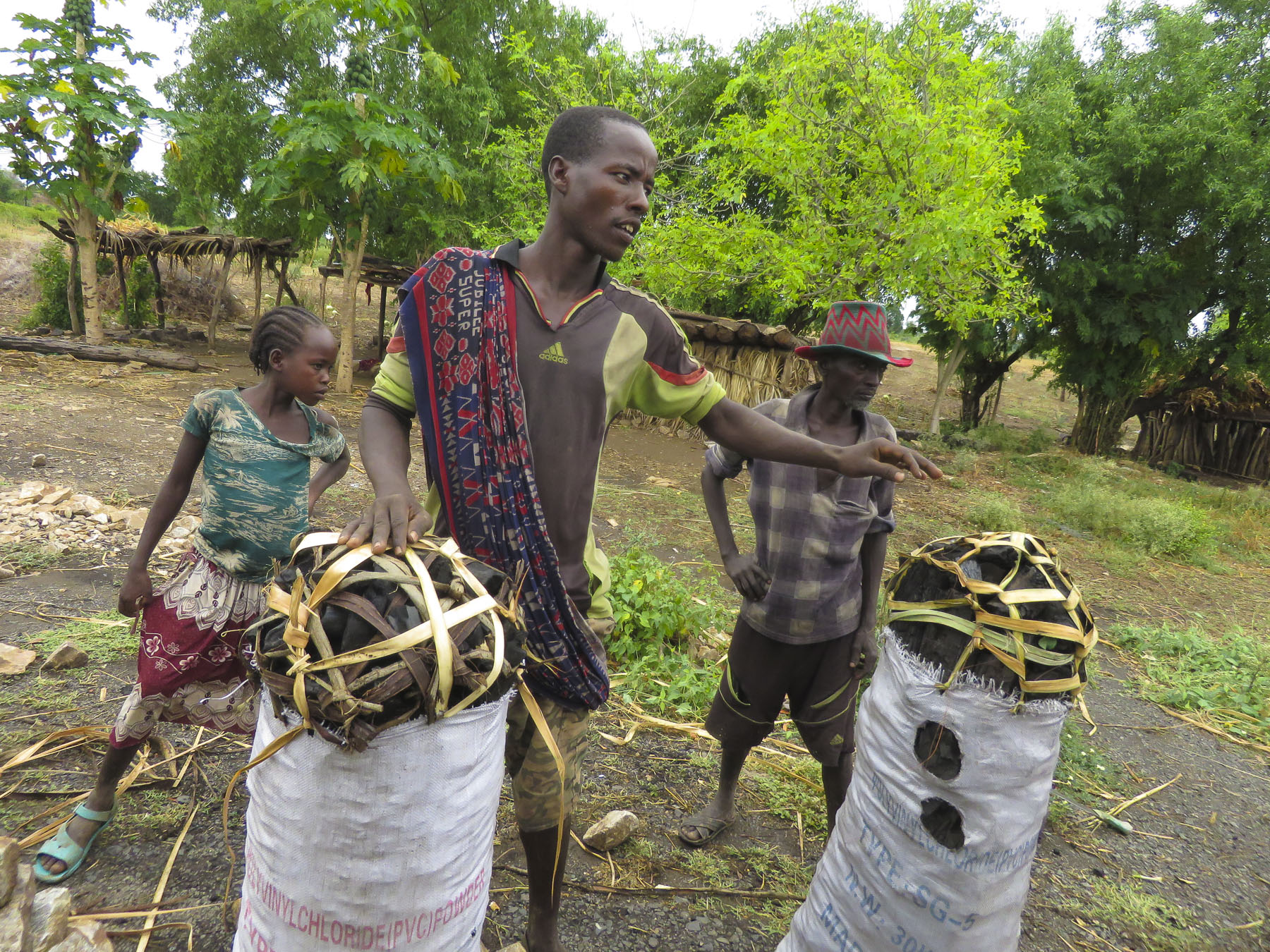
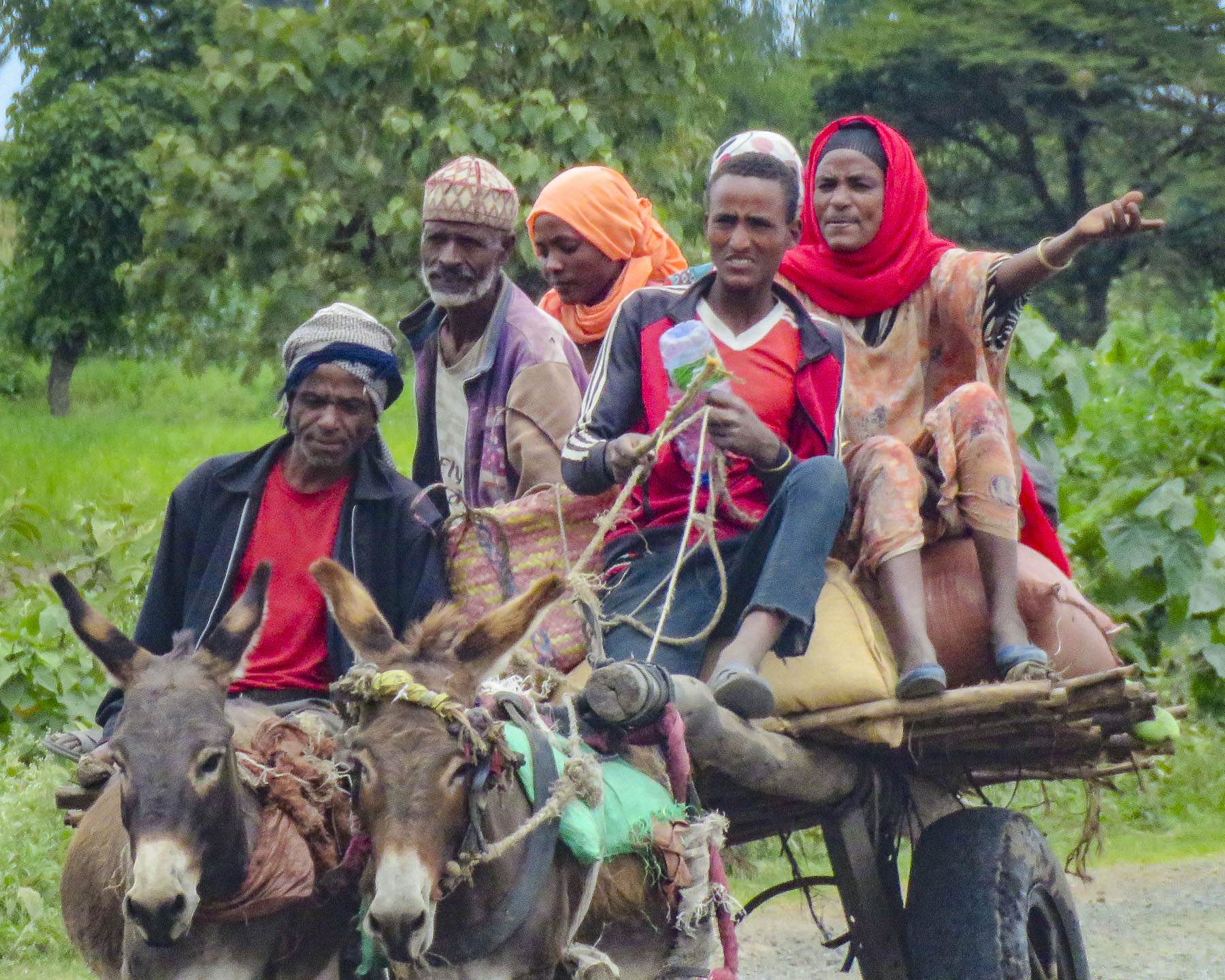
In the morning we set north to Lake Awassa, and the route was humming with activity. Folks walking, charcoal and dried chili vendors, tuk-tuks, donkey carts, herds of cattle and buses all jostled peacefully for space on this artery of commerce.

Before spending the night in Awassa, we detoured into the Senkele Wildlife Sanctuary, a 13,000-acre reserve established to protect a herd of 700 Swayne’s hartebeests, an endangered antelope. 

At the ranger station we parked our truck next to a large acacia tree, where to our delight a colony of weaver birds were frantically darting to and fro, constructing their intricate hanging nests. 
The guide drove us deep into the surrounding grasslands until he spotted a herd, and then encouraged us to walk across the plain with him.  Just exiting the vehicle made a huge difference in our appreciation of this gently rolling, beautiful landscape. 

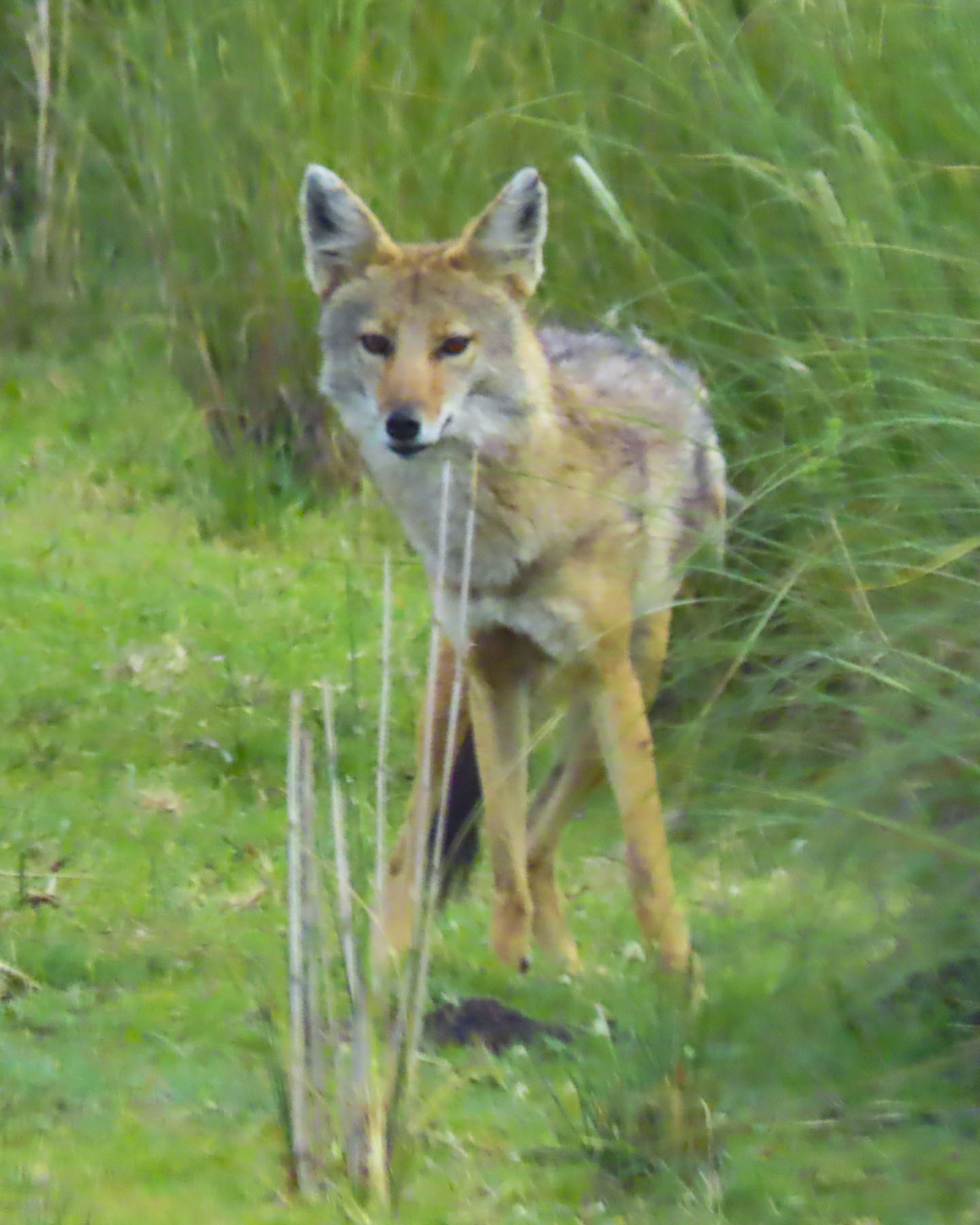
The air was fresh, and an earthy aroma rose from the ground.  Farther down the track the ranger turned a blind eye to a young herder quickly moving some cattle through the reserve.  And to everyone’s surprise we spotted a rare Ethiopian wolf, which was stealthily shadowing a dik-dik.

Our destination the next morning was the Hawassa fish market, next to Amora Gedel, the smallest national park in Ethiopia. The market is a daily open-air event where fishermen paddle anything that floats, in order to eke out a living from the over-fished lake and its dwindling stock of tilapia, catfish, and Nile perch.

It was a colorful, chaotic affair as the fishermen gutted and filleted the freshly caught fish on the ground as soon as the nets were emptied.  It attracted a huge number of birds ready to swoop in to scavenge the scraps when the activity died down. 

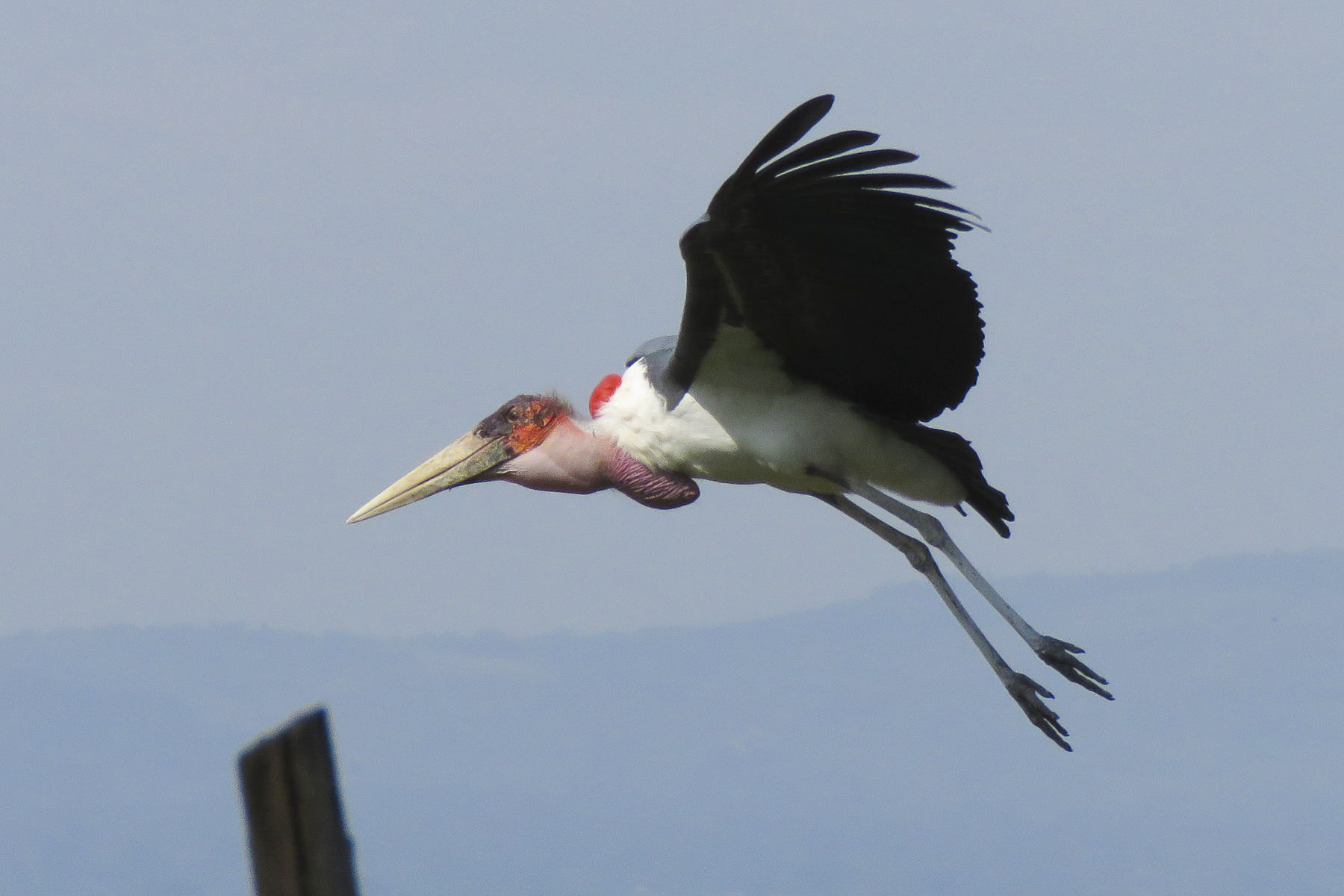
There were a large number of ugly marabou storks, with their peculiar scaly heads, but we also saw hamerkop, ibis, pelicans and cormorants waiting patiently.   Ringing the parking lot, there were food shacks that prepared fried fish and a fish soup that is popular locally for breakfast.

Afterwards we headed to Abidjatta-Shalla National Park, which is known for its two large alkaline lakes surrounded by hot springs and flocks of flamingos, as well as a vast variety of bird life that favors the encompassing savanna.  We hired a ranger at the main gate and followed him along an unmarked path through the open woodland.

Soon we spotted a go away bird, warthogs and our favorite blue-eared glossy starlings.  Farther on we crept slowly up to a dominant male ostrich watching over a small flock. Our guide wanted us to go home with spectacular photos, so he instructed my wife to give him her camera, and to approach the large ostrich.

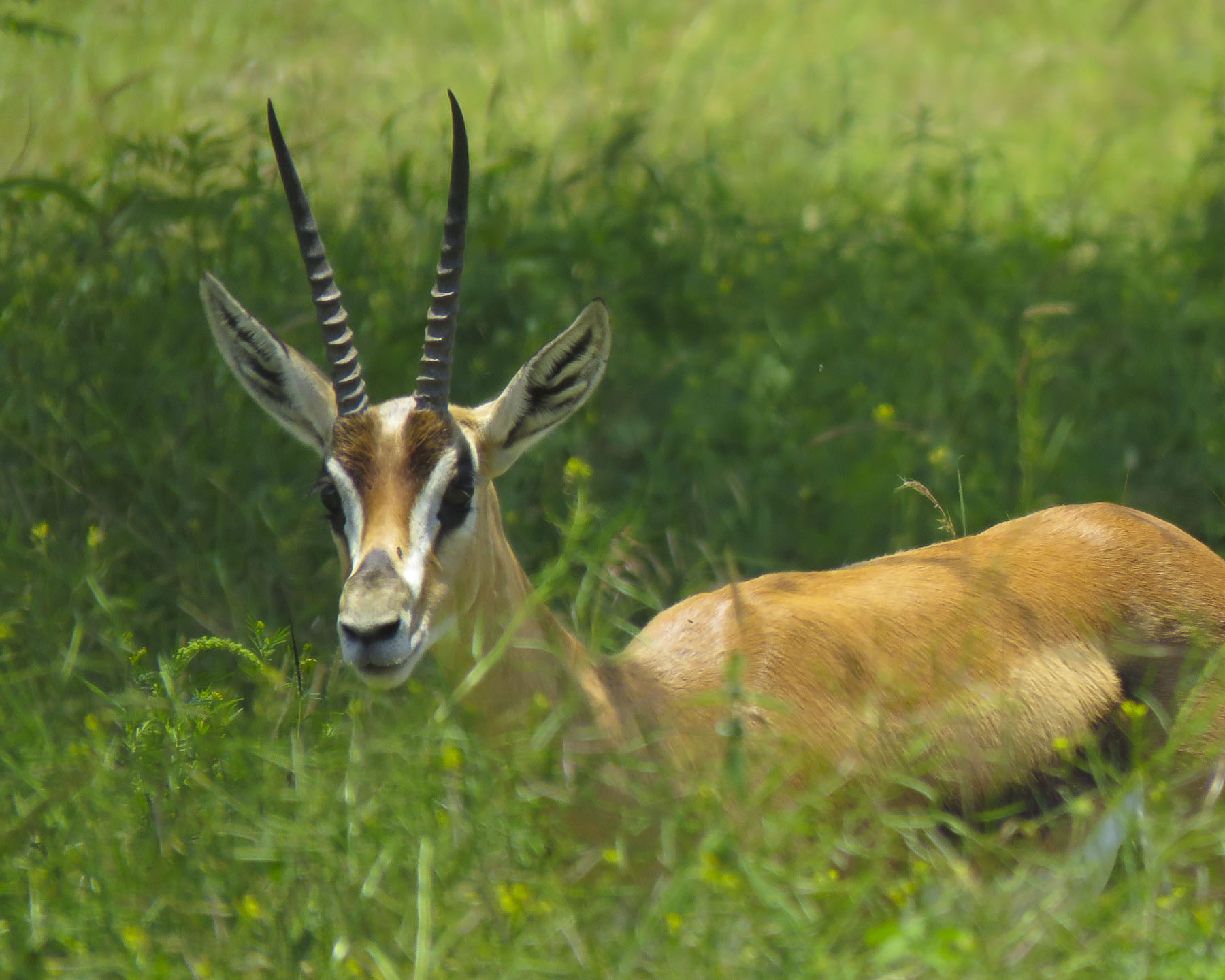
“It will be good photo,” he said in his broken English. “Closer, closer, closer.” My wife eyed the massive claws and muscular legs of the beast, and uncomfortably crept closer to the ostrich than she thought wise to do, the guide motioning her on all the while. “Stop!” the guide suddenly whisper-screeched and began snapping. He was right – they were pretty dramatic photos. Seconds later the ostriches were spooked by an unexpected antelope bounding through, and trotted off.

Back in the truck, our ranger guided us across the park to the shore of Shala Lake where we observed lesser flamingos feeding on cyanobacteria, abundant in the lakes’ alkaline water. 

After cresting a small ridge, we were overlooking a hot spring that bubbled up through the earth in a gully several hundred yards from the lake shore.  Surprisingly, there was a good size makeshift camp around it, supporting folks doing laundry and cooking food in the hot water.  Farther downstream people were bathing in ever cooler pools before the water emptied into the lake.

After soaking our feet in a suitable pool, it was time to return to Addis Ababa for our own day of laundry and rest before the next part of our Ethiopian journey, the rock churches of Lalibela.

Till next time, Craig & Donna

Omo Valley Part 5: The Devil’s Doorstep and Whipping Scars

Below us, down an extremely steep embankment, a dugout canoe waited to take us across the Omo River to visit the Dassanech tribe.  “If we trip, we are going for a swim,” I mentioned to our guide. “Don’t worry, the crocodiles are further downstream, closer to the delta,” he replied with his dry sense of humor, as several people helped us down to the water. 

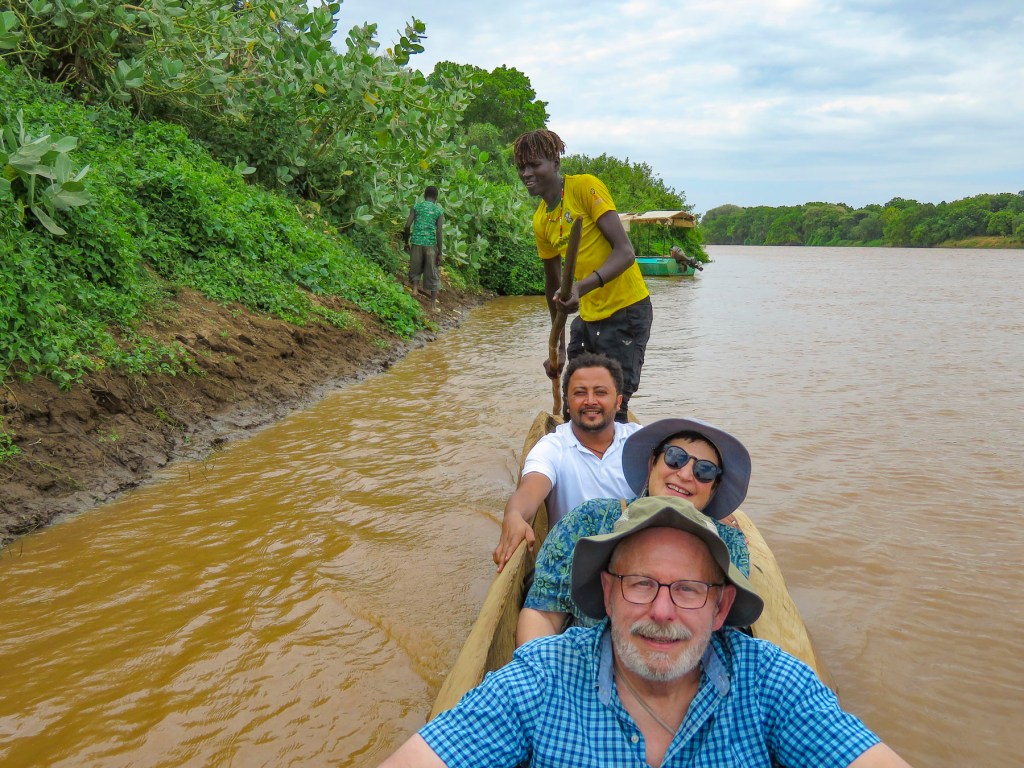
Sitting low in the water, the dugout canoe was stable like a kayak and large enough for three of us. Standing on the stern, a tribesman poled us upstream for a distance before letting the current take us across the river to the equally steep, opposite bank. 

At the top of the riverbank freshly tilled fields, bordered with narrow irrigation canals, gave way to a flat dry landscape that extended to the horizon. The Dassanech are the southernmost tribe in the Omo valley, and their territory extends south to the Kenyan border at Lake Turkana and west to South Sudan.  Even with the river and lake nearby it’s a dry inhospitable terrain that has suffered from years of extended drought and climate change.  The temperature often exceeds 110°F. Consequently, as cross border tensions over diminishing grazing lands have increased, the Ethiopian government has discouraged the nomadic ways of the Dassanech.  In exchange for reducing the size of their cattle herds the government is helping them farm along the banks of the Omo River by providing resources and irrigation pumps.

We entered the village through an opening in the corral that encircled it. Roughly made of tree branches, it serves to keep cattle in and hyenas out at night. Low dome-shaped huts called miede constructed from foraged branches, twigs, river reeds and leaves used to be covered in cowhide for protection from dust storms and infrequent rains.  Now corrugated tin is used instead as there are fewer cattle to slaughter.

The huts must be roasting hot inside! Children hoop rolled an old bicycle tire along the irrigation canal while others played with empty water bottles tied to sticks as tribeswomen sat in the meager shade provided by huts.

The more plentiful shade of the few large, ancient trees still standing by the river is reserved for the men of the village and is off-limits to women and children.

This unforgiving environment created the atmosphere of a desolate refugee camp whose tribespeople were awaiting an unknown future.  To borrow a phrase, it felt like “the doorstep to hell.” I don’t say this to be derogatory, but to describe the intensely harsh environment. It’s remarkable that roughly 20,000 Dassanech can survive in such brutal, extreme conditions.  In such an environment, people wear very little clothing except when going to town. 

Visiting the Dassanech gave us a new understanding of the effects of climate change and the desire to migrate as a consequence of it. As we left the village, some of the tribeswomen had gathered to display their crafts. There is a social contract that, aside from paying for photos, tourists should purchase handcrafts from the villagers. It’s an additional way to help.

Back across the river, we stopped for a late lunch at a small place along the road, before heading to a Hamar village near Turmi. Outside the restaurant was a small collection box for the local church. 

Just a little aside: we had no intestinal issues with the food during our time in Ethiopia. The pit toilets, on the other hand, were truly frightening and we are convinced that they could only be mastered if you grew up with them. The privacy of a “bush toilet” behind a large termite mound was the more sanitary alternative.  And bring hand sanitizer!  (Surprisingly, after a year on the road, we only succumbed to food poisoning when we were back in Europe.)

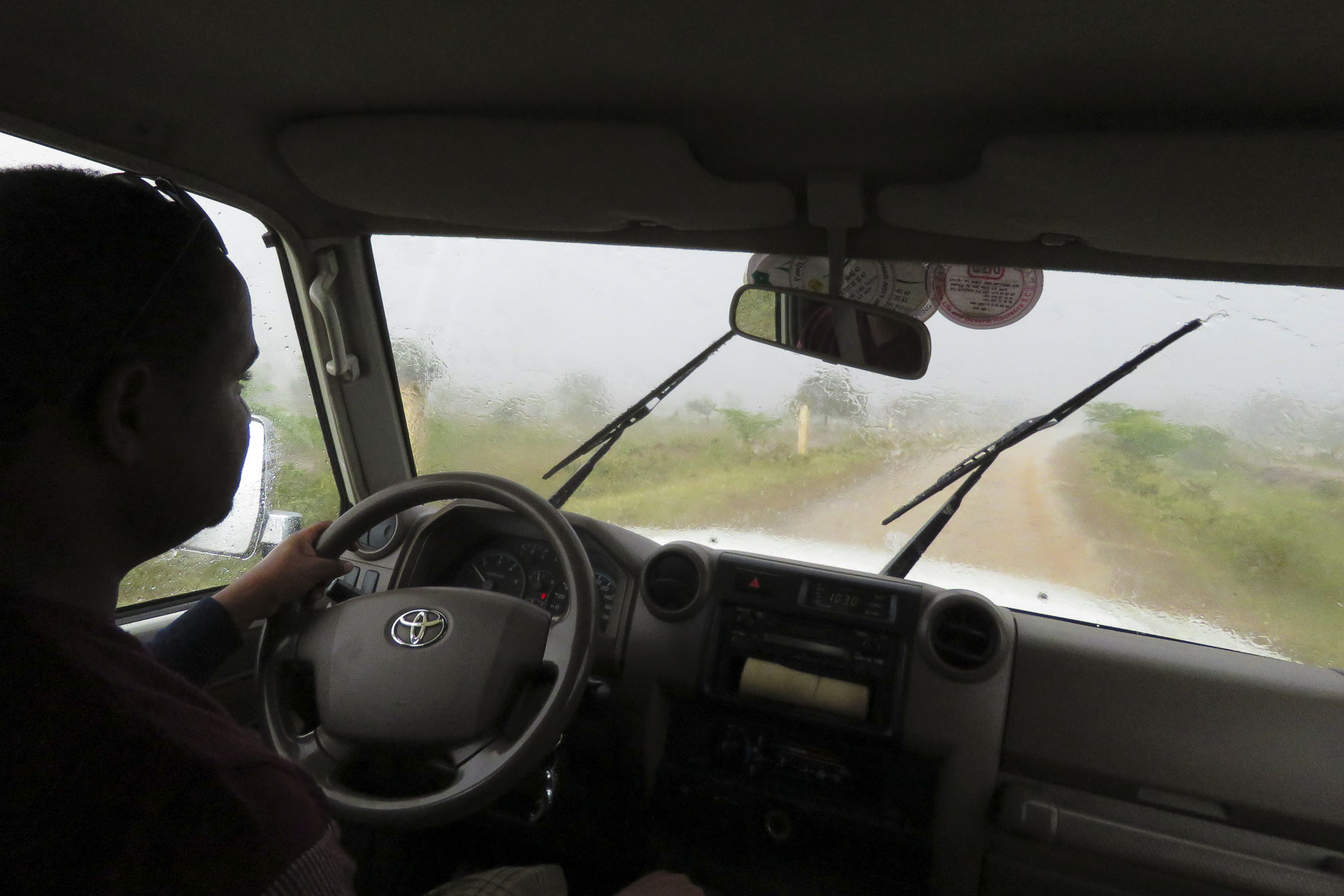
A brief torrential rain dampened the dust and cleaned the air as we headed for the afternoon’s destination.

The golden hour was quickly descending when we arrived in the Hamar village and we only had a short time to work our way around the village before the sun disappeared behind a cloud bank. 

We were supposed to camp overnight in the village, an activity my adventuresome, good sport of a wife reluctantly agreed to when we planned this portion of our tour. “It will be fun!” I reassured her at the time. But seeing our pup tent set up in a small corral surrounded by dried cow dung and imagining how we would deal with a bush toilet in the darkness of the savanna, I had my doubts. I had imagined more of a glamping experience. Thinking of our aching backs in the morning from sleeping on the ground without any kind of padding, we asked our guide for plan B. 

Since the guides would have been participating in this camping adventure with us, they didn’t put up much argument about changing plans. This brought us to a comfortable room at the Buska Lodge, an eco-inn isolated in the thorn tree-studded savanna outside Turmi.  It was an oasis after a long and hot day. By the time we arrived the generator and water had been turned on.  At dinner we discussed returning to the Hamar village the next day, but early enough in the afternoon to give us enough time to enjoy the tribe and their village.

Early the next afternoon, before we entered Turmi, we crossed a dry riverbed where several teams of men were digging deep into the sand to find water. Towns without any water infrastructure rely on these hardworking and enterprising men to fill the ubiquitous yellow jerry cans with water and deliver them by donkey cart to people’s homes. It was another sign of climate change that reinforced its dire consequences.

The men of the village were still out with the cattle herds, but we were greeted by a throng of women and children.  The Hamar are known for their tradition of “bull jumping” or “bullah,” a purification and rite of passage ceremony for young tribesmen to prove their worthiness for marriage. It’s a complex ritual that culminates with the young man jumping over the backs of 10 bulls, which are smeared with dung to be slippery, four times without falling. If he falls he will have to wait a year until he’s allowed to try again.

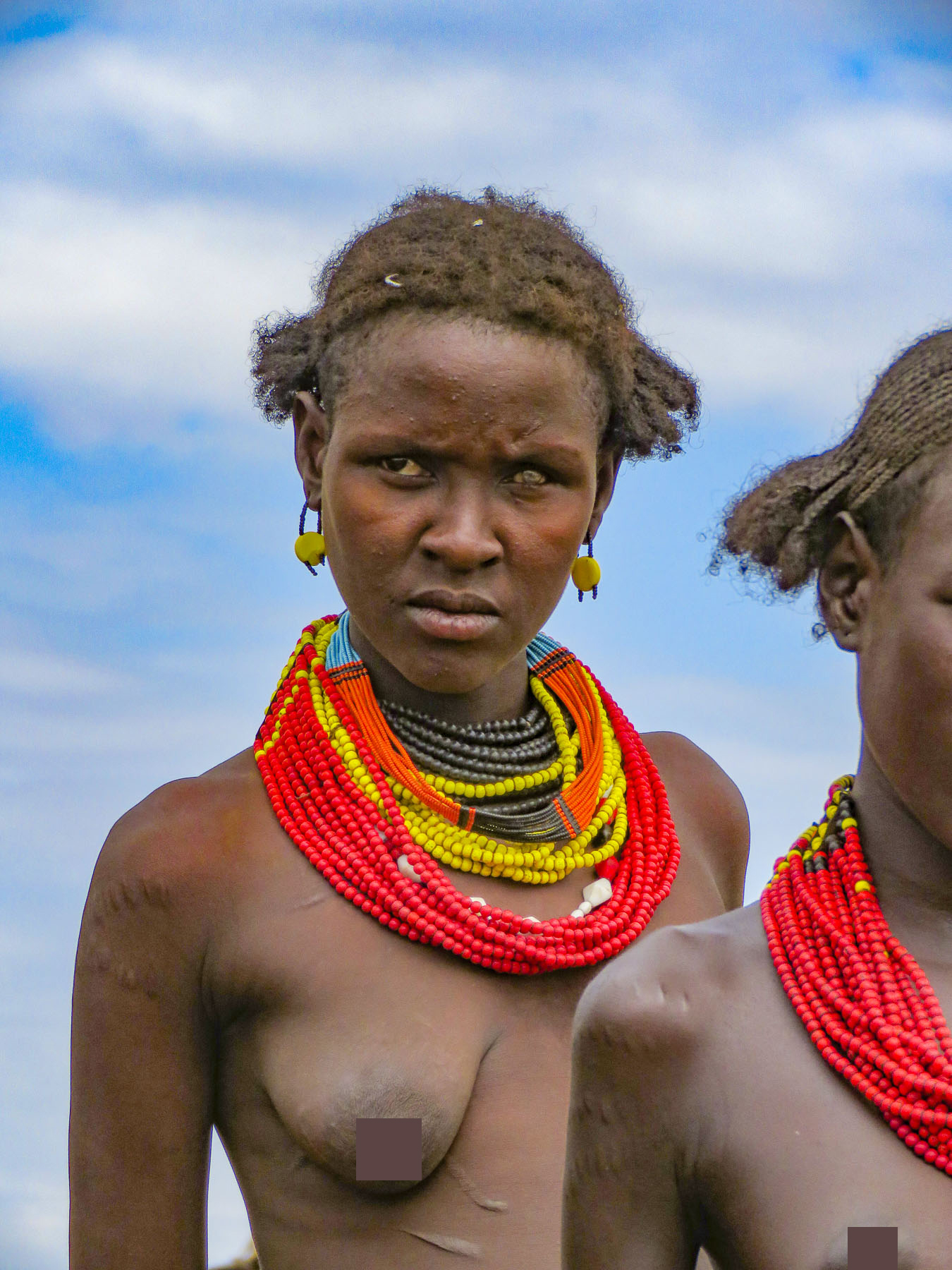
We did not witness a bullah; what we did see were the results of the whipping ceremonies that precede the bull jumping. Displayed on the bare backs of the women of the village were large raised scars, which were inflicted by the men; the women receive the beatings as a show of loyalty.  Before the bull jumping, the sisters and other female relatives of the initiates from the surrounding villages gather, and with sorghum beer brewed for the occasion dance, sing and blow horns.  As the dancing intensifies the women are said to ask, beg, or provoke the maza, young men who bull jumped but haven’t married yet, to whip them with long birch branches called miceres.  This act of scarification is a visual reminder of the women’s loyalty to the young man about to bull jump and earns them the right to his help in the future should they ever need it.  “If your sisters, female cousins, or aunties need your assistance in the future your debt to them is sealed. You can’t ignore their requests, period. After all, they nearly died for you!” 

By western morals this is a brutal practice, but with the Hamar it’s an ancient ritual that has been performed for centuries. They have a saying, “Women with scars are as strong as lions!”

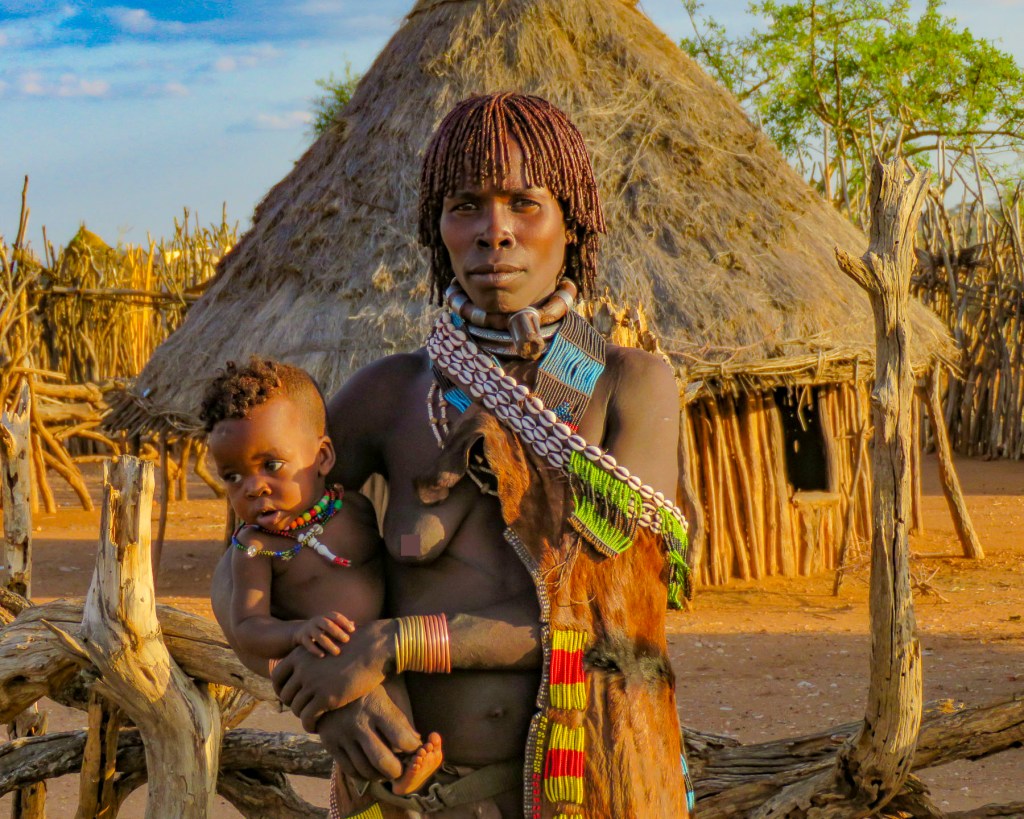
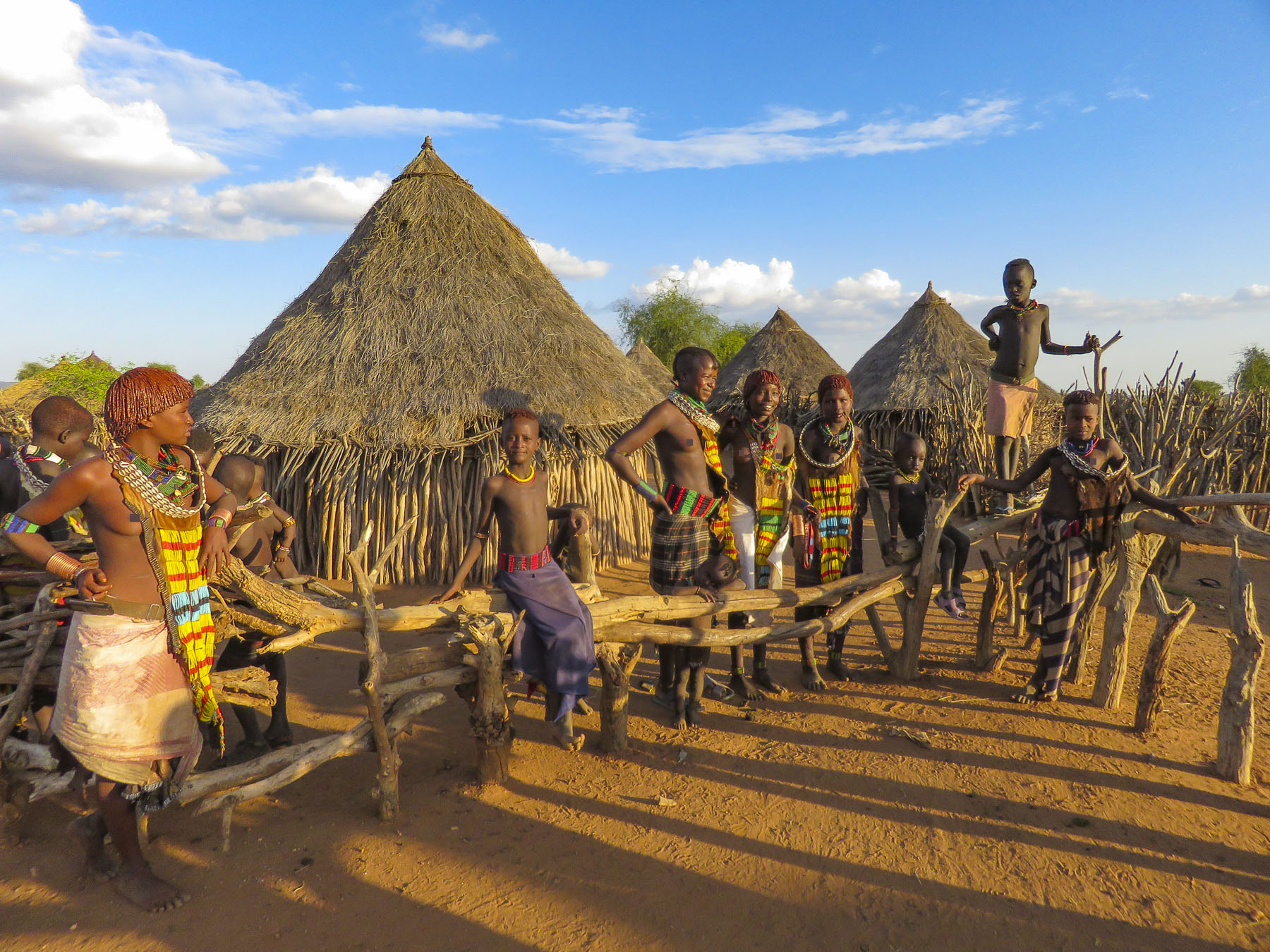
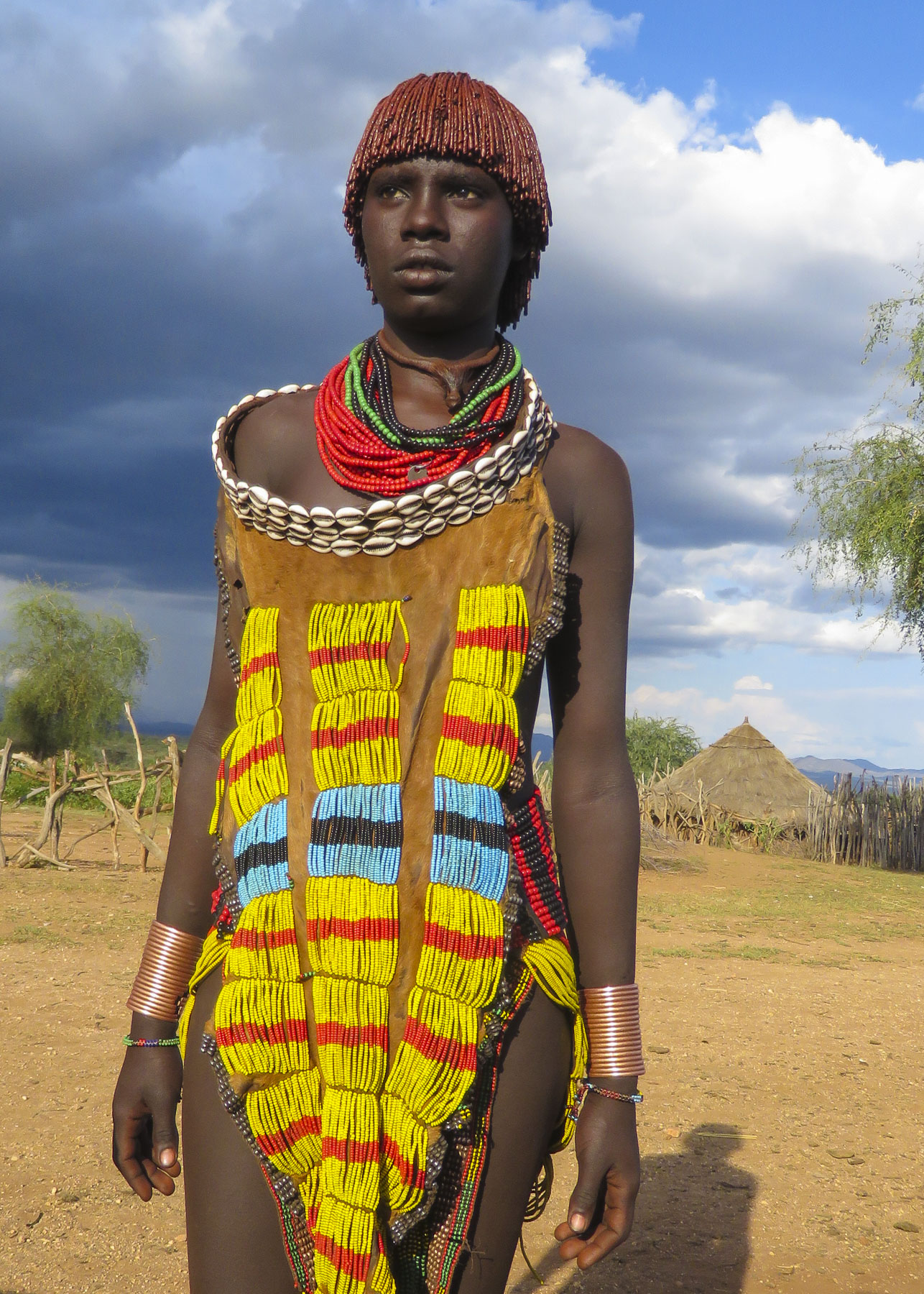
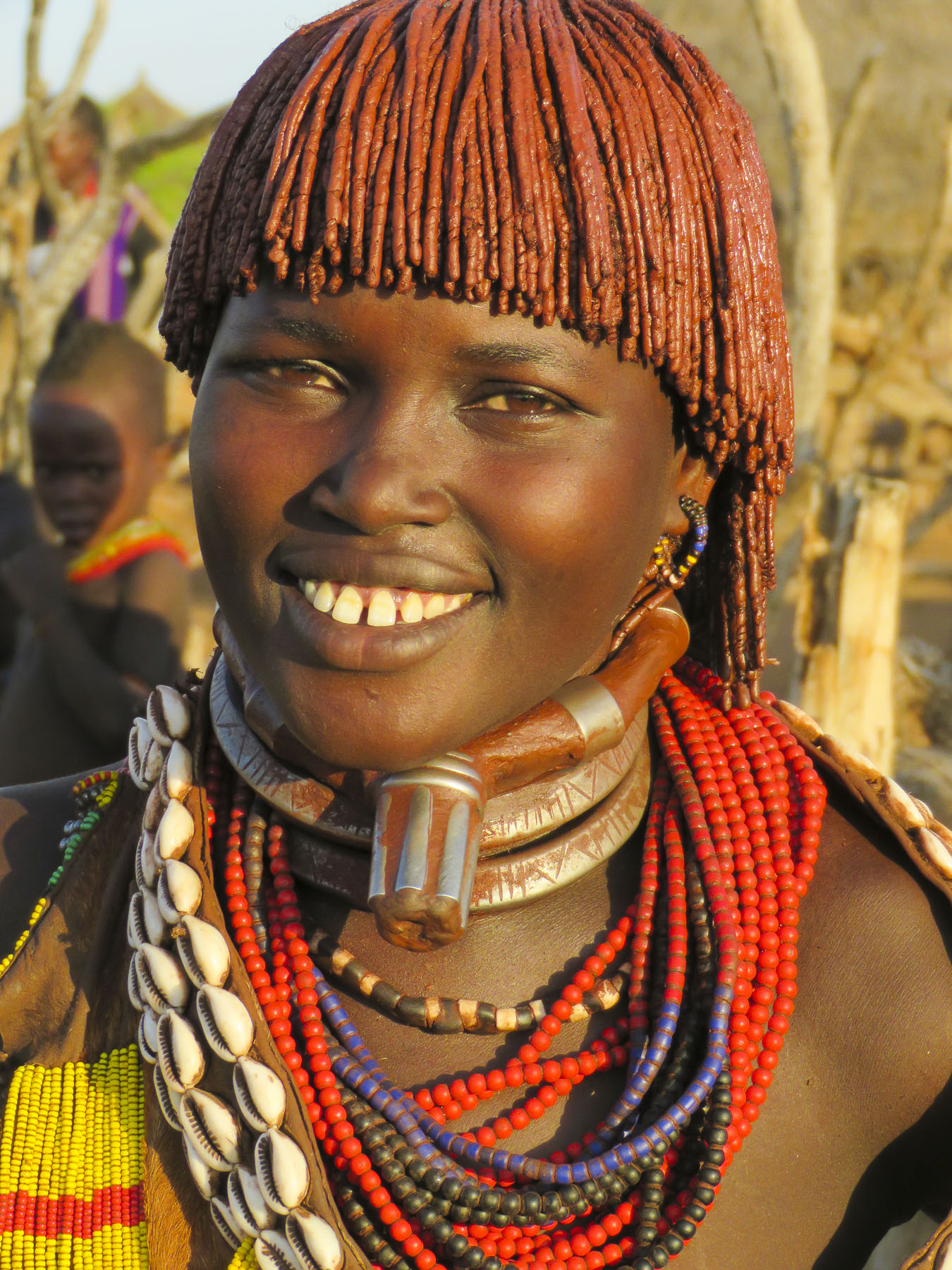
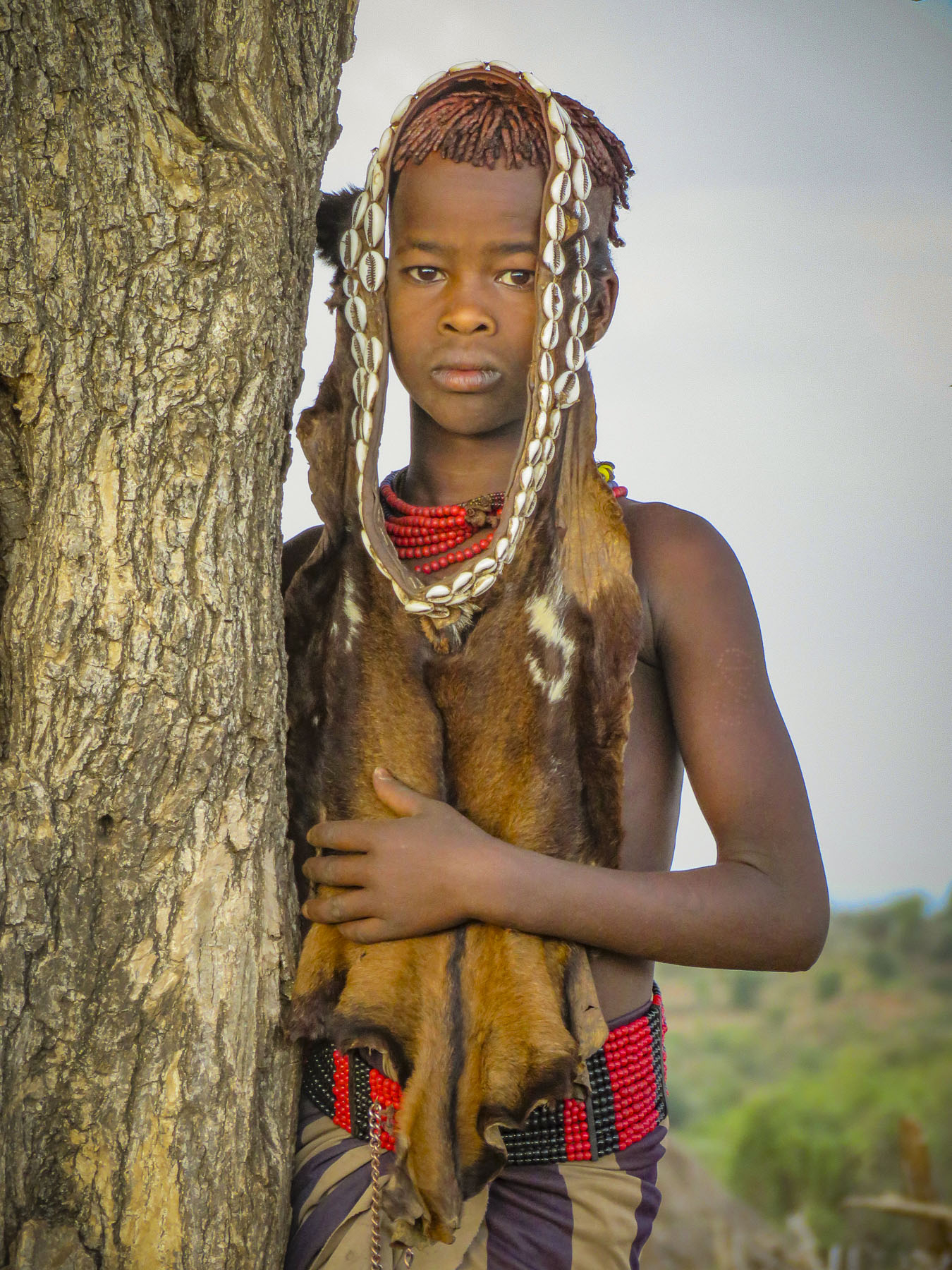
The Hamar tribeswomen are also very distinctive with their dress, wearing long goatskin garments adorned with cowry shells and beads.  The first wife of a tribesman wears an iron neck ring with a protruding knob on the front, called a binyere, that visually distinguishes her status as the first wife, above two esente, simple iron collars, that she has worn since her engagement.  The collars are permanently placed on the woman by the village blacksmith and only removed by her husband upon her death. Additional wives only wear simple metal necklaces to indicate their lower status.

We stayed late into the day, wandering through the village watching children play atop the cattle corrals while waiting for the herds to return and the sky slowly deepen to darkness.

Till next time, Craig & Donna