Road Tripping Through Normandy: Honfleur, Beuvron-en Auge & Mont Saint-Michel or South Across the Seine

The morning sky was dark and speckled with a few dim stars before sunrise as we walked through the carpark in Étretat by the light of our cell phones. The night air was still crisp and there was a heavy dew on the car windshield, which the wipers quickly cleared. The mirrors we cleared with our fingertips. Quickly we set the destination on the phone’s map app, before debating how much heat is enough to counteract the late October chill, but not fog the windows. We set off.
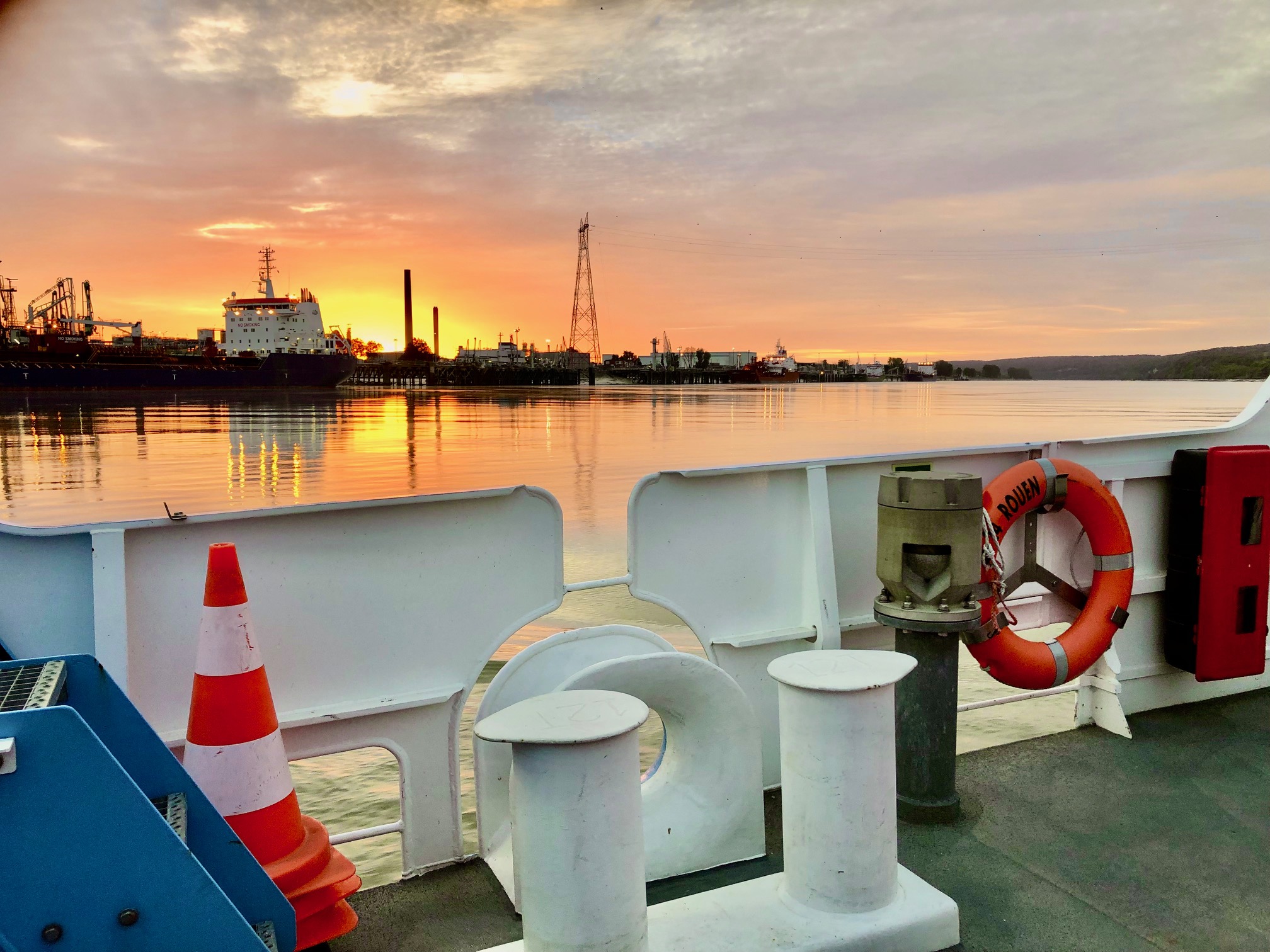
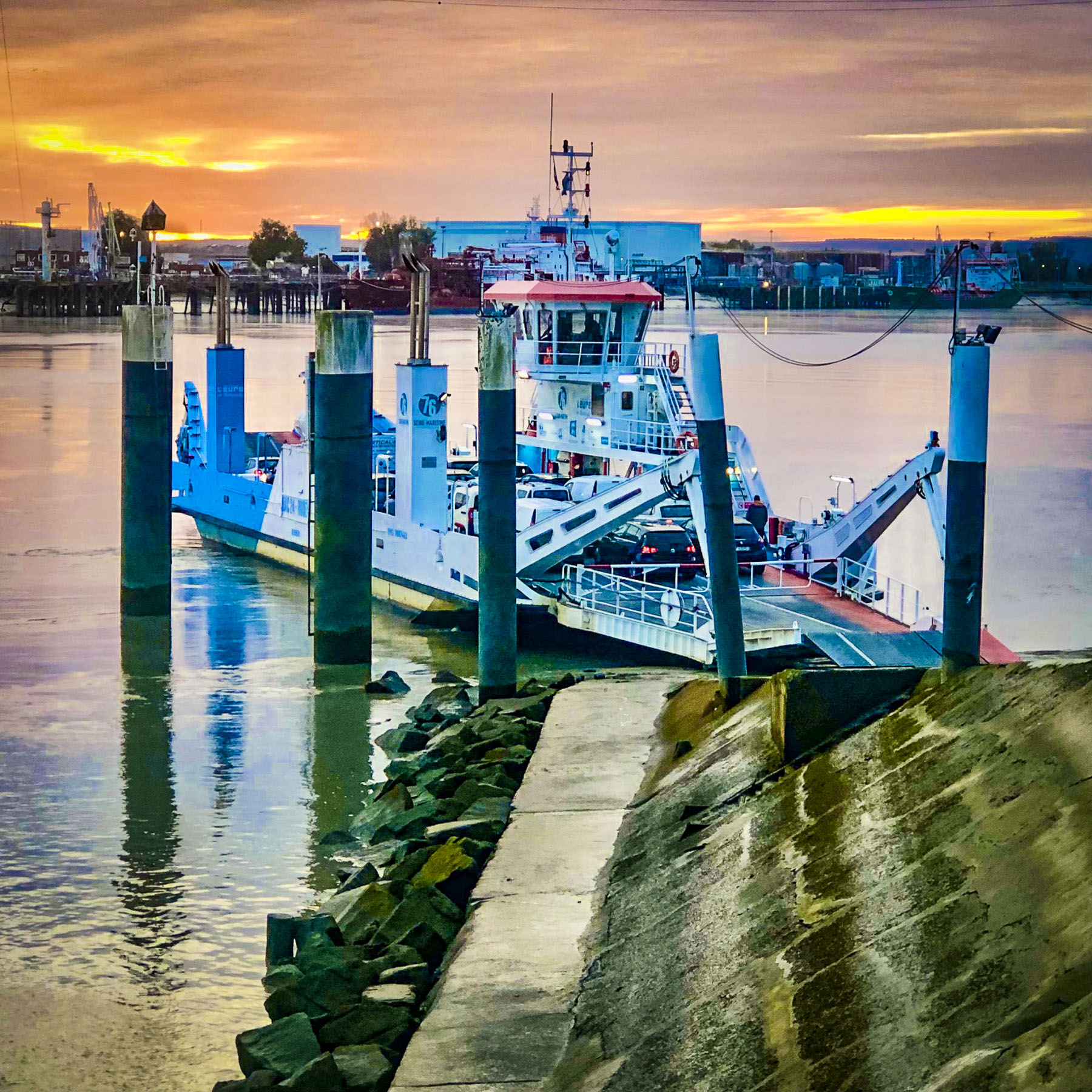
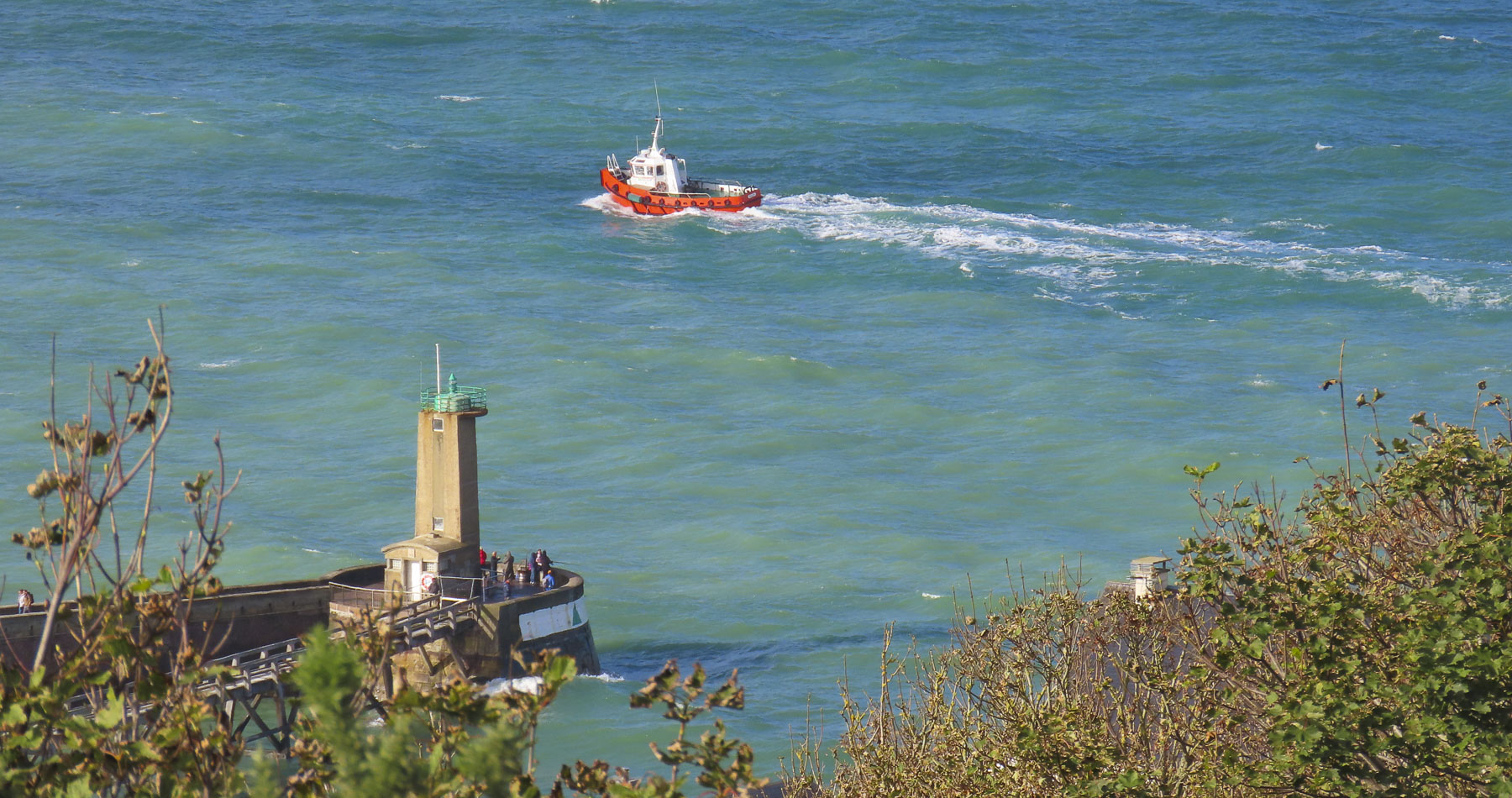
Forty-five minutes later the dawn’s first light reflected pink and yellow off the Seine River as we unexpectedly drove onto a queue ramp for a car ferry across the river. We were totally surprised, and not sure what the proper procedure was; there wasn’t a ticket booth or office to inquire at. We figured we would just follow the short line of cars ahead of us onto the small car ferry when it returned from the far shore. When the cars were waved aboard the ferrymen raised the ramp, brought in the mooring lines, and we departed. No payment was requested from any of the cars. Five minutes later we landed in the small riverport village of Quillebeuf-sur Seine, which looked intriguing in the early morning light, and whispered for further investigation. Had some of the shops been open we would have stopped for café, but the sun was still a small ball, just breaking the horizon. Honfleur was our first destination. By day’s end we’d be in Mont Saint-Michel.

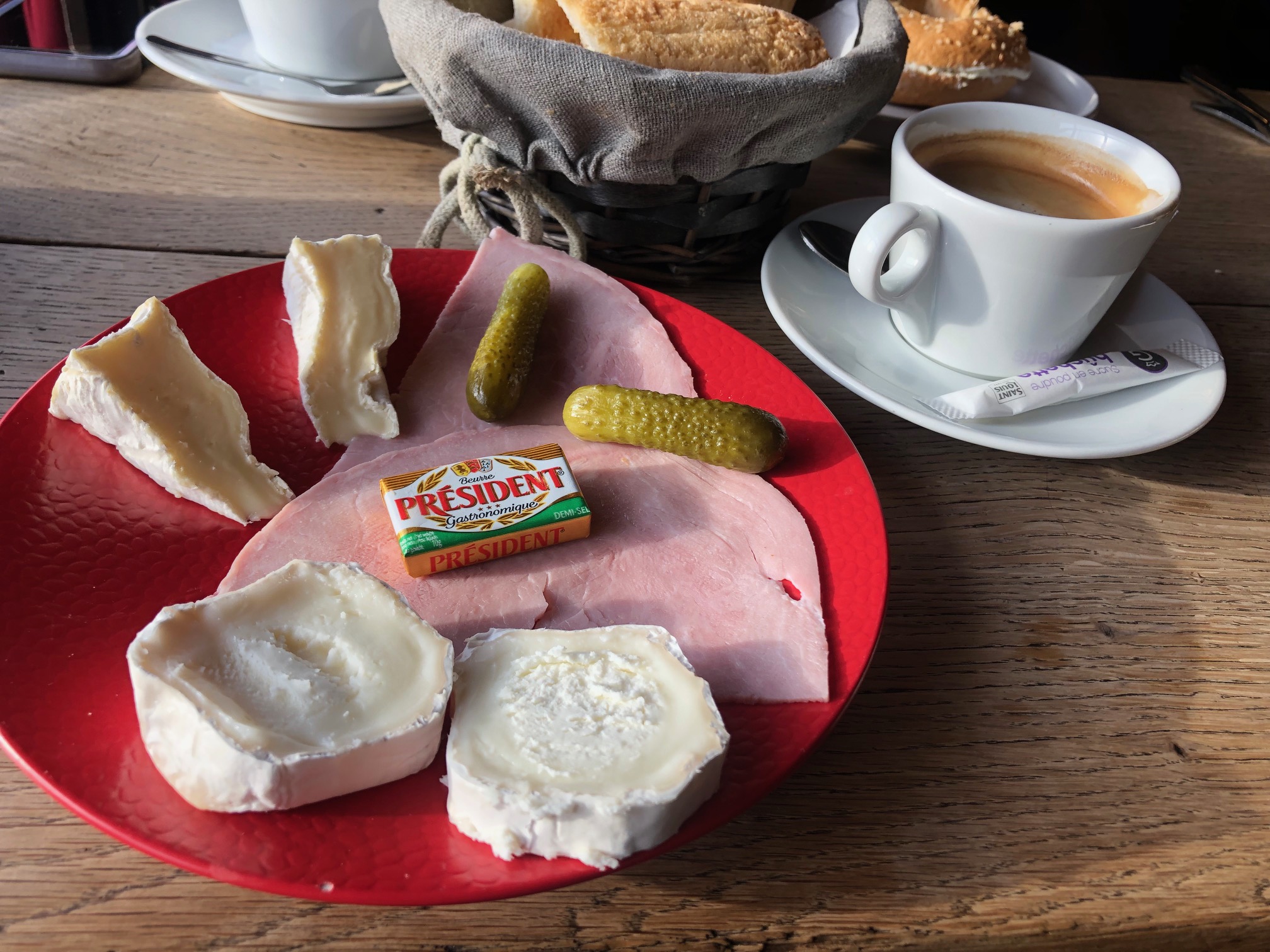
The sun was trying its hardest to burn through a stubborn, light cloud cover by the time we reached Honfleur. A café was desperately needed after such an early morning start without our usual cup of coffee. Our “walk a little” or “drive a little” philosophy was way behind schedule. The question of having our cup of joe inside or outside was moot as all the cafés along the Le Vieux-Bassin, Honfleur’s harbor had their doors swung wide open. Hoping the solar effect would help us, we found a table inside by a window, though we still needed to wear our coats.
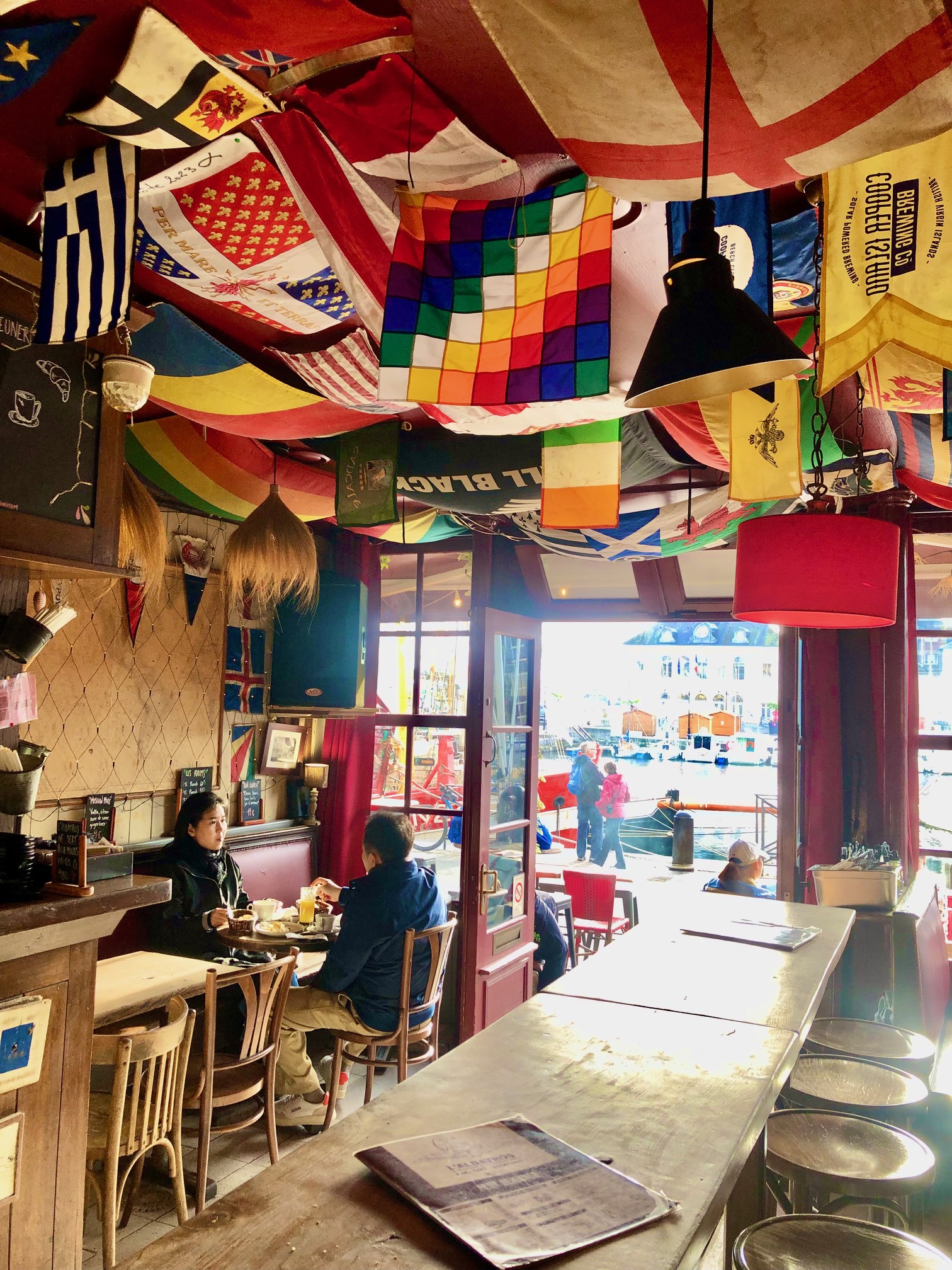
Accessed by a small channel off the La Morelle river before it empties into the Seine and the Bay of Le Harve a short distance away, Le Vieux-Bassin is a well sheltered anchorage that for centuries has provided French sailors a safe haven against ferocious North Atlantic storms. From the 1500s into the 1800s the seaport flourished as the gateway for goods entering France from Canada, its North America colony, and later Asia. Wealthy merchants surrounded the Le Vieux-Bassin with 4-6 story buildings that were warehouses on the lower levels and their homes above. Most of the vessels docked in the harbor today are recreational craft, but there was a predominance of sailboats, new and old with their masts swaying gently with the wind, that kept Honfleur’s historic waterfront in character.

From the harbor we wandered our way through the quiet town past galleries, restaurants, antique stores, and all variety of contemporary shops, which have replaced the sailmakers and ship chandlers which previously outfitted merchantmen and explorers before they set sail on long voyages to distant lands. Samuel de Champlain most famously sailed from Honfleur on his first voyage to Canada in 1603 and founded Quebec.
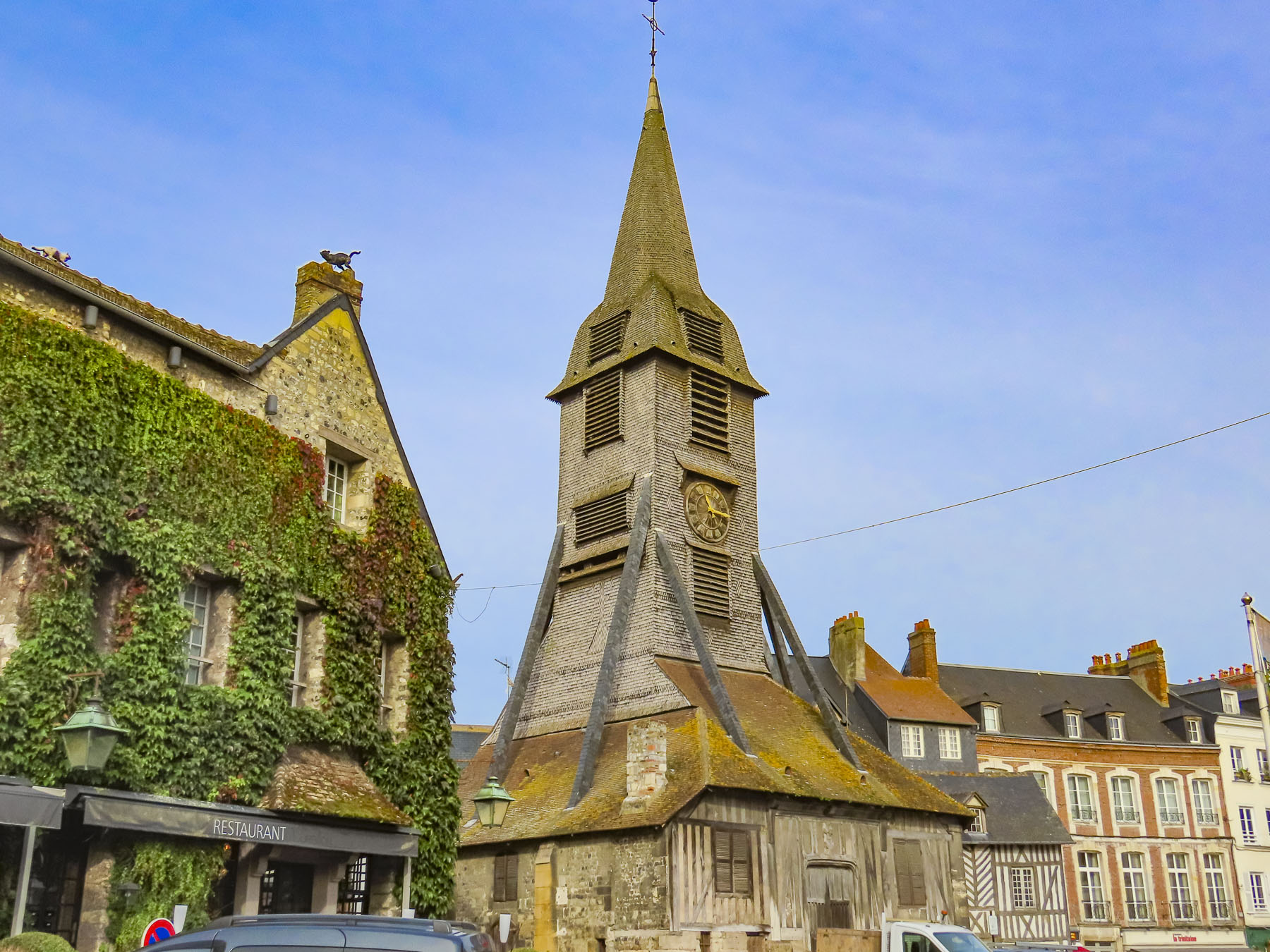
A block above the quay the 15thcentury Eglise Sainte-Catherine sits on the ruins of an early 11th century chapel destroyed in the Hundred Years War. The 11th century church was one of three in Fecamp, Honfleur, and Caen that Robert the Magnificent, an 11th century Duke of Normandy, constructed in thanks to God for surviving a shipwreck in the waters below the white cliffs of Normandy. Its 15thcentury replacement, the Eglise Sainte-Catherine, is the largest church constructed entirely of wood in France, with all of its structural oak beams hand hewn with axes. It features an amazing, vaulted ceiling which resembles the ribbed hull of a wooden ship.

The inspiration for the church’s design is credited to Honfleur’s shipbuilders who used their familiarity with wood and knowledge of naval construction techniques to build the massive structure. To reduce the risk of fire from a lightning strike, the church’s belltower was built separately and stands across the plaza quite a distance away from the chapel. The church continues to be a pilgrimage site for fishermen, sailors, and others who make their livelihood from the sea.Before leaving Honfleur we had a simple no-frills lunch at L’Hippocampe poissonnerie, a fresh seafood shop on the edge of the harbor, where we perused the morning’s catch before orderingfresh oysters, fried fish, and white wine. We enjoyed our short visit to Honfleur, but wish we had scheduled more time or an overnight stay to further explore this delightful town and absorb its ambience.

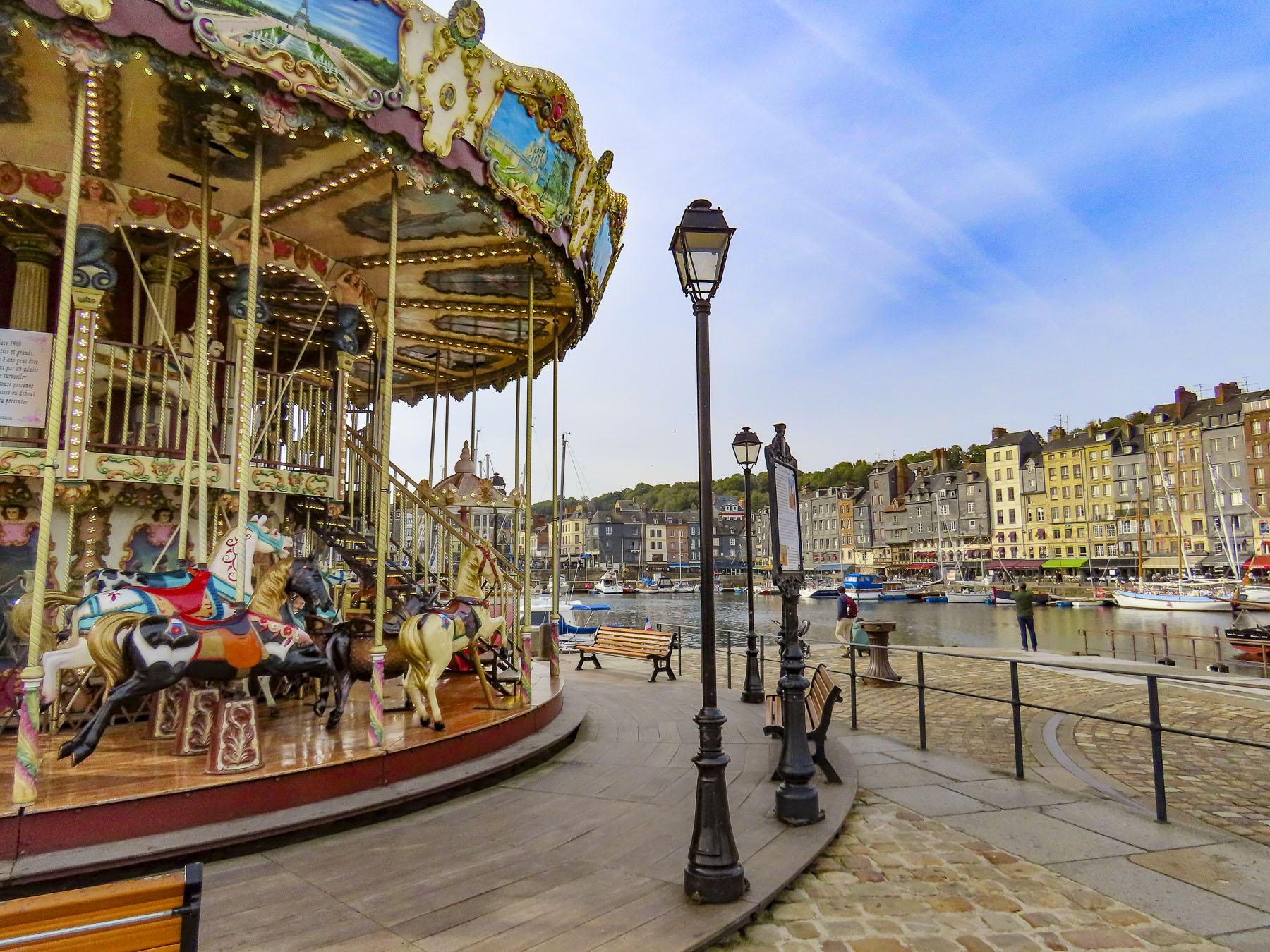
Afterwards we headed to Beuvron-en-Auge, a commune in the Calvados, the apple brandy and cider region of Normandy. It’s a small village, with one main thoroughfare and a cross street, meticulously lined with well-kept 15th,16th and 17th century half-timbered buildings. “Picture perfect,” the village is recognized as one of the Les Plus Beaux Villages de France, “Most Beautiful Villages of France.”

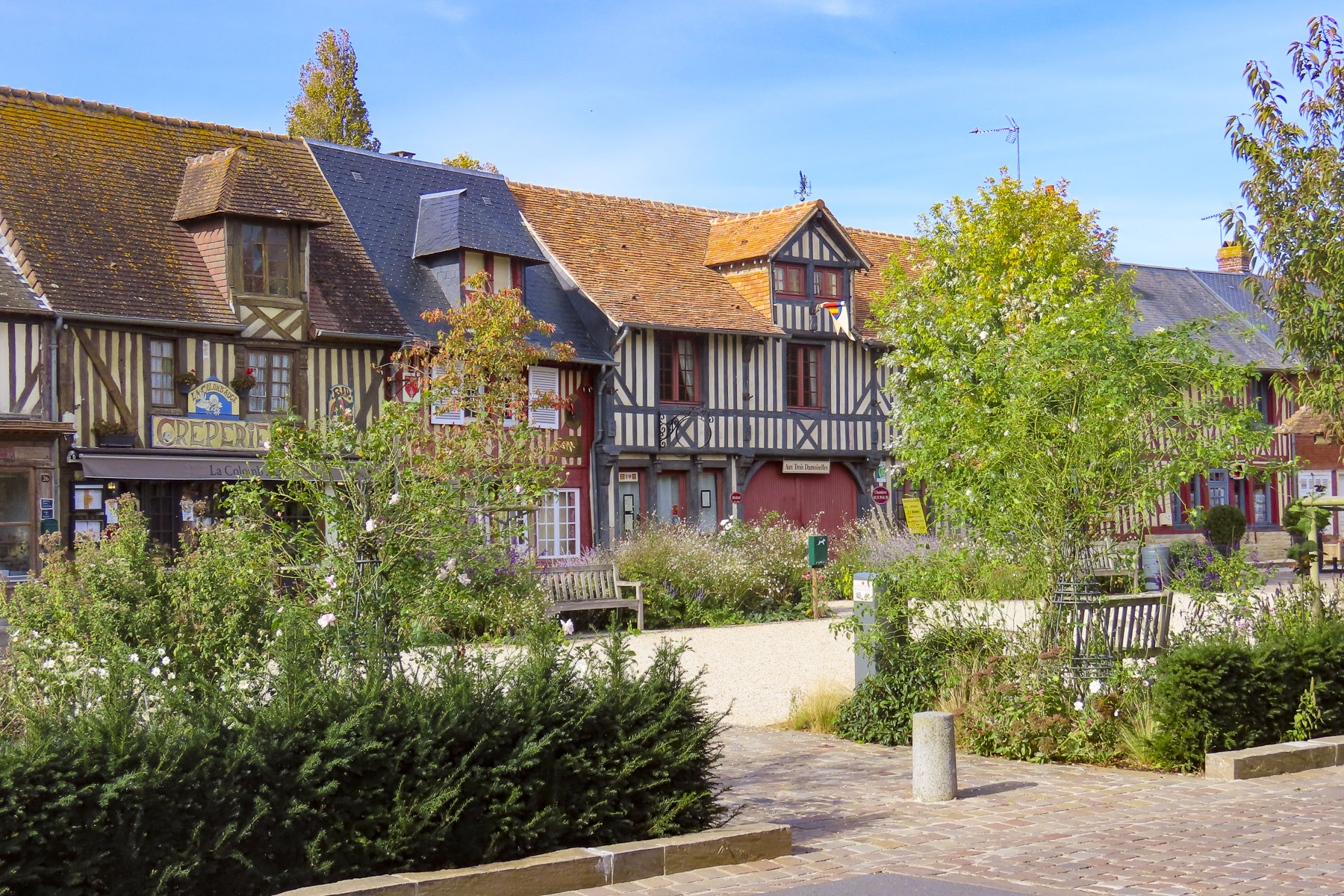
We practically had the whole hamlet to ourselves when we stopped mid-week on a sunny afternoon in mid-October.  Most of the restaurants and shops only open on the weekends this time of year, but we still delighted in walking the length of the village, taking numerous pictures, and investigating the churchyard and cemetery of the Église Saint-Martin.

“Walk a little, then café,” we stopped at one of the few shops open, L’Orée du Village. The local tobacconist did a little bit of everything: off-track betting, souvenirs, post office, café. We sat outside in the sun and watched an occasional farm tractor rumble by. The coffee was very good.

Beuvron-en-Auge is also the starting point for the Cider Route, a 25-mile loop through small villages and the surrounding French countryside filled with apple orchards and over 20 cider and calvados, apple brandy producers. So far during our trip we had only encountered brief rain showers, but the weather along the Normandy coast in middle of October can be iffy and rain was predicted for the next day. So we pushed on, hoping to reach Mont Saint-Michel by late afternoon and the “golden hour.”
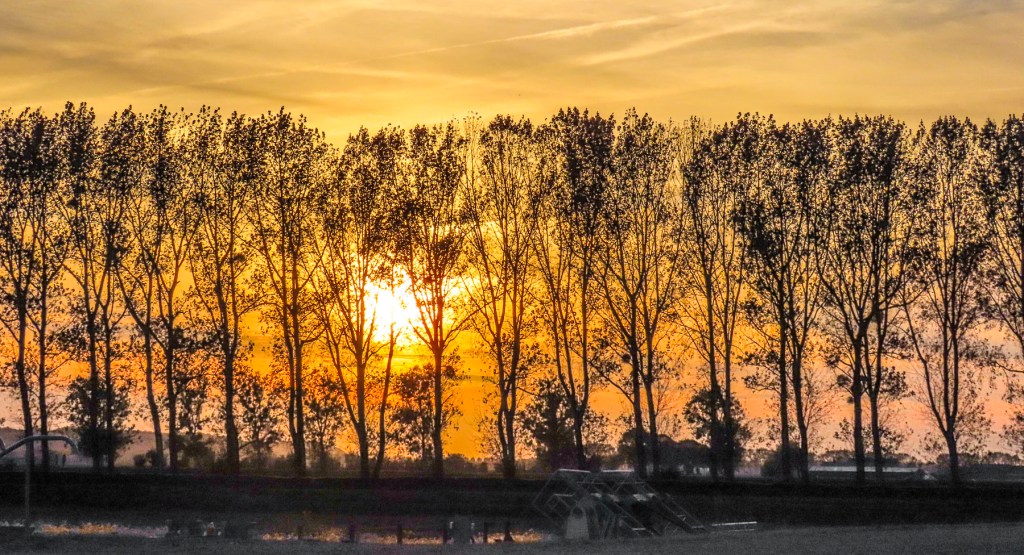
We had anticipated a high entry and parking fee but were pleasantly surprised when neither were requested. Driving access to the mainland part of Mont Saint-Michel is restricted by a traffic gate. But if you are staying at one of the town’s hotels, they text you an entry code when you call them. We stayed at Hôtel Vert, which was very convenient to the island’s free shuttle bus. Unless you choose to walk along the causeway to the Mont Saint-Michel island, a distance of 1.6 miles, the shuttle bus is the only way to reach the island. Hôtel Vert was kind enough to let us use their parking for an additional night even though we were staying at a different inn on the island.

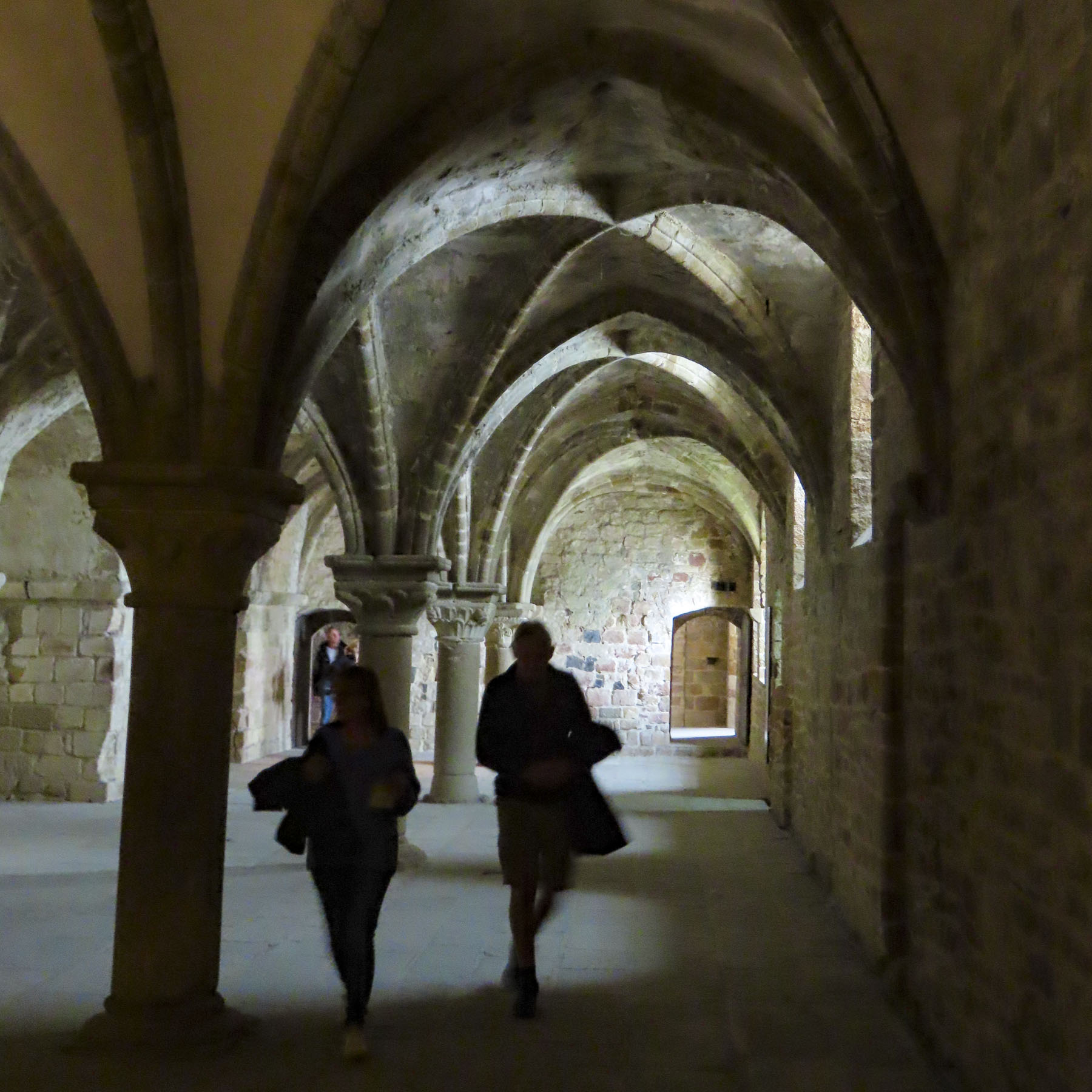
Luck was with us and the afternoon light that shined on this mystical island was beautiful and we snapped away till nightfall. The next morning, we repacked some clothes into a small duffel bag for our one night on the island. After all, visiting Mont Saint-Michel was the catalyst for our trip through Normandy and we wanted to experience it fully. Literally a “pyramid rising from the sea,” Mont Saint-Michel was built one stone at a time above a small rocky islet, a half-mile from the mainland, in the tidal mudflats of the Bay of Cancale which opens onto the English Channel. Its beauty has lasted for centuries, and in any weather, this iconic image of man’s symbiotic relationship with nature fascinates its visitors. It was visionary in the 8th century and will forever be enchanting.

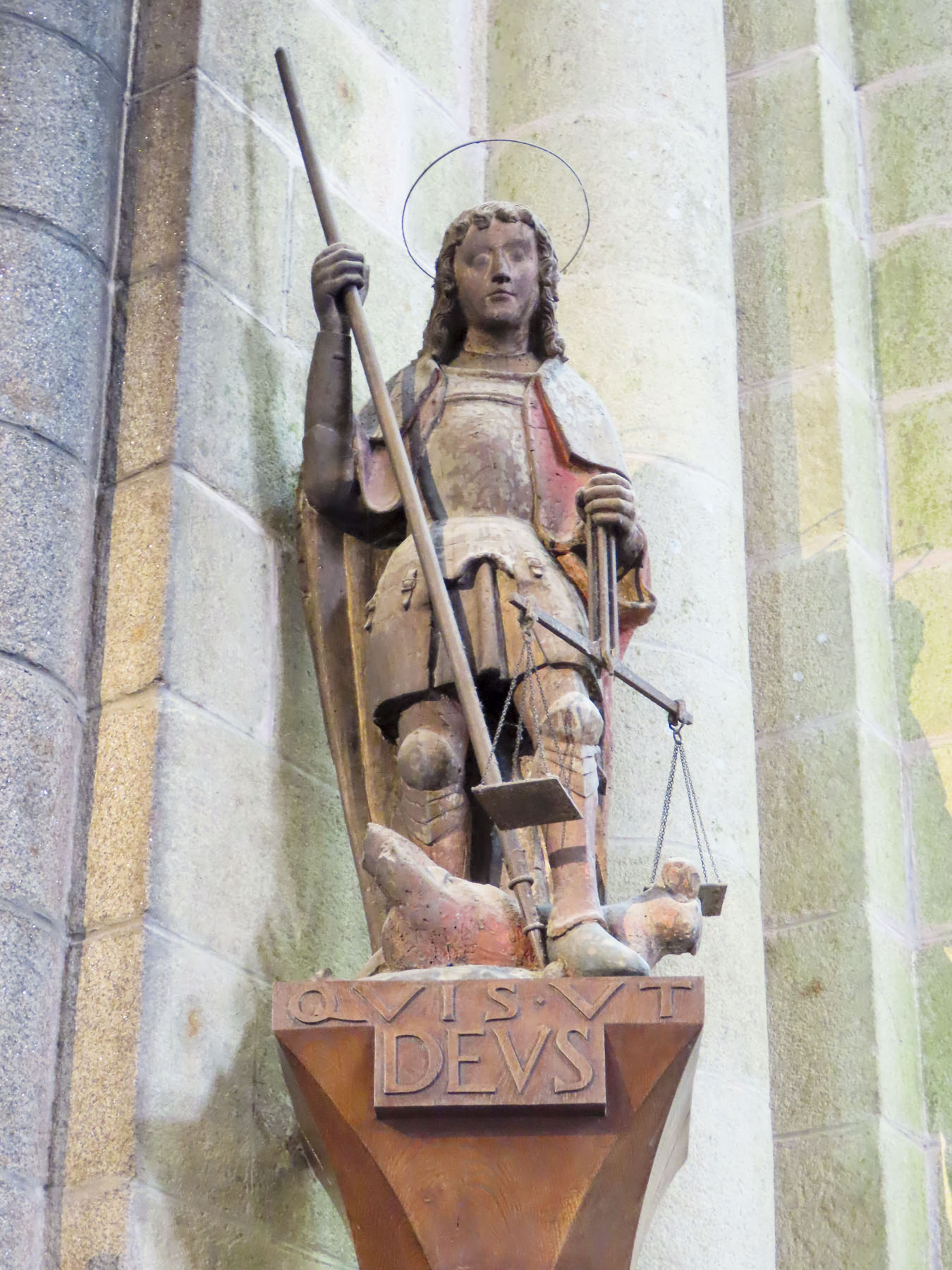
The monastery was celestially inspired through the dream-visions of Aubert, the Bishop of Avranches, who received the commands of the archangel Michael in 708 to build a sanctuary devoted to him. And since the seriousness of devotion seems to be questioned unless churches were built in extremely difficult places – why make it easy for the faithful? – an islet accessible only by boat, or a treacherous trek across mudflats dotted with patches of quicksand was chosen.
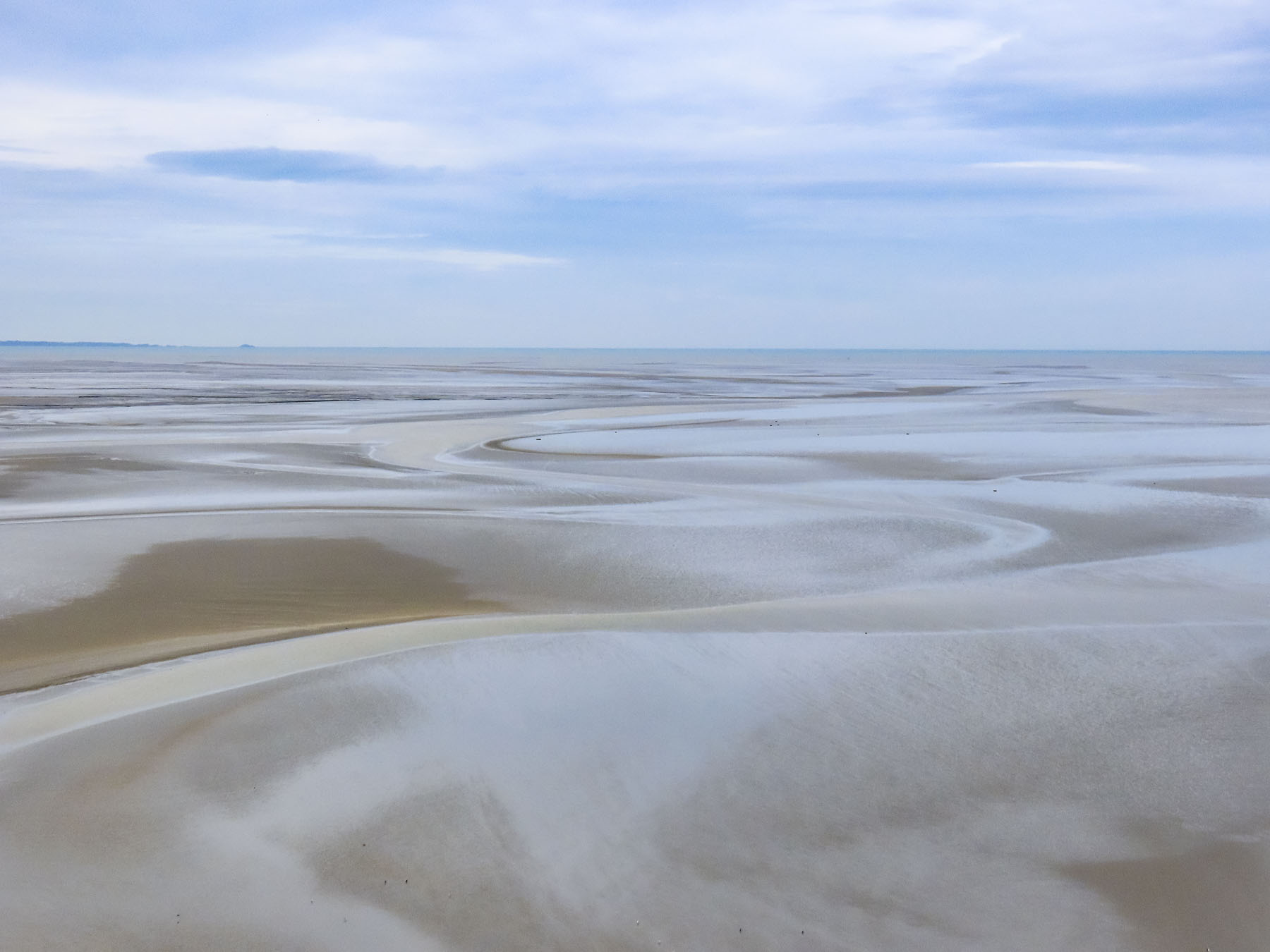
By 966, Benedictine monks were expanding Aubert’s chapel and establishing an abbey with a scriptorium, which was widely recognized for the copying skills and illuminated manuscripts created by its monks. The abbey was also a center for religious education supported by a library containing over 3800 ancient books and manuscripts and known for translating Aristotle’s texts to Latin. A small village was also growing on the island to support the abbey and pilgrims visiting the site. Granite stones for this construction and the islands’ fortress walls were quarried on the Chausey islands, some 19 miles away, and transported by boat across the bay to Mont Saint-Michel during the high tides. The stone ramparts successfully protected the island’s inhabitants from several sieges by the English during the Hundred Years’ War.

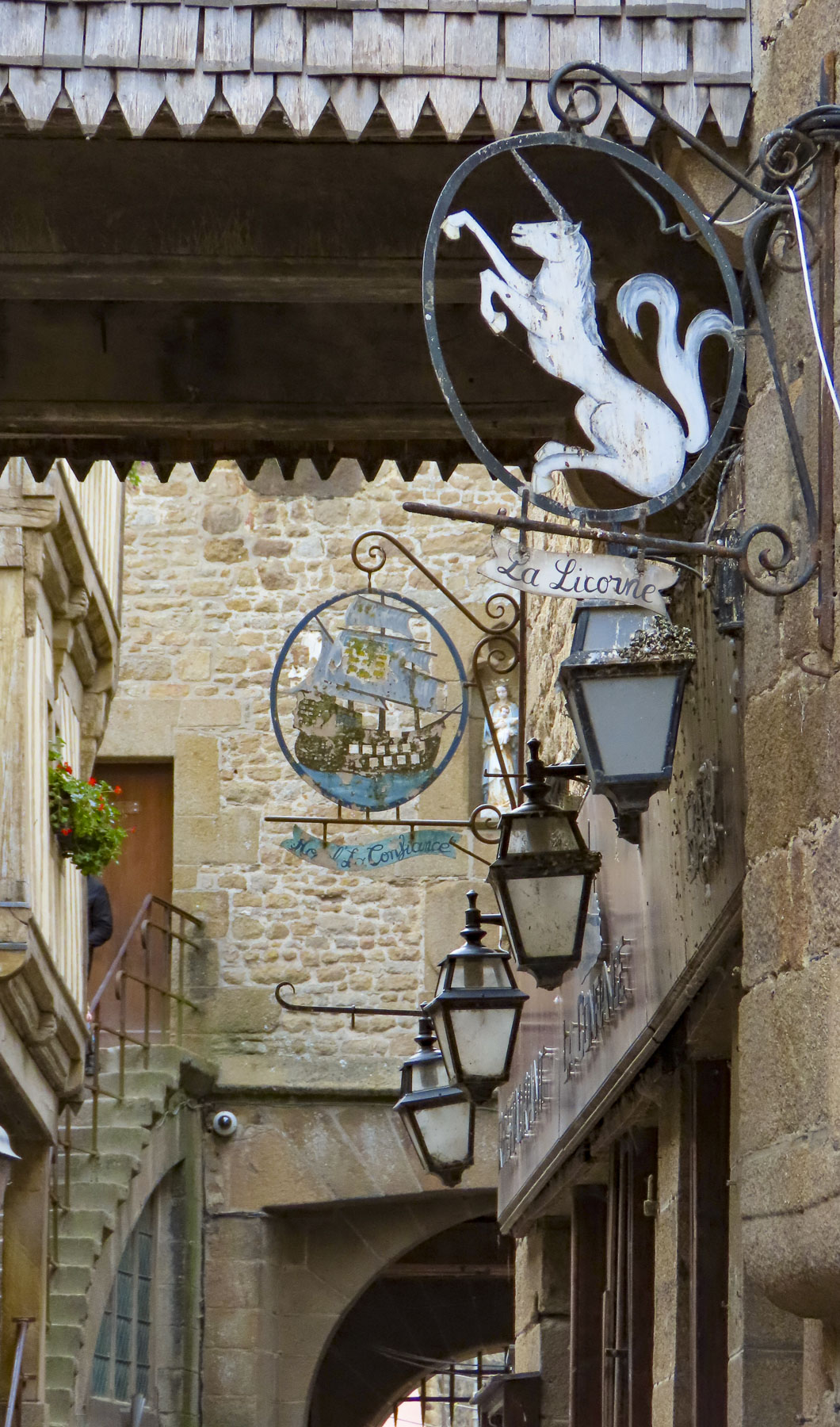
It was a never-ending, arduous effort to supply the abbey with food and wood to fuel the large walk-in fireplaces that heated the cavernous rooms and fire the kitchen hearths. Ingeniously, a human hamster wheel, operated by two people walking inside it, was designed and built to vertically lift a sled loaded with 2 tons of goods, several hundred feet up a cliff face from the dock below, where boats had brought supplies to unload.

Sadly, the books in its library were confiscated during the French Revolution (only 199 remained when they were inventoried in 1835,) and the abbey became a slowly decaying prison which housed over 600 inmates and operated until 1863, when Victor Hugo and other members of the French elite successfully petitioned the government for its closure and subsequent restoration as a pilgrimage site.
Even on a weekday in the middle of October the narrows alleys of Mont Saint-Michel were busy, not surprising for one of France’s most popular destinations that annually receives over three million visitors. Thankfully we were here in the colder shoulder season and the crowds were bearable. It’s all uphill to the Abbey and the closer you get to it the number of eateries near it decline inversely. We didn’t want to head back downhill only to walk up again, so we grabbed a bite to eat at a take-away and found an isolated section of wall, in the sun, to sit on, and rest Donna’s arthritic knee.

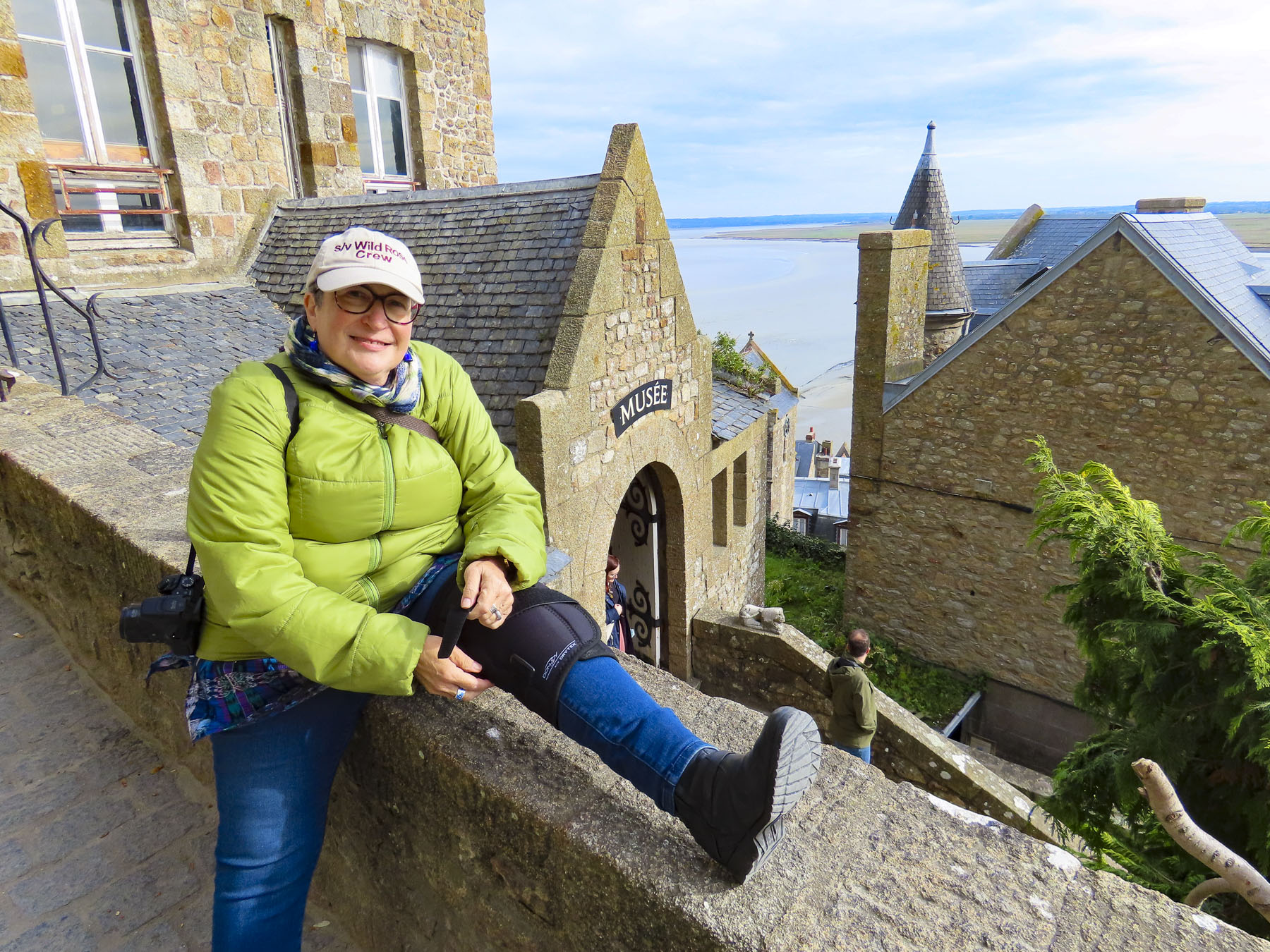
The afternoon sun was welcomed, and helped to alleviate the morning’s damp chill from our bones. Taking in the view over the rooftops, we contemplated how difficult life on this rock must have been in previous centuries, and joked about abbot Aubert possibly authoring an illuminated 10th century aerobics fitness manual and promoting the Mont Saint-Michel diet. They definitely would have been hits with the pilgrims and a good source of income for the abbey.

Rejuvenated from our restful picnic lunch, we continued climbing the final stretch of stairs to the top of the Mont. The expansive abbey was a wonder to explore and the views from it of the surrounding mud flats, with modern day pilgrims crossing them were extraordinary.

Later that evening as the lanes darkened and the amber lights from the restaurants illuminated their interiors, we wandered along until we found an establishment with a fire roaring in its hearth. Warmth, good food and wine restored us.

We slept well, exhausted from a long day of walking. The next morning it poured relentlessly as we waited for the shuttle bus on the causeway, but we were fulfilled, having accomplished a lifelong desire to visit this iconic site.

Victor Hugo famously expressed “Mont-Saint-Michel is to France what the Pyramids are to Egypt.” Another French writer described “The Pyramid of the Seas” as the “eighth wonder of the world.”

Sentiments we agree with.

Till next time, Craig & Donna

France: Road Tripping Through Normandy – Fecamp, Yport & Étretat

Overnight showers had cleansed the air, the morning was brilliant with sunshine, and the deep blue sky was checkered with fair weather clouds. We were road tripping west through flat farmlands and pasturelands, which were lined with rows of beech trees to protect the land from the ferocious winds of winter storms. The landscape was dotted with Normande, a breed of dairy cow descended from the cattle that the Vikings brought with them when they settled in the area during the 9th century. A white cow, speckled with brown patches, this breed is favored for its milk’s high fat content, which lends itself perfectly for making CHEESE! More specifically the PDO (Protected Designation of Origin) Camemberts, Livarots, Pont-l’Evêques and Neufchâtels that the Normandy region is famous for. Small signs for fromage and cider pointed down many dirt lanes that spurred off our route.

We were heading to the white cliffs of Fecamp and Yport, in the Seine-Maritime department of Normandy, on the English Channel. While planning this trip we read about high season – over-tourism running rampant across France. Crowds don’t appeal to us, so we’ve been planning our travels to coincide with a destination’s shoulder season for a while now. The articles also suggested visiting places off the usual tourist radar, which is how we came across Fecamp and Yport, our stops before reaching Étretat. In hindsight we should have planned a full afternoon or overnight stay in Fecamp, as the quick glimpses of the Palais Ducal, now ruins, and the Holy Trinity Abbey, as we drove through the historic center, revealed a pretty town and looked intriguing, worthy of further exploration.

Our “walk a little then café,” becomes “drive a little then café,” when we have wheels, and by the time we entered Fecamp it was time to satisfy that late morning craving. Parking in unfamiliar towns is always a challenge, and on a busy Saturday even more so, but we lucked out and found both a parking space and great café near the harbor. The sunny outside tables at Le Coffee de Clo were empty so we were surprised when we entered to see a lively shop nearly full of people busily enjoying the decadent sweet creations we had stumbled across. More muffin than pastry, the baked goods and excellent coffee here are the only excuse you need to detour to Fecamp.

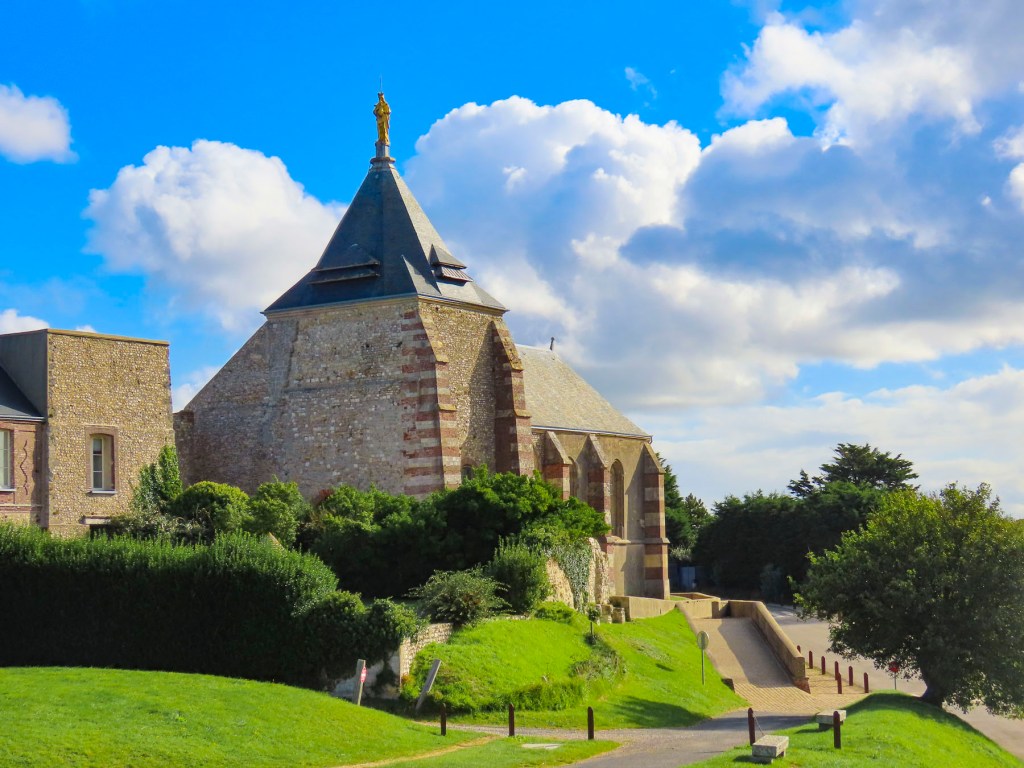
Walking back to the car, we spotted the Chapelle Notre-Dame du Salut, across the harbor, high atop Cap Fagnet. It’s believed that Robert the Magnificent, an 11th century Duke of Normandy, constructed the church in thanks to God for surviving a shipwreck in the waters below the white cliffs of Cap Fagnet. It’s been a pilgrimage site for fishermen, sailors, and their families ever since.

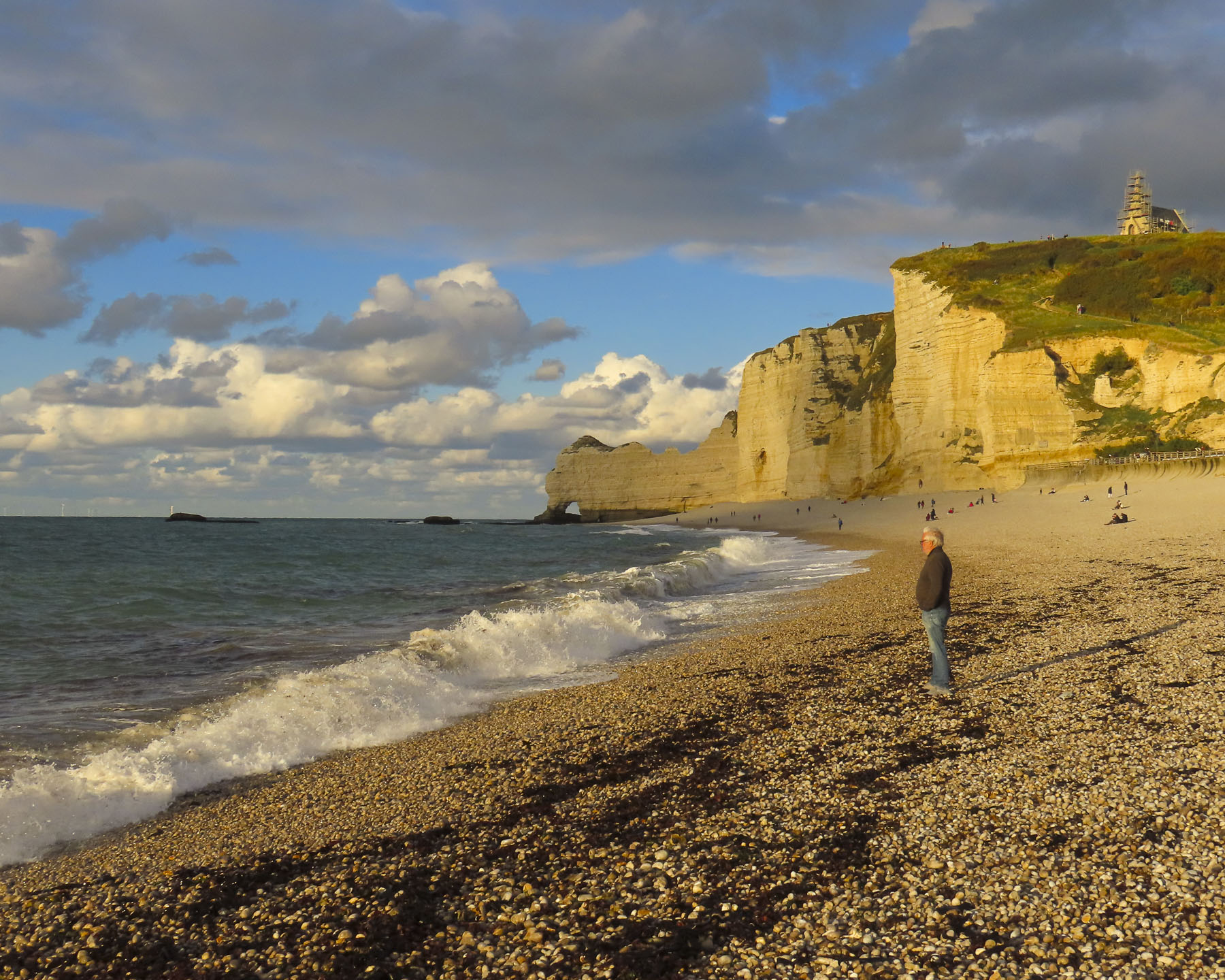
The views from the terrace in front of the church of Fecamp’s harbor, and the southern half of La Côte d’Albâtre, the Alabaster Coast, take in an 80-mile stretch of white cliffs between Etretat and Dieppe on the Normandy coast, that mirrors the distant White Cliffs of Dover across the channel. Locally the cliffs around Fecamp are known as le Pays des Hautes Falaises, high cliff country.

In 1066, William of Normandy set sail from Fecamps’ harbor with a fleet of more than 700 ships, partly financed by the Abbott of Fecamp, to claim the Crown of England, which he had inherited, but this was being contested by Harold, a pretender to the throne.  The issue was settled at the Battle of Hastings when the former became King William the Conqueror. It was also reassuring to learn that the Fecamp monks transitioned away from being international arms merchants, and segued into a more appropriate occupation –  running a distillery in the 16th century, that produced a 27-herb flavored liqueur that would become popular in the mid-1800s and sold as Le Grand Bénédictine.

Eight hundred seventy-eight years after William set sail, on June 6, 1944, during WWII German fortifications along the Côte d’Albâtre failed against an allied amphibious invasion fleet of over 7000 ships and landing craft. It was the beginning of the end of WWII. Scrambling to the top of an abandoned bunker provided us with the perfect vantage point for photos of the coast.

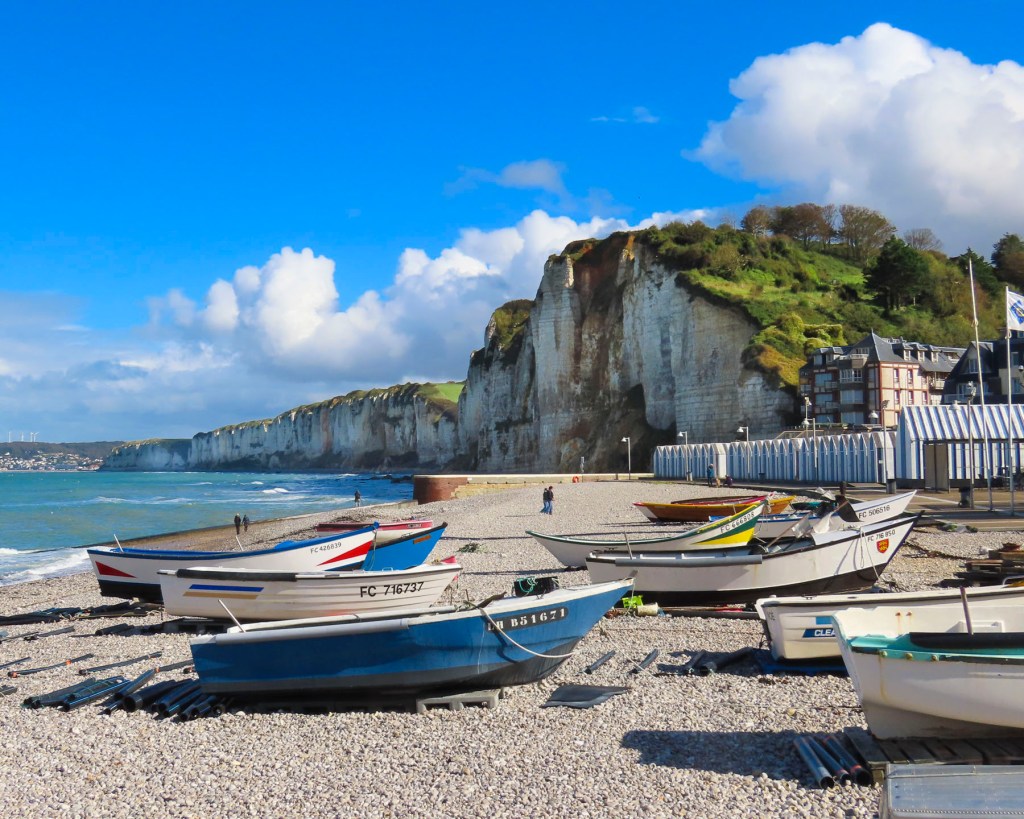
By the time we arrived in Yport the clouds had thickened and were threatening to rain. To our dismay, it poured just as we were parking by the beach promenade. Fortunately, it was an intense but brief shower that cleared into a cloudless sky and revealed a quaint picturesque hamlet and shining white cliffs towering above the sea.

The cliffs along the seafront have been eroding for eons, creating in certain spots deep, long ravines that funneled torrents of water, laden with sand and stone through the cliff face to the ocean, which created beaches in certain places over the ages. These narrow valleys are called valleuses, and the small coastal fishing village of Yport started in one during the Neolithic era.

Without a harbor, fishermen pushed their small boats across a pebbled beach and rowed out through the waves to pursue their livelihood. They repaired their boats and mended their nets on the beach at the foot of the town. This way of life supported the villagers for centuries. Only the invention of the small outboard motor in the early 1900s eased their physical effort, until the 1960s when tourism and a small casino replaced fishing as the town’s driving economic force.

In 1838, the tightly knit community decided to build a church. Men, women, and children gathered tons of smooth stones from the beach, carted them 500m inland, and proudly worked together to mix cement and build the center piece of their town. Horizontally striped with alternating layers of colored beach stones, the façade of the church is beautiful, and unique in Normandy. It is a true testament to the power of community spirit.

By the mid-1800s Parisians seeking a more relaxing retreat than Etretat were frequenting the quiet fishing village. The French painters Monet, Renoir, Schuffenecker, and Vernier visited and painted there, while the 19th century French writer Guy de Maupassant set his novel, ‘Une Vie,’ in Yport. Paths from the center of the town and from behind the casino lead to the cliff tops and join the popular GR21 trail that can be followed north to Fecamp or south to Etretat.

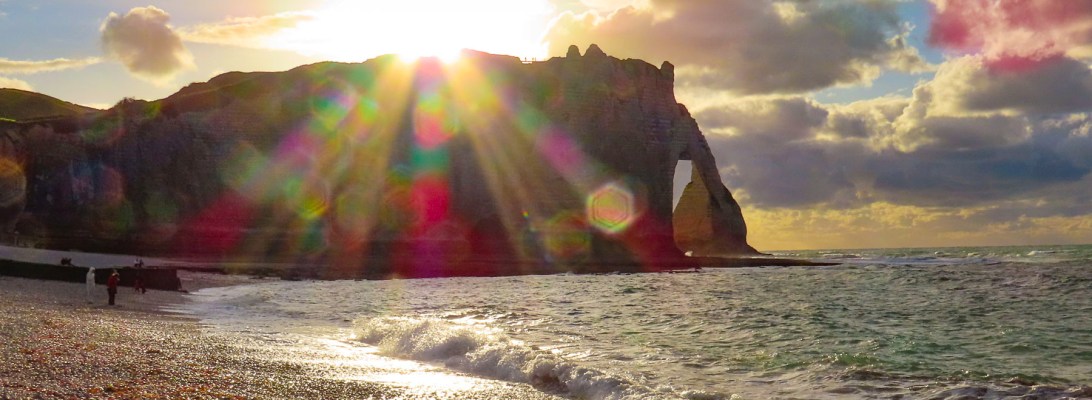
Regardless of how beautiful photos of the Falaise d’Aval are, they don’t rival the physical reality of the calling gulls, wind-swept hair, the whistling wind and the relentless sound of the surf crashing against the stoney beach.

Arriving late on a Saturday afternoon in mid-October, we were surprised Étretat was jammed with tourists. Parking is extremely limited here and finding a space is almost a competitive sport that ultimately just required us to sit in a row and wait for someone to return to their car. It sorted itself quickly enough and luckily, we were only a short walk from one of Étretat’s first lodgings, the Hotel Le Rayon Vert, which to our delight was directly across from the beach and Étretat’s promenade. After checking in, we headed to the top of the towering 300ft high cliffs for sunset, the first of many walks along this beautiful stretch of coast and the perfect way to work up an appetite.

If you have been following this blog, you’ll know my superpower is the ability to find a great pâtisserie, pastelería or pastry shop. It’s a great talent when the hotel wants 16€ per person for breakfast. In Etretat, the boulangerie patisserie “Le Petit Accent” exceeded all expectations!

Set high above the town, it was a steep uphill walk to the Jardins d’Etretat. This whimsical topiary garden, with playful faces as “Drops of Rain,” by the Spanish artist Samuel Salcedo, more so than the Falaise d’Aval, was the catalyst for visiting this seaside resort.

This magical spot has its roots over 100 hundred years ago when a villa and garden were built here by Madame Thébault, a Parisian actress, and friend of the impressionist painter, Claude Monet. Madame Thébault cultivated a circle of creative folks as friends, and Monet along with other painters and writers were her frequent guests. It was from a patio in this garden that Monet found repeated inspiration to capture the essence Les Falaises à Étretat.  His love of the area is evident in the nearly 90 canvases he painted depicting various scenes along the Normandy coast. But the Jardins d’Etretat today are a relatively new botanical masterpiece reopening in 2017 after an expansive reinterpretation led by the landscape architect, Alexander Grivko.

Across from the entrance to the garden, a tall soaring monument pointing skyward, elegant in its simplicity, commands a view out over the cliffs and the ocean beyond. This tribute commemorates the last sighting from French soil of the pilots Charles Nungesser and François Coli on May 8th, 1927. They were flying their biplane L’Oiseau Blanc, The White Bird, from Paris to New York in an attempt to be the first non-stop flight across the Atlantic Ocean and win the Orteig Prize of $25,000. But they disappeared somewhere along their route. It’s believed they made it across the Atlantic, but crashed into the dense wilderness forest of Nova Scotia or Maine. Wreckage of L’Oiseau Blanc has never been found and their disappearance remains an unsolved aviation mystery, that rivals Amelia Earhart’s story.  If Nungesser and Coli had succeeded, they would have beaten Charles Lindbergh in the Spirit of St. Louis by twelve days.

The Notre Dame de la Garde stands alone on the slope below the Monument “L’Oiseau Blanc,” isolated on the cliffs like a small boat surrounded by a vast ocean, its spire like a lighthouse’s guiding beacon, visible far out at sea. It offers a welcome sign for the fishermen and sailors returning home. Unfortunately, it was undergoing renovation when we visited in mid-October.

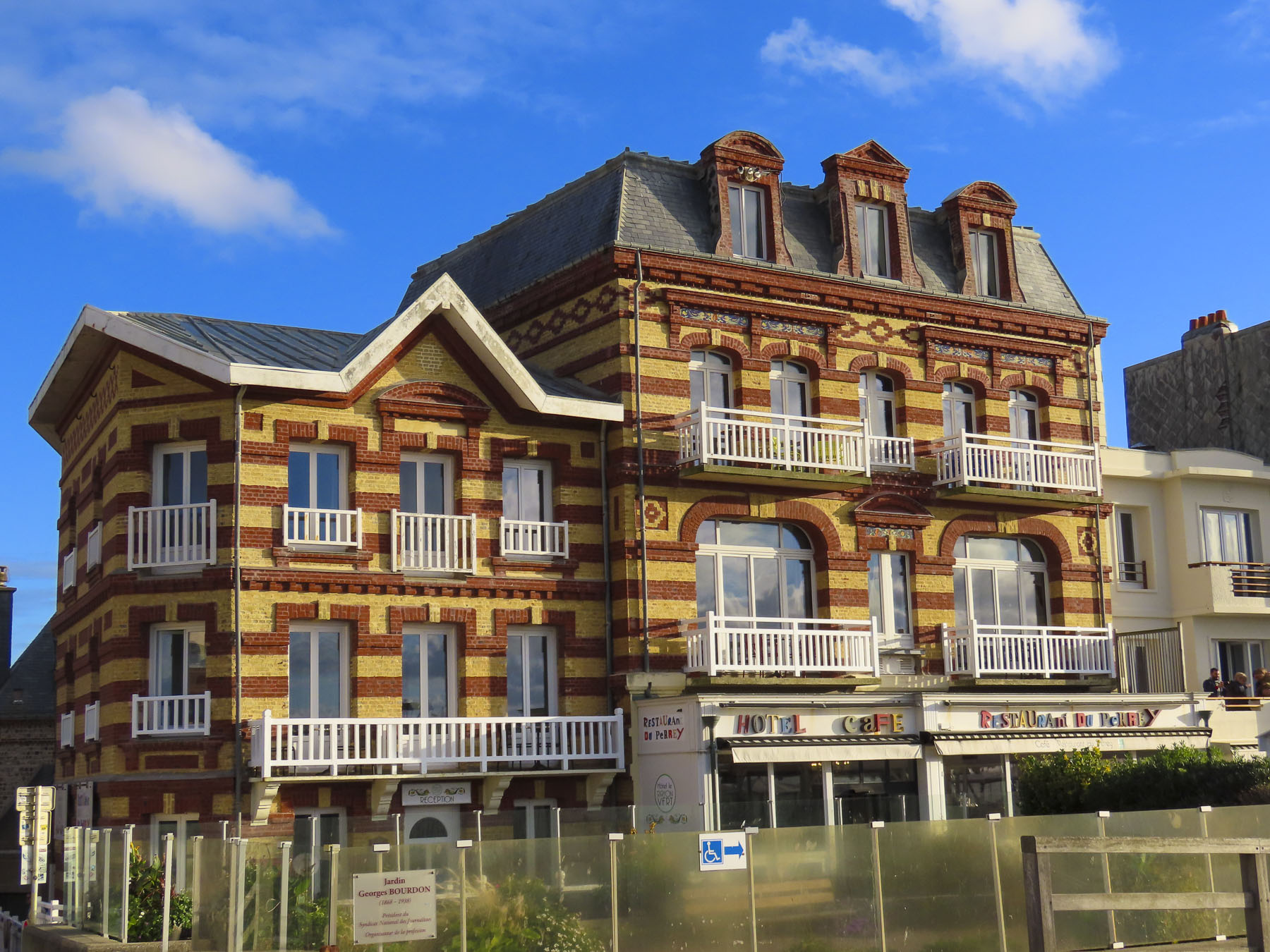
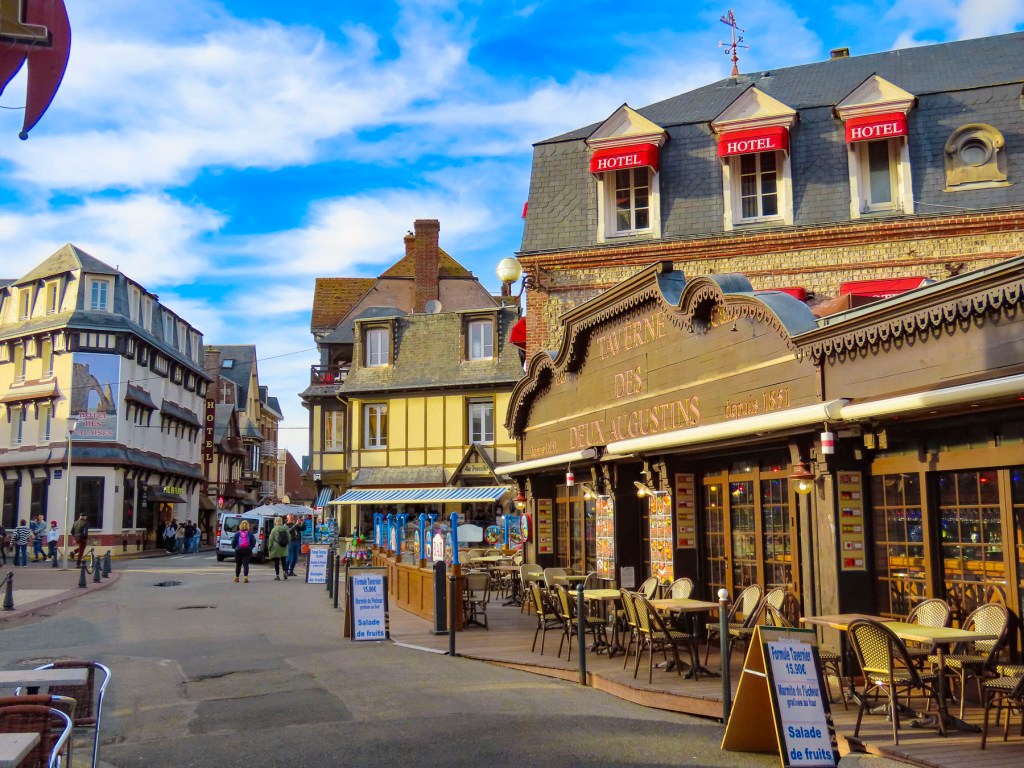
Walking back through the village we found the Normandy architecture in Etretat intriguing. It encompasses many different styles and runs the gamut from ancient half-timbered buildings embellished with ornate wood carvings, to 18th and19th century designs utilizing the local hard flintstone and incorporating steep pitched slate roofs and turrets into their designs. All fascinating.    

Etretat has been a popular destination since rail service began between the port city of Le Havre and Paris in 1847. Swimming or a day at the beach later became common place with the latest fashion, the full body bathing suits. While society folks were sunbathing on the stoney beach, there was a cottage industry of locals, called pebblers. They collected the beach stones for their high silicone content, which were then pulverized and used for various industrial purposes. It’s now illegal to remove any pebbles from the beach as they are vital natural protection against storm surges and marine submersion of the promenade built across the top of the beach, which is much easier walk on than trekking across the pebbly beach, where each footstep sinks into the loose stones and is exhausting to cross.

The classic 19th seaside resort continues to draw visitors, with the success of the French Netflix series Lupin, based on the writer Maurice Leblanc’s character, Arsène Lupin, the gentleman burglar. Leblanc’s former summer home, where he wrote some of his books, is now the Le Clos Arsène Lupin Museum. Some scenes were filmed locally, motivating a whole new generation to discover the white cliffs. The other French writers and composers who enjoyed their time in the quaint village include Victor Hugo, Guy de Maupassant, and Jacques Offenbach, all of whom are remembered with streets named in their honor.

We also enjoyed our time along the Côte d’Albâtre, but just seemed to scratch the surface of this beautiful part of Normandy.

Till next time, Craig & Donna
The Rouen Lean: It’s not a Dance

We had narrowly escaped Paris’s evening rush hour as we sped away from Orly through the French countryside. Our destination is Rouen, an ancient port town on the river Seine with a pivotal role in France’s history since the Romans first settled along the graceful bend of the river there. It would be a restart to a trip cut short by covid in 2020.

The last light of the darkening sky reflected off the Seine, like a brush stroke of silver paint across a dark canvas, as we turned away from the river and entered Rouen. We are not fans of night driving, especially in a new locale, and our maps app had difficulty with the narrow one-way streets in the historic center of the city. Frustrated, we decided to park at the first opportunity. Miraculously the planets were aligned in our favor as we entered the Q-Park Palais de Justice Musée des Beaux-Arts, a massive unground parking garage that encompasses several subterranean blocks beneath a park in Rouen’s historic district. Not sure exactly where to park, something urged us to continue through the cavernous space until we found a garage attendant moments before he locked his booth for the night. Friendly and extremely helpful, he explained how their multiday ticket would be the best value for us. Yes, we were so lucky he spoke English. Our good fortune continued at street level when we realized we were only two blocks from our hotel. But we had arrived later than planned and the gate to Le Vieux Carré was locked. Fortunately, another guest was returning to the hotel at that time and let us in. “I saw several keys on the reception desk when I went out, and figured you were one of the late arrivals.” Indeed, a room key with our name on it was there waiting for us.

Early the next morning the unusual, but pleasant aroma of caramelized onions drifted in through our open window. With our tastebuds awakened and appetites whetted we headed out. “Walk a little, then café,” is how we like to describe our wanderings. Our first stop – coffee and pastries. It is France, after all! But where to stop? There’s an abundance of eateries in Rouen, thanks to the city hosting two universities and thousands of students. There were so many places that looked inviting, but the criteria for us first thing of a morning was a café with a table in the sun, a must in mid-October to help alleviate the day’s early chill. Once sufficiently caffeinated, we set out.

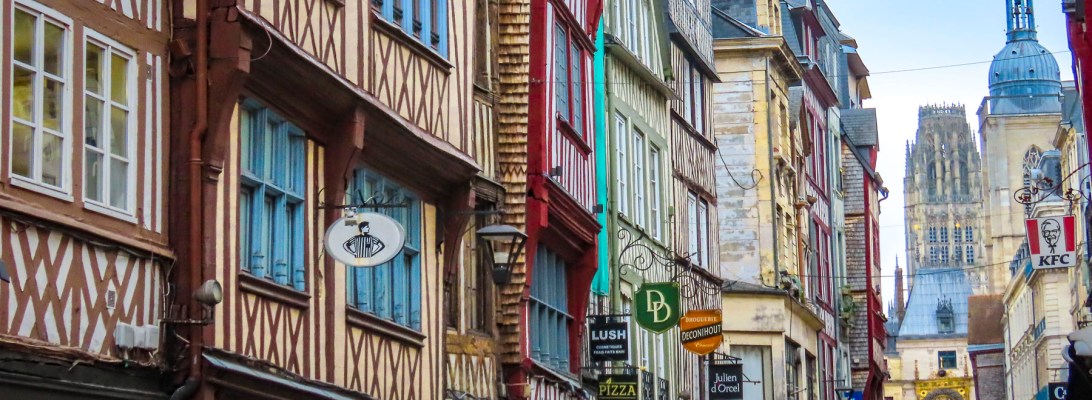
Flat as a crepe, Rouen was a walker’s delight and savory with explorations that pulled us in every direction. During the 9th century, Vikings pillaged and then stayed to become the first Normans, and the prosperous town of became the capital of Normandy in the 10th century. During the Middle Ages, conflicts in the region were nearly continuous, but the city somehow evolved into one of France’s gems, with its distinctive medieval half-timbered buildings and three towering, majestic churches which still grace the city’s skyline. 

A who’s who of historical figures have crisscrossed Rouen’s cobbled lanes for centuries. The Anglo-French kings, William the Conqueror, a succession of King Henrys, Eleanor of Aquitaine and Richard the Lionheart viewed the city as their home away from home. In 1431, after inspiring her countrymen to rally against English expansionism, Joan of Arc was captured, tried, and burnt at the stake in Rouen’s Old Market Square. It wasn’t until the Siege of Rouen in 1449 when forces commanded by King Charles of France finally defeated the English. Later the French impressionist painter Claude Monet found inspiration in the city, featuring the Rouen Cathedral over thirty times as he put paint to canvas to catch its essence perfectly. With conflicts never seeming to end in Europe, somehow, this beautiful renaissance city, though deeply wounded, miraculously survived World War II. Most importantly perhaps, in March 1948, Julia Child had her first taste of French cuisine at Restaurant La Couronne, on Rouen’s central square, the Place du Vieux-Marché.  

Open since 1345, La Couronne is France’s oldest inn. Savoring her Sole Meuniere, a lightly breaded fish dish flavored with fresh butter, lemon, parsley and capers, it was an experience she described “as the most exciting meal of my life.” Local oysters and a bottle of Pouilly-Fumé were also enjoyed. She was hooked and a Francophile was born!

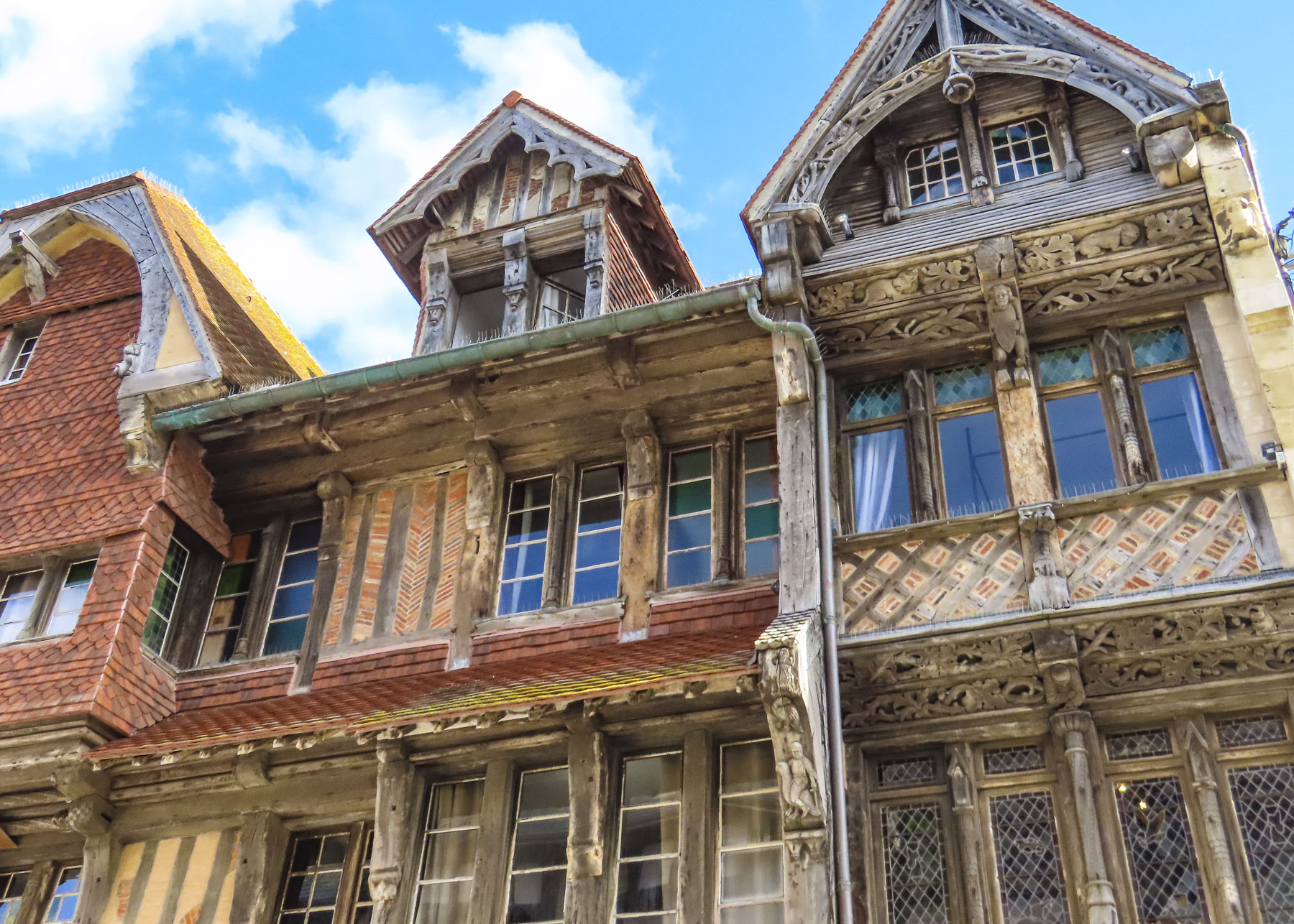
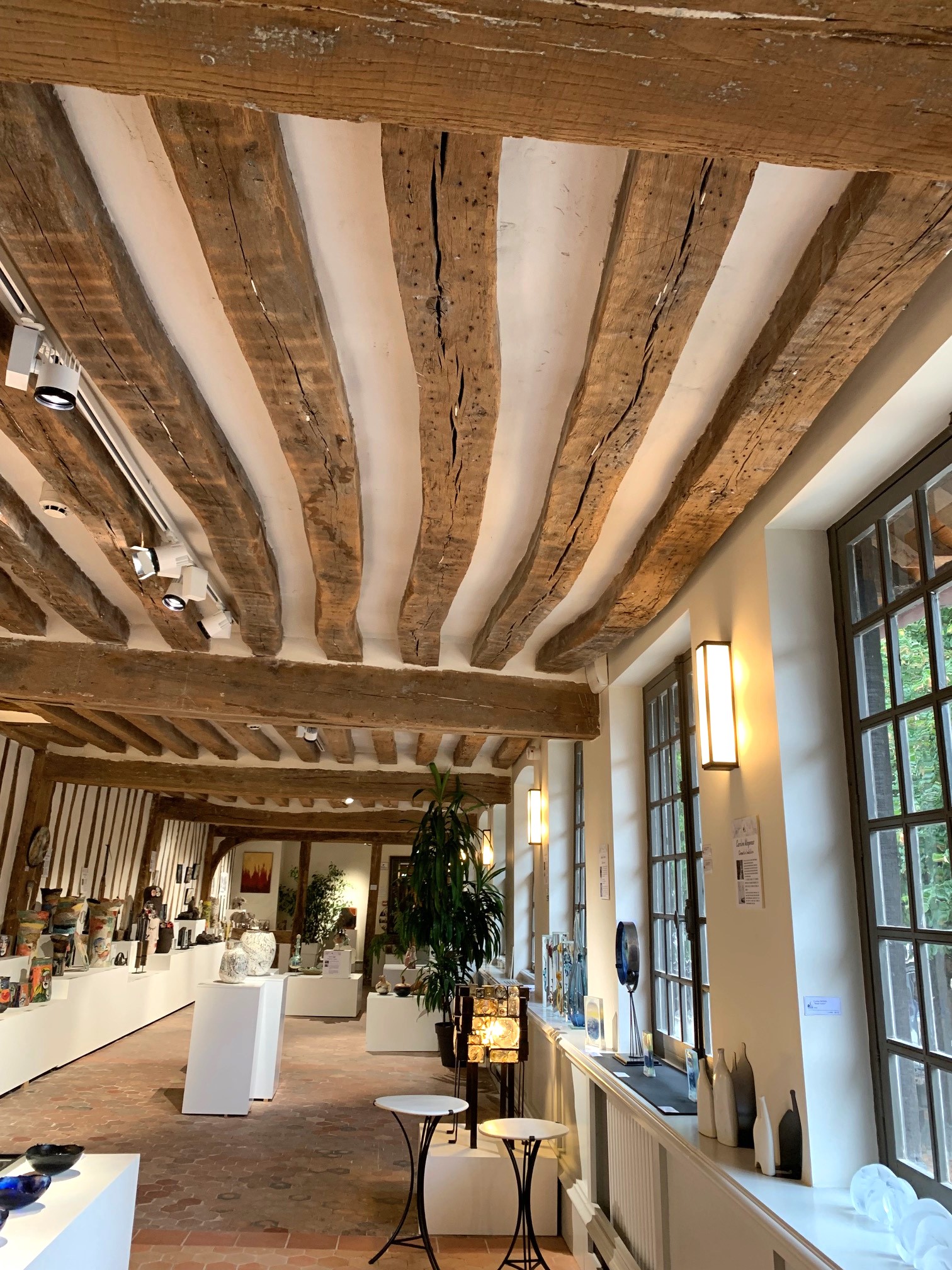
The Rouen Lean is not a dance, nor the result of drinking too much wine, but the very obvious tilt exhibited by many of the city’s ancient half-timbered buildings constructed during the Middle Ages. Our hotel was a prime example of this with scarcely a wall or floor that was square, plumb, and level. But that was the charming character and ambiance we were looking for. The half-timbered building’s superstructures were constructed with huge square oak timbers held together only with mortises, tenons, and wooden pegs, while the nonstructural area between the supporting timbers was filled with bricks or stones and covered with plaster. Over the centuries it has proven to be an aesthetically pleasing and durable construction method used to build five to six story houses. Many of the buildings still retain a centuries old, carved wooden sculpture on the front of the building that represented a service or craft that was once conducted there.

Approximately two thousand half-timbered structures from the Middle Ages still stand in Rouen. The abundance of wooden buildings surprised us as most of our travels have been through the countries of Southern Europe, Portugal, Spain, and Italy, where stone was historically used to construct everything. In Rouen, scarce stone was saved for the churches and castles.

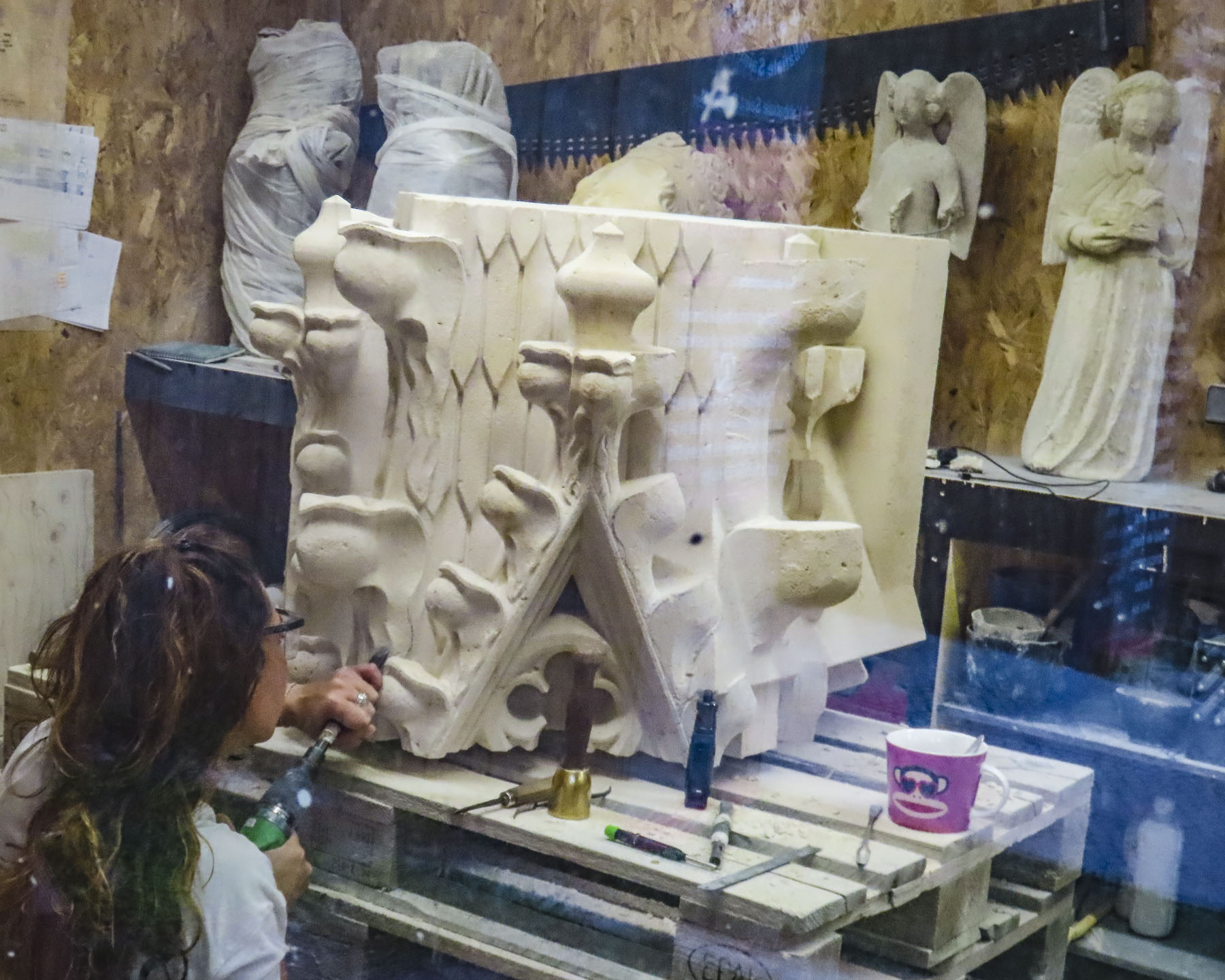
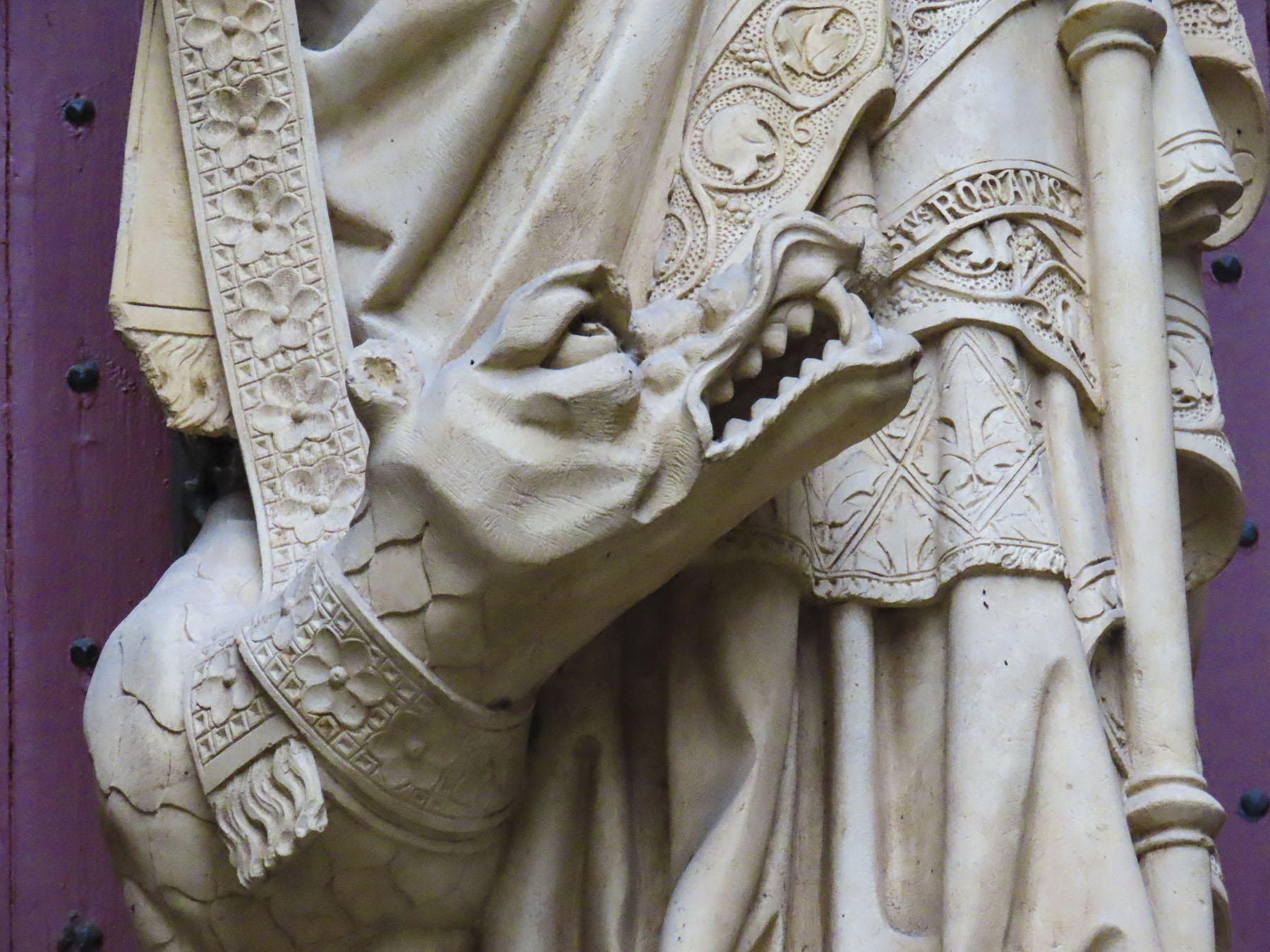
Even stone erodes over time and occasionally old churches need a facelift every few centuries, as was evident by all the scaffolding surrounding the15th century, Gothic style, Saint-Ouen Abbey Church, though with a selective camera angle I was able to eliminate most of the temporary platforms from our photo. But the difference between the areas covered by grime and the newly cleaned sections was phenomenal. The multiyear project is scheduled to be completed later in 2024. Though the interior of the church was closed the day we visited, we were able to watch a stone carver as she worked to create a new gargoyle to replace one beyond repair.

Rouen’s three main churches, Saint-Ouen Abbey Church, Église Catholique Saint-Maclou, and the Cathédrale Notre-Dame de Rouen are all located a short distance from each other on the eastern edge of the historic district, but the journey through the narrow lanes connecting them and exploring many other splendid points of interest along the way made for a wonderful day.

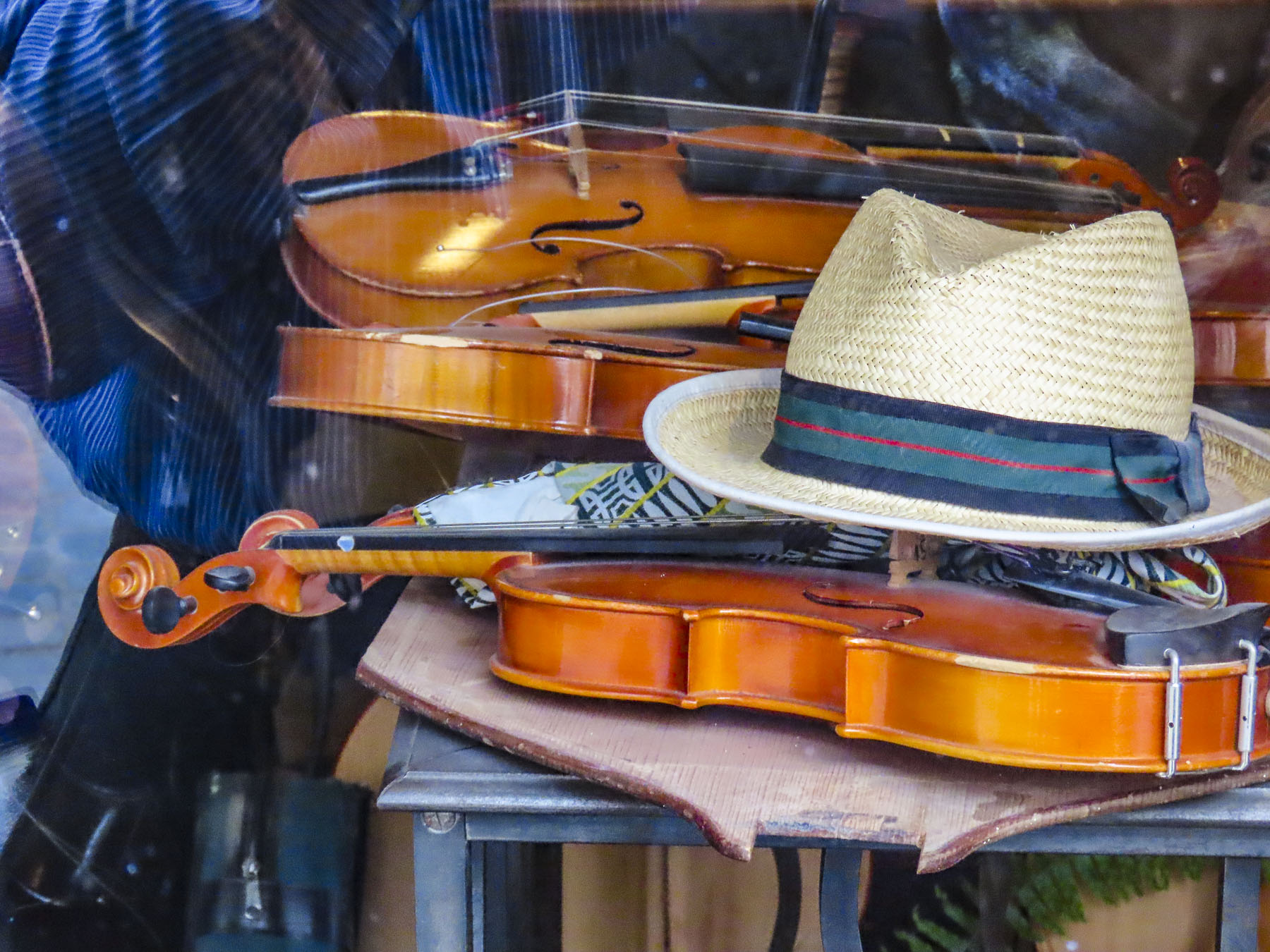
After the abbey we window-shopped down Rue Damiette, admiring the handcrafted violins created by master luthier Sarhan Jean-Marc. Farther on, interesting antique stores lined the narrow lane. Behind us the abbey’s belltower rose over the street. A view that hasn’t changed significantly in centuries. One of the best examples of the “Rouen Lean” is at the end of the street across from Saint-Maclou and caused us to stop for a double take. How, we wondered, can these buildings still be standing?

There was a shortage of cemetery space in Rouen during the Middle Ages when the plague revisited the city repeatedly and 75% of its citizens died. At the time it was the custom to bury the dead only until their bodies decomposed.

Then the bones were exhumed and reinterned above ground in the ossuary Aitre Saint Maclou and the grave reused for the newly departed. Hidden away down a discreet side alley, the ossuary complex was expanded several times and functioned as a secondary cemetery until the early 1700s when the remains were removed, and the buildings were repurposed as a school for poor boys. Today the space houses a fine arts academy and exhibition space. Though it’s still a macabre place with skull and crossbones carved into its exterior timbers.

We rested with coffees at a café on Place Barthélémy in front of Saint Maclou. While a lovely spot, the coffees were overpriced to the point that we could have purchased lunch for two if we’d chosen a less touristy spot. Just a reminder, a block or two off the usual tourist routes and prices drop dramatically.

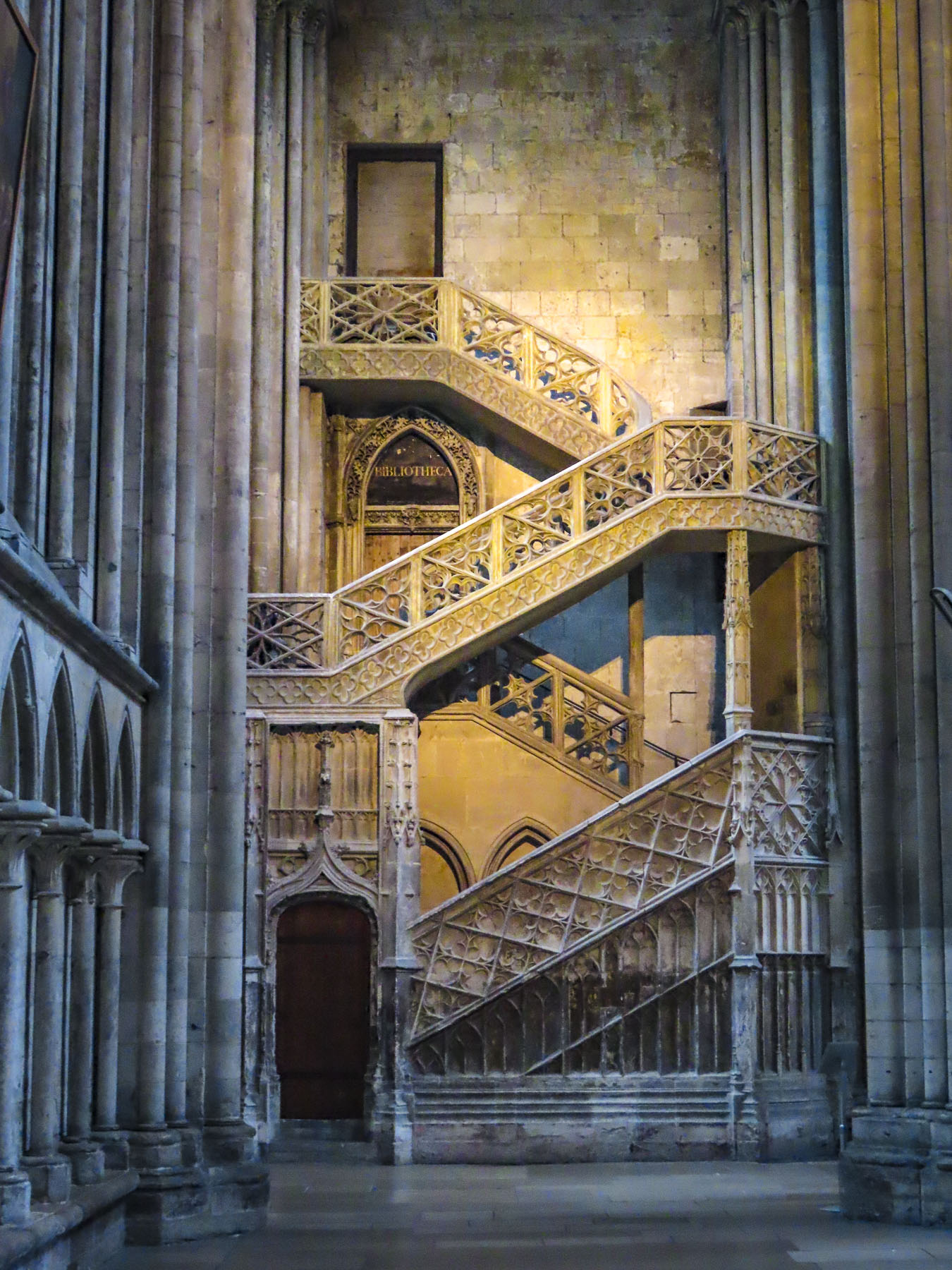
Rouen’s Cathédrale Notre-Dame has been the center of focus since the first early Christian converts built a temple in 395 AD, on the spot where the current church now stands. And, like the city, the church has a turbulent history. Charlemagne visited in 769, but those pesky Vikings couldn’t decide if they hated or loved the place, sacking it repeatedly in the 9th century, only to later claim the Duchy of Normandy as theirs and embrace Christianity after the Viking leader Rollo was baptized in the church and later buried there as well. Nearby, Richard the Lionheart’s tomb only contains his heart.

Romanesque architecture was the rage during the 11th century and William the Conqueror attended the consecration for the first of many expansions and renovations that would follow over the centuries.

More chiseling and hammering continued during the 12th century when successive Archbishops embraced the new Gothic style. In 1204, Philip II of France celebrated Normandy’s merging with his kingdom amidst the new Gothic renovations.

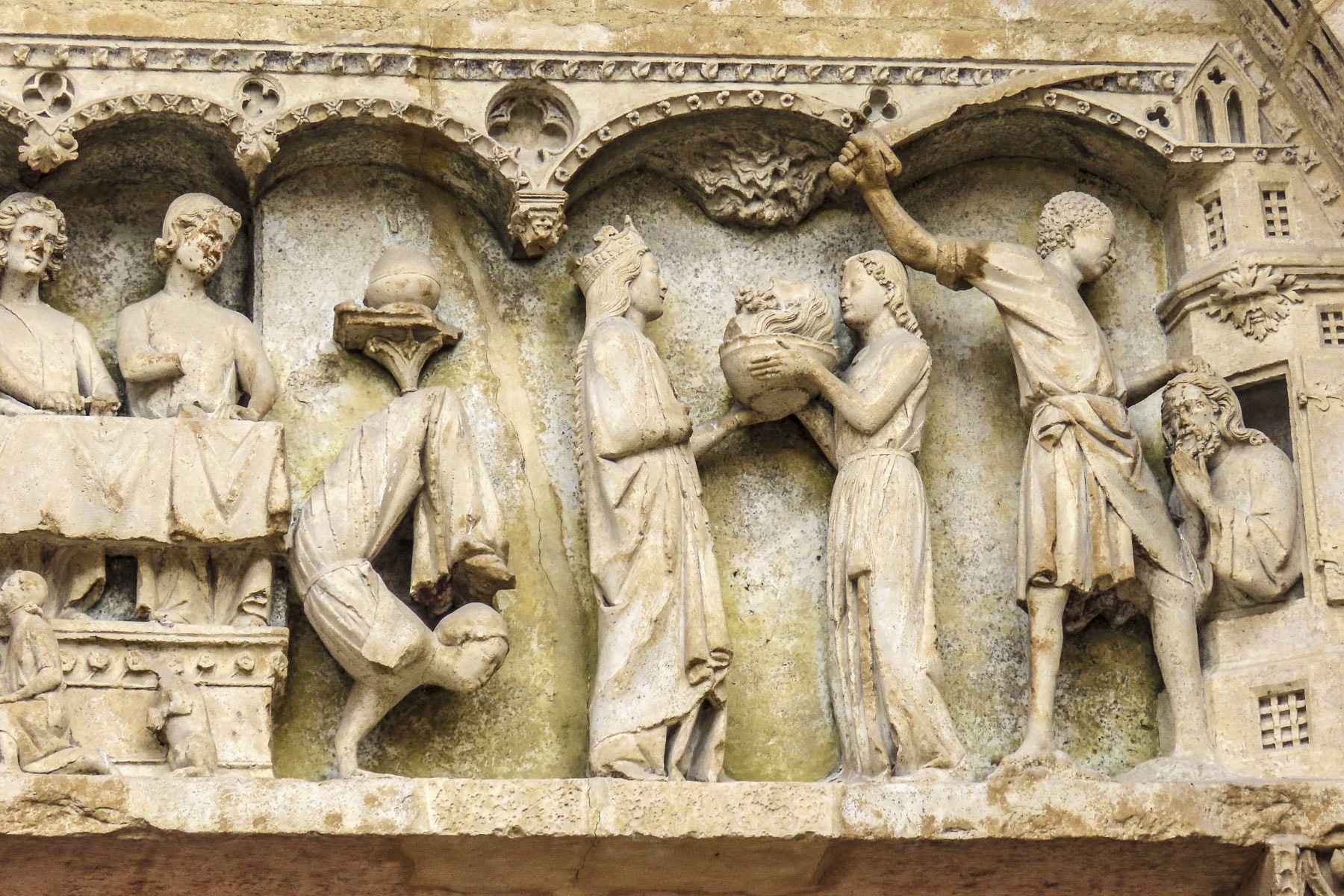
During the 16th century, a second tower in the Renaissance style was built and ornate stonework and hundreds of statues were added to the front of the church, creating the visage that remains today.

Later lightning strikes, hurricanes and Calvinists would wreak havoc on the church. During the French Revolution any metal objects, not hidden away, were seized and melted down to create cannon balls. During WWII the cathedral was heavily damaged by Allied bombs. The damage was so extensive that final restoration wasn’t completed until 2016, when all the scaffolding was finally removed. Built and rebuilt, inside and out, for over eight hundred years, the cathedral is a fascinating place to explore.

The next morning we headed down Rue de Gros-Horloge, Rouen’s main pedestrian-only thorough fare that runs east to west from the cathedral to the Place du Vieux-Marche, a historic market square. This is the street where the city’s famous 14th century astronomical clock, Le Gros-Horloge, seems to transport you backwards through time to the Renaissance. Early in the morning is the best time to experience this landmark without crowds, as later in the day the narrow lane is as busy as Paris’ Champs-Élysées. During our short time in Rouen, we passed under its gilded façade many times and always, like Monet and his multiple paintings of the cathedral, tried to capture this beautiful clock just right in our photographs.

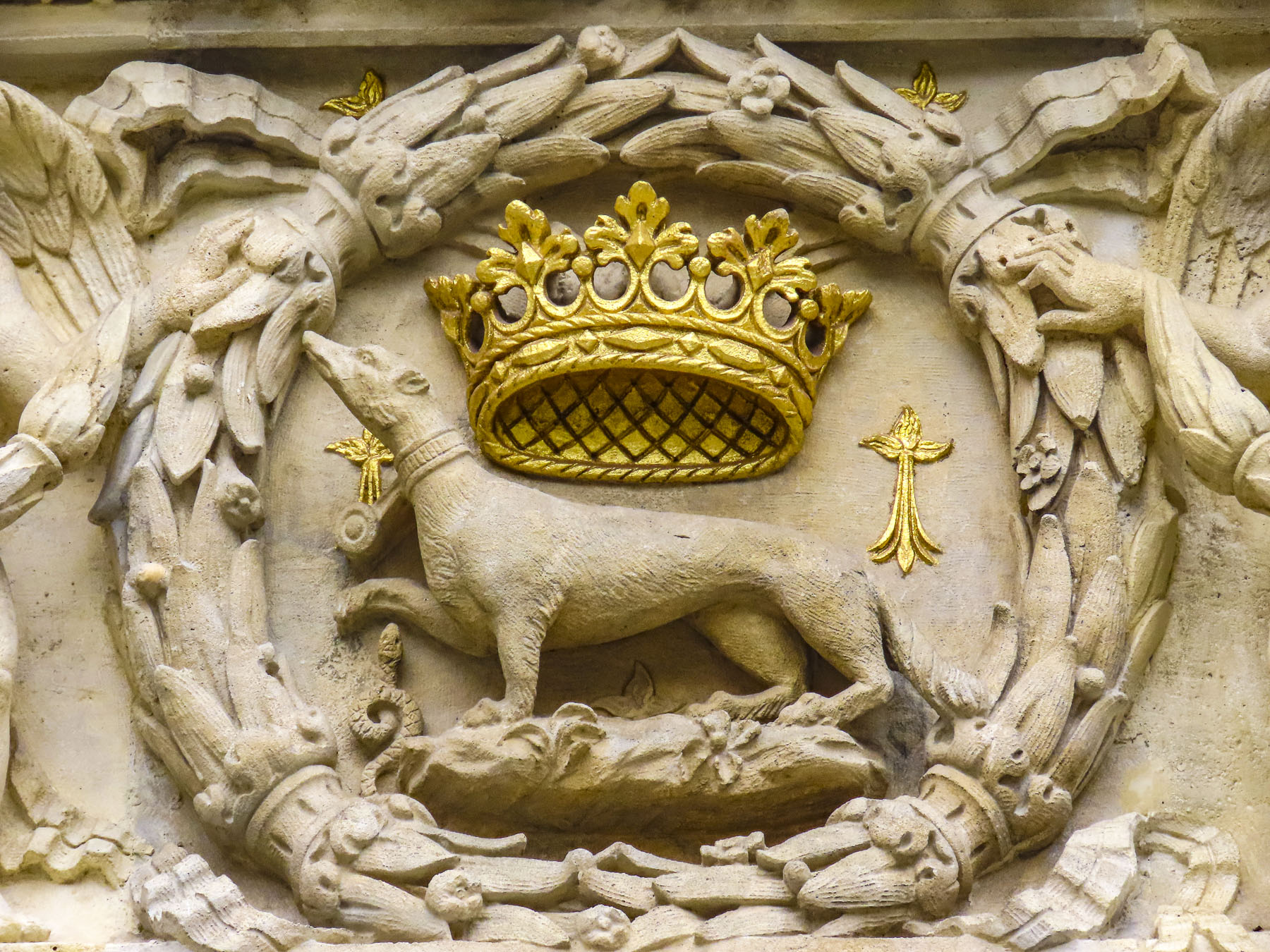
Indulging our wanderlust, we veered left and right off the lane to satisfy our curiosity. We found ancient gargoyles on the Tribunal Judiciaire de Rouen, and whimsical unicorns, a porcupine, and a reference to L’Ordre de l’Hermine, the Order of the Ermine, a medieval chivalric order on the exterior walls of the Hotel de Bourgtheroulde, a former 1500s mansion, built in what is kindly referred to as the Flamboyant Gothic style popular at the time.

Seriously – the Order of the Ermine is not from a Monty Python skit. A small but ferocious animal, during the Middle Ages the ermine was believed to to fight to its death if attacked rather than “sully the purity of its white fur,” and was used by many medieval chivalric orders to symbolize their uncompromising integrity and honor.

There was also the Ordre du Porc-Épic, porcupine, for prickly knights, and the Order of the Golden Fleece, for royal embezzlers. These were actual chivalric orders, though I am taking liberty with their membership.

Today the Place du Vieux-Marché is surrounded with restaurants and cafes with outside tables, which were very lively at Happy Hour when students and folks just off work congregated on the square. Quite a different scene now as opposed to the day in 1431 when Joan of Arc was burned alive at the stake, in the center of the square, though her heart remained untouched by the flames. A beautiful, modern wooden church built in 1979, the Église Sainte-Jeanne-d’Arc now memorializes the spot where her pyre stood. A plaque nearby reads “Oh Joan, you who knew that the tomb of heroes is in the hearts of the living.”

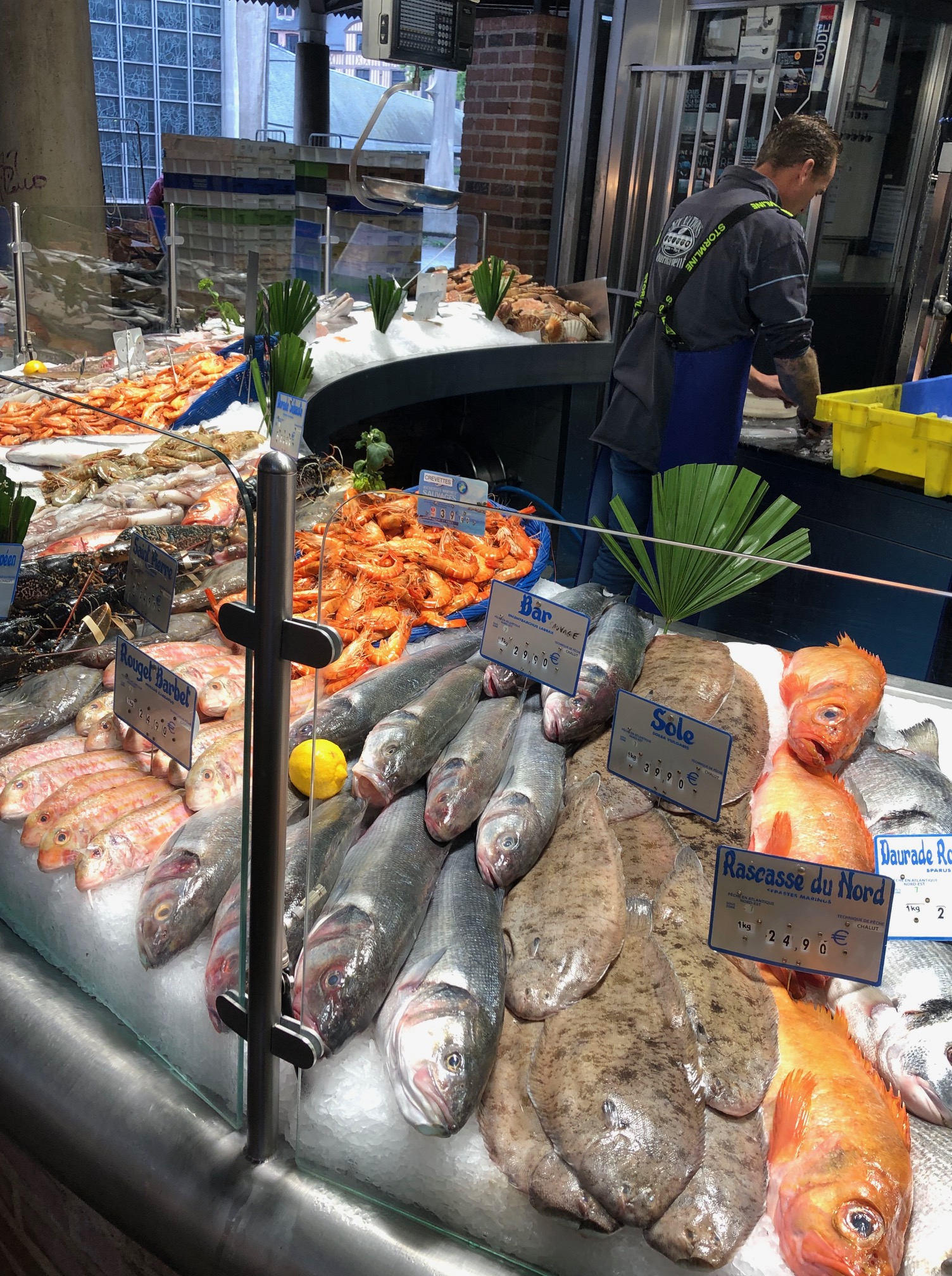
Inside the food market we savored our first fresh oysters from the Brittany coast and purchased some fruit, and of course cheese! A difficult process considering the tremendous variety we could choose from.

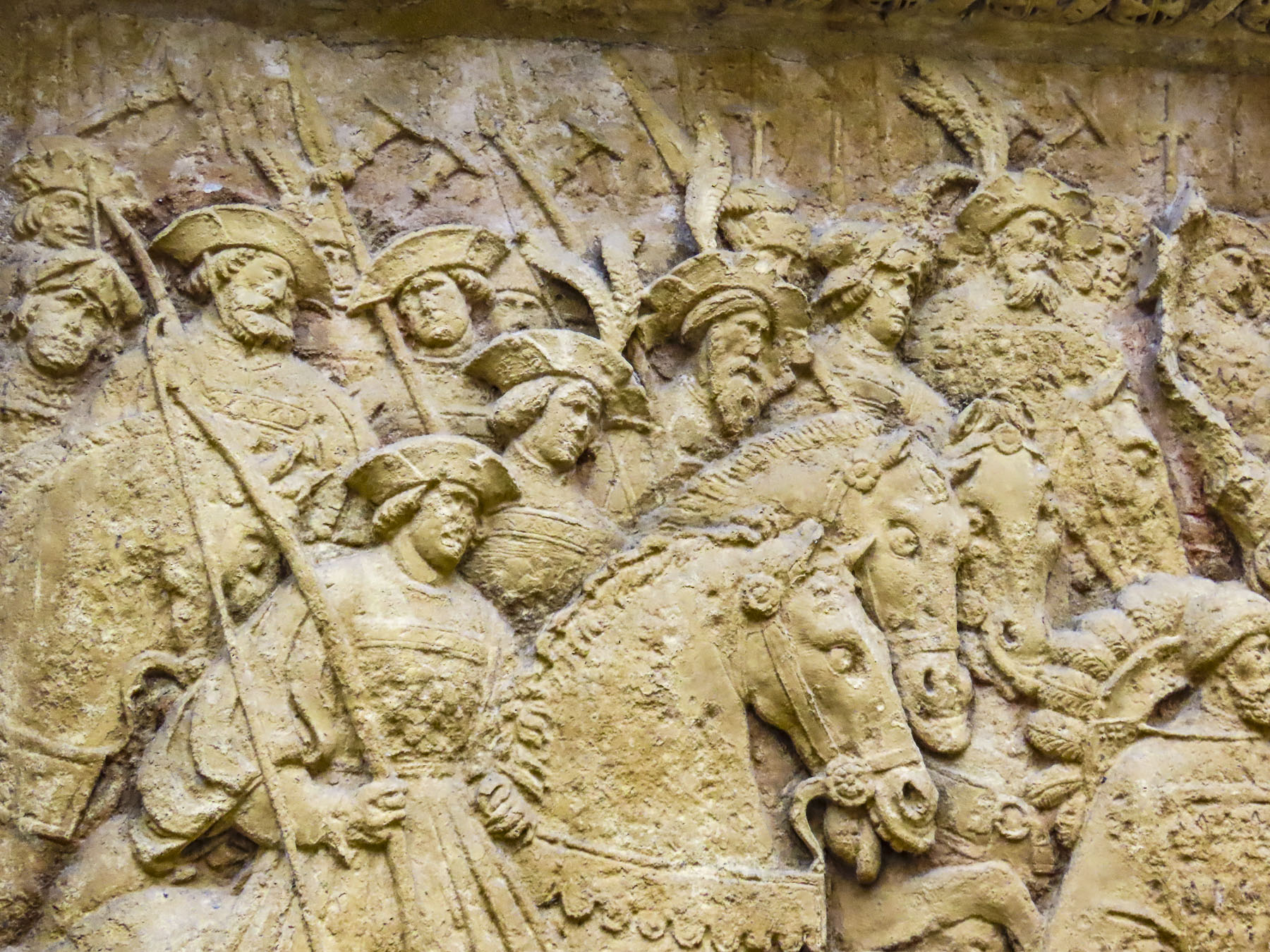
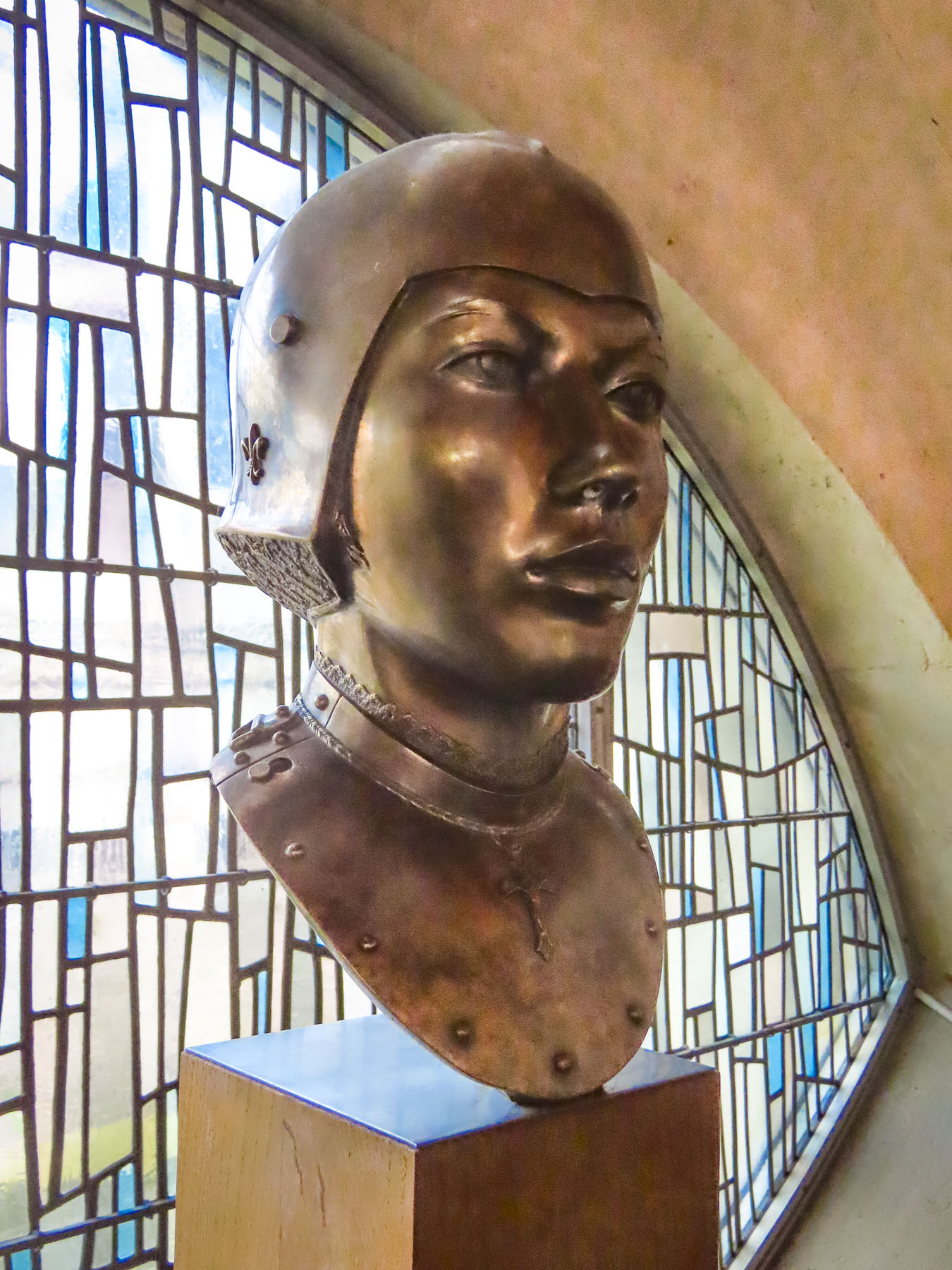
Intrigued by Joan of Arc’s story, the next day we headed to the Historial Jeanne d’Arc, which is housed in a wing of the ancient Archbishop’s Palace where part of her trial was held. We were skeptical at first while buying our tickets, thinking we’d just be watching a movie. But we both ended up being enthralled with the interactive digital technologies used to project Joan’s saga onto the old stone walls, floors, and domed arches.

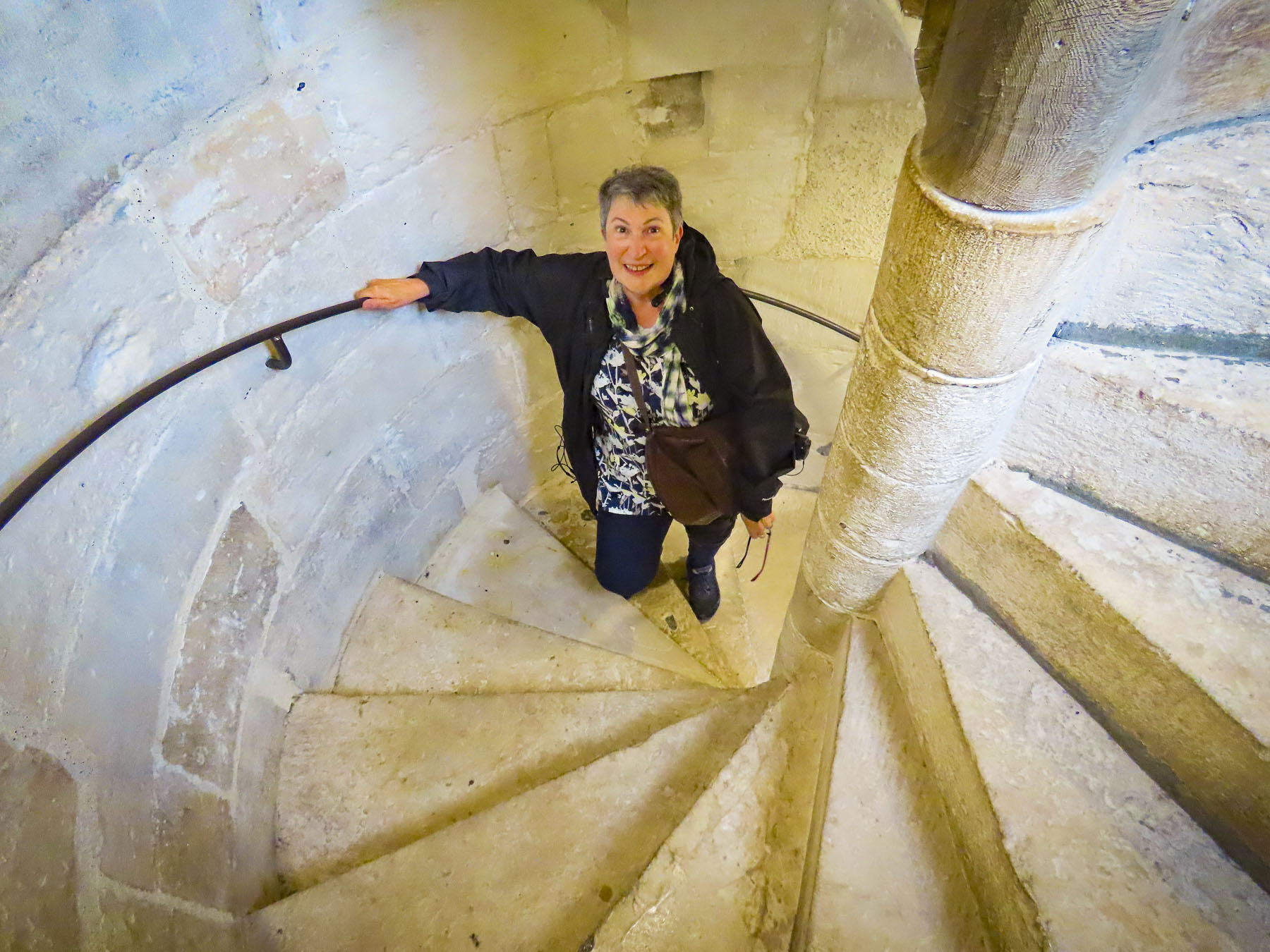
Her history was exceptionally well portrayed and presented as chapters, with each chapter presented in a different room of the architecturally interesting space. We climbed one of the palace’s towers and were rewarded with a timeless view down Rue Saint Romain to the church of St. Maclou; a view that would look familiar to Joan of Arc were she to stand in this spot today, so little changed from her time.

A symbol of defiance, heroine for the French, and a successful military adversary against the English, she claimed God supported Frances’s freedom, but this was a position the Rouen church could not support as they were allied to England and claimed God was on their side. She was tried and convicted for her heresy. Her male jury also had difficulty with her dressing in men’s clothing for battle. As if because she was a woman, she should have worn a skirt and sat side saddle as she rallied the French to fight. But this practicality was viewed as cross dressing and as such was held to be against God’s law. (Though the robes of the clergy were not considered feminine.) The French finally defeated the English and succeeded in uniting Normandy and Rouen with France. Twenty-five years after her execution, Joan’s family petitioned for the trial records to be reviewed. The court determined she had been tried “under false articles of accusation,” and posthumously declared her innocent and annulled her sentence in 1456.

Our time in Rouen was a beautiful look back into Medieval France.

Till next time, Craig & Donna