Albania Road Trip: Tirana to Berat or Skyscrapers, a Pyramid, Castles & Albania’s Worse Road

Moments before we had just flown over a crescent-shaped beach, its thin strip of sand brilliantly separating the rich, inviting blues of the Adriatic Sea from the verdant land of the Albanian coast. What we didn’t expect as we continued our descent was just how mountainous the terrain was. This turned out to be a characteristic of the land that we enjoyed tremendously, after realizing there really aren’t many straight roads in the country, and we’d be spending most of our three weeks in Albania driving winding through its mountains.

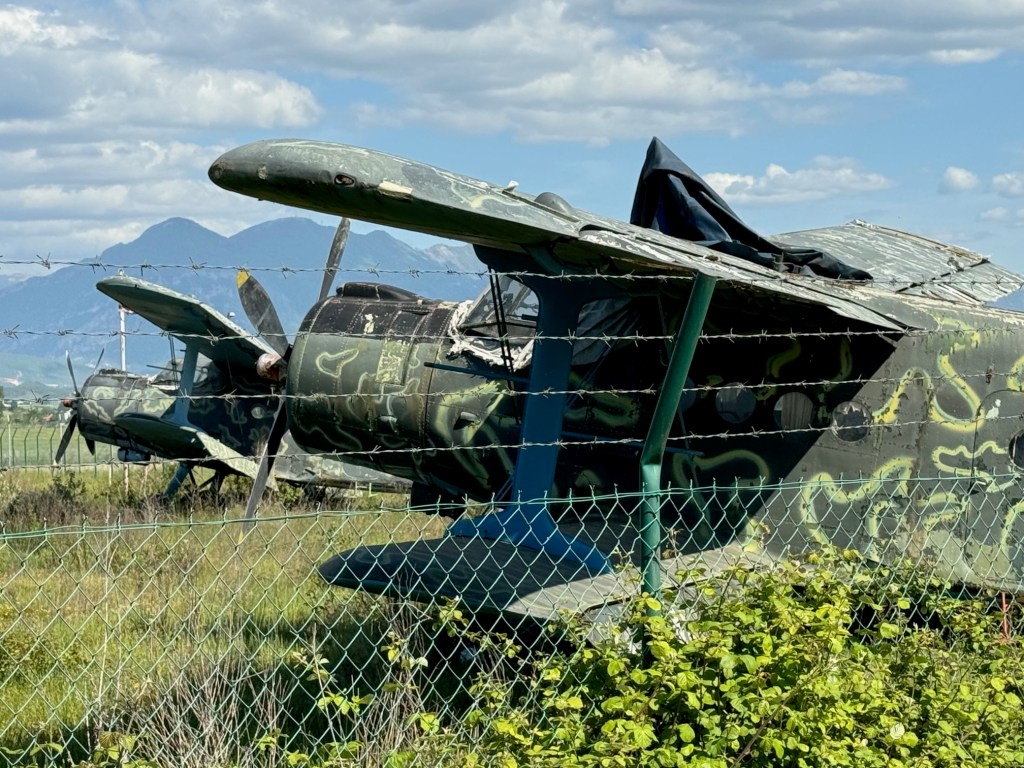
It was mid-April and 80F/26C as we sat outside the airport terminal enjoying coffees and the unseasonably warm day. “Do you really think you’ll need the thermal underwear you packed?” Donna chided, with a smile. “We’ll see,” I responded. At the rental car counter across the street, we reviewed our paperwork for the sedan and received the document we needed to drive the car into North Macedonia later on during our trip. “Now you have a city car, don’t drive on any restricted roads. The car has GPS tracking, and you will be fined if you do,” the rental agent explained. While we were aware that Albania did not have the best road infrastructure, we were not aware of road restrictions. We asked for a map showing the forbidden routes, but the agent didn’t have any, nor could he explain all the routes restricted. “Use your best judgement, if it’s a gravel road you should probably avoid it.” Which was not very helpful considering we’ve had lots of experience driving sedans to destinations that folks have said, “you’ll never make it there in that.” The rental agent also related that Albanians are very friendly, but terrible drivers. “Drive defensively!” he warned. We set off. My map app is set to default to no highways, and we followed a route along the perimeter of the airport, which also serves as an Albanian Air Force base, past a row of rusting, derelict MiG fighter jets and, for those aviation enthusiasts, several Antonov An-2, a legendary soviet bi-plane, first flown in 1947.
It was an interesting serpentine route through fields of grazing sheep, the roadway sporadically lined with irises in bloom, flowering orange trees, their scent filling the air, and fig trees laden with newly set fruit. Groups of old men sat at tables playing cards and dominos in vacant lots between mansions and shacks. A psychedelically painted, cold war era tank commanded a park along the road. As it neared the end of the workday and we got closer to Tirana, the roads became congested and wild, with drivers ignoring traffic signs and rules. Often it felt like a game of chicken with oncoming cars zipping into our lane to weave around creatively parked cars. Motorcycles were driven on sidewalks. Numerous speed bumps were the only deterrent preventing the roads from becoming the Daytona 500. In decades past, Tirana was a small town with an ancient footprint. It managed well enough during the country’s communist era when few people had the resources to buy cars. But now the city’s arteries are clogged and it’s ready for permanent gridlock due to the current number of vehicles.

With a car, there is always parking to take into consideration, and we lucked out with Lot Boutique Hotel, located on a narrow side street in the center of Tirana, because it had a small parking lot. The hotel recently had been nicely refurbished and was the perfect base for our wanderings around Tirana, the capital of Albania since 1920. Later after resting – jet lag affects us more as we age – we asked the front desk for recommendations for a traditional Albanian dinner. The young receptionist suggested two places: Ceren Ismet Shehu, a contemporary restaurant located behind the low ancient walls of Tirana Castle, in an area smartly repurposed for shopping and dining. And in the opposite direction Oda – Traditional Albanian Restaurant nearer the traditional daily market. We ended up eating at both on different nights. Each was excellent, but we preferred the simple, laid-back ambiance of Oda, its homestyle cooking, and inexpensive menu.

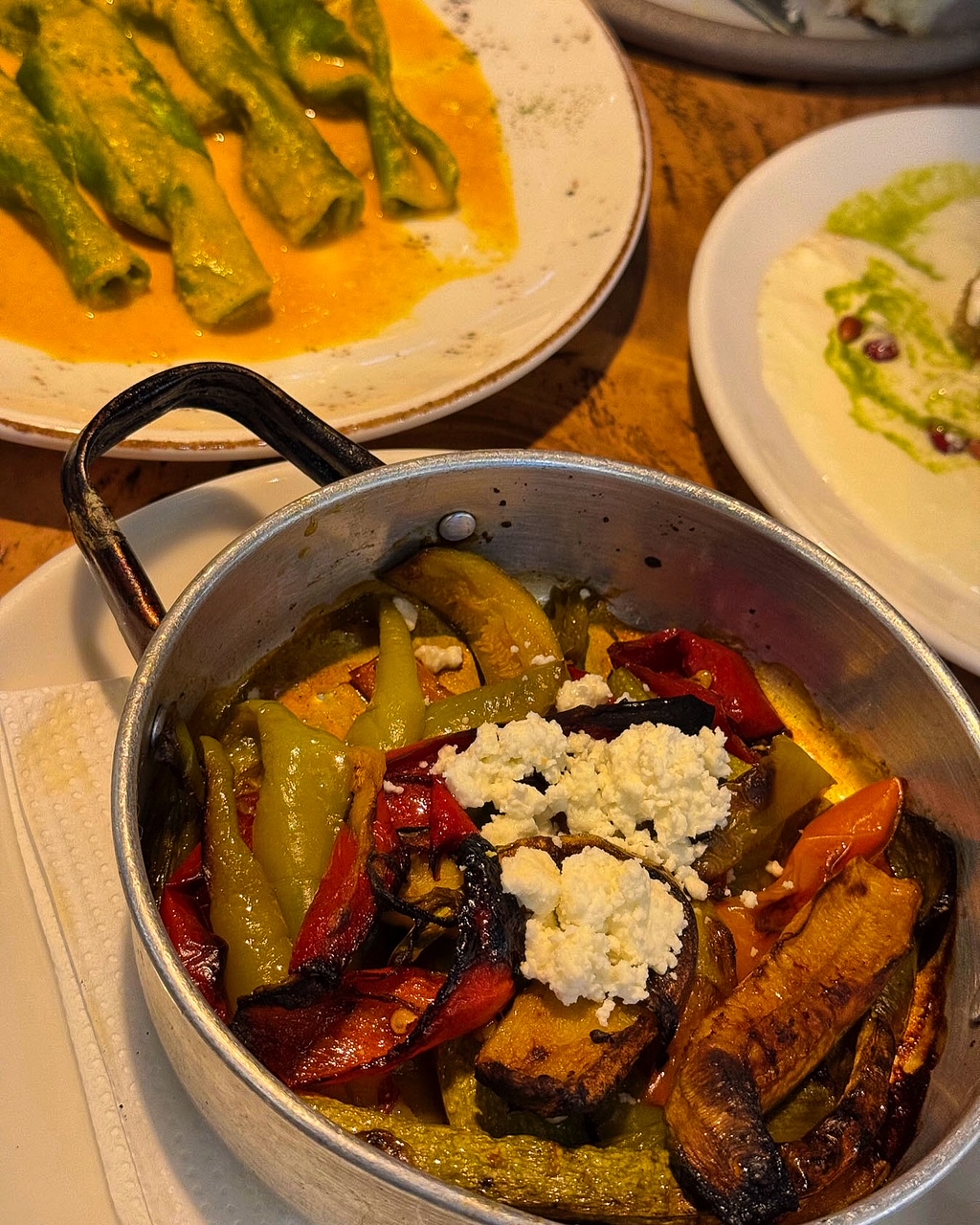
We’ve enjoyed all the cuisines of the different countries we’ve visited over the years, but surprisingly and refreshingly in Albania we found it very easy to eat a well-balanced meal. French-fried potatoes served automatically in other countries were replaced with the Albanian trilogy of lightly grilled vegetables: peppers, eggplants, and zucchini. And the customary salad of cucumbers, and tomatoes with brined cheese were always good. Grilled meats and fish were expertly prepared, though it was also easy to be a vegetarian sometimes and indulge in a variety of eggplant dishes.

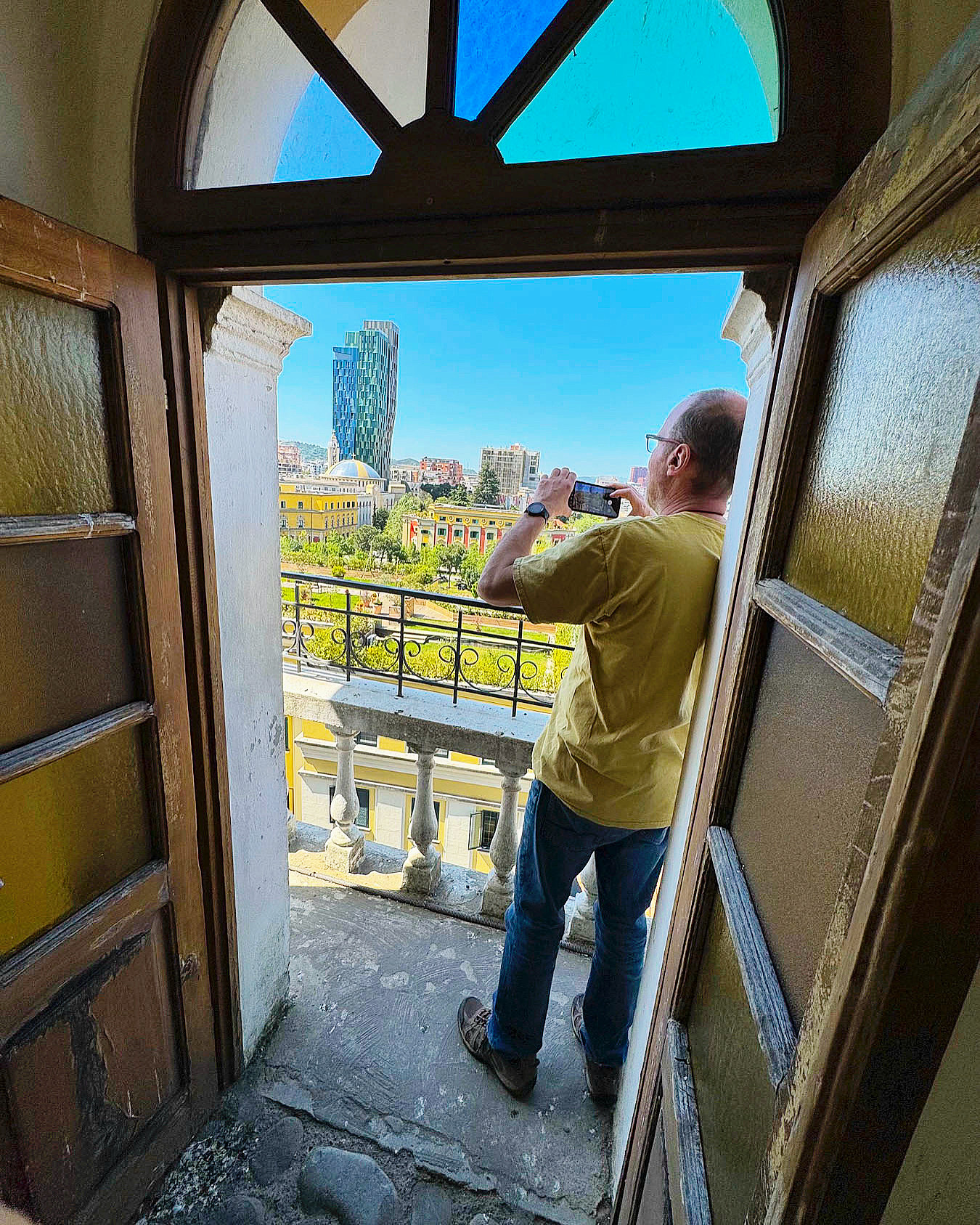
The next morning, we headed to Skanderberg Square. Next to the Et’hem Bey Mosque, built in the early 1800s, but closed during the anti-religion decades of communism, we climbed 90 steps to the top of the 115-foot-tall Clock Tower of Tirana. For decades during the 19th century, the tower was the tallest structure in Tirana. Unfortunately, its once 360-degree view has been hemmed in by the rapid construction of new buildings nearby, but it did have a view over Skanderbeg Square, and the rooftop garden atop Tirana City Hall.

Before its renovation the plaza was a traffic circle with one side hosting a larger-than-life statue of Stalin and the other side a colossal 30ft tall sculpture of Albanian’s paranoid and isolationist communist leader Enver Hoxha. The 1991 student protests on the square, along with other demonstrations across the country, helped bring an end to 46 years of repressive communist ideology and failed economic policies. Stalin’s statue was replaced with a heroic sculpture of Skanderbeg, the 15th century nobleman who rallied Albanians to repel Turkish rule and defeated 13 Ottoman reinvasion attempts.
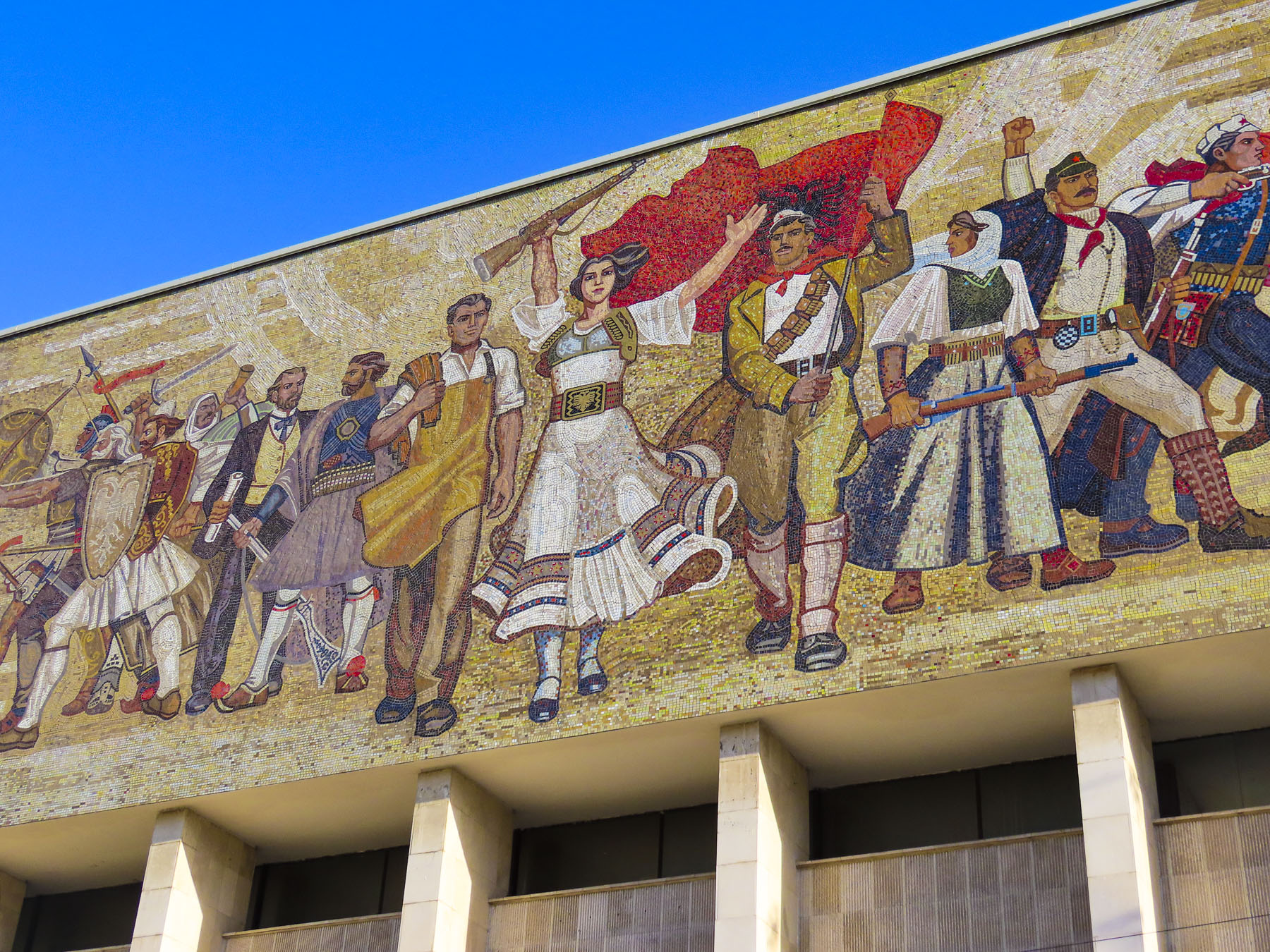
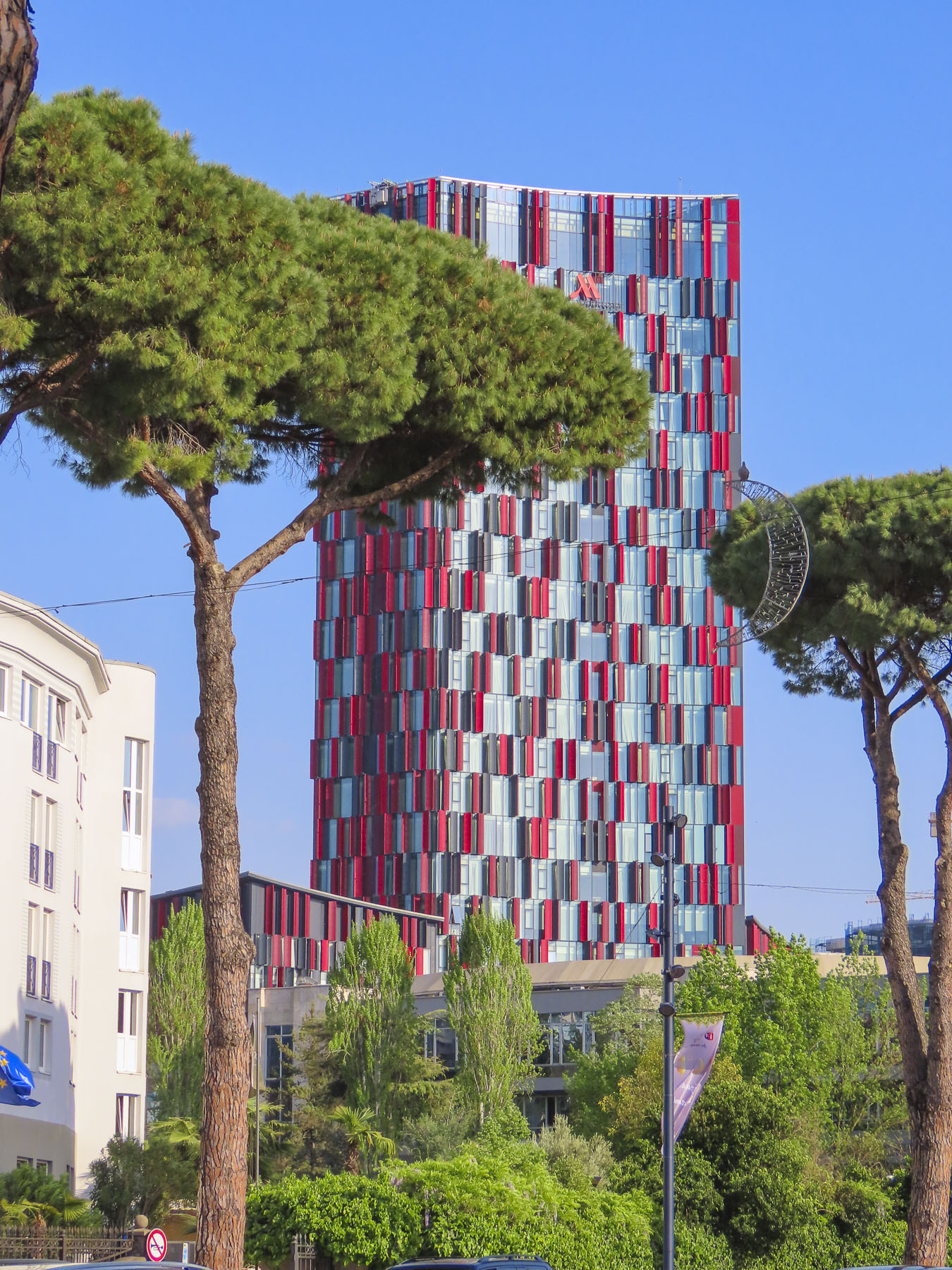
Hoxha’s statue was replaced with a public toilet. Centuries of conflict and resistance have defined Albania’s history and is reflected in a large, emotive mosaic above the entrance to the National Historical Museum. The Palace of Culture, the Opera & Ballet Theatre, and several government ministry buildings, designed by Italian architects in the 1930s, also line the square. Surrounding the plaza, an array of new construction projects are rapidly changing Tirana’s skyline. The city is having its moment as tourists rediscover this once isolated country, with its paranoia of the west, and shunned by its communist neighbors.

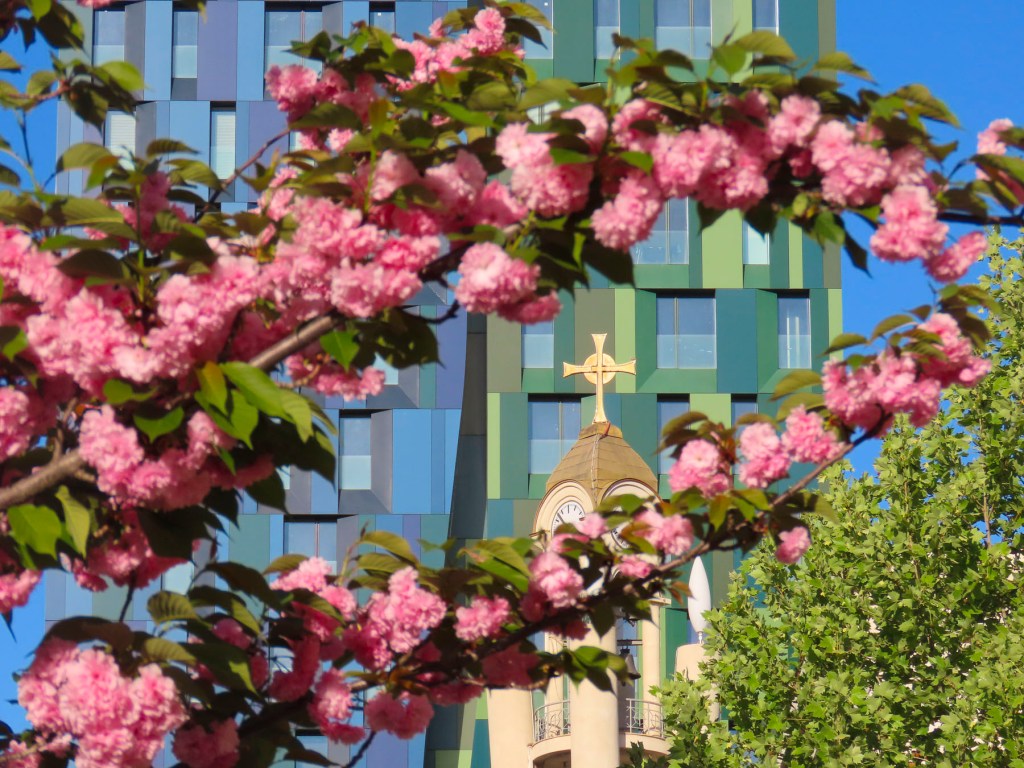
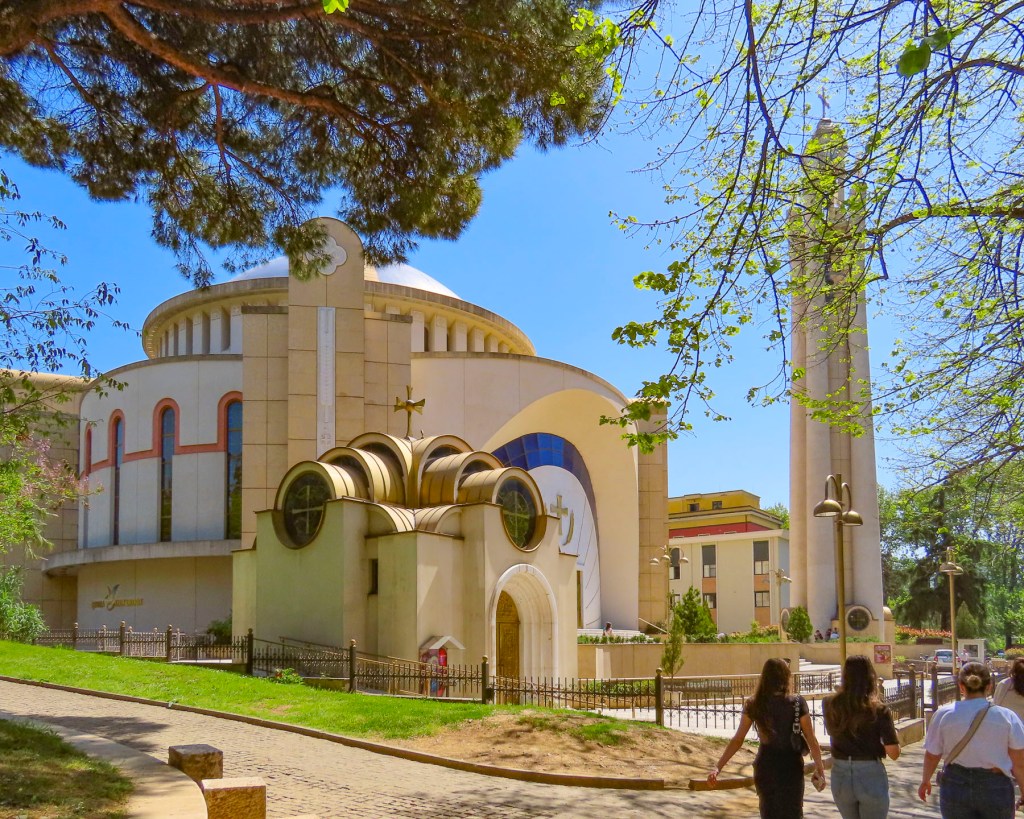
Spotting a belltower through the trees, we headed to the Resurrection of Christ Orthodox Cathedral, built between 1994 and 2002 to celebrate the revival of the Albanian Orthodox Church. It is one of the largest orthodox churches in the Balkans, and is a testament to a renewal of faith that had been outlawed under communism, when churches and mosques were destroyed or desecrated, after Hoxha proudly proclaimed Albania “the world’s first officially atheistic state.” The church is dedicated to the apostle St. Paul, who is believed to have founded the Christian community of Durrës, on the Albanian coast, during the 1st century AD.
We wandered through Rinia Park, a popular green oasis in the center of the city that is known for its Taiwan Musical Fountains, which were unfortunately still winterized when we visited. Afterwards we headed to Rruga Murat Toptani, a shady, treelined pedestrian-only lane with many outdoor cafes and restaurants, offering traditional Albanian food and various international cuisines. We enjoyed a light lunch and a local craft beer under the shade of a sun umbrella at the Millennium Garden.

Bunk’Art2, an eye-opening reminder of the perils of the despotic leader, Enver Hoxha, and the communist police state he created in order to stay in power for forty years, was nearby. It’s a large nuclear bomb-proof bunker in central Tirana, that was connected to various government ministries with tunnels for top officials of the regime to escape through. It was also an interrogation center for the Sigurimi, Albania’s Communist-era secret police force, which spied upon the country’s citizenry, and imprisoned anyone considered an opponent to Hoxha’s policies or authoritarian rule. Across the country 23 prisons were built to imprison 17,900 political prisoners.

Thirty Thousand people were sent to internment camps, and it’s believed over 14,000 were killed, died or worked to death from forced labor, often in dangerous mines. 6,000 are still missing. Often it was not just the individual who was jailed that suffered, but his family would be surveilled for years afterward, and his children would be denied educational opportunities. In Tirana the secret police kept 4,000 people under constant surveillance. The border was heavily patrolled with guard dogs and soldiers authorized to “shoot to kill,” as anyone trying to escape the country was viewed as an enemy of the state, and punishable for treason.

Only the most loyal communist families were allowed to live along the borders. Small villages were forcefully abandoned. The villagers were sent to larger cities were it was easier for the Sigurimi to watch for dissent. The mushroom shaped dome above the entrance to Bunk’Art 2 is symbolic of Hoxha’s paranoia, which manifested as a building campaign to construct an amazing 175,000 + bunkers of various sizes, across the country.  Most of them are only big enough for 2-3 people, but they were placed in strategic spots along Albania’s borders to protect the country from foreign invasion, not only from the western powers, but also from Yugoslavia or the USSR. Others were placed in the mountains, farm fields, road intersections and parks, with the intention that Hoxha’s loyalists would man them in a time of crisis.  The irresponsible cost of building the bunkers, from which shots were never fired, diverted Albanian funds away from other needed projects and ensured Albania’s position as the poorest country in Europe.  The communist government collapsed in 1991, and in the following years, more than 700,00 Albanians emigrated to find better opportunities in Europe  or farther afield.  Remittances from the Albanian diaspora to family still in the country amount to 14% of Albania’s Gross Domestic Product.
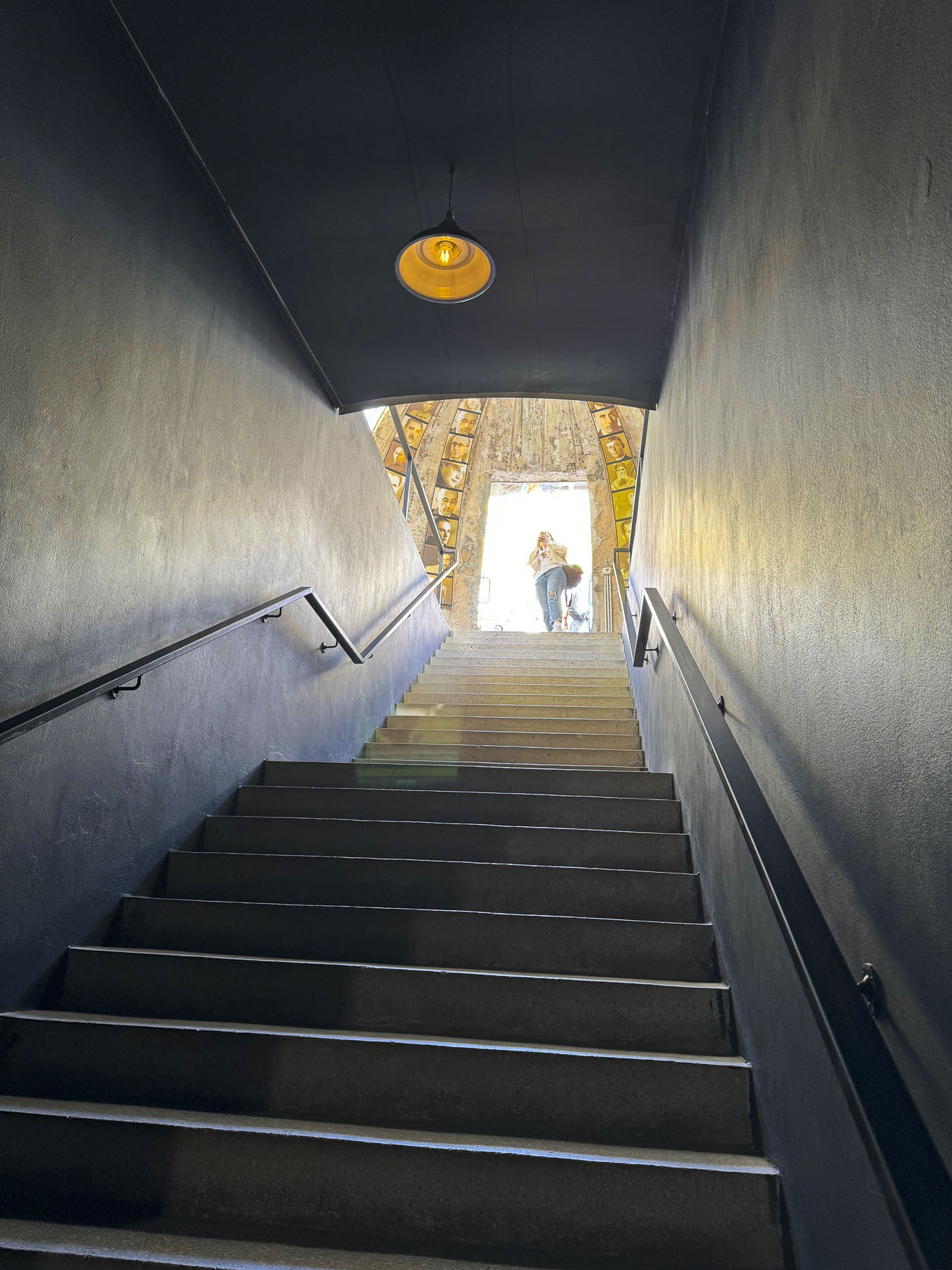
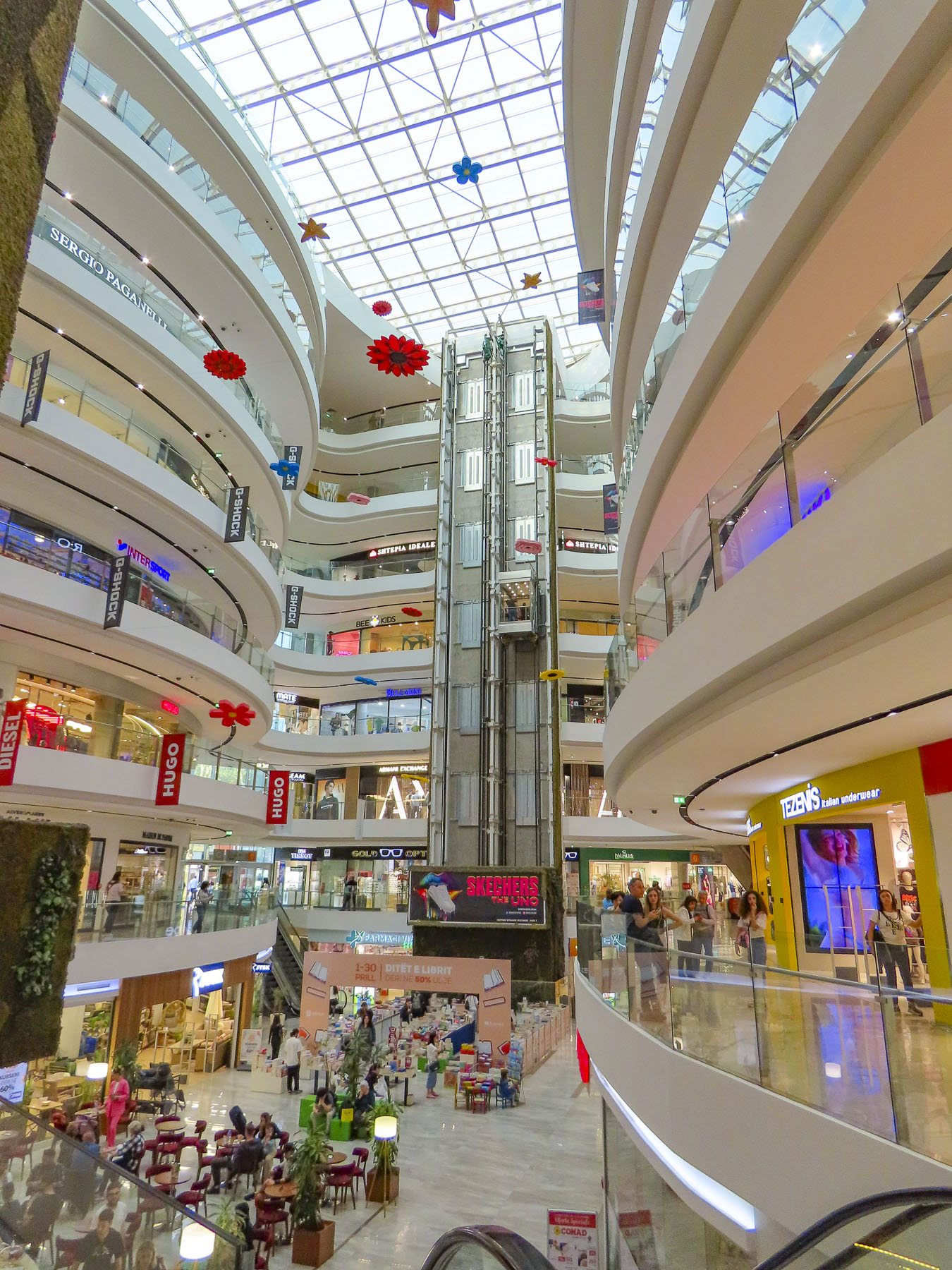
Our eyes needed a moment to adjust after resurfacing from the labyrinth of Bunk’Art 2, but if the construction boom underway in Tirana is an indication, Albania has thrown off the shackles of its communist past and is embracing the prospects of an exciting new future. Heading back to our hotel for a short rest before going to dinner we detoured into the Toptani shopping mall. A nine-story tower dedicated to the “shopping therapy” philosophy of capitalism.
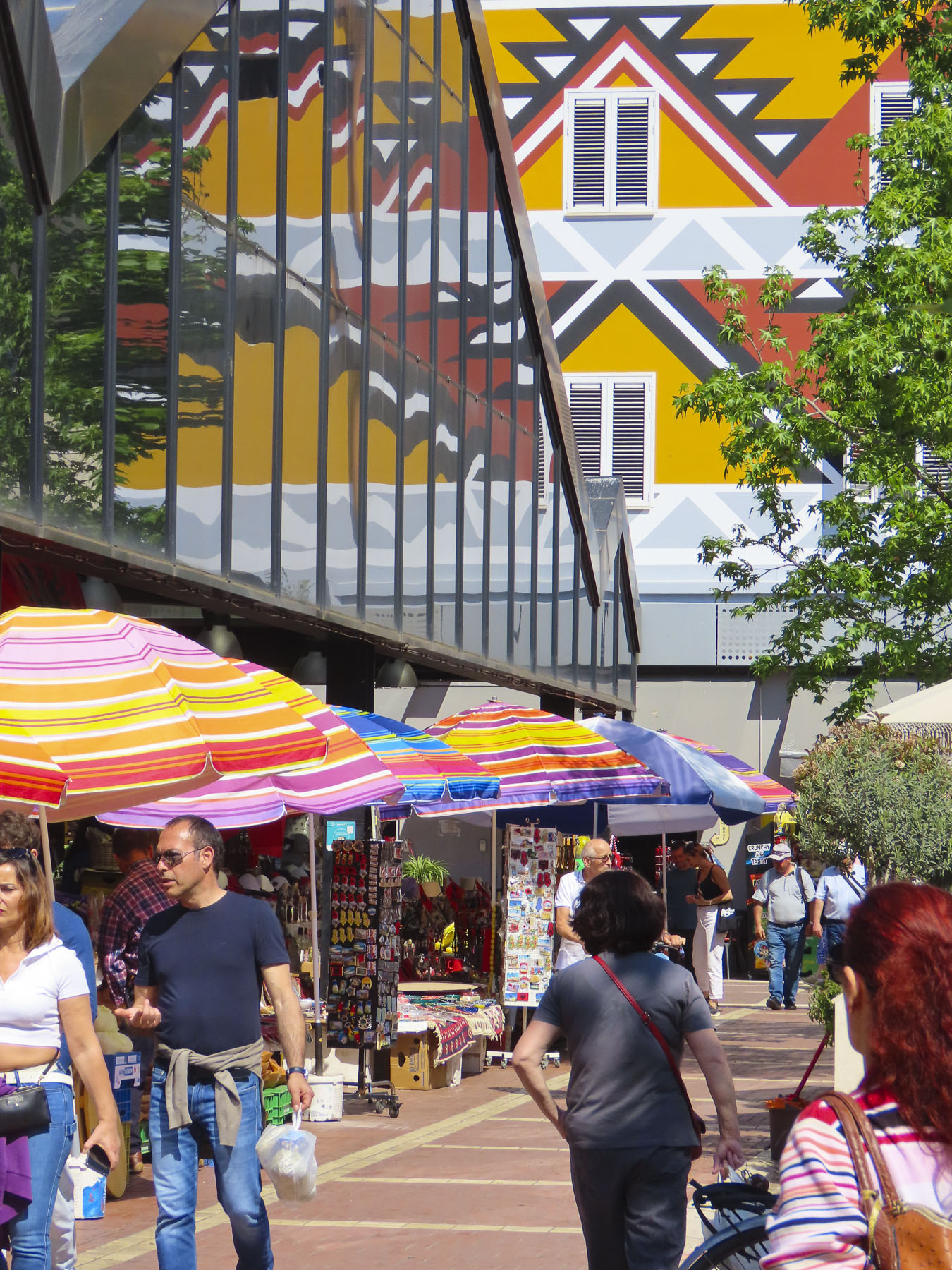
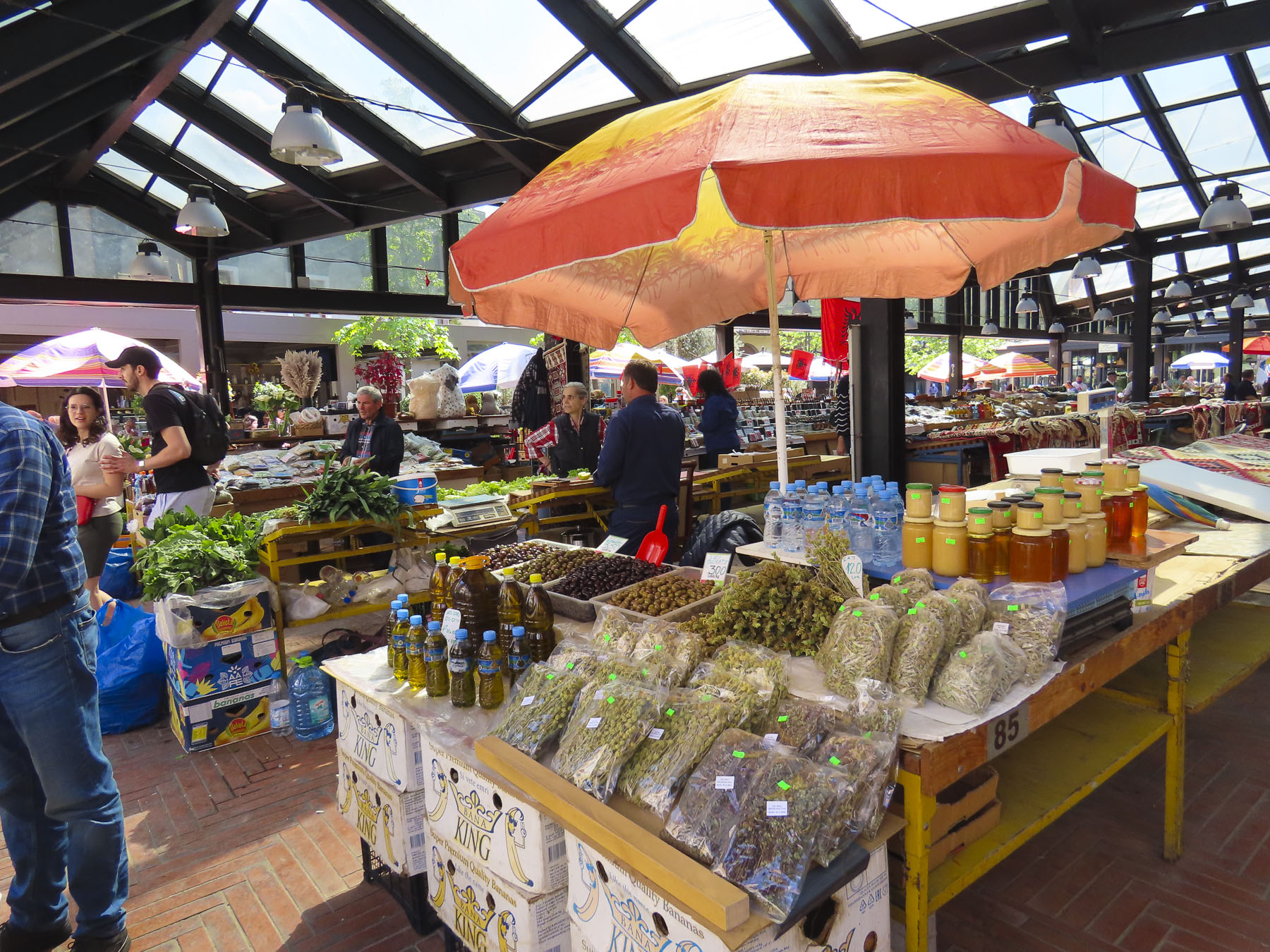
The next day we headed to the New Bazaar market area, only a five-minute walk from our hotel. On the way we passed impromptu sidewalk vendors, their crops and merchandise displayed on blankets or sheets of cardboard on the street, hoping to make sales to folks before they reached the daily market. The covered bazaar centers a plaza surrounded by restaurants, cafes, cheese shops and butcher stores. Under its roof, stands filled the space with vendors selling vegetables, olives, honey, and fruit. Women crocheted wool socks as they waited for customers. We browsed tables piled with rugs, displays of tools, pottery, vinyl records, and books, along with knickknacks, questionable antiques, and surplus Albanian army helmets. The time flew by.

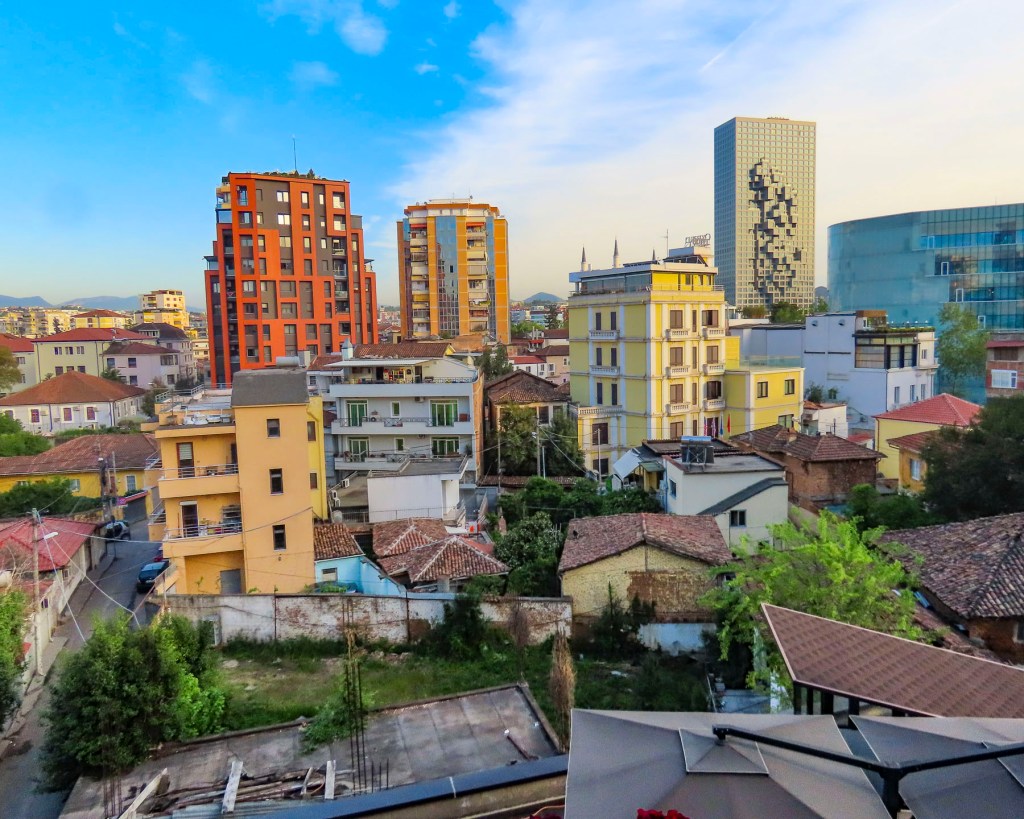
Tirana is a wonderful, midsize cosmopolitan city with a population of 375,000 people, with many parks, tree lined streets, and older buildings, mostly under five stories tall. New high-rise buildings rise from the old neighborhoods across the city. It was an interesting and delightful place to wander around.

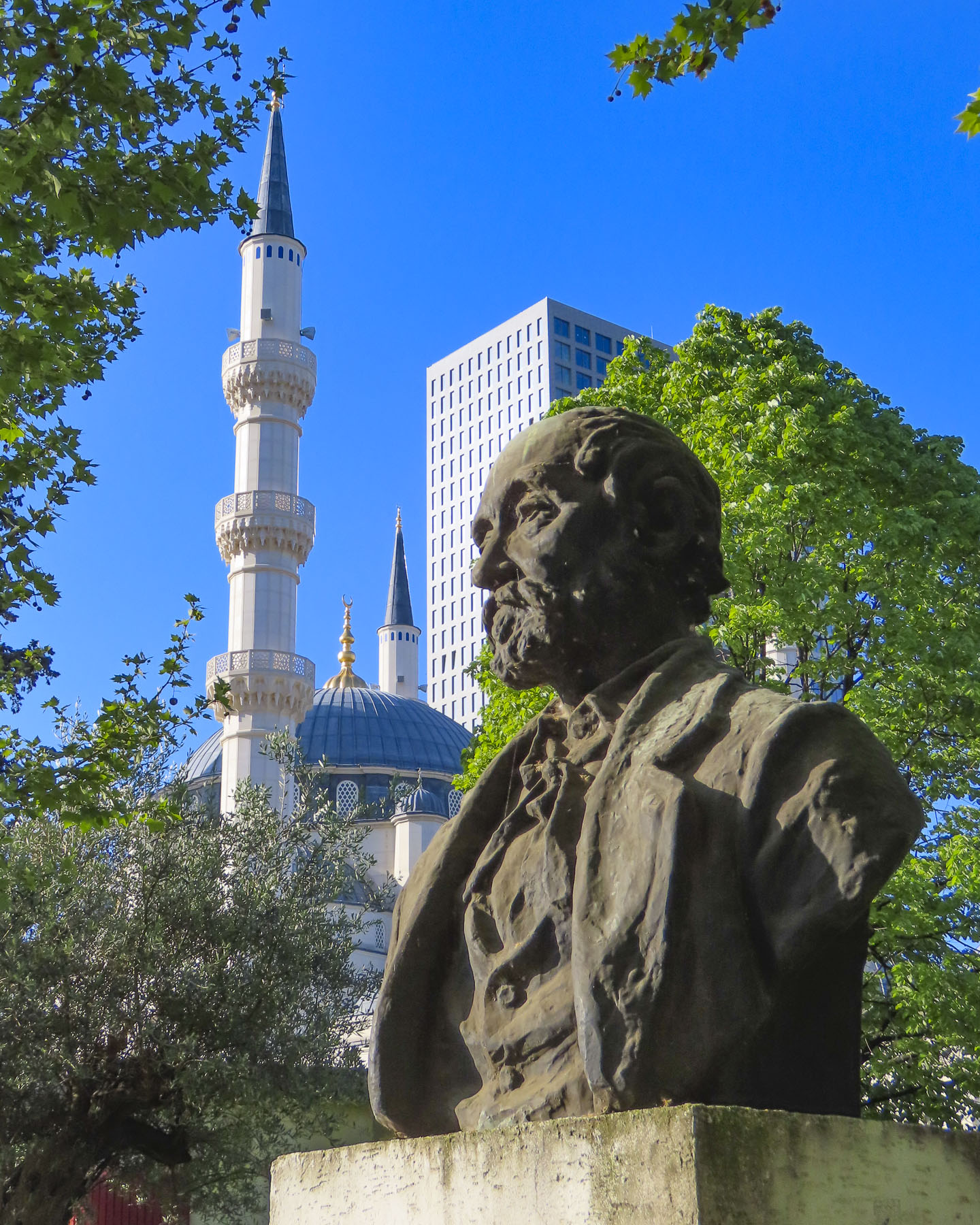
We passed ruins of Tirana Castle’s ancient defensive wall, dating to the 1300s, in the park next to Namazgah Mosque, the Great Mosque of Tirana. Completed in 2019, the mosque is currently the largest in the Balkans, and capable of holding 5,000 worshippers. The Muslim community was also persecuted under Hoxha’s anti religion policies, with many religious leaders killed or imprisoned, and 740 mosques destroyed around the country.

Nearby stood the 18th century Ottoman era Tanners’ Bridge, a stone arch across the Lana River that was used by farmers to bring produce into the city and livestock to the butcher shops and tanneries along the river. Farther away we crossed the ETC Bridge, a beautiful pedestrian only walkway over the Lana that is also a free wifi hotspot. The city’s tallest skyscraper, Downtown One, a 37 story, mixed used building with a very distinguishable cantilevered and recessed façade, stood in the background.

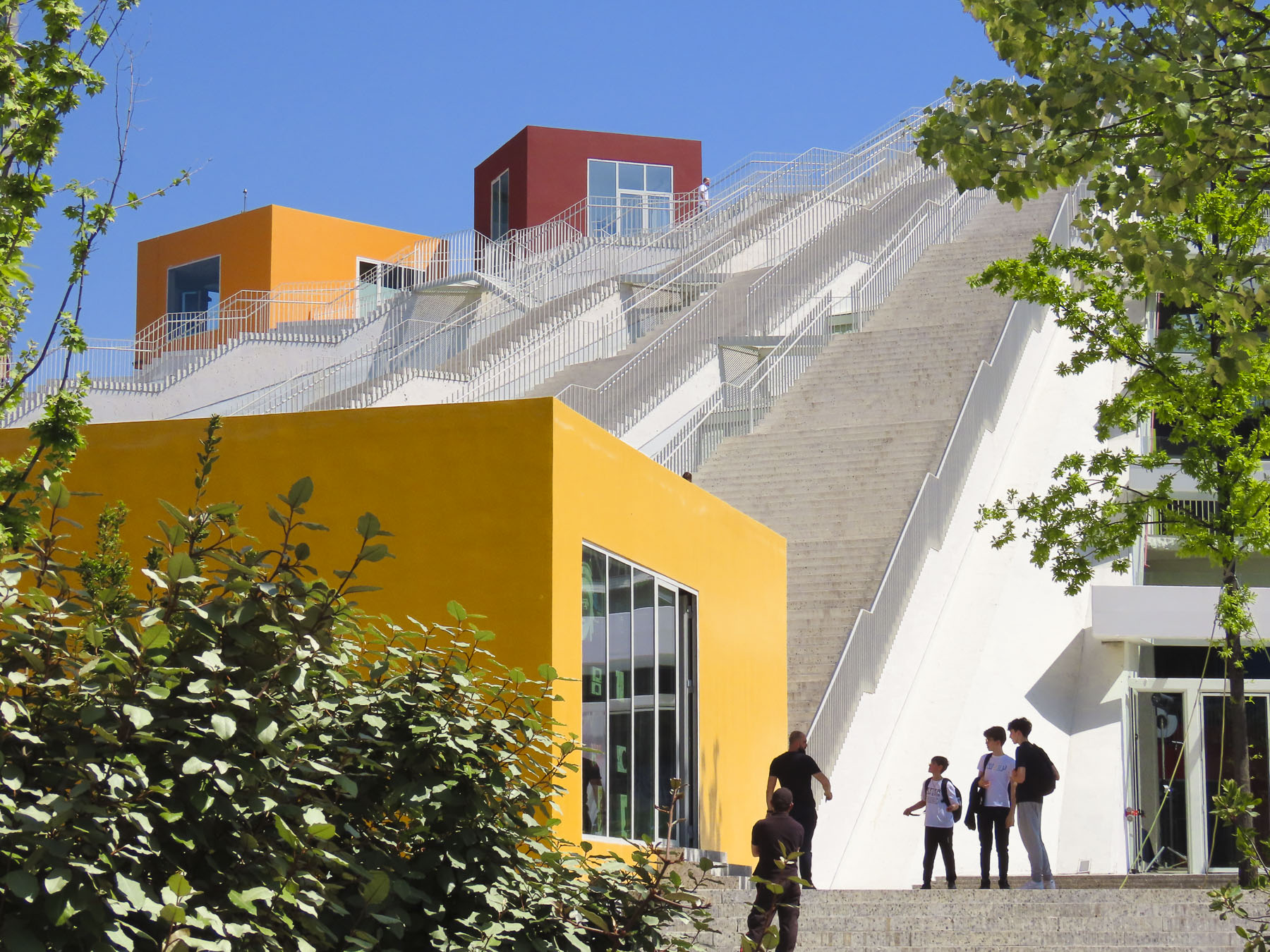
Our destination was the Pyramid of Tirana. Planned by Hoxha to be a memorial to his legacy as the Enver Hoxha Museum, covered in gleaming white marble, it opened in 1988, three years after his death. It was designed by Hoxha’s daughter and her husband and at the time of its construction thought to be the most expensive structure ever built in Albania.

Most likely forced prison labor and compulsory labor were used for parts of the project. With the collapse of the country’s last communist regime in 1991, the museum was closed and the space repurposed as a conference center, then a NATO base. It eventually fell into disuse and was vandalized, and its marble covering stripped away. It was finally reincarnated as an IT youth center with classrooms housed in colorful blocks attached on its slope, and 16 staircases leading to the viewing platform atop its 70ft high summit. We climbed to the top and enjoyed the panoramic view.

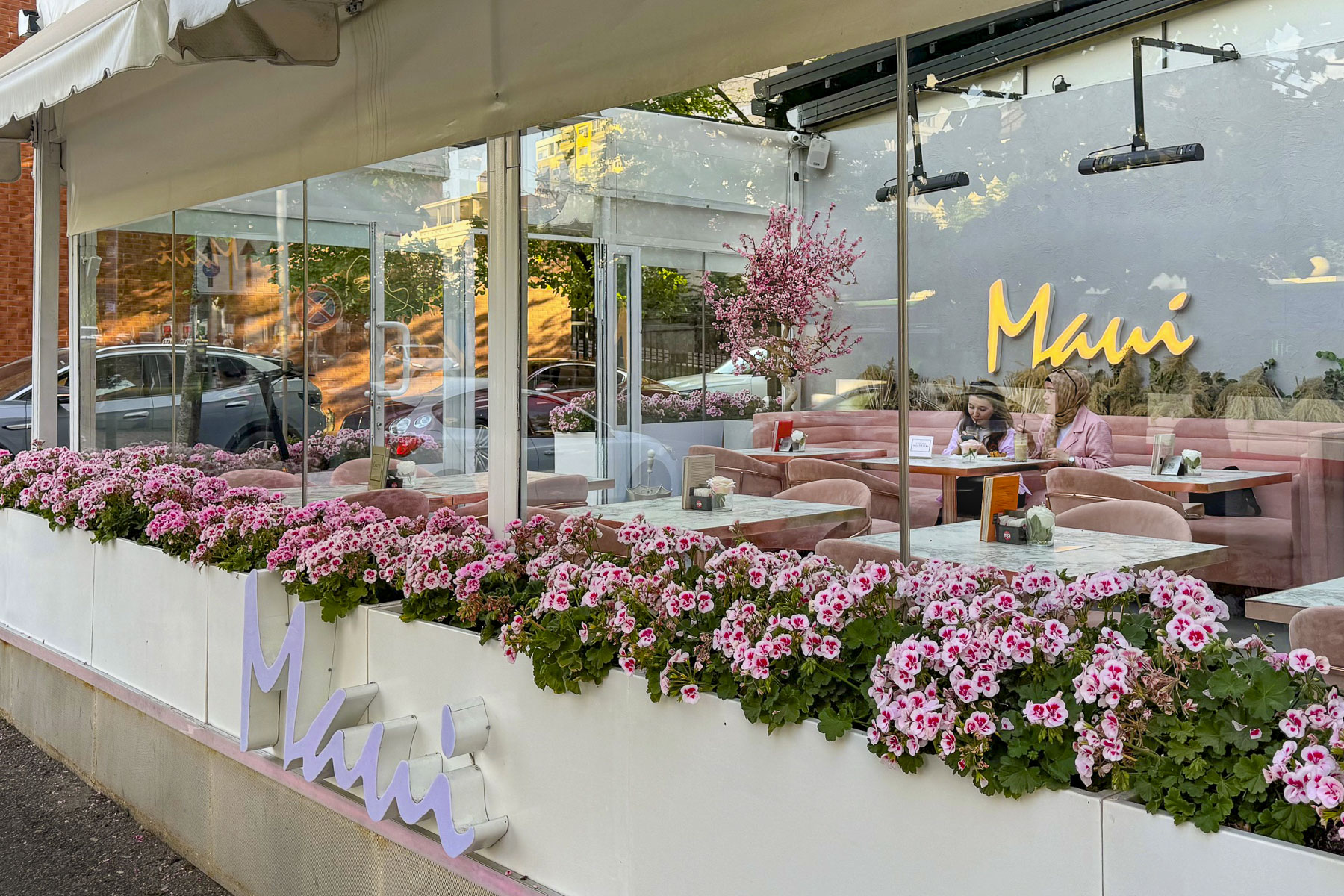
A short distance away, Hoxha lived in a modest villa in the Blloku neighborhood.  It was a secret district during the communist era, with housing reserved for the party elite, with entry forbidden to anyone else, and its road did not appear on any maps.
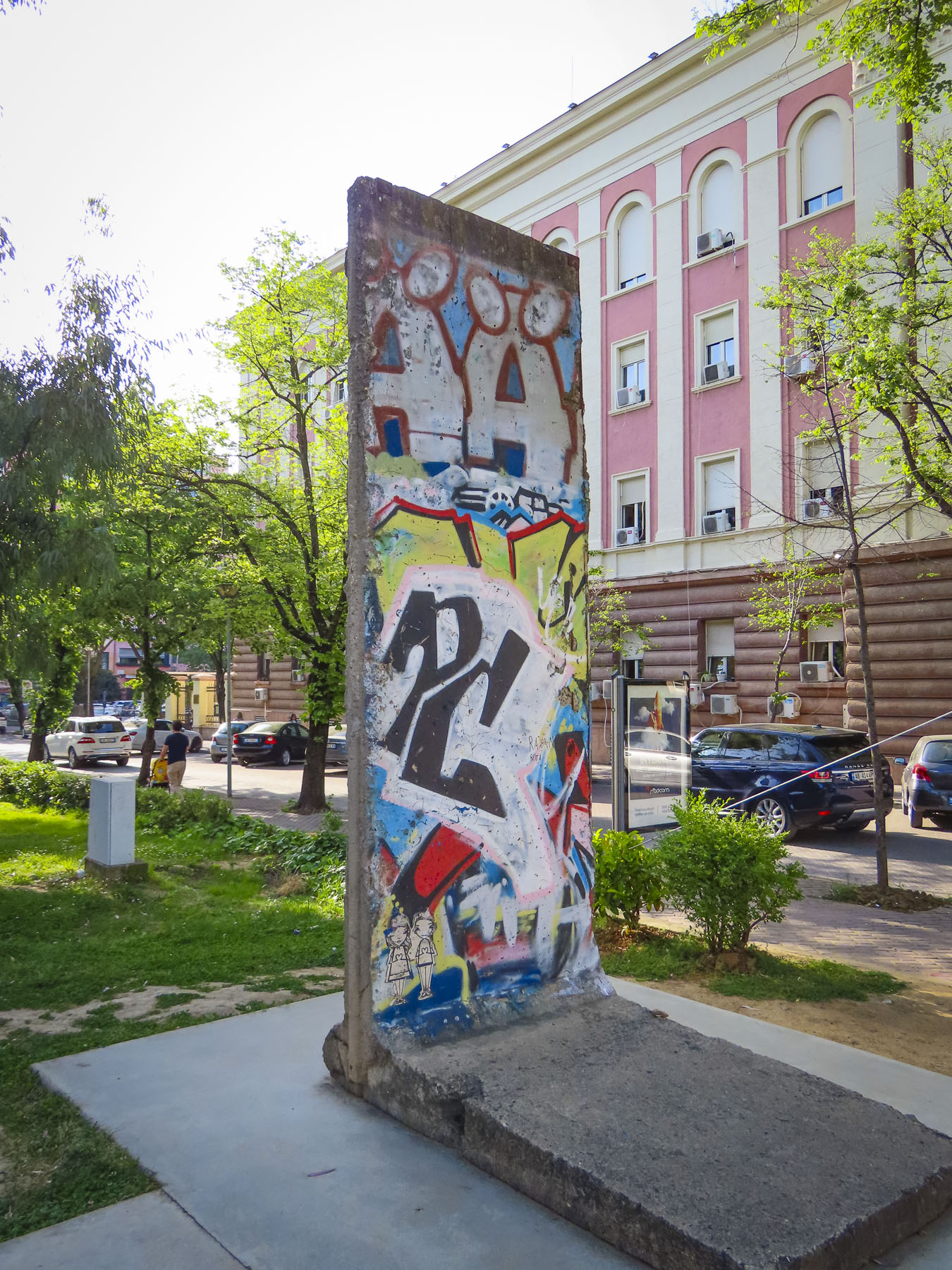
The Checkpoint memorial stands in the park down the street from his residence and features a bunker, iron mine shaft railings from the infamous Spac prison, and a section of the Berlin Wall. Subtle reminders of the brutality of communism.

For our last day in Tirana, we decided to head to the outskirts of the city to check out Bunk’Art1 before continuing into the mountains to Bovilla Lake. It’s easy to miss the turn into the long single-lane tunnel that leads to Bunk’Art1, an appropriate entrance to explore Albania’s past. After walking through a seemingly forgotten park, we entered a non-descript door in the side of an overgrown slope that hides the extensive maze of corridors and rooms of Hoxha’s secret command center.
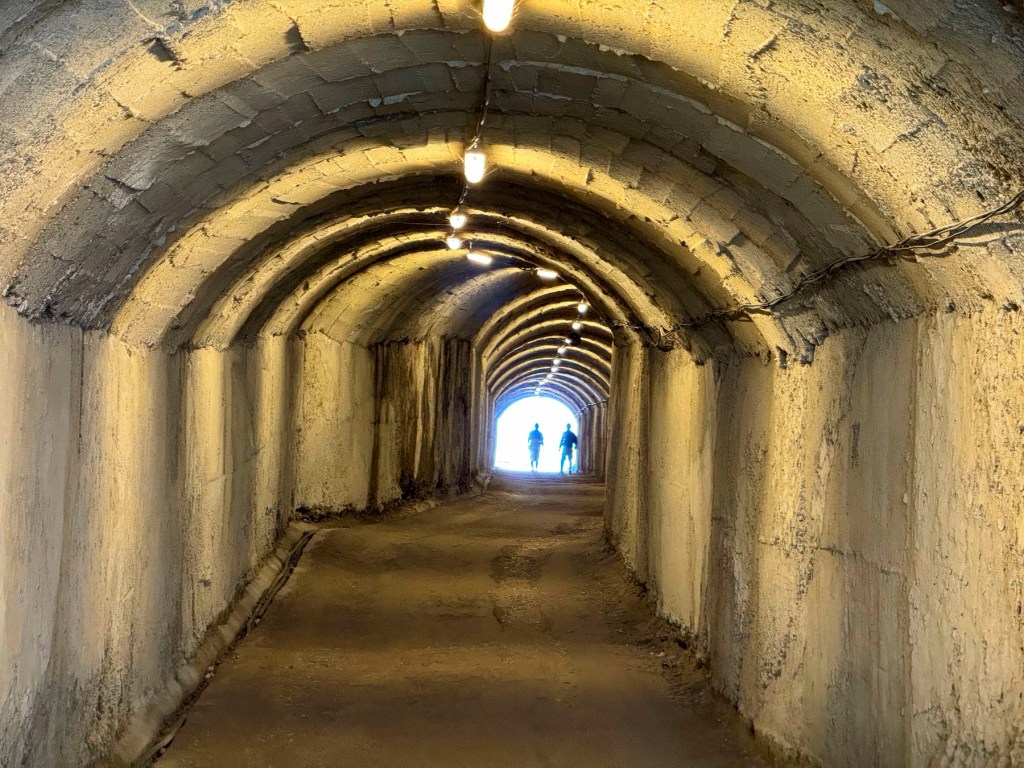
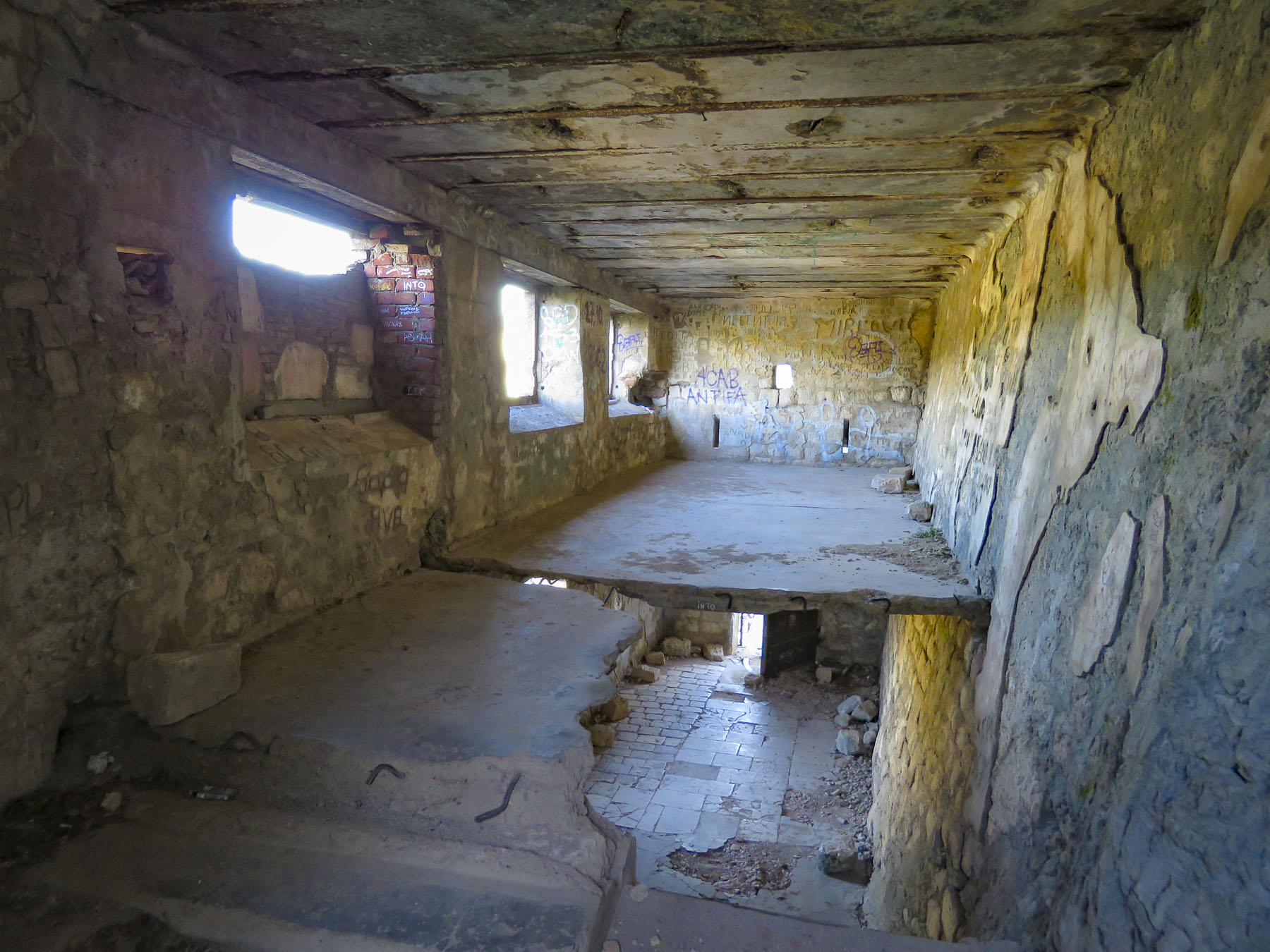
We followed a short corridor to the nuclear blast proof doors set in walls 6ft wide, and into a decontamination room. We were five stories underground in the foothills of Dajti Mountain, near the village of Linzë. There are no windows, the lights flicker, and a sign warns the power could go out at any time! It was a massive facility designed to shelter hundreds of Hoxha’s military and communist comrades, for six months, during any war.
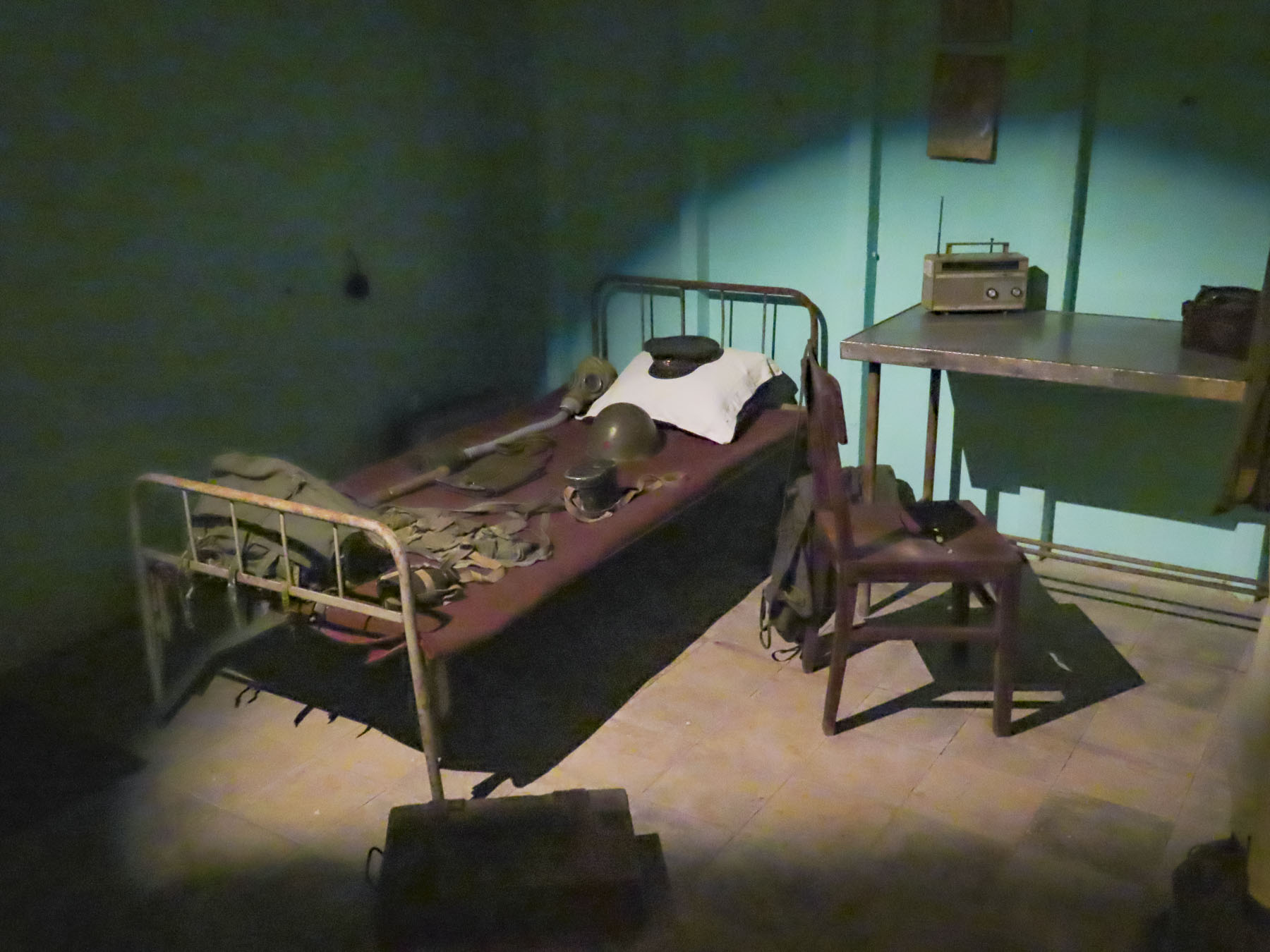
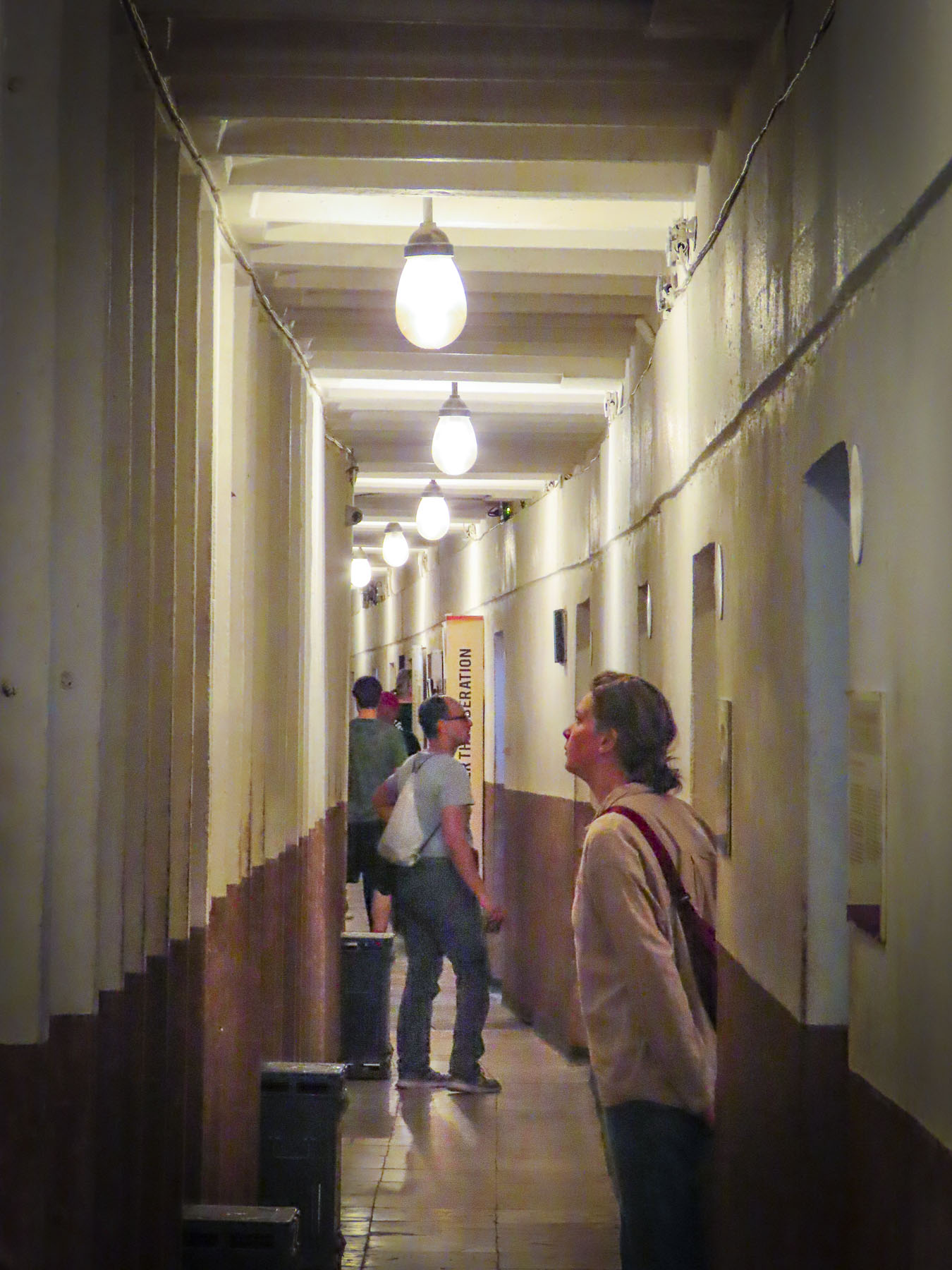
In Hoxha’s private quarters, we picked up a phone and listened to a recording of his voice. It was a sparse apartment, more prison cell than home, that lacked any warmth. Obviously, his wife wasn’t consulted. Other rooms displayed vintage equipment and weaponry. The isolation of having to live in this depressing environment would have been psychologically damaging; fortunately, the structure was never needed for war-time use and since 2014 it’s been a museum explaining Albania’s history from liberation by the partisans during WWII through Hoxha’s communist regime. The exhibits use amazing photographs and examples of nationalist propaganda from the country’s archives to great effect. The bunkers’ large meeting hall now hosts concerts and art exhibits. Emerging from the darknes,s an amazing number of different bird calls filled the air, as if welcoming us back to the present.

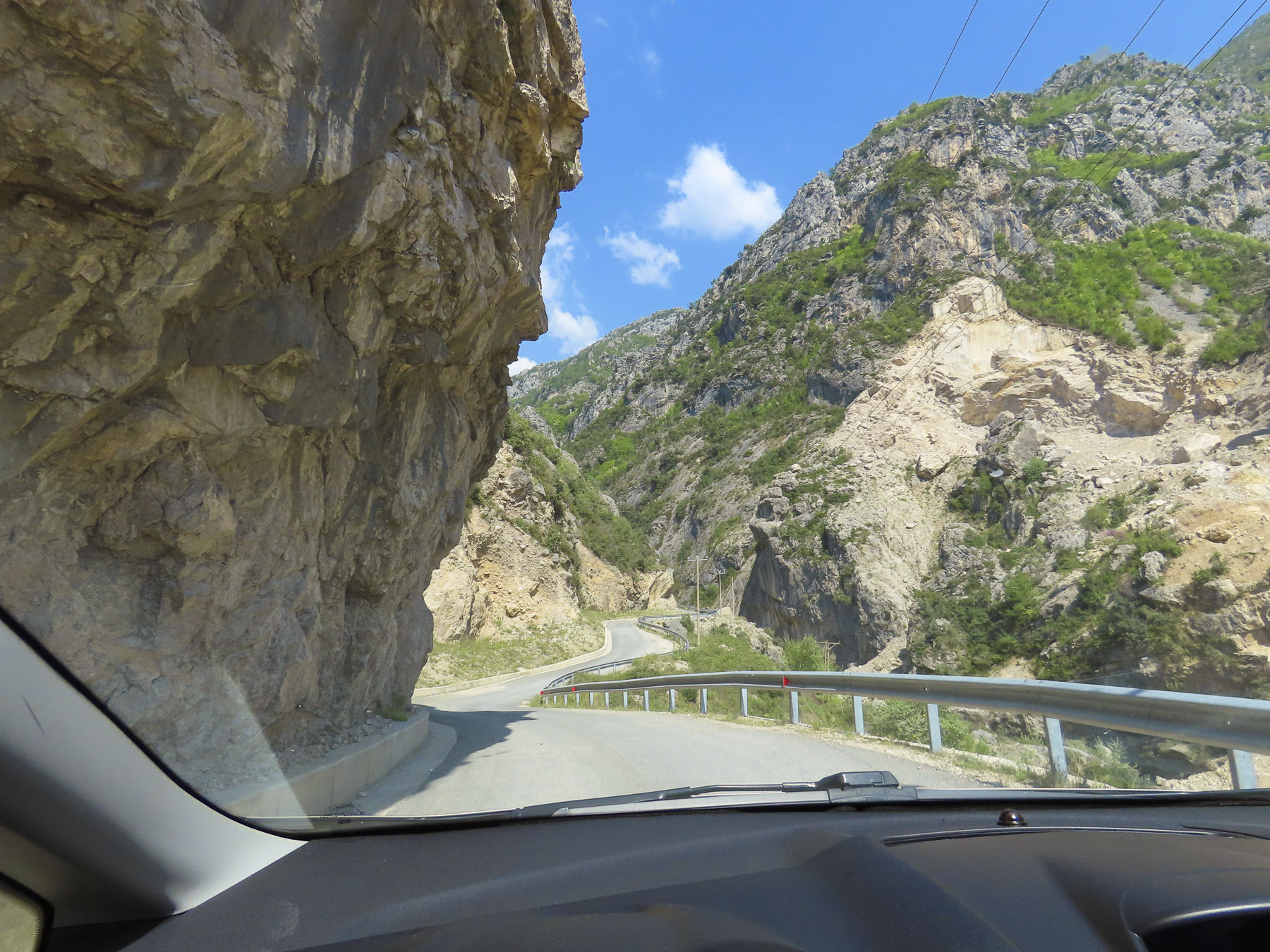
Following our map’s apps instructions we followed a confusingly serpentine route across the rolling hills outside Tirana before reaching the road, SH53, that led to Bovilla Lake. In the beginning the paved asphalt road was fine, but after a while abruptly changed to graded gravel. Nothing unusual here. Though the farther we traveled into the countryside, we passed fewer cars; rather, we saw large dump trucks, laden with stone from a quarry, headed towards Tirana, filling the air with dust. The road progressively worsened the closer to the quarry we got, as the weight of the trucks pulverized the road surface and created numerous potholes that we had to slowly navigate around. We thought several times about turning back, but we had driven through the Andes in Ecuador, with a sedan, on worse roads. While the going was slow and extremely bumpy, we did eventually make it to the lake, actually a reservoir, and more importantly, Bovilla Restaurant!

The views were astounding! The restaurant was full, with hikers and day trippers from Tirana. The food was good, the beer cold. It was a journey well worth the effort. The car rental GPS tracker did flag us, and we were fined for driving on possibly the worse road in Albania. Fortunately, when we returned the car eighteen days later, after some Albanian-style dickering, we were able to politely negotiate a reduction in the fine.

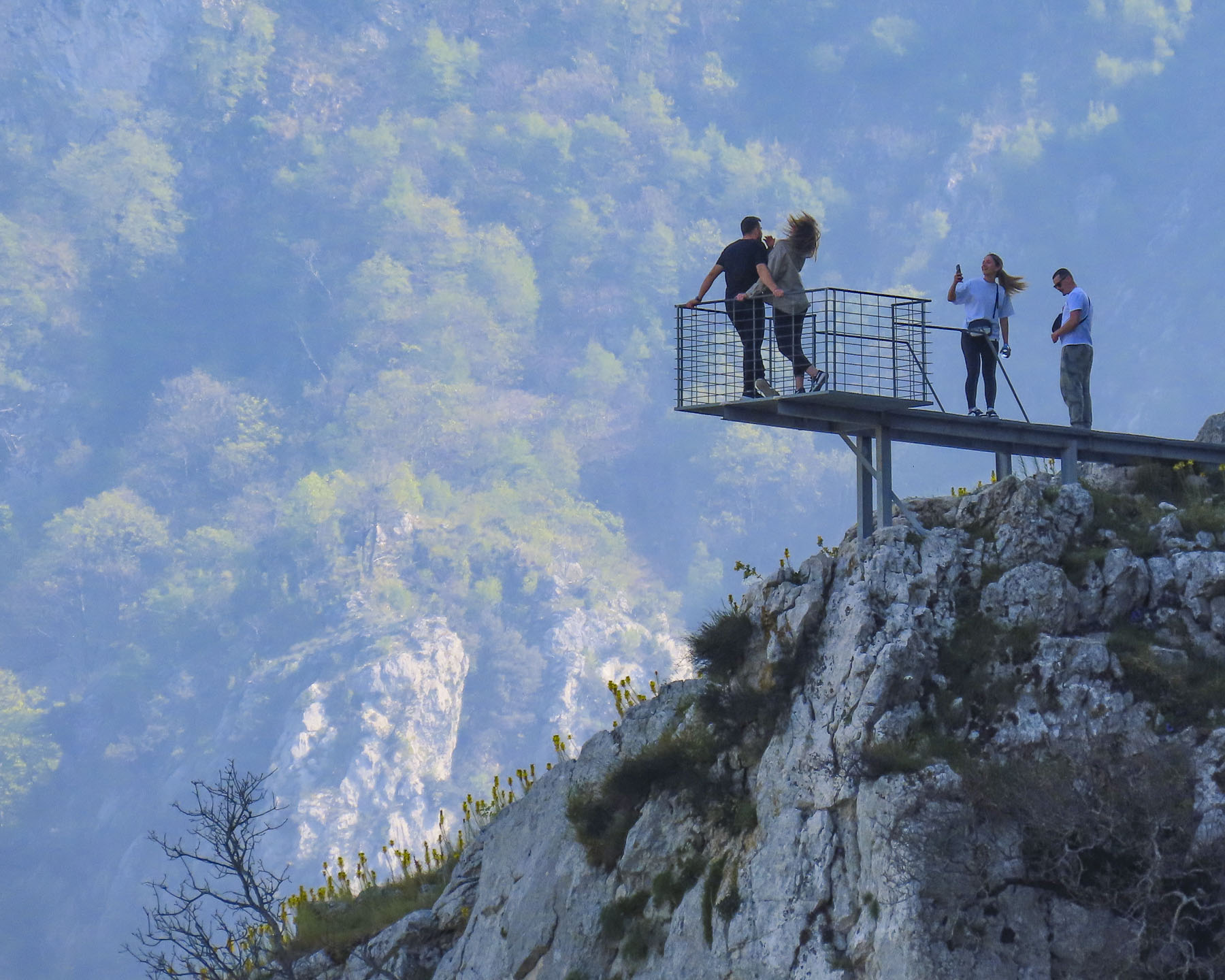
There were numerous speed traps on the highway leading out of Tirana and most of the times when we passed one, officers were writing out tickets, so we drove well below the speed limit. We were on the way to Berat and it was well past our usual morning coffee break when we spotted the colorful reflection of Bashkia Belsh’s waterfront.

After parking, we strolled along the Belshi Lake shorefront past small shops and some interesting street murals to the town’s boardwalk. Being a weekend, it was full of families with young children. To the delight of many, small rideable electric toy cars were available to rent, along with balloon, ice cream and cotton candy vendors. A small ferry boat took folks on a short cruise around the lake, while others enjoyed the fine weather and strolled along the boardwalk or sat under the umbrellaed tables of the restaurants that lined it.

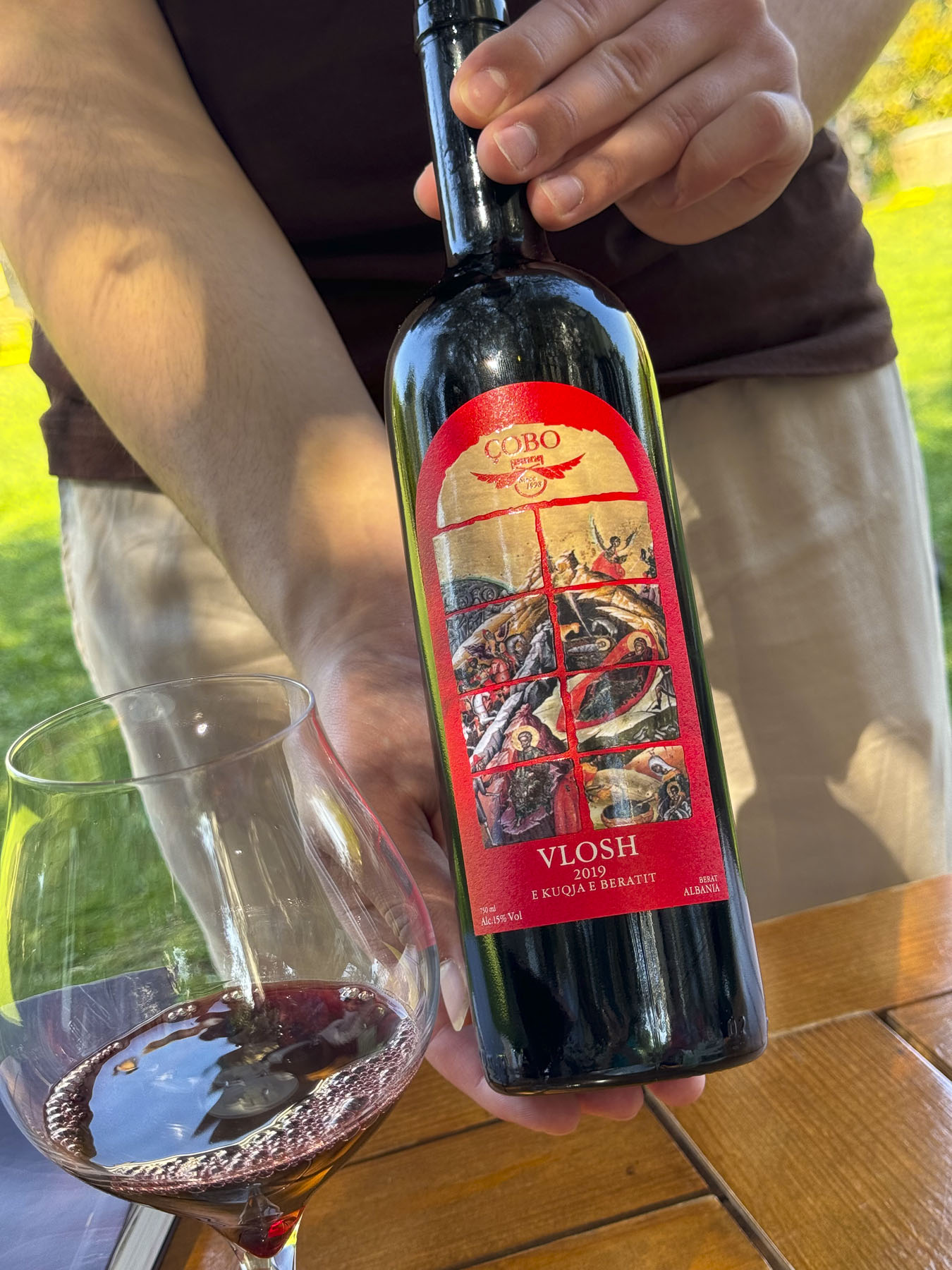
Closer to Berat we stopped at the Çobo Winery for a tasting that was accompanied by homemade cheeses and locally grown olives. Vintners of white, red, and sparkling wines and raki, they are regarded as one of the best wine producers in Albania.

It’s a small family vineyard with a 100-year tradition spanning four generations, that was sadly interrupted during the communist era, but since the 90s has grown production from 8,000 to 100,000 bottles per year. It was a nice break from our driving, and we enjoyed relaxing under the ancient olives trees in the their courtyard. The wines we tasted were very good and we purchased four to bring home in our luggage, and I’m happy to say they all made it back safely to the states.
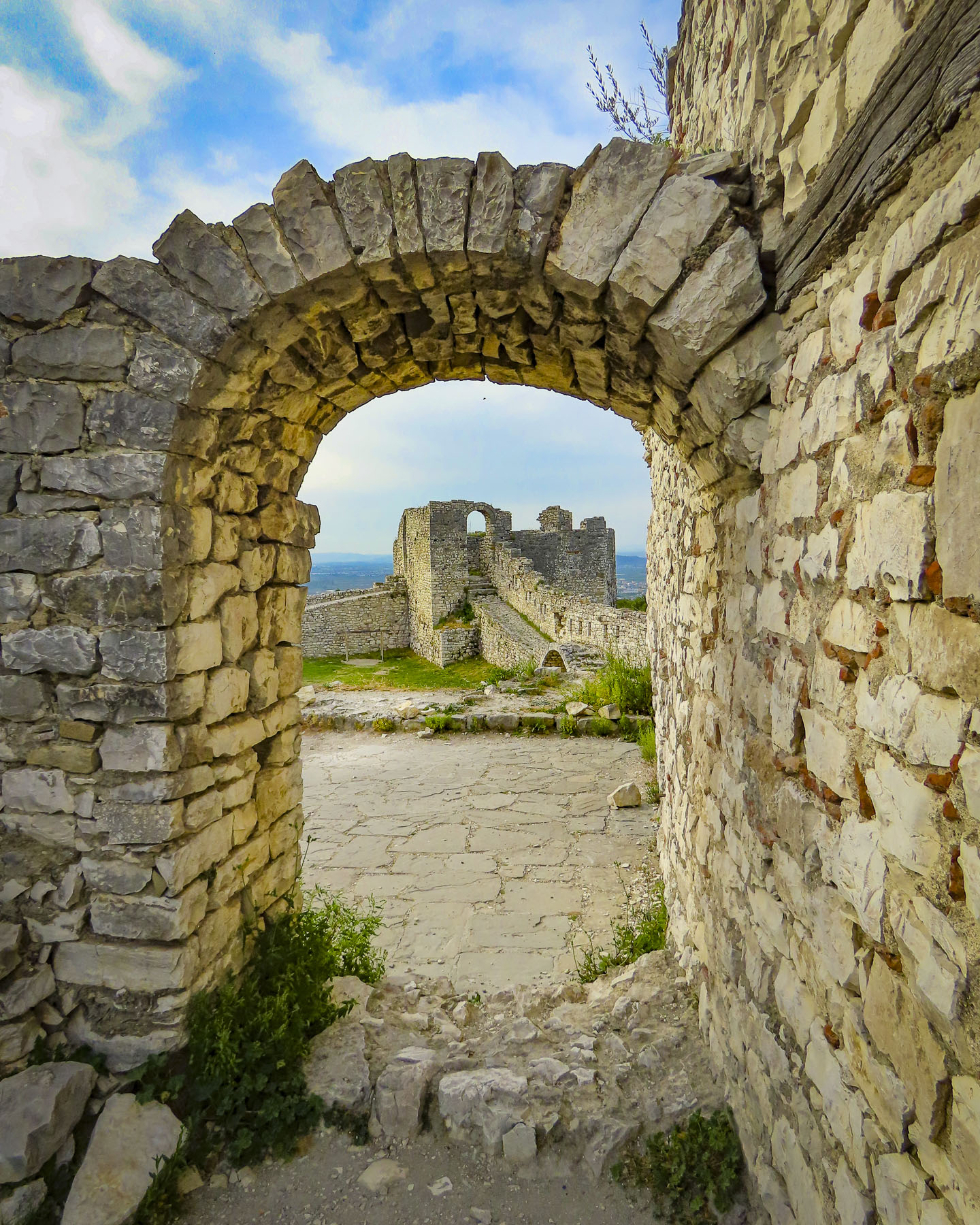
We reached Berat Castle just as the golden hour was approaching. We walked along its cobbled lanes, past homes surprisingly still occupied by about 400 people who live in 13th century citadel. But its history extends much farther back, with Roman records noting capture of the castle in 200BC. Archeological evidence shows the site has been inhabited since 2600-1800BC, making it one of the oldest settlements in Albania.
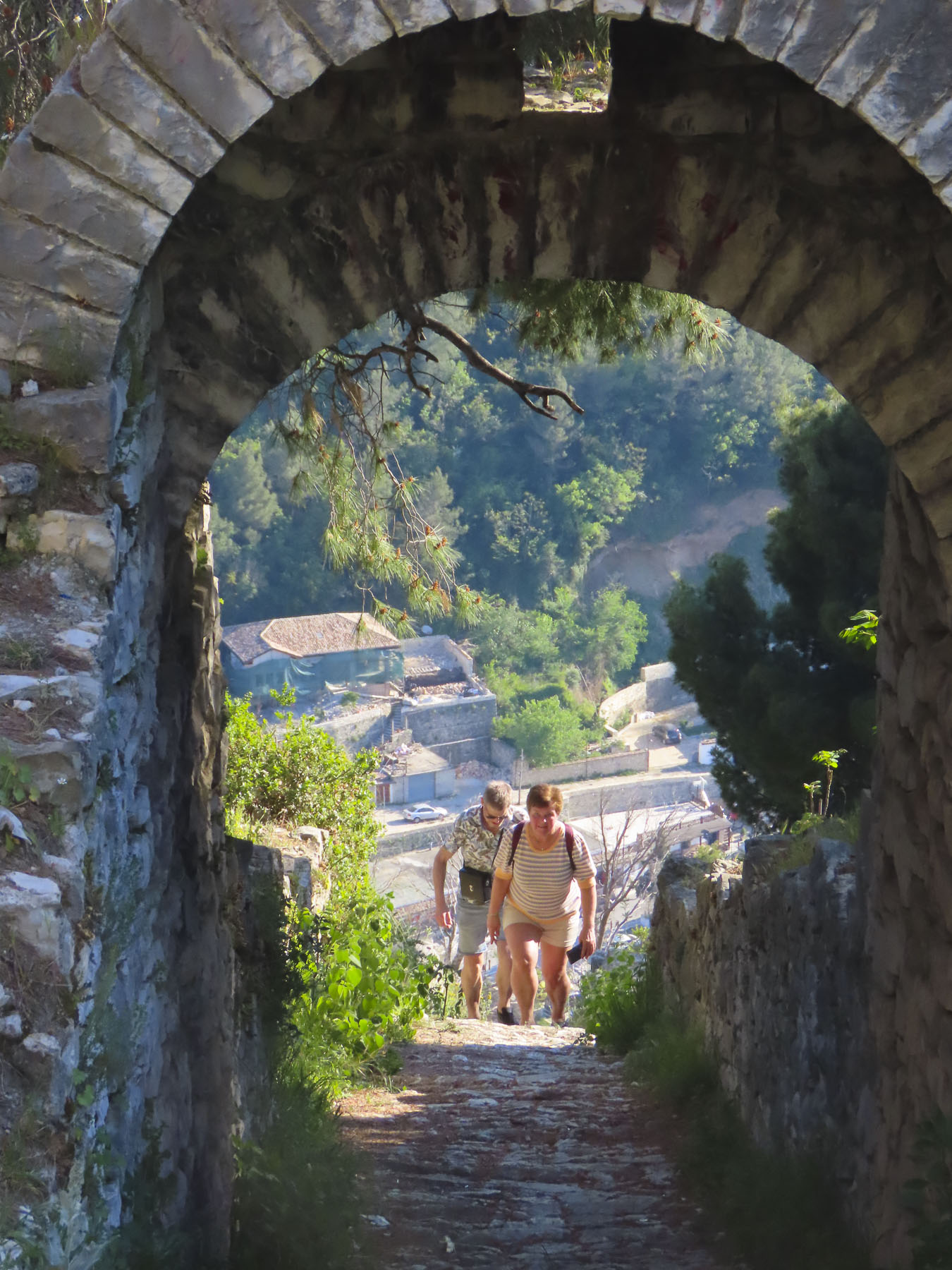
We worked our way to the overlook above Berat, passing the ruins of the Red Mosque, built in the 1400s after the Ottomans captured Berat, and Kisha e Shën Gjergjit, an orthodox church that’s been neglected since the communist ban on religion.

The panoramic view from the overlook out over Berat, the Osumi River below, and snowcapped 7900ft Mount Tomorri in the distance was stunning. Walking back along the ramparts we enjoyed watching an energetic dog race along the narrow top of the wall, chasing a stick his owner tossed up for him to retrieve multiple times. On the western slope of the castle, between the outer and inner defensive walls, Kisha Shën Triadha, a beautiful red brick, 14th century Byzantine church graces the hillside.

We wanted to stay on the “City of a Thousand Windows,” hillside under the castle, but didn’t want to drag our suitcases too far up the narrow alleys, and we had a car that needed parking. With those considerations in mind The Beratino Hotel fit our requirements perfectly and was great place to stay for two nights. Recently renovated, its stone and woodwork exemplified the best of Albanian craftsmanship. Still the shoulder season, in mid-April, I think were the hotel’s only guests.
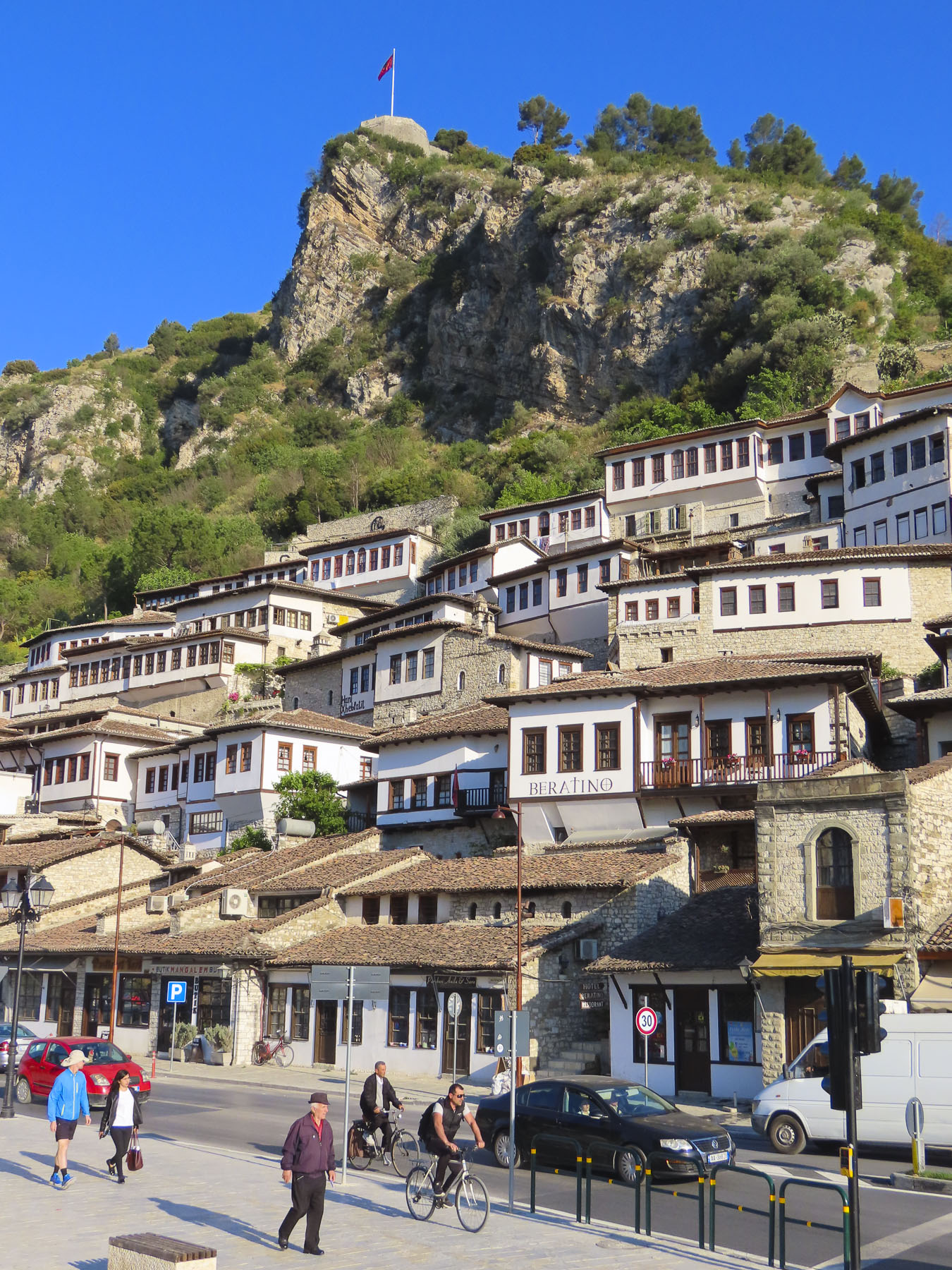
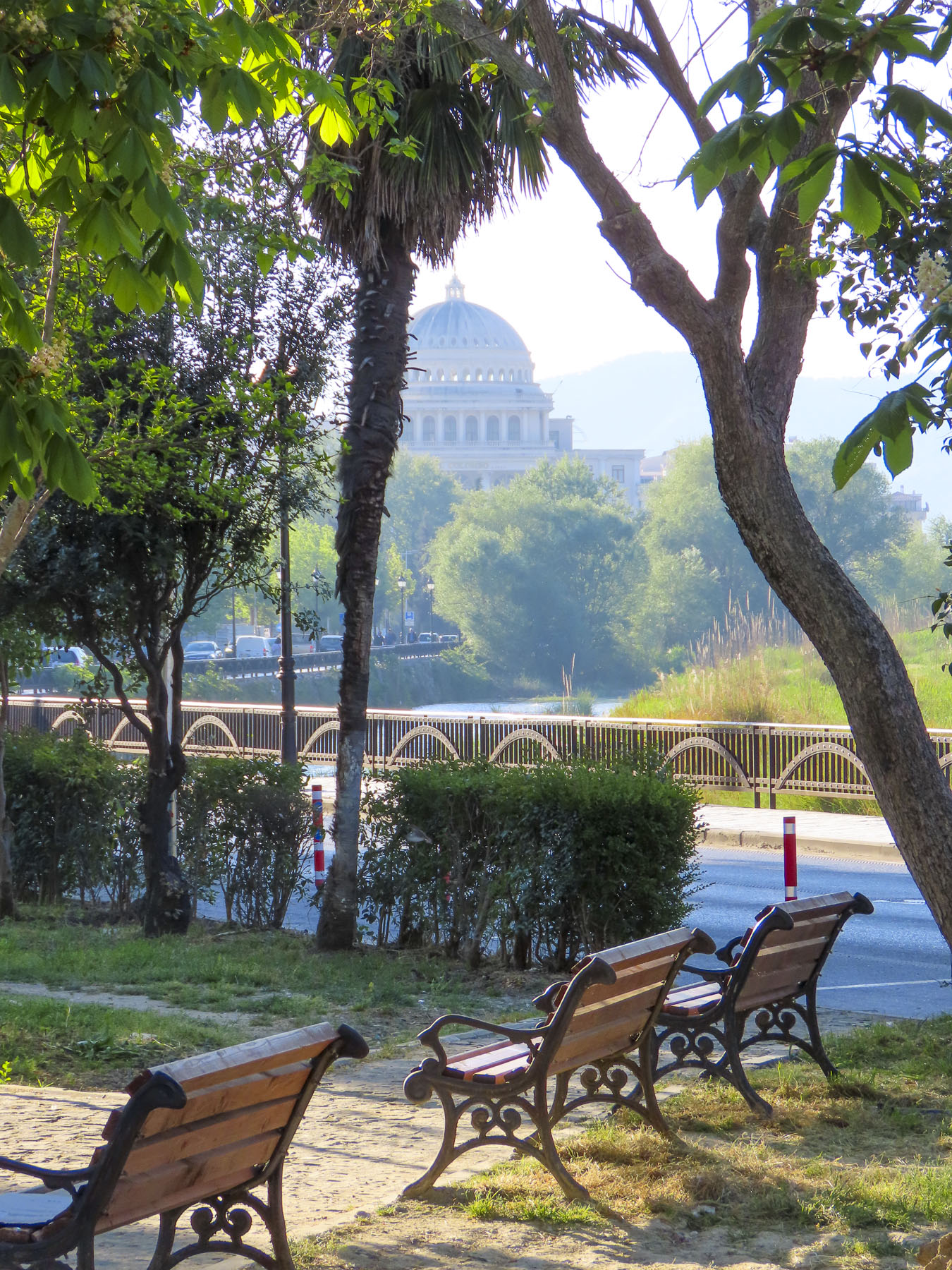
Sated from our afternoon wine tasting we walked into the newer part of Berat, now a small city of 47,000, along the pedestrian only Bulevardi Republika, next to Lulishtja park. It had a lovely Neapolitan vibe, with families enjoying the Albanian tradition of “xhiro,” to stroll with friends, relax and enjoy the outdoors after dinner. At a small shop perfectly named Bakery & Food we purchased Burek, a traditional Albanian pastry made with various meat and vegetable fillings. We purchased their spinach burek, reputed to be the best in Berat, some even say the best in Albania. The quest for the best byrek, burek, or borek in Albania might be the catalyst for a return trip to the country. Back on the balcony of our room we enjoyed a glass of wine, and the burek was delicious.

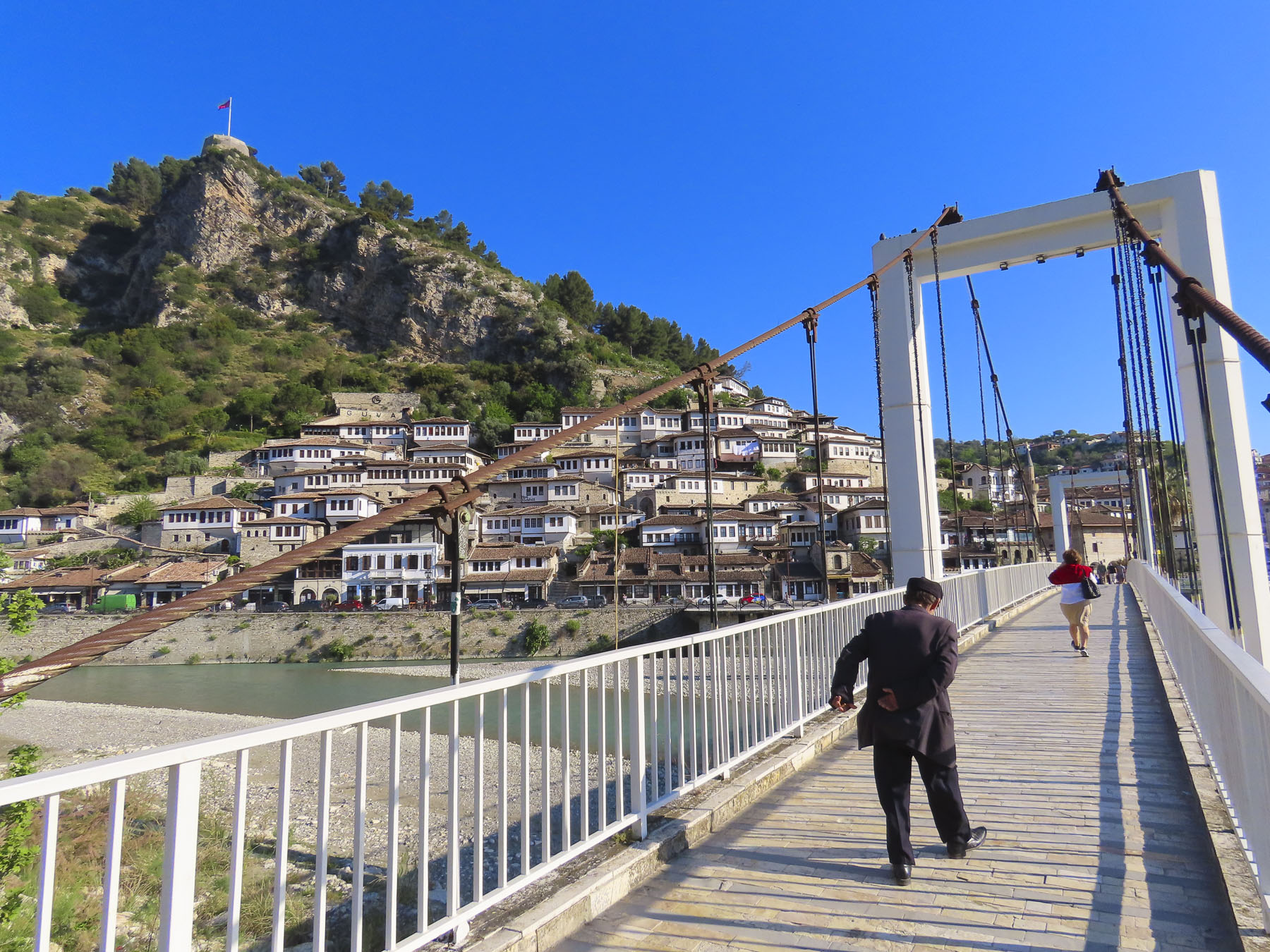
The next morning, we were up early and walked across the suspension bridge linking the old town with the southern Gorica “Little Village,” across the river. From this vantage point we spotted the Kisha e Shën Mehillit, St. Michael’s Church, an Eastern Orthodox Church, built on the steep rock face under the flag that flies above Berat. Thought to have been built in the 14th century, the setting of the red brick and stone church pricked our curiosity and we decided to hike there. The alley that led to the church was only a short distance away from our hotel but wound quickly up the hillside past homes and small inns.

We admired the strength of workers we passed carrying long wooden beams on their shoulders up the hill for a renovation project. We zigzagged higher up the hill, now looking down on the rooftops below, the trail looking like it hadn’t been trodden upon in ages. Unfortunately, the sanctuary was closed, but the views of the church with the river and mountains were well worth our effort.   

Later that morning we drove to the small town of Çorovoda, the gateway to the Osumi Canyon. It was a beautiful drive on a bright spring day, and we stopped many times along the way to photograph the scenery.

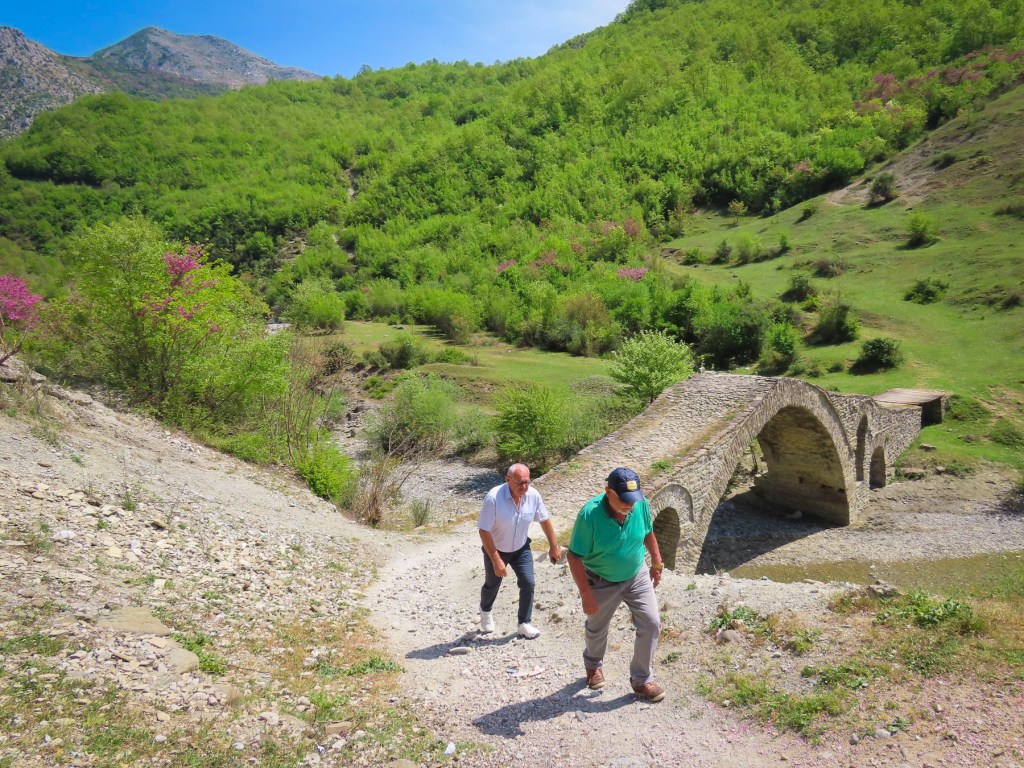
Before reaching the town, we veered off into the mountains to Ura e Kasabashit “The Bridge of Master Kasa/Kaso,” a classic high arched Ottoman era bridge constructed in 1640 across a wide stream, by the chief engineer of the Ottoman empire, at the time, Albanian architect Reis Mimar Kasemi. It was part of an ancient caravan trade route across the rugged central Albanian mountains, that connected the Adriatic Sea port of Vlorë to Berat, and Korçë before ending in the Greek city, Thessaloniki. Almost 400 years old, it surprised us that it is still standing and we followed some other tourists across it. Farther up the road from the bridge there are more abandoned military bunkers and warehouses, but we were bunkered out after Tirana and chose not to investigate them.
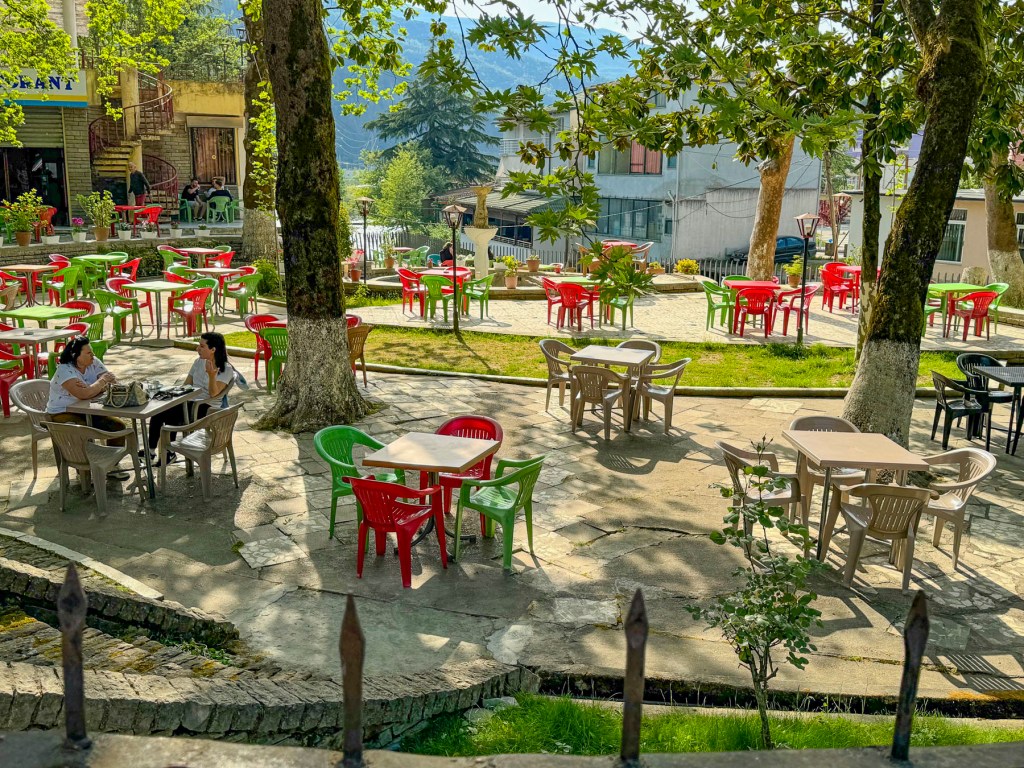
Our “drive a little, then café,” was way behind schedule when we stopped in Çorovoda at Drita e Tomorrit, a restaurant with a small park like setting.
South of Çorovoda there are number of fantastic viewpoints along the Osumi Canyon. The water in the canyon is an amazing turquoise and it’s easy to see why it’s a popular area for rafting and swimming in the summer.
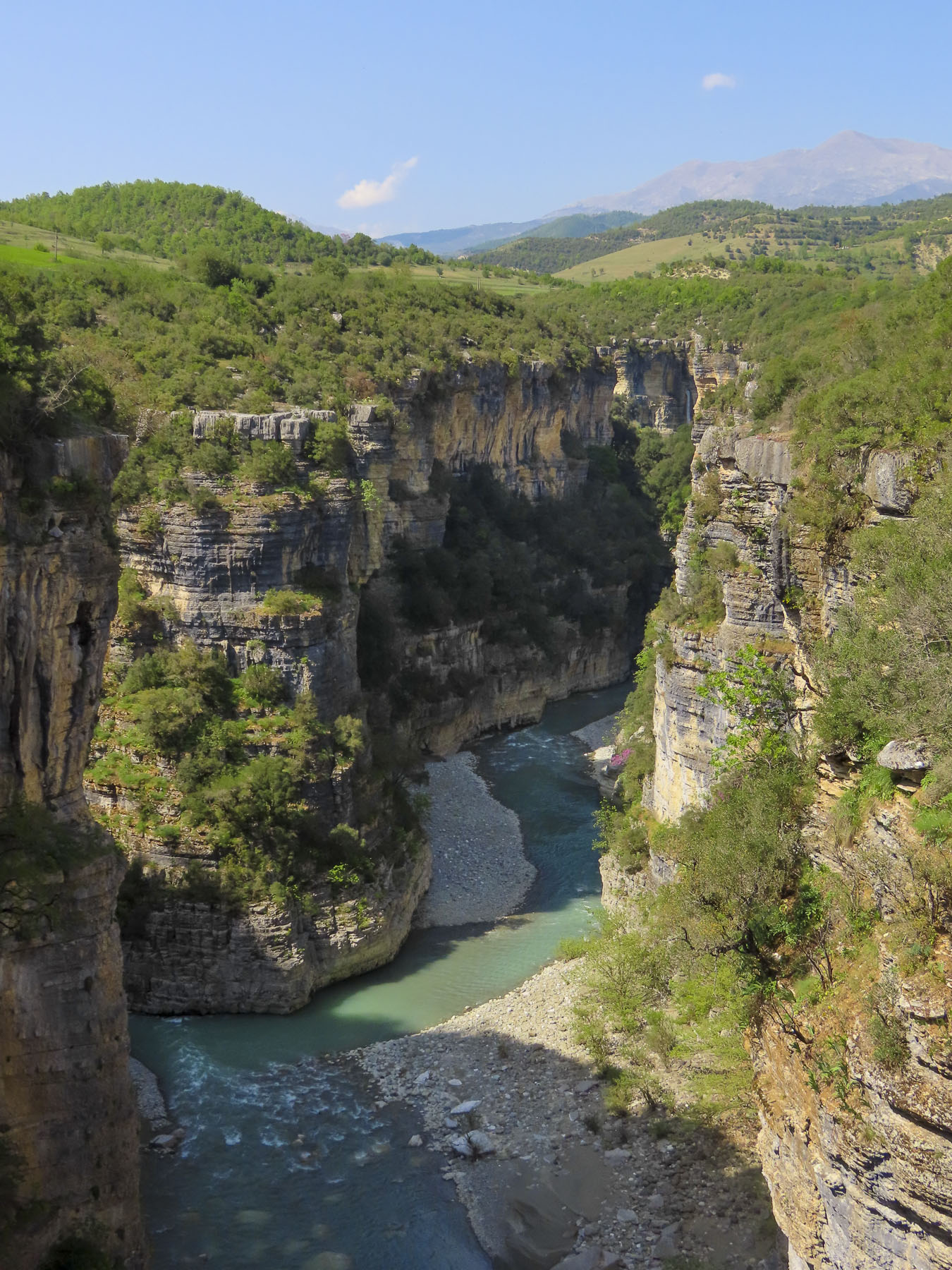
Before returning to Çorovoda for a late lunch we stopped at Gjurma e Abaz Aliut, the Footprint of Abaz Ali, a small roadside shrine believed to have in the solid rock under its canopy an impression of Ali’s foot. Made when the Albania folk hero, with legendary strength and courage, jumped across the Osumi Canyon from this spot. The depression in the stone looked very convincing to me.
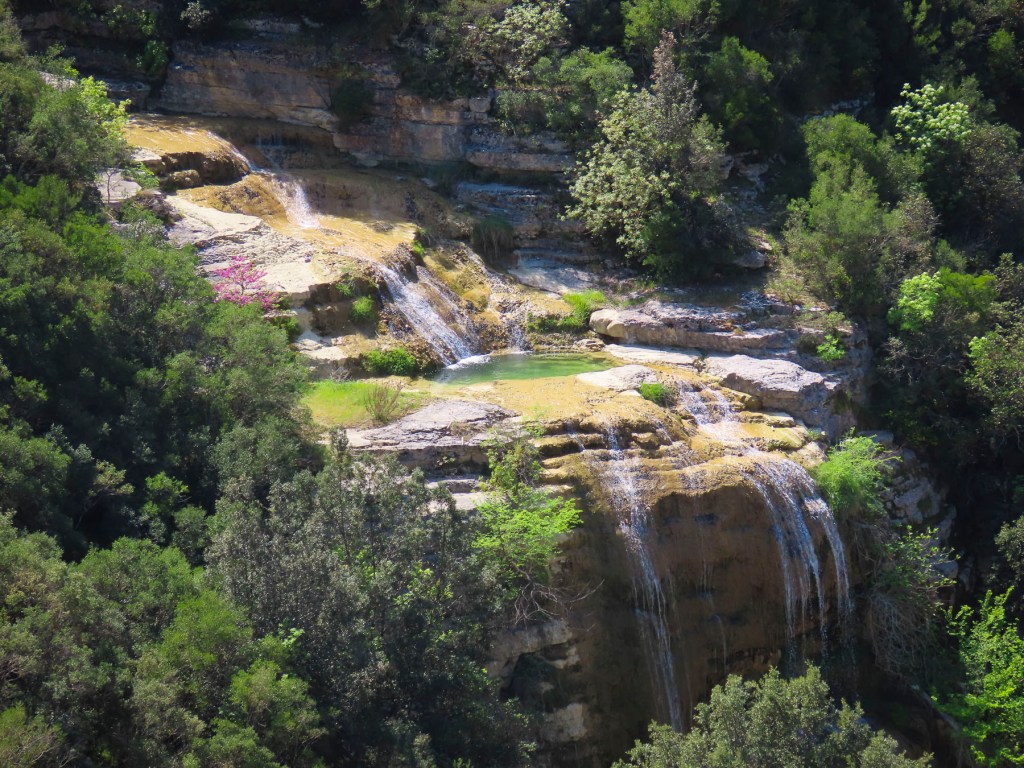
Back in Çorovoda we had an early laid-back dinner at Zgara Korçare. It’s a small restaurant with nice owners across the street from where we earlier had coffee. Their mixed grill was delicious and we enjoyed our first tastes of Birra Korça. A good refreshing light beer brewed in Albania since 1928. Gëzuar, cheers!

The next day we headed to the Apollonia Archaeological Park before driving south to the semi-abandoned village of Upper Qeparo, eager to explore the rest of this interesting and stunningly beautiful counrty.

Till next time, Craig & Donna

Kotor Part 4: The Ladder of Kotor, Camel Tracks and Pirates

The water barely ripples on the inner reaches of Boka Bay when a storm rages across the Adriatic Sea. The steep walls of the fjord created the perfect harbor to shelter ancient fleets of merchant sailing vessels. Three-thousand years ago starting with Greek triremes and later Roman galleys, the vessels carrying goods through the Adriatic to ports along the Mediterranean were mainly rowed.  The ancient Greeks mostly relied on free men as paid rowers while the Romans used slave labor to expand their empire and propel their merchant fleets.

The city of Kotor was essentially a land locked island until an ancient foot path was widened by the Romans in the 1st century into a cobbled road, six to eight feet wide in many places, with stone retaining walls that zigzagged up the mountain four miles and climbed 3100 ft in altitude, about a five- hour trek.  Going downhill was much faster and more difficult for the camel trains. The danger here was if the camels were going too fast and couldn’t round the tight switchbacks, lost their balance and fell off the trail to their deaths.  The camel wranglers definitely had a difficult task on this route. The caravan trail remained the only land route into Kotor until 1897, when the Austrians built the road that now leads from Kotor to Cetinje.

This early example of infrastructure improvement resulted from Rome’s war against the Illyrian Kingdom after it refused to stop their piracy of Roman merchant ships. The empire determined that an overland trade route connecting to Constantinople/Istanbul and the Silk Road from China was needed as a safe alternative.  Eventually a spiderweb of caravan trails and Roman roads spread across the Balkans. Cilician pirates in the eastern Mediterranean were also creating havoc, at one point kidnapping a young Julius Caesar on a voyage to Rhodes. Piracy continued to be a problem for the Venetians with Omis pirates in the 11th to 13th centuries and later Uskok buccaneers from Croatia pillaged along the Adriatic until the 1600s.  Barbarossa, the notorious Ottoman pirate, commanded a fleet of swashbucklers that were the scourge of the Mediterranean at this time, raiding Spanish and Venetians merchant vessels and selling Christians into slavery. European empires also tolerated and endorsed pirates as long as they were “our pirates.”  Piracy persisted on the waters of the Adriatic and Mediterranean for so long because the rugged coastline had many small islands and hidden inlets to shelter the pirates.

Romanticized views of pirates persist today with the popular adventure movie franchise Pirates of the Caribbean, featuring a beguiling Captain Jack Sparrow, and the TV series Black Sails.  Interestingly there is a Japanese anime film about fictitious air piracy on the Adriatic Sea called Porco Rosso which is based on a 1992 short graphic novel called Hikōtei Jidai (飛行艇時代, The Age of the Flying Boat). It’s entertaining and worth checking the Porco Rosso film trailer.

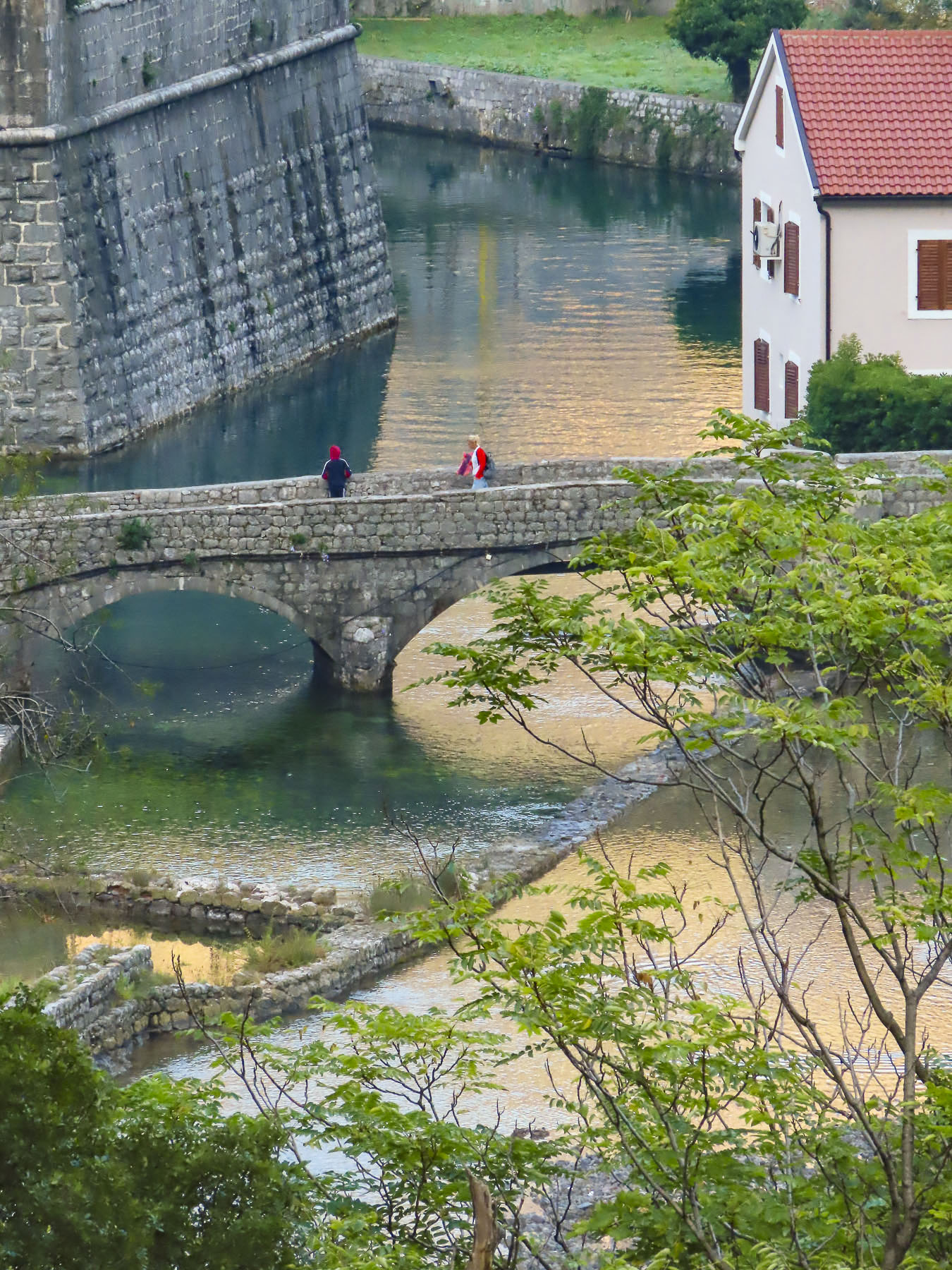
The afternoons in mid-October were still quite hot so we planned for an early start from our apartment in the center the historic district.  This coincided with the young parents of old town escorting their children through the still shadowed alleys to the Vrata od Škurde, the River Gate, which was constructed in 1539 to celebrate a naval victory over Barbarossa, now an Ottoman admiral. We found ourselves behind an orthodox priest holding the hand of his daughter as we crossed the first and then second bridge that spanned the Scurda.  The Scurda is a wide, shallow stream that bubbles to the surface from beneath the tall rock escarpment that the Ladder of Kotor climbs and flows into Boka Bay. This area on the far side of the bridge was for centuries the market for all the goods brought down the trail from afar or from farms in the mountains to be sold or bartered for.

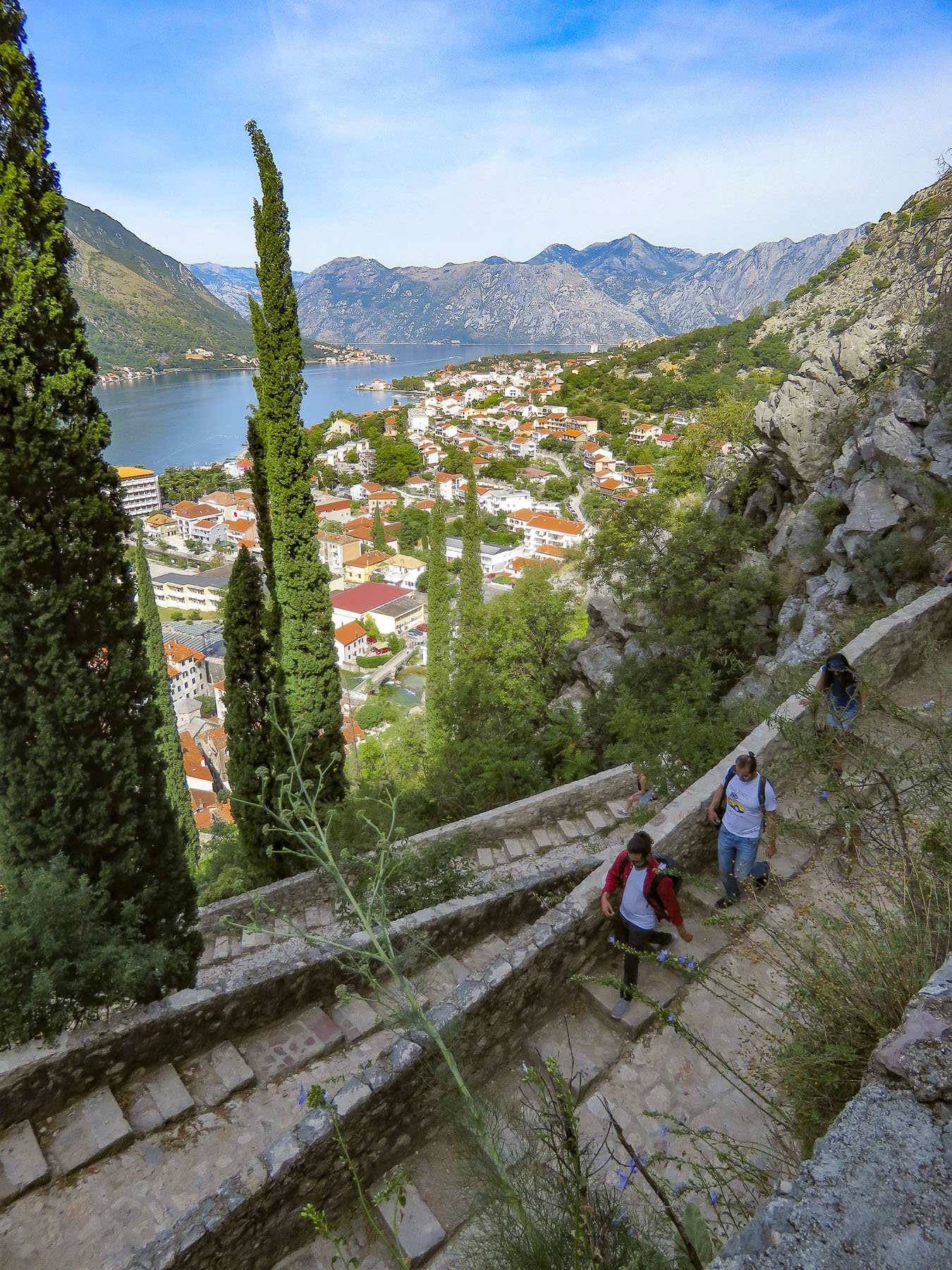
The old caravan trail starts behind the waterworks where the underground spring emerges and zigzags often in the tight confining space at the bottom of the gorge. The trail continued in the shadow of once towering fortress walls now humbled by earthquakes before the ravine widened out and the distance between the switchbacks increased.  There are seventy switchbacks in total if you chose to trek all the way to Krstac pass where the trail ends near Restaurant Nevjesta Jadrana. Here you can zipline over part of the trail you just hiked up, or catch a taxi or local bus back to Kotor or onto Cetinje.  Hiking back to Kotor is also an option for the hardy.

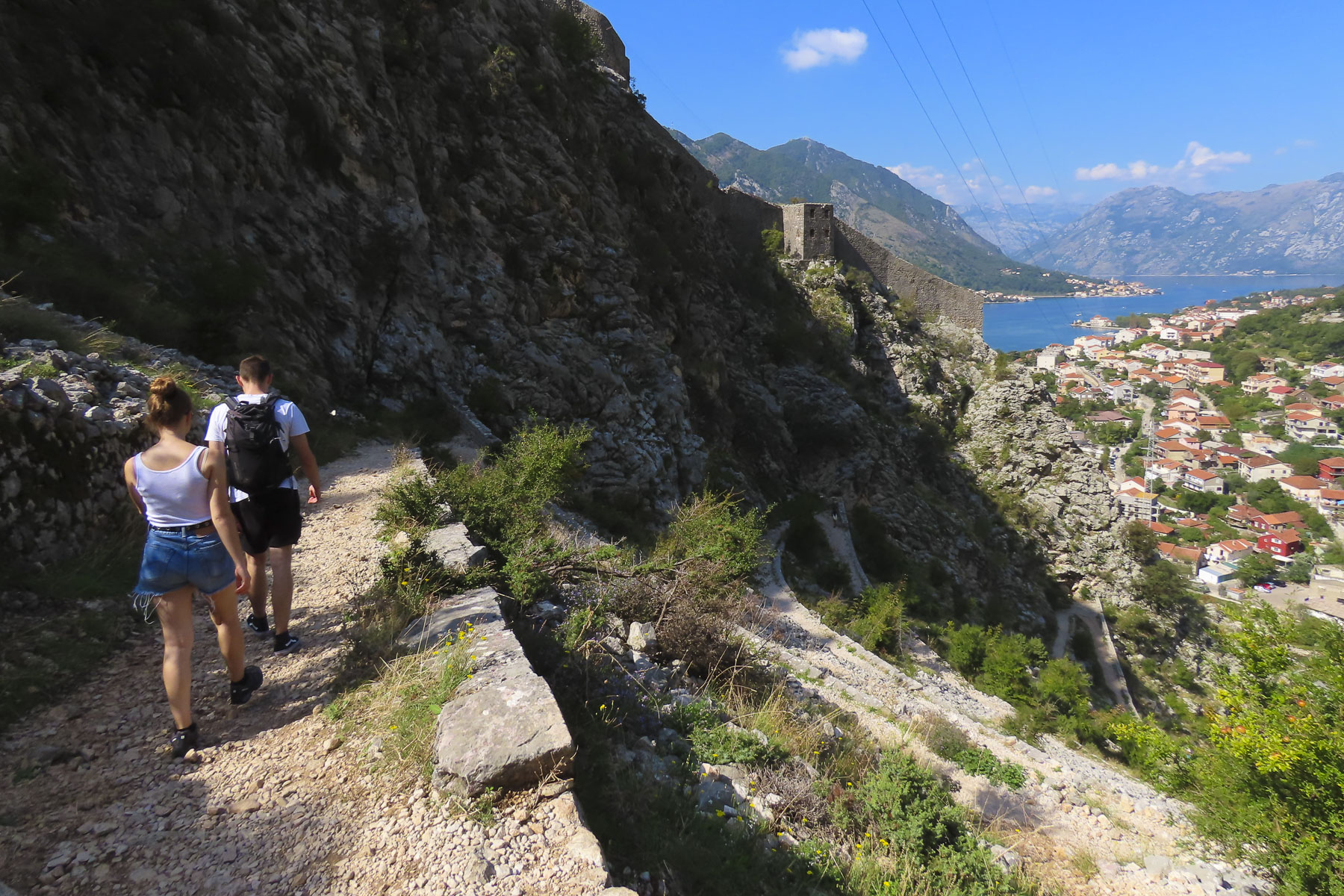
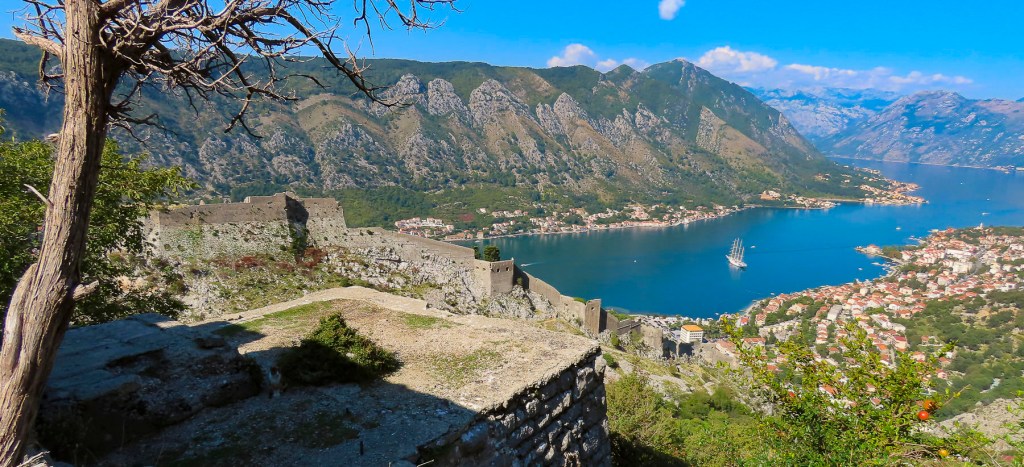
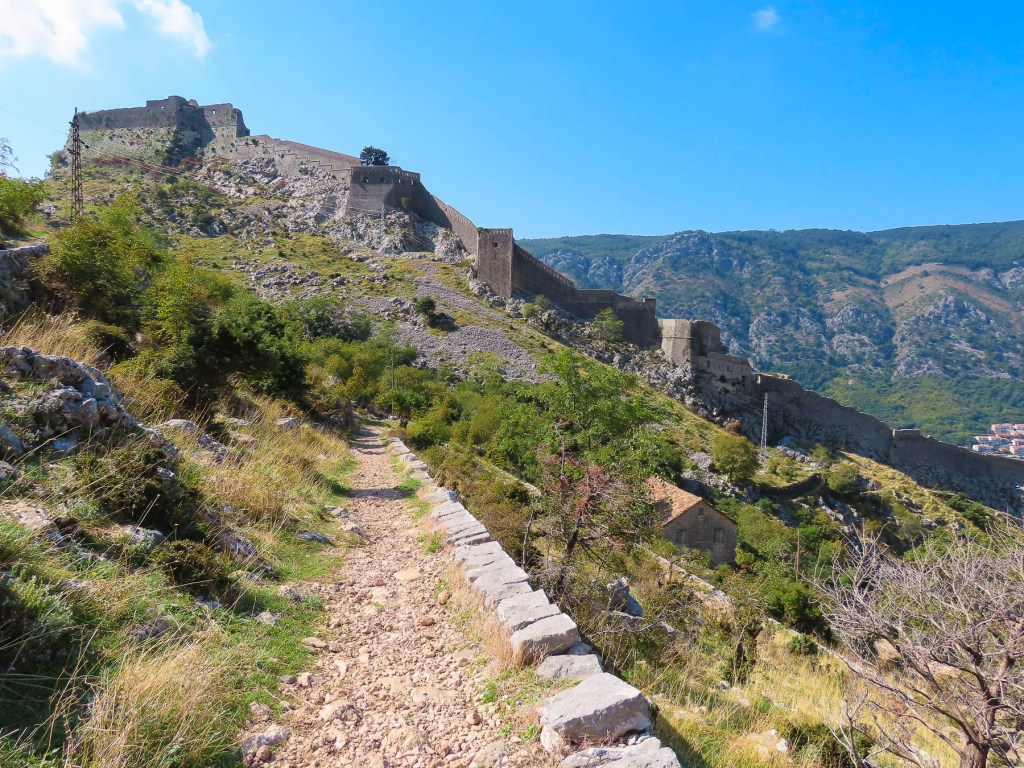
Our plans were more modest, just wanting to hike to a vantage point above the Castle of San Giovanni, Kotor Fortress, for views over the bay.  The cobbled road and retaining walls have seen better days having been damaged in the 1979 earthquake.  While the fortress has been repaired, maintenance of the caravan trail has been forgotten.  Though many sections of it are in better shape than the stairs to the Castle of San Giovanni and not as bad as some city sidewalks across Europe. Still you need to be aware of your footing and wear sturdy shoes.

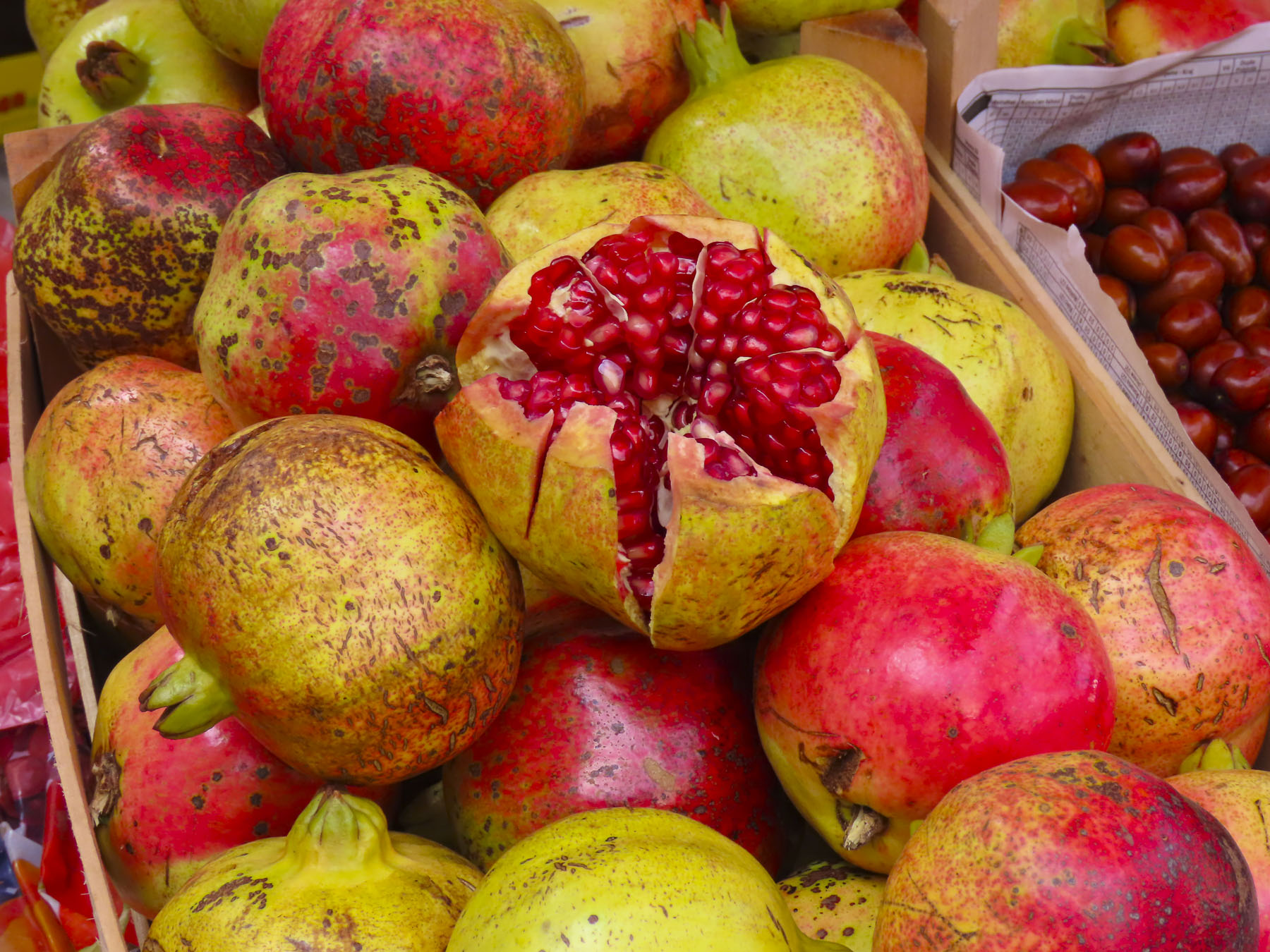
It was a gentle hike through a rock-strewn hillside dotted with grasses, small shrubs, occasional pomegranate trees and wild thyme.  Off in the distance unseen donkeys could be heard braying. The pomegranates were just ripening, but were all teasingly just inches out of reach, too far from the trail’s edge.  The views were fantastic from many spots and there were two rustic taverns to stop at along the way to rest.  The lower one was closed for the season, but the higher one referred to as the Cheese Shop, on Google maps, is located where the trail veers off towards the deserted village of Spiljari, which is located under the back ramparts of San Giovanni Fortress. 

I think we were the innkeeper’s first customers of the day, and we ordered two espressos while we rested on the shaded porch.  After serving us he crossed to a refrigerator on the other side of the room to get himself a shot of chilled rakija. Being a good host, he offered us some. It was ten in the morning.  We politely declined. Though I’m sure it would have had wonderful medicinal qualities in case of any mishaps.

The village of Spiljari is over 1,000 years old and was abandoned when its water source went dry. Now trees grow between the half walls of a dozen buildings and the ruins of the Church of St John remain standing.  The ruins of the church alone are worth the detour. 

Slowly decaying, colorful remnants of what one only could imagine were beautiful frescoes remain on walls open to the weather. 

From here you can see a ladder to a small portal in the side wall of the fortress. The Ladder of Kotor? We are not sure if the name refers specifically to this or to the climb in general.  Years ago, this was an alternative entrance into the fortress.  Now it is strictly an exit point for those who have paid the €8 entrance fee to the fortress and walked up the stairs from old town and wish to return to Kotor by the caravan trail.  Though you might be able to purchase a cold drink from an ice cooler manned by the ladder attendant.  

The sun was high in the sky when we made it above the castle and the view was spectacular. We sat for a while and imagined the history of the trail: how it conveyed ideas, merchandise, pilgrims and invaders over the centuries. 

Notably in the 1830s a team of fifty men carried an Italian billiard table up this track to the rightfully named Biljarda House, home to the beloved prince bishop and poet Petar II Petrovic. (Just imagine the amount of cursing involved in that endeavor.)  Years later when Petar II Petrovic was on his deathbed a procession carried him up this same track to the historic old capital, Cetinje.  A few months later Montenegrins would carry his successor and nephew Danilo II Petrović-Njegoš to Cetinje to rule.

And although we took many photographs on the trek up, we took even more of the ever changing view as we descended back into town.

Till next time, Craig & Donna
Kotor Part 3: Herceg Novi – Serenading the Ghosts

The days were noticeably cooler now, with a morning mist hanging on the water as we sped around Kotor Bay on the local bus to Herceg-Novi (€3 one way) for the day. The narrow two-lane road hugged the coastline and in spots jutted out over the water to circumvent a sheer rock face.  When the landscape widened enough, houses were built on every patch of useable land in small clusters or standing alone.  At the farthest end of the bay we watched oyster farmers raft between their rows of buoys that marked the submerged delicacy growing in the depths below.

Further along the Lepetani – Kamenari Ferry (€4.50 per car, €1 for a bicycle, people free) offered a shorter and faster route that bypassed Kotor for travelers wanting to stay along the highway that hugged the Adriatic coast from Albania to Croatia.

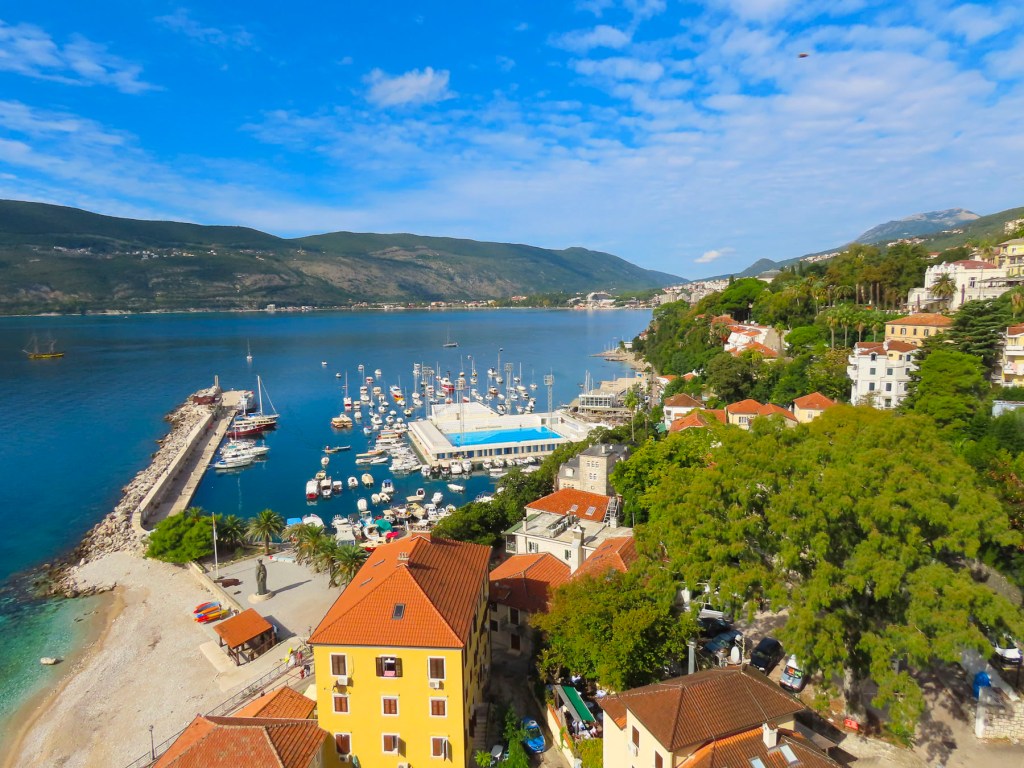
Unlike Kotor and Budva, which were both built on flat coastal terrain, Herceg-Novi was built on a steep slope that runs many miles inland to the summit of Mount Orjen. The mountain, part of the coastal Dinaric Alps, is Montenegro’s tallest peak, which at 6210 ft is 500 ft taller than the more famous Mount Lovćen (5738 ft).  The town existed as a small fishing village for several hundred years until its first defensive walls were raised in 1382, making it one of the youngest and most fought-over fortified cities along the Adriatic coast. 

The old town is long and narrow, climbing up the hill from the water’s edge like an index finger poking out of the sea, making it a much harder city for the Omis pirates to attack.  Let’s face it, Mediterranean diet or not, it’s much more difficult to properly sack, pillage and plunder a city when you are exhausted from running up steep flights of stairs.  Though it wasn’t always the pirates that folks worried about.

The Turks built Kanli Tower on the highest point in the city after they defeated the Byzantines in 1482, only to be ousted by the Spanish for a brief stint of gentrification in 1538 when they quickly constructed Hispaniola Fortress higher up the mountain, to no avail; the keys of the city were returned to the Turks two years later.  The Venetians had their turn also, strengthening walls and building towers that survived until the devastating 1979 earthquake.  Its turbulent history also included the Austrian, Russian, French and Germans, all battling for beach chairs along the Herceg-Novi riviera.  Fortunately, the communists didn’t see the need to impose their minimalistic architecture on such a beautiful swath of earth and left it alone.  The people of the communist block were not as fortunate.

We were only an hour from Kotor when the bus pulled into the station above old town Herceg Novi, the last stop before the border with Croatia.  Walking downhill, we came upon the daily market, Gradska Pijaca Herceg Novi, and took the opportunity to purchase the makings for a picnic lunch. Bread, cheese, figs and a huge pomegranate filled our knapsack.  Old Town is of course surrounded by the apartment buildings of the new town, a pretty gentrification which has sprawled horizontally between the sea and the highway above town, hugging the hill for views of the bay.

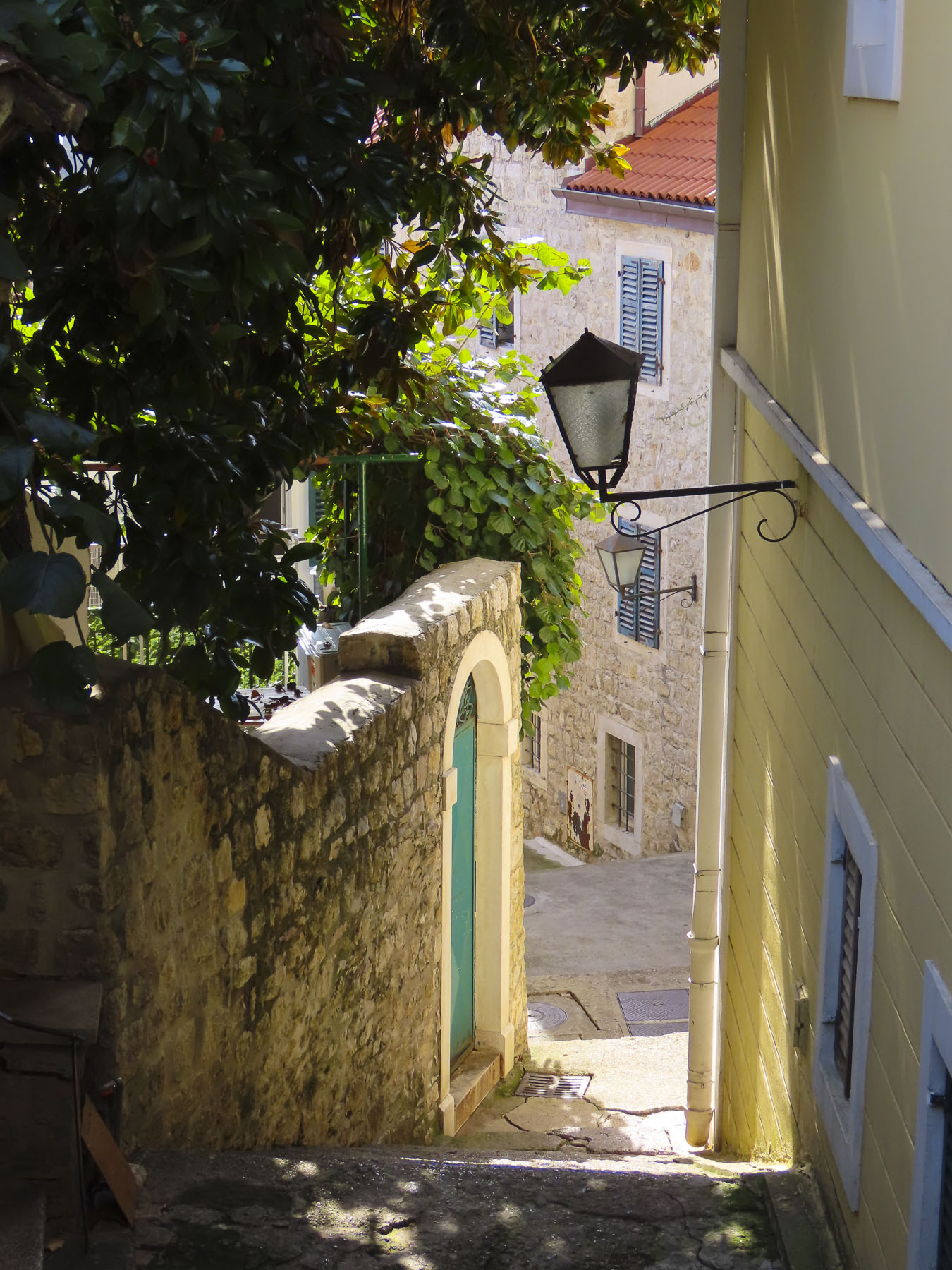
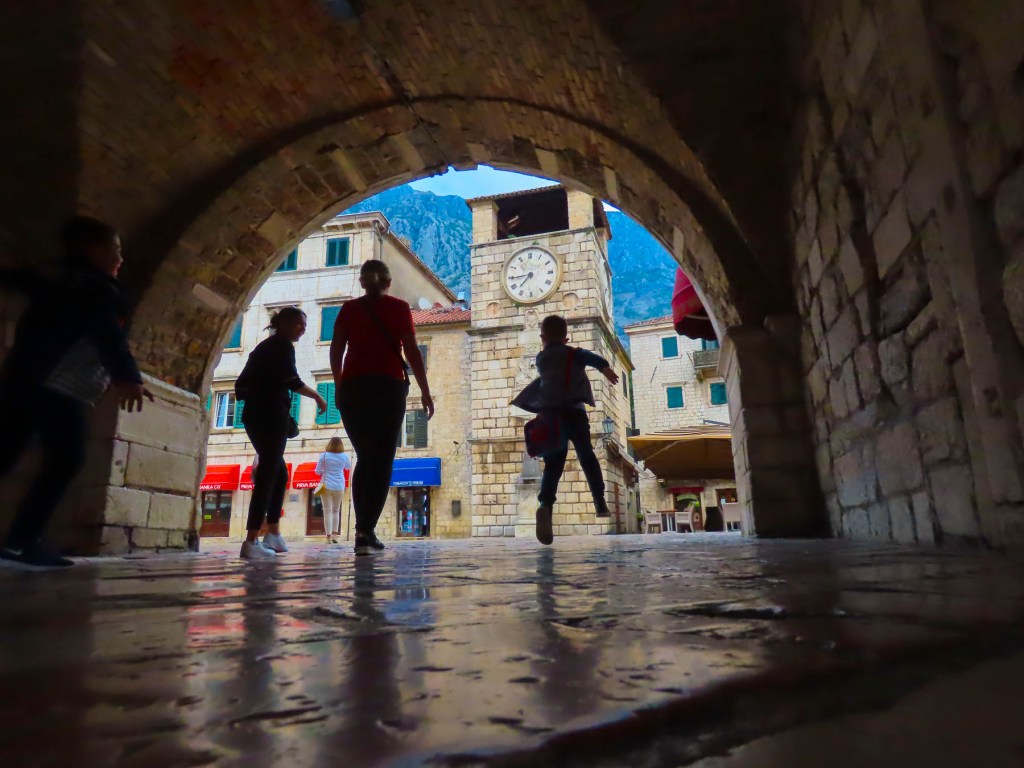
The lane ended in Nikole Đurkovića Square in front of the ancient Sahat-Kul clock tower and gate, built by the Ottomans in 1667, that leads into the historic district.  Once through the gate, the dark passage opened onto palm-treed Belavista Square lined with cafes and umbrella tables. St. Michael Archangel Church anchored its center.  The style of this relatively modern church, built in 1911, is defined as Eclecticism, after its incorporation of architectural influences that reflected Herceg Novi’s diverse history.  Byzantine, Gothic, Romanesque, Islamic and Serbian Orthodox inspirations all blend seamlessly together. 

The old town was very quiet, and we had the narrow alleys and stairs to the Sea Fortress, the first fortification in Herceg Novi, practically to ourselves.  At the old town’s southernmost point, the massive stone wall of the fortress protrudes several stories high from the sea, like the bow of a cruise ship.  Its canons are quiet now, but during the summer tourist season it hosts citadel-top concerts and a film series from the spot where the guns once guarded the bay. 

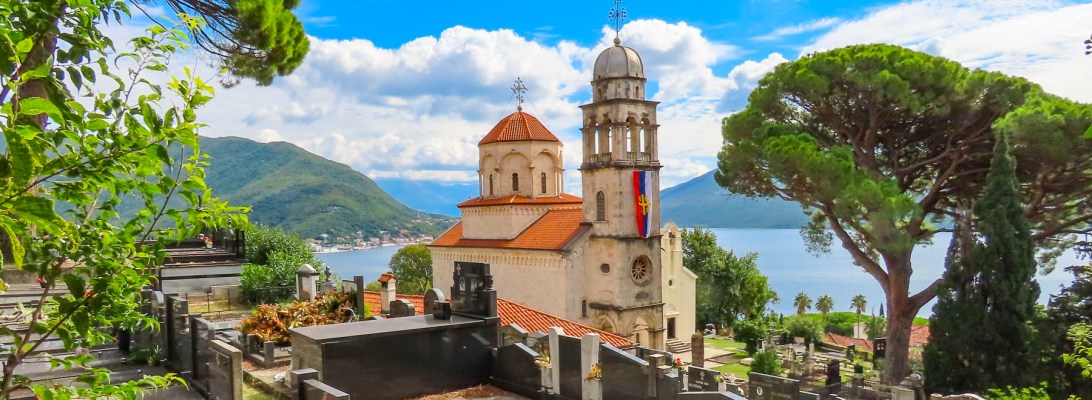
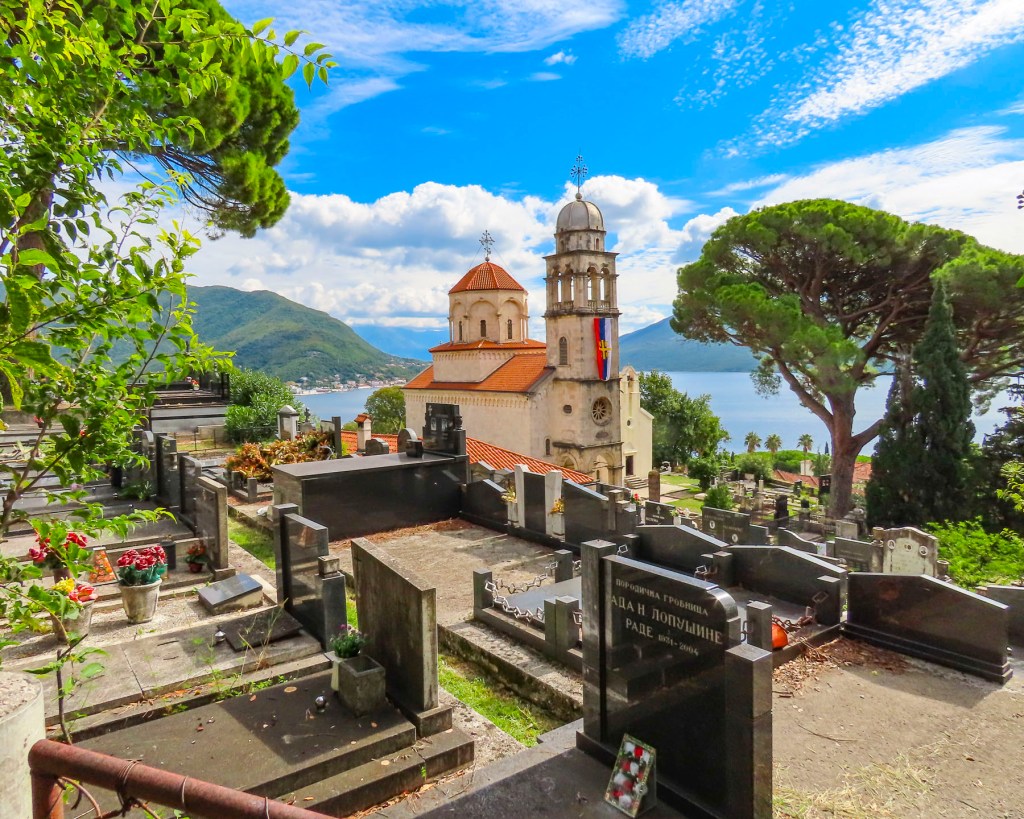
We chose not to walk down to the harbor, saving our strength instead for the longer one-mile walk to the Savina Monastery. The monks sure did know how to pick locations for inspiration. The first stones of one of three churches were laid in 1030, and the setting above Kotor Bay is glorious. 

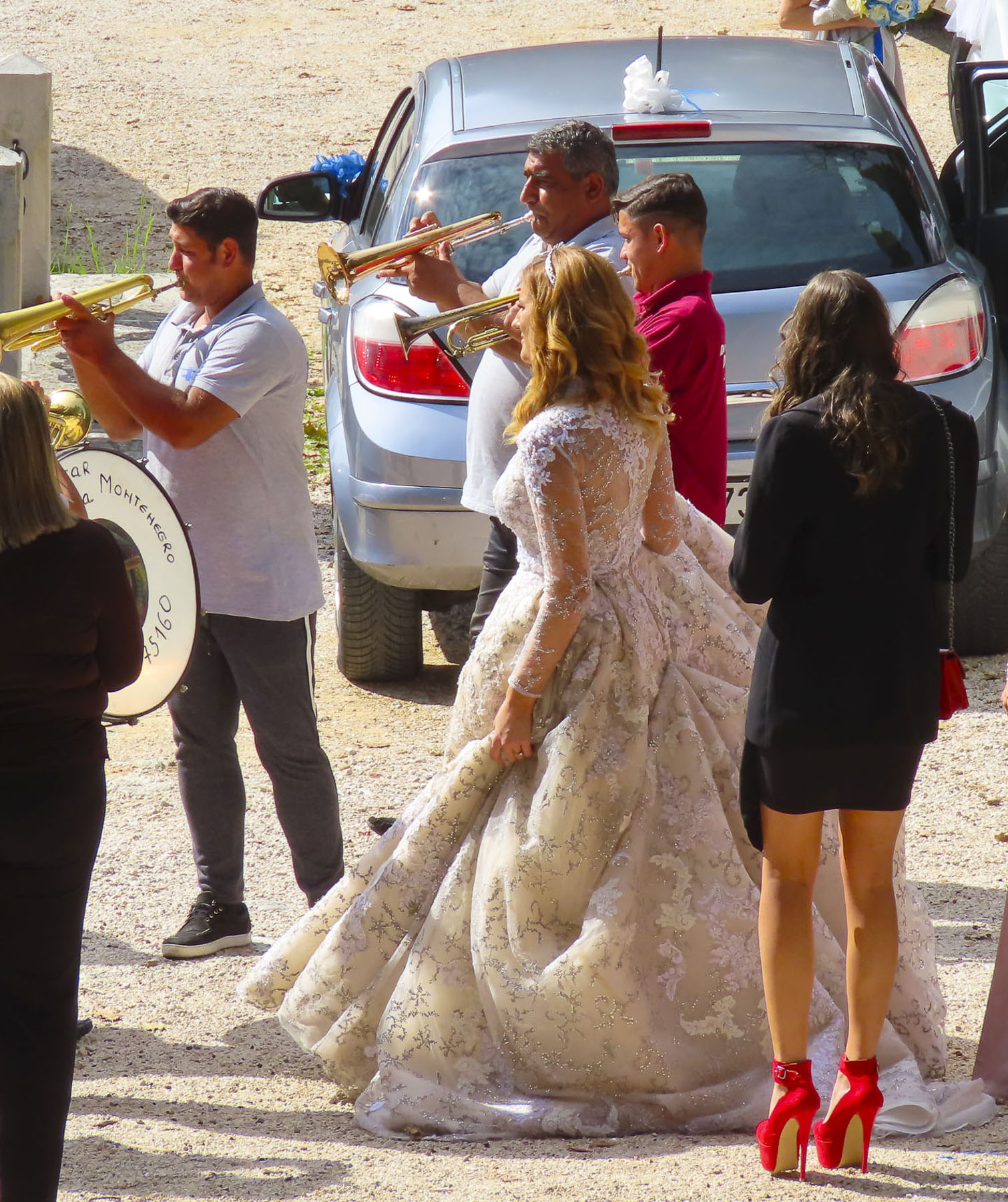
Being a Saturday, it was wedding day and we arrived just in time to watch a flag-waving crowd and brass band escort the bride and groom to their get-away car.  Moments later another wedding party arrived to celebratory horns. 

Next to the cathedral where the weddings were being held, the smallest and oldest church, Sveto Uspenje Bogorodice (St. Falling into Sleep of Holy Mother of God) has fascinating, ancient frescoes depicting the life of Christ.  Stairs in the hillside led to a cemetery above the monastery with beautiful views. 

The route back was relatively flat and took us through a pretty neighborhood filled with flowering shrubs to a smaller gateway into the old town, nearer the stairs to the Kanli Kula Fortress or Bloody Tower.

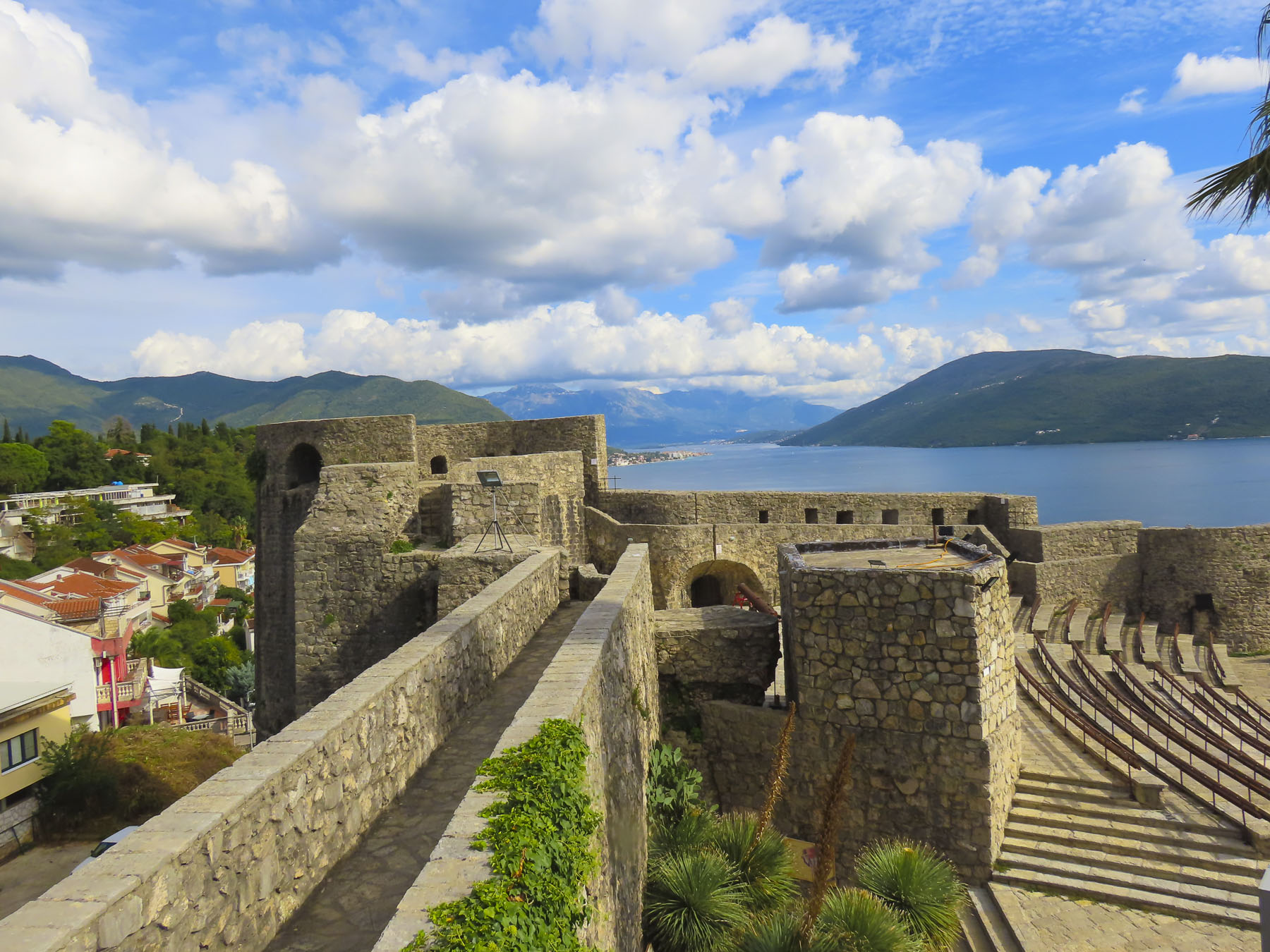
Built by the Turks in the 1500s, it was also believed “that the door to the castle opens only one way – to leave it alive was impossible.” Even with walls sixty feet wide in some places, the fortress was damaged in the 1979 earthquake that ravaged Montenegro.  During reconstruction, its courtyard was converted into an amphitheater with 1,000 seats for concerts and theater productions; perhaps the music soothes the restless souls of the ghosts still wandering the dungeon. Name and reputation aside, the views from the fortress walls were beautiful.

Walk a little, café, walk a little more. Today a long climb back to the bus station awaited us after that last sip of espresso.

Till next time, Craig & Donna

Kotor Part 2: Road Tripping Through Montenegro – Mountains, Icons, and the Sea

With the assistance of our host, we rented a car and planned a four-day road trip heading up into the mountains before ending along the Adriatic coast, then returning to Kotor.  A great distance wasn’t covered, but the variety of scenery was amazing and the driving challenging in places.

Since our first cars as kids, Donna and I have been stick-shift/manual transmission aficionados, with fond memories of the rust bucket Fiats we both drove. We’ve also driven regular sedans up and down rutted, rock strewn dirt roads normally traversed by 4×4 SUVs while being told “you won’t make it in that.” 

“Where are you heading to?” “Lovcen National Park will be our first stop.” “Be careful the roads are narrow and there are twenty-one switchback curves on the way.  You might want to consider the longer route, it’s more relaxing,” the rental agent cautioned as he assessed our age and abilities. “We understand the views are dramatic along the way,” I responded as he handed over the keys while Donna playfully poked at me for them.  Of course, I stalled the car backing out of the parking space, much to the attendant’s secret delight, I think.  With a zoom zoom in mind and the windows down, we waved our thank you, only to stall again as we drove away. Hey, it was a high clutch! Some days just start that way.

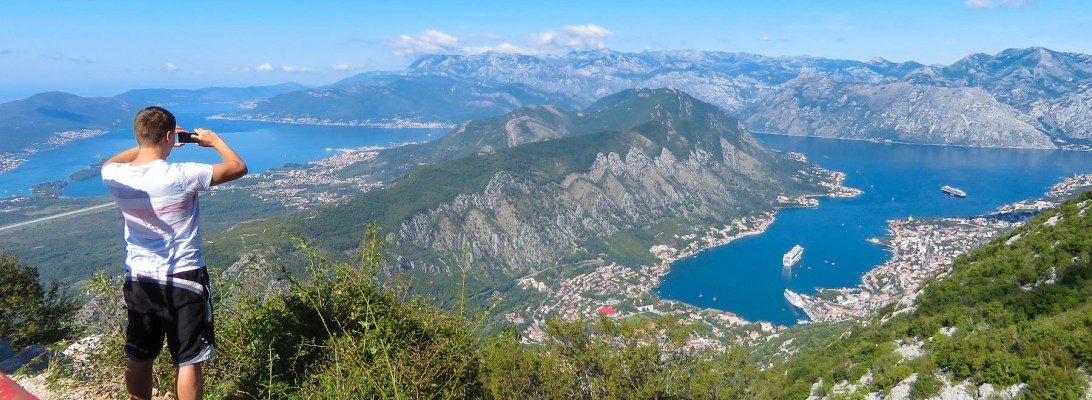
Whether it’s from the bell tower in Perast or from the top of St. John’s Fortress, it’s impossible to escape glorious views of Kotor Bay once you gain any elevation.  Only minutes from old town our route along Montenegro P1, also called the Kotor Serpentine Road, did not disappoint.  The question was, how many times would we stop to take photos?  Fortunately, there were few other cars on the road that day and we were able to pull over at the switchbacks that had room to park.  Harrowing though was encountering large construction trucks and buses barreling downhill towards us, which often required pulling over as far as we could on the already narrow one lane road or reversing downhill to a wider section of paving.  To say that guardrails were lacking in many places is an understatement. For centuries, the only overland route into Kotor was the old caravan trail which dates to Roman times. It wasn’t until the 1880s, when Montenegro was part of the Austrian Empire, that an easier wagon route between the seaport of Kotor and mountainous towns of Njeguši and Cetinje was carved from the mountainside. Paved now, that old wagon track was essentially the same route we drove.  Eventually we came to a stop behind a local bus which was offloading hikers at Restaurant Nevjesta Jadrana which is the starting point for hiking the old caravan trail downhill into Kotor. 

If you are a hairpin-turn fanatic click on this link https://www.youtube.com/watch?v=DD5u7WKHiYQ for an interesting video of this thrilling drive. And to our surprise it’s on a “most dangerous roads” list!

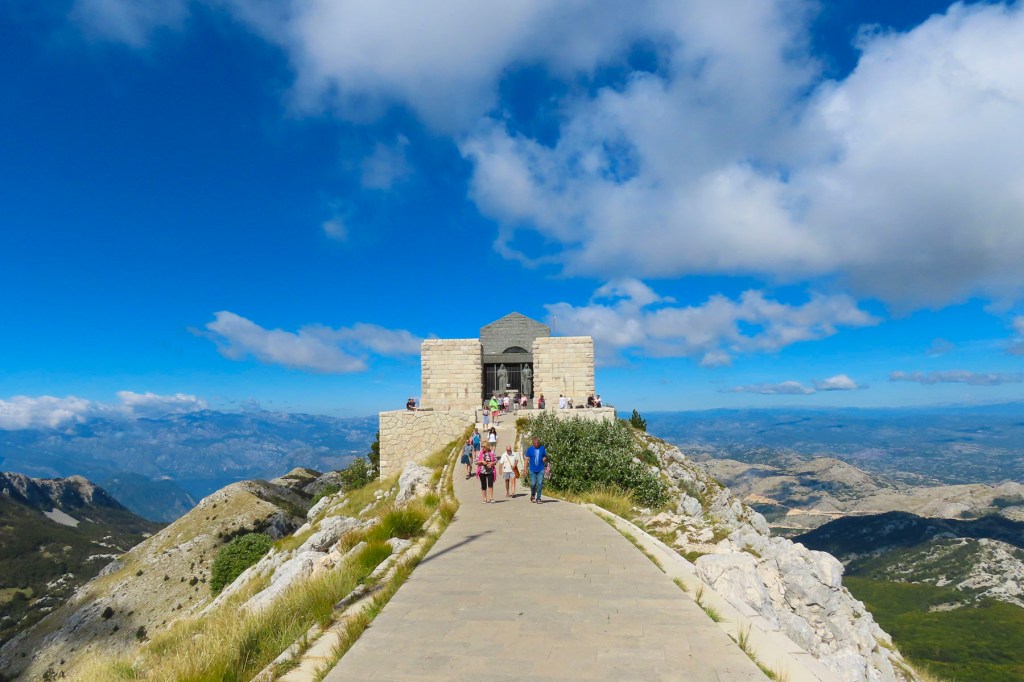
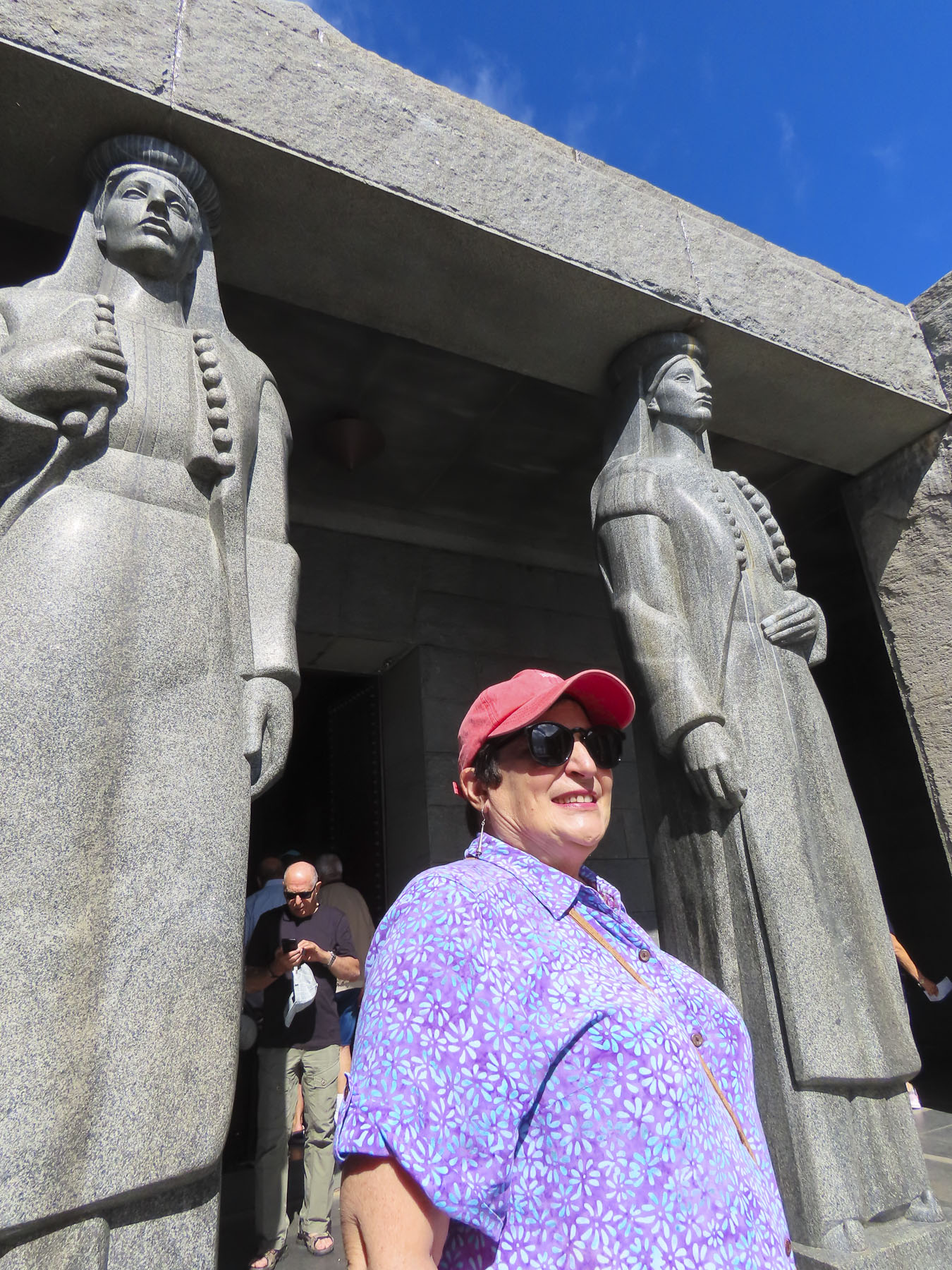
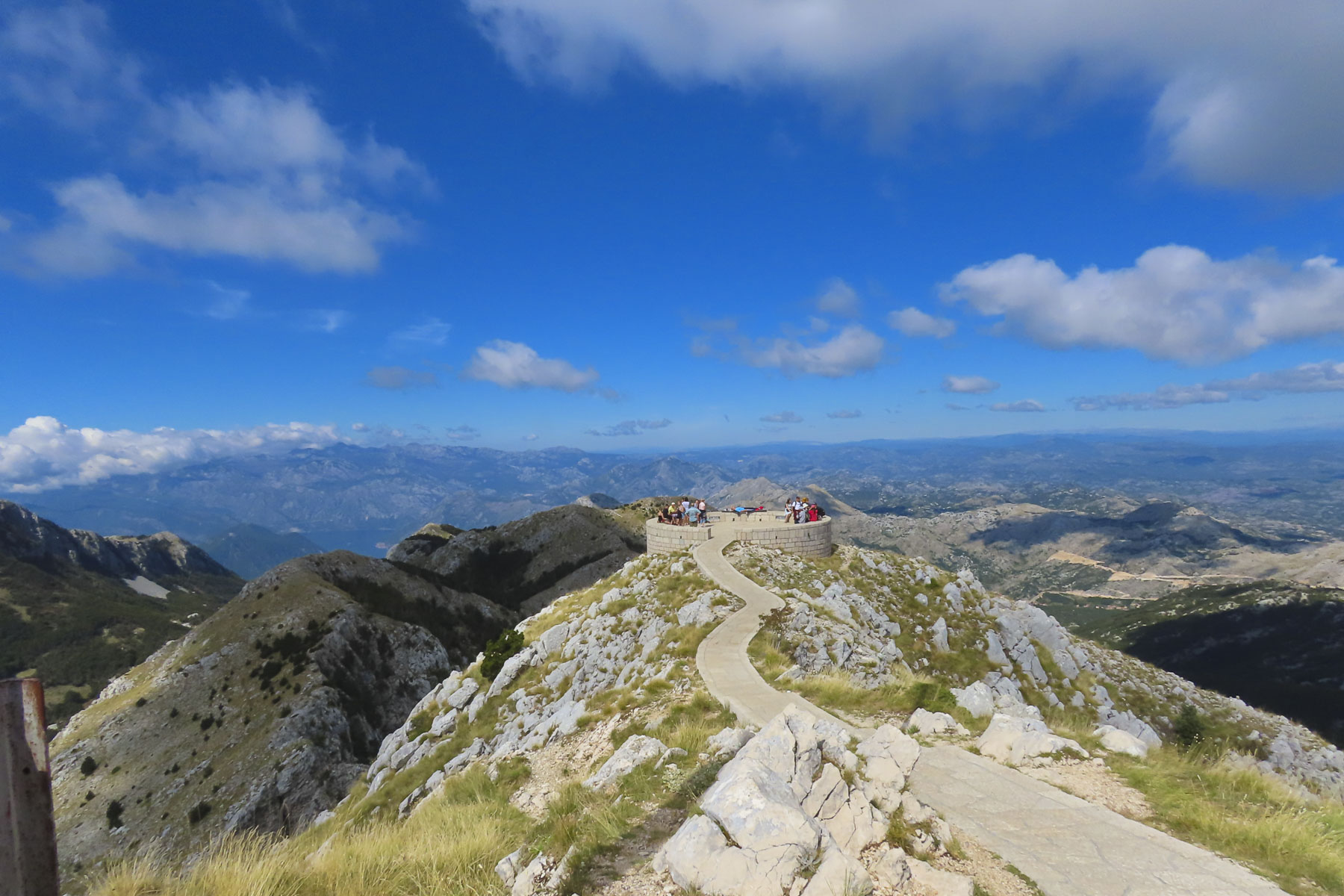
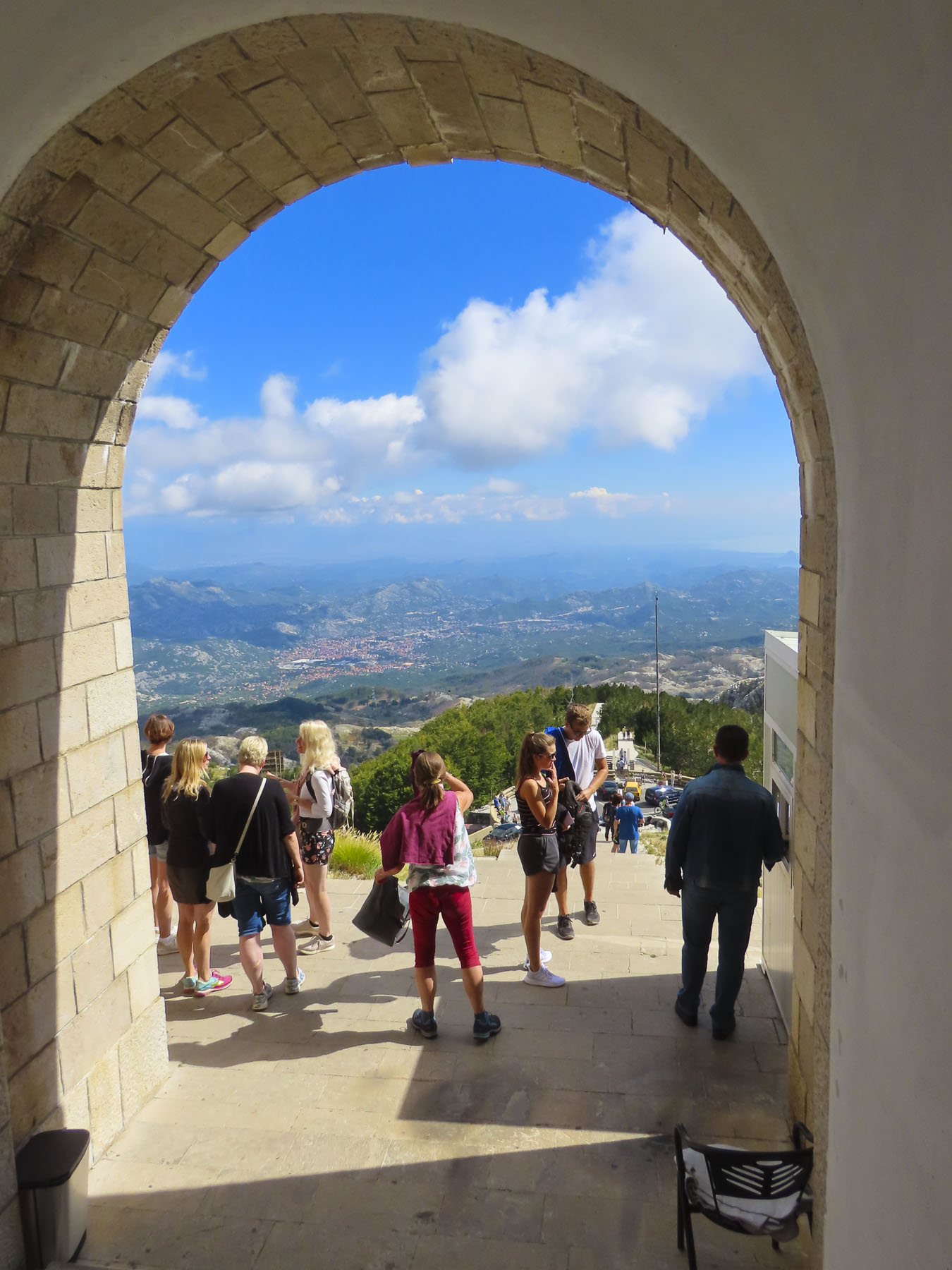
Warrior, poet, Prince-Bishop and ruler of Montenegro from 1830 to 1851, Petar II Petrovic Njegos captured the essence of Serbian culture and life in several epic poems that put Serbian folk tales and history to verse. “What Shakespeare is to England, Njegos is to Montenegro,” gives a clue to his influence on Serbian culture.  In his will he requested Montenegrins bury him in the church on the summit of Mount Lovcen, from which “all the lands of Montenegro can be seen.”  On his last days the people lovingly carried him from Kotor to Cetinje, the old capital, along the ancient caravan trail that climbed from Kotor. Interestingly, this act of devotion didn’t seem to be enough, and, perhaps insecure of his legacy, he threatened to curse and haunt them if his last wish was not fulfilled.  Ascending the steep stairs to his mausoleum atop the mountain, we understood why he was so insistent in his demand. The 360-degree panoramic view was in so many ways breathtaking.  A warm day bayside in Kotor can be extremely chilly on the peak of Mount Lovcen with its 5738 ft elevation, so layer up accordingly.  Descending the stairs, we stopped at the appropriately named Lookout Restaurant, which offered delicious local cuisine, very reasonably priced.

Podgorica, the capital city of Montenegro, would be our destination at the end of the day, but before heading that way we detoured over to Lake Skadar National Park. Specifically, to see the beautiful horseshoe bend of Rijeka Crnojevića, the river of Crnojevića, from the Pavlova Strana Viewpoint which from Mount Lovcen is accessed by turning onto a dirt road off the M2.3. (Why the decimal point, really? There’s no 2.1 or 2.9 road that I can see on the map, but I digress.) This was a narrow track that had us wondering if we made the right decision. Our logic seriously questioned again when we reached a stalemate with an oncoming car traveling uphill. The road was so tight I was hesitant to reverse, fearing scraping the car paint and the other driver refused to budge. Somehow the locals know if you are not from around those parts! I blinked first and cautiously backed up until the road was barely wide enough for two cars to squeeze by.  Continuing to descend toward the lake, several of the switchback curves were so tight they required 3 point turns to maneuver around the corner. Our persistence though was eventually rewarded with a great view of the river. 

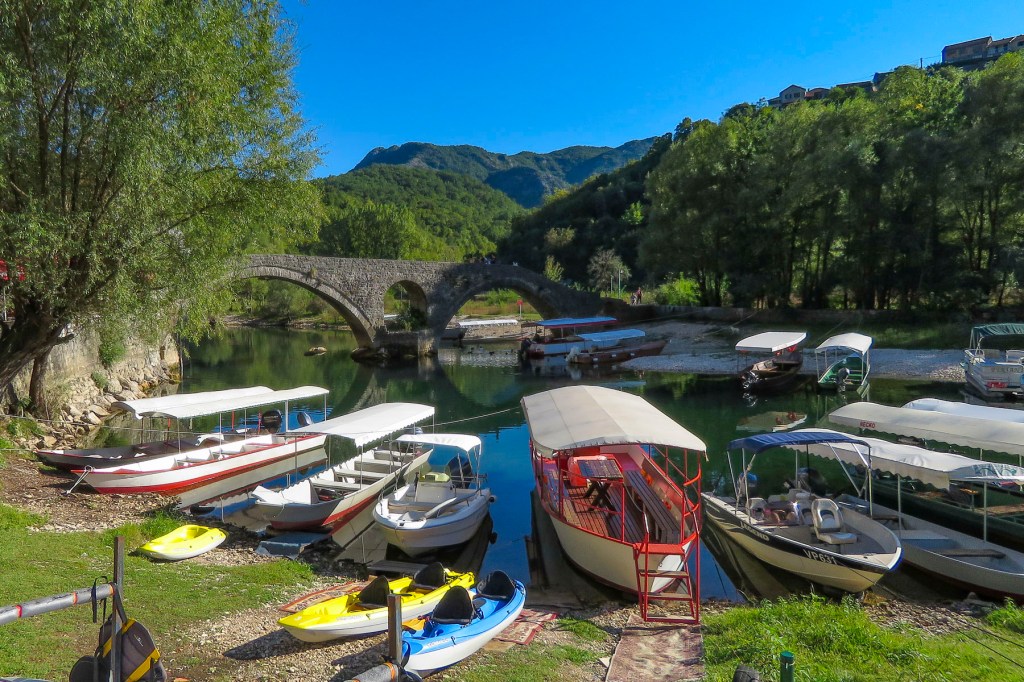
Relieved to hit a larger paved road, we continued towards the small village of Crnojevića. The weather was brilliant, and we spontaneously decided to opt for a short boat tour along the river.  It was mid-week and near the end of the season, and we were pleased that we had the boat all to ourselves. 

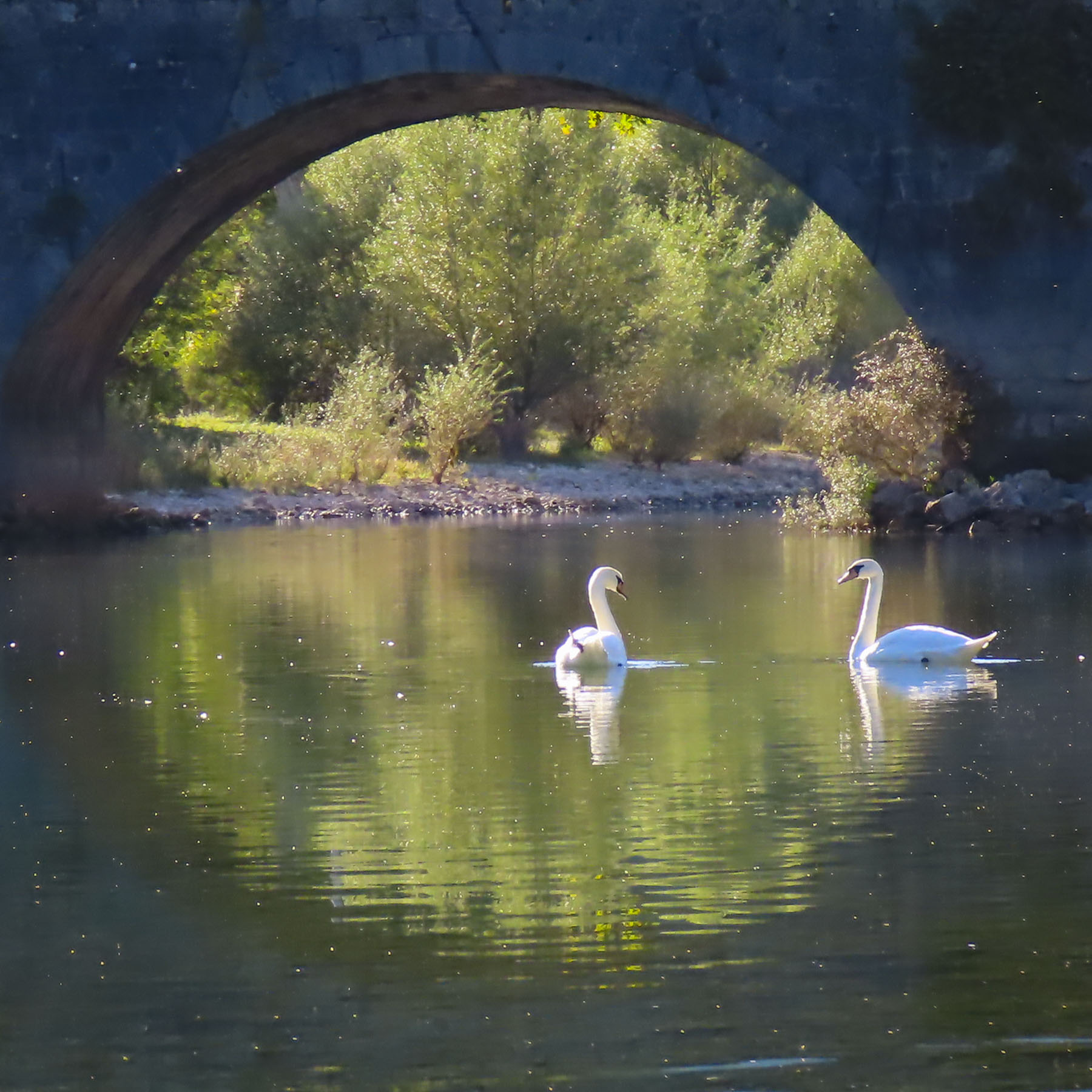
It was a relaxing reprieve, silently traveling upon the water, passing under old stone bridges and watching the birds and swans along the water’s edge.  Next to the boat launch, Restaurant Mostina offered shaded outdoor dining and a beautiful view of the river.  We lingered as long as time allowed, wanting to reach Podgorica well before dark. Fortunately, it was only forty minutes away.

We arrived late in the afternoon and followed our GPS directions into the city and were totally surprised when our route turned into a pedestrian only boulevard after 5 PM, with families pushing strollers down the center of the avenue and waving frantically to make us aware of our mistake. Without difficulty we quickly corrected our error. Having the freedom to roam is wonderful with a rental car, the only drawback really is parking. And finding an affordable, convenient hotel in a city with free parking is a challenge.  The three-star, business class Hotel Kerber fit the bill, though finding the parking lot required that the receptionist walk us out the back door and point to the parking entrance under a building on the block behind the hotel. 

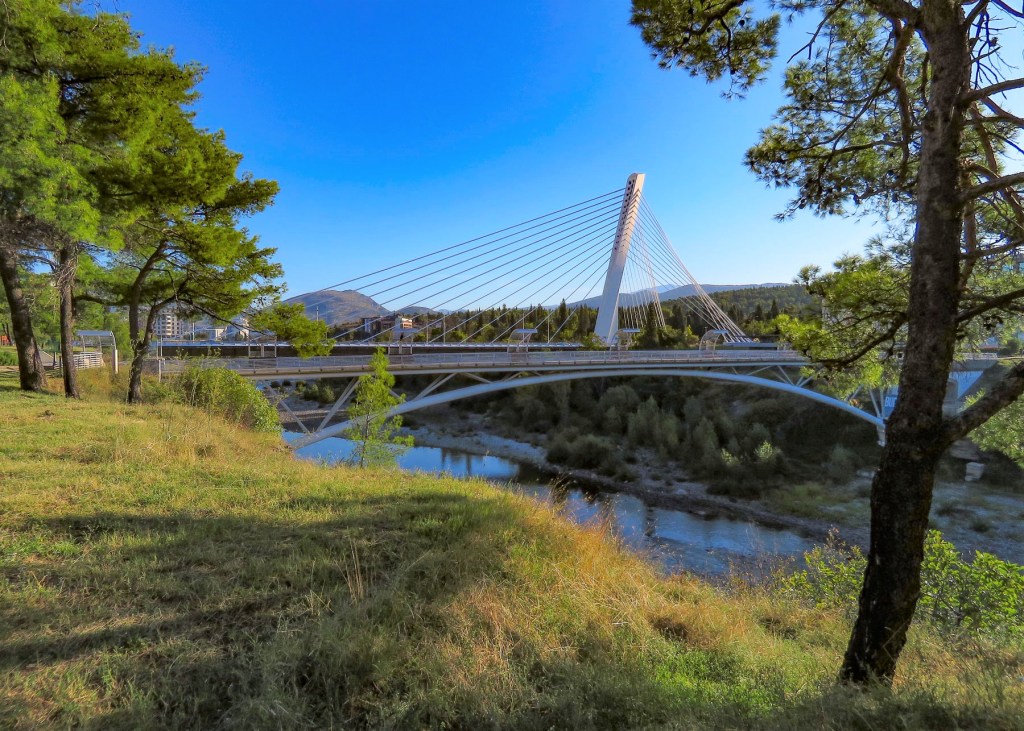
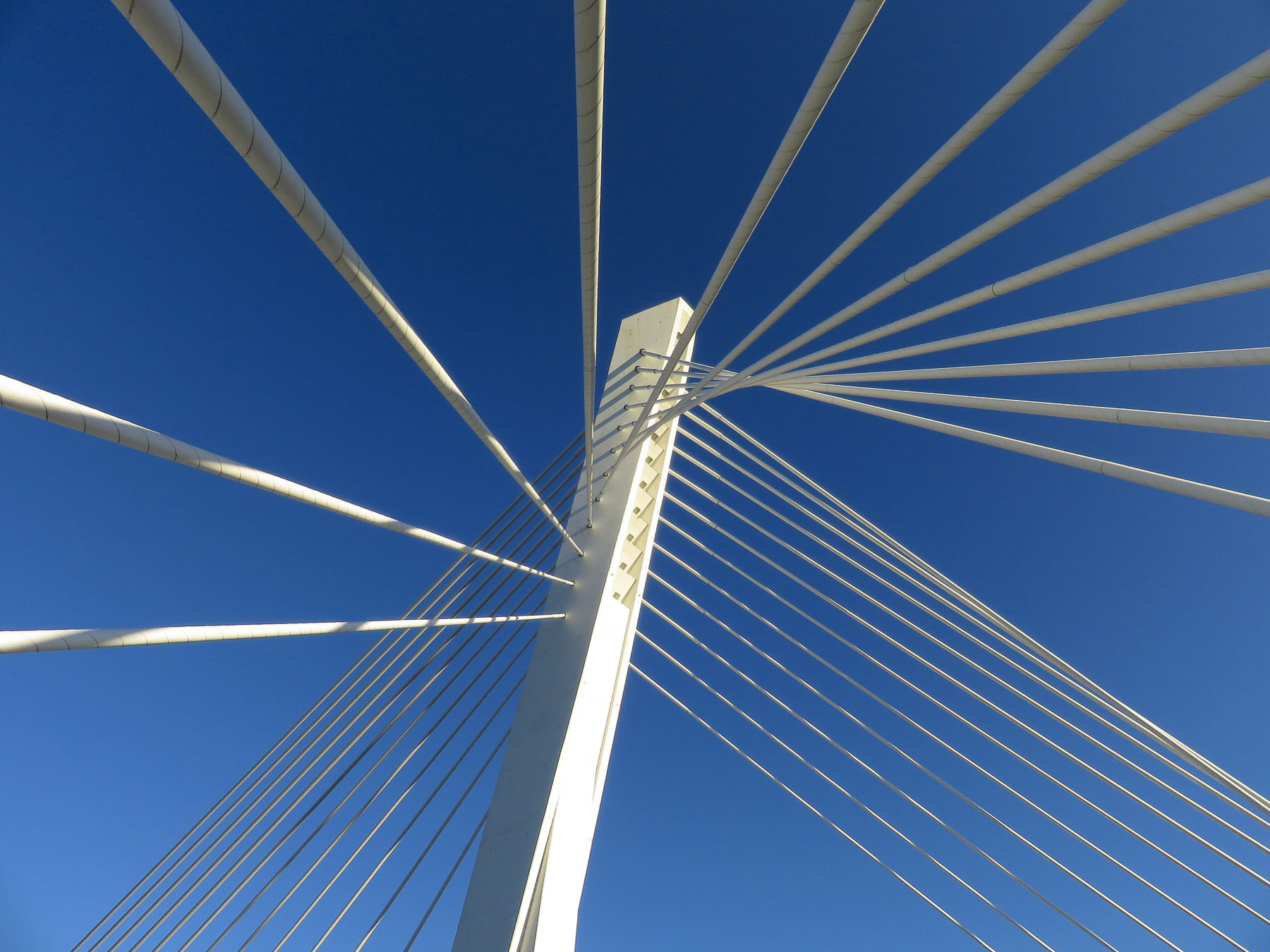
Exploring the city early the next morning, we walked over the Morača River via the Milenium Bridge, one of the city’s most prominent landmarks.  Its futuristic cable-stayed bridge design is so strikingly different from the architecture in the rest of the country.

In the park across the river we found the statue of Vladimir Vysotsky, a beloved Russian poet and songwriter whose verses were deemed subversive by communist authorities and barred from publication. The Bob Dylan of Montenegro, he gained fame by distributing illegal homemade recordings of his songs and performing in clubs across the communist block during the Cold War. Montenegrins loved his music and he loved them. “I regret in this life that I don′t have two roots, and I can′t name Montenegro as my second homeland.” – Vladimir Vysotsky.

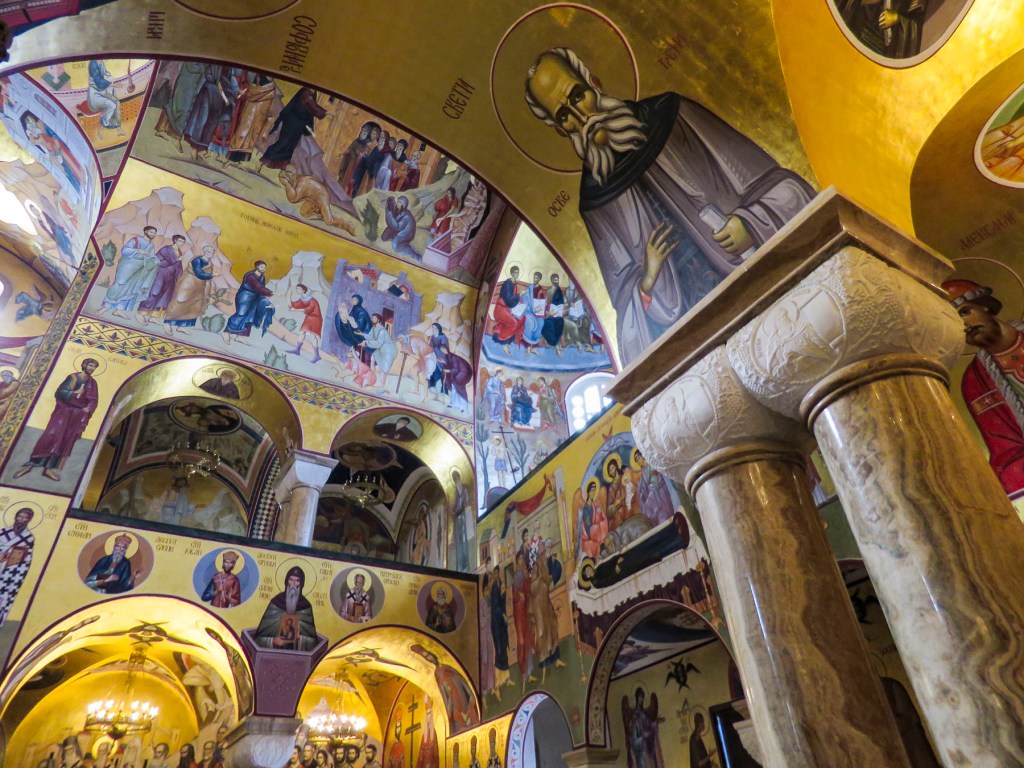
The big draw for us to Podgorica was Саборни храм Христовог Васкрсења, the Cathedral of the Resurrection of Christ for us non-Serbian speakers.  It’s an inspiring new Serbian Orthodox church that was consecrated on October 7th, 2013, the 1700th anniversary of the Edict of Milanin 313 AD, which was an agreement between the Western Roman Emperor Constantine I and the Byzantine Emperor Licinius that decriminalized Christian worship.

Every interior surface of basilica is covered with brilliant Orthodox iconography on gold backgrounds or has controversial murals that reflect history.  The one depicting Tito, Marx, and Engels burning in hell is poignant commentary on communism’s oppression and anti-religion stance that affected millions in eastern Europe.  There are other contemporary political frescoes interwoven throughout the traditional iconography that are difficult to spot, but that’s part of the thrill of discovery.

To this day, the artist has chosen to remain anonymous. The architect, Dr. Predrag Ristic, is credited with building 100 orthodox churches, and took inspiration for the exterior of the church from the medieval design of the Cathedral of St. Tryphon in Kotor, with its prominent arched entry way and twin towers. 

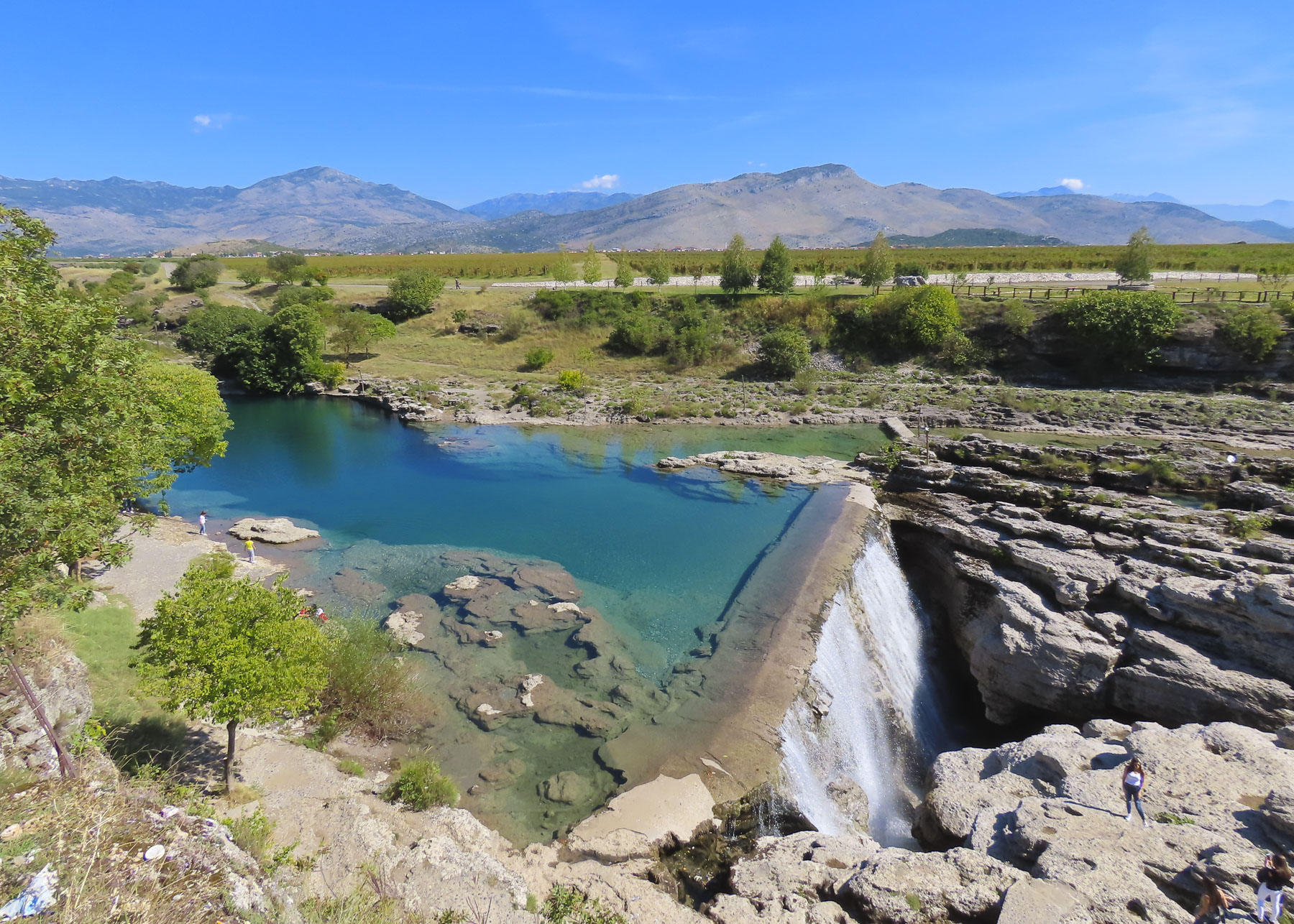
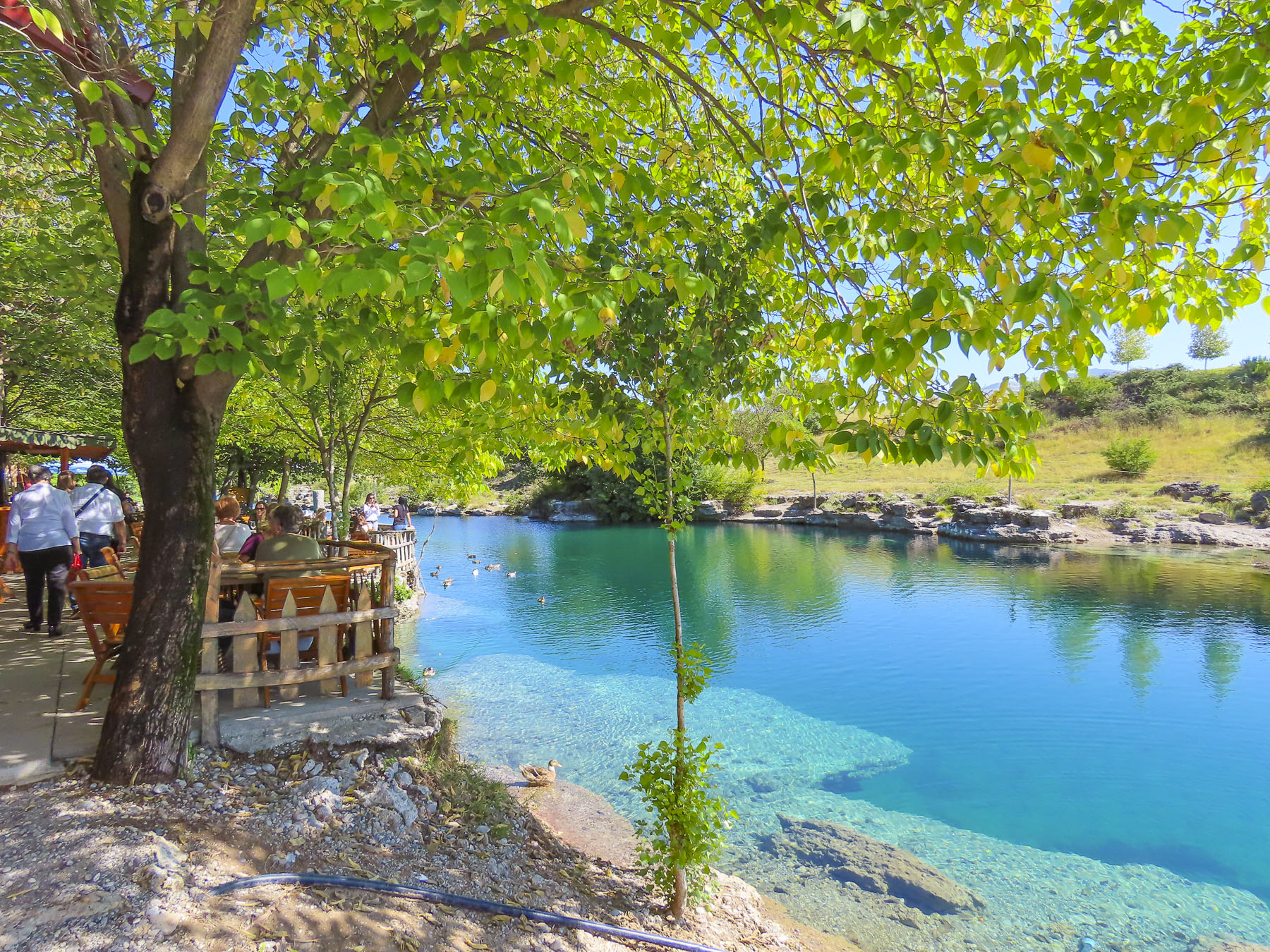
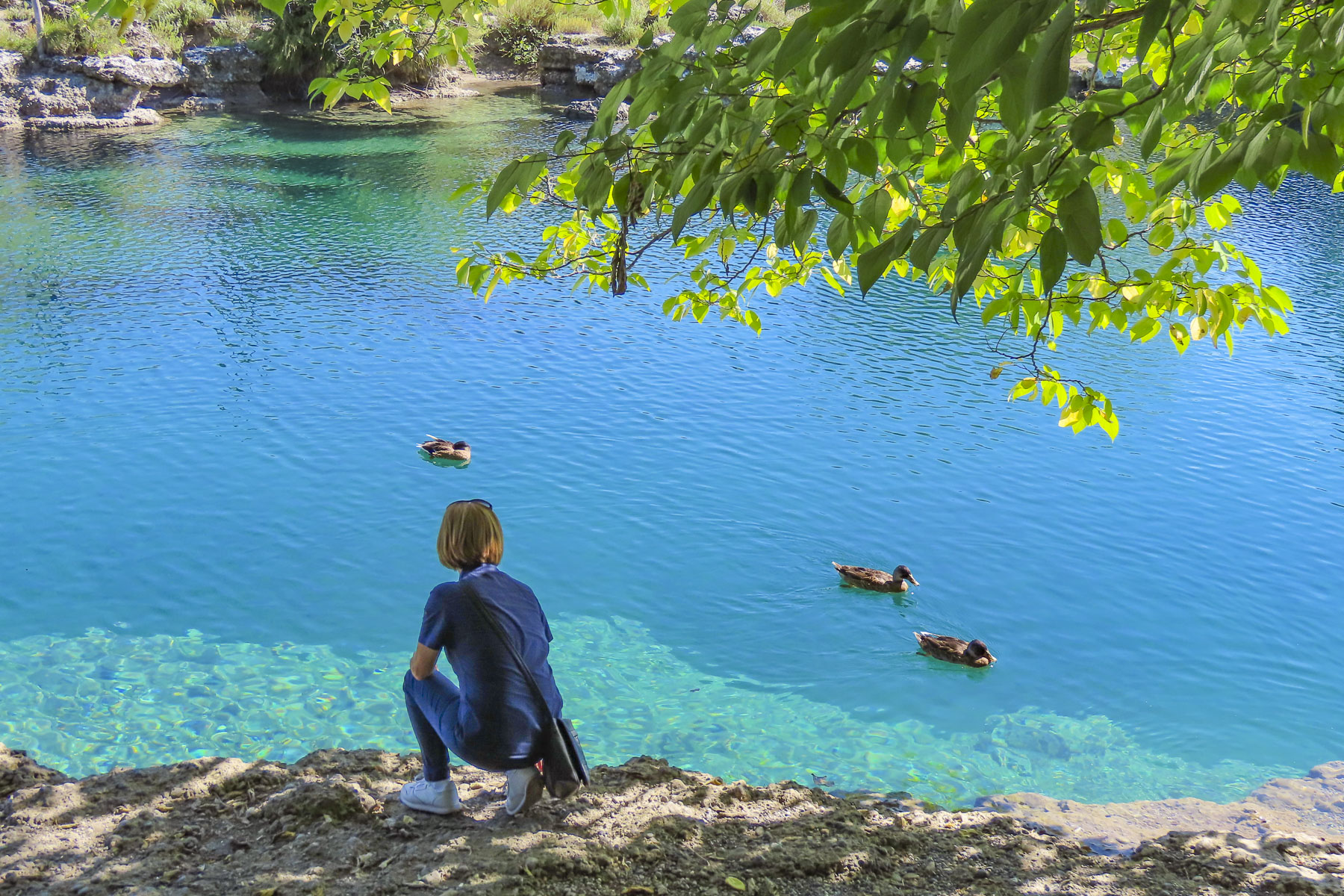
Our destination lunch spot for the day was Restoran Nijagara, located only a short distance before the Vodopad Nijagara waterfall on the Cemi River.  The waterfall was beautiful and easily accessible from the shaded, riverside dining on the restaurant’s deck. Ducks floated lazily by while children playfully splashed in the crystal-clear water.

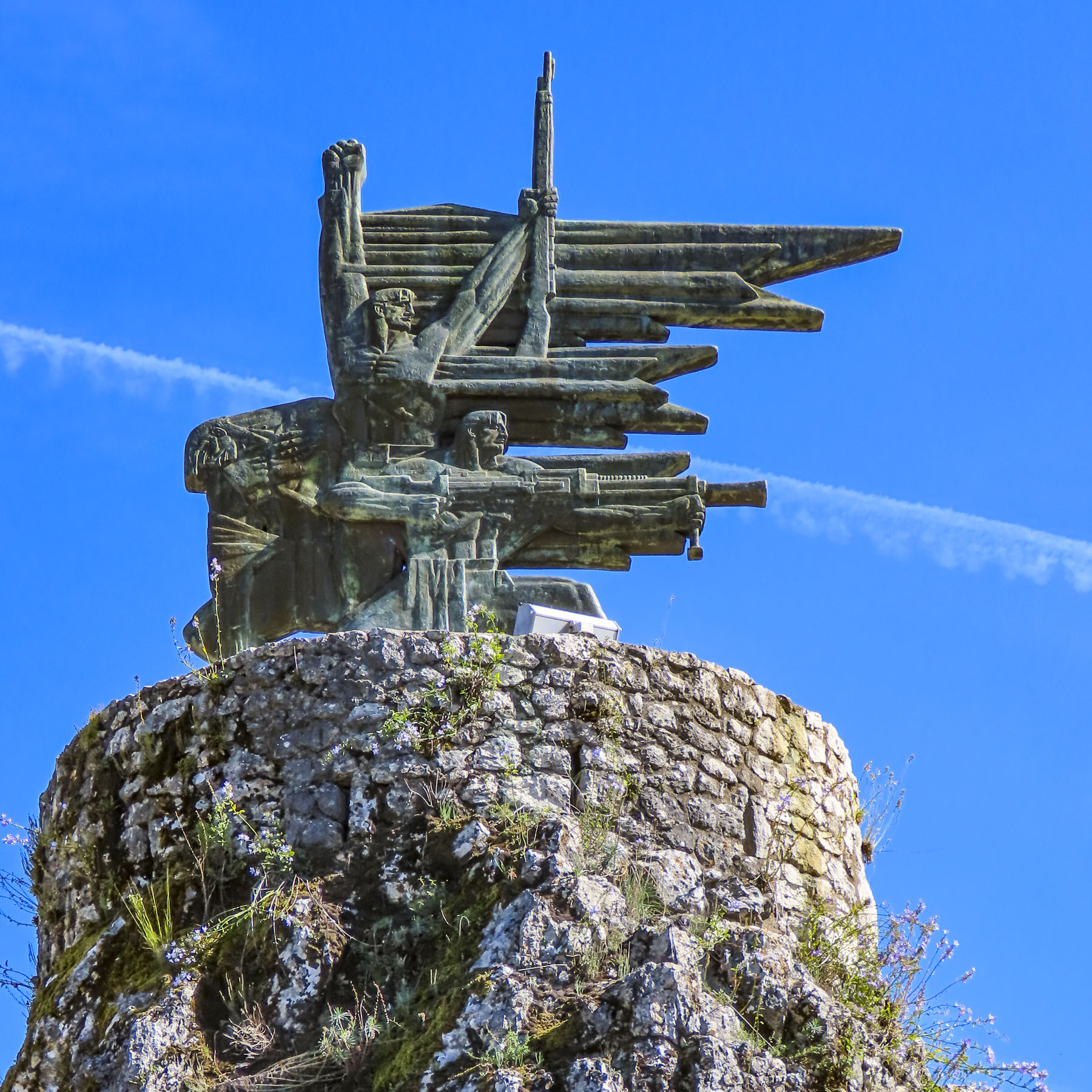
We planned on being along the Adriatic coast for sunset, but still had plenty of time for a stop in the lakeside village of Virpazar, which is a popular point for boat tours of Skadar Lake National Park. The small town had a wonderful ambience with umbrellaed restaurants, streets full of people, colorful boats tied up along its quay. A dramatic memorial to the liberation partisans of WWII anchored the waterfront, with Besac Castle rising above it in the distance.  The castle is a short distance from town and has splendid views of Lake Skadar.

We continued along the lake road towards the small historic village of Godinje with its ancient, cojoined stone houses set on the mountainside.  The village is unique because each home has an underground passage connecting it to its neighbors.  This was developed to defend the village from Ottoman raiders.  The tunneling system was so extensive that townspeople could go from one end of the village to the other without being seen by their enemy.  There are many small vineyards in this region, featuring wines vinted from the native-to-Montenegro Vranac grape varietal. Some wineries offer tastings along with food.  Reservations are highly recommended, especially on the weekends. Unfortunately, we did not have time to linger longer, but we did purchase homemade grape brandy from a woman selling it from a small roadside stand in front of her home.

The views of the Adriatic coastline as we drove north along the E80 were incredible, though there weren’t nearly enough pullover spots for photographs.

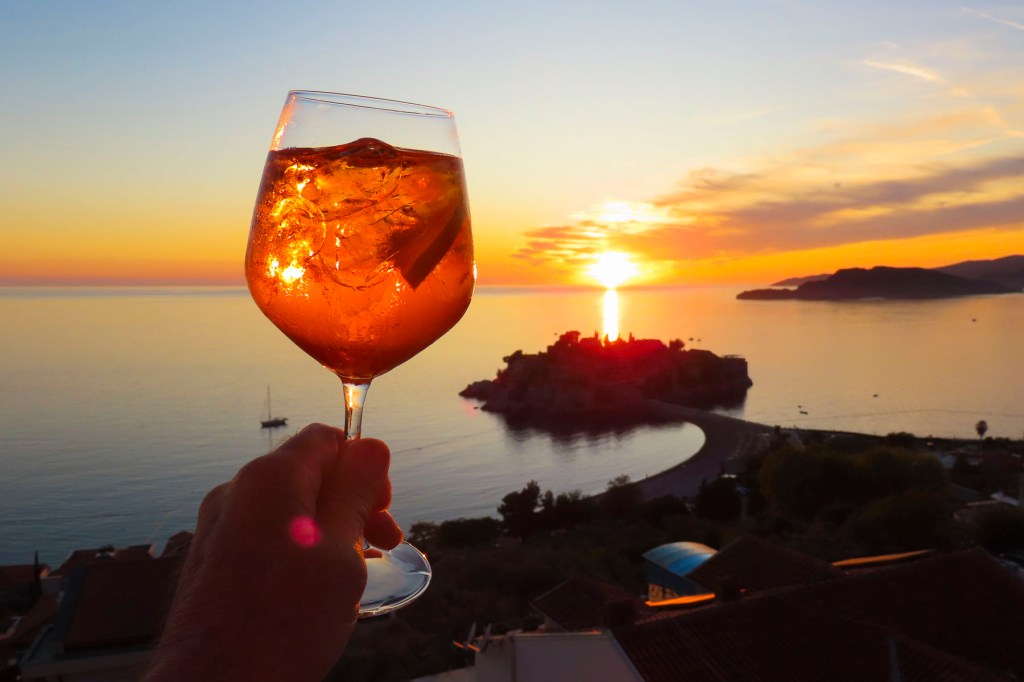
We arrived at the Hotel Adrovic in Sveti Stefan with plenty of time to get settled before watching the sunset, with classic Aperol spritzes from their rooftop restaurant. 

We put a lot of research into selecting this hotel, primarily for its view of Peninsula Sveti Stefan and it did not disappoint.  We enjoyed an incredible ocean view room with a balcony, including breakfast and free parking, for a very reasonable $80.00 per night.  Later that night a lively wedding party danced to Montenegrin hits in the restaurant’s banquet room until the early hours of morning.  

Budva was an easy twenty-minute drive the next morning.  The walled town is one of the oldest cities on the Adriatic coast, dating to the 5th century BC with Illyrian tribes settling the area and later colonization by the Greeks as an important trading port.  Its history mirrors Kotor’s with conquest by the Roman empire in the 2nd century BC, followed by the Byzantines, Venetians, Ottoman and Austrian empires all ruling for various lengths of time. And let’s not forget the French, Germans and Russians who settled in for short stays.

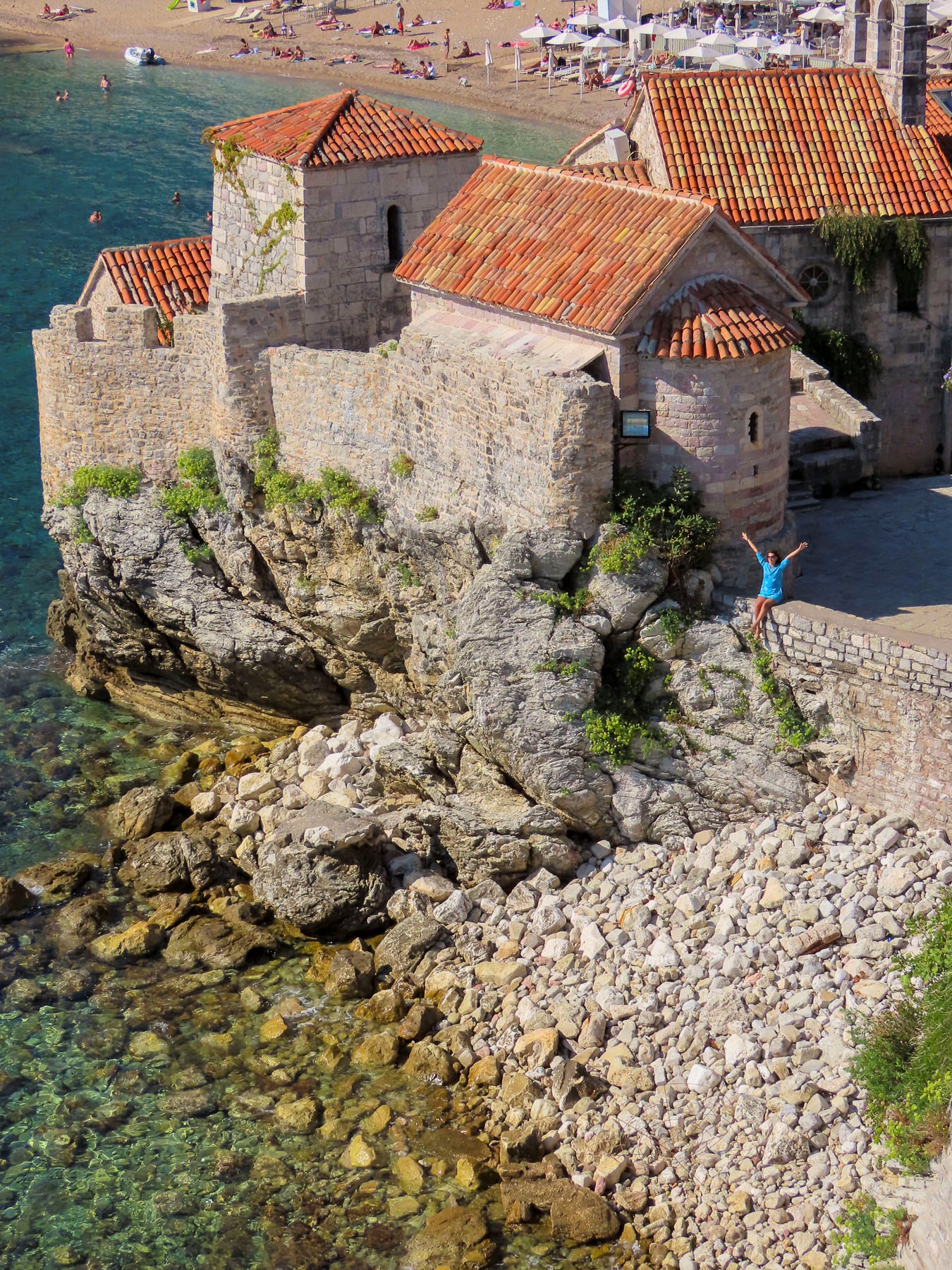
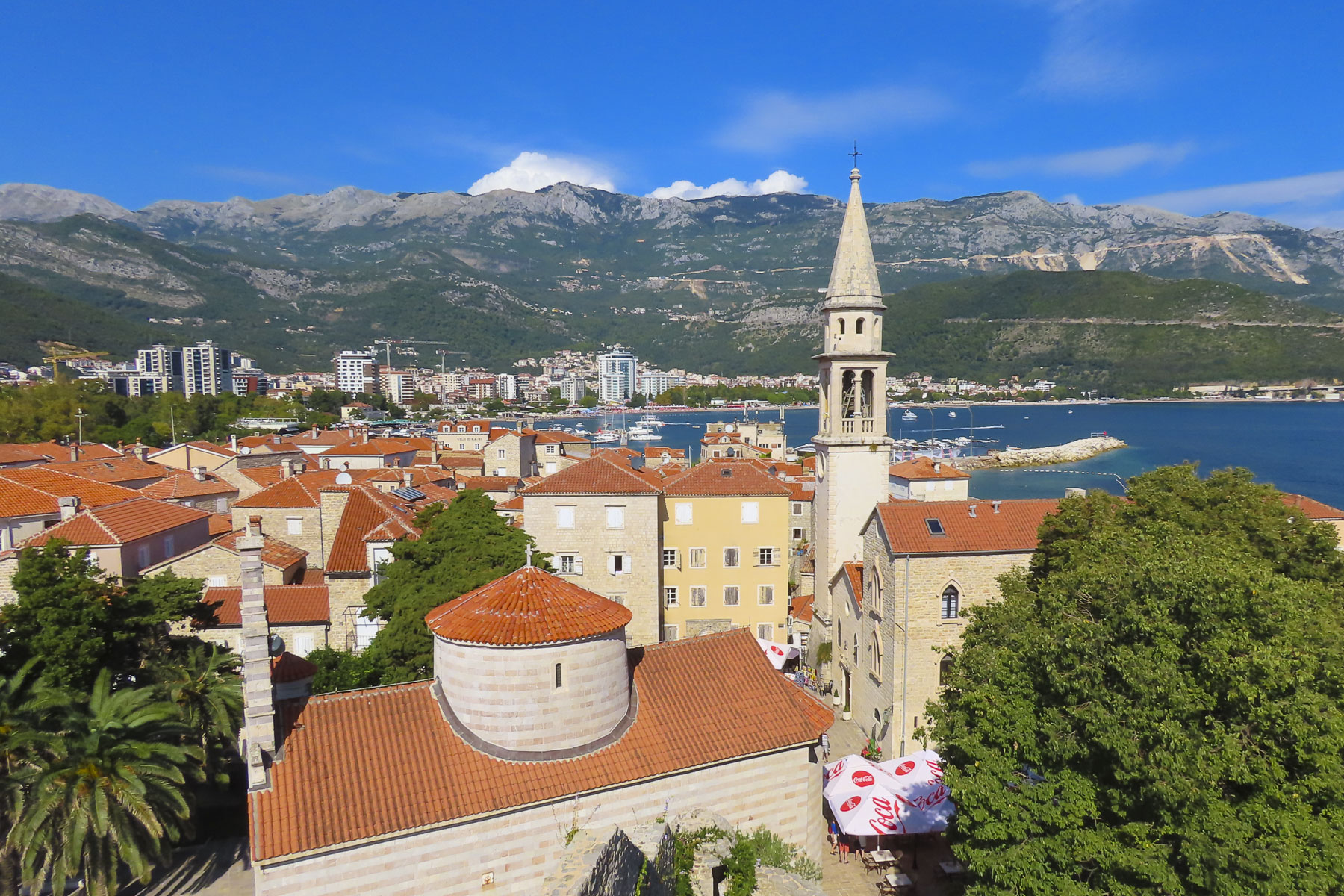
The historic, walled old town is much smaller that Kotor, but still fascinating. The town’s fortified walls sit right on the edge of the Adriatic with the tall walls of the citadel rising directly from the sea. The views over church spires of the old town and the coastline were beautiful. It’s from this vantage point that we decided to check out the colorful umbrellas of Mogren Beach across the water. There are actually two pebbled beaches set under towering cliffs separated by a protruding cliff face.  Connecting them is a rough tunnel through the rock called the “Door in Stone.”

It was an easy walk along the ocean edge on a paved path with railings, past the Ballet Dancer Statue set on a rock in the water. There is some debate about whether the female figure, sculpted by Gradimir Aleksich, is a dancer or gymnast as she is not clothed, leading some to have nicknamed the bronze statue, “The Girl Who Lost the Swimsuit.” Idealistically he based his graceful creation on the legend of a local young woman who danced on the rocks every day waiting for her fiancé, a sailor, to return from the sea.  Years passed, yet she continued to hope for his return, and she danced every day until her death. For the people of Budva the statue represents love, loyalty and fidelity, attributes that have served Montenegrins well through their turbulent history.

Back at our hotel, the sparkling blue waters of the beach below us called.  This part of Montenegro’s coast is very steep, but stairs from the hotel weaved down to the ocean far below.  Walking down would have been easy.  Returning – forget it!  The parking lot by the beach was outrageously expensive for a short visit, so we opted to park like the locals, which took some creativity, and found a spot under a heavily laden olive tree.  It was the last weekend in October, and the water was still warm enough to swim in.

The tall mountains along the coastline here cast a long shadow over the water at sunrise. We sat quietly on the balcony with the morning’s first cup of coffee and watched the sunlight slowly reveal the red roofs, then warm stone colors of what was once a 15th century island fortress – Sveti Stefan.  The small, private islet today is an upscale resort that is connected to the mainland by a small peninsular. It’s an exclusive and dramatic setting, but we had the better view. 

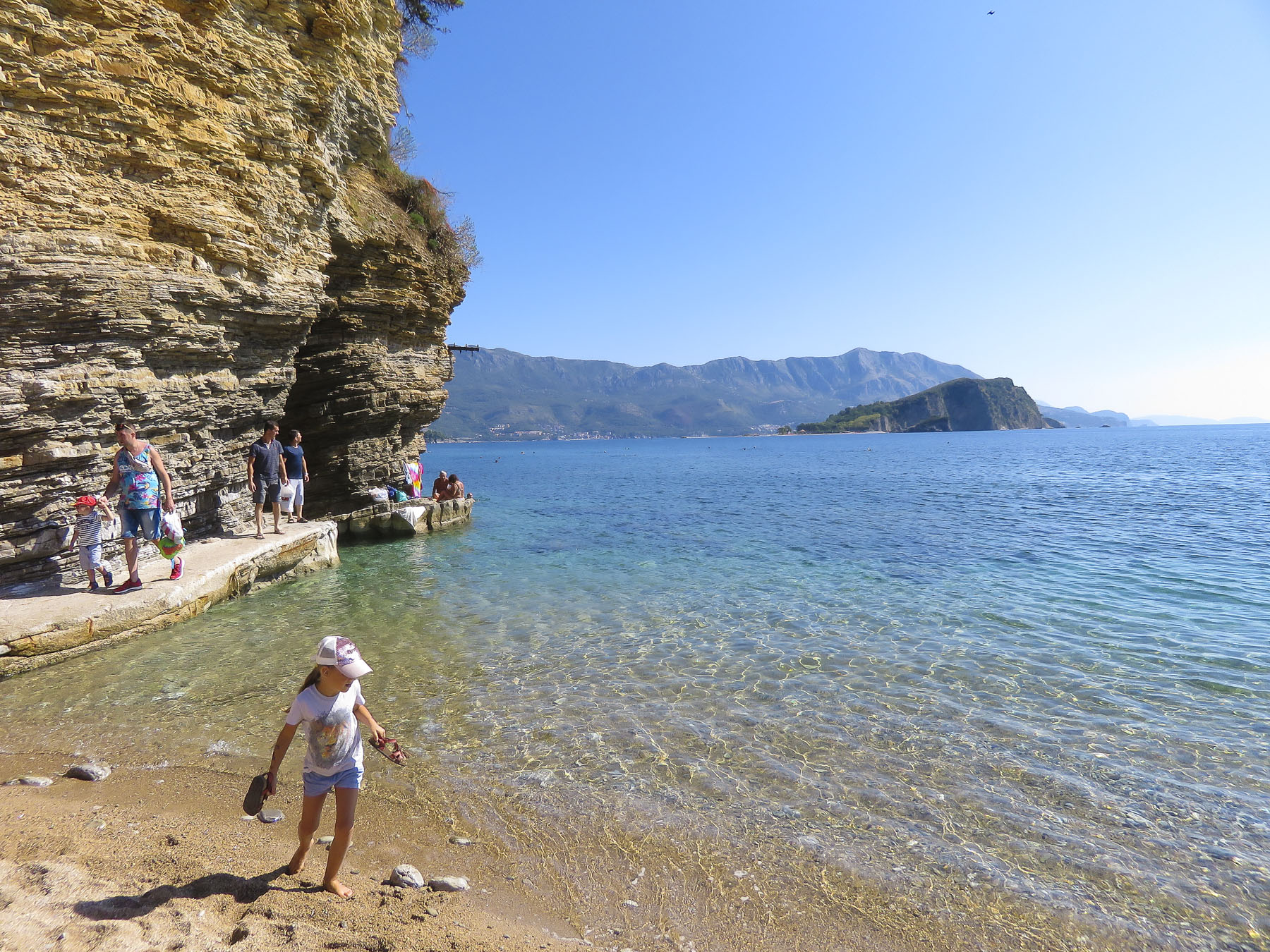
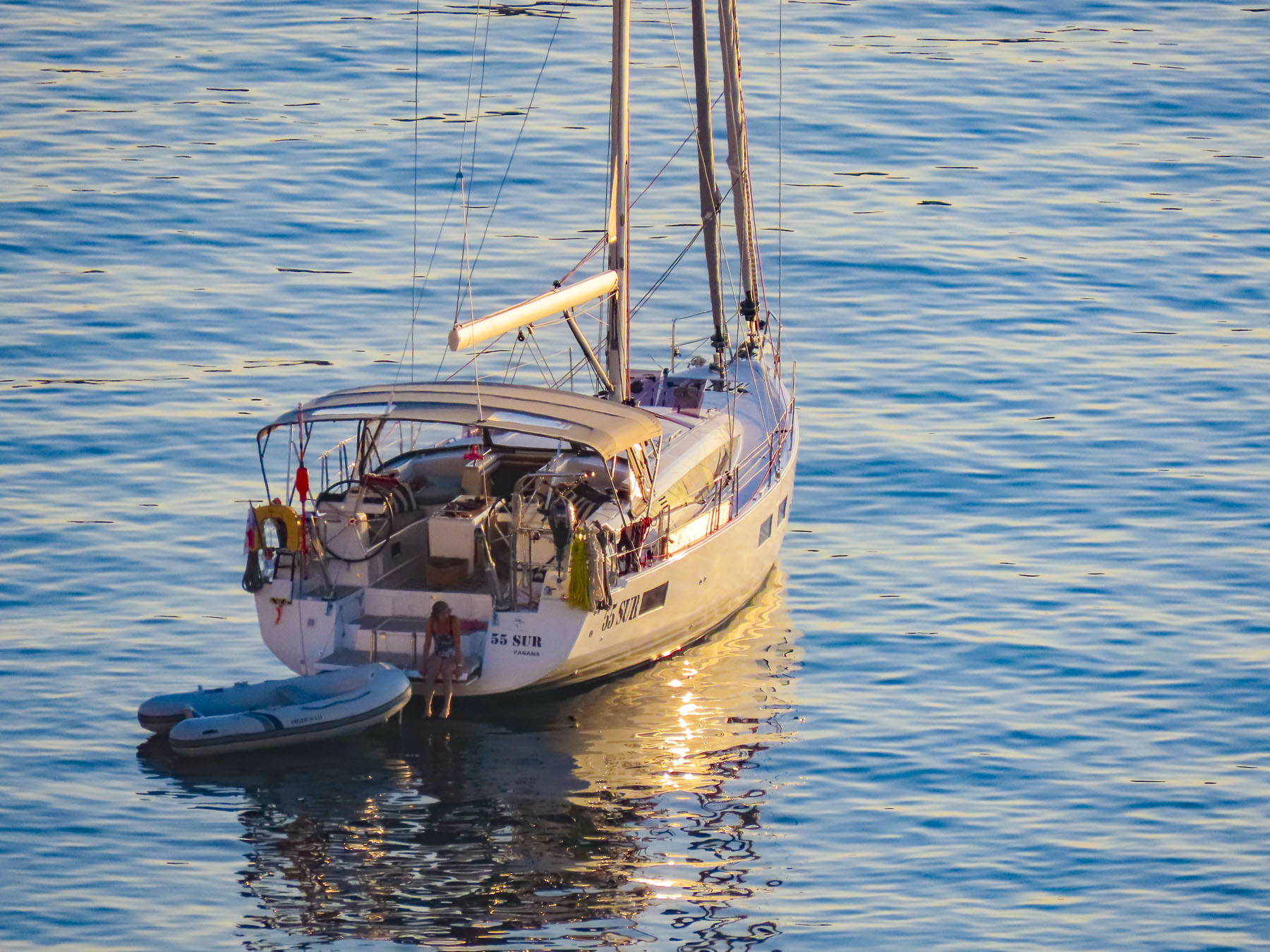
On the beach, workers were digging the umbrella anchors out of the sand as others rowed into the ocean to retrieve the string buoys that defined the swimming area.  Offshore the crew of a sailboat was pulling anchor in preperation to set sail. It was officially the end of the summer season and time for us to be moving on.  We got our swim in just in time.

Till next time, Craig & Donna

Kotor Part 1 – Water and Mountains, Ancient and Enchanting

Twenty-four hours out of Africa we were finally unloading our bags from the taxi, under tall palm trees across from a beautiful harbor. In front of us stood the Sea Gate, the 16th century arched entrance through ancient stone fortifications and the winged lion of St. Mark.  Both were constructed in 1555 when this port city was under Venetian rule.

With little difficulty we found our host and followed her through the ancient portal under a relief sculpture of the Madonna and Child, flanked by St. Bernard and St. Tryphon, the town’s patron saints.  There was a small rectangular slit underneath the stone carving where prayers were once placed. “Now it’s used as a complaint box by local residents!” our host joked. 

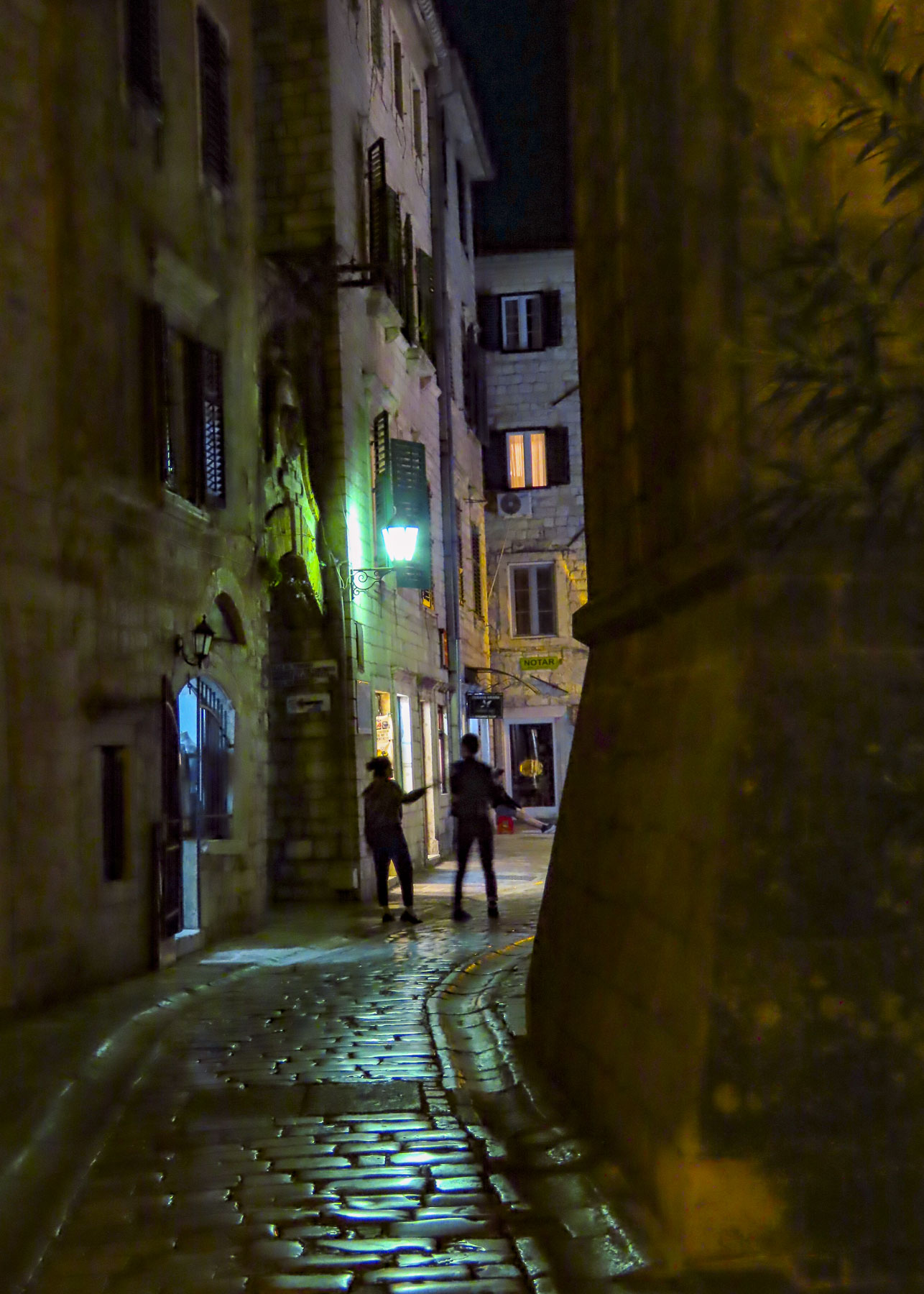
The archway perfectly framed a quaint plaza, The Square of the Arms, lined with shops and restaurants set dramatically under the backdrop of St. John’s Castle, Kotor Fortress, which towers protectively over the city.  Within the walled city it’s a wonderful pedestrian-only maze of narrowing alleys that weave about.  Our second-floor apartment was at the intersection of several of them and overlooked a view of the restaurants on Plaza Tripuna. 

After six weeks of continuous travel we were looking forward to being rooted for a while in an apartment, returning to our immersive travel philosophy. With a spacious living room, kitchen, hot water, and live saxophone music six nights a week, we were ready for this month of R&R in Kotor.  Though by the third night the saxophonist had played the identical repertoire each appearance, without changing its sequence. We were doomed to a Bill Murray-like Groundhog Day scenario, until he took three days off and was temporarily replaced by a young violinist.  She was a breath of fresh air.

But, with any new destination there is the urge to explore.  Outdoor dining was still in full swing and perfect, since the hottest days of summer were long gone by mid-September.  After lunch our first mission was to find a grocery store to get some basic essentials – wine, coffee and some breakfast items for the next day before we crashed from a long travel day.  Through the North Gate and across the Scurda River we found Voli and Aroma grocery stores.

The second, lone mission, was to find the laundry service as our cloths were about to walk away on their own in protest.  Before our host departed, she confirmed there was a laundry service, but wasn’t sure exactly where, as she didn’t use it, only that it was outside the city walls somewhere along the road that followed the bay. She waved vaguely in the general direction of the South Gate. It was a pleasant walk past the vegetable vendors in the daily market, outside the city walls, laden with fresh fruits and vegetables and FIGS!! (Our decision to call Kotor home for a month was instantly reinforced by this discovery.) Further on there was an Idea supermarket and the Sladoja mesara meat shop and grill restaurant. I walked all the way to the bus station and back tracked without spotting the laundry. Not one to accept surrender,  I asked a woman exiting an apartment building with my laughable Serbian, praonica? (laundromat in Serbian.) I also showed her a slip of paper with it spelled out, just in case. Saint Jude must have been watching. She not only spoke English, but happened to work there and was returning from her lunch break. Nearing home, I found the only bakery within the old town just around the corner from our apartment and was able to pick up some wonderful fresh breads and baked goods at very reasonable prices. This became a regular stop during our stay.

Instead of ticking off destinations and sights within a short period of time, it was good to be back on track with our slow travel approach to seeing the world.  Yes, we still want to see everything a locale has to offer, but at a reasonable pace with a walk a little, then café style repeated throughout the day. This approach allowed us to enjoy the Adriatic lifestyle by immersing ourselves into the ambience of Old Town Kotor for a month.

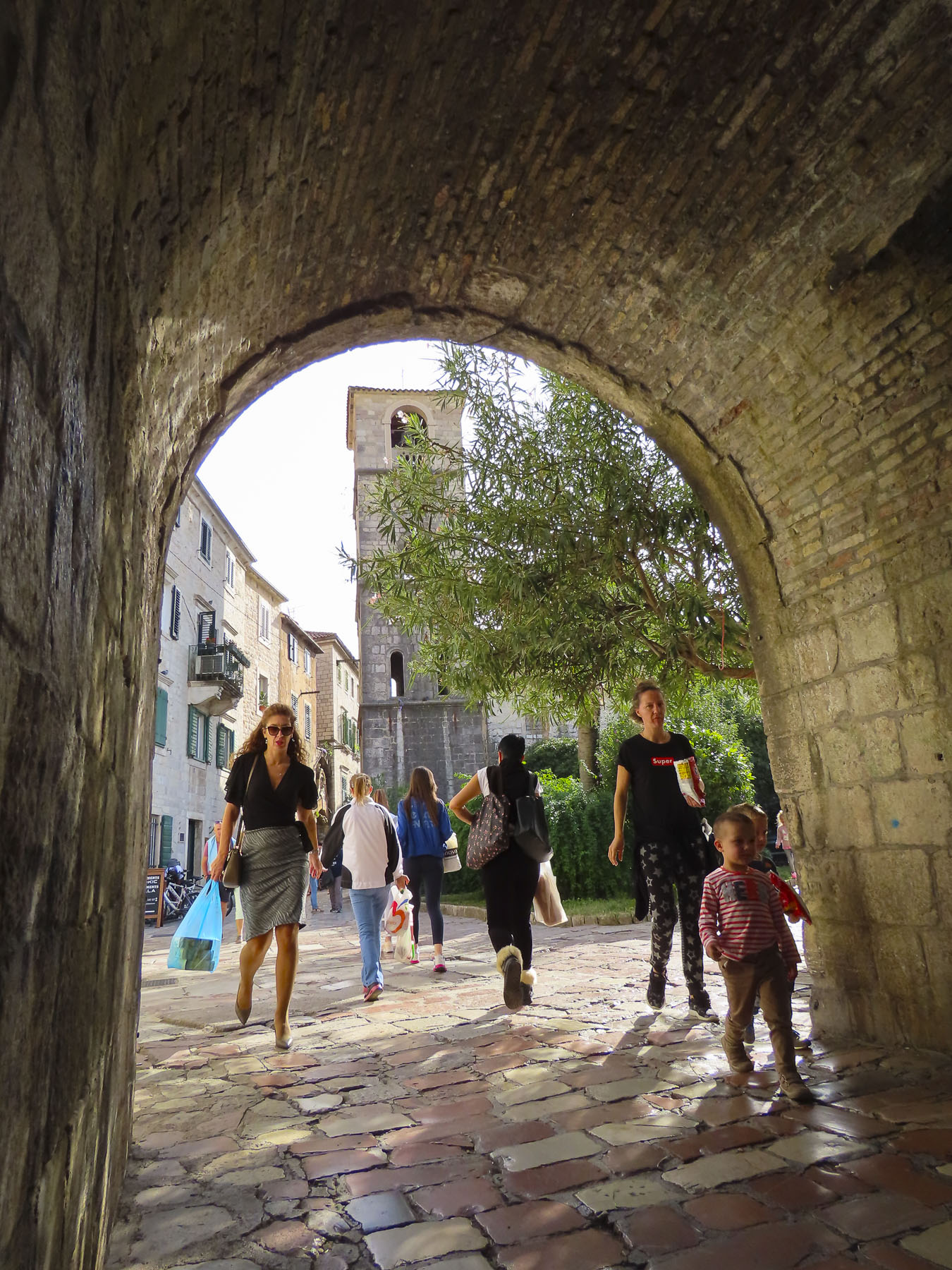
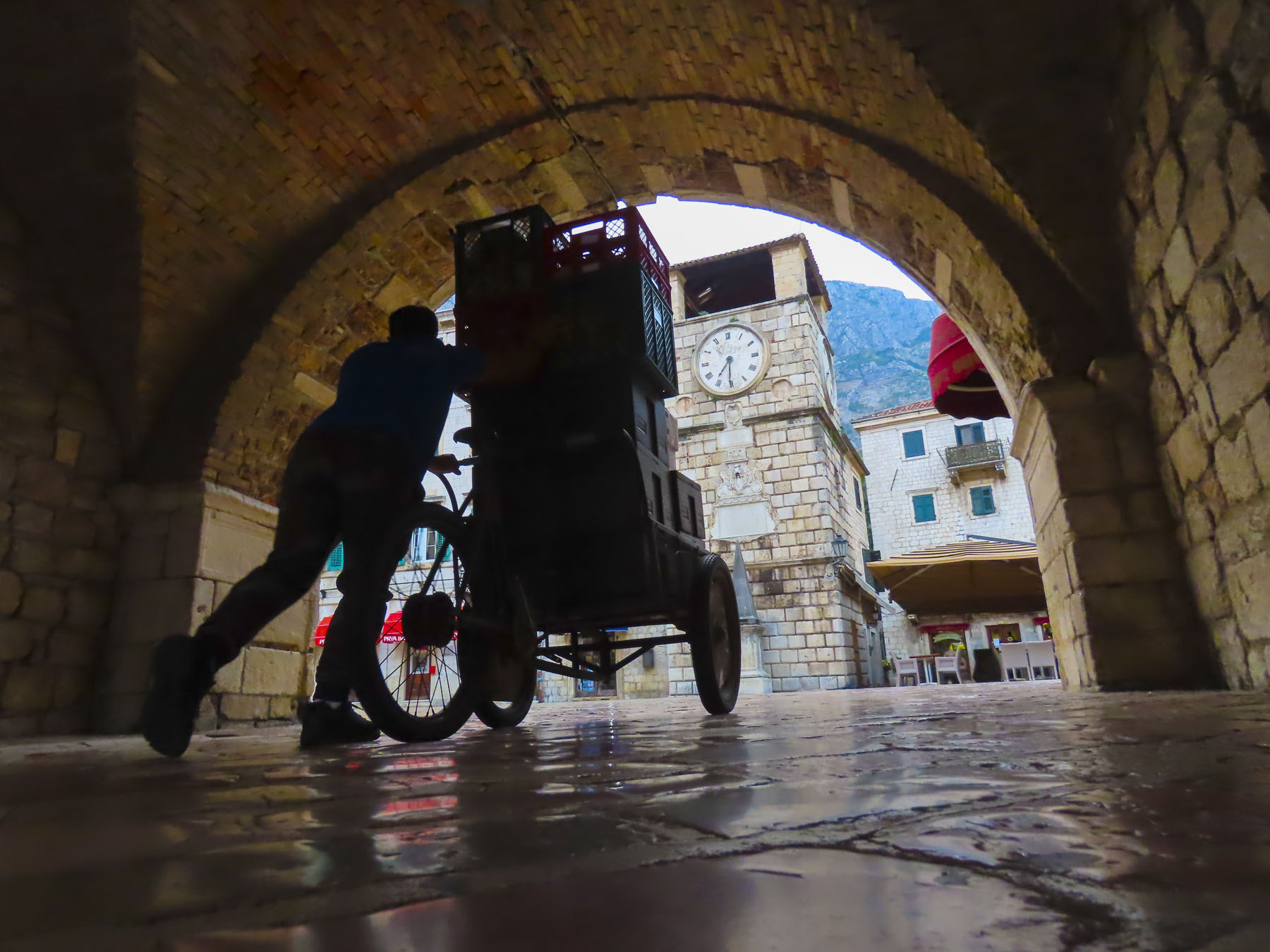
Surrounded by its ancient walls, the village really was the perfect size, impossible to get lost within and full of interesting finds and eateries.  If we started our day early enough, we caught pleasant glimpses of parents walking their children through the ancient gates to school, and vendors delivering the day’s supplies by pushcart down the tight, cobbled lanes, hard work for sure.

Exploring the alleyways that twisted through the town, we found unique architectural details, remnants from past empires and seafaring wealth.

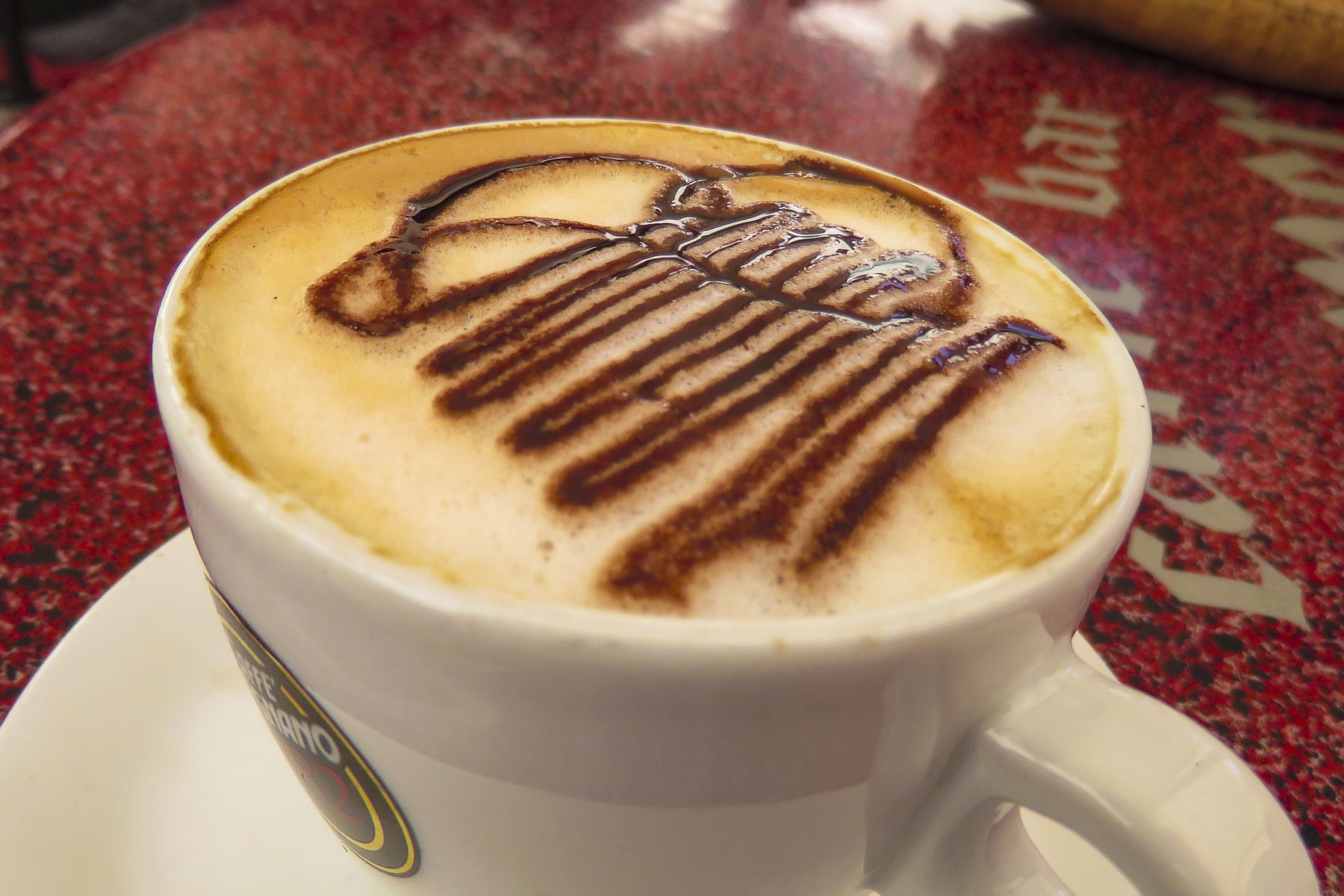
The alleys led to small intimate plazas with umbrellaed tables and entertaining street musicians. Caffe bar Perper on Pjaca od Salate made very good cappuccinos and every morning two singers sang a medley of Balkan folk songs with a sprinkling of western tunes thrown in.  Across the plaza Konoba Scala Santa, the oldest restaurant (1931) in Kotor offered regional specialties and a rustic interior with a fireplace on those rainy fall nights that chased us inside. 

After coffee one morning we followed the steep stairs off Pjaca od Salate past old stone homes (wondering how folks do it when we saw a baby stroller on a landing) built into the hill to the entrance of Kotor Fortress.  1350 steps to the top –  we could do it! Fortunately, we chose a cool day. It was a challenging trek over a rough stone path and stairs still in need of repair from the 1979 earthquake that struck the city. 

Fortifications have loomed over Kotor since Illyrian times, 4th century BC until 167 BC, with additions made by Roman emperor Justinian I in the 6th century.  The Venetian Empire expanded the fortifications further in the 16th century.  It’s their stones that we were tripping over.  Our effort was rewarded with spectacular views of the city, bay and old caravan trail from the serpentine path that twisted all the way to the top. 

As formidable and imposing as the fortress looked, it has been seized several times during conflicts with the Ottoman, French and English. Good walking shoes and water are a must for this going.  650 steps up the Church of Our Lady of Remedy marks the halfway point and is a good place to rest and enjoy the view for a while.  The small chapel was built by survivors of the 1518 plague to honor the Holy Mother.

In 1979 an extremely destructive magnitude 7.0 earthquake devasted old town Kotor and many similar towns along the Montenegro and Albanian coastline which was then part of Yugoslavia, leaving 100,000 people homeless. All the stone buildings suffered some form of damage and the city was closed to the public for ten years during its restoration. Some signs of the earthquake damage are still visible, most noticeably block-long 19th century Austrian Prison that has large cracks in its exterior walls and the sky visible through its roof. 

The churches in the historic center also suffered extensive damage. Their facades have been fully restored, but their ornate interiors were destroyed beyond repair. The interiors are noticeably less ornate than similar era churches in Europe, with only fragments of relief carvings and frescoes remaining, hinting at their former beauty. Priče o Potresu / The Earthquake Stories is a 2020 documentary by Montenegro director Dusan Vulekovic about that destructive natural disaster. Severe earthquakes also struck Kotor in 1563 and 1608.

The one drawback of Kotor is that it’s a busy cruise port with four or five large cruise ships disgorging thousands of passengers between 10am and 3pm every day until the end of the cruising season. But they followed a limited circuit and if we planned around them, they were barely noticeable. By October first only one or two cruise ships were anchoring in the bay each week.

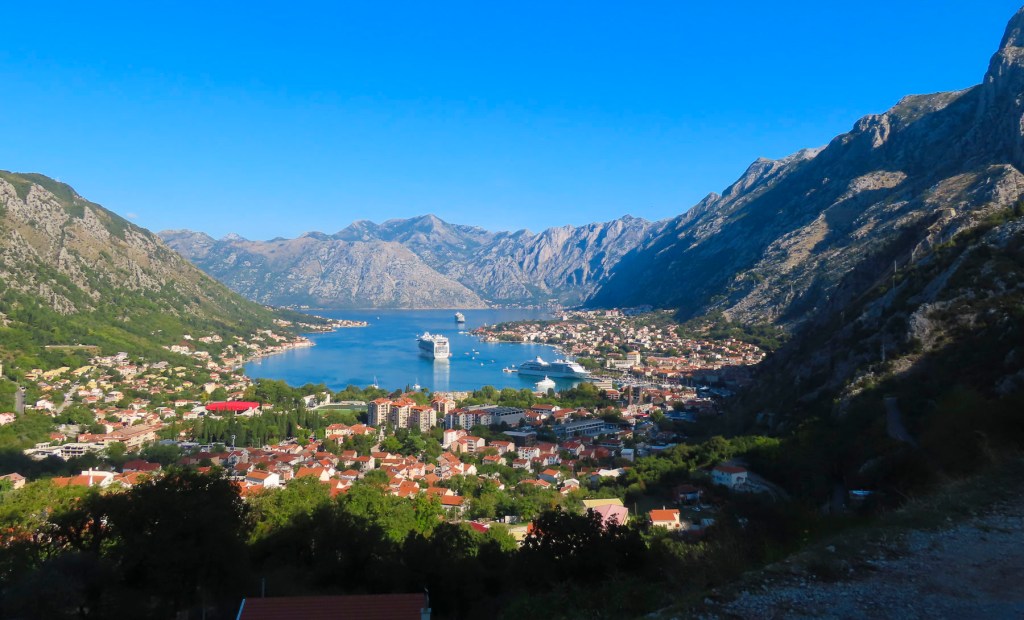
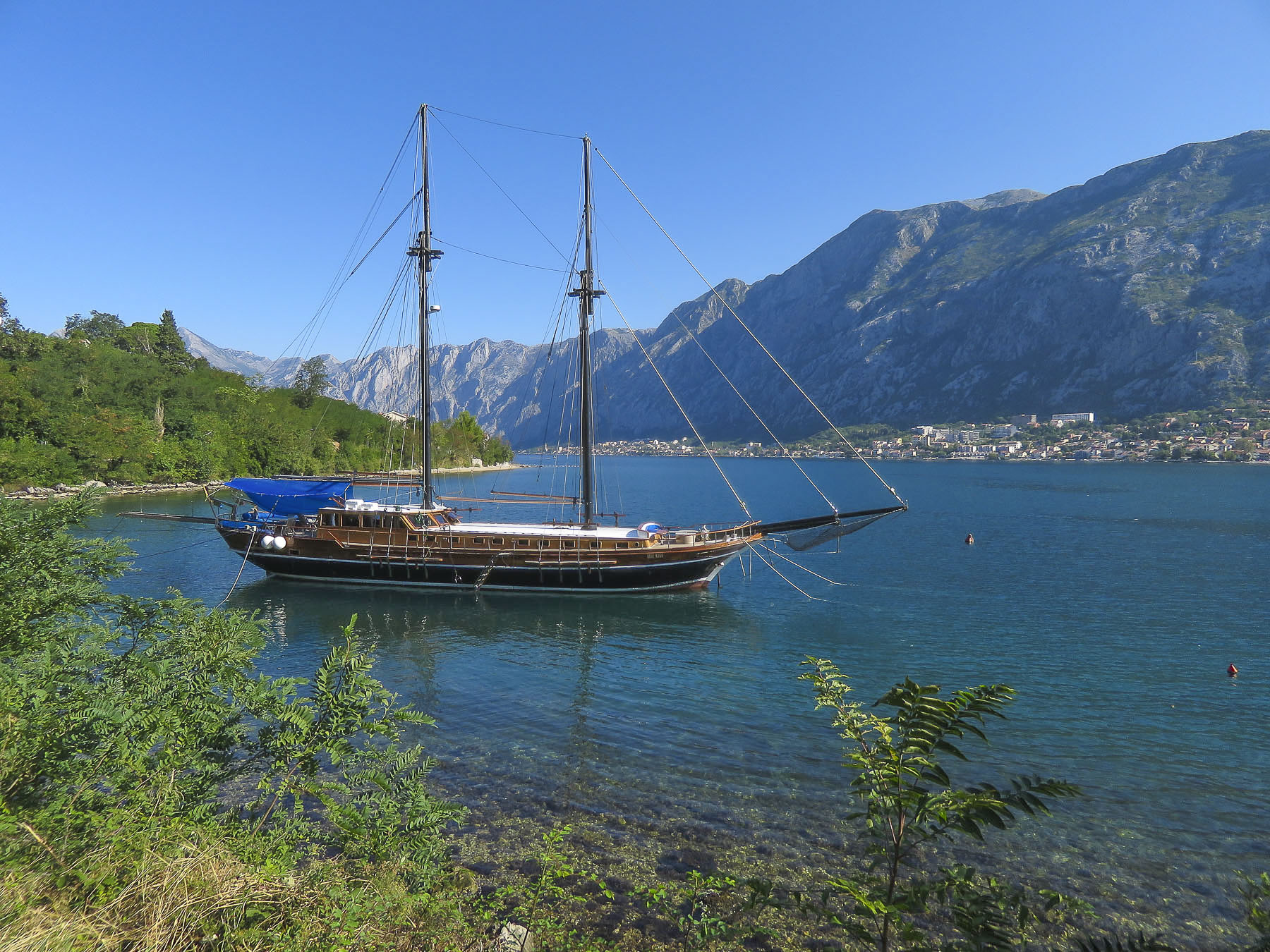
Often referred to as Europe’s southernmost fjord, the walls of Kotor bay are so high and steep that they cast shadows late into the morning and early in the afternoon over the city. This is a tremendous help in moderating the heat of the Adriatic summers.  Its unique geography makes it the most naturally protected harbor along the Adriatic coast, providing safe anchorage for sailors since the beginning of boat building, several millennia ago. 

There were a variety of water tours available and we opted for one that took us to Our Lady of the Rocks and Perast.  The legend of Our Lady of the Rocks starts in the 15th century when two brothers, fishermen from Perast, found an icon of the Virgin on a rock protruding from the center of the bay. Fulfilling the Virgin’s request of them to build a church in the bay, they began transporting stones by boat from the shore and dropping them in the bay. Soon others followed. Today there is a small Catholic church on the island and a festive boat procession every July called Fasinada that keeps the tradition alive.

The views from the bell tower of St. Nikola Church over the quaint village of Perast and the open expanse of Boka (Kotor) Bay were tremendous.  It was a wonderful, beautiful day on the water that ended hours later in agony, as we both succumbed to food poisoning from lunch.  Fortunately, Donna found a visiting Doctor service that provided an English-speaking physician who made house calls.  After a midnight knock on the door and a short consultation we were advised to hop in his ambulance for an intravenous treatment at the local clinic.  It turns out that we had visited this clinic ten days earlier for treatment of a sinus infection and pinkeye that Donna caught before we left Ethiopia. After our hour and half treatment, we felt one hundred percent better and were discharged at 1:30AM onto a deserted sidewalk with no assistance offered to get us back to town.  It was too far out of town to consider walking and considering we were still recovering, we waited patiently as the occasional car sped past Finally a taxi zoomed by and, hearing my booming shout of “TAXI!” the driver hit the brakes and did a U-turn.
Our travel insurance covered the hospital visits, though the claims were cumbersome to file. (Keep your airline tickets for proof of travel.) Amazingly, the hospital treatment, including transport by ambulance, was only €50 each – extremely affordable compared to medical care in the United States.  Likewise, the prescriptions we filled the next day were easily paid for out-of-pocket.  It is worthwhile to compare the cost of drugs that you regularly purchase in the United States with what they cost overseas when traveling. There is an outstanding difference, with foreign prices being much lower and many not requiring a doctor’s prescription.  Just check Google for the correct name of the drug for the country you are in.

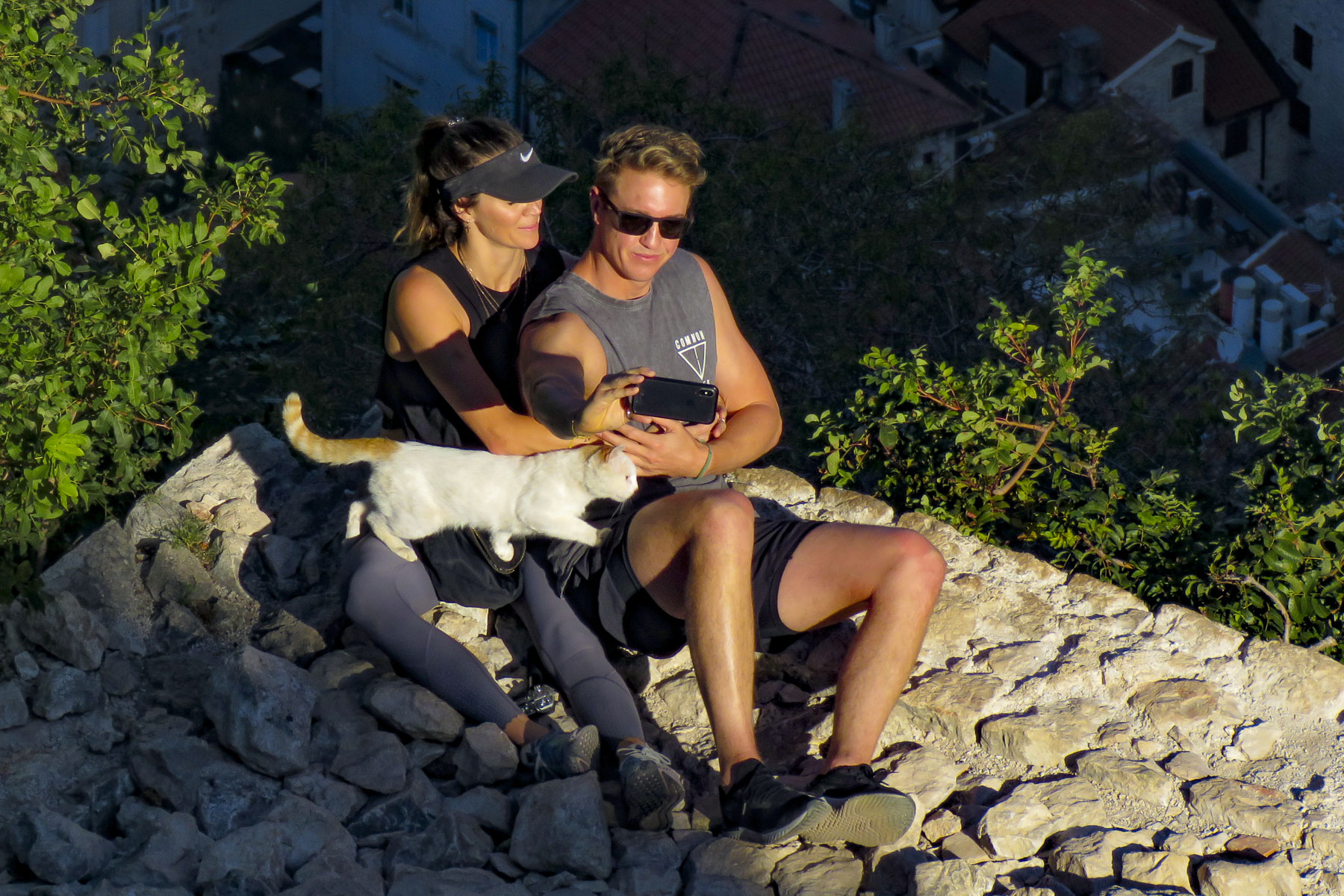
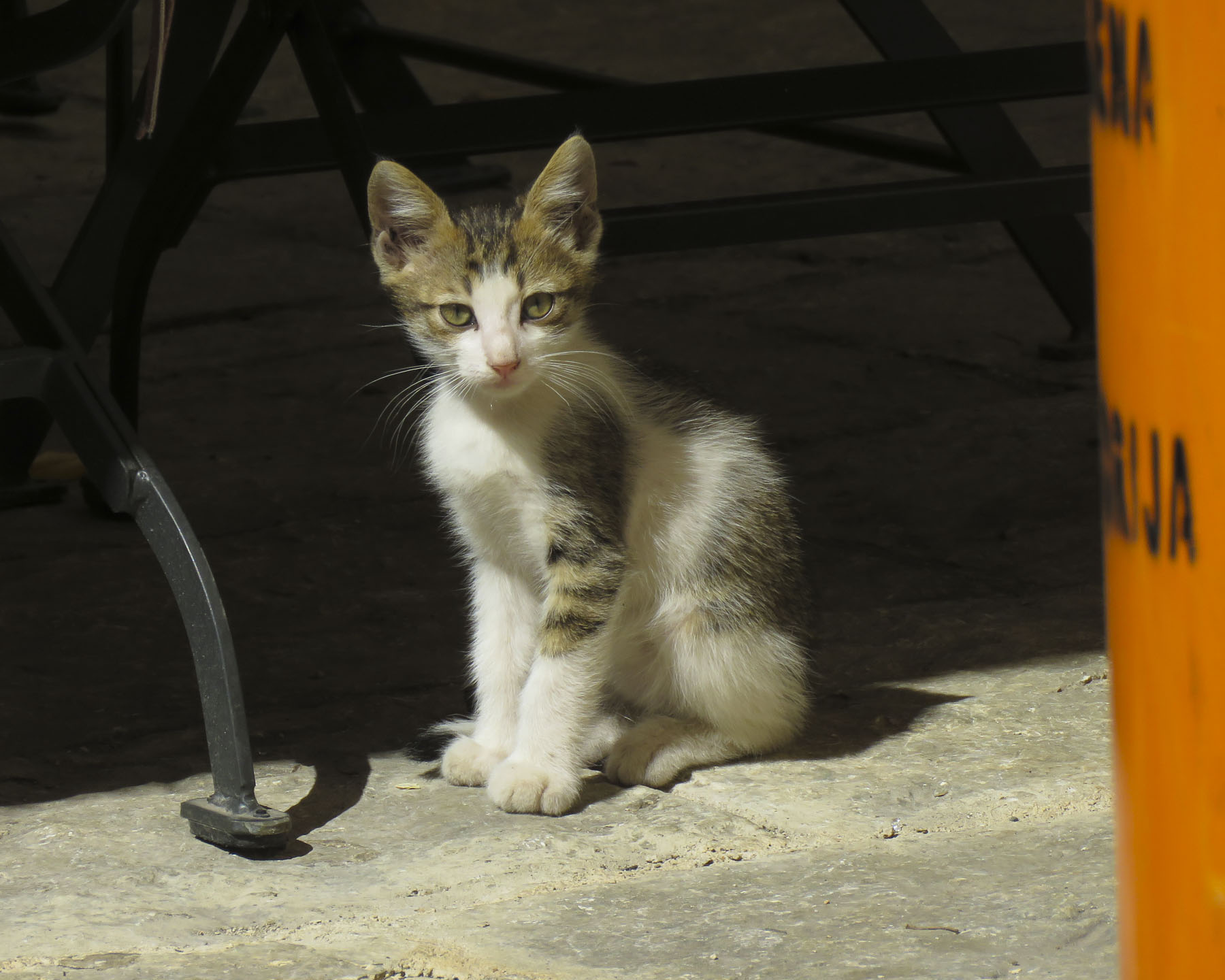
The old town is also famous for its colony of “Kotor Cats,” descendants of ratters taken to sea by sailors to control rodents on board their ships.  As we walked around town, we noticed small trays of cat food placed about for them.  Kotor Kitties is a non-profit organization started by an American visitor to Kotor several years ago that provides food, veterinarian care and neutering for the famous felines.  

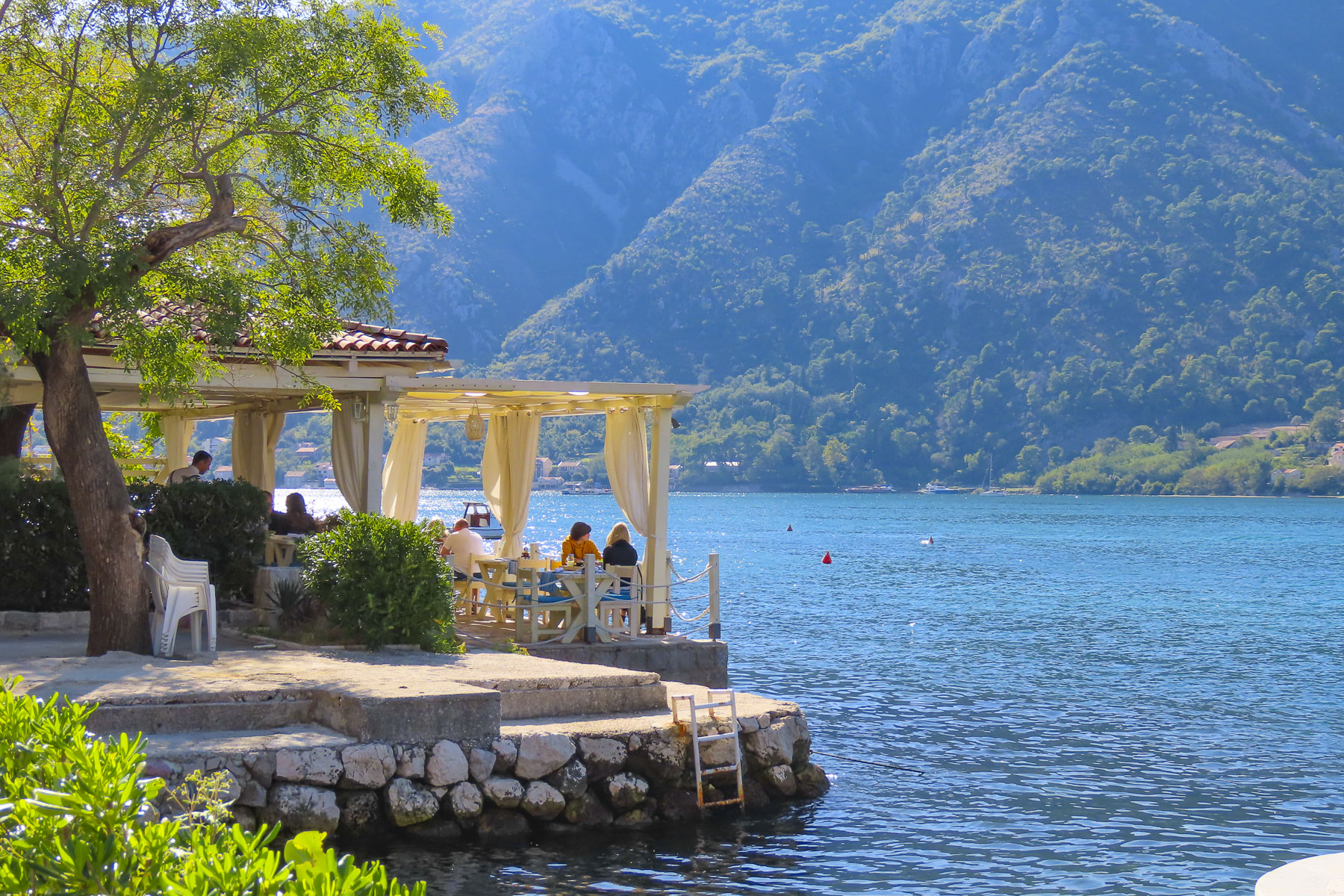
Our wanderings expanded to include longer treks along the picturesque roads that followed the shoreline of the bay. Walking only minutes from old town along Put I Bokeljske Brigade on the bay’s eastern shore put us in a more relaxed world with pebbled beaches, small marinas, waterfront restaurants, private homes and small boutique hotels along the water.  Though the bay water was still warm enough for swimming, the area was very quiet at the end of September, with most of the small hotels posting “rooms available” signs in their windows. Many of the beach facilities pulled in their cabanas and rental kayaks with the end of the cruise boat season, which coincides with the beginning of the rainy fall season.  Fortunately, the restaurants were still open along this route and several of them enticed us enough to revisit this seven-mile roundtrip walk to the village of Dobrota weekly. 

The western shoreline along the bay was equally enticing with its small coves that sheltered yachts at anchor, and the historic churches of Crkva Sv. Ilije in Gornji Stoliv and the parish church of Prcanj, Bogorodicin Hram, offered wonderful views of the bay from the top of its monumental stairs leading to the church.  There were also some nice quirky finds along this route: props that looked like they were once used in a local carnival.

Montenegro is a small country; besides being known for its fabulous Adriatic coast, it has an equally impressive mountainous interior only a short distance inland from Kotor that can be visited on day trips.  There were numerous tour operators around town that all offered basically the same excursions. We chose one to Durmitor National Park that included stops at the dramatic Most na Đurđevića Tari bridge that spans the turquoise waters of the Tara River. Visits to Black Lake, Lake Slano and the cliffside Ostrog Monastery would round out the day. 

It was late September now and the chill of fall was in the morning air. Optimistically I wore sandals, anticipating a warm and sunny afternoon as it was the day before. As we drove into the mountains, the clouds thickened and the temperature dropped to the point were when we stopped at a small shopping center for a rest break I ran into a shoe store to buy a pair of heavy socks, much to Donna’s amusement. 

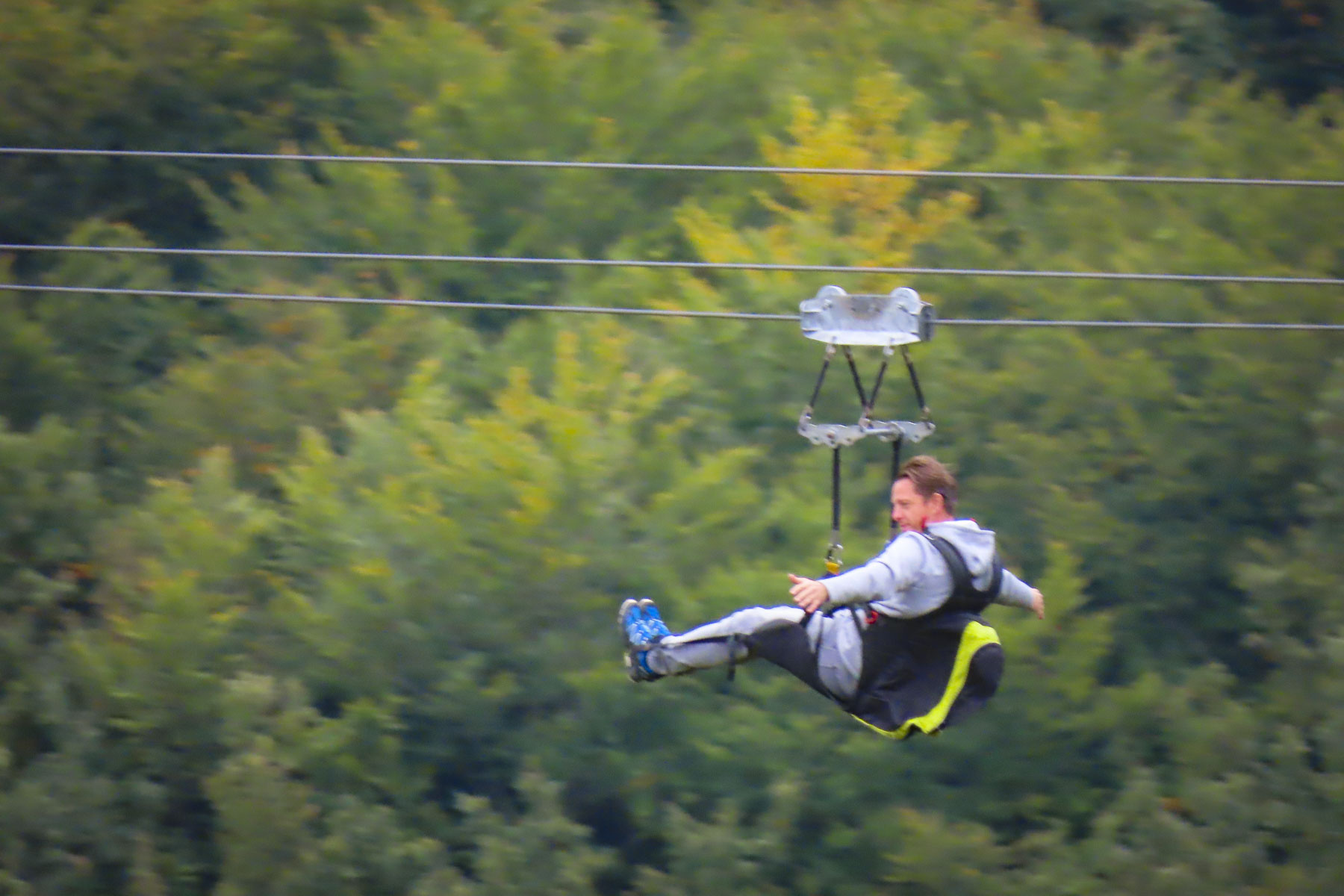
The mountain vistas along the drive to Djurdjevica Tara bridge were fantastic and we arrived in time for some in our group to zip-line across Europe’s deepest canyon (4300 ft) and the turquoise waters of the River Tara – the “tear of Europe,” below.

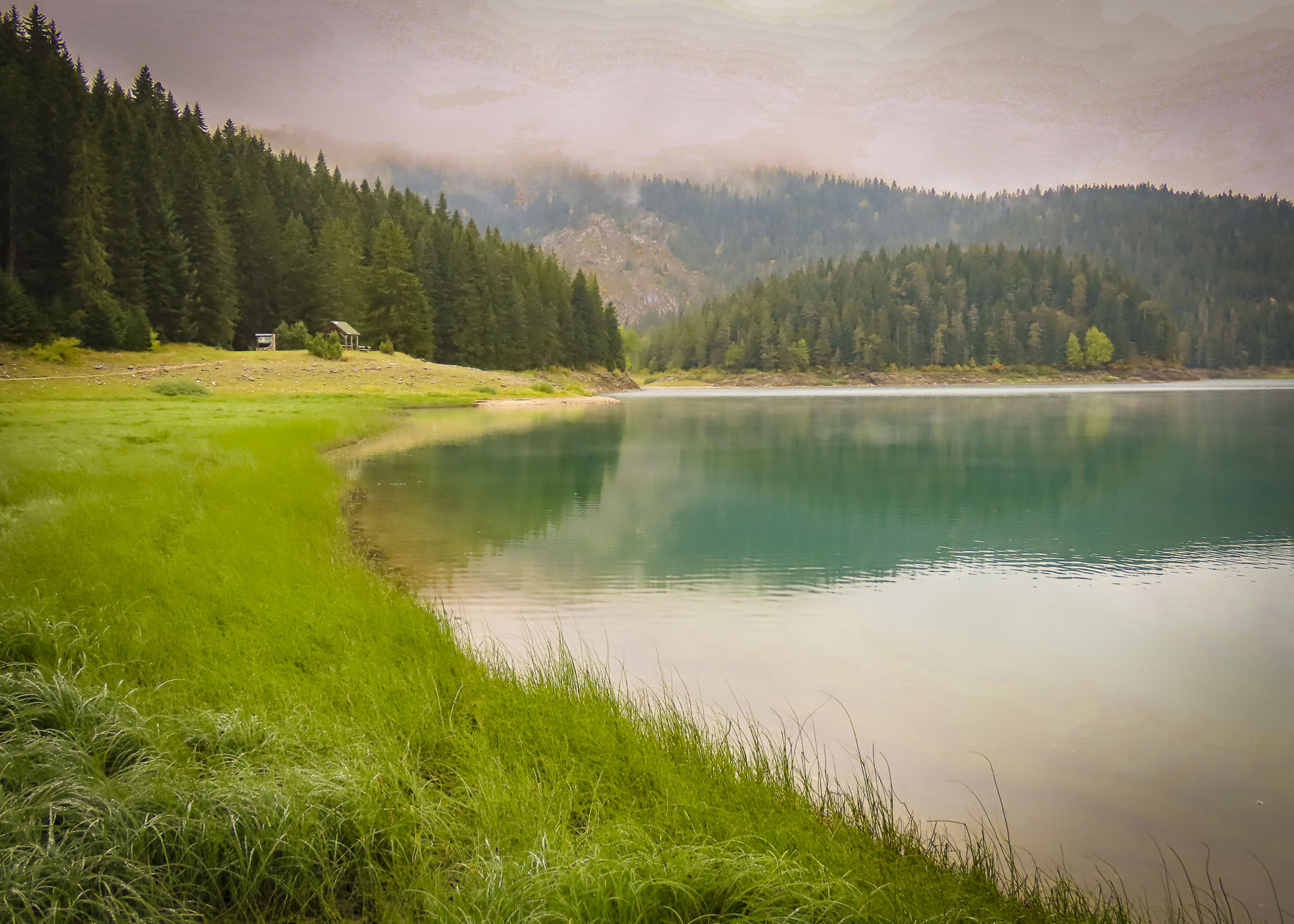
An easy hike through old growth forests around Black Lake followed lunch at a waterside restaurant.

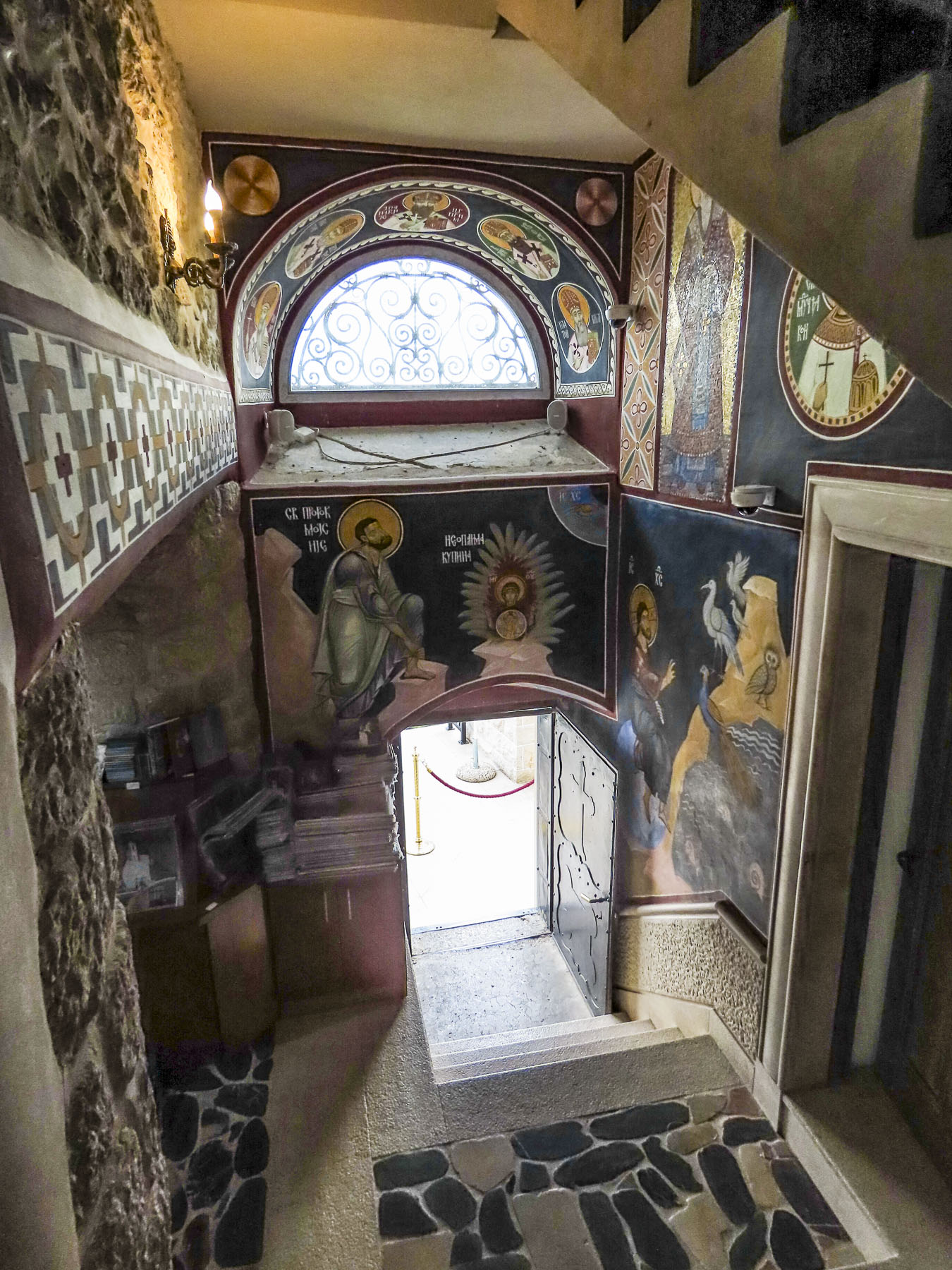
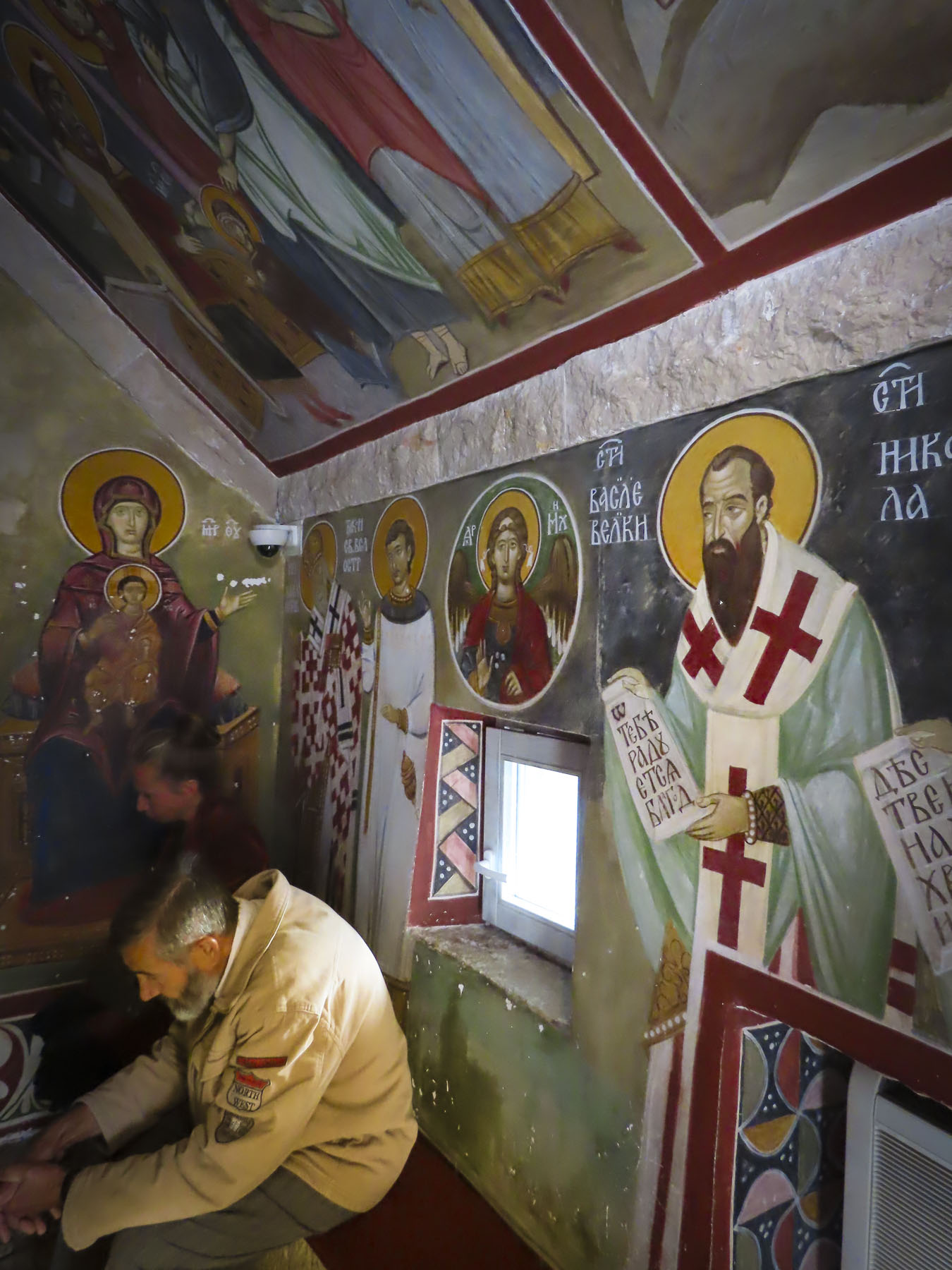
The last stop of the day was at Ostrog Monastery which expanded around a cave church that was built high into the mountains in the 1600s by Vasilije, the Bishop of Herzegovina and later known as St. Vasilije, to escape Ottoman raiders.  Upon his death his body was entombed in the church and legend says his mortal remains have miraculous healing powers.  Over the centuries, the monastery has become a pilgrimage site for Orthodox Christians, Catholics and Muslims, drawing 100,000 visitors annually. Additionally, the monastery is also known for its unigue religious frescoes, which were painted directly onto to the surface of the cave, following their natural curvature.  Our guide had timed our visit perfectly to coincide with the 5:00 PM mass. It was a moving experience to hear the liturgy sung and projected from loudspeakers out over the valley as the sun was setting. 
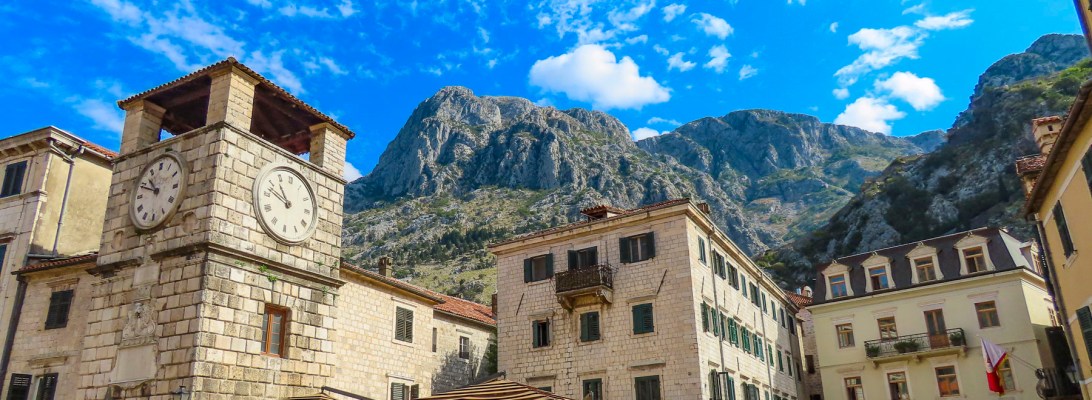
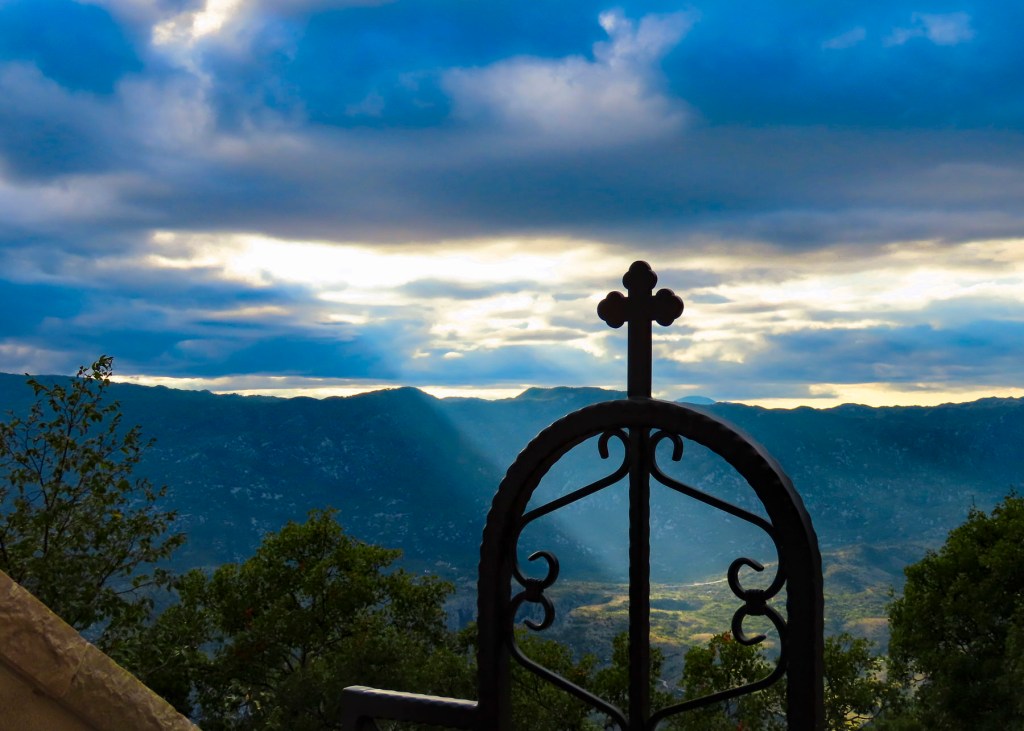
The last stop of the day was at a scenic overlook above Kotor Bay. Montenegro packs a magnificent amount of beauty into a small country and should be on everyone’s radar for an affordable, budget friendly destination.

A week later we rented a car to explore parts of Montenegro on our own.

Till next time, Craig & Donna