

The street was alive with activity. Three buskers with drum, sax, and tuba were jazzily rendering Bruno Mars’ “Marry You” on the pedestrian mall full of folks strolling and bicyclists weaving amidst a food fair and participants readying their wacky go-cart entries for a Red Bull event later that afternoon.


There’s a long tradition in Estonia of student rock bands in the 70s and 80s transcribing western songs heard via Radio Free Europe broadcasts to countries behind the “Iron Curtain,” including Estonia. Soviet censors viewed any foreign influence, especially rock ’n roll as a threat to communist ideology, and these street musicians were upholding a long-standing musical tradition.
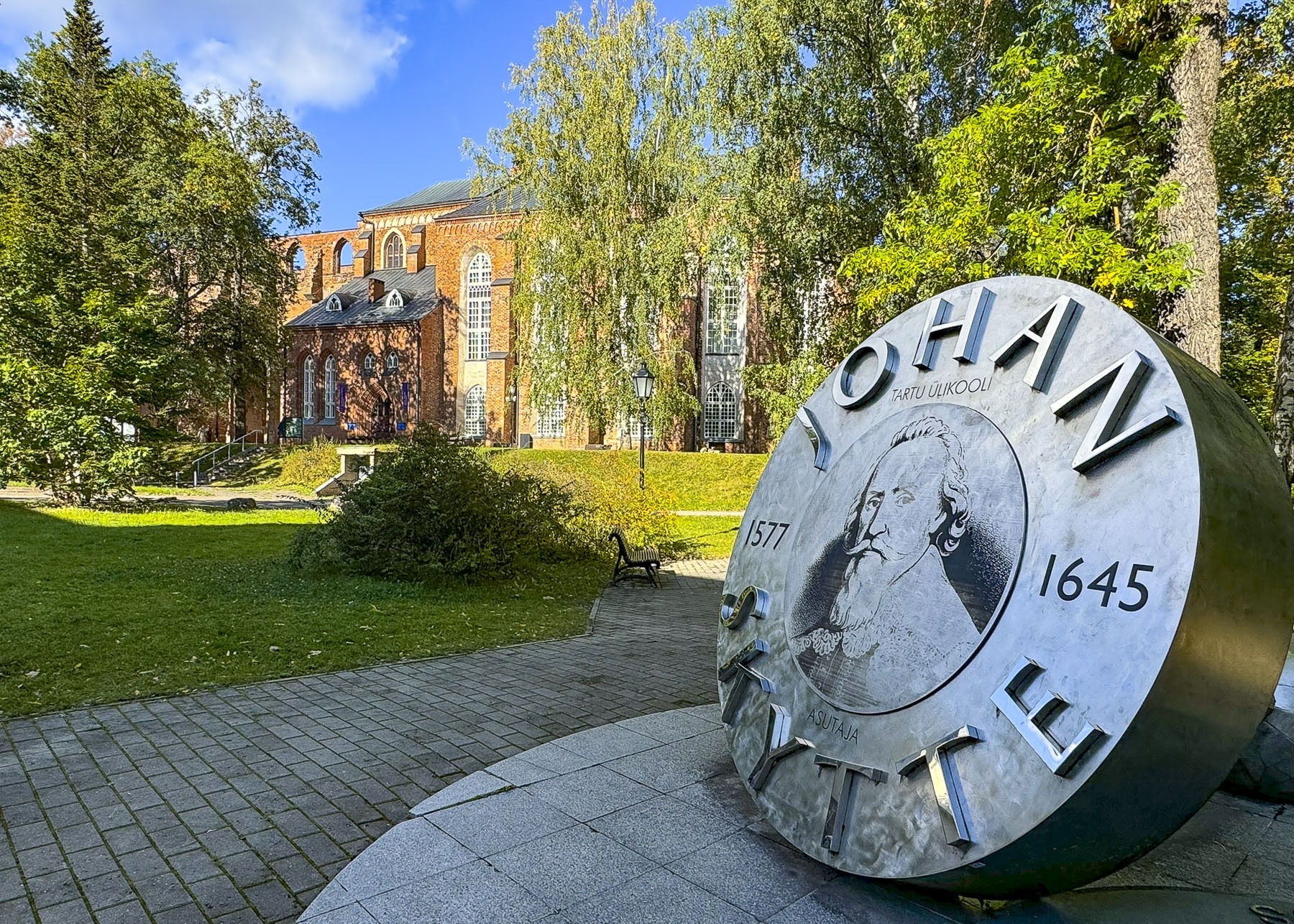
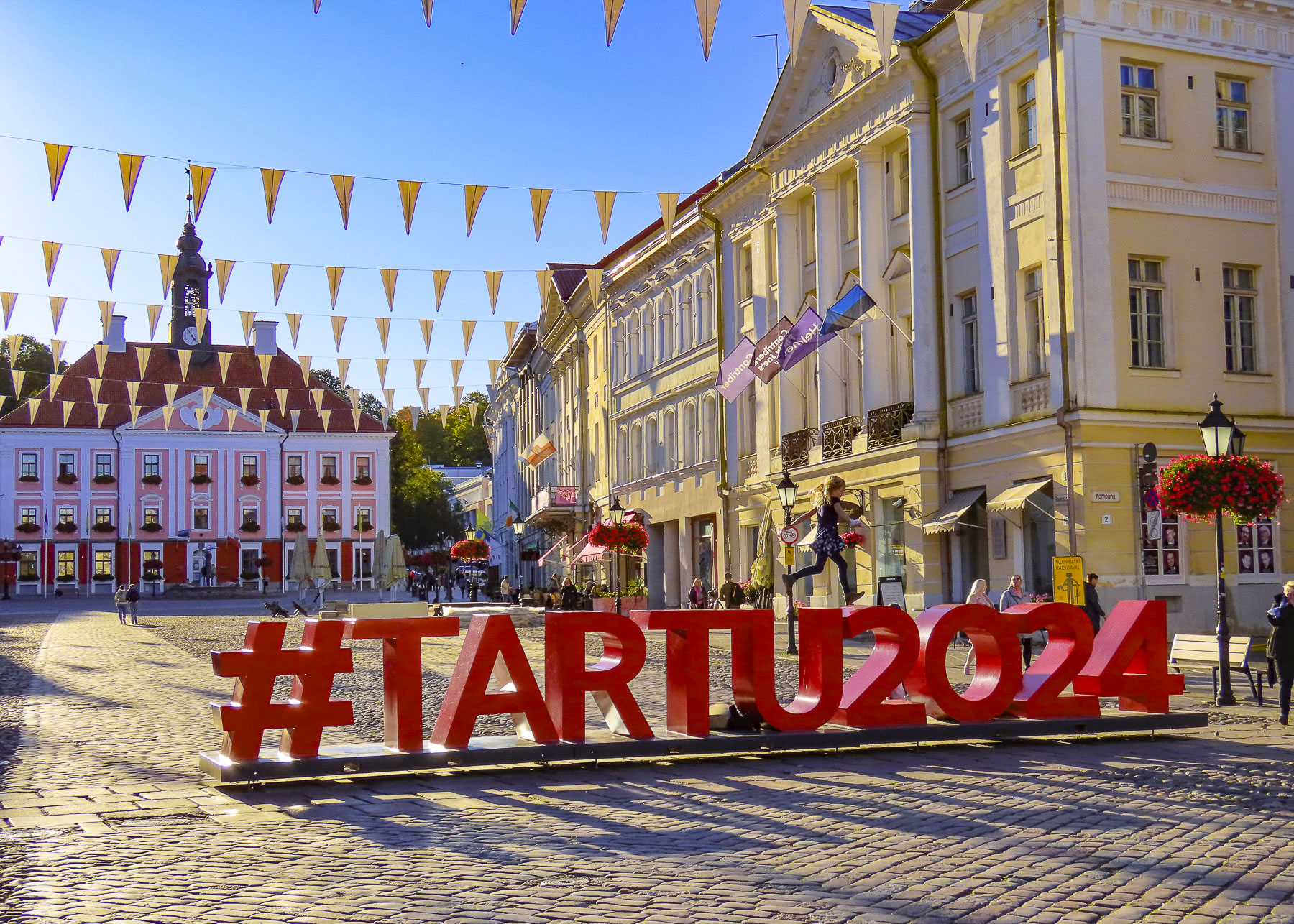
Tartu has been a university town since the 17th-century, and today 14,000 students give the city, Estonia’s second largest with only a population of 104,000, an energetic youthful vibe. They are an important part of the town’s character and are playfully acknowledged on the café-lined cobblestone plaza in front of Tartu’s City Hall with the ‘The Kissing Students’ sculpture and fountain.

The University of Tartu’s students also played a crucial role in Estonia’s expression of national identity and resistance to Soviet rule in the late 1980’s. Their support of the “Five Patriotic Songs” by Alo Mattiisen led to spontaneous mass singing demonstrations at the Tartu Pop Festival in May 1988. These musical protests spread to Tallin, then Latvia and Lithuania. These peaceful protests culminated in the The Baltic Way, a human chain of two million people which spanned from Tallinn, Estonia to Vilnius, Lithuania in August of 1989. The popularity of these peaceful movements strengthened the determination of Estonians to redeclare their independence from the Soviet Union in 1991. Latvia and Lithuania followed suit soon after.
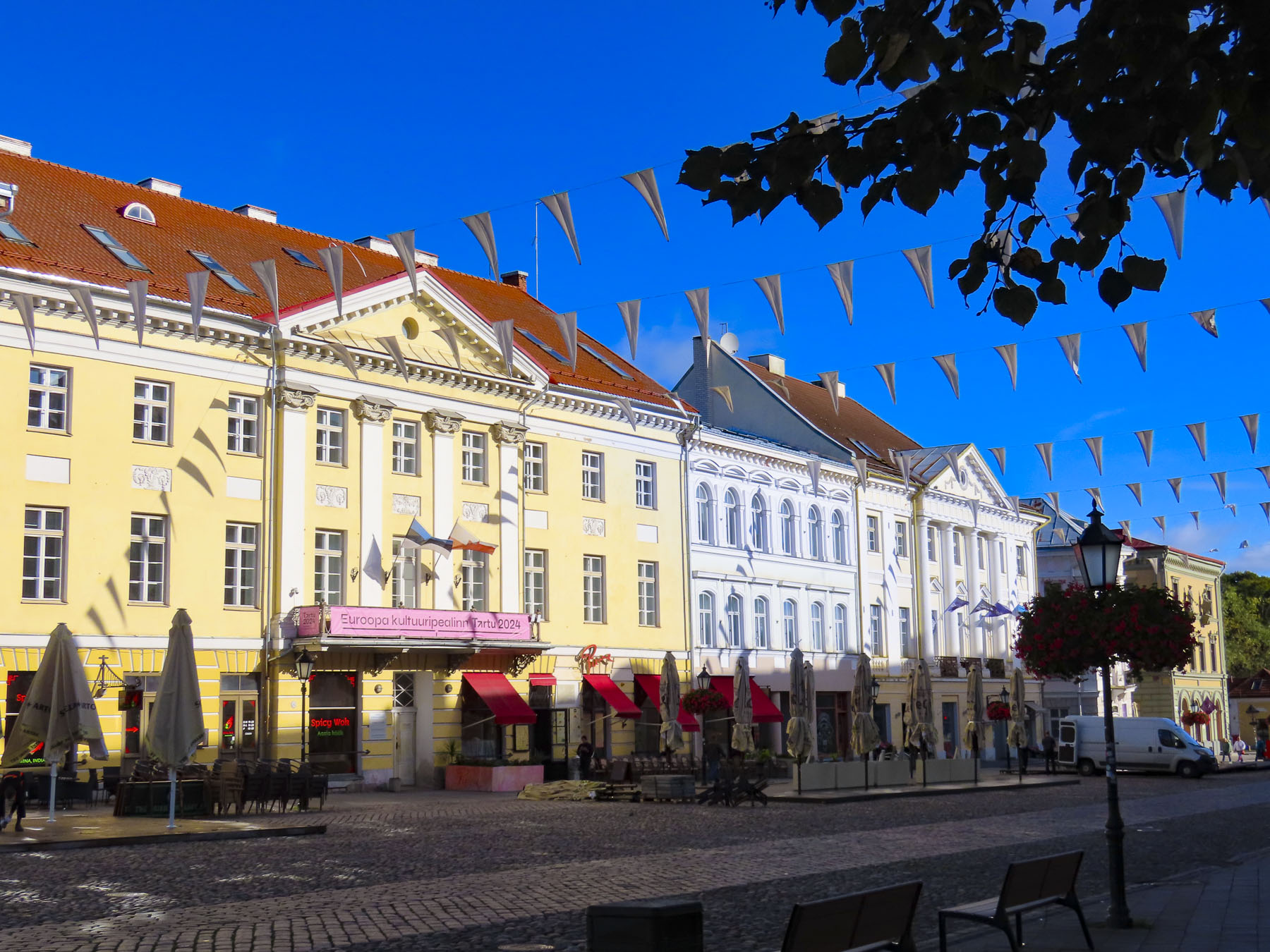

The Kissing Students’ fountain is really the center of activity in Tartu, a splendidly walkable city. Its car-free center extends north along Küüni tn from the modern Kvartal shopping mall, with an array of nice shops, and an excellent Coop supermarket, past the central plaza all the way to the Botanical Garden of the University of Tartu. And there were numerous points of interest just off this route that we explored during our five-night stay at the Art Hotel Pallas, a boutique hotel nicely located across from the Kvartal mall, with views from our hotel room of the spires atop the town’s city hall and churches. It also had convenient free parking, and a scrumptious breakfast buffet. The pickled herring, yes for breakfast, was really good. It was the perfect spot to get some much-needed R&R after driving through Estonia, Latvia, and Lithuania for three weeks.

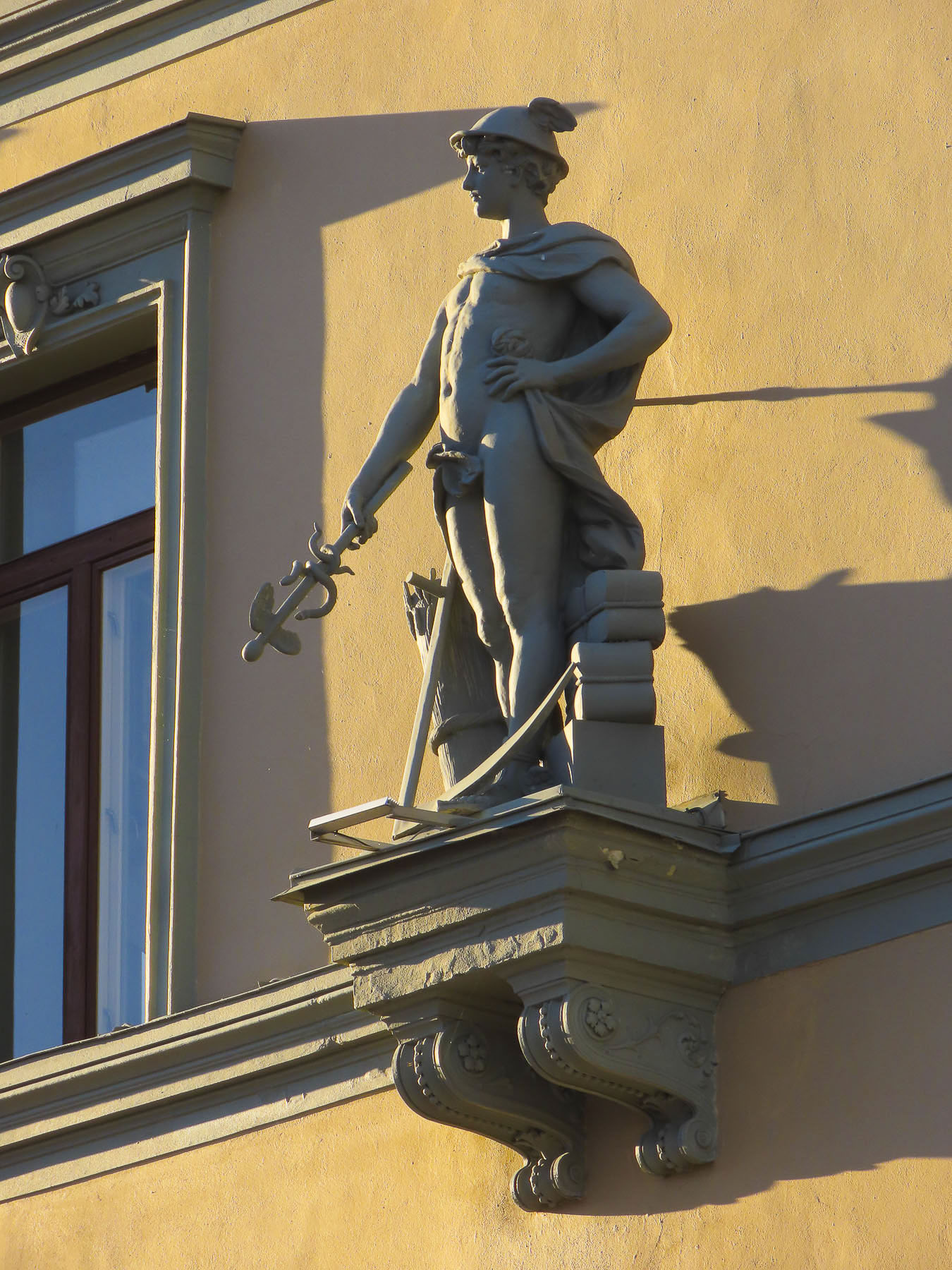
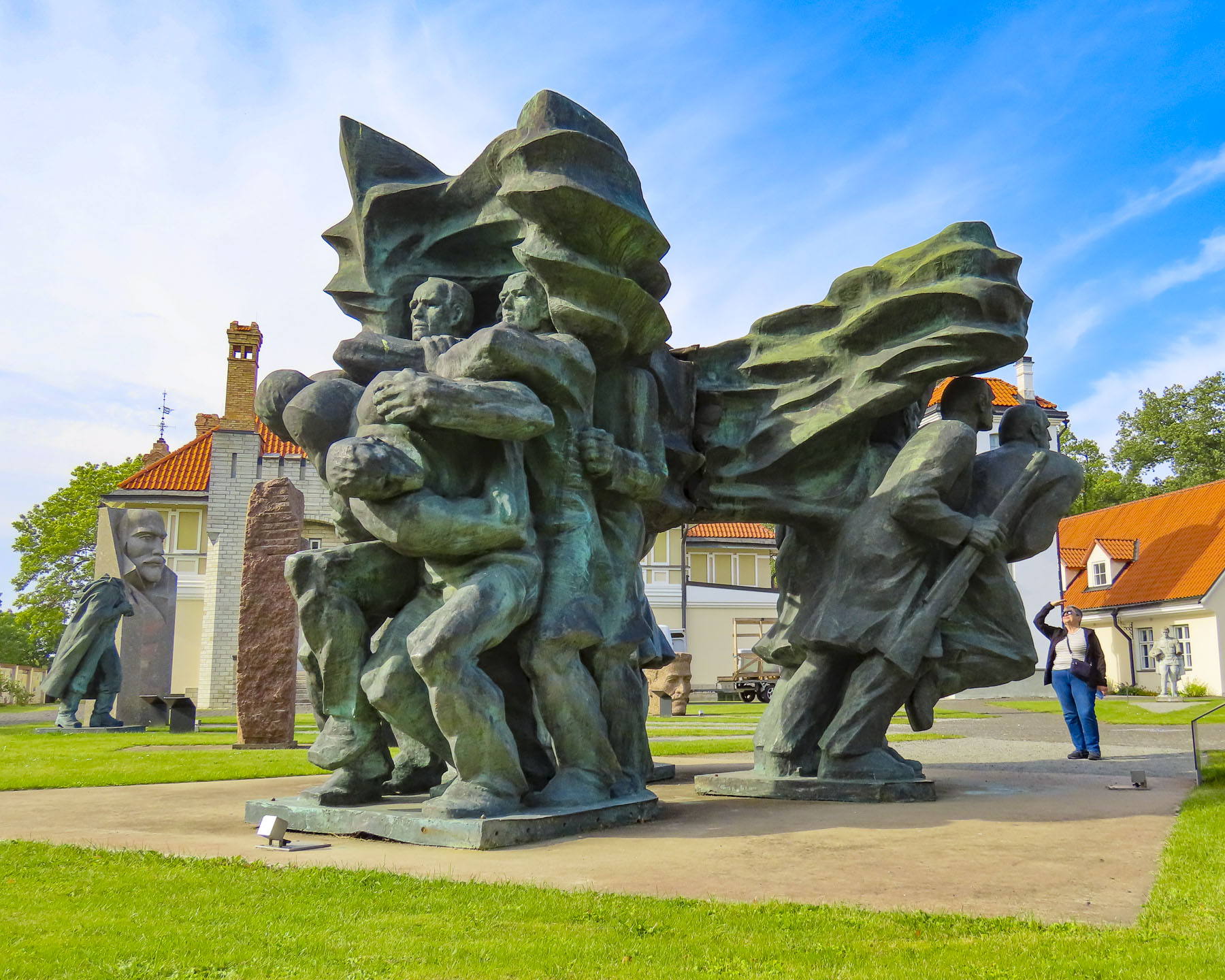
One of the nicest things we’ve encountered during our road trip through the Baltics is the extensive amount of public art that graces the region’s cities and small towns. Few are of a historical nature. The sculptures of Lenin and Stalin that the Soviet Union installed during their fifty years of occupation to erase the Estonia’s history were quickly removed from all public spaces, and sent to the scrap yard. The current sculptures now honor influential writers, poets, and folk heroes or are simply artistic inspirations without any political messaging.
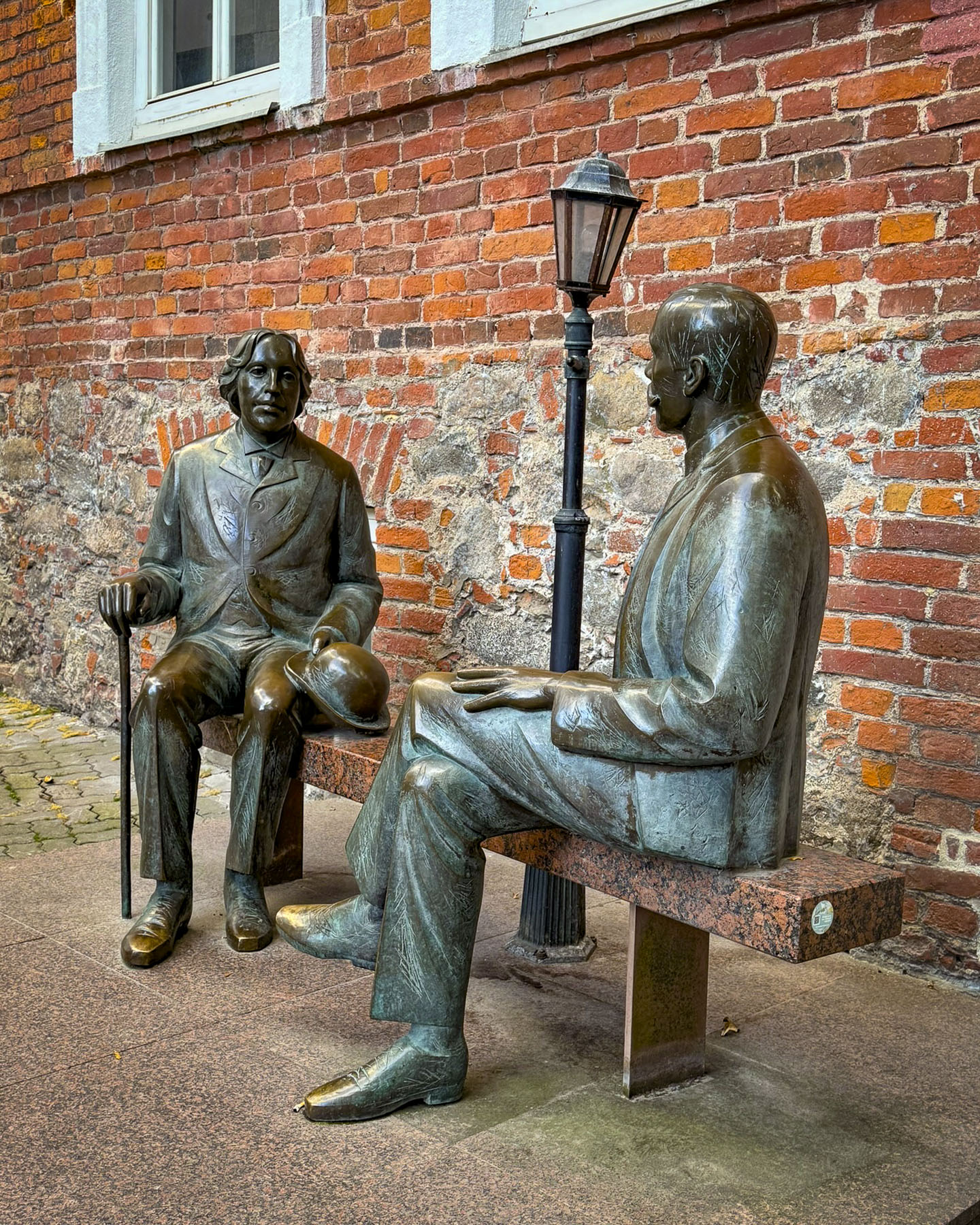
Along Küüni there was a sculpture of Irish playwright Oscar Wilde and Estonian writer Eduard Vilde depicted in an imaginary encounter between the literary heavyweights. Though the two never met, Wilde did give a lecture at the university in 1892.

Nearby was the sculpture “Father and Son,” by the Tartu native Ülo Õun (1944-1988). The Visit Tartu website explains the work represents the sculptor with his 18-month-old son, and “is a symbol of the relationship between different generations, where children are increasingly growing apart from their parents.” A side note – the Visit Tartu website has an extensive calendar of events page. In a park they had a pop-up information tent, and detrimentally to our waistlines, it was across from the Kalev Chocolate Shop and cookie store. This Estonian brand makes, in our opinion, some of the best store-bought snacks. You can buy them in grocery stores across the Baltics, but they surprisingly cost less in their own stores.

A diagonal walk through the park took us to Tartu Turuhoone, the town’s old market hall where a large sculpture of “Siga Roosi,” a pig, advertises the building’s entrance and the products available inside. If you have visited Riga’s large market, this wanes in comparison, but the pig immortalized in bronze appears to be smiling.

From here a very pleasant walk along the riverfront promenade that follows the Emajõgi River leads to the Kaarsild, an arched footbridge that spans the river to Ülejõe Park and the neighborhoods east of the historic center.

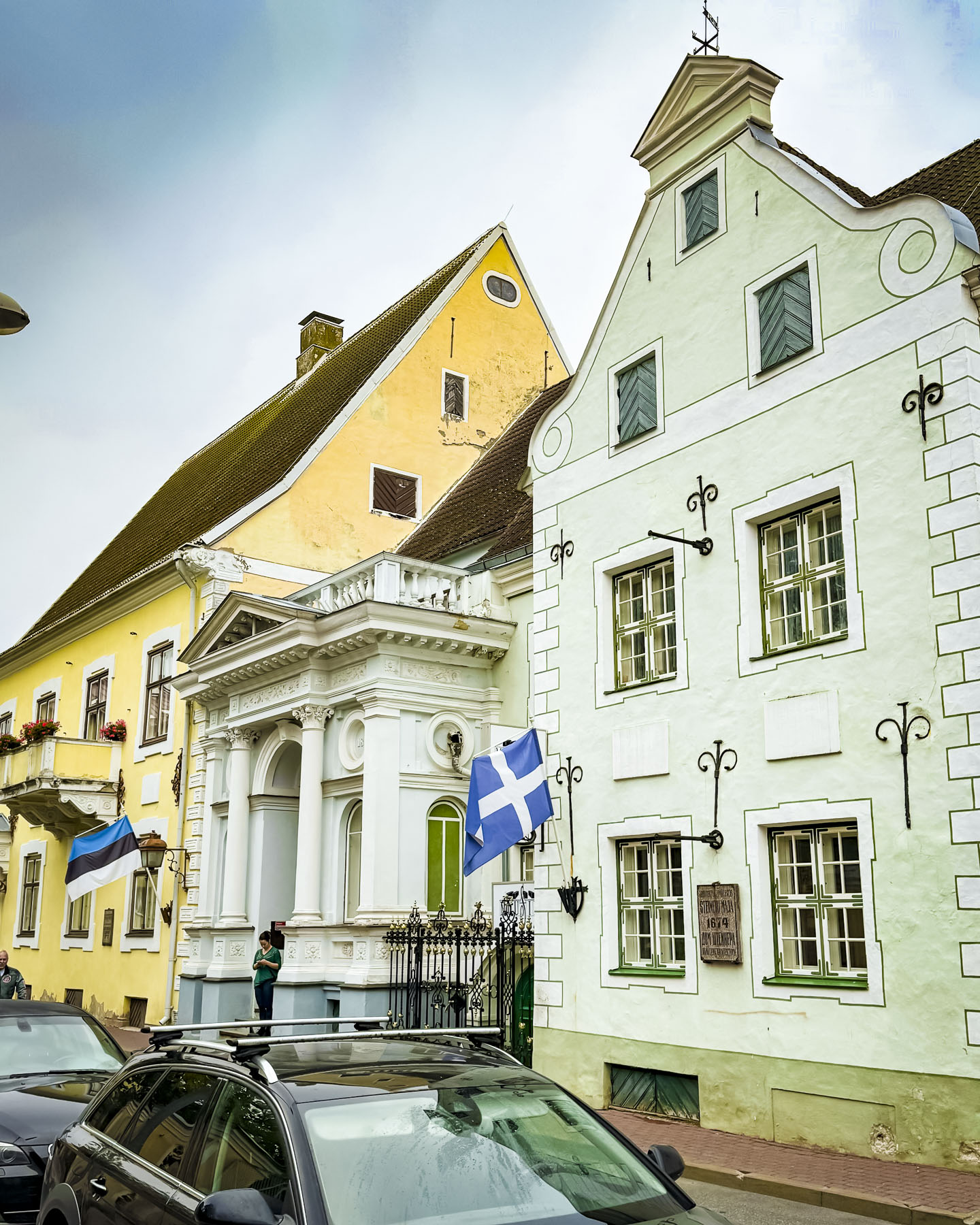
The approach to the bridge was a perfect spot to admire the beautiful buildings surrounding the town’s plaza which represent an eclectic assortment of architectural styles from the 13th to 17th centuries, when the town was a prominent member of the Hanseatic Merchant League.

At the foot of the plaza the Tartu Kunstimuuseum, a museum of art, occupies a 1793 building that is often referred to as Tartu’s Tower of Pisa. The three-story building’s 5.8 degree of tilt is actually greater than the famous tower in Italy. The tilt was a result of one side of the building being constructed on the medieval footing of the ancient defensive wall that once encircled the town, and the other side was erected above loose soil. As the decades passed, the structure slowly sank into the ground. Polish engineers successfully stabilized the building during the communist era, and it was determined safe enough to house the museum since 1988.
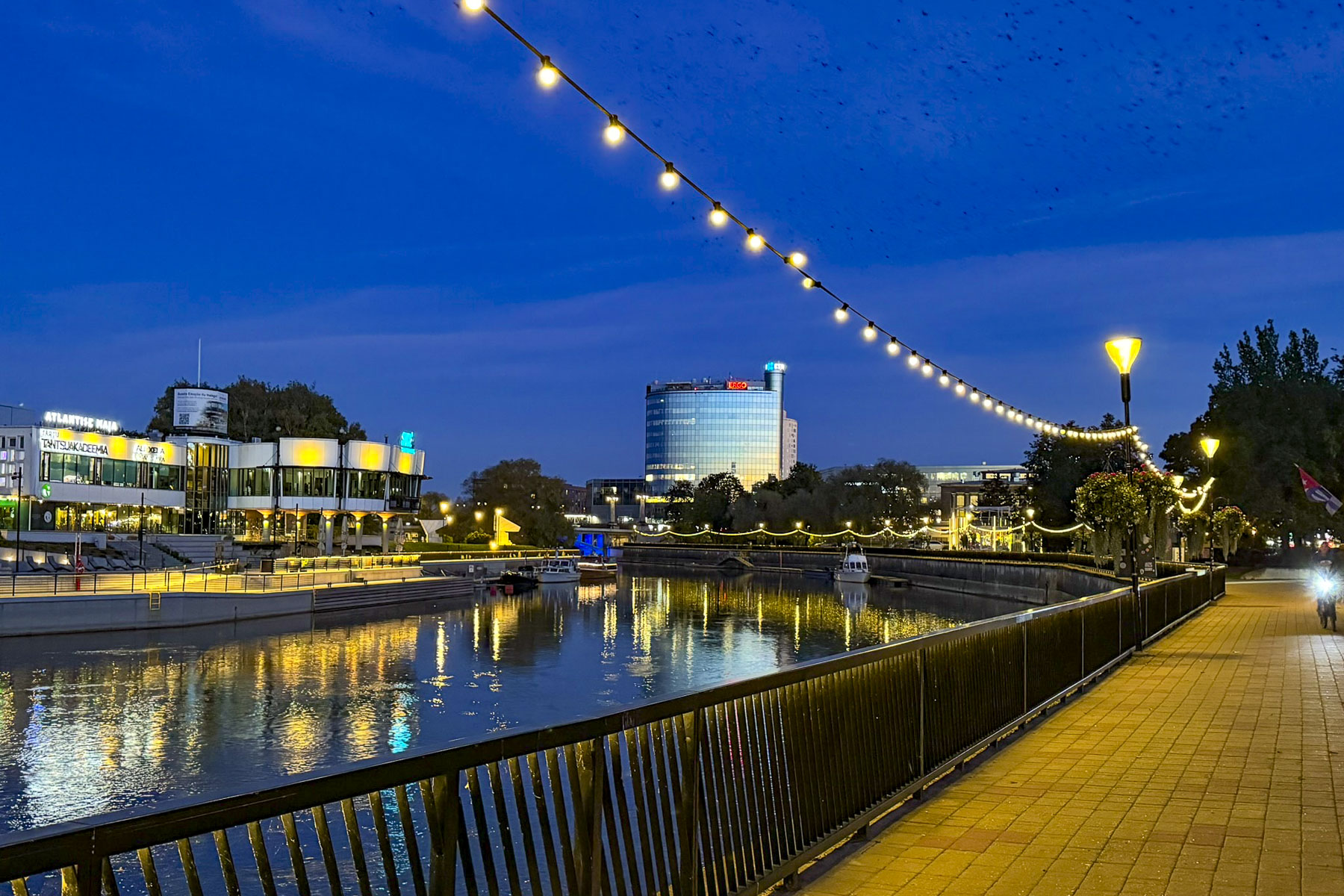
In the other direction there was the reflection of the growing city’s modern skyline reflected on the rippling water of the river. These views were beautiful and equally enchanting in the early evening twilight as we watched the murmurations of European starlings swooping over the river, before they noisily roosted in the park.

Just behind Town Hall and across from a large street mural of the University of Tartu was café/restaurantWerner, an excellent establishment with a nice vibe, that’s popular with both students and professionals; we dined there several times during our stay in the city.

Afterwards we took the long uphill walk to the ruins of Tartu’s immense 13th century cathedral, now on the grounds of the University of Tartu. Construction of the Gothic style church started shortly after the Brothers of the Sword subjugated the pagan tribes around Tartu in the early 1200s and lasted nearly 400 years before it was destroyed during the Livonian Wars that ravished the region. It was never rebuilt.
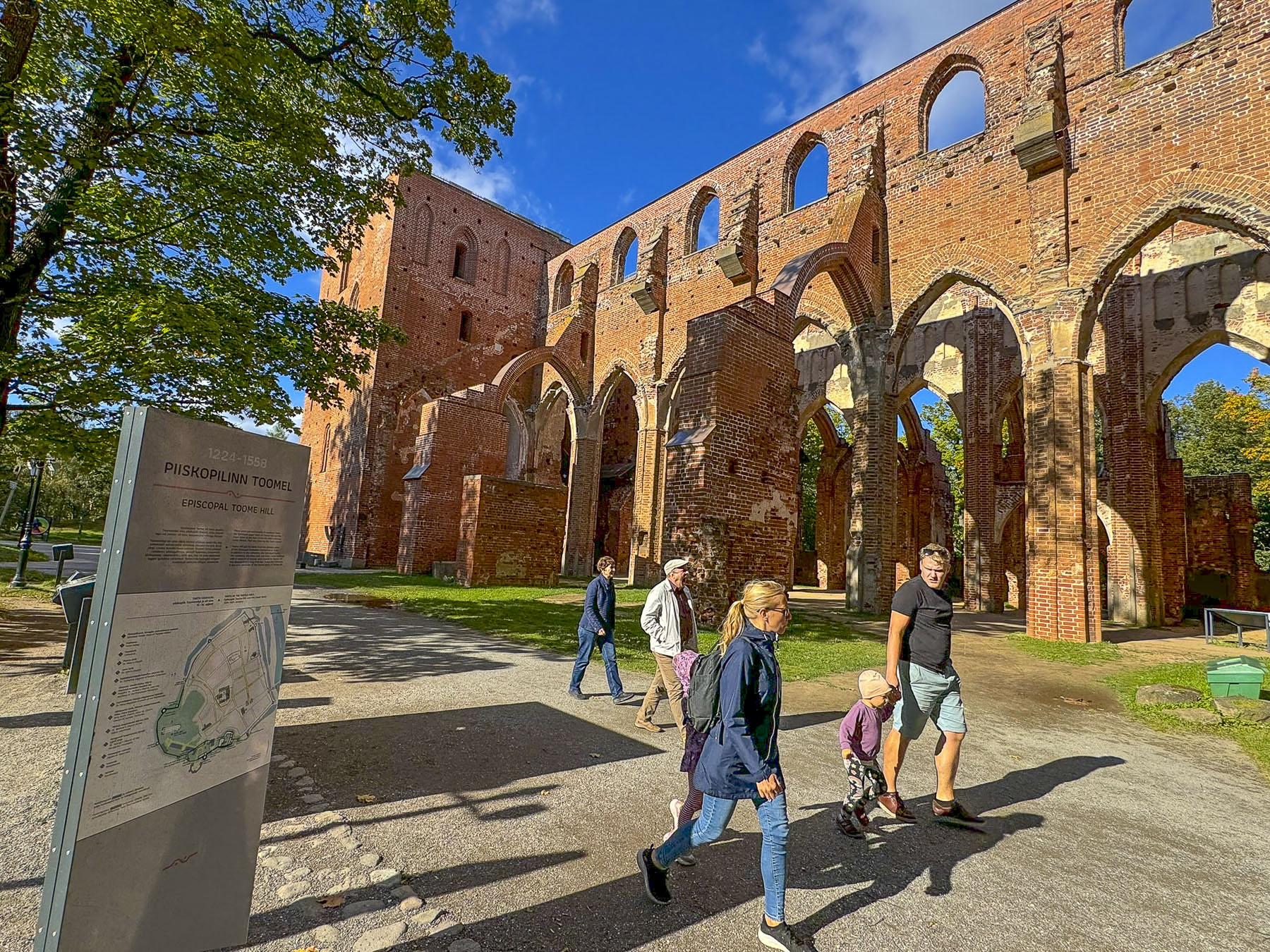

We chose not to, but it’s possible to climb its towers to a viewing platform above the ruins for a panoramic view of the school’s campus and Tartu. The choir end of the cathedral has been restored and since 1981 houses The University of Tartu Museum.
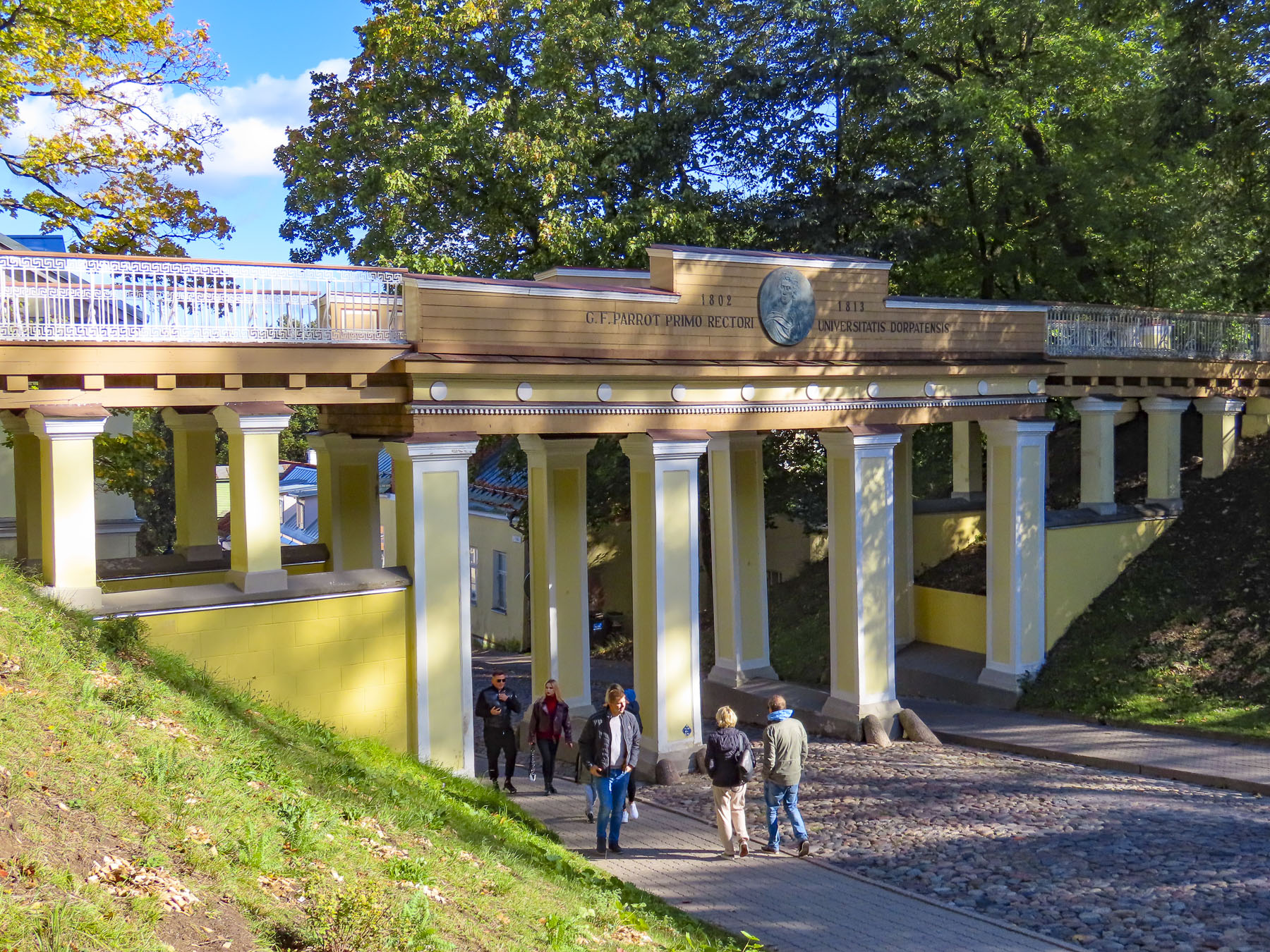
Heading back to the old town we passed under the Angel Bridge, built in 1838 to ease students’ efforts getting across campus. The scenic spot has a bit of a lovers’ lane reputation, as well as having several legends associated with it. The most popular one being “when you cross the bridge for the first time you should make a wish, and if you can hold your breath until you reach the other side your wish will come true.”
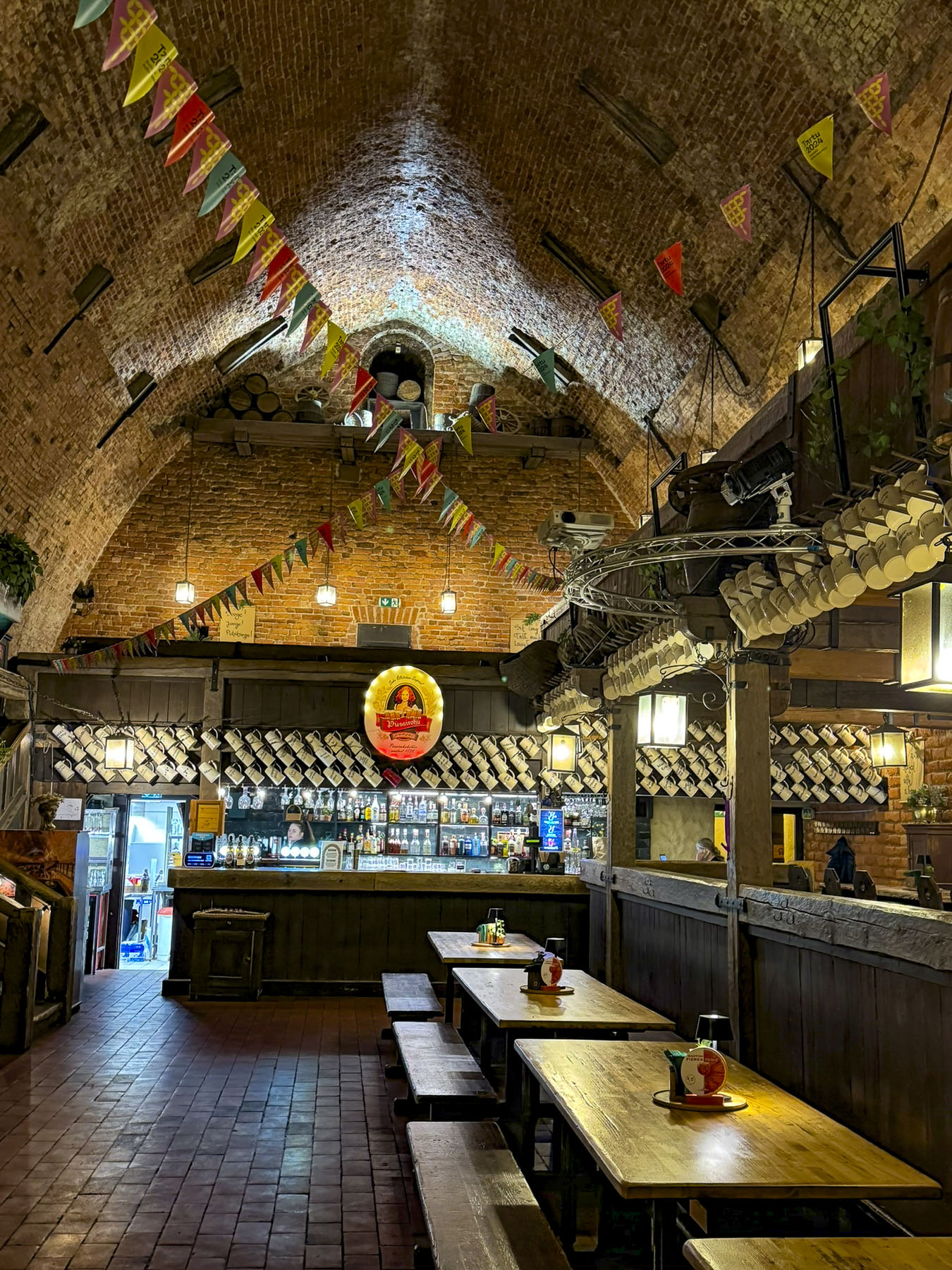
Just off the lane was the Gunpowder Cellar built into the side of a hill, it’s a rustic tavern set in a cavernous old 18th century munitions warehouse with an arched brick ceiling. It’s a popular beer hall and is known for its tasty Gunpowder Red beer, while also hosting frequent band appearances.


Later in the week after having lunch at the Café Werner a second time, we turned right and wandered down Ülikooli tn towards the neoclassic columned façade of the University of Tartu’s main building. It is Estonia’s oldest and largest university and the pride and joy of Tartu. The school was originally founded 1583 as a Jesuit institution during Poland’s brief rule of the country, but most of the credit is given to the Swedish King Gustave II Adolph when he upgraded the school to a university in 1632. It was forced to close several times over the centuries due to regional wars, but was later reopened by Russian Czar Alexander I in 1802 and was again reopened by the Soviet Union after World War II, where it became an important contact spot for Soviet academics to meet their western counterparts during the Cold War era.


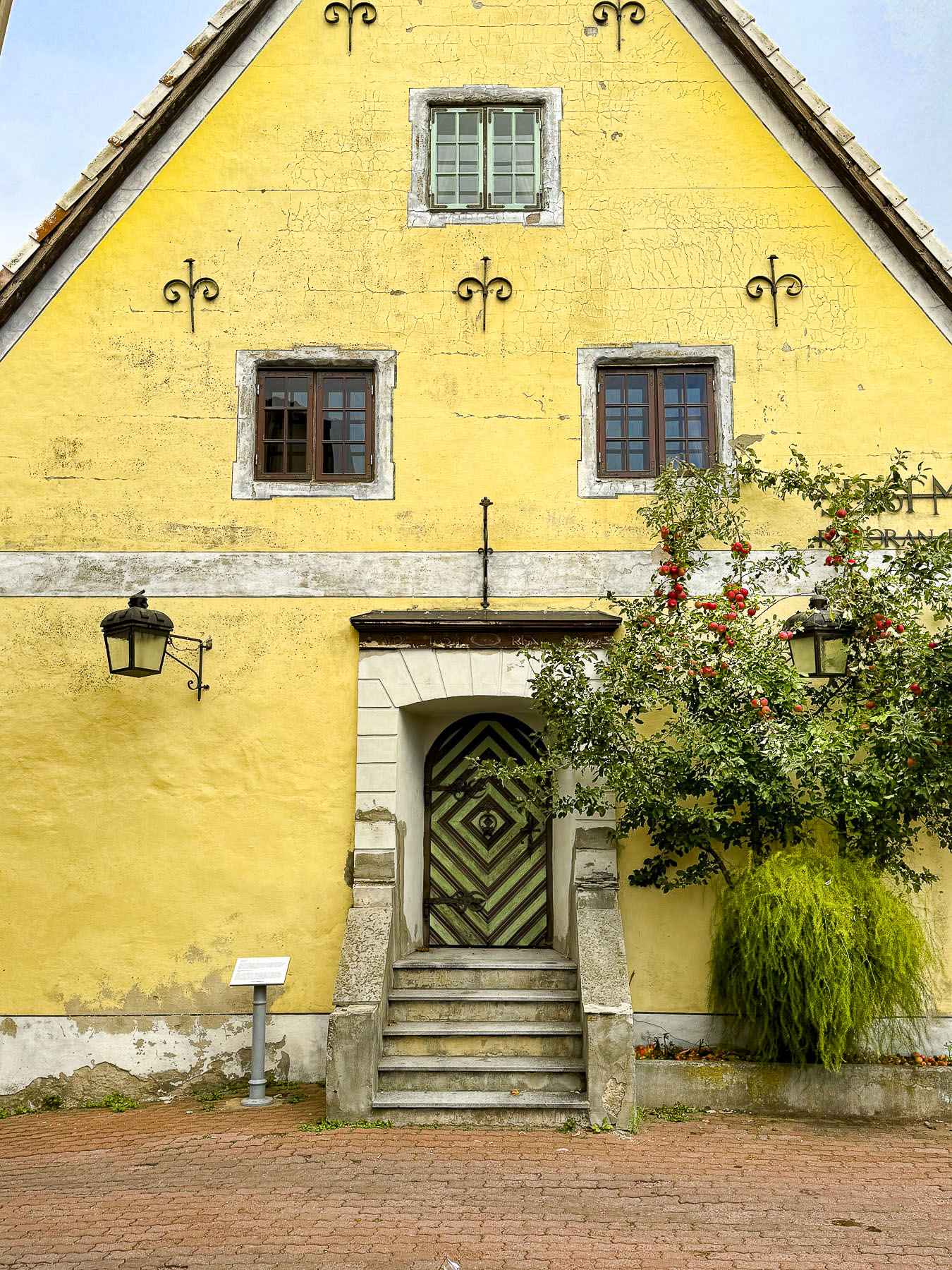
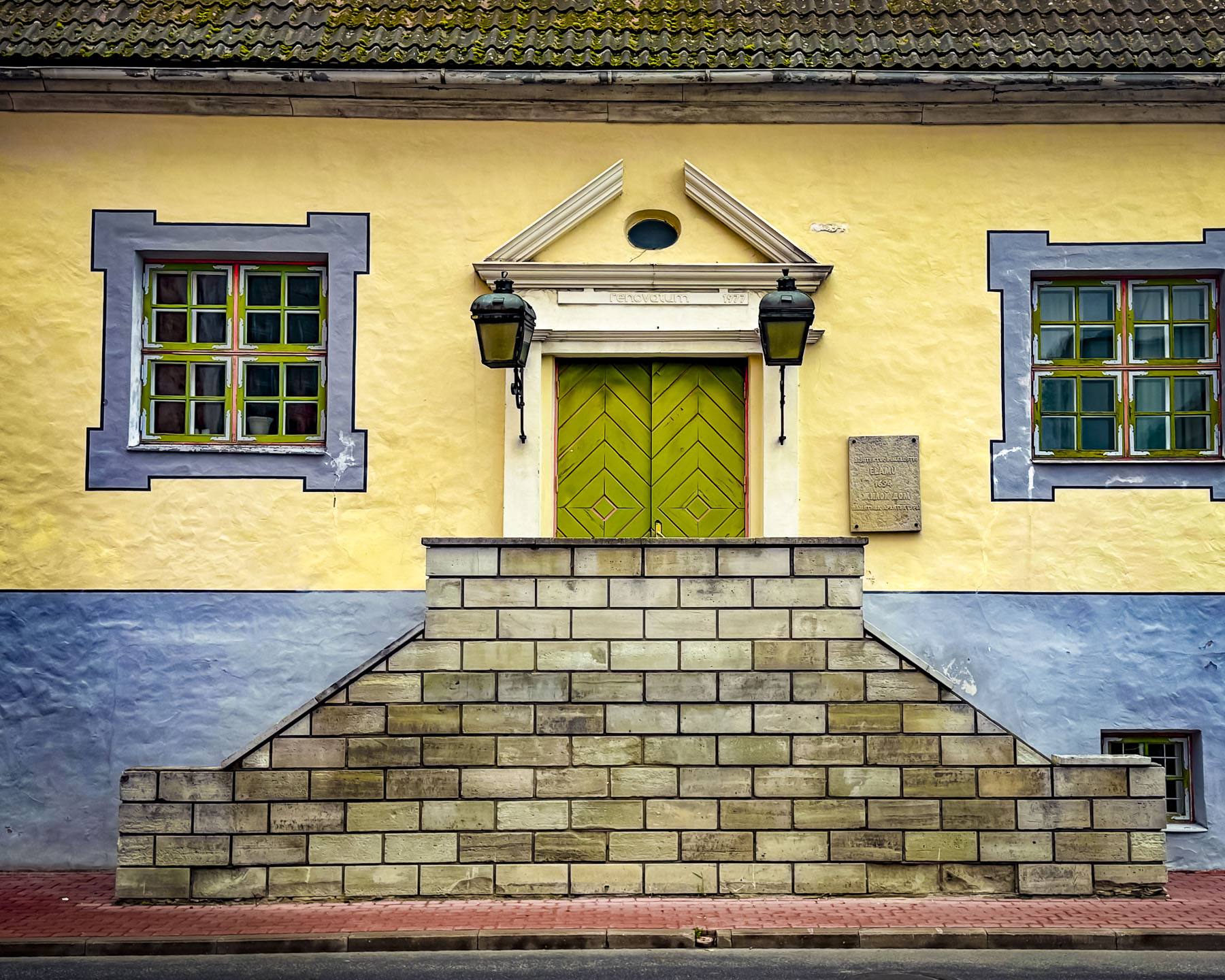
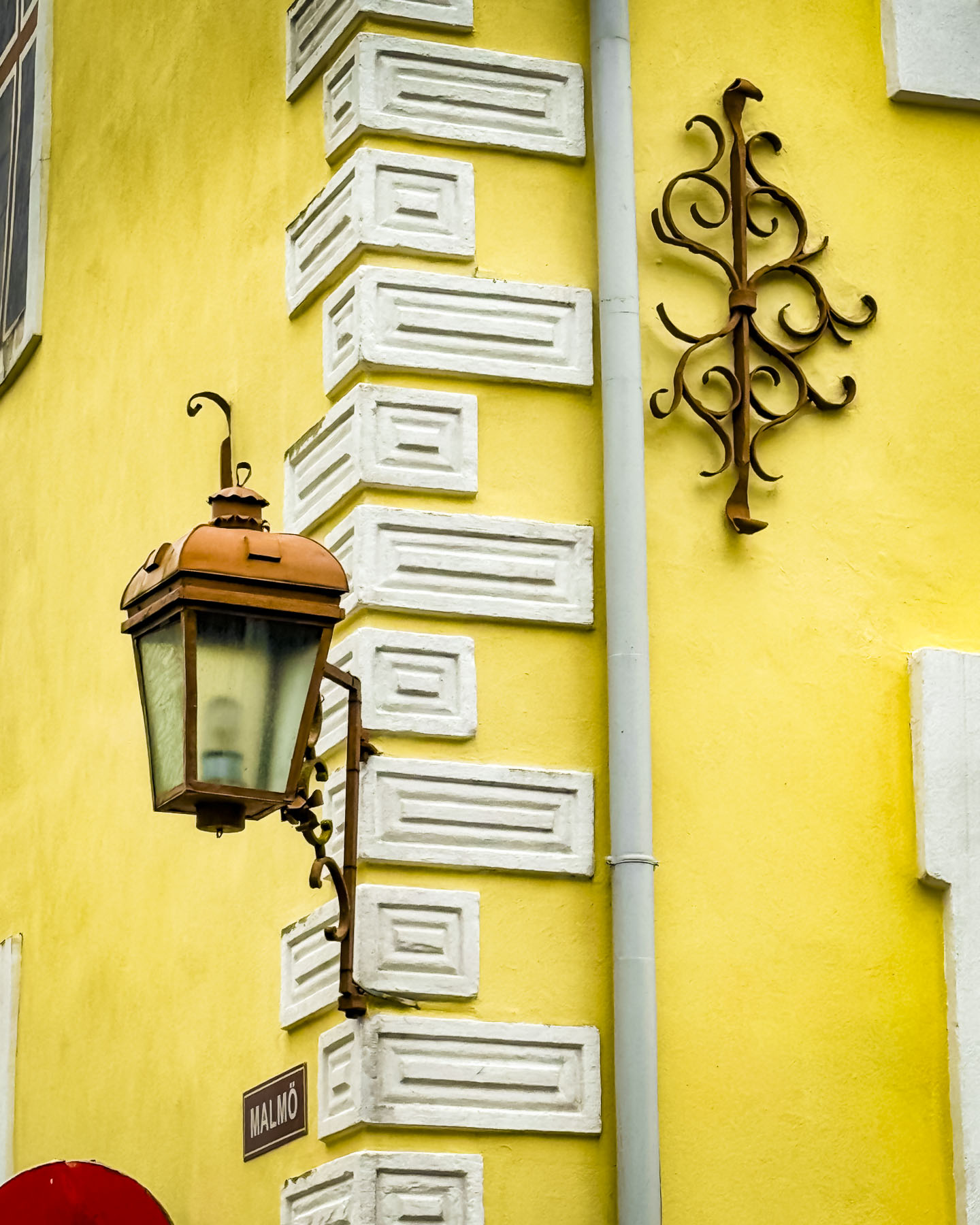
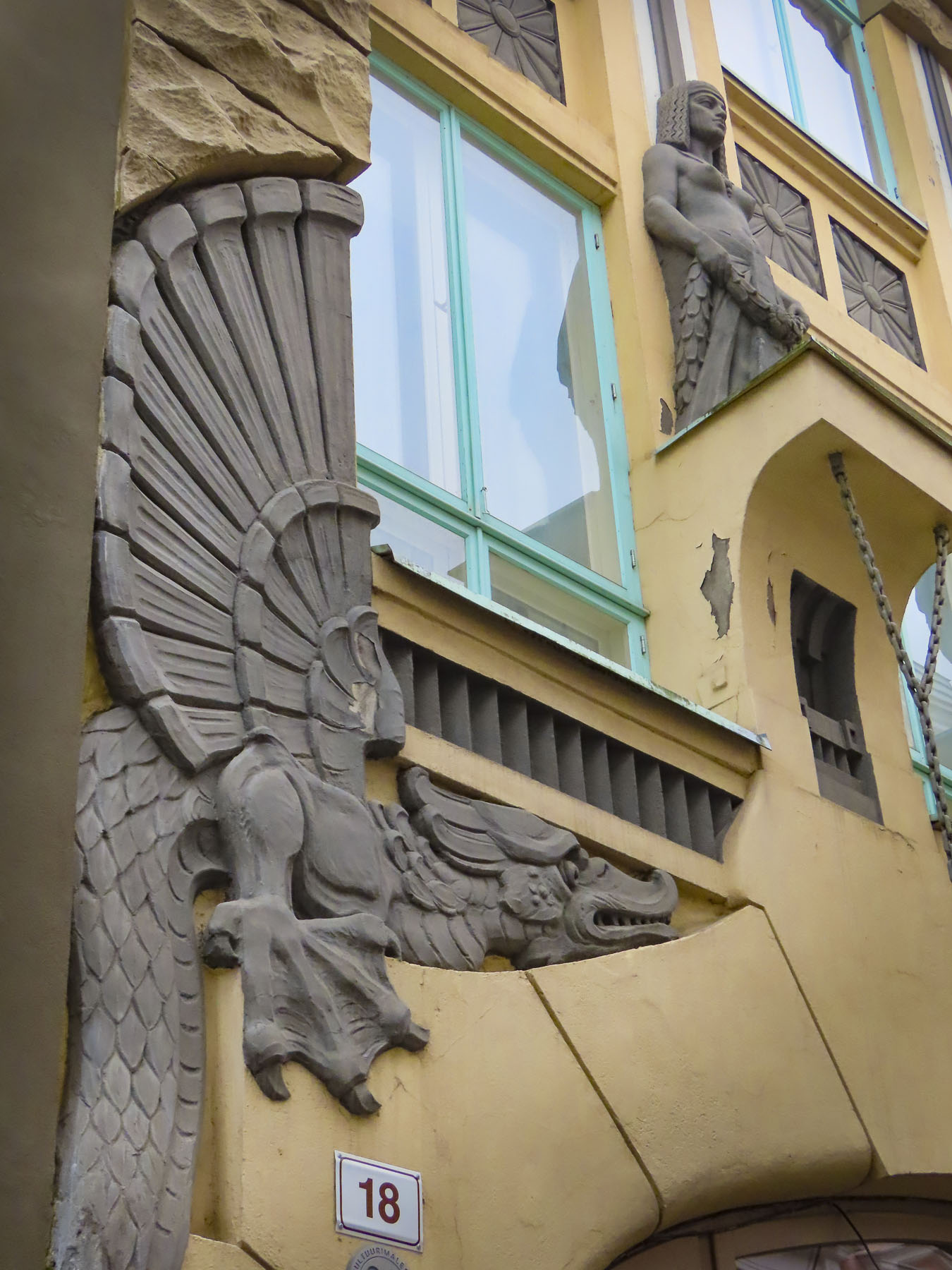
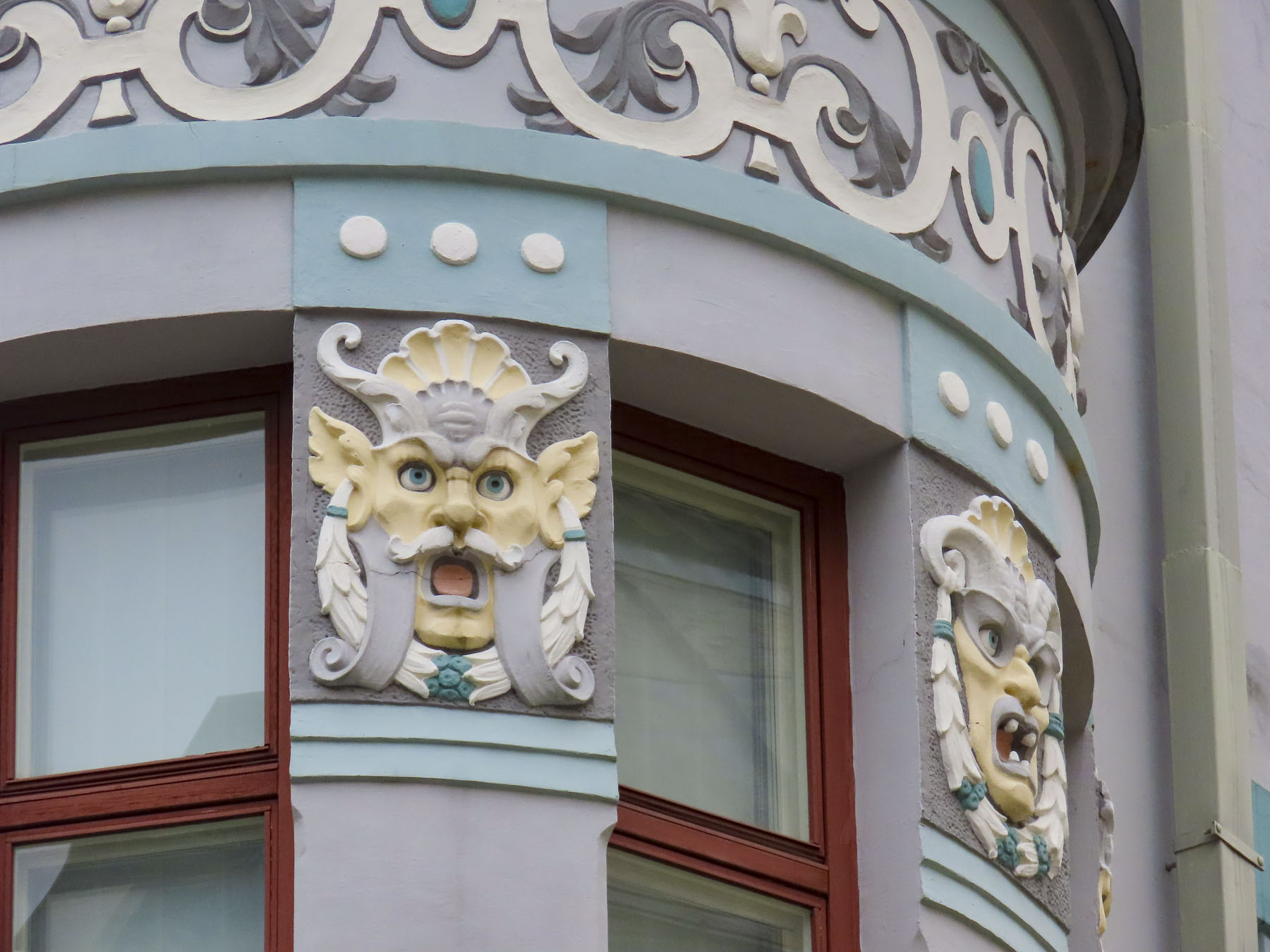
Farther along some of the buildings near Tartu’s St. John’s Church had unique details. Archeological evidence suggests the church dates back to the late 1100s, and could be the first “Christian church building in Estonia before the 13th-century conquest and great Christianization of the country.” The basic form of the current church dates from the beginning of the 13th century. Due to the region’s conflicts, the church has been reconstructed several times over the centuries. Unfortunately, the church was closed when we visited the area.
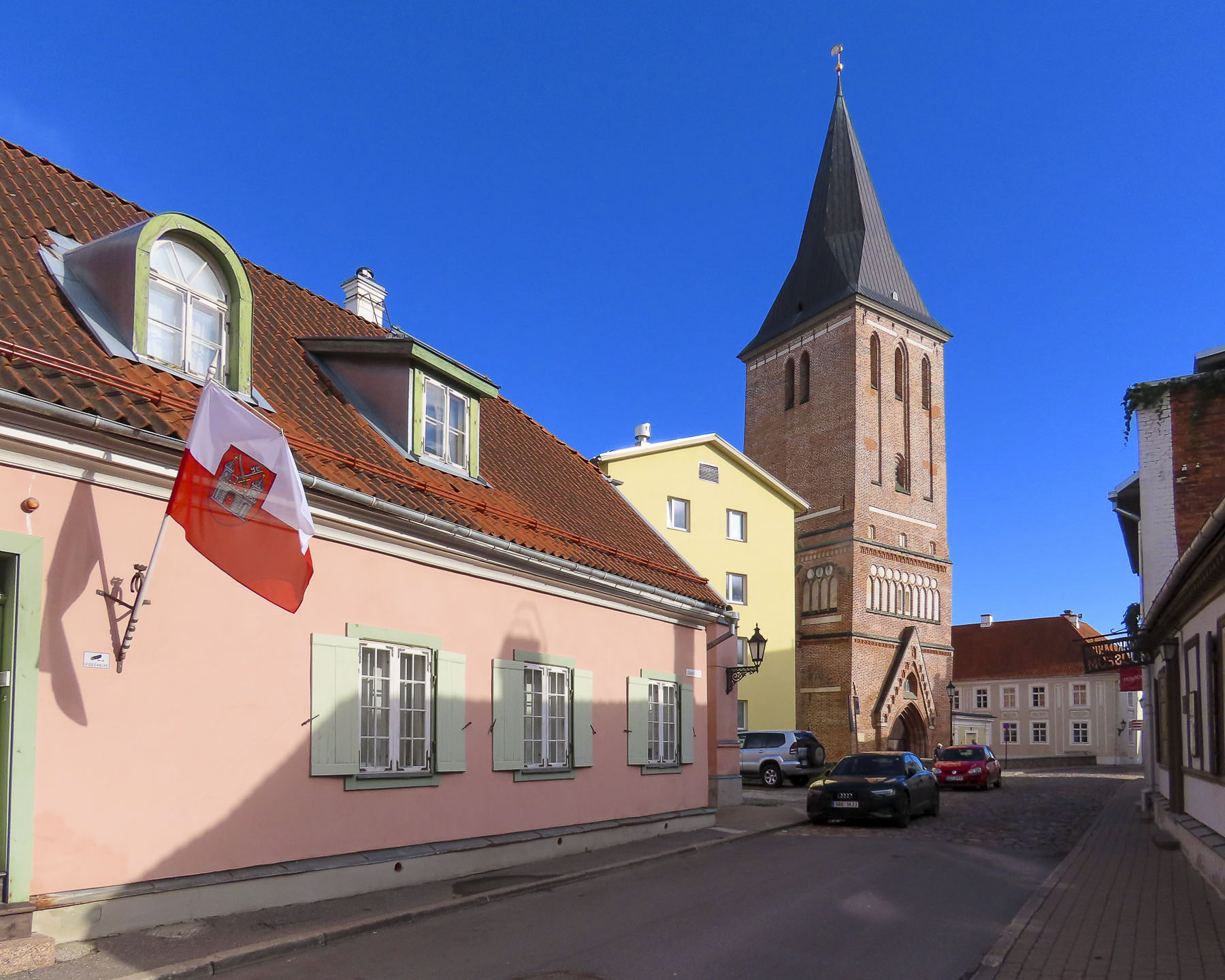
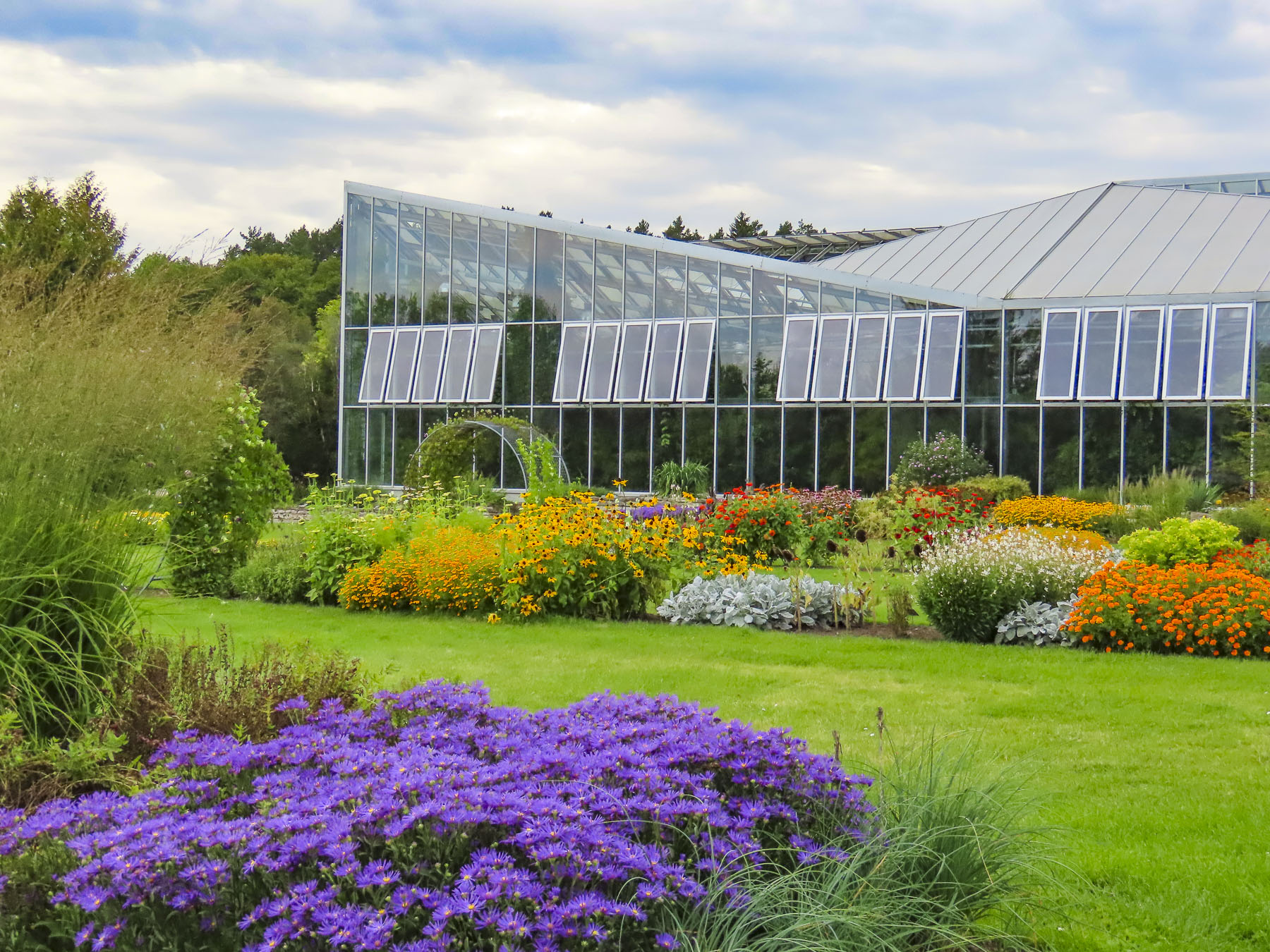
At the end of Ülikooli tn a short walk to the right led us to the Botanical Garden of the University of Tartu. Though in early October it was evident that Estonia has a short growing season and most of the plants were past their prime, but we still enjoyed exploring the various oases of greenery with a number of other couples and families, and imagined how beautiful the gardens must look in the Spring and Summer.
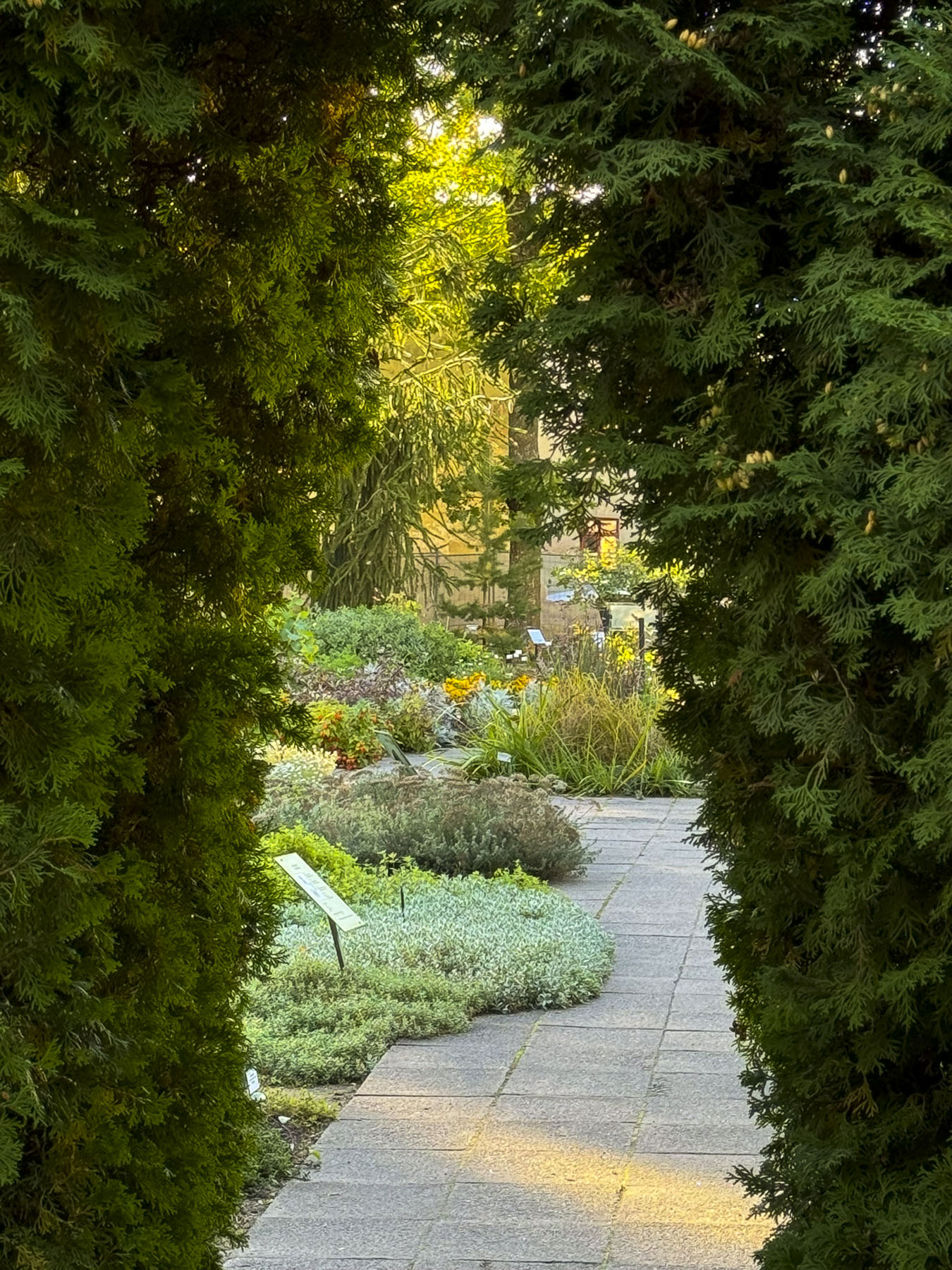

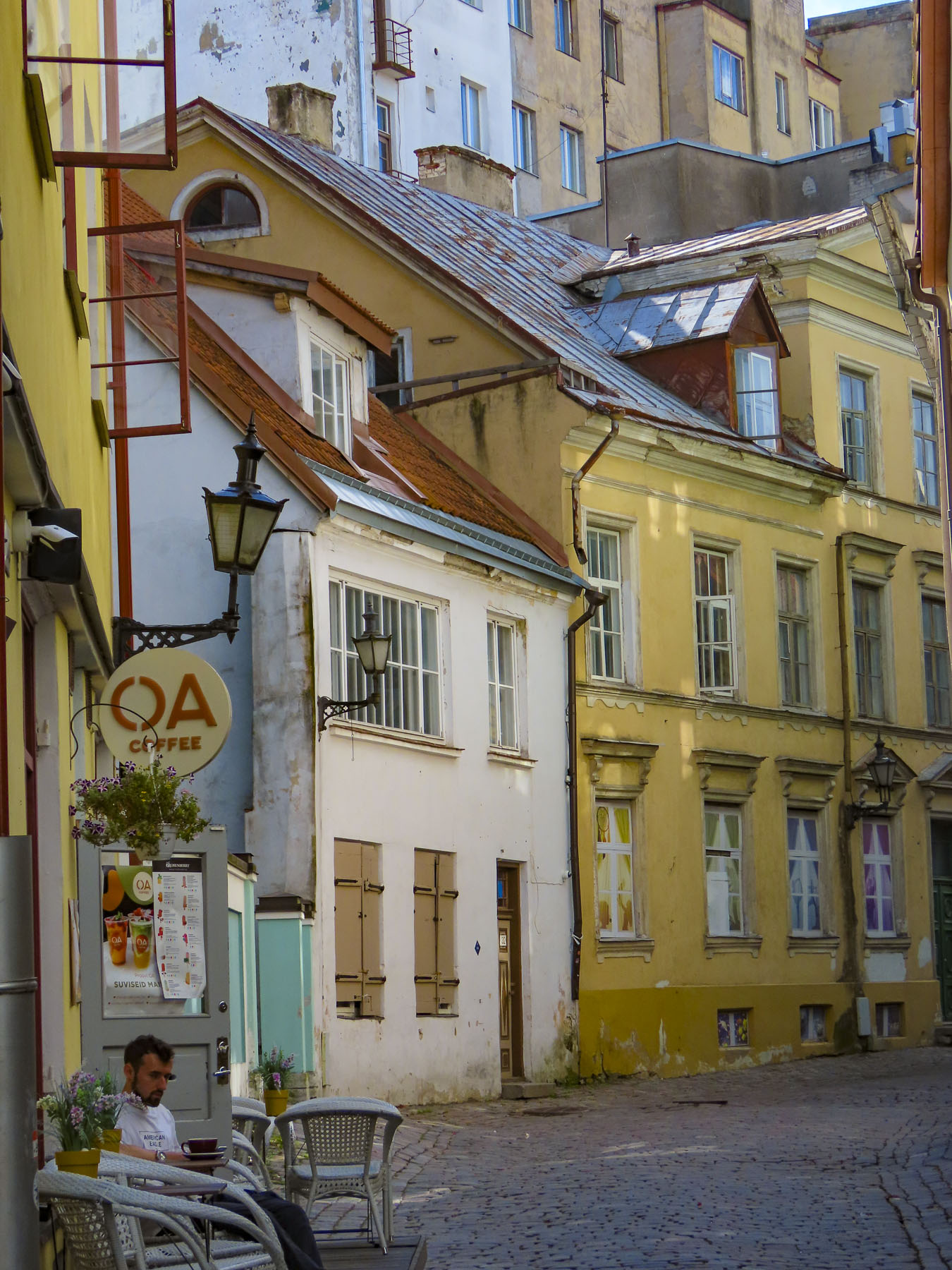
We followed Ruutli tanav, one of Tartu’s oldest streets, back towards the historic center of the town. During the Middle Ages when the winter snows melted during the spring thaw – “mud season” or Estonia’s “fifth season” – traveling about the countryside was quite difficult. In the larger towns like Tartu the thoroughfares were lined with logs laid perpendicularly across the road to ease the life of the townsfolk and facilitate merchant trade with the Hanseatic League through the town’s riverside port on the Emajõgi. Evidence of these ancient timbered roads is still occasionally discovered whenever there is any infrastructure improvement required in the city. Cobblestones weren’t used for the lanes through town until the 15th century.

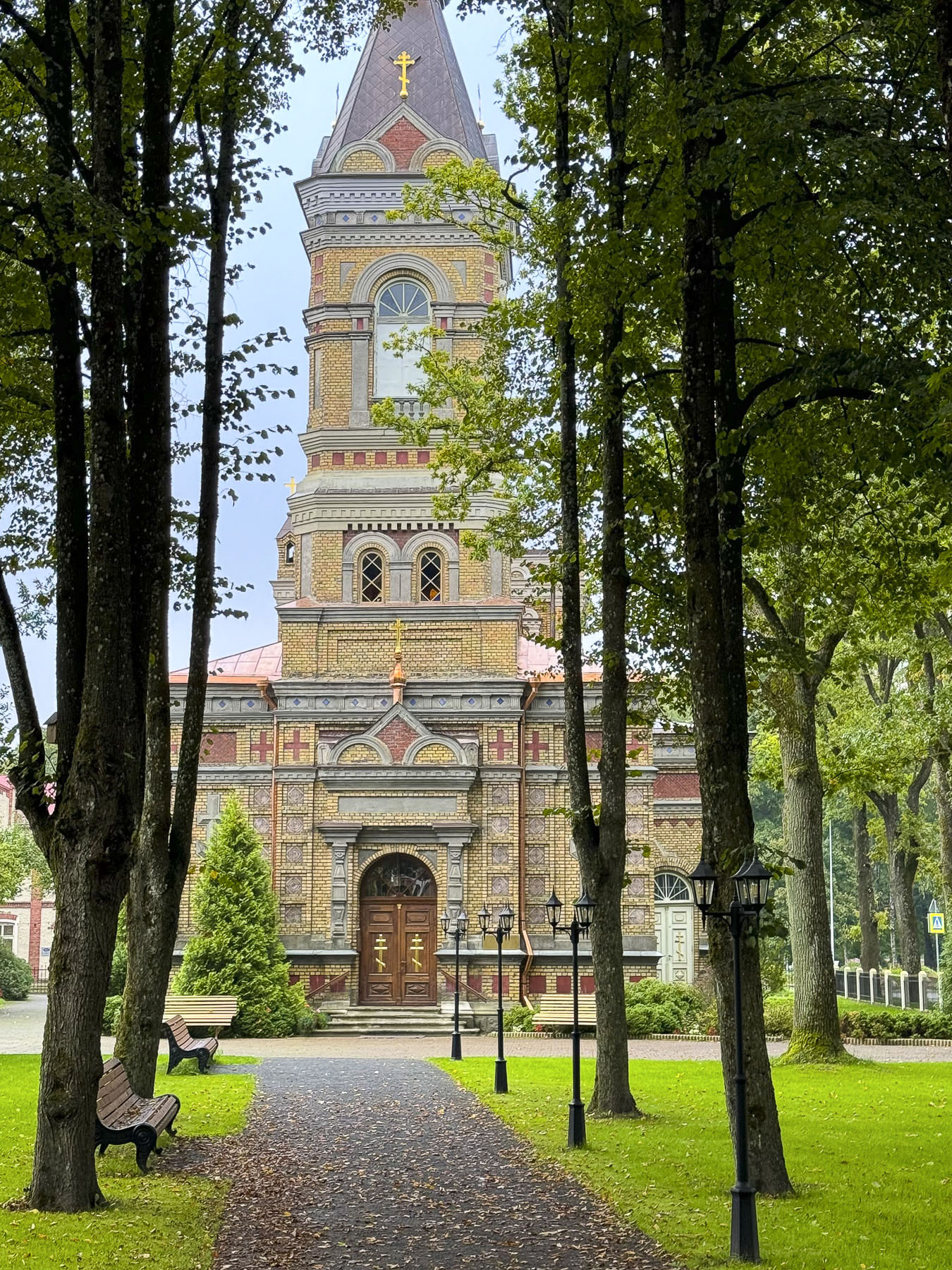
We made a short detour off our route to the Virgin Mary’s Dormition Cathedral, an Estonian Apostolic Orthodox Church. The beautiful Russian baroque style church was built in 1840 atop the foundations of an earlier wooden church that was burnt down during the 1775 Great Fire of Tartu, a devastating inferno which destroyed almost all the old wooden medieval era buildings in the central part of Tartu.


As we reached the central plaza it was evident that the weekend’s festivities were Tartu’s last big event for the summer high season. The weather was now noticeably colder with morning temperatures of 36F (2C) warming only to 54F (12C), and the outdoor café tables and chairs that lined the square were being taken down and sent into storage, until needed again next Spring. But the season is not over until the buskers stop playing and the trio of musicians from the other day were still entertaining folks around the Kissing Students fountain in the warm afternoon sun.


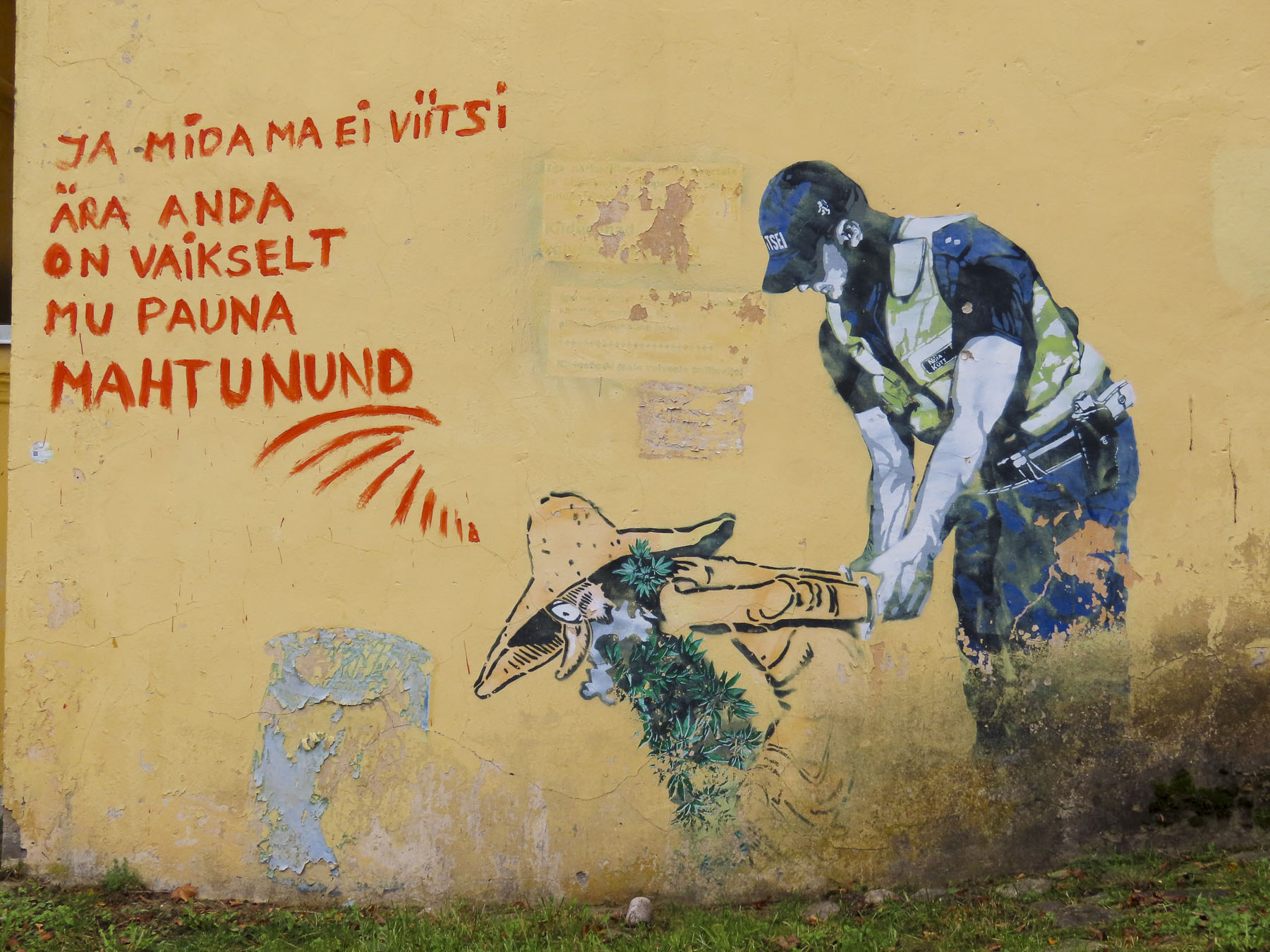
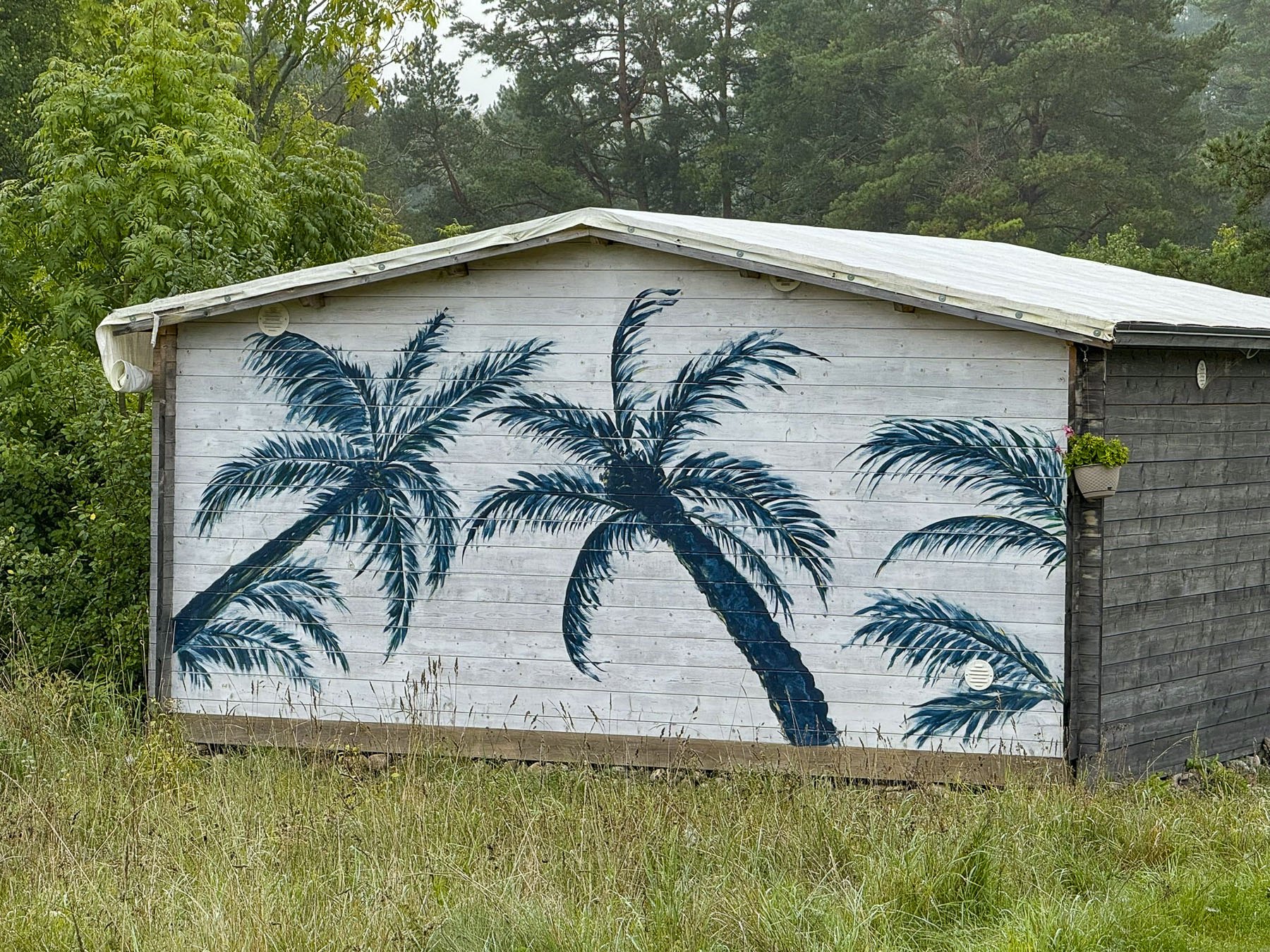
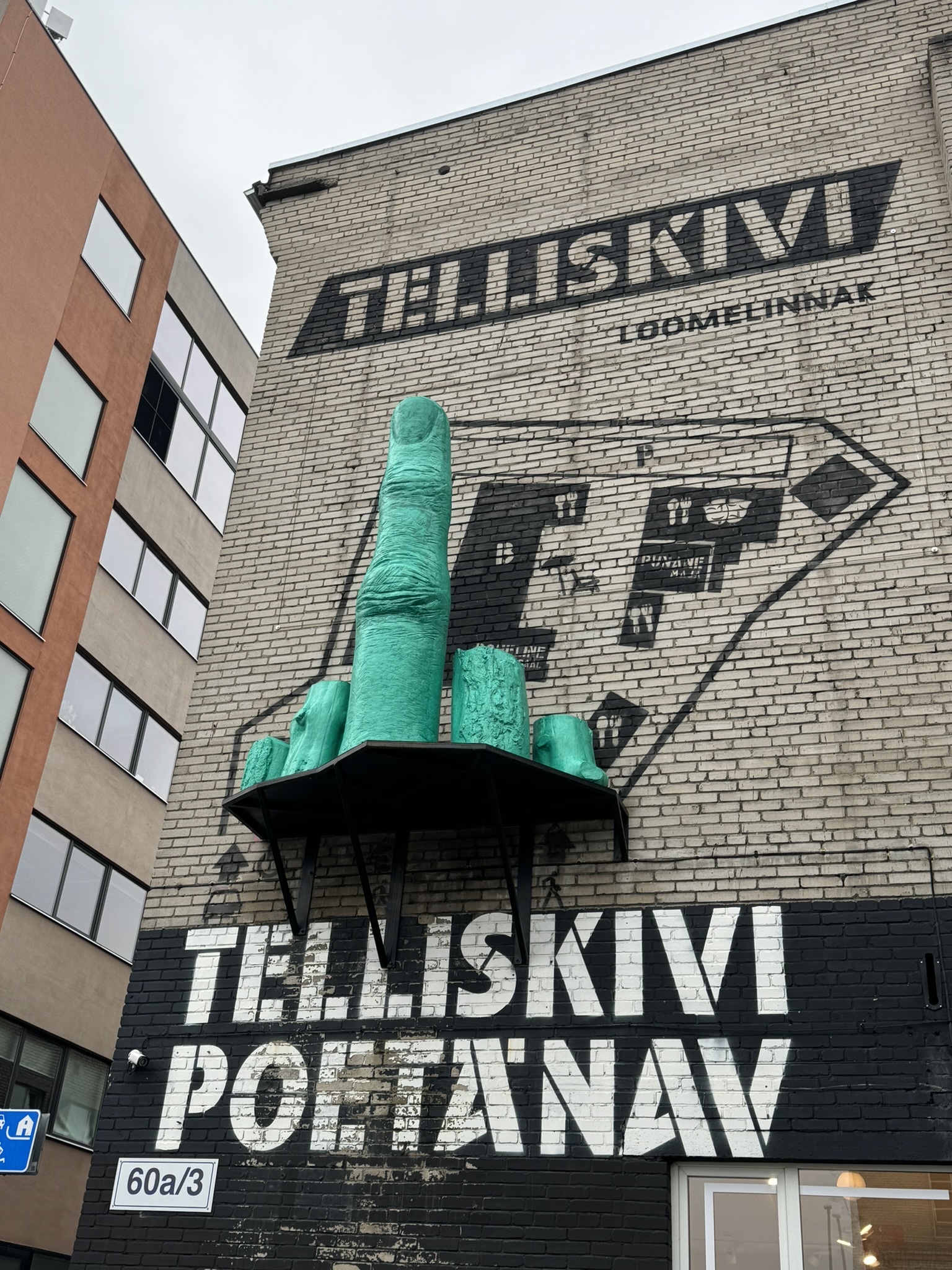
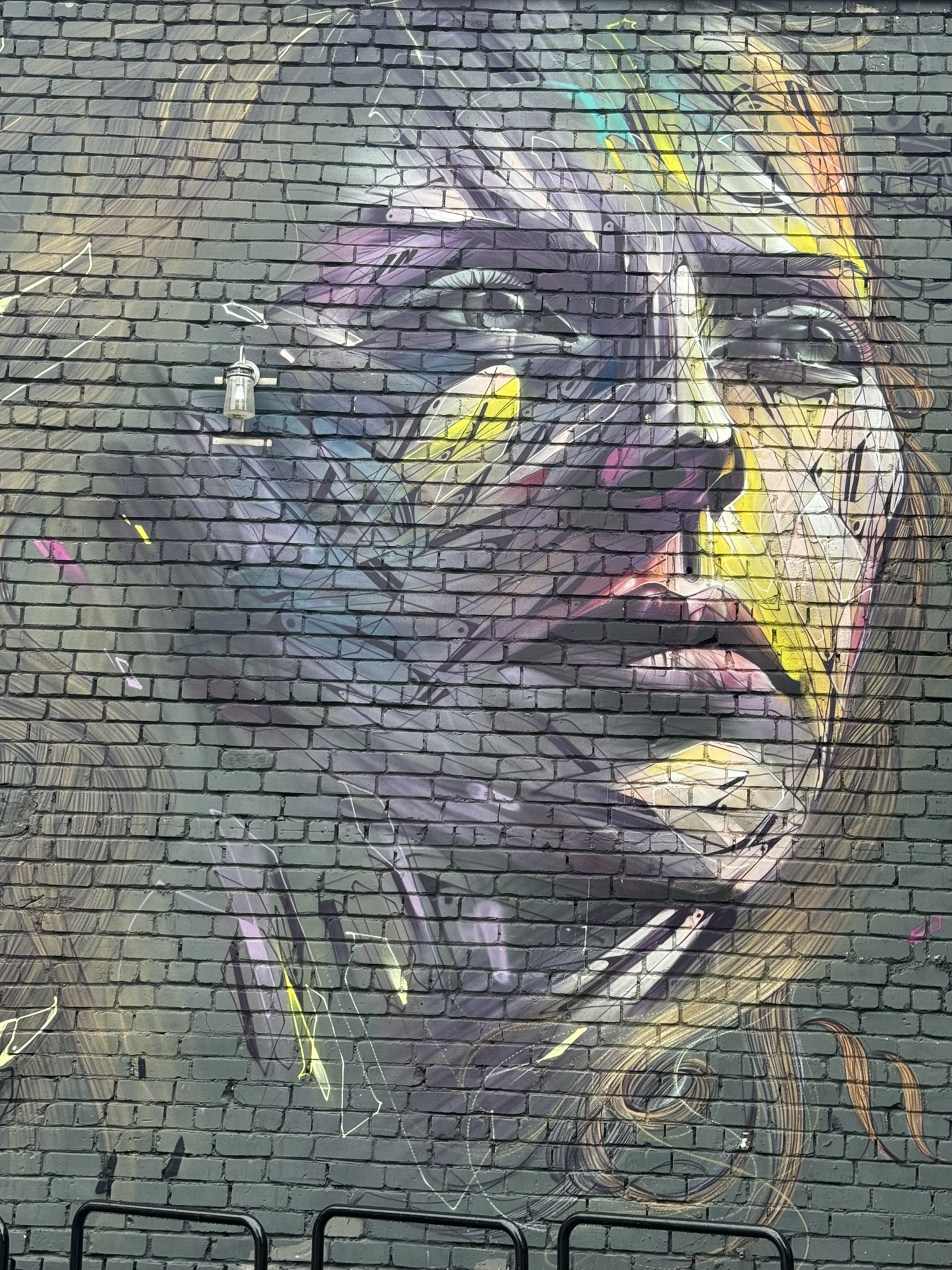
On our walks through the town, we came across some interesting and creative street murals. All were in well-chosen places that enhanced the wall, none were of the loud bubblegum type, though some were of a political nature. After all, our hotel was named for the Pallas Art School, which existed from 1919 to 1944 in Tartu, and was influential in establishing the aesthetic values of the newly independent country, but was closed during the communist occupation of the country.

Today the school’s artistic legacy continues at the Pallas University of Applied Sciences which opened in 2000, and features ongoing exhibits in the Pallas Gallery.


The Gray House, now the KGB Cells museum, was uphill from the gallery, just three doors down from a busy intersection, on a street that leads to university housing. It was a non-descript door with buzzers for the three-story apartment building above it, and one for the museum. In the 1940s and 1950s the upper floors served as offices for the Soviet’s secret police. We buzzed and a voice released the door lock for us to enter the lobby, where an arrow pointed to a heavy metal door to the basement, and a set of intimidating stairs that descended to a flickering fluorescent lit hallway. It’s a small space with a dozen prison cells and several interrogation rooms in which the brutality of the Soviet years is documented. Notoriously, on July 8th & 9th, 1941, 173 men and 20 women were summarily executed and buried in the building’s courtyard. Mass deportations of 45,000 Estonians to the Soviet gulags in Siberia continued until 1953. For many it was a death sentence, and few ever returned to their homeland. Across the country the KGB is believed to have murdered nearly 60,000 political prisoners between 1940 -1991. It’s a reminder of the danger of authoritative regimes and sadly is still relevant today.

We discovered another street mural just around the corner from our hotel as we headed to dinner at Restoran Spargel. Over an enjoyable evening, we discussed plans to take advantage of the nice weather predicted for the next day by exploring the small fishing villages along the shoreline of Lake Peipus.
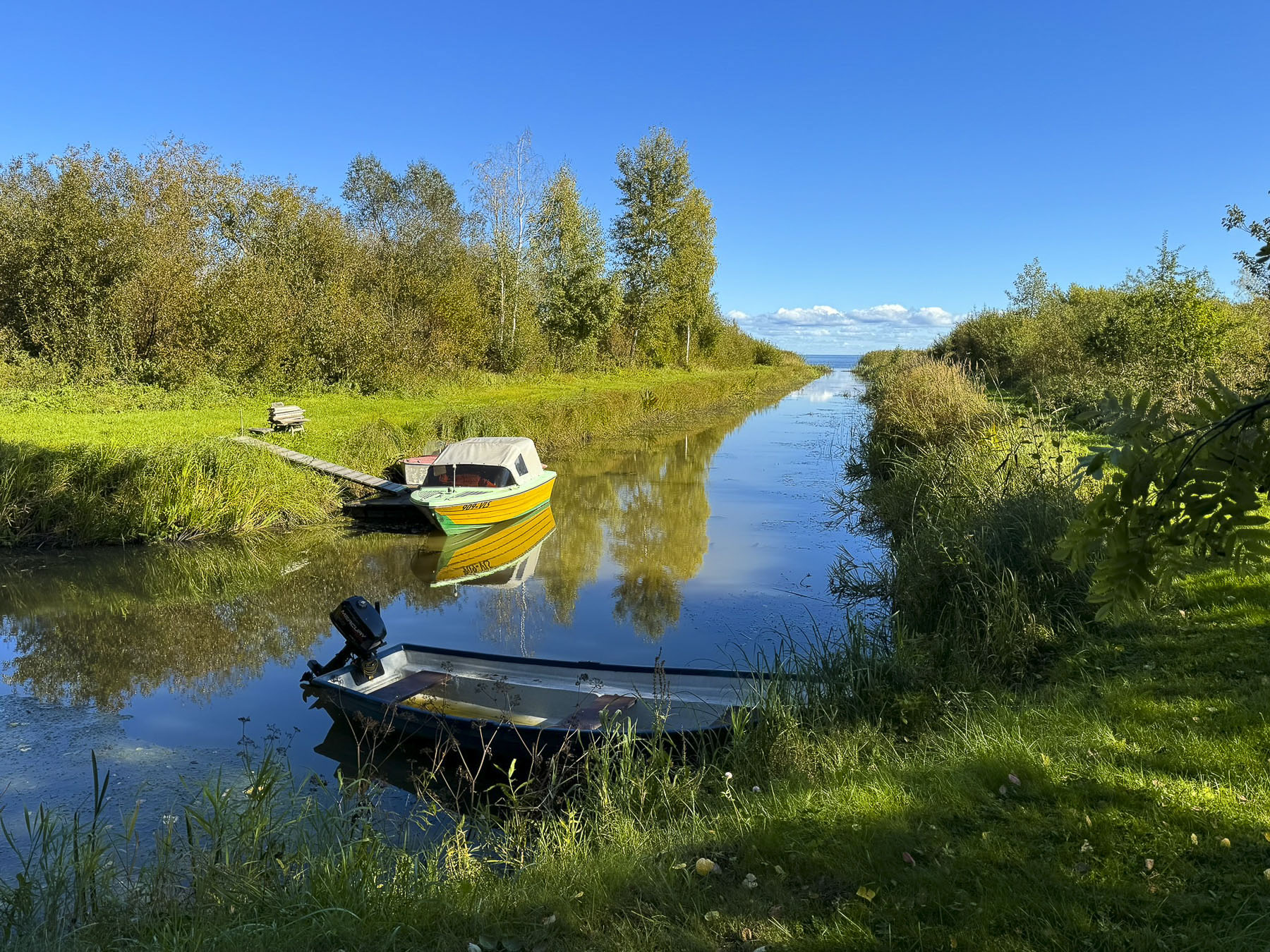
We thoroughly appreciated Tartu’s mix of history and youthful enthusiasm for the future. It’s a city but felt like a small town that we could see ourselves quite comfortably living in and enjoy experiencing all of its cultural events throughout the year.
Till next time,
Craig & Donna



























































































 2 Suitcases for 2 years