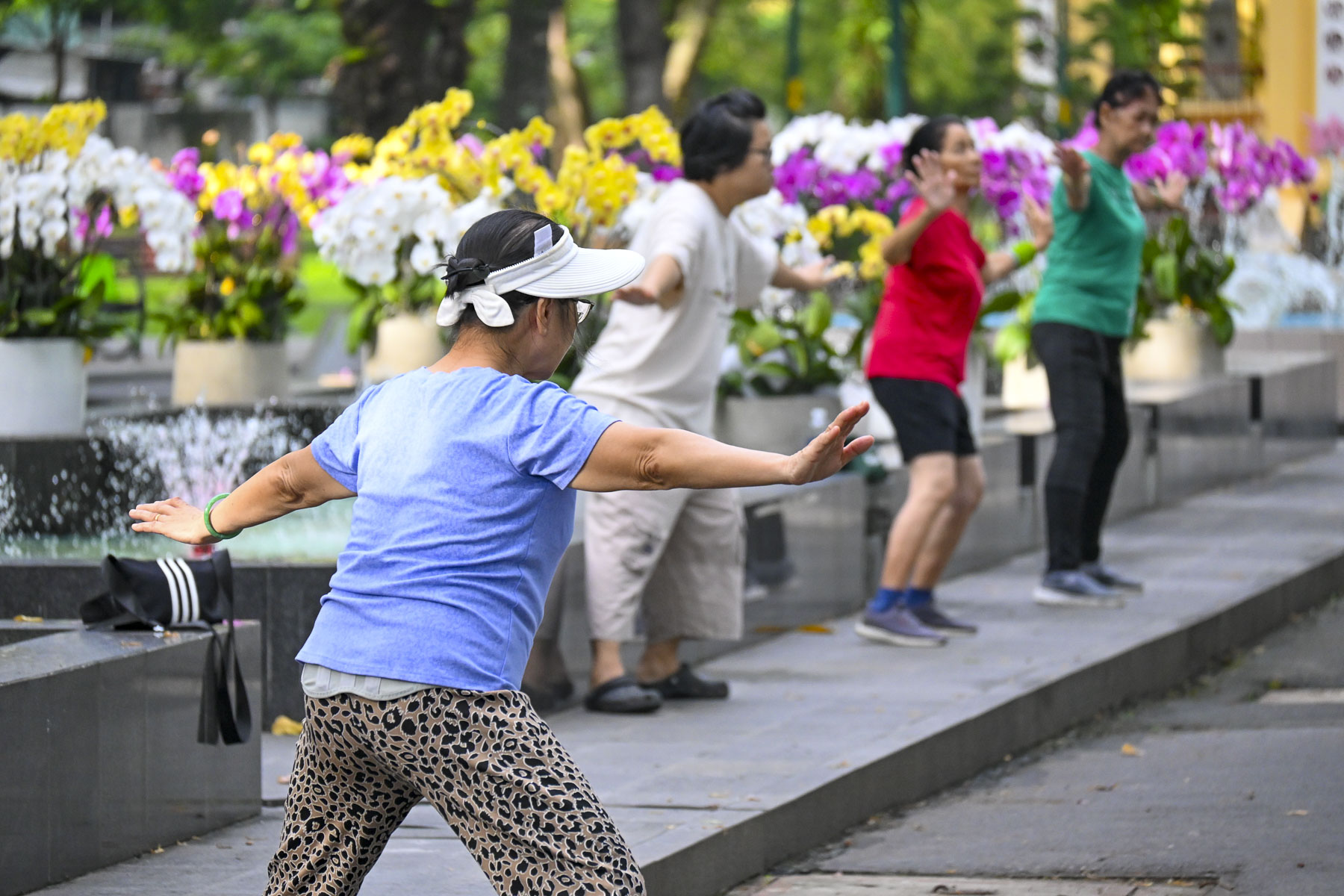
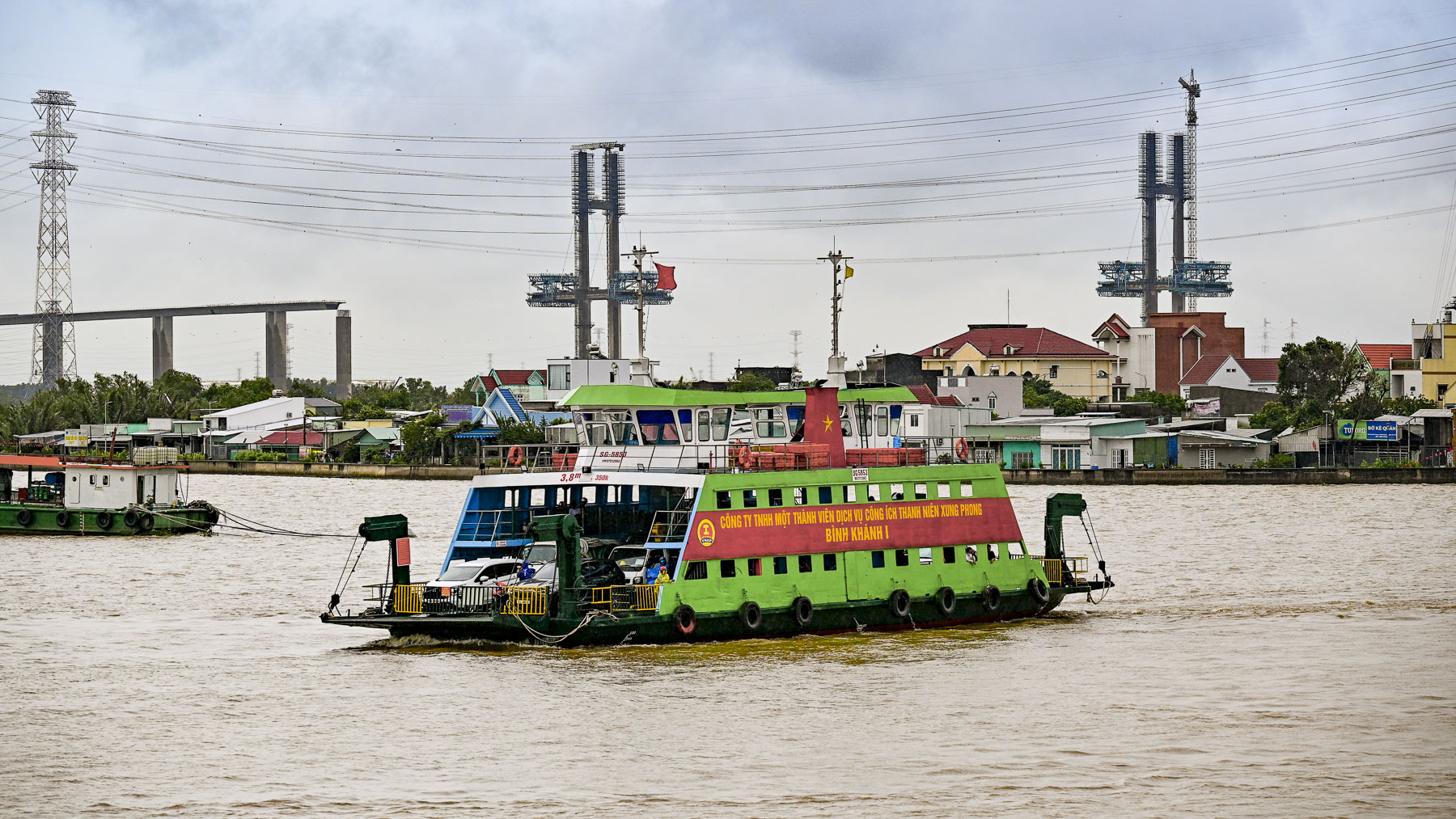
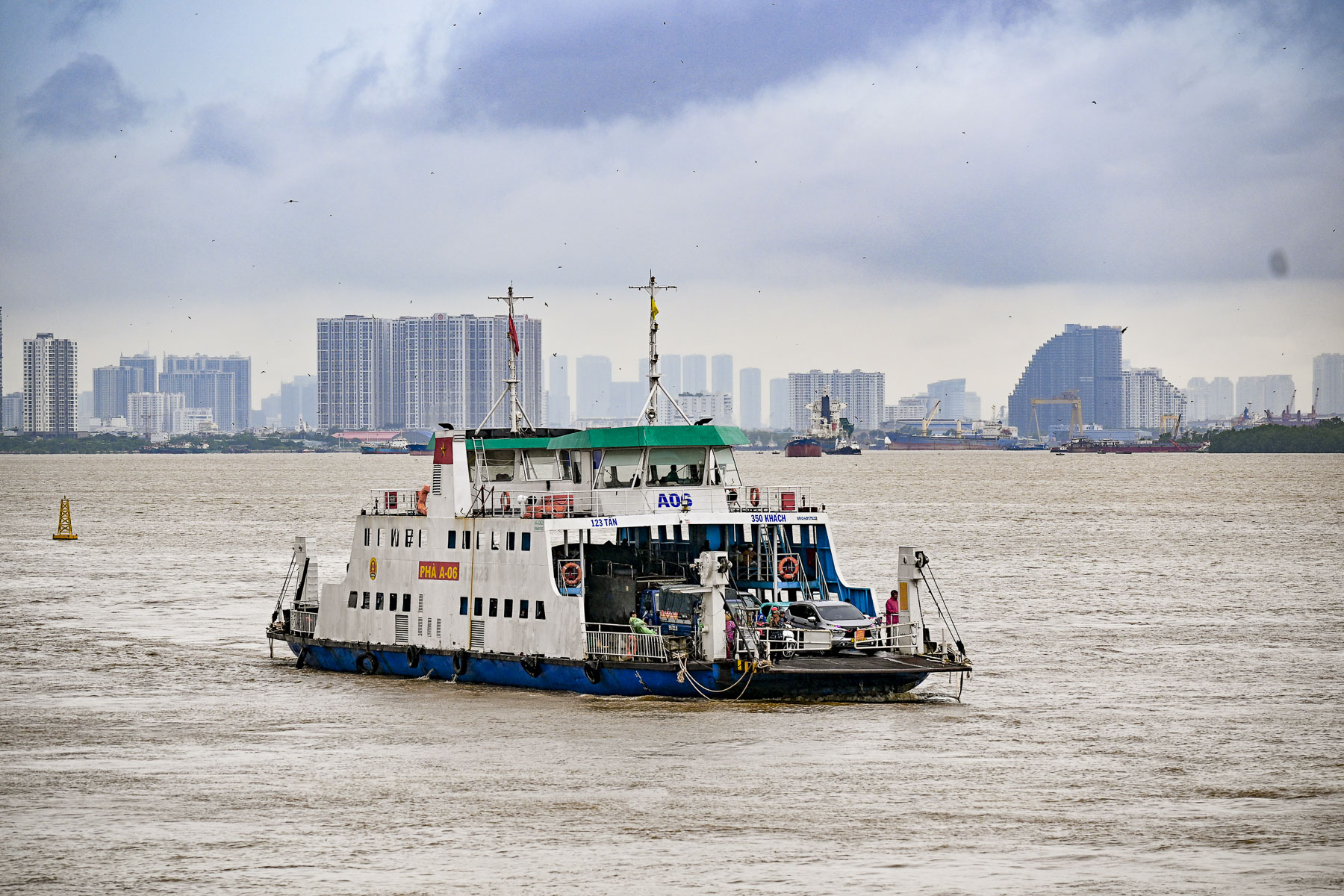
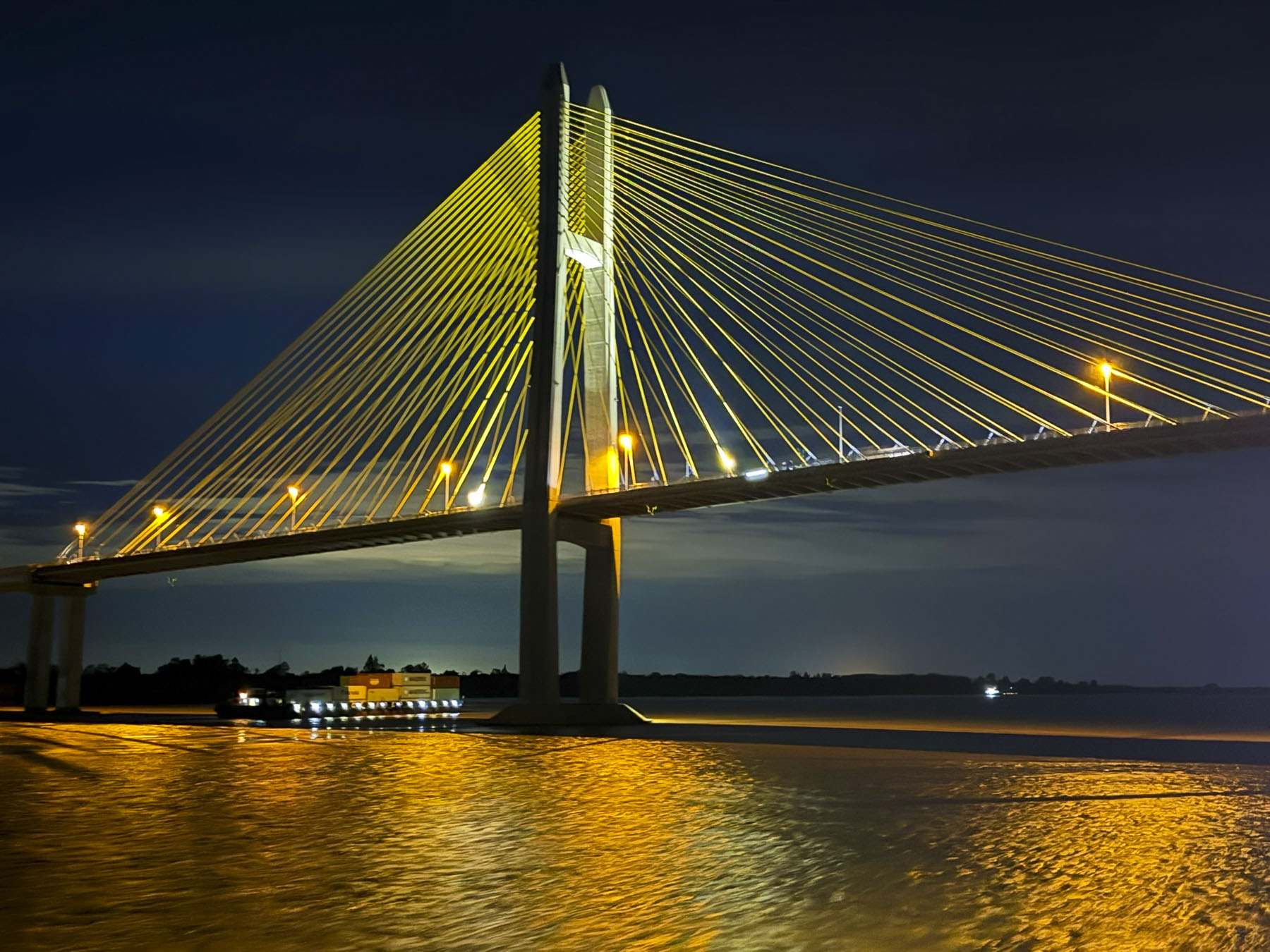
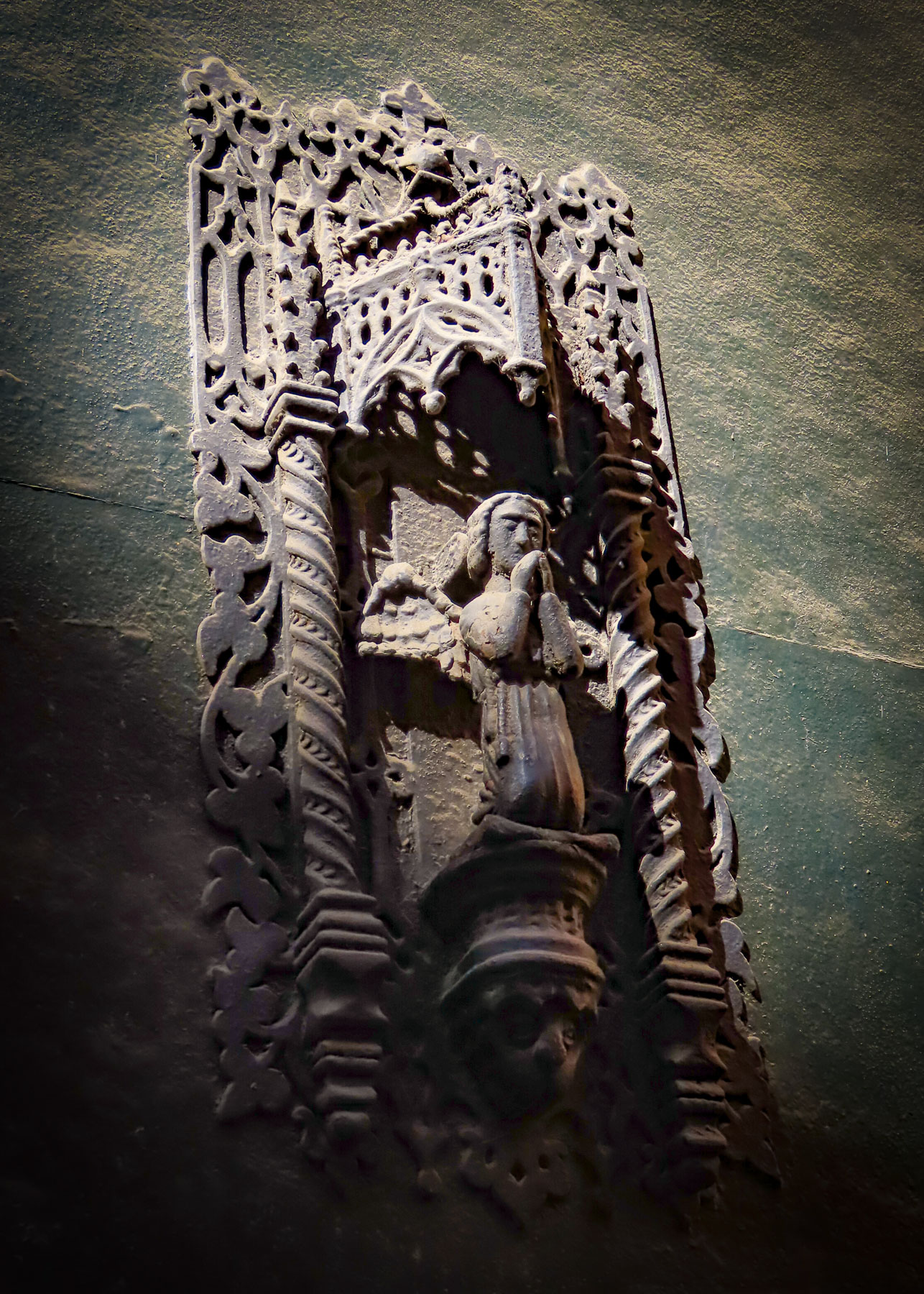
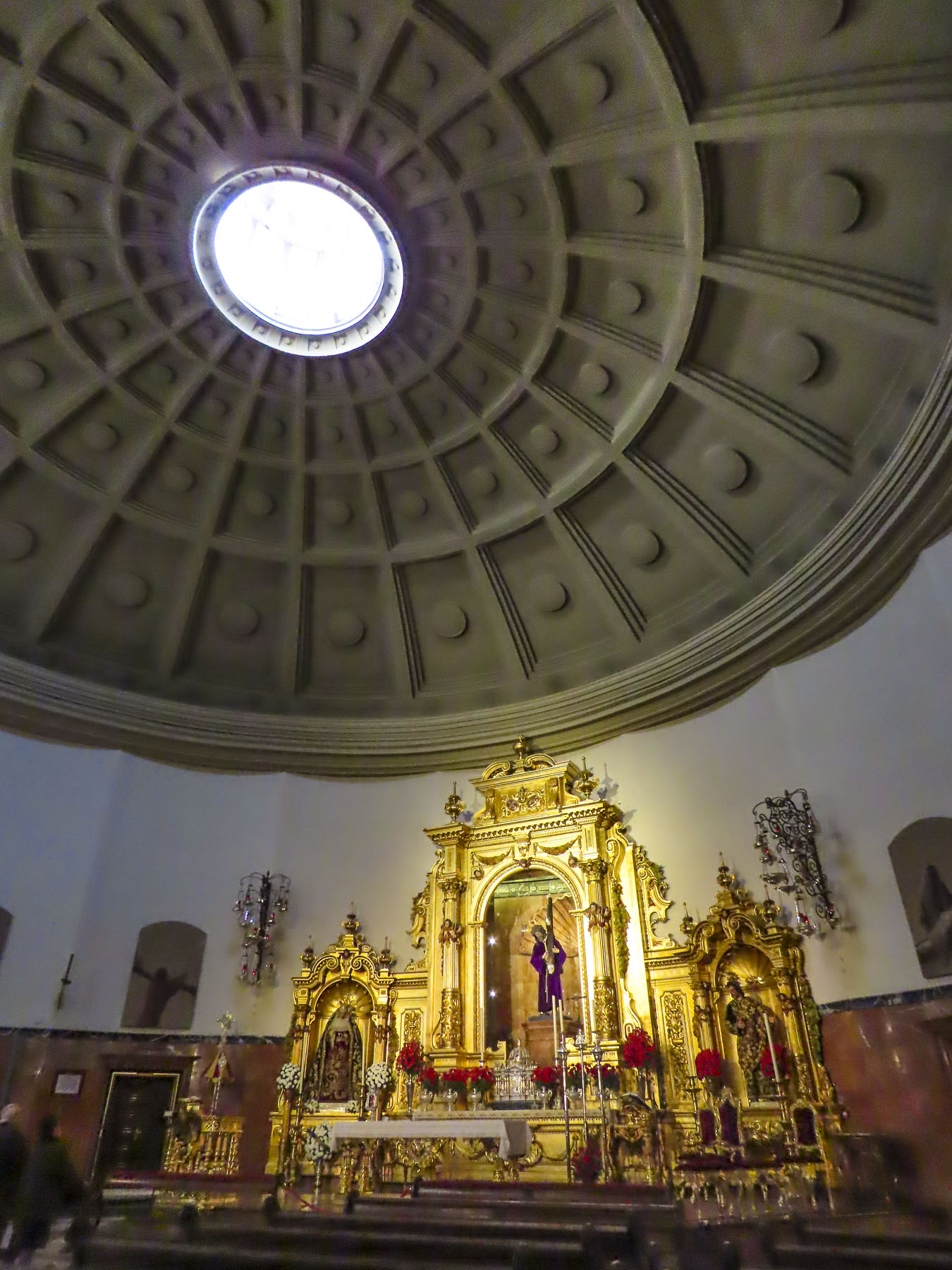
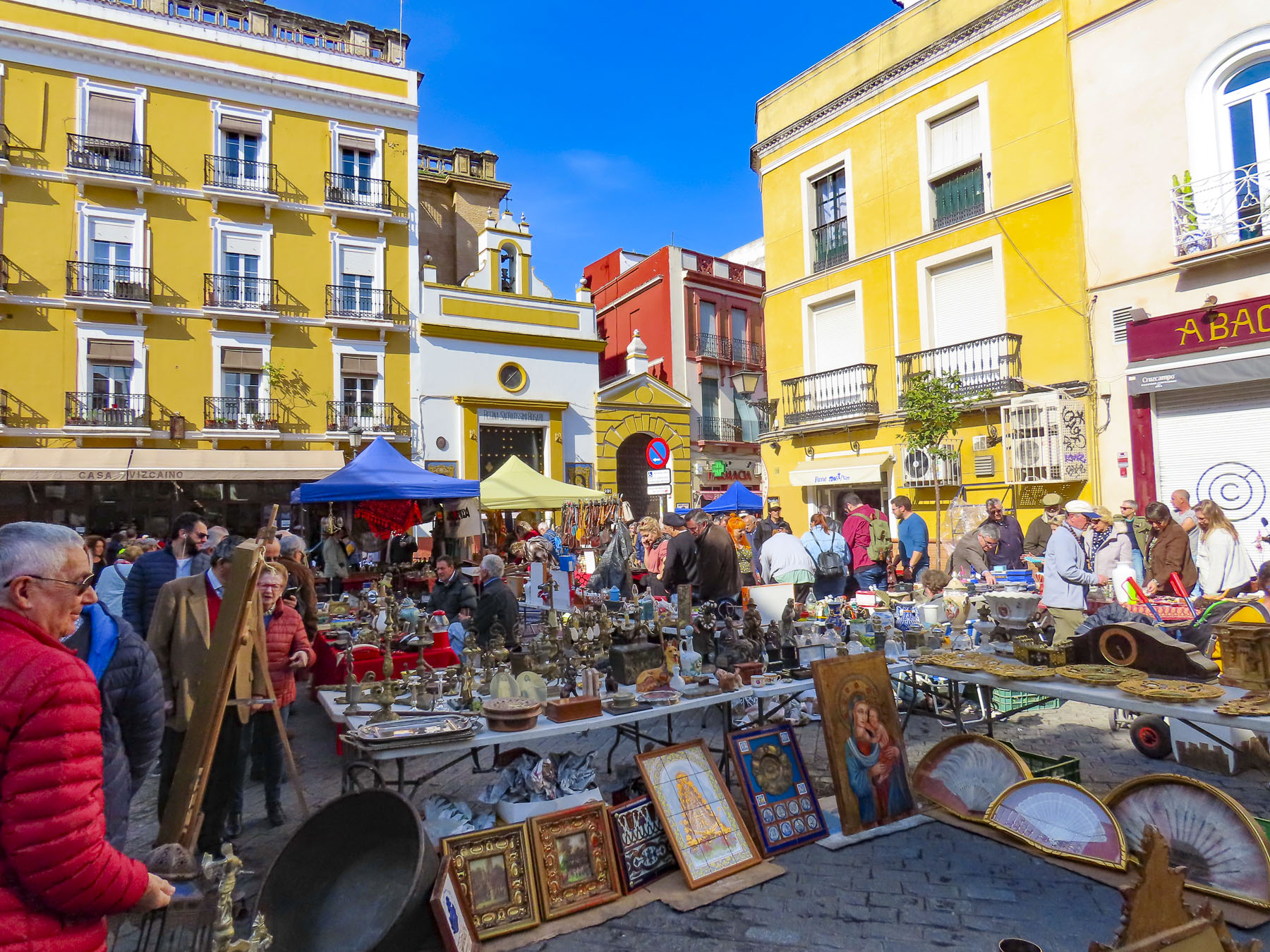
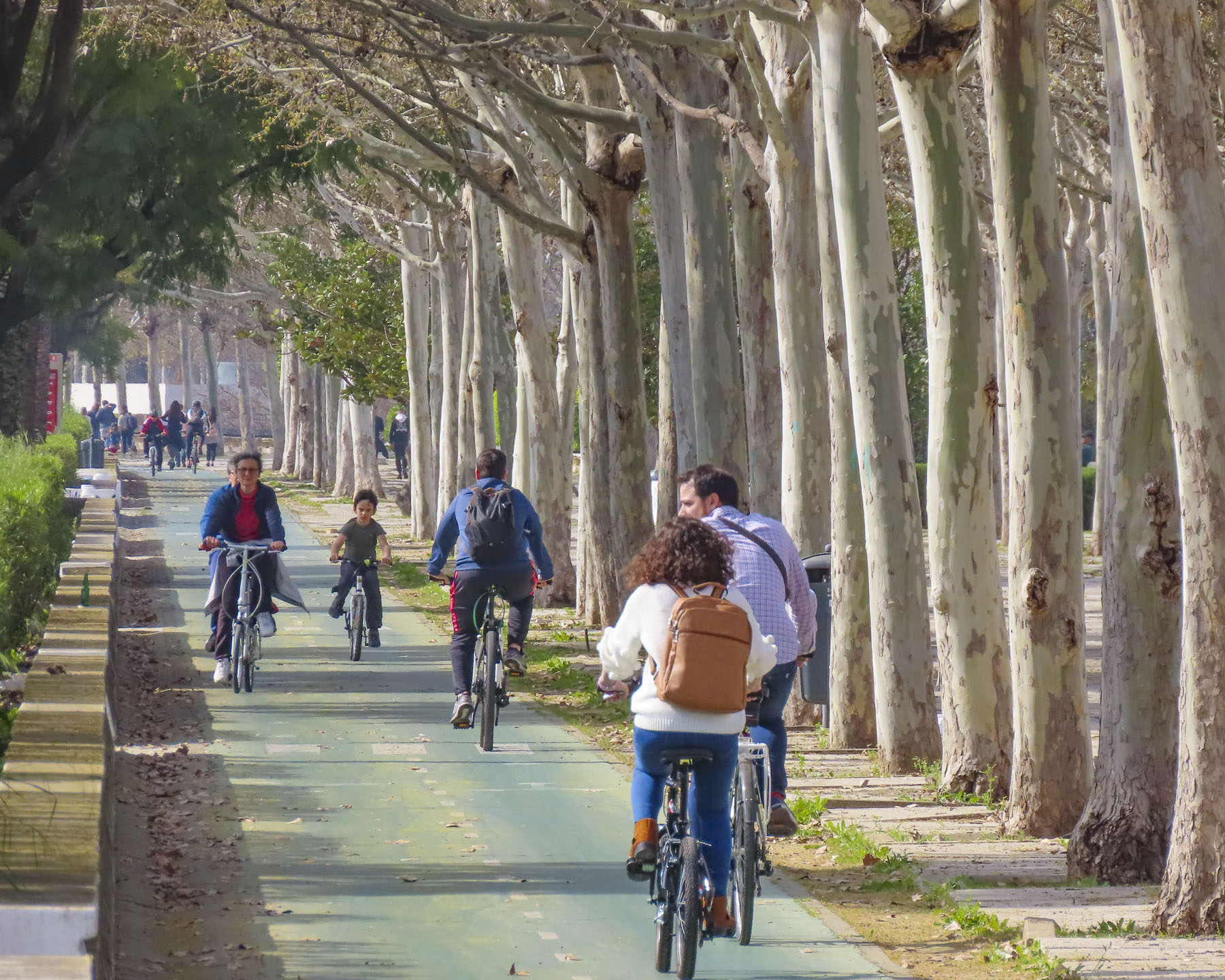
Montevideo: Feria, Murals & Carnaval – The Antidote for our North America “Winter Blues.”

A clearing storm covered Uruguay’s Atlantic Coast as we landed at Carrasco International Airport on the outskirts of Montevideo. We were ten minutes into our forty-minute Uber ride into Ciudad Vieja, the old town section of Montevideo, when the masts of several catamarans poked above the tree line that obscured our view of the oceanfront. Our driver proudly boasted that the country has nearly 660km (410mi) of pristine beach-covered coastline along the Río de la Plata and the South Atlantic Ocean. But the real pride and joy of Montevideanos is La Rambla of Montevideo, a wide coastal esplanade that runs for 22km (14mi) along the city’s waterfront, “one of the longest continuous sidewalks in the world.”

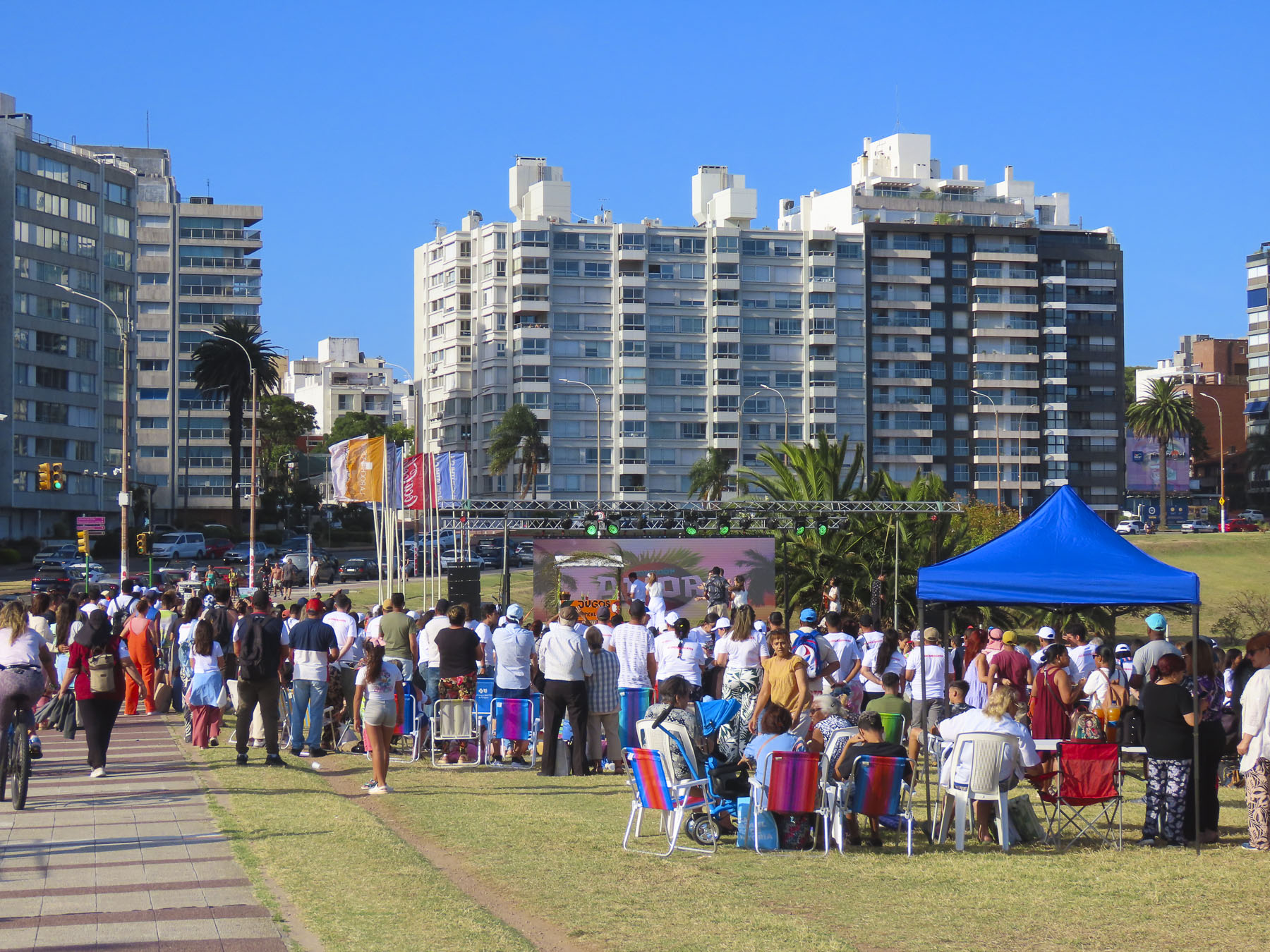
Our ride into the city soon started to follow La Rambla’s serpentine route along the coast, past folks, at the end of the workday, flocking to its breezy shoreline to enjoy all sorts of activities from rollerblading to kite surfing. Several beach areas also had bandstands where musicians were drawing good size audiences. Lovers snuggled on the seawalls, amidst swimmers emerging from the ocean, games of soccer, joggers, aerobic classes, personal trainers, cyclists, sun worshippers, and walkers carrying their ubiquitous Mate carryalls. Enjoying socializing with friends on La Rambla is an important part of life in Uruguay’s capital, where the city’s 1.4 million residents, nearly 40% of the country’s population, have an open invitation to “The Outdoor Living Room of Montevideo.” Come sunset there seemed to be collective quieting as folks stopped to watch the sun sink below the horizon. We could already tell that this could be the antidote for our North America “winter blues.”
The next morning, we were up before sunrise to stroll along the oceanfront, hoping to catch the first rays of sunlight cast across the city. From our room at Hotel NH Montevideo Columbia, we could see seven freighters making their way to port, and the remnants of an old defensive tower. It was part of the quickly built ramparts that once encircled the citadel soon after the Spanish founded the city in 1726, to thwart Portuguese expansion southward along the coast from Brazil.

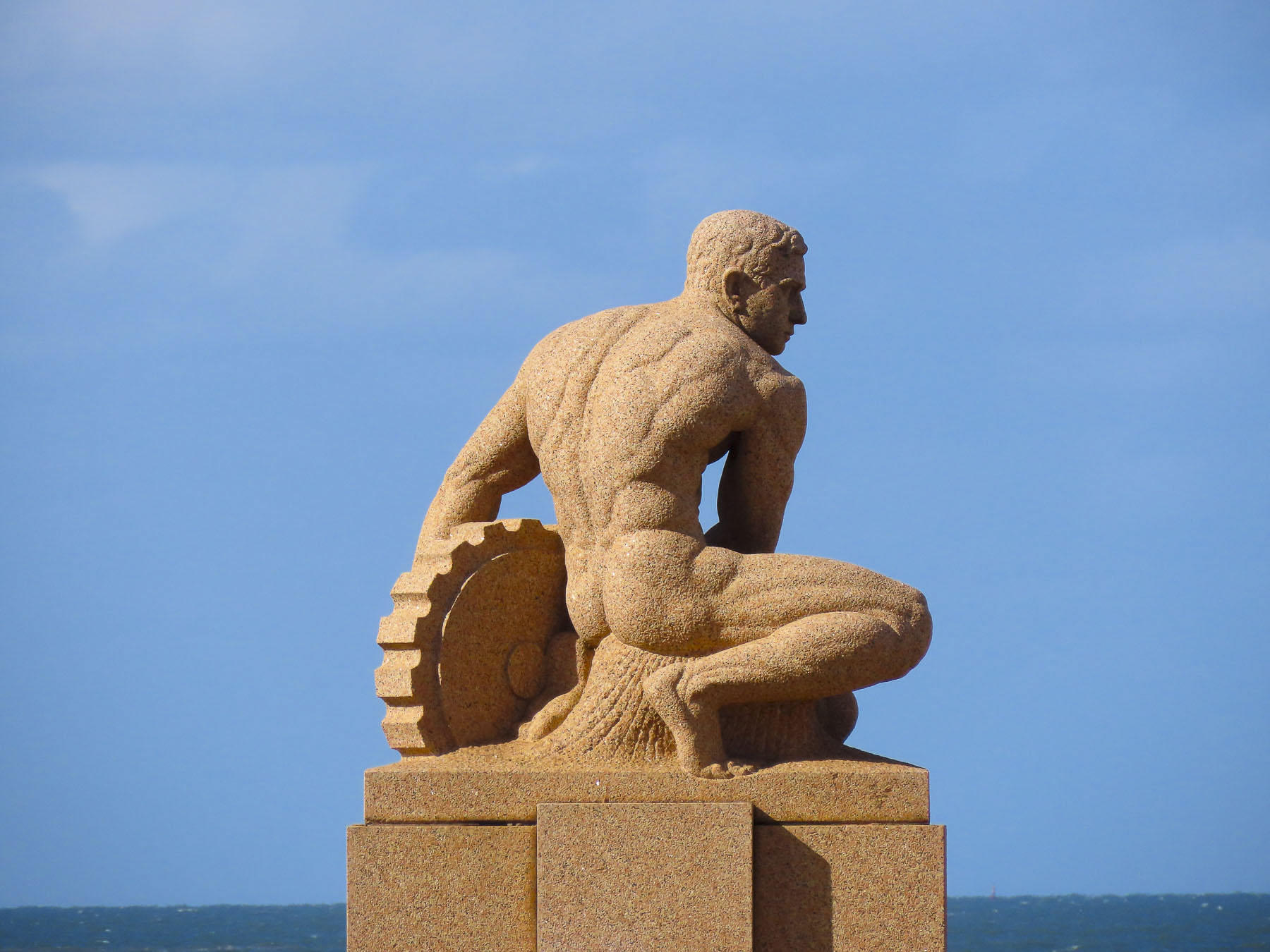
Street art and sculptures that were a blur yesterday as we sped by were now full of detail. In some places along the esplanade there were images of dinosaurs on relief plaques implanted into the sidewalk that suggested the region’s fauna 85 million years ago.

We reached Playa Ramirez, a large crescent-shaped beach as the sun was breaching the trees and shining upon the city’s modest skyline. A large group of cyclists preparing for the upcoming Vuelta Ciclista del Uruguay sped by. Two women stood in the water and let the gentle morning waves lap around their ankles as they chatted.

Across from the beach was Parque Jose Enrique Rodó. A large sculpture in the center of the park is dedicated to the Montevideo-born philosopher and essayist, who wrote about Latin America pursuing its own cultural identity and spiritual renewal, and the dangers of unbridled materialism.

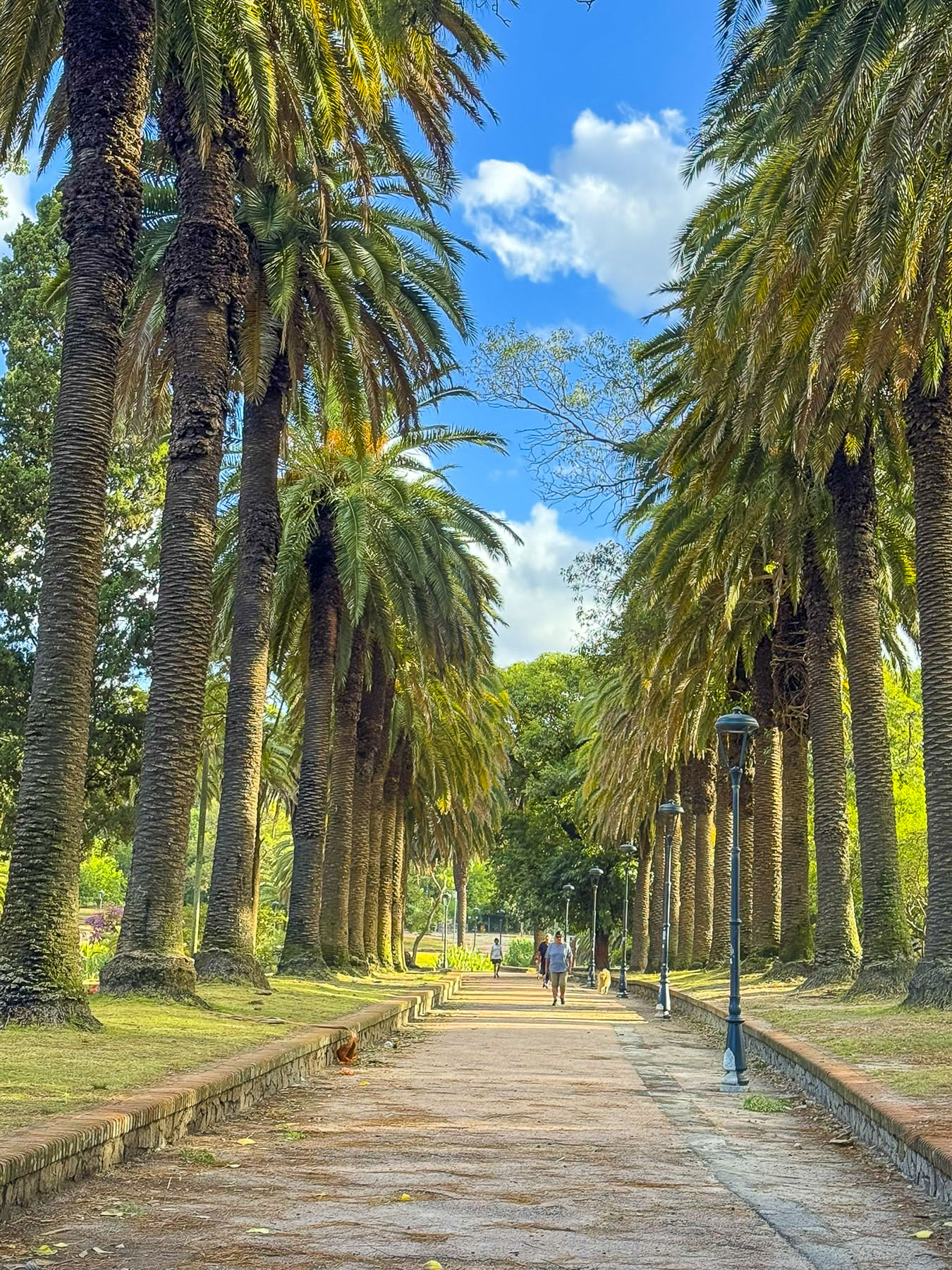
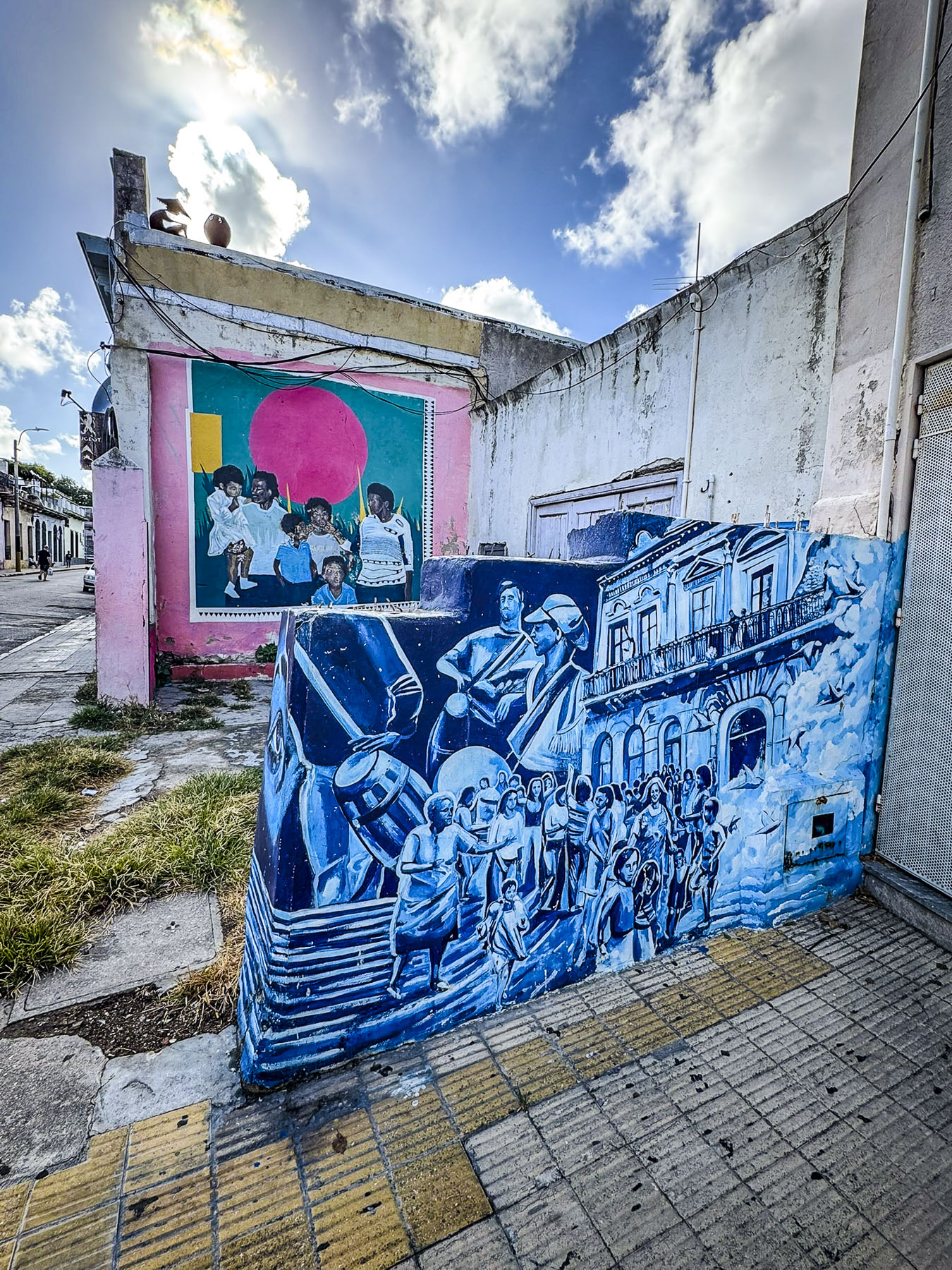
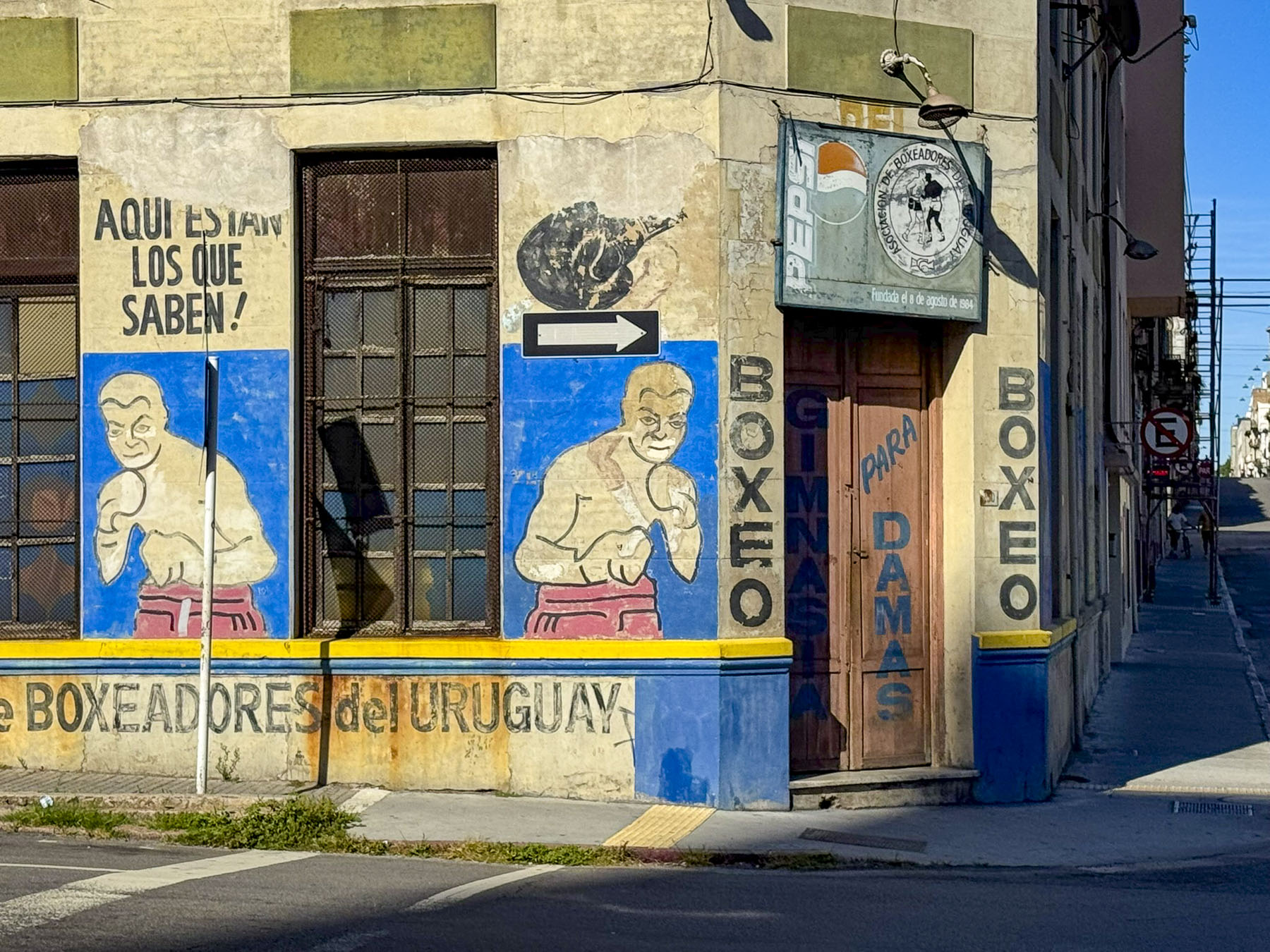
We started our loop back towards the Ciudad Vieja down one of the park’s palm-lined paths and zig zagged our way through barrios full of colorful street murals, and older 1900’s era buildings with interesting architectural details.

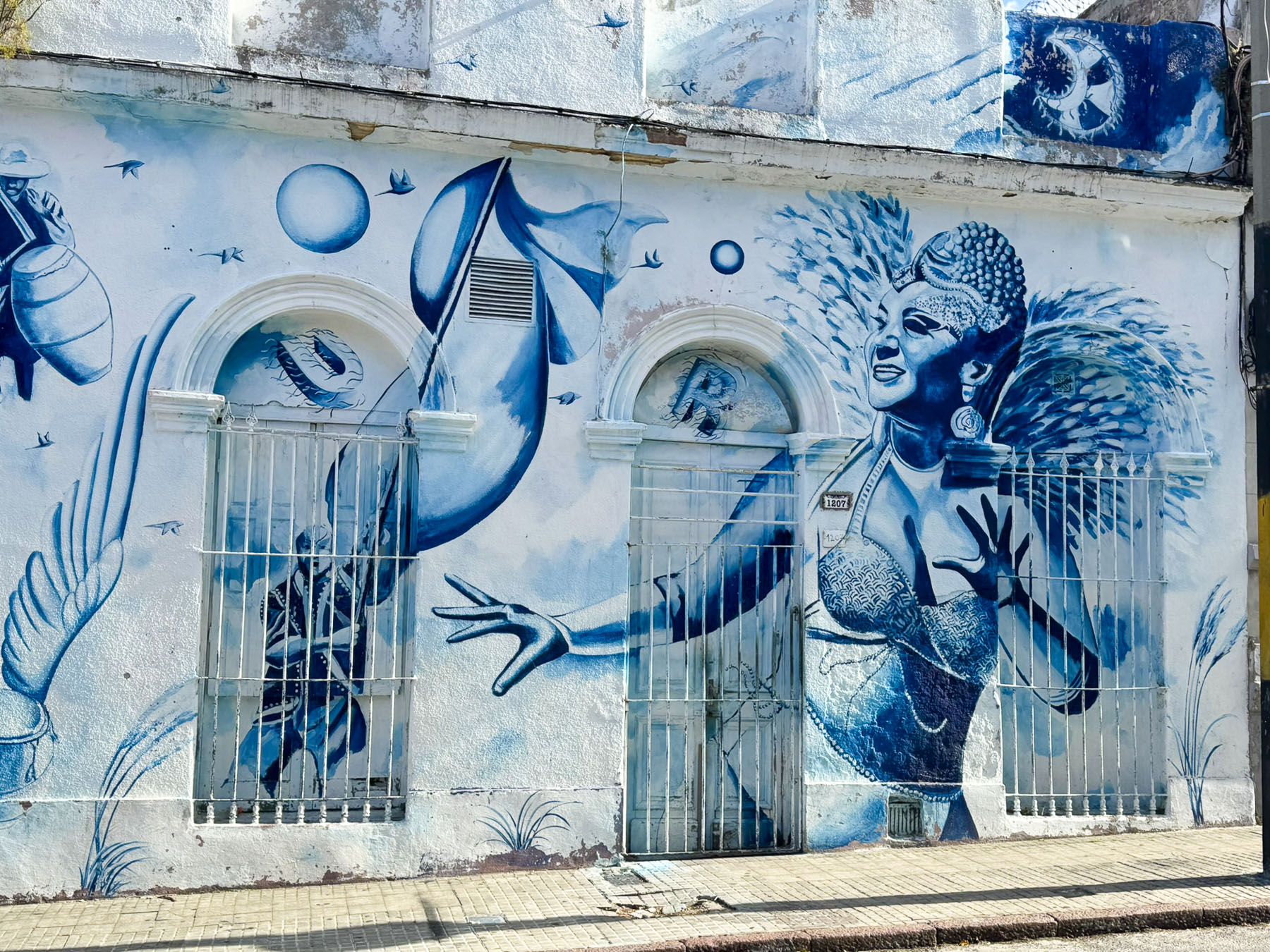
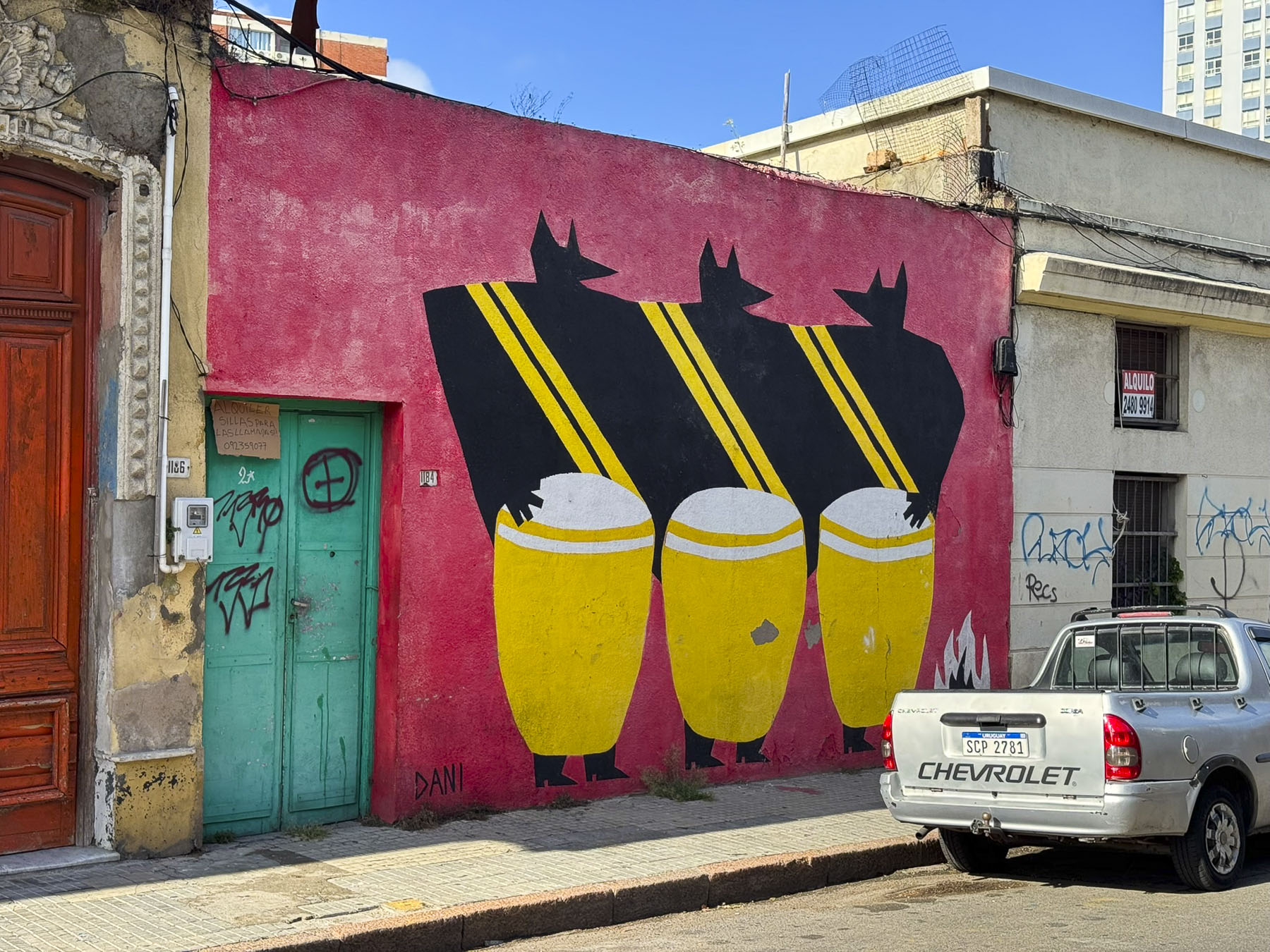
Walking through Barrio Sur along Isla de Flores, bleachers were being set up at the intersections in preparation for one of the last parades of Carnaval. The street was lined with murals dedicated to the local comparsas, large groups of 50-100 candombe drum performers and dancers, who participate in the yearly festival. We spent some time determining a good vantage point for watching the parade later in the week.

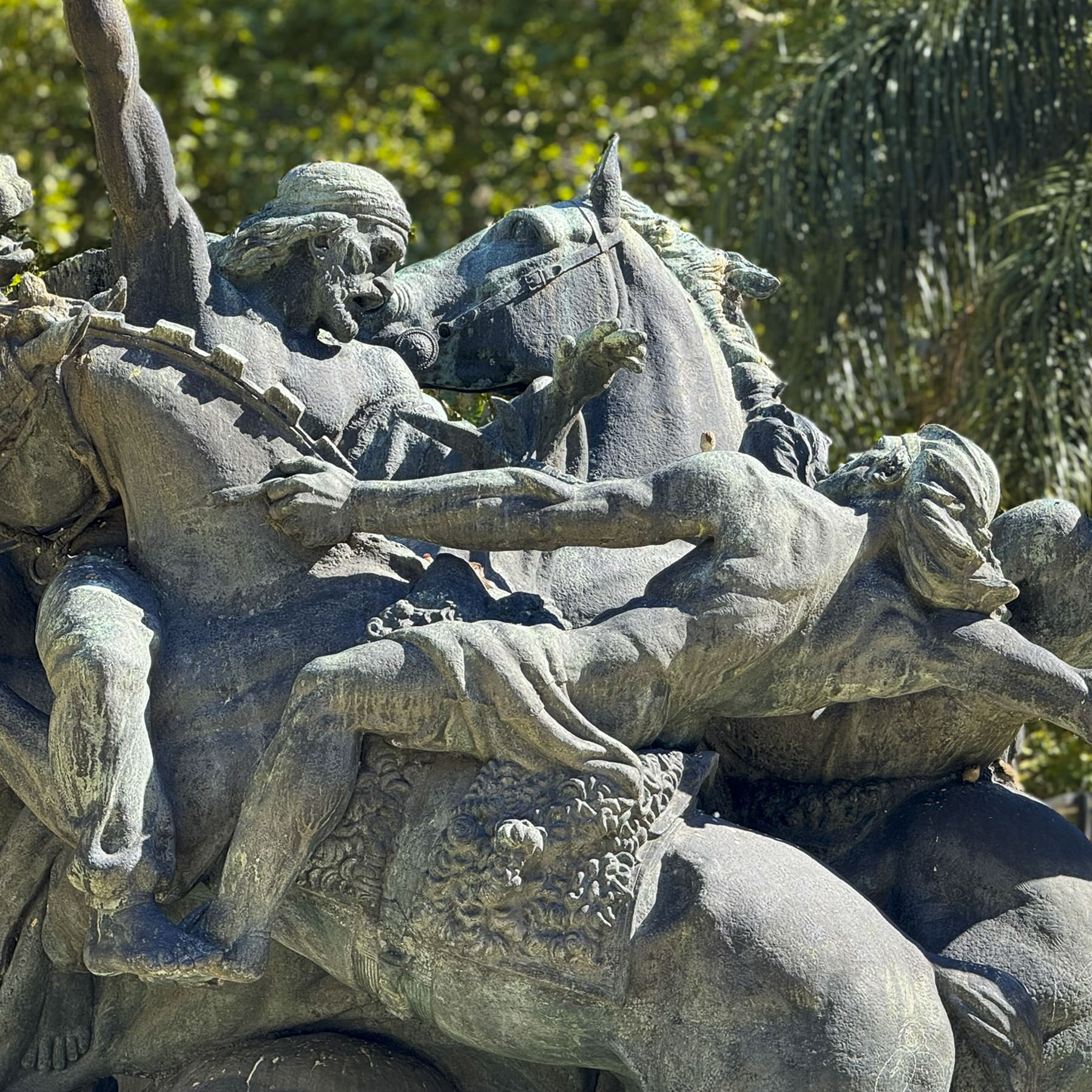
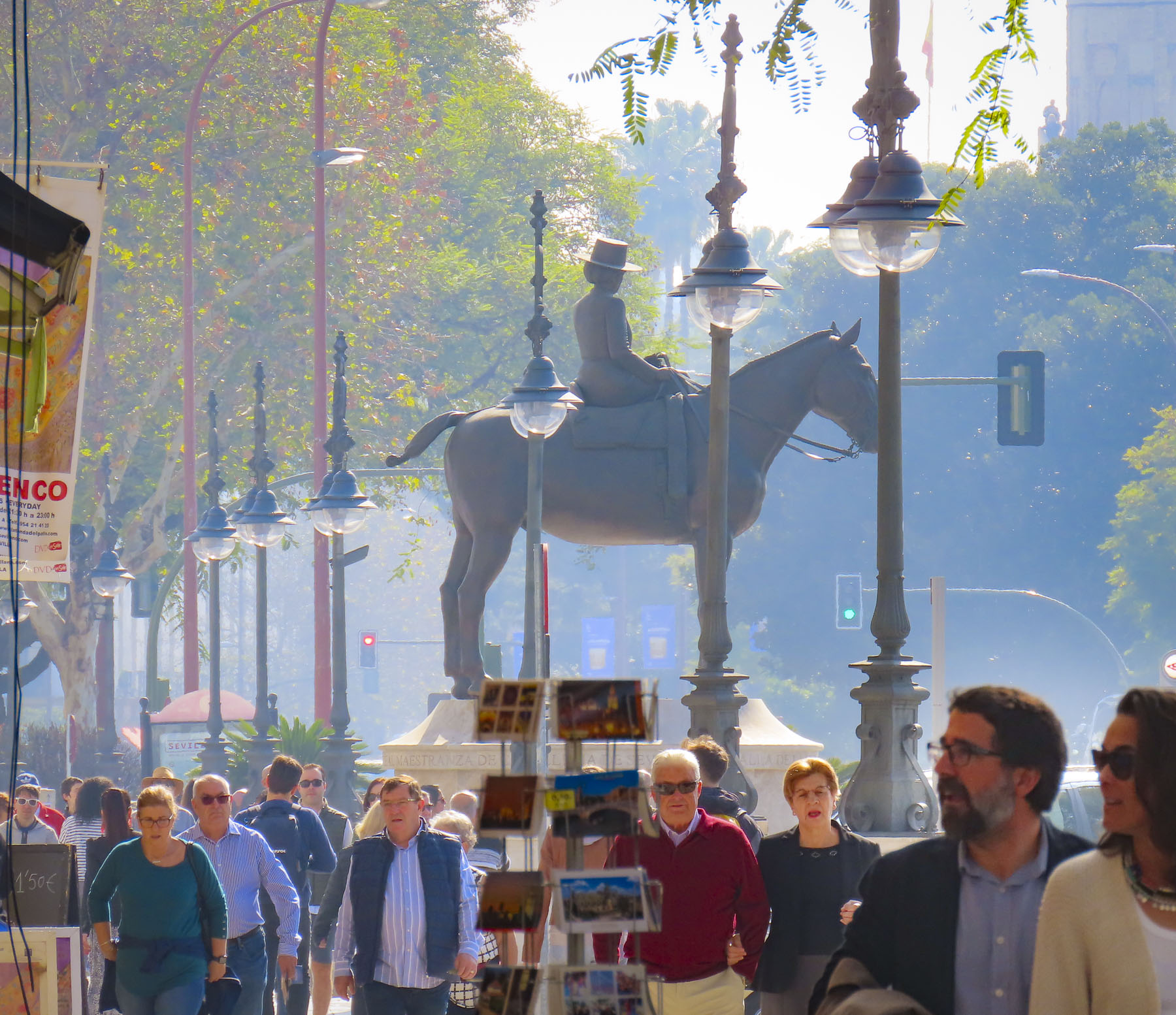
The grand Plaza Independencia was a huge contrast to modest barrios we had walked through earlier that morning. In the park’s center a large equestrian statue stands atop the Masoleum of José Gervasio Artigas, a gaucho, military leader, and revolutionary who inspired Uruguayans to fight against Spanish and Portuguese rule. He is considered the father of Uruguay’s liberation movement, though he did not live long enough to see the country’s independence in 1828.

A vast array of different architectural styles can be seen on the buildings around the plaza, but the most intriguing is the chaotic styling of the 27-story tall Palacio Salvo, which eclectically blends elements of Art Nouveau, Art Deco, Gothic, and Renaissance architecture into its design. The iconic mixed-use building has shops, offices, apartments and the Museo del Tango. It was for a short period of time after its completion in 1928 the tallest building in South America.

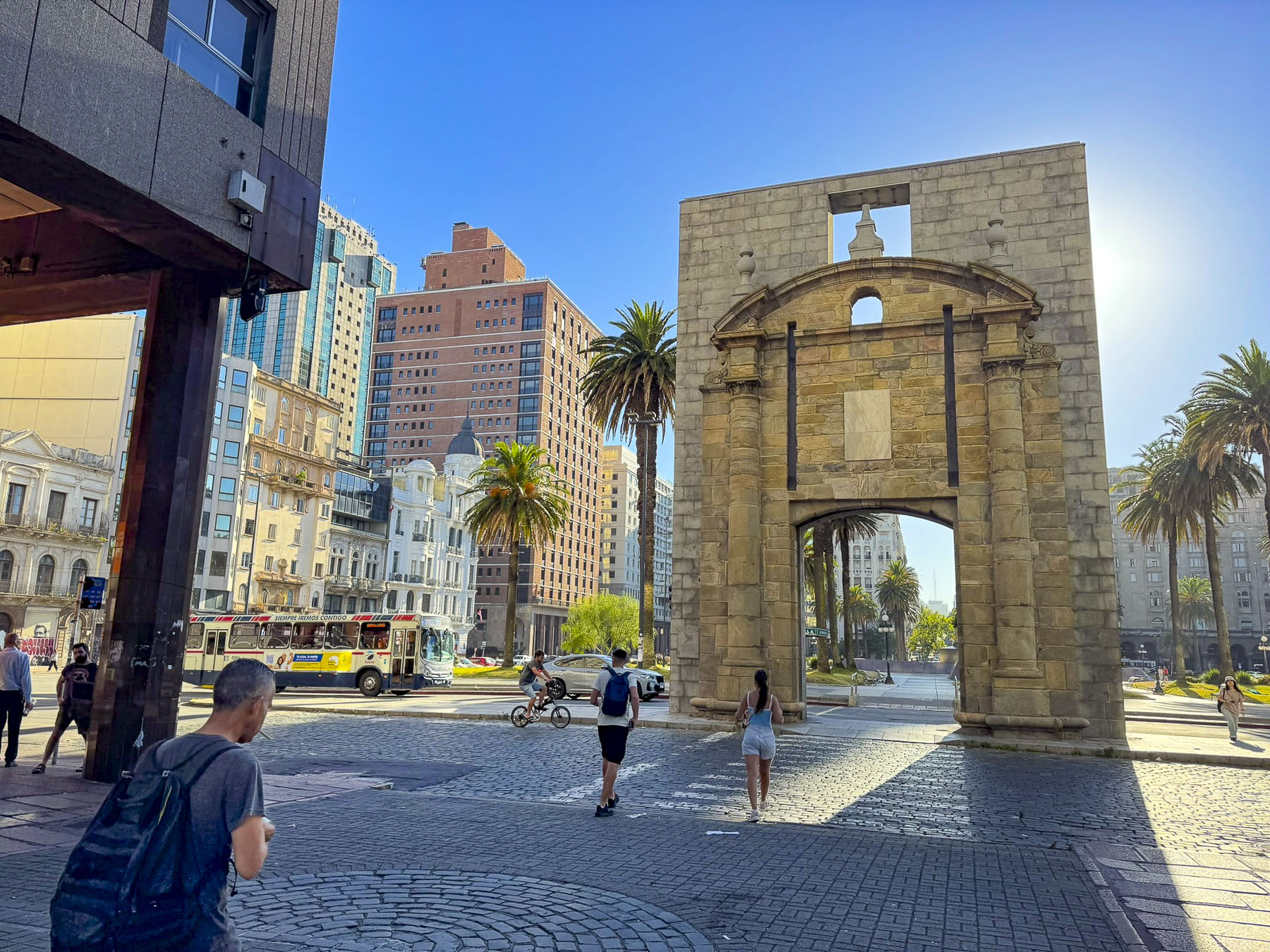
At the opposite end of the plaza the Puerta de la Ciudadela, one of the old gateways into the colonial citadel, is all that remains of a tall stone defensive wall that was 6 meters (20ft) thick, and totally encircled the small peninsula where Spain established its first colony in Uruguay. After Uruguay gained its independence the demolition of the citadel’s ramparts started in 1829, less than 100 years after their construction, to make room for the growing port city’s expansion.

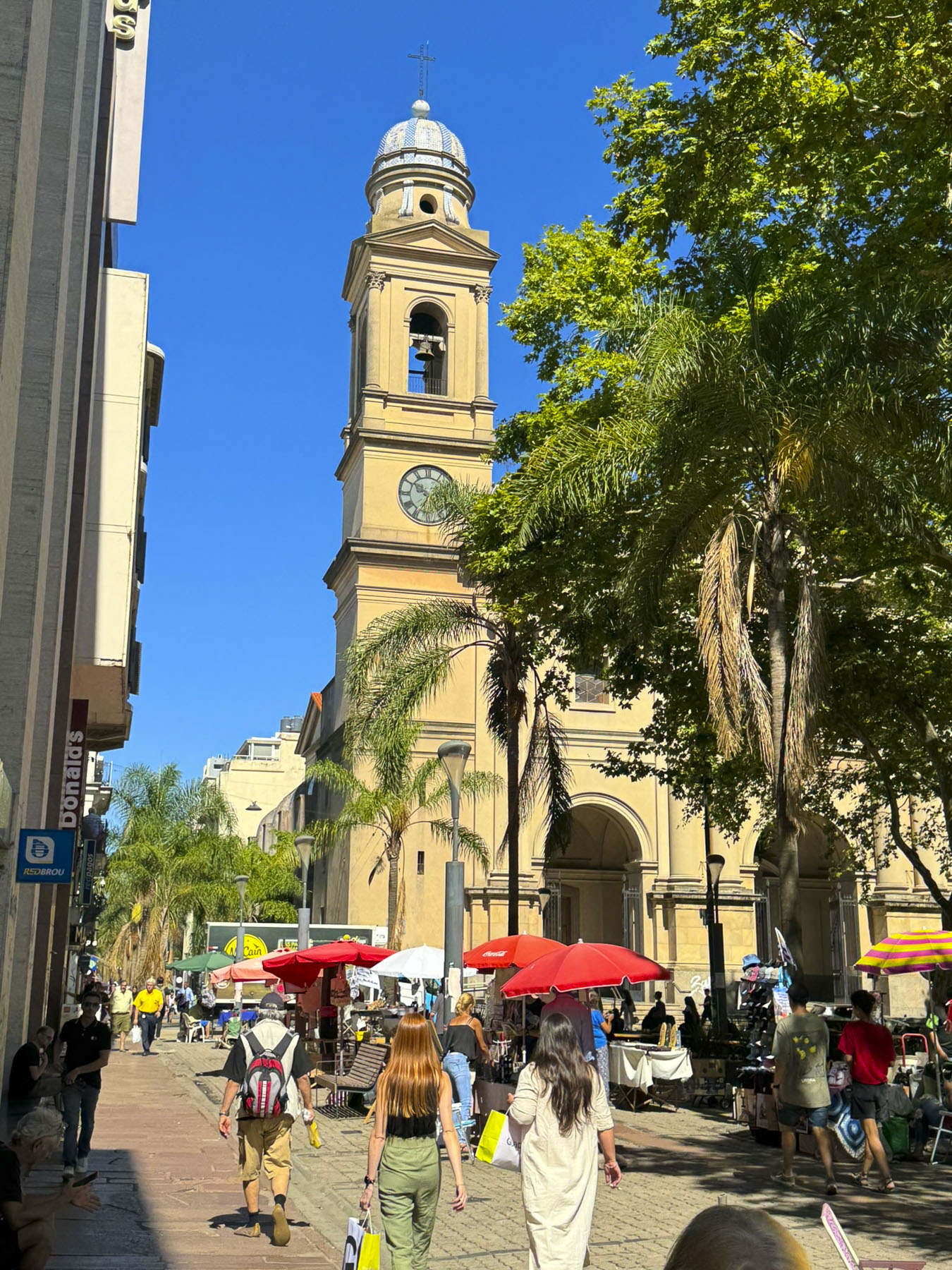
The old gateway opened to Sarandí, the main pedestrian lane that runs from one end of Ciudad Vieja to the other. At the beginning of the lane was Montevideo’s Walk of Fame, where stars of famous visitors to the city, like Nelson Mandela, the Rolling Stones, Enrique Iglesias, and Olga Delgrossi, Uruguay’s beloved singer and tango dancer, were imbedded in the pavement with sun bursts above their names.  Now mid-afternoon, the day had warmed, and the street was full of vendors under colorful umbrellas, selling all sorts of items geared for tourists.

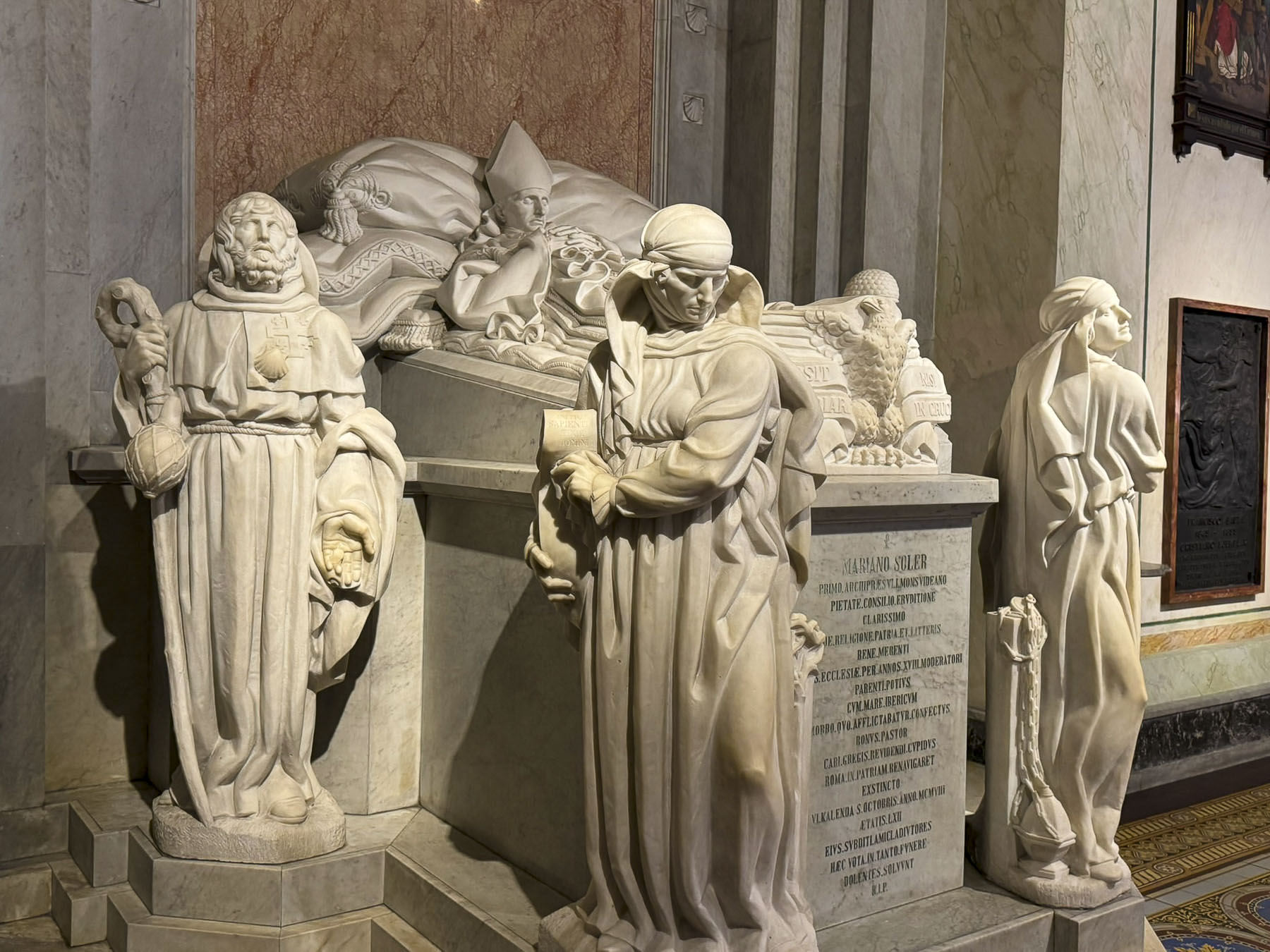
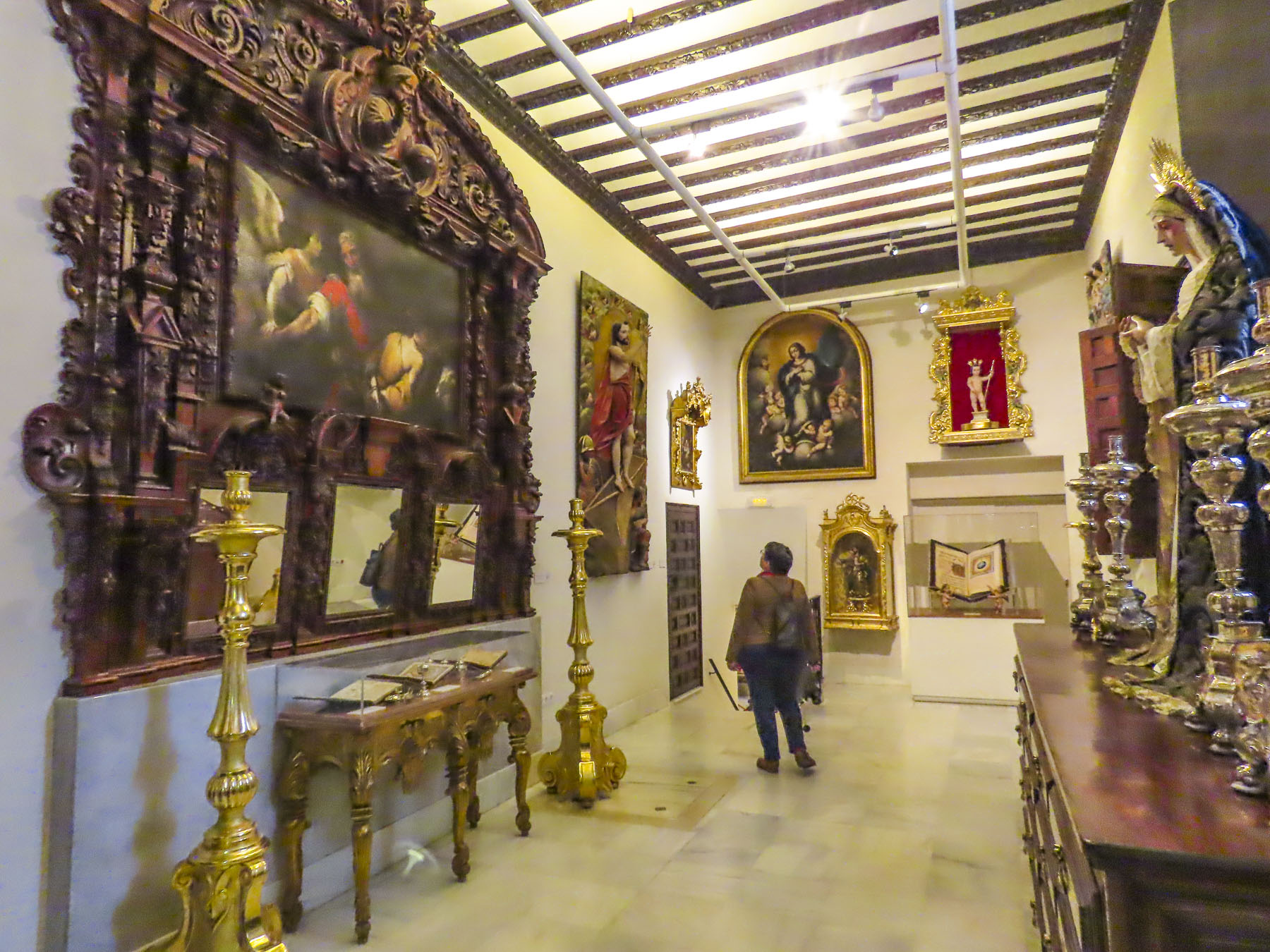
We wrapped up our day’s wandering about at the Montevideo Metropolitan Cathedral, or as it is formally called the Catedral Metropolitana de la Inmaculada Concepción y San Felipe y Santiago.  In 1790 the construction of the cathedral was started to accommodate a growing congregation in the prosperous city, which had outgrown its first smaller brick church, which was built on the same site in 1740. Inside were some very nice pieces of religious art.

The next morning we continued exploring the old town and watched a wedding party throw rice upon a newly married couple at the Registry Office. We only noticed a sculpture of Montevideo’s version of Romeo and Juliet when a crowd in front of us was pointing up to a balcony. “Our walk a little then café,” routine was satisfied with breakfast at Federación, an artesanal panaderia and café, with tables on the sidewalk and in a small courtyard. It was on the way to several museums we planned to visit, before having a late lunch at one of the steakhouses in the Mercado del Puerto.

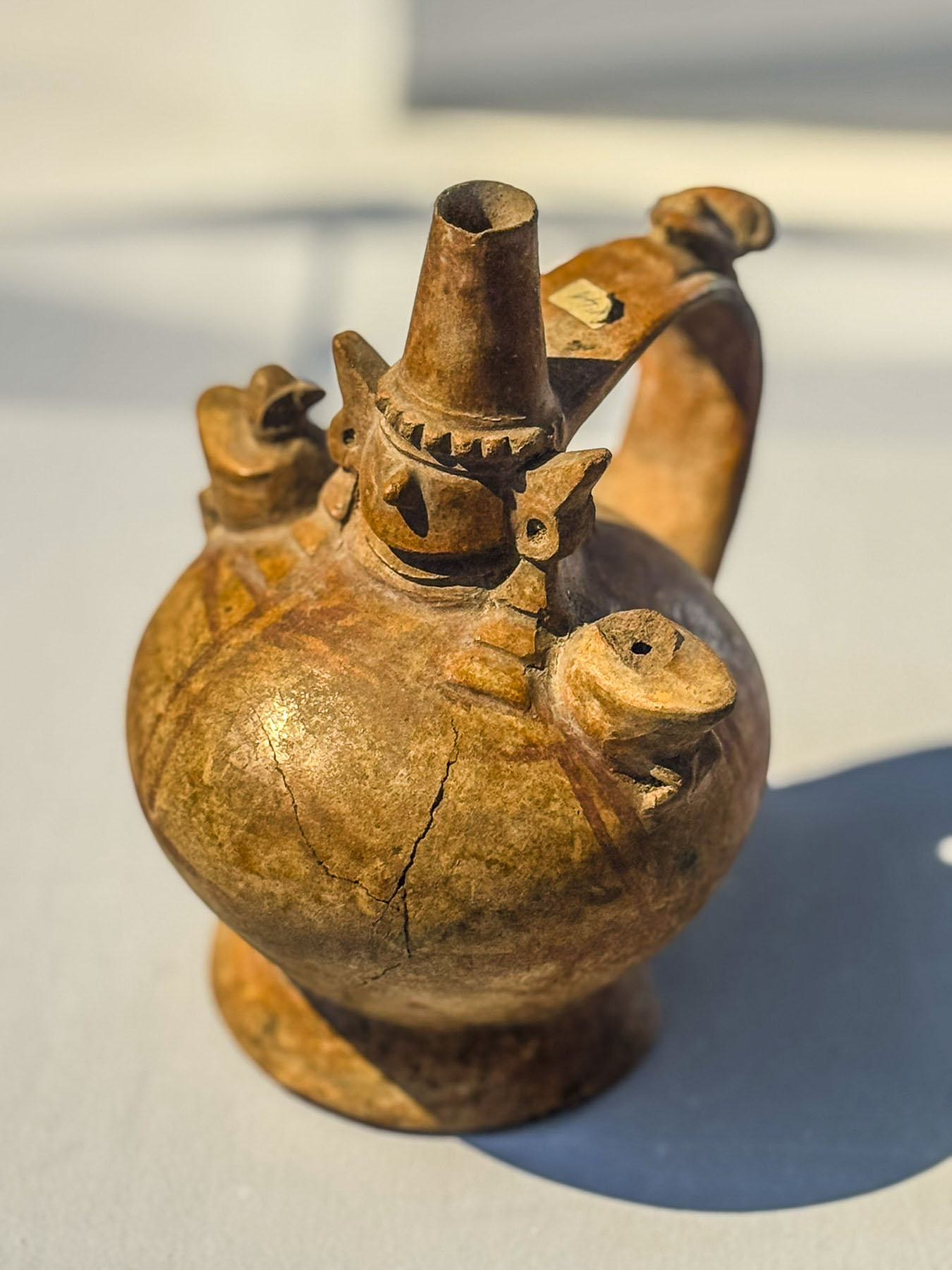
Montevideo has over twenty museums that span the spectrum from art and science to tango and carnaval. Around the corner from the café, in a 19th century building, was the Pre-Columbian and Indigenous Art Museum. It is a relatively small museum, but it has an interesting collection of archeological artifacts and an extensive collection of Carnaval masks from across Latin America.

Everything about the South American cowboy can be viewed at the Museo del Gaucho and Currency. It occupies a stately old bank building which in itself is worth poking your head into, but the immense scale of the building overpowers the exhibits of small objects used in the South American cowboy’s everyday life. Many of the fine silver items on display were from the estates of wealthy ranch owners.

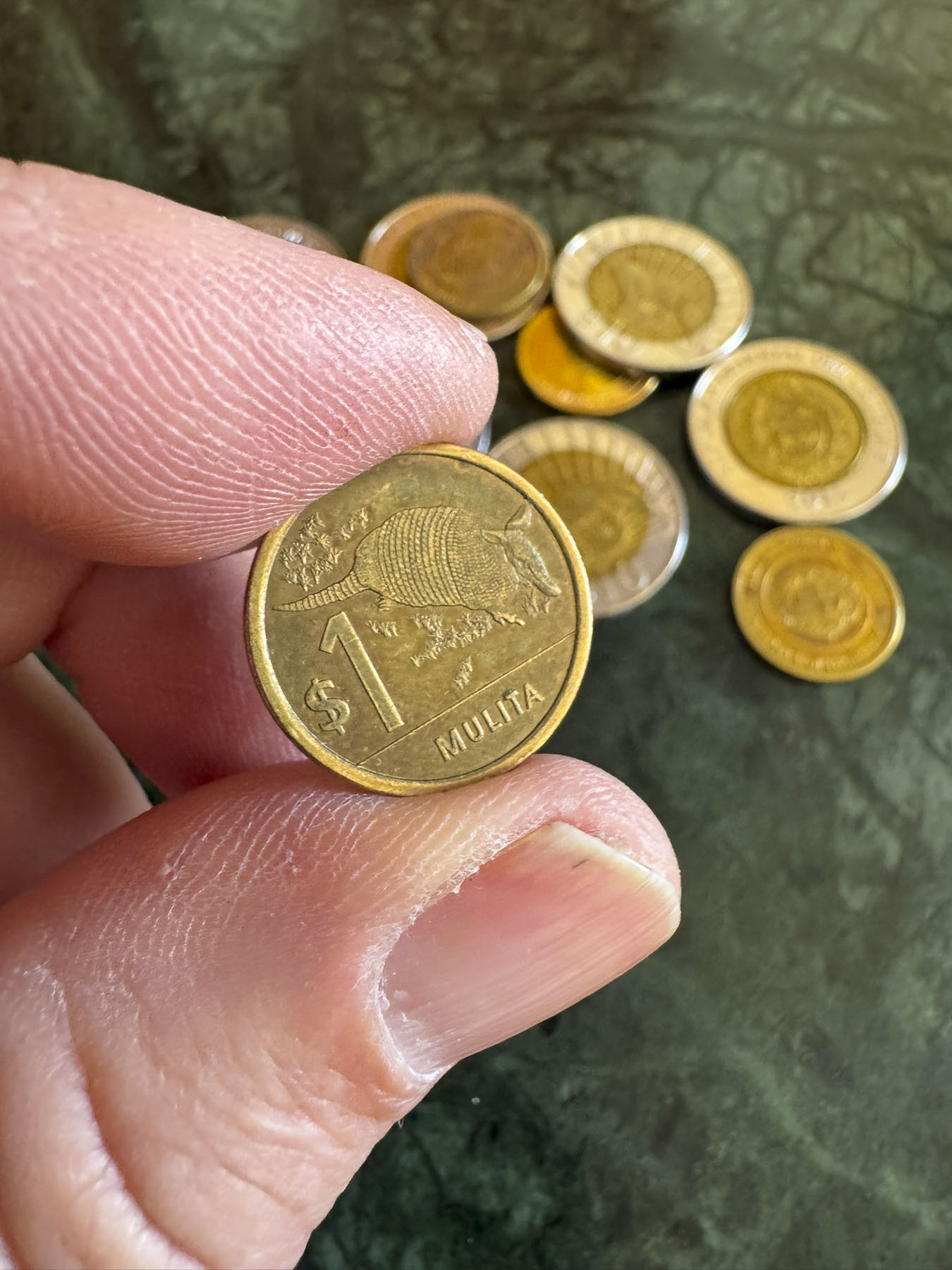
The currency exhibit was okay, but we think you really have to admire a country that puts an armadillo on one of their coins. There was also a collection of coins recovered from the wreck of the Spanish galleon El Preciado, which was sunk in Río de la Plata by pirates in 1792, as it sailed for Spain carrying gold and silver to pay the taxes levied against the South America colonies.

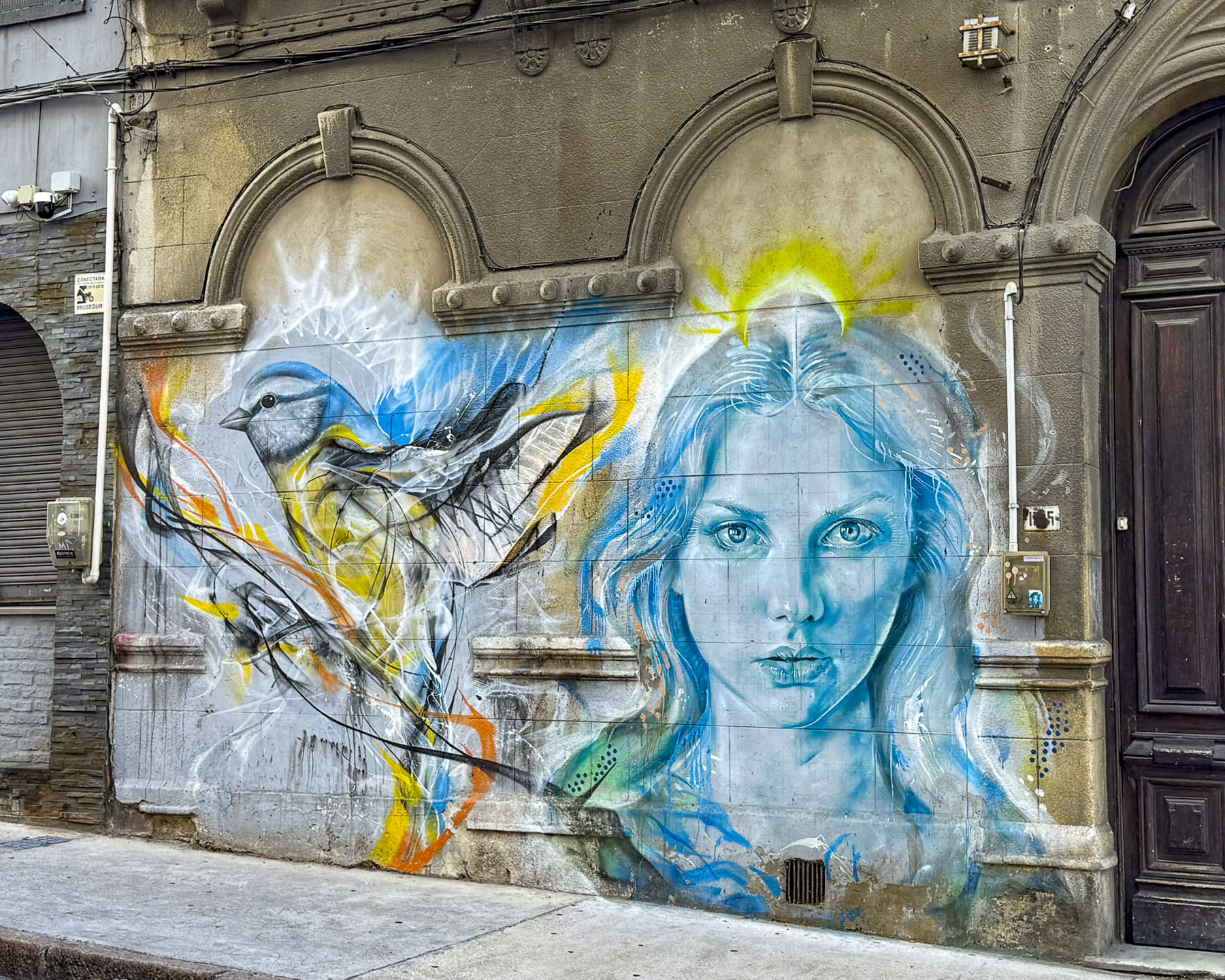
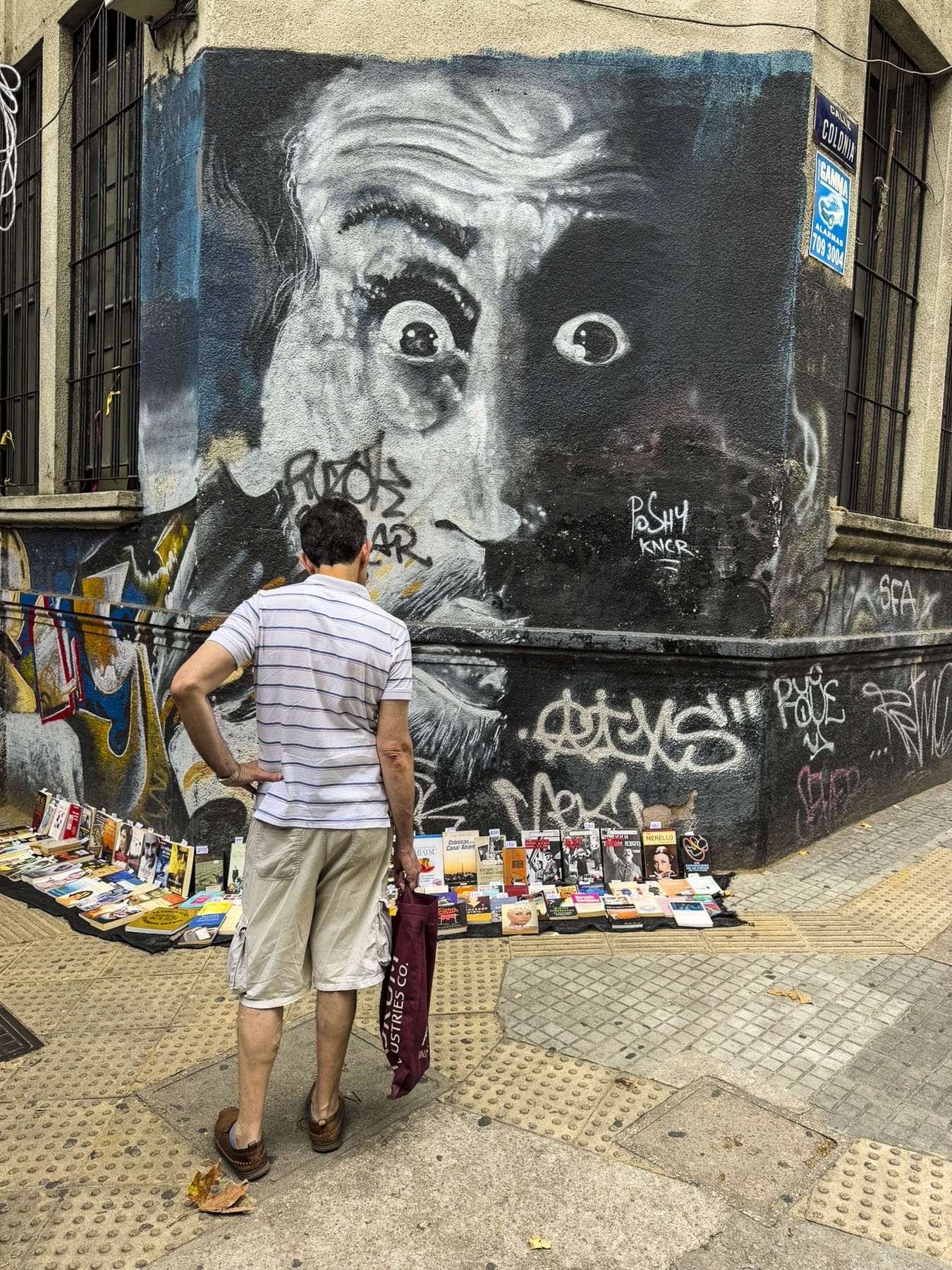
Artistic street murals can be found all across Montevideo and we passed several interesting ones on the way to the Museo de las Migraciones. We really enjoyed this museum as it celebrates the country’s diverse population of its immigrants who contributed to making Uruguay the wonderful place that it is. The exhibits confirm the belief that most folks have more in common than what separates us.

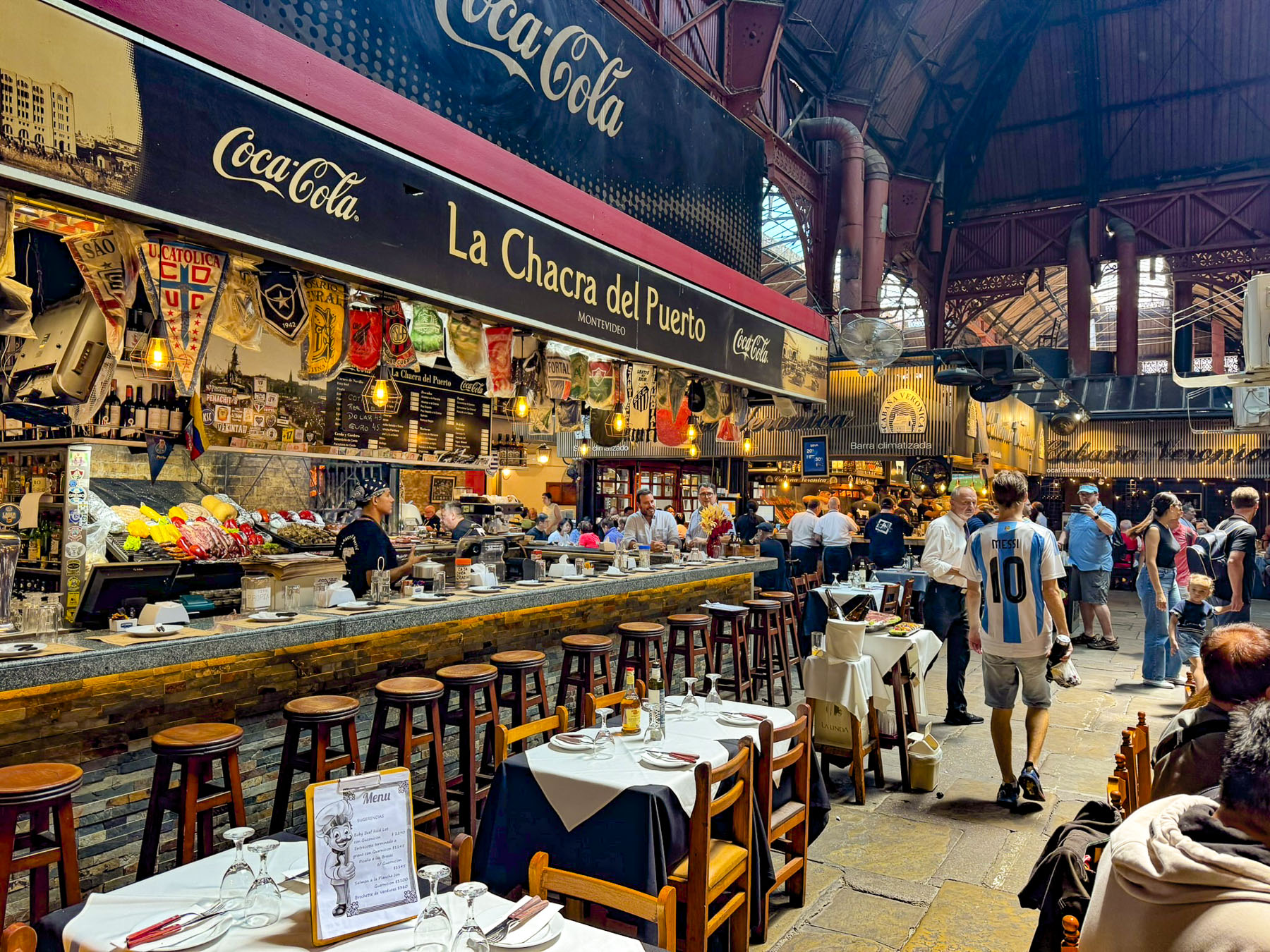
It was a long walk back towards the Mercado del Puerto. The cast-iron and glass roofed structure was imported from Liverpool, England, and feels a little like a Victorian era train station; it opened for its first customers in 1868. The old port market used to be the central place to buy supplies, fruits, produce, meats, and fish, but has now been gentrified into an atmospheric food hall, where steakhouses reign supreme, and charge a hefty price for being convenient for the cruise ships passengers which disembark at the port. That being said, we enjoyed the ambience of open wood-fired parrillas, and wafting aromas rising from the various kitchens. It was a challenge to choose a restaurant, as all the dishes that waiters whisked by us looked delicious and tempting.

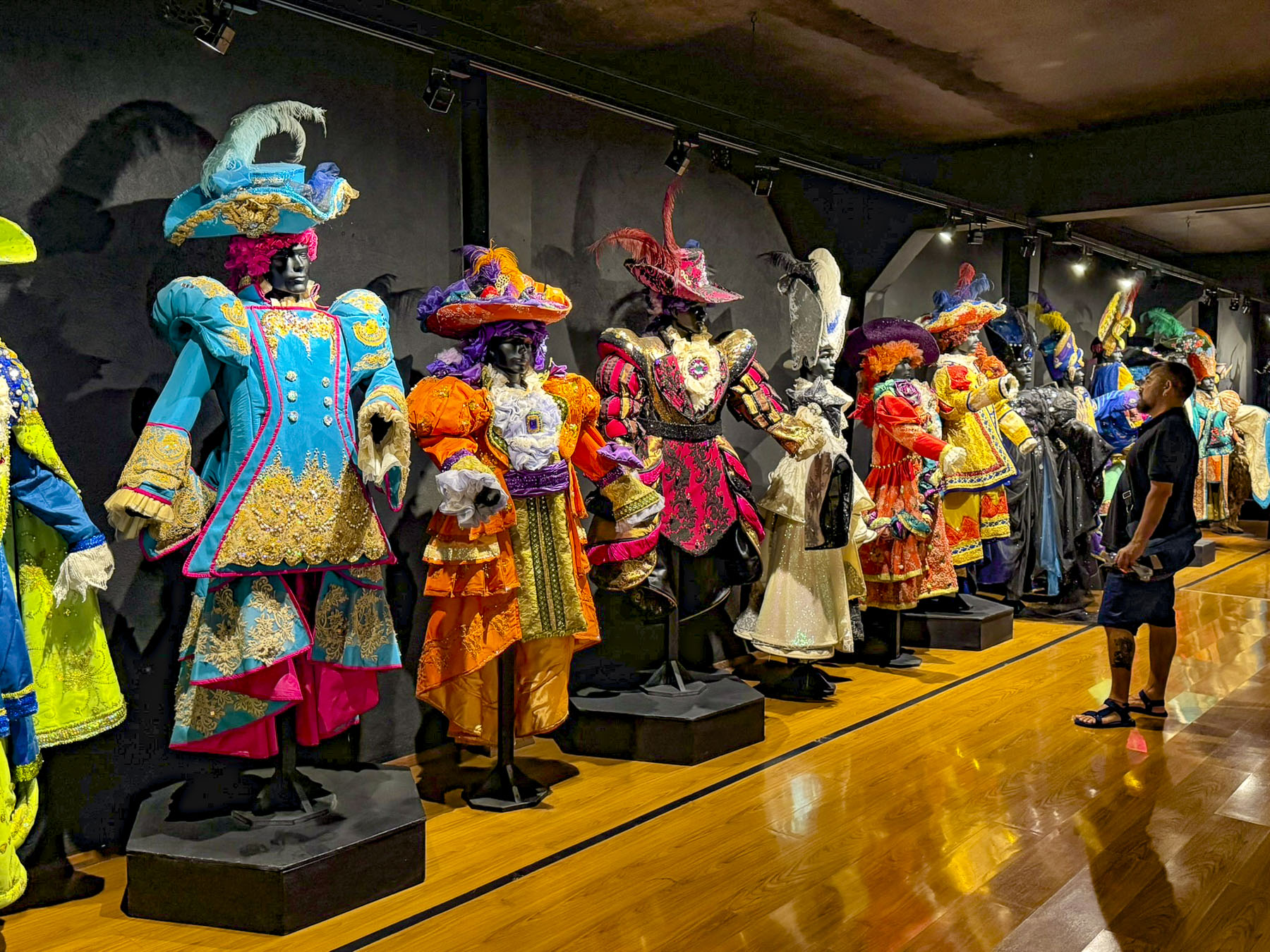
Later in the week we returned to the area to attend a tablado at the Museo del Carnaval, which also had a great collection of imaginative costumes from past carnavals. As the actors readied themselves for the performance, an announcer stepped forward. There were lots of Spanish words, followed by “Donna DiMeo Hammell” and more Spanish. I speculated that we had won the Uruguayan Lottery.  Or “maybe I’ve been chosen to participate, but I don’t speak Spanish!” Donna’s first thought was, wow, they pronounced my name correctly! The mystery was solved when Donna approached the offstage area, and a smiling theater employee handed her the credit card she had unknowingly dropped earlier.

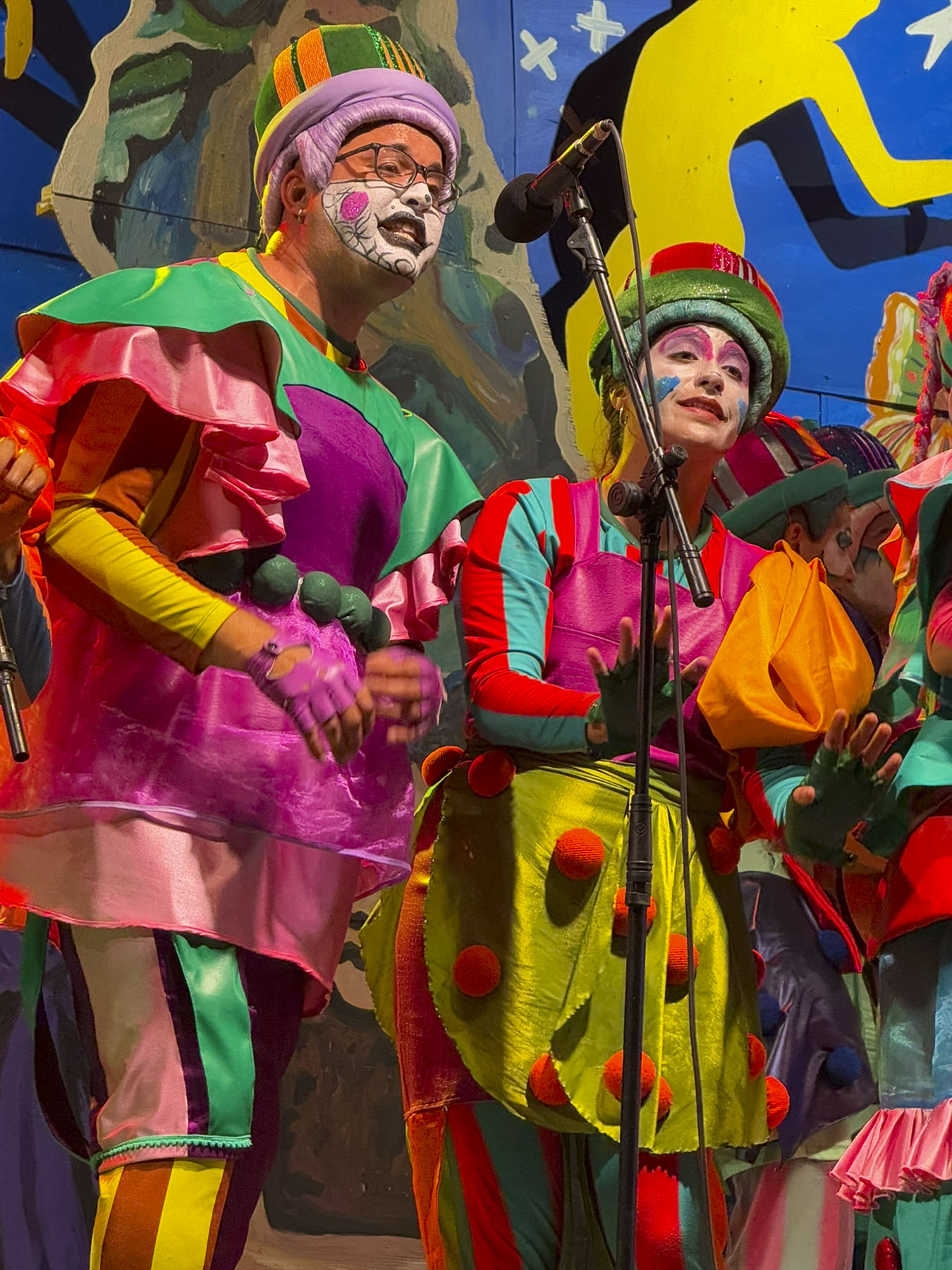
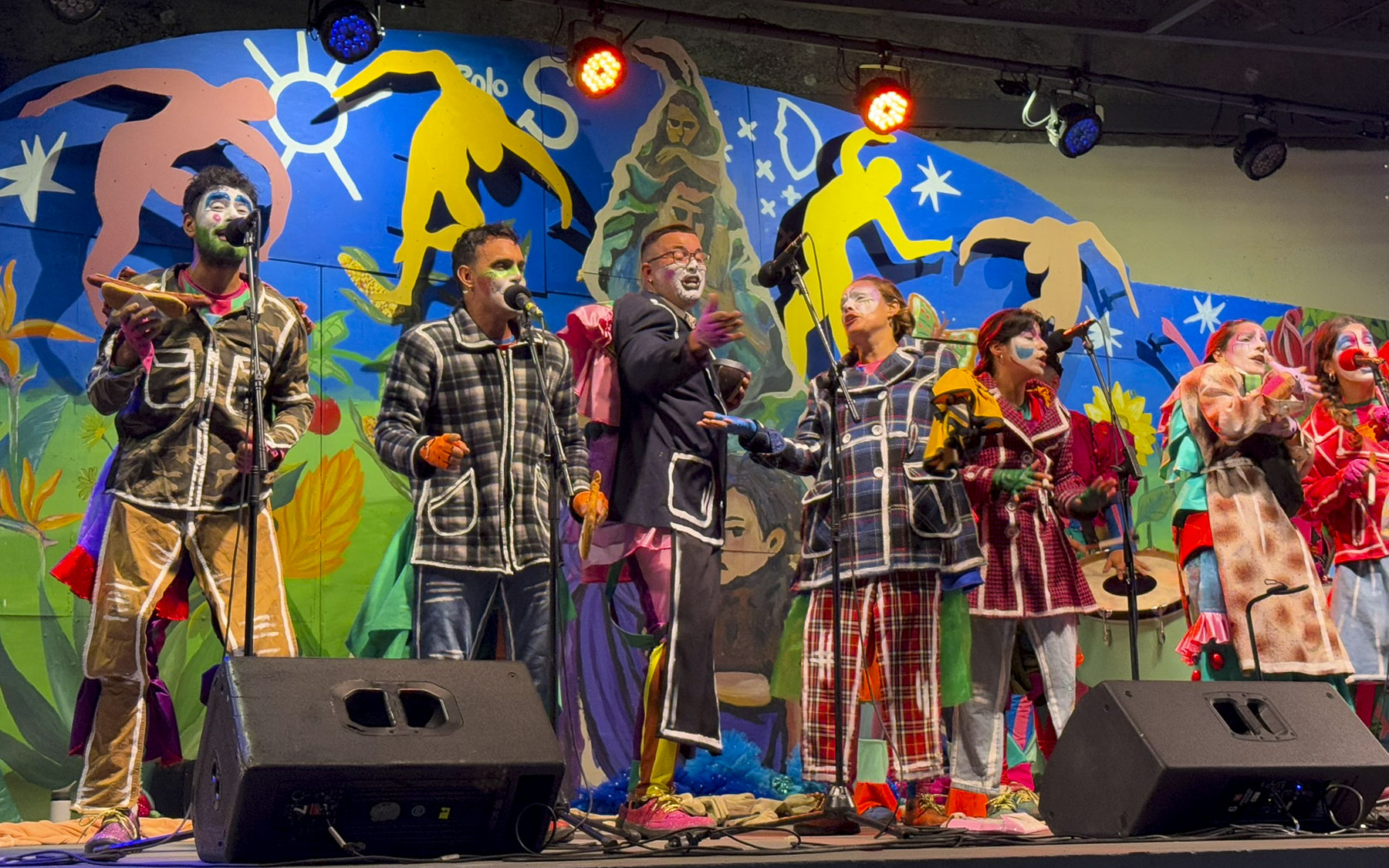
Tablados are temporary neighborhood stages set up across Montevideo where colorful theatrical and musical performances are put on by groups of actors called Murgas, known for their satirical and humorous songs, who are joined by groups of Parodistas who are recognized for their entertaining parodies of well-known stories or events.

Tablados performances only happen during the carnaval season in Uruguay, which runs for forty days between mid-January and mid-March in Uruguay. The performance we attended lasted two hours and had eight different skits. If you cannot attend one of the carnaval parades in Montevideo the tablados are extremely funny and entertaining and you don’t need to understand Spanish to thoroughly enjoy them. They are also very inexpensive.

Walking back through the newer part of Montevideo the next morning we strolled along

Av. 18 de Julio. The street is named for the day in 1830 when the Uruguayan Constitution was ratified, and is the city’s busiest street with numerous stores, restaurants and bars along its length. At the intersection of Av. Carlos Quijano was the Fuente de los Candados,

the Fountain of the Padlocks. It seems every city has one of these landmarks where couples announce their love by hanging a lock on the metalwork; many of these were engraved with names, dates, or sentiments. What’s unique about this one is that it surrounds a fountain where folks also throw coins to make a wish.

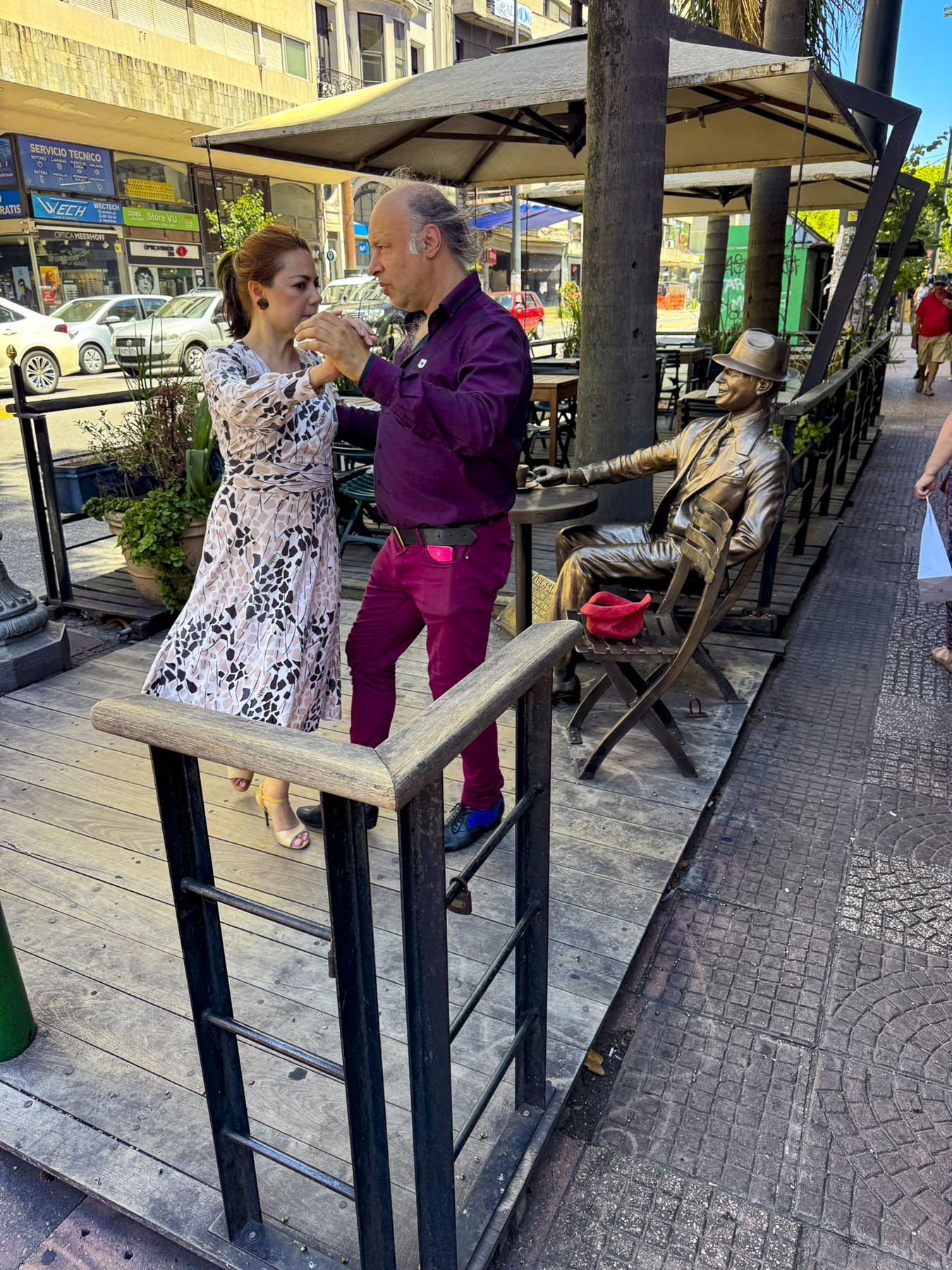
Next to the fountain was a couple busking for tips as they tango danced in front of a café. This was the only time we saw tango dancing in Montevideo, even though the city shares credit with Buenos Aires as the birthplace of the dance. The scarcity of dancers might have been because we were there during carnaval season, and so many other events were happening then.  

Nearby was the Mirador Panorámico de la Intendencia de Montevideo. It’s an open-air viewing platform on the 22nd floor of the headquarters building of the Municipality of Montevideo. Montevideo does not have a very interesting skyline, but the view was expansive, and you can see the port and how La Rambla follows the twists and turns of the coast. There is a small café inside at the mirador. We didn’t find it to be a “must do,” destination, and would suggest trying to time your visit to the mirador around sunset, if possible, to make it more spectacular.

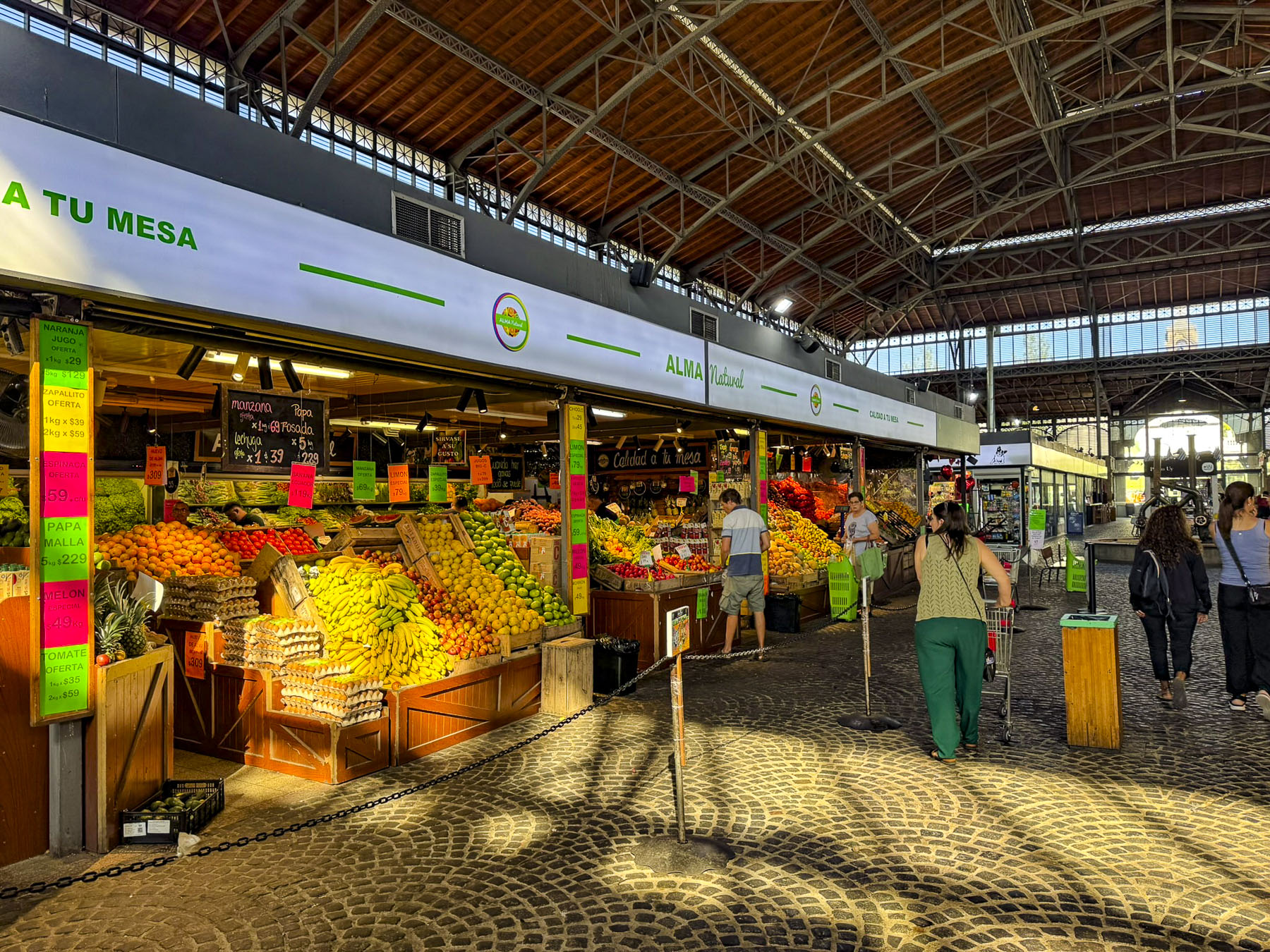
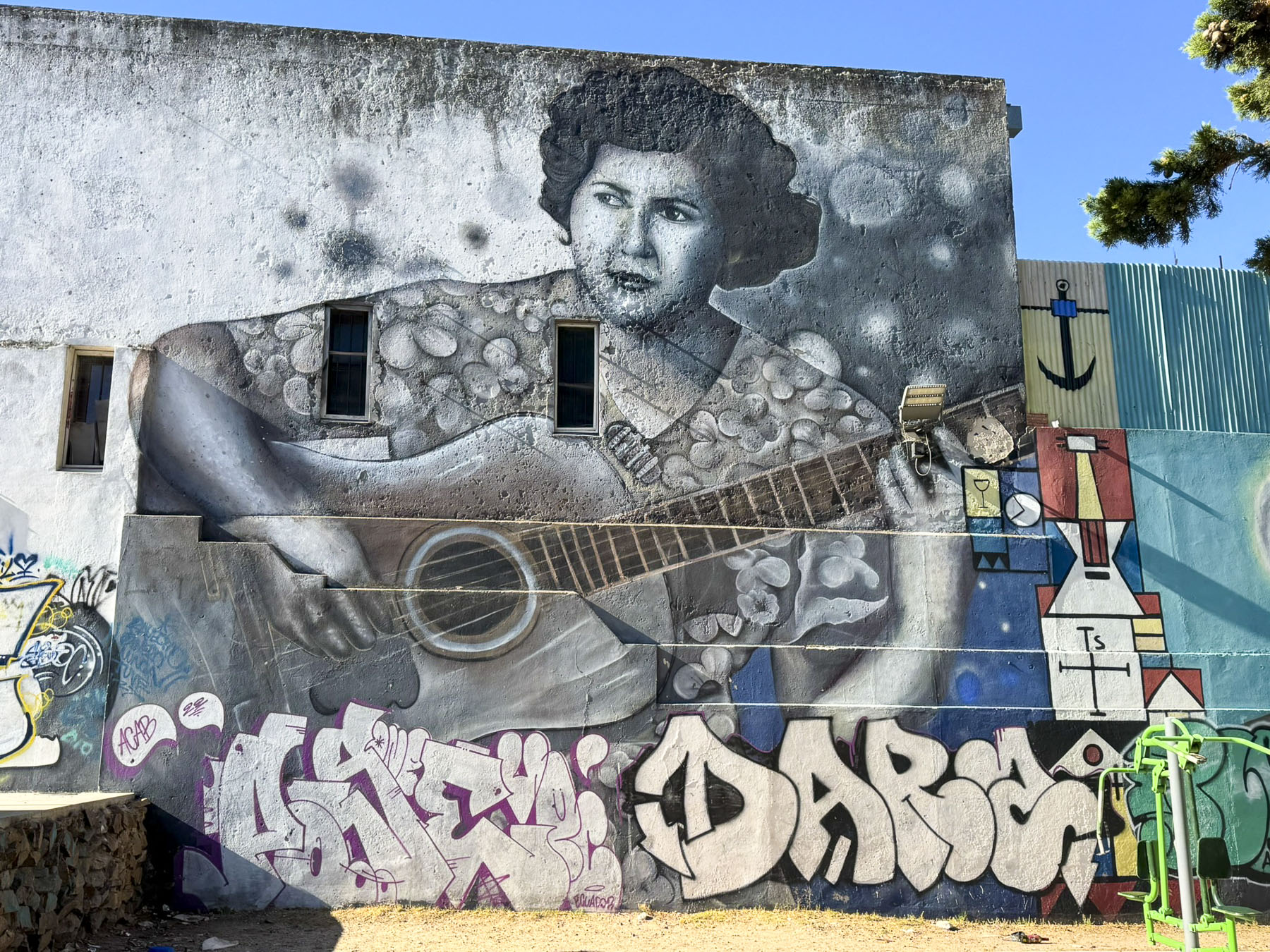
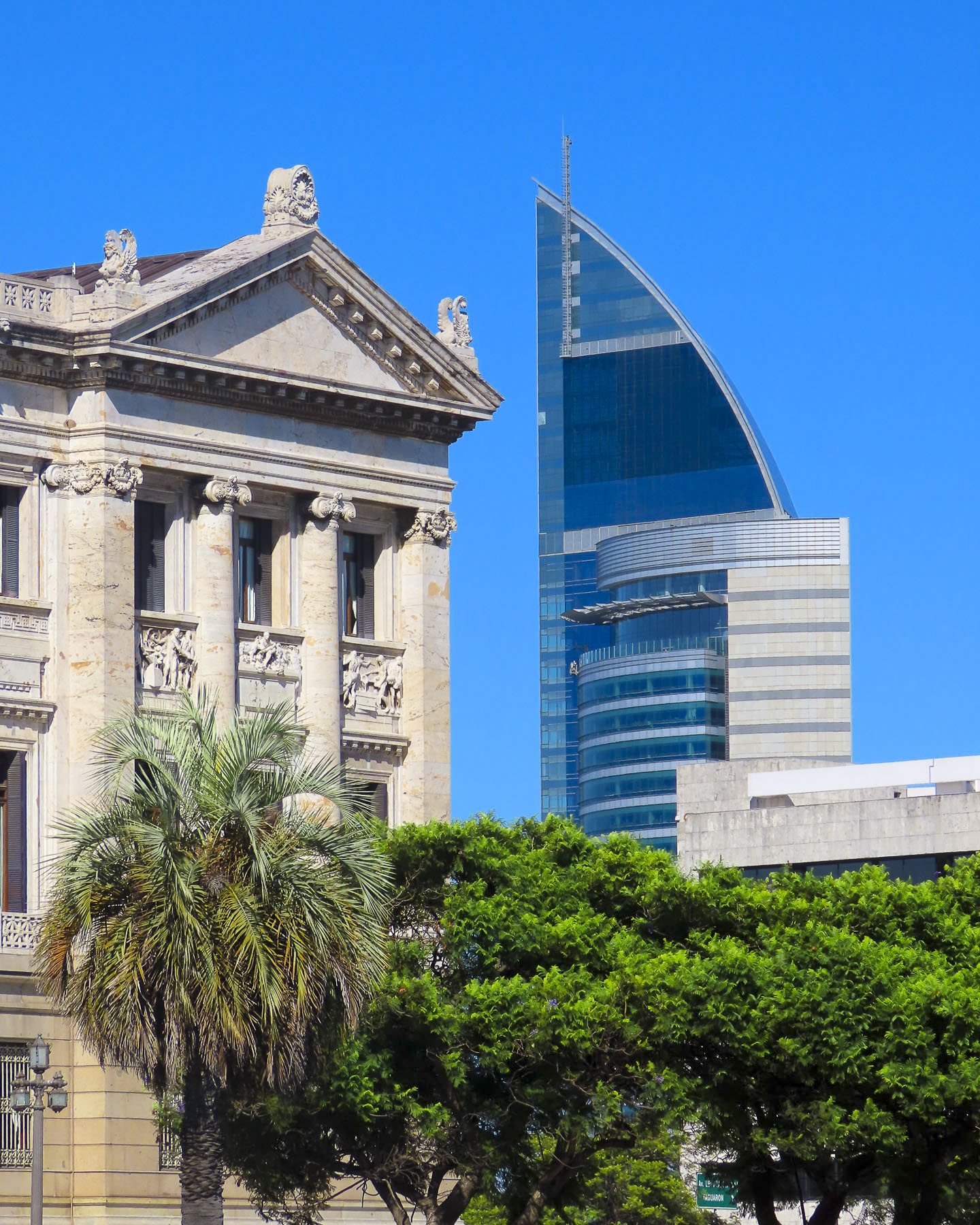
Afterwards we decided to expand our wanderings around the city, and we walked many blocks to the Mercado Agrícola de Montevideo, a historic city market that dates from 1913. We bought some fruit and empanadas for lunch. The most interesting part of our walk was around the Palacio Legislativo, a neoclassical building that is the seat of the Uruguayan parliament. The building’s iconic architecture stands in stark contrast to the large heart felt murals portraying local Montevideans, and the writer Kurt Vonnegut.

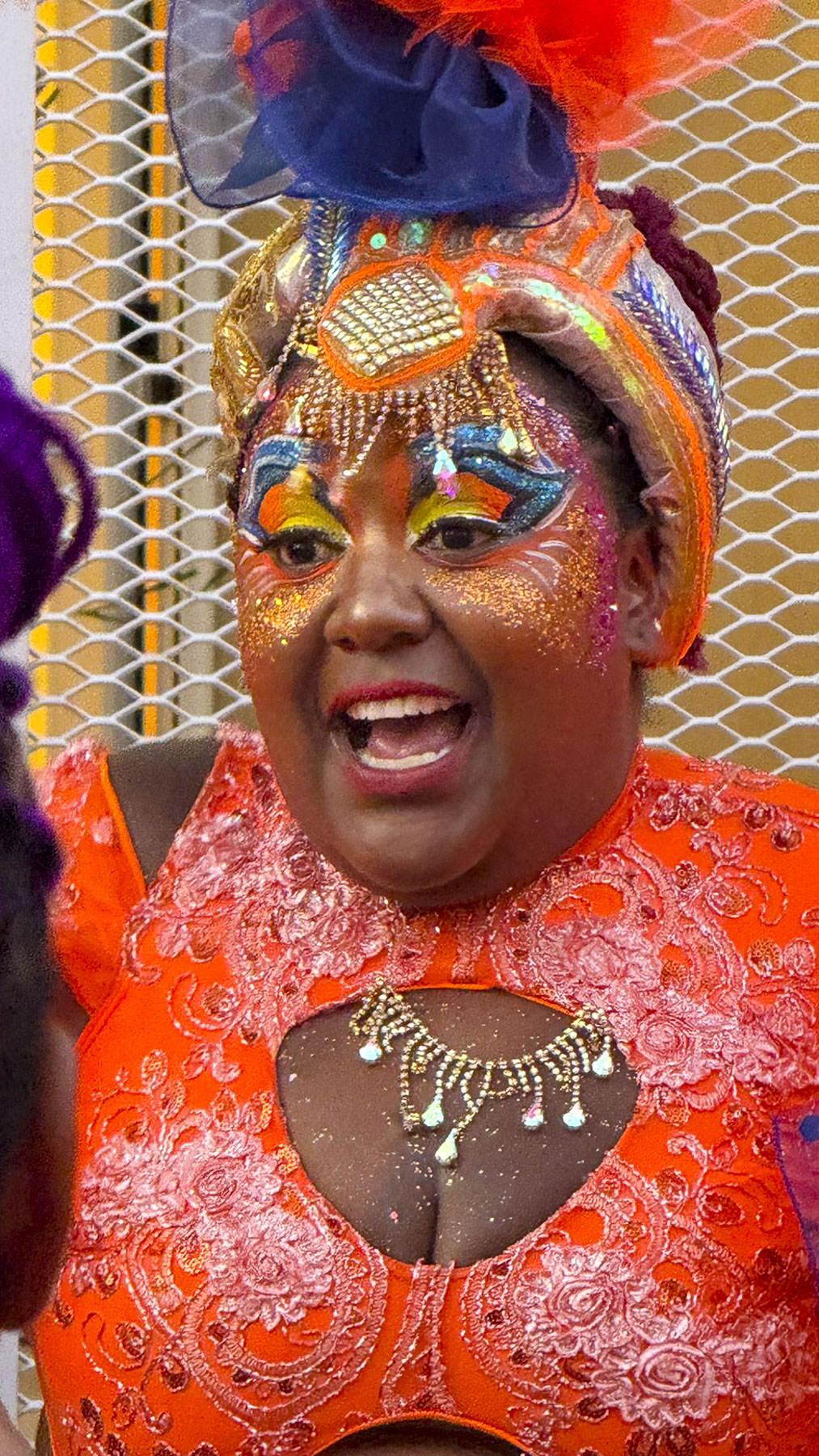
Over the weekend the Llamadas parade, one of the largest during carnaval, was taking place Friday and Saturday night in Barrio Sur. The parade celebrates the Afro-Uruguayan culture in the country with numerous comparsas, large groups of 50-100 festively dressed drummers who play traditional candombe rhythms for their dancers who perform along the street ahead of them.

Our Uber driver dropped us as close as possible to the viewing spot we had scoped out earlier in the week. But the streets were full of activity, with roads blocked for charter buses carrying various comparsas and staging areas where the dancers and drummers readied their groups.

We didn’t know advance ticket purchase was required, so we were totally surprised when the intersections were cordoned off and only tickets holders were allowed onto the sidewalks along Isla de Flores street. Fortunately, the area we had chosen had one small section that was open, and we jammed in, shoulder to shoulder, along with several hundred other folks with the same idea, to watch the parade. Folks next to us cautioned us about losing our phones to grab and run thieves, but we never felt uncomfortable in the crowd.

Carnaval in Montevideo is not as elaborate spectacle as in Rio de Janeiro where huge floats dominate the night. We didn’t last until the end of the parade, but it was a hugely fun, very authentic grassroots event that we thoroughly enjoyed. A few blocks off the parade route at Restaurante Palermo Viejo we shared our first chivito. These are huge, layered sandwiches that contain churrasco steak, ham, bacon, mozzarella cheese, lettuce, tomato, and a fried egg on top. The tasty creation was very filling, and it is often referred to as Uruguay’s national dish.

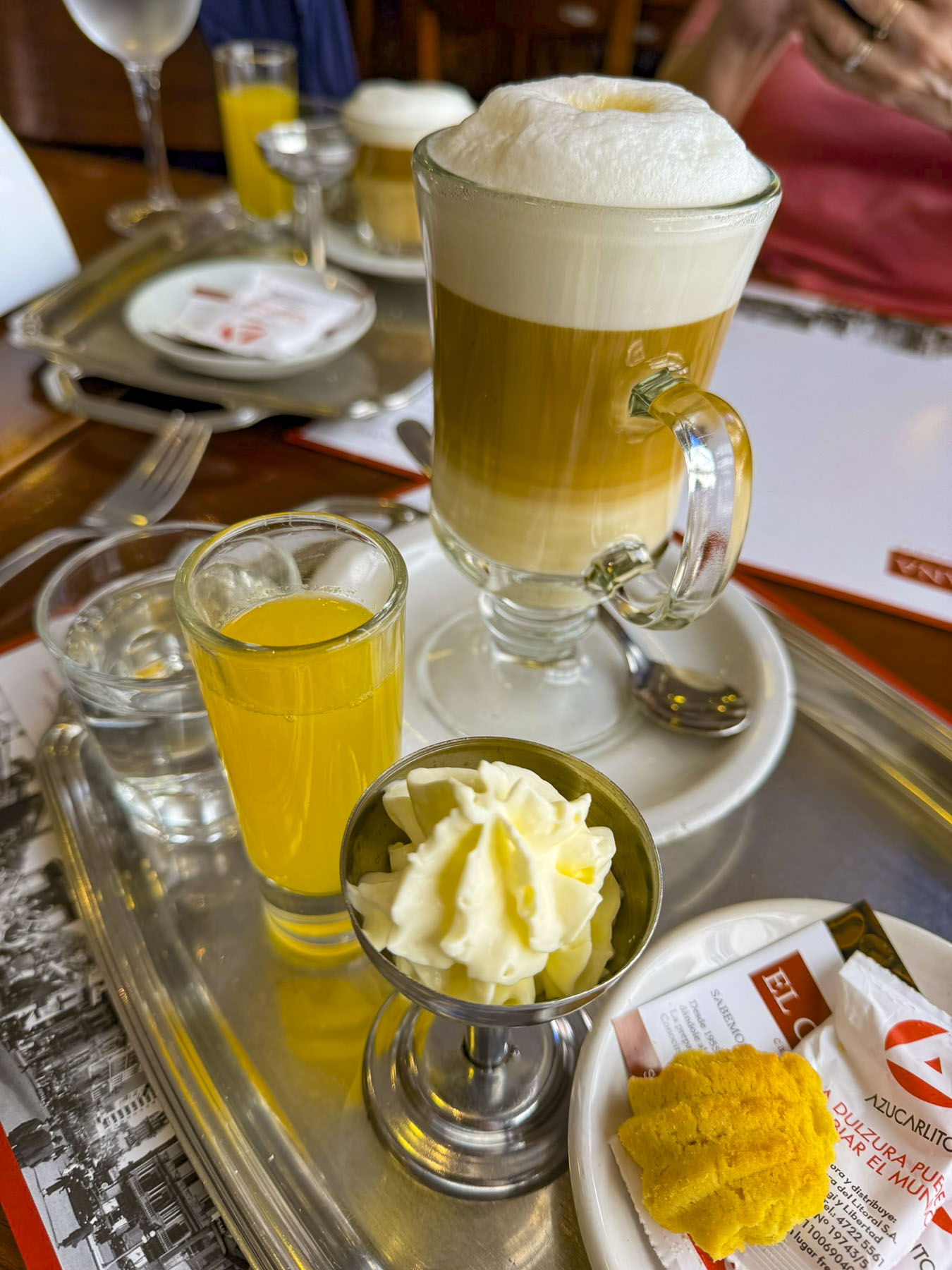
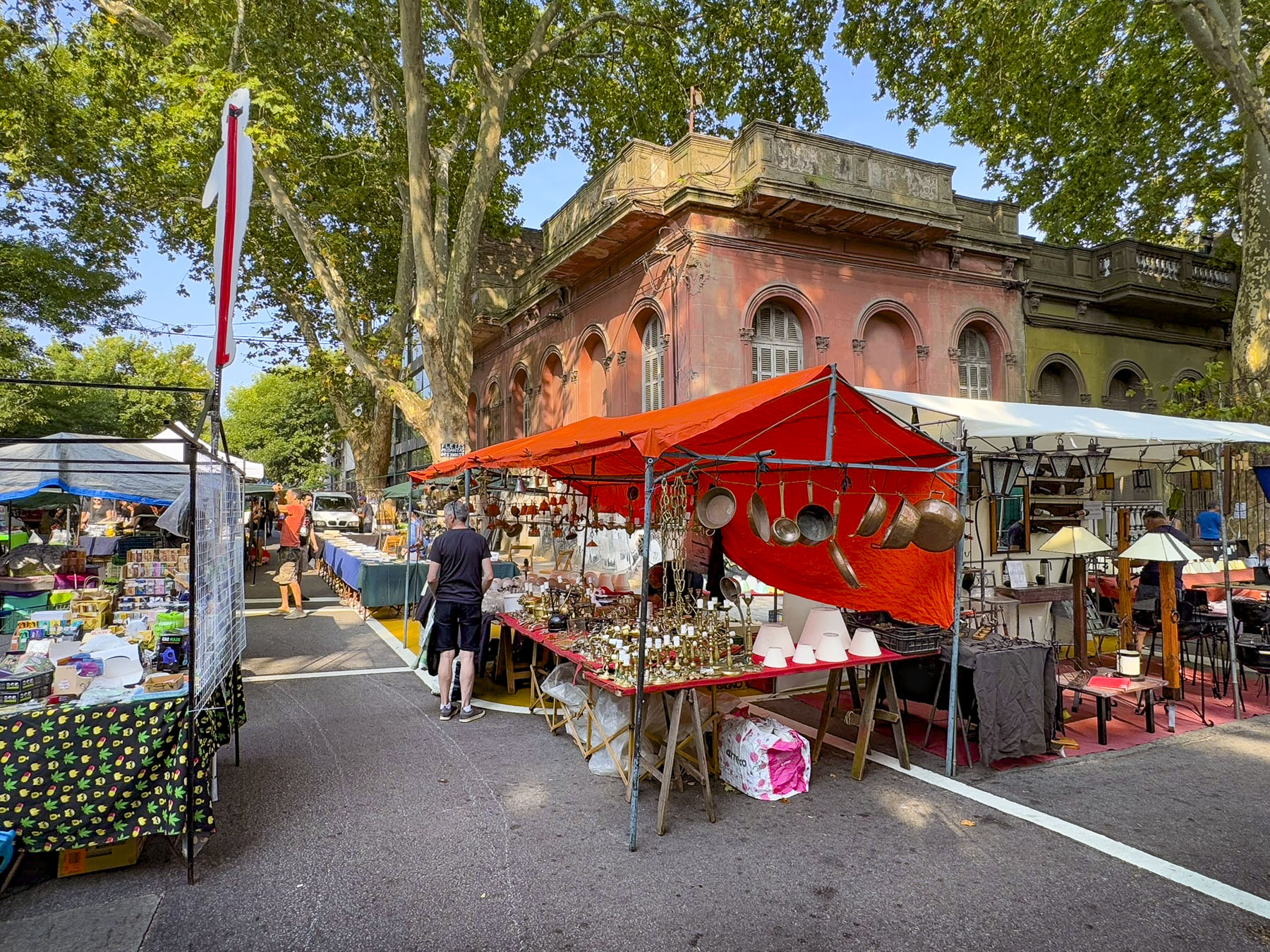
The next morning after a luscious breakfast at El Copacabana, in the old town, we took an Uber over to the Feria de Tristan Narvaja, a Sunday street market that stretches for seven long blocks through the Cordon neighborhood. It features a multitude of vendors selling everything imaginable, along with secondhand clothing, used books, fresh produce, and artist’s handcrafted creations.

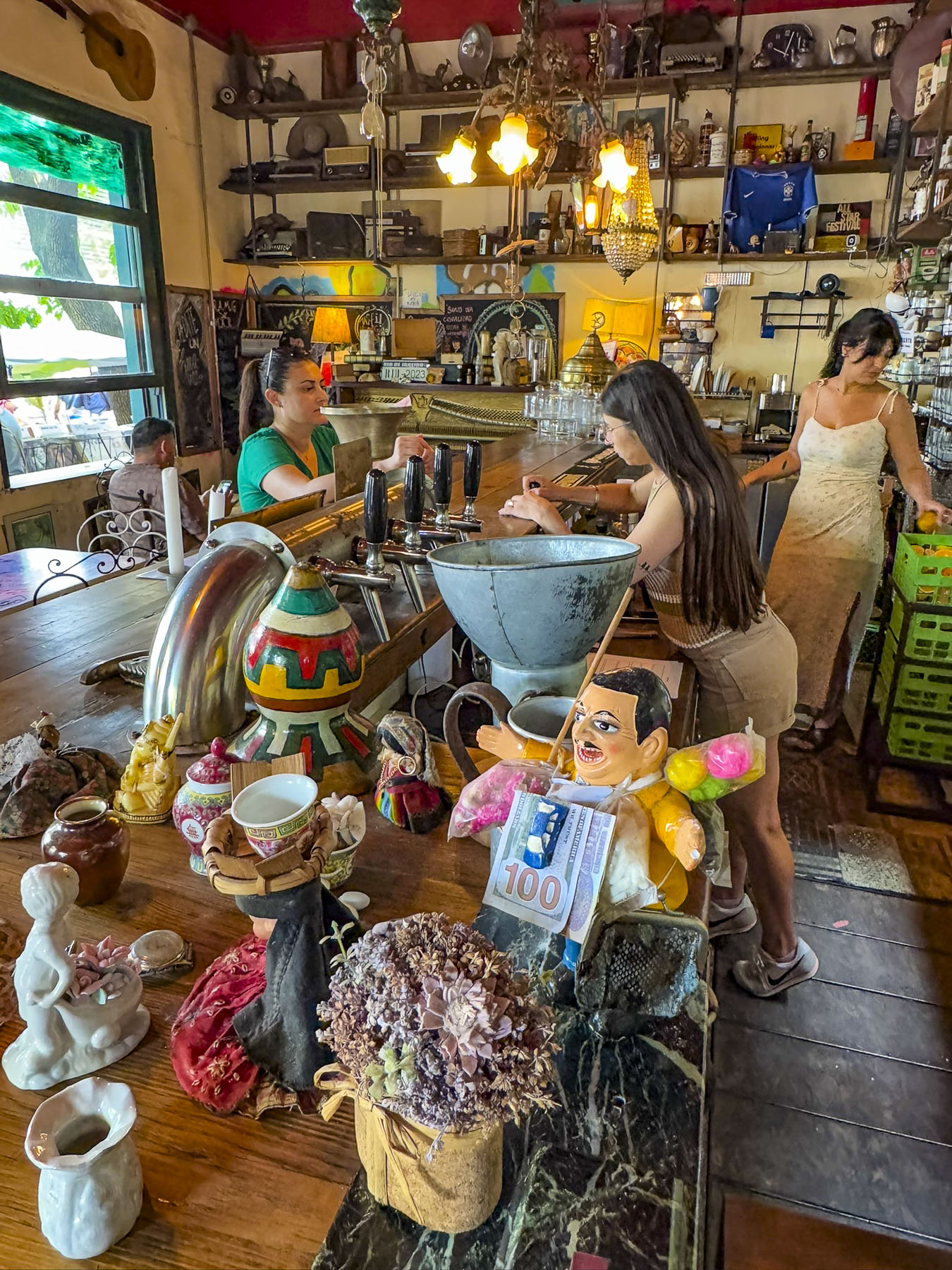
Following our “walk a little then café” philosophy we took a break at El Imperio, an eclectically decorated bar, where the barista between serving inside customers ran trays of espressos out to the vendors on the street. We thought the feria was one of the more interesting ones we’ve experienced during our travels and think it’s a must-do activity when visiting Montevideo, if you like this sort of event.

Later that morning we headed to the airport and picked up a rental car we had reserved at Localiza Aquiler de Autos, a very good local agency with reasonable rates, for our 12 day road trip, which we were starting the next day. But first we had one more thing to do locally, and we drove an hour north into the countryside outside of Montevideo. Nearly forty percent of Uruguay’s population lives in Montevideo, but the city’s urban sprawl quickly transformed into gently rolling farmlands and vineyards as we drove through the Canelones region to the Cabaña La Mansedumbre, a rustic, under-the-radar destination restaurant. We eventually turned down a sandy dirt road. A small weather-worn sign hung from the cattle gate across the twin tracks that led to Fredy and Silvana’s ranch. When making our reservation, he had reminded us to close the gate securely so his goats wouldn’t escape.

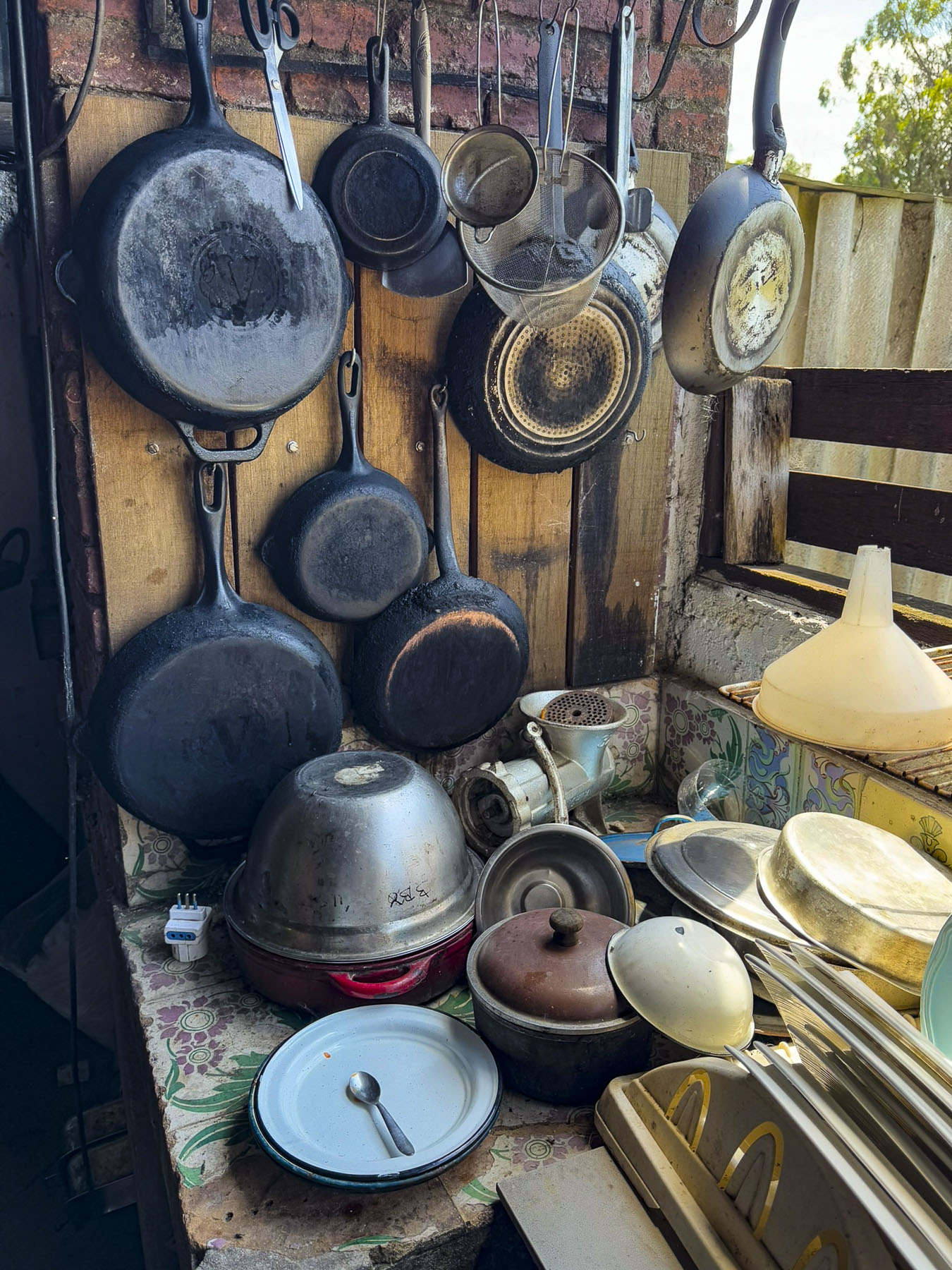
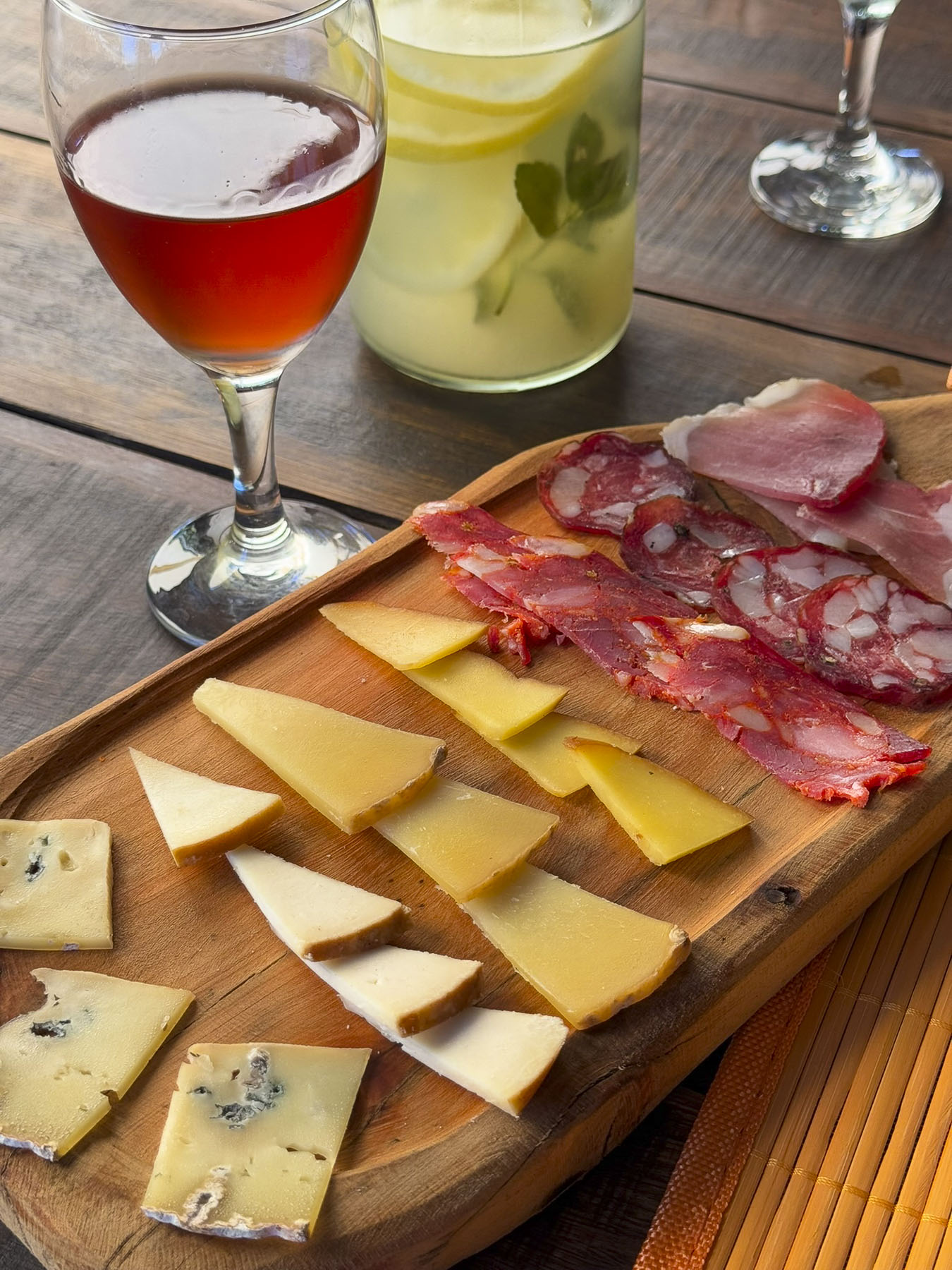
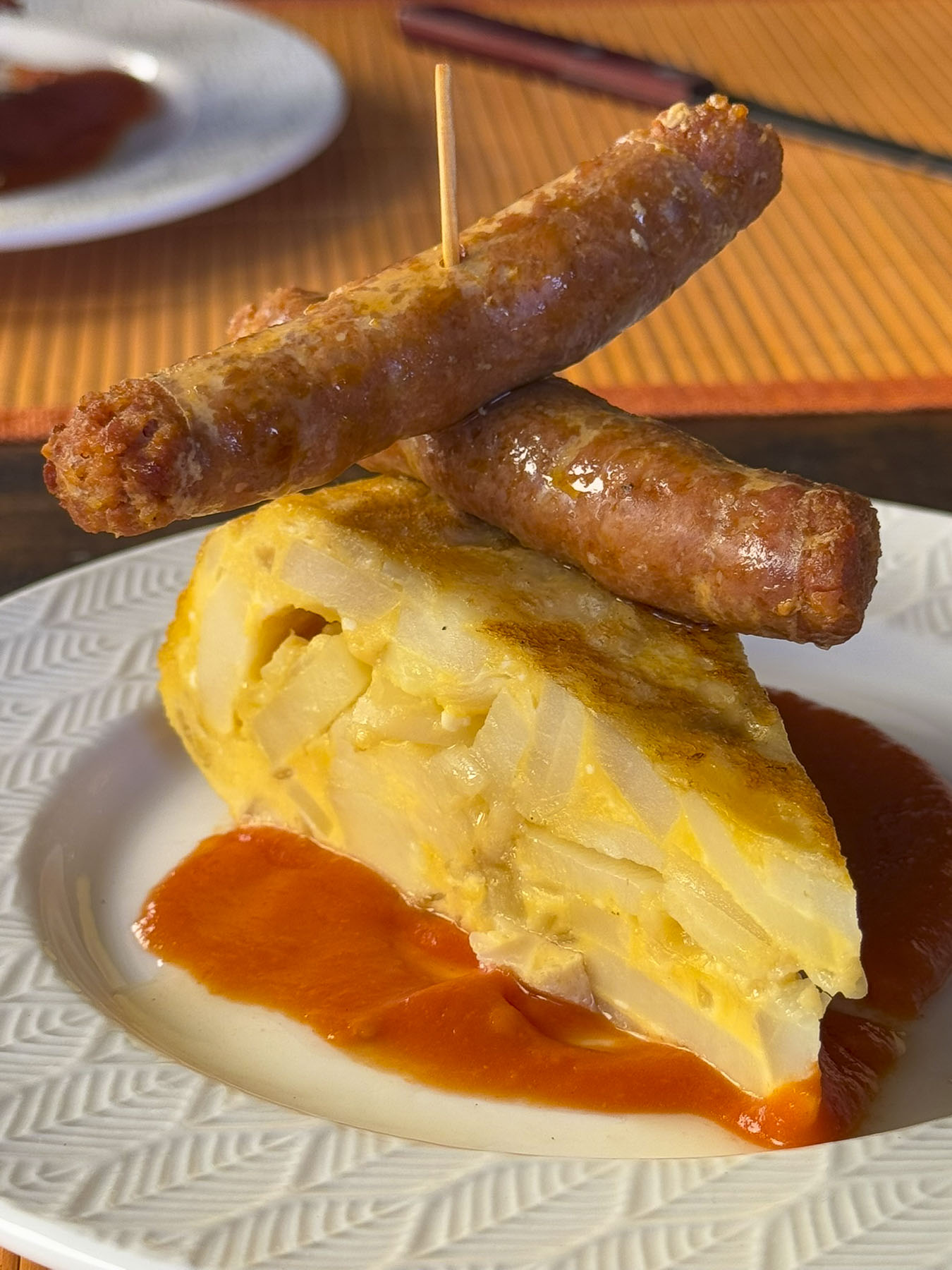
We were the first guests to arrive that afternoon and were warmly welcomed into the courtyard of the couple’s rural farm stead. A tour of the open-air kitchen followed where we met Fredy’s son Juan, as he was preparing charcuterie boards under an array of sausages and cheeses hanging from the rafters. Heat emanated from a brick oven in the corner. Two large golden tortilla de papas cooled on a countertop under shelves laden with jars or homemade sauces, jams, and jellies. Baskets of fresh bread and rolls which Silvana had baked that morning tempted us with their wonderful aroma. 

Very enthusiastically Fredy explained that everything they use to prepare their dinners is sourced within a 5-mile radius of their farm. Though many items, like the goat cheeses, were made by his neighbor using the goat milk from Fredy’s herd, while the tanat wine we were offered, as we waited for the other guests to arrive, came from a friend’s vineyard at the other end of the road. Bottles of grappa that Fredy had infused with herbs lined a shelf above wine casks which flowed freely all afternoon.

Neither has trained as a chef, but they both share a passion for food and travel which has inspired them to refine their skills over the years, and now share their enthusiasm for great food at their home on the weekends. Seeing their farming community’s potential they have encouraged their purveyors to provide new and different sausages, cheeses, and produce than what was traditionally available in the past.

With everyone’s arrival we were seated at tables under their tinned roof porch. We were hoping to experience a traditional Uruguayan asado, but grilling meats on the parrilla was not part of the gourmet eight course feast that the couple had planned.

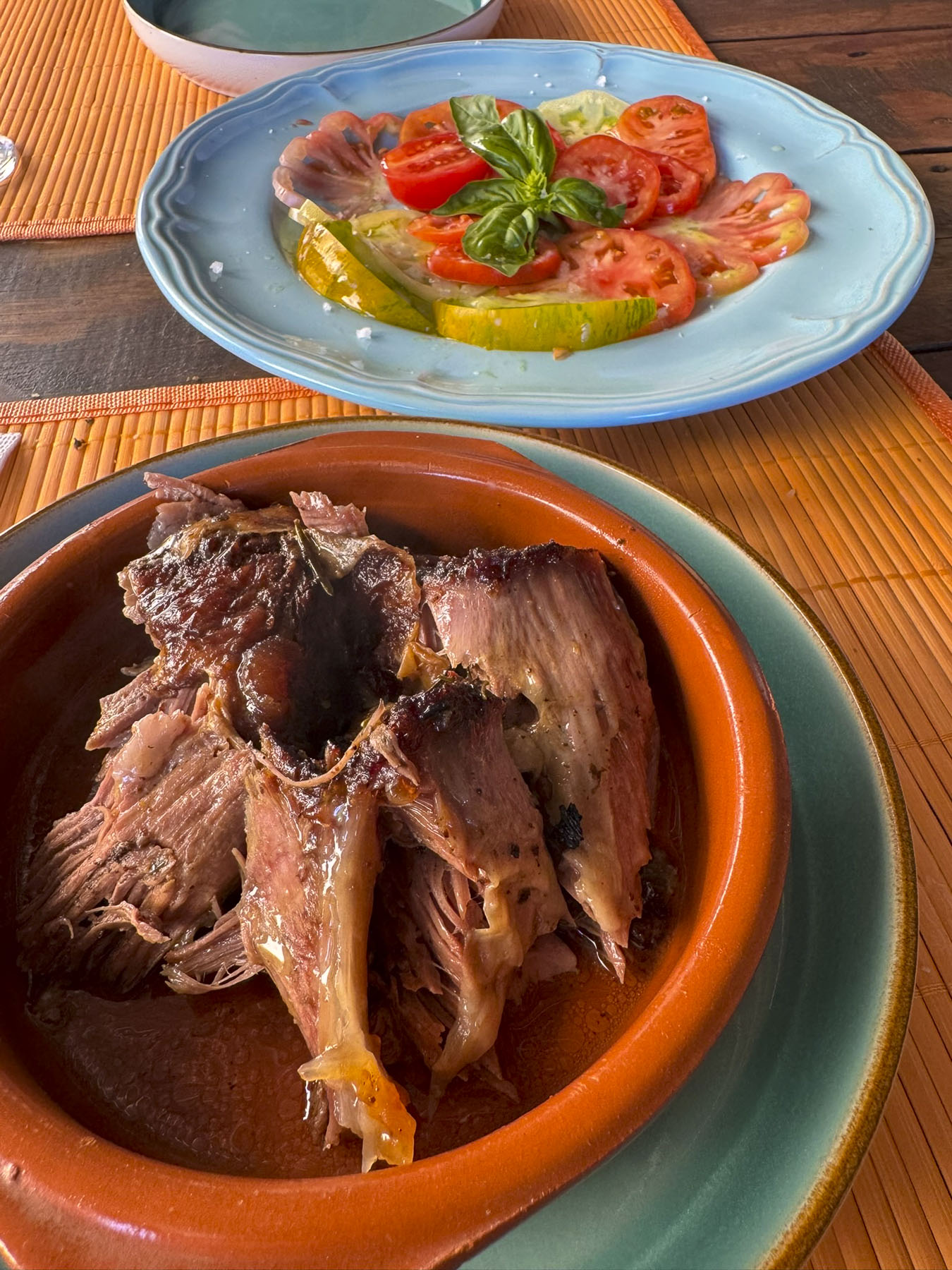
Our initial disappointment faded quickly as amazingly delicious dishes emerged from that simple country kitchen for nearly three hours that afternoon. Every dish was uniquely flavored, excellently prepared and presented. Coffee, dessert and grappa crowned the dinner. We wish we had taken notes, but photos of some of the dishes will have to suffice. 

The dinner was nicely paced, with plenty of time to talk with the other guests and enjoy the wine between courses. It was a memorable afternoon, and an excellent farm to table dining experience, along with being the best meal we had while visiting Uruguay.

For reservations Fredy and Silvana can be contacted through phone & WhatsApp +598 99 390 054.

Montevideo consistently ranks as the top city in Central and South America for quality of life. We thought it was a great destination, especially during Carnaval and it exceeded our expectations.

Till next time,

Craig & Donna

P.S. Our 12 day road trip through Uruguay started the next day.

During our stay, Donna had horrible hacking cough, that was so concerning one night we called the reception desk at NH Montevideo Columbia to ask for advice. The hotel, to our relief, had a physician on-call who made a late-night visit to our room. After an initial exam the doctor wrote a prescription for a chest x-ray in the emergency room at The British Hospital, a private hospital in downtown Montevideo. Fortunately, it was a quiet night at the hospital, and we were attended to quickly after checking in. We had a good experience there, the x-rays were negative for lung infection, and the hospital visit was totally covered by our travel insurance.

Street parking everywhere in Uruguay is free!

Nicaragua: The Dioromo Hipica – a Horse Parade

Celebrating the equestrian lifestyle has been a Spanish tradition since the Middle Ages and followed early Spanish colonists across the Atlantic to Central and South America in the 1500s. In Nicaragua the tradition lives on in beloved hipicas, horse parades.

There are numerous Hípica festivals, held in towns large and small, across the country throughout the year. They are usually the main event of a town’s festivities marking their patron saint’s day. By pure luck, one February, we were able to experience the Dioromo Hipica which is one of many activities held to honor La Virgen de Candelaria in the small village of Dioromo, eleven miles away from Granada.

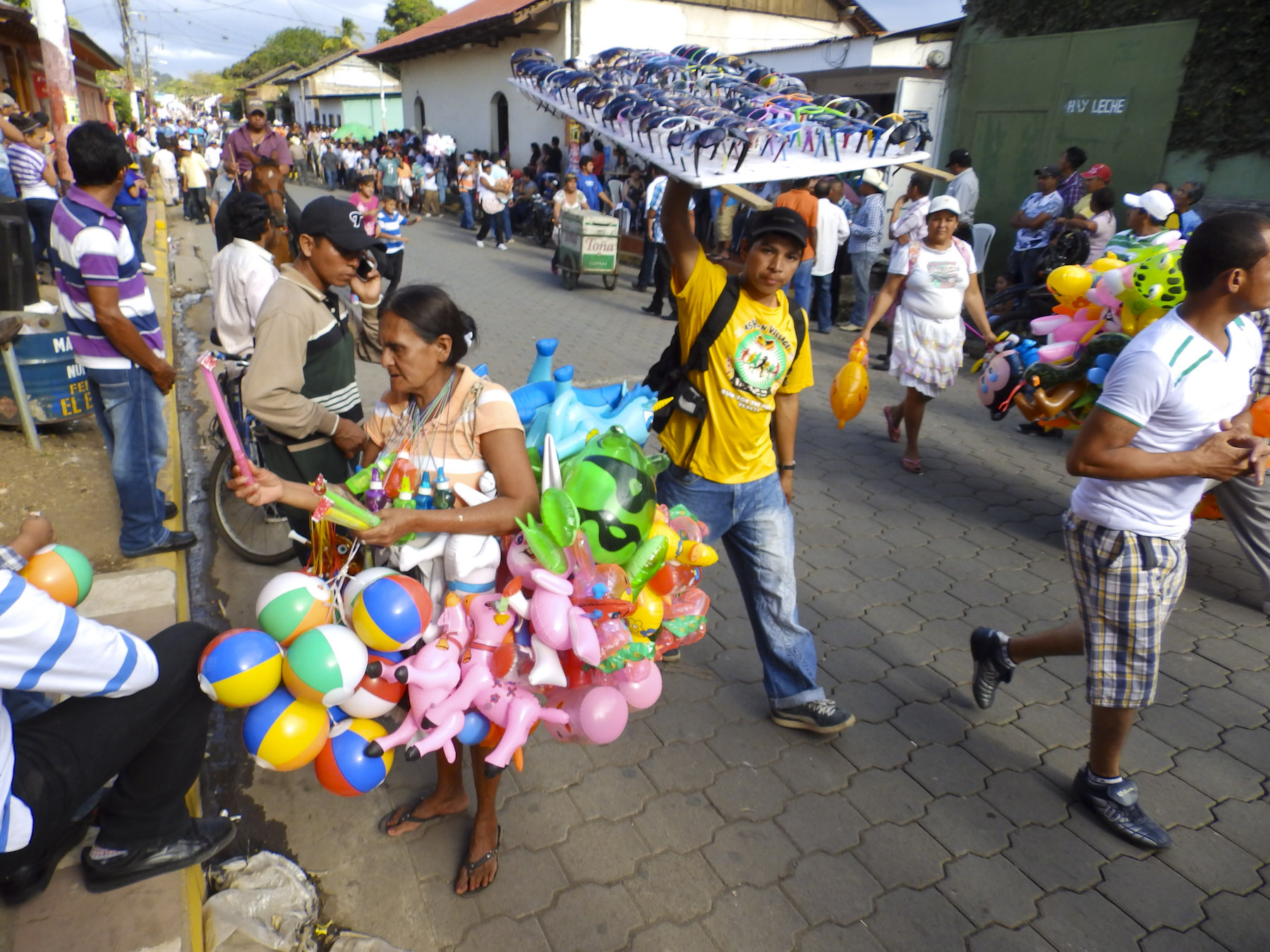
This was a wild and crazy event, with hundreds of cowboys, dancing horses, a bull riders, and pickups trucks loaded with brass bands parading through the village. The streets were crowded with onlookers.

Because we were standing close, we were occasionally smacked by a horse tail. There were life-size toy horses for kids to sit on and get their photo taken by their parents; small amusement rides and food stalls surrounded the town plaza.

Baile de Las Negras dancers in painted masks and ornate costumes performed before a large crowd in front of the church. Down the side streets a group of men carried aloft a tall statue of the Virgin door to door, to bring blessings to the households.

I think we were the only gringos there experiencing this wonderful local event.

Till next time, Craig & Donna

Portugal Road Trip – Part 2: For the Love of Guardrails

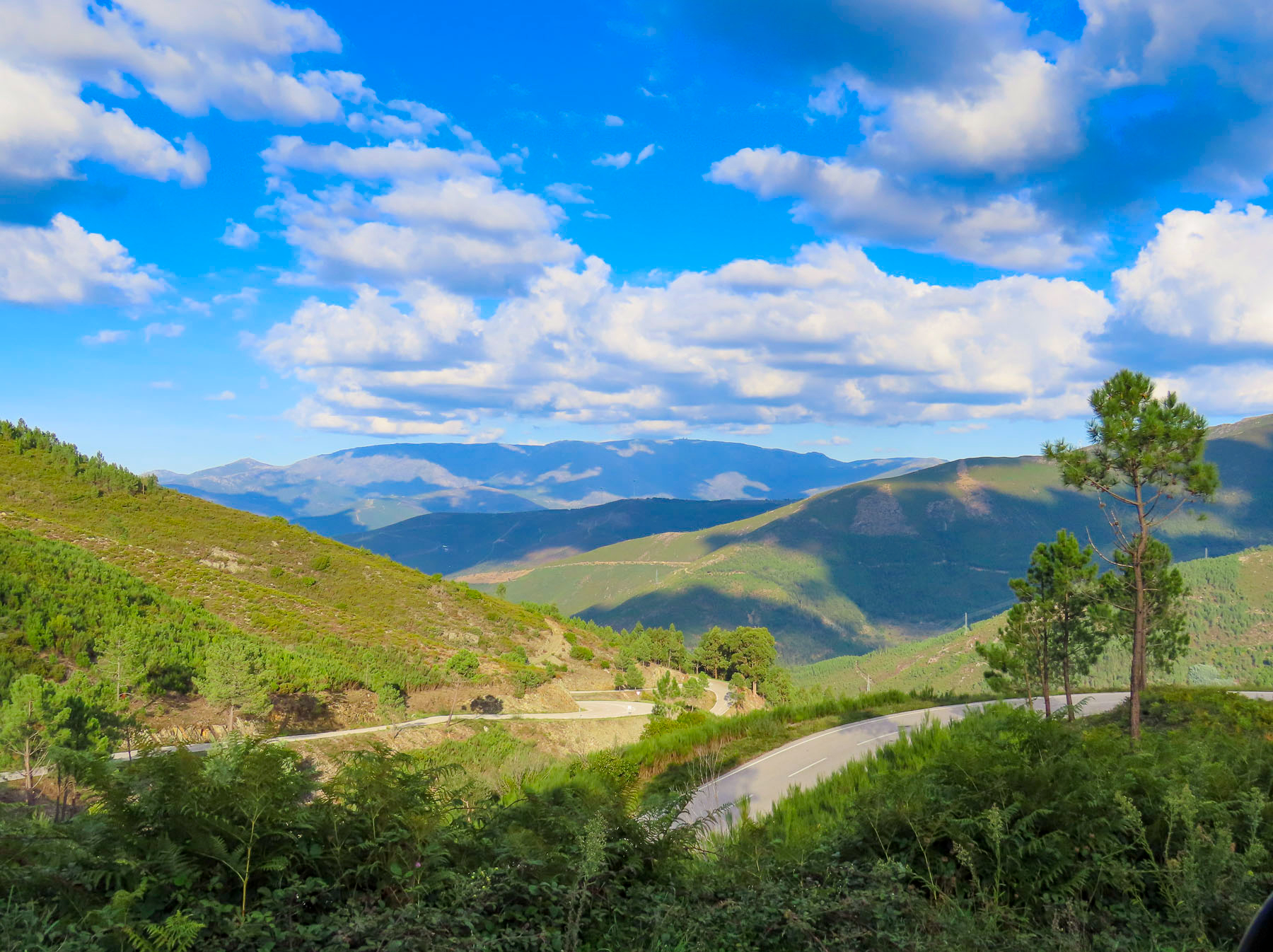
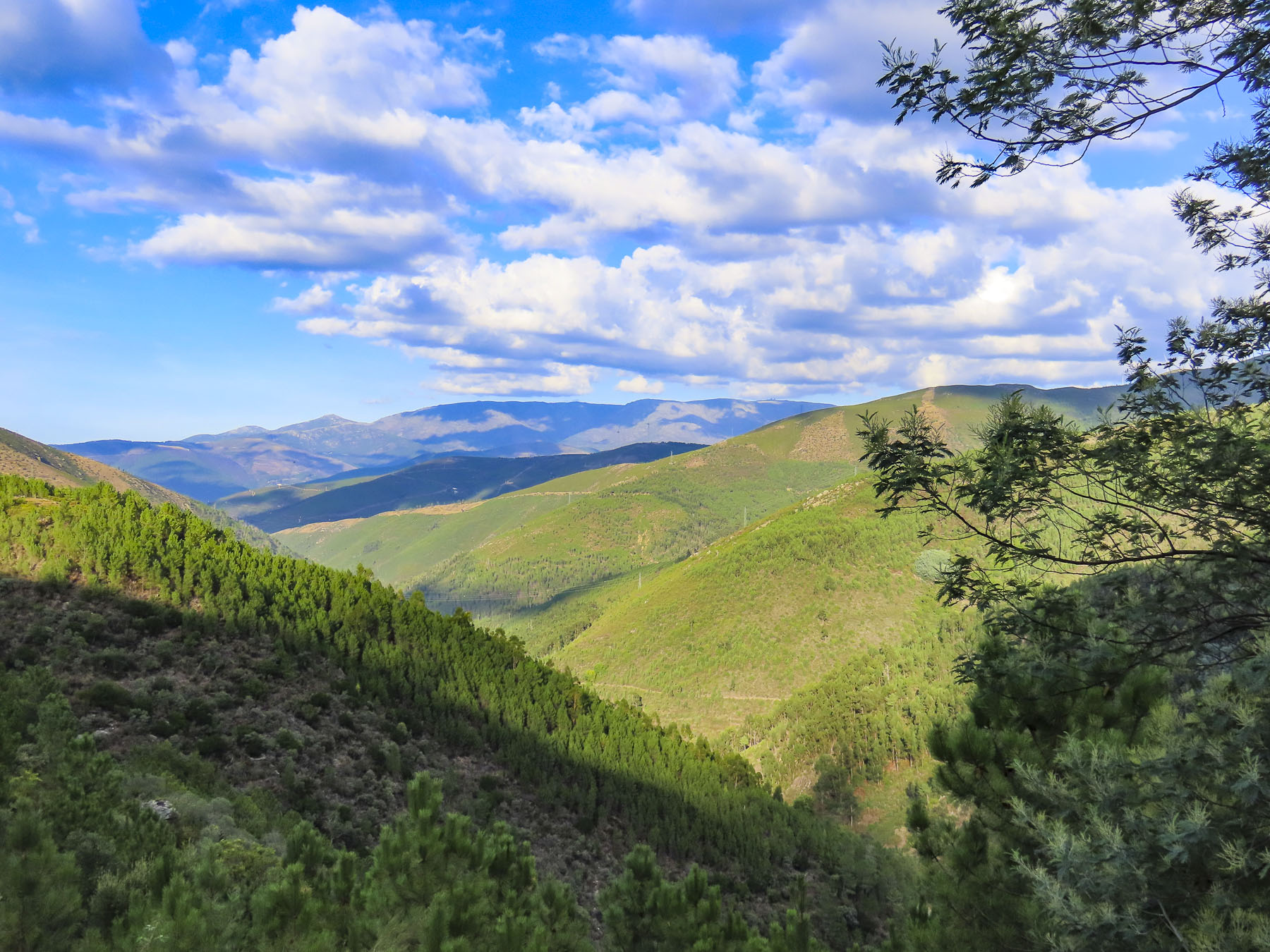
To misquote RWE, “It’s the journey, but an interesting destination helps.” We left Tomar, destined for Piodão, one of the 27 Aldeias do Xisto, Schist villages, in the mountainous central part of Portugal. Only two and a half hours from Tomar, we rarely passed another car as we drove. Our route quickly transitioned to serpentine roads traversing rolling hills covered in eucalyptus and pine forest. Then the higher above the tree line we drove, an expansive vista of shrublands fielding heather, broom, carqueja and rosemary were revealed. Hair raising, twisting and turning roads would truthfully be a better description, made all the more unsettling because there seemed to have been a transportation department budget crisis, as in, they forgot to install guardrails on most of those mountainous roads! My wife’s knuckles were white from tightly grasping the “Oh Jesus” handle above her door. With all the gorgeous panoramas, they could have planned more miradouros for folks to safely enjoy the views from.

We are not novice mountain drivers, having taken many switchback roads to remote places on several continents, which has reinforced or belief in and appreciation for a nice sturdy guardrail when we see one.

This was also the day our moody rent-a-wreck of a car went psychotic, every warning light on the dashboard blinking violently in Portuguese, requiring us to pull over to check the vehicle. Reluctant to turn off the engine in such a remote area, we listened closely for any sounds of motor distress. The car sounded fine. We drove on. With a quick, blind left turn and an “Oh God!” we descended a steep single lane road on the far side of the village that eventually led us across terraced slopes to Casa da Padaria for the night.

With warm greetings and help with our bags Gorete, the innkeeper, showed us to our room. For many years, decades before its renovation, the inn served as the town’s bakery run by Gorete’s father in-law. She and her husband returned to the village and remodeled the original building into a small four-bedroom guesthouse. The bakery’s large brick oven still takes up one whole wall of the breakfast room, which also displays a huge dough trough and long wooden bread peels used to take the loaves out of the wood fired oven.

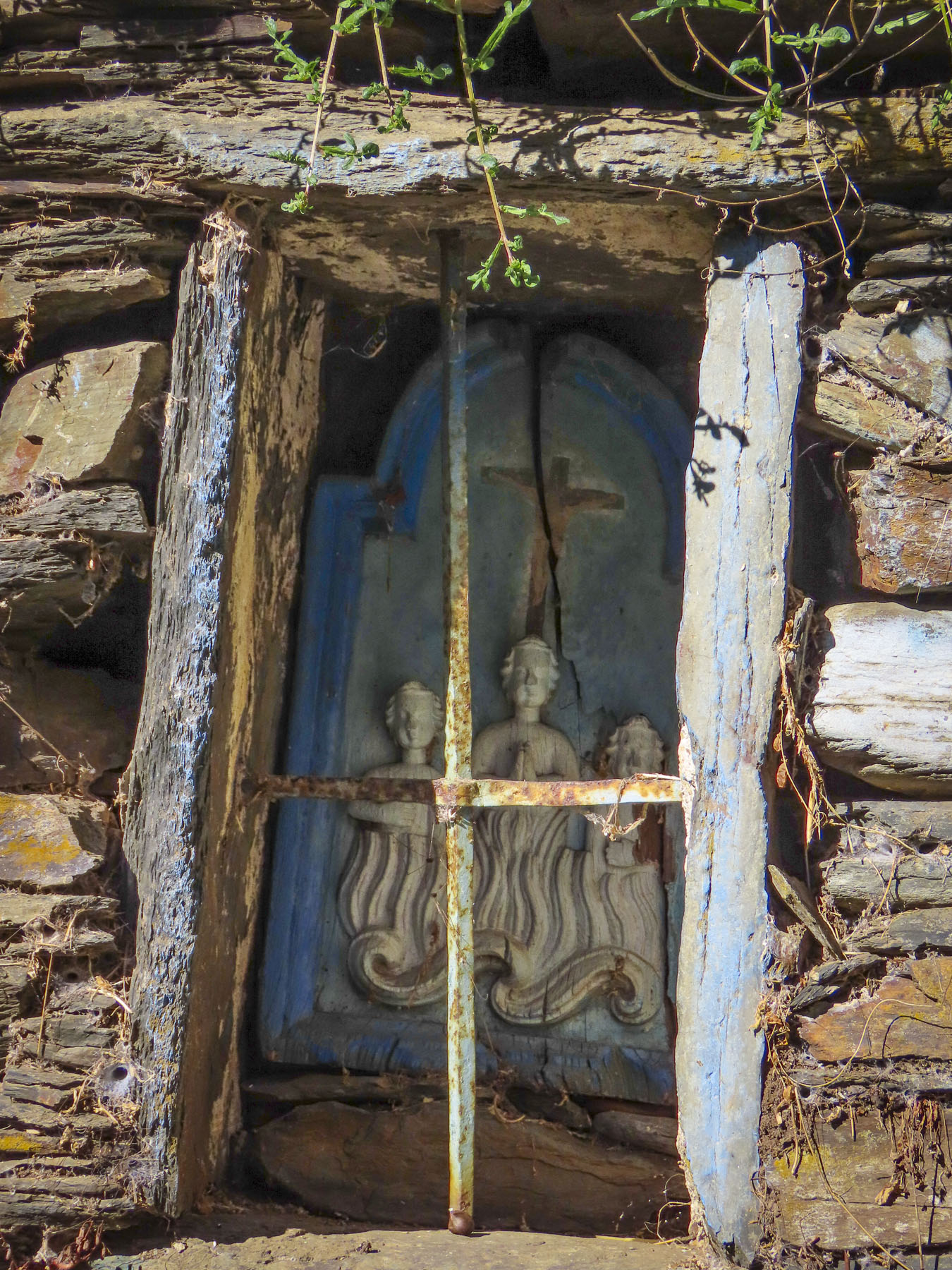
Schist, schist, schist, everywhere schist! Walls, roofs, cobbled lanes, terraces, everything in the village is built with this durable brown and grayish stone, from a distance giving it the appearance that it has grown organically from the earth of the box canyon that shelters cradles it.  Everyone’s blue doors and window frames are not the result of superstition to ward off demons or to bring good fortune, but a shop keeper buying many years’ worth of paint in only one color. It became tradition.  

Channeled narrow rivulets of cold mountain water run quickly between homes, under doorsteps and along the edges of walkways before cascading downhill into irrigation trenches for the terraced crops below the village.  Small fountains throughout the hamlet offer spring water for drinking and washing for some of the older homes that still might not have plumbing.   

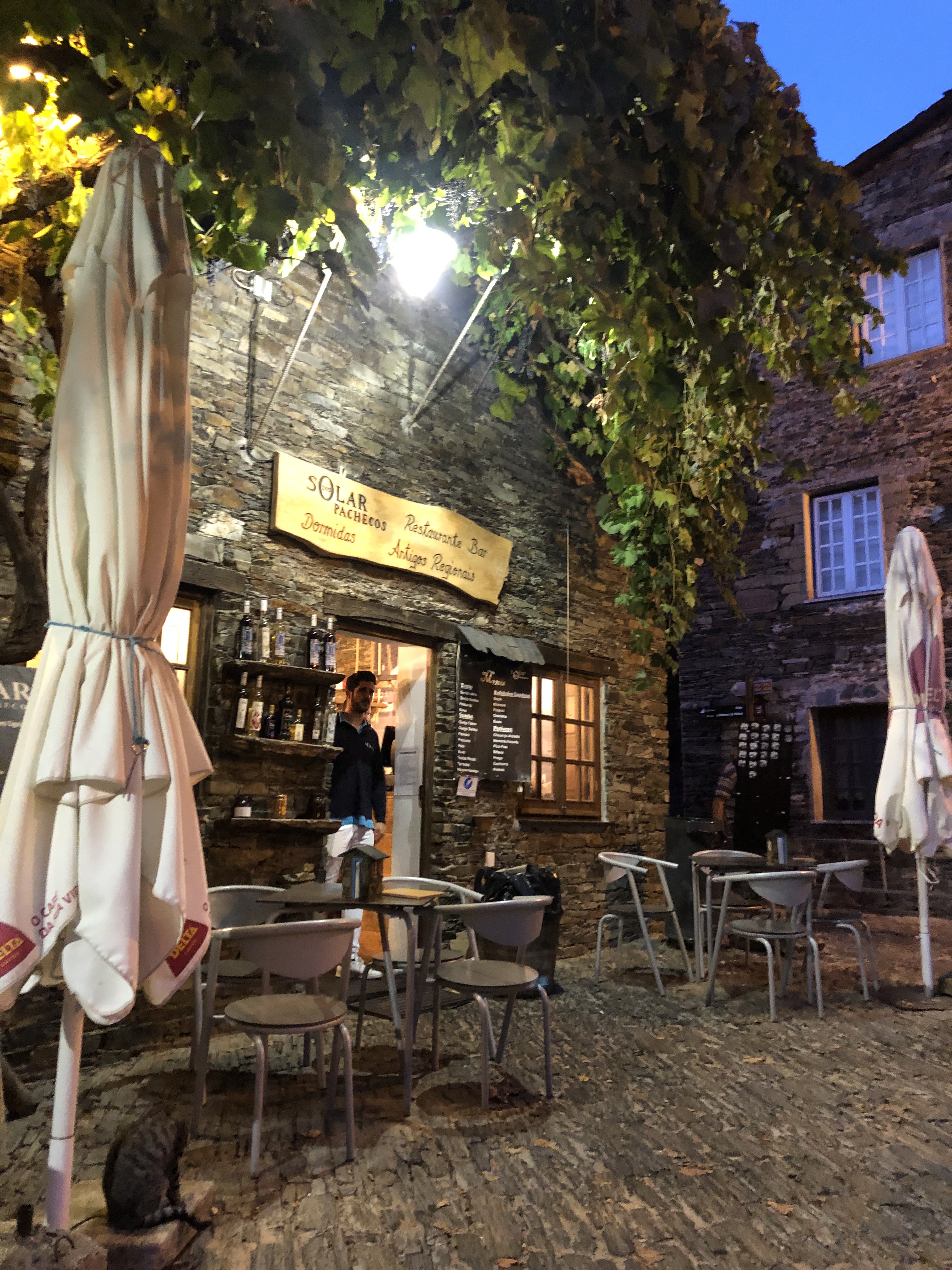
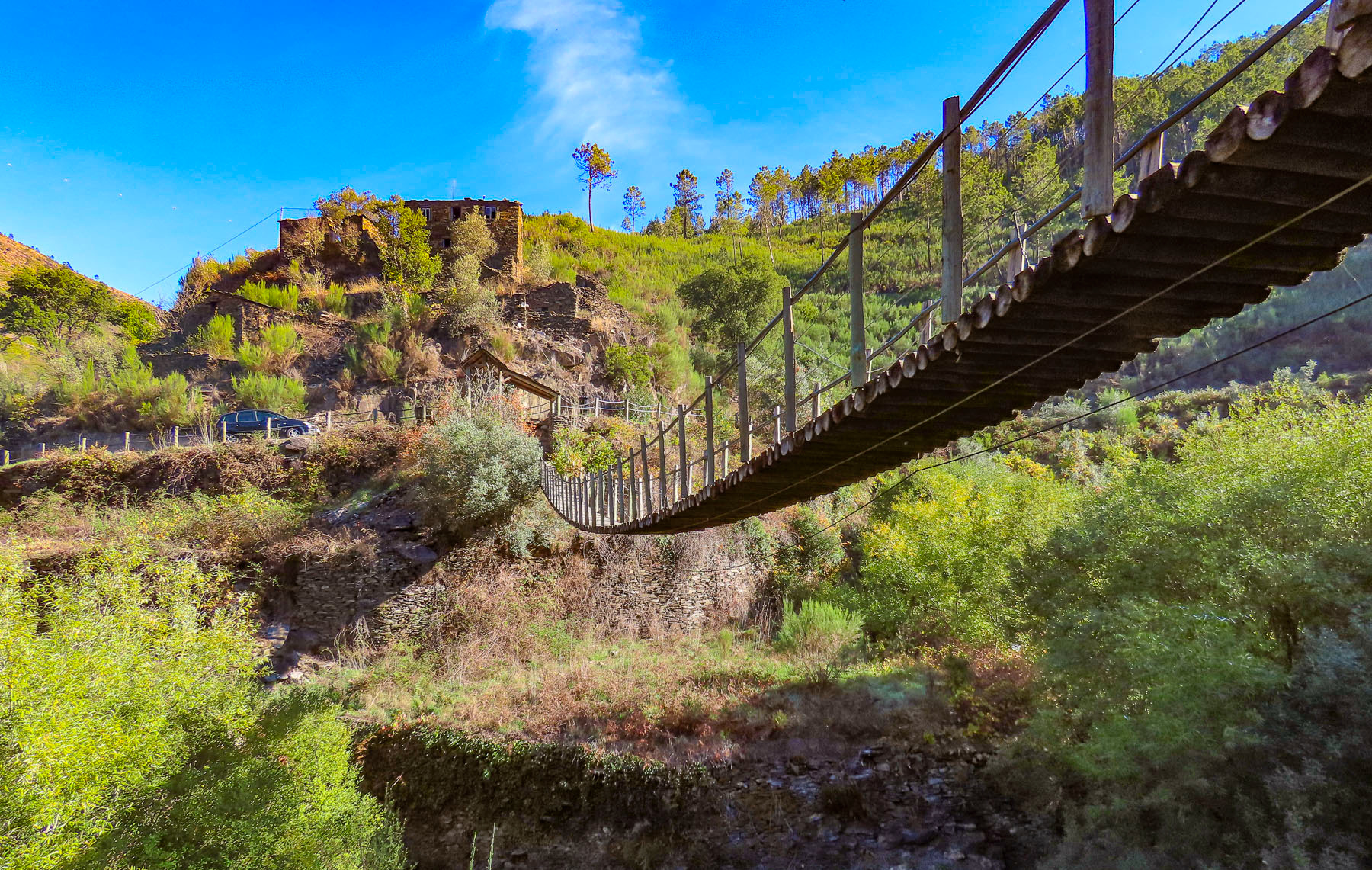
Slowly exploring the village, we made our way to its central plaza for dinner at O Solar dos Pachecos and enjoyed delicious bowls of Moelas Guisadas a Portuguesa, stewed chicken gizzards. This dish might not be for everyone, but it is truly one of Portugal’s culinary treasures. The owner enthusiastically shared tidbits of information and pointed across the way to the only mailbox in this unique village for the 120 full-time residents left here. Pity the poor postman otherwise trying to figure out the twist, turns and stairways of the hamlet’s ancient lanes. Surely everyone gets to know one another this way with the mailbox strapped to a tree on the main square in front of the village’s only white-washed building, the church.  Before leaving he suggested we enjoy some of the hiking trails the area is known for with a short trek through the valley to Praia Fluvial de Foz d’Égua, a scenic spot with a suspension bridge over a stream that widens into a natural swimming hole. Later for coffee and dessert we watched part of a soccer game on the TV above the bar at O Fontinha.

Piodão owes its unadulterated charm to the fact that it was pretty much forgotten and slowly abandoned until the 1970’s when the donkey and horse trails leading to the village were replaced with roads carved into the isolating mountains of the Serra do Açor that surround it. It is located not far from Parque Natural da Serra da Estrela and continental Portugal’s highest peak, Torre at 6,539ft. Difficult terrain lured fugitives, seeking to escape justice, to the isolated villages of the area. Allegedly one of the assassins of D. Inês de Castro, the mistress of Pedro l, sought refuge here in the late 1300s. Other than that interesting historical footnote and mention in a 1529 census, folks got by on a subsistence economy of farming, grazing sheep and goats, along with wood and stone cutting for centuries.

Its rediscovery and revitalization in the 1980’s brought the isolated village built with the abundant local schist stone recognition as one of the “most Portuguese villages of Portugal,” with a Galo de Prata “silver rooster” award.  

Waking during the night to close the window against the mountain chill, I observed a full moon illuminating a single arched stone bridge over a babbling brook at the bottom of the valley. The mountain songbirds were loud enough to encourage an early wakening as the sun rose over the ridge behind the village. The next morning Gorete’s homemade jams, pastries and a neighbor’s artisanal cheese nourished us before we explored the village and moved on.

The drive to Praia Fluvial de Foz d’Égua was through forest thick with oak, chestnut and laurel cherry and arbutus trees. Arriving, we understood immediately why this beautiful area is such an out of the way tourist magnet. Traveling during the fall shoulder season, we were fortunate to experience the tranquility of this serene spot in solitude.

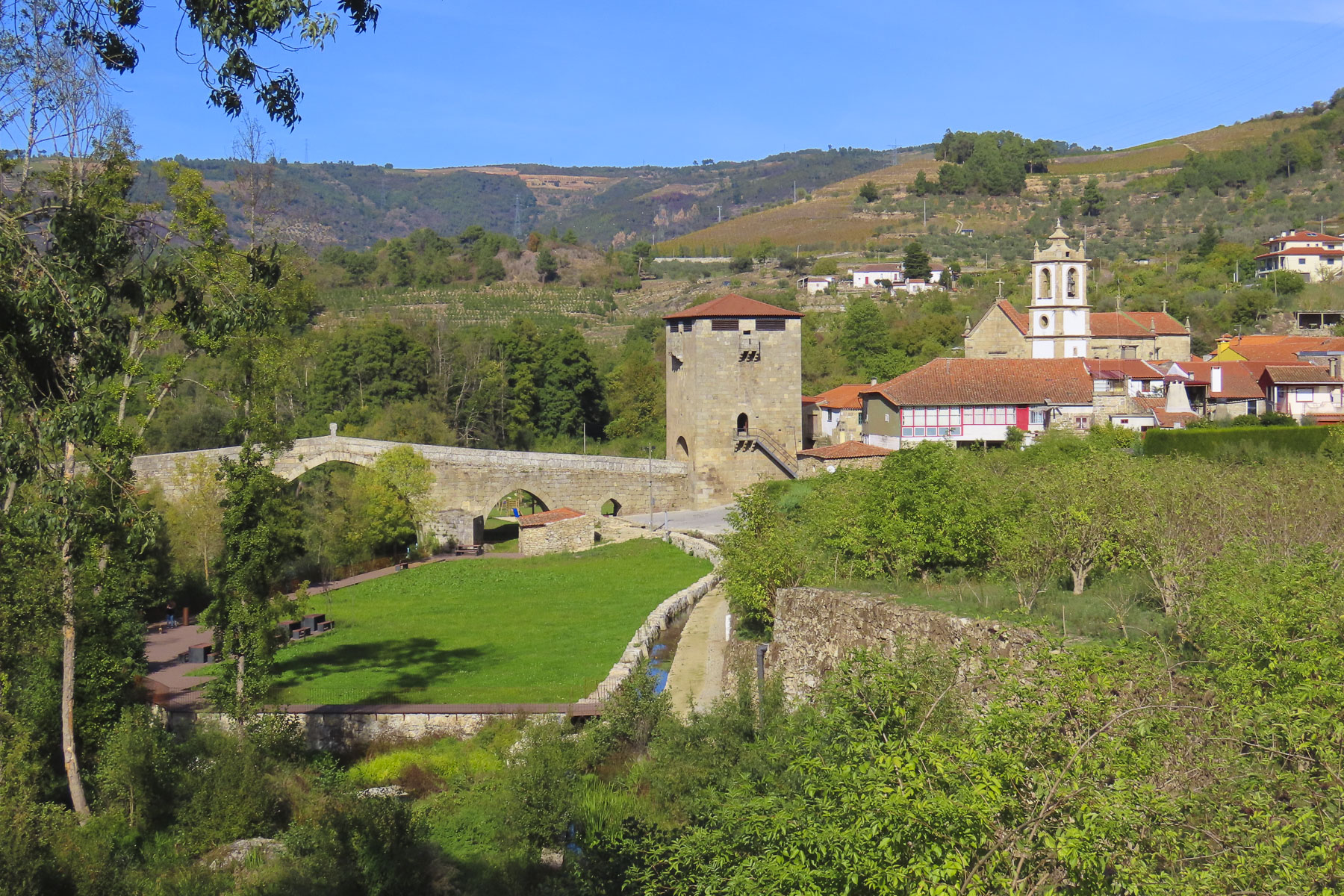
Continuing the next day, we headed north to Ucanha for its old Roman bridge with fortified tower that spans the Rio Varosa. In the off-season not as many restaurants are open, but we were fortunate to find Casa da Eira near the bridge still welcoming folks for a splendid meal.

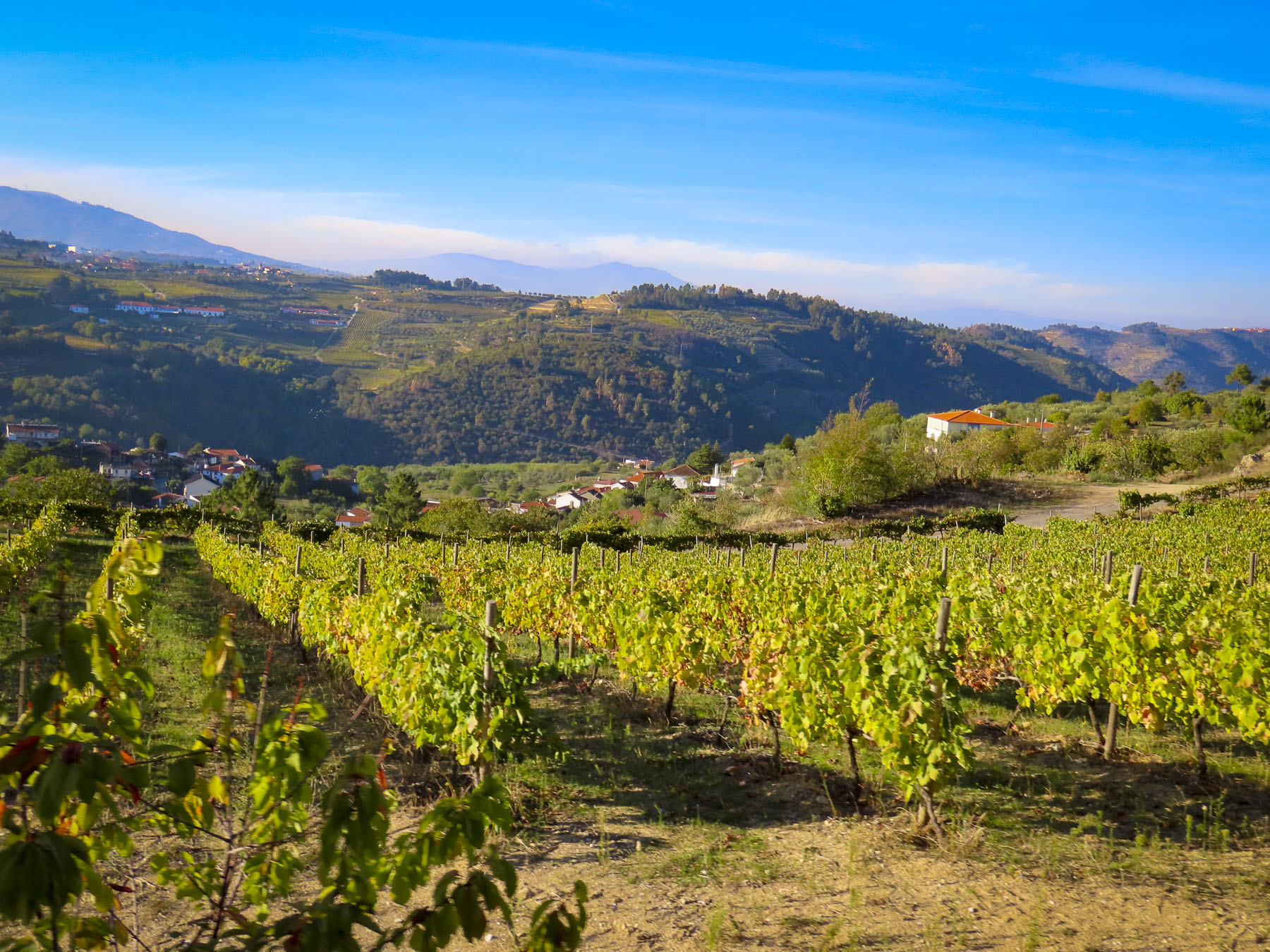
The walk to it was down a lane bounded with high walls draped with bunches of grapes dangling beneath, the vines sporting brilliant fall foliage. Just before reaching the restaurant, we peeked through the broken shutters of a long-abandoned church, its wedding cake altar and walls stripped of any religious embellishments.

After lunch we strolled across the bridge and under its tower which served as a toll booth for travelers crossing the river and gateway to the vast land holdings of the Mosteiro de Santa Maria de Salzedas in the 1400s, and further on to the Portuguese frontier.  

The bridge we crossed is thought to have replaced an earlier Roman structure from the first century AD. Through the tower’s archway we followed the lane up to the village’s parish church, Igreja de S. João Evangelist, that dates from 17th century.

It was surprising to learn about the ancient Roman presence here in central Portugal, but we had already noticed signs for the old Roman route as we drove through the area and tried to find two ancient bridges nearby, the Ponte Românica de Vila Pouca de Salzedas and Ponte Romana without any success while on our way to Salzedas. In searching for them, we did however thoroughly enjoy an afternoon ride through tiny hamlets, vineyards, olive groves, and apple orchards, where the tastiest apples were plucked from a tree within reach of our car window.

Reaching Salzedas we parked and walked towards the monastery across a small bridge over a dry riverbed. Stopping across from the monastery to take a photo, we spotted the most unusual statue along the watercourse’s retaining wall: a carved stone sculpture of a naked man sitting with a huge serpent-head phallus bursting forth from between his legs. Its location across from the monastery was all the more bewildering, but we had to laugh. Odd, just really odd, some of the things you discover when you travel.

Shorter opening hours are one of the disadvantages of travel during the shoulder season as by the time we were done exploring the Mosteiro de Santa Maria de Salzedas the small cathedral next to it was closed. Having paid fully for our entry tickets, we were startled by the guard’s request request for coins. “Do you have any foreign coins? I don’t travel, it’s my hobby and I ask all the foreign visitors if they don’t mind sharing.”  Having collected foreign money ourselves we could relate to this desire to touch something of the outside world. “We have some somewhere in our suitcase. I’ll check before we go,” I replied. The attendant replied with a subtly disappointed, “okay.” We were sure he thought we were just giving an excuse as we climbed the stairs to the exhibition.

From its placement in 1155 near the Torno River, in keeping with the sect’s requirements that its buildings be near watercourses, this was one of the largest and wealthiest Cistercian monasteries in Portugal, having been gifted extensive land holdings, by a royal patron, with the express duty of exploiting the land for profit. A century later it was consecrated after the monastic complex was finished. Over the centuries it continued to be financed by various members of succeeding royal dynasties, perhaps seeking divine intervention or to influence the politics of the almighty Catholic church. Like all things old, it underwent several significant renovations during the 16th and 17th centuries. The addition of a second larger cloister in the 18th century left the façade of the monastery we saw today.

“Enough is enough, we’ve had enough,” could have been the chant of the Liberal government after their victory over the Absolutists at the end of the Portuguese Civil War, 1828 -1834, a war fought for basic human rights and to reverse centuries of disenfranchisement from autocratic monarchies and their allies, namely the Catholic church. Reforms started by the enlightened Marquês de Pombal in the mid-1700s to restrict the powers of old aristocratic families and the church with the expulsion of the Jesuits from the Portuguese Empire had stalled. In 1834 the new minister of justice, Joaquim António de Aguiar, enacted a law, The Extinction of the Religious Orders, requiring the dissolution of “all monasteries, convents, colleges, hospices and any other houses of the regular religious orders.” Their properties and moveable assets were to be nationalized and sold, the profits to be entered into the National Exchequer. Convents were allowed to stay open until the last nun died. Joaquim António de Aguiar earned the nickname, O Mata-Frades, “The Friar-Killer,” because of the anti-ecclesiastical spirit of this law. Over 500 monasteries were closed. Urban buildings were easily sold and repurposed, but many monasteries and convents in the rural areas were abandoned. Their religious art and iconography was redistributed to local parish churches, sold into private collections or “lost.” The Santa Maria de Salezadas Monastery sat abandoned and left to ruin for over 160 years until renovation work started in 2002 and culminated in the reopening of the cloisters in 2011 as a museum with displays of the monastery’s medieval and renaissance religious art and treasures recollected from afar.

With a wave and “thank you,” we left the monastery and headed to our car. “Wait, I’ve got to find those coins for you to take him.” Returning to the car with a smile on her face, Donna relayed that he was delighted that we remembered. A small connection.

It’s the journey. We headed to the Douro Valley. 

Till next time, Craig & Donna

Seville Part 4 – Convents, Cookies, and la Macarena

Seville was a delight to explore by wandering, its cityscape a web of ancient alleys that with every twist and turn slowly revealed the heart of this very old city to us. While the historic center of the city is a relatively condensed area that orbits around the Cathedral of Seville, the Royal Alcázar and the bullring, every bario in the ancient metropolois was fascinating to wander through. Spanish maps of the city from the 16th century hint at what’s to be found. In the 12th century, expanding upon an older Roman defensive wall from the first century AD, Seville’s Moorish rulers totally enclosed the growing town with a new and larger fortified wall.

It started at the Torre del Oro and ran north along the Guadalquivir River until it turned and headed inland in a huge arc that reconnected back at the tower. The old city walls originally had fifteen gates allowing entry into the city and were named for their function. Coal was brought into the city through Puerta del Carbon, while olive oil merchants used Postigo del Aceite to bring their product to town.  Puerta de Jerez and Puerta de Cordoba were the gateways through which travelers from those towns entered Seville.  Puerta Real was built for the exclusive use of the Spanish royals. 

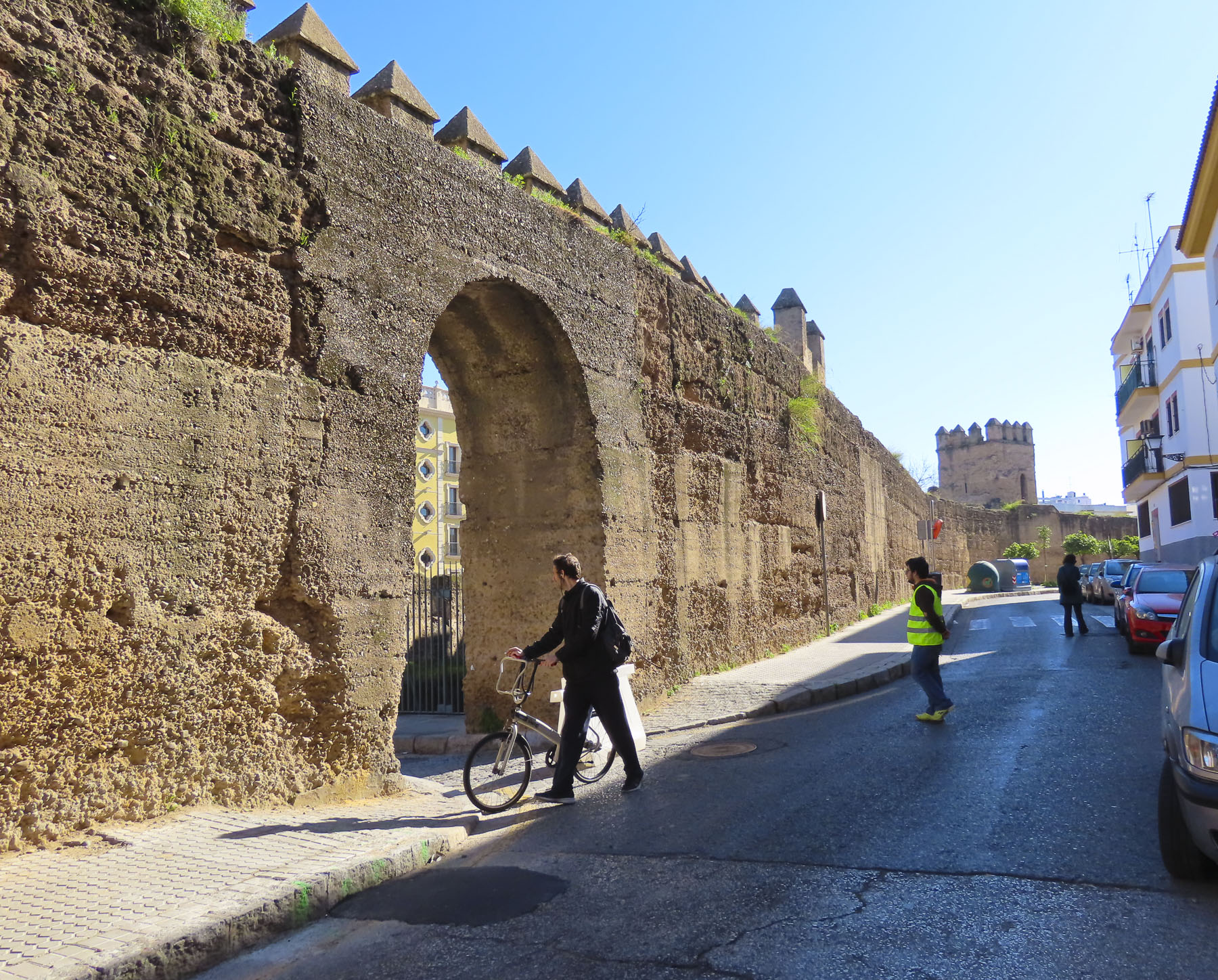
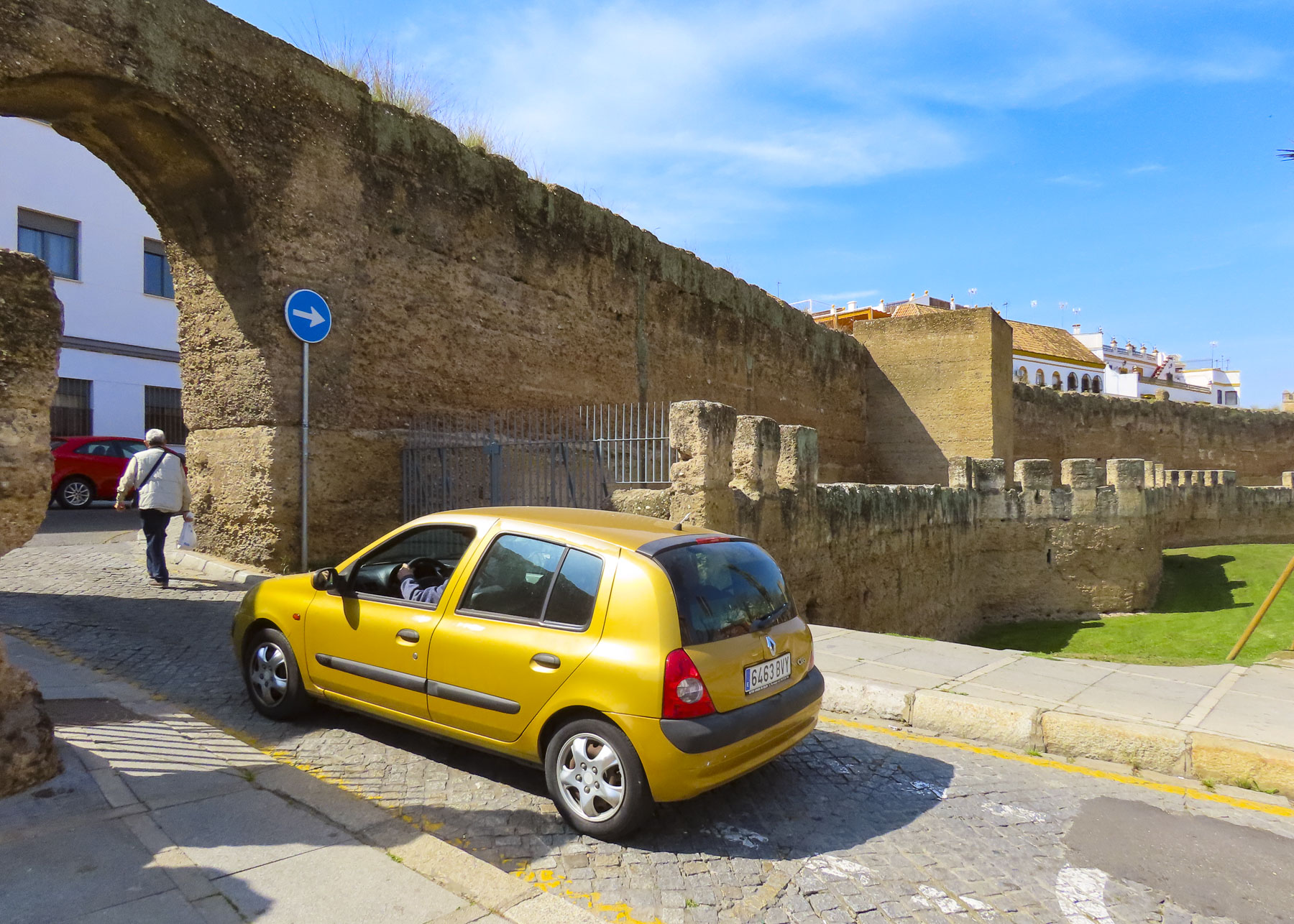
The walls stood until a modernization of the city in 1868 required all the gates except for three be demolished. Today only the Puerta de la Macarena, Puerta de Cordoba, and the Postigo del Aceite remain.  Several small sections of the crenellated wall still stand along the ring road, Ronda de Capuchinos, that now follows the ancient edge of the city. Other parts turn up randomly across the city, where they were incorporated into the walls of newer 19th century buildings.

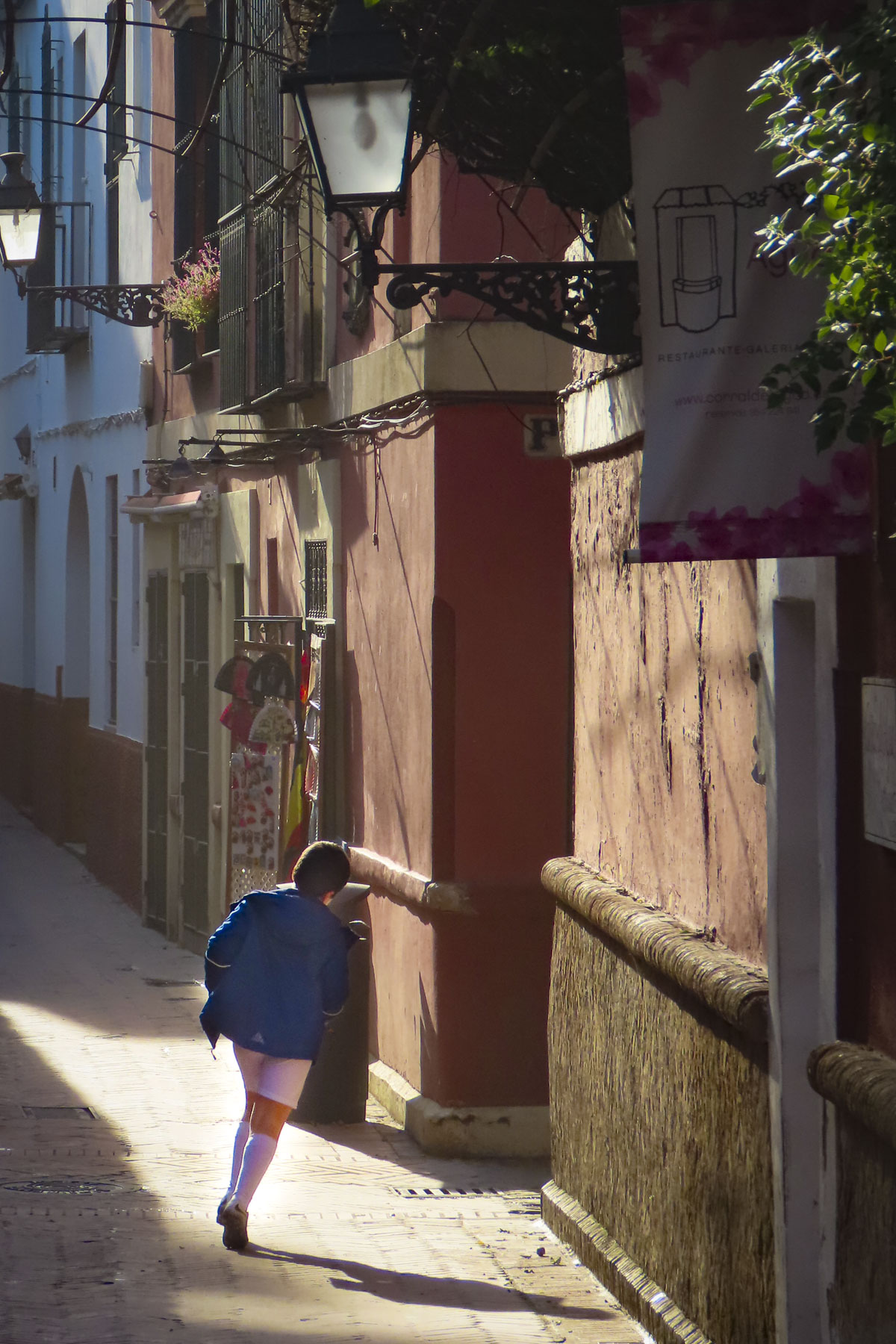
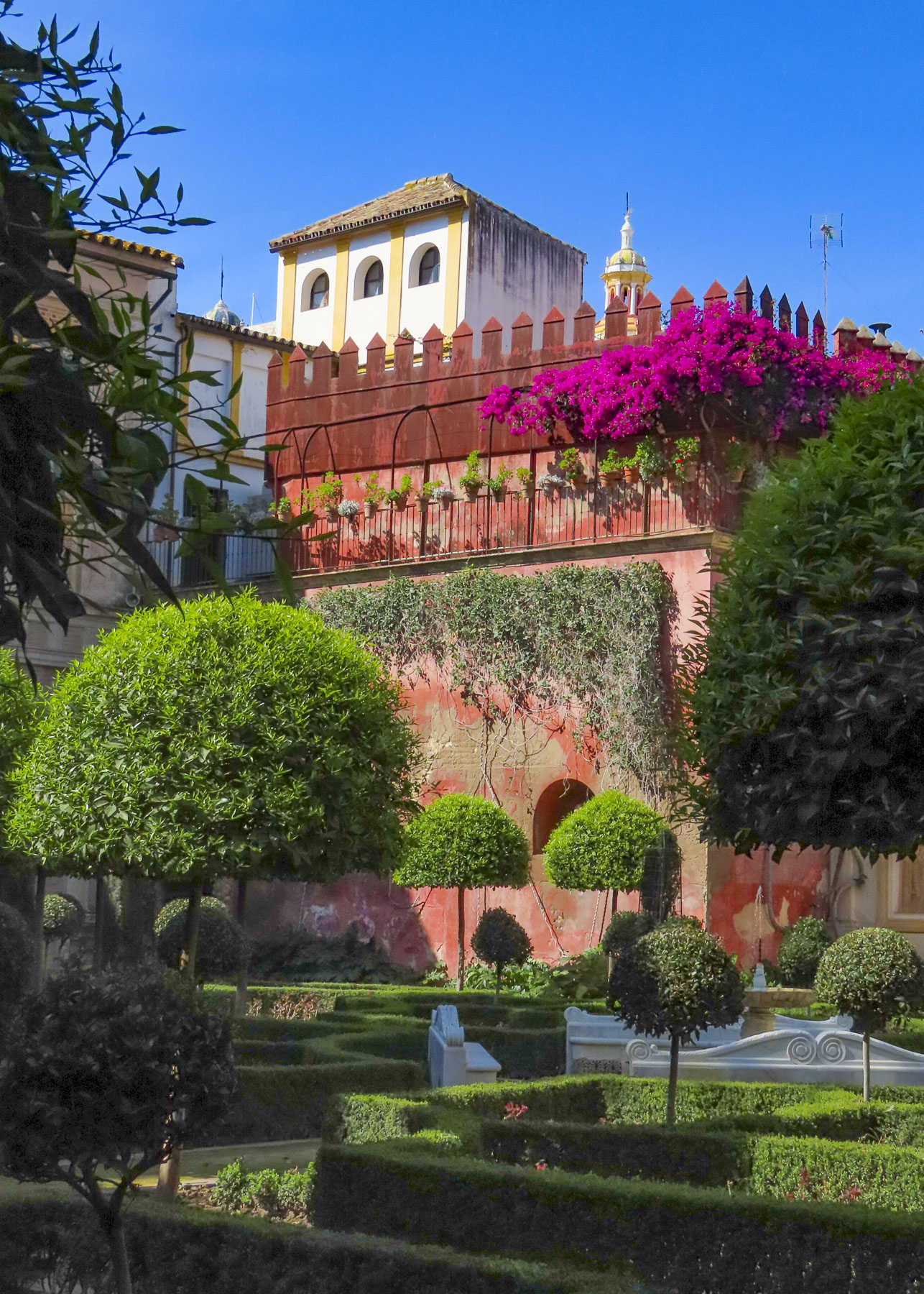
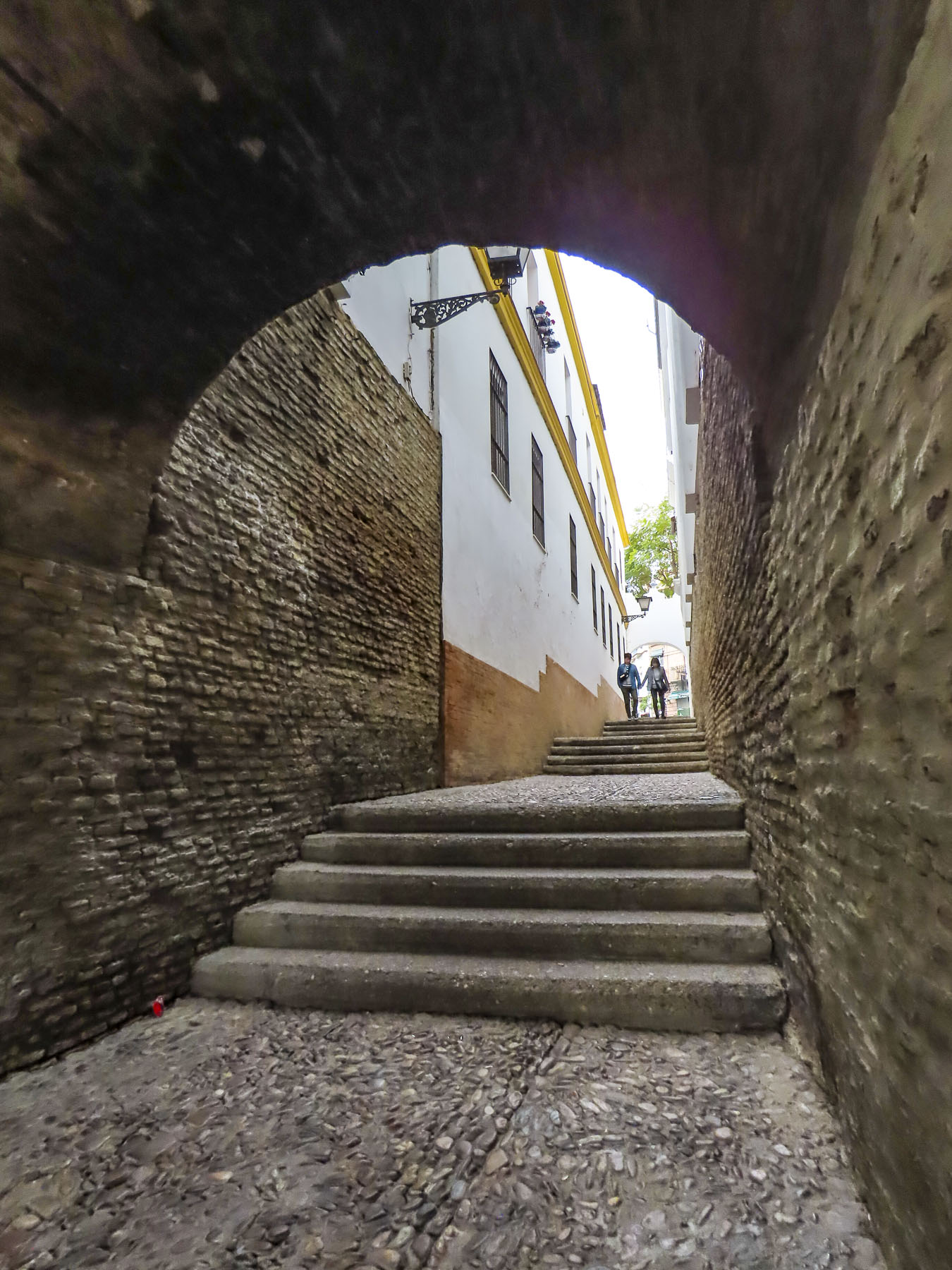
Roughly following the ring road, we would zig and zag our way through the old neighborhoods of the city that were once shielded behind its ancient wall.  Starting in the old Jewish quarter, now Santa Cruz, we followed the wall topped with an aqueduct along Calle Aqua and peered through locked gates, spying the lush shaded courtyards of the traditional homes. Buildings along this calle that back to the Jardines de Murillo use the old defensive wall as part of their structure. Veering into the center of the old Juderia we found some of the narrowest lanes in Seville. The thinnest being Calle Reinoso which leads off Plaza Venerables and is affectionately nicknamed “Calle de los Besos,” the Street of Kisses to visualize how intimate the passageway potentially can be.

After the Moors were defeated in 1248 every mosque in Seville was converted to a church. A similar policy ensued in 1492 when King Ferdinand II of Aragon and Queen Isabella I of Castille issued the Alhambra Decree, expelling all of Spain’s Jewish population. But a century before the Spanish Inquisition began a rioting mob in 1391 was incited by the hateful rhetoric of a Christian Archdeacon, Ferdinand Martinez, blocked the exits from the Seville ghetto and set the Juderia ablaze. It was once a thriving community that hosted three large synagogues and twenty lesser ones.  Four thousand people died that March 15th. Survivors fled the city, or were forced to convert to Catholicism. The abandoned properties were redistributed by King Henry lll to Christian nobles. The Iglesia de Santa María la Blanca is a notable conversion of a synagogue built in the 13th century. Its stunningly ornate plaster work ceiling veils its tragic history.  A block away where Puerta de la Carne once stood, the street is now lined with umbrellaed tables in front of a mouthwatering assortment of eateries.

Blindfolded or throwing darts at the map, any direction you randomly choose in Seville reveals fascinating layers of history. We never passed the chance to explore a church if its doors were open. Admittedly that’s a huge number in Seville. And some visits are more rewarding than others, we learned upon entering the chapel of the Convento Santa María de Jesús.  The gilded 16th century baroque interior was beautiful. What we found just as intriguing (you get a little numb by the huge amount of gold-leaf in Seville,) though, was that the nuns, of the non-sequestered order of the Poor Clares, bake “Las Dulces,” cookies and pastries, in order to financially support themselves. They sell the tasty creations derived from centuries old, secret recipes from behind an iron barred window.

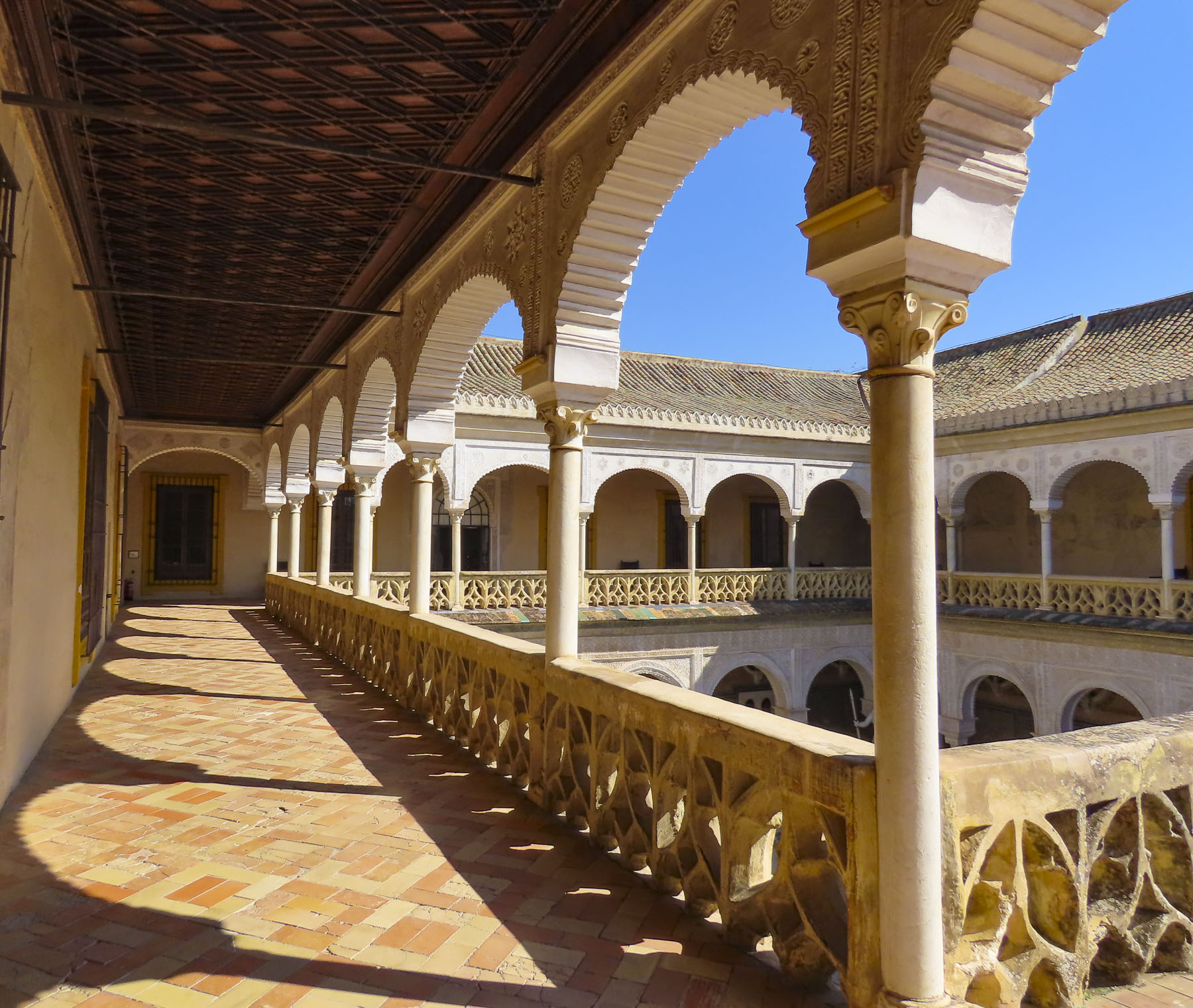
A half block away the Casa de Pilatos was a marvelous example of a 16th century Andalusian Palace that rivaled the workmanship of Real Alcazar.

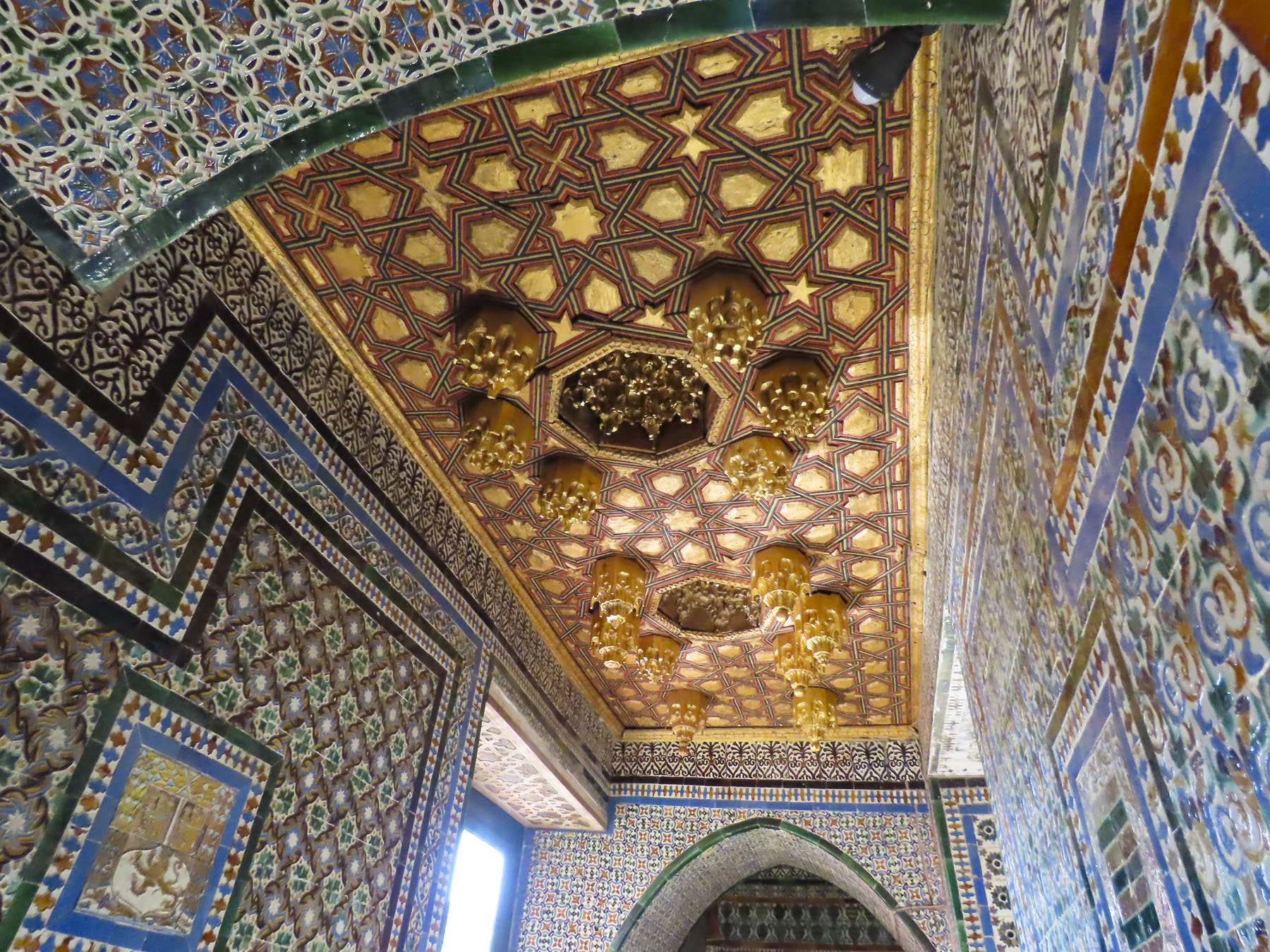
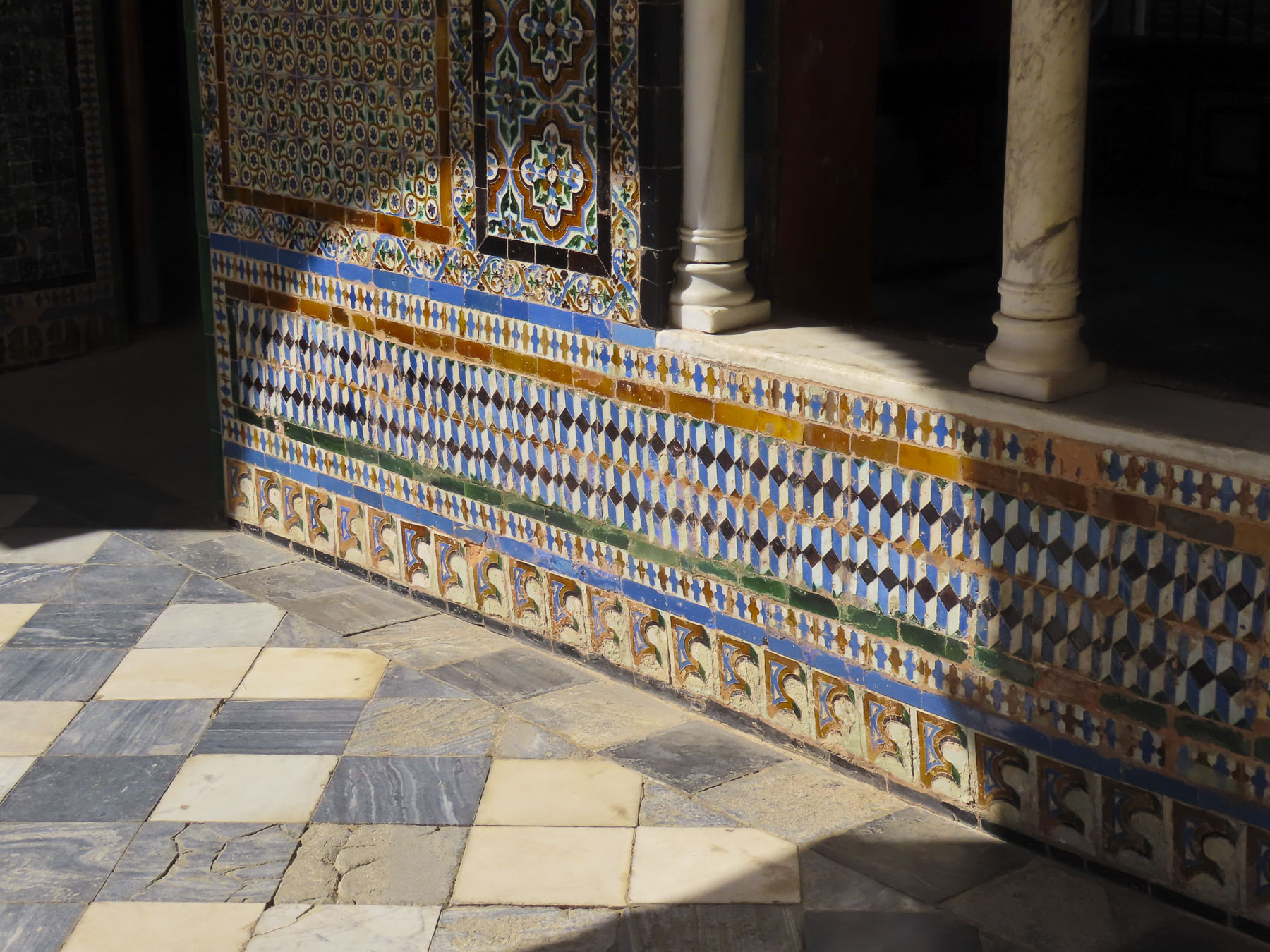
It displays a unique juxtaposition of Mudéjar, Gothic, Renaissance and Romantic architectural styles that seamlessly blend into a kaleidoscope of color, shape and texture. 

There are also Roman and Greek antiquities on display that were collected by an early patriarch of the family when he served as Viceroy of Naples in the mid-1500s.  It has amazingly stayed in the same aristocratic family for 500 years and today the 20thDuchess of Medinacelli still has a private residence there.  Admission is free on Mondays after 3pm, but there can be a long queue.

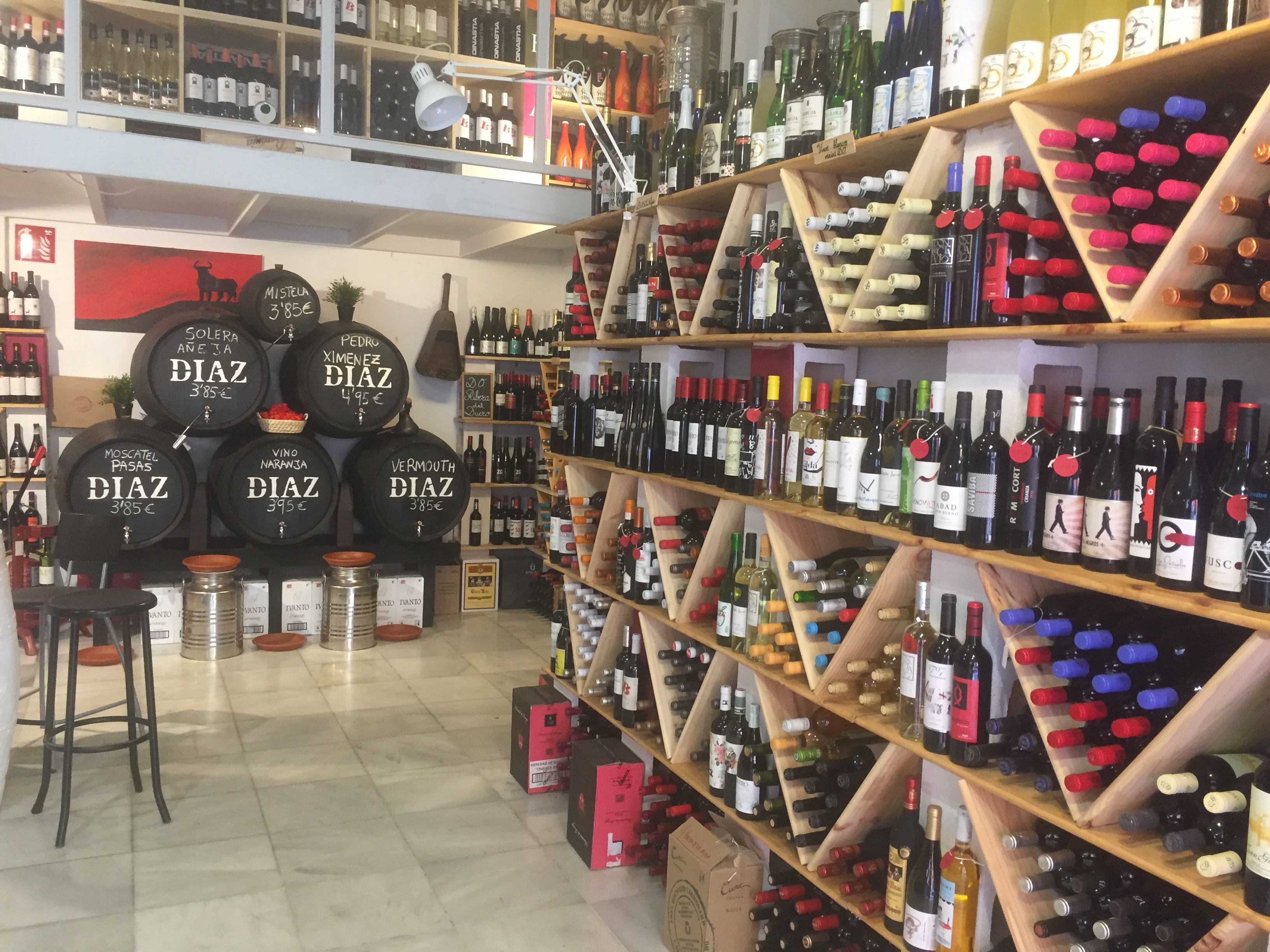
Continuing down the street toward the main boulevard we found Sevilla Vinos a small shop that specializes in local Andalusian wines and sherries. You can purchase wine here by the bottle or you can bring your empty bottles back to be refilled from large casks like the local folks do.

Farther along, the Almazen café was the closest we could find to an internet café in Seville aside from Starbucks. But what’s the fun of that when you can find a neighborhood gem instead. Mostly, taking your laptop computer to work in a public space just isn’t done in Europe from our experience. It seems to break the cherished protocol of separating work from pleasure, a refreshing practice here.

Out on Calle Maria Auxilidora we walked along the ring road to the Jardines del Valle where a long stretch of fortress wall separates the park from the barrio behind it.  That Sunday a crowd had gathered on the sidewalk in front of the park to cheer on the runners in the annual Seville Marathon. 

Farther down the avenue the arched door of the Moorish influenced tower-gate Puerta de Cordoba stands attached to the Church of San Hermenegildo. A legend from the 6th century tells us Hermenegildo was a young Visgoth Prince, son of King Leovigildo who followed a branch of Christianity, Arianism, that did not believe in the holy trinity. Upon marrying a Frankish Catholic Princess, Hermenegildo converted to Catholicism against his father’s wishes. He was eventually imprisoned in the Cordoba tower-gate and beheaded there on Easter Day in 585AD when he refused holy communion from an Arian bishop.  The relic of his severed head was passed for centuries between numerous monasteries and convents on the Iberian Peninsula before finding its final resting spot at the Royal Monastery of San Lorenzo de El Escorial, near Madrid. He was canonized on the thousandth anniversary of his death. During the renaissance on the saint’s feast day, April 13th, the Brotherhood of San Hermenegildo would host jousts in front of the defensive wall that still stands next to the church. 

This is the longest stretch of ancient city wall still standing. It runs parallel to the ring road for seven blocks between the Church of San Hermenegildo and the monumental Arco de la Macarena, which stands next to the church of the same name. The last vestiges of a moat added in the 18th century are still visible here.  During the Spanish Civil War firing squads executed people against this arch. It’s believed this entrance was built by the Moors over one of the three original gates to the city constructed by Julius Caesar when he governed Andalusia in the first century AD.  The origin of the gate’s name is disputed with some historians speculating that it was named after a wealthy Roman property owner. Others think it bears the name of a Moor princess who lived next to the wall when the Arabs controlled the city. Popular belief is it was named in tribute to Macaria, daughter of Hercules, who is the mythological founder of Seville.

We stopped to see the Virgin of Hope, a venerated wooden statue draped in a gold embroidered robe covered with precious stones at Hermandad de la Macarena, and found her fascinating.  Entering the basilica is free, but there is a small fee to view, up close, the exquisite craftsmanship of the robe of the Virgen de la Esperanza de Macarena de Sevilla, (say that ten times fast!) from behind the altar.  The Virgin of Hope is the patroness of bullfighters and was famously re-dressed only once in a black robe to mourn the death, in 1920, of the famous Sevillano bullfighter, José Gómez Ortega, who was loved across Spain. 

To prevent looting of the icons during the Spanish Civil War, a caretaker secretly took the statue home and pretended he was caring for a bedridden sister. Later he pretended to be a stone mason and secreted the statue in the city cemetery within the ornate tomb of the bullfighter Ortega for several months to protect it.

Heading back into the city through the arch we eventually came to the ornately figured baroque façade of Iglesia San Luis de los Franceses.  This was a refreshing change from other baroque churches in Seville that hid their opulent interiors behind plain, almost barren exteriors that benefit from the phrase – “Don’t judge a church by its exterior.” This was clearly not the case with the Iglesia San Luis de los Franceses; it broadcast “notice me!” as if the exquisite stone figures were the 18th century mason’s version of a neon sign.  The church was built at the beginning of the 1700s for the Jesuits to use as a novitiate, but they were only able to use this elegant building for thirty years before the order was expelled from Spain and the rest of the Spanish empire.  Later it was used as a Franciscan seminary and convent, then factory, theatre, hospital for venerated priests and hospice. Eventually it was deconsecrated before being shuttered for many decades. After a ten-year renovation sponsored by the Provincial Council of Seville the still deconsecrated church is now a museum and local government office. Its four gilded baroque altars with their sixteen spiraling, solomonic columns that support the dome above are spectacular and in our opinion it’s one of the finest church interiors in the city.

Associating convents with cookies led to a little misadventure one afternoon. We entered the side door of the Convent of Santa Isabel, located next to the Iglesia de San Marcos, and met a nun talking with a parishioner.  Looks of confusion crossed everyone’s face and heads shook, no, when I asked in very poor Spanish “Los dulces por favor.”  A few moments after leaving empty handed, the gentleman the sister was conversing with called to us and to our surprise presented two simple sandwiches.  We suddenly realized we had approached the convent’s food bank and they thought we were asking for something to eat. We thanked him and made a donation which brought a huge smile to his face and ours.

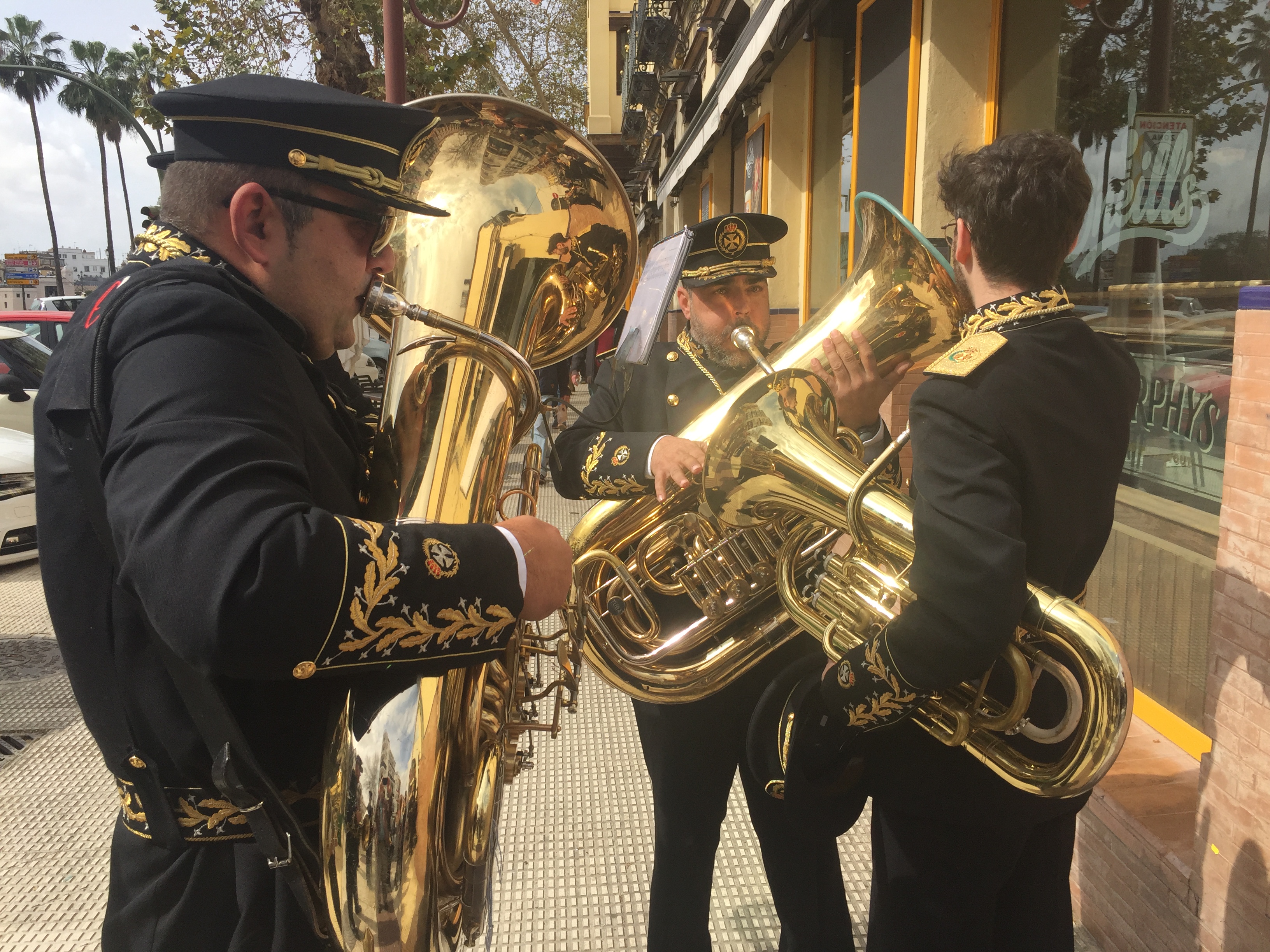
In this part of the city there seemed to be a church or convent on every block, and we had surely far exceeded the number of visitations to religious institutions to keep thunder and lightning at bay. Just wandering through the neighborhoods without a particular destination in mind was very enjoyable and let us follow any whim spontaneously, whether it was a flash of light from the journeyman knife sharpener as he held the blade to his grinding stone attached to the back of his scooter, or music emanating from an alley as a marching band rehearsed, or the cacophony created by the brotherhoods practicing with their weighted floats prior to Holy Week.

The farther we were away from the historic center of Seville the fewer tourists we encountered and prices in the barrio eateries dropped considerably. Los Coloniales was one such tavern located on a corner across from Plaza Cristo de Burgos. At the beginning of March the days were sunny and warm in the afternoon so dining outside was delightful, though sometimes it required a wait.  Leaving our name with the hostess we waited in the shaded park across the street until she loudly bellowed, “Craig & Donna!” We felt like locals as we hurried over.  The tapas and the ambiance of the setting were very enjoyable.

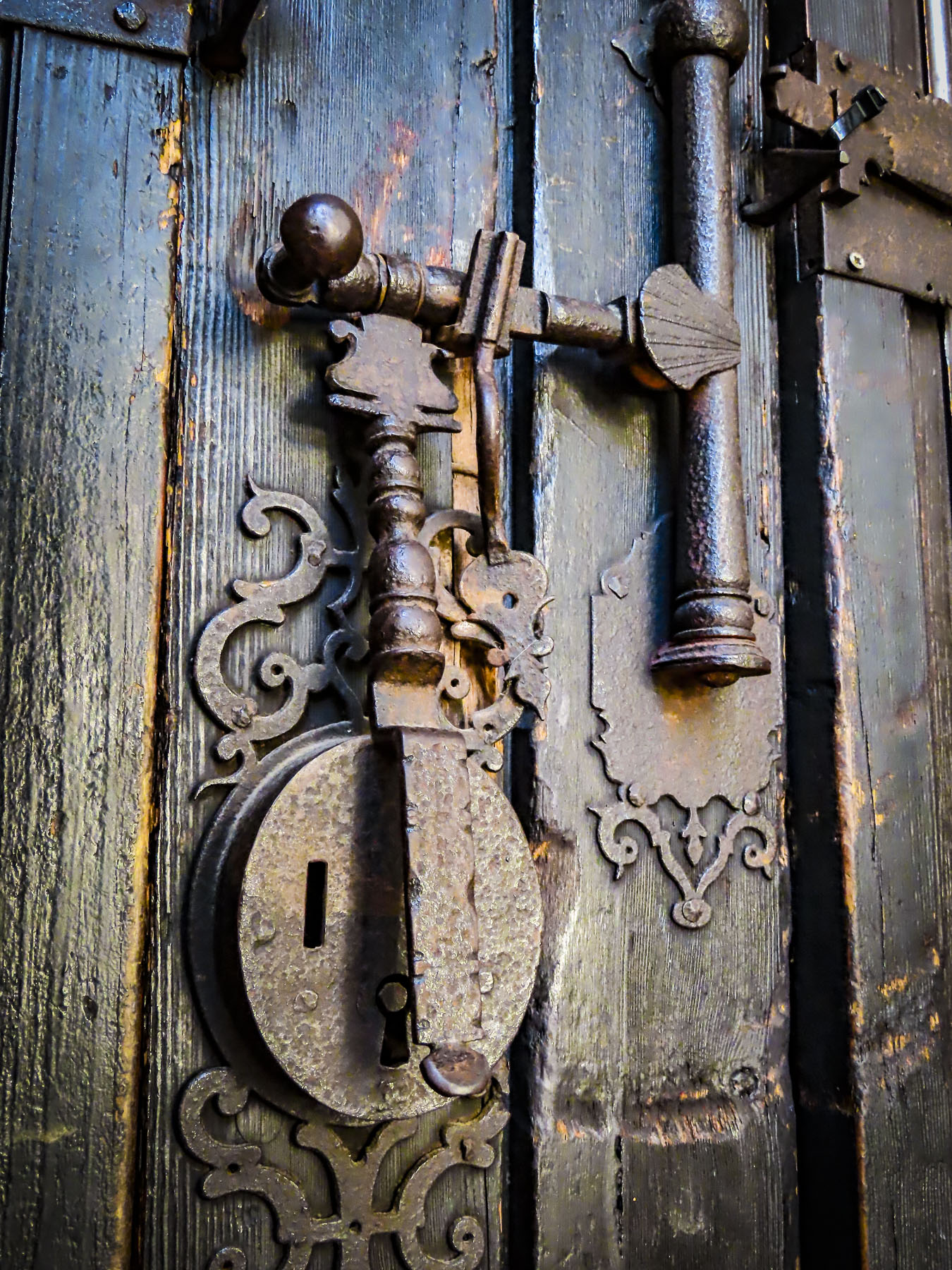
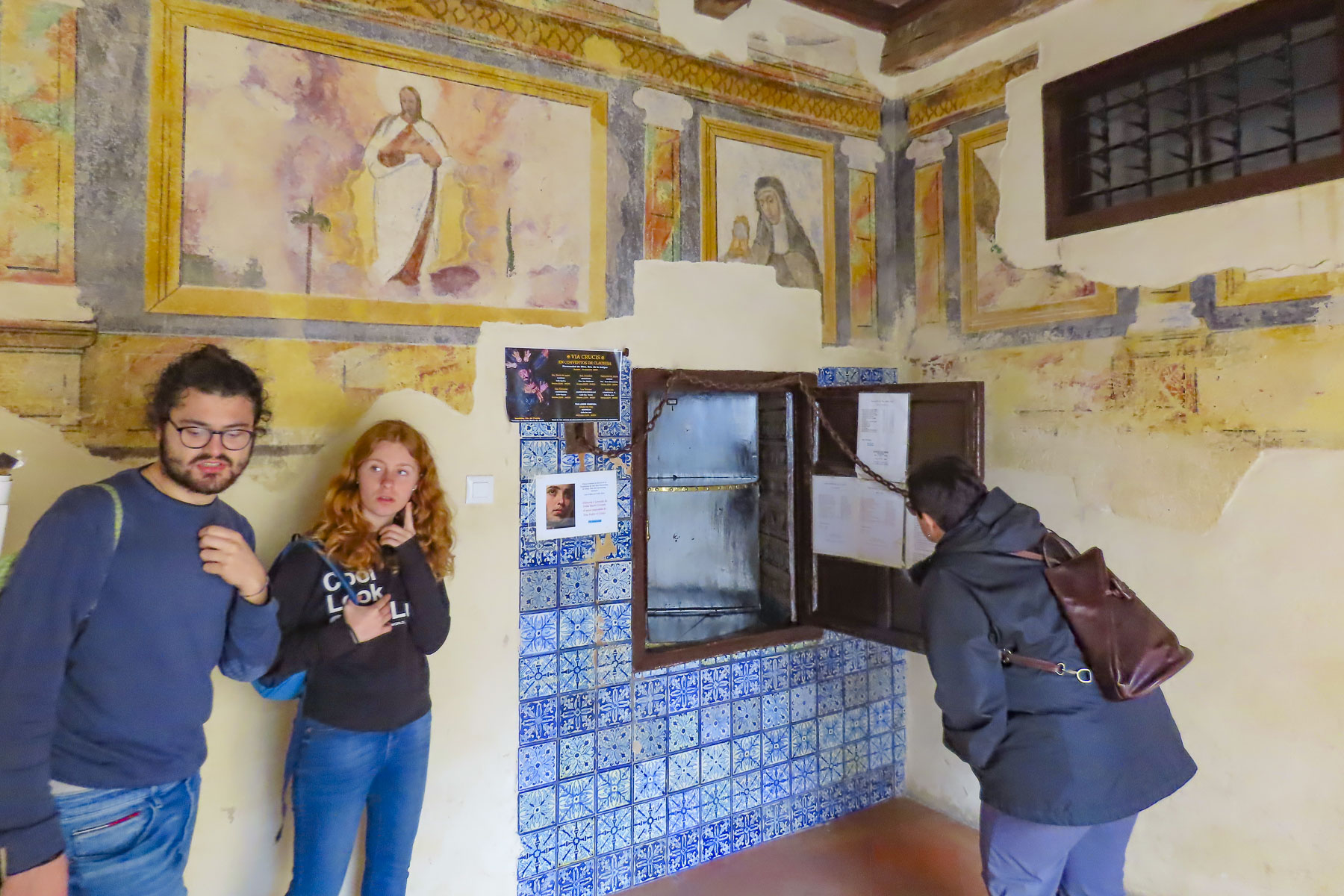
One afternoon as we walked back to the apartment from a late lunch, luckily I noticed a single black and white flyer tacked high on a tall double-wide door, while Donna had stopped way down the block to take a photo.  Hundreds of years old, the door had a smaller single door built into which was open. I don’t recall seeing a placard on the wall identifying the building, but the flyer had a picture of a tray of cookies! By the time I turned around and got Donna’s attention the door had quietly been shut and locked to our disappointment. Finding it on a map we established that it was the Convento de Santa Inés. Allegedly they baked bolletos, little round cookie balls with sesame and honey-glazed pestiños – dough flavored with orange zest, aniseed, olive oil, and wine, then fried. Determined, we returned earlier several days later and stepped over the ancient threshold into a spartan courtyard with no sign of activity or arrows to follow. But in the far back corner under a small portico there was a plain wooden cabinet built into the wall surrounded by a fading spiritual fresco and Azulejo tiles.  Taped to its door was the price sheet for the available, “Las Dulces.” The cabinet is called a torno and when you open the door there is a lazy Susan style turntable that allows the cloistered nuns to receive your payment and provide your cookies while remaining unseen. Over the centuries, convent tornos were also sadly used to anonymously drop-off unwanted infants in hopes the child would have a better life. Three decades ago, there were forty cloistered convents in Seville, today only a dozen remains, hosting an ever dwindling number of nuns.  Not all of them bake “Las Dulces,” but knowing now we wish we had searched for the others that still do.

Dessert was celebrated, back on our apartment’s rooftop, with a glass of sherry and the cookies from the Convento de Santa Inés, as we sat with our backs to the laundry billowing gently on a warm Spring breeze and waited for the sun to set. This was unfortunately one of our last adventures in Seville before the city entered its first lockdown of the pandemic in March 2020 and all tourists were ordered to leave Spain. We were sitting on the steps of the pillar at Plaza del Triunfo late one afternoon, amazed by the emptiness of the square. There weren’t any horse-drawn carriages or lines of tourists waiting for entry into the cathedral or the Alcázar. Two policemen approached. “The city is closed, you must go home.” It was a shocking eviction notice.

We thoroughly enjoyed our immersion into the nuances of living in Seville and would definitely recommend the city for anyone considering a long-term stay. The city simultaneously manages to be intriguingly historic and contemporary. There were many different ways to enjoy the city and aside from the moderately high price of museum admissions, the cost of living in Seville and dining out was very reasonable.  We walked mostly, but on occasion used the rideshare Uber which operated very well across the city. The weather was splendid in February and March, with cool mornings warming into delightful sunny afternoons.

Make plans, enjoy your travels!

¡Hasta luego!

Till next time, Craig & Donna

Seville Part 3 – Walk a Little then Café

Parts of this ancient city with its labyrinth of cobbled lanes feel more akin to a small village with an earth toned, sun drenched patina. Vibrant traditions and a youthful vitality along with numerous historic sites scattered across the city all contribute to make Seville a walker’s delight. There’s no correct way to explore the city. How you do it depends on the amount of time you have to indulge yourself in the history and atmosphere of this beautiful city. Strolling through the city is the finest way to discover its character. Immersing ourselves into the city for six weeks, we walked the familiar cobbled lanes multiple times with many variations and sporadic detours that we hope you find interesting.  Seville never ceased to charm us. 

The routes we favored most webbed out from behind the Cathedral of Seville’s Patio de los Naranjos on Calle de Placentines, around the corner from the Palacio Arzobispal on Plaza Virgen de los Reyes, and wandered through the Alfalfa, Centro and La Macarena districts.

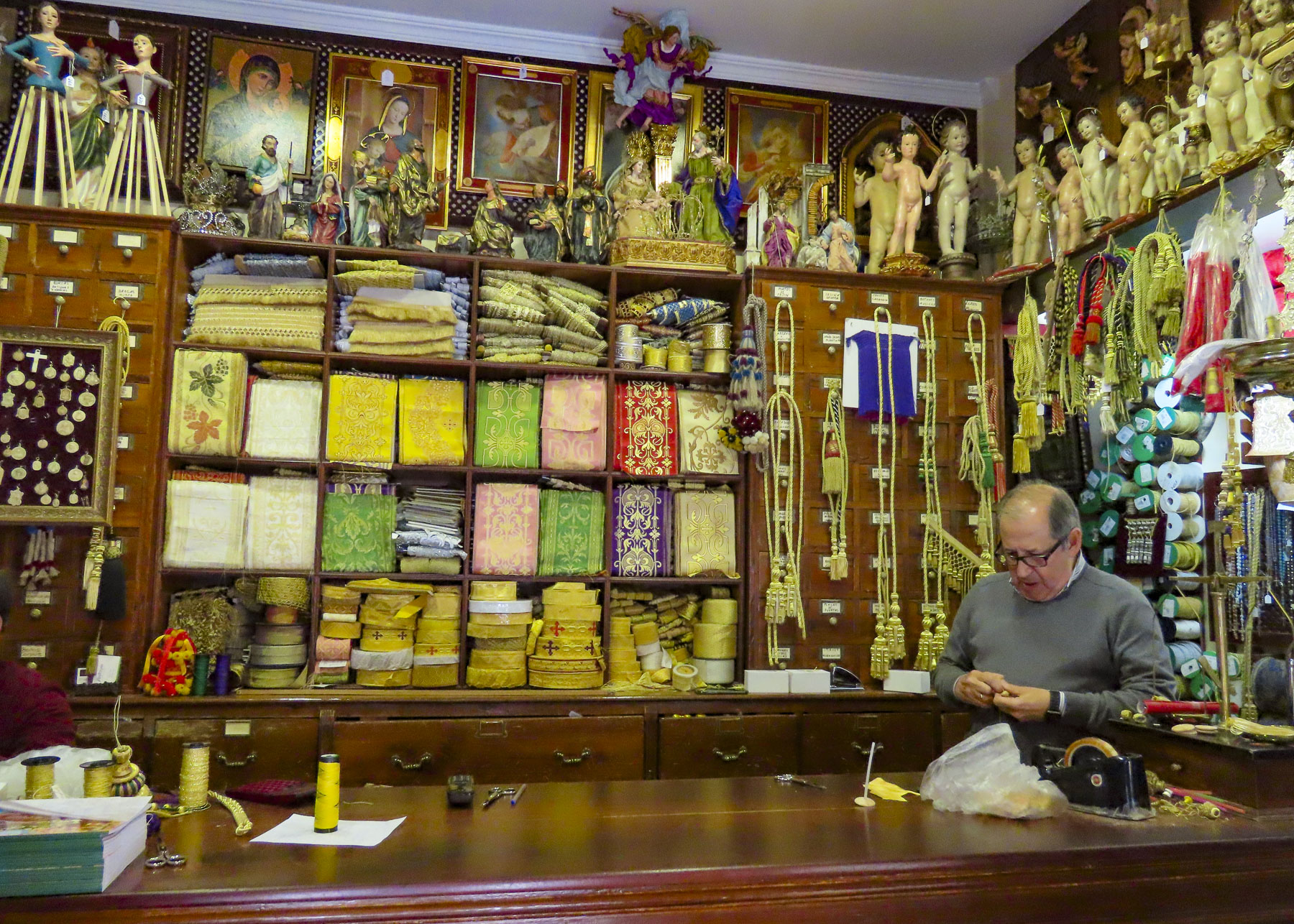
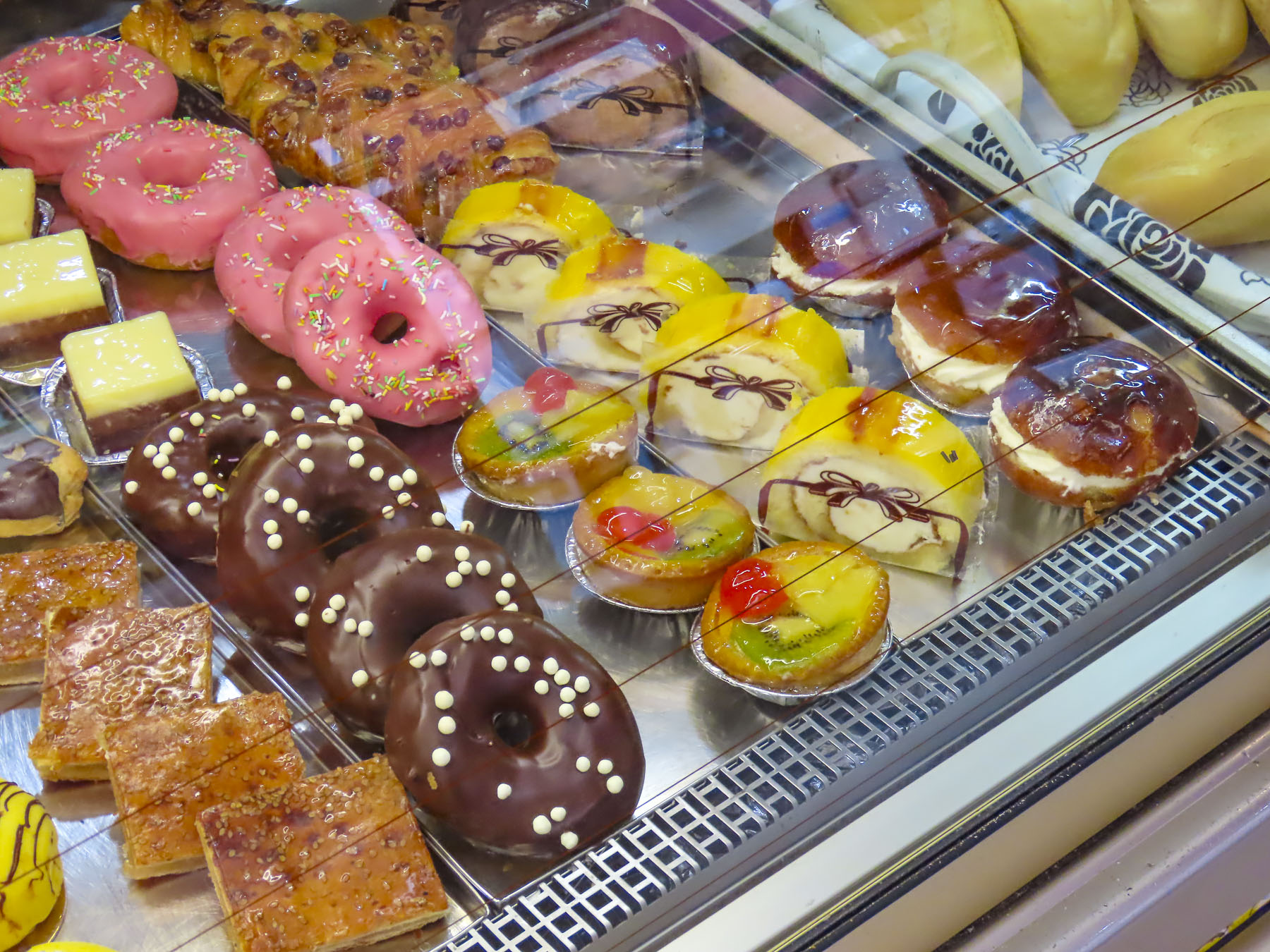
An old-world fabric store bedecked with selections of gold embroidered trim, ribbons, and tassels hanging from worn wooden cabinets enticed us inside.  Further on the display window of a religious goods store fascinated us with its selection of all things sacred. Before crossing into the Plaza Jesus de la Pasion, the savory window display at Confiteria La Despensa De Palacio stopped us dead in our tracks. Lovingly run by generations of the Santaella family, the shop has been Seville’s premiere chocolatier and pastelería for over 250 years. The pastries were sumptuous!

Across the street the Plaza Jesus de la Pasion widens to reveal a wonderful example of 19th century Andalusian architecture. The far end of the square features a façade of red brick framing Azulejos tiles and Moroccan influenced, pointed arched windows.  The plaza also seems to be a favored place for a protest or political rally as we came across several, over the weeks we spent there.

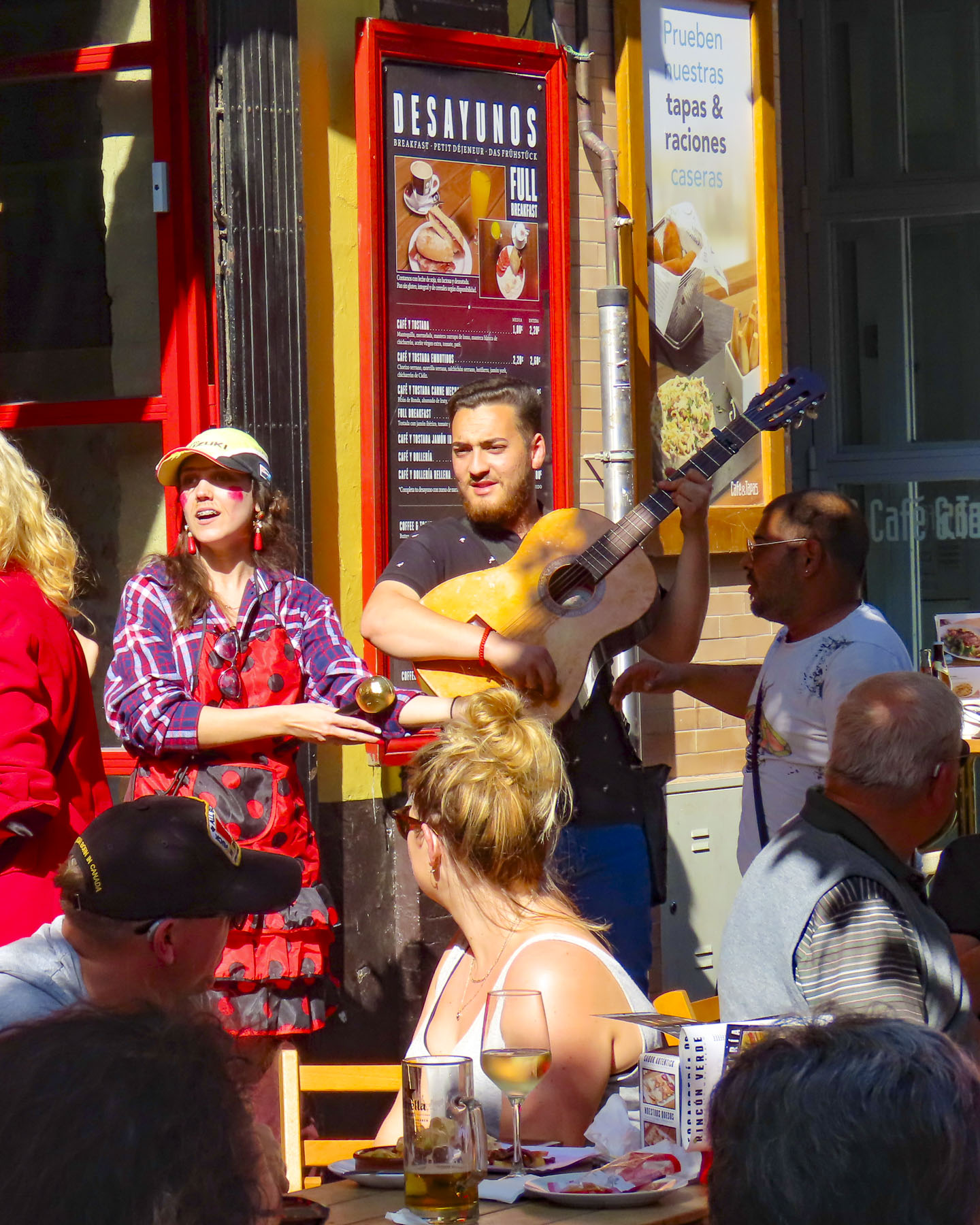
At this point it’s possible to head one block over to visit the Iglesia Colegial del Divino Salvador, on the plaza of the same name. This is a very popular square with many restaurants and outdoor tables along with buskers providing entertainment.

The Iglesia Colegial del Divino Salvador is the second most important church in Seville after the main cathedral and features a monumental and intricately carved 18th century Baroque altar. The beautiful piece was created by the Andulasian altarpiece architect and sculptor Cayetano de Acosta, who contributed works to numerous churches across southern Spain.

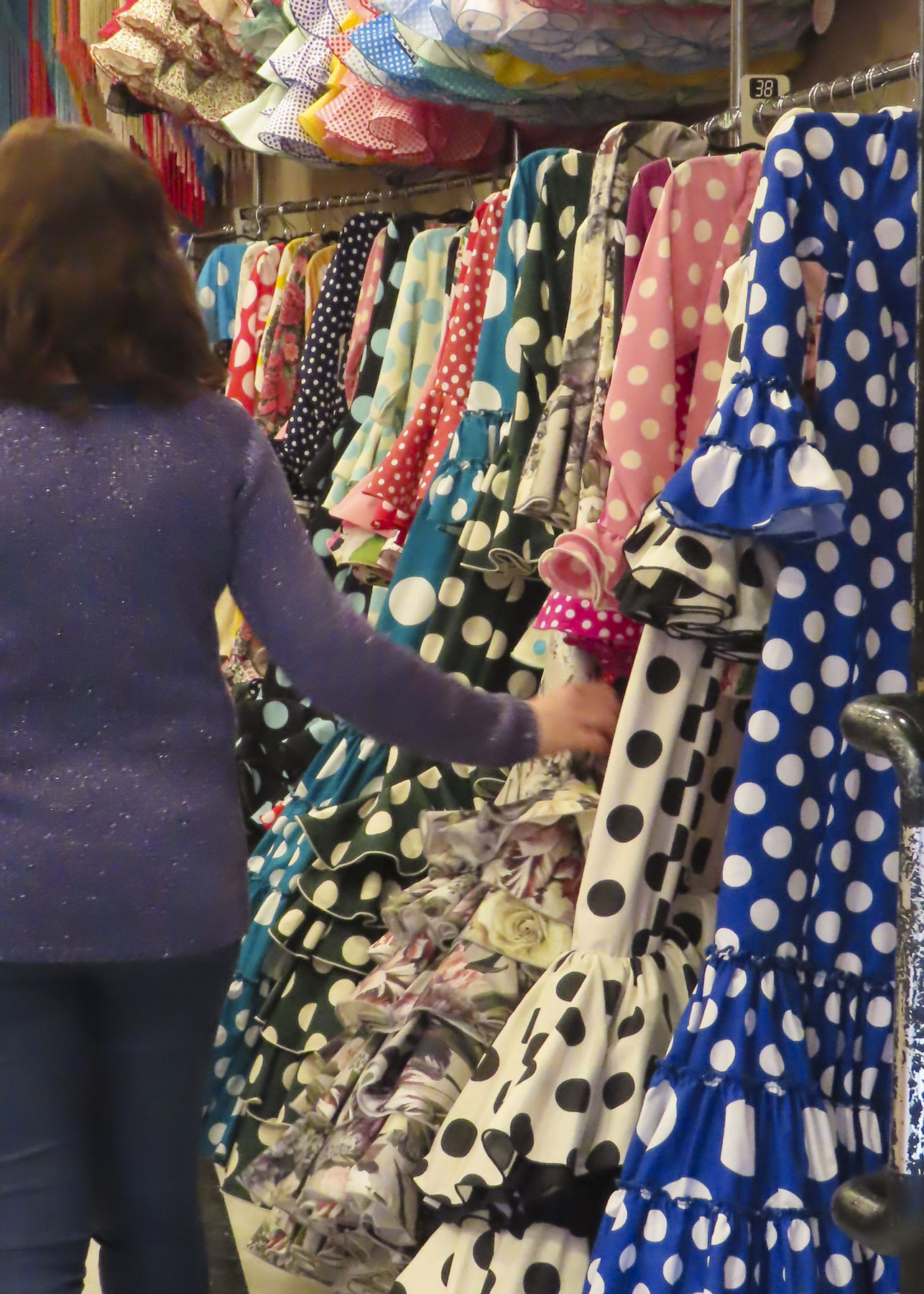
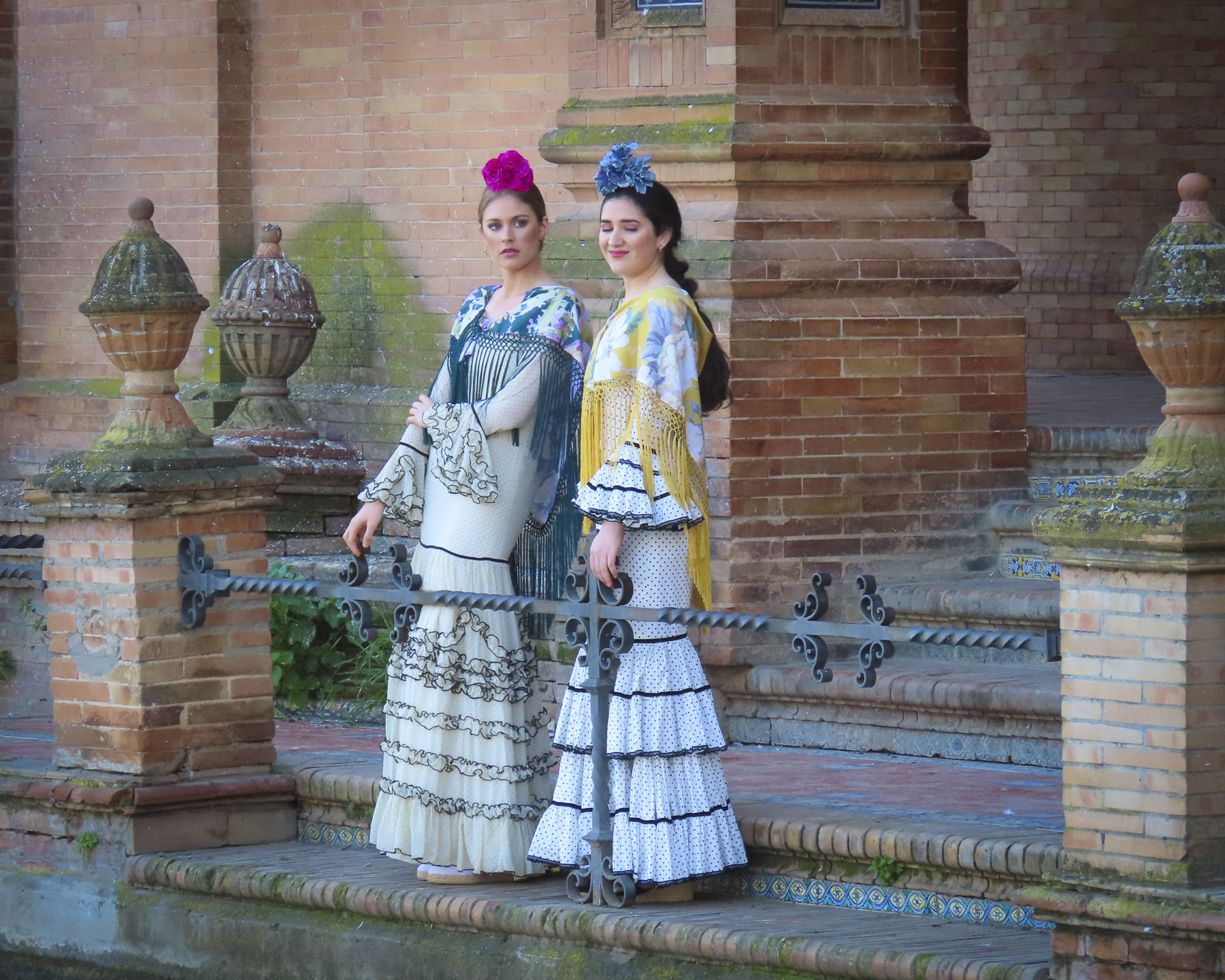
Returning to Plaza Jesus de la Pasion, the far end of the square funnels into the very cosmopolitan C. Puente y Pellon. Lined with a wide variety of shops, we found the most interesting to be the Zapaterias, shoe cobblers, and the dress shops, their windows filled with colorfully clad mannequins displaying tight fitting and frilly dresses called traje de flamenco or traje de gitana, for the upcoming Seville Fair (La Feria De Abril).

Here we found what we regard as the best bread bakery in Seville, Crustum Panem Bridge and Pellón, https://www.crustum.es/ sandwiched between window displays featuring towering pyramids of tasty Bocadillo de jamón, the ultimate hoagie lunch para llevar, to carry away, for an inexpensive picnic. The bakery offered a wide assortment of breads and empanadas. Our favorite though was a very dense bread made with nuts, seeds, and dried fruit which they sold by the slice and weight.  We returned often.

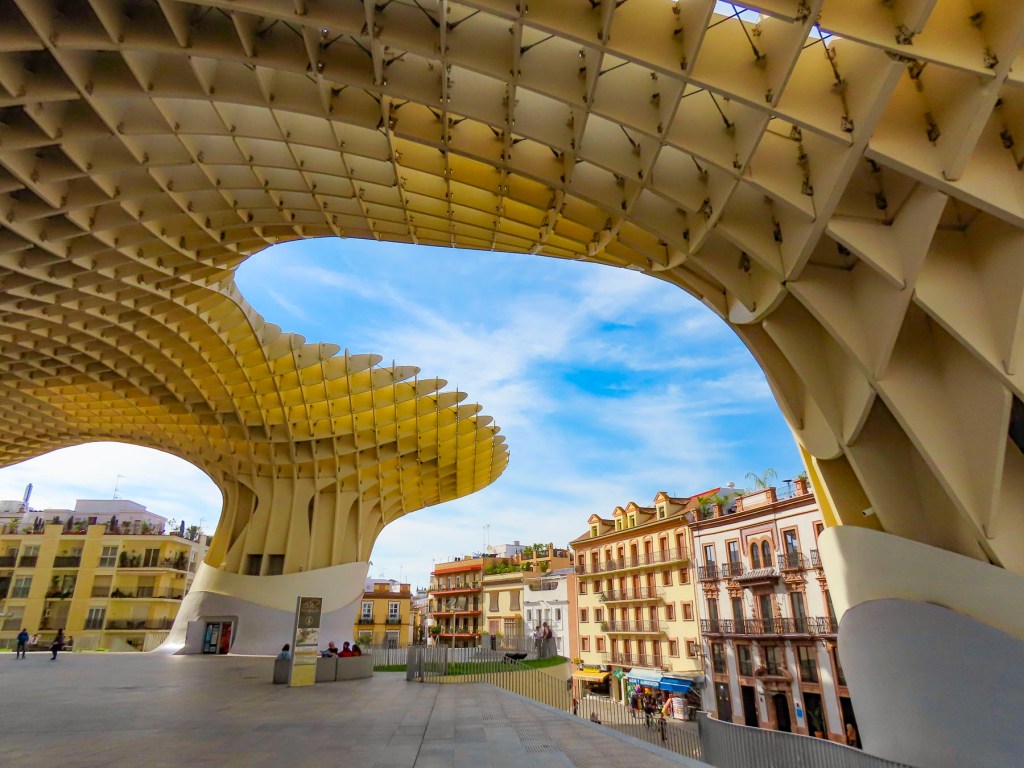
A little further on the Setas de Sevilla loomed over us as we left the alley.  The Setas is a massive, multi-story, Lego-like freeform sculpture with a viewing deck atop it. Constructed entirely of wood, it nearly covers a full city block. It’s an iconic symbol of modern Seville that the locals lovingly call The Mushroom because of its shape. 

For over 150 years this plaza was the true center of the city for Sevillianos when 400 market stalls of the Mercado de la Encarnación occupied the land above the ruins of the medieval Convento de la Encarnación, from which the plaza took its name.  The market operated until 1973 when the building was demolished for structural reasons and the remaining ninety vendors were housed in temporary facilities for what was hoped to be three years.  Inaction by the city left the site closed for 31 years and the area around the plaza became blighted, until the local government sponsored an international design competition in 2004 for ideas to revitalize the plaza and return it to its former prominence. 

Jürgen Mayer, a German architect, won with a concept called Metropol Parasol, constructed with sustainable wood. At 490 feet long by 230 feet wide and just under 100 feet tall, it is the largest wooden structure in the world made with laminated Finnish pine. Its unique design features 3500 sections attached together with 16 million nuts and bolts. The interior of the Setas now hosts a daily market with 38 vendors offering fruits and vegetables, fish, meat, poultry, and cheese. The base of the monument and plaza is ringed with restaurants that have excellent outdoor seating in the shade of the mammoth structure. Inside by the market stalls are several traditional luncheonettes that offer inexpensive daily specials.

A detour to the Guadalquivir River and Triana can be easily made here by following Calle Imagen west. This walk took us past many older buildings with interesting architectural details, and the 14th century Iglesia de San Antonio Abad which hosts the Brotherhood of Silence, the oldest brotherhood in Seville.

A block away the aroma of freshly roasted coffee beans drew us into Elhombre Pez, where you can only purchase bags of whole or ground coffee beans. Their coffee beans are definitely worth the purchase if you have an apartment stay in the city.

The Seville Museum of Fine Arts, set in a former 17th century palace, is also in this direction and is an intriguing detour with its extensive collection of Spanish masterpieces.

Several blocks farther the Real Parroquia de Santa María Magdalena was an interesting discovery. Built in 1691, this Baroque church has a fascinating interior.  The small bar on the corner, Casa Murillo, was a reliable spot for café and lunch. Across the street Churreria San Pablo always seemed to have a line waiting for its sweet treats.

Calle Regina directly behind the Setas de Sevilla begins to funnel folks away from the bustling historic district and into a more residential area, though it’s still lined with a variety of shops and eateries. And if you share our belief that the food is always better and more affordable two blocks away from a popular tourist attraction, you will like this neighborhood. On this stretch Mr. Cake Sevilla with its artfully prepared and tasty offerings is a nice place to rest.

The Iglesia de San Juan de la Palma stands at the crossroad to our favorite tapas bar in Seville, the Bodega La Plazoleta. The gothic portal of the church is one of its few remaining original features. Compared to other churches in Seville its relatively small, but it features three interesting side chapels devoted to the Brotherhoods of Bitterness, the Virgin of the Head, and Our Lady of Montemayor.

The restaurant is on a small square, to the right of the church, that was far enough off the main path that it didn’t attract many tourists. Over our six-week stay in Seville this was our go to bodega for its excellent food, relaxing atmosphere and chocolate cake! The restored 15th century Palacio de las Dueñas is nearby, but let’s face it, it’s impossible to do everything and we needed to save some ideas for future visits to this wonderful city.

If you make a left at this crossroad, it’s a simple detour to the Alameda de Hércules. The origins of this large park date to 1574 and it is believed to be the oldest public garden with tree lined promenades in Europe.  The park takes its name from a statue of Hercules, the mythical founder of Seville, excavated from the ruins of a nearby ancient Roman wall.  This part of the city now has a younger hipster atmosphere and is known for its nightlife and club scene as well as its array of restaurants offering a variety of international cuisine. In this barrio the Basílica de Jesús del Gran Poder is an unusual church with its circular sanctuary which is surprisingly hidden within the church’s traditional façade.

Back at the crossroads: Thursdays are, as the name Mercadillo Histórico del Jueves suggests, the best day for this final leg of the walk. Legend says that this street market has been a feature of the city since the Moors ruled Seville.  Every Thursday several blocks of Calle Feria are closed to traffic, and it becomes a pedestrian mall lined with vendors now selling antiques and flea-market type items.  The market is a popular destination, and occasionally we felt like we were in a conga-line weaving through a sardine can.  We did find a small, folkloric style painting of Seville’s La Feria de Abril that just fit into our suitcase.

It was quite a walk from our apartment on Plaza de Doña Elvira, but our favorite local food market in Seville was the Mercado de la Feria, several blocks past the mercadillo histórico.  The market had a very authentic feel to it, being in a neighborhood that is far away from the tourist center of the city. It had a wonderful fish monger, cheese shop and fresh pasta maker. Accustomed to their neighborhood clientele, the vendors seemed surprised with our purchases which indicated that we actually cook for ourselves.  This is also a great destination for lunch as there are a number of small restaurants that ring the market.

Next to the market – It’s not always open, but if the door under the 13th century pointed Gothic arch of the Real Parroquia de Omnium Sanctorum is ajar, it’s worth stopping to investigate – is one of the oldest churches in Seville. It has gone through many incarnations over the centuries, most notably after a 1355 earthquake, and arson attack in 1936 during the Spanish Civil War.

At this point in the walk, you can choose to head back towards the Alameda de Hércules or continue on towards the towers of the Puente del Alamillo bridge, which you’ve probably already spotted, that spans the northern part of the Guadalquivir River. Head to the river. There is a wonderful pedestrian foot/bike path that follows the course of the river. This stretch of the river is also popular with anglers using traditional long poles and line gear to catch fish from its bank.

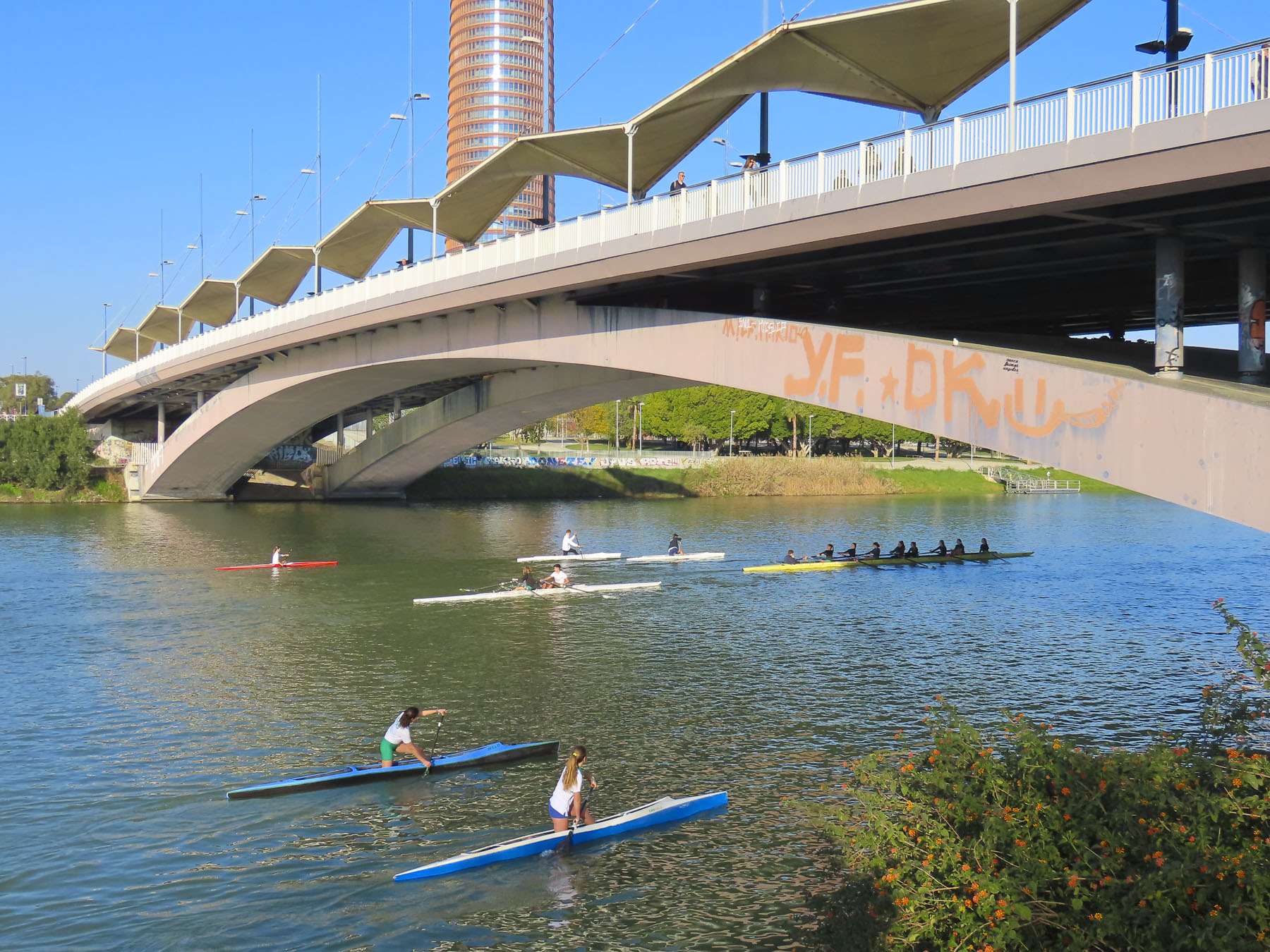
It is a long but pleasant walk south along the river back towards the bustle of Seville.  Mid span on the Puente del Cachorro is a great vantage point for photos of the historic Triana waterfront with kayakers and scullers enjoying the river.

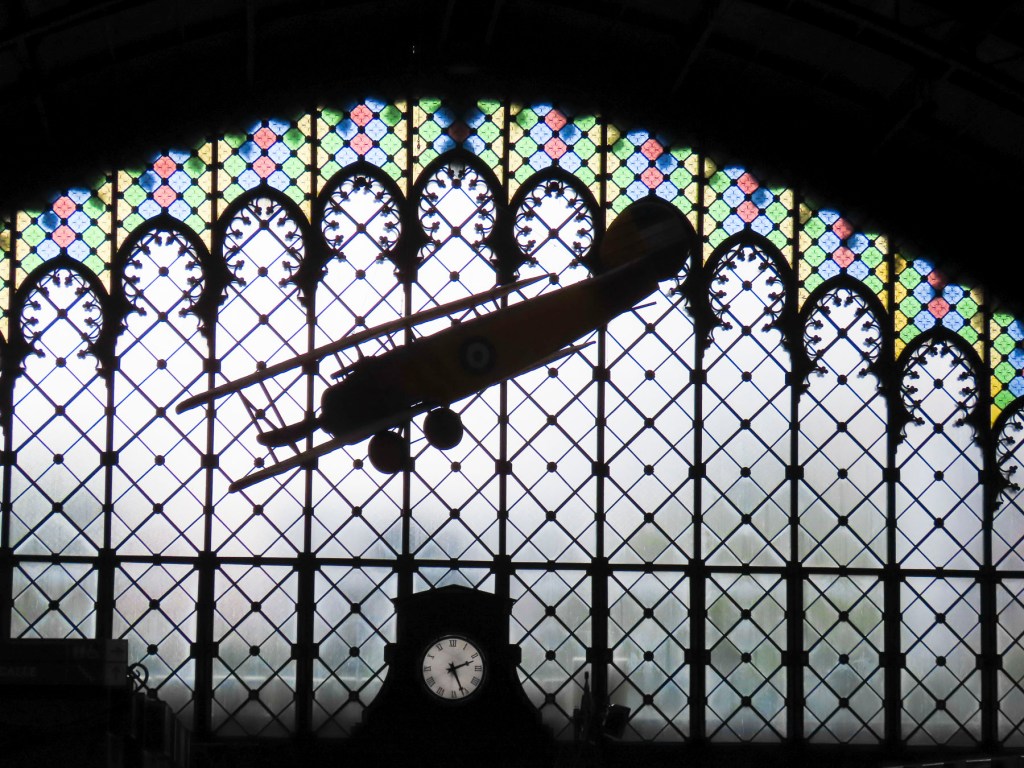
If its late in the day and you want to catch a movie, the Centro Comercial Plaza de Armas is only two blocks inland from here, in the restored 19th century Old Cordoba Train Station.

Till next time, Craig & Donna

Seville Part 2 – Walking Through History Under the Orange Trees

One of the tenets of slow travel is the ability to revisit a place many times to savor the changes in its ambience. The Plaza de España in Parque de María Luisa was one such lively spot that we enjoyed and returned to several times. 

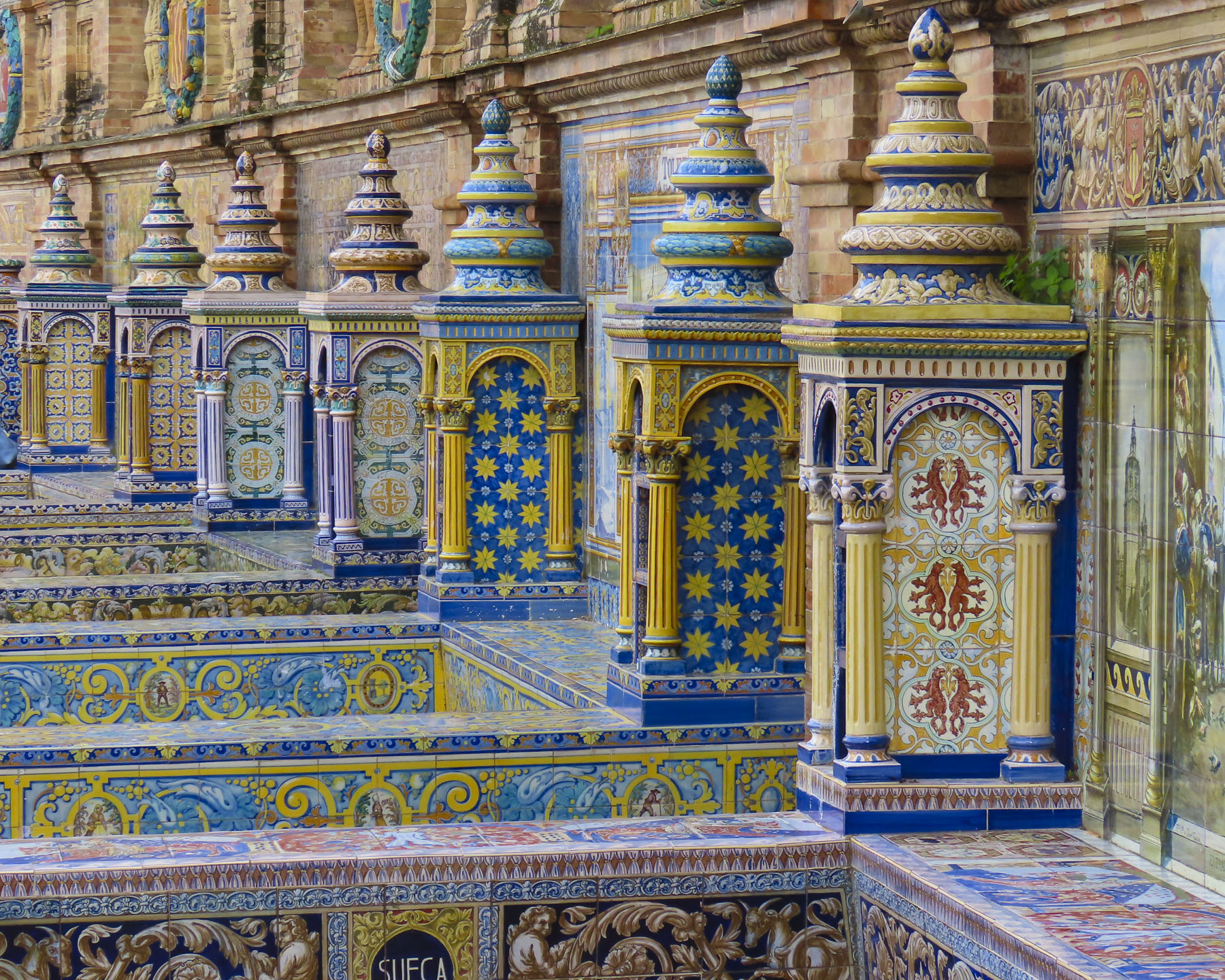
It is an iconic landmark for Seville with its eclectic mix of Baroque, Renaissance and Moorish architectural styles embellished with hand painted Mudéjar tiles created across the Guadalquivir River, in the Triana barrio.

Along with an expansive plaza, signature horseshoe colonnade, and boating moat, it has been a popular destination since it was constructed for the Ibero-American Exposition of 1929.  It, along with the Museum of Popular Arts and Traditions, and the Archeological Museum of Seville in Parque de María Luisa, are hubs of activity on the weekends when they fill with friends and families looking for more elbow room.
Several other architecturally interesting buildings were constructed in the park and along Paseo de la Delicias at this time to host exhibitions from countries that were formerly part of the Spanish Empire and which would later be used as consulate building. 

On the way to the park one morning, we stopped for café along the edge of Jardines de Murillo and unsuccessfully tried to order cappuccinos from a brusque waiter who replied, “No,” just no and without any further explanation turned and walked away. Confounded, we left.  This happened again several days later when we were early for a dermatologist appointment, for an overdue skin cancer screening at Hospital Fátima, a private hospital in Seville that facilitates multi-lingual medical tourism services for travelers. We used TripMedic to arrange our appointments.

We found the small café, Bar Puerto Chico, on the block behind the hospital. It was full of folks on the way to work, having the traditional Andalusian breakfast that consists of tostada, soft Mollette bread, perfectly toasted to a golden brown and drizzled with olive oil, a smear of crushed tomatoes and maybe a slice of jamon, along with coffee and zumo natural, fresh squeezed Spanish oranges.  “Dos capuchinos por favor.” The barman smiled this time when he responded with a “No,” but seemed to be delighted that two foreigners had found his establishment, when he explained that they only serve espresso or café con leche. In some local bars cappuccinos just aren’t done. Mystery solved.

Heading back into the city center, the sidewalk along Paseo de la Delicias eventually dips down, near the Escuela de Mareantes (School of Navigation) and widens to a scenic esplanade for bicyclists and walkers, that parallels the Guadalquivir River through Seville for several miles.

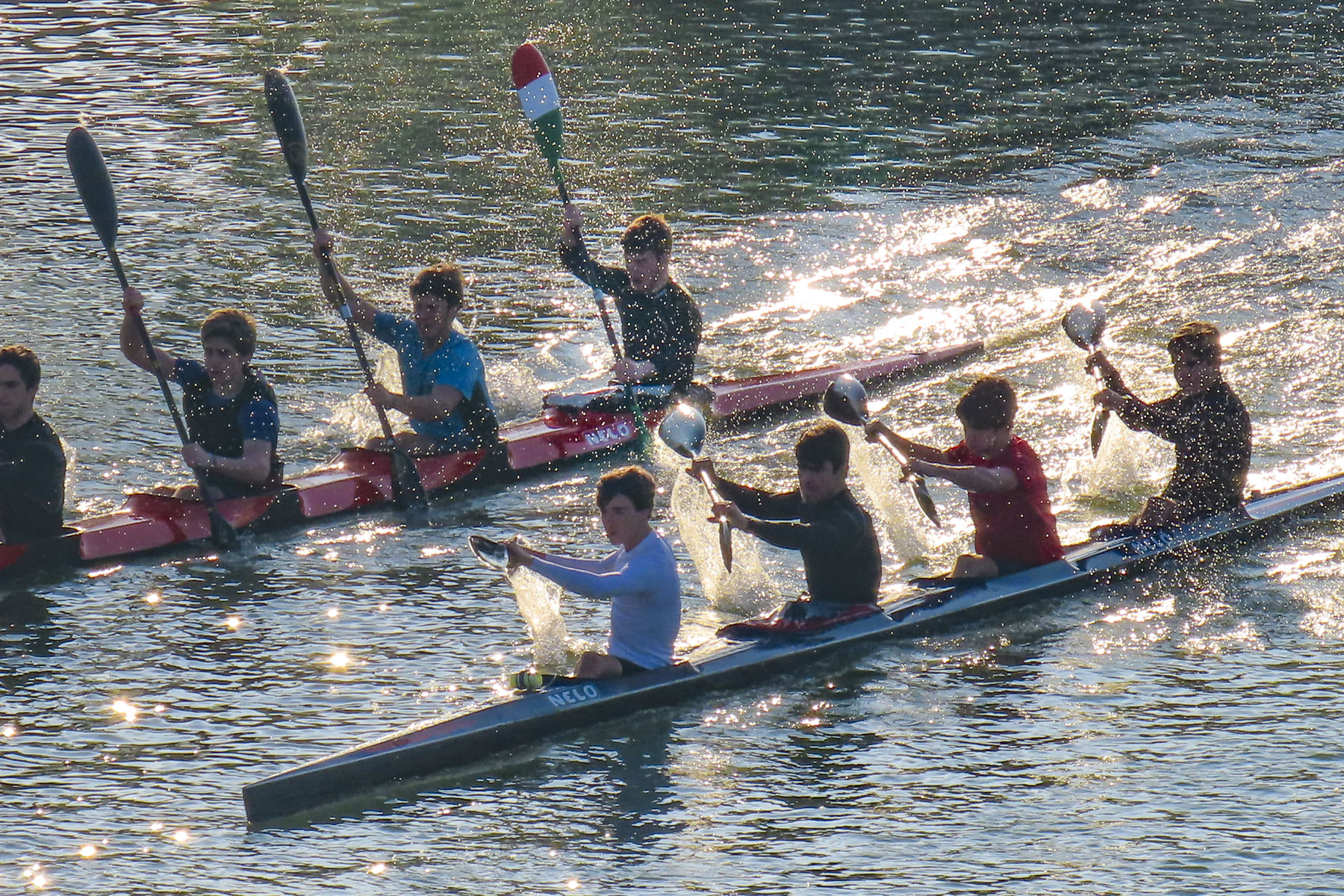
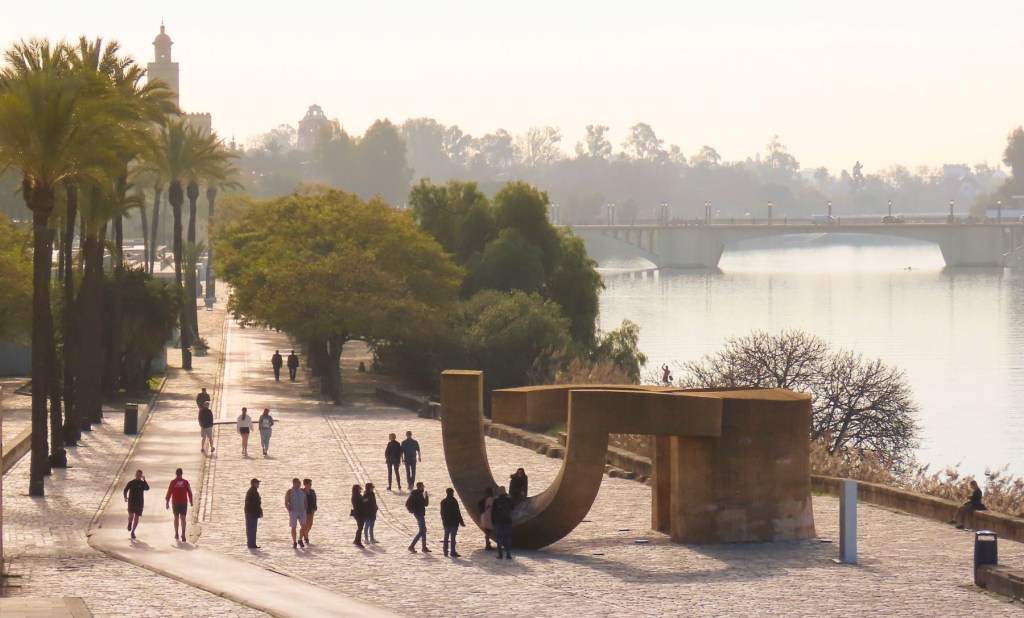
Speckled with buskers, sculptures, and benches, there are plenty of excuses to saunter slowly and savour the view. The river is popular with numerous kayaking and sculling clubs that launch miles upstream and then race down the river. 

The waterway on the weekends was always bustling, but even during the week there were a good number of paddlers and rowers on the water, from sunrise to sunset.

It’s also an historic stretch of river that was the Port of Seville, where galleons returning from the Spanish colonies in the Americas during the 16th and 17th centuries unloaded cargo and registered their treasure of gold and silver bullion at the Torre del Oro, tower of gold bullion.  The 118 ft tall tower dates from the 1100s and was part of the Moorish defensive wall that once encircled the entirety of ancient Seville and was the anchor point for a heavy chain that was stretched across to the Triana side of the river to control shipping.

Ferdinand Magellan launched the first circumnavigation of the world from this quay in 1519. For the 500th anniversary of this tremendous feat the city commissioned a full-size replica of his ship, the Nao Victoria, to be moored on the river.  A small vessel by today’s standards, it made us wonder how they ever succeeded in sailing around the world. 

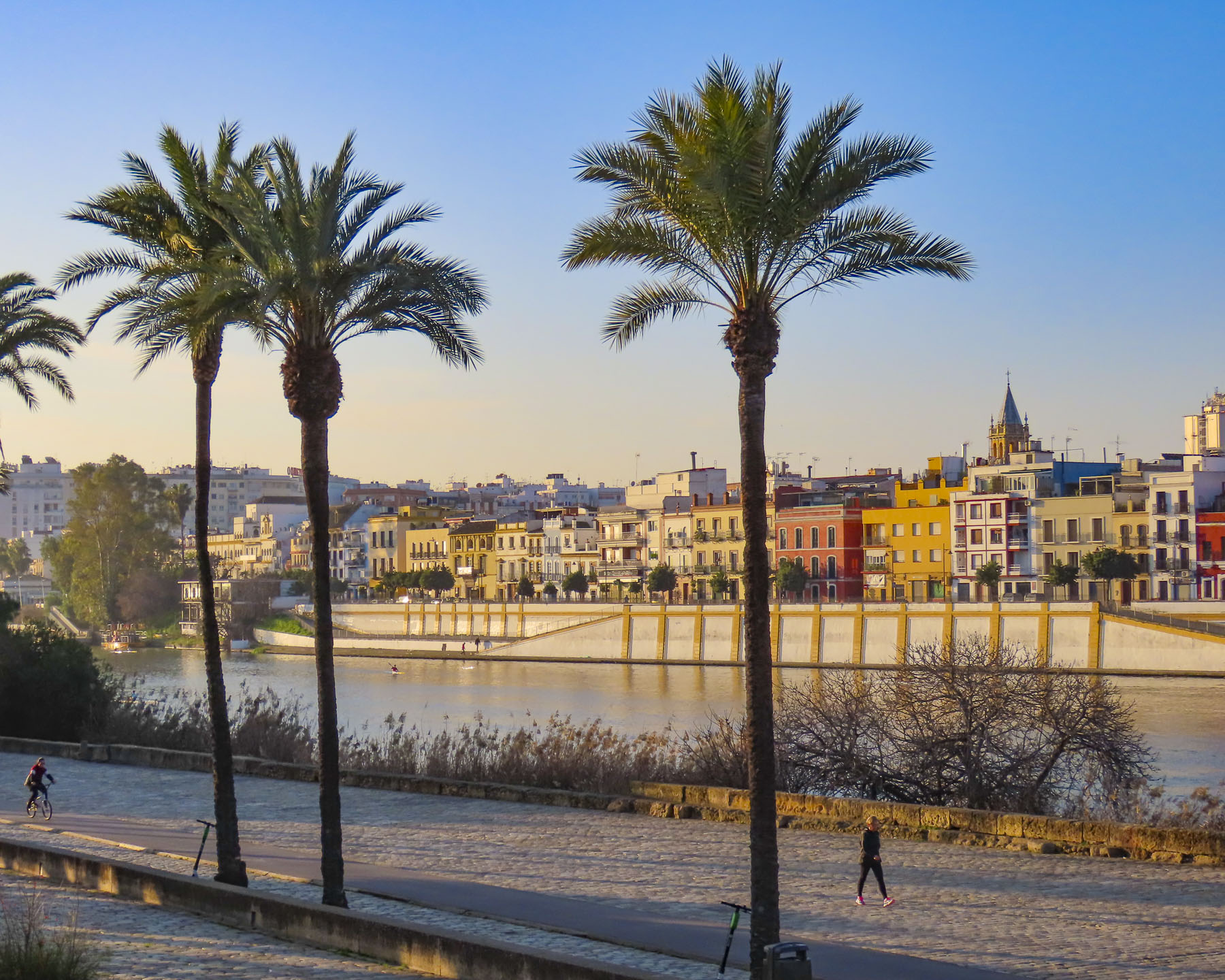
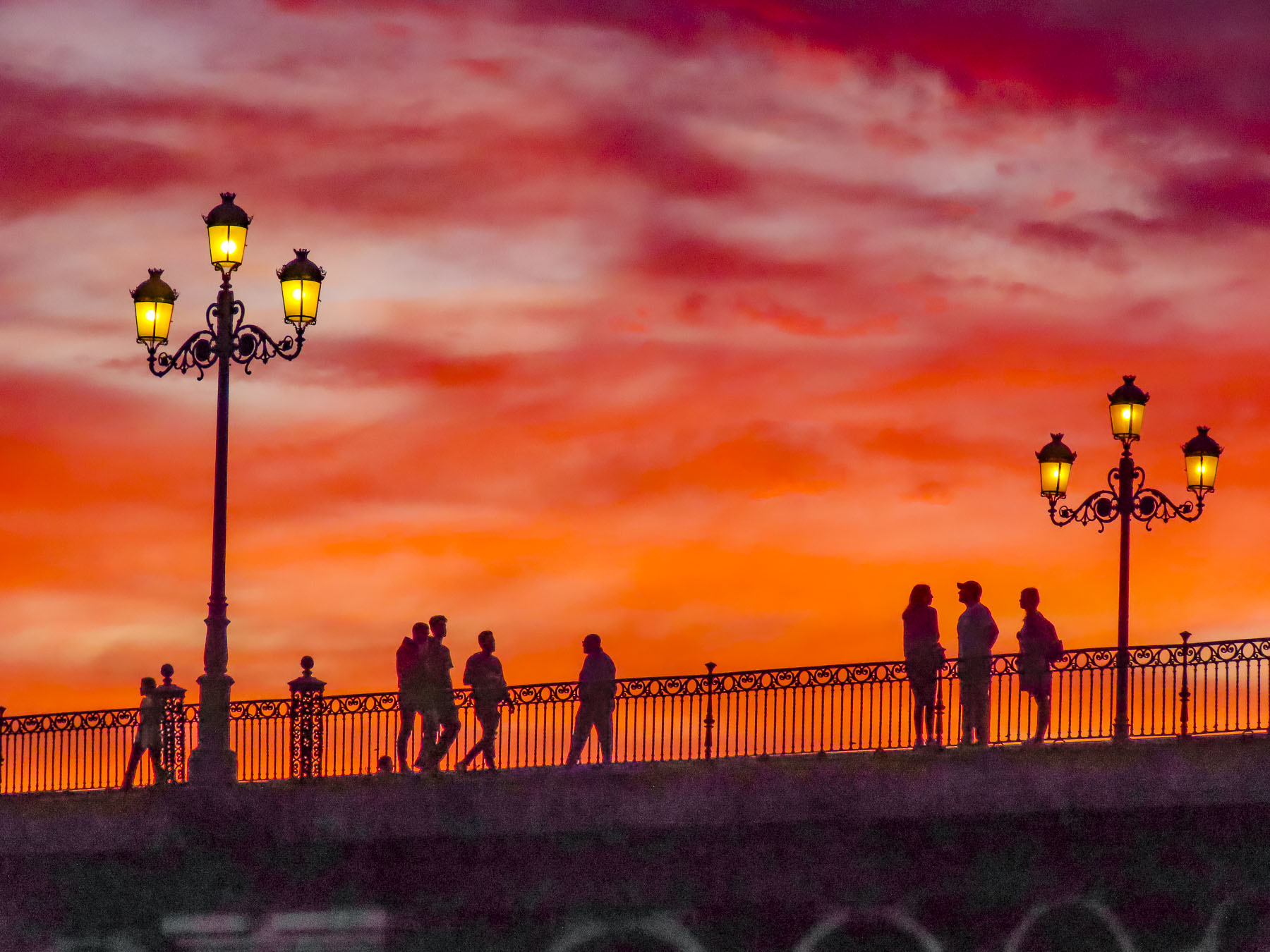
Nearing sundown, the quay along the river fills with folks waiting to watch the sky erupt with color as the sun sets behind the bridge and Triana.

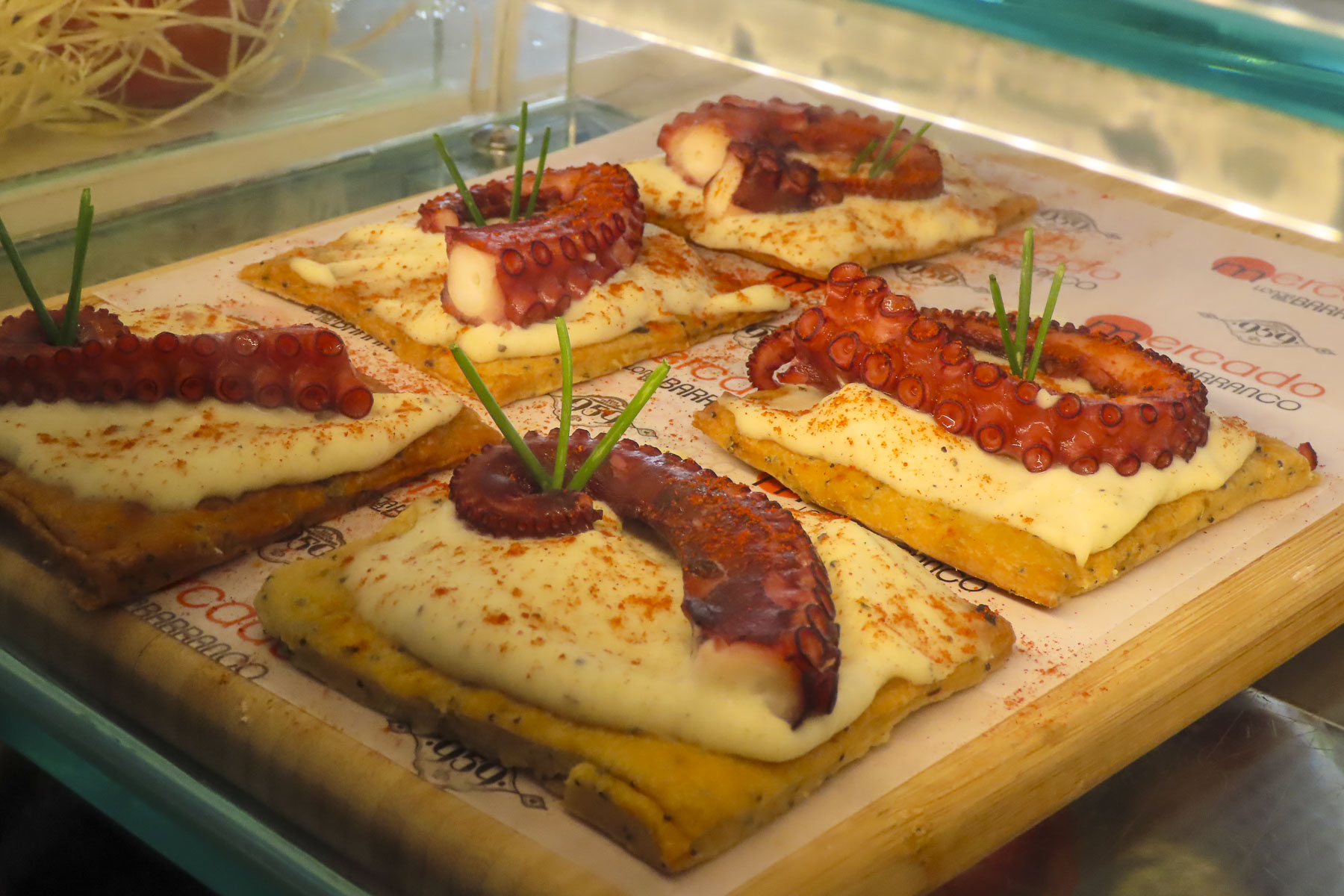
At the base of the bridge stands the lofty, wrought-iron and glass Mercado Lonja del Barranco, designed by Gustave Eiffel in 1883. It functioned as the city’s fish market for several decades before it was re-envisioned in 2014 as an upscale food hall with a contemporary, architecturally beautiful interior.  It’s definitely a fun foodie destination; it is a savory gauntlet of display cases offering the full spectrum of Spanish cuisine prepared by twenty different restautrants.  There is something delicous for everyone available here.

Aside from the completion of the Puente de Triana bridge in 1852, which replaced a well maintained 700 hundred year old Arab-designed pontoon bridge, it’s alleged that the Triana riverfront looks unchanged since Columbus recruited his sailors from the barrio.

While it still retains its authentic character, some wonderful alterations have been implemented, starting with the pedestrian only Calle San Jacinto that starts at the foot of the bridge on the Triana side. It is a lively stretch of outdoor cafes that offer an array of different cuisines.

The ruined dungeons of Castillo de San Jorge castle, located under the Mercado de Triana, are now a museum and Interpretation Center for the 300 year terror known as the Spanish Inquisition.  Nearby a short alley leading up from the river, the “Paseo de la Inquisición,” was the last walk of freedom for many before the prison door slammed behind them.

The mercado is a thriving, lively spot that draws locals for the seafood, meat, cheese and vegetable vendors, along with a slew of always busy restaurants.  We caught a lesson in buying fresh fish while waiting in line at a fish monger’s stand. “Always look at the inside color of the gills, they should be very bright,” is what we gathered as he showed several large whole fish to the customer in front of us as we waited to purchase a filet of tuna to cook back at our apartment.

One stall, which we dubbed the olive porn store, only sold decadent large olives garnished with all sorts of delicious extras.  Another booth offered artfully decorated puff pastries, which were as tasty as they were visually stunning. The mercado was a long walk from our apartment, but one of our favorite traditional markets to shop at, which we returned to several times during our six-week immersion in Seville.

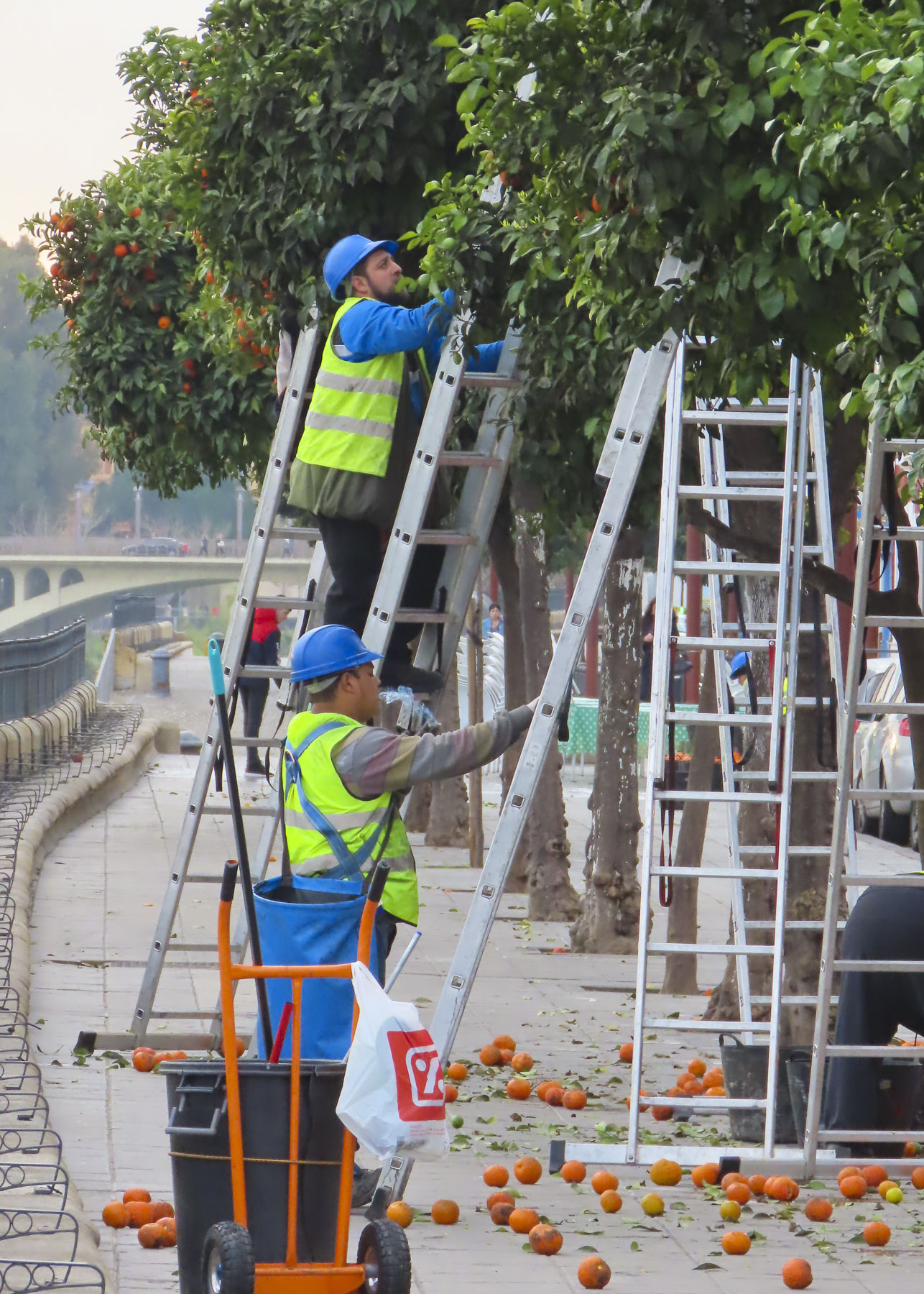
We were on the Triana side of the river one late February morning and came across a crew of city workers with ladders and buckets harvesting all the softball size Seville oranges from the trees that were lining the street. The fruit was brought to the city by the Arabs in the 9th century and Seville now, unbelievably, has 46,000 bitter orange trees that produce close to six million tons of fruit annually. Most of it is sold to be used to make marmalade, but it is also an ingredient in Cointreau, Curacao, Grand Marnier and Triple Sec liquors. Oil from the bitter orange skin is used for cosmetics, pharmaceuticals, and soaps. Recently the city started using the unsold oranges in an innovative Biogas program, where the methane gas created by the decomposing oranges is used to make “clean electricity” to run a water purification plant.

Before continuing our day, we stopped for coffee at one of the cafes that line the riverfront on Calle Betis. From our previous experiences we believed it was impossible to get a bad cup of coffee in Europe. All of it is usually made to order on one of those fancy deluxe espresso machines that you see behind the bars. My wife is more the coffee connoisseur than me as I’ve been known to make a mug of coffee last all day. But that day we both had the worst cup of coffee ever and couldn’t drink it beyond our first sips. It must have been the last pot of drip coffee from the day before that was left on the burner overnight. It’s amazing how waiters can vanish; perhaps ours did from embarrassment, but this could explain the beginning of the inquisition. Bad coffee leading to misplaced aggression, we all know what happens without that caffeine.  Sympathetically the second waiter understood when we explained the situation and he didn’t request payment.

Triana was also famous for the ceramic workshops that painted and then fired in massive kilns the Azulejo and colorful Mudéjar style tiles that adorn many of the historic buildings in Seville.  Along with sailors, Triana has cultivated many famous flamenco dancers, guitarists and bullfighters. The most admired matador was Juan Belmonte who stood famously close to the bulls and was gored several times over a career that spanned 109 bullfights. His statue stands in the plaza across from the Triana Mercado and if you follow his gaze you’ll see Seville’s beloved bullring, Plaza de toros de la Real Maestranza de Caballería de Sevilla, often simply called the Maestranza, across the river. It has been holding corridas in the same ring since 1761. 

Many of the taverns surrounding the bullring are full of corrida memorabilia. Our favorite was Bar Baratillo on Calle Adriano which is also full of shops catering to the Andalusian equestrian tradition.  La Feria de Abril is a colorful weeklong festival that celebrates this Andalusian equestrian tradition with the women wearing traditional traje de gitana or faralaes (flamenco style dress), while the men wear a cordobes hat along with a fitted short jacket, riding trousers and riding boots, refered to as traje corto. Every midday during the festival a parade of carriages and riders, called the paseo de caballos, heads to the bullring to watch the best matadores on Seville’s bullfighting calendar perform. Bullfighting season in Seville starts at the end of Semana Santa, Holy Week, on Easter Day.

Farther behind the bullring the Hospital de la Caridad, founded by the Holy Charity brotherhood in the 1600s, still follows its mission to help the poor and infirm. Its beautiful baroque chapel is now a museum filled with art.

Also, in this neighborhood in Casa Morales, we found one of Seville’s oldest abacerías, a small grocery store with a small tavern in the back, on the corner of Garcia de Vinuesa and Castillejo that is still run by the same family since its opening in 1850. The bodeguita retains its original atmosphere with antique cabinetry in the store and tall, large earthen wine vats lining tavern’s walls. It’s definitely worth a stop here to try their traditional tapas or montaditos, small sandwiches.

Just off Calle Adriano one Saturday in the weeks prior to Semana Santa we came upon a Christian brotherhood training to carry their float for the holy week processional. With military marching precision, the muscular team turned the weighted float around a tight corner and continued down the block in synchronized step. 

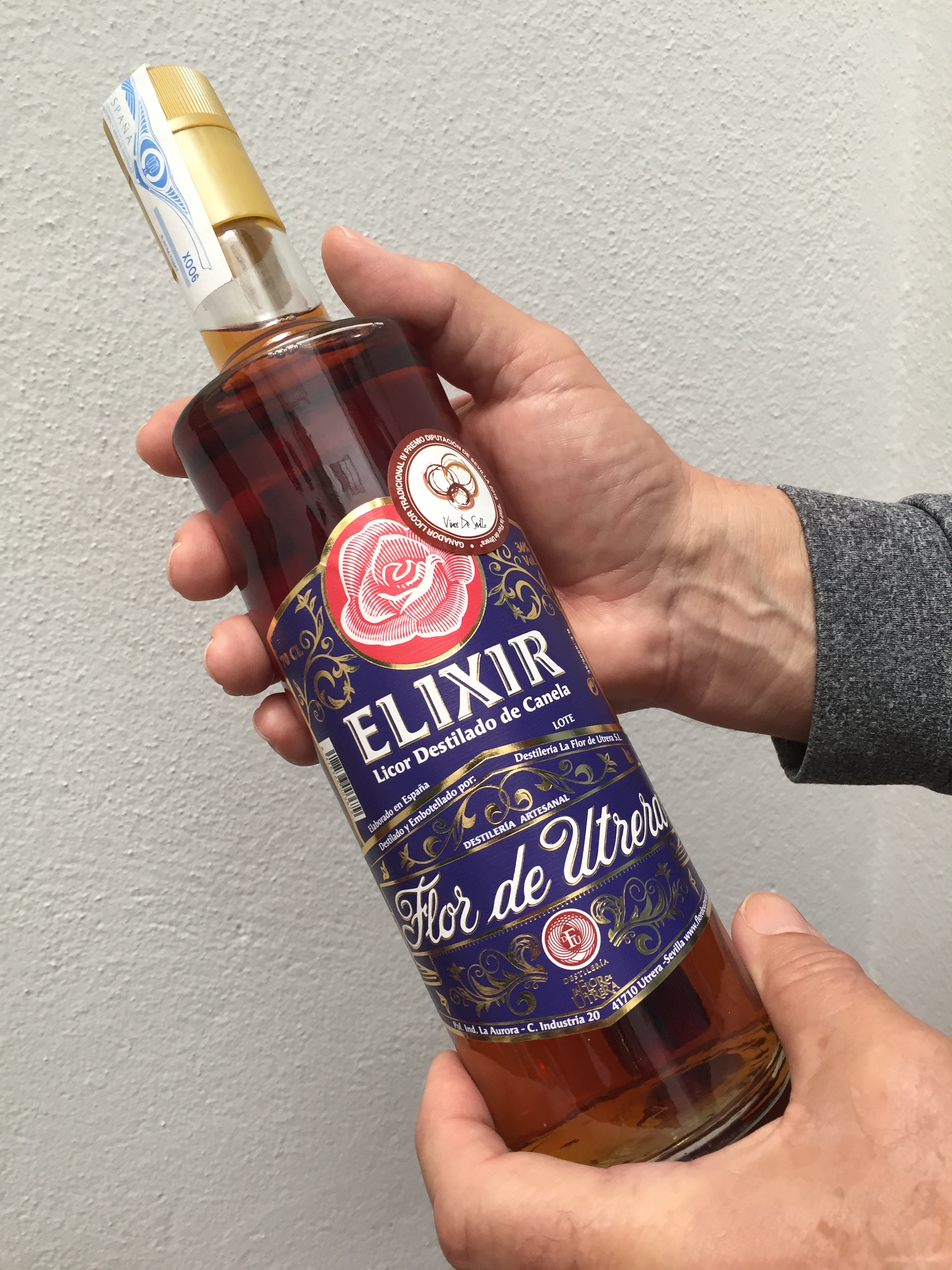
We followed the marching band that accompanied them to a fundraiser for the brotherhood.  Very much like a church bake sale, the only difference was they surprisingly sold bottles of various liquors.

We smiled, bought one and saluted Seville’s spirit later that evening.

Salud! – Till next, Craig & Donna 

Belize – When Iguanas Fall from Trees, Head South

“Welcome aboard, folks. Our flight time to Belize is two hours and ten minutes. The weather is expected to be a balmy 80 degrees Fahrenheit today when we land,” the pilot announced as we were buckling in. Then continued with “As you know the National Weather Service has issued the very rare ‘Beware of Falling Iguanas Weather Alert’ for Miami and South Florida this morning.”  As funny as this sounds, it actually happens when the temperature dips into the thirties in Florida.  Cold blooded animals, the iguanas slowly stiffen as the temperature drops and eventually lose their grip on the tree branches they have been sleeping on and fall to the ground, stunned, where they lay immobile until the temperature rises.  Iguanas can grow quite large and may cause serious injury or death if you are unlucky enough to get struck by one of the falling frozen reptiles. It sounds like something out of a zombie apocalypse movie – be careful out there. We were delighted to be heading south again to a warmer climate after a cold and rainy November and December in Italy, which was followed by a warm-hearted, but very frigid Christmas with our kids in New Jersey.

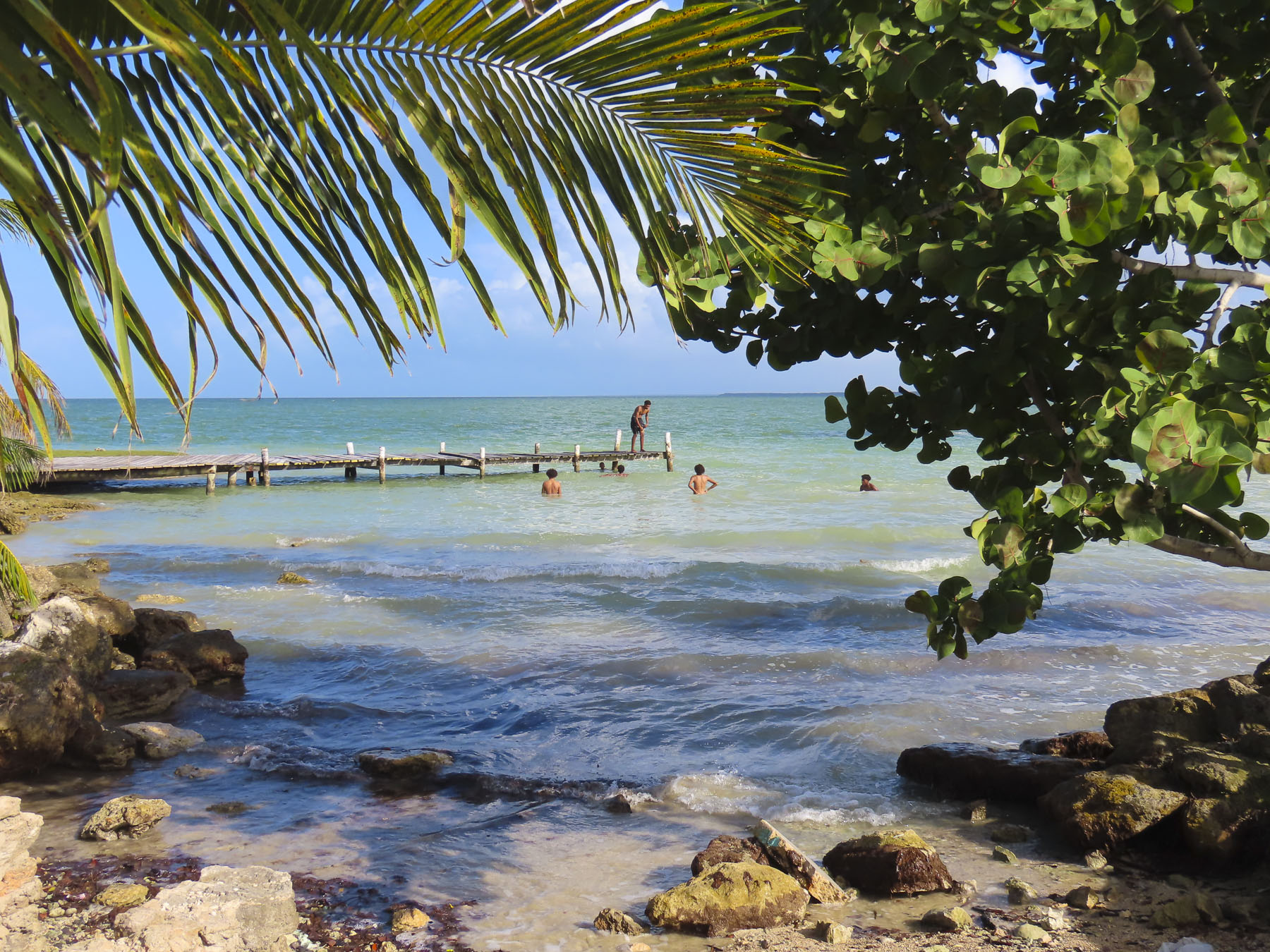
On our final approach for landing the wing of the plane dipped to reveal a beautiful azure sea outlined with dense green jungle and brilliantly white sand beaches – and not much else – as far as the eye could see.  It was still much like it was several millennium ago when a prosperous Mayan civilization flourished, supporting an estimated population of 500,000 – 1,000,000 in the region. Columbus sailed by without stopping and landed in Honduras during his last voyage to the Americas in 1502.  Navigator Juan Diaz de Solis did not mention a landfall or discovery during his expedition in 1507 sailing from Panama to the Yucatan. Several theories suggest that the 190-mile-long Belize Barrier Reef, the largest in the northern hemisphere, was too difficult to navigate through so the Spanish fleets sailed past. We witnessed this difficulty once from the deck of a cruise ship as the captain left a snaking wake as he steered a serpentine route through the underwater obstacle course.

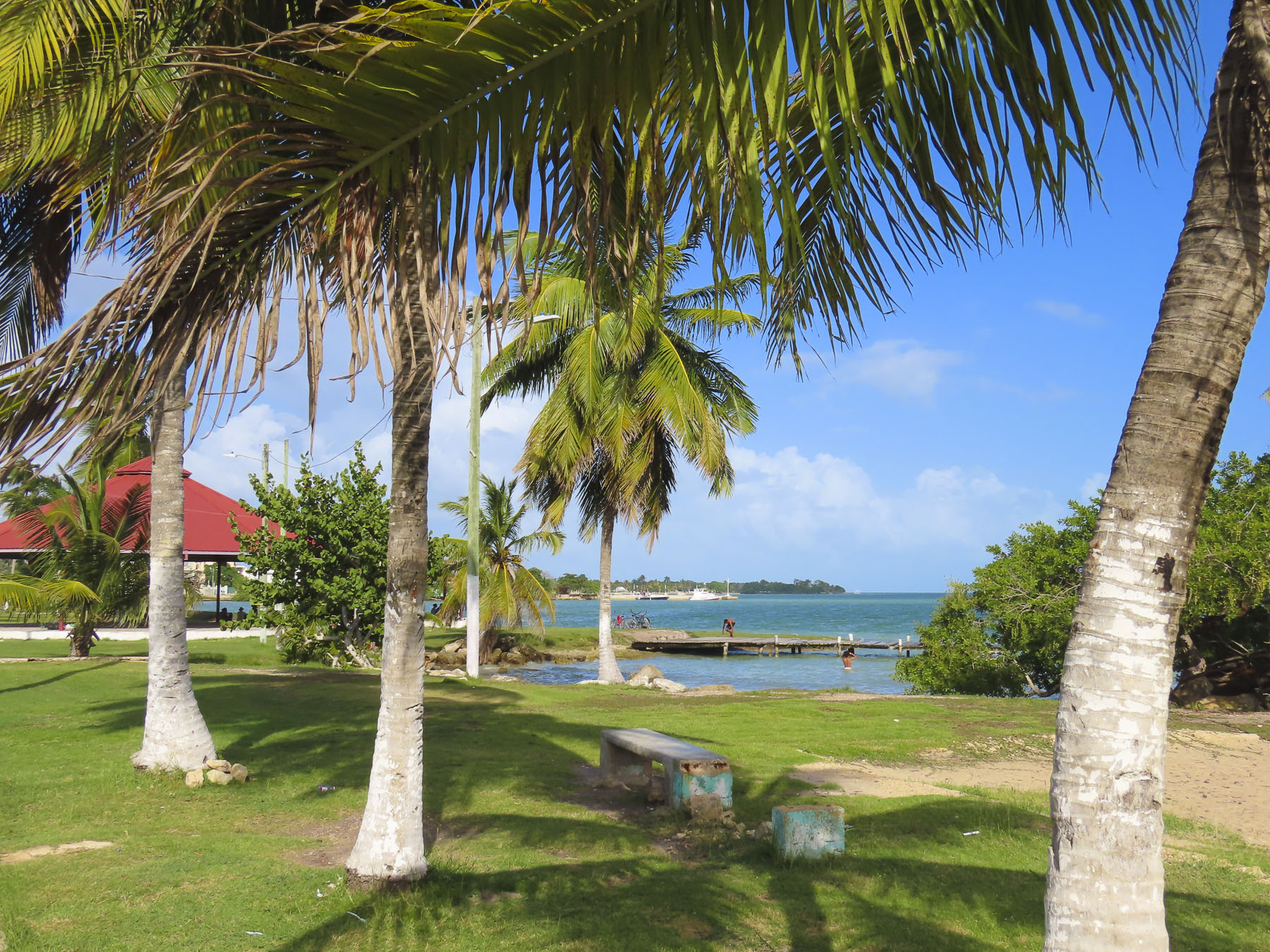
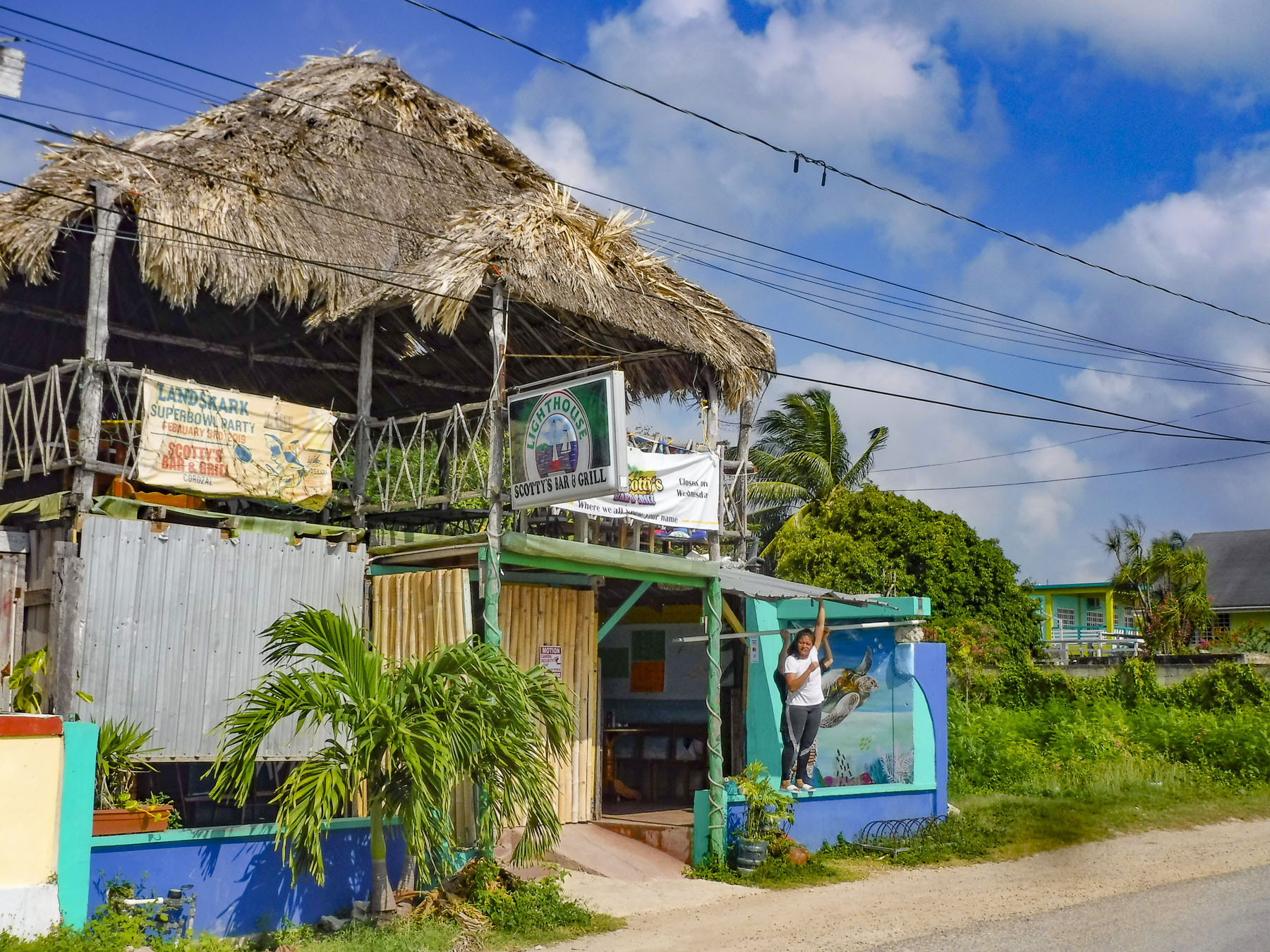
The first European to arrive in Corozal literally washed ashore as a survivor of a 1511 Spanish shipwreck. To stay alive, conquistador Gonzalo Guerrero offered his skills as a soldier to Mayan Chief Na Chan Kan at Chactemal, (now Santa-Rita, Corozal Town). He proved his skill as a warrior and married the chief’s daughter, Princess Zazil Há. The children from their union are recognized as the first Mestizos of Central America; theirs was the first Mayan liaison recorded by Bernal Diaz de Castillo in his memoir “The True History of the Conquest of New Spain,” written in 1568.

Guerrero defended his adopted homeland against conquest in 1531 when he helped Chief Na Chan Kan defeat the Spanish army in a battle near the Rio Hondo. Today the river is still Belize’s northern border with Mexico.  Spain never established any permanent settlements in Belize.  Gold and silver were discovered next door in Guatemala and Honduras. Belize was absorbed into the Spanish empire of Central America by its proximity to its larger neighbors, but was never colonized until the British subversively entered the territory.

The riches of the new world didn’t go unnoticed for long, but by the time English and Scottish pirates arrived on the scene in the mid-1600s, the treasure-laden flotillas destined for the Spanish crown from central America had been replaced by shipments of logwood.  Native to northern Central America, logwood or bloodwood was used by the indigenous tribes of the region to produce a vibrant red-orange dye. Mixed with other ingredients, a full spectrum of colors was possible. It grew abundantly and was exported to Spain where the cheap natural resource revolutionized the textile industry and afforded commoners a chance to have colorful wardrobes, which before was only afforded by the nobility. Gone were the days of fabrics dyed gray with soot. 

Gold or wood – it didn’t matter. Pirates were pirates and willing to steal your cargo regardless of its content, as long as there was a profit to be made, and the English textile mills were demanding logwood.  After plundering large Spanish merchant ships that sailed across the Gulf of Honduras, the pirates found safe refuge for their smaller vessels in the shallow waters behind the Belize Barrier Reef amidst its 450 cays and atolls, where they could hunt for food, get fresh water, and repair their boats.  In 1670 England and Spain signed a treaty banning piracy in the Caribbean.  The days of the infamous pirates of Belize, Edward Lowe, Captain Charles Johnson, Bartholomew Sharp, Captain Henry Morgan, and Blackbeard, were waning.  By this time English pirates had discovered Belize was full of logwood and many ex-privateers became legitimate and wealthy logwood cutters and exporters after buying African slaves to work in the miserable conditions of the mosquito-infested jungles.  Though Spain considered all of Central America as part of their empire and occasionally harassed the British logwood camps trying to evict them, the Spanish crown never established any settlements in Belize. 

In 1763 Spain signed another treaty allowing English subjects the “privilege of wood-cutting,” but still retained sovereignty over the region. Possession is nine-tenths of the law and Belize finally became the English colony of British Honduras in 1862. Mahogany had replaced logwood as the major export. Conflict with the Mayans escalated as settlers moved farther into the interior exploiting the regions mahogany forests, and forced the indigenous population from their lands by burning their villages and crops. The giant cut logs were floated down the country’s rivers to the coast and where rivers didn’t exist, small logging railroads were built to satisfy the European demand for this beautiful hardwood that was favored for fine cabinetry, furniture and shipbuilding.

Disenfranchised and oppressed, the Mayan revolted in what is called the Caste War against their colonizers. Led by Marcus Canul, a Mayan chief,  his people demanded the British pay for the crops they burnt and for the land they occupied.  In northern Belize, Canul’s freedom fighters attacked and occupied the garrison town of Corozal. The movement lost its momentum when Canul was killed during an unsuccessful assault on Orange Walk in 1872.  Long considered a rebel and criminal, he is now regarded as a Belizean hero who fought against ethnic cleansing. The deforested jungles were replaced by sugar cane, ranching and agriculture plantations.

Belize finally became independent in 1981, though The British Army still maintains a jungle warfare training facility in the country to help deter Guatemalan aggression in an unresolved border issue. Aldous Huxley once wrote, “If the world had any ends, British Honduras (Belize) would certainly be one of them. It is not on the way from anywhere to anywhere else. It has no strategic value. It is all but uninhabited.”

Today the tiny country of 400,000 supports a diverse culture descended from Mayans, Mestizos, African slaves, Garifunas, Europeans and more recently immigrants from Lebanon, Germany, the East Indies, Asia and North America with an economy centered on tourism and agriculture.  English is the official language of Belize, but it is not the first language of many with Spanish, Belizean Creole and Q’eqchi’ Maya primarily spoken, depending on what part of the country you are in.

The barrier Islands and cays where pirates might have hidden treasure now sport popular resorts on their white sand beaches. Scuba divers can explore shipwrecks, the Great Blue Hole (a marine sinkhole that is visible from space,) and the exceptional marine life found along the Belize Barrier Reef which is now a marine reserve and UNESCO World Heritage site.  Ashore the jungles and mountains continue to reveal the extent of the Mayan civilization in Belize with over 600 known archeological sites discovered so far, ranging from ceremonial caves to towering stone pyramids.

We are on the other end of the tourist spectrum and wanted something very lowkey, inexpensive and relaxing for a month. We headed to Corozal! Located on Chetumal Bay, it is the northern most city in Belize and only 16 miles from Chetumal, Mexico. It was founded in 1848 by Mestizo refugees from Mexico fleeing Mayan retribution from the Caste Wars there. It prospered exporting mahogany logs when there were still enough trees to support the timber industry. Sugarcane now fuels the economy. 

In 1955 Hurricane Janet, a category 5 storm with winds of 175mph, flattened ninety-five percent of Corozal and left 8,000 people homeless.  Surprisingly one of the few buildings left standing on the waterfront, fully intact, was the home of lumber baron John Carmichael.  It was built in the 1880’s using only mahogany.  The house is still used today as a Catholic mission. The pre-1955 wooden structures have been replaced with concrete block houses now, mostly two stories high, except the four-story Mirador Hotel, the tallest building in town.

Our ah-ha moment happened after the two-hour, inland drive from the airport, when we entered Corozal and saw the enticing turquoise waters of Corozal Bay on our way to our Airbnb rental. We drove a mile along a still bay bordered by a low battered seawall and numerous public parks dotted with palm trees.

Turning onto 2nd St. North our driver stopped in front of a flowering bougainvillea-covered wall, less than 200ft from the water, that hid the Villa Imperial Loft Apartment, our home for the next four weeks.  Our host Oscar wasn’t home at the time, but had made arrangements with Sue, another guest, who graciously led us through the flowering garden, complete with a resident mama cat and her kitten, and up the back stairs to our studio apartment. She enthusiastically answered our first questions about Corozal.

The large room was brightly painted and pleasantly decorated with an eclectic mix of antiques, reminiscent of visiting our grandparents.  A wall of windows facing east offered a glimpse of the bay, and any storms approaching, through the neighbor’s tree. Best was the kitchen across the landing at the top of the stairs. It was enclosed on three sides with just screened windows, covered with louvered shutters. In stark contrast to the apartment, it was very rustic with the feel of an old lake cabin. But we soon realized it was the perfect spot to observe the wide varieties of birds that visited the trees in the backyard, and we thoroughly enjoyed cooking and eating there.  Birding over the next month while walking along the waterfront was one of the highlights of our stay in Corozal. Spotting just a few of the 590 bird species in Belize, we saw sandpipers, great kiskadee, white-collared manakin, yellow-throated euphonia, tricolored heron, kingfisher, lineated woodpecker, great egrets, couch’s kingbird, crimson-collared tanager, black and white warbler, and the outrageously raucous plain chachalaca, which you’ll hear well before seeing them.

For many travelers visiting northern Belize, Corozal is just a brief stop on their way to or from Mexico or Guatemala, or a transfer point to catch the two-hour Thunderbolt Ferry or a flight on Tropic Air from the Corozal Airport (CZH) to San Pedro, on the barrier island, Ambergris Caye.  The town doesn’t have a beach, which has probably helped keep it off the beaten path for most tourists that visit Belize. Access to the shallow water is from stairs in the 1.5 mile long stone seawall that has not fared well against the surges of the ocean. We had read that the district has a sizeable expat community, that likes to avail themselves of all the big city options, mainly a Walmart and Sam’s Club that are across the border in Chetumal, Mexico.  But from our experiences we only encountered a handful of North Americans, surely not surging numbers that would indicate it was a sizzling hot spot for vacationing or retirement that would change the character of the town. And that’s a good thing. The joy of Corozal for us was its tranquility; there really was not much to do there aside from chilling and the occasional dip in the gentle waves of the bay.  The serenity of the seascapes compensated for the lack of activities.

We were enjoying the tropical 80-degree weather of Corozal and re-embracing our slow travel philosophy by immersing ourselves in the daily flow of life in this small coastal town. It was wonderful to see parents accompanying their uniform clad children to school every morning. Some parents drove, others walked along or bicycled with their kids. Routinely at the end of the school day an older couple pedaling a three-wheeler sold homemade popcorn to the kids or the youngsters lined up for ice cream on the porch of a home that doubled as an ice cream parlor. The kids waved to us if they noticed us bobbing in the bay across the street.

Our daily walks led to discoveries all across town, mostly culinary in nature. We were eager to find the best places to buy groceries, interesting places to eat and quench our thirst.  Most importantly, our craving for good coffee was easily satisfied directly across the street at the top of a colorful flight of tiled stairs. Here Oscar’s nephew Rudi runs the LVDM Coffee Stop on the porch of his home and makes what are easily the best cappuccinos in Corozal. He also rents two rustic villitas in his backyard. 

In town there were any number of Asian-owned grocery stores that all offered the same staples. We tended to prefer a shop called the Central Supermarket, because they were the closest place to carry our recyclable beer bottles. Diagonally across the street the city’s daily market had numerous fruit and vegetable stands, an open-air butcher, and clothing vendors. A twice weekly farmers market was held outside of town, across from the cemetery.  Fortunately, this location did not reflect negatively upon the quality of produce sold there. At a much greater walking distance, it didn’t offer any real advantage over the produce sold for the same price at the daily market. Shopping there was an early morning event and the atmosphere was very vibrant. It was here we got the first glimpse of the country’s Mennonite farming community, easily identifiable by their conservative dress and spoken Pennsylvania German. Since 1958 when they were invited to settle in Belize by the first Premiere of the country, George C. Price, the community has grown to 10,000, and they have contributed immensely to Belize’s agriculture self-reliance.

Surprisingly, even though Corozal is located right on the bay, we could not find fresh fish and had to purchase locally caught frozen fish, conch and lobster from Frank’s, a great butcher shop that makes their own sausage and offers a wide assortment of fresh beef, pork and poultry.  Directly across from Frank’s on the other side of the civic center field we found Vivi’s for wonderful meat pies.

On one of our walks, we did meet a young brother and sister team carrying a five-gallon bucket on the handlebar of their bicycle. It was full of lobster and conch, caught by their father earlier that morning.  They were going door to door in the neighborhood, selling it so they could buy their school uniforms.  Of course, we purchased some, and it was delicious.

The town does not have a marina for boats, but there are spots along the bay where fishermen pull out their ancient mahogany boats for repairs.  Called sandlighters, many of these traditional sailing vessels were built across the bay in the fishing community of Sarteneja and are over eighty years old.

There were several small bakeries in town, each offering different specialties.  The Y Not Bakery, to the detriment of our waistlines, was the closest and created the best temptations. Another favorite was Caramelo Bakery across from the high school and down the street from Belcuisine, a spice factory that produces flavorful Belizean Recados mixes.

Corozal really was a rewarding foodie’s destination with numerous small taquerias and enterprising folks offering roadside barbeque. Many businesses were operated from the windows of homes, like Ruby’s, who prepared delicous ceviche then sold it through her living room window for take-away.

The only option for eating out was casual dining. We found June’s Kitchen and Mar’s Caribbean Garden for homecooked meals.  Directly across from the bay, Scotty’s Crocodile Cove was a relaxing spot with thatched roofs; it was an enjoyable place for a refreshing Belizean brewed Belikin beer and large burritos that could easily feed three people.  The Tortuga Grill, across from the waterfront Rainbow Park, and the Wood House Restaurant, adjacent to Miami Beach, both offered good food and views of the bay.

Corozal enthusiastically supports its art community and one Saturday a month, in the town’s Central Park, holds the Art in the Park event where local artists and craftspeople display and sell their work. It was a fun time, with live music and delicous Belizean food. It’s held between 5pm – 9pm to avoid the heat of the day.  If City Hall is open make sure to check out the fantastic wall mural depicting the history of Corozal, painted by Belizean-Mexican artist Manual Villamor.

The blank concrete block walls of homes and businesses across from Miami Beach were the canvases for street artists invited to participate in the Corozal Graffiti Festival. In 2020 street mural artists from Belize, Cuba, El Salvador and Mexico were invited to enliven the walls with an “Ancient Chactemal” theme. It was a lively event with a music stage, art and crafts for sale, body painting and food vendors. On the beach, the Corozal sailing club was offering catamaran rides on the gentle waters of the bay.

There is an abundance of civic pride displayed in this small, well-kept community on Corozal Bay that is endearing. We barely scratched the surface of places to explore in Belize and were perfectly content “Snow Birds” with our choice of Corozal for a month’s worth of lazy rest and relaxation.  We’d definitely return to explore the surrounding area more fully.

Till next time, Craig & Donna

Christmas in Milan – A Monumental Cathedral, Cemetery and Horse

Snow started falling as we brewed the morning’s first cups of coffee on the stove using a traditional Italian Moka coffee pot.  Invented by Alfonso Bialetti in 1933, Italians readily accepted it as an easy way to make espresso at home, and it quickly became symbolic of “la dolce vita,” the sweet life and for us a pleasant morning ritual. The day before had been warmer, and bundled up we were able to take our coffee outside on the balcony of our fourth-floor Airbnb rental and enjoy a great sunset view.  This morning though, the tracks of the tram line melted through the thin blanket of freshly fallen snow and left two parallel lines, as if someone had drawn them on this new white canvas with a pencil.

Continuing with our philosophy of slow, immersive travel, we had opted for an apartment in the Isola neighborhood.  Though far away from Milan’s city center, it was situated near the Porta Garibaldi train station and the recently built modern skyscraper complex that surrounds Piazza Gae Aulenti. The illy Caffè here was a frequent stop for comsmopolitan people-watching and excellent coffee.

Nearby were the twin apartment towers of Boeri’s Bosco Verticale, Vertical Forest, famous for their lush foliage-covered balconies, and the Isola and Zara subway stations. The latter was only seven quick stops from the Milan Duomo.

The neighborhood also had numerous tram lines traversing it, but it was impossible to find a hardcopy map of this very extensive system while we were in Milan, though we were able to find this online map of the Milan Tram System while writing this. Ultimately, we relied on our phone’s mapping App to view our tram trips in real time and determine where to change lines to continue our journeys across the city.

Two blocks away, the bi-weekly outdoor food market closed the streets around Piazza Tito Minniti for the bulk of the day while families shopped the stalls for fresh vegetables, cheese, meat and seafood along with socks, pants, dresses and blouses. We enjoyed this aspect of Italian life after learning its subtle nuances – for example, only the vendor touches the fruits and vegetables. There is also a protocol of queueing. Sometimes though our schedule required us to shop around the corner at La Pastaia for fresh pasta or the Penny Market grocery store, where we signed up again for another shopper club card.  We’ve done this in every city where we have stayed long term – Cuenca, Antigua, Lisbon, Cape Town and Kotor. It seems silly, but those small savings do add up and jokingly it helps us feel more like a local.

Emerging from the darkness of the subway station onto the Piazza del Duomo, we were momentarily blinded by the bright sun reflecting off the monumental cathedral that towered before us. Breathtaking in its size and capable of holding 40,000 worshippers, the cathedral is the second largest in Europe, following Saint Peter’s Basilica in Vatican City, and the third largest in the world.  Designed in 1386, the ornate and dramatic Gothic façade of the cathedral is covered with 3,400 statues and spires, which required the recruitment of hundreds of stone masons and artisans from across Europe. 

The opulent exterior belies the cathedral’s spartan interior.  While massive in scale, the interior’s gray stone walls and towering columns are cold and austere even with the soft, filtered light of beautiful stained-glass windows illuminating the space. Most moving was a ghastly sculpture by 16th century Italian sculptor Marco d’Agrate of Saint Bartholomew holding his flayed skin, depicting how he was punished for converting an Armenian King to Christianity in the first century AD.

Wandering around the flying buttresses and sculpted spires on the roof of the church was the highlight of our visit to the Duomo. The day was crystal clear, and the panoramic view stretched from the Milanese skyline to the snowcapped Italian Alps. It was spectactular.

Across the plaza the Museum of the Milan Cathedral has an extensive and interesting collection of art and sculpture that at one time or another was part of the Duomo.

On the other side of the plaza stood Milan’s official Christmas tree, a modern conically shaped metal structure covered with thousands of multi-colored changing lights. Beyond the tree was the famous Galleria Vittorio Emanuele II, where four-story tall buildings and the promenade between them are covered with a spectacular vaulted glass ceiling.  It is considered the world’s first indoor shopping mall, built shortly after the unification of the Italian peninsular into the Kingdom of Italy in the 1860s when Vittorio Emanuele II was named king.  Lovingly nicknamed “il Salotto di Milano,” or “the living room of Milan” by the Milanese, the phrase acknowledges it’s the place to meet friends and be seen.
Wanting to stay in the city center till night fell, so that we could fully appreciated the Christmas lights on the tree in front of the Duomo, we wandered farther afield until we found the Chiesa di Santa Maria presso San Satiro. First built in the 9th century, the present church dates to the Italian Renaissance and  features a gilded interior and a rare example of Trompe-l’œil in a church. This painter’s effect utilizes a forced perspective to create an illusion of depth behind the altar.

After dark the plaza in front of the Duomo continued to fill with people eager to enjoy the festive mood of the Christmas season.  The Christmas tree was stunning, and its modernity nicely complimented the historic buildings surrounding the piazza.

From our balcony we could see the silhouette of Tomba di Manzoni, the grand entranceway and “Hall of Fame” mausoleum for the noteworthy, though not as wealthy, Milanese who are interned at the Cimitero Monumentale. 

As we wandered farther into the cemetery, we realized that monumental might be an understatement. It was difficult not to confuse this extraordinarily extravagant place of entombment for an outdoor sculpture garden with memorials created by a who’s who list of famous 19th and 20th century Italian artists and architects for prominent Milanese families. 

The family names on the mausoleums also adorn roads, parks, tram and subway stations across the city. There seemed to be an afterlife version of one upmanship in play here with each monument more grandiose than the last.  As if competition or success in life was not enough and had to continue till your final committal.  It was a fascinating place to explore. Plan on spending most of the day.

Donna’s mom had passed away the year before and one of our reasons for staying in Milan was to revisit a project her mother was instrumental in as a member of the United State’s Italian American Heritage Foundation and Leonardo da Vinci’s Horse Foundation. She helped for fifteen years in the 1980s and 90s to raise 2.5 million dollars to the see Leonardo da Vinci’s 24ft tall Il Cavallo recreated. The sculpture was finally realized by American sculptor Nina Akamu

Da Vinci was commissioned by the Duke of Milan in 1482 to create, at the time, what was the largest equestrian statue in the world, as tribute to his late father, Francesco Sforza.  The full-size clay sculpture was completed in 1491 and was waiting for its terracotta mold to be made and enough bronze amassed for its casting when the French invaded in 1499. Subsequentially, the clay model was totally destroyed by French crossbowmen who used it for target practice.

On its 500th anniversary, da Vinci’s Il Cavallo was unveiled outside the Ippodromo Snai San Siro, Milan’s famous horse racing track. Smaller artistic interpretations of Il Cavallo stand in the plaza behind it. This being modern Italy though a horse just can’t be a horse, and many were psychedelically painted and wore tutus or unicorn horns. Wonderfully whimsical, they definitely made us smile. 

One rainy afternoon we took the tram to the 15th century Sforzesco Castle, seat of power for the Sforza dynasty that lasted only 100 years. But in that time the fortress/palace was expanded to be one of the largest citadels in Europe and filled with works of art by numerous Italian Renaissance artists.  Leonardo da Vinci, Michelangelo, Bramante, Correggio, Bernardino Zenale and Bernardino Butinone were commissioned to adorn the walls and ceilings and sculpt pieces to fill the vast space. Today the castle houses several of the city’s museums and art collections where the artists’ contributions to the palace can still be seen. A heavy fog had blanketed the citadel by closing time and was evocative of the moods cast in the historical fiction novels set in Renaissance Italy by Sarah Dunant. Later that evening we attended an Anglican Lessons and Carols service as a prelude to Christmas, then headed back to our apartment humming Christmas tunes as we window shopped.
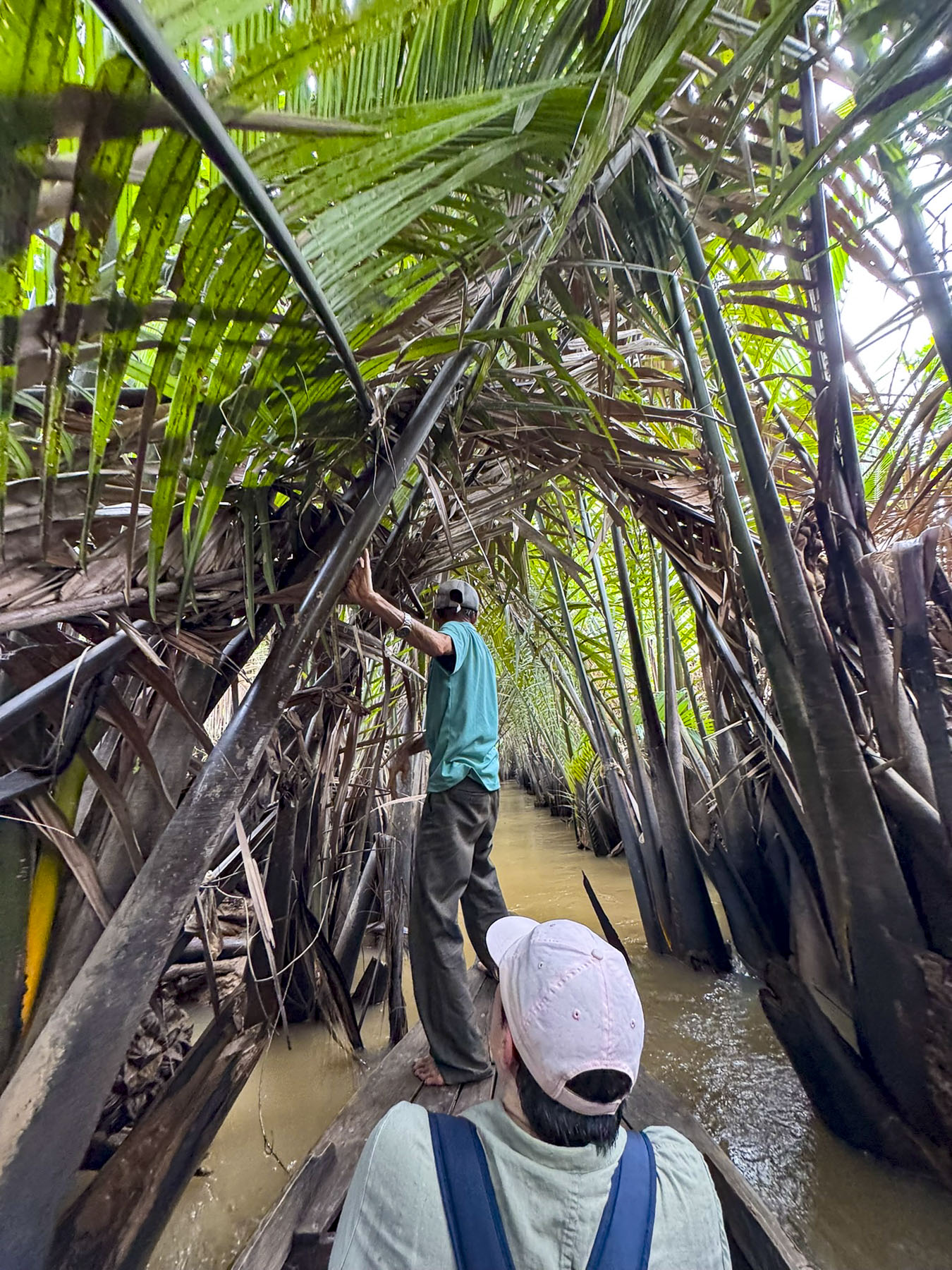
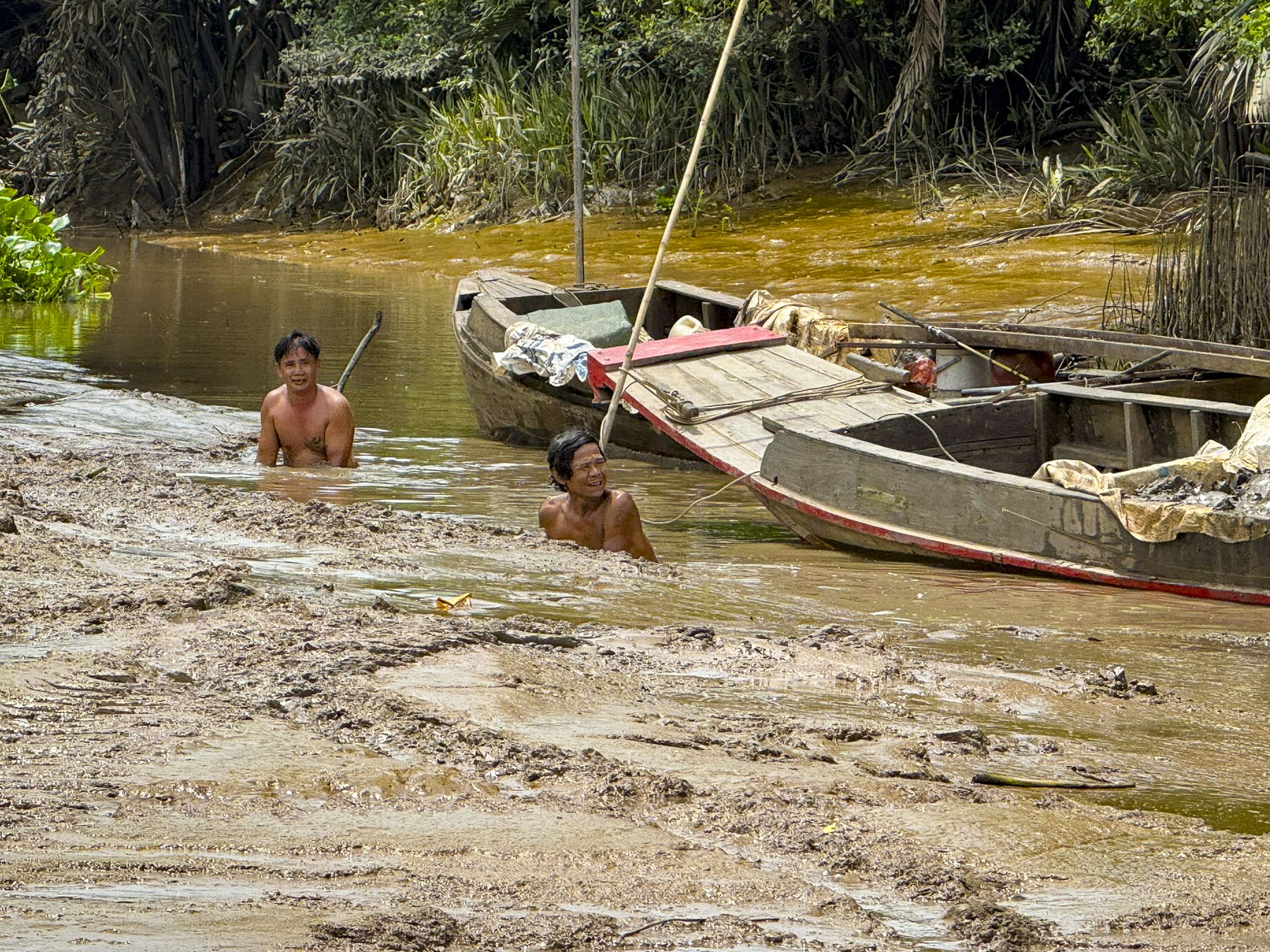
Signs for Artigiano in Fiera, the Fair, dotted our route into Milan when we first arrived from Bergamo and piqued our interest.  We hadn’t heard of it before, but with a quick internet search realized it was the shopping event of the Christmas season in Milan. While in line to enter the center we noticed many people pulling large suitcases. Toward the end of our shopping spree, laden with purchases, we realized the bags on wheels were pure genius, and allowed the seasoned pros to carry their holiday shopping with ease. The Fiera is a tremendously popular annual, nine-day event that draws over one million visitors to the Fiera Milano, Europe’s largest exhibition center, located in Rho, just outside Milan. Folks shop for home furnishings, fashion, jewelry, arts and crafts, along with artisanal foods, wines and liquor. The sites’ nine cavernous exhibition halls were filled with vendors from 100 countries, though displays from the twenty regions of Italy occupied ninety percent of the space. Plan on spending the whole day if you hope to see everything. It was all very interesting and entertaining and truly a marathon event. From Milan it’s an easy trip on the M1 subway, which stops right at the venue.

Wanting to make our last night in Milan special, we made dinner reservations at a highly reviewed restaurant, only to be turned away into a rainy night because we arrived early as the staff was enjoying their pre-work communal meal together. (The later you dine out in Italy the more you’ll feel like a local. Though this does take some getting used to and we haven’t mastered this yet.) “Okay, we will have a drink at the corner bar and return,” we agreed.

To our delight, our aperitives were accompanied by small sandwiches with chips and olives.  We had every intention of heading back to the restaurant, but our waiter was engaging, and the Aperol spritzes were very good. We spent the time watching folks fight the wind with their umbrellas through the bar’s rain-pelted window. The specular highlights from the streetlights added magic to the scene. Occasionally some groups popped inside seeking a warm reprieve from the downpour outside, shook out their umbrellas and found a seat.  Recapping our adventures, tentatively planning the next six months, and talking about Christmas with our kids back in the states, the evening flew by until the waiter said they were closing. Umbrellas up! We headed home.
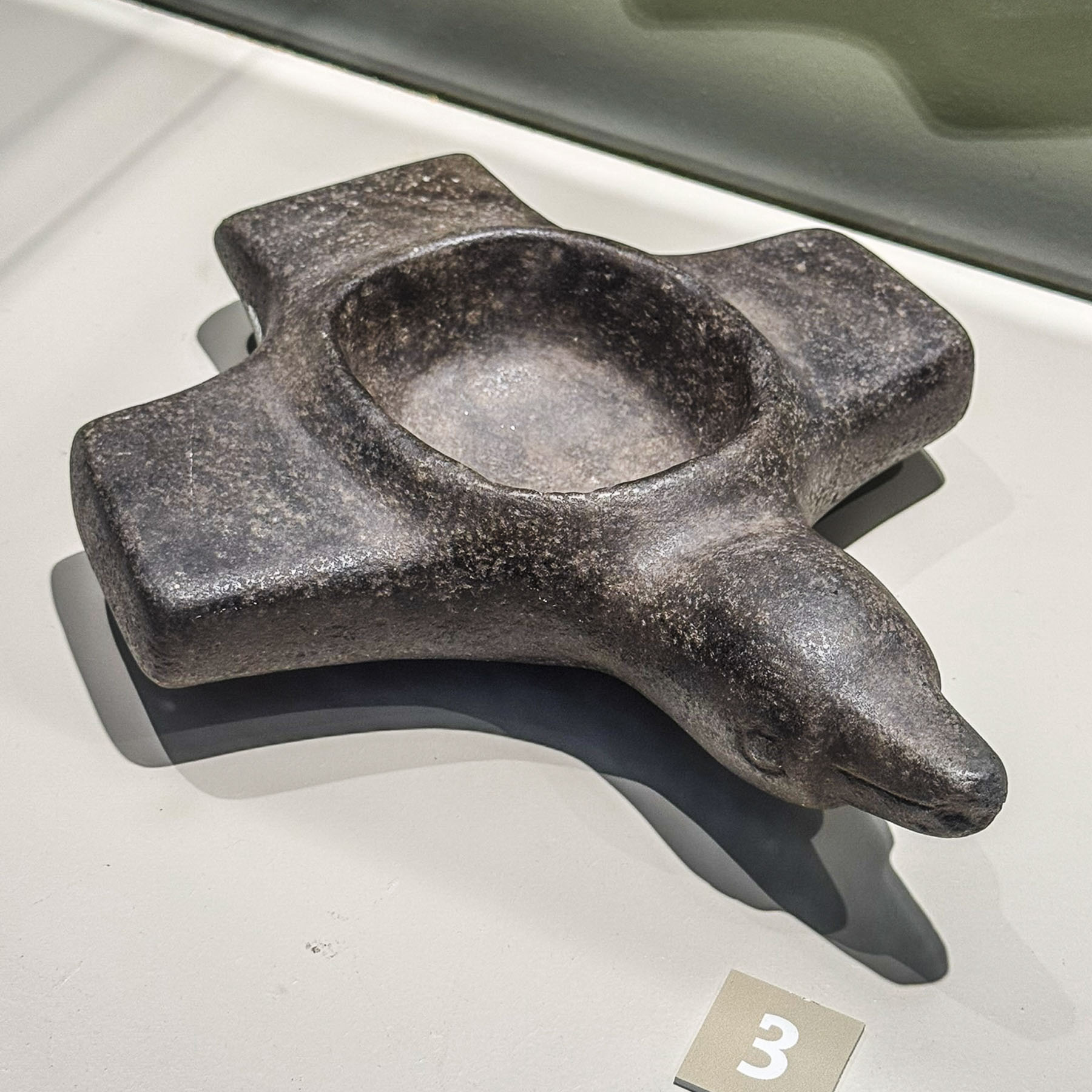
Till next time, Craig & Donna

PS – The Artigiano was canceled in 2020 due to the Corona virus lock down in Italy. Hopefully, it will be allowed 2021.

Vicenza – Grand Architecture, Parks & Waterscapes

Our mishaps of driving in Italy are still memorable. But they were far more forgivable and less costly before the advent of the remote video surveillance systems that Italian towns use today. Years ago, we had briefly visited Vicenza, home to one of the world’s most influential Renaissance era architects, Palladio. After a long day on the road, navigating down from the Dolomites, we drove through the old city gate under the Tower of Porta Castello, the last remaining tower of a 12th century fortress and wall that once enclosed the Renaissance city.  Today it houses an art gallery, and you can climb to the top for views of Vicenza.

The directions to the hotel were confusing and our GPS at the time was no help.  We had already stopped twice to ask the local polizia for directions, but of the four officers asked, each had a different opinion about where our obscure lane was located, which only befuddled us further.  A few moments later we realized Corso Palladio was a pedestrian-only street and we were intruding on its charming ambience. The hotel assured us they had parking, so we continued along slowly through a thickening crowd that didn’t think anything of us.  It didn’t help that the street signs were impossible to see from the car. Traveling the whole length of the street, we ended at a piazza in front of the Teatro Olimpico, designed in 1580; it’s the oldest indoor theatre in the world, with its unique original stage set still in use. It was Palladio’s last creation before his death.

Across the way two police officers with submachine guns stood by their patrol car in front of the Museo Civico di Palazzo Chiericati, known for its eclectic collection of donated art, antique furnishings and toy soldiers from the Veneto region. There was no mention of the “BIG FINES,” we had momentarily anticipated.  Instead, the gracious officers gave us a police escort to the hotel.  Parking was in the narrow lane, in front of reception.  

Our visit was long enough for dinner and a stroll, the next morning, around the Piazza dei Signori with its massive civic building, the Basilica Palladiana, redesigned to its present form in 1546 by the young, as-yet unknown hometown architect Andrea Palladio.  His architecture can be characterized as a refined rethinking of classical Greek and Roman temples with domed and columned buildings favoring a “harmonic Renaissance aesthetic.” The style was popular with many wealthy Italian families across the Veneto region, who commissioned him to design their palazzos. This grand style continued to be extensively influential into the 19th and 20th centuries where it was favored for municipal and government buildings, i.e., the United States Capitol Building and British Museum, among others.

Our original visit was enough time to realize the city was vastly interesting and that we had mis-planned.  Now we stay a minimum of two nights wherever we go to compensate for time lost traveling between destinations.

We figured seven nights this time should be enough to relax, enjoy the city and sample its livability.

Raised in the suburbs of New Jersey, we always shunned living in a city until we retired and sold most everything, including our cars, to finance this two-year adventure around the world.  To our surprise we now enjoy city life. Especially the walkability of smaller historic cities with their pedestrian only centers, a concept not found in the sprawl associated with urban planning in the United States.

As we neared Vicenza our shuttle driver, Fabrizio, from the Venice Airport, detoured slightly to show us two points of interest on the outskirts of the city that he thought we might enjoy, and were afraid we would otherwise miss. Parco Querini, a semi-formal large open green space with sculpture lined paths and a domed pergola, looked stunning on a late autumn afternoon. It was once the private retreat of a wealthy family and was opened to the public in the 1970s. 

Nearer our apartment, Fabrizio took us past the red and white brickwork of the Chiesa de Santa Croce ai Carmini, with its architecturally distinctive facade. We found both sights interesting and vowed to return.

While walking to the park for a return visit, we found the Boutique Del Pane Vicenza, a delightful small bakery at the very end of Corso Antonio Fogazzaro, past the 14th century Church of San Lorenzo with its intricately carved roped portal and guarding lions that have slowly eroded with time.  Years ago in Italy, the concept of “coffee to go” or “take away” as we have in the states was unheard of. Tradition was you stood at the counter for a quick morning espresso or lingered at a table.  Attitudes have evolved and we are not sure if we agree, but this visit, with coffees and pastries in hand, we snacked in the park.

Nearby the twice-weekly artisanal farmers market, Il Mercato Campagna Amica di Vicenza, brought locally produced cheeses, wines, fruit and vegetables to new meaning with a “zero food miles” philosophy.  The artisanal baker was very popular with folks queued three deep at her counter for a chance to buy a wedge of bread from her huge country loafs.  Around the corner from the market, we found the best vegetarian restaurant we’ve ever been to, NaturaSì Silene Bio Bottega E Cucina. With truly the most flavorful and memorable vegetables.

From our apartment on Contra Motton San Lorenzo we explored the historic center of this delightfully compact, Renaissance city, where we were less than a ten-minute walk from everything. As we strolled past intriguing architectural details, we took note of what to do and where to go later in the week.  Discovering pastelería is our superpower and we put it to good use finding tasty creations to enjoy for the next morning.  Walk a little then café – repeat was a well-paced yet caloric approach that we fully enjoyed in our explorations of the city.  Though some days longer walks between cafes were needed when our belts were too tight. Donna says the solution is simply to wear elastic waist pants.

During the time of the Romans the main street in Vicenza was Via Postumia, a military road that connected outposts across Northern Italy. Later during the Renaissance, noblemen competed in Palios, horse races, on the religious festival days for Sacra Thorn and Corpus Domini, when the main street, now lined with arcaded sidewalks, was used as a racecourse. After the Second World War the street was renamed Corso Andrea Palladio, to honor the great architect for his contributions to the city, and an electric street-trolley coursed down the avenue. The Corso and the historic center of Vicenza have been pedestrian only since 1983. It remains a vital artery, with upscale shopping and restaurants connecting either end of the town and the historic sites in between. It’s the perfect street for La Passeggiata, the early evening stroll locals still enjoy. If you are looking for a traditional Italian bar along the Corso, the Gran Caffe’ with its old-world charm is the perfect place for an espresso or spritz. It attracts a diverse following, and is popular with students, professionals and a cadre of finely dressed older women who seem to be as much of an institution as the café itself.

Vicenza’s relic from Christ’s Crown of Thorns is treasured in the Sanctuary of Santa Corona, which was built by the Dominicans in the late 1200s to safekeep the extraordinary gift from the French King Louis IX to the Bishop of Vicenza. 

The centerpiece of the church is a beautiful altar embellished with pearls, corals, lapis lazuli and polychrome marble. Interestingly, outside hanging on the wall of the cloister is a plaque featuring a Cinta senese, an ancient Italian pig breed that is famous for its flavorful meat.

Palladio has definitely left his mark on the city with buildings of his design on almost every street – at least, it seems that way. A tour of the city wouldn’t be complete without stopping at the Palazzo Barbaran da Porto, a Palladio design built in 1570, that is now a museum with interactive exhibits and video displays as well as three dimensional models dedicated to the architect’s work.  Recognized by UNESCO in 1994 for his influential architectural aesthetic, called Palladian, twenty-four of his Palazzo designs and the city itself have been designated a World Heritage Site.

The city also has a wonderful ambience aside from his architectural masterpieces.  Waterscapes from the Ponte S. Paolo and the Ponte S. Michele over the Fiume Retrone reflect a quaint village vibe unexpected in comparison to the grand Piazza dei Signori just two blocks away.  

Pasticceria Venezia – a Vicenza dal 1964, just up from the bicycle parking on S. Paolo and near the Palladian Basilica, is a terrific place for café and a bite to eat.

On the other end of town just outside the Porta Castello, the Giardini Salvi, a treed greenspace with fountains, has been on the city map since 1580. It was the private park to the Palazzo Valmarana and in a brief moment of 16th century civic mindedness, was open to the public for a few years before being closed again for several centuries.  It wasn’t until the 20th century that the park was permanently reopened for public use.

The district south of the Corso Palladio is also worth exploring with the Duomo di Vicenza, the Cathedral of Saint Mary of the Announcement, as its centerpiece.  Heavily damaged by allied bombing during the Second World War, only the original 1482 Gothic entrance façade remained, while the rest of the church had to be reconstructed.

Diagonally across the street, in the ancient Bishop’s Palace, the Museo Diocesano di Vicenza has a unique collection of Vicentine religious artifacts. Interestingly there is a large collection of fine marble spheres, some the size of bowling balls, given to a former Bishop of Vicenza as gifts.  Discovered on the other side of the piazza during reconstruction after WWII the Criptoportico Romano was the subterranean storage area of a 1st century Roman domus. As interesting as that sounds, if you’ve been in an empty, damp dark basement before, you can skip this.

Around the corner is Righetti’s, a self-service restaurant and another Vicenza institution for over thirty years, that should be experienced. Customers find their own tables and set the cutlery themselves before walking to the back of the restaurant and placing their orders, from the daily changing menu on chalk boards, directly with the cooks in the kitchen.  After dinner, the cashier counts your glasses and plates, then bills accordingly. They are open Monday through Friday for lunch and dinner, cash only.

Although the weather was noticeably cooler, we enjoyed our November off-season visit to this visually pleasing and gentle city. If you are an admirer of historic architecture, Vicenza is akin to finding a lost treasure. The bonus was the lack of large tourist groups, which we imagine could be quite smothering in this quaint city during peak travel months.

Till next time, Craig & Donna