Croatia Road Trip Part 2: The Istria Peninsula – Plitvička Jezera, Pula, and Rovinj or Waterfalls, Roman Ruins & a Saint

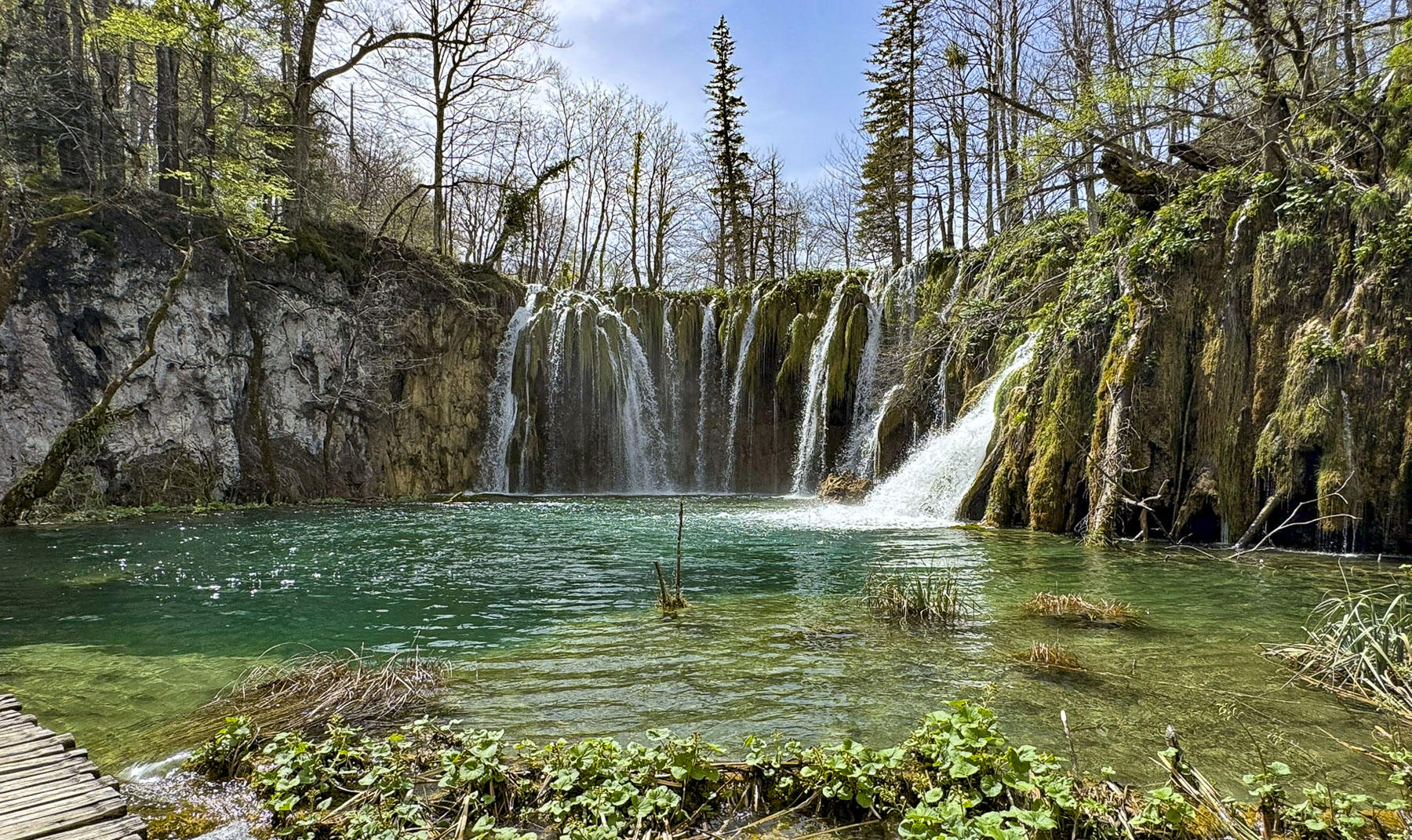
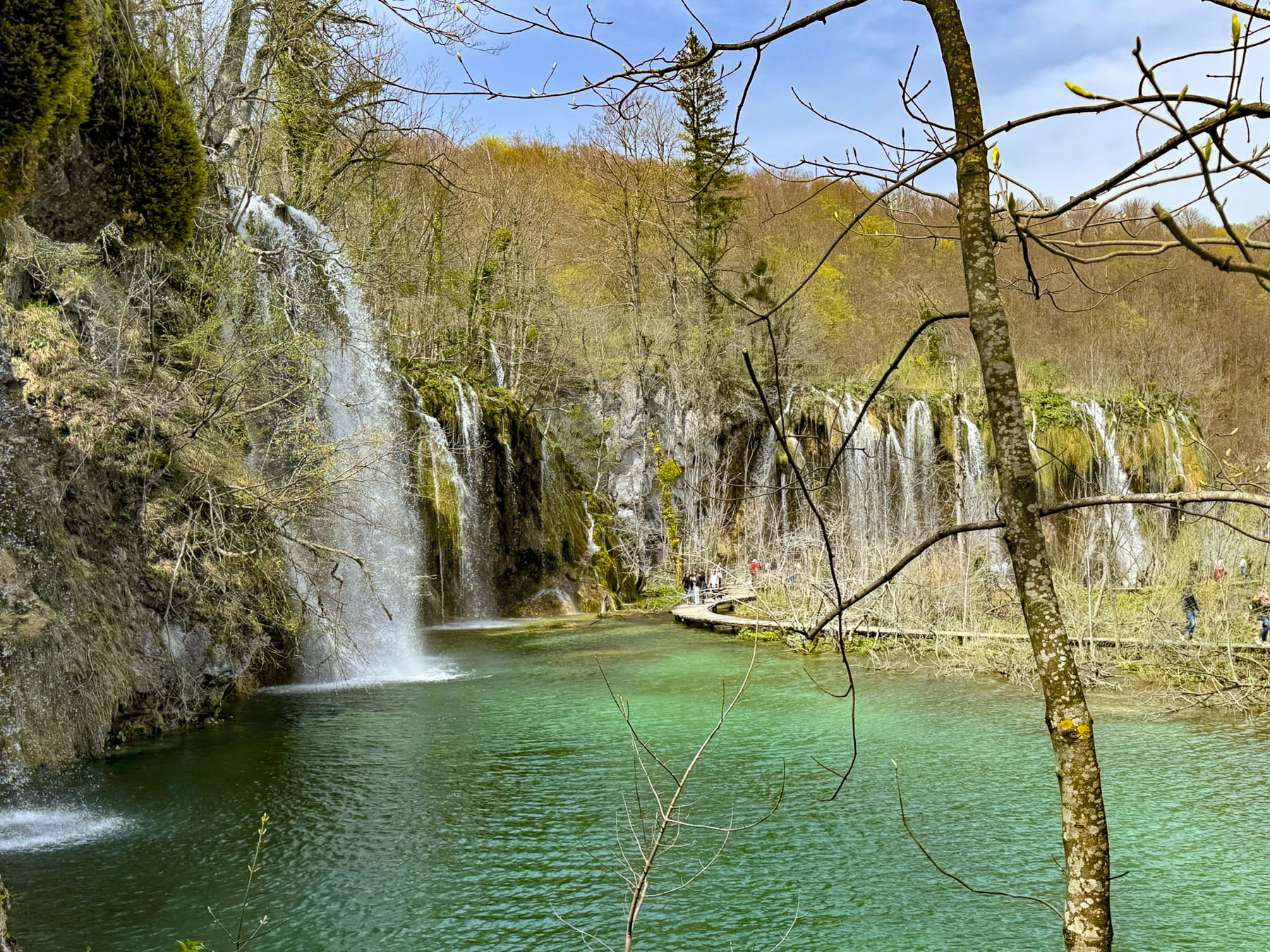
We experienced an infinite palette of blues spread across the sea, sky and waterfalls of Croatia, as if they were an artist’s inspiration, but in fact were mother earth’s creation. The emerald green, turquoise and azure arteries of the rivers were particularly enthralling; they shimmered with the changing light, almost glowing, as they coursed through their surrounding landscapes. The intense colors are the result of limestone and other mineral deposits that line the waterways, and the angle of sunlight on the water. This majestic display of nature’s wonder is on display at Plitvička Jezera National Park, just two hours from Zadar. 

Created in 1949, Plitvička Jezera was Croatia’s first national park and protects a massive 296.85 km2 (114.61 sq mi) area, situated on a plateau in the mountainous Dinaric Alps of central Croatia, that separate the inland region of the country from the Adriatic coast.

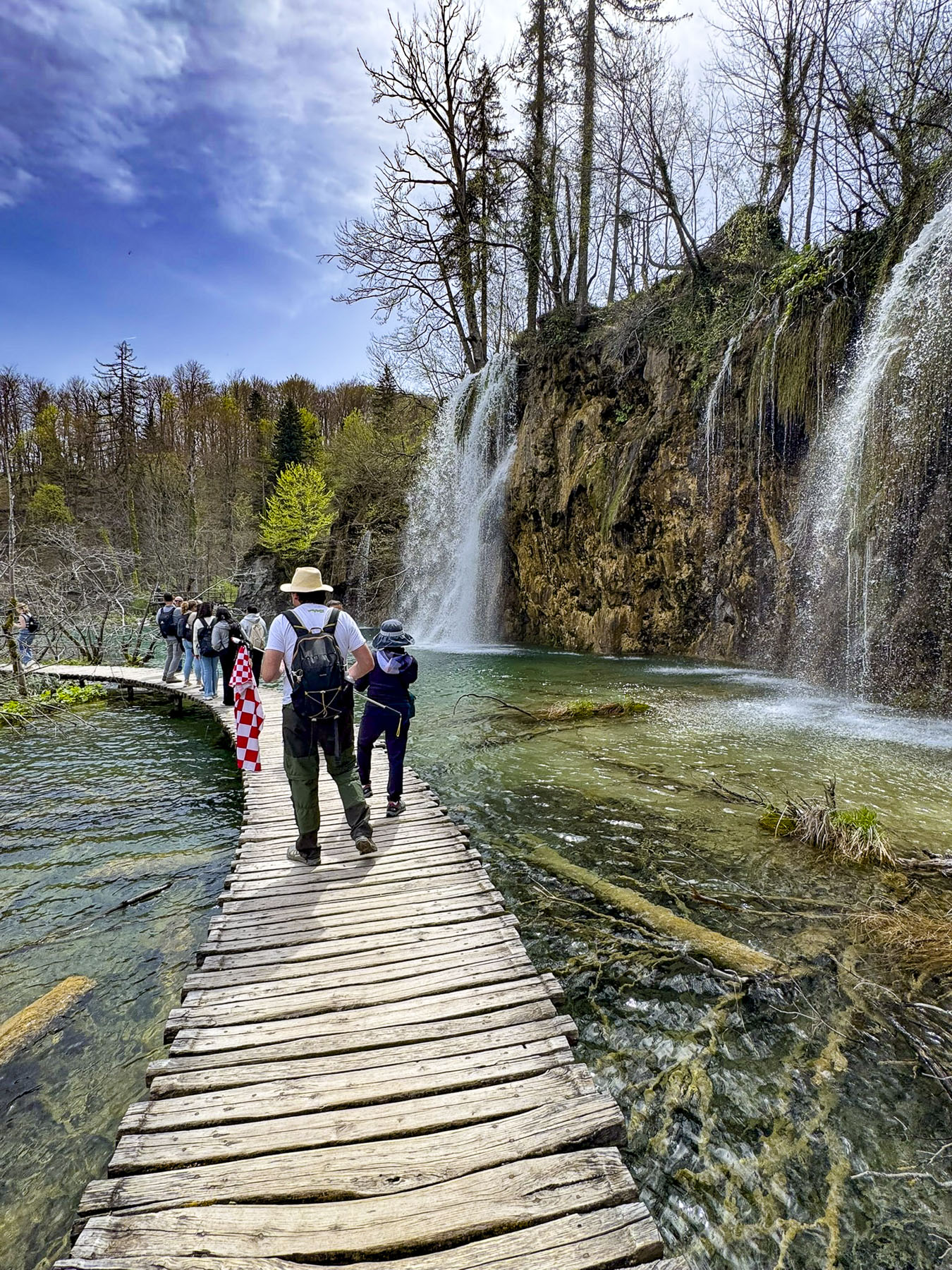
The park has 16 terraced lakes with numerous waterfalls of various heights which folks can view via a series of meandering boardwalks built across the shallow pools below each cascade. The park service has organized these walkways into eight different touring routes/programs.

We visited the park on the Wednesday before Easter, a school vacation week, and the park was busy, but not overwhelmed with visitors. Those in the know arrived early, as convenient parking vanished quickly, and it was a very long walk to the ticket booth.

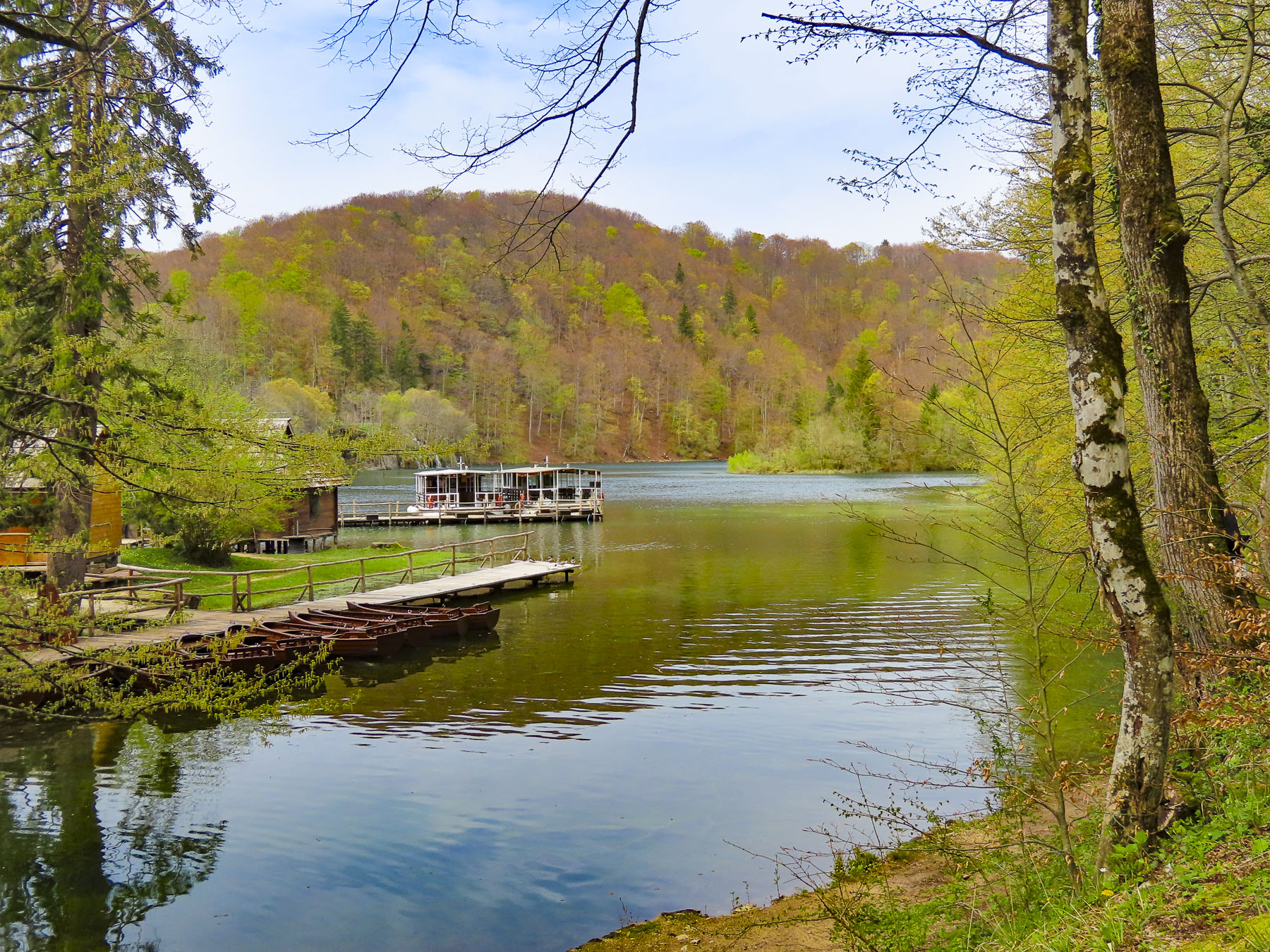
We chose route E, a three hour, 5100m (3mi) circular walk through the Upper Lakes section past Veliki prštavac, and Mali Prštavac falls to Lake Prošćansko, that included a short boat ride across Kozjak Lake at the beginning and end of the trek.

The falls were enthralling, flowing like delicate veils across the rock face of the hills. The boardwalks above the crystal-clear pools were narrow, and for the most part without railings except for sections of stairs that ascended a hillside. But the walk was very easy, and we encountered folks of all different ages, and parents carrying young children.

In mid-April the foliage on the trees in the park was just beginning to leaf out, making it the perfect season to view the falls without them being hidden by trees. Trying to take photographs of the falls, midday, without people in them was nearly impossible, and you need to be at the park before most folks arrive to accomplish that.

Our destination for the end of the day was the Hotel Katarina in Selce, a modest-sized resort village, on the Adriatic. The two-hour drive first took us through mountains covered in pine forests along Rt D52, past small villages where all the homes still had cords of wood for their fireplaces and wood stoves stacked high. Descending the mountains, the landscape slowly greened and transitioned to a rolling pastureland dotted with cows and sheep. Freshly turned gardens along the way were already planted with spring onions. Some of the small farms had roadside stands offering honey and homemade cheese for sale. It was a very pretty drive, but the roads were narrow and did not have any shoulder area to pullover to safely take photographs. Intersecting D23, we continued our descent to the coast through thinning forests then Garrigue, an evergreen shrubland well suited for the region’s hot dry summers.

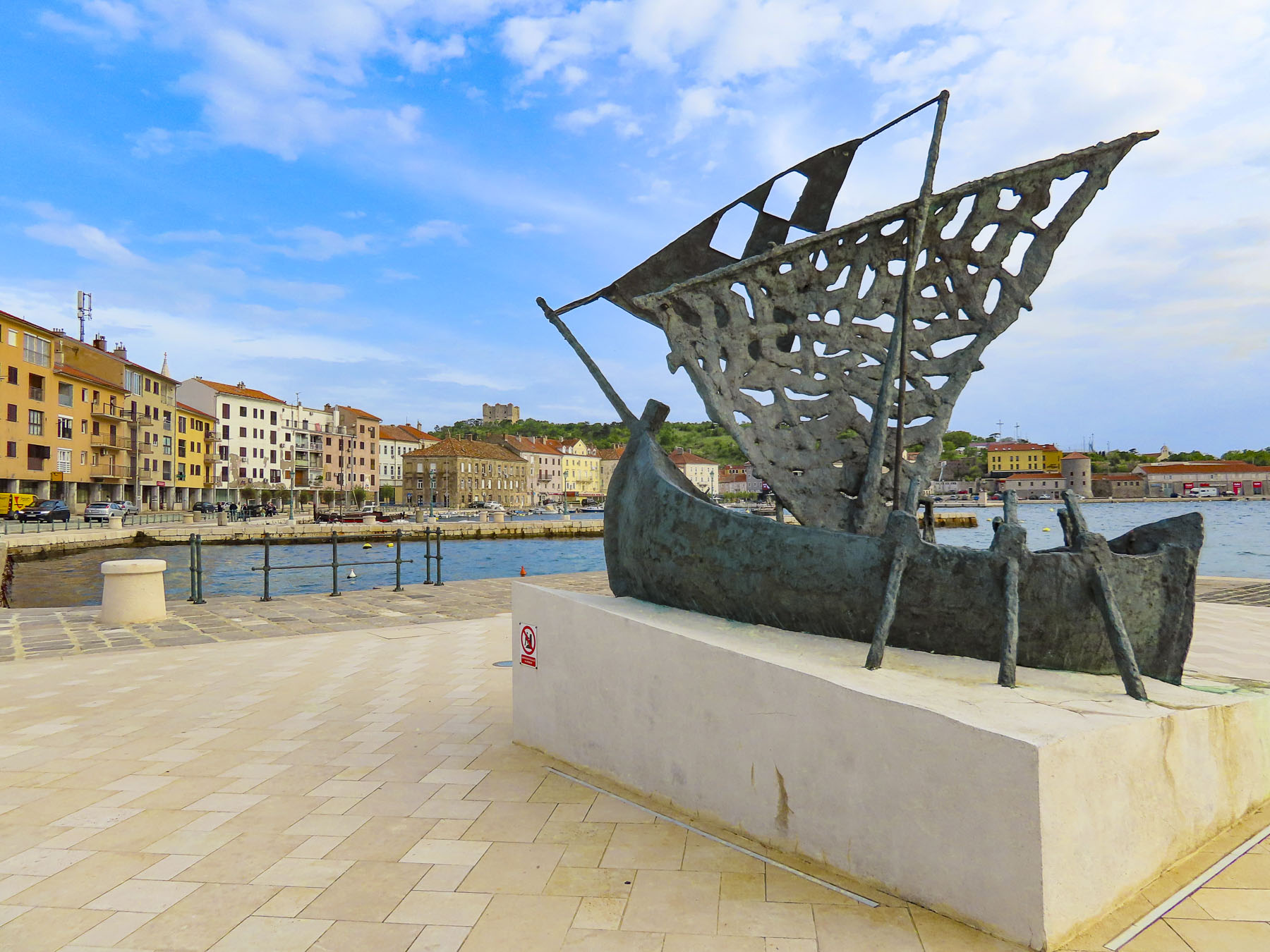
We reached the coast at Senj, the oldest town on the North Adriatic coast, with a history that goes back 3,000 years. The town is located on a crescent shaped bay under the watchful eye of the Nehaj Fortress, a 16th-century bastion that helped to keep the Croatian town independent during the centuries of Ottoman and Venetian aggression in the Adriatic Region. Unfortunately, we didn’t have time to visit the castle, which also hosts an annual three day Renaissance festival called the Days of Uskoks every July. But we did enjoy a short walk along its waterfront before continuing on.

Large modern hotels like the Hotel Katarina, which cater to tour groups, are not our first choice when we travel, but unfortunately during the shoulder seasons along the Adriatic coast many of the hotels that would normally be open during the summer are closed, and options are limited. But the hotel’s location for a one-night stay, in the town of Selce, worked well with our driving plans, as we headed to historic town of Pula, on the Istrian Peninsula.

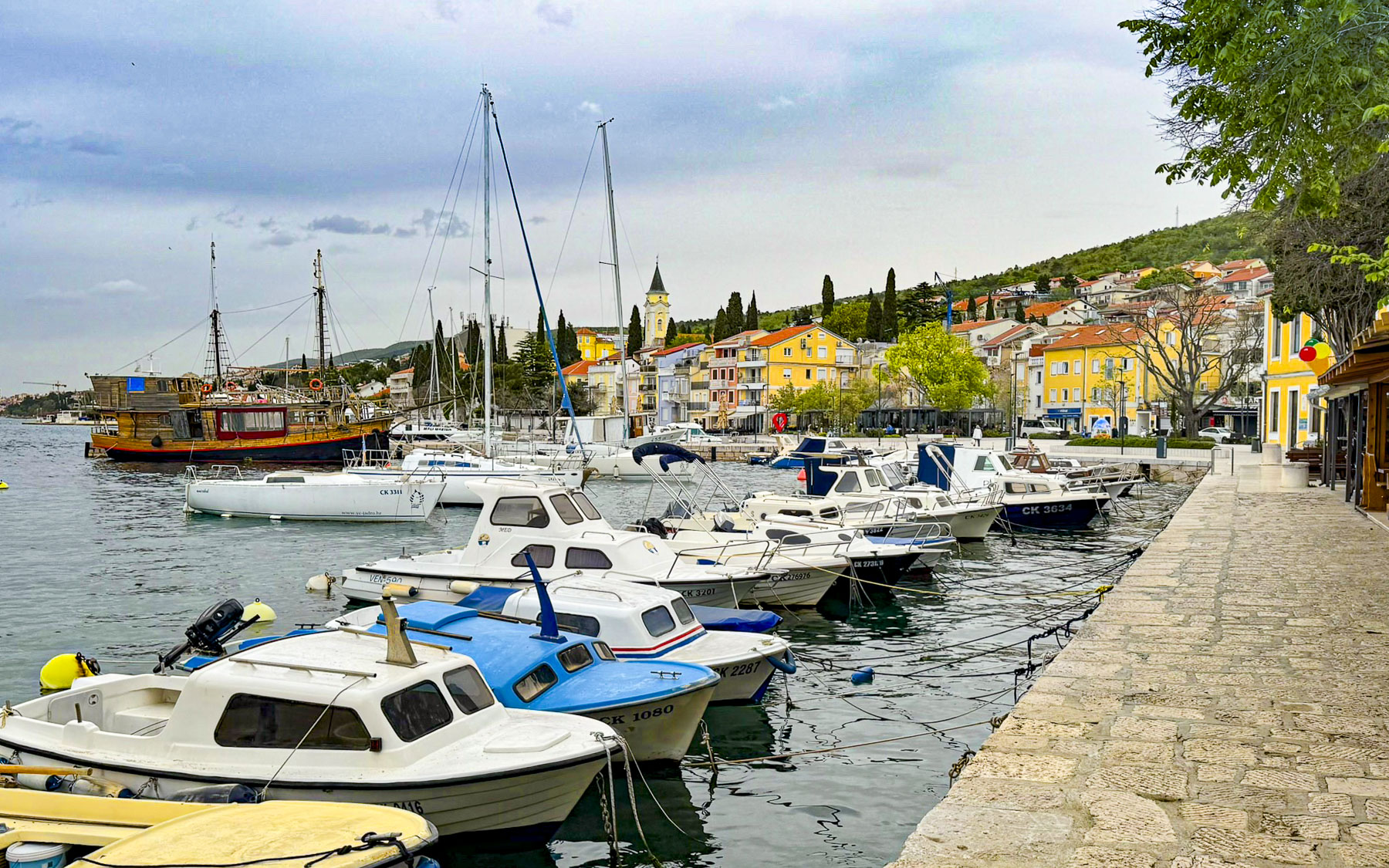
The hotel was directly across from a promenade, alive with a chorus of wonderful song birds, which we followed the next morning.  At the town’s port the walkway widened into a small plaza planted with tulips and centered with a large Easter Egg, called a pisanice.  

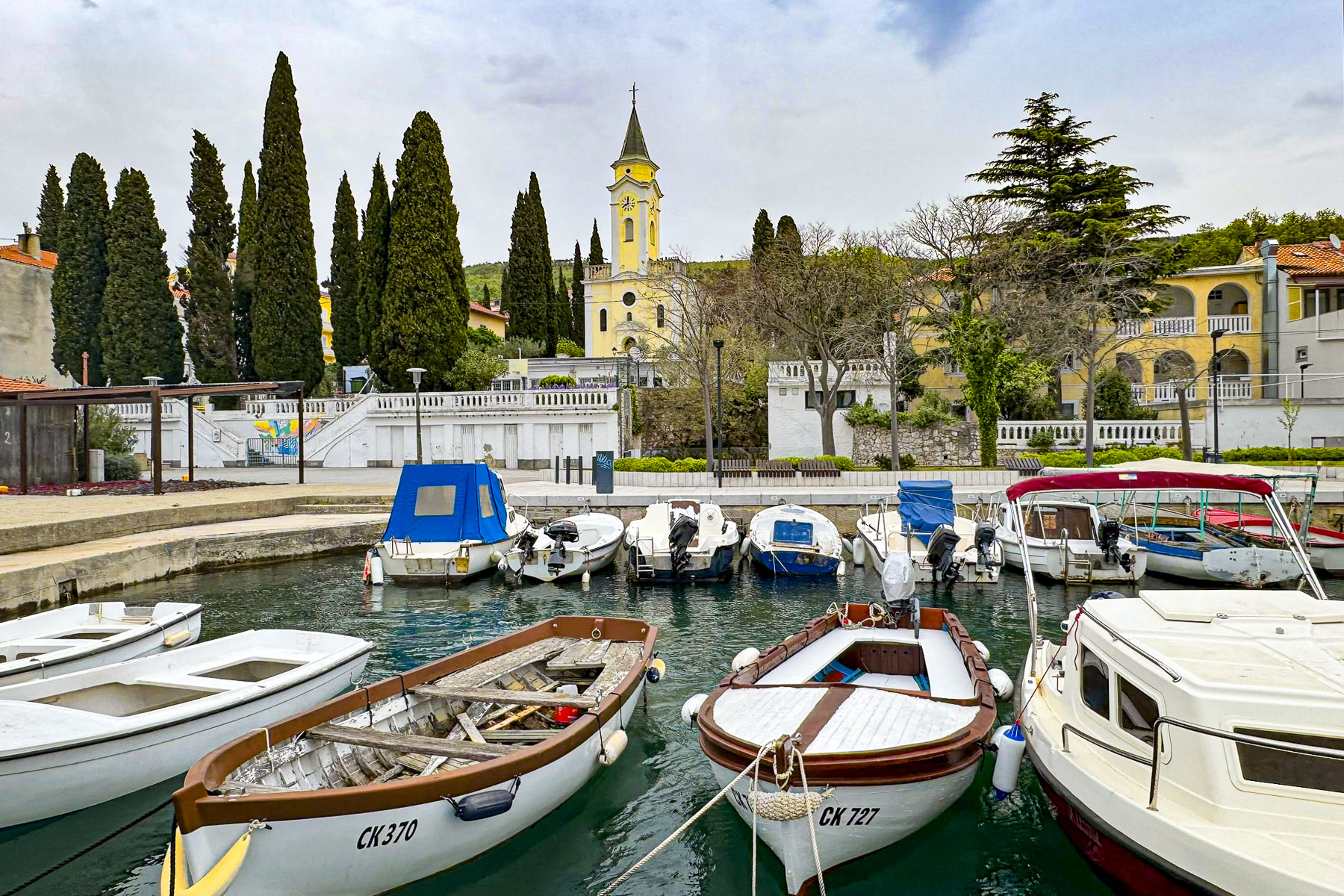
These fiberglass eggs are painted by local artists with themes that reflect the Croatian Christian traditions, and celebrations of Spring. There were numerous restaurants along the quay, but only a few of the smaller cafés were open this time of year. Even though the morning was overcast, the town’s small harbor was a colorful scene of boats and waterfront buildings.

Our drive north from Selce mostly hugged the coast and was reminiscent of Italy’s Cilento Coast along the Mediterranean in the Campagna region. We found the towns and glimpses of the sea along the Croatian coast fascinating and started to think about future return trips to the area. 

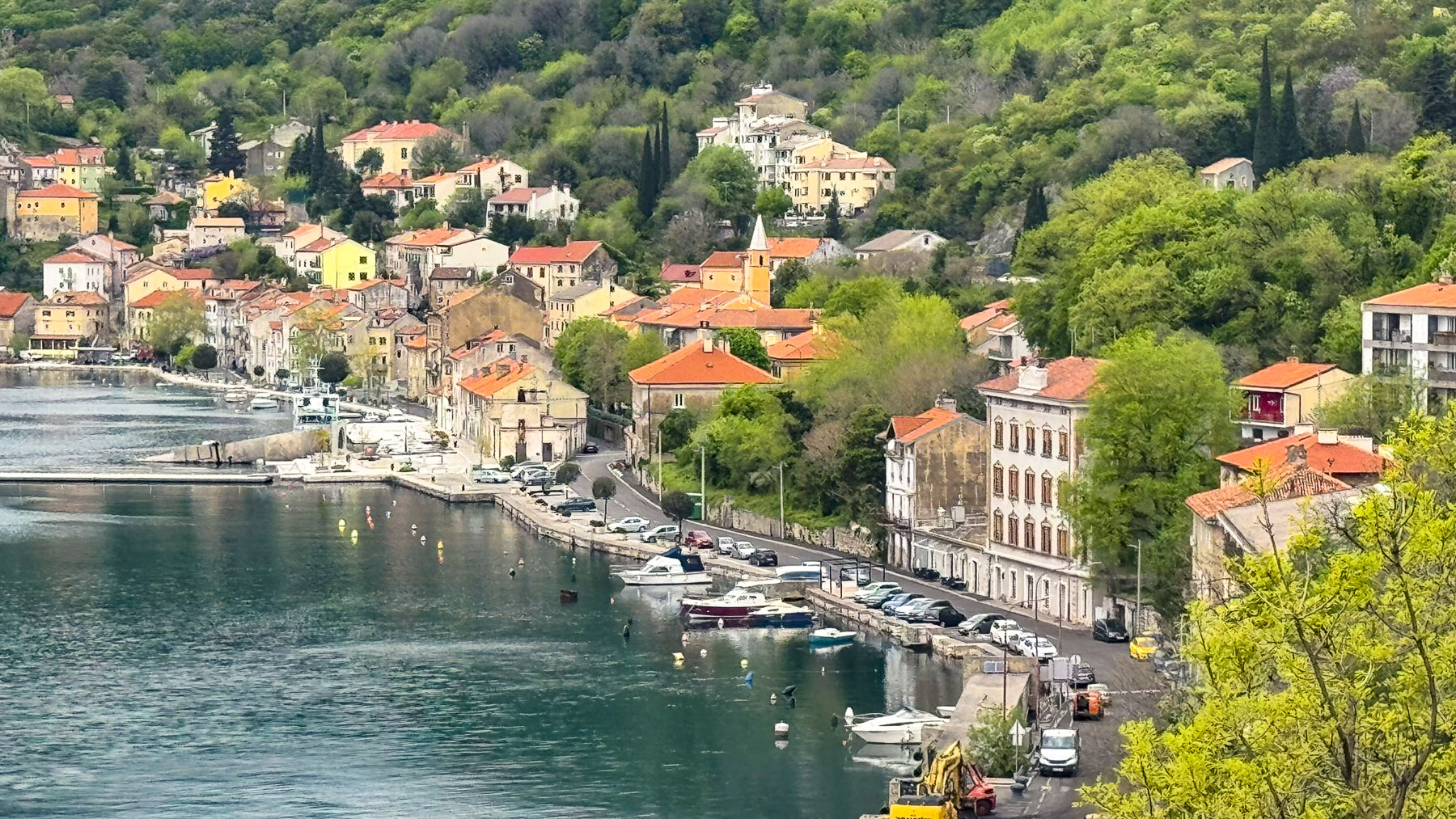
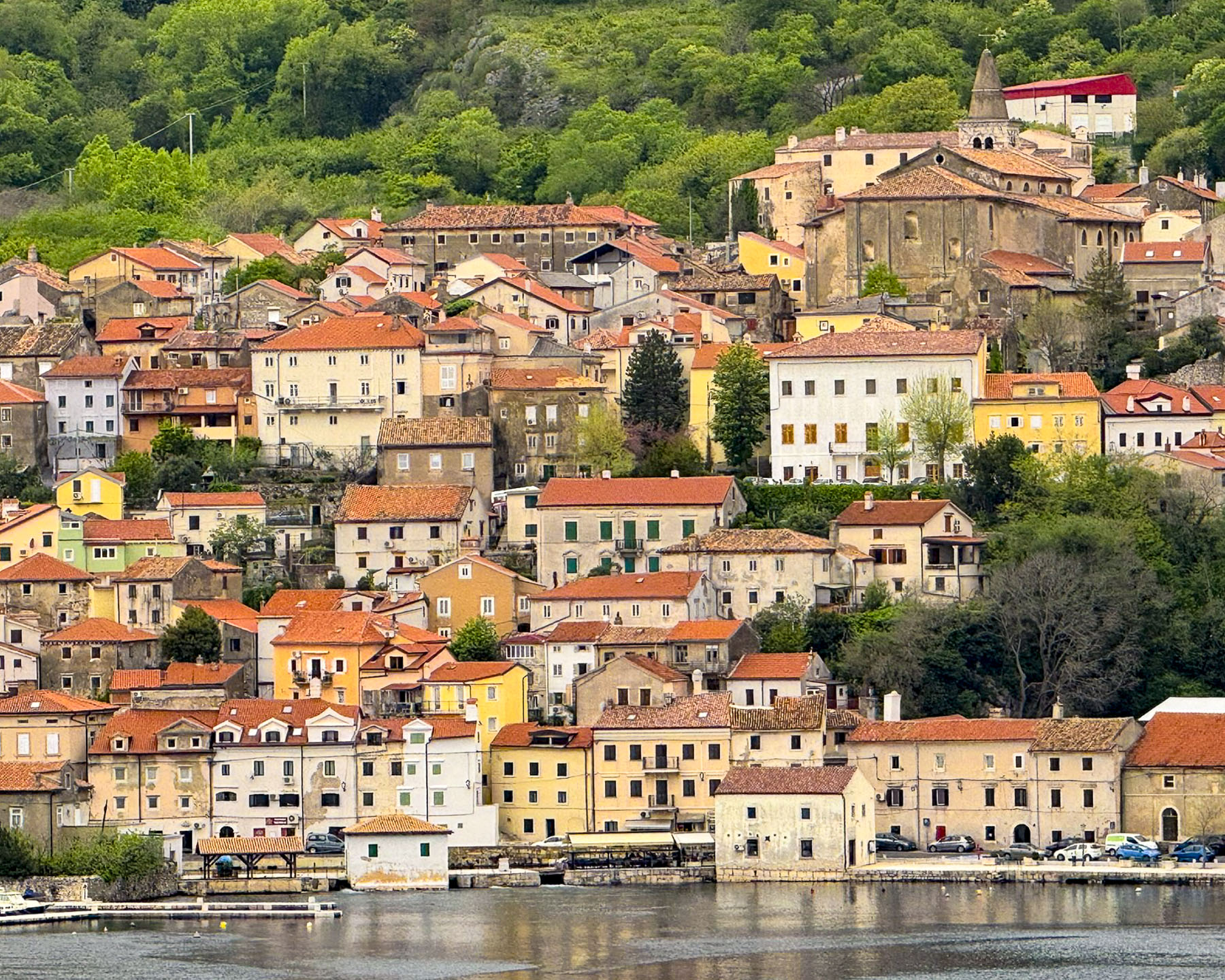
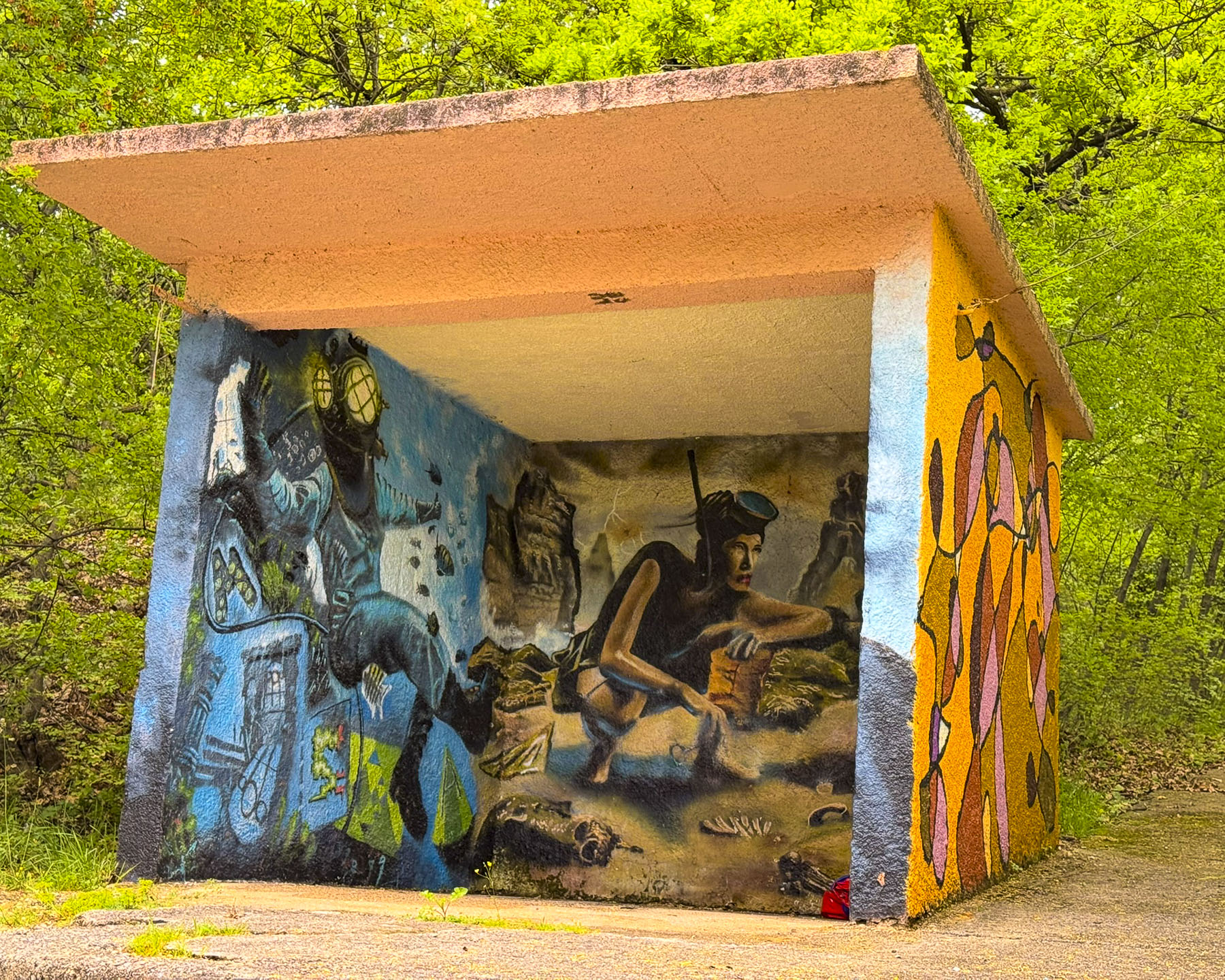
We would enjoy time  to explore in depth not just the small coastal villages like Bakar, where just beyond the village some of the bus stops along the road are covered with murals that reflected the areas maritime heritage, and Mošćenička Draga, beautifully set on a small cove, but also some of the less mentioned larger coastal cities like Jadrolinija and Opatija, which were fashionable Habsburg-era resorts in the 19th century and still retain their fine architecture. We regretted that we only had time to drive through these areas.

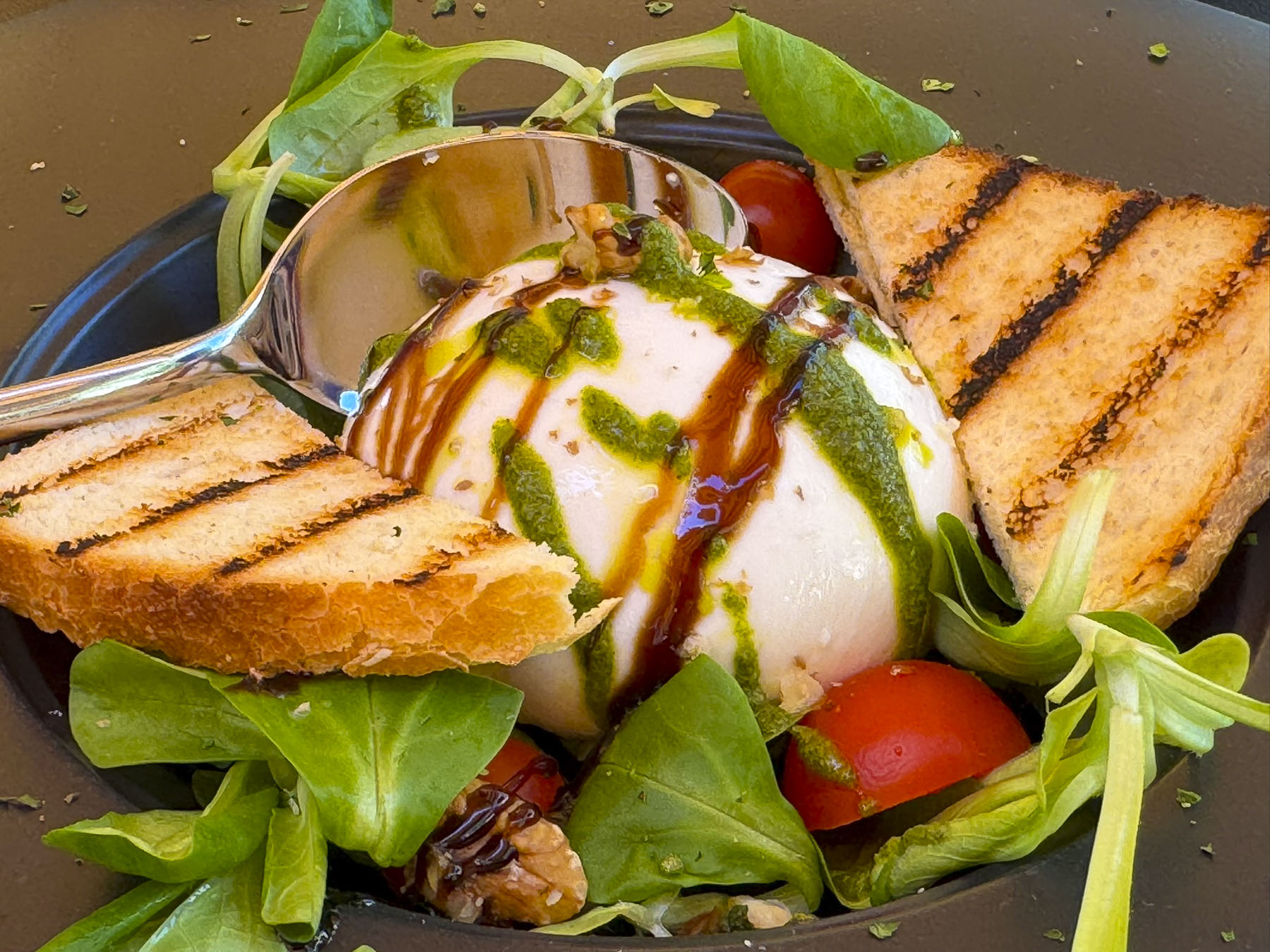
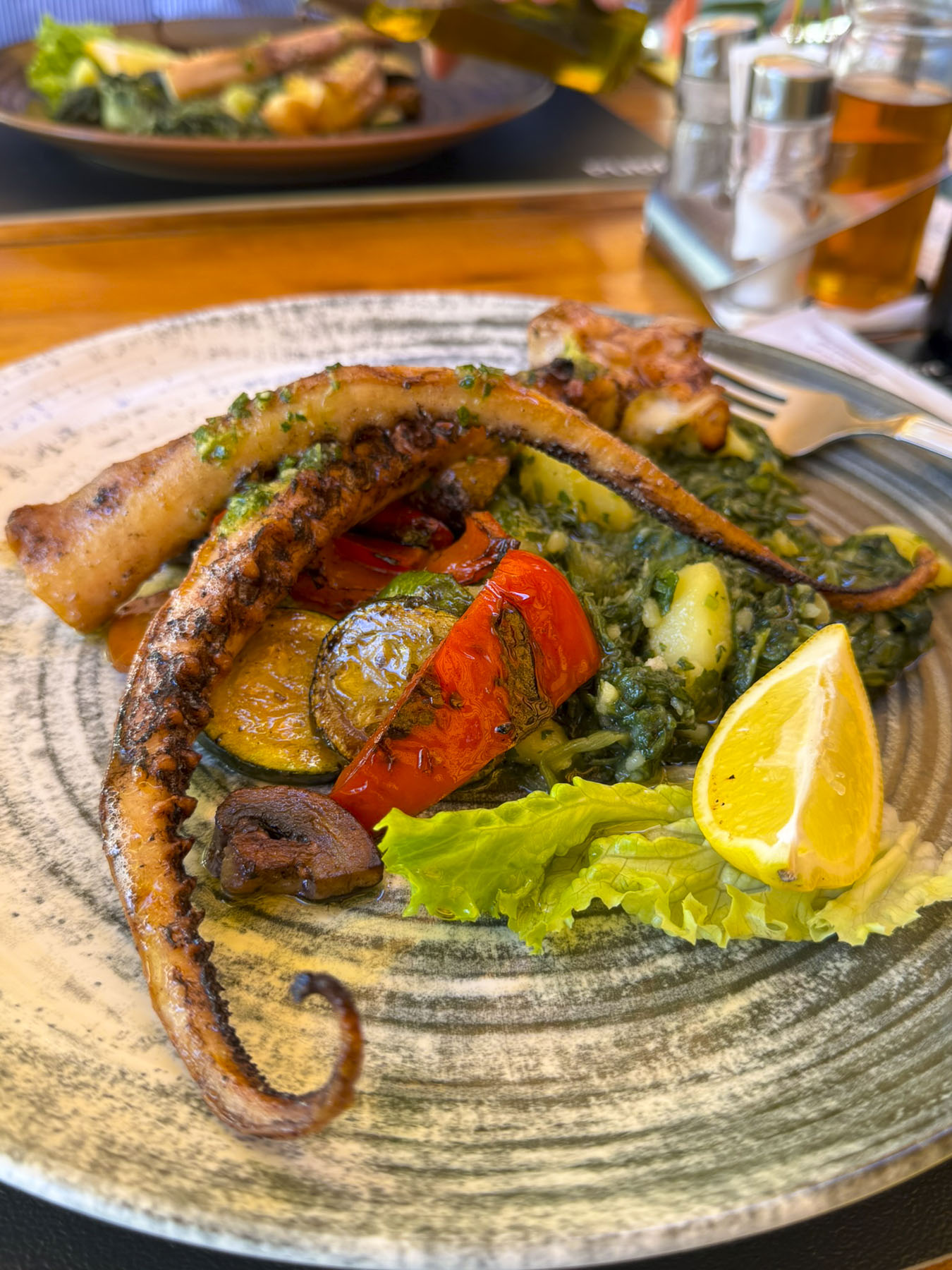
The Istrian Peninsula is known for the high quality of its olive oils, wine and regional cuisine which spans from light seafood entrees to hearty meat dishes and stews, the first of which we tried at Tri Murve in Plomin. I wish we could say that this was a well-researched choice, but it was a spontaneous stop, to satisfy a mutinous co-pilot, but we were pleasantly rewarded with a very wonderful lunch. On this chilly day, the temptation to linger here was overwhelming.

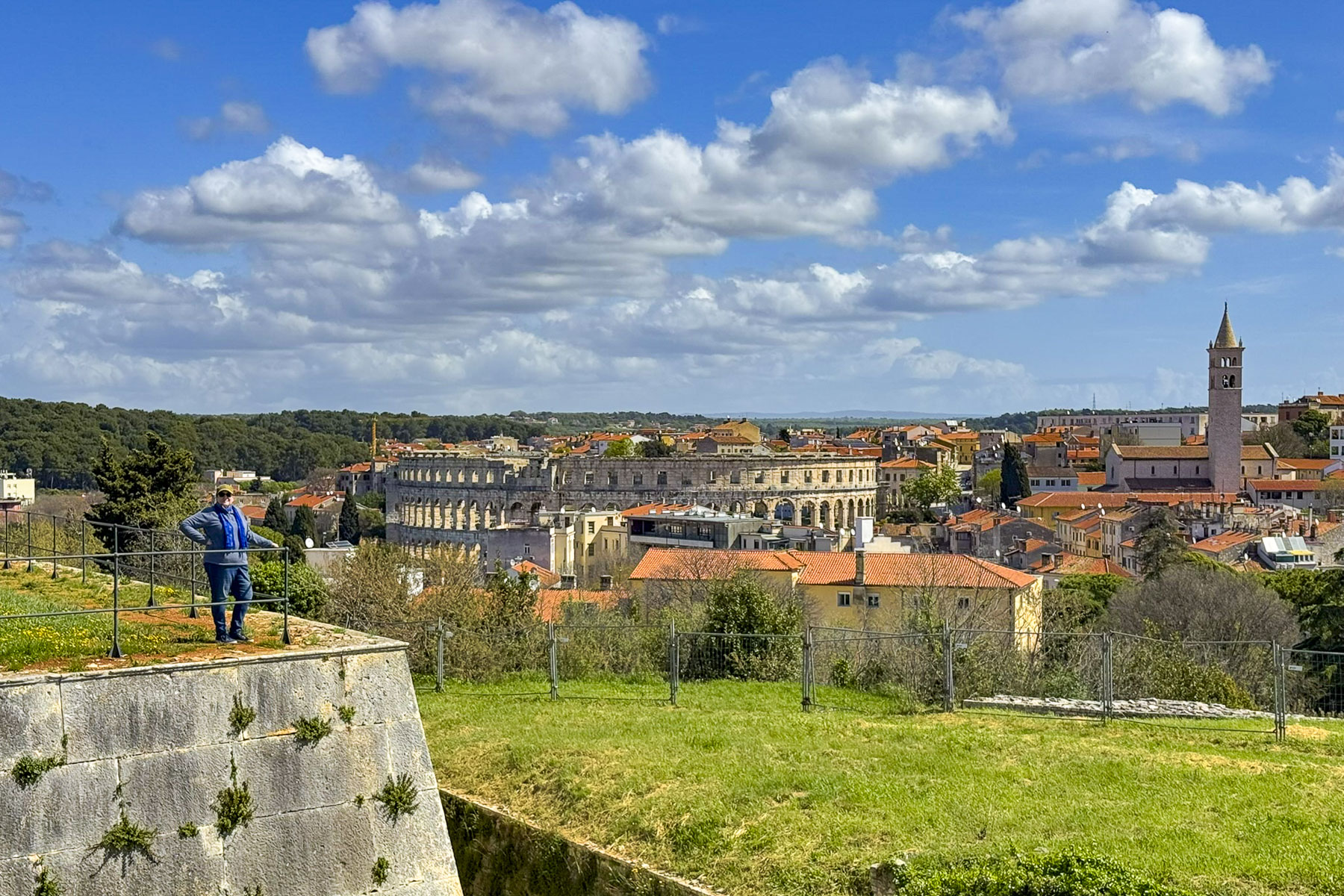
The top of Pula’s ancient Roman colosseum surged above the trees as we drove into the center of the port city. Rome’s presence in the city dates back over 2,000 years, but legend believes the city’s founding was a thousand years earlier and linked to the mythological Greek hero Jason and the Argonauts who sailed into the northern Adriatic Sea to escape the pursuit of the Colchians. The Colchians, exhausted after years of pursuing the Argonauts, feared returning home without the Golden Fleece, and founded Polai, the City of Refuge.

In the mid-1500s when Pula was part of the Venetian Empire plans were proposed to dismantle the arena and rebuild it in Venice. But they were rejected after the passionate arguments of Venetian senator Gabriele Emo, who is remembered with a plaque in the stadium. Though his efforts did not stop the removal of stones to build other structures in Pula which continued well into the 18th century. The arena, a masterpiece of Roman engineering, was originally built to seat 23,000 spectators, and is used to host a variety of events that range from film festivals to concerts and soccer matches, though its seating capacity has been reduced to a safe 7,000.

We thought we were in luck when we found a spot in an untended parking lot atop the hill near the Citadel of Pula, and the Monastery of St. Francis, only two blocks from our lodging at Luxury Flats. However, as we were lifting our luggage from the trunk a parking attendant appeared and informed us the lot was reserved for local residents with permits and we would be ticketed, but he was very gracious and gave us 15 minutes to get our bags to the apartment before we needed to move the car to a municipal paid parking lot across from the Roman colosseum, that he suggested. Finding parking for a rental car is always a task in small European cities. This one was reasonably priced, charging hourly during the day, but free after 18:00 until 8:00 the next morning. 

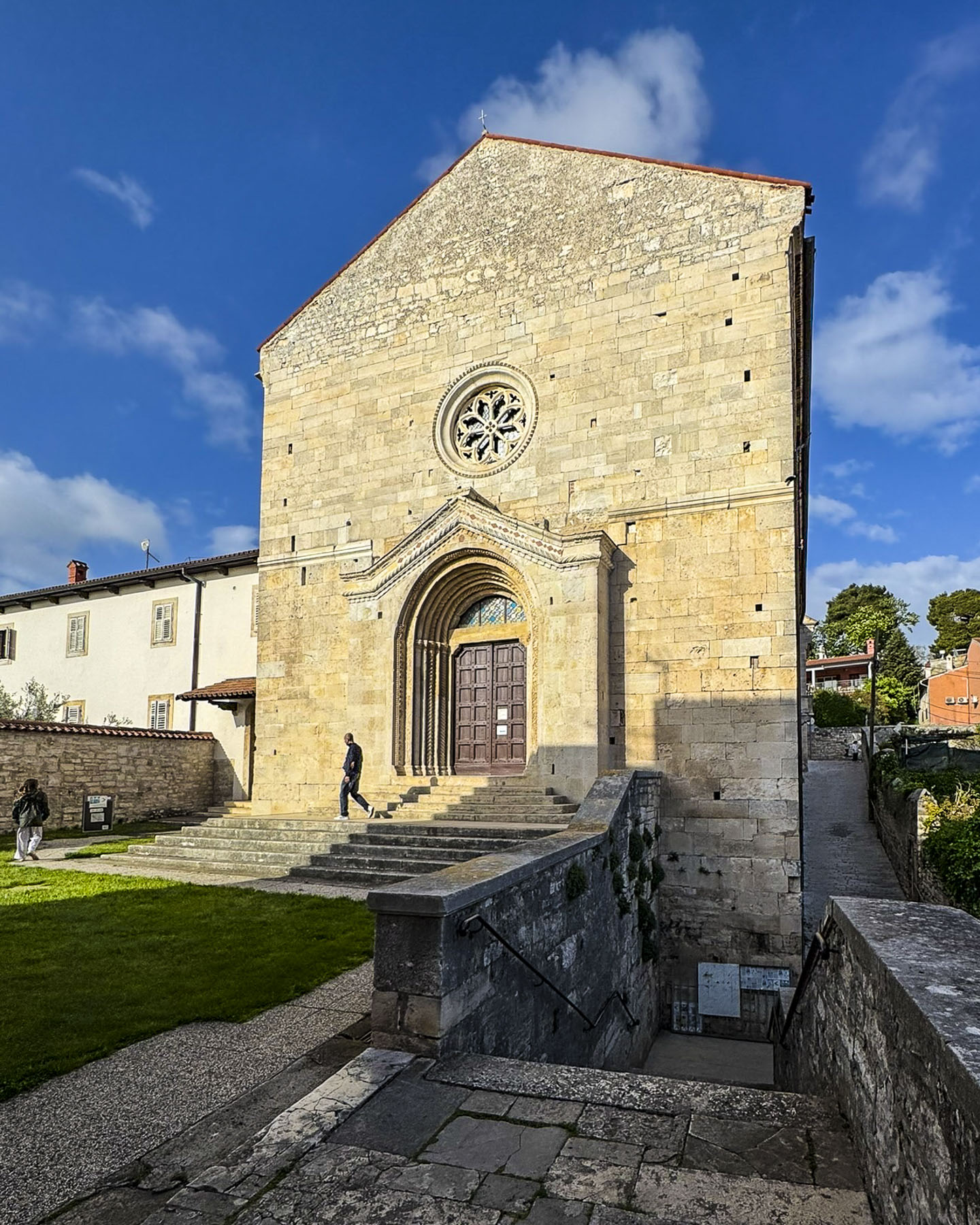
The small studio apartment we rented was modern and had a shared balcony which overlooked an orchard with a garden area that was once tended to by the nuns of the Monastery of St. Francis, next door. The monastery was built by the Franciscan Order in the 1300s and served the religious needs of the community until the country’s communist era. When the complex was then used as a military barracks, then kindergarten, before being returned to the Franciscans in 1992.

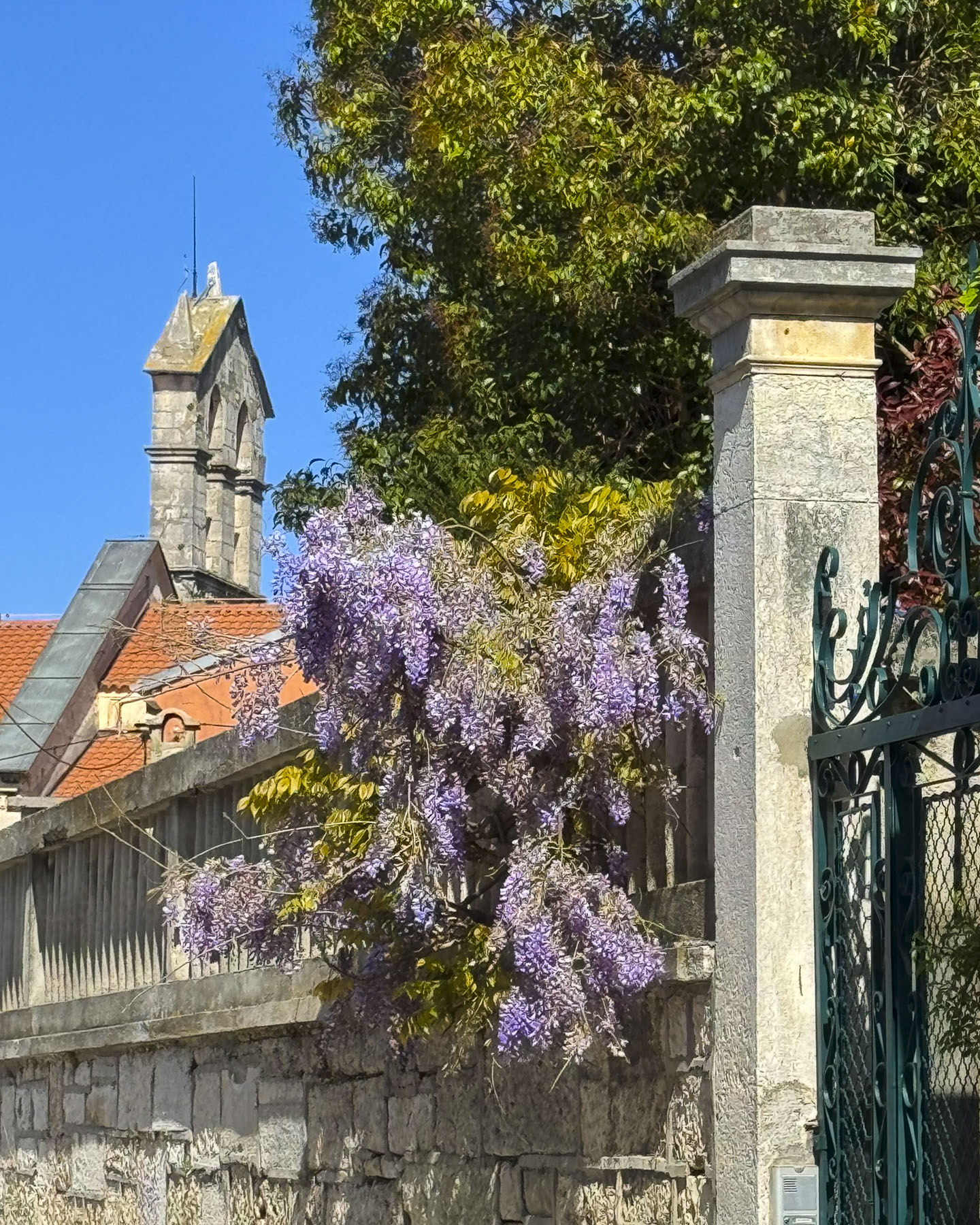
While our flat was adequate for our 3-night stay, we wouldn’t describe it as luxurious, but its location on a steep lane in the center of the historic district was excellent, being only a short walk away from everything in Pula. Wanting to take advantage of the sunny afternoon that appeared as we entered the city, we were soon out and about, walking past colorful homes and flowering wisteria along the road to the Citadel of Pula or Kaštel, as it is locally known.

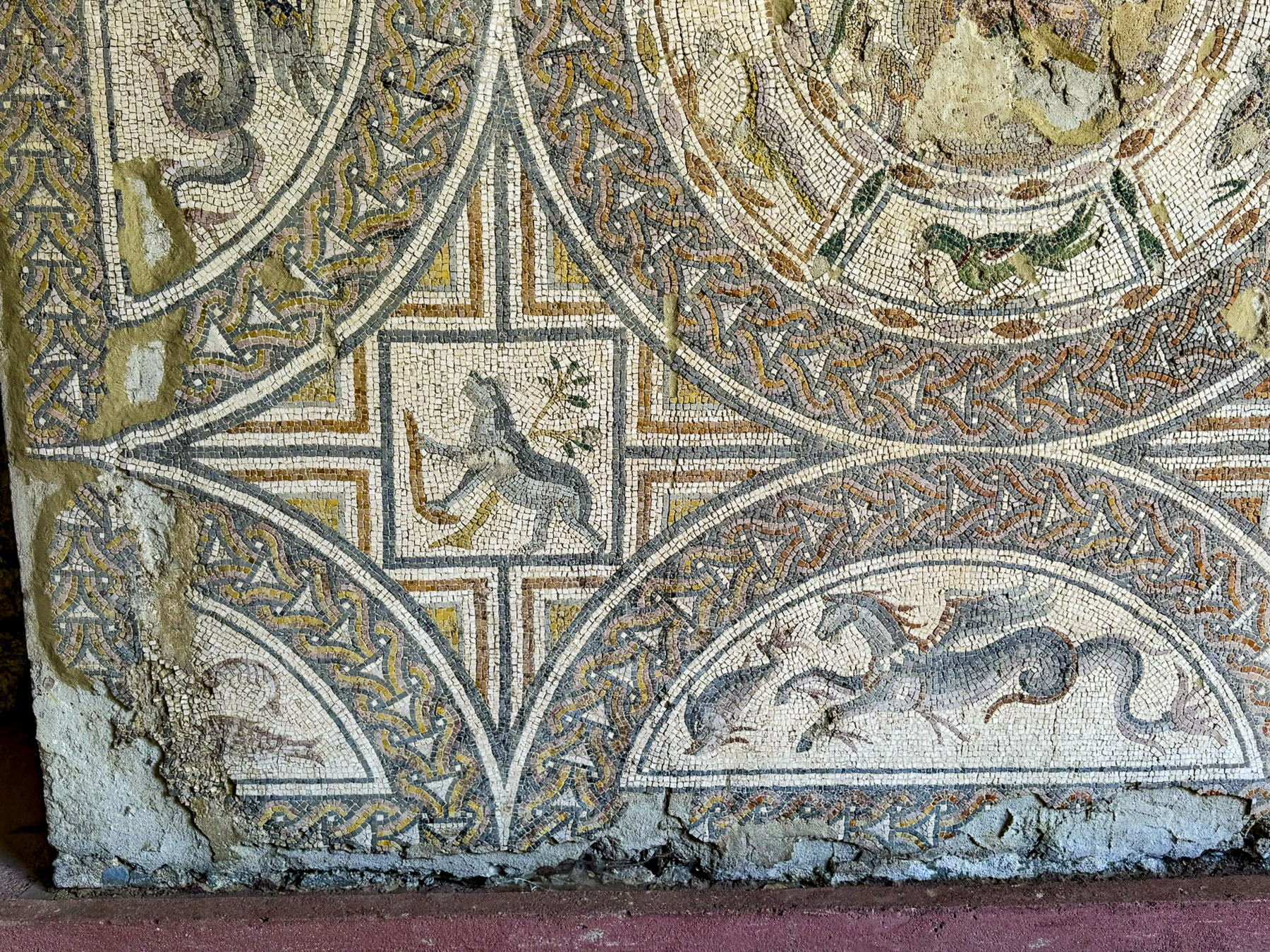
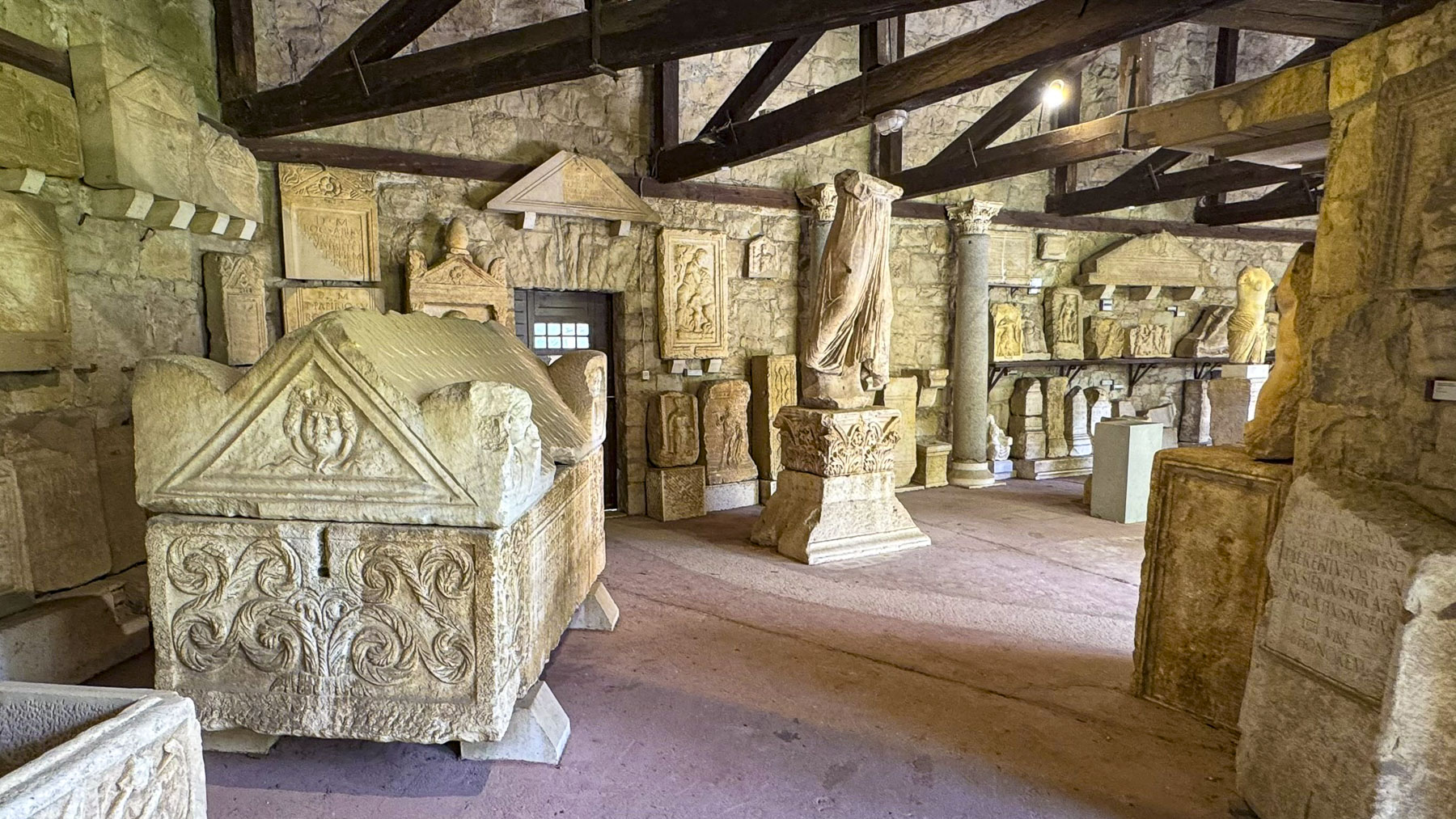
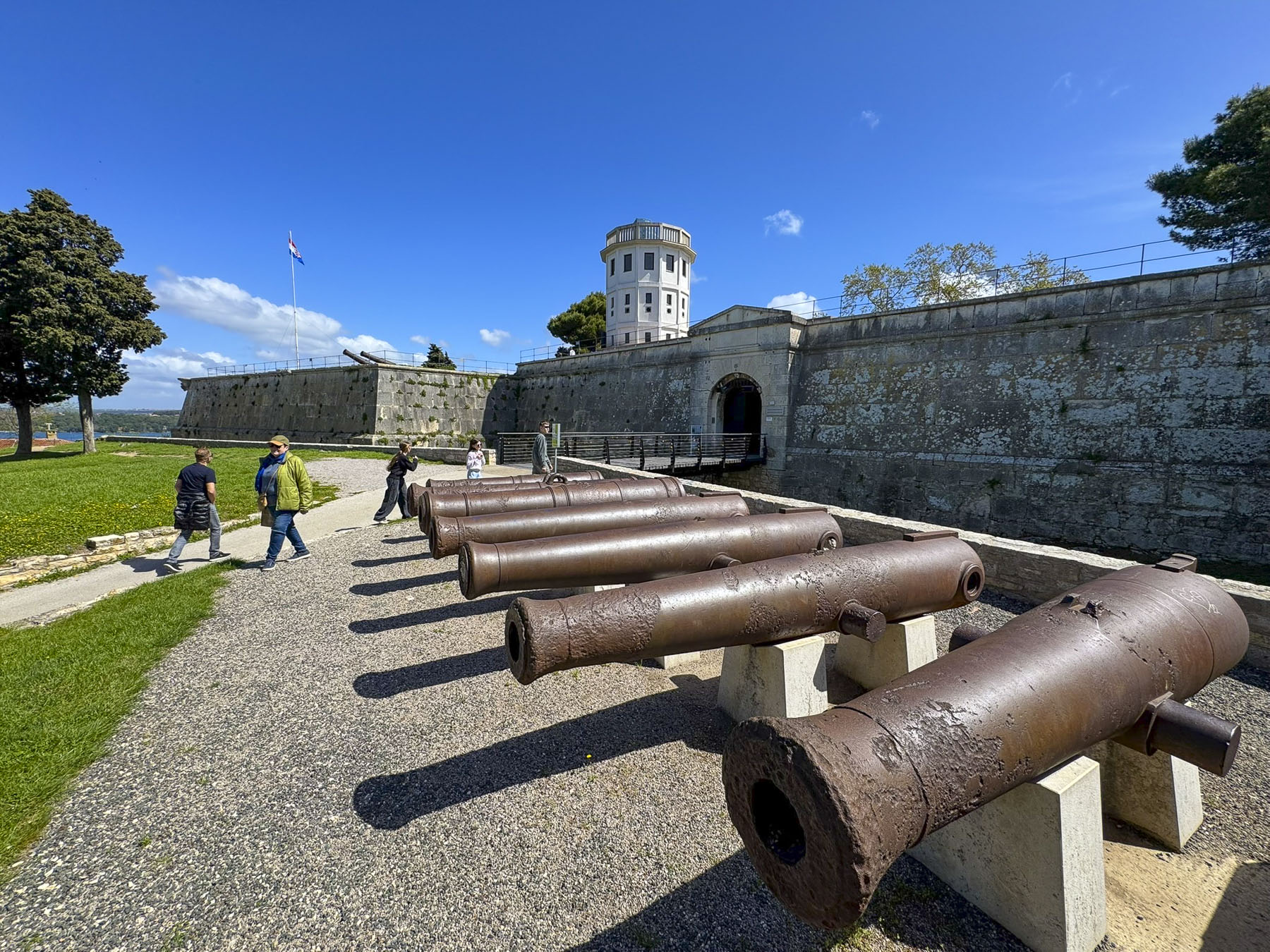
The star shaped bastion was built by the Venetian Empire in the 1500s over the ruins of an earlier Roman fortress and partially used some of the stones from the old colosseum in its construction. It has a commanding view of the harbor and the town surrounding it, and was actively used as military installation by the Austrians during WWI, who built an extensive network of tunnels under the castle known as the Zerostrasse. The tunnels were later expanded upon by the Italians during WWII, and later still, by Yugoslavia’s communist regime, to shelter 50,000 people. Unfortunately, the tunnels were closed when we visited Pula. Near the Zerostrasse’s entrance, at the bottom of the hill behind the Kaštel, there are also the ruins of a small Roman era amphitheater and museum with historical artifacts from the period. The Gate of Hercules and remnants of Pula’s ancient defensive wall are nearby.

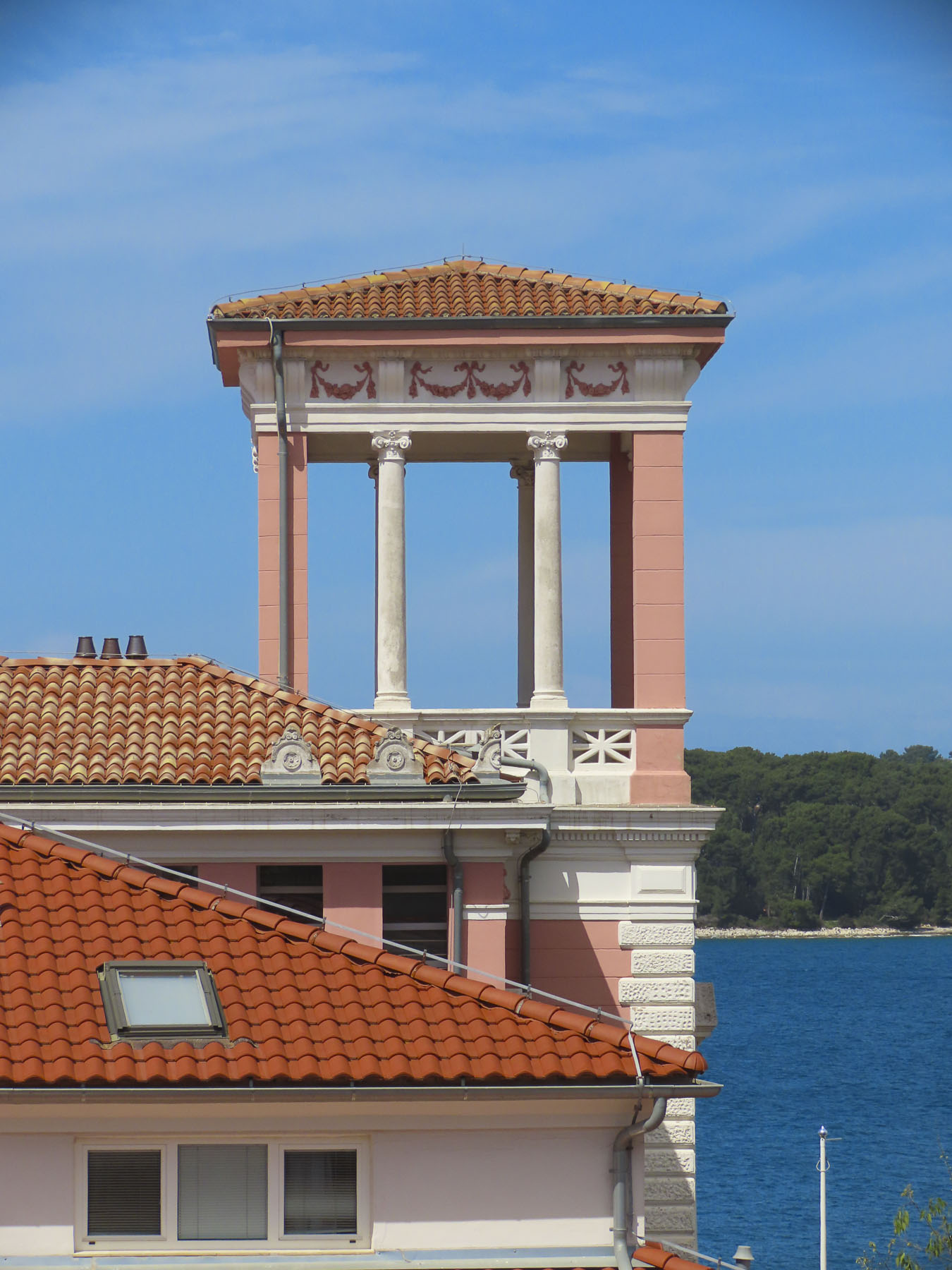
Earlier at the Kaštel, we had noticed large idle shipping cranes in the harbor, remnants of Pula’s once important shipping industry. Now from a window in our apartment, as the night sky darkened, we could see the “Lighting Giants” as they are called, lit with colorful lights.

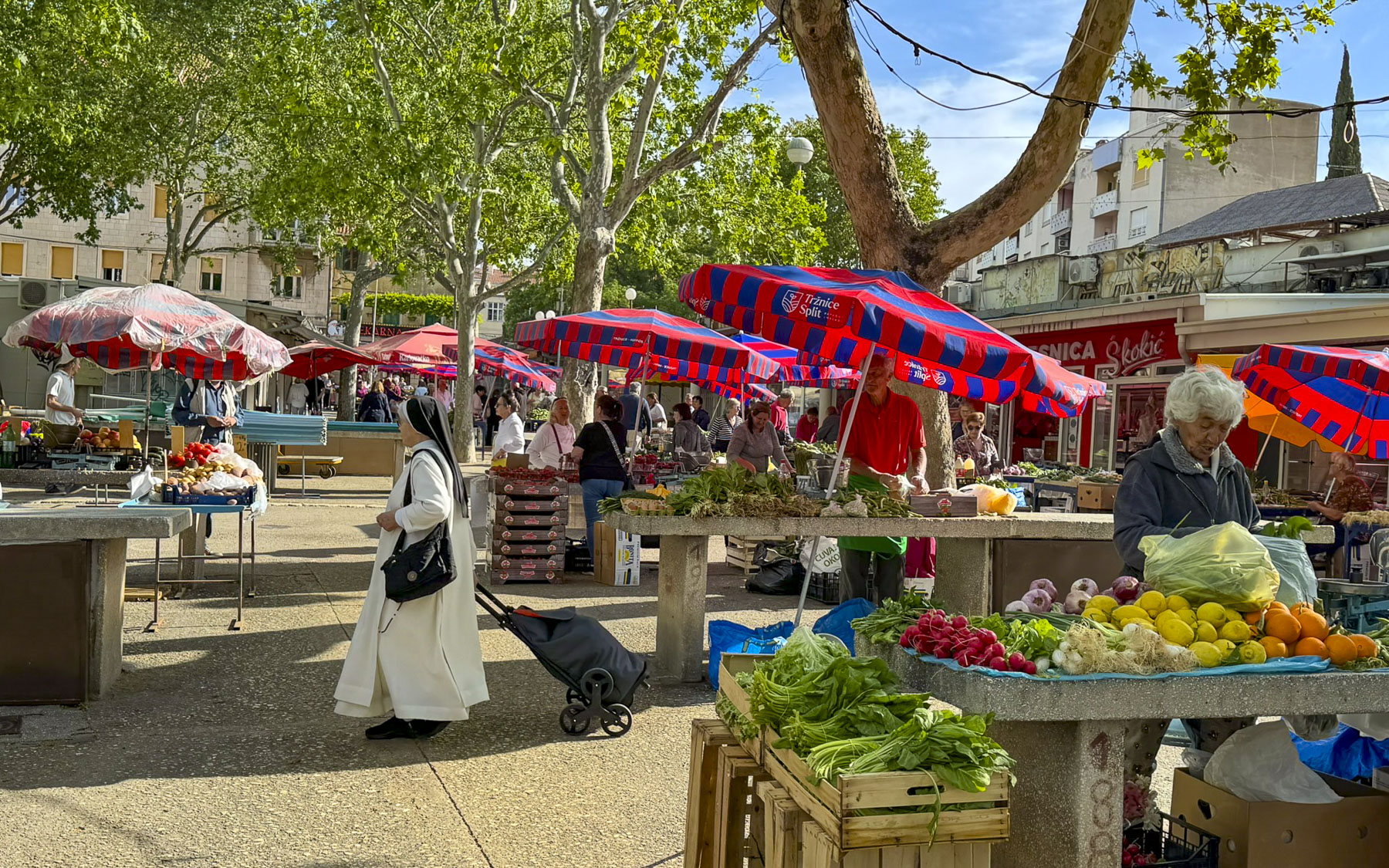
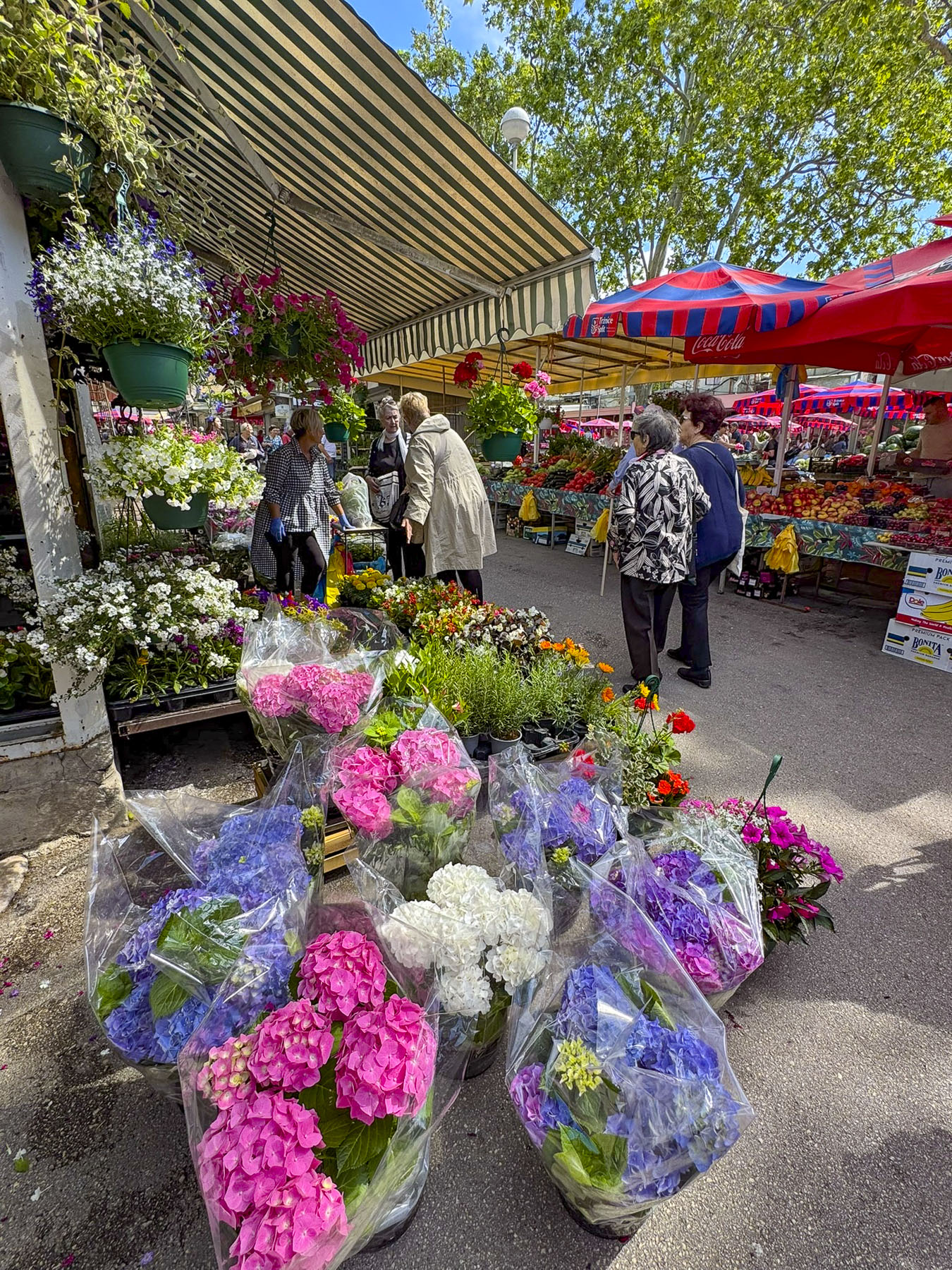
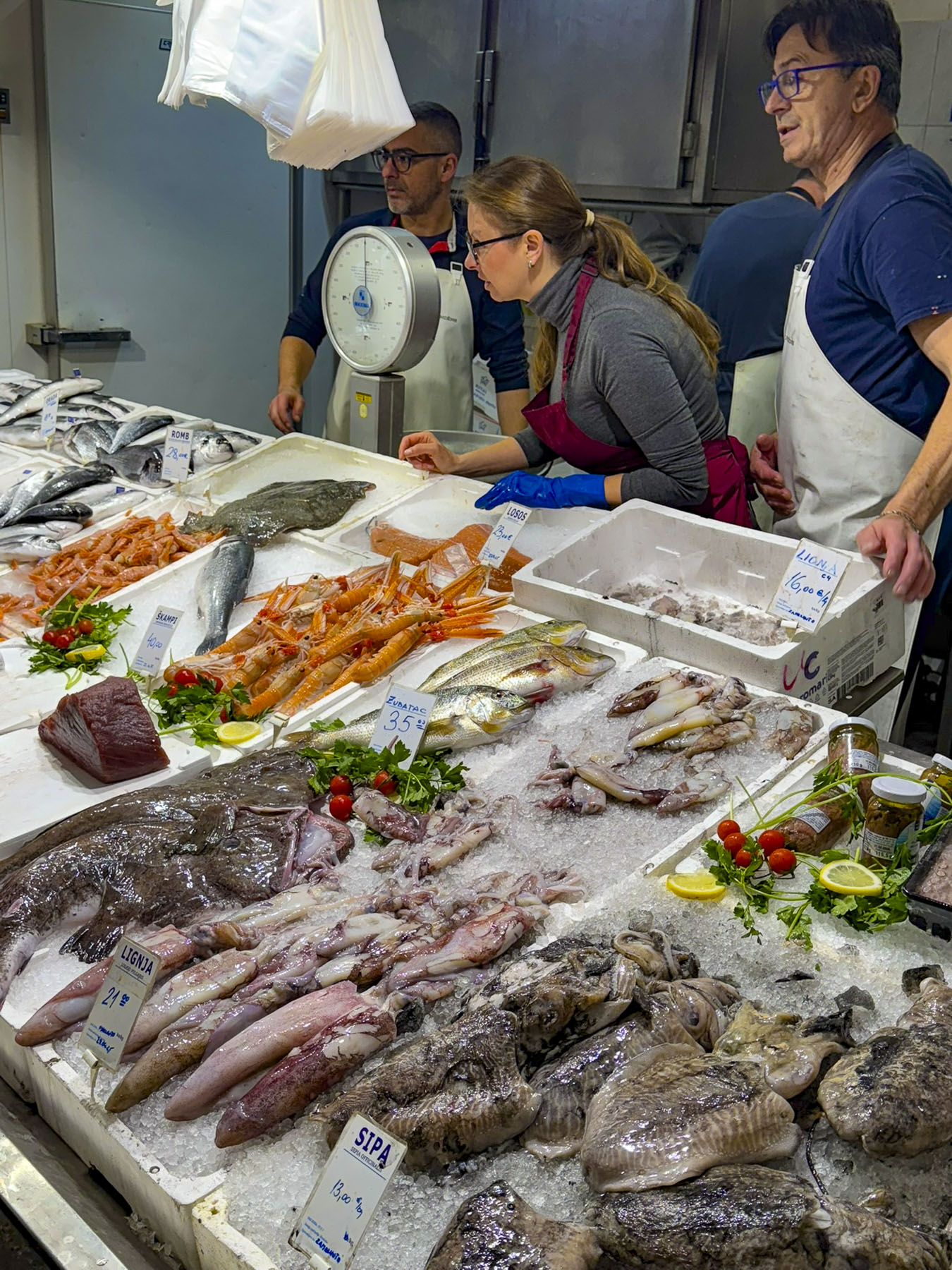
The next morning, in search of breakfast, we headed to Gradska tržnica, Pula’s traditional daily market where the seafood and meat vendors are indoors and the produce and flower sellers are setup outdoors in a shaded park. All the produce in the market looked extraordinary, and we were tempted to purchase some foodstuffs to cook later, but our apartment only had a coffee maker. Excellent pastries and coffee were found at Mlinar, an Adriatic region bakery chain, which we ended up visiting frequently during our road trip through the Balkans.

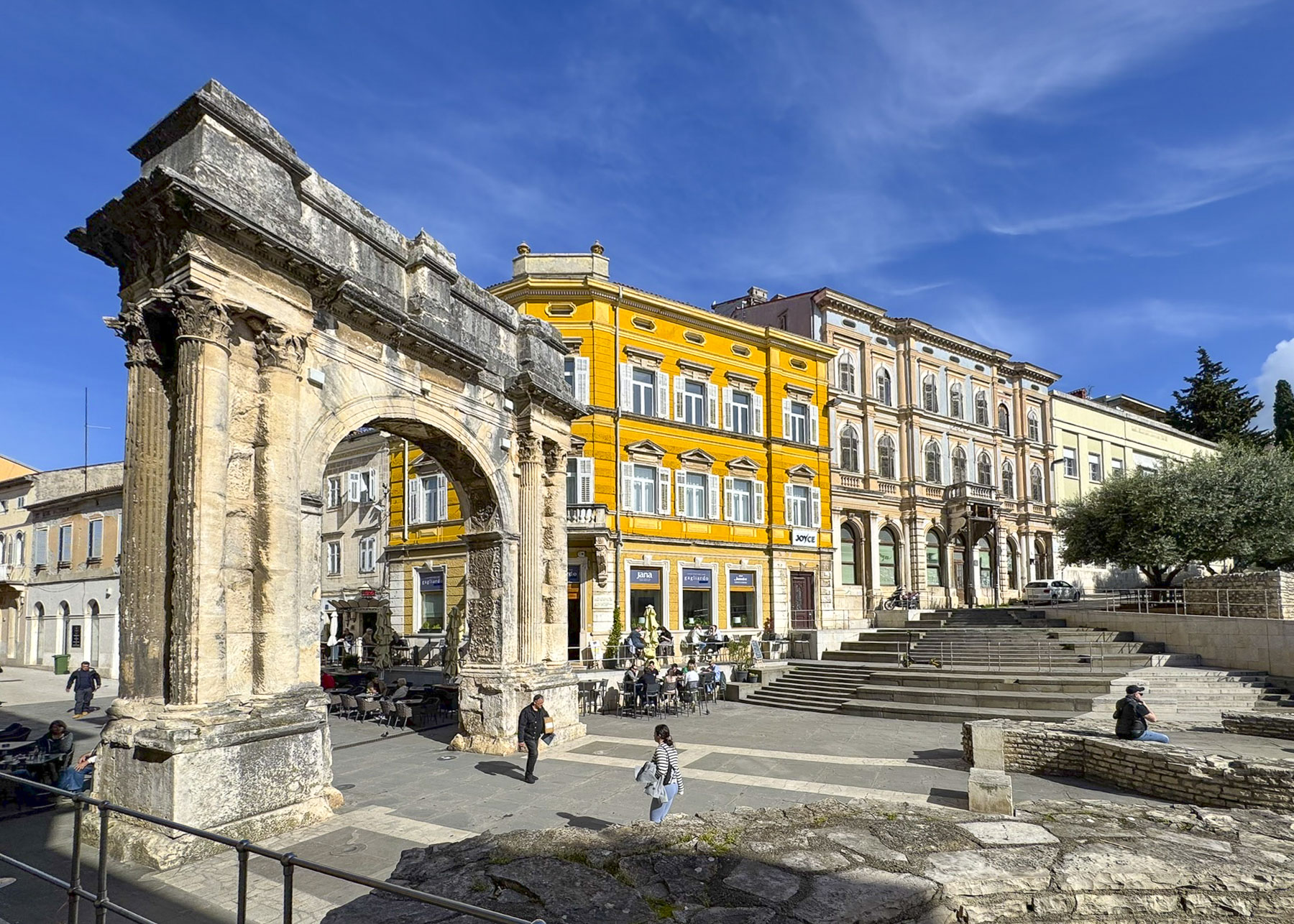
Our route took us through the Arch of the Sergii (29 BC), a Roman triumphal arch, and main gate through Pula’s defensive wall, which once stood around the city.  The ramparts were dismantled in the early 19th century, when Pula was an important naval base for the Austrian Empire, and the prosperous city needed room for expansion.    

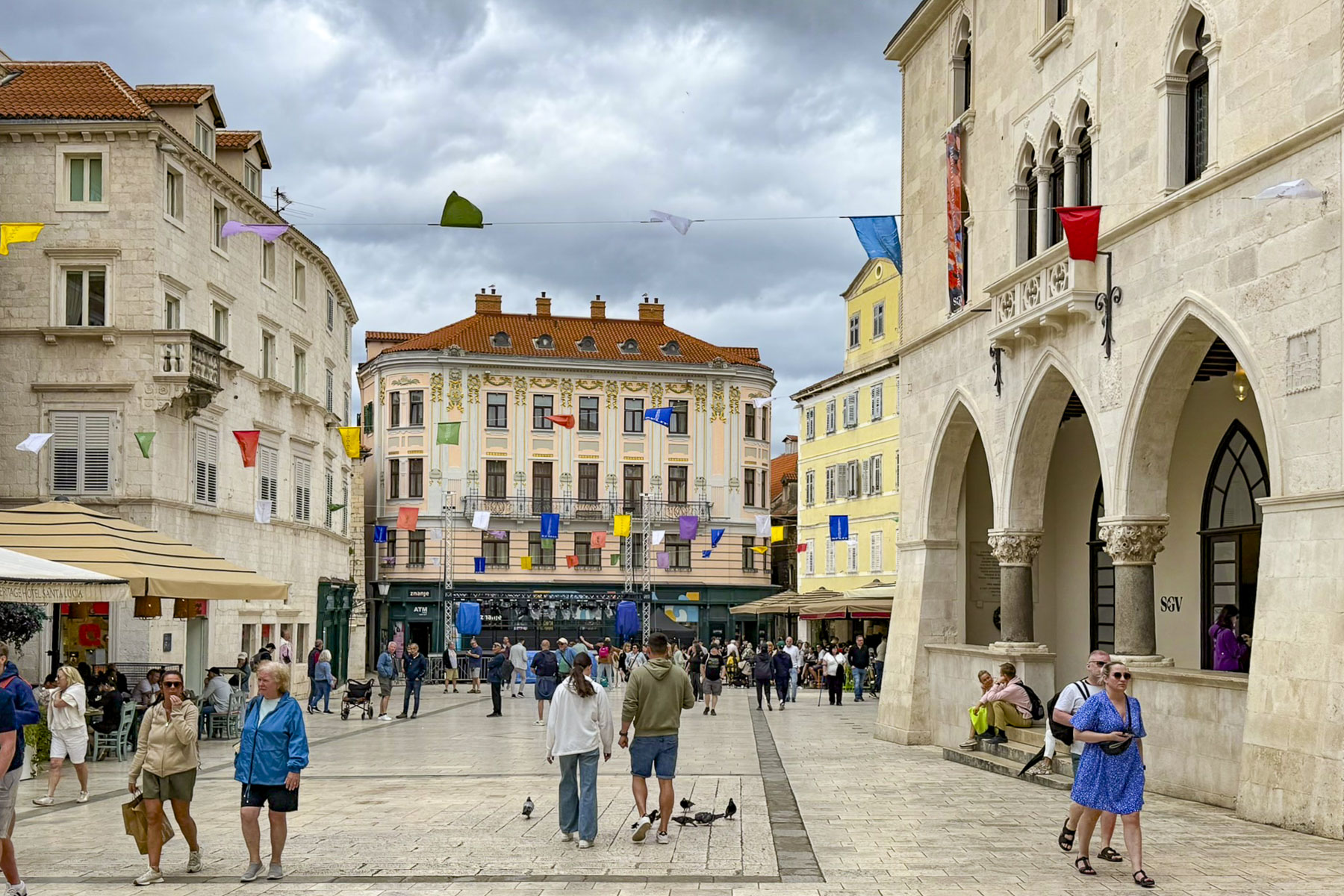
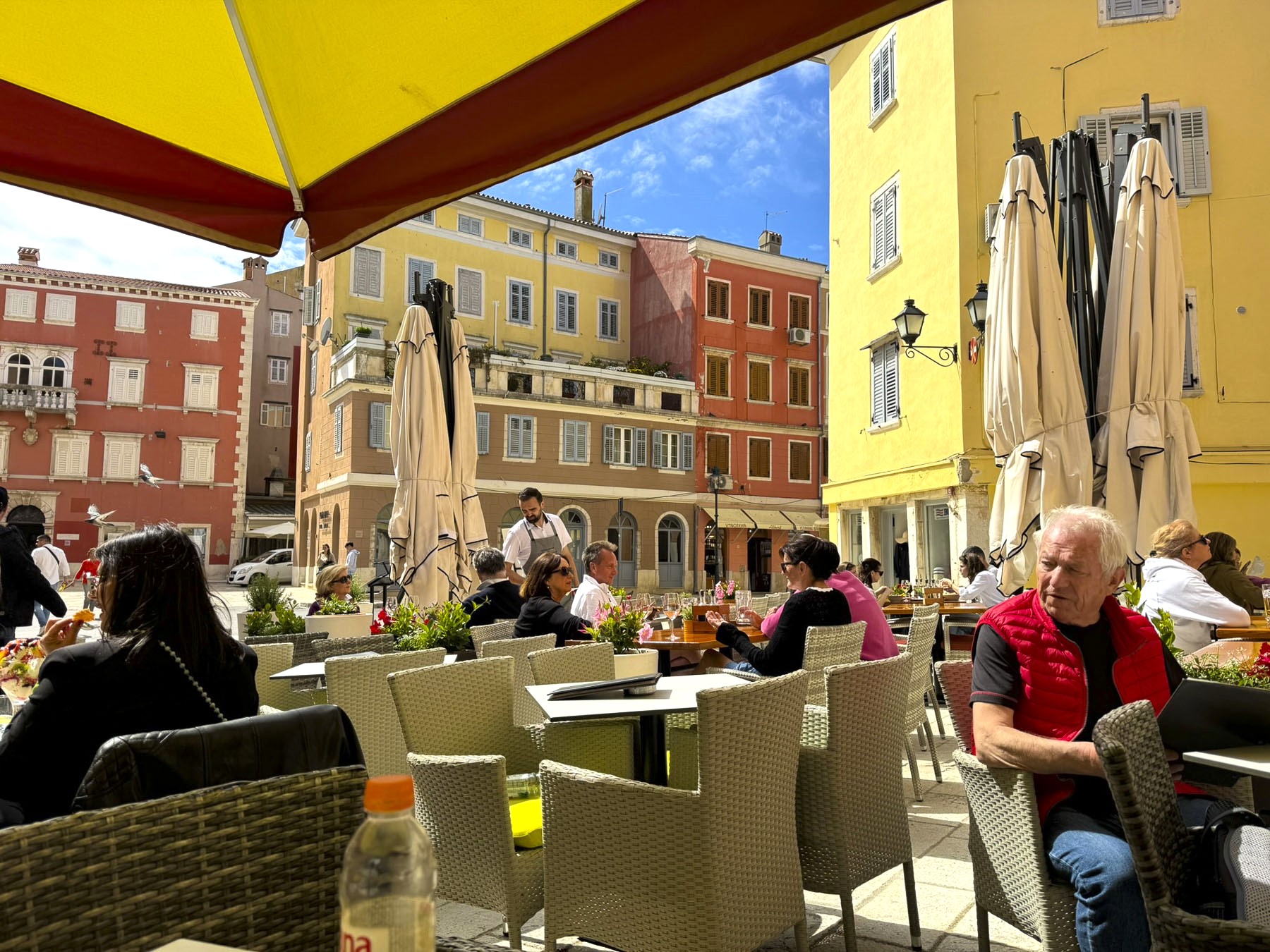
Back-tracking through the arch we walked along the pedestrian only Sergijevaca Street, Pula’s main shopping lane, to the old Roman Forum.  After 2000 plus years, the plaza is still surrounded with ancient buildings that include the 2BC Temple of Augustus, and a 13th century Communal Palace, now used as Pula’s City Hall, and remains the center of activity in this historic town. Cafés with outdoor tables lined the perimeter of the square, though the popularity of each seemed to change during the day as people sought tables in the sun to help relieve the chill of an April day. Across from a busker, folks queued up to lend an artistic hand to the painting of two large fiberglass pisanice, Easter Eggs, as part of a fund-raising event.

Farther along the lane, which is now called Kandlerova, curved with the base of the hill below the Kaštel, and opened into a smaller plaza in front of the Cathedral of the Assumption of the Blessed Virgin Mary, Pula’s main church. It was constructed in the 4th century over the foundation of an earlier Roman temple dedicated to the mythological god Jupiter. In the early 1700s, masons reused stones taken from the colosseum to construct the free-standing belltower in front of the church.

Next to the church was Park Jurja Dobrile, a quaint patch of greenery across from the promenade that stretches along the harbor.

It was very easy to enjoy Pula’s sites in a day and a half, so the next morning we set out for a day trip to Rovinj, less than an hour away. Olive groves and farmland graced our route through the verdant Istrian countryside.

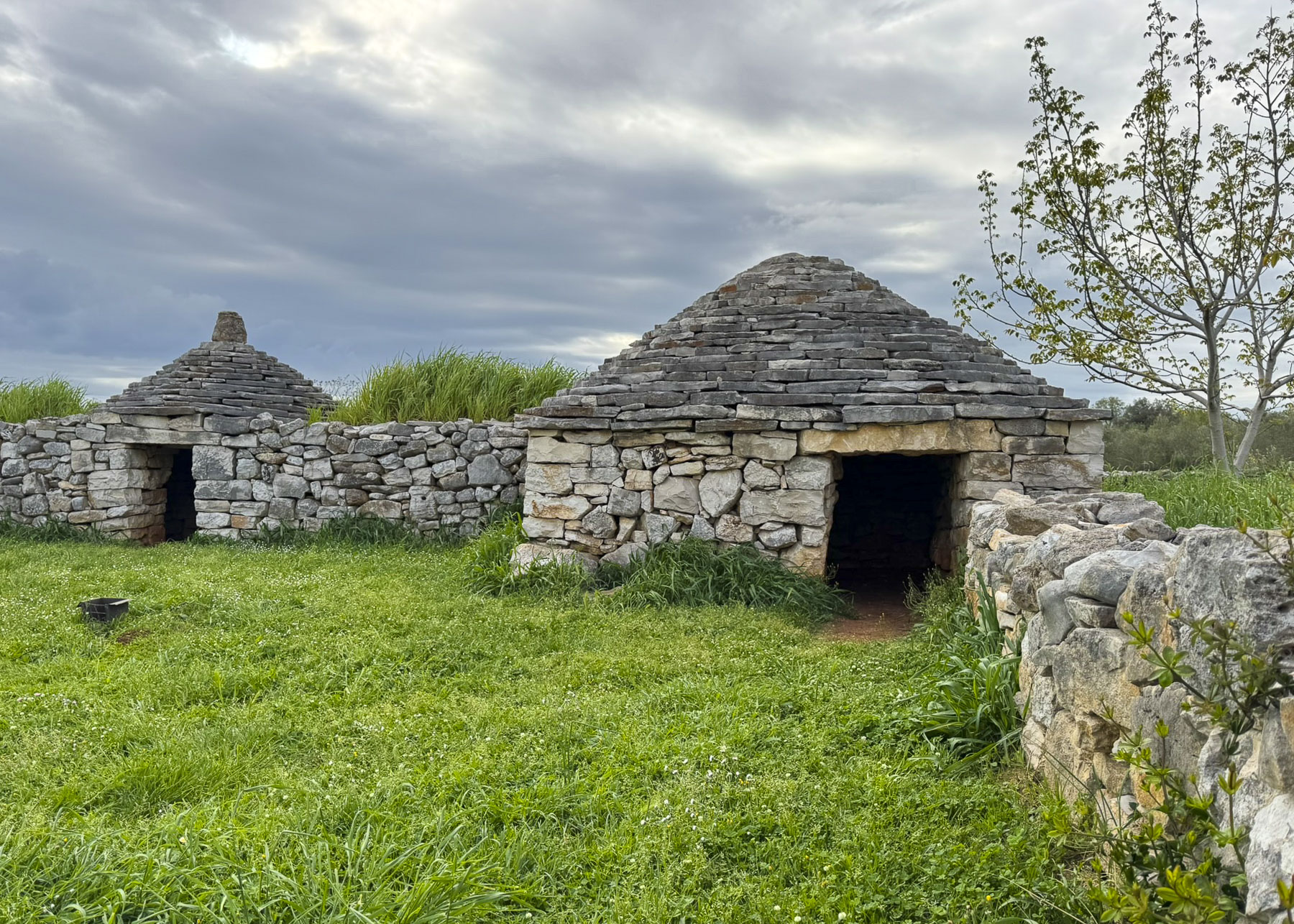
In the fields just beyond Vodnjan we noticed small round stone structures with conical roofs called Kažun. They were very similar to the Trulli we saw several years ago in the Puglia region of southern Italy. Though they share the dry-stone construction technique used to build the Trulli, the Kažun in the Istrian region are much smaller, and were mainly used to store crops, keep animals, and provide temporary shelter for farmers.

Like Pula, parking in Rovinj was limited and the large municipal lot, on the quay nearest to the old town, filled up quickly, even during the shoulder season. Fortunately, we found a parking lot on Vijenac braće Lorenzetto, a little farther away.  From there it was a steep uphill walk until we reached Crkva sv. Franje, the Church of St. Francis, and its Franciscan Monastery which date from the early 1700s.

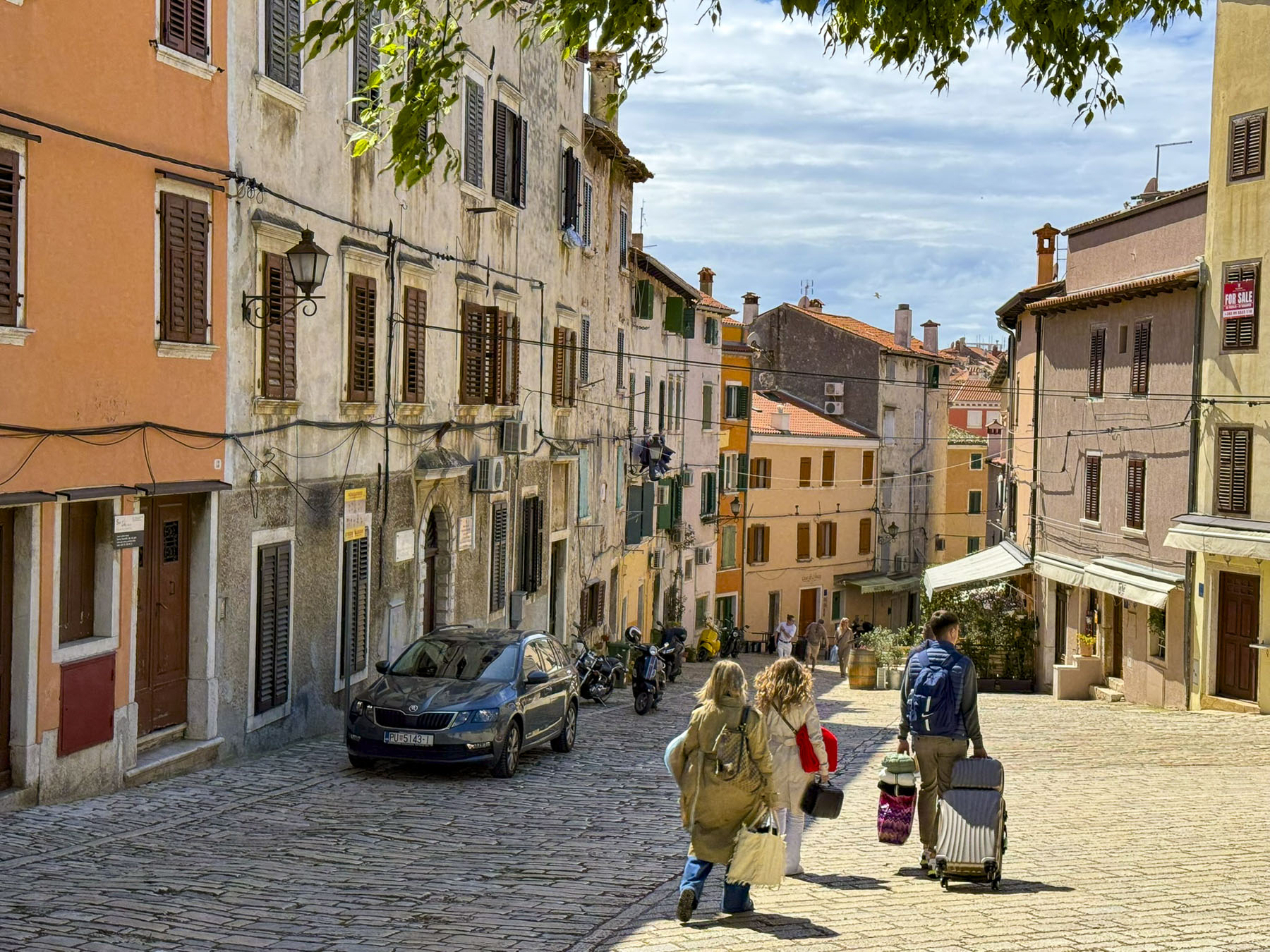
The rattling of suitcases pulled across ancient cobblestones by vacationers heading to their hotels accompanied us downhill. Surely an annoying sound, and we wondered if it was any better or worse than the hoofs of donkeys or horses, and wagon wheels clattering across the stones centuries ago.

This lane from the church passed several restaurants, but the wonderful aroma originating from Fish House Rovinj encouraged us to stop for lunch. It’s a tiny no frills seafood bar with limited seating on bar stools inside and along the wall outside. All the fish is locally sourced and purchased fresh every morning at the docks. We tried fried calamari, grilled shrimps and fish tacos. Every dish was delicious. Their staff were very nice, and the menu was extremely budget friendly considering Rovinj is a top tourist destination. The place should definitely be considered a destination spot when visiting Rovinj.

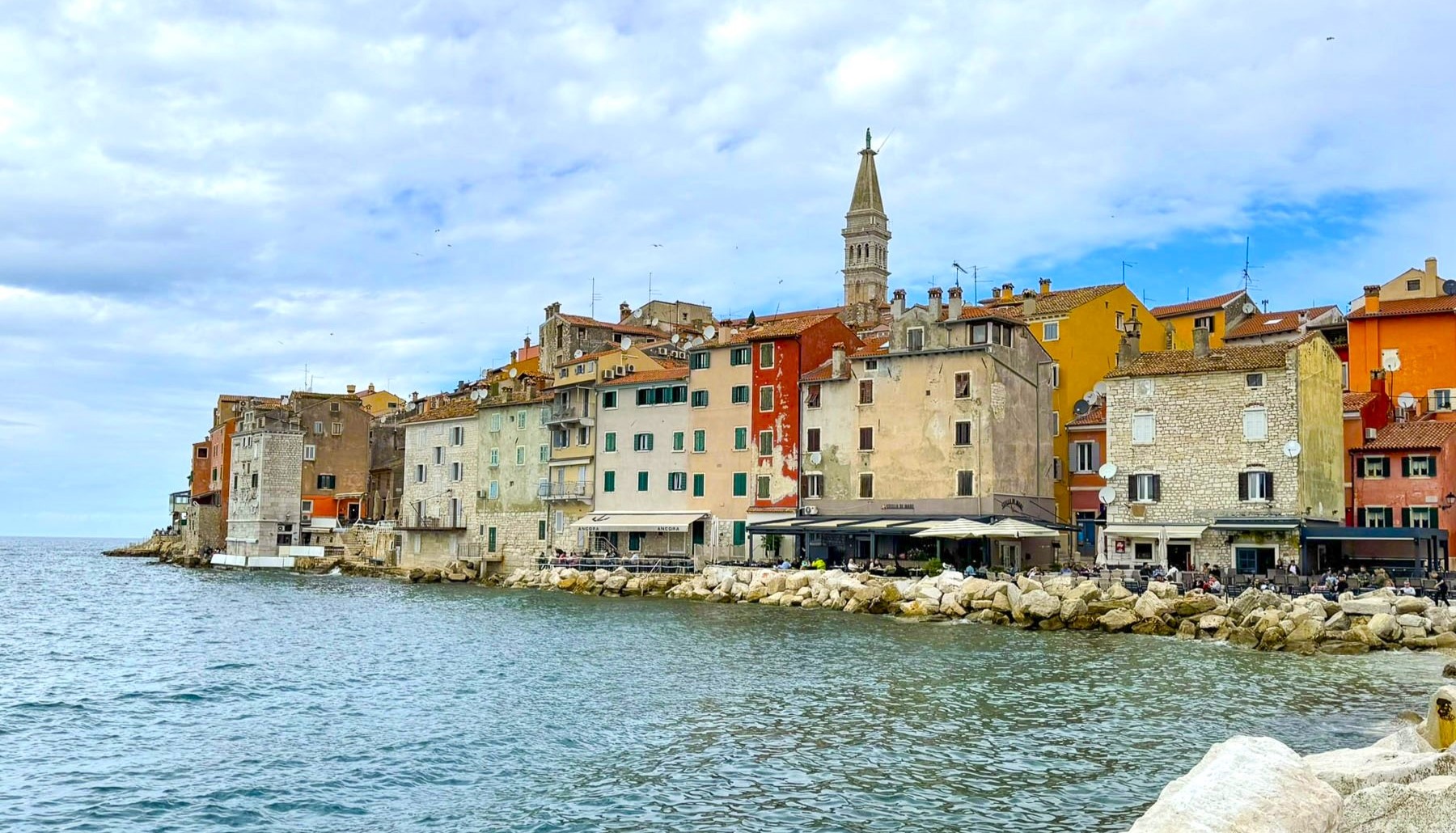
The attraction of Rovinj is its beautiful location on a small headland, that juts out into the northern Adriatic Sea, every square foot of which is covered with picturesque buildings which cascade down to the water’s very edge. The iconic picture of this 16th century merchant and fishing town is taken from the sea and captures the town, centered with the belltower of St. Euphemia’s Church at its apex, as if it was an island floating effortlessly on a horizon that seamlessly merges the sea and sky. The town was in fact an island until it the channel separating it from the mainland was filled in 1763, when the town was part of the Austrian Empire.

We had hoped to take our own pictures of the town from the sea, but the weather we felt was too cloudy to justify the expense of the boat trip. We contented ourselves instead with wandering along the harbor front before entering the old town through Balbi’s Arch, an old  Venetian gate, to the once walled citadel, before following the twisting stone lanes up to St. Euphemia’s Church.

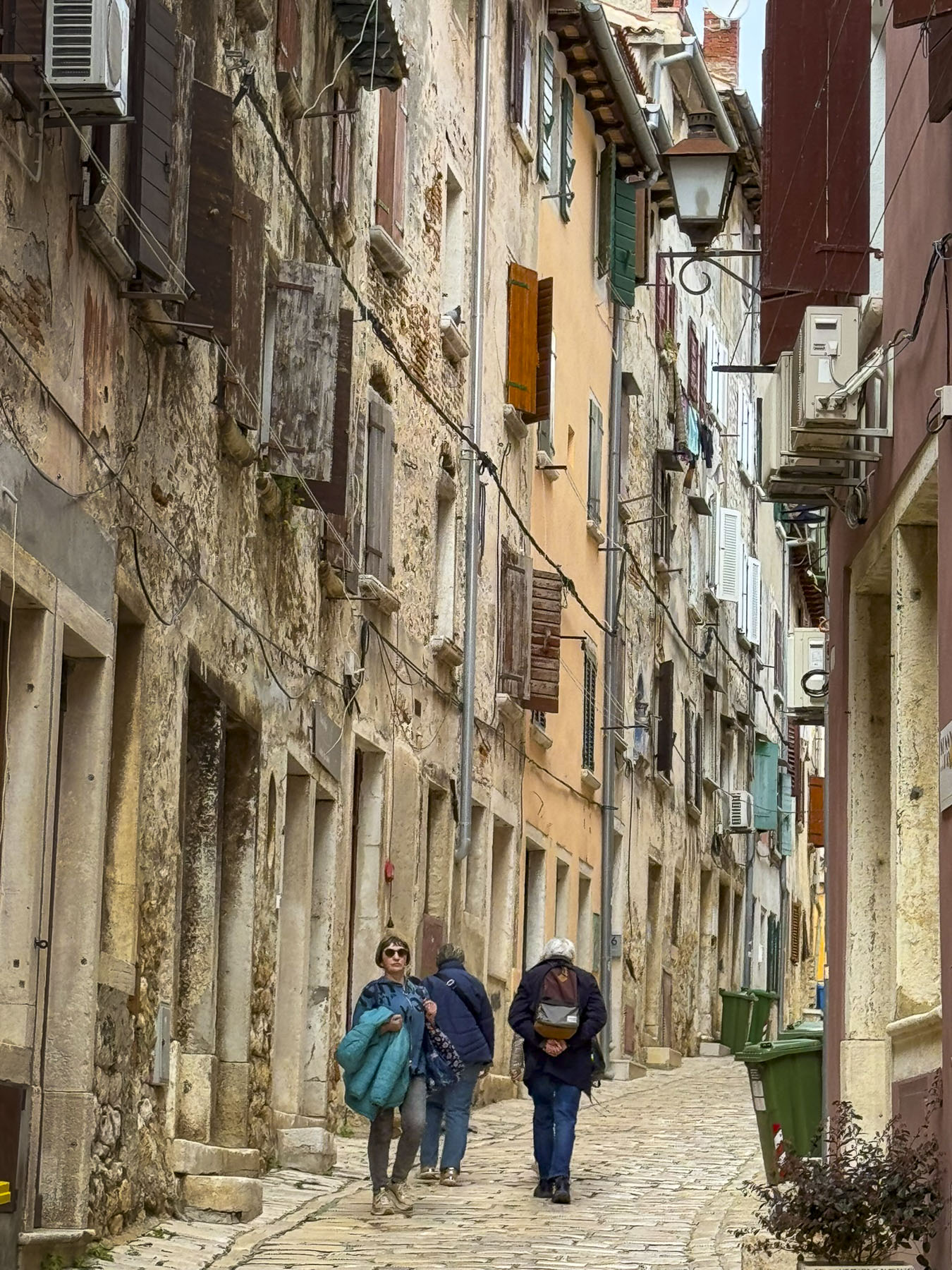
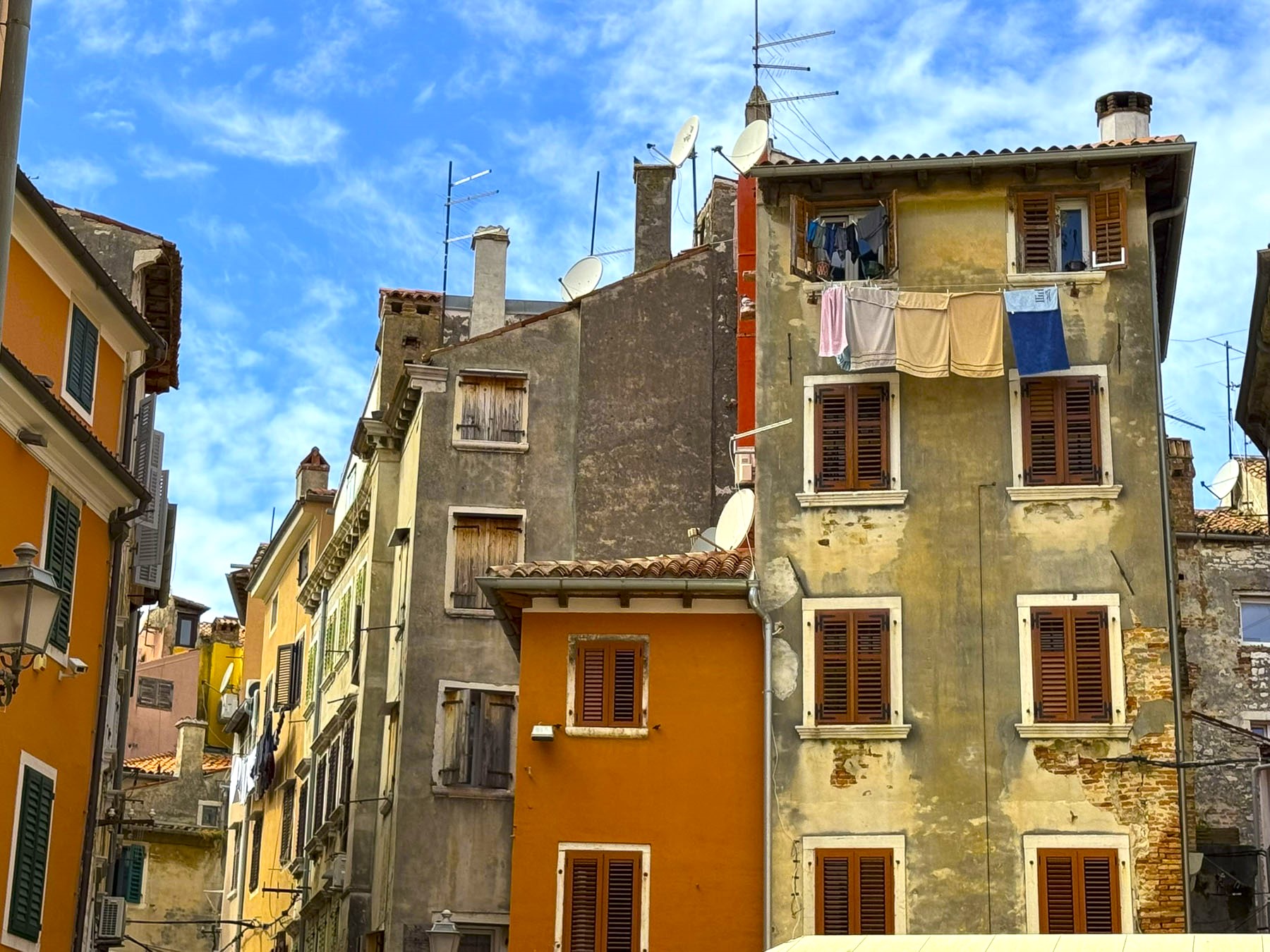
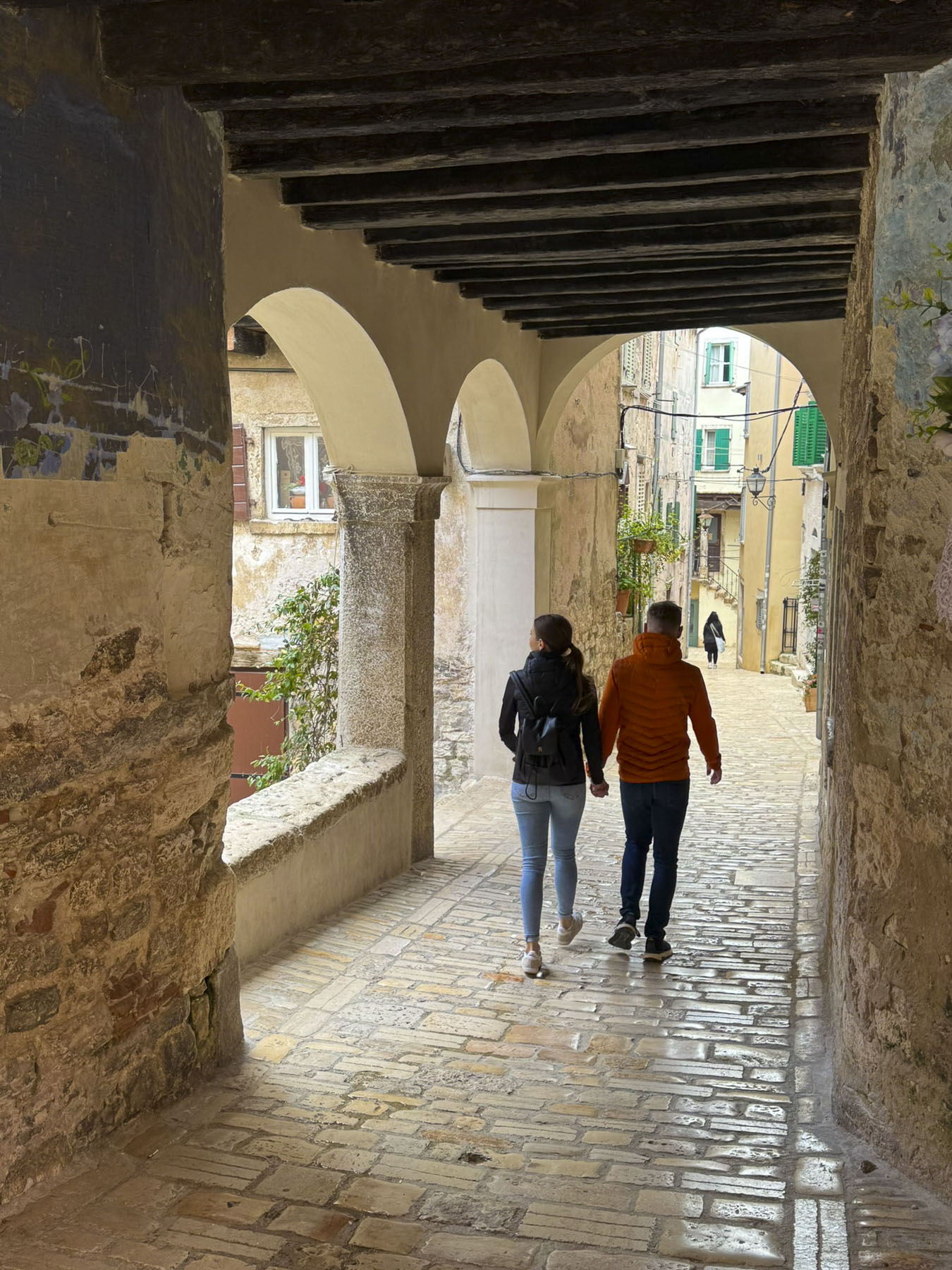
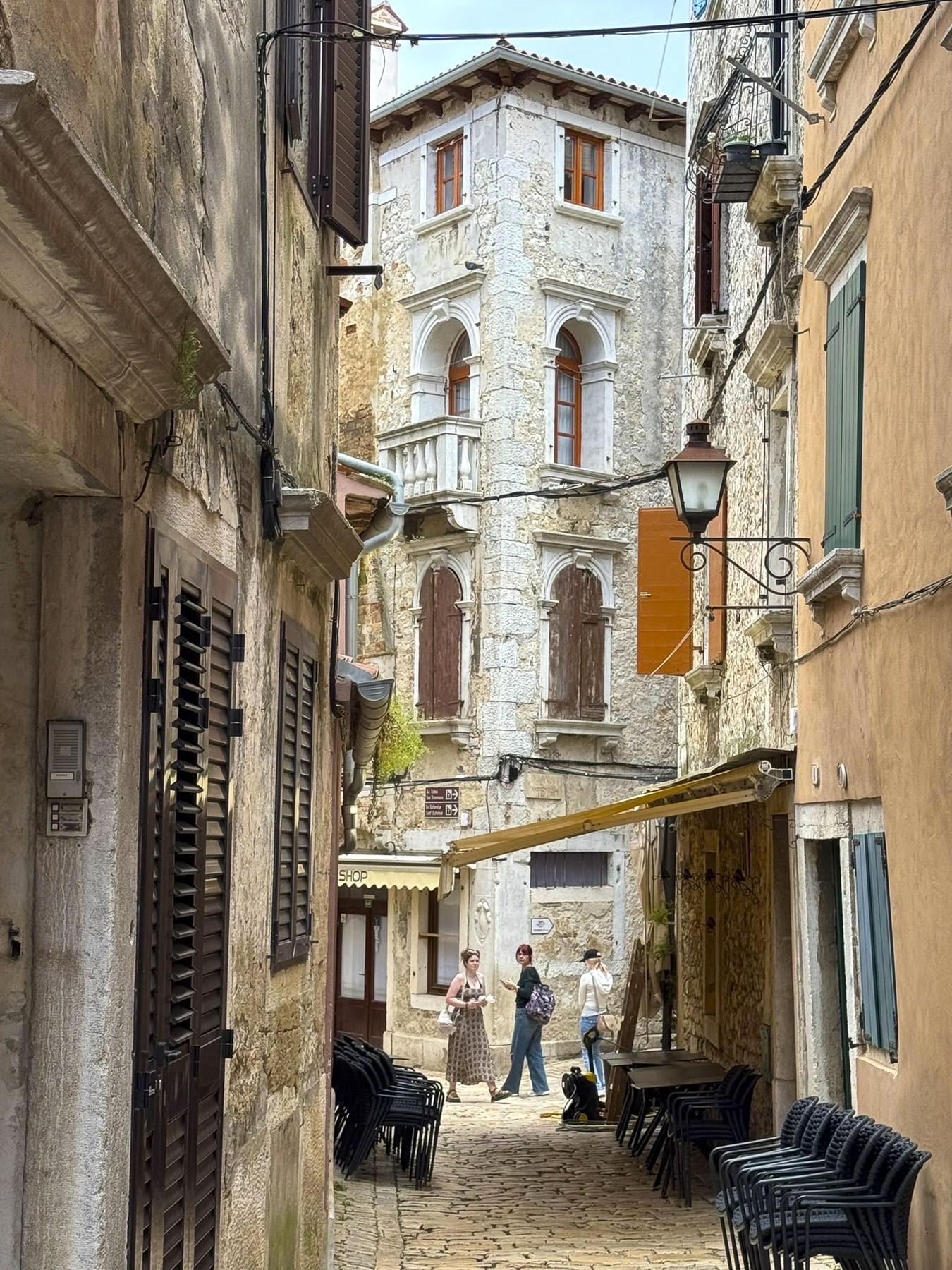
The old town was charming, and while many of the alleys have been gentrified with upscale shops and lodging above them, several retain a rawness, similar to the historic quarter in Naples, Italy.

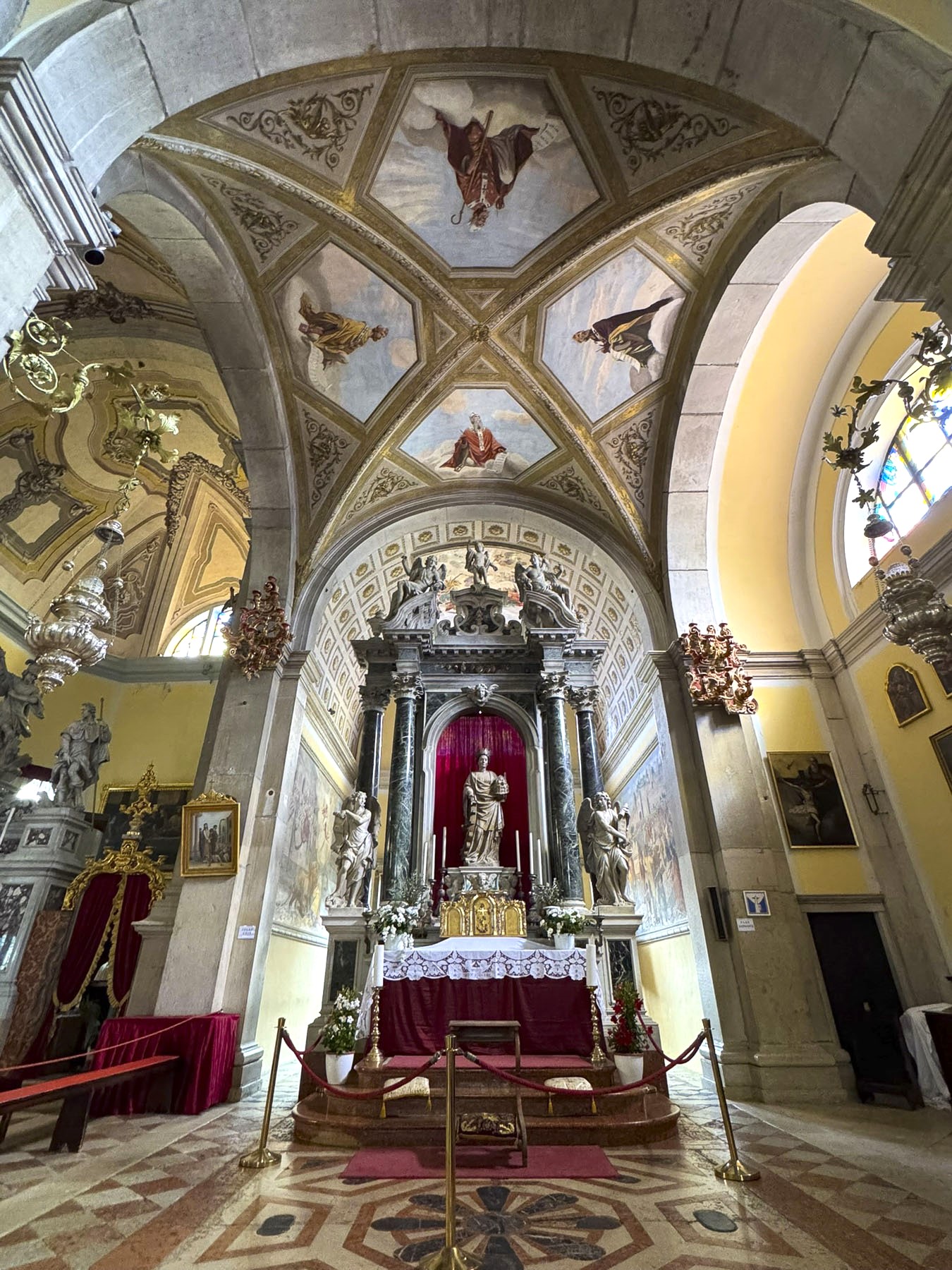
The lanes to the top of the hill twisted and rose before ending at a large plaza in front of the church. This church was constructed in the mid-1700s, to accommodate the growing city, over the foundation of a small church dedicated to St. George which was built in the mid-300s when the region adopted Christianity.

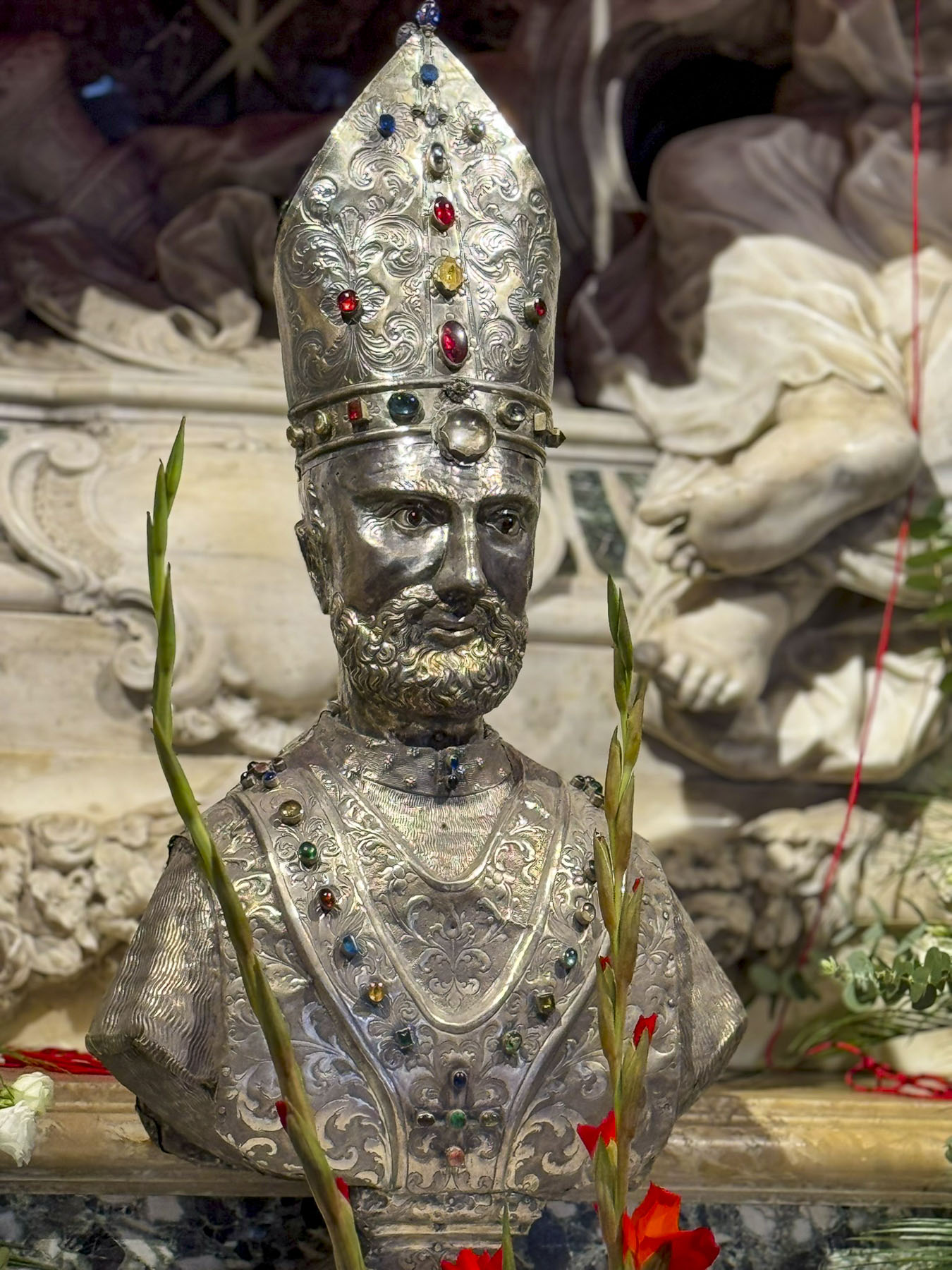
But part of the reason for the new church was to honor the miracle of St. Euphemia, a 4th century martyr, executed by the Eastern Roman Empire in Constantinople, before the empire adopted Christianity. The legend of St. Euphemia’s sarcophagus arrival to Rovinji  begins during the 700s Iconoclast heresy, when Emperor Constantine V, ordered her relics thrown into the sea. One hundred years later “fishers early one morning discovered a marble sarcophagus which had floated ashore like a stone ship. The townsfolk enlisted their strongest men, horses and oxen attempted  to pull the tomb off the beach, but to no avail.  

Miraculously, the saint presented herself to the crowd and singled out a small boy and said, “I am Euphemia of Chalcedon and I have engaged Jesus by blood. You will pull the stone ark with your body to the church at the top of the hill.” Awed, the crowd parted and watched the child pull the amazing weight of the tomb uphill. There priests slid off the tomb’s top and revealed the motionless body of a beautiful 14 year old girl. Next to her was a scroll of parchment paper with these words written on it: Hoc est corpus Euphemiae Sancte. “This is the body of Saint Euphemia.” Saint Euphemia is now the patron saint of Rovinj and her feast day is celebrated every September 16th, the day her sarcophagus floated ashore.

We had great experiences in Pula and Rovinj, and enjoyed learning about their fascinating history and legends.

Till next time,

Craig & Donna
Panama: Snowbirds in Paradise – Sand, Sea, and Skyscrapers or A Relaxing Visit to the Azuero Peninsula

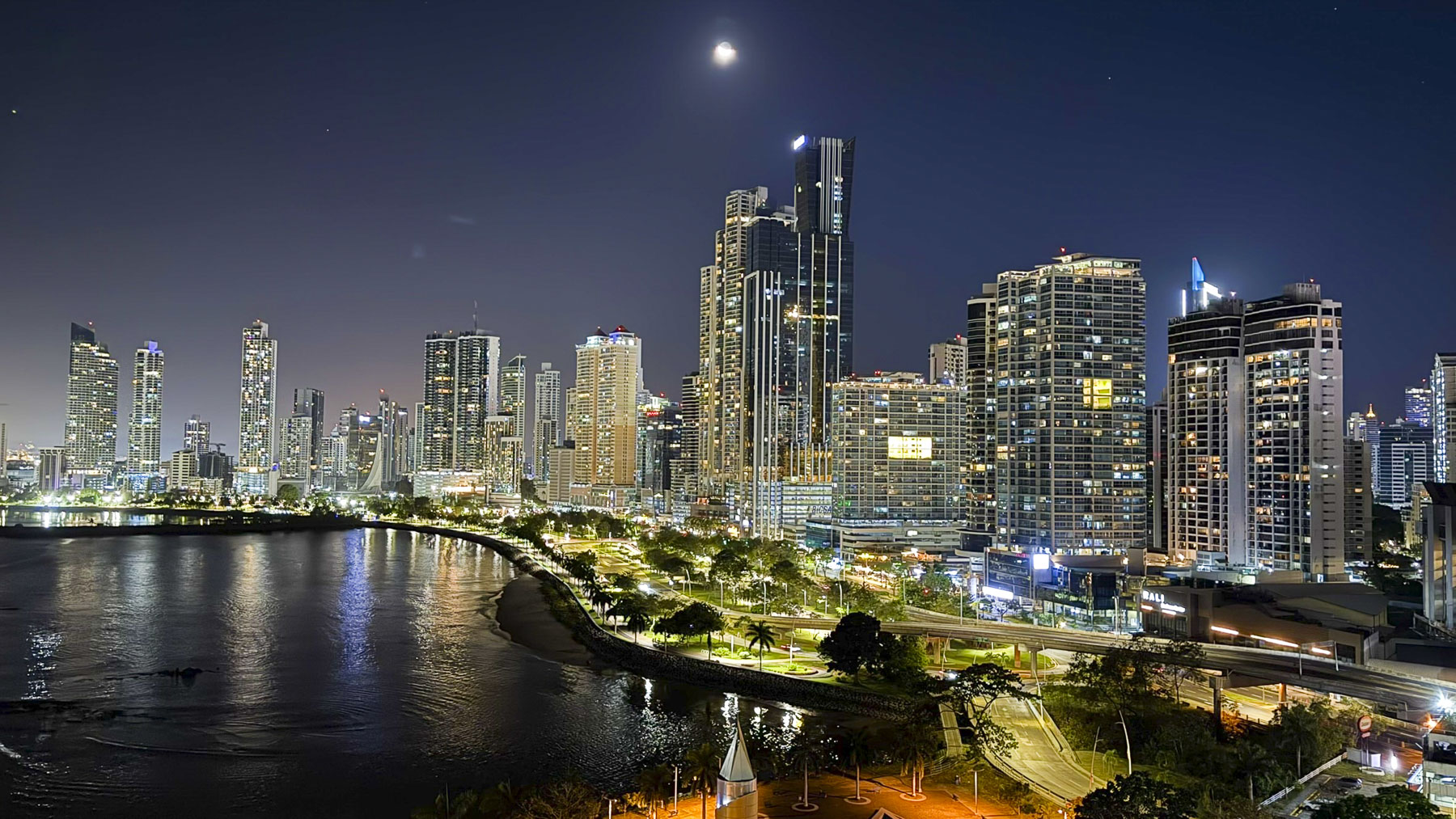
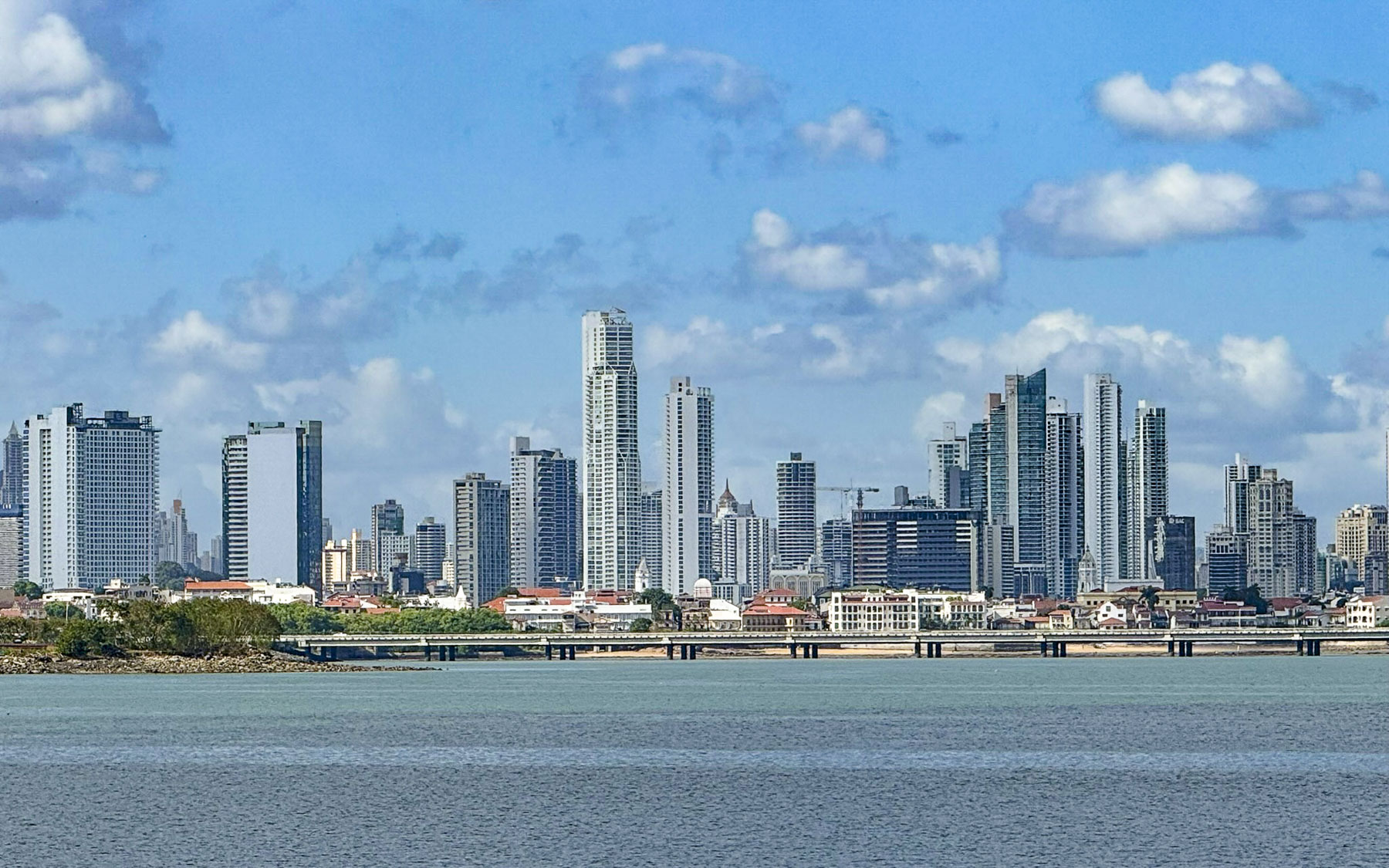
By the time we picked up our rental car at the Tocumen International Airport it was the height of the evening rush hour in Panama City. Fortunately, we were heading into the city, while the traffic lanes carrying the daily exodus of commuters home from the financial capital of Latin America were jammed. It was only a twenty-five minute drive to our hotel on the waterfront, but we missed our exit and had to re-route our way through the now deserted downtown streets to the Hotel Plaza Paitilla Inn, for a one night stay. We chose this 19-floor waterfront hotel after determining it was the best place to get those iconic photographs of the city’s modern skyline along the Pacific Ocean coast. And we were not dissappointed.

Golden light filled the room as we drew back the curtains along a wall of windows to reveal a spectacular cityscape that transitioned through the sunset, twilight, and darkness. It was a million-dollar view and we felt as if we were some place only accessible to billionaires or actors lucky enough to have a movie scene filmed on location here. Surprisingly, the Hotel Plaza Paitilla Inn was an excellent value and very budget friendly.

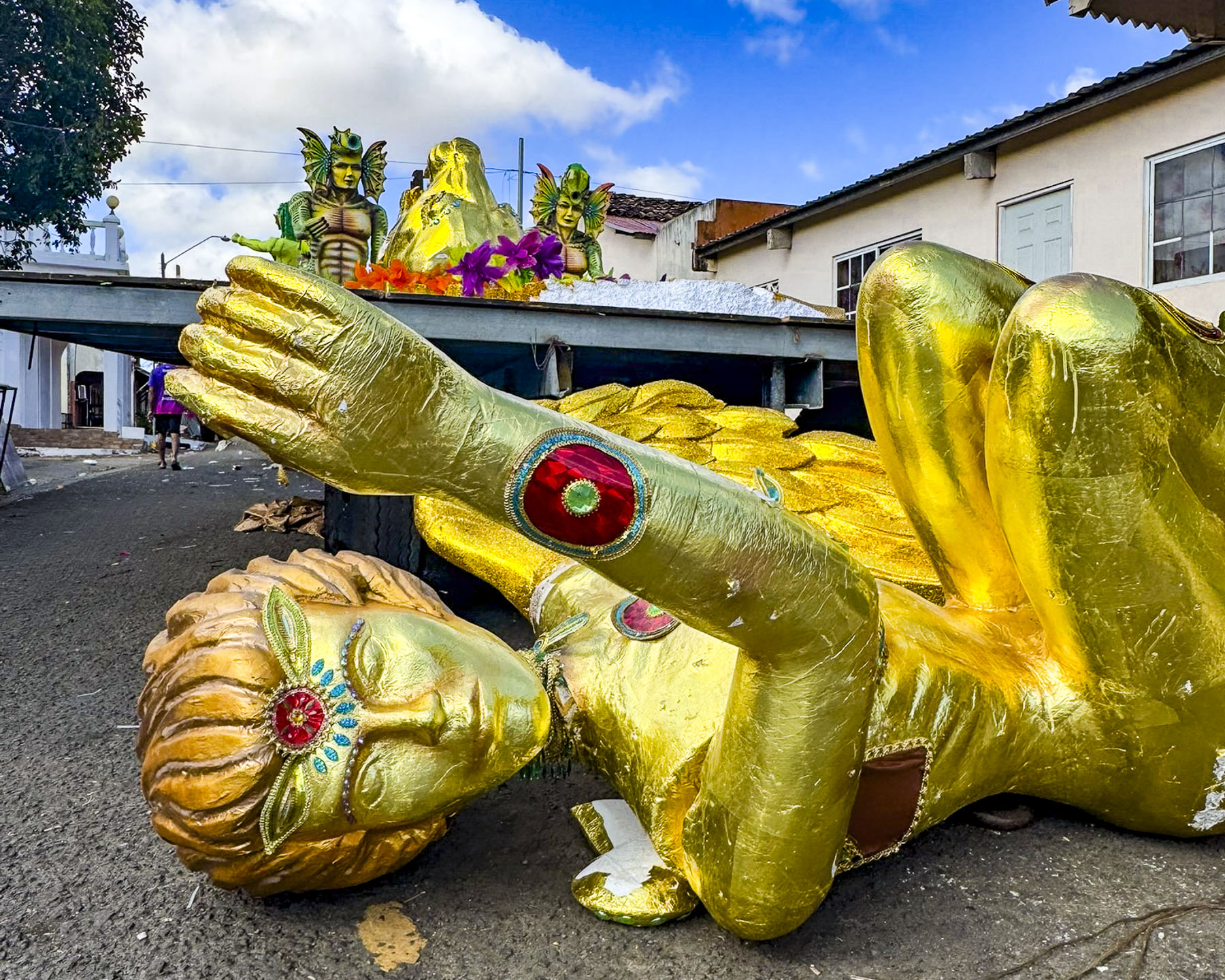
After discussing our travel plan with the concierge the night before, we departed after an early breakfast to avoid the expected traffic delays as folks took the Friday afternoon off in anticipation of the four days of Carnaval before Ash Wednesday. The nationwide el Carnaval de Panama, which literally happens in every town, is the biggest celebration of the year in the country. It starts in each town with the coronation of a queen and ends with the Burial of the Sardine, which symbolizes the past festivals and enjoyment of drink and food, in the predawn hours of Ash Wednesday, and the beginning of Lent. Little did we know that Panama’s Carnaval is regarded as “one of the largest— and rowdiest — events in Latin America.” Nightly events feature themed parades with elaborately decorated floats escorted by trumpet and drum bands, called tunas. To the benefit of all, water trucks called Culecos spray the revelers in the ninety-degree heat to keep them cool. And between the water trucks, mojaderas, wetters, keep everyone partying around them soaked with water pistols, water balloons, and buckets of water. It’s not a particularly camera-friendly event.

Our destination for the next 5 nights was Posada Los Destiladeros on Playa Los Destiladeros, in Los Santos Province, a 5 hour, 335km (208mi) drive. Leaving the city, we crossed the Bridge of the Americas which soars 64m (210ft) above the Panama Canal, and stopped on the far side at the Mirador de las Américas for our first look at the canal. Two monuments commemorate the arrival of 750 immigrants from China 170 years ago to work on projects relating to the construction of the canal, which created an enduring friendship between Panama and China. The view of the canal wasn’t as impressive as its fact sheet: over 12,000 ships carrying $270 billion worth of cargo pass through the locks of the canal annually. Over 70% of the ships are headed to or are returning from ports in the United States.

Continuing on Rt1 we passed the first of many pillars being constructed to support Panama City’s new Metro 3 line, a double-track monorail project sponsored by the Chinese, that will connect the growing towns of Ciudad Del Futuro and La Chorrea to the city’s Metro 1 and Metro 2 lines, Central America’s first and only subway system that became operational in 2014. Rt1 is alternately called the Pan-American Highway, that famously stretches from Prudhoe Bay, Alaska in the United States, 19,000 miles way to Ushuaia, Tierra del Fuego in Argentina. Though a 100-mile section is missing in the difficult terrain of treacherous Darien Gap region between Yaviza, Panama and Chigorodó, Colombia.

Shopping centers and strip malls with McDonald’s golden arches, Starbucks, and Burger Kings lined both sides of the highway before giving way to open crop- and pastureland. The occasional hilltop offered views of the Gulf of Panama and the Pacific Ocean to the south. While to the north the rural highlands of the Cordillera Central, the jagged mountainous spine of the country, graced the horizon. Veering off the Pan-American Highway we headed west on Rt2 to Las Tablas. The town has been ground zero for Carnaval in Panama since the mid-1800s when two fiercely rival groups representing Calle Arriba and Calle Abajo started to compete in a festive, one upmanship every year before the 40 days of Lent began. The event in Las Tablas is very popular with folks from Panama City seeking to experience a more traditional Carnaval with folkloric music and regional dress, in what many consider Panama’s “heartland.”

Traffic had been slowly building all morning, and by early afternoon the streets of our intended route were blocked with floats being prepared for the weekend’s first parade that night. Folks were already creatively parking along the side of the roads and walking to the town’s central plaza, Belisario Porras. The congestion in the town unfortunately nixed our plans for lunch there, and we continued on for several miles along Rt2 through a scenic landscape of lightly treed hillocks. Cattle grazed in the shade under the trees.

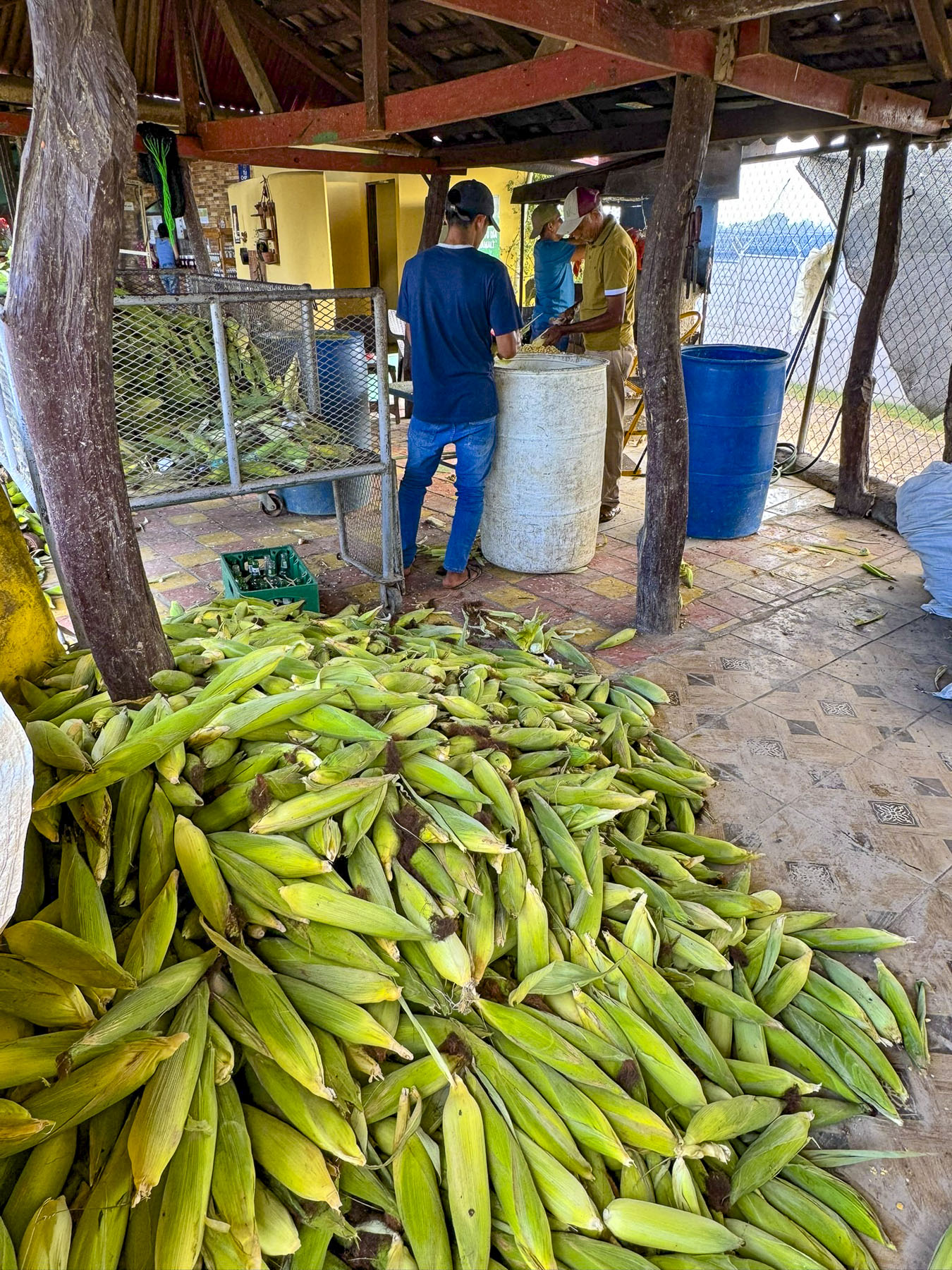
Cars were parked on both sides of the road in front of El Cruce #2. It was a small fonda – a Panamanian roadside food stand, with smoke billowing up from its barbeque pit. It piqued our interests, and we stopped.  The outside grill area was open sided, under a corrugated tin roof. In its shade a man prepped and attended the meats that were smoking above a fire while another was using a machete to shave kernels from ears of corn. The unhusked pile next to him seemed monumental, akin to the Greek myth of Sisyphus and his never-ending task. It was the beginning step in the preparation of masa, a corn flour. It’s a must-have ingredient for traditional, homemade corn tortillas and tamales. The menu hung above a small window to the kitchen filled with women attending various stoves. Everyone was very nice and curious about where we were from, but seemed surprised that we had stopped. A large John Deere combine harvester with a police escort passed as we ate. A small caravan of pickup trucks with farm workers standing in the back followed it slowly down the road. The fonda was a very authentic, nothing touristy about it experience, and the food was good.  The line of traffic behind the harvester slowly disappeared as cars passed it when the opportunity arose.  It wasn’t until the last seconds as we raced past the tractor that we realized we also had to pass the police car! We returned the officer’s wave. It seemed like it was an everyday occurrence in the rural countryside. In Pedasi, the closest town to our hotel, preparations for the Carnaval were also visible down the side streets.

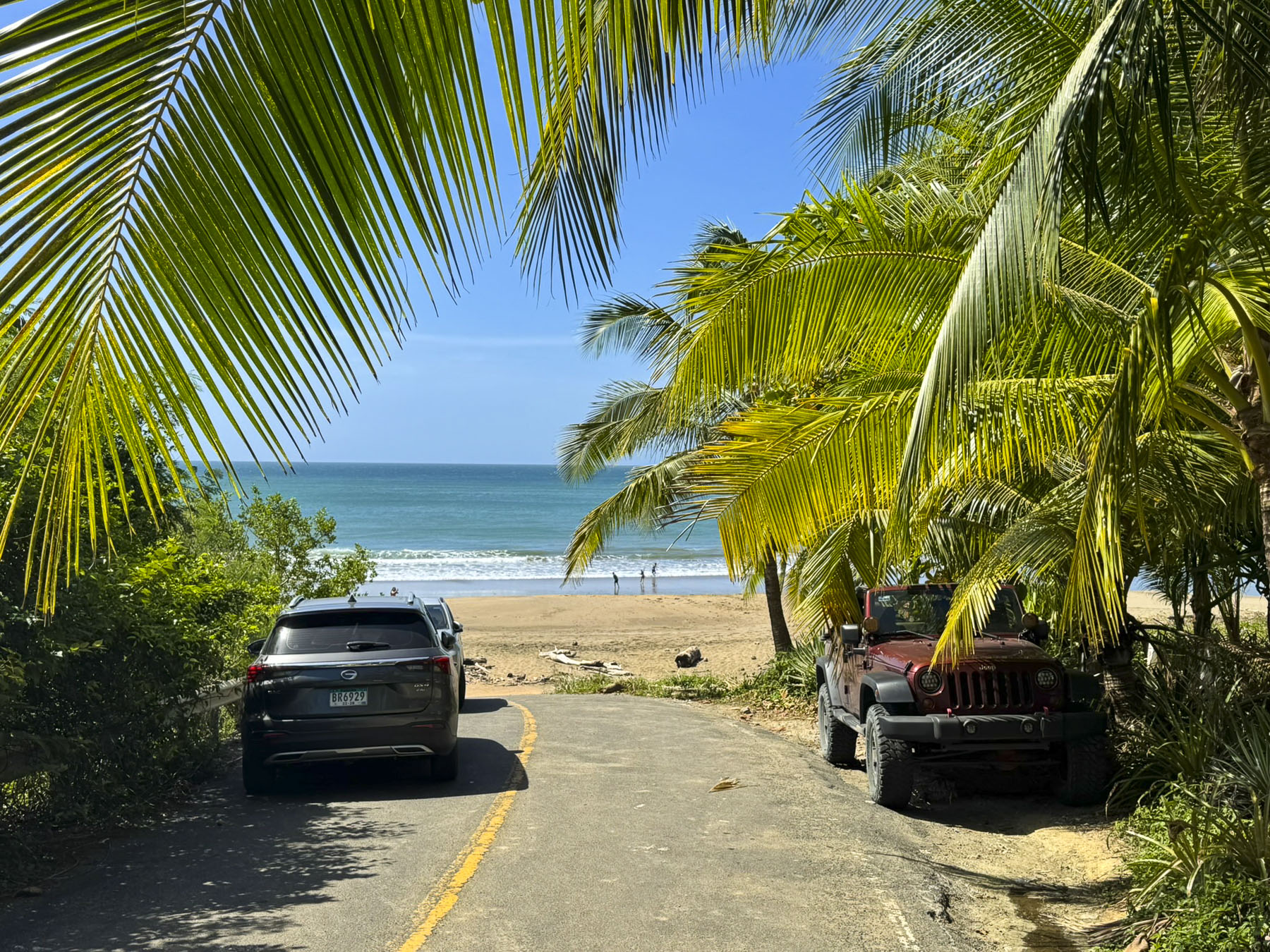
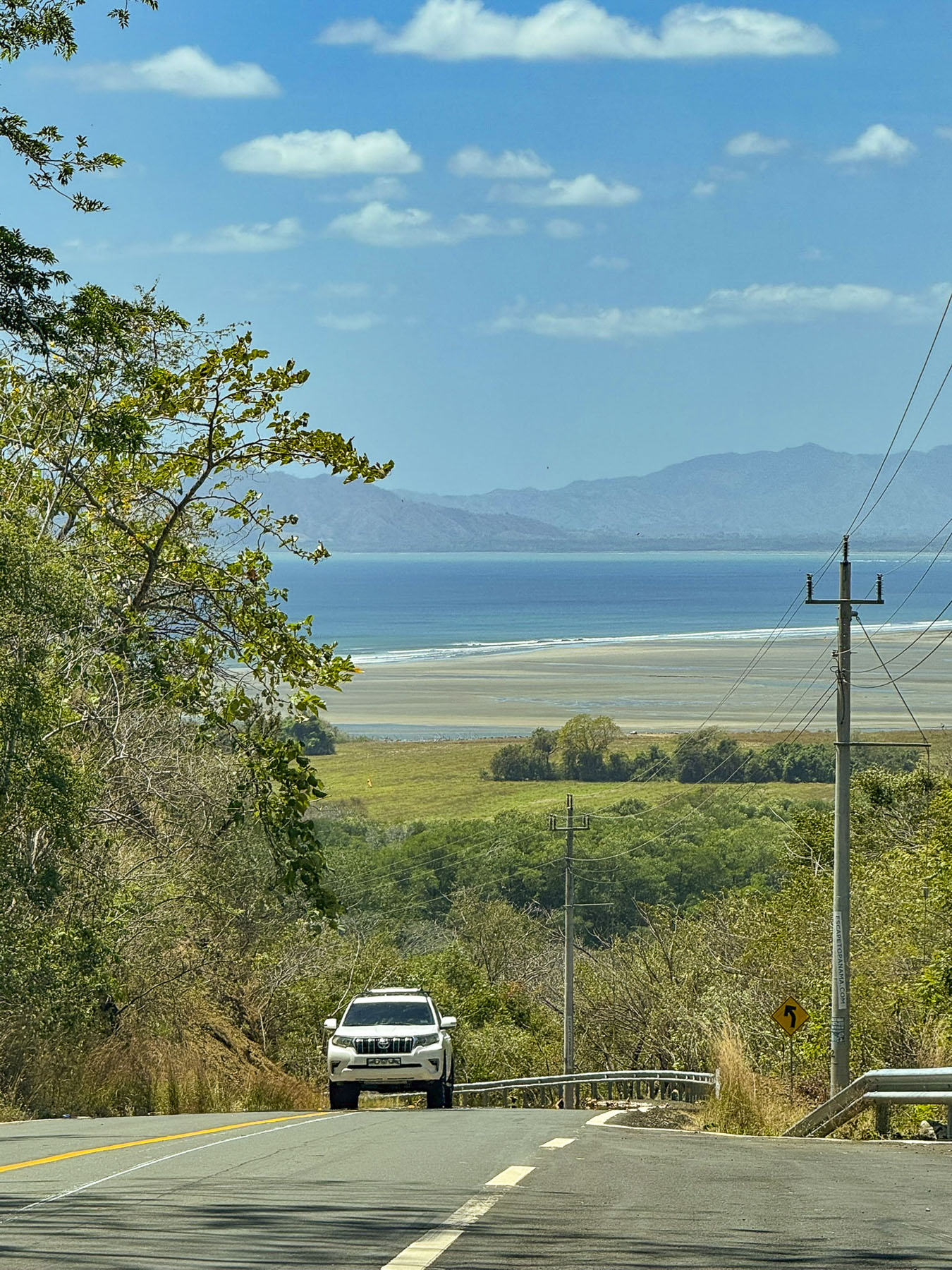
We missed the entrance to the hotel and continued down the road in hope of finding an easy spot to turn around, only to find that the road suddenly ended, with a log across it, at the top of Playa Destiladeros, a short distance away from the thundering waves of the Pacific Ocean, as if an early extension had been washed away in a storm. We were at one of the farthest points south on the remote Azuero Peninsula.

When we made plans for this return layover from our trip earlier in the month to Uruguay and Argentina, we didn’t realize our week coincided with Carnaval, consequently many of the hotels we were interested in were fully booked. After scouring the map for areas we wanted to stay we found Posada Los Destiladeros. While it showed as fully booked on Booking.com and Hotels.com, we were able to book a room directly through the hotel’s reservation page.

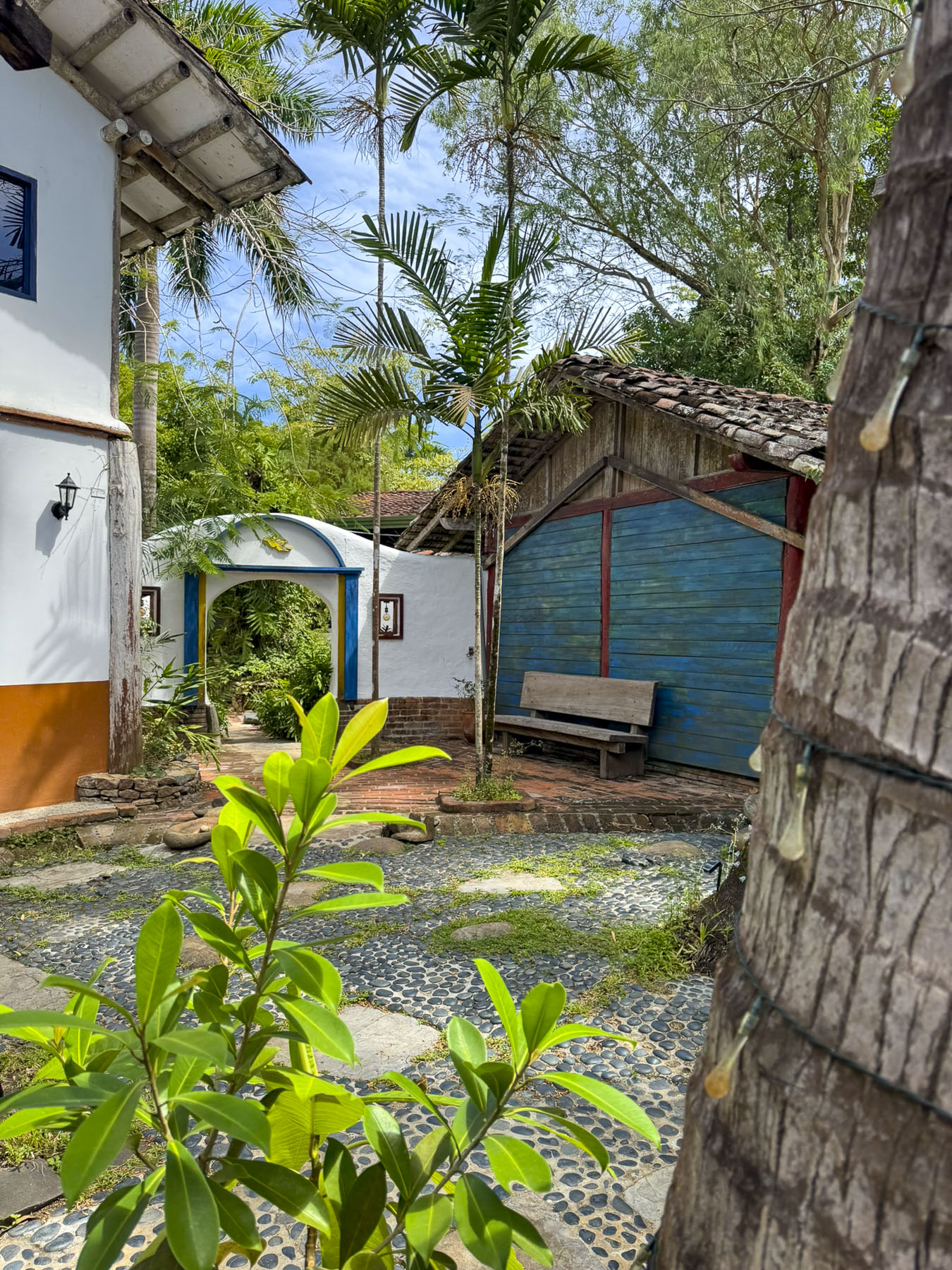
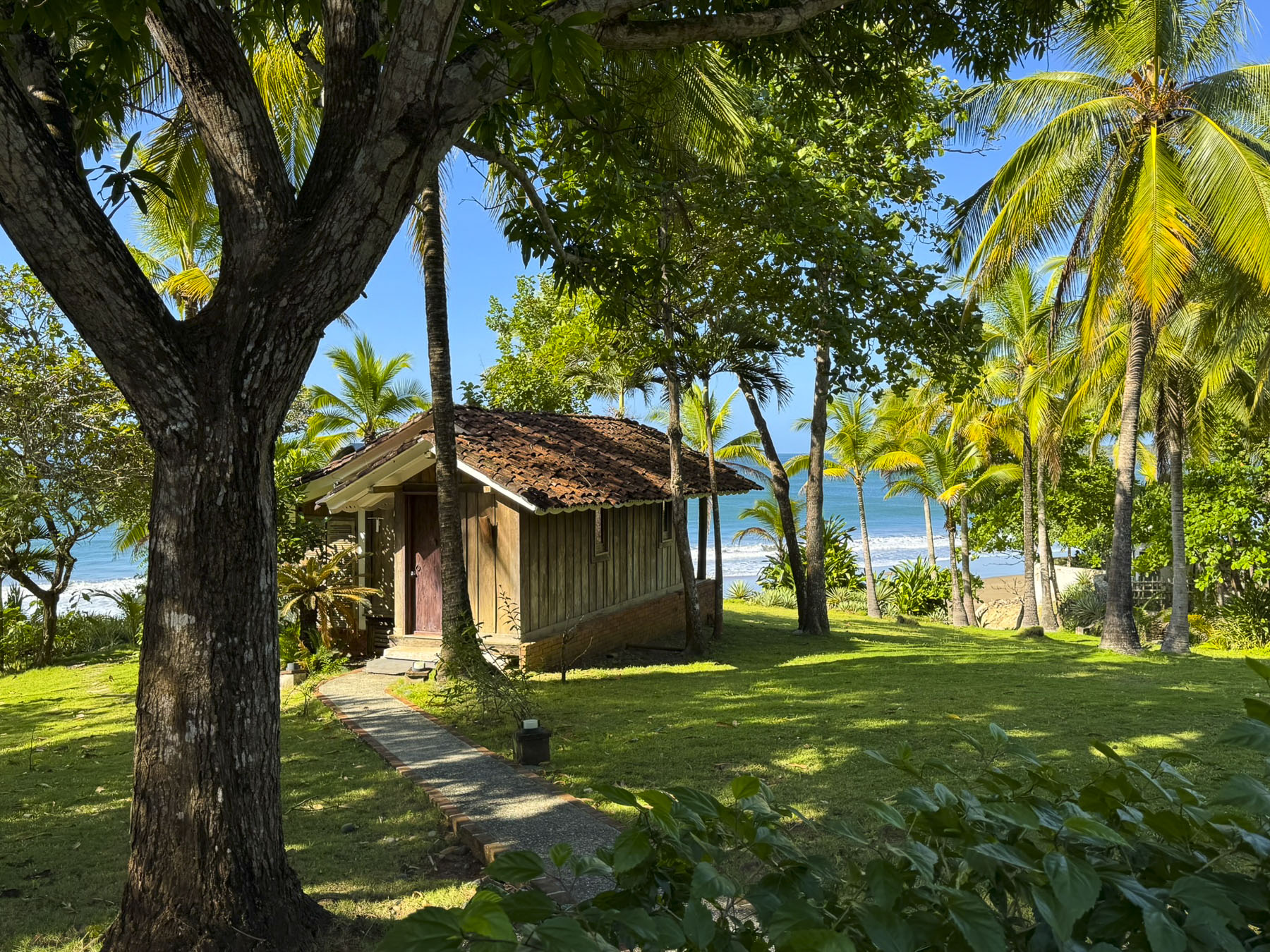
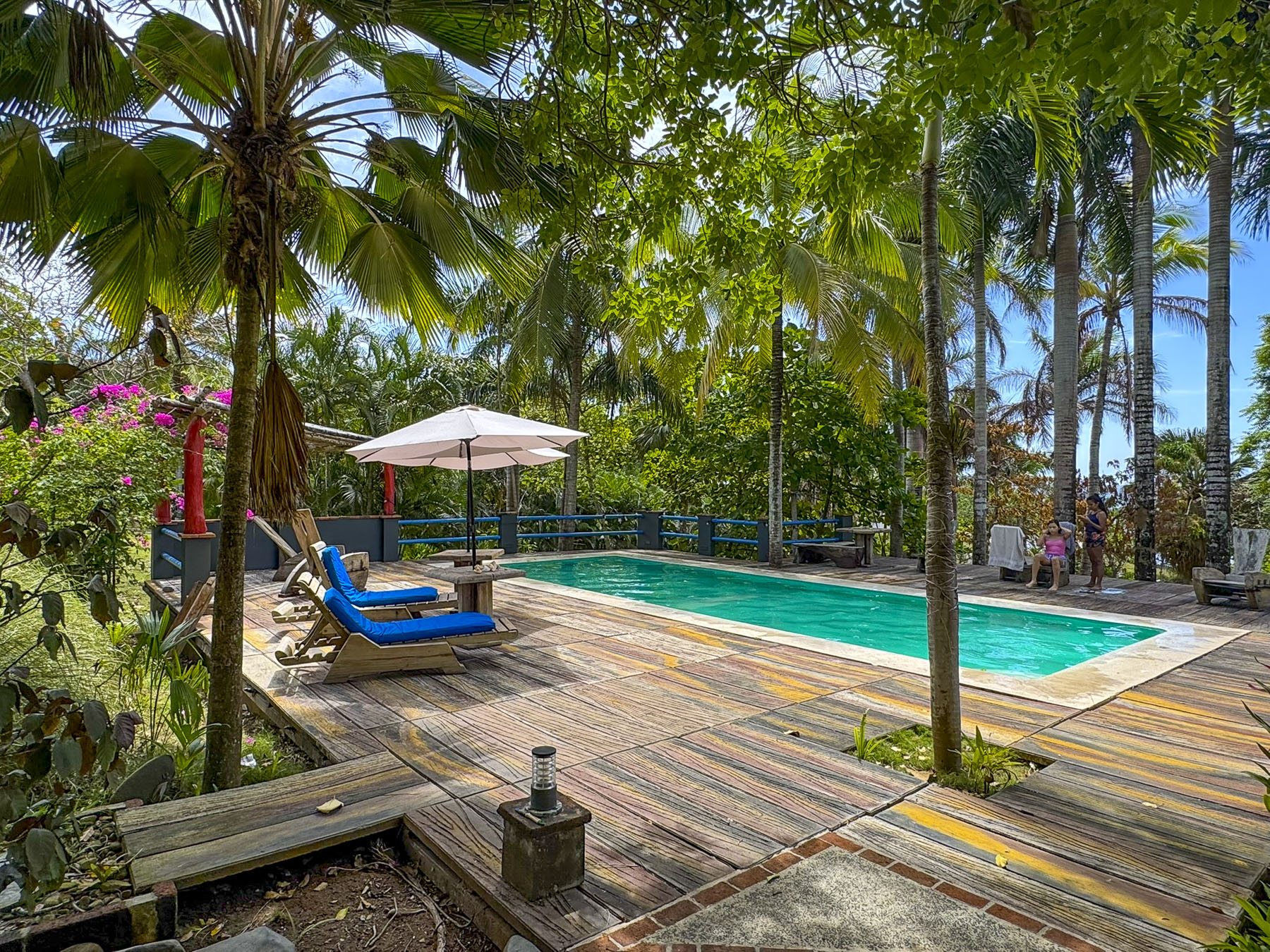
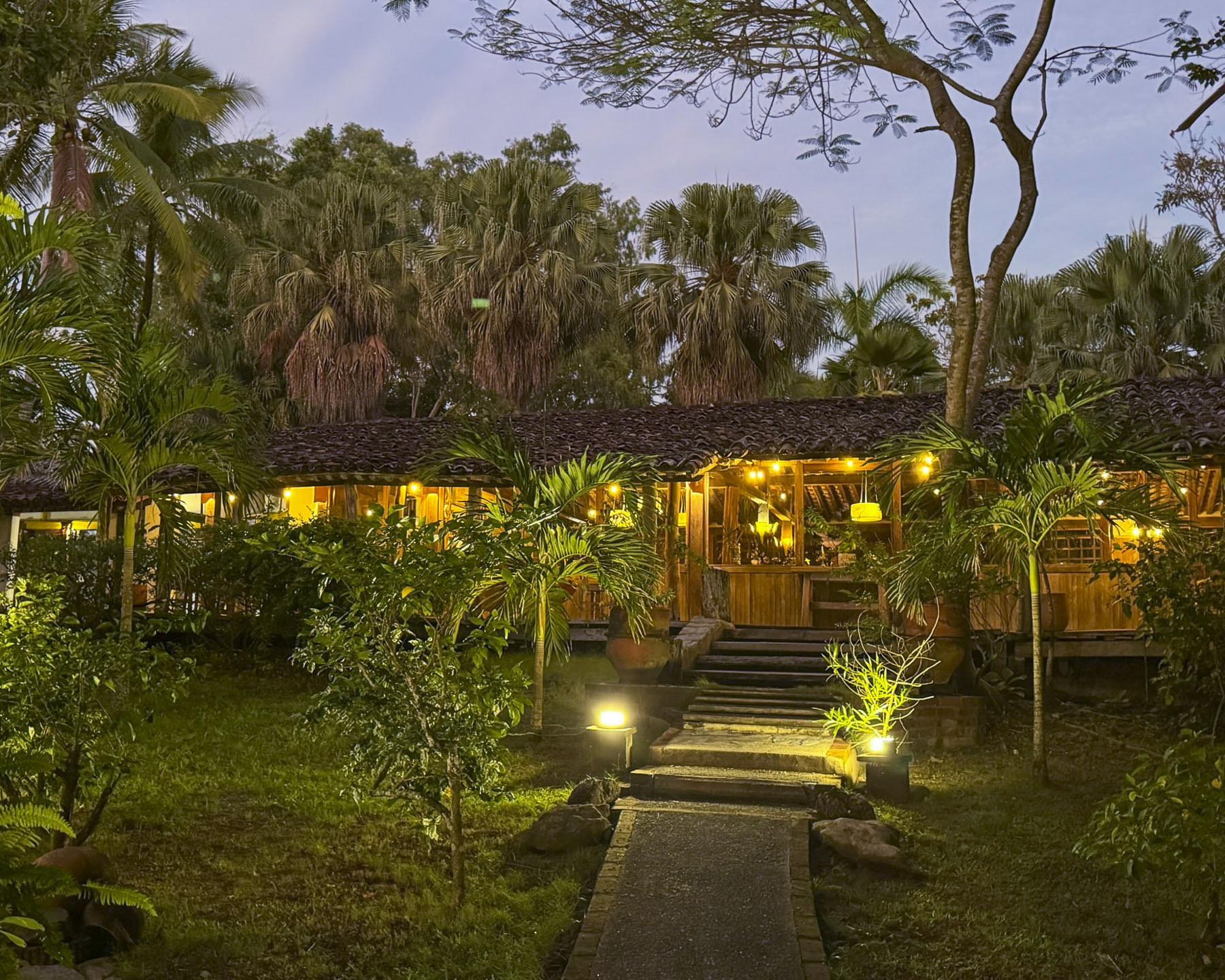
From the gated entrance we followed a long twin-tracked road, through a large palm tree covered property with many outbuildings, to the parking area. Through a grove of palm trees, the inviting blue water of the Pacific glistened behind the receptionist.

The vibe was really nice. It’s an unpretentious, tenderly time-worn resort in a verdant oasis of greenery on the low cliffs overlooking a wild beach and undeveloped coastline. The staff were very nice and friendly, and after a few days felt like family. The dinners that emerged from their kitchen were extraordinary!

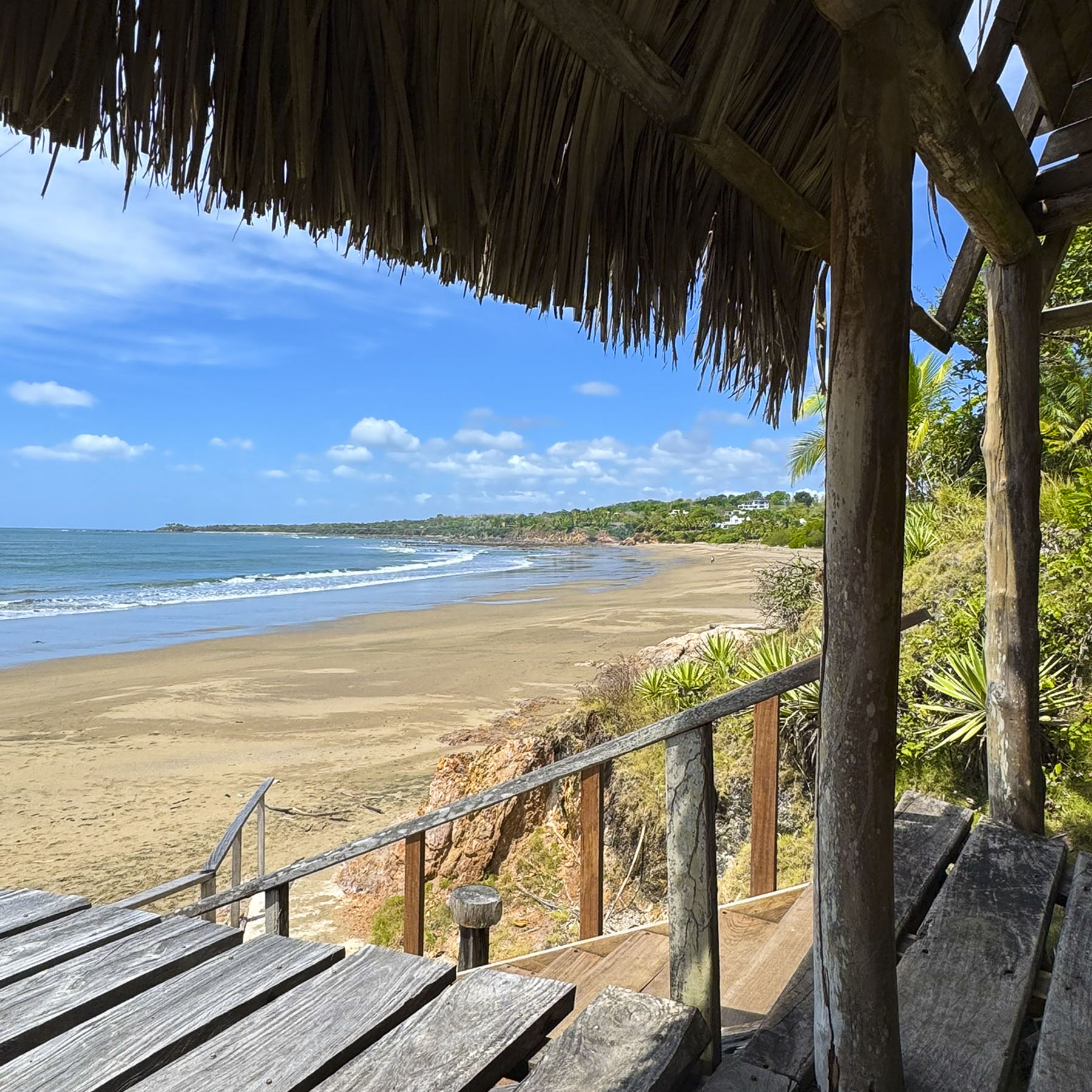
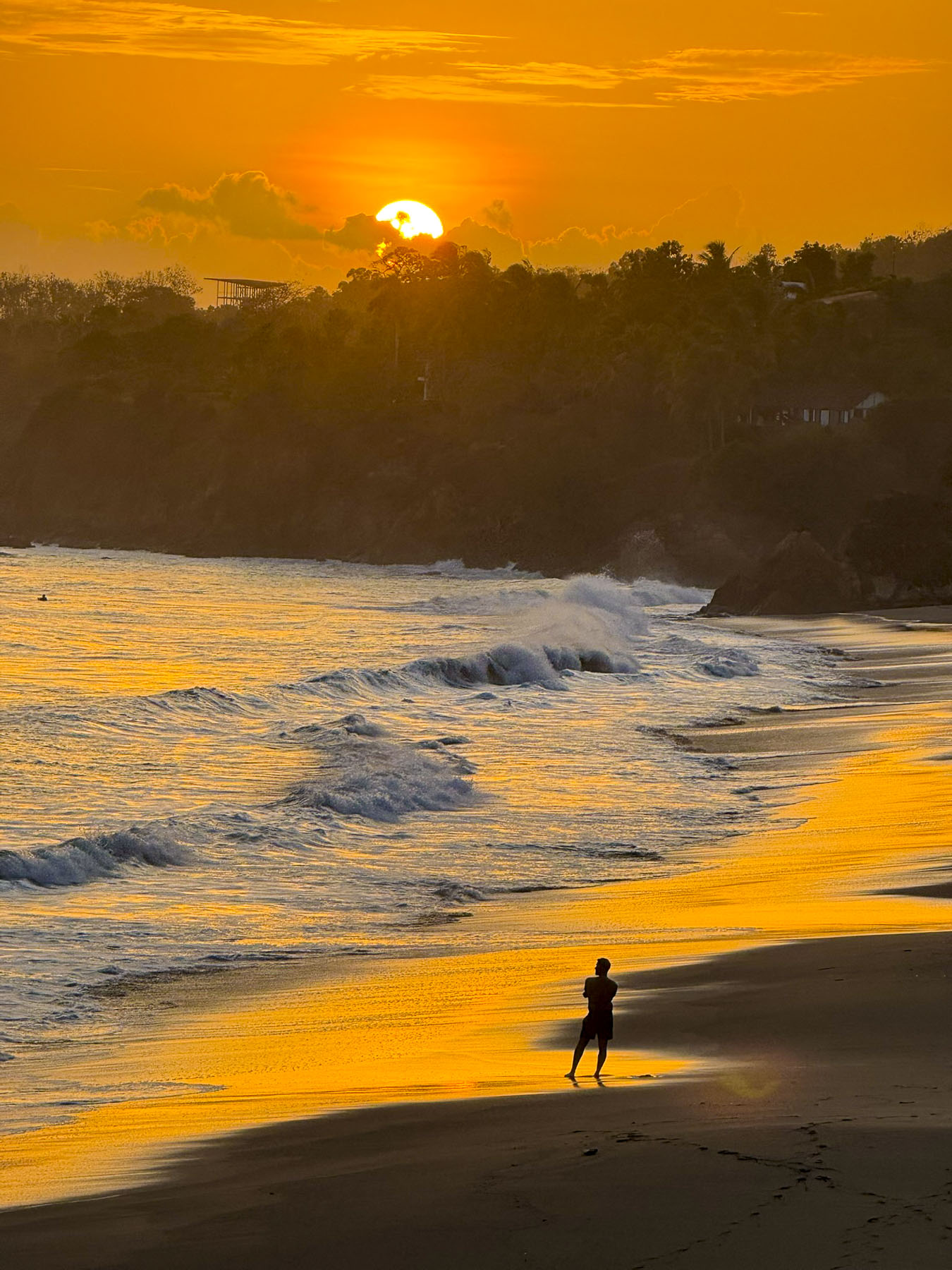
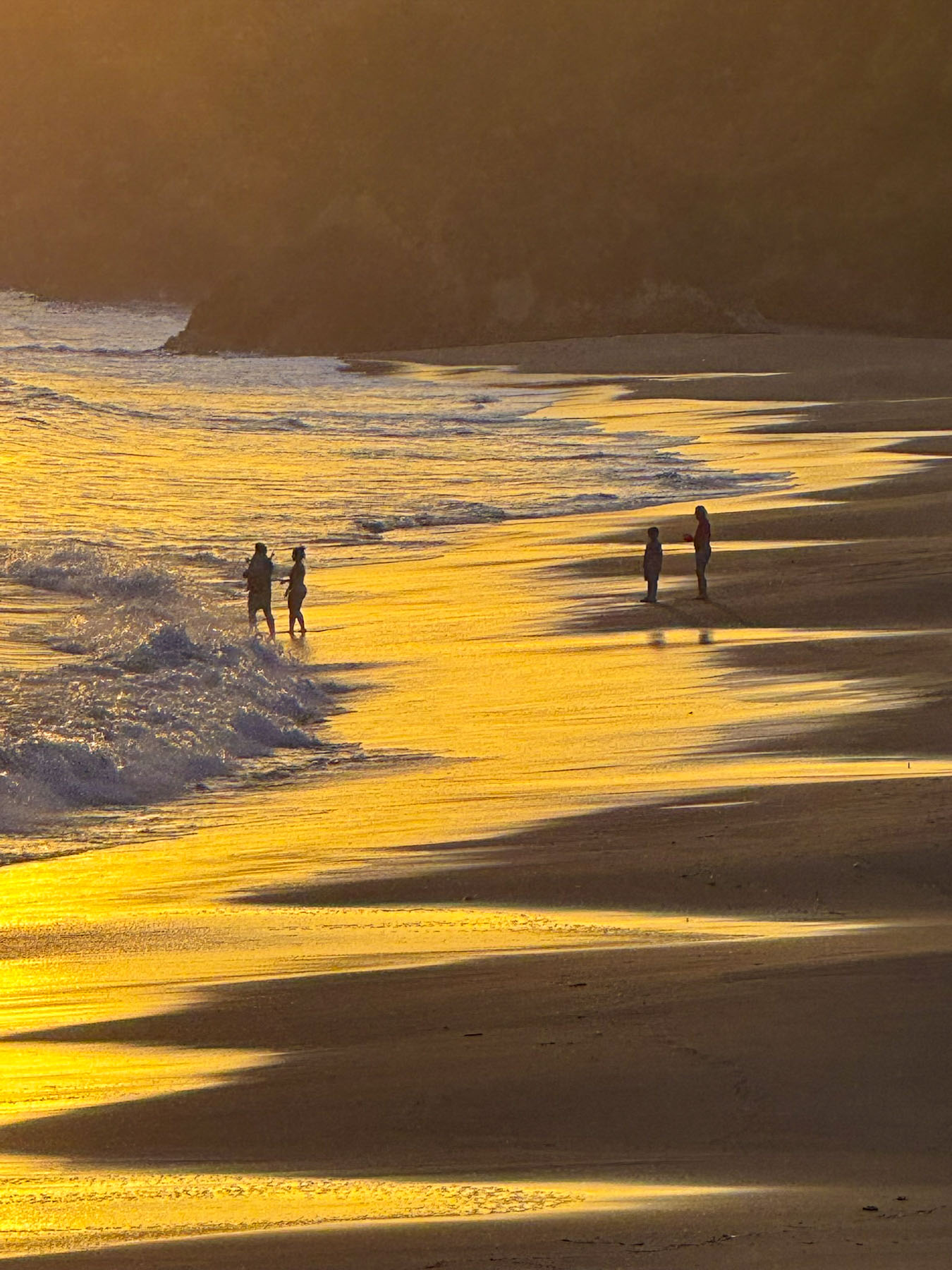
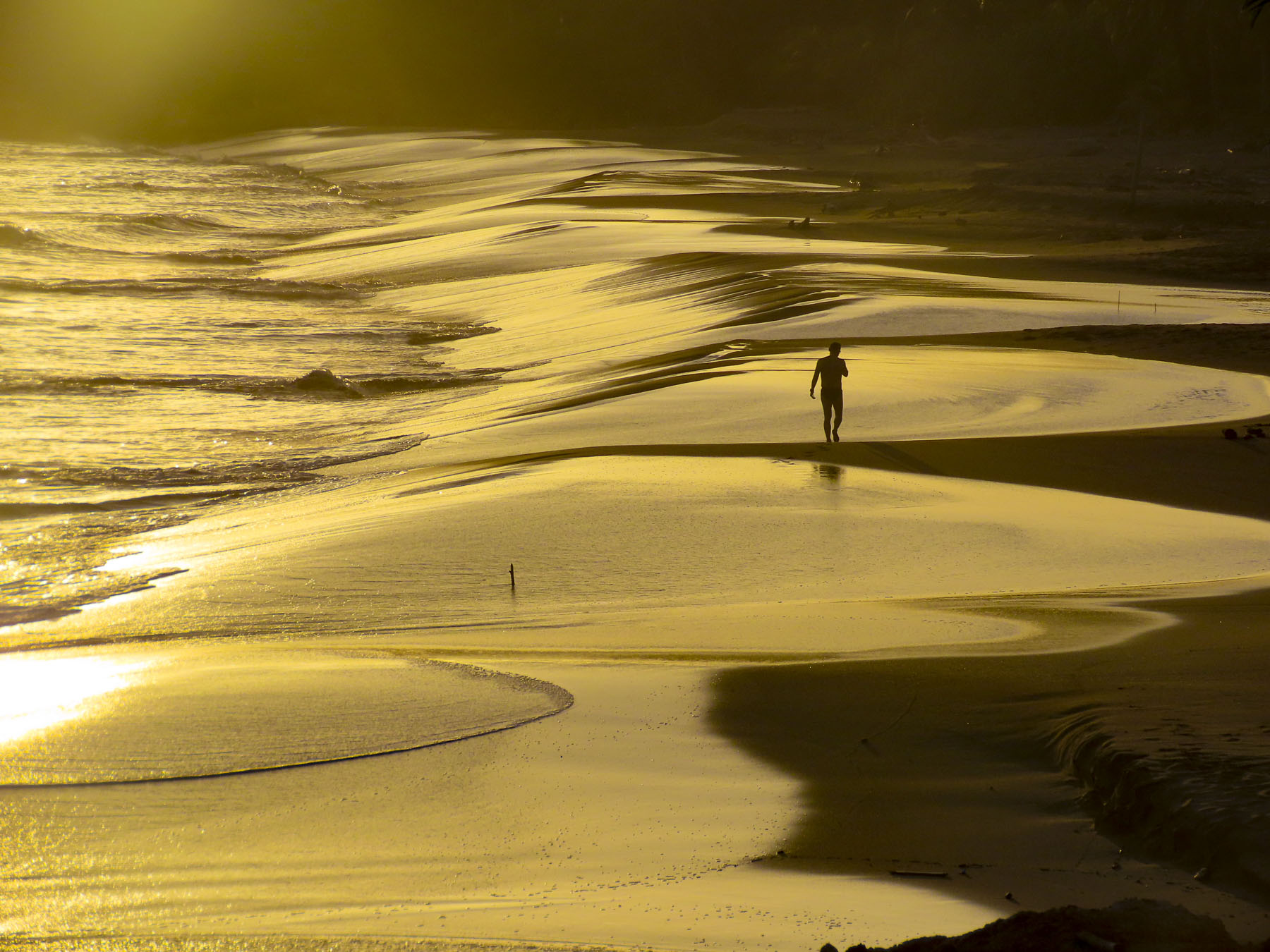
It’s very unusual that we stay in one spot for 5 nights to unwind. But the Posada Los Destiladeros was the perfect place for us to relax, with easy walks on the beach, lounging around the pool and under palm thatched gazebos overlooking the surf as we waited for sunset every day, which offered a dramatic play of light across sand and surf.

A conversation in the pool one afternoon with another guest, a Panamanian American man visiting family over the week of Carnaval, related that he and his wife had been coming here for years, but “somehow it remains a hidden gem.” Of course, we took several half day trips to explore what else the Azuero Peninsula had hidden away.

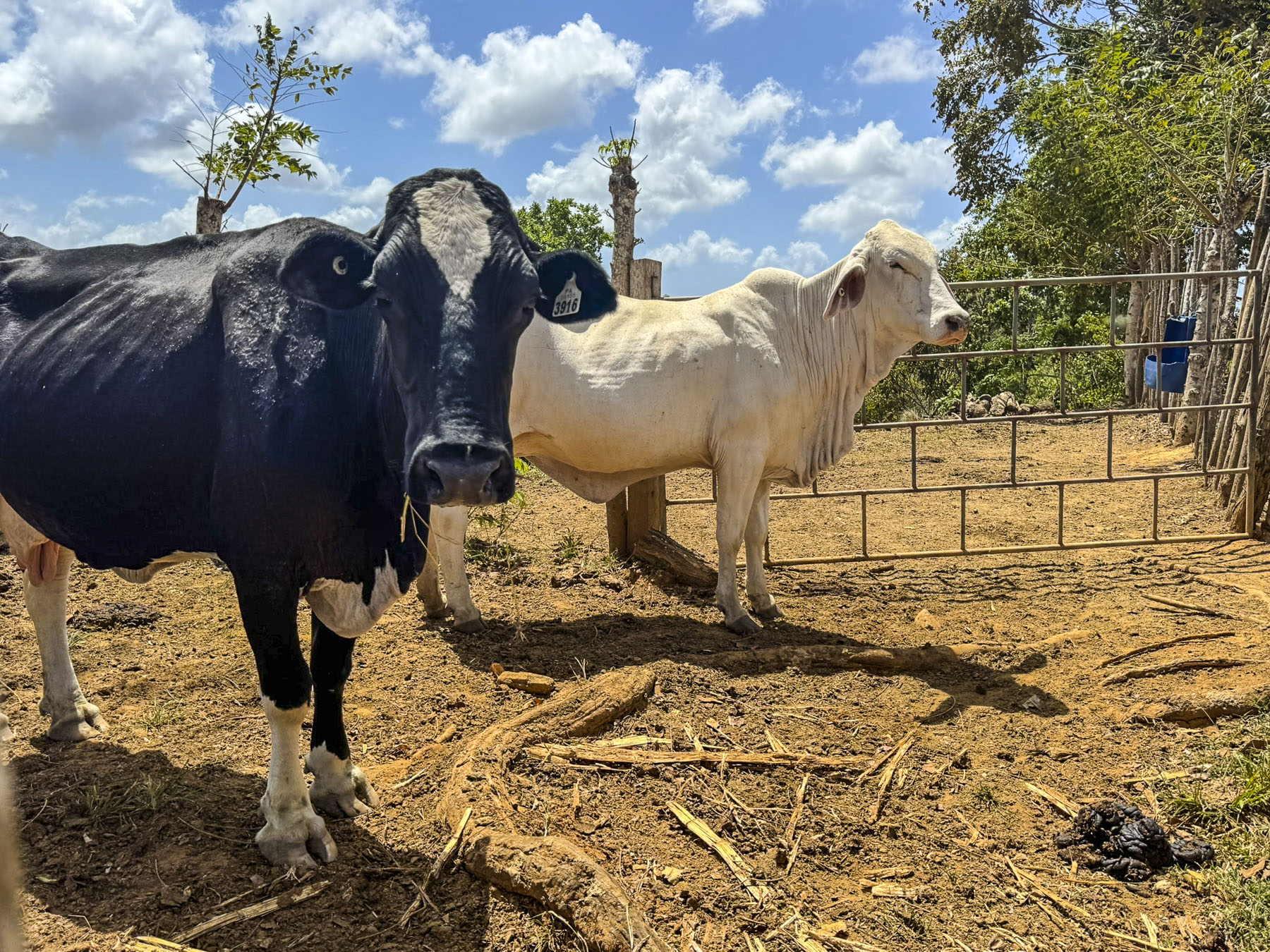
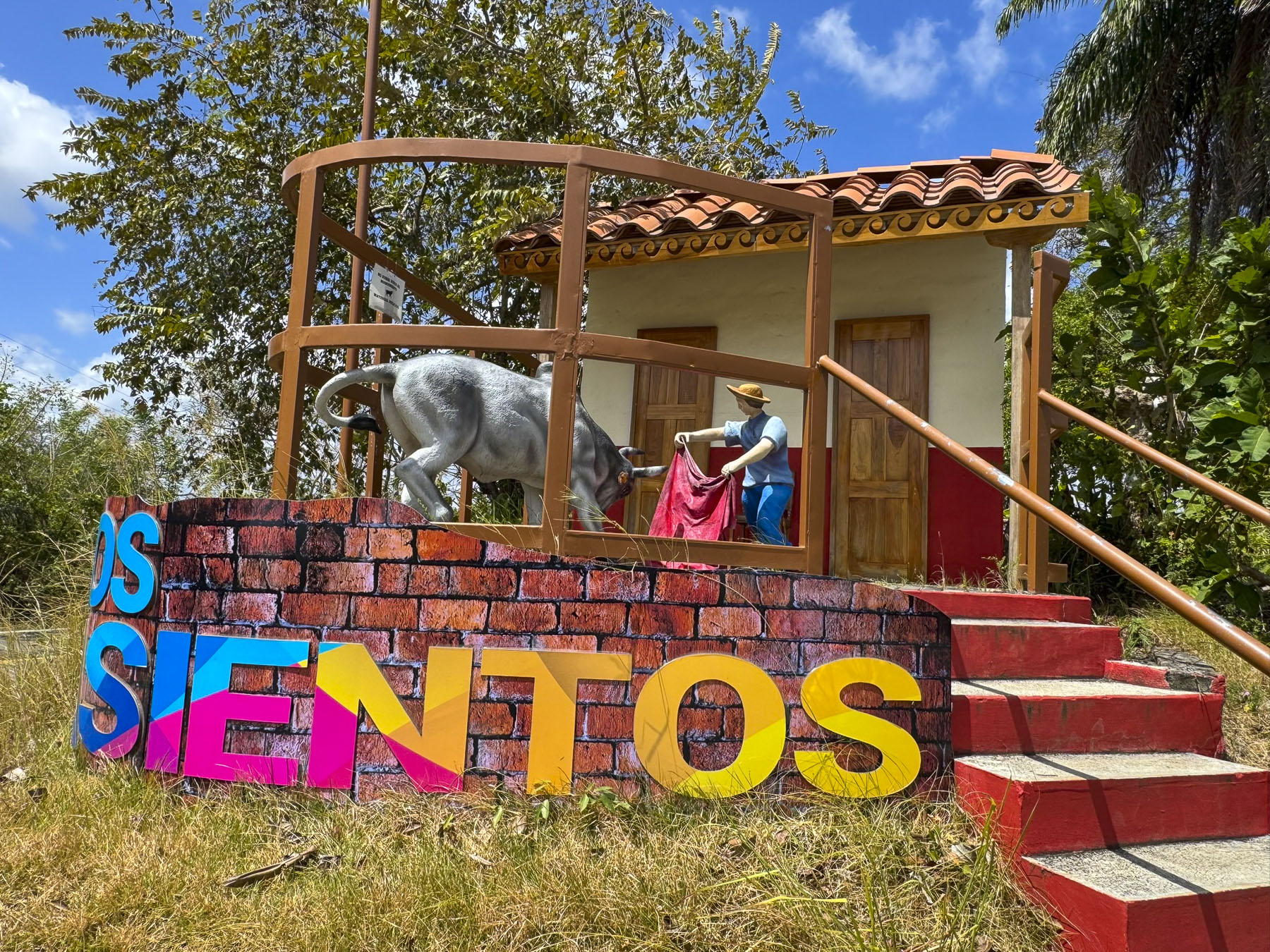
Several days later we drove toward the beach town of Las Escobas del Venado. Well suited to the heat and humidity of the region, herds of Brahma cows have rested in the shade of the region since Spanish colonists first brought them to the area in the mid-1500s. At a turnoff for the small ranching town of Los Asientos, a roadside monument highlights the town’s traditional la corridas, bullfights. These are non-lethal events since a 2012 law prohibited the injury or death of the bull; however, la corridas are still popular in rural Panama. Along the road milk cans were placed next to the rancher’s gate, waiting for the local dairy cooperative to pick them.

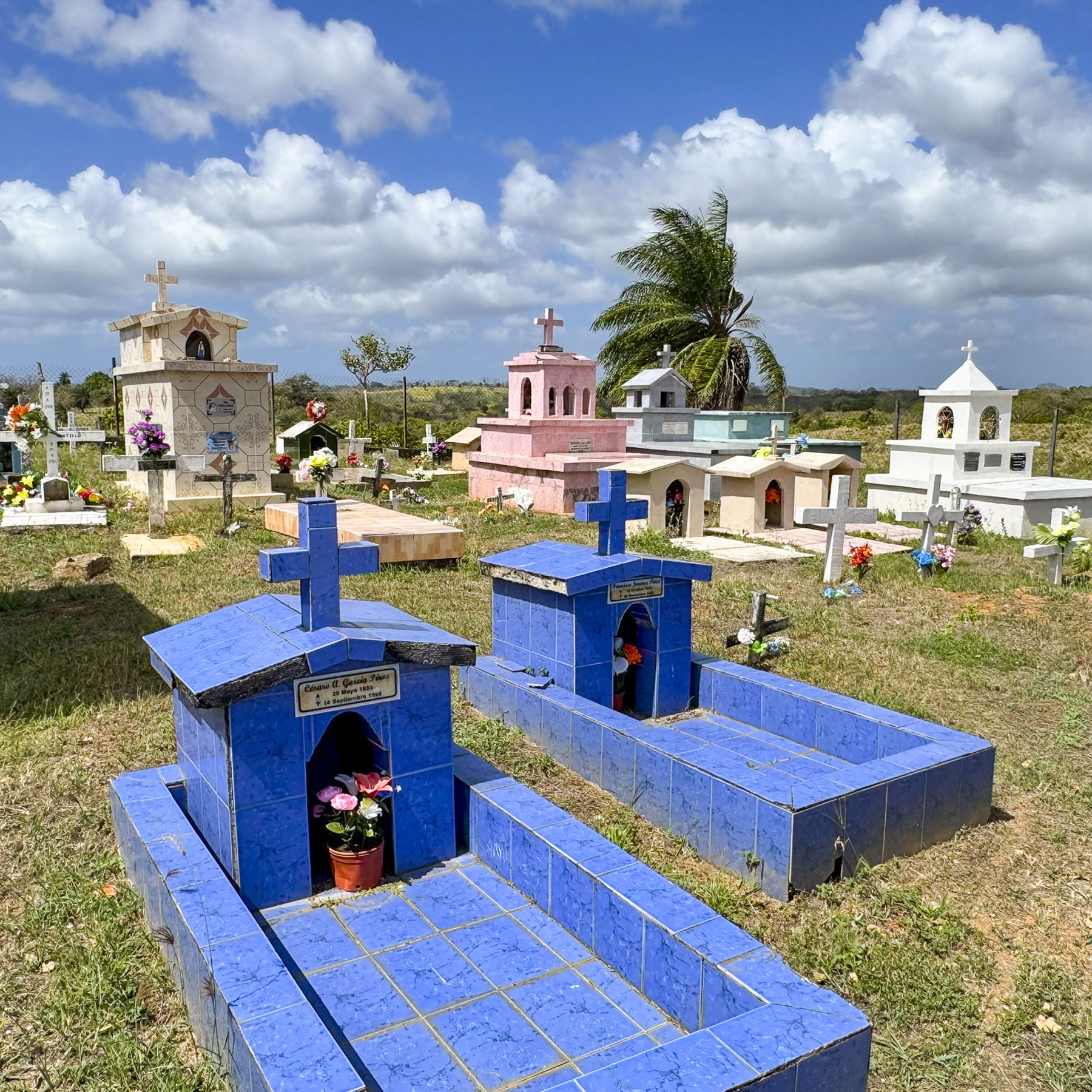
A little way farther along, the colors of the tombs in a small cemetery seemed to vibrate against the verdant landscape, which receives between 45 and 90 inches of rain every year. A large group of cyclists, followed slowly by a support vehicle, made passing difficult along the narrow hilly road, with many blind curves. Though the congestión they created was well tolerated, without the honking of horns. Drivers respected their safety and gave them a wide berth when they were eventually able to pass. Small artesanal lumber mills along the way vertically stacked their milled lumber, like skis, against a wall to dry.

During the dryer summer months the Rio Oria lazily flows through the ranchlands to the ocean.

Las Escobas del Venado was the closest example of a traditional beach town, with several small hotels build along the shore of the half-moon shaped Playa Venao. It is not by any means a large resort town. The beach is very wide and shallow, especially when the tide is out, and it’s a popular spot to horseback ride or drive an ATV along the sand. Across the water a sailboat was safely anchored out of the wind and rolling waves behind the bluff at the southern end of the bay. The day was very hot, so we didn’t spend much time on the beach, and hugged the shade as we walked to the Almendro Café for our traditional “walk a little then café.”

It was a really nice spot, under large shade trees. Our coffees and pastries were excellent, and its menu looked very good with vegetarian, vegan, and gluten-free choices. It was to our surprise part of the Selina River Hostel which promotes itself as a destination for digital nomads to enjoy the sun, surf, and sand of Playa Venao. We definitely skewed their demographics for the morning.

We continued driving into the highlands along Via Hacia El Carate, a narrow serpentine road that rose through a mesmerizing landscape of hills and valleys. Unfortunately, there were not any places to stop along the way until we reached the Mirador La Vigía, which offered great views of forested ranchlands, backed by the Pacific Ocean on the horizon.

Familiar with the road now, we occasionally stopped along gated pastures to photograph the expansive landscape, that showed little sign of human intrusion, as we followed the same road back downhill.

They were few opportunities for lunch along the way so we decided to head back to the Almendro Café at the Selina River Hostel . We were not disappointed; the food was excellent and healthy. It’s so nice to order from a menu that doesn’t automatically serve French fries with every order.

Nearing our hotel, a rancher blocked the road with his herd of cows as he moved them to a different pasture.

We were back in time to watch the sunset over Playa Destiladeros. We stayed until the last color in the sky had faded away before walking back to the resort’s restaurant, where we usually dined inside to take advantage of the air conditioning and ceiling fans.

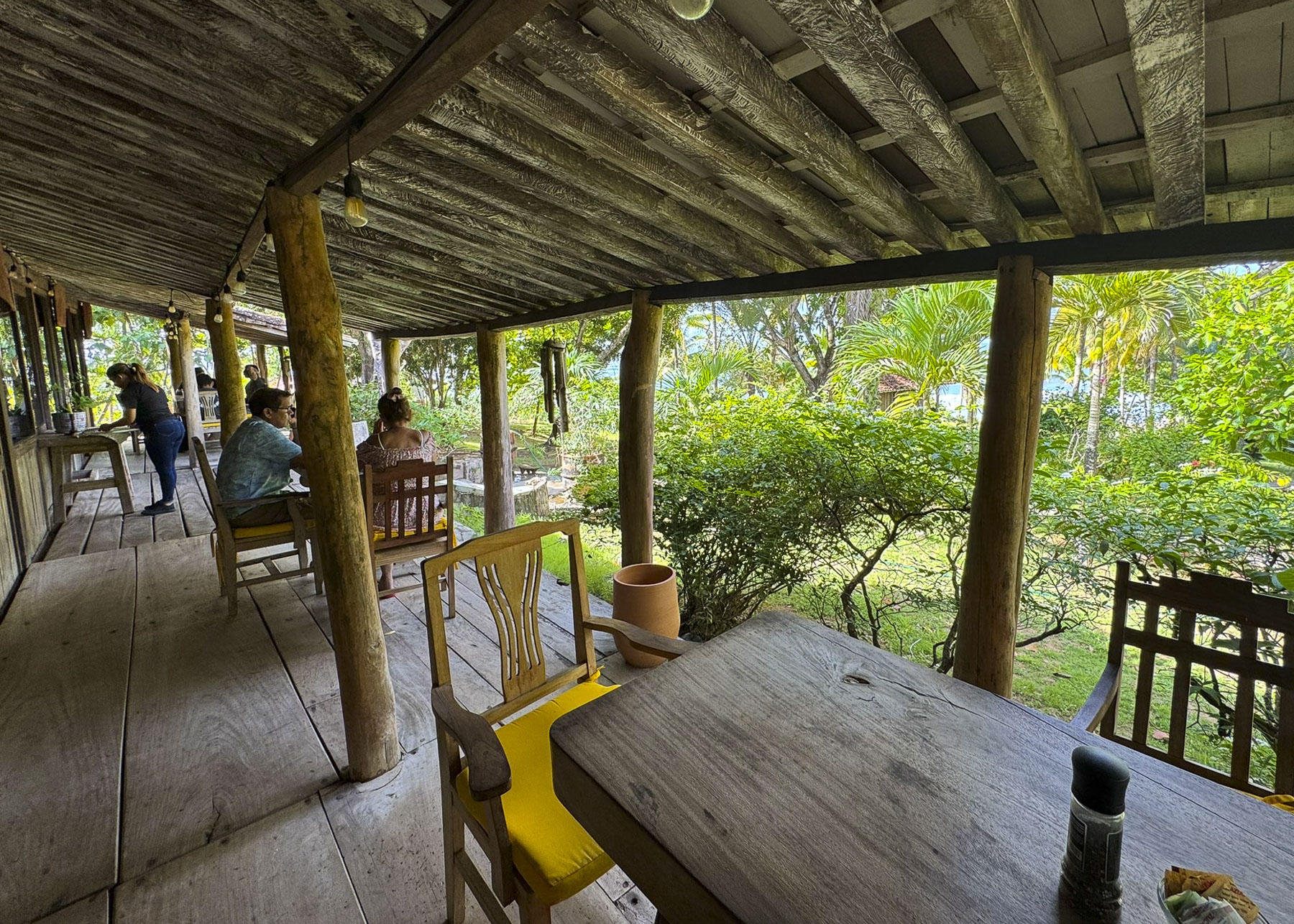
Though having breakfast on the veranda, with the sound of the waves crashing in the distance, was a delight during the cool morning hours.

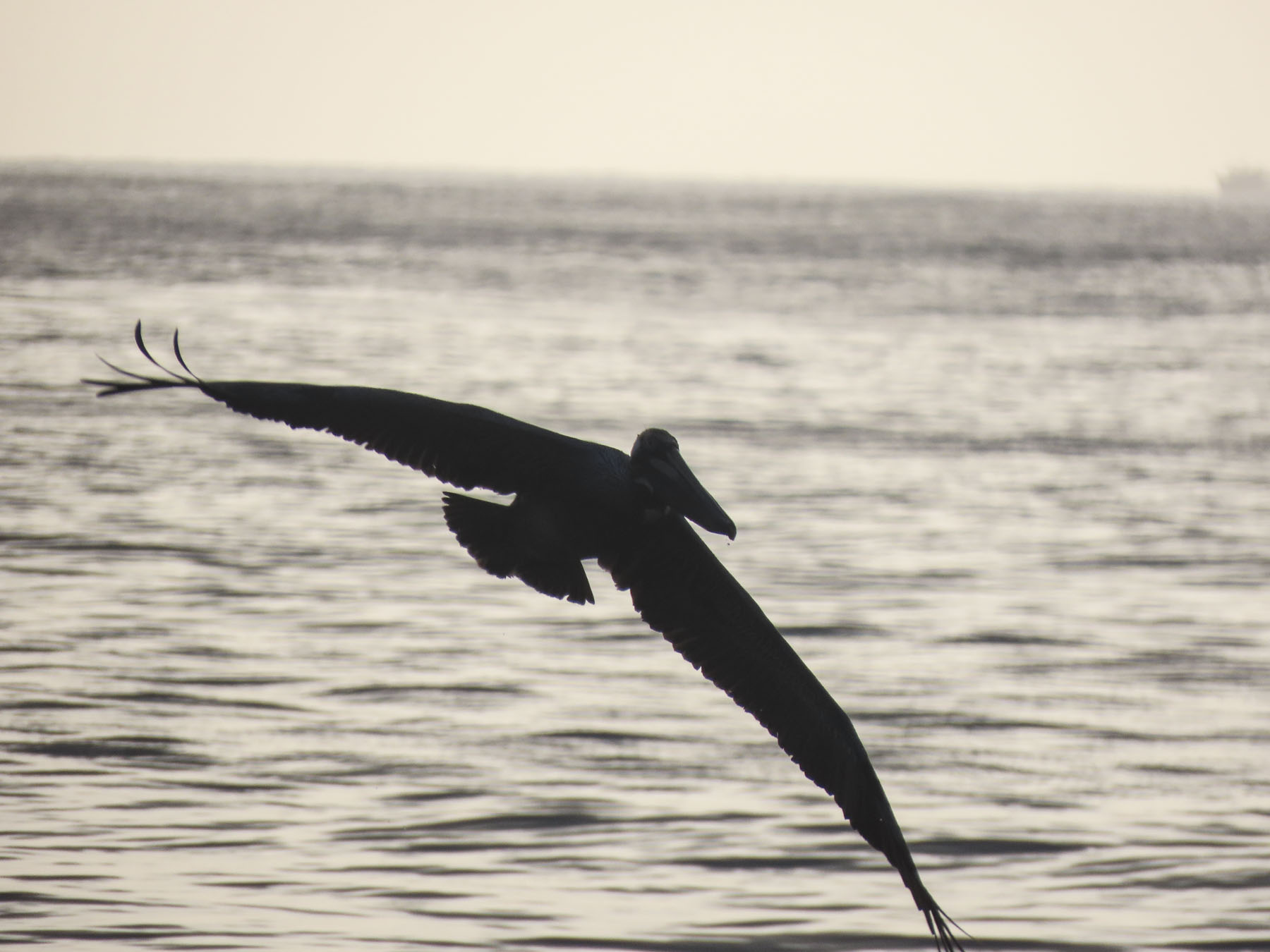
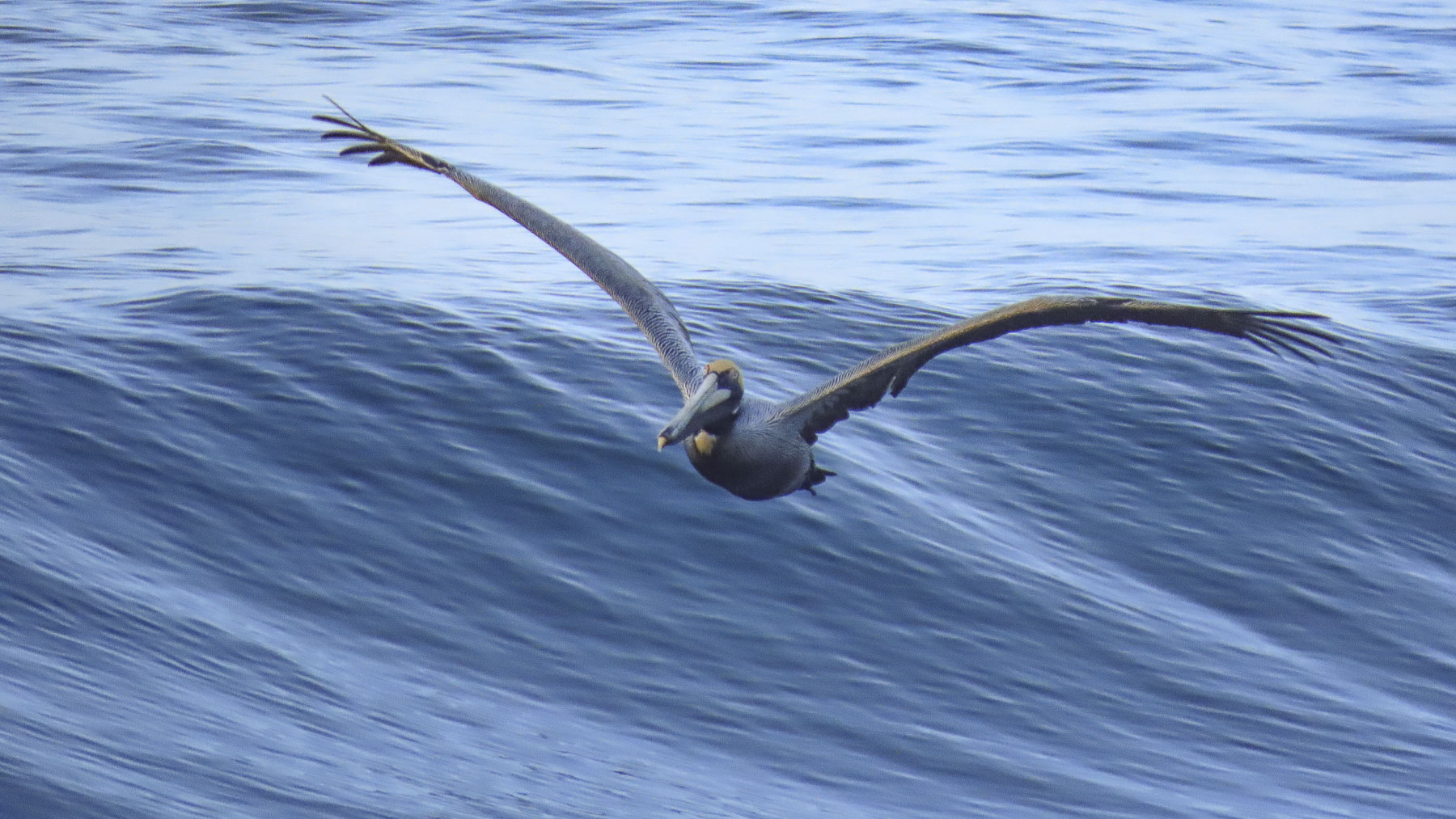
Early morning walks along the beach as the sun crested to the horizon were equally as enjoyable as the sunsets, but more tranquil with squadrons of pelicans swooping low over the surf, looking for fish. Occasionally some would peel away to dive headfirst into the water to catch fish.

Remnants of Carnaval celebrations the night before were still visible in the small towns along our route as we headed back early to Panama City to avoid the traffic. We arrived on the outskirts of the city sooner than expected and decided to spend the afternoon at Perico Island. Located at the end of the very long Amador Causeway which extends for 6km (3.7mi) into Panama Bay, it’s a popular spot for city folks to catch the breezes, picnic, rent bicycles or walk along its full length which offers great panoramic views of the city’s modern skyline and large cargo ships underway to the entrance of the Panama Canal.

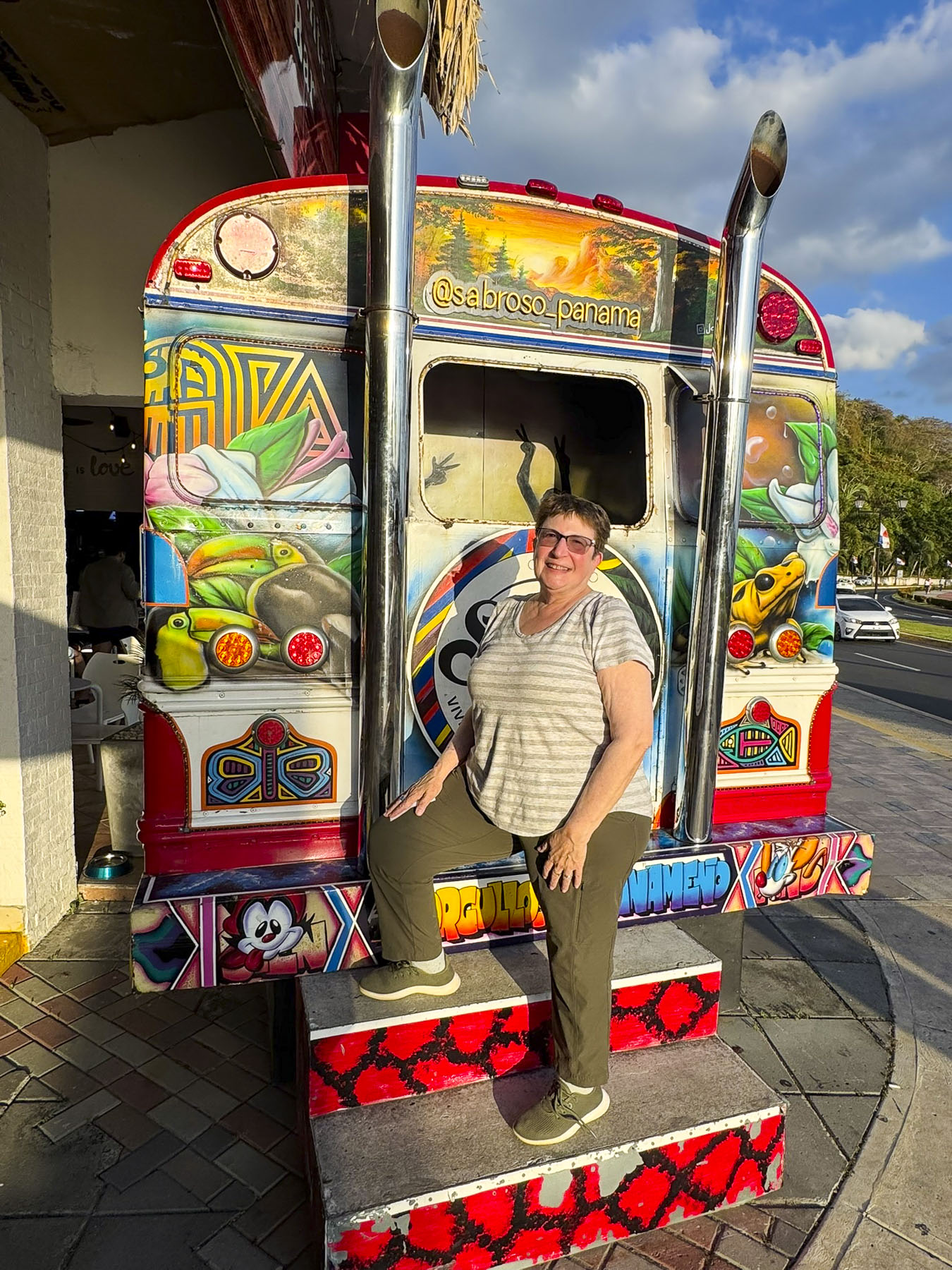
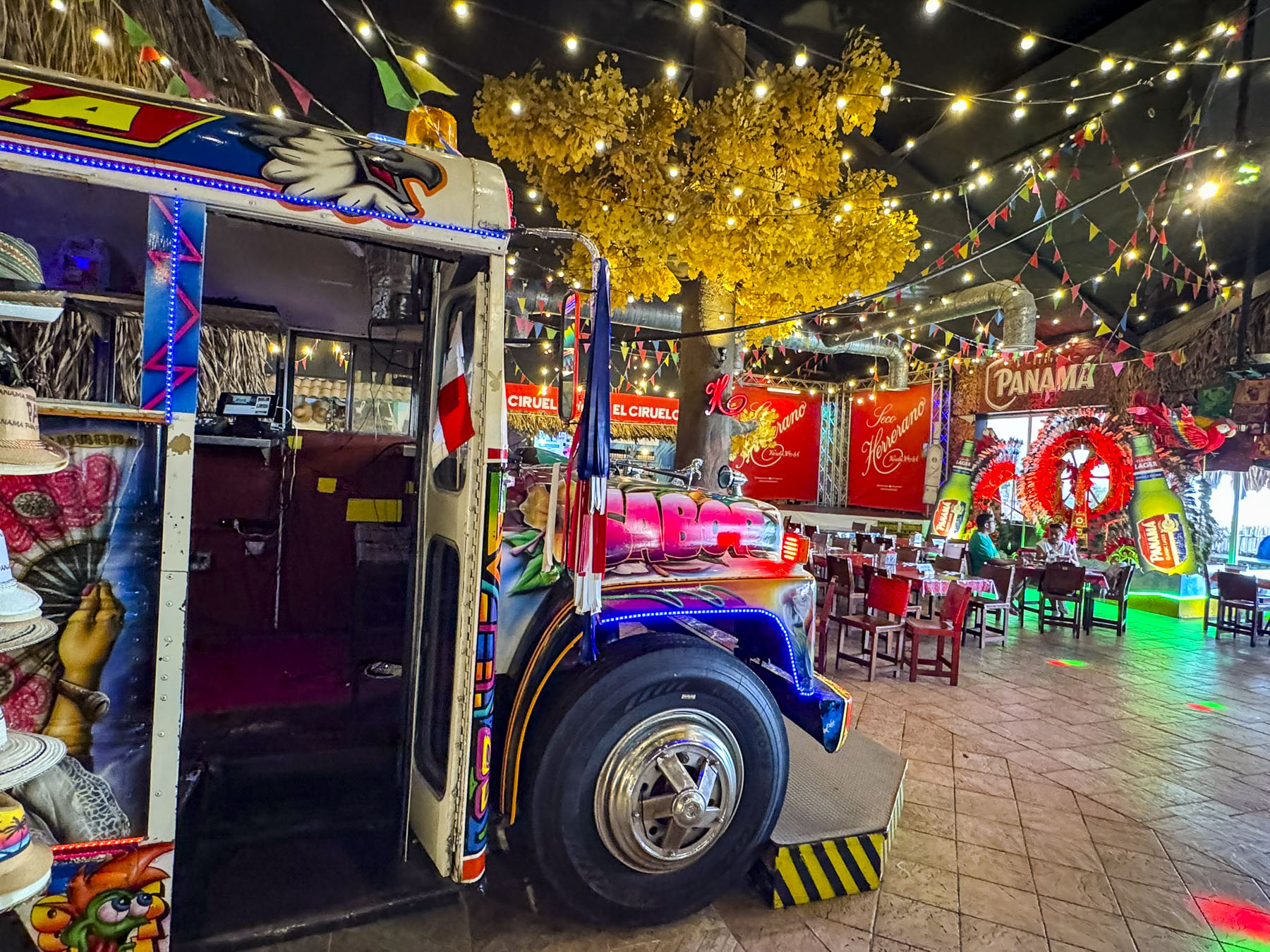
After strolling along the waterfront for a while we decided to have lunch at Sabroso Panamá, a uniquely decorated place with a nice vibe, that also had a balcony overlooking a marina. We tried the carimañolas, similar to empanadas, though they are made with mashed cassava (yucca) dough and then fried.

Carnaval celebrations continued that evening and the direct route back to Hotel Plaza Paitilla Inn (we had such a nice experience there earlier in the week we decided to stay there again) along the Cinta Costera, the city’s waterfront park, and the eight lanes of the Pan-American that parallel it were blocked, and we had to circumnavigate our way around it. The massive street party continued well past midnight into the wee hours of Ash Wednesday morning.

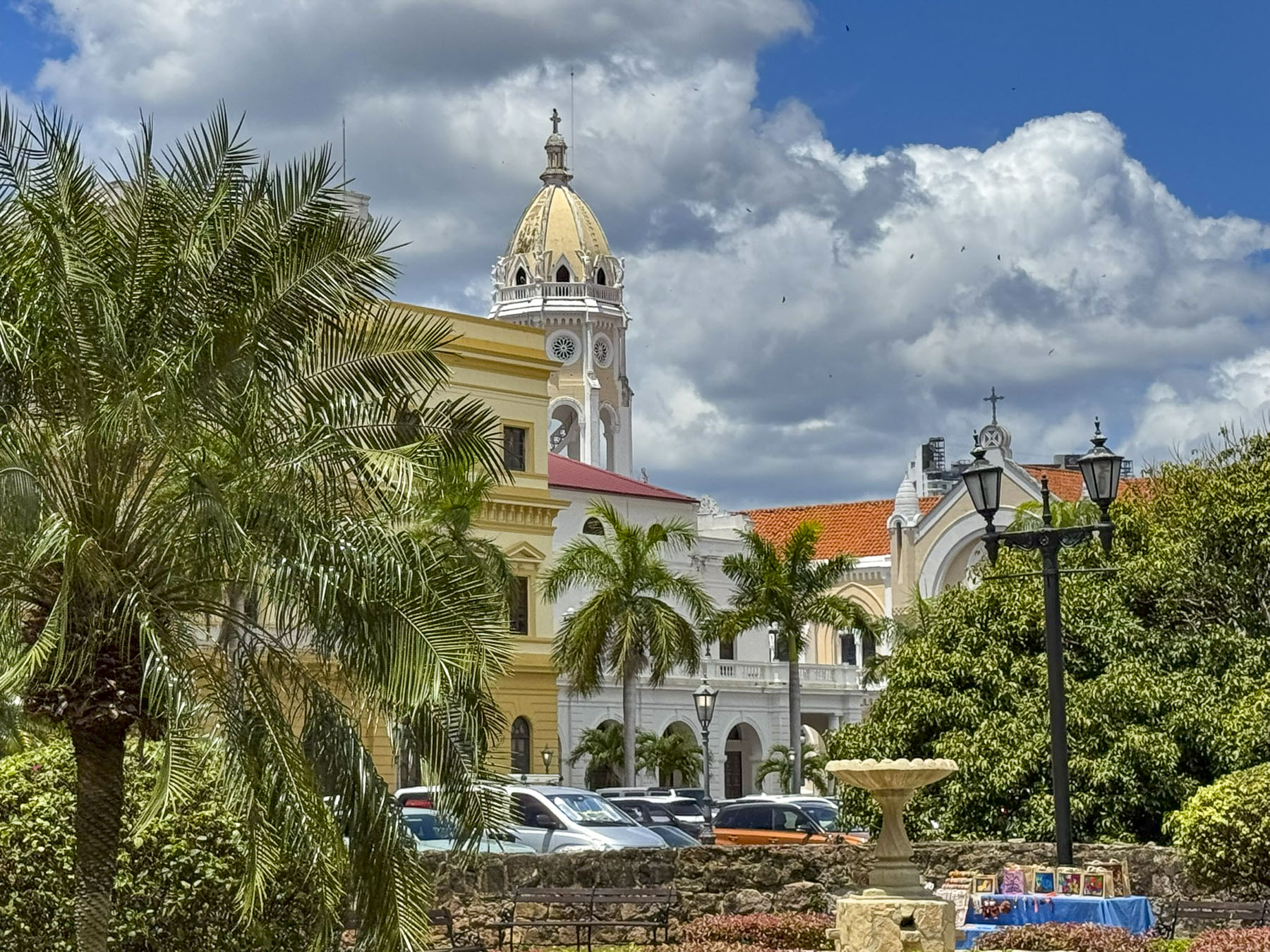
Ash Wednesday was our last full day in Panama City, and we spent it exploring the Casco Antiguo, the historic old town district which dates from 1673, and is also known as Casco Viejo or San Felipe.

This town, built on a defensible small peninsula, replaced the city’s original settlement, Panama La Vieja, which was started 11km (7mi) farther east in 1519 when Spanish conquistador Pedro Arias Dávila landed 100 settlers along the coast, and built the first permanent European settlement on the Pacific. The city prospered for 150 years as the Spanish used the town as a base for expeditions to conquer the Inca Empire and sent the plundered gold and silver they seized back to Spain. The city’s wealth did not go unnoticed, and in 1671 the British privateer Henry Morgan landed over a thousand brigands on the Caribbean coast and trekked through treacherous jungles across the Isthmus of Panama to reach the city, which they then attacked, pillaged and burnt to the ground. Six hundred Spaniards died during the assault. Though the booty they looted wasn’t as much as expected, Morgan was declared a British hero, and knighted.

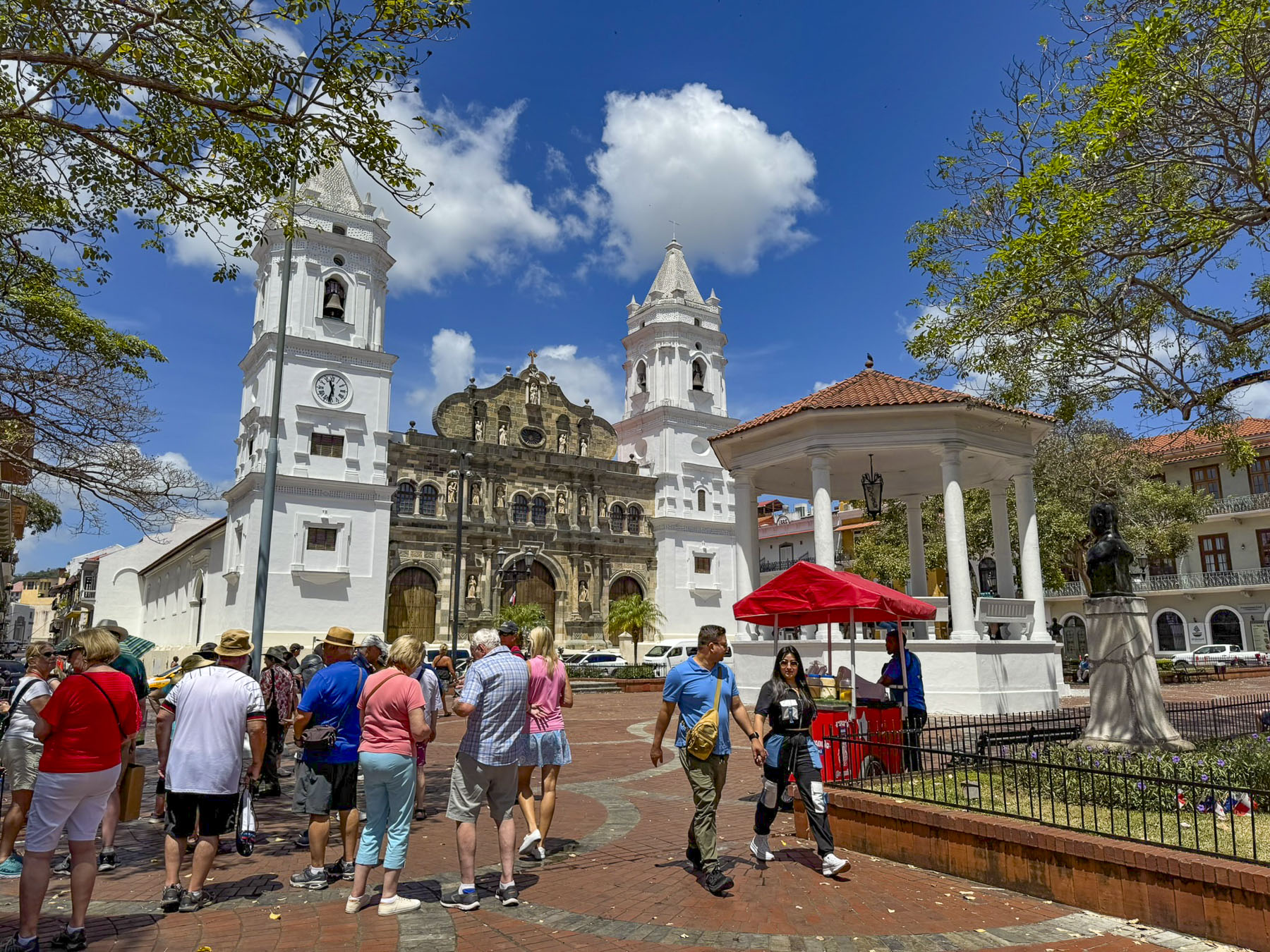
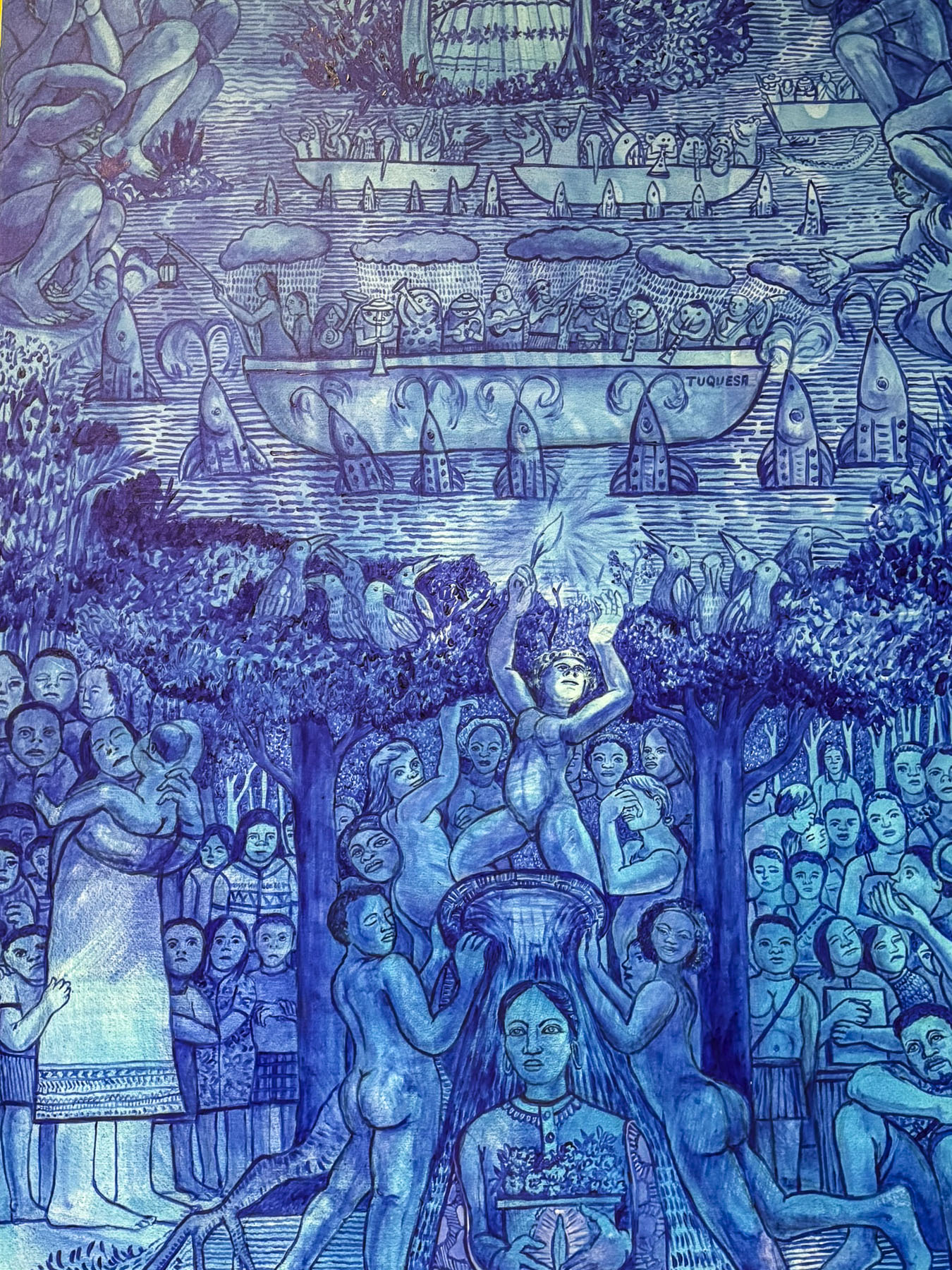
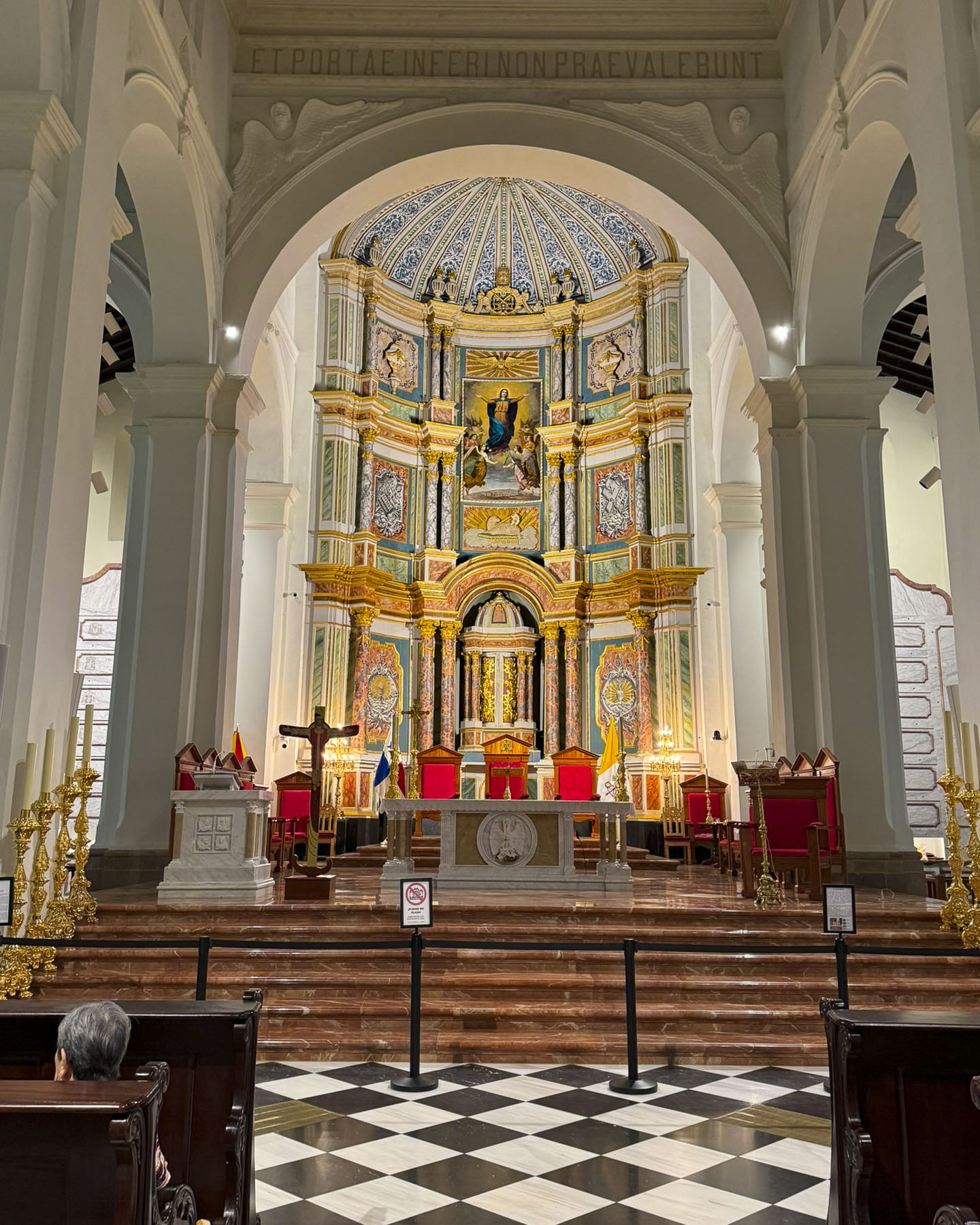
We arrived by Uber to the Catedral Basílica Metropolitana Santa María La Antigua on the Plaza de la Independencia in the center of Casco Antiguo. Its striking façade which blends Baroque and Neoclassical architecture dates from 1688, but the cathedral took more than 100 years to build, and wasn’t consecrated until 1796. Inside, an interesting mural in monochrome blue depicted the indigenous peoples of Panama accepting Chrisitanity.

The Old Town was once a citadel, though the defensive wall which encircled its 36 blocks was taken down ages ago to ease its expansion. Surprisingly, within this small area there were 4 still active historic churches and the ruins of another. Our basic plan was to visit every church and then spur off to other nearby points of interest.

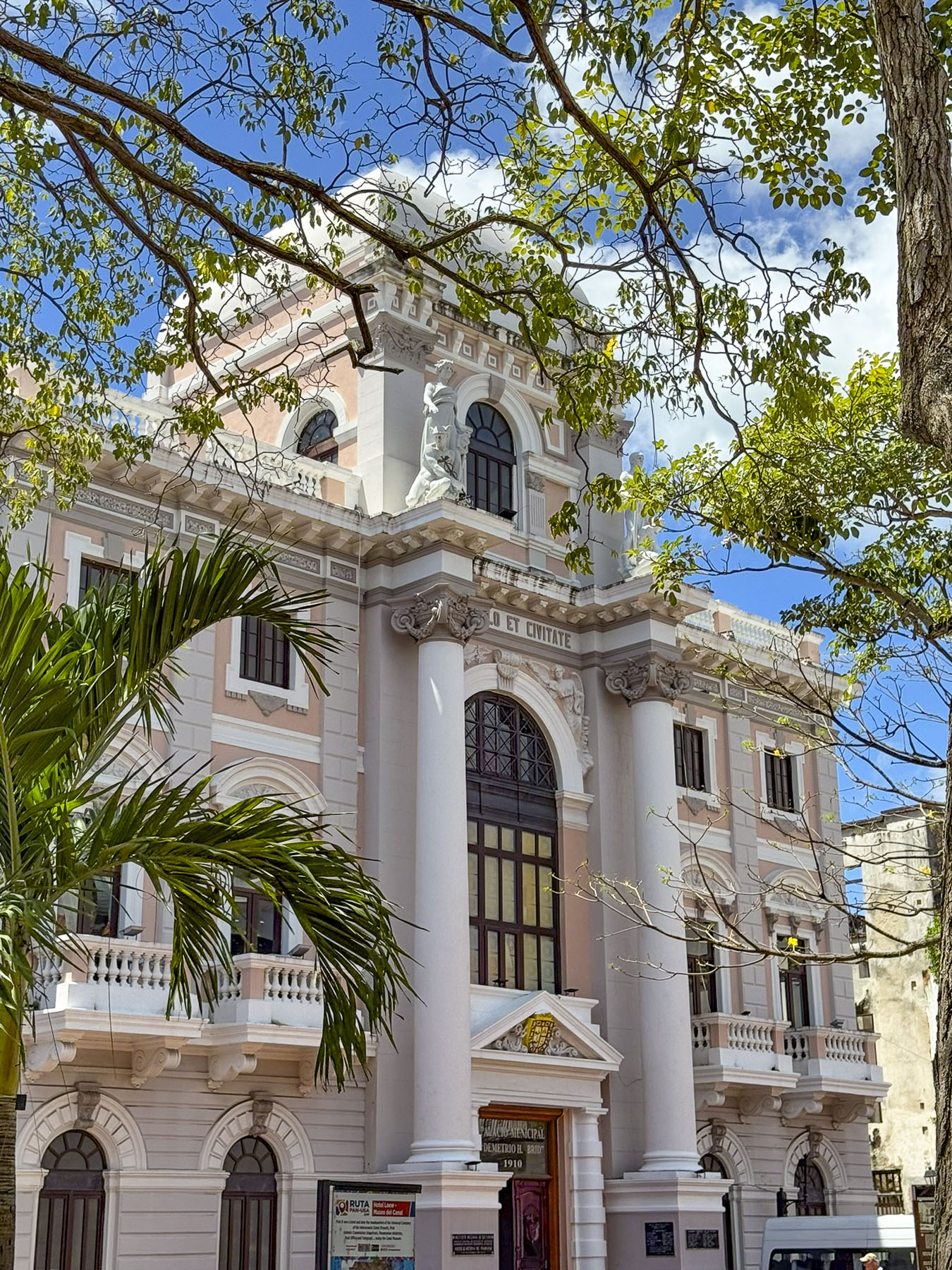
Adjacent to the cathedral was the Museum of Panamanian History, housed in the Municipal Palace of Panama. It’s a beautiful Neo-Renaissance style building with pilasters, arches and decorative cornices. We didn’t tour the exhibits, but we did enjoy resting in the air-conditioning of the lobby.

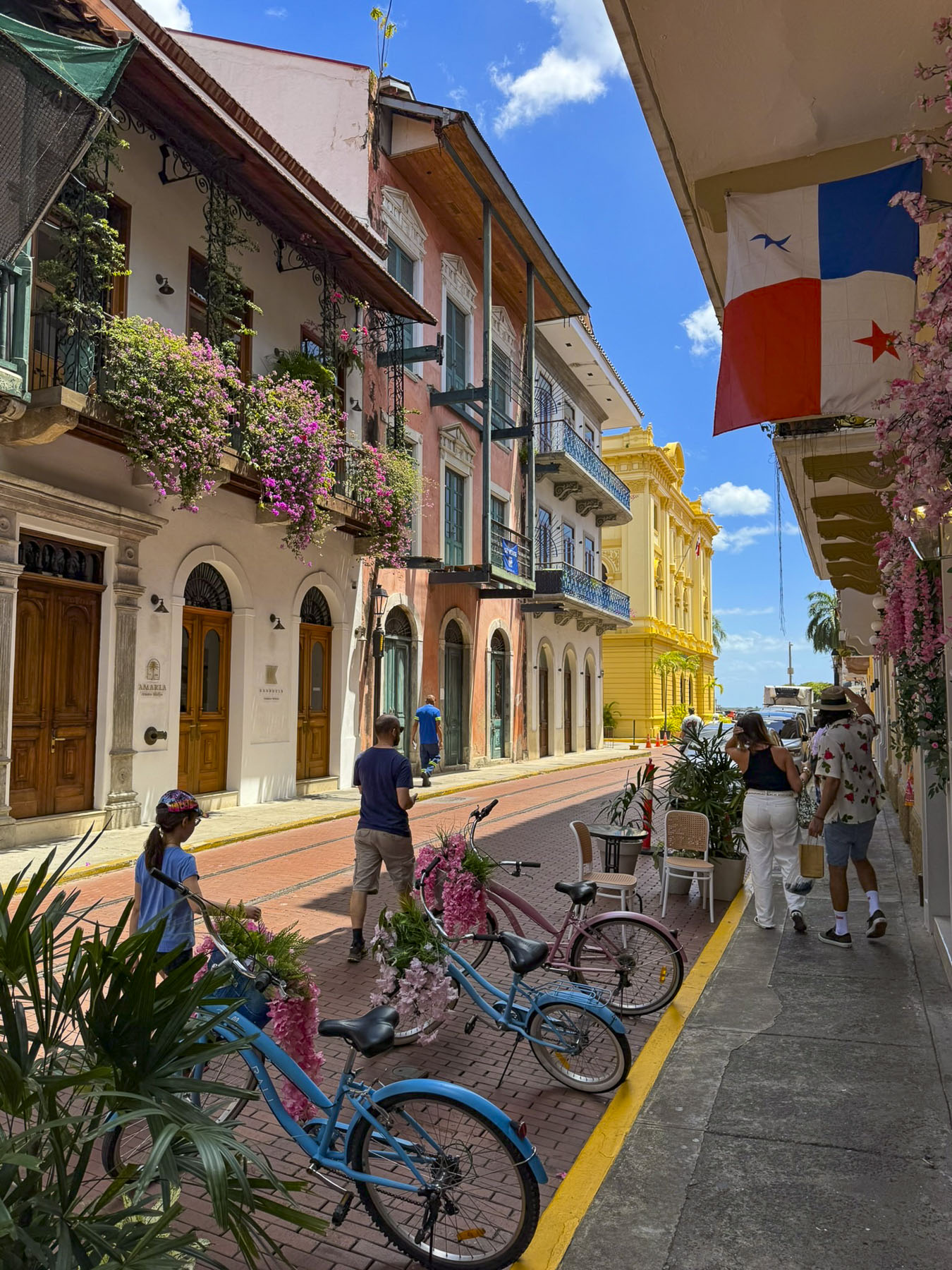
The narrow-bricked lanes were more suitable for the horse drawn carriages for which they were designed than the cars of today. They surrounded a plaza full of colorful well-maintained 18th and 19th century buildings with decorative iron railed balconies covered by profusely blooming bougainvillea.

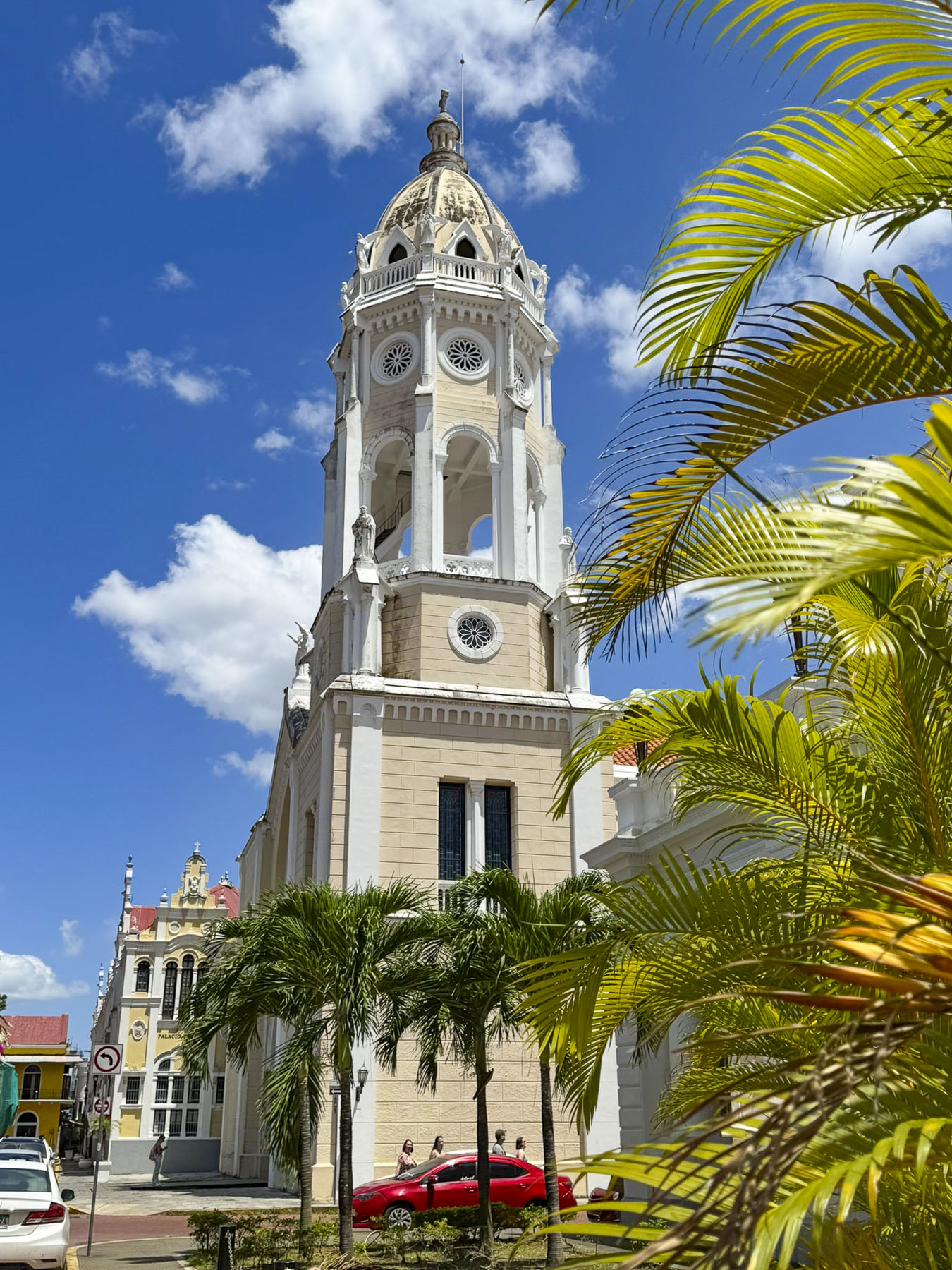
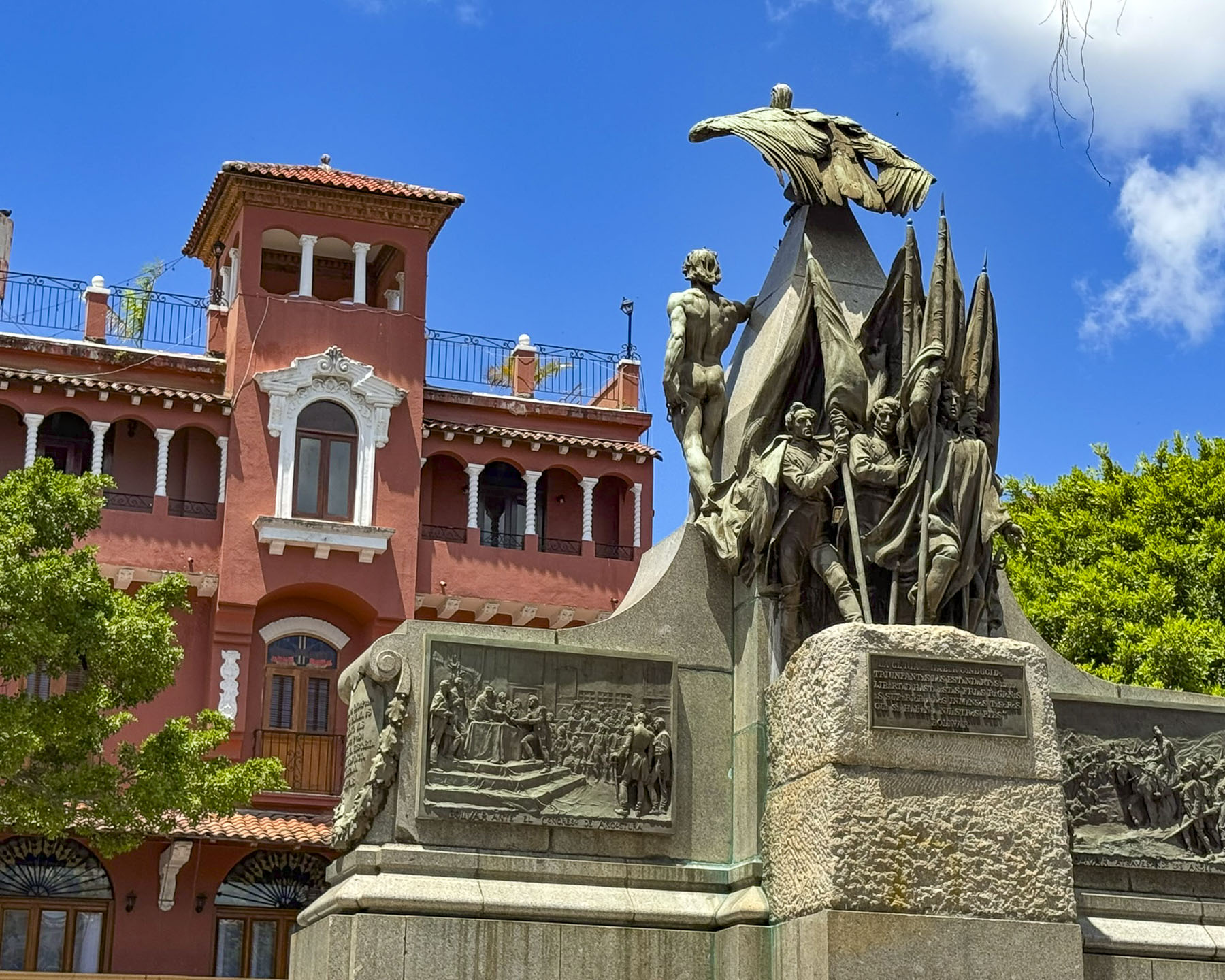
Cafes surround the Plaza Simón Bolívar where a grand monument commemorates the Latin America independence hero. Behind it the graceful belltower of the Saint Francis of Assisi Church looms above the plaza. It was a later addition to the original early 1700s church that was damaged during fires in 1737 and 1756.  

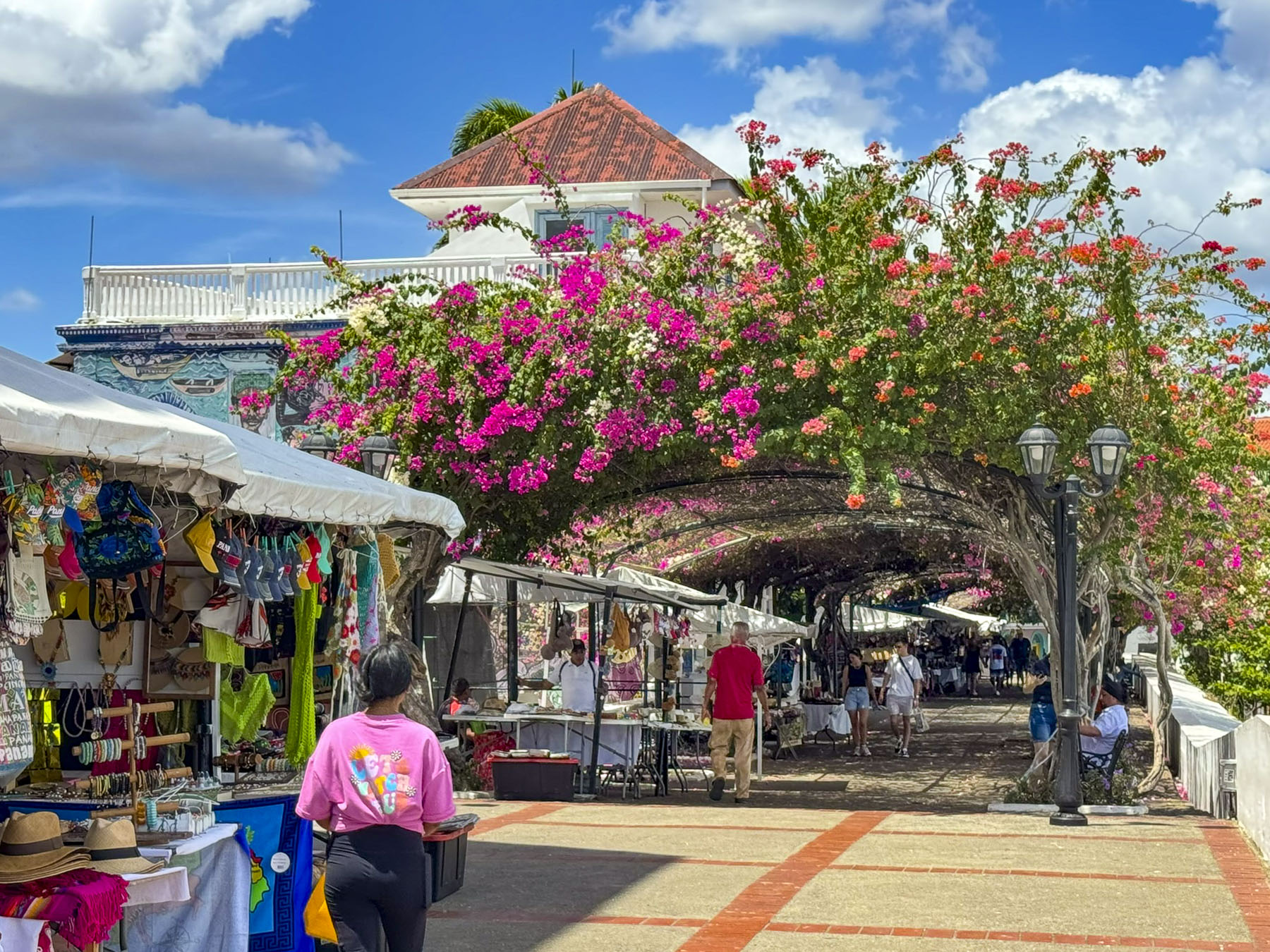
Nice views of the modern Panama City skyline were available along the lane leading to the Corredor Artesanal De Casco Antiguo, a trellis-covered lane with flowering vines that offers shade for the indigenous artisans who have stalls along its length.

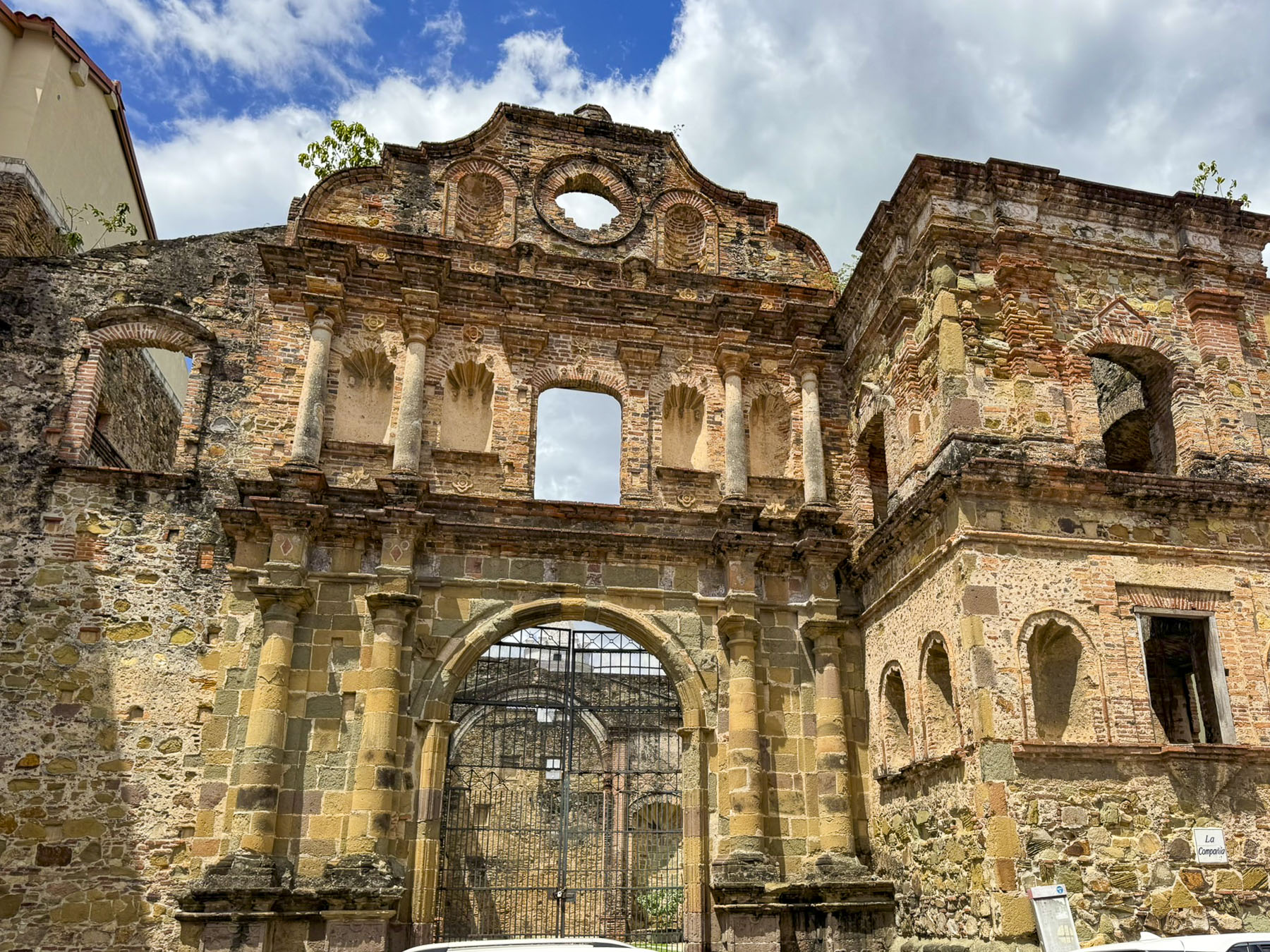
Back in the center we passed the ruins of the Iglesia de la Compañía de Jesús. It was built as a Jesuit monastery in 1641 and later in the 1740s it also served as the home of the Royal Pontifical University of San Javier, Panama’s first university, until the Spanish Crown banished the Jesuits from the colonies in 1767, and the church and monastery was abandoned. The ruins still standing are all that were left from a 1781 fire that ravaged the complex.

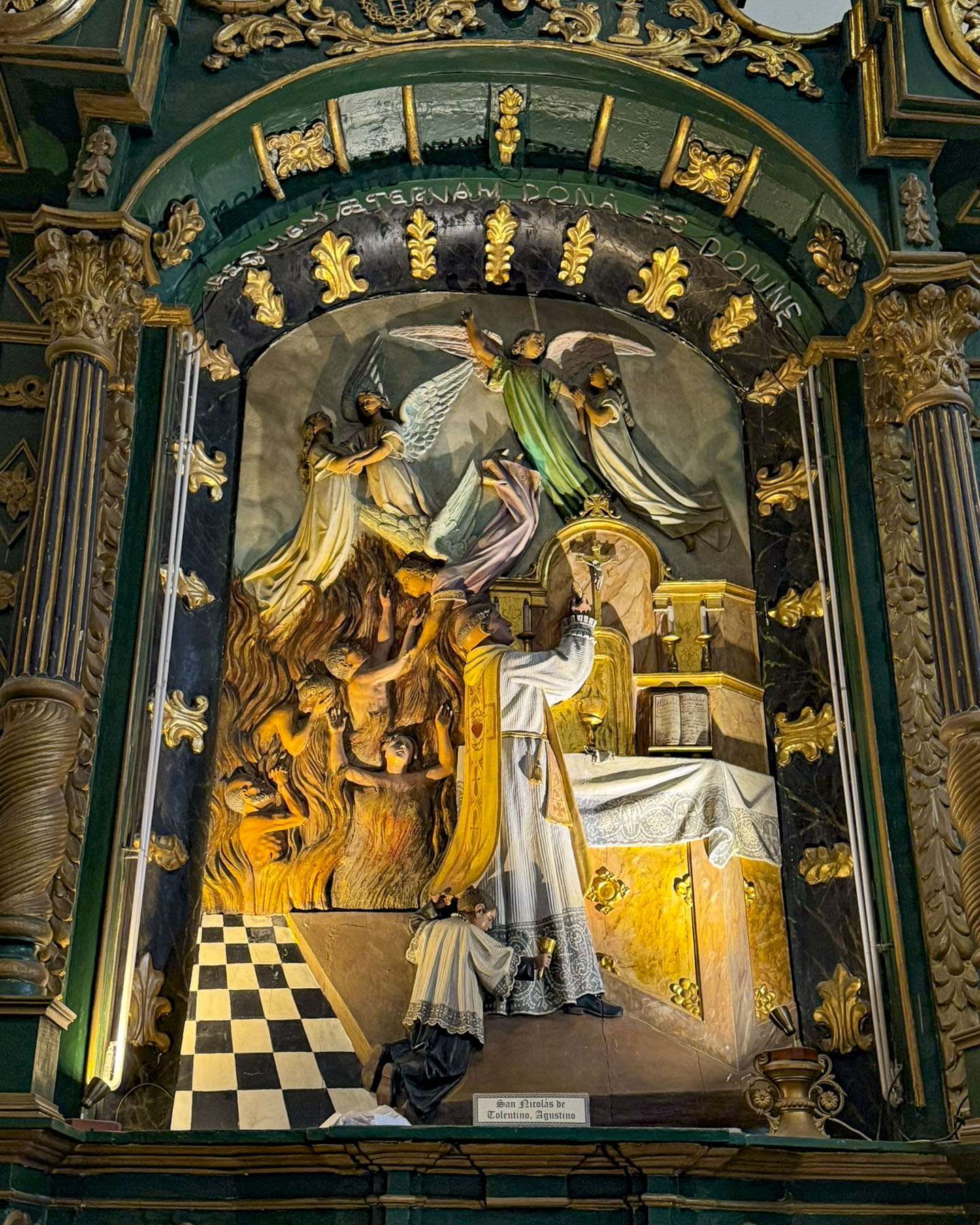
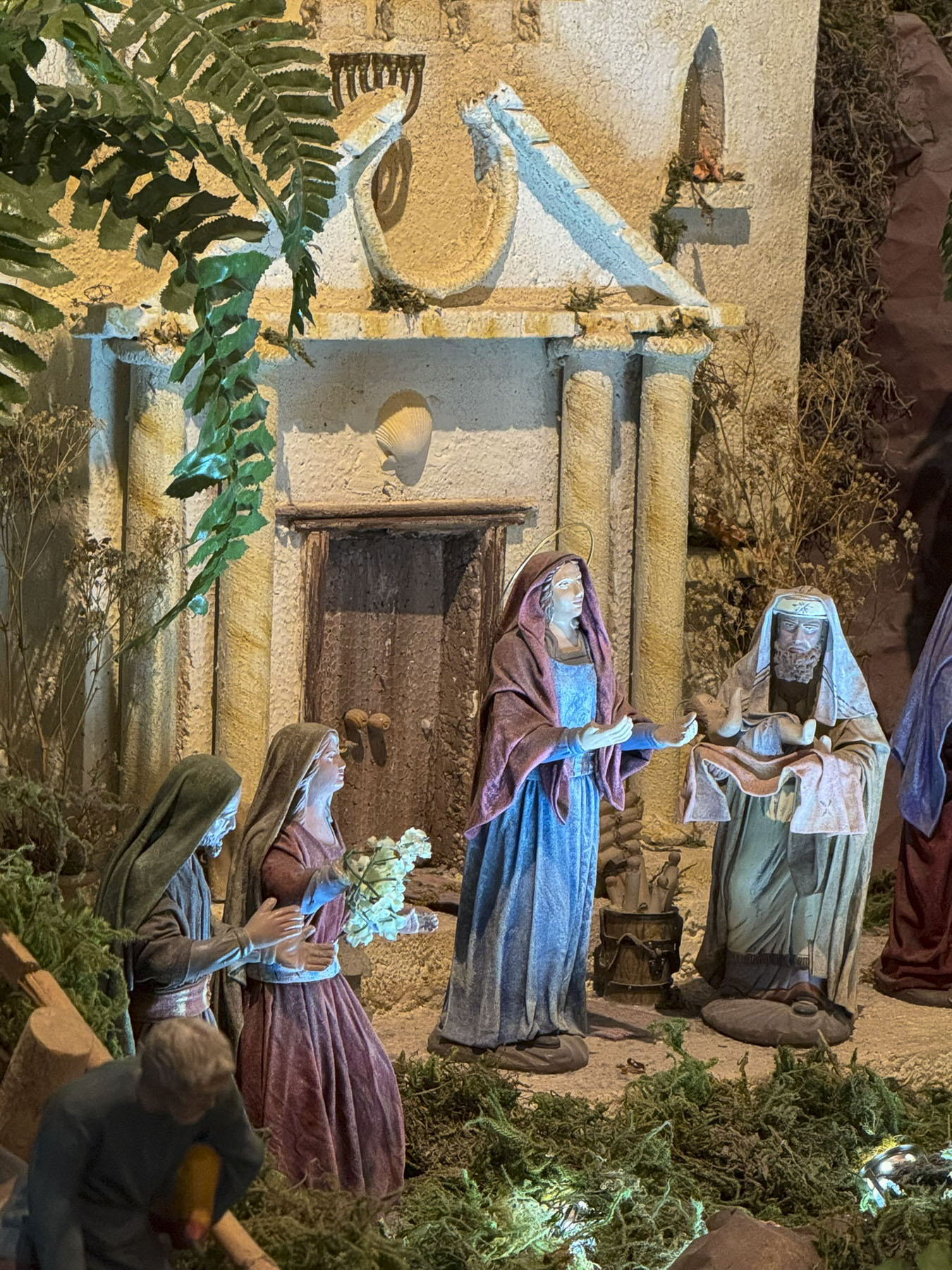
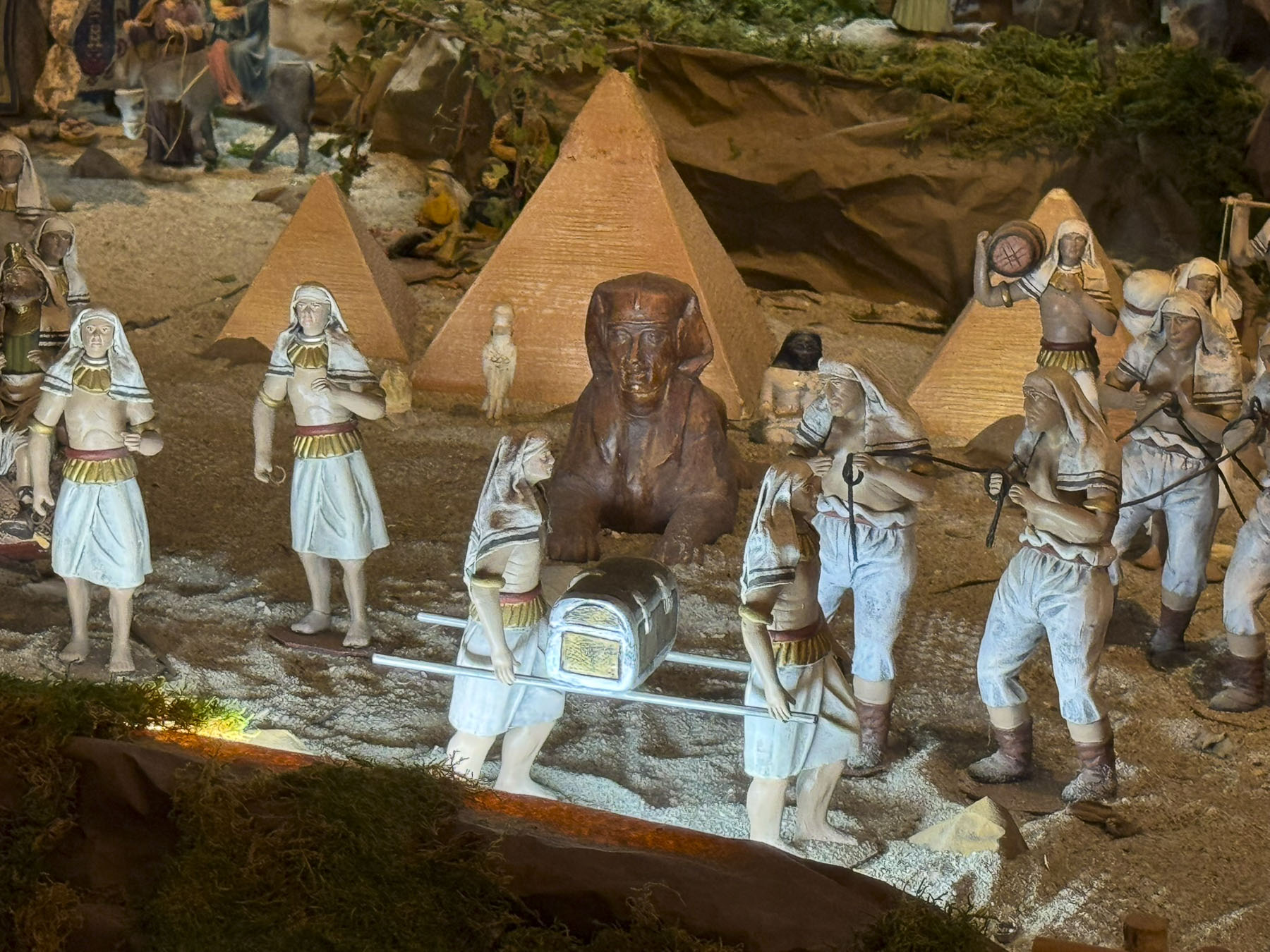
A block away was the Iglesia de San José. The 1670s church is notable for its ornate gold altar, that legend believes was saved from Morgan’s pirates by a priest who painted it black to hide its importance. There is also an interesting collection of religious sculptures and nativity scenes in a side chamber.

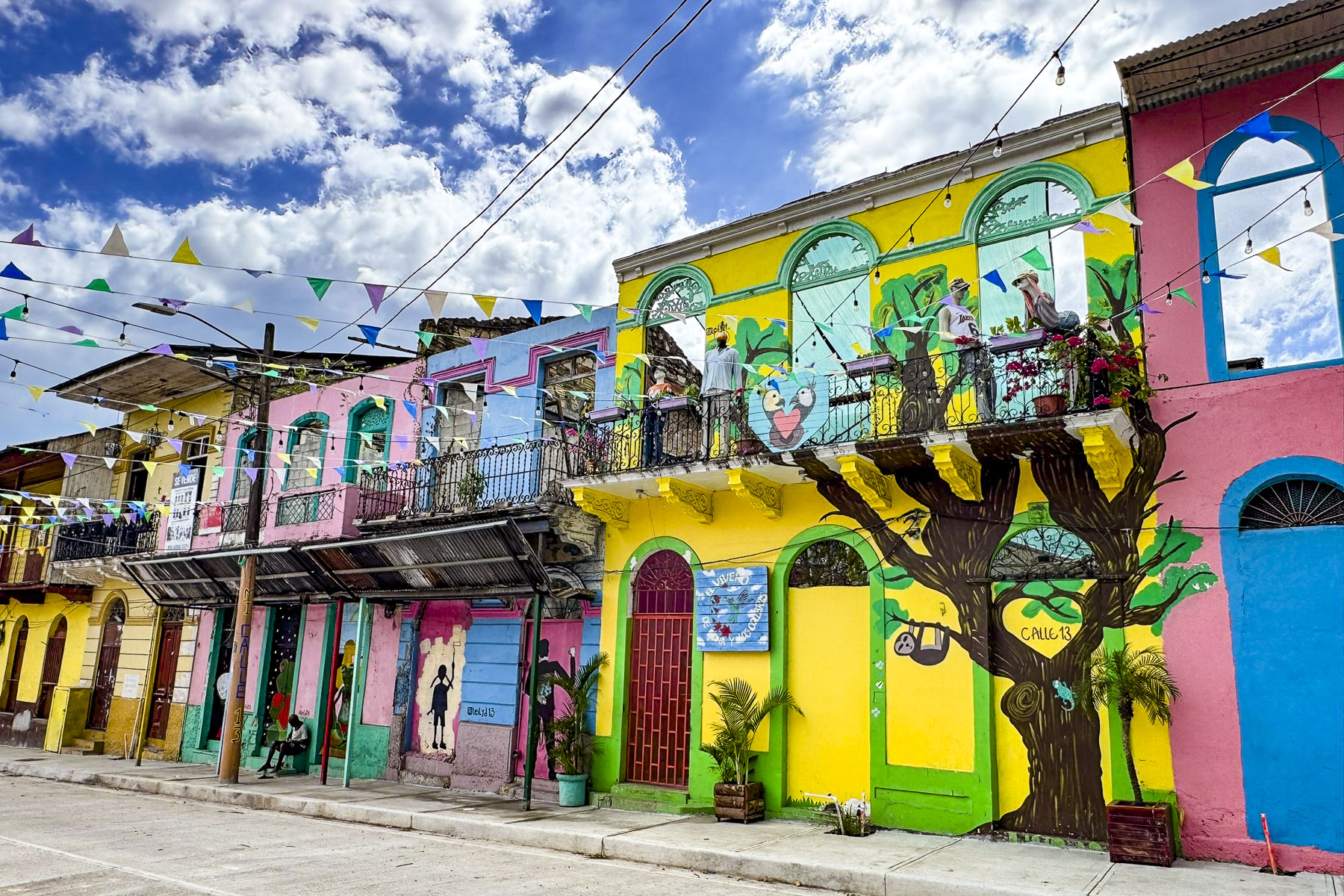
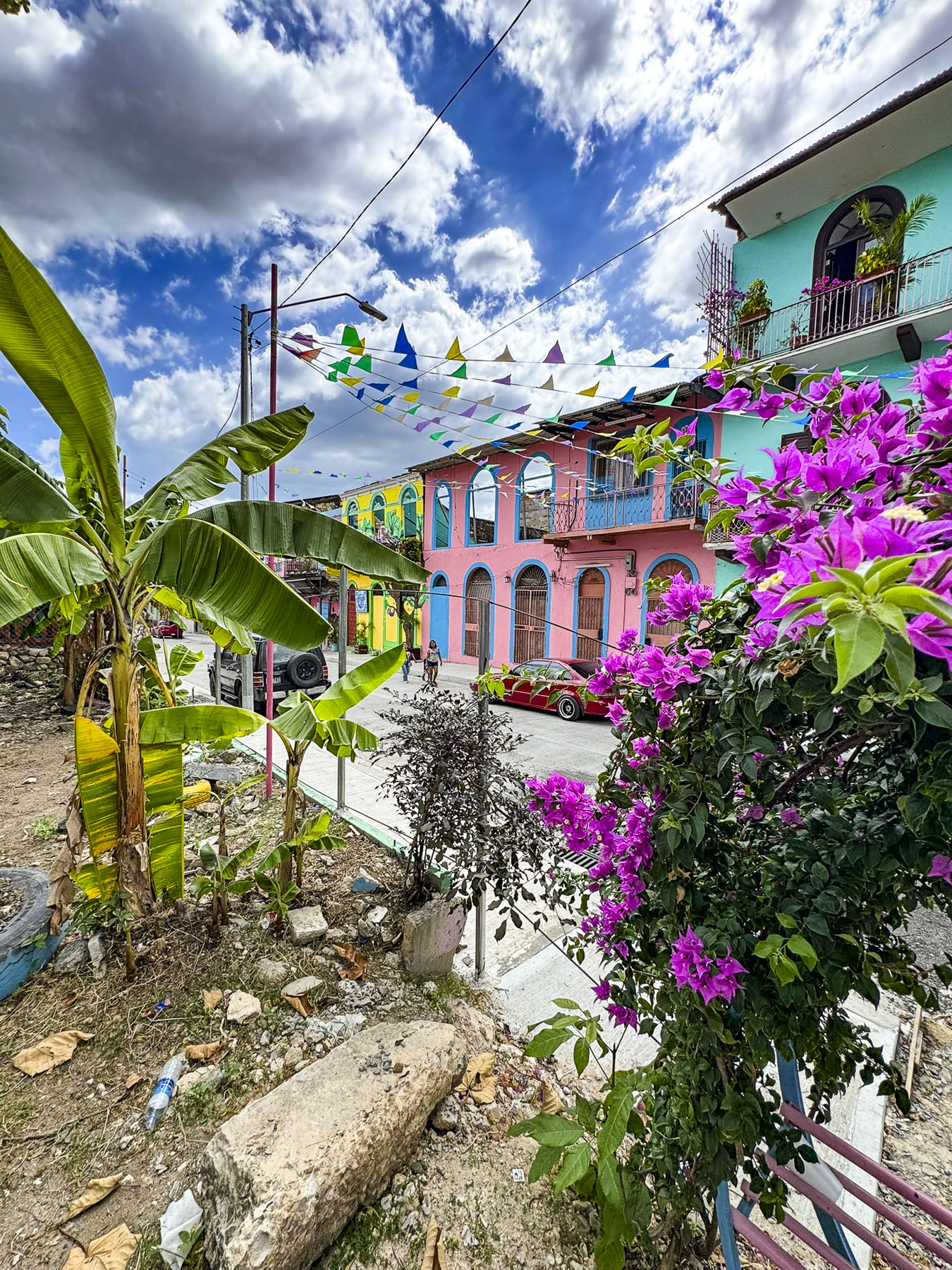
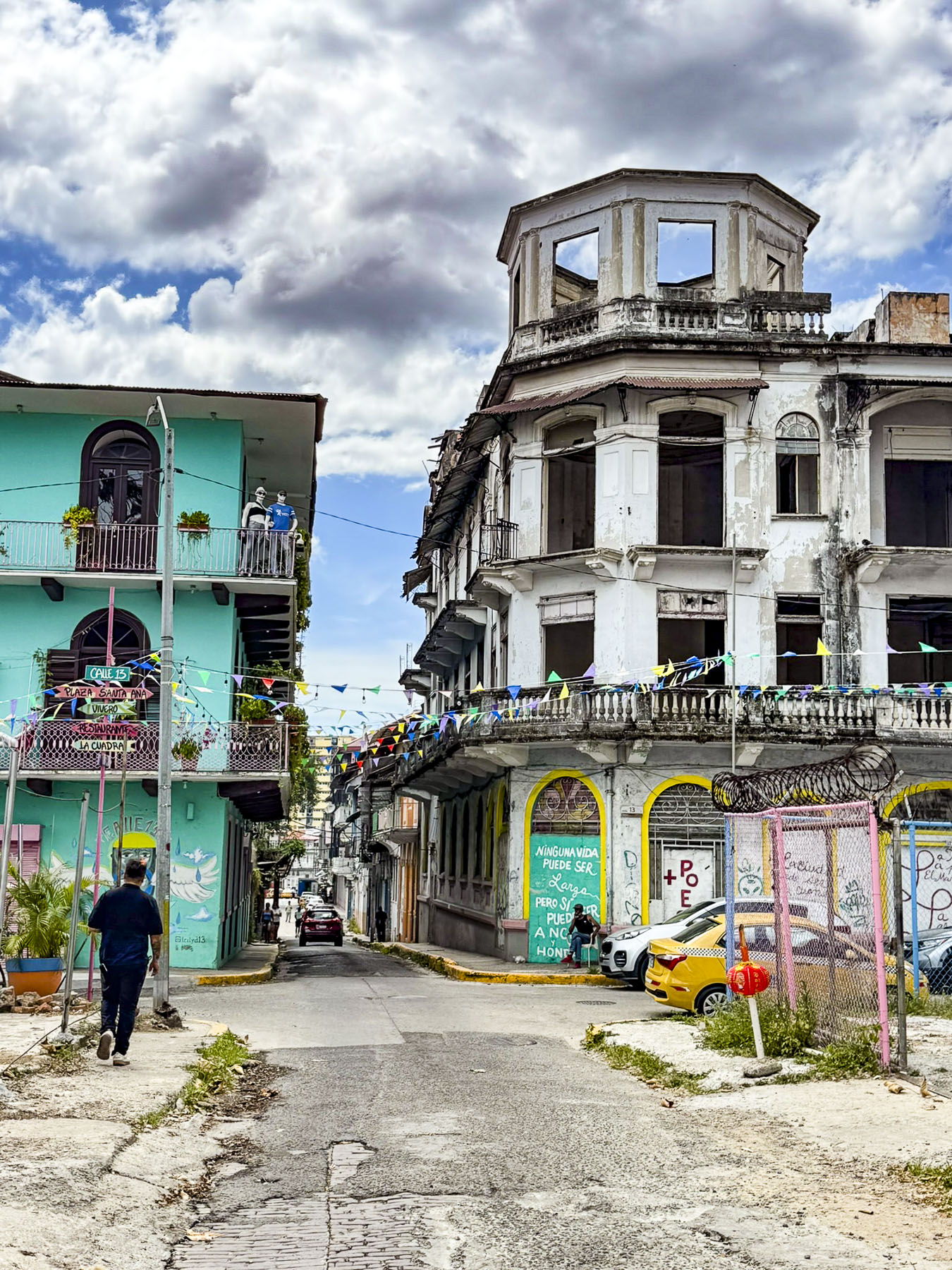
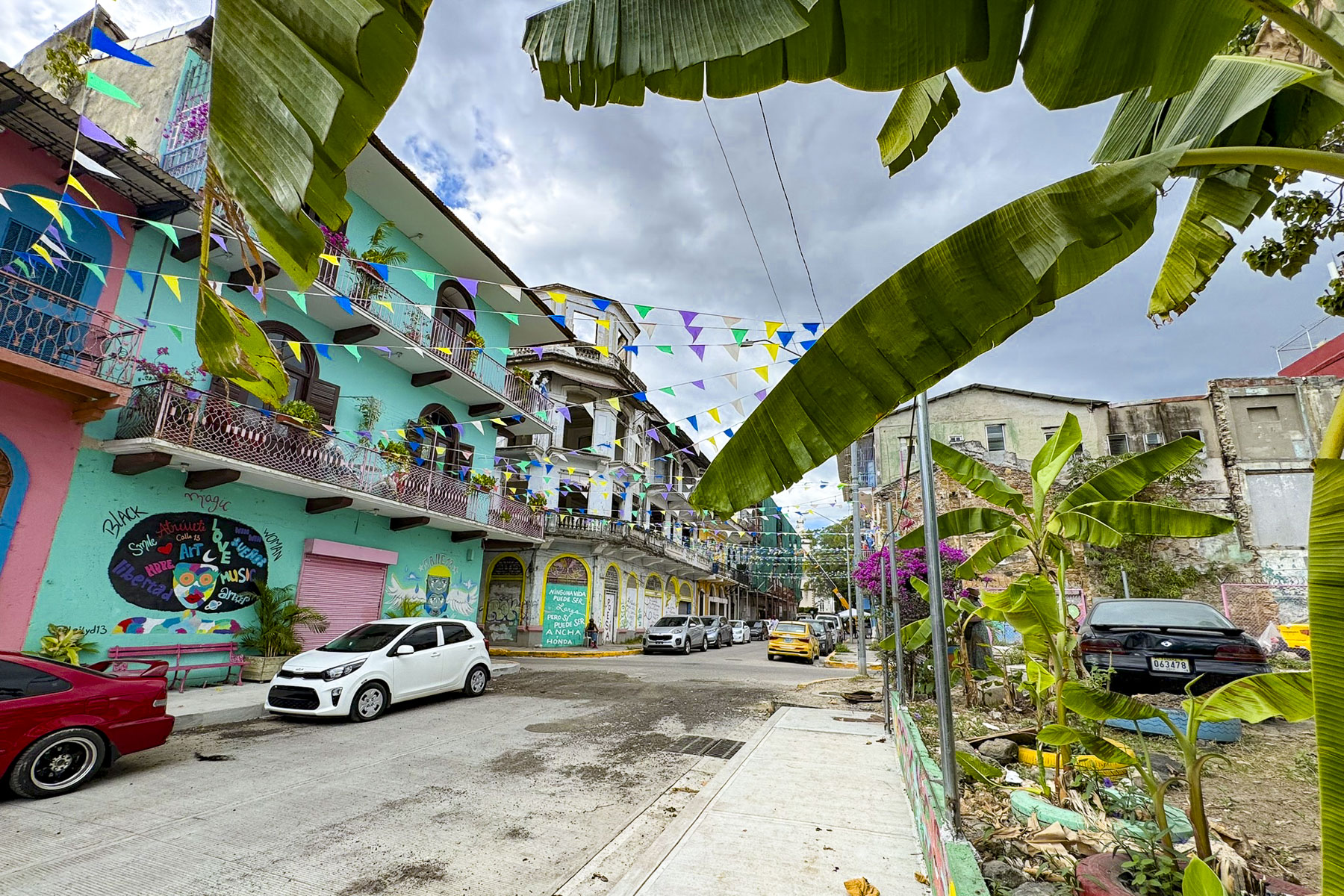
Afterwards we headed to the Santa Anna neighborhood, which was outside the walled citadel. While parts of it are in the UNESCO protected area of the Casco Antiguo; most of it is not. We had read that the area has great potential with many older buildings needing renovation, but were surprised by the quick transition from one neighborhood to another. While hopes are high for the barrio, many of the buildings we passed were only colorfully painted facades, with the sky above showing through the windows of roofless buildings.

Returning to Old Town we passed the Iglesia de la Merced, the only church to survive, fully intact, the destruction of Panama La Vieja during the pirate’s 1671 attack on the town. After the attack the church was disassembled by Franciscan monks and moved stone by stone to the new town, where it was painstakingly rebuilt, and is believed to be several years older than Iglesia de San José.

Our “walk a little then café,” beckoned when we happened upon Café Unido, a local coffee shop that pridefully specializes in Panamanian grown coffee, which they consider the best in the world.

A delightfully warm March day wandering the colorful streets of the Casco Antiguo was the perfect way to end our week in Panama. Between the beauty of the countryside and the coast, along with the warm hospitality of the Panamanians, we can understand why the country is a warm weather haven for expats from all across the northern hemisphere.

Hopefully, we will get the opportunity to explore more of the country in the future.

Till next time,

Craig & Donna

Montevideo: Feria, Murals & Carnaval – The Antidote for our North America “Winter Blues.”

A clearing storm covered Uruguay’s Atlantic Coast as we landed at Carrasco International Airport on the outskirts of Montevideo. We were ten minutes into our forty-minute Uber ride into Ciudad Vieja, the old town section of Montevideo, when the masts of several catamarans poked above the tree line that obscured our view of the oceanfront. Our driver proudly boasted that the country has nearly 660km (410mi) of pristine beach-covered coastline along the Río de la Plata and the South Atlantic Ocean. But the real pride and joy of Montevideanos is La Rambla of Montevideo, a wide coastal esplanade that runs for 22km (14mi) along the city’s waterfront, “one of the longest continuous sidewalks in the world.”

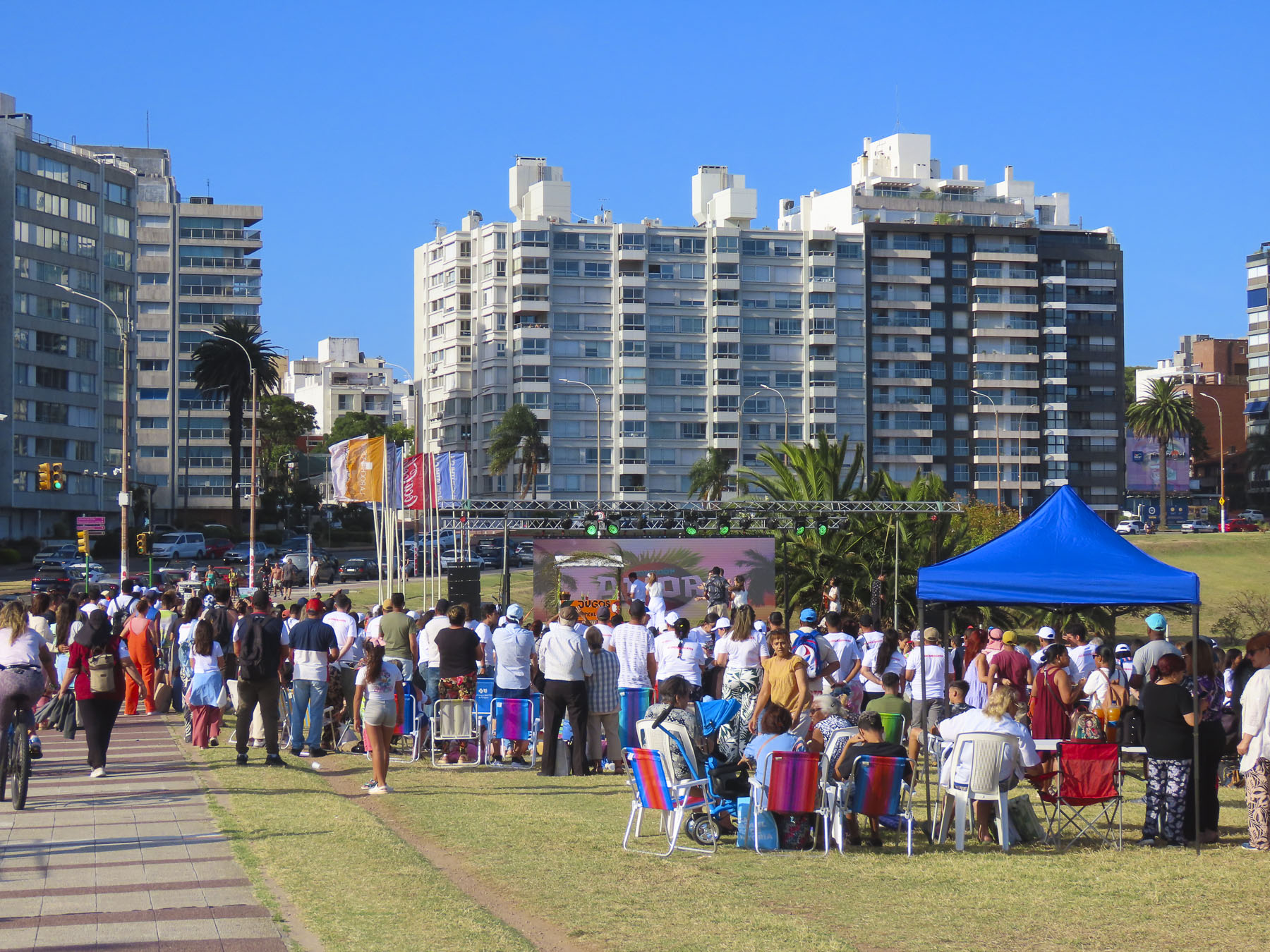
Our ride into the city soon started to follow La Rambla’s serpentine route along the coast, past folks, at the end of the workday, flocking to its breezy shoreline to enjoy all sorts of activities from rollerblading to kite surfing. Several beach areas also had bandstands where musicians were drawing good size audiences. Lovers snuggled on the seawalls, amidst swimmers emerging from the ocean, games of soccer, joggers, aerobic classes, personal trainers, cyclists, sun worshippers, and walkers carrying their ubiquitous Mate carryalls. Enjoying socializing with friends on La Rambla is an important part of life in Uruguay’s capital, where the city’s 1.4 million residents, nearly 40% of the country’s population, have an open invitation to “The Outdoor Living Room of Montevideo.” Come sunset there seemed to be collective quieting as folks stopped to watch the sun sink below the horizon. We could already tell that this could be the antidote for our North America “winter blues.”

The next morning, we were up before sunrise to stroll along the oceanfront, hoping to catch the first rays of sunlight cast across the city. From our room at Hotel NH Montevideo Columbia, we could see seven freighters making their way to port, and the remnants of an old defensive tower. It was part of the quickly built ramparts that once encircled the citadel soon after the Spanish founded the city in 1726, to thwart Portuguese expansion southward along the coast from Brazil.

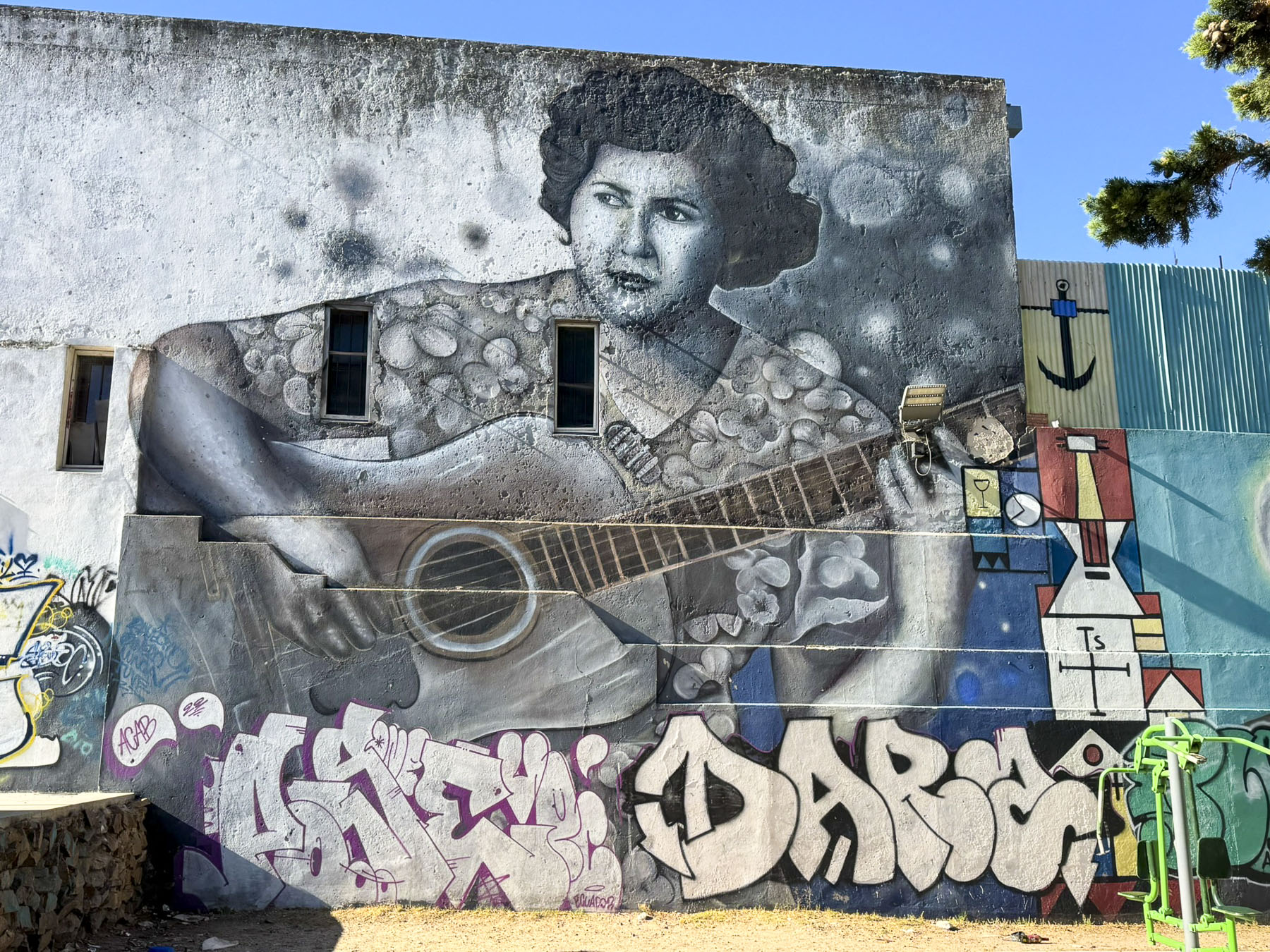
Street art and sculptures that were a blur yesterday as we sped by were now full of detail. In some places along the esplanade there were images of dinosaurs on relief plaques implanted into the sidewalk that suggested the region’s fauna 85 million years ago.

We reached Playa Ramirez, a large crescent-shaped beach as the sun was breaching the trees and shining upon the city’s modest skyline. A large group of cyclists preparing for the upcoming Vuelta Ciclista del Uruguay sped by. Two women stood in the water and let the gentle morning waves lap around their ankles as they chatted.

Across from the beach was Parque Jose Enrique Rodó. A large sculpture in the center of the park is dedicated to the Montevideo-born philosopher and essayist, who wrote about Latin America pursuing its own cultural identity and spiritual renewal, and the dangers of unbridled materialism.

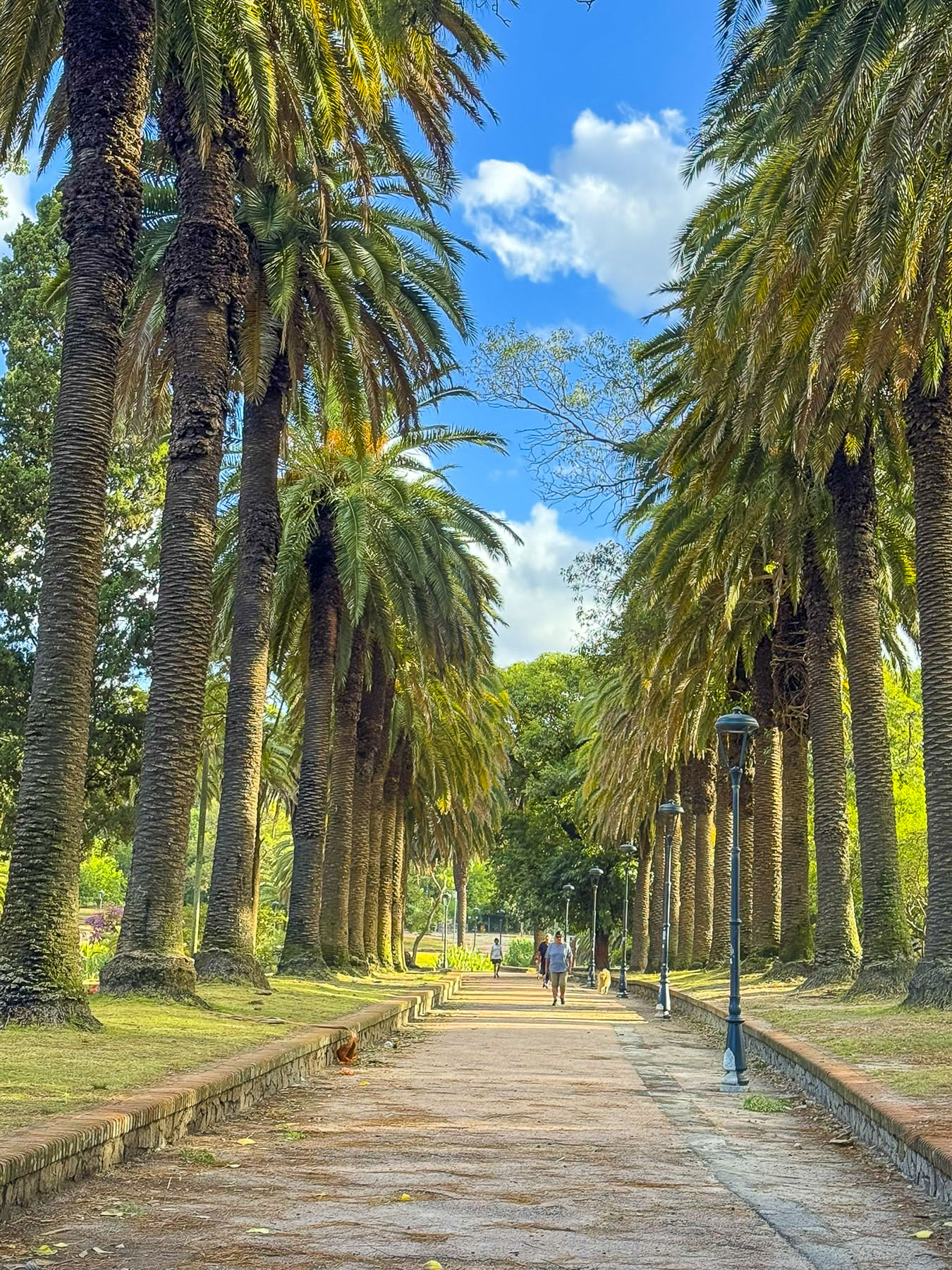
We started our loop back towards the Ciudad Vieja down one of the park’s palm-lined paths and zig zagged our way through barrios full of colorful street murals, and older 1900’s era buildings with interesting architectural details.

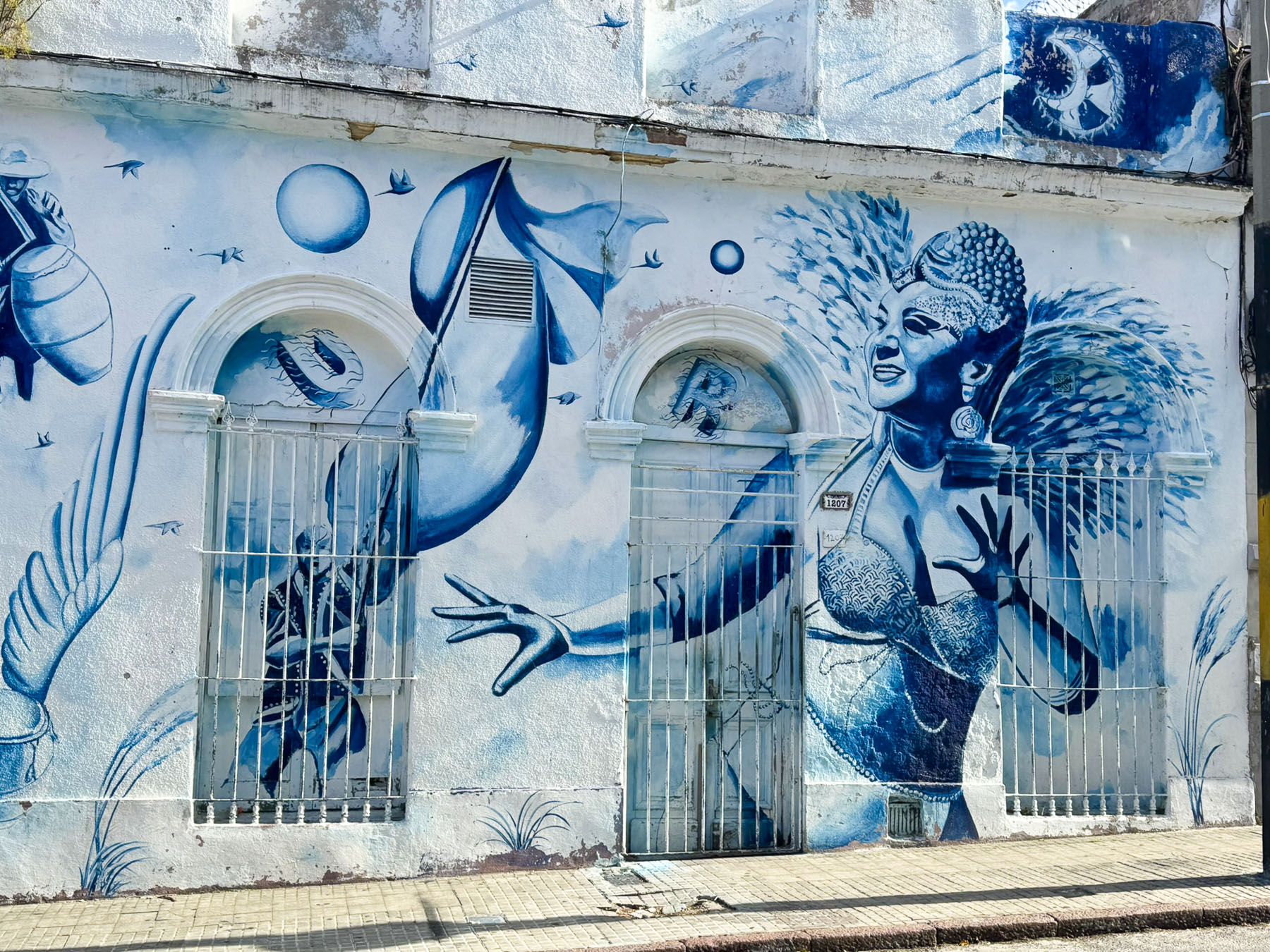
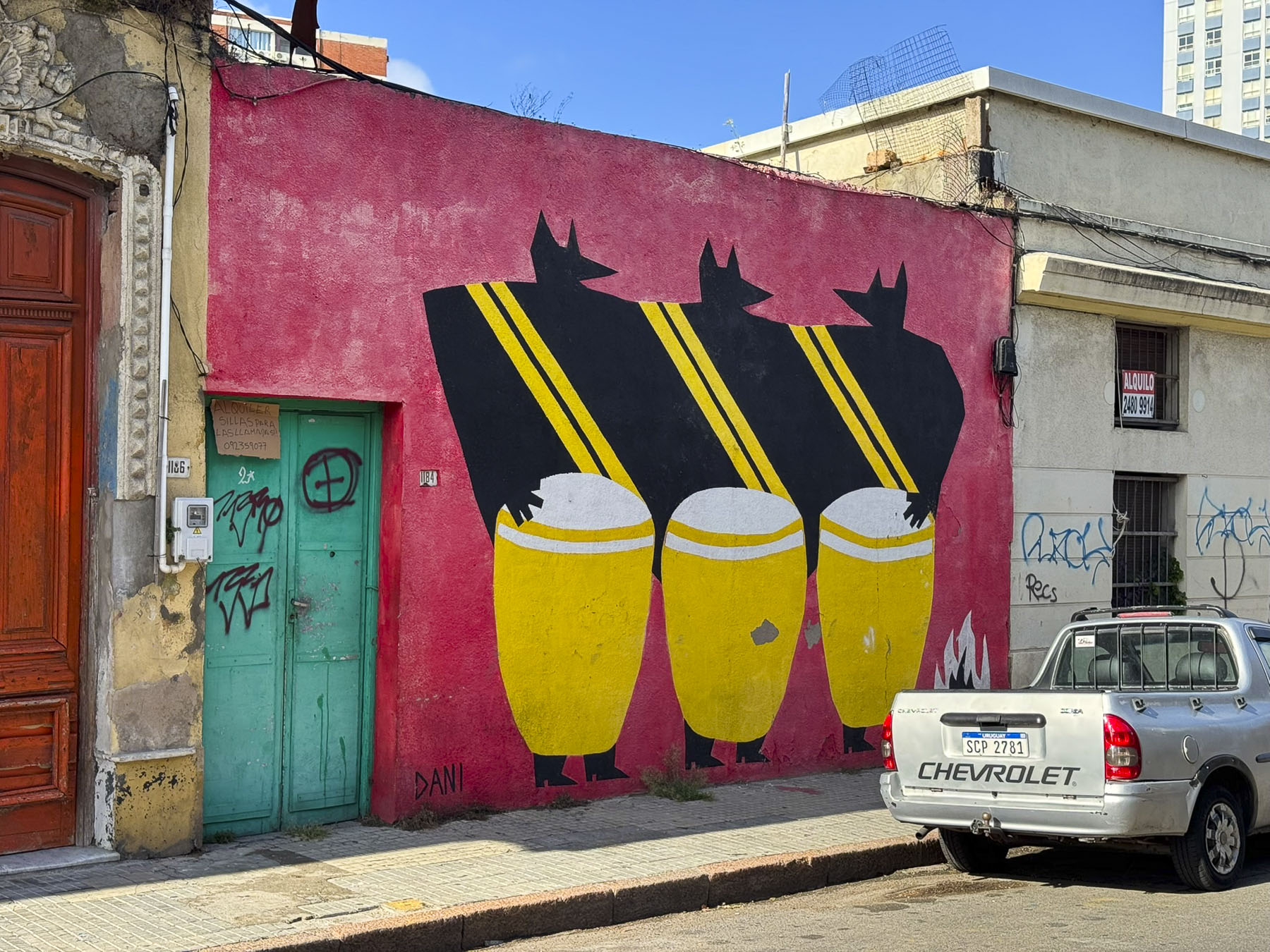
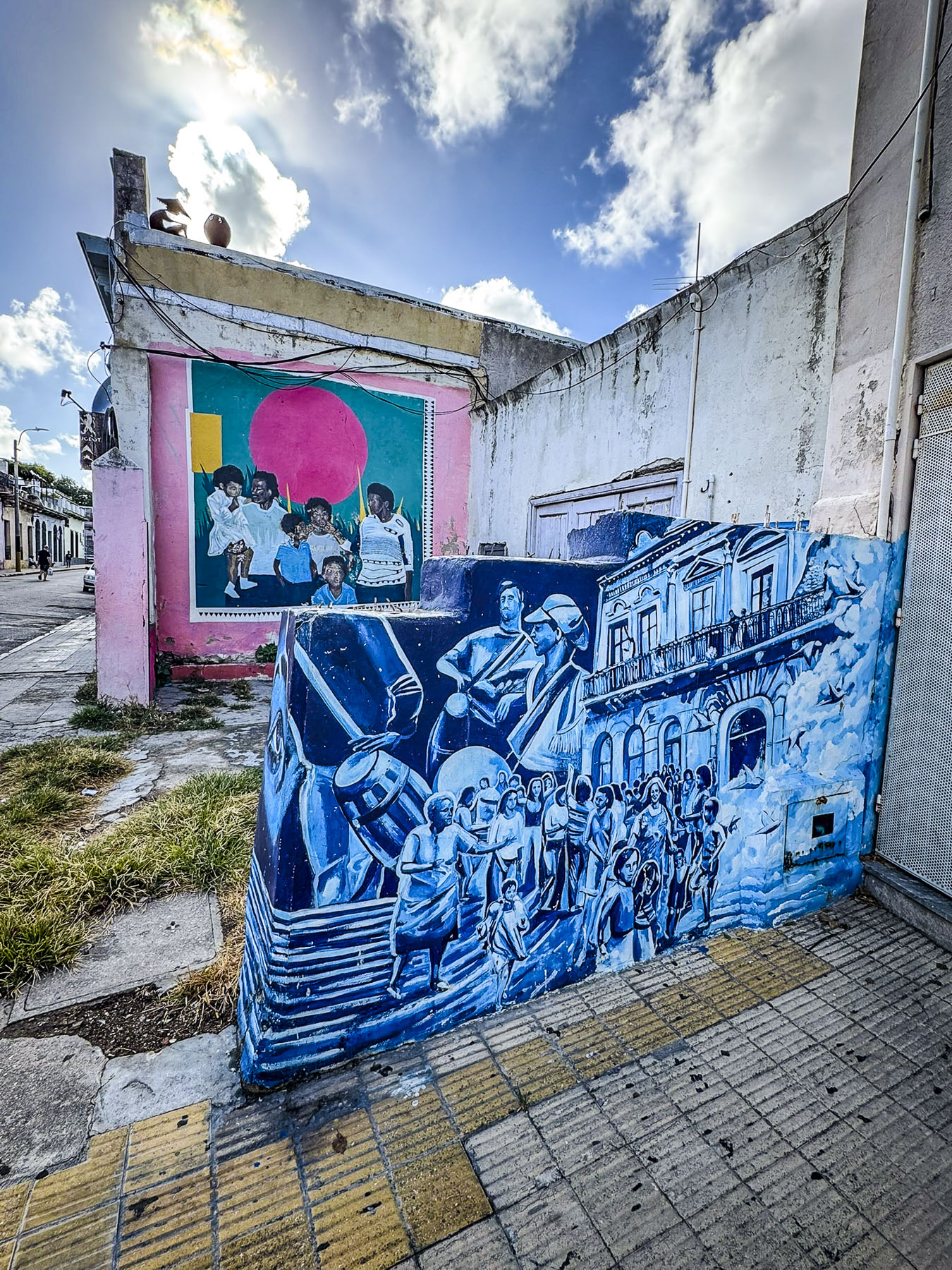
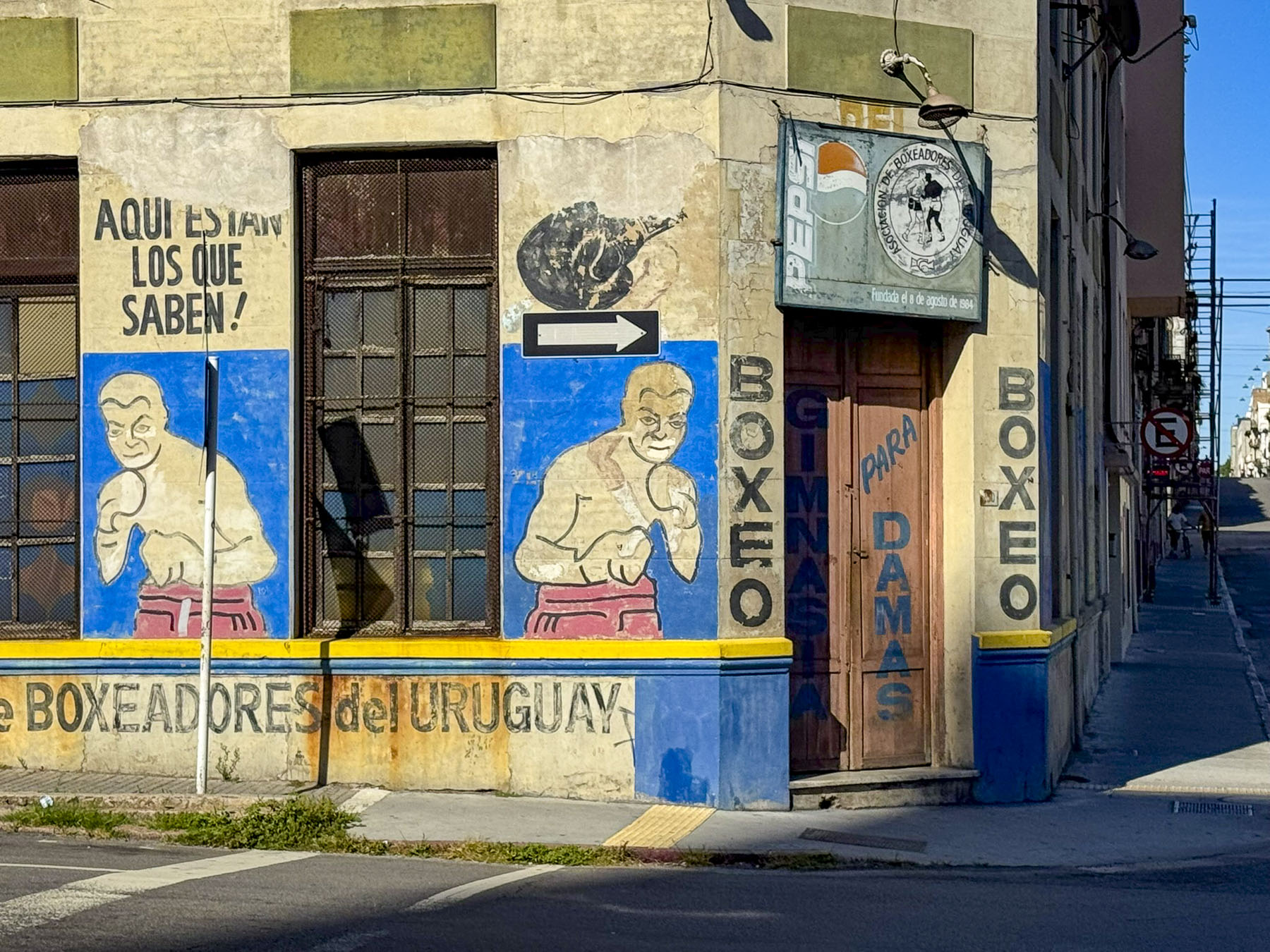
Walking through Barrio Sur along Isla de Flores, bleachers were being set up at the intersections in preparation for one of the last parades of Carnaval. The street was lined with murals dedicated to the local comparsas, large groups of 50-100 candombe drum performers and dancers, who participate in the yearly festival. We spent some time determining a good vantage point for watching the parade later in the week.

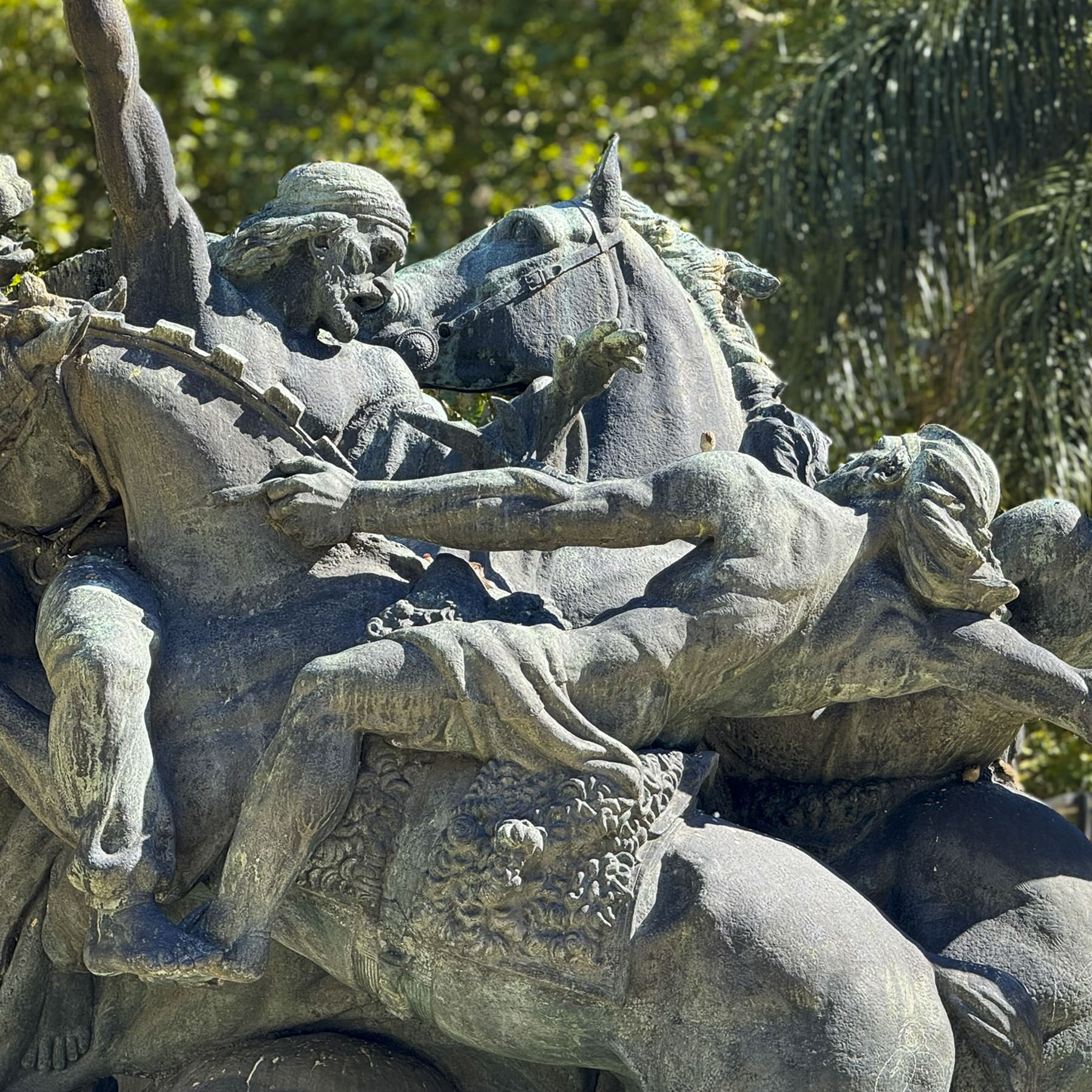
The grand Plaza Independencia was a huge contrast to modest barrios we had walked through earlier that morning. In the park’s center a large equestrian statue stands atop the Masoleum of José Gervasio Artigas, a gaucho, military leader, and revolutionary who inspired Uruguayans to fight against Spanish and Portuguese rule. He is considered the father of Uruguay’s liberation movement, though he did not live long enough to see the country’s independence in 1828.

A vast array of different architectural styles can be seen on the buildings around the plaza, but the most intriguing is the chaotic styling of the 27-story tall Palacio Salvo, which eclectically blends elements of Art Nouveau, Art Deco, Gothic, and Renaissance architecture into its design. The iconic mixed-use building has shops, offices, apartments and the Museo del Tango. It was for a short period of time after its completion in 1928 the tallest building in South America.

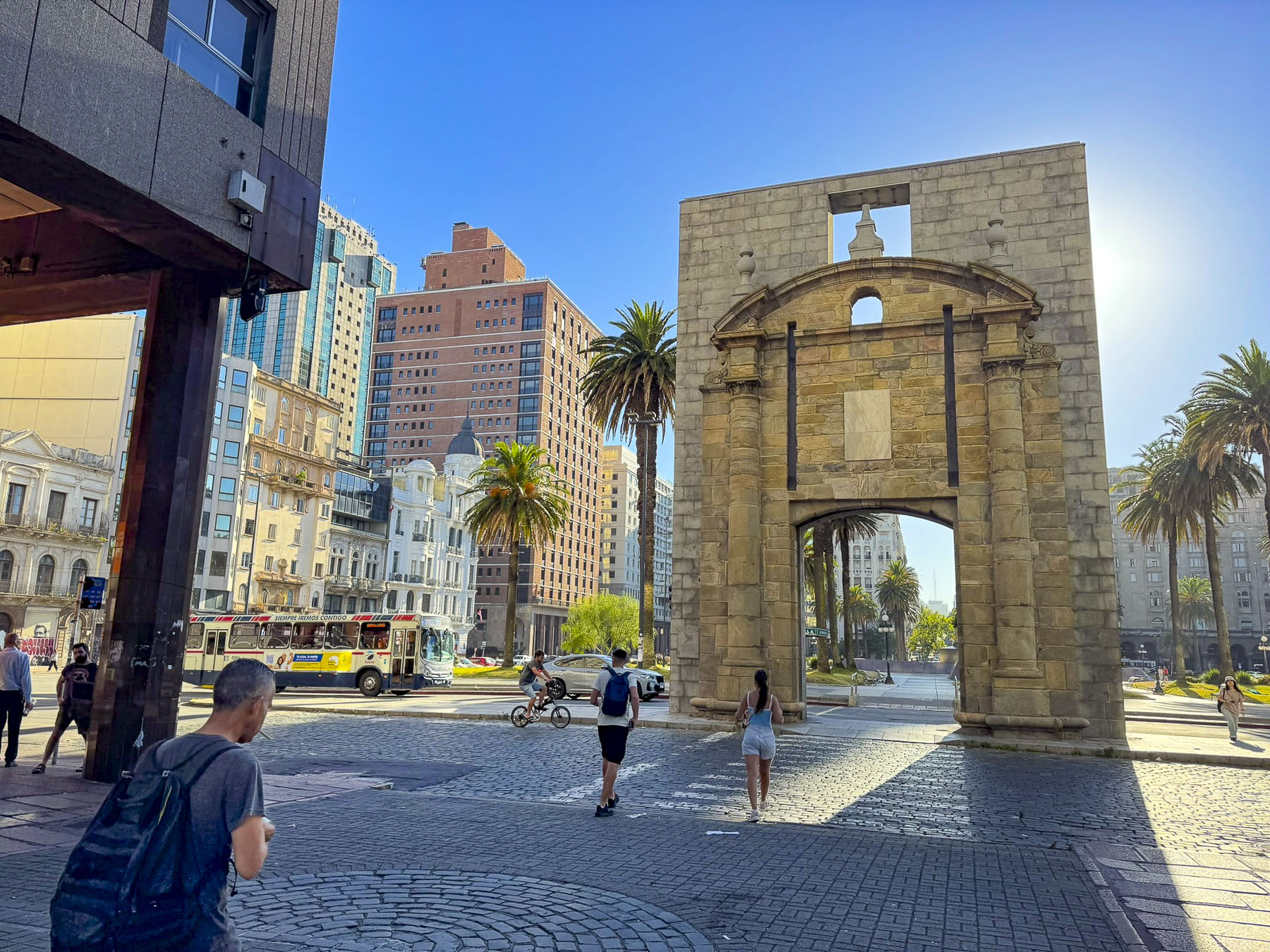
At the opposite end of the plaza the Puerta de la Ciudadela, one of the old gateways into the colonial citadel, is all that remains of a tall stone defensive wall that was 6 meters (20ft) thick, and totally encircled the small peninsula where Spain established its first colony in Uruguay. After Uruguay gained its independence the demolition of the citadel’s ramparts started in 1829, less than 100 years after their construction, to make room for the growing port city’s expansion.

The old gateway opened to Sarandí, the main pedestrian lane that runs from one end of Ciudad Vieja to the other. At the beginning of the lane was Montevideo’s Walk of Fame, where stars of famous visitors to the city, like Nelson Mandela, the Rolling Stones, Enrique Iglesias, and Olga Delgrossi, Uruguay’s beloved singer and tango dancer, were imbedded in the pavement with sun bursts above their names.  Now mid-afternoon, the day had warmed, and the street was full of vendors under colorful umbrellas, selling all sorts of items geared for tourists.

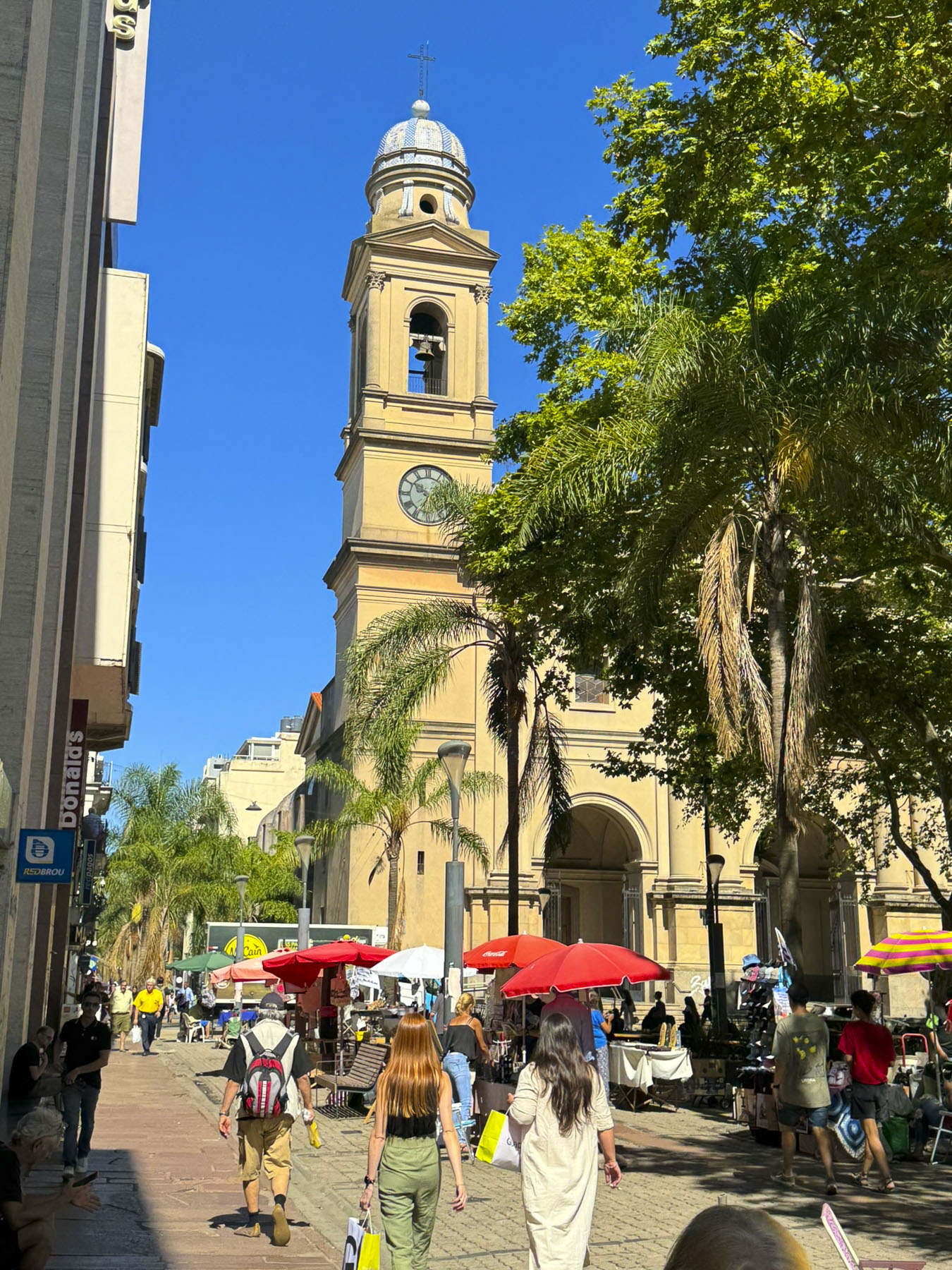
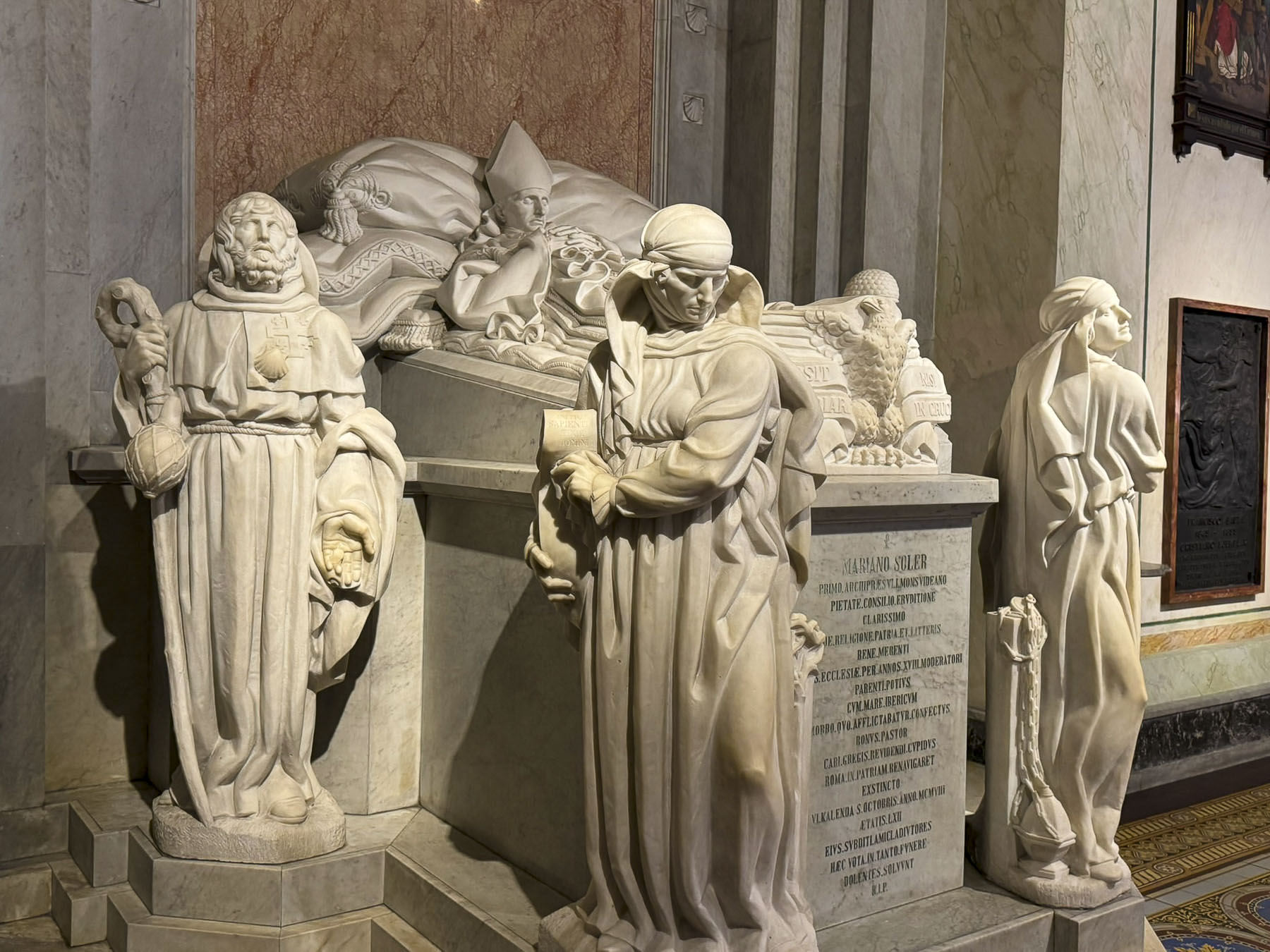
We wrapped up our day’s wandering about at the Montevideo Metropolitan Cathedral, or as it is formally called the Catedral Metropolitana de la Inmaculada Concepción y San Felipe y Santiago.  In 1790 the construction of the cathedral was started to accommodate a growing congregation in the prosperous city, which had outgrown its first smaller brick church, which was built on the same site in 1740. Inside were some very nice pieces of religious art.

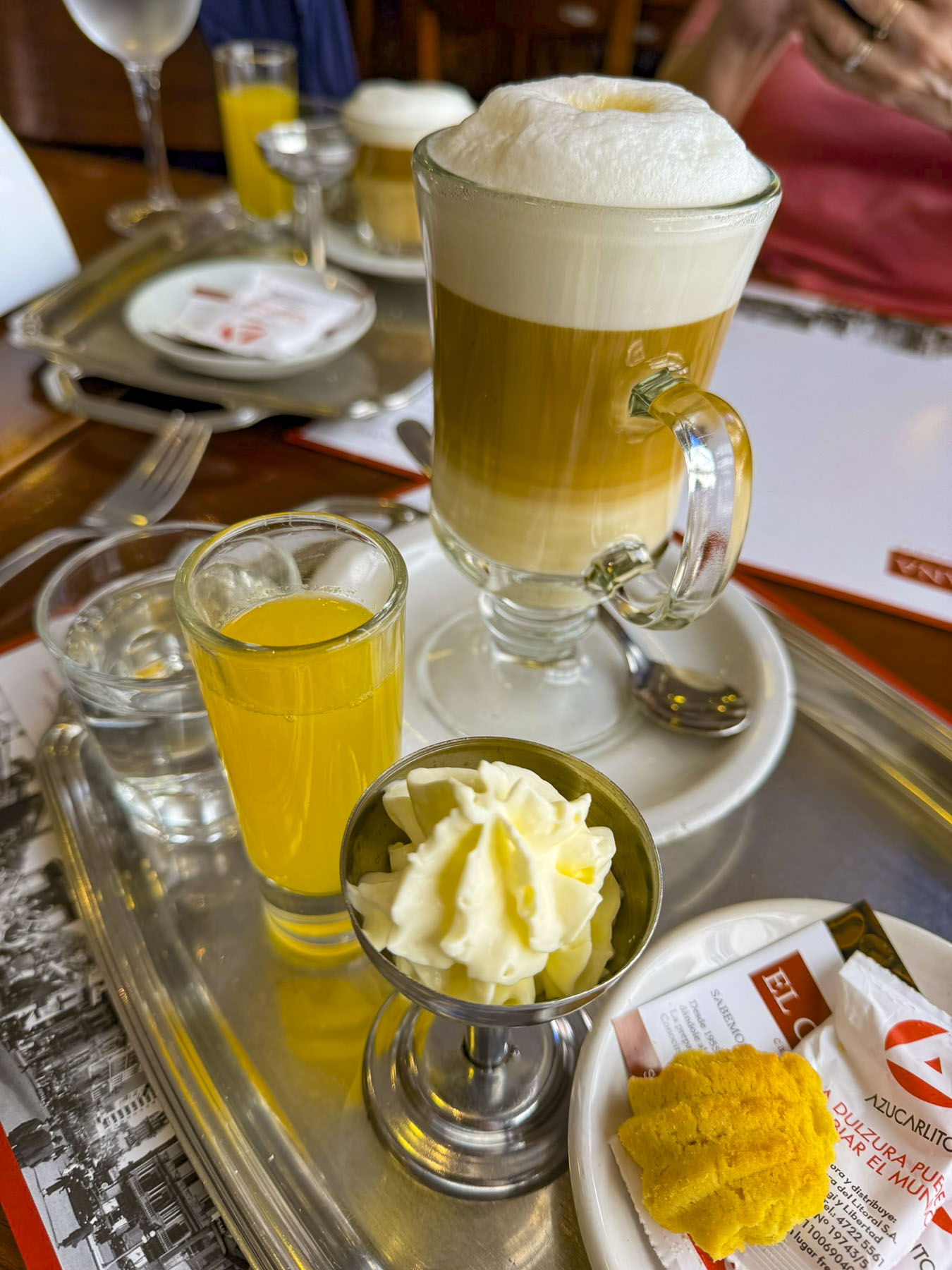
The next morning we continued exploring the old town and watched a wedding party throw rice upon a newly married couple at the Registry Office. We only noticed a sculpture of Montevideo’s version of Romeo and Juliet when a crowd in front of us was pointing up to a balcony. “Our walk a little then café,” routine was satisfied with breakfast at Federación, an artesanal panaderia and café, with tables on the sidewalk and in a small courtyard. It was on the way to several museums we planned to visit, before having a late lunch at one of the steakhouses in the Mercado del Puerto.

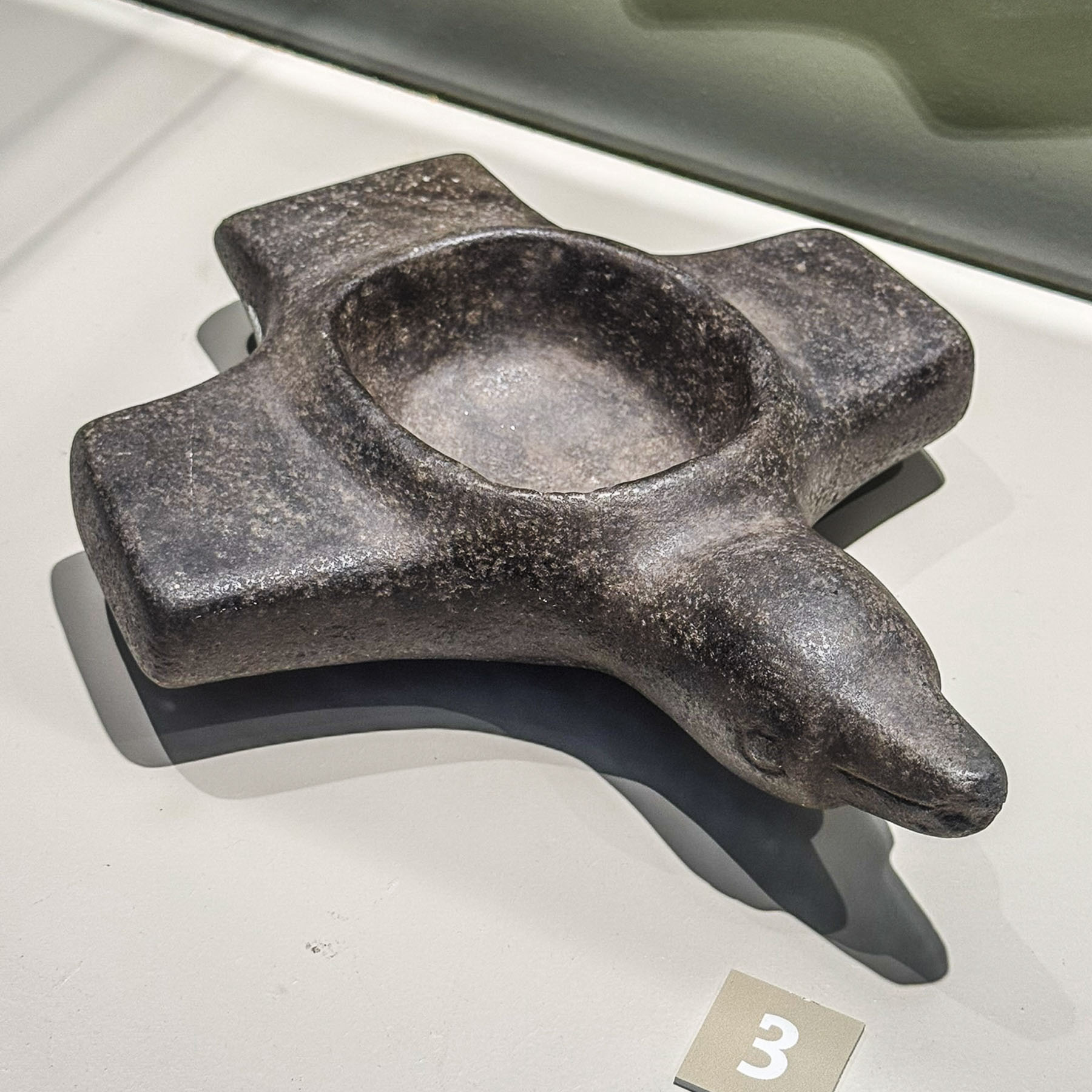
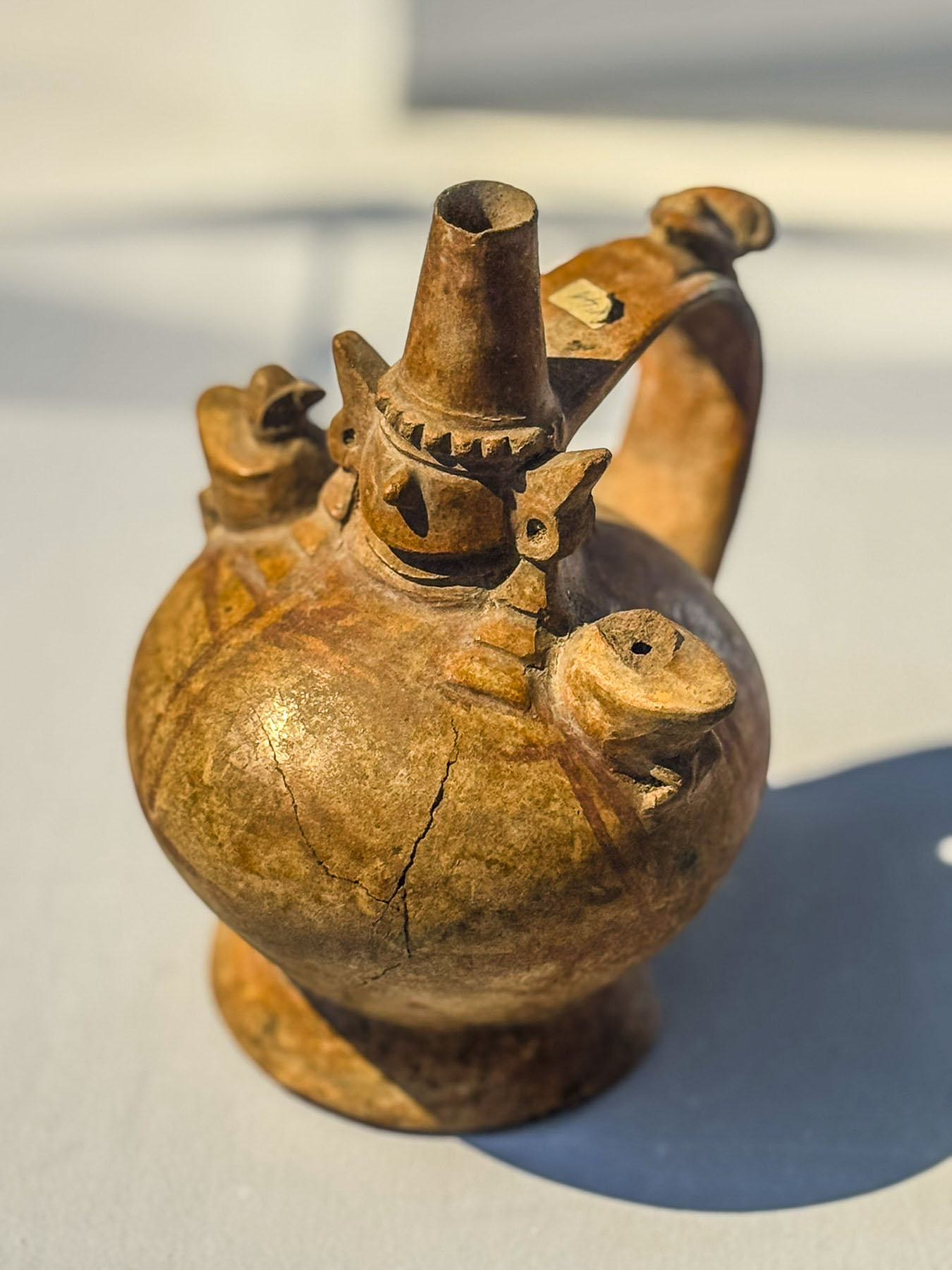
Montevideo has over twenty museums that span the spectrum from art and science to tango and carnaval. Around the corner from the café, in a 19th century building, was the Pre-Columbian and Indigenous Art Museum. It is a relatively small museum, but it has an interesting collection of archeological artifacts and an extensive collection of Carnaval masks from across Latin America.

Everything about the South American cowboy can be viewed at the Museo del Gaucho and Currency. It occupies a stately old bank building which in itself is worth poking your head into, but the immense scale of the building overpowers the exhibits of small objects used in the South American cowboy’s everyday life. Many of the fine silver items on display were from the estates of wealthy ranch owners.

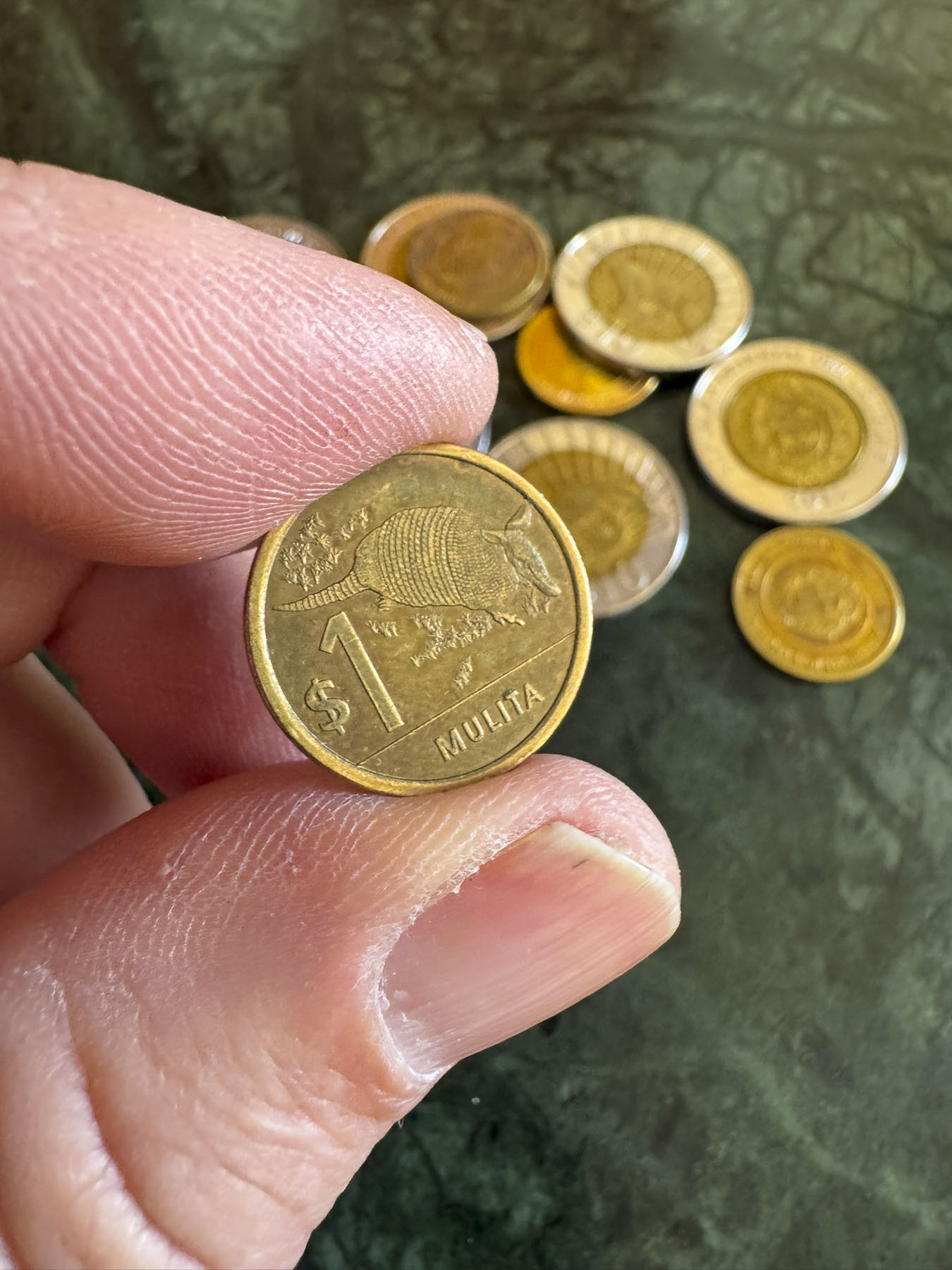
The currency exhibit was okay, but we think you really have to admire a country that puts an armadillo on one of their coins. There was also a collection of coins recovered from the wreck of the Spanish galleon El Preciado, which was sunk in Río de la Plata by pirates in 1792, as it sailed for Spain carrying gold and silver to pay the taxes levied against the South America colonies.

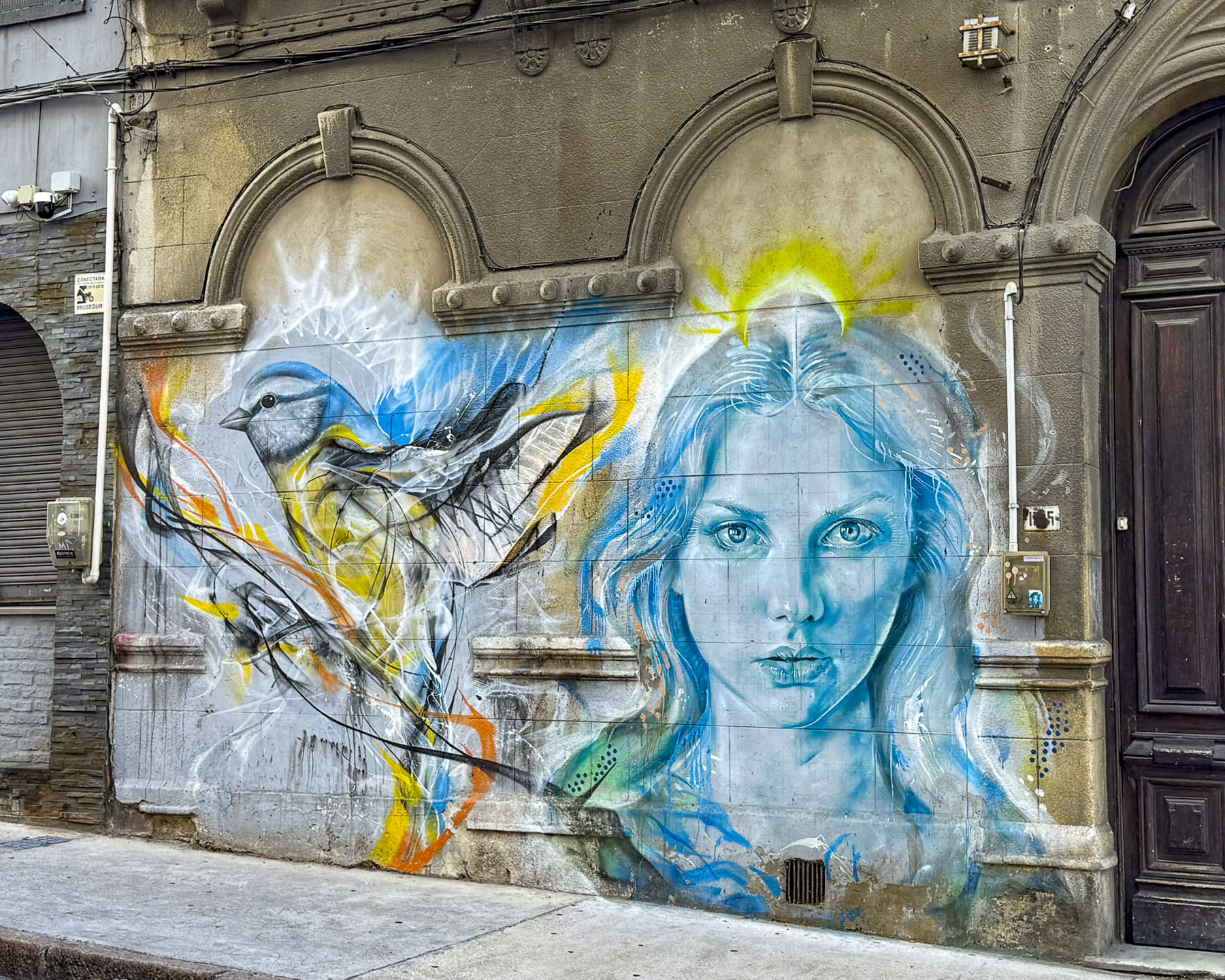
Artistic street murals can be found all across Montevideo and we passed several interesting ones on the way to the Museo de las Migraciones. We really enjoyed this museum as it celebrates the country’s diverse population of its immigrants who contributed to making Uruguay the wonderful place that it is. The exhibits confirm the belief that most folks have more in common than what separates us.

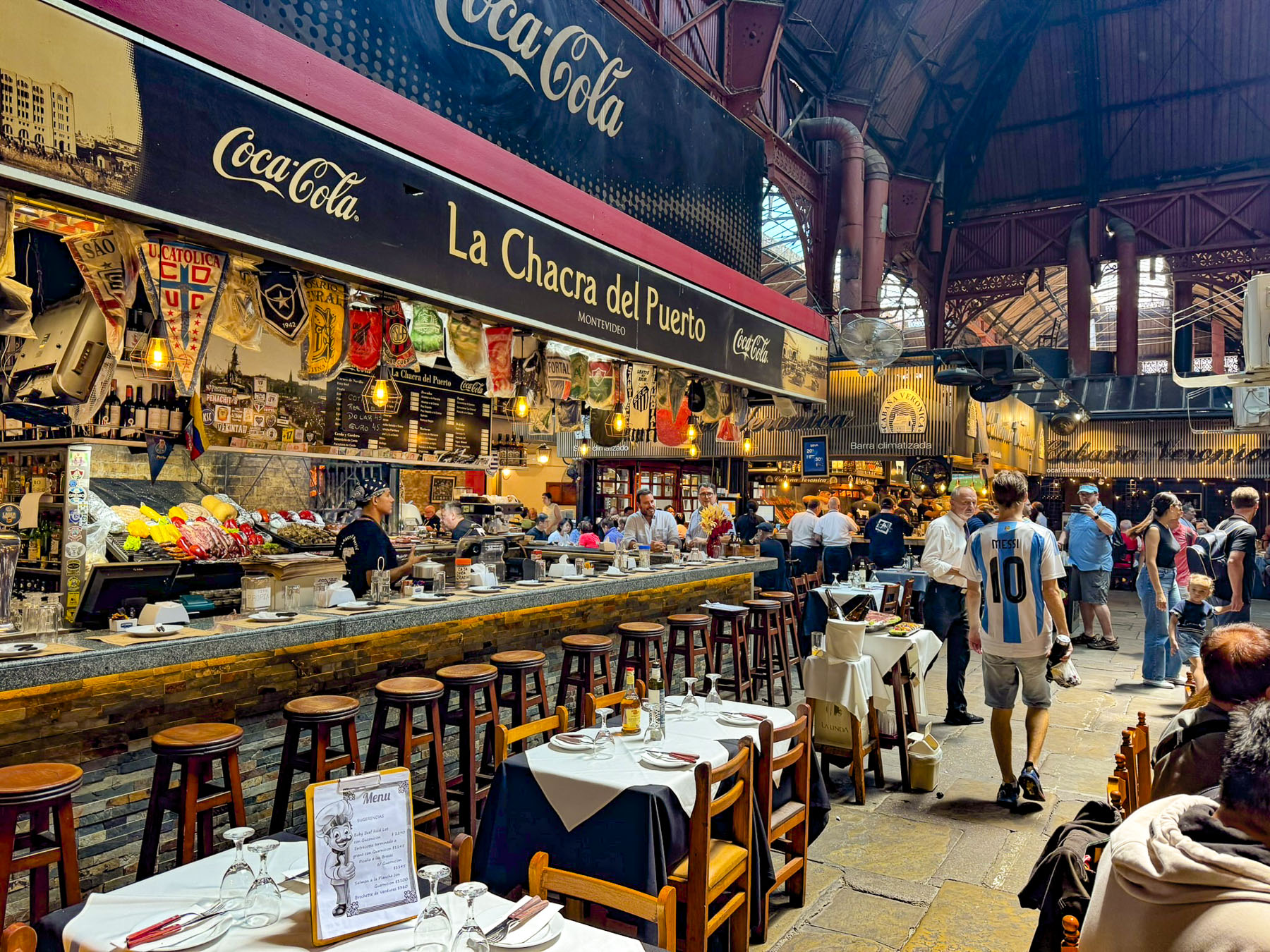
It was a long walk back towards the Mercado del Puerto. The cast-iron and glass roofed structure was imported from Liverpool, England, and feels a little like a Victorian era train station; it opened for its first customers in 1868. The old port market used to be the central place to buy supplies, fruits, produce, meats, and fish, but has now been gentrified into an atmospheric food hall, where steakhouses reign supreme, and charge a hefty price for being convenient for the cruise ships passengers which disembark at the port. That being said, we enjoyed the ambience of open wood-fired parrillas, and wafting aromas rising from the various kitchens. It was a challenge to choose a restaurant, as all the dishes that waiters whisked by us looked delicious and tempting.

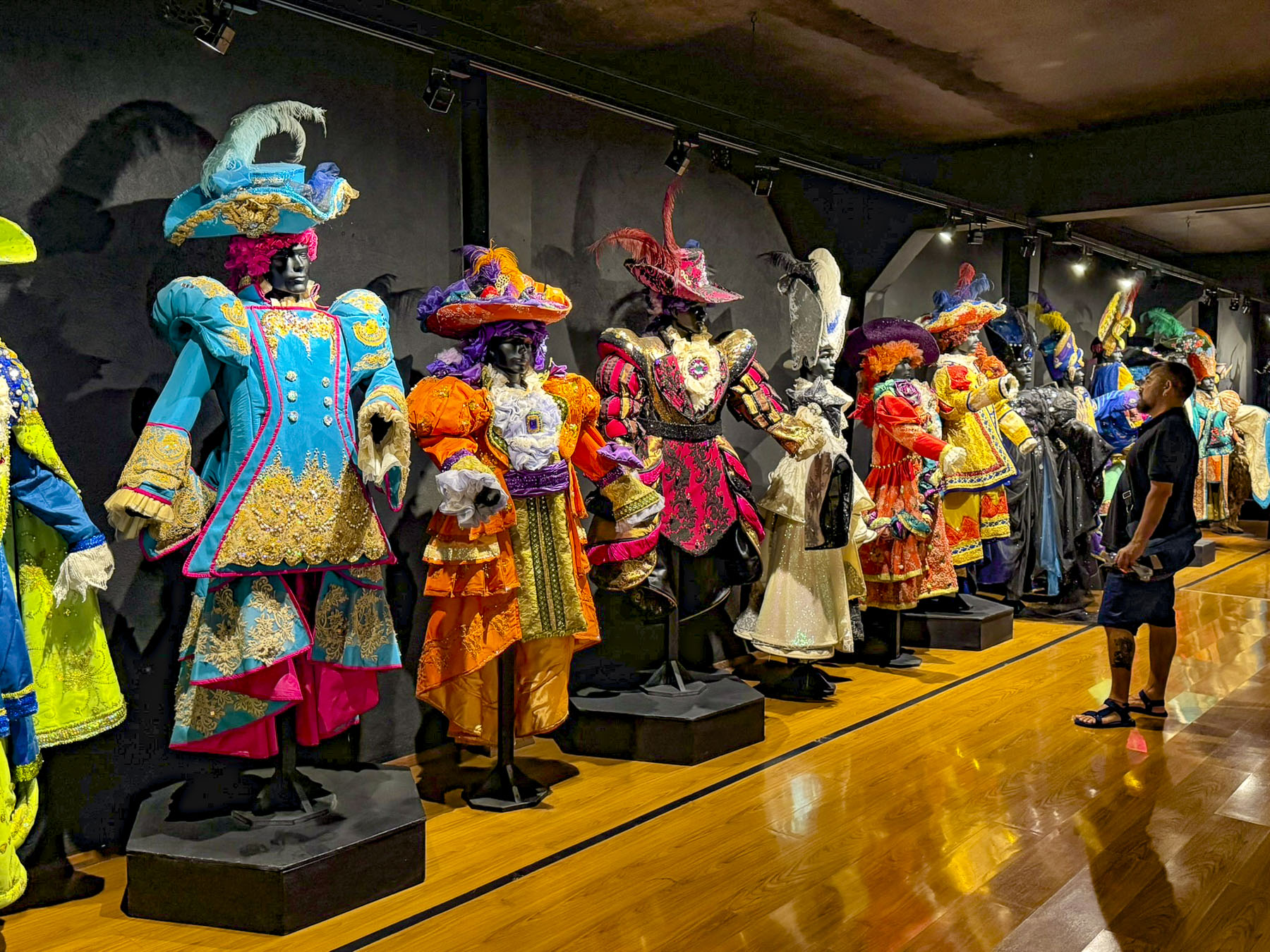
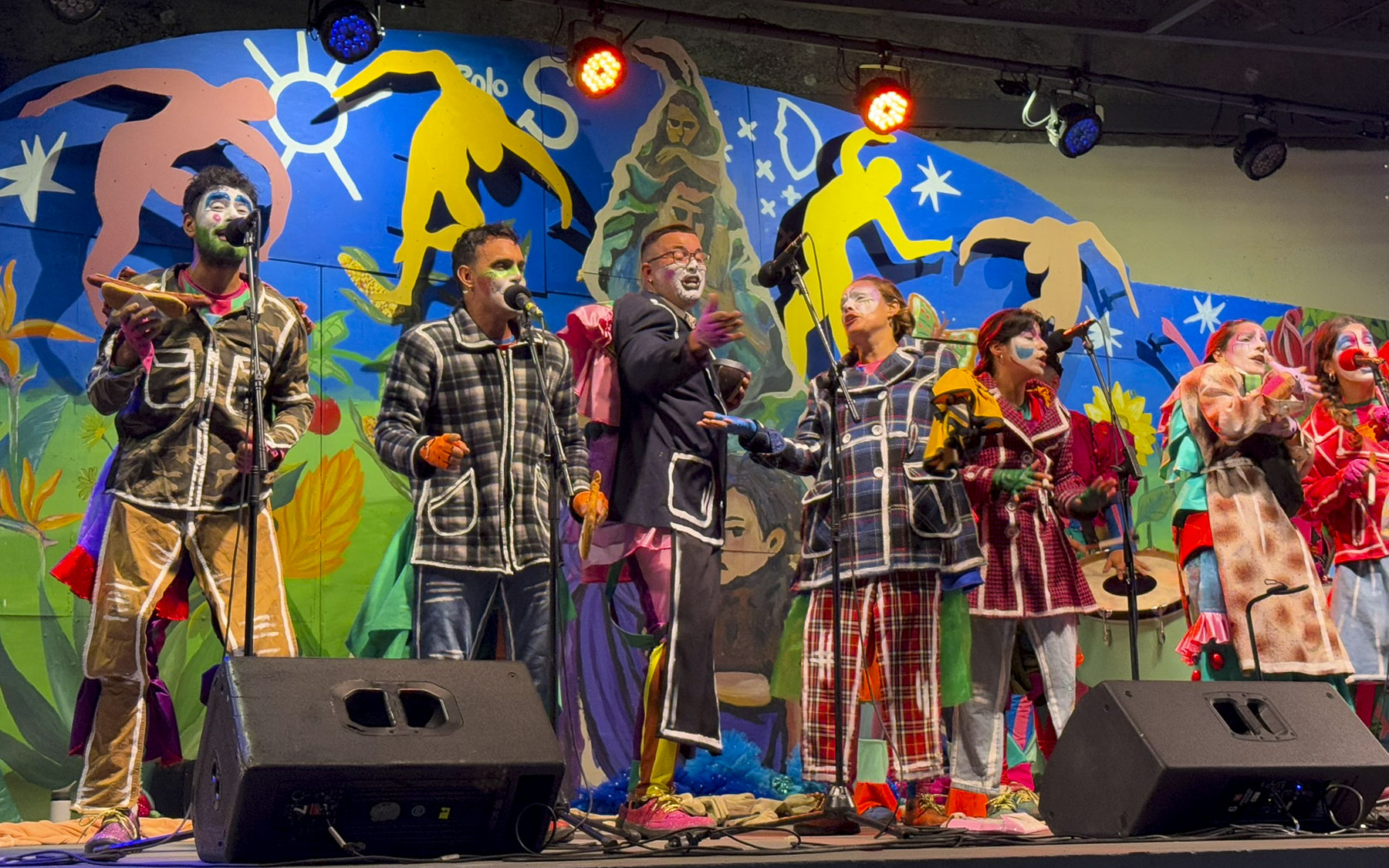
Later in the week we returned to the area to attend a tablado at the Museo del Carnaval, which also had a great collection of imaginative costumes from past carnavals. As the actors readied themselves for the performance, an announcer stepped forward. There were lots of Spanish words, followed by “Donna DiMeo Hammell” and more Spanish. I speculated that we had won the Uruguayan Lottery.  Or “maybe I’ve been chosen to participate, but I don’t speak Spanish!” Donna’s first thought was, wow, they pronounced my name correctly! The mystery was solved when Donna approached the offstage area, and a smiling theater employee handed her the credit card she had unknowingly dropped earlier.

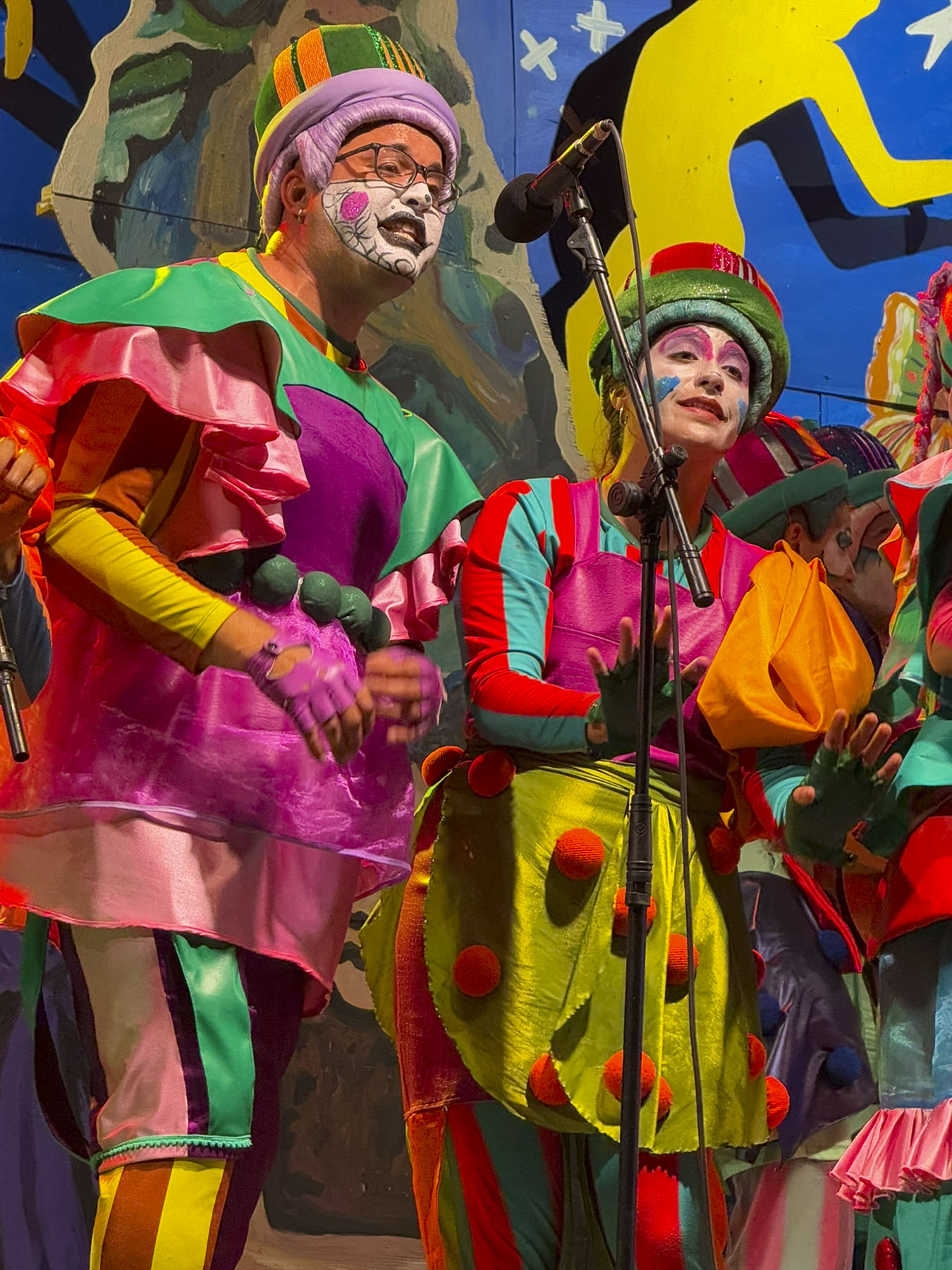
Tablados are temporary neighborhood stages set up across Montevideo where colorful theatrical and musical performances are put on by groups of actors called Murgas, known for their satirical and humorous songs, who are joined by groups of Parodistas who are recognized for their entertaining parodies of well-known stories or events.

Tablados performances only happen during the carnaval season in Uruguay, which runs for forty days between mid-January and mid-March in Uruguay. The performance we attended lasted two hours and had eight different skits. If you cannot attend one of the carnaval parades in Montevideo the tablados are extremely funny and entertaining and you don’t need to understand Spanish to thoroughly enjoy them. They are also very inexpensive.

Walking back through the newer part of Montevideo the next morning we strolled along

Av. 18 de Julio. The street is named for the day in 1830 when the Uruguayan Constitution was ratified, and is the city’s busiest street with numerous stores, restaurants and bars along its length. At the intersection of Av. Carlos Quijano was the Fuente de los Candados,

the Fountain of the Padlocks. It seems every city has one of these landmarks where couples announce their love by hanging a lock on the metalwork; many of these were engraved with names, dates, or sentiments. What’s unique about this one is that it surrounds a fountain where folks also throw coins to make a wish.

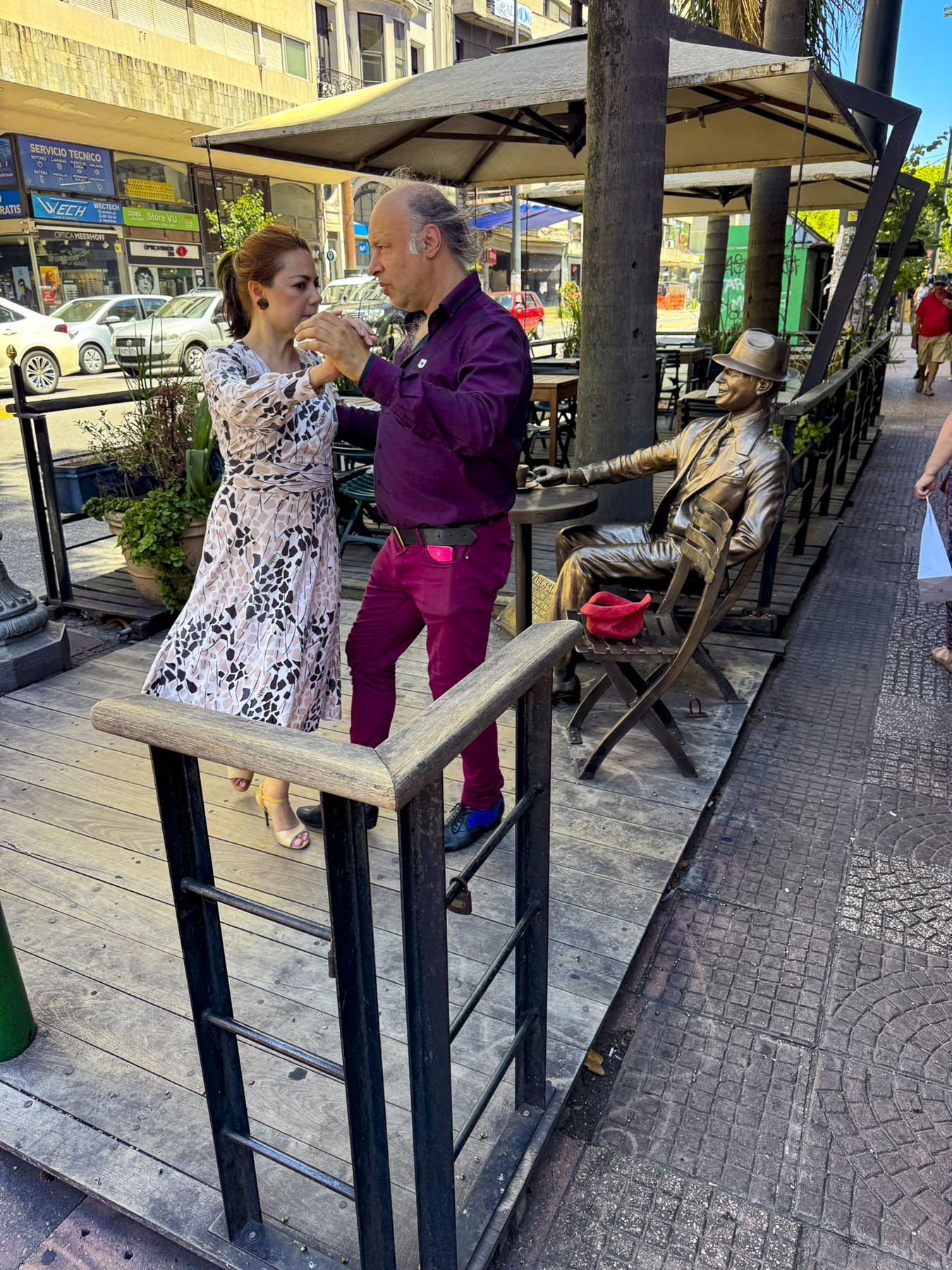
Next to the fountain was a couple busking for tips as they tango danced in front of a café. This was the only time we saw tango dancing in Montevideo, even though the city shares credit with Buenos Aires as the birthplace of the dance. The scarcity of dancers might have been because we were there during carnaval season, and so many other events were happening then.  

Nearby was the Mirador Panorámico de la Intendencia de Montevideo. It’s an open-air viewing platform on the 22nd floor of the headquarters building of the Municipality of Montevideo. Montevideo does not have a very interesting skyline, but the view was expansive, and you can see the port and how La Rambla follows the twists and turns of the coast. There is a small café inside at the mirador. We didn’t find it to be a “must do,” destination, and would suggest trying to time your visit to the mirador around sunset, if possible, to make it more spectacular.

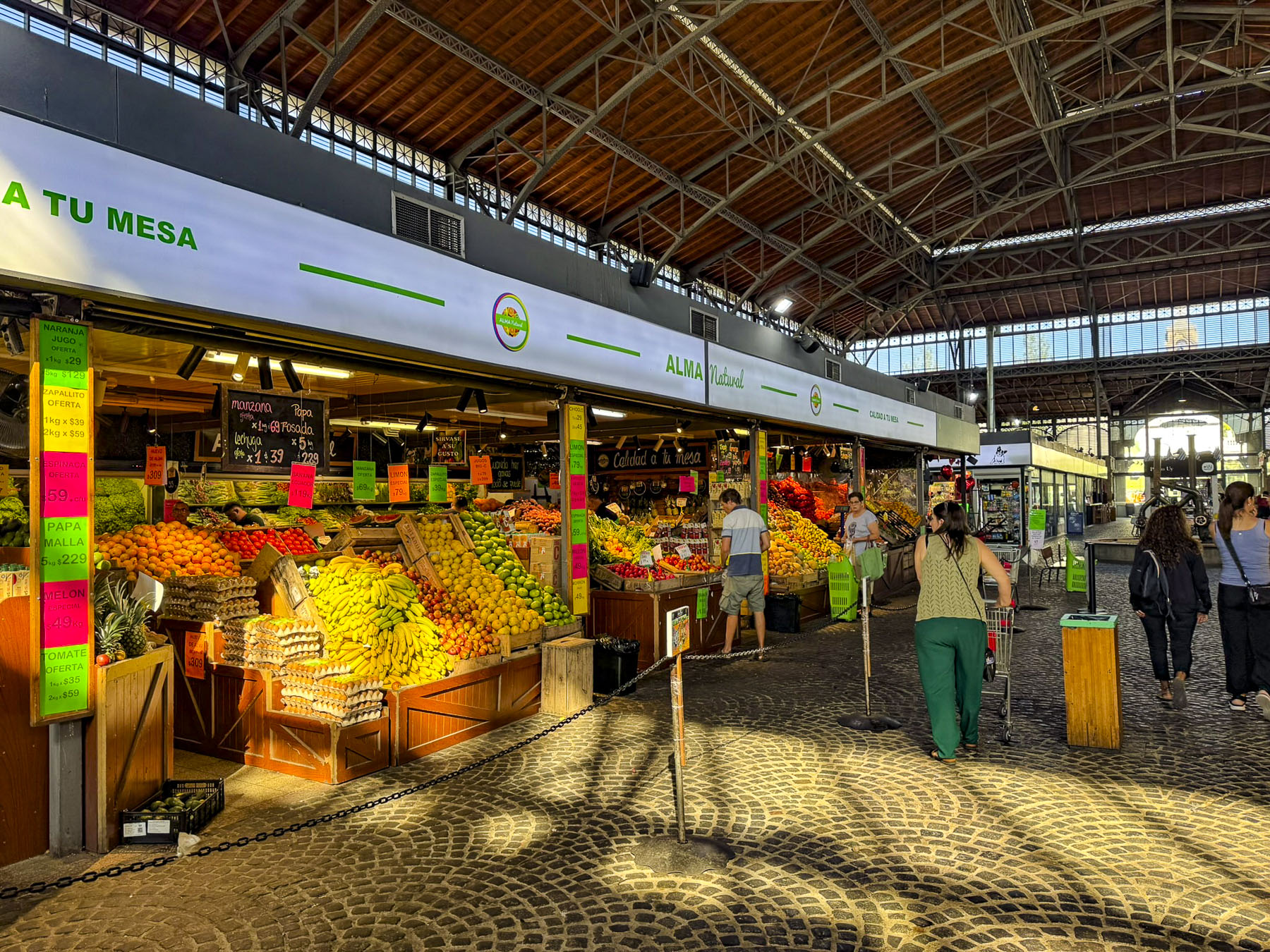
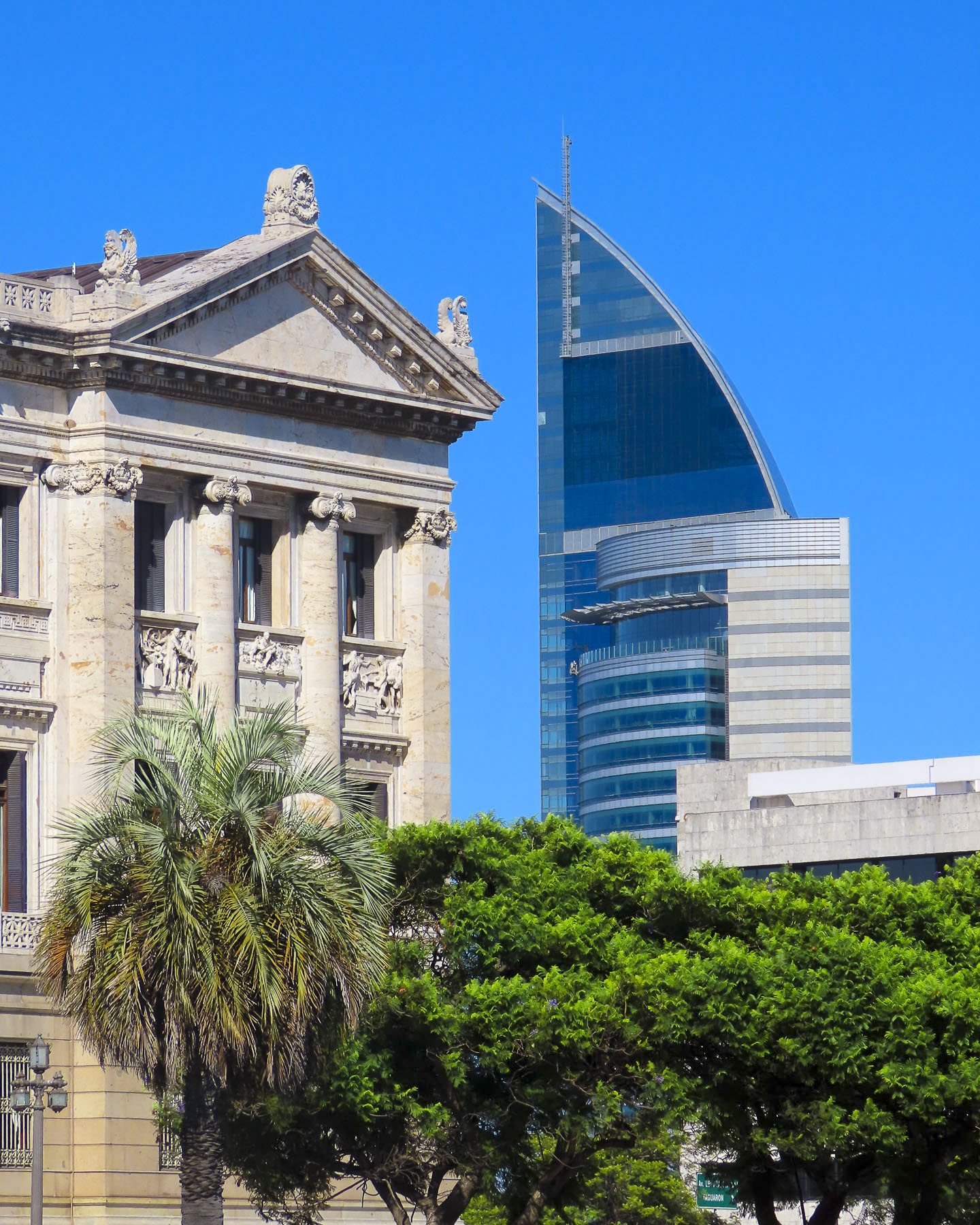
Afterwards we decided to expand our wanderings around the city, and we walked many blocks to the Mercado Agrícola de Montevideo, a historic city market that dates from 1913. We bought some fruit and empanadas for lunch. The most interesting part of our walk was around the Palacio Legislativo, a neoclassical building that is the seat of the Uruguayan parliament. The building’s iconic architecture stands in stark contrast to the large heart felt murals portraying local Montevideans, and the writer Kurt Vonnegut.

Over the weekend the Llamadas parade, one of the largest during carnaval, was taking place Friday and Saturday night in Barrio Sur. The parade celebrates the Afro-Uruguayan culture in the country with numerous comparsas, large groups of 50-100 festively dressed drummers who play traditional candombe rhythms for their dancers who perform along the street ahead of them.

Our Uber driver dropped us as close as possible to the viewing spot we had scoped out earlier in the week. But the streets were full of activity, with roads blocked for charter buses carrying various comparsas and staging areas where the dancers and drummers readied their groups.

We didn’t know advance ticket purchase was required, so we were totally surprised when the intersections were cordoned off and only tickets holders were allowed onto the sidewalks along Isla de Flores street. Fortunately, the area we had chosen had one small section that was open, and we jammed in, shoulder to shoulder, along with several hundred other folks with the same idea, to watch the parade. Folks next to us cautioned us about losing our phones to grab and run thieves, but we never felt uncomfortable in the crowd.

Carnaval in Montevideo is not as elaborate spectacle as in Rio de Janeiro where huge floats dominate the night. We didn’t last until the end of the parade, but it was a hugely fun, very authentic grassroots event that we thoroughly enjoyed. A few blocks off the parade route at Restaurante Palermo Viejo we shared our first chivito. These are huge, layered sandwiches that contain churrasco steak, ham, bacon, mozzarella cheese, lettuce, tomato, and a fried egg on top. The tasty creation was very filling, and it is often referred to as Uruguay’s national dish.

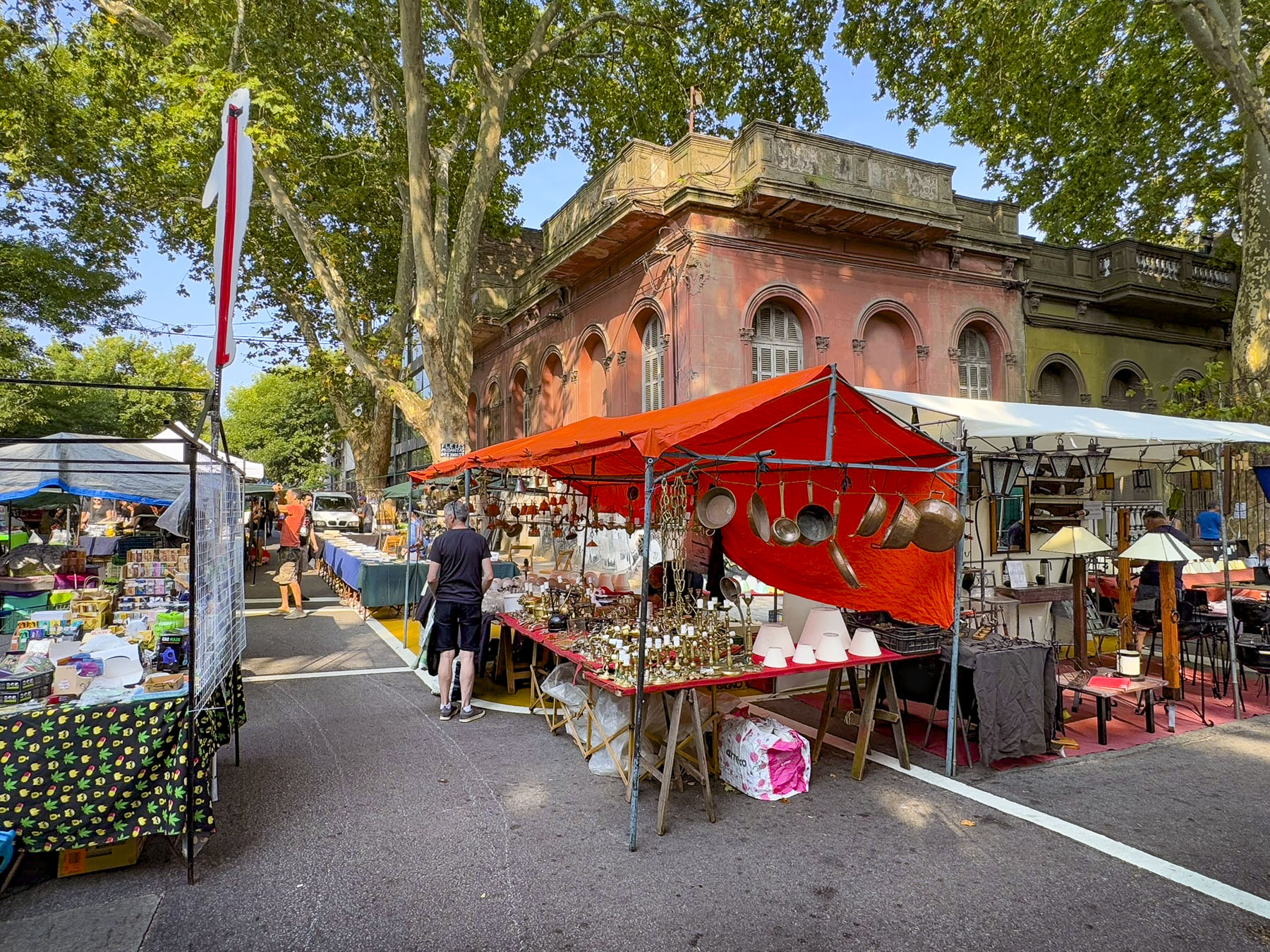
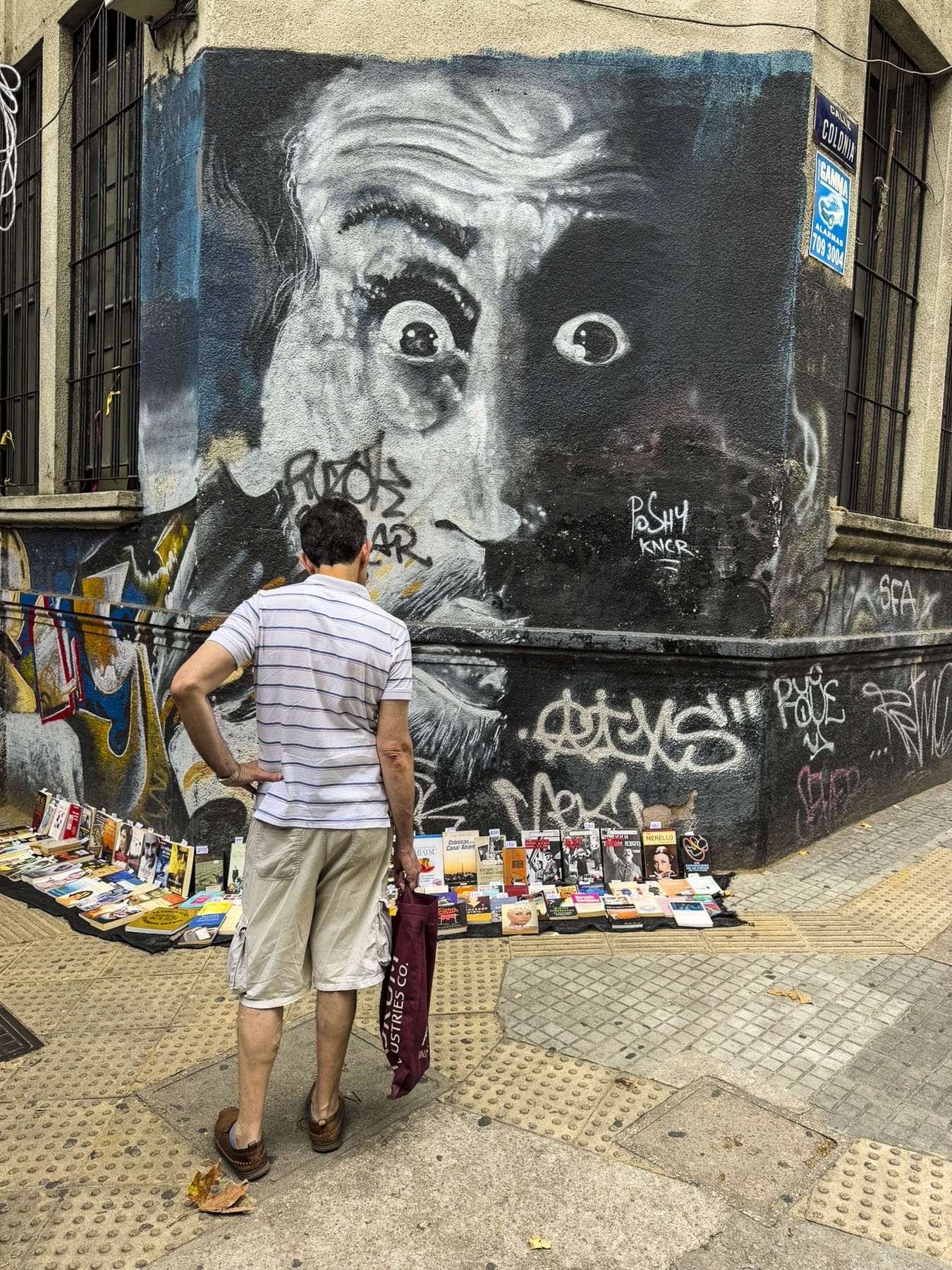
The next morning after a luscious breakfast at El Copacabana, in the old town, we took an Uber over to the Feria de Tristan Narvaja, a Sunday street market that stretches for seven long blocks through the Cordon neighborhood. It features a multitude of vendors selling everything imaginable, along with secondhand clothing, used books, fresh produce, and artist’s handcrafted creations.

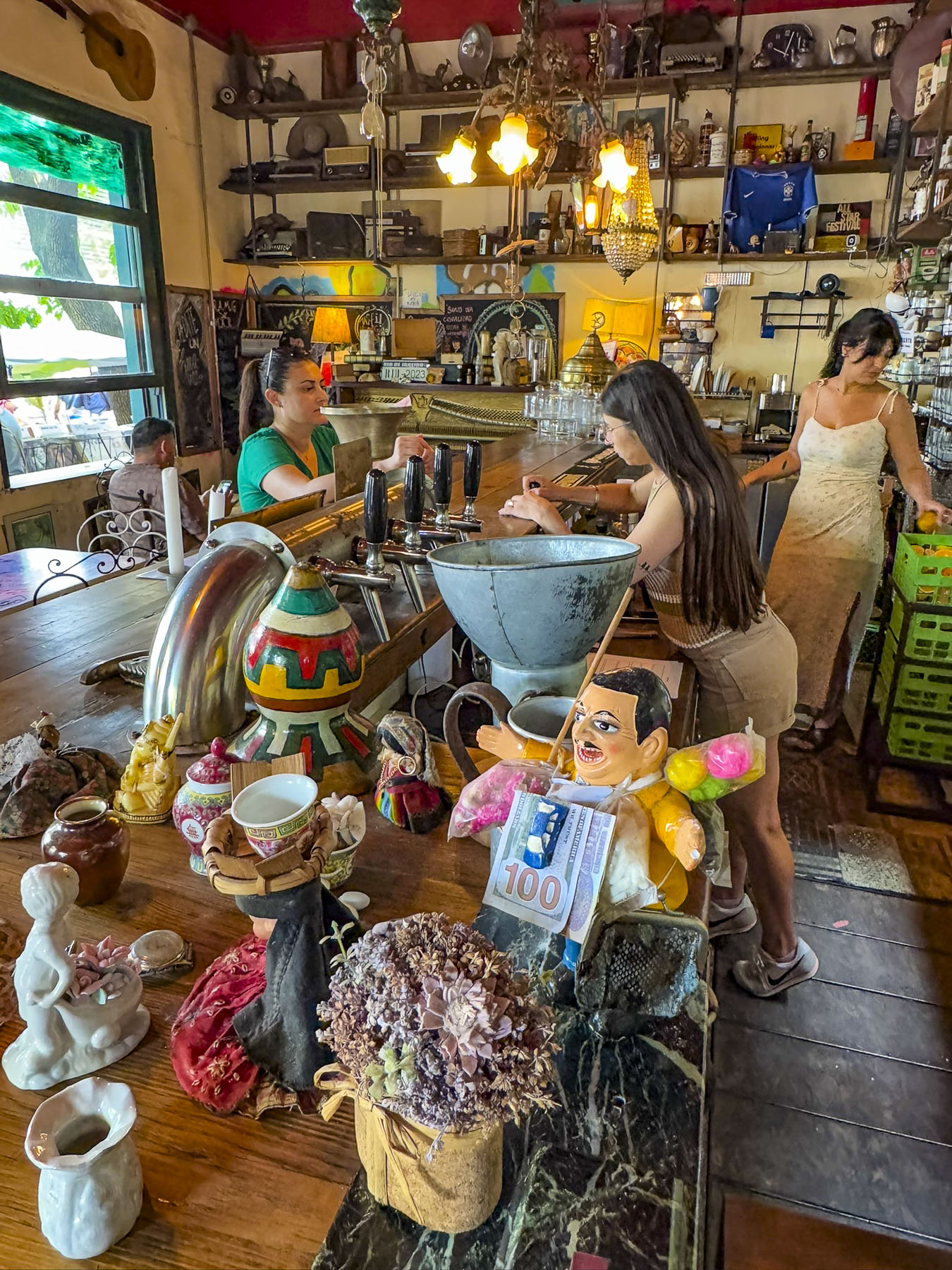
Following our “walk a little then café” philosophy we took a break at El Imperio, an eclectically decorated bar, where the barista between serving inside customers ran trays of espressos out to the vendors on the street. We thought the feria was one of the more interesting ones we’ve experienced during our travels and think it’s a must-do activity when visiting Montevideo, if you like this sort of event.

Later that morning we headed to the airport and picked up a rental car we had reserved at Localiza Aquiler de Autos, a very good local agency with reasonable rates, for our 12 day road trip, which we were starting the next day. But first we had one more thing to do locally, and we drove an hour north into the countryside outside of Montevideo. Nearly forty percent of Uruguay’s population lives in Montevideo, but the city’s urban sprawl quickly transformed into gently rolling farmlands and vineyards as we drove through the Canelones region to the Cabaña La Mansedumbre, a rustic, under-the-radar destination restaurant. We eventually turned down a sandy dirt road. A small weather-worn sign hung from the cattle gate across the twin tracks that led to Fredy and Silvana’s ranch. When making our reservation, he had reminded us to close the gate securely so his goats wouldn’t escape.

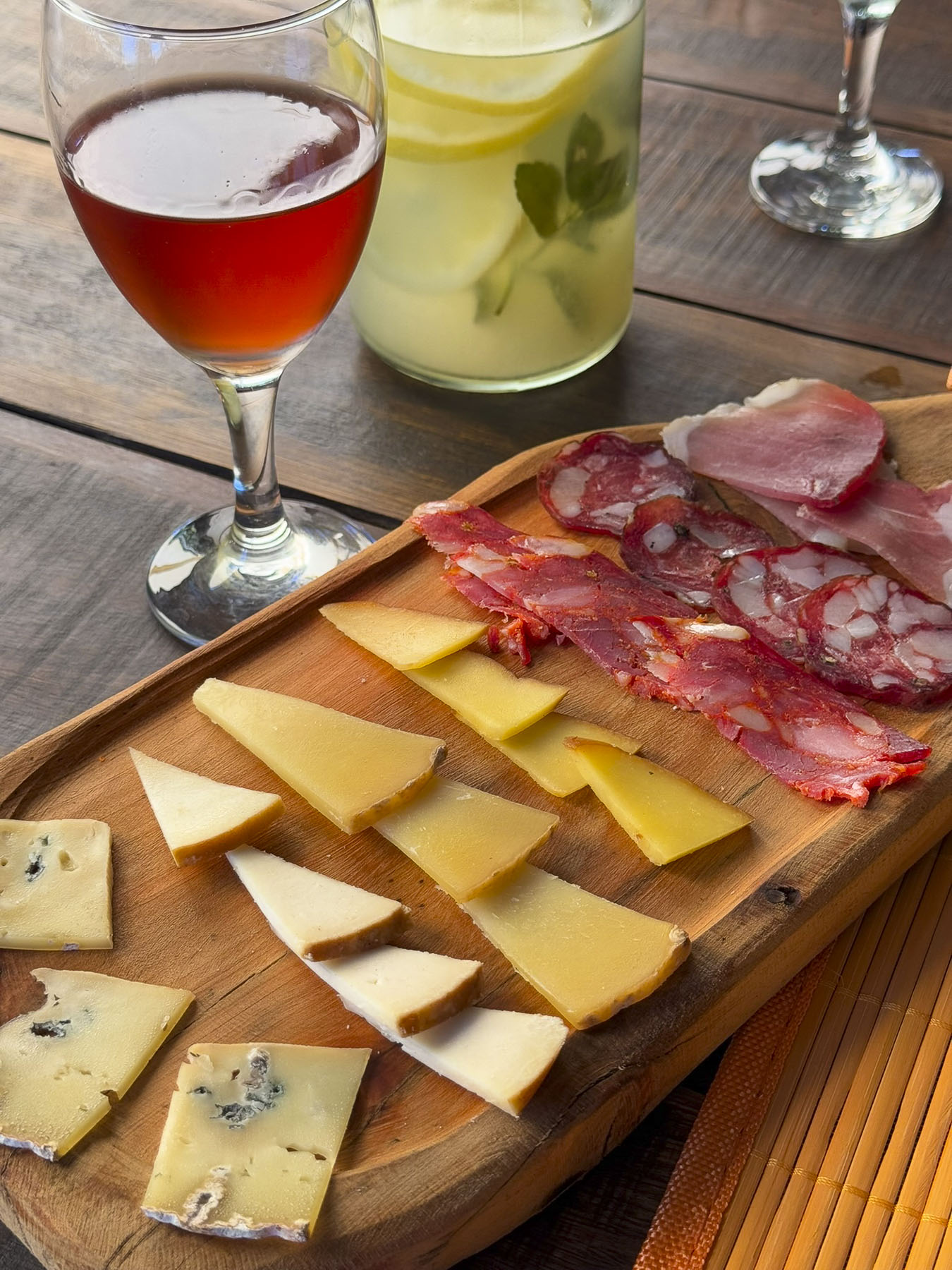
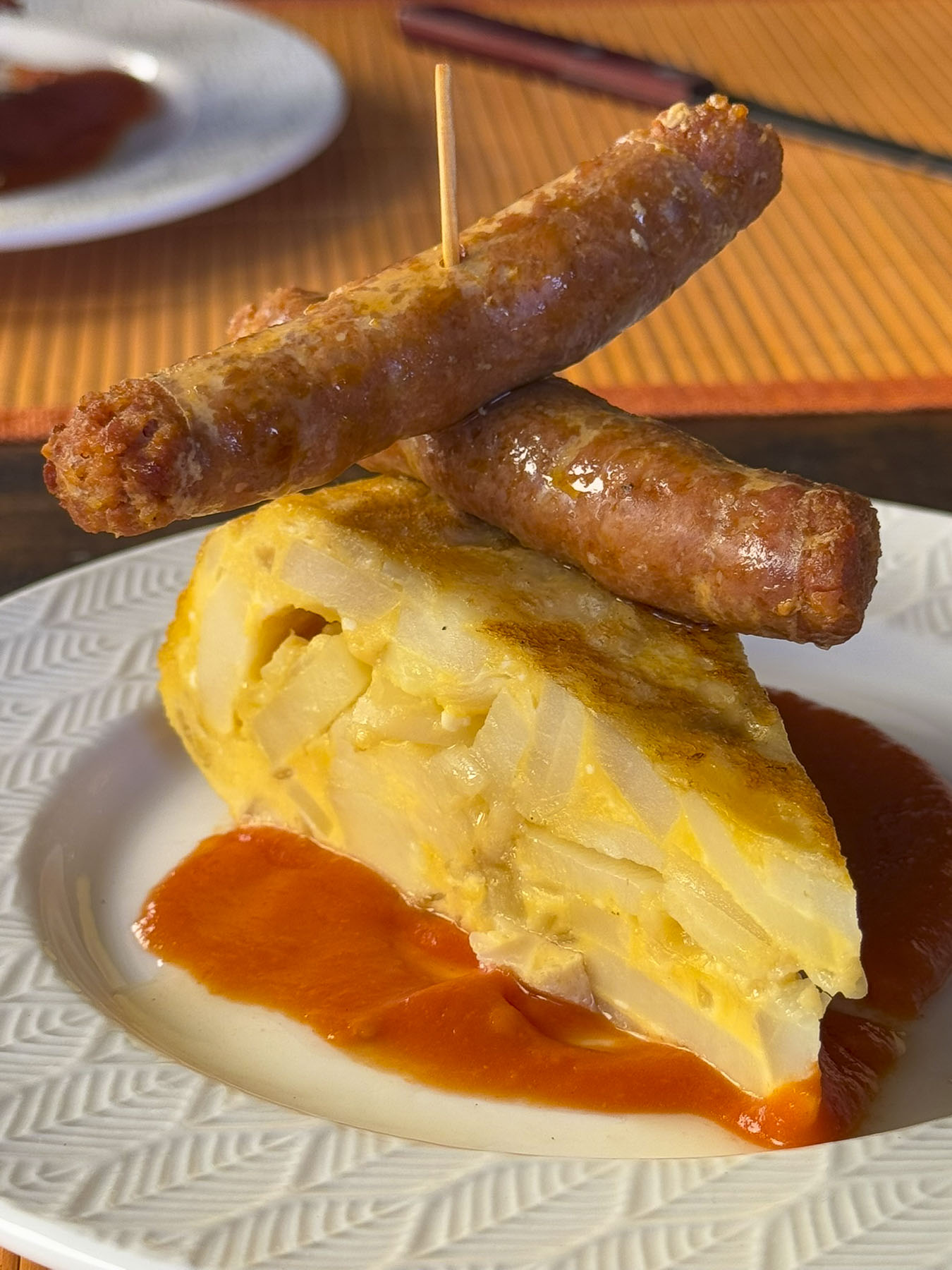
We were the first guests to arrive that afternoon and were warmly welcomed into the courtyard of the couple’s rural farm stead. A tour of the open-air kitchen followed where we met Fredy’s son Juan, as he was preparing charcuterie boards under an array of sausages and cheeses hanging from the rafters. Heat emanated from a brick oven in the corner. Two large golden tortilla de papas cooled on a countertop under shelves laden with jars or homemade sauces, jams, and jellies. Baskets of fresh bread and rolls which Silvana had baked that morning tempted us with their wonderful aroma. 

Very enthusiastically Fredy explained that everything they use to prepare their dinners is sourced within a 5-mile radius of their farm. Though many items, like the goat cheeses, were made by his neighbor using the goat milk from Fredy’s herd, while the tanat wine we were offered, as we waited for the other guests to arrive, came from a friend’s vineyard at the other end of the road. Bottles of grappa that Fredy had infused with herbs lined a shelf above wine casks which flowed freely all afternoon.

Neither has trained as a chef, but they both share a passion for food and travel which has inspired them to refine their skills over the years, and now share their enthusiasm for great food at their home on the weekends. Seeing their farming community’s potential they have encouraged their purveyors to provide new and different sausages, cheeses, and produce than what was traditionally available in the past.

With everyone’s arrival we were seated at tables under their tinned roof porch. We were hoping to experience a traditional Uruguayan asado, but grilling meats on the parrilla was not part of the gourmet eight course feast that the couple had planned.

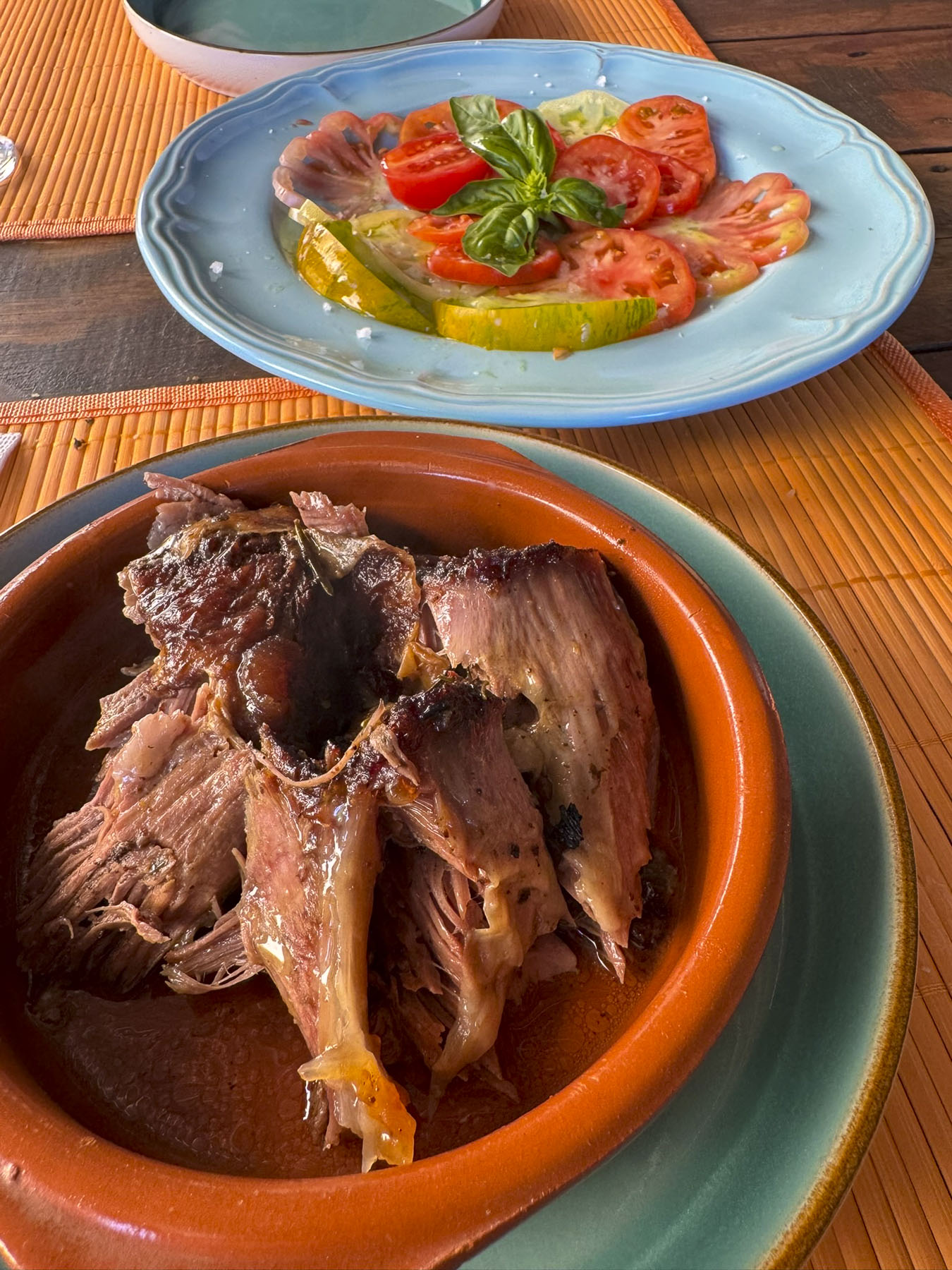
Our initial disappointment faded quickly as amazingly delicious dishes emerged from that simple country kitchen for nearly three hours that afternoon. Every dish was uniquely flavored, excellently prepared and presented. Coffee, dessert and grappa crowned the dinner. We wish we had taken notes, but photos of some of the dishes will have to suffice. 

The dinner was nicely paced, with plenty of time to talk with the other guests and enjoy the wine between courses. It was a memorable afternoon, and an excellent farm to table dining experience, along with being the best meal we had while visiting Uruguay.

For reservations Fredy and Silvana can be contacted through phone & WhatsApp +598 99 390 054.

Montevideo consistently ranks as the top city in Central and South America for quality of life. We thought it was a great destination, especially during Carnaval and it exceeded our expectations.

Till next time,

Craig & Donna
P.S. Our 12 day road trip through Uruguay started the next day.

During our stay, Donna had horrible hacking cough, that was so concerning one night we called the reception desk at NH Montevideo Columbia to ask for advice. The hotel, to our relief, had a physician on-call who made a late-night visit to our room. After an initial exam the doctor wrote a prescription for a chest x-ray in the emergency room at The British Hospital, a private hospital in downtown Montevideo. Fortunately, it was a quiet night at the hospital, and we were attended to quickly after checking in. We had a good experience there, the x-rays were negative for lung infection, and the hospital visit was totally covered by our travel insurance.

Street parking everywhere in Uruguay is free!

Driving Through the Baltics: Part 11 – Lake Peipus or Old Believers, Onions, and Honey

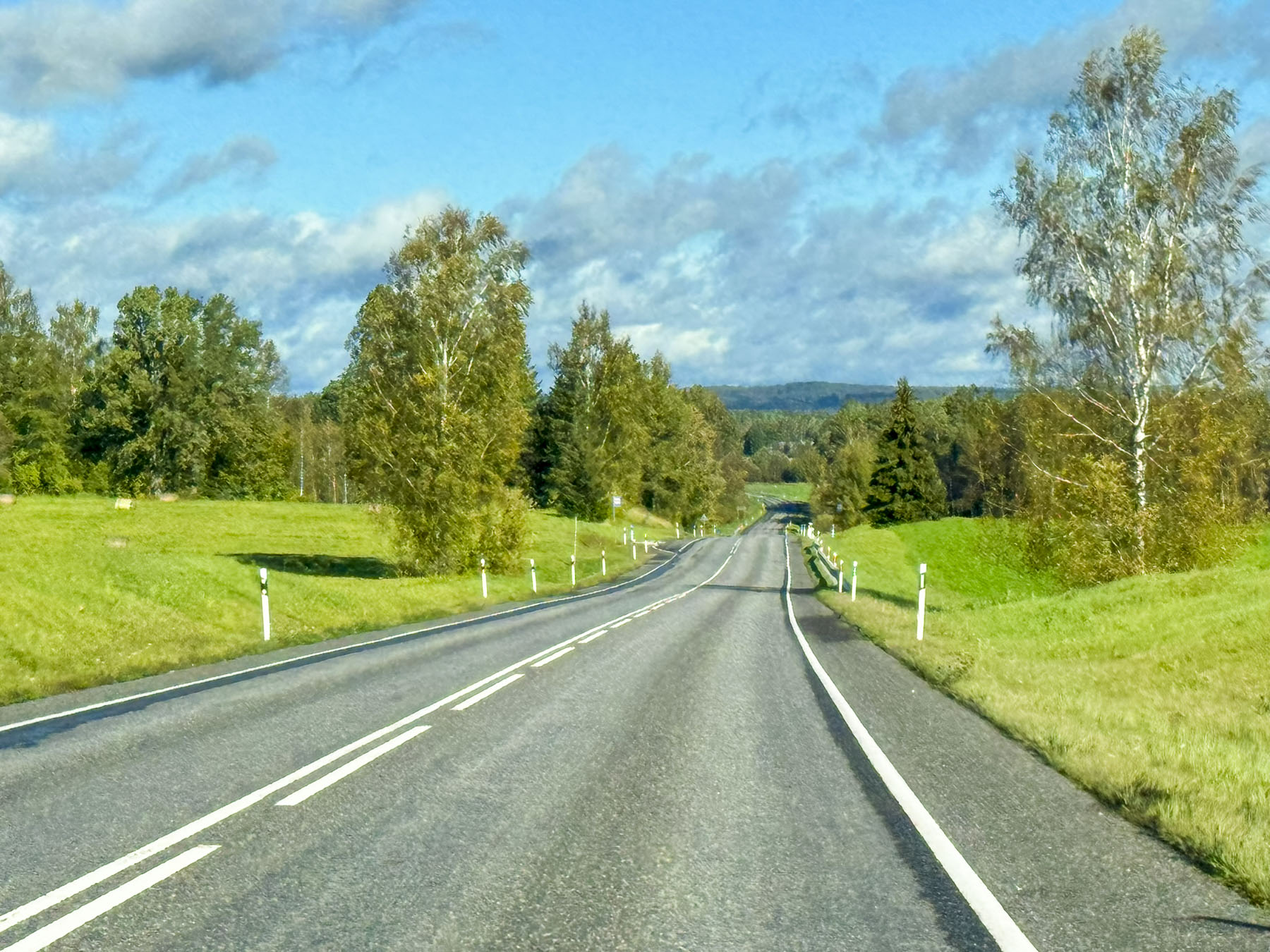
Gently undulating farmlands soon flanked the road as we departed Tartu for a day trip to the Old Believers villages that dot the southern shoreline of Lake Peipus, Estonia’s largest lake which creates part of the country’s border with Russia. The villages are also part of the Onion Route, a 30km (19mi) tourist drive that promotes the area’s culture and “Estonia’s most celebrated onions, the Peipsi sibul, a golden variety known for their long storage life and flavor,” which the Old Believers have cultivated in the sandy soil of the region for several centuries.

The group’s name stems from a schism with the Russian Orthodox Church in the 17th century, in which they did not abide with the reforms Orthodox clergy patriarchates were initiating, and wow, wow, wow regarded the reforms which curled the beards of its elders, “as a corruption of their faith which was heralding the End of Days, and as such the Russian church and state were servants of the Antichrist.” Their dissent wasn’t allowed, and during The Russian Orthodox Synod of 1666-1667 the church and Tsar Alexis sanctioned their persecution. The group’s oppression was so severe that some ardent followers self-immolated in the ultimate act of protest. Thousands of Old Believers chose to escape their persecution and fled across Lake Peipus for refuge, and established a series of farming and fishing communities, in then Swedish-controlled Estonia, in which they prided themselves on their self-sufficiency.

We passed more farm tractors than cars that morning, but it was still a surprise when a large John Deere tractor pulled up alongside us in the gas station to refuel. Varnja is the southernmost village and the gateway to outdoor activities in the Peipsiveere Nature Reserve, which protects the fish and wildlife of the Emajõgi delta.

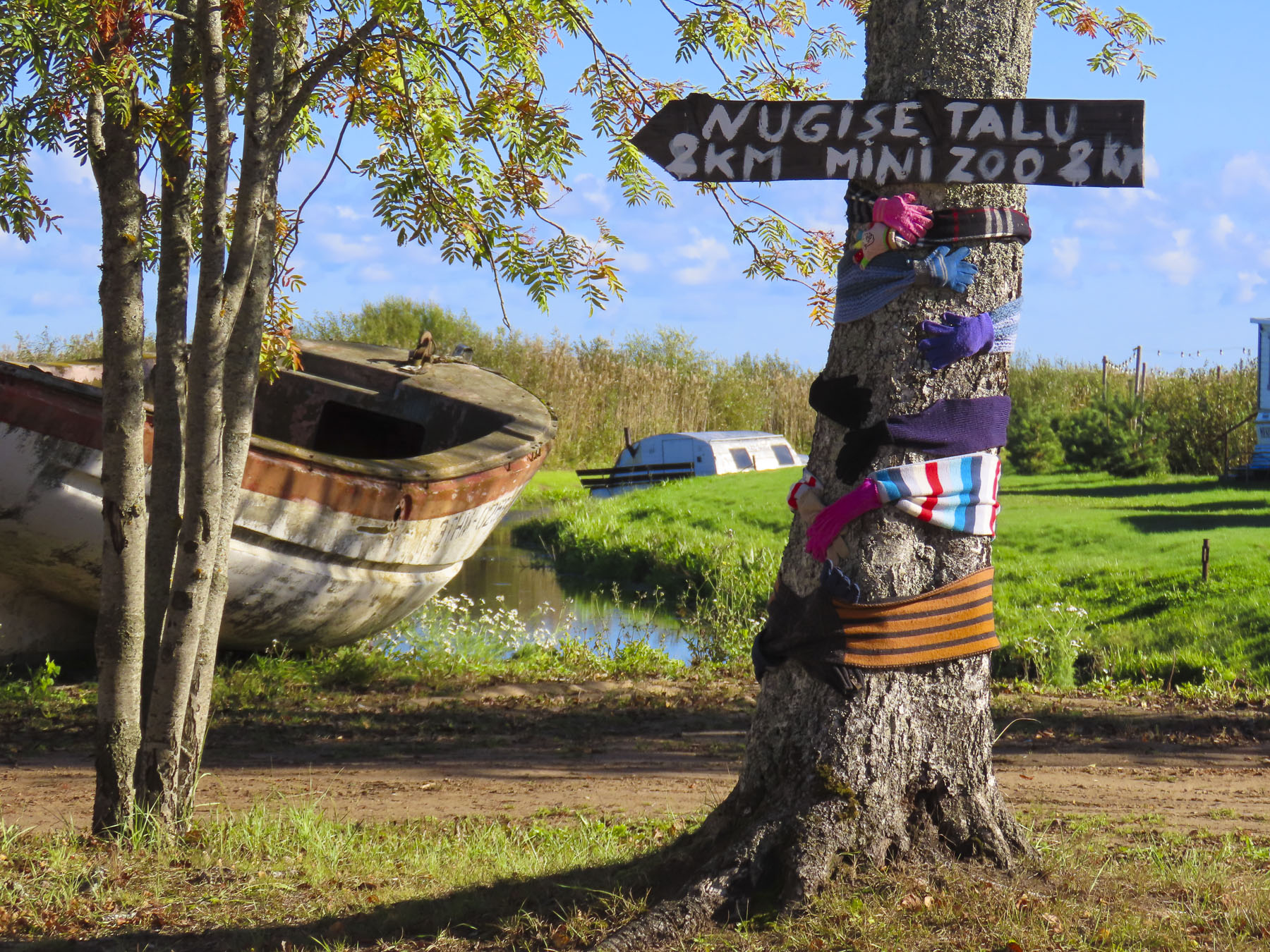
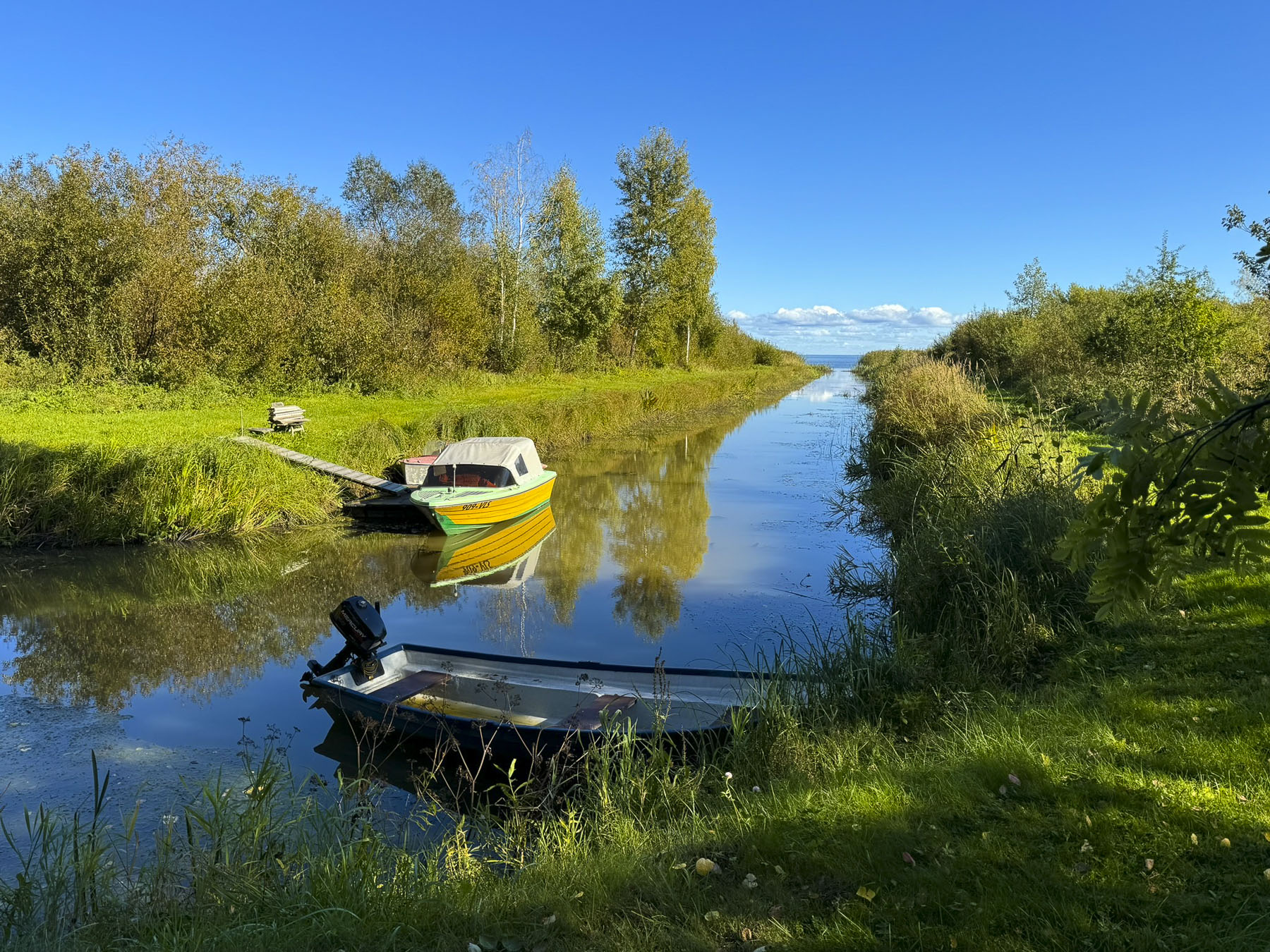
It’s a beautiful area, and was nearly deserted mid-week at the beginning of October. Fishing was once a viable livelihood, but only a few boats go out nowadays. Instead, some folks have converted them into niche rentals, like the owners of Mesi Tare who have creatively repurposed several small boats into maritime bungalows, both floating and permanently beached.

There wasn’t a soul about in the village, only an idle tractor in front of a barn with bundles of onions hanging from its rafters, or a plume of smoke from a chimney, and the lone dog sunning obliviously in the middle of the lane. Winter preparations were underway with large free-standing globe shaped piles of freshly split wood stacked along the lane or piled in cords neatly along the sides of houses.

As we left the hamlet and headed north on Kesk Tn, the main road connecting all the settlements along the lake, we stopped at Varnja’s Old Believers Prayer House, a red brick structure built between 1928 and 1930, and the nearby Issanda Templisseviimise, the town’s youngest Old Believers chapel constructed in 2015.

As we headed farther north, long narrow inlets, like the fingers on our hands, stretched from the roadside into the lake. Baskets, bowls and buckets of apples were in front of homes with backyard orchards that had what is commonly called in Estonia, “the apple flood.” This abundance is shared with the community, and the apples are free. It’s a long-standing tradition that reflects a spirit of sharing and generosity within Estonian culture. Occasionally, an abandoned stork’s nest crowned a telephone pole along the road, their yearly winter migration to southern Africa had already started in August.

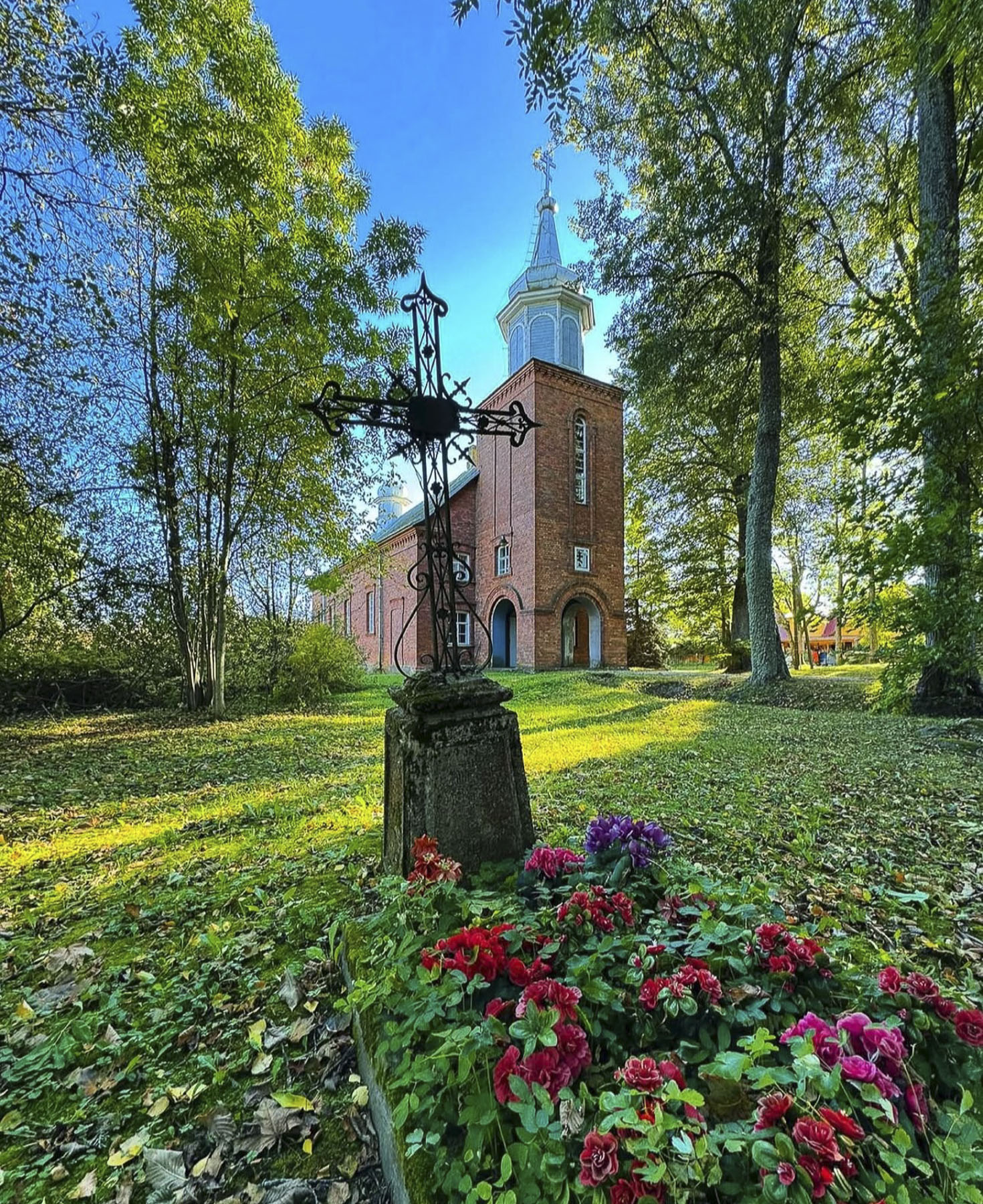
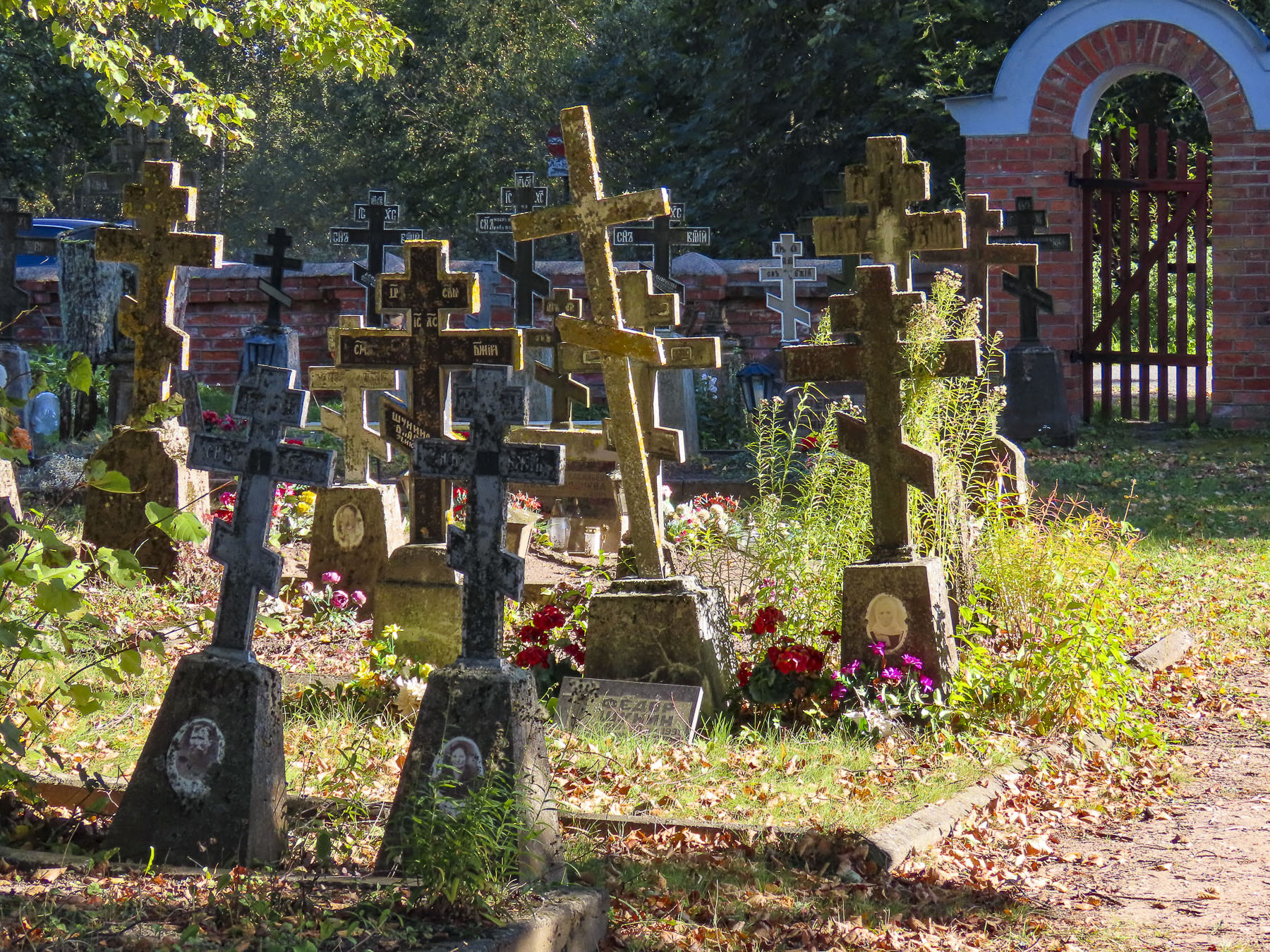
We turned off the main road at every sign that pointed to the way to a kirk, church. The Kasepää Old Believers Church and Cemetery were particularly interesting.  The current 1862 sanctuary sits atop the foundation of a building that is thought to be the site of one of the group’s earliest churches after their exodus from Russia. Graves in the cemetery were marked with the traditional three horizontal-bar Orthodox cross. The configuration dates from the 6th century in which the Top Bar represents the inscription ordered by Pontius Pilate, The Middle Bar, the main beam where Christ’s hands were nailed, and Bottom Slanted Bar symbolizes the footrest and its slant reflects the fate of the two thieves crucified alongside Jesus – upward towards the repentant thief (St. Dismas) and downward towards the unrepentant one.

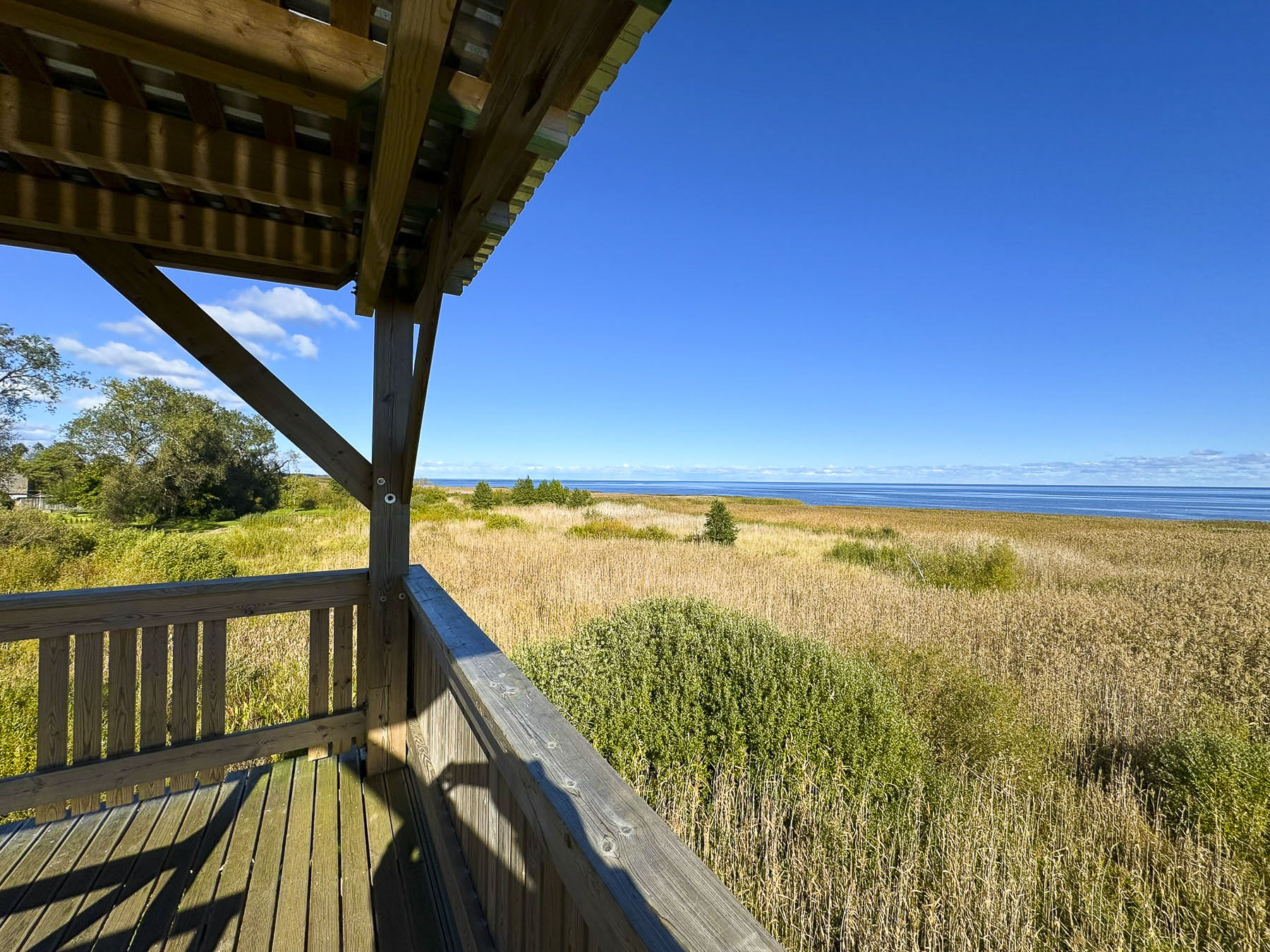
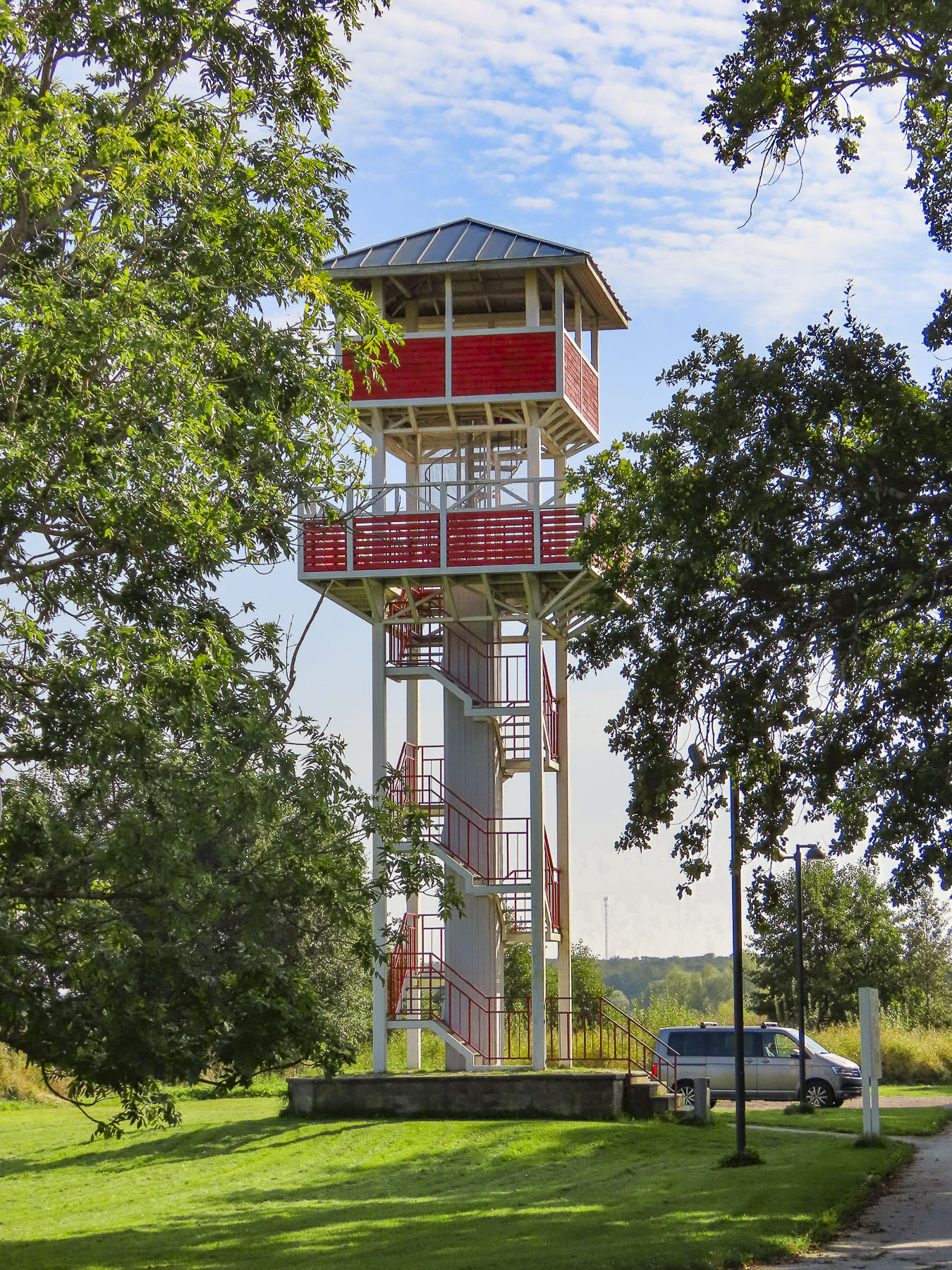
In Kolkja, a village first mentioned in historical records of 1592, we climbed the Vaatetorn bird-watching tower for an expansive view across the marshes and 3,555km2 (1,373 sq mi) Lake Peipus. The 219km (136mi) long lake has an average width of 82km (51mi), and is surprisingly very shallow, with an average depth of 7m (23ft). At its northern end the lake feeds into the Narva River between the Estonian border city of Narva and the Russian city of Ivangorod into the Gulf of Finland. Ice fishing is a popular winter activity on the lake which typically stays frozen from November to March. Small ice flows remain on the northern part of the lake until early May. Though with the recent climate change folks living along Lake Peipus have noticed a shortening of the ice season.

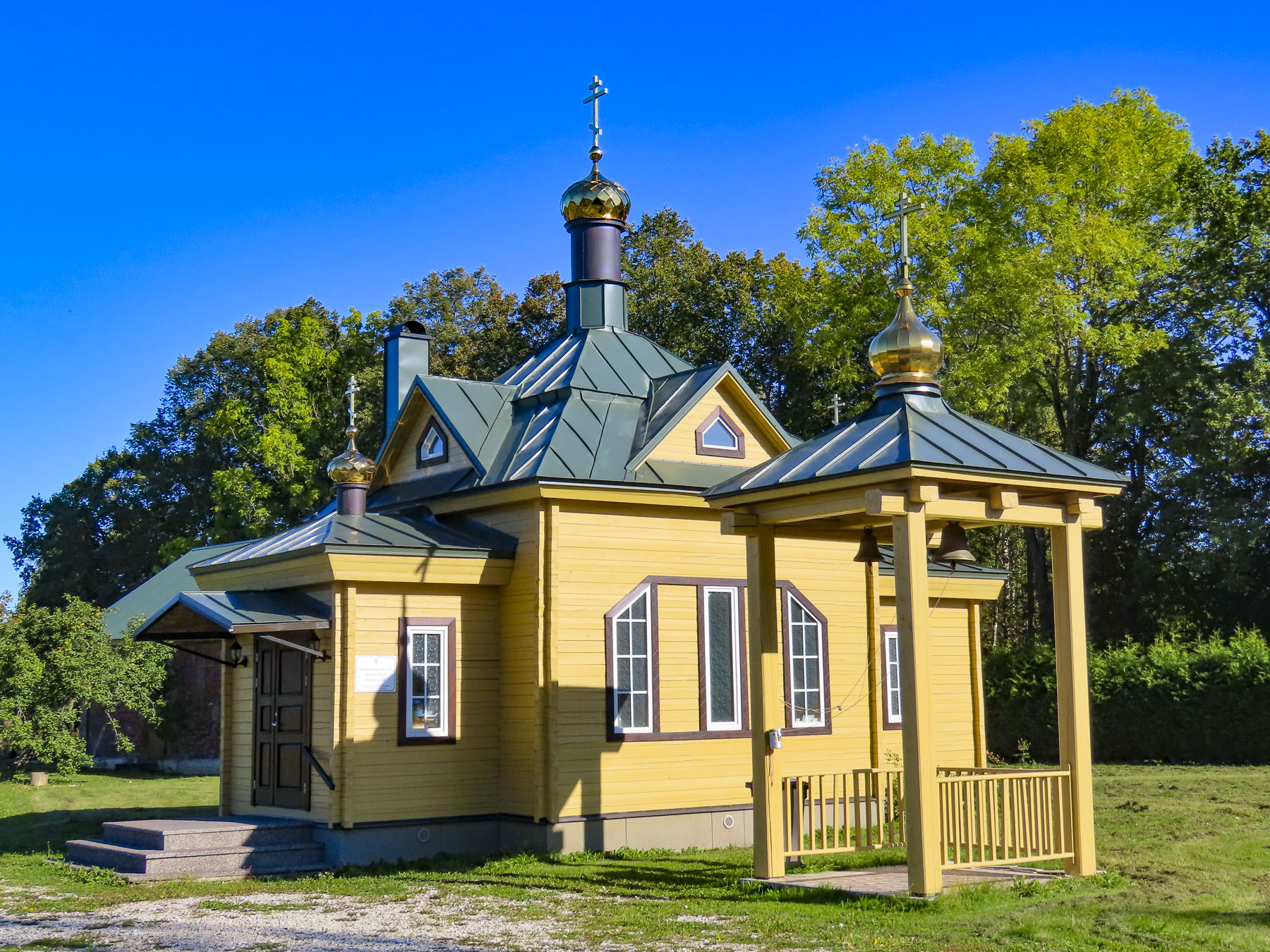
Afterwards, we stopped at Suur-Kolkja Vanausuliste Palvemaja, an Old Believers house of worship that was constructed in 1883, and its cemetery which was down the lane.

As we left the village an enterprising older woman, with a babushka covering her head, was unloading bags of onions, loaves of bread, and jars of jam from the trunk of a taxi and arranging them on a foldable card table she had already set up along the road. We had assumed the area was nearly deserted, but maybe there was an end-of-day rush hour as people returned home from work.

Although several museums, cafes and restaurants were shown on Google Maps, they were only open on the weekends during shoulder season. Our search for coffee took us to the larger town of Alatskivi, where we were able to satisfy our “drive a little, then café,” philosophy with a good lunch at Kivi kõrts, a bright eclectically decorated tavern, including a restroom decorated in a quirky theme.

We drove farther to Kallaste, a still larger village on the shore of Lake Peipus, but were discouraged from investigating the town in depth by the number of roadwork closures that hindered our travel.

On our return route to Tartu we passed through Alatskivi again and purchased honey from an automated vending machine near beehives in front of a local beekeeper’s home. We enjoy the simplest of things and found this combination of ancient practice and modern technology delightful. The machine even accepted credit cards.

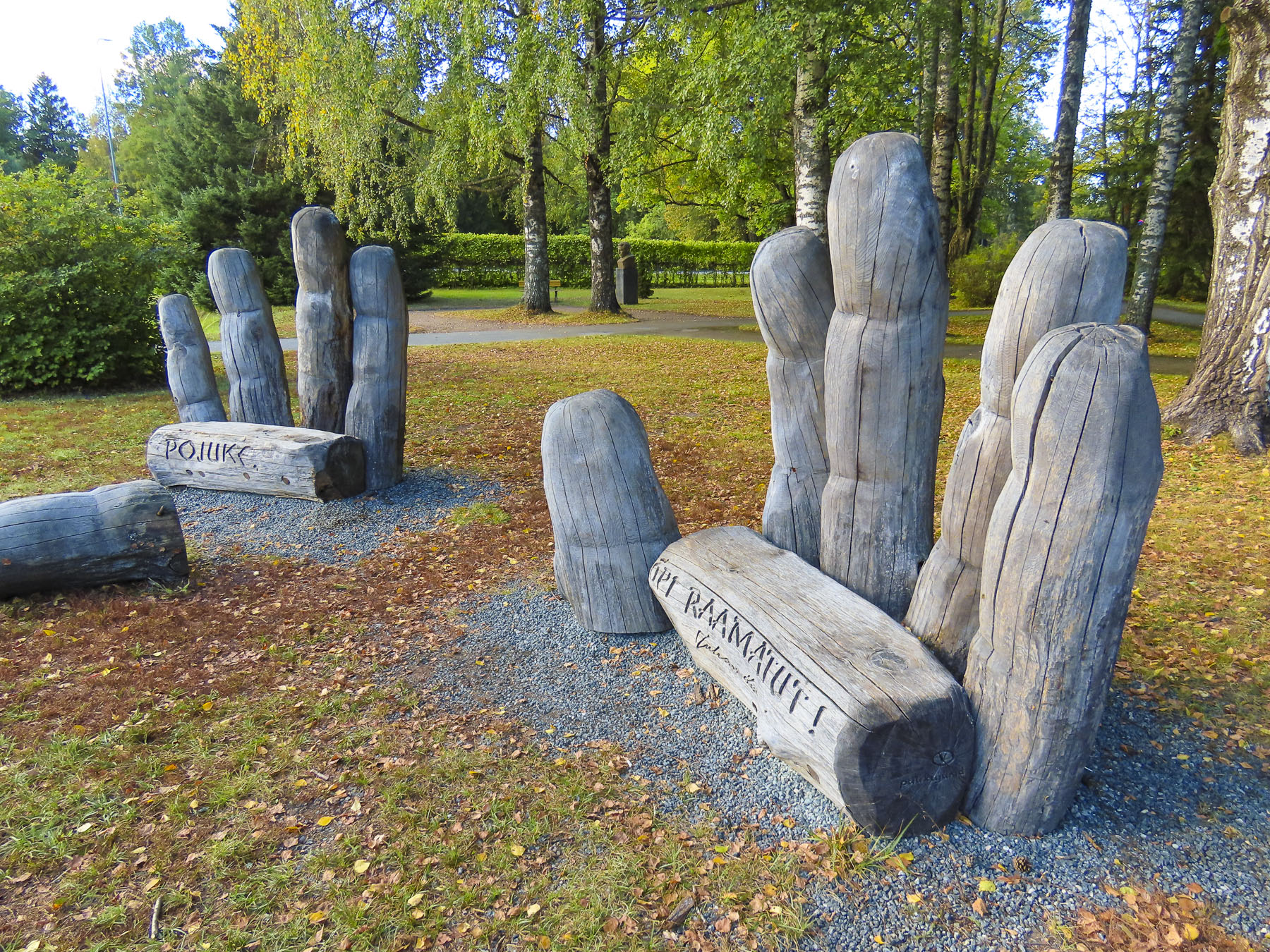
At the roundabout in town, we circled twice to figure out how to reach the town’s library, which had a large wooden sculpture of two hands, with fingers carved from tree trunks, protruding from the ground in front of the building.

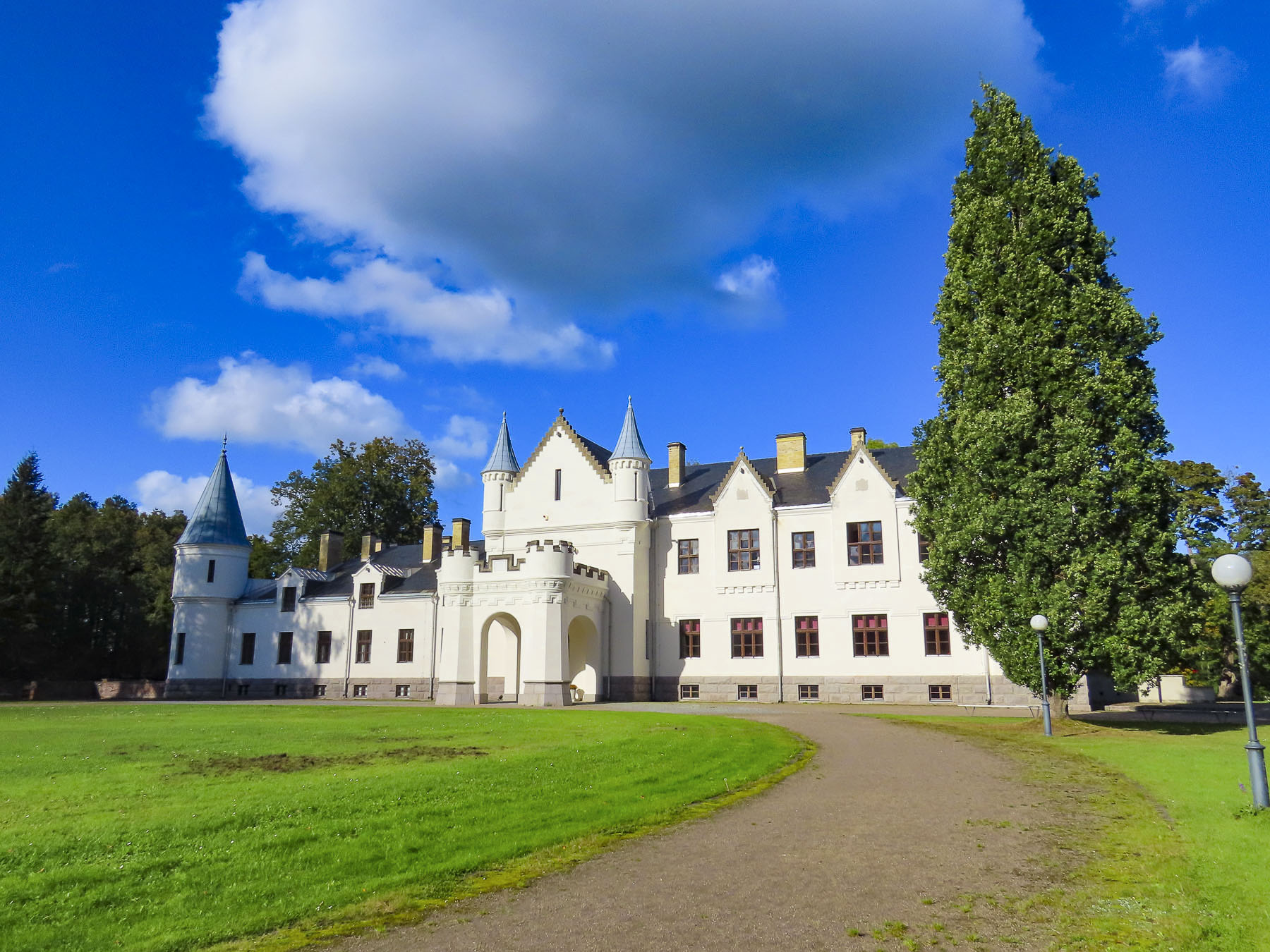
Earlier, the server at the tavern suggested we visit Alatskivi Castle,an old Baltic German feudal estate with vast land holdings, that was first mentioned in the historical records of the early 1600s. In 1885 Baron Arved von Nolcken, a widely traveled aristocrat, purchased the estate and reconstructed the old manor house in a Scottish baronial style, that is said to closely resemble Balmoral Castle, which he had recently visited. The von Nolcken family lived in the manor house for twenty years before they left for Germany with all their possessions, including the manor’s silk wallpaper, at the beginning of the Estonian Peasant Revolution in 1905. During the Soviet occupation of Estonia the lands of the estate were a state-controlled collective farm, and the castle was used as school, cinema, and library. Today, after extensive renovations the manor features a fine-dining restaurantand 4 suites available for booking directly through the castle, along with offering  a ceramic studio and workshop in the cellar. There is also a wax museum featuring figures of the manor’s servants; a butler, lady’s maid, cook, baker, groomsman, stable hands, and laundry maid are just a few of the various trades depicted. The exterior of the castle is totally white, and during the winter, with snow on the ground, must shine brilliantly on a sunny day. Or vanish totally from view during an Estonian tuiskav lumi, a blizzard. We wondered – if the walls of the castle could speak, what tales would they tell?

We had a great time exploring the cultures and complex histories of Estonia, Latvia, and regrettably only a small part of Lithuania during our three week-long road trip through these fascinating Baltic countries.

Till next time,

Craig & Donna

An Estonian Road trip: Part 2 – Across the Pine Barrens to the Pakri Peninsula & the Gulf of Finland or Soviets, Swans, Windmills & a Polar Bear

Dense forest lined the road, occasionally thinning to provide a glimpse of Tallinn Bay. It seemed as if we had only left Tallinn minutes earlier, quickly passing through its outer boroughs to enter a semi-wilderness beyond the city limits. To paraphrase; We weren’t in Tallinn anymore. Lively, and charming, one third (461,000) of Estonia’s 1,370,00 citizens call this “gem of the Baltic,” home.

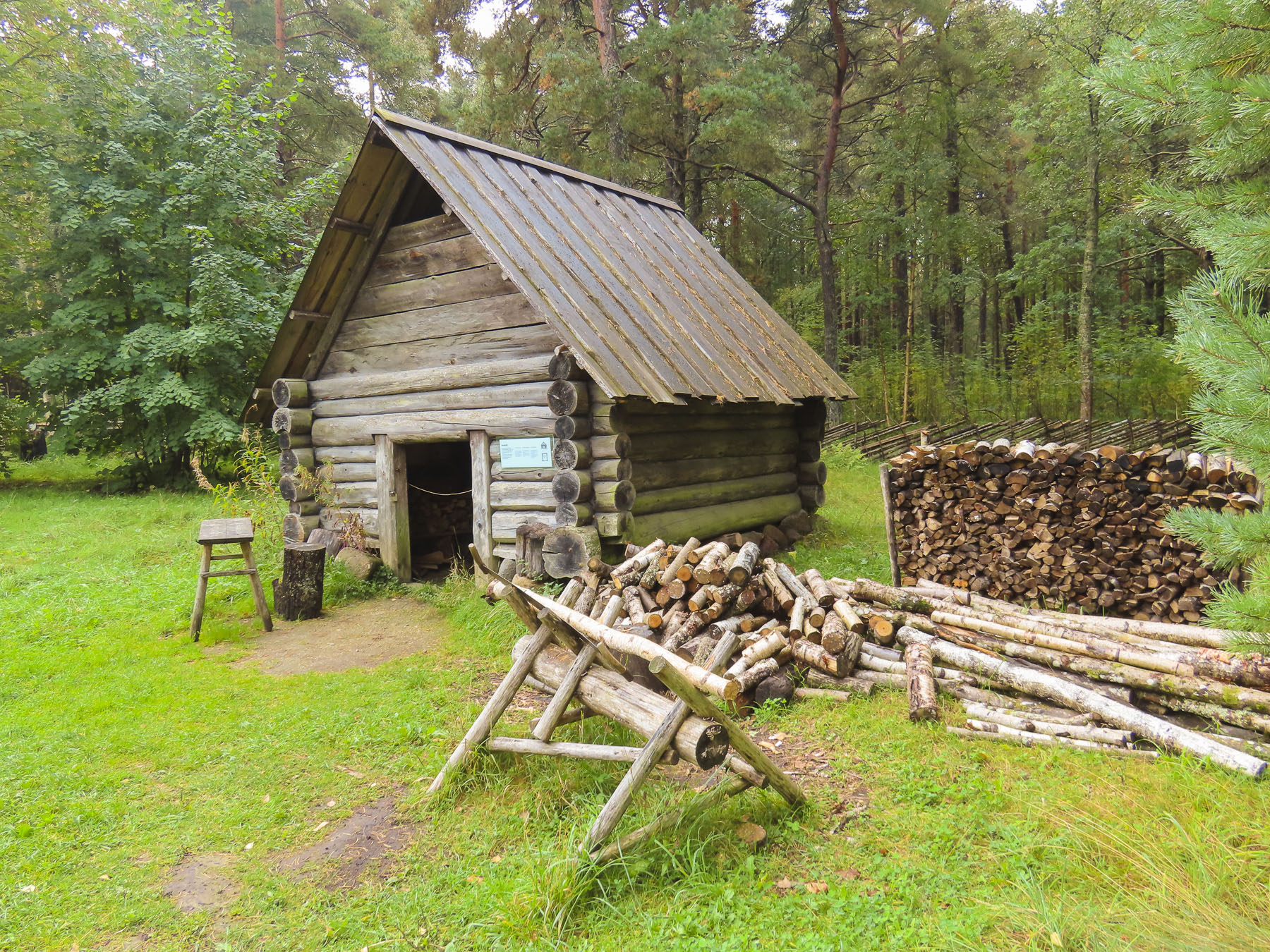
Only 15 minutes from the center of Old Town, we were in the surprisingly different forested landscape of Eesti Vabaõhumuuseum, the Estonian Open Air Museum, an ethnological recreation of a historic fishing village on the shore of Tallinn Bay, with the wonderful mission of showcasing the country’s rural architecture and way of life during the 18–20th centuries.

A pleasant set of trails through the woodland connected 14 separate areas that featured different buildings.  Some of the buildings have docents dressed in traditional clothing to help explain how residents lived centuries ago. The wooden windmills were particularly interesting and the large sturdy log cabins surely would have made Daniel Boone envious.

Leaving Tallinn behind: this was the first stop of our 21-day road trip through Estonia, Latvia, and Lithuania. There was hardly any traffic on the roads through the sparsely populated countryside that traversed stretches of open fields, bogs, pine forests and swaths of beautiful birch trees. Vast tracks of forest still cover over fifty percent of Estonia’s territory. Set away from the roadway a bike path, just one of 7,230 cycling routes and bike trails in Estonia, loosely followed our route from the Open Air Museum to Keila in search of a mid-morning coffee break.

It was a surprisingly frustrating endeavor. Takeaway coffee from a gas station? No no. This was nearing a crisis situation for us. Those in the know understand that without that a coffee fix, life in the universe is imperfectly balanced. Fortunately, we found a very nice gourmet café, Cake Atelier, on the main road through Keila. Chatting with the owner about our trip through Estonia, she shared that we were in luck today, as it was one of the town’s twice-yearly craft and food festival days and pointed down the road.

We both like exploring local markets and this one in Keila, while very small, was a perfect local event to have stumbled across. Set up in the parking lot of a small strip mall, it wasn’t geared toward tourists. It was simply regional food purveyors sharing what they love to do. Samples were abundant. There were extraordinary amounts of smoked fish, pickles, sauerkraut, and baked goods, along with foraged lingonberries and wild mushrooms.

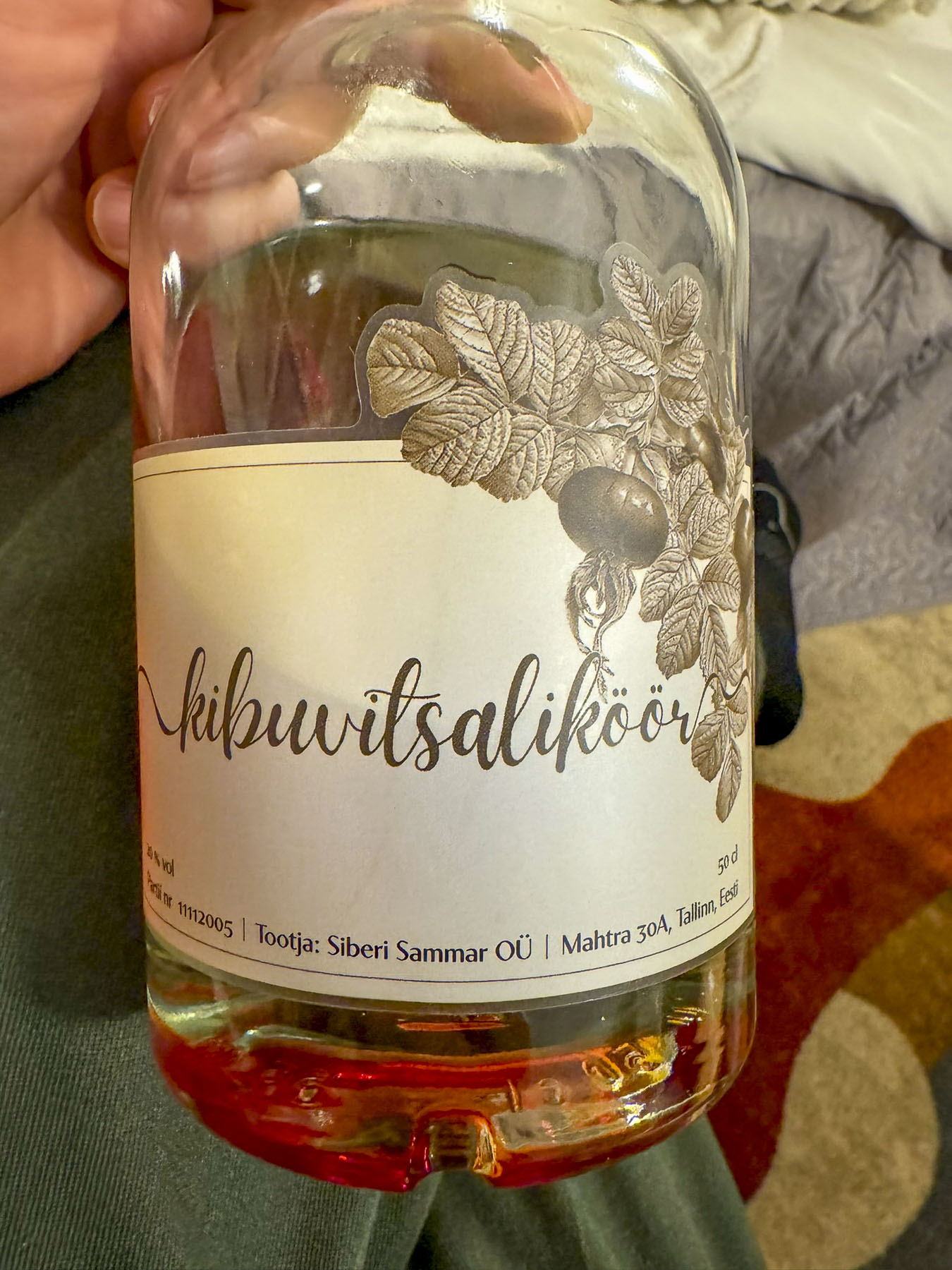
From July to October foraging for berries and other wild edibles is a popular activity in Estonia and explains why we saw so many cars parked at various spots along the road in the middle of nowhere. We ended up purchasing a bottle of artisanal Rose Hip liqueur from a middle-aged woman who had been an exchange student in Florida in the early 2000s. Her cordial, lovingly crafted from her grandmother’s ancient family recipe, was very tasty. We purchased a bottle and enjoyed it as a nightcap during the rest of our trip.

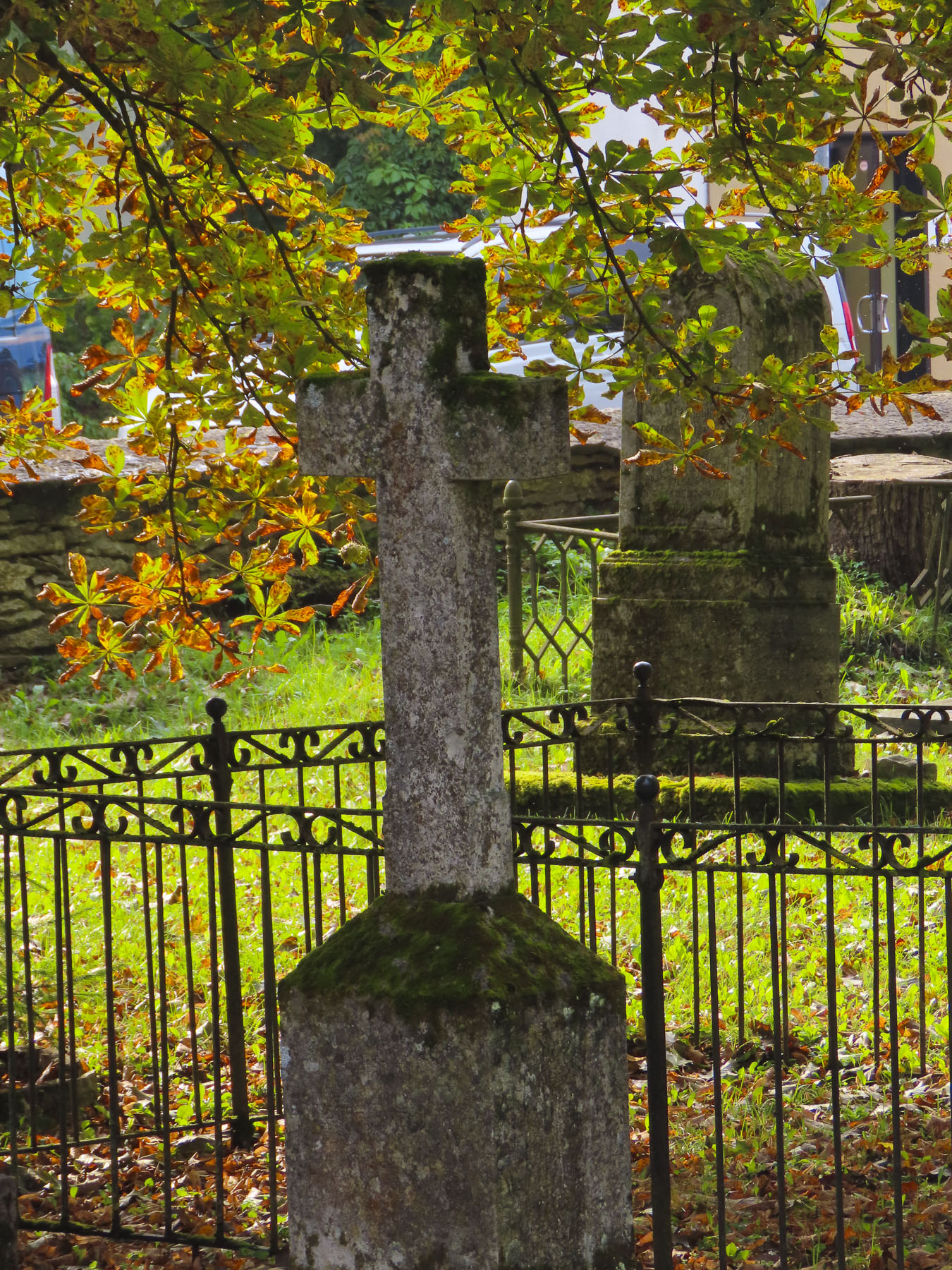
Next to the parking lot was a pretty church, Mihkli kirik, Keila’s St. Michael’s Church.  This wooden church was first erected here shortly after the Danes conquered northern Estonia in 1219. A century later a larger stone church was constructed to accommodate the worshippers living in the growing village. The present church replaced an older one destroyed during the Livonian War of the 16th century. There were some interesting stone carvings around the door to the church, and an intriguing cemetery that called for further investigation.

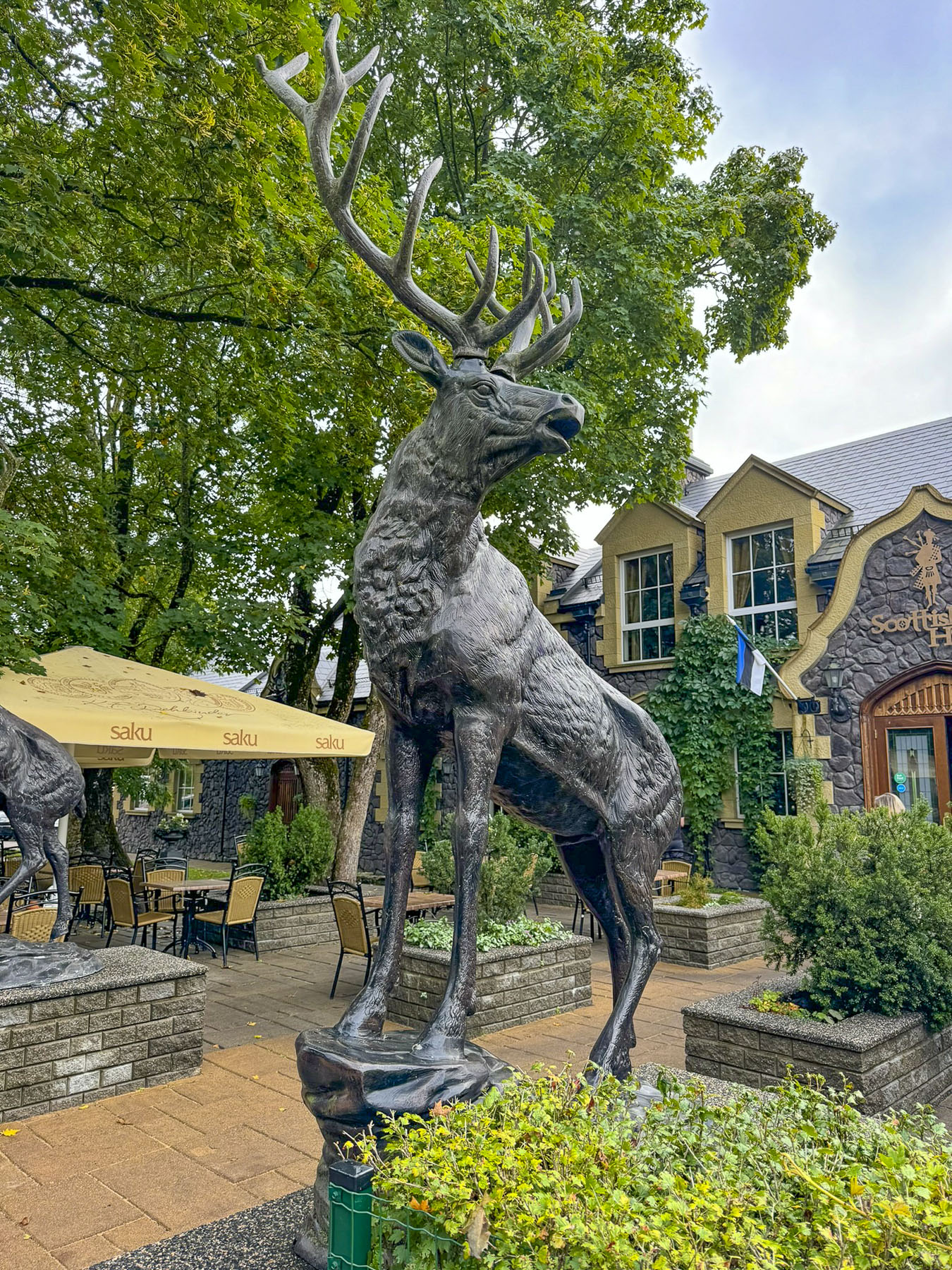
Across the way the Scottish House, with its majestic sculptures of highland stags in its courtyard, seemed incongruously placed. But we enjoyed resting, enveloped in its warm wood interior, and lunch was very good.

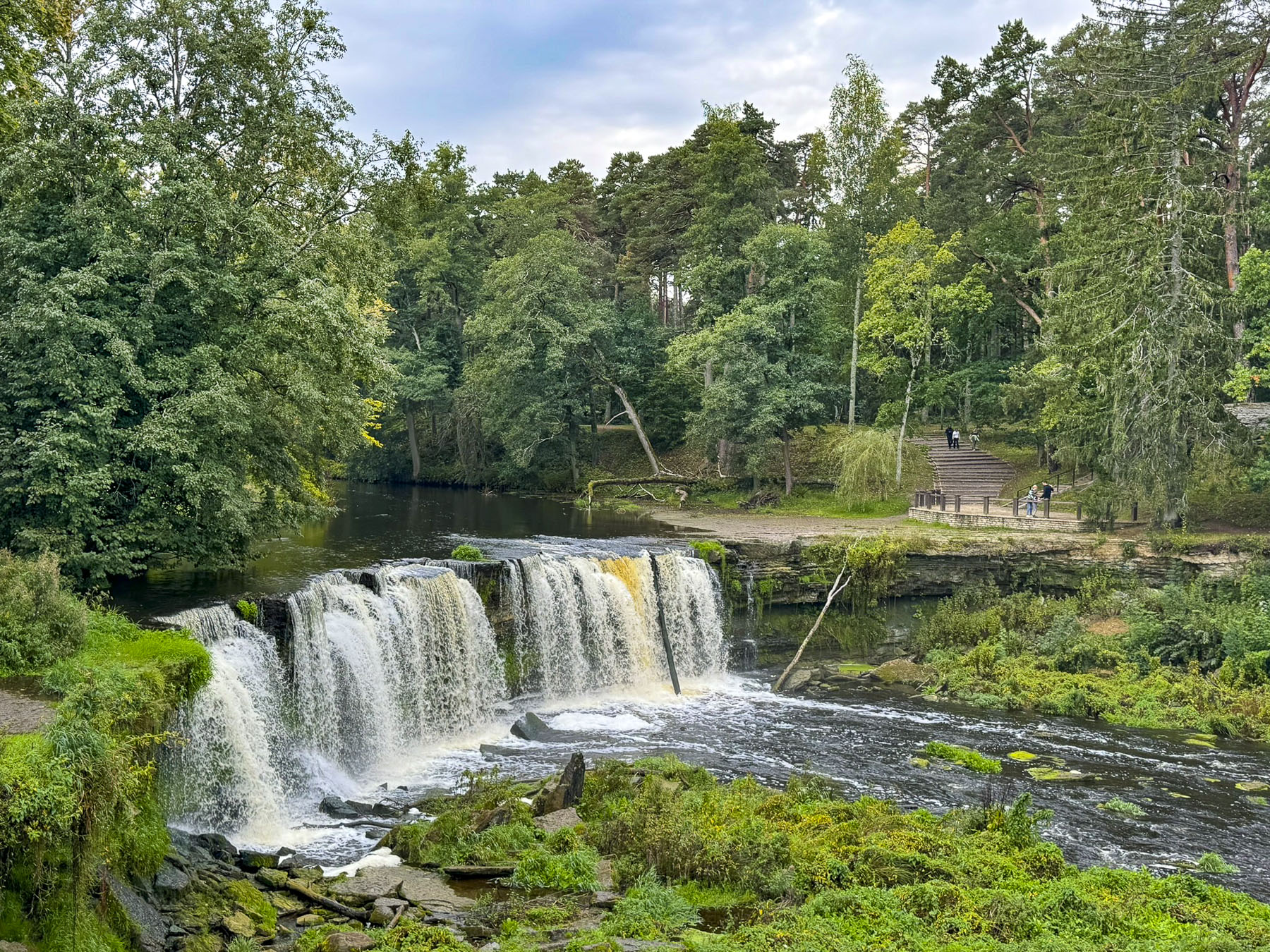
Our destination at the end of the day would be the guesthouse Pakri Baron, at the foot of the lighthouse, at the top of Pakri Peninsula. But we rarely drive the fastest and most direct route. Our road trips usually connect the dots, and resemble Ws or Zs to points of interest along the way. With that in mind we headed to the Keila Waterfall in Lõokese tee, Meremõisa – gotta love that name – 13km (8 miles) away.

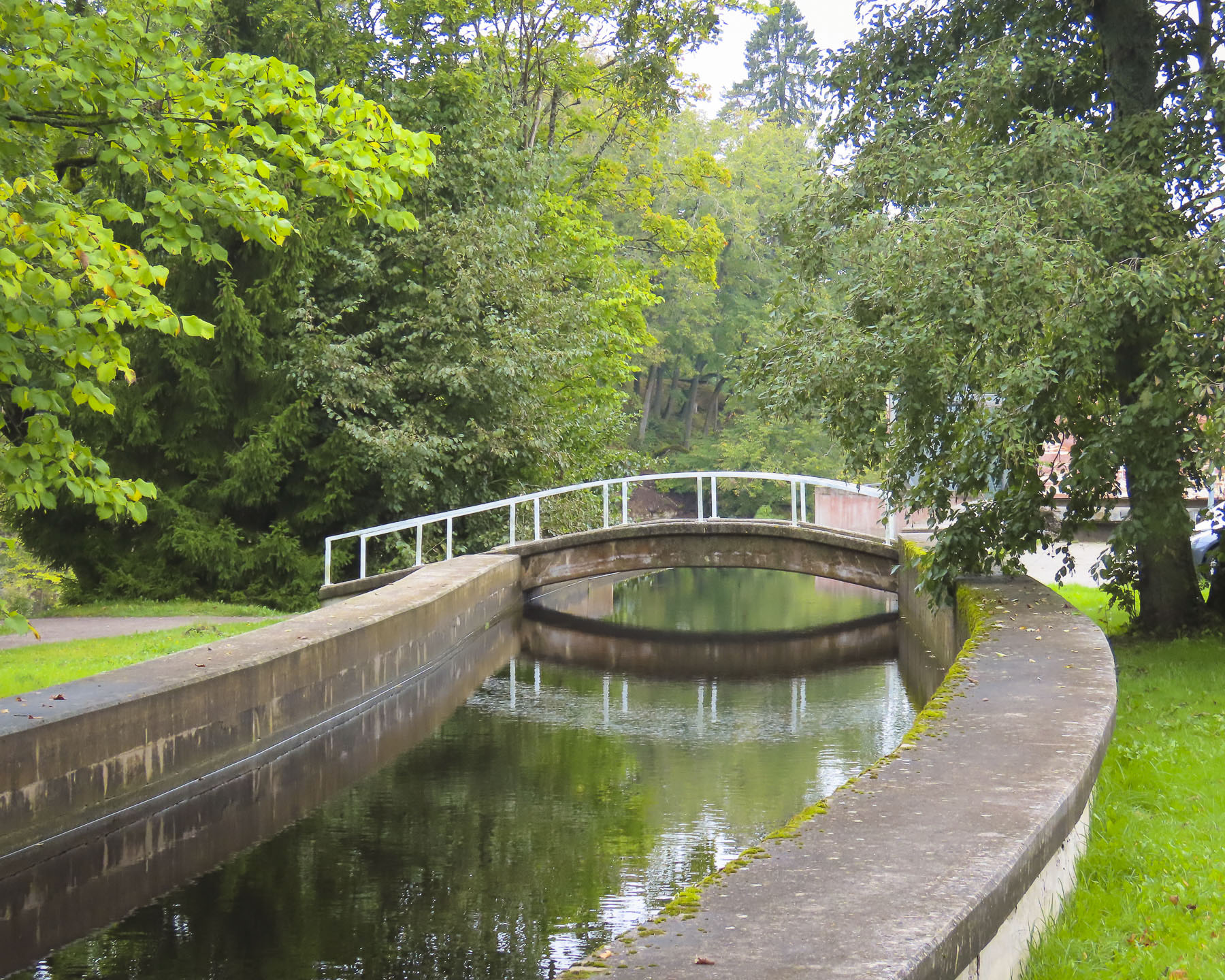
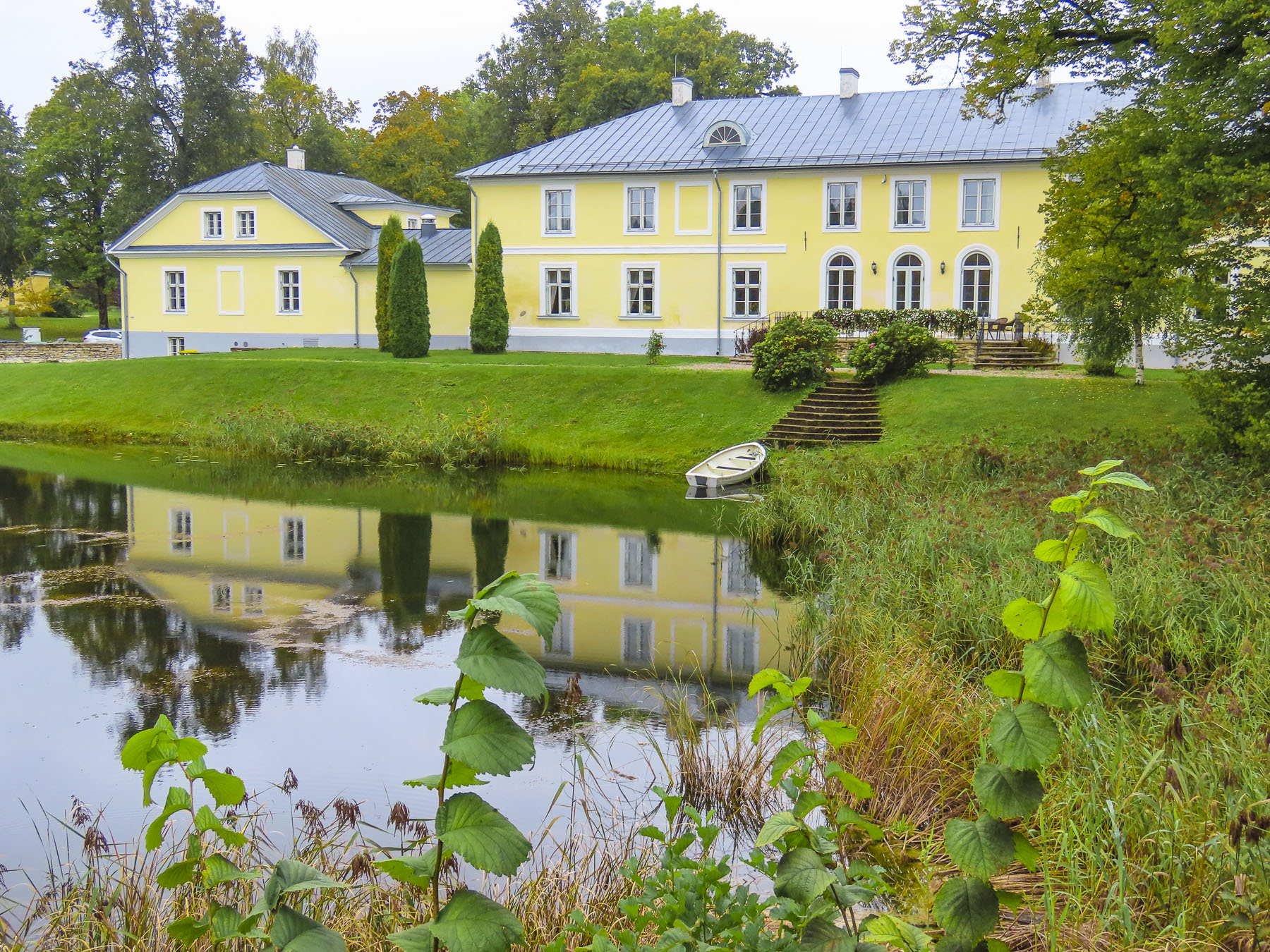
Without any tall mountain ranges, Estonia really isn’t noted for its waterfalls. But the Keila Falls, the third largest in the country, were relatively close. The falls are in a pretty river park that has a trail over a wooden suspension bridge that crosses to the opposite side of the falls. There is a small renovated hydroelectric power plant at the Keila waterfall that first started to produce electricity in 1928; the river park was originally part of the extensive grounds of the Keila-Joa manor. The neo-gothic style building was built in 1833 and is one of Estonia’s best surviving examples of the popular 19th-century architectural style. Unfortunately, the grounds of the manor house/museum were closed the day we were there.

Nearby, the all-wood Kõltsu Manor built in the late 1800s was another fine example of Estonian architecture. The large home was commissioned by a baroness to be used as her summer residence. After World War II, the house and grounds were used by the communist Russians as one of their Pioneer Camps. The name sounds so benign, but in reality, while they did offer camp activities, they were Soviet re-education camps that indoctrinated Estonian youth with communist ideology. Today the manor hosts events, weddings, and outdoor concerts during the summer months.

The forests in Estonia have their own stories to tell. We did not stop at the memorial to the 2000 Jewish victims of the Nazi massacre in 1944 at the forced labor Klooga concentration camp. Closer to our destination we stopped in Paldiski to purchase the makings of a picnic dinner and breakfast the next morning at the guesthouse. Apple trees grew wild along the edge of the road. We picked a few for munching later. White with a pink center, they were probably an heirloom variety called “Eva Kuld,” similar to the Pink Pearl variety. The apples were delicious.

We had timed our arrival at Pakri Baron to coincide with the sunset in hope of getting some nice photographs of the lighthouse and the coast as the sun dropped. However, the weather was fickle. But the guesthouse was wonderfully situated next to the lighthouse, which towered over us, and was a stone’s throw from the Baltic Sea. The still active lighthouse was built in 1889, and during the summer months it’s possible to climb its 275 steps to the top. Unfortunately, it was closed during our visit in mid-September. In front of the lighthouse is a copy of sculpture called The Ship’s Last Sigh (1899) by the Estonian artist Amandus Adamson (1855–1929), who grew up near Paldiski. The sculpture was chosen by vote from 5 of Adamson’s works by the residents of the community in 2008 to commemorate their native son. The guesthouse even had a traditional Estonian sauna in a separate building, just one of the 100,000 saunas in a country of 1.3 million. It’s definitely a cultural thing.

It was still dreary the next morning as we started our drive to the resort town of Haapsalu on the west coast of Estonia. But there were places to explore along the way. We don’t recall how we actually came across the existence of the Ämari Pilots’ Cemetery, but most likely it was a result of scouring Google Maps to find points of interest along our route. More accurately it could be referred to as the Russian Pilots’ Cemetery.

What piqued our interest was the use of tail fins from crashed Soviets planes as headstones to mark the graves of the pilots that died in accidents while flying from the former Russian airbase, Suurküla Aerodrome, during the Cold War era. The cemetery’s discreet location, in a forest almost obscuring it from the road, was so that reminders of the peacetime deaths, from a high accident rate, would not affect the morale of the military base.

The cemetery appeared to be well cared for, but it’s a reminder of a painful and repressive 46 yearlong occupation by communist Russia, unlike the monumental Soviet propaganda sculptures that were in public spaces across the country, which were destroyed or sent to the Soviet Statue Graveyard in Tallinn. This reminder of a dreaded past, like an uncle no one wants to talk about, was left to rest in peace.

Nearby was another reminder of Soviet rule: Murru vangla was a Soviet forced labor camp and re-education center where prisoners were sent to work in a limestone quarry for the duration of their sentences. After Estonia’s independence the prison and quarry were closed and abandoned. Water eventually filled the quarry and partially submerged some of old mining structures and prison buildings. Set against tall, eroded dunes created from slag left over from processing the limestone, the water of the quarry shimmers like a Caribbean beach. The uniquely beautiful manmade setting has slowly become a popular destination for divers and swimming. What’s left of the prison was turned into a museum. There is an admission fee to access the quarry area, but since the day was still heavily overcast, we kept driving a short distance down the road to the Padise Monastery. Founded in the early 14th Century by monks displaced from a monastery in Latvia, it flourished until the St. George’s Night Uprising, when Estonians rebelled against Danish rule and the imposition of Christianity upon them and killed 28 monks. The building was later turned into a fortress, but by the early 1700s the stones of the deteriorating fortification were used to build an adjacent manor house. What’s left of the monastery’s ruins has been preserved and now operates as a museum, and the manor house is now a boutique hotel and spa.

One of the many things we enjoy about traveling during the shoulder season, aside from fewer tourists like us out and about, is the affordability of really nice hotel rooms. Our case in point was our midweek 2-night stay at Hermannuse Maja, which backed up to the ramparts surrounding Haapsalu Castle, cost only €97.00, and included breakfast. Parking was easily available on the street.

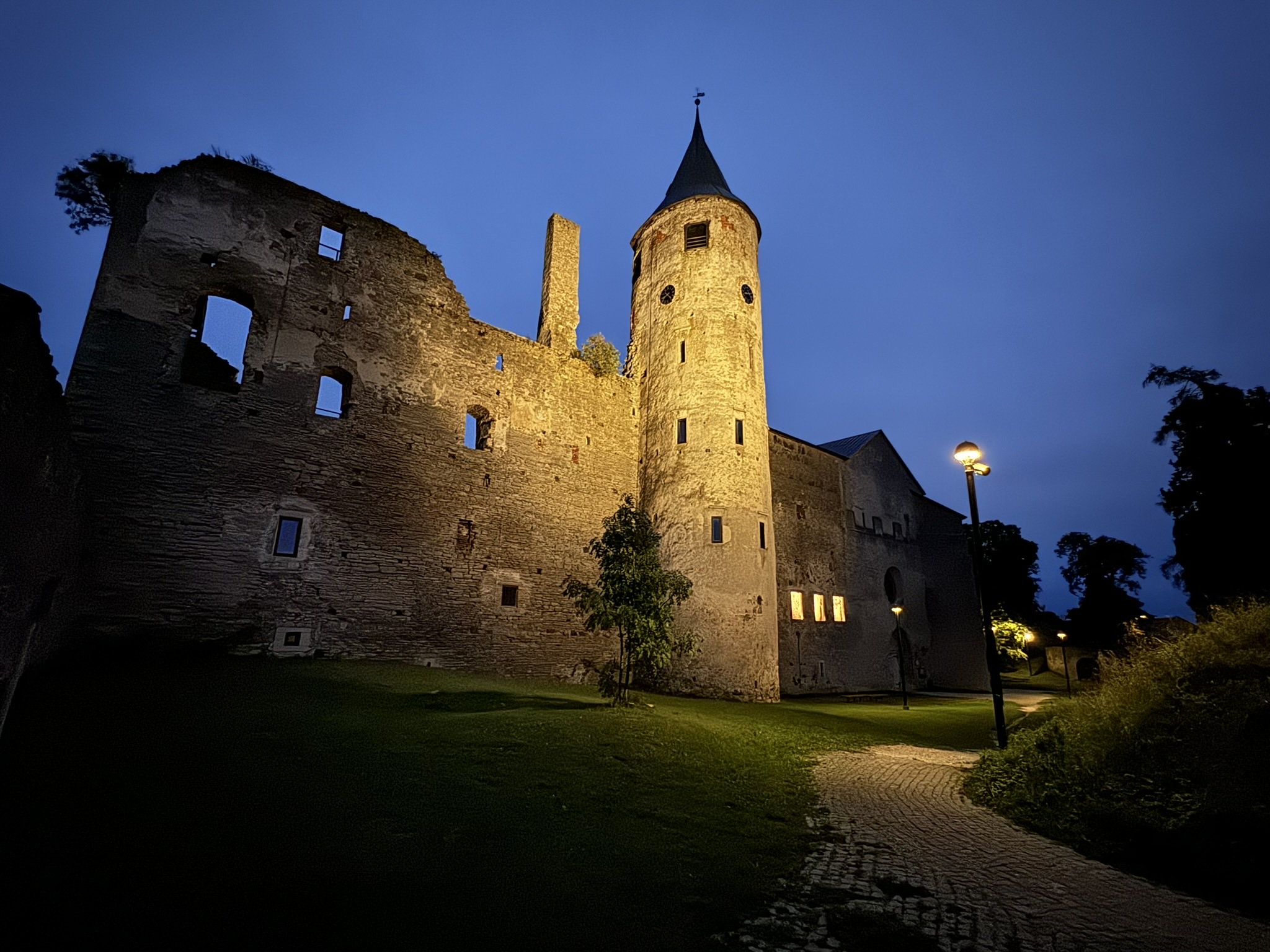
Around the corner from our hotel the Müüriääre café, with an attractive interior and tempting food display, was the perfect spot for lunch before exploring the unusually named Haapsalu Episcopal Castle on a cloudy afternoon.

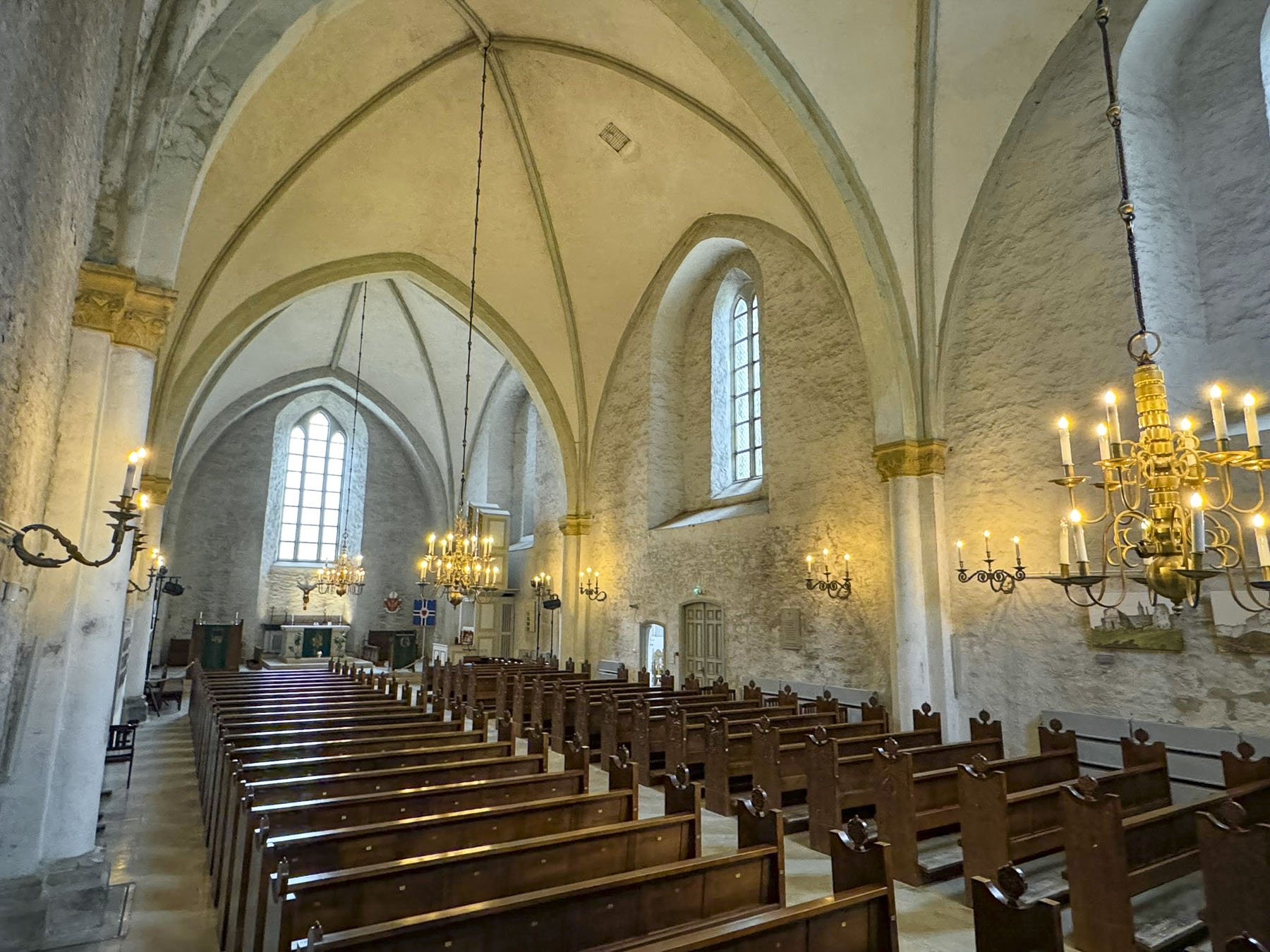
In the late 1100s Christian missionaries followed German merchants along old Viking trade routes into the region known as Livonia, that is today Estonia, Latvia, and Lithuania. The land was originally populated by pagan tribes, but unfortunately located between Orthodox Russia and Catholic Western Europe. Never happy with the status quo, religious zealots called for a Northern Crusade against the Baltic pagans, and with the blessing of Pope Celestine III, persecution began in 1195. The efforts to recruit an army was assisted by a papal bull which declared that “fighting against the Baltic heathens was of the same rank as participating in a crusade to the Holy Land.”  The medieval era was fierce, and bishops not only accompanied the crusaders spiritually into battle, but wielded swords alongside their troops fighting those heathen tribes. Haapsalu Episcopal Castle was built to project the power of the church during the thirty years it took to subjugate the region. In 1583 during the War of Reformation the Catholic stronghold fell to Protestant Sweden and the cathedral became a Lutheran church.

A tall defensive wall still encircles the nearly 1000-year-old castle. And the church has been nicely restored after surviving fires in 1668 and 1726 and neglect during the Soviet occupation when it was used as a granary. Though only the outer walls of the monastery, which was later converted to a palace, remain after the 1668 fire.

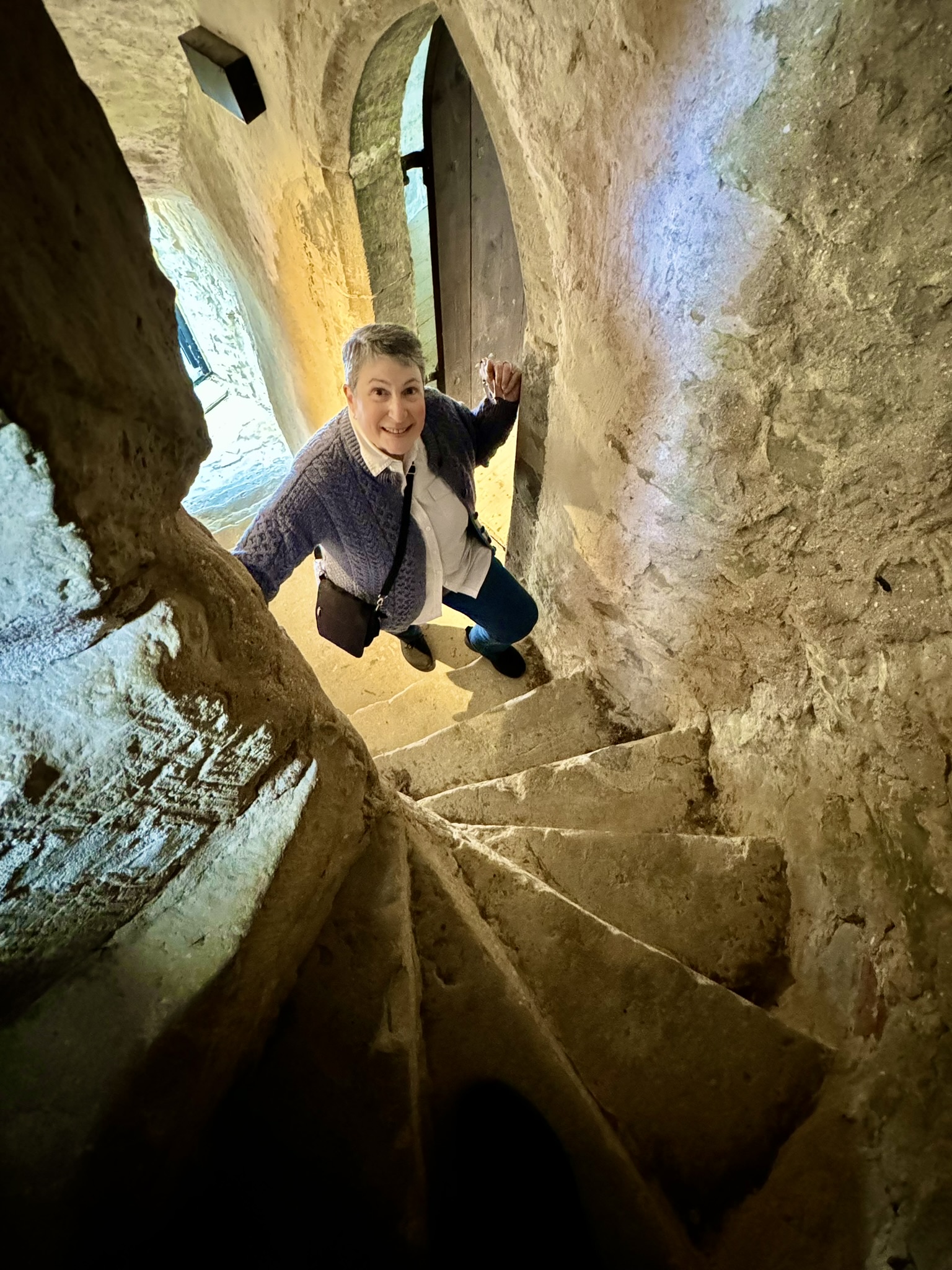
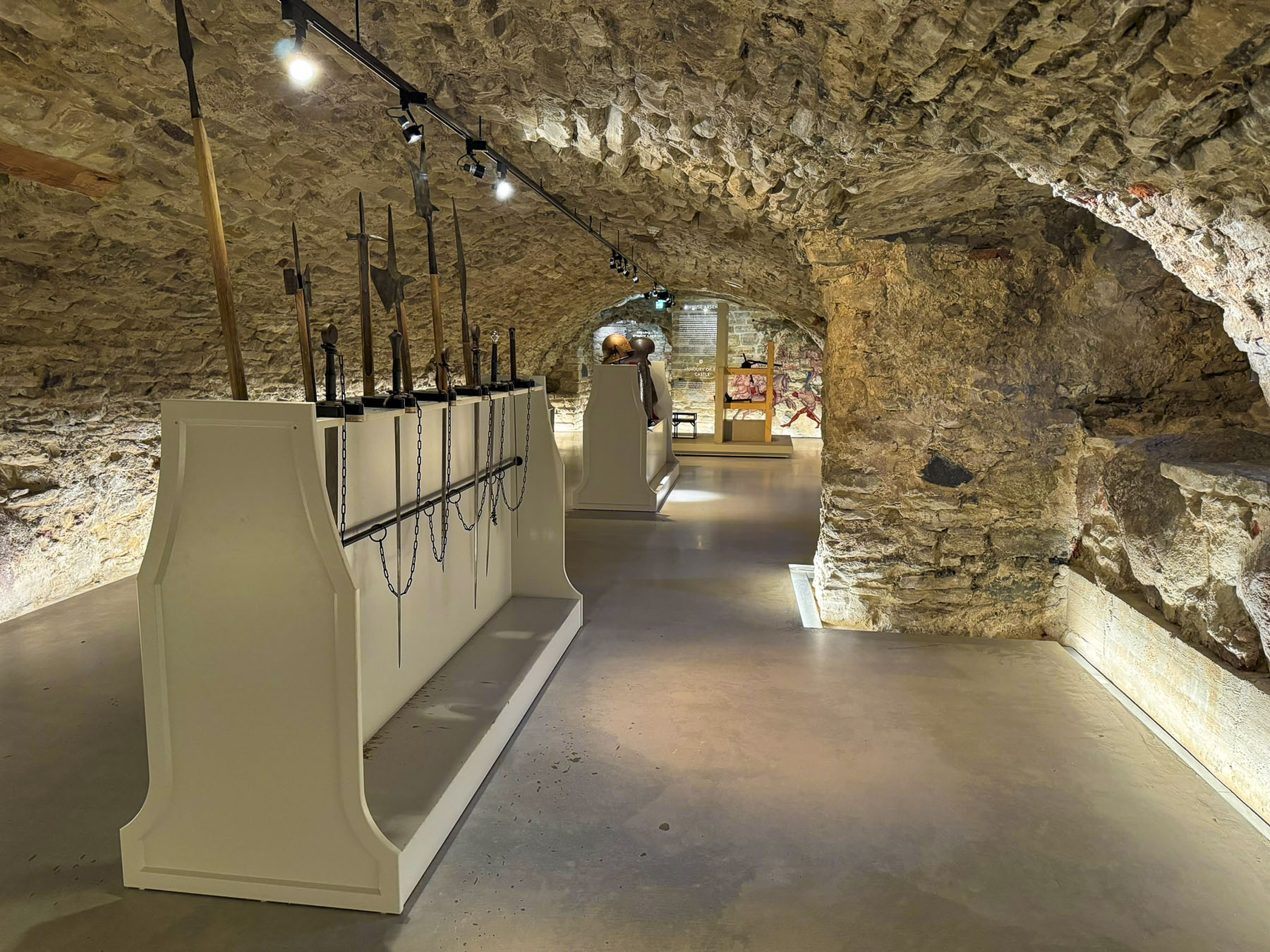
We enjoyed walking along the ramparts and climbing the castle’s tower. Surprisingly in mid-September we practically had the site to ourselves. Wandering through the ancient, vaulted dungeon-like rooms of the castle’s museum that showcased life in Medieval era was particularly interesting. The grounds of the castle are quite extensive, and one section in a now dry moat has a medieval themed playground with all sorts of structures for kids to climb on. During the summer the castle hosts a series of concerts, and the town welcomes tourists with a busy schedule of events.

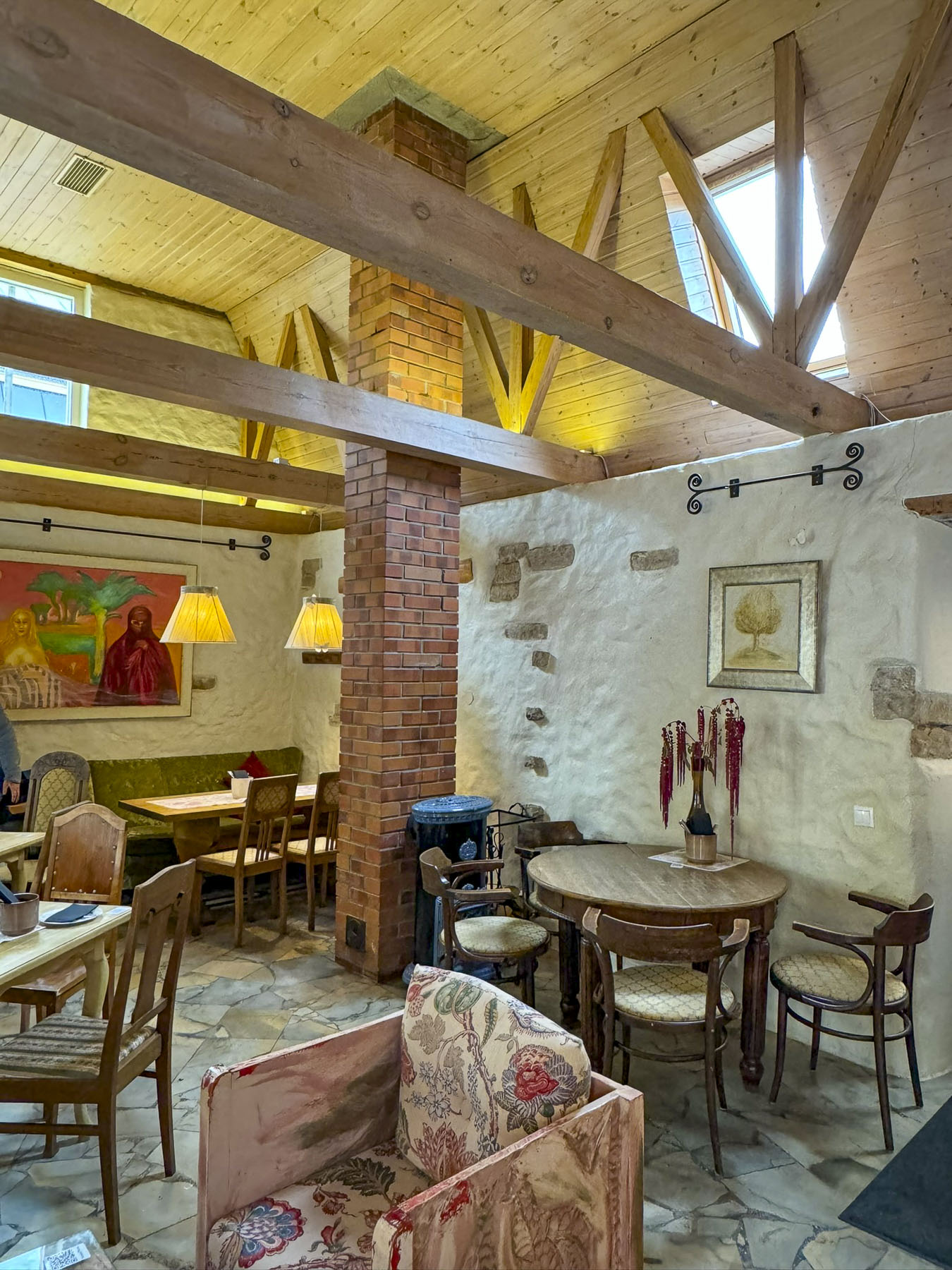
Dinner that evening was across the street at the rustic Talumehe kõrts, which specialized in traditional Estonian dishes.

The next morning, we woke to a perfectly clear sky. The sunny weather was a welcome reprieve from several gloomy days, and we took full advantage of it to explore the picturesque town and walk along the Haapsalu’s bayside promenade. The walkway extends for quite a distance along the waterfront, and is flanked with a variety of architecturally interesting buildings along its length.

At one point we spotted a polar bear standing on an ice flow. A statue! It was one of several exotic animal sculptures, recreated from old photographs of the wooden figures made in the 1920s, for a section of the boardwalk called Africa Beach, a beloved small park from the 1800s. During the Soviet occupation the original wooden sculptures were used as firewood by Russian soldiers. With the Russians finally gone in 1991 the park was revamped as a children’s playground.

A short distance beyond the playground the walkway ends at the 5-story tall Tagalaht birdwatching tower. Climbing the tower offers views over the saltwater marshes of Haapsalu Bay, which is an important stopover for artic birds during their Spring and Fall migrations. Swans, cranes, and a variety of ducks can also be spotted.

The small town existed on the region’s fishing and agricultural base until a visiting physician observed that the local folk used sea mud to treat a number of ailments. He opened Haapsalu’s first therapeutic mud treatment resort in 1825. It soon became a popular destination for several generations of Russia’s czars and aristocracy. A bench along the path commemorates the spot from which the composer Tchaikovsky watched the sunrise when he summered there.

Walking back to town we passed the distinctive green onion shaped dome of Haapsalu’s Maria-Magdaleena kirik, a Russian Orthodox church. The church was consecrated on July 21, 1852. In the audience was the son of Czar Nikolai I, Alexander (later Czar Alexander II, Emperor of Russia, King of Poland and Grand Duke of Finland.)

We worked our way across town to Lake Väikese and savored a delicious lunch overlooking the water from the enclosed patio at Wiigi Kohvik, before following a walking path along the water that circled the lake. Along the pathway we noticed that nearly every home on the lake had a traditional Estonian sauna in their back yard. They were all different sizes and shapes, with some constructed with wood and others totally covered with earth. We wondered if folks jumped into the lake as part of their sauna ritual. Brrr! Just thinking of it made me shiver.

Overall, we had a very nice tme in Haapsalu. The next morning, we checked out early and drove to the harbor at Rohuküla to catch the first ferry of the day to Heltermaa on Hiiumaa Island.

Till next time, Craig & Donna

Driving the North Coast 500 – Part 7: Duncansby Head Lighthouse To Loch Ness or Castles, Myths & Bagpipes

A small flock of sheep, sleeping on the tarmac, scattered when we rounded a bend to Duncansby Head Lighthouse before the crack of dawn. The pinnacle stood silhouetted against a brightening sky of pink, amber and blue, as the sun crested the horizon over the North Sea.

We followed the trail along the cliffs towards the Duncansby Stacks and passed a spot where we imagined an ancient Norse god had wielded a broadaxe and severed the bluff in two. The stacks were glowing red in the early morning light as Kittiwakes and Guillemots swooped along the cliff face, which stretched south for miles.

Following a delicious hardy breakfast, we packed our bags and said goodbye to the innkeepers at the John o’ Groats Guest House, one of our nicest stays while in the Scotland, then began the final leg of our NC500 tour and headed south along the A99 and A9 to Dunrobin Castle & Gardens, before spending the night in Strathpeffer. A pleasant distance of only 113 miles, which took us all day with all the photo stops we made. But that’s the way we roll.

There’s a debate about the best way to drive the North Coast 500 and the consensus seems to be that exploring it in a counterclockwise direction leaves the breathtaking scenery of the west coast for the last part of your trip.

We did the opposite and followed the NC500 clockwise, heading south from Inverness to Edinburgh, then west through the highlands to the Isles of Skye and Lewis & Harris before returning to the mainland and heading north to Durness and John o’ Groats, before heading south along the North Sea Coast of Scotland. We found the scenery breathtaking.

Our only complaint was the lack of official scenic pullovers, as we often had to park at the entrance to a farmer’s pasture or on a side road, and walk back along its shoulder to the spot we wanted. Fortunately, there were few cars on the road, because we stopped numerous times.

At Wick we visited the Old Parish Church and wandered amid its ancient gravestones, the oldest of which dates to 1639. The present church was built in 1862 over the foundations of two earlier churches, the earliest dating to the 12th century. A prideful lot the Wicks were, and they didn’t take kindly to anyone disparaging St. Fergus, their church’s patron saint. History tells of an Archdeacon, a noted reformer, who visited the parish in 1613 and vented his wrath on a beloved image of St Fergus in the old church, attacking and defacing it. The congregation was incensed, and the Archdeacon might have met his maker on the steps of the altar if the local sheriff hadn’t escorted him out of town. But he only got as far as the Wick River when he was ambushed and drowned.  During the following enquiry, “witnesses swore on oath that they had seen the ghost of St Fergus astride the unfortunate minister holding him down in the river.”

Clan Gunn Museum & Heritage Centre is beautifully set on the coast.

There are few natural harbors along Scotland’s North Sea coast. Ferocious storms blowing in off the sea required many villages to build stout seawalls to prevent their fishing boats from being smashed against the rocky coast. One such place was the tiny Latheronwheel Harbour. We had it all to ourselves when we visited on a Wednesday in August.

Crossing the River Helmsdale, we stopped at the Emigrants Monument which graces a hilltop that overlooks the village of Helmsdale nestled against its river and the sea. It’s a heart-rending tribute to those who were forced from their homes and livelihoods during the Clearances. The inscription on the monument, in Gaelic and English, reads:

“The Emigrants commemorates the people of the Highlands and Islands of Scotland who, in the face of great adversity, sought freedom, hope and justice beyond these shores. They and their descendants went forth and explored continents, built great countries and cities and gave their enterprise and culture to the world. This is their legacy. Their voices will echo forever thro the empty straths and glens of their homeland.”

It was commissioned by Dennis MacLeod. The son of a war-widowed crofter, he emigrated from Scotland to South Africa and made his fortune in mining.

Dunrobin Castle & Gardens was our main destination for the day, but our hopes were temporarily dampened by a sudden heavy rain. Fortunately, after we ran through the storm to the entrance, the sky cleared.

The castle is one of the best-preserved examples of how the landed nobility extravagantly lived. A castle has stood on this site overlooking the Dornoch Firth and the North Sea since the Earldom of Sutherland was created in 1235. Only a few walls of the ancient castle’s keep remained after extensive renovations and expansion in the 1700 and 1800s. The result was a French style chateau with towering conical spires and 189 rooms. Amazingly, the beautiful estate has remained the seat of Clan Sutherland for 800 years and is today owned by the 25th Earl of Sutherland.

Our self-guided tour (there were staff along the way to answer any questions) through the

exquisite rooms of this immense family home was very interesting. And it does feel like a family home, opulent but not pretentious. It was significantly nicer than the royal Palace of Holyroodhouse in Edinburgh.

As gardeners, we delighted in wandering through the Versailles-inspired oasis of flower beds and fountains.

Off the garden was the estate’s former two-story summer house, now a museum that displayed a notable collection of Pictish Stones, along with a variety of ethnographic items collected from travels around the world, and animal head trophies from safaris in Africa. 

At the lower end of the garden, we watched the castle’s resident falconer demonstrate and explain the ancient art of falconry as a Harris hawk, Gyrfalcon and Peregrine swooped low over the gasping audience. It was a very entertaining and informative show.

Farther south we turned off the A9 and headed to an early dinner at the Surf and Turf in Dornoch, a small town that traces its roots back to the 8th century. We discovered the Surf and Turf through one of the Instagram feeds we follow. The reviews were quite favorable and pictures of the seafood looked delicious, but we didn’t realize it was a takeaway shop. Luckily for us, they had a long bar with stools along one wall. The fresh fried fish, calamari and mussels we ordered were excellent and all locally caught.

The Dornoch Cathedral was just around the corner, and we spent a while studying the grotesque ancient gargoyles and stone interior of the church, which held its first service in 1239. During the medieval era the gargoyles were believed to portray evil spirits, which were driven from the church by ringing its tower bells.

In 1245 the 1st Earl of Sutherland was buried in the cathedral, the first of many Sutherlands  to be entombed in the family vault under the sanctuary floor. Three centuries later the church was left in ruins after fire destroyed the nave and roof during a climatic feud between Clan MacKay of Strathnaver and Clan Murray of Dornoch. Fifty years later only the roof over the chancel and transept walls were replaced. The cathedral remained partially renovated for another 300 years until 1835, when the Duchess of Sutherland financed a full restoration. Light poured through 27 stained glass windows and brilliantly illuminated the church’s interior. Three of those windows, with the themes literacy, music, and peace, were donated to the church in 1926, in the memory of the famous Scottish-American industrialist, Andrew Carnegie, who summered nearby at his baronial estate, Skibo Castle.

Also of interesting note, the last burning at the stake of a witch in Scotland happened in Dornoch in 1727.  Janet Horne, a local woman, was accused of turning her daughter into a pony and riding her around the highlands to perform her witchcraft. The Scottish Witchcraft Act of 1563 was repealed in 1736. The singer Madonna had her son Rocco christened in the cathedral in 2000, before her wedding ceremony to Guy Ritchie at Skibo Castle.

We ended our day in the quaint village of Strathpeffer, a Victorian era spa town whose sulphurous spring waters were touted as a cure for many ailments. A railway line reached the town in the late 1800s, and it became an easy destination for wealthy Victorians who sought “to take the waters.” Our hotel, the Highland Hotel Strathpeffer was one of those grand, four-story wood paneled, railway hotels built to ease spa-goers’ visits to the village. It’s glory years now a distant memory, the hotel still has its original warm wood paneling, but our room was very spartan, and a far cry from what we imagined were its luxuries during its heyday. During World War I the hotel was requisitioned as a convalescent military hospital, and in the Second World War served as a naval training school.

The village was very charming with a visually pleasing assortment of well-kept Victorian architecture. The old train station now hosts the Highland Museum of Childhood and a nice cafe. Across the street from our hotel the town’s original pavilion was recently renovated and once again hosts music and theater events, along with weddings, and exhibitions. Behind the pavilion is a small whimsical sculpture garden with five 13ft tall wooden sculptures of mythical figures from Celtic, Viking and Pictish legends. They were created by Allister Brebner, a local woodcarver with a workshop in the old train station, from the trunks of giant Douglas Fir trees, harvested from the Highland’s forests.

Is a tour of the Scottish Highlands really complete without visiting Loch Ness? We didn’t want to have any regrets, so on our last full day in Scotland we headed to Urquhart Castle and hoped to catch a glimpse of the fabled serpent so we could tell our young grandchildren, with our fingers crossed and a wink of the eye, that we had indeed spotted and encountered the creature and tried to wrestle it to ashore. I had his head and Donna his tail, but the slippery slimy thing was wildly thrashing about, and we lost hold of him, and in a final splash he vanished. An epic fish story about the one that got away is always good for a child’s imagination.

The castle commands a strategic point that juts out into Loch Ness, the natural geographic dividing line between the northern and southern Highlands. Built in the 13th century, it was one of Scotland’s largest fortifications and had a tumultuous 500 year history as it was captured then retaken numerous times during the Wars of Scottish Independence. Finally British soldiers blew it up in 1692 as they retreated to prevent the Jacobite army of Bonnie Prince Charlie from occupying it. On the grounds is a full-sized working recreation of a medieval trebuchet, a catapult-like siege engine that used a counterweight to hurl large stones against castle walls. Unfortunately, they were not demonstrating its use when we visited. Urquhart Castle, along with the Glenfinnan Viaduct for the Harry Potter train, were the busiest attractions we visited while in the Highlands. The rest of the time it felt like we had the Highlands mostly to ourselves. This was wonderful considering we drove the NC500 during the summer high season in August.

Our last stop before catching an evening flight from Inverness Airport was in Drumnadrochit, a crossroads village at the foot of a bridge that crosses over the River Enrick. We drove through it on the way to Urquhart Castle, earlier that morning, and thought it would be a nice place to break for lunch.

A young bagpiper commanded the village green as we settled into an outside table at The Fiddler’s Highland Restaurant to people-watch for a while. We were a little melancholic that our trip was finally coming to an end after driving a big loop around the Highlands, an area blessed with an amazing array of beautiful mountains and seascapes. The wizardly spell cast by the pipes was hard to break as we departed.

My heart’s in the Highlands, my heart is not here,

My heart’s in the Highlands, a-chasing the deer;

Chasing the wild-deer, and following the roe,

My heart’s in the Highlands, wherever I go.

The poem was written by Robert Burns

Till next time, Craig & Donna
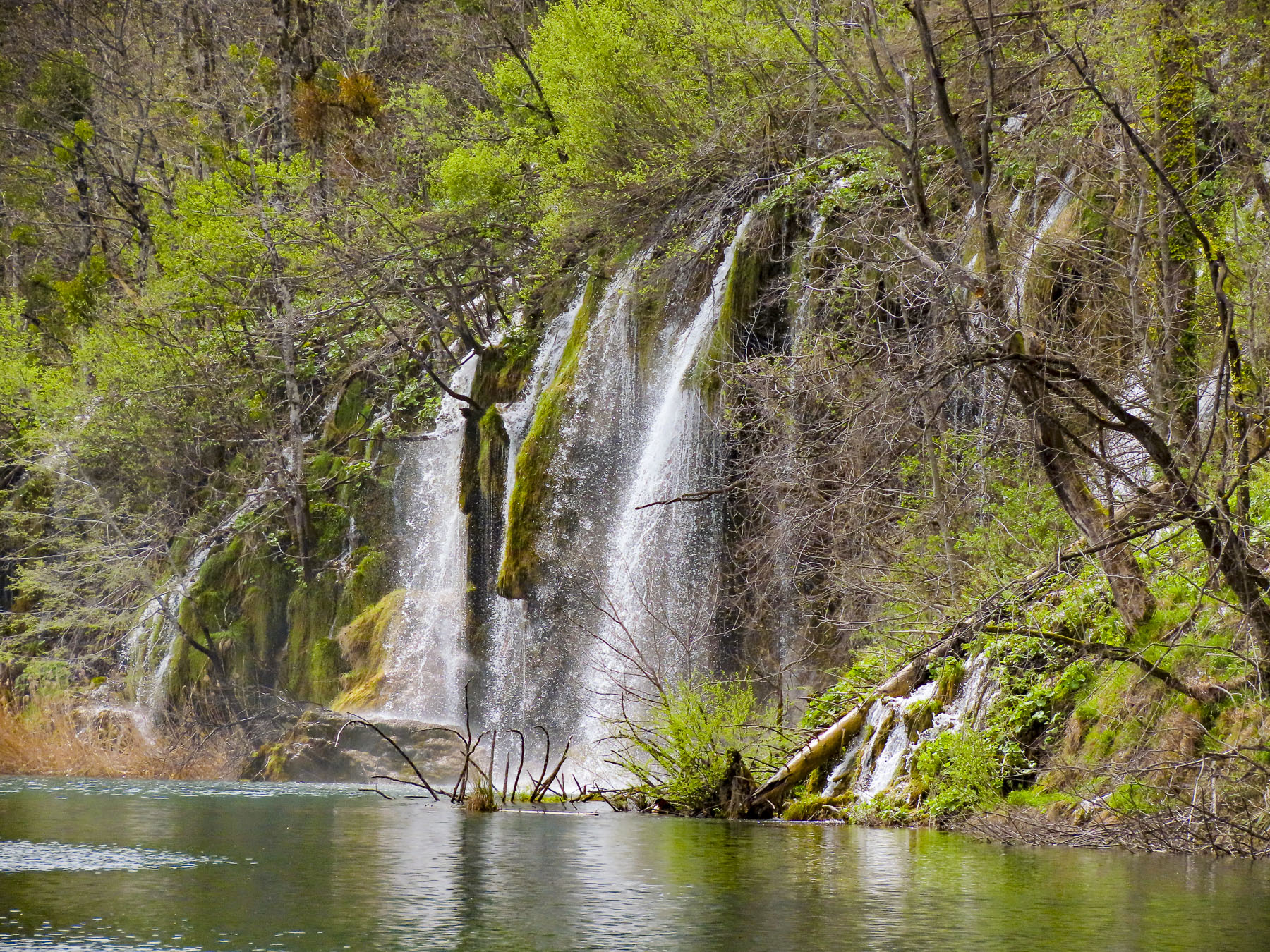
Driving the North Coast 500 – Part 6: A Day Trip to Orkney

We had spent the previous day enjoying the fantastic landscapes of the Highlands along the NC500 from Ullapool to Durness before calling it a night at the John o’ Groats Guest House, just outside the village of the same name, at the land’s end of northern Scotland. With any trip it’s a matter of choices: how long, how much to spend, what to see, and where to go. Being this close to the Orkney Islands, how could we resist a visit? Sorry Inverness, but you were scratched off the itinerary.

After a hearty full Scottish breakfast, we were off early to catch the Pentland Ferry, only 8 minutes away in Gills Bay. Reading about how busy the Highlands are during the summer months, especially the car ferries, we made our reservations back in February as soon as their new yearly schedule was posted online. While it wasn’t inexpensive (RT 2 ppl, 1 car for £170) to get the car to Orkney, it was 40% less than doing a coach tour for the day, and it retained our freedom to dally and dither. After scanning our e-ticket, the attendant directed us to the proper queue. Within a few minutes the ferry from St Margaret’s Hope, on Orkney, docked and disembarked its cars and passengers, and we drove aboard.

As we rounded Hoxa Head, long abandoned coastal gun batteries were a reminder of the important role Orkney and its large natural harbor Scapa Flow played during WWI & WWII. During these conflicts it served as the main naval base for the British Home Fleet and a strategic location for patrolling the North Sea and Atlantic Ocean. As remote as the island was, it did not prevent Nazi war planes from bombing it in 1940. The short crossing of 19 miles took an hour. We pulled aside in the parking area to let the tour buses and delivery trucks race ahead, along with all the other drivers who knew where they were going. St. Margaret’s Hope is actually on a separate island and is connected to Orkney by the A961 which crosses several islets and causeways to reach the mainland.

We planned to stop first at the Italian Chapel on the small island of Lamb Holm, but the tour buses were there so we moved on. We did stop at the foot of the last causeway, to photograph divers exploring the half-exposed hull of a rusted shipwreck. The wreck wasn’t the result of a tragic storm, but an intentional sinking of a block ship to prevent German U-boats from entering Scapa Flow again after an earlier U-boat attack sank the battleship HMS Royal Oak in 1939.

We figured we would race ahead of the tour buses now and headed across the Orkney mainland, a distance of 24 miles, to the Broch of Gurness.

Located on the shoreline of Eynhallow Sound, the Broch is one of Scotland’s most complete and best-preserved Iron Age settlements. The historic settlement dates to around 500BC and featured a large stone tower, the broch, surrounded by smaller stone houses and animal sheds, all of which were protected by an encircling earthen rampart.

Broches are drystone hollow-walled structures unique to Scotland, and were usually the large home of the village chief, which also served as a place of refuge for villagers during times of conflict. The site was used for about 600 years before it was abandoned around 100AD. Slowly the abandoned ruins were covered, and the site was a Pictish farmstead until the Vikings landed on Orkneys in 8th century and established farming communities while also using the islands as a base for seafaring raids to Scotland, England and France.

The site slowly vanished into obscurity until 1929, when the leg of stool which a local artist was sitting on to sketch sank unusually deep into the earth. A little digging revealed a staircase into the broch. With news of this discover the Society of Antiquaries of Scotland bought the land and started a full excavation which revealed Iron Age settlement, along with artifacts and the medieval era grave of a Viking woman buried with a sickle blade and a pair of tortoise brooches.

We are constantly amazed by the desire of older civilizations to explore the horizon. On Orkney and the other islands of the archipelago the curiosity of Mesolithic hunter gatherers 8,000 years ago was rewarded with the discovery of a fertile landscape, and the abundant resources of the surrounding seas, as they followed the retreating glaciers of the Ice Age north. The Broch of Gurness is not the earliest settlement on Orkney, that distinction goes to Skara Brae, a 5000-year-old Neolithic era village that was also on our itinerary.

Often the journey between destinations is half the fun, and the vast landscapes of the windswept Orkney farmlands and brilliant seascapes delighted us as we headed toward Skara Brae.

The historic ruins of the Earl’s Palace in the tiny seaside hamlet of Birsay was on the route and of course we stopped. The vistas of the coast, and the Brough of Birsay Lighthouse from the hamlet were beguiling, and it was easy to see why the, “I want to be king,” Lord Robert Stewart, the illegitimate son of King James V of Scotland, choose the spectacular spot to build his fortress palace. It was probably the only instance of good taste he displayed while on Orkney.  

In 1564 Mary, Queen of Scots, his half-sister, dispatched Robert, as the sheriff and justiciar of Orkney and Shetland, to the remote recently acquired islands, (the resolution of an unpaid dowry for the King of Norway’s daughter Margaret’s marriage to James III of Scotland,) to get him out of Edinburgh. A few years later he was made the Lord of Shetland and Orkney, but took advantage of the island’s isolation and ruled over them as a tyrant with an iron fist, making the area his own private fiefdom.

His time was marked by severe taxation, the seizure and redistribution of land to his allies, a gang of henchmen who violently enforced his rule, and conscripted labor to build his palace. The palace was a large two-story structure, with three-story towers on the corners, and a central courtyard. The upper level had two halls, a gallery, and the Earl’s private chambers. The ground floor was for servant’s quarters and workrooms for the support of the estate. The exterior walls on this level had gunports for defense. Above the entrance to the palace was inscribed the Latin phrase, “Dominus Robertus Stewartus, filius Jacobi Quinti, Rex Scotorum, hoc opus instruxit.” The controversial use of “Rex” in the phrase was interpreted by some as Robert calling himself King, a traitorous act.

He died in 1593, but his legacy of ruthlessly treating the Orcadians as serfs was continued by the successive rule of his son and grandson. Their subjugation of the islanders ended with their execution during an armed rebellion in 1615.

Beyond the ruins sheep graze peacefully in the surrounding pasturelands. Across the street we spotted our first Honesty Box stocked with the tasty creations made by Jane & Paul’s Orkney Produce, and there we procured the makings for a picnic lunch. The Honesty Boxes are a wonderful concept of selling homemade treats, and relying on the honesty of the purchasers to deposit money in the box. Unfortunately, this doesn’t exist in the states anymore.

Knowledge of Skara Brae remained hidden until a severe North Atlantic storm in 1850 washed away the dunes that were covering the small cluster of eight dwellings on the shore of the idyllic Skaill Bay, though the site was only 700ft away from the Skaill House, a 17thcentury mansion, and the estate of the Lairds of Skaill.  The first partial excavation of the site was conducted by 7th Laird of Skaill, William Watt.

After another storm in 1926, extensive excavations were undertaken by the Ancient Monuments branch of the British Ministry of Works, which revealed the dwellings had earthen or thatch covered roofs supported by a structure made from driftwood and whalebones, with stone sleeping platforms and in the center of each house was a water pit which drained onto the beach.

Stone slabs covered narrow sunken passageways between the houses. But the age of the site wasn’t established until the 1970s when radiocarbon dating of the artifacts discovered at the site dated them to the Neolithic era around 3200BC. While you can’t walk amid the archeological ruins here as you can at the Broch of Gurness site, there was a recreated Neolithic dwelling next to the Skara Brae Visitor Center that we walked through and found very interesting.

It was late in the afternoon when we headed back to the ferry along a route that took us through Kirkwall. It’s the largest town in the Orkney archipelago and a ferry hub onto the other islands and the Shetlands. The town looked intriguing and we wished that we had time to explore it. Hopefully, there’s a next time to Orkney.

Now there was only one other car in the parking lot at the Italian Chapel, a beautiful small country church built by Italian POWs captured in North Africa.  Five-hundred Italian soldiers were incarcerated in Camp 60 on the uninhabited islet of Lamb Holm during WWII to construct the causeways that connected St Margaret’s Hope to the Orkney mainland. The causeways were also called the Churchill Barriers, as he ordered their construction to prevent Nazi U-boats from entering Scapa Flow, where the British Home Fleet was based, from the North Sea.

After petitioning the prison camp’s commandant that they needed a place of worship, the Italians were allowed to repurpose two Quonset huts and craft the interior and exterior of the chapel with concrete material leftover from the construction of the causeways. It was definitely an inspired labor of love, and the chapel is beautiful.

The statue of Saint George, the patron saint of soldiers, in front of the chapel was sculpted by the POW Domenico Chiocchetti, an artist from Moena, Italy. A 1970s restoration revealed it was sculpted with concrete over a tower of glass milk bottles and barbed wire frame. The milk bottles contained names of all the prisoners, Italian notes and coins, along with prayers.

We made it back to the ferry with only a few minutes to spare before boarding began. Ideally, we wish we had an extra day on Orkney to explore it in more depth.

Back on the Scottish mainland we still had time to catch the sunset, and we headed to the Duncansby Head Lighthouse which overlooks the North Sea. It’s a tranquil, beautifully expansive spot on the headland. It was a nice way to end a busy day.

Till next time, Craig & Donna

Driving the North Coast 500 – Ullapool to John o’ Groats or Mountains, Lochs, Seas, and Midges

True to form, blustery afternoon winds were ripping the clouds apart as the CalMac ferry steamed past the Rhue Lighthouse, heading into Loch Broom and the ferry dock at Ullapool. Being one of the last cars to board the ferry, we were one of the first off in Ullapool, and decided to pull over out of everyone else’s way to get our bearings before taking a spin around the village. Ullapool isn’t a particularly large village, only a couple of blocks, but within ten minutes of folks disembarking from the ferry, there was no sign of life on the streets. Granted, it was a Sunday, but in August, which is the tourist high season, and it felt like a ghost town. Fortunately, we did find the local Tesco supermarket open, and we bought some provisions for breakfast the next morning, as where we were staying for the night, the Altnacealgach Motel on Loch Borrolan only offered dinner.

We were back on mainland Scotland and on the NC500 again, after modifying our NC500 route to include the Isles of Skye, and Lewis & Harris, for seven days of exploring those interesting islands.

Scotland is so outstandingly beautiful, and with every twist and bend in the road there always seemed to be another vista worthy of photographing. While the roads around the Highlands are in excellent condition, our one pet peeve is there are not enough designated vantage points to pull over and take pictures from. Often, we u-turned and pulled into a gated entrance to a field. Pulling over onto the hard shoulder wasn’t an option as The NC500 throughout the Highlands is mostly a two-lane road without shoulders. The narrower country roads off the NC500 have pullovers called Passing Places for when you encounter oncoming cars, but they are not to be used for parking.

Our recently refurbished room at the Altnacealgach Motel was nice and large. Most importantly it had a kettle for our early morning coffee. The motel is a modest place with 8 rooms, but it’s beautifully situated, a pebble’s toss across the road from Loch Borrolan. Dinner was simply pizza and chili, but quite good. https://www.altnacealgachmotel.co.uk/

Our 144-mile route along the NC500 to Balnakeil Beach then onward to John o’ Groats the next day was our longest drive in the Highlands. We figured as always, we’d make many other stops along the way, so planned for an early departure the next morning.

For a third day in a row, it seemed we couldn’t shake the overcast sky from the heavens and have a sunny morning. It was unusually dreary weather for a Highland August, so much so that many of the folks we encountered felt it necessary to apologize for the unusually dreary weather.

We followed the A837 north and stopped at Ardvreck Castle, once the seat of the MacLeods of Assynt, and Calda House, now ruins. The ancient 3-4 story fortified tower house dates to the late 15thcentury and is set on an island in Loch Assynt. It’s a dramatic setting, with the loch surrounded by the magnificent mountains Quinag, Ben More Assynt, and Canisp. A narrow, sandy isthmus connects the island to the mainland. Accusations of a sinister betrayal made by the MacKenzies of Wester Ross ruined the reputation of the MacLeods of Assynt and was believed to be the cause for the rapid decline of the MacLeods’ fortunes. A final battle between the clans in1672 forced the MacLeods to surrender their rule of the Assynt region to the MacKenzies. The Calda House was built in 1726 by Kenneth MacKenzie II of Assynt for his new bride who found the old fortress dreary and uncomfortable, and “much to her dislike.” Built with imported sandstone, her new mansion stood three stories high and had 14 bedrooms. As legend tells it, the joy of a new home only lasted until 1737 when a late-night celebration continued past midnight into the sabbath, and the house was struck by lightning. Only a bagpiper who refused to play on the sabbath survived. The castle stood strong until 1795 when a lightning strike also destroyed it.  It wouldn’t be proper castle ruins without a ghost and local lore obliged with the story of the daughter of the MacLeod chief, who threw herself from the tower of Ardvreck Castle when she realized her father had betrothed her to the Devil, as payment for the Devil’s help in building it.

We pulled over at several spots along the A894 in Unapool to take pictures of Loch Gleann Dubh. The views of the loch were gorgeous, and we were a little envious of the folks who owned homes above the loch and could enjoy this panoramic vista every day.

The road swerved through a mountainous landscape sprinkled with lochs. Clouds raced across the sky. Surprisingly this popular route did not have many restaurants open on a Monday. This was a near crisis situation for two under-caffeinated coffee aficionados.  Our  pursuit of coffee was almost a forgotten memory when we spotted a Spar grocery store in Scourie, adjacent to a caravan campsite overlooking Scourie Bay and a beautiful beach. Back in the car we enjoyed two cups of coffee and the view.

We eventually turned onto the A838 at Laxford Bridge and followed it to Rhiconich. Past the hamlet this section of the A838 narrows to a single lane track as it winds through a desolate landscape of rolling hills and heather land. It was on this stretch that we encountered oncoming “traffic,” the occasional grouping of 3 or 4 cars or caravan. The narrow road allowed two-way traffic, but in order to pass an oncoming car one vehicle has to pullover into a small bump-out called a Passing Place. These are well marked and spaced along the country roads, but you need to be on the lookout for approaching cars, as the protocol is for drivers to pull into the closest Passing Place on their side of the lane and wait for the other vehicles to pass. It took some getting used to. Surprisingly, the speed limit on these single-track roads is 60 mph, but we were only comfortable driving at half that speed. Donna says that’s because I drive like an old man.

We pulled over at the Geological Information Point along the bank of Kyle of Durness, a sea loch, to read the placard and stretch our legs. Here we were fortunate to spot a shepherd on an ATV, as he and his sheep dog herded a large flock of the wooly beasts down the side road to a new pasture. The A838 continued as a single lane road all the way to the crossroad in Durness. It was suddenly a sunny day!

The beaches along the coast of Durness were our main destination for the day. Compared to the barren earth toned landscapes we traversed earlier in the morning, the striking Caribbean blues of the ocean off Balnakeil Beach were exotic, and for a moment we thought we might have been transported to the British Virgin Islands. The wide white sandy beach stretches for nearly a mile and is flanked by dunes covered with beach grass. Following the curve of the beach to the Faraid headland and stacks is a popular walking activity. There was a strong breeze which discouraged sunbathers, but there were a few hardy folks willing to take off their shoes and dip their toes in the chilly water of the North Atlantic, which hovers around 56F/13.5C in late August.

The location of the Balnakeil Church overlooking the beach and bay must have been very inspirational back in the early 1600s when it was constructed atop the ruins of an earlier 6th century Celtic monastery. Services were held in the church for about 200 years before a new place of worship was built on the southern side of the hamlet.

Today, headstones in the graveyard surrounding the ivy-covered ruins are slowly being swallowed into the peaty earth. Some interesting folks are buried in the cemetery. Notably Domhnull MacMhurchaidh, a hitman for the Clan MacKay. He is believed to have murdered 18 people and dumped their bodies into the waterfall that runs down into the caves at Smoo. “Apparently, he believed the folklore tale that the Devil lived below the falls and thence his crimes would never be discovered.” Fearing his grave would be desecrated after his death he paid a princely sum beforehand to be interned in a tomb inside the church.

A monument to the Durness born poet Rob Donn, aka, the Robbie Burns of Gaelic poetry, also stands in the churchyard. He never learned to speak English and composed in Scots Gaelic. His poems sometimes contained bawdy verse and satirical social commentary, but they were faithfully memorized and orally repeated around Scotland for 50 years before the first printed versions were available after his death.

Elizabeth Parkes, the aunt of John Lennon, is also buried in the churchyard, and he is said to have visited Durness frequently. It’s believed locally that his song In My Life, “There are places I remember,” reflects his experiences in the area.

Since the 1500s, one of the historic residences of the chiefs of Clan MacKay, Balnakeil House has commanded a prominent spot across from the ancient church, with a sweeping view of the beach. The current, bright yellow dwelling on the site dates to 1744.

Continuing our travels east on the A838, a two-lane road again, we stopped at Durness Beach. Though much smaller than Balnakeil, its waters were still a pristine blue and the beach, which backed to a steep slope, had dramatic rock outcroppings. 

Farther along from the overlook above Ceannabeinne Beach we watched paddle boarders in wetsuits set out onto the calm waters.

With our stomachs growling, we were beginning to envision all that lamb on the hoof turned in to chops; lunch was finally procured at the Norse Bakehouse in Rhitongue. This is a fine family-owned establishment that has probably saved the lives of many tourists driving the NC 500 on a Monday. It was an excellent casual restaurant, with indoor and outdoor seating that serves sandwiches, soup and pizza. Their coffee was wonderful and the food was fairly priced. https://norsebakehouse.wixsite.com/my-site/dinner-menu

“From Land’s End to John o’Groats.” We made it! Though the expression usually relates to traveling from the tip of southern England. We had cheated and started in Inverness and headed south to Edinburgh before going west across the Highlands to the Isles of Skye and Lewis and Harris. Then returning to the mainland and driving north along the west coast to John o’Groats, traditionally considered the northernmost point on the English mainland, though the designation actually belongs to Dunnet Head, about 13 miles west. Our own expanded version of the iconic NC500!

The clouds had thickened again by the time we arrived at the famous signpost overlooking a small harbor, and the sea. That’s pretty much the main drawing card to the village, which otherwise feels like an outlet shopping center. But it’s considered a must stop for most tourists before they continue on to explore the immense beauty of the northern Highlands. That seems to be the case since 1496, when King James IV granted a license to Jan de Groot, a Dutchman, to operate a ferry between this northern-most port in Scotland to the Orkney Islands, which had recently been acquired from Norway in 1472, as the resolution of an unpaid dowry for the King of Norway’s daughter Margaret’s marriage to James III of Scotland.

Business boomed for the enterprising de Groot and he was eventually able to build a large octagonal house with eight doors, in the center of which was an eight-sided table, designed so his seven sons seated at the table would be recognized as equals, as there was not a head of the table.  Over time Jan de Groot was anglicized to John o’Groats.  A modern art installation, in front of the John o’ Groats Hotel, now occupies the spot where the family home once stood. But a nod to his legacy was incorporated into the Victorian era John o’Groats Hotel built in 1875 with the inclusion of an octagonal tower in its design. The hotel now called the ‘The Inn at John o’Groats’ underwent an extensive renovation, which included a modern Norse style extension in 2013, and now features individually unique, self-catering apartments with 1, 2 or 4 bedrooms. https://www.togethertravel.co.uk/destinations/scotland/john-ogroats?guests=1&nights=1&bedrooms=0

Outside of town Leonna and Adam, the innkeepers of the John o’ Groats Guest House, warmly greeted us when we arrived very late that afternoon, but still with enough time for a short rest before dinner. While the inn looks a little spartan from the road, our accommodation was quite large and comfortable. https://www.johnogroatsguesthouse.com/

We were enjoying a whisky before dinner when Adam came into the lounge to mention that the sunset that evening, after several cloudy days, looked like it could be quite spectacular. Now, we had read about the intensity of midges during the summer months and came fully equipped to ward off the tiny nuisances with all sorts of repellents: bug sprays, lotions, insecticide wipes, and head netting. We were prepared! But in our almost two-week long trip through the highlands, we hadn’t encountered any – none, nada, zero, zip – until I spontaneously grabbed my camera and rushed outside to the corner of the building. Suddenly I was engulfed in a swarm of nearly invisible Culicoides impunctatus, the Highland Midge, Scotland’s most ferocious foe, and reportedly the reason why the Highlands remain so underpopulated. I was woefully unprepared! If anyone was watching me, I must have looked like a dancing fool with one arm frantically waving about my head as I tried to level the horizon through the viewfinder of my camera to capture the sunset. Thankfully there were still a couple of sips of whisky left to settle my nerves.

The dinners and breakfasts that Leonna and Adam created over the next two days, which showcased locally sourced provisions, were especially delicious. Their inn was one of the nicer places we stayed during our travels through Scotland. We would definitely return.

The next morning, we caught the ferry to Orkney.

Till next time, Craig & Donna
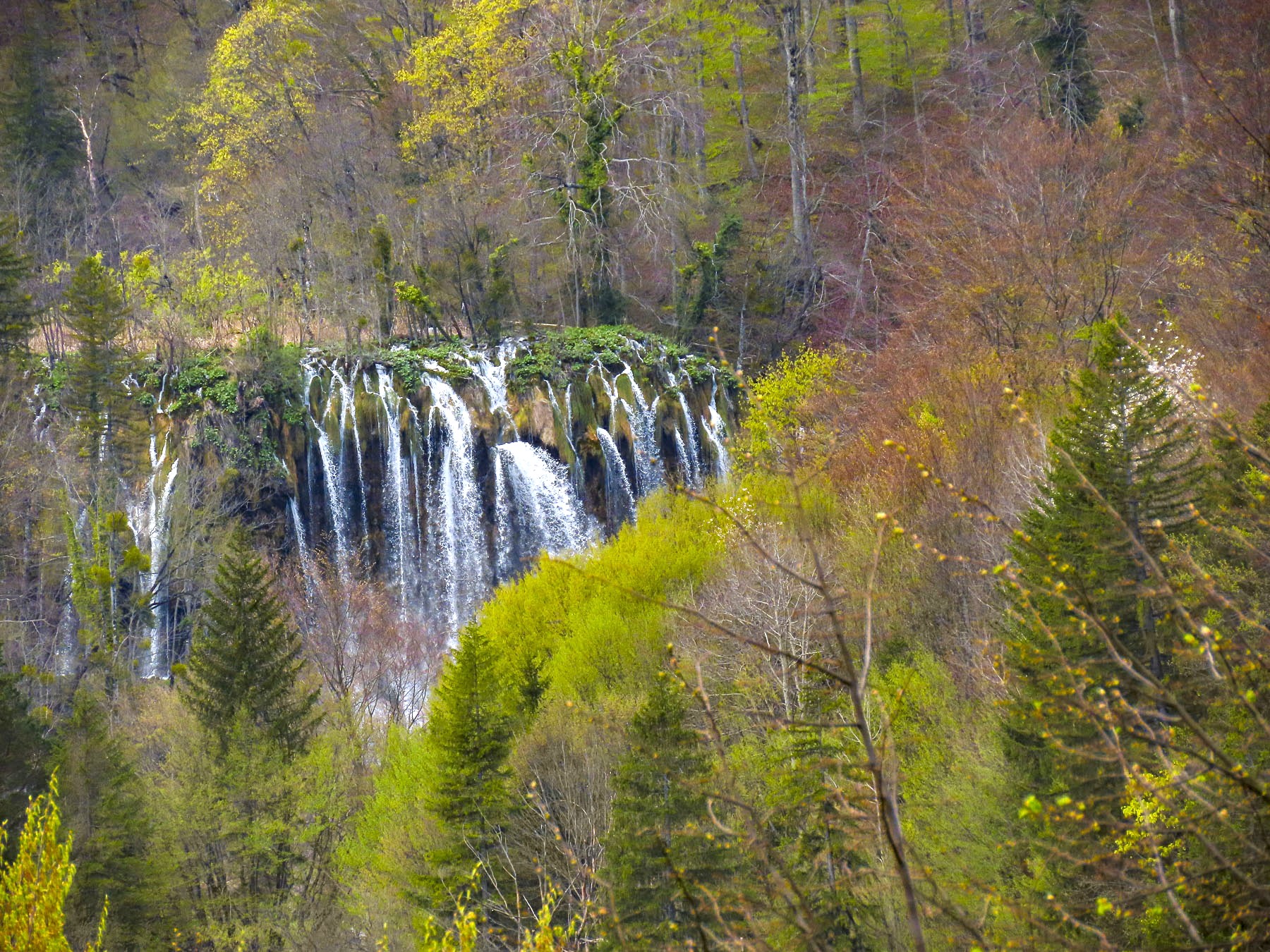
The North Coast 500, kind of – Part 4: To The Isle of Lewis & Harris or Standing Stones, Blue Skies and Rain

Under layers of clothing, our bones still shivered as we stood bundled against an unusually cold August wind on the top deck of the CalMac ferry.  The port of Uig on the Isle of Skye vanished on the horizon behind us as we steamed across the Little Minch channel to the Isle of Lewis & Harris in the Outer Hebrides, the island chain off the west coast of mainland Scotland.

On reading how busy the summer ferries are we had made our car reservation for the passage in the early Spring, as soon as the CalMac timetable for the year was published.

Our interest in Scotland has been piqued ever since hearing the entrancing song and watching the intriguing landscapes in the opening credits to the Outlander television drama. The ancient standing stones seemed to call us, and what better place to see them than on Lewis & Harris. And if you have made it all the way to the Isle of Skye, it only takes a little more effort to reach the outer island.

The two-hour ferry crossing passed quickly under a brilliant blue sky, but within fifteen minutes of landing in Tarbert we were caught in a shower while taking pictures of the small port. The weather changes quickly all across Scotland, even more so in the Outer Hebrides, which feel the full force of the North Atlantic winds.

Within minutes it was sunny again as we drove across the interior of the island to the Gealabhat B&B in Callanish, our base for two nights, and within walking distance of the legendary Calanais Standing Stones site 1. https://www.9callanish.co.uk/

Relentless winds over the millennia have left an austere yet beautiful gently rolling landscape of boglands and heaths, with only the hardiest of trees left standing sporadically about on the island. Though it’s the perfect terrain for the native Scottish Blackface and the Hebridean sheep breeds which have adapted well to the island’s rugged terrain and harsh climate.

It was late in the afternoon by the time we arrived at the standing stones, which was perfect as the weather was still nice and we had this amazing site practically all to ourselves. Older than Stonehenge, the circle is believed to have been erected by a thriving ancient community nearly 5000 years ago, around 2900BC, as a celestial calendar that aligns with the orbits of the sun and moon.

Surprisingly, the extent and height of the complex arrangement of over 50 stones was not fully realized until 1857, when peat cutting around the site revealed the full extent of the impressive, megalithic ritual structure, which was mostly covered by 6 feet of peat.

Do we hold hands and dance around them, meditate or dare touch them?  Over the next two days we returned at sunrise and sunset to experience the wonder of this magnificent site.

A brief shower passed, but by the time we turned into the driveway of the B&B a rainbow arched across the sky. A good prediction for the weather ahead, we hoped.

Gregor’s friendly, “Ceud Mile Failte,” (one hundred thousand welcomes) greeted us as he ushered us into his family’s traditional croft home that has been operating as a charming three-bedroom inn since the early sixties. He hadn’t noticed the rainbow and joked of his now lost opportunity to discover the pot of gold. We didn’t realize when we made our booking that the proprietor was also a popular Gaelic TV chef who hosts a cooking program produced on the island. The Outer Hebrides are one of the few areas in Scotland where Scottish Gaelic is still spoken as the everyday language. https://www.youtube.com/watch?v=6EAvaVkjRo4

Staying at this B&B was one of the nicest experiences we had while traveling through Scotland. While the rooms are small, they were tastefully decorated in meticulous details that included Harris Tweed draperies and throw pillows, woven on the island, and we enjoyed listening to a small flock of sheep baa-ing under our window. The meals that Gregor created for breakfast and dinner using locally sourced food stuffs, and seasonal vegetables freshly harvested from his garden were delicious. Cordial conversations with the other guests around the communal dining table were also a highlight of our stay.

With only one full day on Lewis and Harris, we headed north to the Port of Ness and the Butt of Lewis Lighthouse, a distance of 35 miles, 57km, on the A858. Though only an hour journey without stopping it would take us much longer, with multiple stops along the way and back.

The island is actually one large land mass connected by a narrow isthmus at Tarbert. But the delineation is more topological, with the northern part of the Island, Lewis, being rolling moor and peatlands, while the southern part of the island, Harris, is more mountainous. The name “Lewis” comes from the Old Norse “Ljóðhús,” which is marked on medieval Norwegian maps of the island. Harris is derived from the Old Norse word “hærri,” meaning ‘higher’, which references the hillier terrain of the southern part of the island.

It was a cold morning and a tease of blue sky showed through the clouds as we walked the path to the summit of a knoll where the Dun Carloway Broch ruins commanded the spot. Brochs are cylindrical cone shaped, dry stone towers that stand about 40ft, 12m, tall when complete. The unique Iron Age structures, with an inner and outer wall design, separated by a stairway that winds to the top, is a building method only found on Outer Hebrides, Orkney, Shetland, and the Scottish mainland.

The Dun Carloway Broch is believed to have been built around 200BC by a local chief as a symbol of his status. Excavations and oral tradition show that the dwelling was used almost continuously across the centuries, up until the 1870s when it was last used by “a respectable looking family.” From the knoll we watched a farmer with his dog herd a flock of sheep into a pen.

At Gearrannan we experienced what life was like in a blackhouse village. The homes in the 1700s coastal hamlet share the long elliptical shape and utilitarian design of the turf house in Glencoe, where folks lived in one end of their dwelling and kept their animals in the other. The blackhouses are more substantially built utilizing thick stone walls with an earthen core, and layers of thatch roofing held down by weighted fishing nets. With a fire in the hearth, they provided a welcome shelter away from the harsh weather of the Outer Hebrides. Folks lived in the village until the 1970s when the last elderly residents were moved into newer housing with indoor plumbing, and which didn’t require the continual maintenance that the ancient blackhouses did.

The village remained deserted until 1989, when a local preservation trust set about restoring the dwellings of the village. Today it’s a remarkable living museum with craft demonstrations in some buildings and old-timers sharing tales of life on the island. Some are the individual blackhouses are even available for vacation rental and one is also used as a hostel for budget conscious travelers. https://www.gearrannan.com/

Cloudy skies continued to follow us as we stopped in Bragar to see the Whale Bone Arch. This is an easy site to miss; we drove by it twice, as it wasn’t well marked and it’s set back from the road, but it is very close to the Grinneabhat Community Center. The story of the arch starts in 1920 when local fishermen spotted the carcass of a dead 80ft long blue whale with an unexploded harpoon imbedded in its back. They decided to tow the monster to a more accessible location in Bragar Bay, where hopefully a commercial whaling company would retrieve it and pay a reward for finding the valuable hulk that was worth about $30,000.00 in 1920.  A whaling boat from Harris, on the southern part of the island, came but was unable to remove the now firmly beached whale.  The enormous carcass began to rot. Island authorities in Stornoway were contacted, and they expressed interest in the problem, but failed to respond. It wasn’t until local folk feared death from a putrid plague blowing into the village from the rotting remains that authorities told them, it’s your problem, dispose of it yourself. Villagers shared the now stinky task of boiling the blubber down to oil for casking and bottling.  Eventually only the skeleton remained and the local Postmaster and general merchant, Murdo Morrison, expressed an interest in taking the harpoon and the whale’s lower 25ft long jawbone, to create an arch over the gate to his home. It had been almost a year since the whale was first discovered when a team of horses pulled the 4 ton jawbone along a sandy track on a sled to Morrison’s home. One day the charge in the harpoon exploded as Morrison was cleaning it. Fortunately, he had it pointing away from himself at the time, and the only damage was a large hole left in the wall of his workshop. After slowly deteriorating for nearly a century, the jawbone underwent major restoration in 2000 and was encased in fiberglass to preserve it.

“Drive a little, then café,” we like to say, and the perfect spot was just across the road at the Grinneabhat Community Center. It’s an interesting spot with a no-frills café, serving good pastries and coffee. It also has accommodations for tourists to rent. https://www.grinneabhat.com/ After our coffee we stopped in one of the halls to browse a small community sale, where local folk had tables setup and were selling hand knitted hats, scarves, and mittens along with various knick-knacks. To Donna’s delight, she found a lovely teapot set in purple and green, resembling the thistle, which is Scotland’s national flower and emblem, and a symbol of Scottish independence.   The ceramics were made on Lewis & Harris by Scotia Ceramics, a company that is now closed. It was only £5, and it’s a treasured souvenir from our trip to Scotland.

Farther along we stopped at a recreated shieling hut built by the Barvas and Brue Historical Society in 2017. These small shepherds’ huts built of stone and thatch were usually windowless and only had one door that was placed on the side of the building that was away from the prevailing winds. The huts were once a familiar feature that dotted the landscape across the vast windswept moorlands of Lewis & Harris. They were purely spartan, but they provided shelter against the cold and rain as folks tended their flocks of sheep throughout the year, as they moved them between grazing areas. 

Golden sand and turquoise blue water filled our view as we stood on the cliff above the tidal harbor at the Port of Ness and watched seagulls circle above a fisherman on the breakwater, in hope of retrieving scrapes of bait. The Caribbean color was unexpected for an island surrounded by the North Atlantic. The man-made harbor experiences an extreme tidal range in late August that swings between 15ft at hightide but leaves the boats in the harbor waterless and resting on the sandy bottom at low tide. The Breakwater café, on the heights above the harbor, with its huge picture windows overlooking the coast, was the perfect spot for lunch. The food was very good and reasonably priced.

Revitalized after lunch, we headed to the northernmost point on the island, the Butt of Lewis Lighthouse. It was built in 1862 on a ferociously wind battered headland surrounded by a raging ocean. We dared not to get too close to the edge for fear of being swept away.

Earlier we had passed St Moluag’s Church, spotting it in the middle of a large field surrounded by grazing sheep on our way to the lighthouse, but we had a difficult time actually finding the path between the croft houses that led to it. Eventually we spotted an obscure sign and small pullover between the homes on the main road from Port Ness to the village of Eoropaidh. The parking area is about 1000 ft before the turn to the lighthouse.

We followed a fenced pathway, no frolicking with the sheep permitted, to the ancient stone building. Outside behind a low stone wall stood a tall, intricately chiseled Celtic cross. The door to the sanctuary was open. Once inside, it took a few minutes for our eyes to adjust to the darkness, but finally a large interior was revealed with a small stained-glass window behind the altar, which brought a bit of bright color into the monochrome earth toned interior. Otherwise, it was a chilly space that didn’t appear to have heat, but we saw cushions on the church pews, which indicated that it was still used for services.

Tradition believes the church was built in the 12th century, above a 6th century ruin, by a Norse prince who had converted to Christianity. It’s named for Saint Moluag who, with Saint Columba, were the first Irish missionaries to bring Christianity to the people of Scotland. Surveys reveal the church underwent several expansions and alterations until the 16th century but has since remained true to its ancient core. We headed back towards our B&B after this.

Obsolete, abandoned red phone booths, some just seemed randomly placed in the middle of nowhere, were a curiosity across the island, and always reminded us of Superman and Dr. Who.

Different configurations of standing stones can be found in various locations across the island. But one of the more intriguing ones was the single stone, Clach An Truishal, in the hamlet of Baile an Truiseil. It’s a gigantic lichen covered monolith that looks like a dagger thrust into the earth by the hand of God. Oddly, it stands alone, within sight of the ocean, down an isolated farmer’s track, between two stone walls that separate crofter’s fields. The 19ft tall stone was once part of a larger stone circle, but unfortunately, in the early 1900s the smaller stones were broken apart and incorporated into the nearby field walls and also used as lintels in several local crofter’s homes. Though as ancient as the Calanais Standing Stones, local tradition believes the Clach An Truishal stone marks the grave of a great Norse warrior or, alternately, is the site of a momentous clan battle, the result of cattle rustling, between the Morrisons and the Macaulays in the mid-1600s.

Just off the A858 in Shawbost, we followed a gravel trail through rolling heathland to an ancient Norse mill and kiln set along a stream that flowed to the sea. During the Viking era the water-powered technology of the mill was essential for grinding grains like barley and oats into flour, a staple of the islander’s diet during that era. The kiln next to it would have been used to dry the grains before grinding, as well as for smoking fish and meat for preservation. Pottery vessels known as a ‘crogan’ or ‘craggan’ would also have been fired in the kiln.

Back in Calanais we stopped at the standing stones again to enjoy the wonder of them one last time before dinner and our departure from the B&B the next morning.

We thoroughly enjoyed Gregor’s hospitality and cooking skills, but regrettably it was our last day on the island, and we hadn’t toured the southern region of Harris. Hopefully, we will get the opportunity to return one day to explore more of Lewis & Harris, along with the other Outer Hebrides islands. But our plan for the day revolved around our reservation for the 3pm ferry from Stornoway to Ullapool back on the Scottish mainland.

Spontaneously we turned off the main road after we spotted several standing stones in a field far from the road. This turned out to be Callanish Stone Circle II which is set in a fenced cow pasture. To our delight several hairy coos were vigorously scratching their backs and necks against the ancient obelisks. It was funny to think that the monuments, once an ancient society’s connection to the celestial heavens, were also humble, utilitarian bovine rubbing posts.

Instead of taking the A858 and A859 to Stornoway, we chose to follow Pentland Road, a weaving, slow, 12-mile-long route through the Lewis highlands. The area is a barren, treeless wilderness of rolling heathland that stretches in all directions as far as the eye can see. A lone car whisked by going in the opposite direction.  Sheep, along with an occasional hawk circling overhead, were the only other signs of life.

It’s difficult to believe that the island was ruled by basically two clans starting with the Macleods of Lewis in the 1300’s, but their 300-year stewardship was fraught with feuds and various rebellions. In 1598, King James VI sent the “Fife Adventurers,” a group of lowland gentry and farmers from the Scottish mainland to Lewis to establish a colony, but the clans defeated their efforts. In 1610 the powerful Clan Mackenzie of Kintail, in the Scottish Highlands, purchased the Fife Adventurers’ charter for the island, and successfully subjugated the island’s rebellious clans.

The Mackenzie Clan remained in control of the island for nearly 250 years until 1844, when it was sold due to financial difficulties, to the Far East trade magnate Sir James Matheson, for £190,000. Shortly afterward he built Lews Castle on a hill across the harbor from Stornoway. He also oversaw the “clearances” of over 500 crofting families from the island to make room for industrial scale sheep farming. Many of the tenant farmers, left without homes, were forced to emigrate to Canada or other British colonies to seek better opportunities.

After Matheson’s death the island was eventually sold for £143,000, in 1918, to William Hesketh Lever, Lord Leverhulme, the soap magnate and founder of the business that would eventually become the Unilever conglomerate. He invested heavily in expanding Stornoway’s burgeoning fishing industry, and other projects with the hope of lifting the town’s economic prosperity.

The islanders resisted his plans to make them employees, and in 1923, a now discouraged Leverhulme gifted Lews Castle and 64,000 acres of land to the Stornoway Trust, a community-owned land trust. During WWII the castle was used as a military hospital and then served as the home of Lews Castle College until 1988, when structural issues forced the school to relocate. After extensive renovation and modernization the castle is now a multi-function destination that offers luxury accommodation, holds a museum dedicated to island life, and hosts weddings and other events. 

On the far side of Stornoway we viewed the Aiginis Farm Raiders’ Monument. Our first thoughts upon seeing the hull shaped monument was that it must mark the site of a Viking raid, but we were totally off in our speculation, as the twin pillars commemorate a January 1888 event in which 400 brave men and women from Point Peninsula, risking imprisonment for their actions, stormed the farm in an attempt to reclaim it for small-scale crofting. This was still the era of the “clearances,” and folks were tired of being forced out of their ancestral homes for the benefit of a few landlords who wanted to raise sheep and cattle. The government sent in the army to take back control of the farm, but by the early 1900s, after other protests across the Outer Hebrides and the Highlands, land reforms were slowly underway, and Aiginis Farm was divided into a number of croft plots.

The ancient ruins of Eaglais na h-Aoidhe, St Columba’s Church, were just past the Raider’s monument. It’s an intriguing old church that is believed to have been first built in the 6thcentury, with the chapel and churchyard later becoming the burial site for the Macleod Chiefs of Lewis. Slowly the boggy soil of the cemetery is swallowing many of the historic gravestones under the ground.
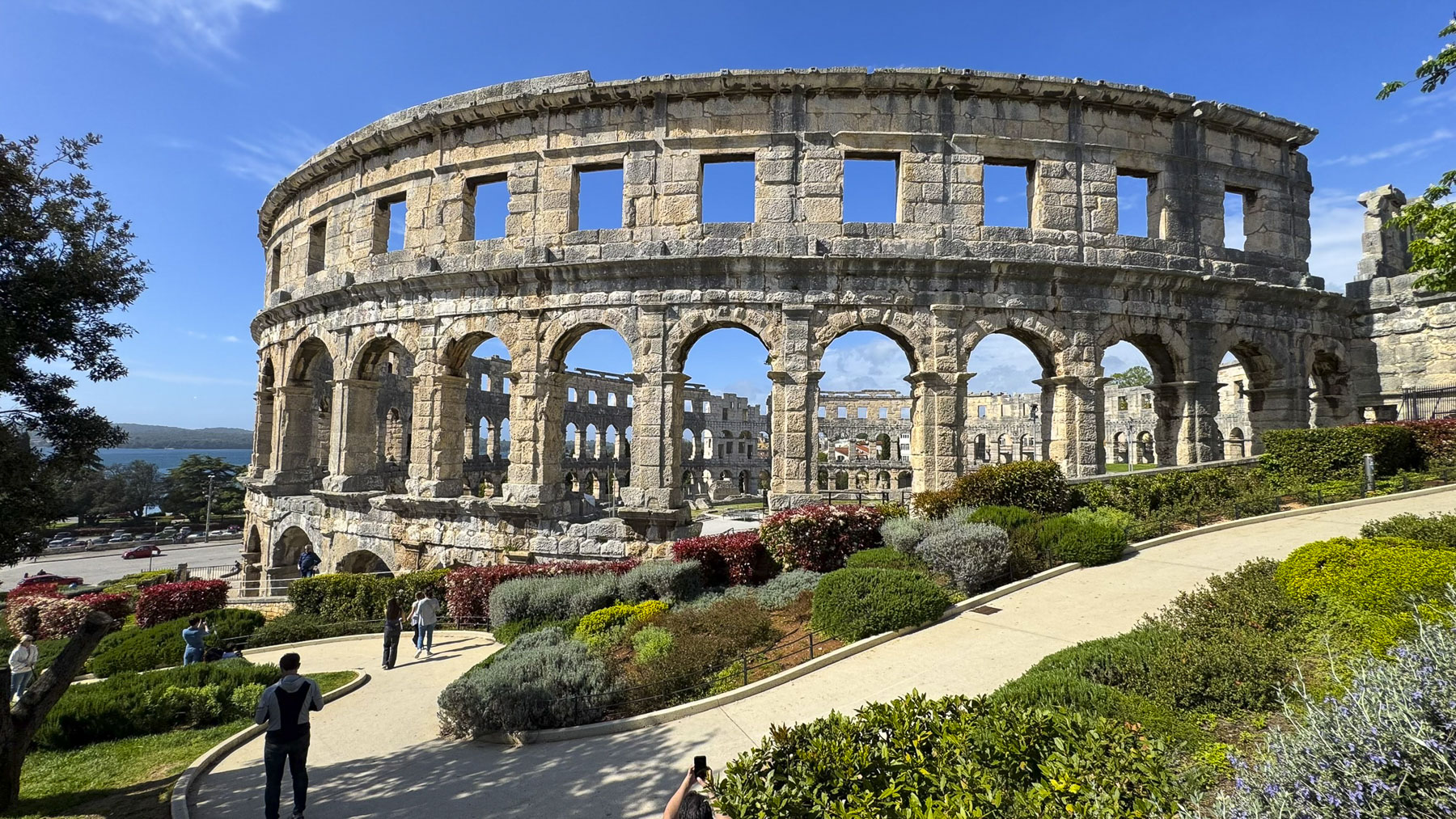
Being from the US, the land where every store is open seven days per week, we were surprised to find that most businesses and restaurants were closed on Sundays in Stornoway. Fortunately, we found the Hebridean Bakehouse, a standing-room only, petite pastry shop that makes the most lusciously sinful sweet and savory temptations. There was a long line out the door and down the block. We enjoyed a tasty picnic in the car before driving onto the ferry for the crossing to Ullapool on Scottish mainland.

 “Slán go fóill,” till next time, Craig & Donna.