

Only the red hull of a fishing trawler tied against the breakwater was visible through the fog that cloaked the coast in its grey mist. We had just set sail from the port of Rohuküla, on the Estonian Mainland. Our destination, the village of Heltermaa on Hiiumaa Island, a short one hour crossing on the Praamid Car Ferry. We had spent the previous day exploring the charming town of Haapsalu. Fortunately, it was only a 15-minute drive to the ferry terminal, which left us with plenty of time to watch the fog-veiled activities of the port before our 8:30am sailing. Our ultimate destination at the end of the day would be a hotel in Kuressaare on the island of Saaremaa. We had debated going directly there, but thought three full days on Saarema would be too long, so we opted instead to spend a day investigating the southern part of its smaller neighbor, the island of Hiiumaa, before catching a late ferry from there to Saarema.

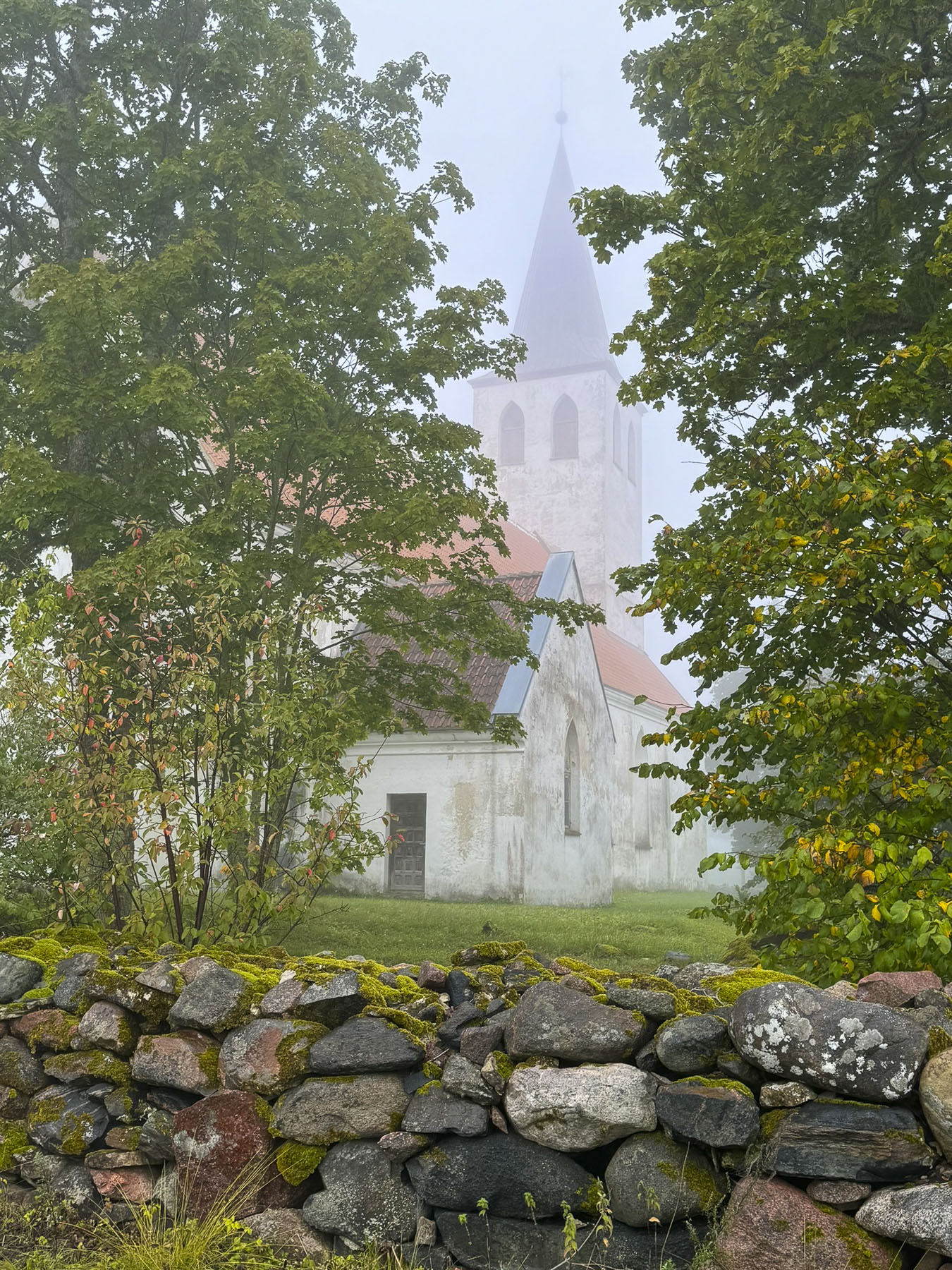
The fog seemed thicker as we disembarked and headed to the Pühalepa kirik, the oldest stone church on the island. We used to be fair weather photographers but have come to embrace the moody light that inclement days offer. The fog that morning provided us with numerous opportunities to hone our skills. Some fall colors were just beginning to show.
Archeological evidence found on the island’s Kõpu Peninsula date the first traces of habitation on Hiiumaa to nomadic seal hunters over 7000 years ago. Its early history is vastly unknown, but it is believed folks lived on the island seasonally, but there might have been small hamlets, as the island was near a Viking trading route. But curiously enough, the first written mention of Hiiumaa in a 1228 document by the Archbishop of Riga, creating the island as a Bishopric to Bishop Gottfried, refers to it as ‘Some empty island named Dageida.”


This might help explain why the island’s new Germanic settlers felt the need to build Pühalepa kirik, surprisingly without a steeple, as a safe haven fortress church in the early 1200s, since the indigenous pagan tribes across ancient Estonia were resisting foreign rule and the imposition of Christianity upon them. The early German influence on Hiiumaa faded after the island was conquered by the Swedish Empire in the late 1500s.

The small red roofed building next to the church is the 16th century crypt of the von Stenbocks, a noble Swedish family that had extensive land holdings on the island and played a significant role in the island’s economy at the time. The current shape of the church dates from an extensive 18th century renovation which added the steeple.

Suuremõisa Manor on the von Stenbock’s largest estate was nearby. The imposing Baroque-Rococo style country home featured a large central building with a wing on either side of a formal courtyard, where guests would arrive by carriage. Years later the property was acquired by Baron Otto Reinhold Ludwig von Ungern-Sternberg, a shipping magnate. Things didn’t go well for the Baron, and in 1803 he was accused of murdering one of his ship’s captains, racketeering, piracy, and multiple kidnappings. He was convicted of murder and sent to prison in Siberia.

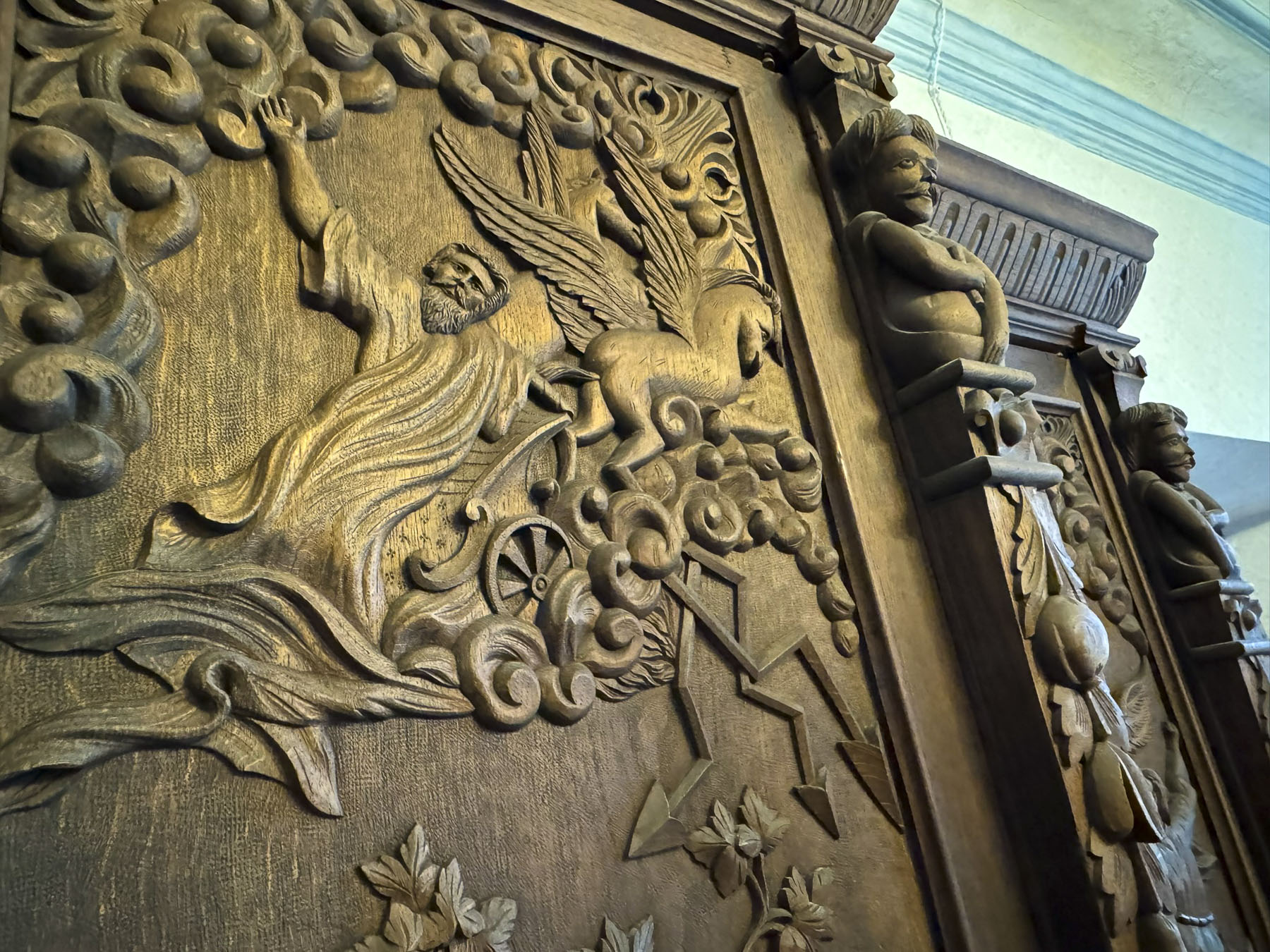
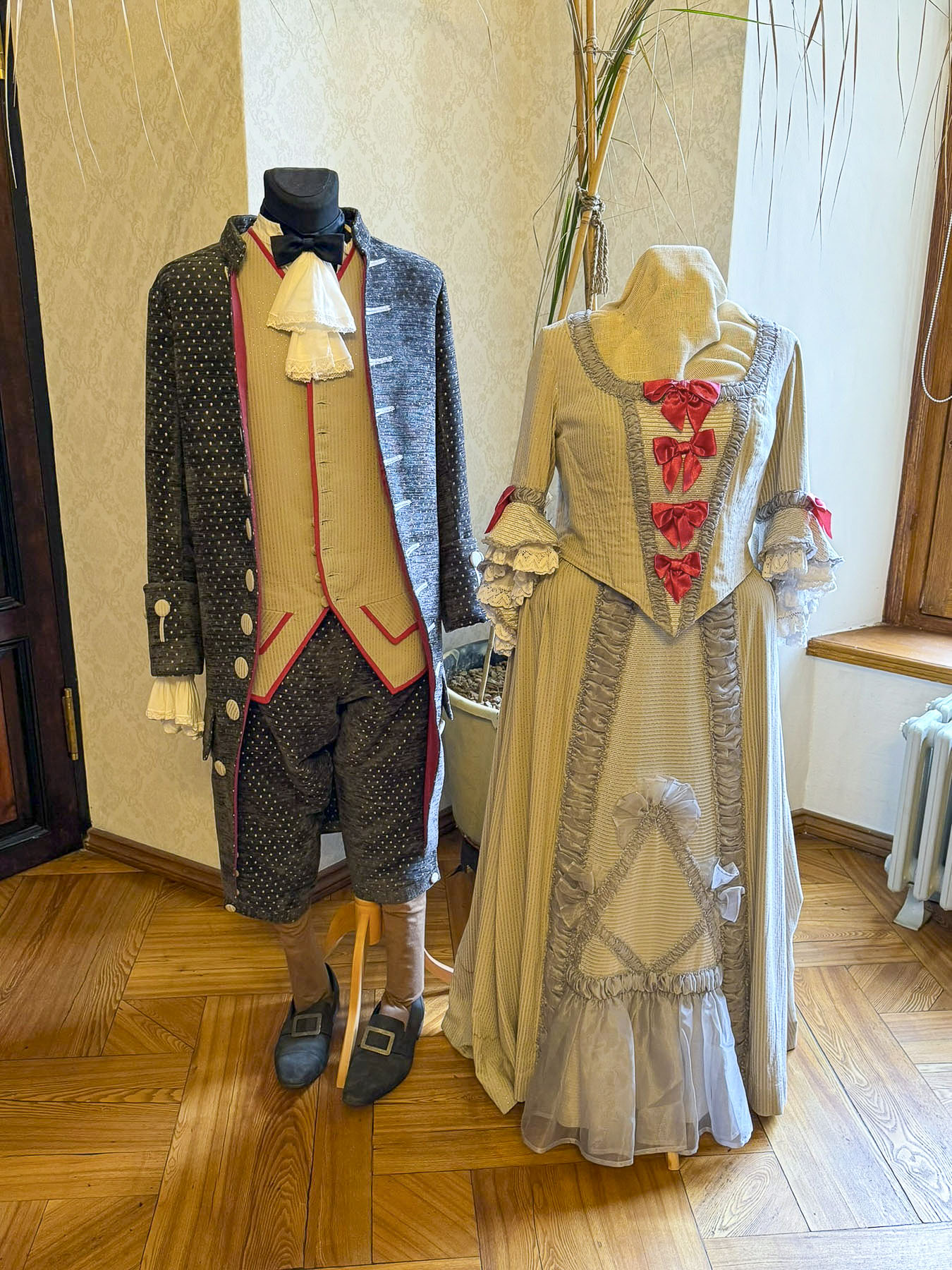
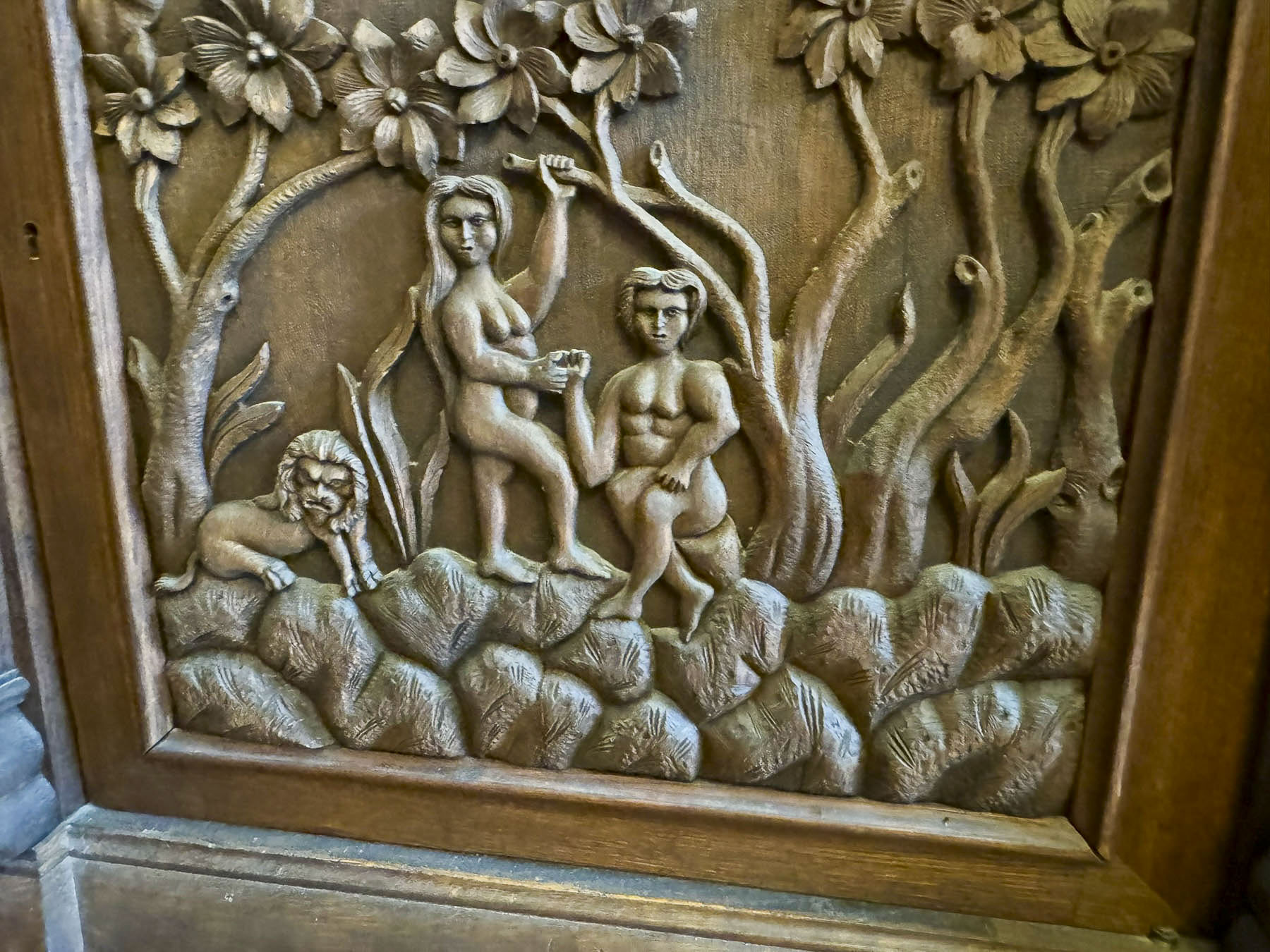
Miraculously the building survived both world wars and the Soviet occupation of Estonia. Today the preserved manor house is used by two schools, one a technical college, the other a local primary school. The site maintains a very low-key approach toward visitors. After a receptionist signed us in we were able to visit several rooms where there were some amazing pieces of antique furniture featuring finely carved religious motifs. Even though the building has a contemporary use, we thought it still retained a grand understated elegance.
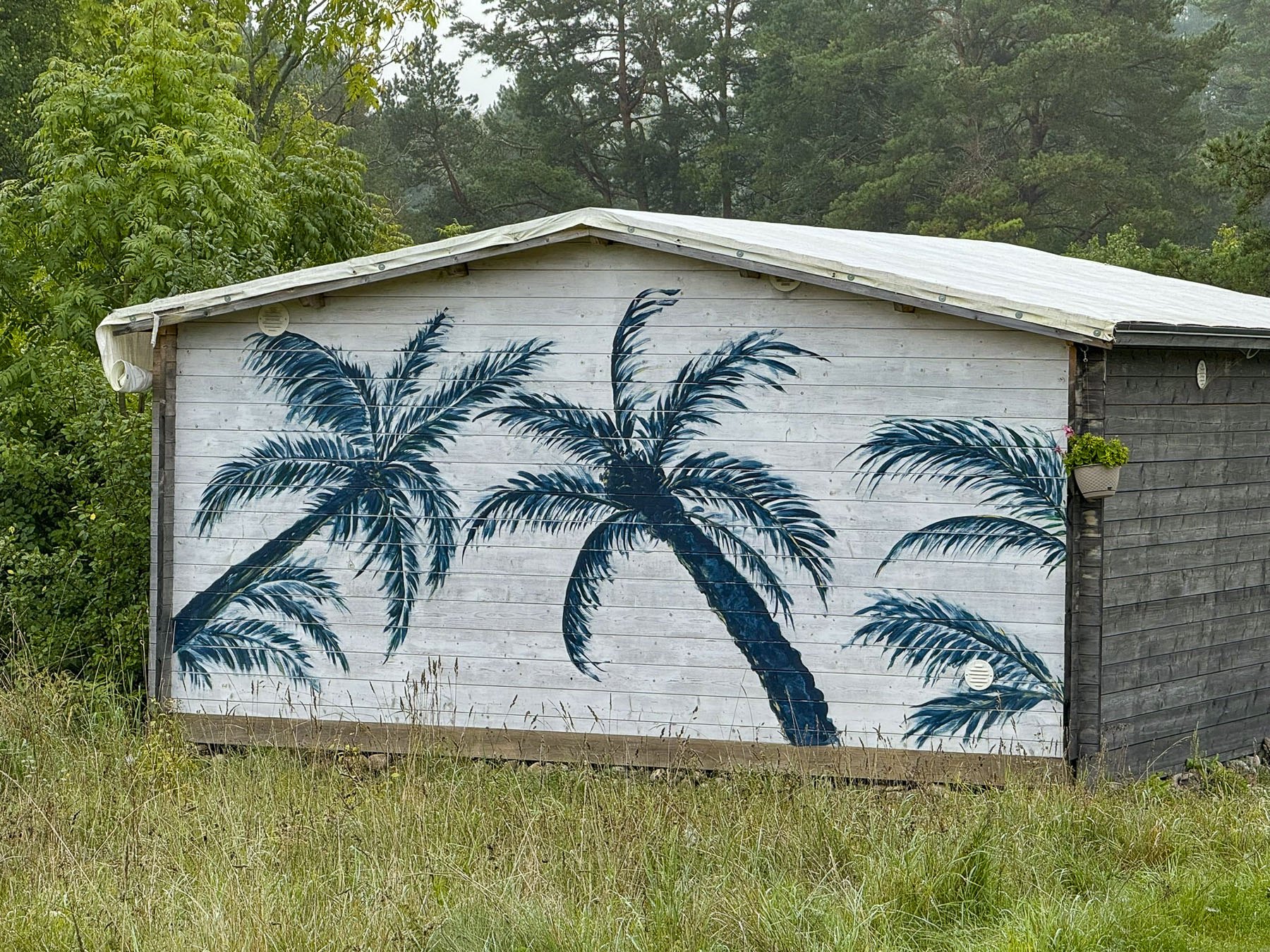
It was still foggy as we drove to our next destination: Kassari Chapel, nine miles away, along the island’s southern coast. After driving through a lushly forested landscape, we chuckled when turning onto a side road we saw a barn painted with palm trees. We speculated about how harsh the winters on the island might be and what tropical islands the painter dreamed of.
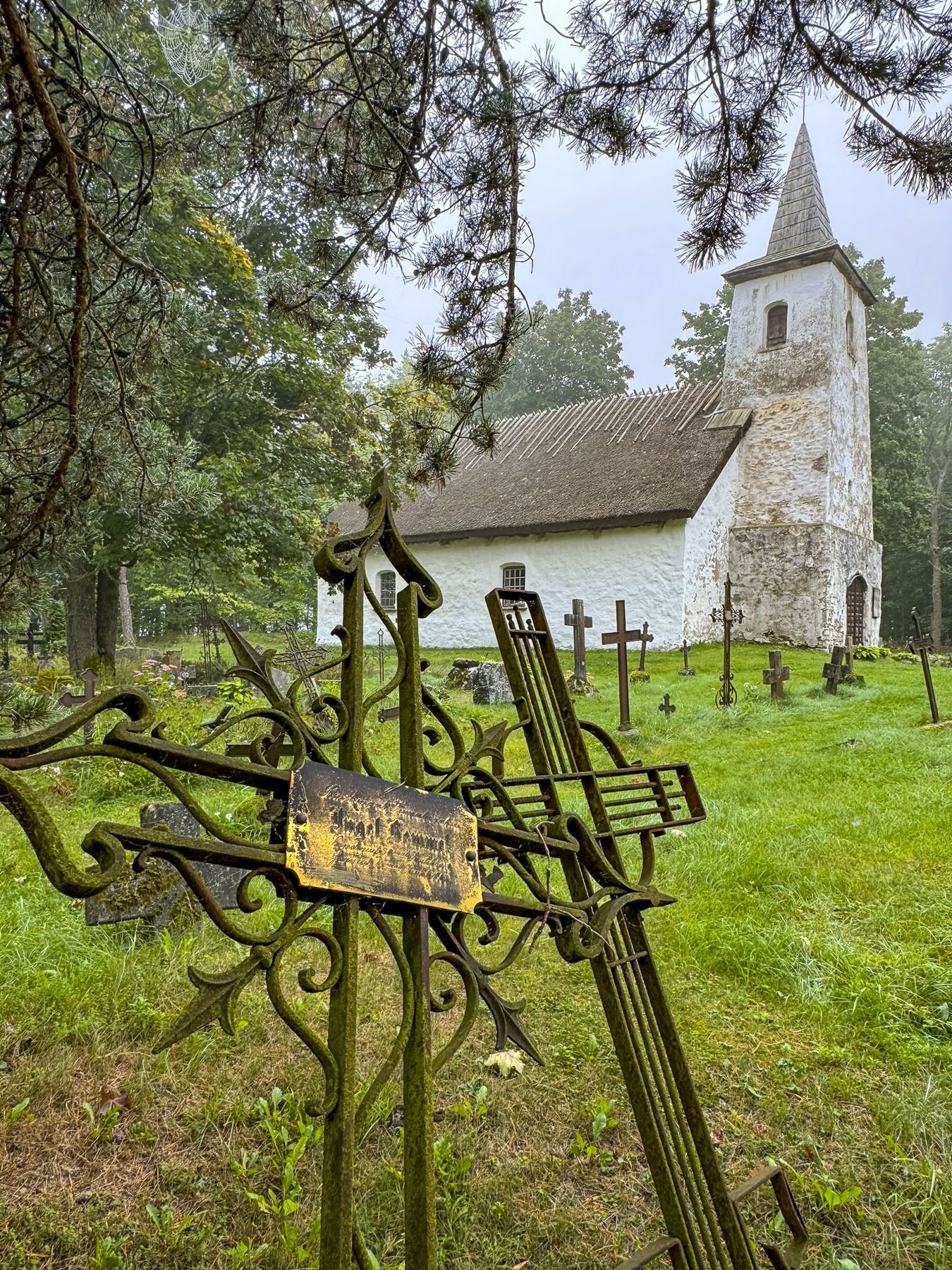
Much smaller than the Pühalepa kirik, the Kassari Chapel sits on the edge of a forest that backs to the waters of Õunaku Bay. A wooden church built in the 16th century stood on this site until it was replaced with this unique stone church, still covered with a thatch roof, in the early 1800s. All the worship services in the church take place by candlelight as the sanctuary has never had electricity. The quaint graveyard is almost lost in the woods, with headstones covered in moss and leaves. Many of the island’s notable poets, artists, teachers, and other island characters (a manor’s swineherd), along with several wealthy landholders are buried in the graveyard. Noticeably the wealthier folks had headstones made from imported marble, while the less well-off had iron crosses crafted by the local blacksmith.
At the crossroads nearby in the hamlet of Kassari stood a tall statue of the giant Leiger, carrying a large boulder on his shoulder, with two small islanders atop it. Leiger is an Estonian folk hero, and relative of Suur Tõll, with incredible strength, who lived on Hiiumaa. The sculpture captures the essence of one of the giant’s legendary feats when he built a bridge for the islanders across the waters of the Soela Strait that separate Hiiumaa from the island of Saaremaa, which lies to the south. According to legend, Säare Tirp, a long narrow, tail-like strip of land that protrudes from the mainland into the strait, is all that remains from his endeavor.

A place to break for coffee was difficult to find mid-week during the September shoulder season. While many eateries were noted on the map, they unfortunately were only open on the weekend. But luckily, Rannu Pubi in the village of Käina was open mid-week for lunch. Miraculously it seemed by the time we parked the car, the clouds parted, and we were able to eat outside in bright sunshine on the restaurant’s terrace. The food was delicious, and the coffee was welcomed.


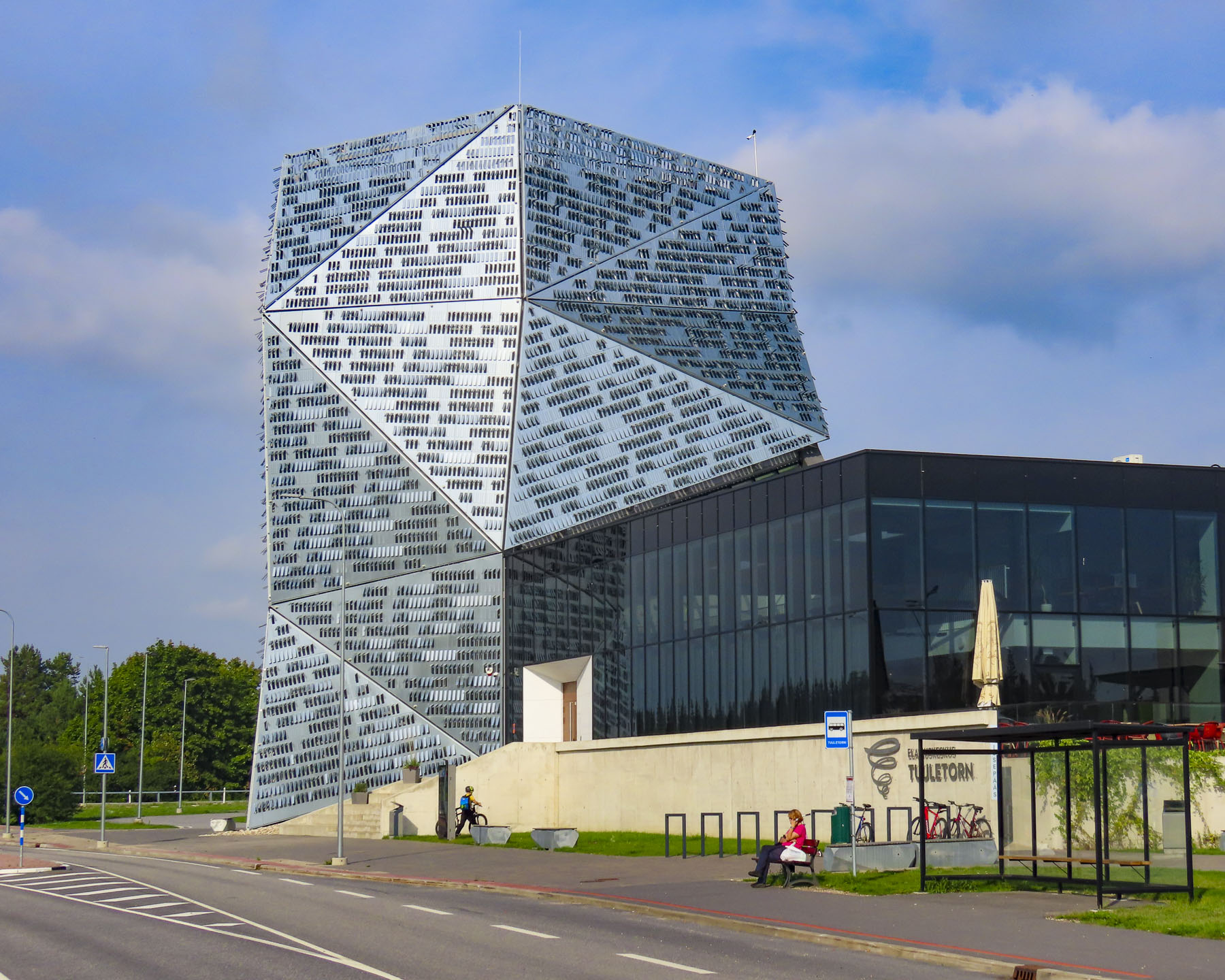
The town of Käina was also an interesting stop with the ultra-modern Tuuletorn Experience Center, “a bit of a museum, a bit of a science center and a bit of a play world,” was a main attraction, along with the ruins of Martin’s Church. When it was built in the 16th century it was the largest church on the island, and could hold 600 people. Unfortunately, the church began to settle into the soil unevenly and in 1850 the corners were buttressed to prevent its collapse. During WWII the building was hit by an incendiary bomb, the resulting fire burned through the roof, and destroyed the interior.

Our stops earlier in the day were only minutes apart, so with the sun gloriously shining we returned to Pühalepa kirik and Suuremõisa Manor to take a few more outside shots on a now beautiful day before heading to catch the 4PM ferry from Sõru to Triigi, on Saaremaa.
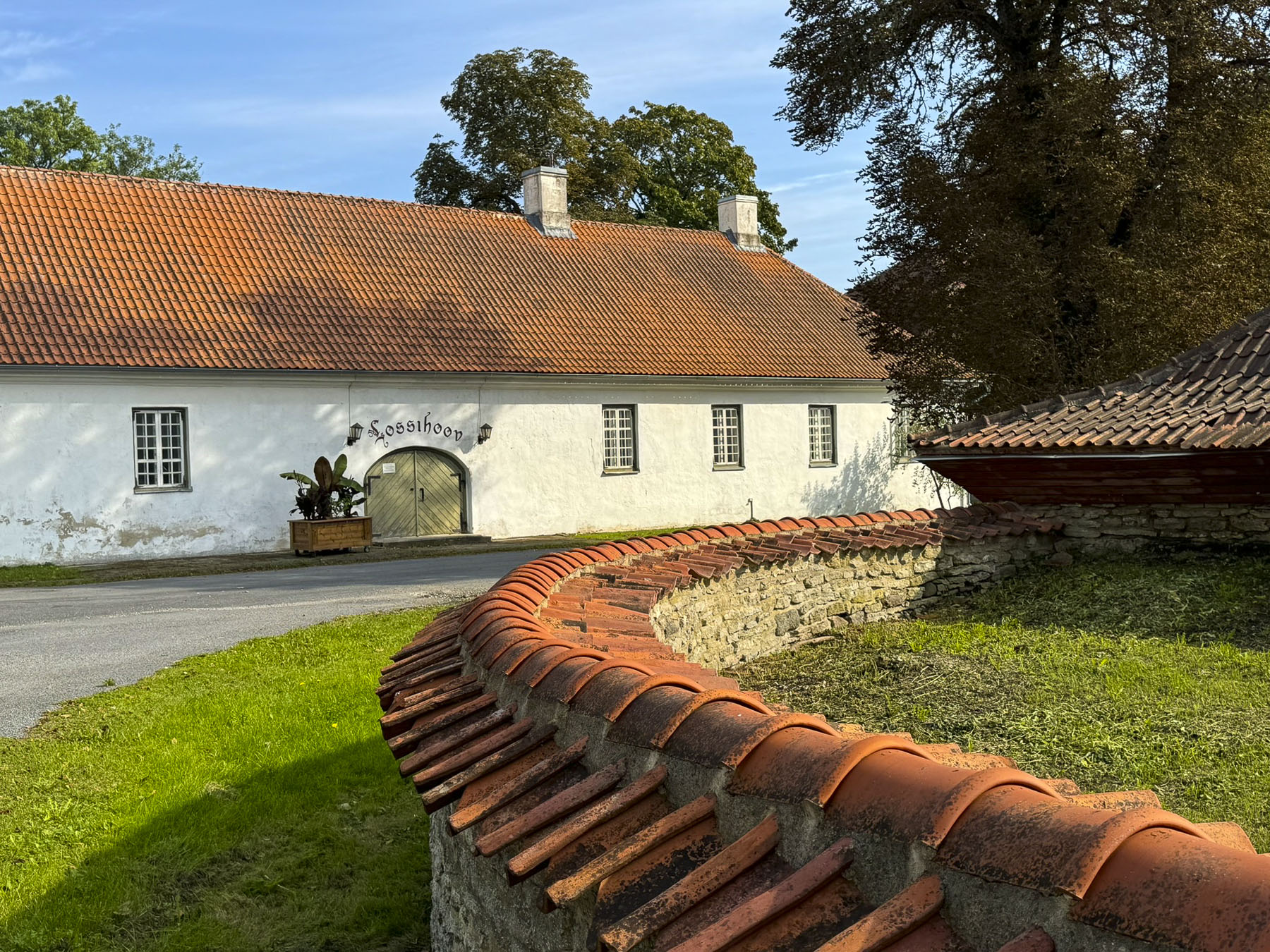

The Rudolf Tobias House Museum, a centuries old farmstead, and the 1873 birthplace of the famous Estonian composer and organist, was on our route. The museum was closed, though we were able to walk around the grounds. Across the road we plucked some fruit from some wild apple trees.


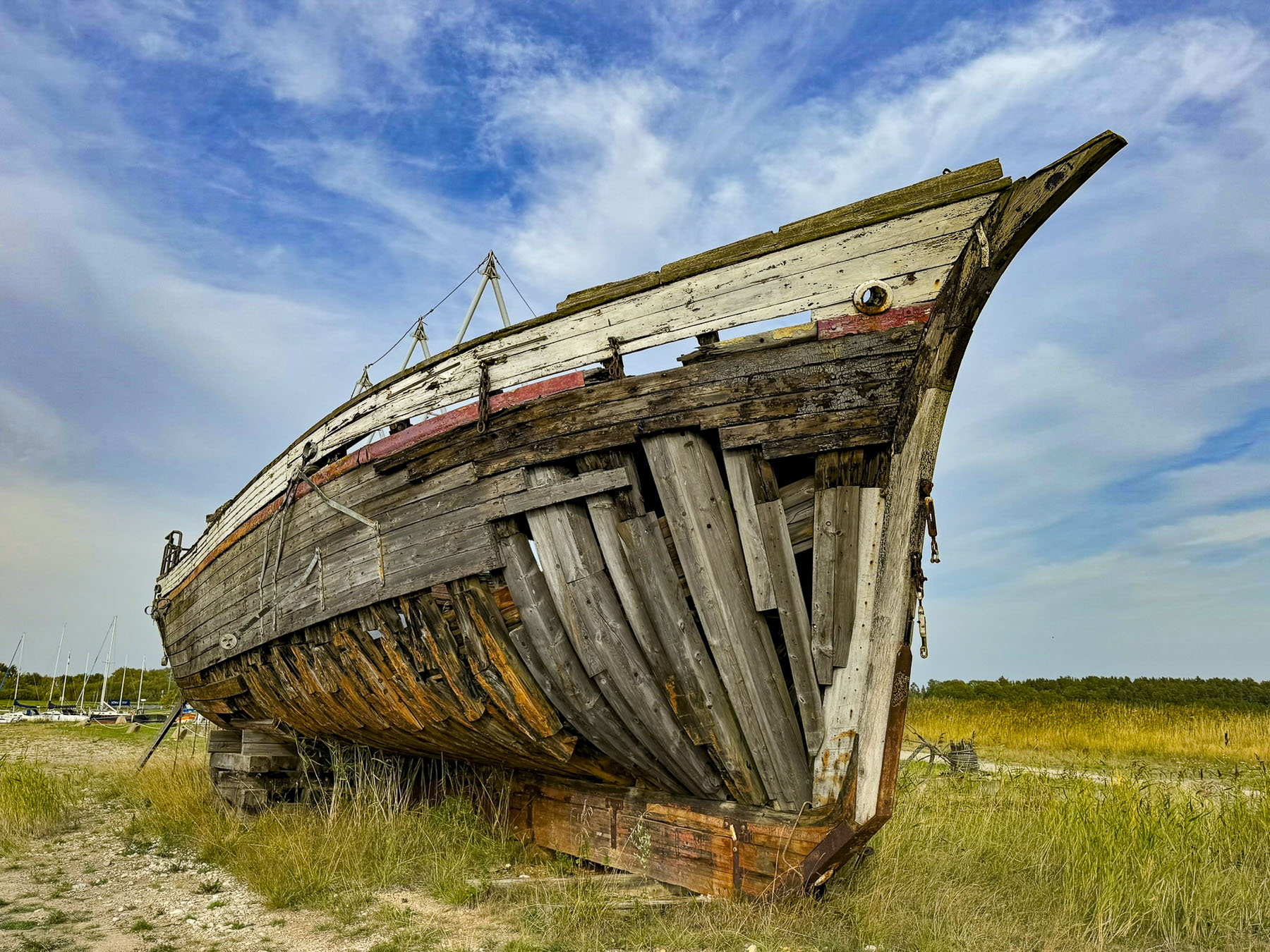
First noted in 1254, Sõru was for centuries an important fishing harbor and its waterfront was lined with fish processing sheds. A ferry has run from the inlet since the time of Swedish rule, when two energetic young men first offered the service. The village’s ship builders used the plentiful pine and oak timber from Hiiumaa’s forests to construct vessels up until 1939, when Estonia’s last large, ocean-going wooden boat, the three-masted motor merchant ship Alar was launched, with the crack of a champaign bottle across its bow. Efforts are underway to fully restore the historic vessel after it was found in Denmark, after sailing the seas under several different flags. Today, Sõru is a small quiet harbor with a limited number of berths, a campground, and nautical heritage museum.

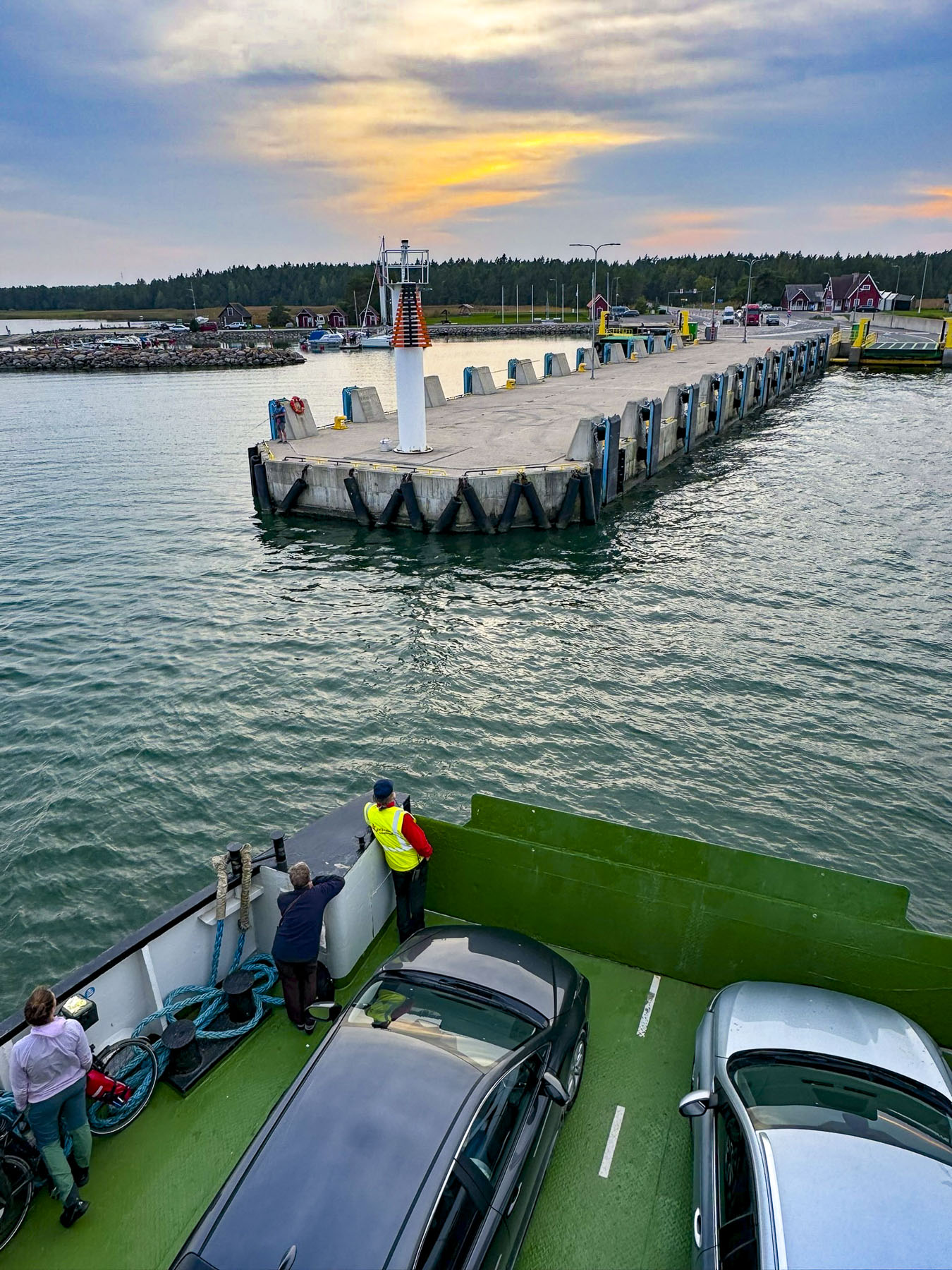
The ferry boat from Sõru to Triigi was much smaller than the morning ferry from the mainland, and only sails twice a day, so if you are traveling via car a reservation is highly recommended.


We boarded the 4PM ferry and struck up a conversation with a young woman who had spent several months bicycling camping her way from Paris through the Nordic countries and was now returning to Europe through the Baltic states. “It’s been a tremendous journey, but now that the weather is changing, it’s time to head south.” It was only mid-September, but there was a definite chill in the air, and we also wondered how many fair-weather days lay ahead.

Over the course of seven hours, and driving about 55 miles, we had a thoroughly delightful, leisurely day exploring the southern part of Hiiumaa Island. It was confirmation that our decision to detour through Hiiumaa, instead of heading directly to Saaremaa Island, was a good choice for us.
Till next time, Craig & Donna

 2 Suitcases for 2 years