A Balkans Road Trip Part 8: Bosnia and Herzegovina: Mostar, Počitelj and the Kravica Waterfall – Charming, Intriguing and Magnificent

We had been in the Balkans almost two weeks by now, and this was the first time we encountered heavy traffic. Without realizing it we had planned on driving from Sarajevo to Mostar on May 1st, Labor Day, a major two-day holiday in Bosnia, where it is traditionally spent picnicking and relaxing with family and friends in the countryside. It was a warm beautiful spring day, and did in fact feel as if every family in Sarajevo was heading to Mostar, in the southern Herzegovina region, turning what would normally be a two-hour drive into five.

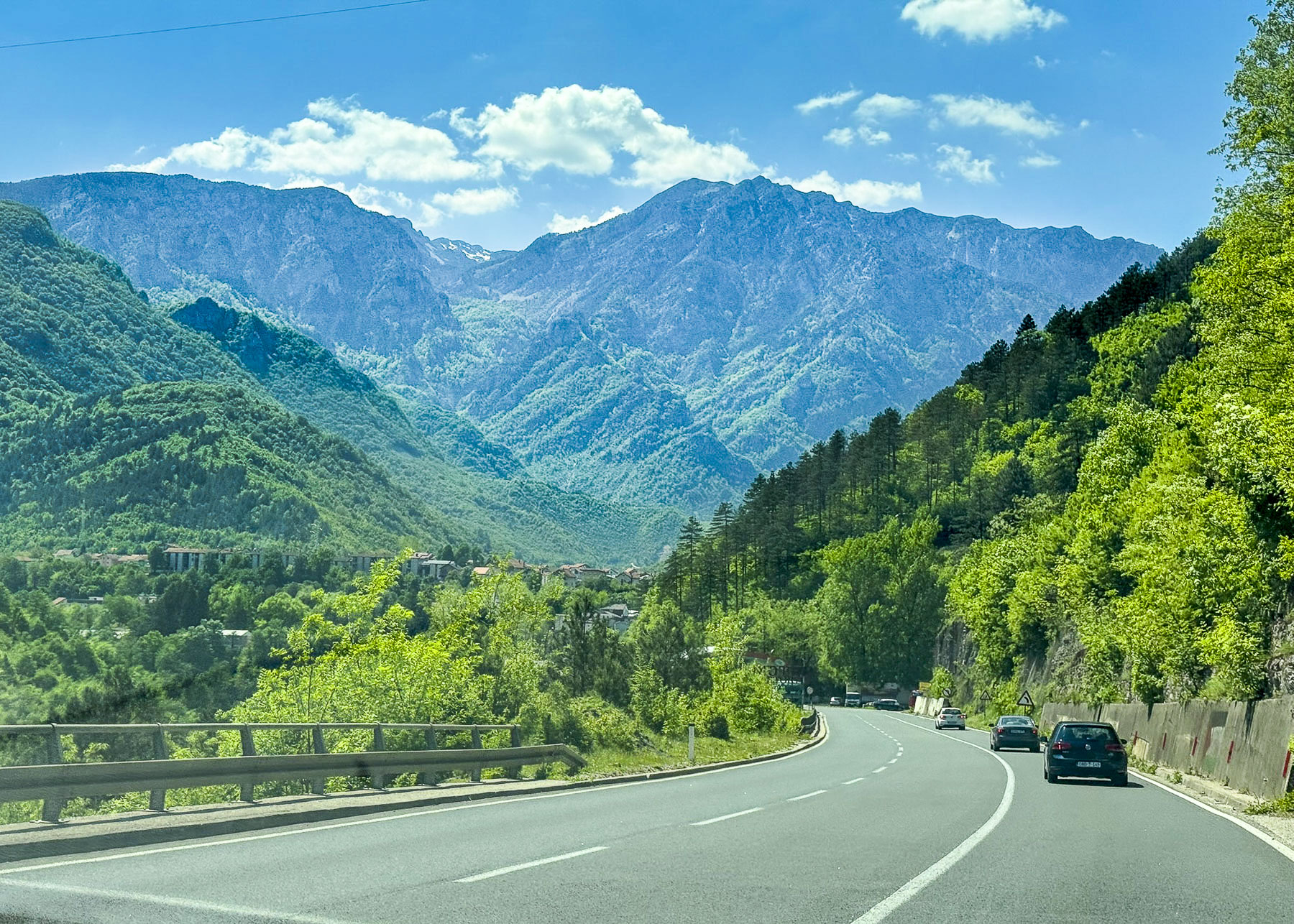
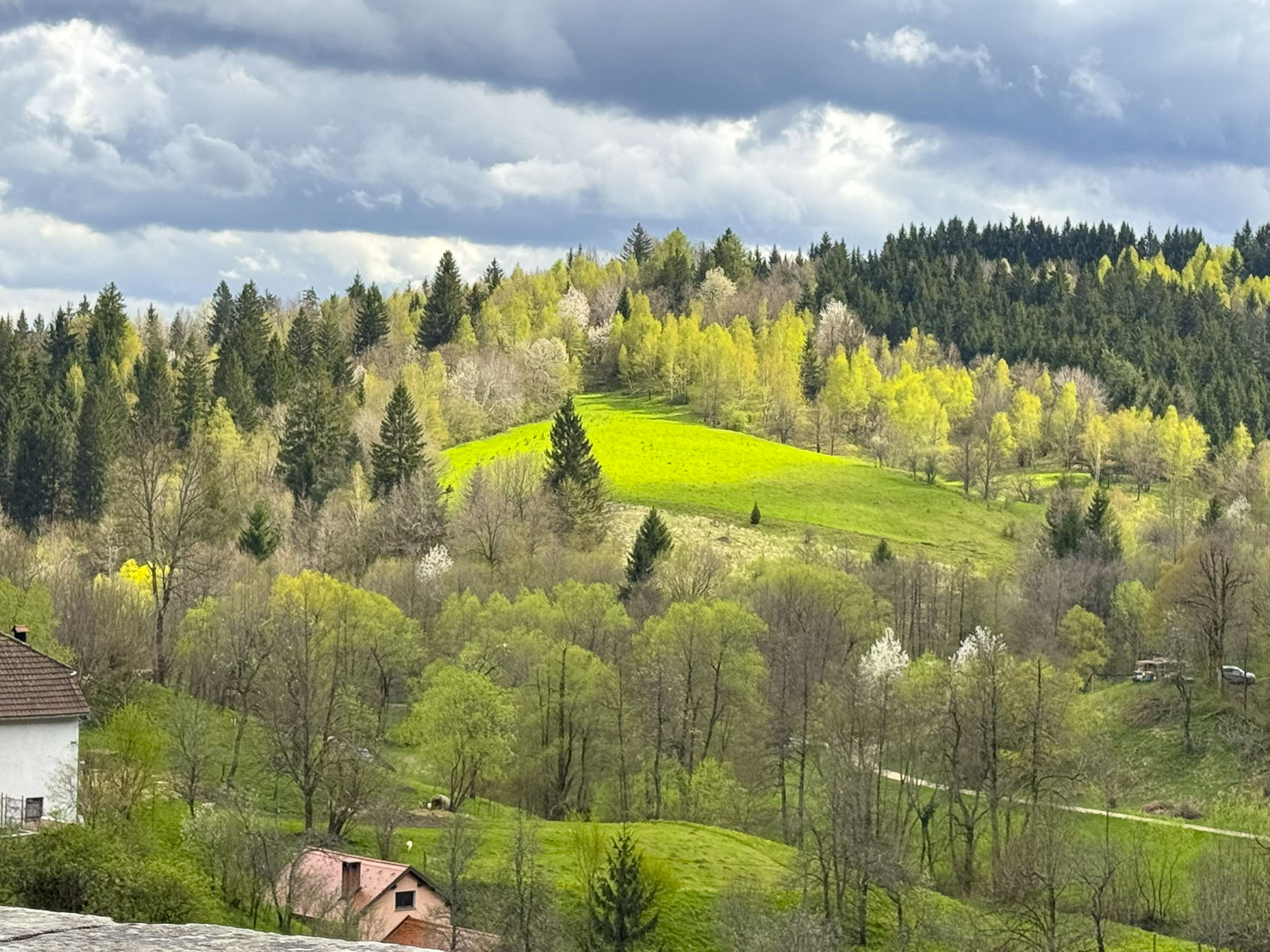
Our journey was off to a good start as we headed southwest on the A1, from Sarajevo through the rolling foothills of the Dinaric Mountain Range, a wide 644km (400mi) long stretch of peaks that runs southeast from Slovenia through Croatia, Bosnia, Montenegro, Serbia, Kosovo, Albania, and North Macedonia. But it soon slowed as this major four-lane wide infrastructure project, which will eventually reach the Adriatic coast, narrowed for construction projects. The countryside was lush with fresh spring greenery, though disappointedly there were not any scenic pullovers along the way, and we contented ourselves as best we could, by taking landscape photos through the window of our car as we drove.

Our “drive a little then café” yearning for caffeine was seriously overdue, so we detoured slightly to Restoran Vrata Hercegovine for coffee and lunch when the A1merged into the two-lane E73 at the traffic circle in Bradina. They had a large menu to select from and everything we ordered was very good; the pricing very budget friendly.

From here the E73 basically follows the Trešanica River, the headwaters of which flow from the slopes of Mt. Bitovnja 1,700m (5600ft) which wasn’t far from where we stopped for lunch, to Konjic where it merges with the Neretva River at Konjic before flowing into Lake Jablanica. We had originally planned to have lunch here and walk across the Stara Ćuprija, Konjic’s old Ottoman bridge, a six-arch stone span constructed in 1682. The bridge is 107km (66mi) downstream from the river’s source on the slope of the Zelengora mountains near Mt. Maglić 2,388m (7835), Bosnia’s highest peak on the border with Montenegro. Nearer to Konjic is Glavatičevo, a popular village for river rafting on the Neretva.

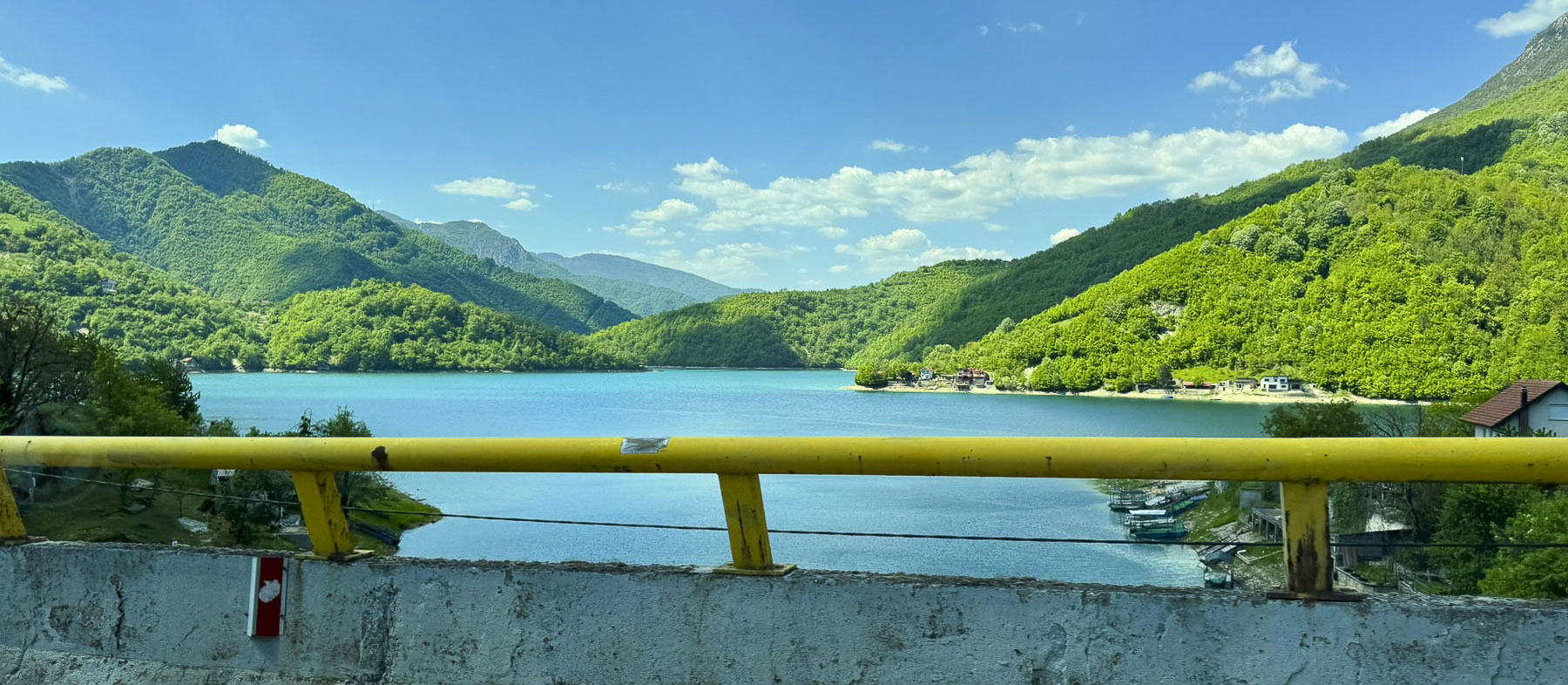
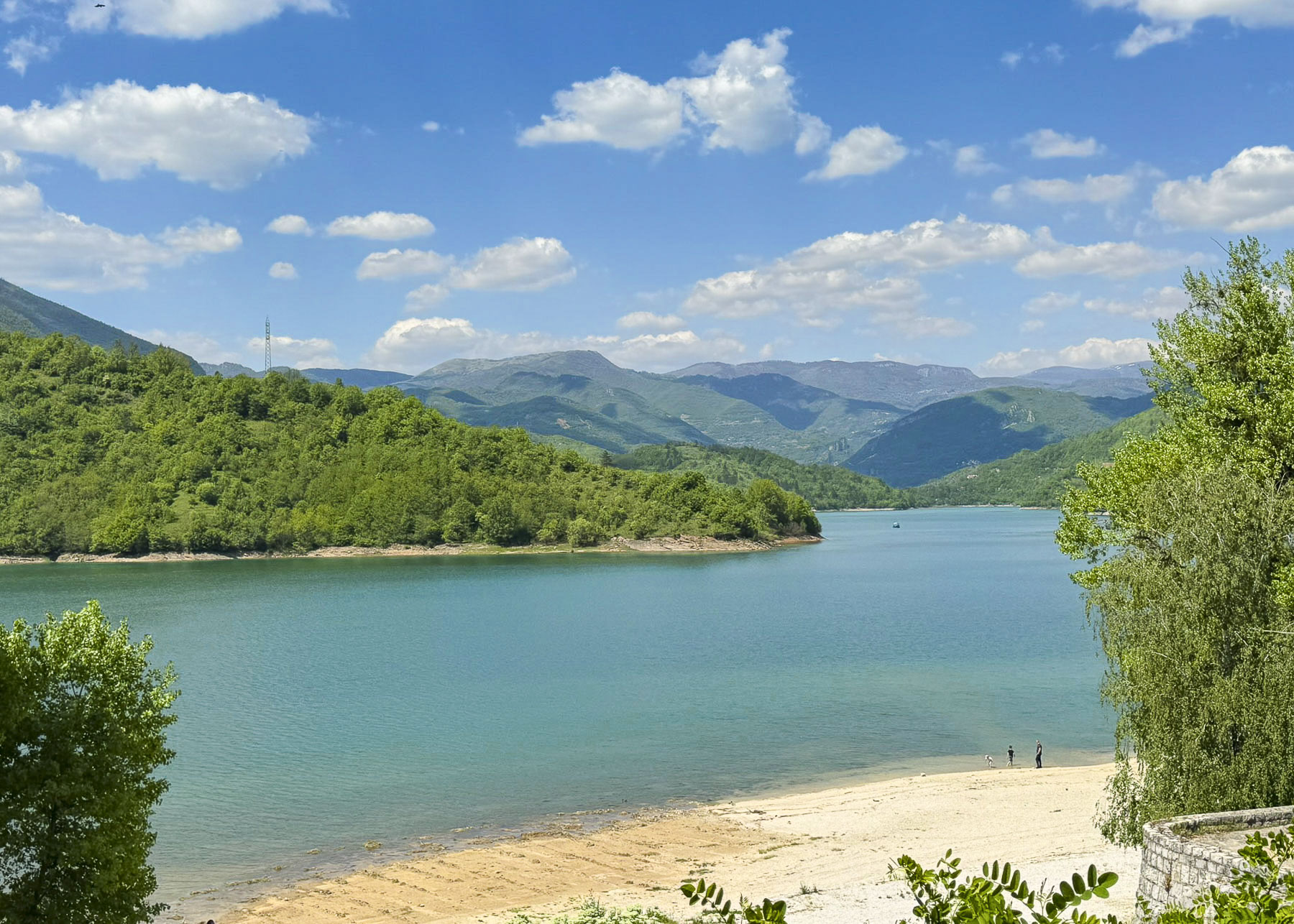
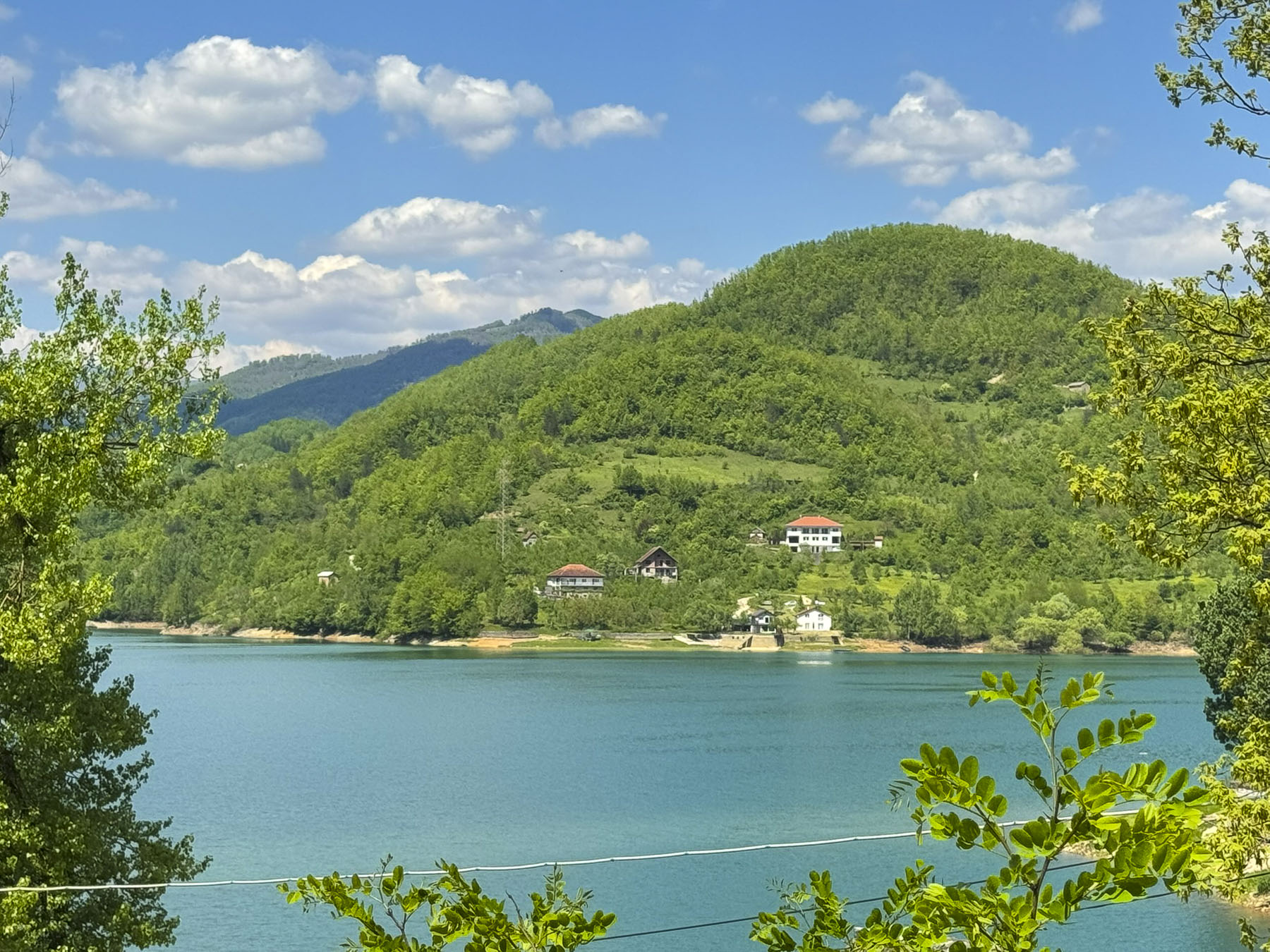
The road roughly traces Lake Jablanica’s picturesque shoreline. The large lake is actually a manmade reservoir that is 30km (19 mi) long and covers 67.5 square kilometres (26.1 sq mi). The damming of the upper portion of the Neretva River was created between 1947 and 1955 to supply hydroelectric power to the region. While this was the first dam built on the Neretva River there are now many environmentally controversial proposals to block the remainder of free-flowing waterway with 50 more dams across the river and its tributaries. In Ostrožac there was a nice beach where we stopped to take photos of the Lake.

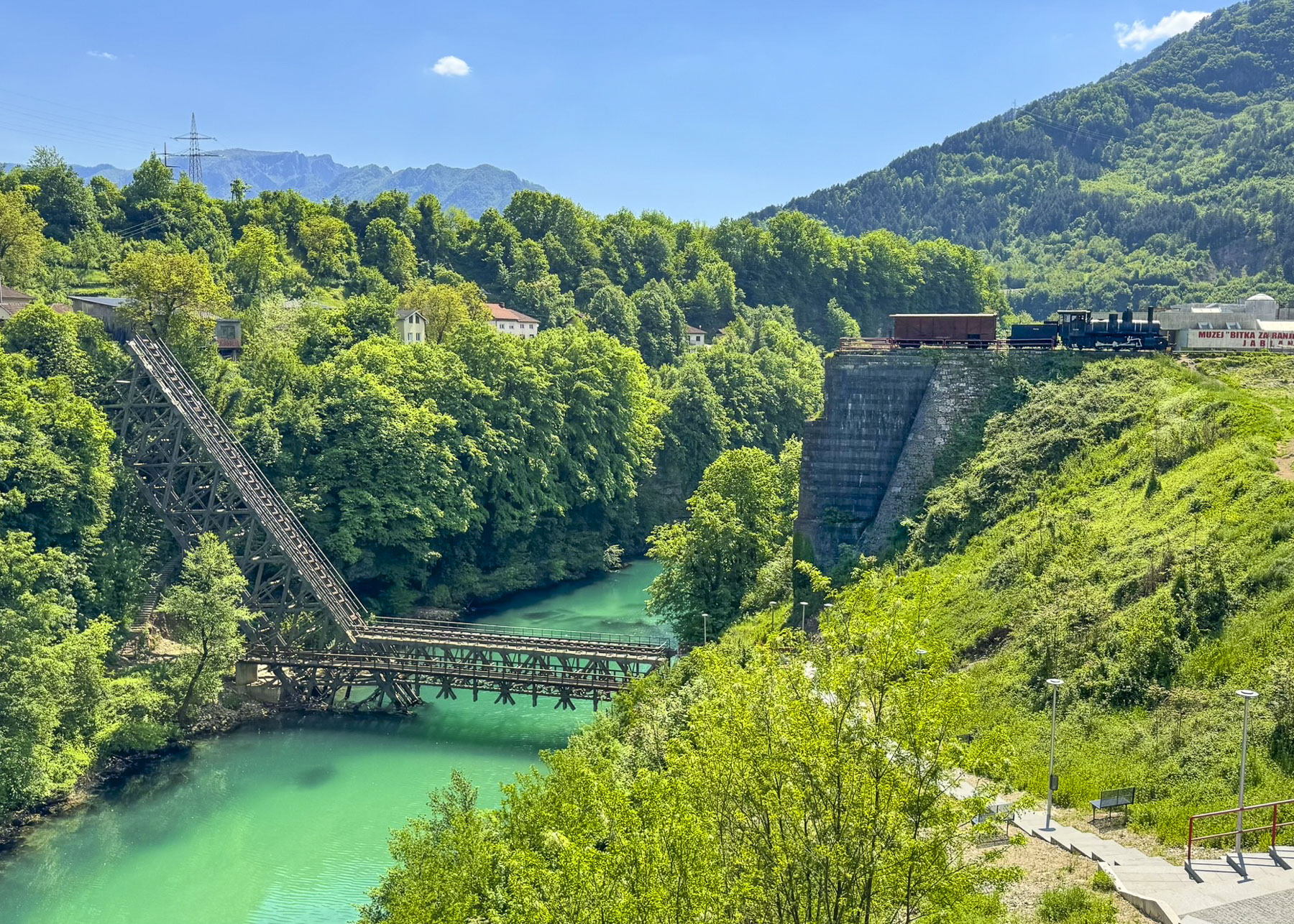
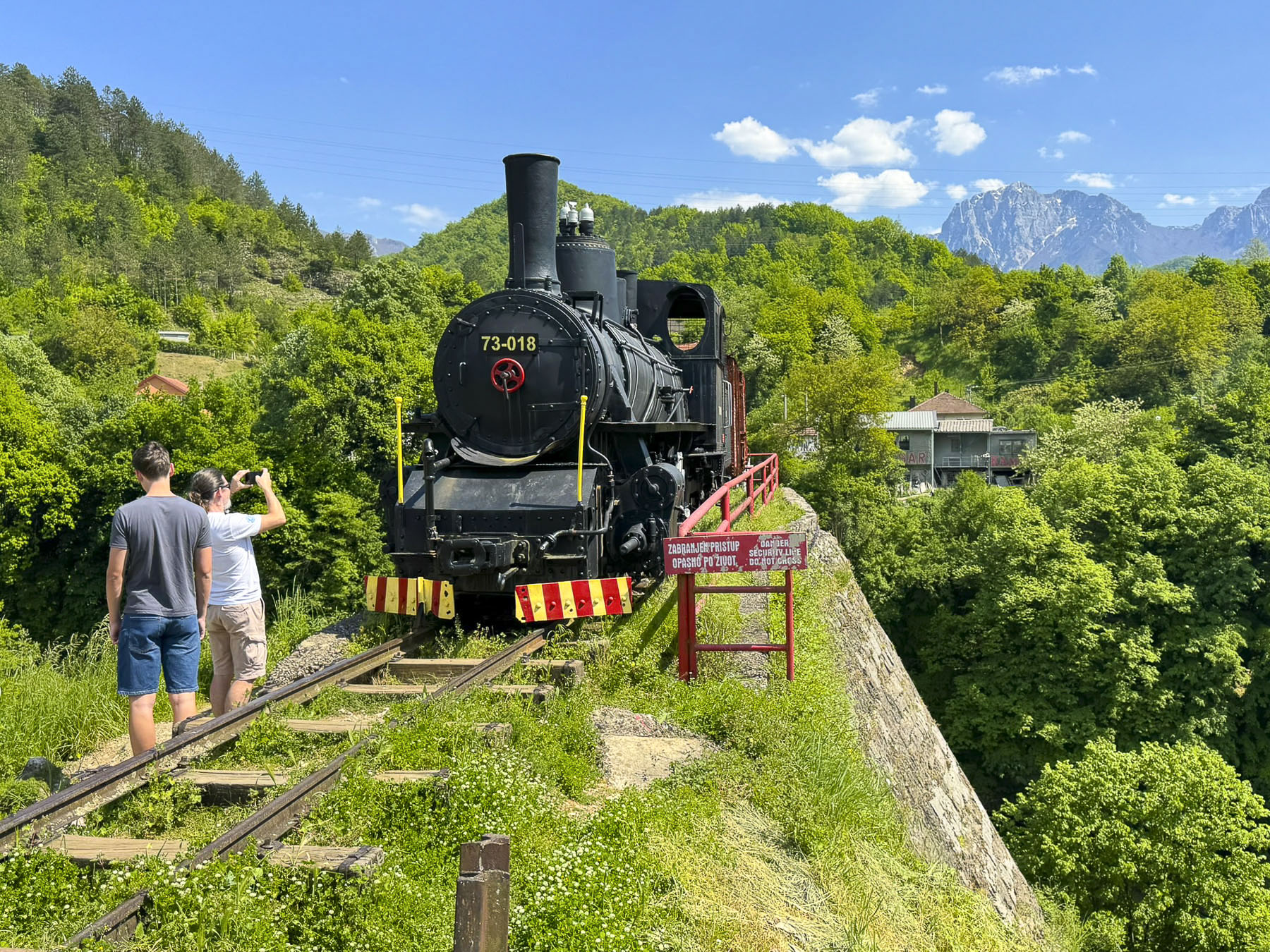
South of the lake we detoured to the Old Neretva Train Bridge in the town of Jablanica, an important site during the “Battle of the Wounded” during February–March 1943. Here Josip Tito led the escape of over 20,000 Yugoslav Partisans, plus roughly 4,000 wounded, east across the Neretva River to escape the pursuit an overwhelming Axis force assembled to destroy them after their unexpected victory at Prozor.

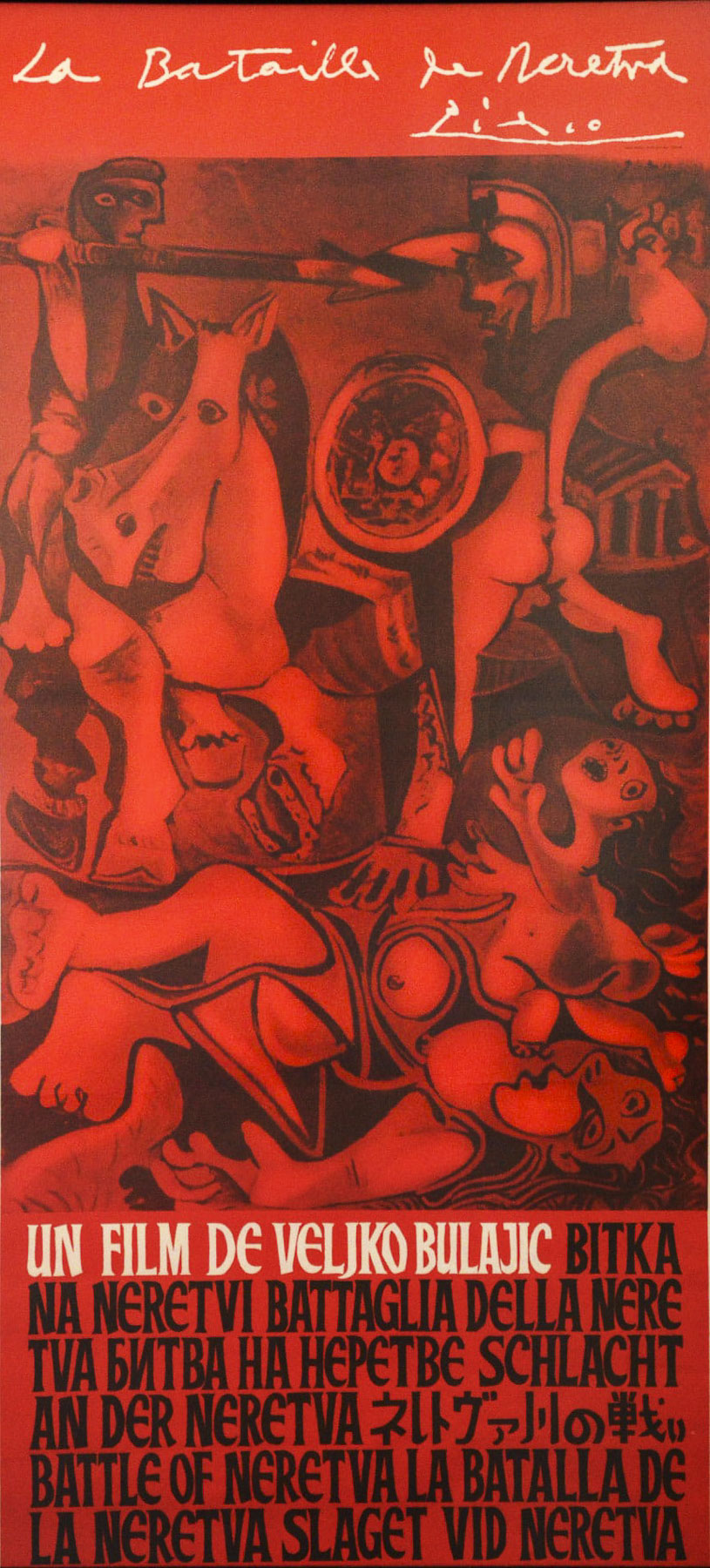
This successful strategic retreat relied on a deception which required the destruction of all the bridges across the Rama and Neretva rivers between March 1stand 4th. This action led the Axis forces to believe the partisans were headed towards northern Bosnia, while in fact Tito was leading his men to safety on March 7th and 8th across a temporary wooden bridge built across the Neretva, in just 18 hours, after the rail bridge was destroyed. A museum at the site commemorates this history. As does the 1969 movie “The Battle of Neretva” starring Orson Welles and Yul Brynner, among an international cast by directed Veljko Bulajić. The film was a contestant in the best foreign film category in the Academy Awards that year. The European film poster for the movie was famously designed by Pablo Picasso, in which he used motifs of his painting “The Rape of the Sabine Women” but “painted them red to symbolize the anti-fascist fight for freedom.” It’s one of the two movie posters that Picasso ever designed. The artist refused payment, instead requesting 12 bottles of Yugoslavia’s finest wines gathered from across the region.

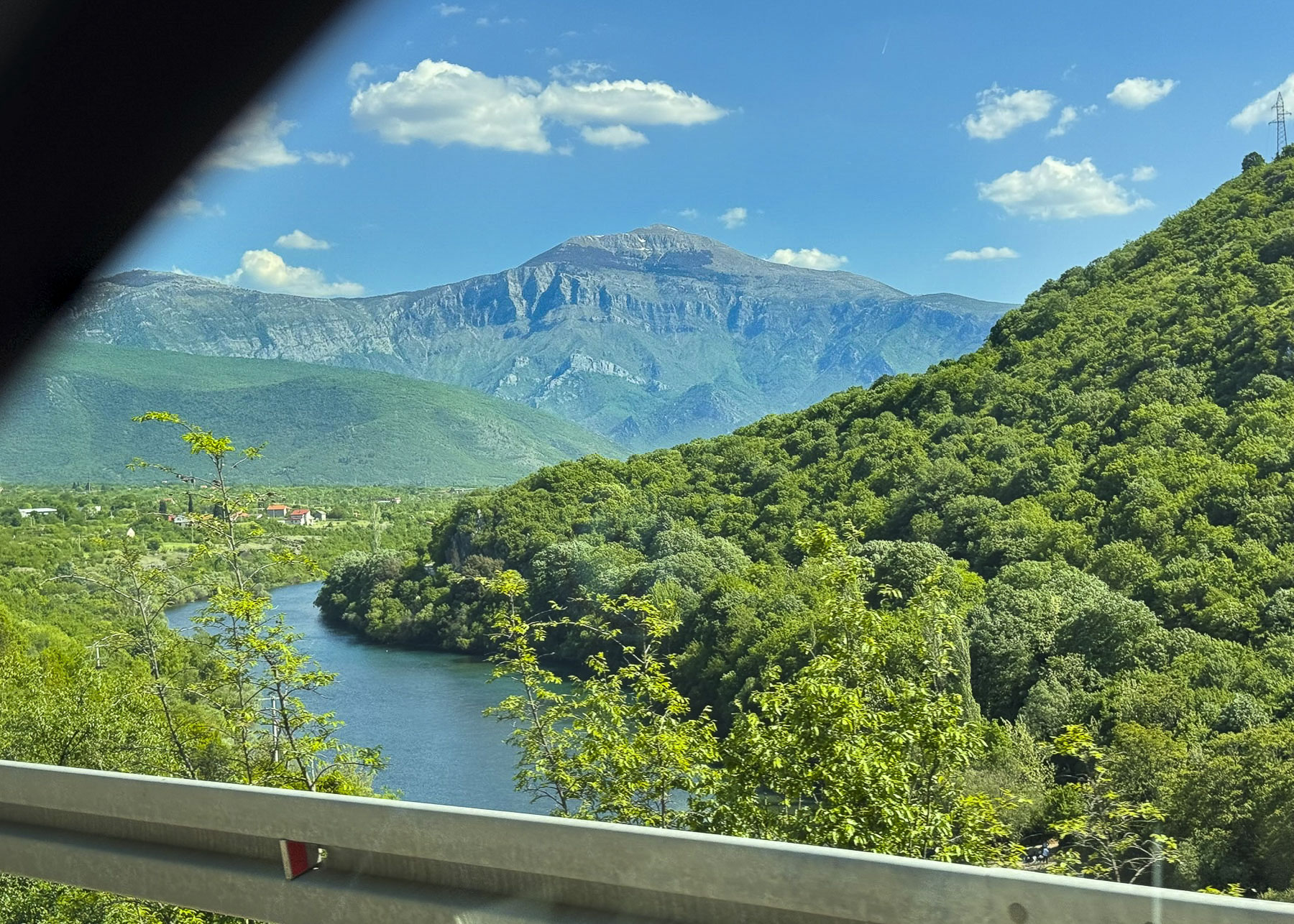
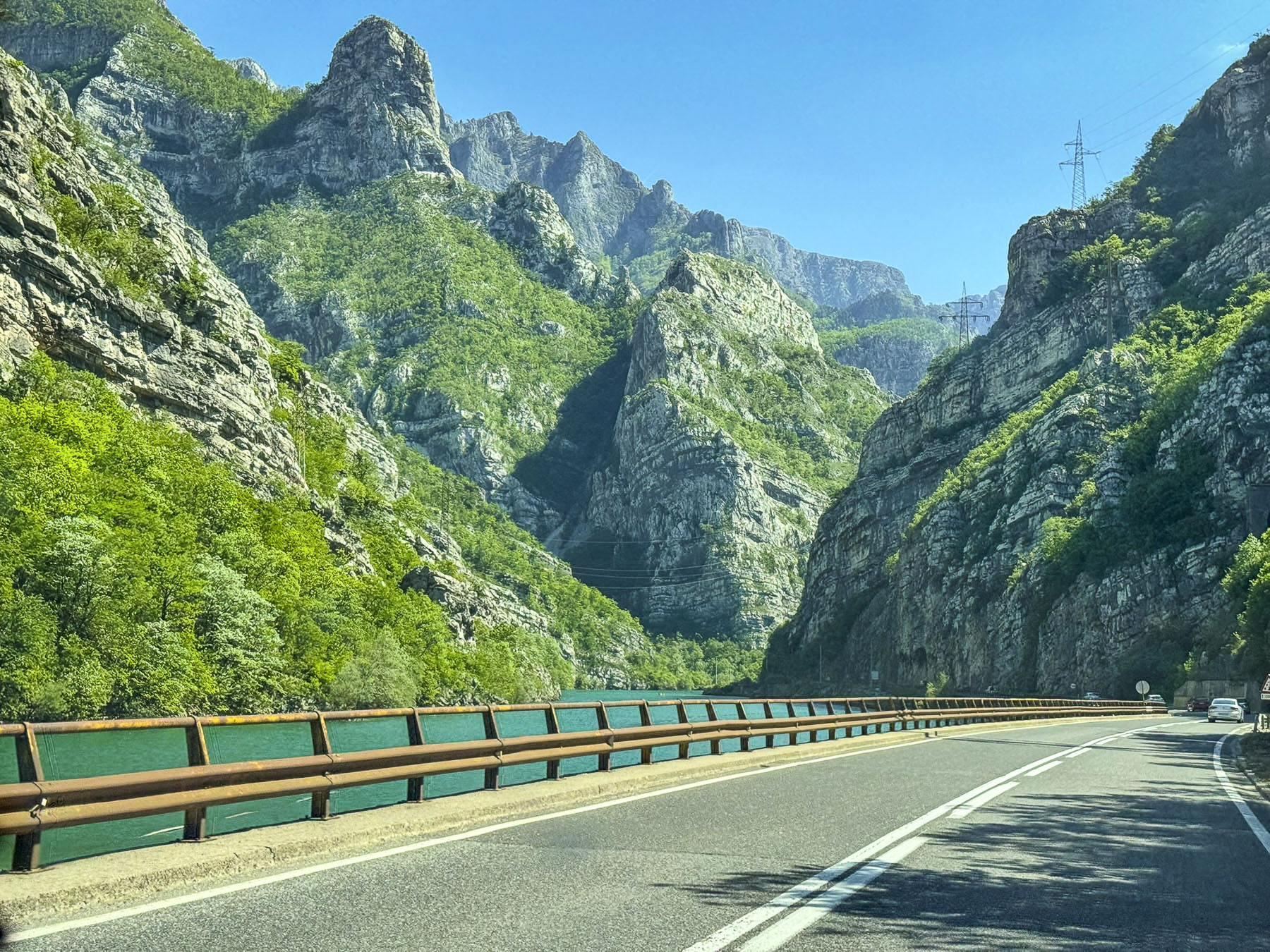
Our 55km (34mi) drive from Ostrožac on Lake Jablanica to Mostar paralleled the river as it coursed through rugged gorges on its way to the Adriatic Sea and was gorgeously scenic, pun intended.

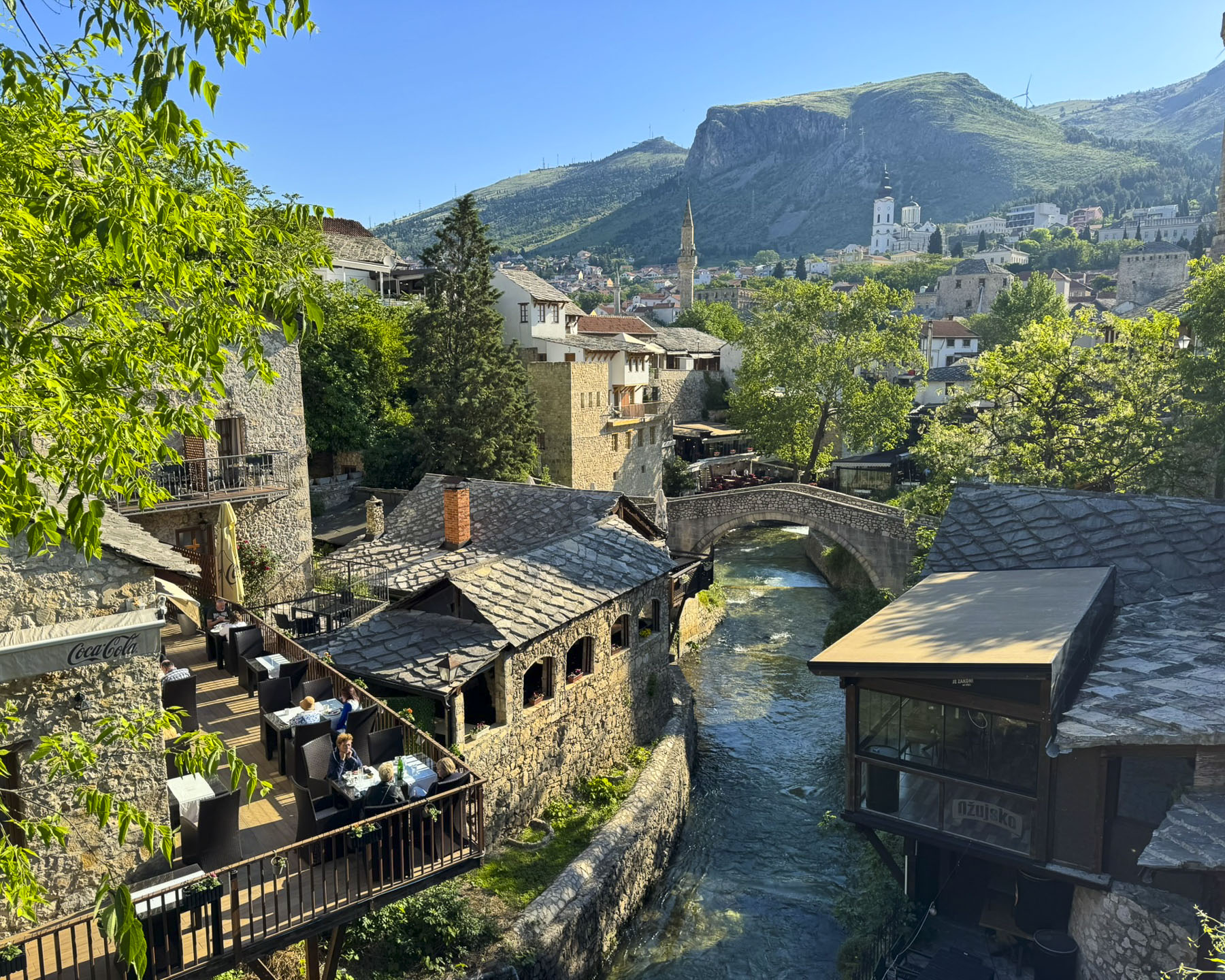
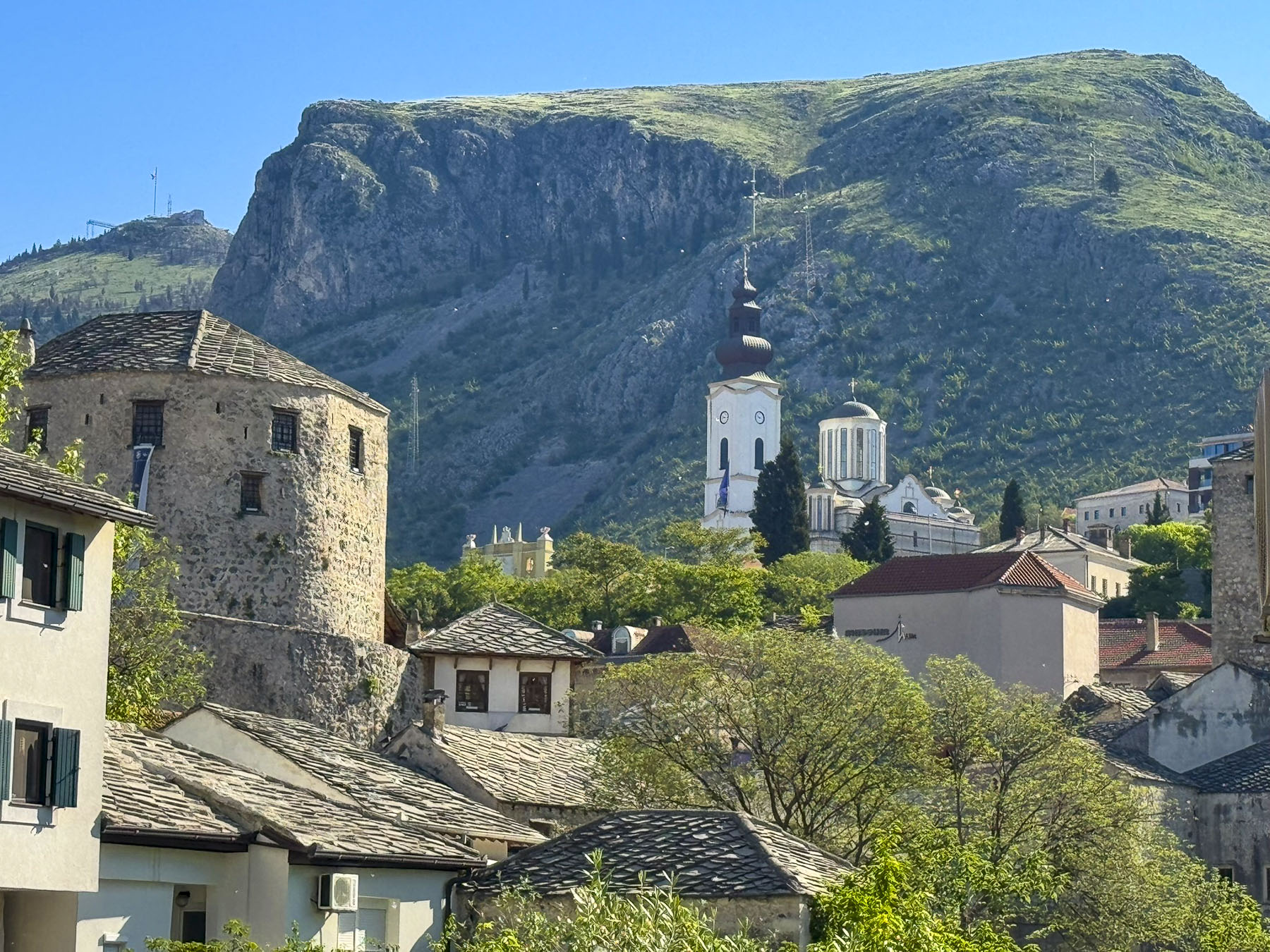
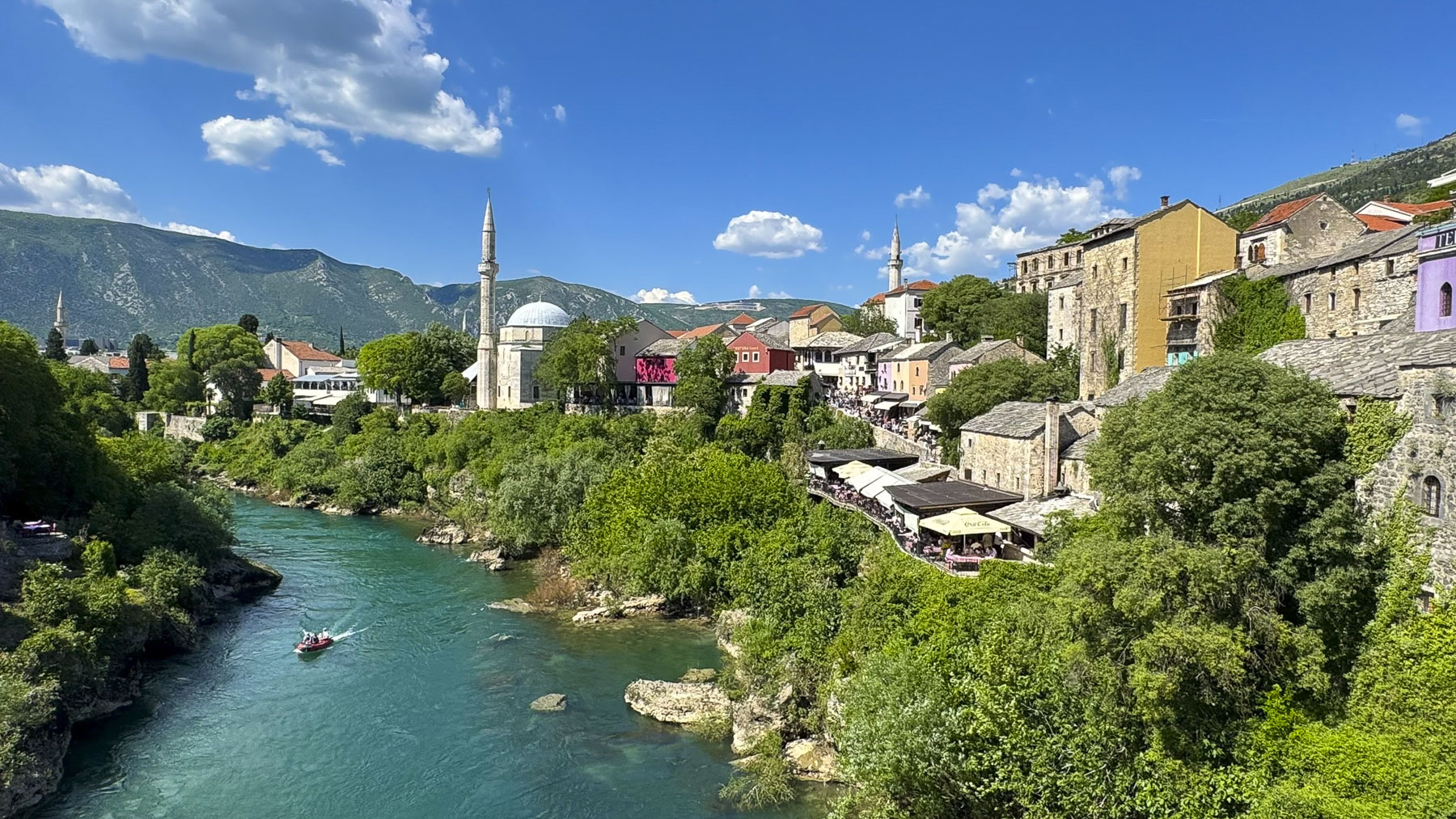
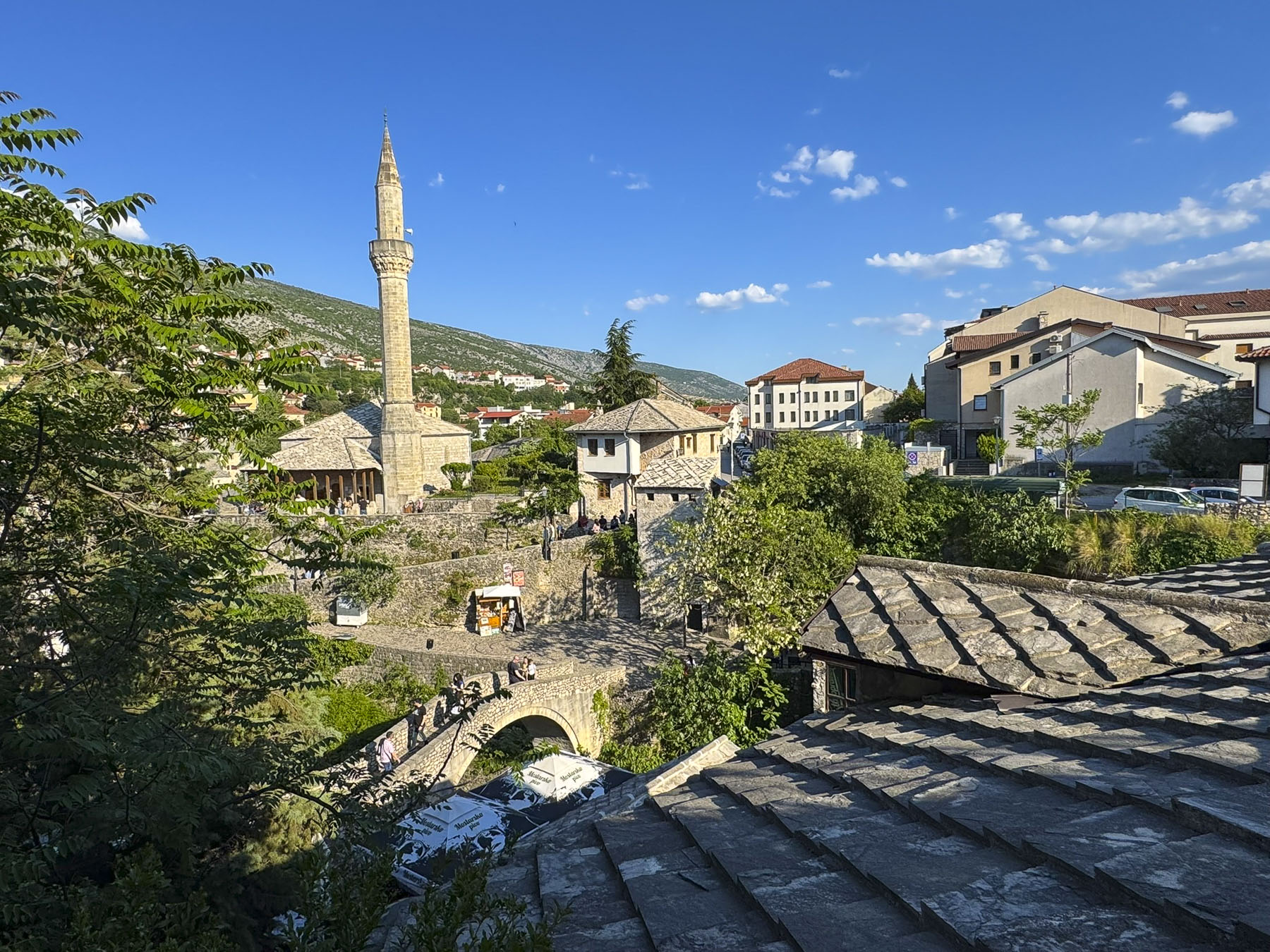
There is time-limited metered street parking in Mostar’s old town near the historic old bridge, Stari Most. Many folks decide to visit Mostar as part of a guided day trip from Sarajevo, Dubrovnik & Split, Croatia or even as far afield as Kotor, Montenegro. We chose to base ourselves in the Hotel Kriva Ćuprija for four nights to enjoy Stari Grad, the old town, and explore the region. We parked in a convenient monitored lot at the foot of Onešćukova that the hotel recommended. The view from our room looked out over slate roofs, a mosque, and an old stone bridge.

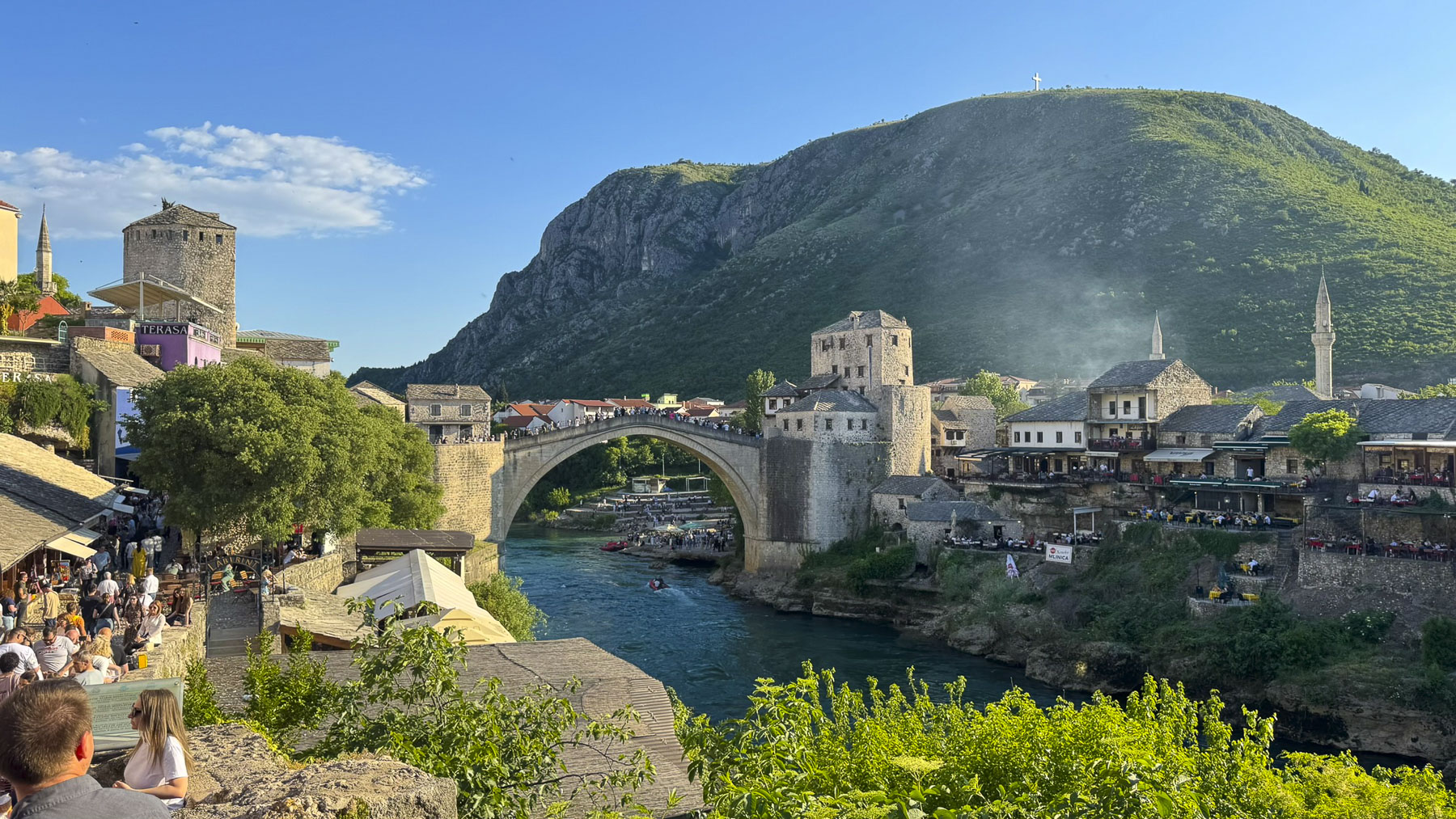
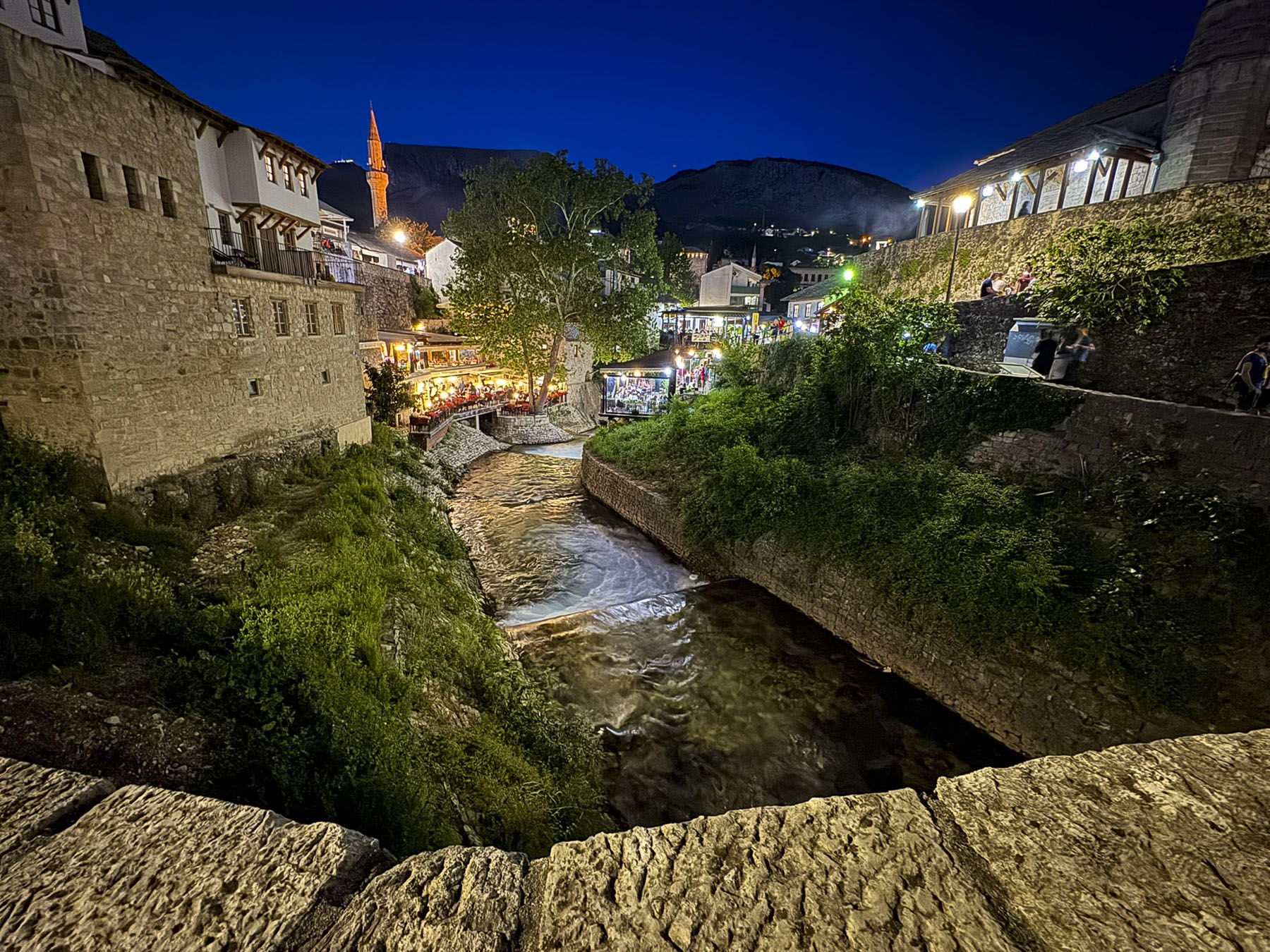
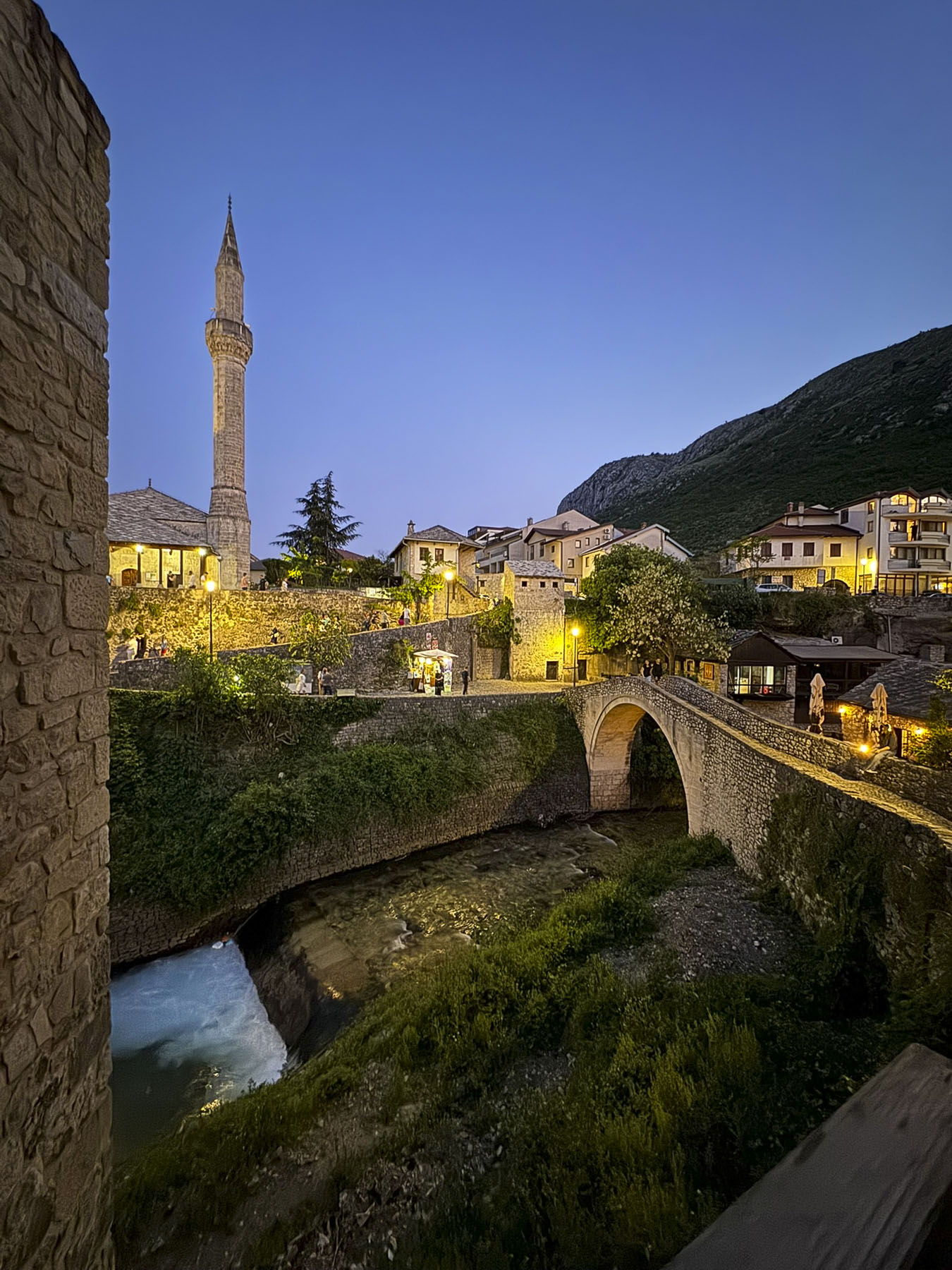
The 1990s war in Bosnia brought total devastation to Mostar, where an estimated ninety percent of the buildings were destroyed by forces bombarding the city from the surrounding hilltops. Mostar was once a tiny hamlet along the Neretva River, before the Ottomans seized it and transformed it into an important multicultural trading center and frontier garrison town during their 15th century conquest of Bosnia. The site where the hotel stands overlooking the Crooked Bridge, Kriva Ćuprija, from which it takes is name, was an ancient dwelling, and the hotel is a modern reconstruction of Stari Grad’s historic “Turkish houses” – residential buildings of stone and wood that defined the Old Bridge Area’s pre-war heritage. While the famous 15th century Stari Most bridge was destroyed in the 1990s war, the Crooked Bridge amazingly survived the conflict but succumbed to raging flooding in 2000 and was subsequently rebuilt.  

Reconstruction of Mostar began with funds from the European Union, the World Bank, and UNESCO shortly after a permanent ceasefire was established with the Washington Agreement on March 18, 1994, nineteen months before the cessation of the wider Bosnian conflict was resolved with the signing of the Dayton Peace Accords on November 1, 1995.

Old Town Mostar is beautifully atmospheric and while most of the buildings in the Stari Grad have been fully restored, several owners have chosen to leave the numerous bullet marks on the sides of their buildings as reminders of the wrath of war. Throughout the city there are still over 1,000 buildings in ruin or abandoned as a result of the conflict, with many of them concentrated across the river in east Mostar.

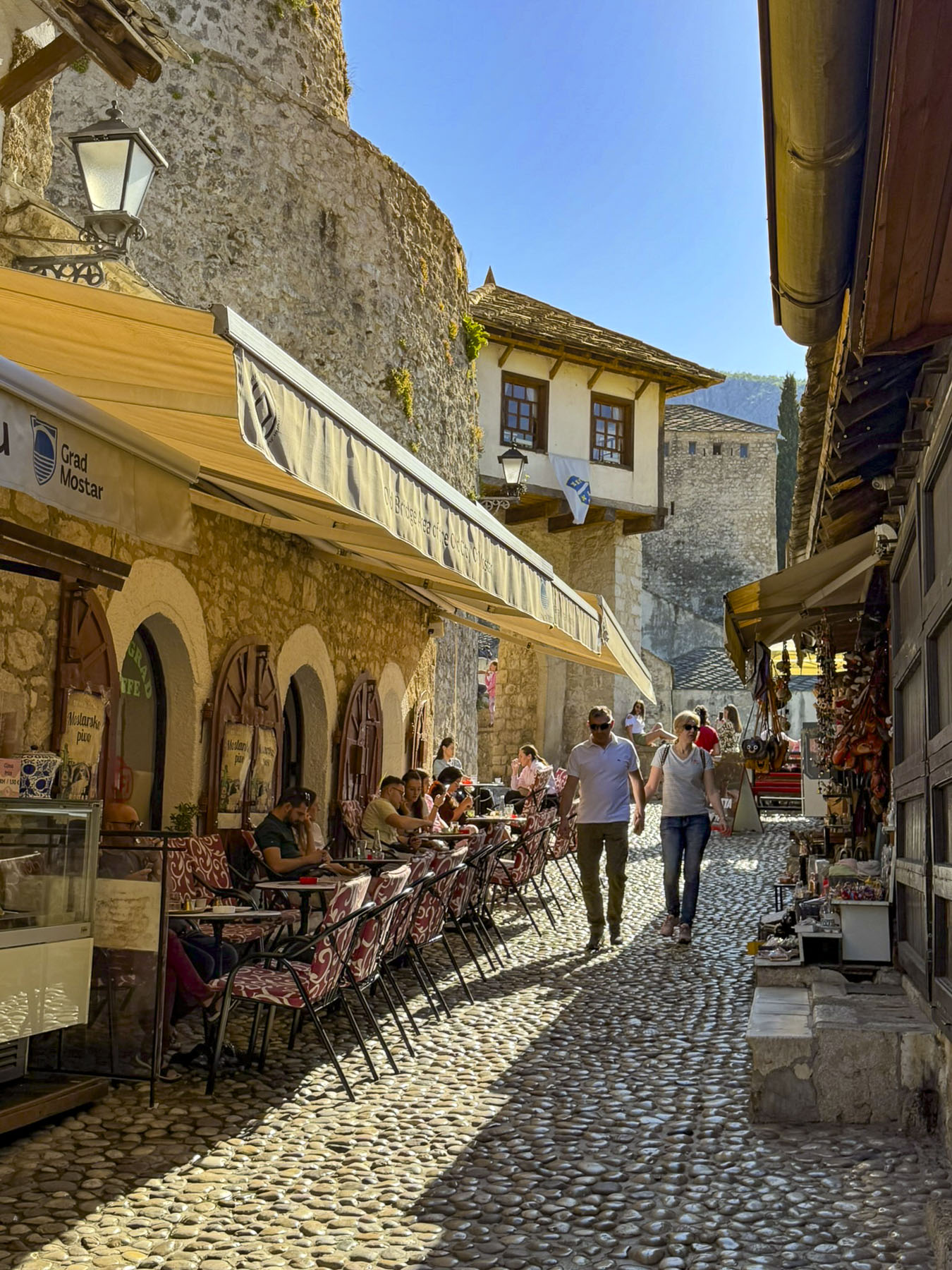
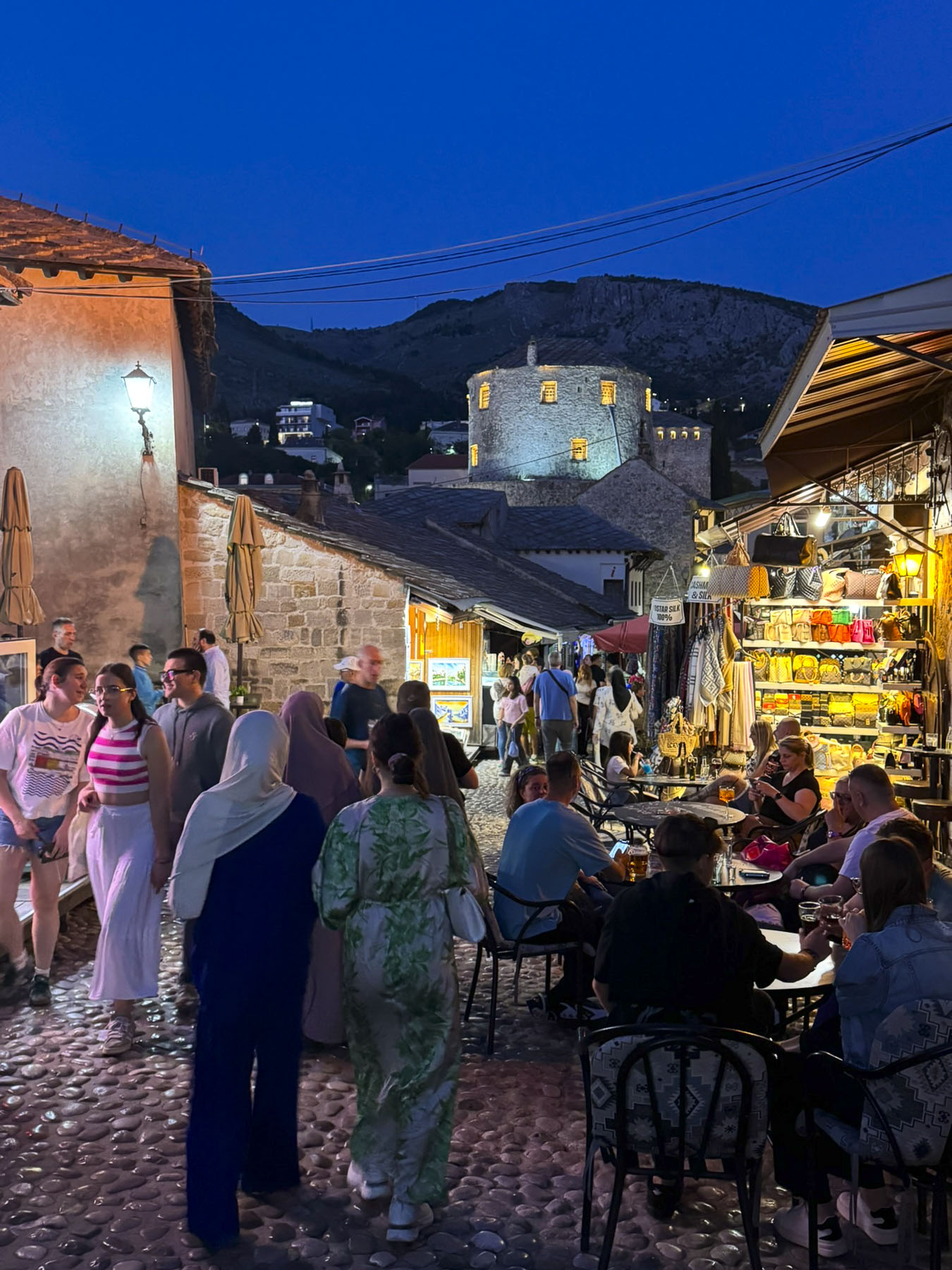
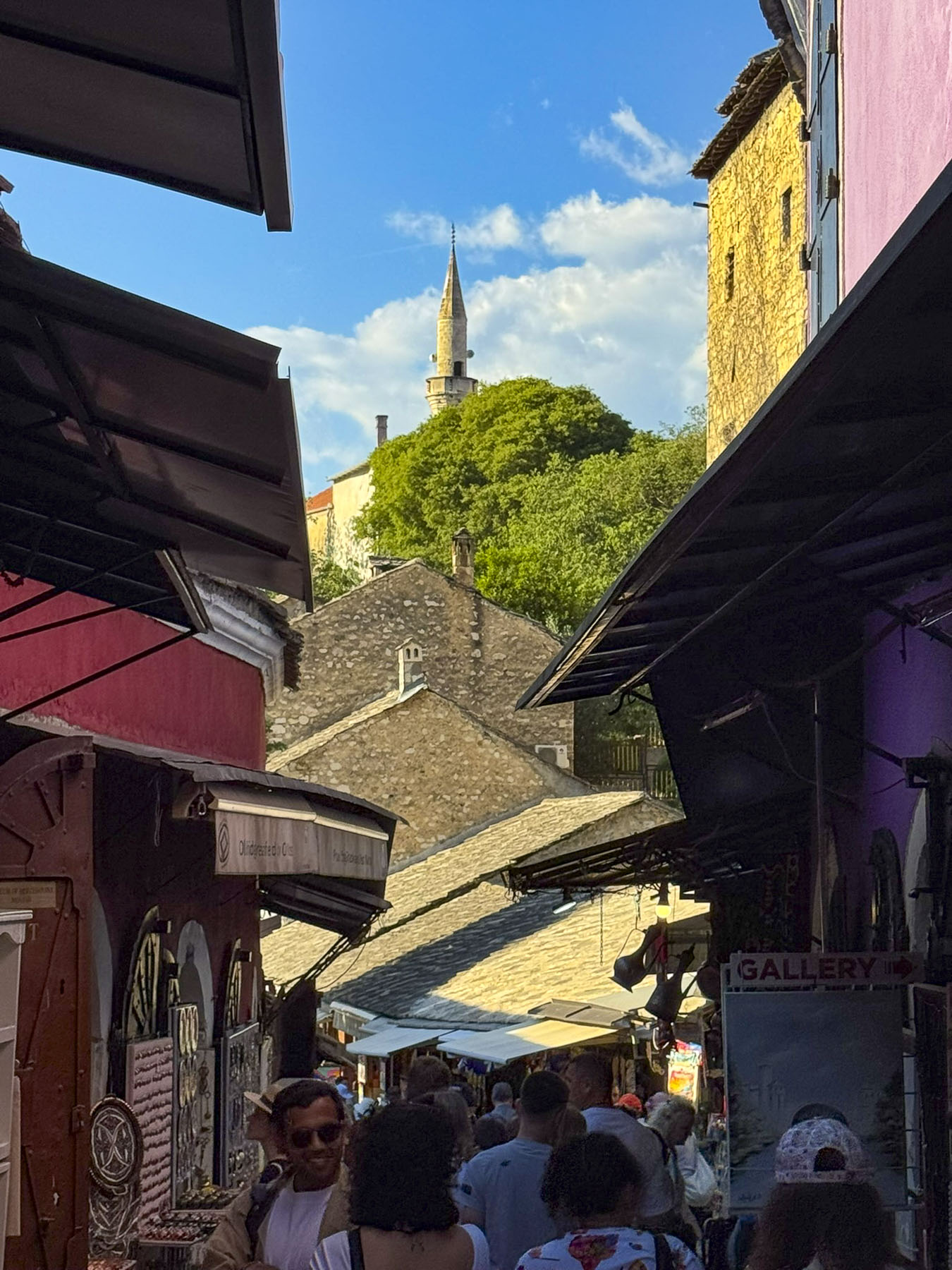
Cobblestone alleys twisted through Stari Grad and we followed them all to soak in the ambiance. Visiting the old town was a sensory experience: dazzling color, aromas of grilled meats, textures and the melancholic song of the call to prayer that the muezzin sings from the minarets dotted around the city.

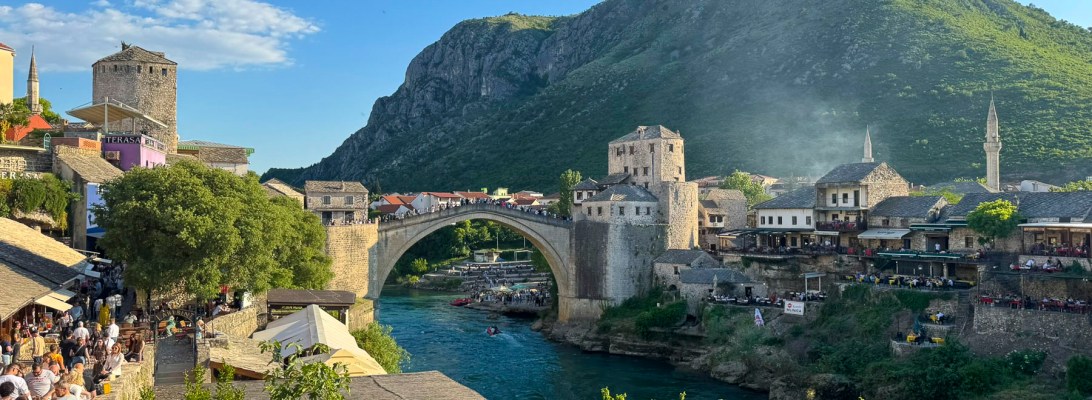
Our wanderings took us over the high arched, Ottoman built Stari Most. The iconic symbol of Mostar was a vital lifeline used by soldiers and civilians to transport food, medicine, and arms to besieged areas of the city on the west bank Neretva River during the 1190s war. It’s a popular area where folks gather to hopefully watch divers jump from the bridge 28m (92ft) into the cold water below, a decades old tradition that started in 1968. None of the divers were working the crowd for tips when we crossed. Diving from the bridge has also existed for 450 years as a traditional rite of passage for young men, and as an old legend says, “the way a boy becomes a man in Mostar.”

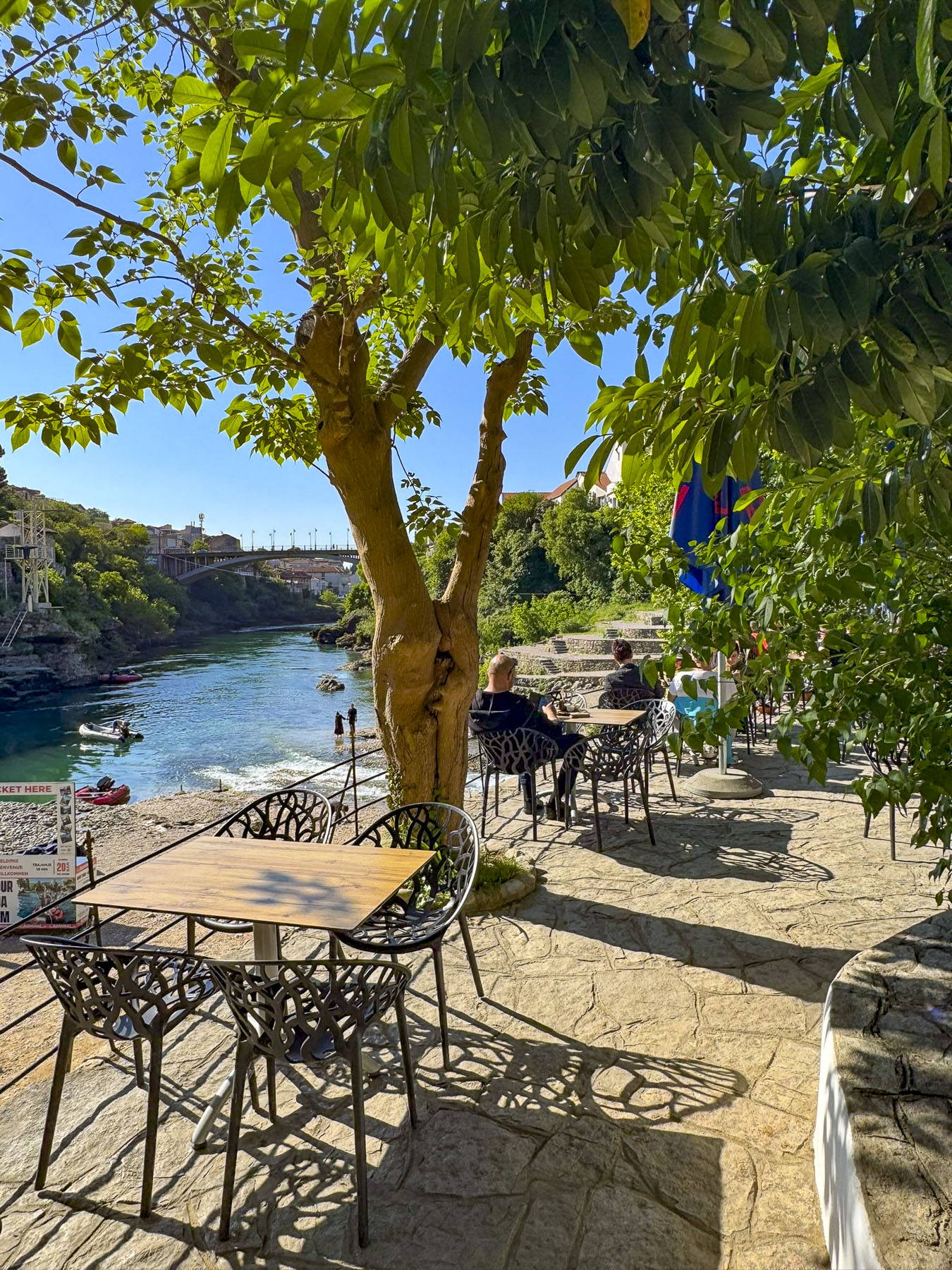
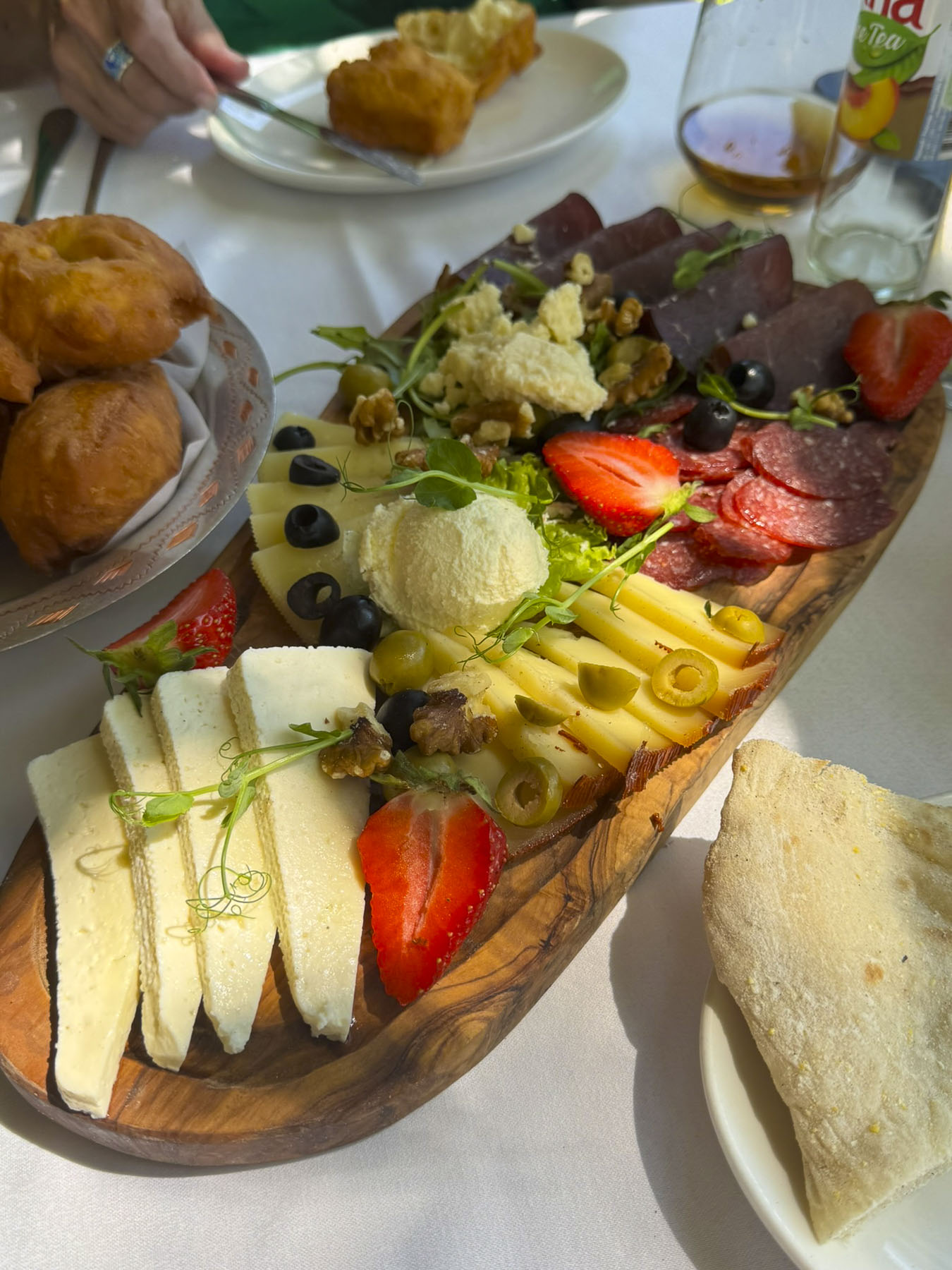
Across the bridge the lane narrowed through the Kujundžiluk alley. Known as the old goldsmiths’ quarter, it served as a crucial trading alley for merchant caravans before they paid customs duties to cross the bridge during the Ottoman era. Our “walk a little then café’” philosophy took us to the restaurant Urban Taste of Orient. Their beautiful terrace offered spectacular views of the river and Stari Most. We were enjoying a charcuterie board of Bosnian cheeses and cured meats when I looked at the bridge and noticed a lone man, seemingly much taller than the rest of the folks, who from our perspective appeared to be standing on the bridge’s far wall, until he vanished. I almost screamed to Donna, “look, a diver jumped,” as his silhouette splashed into the river. We had just witnessed the first dive of the tourist season on this Labor Day holiday.

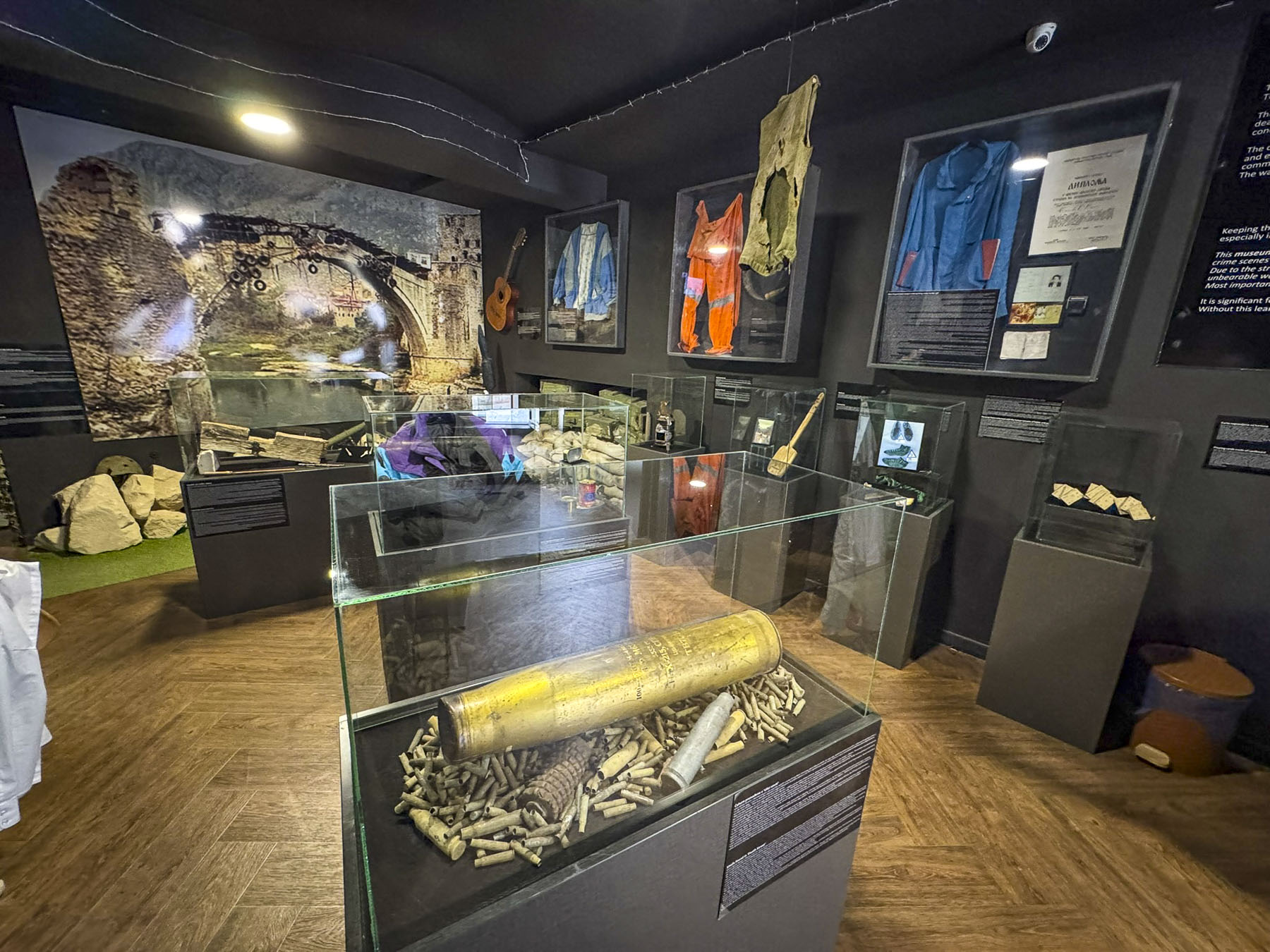
Afterwards we visited the early 17th century Koski Mehmed Pasha Mosque, where it’s possible to climb its 30m (98ft) tall minaret for panoramic views of Mostar and the river. We also viewed the wrenching exhibits at the Museum of War and Genocide Victims, the only such museum we visited while in Bosnia & Herzegovina. It gave us tragic eye-opening, first-person accounts of life in Mostar when it was under siege.

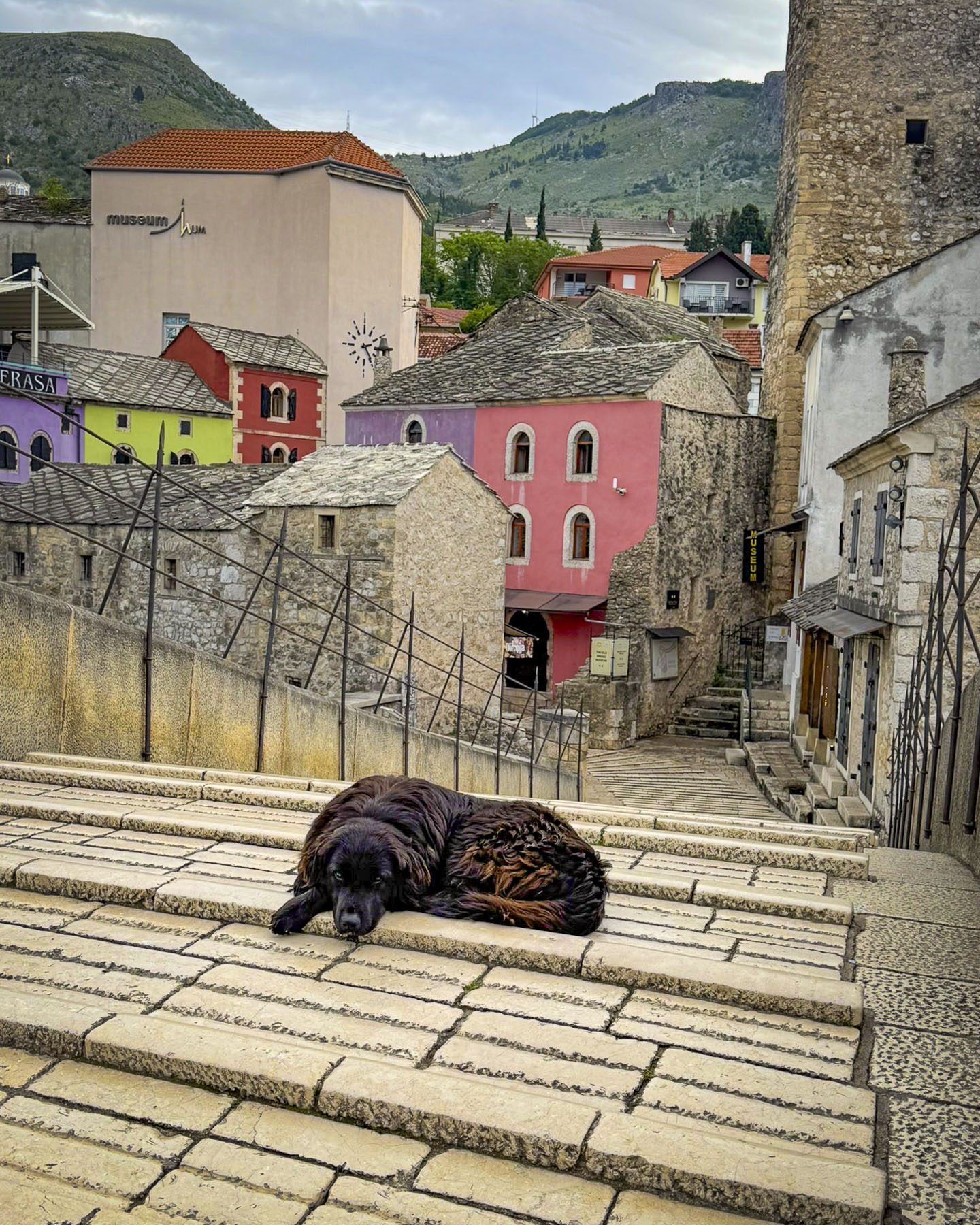
The next morning on an early morning walk before Mostar awakened, I came across one of the town’s tagged stray dogs, a large black sheep dog, semi-asleep on the bridge’s highest point. He struck me as the reincarnation of an ancient watchman guarding the entrance to Stari Grad. He opened his eyes, but did not move, having determined I was not a threat, and I passed quietly.

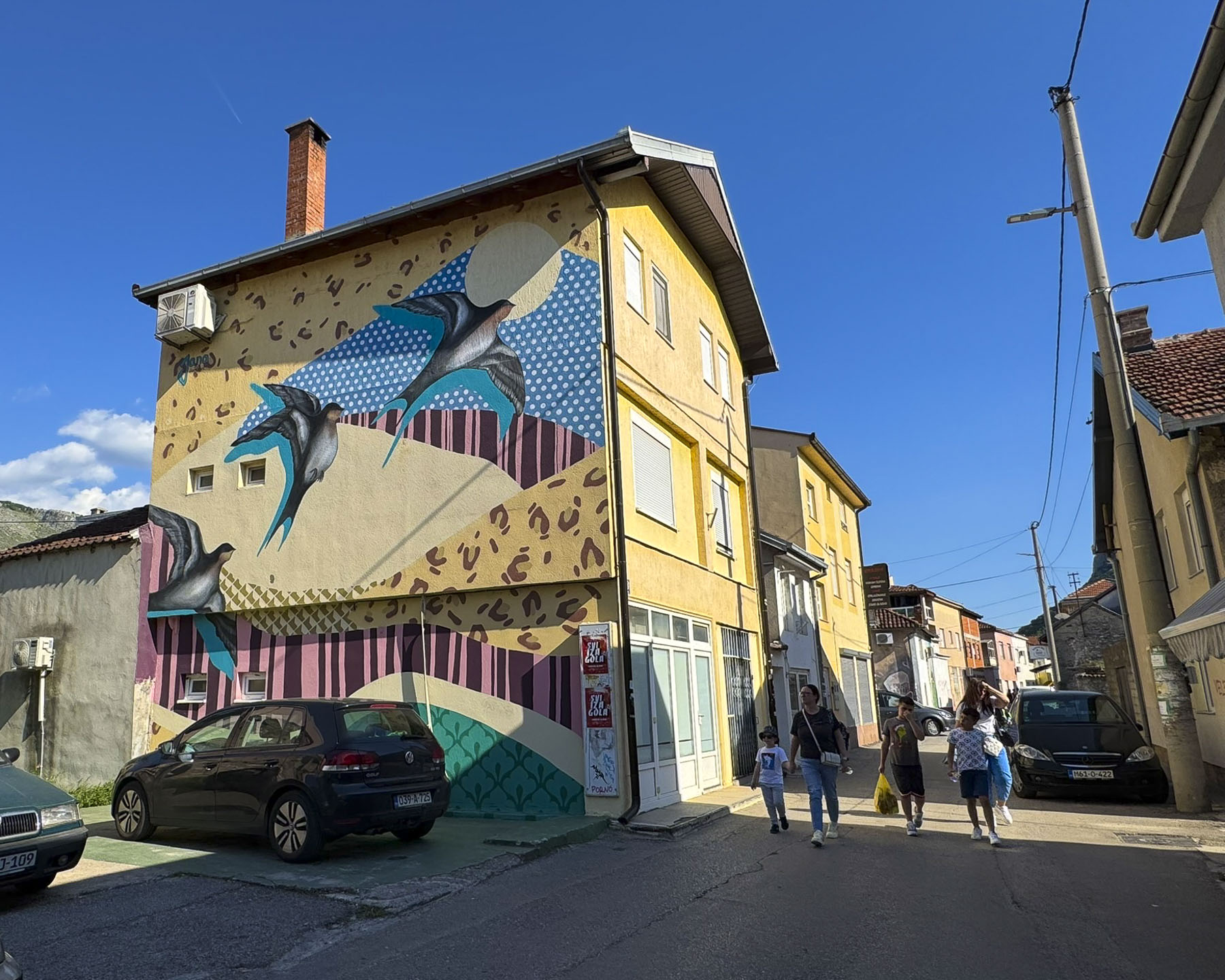
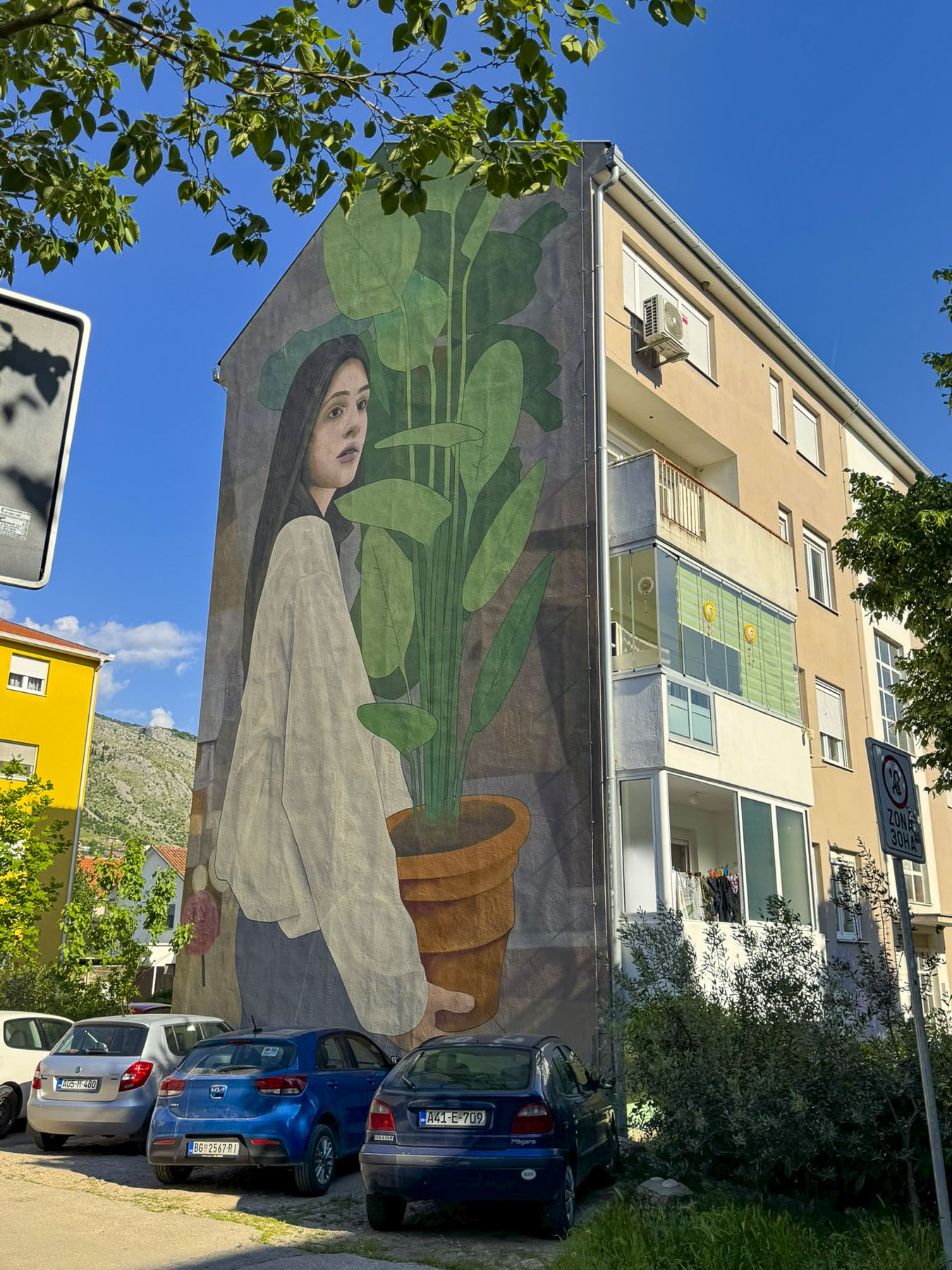
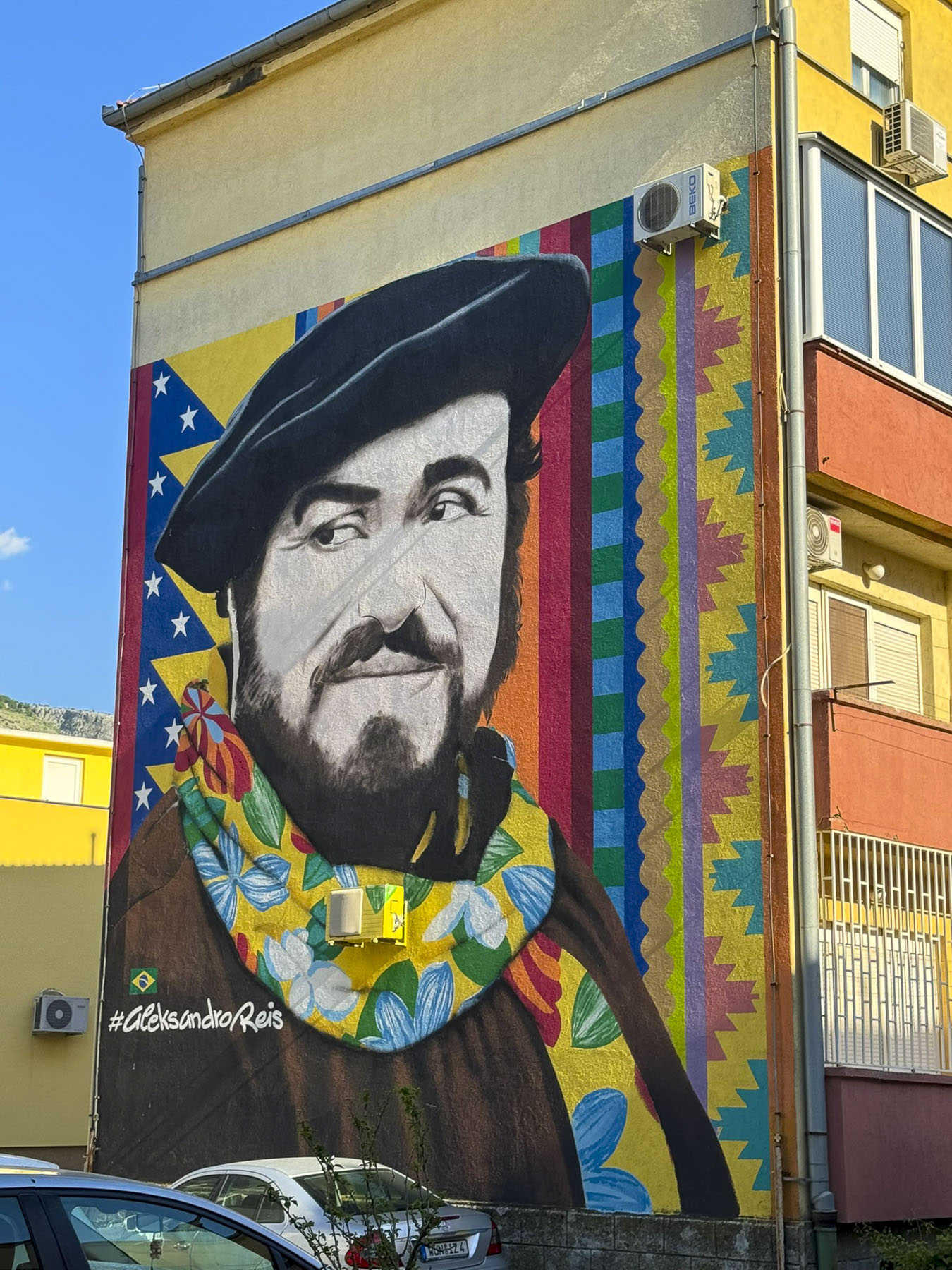
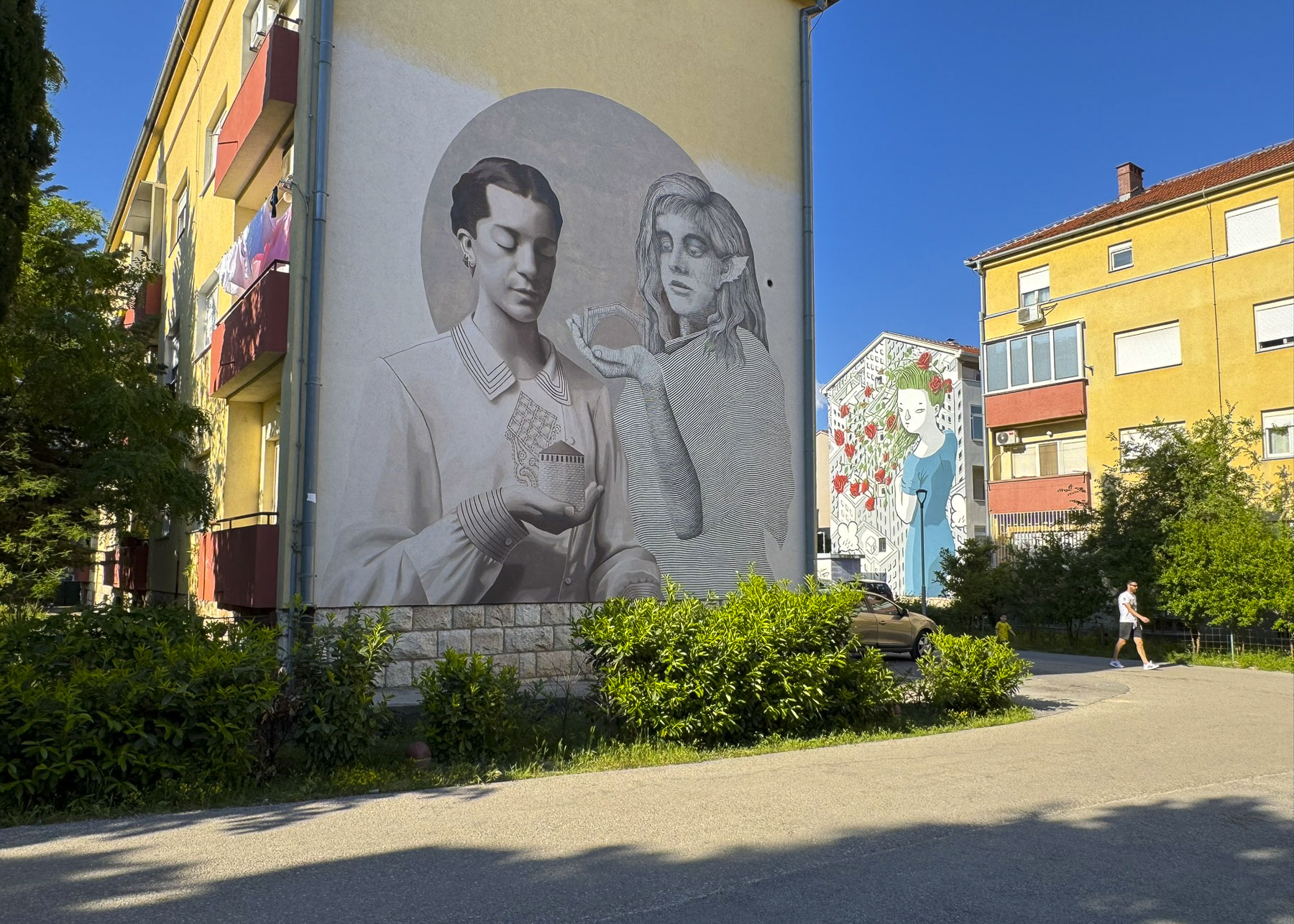
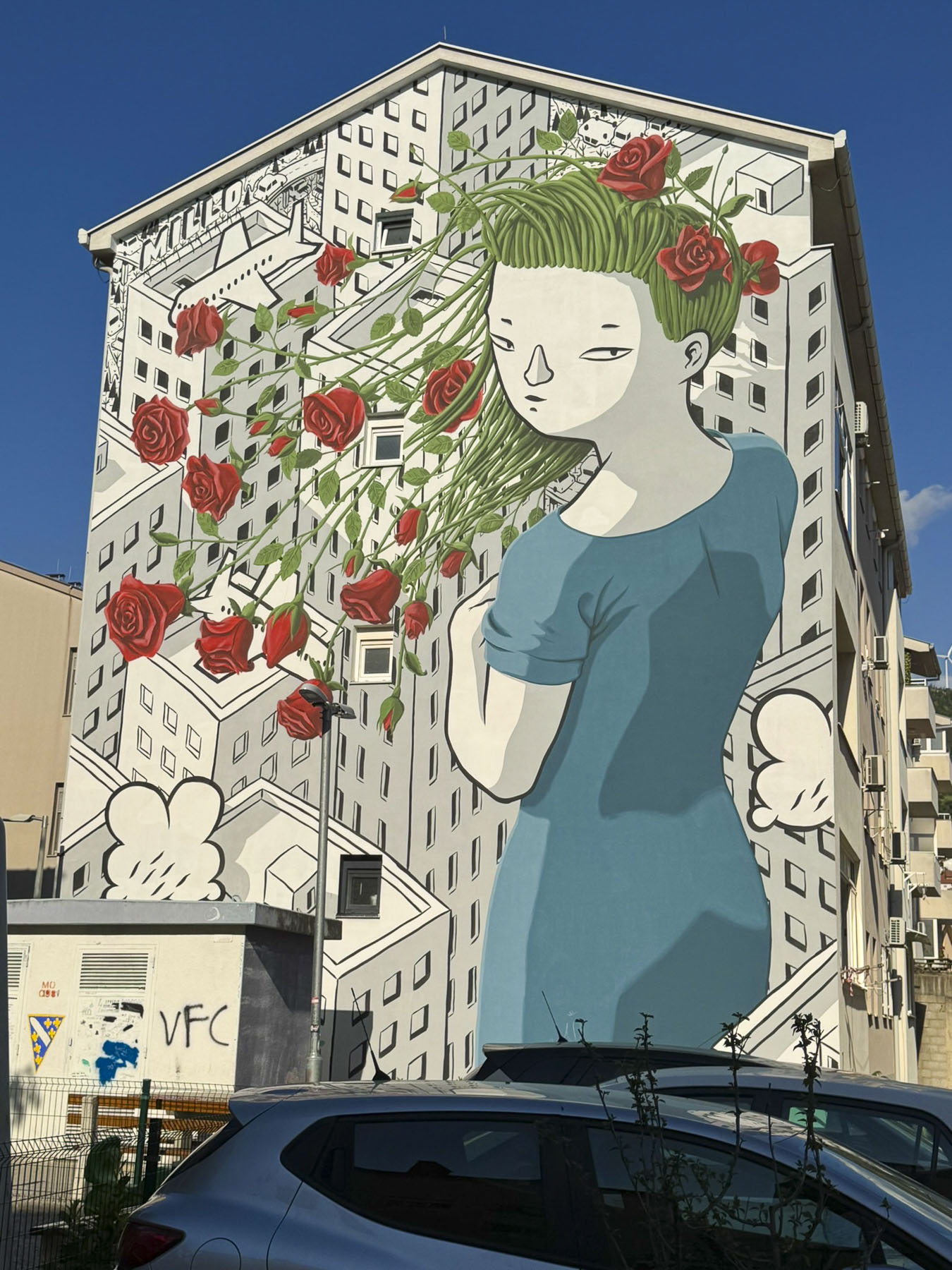
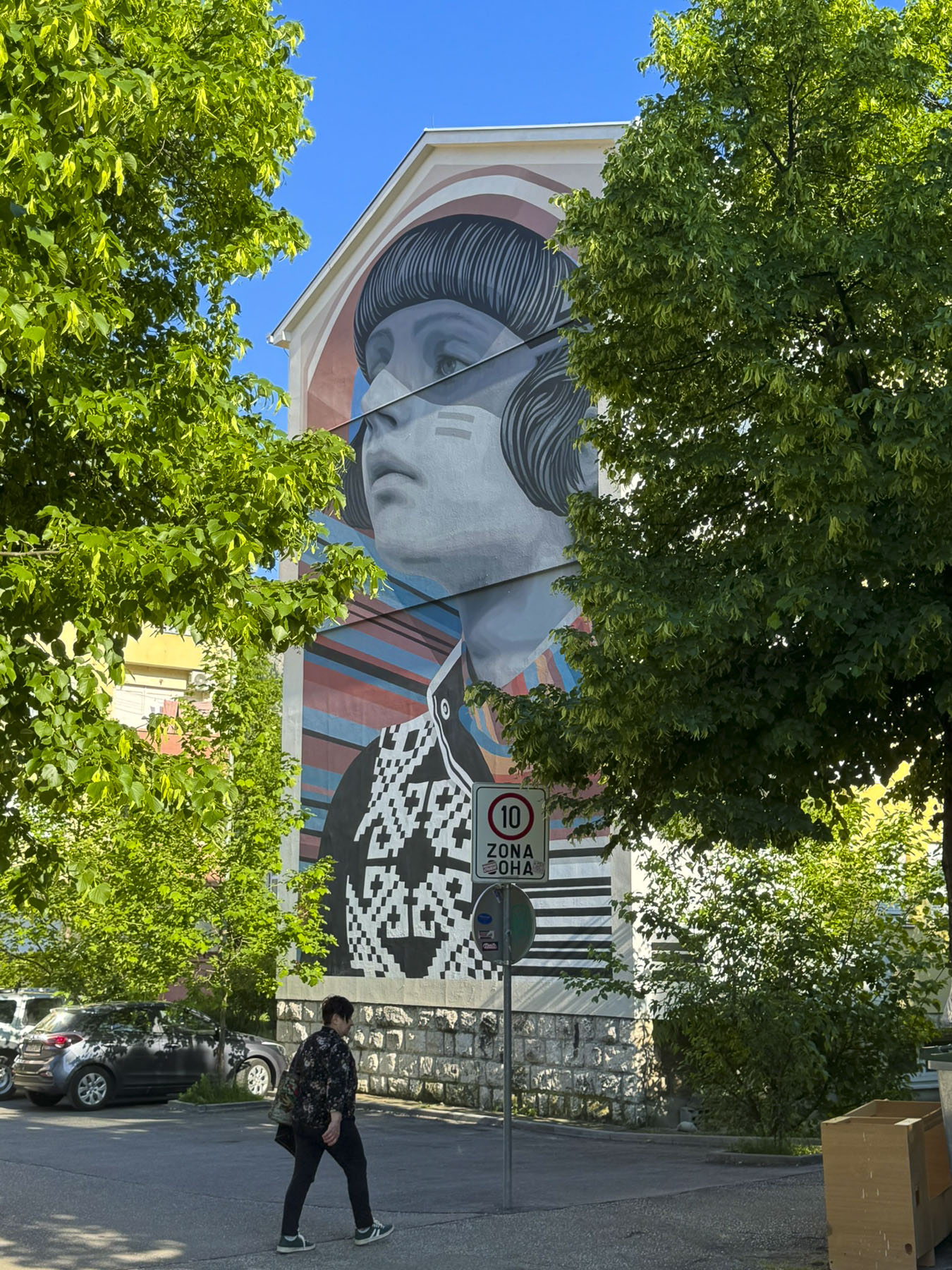
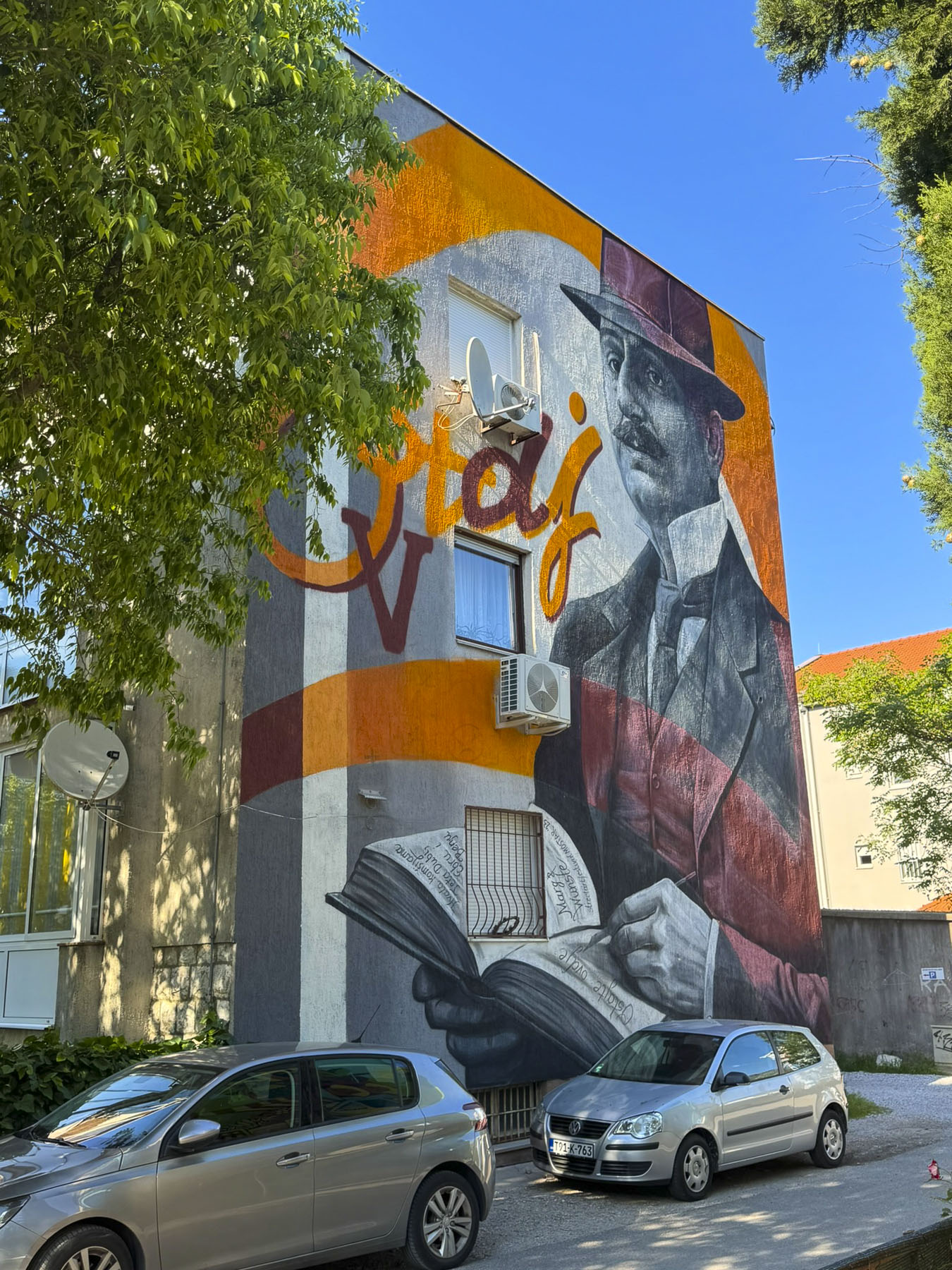
Beyond the old town we found Mostar to be a wonderful compact cosmopolitan city with cafes and large colorful street murals in some neighborhoods. The walk along Alekse Šantića Street, a former frontline in the war, to the Cernica neighborhood is full of mural paintings. It was an initiative in 2012 by Marina Mimoza, a prominent cultural activist and artist who sought to heal the wounds of war and promote reconciliation through art “transforming ruined, bullet-ridden buildings into a vibrant cultural hub, and open-air gallery.” Since its inception the event has grown into The Street Arts Festival Mostar which turns the city into a colorful canvas each summer for invited artists and performers, typically in June or July.

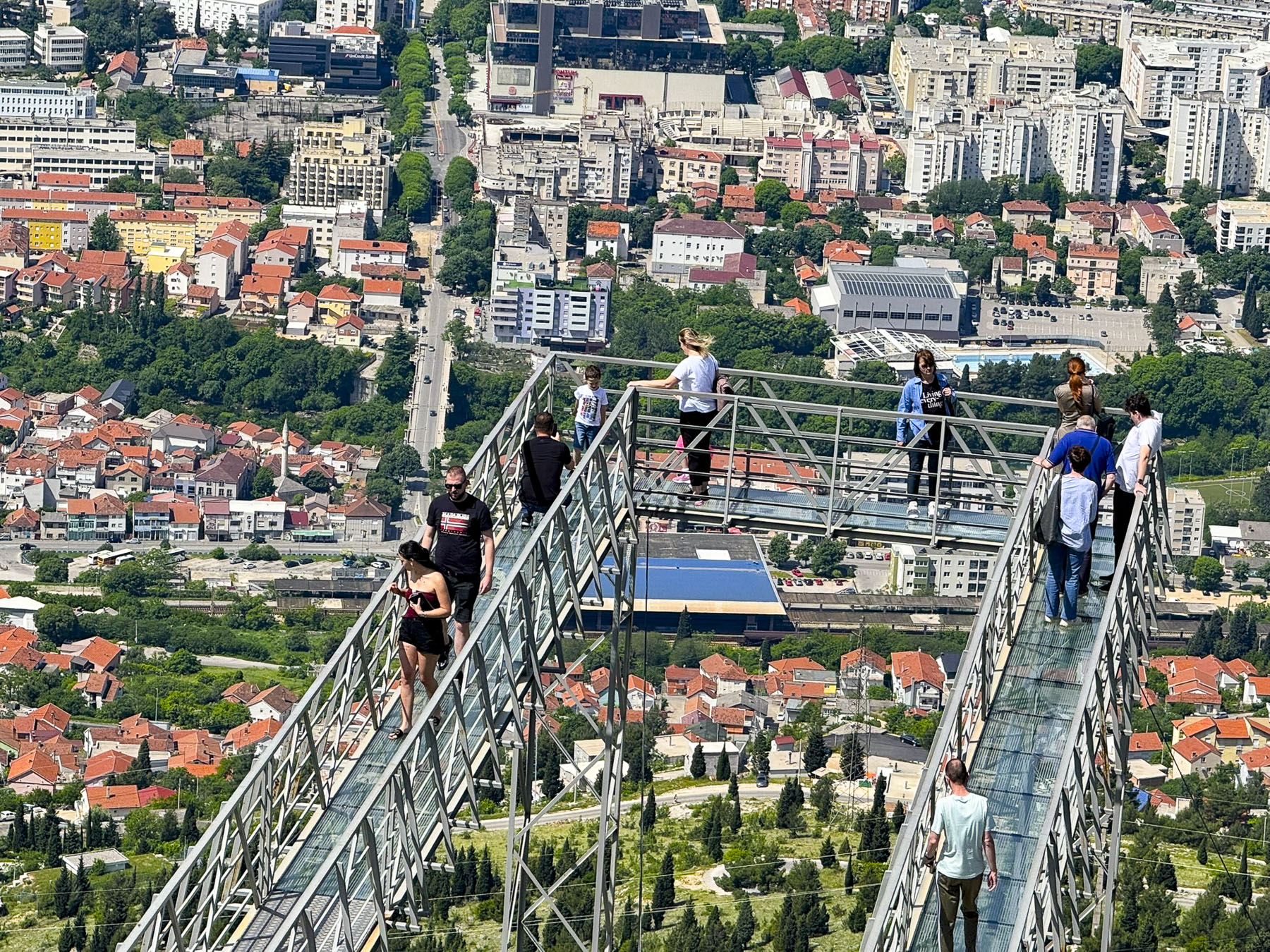
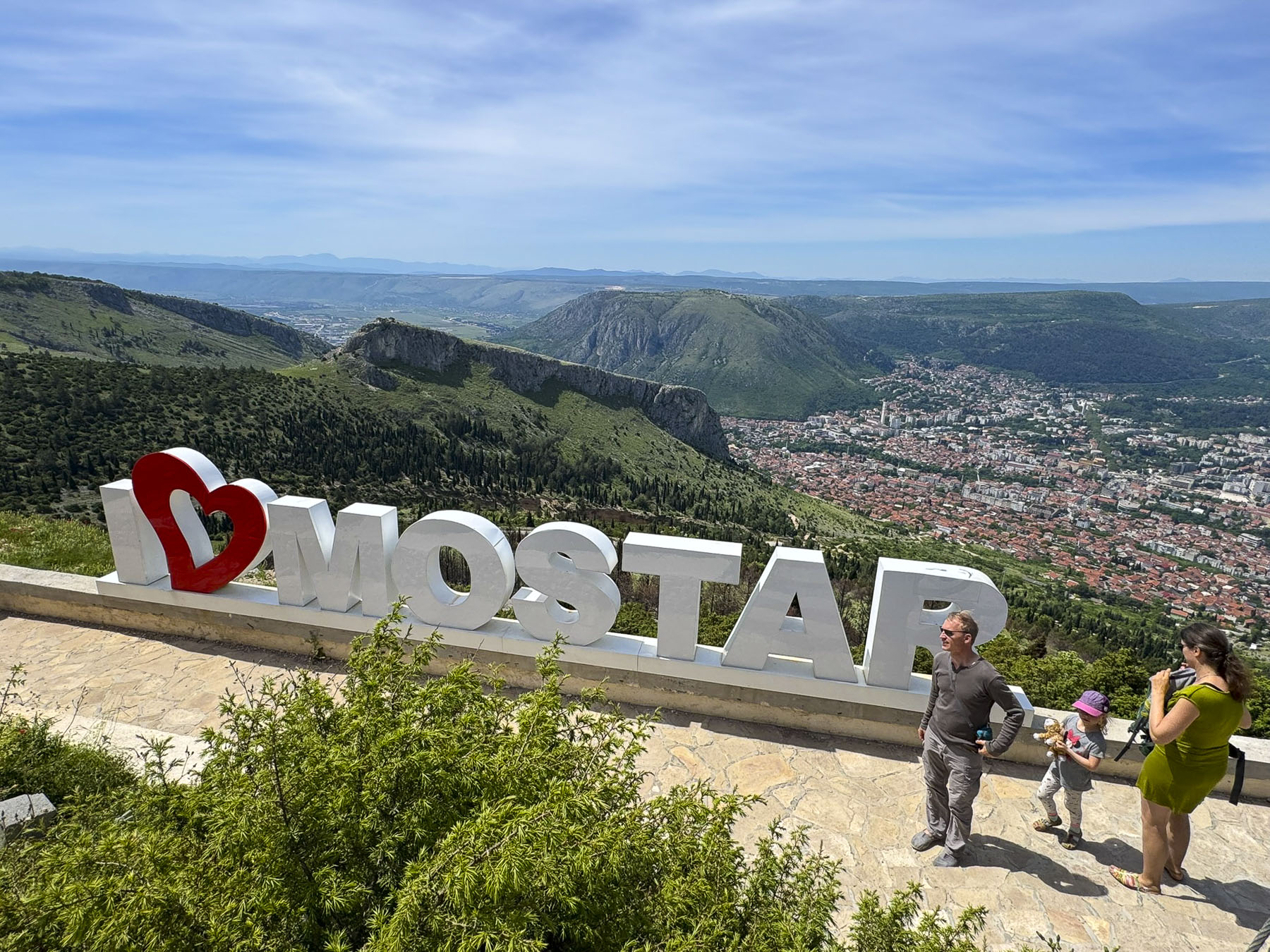
Several tourist attractions nearby beckoned to us. First Fortica Hill, on the east bank of the Neretva River where the Skywalk, a glass bridge, has been open since 2021. From its height there’s a commanding view of Mostar and an Instagram worthy “We Love Mostar” sculpture. Amazingly, there was no entrance fee for the Skywalk, and there’s a small restaurant with a great view from its terrace.

Within walking distance of the Skywalk were the late 19th century ruins of an Austro-Hungarian stone fortification that had sweeping views north to the mountains on both sides of the Neretva River Gorge.

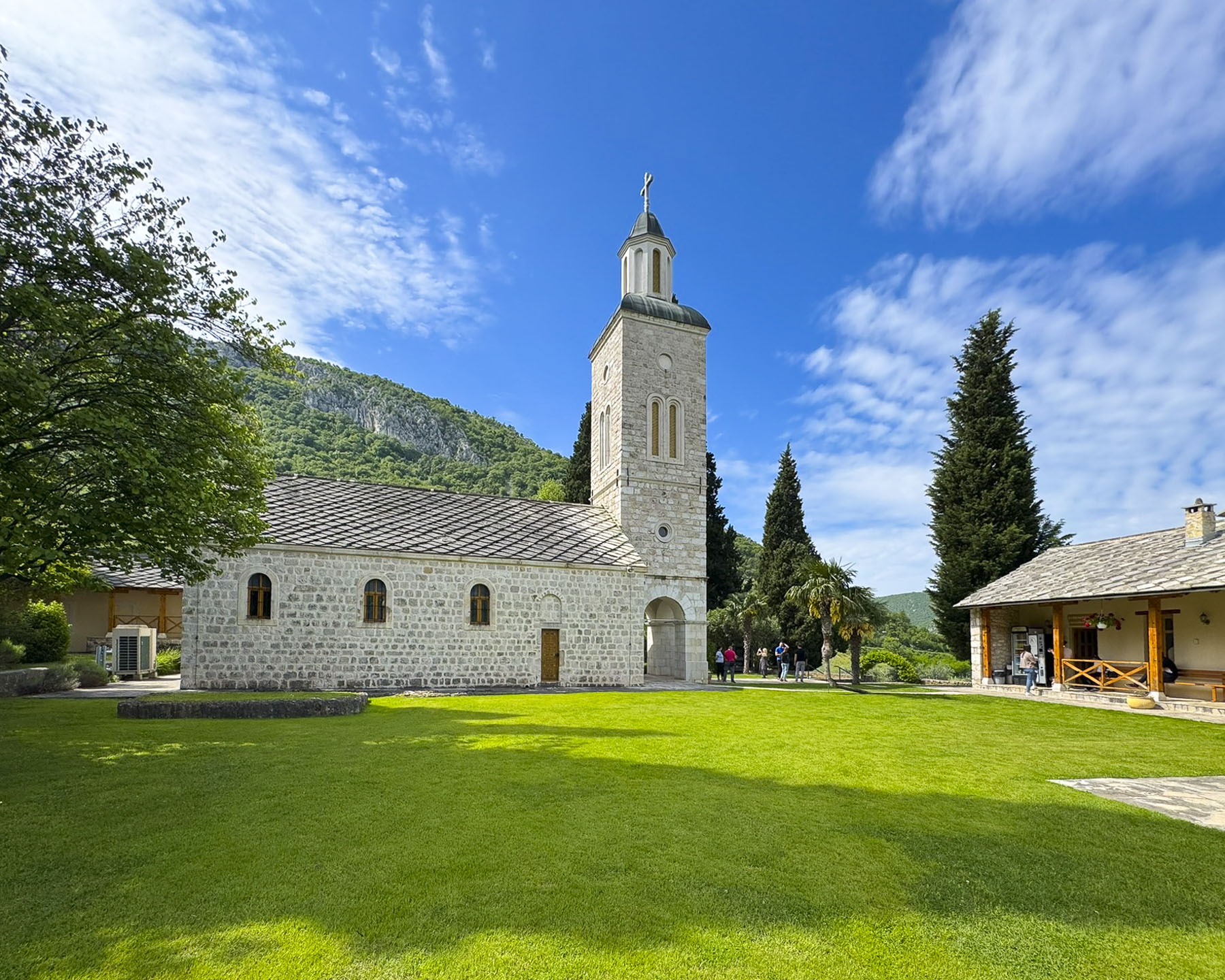
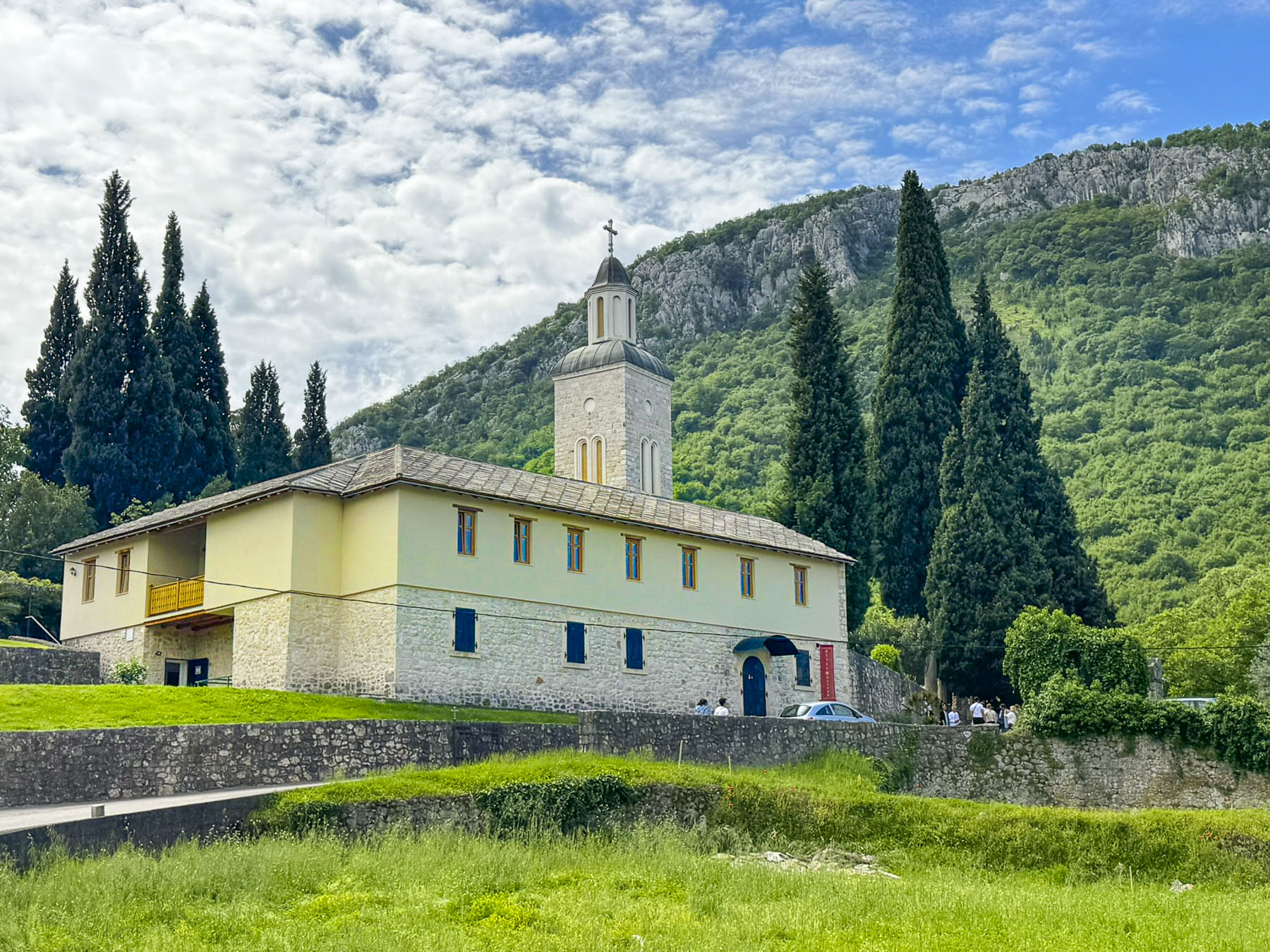
Later that afternoon we headed fifteen minutes south of Mostar to the orthodox Žitomislić Monastery, dedicated to the Annunciation of Mary. The church on the site was constructed upon the ruins of an earlier house of worship in 1566 with the surrounding monastery buildings taking another forty years to complete. It was a major spiritual center in the 16th and 17th centuries, hosting a large library, a scriptorium, and beautiful iconostasis. At the height of its existence the monastery was supported by large land holdings that included vineyards and orchards worked by the monks themselves. During World War II the entire brotherhood of the Žitomislić monastery were killed by local fascist troops allied to the Axis Alliance, and the complex was severely damaged and looted. Rebuilt after World War II, the monastery was again burned, but the church was savagely destroyed with explosives, reducing it to rubble during the 1990s Bosnia War.  The original stones of the church were reused during its reconstruction in 2002 to recreate its earlier appearance, and it was reconsecrated in 2005.

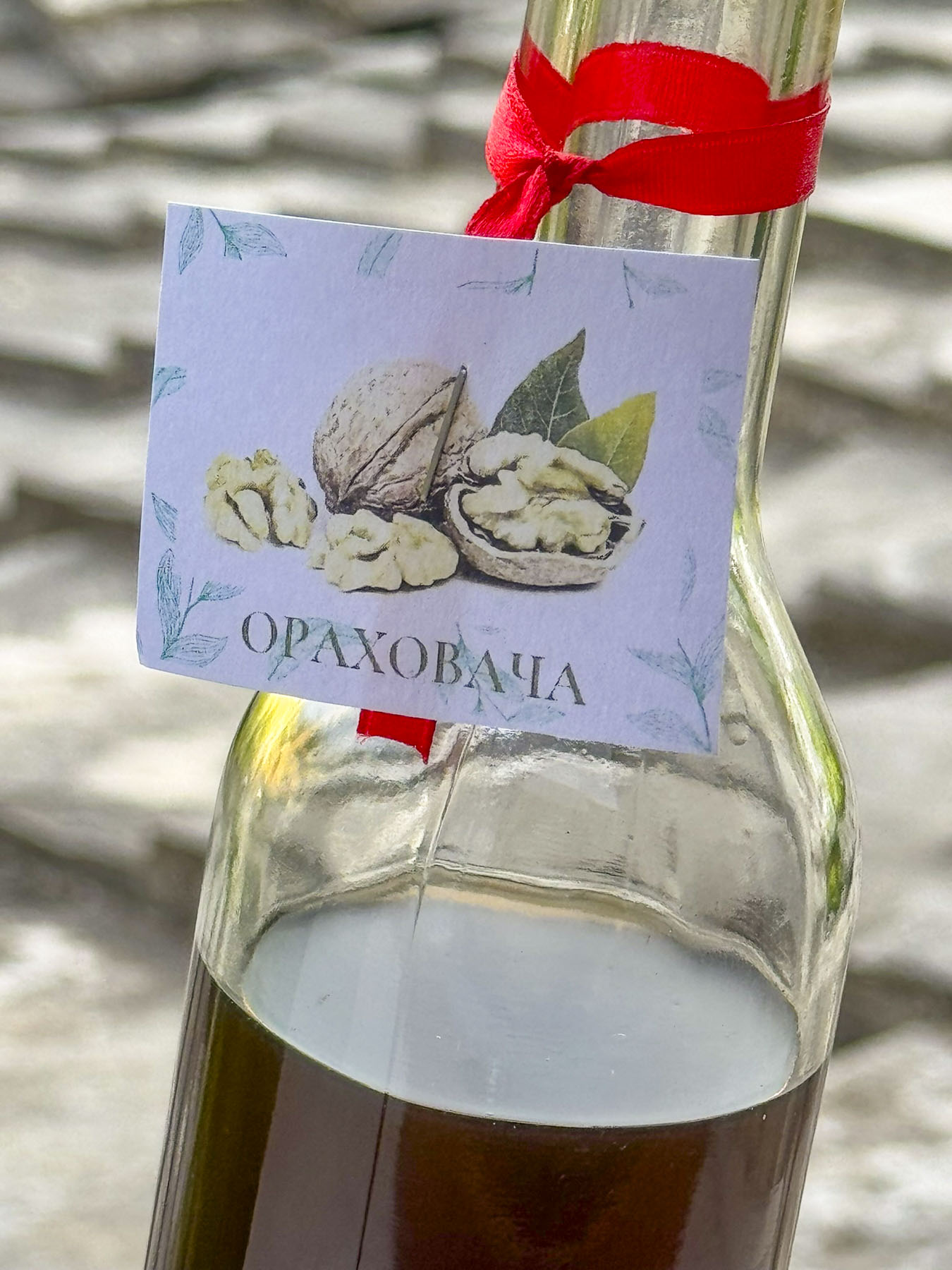
We arrived to the monastery just as a tour bus finished disgorging its passengers. We dislike crowded sites, so we decided to explore the new monastery’s museum first, which had a small collection of ancient manuscripts, books, and liturgical objects, as well as a collection of some of the region’s oldest surviving icons. The works transcend several artistic styles from traditional Byzantine, featuring austere lines and dark color, to more graceful interpretations as Venetian and Baroque influences reached the Balkans. During exploration of the museum’s gift shop we discovered that the resident monks still make a traditional walnut liqueur  called Orahovača. It’s made by soaking green, unripe walnuts in plum brandy with honey, citrus and spices like cloves and cinnamon. It is usually enjoyed chilled as a digestif  after meals, or to treat stomach ailments. It was very tasty and we enjoyed the small bottle we purchased throughout the trip.

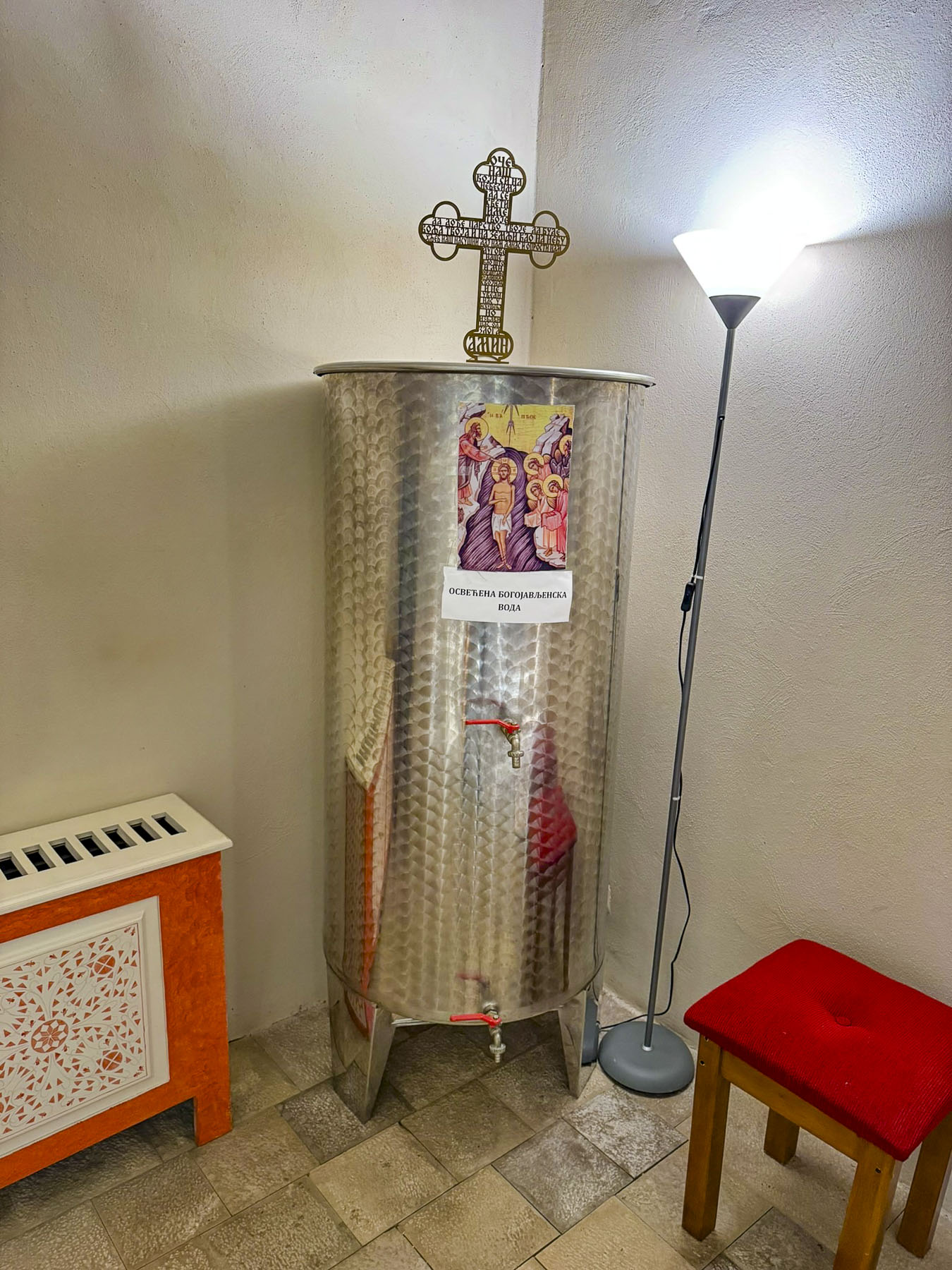
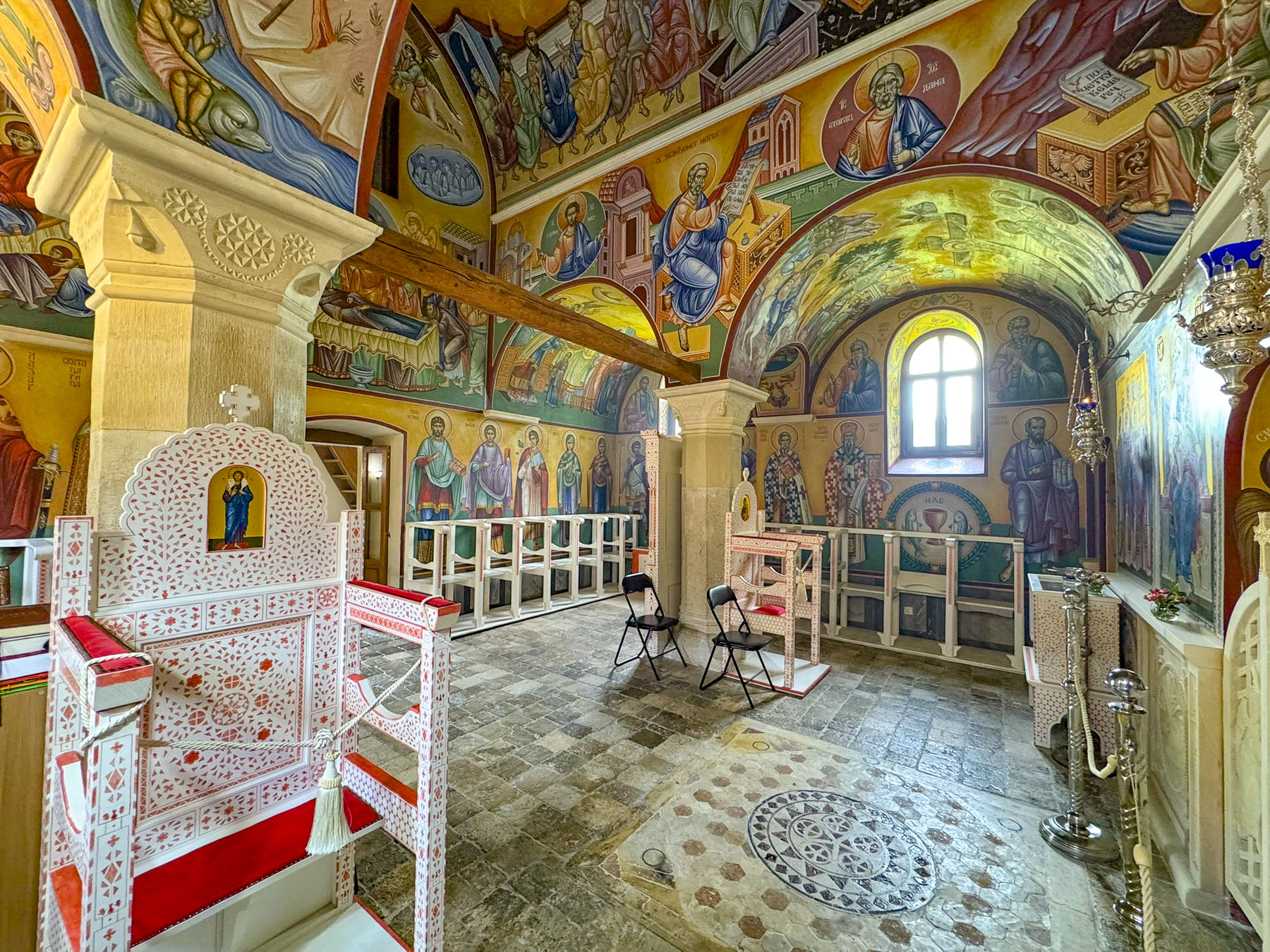
When the tour group departed, we entered the foyer of the church where a 200 liter, (50 gallon) stainless steel drum of what we assumed was holy water stood in the corner, available to fill your water bottles from. Entering the sanctuary revealed a stunningly beautiful space where every surface was covered in rich iconography.

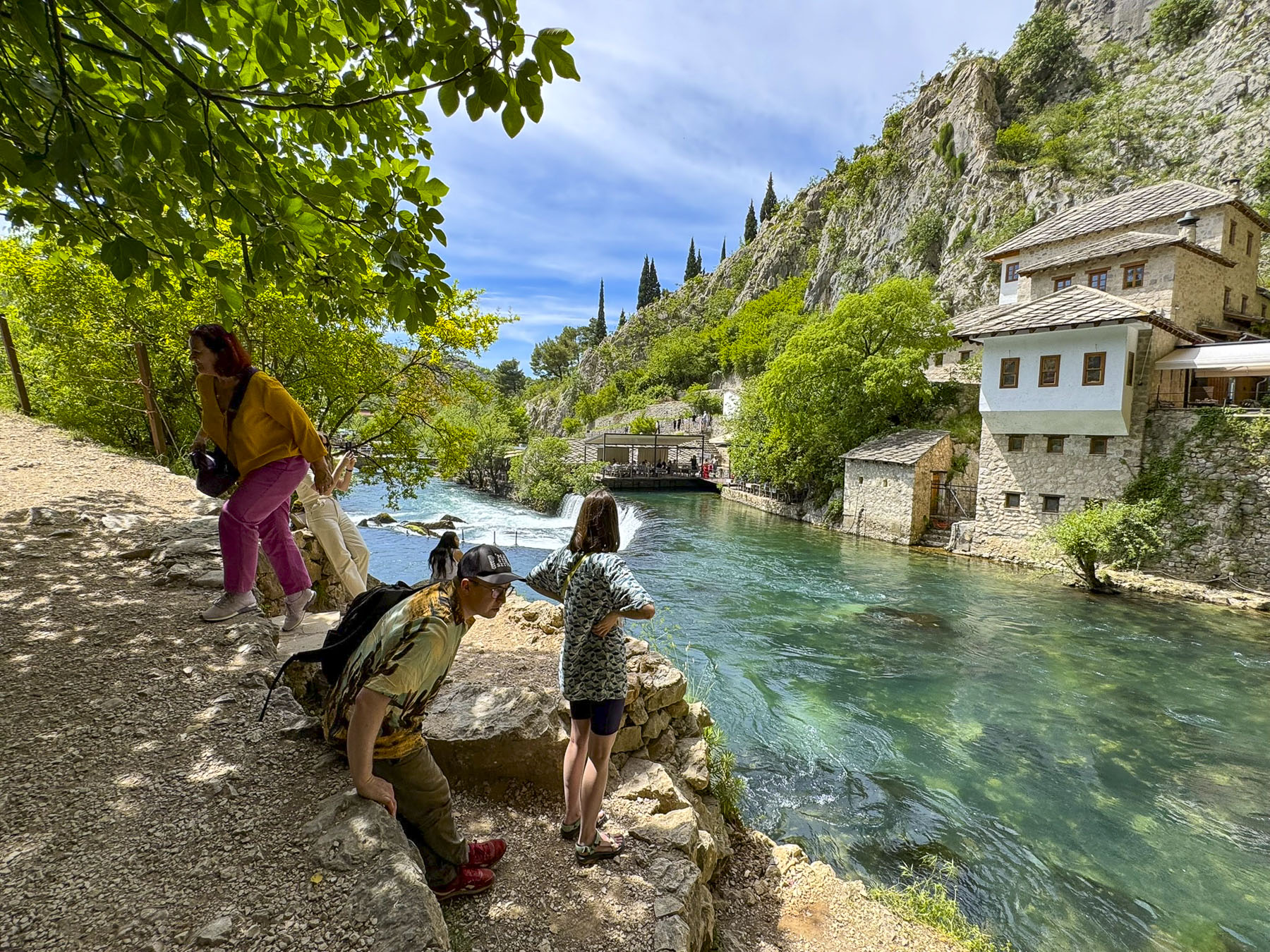
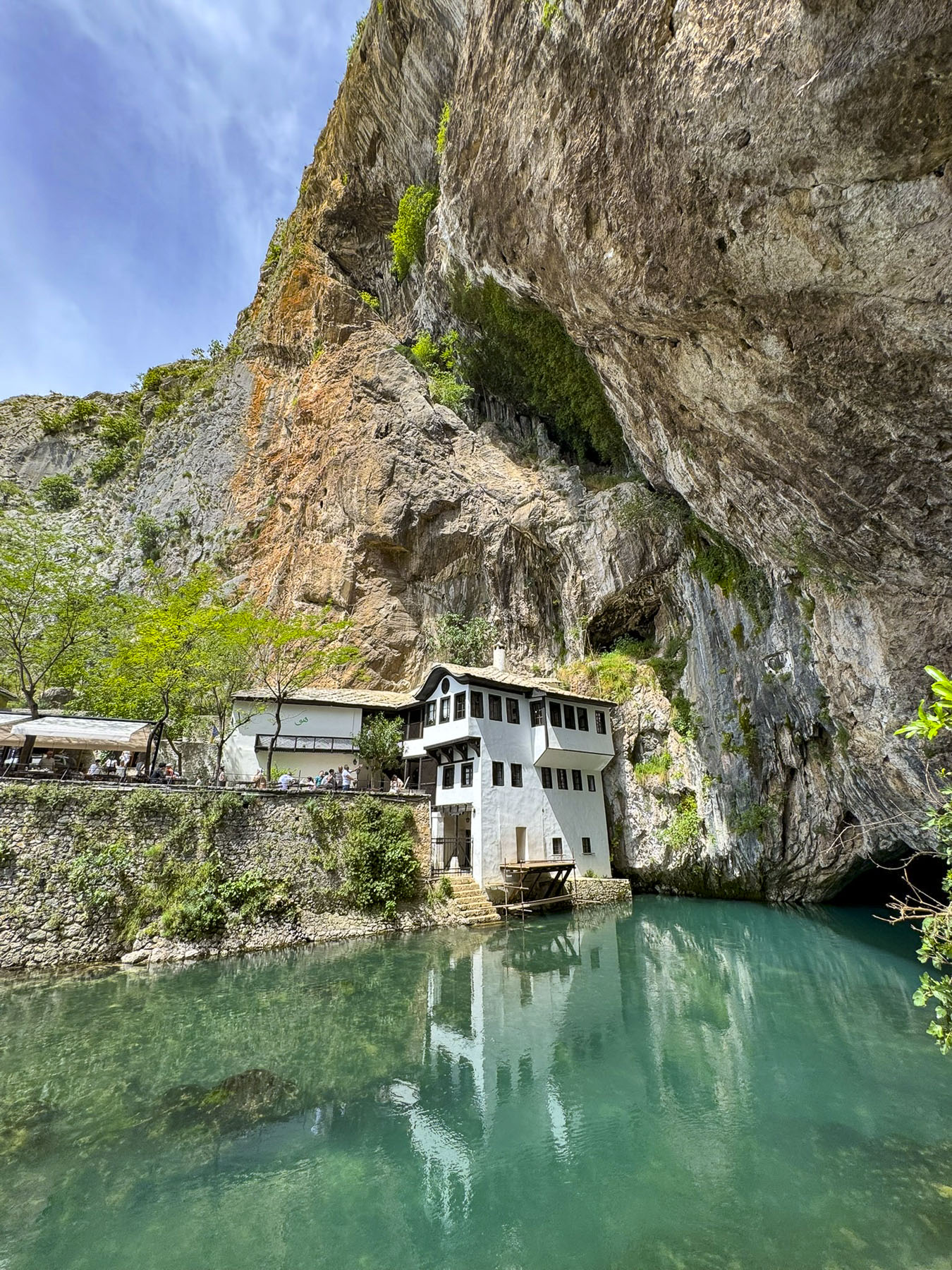
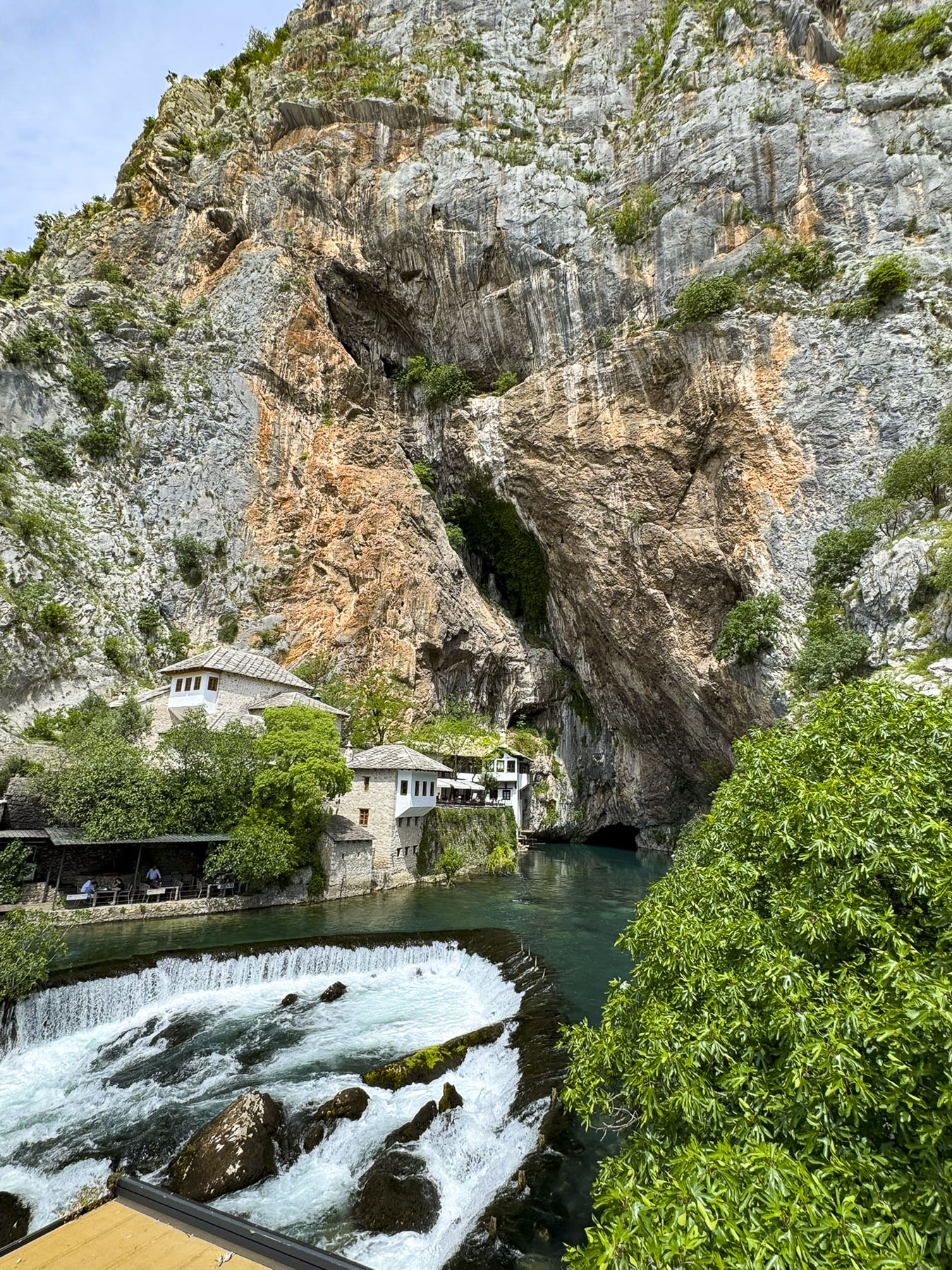
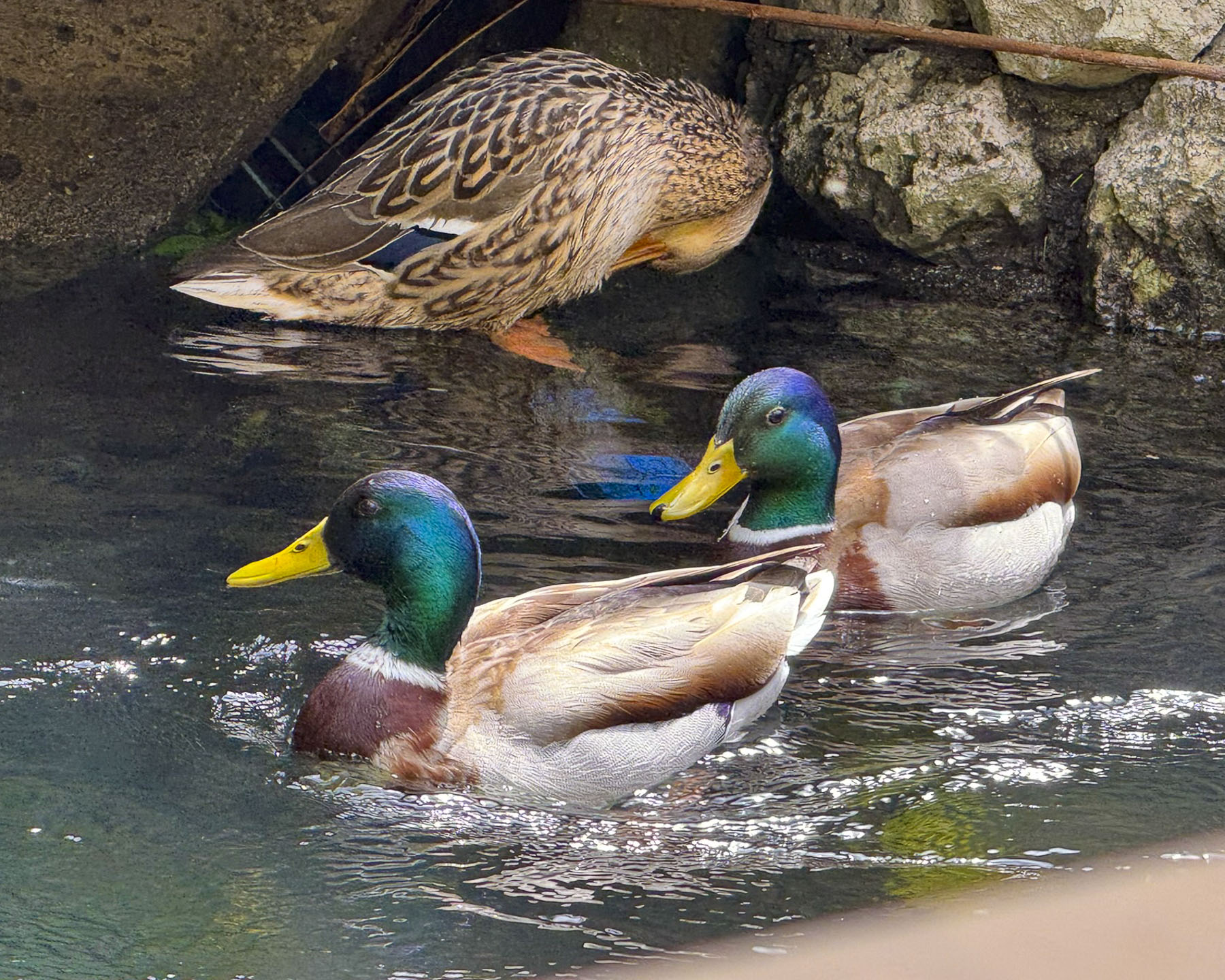
A short drive away, but a long walk from the parking area was Blagaj Tekija, a historic Sufi Dervish monastery constructed in the early 16th century at the foot of soaring 240m (787ft) sheer rockface next to a karst cave. The cavern shelters a spring called the Vrelo Bune which is the source Buna River. It’s a dramatic setting. From its banks we watched visitors take small boats rowed by local men a short way into the mouth of the cave to see its large cavern.  Professional divers have explored the dark cold water of the spring to a depth of 150m (492ft), but the total depth of the spring remains unknown. We enjoyed a late afternoon dinner at one of restaurants along the river’s edge. It was a very tranquil setting with ducks lazily paddling about on the softly gurgling water as it glistened in the bright sun.

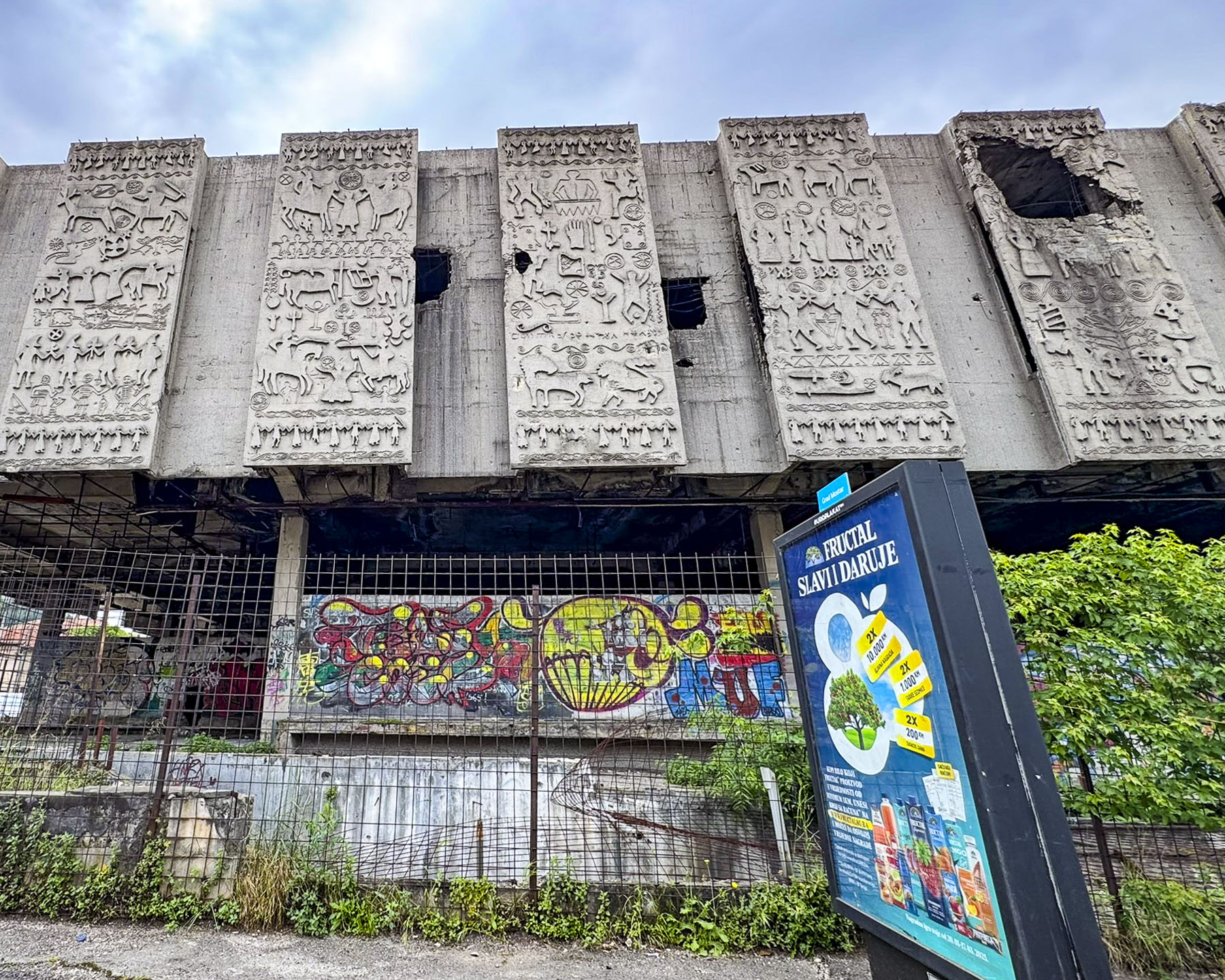
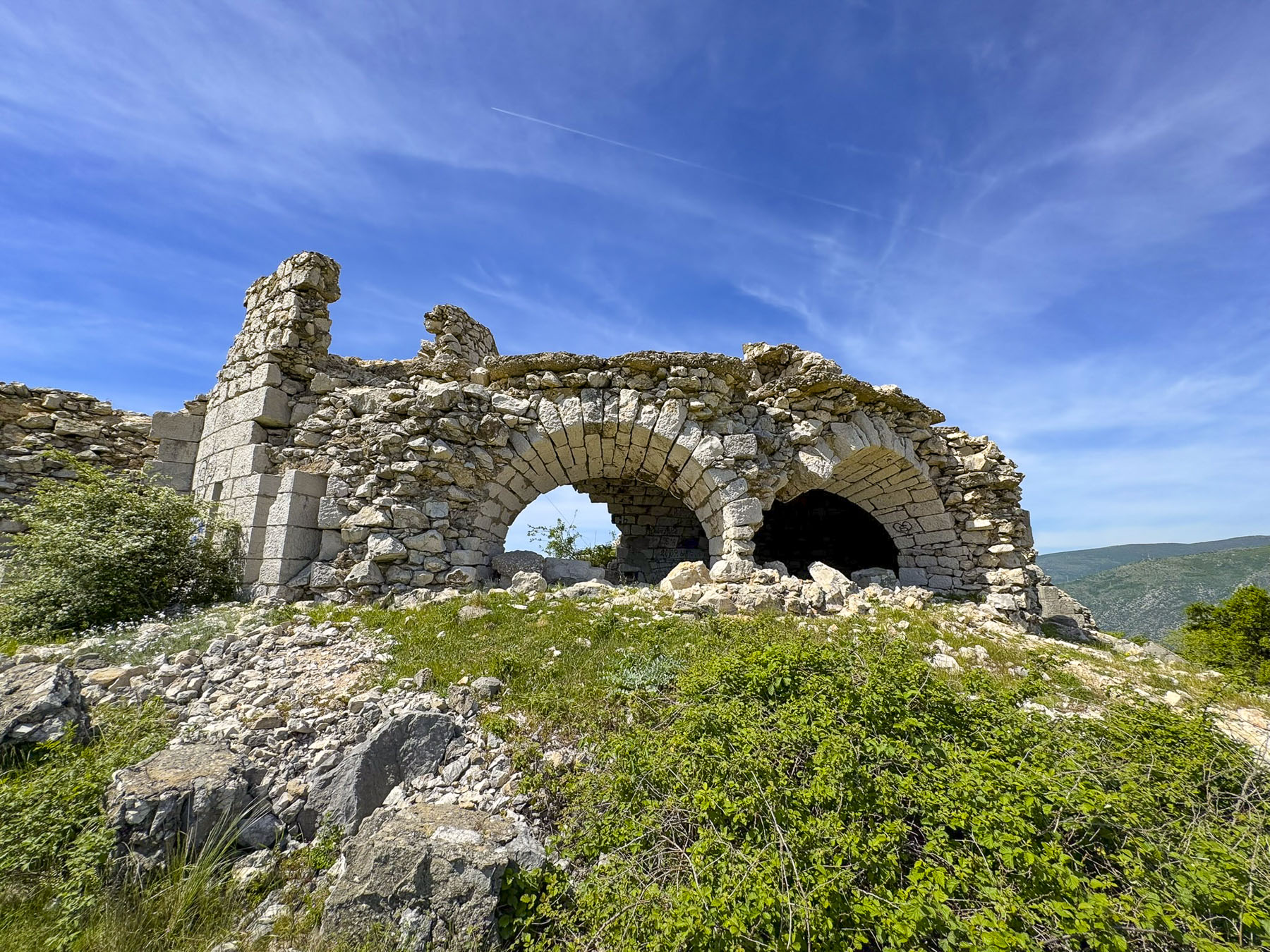
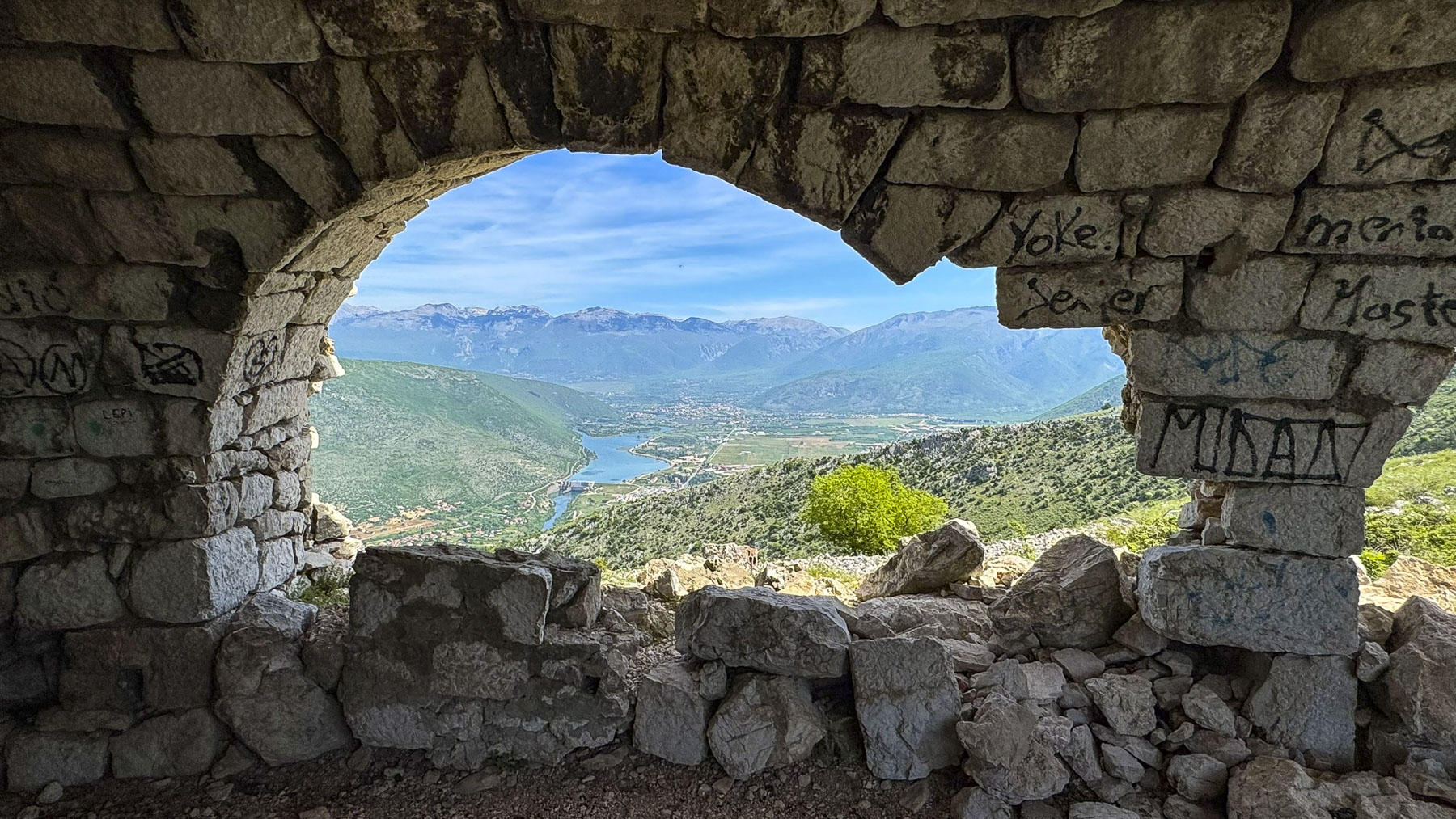
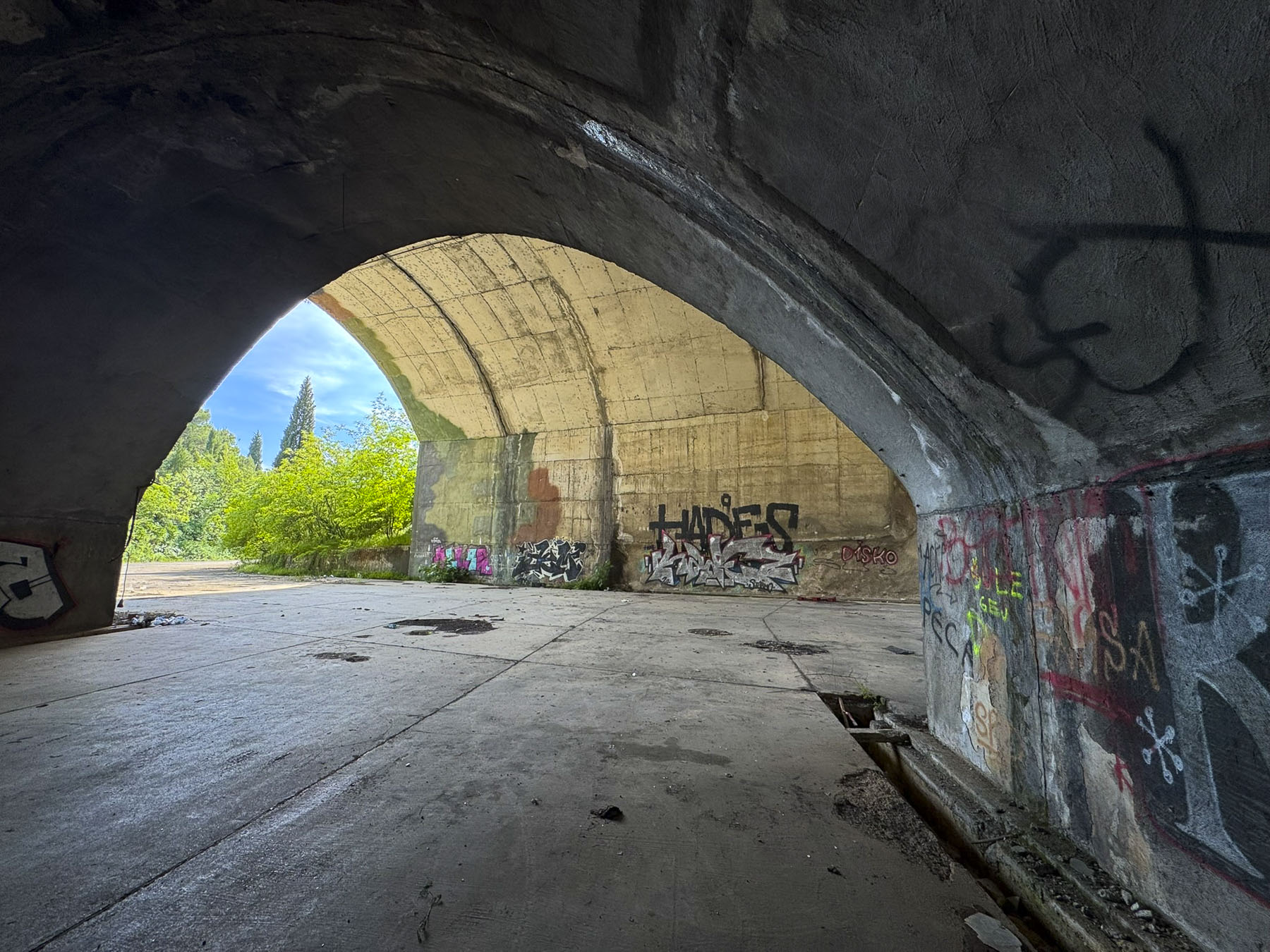
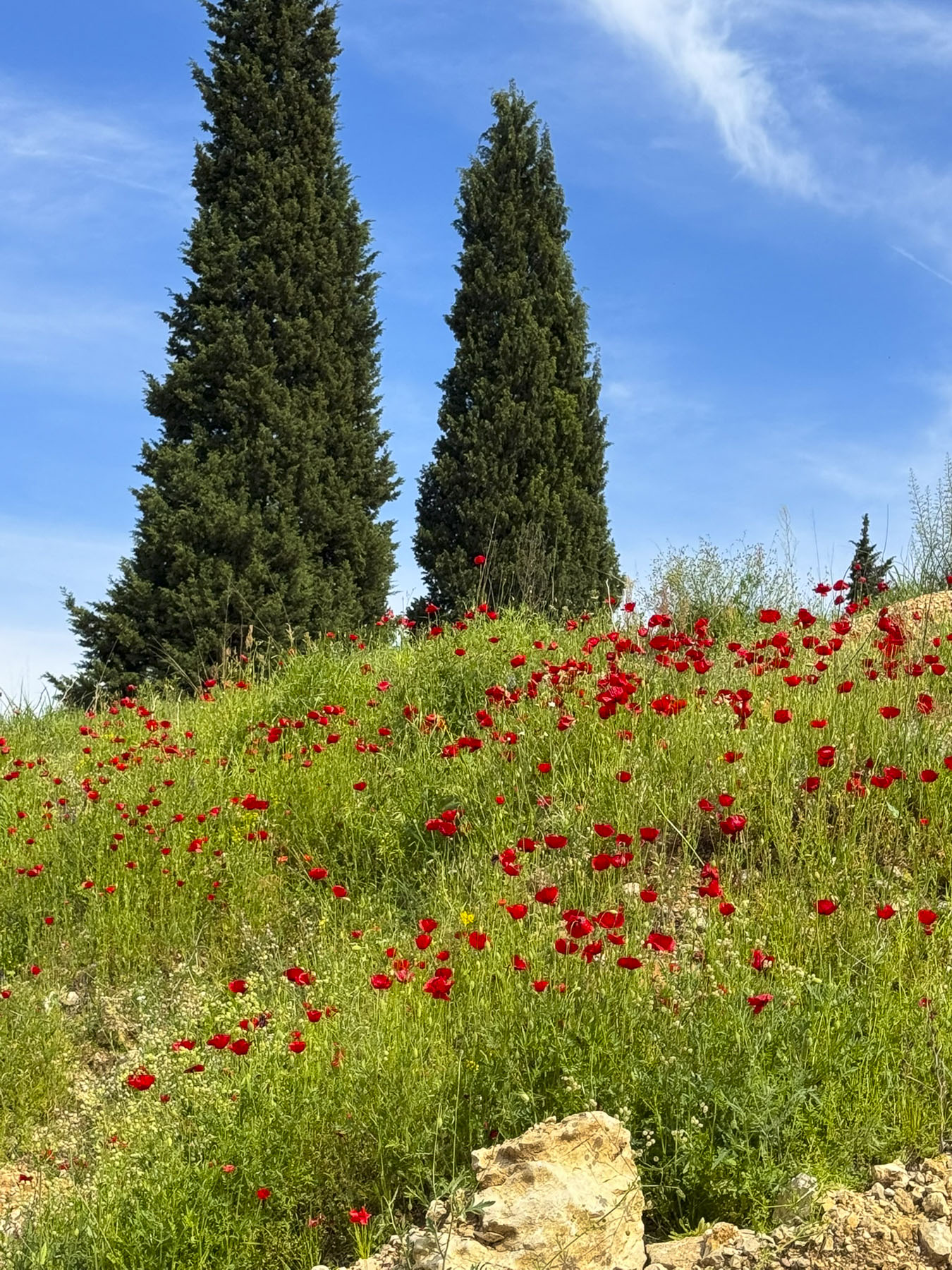
Heading back to Mostar we made one last stop at Objekt Buna in Gnojnice. It’s an unofficial tourist site where visitors are semi-discouraged by a decrepit incomplete fence to not enter this Cold War era secret aircraft bunker. Located across the main road from what is now the Mostar International Airport, the military bunker was constructed into the side of a small hill in 1969 to shelter up to twenty planes and helicopters from attack.  It was abandoned after the Bosnia War and is now a graffiti covered relic of the communism of Tito’s Yugoslavia. Outside the bunker the hillside was covered with wild poppies.

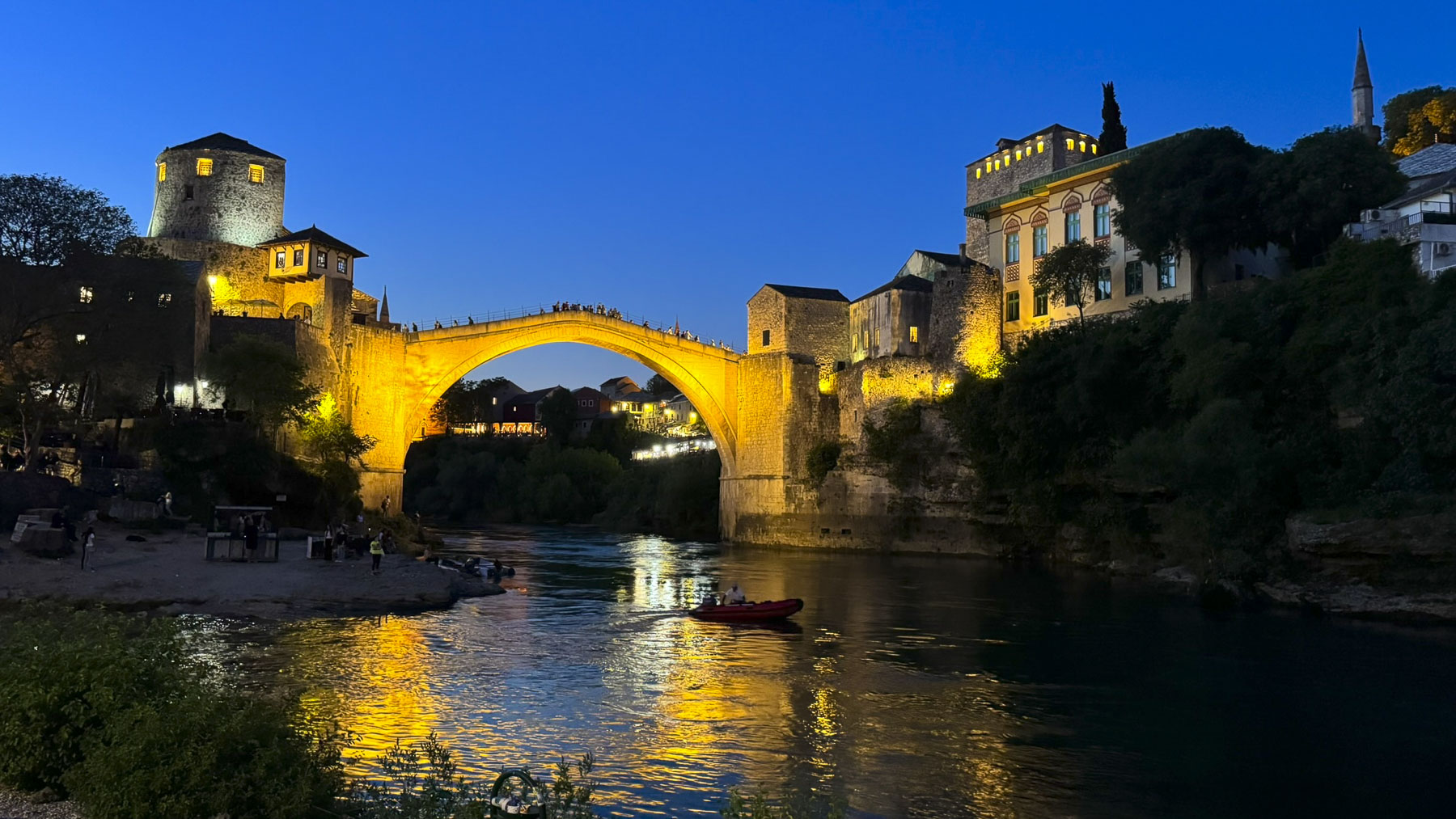
Mostar was especially enchanting in the evenings. Across from the small beach under the bridge where the boat rides launch from, we were surprised to see so many photographers lined up with their cameras mounted atop tripods placed, we hoped, firmly into the riverbed. Along with us, they were all intent on capturing the ultimate night picture of Stari Most as darkness fell. There were many previous attempts to build an arched stone bridge across the river, but all had failed, to the frustration of  Sultan Suleiman the Magnificent. In 1557 he commissioned Mimar Hayruddin, a former apprentice to Istanbul’s grand architect Mimar Sinan to build a single arch bridge, but legend says the Sultan threatened him with death if his design collapsed. Fearing the worst as completion of the bridge neared in 1566 the architect reportedly prepared his own funeral shroud, expecting to be killed when the scaffolding supporting the bridge was removed. But to everyone’s relief, the 29m (95 ft) span, the widest man-made stone arch bridge in the world at the time, held firm. A marvel of engineering, the original stone structure stood for over 450 years until it was destroyed during the 1990s Bosnia War.   

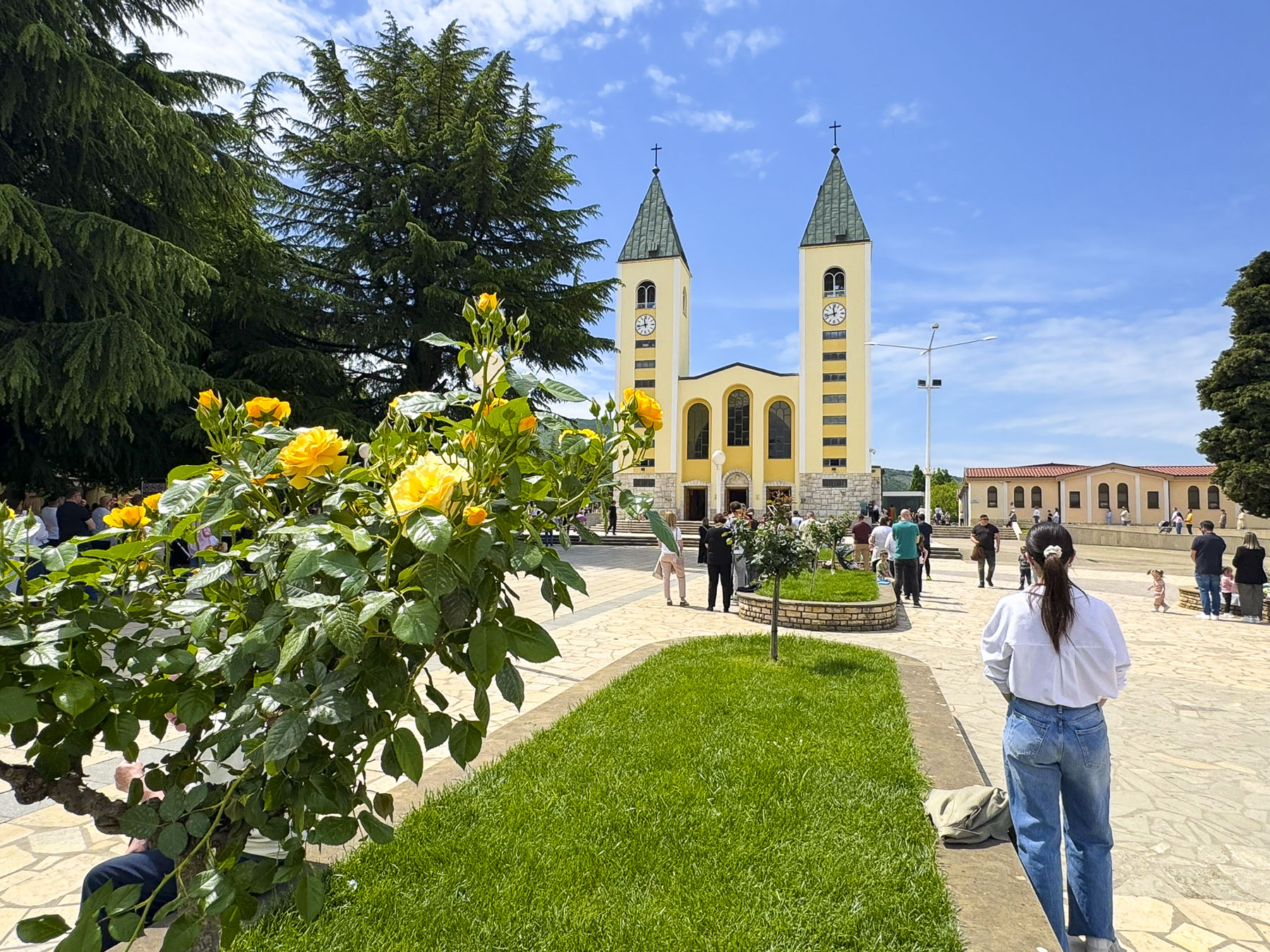
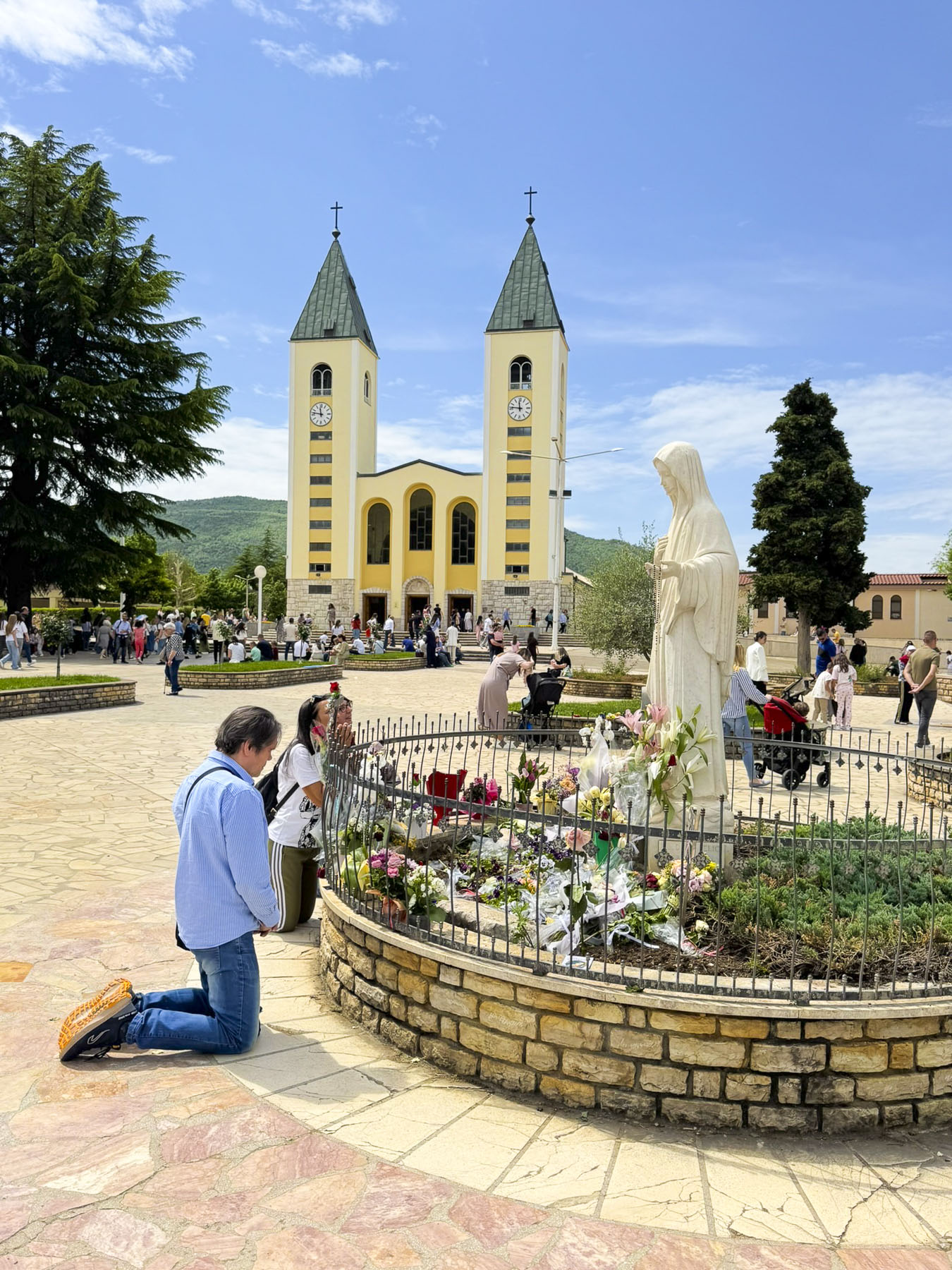
For our last day trip from Mostar we headed to Kravica Waterfall, but we rarely go directly to a destination, as there’s always other sites of interest along the roundabout routes we choose. Forty minutes south of Mostar we stopped at the Church of St. James in Medjugorje, a modest Bosnian town with about 4,000 people living in it. The catholic church was started in 1934, but its construction was interrupted by WW2, and religion was suppressed in Yugoslavia’s early communist years until authorities loosened their policies toward religious institution. The church was allowed to be completed and consecrated in 1969. But the quiet town suddenly rose to world-wide fame when six young people  claimed to have seen the Blessed Virgin Mary on June 24th, 1981 on Crnica hill. Subsequent apparitions appeared to the children in different locations around the small town, and eventually in the church. The Virgin Mary’s visitations, with her messages emphasize reconciling with God, reading scripture, and encouraging peace are said to have occurred daily since then. And Medjugorje has grown into the third most visited pilgrimage site in Europe, after Lourdes in France and Fatima in Portugal, receiving over 40 million pilgrims since 1981.

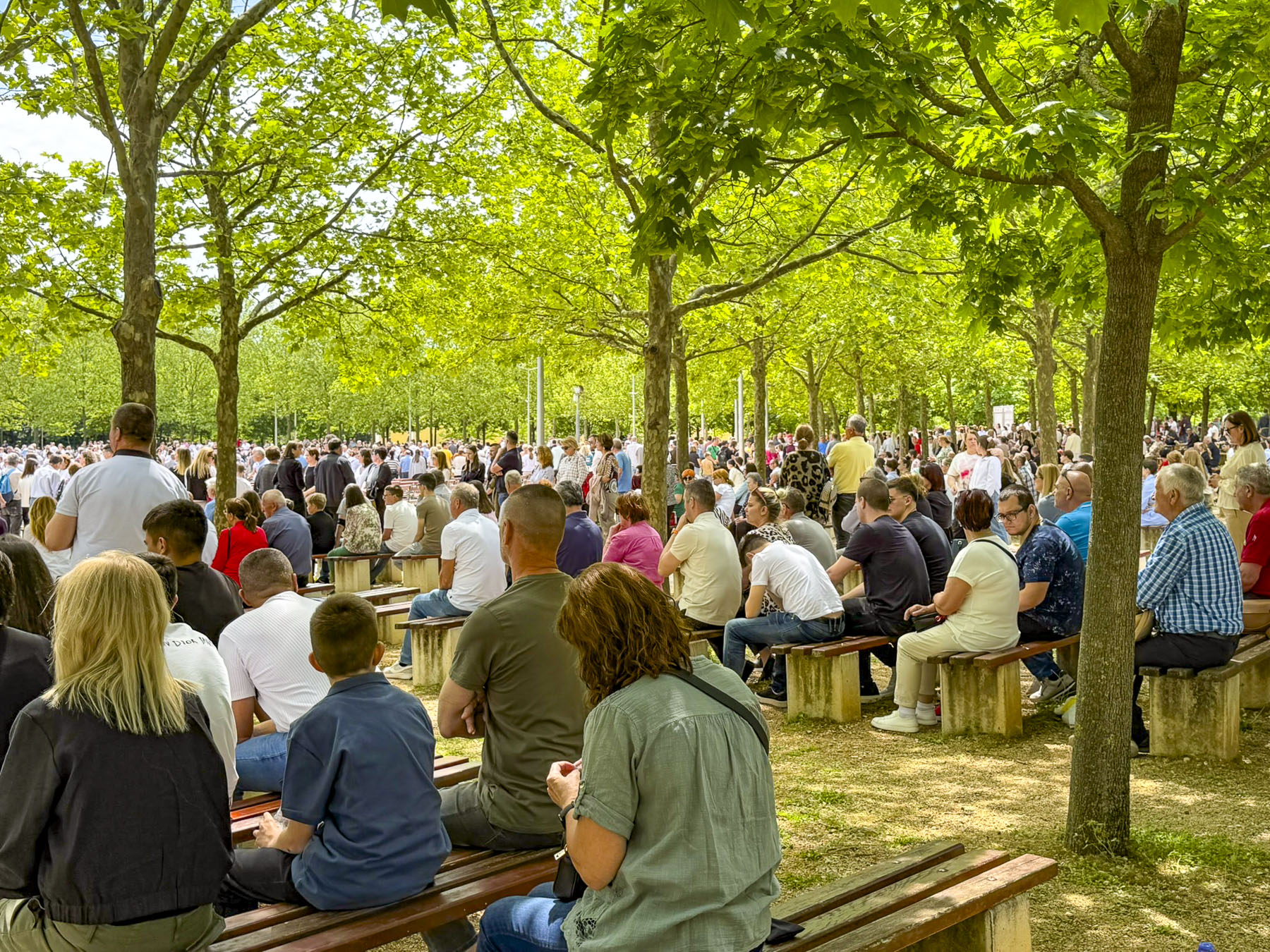
When we arrived an outdoor mass was in progress behind the church in a large park-like setting; thousands of pilgrims were seated along rows of permanent benches or stood nearby. Around the front of the church folks prayed before a statue of the Virgin, as another mass was underway in the sanctuary.

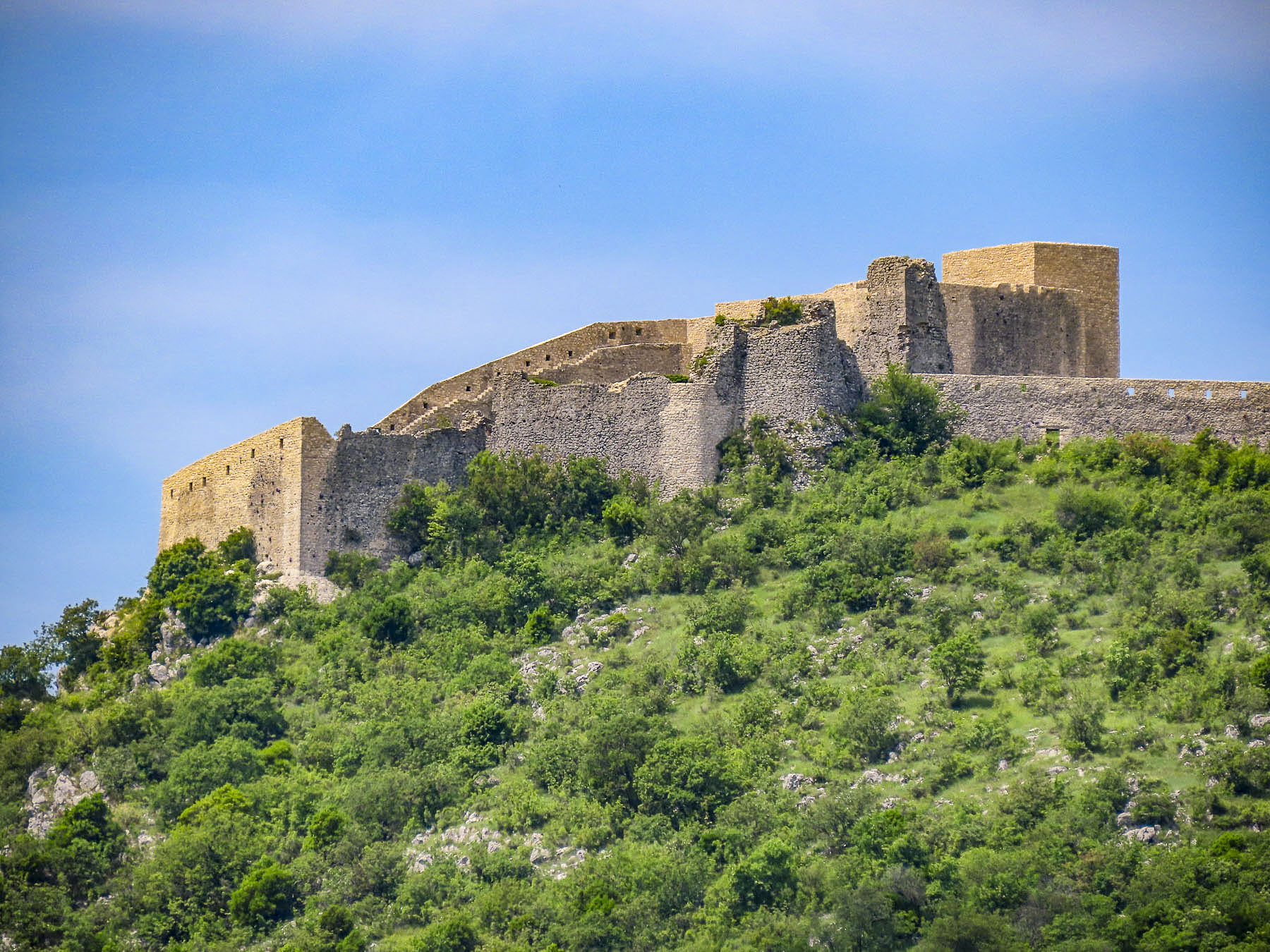
Continuing our journey we headed to the Fortress of Herzog Stjepan Vukčić Kosača. Set atop a towering hill, the medieval 15th century castle was an important stronghold of the Kingdom of Bosnia as the Ottoman Empire expanded across the region.  Kosača’s title “Herceg” (Duke), was also the name of his expansive domain which later became known as Herzegovina. Unfortunately, there was a large sporting event being held the day we visited, which would have required us to park at the bottom of the hill and walk to the summit. This would have taken too much time away from the rest of the day, so we contented ourselves with photos of the mighty stronghold from the foot of the hill.

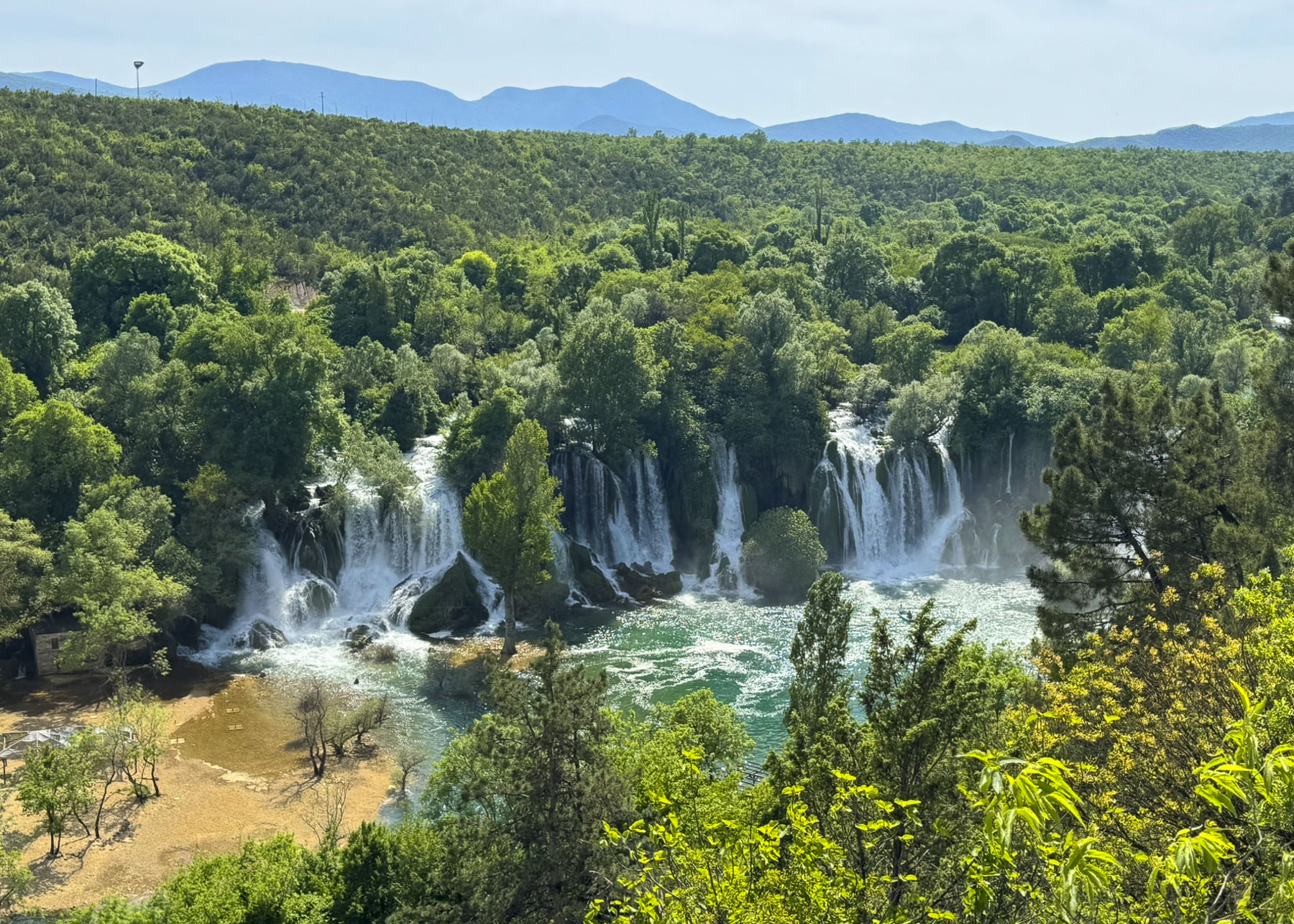
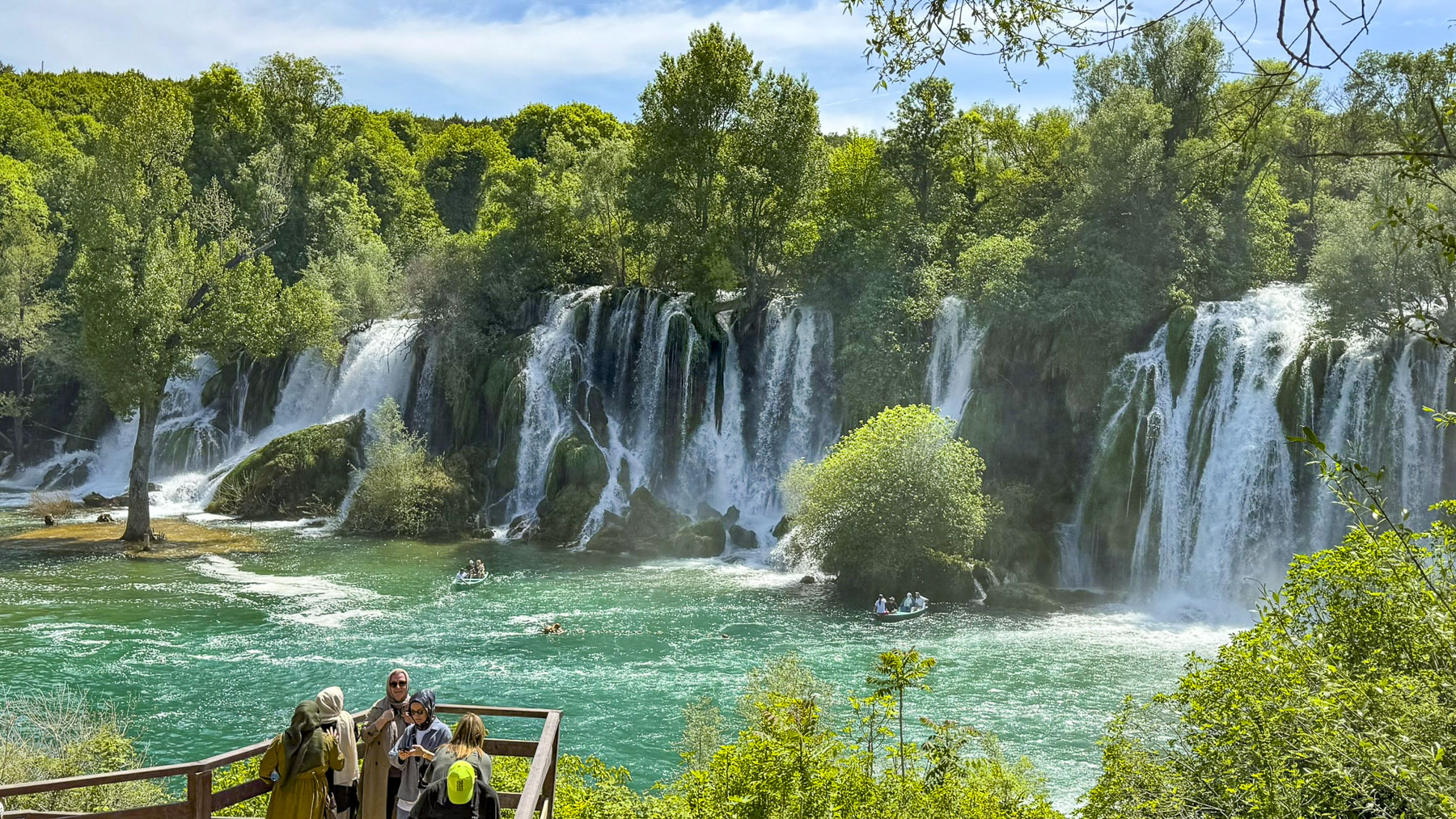
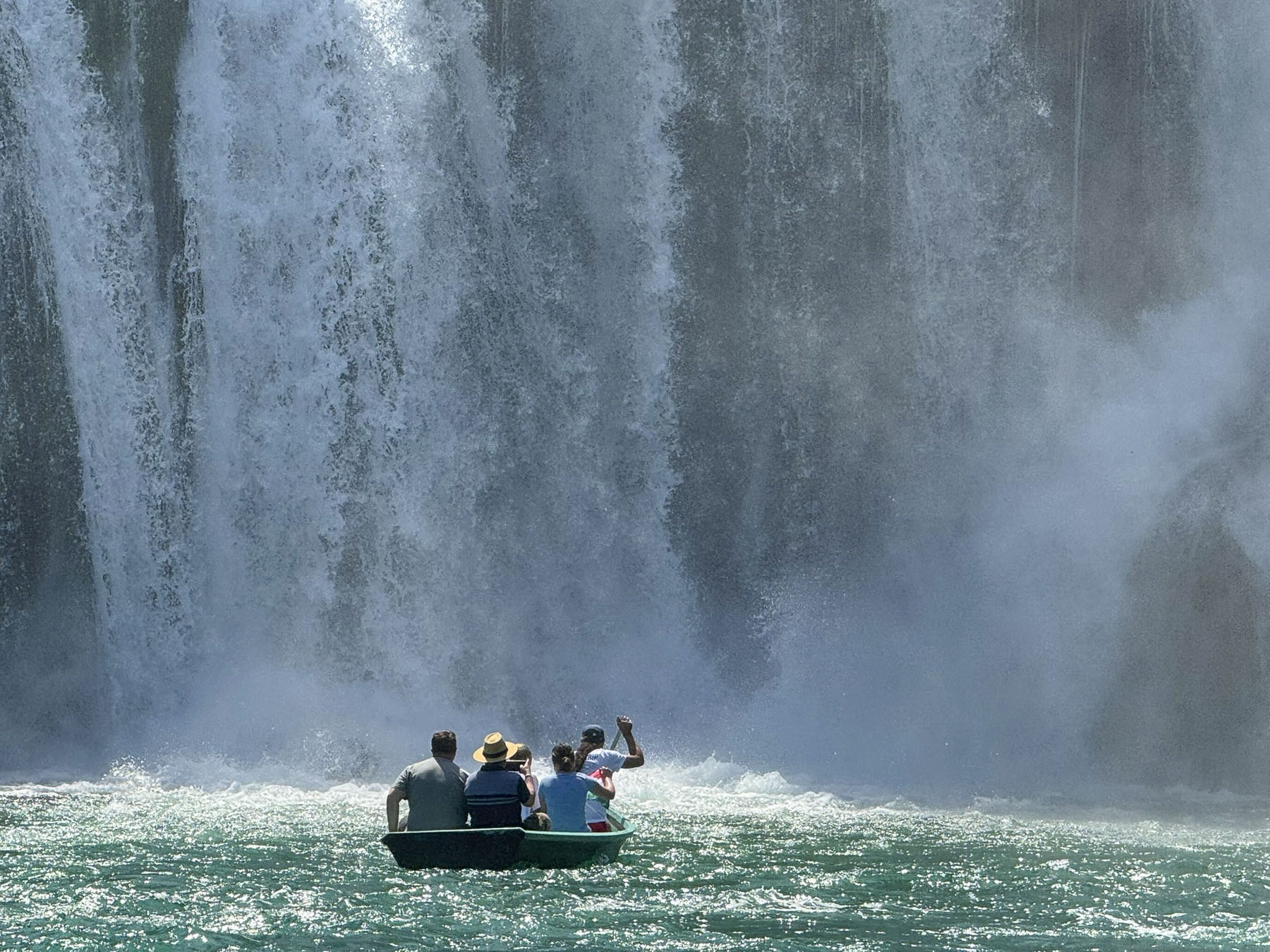
The Trebižat River was full from runoff from recent heavy spring rains across the region and the Kravica Waterfall was the beautiful beneficiary. The spectacular bridal veil fall is 120m (394ft) wide with a cascade that drops 25m (82ft) into a crystal-clear turquoise basin. Local boatmen can be hired to row folks closer to the falls to hear the thunder of the water and get soaked in mist. A few swimmers were daring enough to brave the cold water.

There was plenty of parking near the park entrance and we opted for the ticket with the tourist train. This is especially helpful for folks like us with bad knees; the other alternative is a walk down many steep stairs, but be prepared for a vigorous climb up. Along the water edge there are three outdoor restaurants that are seasonally open. If pursuing waterfalls is your thing, another smaller cascade, Koćuša Waterfall, is 30 minutes away to the northwest.

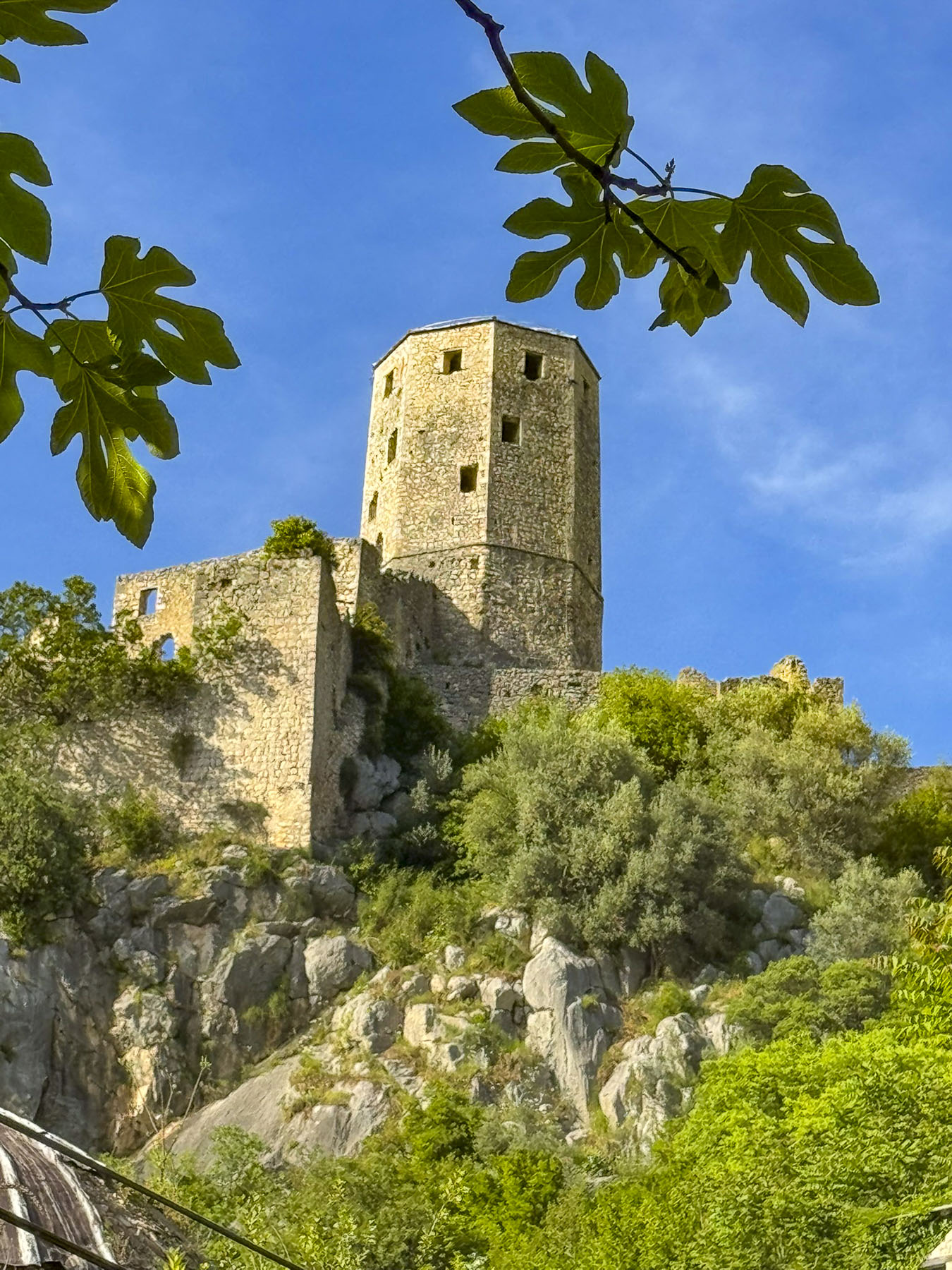
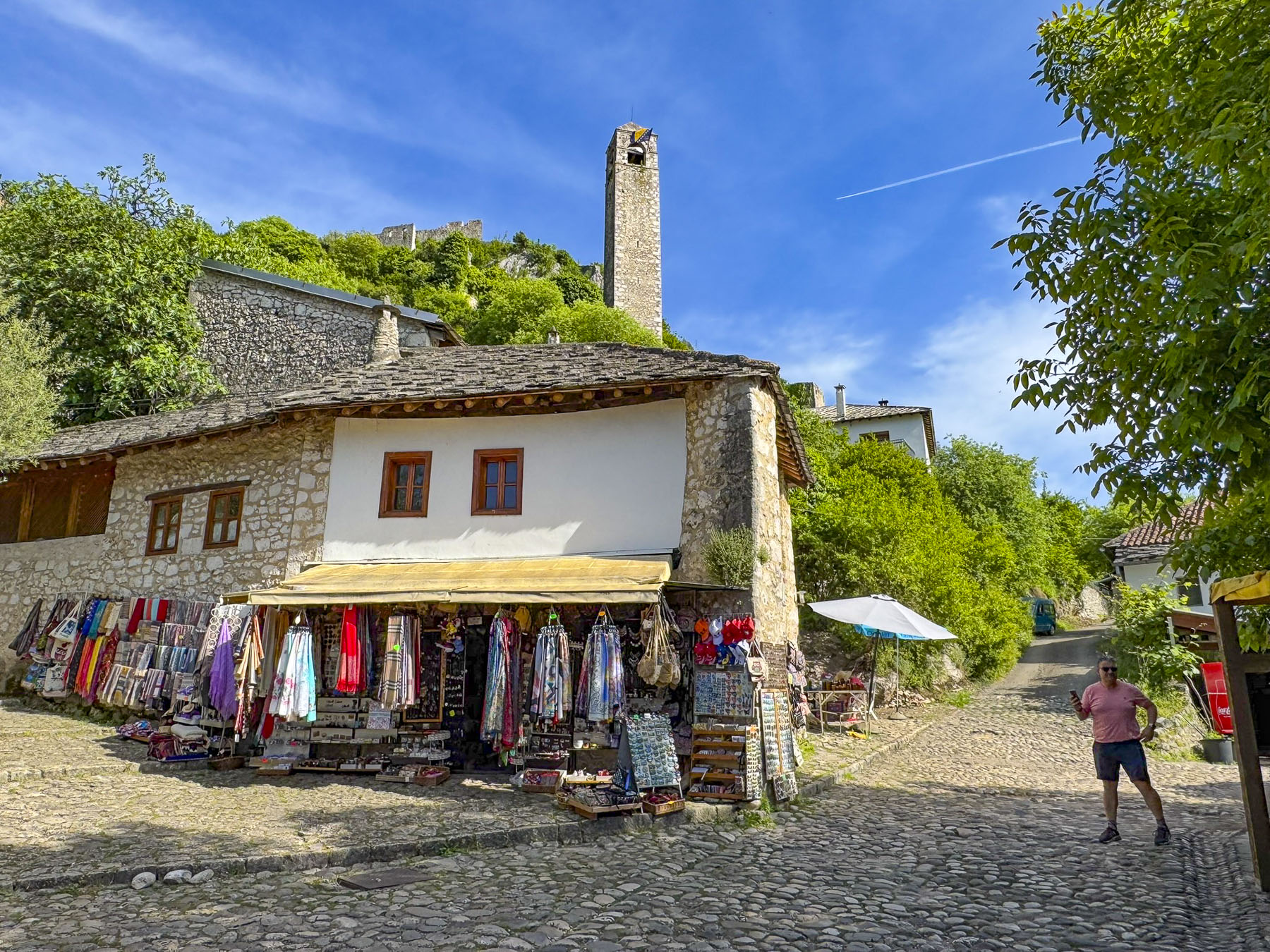
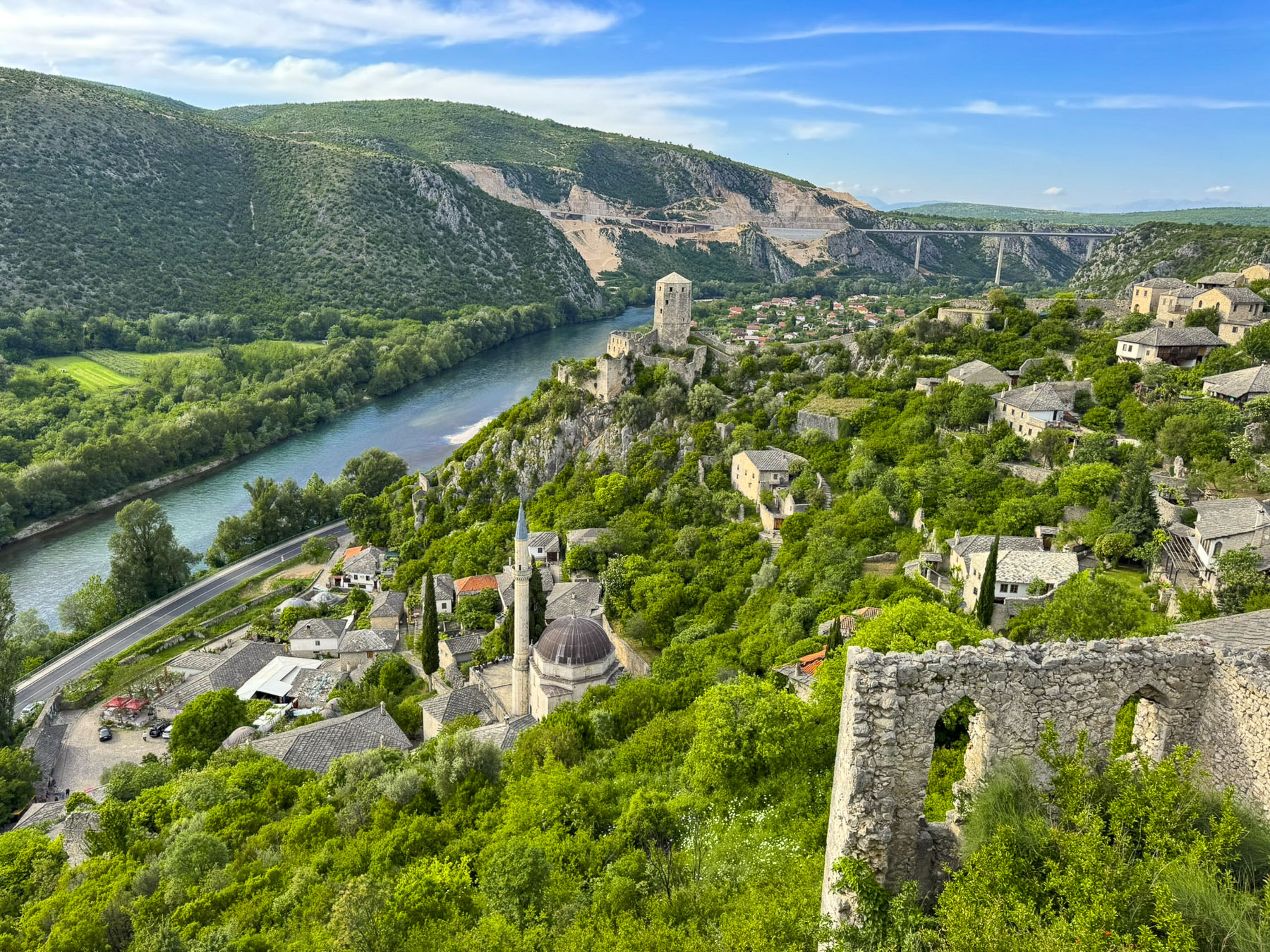
The last stop of the day on the way back to Mostar was the ancient fortified stone village of Počitelj along the east bank of the Neretva River, that’s a tentative UNSECO site. Our descent into the town was down a narrow single-track lane, with occasional pullover spots in case you encountered any oncoming cars. At its bottom was a small plaza with a few restaurants and a tourist shop, from which the village spread dramatically up a steep hill. Founded in 1383 by Bosnia’s King Tvrtko I, the village was also a strategic stronghold and administrative center of the Ottoman Empire for 400 hundred years after its conquest in 1471, having a large mosque, hammam, madrasa, and a clock tower to reflect its importance as a governmental seat.

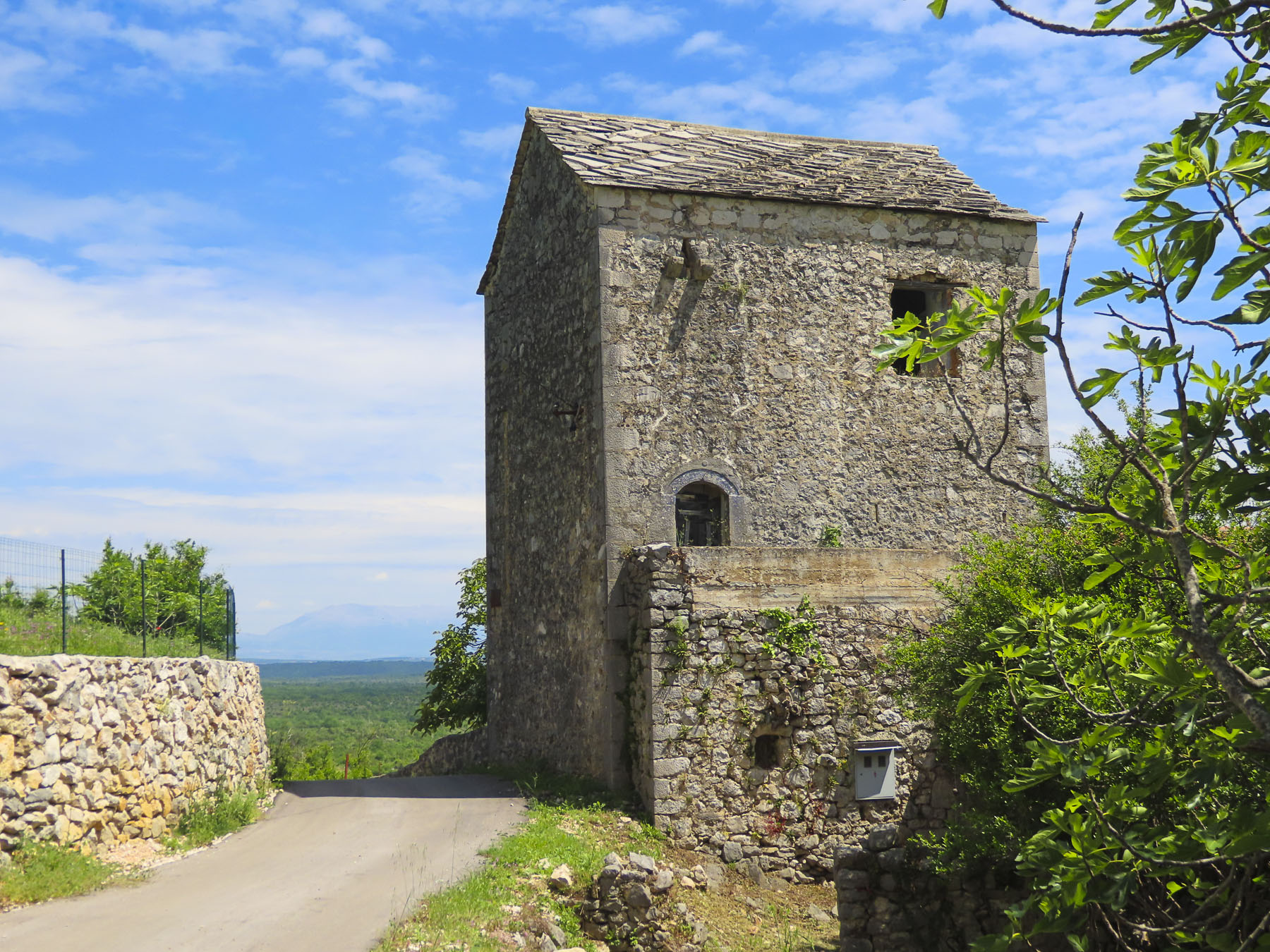
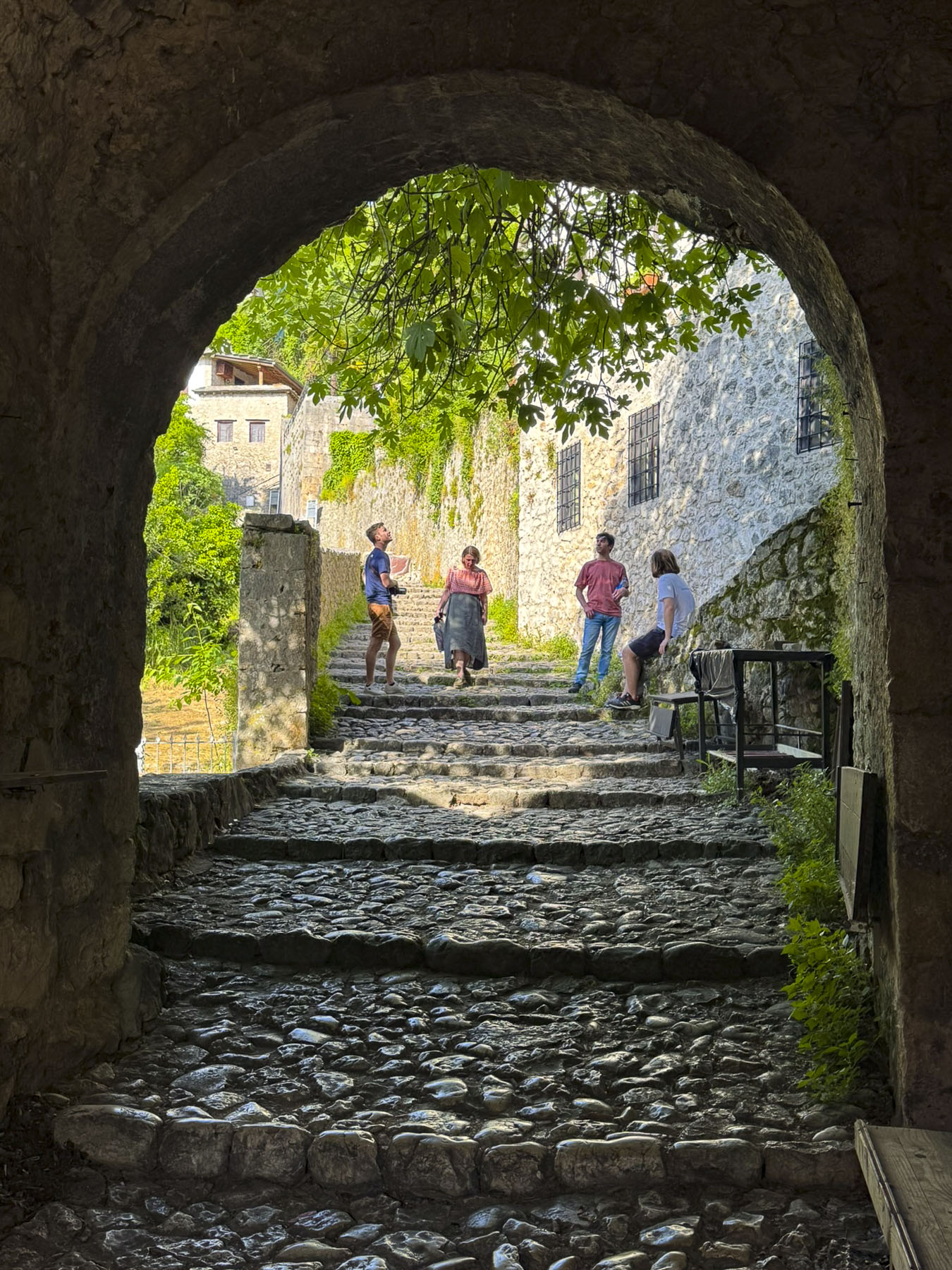
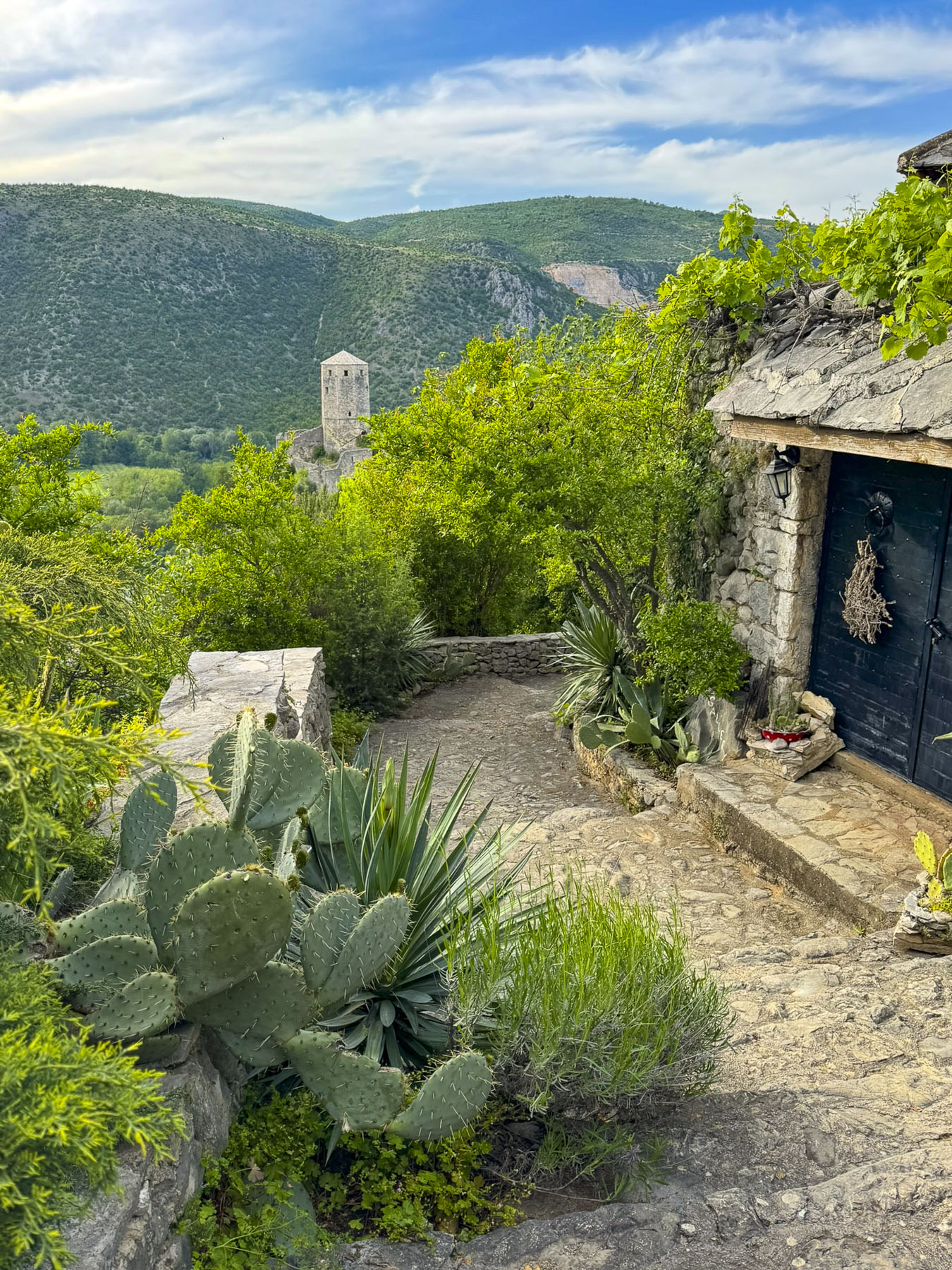
We entered the old town through an arched gateway. Under an ancient watch tower we spotted the largest fig tree we had ever seen, growing spectacularly from between stones of tower’s wall. If the tree ever fell, we were sure the tower would also collapse. Though there were several other tourists about, and signs that some of the old dwellings had been gentrified as vacation homes, the village felt as if it had been forgotten in time and abandoned; the aftermath of the 1990s Bosnia War.

Reaching Pašina tabija, a restored tower along the upper defensive wall, we were rewarded with a fantastic panorama of the village and the Neretva. Renovation to the tower included a glass walkway along the ramparts and a large deck to be used as a venue to host summer sunset concerts. Our late afternoon visit to Počitelj was the perfect way to end our time in Bosnia & Herzegovina, a destination we founded to be very charming and intriguing.

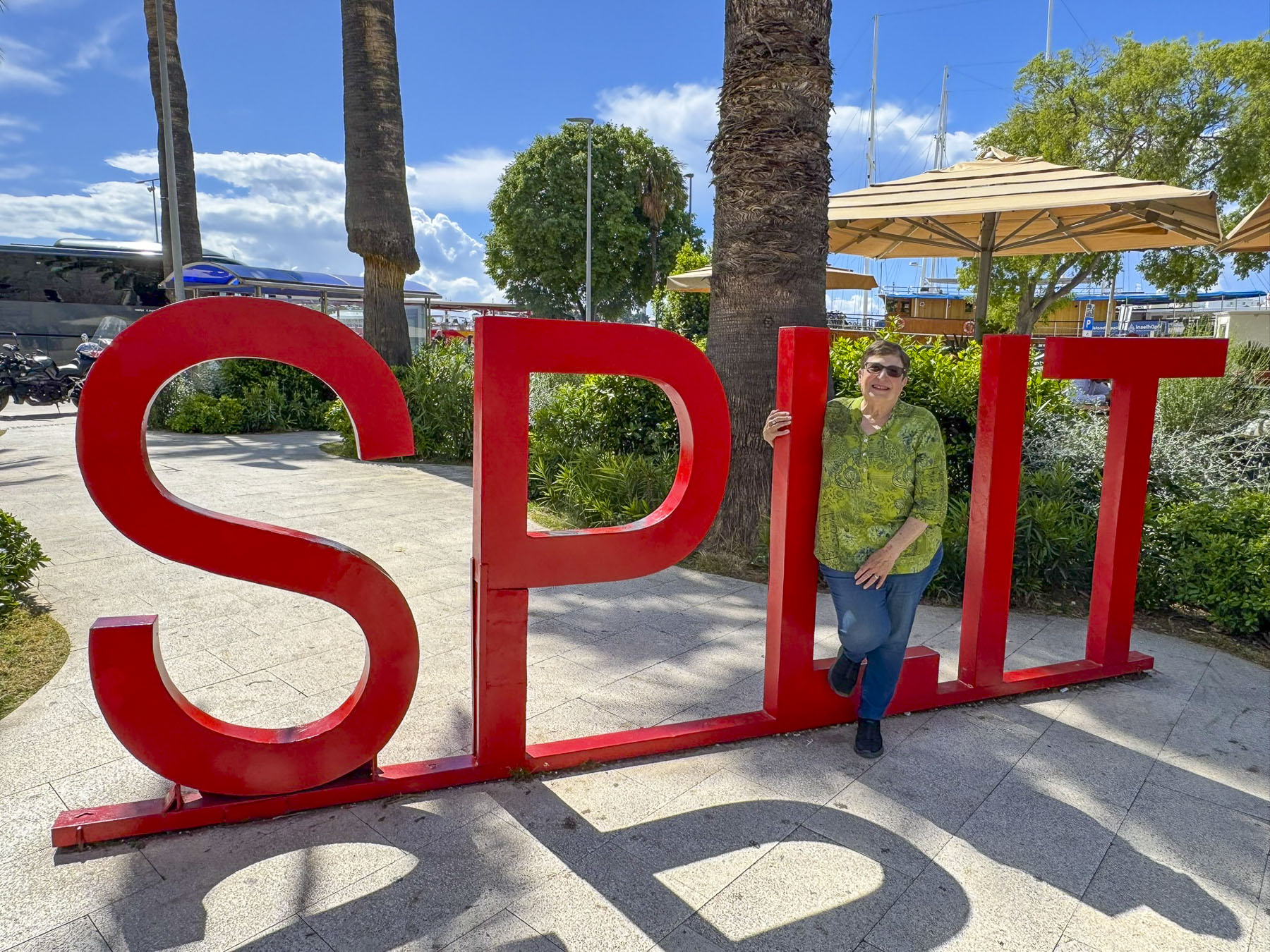
The next morning as we departed Mostar I promised that we would drive straight to Split, Croatia. “We’ll only stop for coffee, right?” “Yes, unless the steering wheel guides me like a Ouija board to some interesting locations.” I winked.

Till next time,

Craig & Donna
A Balkans Road Trip Part 7: Sarajevo, Bosnia and Herzegovina – Beautiful and Resilient

Traveling south from Zagreb on the E70 we headed to the Gradiška border crossing into Bosnia and Herzegovina. With the European Union’s open border policy there is a seamless transition driving from one country to the next, but until Bosnia & Herzegovina acquires full EU membership, which is expected to happen by 2030, the old fashioned ‘show your papers,’ is required. With two loud thumps our passports were marked with a Croatia Exit stamp and returned to us along with the vehicle registration, and the insurance “Green Card,” from the rental agency allowing us to take the car into a non-EU country. Crossing the Sara River, we repeated the formalities with the border guards and received our Bosnia and Herzegovina entry stamps. We are rather fond of passport stamps considering most countries now rely on electronic records and don’t stamp at all.

We had an extra early start from Zagreb that morning, as the drive on the toll road to Saravejo takes about six hours, but we wanted to take a longer route through the countryside first to see several sites. And still hoped to make it to the “City of Spirit and Hope” before nightfall.

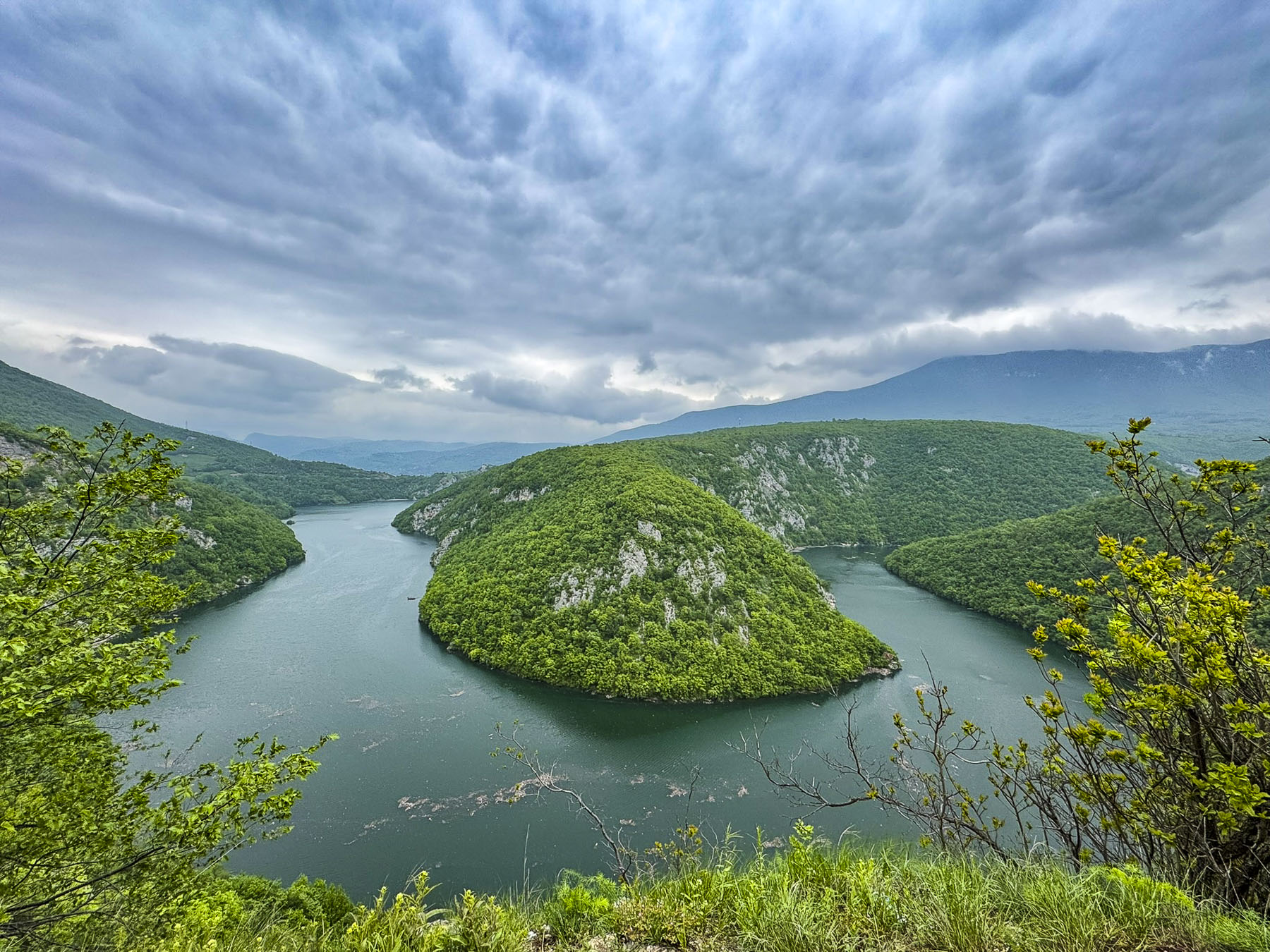
Small villages and farmland surrounded us quickly as we left the congestion of the border crossing behind. Our route the M16/E661 beyond Banja Luka hugged the narrow road beneath a steep cliff that paralleled the Vrbas River. Fields and rolling hills on the other side of the river were fresh with spring greenery. It wasn’t until we reached the Vrbas River Mountain View that the road widened enough to stop for a scenic overview. On the map this looks like an official overlook, but in reality, it’s a small, rough unpaved section of widened shoulder without a guardrail. You can’t actually see the river from the road at this point, but we drove past and did a U-turn so we could pull into it safely. Walking as close to the edge as we dared revealed a spectacular panorama of a horseshoe shape bend in the river.

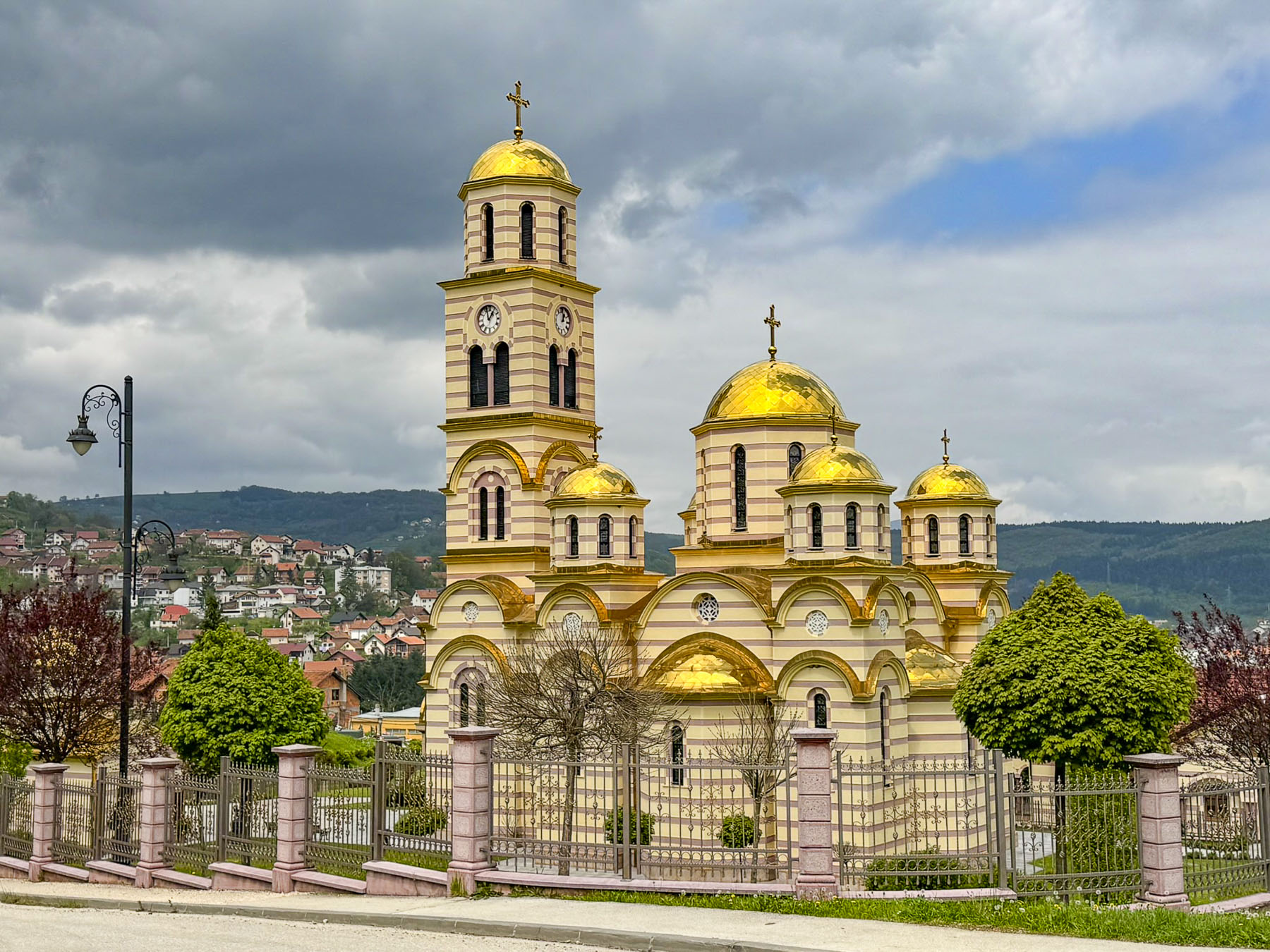
Turning, we rose into the mountains and reached Mrkonjić Grad, a fairly good size town in this semi-rural area, and stopped for a moment at Храм Светог Саве Мркоњић град, the orthodox Temple of Saint Sava. Construction of this stunning gold domed church started in the mid-1930s, but was interrupted by World War Two, communist rule, and the Balkans war in the 1990s. Post-war reconstruction efforts finished the church in the early 2000s.

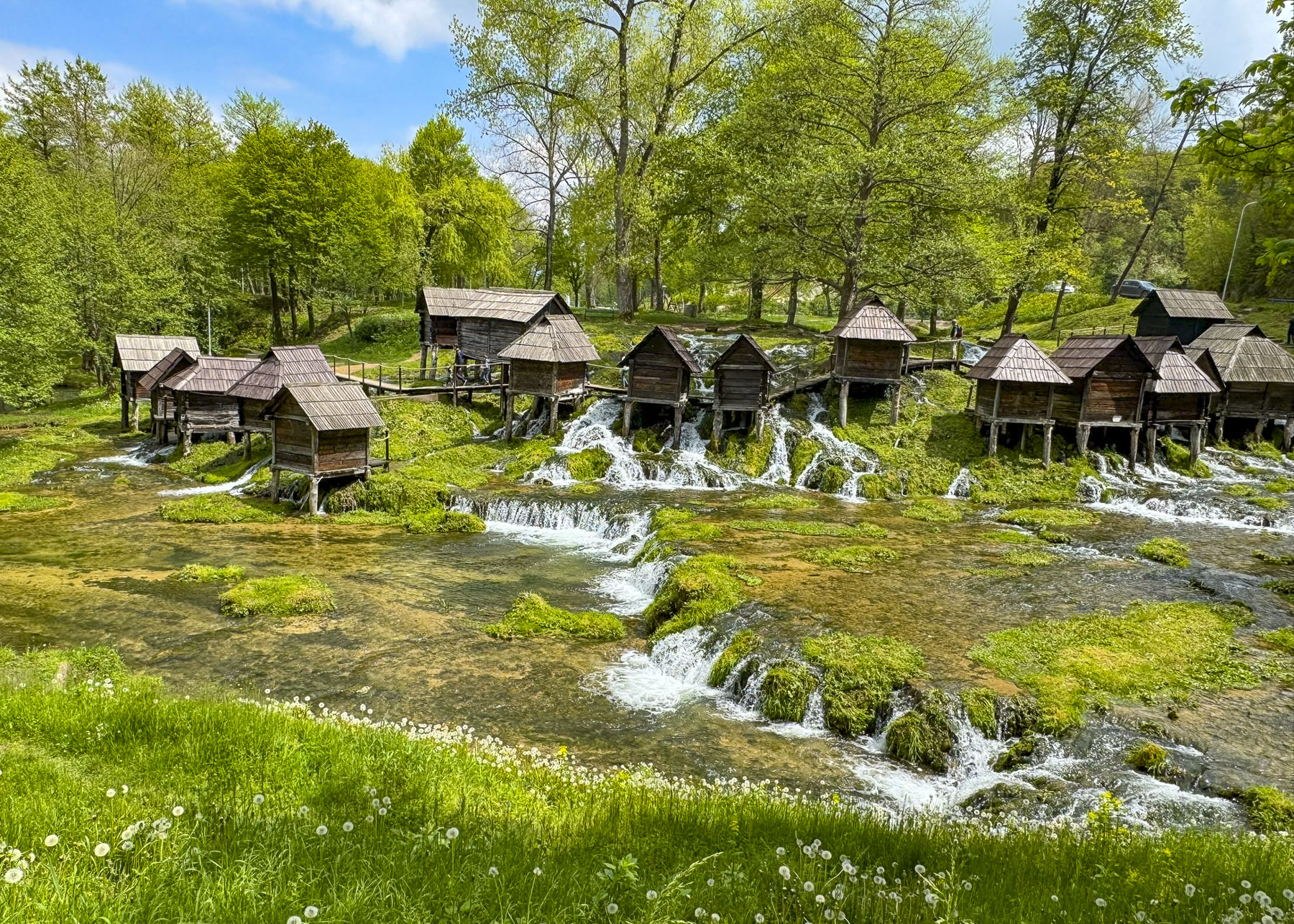
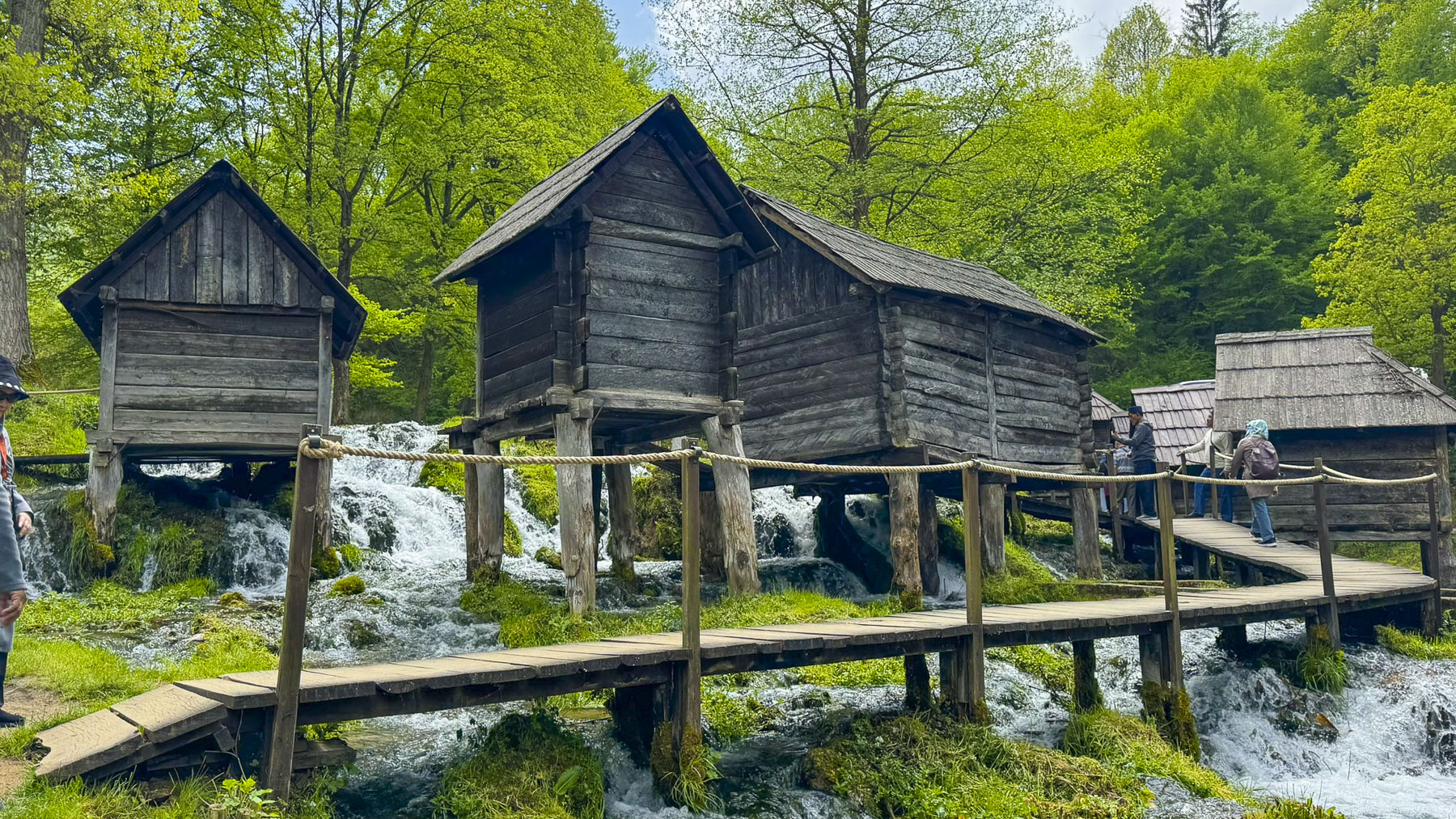
Luckily our timing was perfect as a large tour bus was just pulling away from Mlinčići, a collection of historic windowless wooden watermills, on the rapids below lake Plivsko Jezero. They date from the 16th century Ottoman Empire during which they were communally owned by extended family clans for their personal use, though they were occasionally rented out to other farmers for the payment of a ‘grain tax.’  With industrialization they fell into disuse and were abandoned, almost lost to history, until they were declared a national monument, and restored in 2009.

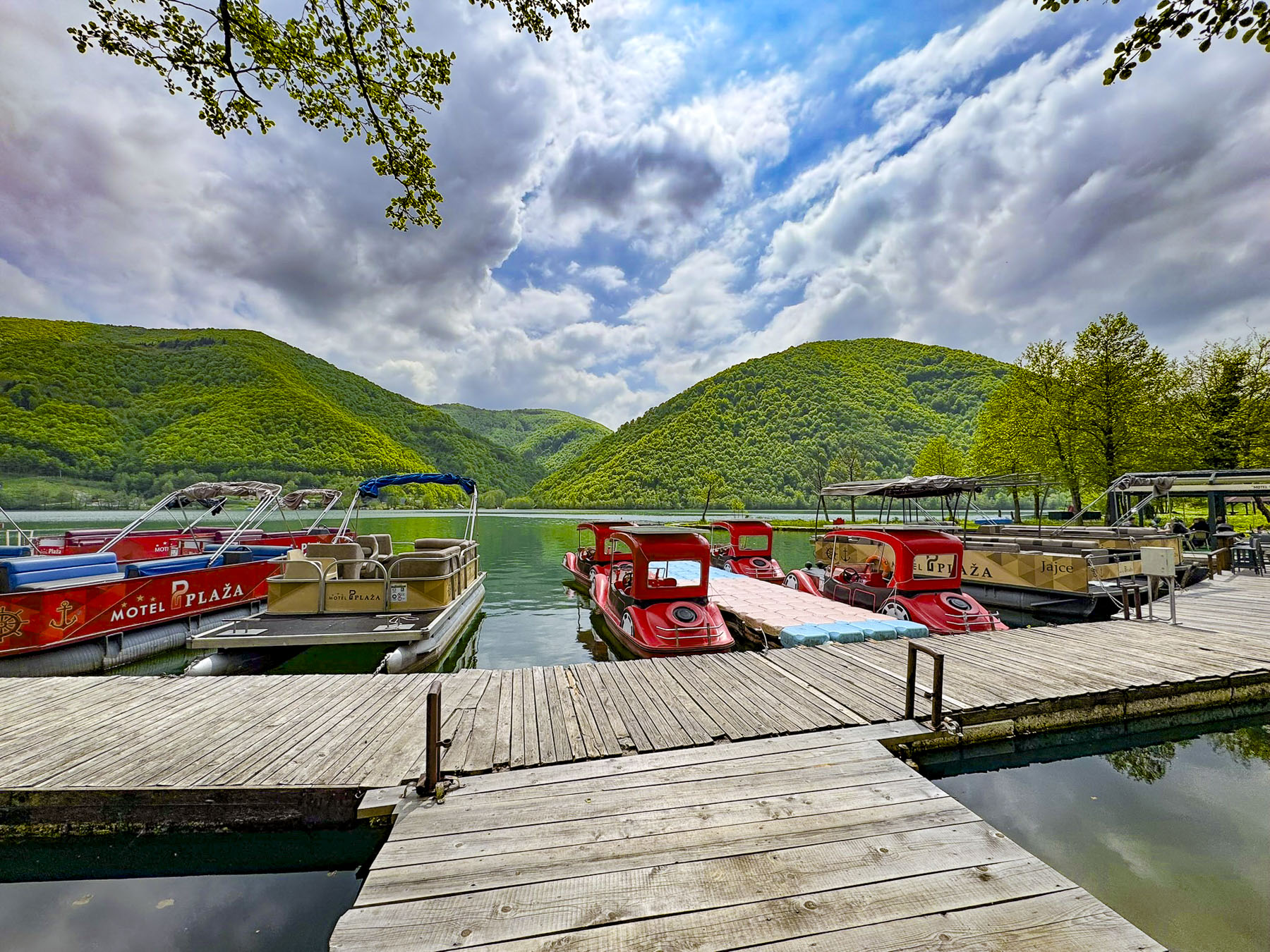
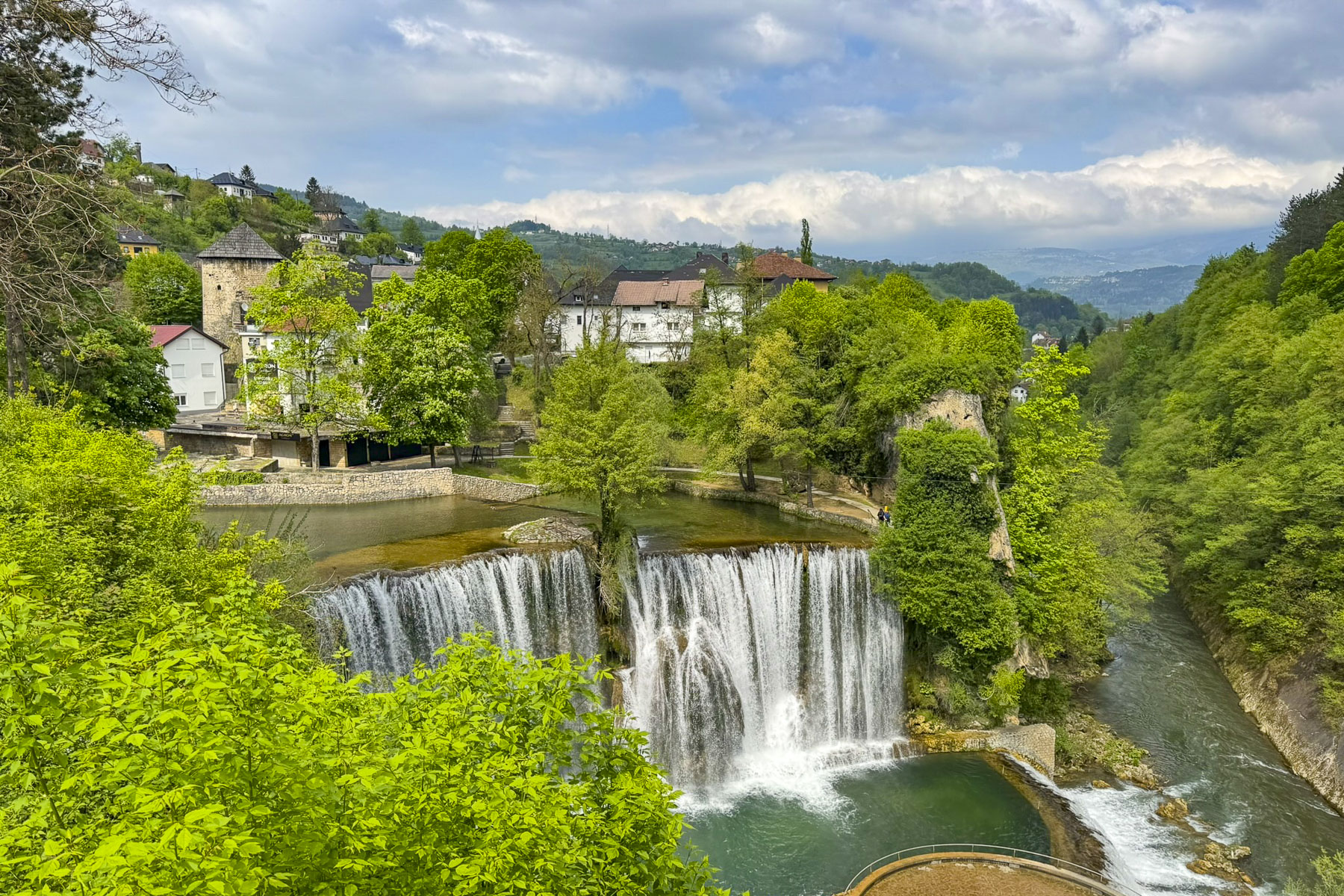
Earlier, as we drove to the Mlinčići we passed the lakefront restaurant Plaža, which looked like a perfect place for lunch. It was surprisingly busy for a Monday, but for many folks it was a vacation week between the Catholic and Orthodox celebrations of Easter. It was a pleasantly sunny day and warm enough to dine outside on the restaurant’s patio. Afterwards we strolled along the lake’s promenade where rental boats remained firmly tied to the dock, awaiting the tourist high season to begin later in the spring. Onward we stopped at Most Jubavi, the town of Jajce’s bridge of love, built across the top of a wide waterfall. It’s a beautiful setting with the boardwalk curving through a lush landscape of trees and rushing water.

The water from Plivsko Jezero flows downstream to Jajce, where it cascades thunderously 22m (72ft) from the 50m (164ft) wide Plivski Waterfall, at the confluence of the Pliva and Vrbas rivers. On the hill above the falls was the town’s citadel. It was constructed in the 14th century when Jajce was the capital of the Bosnian Kingdom. The fortress fell to the Ottomans in 1463, but was retaken by Hungarian King Matthias Corvinus in the following year. Jajce famously resisted for another 63 years before becoming the last town in Bosnia to fall to the Ottoman Empire 1527. 

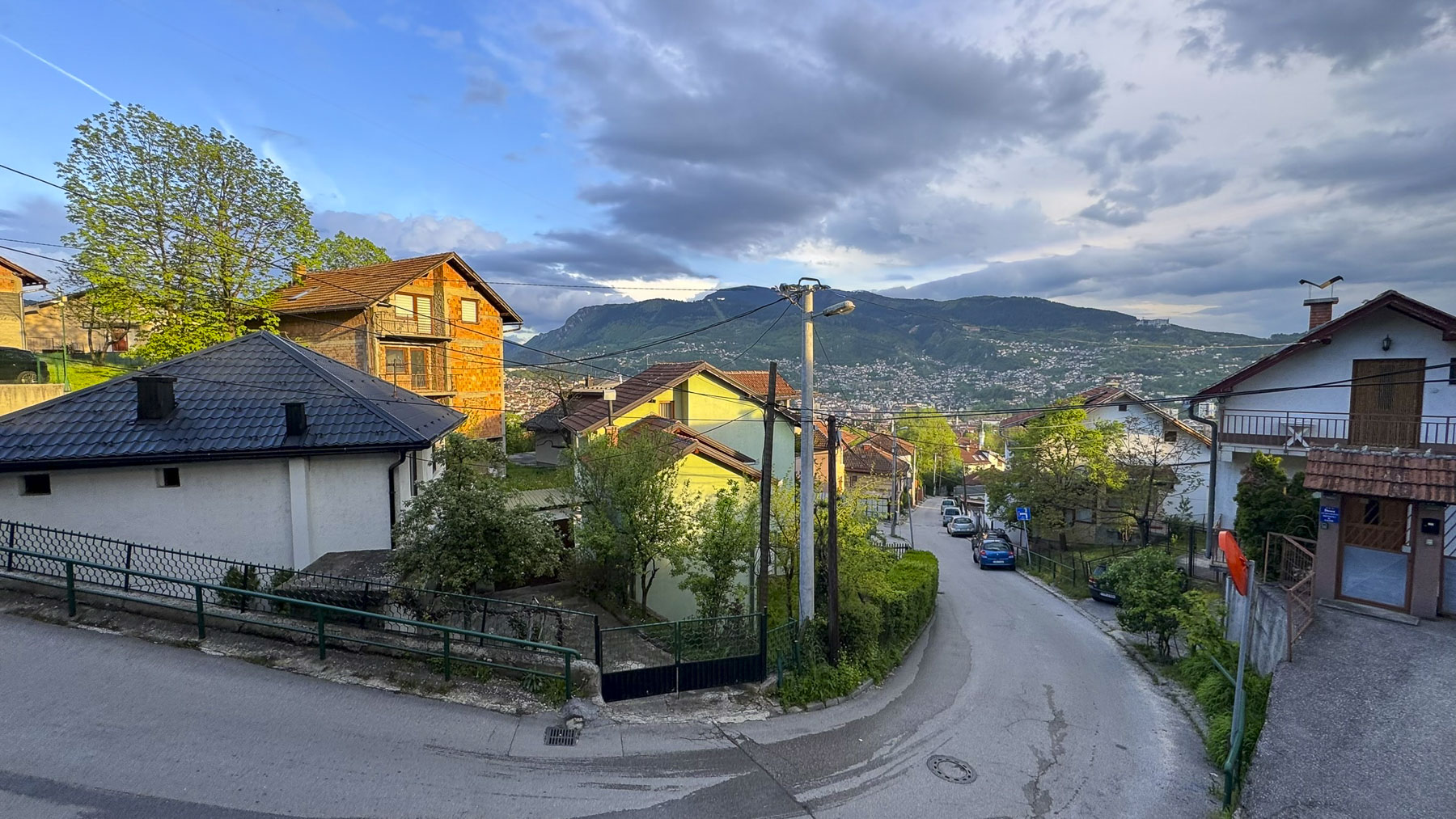
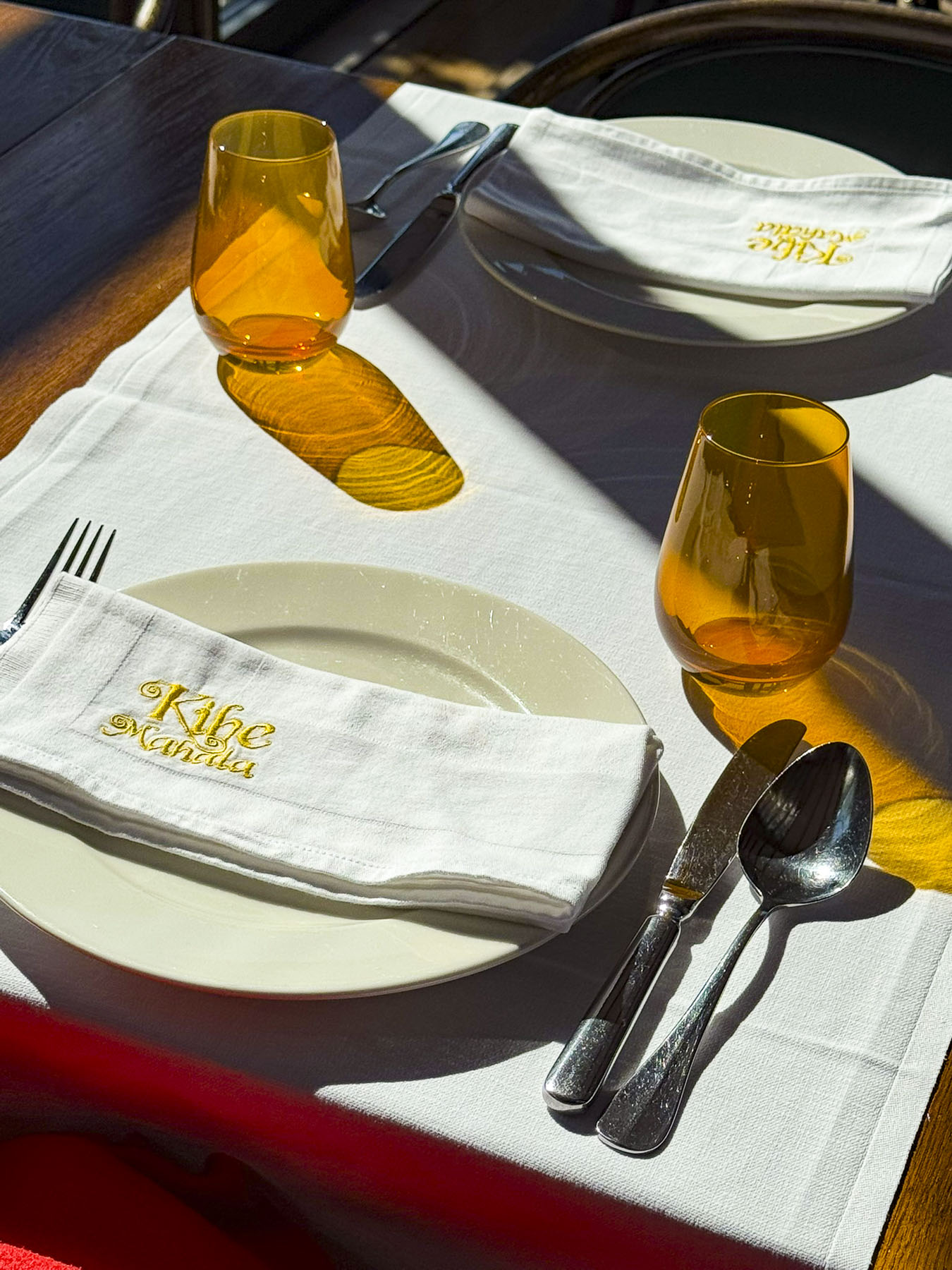
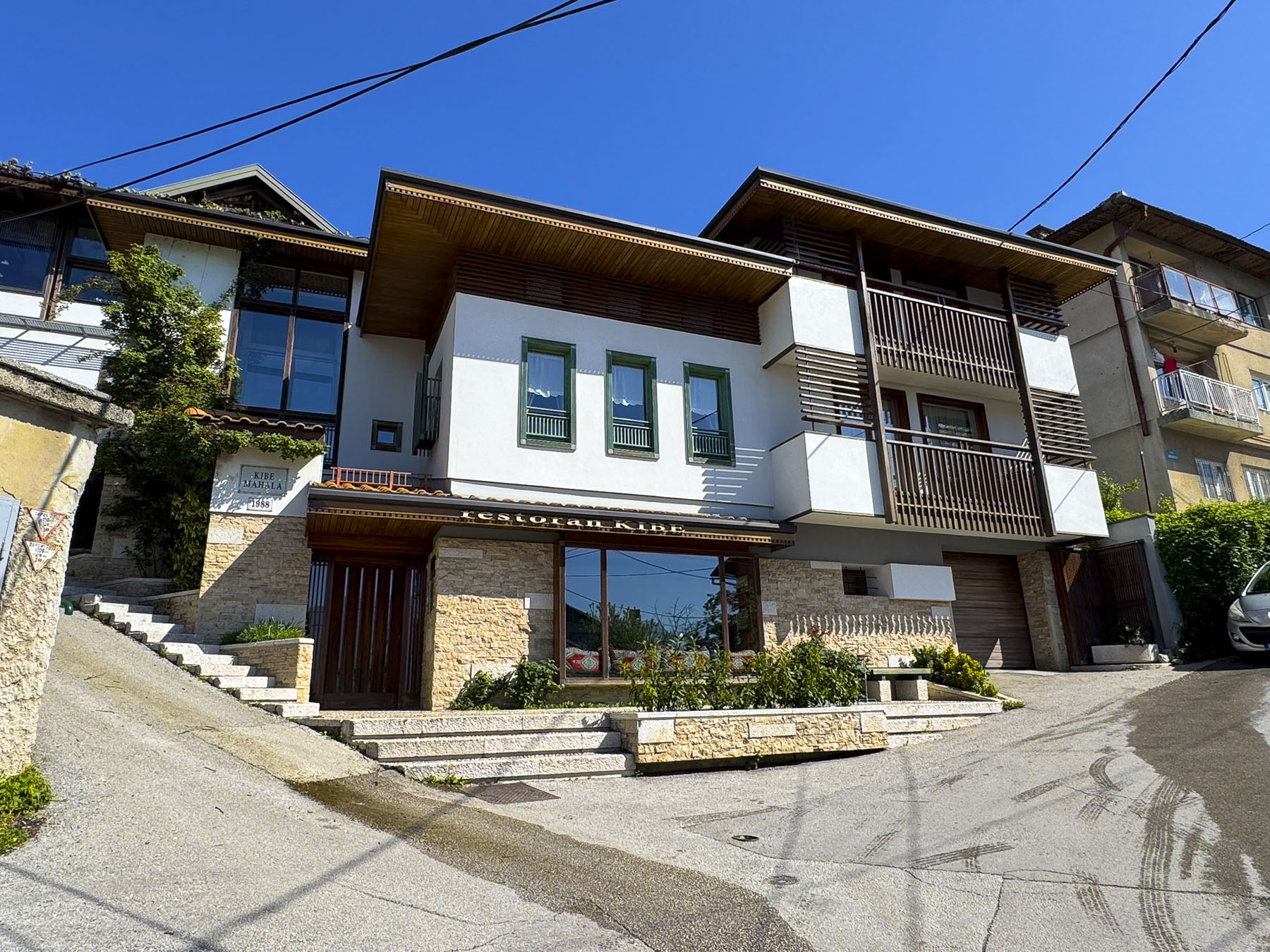
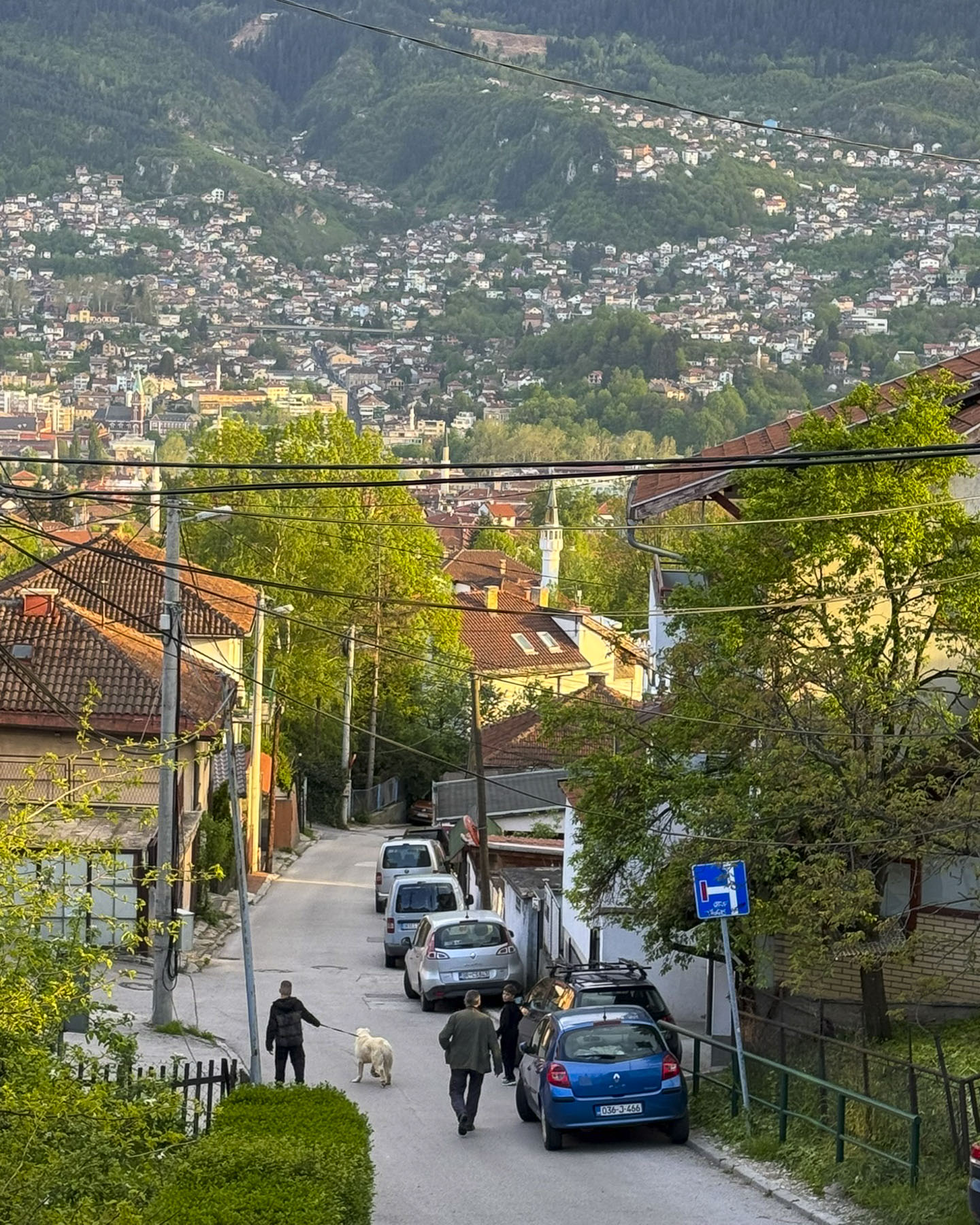
Golden light warmed the late afternoon view of Sarajevo from our room at Kibe Mahala as shadows lengthened with the setting sun. It is primarily known for its well-regarded restaurant that features a selection of Bosnian dishes and lamb roasted on a spit, but it is also a smartly designed three-room boutique hotel with a modern aesthetic appeal that reflects Sarajevo’s culture. Free parking was a tremendous bonus, but because the hillside roads above the city were so narrow we relied on the expertise of taxi drivers to slalom us downhill to Baščaršijski trg, the historic heart of old Sarajevo.

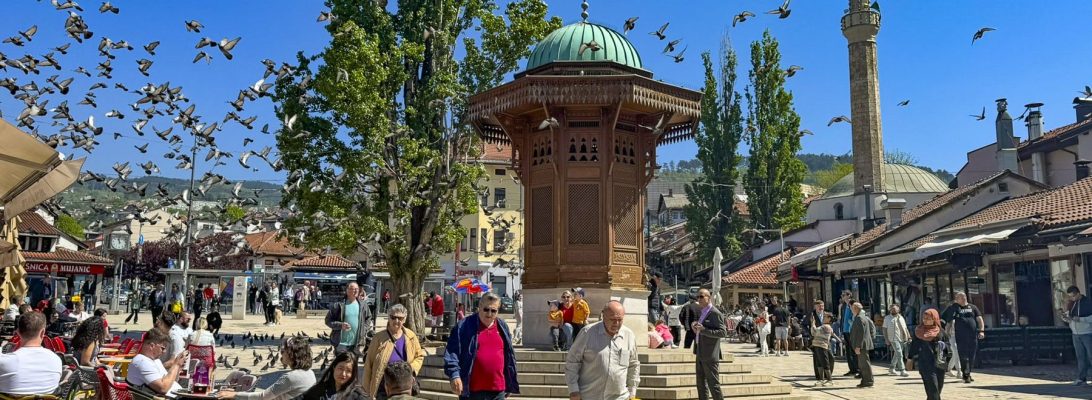
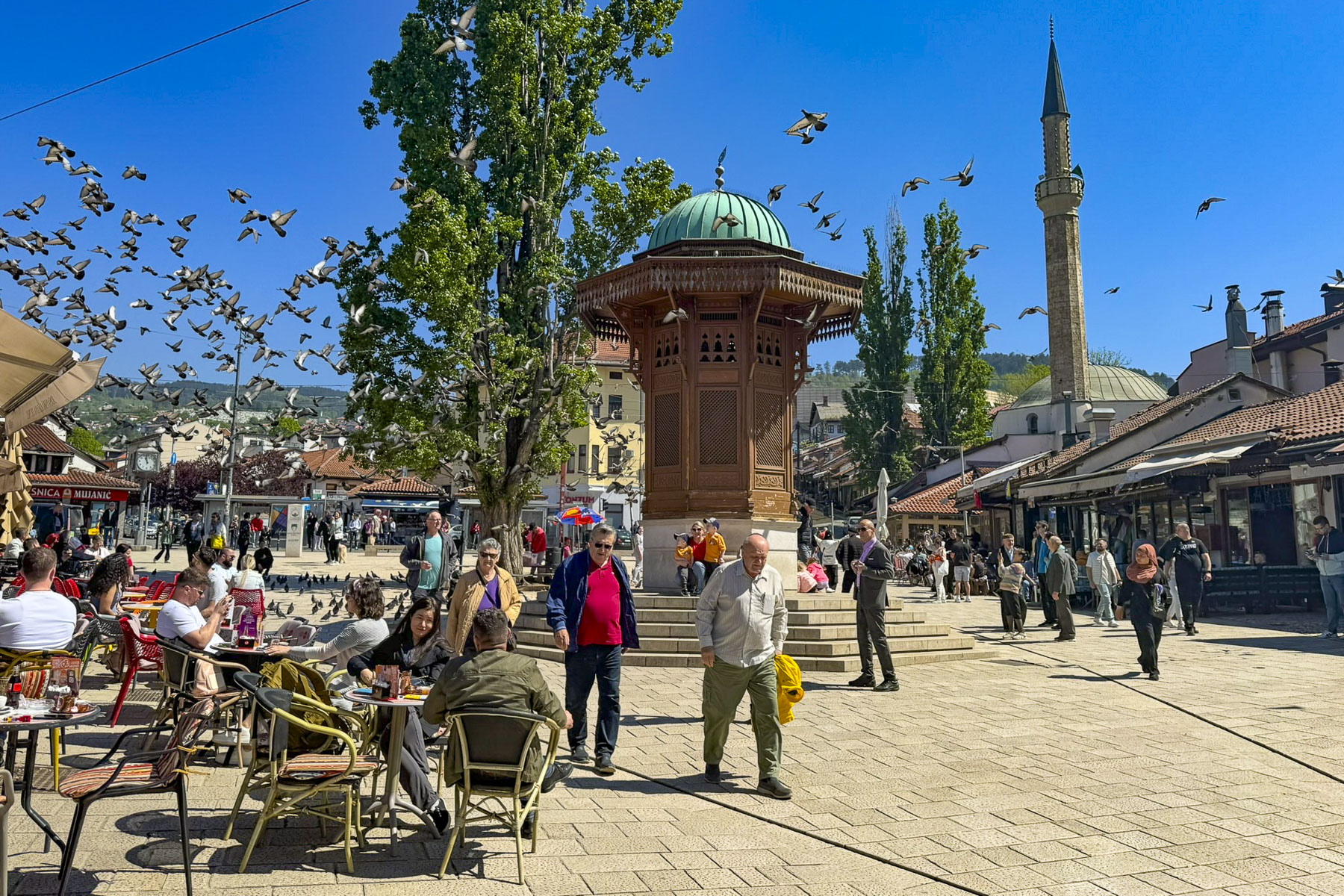
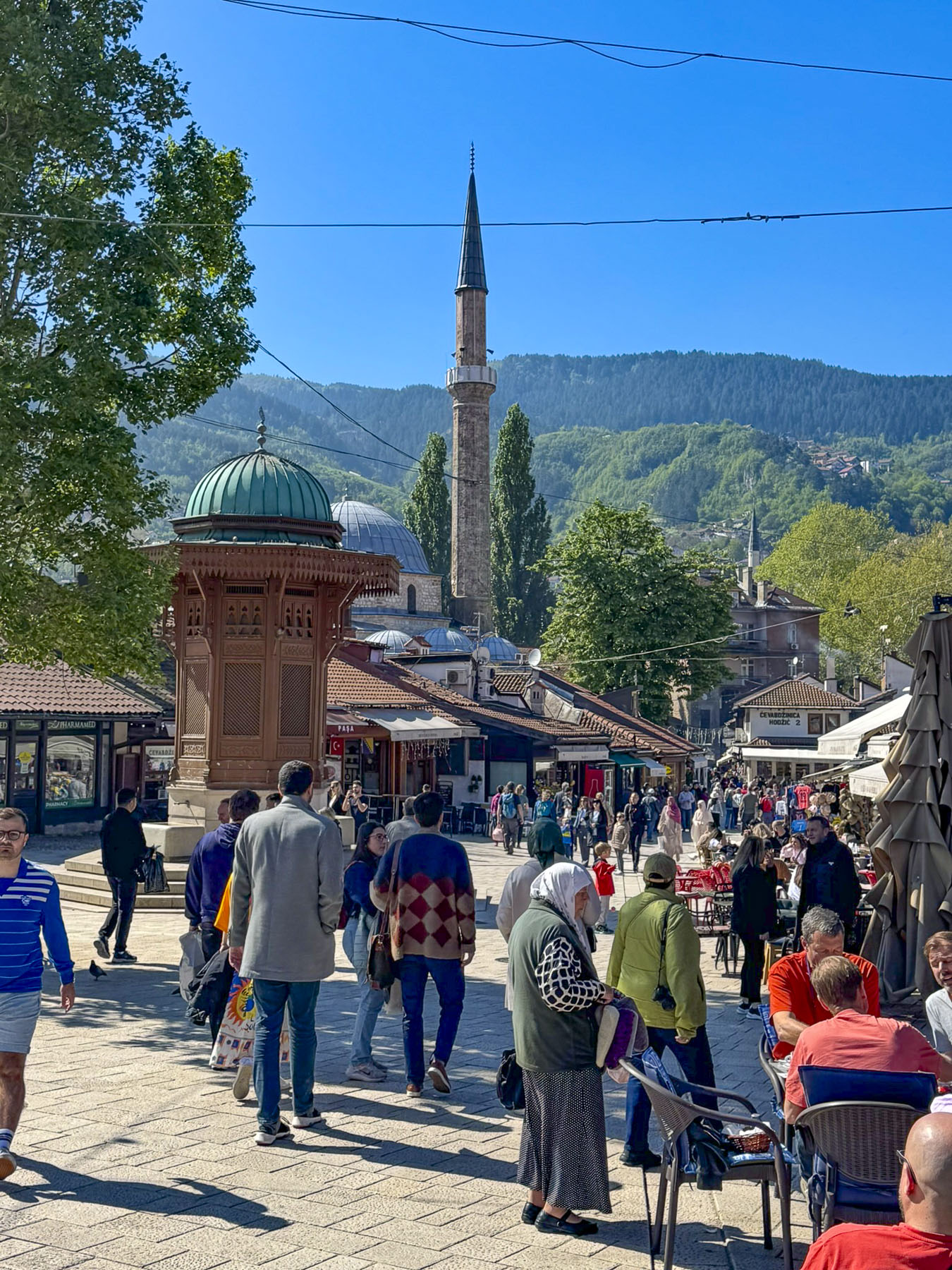
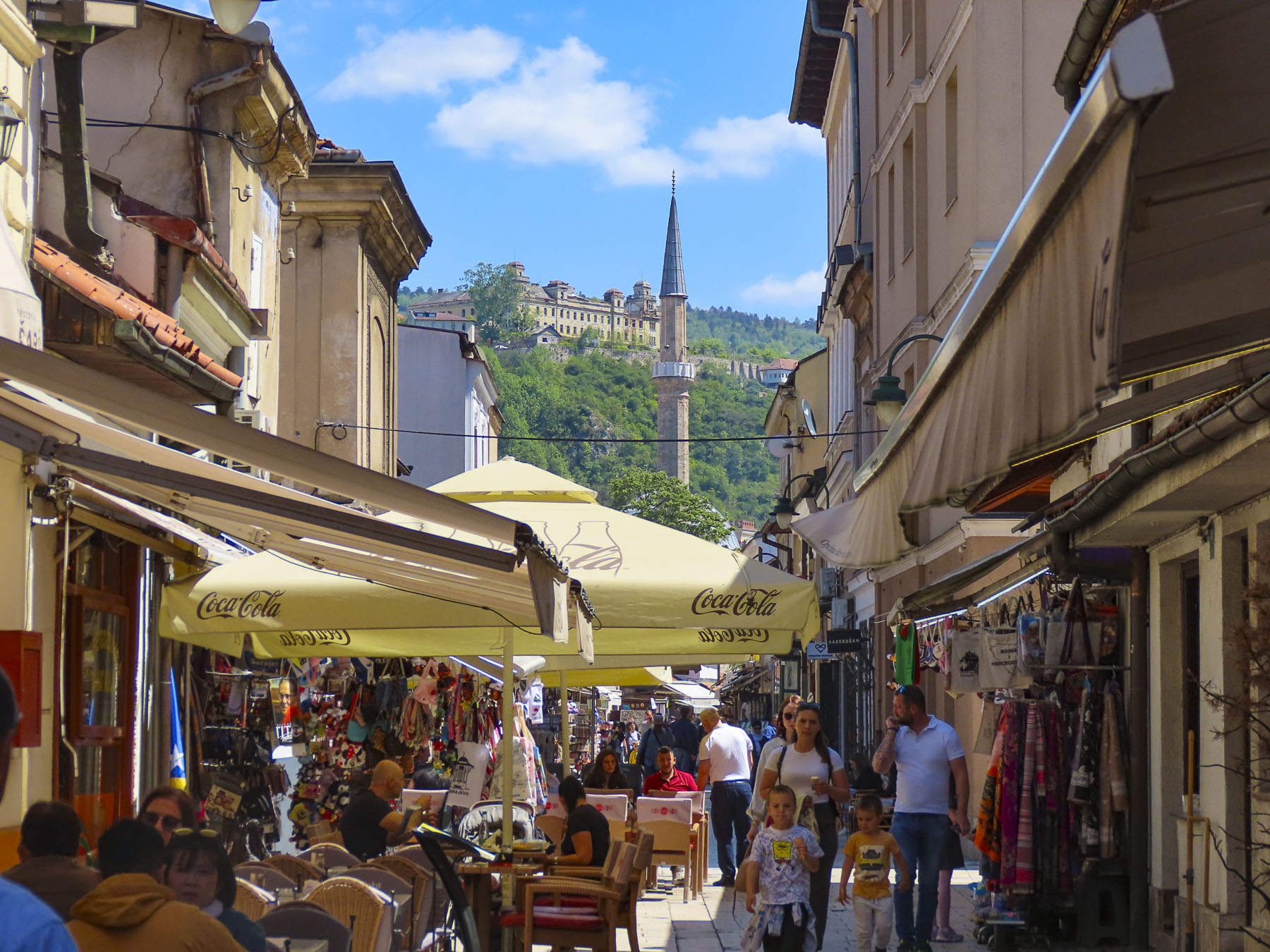
Baščaršijski trg is a long narrow V shaped plaza, once the old daily market. At its center was a Sebilj fountain, a wooden kiosk covered well, where during the country’s Ottoman era was manned by Sebiljdžija, workers who received wages from the Voivode, mayor, to dispense free water to thirsty passersby.

Today Baščaršijski trg is lined with cafés and tourist shops, but still retains an exotic aura of east meets west, the merging of cultures, like Istanbul. The square was quite busy when we arrived, and we sat outside at a café, only to learn they served nothing but coffee or tea. The owner pointed to the bakery across the street and told us it would be okay to bring our purchase back and enjoy it at their table. We both crossed to the Bakehouse Edin, as the responsibility of choosing tasty delights for the first time in a new country is too much to bear for one individual. Really, we both can’t resist bakeries, and take every opportunity we get to investigate one. Hence, “our walk a little then café” philosophy. The café owner was delighted to see us when we returned.

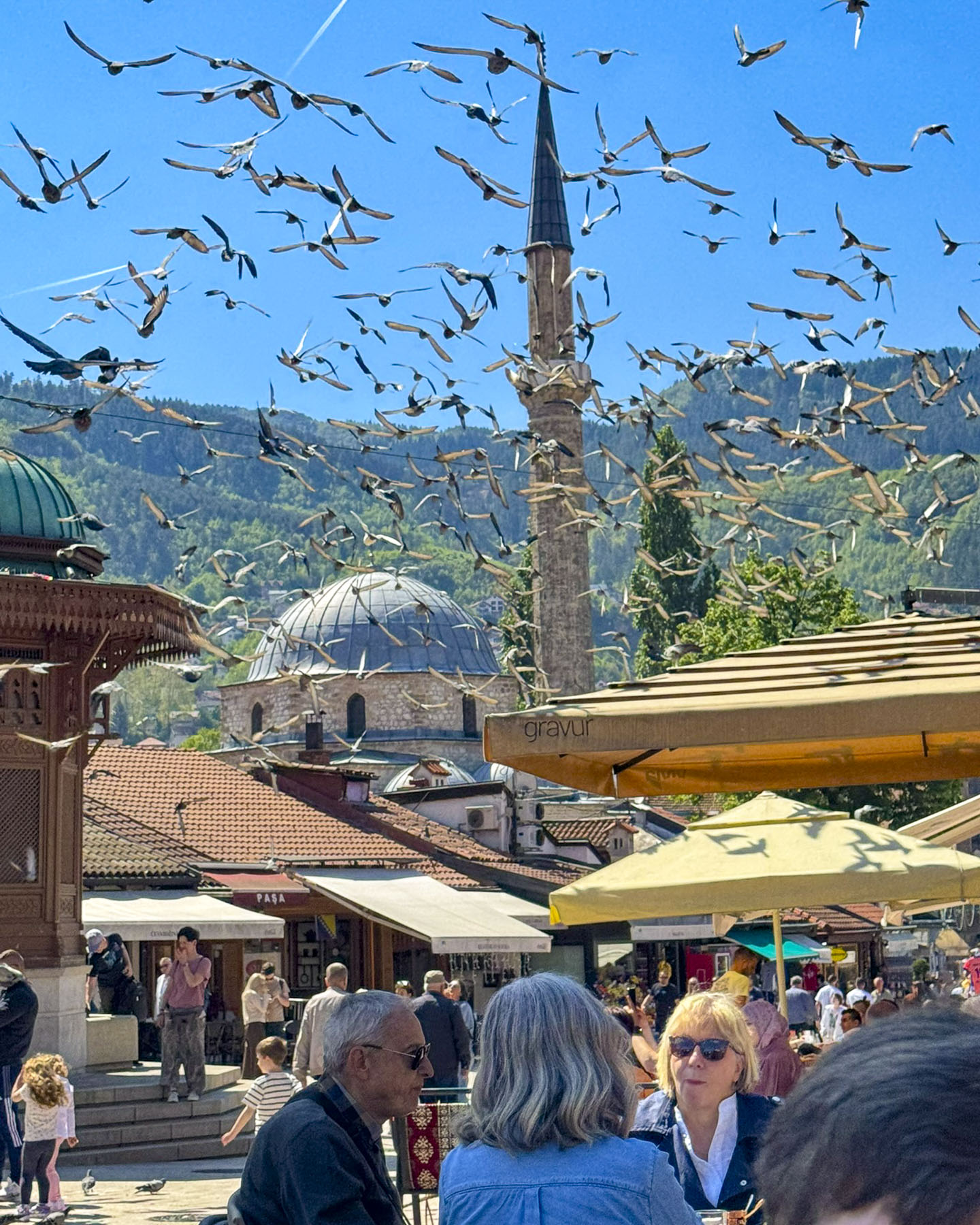
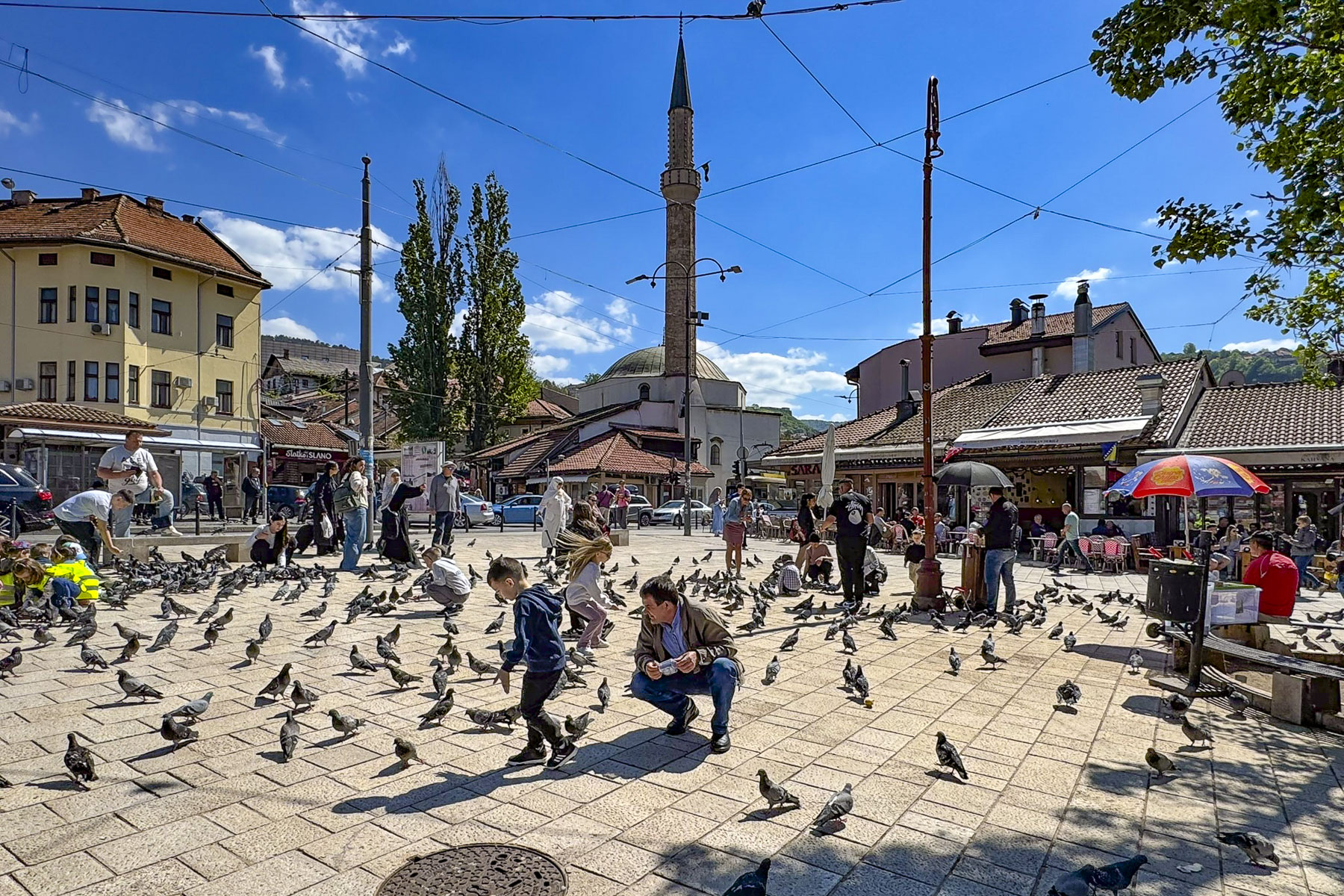
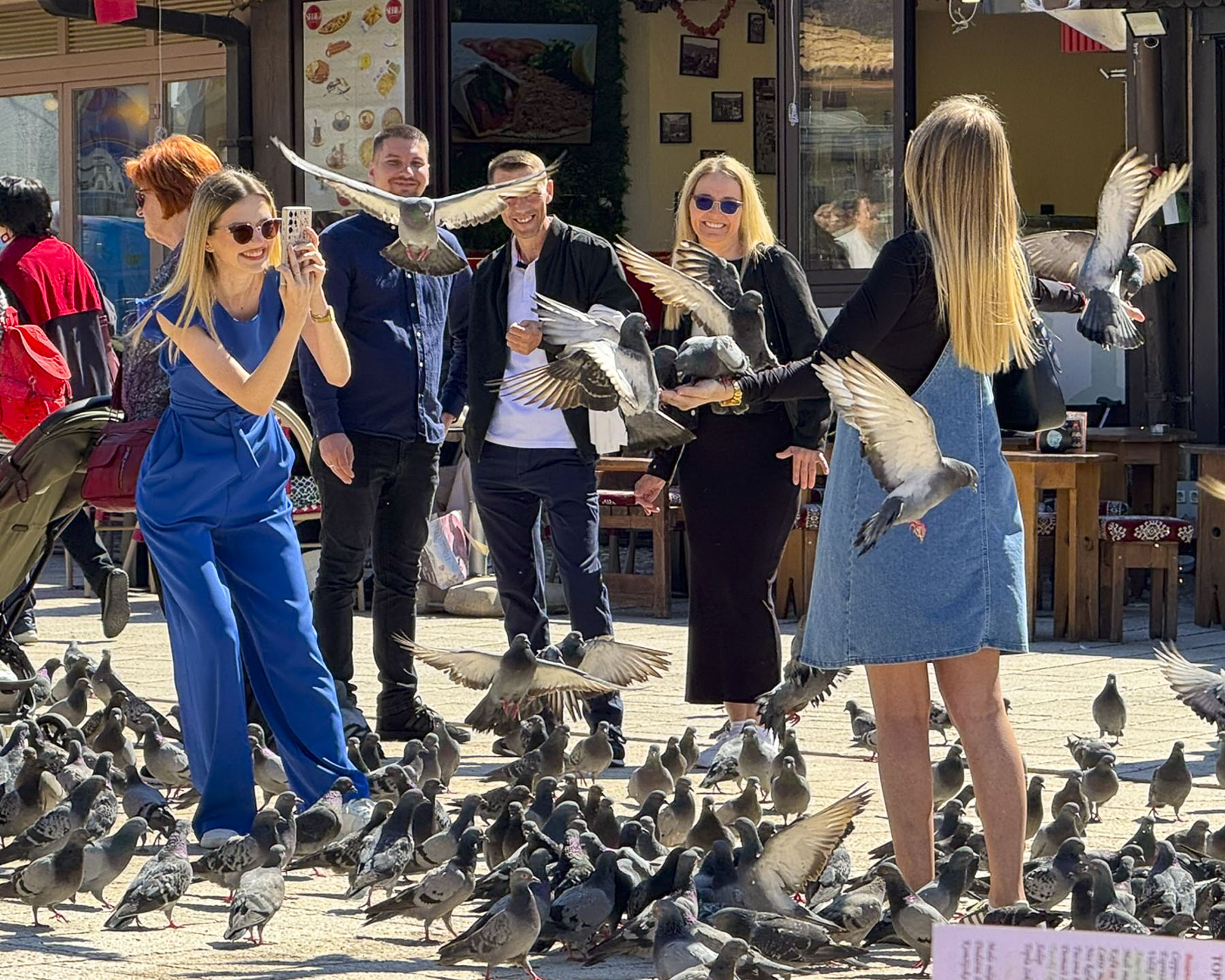
It was a leisurely morning, and we enjoyed watching life go by on the square. Across the way families fed a large flock of pigeons and posed enthusiastically with the birds fluttering to perch on their arms and heads. Occasionally, something would spook the flock, and they would rise in unison to circle above the minaret of Baščaršijska Mosque, prompting some folks to cover their heads in anticipation of a bird bombing, though we didn’t hear any screeching to indicate disaster had struck.

Romans, Goths and finally the Slavs with the establishment of the Kingdom of Bosnia in the 7th century have influenced the region, but it wasn’t until 1415 that Sarajevo is first mentioned in historical records as Vrhbosna. It was only later in that century after the Turks conquered the region that the town’s name was changed to Sarajevo and it grew into an important trading center on the caravan route from Istanbul to the Adriatic coast. The town hosted numerous caravanserais, inns where merchants slept and stabled their horses, but only the Morića han (1551) survives and now shelters shop, restaurants and Caffe Divan.  Here we enjoyed the Ottoman-style ambiance and the tradition of ćejf, the art of lingering over coffee to savor life with friends, and the Rahat Lokum, Turkish Delight, which is always eaten before sipping Bosnian coffee. We also tried Ziam’s coffee, a large coffee with milk that is sprinkled with Nesquik, which is a popular order.

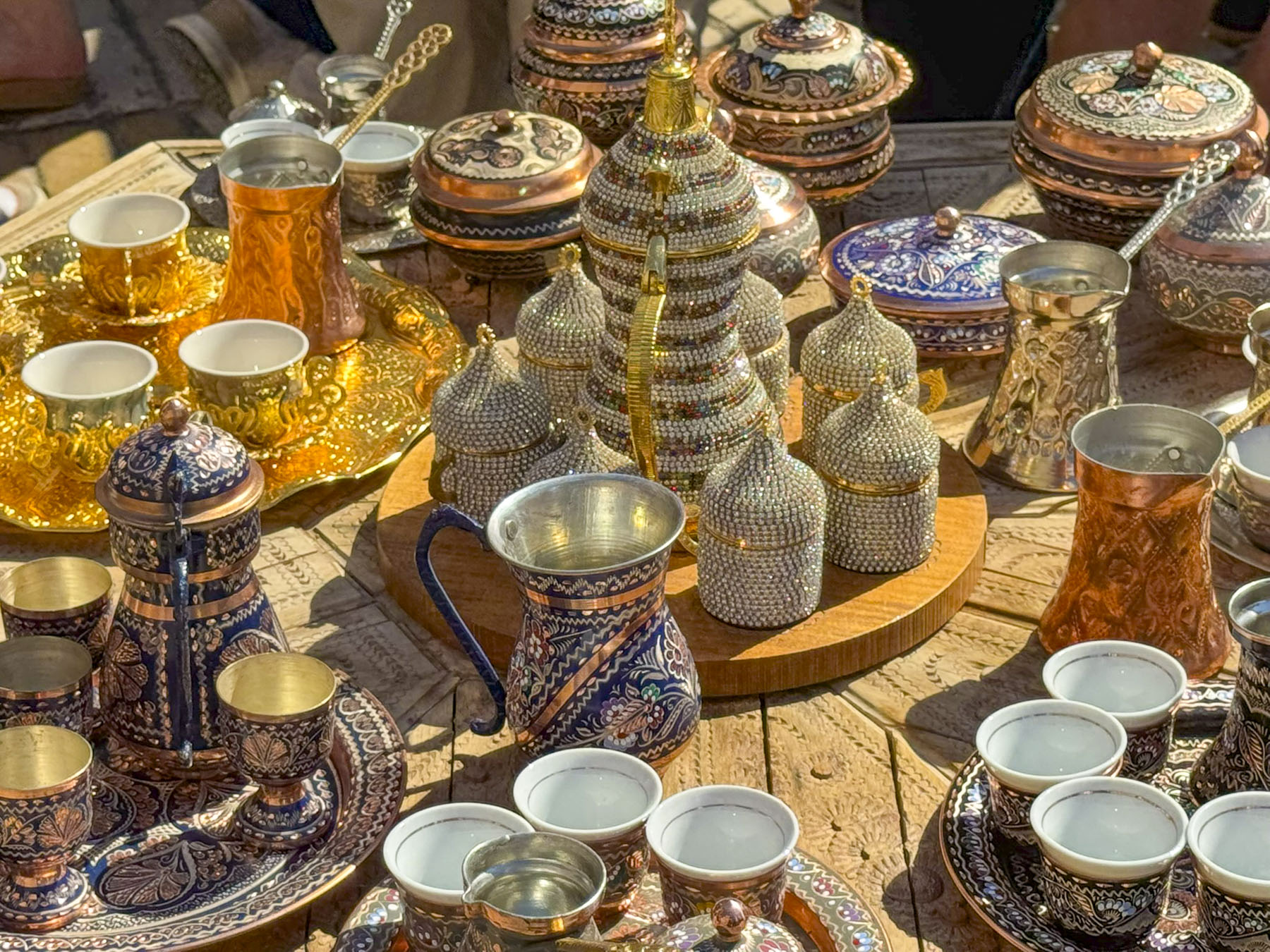
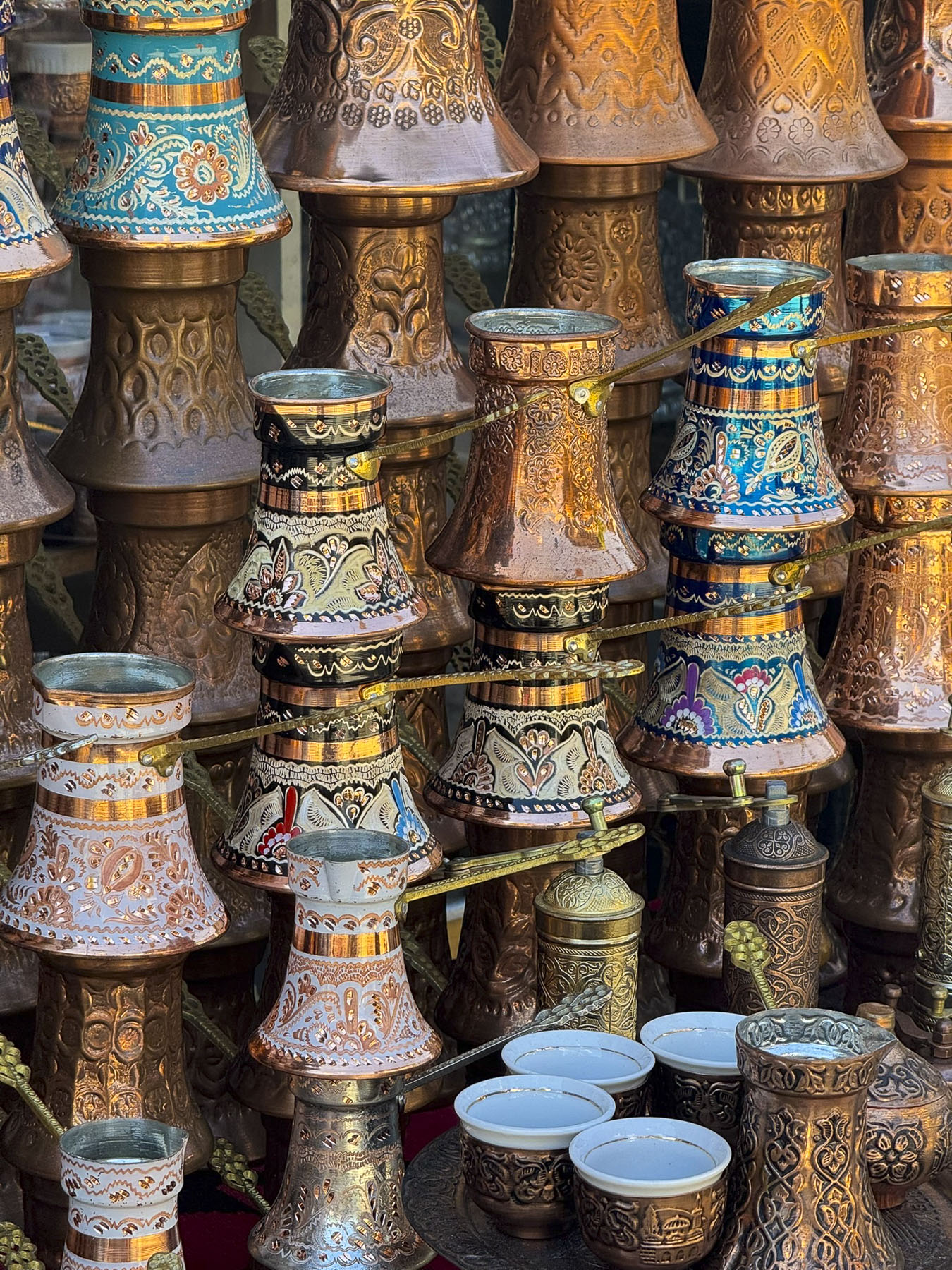
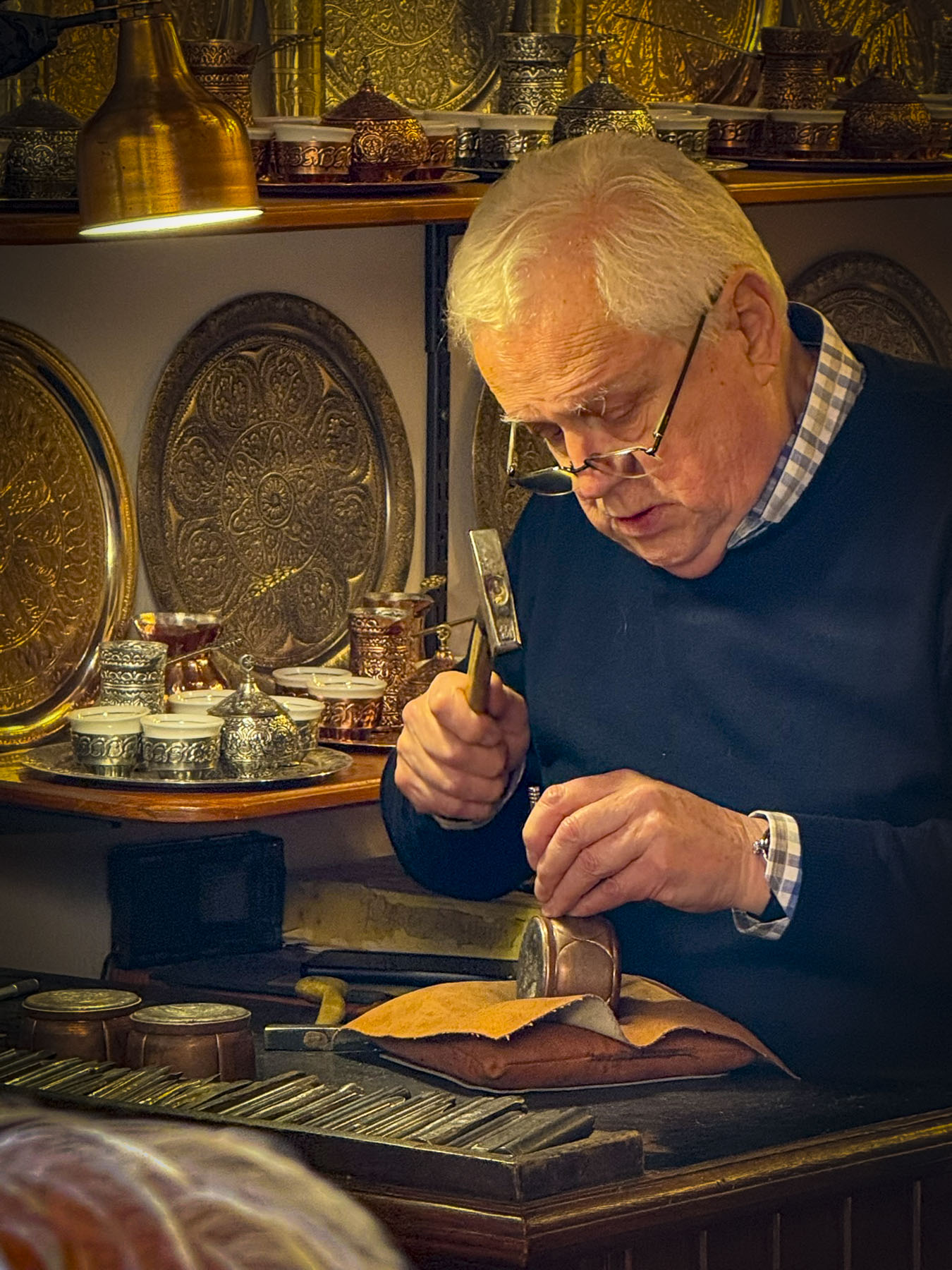
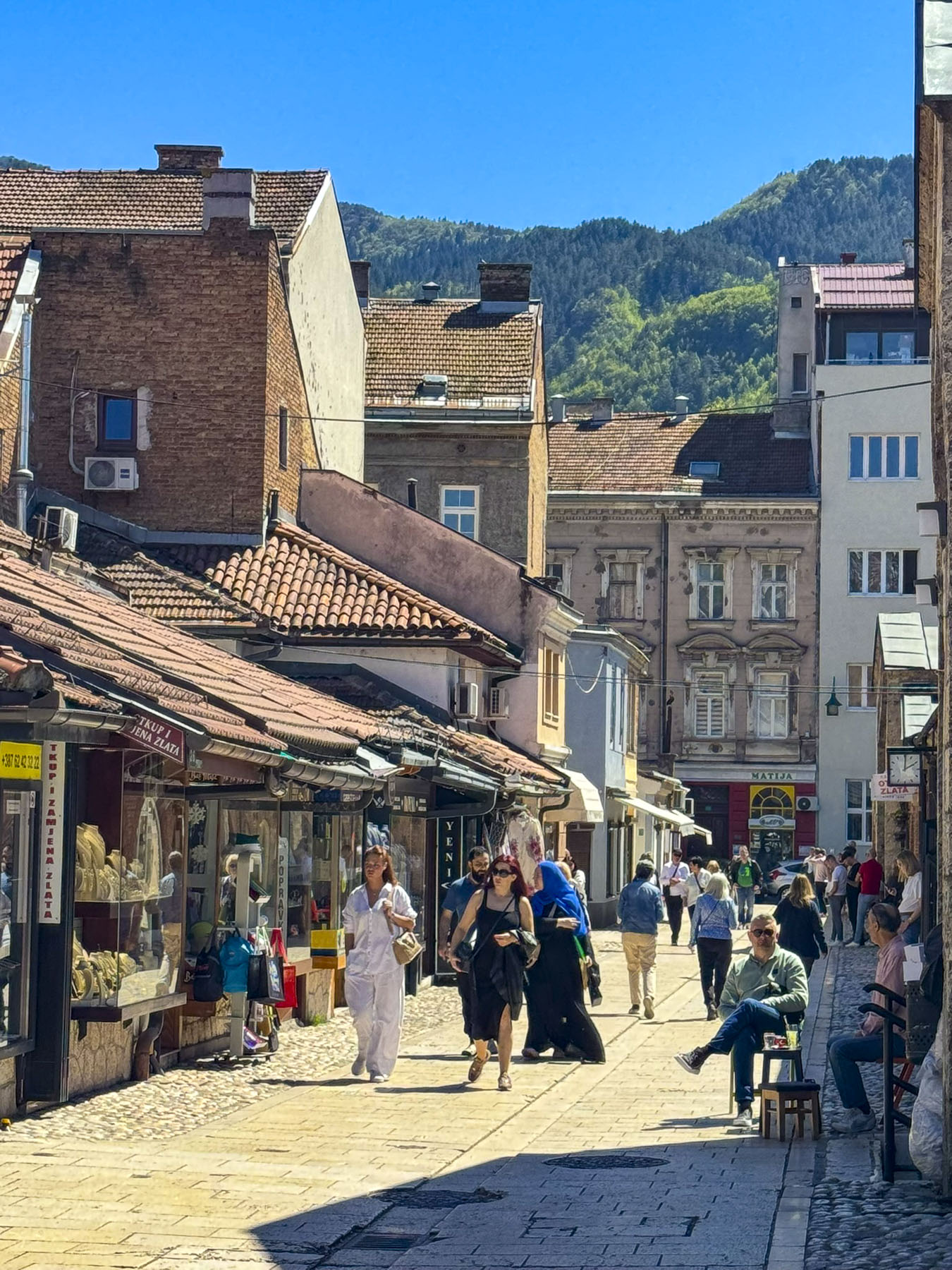
Many of the old lanes in the city are named for craftsmen who practiced their skills in workshops along the street. Just off Baščaršijski trg was Kazandžviluk, the old coppersmiths’ alley, where fine Bosnian džezva, traditional long handle coffee pots, cups and plates are still hammered with intricate designs.

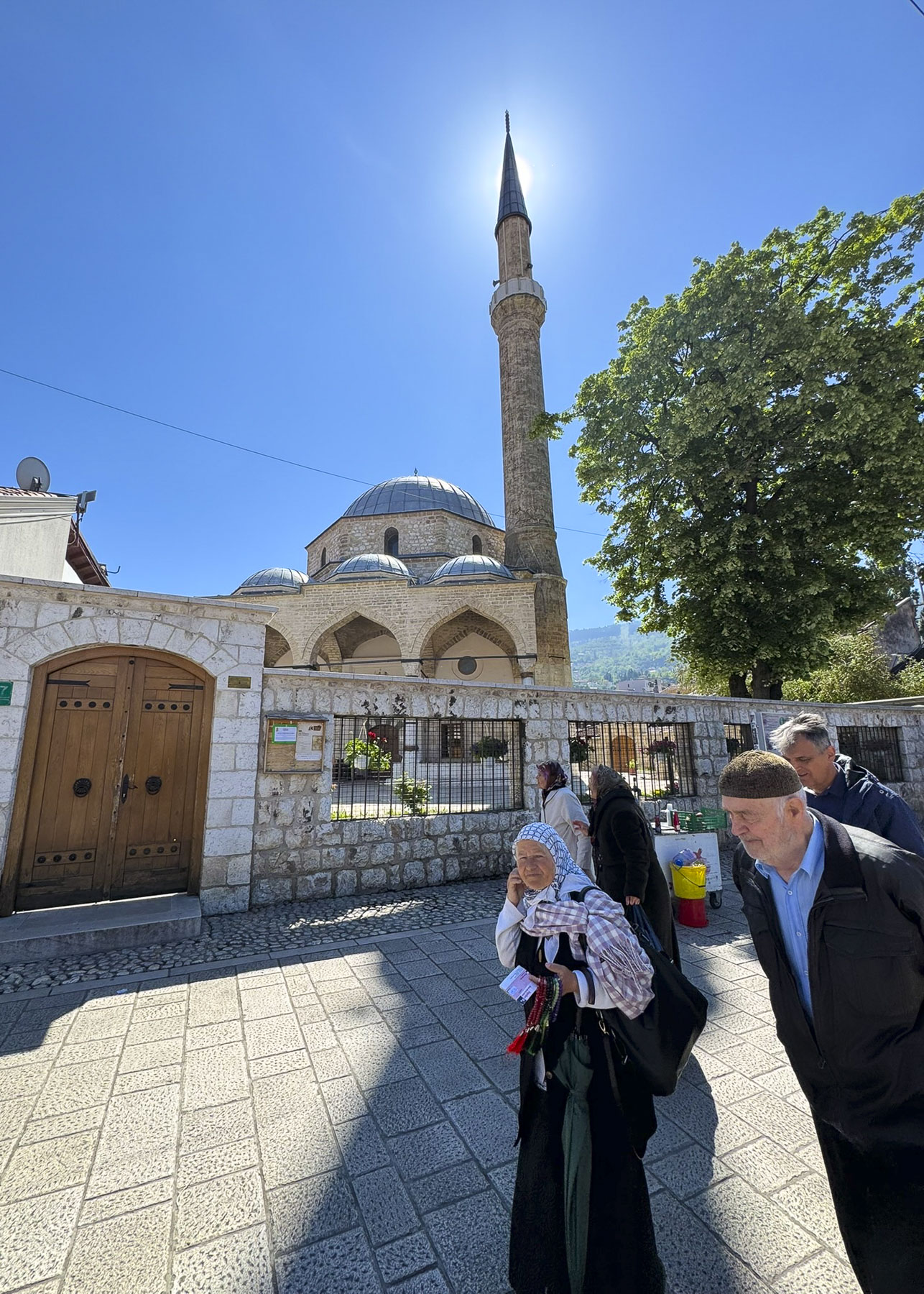
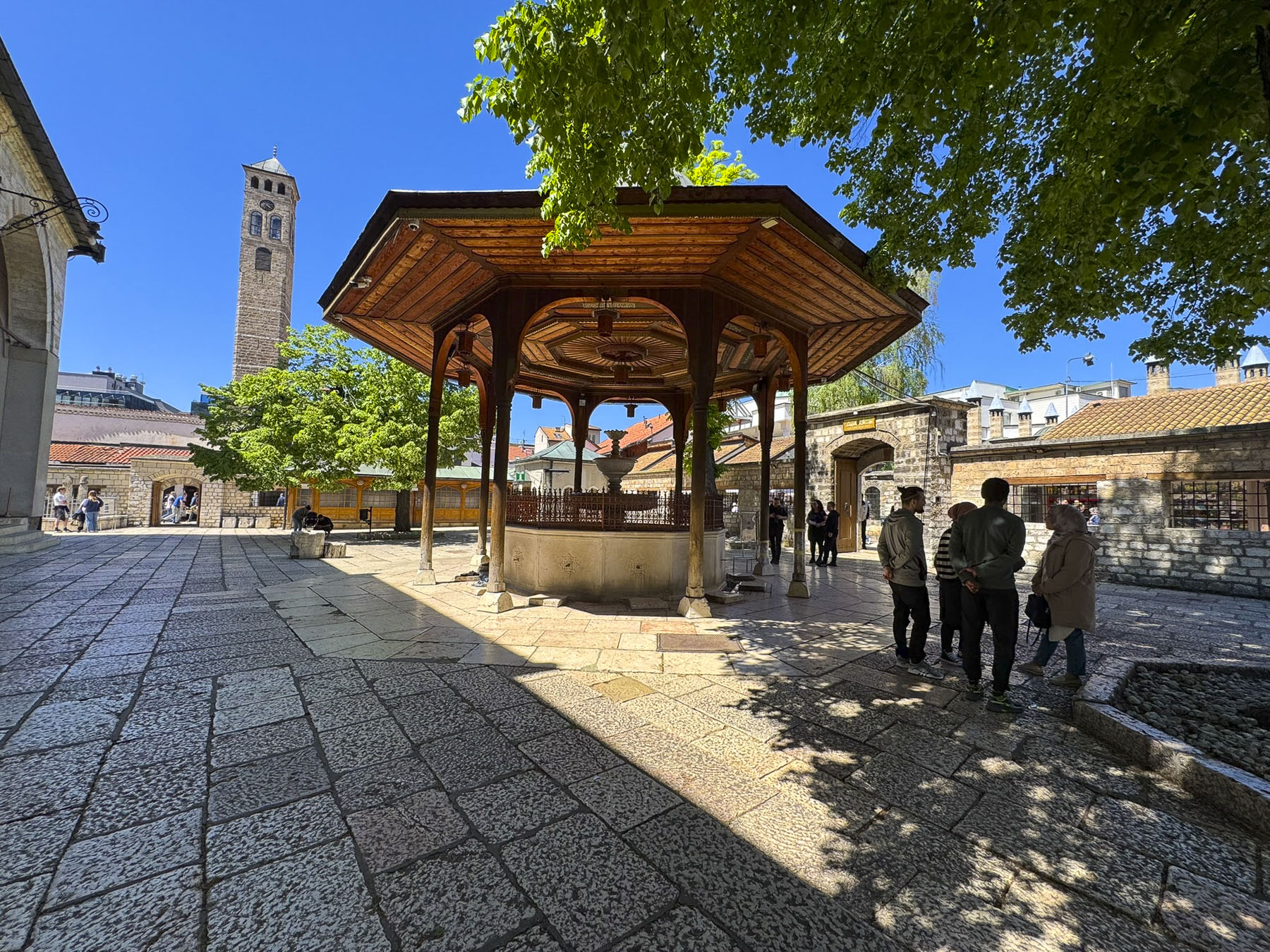
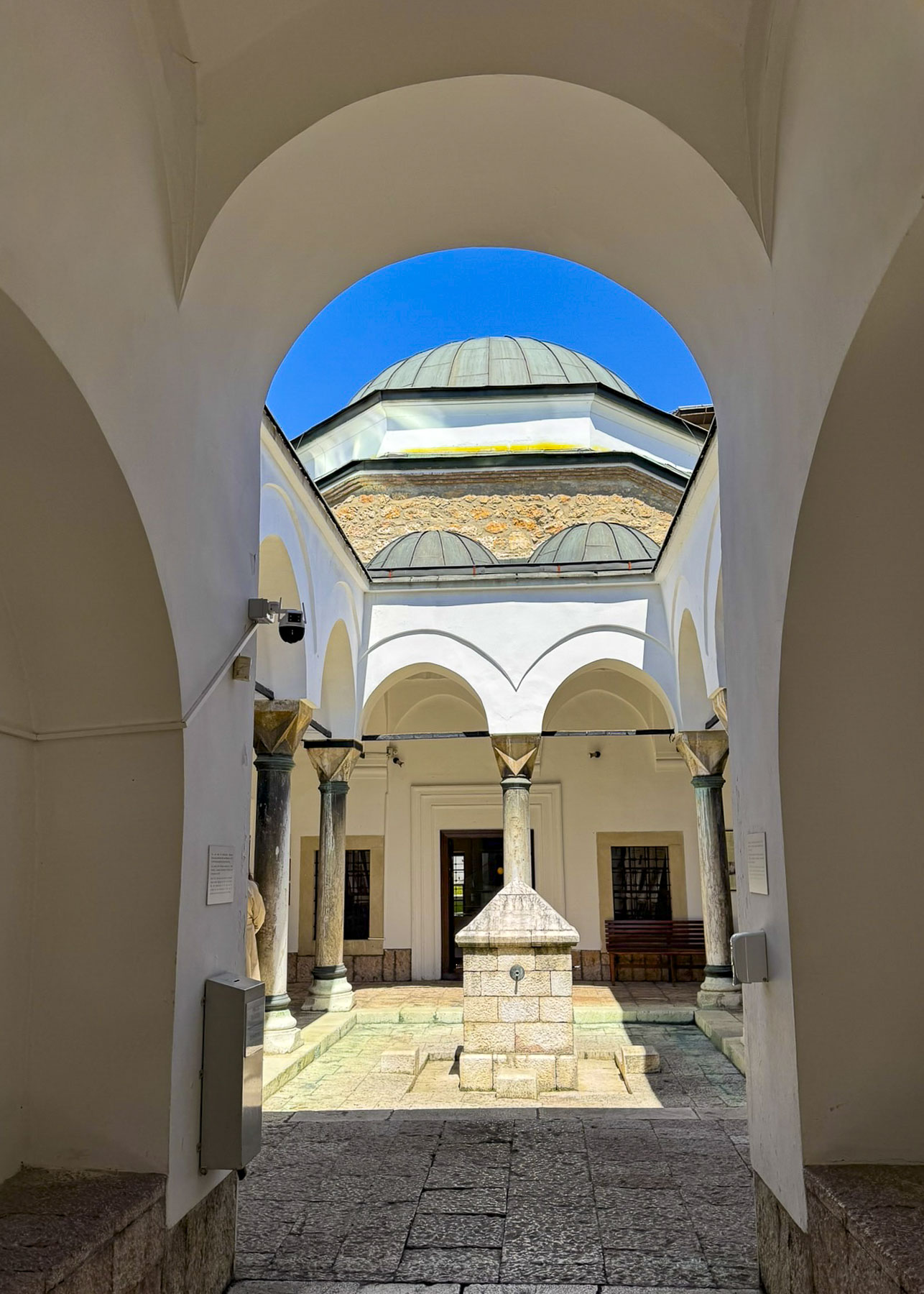
The pedestrian only historic old town is made for wandering, one intriguing lane opening to another. Sarači seemed to be Sarajevo’s main lane and we followed it along to the shady courtyard of Gazi Husrev-beg, a 16th century mosque. In the center of the courtyard was the Šadrvan, a marble washing fountain used by worshippers for ritual ablutions before prayer. It was covered with an elaborate wooden octagonal pergola. In the background beyond the mosque’s wall was Sarjevo’s 17th century clock tower. It features gilded clock faces, on all four sides, synchronized to lunar time, in which the hands indicate 12 o’clock at the moment of sunset, the time of the Muslim Maghrib prayer.

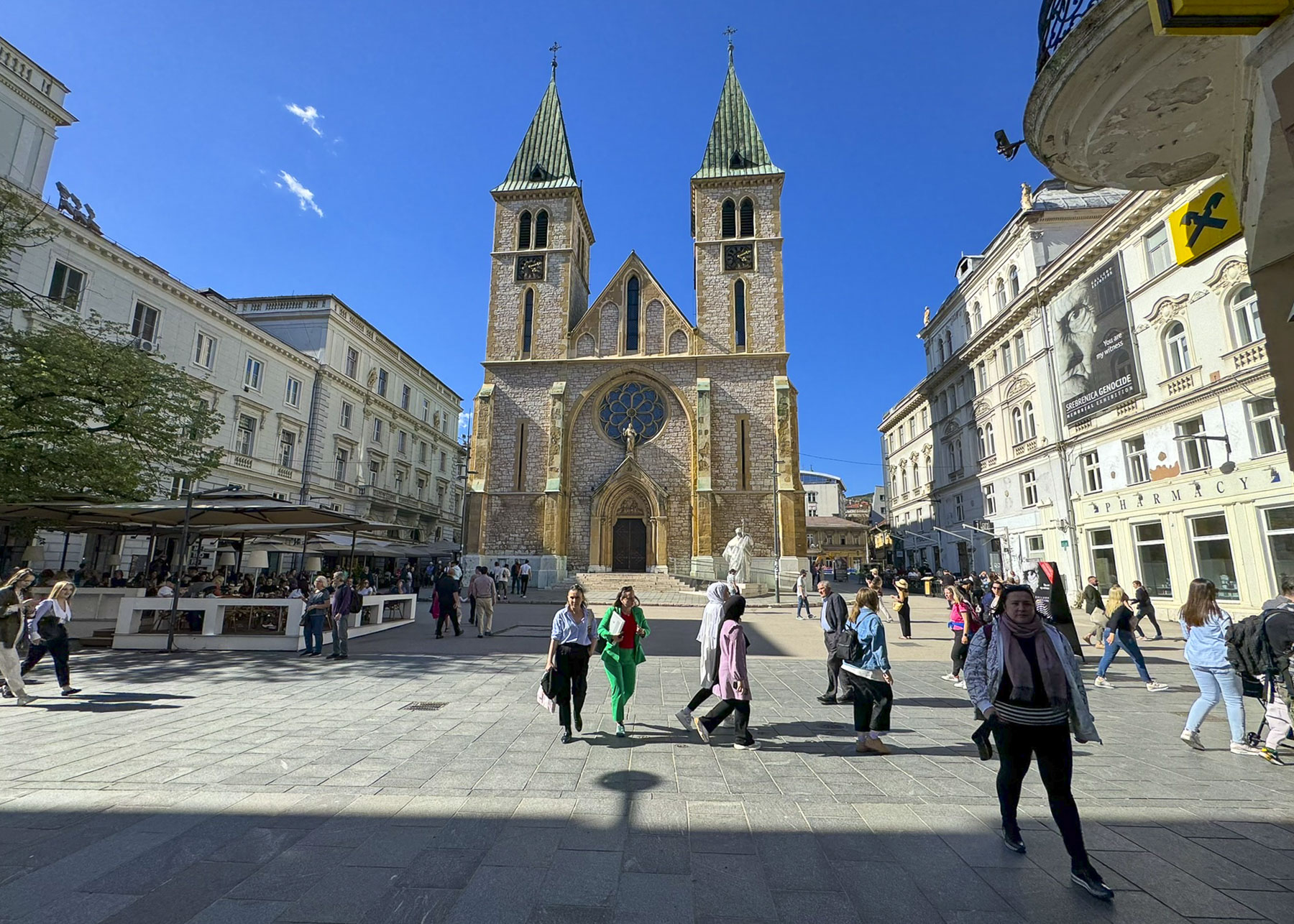
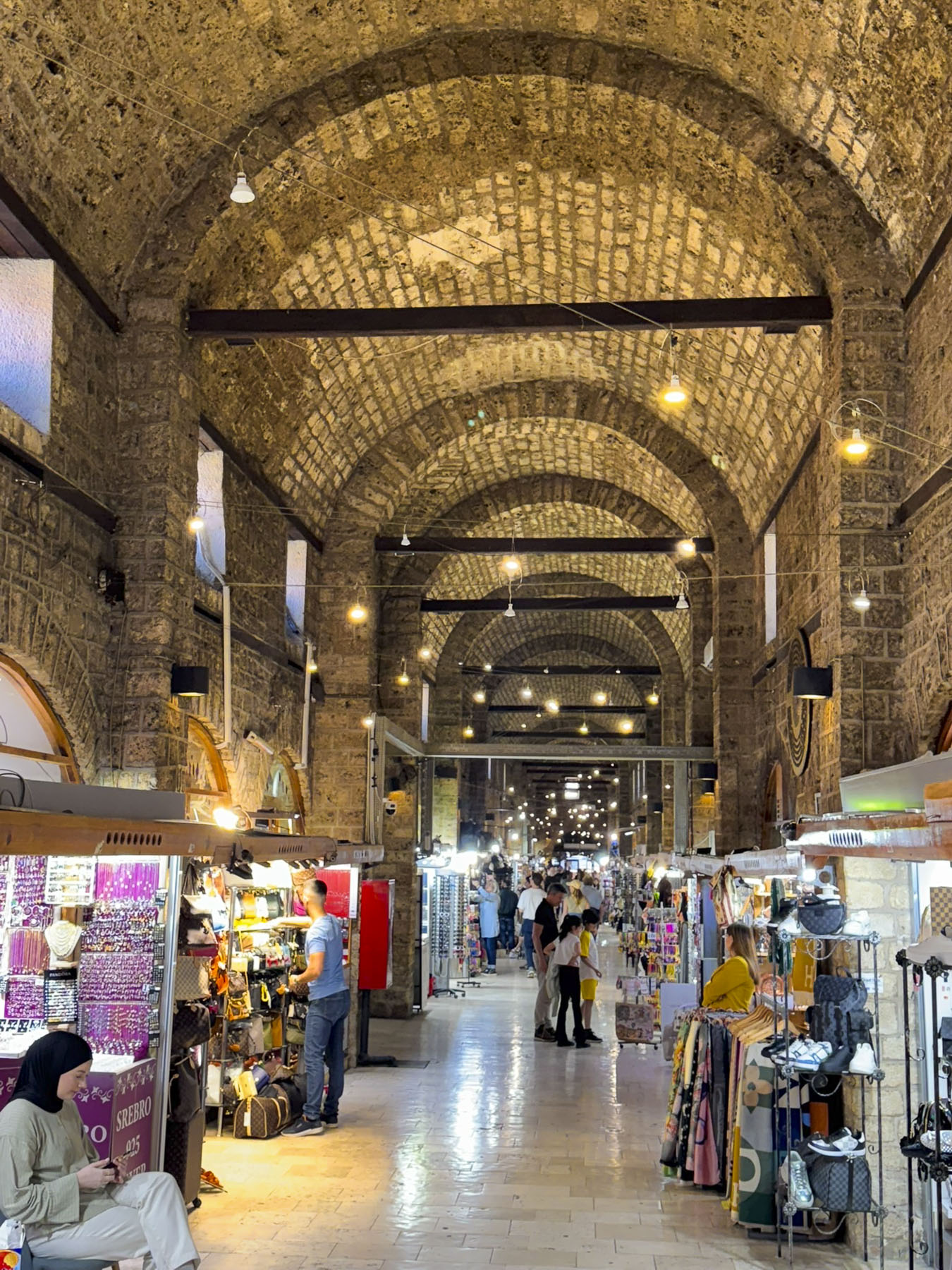
This was a very interesting part of the old town, with many significant historical sites close to each other which include; Gazi Husrev-Beg’s Library (1537), the 16th century barrel-vaulted grand bazaar, the ancient Mezarje u haremu džamije Ferhadija cemetery & mosque, the Morića han caravanserais, the 1860s Serbian Orthodox Church of the Nativity of the Theotokos, the Museum of the Jews of Bosnia and Herzegovina, the Srebrenica Genocide Memorial, and Katedrala Srca Isusova, the Sacred Heart Cathedral, a 19th-century Gothic-style church which Pope John Paul II visited in 1997, to promote reconciliation after the Bosnian War.

During the Ottoman rule of Bosnia, Sarajevo attracted a diverse community of Orthodox Christians, Catholics and Jews. They were, however, treated as second class citizens and faced social restrictions forbidding them from carrying weapons, riding horses in public, or building houses and churches taller than those of Muslims. Men were additional required to pay theJizyataxin lieu of military service. Only Christian families were subjected to the Devshirme, a “Blood Tax,” where children were taken from their families, forcibly converted to Islam, and trained to become elite Janissaries, soldiers, or high-ranking government officials. These additional burdens to families encouraged many to convert to Islam.

Passing through the old bazaar, we admired some of the work of the silversmiths. This trade  has been thriving since the Middle Ages in Bosnia when silver mines were a major source of income for Bosnian kings. A piece of fine filigree jewelry made the perfect souvenir.

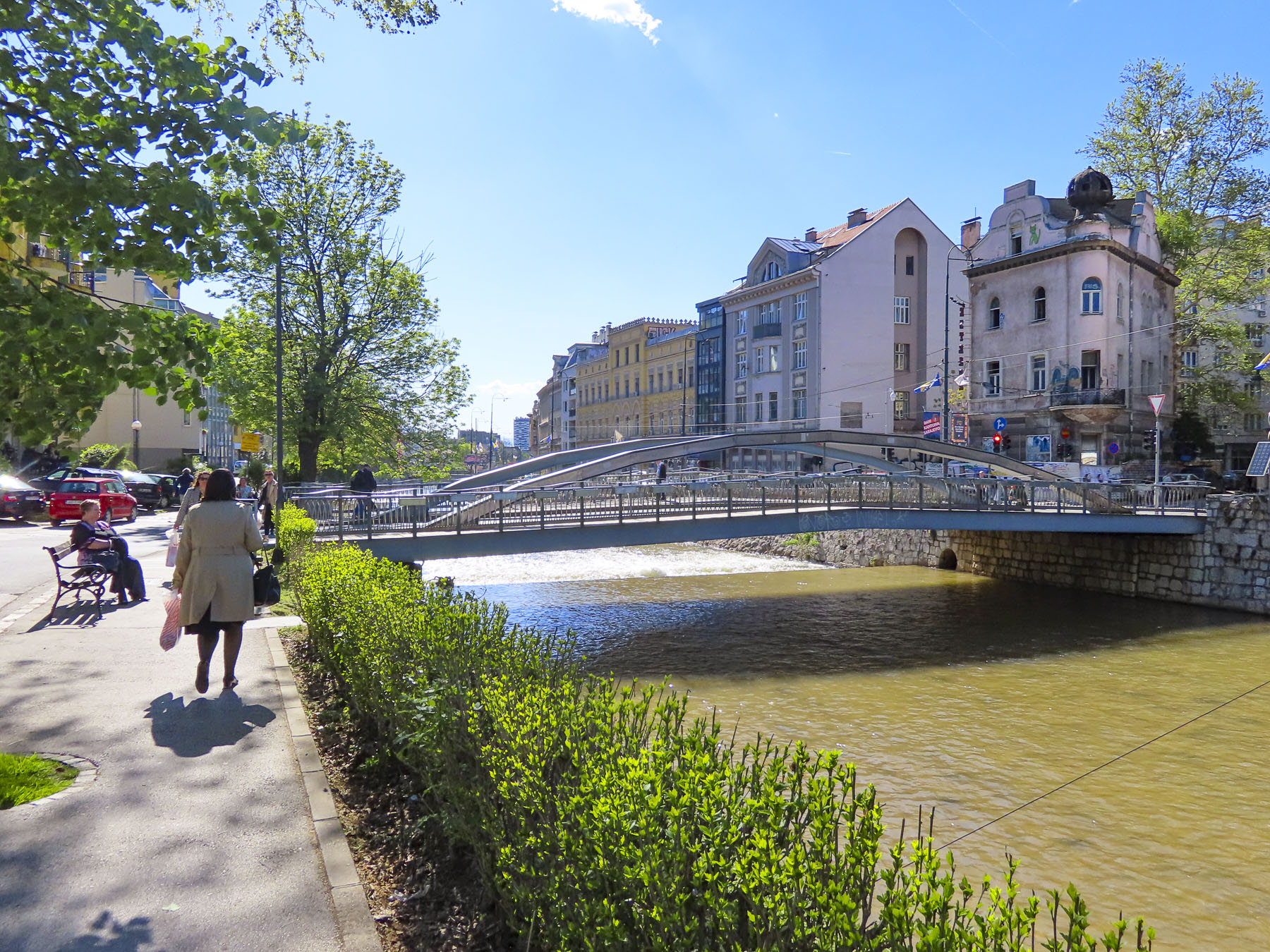
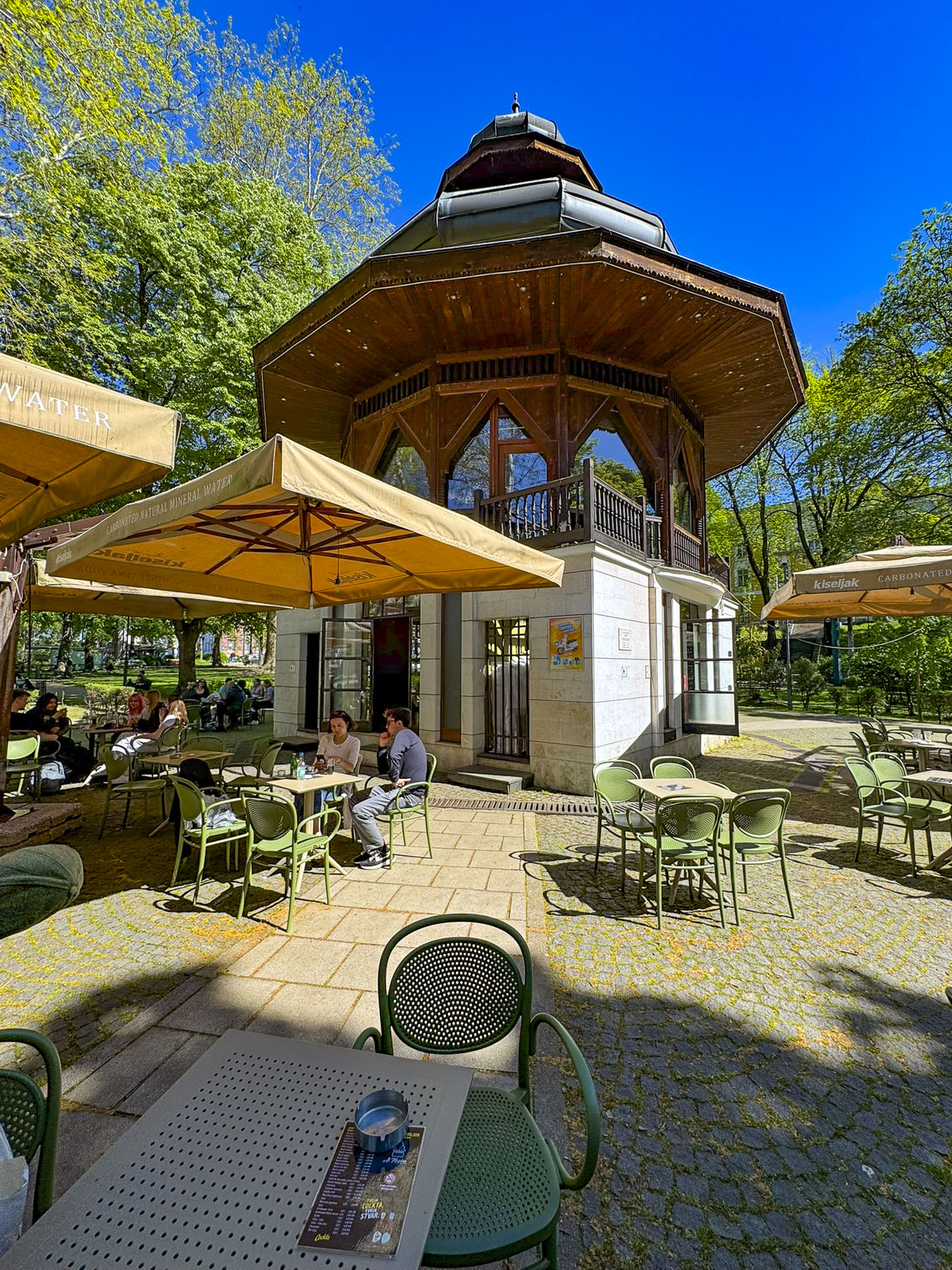
We crossed the Miljacka River and walked along the shaded riverside promenade to a café at the Music Pavilion in At Mejdan park, which dates from 1913. The park was a quiet oasis where families strolled with children, couples relaxed in each other’s arms and pensioners played chess at tables under the trees. Views back across the river showcased a blend of the city’s architecture that spanned the centuries from the Ottoman era to modern times, though the most predominant are the ones constructed in the 19thcentury European style during the Austro-Hungarian era.

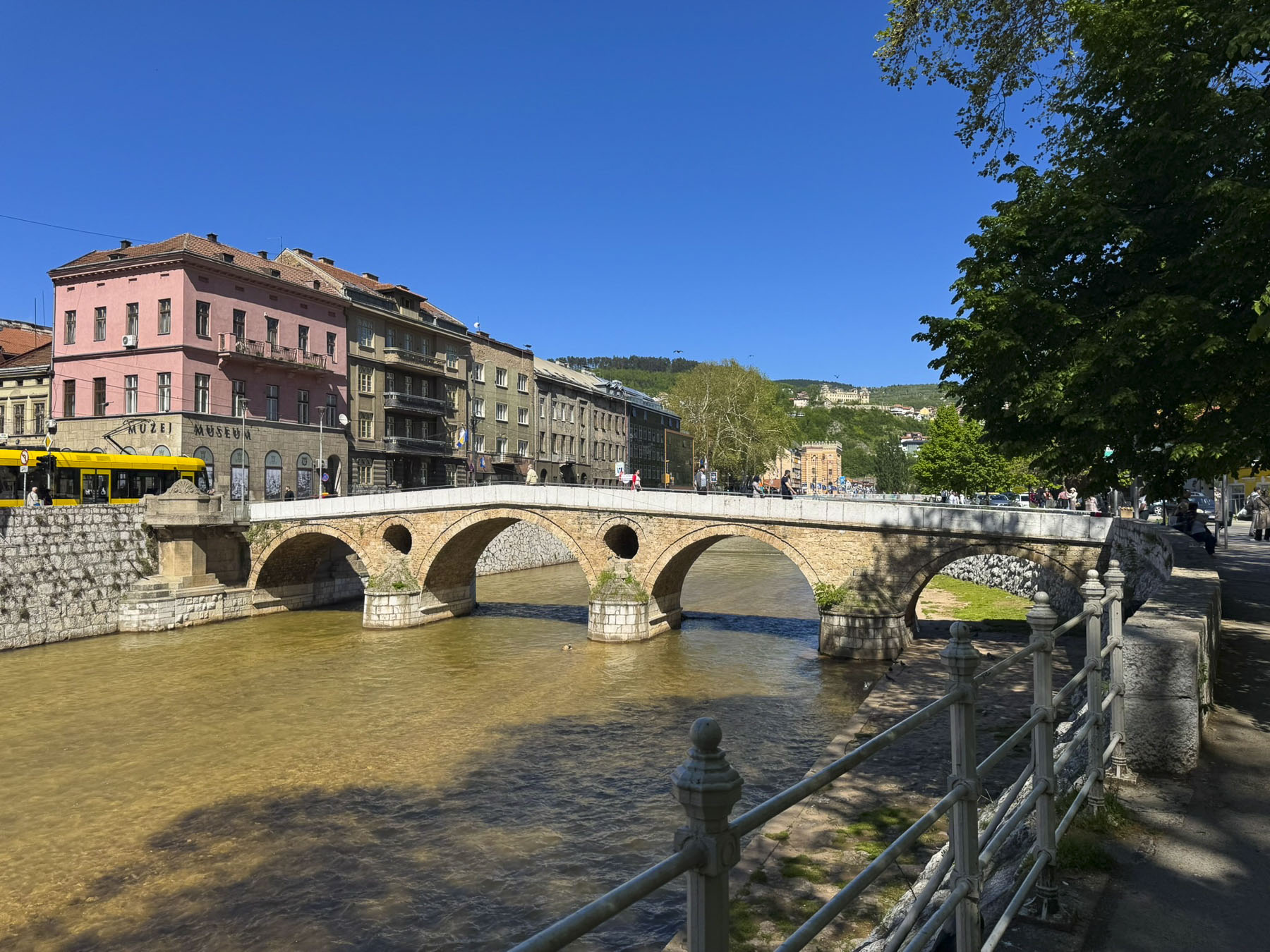
From the promenade we could also see the Latin Bridge, the site where Austro-Hungarian Archduke Franz Ferdinand was assassinated on June 28, 1914, by Gavrilo Princip, a member of the revolutionary group Young Bosnia, whose members were mostly Serbs, Croats, and Bosniak students who sought to end Austro-Hungarian rule and unite Bosnia with Serbia and Yugoslavia. The event triggered World War I, the dissolution of the Austro-Hungarian Empire, the creation of the Kingdom of Yugoslavia, which included Serbia, Bosnia, Croatia, Montenegro, Slovenia and North Macedonia. While Sarajevo was part of Yugoslavia, Gavrilo Princip was celebrated as a hero and the Latin Bridge was renamed in his honor. With Bosnia’s independence the bridge has regained its original name.

Subsequently, the origins of nearly a hundred years of almost continuous wars, occupations and suppression across Europe, can be traced back to this event. The region’s death and destruction finally ended after the Balkan Wars were resolved with the signing of the Dayton Accords in 1995, an agreement which established a complex government with equal representation for Bosniaks, Serbs, and Croats in Federation of Bosnia and Herzegovina.

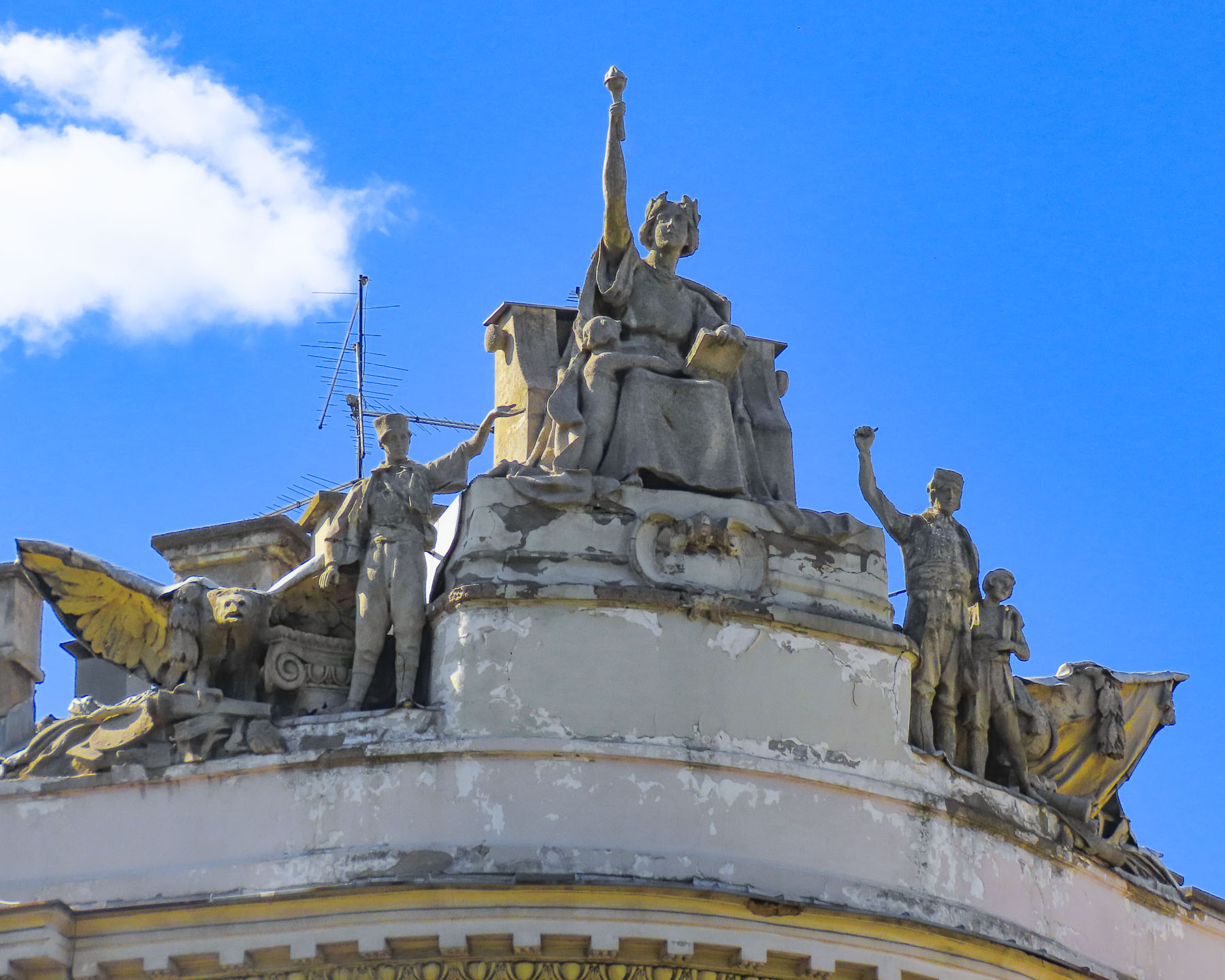
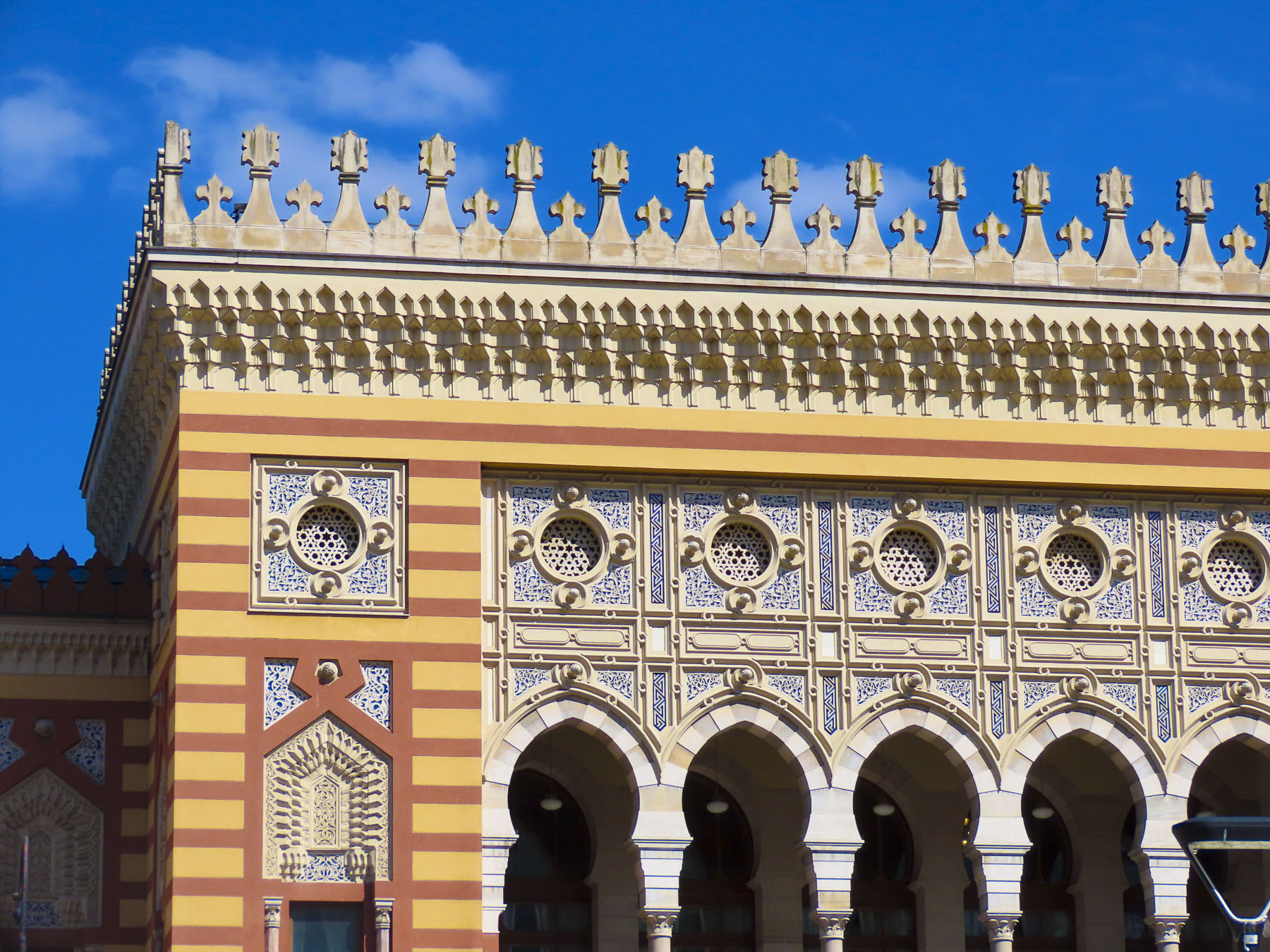
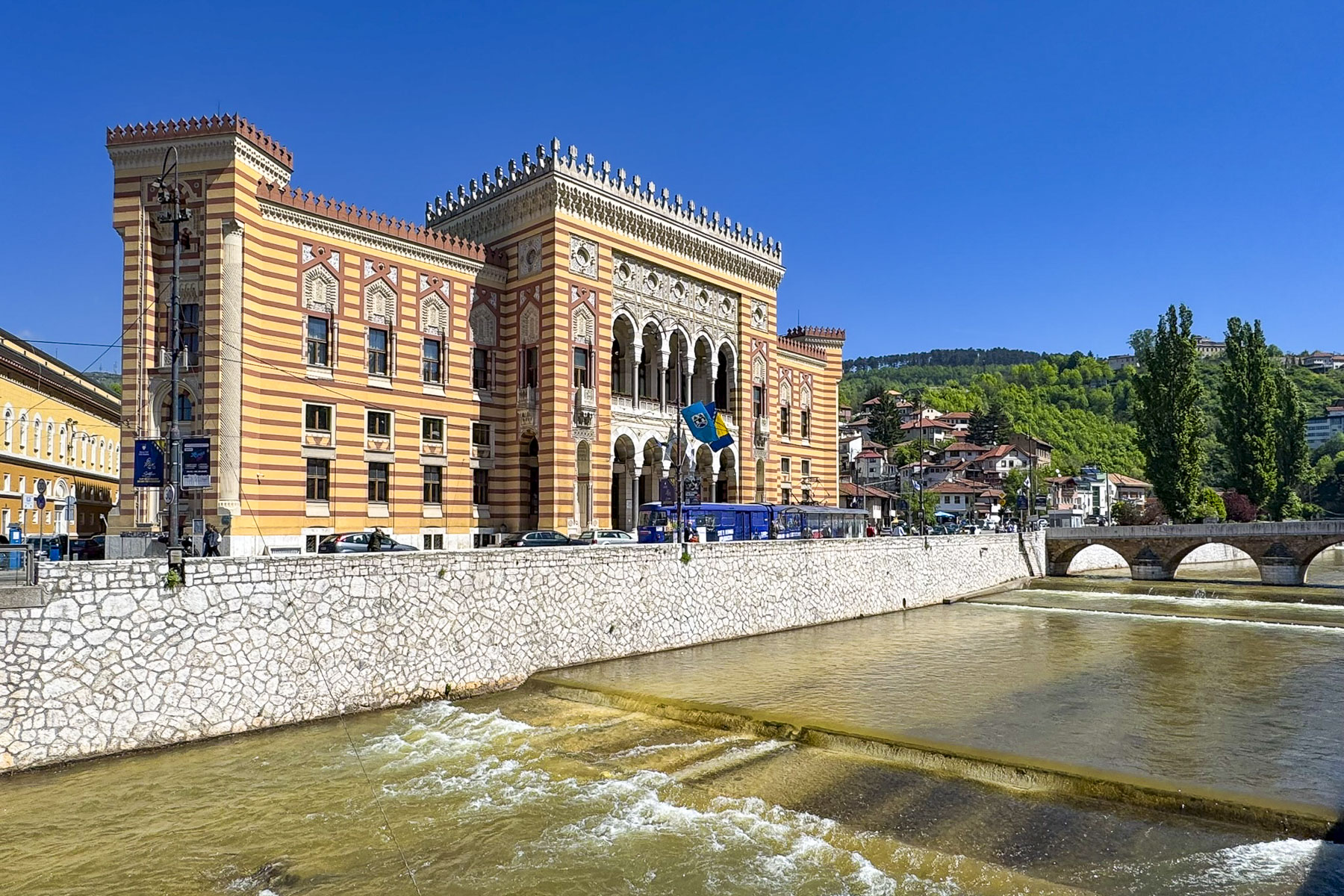
Farther along the riverside was Sarajevo’s City Hall, a late 19th century Moorish Revival style building with ornate geometric patterns and horseshoe arches. It was built during the Austro-Hungarian era to reflect Sarajevo’s importance as a cultural crossroads in the Balkans.

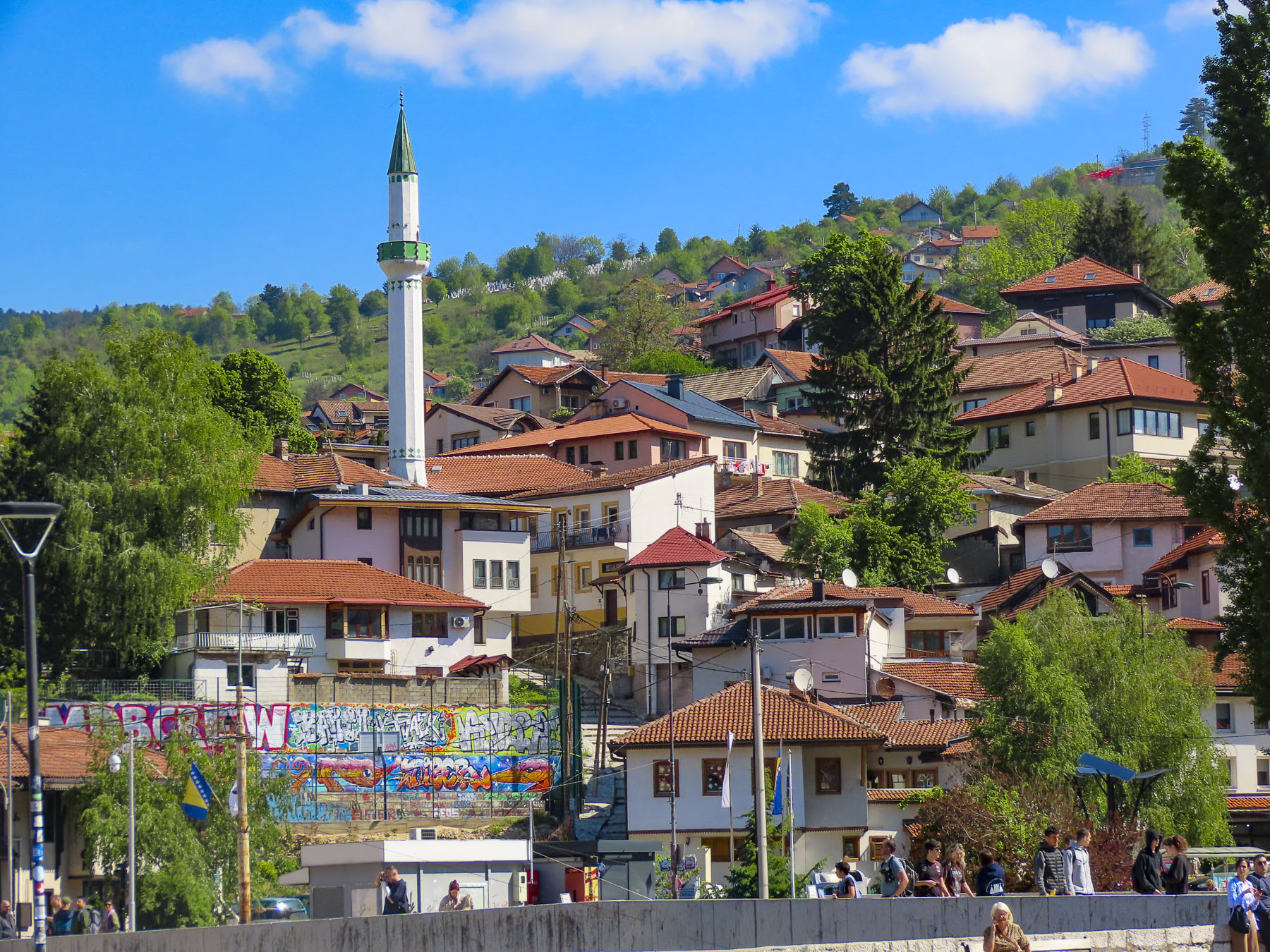
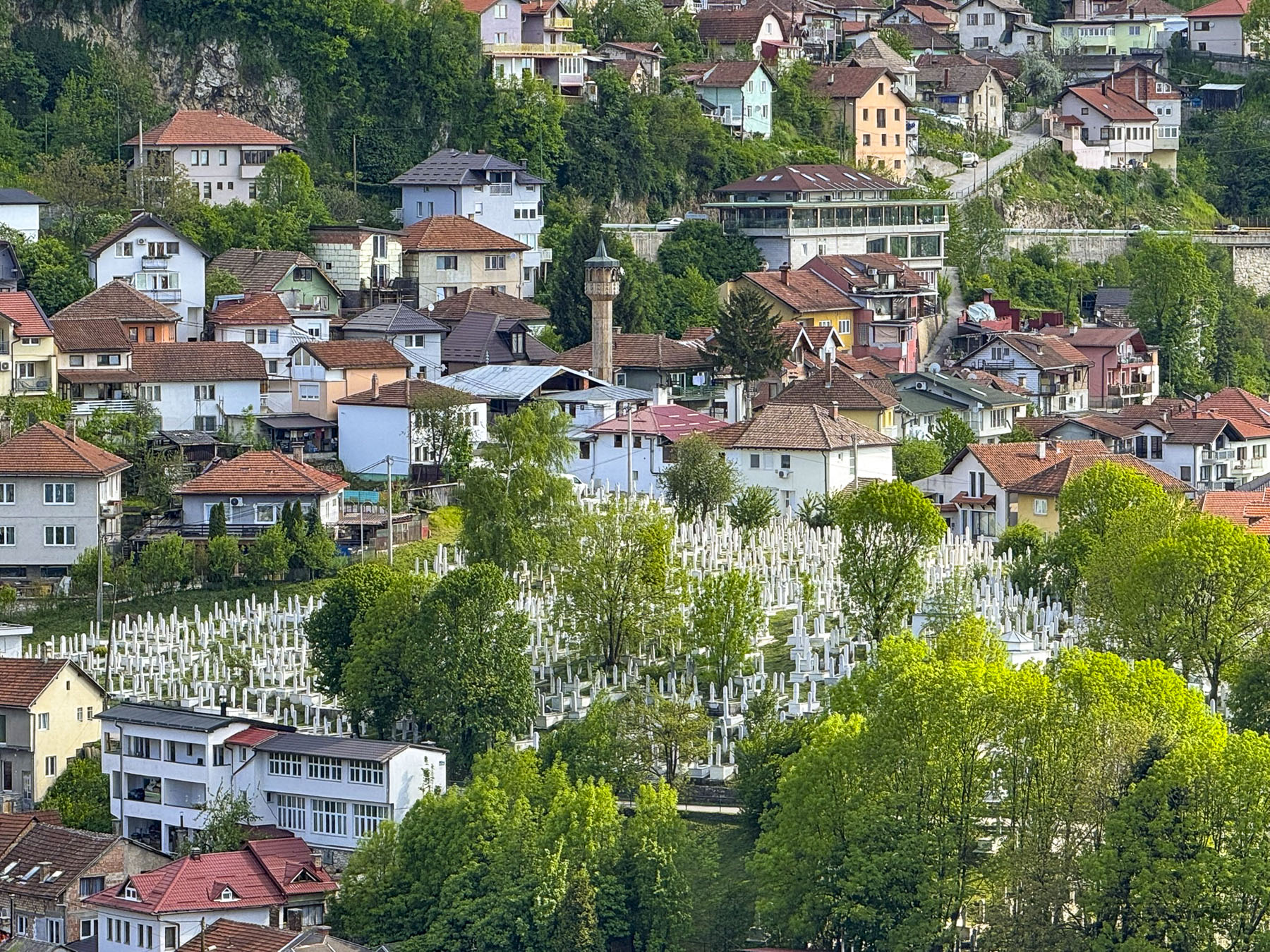
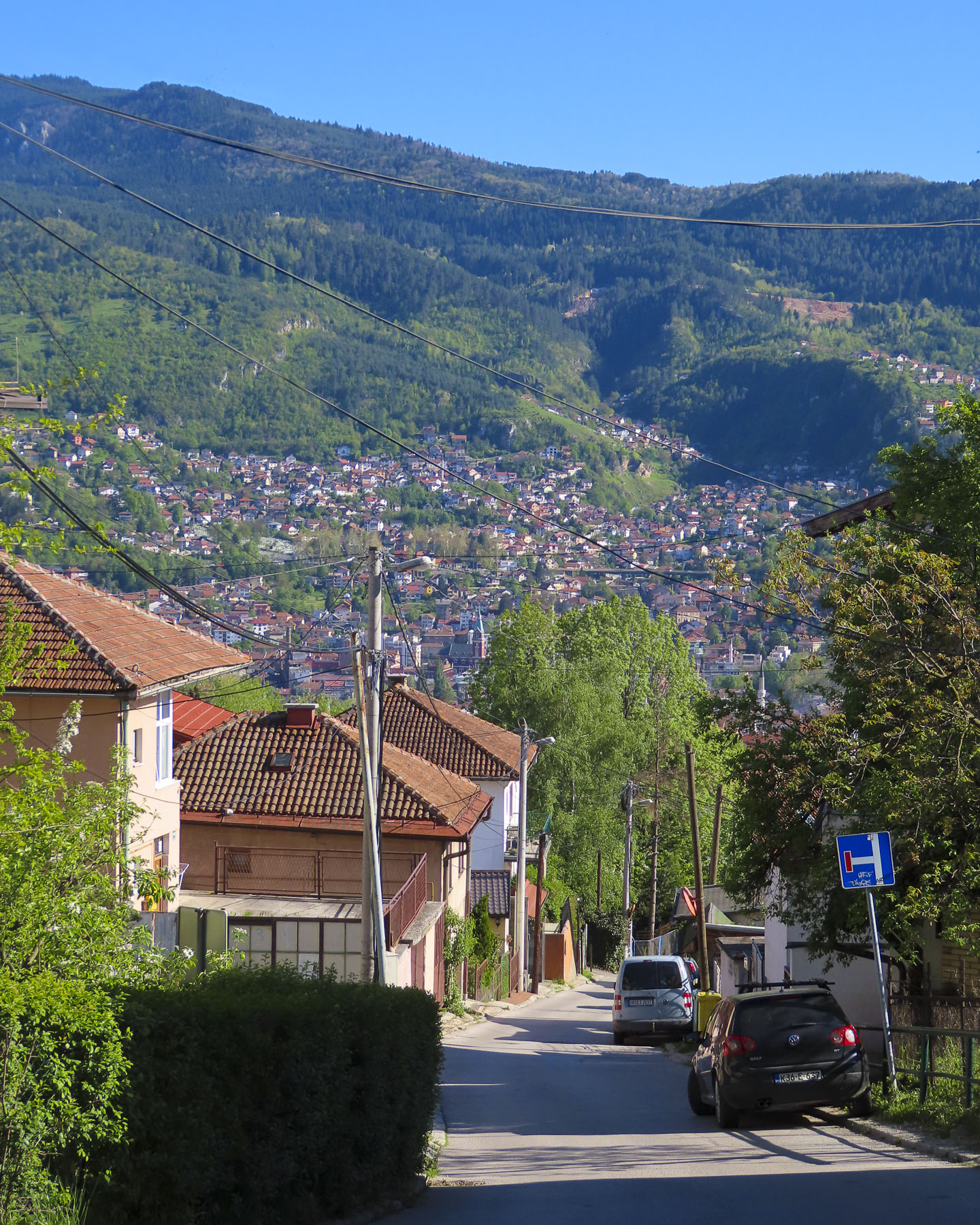
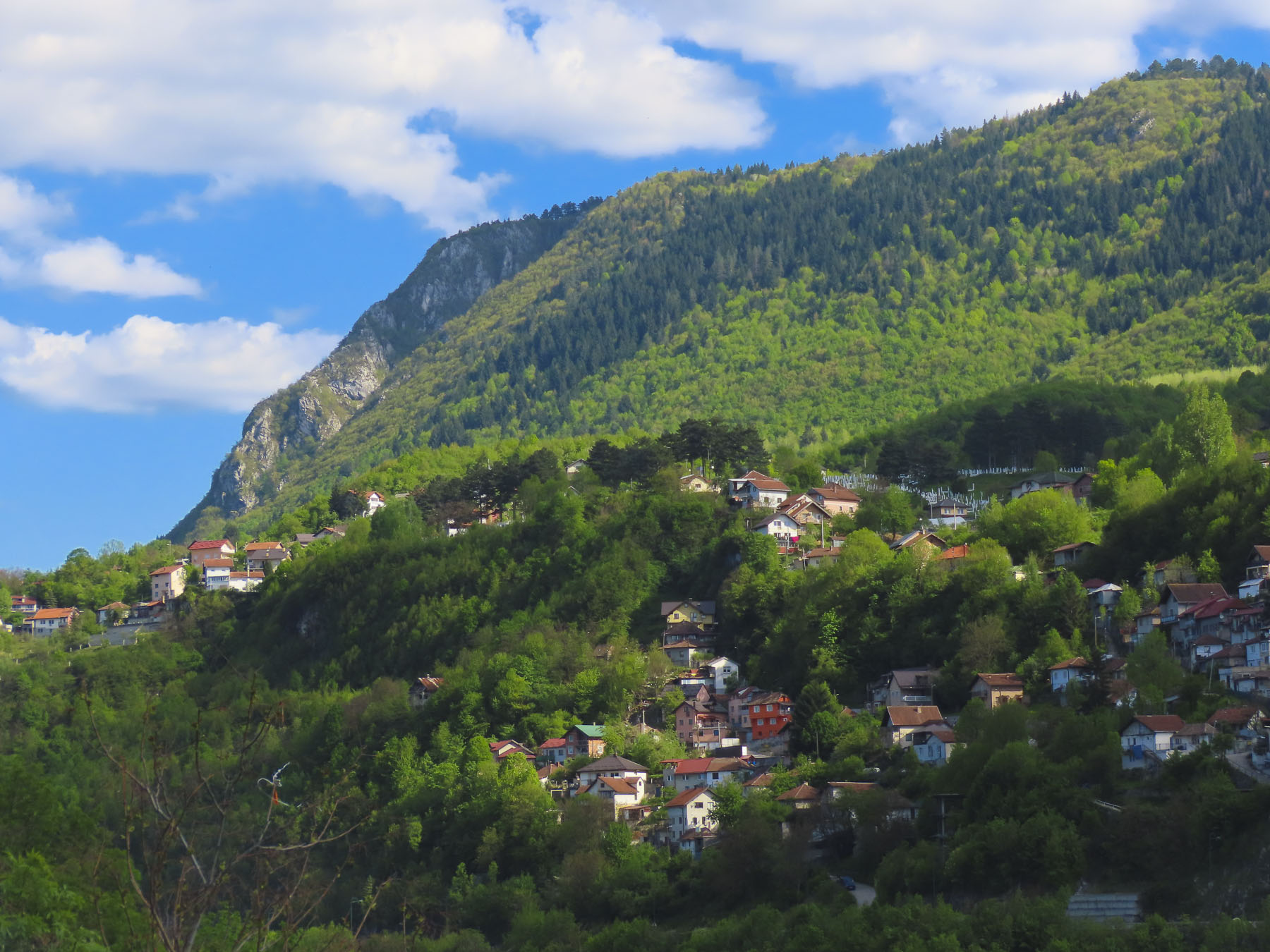
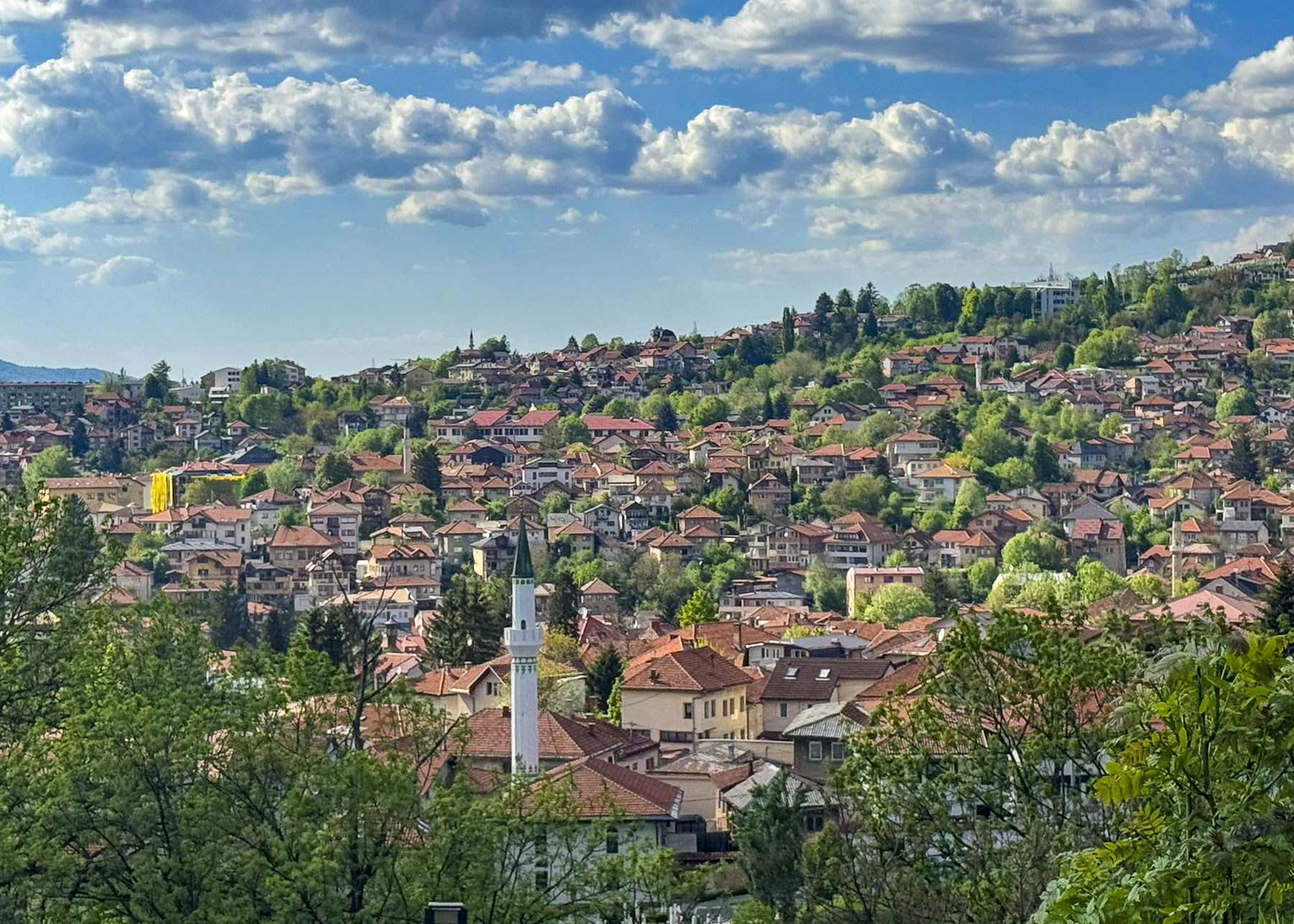
Later back in our hotel room we could hear the evening prayer, as the muezzin called from the city’s minarets, and it echoed across the valley. There is believed to be close to 100 mosques across Sarajevo, and from our hillside location we were amazed by the number of minarets we could see dotting the surrounding landscape.

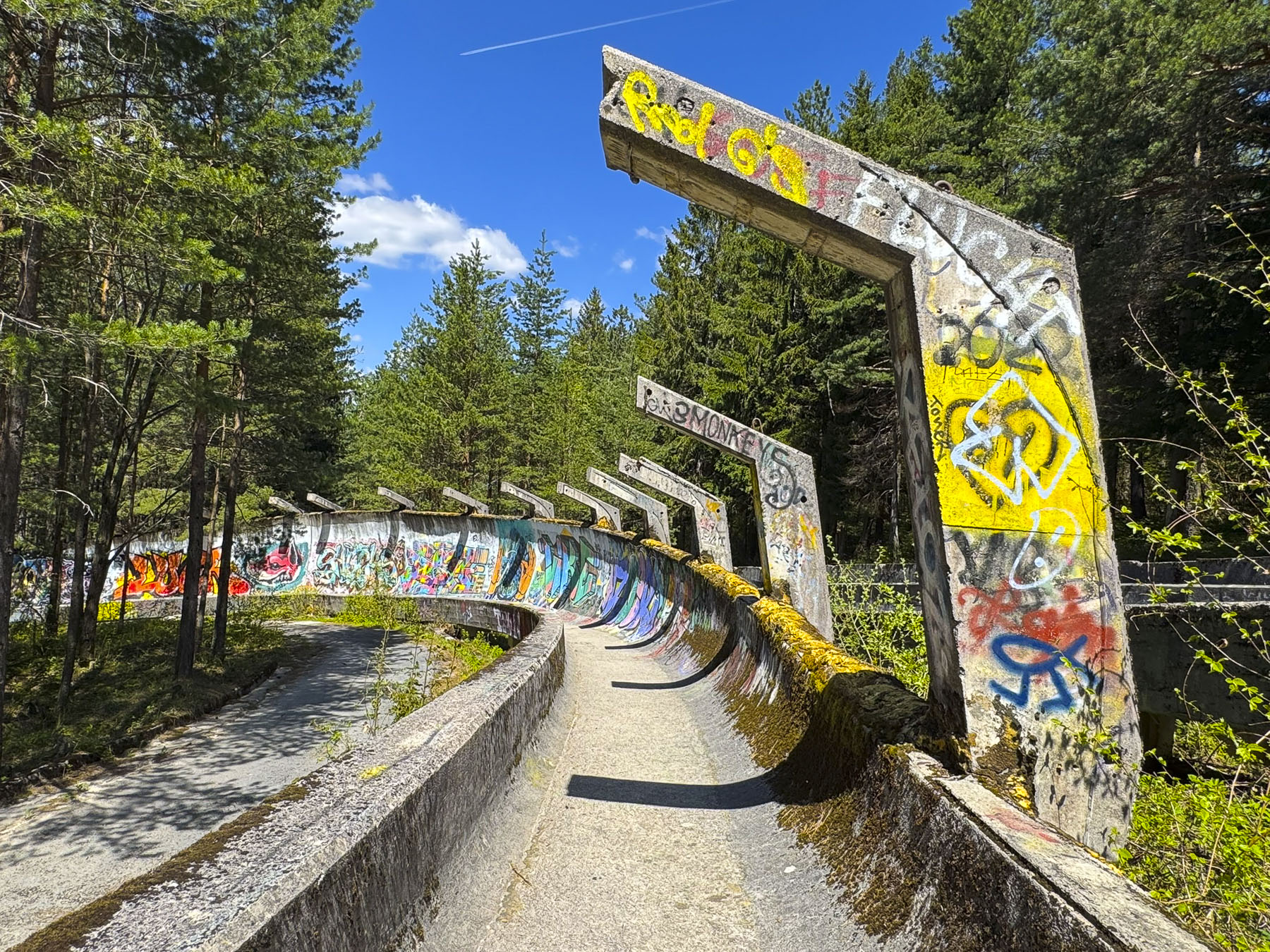
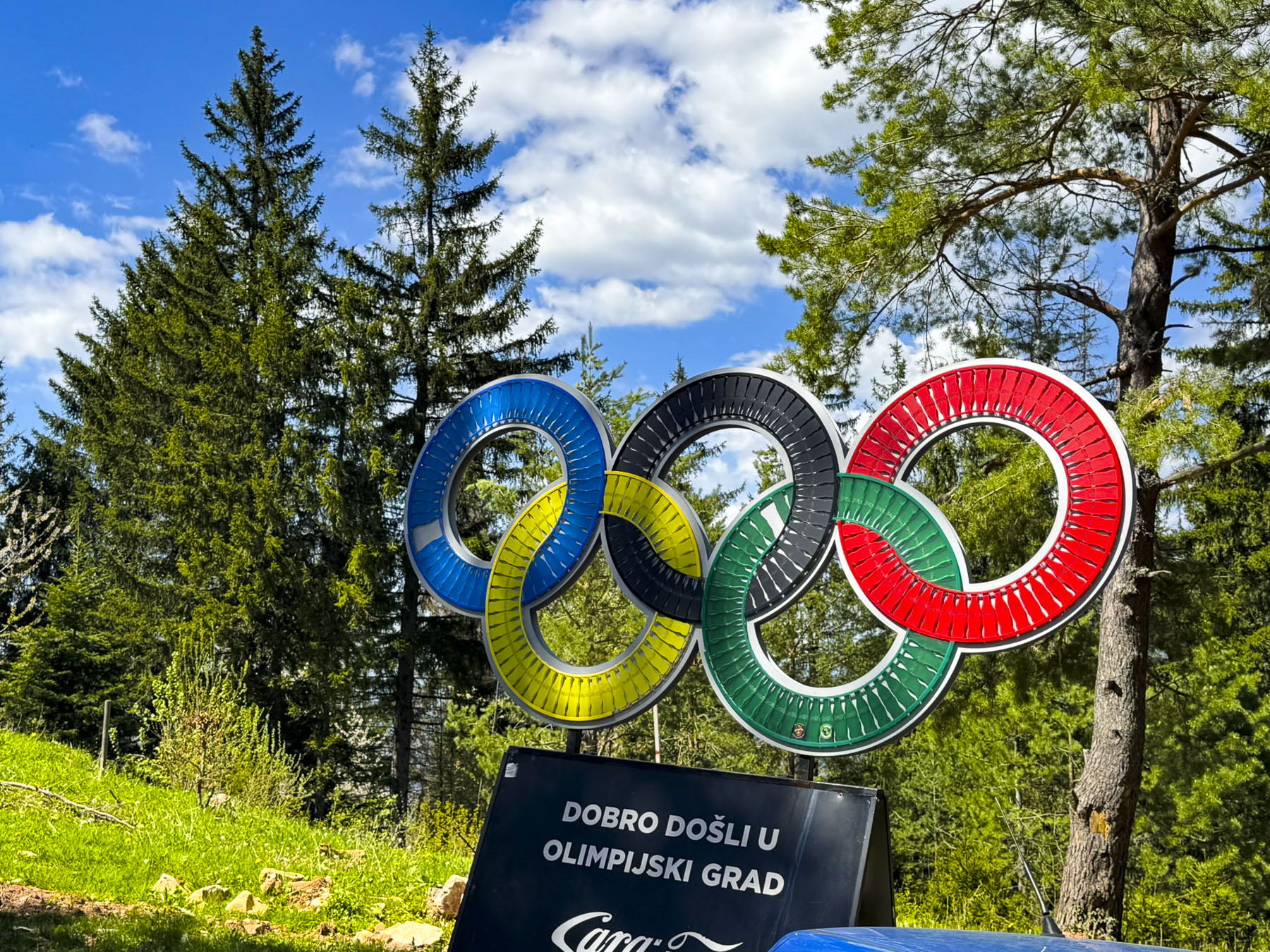
The next morning we decided to drive up Mt. Trebević, 1,629m (5,345ft) which we could see from our hotel room, to visit the site of 1984 Winter Olympic Game’s luge and bobsleigh competitions. It was an exciting event and the first time a Communist Bloc country hosted the Winter Olympics, which Donna and I remember watching on TV (that seriously dates us). Exciting not just for the tremendous speed of the sledders, but also for the background color commentary about a part of the world behind the “Iron Curtain,” that had mosques and minarets that we associated with deserts of Arabia, not snow-covered mountains. It was a part of the world unknown to us at the time, and it looked enthralling. Sadly, this location and the other mountaintop Olympic venues around Sarajevo were seized by Bosnian Serb forces during the 1990s war and used as artillery positions to bombard Sarajevo during the Serbs’ four-year siege of the city.

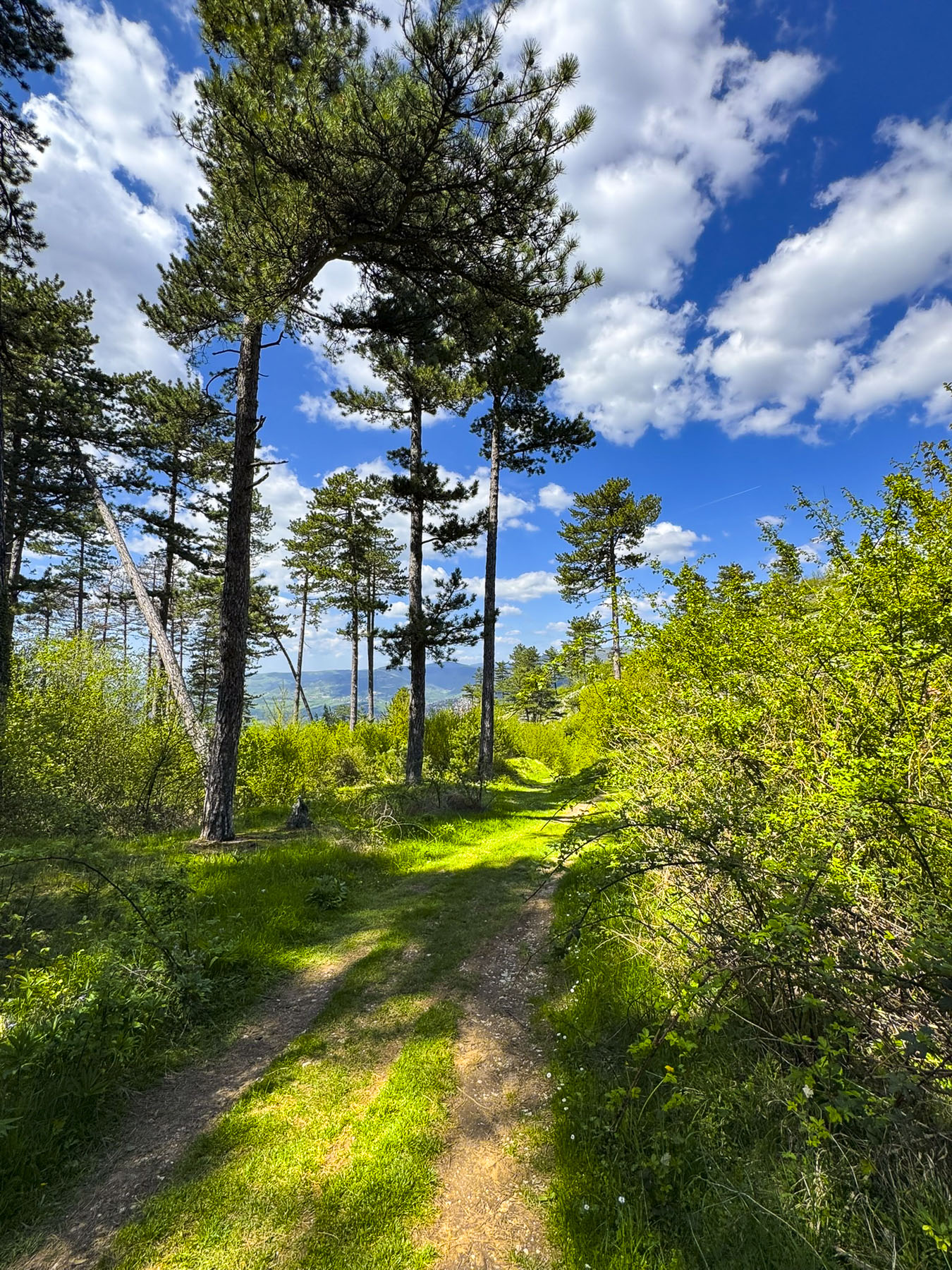
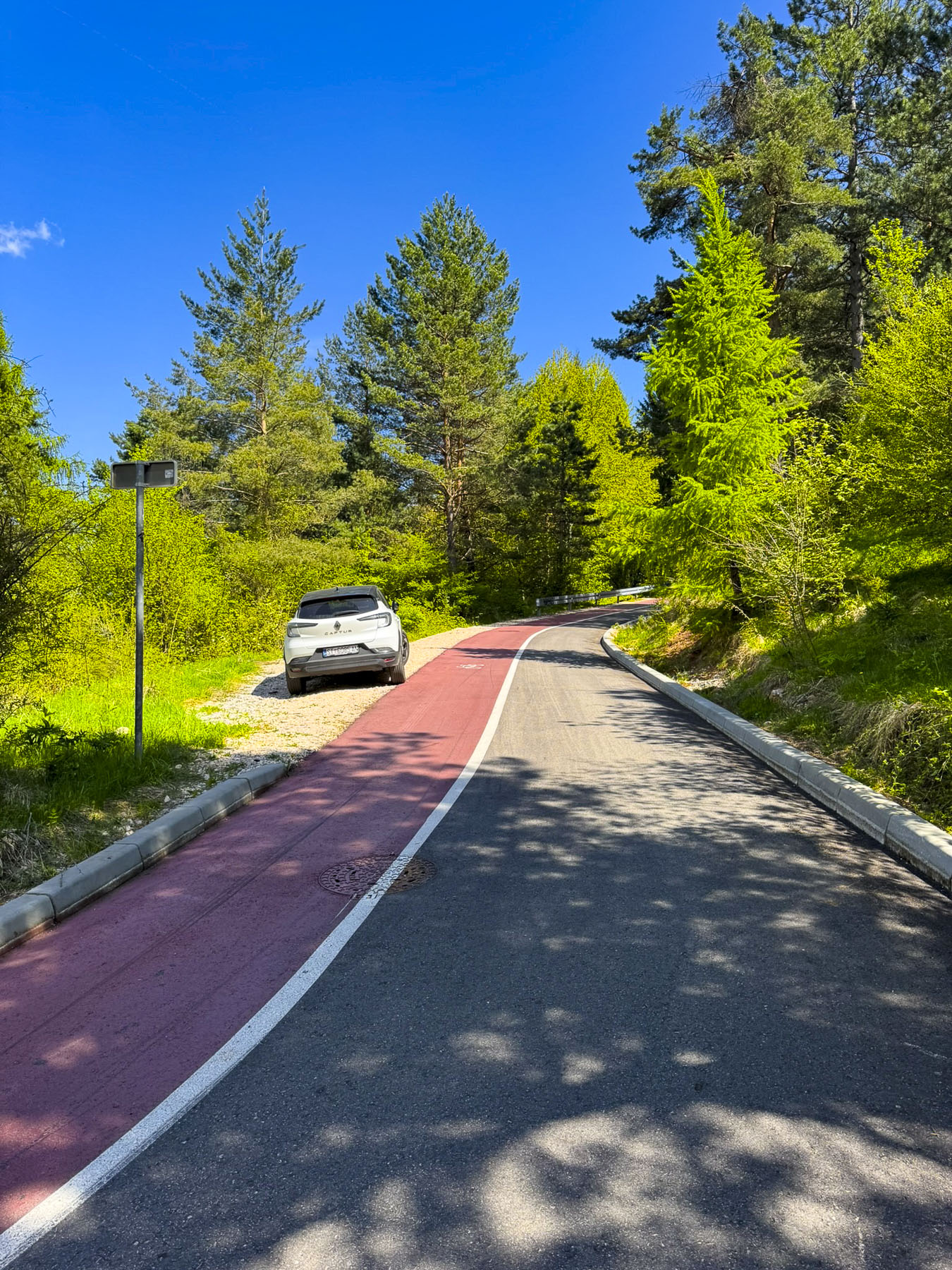
First, we had hoped to see an old 16th century Ottoman era high-arched stone span across the Miljacka River on the outskirts of the city, but the traffic in that direction came to a total standstill, and folks were turning around to find alternative routes. We decided to do the same and followed our Maps app’s directions up the steep mountainside along roads that twisted through small neighborhoods where round traffic mirrors were mounted on the side of homes to see oncoming cars around blind corners. The road continued to narrow and steepen to the point that we thought if we ever had to stop, we’d never get going uphill again, until the grade lessened and we passed the last house to drive through the forested hillside.

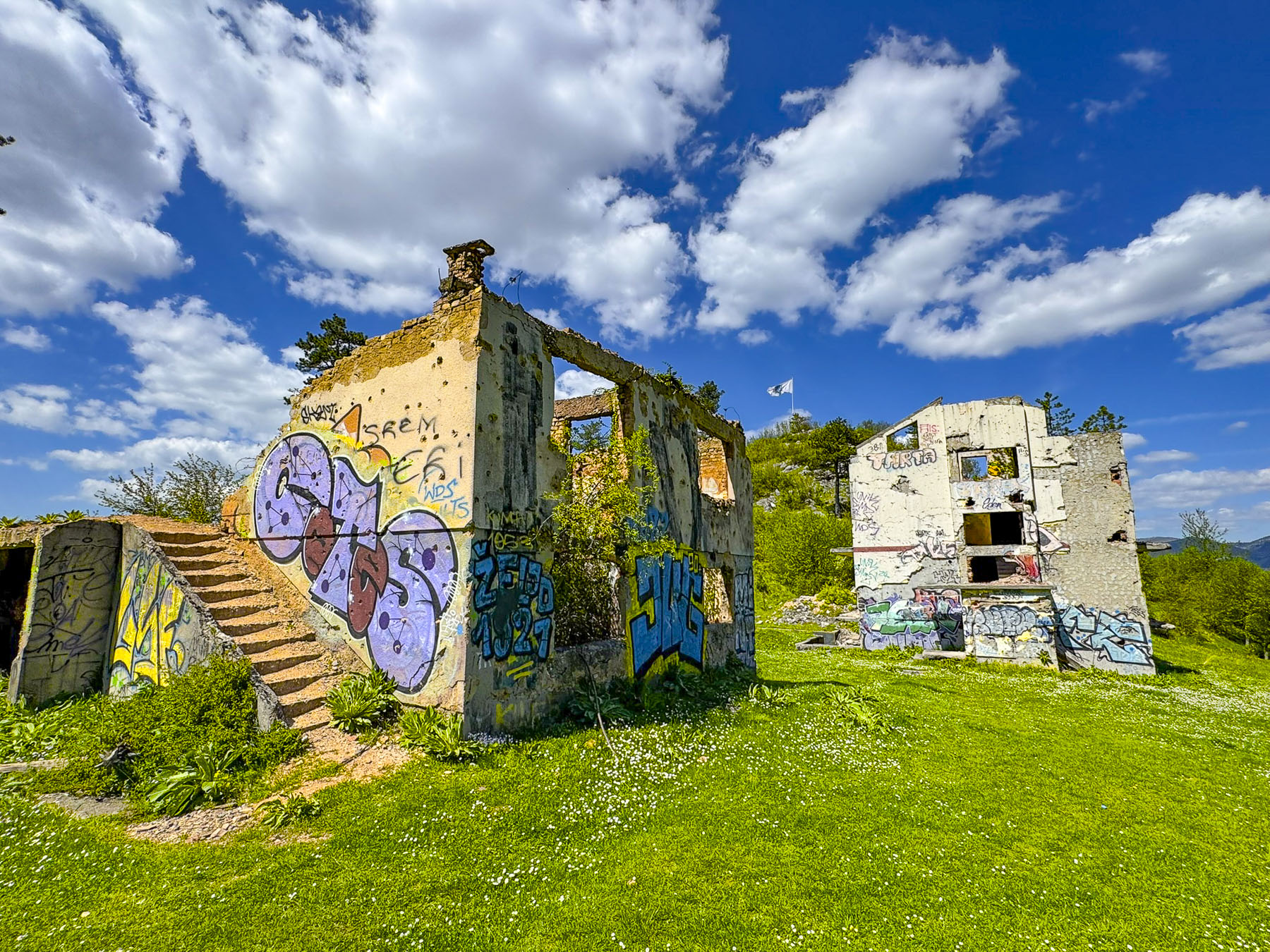
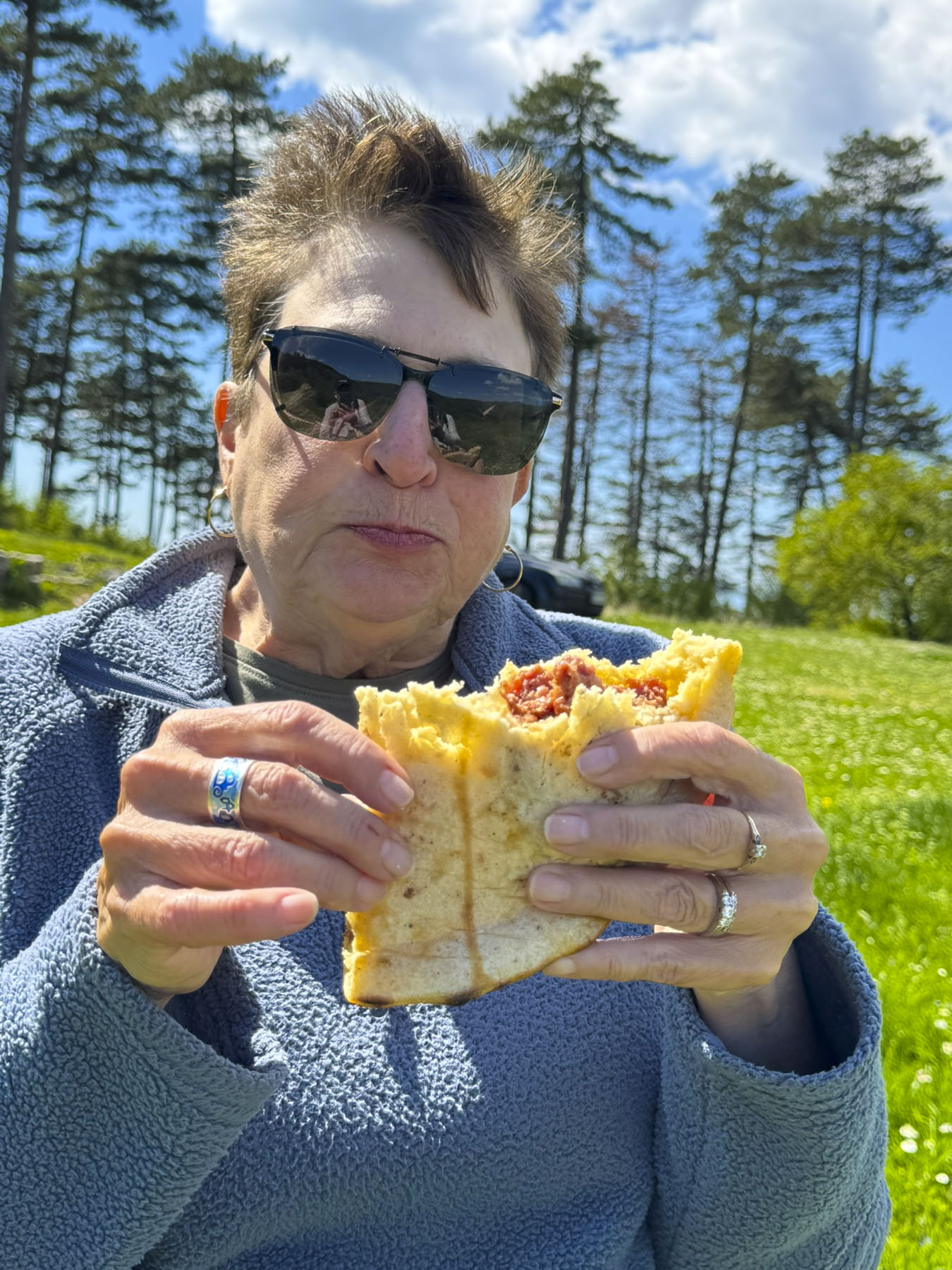
We stopped halfway up the mountainside to check out two battle-scarred buildings in a lush green meadow and happened upon a family of four having a picnic. The kids sprawled on the blanket, intent upon their electronic gamepads, while their mom set everything in order and their dad grilled in the shadow of one of the war-torn buildings. Everyone waved as we walked by. A few minutes later as we were walking in the lower part of the field the woman called to us as she crested the hillside, and she happily handed us a large Ćevapi, – small, skinless, charcoal grilled minced meat sausages, stuffed into a large Somun, a soft bread similar to pita, and garnished with finely chopped raw onions, ajvar (roasted red pepper sauce) or kajmak (a clotted cream spread). It’s the national dish of Bosnia and a specialty in Sarajevo. Though we didn’t share a common language multiple thank-yous were said and smiles shared all around. Her Ćevapi was so good! Coincidentally, only the day before we had promised ourselves we would have to taste one of those wonderful local dishes. The reason – the enticing aroma of grilled meats wafting from Ćevabdžinica Petica Ferhatović, considered to be the best Ćevabdžinica in Sarajevo, as we walked along Bravadžiluk.  It caused us to pause and check out what everyone was enjoying. If we hadn’t eaten a half hour earlier, we would have stopped, and we told ourselves we’d have to definitely try Ćevapi later.

Covered with bullet holes and graffiti, the bobsleigh tracks, former symbols of international goodwill, are now grisly reminders of the brutal conflict that killed 11,000 people living in Sarajevo during the four-year siege of the city.

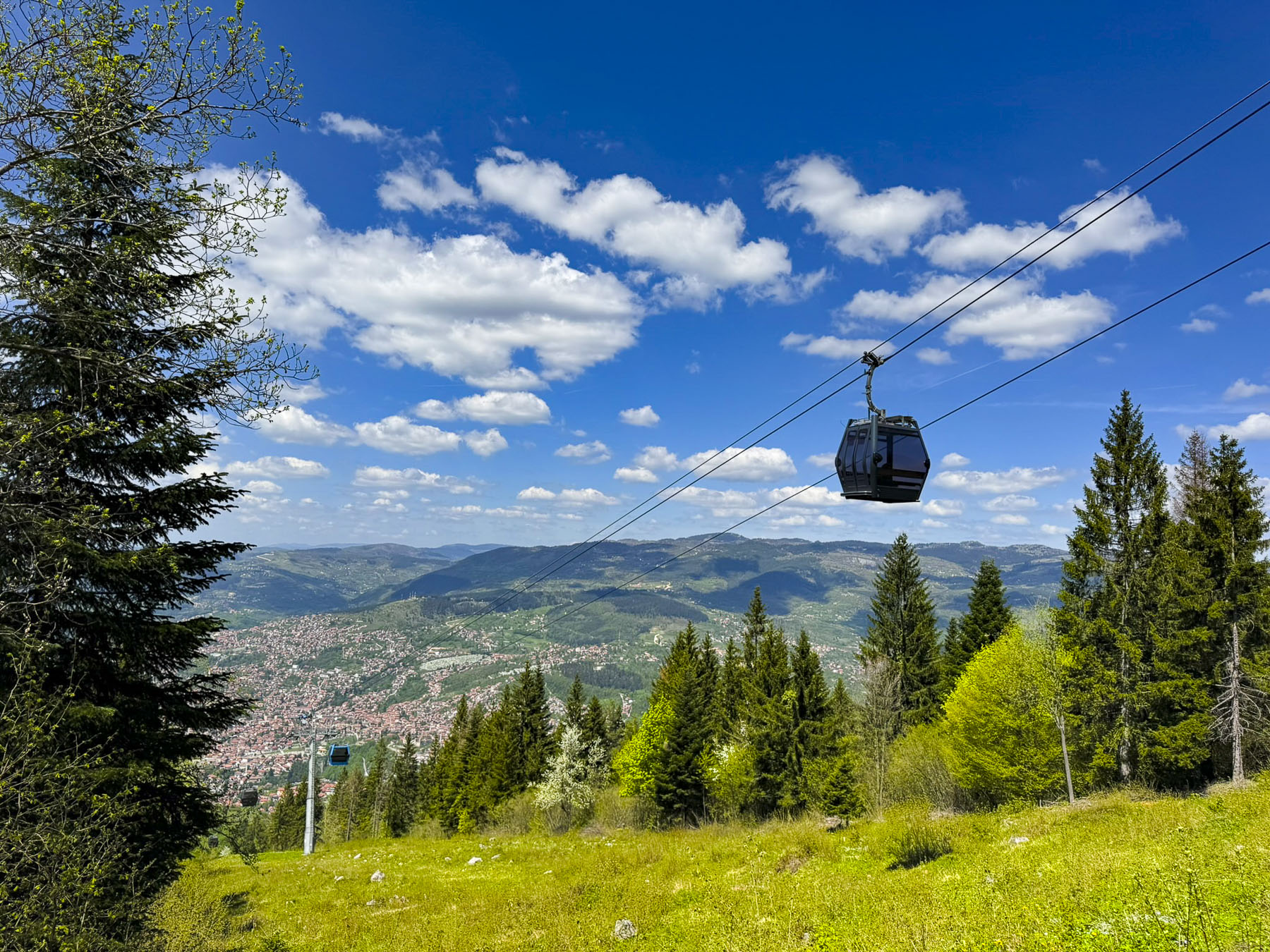
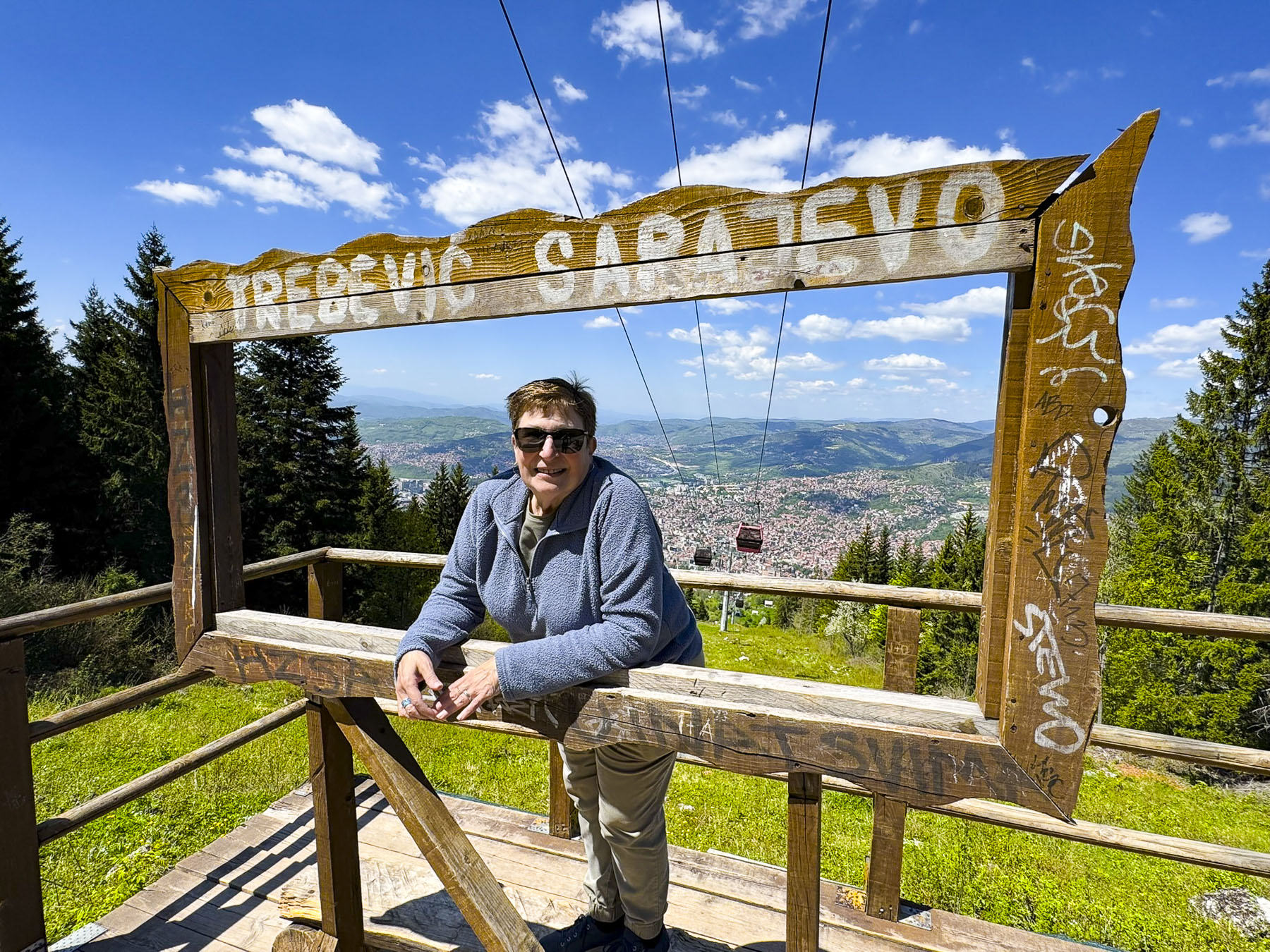
We continued on to the summit terminal of the Mt. Trebević ski lift where there were some spectacular views. The ski lift operates year-round and its lower terminal, Sarajevska žičara, is only a 9-minute walk from Sarajevo’s City Hall.

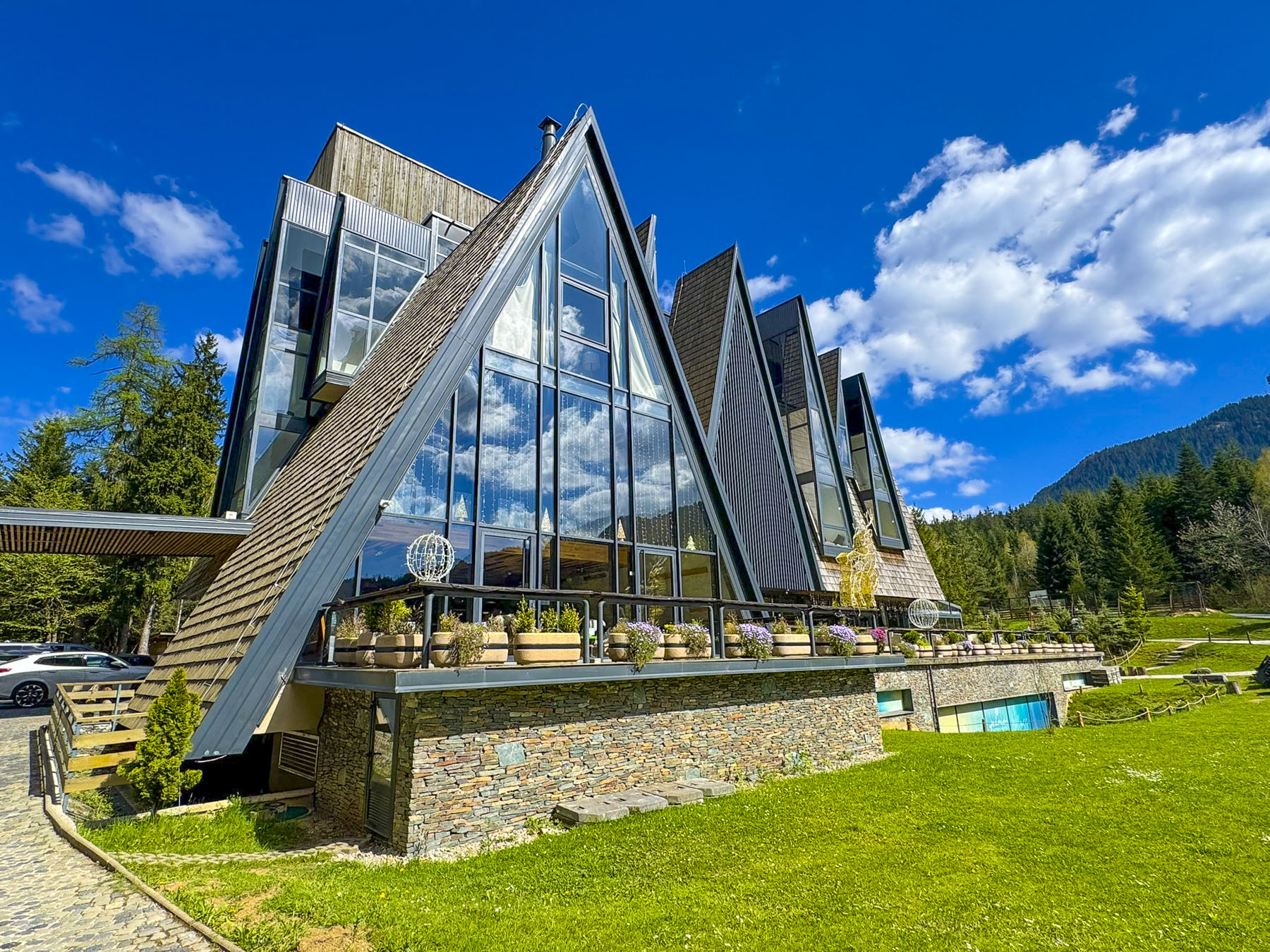
Later we had lunch atop the mountain at Hotel Pino, an attractive contemporarily designed 22 room lodging set in a forest clearing, before heading back down into Sarajevo to the Yellow Fortress, an Ottoman era cannon embattlement on Jekovac hill.

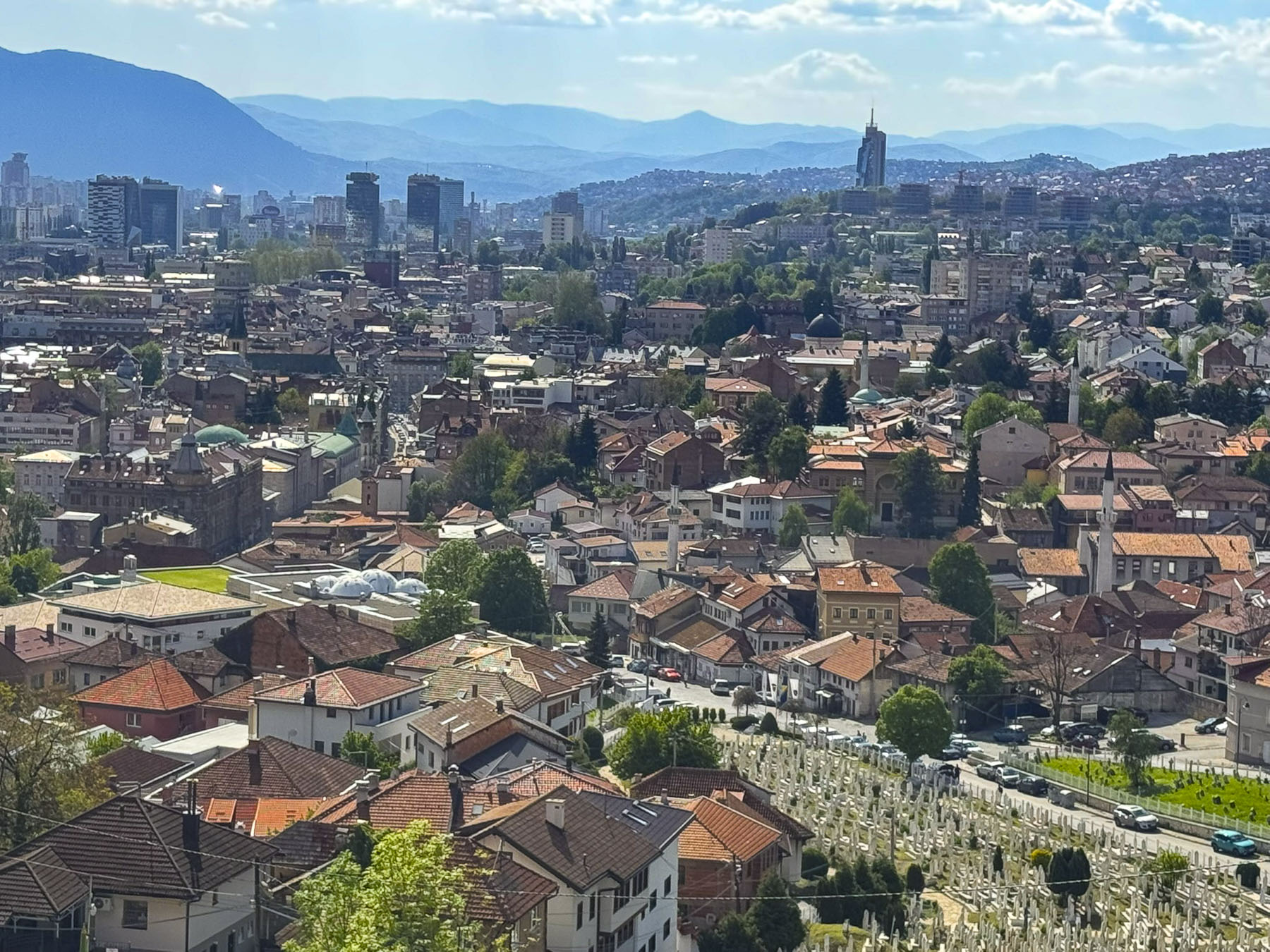
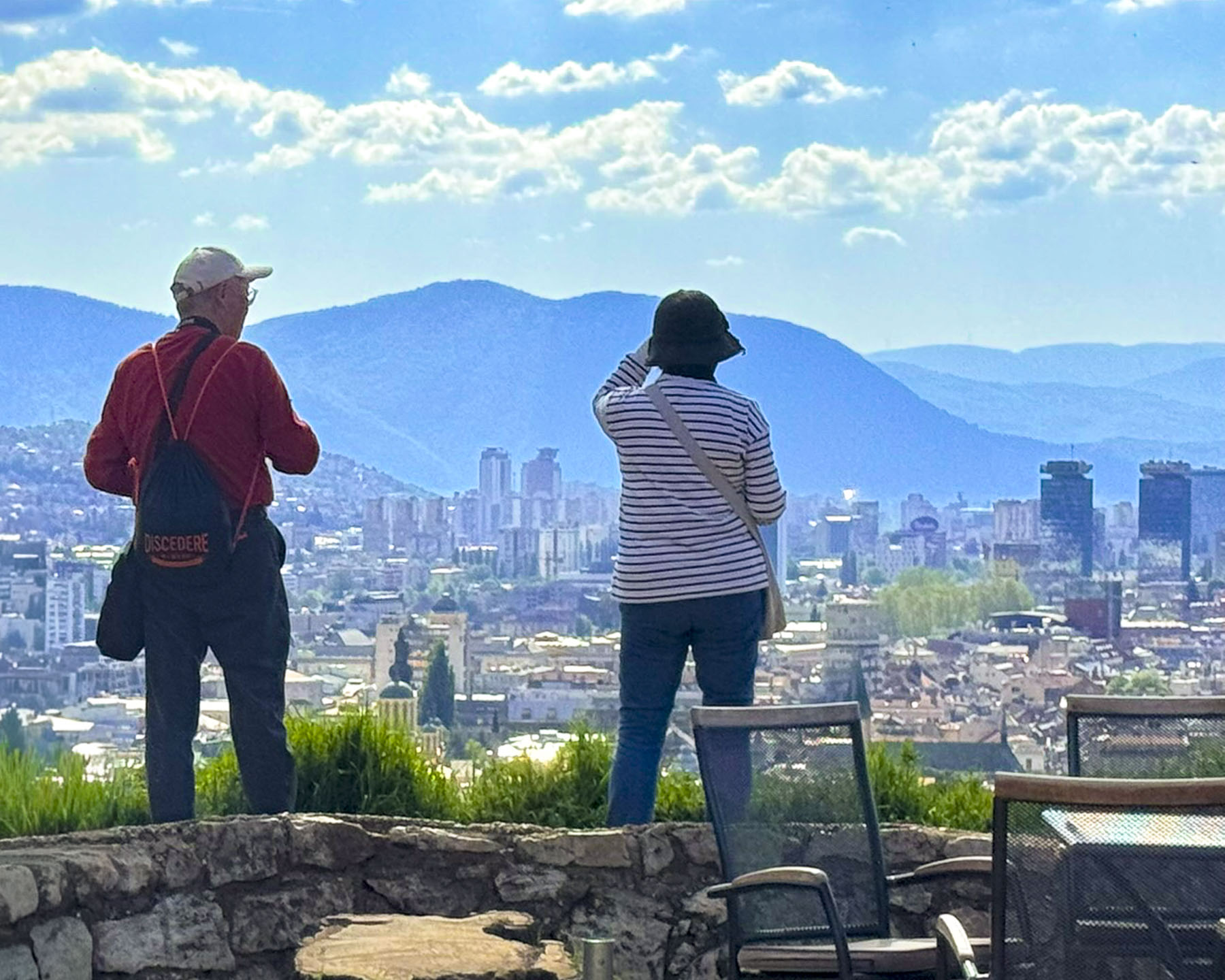
The panoramic views out over Sarajevo were beautiful in the late afternoon light and encompassed six centuries of the city’s history, from its earliest mosques on Baščaršija square to its modern skyline growing on the western horizon. A small café atop the roundel encouraged us to linger as we attempted to count the number of minarets scattered across the valley and hillsides and waited for the sun to set.

We thoroughly enjoyed visiting this resilient exotic city where everyone we encountered was so nice to us. We highly recommend visiting Sarajevo, as it is an engaging and very budget-friendly destination.

Till next time,

Craig & Donna
P.S. There are more than 20 museums in Sarajevo, with over 12 of them acknowledging the suffering which occurred during the Bosnia War. A few of them are: the Siege of Sarajevo Museum, Sarajevo Tunnel of Hope (Tunel Spasa), Museum of Crimes Against Humanity and Genocide, War Childhood Museum, and Galerija 11/07/95, a gallery-museum dedicated to the victims of the Srebrenica genocide.

A Balkans Road Trip Part 6: Zagreb, Croatia – A Charming Walkable Weekend or Witches, Fires & Earthquakes

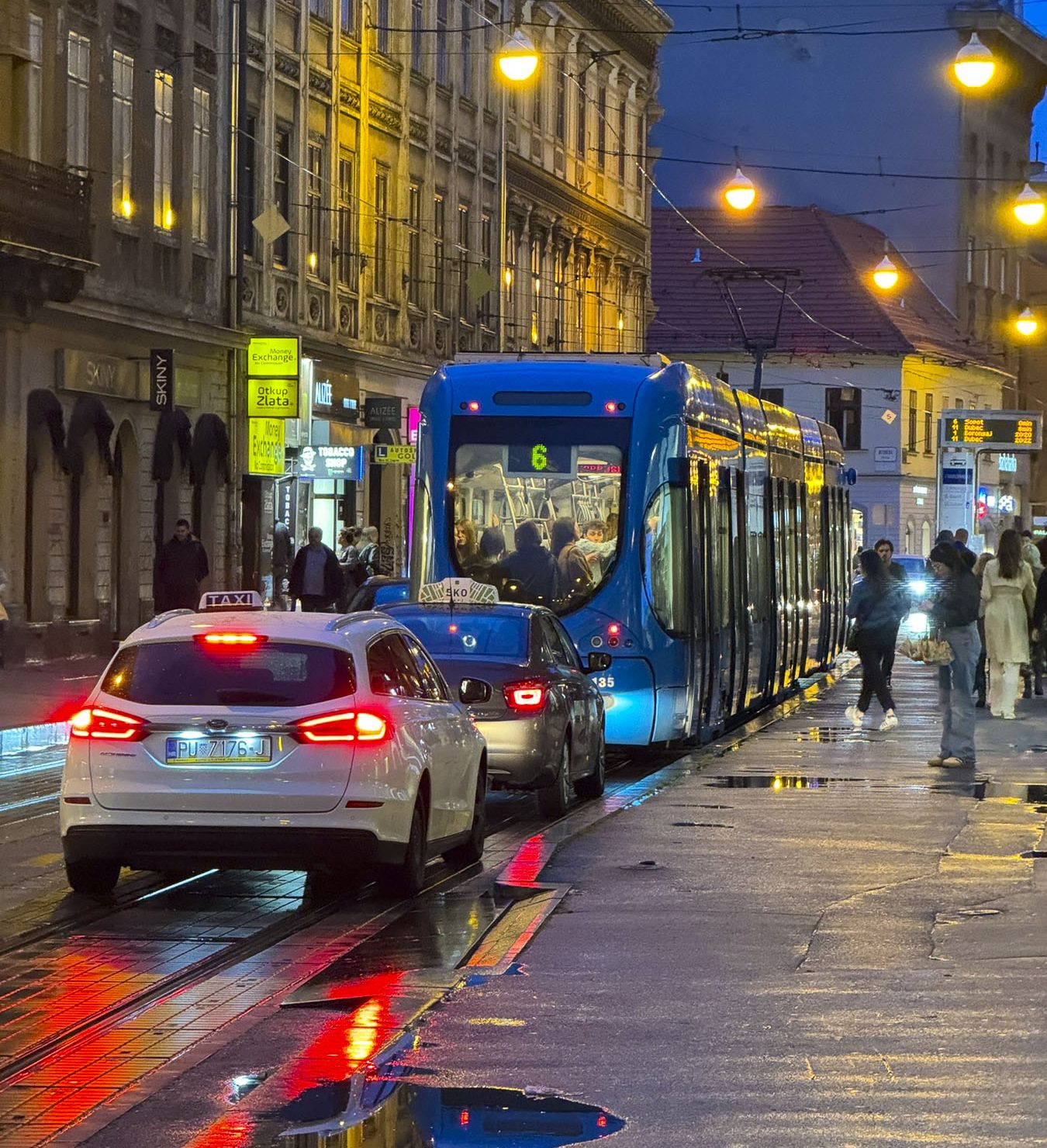
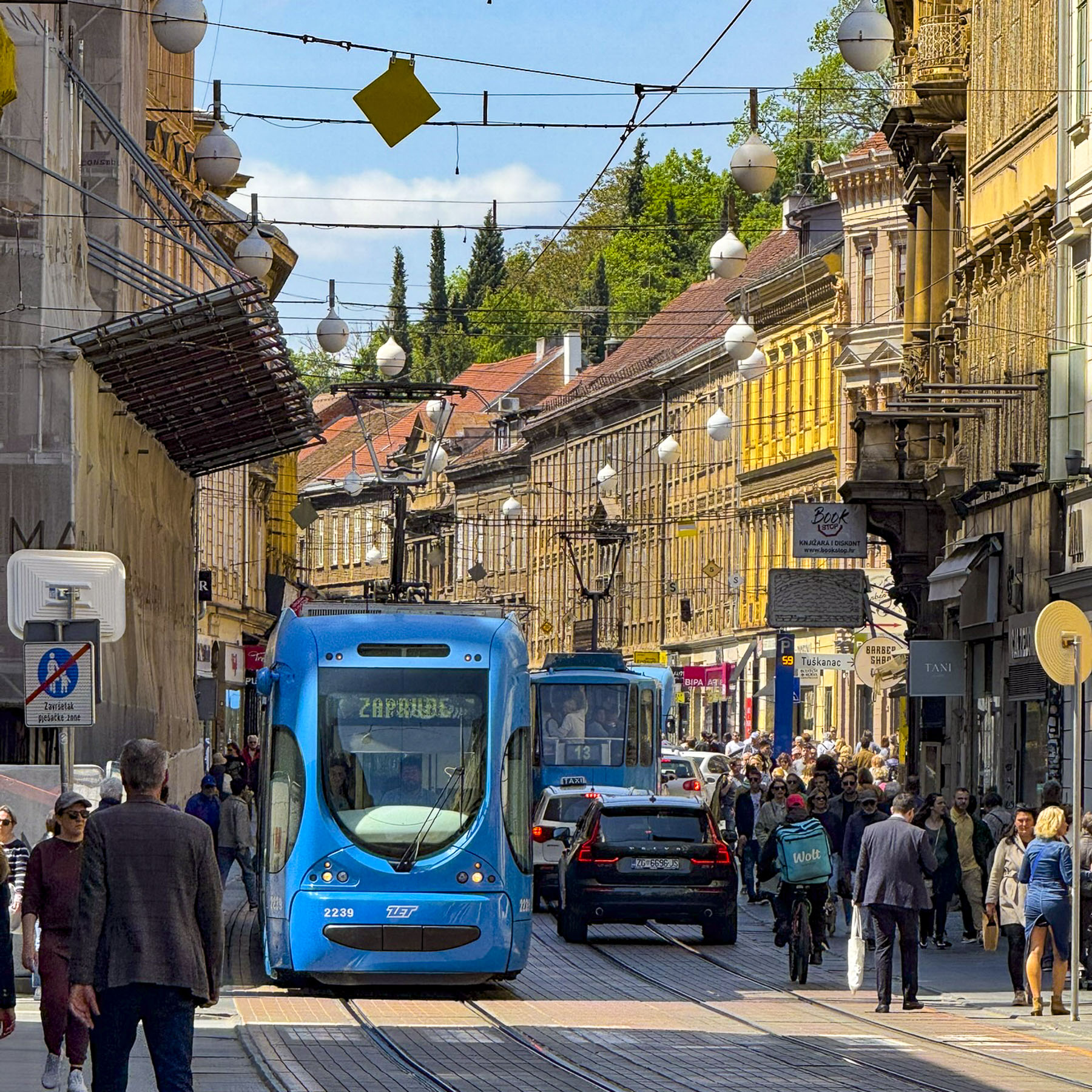
Taillights glistened on the rain-slicked roadway as we followed a tram through the Friday evening rush-hour in Zagreb, the capital of Croatia. It’s a large metropolis with newer neighborhoods spiderwebbing for miles from its ancient medieval core atop Gornji Grad, the Upper Town. We were heading to Hotel Park 45, conveniently located near the old town, with the availability of reserved paid parking. It was the base for our three-night stay in the Croatian capital.

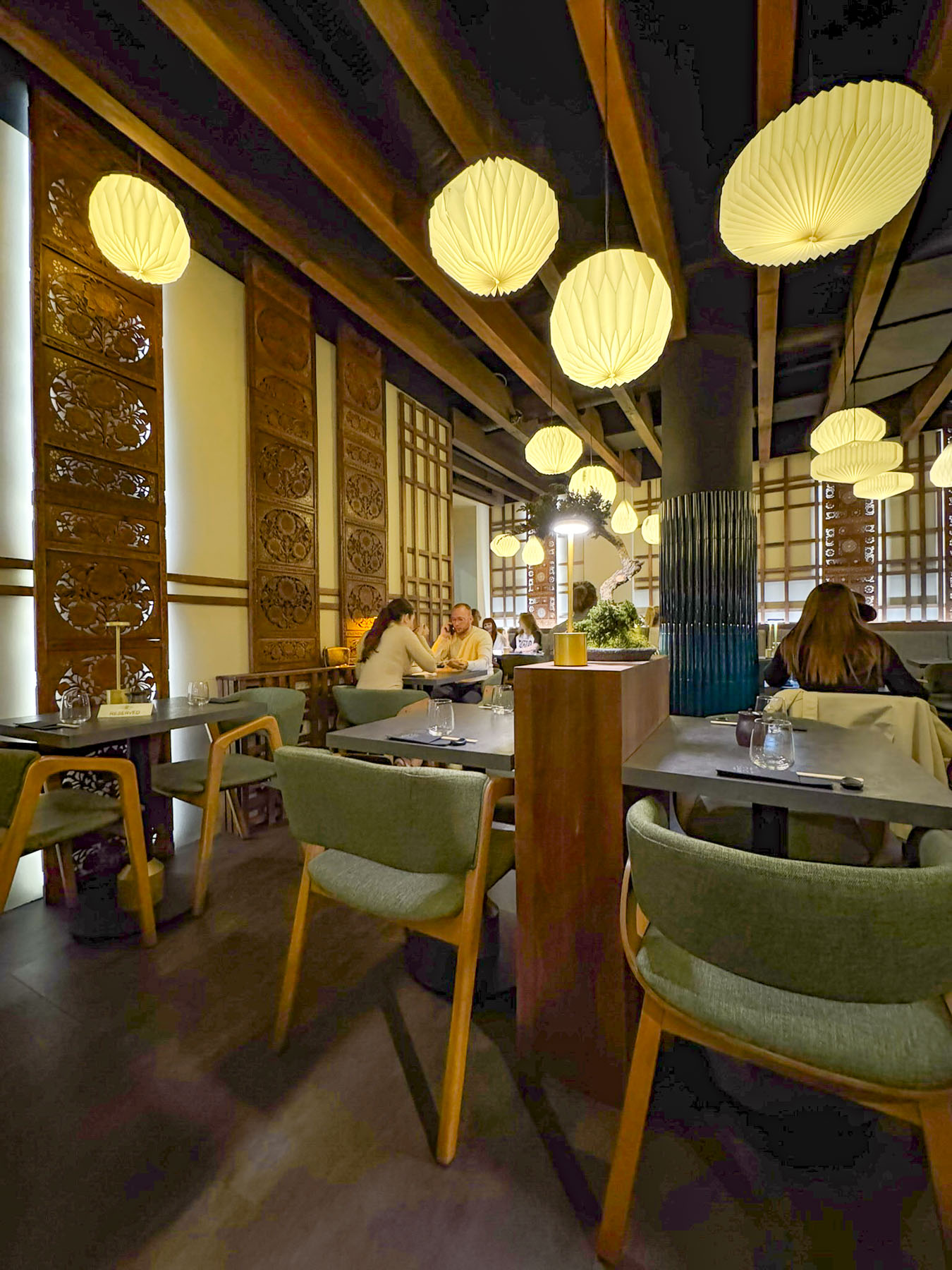
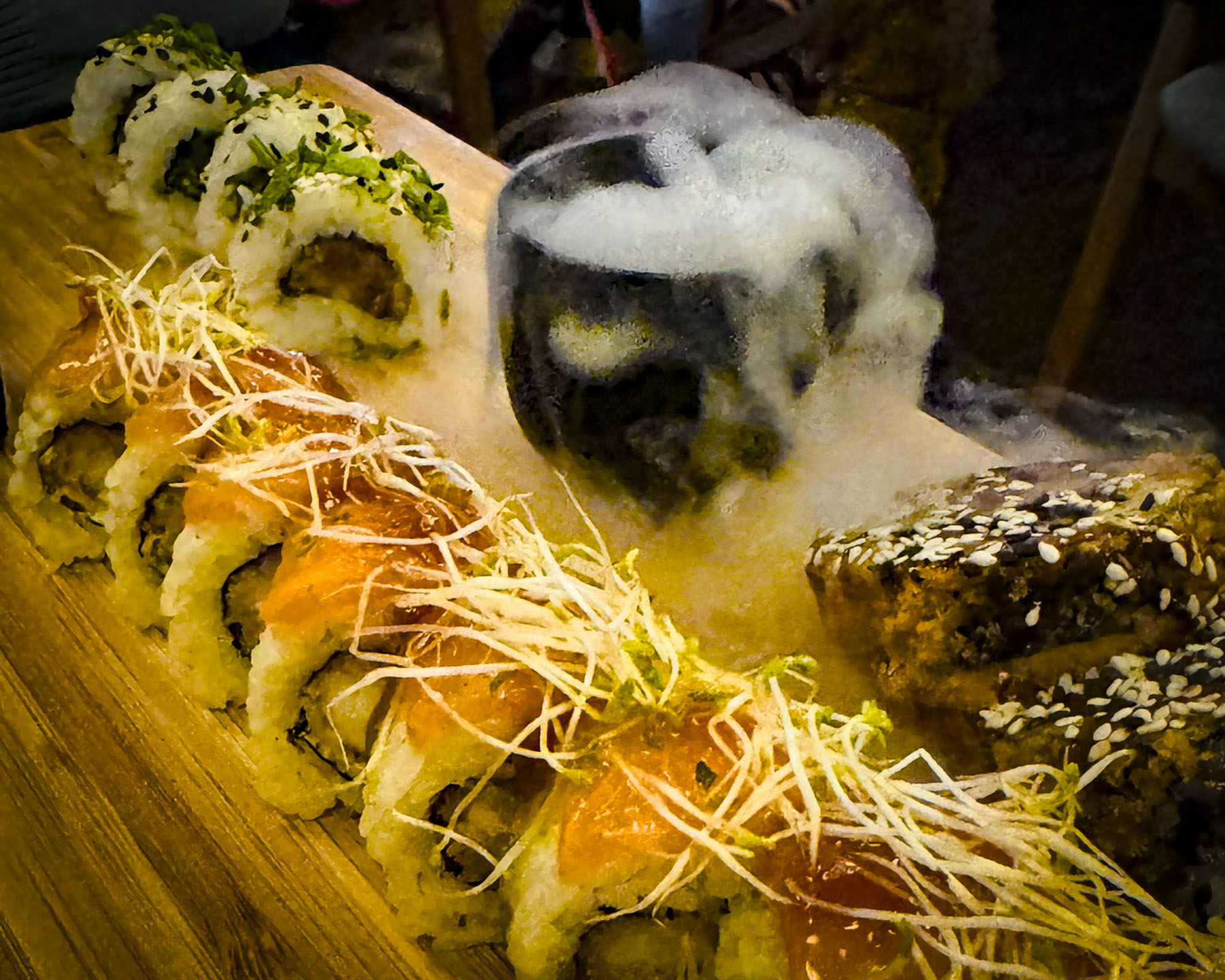
Deterred by the rain from venturing too far from the hotel that night, we found the Evergreen Sushi Bar, several doors down. The restaurant was nicely designed in a casual modern Asian theme. The sushi we ordered was very good and the evening was enhanced with the theatrical presentation of some of the dinners which flowed from the kitchen.  It was a nice change from the traditional Balkan fare which we had been indulging in.

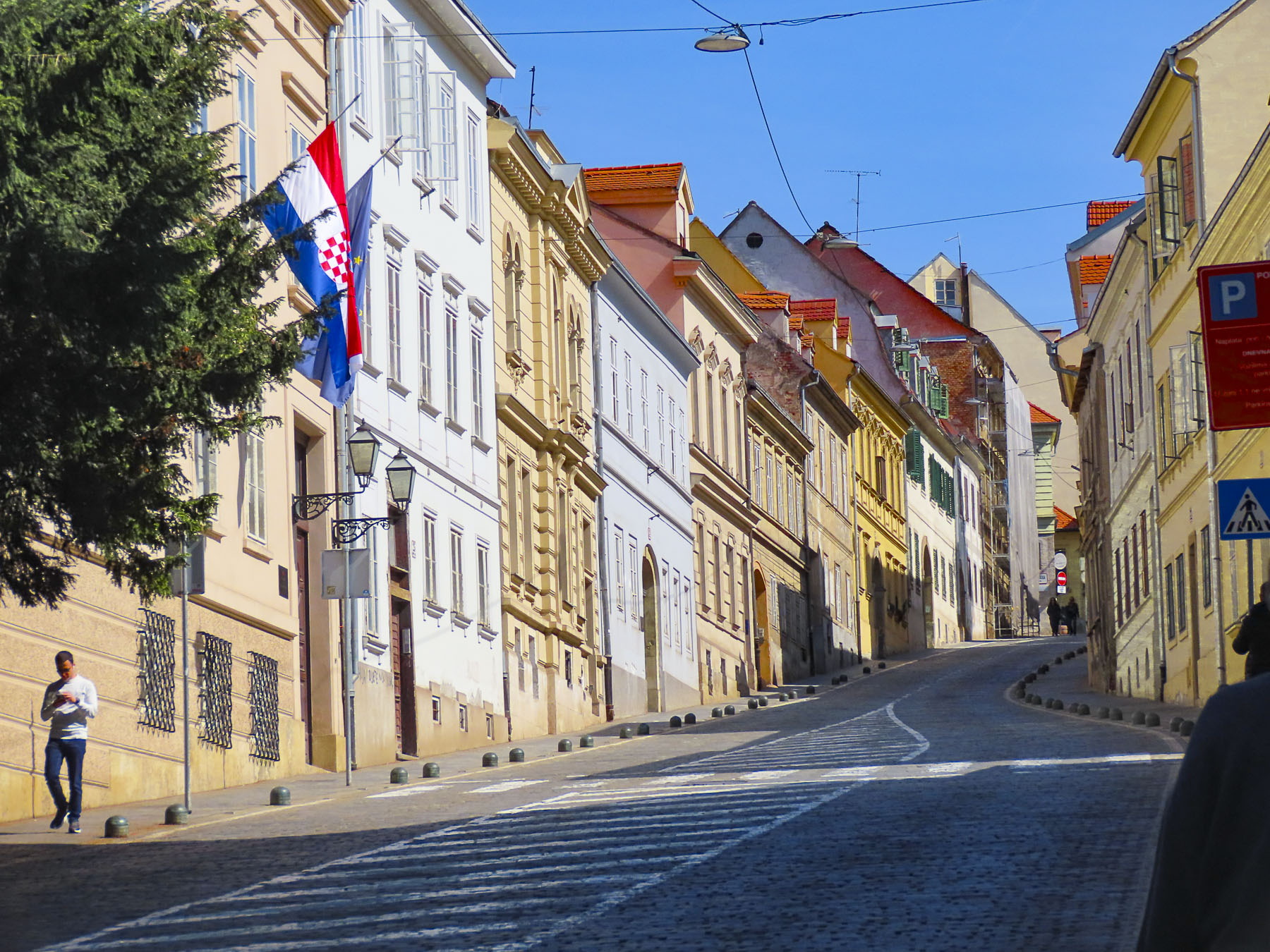
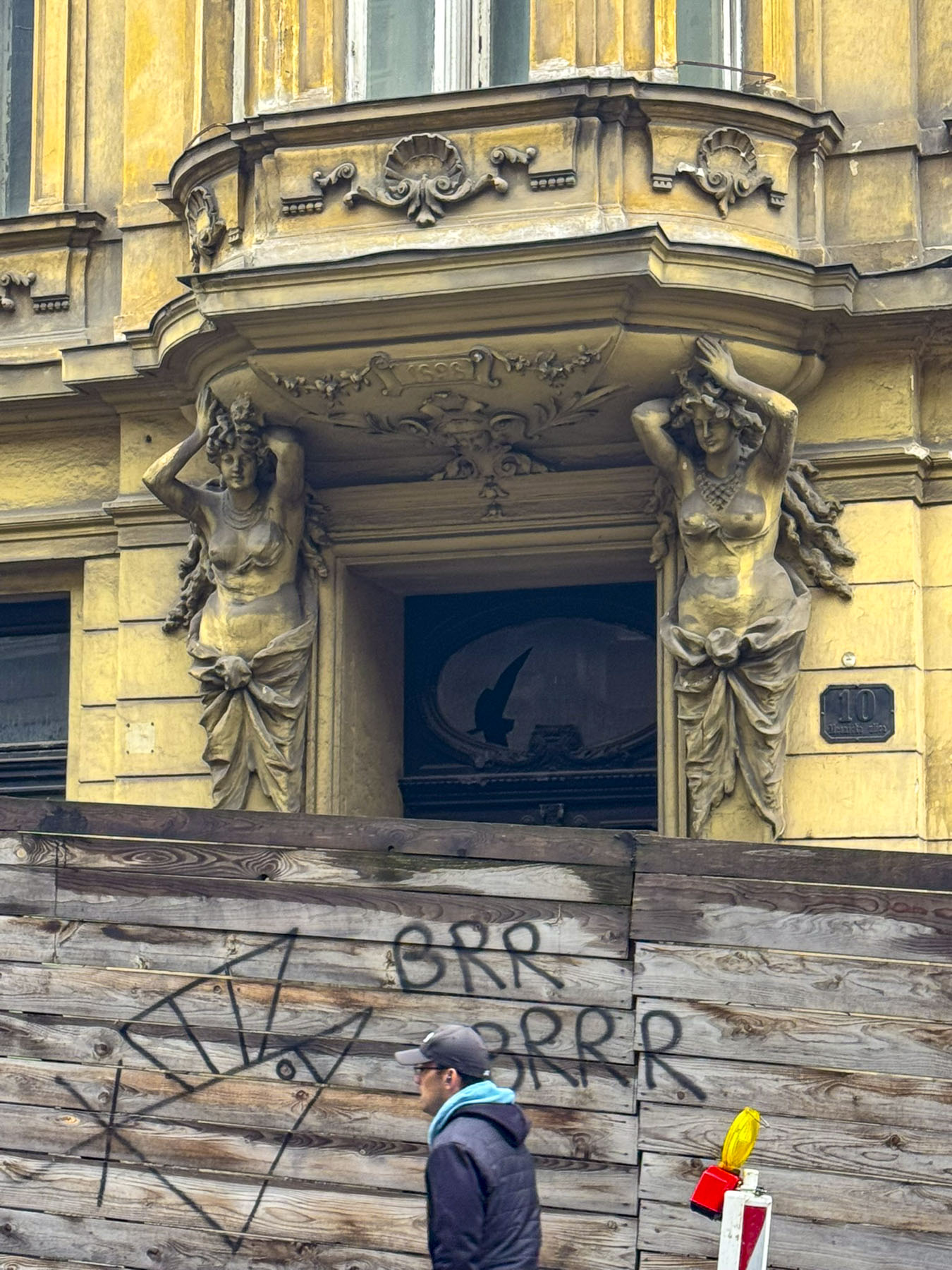
The next morning, we enjoyed the ambiance of the Lower Town’s old buildings as we slowly strolled past the earthen tones of 19th-century Austro-Hungarian architecture. Some had interesting embellishments but had been allowed to deteriorate, and we were pleased to see renovations beginning on these beautiful structures. Our destination was Gornji Grad, and we turned to follow Mesnička ul, a long xsteep street to the Old Town.

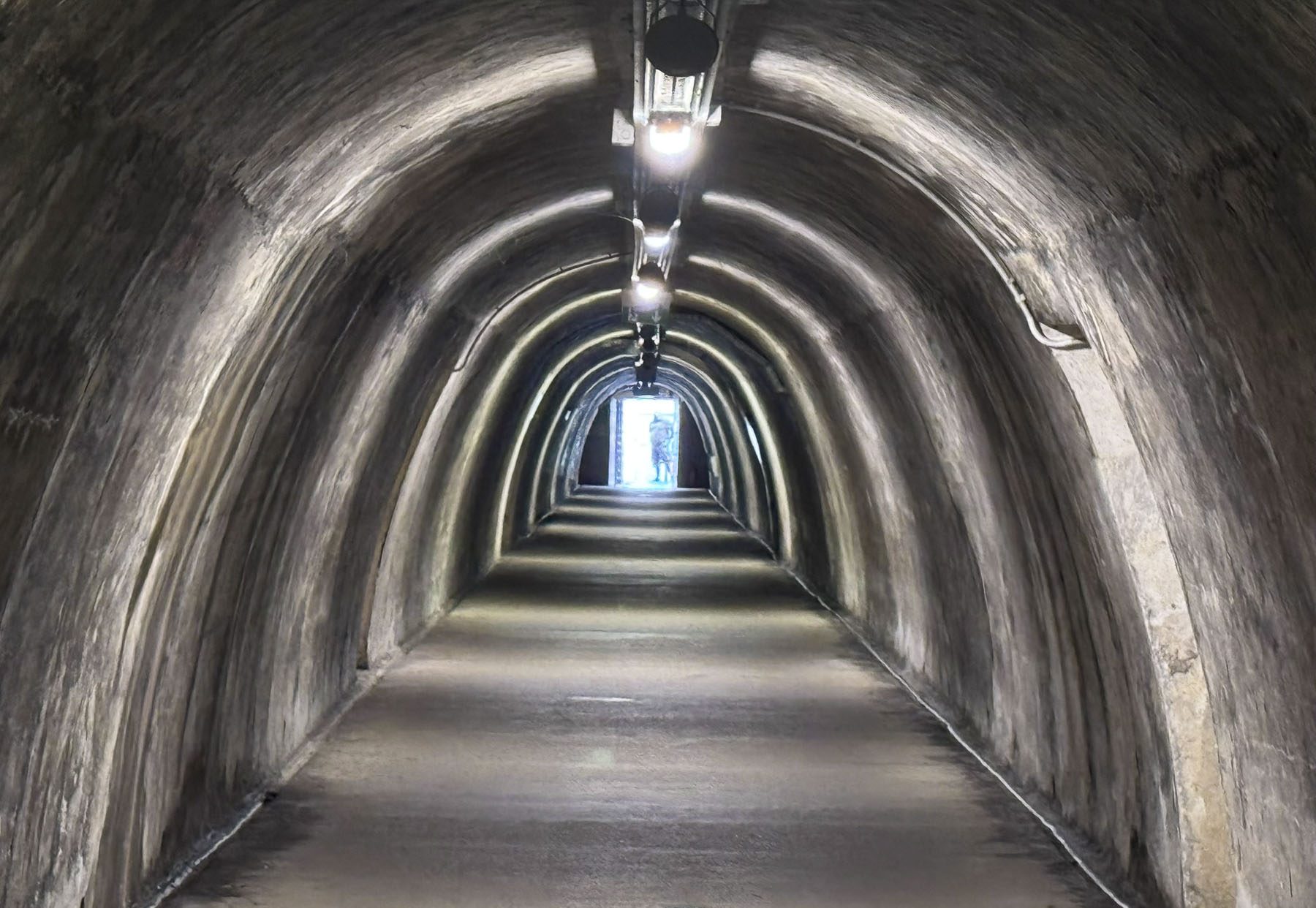
Eighty decades earlier, halfway up the hill, the Croatian government at the time excavated the Tunel Grič during World War II, as a bomb shelter for its citizens. The war ended shortly after its completion and the tunnel was used as a warehouse for many years before being closed and forgotten until it was needed once again to shelter the populace during the Croatian War of Independence in the 1990s. Fortunately for us, after extensive renovations the 350m (1,150ft) long tunnel was reopened in 2016 as a pedestrian passageway and shortcut between the upper and lower town, which saved us from an otherwise strenuous uphill trek to Gornji Grad. Throughout the year the tunnel is also used to host events and art installations. Its most notable transfiguration is during the Christmas holiday season when the tunnel is turned into an enchanting winter wonderland.

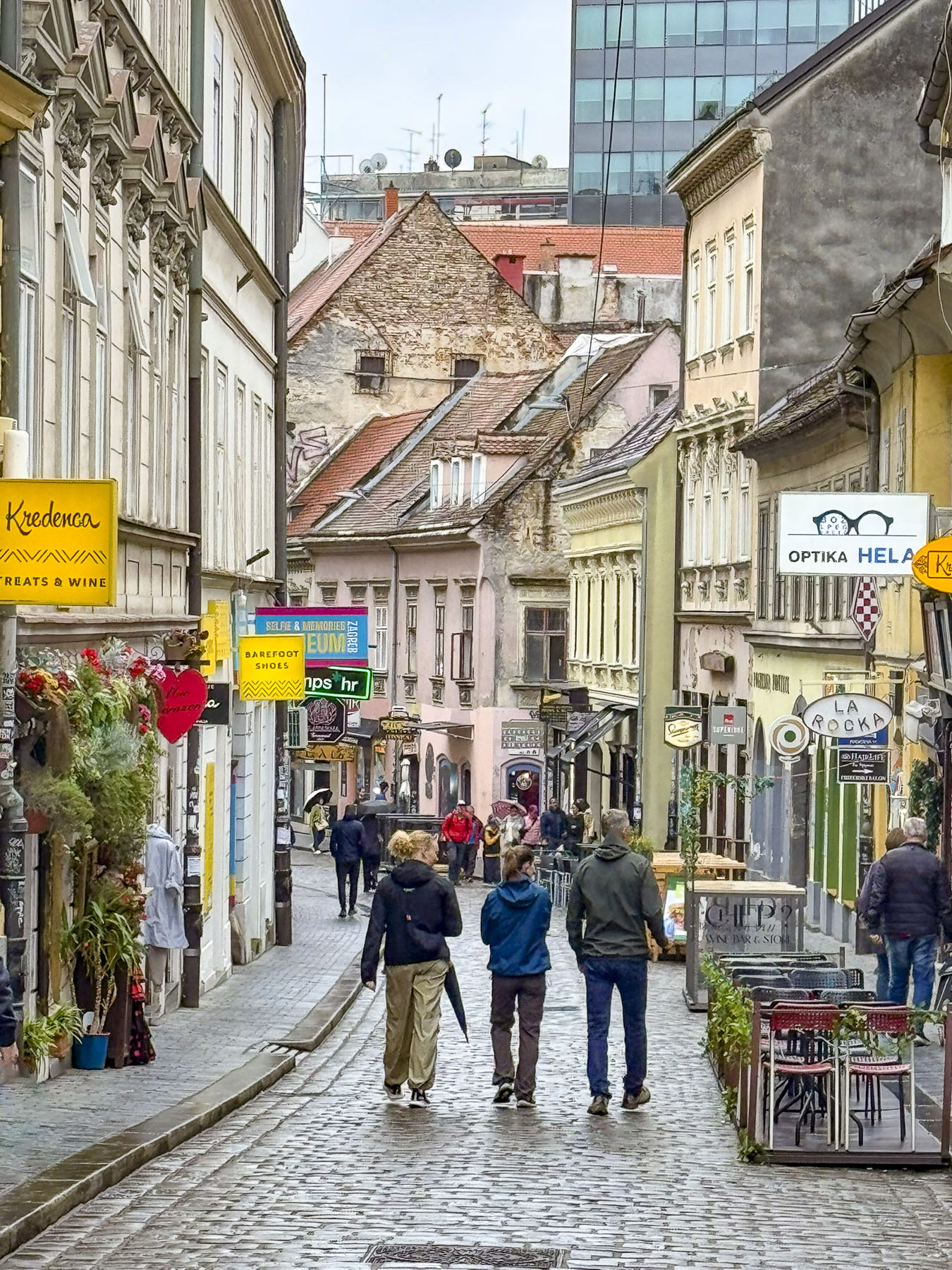
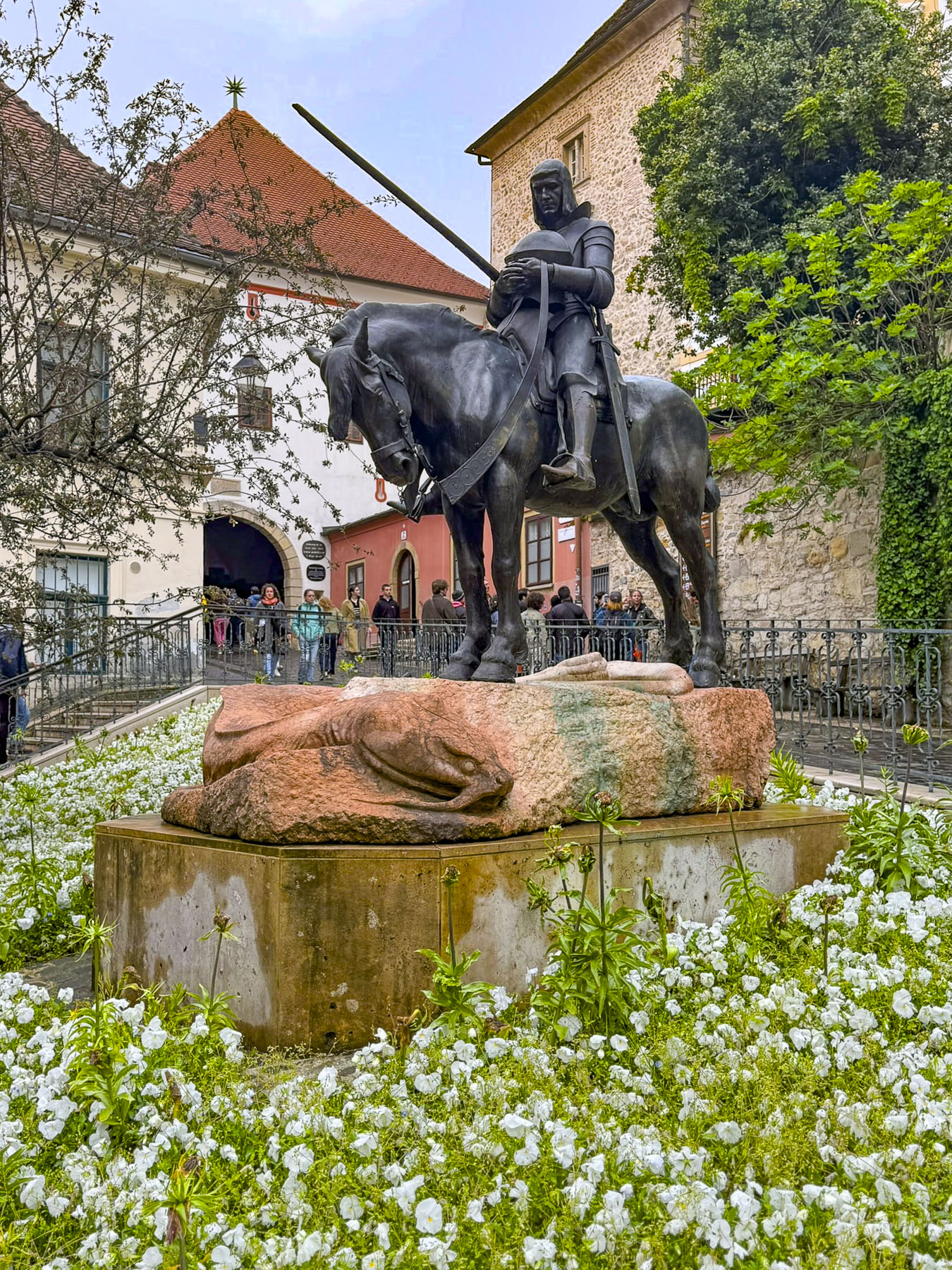
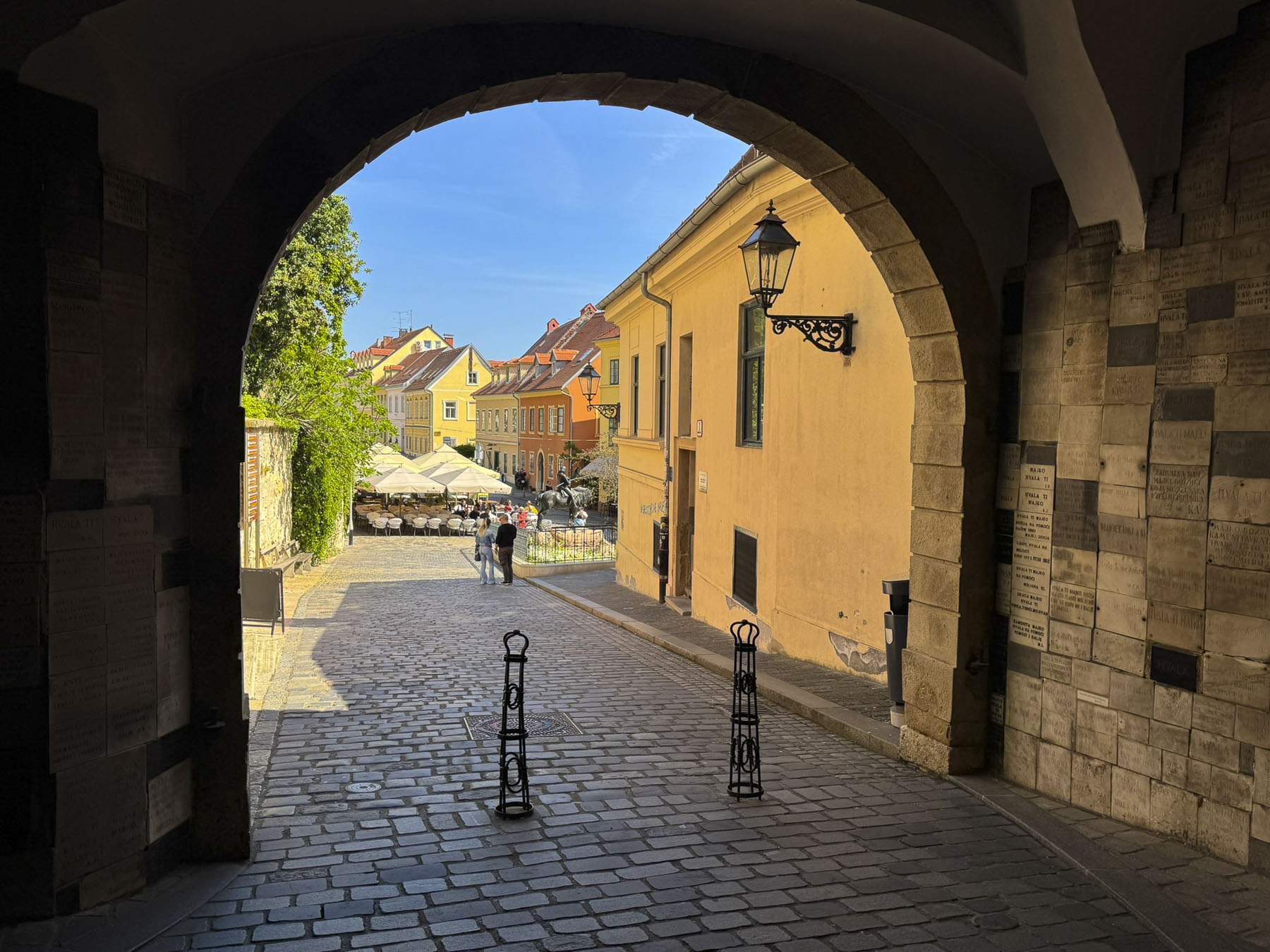
At the far end the tunnel opened to Ul. Pavla Radića, a charming, historic cobblestone lane that was for centuries the primary connection between the lower and upper towns. Today it’s lined with shops, cafes and galleries as it runs downhill to Trg bana Josipa Jelačića, Zagreb’s central square or uphill, the direction we were going, to Kamenita Vrata, Gornji Grad’s old stone gate. An equestrian statue of Saint George guarded the entrance to the Upper Town, across from pastel toned buildings, which were a nice change from the ubiquitous sandstone facades.

Kamenita Vrata is Zagreb’s last surviving Medieval stone gate. Its construction was started in the mid-1240s after the first Mongol invasion by the army of Great Khan Ögedei, the third son of Genghis Khan; his campaign left a swath of destruction across the Balkans, and Zagreb in ruins.

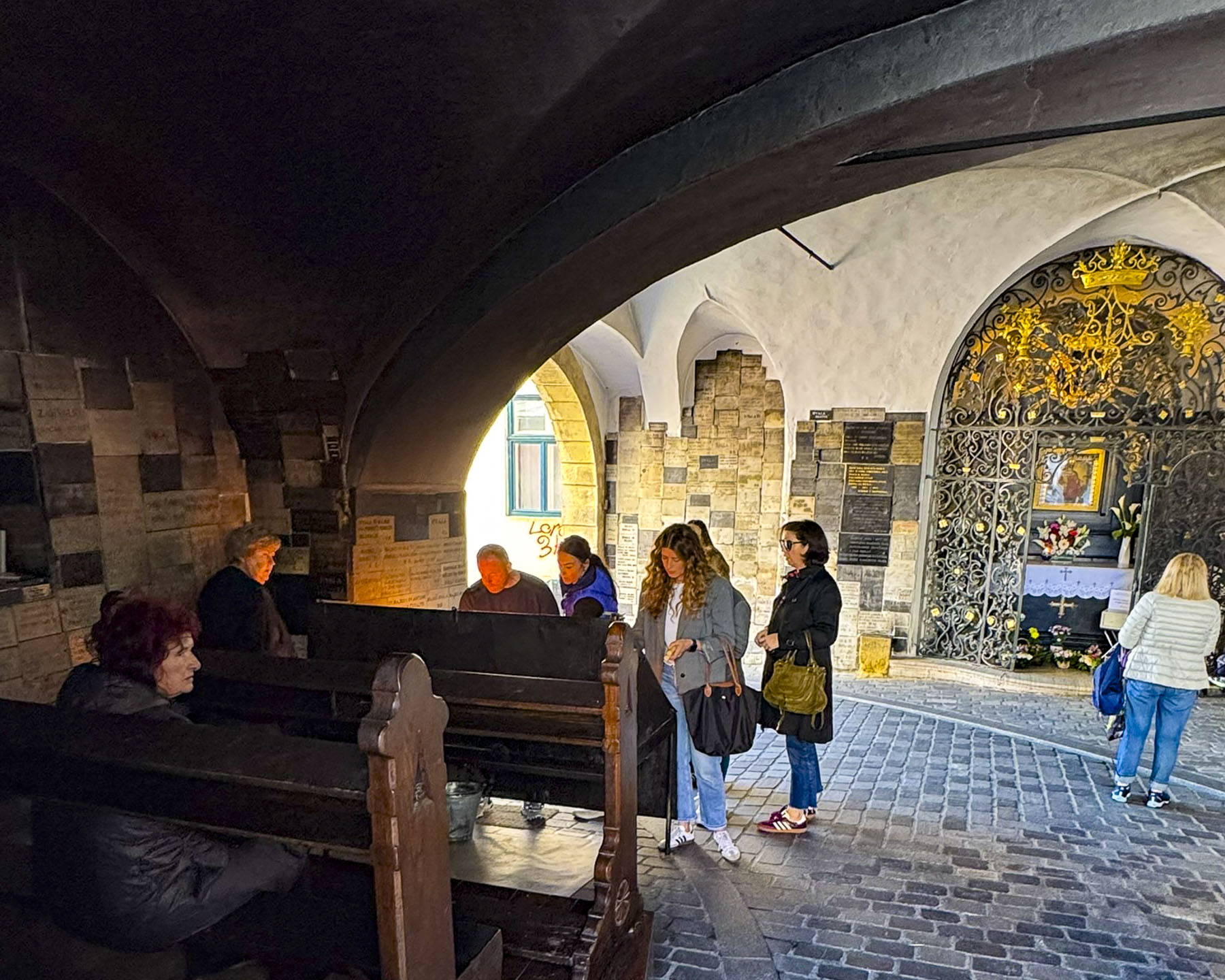
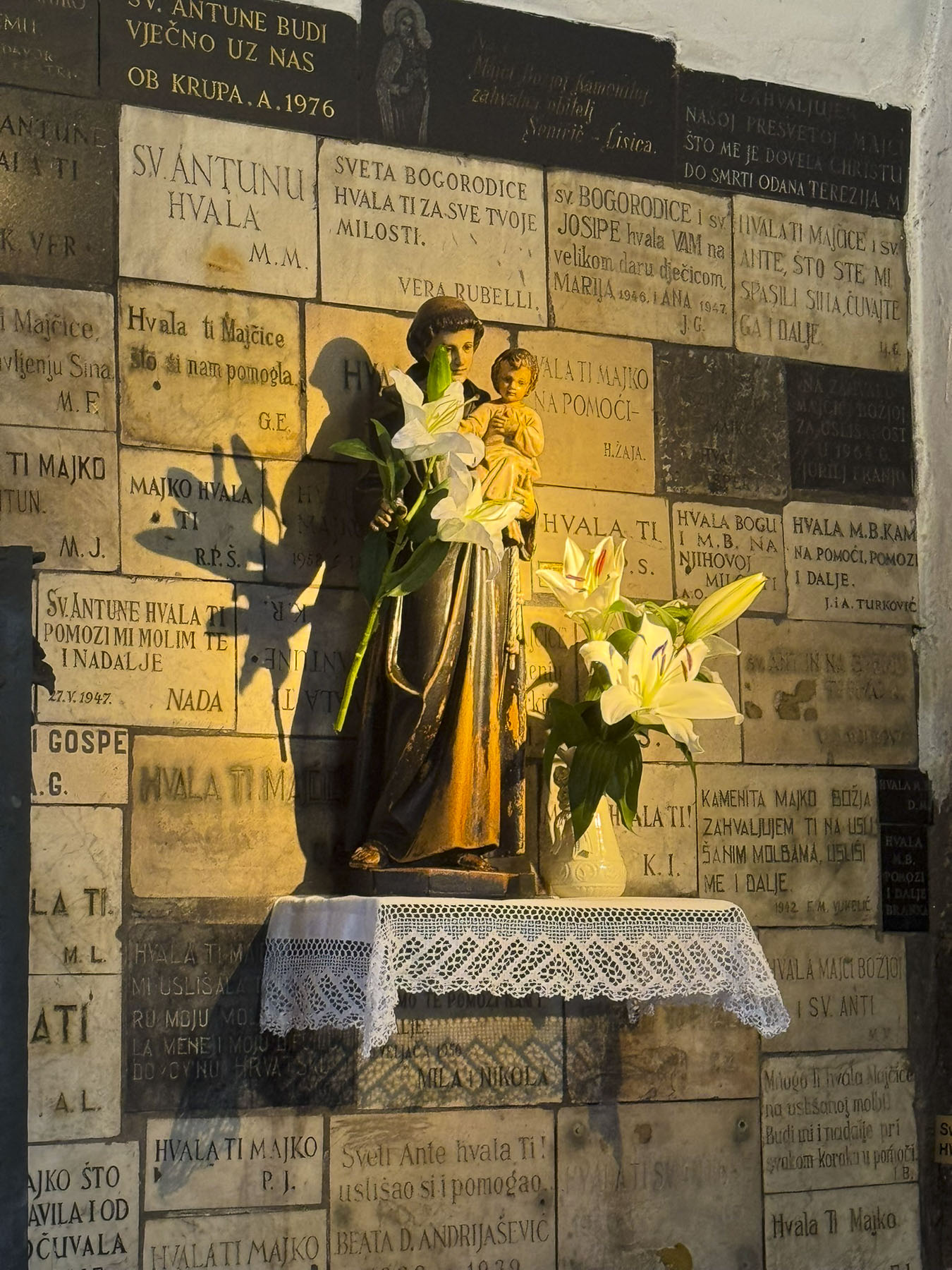
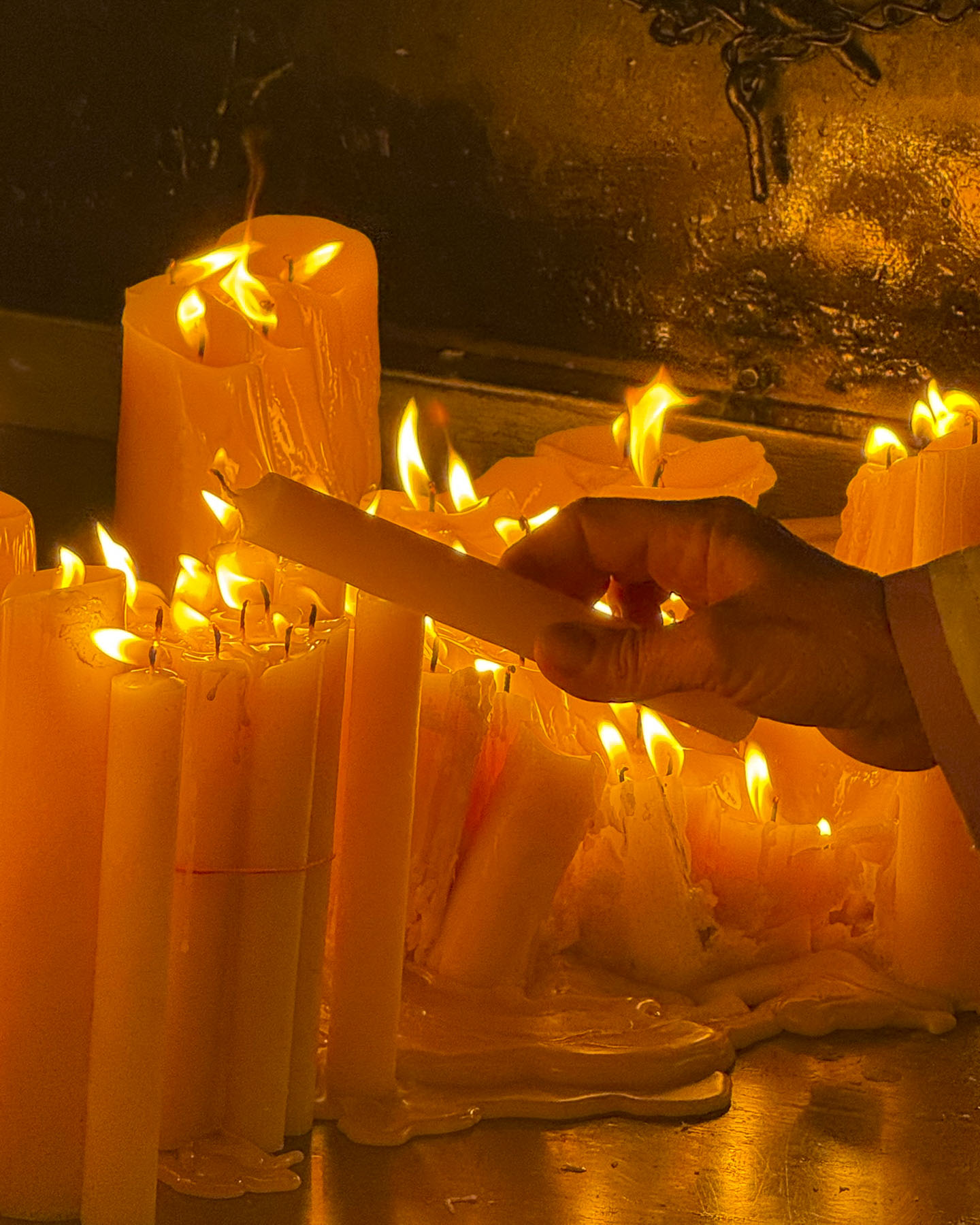
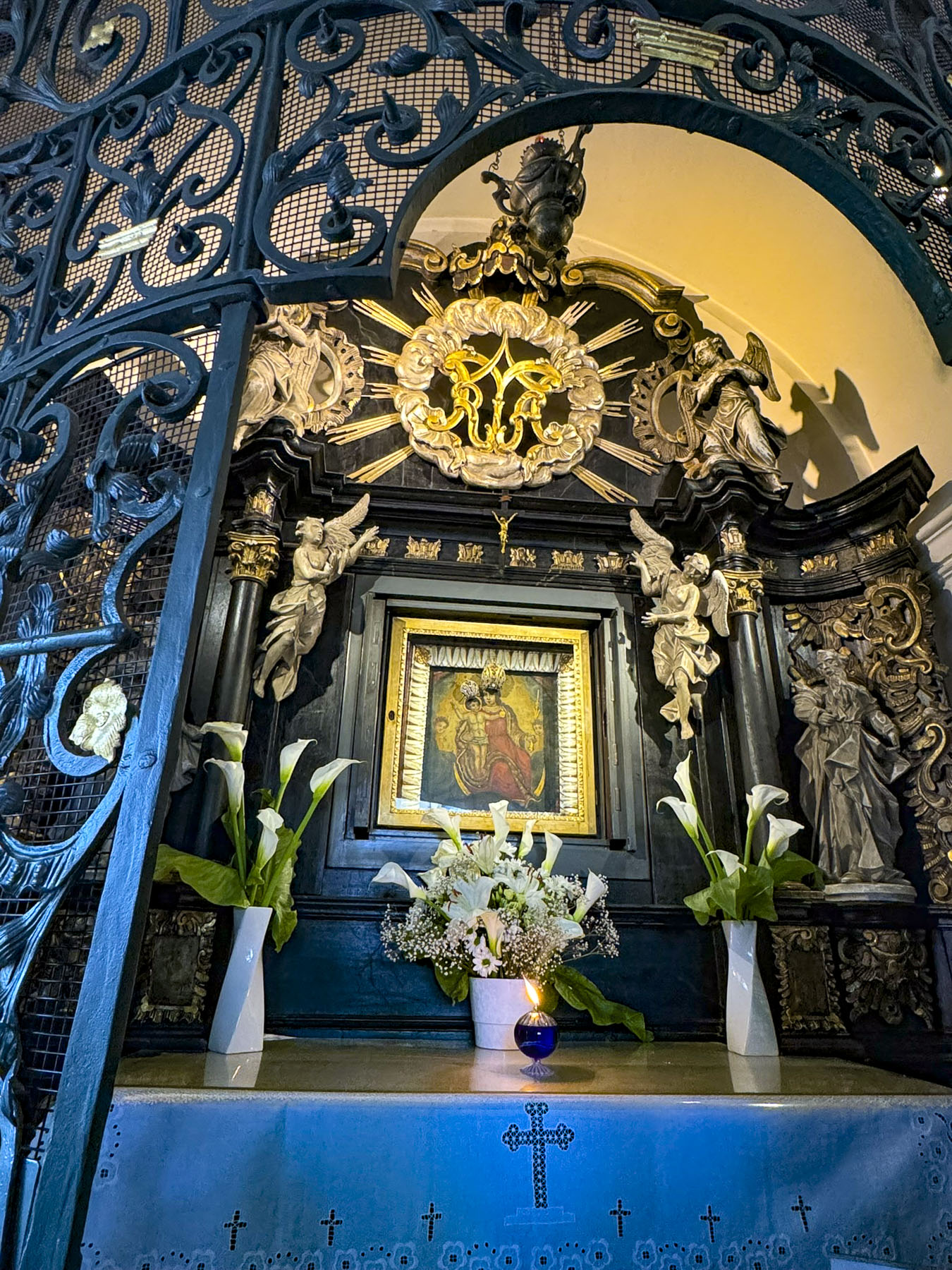
Within the gateway is an actively used shrine to the Virgin Mary. Legend believes the shrine’s painting was found miraculously untouched in the tower’s ashes after Zagreb’s Great Fire of 1731. The icon has become a symbol of the city’s resilience, and a popular spot for contemplation and candle lighting, surrounded by marble plaques hanging on the walls offering thanksgiving to Mary for answering folks’ prayers.

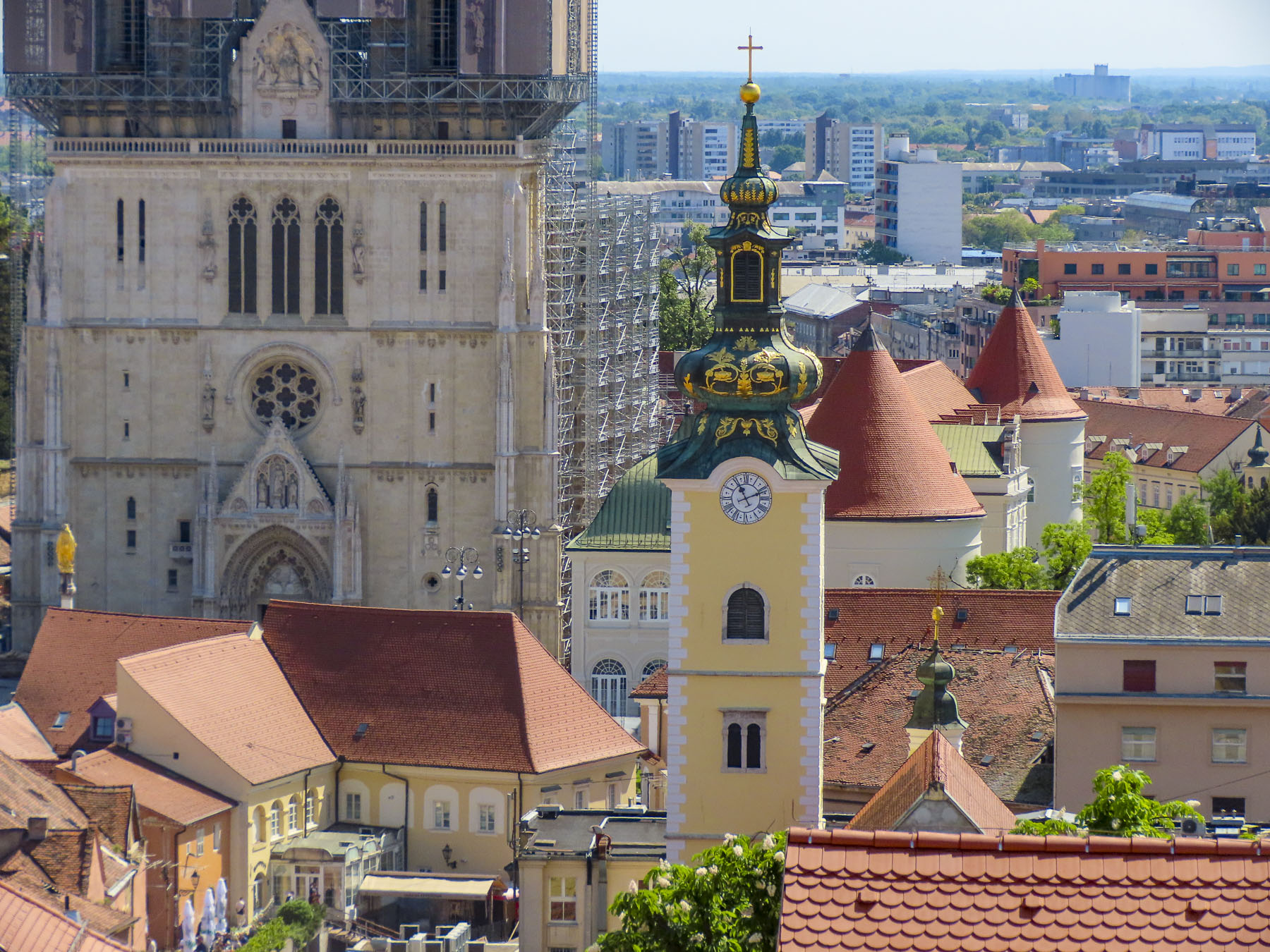
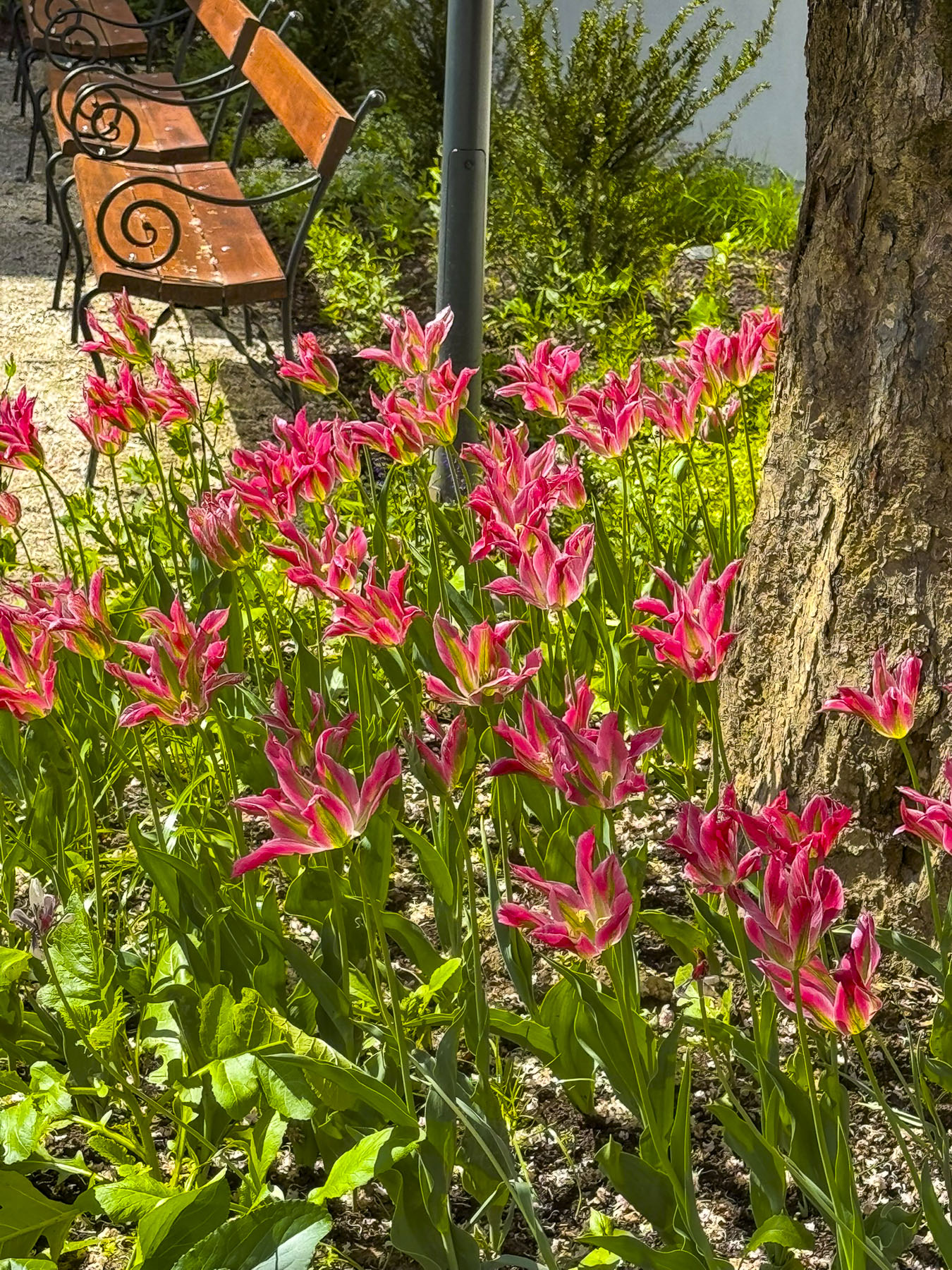
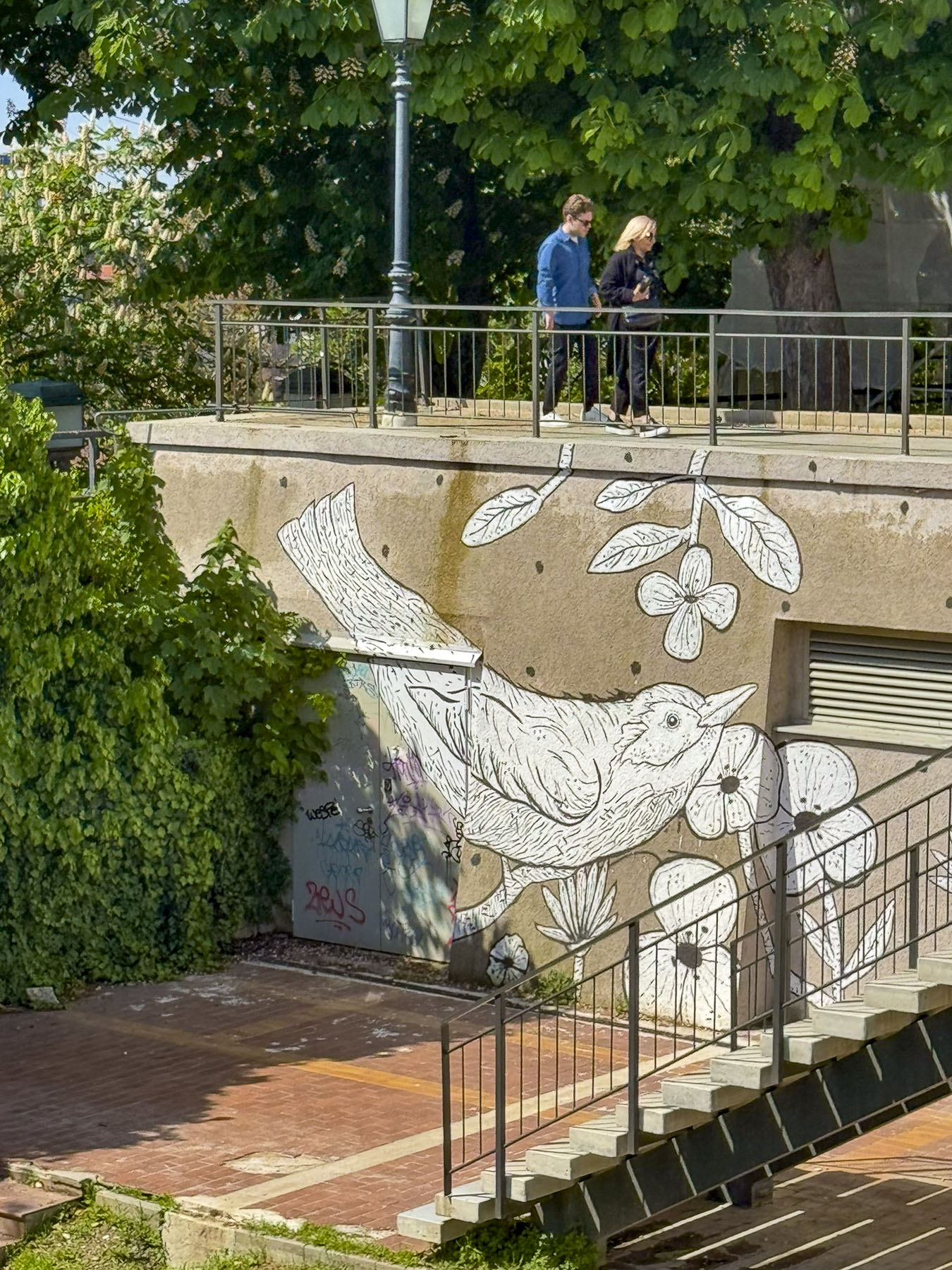
Through the gate we wondered along to Plato Gradec, a small plaza with murals and a view of 14th century Zagrebačka Katedrala, Cathedral of Zagreb, which was wrapped in construction scaffolding as it undergoes a multi-year renovation to repair structural damage it suffered during the 2020 5.5-magnitude earthquake that struck the region 140 years after an 1880 quake damaged it significantly. The first flowers of spring were blooming in a sheltered patch of sunlight.

From here we walked to the Love Rails, a romantic spot that overlooks the Lower Town, and where couples symbolize their commitment to each other by attaching love locks. Lower on the hillside are the Zakmardi Steps, a colorful graffiti-lined narrow alley, that leads to Ul. Pavla Radića street or the funicular station. Instead, we chose to follow the tree shaded Strossmayer Promenade, a charming historic walkway, built with public donations, atop the foundations of the Upper Town’s old defensive ramparts in the mid19th-century. It is named for the influential Bishop Josip Juraj Strossmayer, who served the people of Croatia for 55 years, and was admired for “the unwavering loyalty and affection he demonstrated for his people despite encountering significant opposition from both the Pope and the Austrian Emperor.”

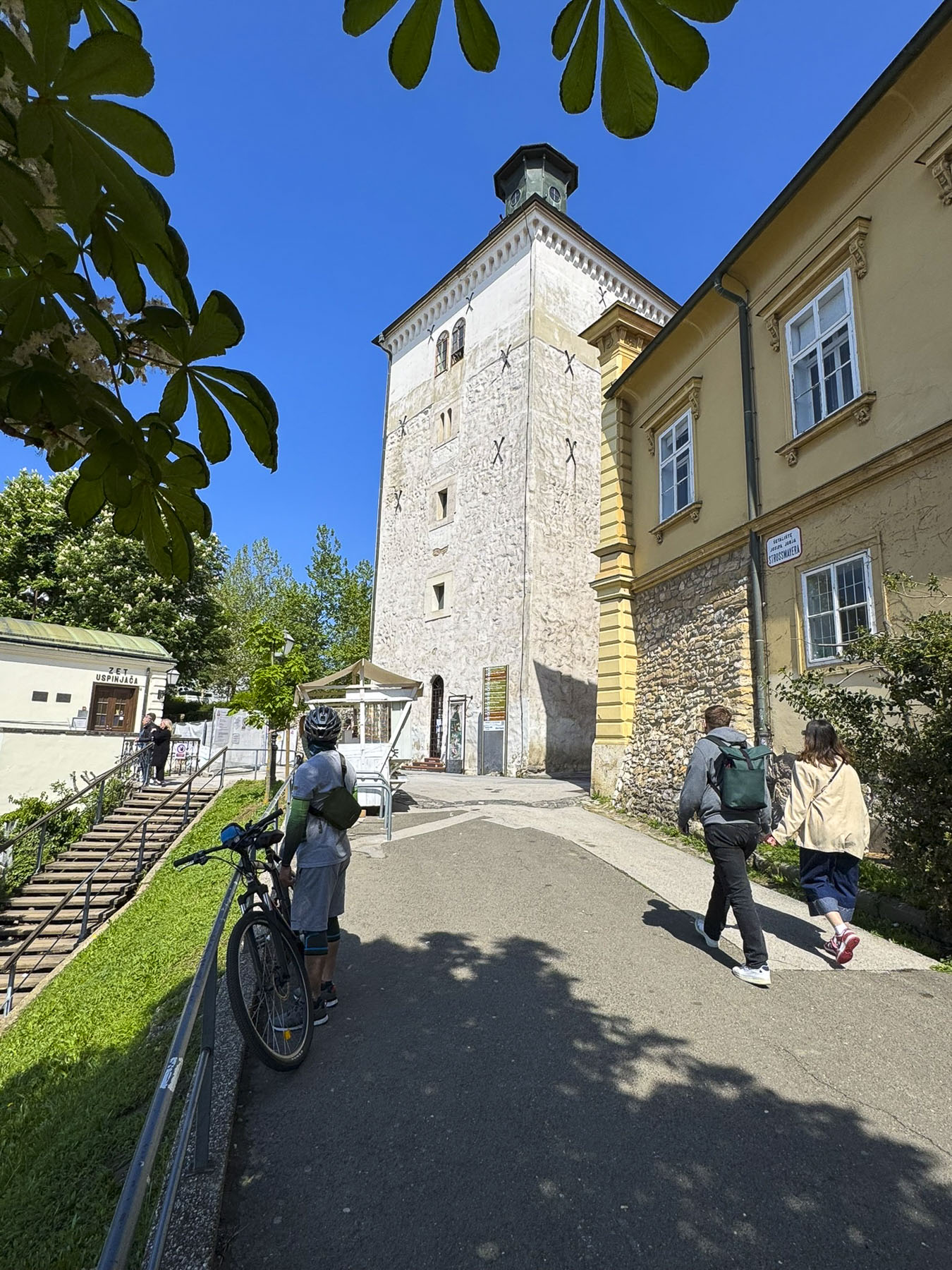
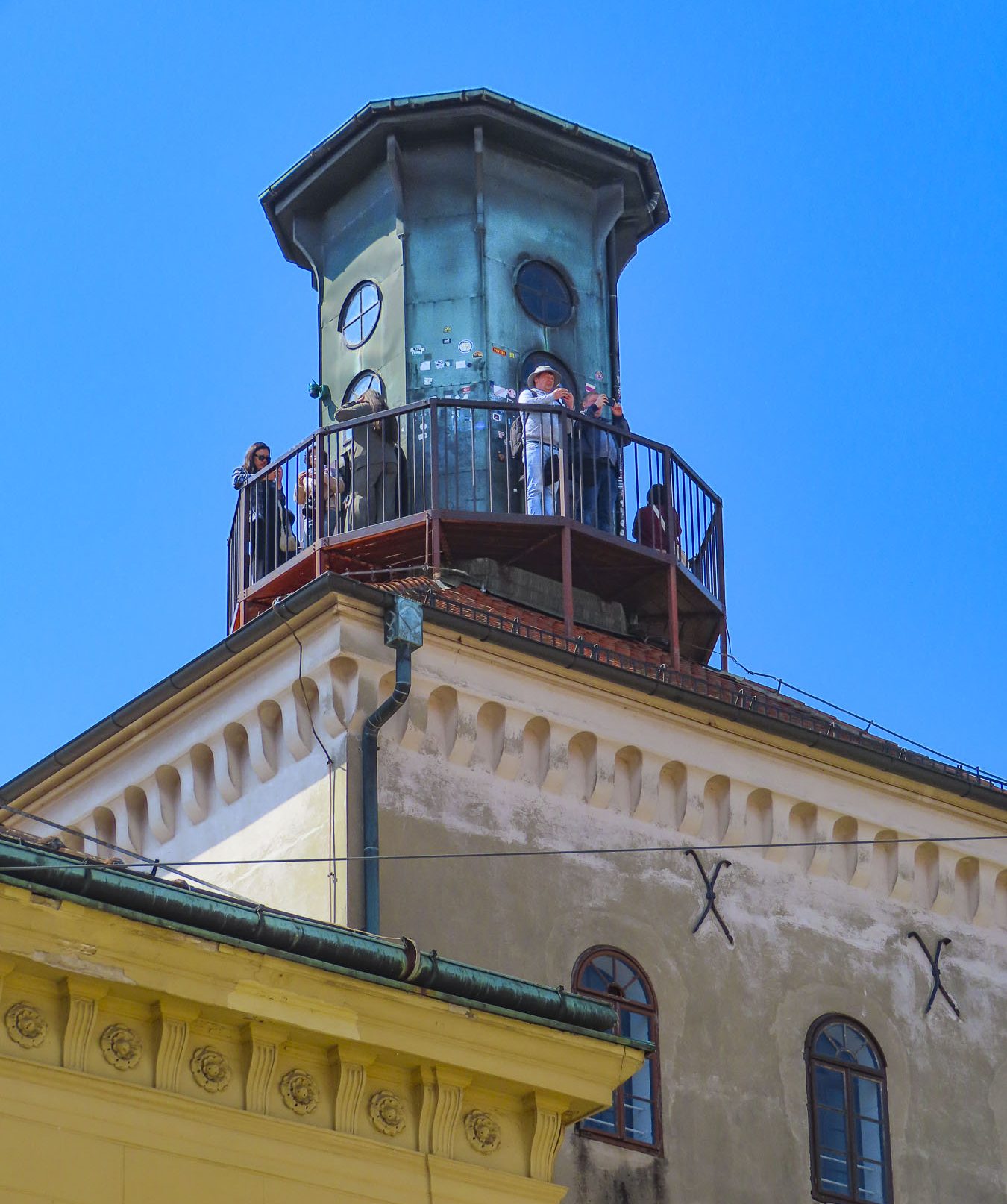
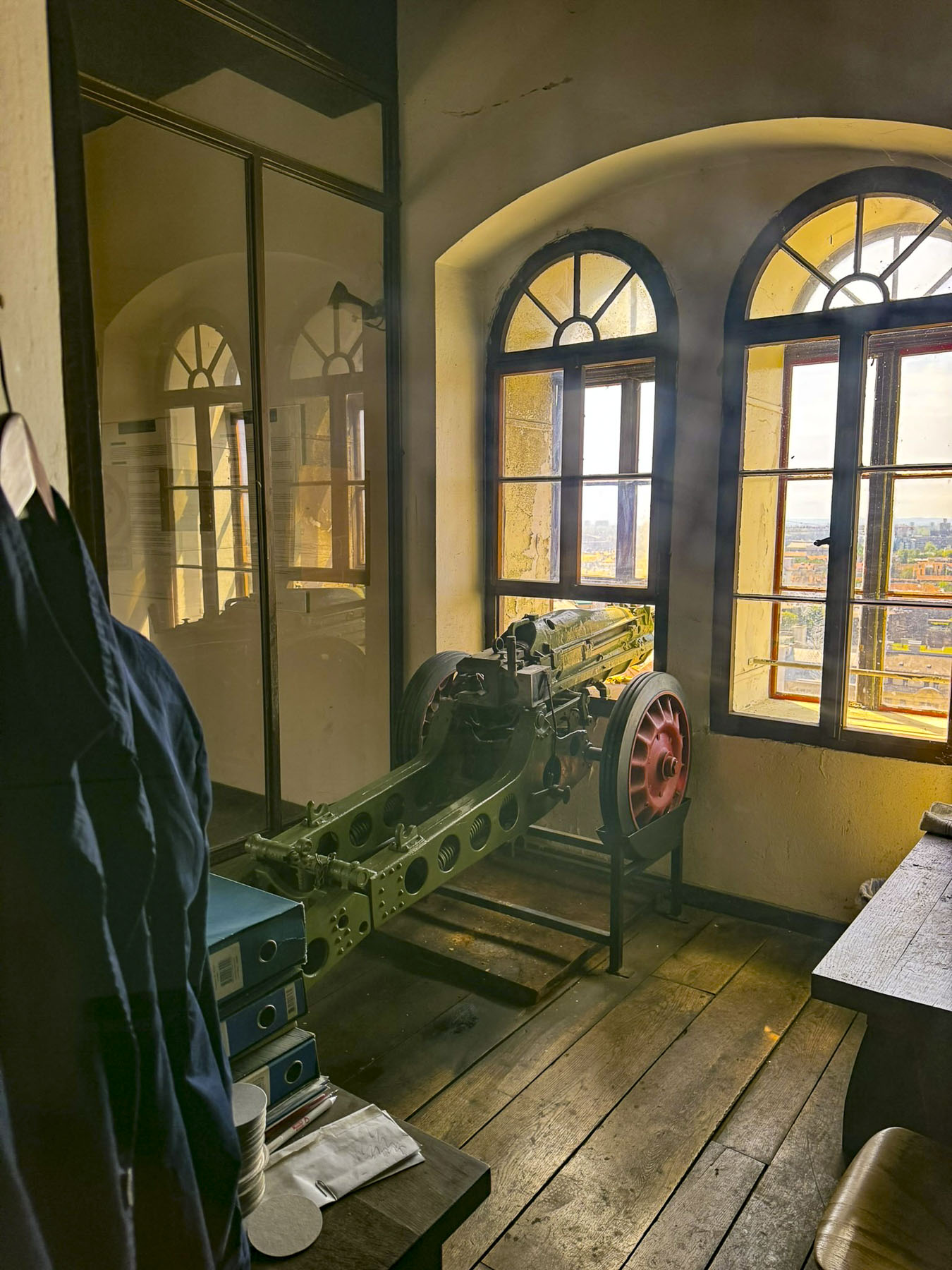
Nearby was Lotrščak Tower, as old as the Stone Gate; it gets its name from its medieval “thieves’ bell,” which rang every night to announce its closing until sunrise the next day. The tower was spared during the demolition of the citadel’s ramparts in the 18th and 19th centuries, as the town expanded. Originally shorter, additional floors were added to the tower in the late 1800s. In 1877, the Grič Cannon, a signal cannon, was fired from the tower for the first time to mark high noon. The city’s bellringers synchronized with the cannon in order to ring the church chimes at the proper moment later in the day. It’s a long-standing tradition that still continues.

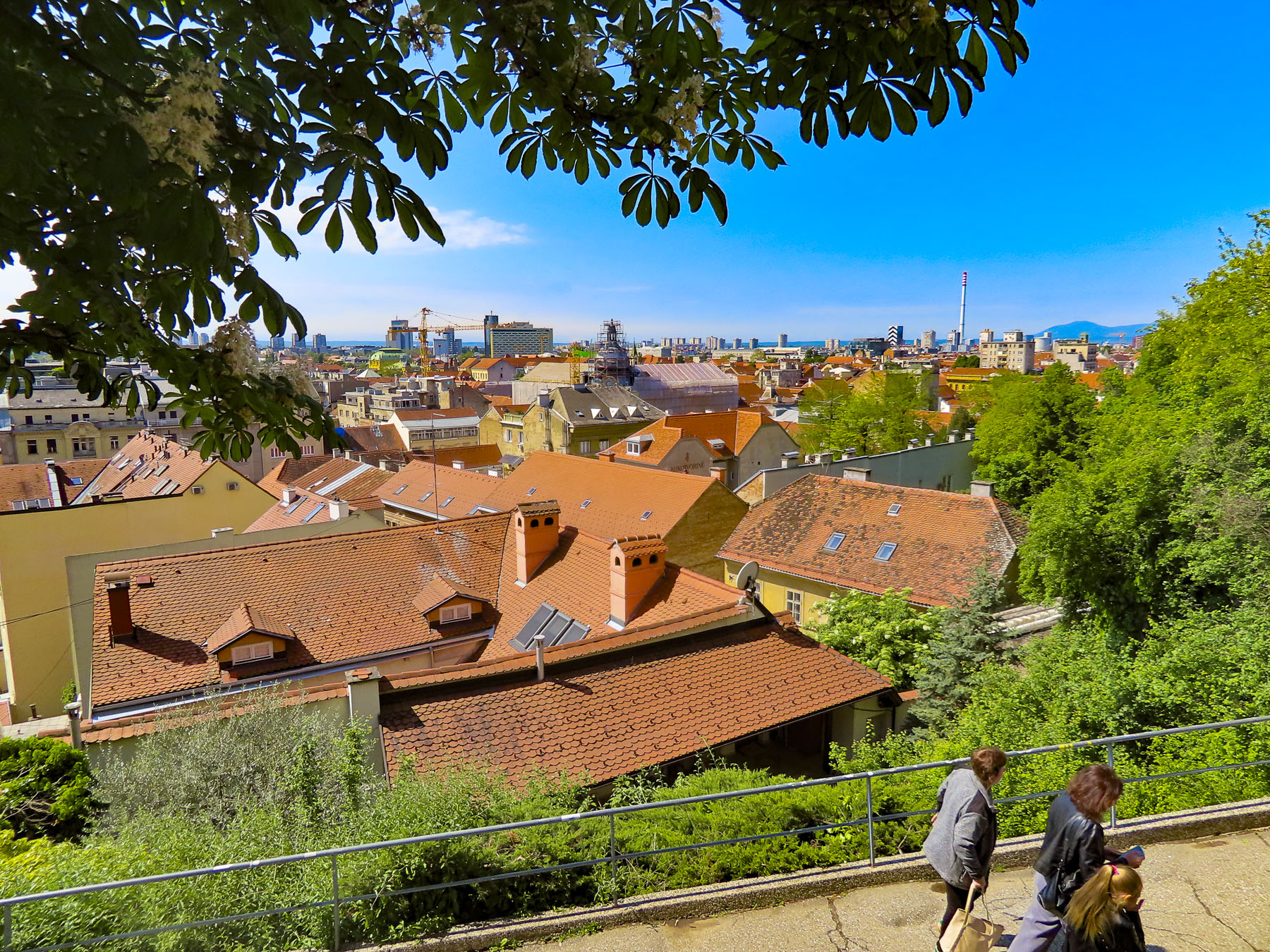
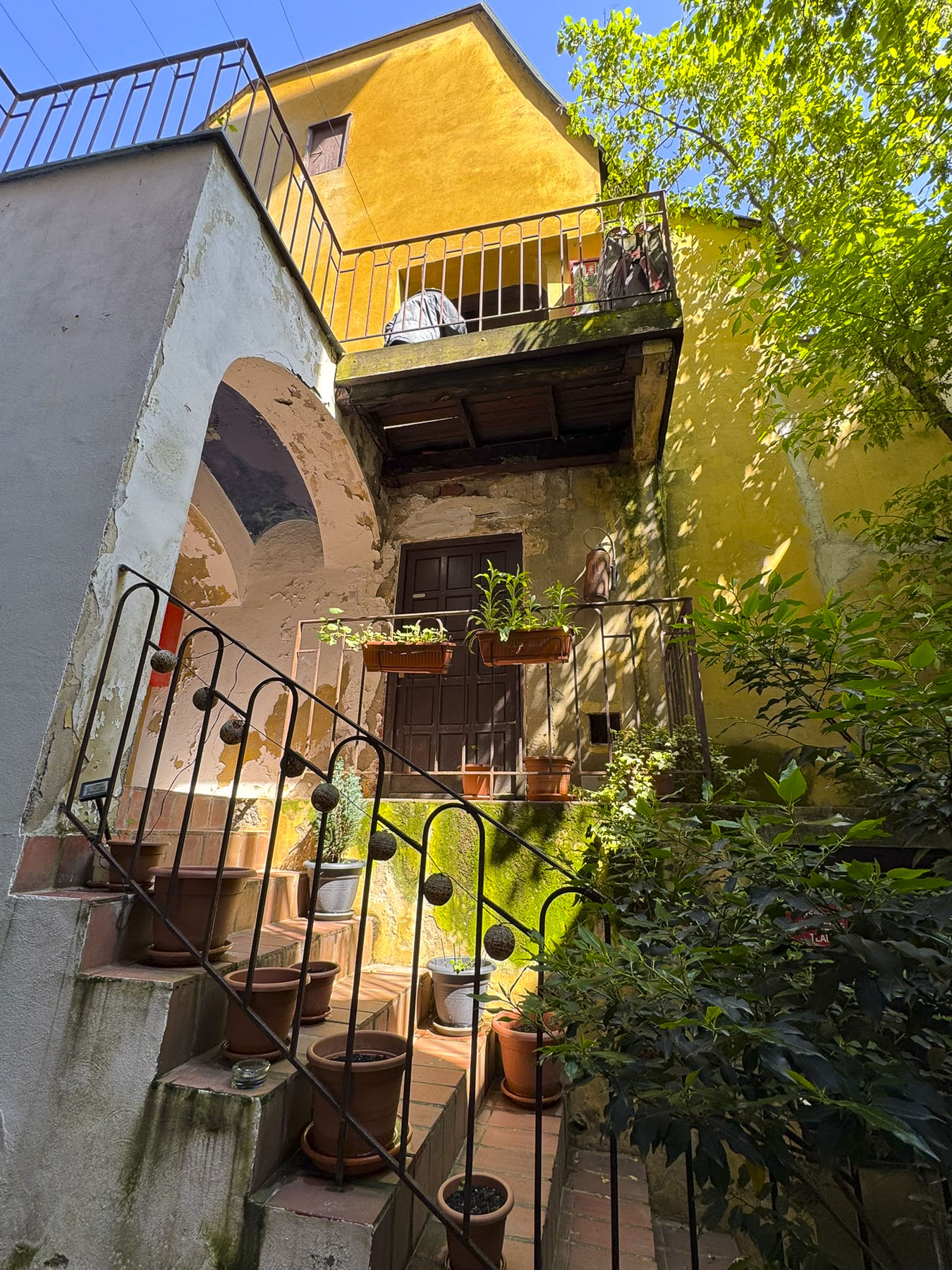
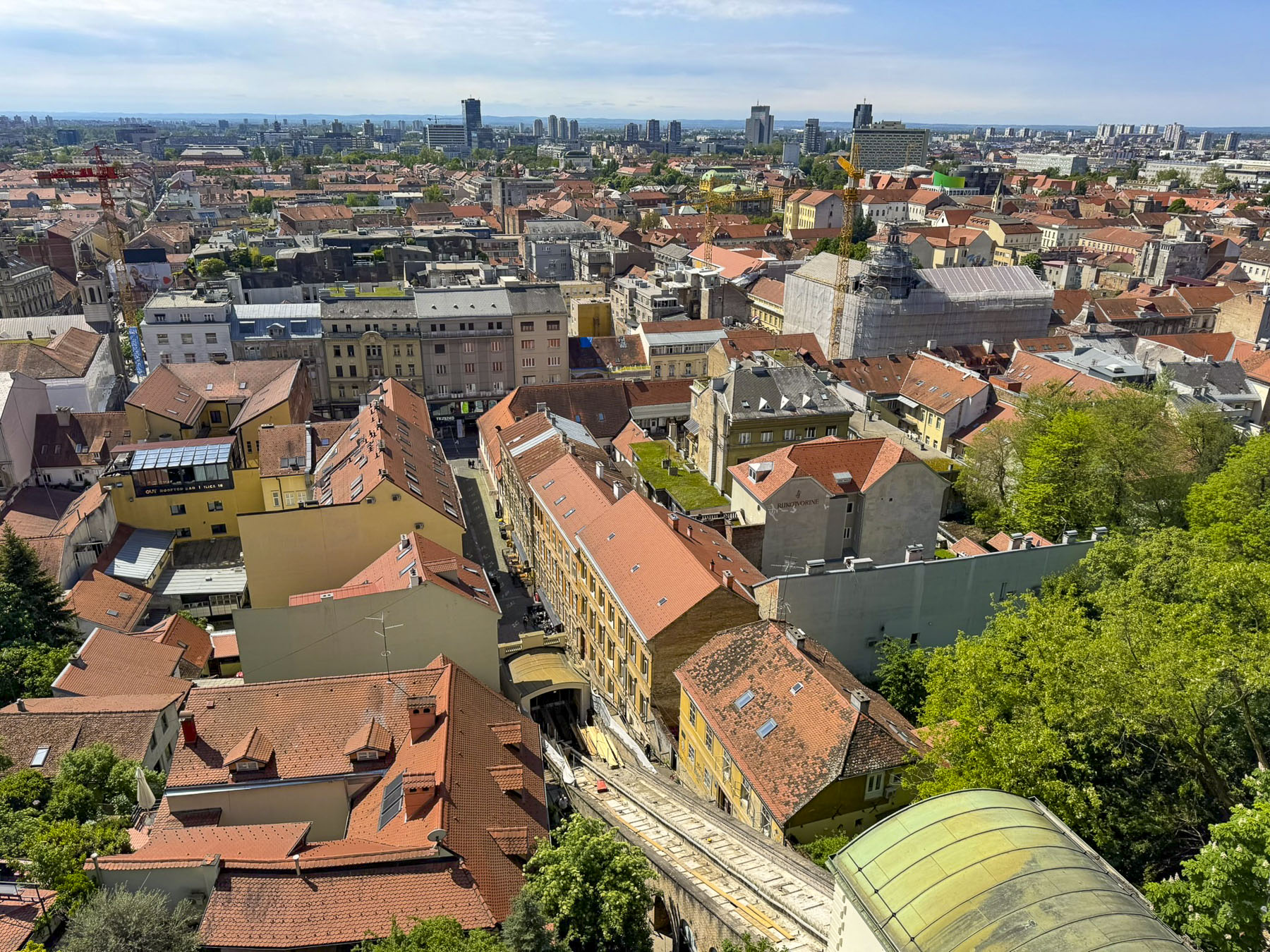
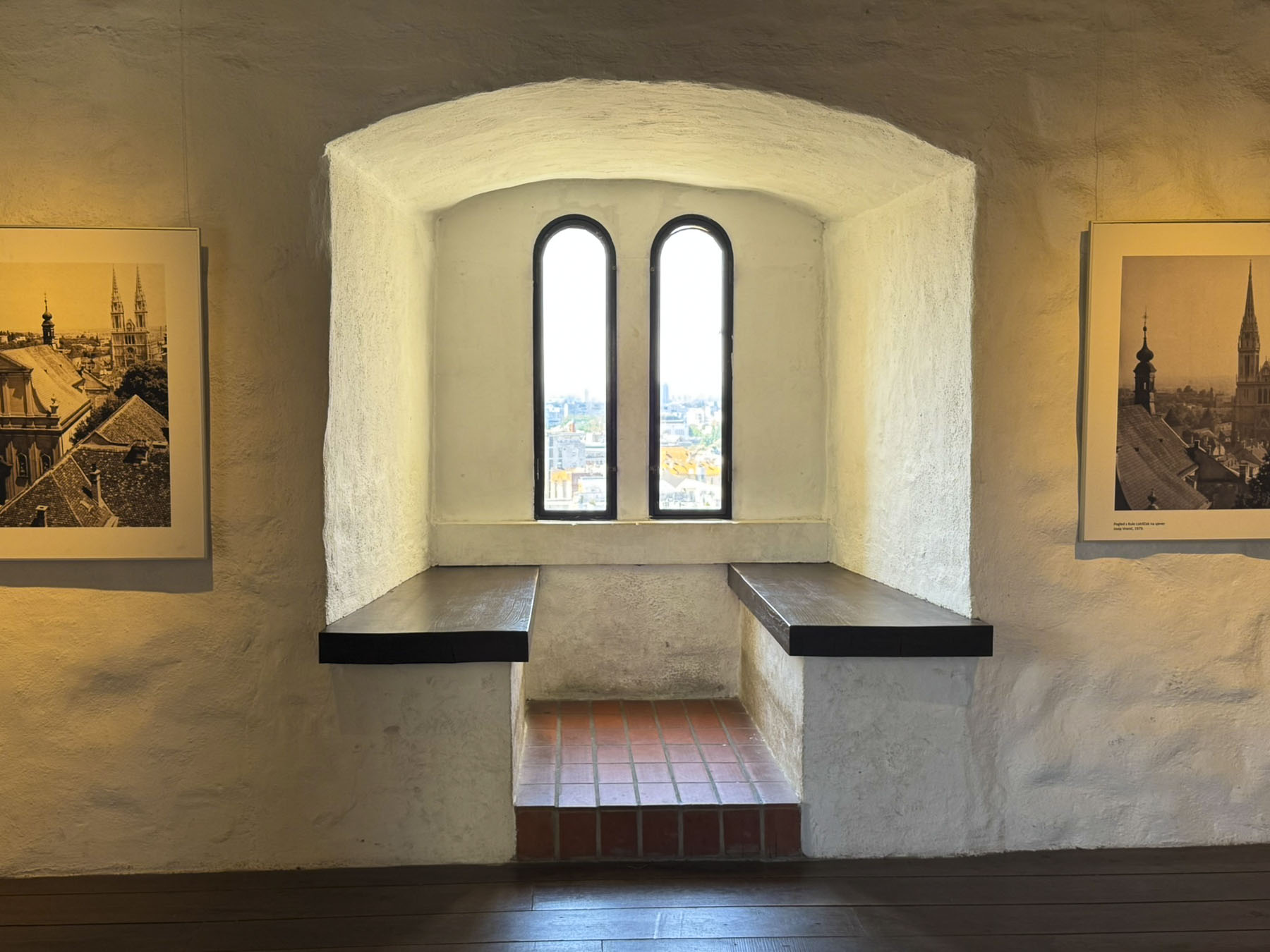
The climb to the top started across from an exterior residential staircase, artfully lined with colored pots, before entering the third and fourth floors which showcase historical photographs of the city, hung on the tower’s nearly 1.2m (4ft) thick walls and the Grič Cannon. If you are scared of heights, windows on these levels offer safe vantage points for views over the city instead of continuing the climb up the old spiral staircase to the polygonal shaped fire observation tower and its catwalk. The catwalk was quite jammed when we visited, but the panoramic views over old Zagreb and its modern skyline dotted with construction cranes were fantastic.

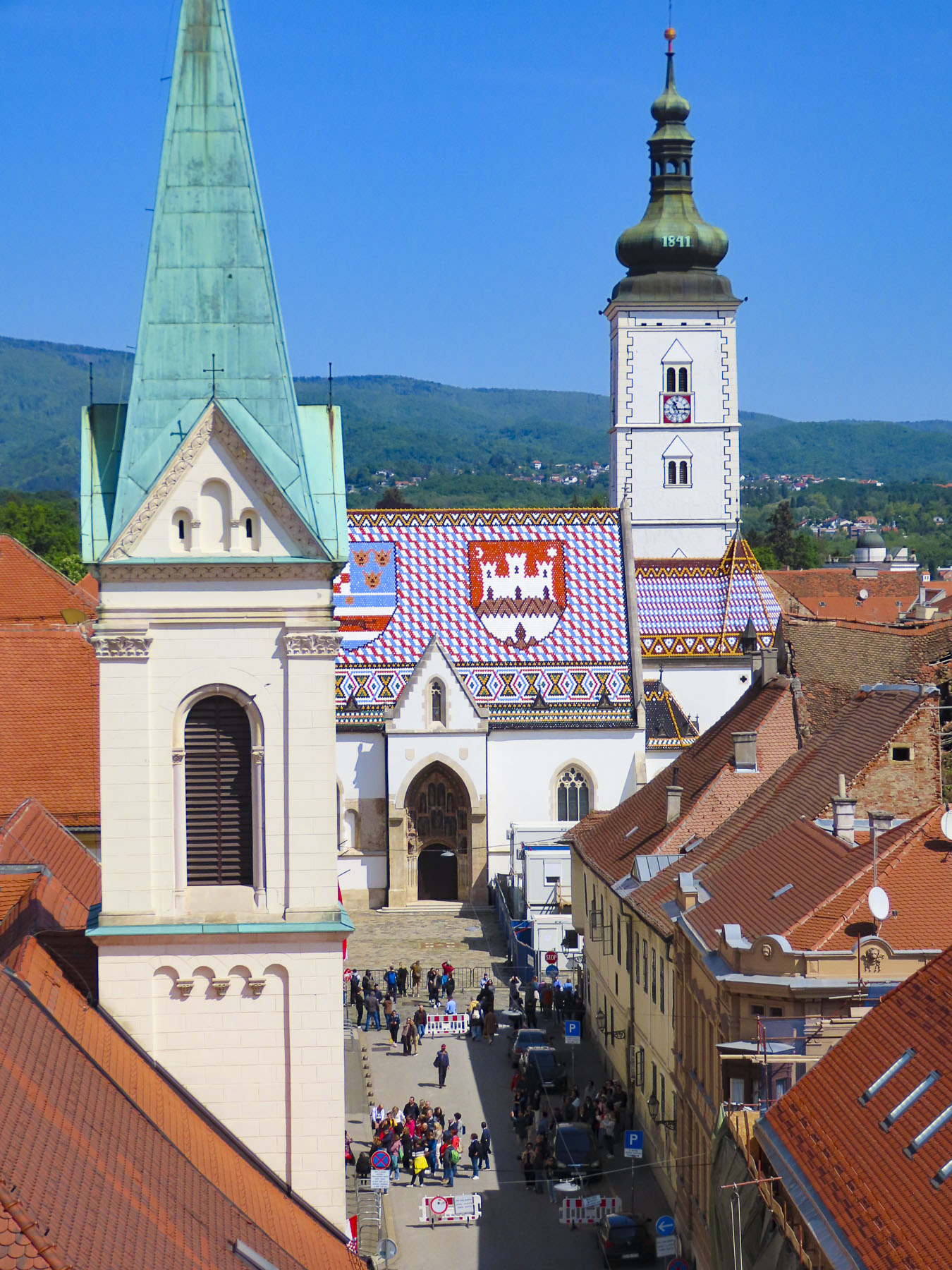
It’s from here that the iconic photos of St. Mark’s Church’s tiled roof are taken, with the medieval coat of arms of the Triune Kingdom of Croatia, Dalmatia, and Slavonia and the City of Zagreb. Though the Gothic styled church dates from the 13th-century, it did not get its colorful tile roof until a major renovation in the 1880s. We had hoped to photograph Zagreb’s funicular, the world’s shortest public funicular, connecting the Lower and Upper Towns in a quick 64-second, 66m (217ft) ride, that has been operating since 1890, but it was undergoing repairs.

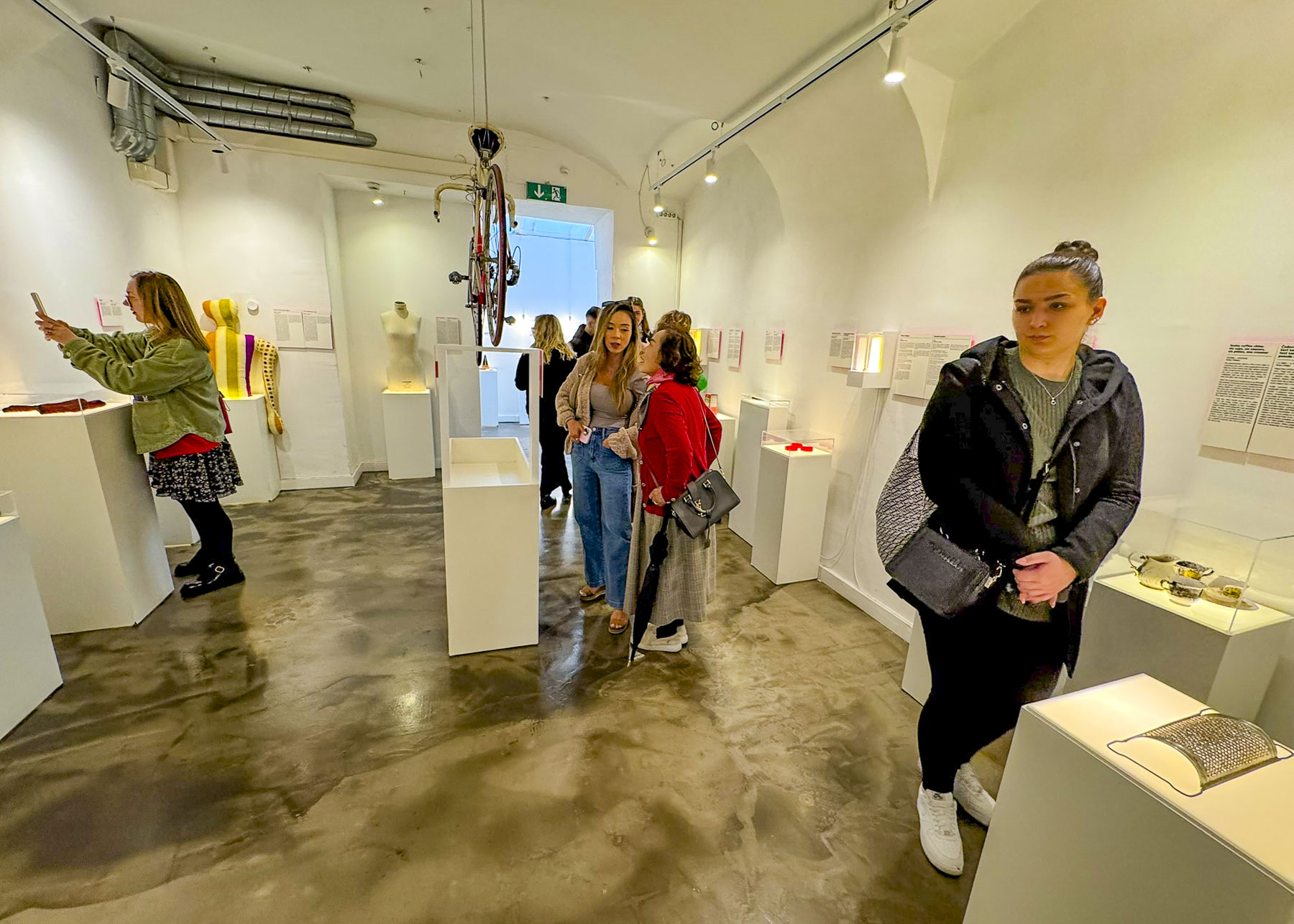
On opposite sides of the street as we headed to the church were two interesting museums, the Museum of Broken Relationships, and Croatian Museum of Naïve Art. Both have small exhibition spaces, but the former has a quirky collection of heartbreak stories and symbolic possessions from past loves that people from around the world have donated to the museum. A lot of reading is required to navigate through this literary journey of lost love, where many of the stories echo true. The museum also has an excellent café on site.

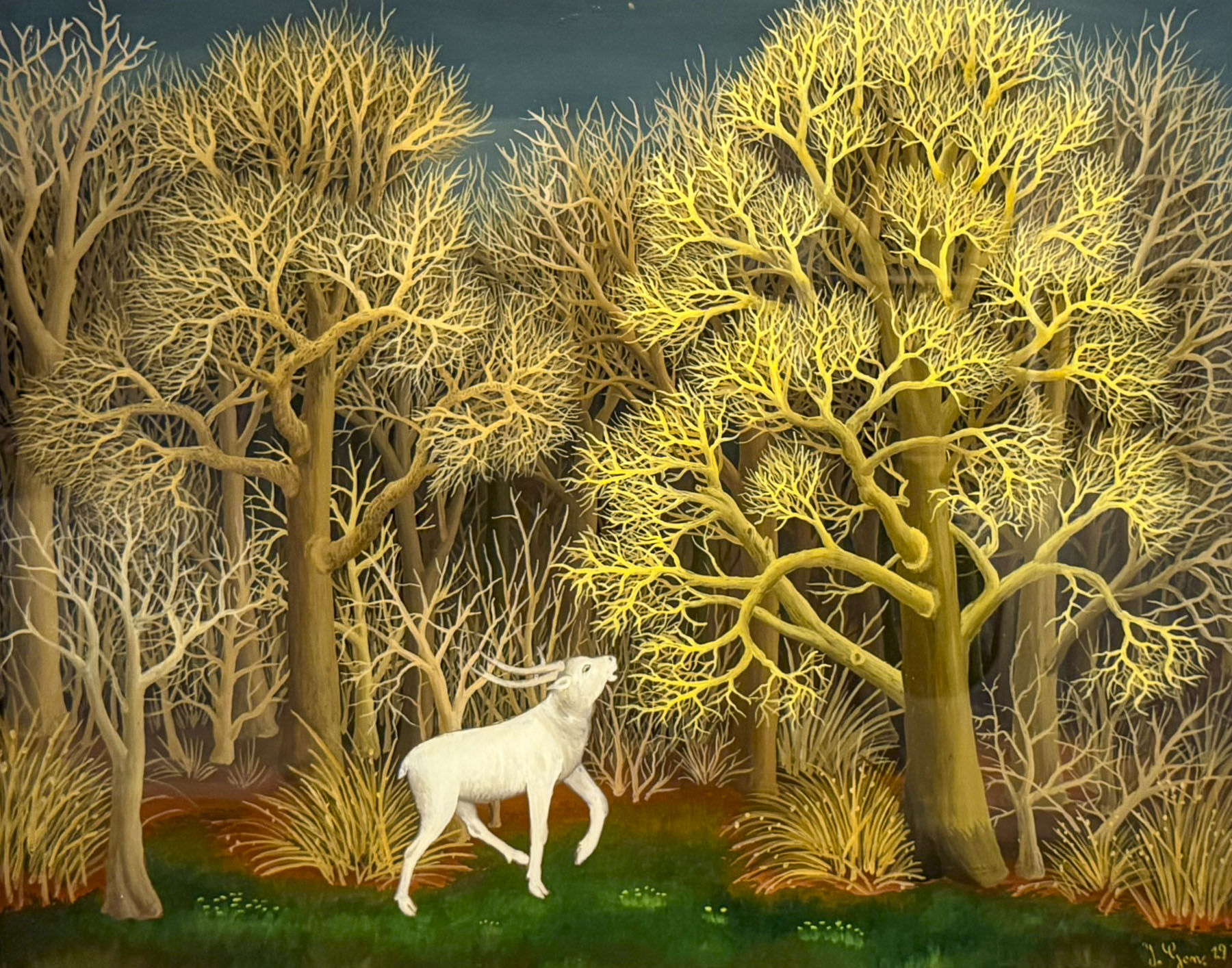
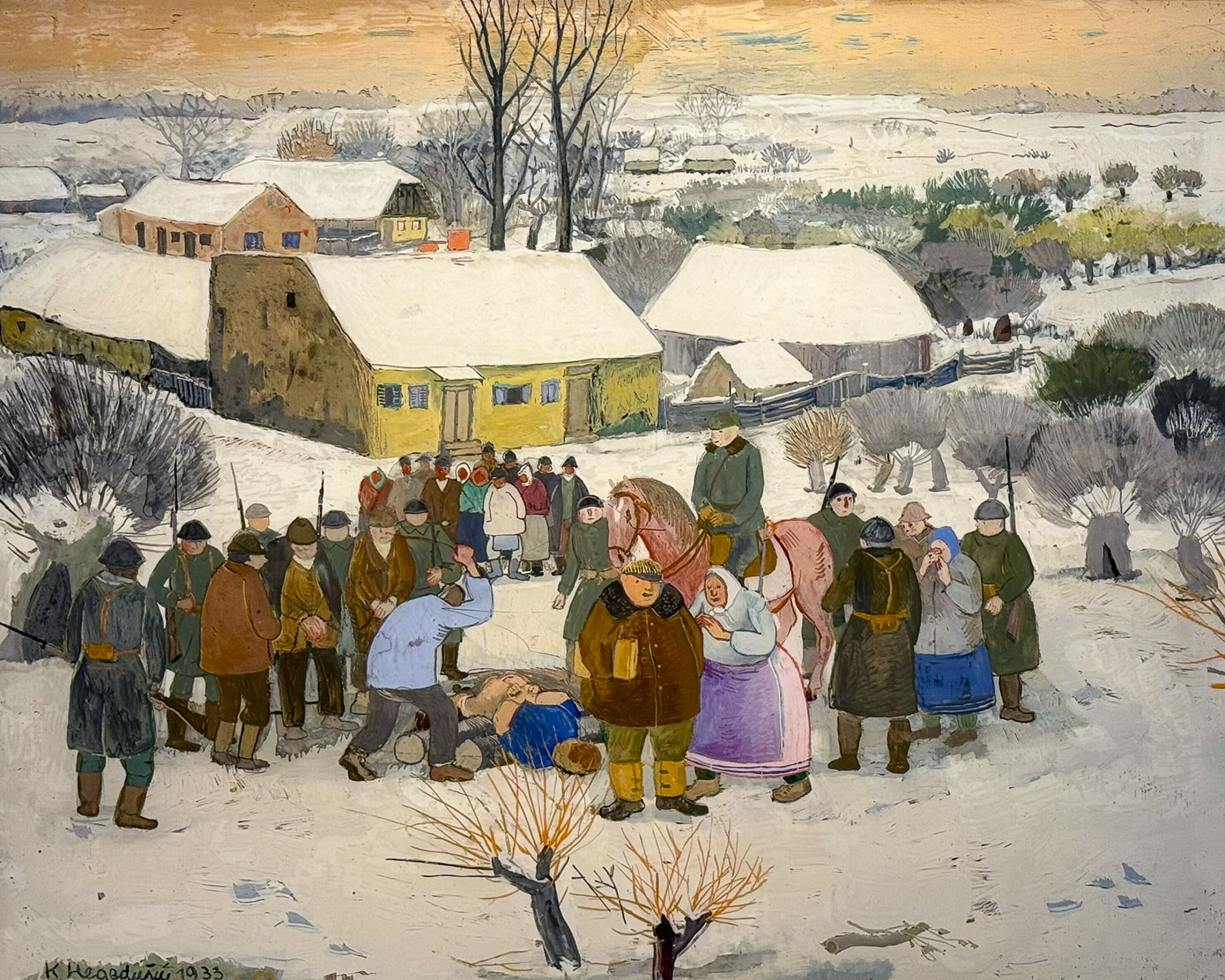
The latter museum has a unique collection of art from self-taught painters from the rural village of Hlebine. The villagers were inspired by Krsto Hegedušić, a native son who was academically trained as a painter, illustrator and theatrical designer, but returned to his family’s village every year and inspired several villagers in the 1930s to paint “what they see and feel.”

They went on to create a body of work that depicted rural life, portraying the hardships of labor and social injustice, along with often mystical landscapes. Many of the oil paintings are reverse painted on glass, a fragile but inexpensive medium at the time. The technique gives the illustrations a wonderful translucent quality. The museum has a collection of 1900s artworks, though only 80 are rotated through the exhibition space at a time. Don’t let the name Naïve Art dissuade you from visiting the museum as it has some great pieces on display.

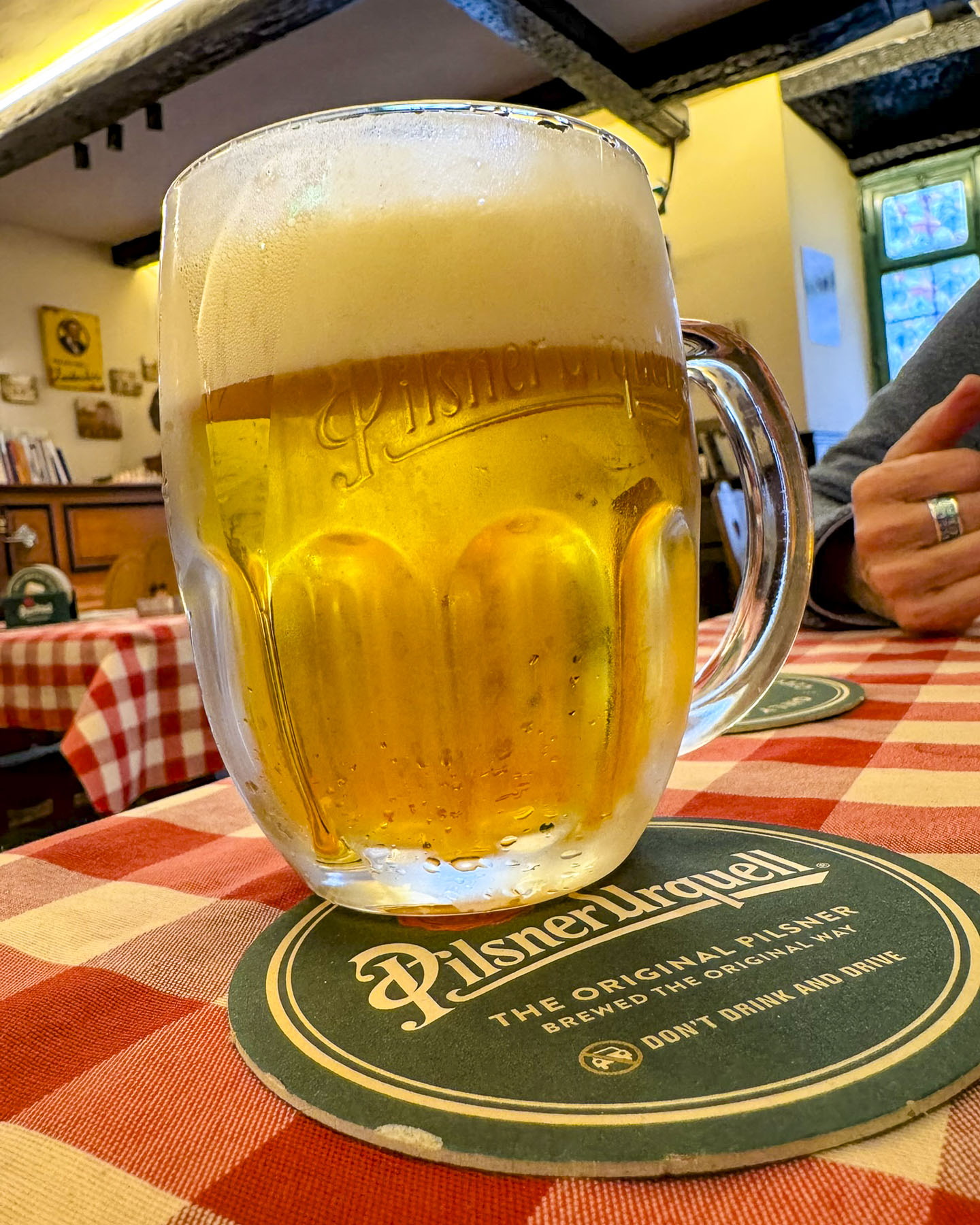
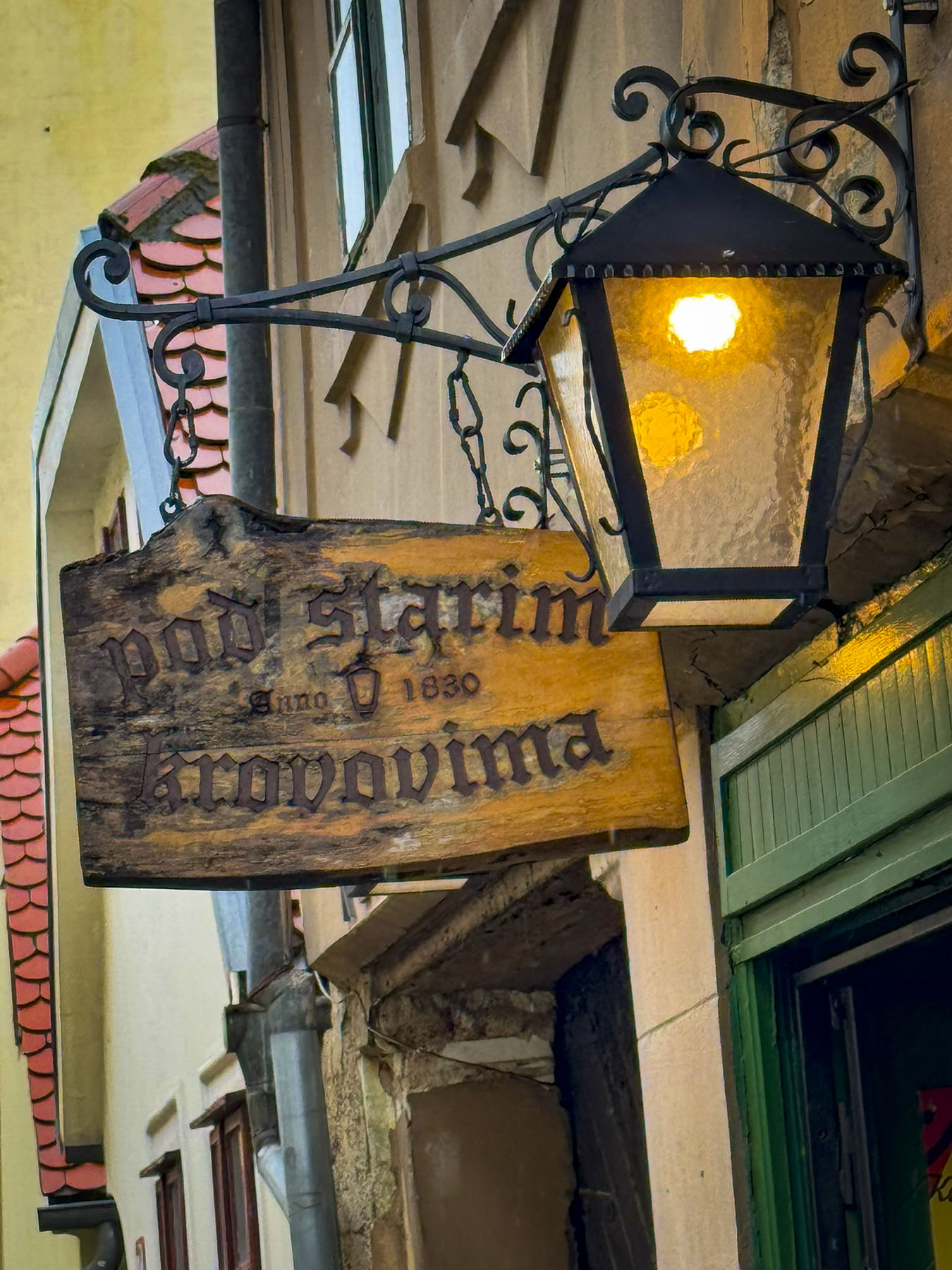
Nearby was Pod Starim Krovovima, Under the Old Rooftops, the oldest tavern in Zagreb which poured its first beers in 1830. It’s a small quietly charming place that used to be the favorite haunt of Zagreb’s poets and writers, and we had hoped to eat there. However, it doesn’t serve food anymore, but it does offer a nice selection of Croation wines, beers and cordials.

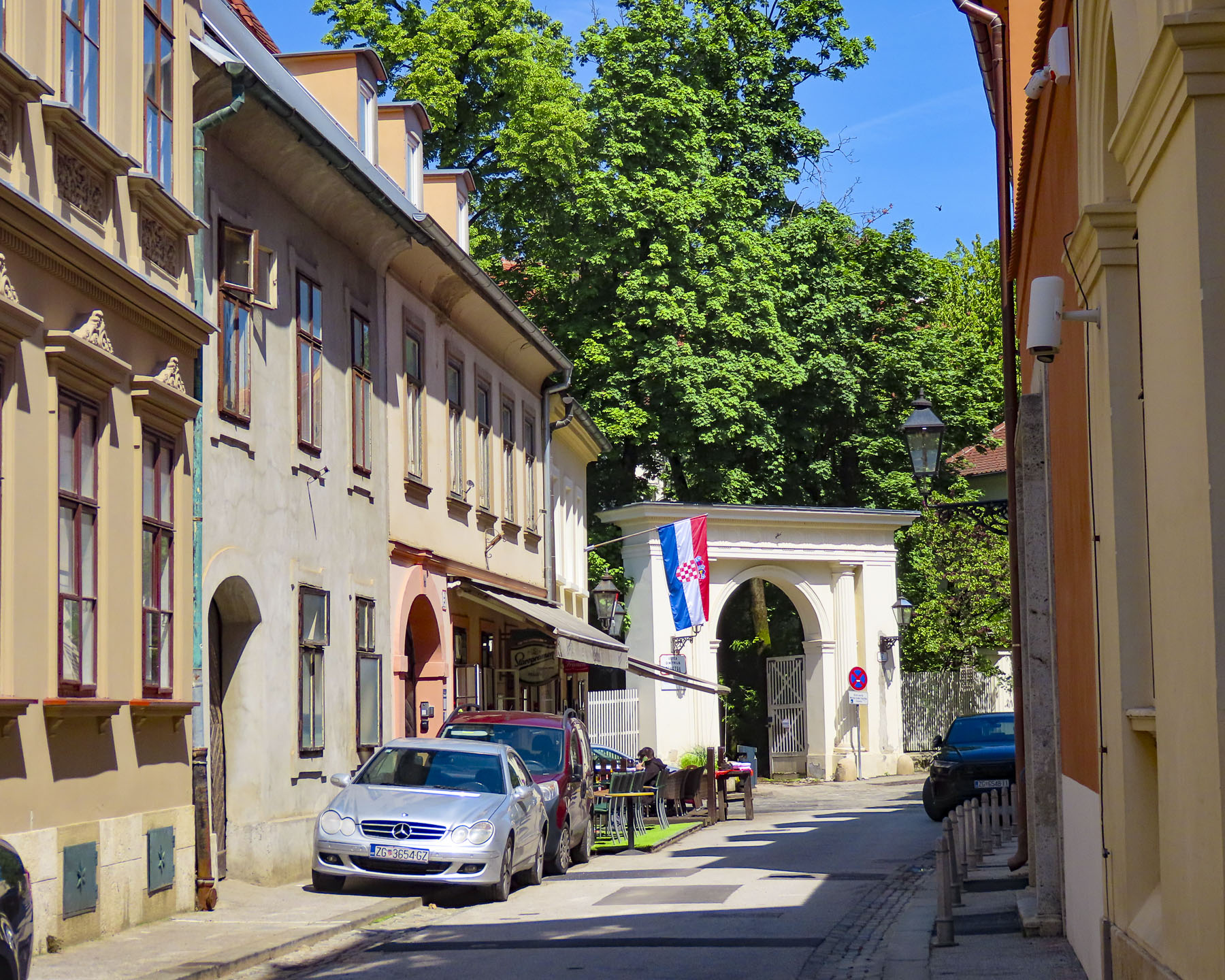
Instead we had dinner at Tavern Didov San, around the corner on Mletačka ul, a quaint street that would look more at home in a country village than the city. The restaurant specializes in authentic, regional Croatian cuisine; besides the traditional hearty beef dishes there are recipes that feature frog legs, eels and snails. The restaurant’s very nice staff, its ambience, and the delicious food all contributed to a memorable evening in Zagreb.

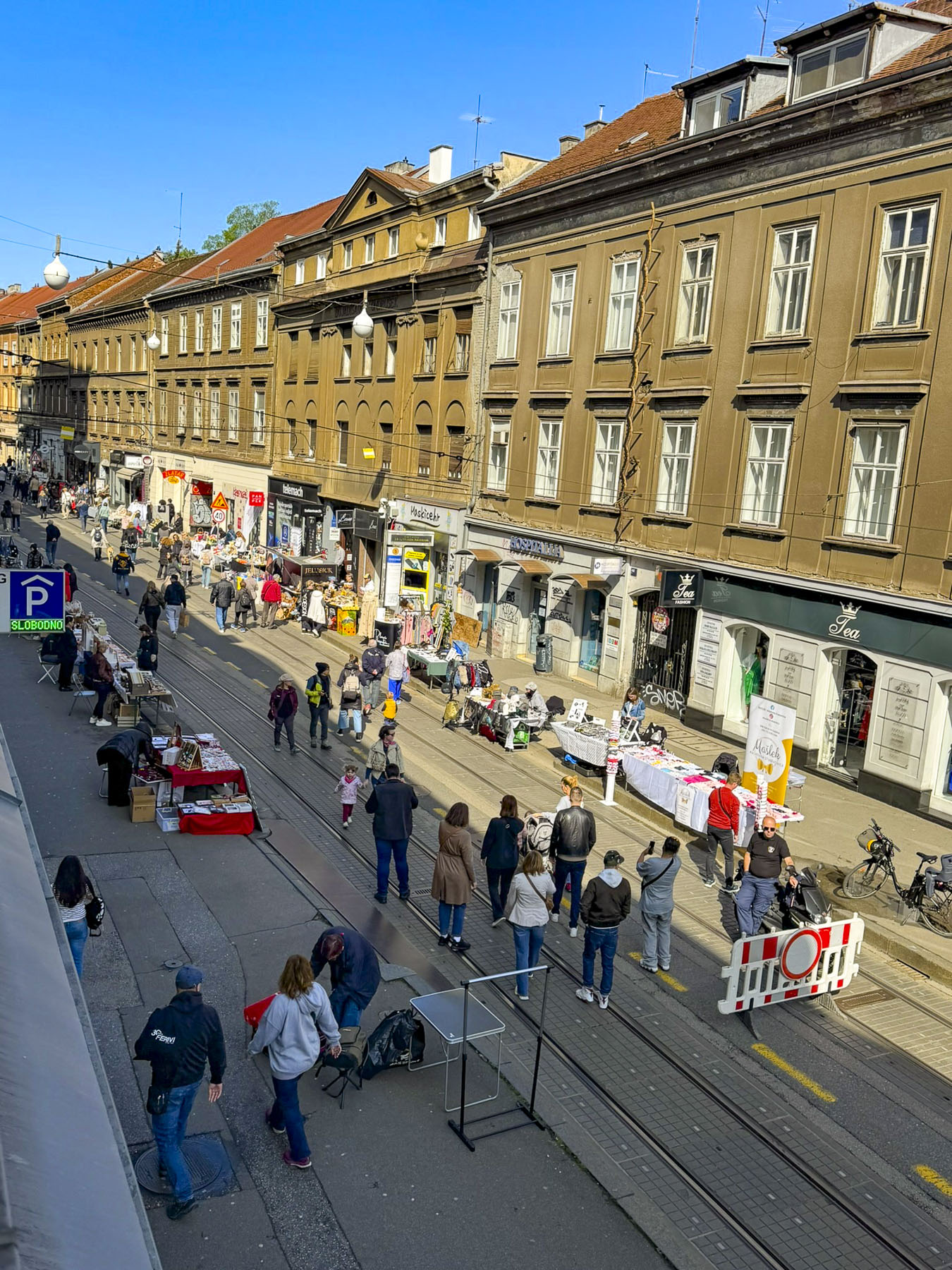
Opening the window of our hotel room the next morning revealed the street was blocked, and preparations were busily underway for a street fair. The seductive aroma of fresh baked chocolate croissants wafted up from the pâtisserie a few doors down, and called to us to come and indulge. 

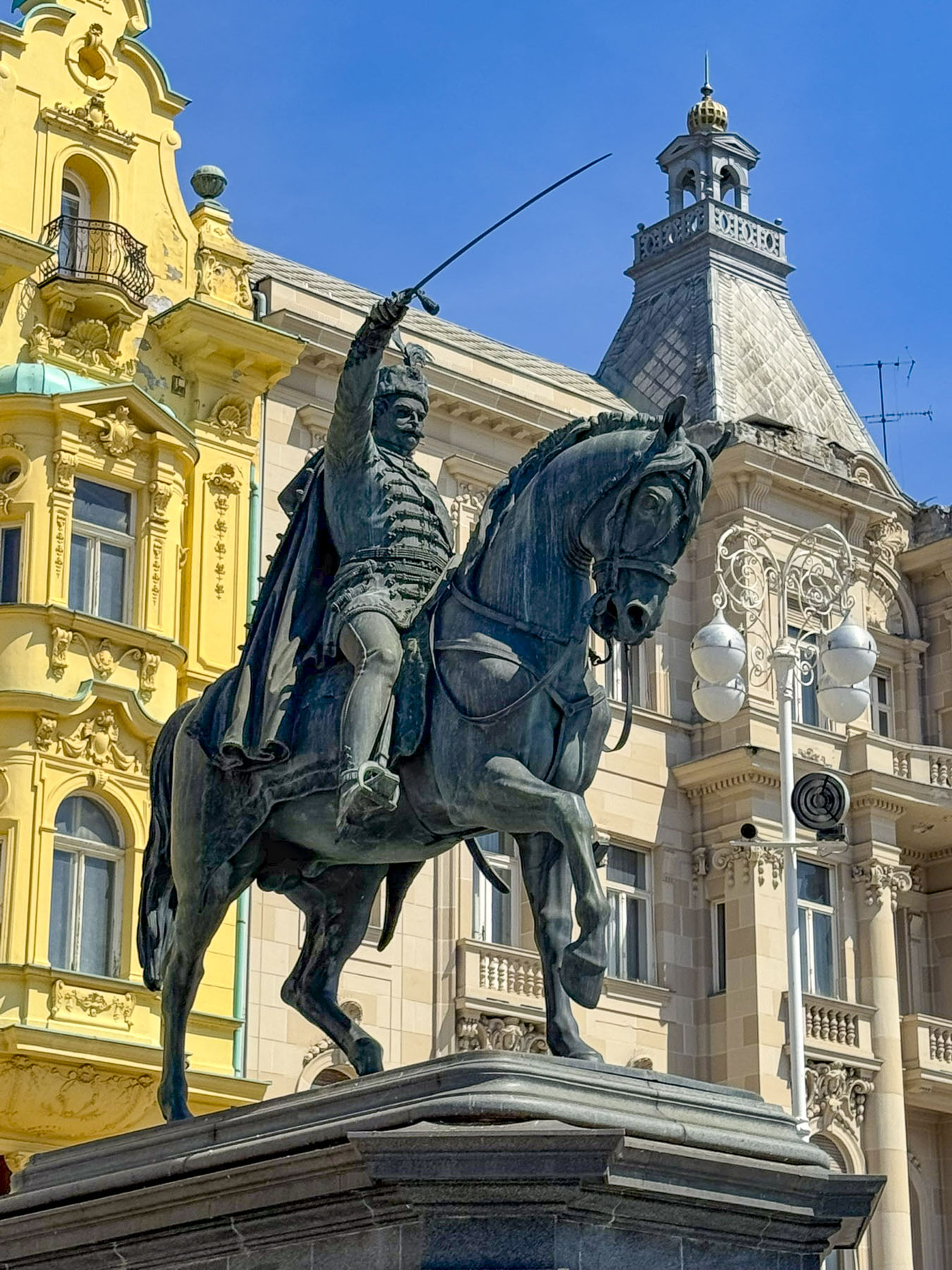
It would be hours before the festival was in full swing, so we headed to Ban Jelačić Square. The equestrian statue of Josip Jelačić Bužinski (1801-1859), a Croatian military hero and politician who abolished serfdom in Croatia, is backed by some beautiful examples of Austro-Hungarian buildings built after the earthquake of 1880. The attractive square earned the city the nickname as “the gateway to the Balkans.” On the far end of the plaza was Manduševac fountain. It’s all that remains of a natural spring that is mentioned in 1700s court records as “the main night gathering place of witches and warlocks in Zagreb.” The punishment for a conviction of witchcraft was to being burned at the stake at the infamous execution spot called Zvedišće, near the entrance to Tunel Grič on Mesnička ul, too eerily close to our hotel. Witchcraft trials ended in 1756 when empress Maria Theresa condemned the practice.

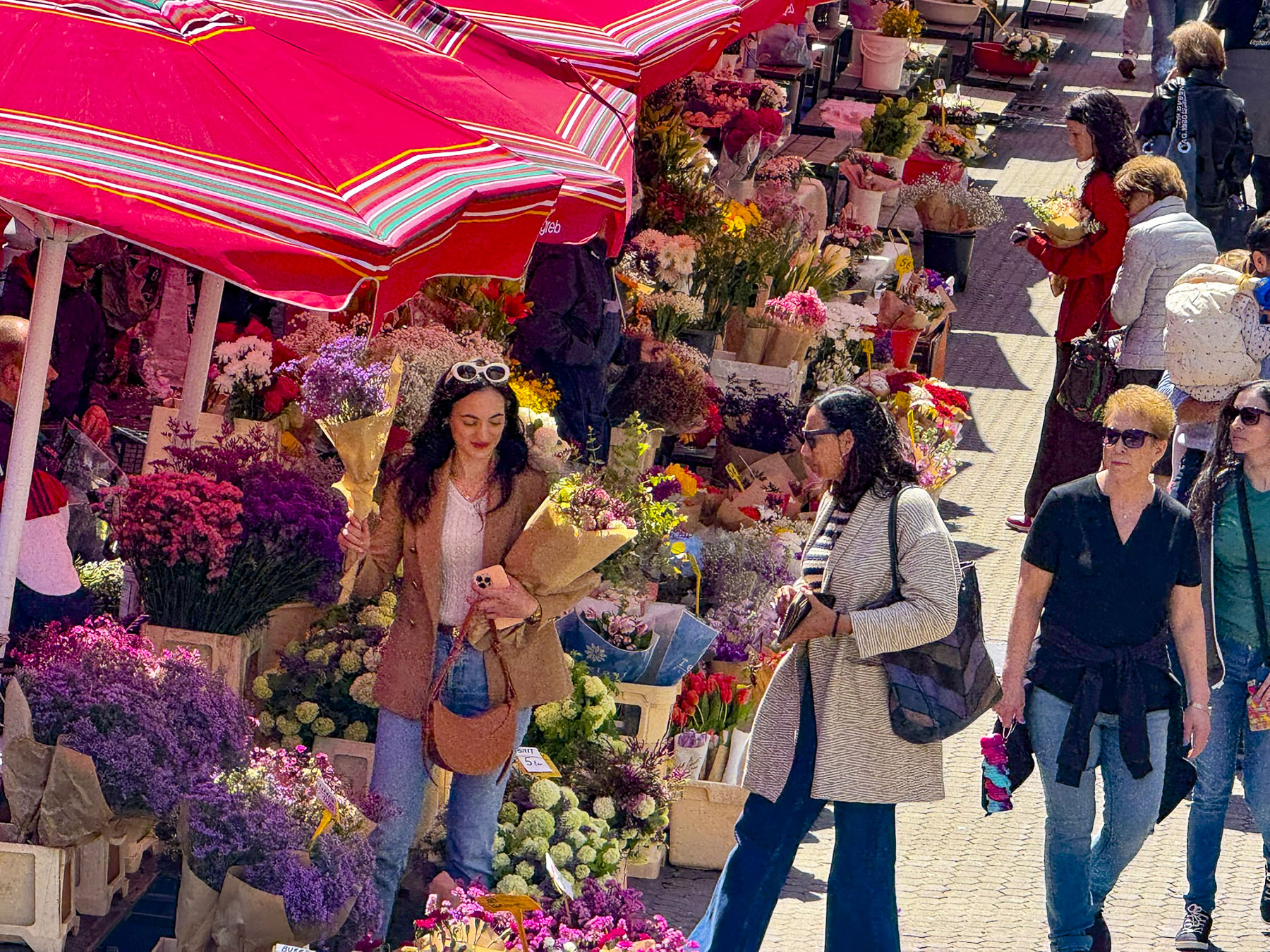
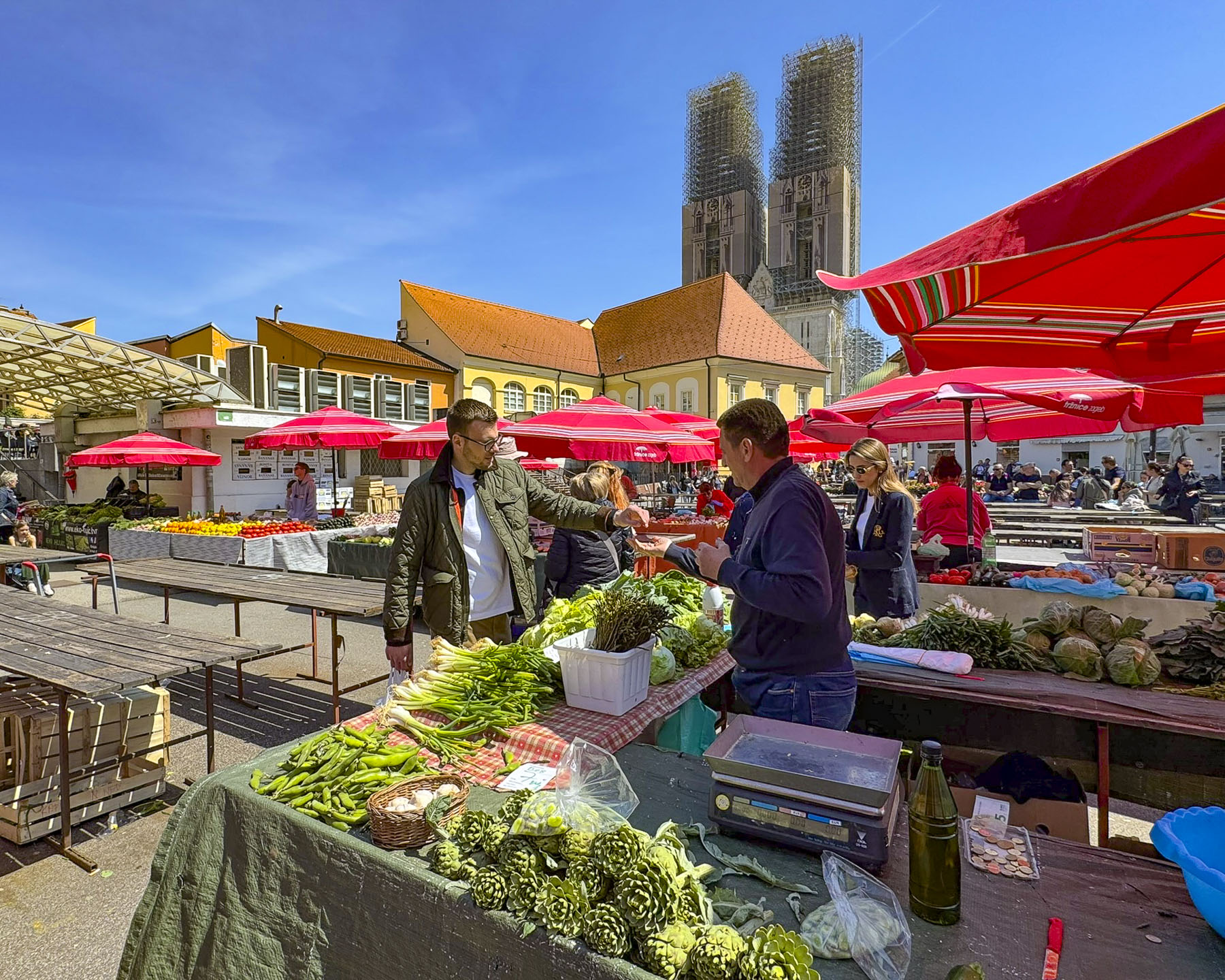
Stairs lined with flower stalls led from the plaza to Tržnica Dolac, Zagreb’s daily market. It’s a large square ringed by shops selling meats, poultry and fish, while the center is covered with seasonal vegetable vendors set up under a vast sea of red umbrellas. On opposite sides of the square the belltowers of the 18th century Church of the Visitation of the Blessed Virgin Mary and the Cathedral of Zagreb rose above the market’s low buildings.

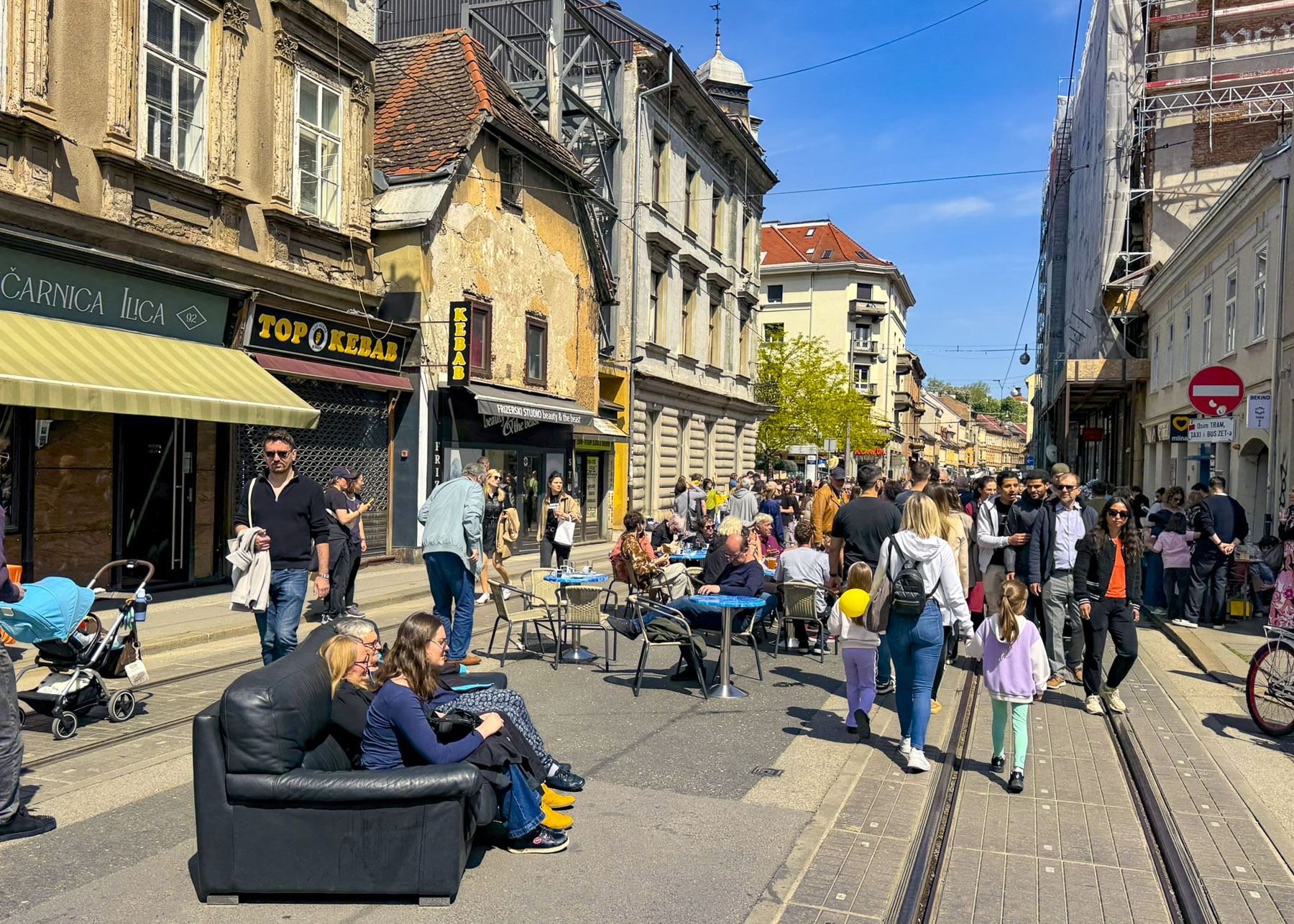
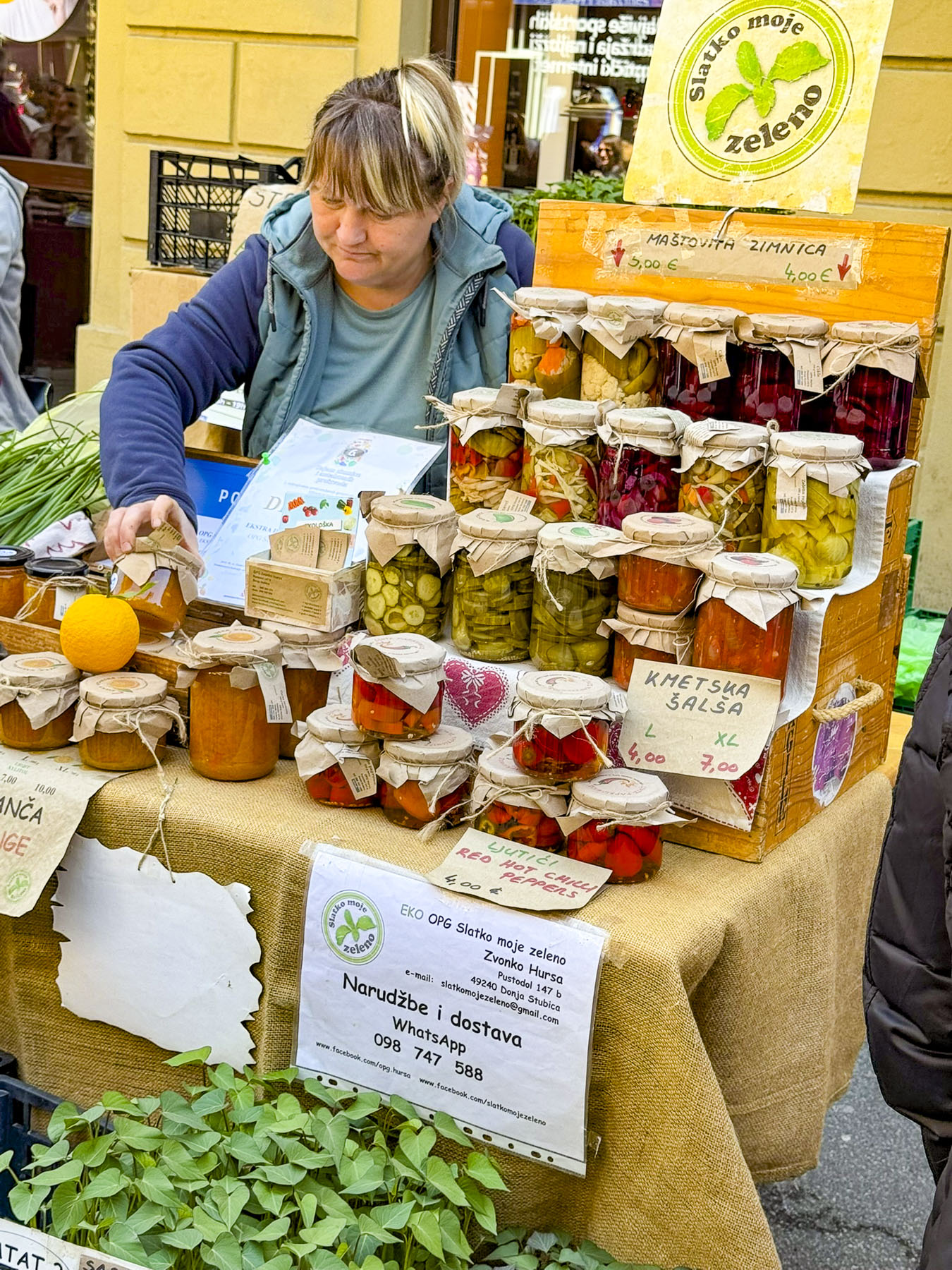
Several blocks of Ilica street were vibrant with activity. In places folks had pulled couches and chairs from their apartments into the street, in order to comfortably relax while listening to buskers entertaining the crowd. Artisanal craft vendors set up tables selling handmade pottery, soaps, jewelry, toys and homemade food. We purchased a pop-up puppet on a stick whose maker assured us it would withstand the abuse of any six year old. Another vendor offered slices of her baba’s scrumptious Bregovska Pita, an 8-layer filo dough layered pie, filled with apples, raisins, and walnuts.

It was a gorgeously warm sunny April day as we sat outside at the Wave Bar. Across the way we watched folks wander through the Sunday antiques market that was underway in Britanski Square, searching for that undiscovered gem that lay hidden in the market’s cornucopia of brass, wood and glass bric-a-brac.

It was a great afternoon experiencing the energy of Zagreb, and the perfect way to end our stay in this charming city. Two full days in Zagreb were only enough to scratch the surface of this intriguing city, and in hindsight we should have planned a third day, but hopefully we’ll get a chance to return. Tomorrow, we will cross the border into Bosnia & Herzegovina.

Till next time,

Craig & Donna
A Balkans Road Trip Part 5: Slovenia – Into the Kamnik-Savinja Alps to the Logar Valley

Days earlier, atop the ramparts at Ljubljana Castle, we got our first glimpse of the Kamnik-Savinja Alps, a rugged sawtooth mountain chain that lies north of the city, along the Slovenia – Austrian border in the Solčava region. The range’s three highest peaks, Mt. Grintovec (2,532m), Mt. Jezerska Kočna (2,539m), and Mt. Skuta, (8,307m) still glimmered with snow in early April.

Within the mountain range is Logar Valley, a 7 kilometer (4.3 mile) long alpine glacial valley, surrounded by equally tall sheer summits. Inside the picturesque valley there are trails between Rinka Waterfall (90m – 295ft), the tallest falls in Slovenia, and three other ones that cascade from the mountainsides. It is 1.5 hours from Ljubljana, and we planned to visit the valley during a travel day. Later, backtracking from the mountains, we stayed in Kamnik for two nights before continuing on to Zagreb.

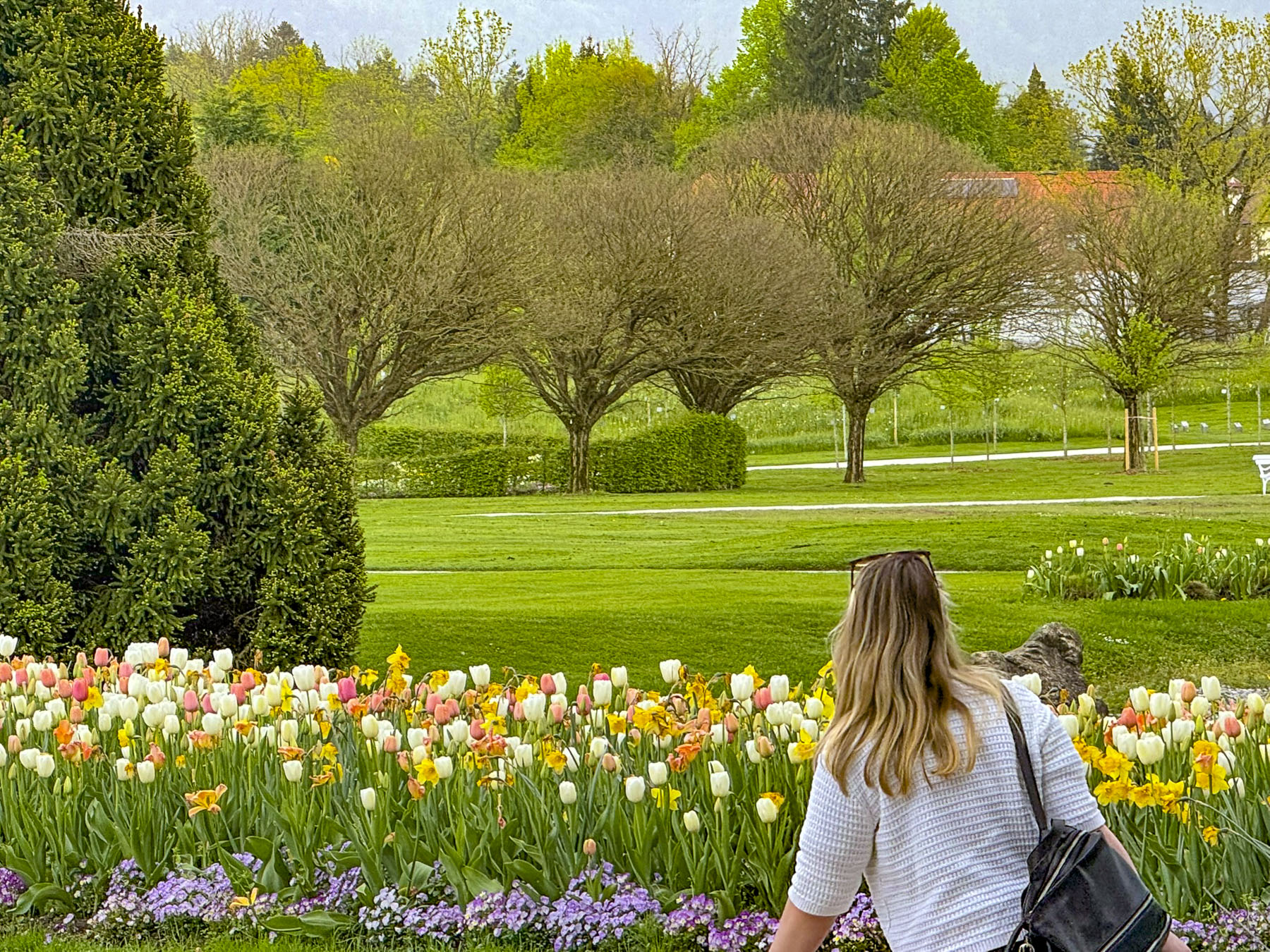
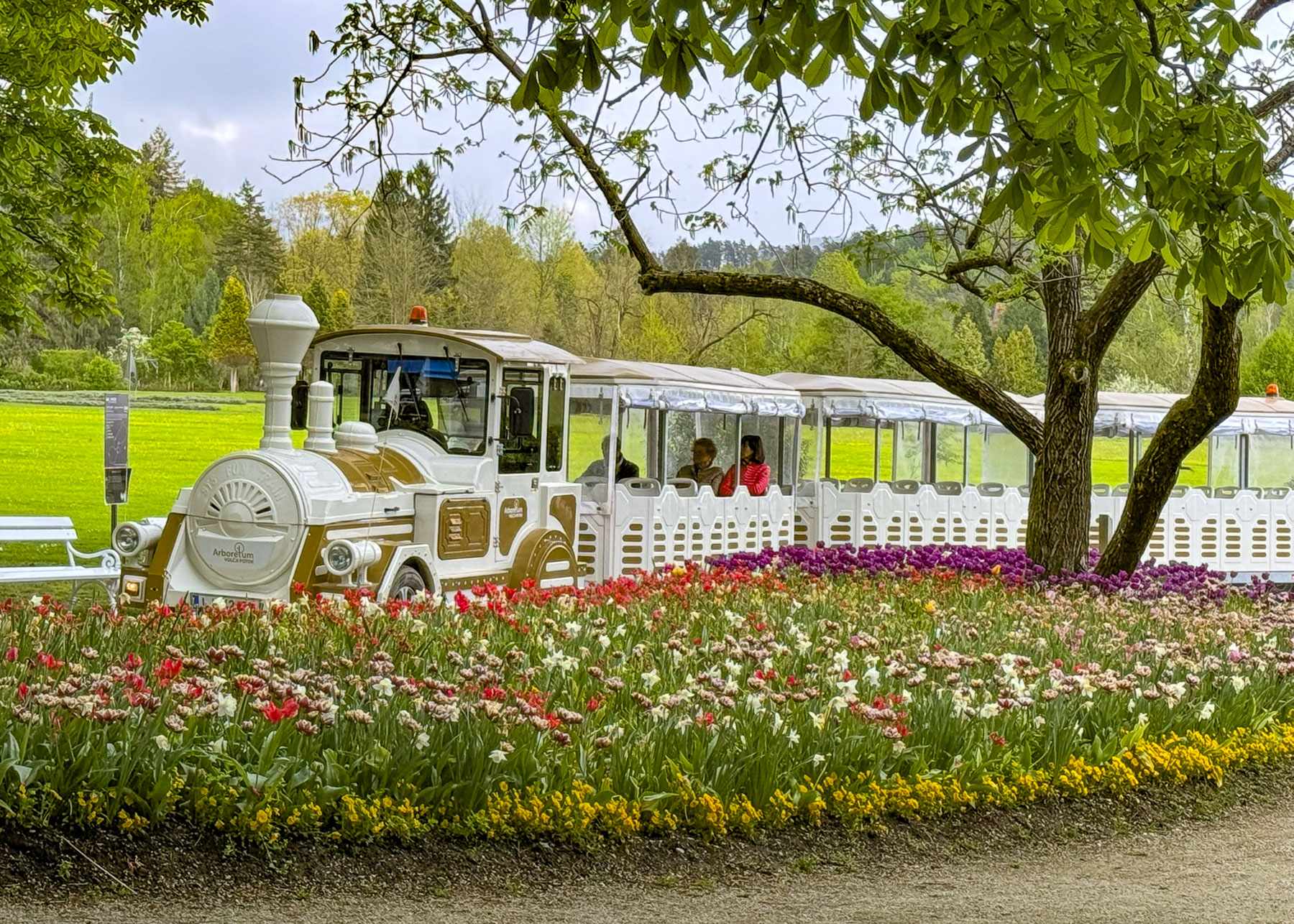
Along our route into the mountains, we stopped to visit the Volčji Potok Arboretum, a large formal garden, only 30 minutes from the city. The park’s tulips beds were in full bloom, and we were just about to purchase our entrance tickets when we were caught in a sudden downpour. Unfortunately, it didn’t look like the weather was going to improve quickly. Crossing our fingers, we hoped the mountains would be storm free, and we continued on.

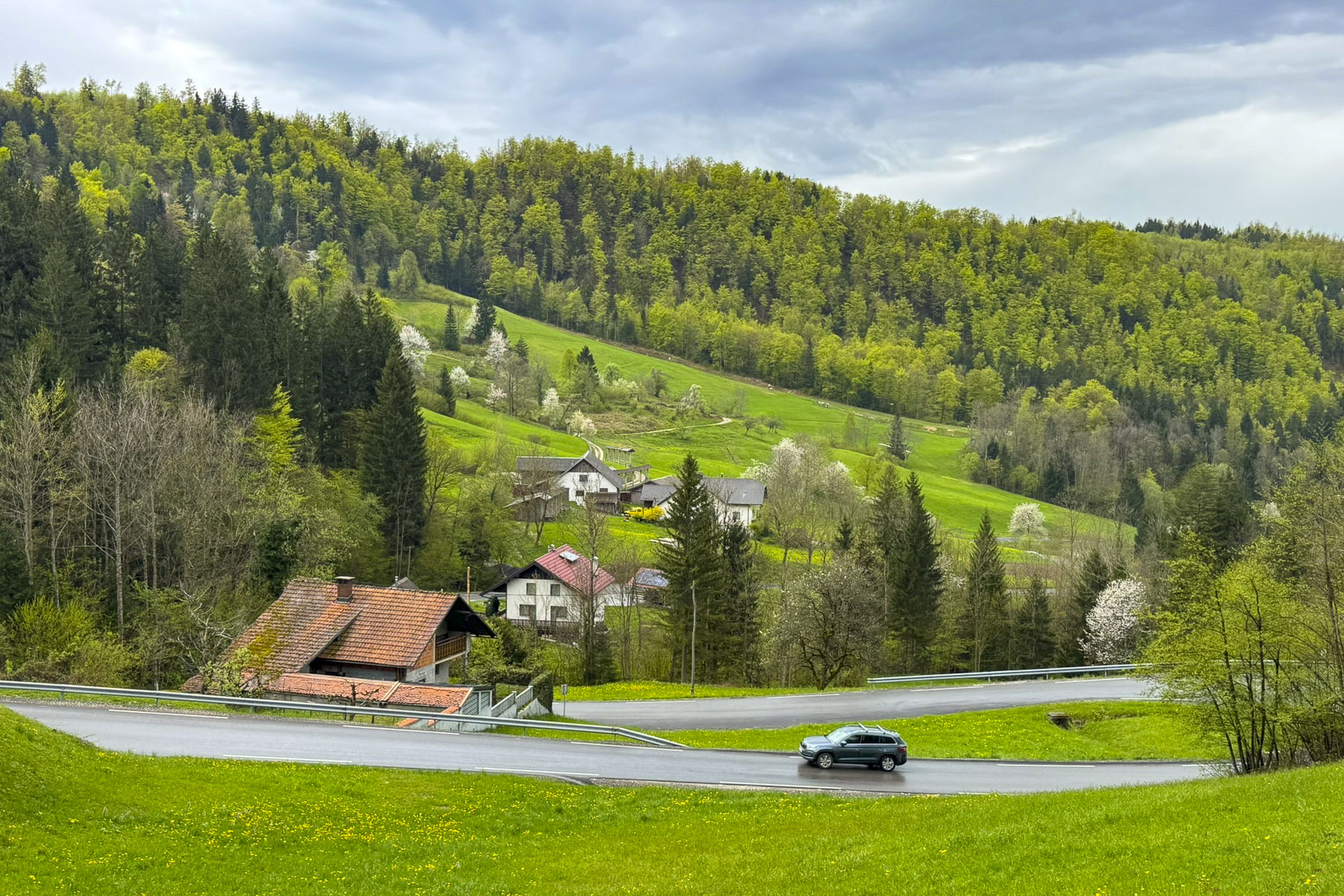
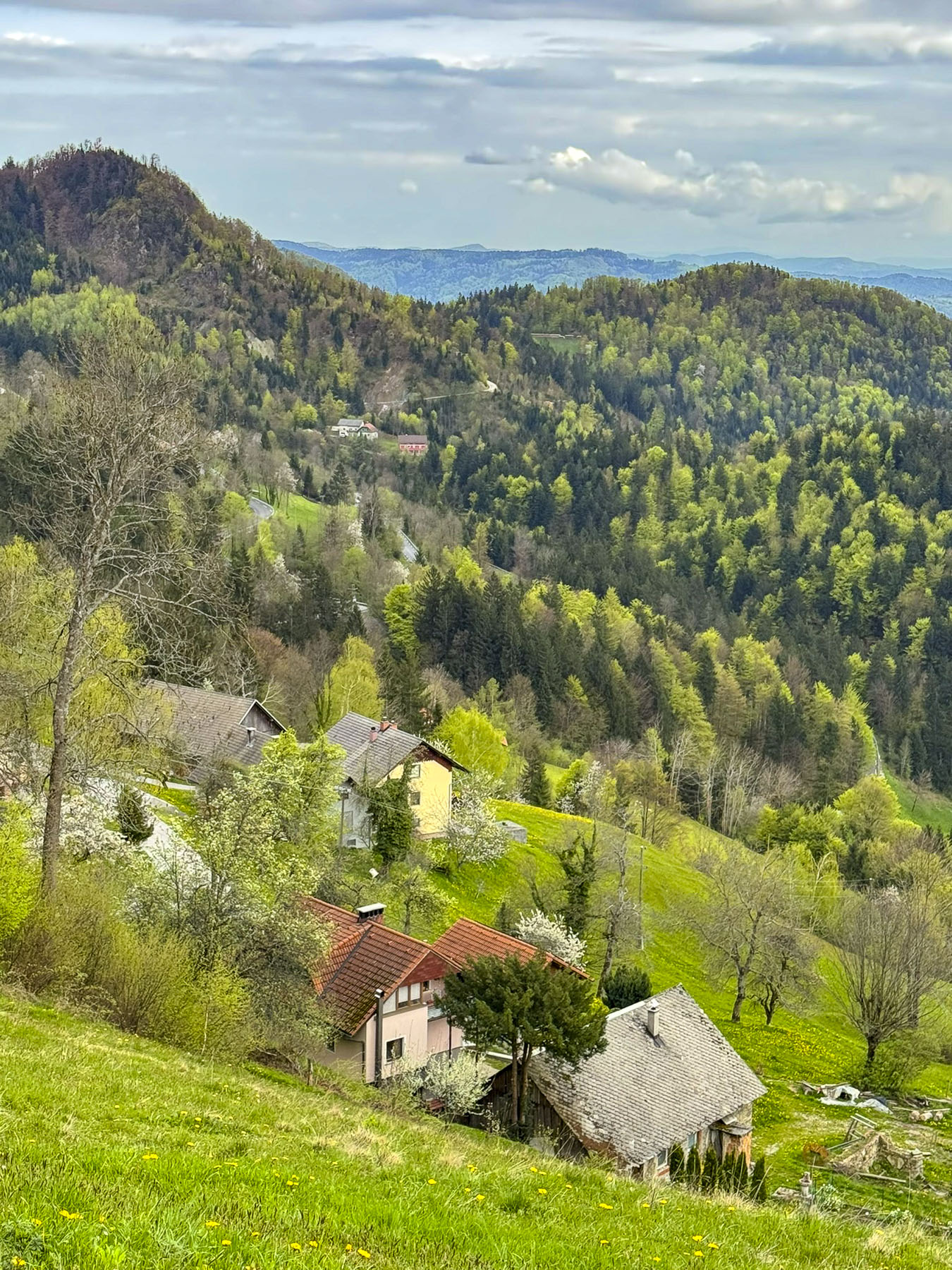
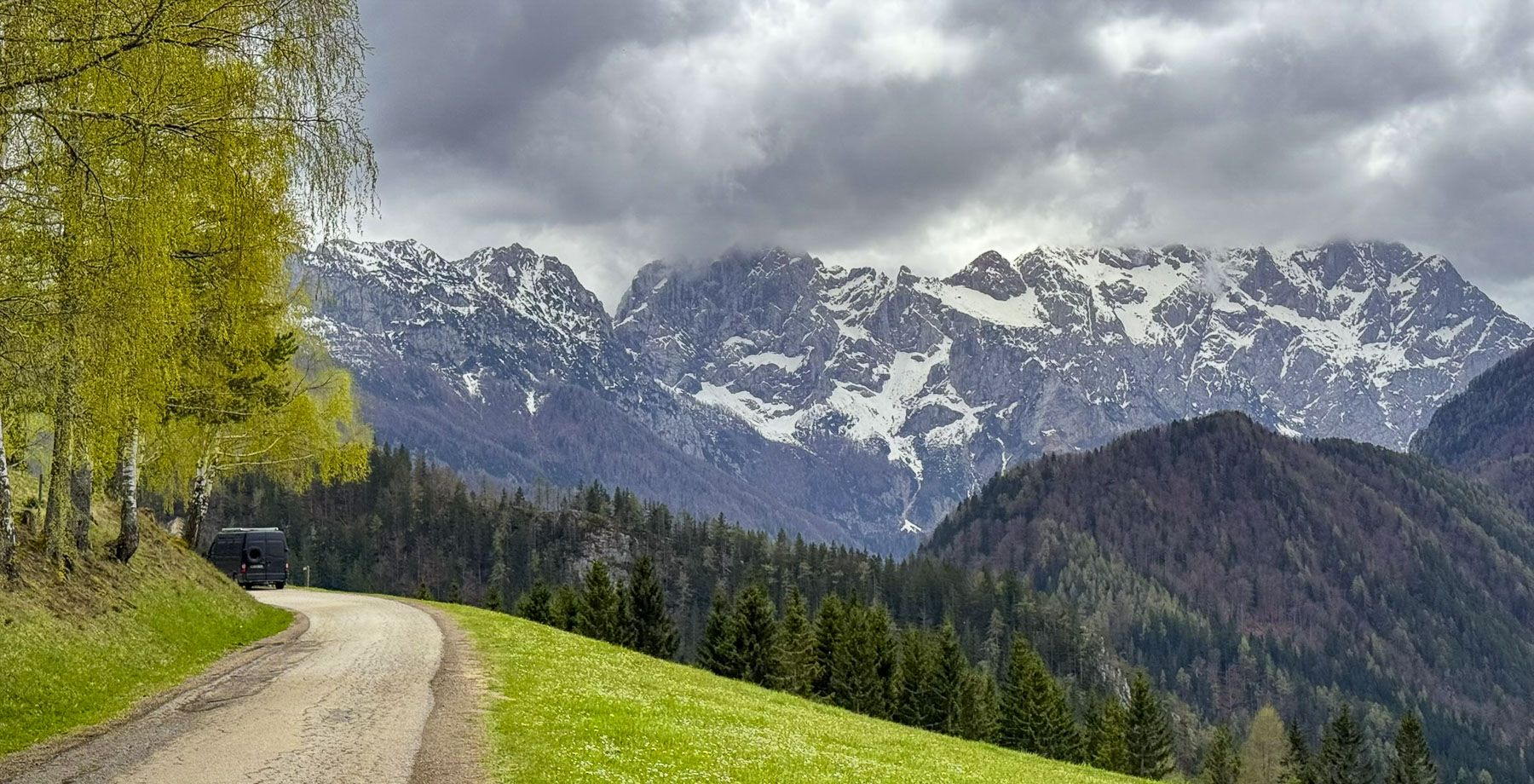
Past Kamnik, the road slowly rose from the plain into the foothills as it followed the Kamniška Bistrica river, swollen with snow melt. The fresh greenery of spring covered the hillsides. Fruit trees flowered in roadside orchards. Twisting and turning along switchback roads, we drove higher, only to descend into small valleys sheltering tiny hamlets with only a handful of homes and always a church, before ascending again.  

A sign pointed the way to Velika Planina, a vast alpine plateau in Slovenia’s Kamnik-Savinja Alps, where traditional transhumance herders  continue to graze cattle and sheep seasonally on the high-elevation pastureland from June to September. In planning our trip to Logar, we had considered going to Velika Planina, but to do it justice required a longer visit to the area. It’s one of the dilemmas of planning a trip: what to include, what to pass, what’s research for the future or a simply a teaser, needing a sequel to complete your odyssey.

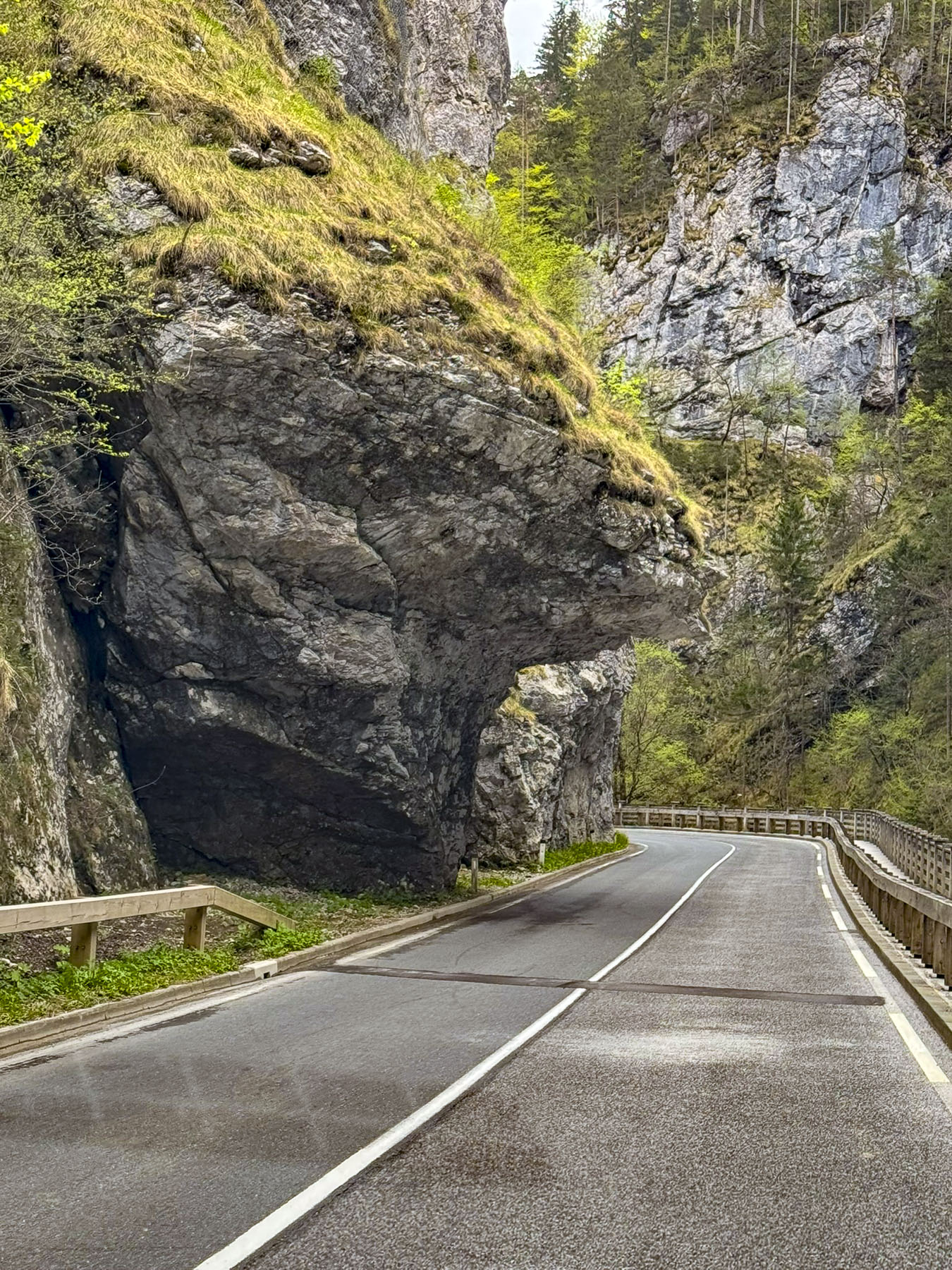
Eventually the road leveled and followed the Savinja River as it coursed through a narrow gorge, where in certain sections rock ledges loomed ominously low over the road, and we wondered if any campervans had ever lost their roofs along the way.

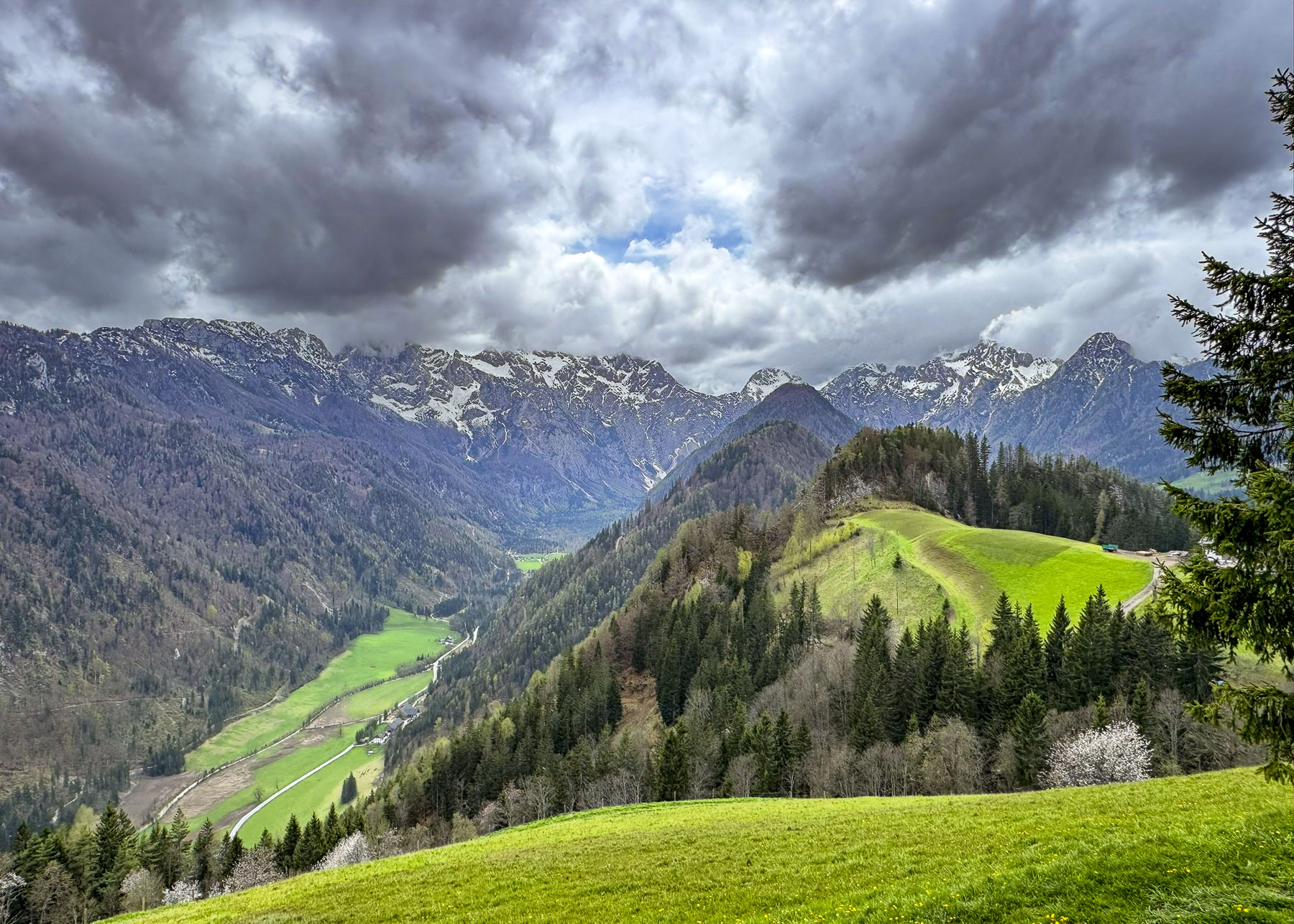
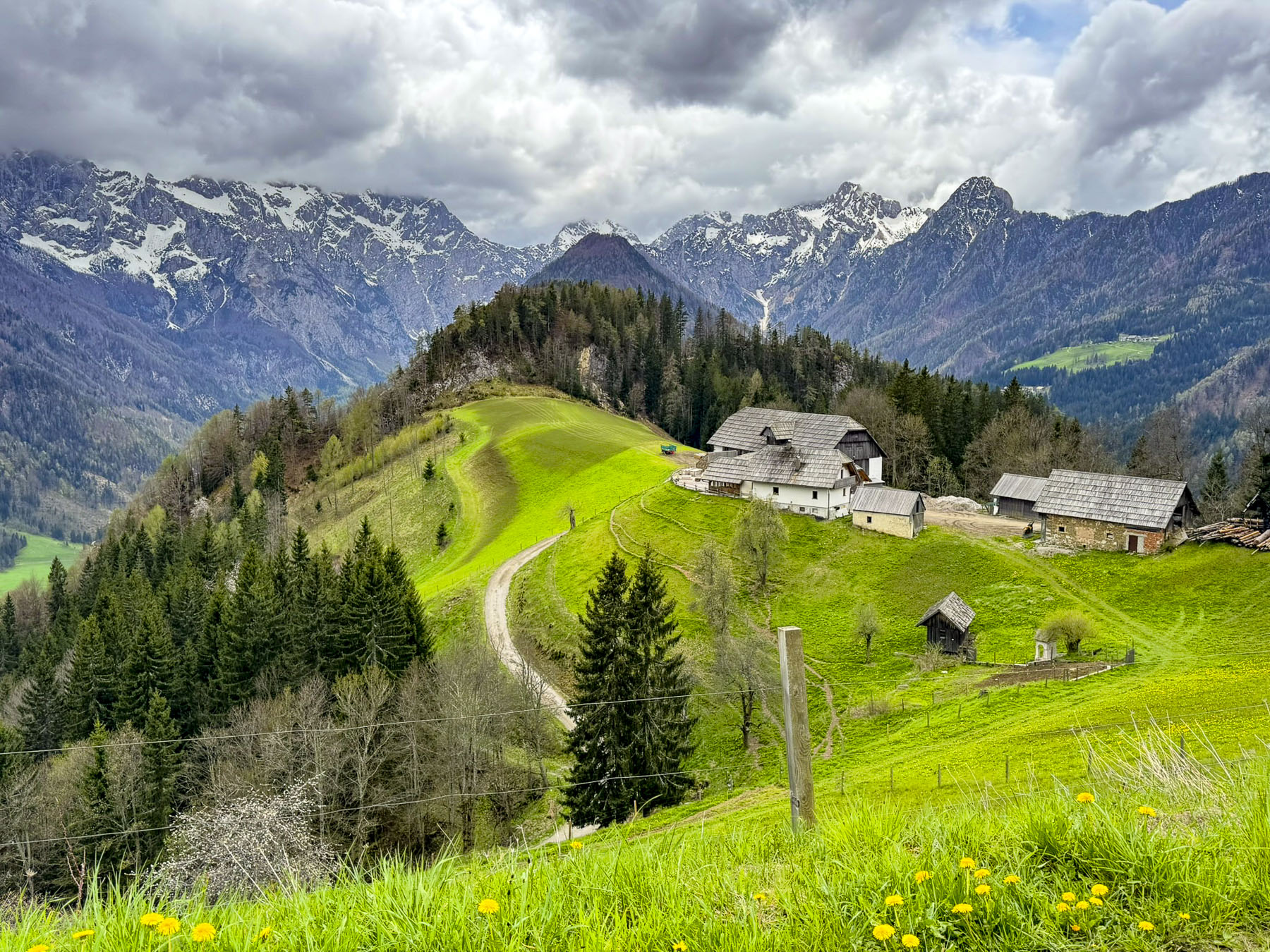
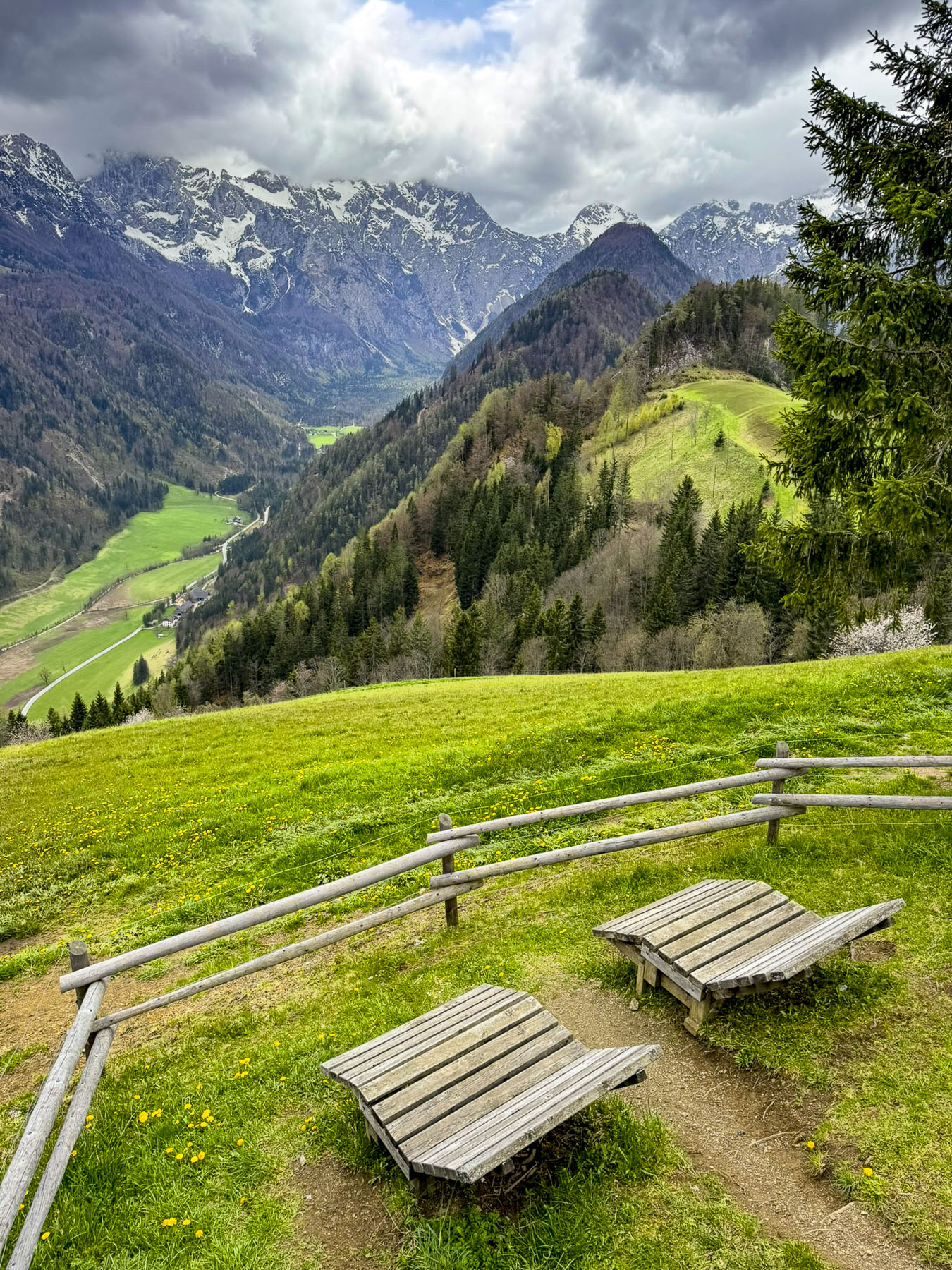
Signs pointed to the Austrian border, but we turned and sharply climbed to Razgledna Točka pri Klemenči Domačiji, the Lookout Point at the Klemenča Homestead, our destination before entering the valley below. The vantage point overlooking the working farm and mountains is 1,208 meters (3,963 feet) above sea level and is along the Solčava Panoramic Road, a 37km (23mi) scenic route that weaves through spectacular alpine views and past tracs that lead to self-sustaining high mountain farms. The view over the valley surrounded by multiple 2300m (7500ft) mountains, their peaks still hidden by clouds, was stunning.

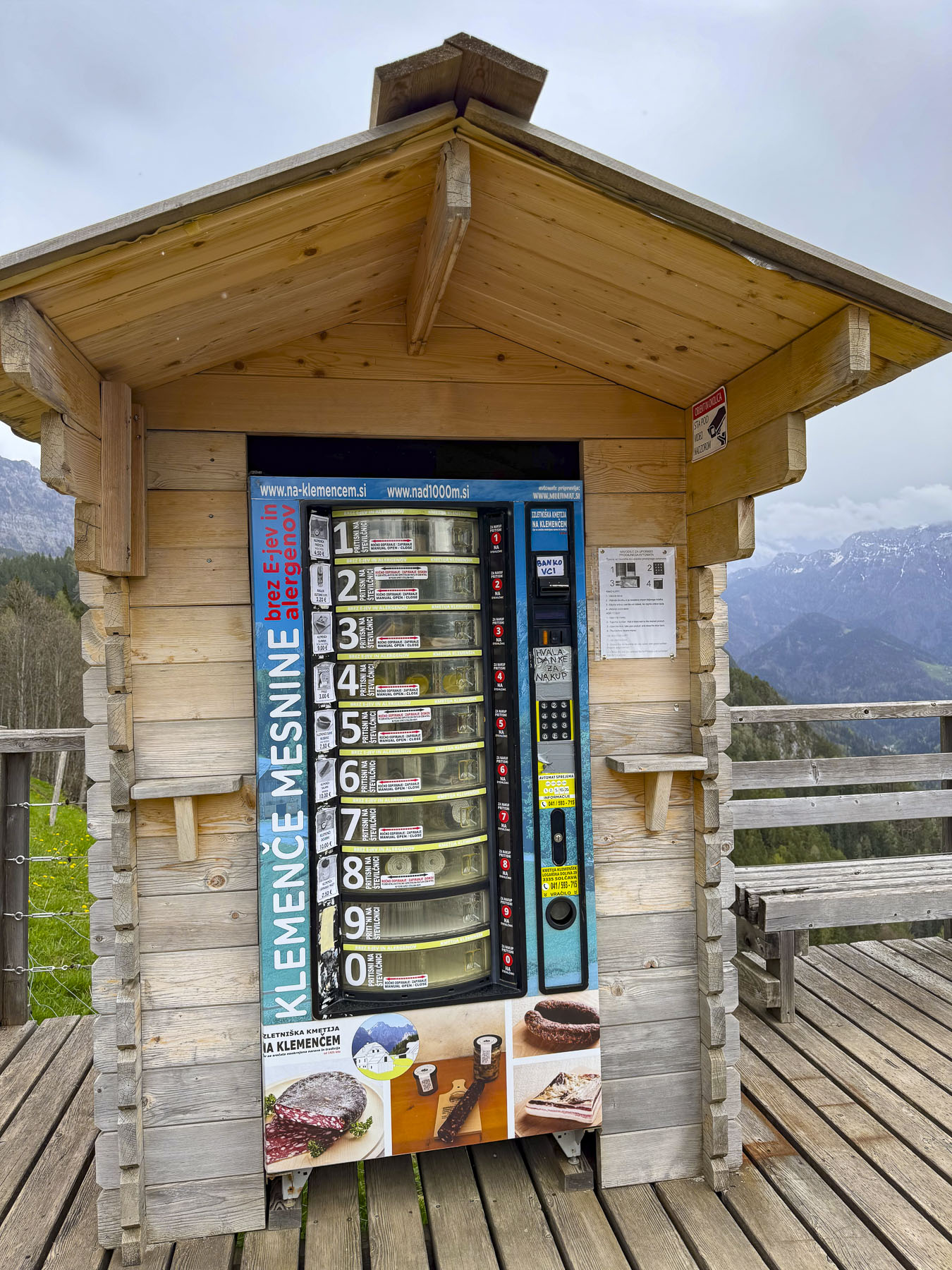
Like an old-fashioned trading post, the last chance for supplies at the edge of the frontier, was its modern equivalent, a vending machine with dried sausages, cheese rounds, and sandwiches made at the Klemenča Homestead.

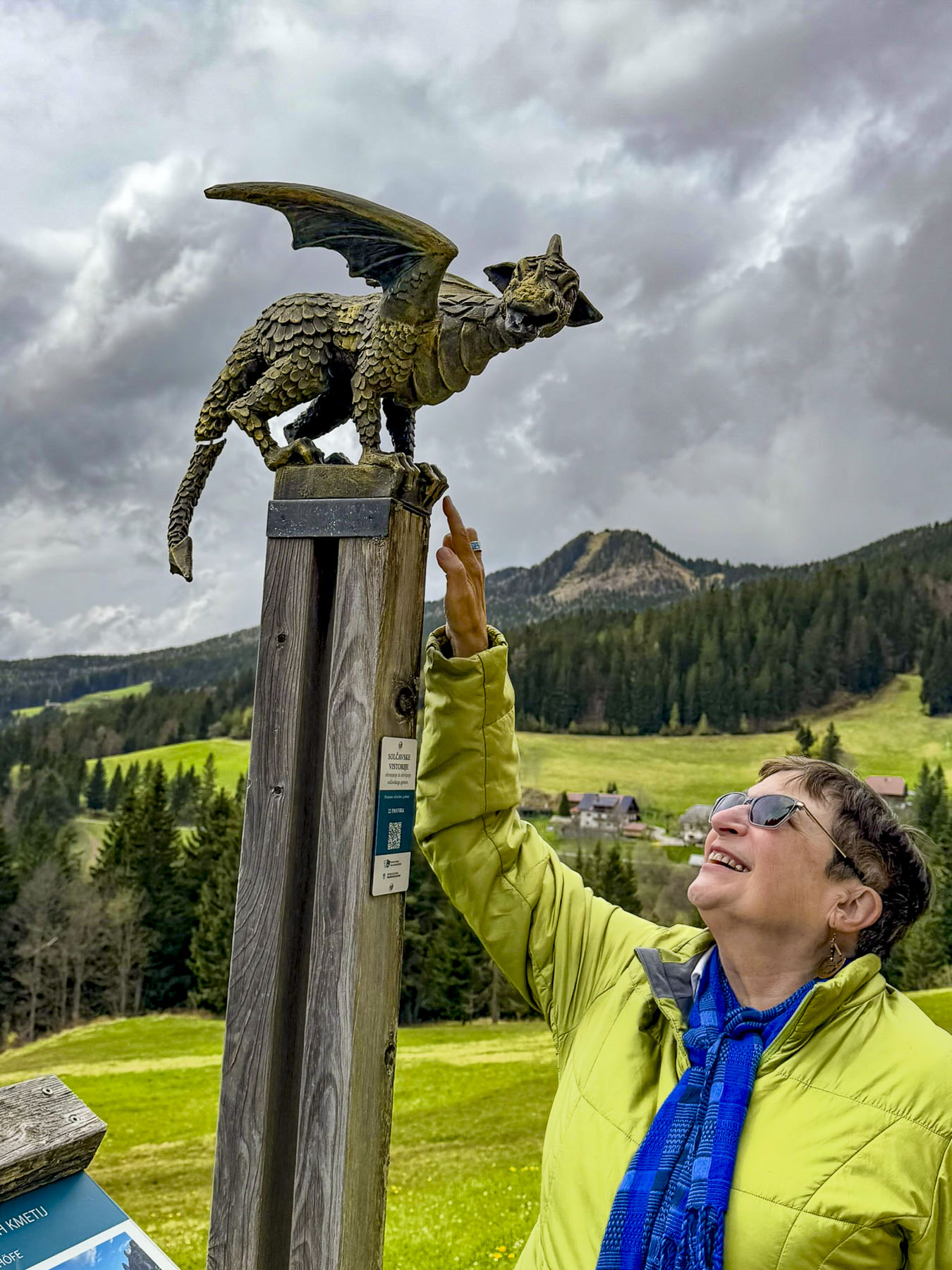
Next to it was a whimsical statue of Lintver, a Slovenian folklore dragon associated with the Logar Valley and the Solčava region. Centuries-old legends tell of his role in shaping the area’s valleys and landmarks. Nowadays in Slovenia, the dragon symbolizes the powerful and beautiful forces of nature.

We coasted slowly through the beautiful wide grassy valley to its terminus, the trailhead for the Rinka Waterfall. Though it was only a twenty-minute trek from the parking area, we passed on the opportunity and had a late lunch at Penzion Kmečka Hiša Ojstrica. Their  outside deck was open, and we enjoyed a tasty meal while warming in the afternoon sun, if only for a brief moment, before heading to Kamnik for the night. Really, exploring the area in depth requires several days, especially if you want to do any hiking. The park’s website is a good resource for accommodation in the valley and surrounding area.  

It was pouring again as we reached Kamnik. Totally unprepared for this deluge, we parked as close to the entrance of Guest House Pri Cesarju as we could. Kindly, the proprietor of the hotel and pizzeria where we were staying ran to assist us with umbrellas as we unloaded our luggage. After a chilly day, it was nice to relax in the comfortably warm restaurant with a glass of local red wine and delicious pizza. The weather the next morning was perfect with a sunny blue sky. A nice change from the cloudy weather pattern that had been over the area for several days.

We drove to Kaminska Pekarna, a hidden gem of a bakery and confectionery, on the side of town nearer Ljubljana. We had discovered it the day before while seeking to satisfy our “drive a little then café’, caffeine cravings. It’s a very simple shop, with only a dozen tables inside, and few outside, under the building’s overhang for the smokers, but it was very busy with local folk, and their sweet and savory pastries were scrumptious. Over our two days in Kamnik we stopped there three times. It was that good, and extremely budget friendly. Parking near the old town is very limited, but it was the shoulder season, and we thought we found a good centrally located spot down a quiet side street. More on that later.

Kamnik is a historic town, one of Slovenia’s earliest, first mentioned in historical records in 1061. By the early 13th century, it had grown into a bustling crafts and market center on the trade route between Hungary and the Adriatic, and it was granted formal town status.

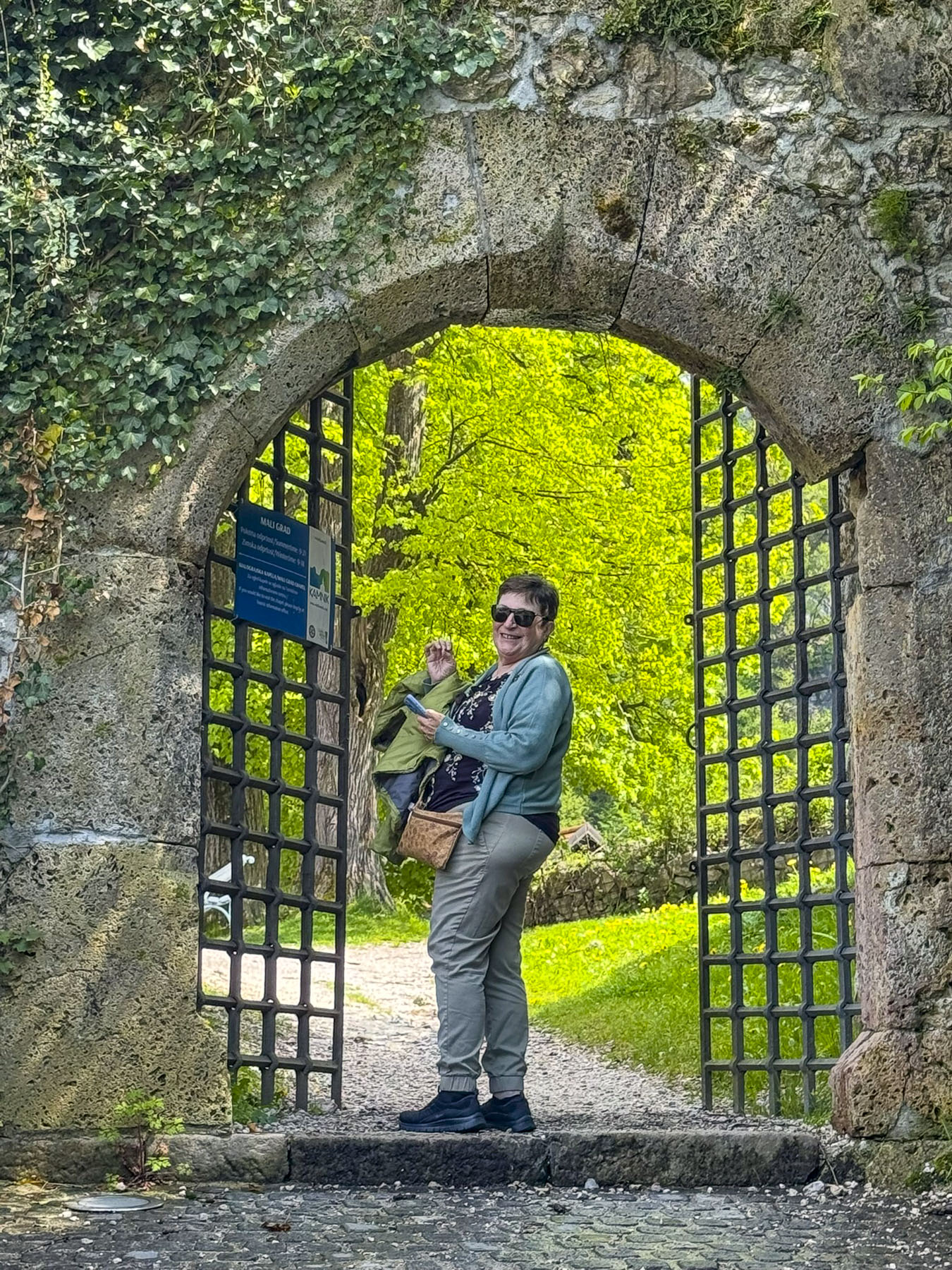
For a time, its importance in Slovenia rivaled that of Ljubljana’s and the town boasted two castles, minted its own coins and was granted a Franciscan monastery, which is still in use. Now in ruins, Stari grad, the old castle, commanded the tall hill across the Kamniška Bistrica river from the village. The tongue of a modern cantilevered viewing deck at the site can been seen from town, but the site was not open in early April when we visited Kamnik. In the center of town Mali grad, the little castle, stands on a small knoll that overlooks what would have been the main routes through the medieval town.

Though this castle was also closed, the path to it led through a nice, shaded park and offered several great views of the red-roofed town with the beautiful Kamnik-Savinja Alps in the distance. A teenage girl, playing hooky from school and enjoying the tranquility of the location, lounged on the castle’s steps, absorbed by her reading.

The warm sunny day called for a gelato, and we stopped at a small café’ with outdoor tables, at the top of Šutna Street. Once the town’s main thoroughfare, it is now a colorful pedestrian lane lined with an assortment of well-preserved homes and guild buildings, dating as far back as the 14th century.

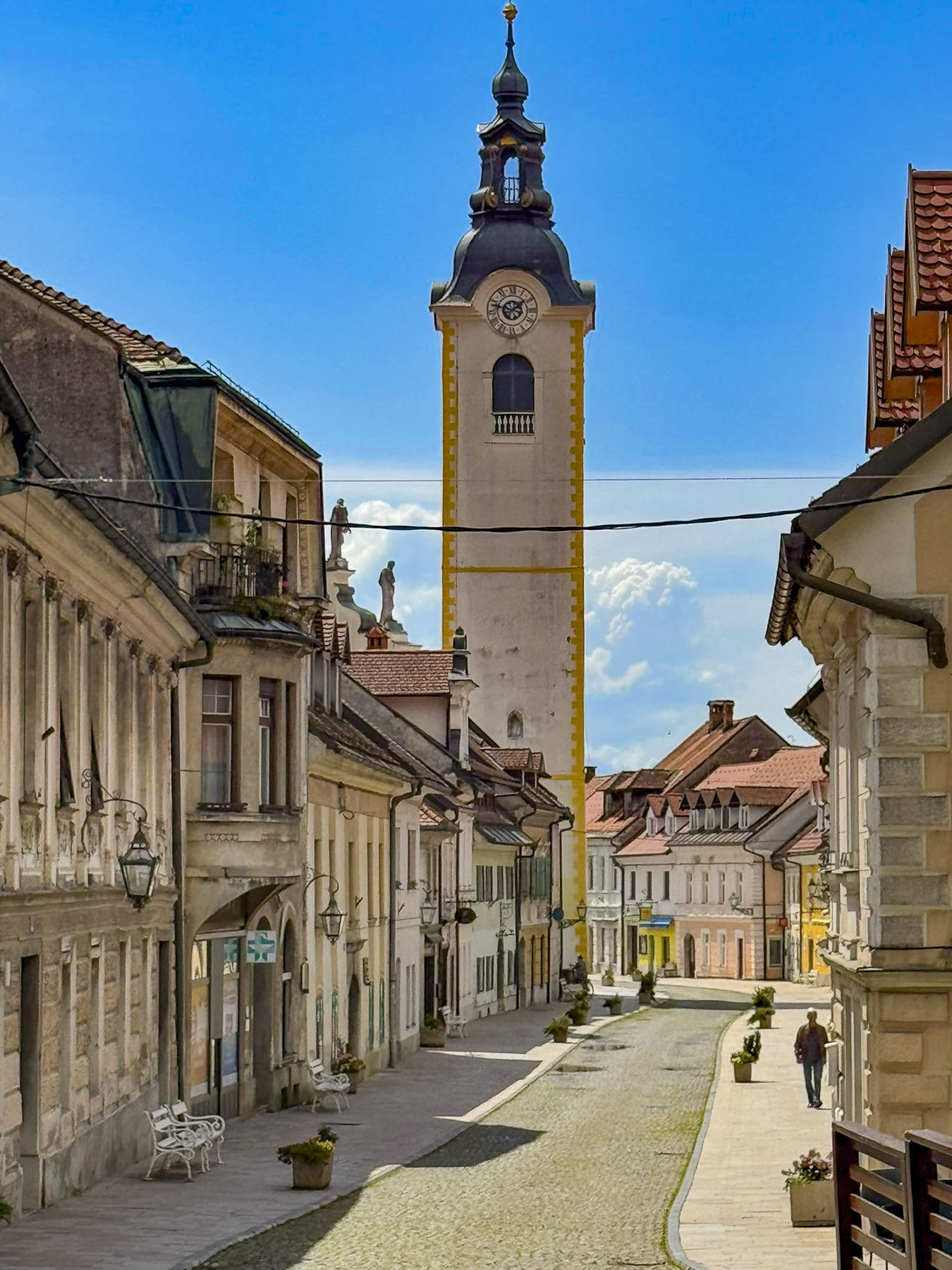
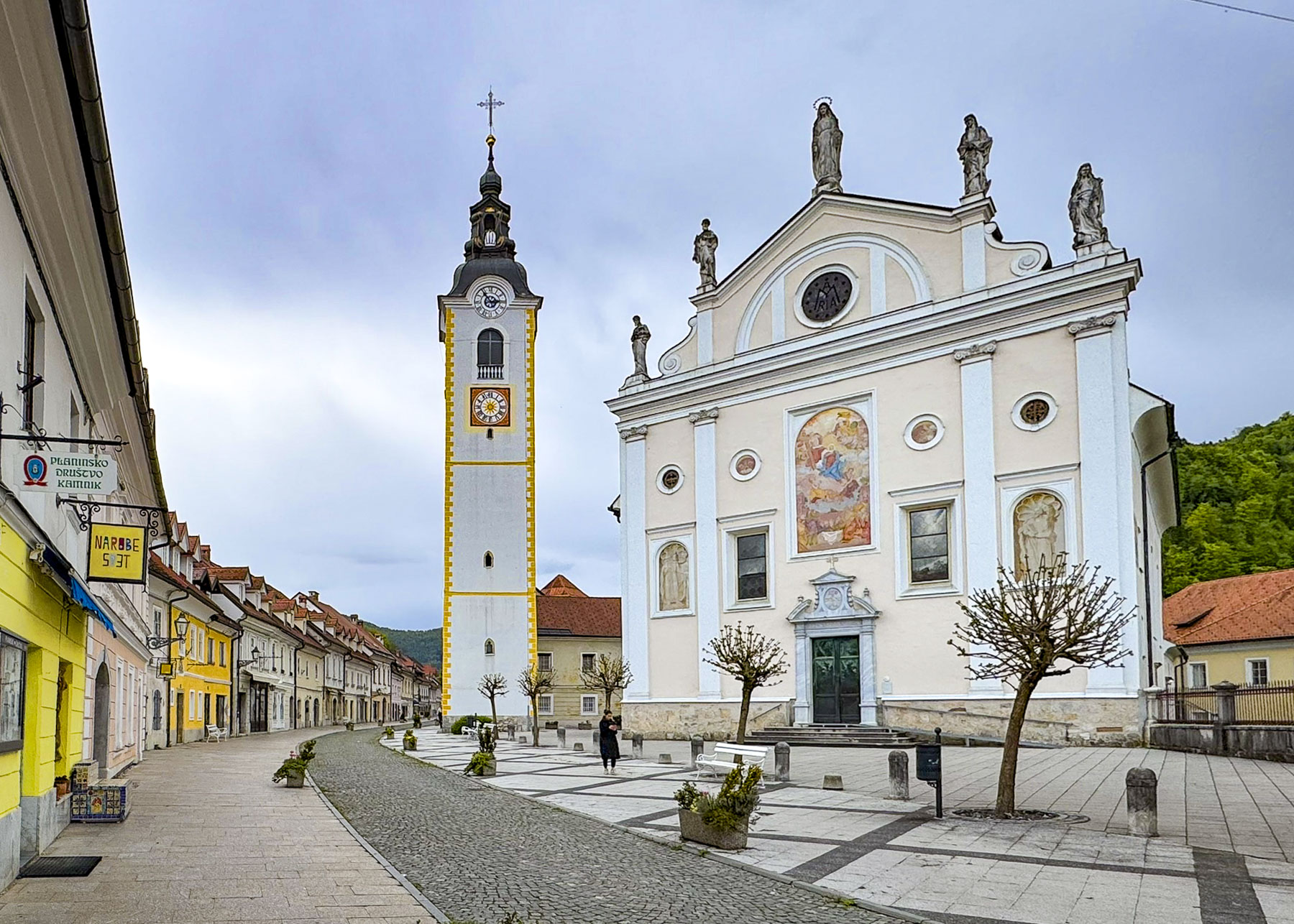
Along the way was the Immaculate Conception Parish Church, a Gothic structure with later Baroque additions, notable for its freestanding bell tower.

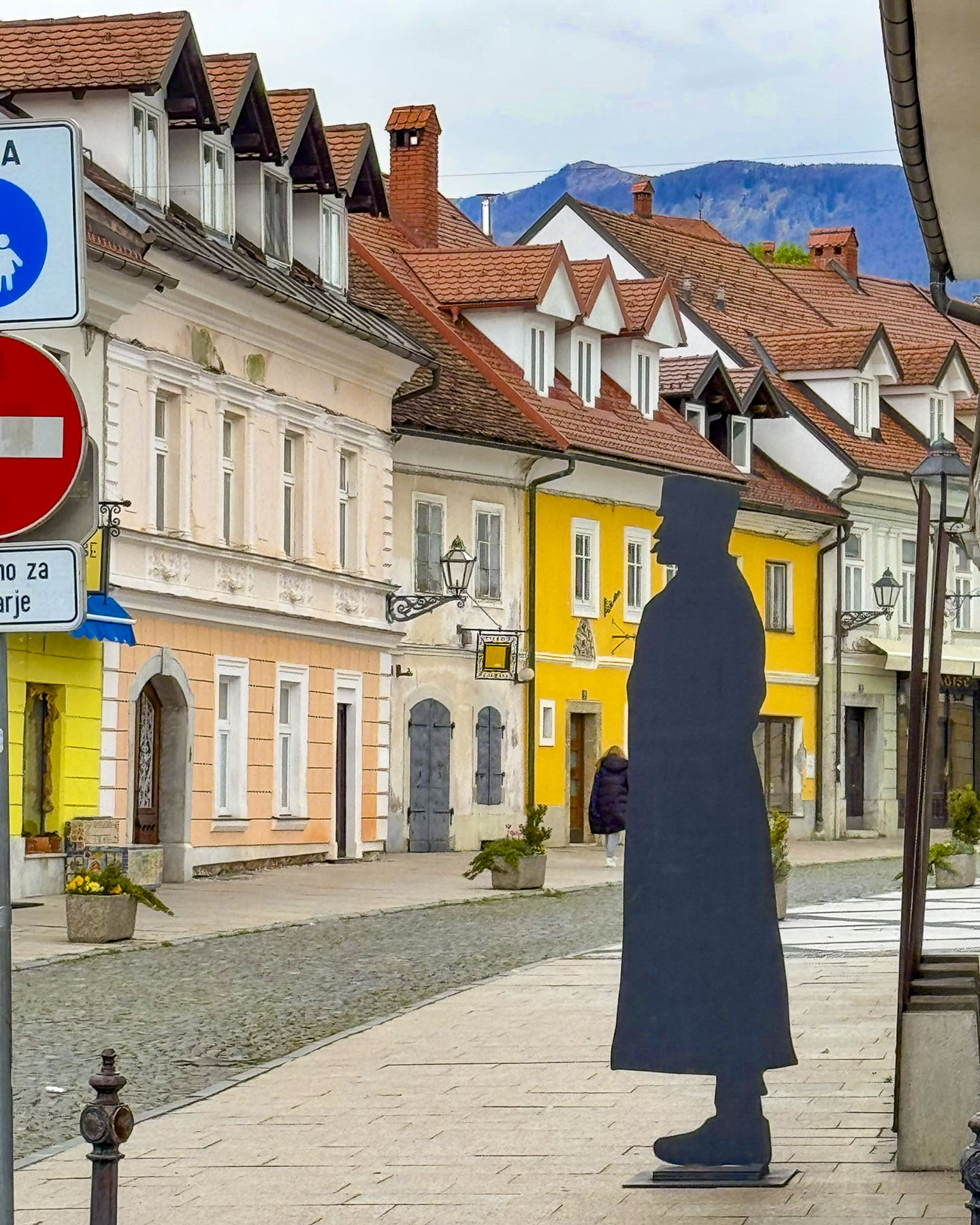
At the bottom of the Šutna treet was a life-size silhouetted profile of a distinguished man. The commemorative inscription next to it told the story of Rudolf Maister, a nationalist hero, who was born in a house on this street in 1874. Choosing a military career, he rose to the rank of Major in the Austro-Hungarian Empire, in which Slovenia was a province at the time, while serving on the front near Graz, Austria. At the end of World War One, when the “Great Powers” were redrawing the maps of Europe, on his own initiative he disobeyed orders to turn the town over to German-Austria troops. Rallying 4000 loyal Slovene troops to support him he secured Styria, the region south of Graz to be Slovenia’s northern border and part of the newly formed State of Slovenes, Croats and Serbs, which united with the Kingdom of Serbia into the Kingdom of Serbs, Croats and Slovenes, which eventually became Yugoslavia. He was an interesting individual who was also recognized for writing two volumes of poetry and starting a military orchestra.

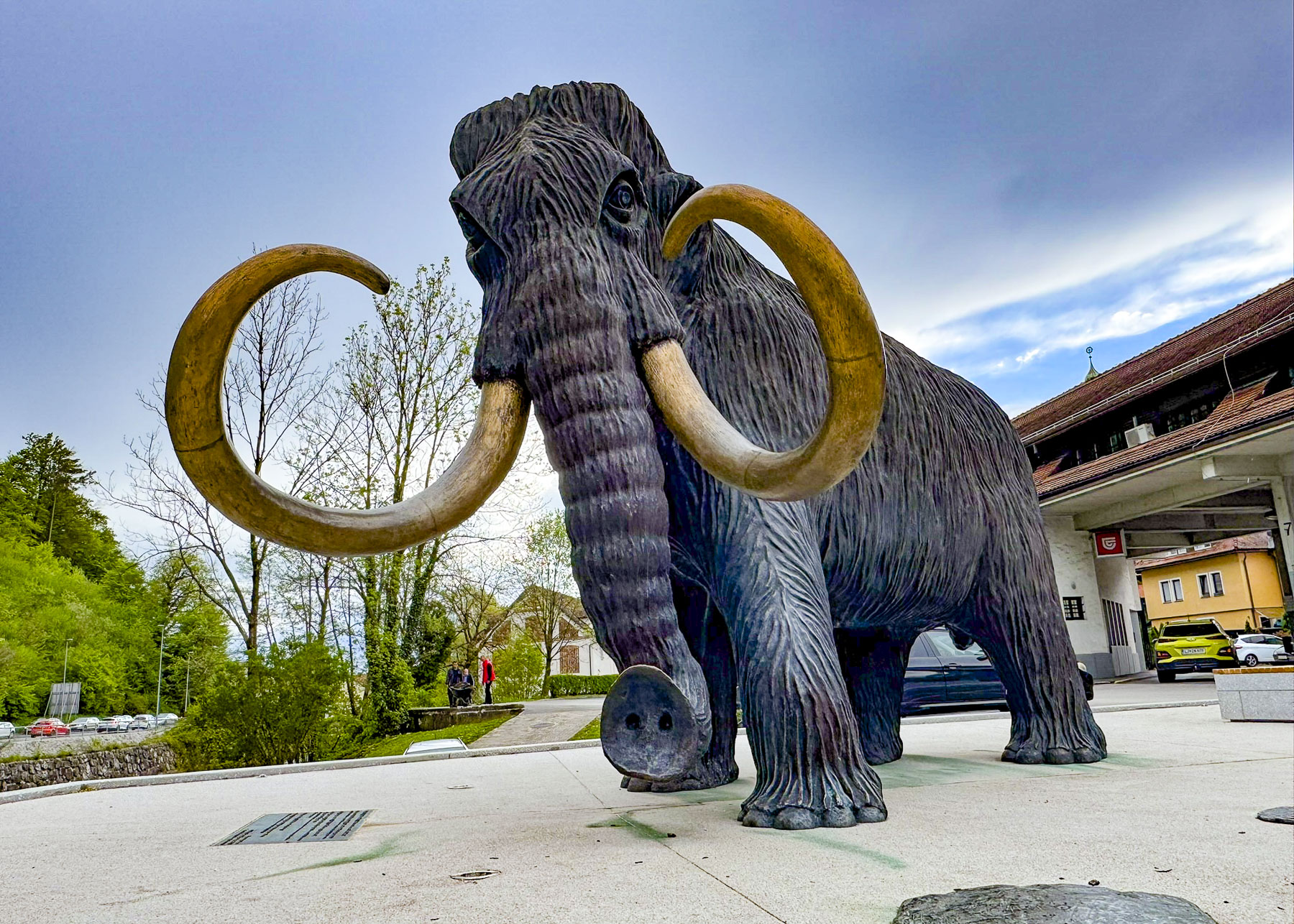
A short distance away in a plaza across from the bus station was Kip Mamuta, a life size bronze sculpture of a woolly mammoth. It commemorates the 1938 discovery of a nearly complete mammoth skeleton, unearthed by workers expanding a bridge, in nearby Nevlje. The site upon further archaeological excavation was determined to be a Paleolithic hunting settlement dated to be around 20,000 years old. The skeleton is on exhibit in the Natural History Museum of Slovenia in Ljubljana. Returning to the car hours later, we realized we had parked down a restricted residential road, which just happened to have its gate up when we drove through earlier that day. Now the automated gate was closed and we were trapped. Waiting patiently until a local resident exited, we followed close behind. Kamnik is a charming small town which we had mostly to ourselves in early April, and we found it very easy to explore fully in a single day. Every September the town hosts the Days of National Costumes and Clothing Heritage, Slovenia’s largest ethnological festival, featuring a grand parade, historical costumes, reenactments, traditional music, dance, regional crafts, and local food.

Finicky weather resumed the next morning as we headed to Cistercijanska Opatija Stična, the Cistercian Abbey of Stična, a 12th century walled monastery along the A2 which we were following to Zagreb, Croatia. It is Slovenia’s oldest operating monastery, though only 14 monks remain, a vast difference from the hundreds that lived there during the Middle Ages and supported the abbey’s vast land holdings and 300 churches in the region. The Cistercian Order is an offshoot of the Benedictine Order, that follows a return to a stricter, simpler monastic life based upon a self-sufficient agrarian orientation, emphasizing austerity, manual labor, solitude, and a balance of prayer and work. During the early years of the monastery, it acted like an agricultural college, where the hard-working monks shared their advanced ideas of crop rotation, irrigation systems, better iron ploughs, selective breeding, and new crop varieties. “They revolutionized the local agriculture,” and contributed to the prosperity of the area by not requiring the local peasants on their granges to pay the annual tithe.

The order’s influence grew with time and the monastery evolved to support a traditional school as well as a music school, herbal pharmacy, and a library where manuscripts were copied. The Stiški Rokopisi, Stična Manuscripts, a famous series of illuminated medieval manuscripts, were written in the mid-1400s by the abbey’s monks, not in Latin as was the tradition, but in the Slovenian language, one of the first such books of the time.  

During the Middle Ages the monastery was located on the Slovenia frontier, an area that separated the Christian northern Balkans from the Ottoman Empire. Turkish raids in the area were a common occurrence, and even though the abbey was enclosed within a defensive wall it suffered severe damage during attacks in 1475 and 1529. The abbey continued to prosper until 1784 when Joseph II, the Holy Roman Emperor and ruler of the Habsburg Monarchy, confiscated the lands of monasteries in his realm, and forced monks and nuns into “useful” state-approved roles. The abbey was returned to the Cistercian Order 1898.

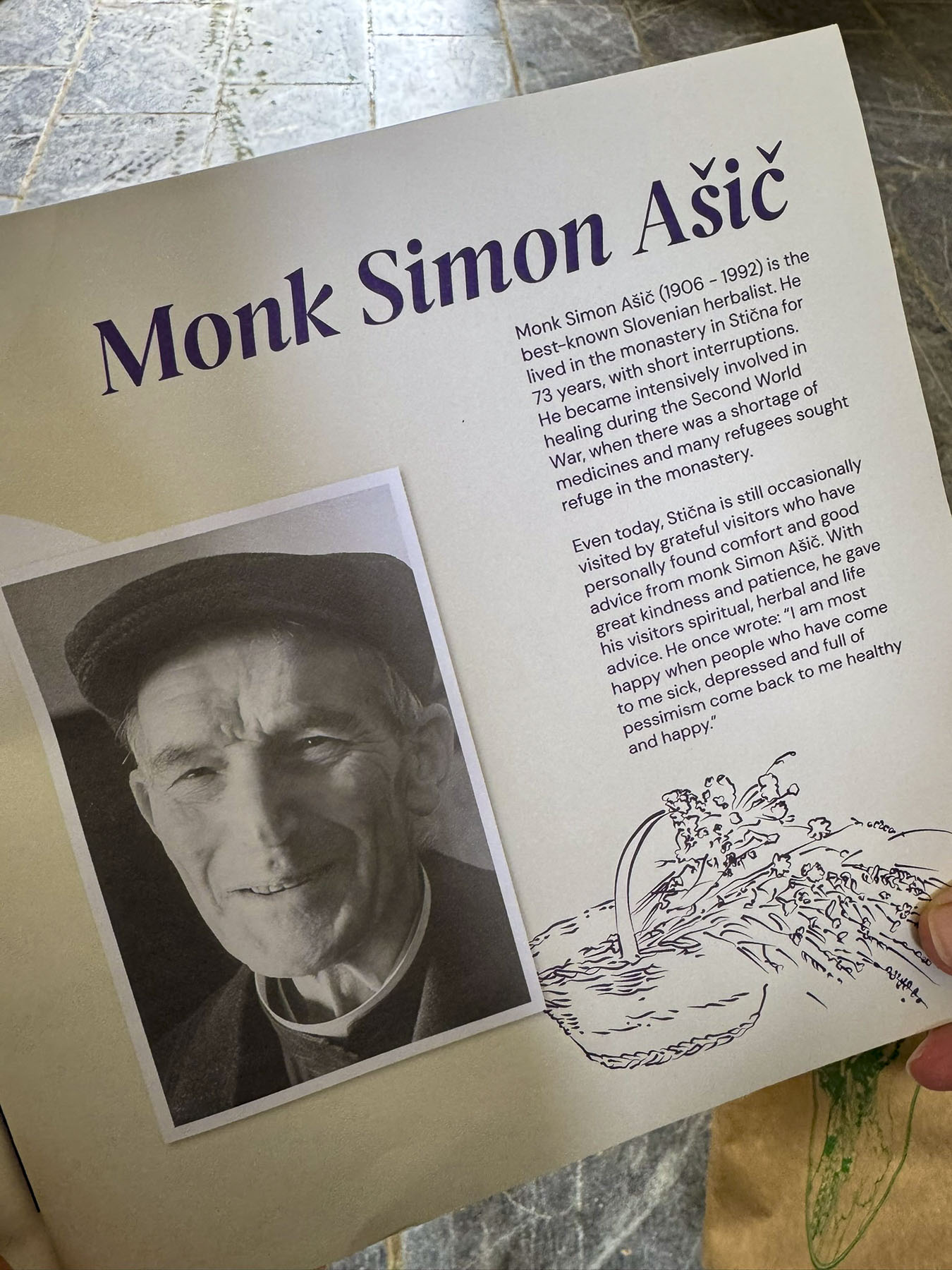
According to the abbey’s records there has been an herbal pharmacy in the monastery since the 15th century, which gathered and used the region’s 400 medicinal plants. This tradition was revived again after 1898 and grew in importance under the direction of Father Simon Ašič (1906-1992). The pharmacy was especially useful during World War II, when many sick refugees sought help from Father Simon. Because of the war, medicines were in short supply, but he was able to help many people with his herbal preparations. Always recording the recipes and results, he published his knowledge in three books. The abbey honored his legacy in 1992 with the founding of SITIK, an herbal products company that sells items prepared according to the original recipes of Father Ašič.

We visitied the abbey’s church, the Our Lady of Sorrows Basilica, once one of the largest in Slovenia. The sanctuary and its cloister were very interesting to explore. Something that we never noticed before in a church was that the confessionals all had small red and green lights on them to indicate which ones were in use.

Regrettably, we missed the tour of the herbal pharmacy, but we did get a small brochure, with some of Father Ašič’s herbal recipes.

Zagreb beckoned. On we went.

Till next time,

Craig & Donna
P.S. Each year in the fall, the village of Stična hosts an arts festival known as Festival Stična

A Balkans Road Trip Part 4: Slovenia – A Day Trip from Ljubljana to Lake Bled

Enchanting photographs of Lake Bled and the Church of the Assumption of the Blessed Virgin Mary on its island pulled us into the countryside like a magnet, its attraction drawing us away from Ljubljana to visit the iconic pilgrimage site that’s become a symbol of the natural beauty that awaits visitors to Slovenia.

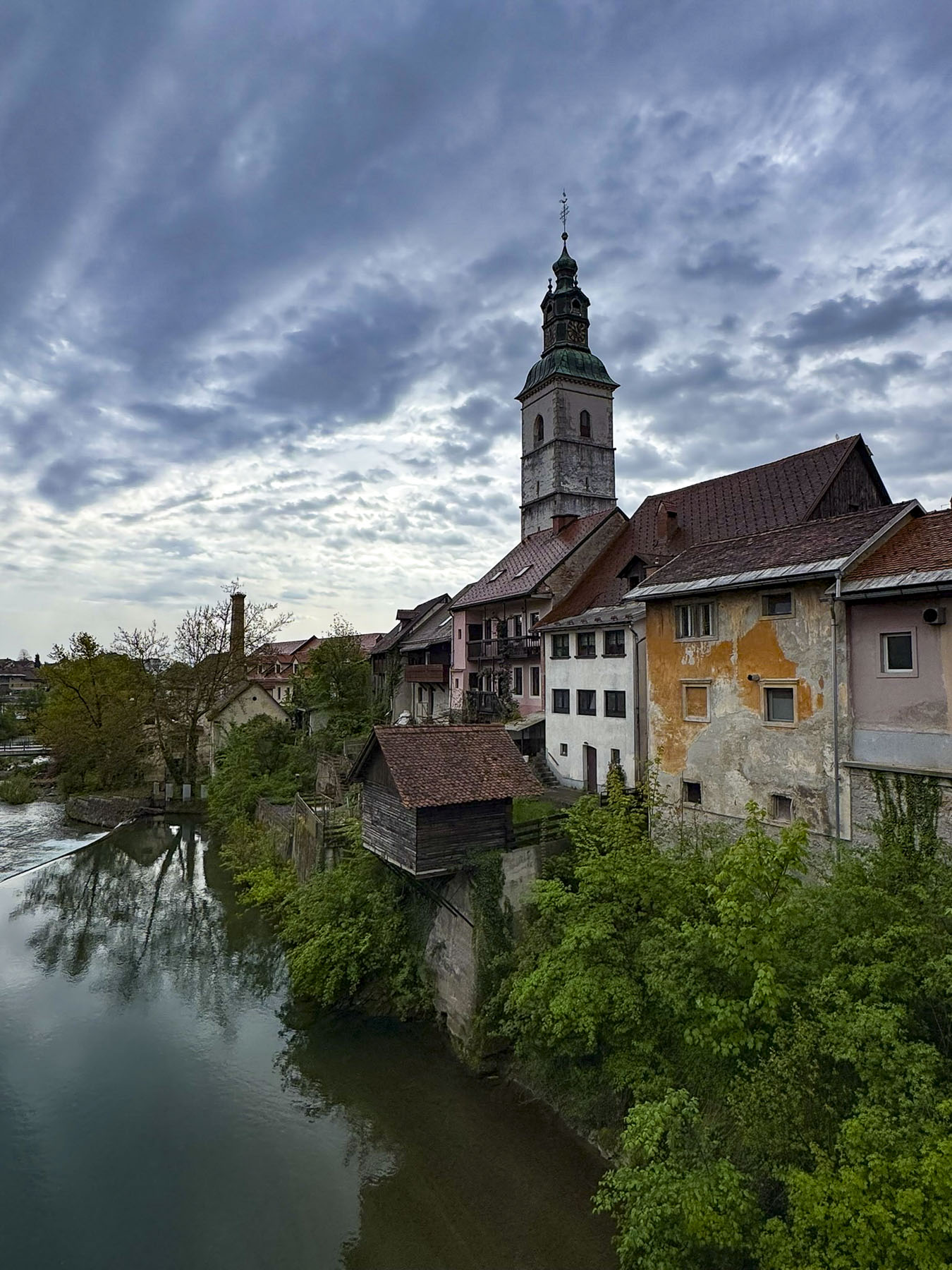
Via the E61 toll road from Ljubljana, Lake Bled is an easy and quick day trip from Ljubljana, but we chose a route through the foothills of the Julian Alps, an immense area that stretches to the northwest from Skofja, a charming town with medieval roots.

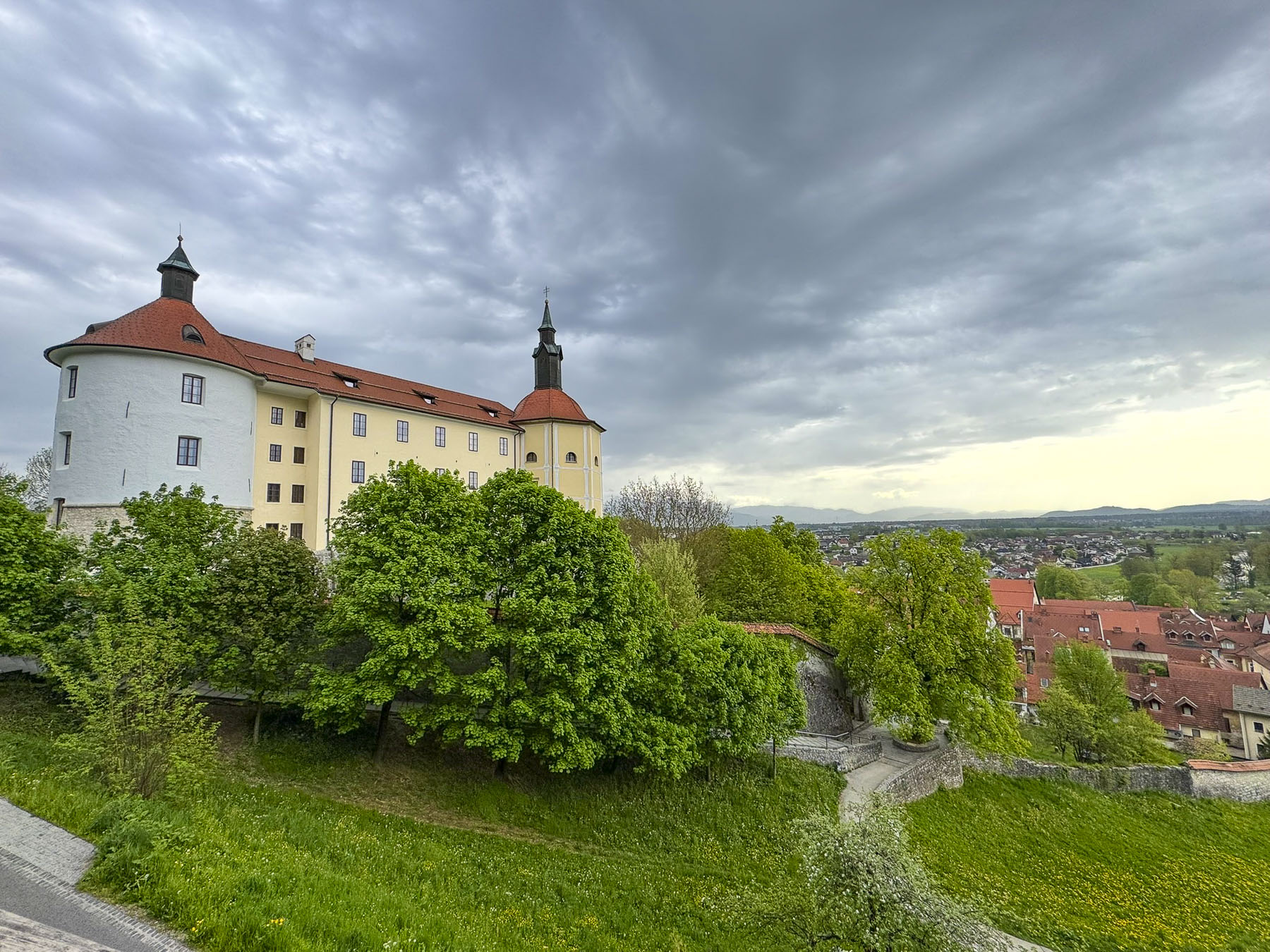
Škofja Loka, the “Bishop’s Meadow,” was founded on the hillside above the confluence of Selška and Poljanska Sora rivers, by a 973 AD land grant to the Bishops of Freising from the German king and Holy Roman emperor, Otto II. By the mid-1200s it was busy walled market town with Skofja Loka Castle towering over it.

The town has persisted through a turbulent history; having survived a devasting 1511 earthquake, and after fires in 1690 and 1698, it rose from its destruction like a phoenix. The picture image of the town today stems from this last rebuilding and the removal of town’s ramparts in 1768.

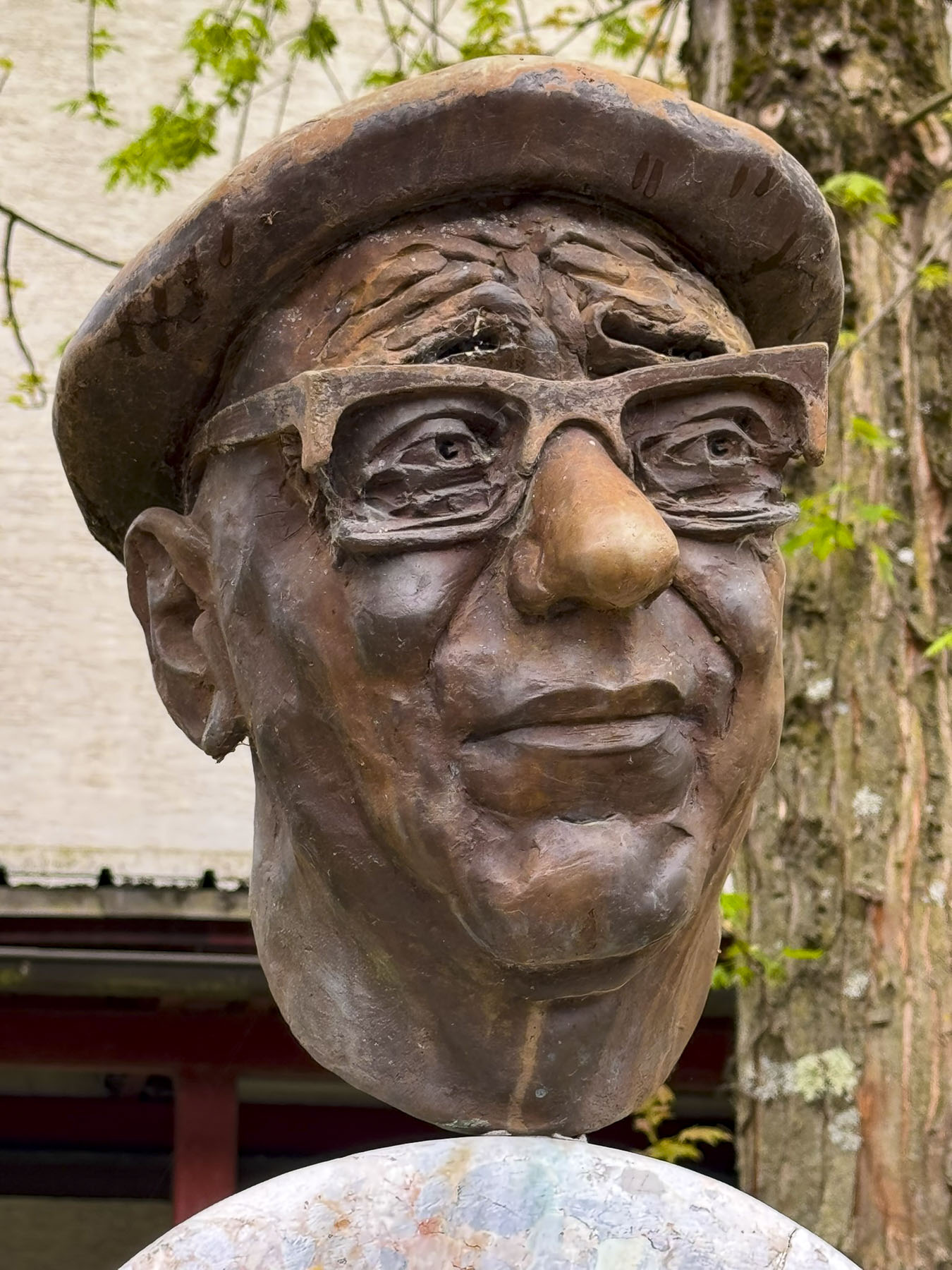
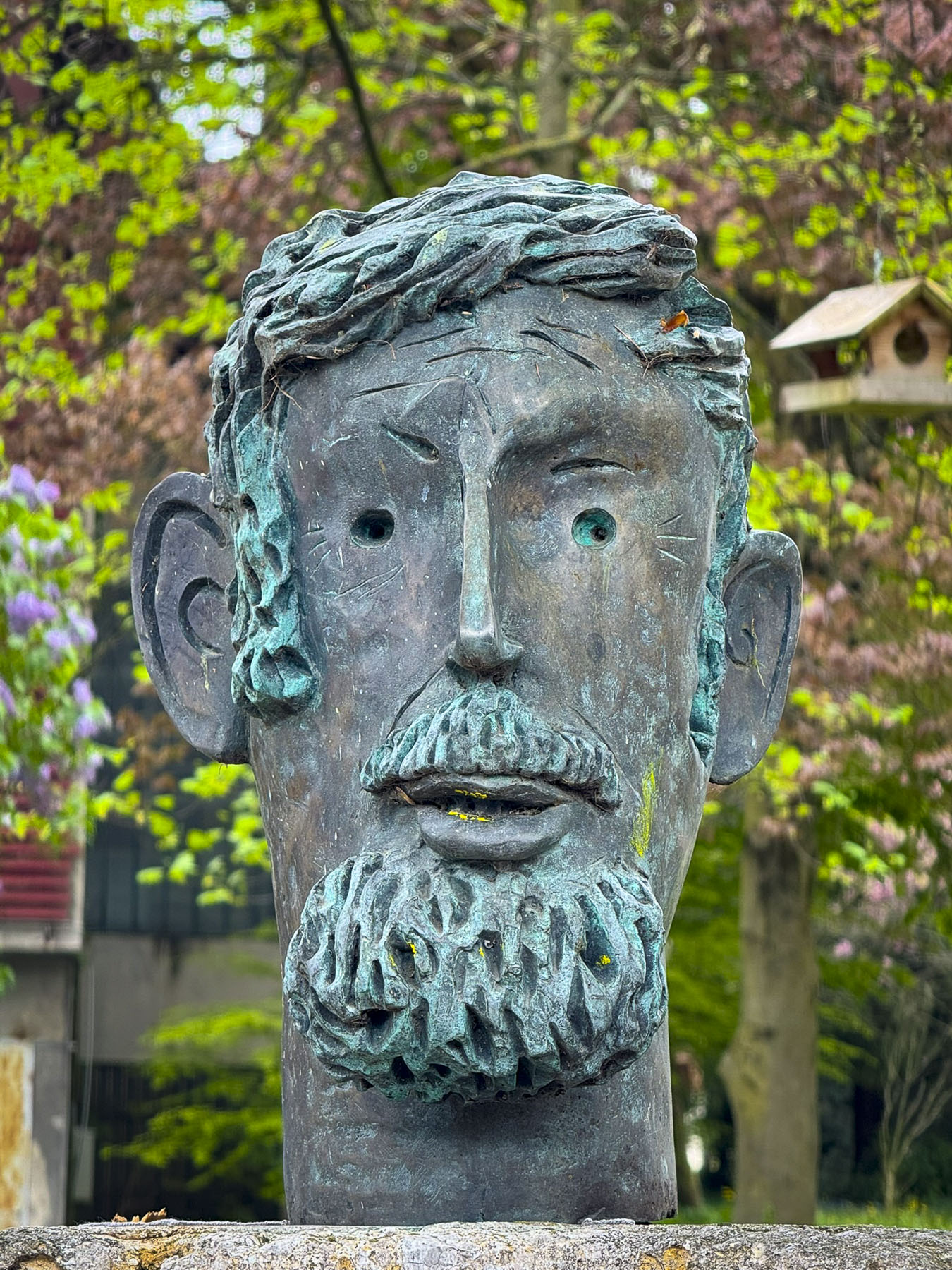
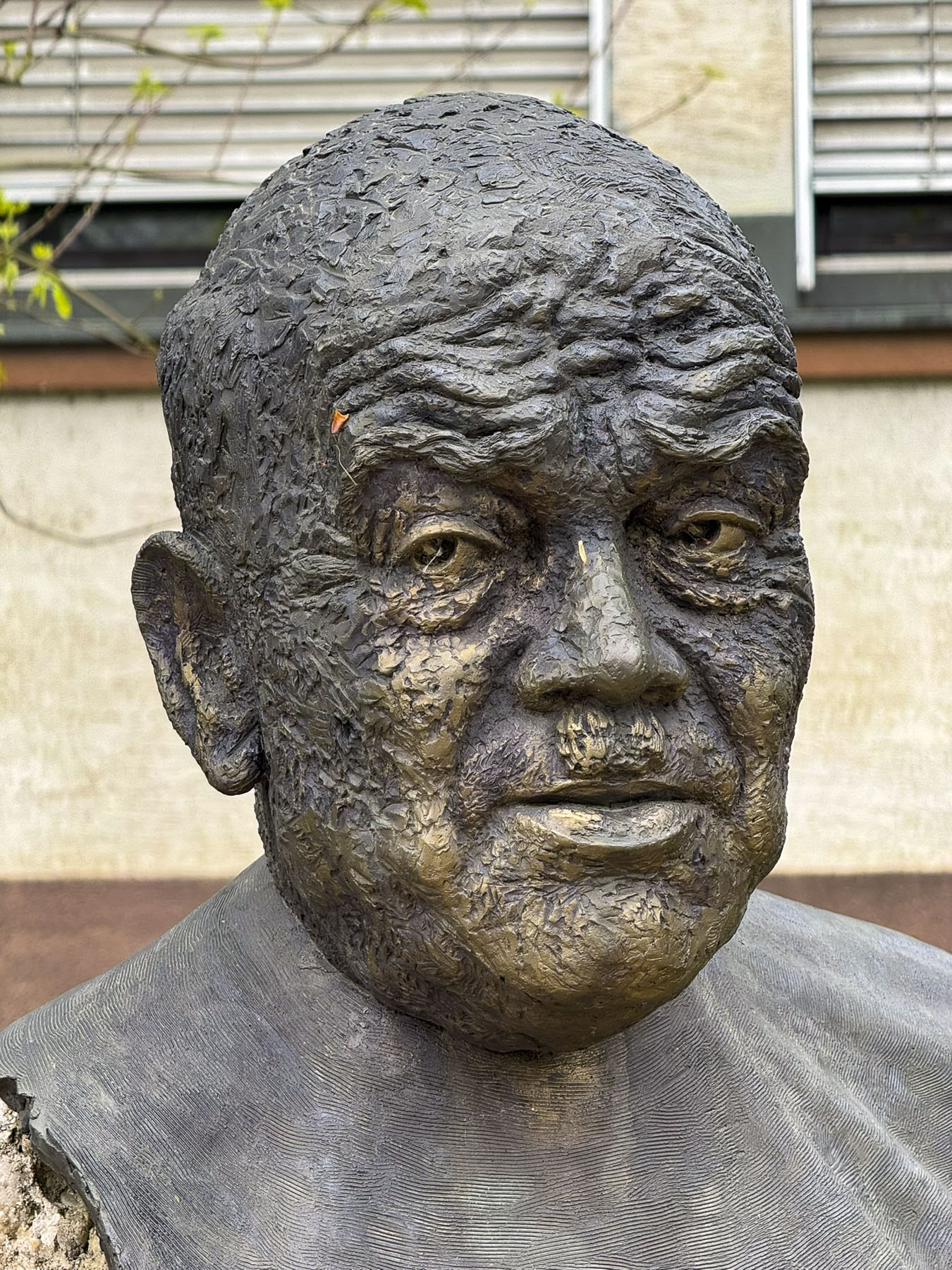
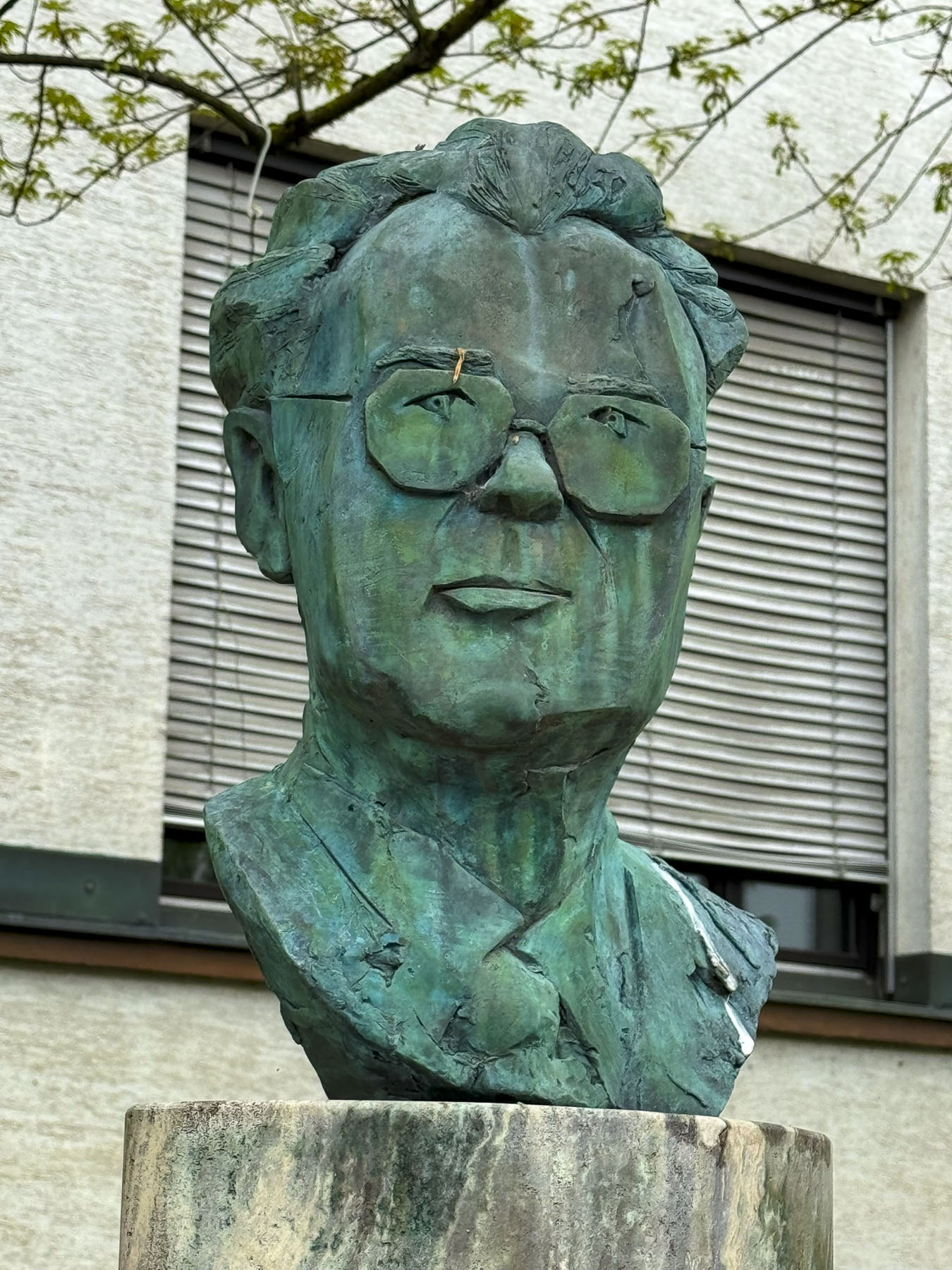
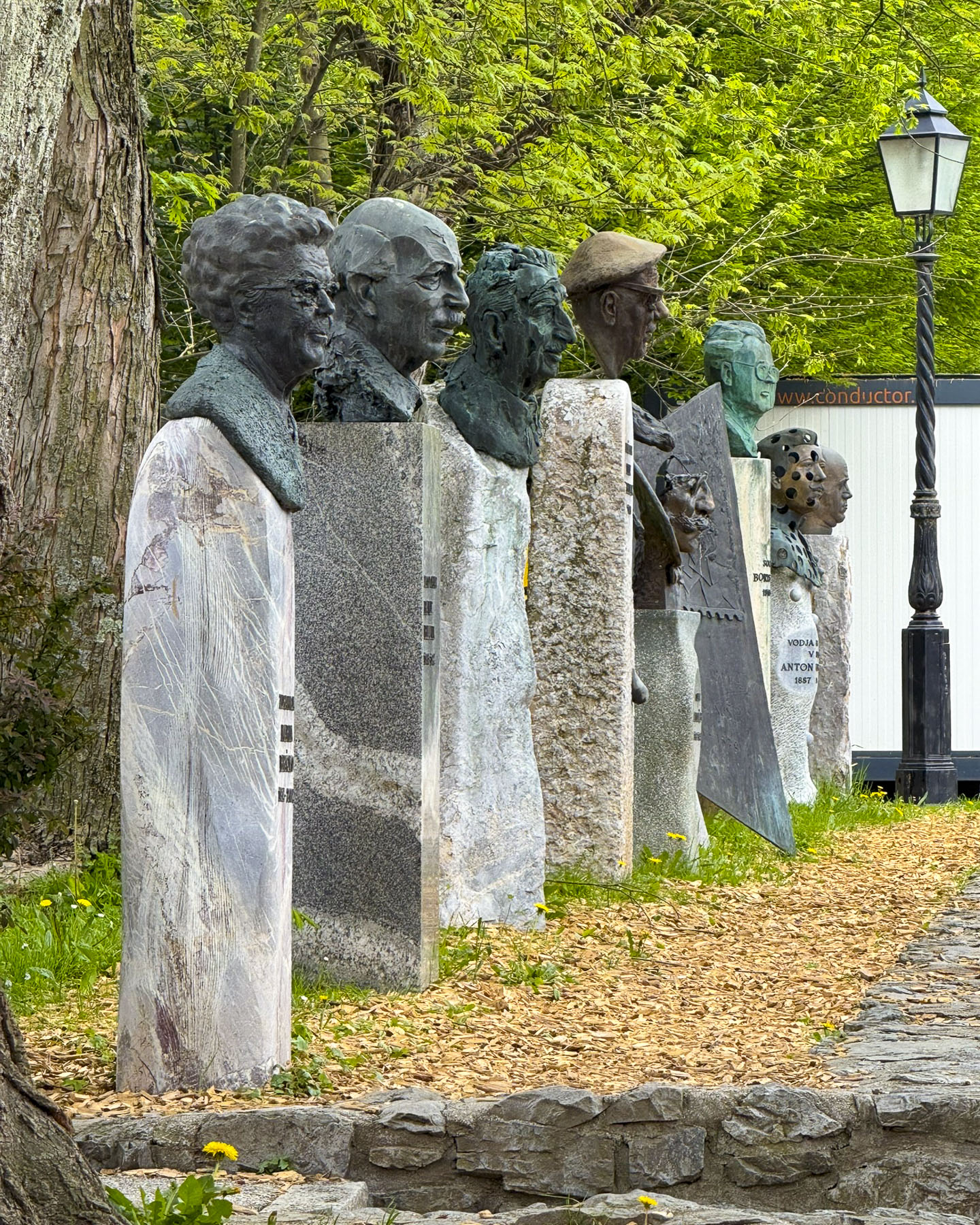
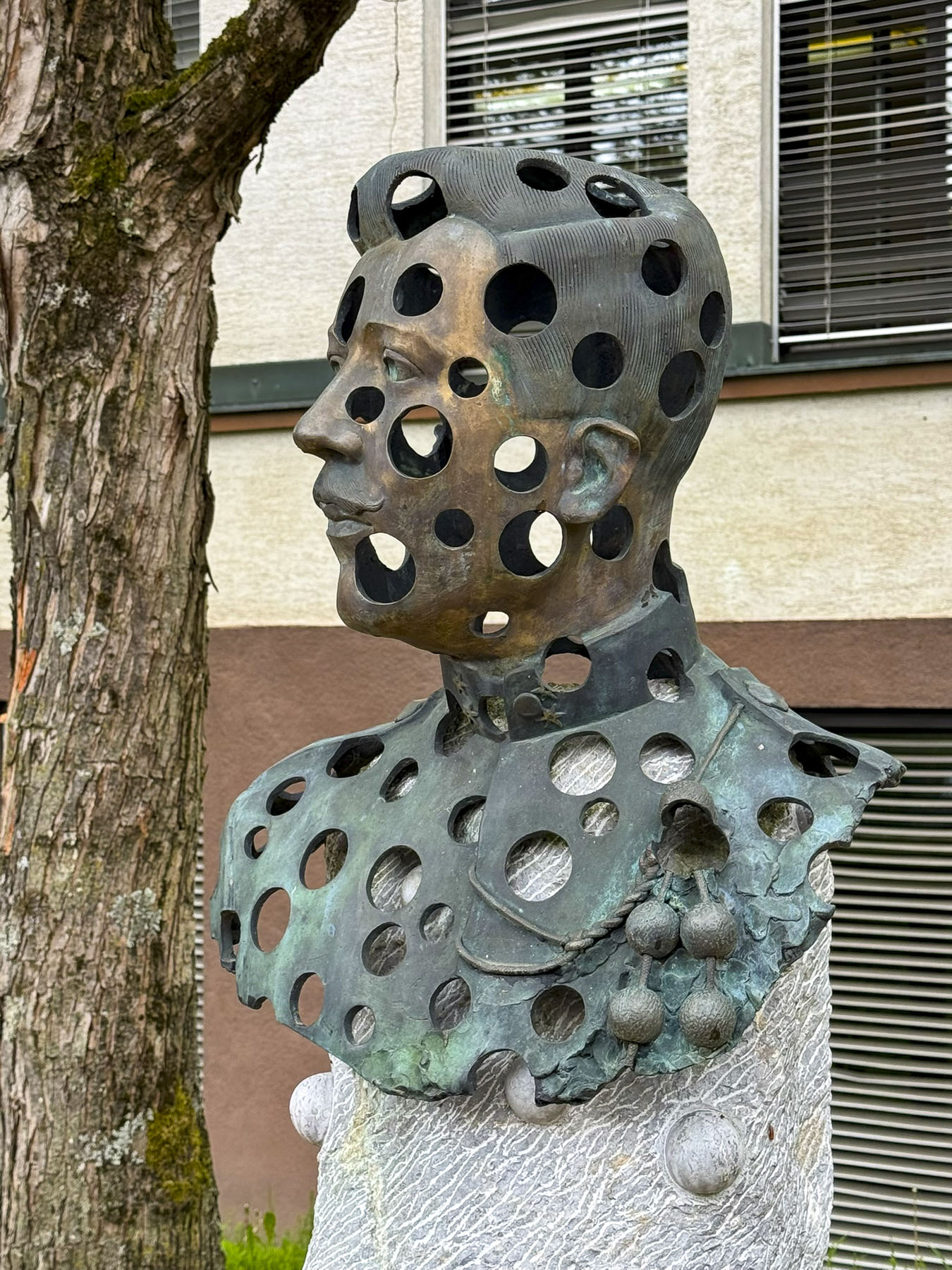
In Selška Sora’s new town we had coffee at the Art Café and sat outside on its porch, even though it was a chilly day, to enjoy the ambience of the town. Across the street from the cafe was a small memorial park Aleja zasluženih, the Alley of the Deserving. It featured a row of unique artistic busts portraying influential notable people of the area.

Driving across the countryside, every hilltop we saw seemed to be crowned with a small church, which is not surprising considering Slovenia has nearly 2,900 of them. Twenty-four-hundred of them are still actively used, but many of the older churches in rural areas have congregations of fewer than fifty, some even smaller than twenty. With fewer priests nowadays Sunday services are rotated between communities. Our backroads route from Selška Sora to Lake Bled through the area’s foothills was designed to see several of these old chapels in the countryside.

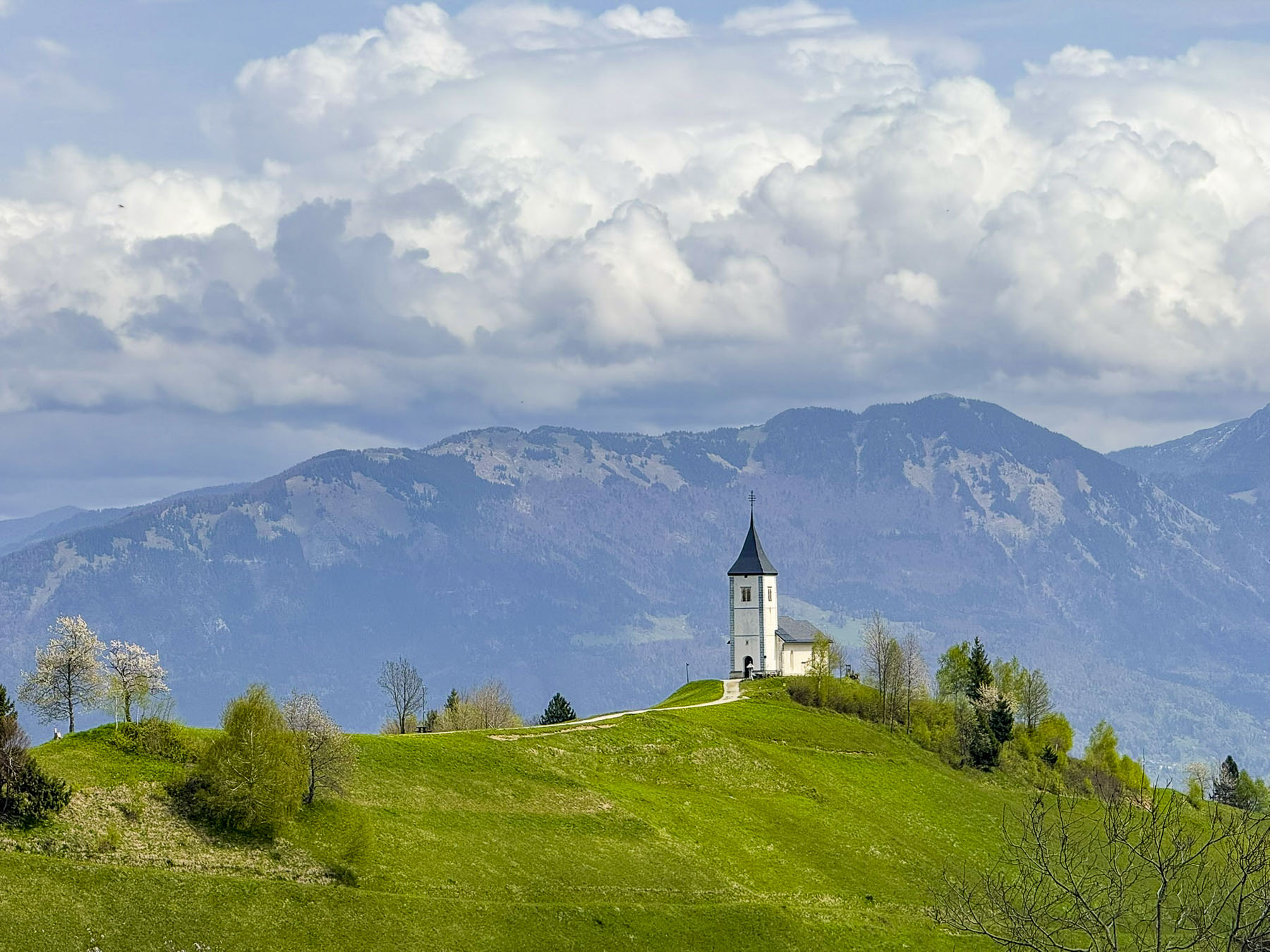
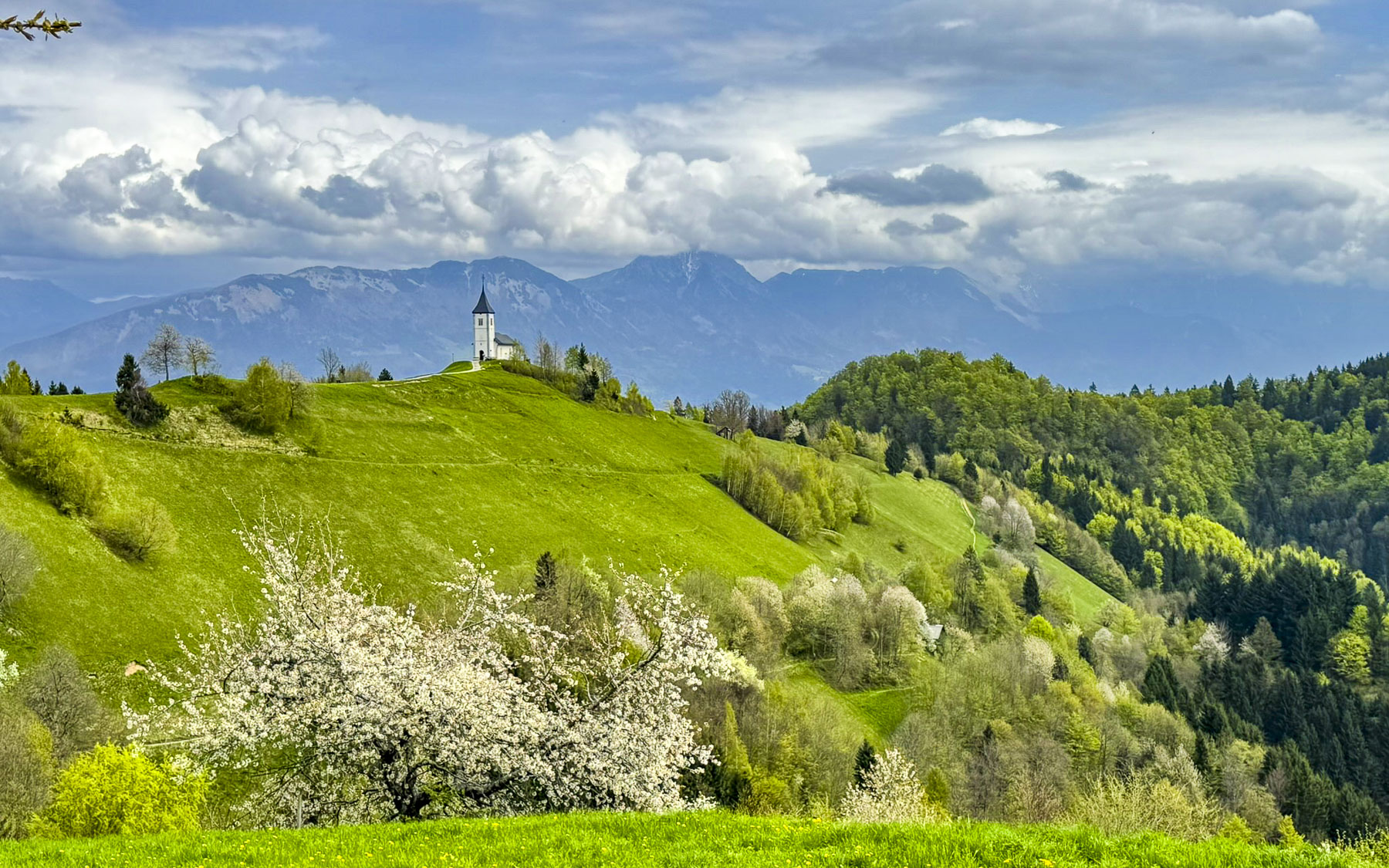
Steep switchback roads climbed into forests which opened to rippling pasturelands as far as the eye could see in the tiny hamlet of Jamnik., on a ridge before a backdrop of the distant Karavanke Mountain range, was the Church of St. Primož and Felicijan which stands quietly as if in reverence, placed upon a ridge; the distant Karavanke mountains, a massive range that forms a natural boundary between Slovenia and Austria, create a backdrop for this lovely church.

It’s a beautiful setting on the Jelovica Plateau which local folk refer to as the “Balcony above Gorenjska,” the name of the surrounding region. First mentioned in the 15th century, the church was named for Saints Primus and Felician, two brothers and early Christian converts who were martyred by beheading in Rome by the decree ofEmperor Diocletianaround 286 AD. It is said that the church holds their relics and has become a pilgrimage site, and in “Slovenian folklore and religious tradition, these saints are often viewed as “guardians” of the landscape. Their hilltop sanctuary serving as a beacon during turbulent times, including the Turkish invasions, reinforcing their role as symbols of Slovenian faith and cultural identity against external threats.”

Regrettably, beauty doesn’t exclude tragedy and several clandestine mass graves from the end of World War II are located near Skofja Loka. They were the work of Josip Tito’s communist partisans who targeted groups due to their ethnicity, or were members of the Slovene Home Guard, an anti-communists force, civilians marked as “class enemies,”[or victims of political purges. Sadly, across Slovenia, 750 of these secret burial sites, concealed by various communist regimes from 1945 to 1990, have been located by the Commission on Concealed Mass Graves in Slovenia, since the country’s 1991 independence.

The road crested and then began a long twisting descent to Kropa, a picturesque village nestled at the head of a lush green valley. During the Medieval Era the village was a prosperous center for the hand forging of nails, which were sold all across Europe. Every July the village hosts an Iron Forging Festival, where folks can watch blacksmiths demonstrate their ancient crafts.

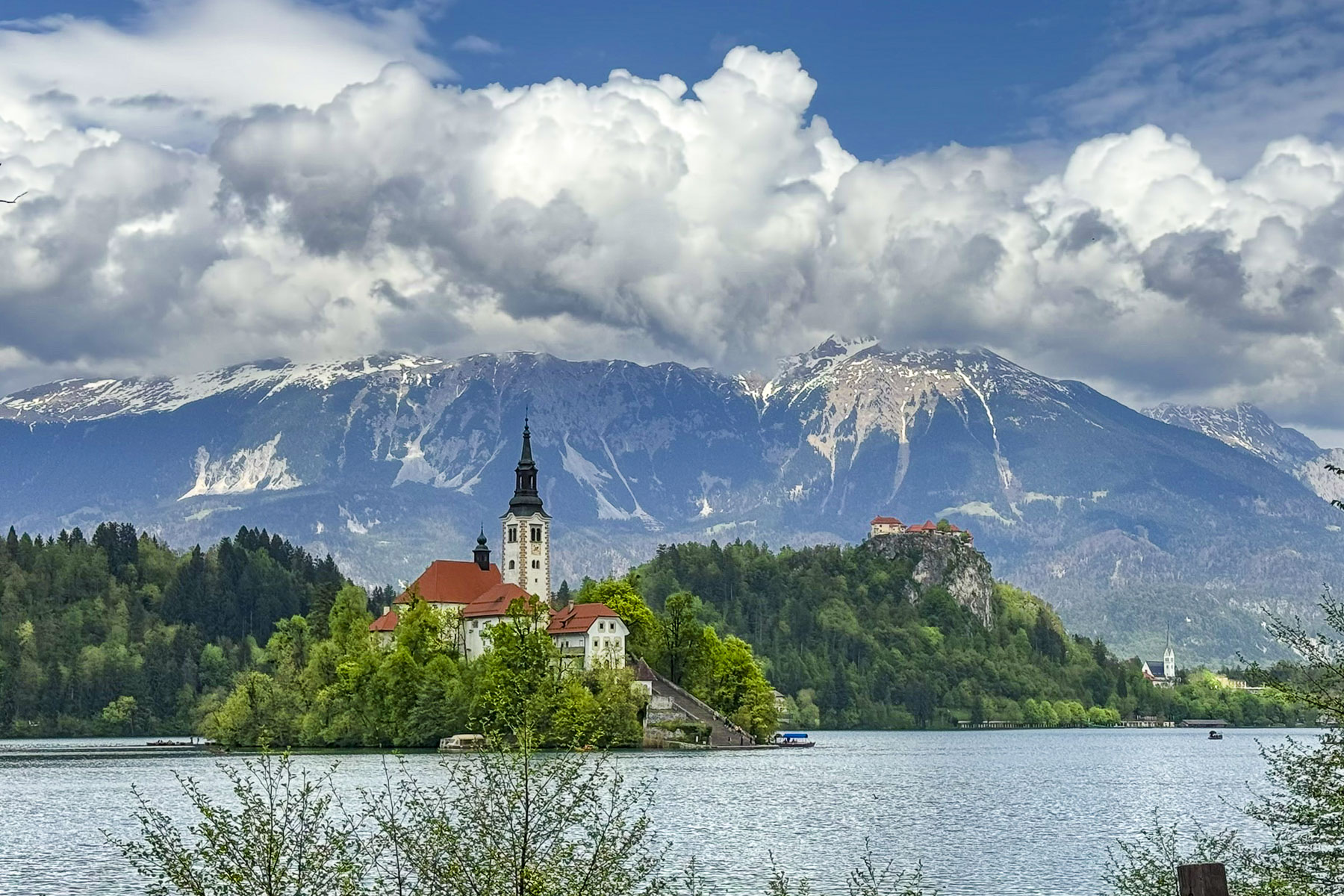
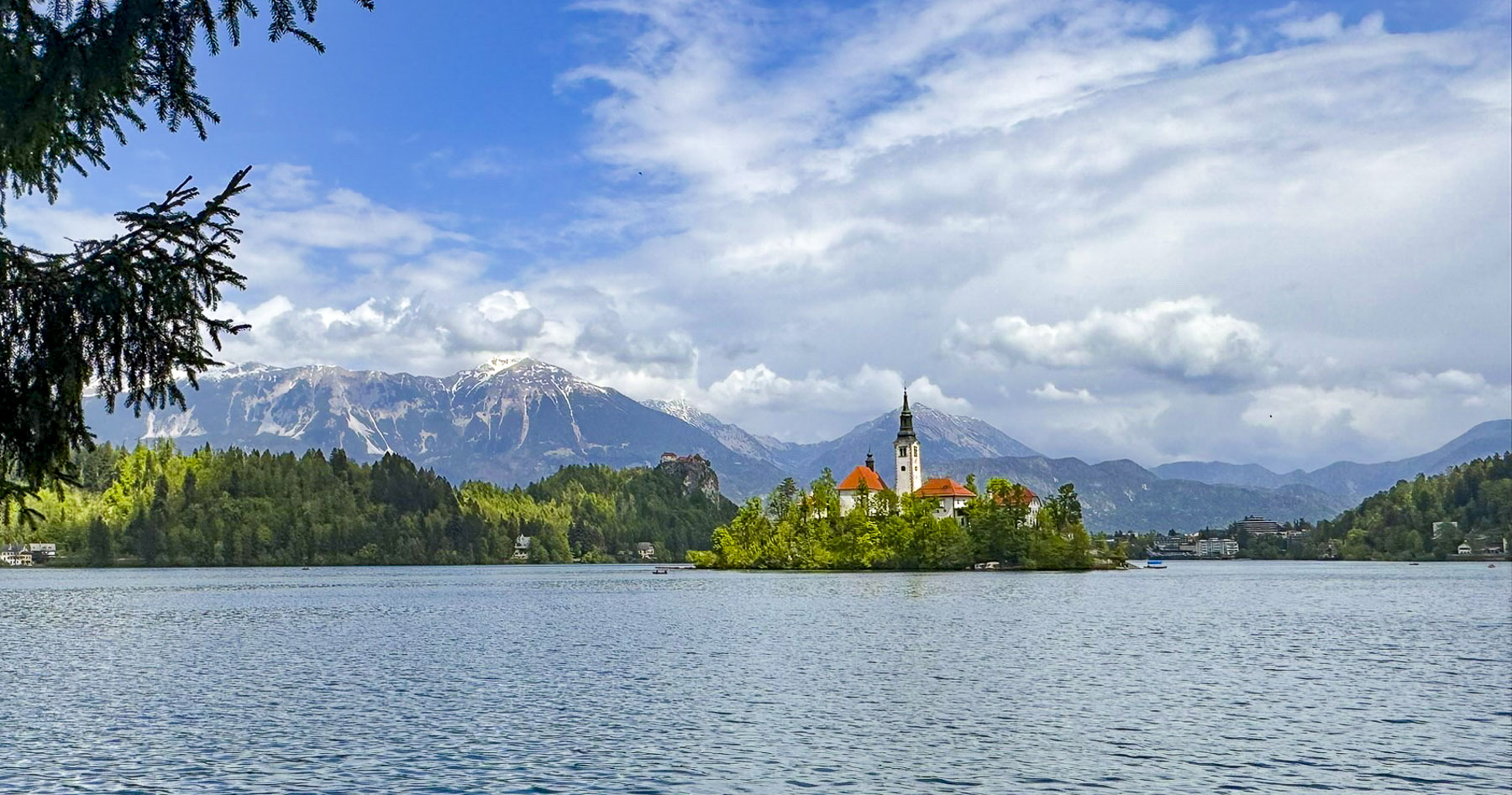
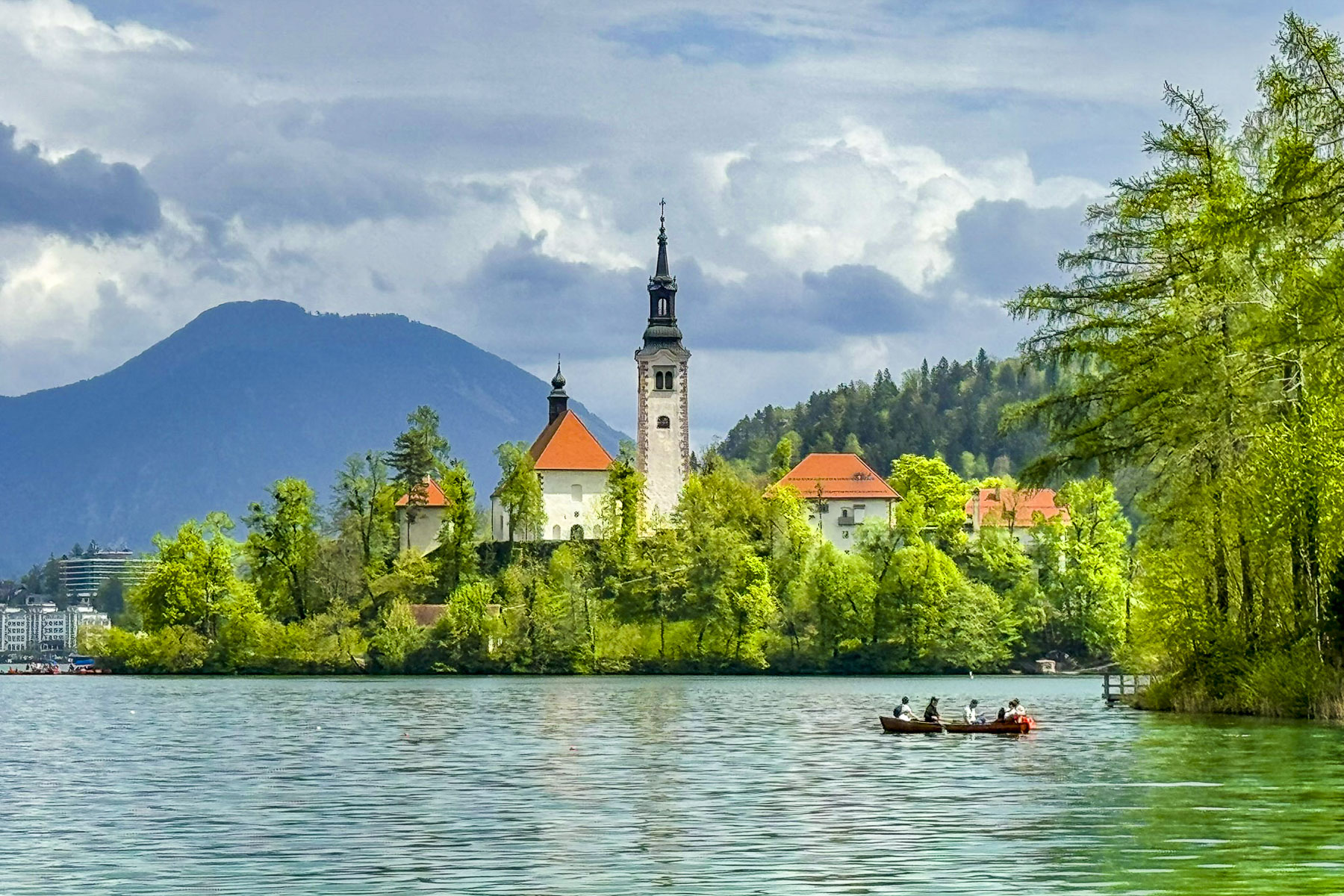
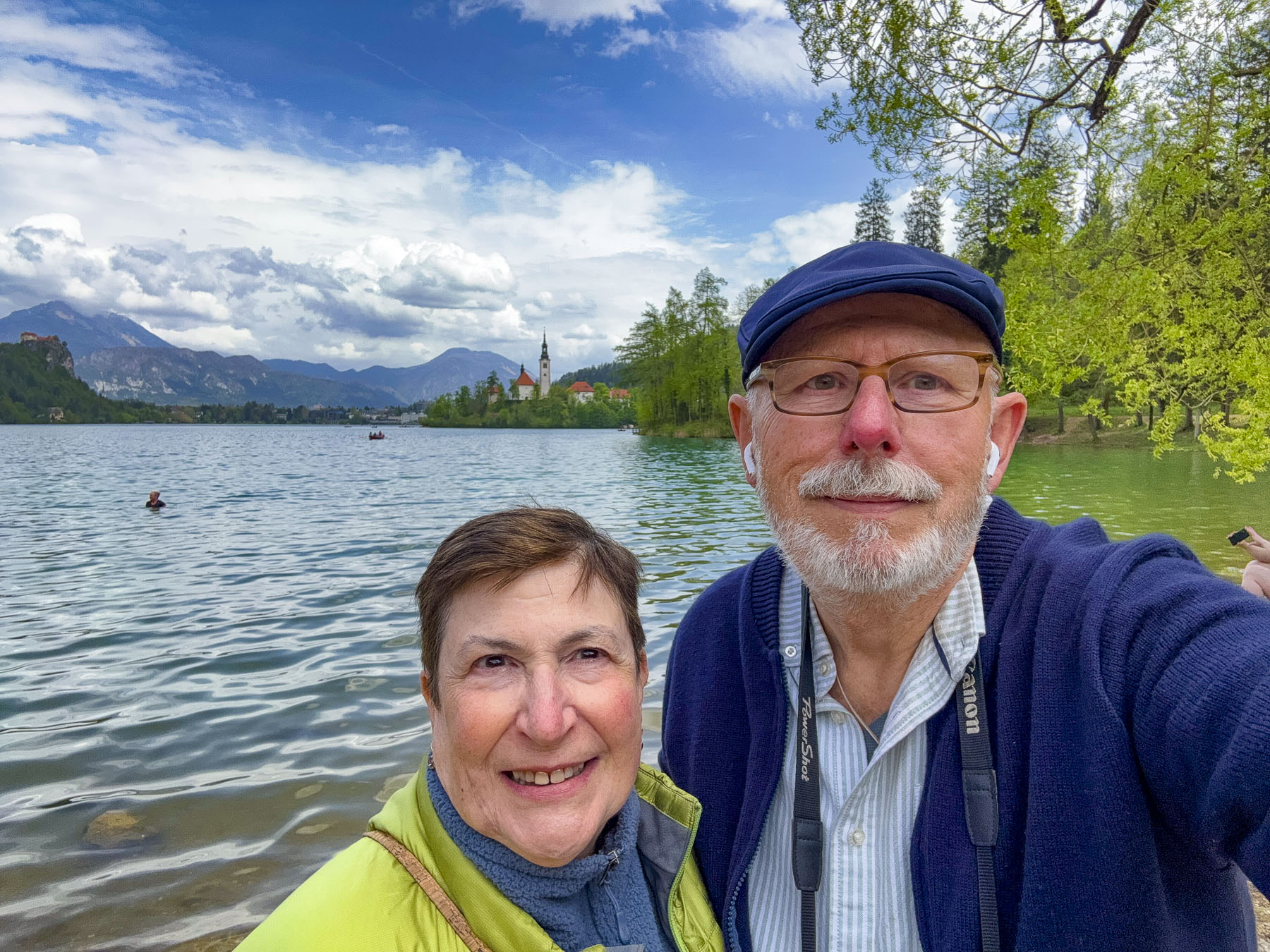
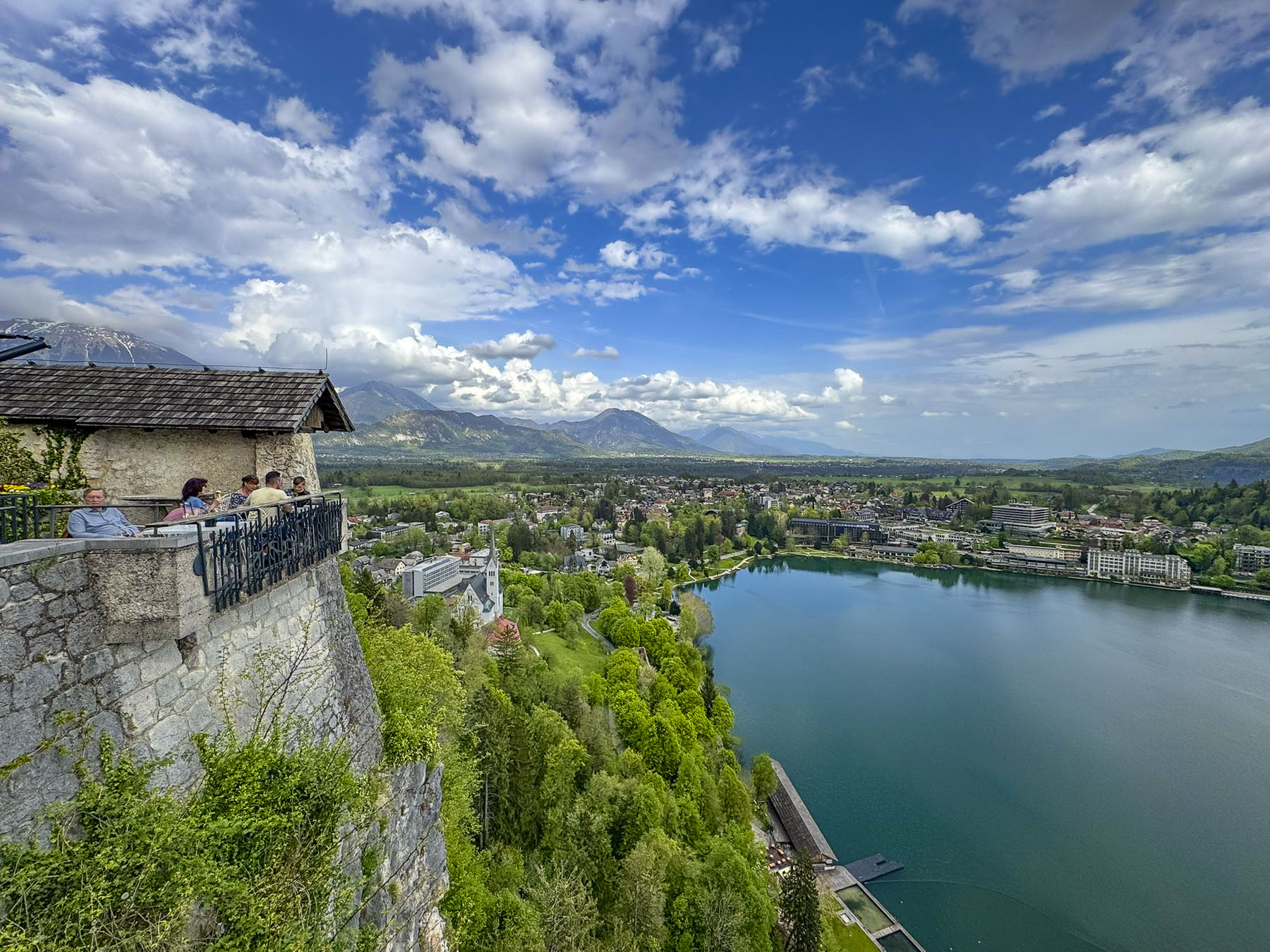
Driving down the hill through the center of Bled, the Church of the Mother of God on the Lake appears perfectly placed in the center of a waterscape surrounded by the foothills of the Julian Alps. Even though we’ve seen thousands of pictures of this iconic setting over the years, nothing replaces the appreciation of this glorious location better than standing on the shoreline and gazing across the glacial waters for ourselves. The scene was visually stunning.

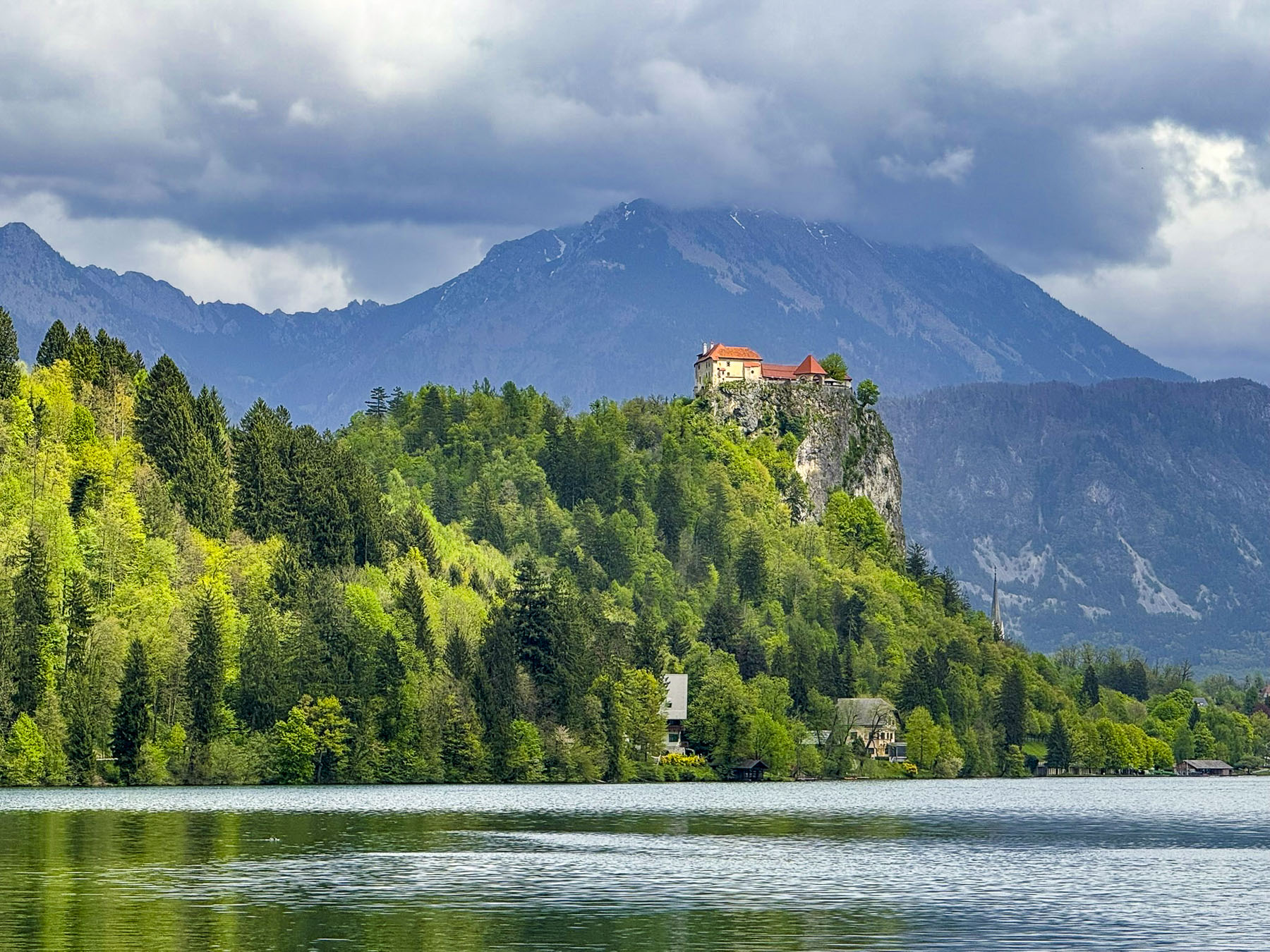
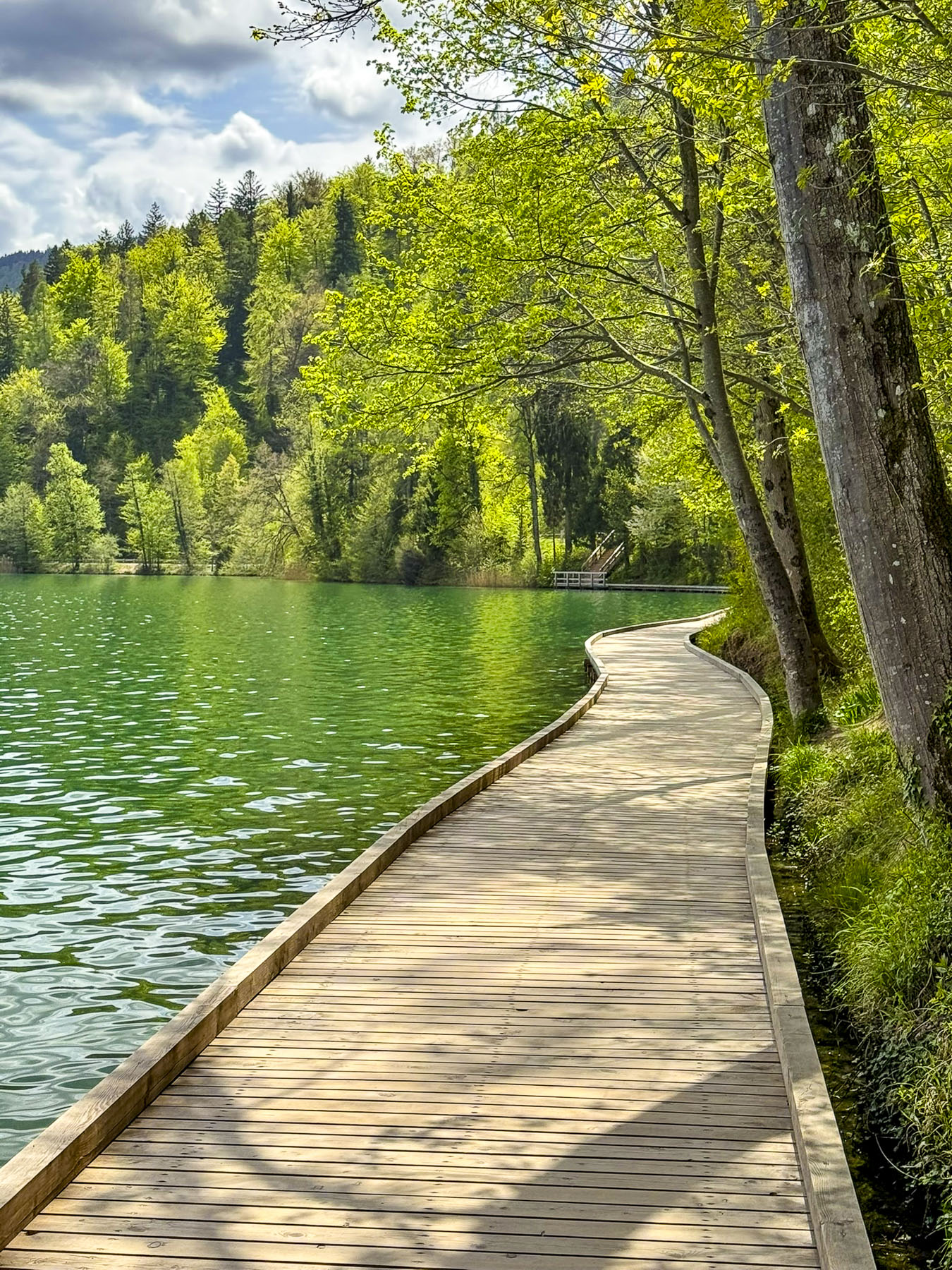
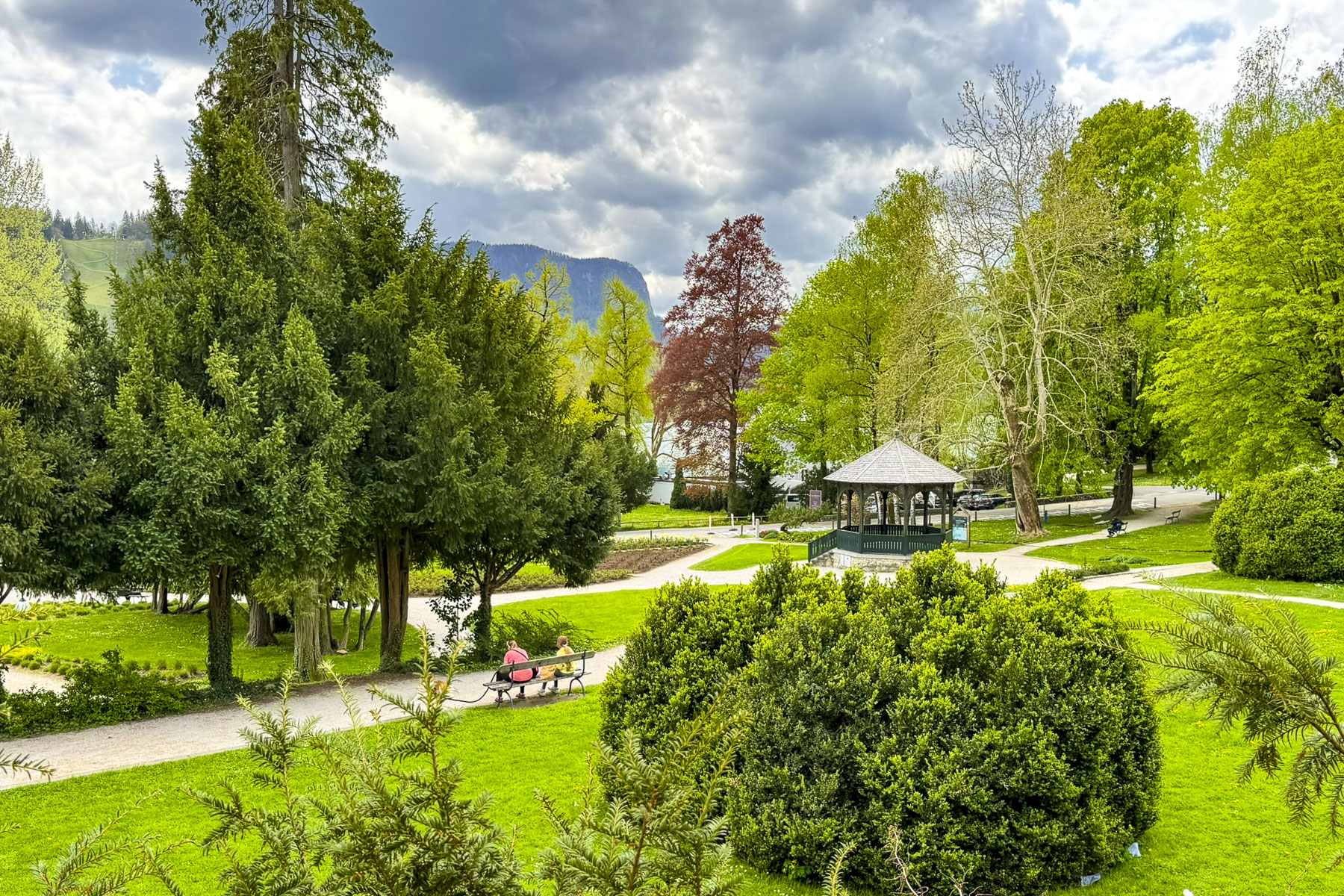
We drove to the far side of the lake where there was a paid parking lot near two restaurants on the lakefront. Then walked back along the road and a section of boardwalk to a panoramic viewpoint. Licensed oarsmen, called pletnars, stood on the stern of their traditional flat-bottomed wooden boats and rowed their passengers, with twin oars, gondola style across the lake to the island. Bled Castle commanded a cliff face on the horizon. A 6 km (3.75 mi) road circles the lakefront, and past where we parked is seasonally closed to allow folks to walk along this narrower section and enjoy the scenery without having to be concerned about cars.

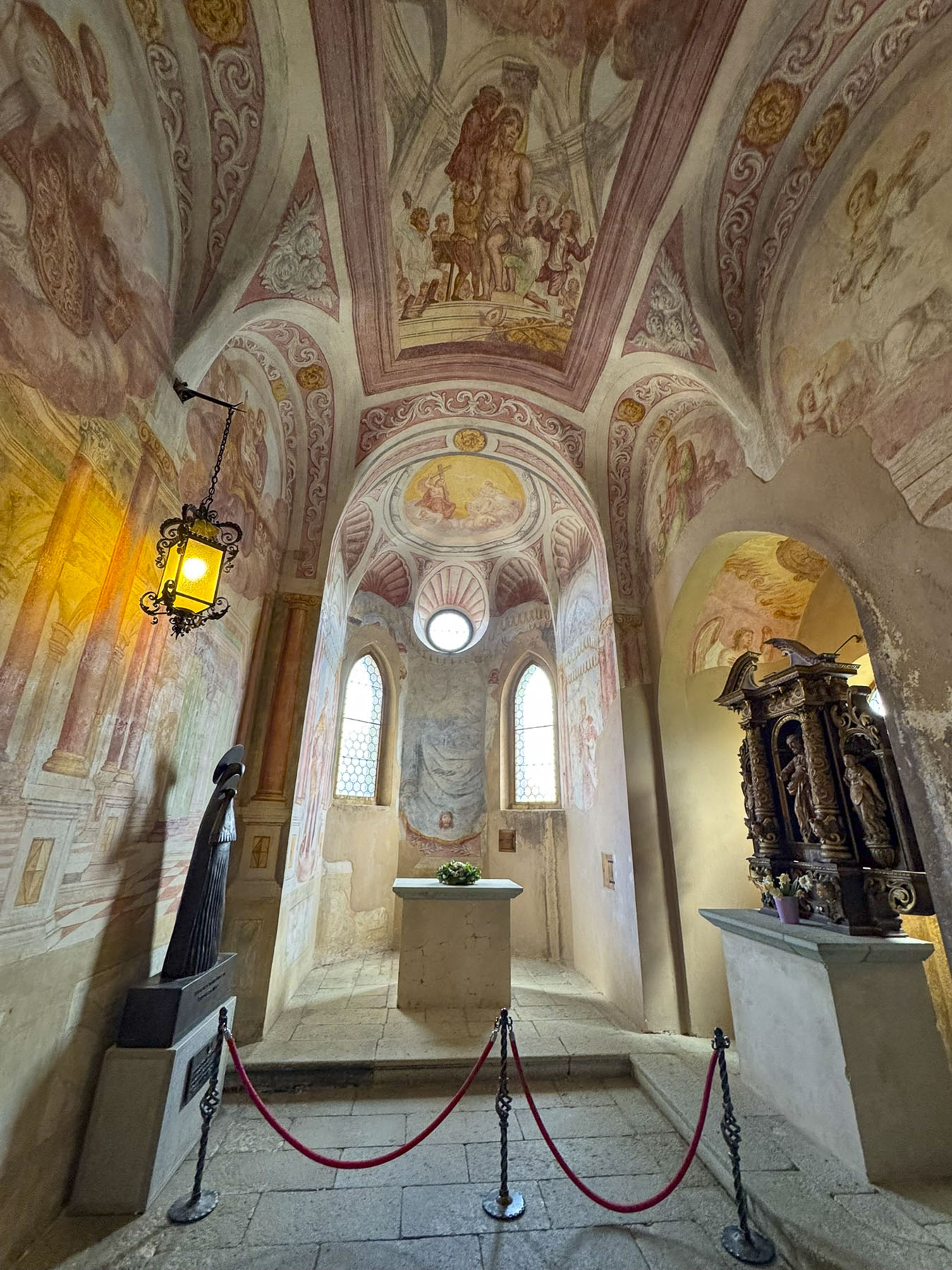
There are many beautiful landscapes around the world – the luck of nature perhaps, or are they perhaps the hand of divine intervention? Which leads me to wonder, when the first pagan temple was constructed on the island in Lake Bled, did the builders appreciate the beauty of the setting, or was the hard-to-reach setting chosen to create a symbol of faith that required effort to reach, reflecting devotion and commitment? Archeological evidence suggests that the island first hosted pagan rituals during the Bronze Age. Later with Slavic migration into the area during the 7th century AD, a temple dedicated to Ziva, the pagan goddess of life and fertility, was established. During the 8th century the local population converted to Christianity and built the island’s first church dedicated to the birth of Mary atop the ruins of the pagan temple. Renovations to the original church followed in the 15th and 17th centuries, when its famous “wishing bell tower,” and staircase was built. Today, the island remains a symbol of fertility and love; it is a popular wedding spot where grooms traditionally carry their brides up the 99 stone steps to the church for good luck.

After walking along the lake we drove to Caffe Peglez’n, where we were lucky to find metered parking nearby. We chose this café for lunch specifically to try its Blejska kremšnita, Bled cream cake, which combines delicious layers of custard and whipped cream between a crisp crust dusted with powdered sugar.  Theirs is reputed to be the best in Slovenia. We were not disappointed.

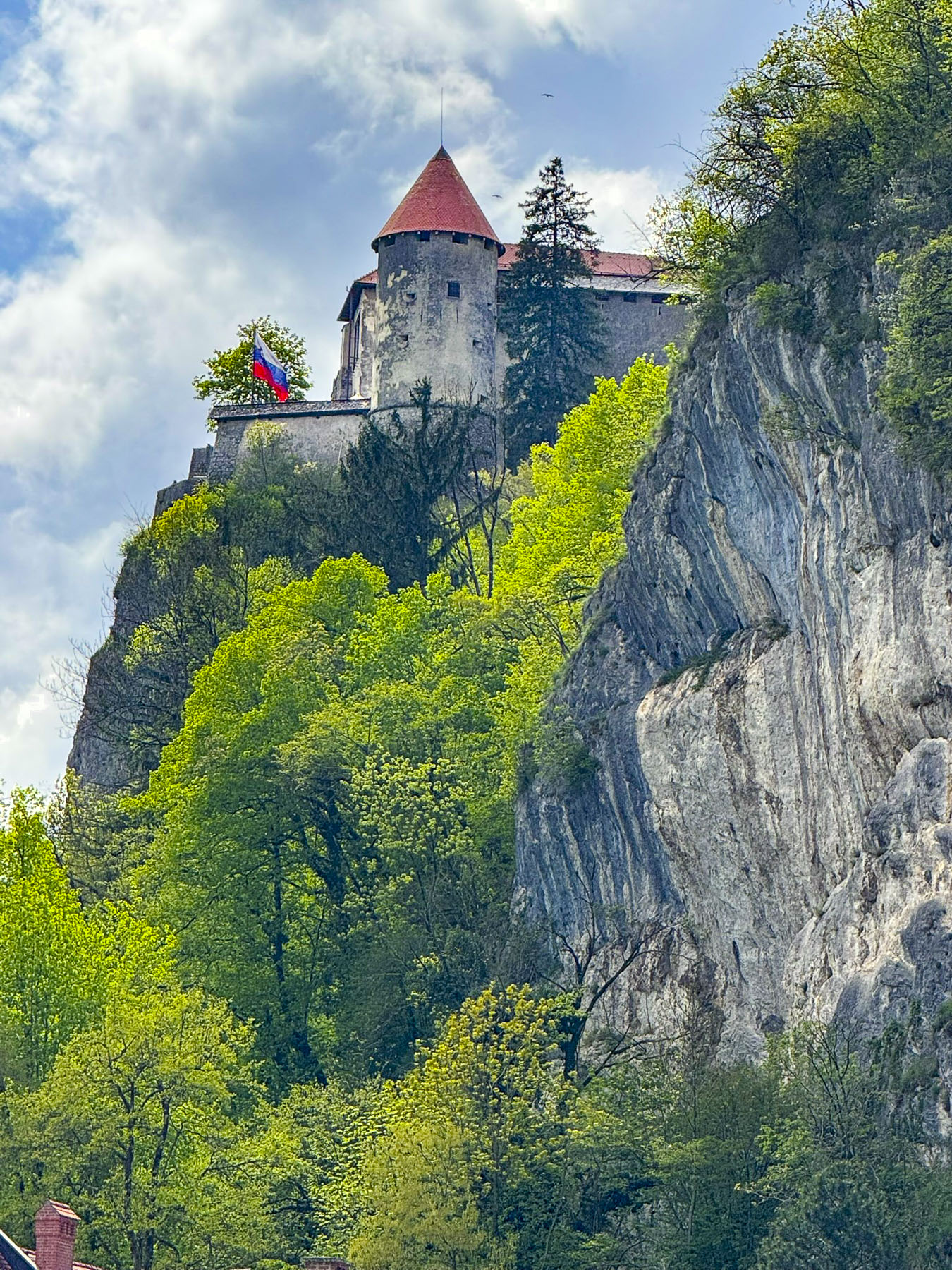
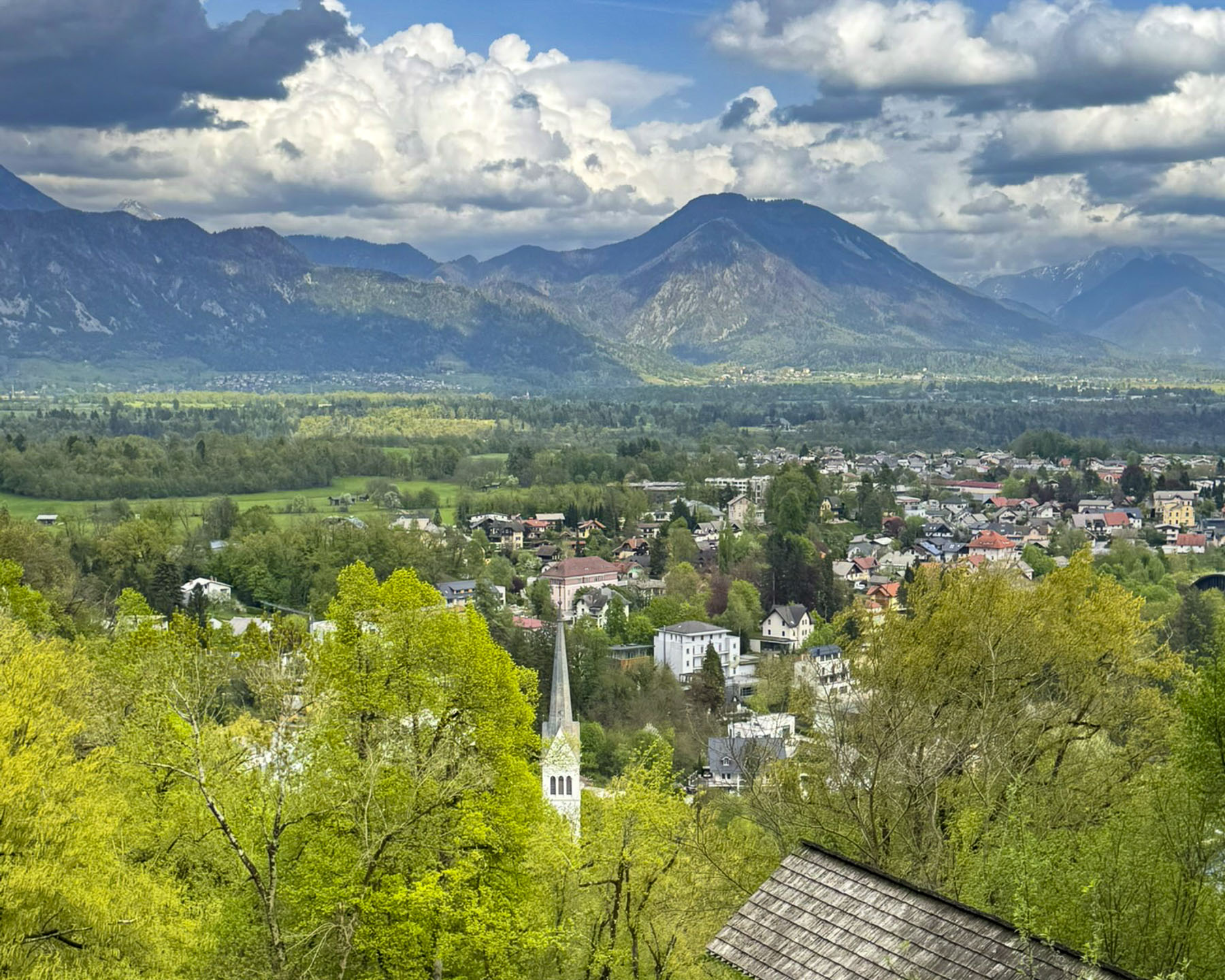
Afterwards we finished our day trip at Bled Castle, Slovenia’s oldest fortress, built in 1011. Located high on a rocky promontory, it has a commanding view of the lake from its terrace, and an interesting museum that highlights Slovenia’s history and culture.

Lake Bled was a phenomenal destination, and in hindsight I wished we had spent 2 nights there to fully experience the mood of the lake as the light changed throughout the day.

Till next time,

Craig & Donna
A Balkans Road Trip Part 3: Slovenia – The Dance of Death, Castles, & Ljubljana

With a sharp dog-leg turn to the left we followed the E751 across the bridge above the Dragonja River and crossed into Slovenia from Croatia, leaving the cerulean blues of the Adriatic behind us as we headed into the mountainous “Green Heart of Europe.” Across from each other at an intersection, competing ladies had cartons of fresh picked Spring strawberries piled high on roadside tables.

Ljubljana, Slovenia is only 202 km (126 mi) from the harbor town of Pula, Croatia, a fast 2.5-hour trip, on excellent roads, if you drive straight through. But we had chosen several spots to explore along the way, and we’d be happy if we arrived in Ljubljana before sunset.

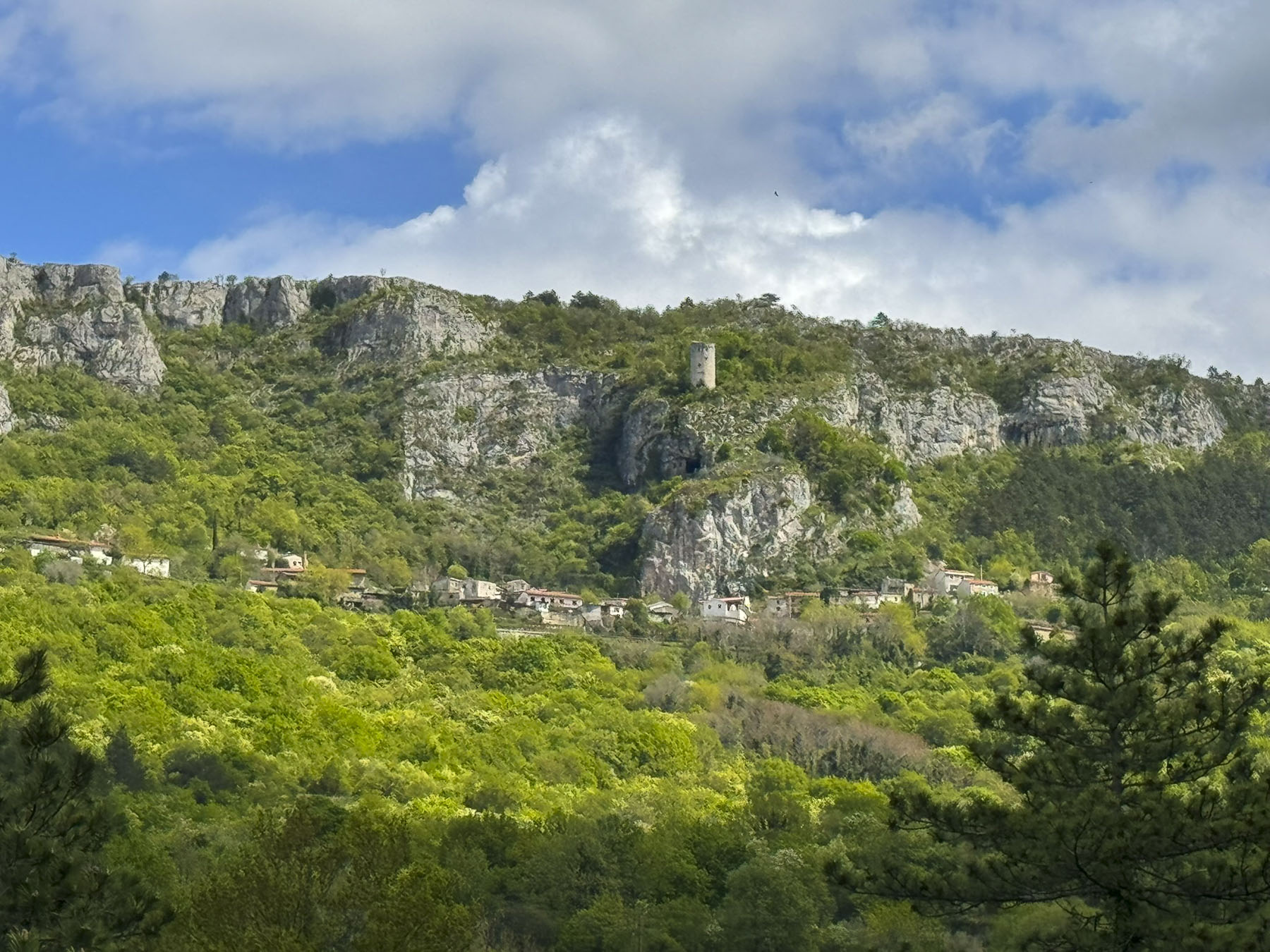
With a population of just over two million people, Slovenia’s countryside is wonderfully underdeveloped, and rich with pristine landscapes of forests and farmlands. A fresco of dancing skeletons in Cerkev sv. Trojice, the Church of the Holy Trinity, in the rural village of Hrastovlje was our first destination. Along the way a cluster of homes in the hamlet of Podpeč, seemed to cling for dear life on a steep slope below a karst cliff face, on top of which stood Obrambni Stolp Podpeč, a tall 11th century Venetian watch tower, which is said to have outstanding views across Slovenian Istria region all the way to the Bay of Koper and the Gulf of Trieste.

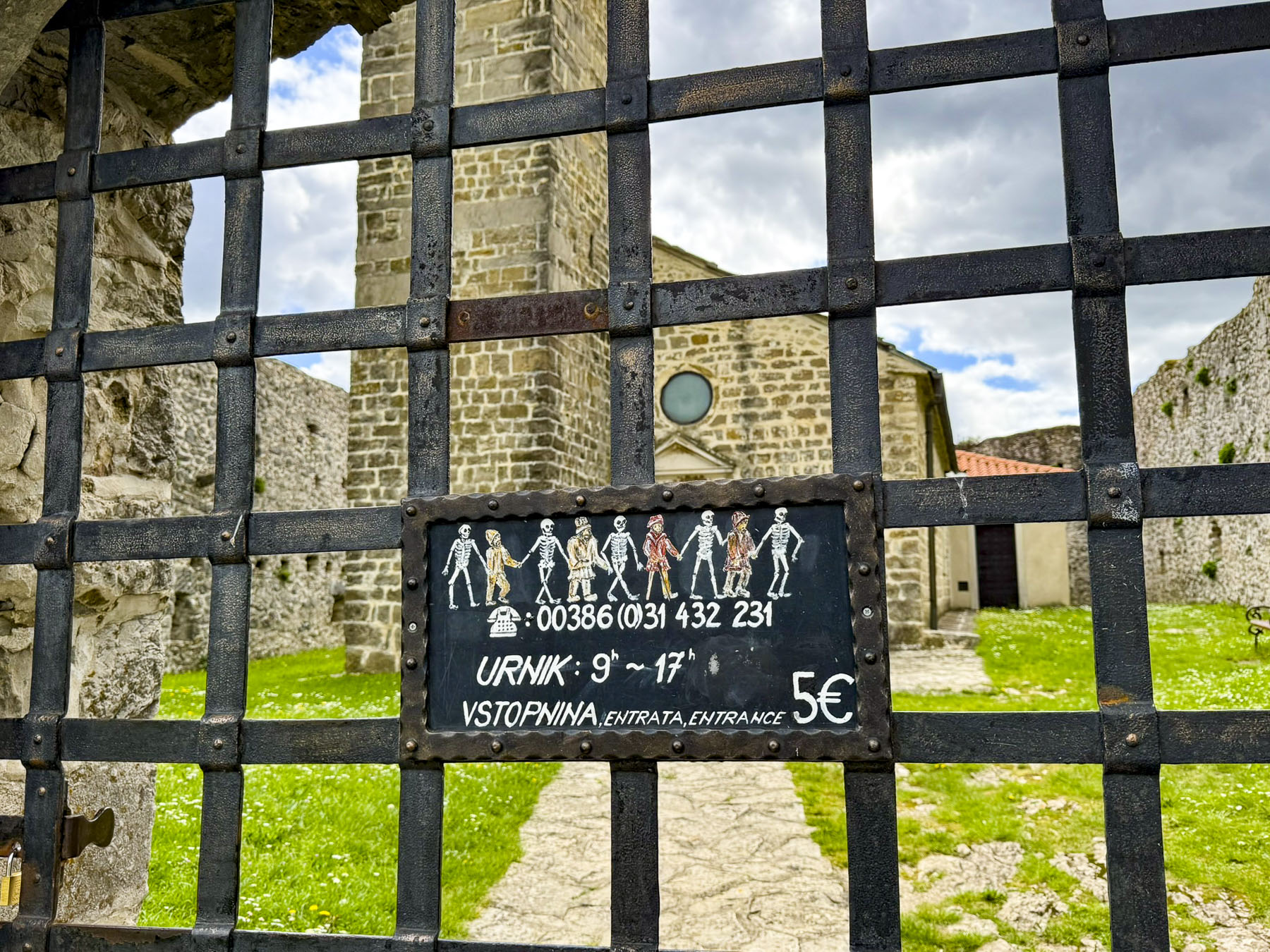
A few minutes later, after driving between buildings along a very narrow farm lane, where we were sure we would have lost the side mirrors on the car if we hadn’t pulled them in, we were standing in front of the locked iron gate of Cerkev sv. Trojice. A placard picturing the fresco we hoped to see listed a telephone number to call. We dialed, no answer. It was a beautiful Spring Saturday; surely, we thought, the site must be open. Fortunately, there was a small taverna, the Gostilna Švab, nearby that was in the process of opening for lunch. Inquiring about the church, the proprietress was very helpful in calling the gentleman, who she assured us would be there shortly. Pouring two coffees she shared, “he’ll be there by the time you finish these.” The coffee was very good, alleviating the chill of the morning as we sat outside on the tavern’s terrace, and it perfectly satisfied our “drive a little, then café, ritual.

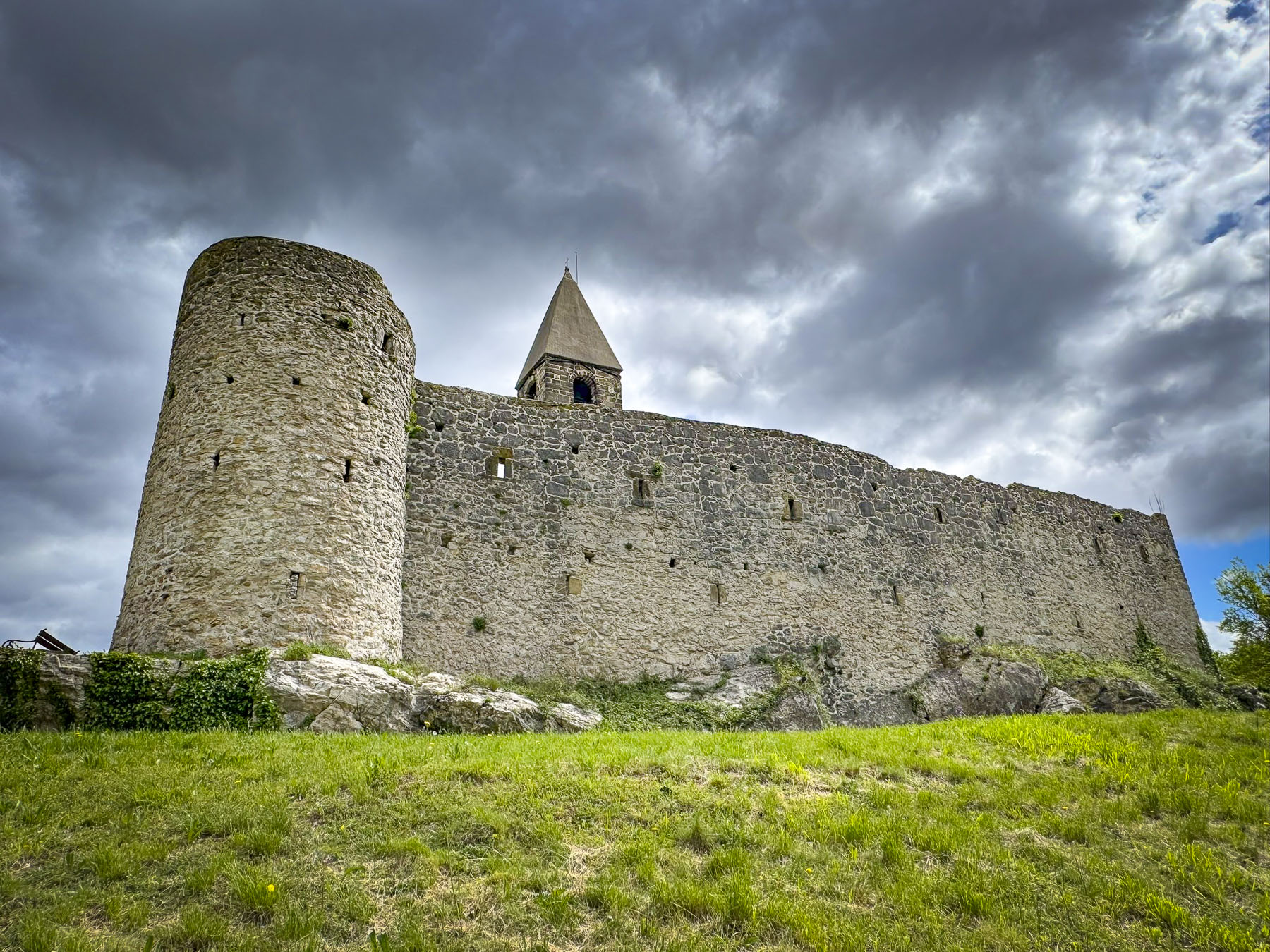
By the time we entered the courtyard of the fortress church several other visitors had arrived, and we spent a few minutes admiring the small church and its belltower. The ancient church, built on a rise above rolling fields, is believed to have been built between the 12th and 14th centuries, with the ramparts and corner towers added later in the 16th century to repel Turkish attacks along this frontier region as the Ottoman Empire fought to expand its control across the Balkan region farther into the territory of the Habsburg Empire, but didn’t succeed. It’s not remembered when the clock was added to the belltower.

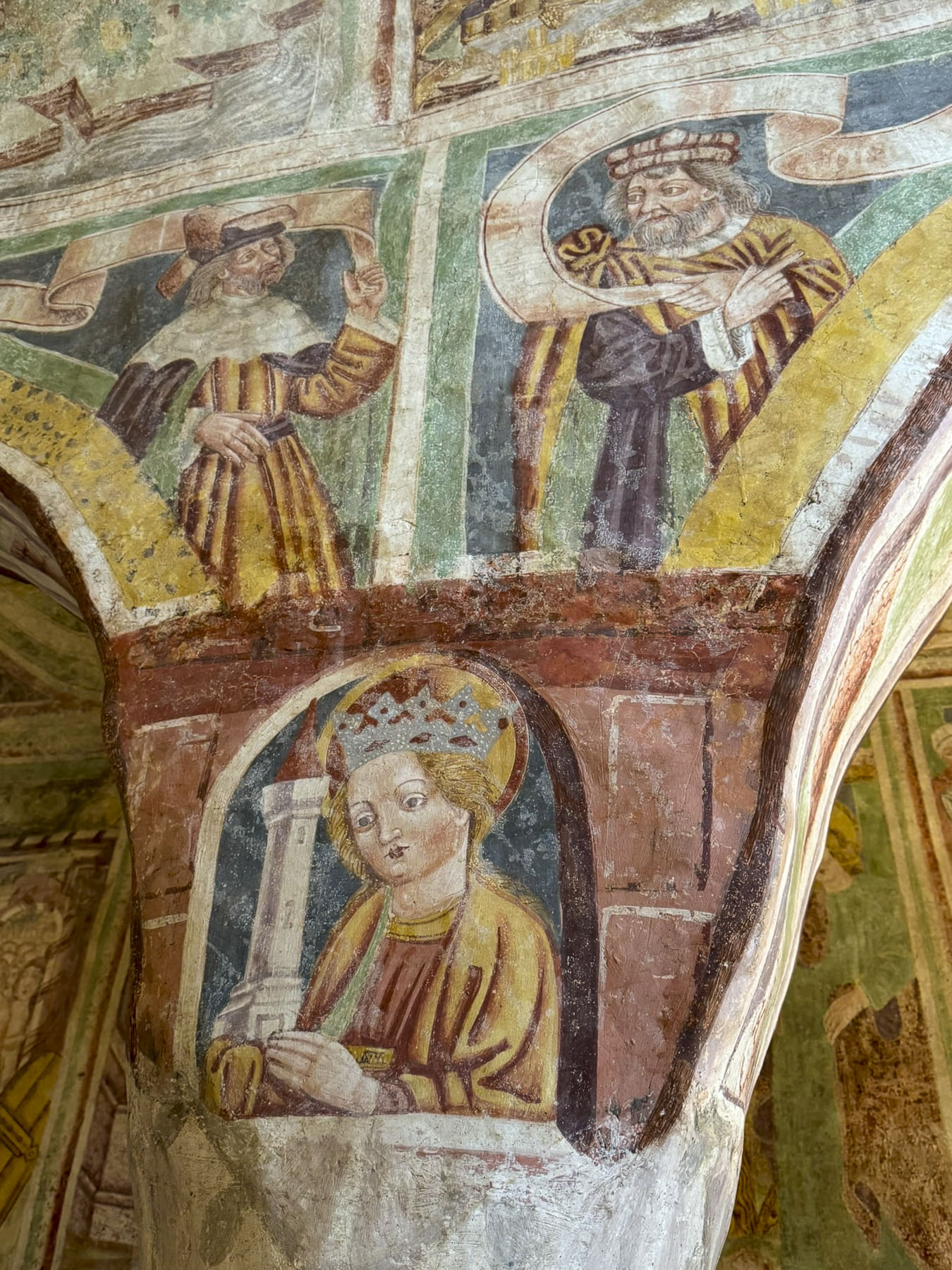
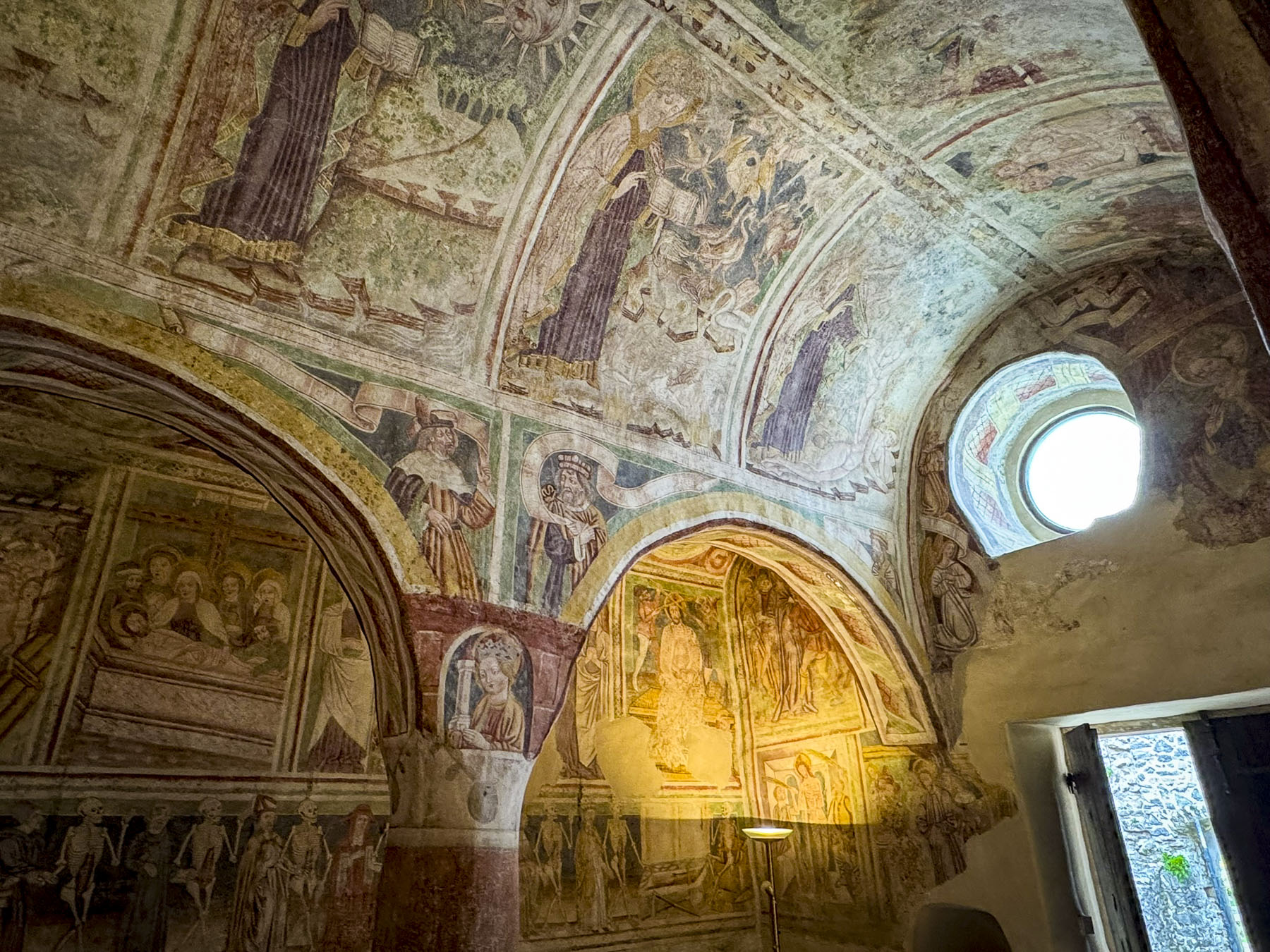
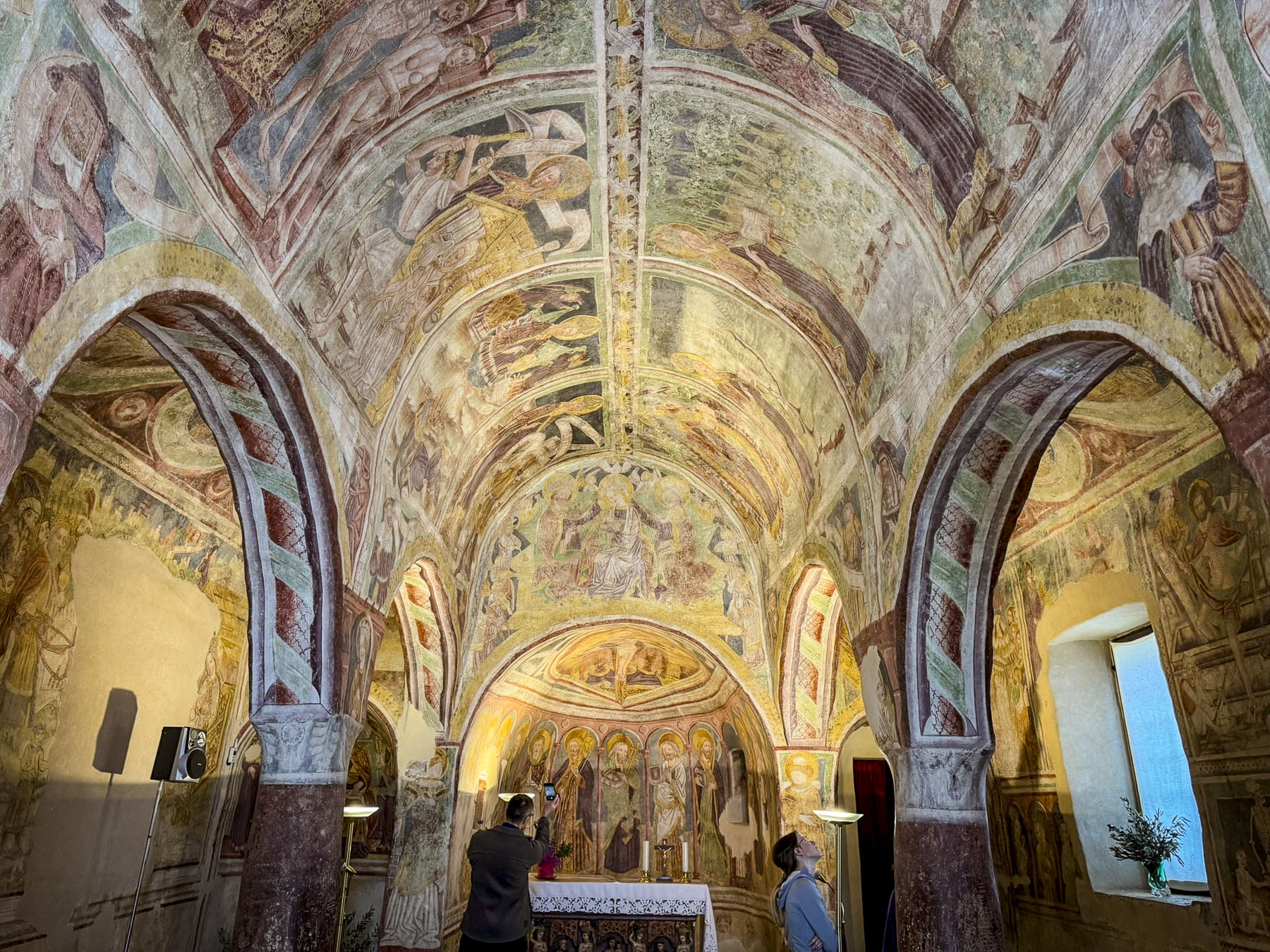
Inside the small chapel every wall and ceiling is spectacularly covered with biblical teachings. At some time over the centuries the frescoes were covered with layers of plaster and remained hidden until 1949 when the Slovenian painter and art teacher Jože Pohlen, who was born in Hrastovlje, noticed that areas of flaking plaster suggested earlier paintings underneath and thought a hidden gem might be waiting for discovery. Surprisingly, although historians don’t have an accurate history of the church, they do know thanks to the restoration of the frescoes by Pohlen, and the discovery of a signature that they were painted by Janez van Kastav, John of Kastav, from Croatia, in 1490.

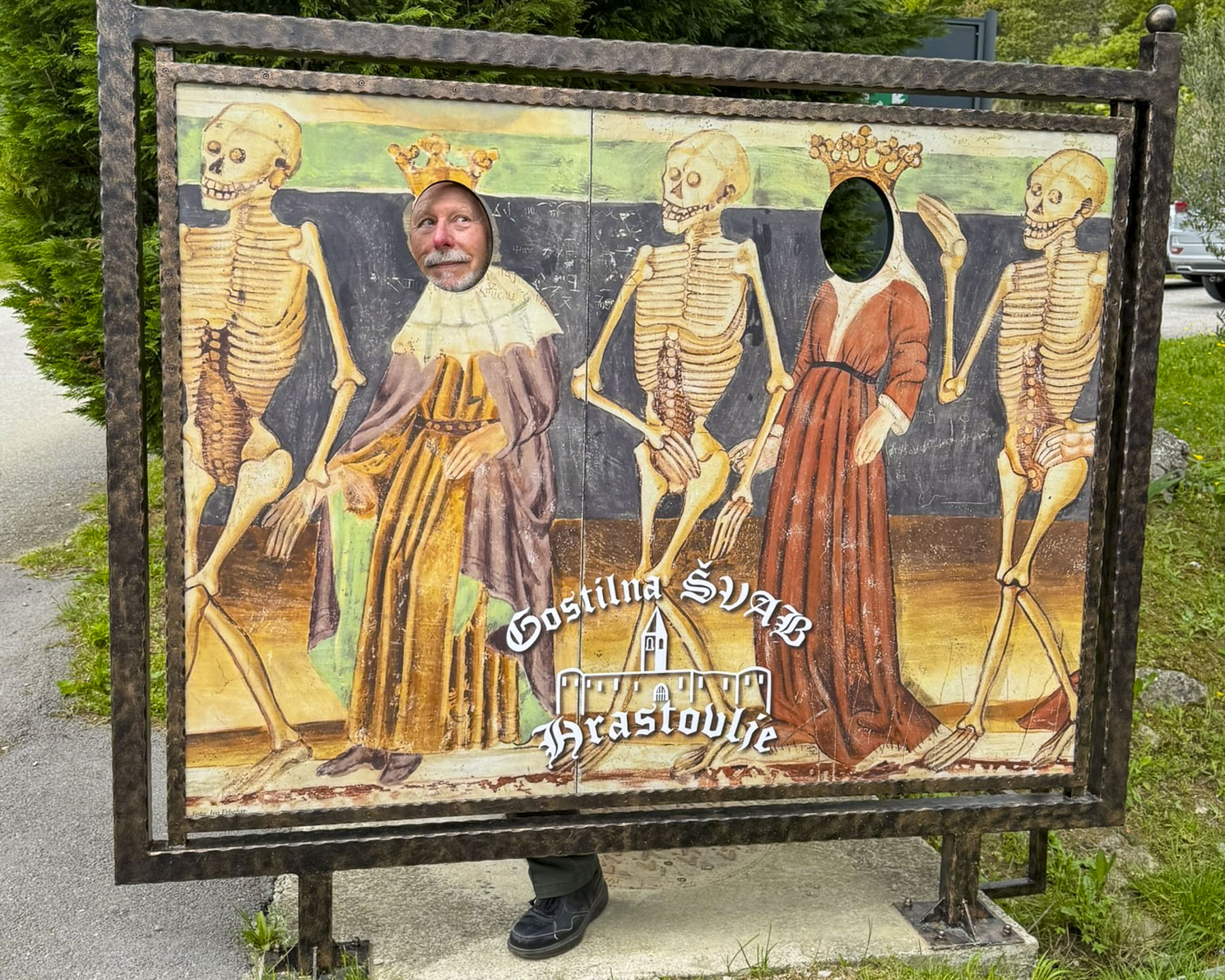
All the religious illustrations were intriguing, but the most unique was the Dance of Death fresco, which depicts 11 skeletons leading a parade of everyday souls that includes a prince, a priest and a pauper to the grave. A stark reminder that, regardless of our stations in life, the same fate awaits us, though a Royal does lead the group to their final destination. Leaving the courtyard, we noticed a sign for local Isteria wines for sale on a door to one of the watchtowers. “Red or White?” “One of each, please,” and with that he unlocked the ancient wood door that was almost falling off its hinges and revealed his impromptu wine cellar.

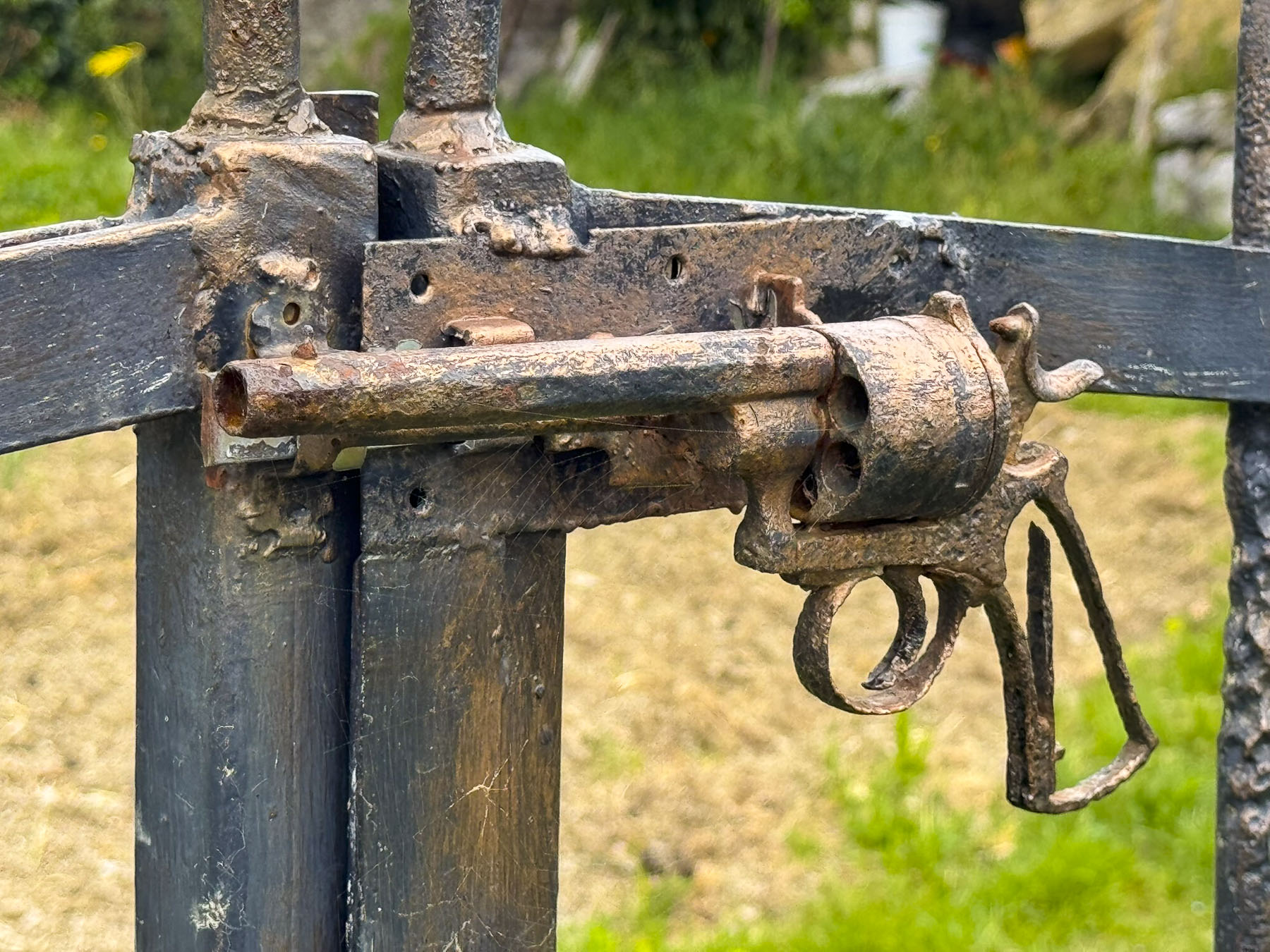
A farmer’s enclosure across from the church had rusted relics from WWI and WW2 nailed to the top of the fenceposts. A silent and ironic testimony to the centuries of conflict that have fallen upon this bucolic area. We had hoped to stop at Lipica Stud Farm, an almost 500 hundred year old horse breeding facility that was started in 1581 with 24 broodmares and six stud horses brought from Spain originally to create a herd of the magnificent white horses for the royals of the Hapsburg Empire. Today the breeding farm remains dedicated to raising Lipizzaner horses for equestrians around the world.

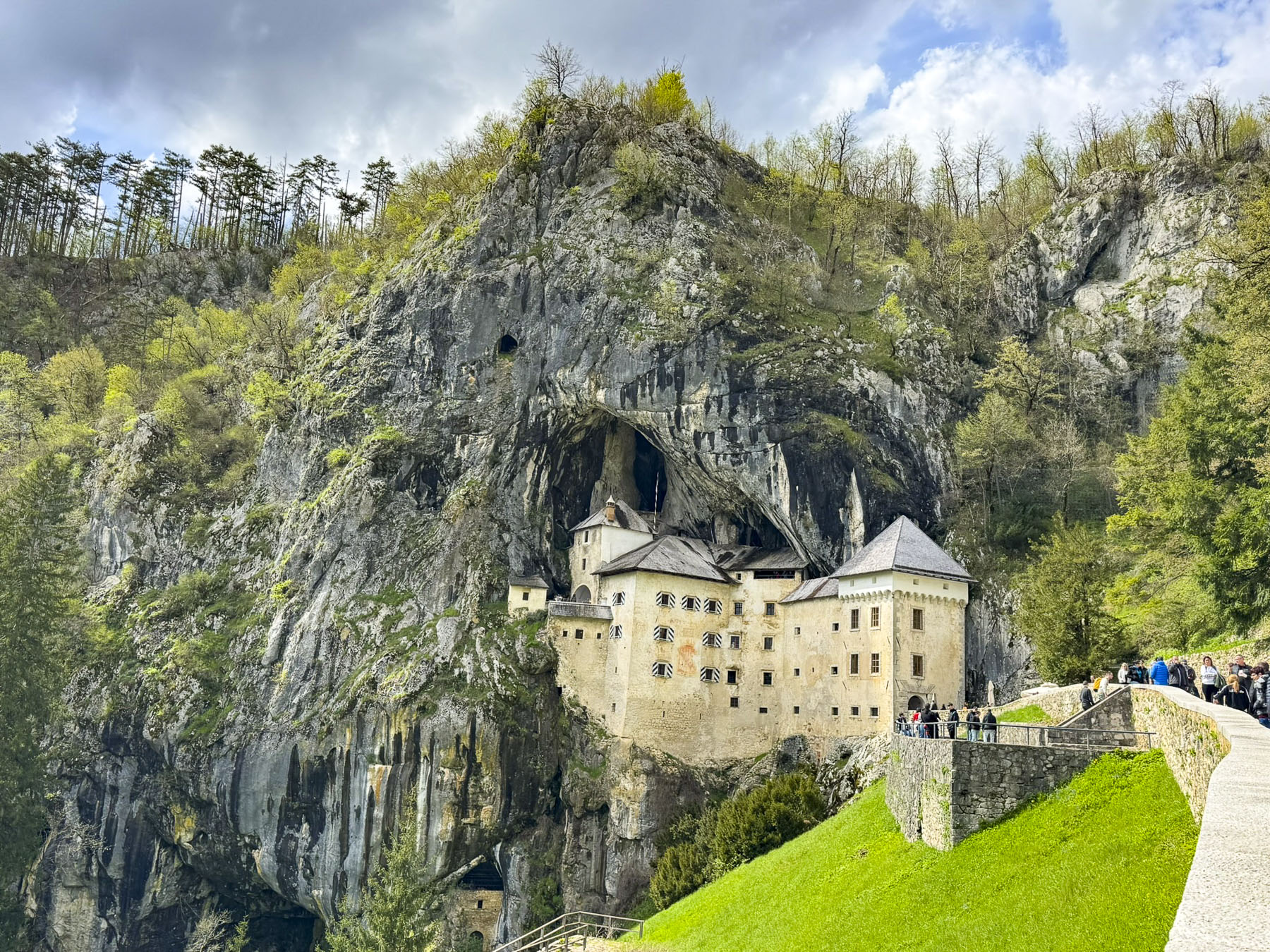
Unfortunately, the equestrian center was closed the day we were in the area, and we continued on to Predjama Castle. The 13th century fortified chateau was dramatically built halfway into a large cave on a towering cliff face, by the rebellious knight Erazem, whom legend believes was Slovenia’s Robin Hood; he pillaged wealthy towns and protected the local peasants. Betrayed by a castle servant who signaled the enemy with a candle, Erazem met an unceremonious death when a cannon ball fired by troops of the Holy Roman Empire caught him with his pants down as he was using the castle privy.

An audio tour of the castle took us through secret tunnels, a dungeon, and several restored living areas, where only the lord of the castle enjoyed fireplaces, while his staff froze in their quarters. We felt the best element of the castle was its picturesque setting, which can be viewed for free, and thought that unless you have never toured a castle before, the entrance fee wasn’t worth the experience they offered. We enjoyed a very nice lunch at Gostilna Požar, which has a patio with views of the castle.

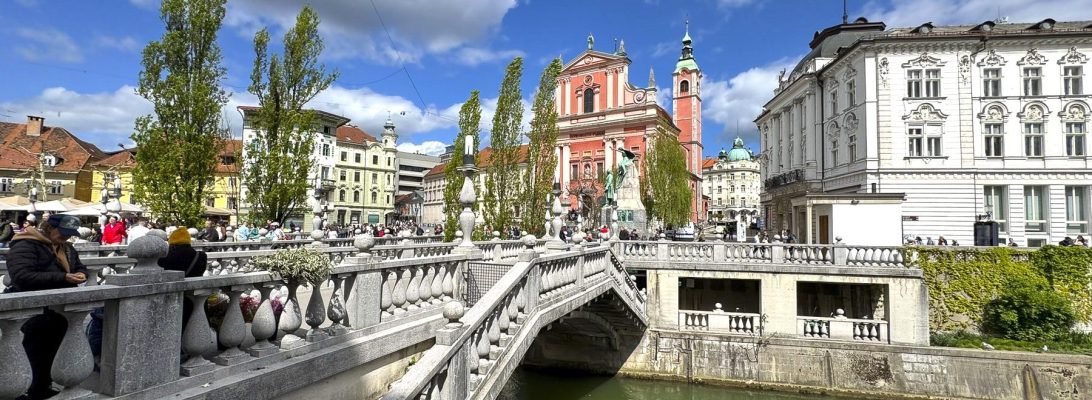
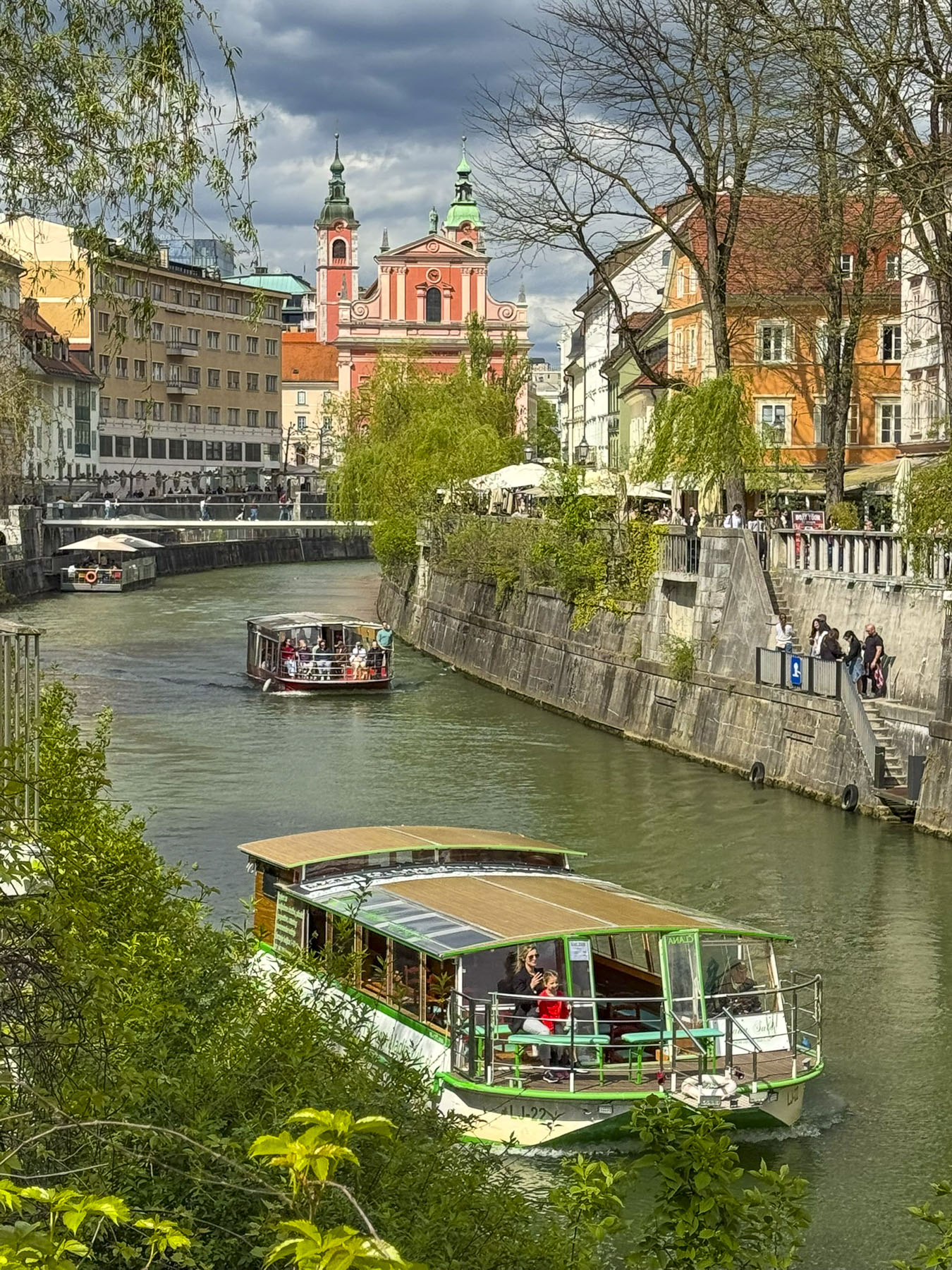
Ljubljana’s extensive old town along the Ljubljanica River is a beautiful pedestrian only area that spans both sides of the river as it flows through the capital city of Slovenia. Our taxi, on arrival and final departure, from the Parking Tivoli II lot to the French Revolution Square was included in our 5 night stay at the Barbo Palace Apartments. The short ride followed a convoluted route due to pedestrian-only and one-way streets. But it was a nice  introduction to the architectural diversity of Ljubljanica, and we took note of which buildings we wanted to return to later in the week to photograph.

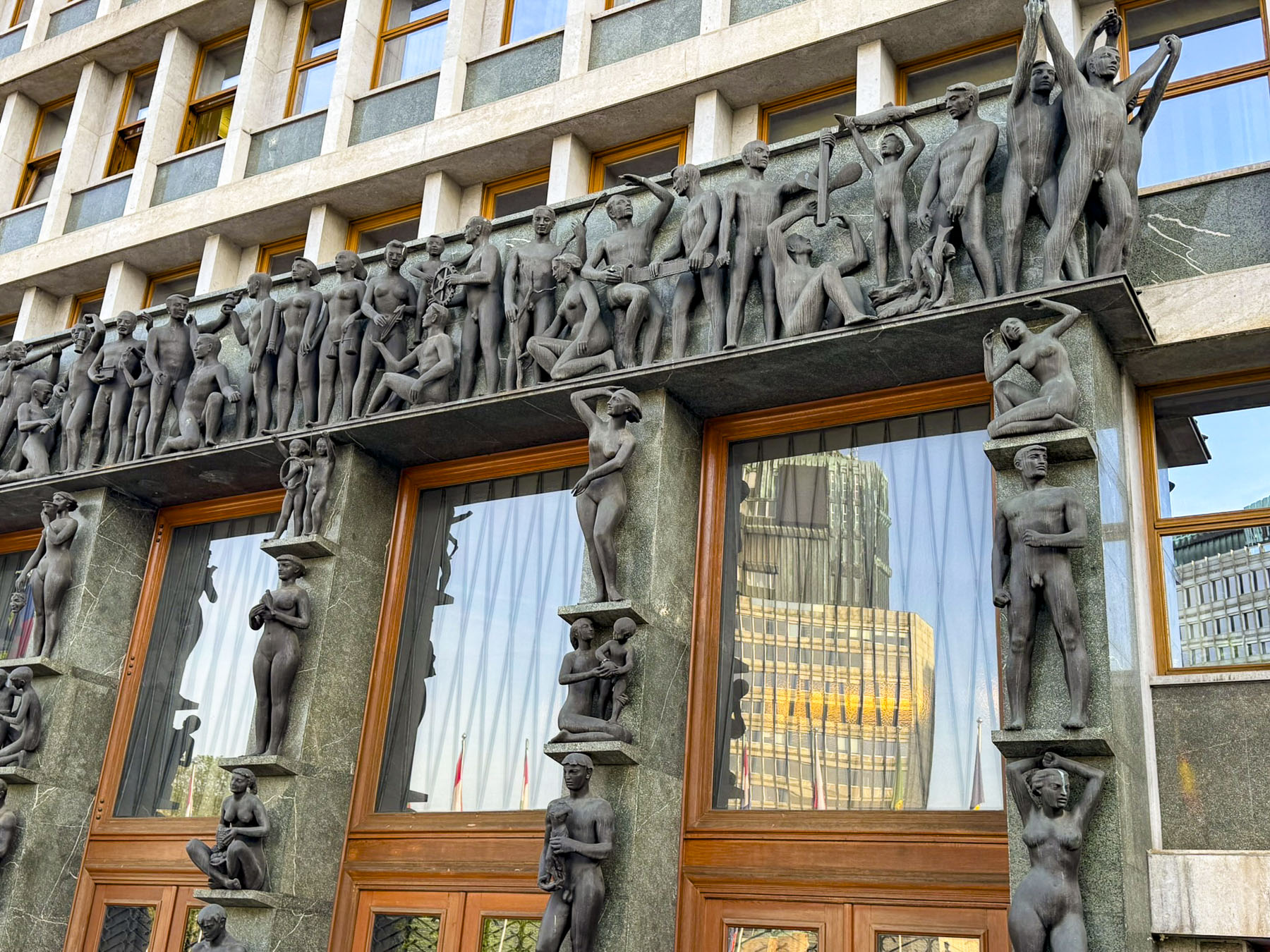
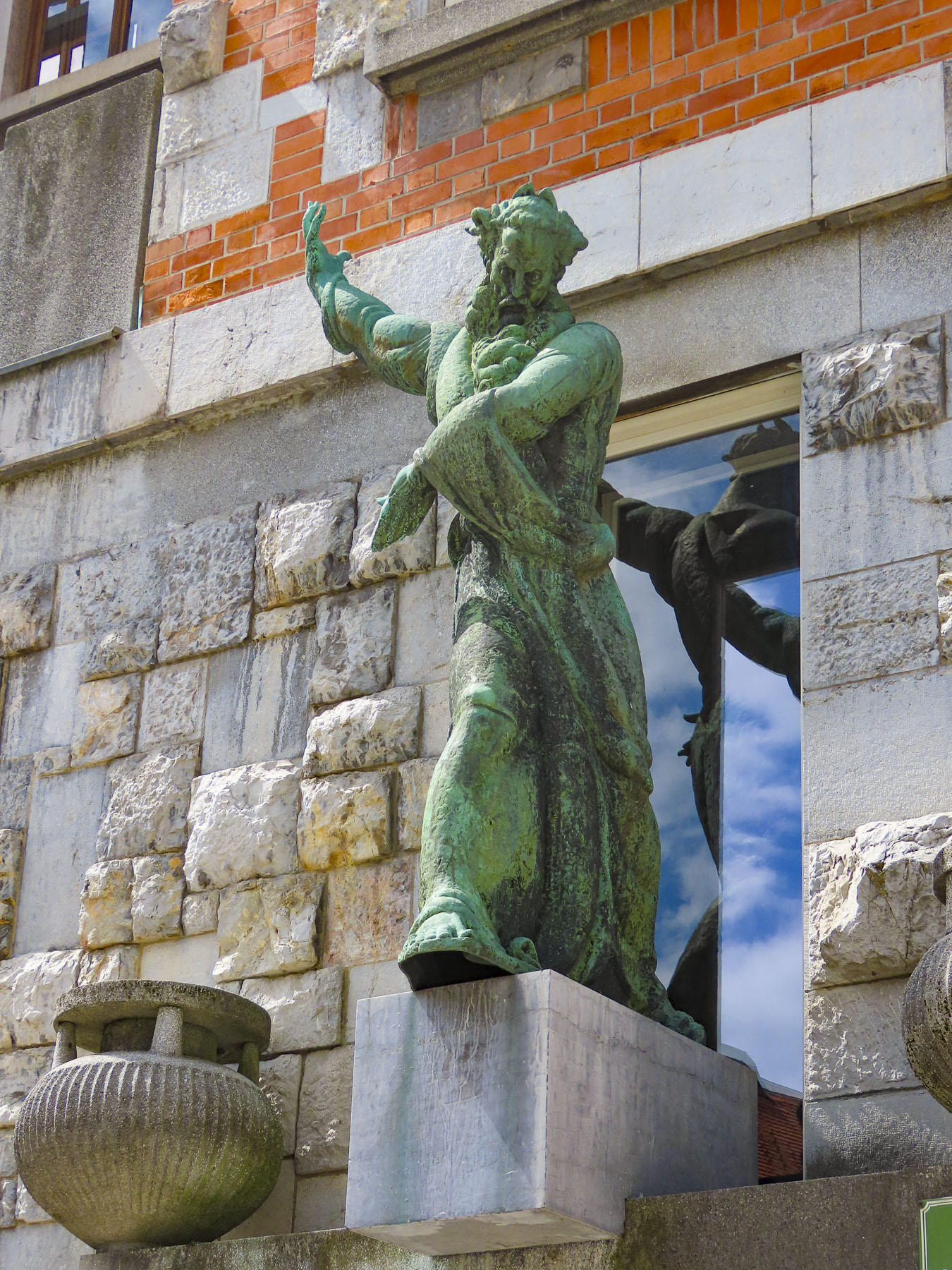
First, we passed the National Assembly Building of Slovenia, a modernist building with a contrasting entranceway surrounded by an immense bronze sculpture created by the work of the Ljubljanica artists Zdenko Kalin and Karel Putrih in the 1950s. The artwork is called the Working People and reflects the collective philosophy of communism and “symbolizes the progress of civilization.”

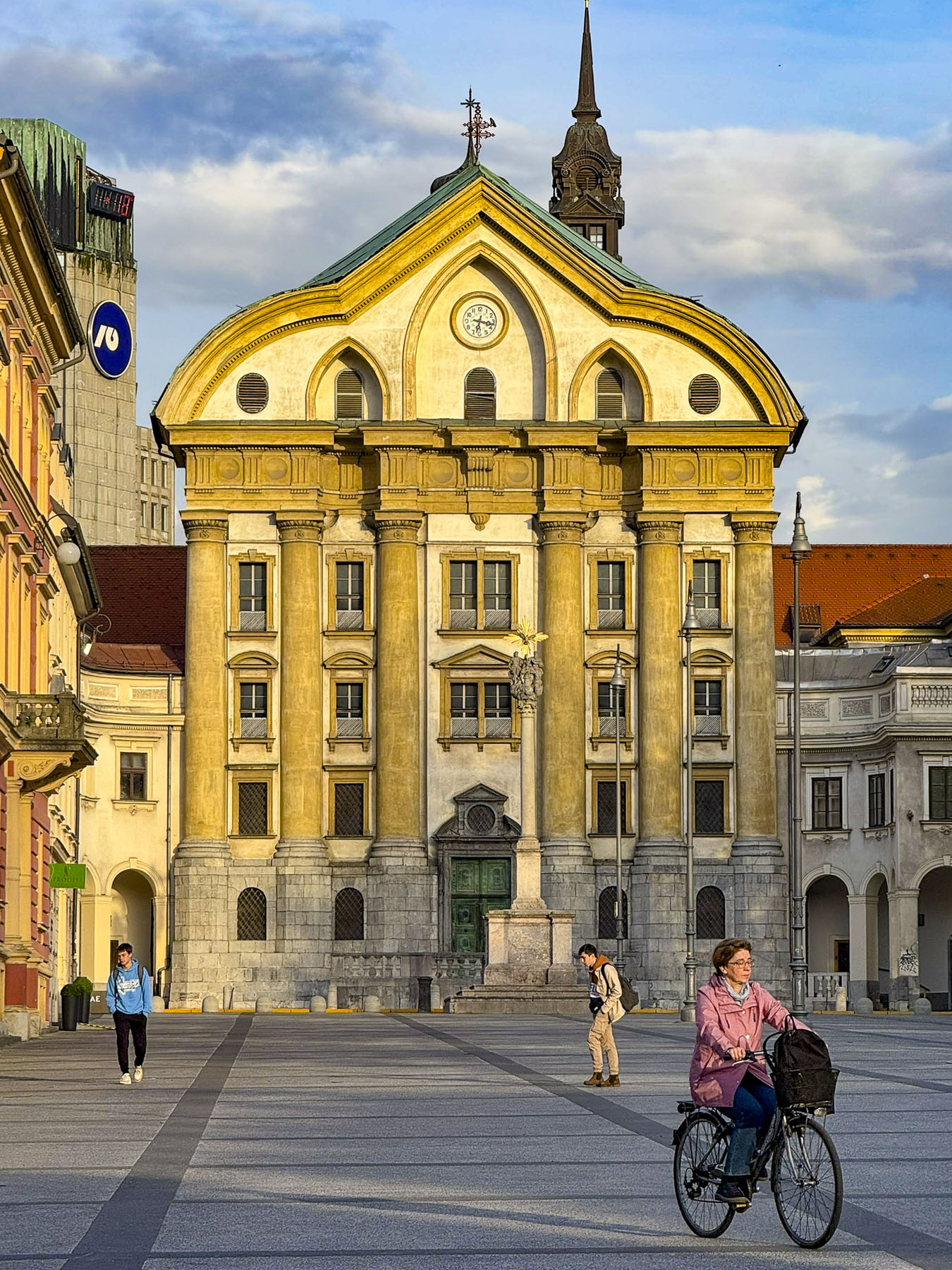
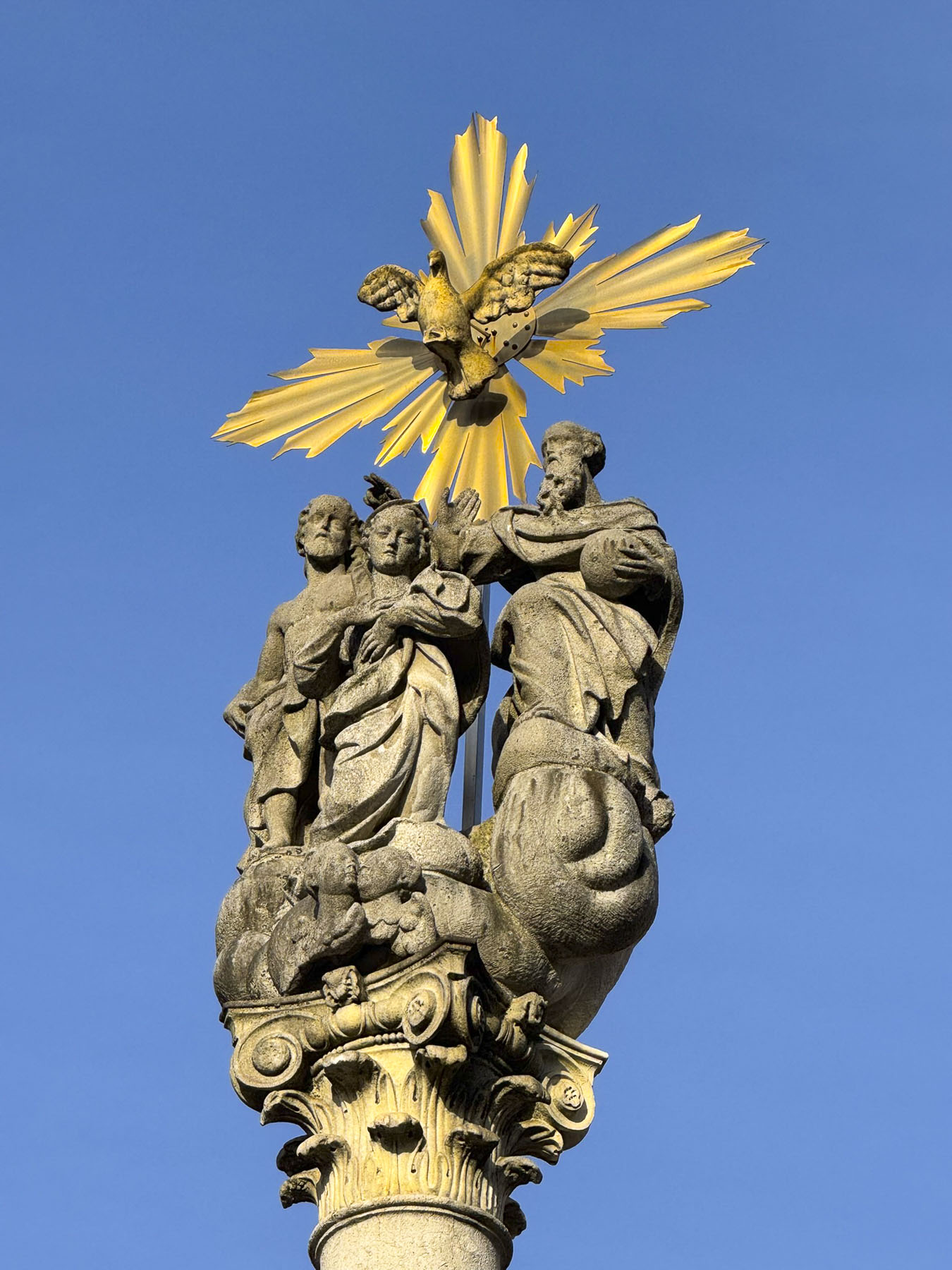
Adjacent to Park Zvezda was the beautiful, architecturally distinct hull-shaped roof and six column fascia of Ursuline Church of the Holy Trinity, a 1700s Baroque style church with an attached monastery. Across the street was the striking Pillar of the Holy Trinity.

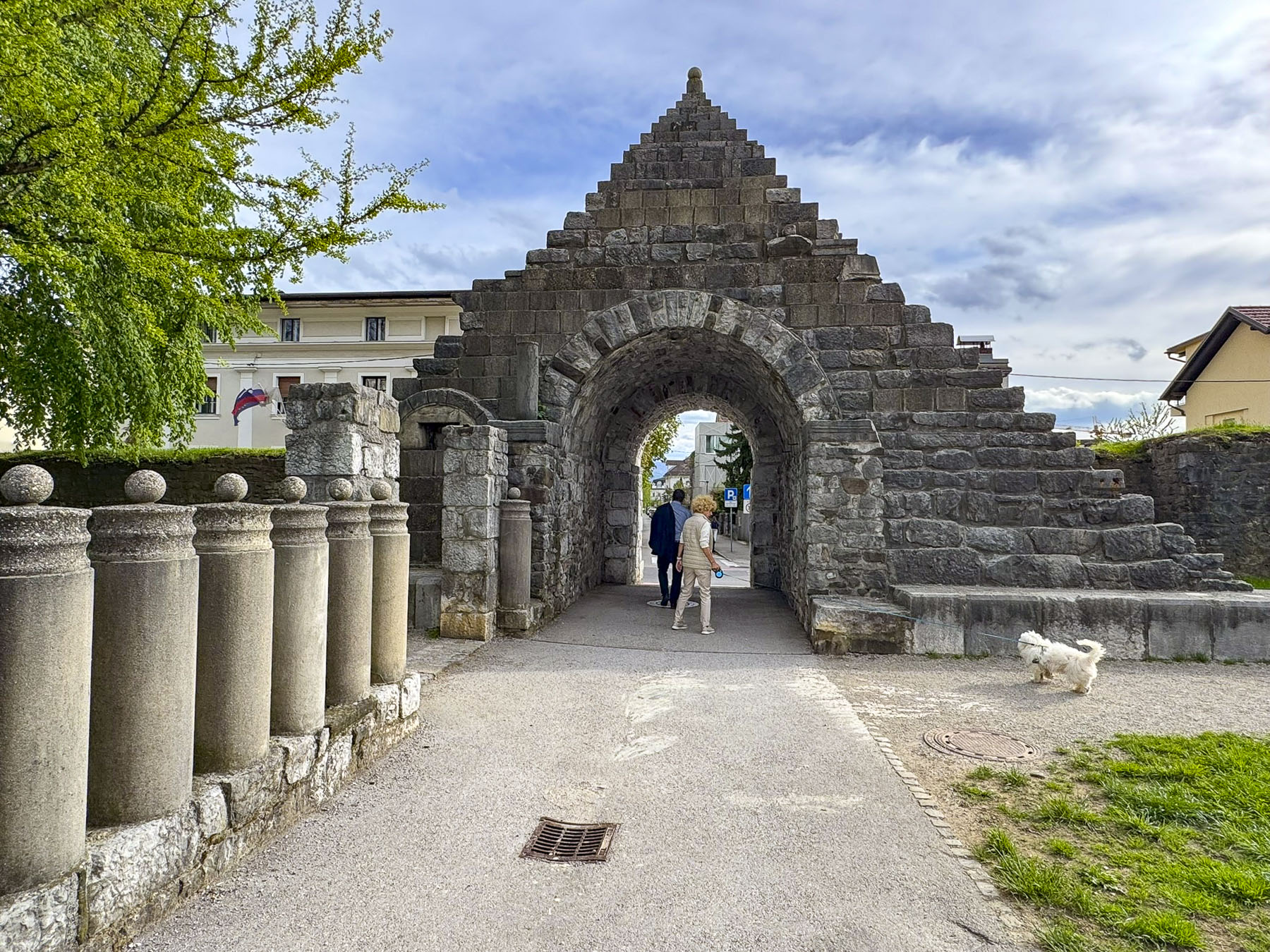
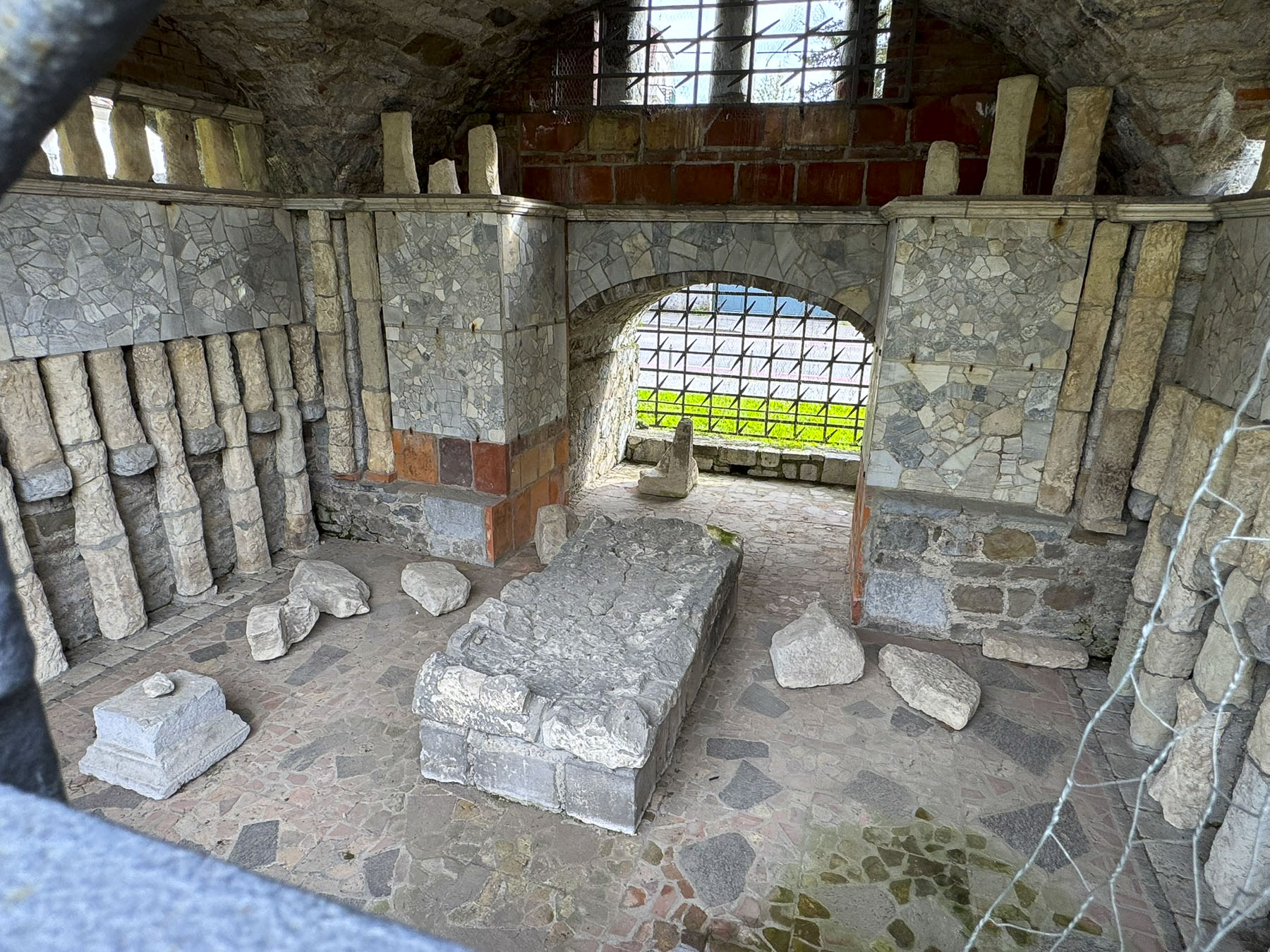
On Mirje Street we passed the remains of the defensive wall and gates of one of Ljubljanica’s earliest settlements called Emona, a Roman colony founded in 14 AD on a pre-existing Illyrian village. Located on an important trading route that linked the Adriatic to the Danube River and the northern Balkans, the town with an estimated population of 6,000 flourished until the 5th century when Visigoths and later Huns invaded the area. Afterward the town slowly declined as folks moved away to other areas for their safety.

The short walk to the Barbo down tree-covered lanes passed the conservatory rooms of University of Ljubljana’s Academy of Music, where melodies drifted on the air, and through the recital rooms windows the heads of students intent on playing their instruments could be seen as they swayed with their music.

Around the corner from the Barbo Palace, the 18th-century residence of Count Jost Vajkard von Barbo, was a splendid view of Ljubljana Castle, across the river with its flags flickering in the wind. Our one-bedroom apartment on the fourth floor was spacious, with a small kitchen and sitting area. Though rather simple in its décor, it overlooked the interior courtyard and the ancient red tile roofs of the buildings across the way, and it was in a convenient location, the staff was quite helpful, and we enjoyed our stay.

At dusk that evening we strolled along the riverbank promenade to Tromostovje, Ljubljana’s famous Triple Bridge, the center of this historic town, which was designed by Slovenian’s famous architect Jože Plečnik (1872 – 1957). His vision transformed Ljubljana from a provincial town of the Austrian Empire into a modern European city and a regional capital within The Kingdom of Yugoslavia in the period between the two World Wars. Under his direction, while respecting the integrity of landmark buildings, the city center was reinterpreted with new bridges, promenades, streets, squares, and parks. New public buildings which uniquely combined classical and modern designs, which blended the city’s ancient Roman heritage with Slovenia’s traditional character, were added to the cityscape.

We walked variations of this route multiple times to explore this fascinating, very livable city where folks biked to work, enjoying the vibe of the university students, and the numerous restaurants and cafes in old town.  

Sunlight brightening our bedroom window revealed a glorious day perfect for hiking to the top of Grajski Grič, Castle Hill. Detoured by a small antiques street fair, we browsed awhile before crossing the river to find the Reber, a narrow-cobbled path, which rises gradually until it transitions to a steep set of allegedly 115 stairs (I can’t believe they counted accurately!), before winding through the wooded hillside and reaching the castle. Along the pathway there was a spot with a nice view over the old town. The paved walkway was another initiative of Plečnik’s and replaced a dirt path that soldiers from the castle once used as a shortcut into town. Interestingly, the location is prominently featured in Vesna, a classic 1953 Slovenian romantic comedy.

Reaching the castle, we walked around its perimeter, where we watched the funicular from the central market ascend the hillside, and found some interesting historical sculptures before heading to the entrance.

The ticket booth to Ljubljana Castleis situated well in front of the castle, and you’ll need to purchase a pass if you want to visit the history museum and climb to the top of its tower. However, you can enter the courtyard of the castle for free to take advantage of a café there, and climb to the top of the ramparts which have a spectacular view of Ljubljana and the Kamnik-Savinja Alps beyond the city.

We used the funicular to descend to Ljubljana’s central market square, where in April only a few vegetable and clothing vendors were set up early in the shoulder season. Though we did find a vending machine that dispenses fresh milk into a bottle you provide or buy at the machine. Adjacent to the central market are two block long colonnaded arcades, that house several restaurants and a variety of shops. Year-round on Friday evenings the area transforms into Odprta Kuhna, the Open Kitchen Market, a popular festive hub for food connoisseurs to try traditional Slovenian dishes and international cuisines, from the numerous food stalls along the street. Unfortunately, we were not in Ljubljana on a Friday, to experience this for ourselves. But we did find some tasty burek at Okrepčevalnica Bureka short distance away on Poljanska Cesta.

We did enjoy some excellent traditional dinners in Ljubljana, the most memorable being at Ljubljančanka near Prešernov Circle, which is located the base of the Triple Bridge. The plaza is the terminus for multiple streets and is surrounded by beautiful buildings that feature a variety of interesting architectural styles.

Architectural diversity is visible on most of the lanes running through Old Town Ljubljana, and contributes significantly to the city’s livability.

One morning we walked across town to AKC Metelkova Mesto, a center of alternative culture that started in 1993 from a squat in a former military barracks. The one block area is covered in continuously evolving street art and is ground zero for nightlife in Ljubljana, with several music clubs and eateries.

Returning to the old town we crossed the Dragon Bridge, an early 1900s structure decorated with Art Nouveau dragon statues. It was not the first time we encountered dragon symbols in Slovenia. Interestingly, Ljubljana’s love of dragon imagery stems from the city’s creation story and the Greek legend of Jason and the Argonauts, in which Jason slayed a tremendous dragon terrorizing the area, after which some of the Argonauts settled along the river. Today the dragon is a prominent symbol on Ljubljana’scoat of arms, representing power, courage, and wisdom.

We found the two churches in old town interesting. Visiting first Franciscan Church of the Annunciation on Prešernov Circle, one of Ljubljana’s most recognizable landmarks, which is painted pink, a color chosen to symbolize joy and hope.

This Baroque church built in the mid-1600s replaced an earlier 13th-century Gothic church. The richly decorated interior is stunningly adorned with gilded altars, delicate stucco work, frescoes, a magnificent organ, and ornate side altars.

Across the river near the central market was the larger Saint Nicholas’ Cathedral. It is the third in a succession of churches on the site which dates from 1262 when a Romanesque style church was built. A 1361 fire severely damaged the structure and saw it refurbished in the Gothic style. But the church was altered again when the Diocese of Ljubljana was established in 1461 and the church became a cathedral. Notoriously, a suspected case of arson damaged the cathedral in 1469. Two hundred fifty years later construction of the Baroque church that exists today was started. One of the church’s most impressive features were the bronze doors created by Mirsad Begić in 1996 to celebrate Pope John Paul II’s visit to the cathedral to mark the 1250th anniversary of Christianity in Slovenia.

While Ljubljana is very easy to walk around in, the distances between points can be quite far. Helpfully, the city provides a free, on-demand electric shuttle service called Kavalir (Gentle Helper) that tourists can use in the pedestrian zone, and which is easy to arrange through your hotel. The drivers are not tour guides but will share information about the city as they whisk you quietly to your destination.

Ljubljana’s size was just right for us, its ambience charming and as a university town it was a nice mix of young and older. We found the city to be one of the nicest European capitals we have visited, and think it would be the perfect spot for an extended stay.

Till next time,

Craig & Donna
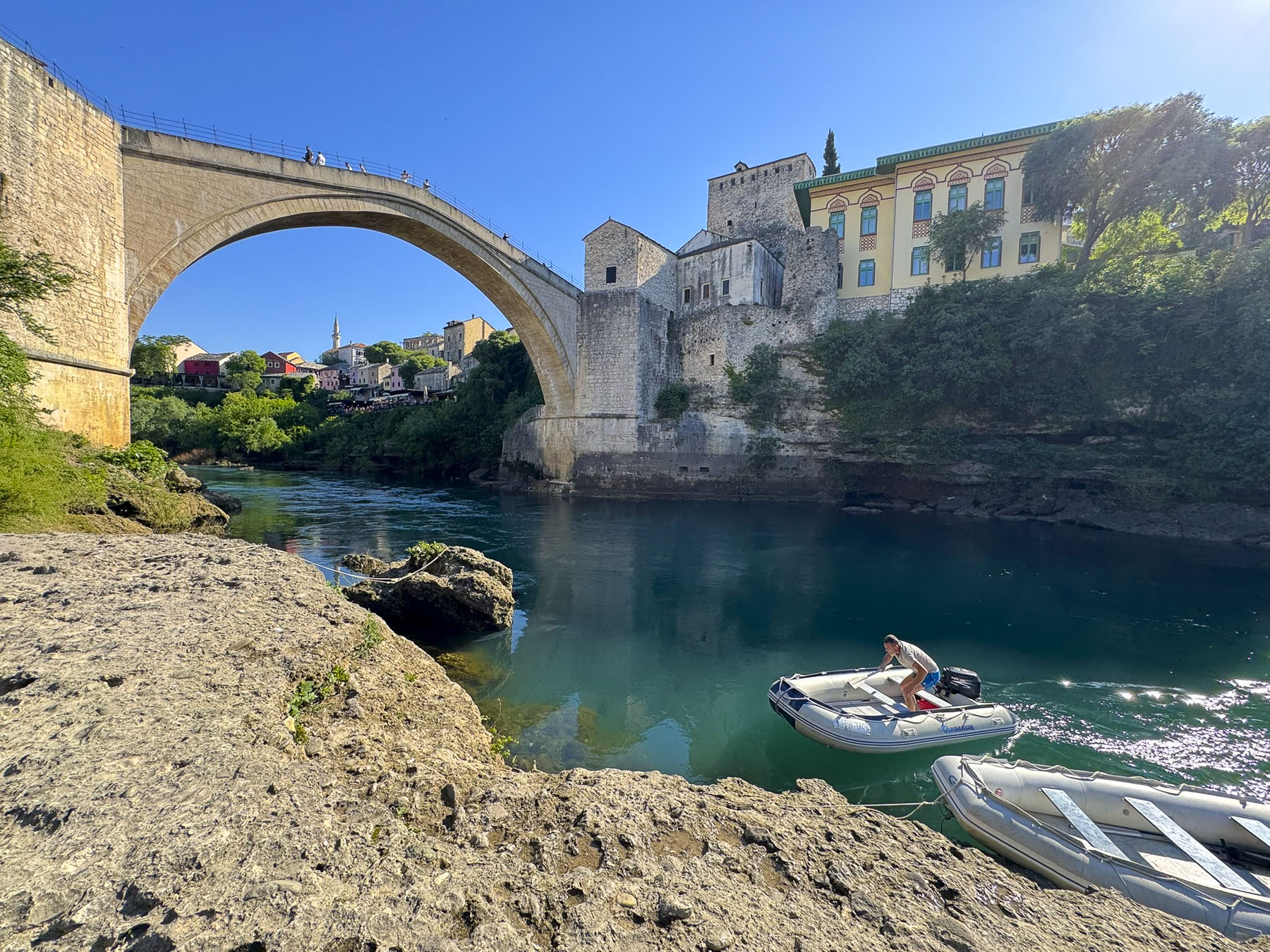
P.S. The Ljubljana Card lets you discover more than 30 Ljubljana sights