Road Tripping Through Andalucia: The Pueblos Blancos of Ubrique, Villaluenga del Rosario and Arcos de la Frontera

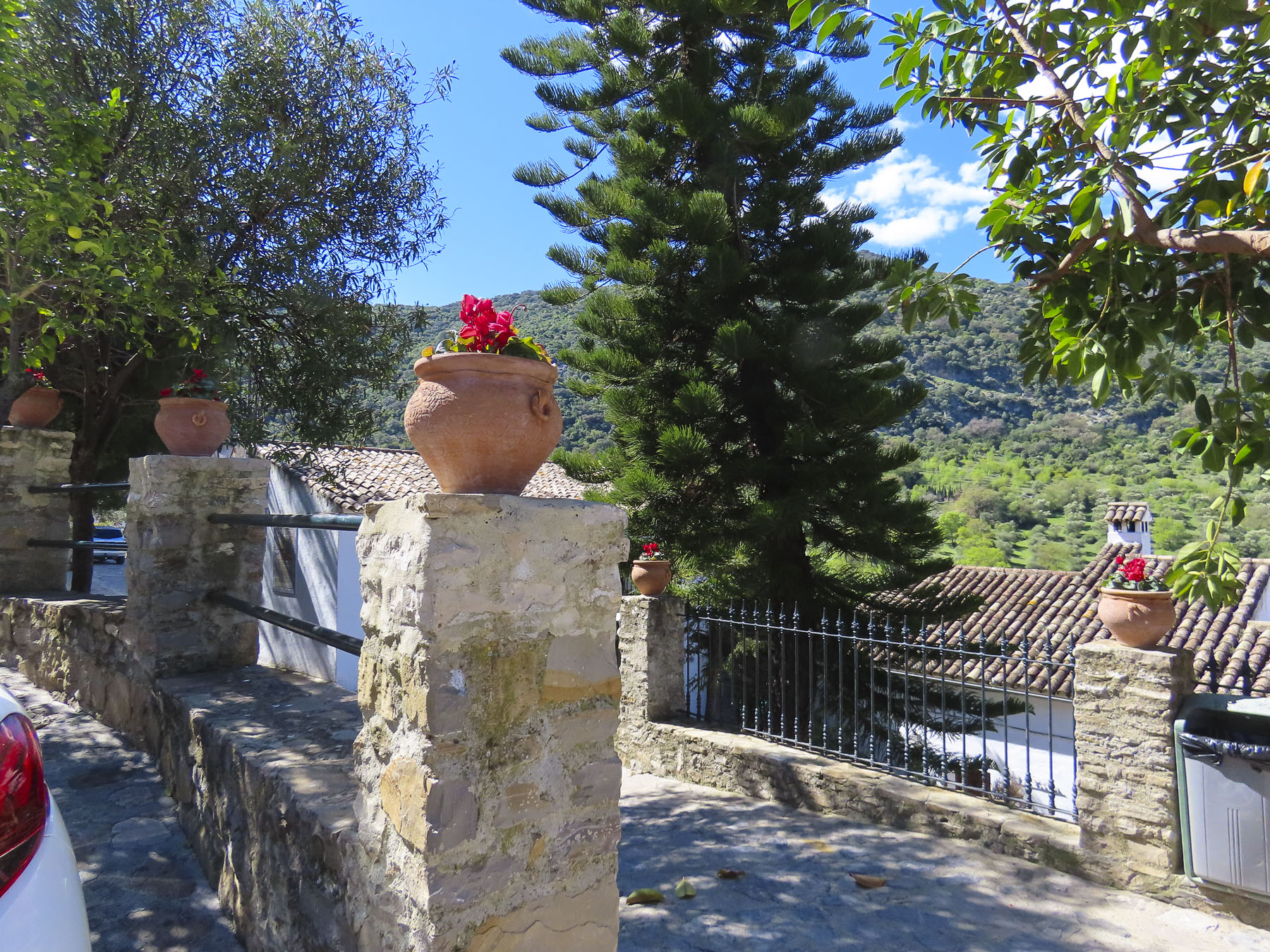
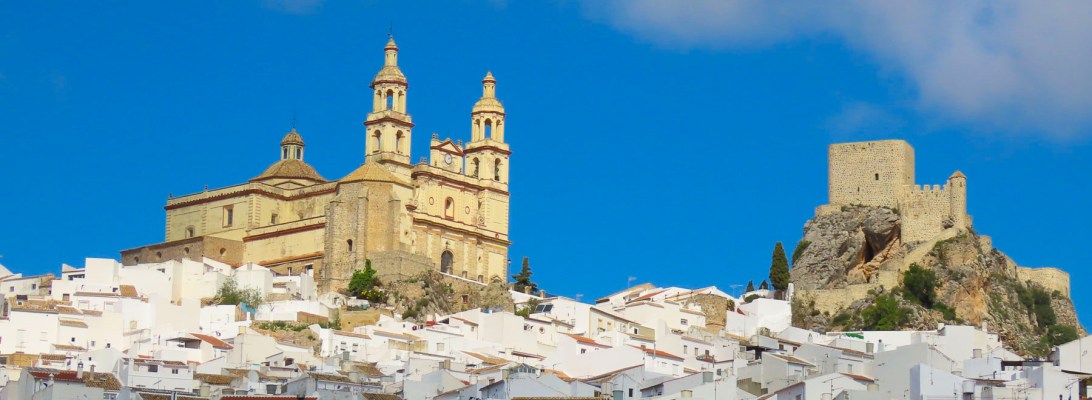
Just below the northern horizon, a white brushstroke highlighted the verdant canvas before us as we savored the view from the top of the castillo in Castellar de Frontera one last time. That swath of white slowly changed into Jimena de la Frontera as we drove closer. One of Andalucia’s famed Pueblos Blancos, the village is set on the hillside below the ruins of its ancient castle which once protected it.

In ancient times the homes in villages featured roughhewn stone masonry. Lime paint was a luxury, until its use was greatly expanded during the mid-1300’s when a bubonic plague pandemic swept through the Mediterranean countries. Residents of villages were required yearly to cover the outside and the interiors of their homes and churches with a limewash, known for its natural anti-bacterial and insecticidal properties, in an effort to reduce the spread of disease. Community inspections were done, and folks were fined for noncompliance. This mandated conformity was eventually appreciated as an aesthetically pleasing look and a symbol of meticulous tidiness. Fortunately, the custom stayed and has become an iconic signature of southern Andalusia.

Villaluenga del Rosario was our ultimate destination for the day, but before that we would be driving through the expansive forests of Parque Natural Sierra de Grazalema and stopping along the way in Ubrique, and Benaocaz. All pueblos blancos, though all different in size, setting and atmosphere. According to our maps app the trip would take 2 hours. But it was a glorious 58-mile sinuous route through the mountains, and with several stops it took us most of the day.

The vast 130,000-acre Parque Natural Sierra de Grazalema, with peaks reaching 5400 feet, is one of the wettest areas in Spain, receiving almost 80 inches of rain a year. This is surprising, considering that many areas in Andalucia are often used to replicate the American southwest for European filmmakers. These wet conditions over many millennia have created a dramatic karstic landscape of shear mountains, lush valleys and caves, especially Pileta Cave with its 30,000 year old prehistoric paintings. The park’s lower elevations feature forests of cork oak, carob, hawthorn, and mastic. Higher slopes transition to a landscape of gall oaks and Spanish fir, a tree species that survived the last Ice Age. This ecosystem supports a diverse fauna that contains 136 species of birds, most notably a large population of griffon vultures, and 42 mammal species, that include foxes, badgers, roe deer, otters, and Spanish ibex. And in ancient times it was the refuge of wild, now extinct, aurochs, the ancestor of the famous Spanish Fighting Bulls, toro bravo. The park has been a UNESCO Biosphere Reserve since 1977.

Farmers still harvest cork and olives amidst the rocky terrain and graze cattle, sheep, and goats within the park. This practice made for an interesting encounter when we rounded a curve and faced a VERY LARGE BULL standing in the middle of the road, adjacent to some pasture. We stopped, looked around for his farmer, but there was no one in sight. It was obvious he was the king of this domain, with no intention of moving aside until he felt like it. Slowly we inched forward and watched him eye us until he decided to saunter across the road and let us pass.

Ubrique is a large thriving town with 17,000 inhabitants set in a valley surrounded by tall peaks and steep scree slopes, its homes built above and around boulders too large to move. The town’s prosperity comes from its fine leather workshops, which account for 60% of the townspeople being employed directly or indirectly in the creation of leather products. It started simply enough with leather cases and pouches to carry tobacco and the Precise, a heavy-duty strap that allowed workers to safely carry silex stones and iron bricks.

By the mid-1700s their fine leather products and artisanal craftsmanship was recognized across Europe which fueled an export industry. The good fortunes of the town continued to grow until the mid-2000 when clients seeking higher profit margins moved their leather goods production to China and other Asian countries. Fortunately, their exodus did not last long, and they returned to Ubrique when they realized that the excellent craftsmanship in this small Andalucian town could not be rivaled by cheap labor. Today Ubrique is considered the “artisanal leather capital, “ for high-end fashion brands like Chloe, Gucci, Hermes and Louis Vuitton. “So many stores, so little time.” Of course, we shopped! The decision-making process was painful, but Donna managed to select one single beautiful purse to take home.

In March the twisting roads, higher into the mountains, were nearly void of traffic. Occasionally a campervan passed. Reaching Benaocaz, we parked and strolled through a nearly empty town square in search of coffee. It was a quiet weekend afternoon in the shoulder season, and few people were about, but luckily, we happened to come across Restaurante Nazari, a rustic restaurant with outside tables that had a view of the valley below the town.

Villaluenga del Rosario was only a little farther, and higher into the mountains. The village is dramatically set along one side of a narrow green valley at the base of a sheer mountain massif. The lane to our inn, the Tugasa La Posada, looked too narrow to drive down, and I was concerned about getting to a point that required backing up. A difficult task in an alley barely wider than our rental car, and there was plenty of parking above the village.  La Posada wonderfully reflects the typical inn of centuries past, with a large tavern, featuring regional recipes, on the ground level and a handful of rooms above.
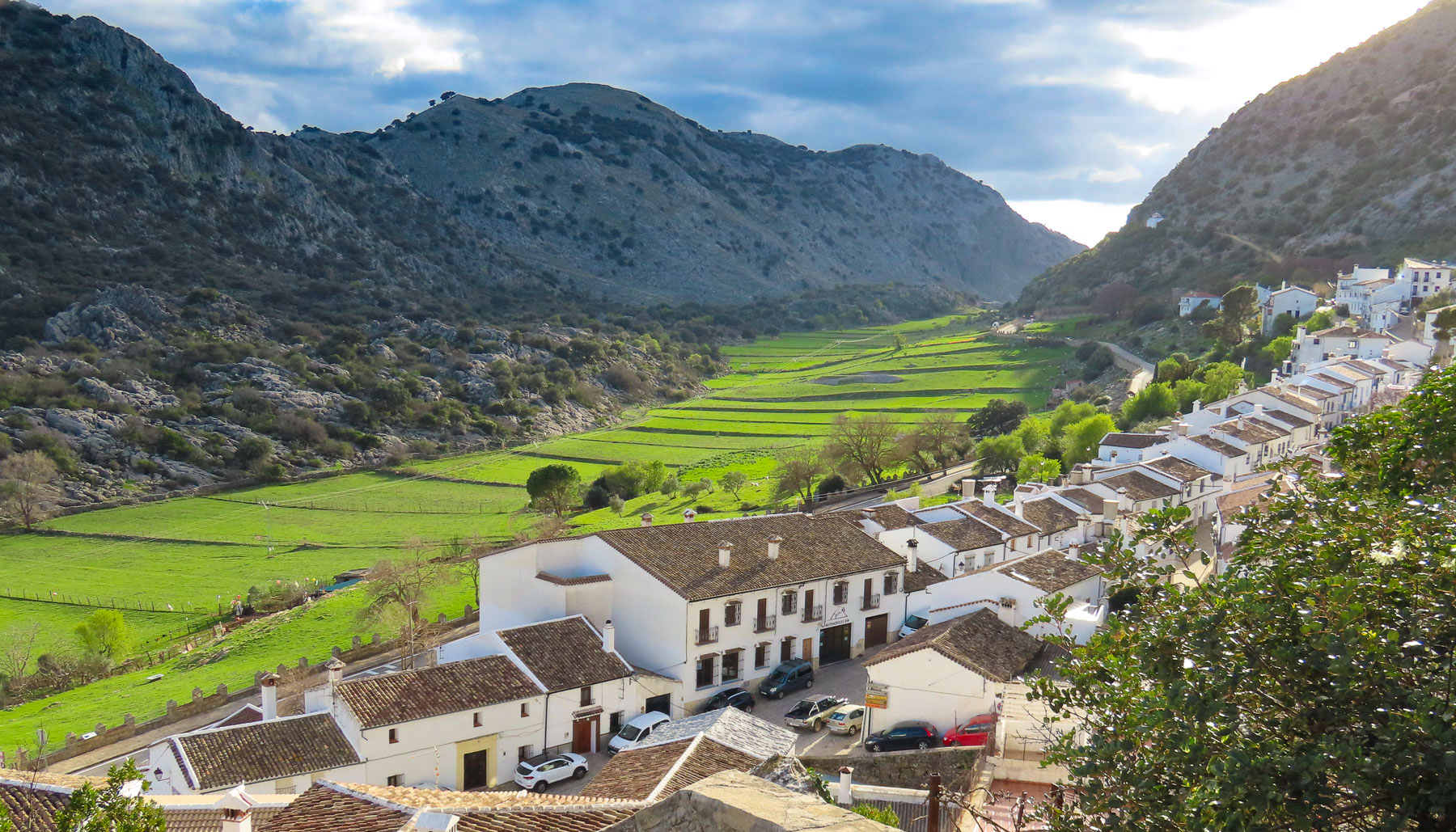
Several things are unique to this pueblo: Snowy winters are common in the Sierra de Grazalema Natural Park’s highest village, situated at an elevation of 2800ft. It is also the smallest village in the Province of Cadiz, with only 438 residents. And the village has a unique octagon shaped bullring, built around a natural rock formation, that is the oldest in Cadiz Province, dating from the mid-1700s. The exact year of construction for the bullring isn’t known, as the town’s archives were lost in a 1936 fire. Located on an important cattle trading route through the mountains, the bullring was also used as a corral during livestock festivals.
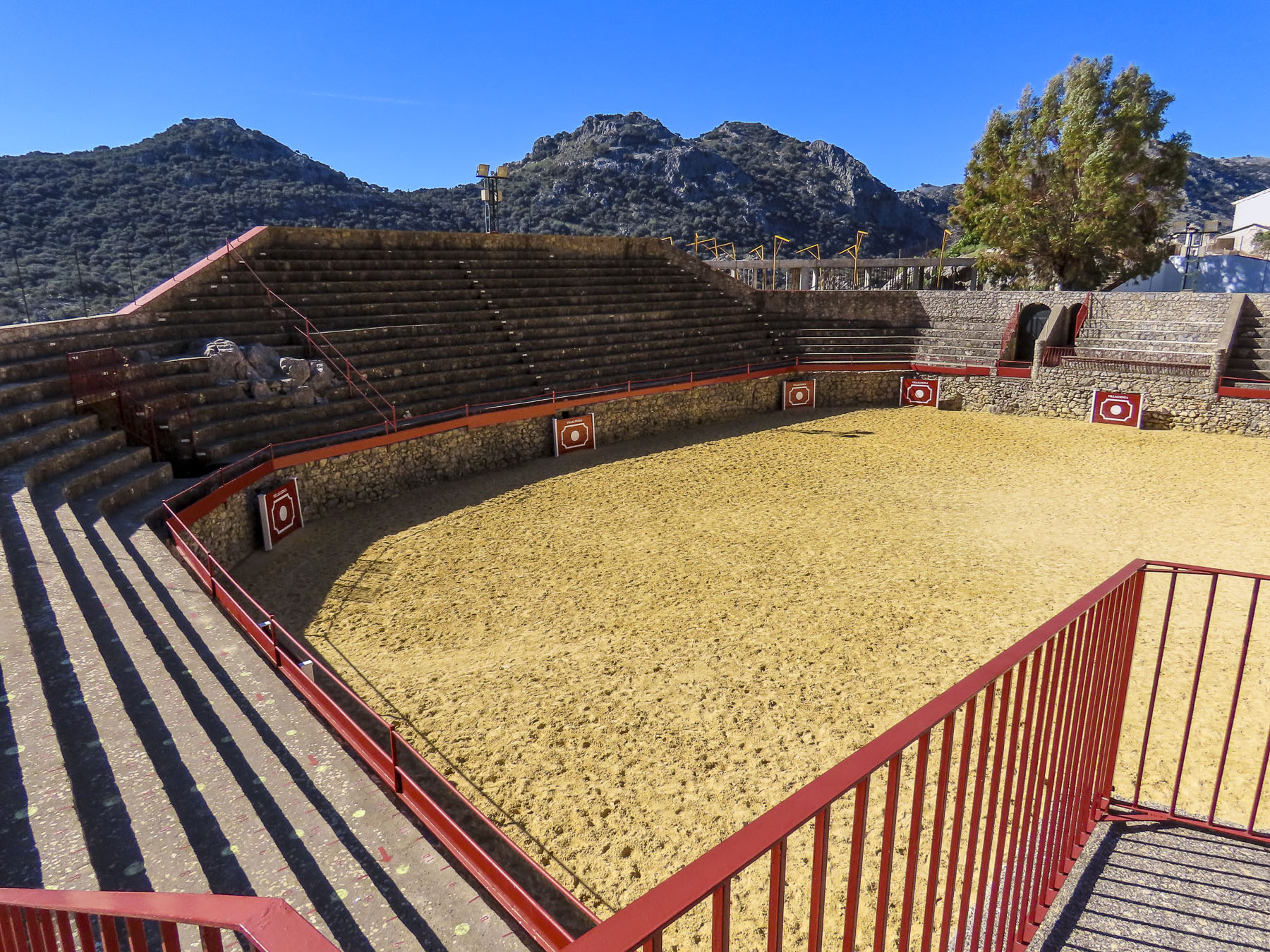
But before domestic cattle were raised in the area, prehistoric people used to pursue auroch, a wild bull that lived in the Sierra de Grazalema until it was hunted to extinction in the Middle Ages. Nearby in Cueva de la Pileta, primitive cave paintings of bulls have been dated to the Paleolithic era 27,000 years ago. The famous fighting bulls of Spain, Toro Bravo, descend from this primal auroch lineage that once roamed wild. Ancient pagan festivals often conducted a running of the wild bulls, tethered to a group of men by a long rope, through their villages before a ritual sacrifice.  “Toro de Cuerda'”(Bull on Rope) festivals, are thought to be the foundation of the modern Spanish Bull Fight, and are still held in Villaluenga del Rosario, Grazalema, and Benamahoma. With the advent of Christianity some of these pagan elements were incorporated into church celebrations of a pueblo’s patron Saint. In Grazalema the early church Christianized the practice and includes the Feast of the Bull in celebrations to the Virgen del Carmen every July. Benamahoma’s “Toro de Cuerda” is held in August during their festival to honor the town’s patron saint, Anthony of Padua.
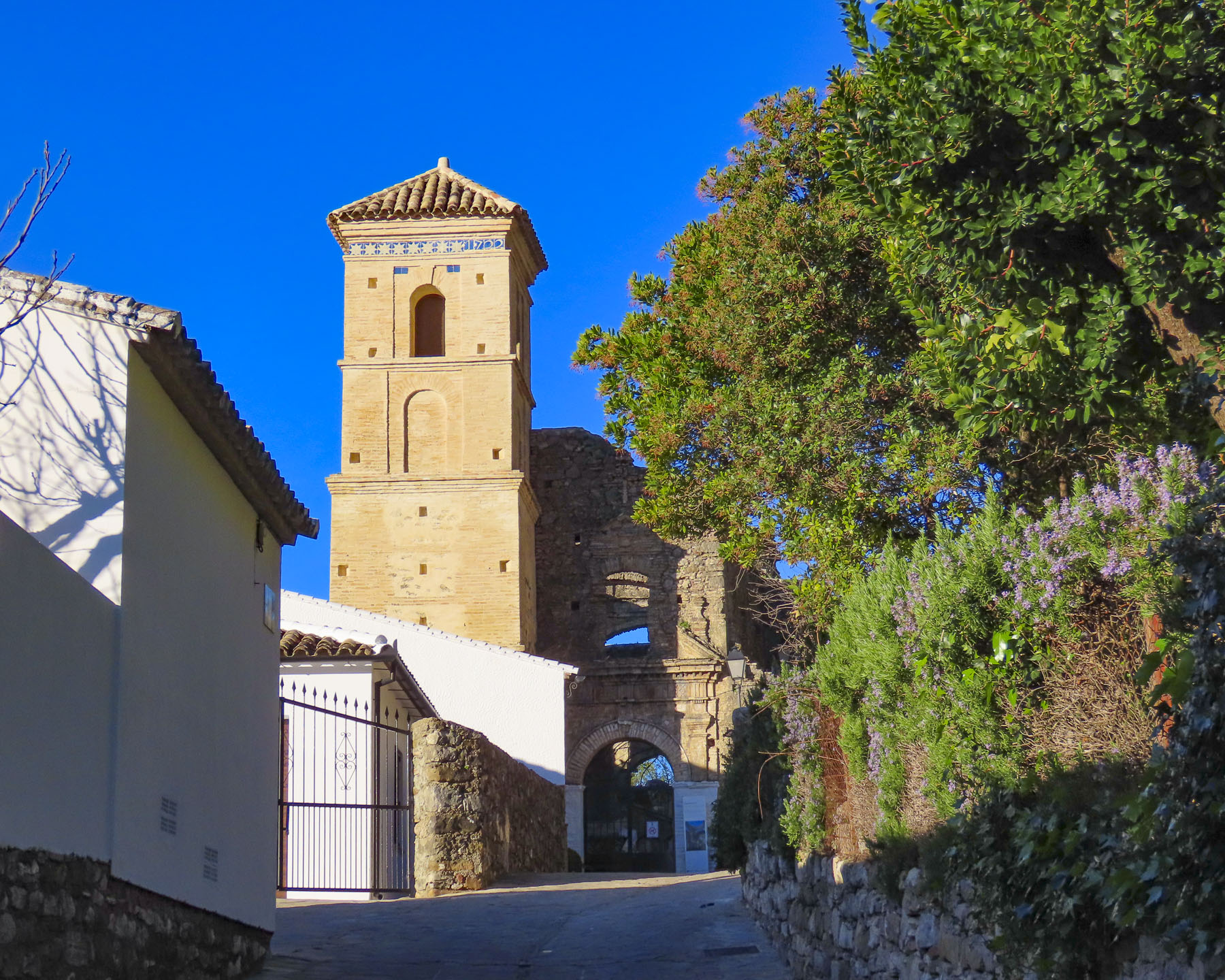
This tranquil village has gone through some turbulent times in its past. Villaluenga del Rosario, known for its woolen textiles in the 17th century, did not escape Napoleon’s destruction as his troops retreated across the mountains after they abandoned their siege of Cadiz in 1812. French troops sacked the village and torched the old Church of El Salvador. Now only the walls and roof arches remain, open to the sky. The sanctuary is now used as a cemetery.  The economy declined throughout the region in the 1800s and early 1900s, and the mountains were beset with bandits. Notoriously, José María El Tempranillo and Pasos Largos, the most infamous of the Sierra’s outlaws, would frequent the village and hideout in the surrounding caves. They are celebrated as Robin Hood bandoleros, robbing the wealthy and redistributing their stolen goods to help the poverty-stricken locals – Andalucia’s mountain justice. These same caves in the 1930s would shelter Republican resistance fighters escaping Fascist troops during the Spanish Civil War. A hiking trail, Los Llanos del Republicano, from the village to caves is named after them.

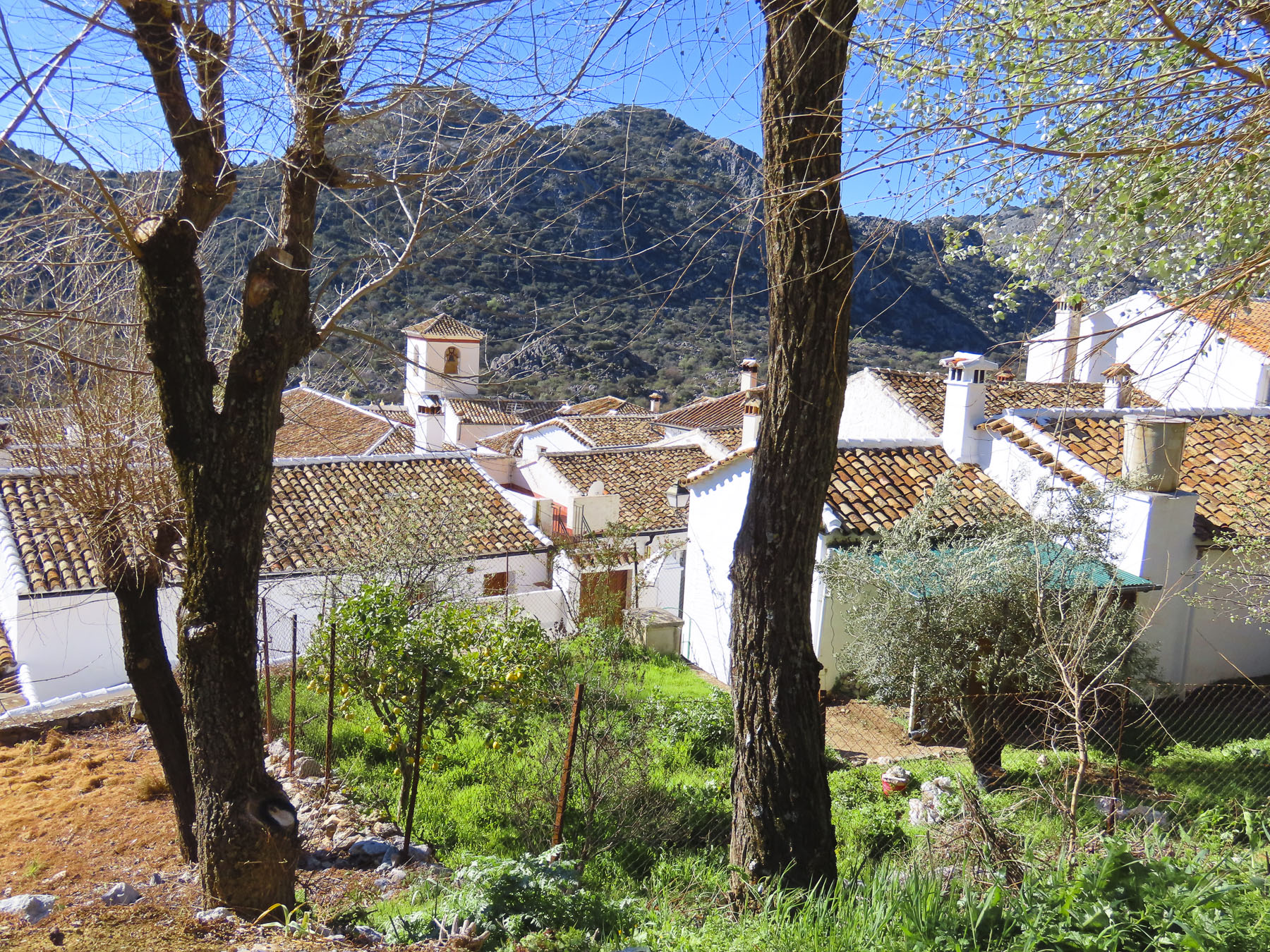
The rural population continued to emigrate, contributing to further economic deterioration until the villages’ employment prospects improved with the opening of a cheese factory, Queso Payoyo, in 1997. The Payoyo goat is an ancient breed from the Sierra de Grazalema and considered endangered. Since Queso Payoyo opened 25 years ago, its goat and sheep cheeses have received 175 national and international awards. Thirty-five farms now supply Payoyo goat and Merina grazalemeña sheep milk to the cheesemaker. Their shop just across the road from the village seems to be a Mecca for cheese aficionados. Open seven days a week, we were surprised to find it packed with customers early on a Sunday morning, when we stopped to buy some cheese before we headed to Benamahoma.

It was a beautiful crisp spring day, and we enjoyed a slow walk uphill into the village. Next to the Plaza de las Huertas the façade of the Ermita/mezquita de San Antonio, a church/mosque, visually represents Benamahoma’s complex cultural identity, with Moorish horseshoe-shaped arches and three golden spheres topped by with a gold crescent, typically seen on minarets, atop its tower.
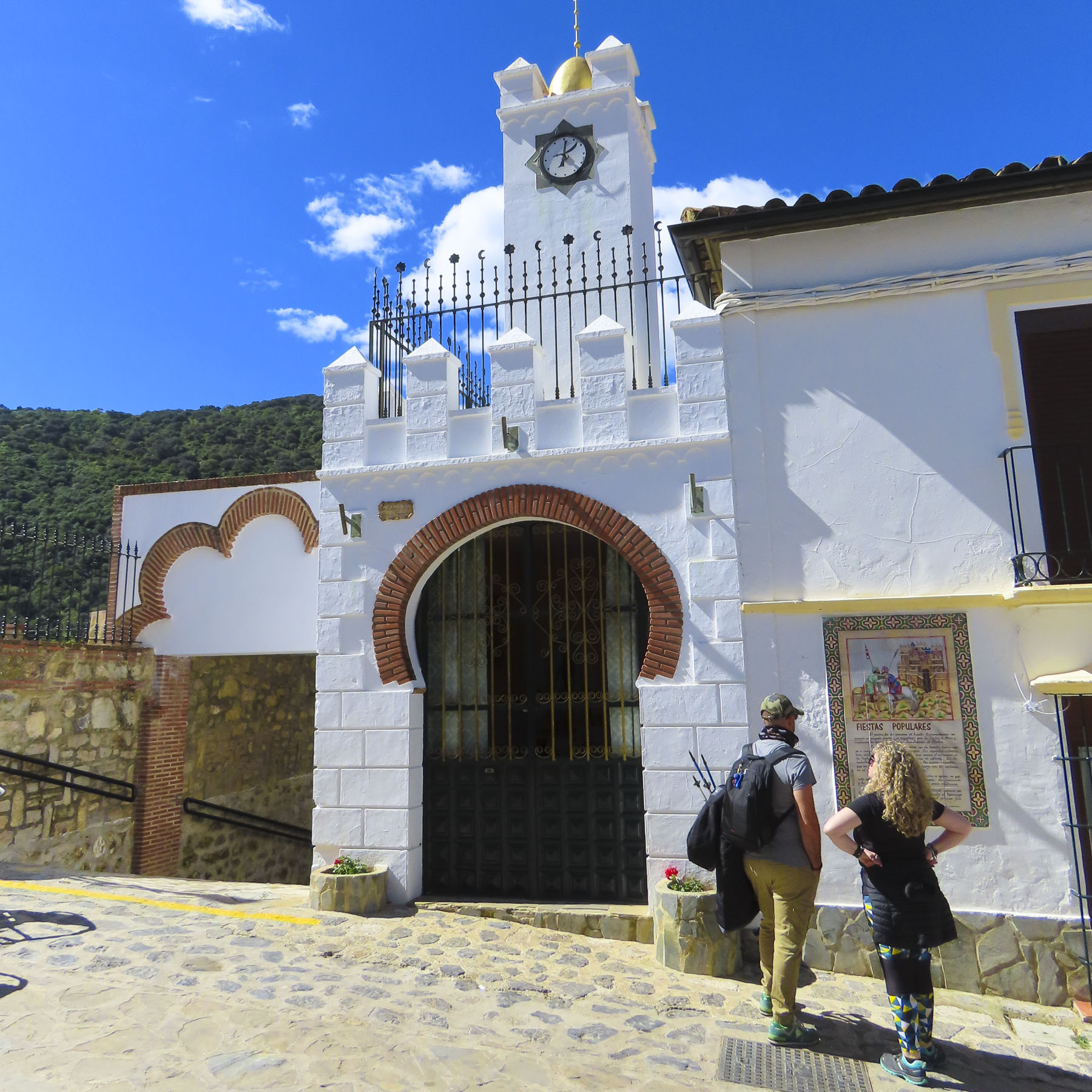
This region in Spain has a very complicated history, beginning with Alfonso X’s Reconquista which started in the mid-1200s, paused, then continued for the next 400 years with his successors. Benamahoma was the last Moorish village in the mountains to have its inhabitants expelled from the region in 1609, eighteen years after Grazalema’s Muslim villagers were forced out, though the hamlets are only nine miles apart. Their reprieve was caused by the fact that although Alfonso X and later Kings achieved military victories, they did not have enough troops to garrison each village, nor sufficient numbers of willing Christian settlers from Northern Spain to repopulate the conquered towns. Consequently, to keep the economy of the area going and subjects to collect taxes from, Moors were allowed to stay as long as their local Princes swore allegiance to a Christian King and declared themselves loyal vassals.  This did not always go smoothly and there were rebellions. Most famously the Mudéjar Revolt in 1264, when the towns of Jerez, Lebrija, Arcos, and Medina-Sidonia were recaptured and occupied by Moors for several years before Christian armies secured the towns once again. 
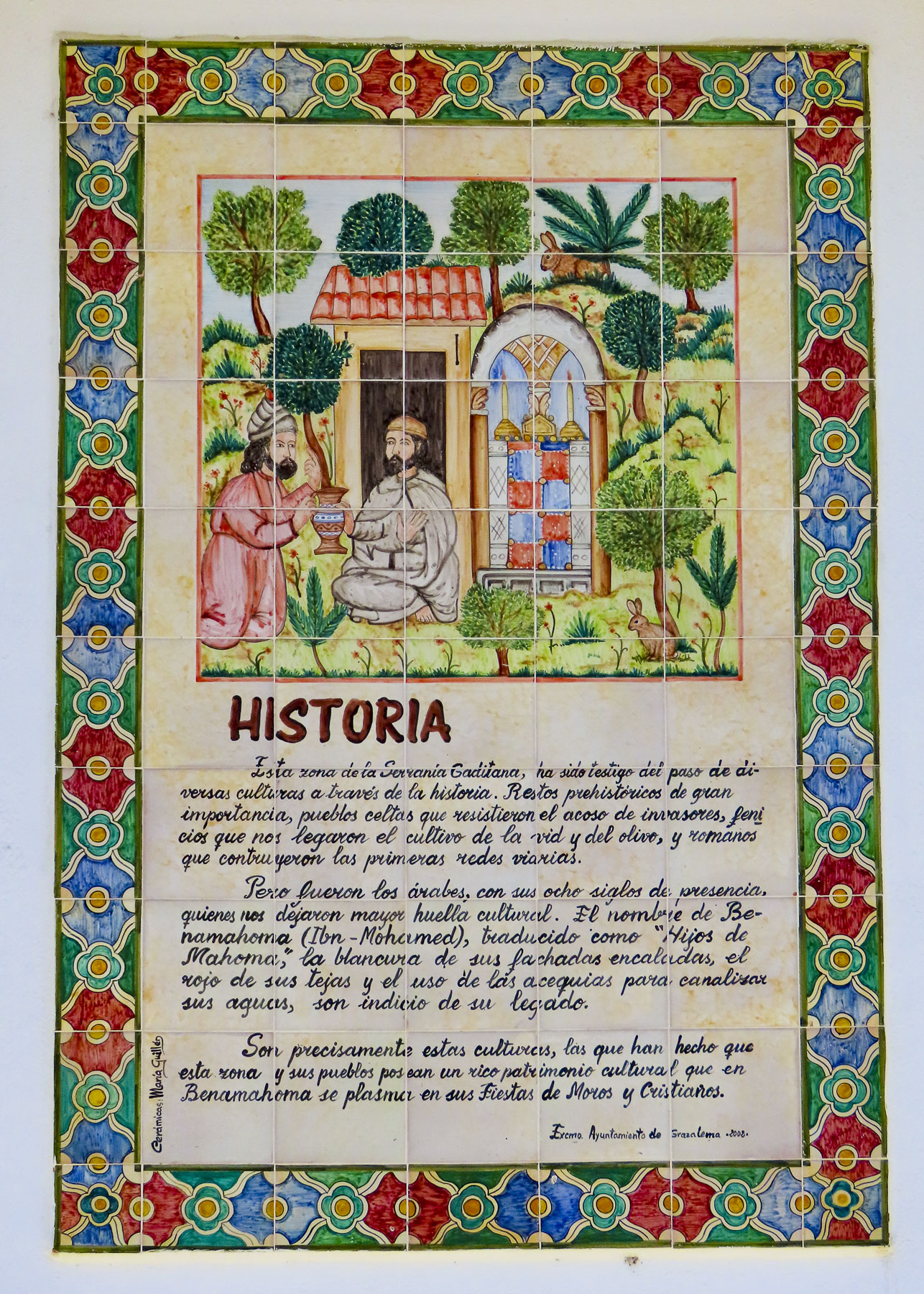
Benamahoma’s historic, pragmatic tolerance is celebrated the first weekend every August with a Moros y Cristianos Festival. Carrying swords, shields and blunderbusses, historical reenactors dressed in period clothing parade through the village to the bullring, where they then engage in mock hand-to-hand combat. The battles are won with the capture of an image of San Antonio de Padua by the Moors on Saturday and then won by Christians on Sunday with the rescue of his image. Many of the positions in the opposing armies are hereditary, the tradition being passed down from father to son, through the generations. Benamahoma is the only village in western Andalucia which celebrates this festival.

This village’s remoteness in the Sierra de Grazalema did not protect it from the atrocities committed during the Spanish Civil War. Near the bullring, in the Parque de Memoria Historica, silhouettes stand where villagers once stood against a wall before they were massacred by Fascists. Sadly, this memorial is also near the village’s second church, the Iglesia de San Antonio de Padua.
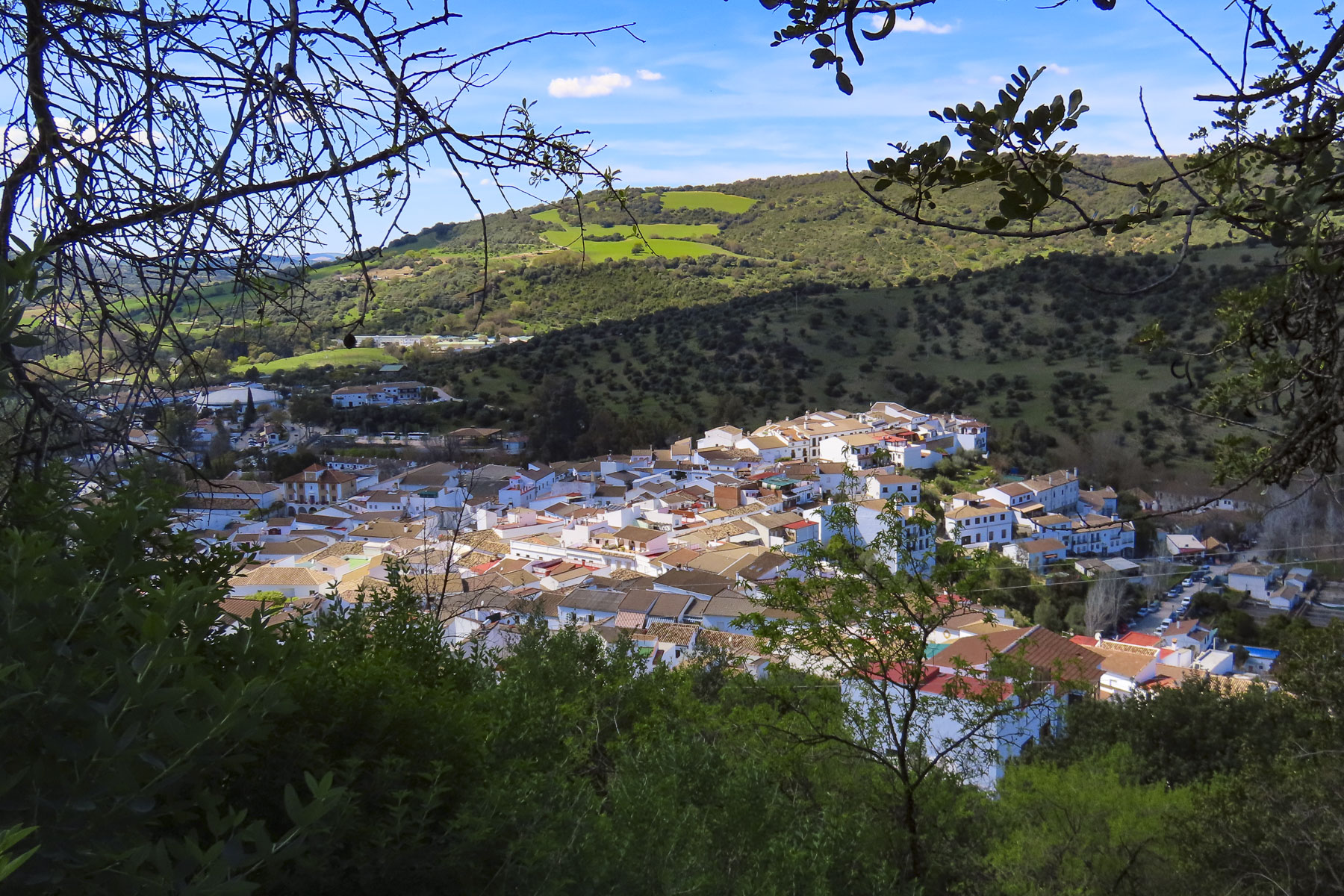
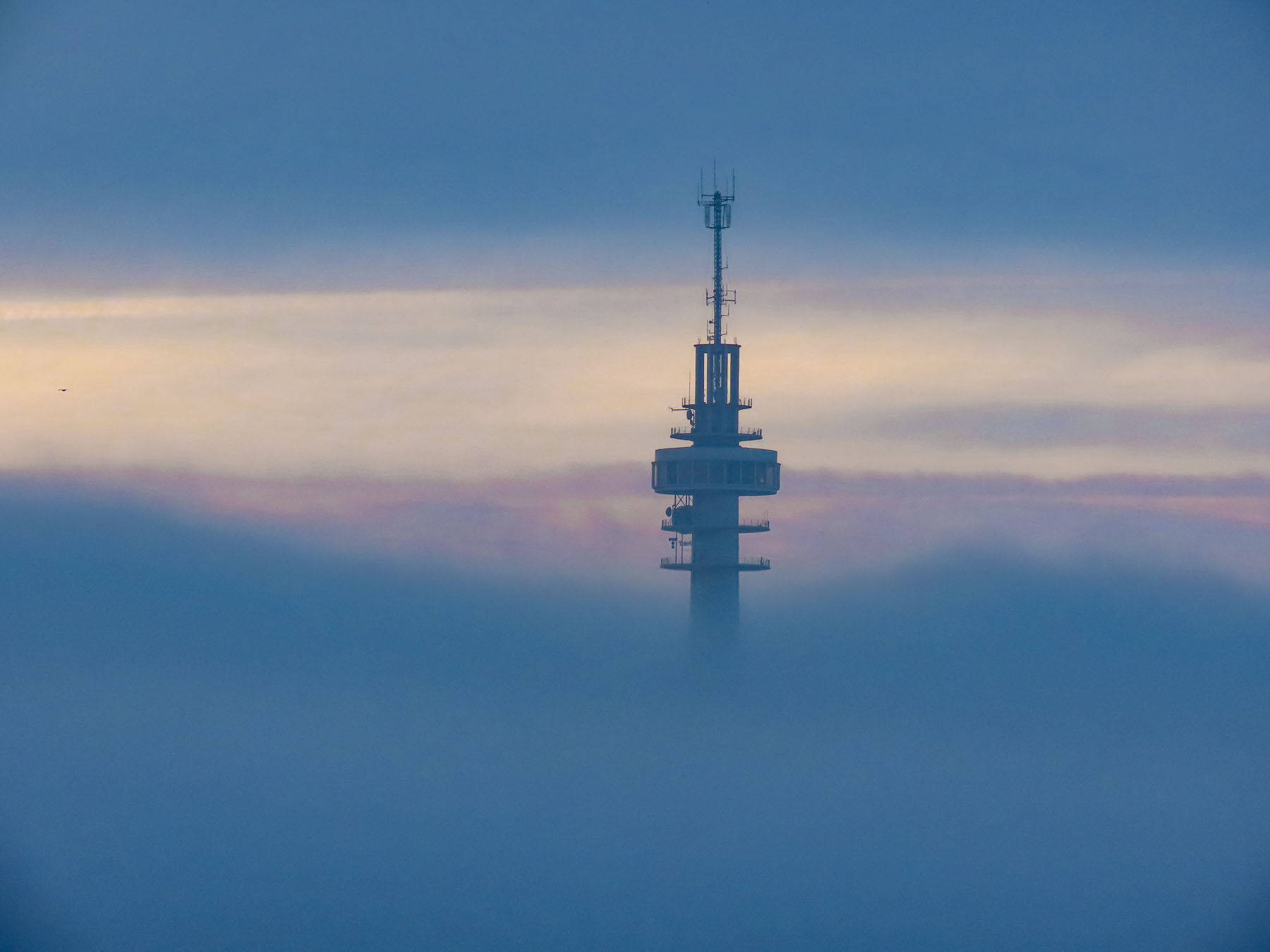
Backtracking as we headed to Arcos de la Frontera, we stopped at a radio station above El Bosque. A trail behind its tall antenna offered the perfect vantage point to capture a photo of the village below. We did not stop in El Bosque, but after catching glimpses of the village as we drove through, in hindsight we wished we had.  But there was a time constraint, we wanted to spend the afternoon exploring Arcos de la Frontera, before flying on to Barcelona the next morning. 
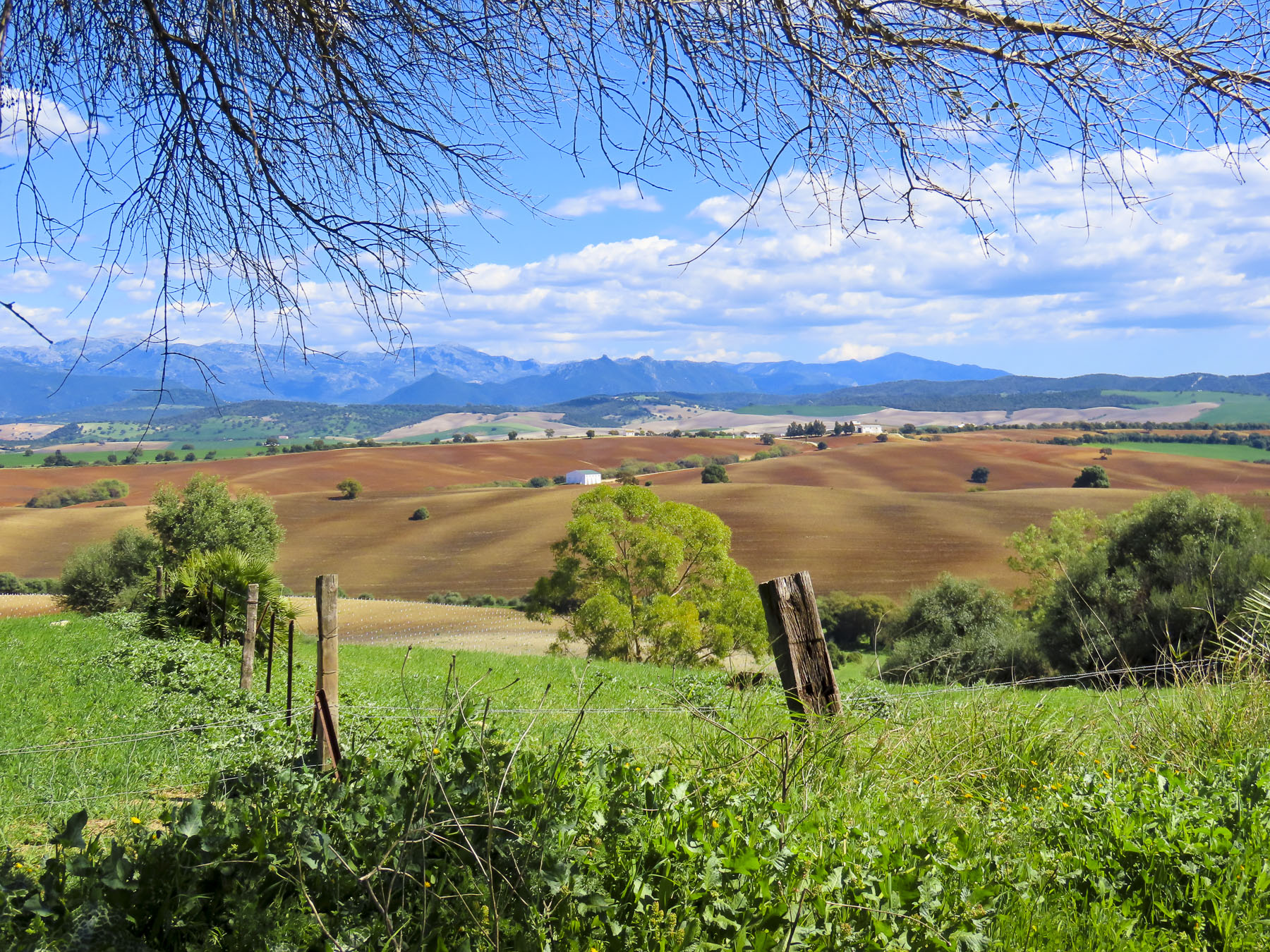
The A-372 between El Bosque and Arcos de la Frontera has to be one of the prettiest stretches of highway anywhere. With the reflection of the Sierra de Grazalema in our rearview mirrors, we wished we could have lingered longer.

I’ve always loved maps for researching routes, finding obscure sites, and figuring out the best vantage point to capture a landscape from. This brought us to our first two stops at the Molino de Angorrill, an old mill, and the Mirador Los Cabezuelos, before we entered the hilltop citadel. Both places along Guadalete River had wonderful views of the ancient city.
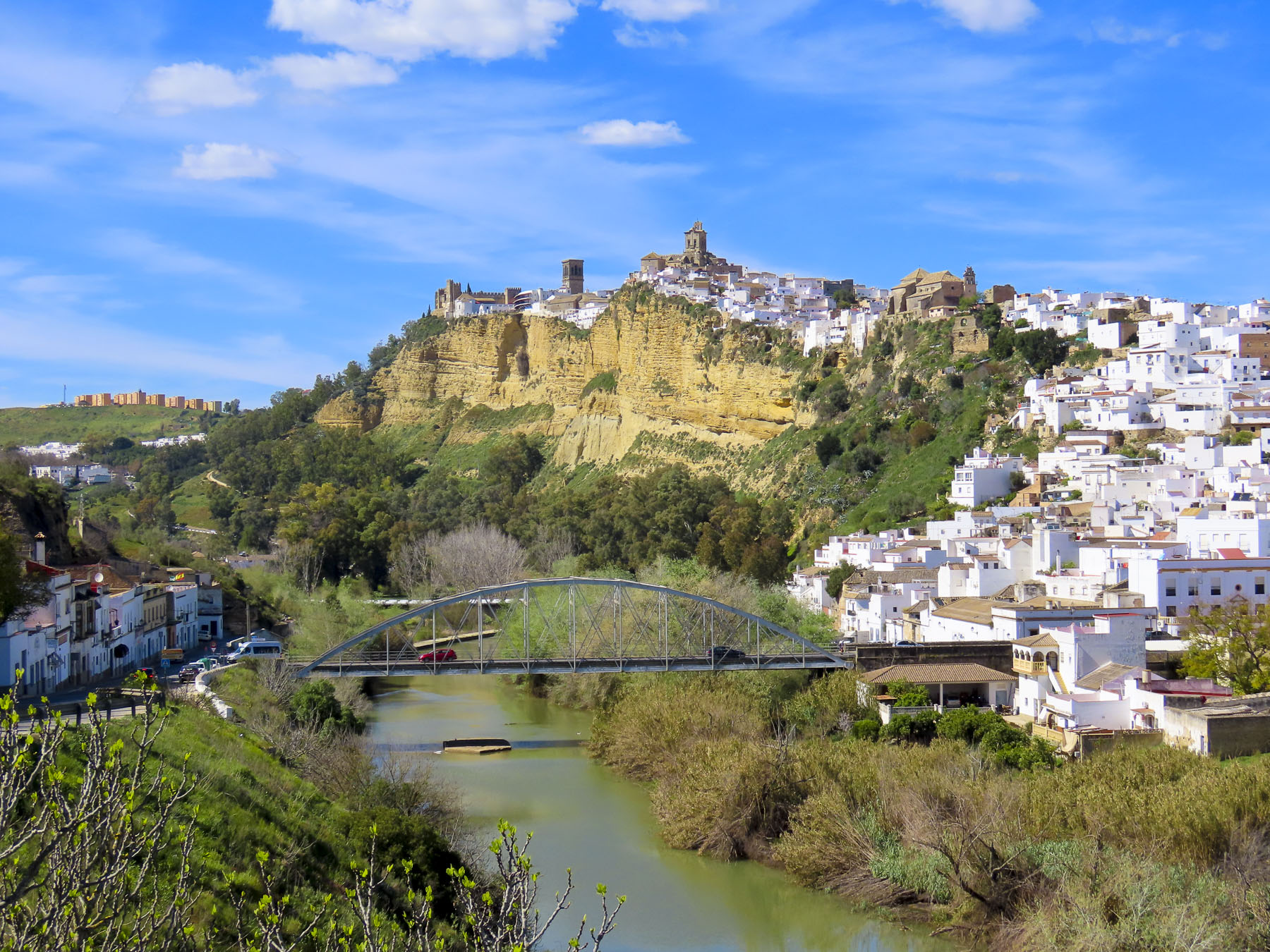
After this our map app failed us when it suggested we head the wrong way down a one-way calle into the village. We eventually found an underground parking garage at Parque El Paseo and towed our suitcases uphill to the Parador de Arcos de la Frontera.

It was LONG walk, but of course we stopped frequently to take photos. Located next to the 500-foot-high Mirador Plaza del Cabildo and adjacent to the Basílica de Santa María de la Asunción and the Castillo de los Duques de Arcos, the hotel was a perfect base for a one-night stay. Formerly the Casa del Corregidov was an Andulcian palace before it was acquired by the government and renovated to be a parador in 1966.

Arcos has always been a favored spot, appreciated for its access to abundant water sources and its easily defensible position atop a cliff face. It has hosted settlements since the Neolithic period, Bronze Age, Tartessians, Phoenicians and Romans periods.

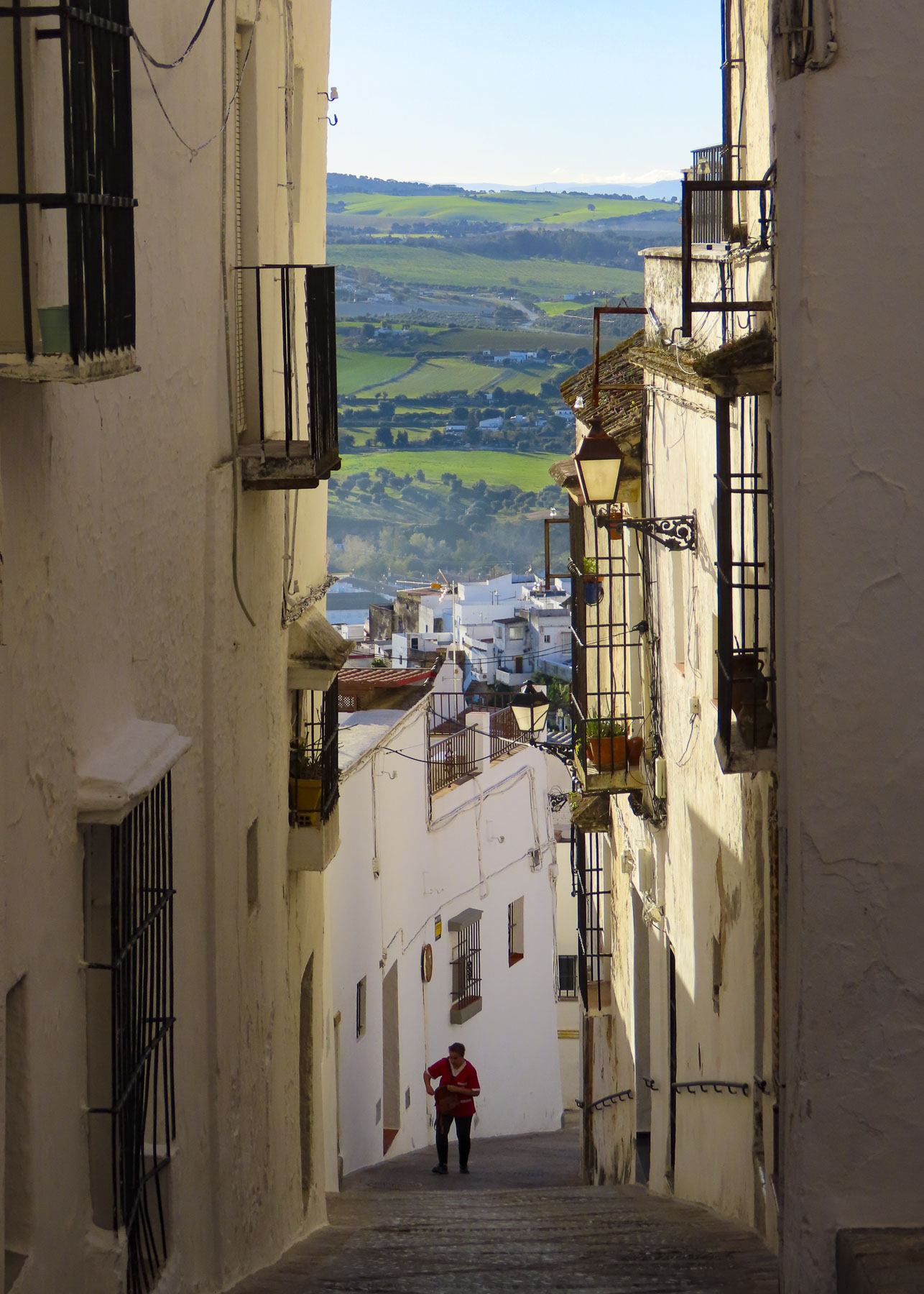
The village continued to grow under the Moors and while the facades and interior of buildings in this ancient town have changed over the centuries the original Arab footprint of the village, with its exceedingly narrow lanes has remained the same.

The view from the mirador and the hotel’s patio were phenomenal during the golden hour. As the sun was setting, a large flock of storks appeared over the bell tower of the Basilica and circled for about fifteen minutes before flying away. It was a magical experience that nicely capped our short time in Arcos.

The next morning, we watched the sun rise over the Sierra de Grazalema and the village’s church steeples from our hotel room, before wandering through the village’s ancient lanes one last time.

Till next time,

Craig & Donna

Cadiz: Walk a little, then Café

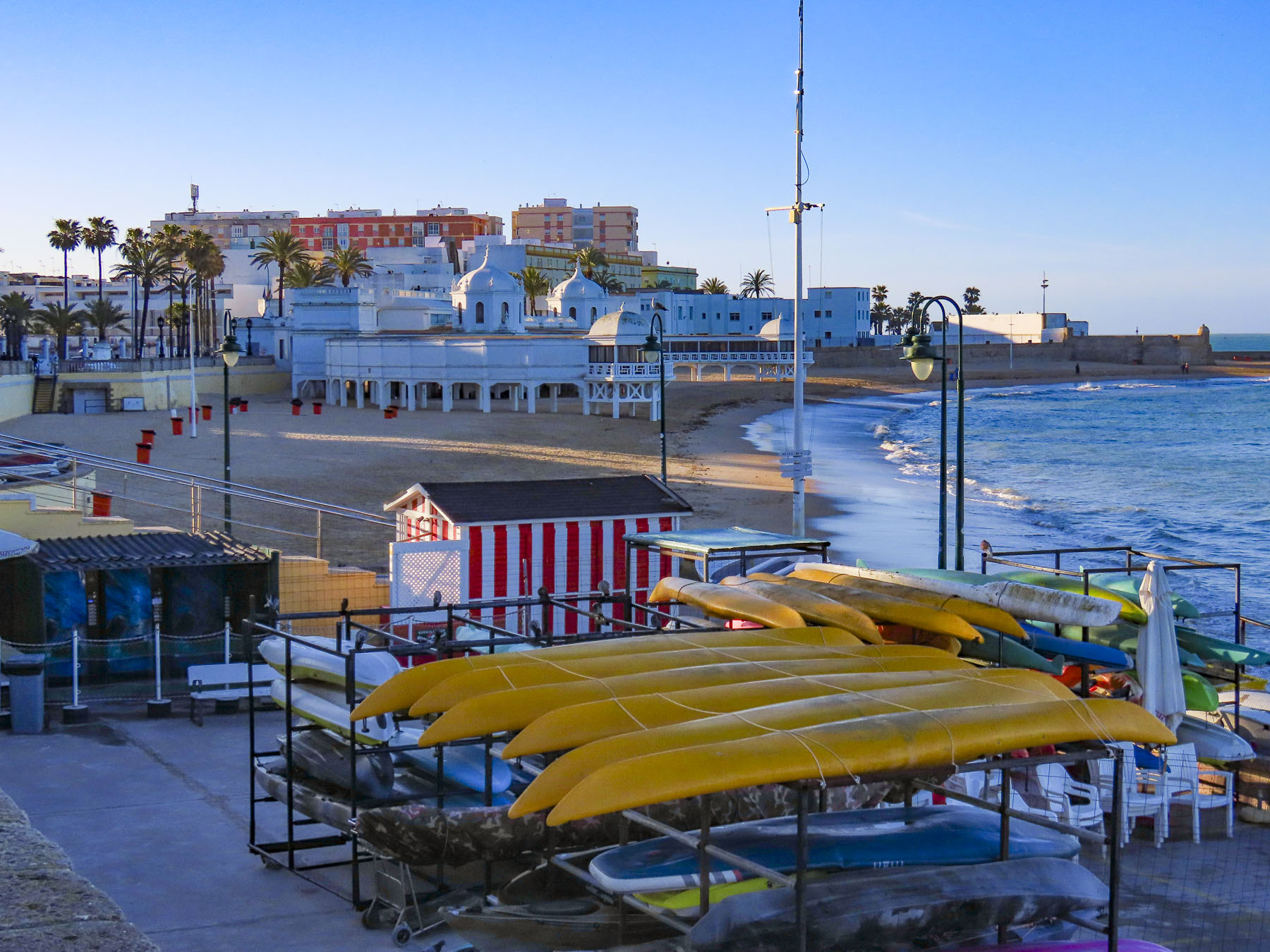
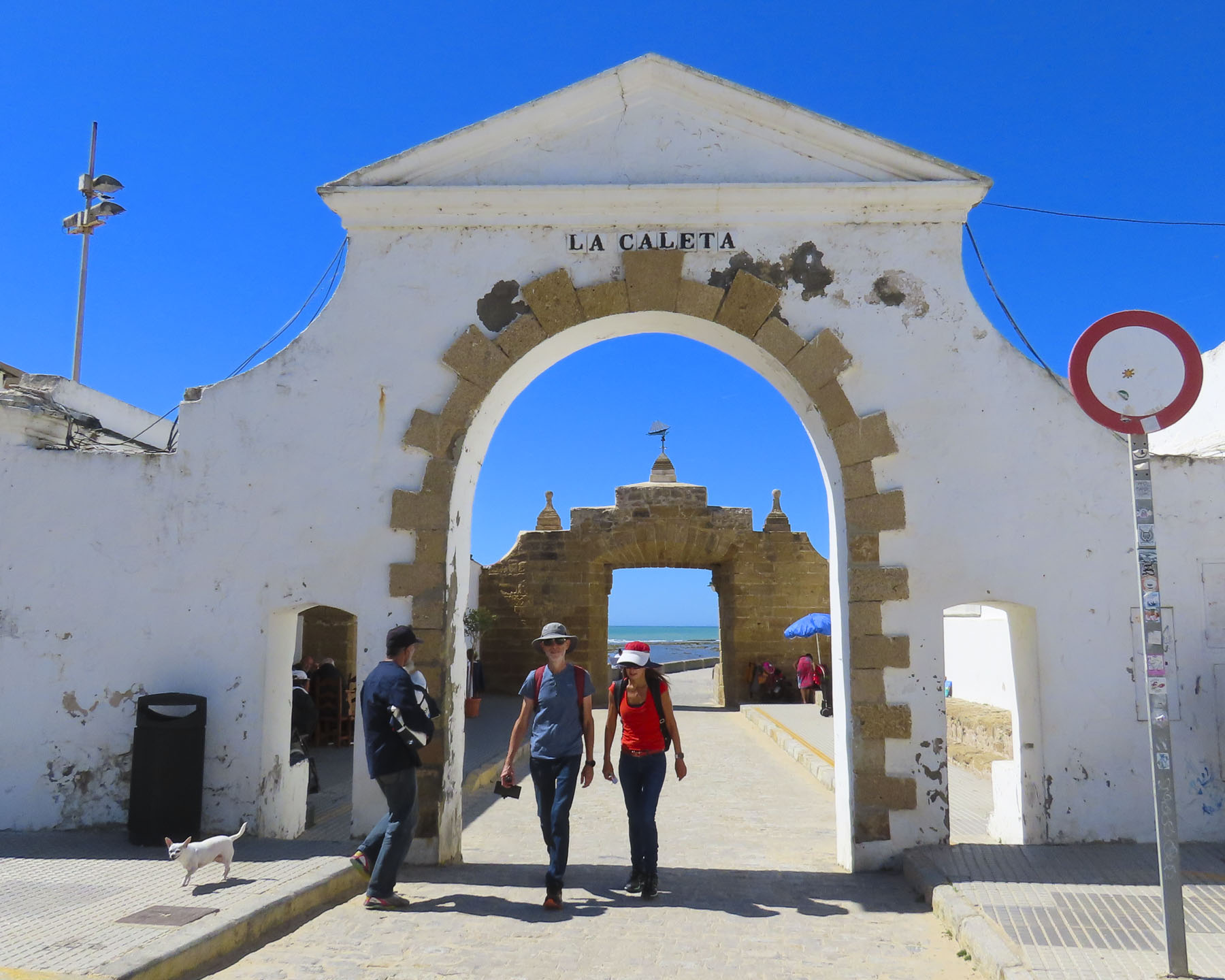
With a leisurely departure from Jerez de la Frontera, we headed towards Cadiz for four nights before continuing our road-trip through the southwest corner of Andalucia. Our friend Giulia had shared her fond memories of Cadiz with us several years ago and we were finally on our way to experience the charms of this coastal city ourselves. Situated on a narrow peninsula that juts into the Atlantic Ocean, the city’s small size appealed to us. “You won’t need a map!” Donna teased, referring to my inclination to track our every route. While the city does have several beach areas, only one, La Caleta is in the Casco Antiguo, old town district.

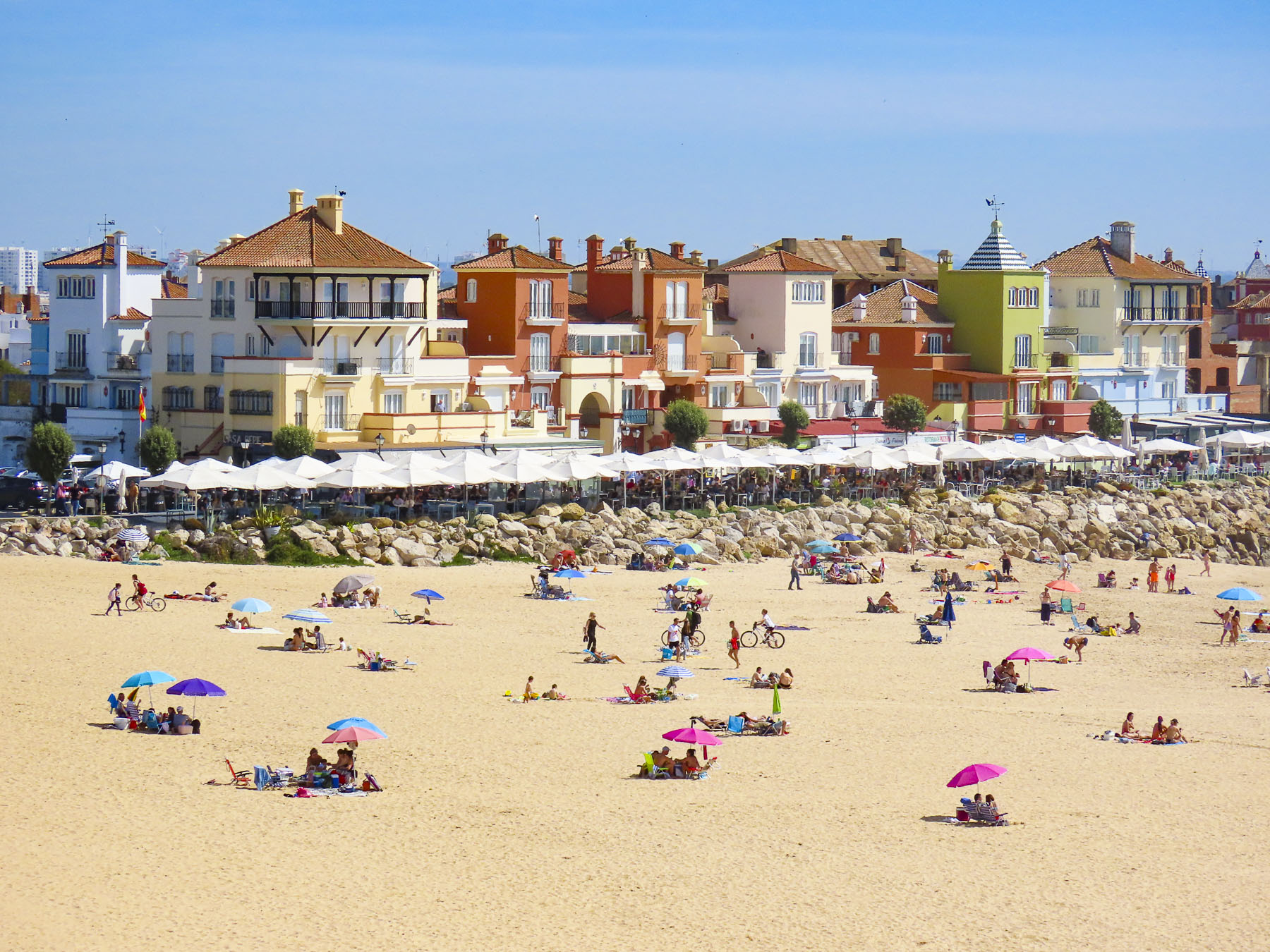
We decided to have lunch along Andalucia’s Atlantic coast before we reached Cadiz and followed the signs to Vistahermosa, an upscale neighborhood in El Puerto de Santa María that has a crescent shaped beach. It’s a wide stretch of golden sand, with the ruins of an old fortress at one end and a marina at the other.

The Sunday afternoon in March when we visited, folks were sunbathing and swimming. Offshore boaters, kite surfers, and a sailing class were enjoying the gentle waves of Cadiz Bay. We parked at the marina and strolled along the restaurants and homes that lined the breakwater until we decided on Sotavento Puerto Sherry, which offered some shade from the intense afternoon sun.

Afterwards we headed to the lighthouse that marks the entrance to the marina. If you ask locals where the best beaches in Spain or Europe are, they’ll spread their arms wide to encompass the north and south vistas along the coast and say, “aquí mismo,” right here, proud of the fact that their beaches are consistently awarded numerous Blue Flags, a European Union award for water purity and beach cleanliness, in the Mediterranean region. Though it shares the same climate as the Costa del Sol on Spain’s Mediterranean coast, with 300 days of sunshine annually, the Atlantic coast beaches have stayed relatively undiscovered by mass tourism. This is attributed to the provinces’ wilder, windswept coastline, with many nature preserves and few large tourists resorts.

When you look at a map of old town Cadiz the streets appear to be laid out in a slightly modified grid pattern. In actuality they are a confusing array of one-way streets that inhibit easily circling around the block. Fortunately, there is very little auto traffic through the historic district, as there are no sidewalks and folks treat the calles as pedestrian only thoroughfares, stepping into doorways for the occasional delivery vehicle to pass. There are expensive parking garages scattered about the city; however, if you are willing to walk a little farther, the least expensive parking areas are near Parque Genovés.

We were delighted when the elevator doors opened onto a rooftop terrace and we realized that our room was on the hotel’s top floor, which we shared with one other guest room and an outdoor bar that was closed until the high season started later in the Spring. For under $100 a night our room, with sitting area, large bath, and private patio at Hotel Las Cortes De Cádiz   was an incredible value in mid-March.

Breakfast was not included, but we had a coffee maker and I always enjoy photographing sunrise, then wandering about in the early morning hours looking for a neighborhood pastelería. Our sweet tooth was not dissappointed in Cadiz.

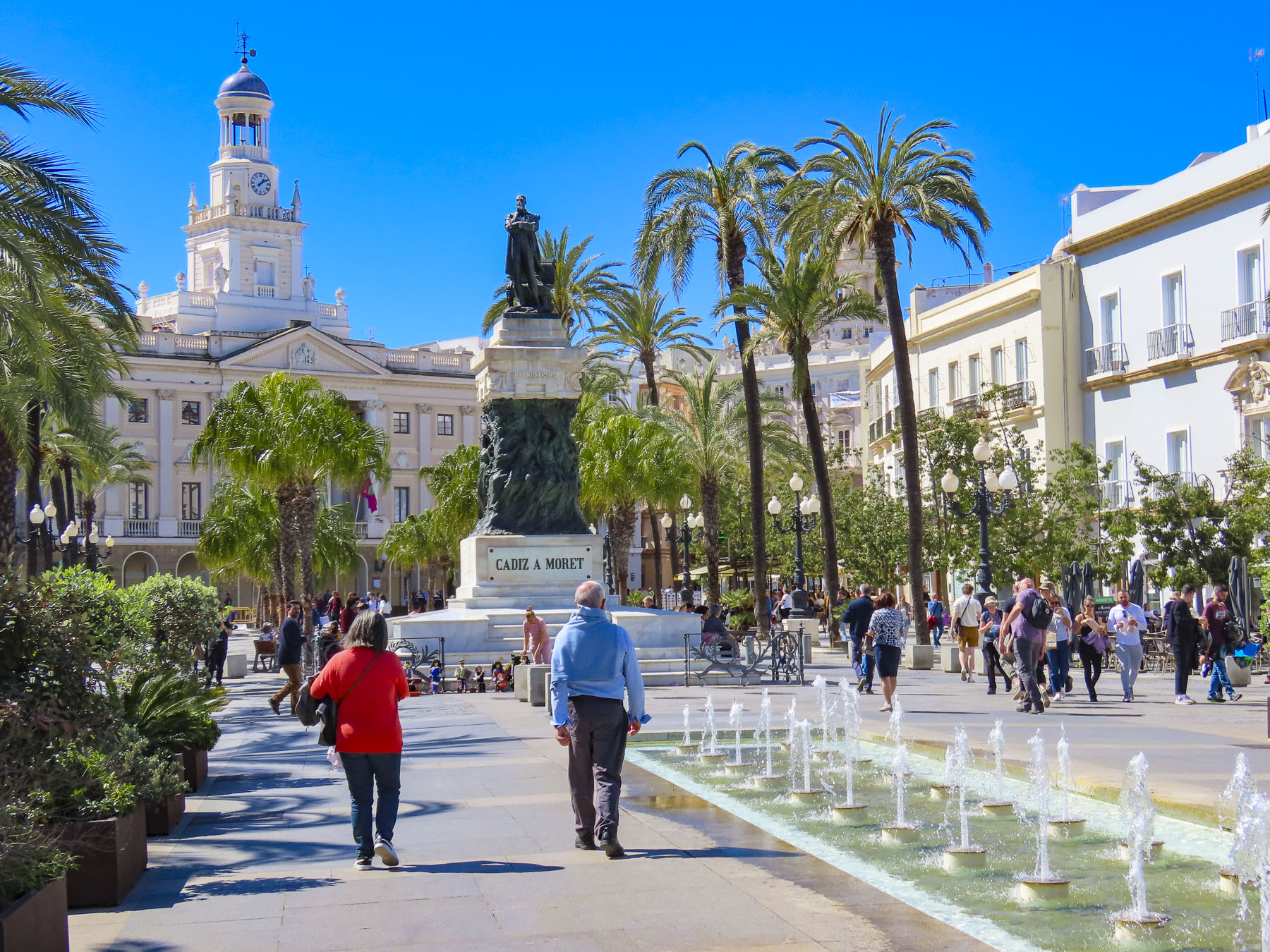
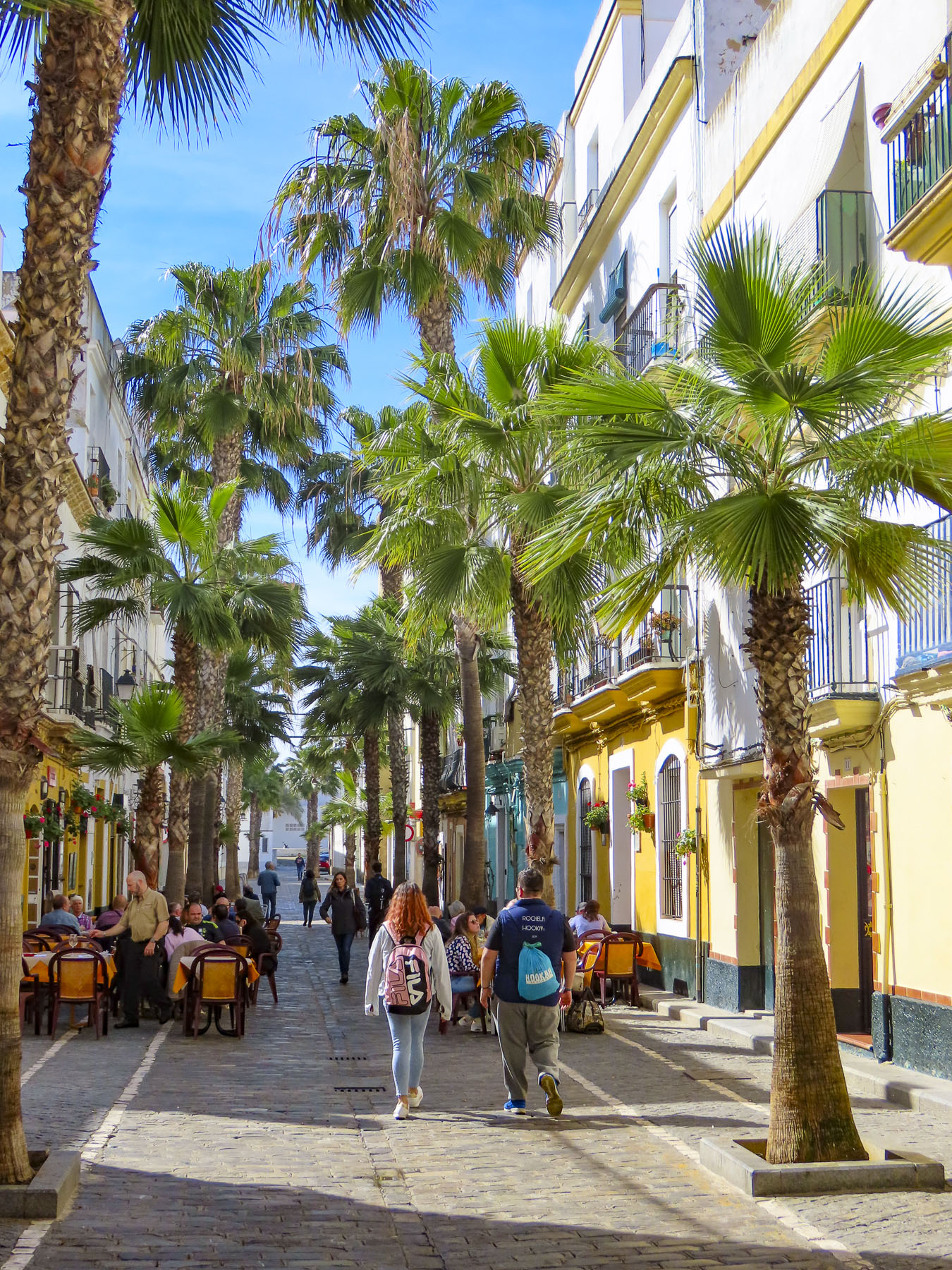
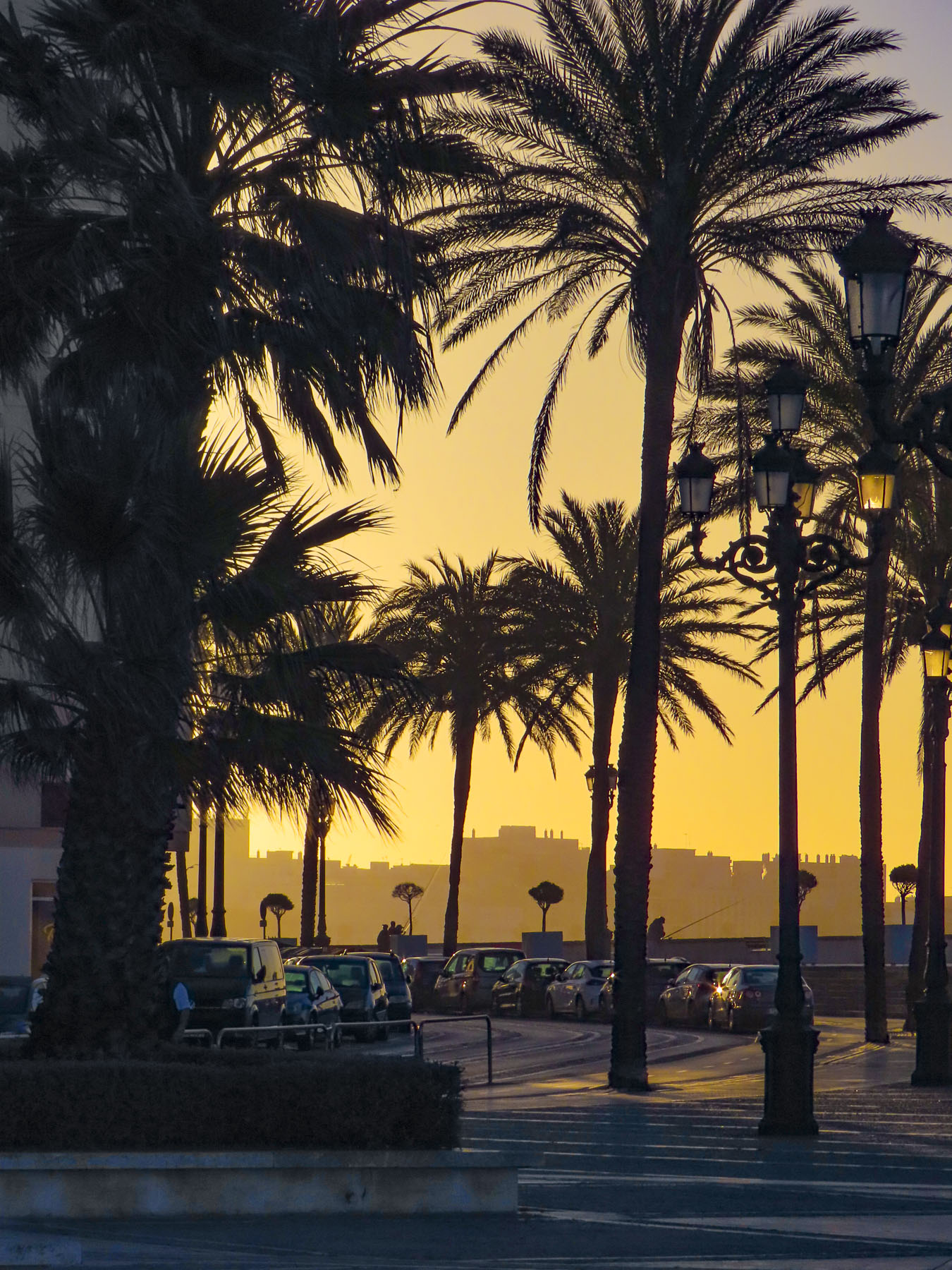
While many of the calles in Cadiz are strictly utilitarian aside from their fascinating architecture, the plazas, parks, and some strictly pedestrian only lanes are lined with palm trees, and a variety of other specimen trees collected from Spain’s far-flung empire, which lasted from the 16th to 18th century.

Calle Virgen De La Palma is particularly attractive with its tall palms lending a Caribbean vibe to this quiet barrio that has two of Cadiz’s best tapas bars and restaurants, Taberna Casa Manteca and Restaurante La Isleta de la Viña.

Plaza de Mina, Plaza de San Juan de Dios, and Plaza de la Catedral are especially beautiful, with the latter two also providing an Island flare to the stately stone buildings surrounding them. The Caribbean ambiance is so intense that the barrios of Cadiz are often used by the movie industry as a location stand-in for Cuba. Parts of 007: Die Another Day (2002,) were filmed at Cadiz’s La Caleta beach and Malecon.

There were two islands, separated by a natural narrow channel near La Caleta beach that extended to what is now the cruise ship harbor, when the Phoenicians landed 3000 years ago, making this the oldest continually inhabited city in western Europe. Over time the detritus of ancient Phoenician, Greek, Carthaginian, Roman, Visgoth, and Moor civilizations filled the canal and connected the two pieces of land.

Some interesting notes from the history of Cadiz:

In Greek mythology Hercules needs to travel to an island called Erytheia, beyond the Pillars of Hercules, to slay the three-bodied, winged monster, Geryon. The Pillars of Hercules were thought to be the Rock of Gibraltar in Spain and Jebel Musa in Morocco at the mouth of the Mediterranean Ocean, and represented the end of the known world at the time. Cadiz is believed to be Erytheia.

Hannibal famously departed Cadiz in 218 BC with his calvary of elephants to trek across the Iberian Peninsula, the Pyrenees Mountains, and the Italian Alps to battle the Roman Empire.

During Spain’s Age of Discovery, Christopher Columbus set sail to the New World from Cadiz on his second and fourth voyages. As Spain’s closest deepwater port to its new colonies in the Americas, it subsequently became the home port of the Spanish treasure fleet and the city prospered for several centuries.

England’s favorite bad boy, Sir Francis Drake, attacked Cádiz in 1587 and pirated away 3,000 kegs of sherry, starting Britain’s long obsession with the Andalucian wine. This event prompted the city to build better fortifications.

1596 was a bad year for Cadiz. An Anglo-Dutch fleet of 150 ships with 15,000 men captured Cádiz, burning 685 homes and the old Parroquia de Santa Cruz Cathedral before they left. But the Spanish treasure ships they were after were purposely sunk by the Spaniards in the Bay of Cadiz, where the gold and silver was later recovered.

In 1805 smoke from the Battle of Trafalgar, a decisive naval engagement between a British Fleet, commanded by Admiral Lord Nelson, and a combined French and Spanish Fleet, could be seen on the horizon from Cadiz.

During the Napoleonic Wars, Cadiz successfully resisted French invasion and served as the capital of Spain for a short time.

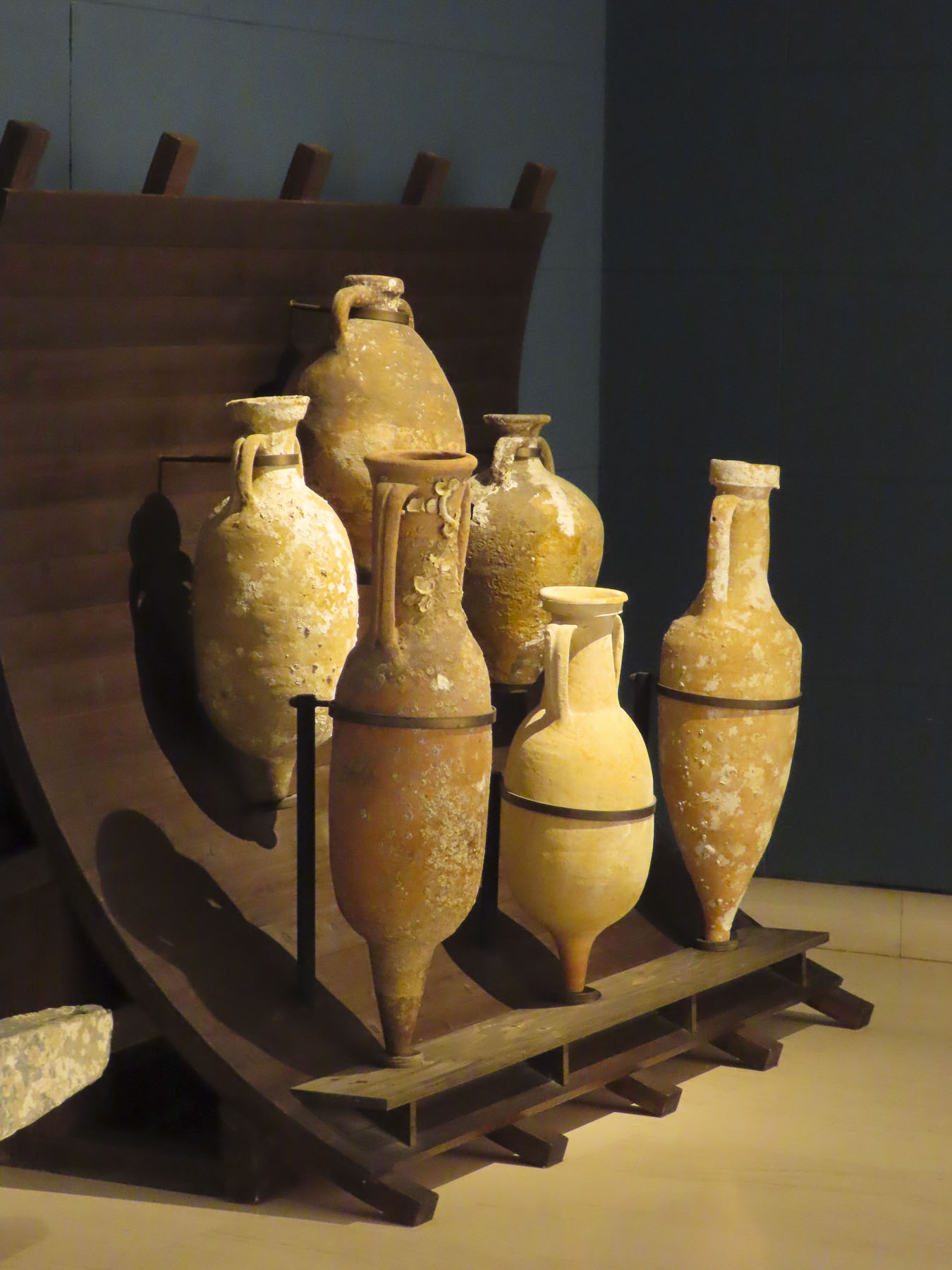
In 1887 two large 5th century BC Phoenician stone sarcophagi were discovered at the Cadiz shipyards.

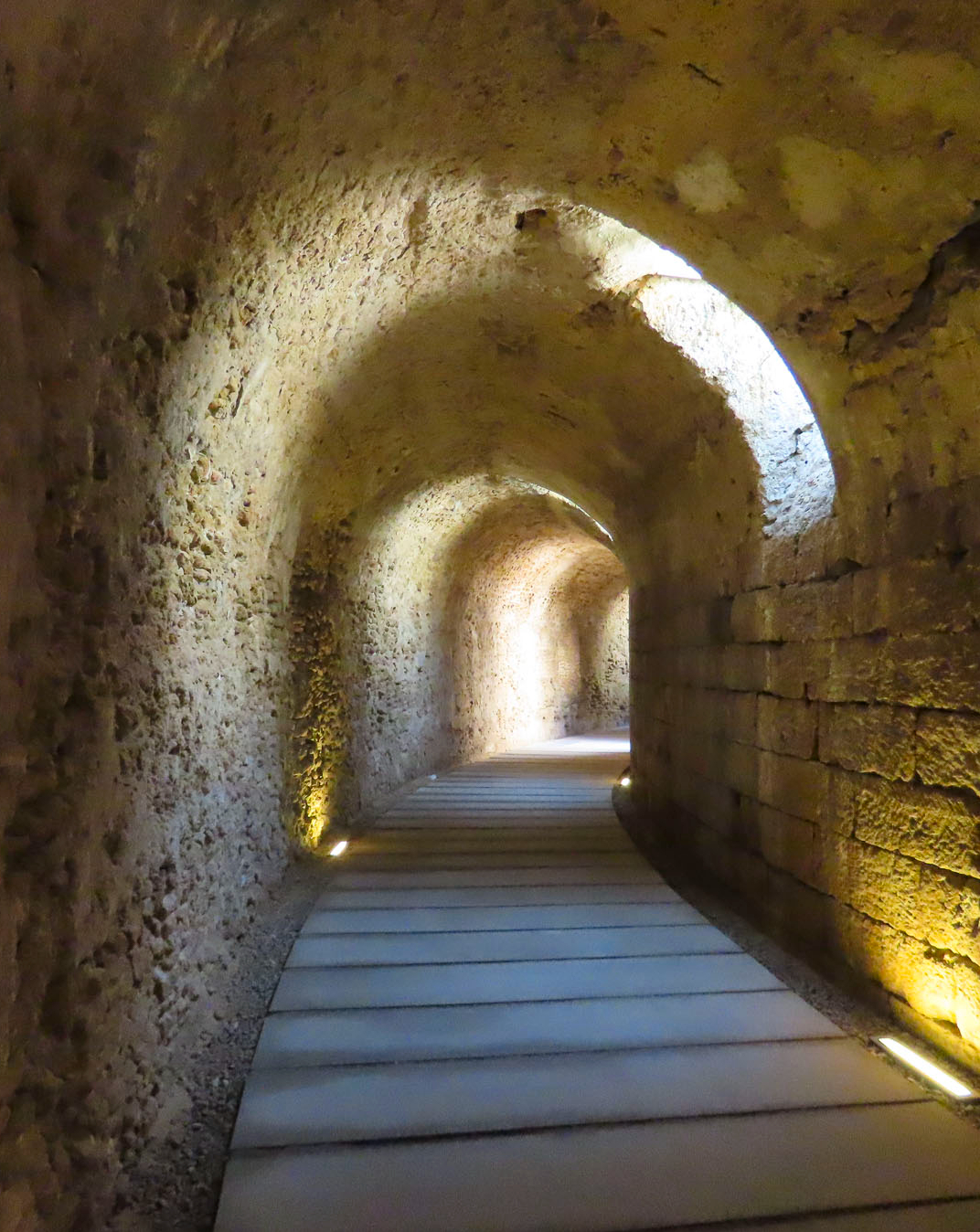
Construction crews in 1980 unearthed the ruins of a 1st century BC Roman amphitheater. Estimated to seat 10,000 spectators, the theater was one of the largest ever built in the Roman Empire.

I find these recent archeological findings fascinating, in the sense that there are still discoveries about the extent and complexity of ancient civilizations to be made, even though we’ve been living atop them for centuries.

The Cadiz Museum is a great destination and has a very interesting collection of ancient Cadiz artifacts on display. Its location on the verdant Plaza de Mina surrounded by several cafés and the excellent restaurant Mesón Cumbres Mayores was a huge bonus. At the restaurant we shared a delightful experience with a young Spanish/American couple from Oregon who were back in the woman’s hometown visiting family. “You must try the Chicharrones.” We never could have imagined that pure fat is a gourmet delight! Pork belly cooked with spices and garlic, then pressed and chilled, before being sliced paper thin, and served with a squeeze of lemon and a dash of salt. Pared with a nice Andalucian wine, it was Heaven! Obviously, this artery clogger is a tapas to share in moderation.

The urban footprint of Cadiz that we see today is a result of the reconstruction of the city after its 1596 sacking. Resilient, Cadiz was like a phoenix that continued to rise from the ashes and thrive through 200 years of pirate raids and war. Such was the power of the Spanish throne’s, “Casa de Contratación,” a contract with a city that allowed it to impose a tax of 20% on all goods, including gold and silver entering Spain from the New World colonies.

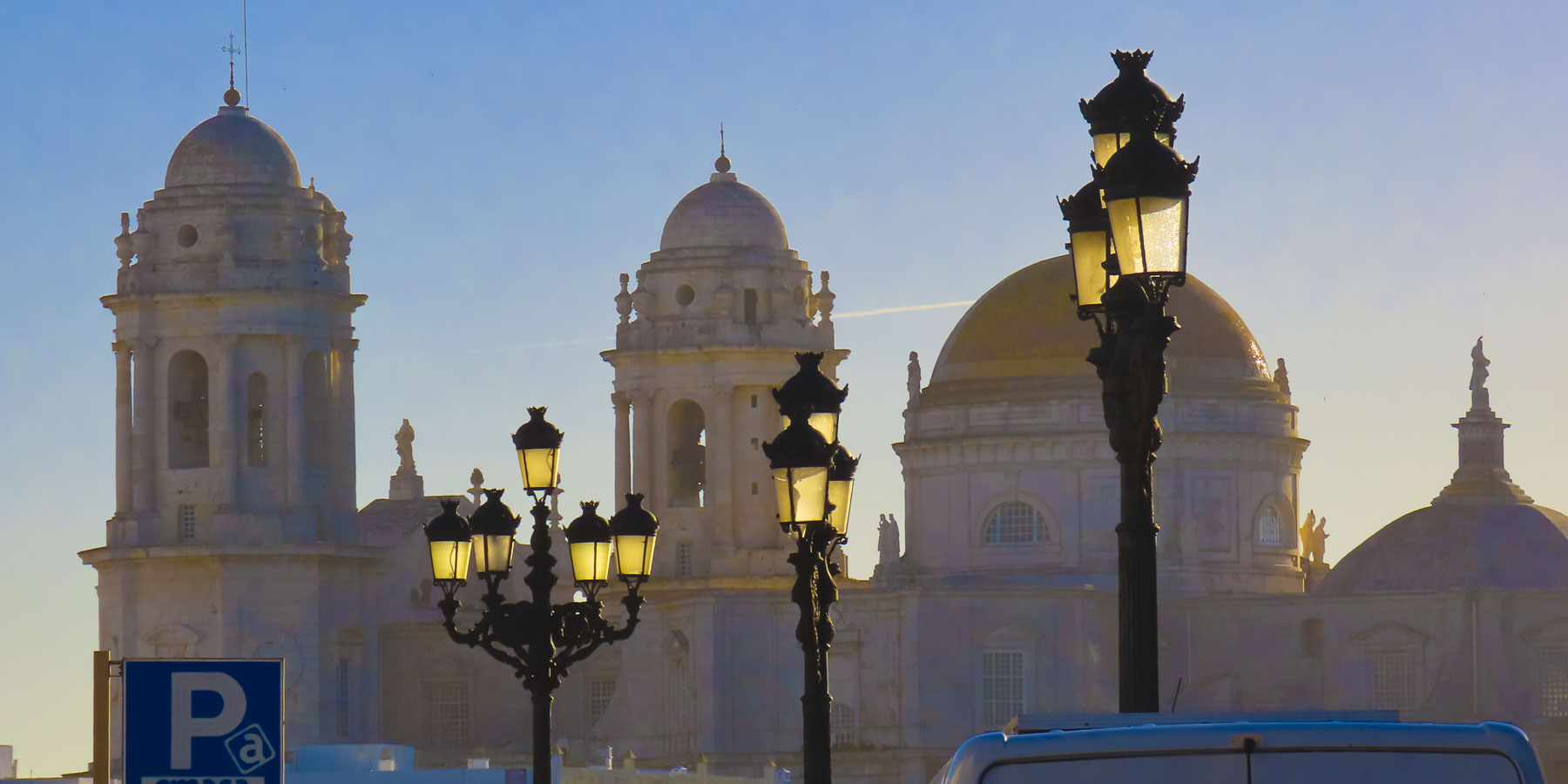
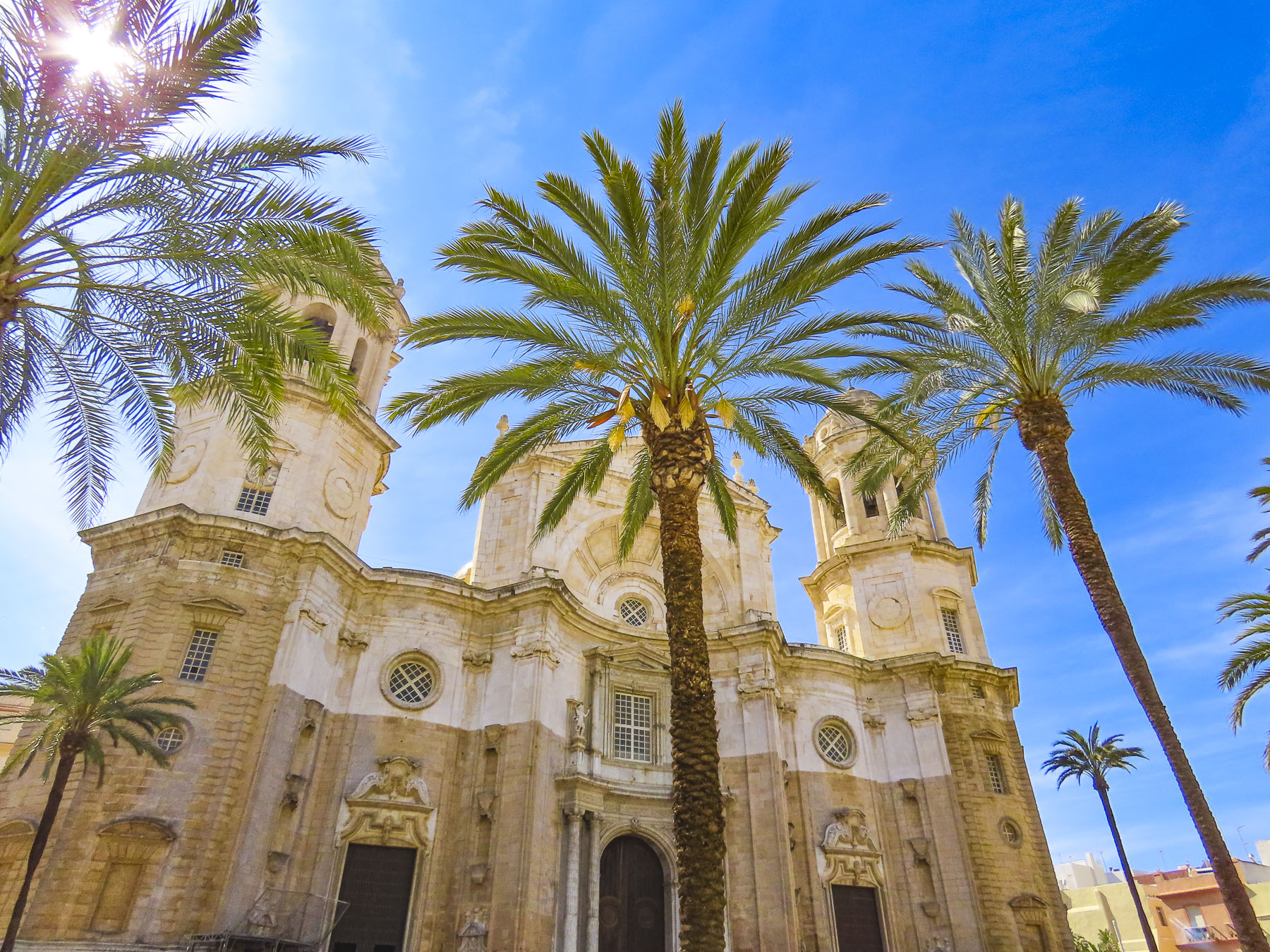
Seville previously held this coveted right before it was granted to Cadiz in 1717. With this new wealth the construction of the Cathedral of Cadiz or, as it was often called, “The Cathedral of The Americas,” was started in 1722.

The church is a huge, cavernous space in need of some maintenance as evidenced by the construction netting suspended below the arched ceiling, which still allowed smaller pieces of plaster to fall through and splinter on the marble floor. The ornately carved choir stalls are a masterpiece of wood sculpture.

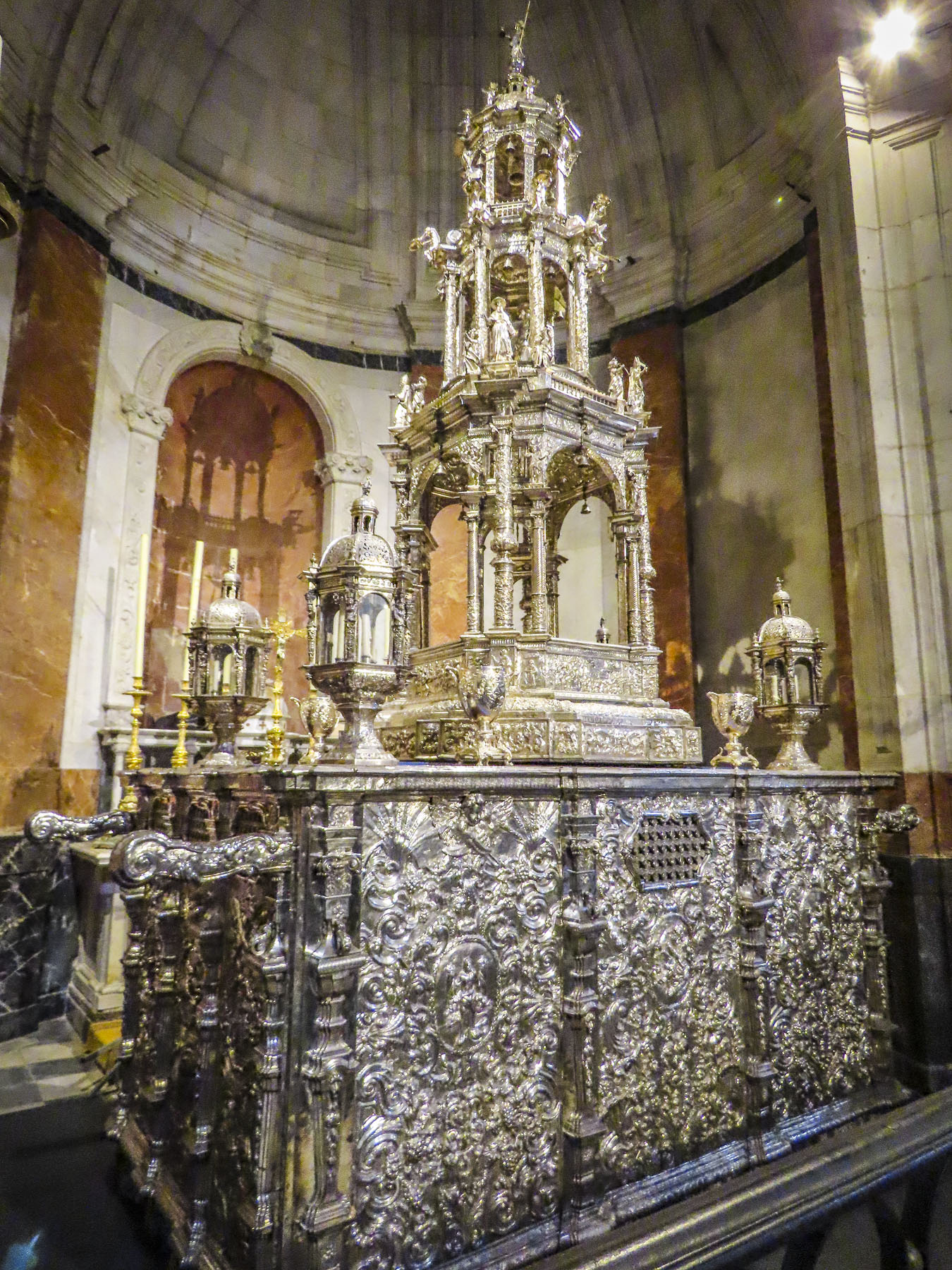
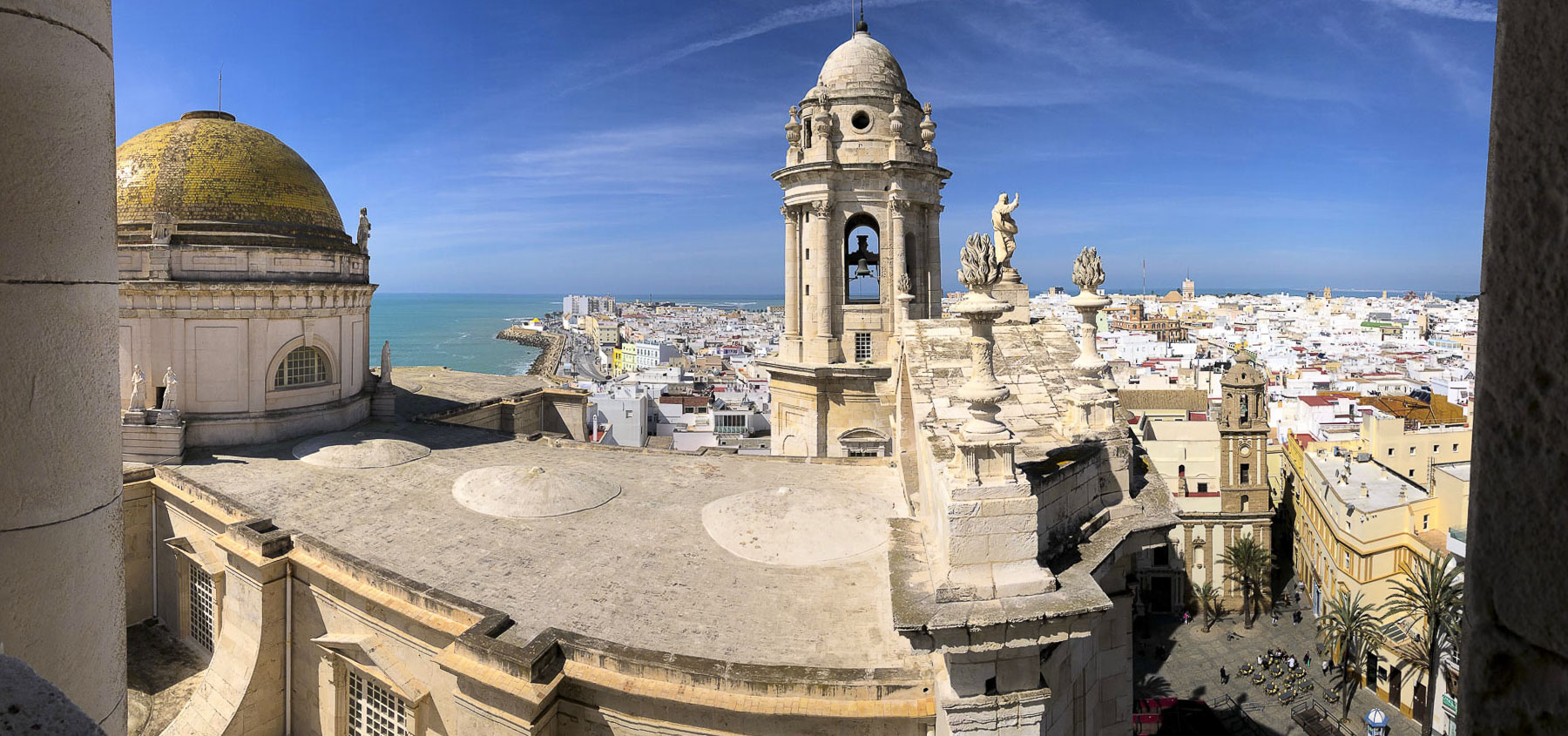
In one side chapel there is a huge ceremonial monstrance crafted with an estimated 800lbs of silver from the New World. There are also many other notable works of religious art scattered throughout this chamber. It’s definitely worth the effort to walk to the top of the church’s Levante Tower for the best panoramas of Cadiz from the highest point in the Casco Antiguo.

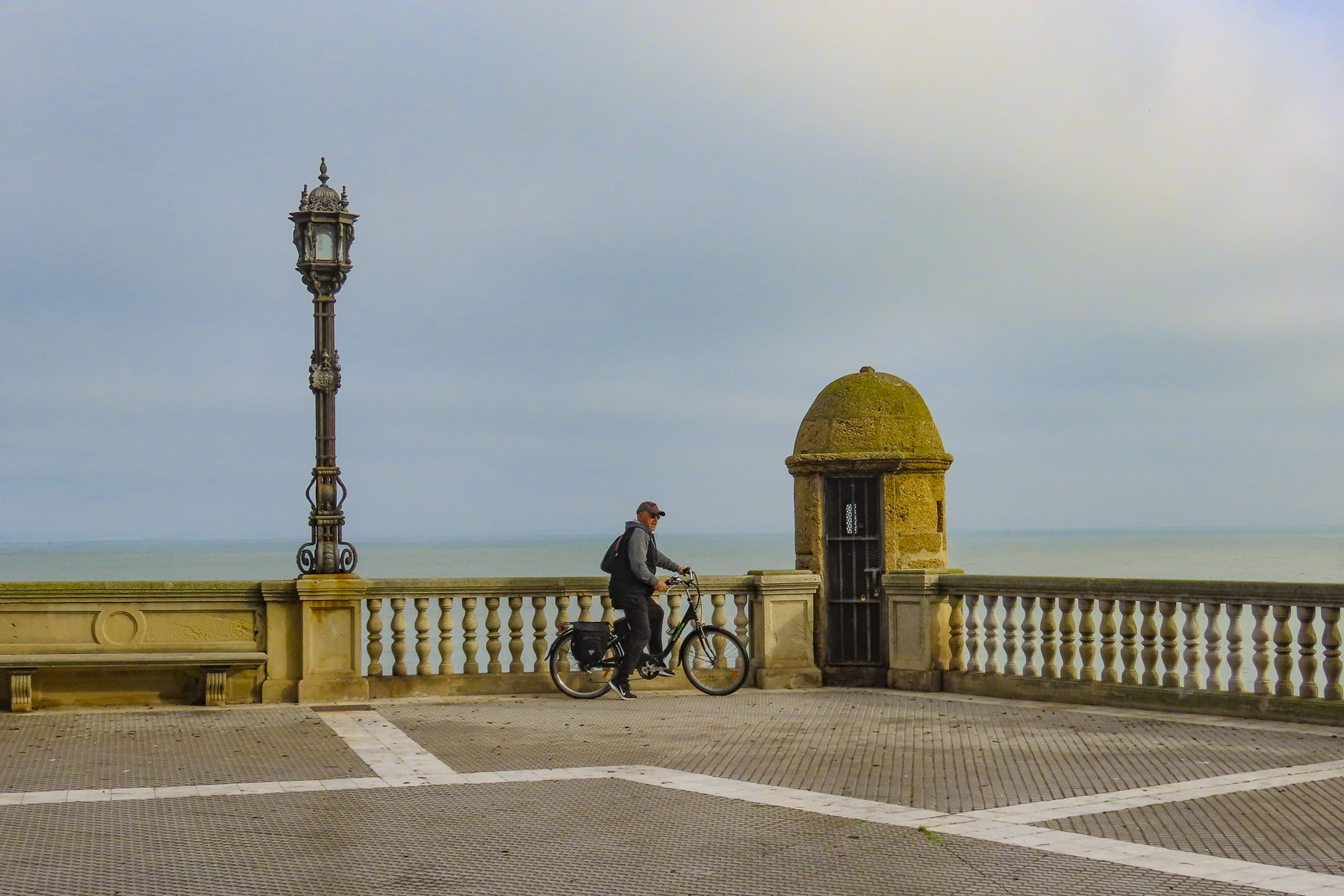
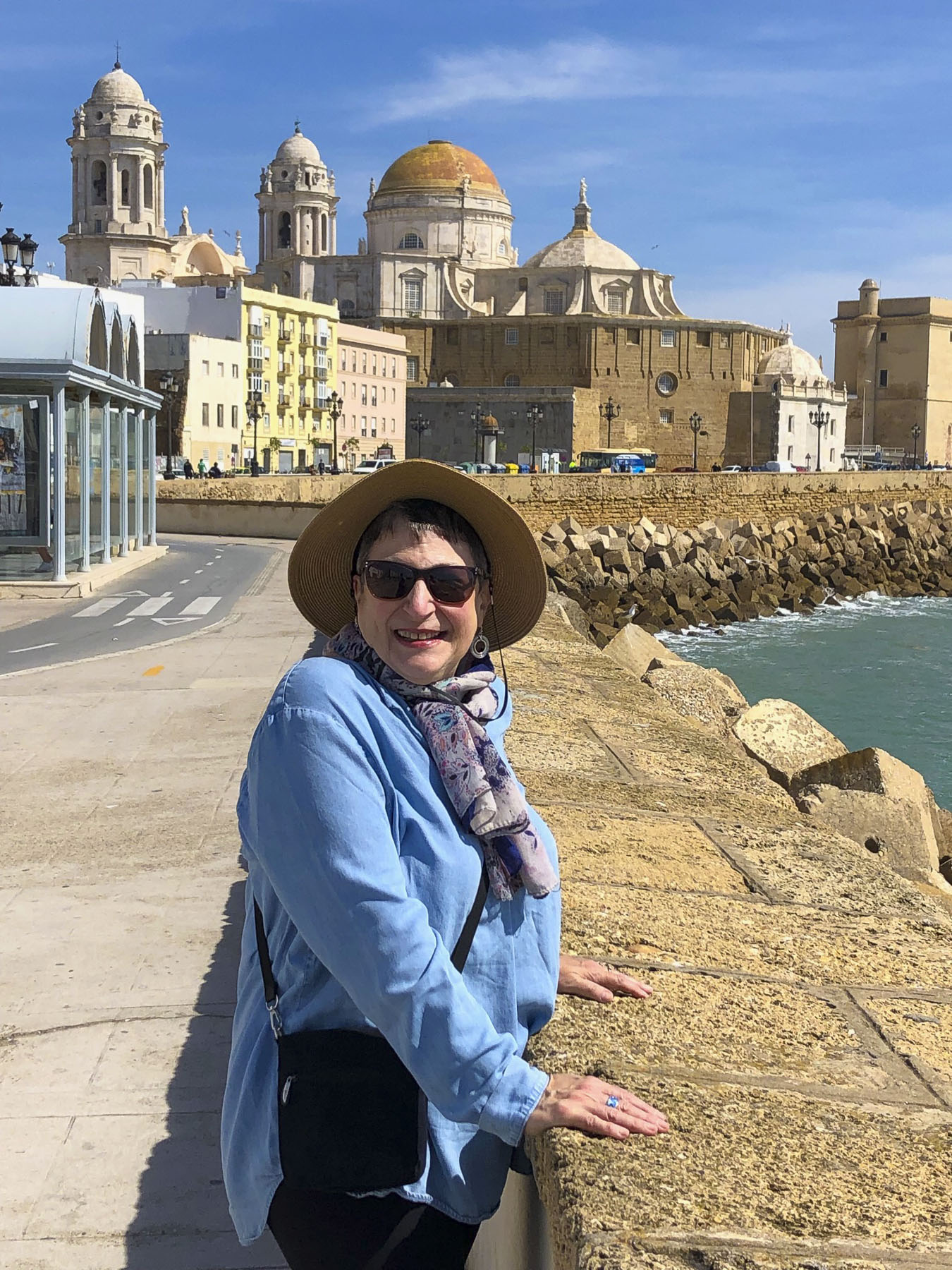
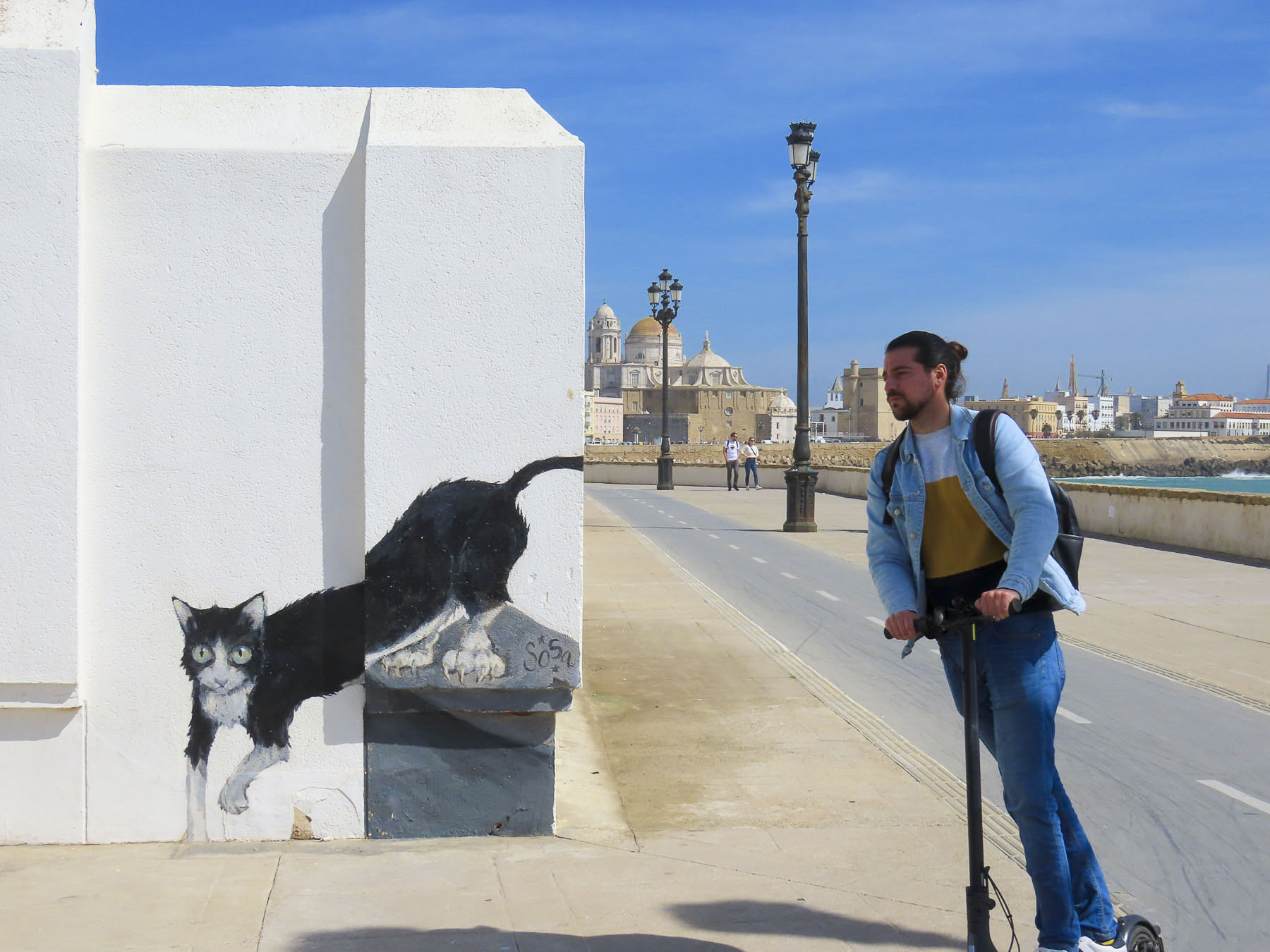
One of the nicest ways we experienced Cadiz was to walk along its seafront Malecón, a wide sidewalk that runs almost completely around the peninsula. The speedy can do it in a day. But why? Walk a little then café is our mantra.

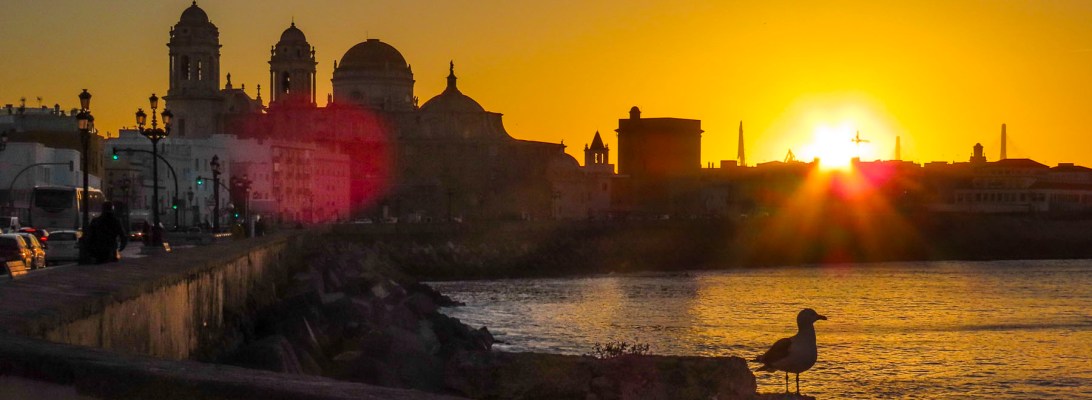
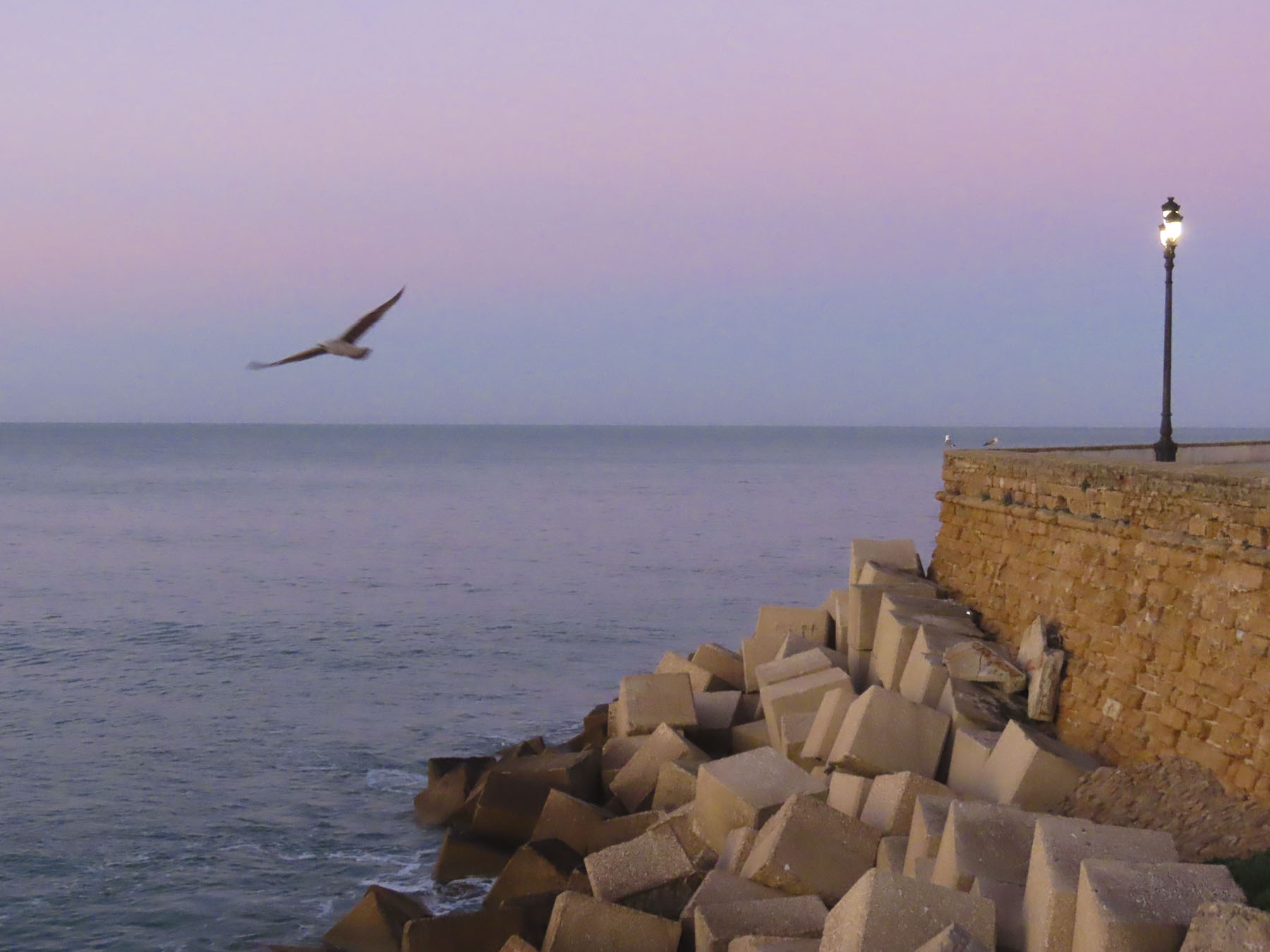
We enjoyed the brisk salt air and occasionally detoured when something caught our interest. Here we enjoyed the iconic view of the Malecón being caressed by waves as the Cathedral dominated the skyline behind it.

At La Caleta beach there are many chiringuitos, typical Spanish beach bars, for food, beer or a spritz. It’s okay to linger and people watch; we never were encouraged to move along. The beach is guarded by two ancient fortresses. The Castillo de San Sebastian is far offshore but can be reached on foot via a long causeway across the shallows that gets pounded with surf.  Onshore the Castillo de Santa Catalina commands the beach and has been recommissioned as an exhibit space for modern art and concerts. On the sunny afternoon in March when we visited, the beach had a good number of sunbathers enjoying a nice spring day.

Farther along, the Parque Genovés is noteworthy for a grotto, waterfall and a stately promenade of topiary evergreens that could rival Versailles.

Cadiz’s love of botanical gardens continues in the elegant Jardines de Alameda Apodaca which features formal walkways with monuments and statues, as well as fountains and pergolas. Along the waterfront, pensioners jangled fishing rods into the ocean in hopes of enticing fish to bite. There are also several grand centenarian ficus trees, with enormous branches that provide abundant shade, in this tranquil seaside park. Across from the park the pastel façade of the Iglesia del Carmén is noteworthy. While Cadiz has many churches, it is difficult to enter them, since most are open only for morning and evening mass.

Monuments celebrating the 1812 Constitution of Cádiz, Spain’s first short-lived constitution, stand in Plaza de Espana. For Europe it was a liberal document that established equality between Spanish-born Spaniards and citizens from their foreign colonies, ended feudalism, abolished the Spanish Inquisition and limited the power of the monarchy. When King Ferdinand VII returned to the throne in 1814, after the defeat of Napolean, he abolished the constitution and reinstated an absolute monarchy.

If you were a wealthy 17th century merchant in Cadiz it was popular to have a mirador tower atop your home, from which you could scan the harbor with a spyglass looking for ships that were important to your trade. Often the tops of the towers were festooned with the flags of various nations, colonies or family’s coat of arms, for a sea captain to identify and head to when he finally came ashore with news of his cargo. There were originally 160 of them in Cadiz. Several of the remaining ones can be seen from Plaza de Espana.

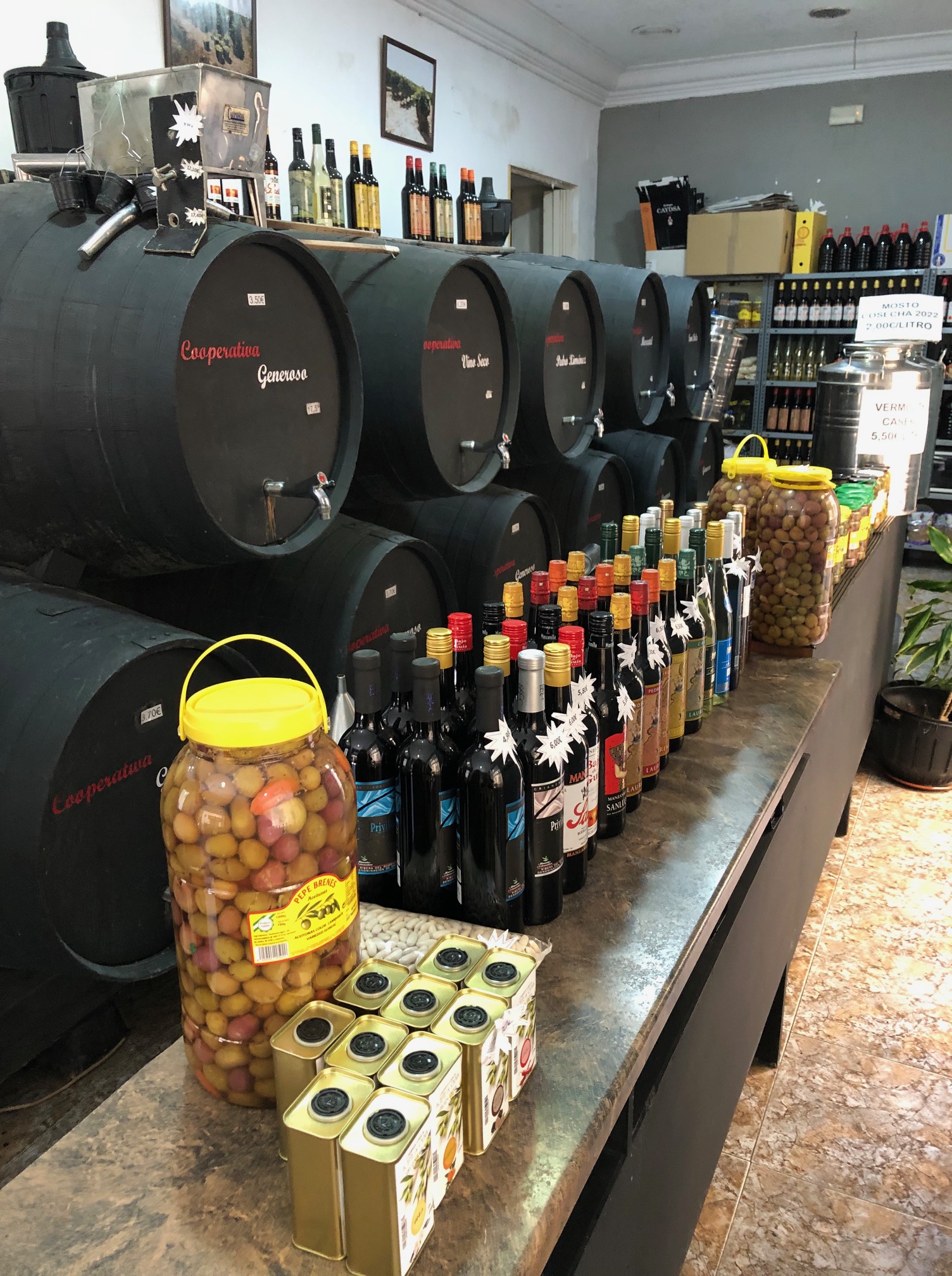
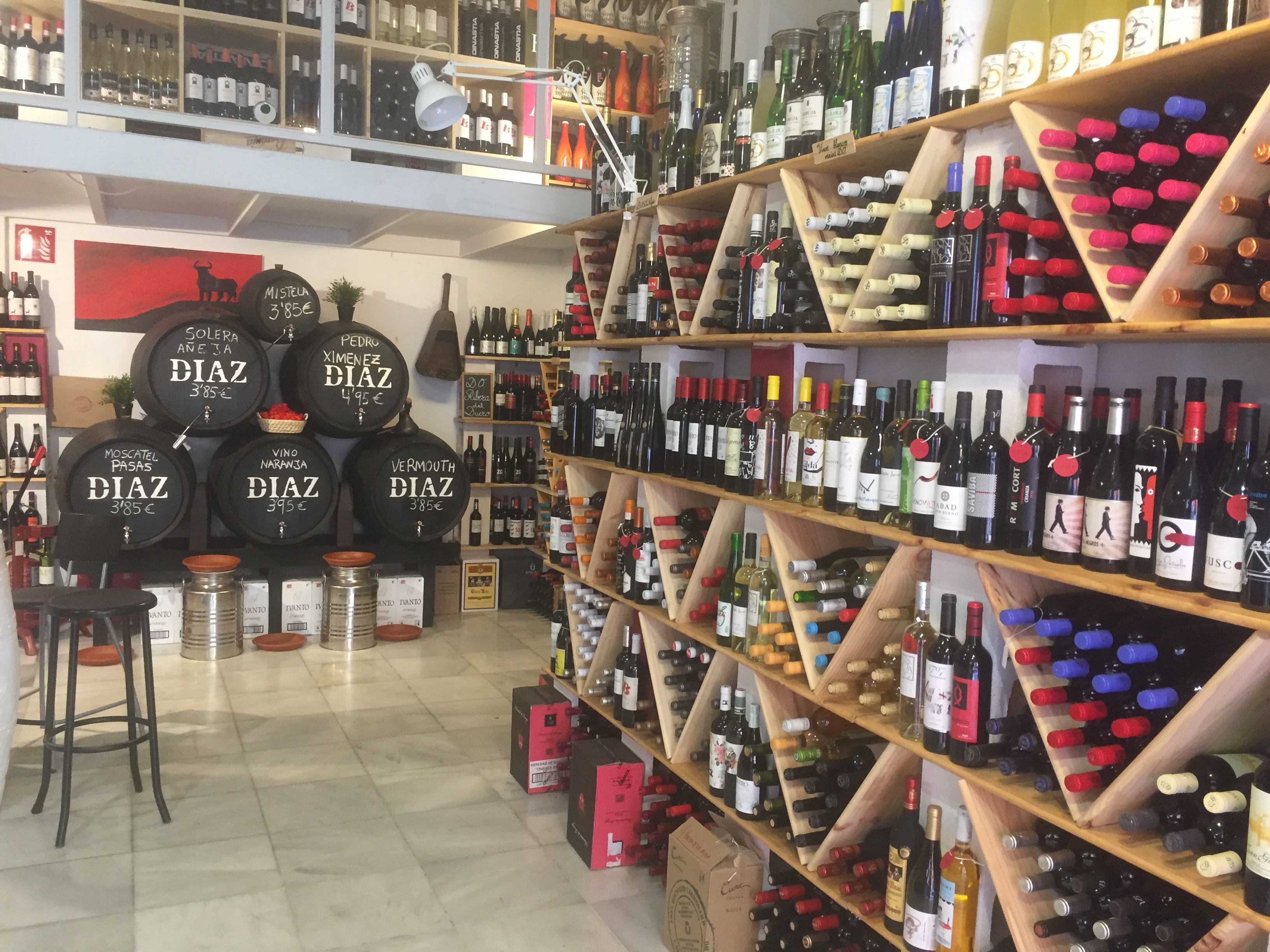
Walking back to our hotel later, we discovered a fantastic small wine shop, the Despacho de Vino Virgen de la Caridad, that specializes in Andalucian sherry, vermut and wine. Here they will fill your empty water bottles directly from the casks of wine behind the counter.

Cadiz with its touch of the Caribbean was the perfect sunny, friendly, seaside Andalucian town for us.

Thank you, Giulia, for the tip.

Till next time,

Craig & Donna

Seville Part 4 – The Pueblos Blancos – Olvera & Setenil de las Bodegas

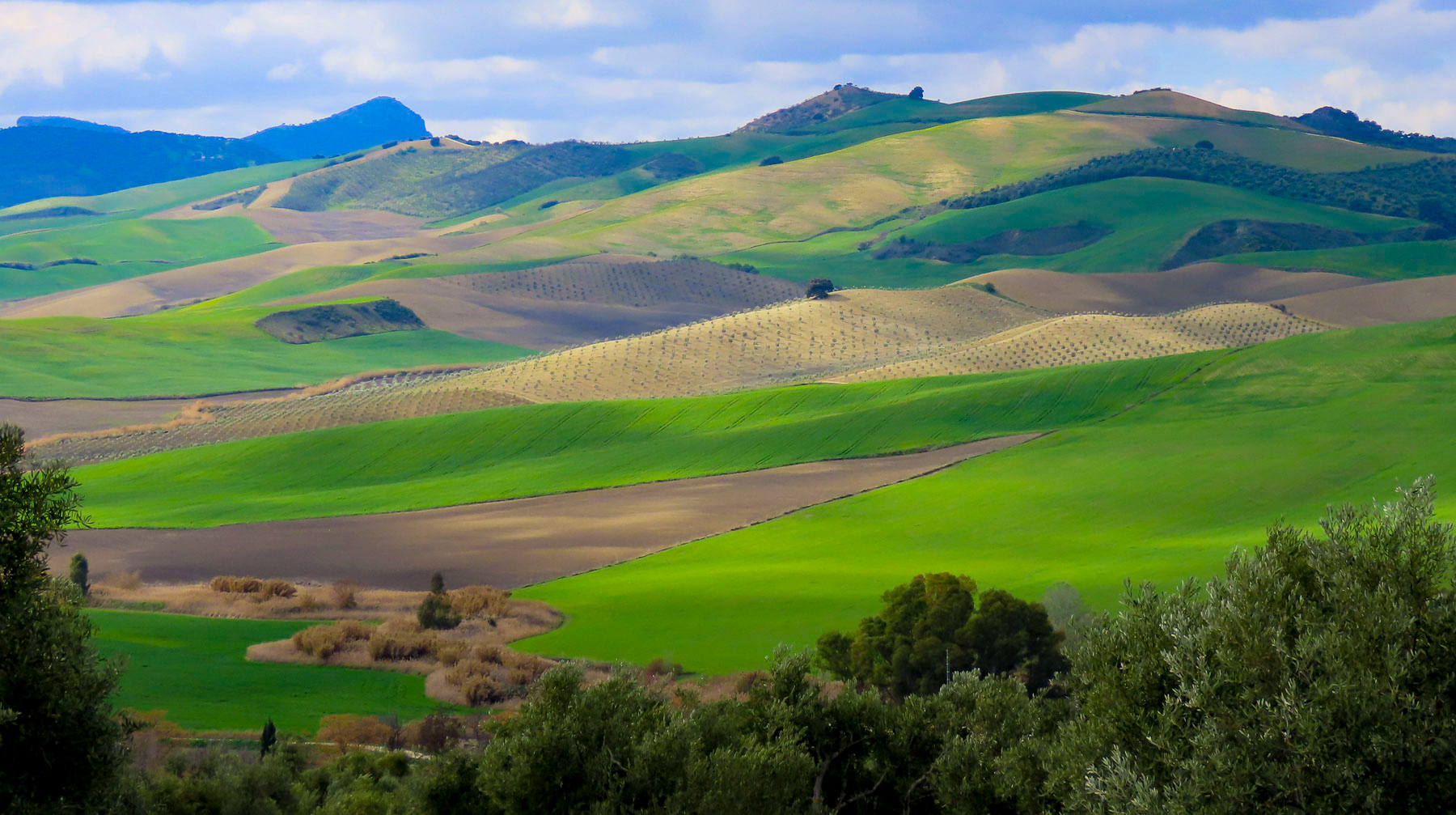
The countryside on the way to Olvera was more verdant than the earth toned landscape we traversed on our way to Zahara de la Sierra at the beginning of our road trip.  Now the hillsides were a mosaic of greens, light and soft, dark and vibrant, signaling the arrival of spring. 

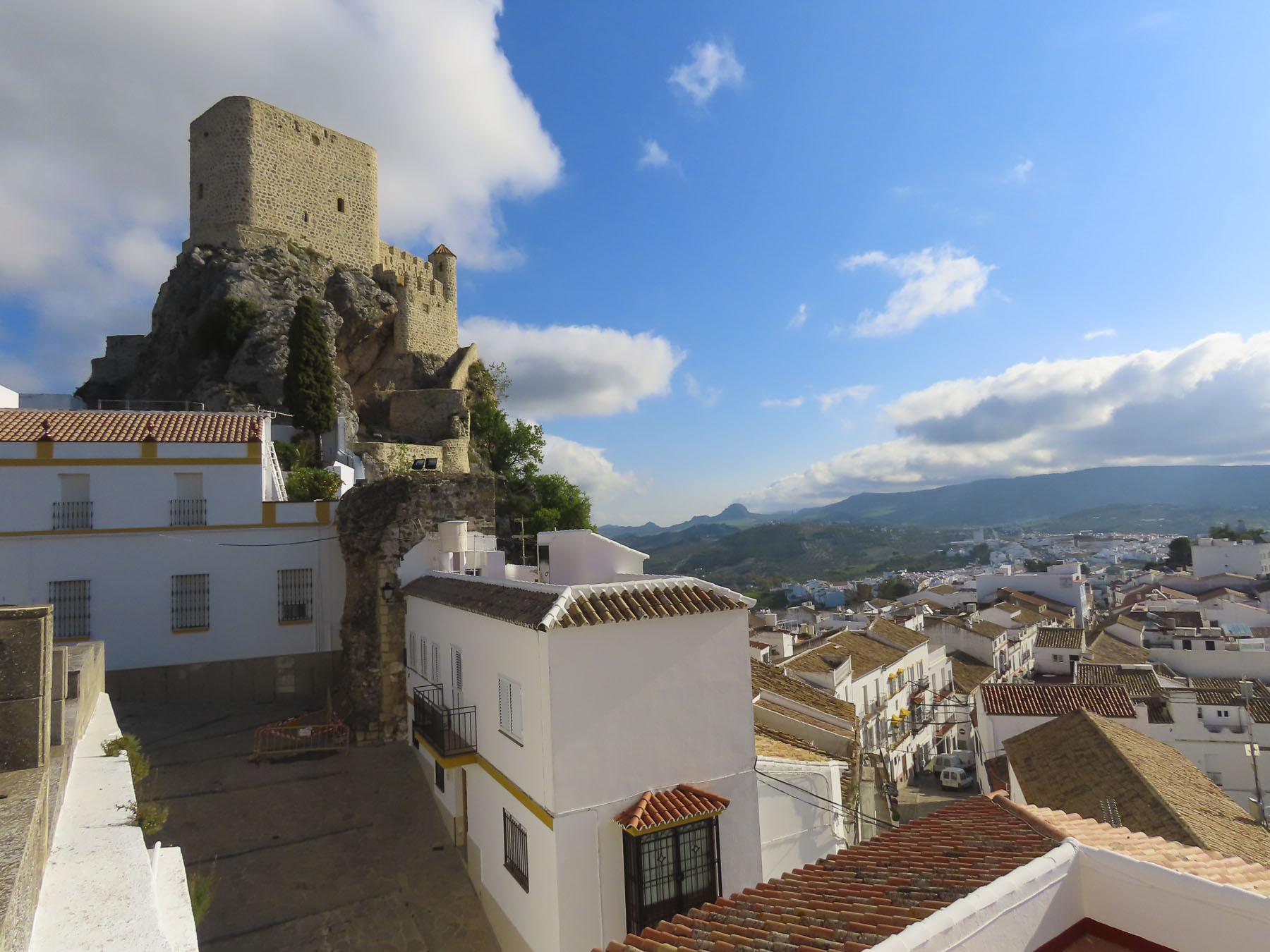
As the road curved, Olvera’s Castle and the belltowers of the town’s church broke the horizon. We are never quite sure where to park in small villages.  Worried about getting fined for a parking violation, we always opt to play it safe and find a car lot.  But the parking in Olvera was at the bottom of a steep incline below the historic castle and we just didn’t have the oomph that morning to walk from there uphill and then continue higher to the top of the tower.  With some persistence we navigated the town’s labyrinth of narrow one-way lanes into the Plaza de la Iglesia. At the apex of the village, the plaza straddles the area between Olvera’s citadel and the town’s majestic church, Our Lady of the Incarnation Parish.  Since it was still the off-season, we were in luck and found the last, barely viable parking spot on the plaza. It was a narrow space that required the driver’s side door to be parked tightly against a wall. Fortunately, I’m still limber enough to climb over the car’s center console and stick shift, with a limited amount of grunting and moaning.

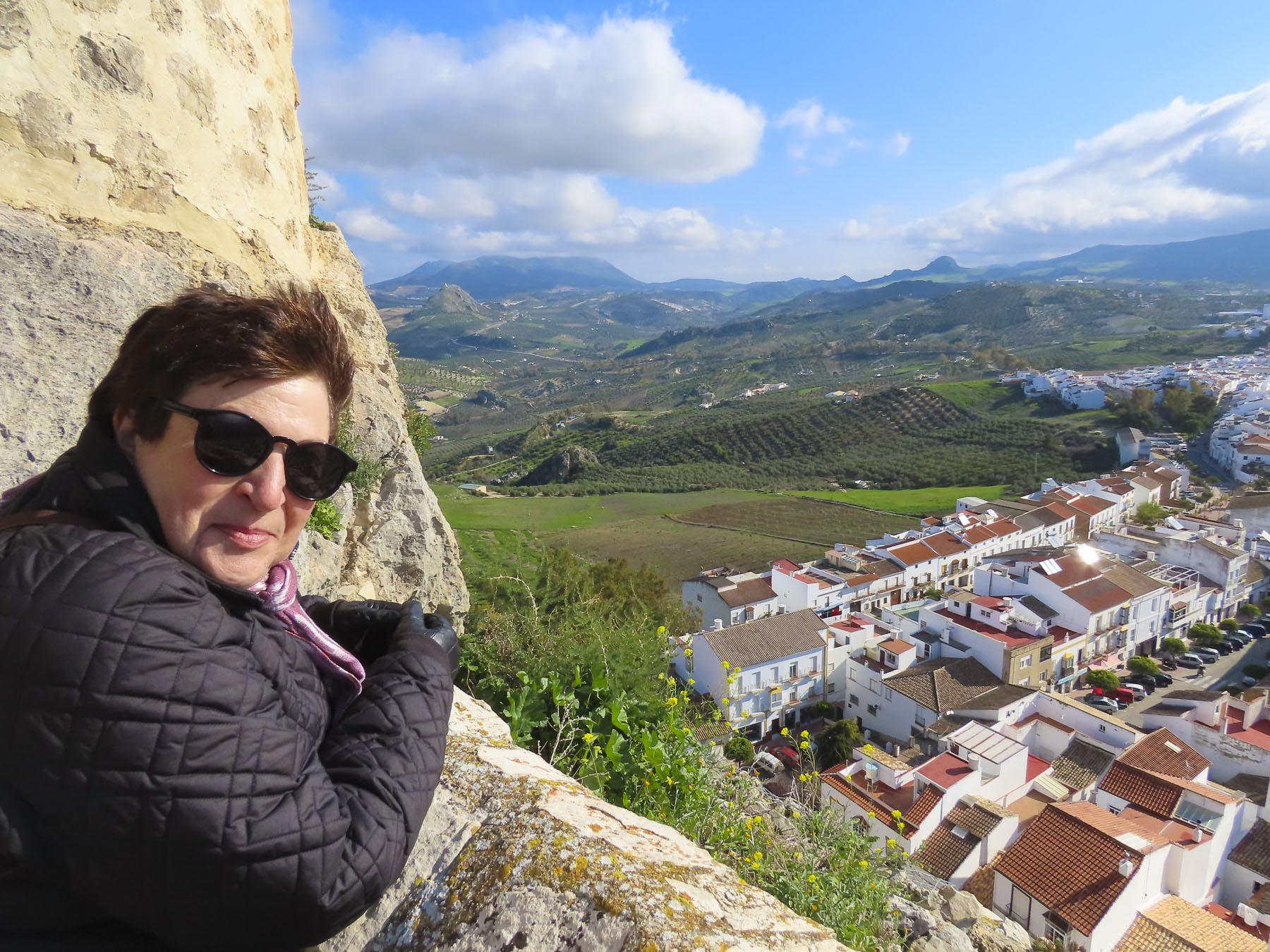
The view from the mirador at the edge of the plaza was wonderful.  Incredibly, the views across the village continued to get better and better as we climbed the different levels to the top of the Castillo de Olvera, perched atop a rocky outcrop at an altitude of 2000 feet. The climax was a spectacular view of the cathedral and panorama of whitewashed homes with red tiled roofs backed by a shimmering sea of silver green foiliage. Outside the village, the surrounding olive groves harbor nearly two million trees.

Constructed in the 12th century, the castle was part of a line of signal towers along the Moorish frontier in southern Spain. The castle was expanded in the 14th century when it was captured by King Alfonso XI during the Reconquista. The castilo is one of five in proximity to each other on The Castles Route, Witnesses of the Spanish Reconquest through the Moorish Strip, a no-man’s land that separated the ancient Christian Andalusia frontier from the Arab Kingdom of Granada. The other castles on the circuit are Castillo de las Aguzaderas, Castillo de Cote, Castillo de Morón de la Frontera, and the Castillo del Hierro.

With its size and architectural presence, Our Lady of the Incarnation Parish looks more like a cathedral than just a church. The neoclassical church was started in 1823 on the foundation of an earlier dismantled, gothic- mudéjar style church and dramatically counterbalances the castle on ridge above the village.  Ordered built by The Dukes of Osuna, the feudal lords over Olvera, the vaulted interior is lined with marble imported from Italy and has many interesting religious icons. To fulfill this extravagance the Dukes diverted the town’s taxes, away from improving the village, to pay for it.  They were the last feudal lords over Olvera and declared bankruptcy in 1843 when the church was completed. Then fled, never to be seen again.

A cloudless morning in Olvera turned overcast by the time we arrived in Setenil de las Bodegas only thirty minutes later. While considered a pueblo blanco, it’s totally different from Olvera and Zahara de la Sierra where the homes ascend the steep slopes under their town’s hilltop fortress.  In Setenil de las Bodegas, whitewashed homes front caves under large stone overhangs which line both sides of a gorge, created eons ago from the erosion caused by the swift moving water.

The homes along the gorge use the mammoth natural stone ledge as their roofs. The once raging Rio Trejo is now a quiet stream in the narrow gorge, which widens into a shallow ravine where an ancient Moorish castle still guards the approach to the village.  When the Romans colonized the area two thousand years ago folks had already been dwelling in the natural caves along the gorge for several millennia. Over the centuries the cave fronts were enclosed to create the unique village that still survives.

Before touring the village, we checked into the Hotel El Almendra to drop our bags, just oustside the historic district, with the intent of driving back and finding parking closer to the gorge.  We were just about to pull out of the hotel parking lot when a group of police cars with lights flashing and sirens wailing roared past. A slower patrol car parked and blocked the hotel driveway. Folks were beginning to gather on the sidewalk. We had no idea why until a motorcycle carrying a cameraman facing backward led the first wave of bicycle racers that were a blur of pedaling color as they sped by. A continual surge of racers crested the knoll of the road and coursed downhill towards the village. The race was one leg of the annual Vuelta a Andalucia – Ruta del Sol. A five-day, 500 mile cross-country cycling event that summits 17 mountain passes in the region and attracts 600 riders. Leaving the car at the hotel, we decided to walk the half mile into the village.

By the time we reached Cuevas del Sol, Caves of the Sun, the narrow one-way road through the gorge lined with small taverns and inns, the sun was brightly shining again.  Even though the road is open to cars, it was filled with folks walking and was almost pinched closed by tables from the restaurants narrowing its width.  We found a table and enjoyed both the lunch and the warmth of the February sun.

Afterwards we walked the length of the lane through the deep chasm until a set of stairs led to the Mirador del Carmen and the small 18th century chapel Ermita de Ntra. Sra. Del Carmen.  The view from the overlook encompassed a sweeping vista of the valley filled with whitewashed pueblos stacked atop one another filling the valley to its rim. 

The Nazari Castle, the town’s 12th century Moorish fortress, still stands vigilantly on the edge of the valley, the invaders now camera-wielding tourists.  Across from it the Gothic style Church of Our Lady of the Incarnation, itself an imposing fortress-like structure, was ordered built by the Spanish Crown. It was constructed in 1505, above the town’s previous mosque, to celebrate the liberation of the village from centuries of Arab rule.  We walked back to our hotel along a lane above the gorge lined with newer buildings. 

Heading back to Seville before sunrise the next morning we stopped high above the village on the road that followed the ridge opposite the Cuevas del Sol, in one last attempt to capture the iconic pueblos of the village as dawn cast its first rays of light across the gorge.

Till next time, Craig & Donna

PS. Our 226-mile weekend roundtrip from Seville only used slightly more than a half tank of gasoline.

Seville Part 4 – Convents, Cookies, and la Macarena

Seville was a delight to explore by wandering, its cityscape a web of ancient alleys that with every twist and turn slowly revealed the heart of this very old city to us. While the historic center of the city is a relatively condensed area that orbits around the Cathedral of Seville, the Royal Alcázar and the bullring, every bario in the ancient metropolois was fascinating to wander through. Spanish maps of the city from the 16th century hint at what’s to be found. In the 12th century, expanding upon an older Roman defensive wall from the first century AD, Seville’s Moorish rulers totally enclosed the growing town with a new and larger fortified wall.

It started at the Torre del Oro and ran north along the Guadalquivir River until it turned and headed inland in a huge arc that reconnected back at the tower. The old city walls originally had fifteen gates allowing entry into the city and were named for their function. Coal was brought into the city through Puerta del Carbon, while olive oil merchants used Postigo del Aceite to bring their product to town.  Puerta de Jerez and Puerta de Cordoba were the gateways through which travelers from those towns entered Seville.  Puerta Real was built for the exclusive use of the Spanish royals. 

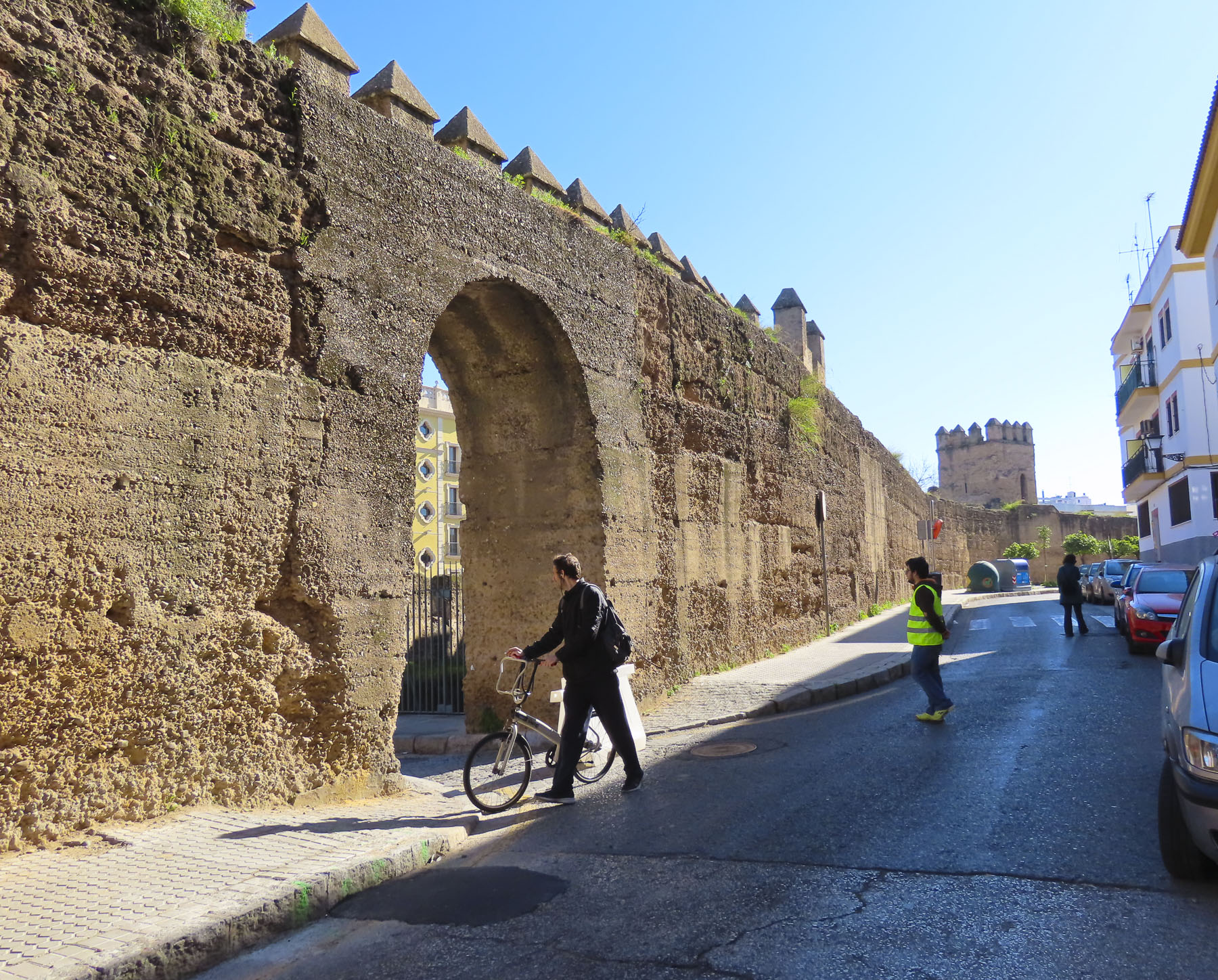
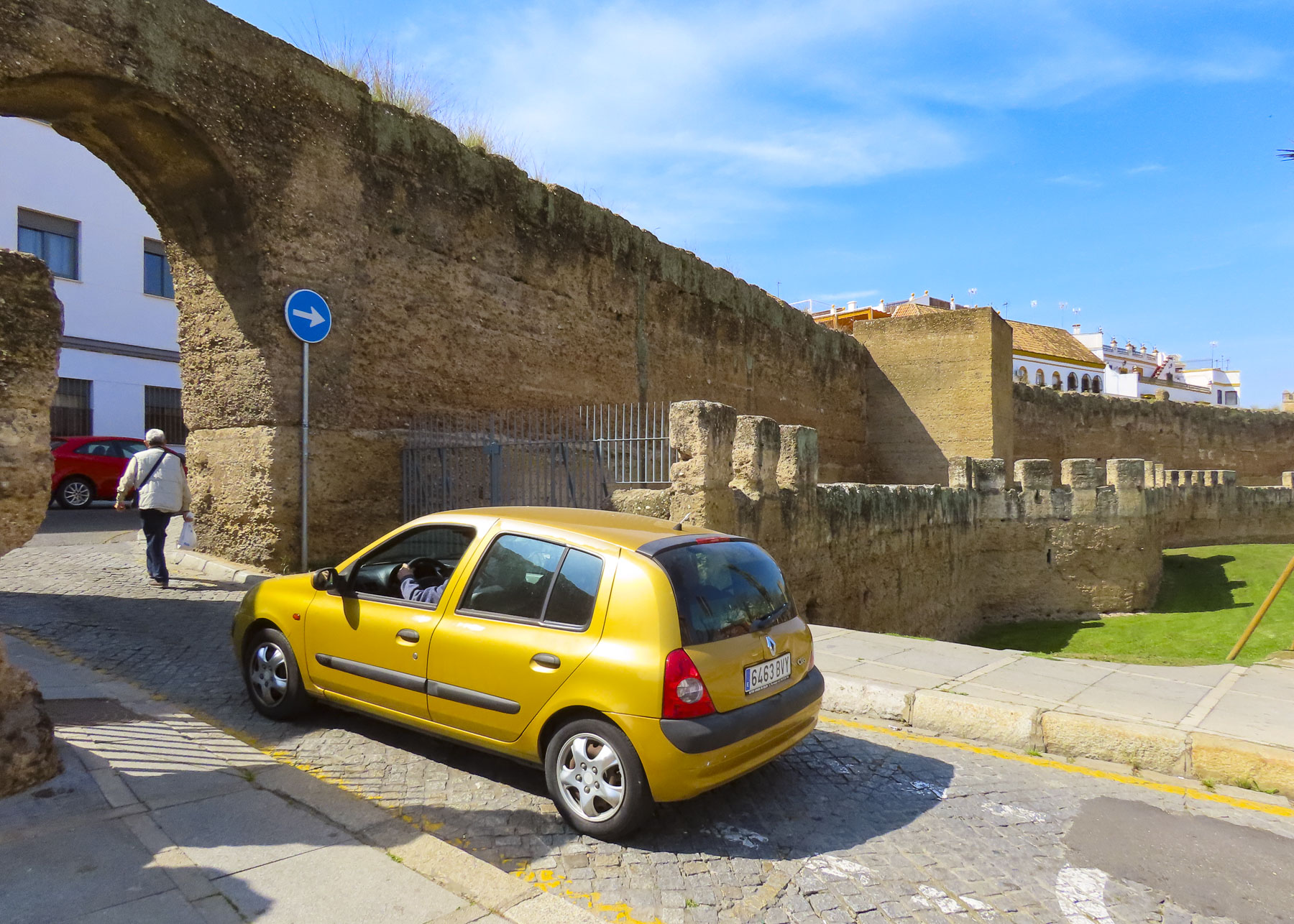
The walls stood until a modernization of the city in 1868 required all the gates except for three be demolished. Today only the Puerta de la Macarena, Puerta de Cordoba, and the Postigo del Aceite remain.  Several small sections of the crenellated wall still stand along the ring road, Ronda de Capuchinos, that now follows the ancient edge of the city. Other parts turn up randomly across the city, where they were incorporated into the walls of newer 19th century buildings.

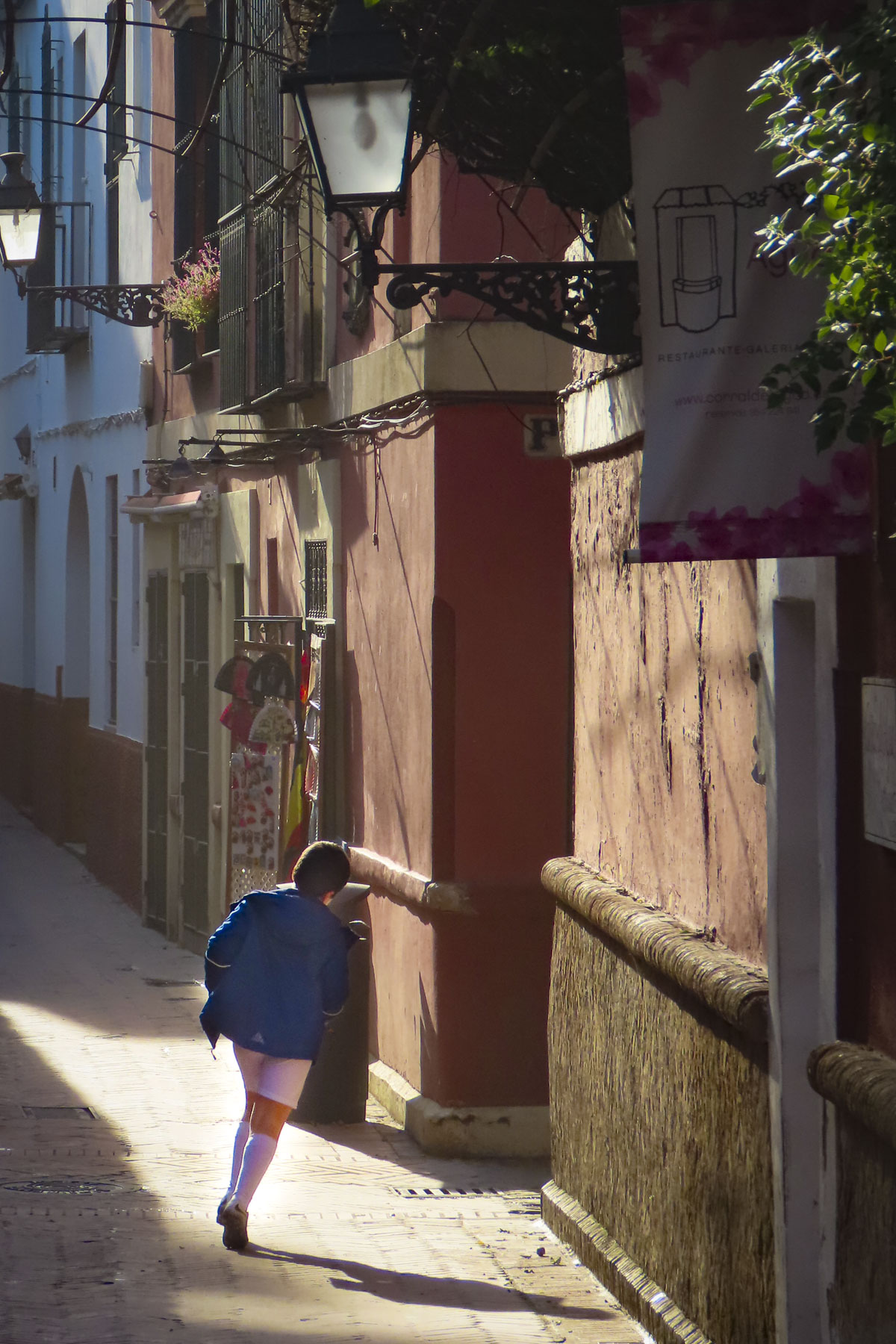
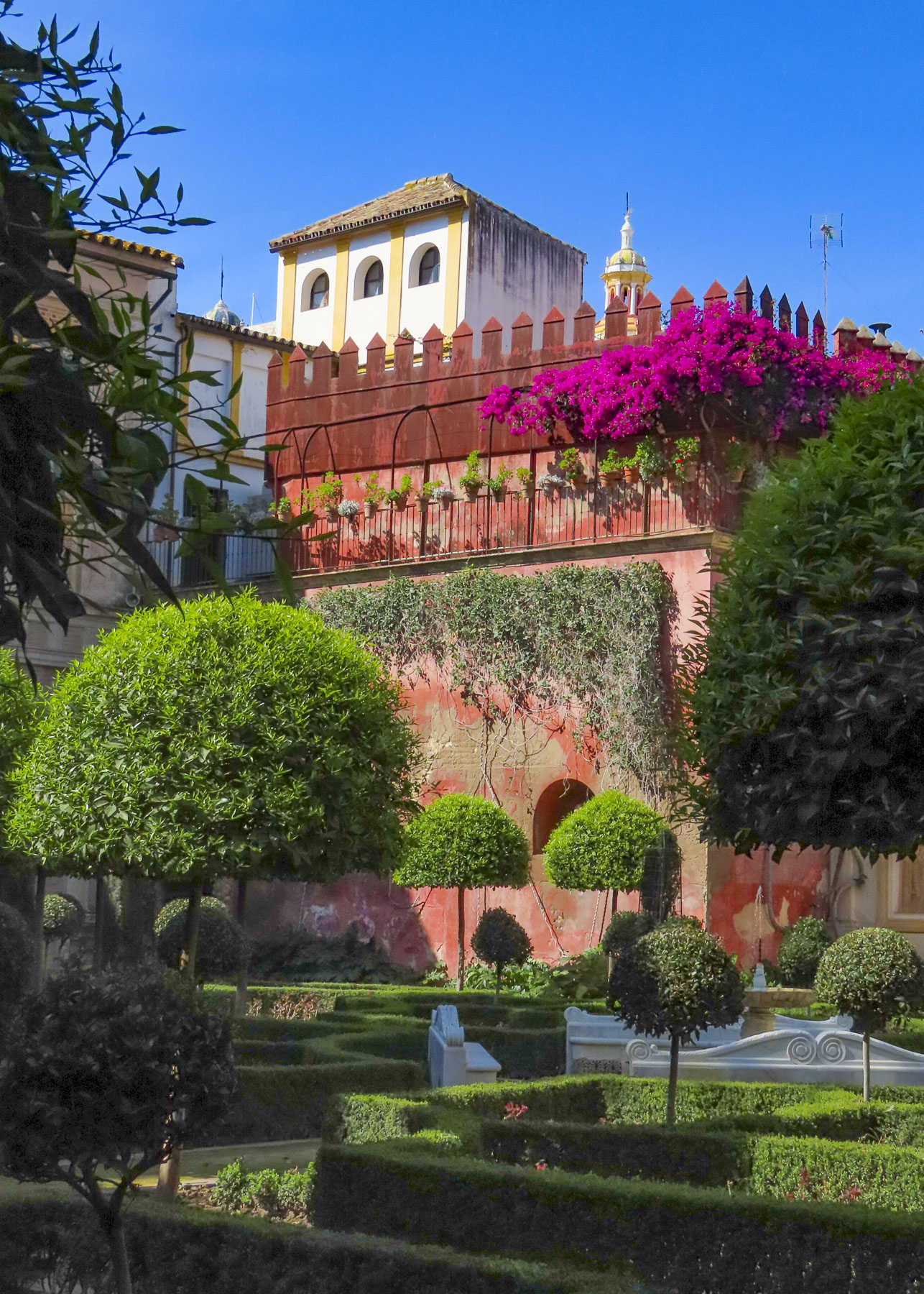
Roughly following the ring road, we would zig and zag our way through the old neighborhoods of the city that were once shielded behind its ancient wall.  Starting in the old Jewish quarter, now Santa Cruz, we followed the wall topped with an aqueduct along Calle Aqua and peered through locked gates, spying the lush shaded courtyards of the traditional homes. Buildings along this calle that back to the Jardines de Murillo use the old defensive wall as part of their structure. Veering into the center of the old Juderia we found some of the narrowest lanes in Seville. The thinnest being Calle Reinoso which leads off Plaza Venerables and is affectionately nicknamed “Calle de los Besos,” the Street of Kisses to visualize how intimate the passageway potentially can be.

After the Moors were defeated in 1248 every mosque in Seville was converted to a church. A similar policy ensued in 1492 when King Ferdinand II of Aragon and Queen Isabella I of Castille issued the Alhambra Decree, expelling all of Spain’s Jewish population. But a century before the Spanish Inquisition began a rioting mob in 1391 was incited by the hateful rhetoric of a Christian Archdeacon, Ferdinand Martinez, blocked the exits from the Seville ghetto and set the Juderia ablaze. It was once a thriving community that hosted three large synagogues and twenty lesser ones.  Four thousand people died that March 15th. Survivors fled the city, or were forced to convert to Catholicism. The abandoned properties were redistributed by King Henry lll to Christian nobles. The Iglesia de Santa María la Blanca is a notable conversion of a synagogue built in the 13th century. Its stunningly ornate plaster work ceiling veils its tragic history.  A block away where Puerta de la Carne once stood, the street is now lined with umbrellaed tables in front of a mouthwatering assortment of eateries.

Blindfolded or throwing darts at the map, any direction you randomly choose in Seville reveals fascinating layers of history. We never passed the chance to explore a church if its doors were open. Admittedly that’s a huge number in Seville. And some visits are more rewarding than others, we learned upon entering the chapel of the Convento Santa María de Jesús.  The gilded 16th century baroque interior was beautiful. What we found just as intriguing (you get a little numb by the huge amount of gold-leaf in Seville,) though, was that the nuns, of the non-sequestered order of the Poor Clares, bake “Las Dulces,” cookies and pastries, in order to financially support themselves. They sell the tasty creations derived from centuries old, secret recipes from behind an iron barred window.

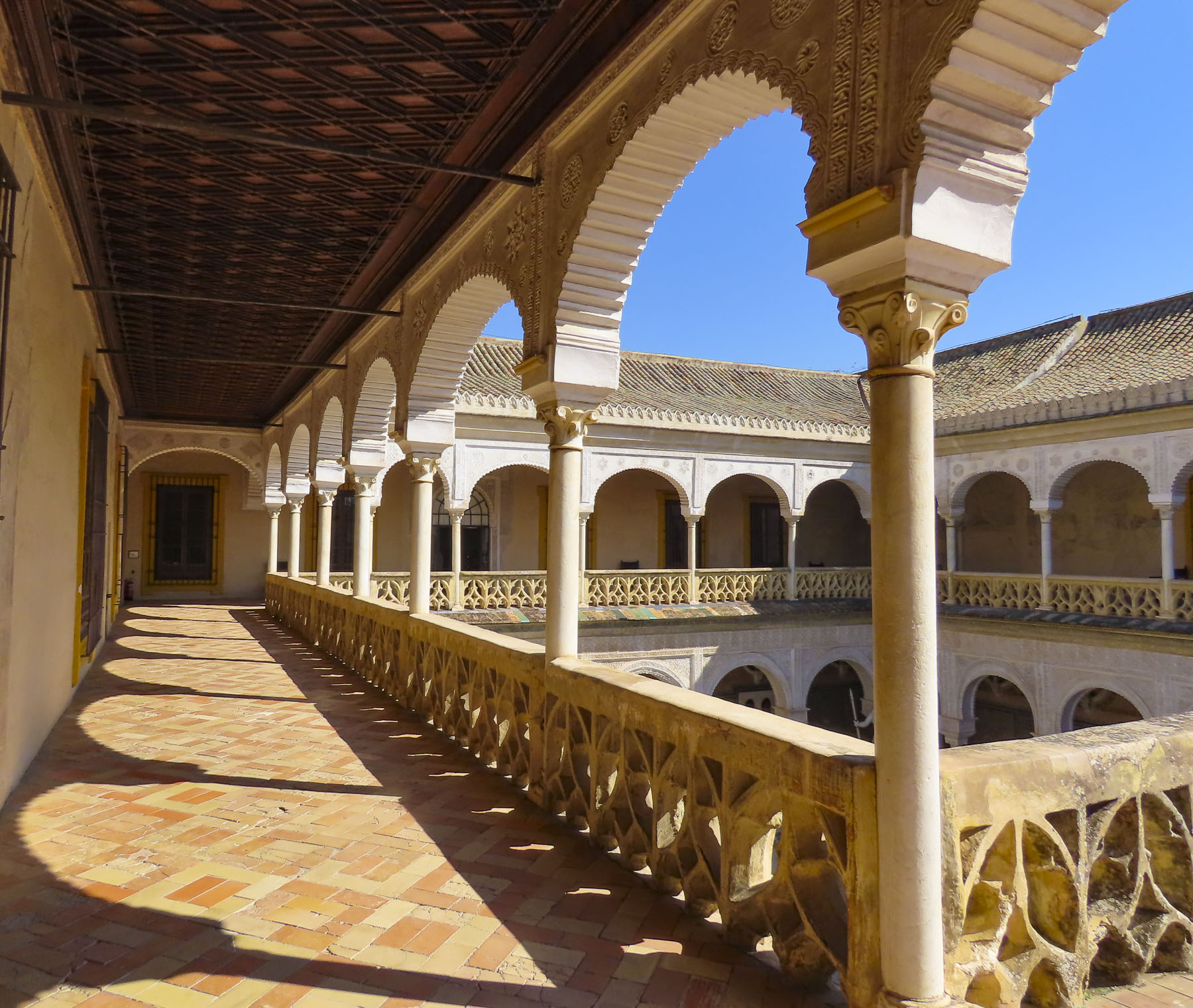
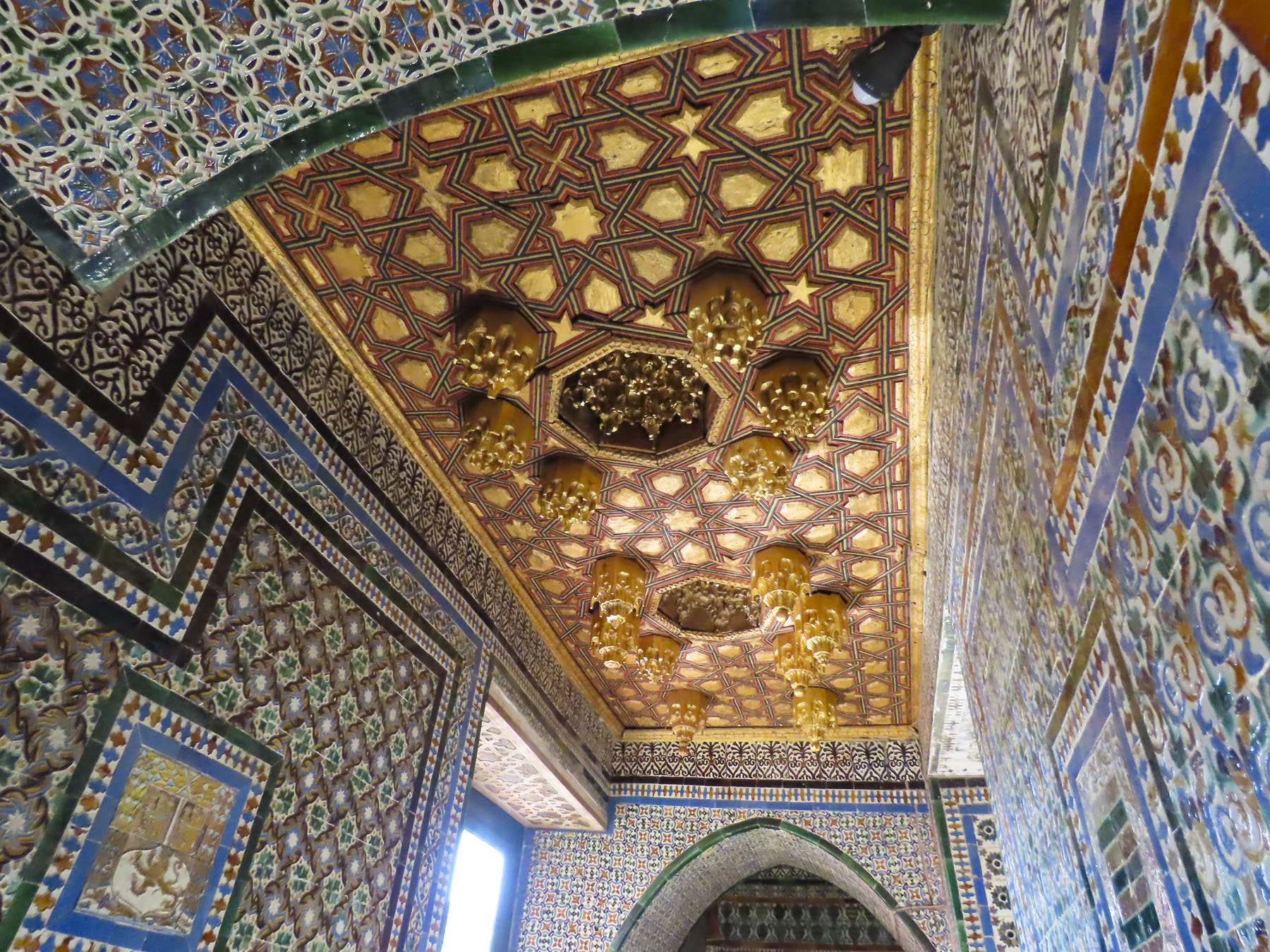
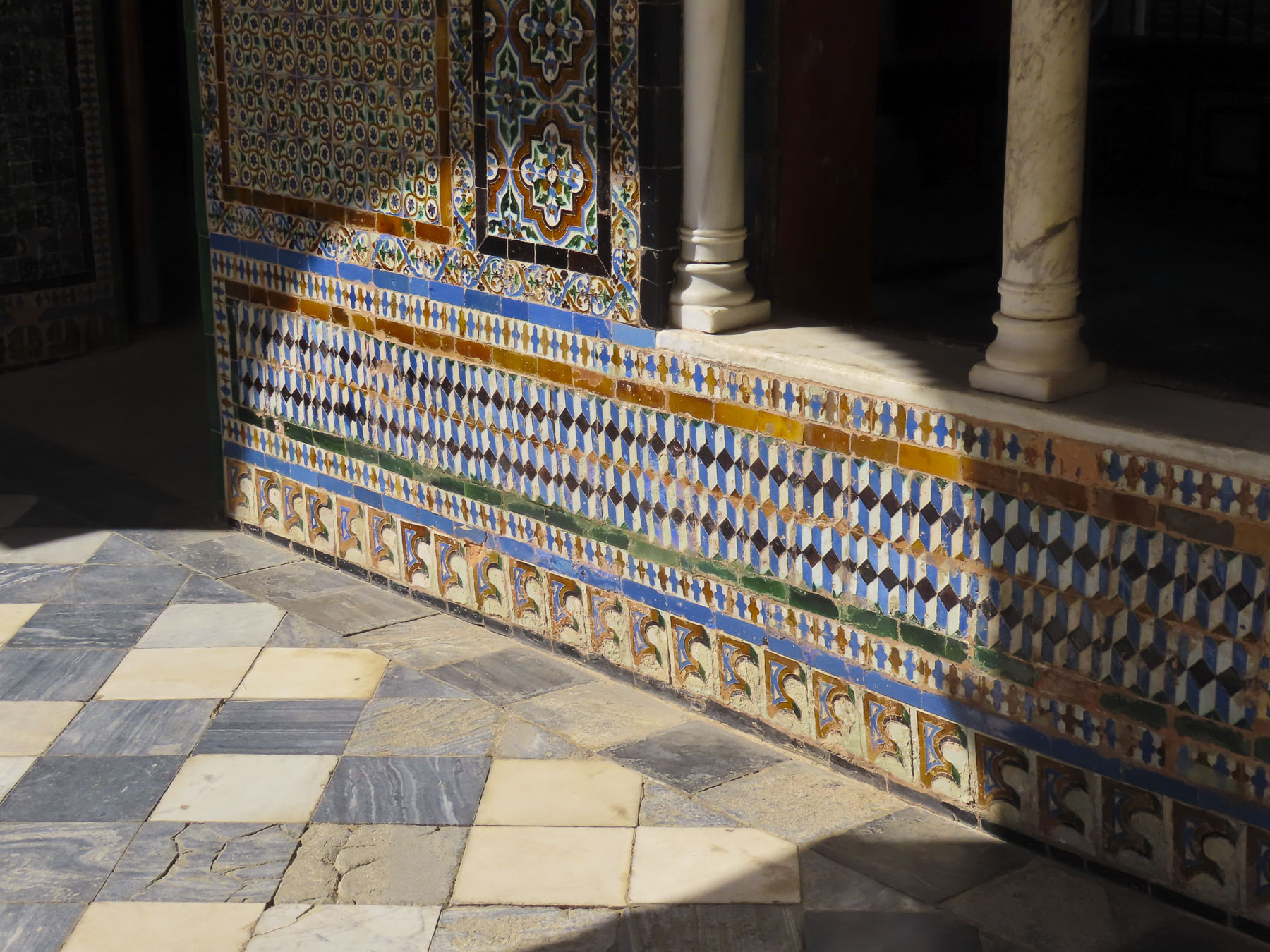
A half block away the Casa de Pilatos was a marvelous example of a 16th century Andalusian Palace that rivaled the workmanship of Real Alcazar.

It displays a unique juxtaposition of Mudéjar, Gothic, Renaissance and Romantic architectural styles that seamlessly blend into a kaleidoscope of color, shape and texture. 

There are also Roman and Greek antiquities on display that were collected by an early patriarch of the family when he served as Viceroy of Naples in the mid-1500s.  It has amazingly stayed in the same aristocratic family for 500 years and today the 20thDuchess of Medinacelli still has a private residence there.  Admission is free on Mondays after 3pm, but there can be a long queue.

Continuing down the street toward the main boulevard we found Sevilla Vinos a small shop that specializes in local Andalusian wines and sherries. You can purchase wine here by the bottle or you can bring your empty bottles back to be refilled from large casks like the local folks do.

Farther along, the Almazen café was the closest we could find to an internet café in Seville aside from Starbucks. But what’s the fun of that when you can find a neighborhood gem instead. Mostly, taking your laptop computer to work in a public space just isn’t done in Europe from our experience. It seems to break the cherished protocol of separating work from pleasure, a refreshing practice here.

Out on Calle Maria Auxilidora we walked along the ring road to the Jardines del Valle where a long stretch of fortress wall separates the park from the barrio behind it.  That Sunday a crowd had gathered on the sidewalk in front of the park to cheer on the runners in the annual Seville Marathon. 

Farther down the avenue the arched door of the Moorish influenced tower-gate Puerta de Cordoba stands attached to the Church of San Hermenegildo. A legend from the 6th century tells us Hermenegildo was a young Visgoth Prince, son of King Leovigildo who followed a branch of Christianity, Arianism, that did not believe in the holy trinity. Upon marrying a Frankish Catholic Princess, Hermenegildo converted to Catholicism against his father’s wishes. He was eventually imprisoned in the Cordoba tower-gate and beheaded there on Easter Day in 585AD when he refused holy communion from an Arian bishop.  The relic of his severed head was passed for centuries between numerous monasteries and convents on the Iberian Peninsula before finding its final resting spot at the Royal Monastery of San Lorenzo de El Escorial, near Madrid. He was canonized on the thousandth anniversary of his death. During the renaissance on the saint’s feast day, April 13th, the Brotherhood of San Hermenegildo would host jousts in front of the defensive wall that still stands next to the church. 

This is the longest stretch of ancient city wall still standing. It runs parallel to the ring road for seven blocks between the Church of San Hermenegildo and the monumental Arco de la Macarena, which stands next to the church of the same name. The last vestiges of a moat added in the 18th century are still visible here.  During the Spanish Civil War firing squads executed people against this arch. It’s believed this entrance was built by the Moors over one of the three original gates to the city constructed by Julius Caesar when he governed Andalusia in the first century AD.  The origin of the gate’s name is disputed with some historians speculating that it was named after a wealthy Roman property owner. Others think it bears the name of a Moor princess who lived next to the wall when the Arabs controlled the city. Popular belief is it was named in tribute to Macaria, daughter of Hercules, who is the mythological founder of Seville.

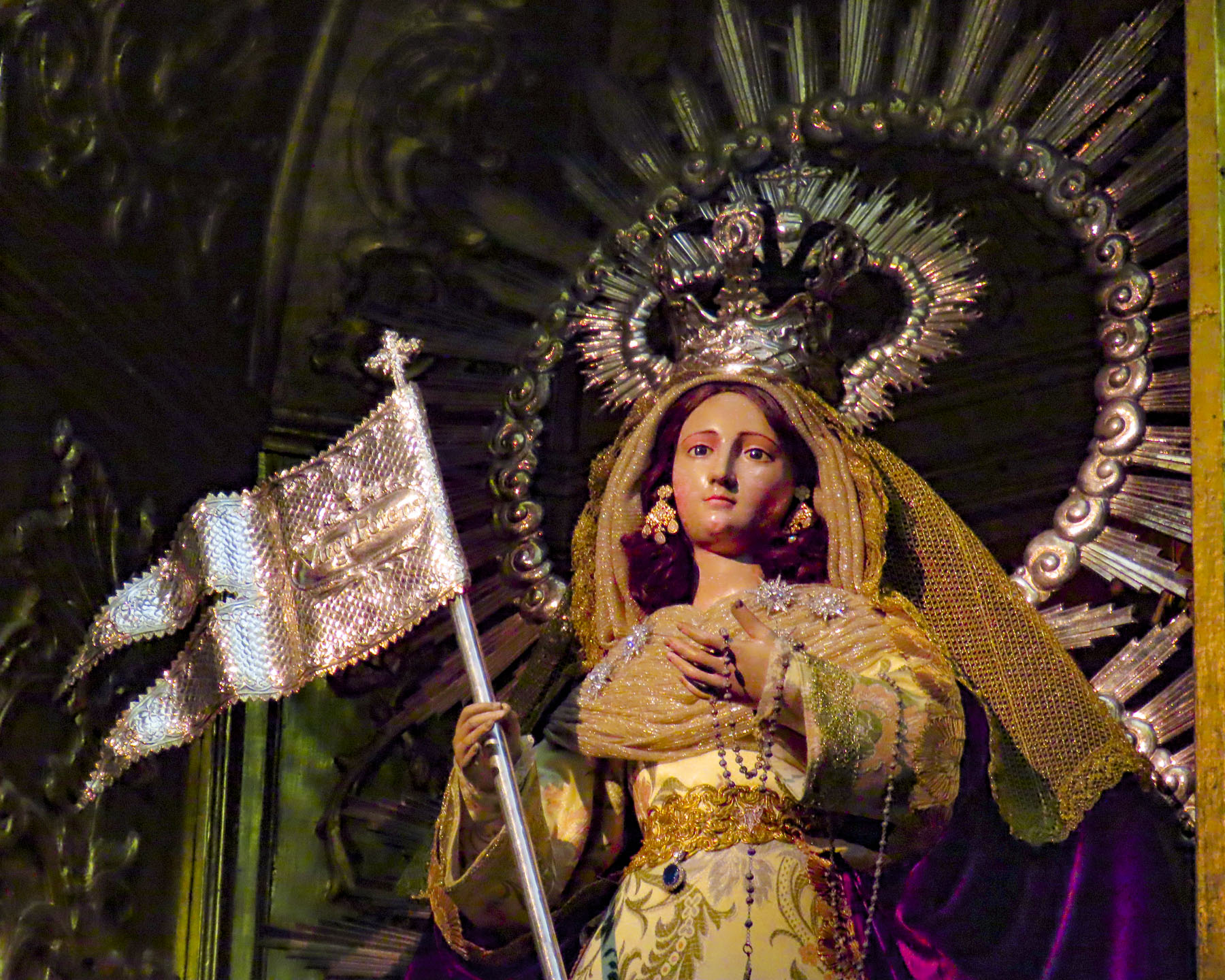
We stopped to see the Virgin of Hope, a venerated wooden statue draped in a gold embroidered robe covered with precious stones at Hermandad de la Macarena, and found her fascinating.  Entering the basilica is free, but there is a small fee to view, up close, the exquisite craftsmanship of the robe of the Virgen de la Esperanza de Macarena de Sevilla, (say that ten times fast!) from behind the altar.  The Virgin of Hope is the patroness of bullfighters and was famously re-dressed only once in a black robe to mourn the death, in 1920, of the famous Sevillano bullfighter, José Gómez Ortega, who was loved across Spain. 

To prevent looting of the icons during the Spanish Civil War, a caretaker secretly took the statue home and pretended he was caring for a bedridden sister. Later he pretended to be a stone mason and secreted the statue in the city cemetery within the ornate tomb of the bullfighter Ortega for several months to protect it.

Heading back into the city through the arch we eventually came to the ornately figured baroque façade of Iglesia San Luis de los Franceses.  This was a refreshing change from other baroque churches in Seville that hid their opulent interiors behind plain, almost barren exteriors that benefit from the phrase – “Don’t judge a church by its exterior.” This was clearly not the case with the Iglesia San Luis de los Franceses; it broadcast “notice me!” as if the exquisite stone figures were the 18th century mason’s version of a neon sign.  The church was built at the beginning of the 1700s for the Jesuits to use as a novitiate, but they were only able to use this elegant building for thirty years before the order was expelled from Spain and the rest of the Spanish empire.  Later it was used as a Franciscan seminary and convent, then factory, theatre, hospital for venerated priests and hospice. Eventually it was deconsecrated before being shuttered for many decades. After a ten-year renovation sponsored by the Provincial Council of Seville the still deconsecrated church is now a museum and local government office. Its four gilded baroque altars with their sixteen spiraling, solomonic columns that support the dome above are spectacular and in our opinion it’s one of the finest church interiors in the city.

Associating convents with cookies led to a little misadventure one afternoon. We entered the side door of the Convent of Santa Isabel, located next to the Iglesia de San Marcos, and met a nun talking with a parishioner.  Looks of confusion crossed everyone’s face and heads shook, no, when I asked in very poor Spanish “Los dulces por favor.”  A few moments after leaving empty handed, the gentleman the sister was conversing with called to us and to our surprise presented two simple sandwiches.  We suddenly realized we had approached the convent’s food bank and they thought we were asking for something to eat. We thanked him and made a donation which brought a huge smile to his face and ours.

In this part of the city there seemed to be a church or convent on every block, and we had surely far exceeded the number of visitations to religious institutions to keep thunder and lightning at bay. Just wandering through the neighborhoods without a particular destination in mind was very enjoyable and let us follow any whim spontaneously, whether it was a flash of light from the journeyman knife sharpener as he held the blade to his grinding stone attached to the back of his scooter, or music emanating from an alley as a marching band rehearsed, or the cacophony created by the brotherhoods practicing with their weighted floats prior to Holy Week.

The farther we were away from the historic center of Seville the fewer tourists we encountered and prices in the barrio eateries dropped considerably. Los Coloniales was one such tavern located on a corner across from Plaza Cristo de Burgos. At the beginning of March the days were sunny and warm in the afternoon so dining outside was delightful, though sometimes it required a wait.  Leaving our name with the hostess we waited in the shaded park across the street until she loudly bellowed, “Craig & Donna!” We felt like locals as we hurried over.  The tapas and the ambiance of the setting were very enjoyable.

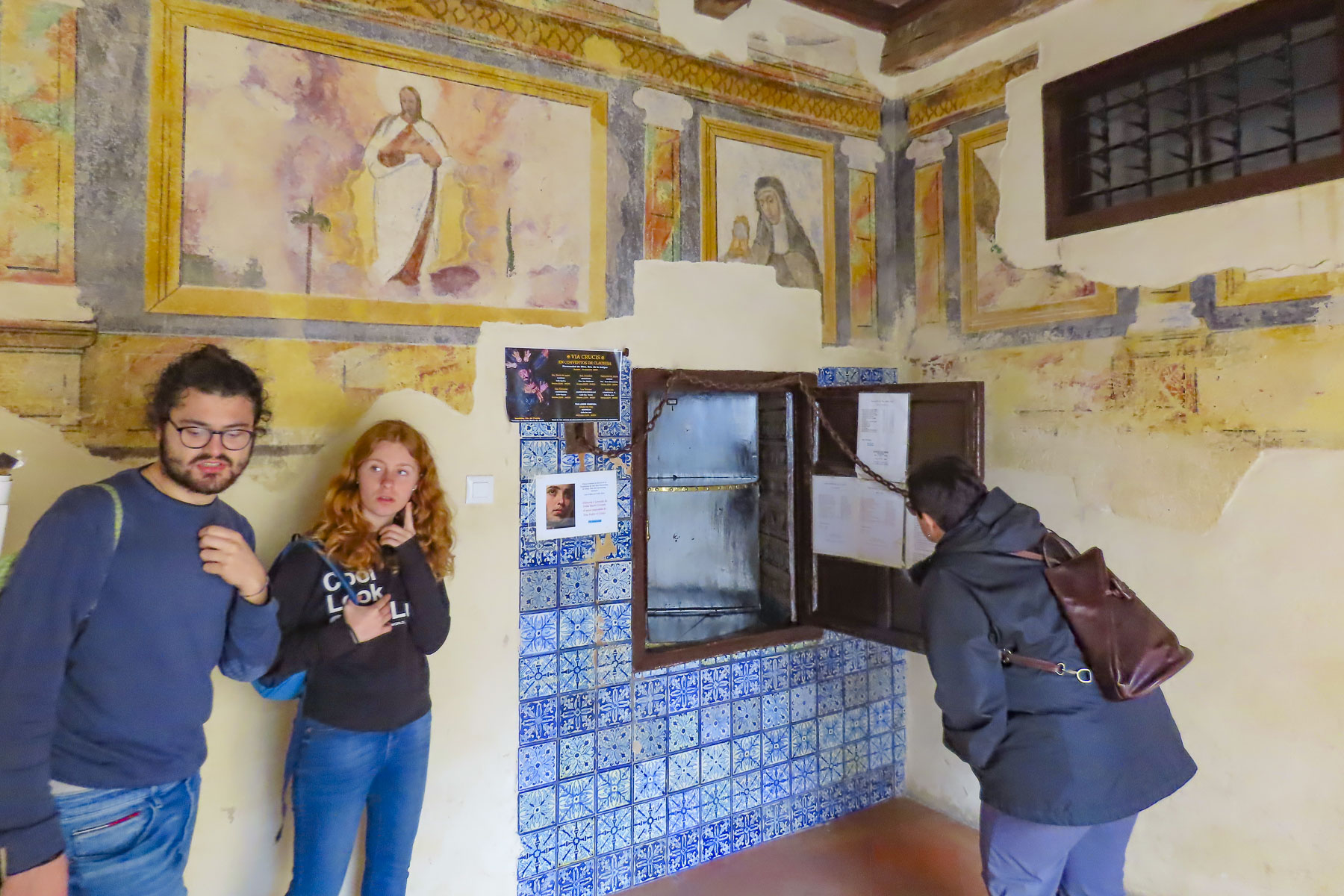
One afternoon as we walked back to the apartment from a late lunch, luckily I noticed a single black and white flyer tacked high on a tall double-wide door, while Donna had stopped way down the block to take a photo.  Hundreds of years old, the door had a smaller single door built into which was open. I don’t recall seeing a placard on the wall identifying the building, but the flyer had a picture of a tray of cookies! By the time I turned around and got Donna’s attention the door had quietly been shut and locked to our disappointment. Finding it on a map we established that it was the Convento de Santa Inés. Allegedly they baked bolletos, little round cookie balls with sesame and honey-glazed pestiños – dough flavored with orange zest, aniseed, olive oil, and wine, then fried. Determined, we returned earlier several days later and stepped over the ancient threshold into a spartan courtyard with no sign of activity or arrows to follow. But in the far back corner under a small portico there was a plain wooden cabinet built into the wall surrounded by a fading spiritual fresco and Azulejo tiles.  Taped to its door was the price sheet for the available, “Las Dulces.” The cabinet is called a torno and when you open the door there is a lazy Susan style turntable that allows the cloistered nuns to receive your payment and provide your cookies while remaining unseen. Over the centuries, convent tornos were also sadly used to anonymously drop-off unwanted infants in hopes the child would have a better life. Three decades ago, there were forty cloistered convents in Seville, today only a dozen remains, hosting an ever dwindling number of nuns.  Not all of them bake “Las Dulces,” but knowing now we wish we had searched for the others that still do.

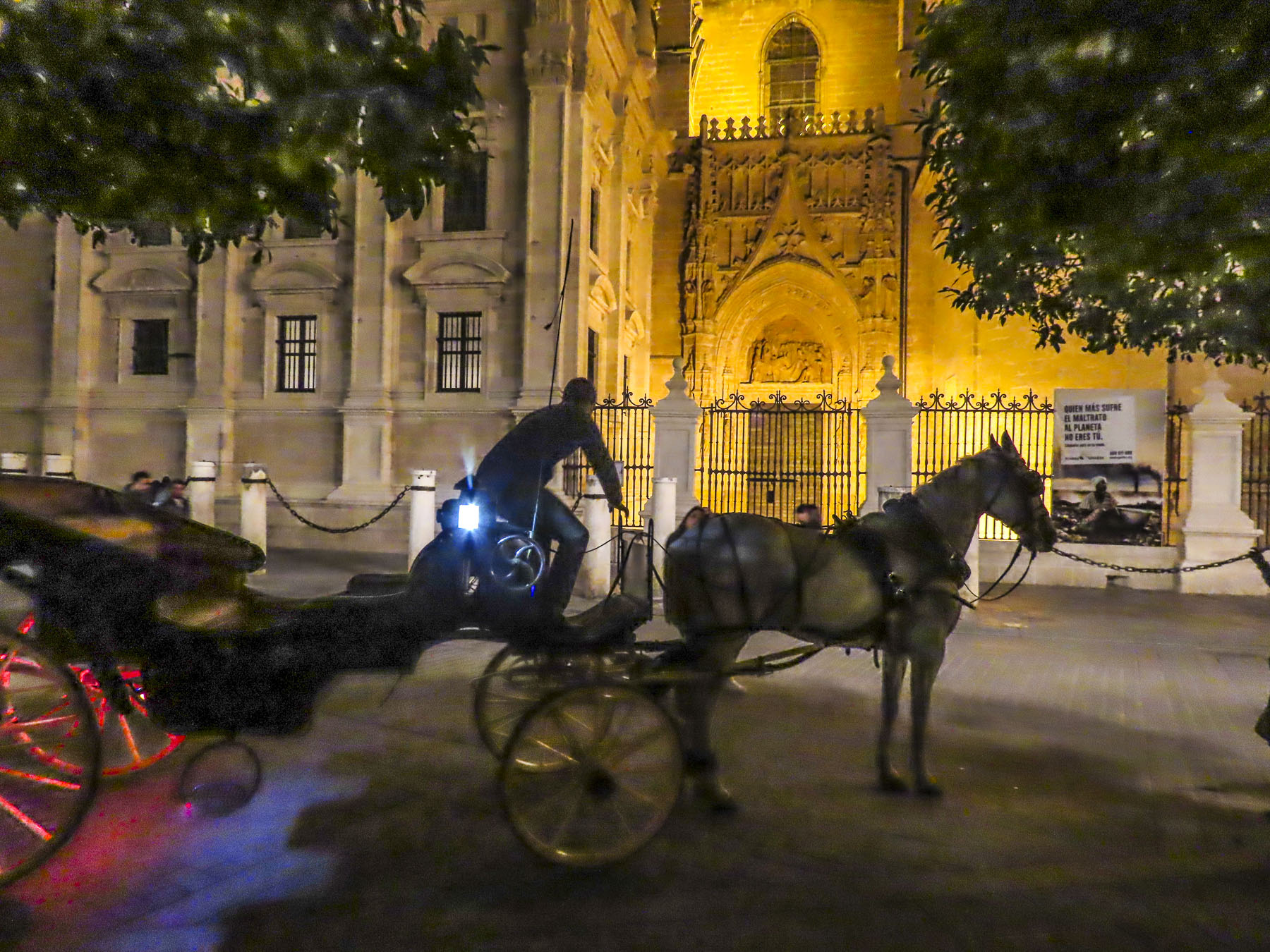
Dessert was celebrated, back on our apartment’s rooftop, with a glass of sherry and the cookies from the Convento de Santa Inés, as we sat with our backs to the laundry billowing gently on a warm Spring breeze and waited for the sun to set. This was unfortunately one of our last adventures in Seville before the city entered its first lockdown of the pandemic in March 2020 and all tourists were ordered to leave Spain. We were sitting on the steps of the pillar at Plaza del Triunfo late one afternoon, amazed by the emptiness of the square. There weren’t any horse-drawn carriages or lines of tourists waiting for entry into the cathedral or the Alcázar. Two policemen approached. “The city is closed, you must go home.” It was a shocking eviction notice.

We thoroughly enjoyed our immersion into the nuances of living in Seville and would definitely recommend the city for anyone considering a long-term stay. The city simultaneously manages to be intriguingly historic and contemporary. There were many different ways to enjoy the city and aside from the moderately high price of museum admissions, the cost of living in Seville and dining out was very reasonable.  We walked mostly, but on occasion used the rideshare Uber which operated very well across the city. The weather was splendid in February and March, with cool mornings warming into delightful sunny afternoons.

Make plans, enjoy your travels!

¡Hasta luego!

Till next time, Craig & Donna

Seville Part 3 – Walk a Little then Café

Parts of this ancient city with its labyrinth of cobbled lanes feel more akin to a small village with an earth toned, sun drenched patina. Vibrant traditions and a youthful vitality along with numerous historic sites scattered across the city all contribute to make Seville a walker’s delight. There’s no correct way to explore the city. How you do it depends on the amount of time you have to indulge yourself in the history and atmosphere of this beautiful city. Strolling through the city is the finest way to discover its character. Immersing ourselves into the city for six weeks, we walked the familiar cobbled lanes multiple times with many variations and sporadic detours that we hope you find interesting.  Seville never ceased to charm us. 

The routes we favored most webbed out from behind the Cathedral of Seville’s Patio de los Naranjos on Calle de Placentines, around the corner from the Palacio Arzobispal on Plaza Virgen de los Reyes, and wandered through the Alfalfa, Centro and La Macarena districts.
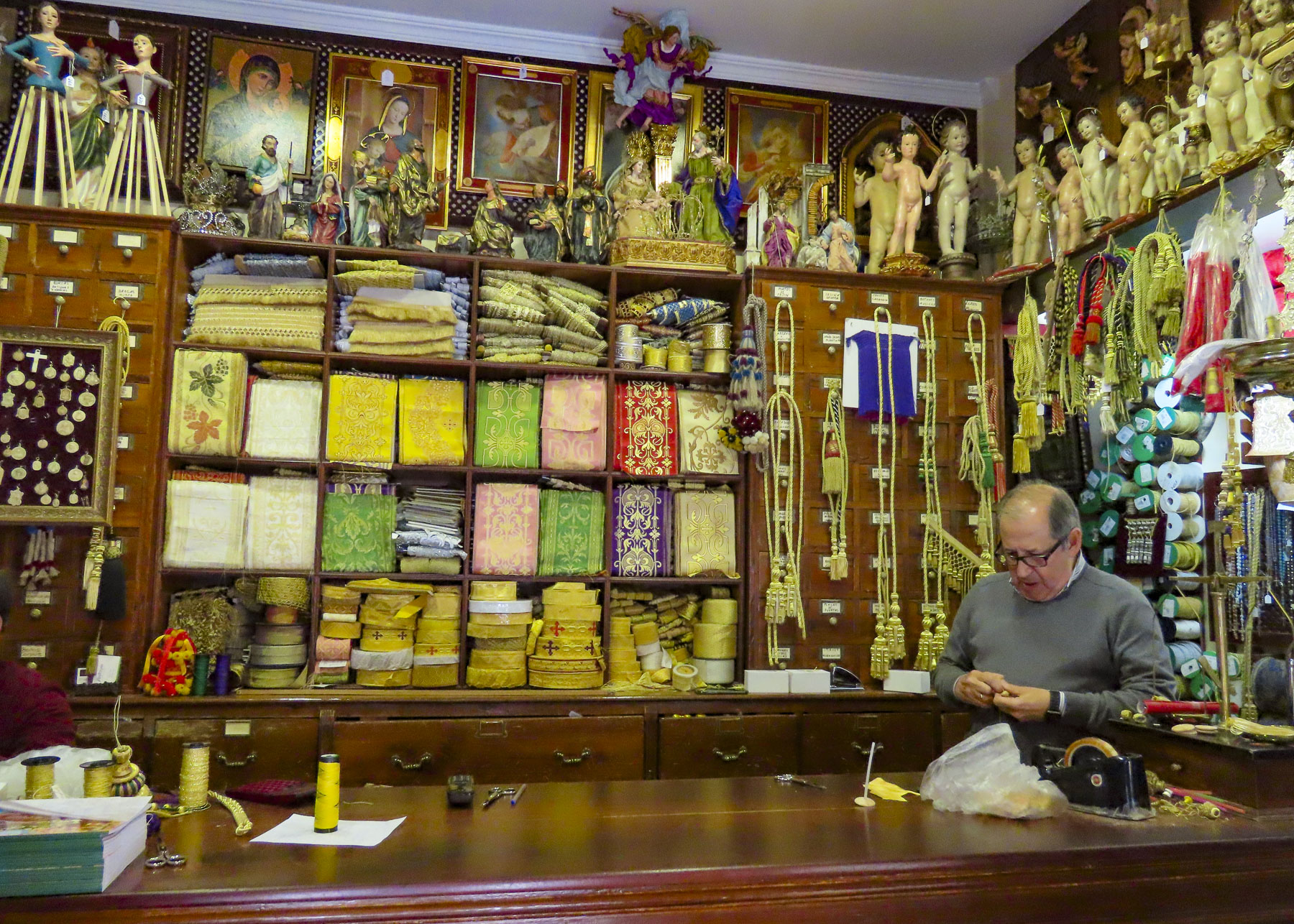
An old-world fabric store bedecked with selections of gold embroidered trim, ribbons, and tassels hanging from worn wooden cabinets enticed us inside.  Further on the display window of a religious goods store fascinated us with its selection of all things sacred. Before crossing into the Plaza Jesus de la Pasion, the savory window display at Confiteria La Despensa De Palacio stopped us dead in our tracks. Lovingly run by generations of the Santaella family, the shop has been Seville’s premiere chocolatier and pastelería for over 250 years. The pastries were sumptuous!
Across the street the Plaza Jesus de la Pasion widens to reveal a wonderful example of 19th century Andalusian architecture. The far end of the square features a façade of red brick framing Azulejos tiles and Moroccan influenced, pointed arched windows.  The plaza also seems to be a favored place for a protest or political rally as we came across several, over the weeks we spent there.

At this point it’s possible to head one block over to visit the Iglesia Colegial del Divino Salvador, on the plaza of the same name. This is a very popular square with many restaurants and outdoor tables along with buskers providing entertainment.

The Iglesia Colegial del Divino Salvador is the second most important church in Seville after the main cathedral and features a monumental and intricately carved 18th century Baroque altar. The beautiful piece was created by the Andulasian altarpiece architect and sculptor Cayetano de Acosta, who contributed works to numerous churches across southern Spain.

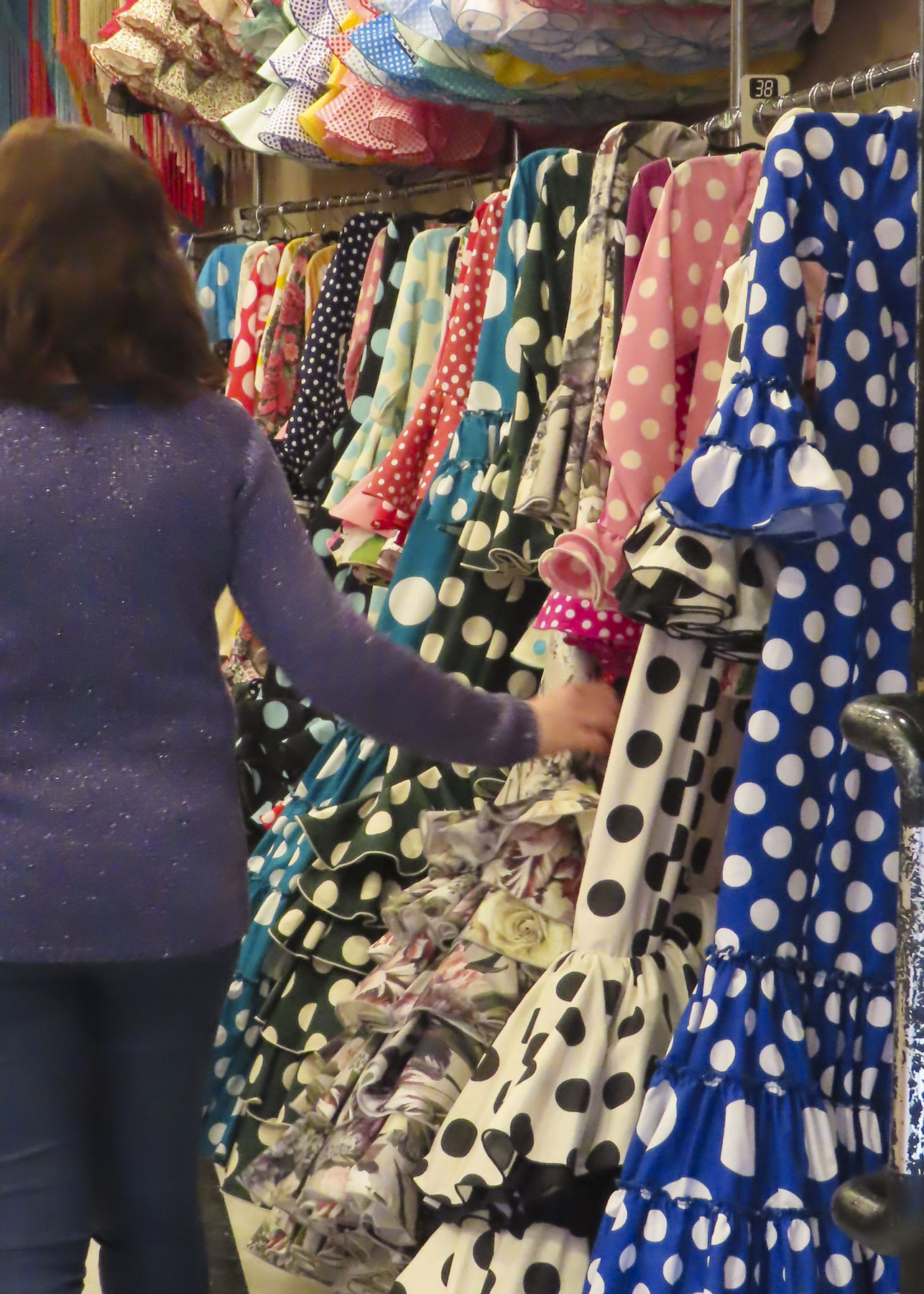
Returning to Plaza Jesus de la Pasion, the far end of the square funnels into the very cosmopolitan C. Puente y Pellon. Lined with a wide variety of shops, we found the most interesting to be the Zapaterias, shoe cobblers, and the dress shops, their windows filled with colorfully clad mannequins displaying tight fitting and frilly dresses called traje de flamenco or traje de gitana, for the upcoming Seville Fair (La Feria De Abril).

Here we found what we regard as the best bread bakery in Seville, Crustum Panem Bridge and Pellón, https://www.crustum.es/ sandwiched between window displays featuring towering pyramids of tasty Bocadillo de jamón, the ultimate hoagie lunch para llevar, to carry away, for an inexpensive picnic. The bakery offered a wide assortment of breads and empanadas. Our favorite though was a very dense bread made with nuts, seeds, and dried fruit which they sold by the slice and weight.  We returned often.

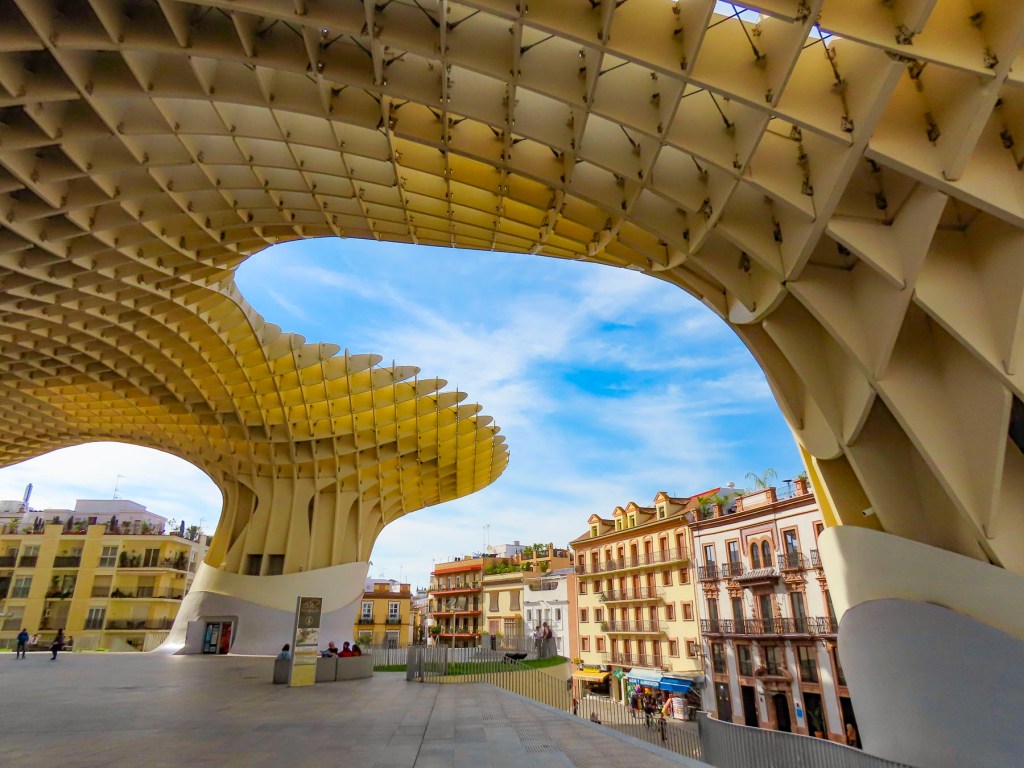
A little further on the Setas de Sevilla loomed over us as we left the alley.  The Setas is a massive, multi-story, Lego-like freeform sculpture with a viewing deck atop it. Constructed entirely of wood, it nearly covers a full city block. It’s an iconic symbol of modern Seville that the locals lovingly call The Mushroom because of its shape. 

For over 150 years this plaza was the true center of the city for Sevillianos when 400 market stalls of the Mercado de la Encarnación occupied the land above the ruins of the medieval Convento de la Encarnación, from which the plaza took its name.  The market operated until 1973 when the building was demolished for structural reasons and the remaining ninety vendors were housed in temporary facilities for what was hoped to be three years.  Inaction by the city left the site closed for 31 years and the area around the plaza became blighted, until the local government sponsored an international design competition in 2004 for ideas to revitalize the plaza and return it to its former prominence. 

Jürgen Mayer, a German architect, won with a concept called Metropol Parasol, constructed with sustainable wood. At 490 feet long by 230 feet wide and just under 100 feet tall, it is the largest wooden structure in the world made with laminated Finnish pine. Its unique design features 3500 sections attached together with 16 million nuts and bolts. The interior of the Setas now hosts a daily market with 38 vendors offering fruits and vegetables, fish, meat, poultry, and cheese. The base of the monument and plaza is ringed with restaurants that have excellent outdoor seating in the shade of the mammoth structure. Inside by the market stalls are several traditional luncheonettes that offer inexpensive daily specials.

A detour to the Guadalquivir River and Triana can be easily made here by following Calle Imagen west. This walk took us past many older buildings with interesting architectural details, and the 14th century Iglesia de San Antonio Abad which hosts the Brotherhood of Silence, the oldest brotherhood in Seville.

A block away the aroma of freshly roasted coffee beans drew us into Elhombre Pez, where you can only purchase bags of whole or ground coffee beans. Their coffee beans are definitely worth the purchase if you have an apartment stay in the city.

The Seville Museum of Fine Arts, set in a former 17th century palace, is also in this direction and is an intriguing detour with its extensive collection of Spanish masterpieces.

Several blocks farther the Real Parroquia de Santa María Magdalena was an interesting discovery. Built in 1691, this Baroque church has a fascinating interior.  The small bar on the corner, Casa Murillo, was a reliable spot for café and lunch. Across the street Churreria San Pablo always seemed to have a line waiting for its sweet treats.

Calle Regina directly behind the Setas de Sevilla begins to funnel folks away from the bustling historic district and into a more residential area, though it’s still lined with a variety of shops and eateries. And if you share our belief that the food is always better and more affordable two blocks away from a popular tourist attraction, you will like this neighborhood. On this stretch Mr. Cake Sevilla with its artfully prepared and tasty offerings is a nice place to rest.

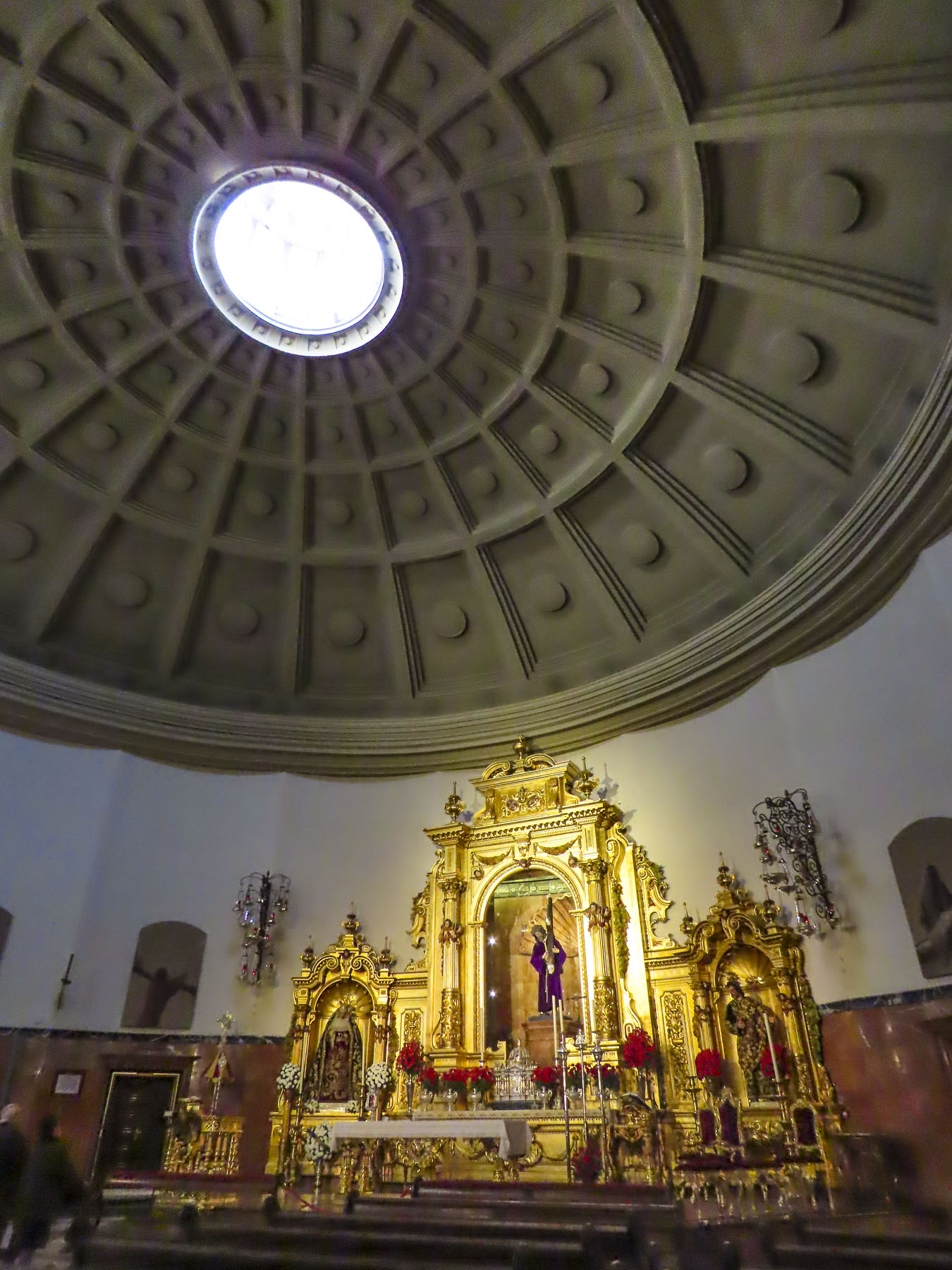
The Iglesia de San Juan de la Palma stands at the crossroad to our favorite tapas bar in Seville, the Bodega La Plazoleta. The gothic portal of the church is one of its few remaining original features. Compared to other churches in Seville its relatively small, but it features three interesting side chapels devoted to the Brotherhoods of Bitterness, the Virgin of the Head, and Our Lady of Montemayor.

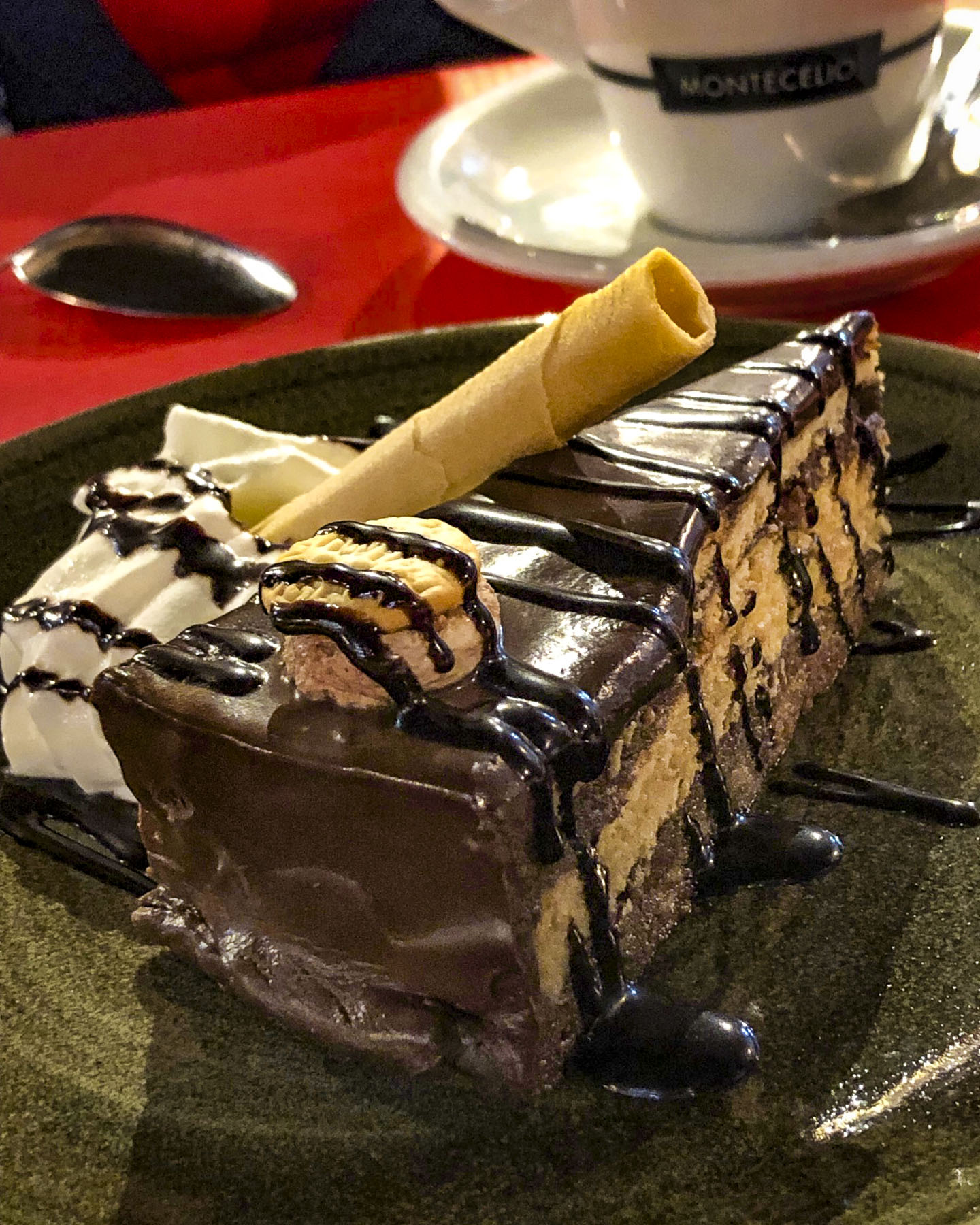
The restaurant is on a small square, to the right of the church, that was far enough off the main path that it didn’t attract many tourists. Over our six-week stay in Seville this was our go to bodega for its excellent food, relaxing atmosphere and chocolate cake! The restored 15th century Palacio de las Dueñas is nearby, but let’s face it, it’s impossible to do everything and we needed to save some ideas for future visits to this wonderful city.

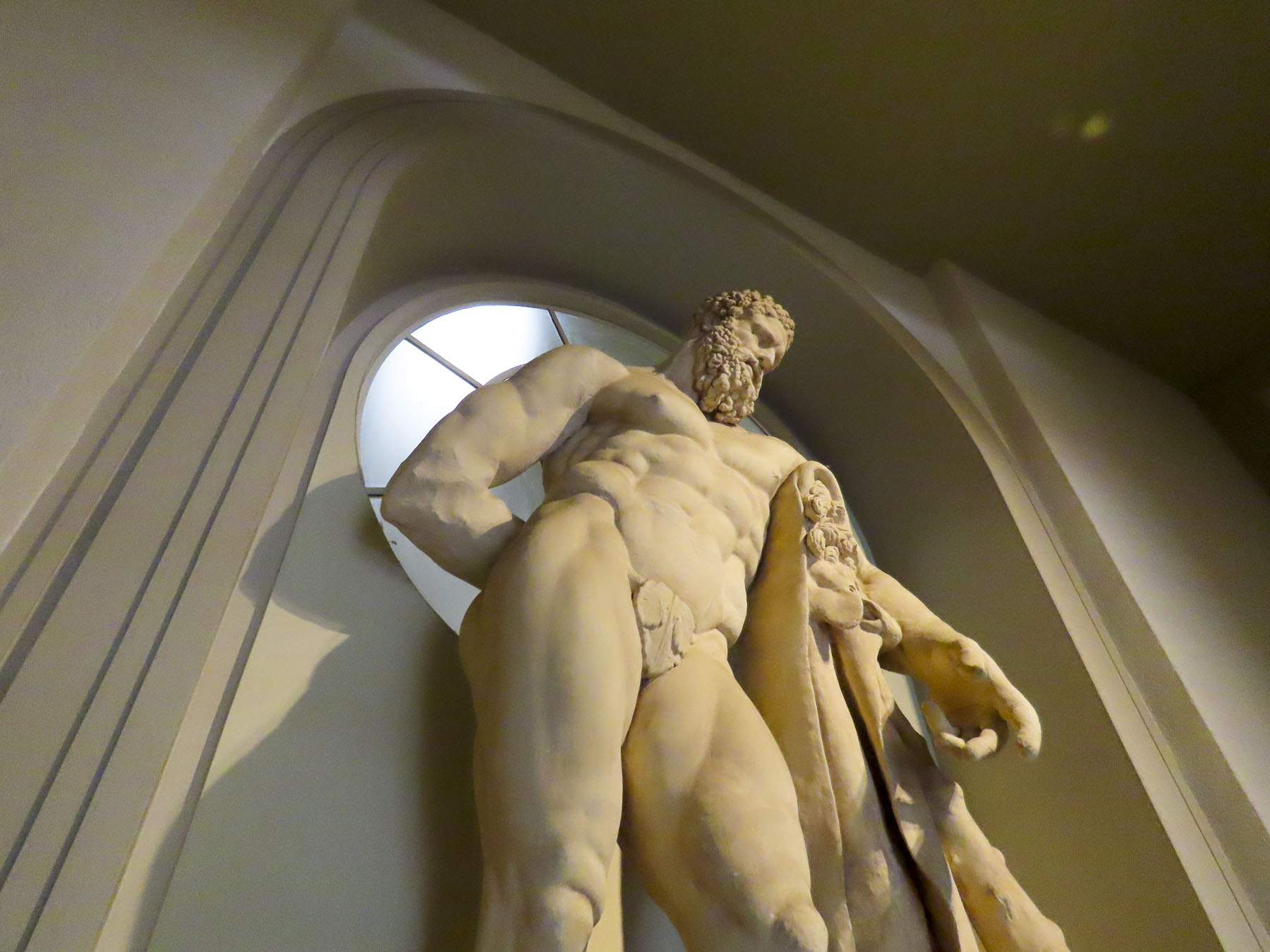
If you make a left at this crossroad, it’s a simple detour to the Alameda de Hércules. The origins of this large park date to 1574 and it is believed to be the oldest public garden with tree lined promenades in Europe.  The park takes its name from a statue of Hercules, the mythical founder of Seville, excavated from the ruins of a nearby ancient Roman wall.  This part of the city now has a younger hipster atmosphere and is known for its nightlife and club scene as well as its array of restaurants offering a variety of international cuisine. In this barrio the Basílica de Jesús del Gran Poder is an unusual church with its circular sanctuary which is surprisingly hidden within the church’s traditional façade.

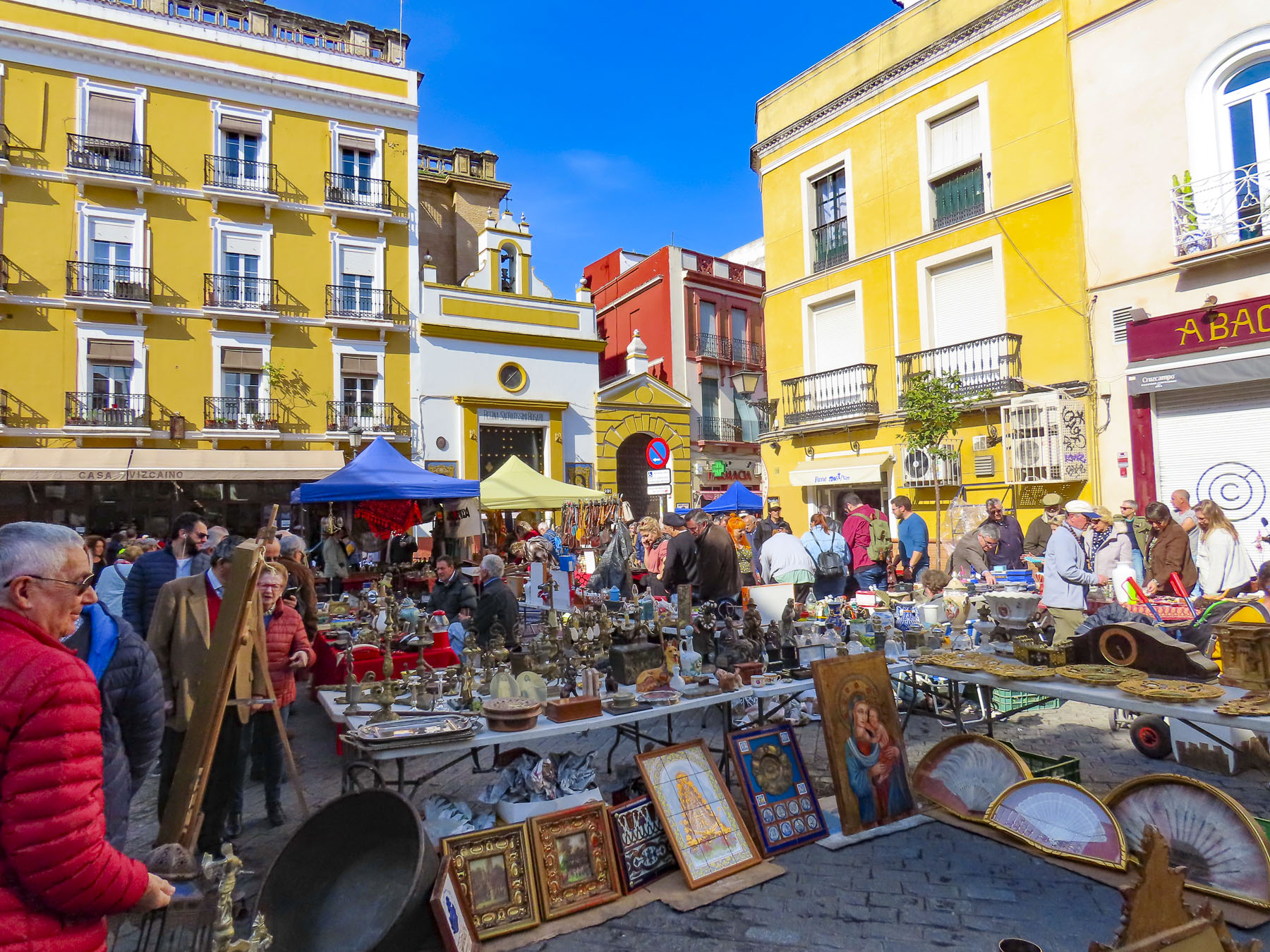
Back at the crossroads: Thursdays are, as the name Mercadillo Histórico del Jueves suggests, the best day for this final leg of the walk. Legend says that this street market has been a feature of the city since the Moors ruled Seville.  Every Thursday several blocks of Calle Feria are closed to traffic, and it becomes a pedestrian mall lined with vendors now selling antiques and flea-market type items.  The market is a popular destination, and occasionally we felt like we were in a conga-line weaving through a sardine can.  We did find a small, folkloric style painting of Seville’s La Feria de Abril that just fit into our suitcase.

It was quite a walk from our apartment on Plaza de Doña Elvira, but our favorite local food market in Seville was the Mercado de la Feria, several blocks past the mercadillo histórico.  The market had a very authentic feel to it, being in a neighborhood that is far away from the tourist center of the city. It had a wonderful fish monger, cheese shop and fresh pasta maker. Accustomed to their neighborhood clientele, the vendors seemed surprised with our purchases which indicated that we actually cook for ourselves.  This is also a great destination for lunch as there are a number of small restaurants that ring the market.

Next to the market – It’s not always open, but if the door under the 13th century pointed Gothic arch of the Real Parroquia de Omnium Sanctorum is ajar, it’s worth stopping to investigate – is one of the oldest churches in Seville. It has gone through many incarnations over the centuries, most notably after a 1355 earthquake, and arson attack in 1936 during the Spanish Civil War.

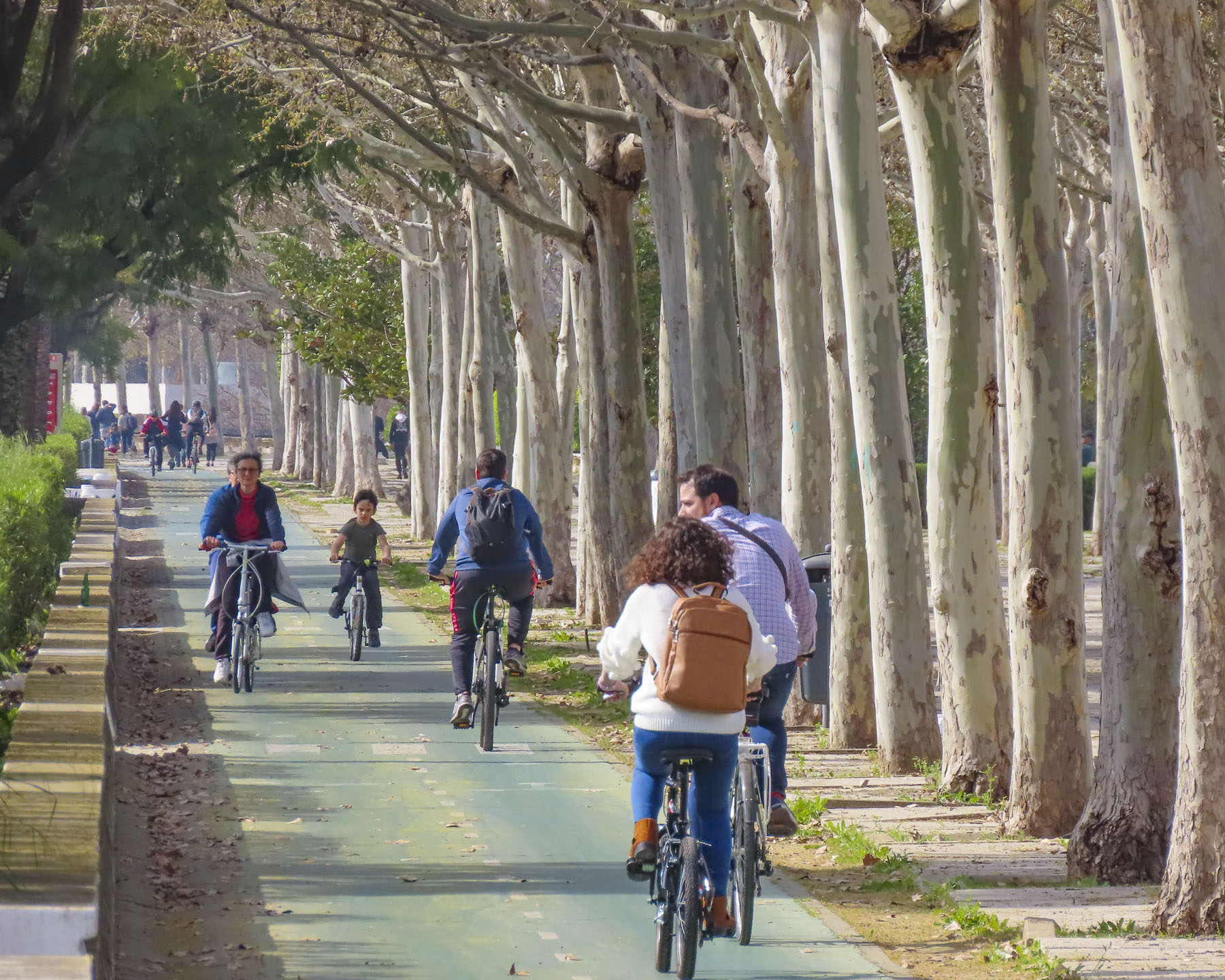
At this point in the walk, you can choose to head back towards the Alameda de Hércules or continue on towards the towers of the Puente del Alamillo bridge, which you’ve probably already spotted, that spans the northern part of the Guadalquivir River. Head to the river. There is a wonderful pedestrian foot/bike path that follows the course of the river. This stretch of the river is also popular with anglers using traditional long poles and line gear to catch fish from its bank.

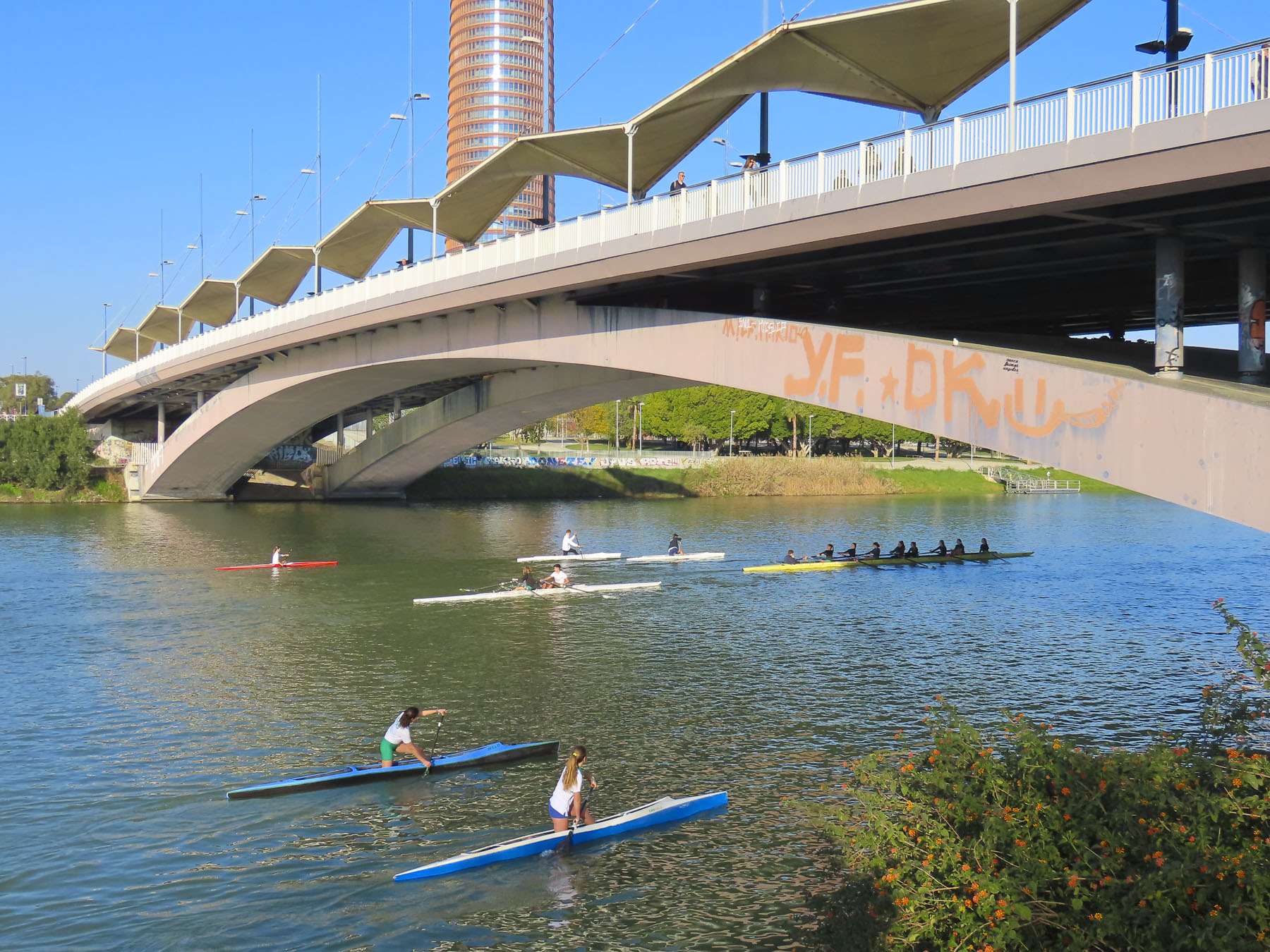
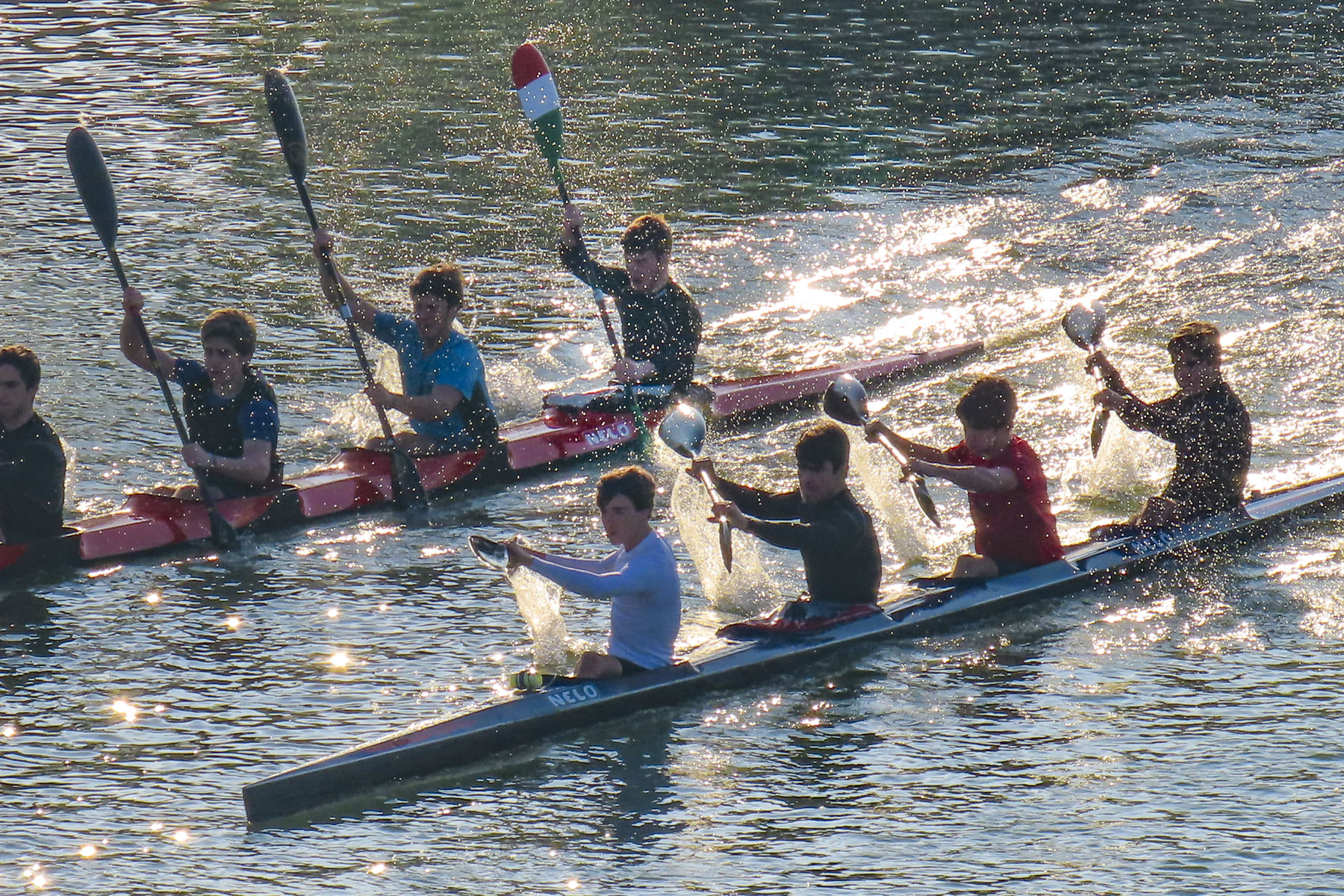
It is a long but pleasant walk south along the river back towards the bustle of Seville.  Mid span on the Puente del Cachorro is a great vantage point for photos of the historic Triana waterfront with kayakers and scullers enjoying the river.

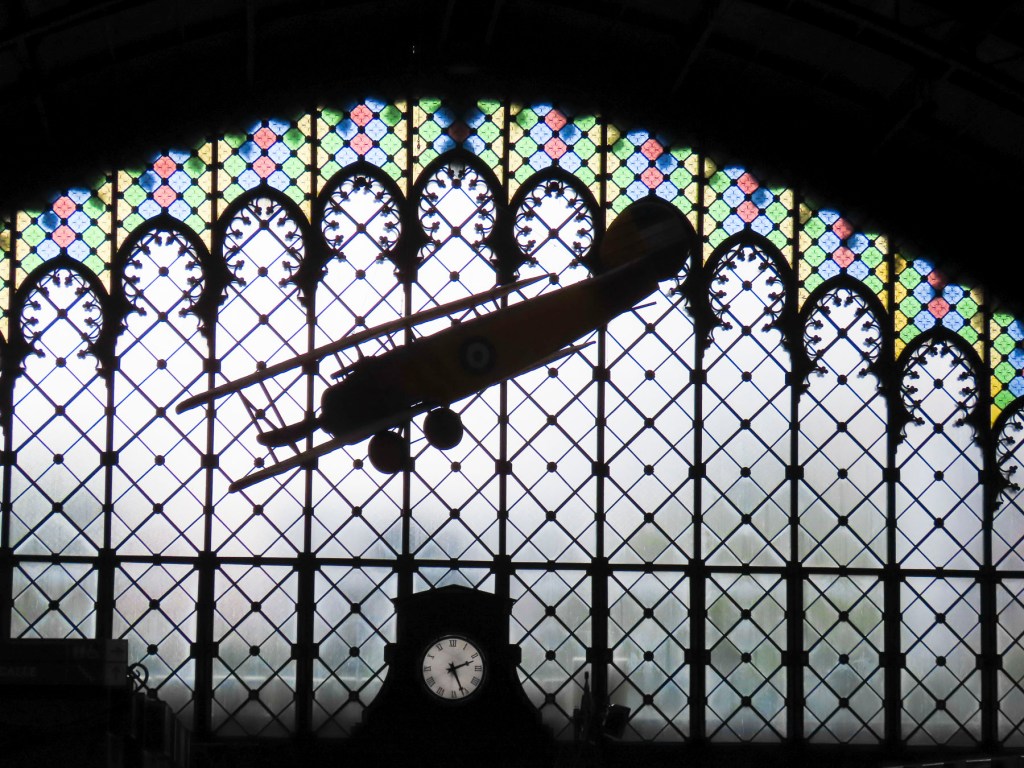
If its late in the day and you want to catch a movie, the Centro Comercial Plaza de Armas is only two blocks inland from here, in the restored 19th century Old Cordoba Train Station.

Till next time, Craig & Donna