

We were fortunate to be in Cape Town when the drought broke, the hills were greening, and the reservoirs were filling again. The Western Cape and the city were vastly interesting and stunningly beautiful and should be a destination on everyone’s radar. But after three months of slow, immersive travel it was time to move on. After greatly enjoying our first safari at Schotia Game Reserve, just watching Donna’s joy viewing the wild animals was priceless for me, we decided to head to Chobe National Park in northern Botswana and Victoria Falls in Zimbabwe to continue our adventure. Flying over the Northern Cape, we watched from the window of the jet as the fresh greens of the Western Cape slowly faded to the reddish sands of the Kgalagadi Transfrontier Park, that straddles the border with Botswana. From the air it looked like a flat, dry, desolate landscape broken by faded veins – forgotten dirt tracks to who knows where. Further into Botswana the vast whiteness of the Makgadikgadi Pans National Park intensely reflected the sun as the park’s 2400 square miles of salt pan stretched to the horizon below. The area was once the immense Lake Makgadikgadi, that covered an area almost the size of Switzerland, but dried up more than 10,000 years ago.
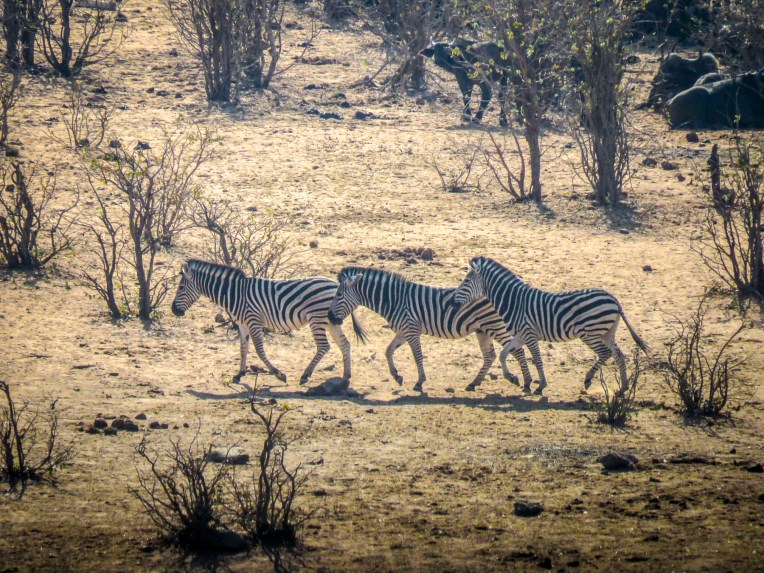 While the Cape Town region had fortunately recovered, Zimbabwe was still suffering from its worst multi-year drought in 40 years and the countryside looked tinder dry, as if it would erupt into a massive mushroom cloud if you breathed too hard on it. As a result of the severe water shortage, electricity was being rationed due to insufficient water levels to run the turbines at the hydroelectric dams along the Zambezi River.
 At the Zimbabwe Airport, the queue for visas to get into the country was very jammed and moved slowly. We were in the middle of the pack, surrounded by organized tour groups so we felt our progress would proceed smoothly. It did not. The delay was extensive and twice I had to skirt security and walk past the border control booths to the baggage claim area to check that our luggage was still there. (It was lucky that I did, as our bags had been gathered into those of a large group tour and we nearly lost them.) But somehow, while we waited in line, it was as if we had grounded a boat on an unseen rock, and we ended up as the last couple entering the country at passport control. Everyone else had managed to sail past us. We were finally about to get our passports stamped when the power failed and the computers went down! And to top it off we had to ask the border control officer to return the change due us from purchasing the visas.
 Our mood was restored by the warm greeting we received from Fungayi, our guide for the next three days and the owner of Afro Honeyguide Adventures. “Does it usually take that long for folks to get through passport control?” “No, that’s the longest I’ve ever had to wait. I was beginning to think something might have happened. Let’s not delay any longer – it’s time for that cruise on the Zambezi River.” And off we went.
 The Zambezi River starts high in the mountains of northern Zambia near where the borders of Angola, the Congo and Zambia converge, and is the fourth longest river in Africa at 1600 miles. It flows south then east for hundreds of miles as the natural border between Zimbabwe and Zambia. Thundering over Victoria Falls, its waters eventually flow through Mozambique and empty into the Indian Ocean. It’s a vital life source for people and animals of the region.


A steep boarding ramp emphasized the river’s low level and led down to a variety of vessels, from replicas of Humphrey Bogart’s African Queen to mini cruise ships. We were the last to board a medium size pontoon boat before it cast off.


In stark contrast with the dry landscape we passed on the way from the airport, the banks of the Zambezi were lush with verdant brush and trees. It was a dense screen that shielded the animals from our prying eyes unless they were right on the riverbank. Though elephants were elusive, herds of hippos ruled the afternoon. On shore they protected their young and displayed their hierarchy with dusty charges and bellowing growls, groans, and grunts. In the river, turbulent pools of hippo testosterone battled for dominance with wide gaping jaws amidst violent sprays of water. More menacing was coming upon a submerged hippo with just its eyes and nostrils showing, the bulk of its tonnage hidden below the surface. They are in fact Africa’s deadliest land mammal, killing over 500 people each year. A few crocs and numerous bird sightings rounded out a satisfying afternoon.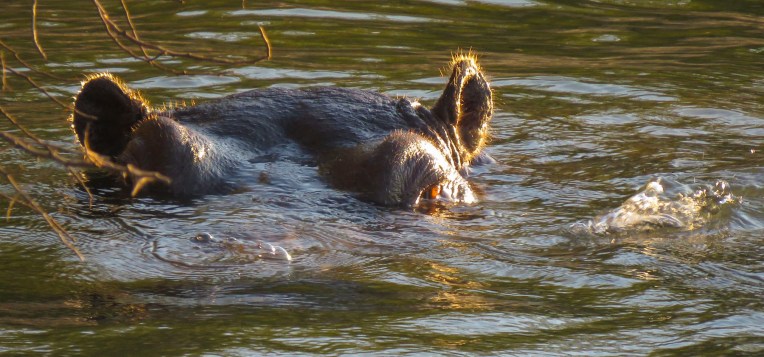 As tranquil as our water safari was, the river was surprisingly busy with activity, but so well-spaced it didn’t infringe upon our enjoyment of the afternoon. As the sun set, our captain skillfully positioned our boat to capture the last light of the day.
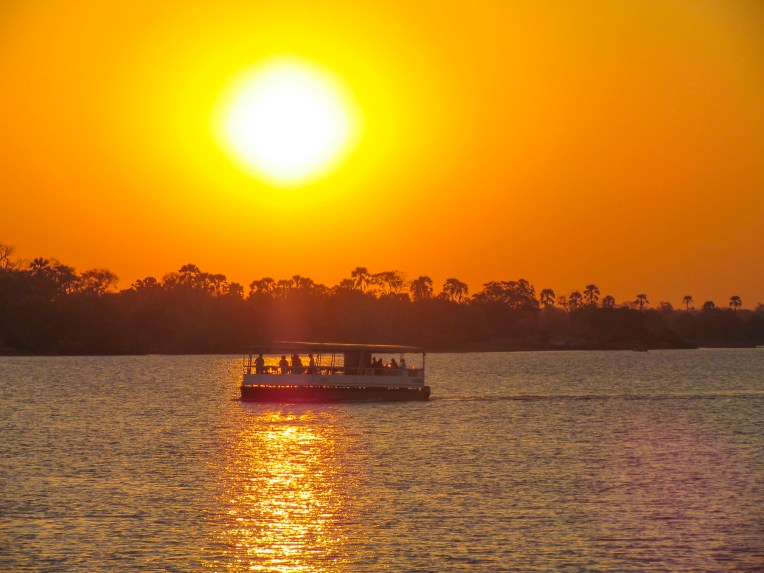 After a long day of travel and sightseeing it was finally time to check into the Nguni Lodge, a pretty 14 room boutique hotel, in a private compound on the outskirts of Victoria Falls. “See you in the morning; we’re headed to the falls tomorrow,” Fungayi said as he waved good night to us.


As we were exploring the property the next morning, the gardener enthustically beckoned us over to look at a plant, the branches of which he was separating to reveal a camouflaged chameleon that blended in perfectly with the leafy background.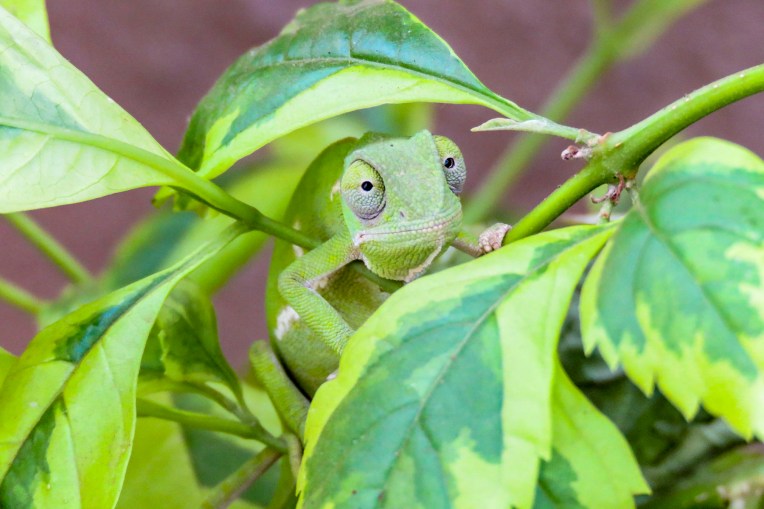 Victoria Falls was originally named by the indigenous tribes of the region, who called it Mosi-oa-Tunya or “The Smoke that Thunders.” The mile wide and 355 feet high falls have been one of the Seven Wonders of the World since British explorer David Livingstone stumbled upon them in 1855 as he was trying to elude that pesky reporter Stanley, and of course he claimed their discovery and renamed them as imperialists did.
 “When the river is full you can’t see the falls across the gorge. It’s just a thundering cloud of mist. It’s much better for photos this way,”our guide offered, trying to put a good spin on a dire situation as he pointed across the gorge toward Zambia. If you are not convinced of climate change, witnessing firsthand the dramatic reduction of water flowing over the falls might change your mind.


Even with a reduced volume of water, the fascinating trail along the edge of the gorge traveled through a unique, jungle-like, misty microclimate that offered shaded sanctuary to small animals. Two hundred yards further inland the landscape was dry as a bone.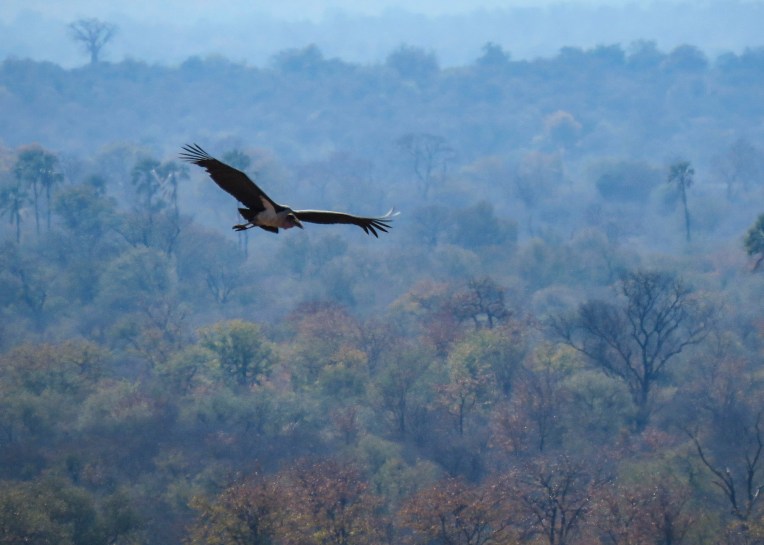 With an unscheduled afternoon ahead of us Fungayi suggested we lunch at the Victoria Falls Safari Lodge. “They have a vulture feeding program and a wild game watering hole visible from their terrace.” We never realized that vultures were endangered, but as with so many other threatened animals in Africa, the problem originated with poaching. As conservation efforts improved and anti-poaching ranger patrols increased, poachers stopped shooting elephants and rhinos. Instead they started to poison waterholes or the carcasses of an animal they had killed so that the vultures would die also and not reveal their activity in an area by circling over a dead elephant. Vultures play an important role in the ecosystem by picking clean the rotting meat from animal carcasses. Their stomach acids destroy rabies, botulinum toxins and anthrax, which could kill other animals or spread to humans. Poaching is still a huge problem in Africa and until all levels of the people involved in this illicit trade start doing some serious jail time, it always will be. China and Vietnam are the chief destinations for all sorts of endangered animal horns and parts, where they are used in traditional medicine remedies. Carved rhino horn is even considered a good investment by some wealthy Asian businessmen. And to muddy their blind-eye support of this poaching even farther, in October, 2018, China reversed a ban on rhino and tiger parts in medicine. You might find these two articles by the New York Times and Scientific American informative.
https://www.nytimes.com/2018/10/29/world/asia/china-rhino-tiger-poaching.html
I know this is difficult, but if we are sincere conservationists, we need to talk with our money and avoid buying products made in China. The “Big Tree,” perhaps Zimbabwe’s oldest Baobab tree at an estimated 2000 years, was on the route to our lunch spot. This majestic Baobab was truly impressive with a girth of 74ft and 80ft height. Perfectly adapted for the drought prone savannahs of Africa, the trees drop their leaves during dry periods.
 The view from the hotel’s shaded terrace looked out over the watering hole and beyond it across an expanse of the Zambezi National Park that stretched to the Botswana border many miles away. In a year with average rains the trees would have been thick with foliage. Instead the landscape looked burnt, like it had been ravaged by a recent uncontrollable forest fire. We watched as small groups of cape buffalo and zebra kicked up clouds of yellow dust as they trudged their way towards the water, avoiding the resident crocodile that bathed in the heat of the afternoon sun. Occasionally the buffalo would turn and charge the zebras away if they felt they their space was being encroached upon.
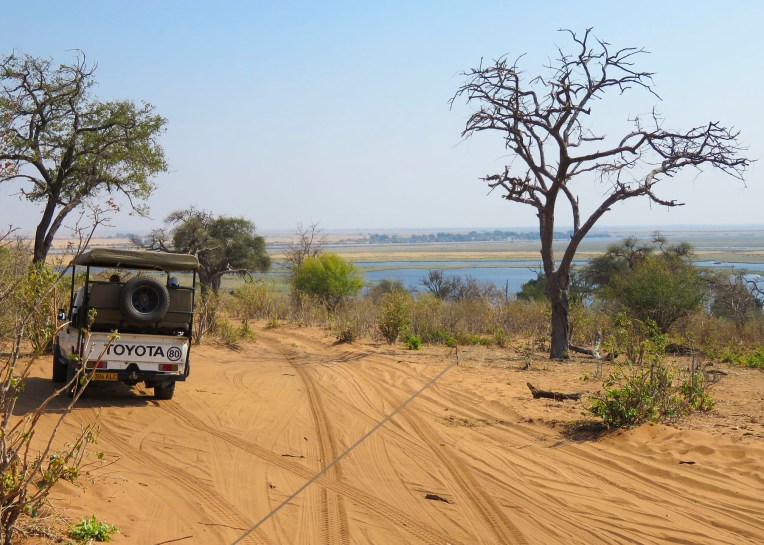 We spent our last day in Botswana on a game drive and river safari in Chobe National Park. Fungayi picked us up early for our transfer into Botswana at the Kasane border crossing. Here we had to pay a Zimbabwe exit fee, then travel a short distance through a buffer zone between the two countries and walk through a tray of disinfectant, to prevent the transmission of hoof and mouth disease to cattle in Botswana, before finally purchasing an entrance visa to a country we have long wanted to visit since reading the The No. 1 Ladies’ Detective Agency novels by Alexander McCall Smith. His love for the country is visible in every page and character. Here a local licensed guide gathered four more tourists and bundled us into a Land Rover that later broke down as we were entering Chobe. This situation was quickly remedied though with the delivery of a Toyota safari truck. According to African safari guides, the Land Rovers enjoy an undeserved reputation as a safari vehicle; Toyota trucks are much more reliable.


Chobe is reputed to have the highest concentration of elephants in Africa and during the Botswana dry season, June to October, large herds of elephants migrate from the park’s vast interior to the banks of the Chobe River for water and food. Buffalo and antelope herds also follow this ritual which makes game viewing along the river extremely rewarding. We were not disappointed. Within minutes of leaving the park entrance we traveled down a dusty sidetrack and encountered impala and kudu working their way down to the river. Along its grassy banks, herds of antelope grazed peacefully and, in the distance, Nambia shimmered through the heat waves rising from the earth. The bird life along the water was interesting too with sightings of regal fish eagles, kingfishers and wonderful rainbow plumed lilac-breasted rollers.


Further along clouds of dust in the brush signaled a large buffalo herd moving toward the river. Later upon reaching the water the herd would swim across to the islands in the middle of the Chobe River to feed on the lush green grasses. We hadn’t spotted any elephants yet, so we turned into the forest to look for them. Here we encountered several small elephant family groups, all following their matriarchs in search of food.
  On the way out of the park, heading to our river safari, we viewed giraffe and more antelope.


After lunch, our intrepid group boarded a small boat for the water safari on the Chobe River.  Viewing wildlife from the water offered a different perspective on the animal life. Gape-mouthed hippos and crocodile sightings were frequent now.


Some elephants were gathered on the riverbank waiting for the right moment to swim across to the islands, following others that had crossed earlier. 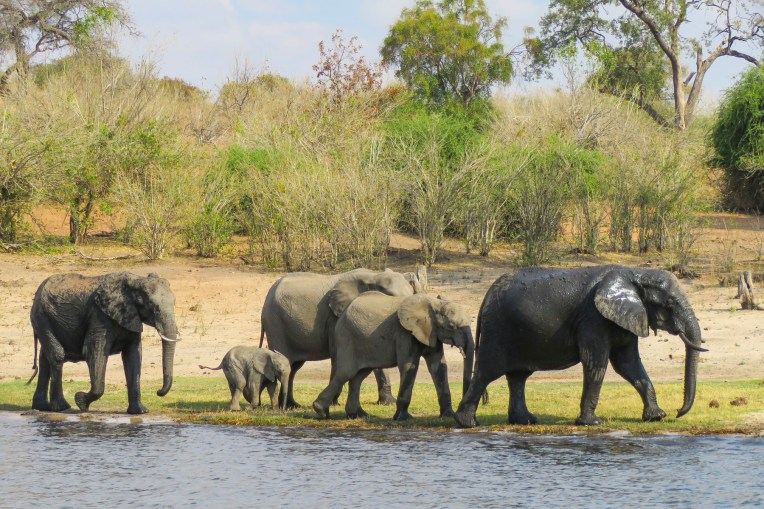 The black coats of the buffalo were now glistening in the sun. Unfortunately, we didn’t witness any herds swimming across to the islands, but there were distinctive water lines on the elephants that had forded earlier.


African darters, yellow-billed storks, grey herons and great white egrets searched the waters for fish. Along the shore an eerie-looking monitor lizard crawled along in search of bird nests and their eggs.


On the way back, we passed floating houseboat style hotels that offer multi-day excursions that follow the river further upstream to more isolated sections along the Botswana – Nambia border.  Surprisingly, there was even a border control station on the riverbank to monitor the movement of people and commerce on the waterway between the two countries. It was a rewarding afternoon with Donna definitely being in her element. And those riverboat hotels got us thinking about potential future trips.
 So many things change yet many things stay the same.
We now have jet travel, cell phones, and the internet, and yet many places in Africa have barely changed at all, with folks still walking many miles each day to gather water and forage for firewood. And malaria, as it was in Livingstone’s time, is still a deadly disease.
Till next time, Craig & Donna


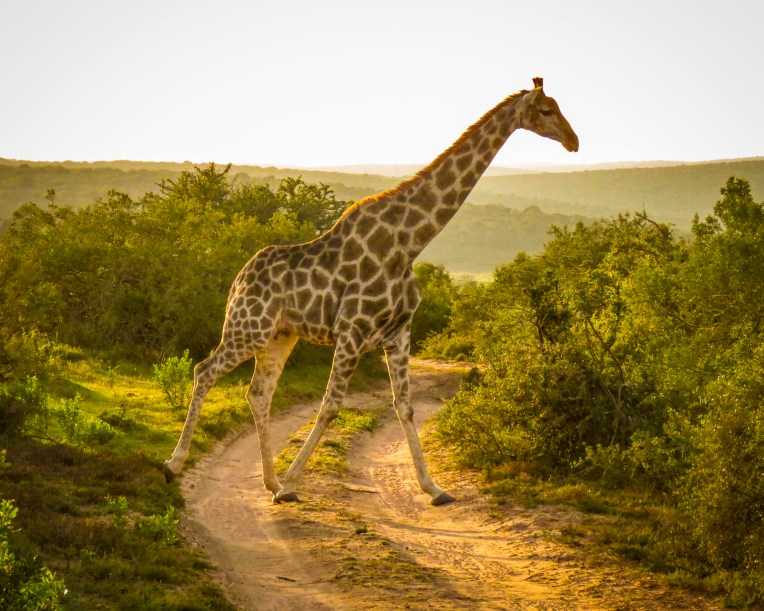 During the morning “golden hour” we watched a family of giraffe walk gracefully through the forest, nibbling thorns from the acacia trees, before saying our goodbyes. Stormsriver, it was! Backtracking through Port Elizabeth we retraced our drive past Jeffreys Bay and continued west on the N2 until we stopped to photograph the steep chasm that the Stormsriver Bridge spanned, just before the village of the same name. Mostly folks mean the
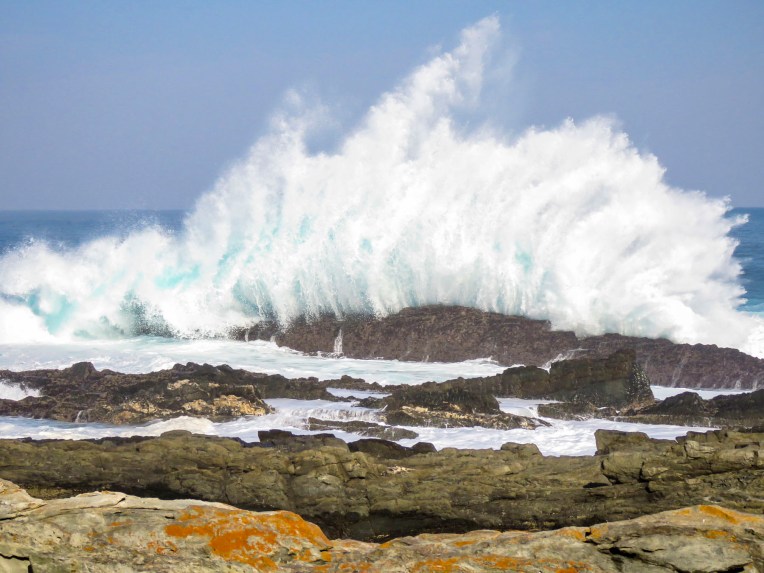
  We thought the entrance fee of $17.00 per person for international tourists was steep and we did see some cars turning away, but we had heard such tremendous recommendations we would regret it if we didn’t check it out. There was a long winding road down from the entrance gate and when we finally rounded a sharp corner, the view of the rugged coastline with crashing waves sending up large white sprays was spectacular!
  We enjoyed lunch watching and listening to thunderous waves explode against rocks only a short distance away from our table at the Cattle Baron. It’s the only restaurant in the park and was excellent, along with being very affordable. A nice surprise after the park entrance fee.
  After lunch we followed an easy section of the
  Staying in designated cabins each night, it takes five days to cover the route that stretches from Stormsriver in the Eastern Cape to Nature’s Valley in the Western Cape. The reverse hike is referred to as the


 On the way back to the highway we stopped at


 Our steep ascent away from the coast began in George as we headed north on the N9/N12 twisting our way uphill through the Outeniqua Pass to Oudtshoorn. This is a challenging stretch of highway with continuous s-turns that required my constant attention. Passengers can enjoy spectacular views on sunny days that stretch for miles. If possible, drive the route towards the coast, it’s easier to stop at the scenic lookouts this way.
 We’ve heard of gold booms, where fortunes were made. But it was the ostrich booms in 1865 -1885 and 1902-1913 when ostrich feathers were the ultimate fashion accessory in Europe that enriched local farmers here. At one point 314,000 ostriches were being raised and their feathers were a valuable South African export, only surpassed by gold, diamonds and wool.


 The word karoo comes from the Khoisan language meaning “land of thirst” and it precisely describes the terrain along R62 which we followed. Parched, rock encrusted rolling hills and mountains covered with a fynbos of low heather-like shrubs and proteas occasionally accentuated by taller, lone trees and dry riverbeds crisscrossed the landscape. During the South African spring, in October, it bursts with flowers, but it was July, still winter. The area endures extreme heat during the summer. Fortunately for us recent winter rains had spurred some greenery to burst forth and aloe plants to bloom.
  We stopped in Ladismith, a rural farming community where Vincent, Donna’s friend from seminary, first pastored a church, and enjoyed its colonial Dutch architecture.

 The heat can do strange things to the mind and sometime in the 1970’s Ronnie thought a farm stand on this desolate stretch of highway through the karoo would be a good idea. Fortunately, his buddies realized it was destined for failure and would soon be another abandoned building along the road if something wasn’t done. One night they painted SEX into the name of the shop and suggested he open a bar. They saved his butt! Famous now worldwide as a dive bar in the middle of nowhere, it draws in the curious. It’s not the raunchy place the name implies, filled with frustrated farmers between ostrich roundups. A grey bearded Ronnie, now a cause célèbre, still pours drinks at the bar. It has a tired, dusty bar area filled with foreign money plastered to the walls and lingerie hanging from the ceiling, but aside from that it’s a wholesome oasis with a covered patio where you can get a decent burger with fries, ice cream and coffee along with some hard stuff if that’s your drink. It’s not worth a detour, but if you are on the R62 traveling between Barrydale and Ladismith, it’s worth the stop. Actually, it’s the only place to stop.

 We zoomed past the small village of Barrydale on our way to Montagu, so we could explore the town a little before nightfall. The farming community is in a valley surrounded by the Langeberg mountain range and has many examples of late 19th century Cape Dutch architecture scattered about town. Ornate gables, thatched roofs, whitewashed walls and occasionally gingerbread trim define the style, but there are modern interpretations also.
 In a country not known for Art Deco we booked ourselves into the
  The temperature drops quickly in the mountains once the sun sets so we enjoyed a local wine, in front of a fireplace, in one of the lounges before dinner. We usually look for a less expensive alternative for dinner, but the hotels’ Wild Apricot Restaurant drew us in with elegant candlelit tables and live piano music. It was the last night of our road trip – we could splurge. With Smoked Ostrich Carpaccio and Springbok Tarta for appetizers followed by Cape Malay Bobotie and Karoo Lamb Pie as mains and a traditional Orange Malva Pudding for dessert, we were splendidly sated.


 We followed R62 west through a small tunnel, locally referred to as the “Hole in the Wall,” that was dynamited out in the 1870’s. It’s a dramatic landmark that tells you of your arrival into or departure from the Karoo. As we left our road trip behind, we looked forward to heading to a new apartment in Cape Town.
 We’ve been on the road for more than 100 days now; previously, our longest trip was just shy of three weeks, with carry-on luggage only. So, we felt fully prepared to tackle this challenge (insert wink here.) Needless to say, there is a learning curve, but we have the right mind set. In late October, we move north to Guatemala, followed by a cruise to Cuba. The first part of 2019 will see us in Europe, and after that, who knows? We’ve discussed heading to South Africa, then working our way north and through East Africa, trying to have as many big game safari experiences as possible. This has been a dream of mine since I unwrapped my first National Geographic magazine and was enthralled by the spectacular images of the great migration across the Serengeti. Winning this

 2 Suitcases for 2 years